Unknown's avatar

TRICOLORED HERON: AN ELEGANT & PATIENT FISHER


tricolored-heron-phil-lanoue-3

TRICOLORED HERON: AN ELEGANT & PATIENT FISHER

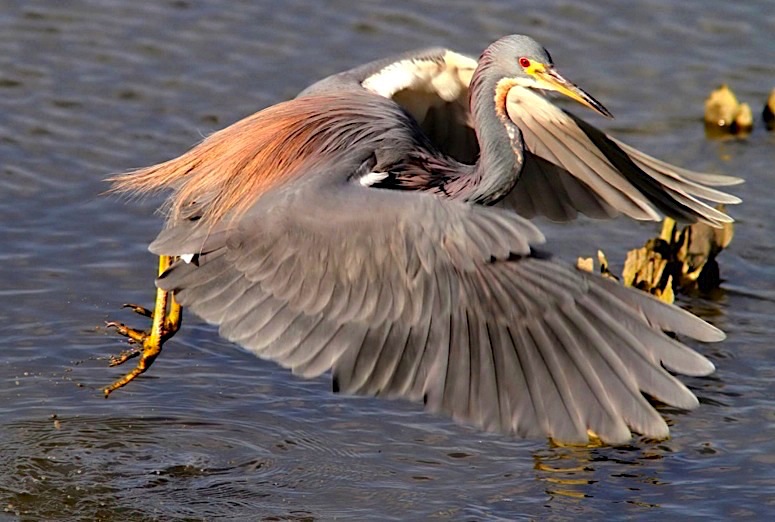
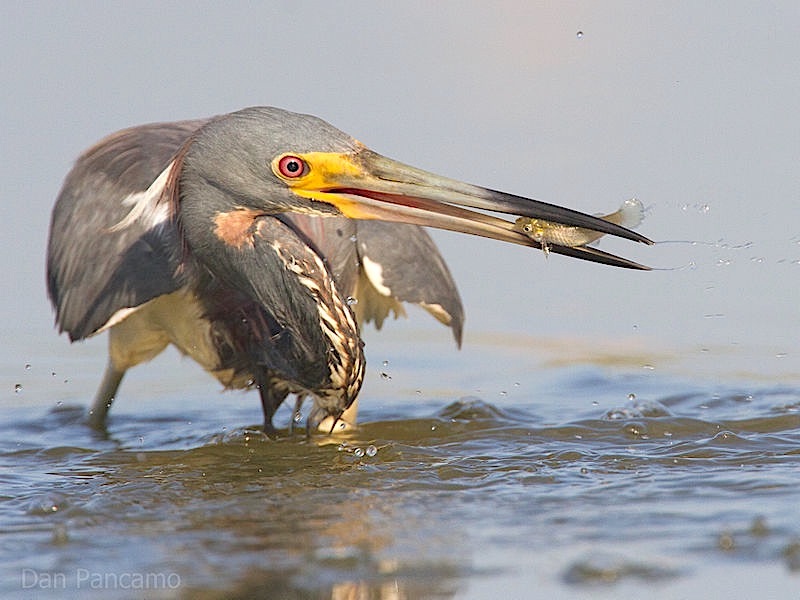
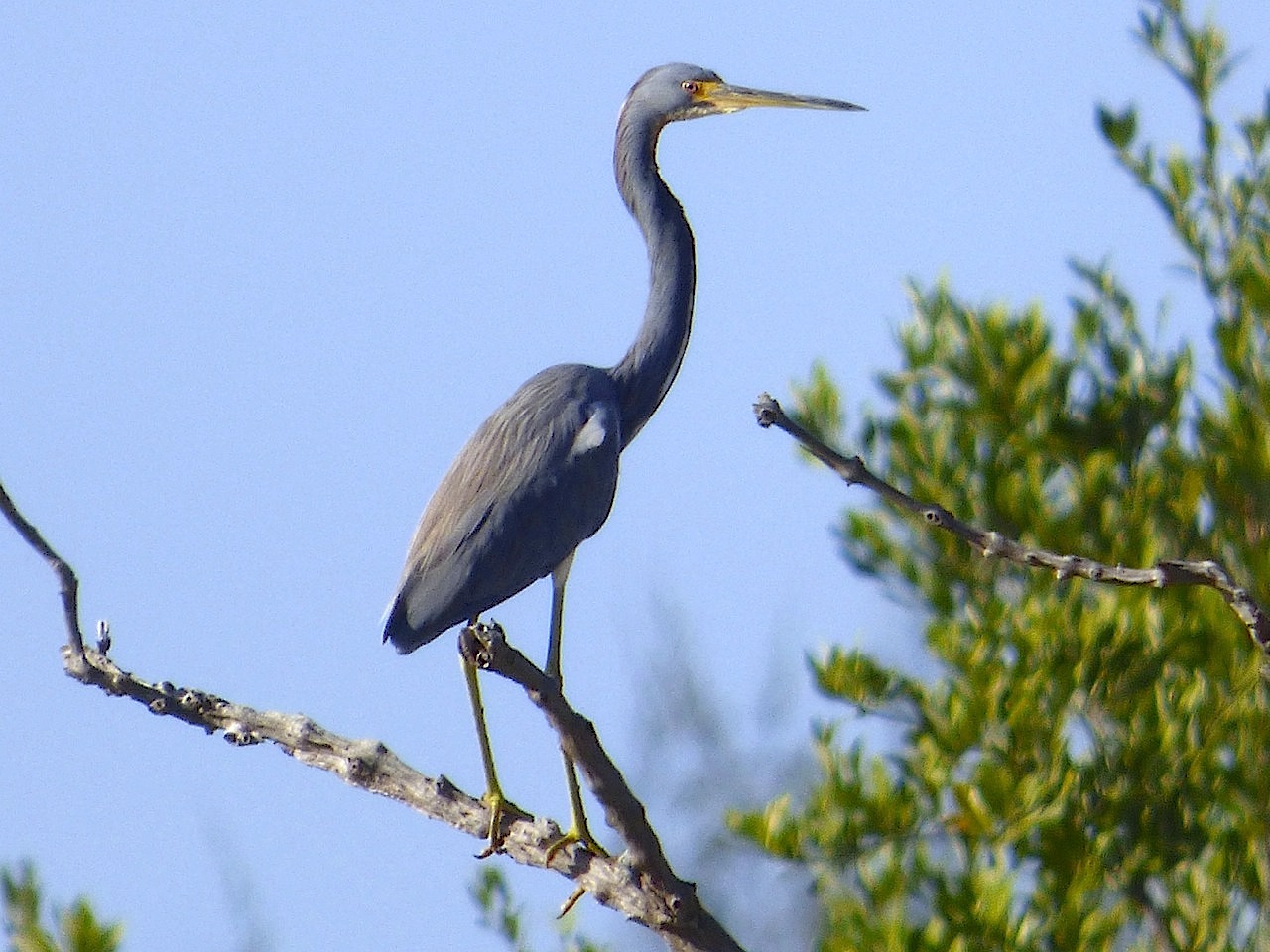
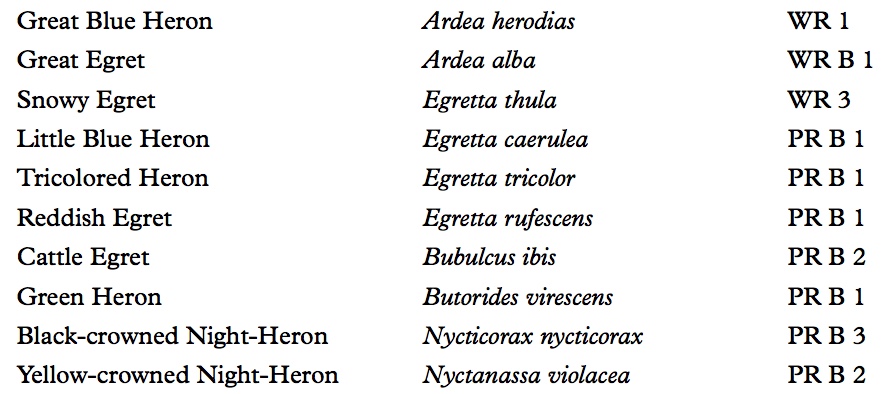
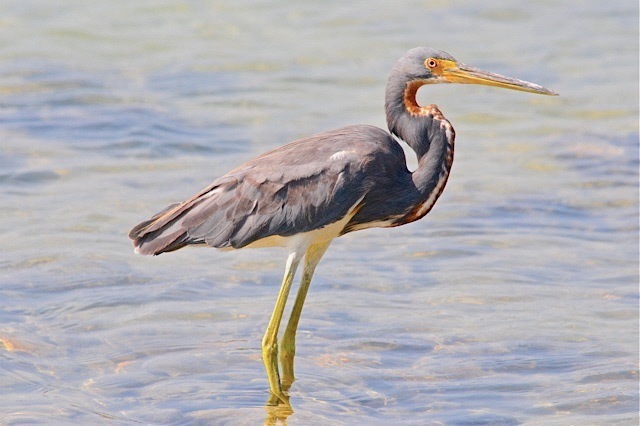
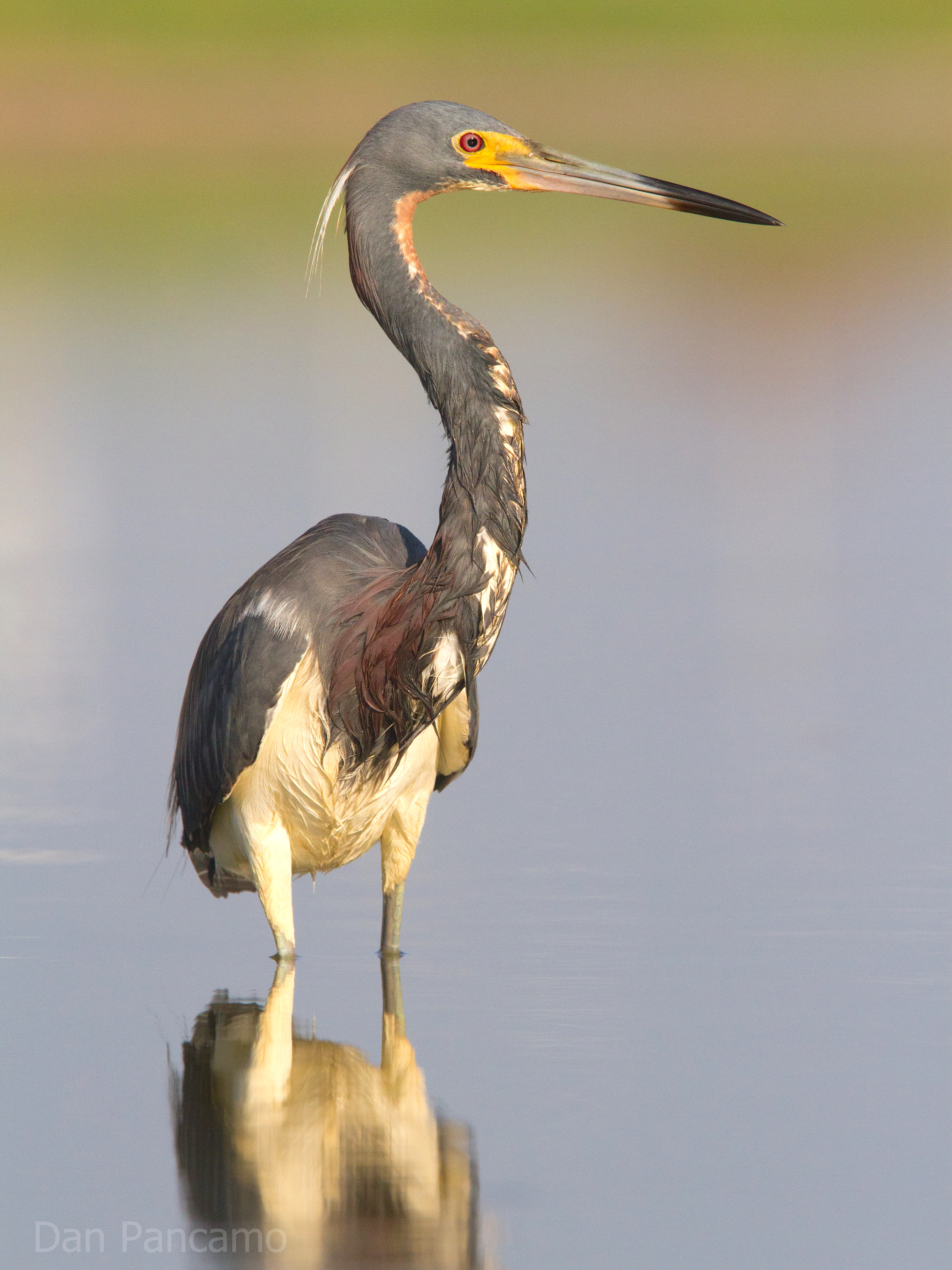
The Tricolored Heron Egretta tricolor is one of 6 heron species found on Abaco, and is a permanent breeding resident. To which can be added 4 sorts of egret to complete a line up of expert fishers, all equally at home hunting in the water or from the shore, or surveying the scene from nearby vantage points like bushes and trees.

tricolored_heron2_by_dan_pancamo (Wiki)

A distance shot… and it was 20′ up, above the pondtricolored-heron-gilpin-point-abaco-keith-salvesen

The heron and egret species of Abacoherons-egrets-abaco

A long neck, a long bill and long legs make this heron species ideally adapted for wading. Like other herons and egrets, it will stand stock-still waiting for the perfect fish to swim into range. However they are also active hunters, and will stalk prey or chase it by striding quickly through the water in pursuit. They eat fish, crustaceans, reptiles, and insects.

tricolored-heron-abaco-woody-braceytricolored-heron-abaco-bruce-hallet

On a mission…tricolored-heron-phil-lanoue-7

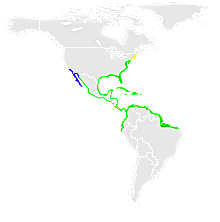
The tricolor has a wide resident breeding range, shown in green on the mapegretta_tricolor_map-svg

Tricolored Heron

Coming in to land…tricolored-heron-phil-lanoue-1

Breeding plumage: smart blue bill and a fish to put in itTri-colored Heron with fish (Phil Lanoue)

A silver prize…tricolored-heron-phil-lanoue-5

RELATED POSTS

GREEN HERON

YELLOW-CROWNED NIGHT-HERON

SNOWY EGRET

Credits: Phil Lanoue (1, 6, 8, 9, 10); Dan Pancamo (2, 7); Keith Salvesen (3); Woody Bracey (4); Bruce Hallett (5)

Unknown's avatar

“THE DELPHI CLUB GUIDE TO THE BIRDS OF ABACO” (2016)


Delphi Club Guide to the Birds of Abaco (Jacket)

“THE DELPHI CLUB GUIDE TO THE BIRDS OF ABACO”

In a box in the corner over there – no, there – are my last 6 copies of ‘The Birds of Abaco’. Peter Mantle probably has a few over here in the UK too. And there are definitely some remaining at Delphi HQ in a cupboard  just a few lurches away from the surprisingly popular ‘honesty bar’. But there aren’t a great many left now, so forgive me for drawing attention to the fact that the Season of Goodwill is upon us. And… ahem… there are only 24 more ‘sleeps’ until Christmas. 

Blue-gray Gnatcatcher vocalizing.Abaco Bahamas.6.13.Tom Sheley aBlue-gray Gnatcatcher Tom Sheley

“The Delphi Club Guide to THE BIRDS OF ABACO” was published in March 2014. To say “I wrote it” would be a gross distortion of the truth: it was an entirely collaborative project. The originator of the idea – as with the entire Delphi Club project – was Peter Mantle, the publisher. The work of 30 photographers is included. There was huge input from the very experienced project manager and from Bahamas bird experts. So although my name is on the cover, it is as a participant representing the contributions, camera skills and brainpower of many people.

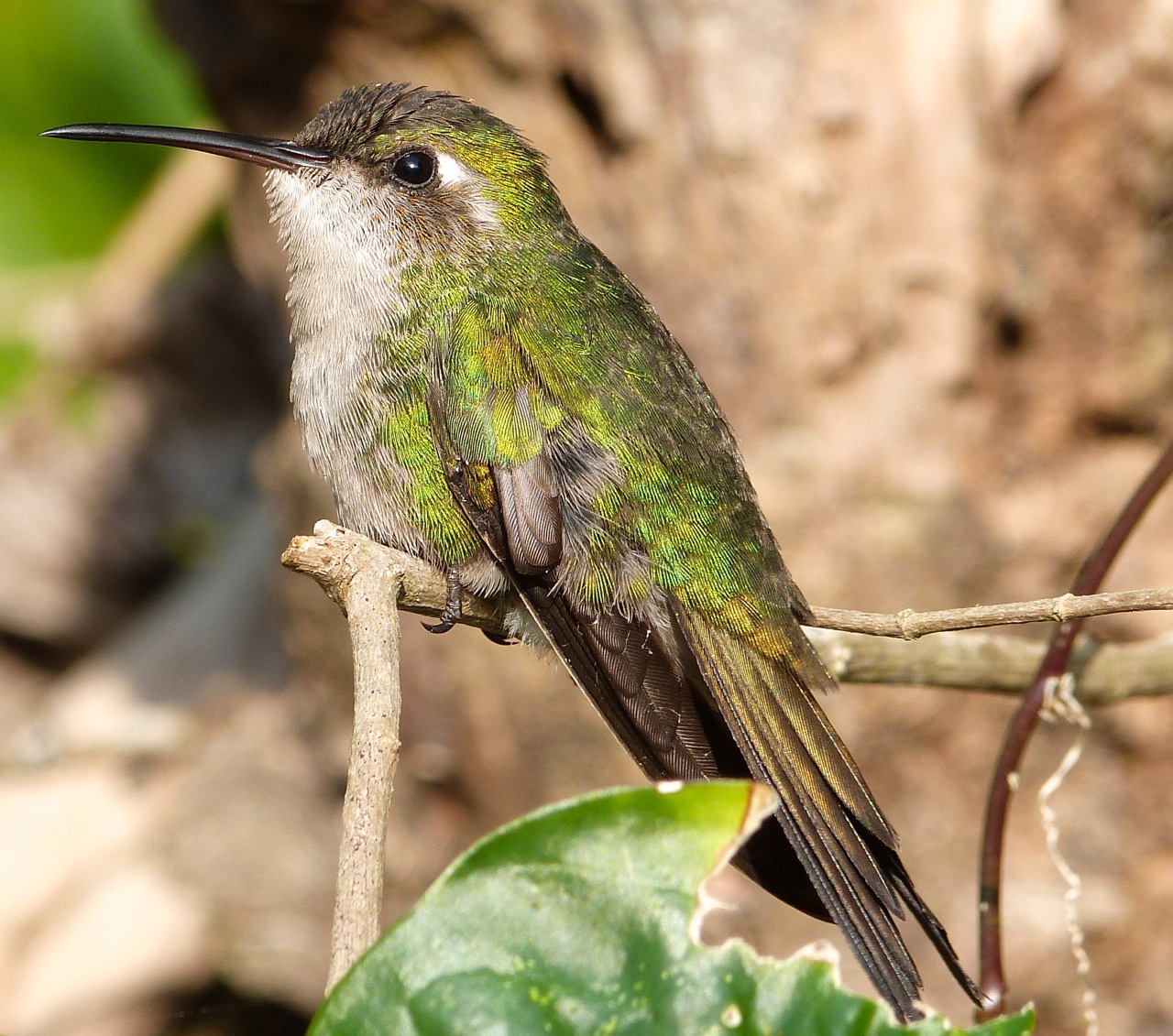
Cuban Emerald Hummingbird, Delphi, Abaco (Keith Salvesen)Cuban Emerald (f) Keith Salvesen

The book launched to generous enthusiasm and support both on Abaco and beyond, which has continued ever since. We have been astonished by the positive responses to this unique publication for the Bahamas. There is a wider purpose to the book than as a photographic showcase for Abaco birds. All Abaco schools, colleges, libraries and local wildlife organisations have been given free copies for educational purposes. And a percentage of the profits is set aside for local wildlife causes. 

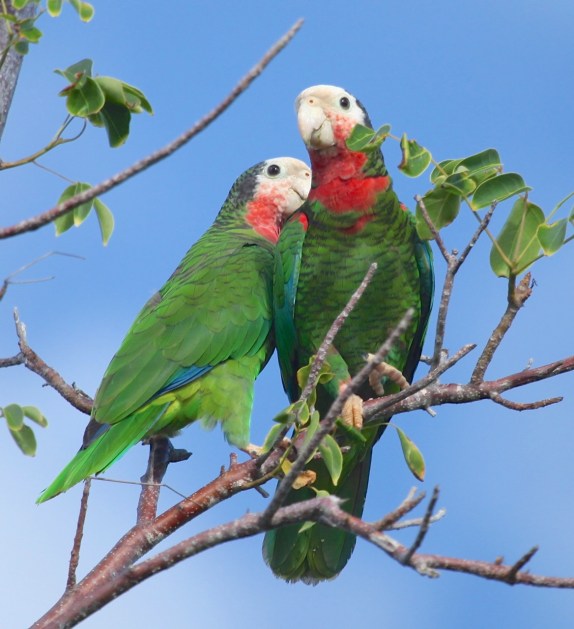
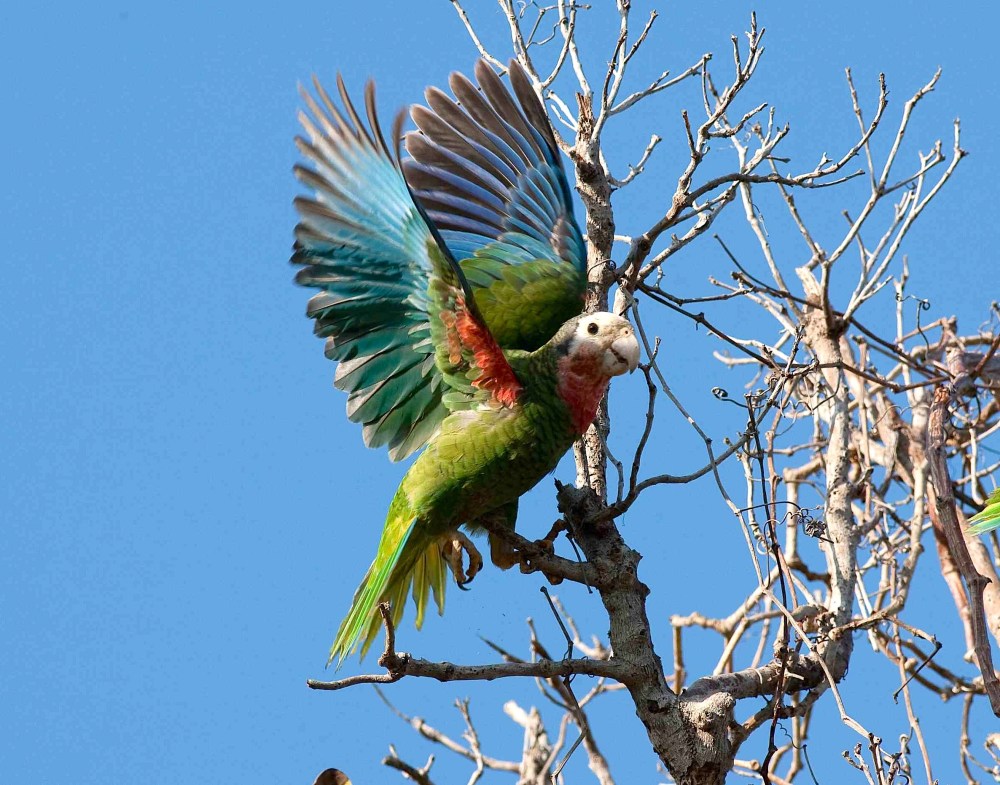
Abaco Parrot, Abaco Bahamas (Peter Mantle)Abaco (Cuban) Parrots Peter Mantle

Below are some facts and stats. Some people may well have seen these set out elsewhere, but a lot of new people have kindly tuned in to Rolling Harbour in the last 12 months or so, so I will repeat some of the details.

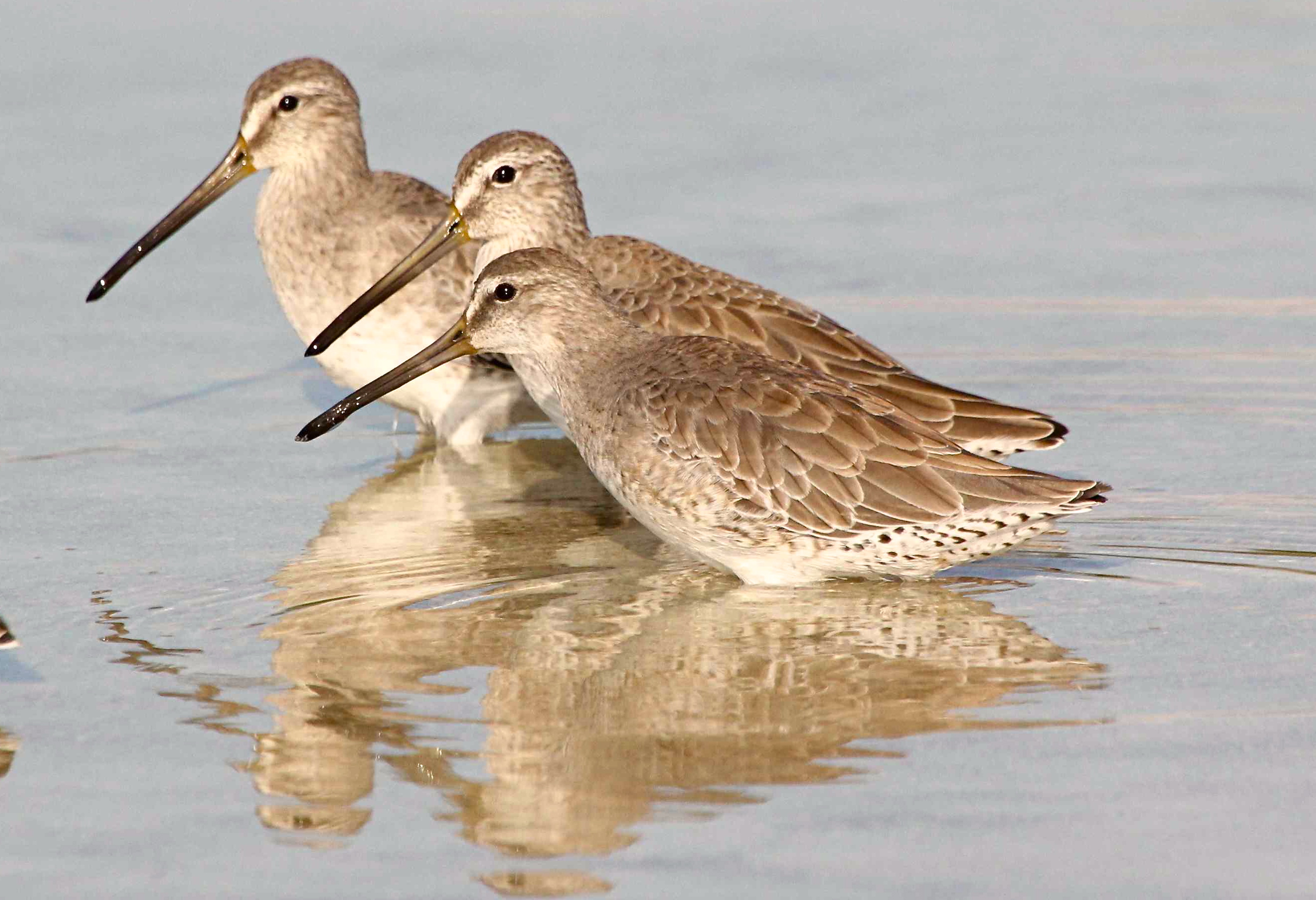
Short-billed Dowitcher, Abaco (Bruce Hallett)Short-billed dowitchers Bruce Hallett

The Guide showcases the rich and varied bird life of Abaco, Bahamas and features both resident and migratory species including endemics rarities and unusual sightings.

The main features are as follows:

  • 272 pages with more than 350 photographs
  • 163 species shown in vivid colour – nearly two-thirds of all the bird species ever recorded for Abaco
  • Every single photograph was taken on Abaco or in Abaco waters
  • All birds are shown in their natural surroundings – no feeders or trails of seed were used
  • Several birds featured are the first ones ever recorded for Abaco or even for the entire Bahamas

Clapper Rail Abaco Bahamas Tom SheleyClapper Rail Tom Sheley

  • A total of 30 photographers, both experienced and local amateurs, contributed to the project
  • The book had the generous support of many well-known names of Abaco and Bahamas birding
  • A complete checklist of every bird recorded for Abaco since 1950 up to the date of publication was compiled specially for the book (6 new species have been recorded since then…)
  • A code was devised to show at a glance when you may see a particular bird, and the likelihood of doing so. Birds found at Delphi are also marked
  • Specially commissioned cartographer’s Map of Abaco showing places named in the book

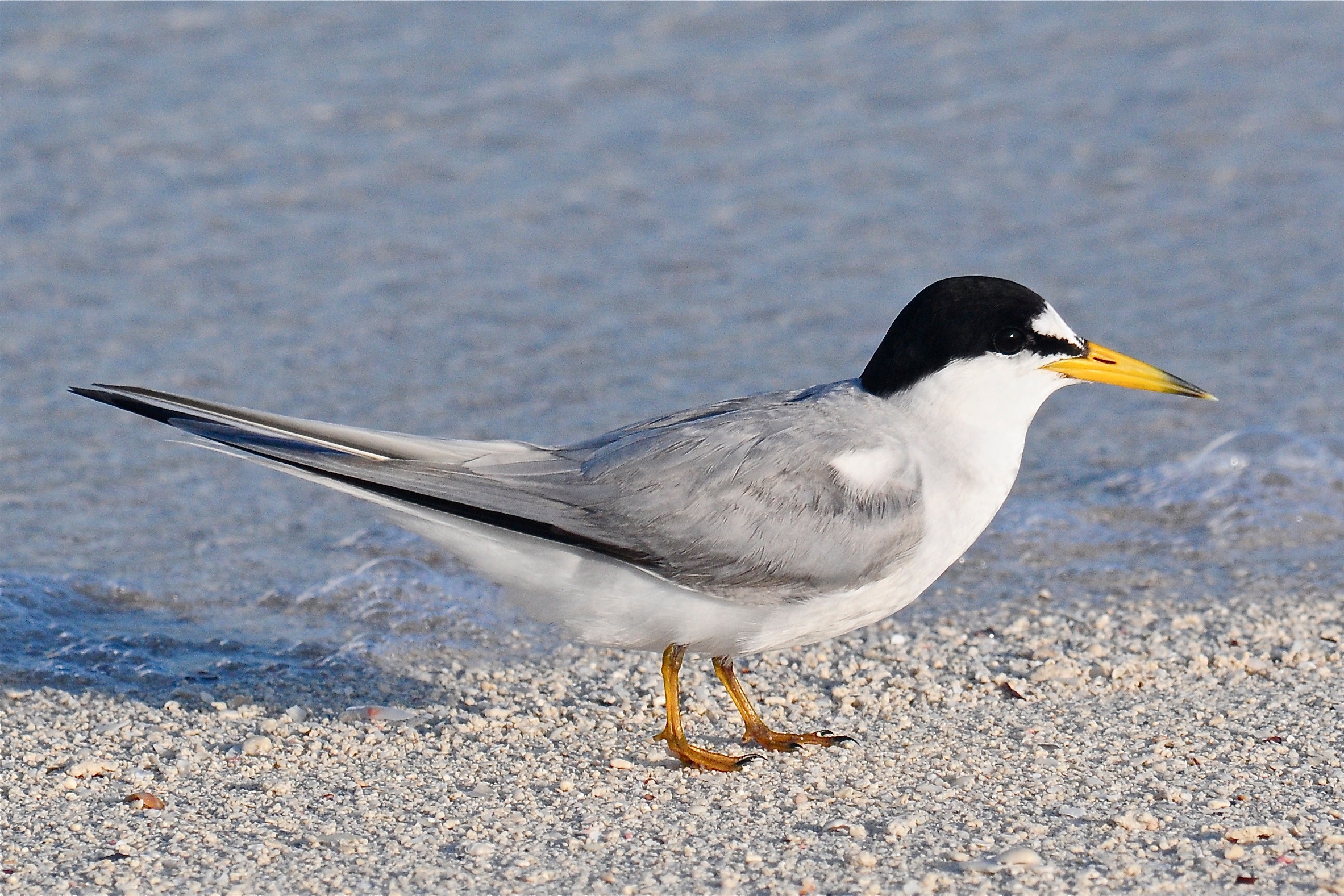
Least Tern, Abaco (Tony Hepburn)Least Tern Tony Hepburn

  • Informative captions intentionally depart from the standard field guide approach…
  • …as does the listing of the birds in alphabetical rather than scientific order
  • Say goodbye to ’37 warbler species on consecutive pages’ misery
  • Say hello to astonishing and unexpected juxtapositions of species

Abaco_Bahama Yellowthroat_Gerlinde Taurer copyBahama Yellowthroat Gerlinde Taurer

  • The book was printed in Florence, Italy by specialist printers on Grade-1 quality paper
  • Printing took pairs of printers working in 6 hour shifts 33 hours over 3 days to complete
  • The project manager and the author personally oversaw the printing 

Smooth-billed Ani pair, Abaco (Gerlinde Taurer)Smooth-billed Anis Gerlinde Taurer

  • The book is dedicated to the wildlife organisations of Abaco
  • A percentage of the profits is put by for the support of local wildlife organisations
  • A copy of the book has been presented to every school, college and library on Abaco

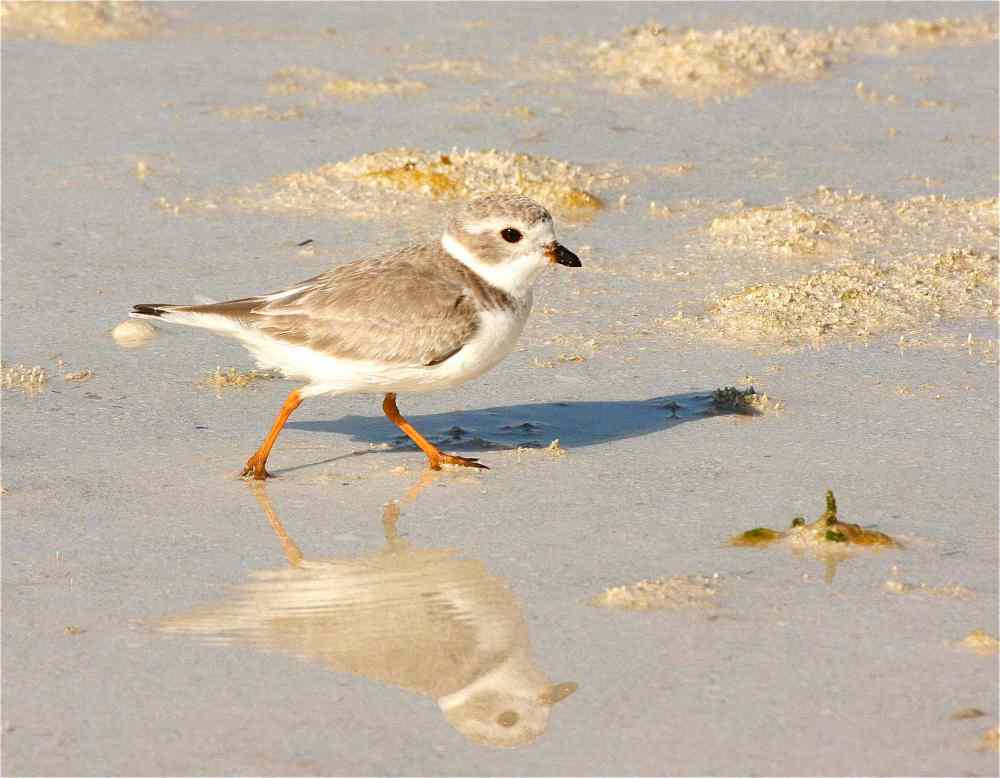
Piping Plover, Abaco - Bruce HallettPiping Plover Bruce Hallett

The book is published by the Delphi Club (contact details below). The project was managed by a publishing specialist in art books. The author is the wildlife blogger more widely known on Abaco and (possibly) beyond as ‘Rolling Harbour’. Oh! So that would in fact be Mrs Harbour and myself. Well well! What were the chances? 

Painted Bunting male.Abaco Bahamas.Tom SheleyPainted Bunting Tom Sheley

The Delphi Club at Rolling Harbour
PO Box AB-20006, Marsh Harbour, Abaco, Bahamas
Tel: +1-242-366-2222
General Manager – Max Woolnough: +1-242-577-1698
delphi.bahamas@gmail.com

Or email rollingharbour.delphi@gmail.com with any queries or comments

American Oystercatcher, Abaco - Tom SheleyAmerican Oystercatcher Tom Sheley

Photos: Tom Sheley,  Bruce Hallett, Gerlinde Taurer, Tony Hepburn, Peter Mantle, Keith Salvesen

Cuban (Crescent-eyed) Pewee, Delphi, Abaco (Keith Salvesen)Cuban Pewee Keith Salvesen

USEFUL LINKS

DELPHI CLUB BAHAMAS

ABACO BIRDS. COM

ABACO PIPING PLOVER WATCH

The original flyer for the book"Birds of Abaco" flyer

Unknown's avatar

SANDERLINGS ON ABACO: GOTTA LOVE ‘EM


sanderling-on-delphi-beach-abaco-keith-salvesen-7

SANDERLINGS ON ABACO: GOTTA LOVE ‘EM

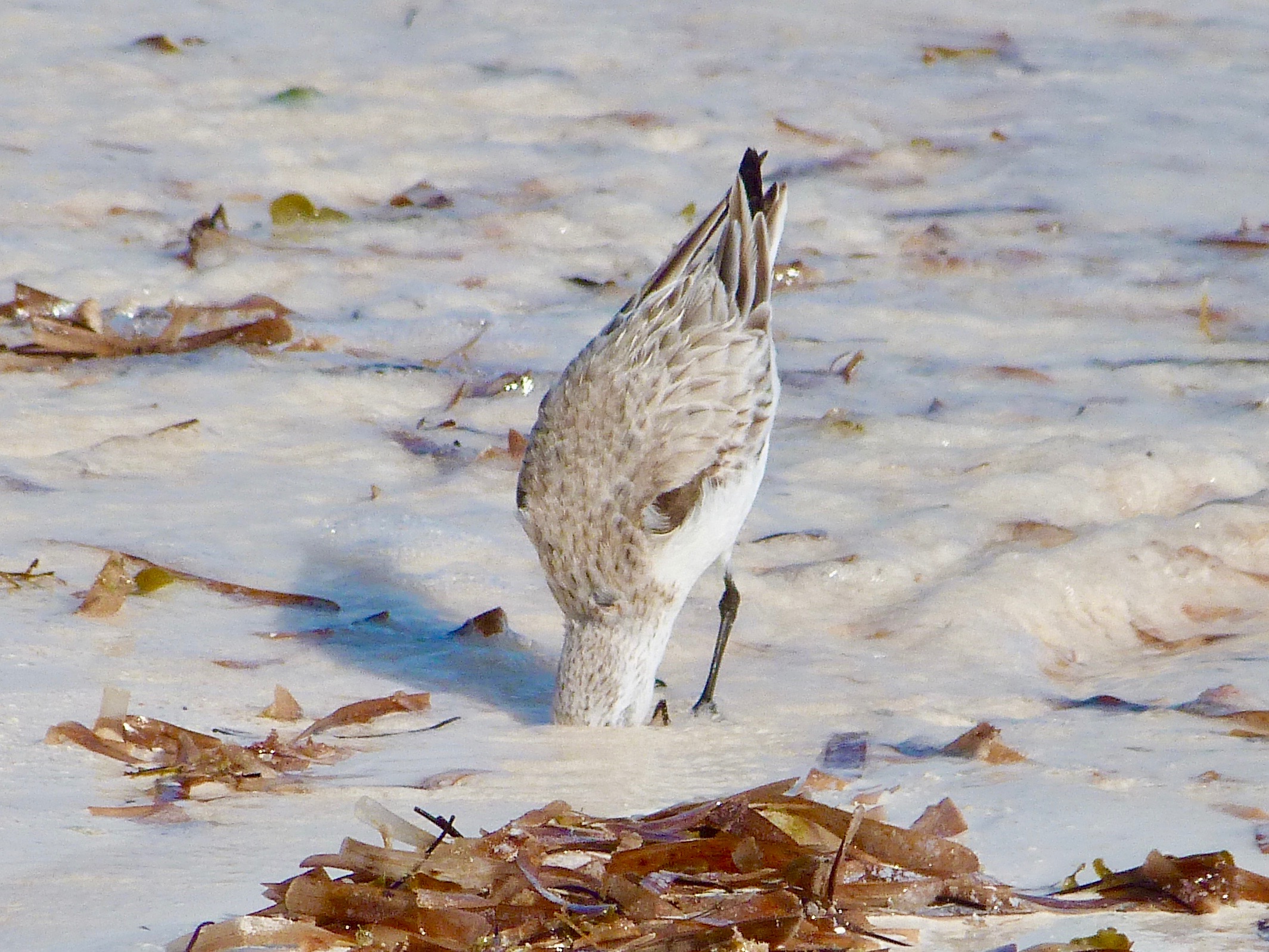
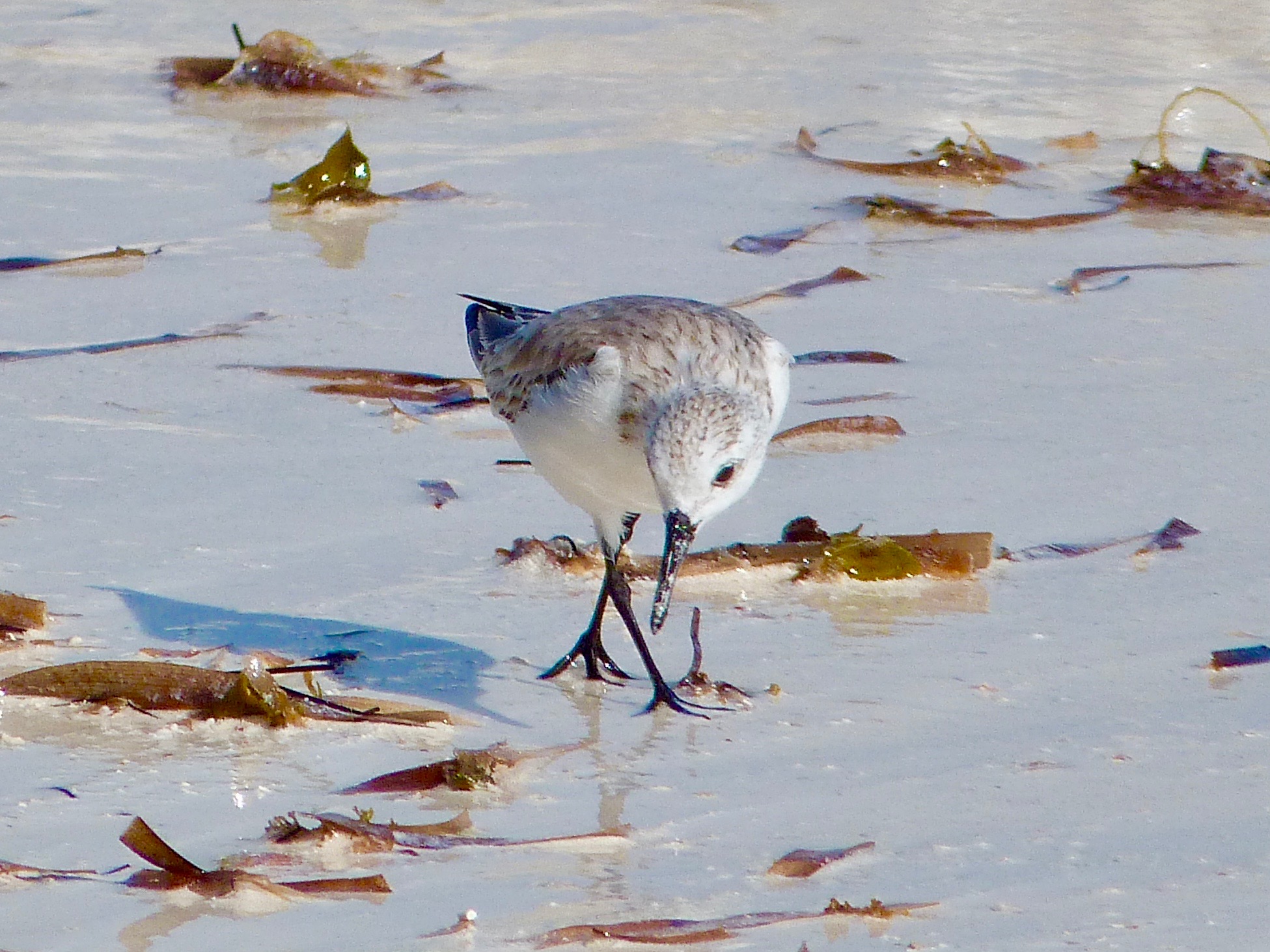
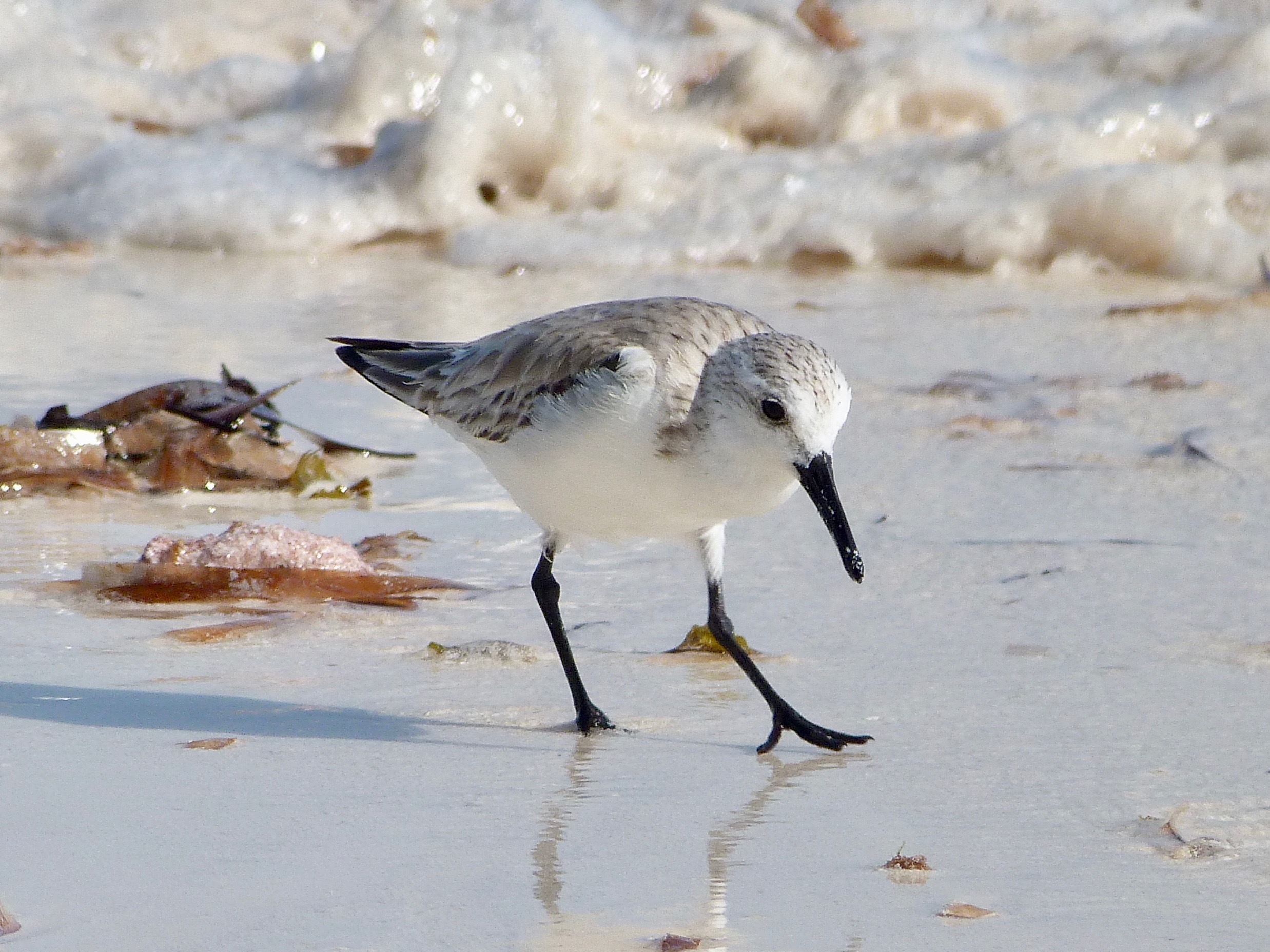
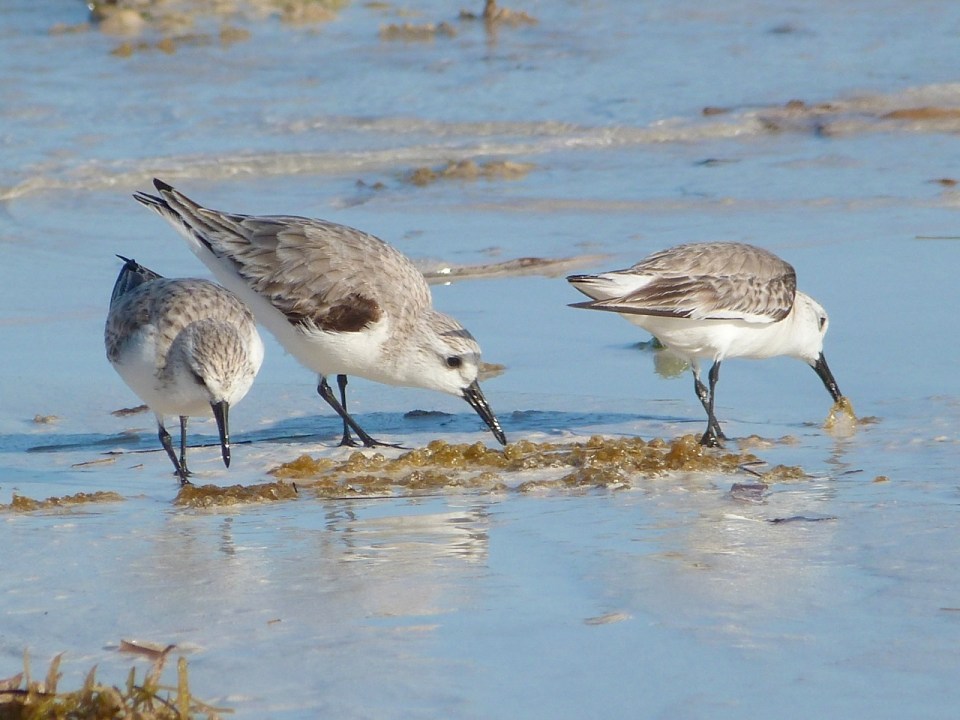
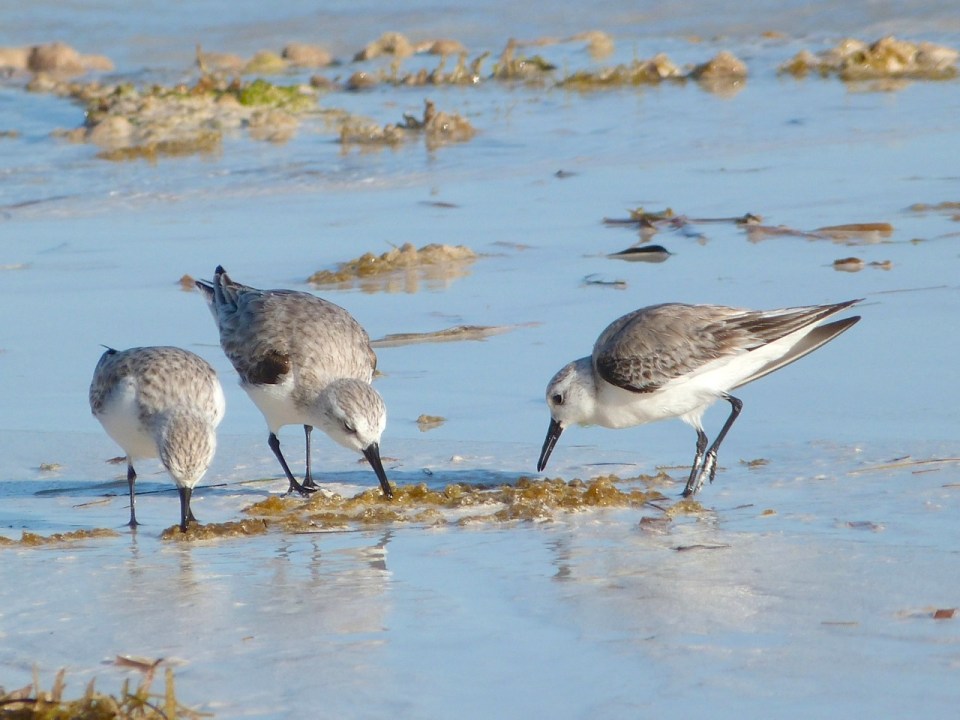
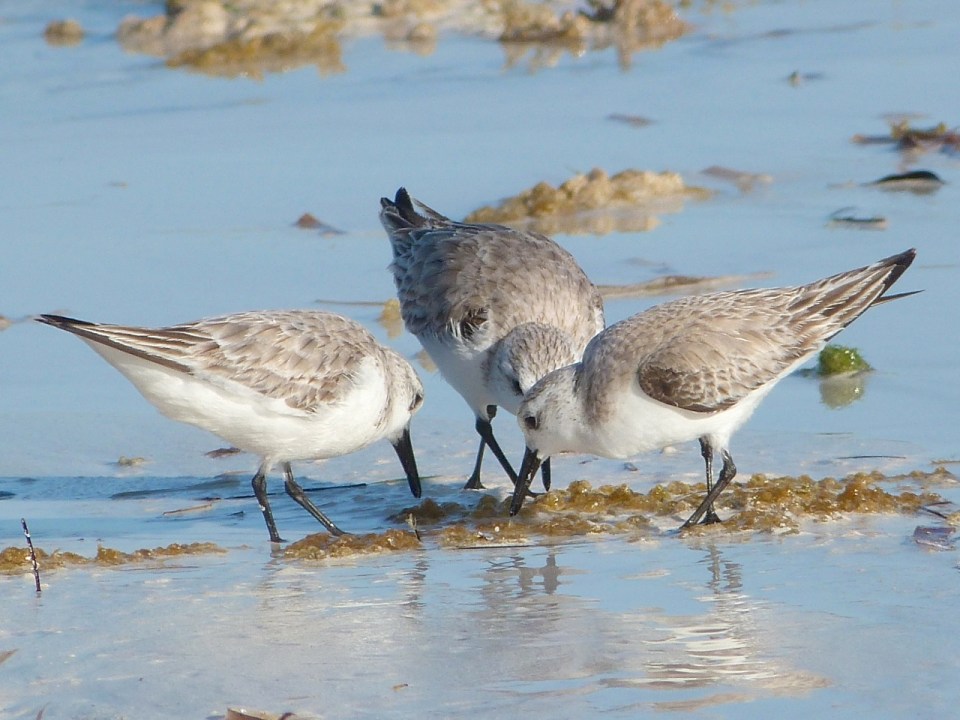
Sanderlings. Wind them up with the concealed key under their left wing, and they will charge up and down the beach for an hour or two, pausing only to rip some small unsuspecting mollusk or crustacean from its sandy bed. These birds are tiny. And smart. They know all about how a retreating tide will expose the goodies. They are even happy to plunge their heads right under water (#2). They’re not really jumpy, if you don’t push your luck or have a dog with you. The best ploy of all is to find a flock near the tideline, choose a place to lie comfortably in dry sand (with a camera, I mean, otherwise you may look look a bit strange), and wait for them to come into range. Usually they are so busy, what with all that rushing around and feeding, that they will ignore you. So the hard part, after you have taken some photos, is catching the little so-and-sos to wind them up again…

sanderling-on-delphi-beach-abaco-keith-salvesen-1sanderling-on-delphi-beach-abaco-keith-salvesen-3sanderling-on-delphi-beach-abaco-keith-salvesen-2

VIDEO 1 In which we notice the scuttling and scooting around of sanderlings on a mission

sanderling-on-delphi-beach-abaco-keith-salvesen-4sanderling-on-delphi-beach-abaco-keith-salvesen-5sanderling-on-delphi-beach-abaco-keith-salvesen-6

VIDEO 2 In which we admire bathtime in a tide-pool and assorted comings & goings…

All photos and movies RH

Unknown's avatar

MATTHEW MOVES ON: BRIGHTER LATER


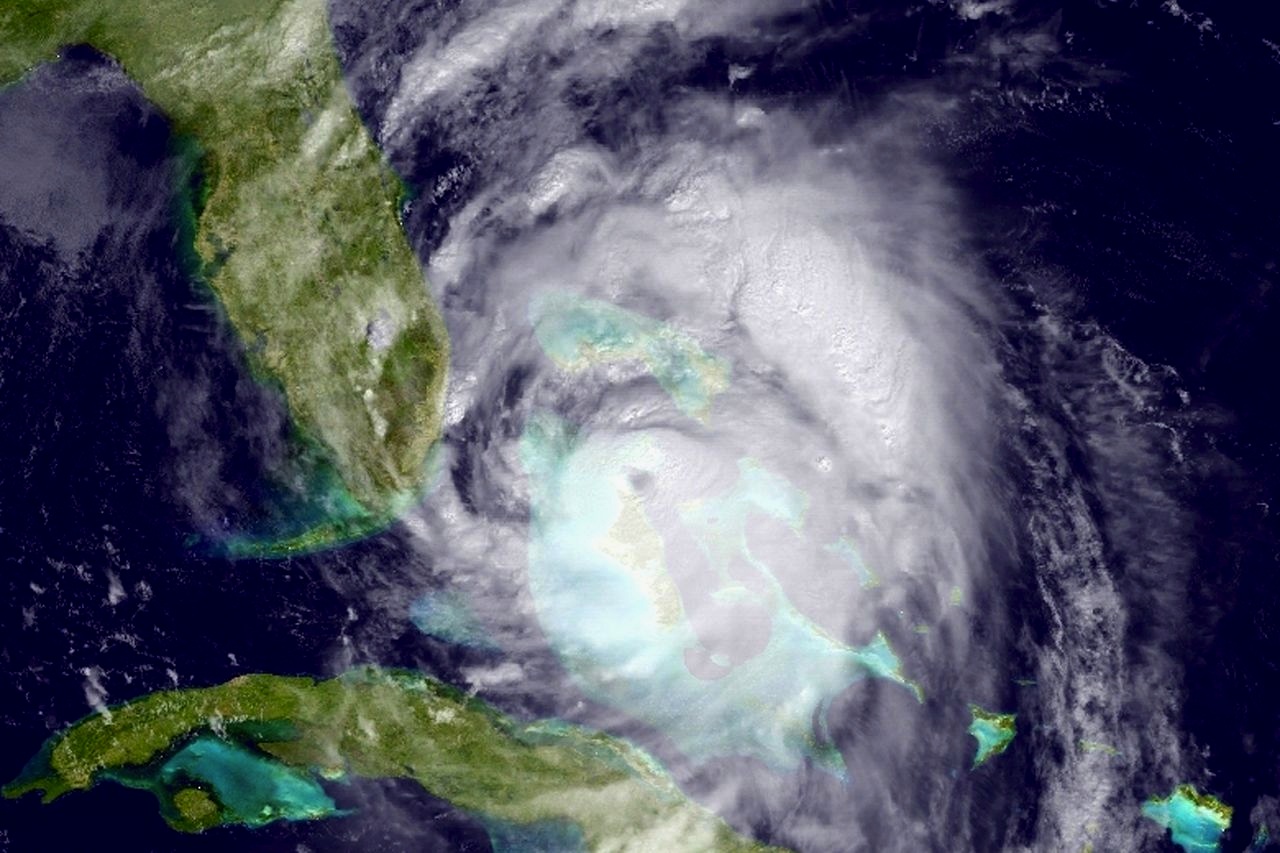
Hurricane Matthew (Satellite View - NASA)

HURRICANE MATTHEW MOVES ON: BRIGHTER LATER

Early reports and post-hurricane news for Abaco is fortunately encouraging, though I appreciate that the Island’s good fortune at the eleventh hour swerve by Matthew only meant that others came into the direct firing line. Plenty of environmental damage, of course, but in human terms the harm seems mercifully light.

Hurricane Matthew (Satellite View - NASA / ISS)

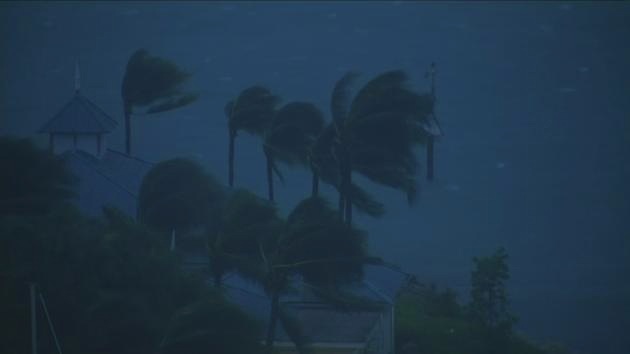
It’s too early to determine the impact on the wildlife of Abaco. The migratory winter birds must be wondering why they bothered this year. Land birds are obviously put at risk by the trashing of their habitat in the violent winds. Shore birds, too, are vulnerable: some beaches on Abaco are open to big tidal surges in high winds. Massive waves have smashed their way up the beach at Delphi. Long Beach, where the largest concentrations of piping plovers congregate at certain times, is also very exposed to surges. 100616nassaubahamashurricanematthewnbc6 1541819_630x354

Time will tell how the birds have fared. Meanwhile, here are some cheerful pictures – some of my favourite species – to relieve the gloom.

Abaco Parrot (Peter Mantle)

Western Spindalis, Delphi, Abaco (Keith Salvesen)Bananaquit, Abaco (Bruce Hallett)Painted Bunting male.Abaco Bahamas.Tom SheleyCuban Emerald Hummingbird preening, Abaco (Keith Salvesen)Bahama Woodstar male.Abaco Bahamas.Tom Sheley

OPTIONAL MUSICAL DIGRESSION

2q

‘BRYTER LAYTER’ was the second album by a ‘troubled genius’, the supremely talented but sadly doomed Nick Drake. Released in 1971, it failed to convert the ripples caused by his debut ‘Five Leaves Left’ (1969) into a deserved wave of popularity, not least because Drake was already starting his gradual retreat from live performance, from social contact, and indeed from life. Here’s the title track, a pastoral instrumental with orchestral embellishments, and (unusually) without Drake’s distinctive, wistful voice. 

Credits: NASA / ISS, News open sources, Peter Mantle, Keith Salvesen, Bruce Hallett, Tom Shelley

Unknown's avatar

WORLD SHOREBIRDS DAY? YAY! AN ABACO COMPETITION!


Piping Plover (Danny Sauvageau) 7

WORLD SHOREBIRDS DAY? YAY! AN ABACO COMPETITION!

In the past I have occasionally offered a Kalik™ (half in jest) for a ‘right answer’ or a nugget of info. Anyone who didn’t get their beer can still claim it, of course [no, no, not all at once please…]. But now I’m getting serious. World Shorebird day is on September 6th, and this weekend sees a global shorebird count in which, it is hoped, large numbers of people will scan their shorelines and post the results on the great and good resource that is eBird

13873031_859587794145299_7383541518099186659_n

But you don’t need to go to those lengths. Here’s the deal. Is there a bit of beach near you (hint: on Abaco you’ll never be far from a beach or shoreline except in the National Park)? If the answer is yes, then can you spare an hour (or two?) to take a walk on the beach over the weekend?  Or Monday and Tuesday? If so, can you look for a particular rare bird that makes its home on Abaco for the winter? Great. You’re in the competition, then. And there’ll even be a PIPL-related prize…

Piping Plover (Danny Sauvageau) 1

THE (SOMEWHAT FLEXIBLE) RULES

  • go for a beach walk, taking a notebook, pen, a camera or even just a phone. Binoculars would be good.
  • look for tiny shorebirds that look like the birds in this post
  • count how many you see at a time (watch out, they move quite fast). Maybe 1 or 2. A dozen is the likely max.
  • check their legs for coloured flags or bands and if possible note the colours and any numbers / letters
  • if possible, take photos of the bird(s), showing legs if banded. Don’t worry too much about quality – enhancement is possible
  • tell me about what you found and send me any photos (see below)

Piping Plover, Abaco - Charmaine Albury

HOW WILL I KNOW WHAT TO LOOK FOR?

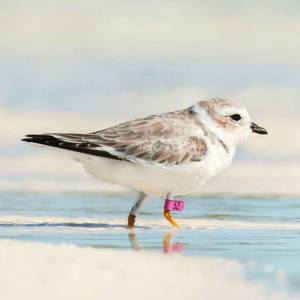
  • Size – very small (6″ – 7″) and usually busy
  • Legs – orange
  • Beak – black, possibly with a hint of orange at the base
  • Eyes – black and beady, with a streak of white above
  • Front – white / very pale
  • Underside – ditto
  • Back – greyish / brownish-tinged
  • Head – ditto
  • Tail – darker feathers at the end
  • Neck ring – a greyish hint of a partial one (they are black in summer)

Piping Plover (Danny Sauvageau) 8

WHERE WILL I FIND ONE?

  • On a beach or maybe a rocky shoreline
  • Out in the open on the sand, anywhere from back of the beach to the shoreline
  • Foraging in the tide margins
  • Rushing round in a seemingly random way
  • Taking a dip in a sea-pool (see above)
  • On a rock near the sea

Piping Plover (nb), Abaco (Bruce Hallett)

WHAT DO YOU WANT TO KNOW?

In an ideal world, all the details below. But I’d be really pleased just to find that you had seen a piping plover on your chosen beach. Even the knowledge that a particular part of the shoreline is favoured by the birds is valuable for their conservation. The most useful info is:

  • Date, name of beach, approx location (‘north end’).  Time would be good too, and whether tide high, mid or low
  • Number of piping plovers seen (if any) and how many banded / flagged (if any).
  • Impression of bands if unclear: ‘I think it was… a green flag / an orange ring / a metal ring’ or if visible…
  • ‘One was green flag 2AN on it’ / ‘one had bands – left leg upper leg orange, right upper leg light blue…’
  • Take a photo. This will help eliminate other species of shorebird from the ID, and enable a close-up look

Piping Plovers, Delphi, Abaco A (Keith Salvesen)6

WHAT’S THE POINT OF BANDING & TRACKING THEM?

Marking a plover with coloured bands or flags (or a combo) gives a unique ID to each bird. Usually it will be done on the beach where they hatched, within a day or two. These adornments weigh nothing, do not impede the birds in foraging or in flight (or when mating…) and expand as they grow. The scientists who carry out the banding will have weighed and measured the hatchling and made a detailed record of the data collected. They need to get as much information as possible about the habits of each bird to help with conservation initiatives at both ends of the migrations.

piping-plover

Each fall the plovers travel south between 1000 and 2000 miles south from their summer breeding grounds. Tracking individual birds to where they overwinter enables scientists to build up a picture of the type and location of fragile habitat that these little birds prefer, and to compare the annual data for each banded bird. For example

  • A particular beach does not seem to attract piping plovers at all (there may be several good reasons for this)
  • A particular beach has single or small groups of piping plovers who come and go but don’t settle there
  • A particular beach usually has at least one or a few birds on it who show ‘beach fidelity’, eg Winding Bay
  • If birds are found in groups – more than 10, say – in a particular location, it means the beach suits the breed especially well. It is sheltered, has plenty of scope for good foraging, few predators, and has not been spoilt by humans. Long Beach (Island Homes) is a good example. Last December, groups of more than 60 were found there. It’s a *hotspot*!

Piping Plover Tuna. Abaco. Oct 10. Rhonda Pearce

GIVE US AN EXAMPLE, PLEASE

Last season a bird called Tuna (see photo above) arrived at Watching Bay (Cherokee) in at the end of August. He moved from time to time to the Cherokee mud flats and Winding Bay, but mostly he remained at Watching Bay until April. His unique banding colours and their positioning led to the following information

  • The precise coordinates of location of the nest where he hatched in New Jersey
  • The date of hatching, banding, fledging and the last date he was seen there before migrating to Abaco
  • The name of the banders, plus his weight and the length of his body, wings, legs and beak
  • Even the names of Tuna’s parents. In fact, mother Paula headed to the Bahamas too –  she was resighted on Joulter Cays, Andros last winter.

Tuna was not reported over this summer – he didn’t return to his ‘birth beach’ – but we believe Tuna is now back at Watching Bay The distant photos were not clear enough to make a positive and definite ID. On the next visit we may know for sure, and all because of the bands. And we’ll know that he likes Abaco enough to fly back 1200+ miles to the same beach as last year. We can conclude that Watching Bay provides a suitable and safe habitat for Piping Plovers.

Piping Plover 1, West End Grand Bahama (Linda Barry-Cooper)

WHAT’S IN IT FOR ME?

  • Potential ‘fun for all the family (nb best leave the dog at home for this adventure…)
  • Exercise in a lovely beach setting
  • Seeing a rare and vulnerable bird in its natural setting
  • Wonderment that such a tiny bird should fly many miles & choose Abaco to overwinter
  • Assisting in logging the beach presence of the birds so that researchers know where to look
  • Helping count the birds so that year-on-year comparisons of the population can be monitored
  • Getting appreciation and thanks
  • Being described as a ‘Citizen Scientist’
  • Winning a prize if your are the most successful finder of banded birds, as verified by photos

Piping Plover pair, Delphi Beach, Abaco (Keith Salvesen)

I’ll post details of sightings on ABACO PIPING PLOVER WATCH with credited photos. Later I’ll follow up with a ROLLING HARBOUR post summarising the results, listing the participants and their scores of both unbanded and banded birds, and naming the winner of the PIPL-themed prize to mark their glory…

Contact me via APPW, DM me on my FB page, or email me at rollingharbour.delphi [at] gmail.com

GOOD LUCK!

13873031_859587794145299_7383541518099186659_n

Credits: Danny Sauvageau, Charmaine Albury, Bruce Hallett, Keith Salvesen, Rhonda Pearce, Linda Barry-Cooper, Gyorgy Szimuly (WSD logo)

Unknown's avatar

HUNGRY MOUTHS TO FEED: W.I. WOODPECKER CHICKS (PT 2)


West Indian Woodpecker & Chicks, Abaco (Rhonda Pearce)

HUNGRY MOUTHS TO FEED: W.I. WOODPECKER CHICKS (PT 2)

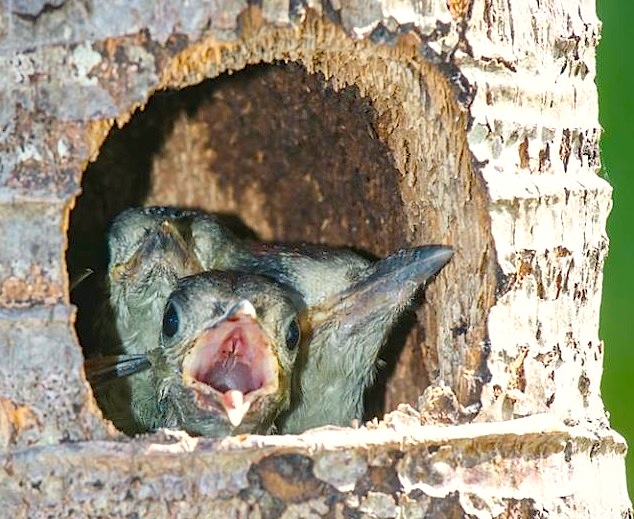
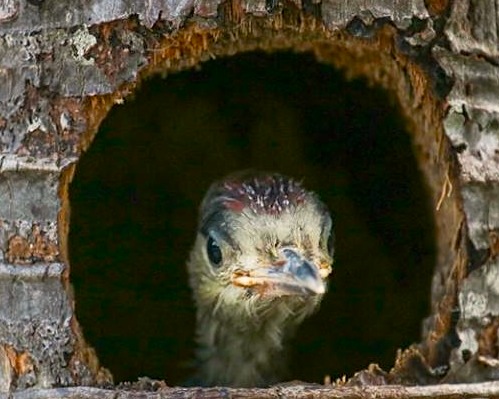
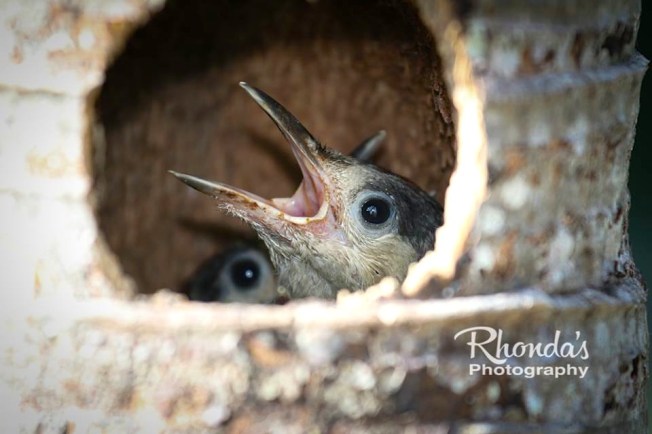
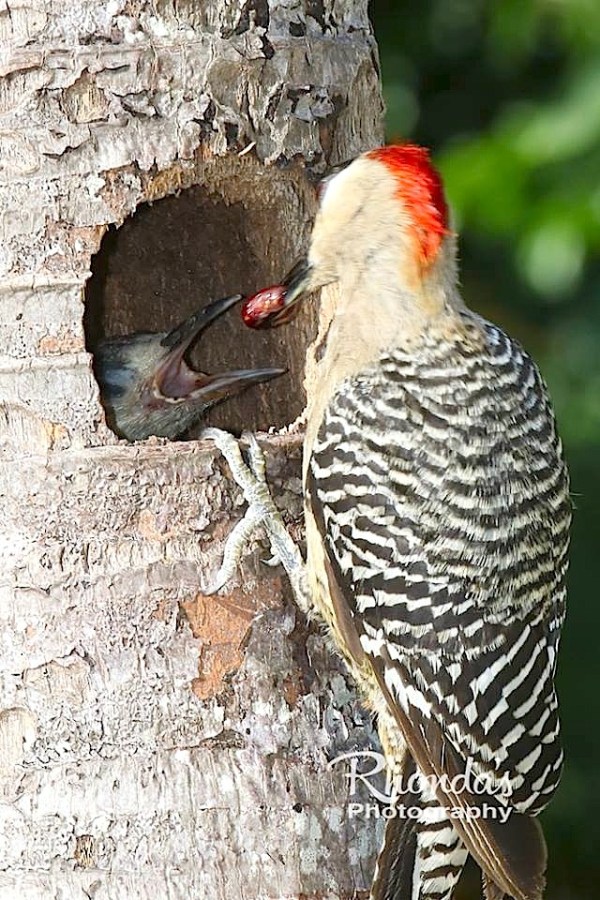
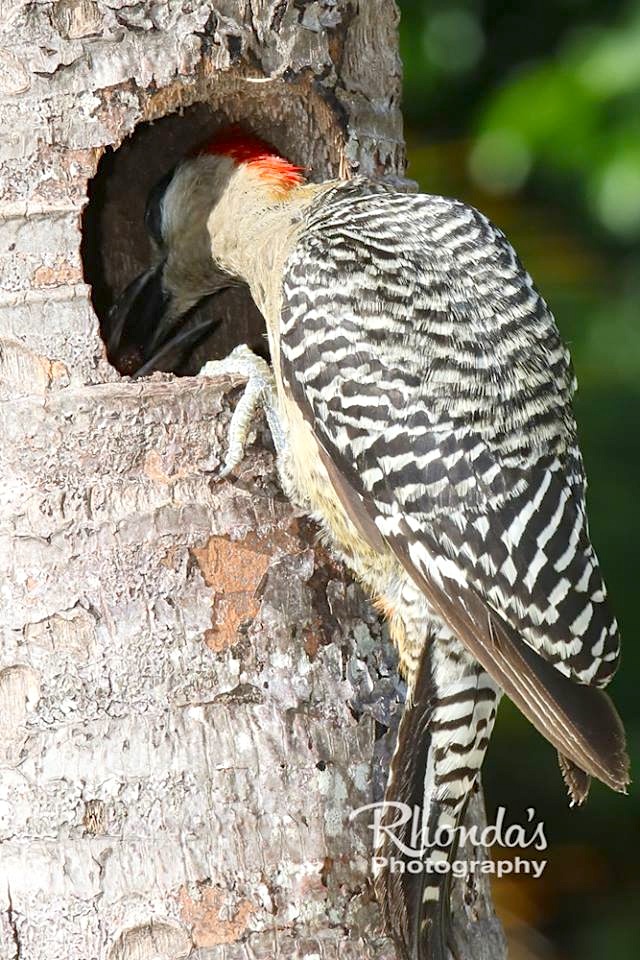
In just a few days, the West Indian WOODPECKER CHICKS have become bigger, noisier and much hungrier. Their heads are now tinged with red. They have started to compete for food: the first chick to push its way to the entrance hole gets the most food. Often there will be a smaller or weaker chick that gets rather left out in the frantic rush for grub (make that ‘grubs’ – see header image). But I suspect quite a lot of food shrapnel gets dropped and spread around inside the nest, so that in the end all the chicks are well sustained.

Rhonda Pearce has been taking photos of this growing family over the last few days, and if you saw my post last week, you will notice that the size of the chicks and the size of the food morsels jammed down their eager gullets has increased considerably…

A lizard hangs on tightly to the parent’s beak… but sadly it is doomed to be dinner…West Indian Woodpecker & Chicks, Abaco (Rhonda Pearce)

Mmmmmmm. It’s so tasty, little one…. and even if it isn’t, it’s going inWest Indian Woodpecker & Chicks, Abaco (Rhonda Pearce)

Hey, kids, who wants a bug with wriggly legs and feelers?West Indian Woodpecker & Chicks, Abaco (Rhonda Pearce)

What do we want? Food! When do we want it? Now!West Indian Woodpecker & Chicks, Abaco (Rhonda Pearce)West Indian Woodpecker & Chicks, Abaco (Rhonda Pearce)

“Wishin’ and hopin’…”West Indian Woodpecker & Chicks, Abaco (Rhonda Pearce)

“Is there any left for me…?”West Indian Woodpecker & Chicks, Abaco (Rhonda Pearce)

RELATED POSTS

HUNGRY WIW CHICKS (PT 1)

WEST INDIAN WOODPECKERS

WIWs AT DELPHI

Credits: all photos, Rhonda Pearce

Unknown's avatar

HUNGRY MOUTHS TO FEED: WEST INDIAN WOODPECKER CHICKS


West Indian Woodpeckers & Chicks (Rhonda Pearce)

HUNGRY MOUTHS TO FEED: WEST INDIAN WOODPECKER CHICKS

West Indian Woodpeckers are special. So special that Abaco even has its own subspecies  Melanerpes superciliaris blakei. They are joyful and noisy. They noisily share parenting duties in an admirably modern way. And did I mention they are noisy?

West Indian Woodpeckers & Chicks (Rhonda Pearce)

The parents set up home together, with both partners taking their turns to choose the furnishings and fit out the nest. They share duties on the nest once the eggs have hatched. And they take turns to feed the nestlings as they grow into increasingly hungry and raucous fledglings. 

West Indian Woodpeckers & Chicks (Rhonda Pearce)

This feeding sequence was taken by Rhonda Pearce whose ravenous chick in the header photo is one of the best I have come across. I have never managed to get such a clear shot of desperate chick hunger…  

Here’s how a nest can sound when the chicks are young – a weird sort of insistent purring sound. As the chicks get larger – and more competitive – so the volume level increases.

Get this down your throat, you pesky little rascal…West Indian Woodpeckers & Chicks (Rhonda Pearce)

RELATED POSTS

WEST INDIAN WOODPECKERS

WIWs AT DELPHI

Credits: all photos, Rhonda Pearce; audio recording RH @ Delphi Club nesting boxes

Unknown's avatar

BUTTERFLIES ON ABACO (9): GULF FRITILLARIES


Gulf Fritillary, Abaco (Charles Skinner)

BUTTERFLIES ON ABACO (9): GULF FRITILLARIES

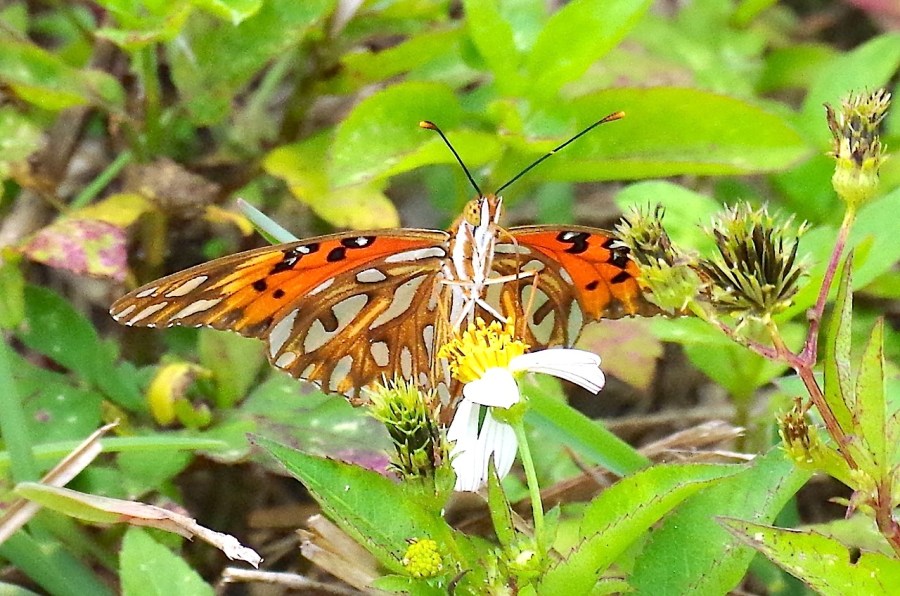
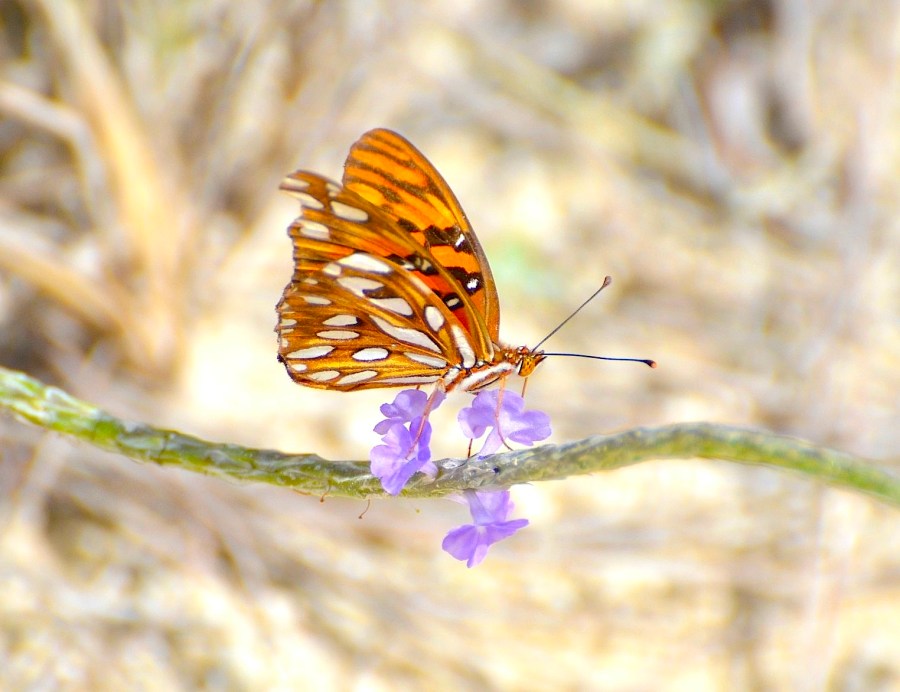
It’s been a while since any papilionidae made an appearance on these pages – and much longer since a Gulf fritillary  Agraulis vanillae flew in. These very pretty butterflies are far from rare, but like the ATALA hairstreak, they are always a pleasure to see. Here are a few to enjoy.

Gulf Fritillary, Abaco (Charles Skinner)Gulf Fritillary, Neem Farm, Abaco (Keith Salvesen)5Gulf Fritillary, Neem Farm, Abaco (Keith Salvesen)2Gulf Fritillary, Neem Farm, Abaco (Keith Salvesen)1Gulf Fritillary, Abaco (Charles Skinner)10386393_10152656788408720_3995568288186763659_nGulf Fritillary, Abaco (Charles Skinner)

Credits: Charles Skinner (1, 2, 6, 8), Rhonda Pearce (7), Keith Salvesen (3, 4, 5)

Unknown's avatar

“ON THEIR WAY”: THE PIPING PLOVER MIGRATION HAS BEGUN…


PIPL adult & chick (Jordan Rutter)

“ON THEIR WAY”: THE PIPING PLOVER MIGRATION HAS BEGUN…

The last piping plover known to have left Abaco for the summer breeding grounds was the renowned ‘Tuna’, in early April. We can’t say where he ended up – there are no reported sighting of him this summer from the NJ beach where he was born, raised and banded – or from anywhere else. The unbanded Delphi contingent had left the beach by the end of March.

TunaPiping Plover Tuna. Abaco. Oct 10. Rhonda Pearce

Besides Tuna, of the named banded birds resighted on Abaco beaches last season (e.g. Harry Potter, Hermione Granger, Jonesy, Bahama Mama, Benny, Bess), only the most distant visitor Bahama Mama returned to her original beach in Muskegon State Park. Her mate from last year (‘Little Guy’) had already shacked up with another bird, so BM did likewise. Carol Cooper reports that all birds had left the beach by July 23.

Bahamas Pink Band 52PIPL Pink Band 52, Abaco (Walker Golder)

As for Bahamas ‘Pink Bands’ – winter-banded birds – the BAHAMAS SHOREBIRD CONSERVATION INITIATIVE has posted a wonderful interactive map produced by Audubon which shows the astonishing extent of the migration undertaken by these little birds. Unfortunately none of last winter’s Abaco ‘pink numbers’ are shown as resighted. You can reach this great resource by clicking the image below. This will take you to the original – I am trying to work out how best to embed the map in my sidebar.

Click me!Pink band PIPL map (Audubon : BSCI)

Reports of migrating PIPL are beginning to come in and will accelerate over the next few weeks. First with a Bahamas report is Linda Barry-Cooper (West End Ecology Tours), who spotted 3 at Sandy Cay, West End, Grand Bahama on July 21 (‘10.00 a.m., high water’). With a modest fanfare of greeting, here are those first Bahamas birds of the season.

Piping plovers, West End, Grand Bahama (Linda Barry-Cooper)Piping plovers, West End, Grand Bahama (Linda Barry-Cooper)Piping plovers, West End, Grand Bahama (Linda Barry-Cooper)

ABACO PIPING PLOVER WATCH

Last season was an important one for having a bird count on Abaco, with the four-yearly census taking place in January. I started The Watch rather nonchalantly, but it quickly picked up enthusiasm and momentum and in the end it was of significant use for the official bird count. Here are the compressed stats for the from the end of July 2105 to January 2016. You will see – possibly with some surprise – that in only 5 months 3.83% of the total presumed piping plover population in the world was found on Abaco. And of course that’s only a total from sightings on certain beaches, mostly easily accessible, by a relatively small number of monitors. How many more were there on the all the unexplored expanses of beach, or indeed out on the Marls?

12645249_238060709872861_4615782903299666904_n

The question is whether to continue the watch this coming season. If so, best to get it sorted before the first birds arrive any day now. I have decided  to carry on, but – since it isn’t a census year –  with a lighter touch this time (it’s a time-consuming process and there’s other stuff going on in my life.) Accordingly I would welcome reports of all Abaco sightings. If you are in doubt whether what you are seeing is a piping plover or some other shorebird, a photo or even a phone pic for ID would be great. The most helpful information to give is:

  • Date and time
  • Single bird or number of birds (if countable) or an estimate
  • Whether banded or not
  • If so, details of the banding: band or flag, colours, visible numbers etc
  • If at all possible, photos of the bird and its legs… I am able to enhance apparently dim or fuzzy pictures to some extent, so don’t worry if you don’t get a perfect shot.
  • If possible, state of tide – high, low, half-way, coming in, going out
  • Also, what the bird is doing – foraging, sleeping, rushing round in circles etc
  • Finally, location as accurately as possible. Area, name of beach, whereabouts (middle, east end, south end etc)

Piping Plover (juv) CT (Danny Sauvageau)

If you are one of the volunteer beach monitors from last year, I will be emailing you. If you’d like to monitor your own or a favourite beach, I’d love to hear from you.

CONTACT

Piping Plover, Abaco - Charmaine Albury

Photo Credits: Jordan Rutter, Rhonda Pearce, Linda Barry-Cooper x 3, Danny Sauvageau, Charmaine Albury


Unknown's avatar

CONCH QUEST: ABACO’S MOST VERSATILE GASTROPOD


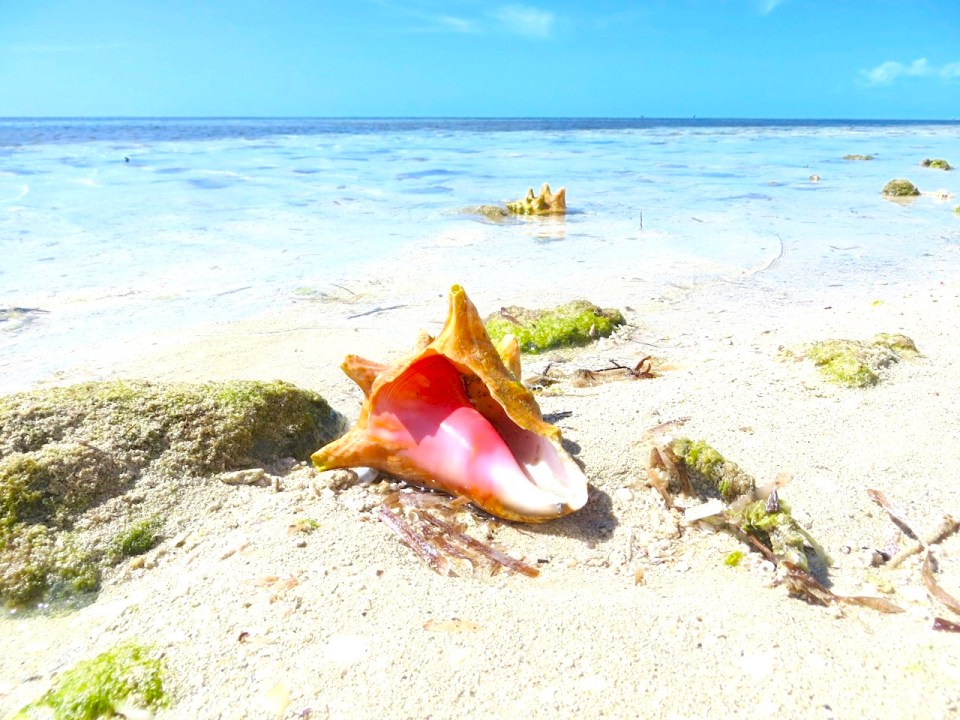
Conch Shells, Sandy Point, Abaco

CONCH QUEST: ABACO’S MOST VERSATILE GASTROPOD

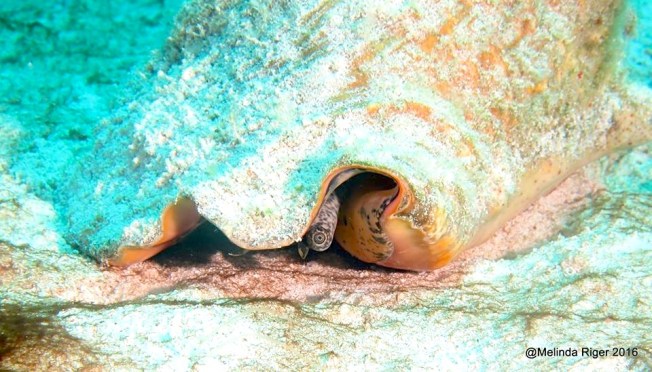
The conch. Such a fascinating gastropod, and with so many uses both culinary and decorative. In certain cultures, religiously significant. A rudimentary musical instrument for a shell.  And did I mention delicious? 

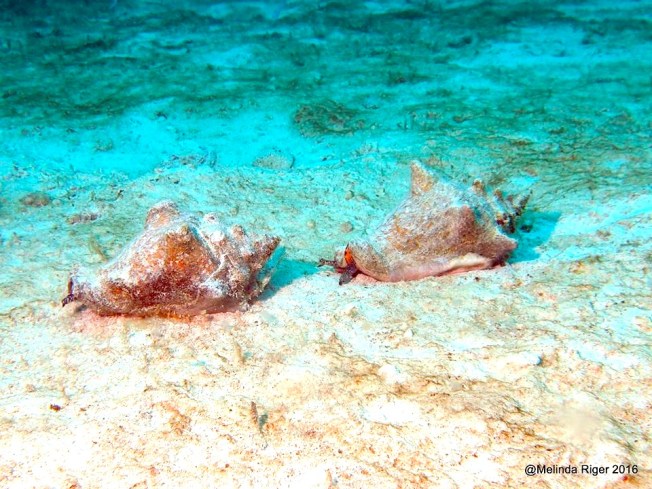
Live conchs enjoy motoring around uninhibitedly on the sea floor, keeping an eye out…Conch on the move ©Melinda Riger @ G B Scuba copy Conch Man-o-War Cay, Abaco (Charmaine Albury) copy Conch in shell ©Melinda Riger @ G B Scuba copy

Conchs also enjoy racing each other…Conch race ©Melinda Riger @ G B Scuba copy

“Eat my dust…”Conch Trail ©Melinda Riger @ G B Scuba copy

Conch Pearl – one of the rarest natural pearls in the worldConch Pearl (Ambergris Caye Beize)

A conch spiral close-up

Conch close-up, Abaco (Rhonda Pearce)

Conch shells just lie around the place at Sandy PointConch Shells, Sandy Point, Abaco (Keith Salvesen) 2Conch Shells, Sandy Point, Abaco (Keith Salvesen) 3

Conchs are widely used for serving cocktails or as ashtrays in the best beach bars*Conch Shells, Abaco (Keith Salvesen) 1

*This is a lie. Sorry about that. I meant to say “make prefect table decorations”

Image credits: Keith Salvesen / RH (1, 9, 10 ,11); Melinda Riger / GB Scuba (2, 4, 5, 6); Charmaine Albury (3); AmbergrisCaye.com (7); Rhonda Pearce (8) 

Unknown's avatar

CUBAN PEWEES AT THE NEEM FARM, ABACO


Cuban Pewee, Abbaco Neem Farm (Keith Salvesen) 5

CUBAN PEWEES AT THE NEEM FARM, ABACO

The Abaco Neem Farm just off the highway about 20 minutes south of The (one and only) Roundabout is about much more than the neem plants and the resultant products sold at the well-known shop in Marsh Harbour. The many varieties of fruit tree, the grasses and the wild flowers, the coppice, the pine forest, the open land and the pond that make up the extensive property provide a wonderful haven for birds, butterflies, moths and bees (there are hives too). It’s a great place for birding, and the owner Nick is rightly proud of the peaceful ambience of the farm. On a bright day, the place is alive with birdsong. 

Cuban Pewee, Abbaco Neem Farm (Keith Salvesen) 6

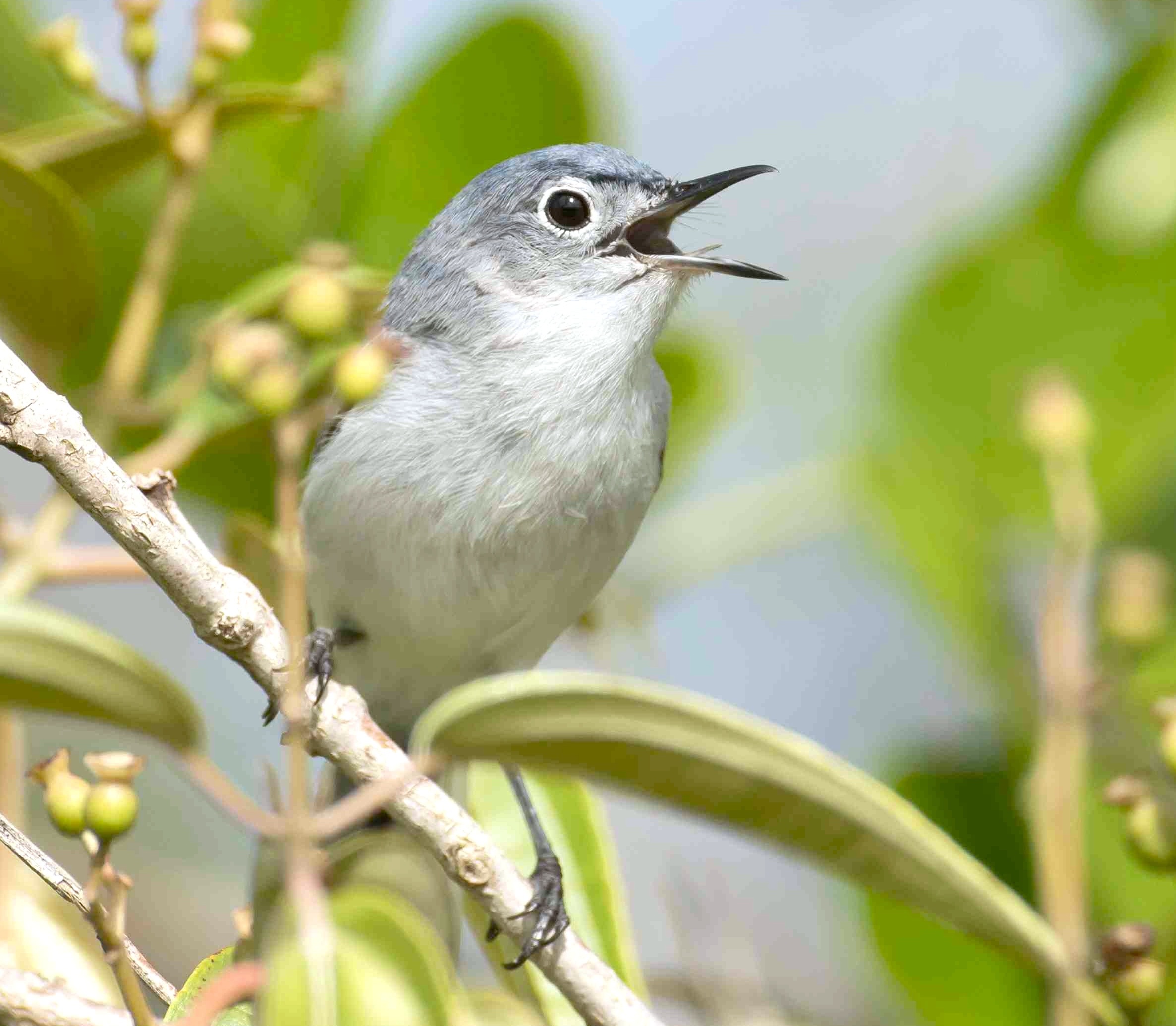
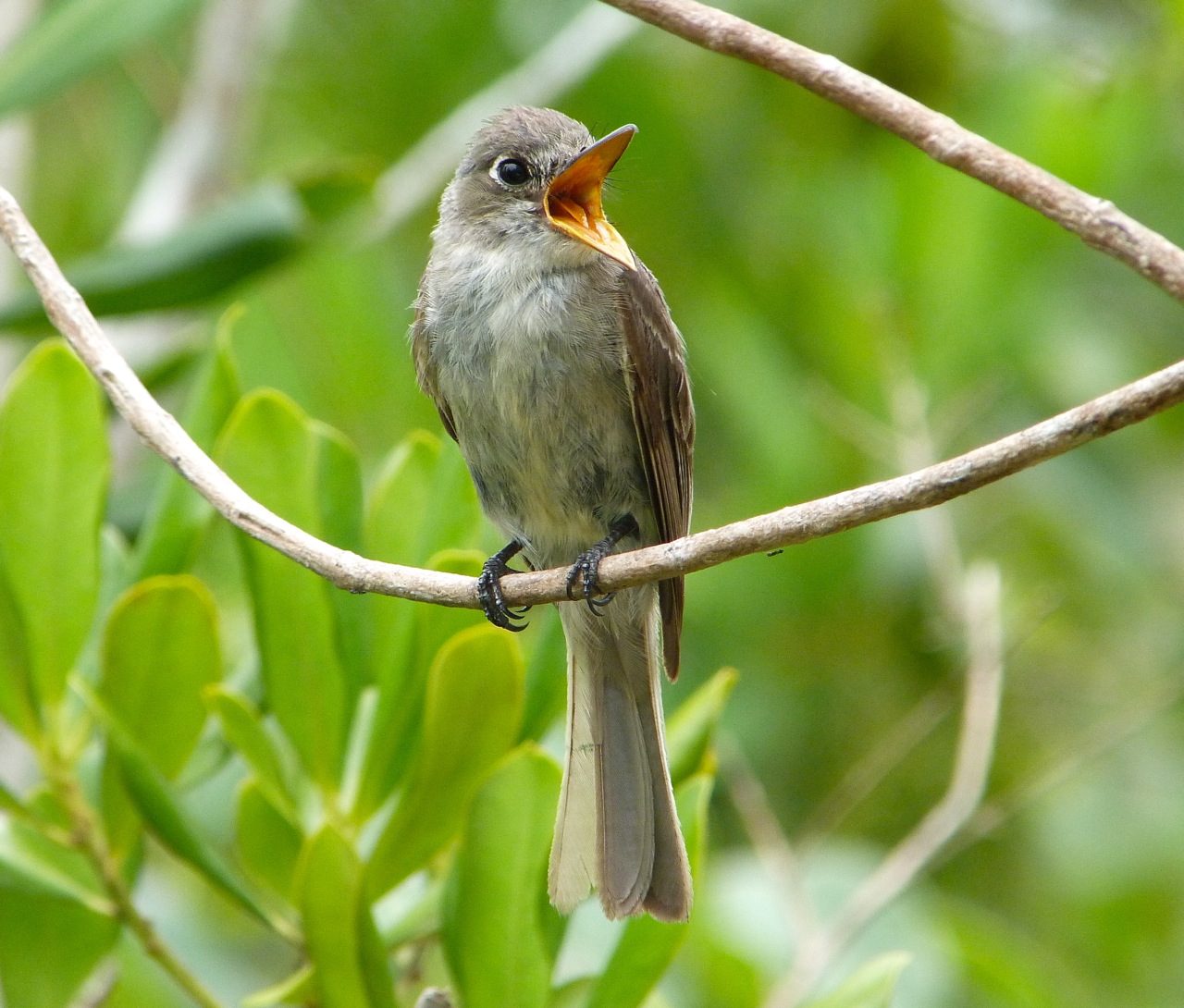
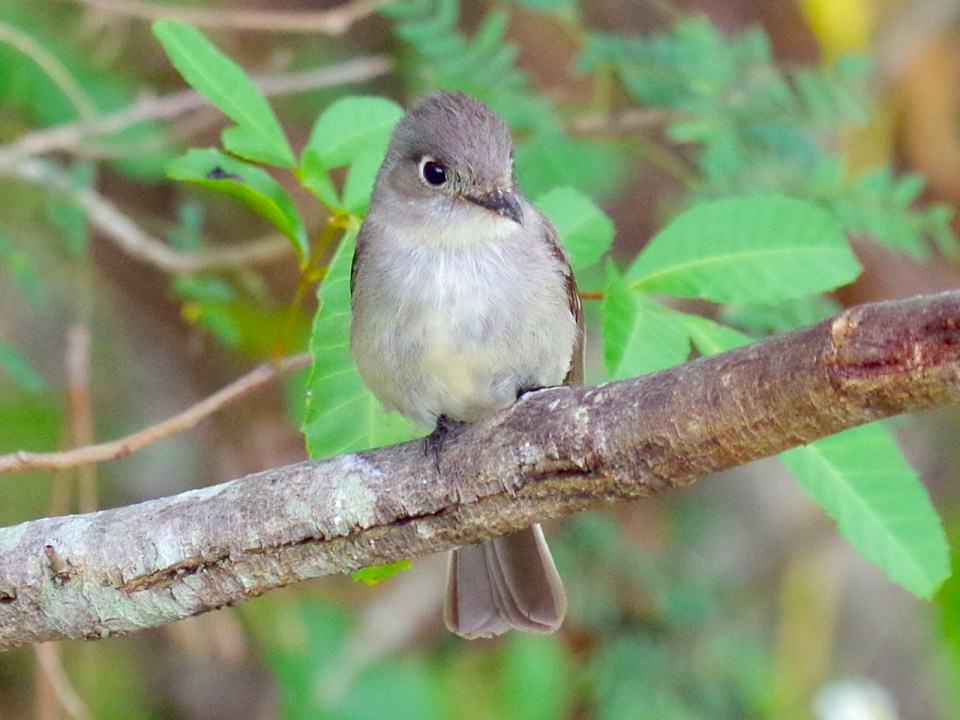
Among my favourite small birds found there are two species that are so tame and inquisitive that it is often possible to move slowly right up to them. The blue-gray gnatcatcher is one. The cuban pewee is another. This pewee was flitting about the edge of the coppice, hawking for insects and quite unconcerned by our presence. Sadly I only had ‘hated camera’ with me, having thrown ‘beloved camera’ into the sea a couple of days before, photographing shorebirds (and thence into the trash bin). So I’m not wholly pleased with the results, either for clarity or for colour. Needless to say, hated camera always has the last laugh…

Cuban Pewee, Abbaco Neem Farm (Keith Salvesen) 2

Identification of the various flycatcher species e.g. CUBAN PEWEE, LA SAGRA’S FLYCATCHER, LOGGERHEAD KINGBIRD and GRAY KINGBIRD can be tricky. The simplest way to distinguish the cuban pewee is to remember that it is a small bird (so, not a kingbird); and that its informal name is ‘crescent-eyed pewee’ due to the very noticeable white crescent behind the eye. And as Liann Key Kaighin reminds me in a comment, these little birds also answer to the name Tom Fool…

Cuban Pewee, Abbaco Neem Farm (Keith Salvesen)Cuban Pewee, Abbaco Neem Farm (Keith Salvesen) 3

A quick check of the sky for predators? Or maybe just for rain…Cuban Pewee, Abbaco Neem Farm (Keith Salvesen) 8

All photos: RH. Thanks to Nick Maoulis for his tolerance of people armed with cameras and binoculars.

PS I don’t go in much for beauty products (far far too late), but the Neem Salve is fantastic for minor injuries: cuts, grazes, bruises, small burns and so on. Well, it works for me.

Unknown's avatar

DOVE LOVE: APPRECIATING PIGEONS ON ABACO


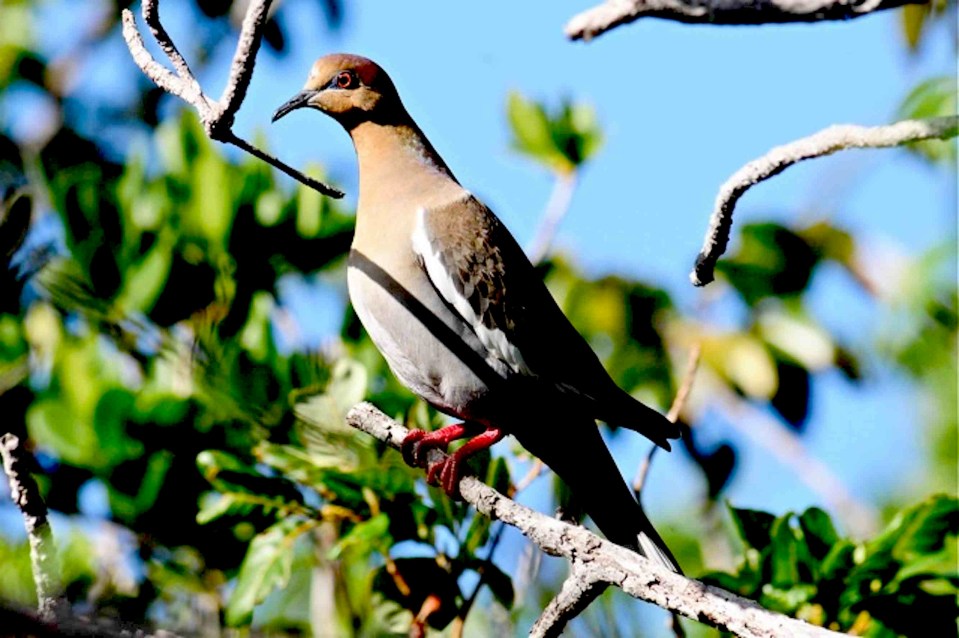
White-crowned Pigeon, Abaco, Bahamas (Gerlinde Taurer)

DOVE LOVE: APPRECIATING PIGEONS ON ABACO

Monday was International Pigeon Appreciation Day 2016, apparently. I’m not a huge fan of limitless species being accorded their own special day each year: “Celebrate International Plankton Day – Be Kind to your Favourite Protozoa!” or “Global Millipede Day: Take an Arthropod for a Walk!”.

White-crowned Pigeon (& header image)White-crowned Pigeon, Abaco (Alex Hughes)

I’m not sure where pigeons come in all this. In many cities feral pigeons are considered vermin – yet people love to feed them, even the ones with rotted feet and one eye. Especially those ones. Pigeons may be pests in crop fields, yet HEROES in wartime. They may be decorative, yet are, regrettably, good sport and delicious.

White-winged doveWhite-winged Dove, Abaco Bahamas - Tom SheleyWhite-winged Dove, Abaco - Tony Hepburn

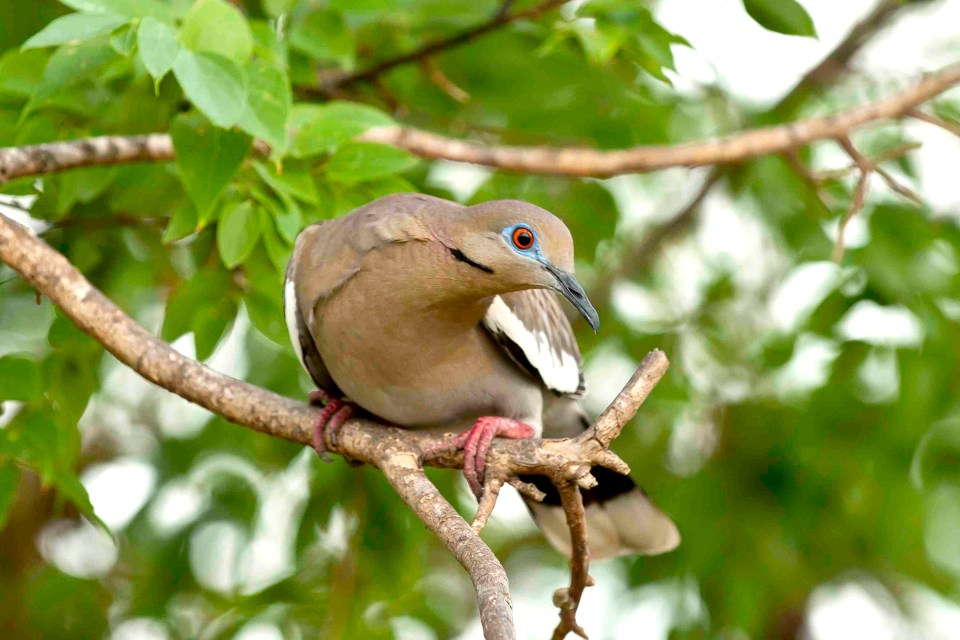
I’ve decided to take a broad view with pigeons and doves (there’s no significant difference), and not to be sniffy about Columba and their special day. They are pretty birds and they deserve it. So I’m featuring some Abaco pigeons and doves to enjoy, representing every species found on Abaco – and a bonus dove from New Providence at the end.

Eurasian Collared DoveCollared Dove, Abaco - Keith Salvesen / Rolling HarbourEurasian Collared Dove, Abaco (Bruce Hallett)

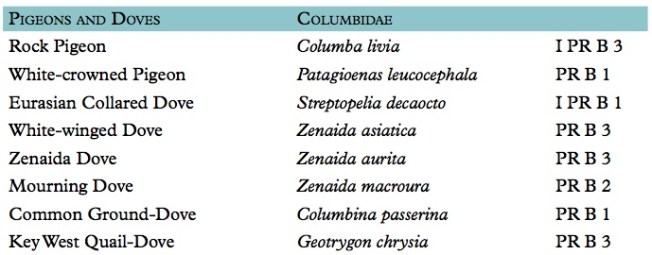
The Columbidae of Abaco: all permanent breeding residentsPigeons : Doves Abaco

Common Ground Dove (Tobacco Dove)Common Ground Dove, Abaco 1 (Tom Sheley)Common Ground Dove, Abaco (Keith Salvesen)

SPORT REPORT

PROTECTED SPECIES From a sporting and culinary point of view, the following pigeons and doves are protected by law at all times: Common Ground (Tobacco) Dove; Keywest Quail-Dove

SHOOTING IN SEASON The following have open season from roughly mid-September until March: Zenaida Dove; White-crowned Pigeon; Eurasian Collared Dove; Mourning Dove

UNPROTECTED – NO DESIGNATED CLOSED SEASON White-winged Dove (but why? they are fairly uncommon on Abaco); Rock Pigeon.

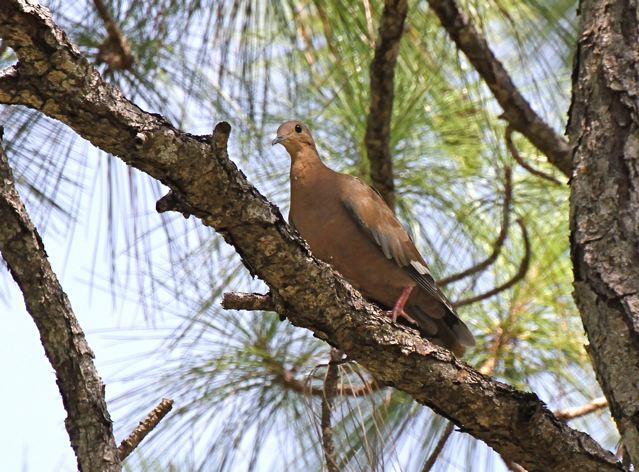
Zenaida DoveZenaida Dove, Abaco (Bruce Hallett)Zenaida Dove, Abaco (Bruce Hallett)

Key West Quail-Dove

The second bird of this pair was recently photographed by Milton Harris at the north end of Elbow Cay. More details HERE Key West Quail Dove, Nassau, Woody BraceyKey West Quail-Dove, Elbow Cay, Abaco (Milton Harris) 1a

Rock PigeonRock Pigeon, Sandy Point, Abaco Bahamas.Tom Sheley 2bRock Pigeon NYC (keith Salvesen)

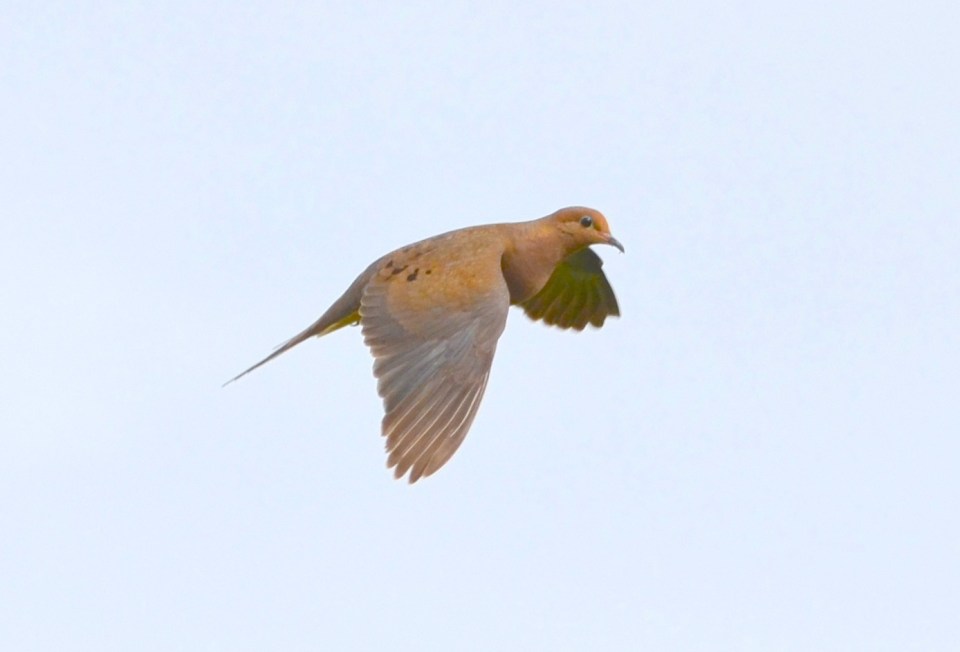
Mourning DoveMourning Dove, Abaco (Charles Skinner)

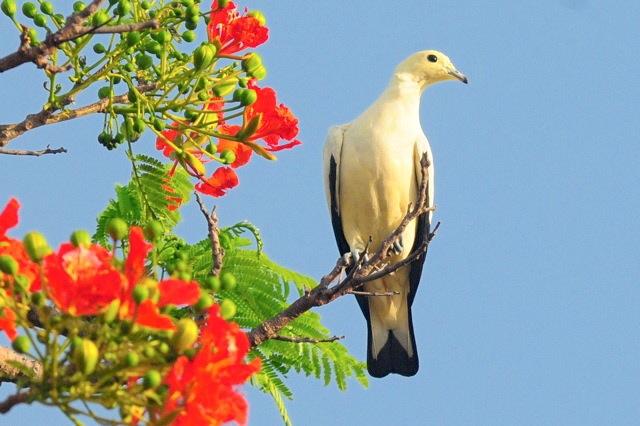
The birds shown above represent the 8 species found on Abaco. However, not far away in New Providence, there is a beautiful pigeon that has not yet made its way over to Abaco and has yet to be introduced there. I am ambivalent about the deliberate introduction of alien species, because of the frequently very real risks to native species in terms of territory, habitat, food sources and so forth. But where there is no detectable threat to the local species, perhaps there is no great harm. I’d certainly like to see these lovely birds flying around – if possible, as a protected species…

Pied Imperial Pigeon (Nassau)Pied Imperial Pigeon 1, Nassau (Woody Bracey) Pied Imperial Pigeon 2, Nassau (Woody Bracey).JPG

Photo credits: Gerlinde Taurer (1); Alex Hughes (2); Tom Sheley (3, 7, 13); Tony Hepburn (4); Keith Salvesen (5, 8, 14); Bruce Hallett (6, 9, 10); Woody Bracey (11, 16, 17); Milton Harris (12); Charles Skinner (15)

Unknown's avatar

TONY WHITE: CHAMPION OF BAHAMAS BIRDS


Tony White, Birds of Abaco launch, Delphi Club 3

Tony White, Keith Salvesen, Bruce Hallett & Woody Bracey

TONY WHITE: CHAMPION OF BAHAMAS BIRDS

Tony White passed away 2 days ago. The sad news has spread rapidly through the birding community and far beyond it. It is not my place to write a detailed appreciation of Tony’s life and achievements; others who have been his long-term friends, associates and birding companions are in a far better position to do so than I. However, I do have direct experience of Tony’s kindness, enthusiasm and pragmatism in connection with the compilation of The Delphi Club Book of the BIRDS OF ABACO

Tony with Caroline Stahala Walker, erstwhile parrot supremo of AbacoTony White with Caroline Stahala

It took 16 months or so from the initial idea of the project to the finished 30-contributor book and a launch party at the Delphi Club in March 2014. During that time I had amazing support from the birding elite of the Bahamas. The proposed book might well have been treated as misconceived fantasy by amateur hicks from out of town. Instead, we received nothing but courtesy, kindness, cooperation, and a willingness that the project should succeed.

Tony with Bruce Hallett (author of Birds of the Bahamas and TCI)Tony White, Birds of Abaco launch, Delphi Club 1

Tony was one of the invaluable experts on whom I knew I could rely. His emails were invariably cordial, helpful and to the point. When I asked if he would undertake a complete revision of the checklist for Abaco that appears in his indispensable book for Bahamas birders (see link below), he agreed without hesitation. In due course, and in conjunction with Woody Bracey, a new checklist for all birds recorded for Abaco – however rare – from 1950 until the day of publication was completed.

Tony in the field (Lynne Gape, BNT)Tony White in the filed (Lynne Gape)

When the book was launched Tony was there of course, his startlingly blue eyes bright with excitement. His friends Bruce Hallett and Woody Bracey, without whose help the book would never have been the avian showcase that it is, were also present. The contributions of all three were indispensable .

Tony after a Grand Bahama bird count (Erika Gates)Tony White

I have included some photos of Tony as we would all like to remember him, with thanks to Lynn Gape of the Bahamas National Trust and to Erika Gates, Grand Bahama.

Tony White, Bruce Hallett & Woody Bracey at “Birds of Abaco” launch; author aka RH (seated)Tony White, Birds of Abaco launch, Delphi Club V2

51KAMPYWDEL._SX323_BO1,204,203,200_

To read my original review of Tony’s magisterial book click HERE

To see Tony and Woody’s complete Abaco bird checklist, up to date as at March 2014, click CHECKLIST FV 06 table sun2 Since then, 5 new species have been recorded on Abaco.

RH 3 June 2016

Unknown's avatar

*BIRDWATCHER ALERT* A BIG DAY FOR BIRDS EVERYWHERE!


Sanderling Trio, Delphi Beach, Abaco (Keith Salvesen) 5

Sanderling, Delphi Beach, Abaco

*BIRDWATCHER ALERT* A BIG DAY FOR BIRDS EVERYWHERE!

It’s here again – GBD, the second Global Big Day. A chance for anyone and everyone to participate in a worldwide celebration of birds at just the level you choose.

Global Big Day Flyer (Cornell Lab)

No need to try to cover 100 square miles in a day and record 300 species. Unless you want to, of course. You could as easily spend an hour or two in a garden. In a clearing in the coppice. Down a track in the pine forest. Sitting on the beach with a cooler full of beer. Whatever suits you. 

Western Spindalis, Delphi, AbacoWestern Spindalis, Delphi, Abaco (Keith Salvesen)

As the second Saturday in May, today also happens to be the official IMDB – International Migratory Bird Day – for the U.S. and Canada (the Caribbean is in October – reversed migration routes. Geddit?).
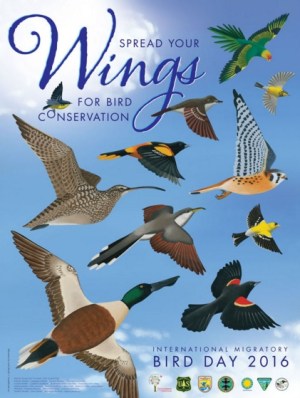
IMBD 2016 poster

However, this post is not primarily about that event, but rather an encouragement to people to join in with some easygoing birding today. And if you happened to want to do it tomorrow, that’s OK too! If you want to send me your checklist (iphone photo should be fine), please do. Or send 2 or 3 best photos, and I’ll post my favourites – though preferably rather than post to my FB page, email to rollingharbour.delphiATgmail.com .

Palm Warbler, Delphi: a migratory warbler. Unlikely to be on Abaco – all hightailed north by nowPalm Warbler, Abaco 3 (Keith Salvesen)
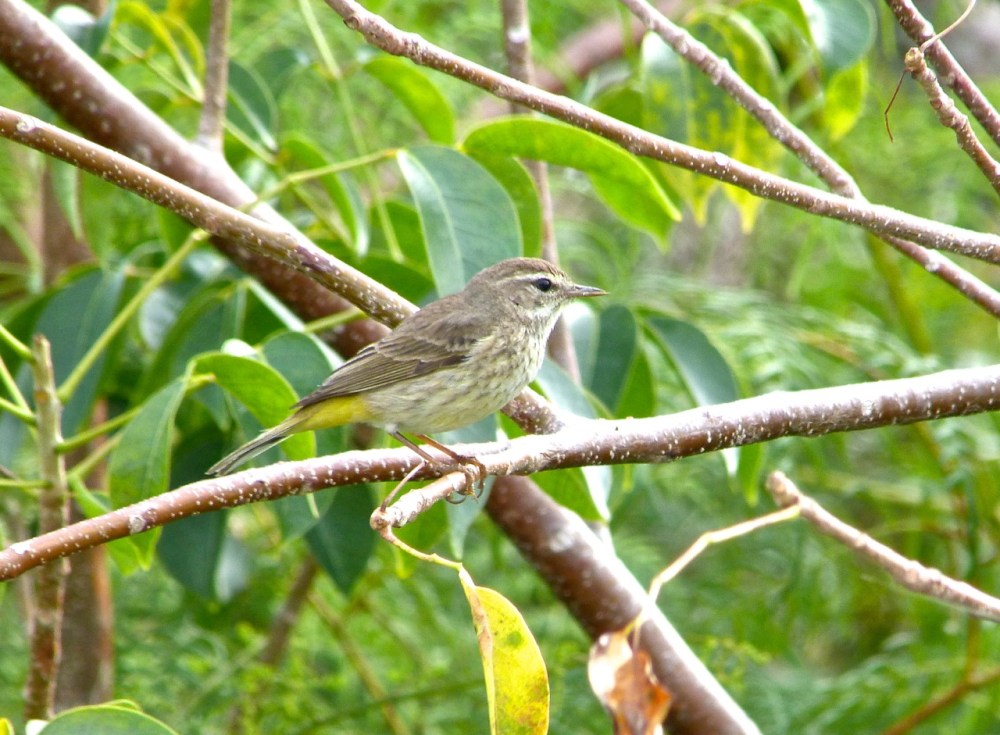
Wherever you happen to be, just take a little time to look for some birds. There are plenty of places you can rule out straight away. Indoors for example. So it means being in the fresh air. And it’s probably best to set an hour or so as a minimum target time to spend on the task.

Green Heron hunting (successfully) – Gilpin Point pond, AbacoGreen Heron, Gilpin Point, Abaco (Keith Salvesen)05
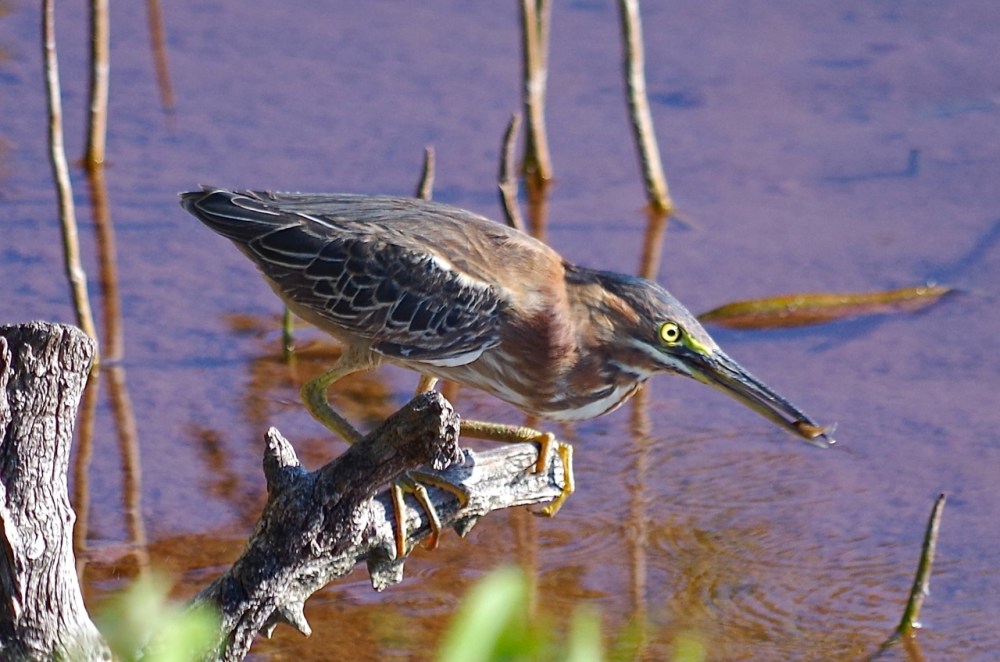
WHAT DO I NEED?

Keep it simple. A pen that works. A spare pen just in case. A note book or even a large sheet of paper. Binoculars maybe. Camera if you are that way inclined. Sustenance. Maybe a friend for a joint effort. Possibly a bird book. If you have a North American one, it will help with most of the species you are likely to encounter. 

Antillean Bullfinch, Delphi, AbacoGreater Antillean Bullfinch, Abaco (Keith Salvesen)

In an ideal world you would then upload your checklist officially to eBird by May 17 so that your findings can be included in the global statistics. Or you could pass your record to a local birding group to upload for you. Or just have a bit of fun, why not, and see how many different birds you can find (even if you can’t put a name to them). Last year 268 Caribbean species were recorded. Imagine if one of yours was the only one of its kind to be seen?

Bananaquit, Delphi, AbacoBananaquit, Abaco 2 (Keith Salvesen)

WHY DO IT?

The stats gleaned from this initiative, and others like it (‘Shorebird Day’; ‘Warbler Day’ etc) are a good indicator of the state of health of the bird population both in general and by location. Perhaps an area previously having worrying low numbers for a particular species will show an encouraging upswing, indicating a successful breeding season and  / or effective habitat protection initiatives. Or maybe one species will show an unexpectedly low figure, indicating a need for research and the instigation of protection measures. 

Red-tailed Hawk giving me ‘The Look’Red-tailed Hawk 2 NYC (Keith Salvesen)
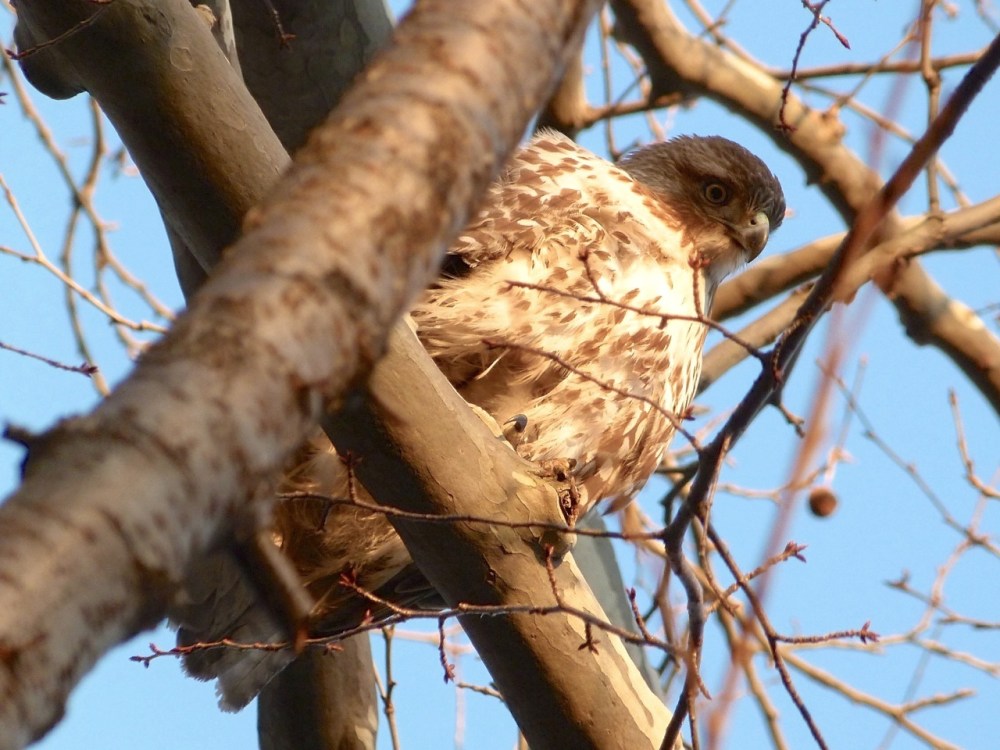
So every return made for every region in the world is significant; and if you can add 20 species to the count, you will be adding to the vast fund of accumulated knowledge that in the long term helps to preserve the birds that surround us.

Let the count begin…

Royal Tern, The Marls, Abaco – taken while fishing. Camera + rod. Cool, huh?)Royal Terns Abaco (2) 2 (Keith Salvesen)
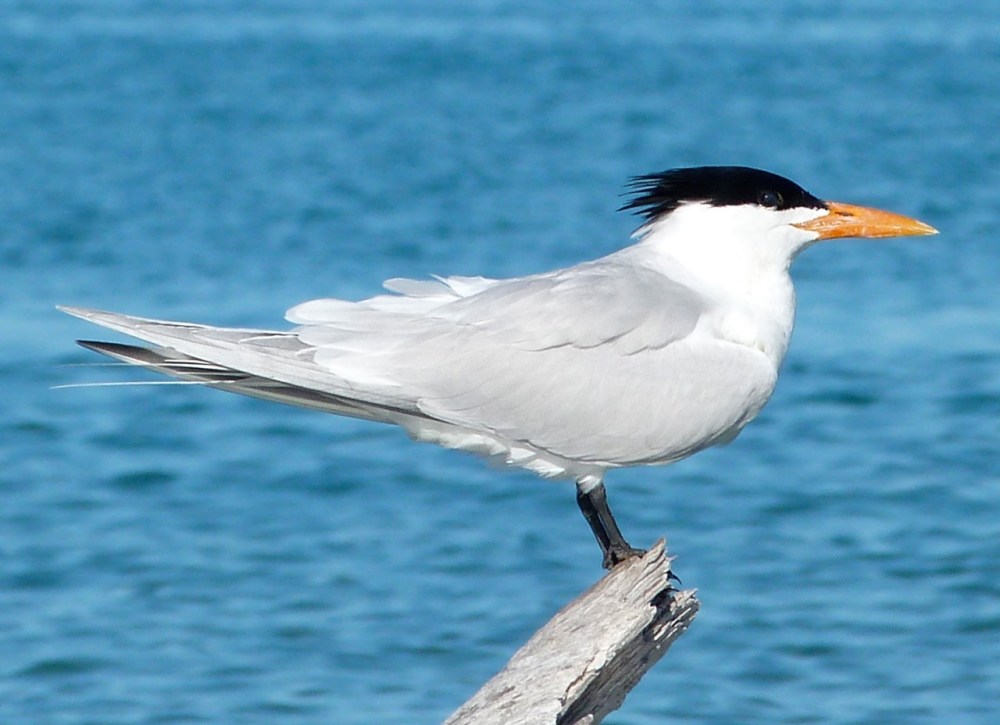
All photos: Keith Salvesen, taken on Abaco (ok, you got me there, not the red-tailed hawk, which is a cheat and was taken in Central Park NYC. Never got this close on Abaco. But I like it anyway)
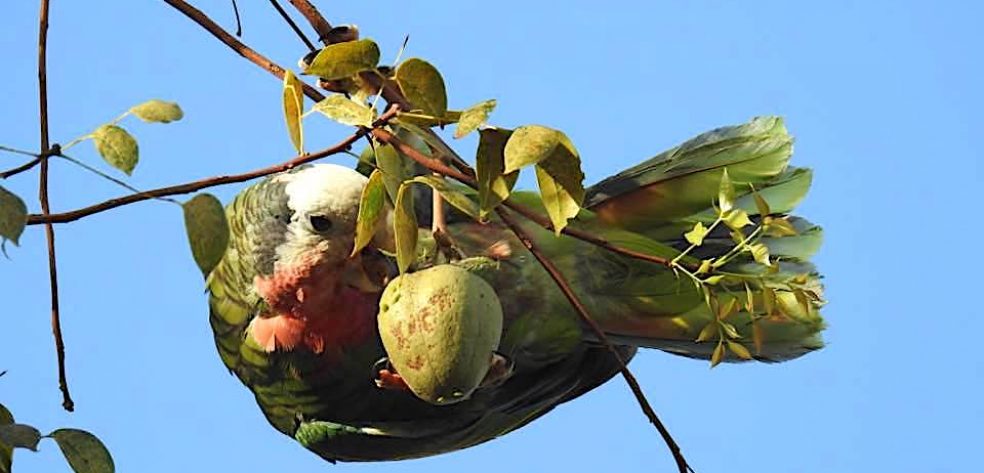
Unknown's avatar

BELLA MOTHS: COLOURFUL, POISONOUS & PROMISCUOUS


Day-flying_Bella_Moth_(Utetheisa_ornatrix) on Rattlebox Blossom (Bob Peterson, Florida)

BELLA MOTHS: COLOURFUL, POISONOUS & PROMISCUOUS

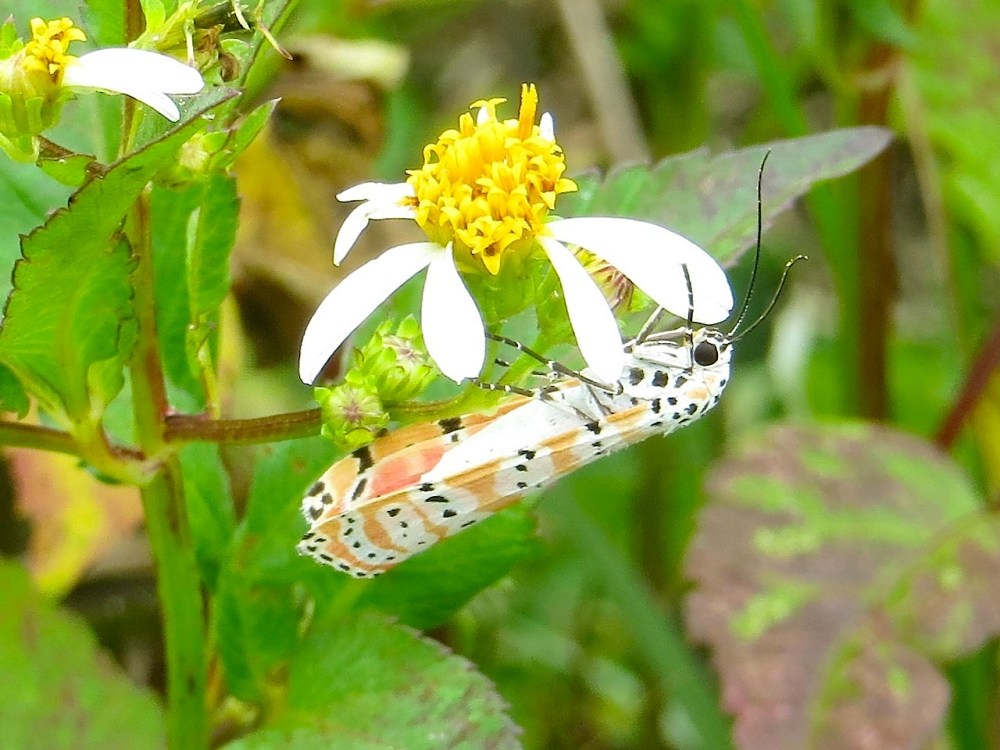
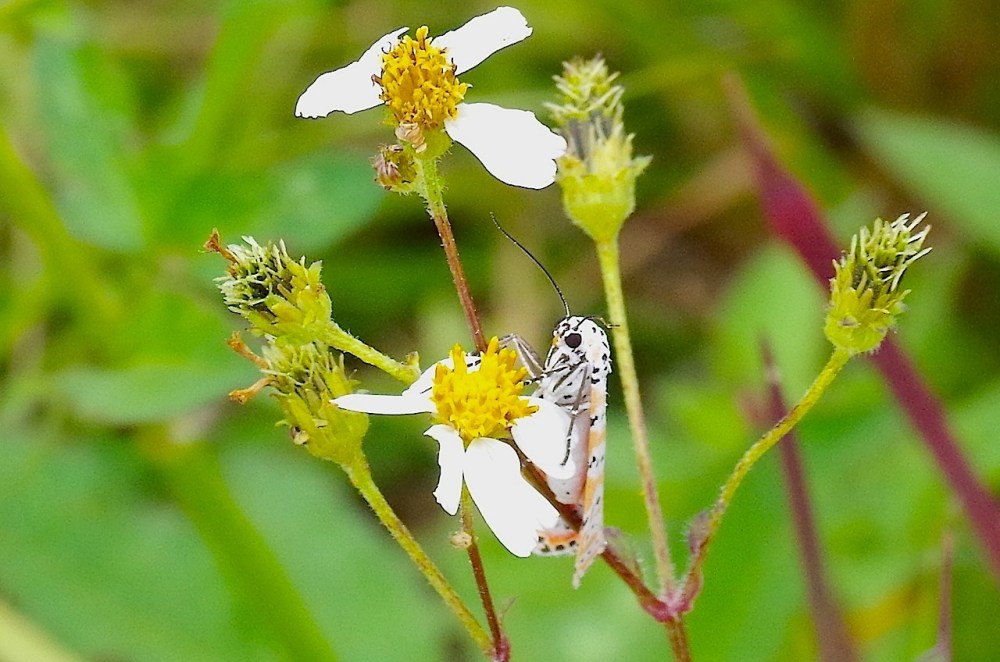
Today’s offering is a creature I have never seen before on Abaco, or anywhere else for that matter. We saw it at the Neem Farm when we were looking for birds, butterflies and Spring flowers. I didn’t have moths in mind at all until I saw this one. For a start, moths are considered creatures of the night, so midday would not be an auspicious time for moth-hunting. As it turns out, the moth we found is, most unusually, active in day-time (‘diurnal’). 

Bella Moth, Neem Farm, Abaco (Keith Salvesen) 1

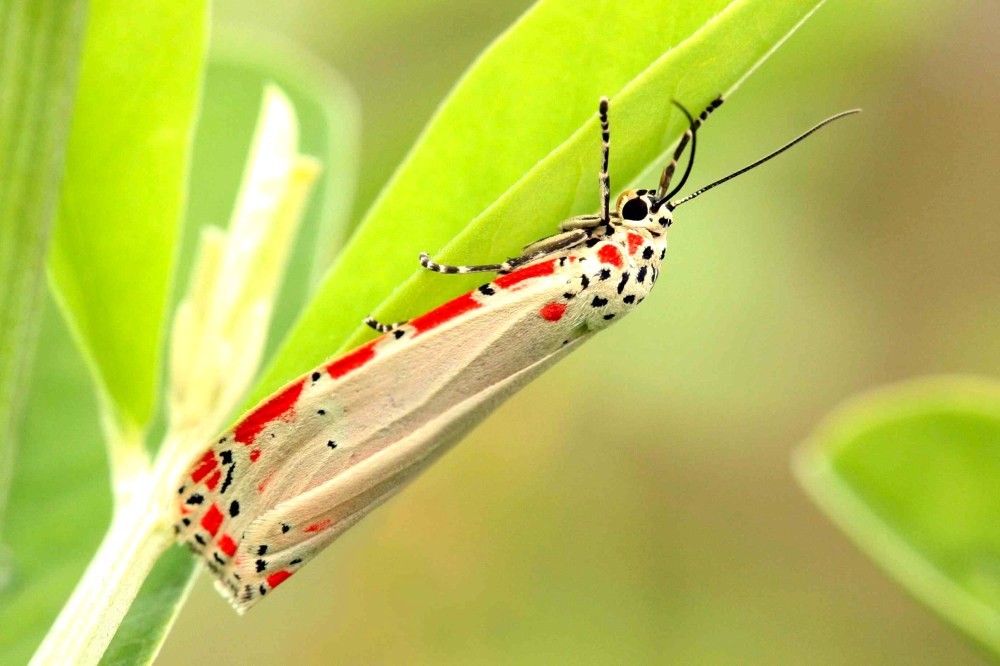
The BELLA MOTH Utetheisa ornatrix is also known as the ‘ornate moth’ or ‘rattlebox moth’ (after its favourite plant Crotalaria  – me neither). The one we saw was pink, with bright pink showing on the wings in flight. However these moths come in other vivid colours ranging from pink to red or orange, and yellow to white. Their black wing markings have many patterns.

Bella Moth, Neem Farm, Abaco (Keith Salvesen) 2

The bright coloration is, as in many species, nature’s way of saying ‘leave me alone’ and in particular, ‘I am very unpleasant to eat’. It is called APOSEMATISM.  Quite simply, the larvae feed on plants that contain poisonous alkaloids – in particular the yellow rattlebox plant Crotalaria, rendering them, as adult moths, extremely unpalatable. Bella adults may cannibalise eggs, pupae or larvae to counter alkaloid deficiency. Bella Moth, Neem Farm, Abaco (Keith Salvesen) 4

BELLA MOTH SEX LIVES: “IT’S COMPLICATED”

  • Sexual encounters are dictated by females, who compete with other females for males
  • Females seeking to mate always outnumber available males
  • A female bella will release powerful pheromones at dusk to lure males
  • Related females uniquely engage in collective pheromone release
  • This is termed “female pheromonal chorusing”
  • Several males will give the female chemical ‘nuptial gifts’ of poison and sperm
  • The female chooses the best of her suitors, and copulates with 4 or 5 of them
  • The whole process of copulation may take up to 12 hours…
  • In some way I don’t understand, she is then able to select her preferred sperm
  • Humans: do not try any of this at home, in the office, in Maccy Ds or when driving

Ornate_moth_(Utetheisa_ornatrix) Charles J Sharp wiki

Utetheisa_ornatrix (Dumi, Jamaica)

Credits: Header (on rattlebox blossom Crotalaria), Bob Peterson; 3 frankly rather feeble photos RH & Mrs RH; sharp photo by Charles J Sharp; open wings by Dumi

Unknown's avatar

“HAPPY EARTH DAY TO YOU”: DO SOMETHING GREEN!


Abaco (Cuban) Parrot, Delphi, Abaco (Craig Nash)

“HAPPY EARTH DAY TO YOU”: DO SOMETHING GREEN!

Today is the 46th Earth Day, a global event to encourage ecology and conservation, and to discourage the spoiling of the planet by mankind. What becomes lost now may never be retrieved. Plant a tree. Grow some bee- or butterfly-friendly flowers. Clear a patch of beach of plastic trash. Recycle stuff. That sort of thing. 

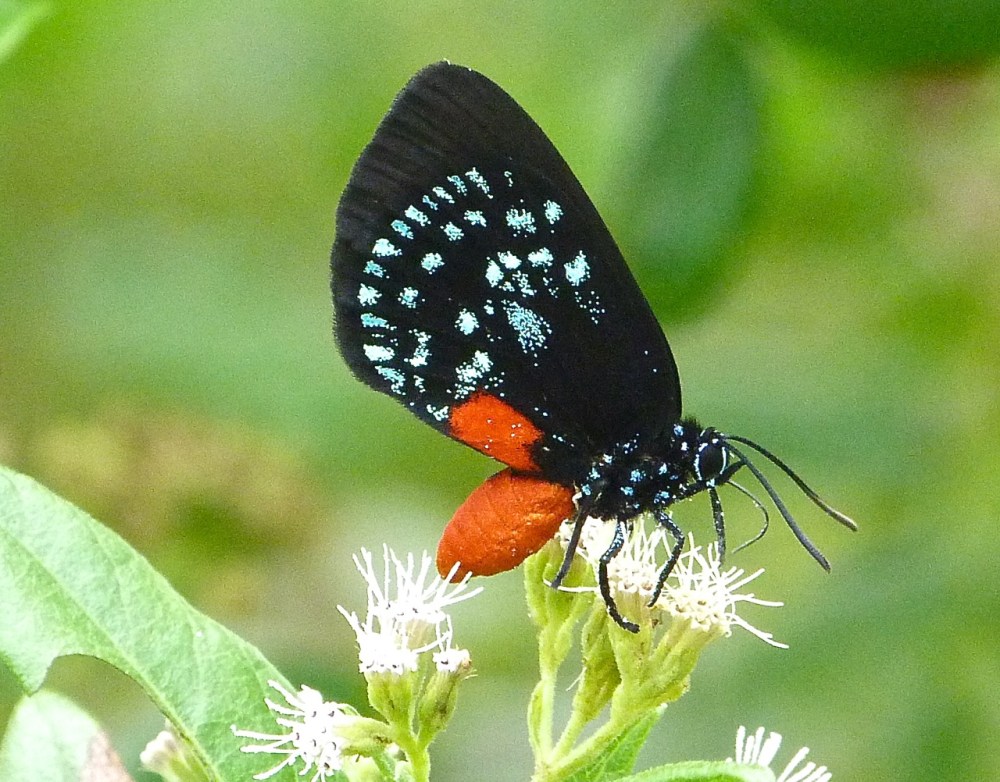
Atala Hairstreak Eumaeus atala – DelphiAtala Hairstreak Butterfly, Abaco (Keith Salvesen)

Gulf Fritillary Agraulis vanillae – Neem FarmGulf Fritillary, Neem Farm, Abaco (Keith Salvesen)

I’d lined up some horror-images of plastic-filled birds, entangled turtles, damaged reefs and so forth, of which I have a depressingly large archive. Then, in a spirit of *vogue word alert* positivity I scrapped that miserable idea and decided instead to celebrate some of the natural wonders that can be found on Abaco. 

BAHAMA YELLOWTHROAT – one of Abaco’s 5 ENDEMIC BIRDSBahamas-Great Abaco_Bahama Yellowthroat_Gerlinde Taurer

CUBAN EMERALD HUMMINGBIRD (f) preening – Gilpin PointCuban Emerald Hummingbird preening, Abaco (Keith Salvesen)

Some signal species serve as a continuing tribute to those who work to conserve them. The gorgeous ABACO PARROTS, now saved from the brink of extinction – and currently establishing a new colony on New Providence. The rare PIPING PLOVERS that find a safe home to spend their winters on Abaco’s beaches. The 5 ENDEMIC BIRD species. The WHALES & DOLPHINS that populate the waters. The west-indian MANATEES, until very recently almost unknown for Abaco yet now providing a curious addition to the scene as they visit their favourite haunts.

BLAINVILLE’S BEAKED WHALE (m) approaching the BMMRO research vesselBlainville's Beaked Whale, Sandy Point, Abaco 14 (Keith Salvesen

BOTTLENOSE DOLHIN, Sandy Point (about to dive under the boat)Bottlenose Dolphins, Rocky Point, Abaco (Keith Salvesen : BMMRO) 7

Habitat protection has been provided over substantial areas on both land and sea by the creation of natural parks and preserves. These have very recently been extended by the establishment of 4 large PROTECTED AREAS for East Abaco Creeks, Cross Harbour, the Marls and the South Abaco Blue Holes, a wonderful reward for a great deal of hard lobbying by conservation organisations and by many concerned individuals. 

QUEEN ANGELFISHQueen Angelfish ©Melinda Stevens Riger / G B Scuba

BANDED CORAL SHRIMPBanded Coral Shrimp ©Melinda Riger @ G B Scuba copy 2

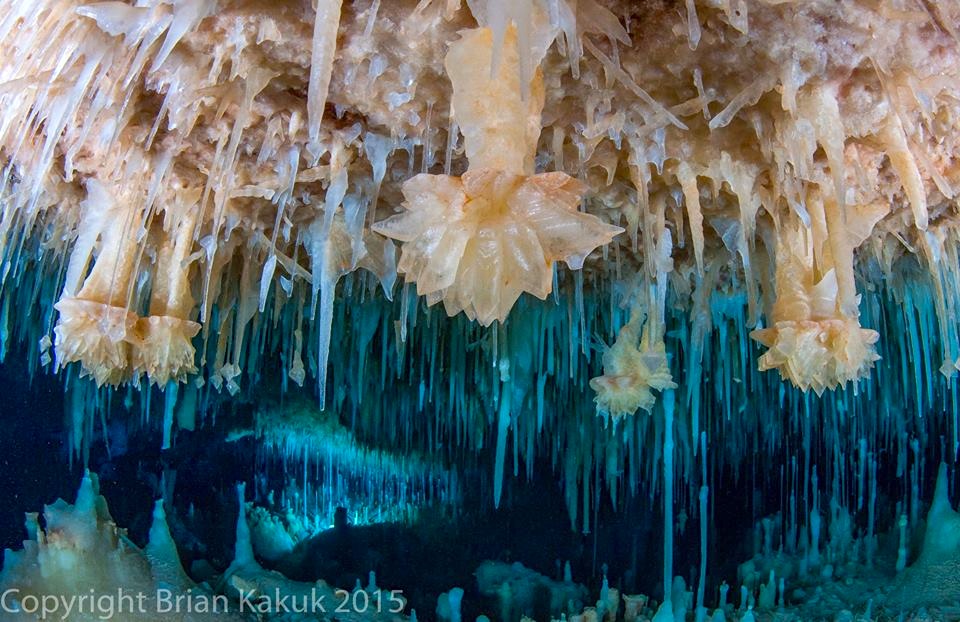
Scientific research and conservation work is continuously carried out in Abaco waters. The CORAL REEFS that form the 3rd largest barrier reef in the world; the BLUE HOLES that lead to wonderful caves and cathedral caverns of crystal; the vast area of the MARLS and the species that rely on the mangrove swamps; the MANGROVES themselves: all these are watched over and monitored for ways to protect them best for future generations. 

PIPING PLOVER pair, Delphi (taken last month)Piping Plover pair, Delphi Beach, Abaco (Keith Salvesen)

PIPING PLOVER on AbacoPiping Plover, Abaco - Bruce Hallett

I’ve mentioned trees and plants. There are a variety of well-known sources for both on Abaco – on the mainland, anyway, and maybe some cays. Any will advise on bee and butterfly attractants. Thinking of which, bird seed feeders and hummer sugar water feeders are cheap and guarantee the interest of garden and coppice birds, and during the winter months some brightly coloured migrants such as buntings and grosbeaks. 

HIBISCUS – DelphiHibiscus, Delphi, Abaco (Keith Salvesen)

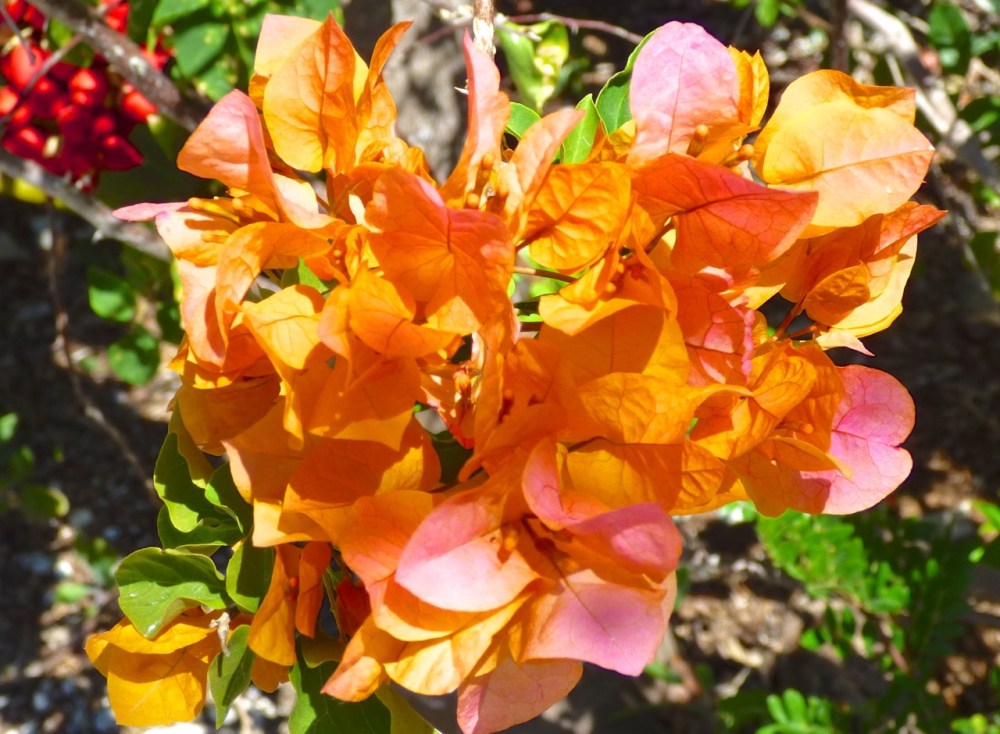
 BOUGAINVILLEA  – DelphiBougainvillea, Delphi, Abaco Bahamas (Keith Salvesen)

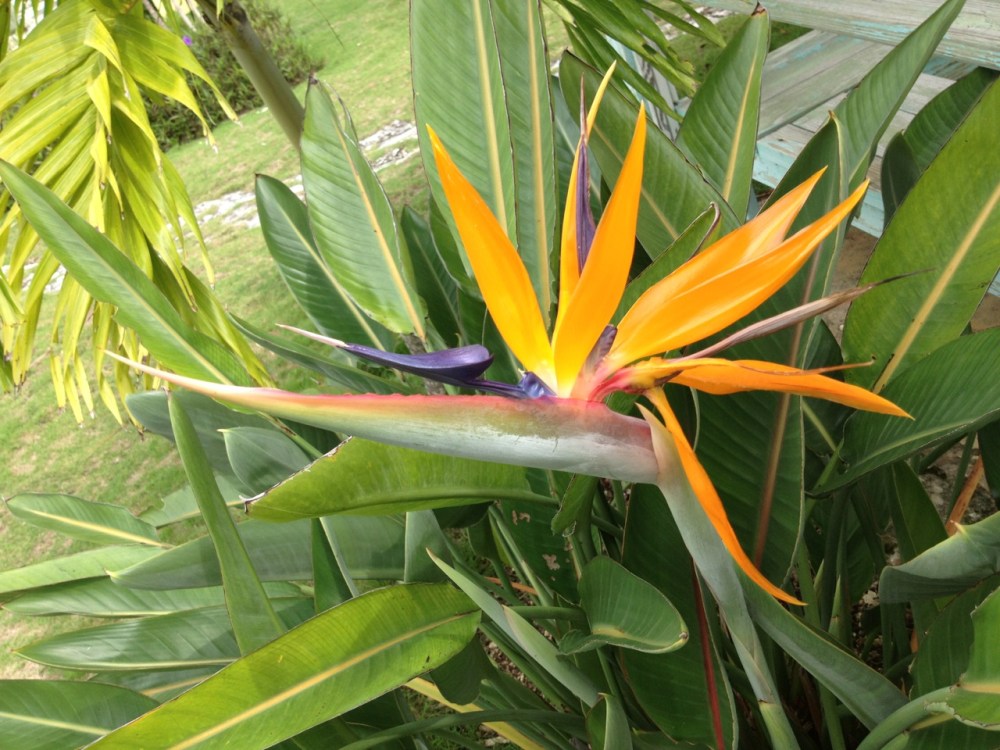
Bird of Paradise flower STRELITZIA – Marsh Harbour (seemingly on a steep slope!)Bird of Paradise Flower (Strelitzia) Abaco (Keith Salvesen)

HAPPY EARTH DAY TO YOU!

RALPH’S CAVE South AbacoRalph's Cave, Abaco (Brian Kakuk)

Credits: all images RH except: Abaco parrot, Craig Nash; Bahama yellowthroat, Gerlinde Taurer; Angelfish & Shrimp, Melinda Riger; single piping plover, Bruce Hallett; Ralph’s Cave, Brian Kakuk

Unknown's avatar

AMERICAN COOTS feat. “WHAT’S AFOOT?”


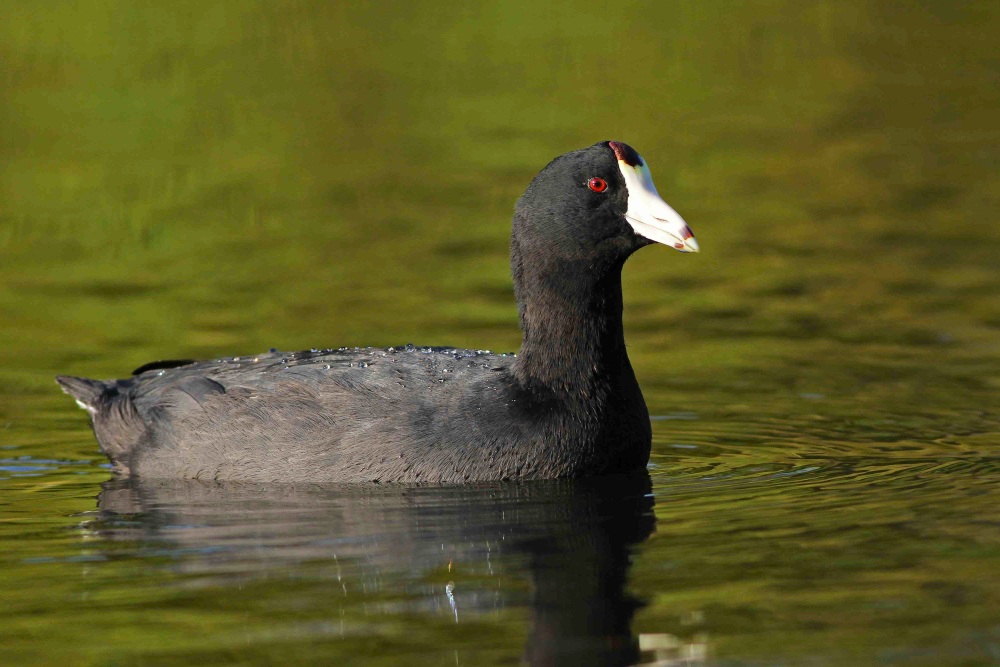
American Coot - Bahamas - Great Abaco - Gerlinde Taurer

AMERICAN COOTS feat. “WHAT’S AFOOT?”

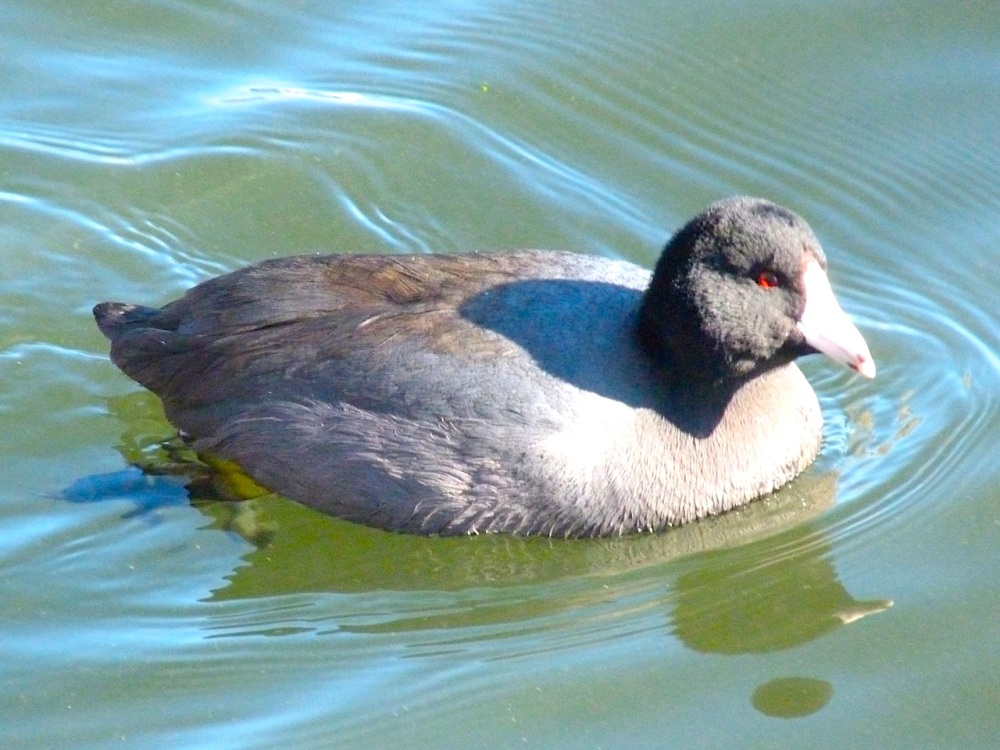
The American Coot Fulica americana is similar in many respects to the COMMON GALLINULE (MOORHEN). Except for the beak colour, of course. And as you will see below, the feet.

American Coot.Abaco Bahamas (Tom Sheley)

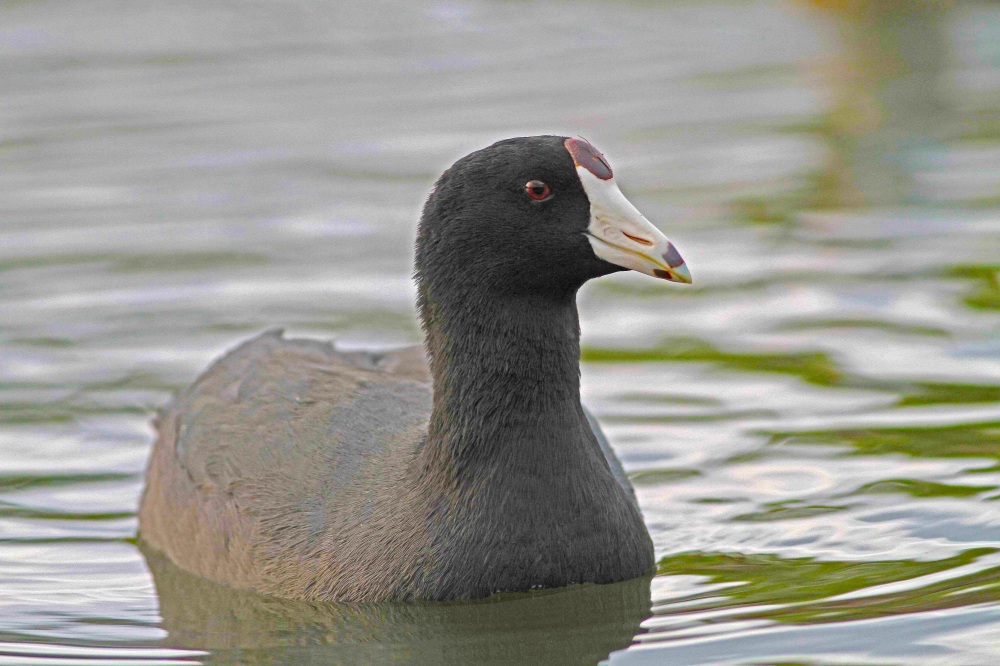
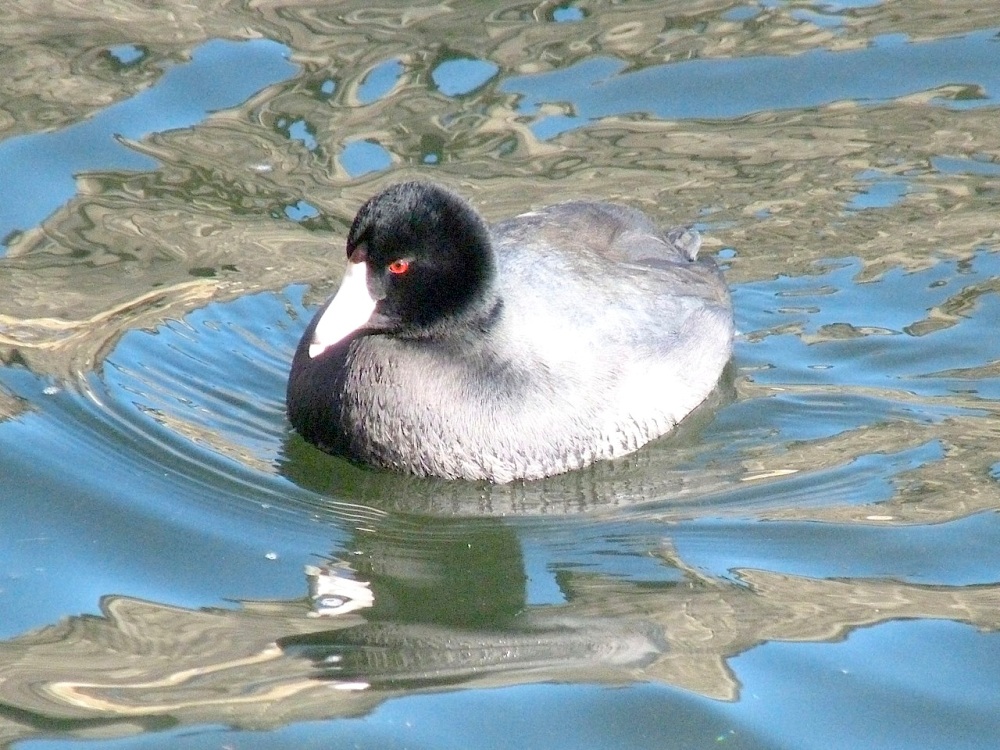
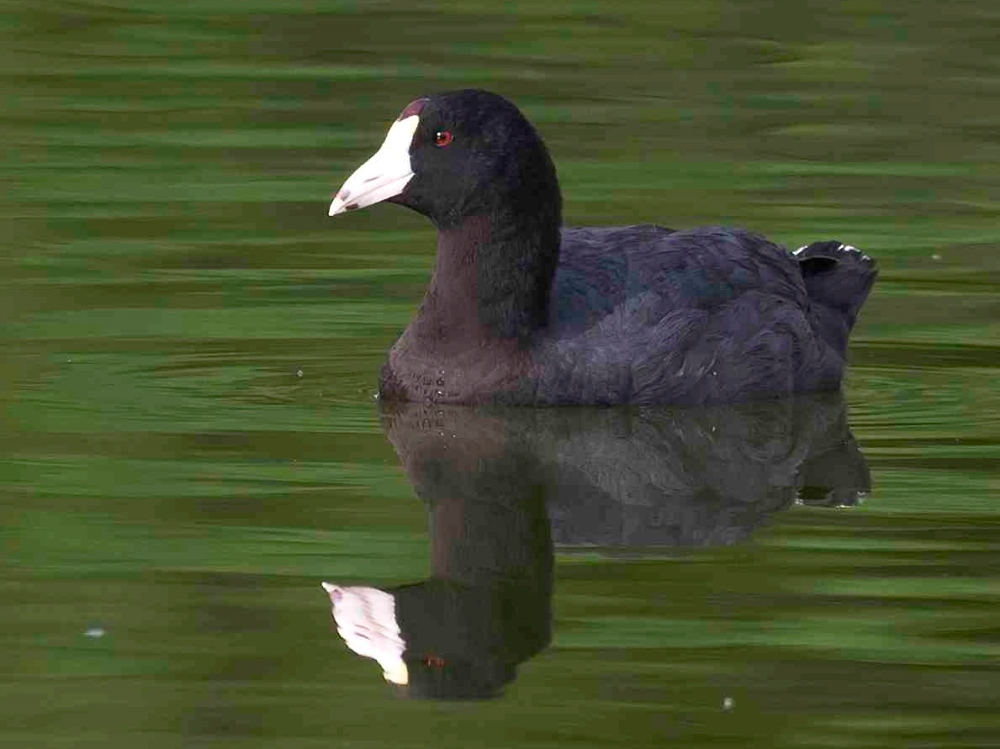
Most people would give an off-the-cuff description of a coot as ‘a black duck with a white beak’. They might add ‘…and a red eye’. Or ‘…and a dark band at the tip of the beak’. Or even ‘…I think there’s a white bit at the back end’. The header image pretty much sums up the classic coot.

American Coot 2 (Keith Salvesen)
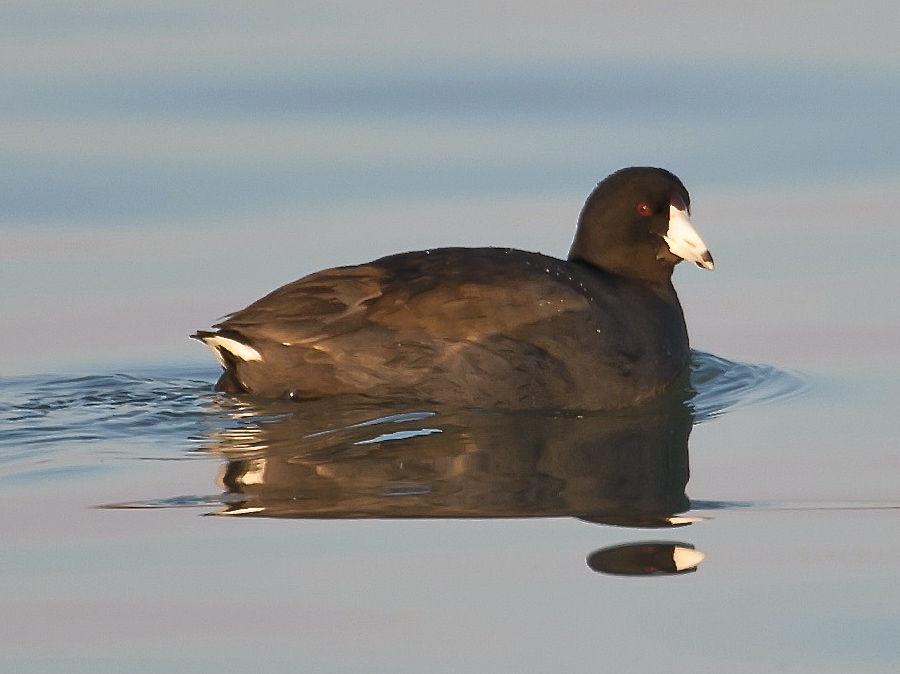
However, coots seem to take up or reflect other colours at times. The eyes remain a piercing red and the beak is white, but the body can range from black through slate-grey to pale grey, depending on the light. There may even be a tinge of brown or even orange.

American Coot - Bahamas - Great Abaco - Gerlinde Taurer

I always enjoy seeing coots and moorhens somewhere where the water ‘works’ with them and creates a dramatic image. I took the first photo below recently on the JKO reservoir in Central Park, New York, where the water looked weirdly like molten metal and some trick of the light made the bird seem as if is was in a shallow depression in the water.

American Coot (Keith Salvesen)

Tom Sheley took the photo below on a ‘green water’ day at the pond on Treasure Cay Golf Course. I have recommended it before as an excellent birding site for waterbirds – coots, moorhens, Bahama pintails, northern pintails, neotropic cormorants, blue-winged teal, least grebes, pied-billed grebes, green herons – I’ve even seen a reclusive least bittern there. There are plenty of ‘land’ birds on the course too.

American Coot.Treasure Cay, Abaco Bahamas.6.13.Tom Sheley copy 2

If you go to TCGC for the birding, you just need to clock in at the clubhouse in case it’s a match day; and so they know who is out and about on the course. And, as I wrote elsewhere, if you hear a loud yell of “Fore”, it probably won’t be someone counting the coots. Time to… er… duck.

Q: “WHAT’S AFOOT?” *

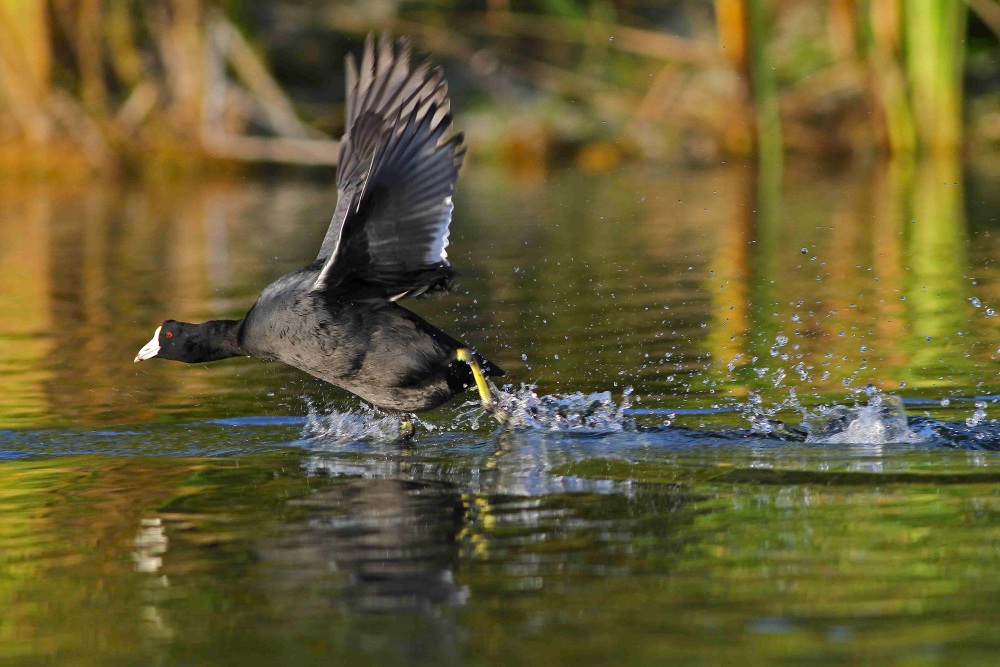
I mentioned that one of the differences between coots and moorhens is their feet. Gerlinde Taurer’s photo of a coot taking off suggests that something powerful is happening below the water to assist the wings to propel the bird into flight.American Coot - Bahamas - Great Abaco - Gerlinde Taurer

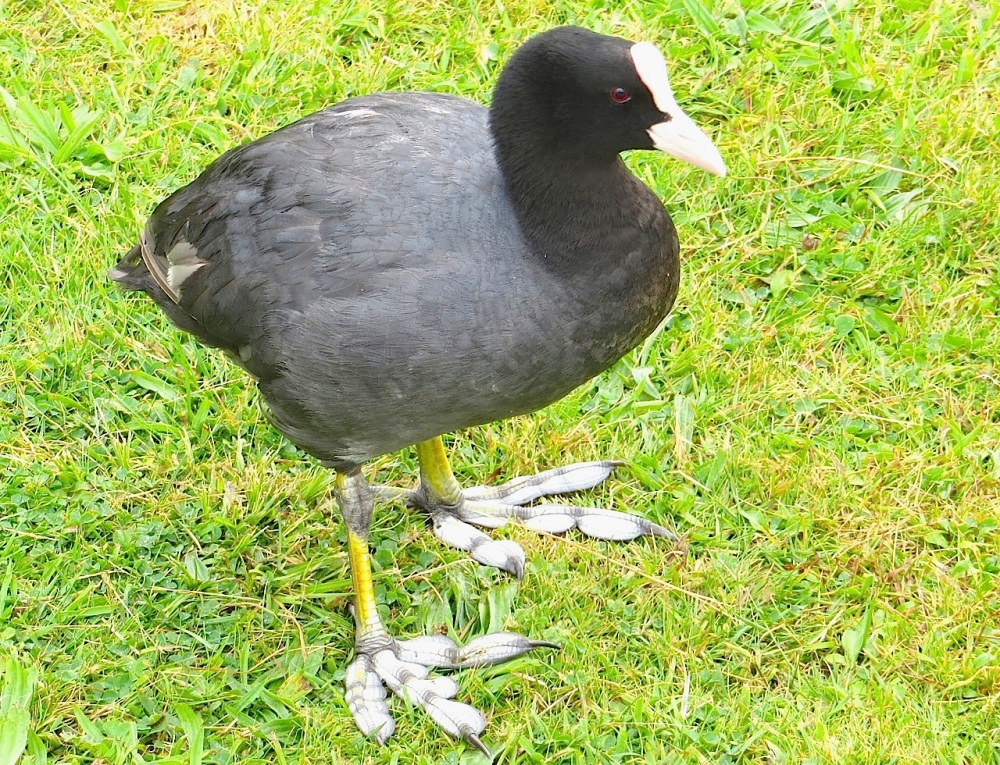
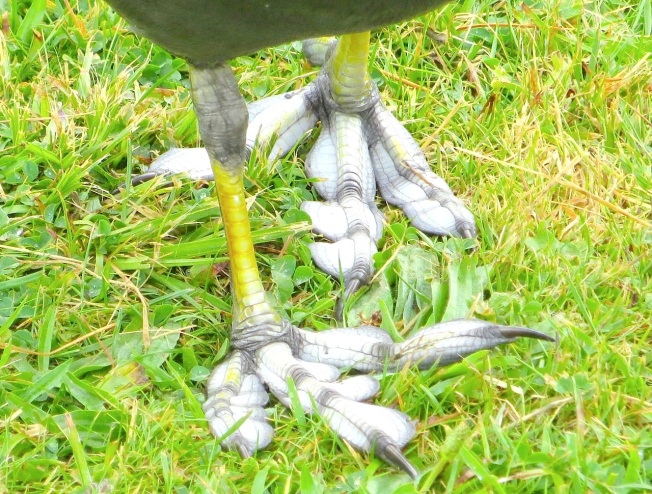
A coot’s feet are quite unlike the pedal extremities of any other birdCoot, showing feet (Keith Salvesen)Coot Feet Close-up Keith Salvesen copy

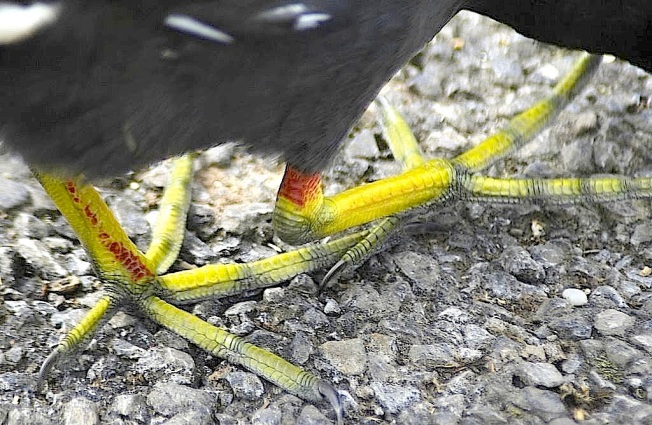
Moorhen’s feet for comparison – completely different structurallymoorhen_feet-mehmet-kartuk-wikijpg-copy* A: “A funny-shaped thing on the end of your leg”. How we laughed (aged 7)

Credits: Gerlinde Taurer (1, 4, 7); Tom Sheley (2, 6); Keith Salvesen (3, 5, 8, 9); Mehemet Kartuk (wiki) 10

Unknown's avatar

“WE WANT THE SAME THING”: SANDERLINGS À GO-GO


Sanderling Trio, Delphi Beach, Abaco (Keith Salvesen) 2

“WE WANT THE SAME THING”: SANDERLINGS À GO-GO

Good grief, this is awful. Suddenly I’m channelling Belinda Carlisle, raucous chanteuse and former lead vokes with the Go-Gos. She has not impinged on my cerebral cortex for, oh, 20 years. And even then, not of my own volition. Yet as soon as I downloaded and checked on-screen this sequence of sanderling photos taken as they foraged greedily on the Delphi beach, a spooky thing happened. The dread words and tune of ‘We Want The Same Thing’ crackled round my synapses. Listen! Can you hear it too?

It should of course have been “We Want The Same Crustaceans, Mollusks and Worms”, but no one has written that song. Yet. And I am now left with Belinda’s ear-worm… and other ones from that exhausting back catalogue are crowding in to join it, not least “Circle in the Sand” and “Heaven is that Delphi Place on Earth”…

“We Want the Same Thing”, though we have an entire beach to forage on…Sanderling Trio, Delphi Beach, Abaco (Keith Salvesen) 3 Sanderling Trio, Delphi Beach, Abaco (Keith Salvesen) 4 Sanderling Trio, Delphi Beach, Abaco (Keith Salvesen) 5 Sanderling Trio, Delphi Beach, Abaco (Keith Salvesen) 6

OPTIONAL MUSICAL DIVERSION (YOU WERE WARNED)

All photos RH on the Delphi Beach, Abaco; musical stuff inspired by Ms Carlisle. Weird.

Unknown's avatar

SITTING ON THE DOCK OF THE BAY… TAKING TERNS ON ABACO


Royal Terns Cherokee Abaco (Keith Salvesen) 1

SITTING ON THE DOCK OF THE BAY… TAKING TERNS ON ABACO

During a day of deep-sea fishing we put into Cherokee for a short time at the famous LONG DOCK, the longest wooden dock in the Bahamas. There were three royal terns at various plumage stages watching and waiting for fish, or maybe just ‘watchin’ the tide roll away’. Not that there is very noticeable tide at Cherokee, hence the need for the Long Dock to get out to deeper water from the shallows. So this was a good time to take a few photos from the boat with a point ‘n’ shoot, having dumped my proper camera in the sea (by mistake, I should add).

One bird has been banded with a metal ring LR. Does this signify anything to anyone?Royal Terns Cherokee Abaco (Keith Salvesen) 3Royal Terns Cherokee Abaco (Keith Salvesen) 2Royal Terns Cherokee Abaco (Keith Salvesen) 4 Long Dock, Cherokee

RELATED POSTS

CHEROKEE LONG DOCK

ABACO ROAD TRIP: CHEROKEE SOUND

All photos RH, short Musical Digression to be added when I am reunited with my computer next week…

THE PROMISED MUSICAL DIGRESSION

“(Sittin’ On) The Dock of the Bay” was co-written by Otis Redding and Stax guitarist Steve Cropper. The song was recorded in 1967, but shortly before its release in 1968, Redding died in a plane crash. The song became the first posthumous single to top the charts in the US (it reached number 3 in the UK), and won two Grammys. It has been covered around 7387 times (or so it seems), most surprisingly (or alarmingly) by T Rex, Pearl Jam, and Sammy Hagar. And Michael Bolton. Grrrrrrr. And not one single cover version – I challenge you to deny it – is half as good as the original…

Unknown's avatar

THE PECKING ORDER: WEST INDIAN WOODPECKERS AT DELPHI ABACO


West Indian Woodpecker, Delphi, Abaco (Keith Salvesen)1

THE PECKING ORDER: WEST INDIAN WOODPECKERS AT DELPHI ABACO

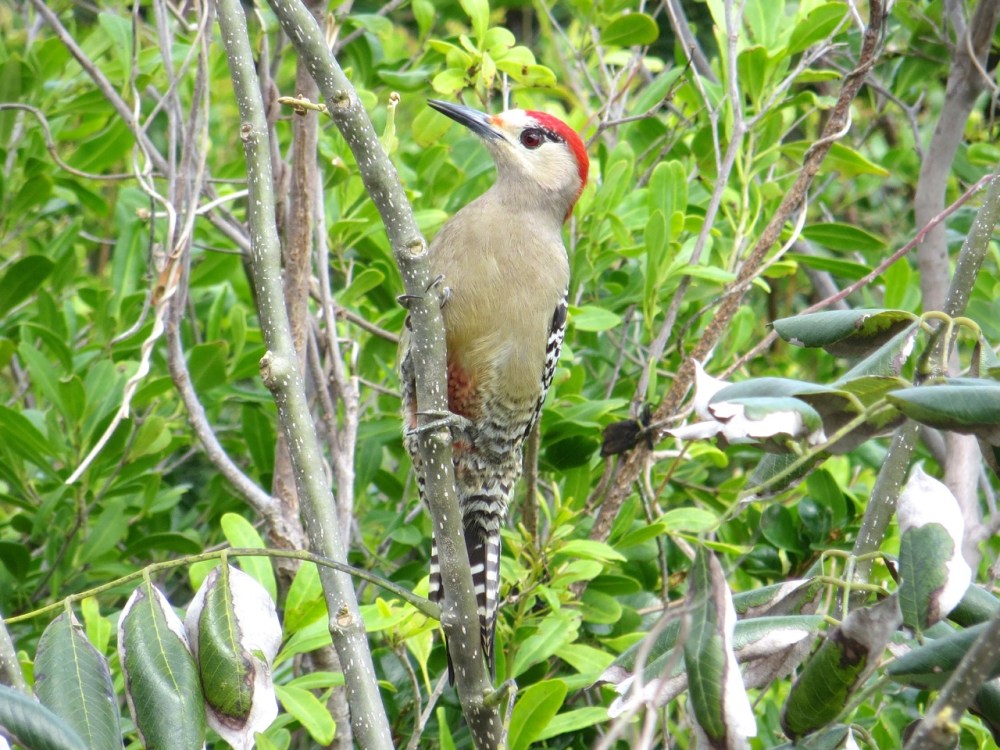
The Delphi West-Indian Woodpeckers are at it again. In all senses of the phrase. When they first became infatuated with the wooden slats on the underside of the verandah roof, it was necessary – for the sake of the building – to divert them. This was quickly done by the simple expedient of building and installing two nesting boxes under the eaves.

West Indian Woodpecker, Delphi, Abaco (Keith Salvesen)3

An annual routine has been established. In March, the pair discuss quite loudly and at length which of the two boxes they prefer (usually the right-hand one). There follows enthusiastic housework, shelf-building, nursery decoration and so forth; after which they go ‘at it’… and move in. Continuing internal improvements take place, and they fly in and out busily. This year a yellow-throated warbler had the insolence to trespass into the box and we saw him abruptly ejected.

West Indian Woodpecker, Delphi, Abaco (Keith Salvesen)2

In due course the pair produce up to 6 chicks in their first brood. The nestlings start by making a small buzzing noise, but within days – hours? – they are calling loudly and demandingly for food. The parents take it in turns to fly off and bring back assorted insects of increasing size, at which stage the noise of the chicks is deafening.

West Indian Woodpecker, Delphi, Abaco (Keith Salvesen)5

By late May or early June the chicks are ready to fledge. Meanwhile, their parents take a break from feeding duties to renovate the second nest box, preparing it for their second brood. I have seen, even with eyes averted, the adults shamelessly mating on top of the second nest box while their chicks are jostling at the entrance to the first box, working out how to fly.

West Indian Woodpecker, Delphi, Abaco (Keith Salvesen)4

The fledglings fly off  eventually into the coppice and pine forest (they stay around for a few days until they get the hang of finding their own food). And the adults repeat the same family-raising routine in the second nest box. The last time I saw the second brood fly, 4 left the box quite quickly – within about 5 minutes of each other. A fifth took one look at the world and disappeared into the depths of the box. A sixth teetered on the edge of the box for nearly half an hour – with both parents shouting encouragement at it – before finally launching into space. His timid sibling then shot out of the box into the great unknown. The breeding season was accomplished.

A SPECIALITY SPECIES FOR ABACO

West-Indian Woodpeckers are one of Abaco’s speciality species. In the Bahamas they are found only on Abaco and – a long way off – San Salvador. They are unknown on other islands. Until quite recently these birds were also found on Grand Bahama, but are sadly now extirpated, presumably for the familiar reasons…

West Indian Woodpecker, Delphi, Abaco (Keith Salvesen)7

All photos: RH (the last one is from 2014)