Unknown's avatar

GRACE WITH ATTITUDE: SOUTHERN STINGRAYS IN THE BAHAMAS


Southern Stingray 2 ©Melinda Riger @ G B Scuba copy

GRACE WITH ATTITUDE: SOUTHERN STINGRAYS IN THE BAHAMAS

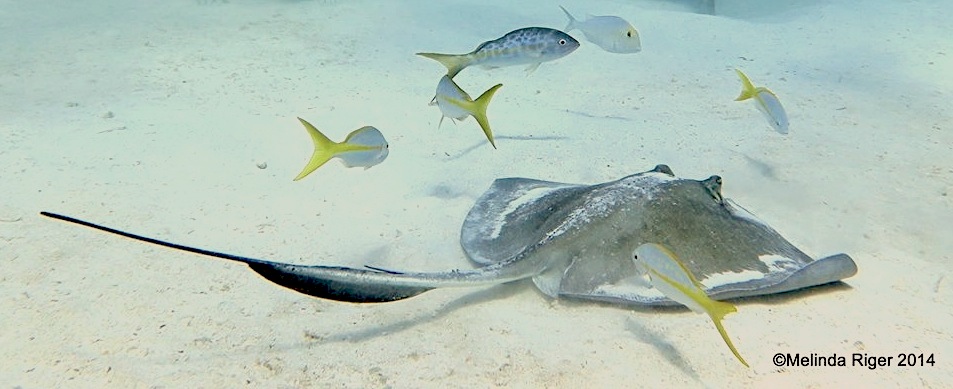
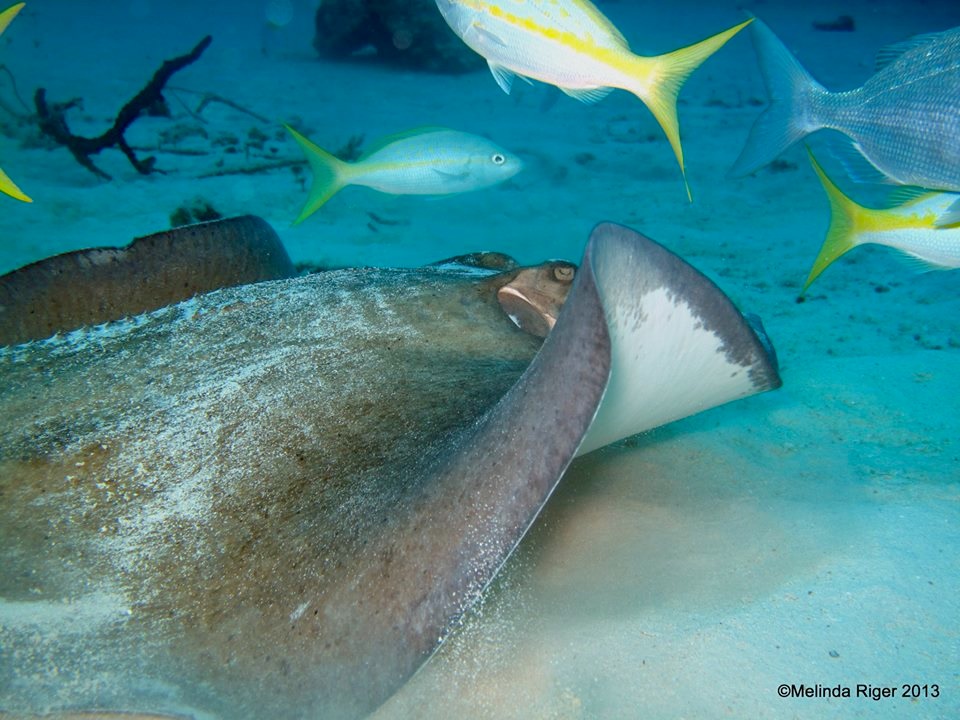
Southern Stingrays are often seen in Abaco waters. In the bay of Rolling Harbour at Delphi, we sometimes watch them admiringly from the balcony or beach as they lazily cruise along the shoreline in the turquoise water. If someone is in the water, they will make a leisurely detour round them – unfrightened in their own element, but unthreatening and disinclined to investigate human intrusion. Diving with them is a wonderful experience (though I have never got very close). Melinda Riger – a scuba expert with great camera skills – takes the most beautiful photos of the stingrays she encounters. Here are a few that I haven’t yet featured.  Notice the little striped CLEANING GOBIES going about their business. 

Stingray, Southern with cleaning gobies ©Melinda Riger @ G B Scuba copyStingray, Southern at cleaning station ©Melinda Riger @ G B Scuba  copySouthern Stingray © Melinda Riger @GB Scuba copy

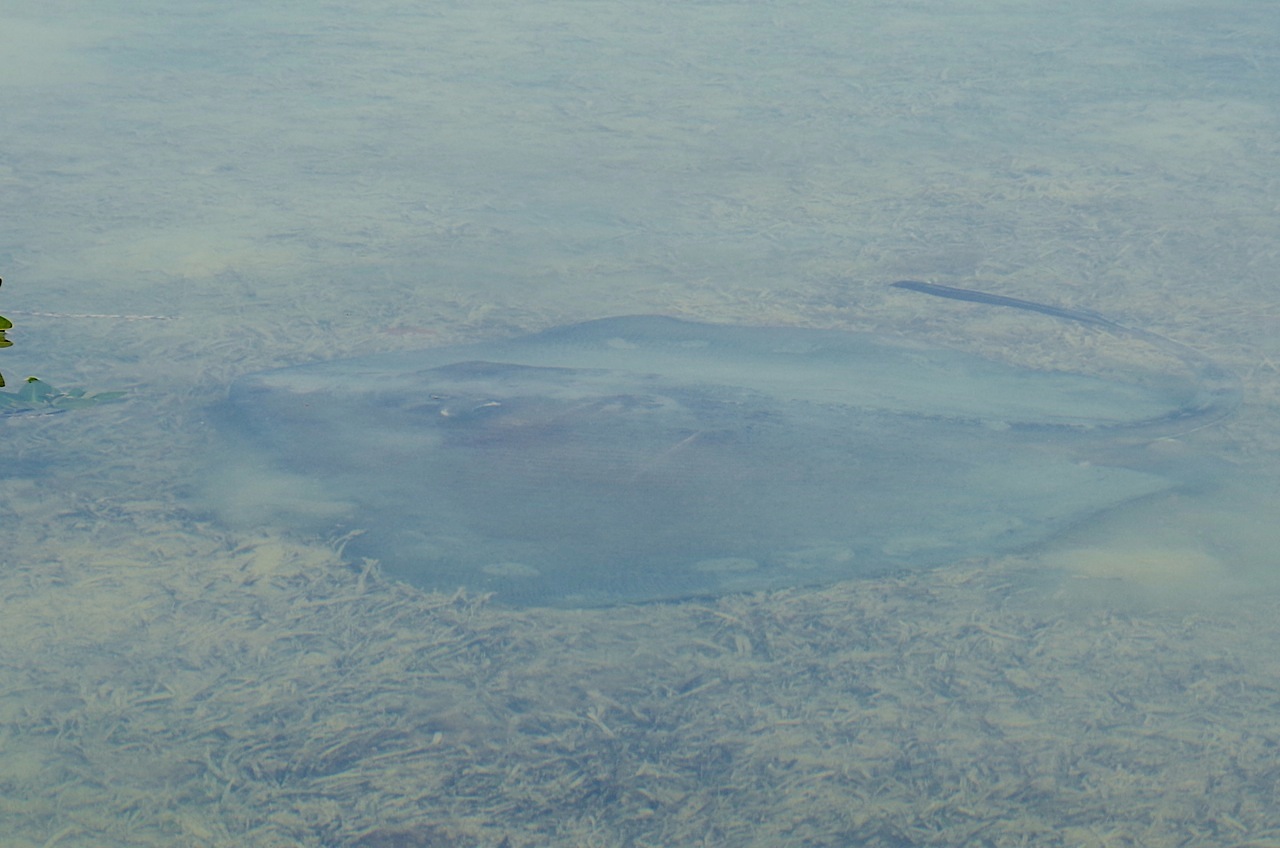
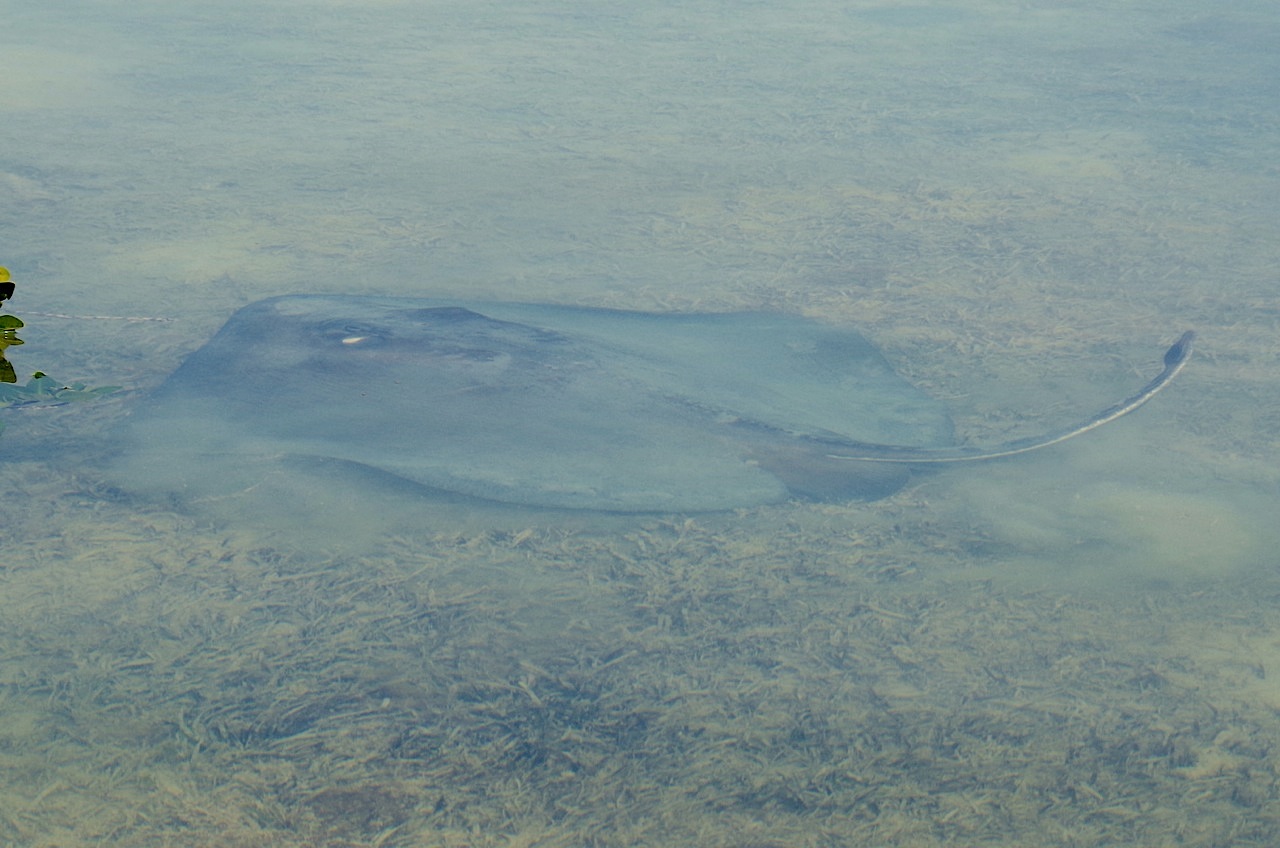
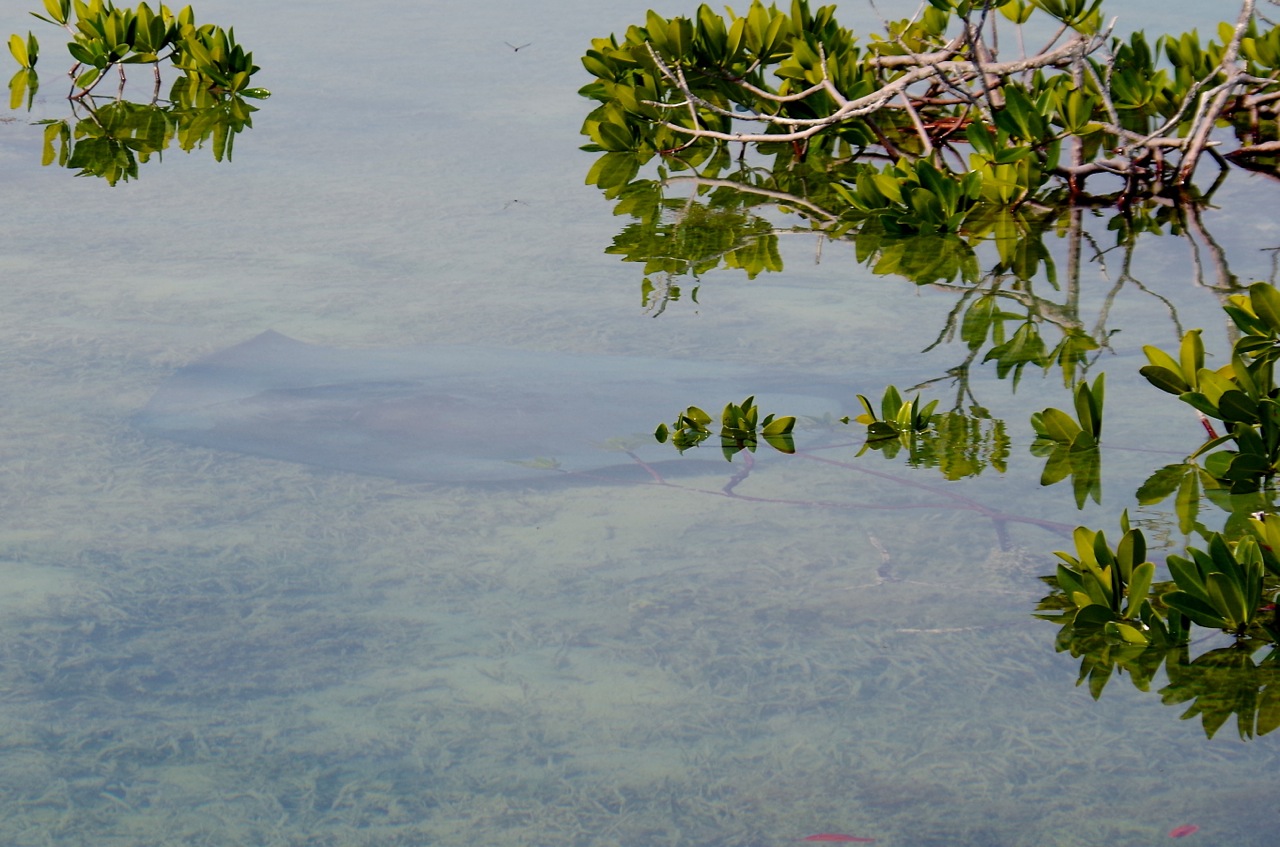
Southern Stingrays are often encountered when one is bonefishing in the low waters of the Marls. I took the photos below while we were fishing in a channel between areas of mangrove. As the skiff was poled very slowly forward, I saw the stingray coming straight towards us. I wondered how it would react. Very elegantly, was the answer. It turned effortlessly and unperturbed to one side, then resumed its original course leaving a clump of mangrove between it and the skiff. 

Southern Stingray, Abaco Marls (Keith Salvesen 1)Southern Stingray, Abaco Marls (Keith Salvesen 2)Southern Stingray, Abaco Marls (Keith Salvesen 3)Southern Stingray, Abaco Marls (Keith Salvesen 4)

RELATED POSTS

SOUTHERN STINGRAYS

RAYS OF SUNSHINE

YELLOW STINGRAYS

Credits: Melinda Riger, Grand Bahama Scuba; RH

Unknown's avatar

“ONE IS CALLED LUCY…”: SWIMMING WITH BAHAMAS SHARKS


Shark, Blacktip ©Melinda Riger @ G B Scuba copy 2

“ONE IS CALLED LUCY…”: SWIMMING WITH SHARKS

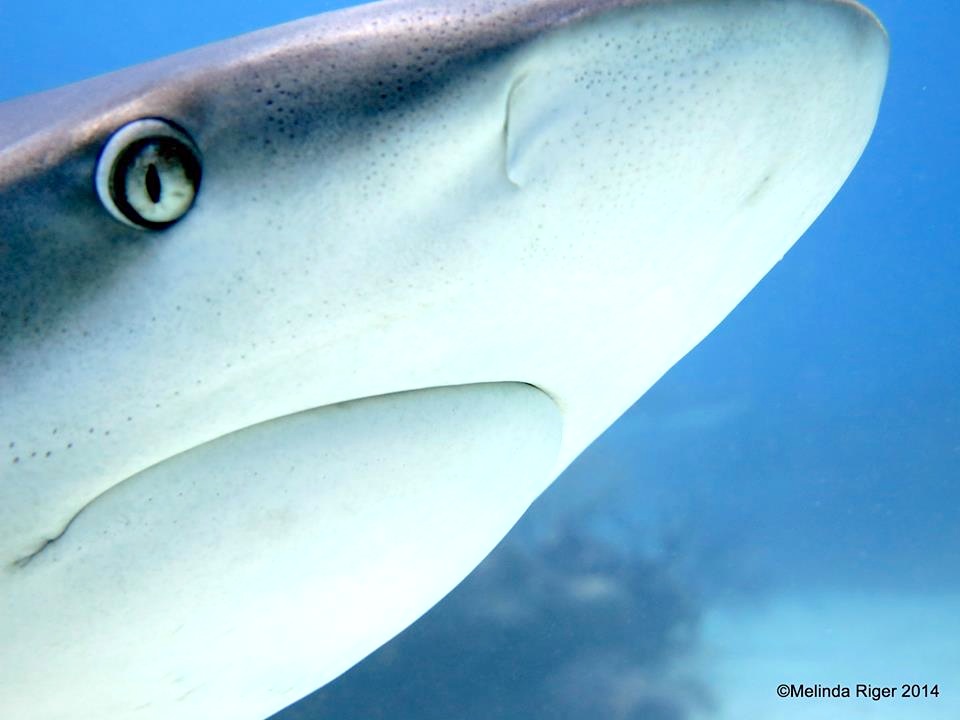
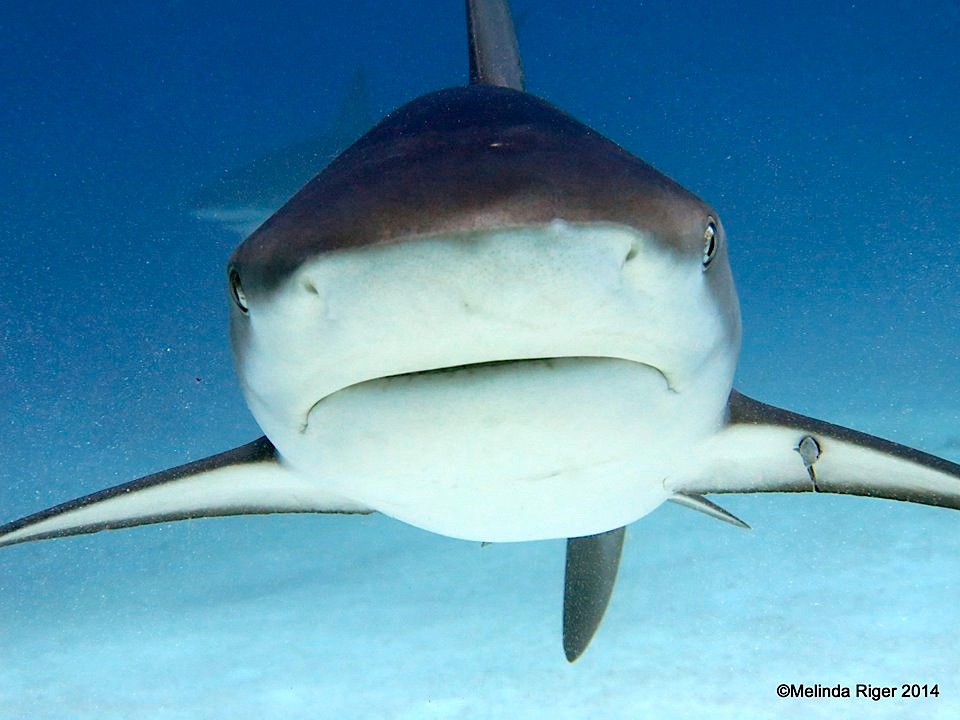
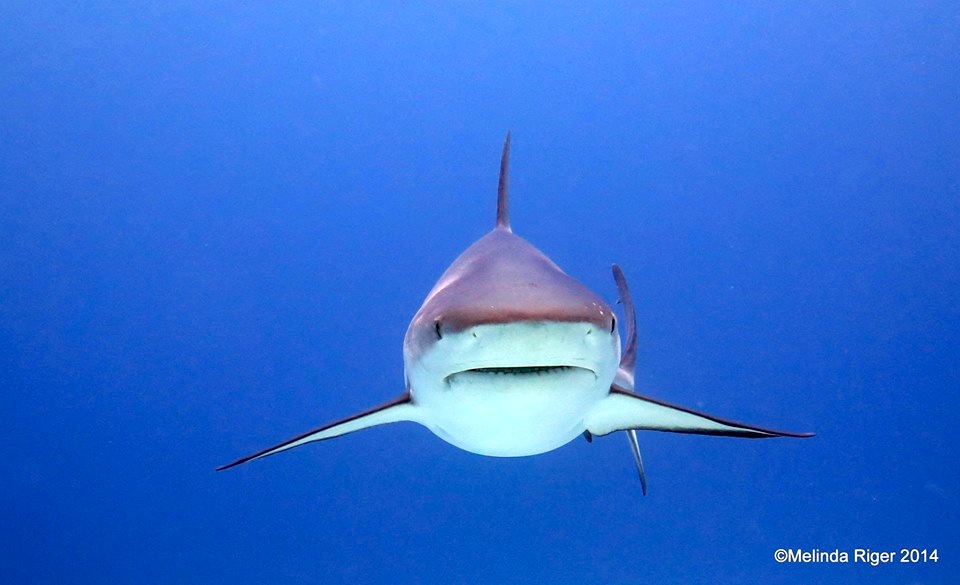
From time to time I wonder about the naming of animals. I know about the problems that can arise when people name their chickens Henny, Penny, Denny & Lenny, and the time comes to (please look away now). And how a slavering dog coming towards you (not on a lead) that the owner calls ‘Tyson’ or ‘Killer’ is possibly one to cross the street for. And that the owner of a cat called ‘The Reverend Wenceslas Muff’ (Sir Roy Strong, in fact) may not take kindly to you referring to it facetiously as ‘Puddy-tat’. But does it make things any better to know that the shark that is eyeballing you is called Lucy? I don’t know the names of the others, but I am sure they would all like to be introduced… Shark close-up ©Melinda Riger @ G B Scuba copyShark with remora ©Melinda Riger @ G B Scuba copyShark © Melinda Riger @ G B Scuba copy 2Shark ©Melinda Riger @ GB Scuba copy 2Shark Head ©Melinda Riger @ GB Scuba copy 2Shark 2 ©Melinda Riger @ G B Scuba copy 2Shark 4 ©Melinda Riger @ G B Scuba copyShark (pregant female) ©Melinda Riger @G B Scuba copy

REMORAS Some of the photos show a strange creature attached to the underside of the shark. For more info about these weird shark passengers, and some great images, click HERE

All the fabulous photographs above were taken by Melinda Riger and Virginia Cooper of Grand Bahama Scuba, on whom I rely entirely for subaqueous material, being a pathetic swimmer, a gnarly ancient, and a certified scaredy-cat (‘highly commended’). My thanks as always to them for use permission

Unknown's avatar

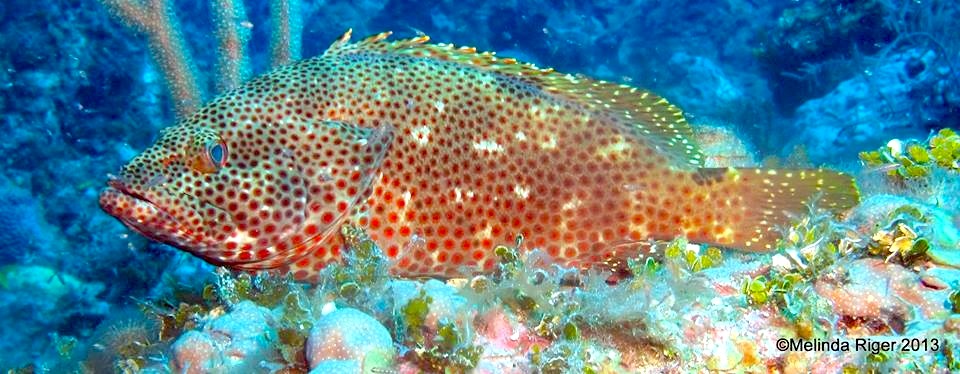
RED HIND GROUPER: BAHAMAS REEF FISH (25)


Red Hind Grouper Melinda Riger @ G B Scuba copy

RED HIND GROUPER: BAHAMAS REEF FISH (25)

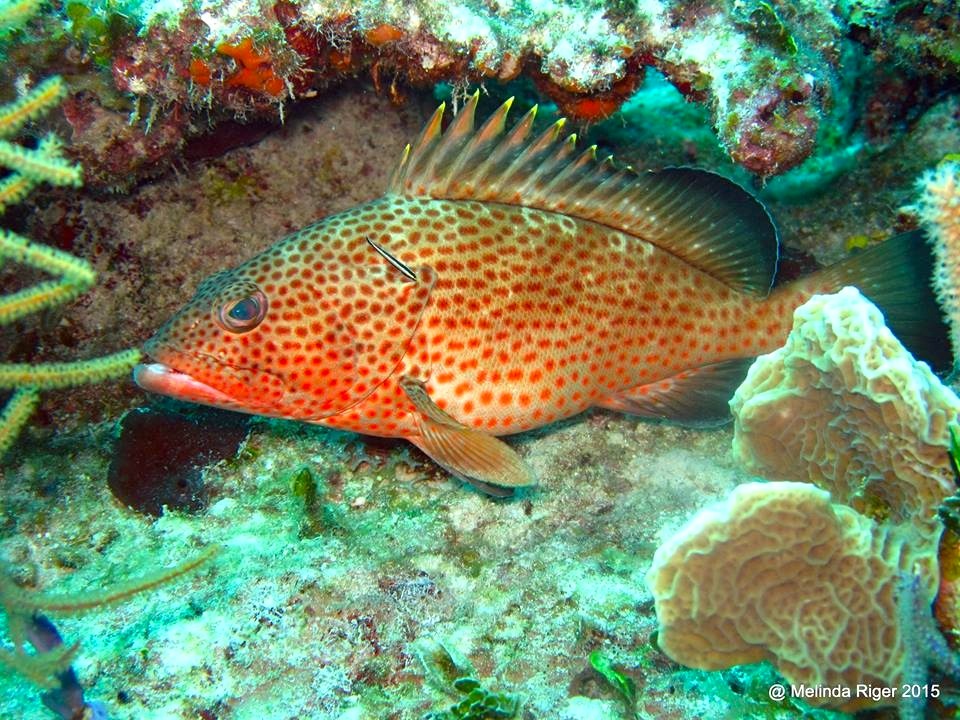
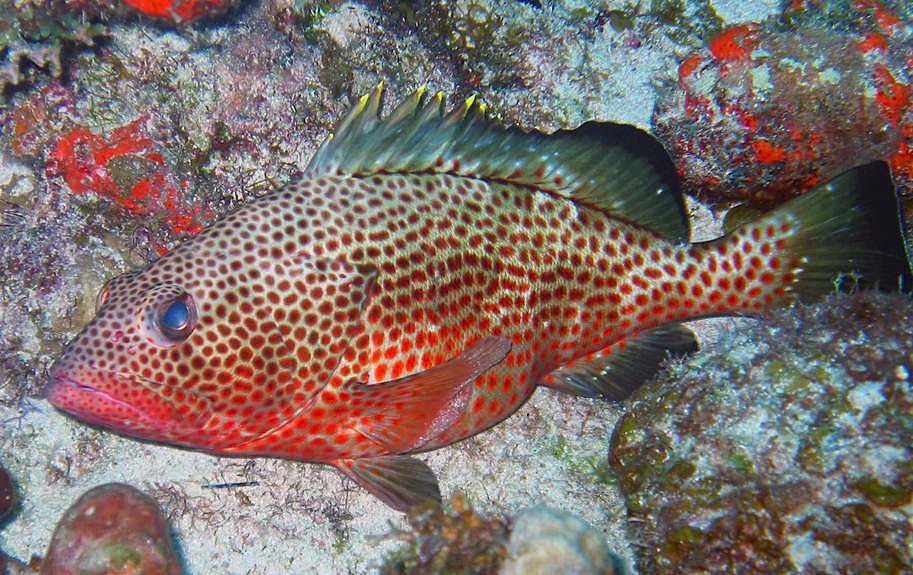
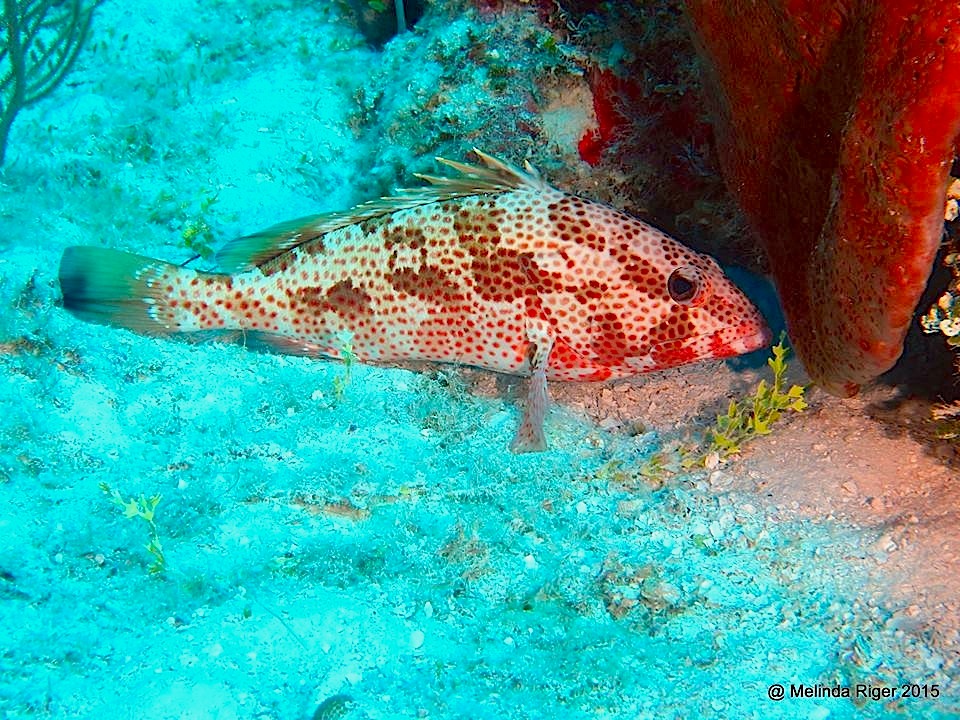
The Red Hind is one of several grouper species commonly found in  Bahamas waters. Commonly for now, anyway. There is less information available about this species compared with other groupers, but sources seem agreed that it is (a) abundant and (b) IUCN listed ‘least concern’ but (c) heavily fished and (d) delicious.

Red Hind, attended by Cleaner FishRed Hind Grouper ©Melinda Riger @ G B Scuba copy 2

Red Hind Grouper ©Melinda Riger GB Scuba copy

One problem arises from the fact that Red Hinds form spawning aggregations in particular areas, making them vulnerable to fishing exploitation in those locations, and consequent population decline. Already, some of their spawning areas are protected.

Another threat comes from the degradation of coastal habitats coupled with increasing commercial and recreational fishing.  Red Hinds are targeted with speargun, hook and line, fish traps and nets. They may also be by-catch of other fishing operations. Fortunately Marine Protected Areas such as the ones in Abaco waters provide localised protection but these are not found throughout the Red Hind’s range. Closed seasons have been imposed in a few areas, another conservation method that has recently been introduced in the Bahamas for the Nassau grouper. 

Female spawning Red Hind Grouper (Univ of Puerto Rico:NOAA)

Getting the right balance between traditional fishing for food, and stock conservation is inevitably a tricky calculation. For the Red Hind, the factors that may result in the population decline of a plentiful species are in plain sight and will continue to be monitored by the various scientific research organisations involved…

OTHER GROUPERS YOU MAY ENJOY…

NASSAU GROUPER

TIGER GROUPER

BLACK GROUPER

Red Hind Grouper ©Melinda Riger @ G B Scuba copy 3

Credits: All images Melinda Riger at Grand Bahama Scuba except (4) NOAA / Puerto Rico Univ; research from several sources, tip of the hat to SCRFA

Unknown's avatar

BOTTLENOSE DOLPHINS IN ABACO WATERS (2): MOTHER & CALF


Dolphin Mother & Calf, Sandy Point, Abaco, Bahamas 12

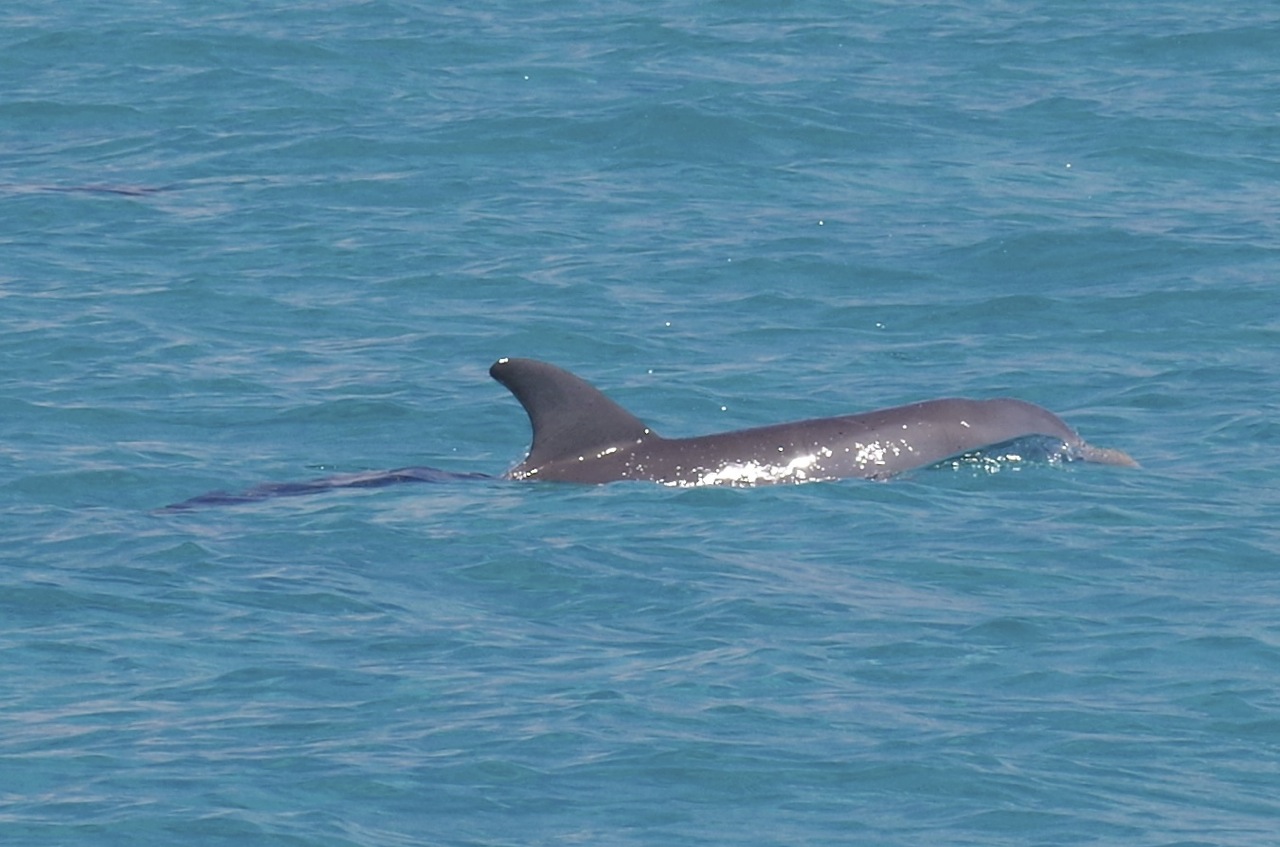
Sometimes things happen that completely take my breath away. Here is one of those moments, from our recent trip with Charlotte and Diane in the BMMRO research boat. As we returned from whale-watching to base in Sandy Point and moved from the deep dark ocean to the bright blue shallows, we encountered a group of bottlenose dolphins. You can see my recent post featuring some of the adults HERE. That was exciting enough, as they played around the boat. Then another participant appeared… 

 Notice the dark area behind the adult dolphin… Dolphin Mother & Calf, Sandy Point, Abaco, Bahamas

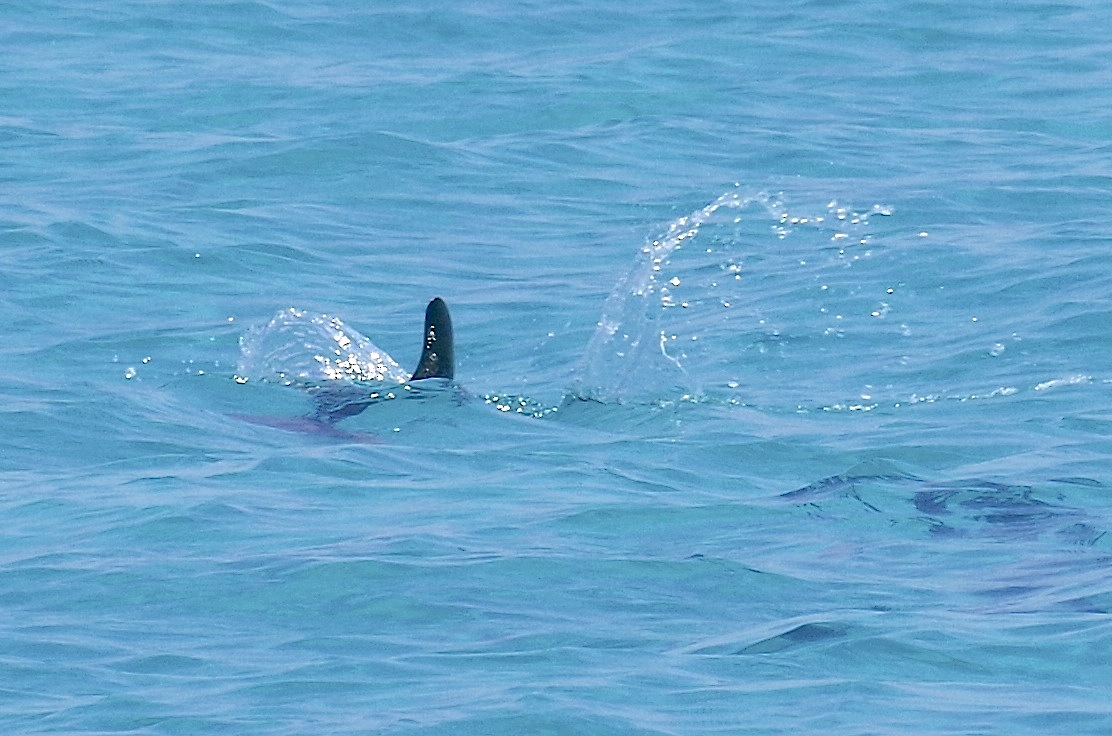
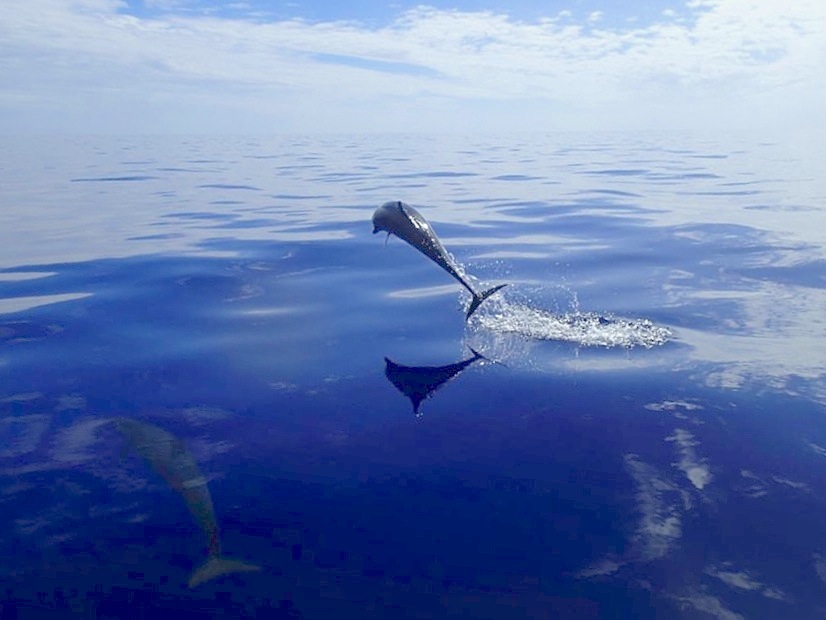
…which soon separated into a small dark splashing creature with its own fin cutting the waves…Dolphin Mother & Calf, Sandy Point, Abaco, Bahamas

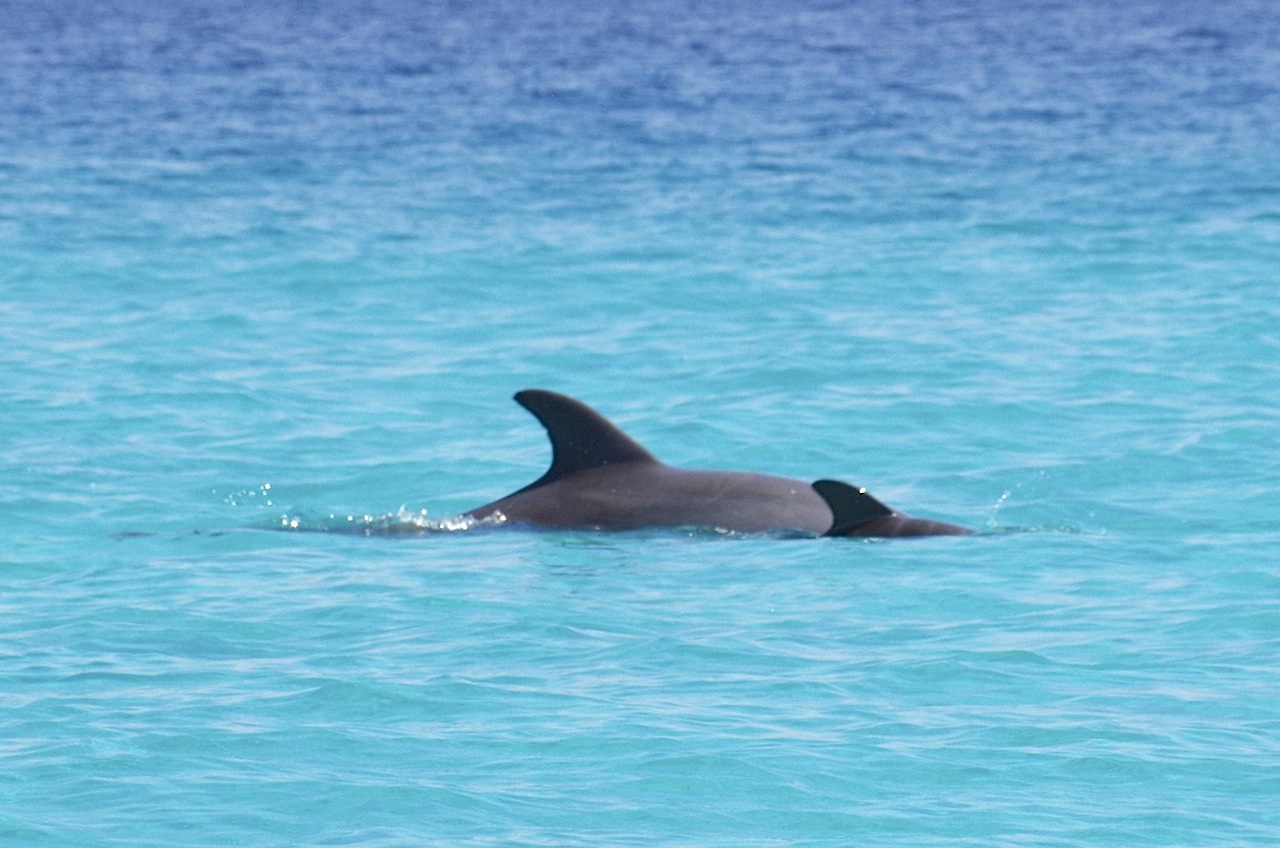
…and next seen keeping pace with its parentDolphin Mother & Calf, Sandy Point, Abaco, Bahamas

The sharp line between the light and the dark sea is where the sandy shallows abruptly give way to the deep waters of the Grand Bahama Canyon, a massive trench up to 2.5 miles deep with almost vertical cliff walls to the depths in some places

Dolphin Mother & Calf, Sandy Point, Abaco, Bahamas

Dolphin Mother & Calf, Sandy Point, Abaco, Bahamas

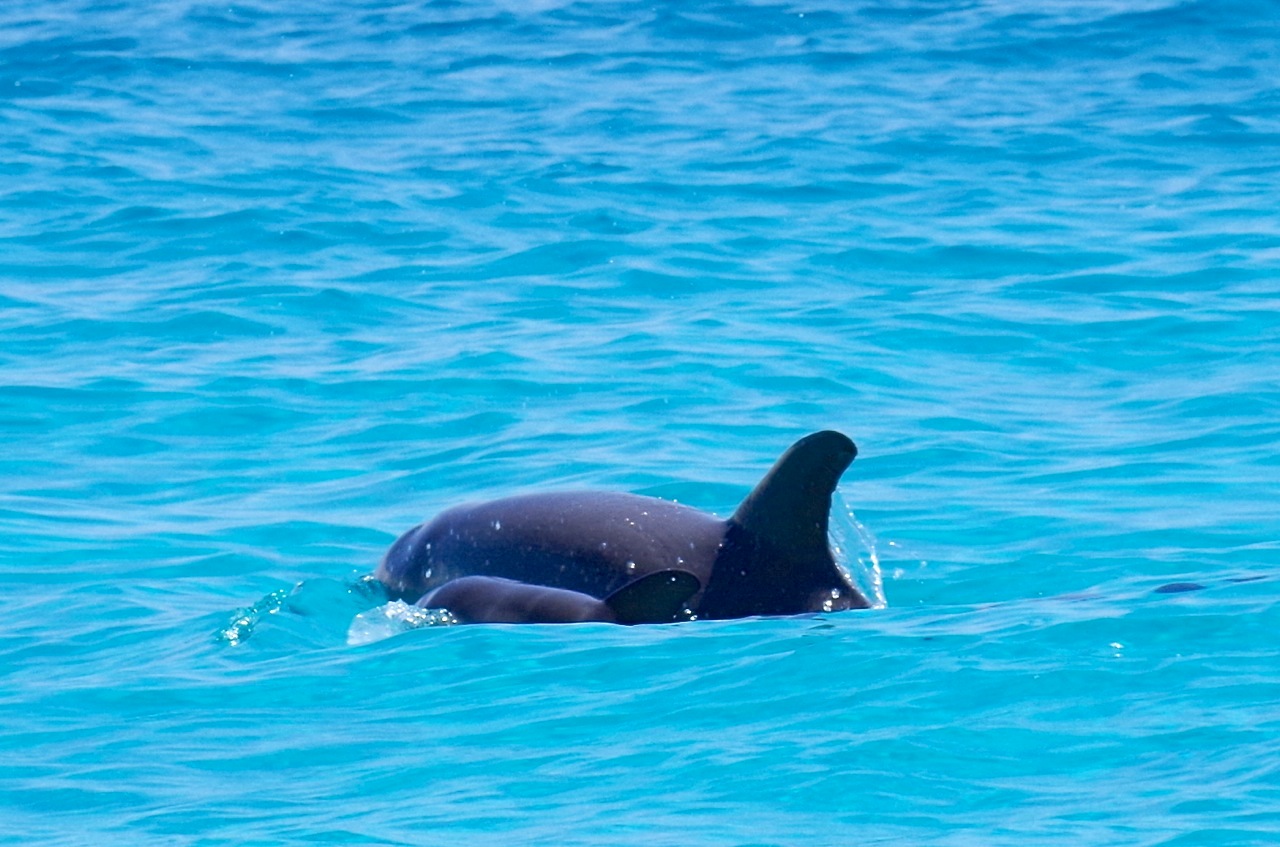
There were less active and splashy moments as the pair swam around togetherDolphin Mother & Calf, Sandy Point, Abaco, BahamasDolphin Mother & Calf, Sandy Point, Abaco, Bahamas

Then it was back to doing what they like best…Dolphin Mother & Calf, Sandy Point, Abaco, BahamasDolphin Mother & Calf, Sandy Point, Abaco, Bahamas

Then some more restful moments…Dolphin Mother & Calf, Sandy Point, Abaco, Bahamas Dolphin Mother & Calf, Sandy Point, Abaco, Bahamas

And finally the pair moved away. On the far horizon, the Massive Mickey Mouse Cruise ship moored at ‘Disney’s Castaway Cay’ (formerly the sober-sounding Gorda Cay), where you can be a Pirate of the Caribbean. Or anyway a very happy Tourist. The choice is yours. Would you like fries with that?Dolphin Mother & Calf, Sandy Point, Abaco, Bahamas

And looking out to sea from the cheerful place that is Castaway Cay, I wonder if a small child was wondering “Ok, love Mickey and his Friends – but I’d also really love to see a wild dolphin swimming free… 

Disney Magic docked next to the Castaway Cay Family Beach copy

All photos RH (except Castaway, Wiki). Huge thanks to Charlotte, Diane and Bahamas Marine Mammal Research Organisation BMMRO for a truly wonderful day photo 2

bmmro_logo

Unknown's avatar

BOTTLENOSE DOLPHINS IN ABACO WATERS (PART 1)


Bottlenose Dolphins, Rocky Point, Abaco (Keith Salvesen : BMMRO) 7

BOTTLENOSE DOLPHINS IN ABACO WATERS (PART 1)

DCB GBG Cover Logo dolphin

This seems to be a excellent early Spring for dolphin and whale sightings in Abaco waters. I’ve noticed that people have been posting dolphin sightings on FB recently. In our brief window of opportunity each March, I usually reckon to see 2 or 3 dolphins at most – maybe crossing over to Hope Town on the ferry, or more probably on a fishing trip. This year we saw 2 groups of about 6 off Cherokee while fishing, including calves. On another day, 4 adults made a leisurely progress the whole length of Rolling Harbour while we watched from the balcony of the Delphi Club. I don’t think they have ever been so close to the shore there before. The best was to come.Bottlenose Dolphins, Rocky Point, Abaco (Keith Salvesen : BMMRO) 3

Near the end of our trip Charlotte Dunn and Diane Claridge invited us to go out with them on the BMMRO research boat. This is equipped with a hydrophonic system that can detect the bleeps, whistles and clicks of cetaceans, and record them for comparison with previous data. This enables particular animals to be identified from their vocalisations. The other method is to note particular features of an animal – damage to a fin, markings on the flank and so on. During the day C & D happily conversed in code: “Is that 132 over there?” “No, it’s got a nick in the fluke, it must be 127…”BMMRO Research Boat, Sandy Point, Abaco

As we returned in the RHIB from an amazing day spent at close quarters with beaked whales [more on these soon], we moved from deep dark blue ocean to sandy turquoise shallows. There, just off Rocky Point (near BMMRO HQ at Sandy Point) were half a dozen bottlenose dolphins, including a mother and calf. This post contains a small batch of photos of adults – there’ll be another post shortly featuring the calf… Bottlenose Dolphins, Rocky Point, Abaco (Keith Salvesen : BMMRO) 4Bottlenose Dolphins, Rocky Point, Abaco (Keith Salvesen : BMMRO) 1Bottlenose Dolphins, Rocky Point, Abaco (Keith Salvesen : BMMRO) 5

Here’s a taster for the next post – the calf, just visible close alongside its mother, was being given leaping practice. Watch this blog…

Bottlenose Dolphins, Rocky Point, Abaco (Keith Salvesen : BMMRO) 6

All photos RH. Huge thanks to Charlotte, Diane and Bahamas Marine Mammal Research Organisation BMMRO for a truly wonderful day (and for my cool sweatshirt!) photo 2

bmmro_logo

Unknown's avatar

SAW FISH IN THE ABACO MARLS? NO SURPRISE. SAW A SAWFISH? AWESOME!


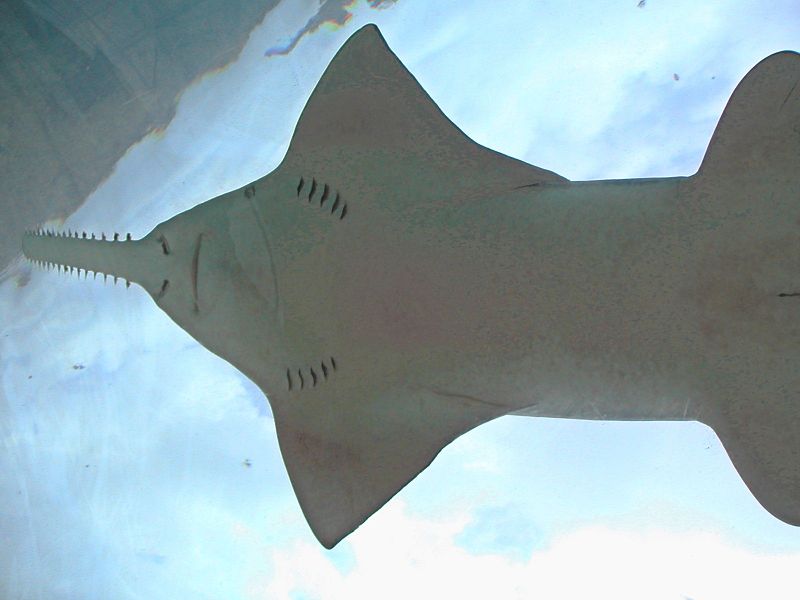
Pristis_pectinata _Georgia_Aquarium_ Diliff Wiki

SAW FISH IN THE ABACO MARLS? NO SURPRISE. SAW A SAWFISH? AWESOME!

Exactly a year ago, an extraordinary find was made out on the Abaco Marls. Almost disguised against the pale mud under the low water was the first sawfish reported for the Marls. This fish is not merely a rarity in the Northern Bahamas: all species of sawfishes worldwide are IUCN listed as Endangered or Critically Endangered.

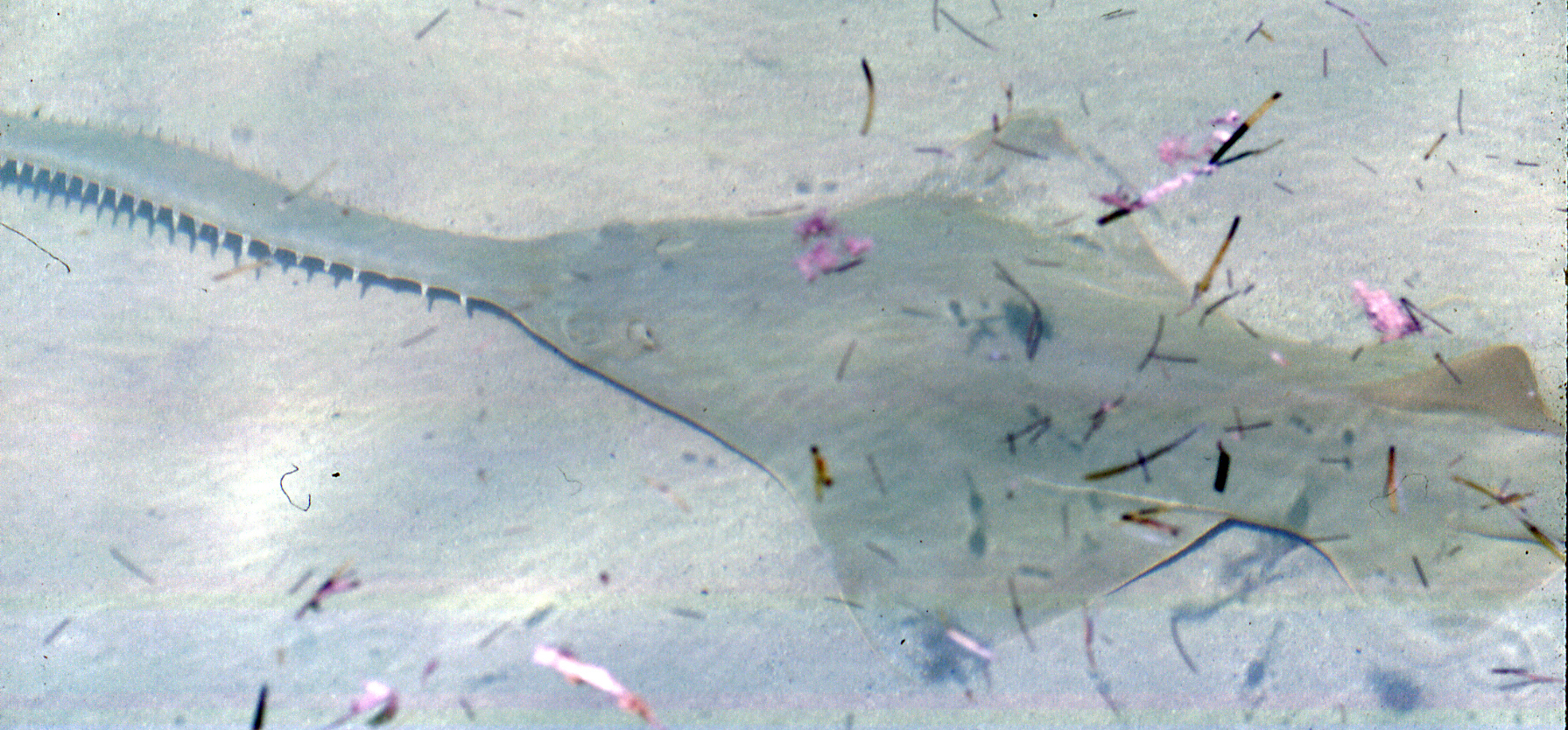
Sawfish, Abaco Marls Feb 2014 (Photo: Jacque Cannon)

Sawfish, Abaco Marls Feb 2014 (Photo: Jacque Cannon)

Here is an account of the discovery reported by FRIENDS OF THE ENVIRONMENT: “On a recent fishing trip in the Marls with local guide Justin Sands, Sam and Jacque Cannon had an exciting encounter. As Justin was poling the flats, with Sam on the bow searching for bonefish, Jacque spotted a Sawfish! Jacque and Justin quickly forgot about Sam and his efforts to catch a bonefish and turned their focus to the Sawfish. This is a very rare sighting and one we are happy there was a camera available to document it…” A couple of weeks later I was lucky enough to sit next to Jacque at dinner at the Delphi Club, so I was able to hear at first hand the story of this amazing find. It also turned out to be the perfect time to sign an early copy of “The Birds of Abaco” for Jacque and Sam… 1900063_10152069487394482_984358031_n

Sawfish Book Plate (1884)

Sawfish Book Plate (1884)

 10 ESSENTIAL SAWFISH FACTS

  • Sawfishes are also known as Carpenter Sharks; their ‘saw’ is called a ROSTRUM
  • There are 7 species in oceans and seas worldwide, including the Mediterranean
  • All populations have declined drastically due to habitat loss, overfishing & pollution
  • The rostrum is used to feel, to dig, to slash & impale or stun its prey, and for defence
  • Sawfishes are nocturnal creatures and spend a lot of time face down on the sea floor
  • Like sharks, their skeleton is made of cartilage and not bone.
  • Some species can grow up to 7m long
  • They are generally unaggressive unless provoked but fight strongly when caught
  • Sawfishes are slow breeders, making population recovery more difficult
  • Babies are called ‘pups’. Their rostrum is flexible and sheathed until after birth
Sawfish seen from Underwater Tunnel - Atlantis, Nassau Bahamas (Fred Hsu)

Sawfish seen from below – Atlantis, Nassau, Bahamas (Fred Hsu)

Other sawfish have been seen recently in the Northern Bahamas, though not in Abaco waters. Last summer the Bahamas National Trust posted 2 great images of a Smalltooth Sawfish, saying “BNT was excited to receive these photographs of a Smalltooth Sawfish photographed in the proposed East Grand Bahama National Park – Bersus Cay Area. The sawfish was 12 to 13 feet long and was seen in water that was 2 -3 feet deep. Thank you to Buzz Cox, Island Manager at Deep water Cay for sending us these photos”. Sawfish, Grand Bahama Sawfish, Grand Bahama

CONSERVATION ISSUES

POPULATION DECLINE As noted above, Sawfish populations have declined to less than 10% of historical levels. The Smalltooth Sawfish – seen above – was once prolific in the Atlantic, Gulf of Mexico, Mediterranean, Black Sea and Indo-Pacific. Population numbers of this species are now estimated at less than 5% to perhaps as low as 1% of their historic levels.

THREAT TO SURVIVAL The threats to their existence are many: habitat loss, overfishing, accidental bycatch, rostrum souvenir hunters (good prices can be obtained), taking them for fins (as a delicacy) or oil from their liver (medicinal).

LEGAL PROTECTION Capturing a sawfish is illegal in certain countries, including the United States. The sale of smalltooth sawfish rostra is prohibited in the United States under the Endangered Species Act.  The import for sale of that of any sawfish species is also prohibited. The international trade of sawfish was banned by the CITES convention in June 2007.
For those that want to find out  a bit more detail about these issues, there’s plenty on interesting information in a scientific (but readable) paper from NOAA – click the link below

A very recent Bahamas smalltooth sawfish sighting on Bimini – Jan 2015Pristis_pectinata_(smalltooth_sawfish)_(Bimini,_western_Bahamas) Lee & Mary Ellen St John Jan 2015 Wiki

Smalltooth Sawfish (Pristis pectinata) Bimini, Bahamas – Lee & Mary Ellen St John Jan 2015

Time for some footage of these rare and wonderful creatures in the Bahamas. The first is from John Flanagan and was taken during a dive off Bimini in early 2014. He was so surprised by the sight that he nearly forgot to turn on his camera to take a short video… The second is a longer 5 min video taken off Andros by Grant Johnson of “wild footage of the critically endangered Smalltooth Sawfish (Pristis pectinata). The west side of Andros, Bahamas is one of the last places on Earth that still provides vast refuge for this incredible animal”.

Finally, you may be wondering how exactly the sawfish uses its rostrum to stun fish, as mentioned earlier. Watch this short video – see how quickly it moves, for such an apparently cumbersome and dozy creature…
Credits as shown above, with particular mention of Jacque Cannon for probably the first known sighting and anyway photo of an Abaco sawfish…; header pic in aquarium Diliff (Wiki)

Unknown's avatar

CHERUBFISH (PYGMY ANGELFISH): BAHAMAS REEF FISH (23)


Cherubfish (Pygmy Angelfish) © Melinda Riger @ G B Scuba

 CHERUBFISH (PYGMY ANGELFISH): BAHAMAS REEF FISH (23)

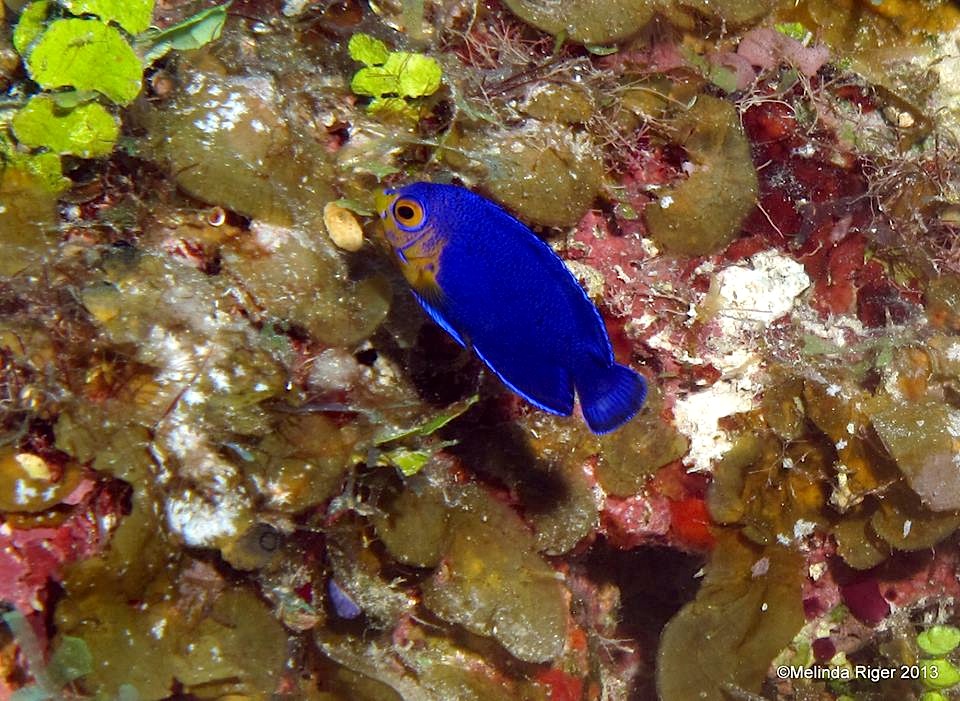
Time for a bright little denizen of the not-so-deep. The Cherubfish Centropyge argi or pygmy angelfish is a very small (8cm) and distinctively coloured angelfish species. These fish are native to the Caribbean and Gulf of Mexico, and flicker round the coral reefs happily feeding as they go (see the video below to see how busily they forage). Or maybe they are just having a good time…

Cherubfish (rare) ©Melinda Riger @ G B Scuba

The Cherubfish is unsurprisingly a popular aquarium species. Don’t rush straight out and buy some though: a typical warning says “like other angel fish, they are not completely 100% reef-safe. Results vary among individual fish and tank qualities (size, feeding, tankmates, etc.), so caution is recommended when adding this fish to a coral tank“. You can read the whys and the wherefores HERE – sadly I lack the vibrant interest in aquaria to go into it myself…

Cherubfish Melinda Riger @ G B Scuba

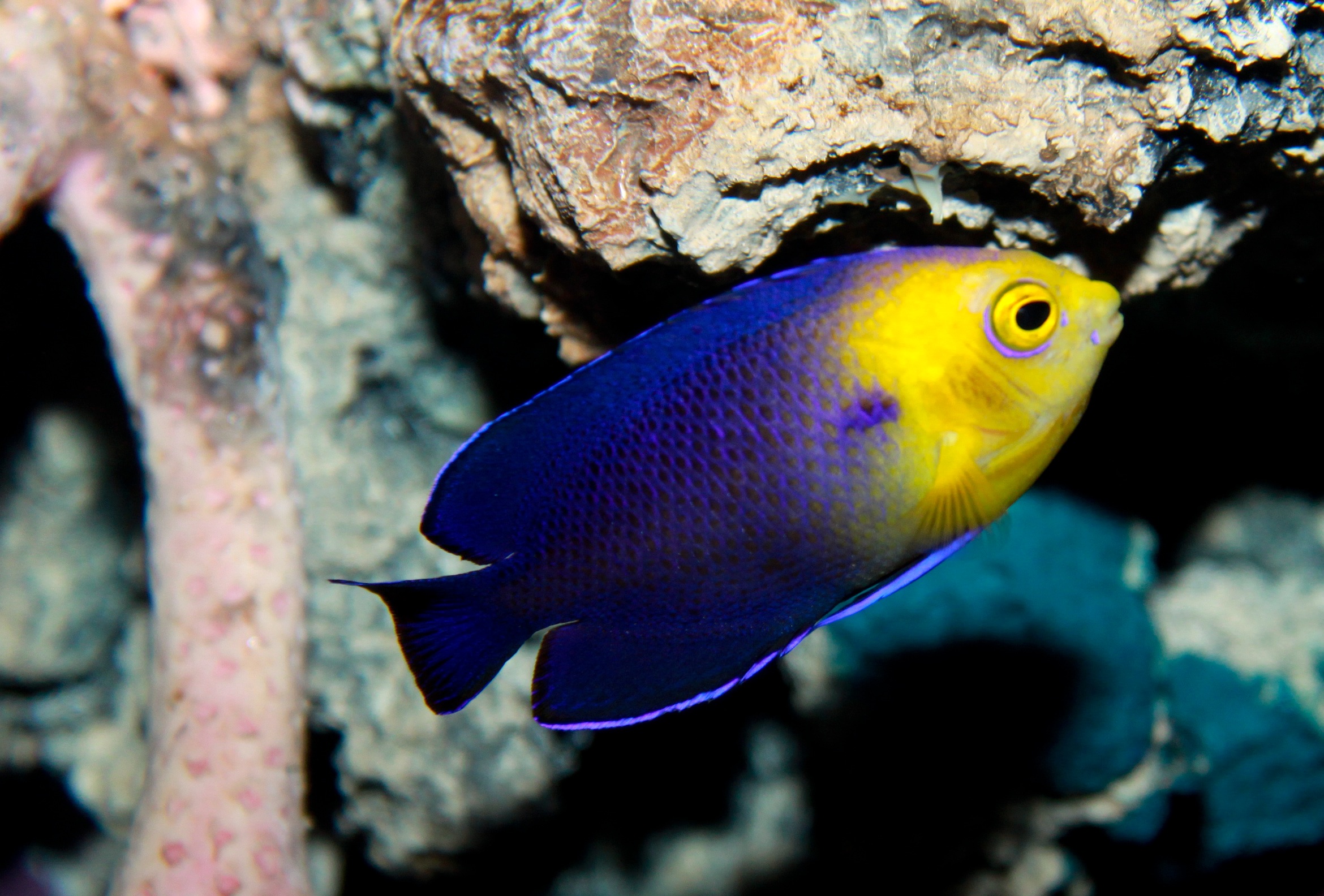
Looking beyond Melinda’s lovely images of the species, I have found that these creatures will often show more yellow at the nose end. Here’s an example of a more two-tone Cherubfish in case you come across one. Cherubfish Centropyge argi  (Brian Gratwicke)

I mentioned that Cherubfish flicker around the reefs instead of proceeding serenely and in an orderly fashion.  Have a look at this short video to see what active little fish they are.

RELATED POSTS

GRAY ANGELFISH 1

GRAY ANGELFISH 2

QUEEN ANGELFISH 1

QUEEN ANGELFISH 2

DAMSELFISH

ROCK BEAUTY

Credits: all images Melinda Riger of Grand Bahama Scuba except the last, Brian Glanville

Unknown's avatar

BAHAMAS MANATEES: GINA’S GOOD NEWS FOR 2015


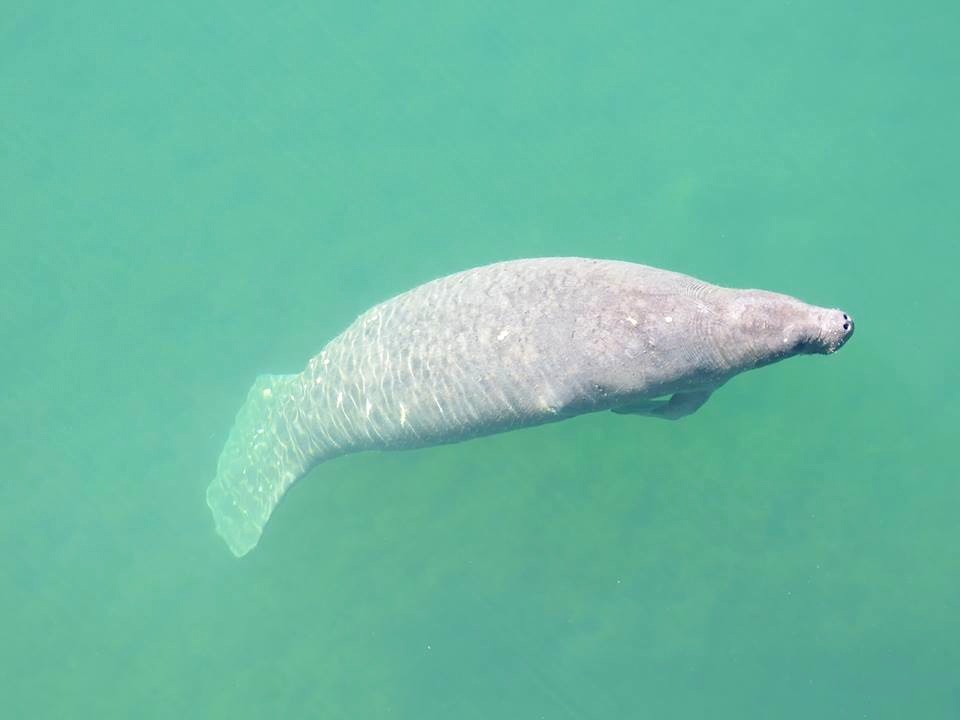
Tm_Gina&JJWest Indian Manatee mother & calf, Bahamas - Gina & JJ

Manatee Gina with her weaned calf JJ

BAHAMAS MANATEES: GINA’S GOOD NEWS FOR 2015

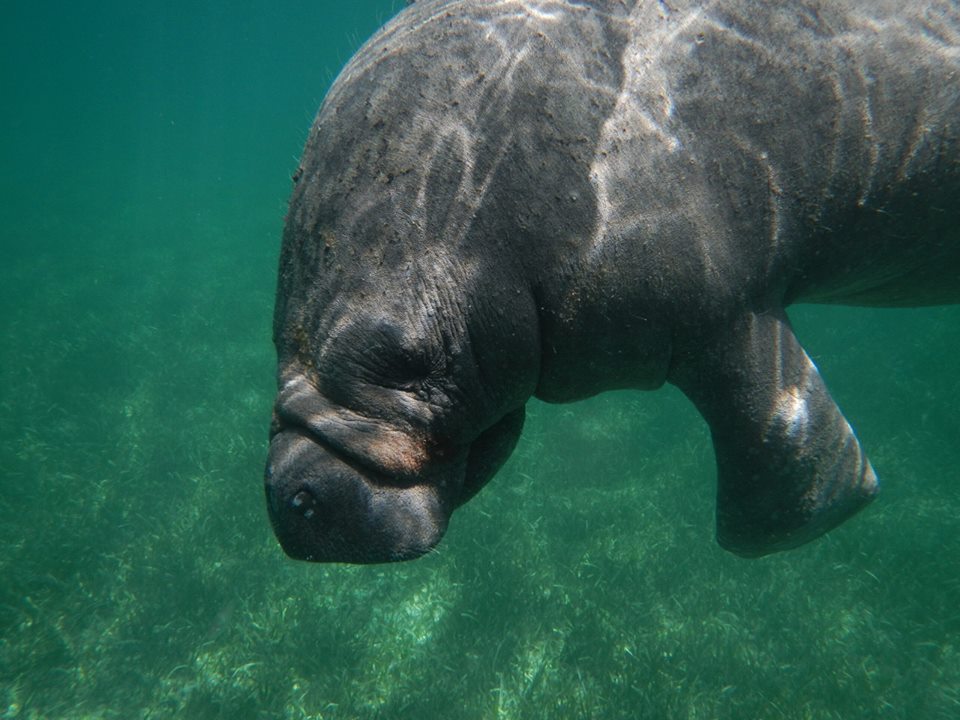
Last year held hopes of a joyous reunion – and indeed union – in Abaco waters between young manatees Randy and Georgie. He had taken the trip from the Berry Is., around the top of Abaco and down the east coast as far at Little Harbour. She lives in Cherokee. Tantalisingly close. But then Randy retraced his steps as far as Gorda Cay and hopes for the production of Abaco’s first manatee calf (at least, in living / recorded memory) turned to seagrass mulch. The poignant story and some great manatee close-up photos (including a ‘selfie’ of sorts on a Go-Pro) can be found HERE

West Indian Manatee mother & calf, Bahamas - Gina & JJ - weaning

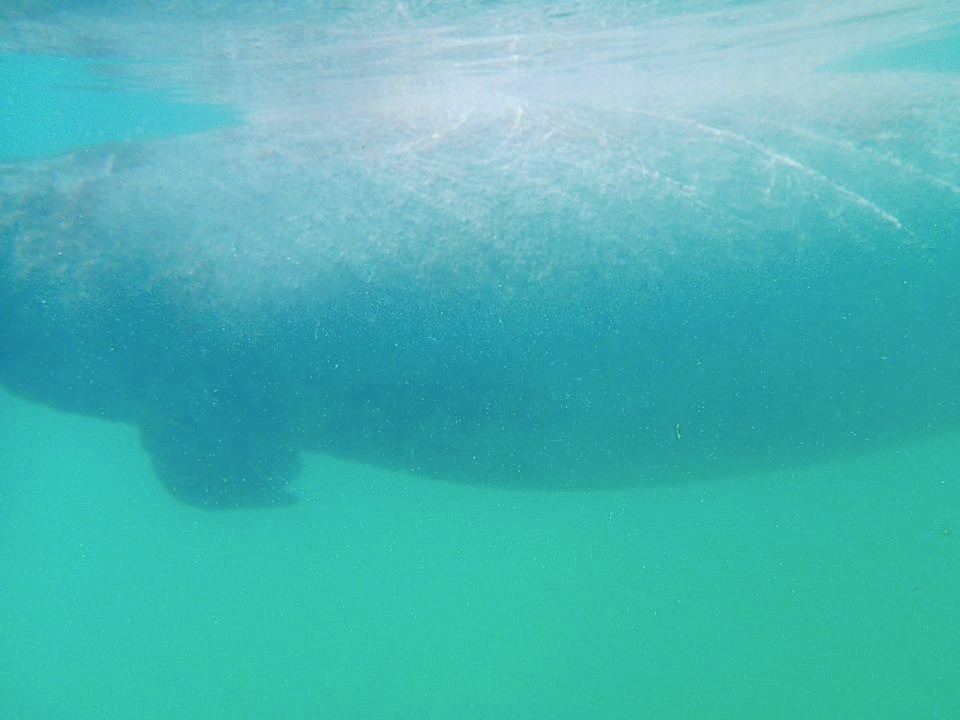
But manatees do breed elsewhere in the Bahamas, in particular the Berry Is. They also seem to favour the north end of Eleuthera, and have been seen on Andros and NP. True, the absence of significant freshwater sources in the Bahamas – an essential part of their diet –  doesn’t make for an ideal habitat, but manatees do pair off and Bahamas calves are born. In summer 2012, there were four resident West Indian Manatees (Trichechus manatus) living in Great Harbour Cay, Berry Is. The adult female, Gina, had been there for 3 years – she originated from Florida. She had reportedly had 3 or 4 calves and was caring for her latest, a female calf called JJ, born in the late winter of 2011.

Adult female manatees are sexually mature at 6-10 years of age and have a gestation period of up to 13 months. The first two years of a calf’s life is spent with its mother. During this time they are taught where to find food, fresh water, warmth and shelter. Generally, after two years the calf is weaned and separates from its mother (see header image of Gina and JJ during that process)

 Nursing a growing JJ West Indian Manatee mother & calf, Bahamas - Gina & JJ - nursing

Now there is more good news for Gina, who has been under regular observation by the BMMRO. At the turn of the year, Gina was re-tagged in Harbour Island, Eleuthera. As reported,  “she looks well, was very calm and is very pregnant… If the tag comes off and is found, please call the number on the tag to let us know – we are now monitoring her movements via the internet”.

Gina’s shows her best sideGina the Manatee 1

Coming atcher…Gina the Manatee 3

Tell-tale signs (to experts, anyway) of advanced pregnancyGina the Manatee 2

I will post any further news about Gina as it arises. Meanwhile, for more information about West Indian manatees, you can visit the MANATEE PAGE. There are several links there to specific manatee stories, especially about Rita and her adventurous daughter GEORGIE, Abaco’s current favourite (indeed, only) resident manatee… Both Links need an update, I notice –  they don’t cover Georgie’s subsequent return to Abaco and her contented settling down again in Cherokee where she seems happy as a… sirenian.

Dana & Trish greeting Georgie Manatee

Credits: All photos and primary fount of Bahamas manatee knowledge: BMMRO; Magpie Pickings

mantsw~1

Unknown's avatar

PEACOCK FLOUNDER: BAHAMAS REEF FISH (21)


  Peacock Flounder ©Melinda Riger @ GB Scuba

PEACOCK FLOUNDER: BAHAMAS REEF FISH (21)

PEACOCK FLOUNDER or PLATE FISH Bothus lunatus

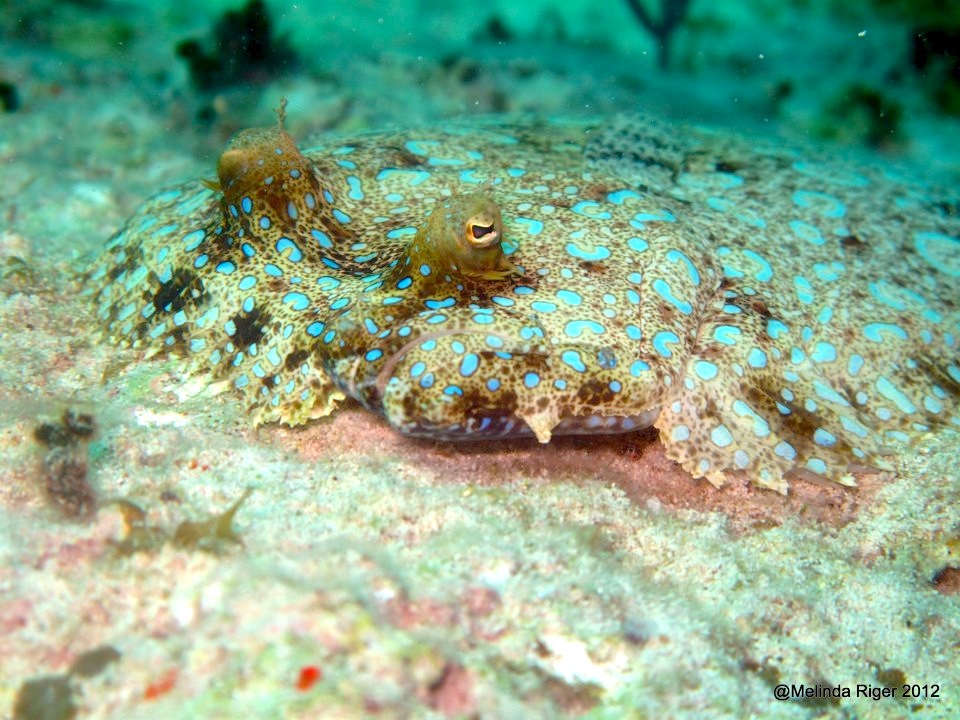
I have briefly featured this fish before in the context of its extraordinary camouflage abilities; and also its interesting ocular arrangements. Time to give it another swim around, I think, with some additional photos that I have collected.

Peacock Flounder

Bothus lunatus is the Atlantic / Caribbean version of a species also found in the Pacific and Indian oceans. Adults may grow up to 18 inches long. The species is a ‘lefteye’ flounder, with both eyes on its left (top) side & its right side underneath.  However a baby flounder looks & swims like normal fish, with bilateral eyes. As it grows, the right eye gradually ‘moves’ round to the topside, and it becomes a flatfish.

Peacock Flounder

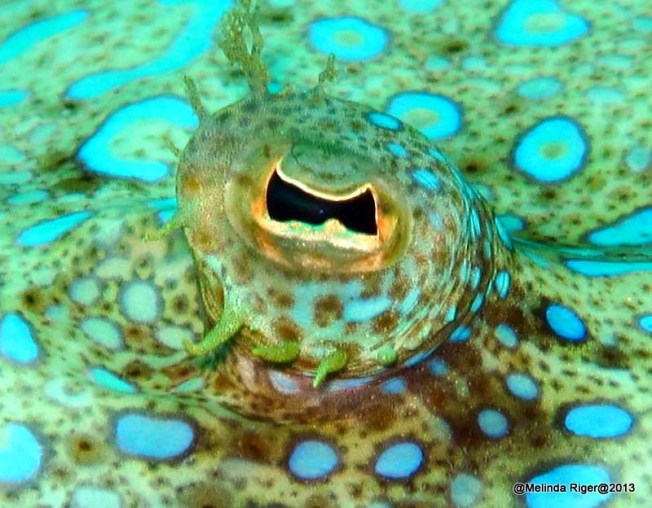
A flounder’s eyes can move independently of each other. One may look forwards, the other backwardsPeacock Flounder Eye ©Melinda Riger @ G B Scuba

‘NOW YOU SEE IT…’ CAMO-FISH

The Peacock Flounder has extraordinary  colour-changing powers, and can rapidly vary its background colour to make it closely resemble that of its surroundings. This enables it camouflage itself as it lies on the seabed. It can change coloration completely in between two to eight seconds.  

Four frames of the same fish taken a few minutes apart showing the ability of flounders to change colors to match the surroundings (Wiki)Peacock Flounder Brocken Inaglory

Check out these imitative patterns in Bahamas waters…Peacock Flounder (f) ©Melinda Riger @ Grand Bahama Scuba

Flower_flounder_in_Kona_wiki

There are two advantages to the ability to camouflage (‘cryptic coloration). One is obviously to avoid detection by predators. The other is to enable the flounder to ambush its meals. They feed primarily on small fishes, crabs and shrimps, lying concealed on the seabed and grabbing any unwary prey that ventures too close. They will even partially bury themselves in the sand, leaving just their eye-stalks keeping watch…Peacock Flounder ©Melinda Riger @ Grand Bahama Scuba

HOW CAN THEY POSSIBLY CHANGE COLOUR SO QUICKLY?

Scientists are still puzzling this out. In a conch shell, it seems the flounder can coordinate its amazing all-round vision with its hormones, instantly releasing certain pigments to its skin cells and suppressing other pigments to make the colour match. Not convinced? Then watch this short video and prepare to be impressed. 

Fred Riger of Grand Bahama Scuba, who kindly keeps a benign eye on my reef fish posts (he’s the expert), adds a third excellent reason for coloration changes: sex… “the male peacock flounder can, and does greatly intensify his colors, presumably to declare territory and attract females to his person. When doing this the males will also signal with the left pectoral fin, sticking it straight up and waving it around.” Maybe that is what is going on in the photo below – intensified, non-camouflage colours, and a raised fin…Peacock Flounder ©Melinda Riger@ G B Scuba

Peacock Flounder on a plate – Kim Rody Art983829_10154948988290716_6633206689277673329_n

Credits: Melinda Riger of Grand Bahama Scuba for almost all photos; wiki for 2 illustrative images

Unknown's avatar

MAKING A SPLASH: SPERM WHALES & MANATEES IN ABACO WATERS


Sperm Whale, Abaco Bahamas (BMMRO)

MAKING A SPLASH: SPERM WHALES & MANATEES IN ABACO WATERS

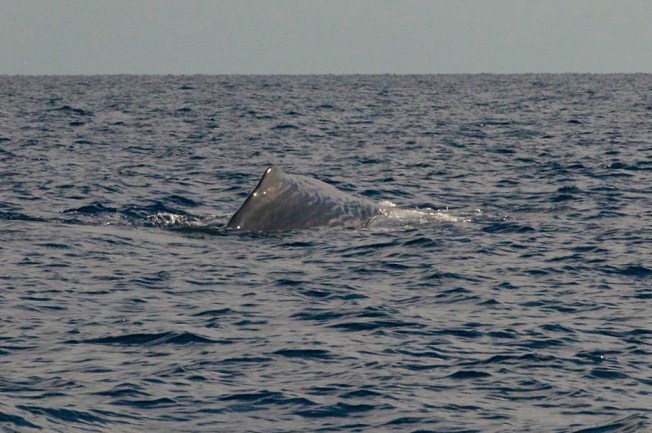
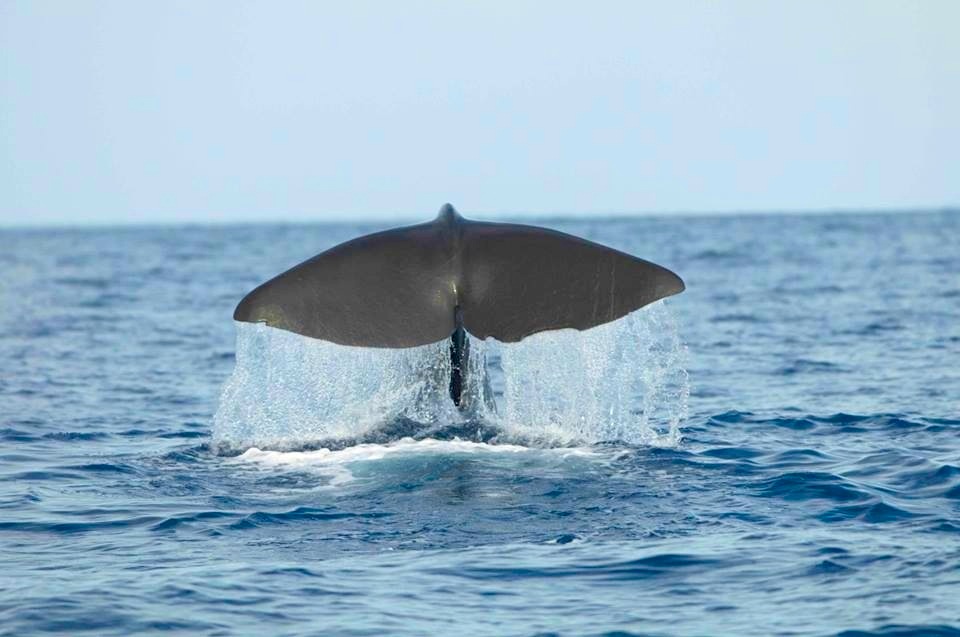
After a quiet spell on the cetacean and sirenian front, there is exciting news to report. First, the BMMRO encountered two sperm whales just off Sandy Point.  I don’t know how close to the shore they actually were, but it was very friendly of them to come so near to the BMMRO HQ.Sperm Whale, Sandy Point, Abaco BMMRO3

When whales are sighted from the research vessel, one of the tasks is to collect feces. This job is often undertaken by interns, and is a good way to learn that serious research may well involve unattractive work… They practise with… er… coffee grounds and a net. For more on this important yet unappealing aspect of whale research, CLICK NICE TO SEE FAMILIAR FECES. Another essential part of any sighting is to take fluke photos to enable ID.  Every whale has different and distinctive patterning to the fluke, including general wear and tear. As a photo archive is built up, the researchers are able to recognise a particular whale and cross-reference it with previous sightings.

Sperm Whale, Sandy Point, Abaco BMMRO2Sperm Whale, Sandy Point, Abaco BMMRO1

The third task of a sighting is to record clicks made by an individual whale. This enables an estimate of the whale’s size to be made, and again a sound archive is gradually built up from which comparisons can be made.

Sperm Whale, Sandy Point, Abaco BMMRO4

A NEW MANATEE VISITS MARSH HABOUR

FRIENDS OF THE ENVIRONMENT has just reported the sighting of a new manatee at the head of Marsh Harbour harbour. I’m not aware of any other sightings in the last couple of days, but as they say,  “Please keep your eyes out and drive carefully! Contact Bahamas Marine Mammal Research Organization with any further sighting reports by calling 357-6666. You can also share photos with them on Facebook. Also, please do not feed the manatee. They are able to find their own food and anything else may make them unhealthy”.

This is Abaco’s third recent manatee. First there was GEORGIE, who as far as I know is still comfortably settled in the Cherokee area. Then RANDY arrived earlier this and got to within about a few miles of Georgie… High hopes of a meeting – and ‘friendship, maybe more’ – were dashed when Randy turned round and headed back to Castaway Cay. Let’s hope this newcomer stays around. I wonder what he – or she – will be named? My suggestion is Abby or Abi, which I think is unisex…

10846213_10152589661493178_5080839733543438859_n10849995_10152589661598178_1824081022417510310_n

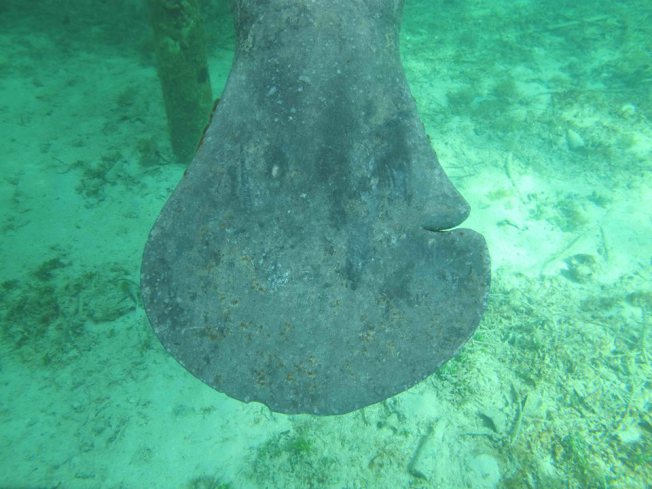
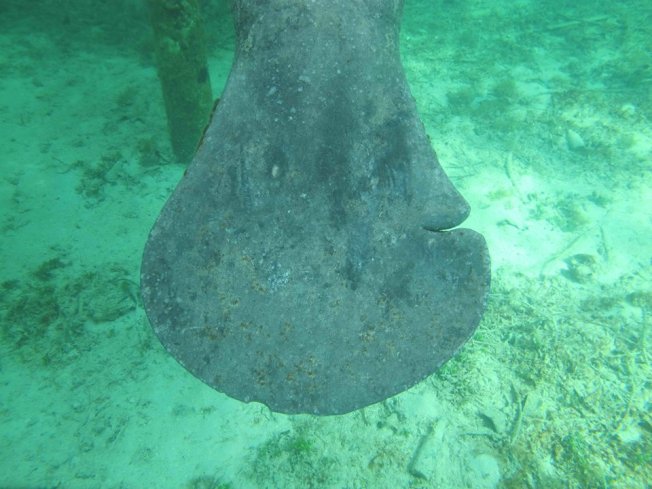
Just as with the whale flukes, the tail of a manatee is an important means of identification. The new manatee’s tail has its own distinctive edge pattern, which will enable its future recognition. Here is an image of Randy’s tail, with its unique notch. 

Randy the Abaco Manatee - tail notch

Credits: BMMRO & FOTE with thanks as ever for use permissions

mantsw~1

Unknown's avatar

NASSAU GROUPER: VULNERABLE, ENDANGERED… & NOW PROTECTED


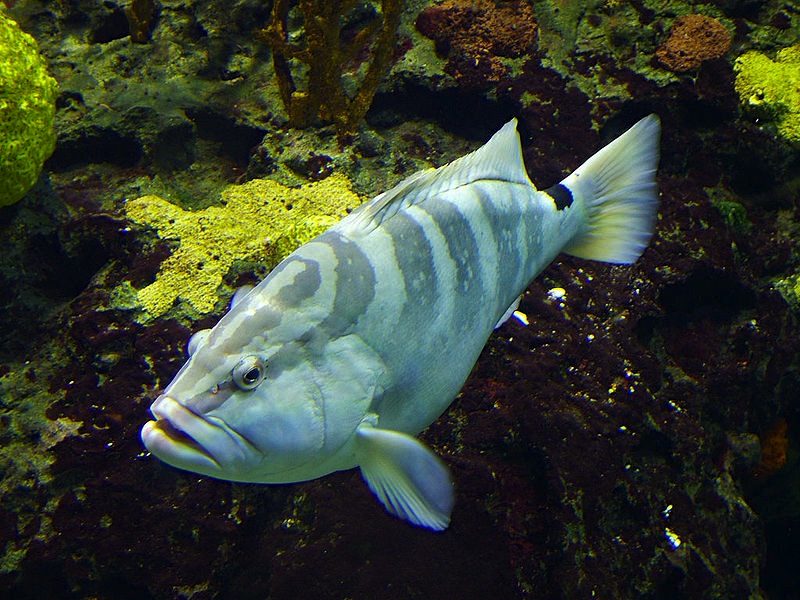
Nassau Grouper ©Melinda Riger @ GB Scuba copy

NASSAU GROUPER: VULNERABLE, ENDANGERED… & NOW PROTECTED

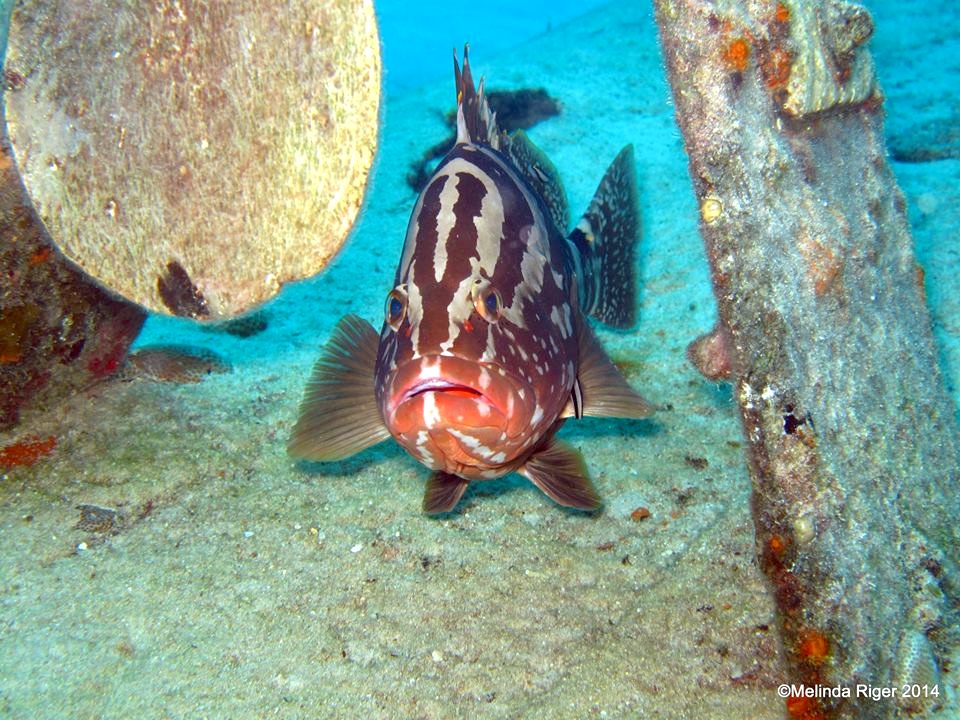
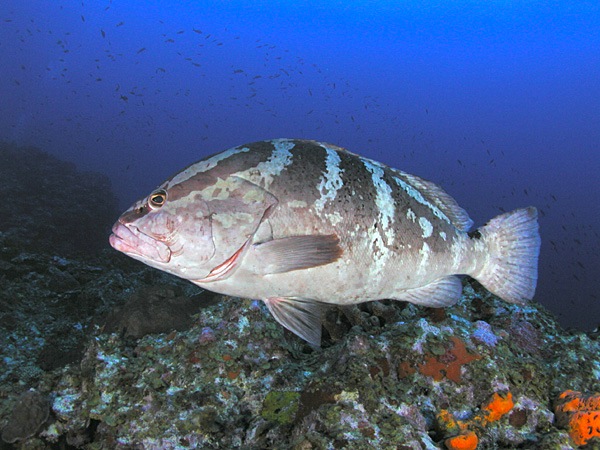
The Nassau grouper Epinephelus striatus is one of a number of Caribbean grouper species found generally in the Northern Bahamas and specifically in Abaco waters. Others include the Black, Tiger, and Yellowfin groupers, the Red Hind,and the Graysby. The Nassau grouper is special, however, not least because (unlike the others) it is on the IUCN Red List as an Endangered Species and is also a US National Marine Fisheries Service Species of Concern. It is considered the most important of the groupers for commercial fishing in the Caribbean, and the IUCN listing data suggests that a population decline of 60% occurred over the last three generations (27-30 years), a startling rate. The current population size is estimated at >10,000 mature individuals.
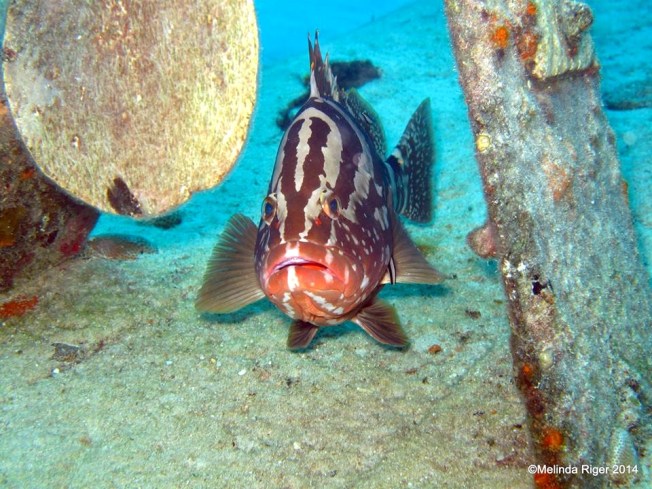
Nassau Grouper ©Melinda Riger @ G B Scuba copy 2

The Nassau Grouper is a creature of the coral reefs in the Caribbean and adjacent seas, though it can also be found in deep water. It feeds in the daytime on small fish and small crustaceans such as shrimps, crabs and lobsters. It lurks in caves and recesses in the reef, sucking in the prey that passes unsuspecting by. The coloration of an individual fish may vary considerably with conditions, and it can adapt its colour to its surroundings as camouflage.  

Tiger grouper meets Nassau grouperNassau & Tiger Grouper ©Melinda Riger @ Grand Bahama Scuba  copy
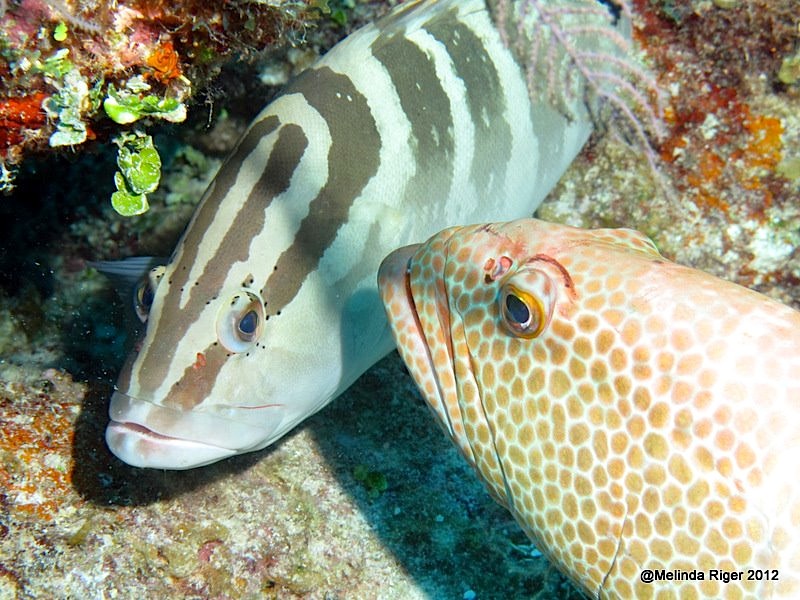
Spawning takes place in December and January as the seawater cools, always at full moon, and always in the same place. In the moonlight, huge numbers of the grouper gather together to mate in a mass spawning aggregation. This may continue for several days. However, the species is slow breeder, which is why overfishing is particularly damaging to the population as the depleted stock cannot readily be replaced.

3846_aquaimages Wiki

CONSERVATION ISSUES

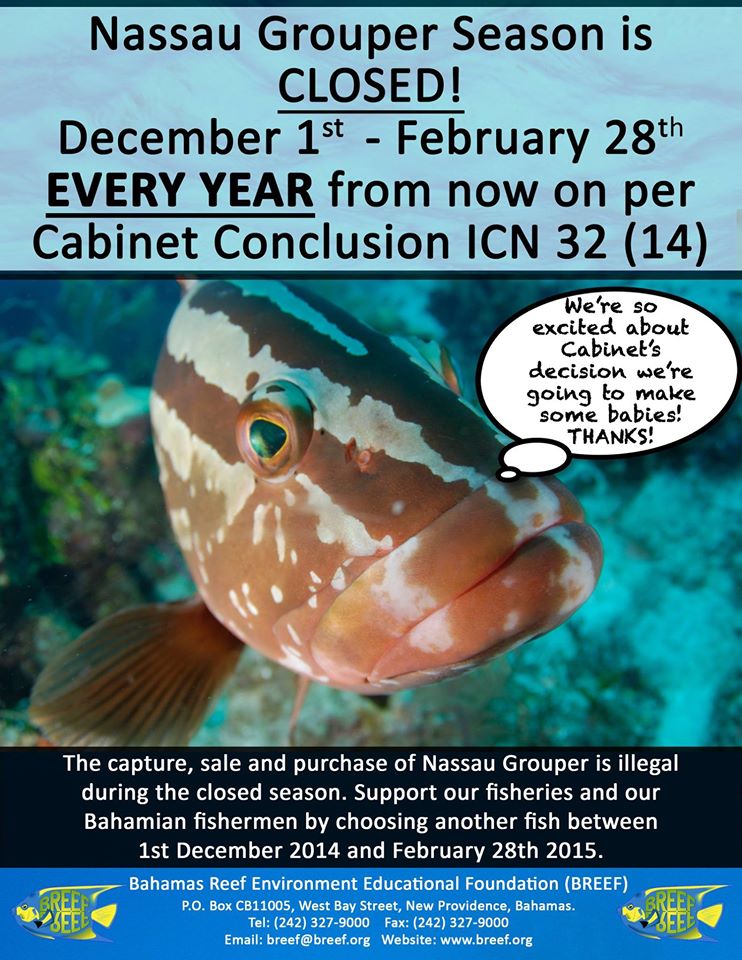
There are other besides factors commercial overfishing that make the Nassau grouper so vulnerable, including fishing during the breeding season; taking undersized fish; pollution and reef decline; habitat loss; and invasive species. The spawning areas are especially vulnerable to exploitation. In the Bahamas, as elsewhere,  the government has now instituted a closed fishing season for the Nassau grouper. Here is the BREEF  flyer, just circulated – and in fact the reason for this post, which reminded me that I had planned to write about this fish! 10382222_10152869346685953_7443797899832698038_o

THREATS

The Bahamas National Trust sums up the multiple threats in this uncompromising way:

Nassau grouper is eaten by barracudas, lizard fish, dolphins, sharks and other large predators of the reef community. But the predators that have the biggest impact on the grouper population are humansPeople are fishing groupers before they can grow to maturity and reproduce. Sex change may also cause a problem. In undisturbed areas there are usually equal numbers of male and females. In heavily fished areas there are often three or more times more females than males. This means many eggs will not be fertilized during spawning. Other threats include, habitat destruction, coral breakage from divers, siltation from construction, runoff from logging and agriculture, dredging, sewage, oil spills and other contaminants that harm coral reefs where Nassau Groupers live.

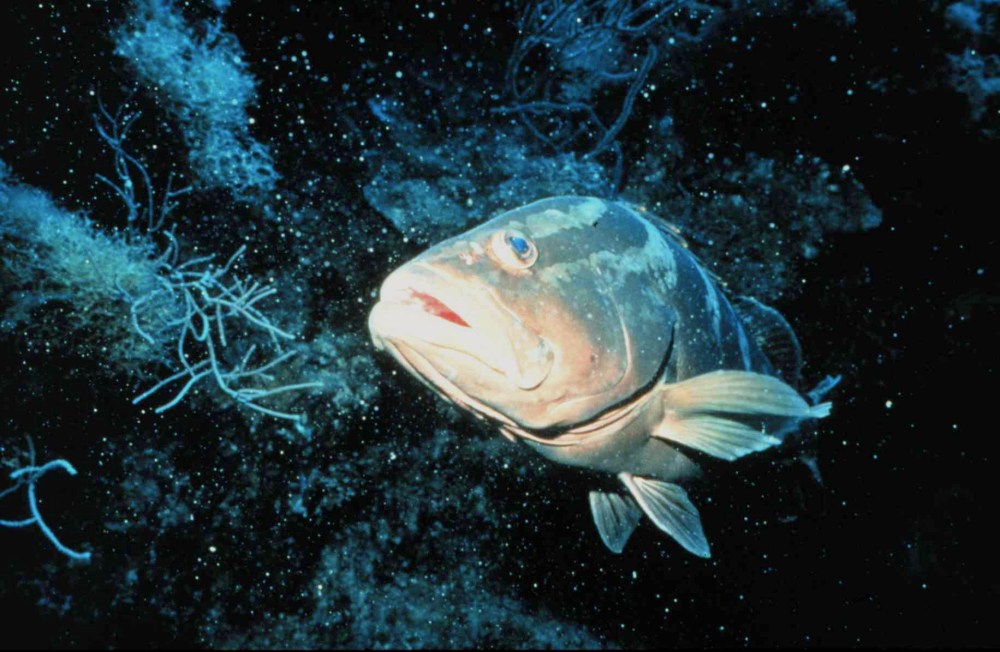
grouperEpinephelus_striatus_2

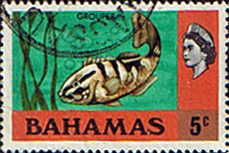
There’s an extent to which a country can be judged on its attitude to wildlife from the stamps it chooses to issue. It’s something to do with appreciation and promotion of the country’s natural resources. For example, North Korea rates nil in this respect, with stamps involving scary weaponry, flags, marching and eerily glowing leaders – not a single sparrow to be seen.  By fortunate contrast the Bahamas and its Postal Service score very highly in celebrating the diversity of the wildlife of the islands. The Nassau Grouper was first featured on Bahamas stamps as long ago as 1971, some 25 years before the IUCN Red Listing, and probably before the sharp decline in population numbers had even begun.
bahamas-1971-nassau-grouper-sg-363-fine-used-19448-p

In 2012 the Bahamas Postal Service released ‘a new definitive 16 stamp series’ depicting the marine life of The Bahamas. The Nassau has been promoted from 5c in 1971 to 70c in 2012. That’s inflation for you.

bahamas-marine-life-stamps2

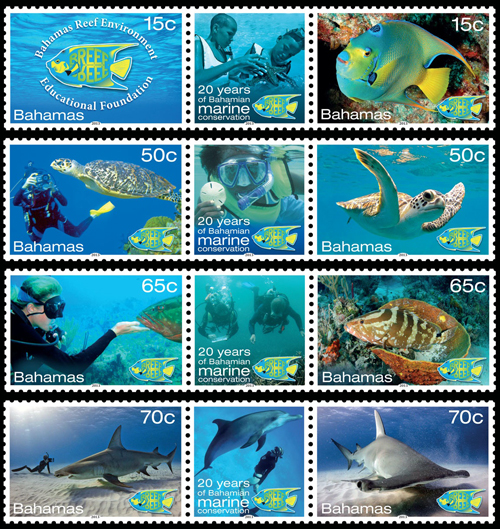
Finally in 2013 BREEF’s 20 years of marine conservation was commemorated with a distinguished and colourful set of 8 stamps, noting in their release: ‘Two of the new stamps feature the Nassau Grouper, a now endangered species that has experienced severe population decline throughout the region… BREEF is well known as an advocate for an annual closed season for the iconic Nassau Grouper during its winter breeding period. The push for the closed season was based on scientific evidence of population collapses throughout the region due to overfishing. BREEF is calling on the government to implement a fixed closed season for the Nassau Grouper in order to protect the species and the fishing industry. The closed season traditionally runs during the spawning season from December 1st until February 28th, to allow the fish to reproduce.  BREEF is calling urgently for the announcement of this year’s Nassau Grouper closed season….’ And so it came to pass… Not only is the Nassau grouper now worth 2 x 65c; it is strictly protected for 3 months during its breeding season. Maybe philately even had a hand in getting somewhere…
BREEF_Comemorative_stamps_PastedGraphic-3

Nassau Grouper (Rick Smit wiki)

Credits: Melinda Riger, Rick Smit, Open Source, BNT, BREEF, Wikimedia, Bahamas Postal Service
Unknown's avatar

FLAMINGO TONGUE SNAILS: ALL YOU NEED TO KNOW


Cyphoma_gibbosum Clark Anderson - Aquaimages

FLAMINGO TONGUE SNAILS: ALL YOU NEED TO KNOW

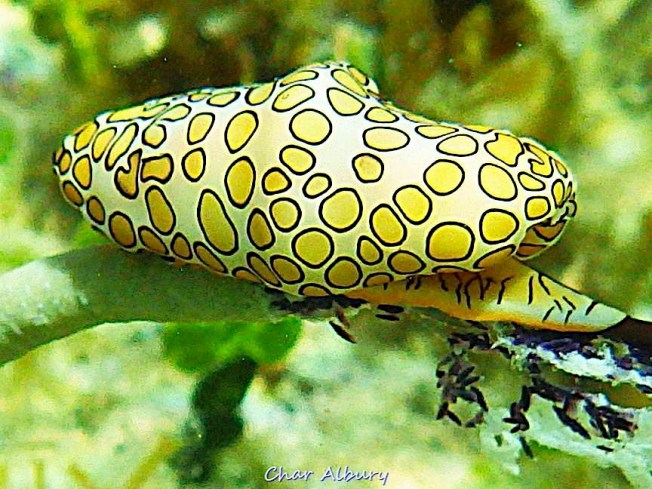
I wrote about FLAMINGO TONGUE SNAILS Cyphoma gibbous more than two years ago. They have not changed noticeably since then but this site has – in scope, available material and audience. So I am revisiting these small marine gastropod molluscs, which are related to cowries. The live animal is brightly coloured and strikingly patterned, but that colour only exists in the ‘live’ parts – the ‘mantle’. The shell itself is usually pale and characterised by  a thick ridge round the middle. These snails live in the tropical waters of the Caribbean and the wider western Atlantic. Whether alive or dead, they are gratifyingly easy to identify.

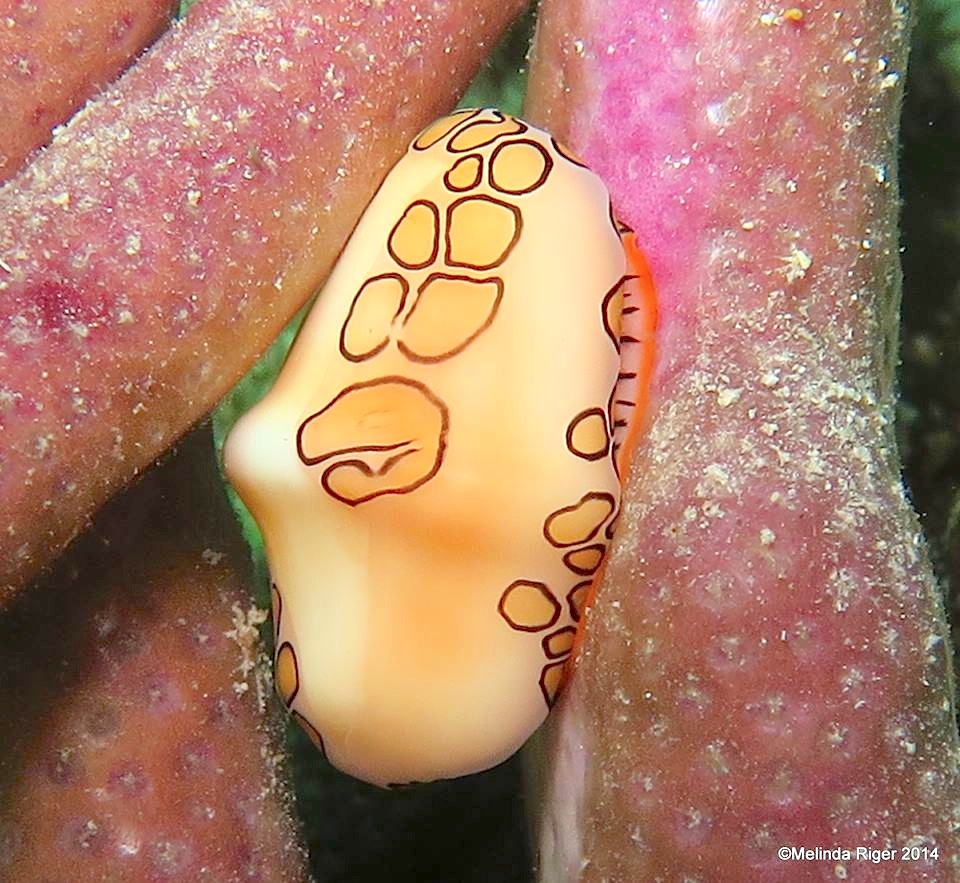
FLAMINGO TONGUE SNAIL ON A PURPLE ROPE SPONGEFlamingo Tongue on purple rope sponge ©Melinda Riger @ GB Scuba copy

FEEDING ON A CORAL STEM

This snail is snacking on a coral stem, leaving a feeding track behind it. The structural shell ridge is clearly visible beneath the distinctively marked live tissue of these creatures.

Flamingo Tongue LASZLO ILYES Cyphoma_gibbosum_(living)_2

The flamingo tongue feeds by browsing on soft corals. Adult females attach eggs to coral which they have recently fed upon. About 10 days later, the larvae hatch. They eventually settle onto other gorgonian corals such as Sea Fans. Juveniles tend to live on the underside of coral branches, while adults are far more visible and mobile. Where the snail leaves a feeding scar, the corals can regrow the polyps, and therefore the snail’s feeding preference is generally not harmful to the coral.

Flamingo_Tongue_Snail_on_Soft_Coral_LASZLO ILYES

The principal purpose of the mantle of  tissue over the shell is as the creature’s breathing apparatus.  The tissue absorbs oxygen and releases carbon dioxide. As I have seen it described (unkindly?) “it’s basically their lungs, stretched out over their rather boring-looking shell”. 

Flamingo Tongue, Abaco (Char Albury)

This snail species, once common, is becoming rarer. The natural predators include Hogfish, Pufferfish and Spiny Lobsters, though the spotted mantle provides some defence by being rather unpalatable. Gorgonian corals contain natural toxins and instead of secreting these, the snail stores them. This supplements the defence provided by its APOSEMATIC COLORATION, the vivid colour and /or pattern warning sign to predators found in many species.

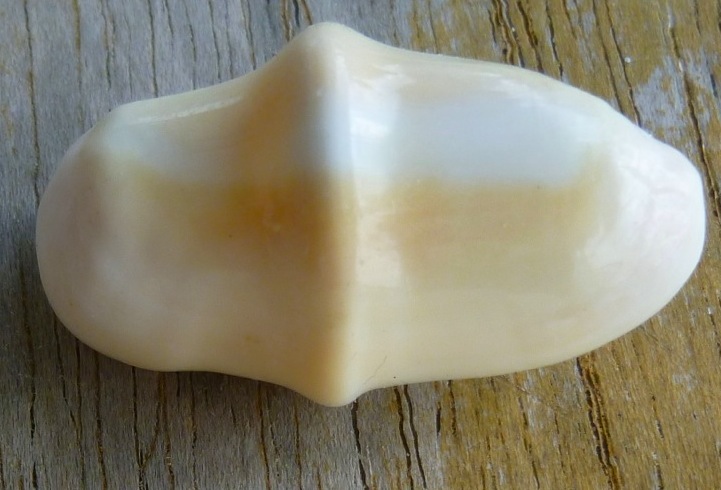
It comes as little surprise to learn that man is now considered to be the greatest menace to these little  creatures, and the reason for their significant decline in numbers. The threat comes from snorkelers and divers who mistakenly / ignorantly think that the colour of the mantle is the shell of the animal, collect up a whole bunch from the reef, and in due course are left with… “boring-looking shells” (see photos below). Don’t be a collector; be a protector…
Flamingo Tongue, Abaco (Char Albury)

These photos are of flamingo tongue shells from the Delphi Club Collection. Until I read the ‘boring-looking shell’ comment, I believed everyone thought they were rather lovely… I did, anyway. You decide!

Flamingo Tongue Snail Shell, Keith Salvesen AbacoFlamingo Tongue Snail Shell, Keith Salvesen AbacoFlamingo Tongue Snail Shell, Keith Salvesen Abaco

Finally, a couple of videos. The first is rather charmingly titled ‘FLAMINGO TONGUES DOING…. SOMETHING’. Any (printable but amusing) suggestions via the Comment box are welcome. The second punchily summarises this post in 30 seconds. Maybe that’s all that was needed!

Image Credits: Clark Anderson, Melinda Riger, Laszlo Ilyes, Charmaine Albury, RH

Doh! Reading through this after posting I can’t remove from my mind the likeness of Homer Simpson on the snail in Melinda’s photo (2). I had to  check it out and… it’s uncanny!

Homer Simpson Flamingo Tongue copy images

Unknown's avatar

“ALIEN FROM THE DEEP”: ABACO’S SCALELESS BLACK DRAGONFISH


Scaleless Black Dragonfish - Header - BMMRO Abaco

“ALIEN FROM THE DEEP”: ABACO’S SCALELESS BLACK DRAGONFISH

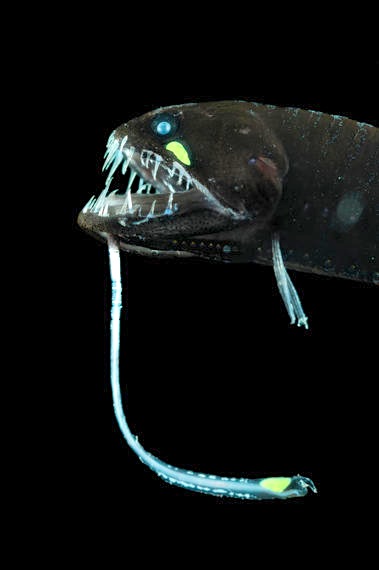
Prepared to be terrified. Beneath the placid turquoise waters of Abaco lurks a ruthless and implacable killer of hideous mien, armed with vicious teeth  … Yes, as the music from Jaws begins to throb round your temples I bring you… THE SCALELESS BLACK DRAGONFISH, aka the Deep Sea Dragonfish or Viperfish (of which it is one type). Oh, and it’s about 8 inches/ 20 cms long.

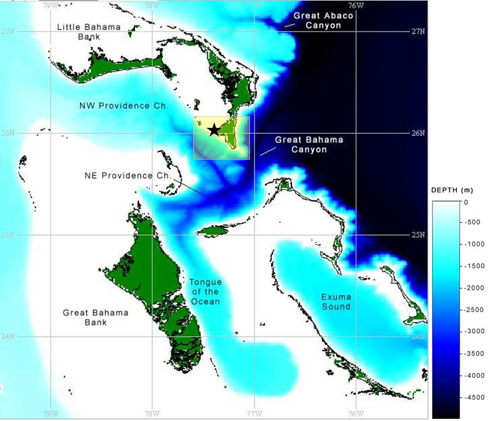
The specimen shown here was found off Rocky Point, Abaco during a whale and dolphin research trip by the BMMRO. This is an area where typical low waters give way to the far deeper waters of an arm of the Great Bahama Canyon. It is an excellent place for whale watching, since one effect of the canyon is to provide plentiful food of the sort that cetaceans thrive on. The chances of you ever meeting a dragonfish are very slim indeed, since they live at depths up to 1500 metres. 

MAP to be added after posting, to avoid FB’s deranged random ‘feature photo’ selection The black star at the south end of Abaco  (in the yellowish box) is where Rocky Point and Sandy Point are to be found.

BAHAMAS SEA DEPTH MAP (NEAQ)

Here is an account by BMMRO intern Luanettee Colebrooke who was lucky enough to be on the research vessel when this strange, vicious-looking creature was found. I have edited the material for present purposes, but I recommend reading the whole article which can be found on the BMMRO website HERE. You will get an excellent overview of a day’s research under the hot sun, and plenty about the collection of whale poop (a topic I have previously dwelt on HERE (“Familiar Feces“).

Scaleless Black Dragonfish - BMMRO Abaco
CREATURE by Luanettee’ Colebrooke, BMMRO intern, summer 2014
The crossing of this organism was by complete accident. It was something that none of us would have imagined finding floating along the surface of the water. For Dr Claridge, Jurique (another BMMRO summer intern from Cat Island) and I as Bahamians, who knew this creature even existed in our majestic waters? Who knew our waters were even that deep to hide this specimen? (I think Dr Claridge knew)
Our morning began as per the usual routine for a boat day. There are several research sites that we venture to regularly: Rocky Point for the coastal Bottlenose Dolphins, and an area about 2 miles south of Rocky Point for our very elusive and wary Blainville’s beaked whales, and the deep blue (a massive drop into waters that are 1500 metres deep) to listen for Sperm Whales.It is not that I do not believe that we have deep waters. The Tongue of the Ocean runs through the northern part of our country. My thought comes more from, ‘our waters are that deep’? To a point where light does not hit the bottom and organisms have to rely mainly on bioluminescence? It is a similar thought process I had when I saw a sperm whale for the first time. They are not small creatures of the sea. It is both an awe and scary thought that there are creatures out there we, as Bahamians, do not know exist in our waters.
Scaleless Black Dragonfish - BMMRO AbacoScaleless Black Dragonfish - BMMRO Abaco
“Our final activity of the day was tracking a sperm whale acoustically using a hydrophone…” There follows a graphic account of the technicalities of sperm whale poop collection and co-intern Jack’s “Faecal Dispersion Technique”. Then this: Jack stood up, Pringle in mouth and pointed to a black leather looking strap off of the port bow. “What is it?” Moving closer to the port, Jurique and I had our own thoughts. “It looks like a boxing glove strap,” he suggested. “More like an expensive underwater watch,” I mentioned. Dr. Claridge said, “It looks like a squid tentacle.” Jack added in, “More like the strap from a fin to me.” Our heads were turning with no closer answer. Taking it upon himself as the official sample collector, Jack popped back into the water to collect it. There were no sample pots large enough for it, so he had to use a large Ziplock bag to pick it up.
Scaleless Black Dragonfish - BMMRO AbacoLetting out a surprised chorus when he got back on the boat, we wondered what the heck it was. It had a mouth and a weird white patch that at first, I thought was its eye. The ventral abdominal section seemed swollen as if it had expanded from the decreasing pressure rising from the sea. As we looked at it and took photos, we determined several characteristics of the deceased specimen without having to autopsy it. The first was that it had three rows of needle like teeth that turned inward. There was what we assumed to be an angler under its ‘chin’ that had a murky transparent color. Another deduction we came to was the white dots that ran along the body all the way to its tail could be bioluminescent in nature like an angler. The pectoral fins were small and thin like a tooth pick. The final detail we took note of was the silver patch underneath its eyes.It was a type of angler fish we hypothesized. And it somehow ended up on the surface. There were several questions we voiced to each other: if it is a deep angler fish, how did it end up here? Where did it come from? Was it stunned by the sperm whale’s echolocation and pulled upwards as it surfaced? Later that night as we went through our faecal samples, photo IDs and data entry, the search began for what exactly this organism was. Jack did some image trickery and overlapped the photos with an alien from Alien. Scaleless Black Dragonfish c/w Alien - BMMRO AbacoI personally thought it looked more like Venom from Spiderman. As he did that, I took it upon myself to begin the search by looking up the most prominent feature: the angler on the anterior ventral side of the fish. By using this characteristic, I was able to narrow the organism down to a Scaleless Black Dragonfish by using several online scientific key identification guides and forums. The species we are still unsure about. The mystery continues…Scaleless Black Dragonfish - BMMRO Abaco
This creature is one of a number of dragonfish species found worldwide. This one might to be one of the genus Melanostomias (says he, hesitantly…). Like many deep sea creatures, its customary depths are pitch black, or nearly so; and so it is equipped with its own light source (bioluminescence), including the item dangling down from its lower jaw, called a barbel. The fish’s glow and no doubt the gleam of the barbel swaying around in the water act as a lure to attract prey that swim up to investigate and then.. snap! Those teeth start to do their work.
Scaleless black dragonfish (Melanostomias biseriatus) (imagesource.com)
I’ll end with an amazing short (2:28) video posted in early 2014 by ‘Indoona’. The accompanying description is the most authoritative account of the species and its little ways that I have  come across, complete with useful links. I include it before the video, noting only that the creature featured is a Pacific one from off the coast of California, and therefore not identical to the Abaco one.
                                                                       scaleless-black-dragonfish-mini-jpg          scaleless-black-dragonfish-mini-jpg          scaleless-black-dragonfish-mini-jpg

THE DEEP SEA DRAGONFISH OR VIPER FISH is an awesome looking creature from the middle depths of the ocean (this one comes from 600 metres or about 1000 feet deep). Also called the scaleless dragonfish, they are ferocious predators, with extremely large teeth compared to their body size. And they have one of nature’s most amazing tricks to give them the edge over their prey (more below).

There are several different species of dragonfish (one estimate is 67 species – all from the fish family known as Family Stomidae) and they are quite difficult to tell apart but this one is from the pacific depths of California and is likely Tactostoma macropus, the longfin dragonfish. Idiacanthus antrostomus is an Atlantic species that looks very similar – at least I think that’s the case correct me if I’m wrong.

They hunt with a bioluminescent barbel or lure. It is not glowing here but under the different lighting regimes I used – some of the darker images – you can see how much the lure stands out.

Sadly fish like this do not survive long on the surface, mainly because of temperature differences and mechanical damage in the net rather than pressure problems I think. It was caught in a cod-end trawl and filmed in a special tank (a kreisal aquarium). But is great to be able to share another wonder of the oceans on YouTube.

And their amazing trick? Unlike most other deep sea creatures which are sensitive to blue light – the dragonfish also produces a red light beam (see the organ to the rear of the eye) – it is also very sensitive to red light. Although red light does not travel very far underwater it allows them to see when other animals cannot and to sneak up on their prey – especially shrimps that glow in the red light. For more detail see: http://www.science-frontiers.com/sf10… and the work of Ron Douglas and Julian Partridge,http://blog.wellcomecollection.org/ta… (these images were filmed with the help of Julian and Ron). Oh and this dragon is not big – about 20 cm or just under a foot!

[youtube https://www.youtube.com/watch?v=i6cIoj7c2FI]

Credits: Luanettee Colebrooke, ‘Jack’ & BMMRO (to whom thanks as ever), imagesource.com, Indoona , and 2 sites I came across during my investigations – seasky.org & strangesounds.org

If you can’t get enough of dragonfish, check out this Tumblr site for dozens of images including photos, drawings, cartoons, and enough strange dragonfish-based characters to weird you out utterly… HERE

Unknown's avatar

SHELL HOMES: HERMIT CRABS IN THE BAHAMAS


Hermit Crab ©Melinda Riger @ Grand Bahama Scuba

SHELL HOMES: HERMIT CRABS IN THE BAHAMAS

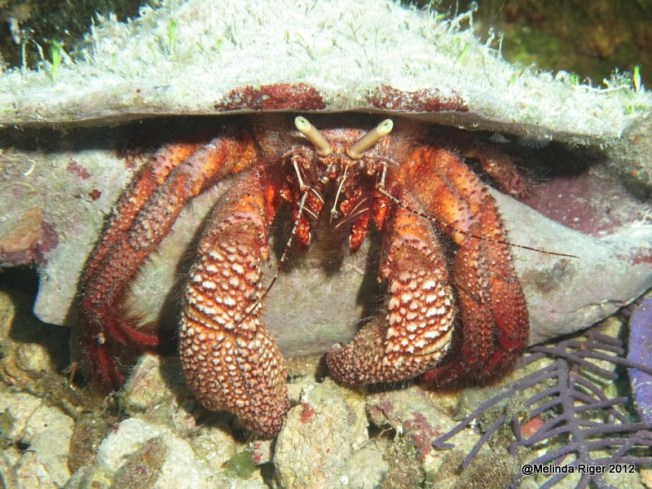
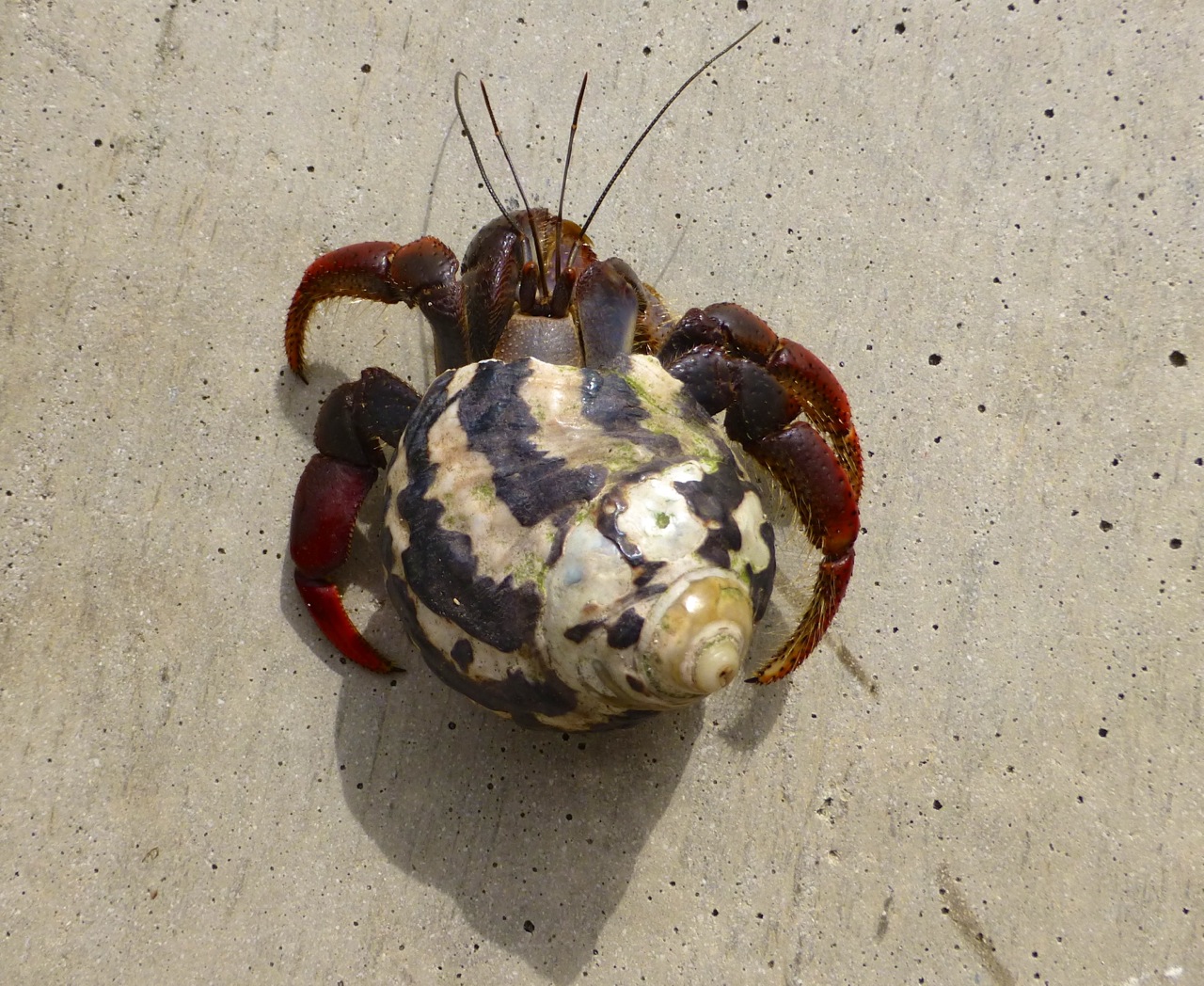
I’m feeling distinctly crabby right now. In a skilled move that would impress the Bahamas utility providers, the UK’s very own much-vaunted BT selected us for the privilege of being unplugged from the grid last week. From the time of reporting the problem, it has taken them 6 days to plug us back in. It’s a little reminder of the far more persistent Abaco experience! No landline, no wifi, no email for almost a week. To begin with, it was a light relief. After nearly a week, not funny anymore. Here are some nice crabs in conchs to celebrate getting back online while reflecting my crabby mood.Hermit Crab ©Melinda Riger @ G B Scuba Hermit Crab ©Melinda Riger @ GB Scuba copy Hermit Crab ©Melinda Riger @ GB ScubaFind out more about Hermit Crabs – in particular crab racing at Delphi and the intricate rules – here: WACKY RACES AT DELPHIHemit Crab, Delphi (Clare Latimer)

Hermit Crab in a conch ©Melinda Riger @ GB Scuba

Photo credits: all undersea shots – Melinda; potential crab race contestant – Clare

Unknown's avatar

RANDY: LOOKING FOR MANATEE LOVE IN ABACO?


Randy the Manatee, Abaco (BMMRO)

RANDY: LOOKING FOR MANATEE LOVE IN ABACO?

Strangely, the opportunistic title of this post may not be as contrived or daft as it looks. The facts are these.

THE FEMALE In 2012 GEORGIE, a young female manatee, left her mum in the Berry Islands and braved the crossing to Abaco. She reached the Marls; went right round top and down the east side; and eventually settled in the Cherokee / Casuarina area. She managed to hole up there safely during hurricane Sandy but became sick and was removed to Atlantis for medical treatment and rehab, before being released back to the Berry Is. This spring she set of again for Abaco and seems to have made straight for Cherokee, where she has now been resident for several months. 

Georgie the Manatee as a calf in 2012, checking out the BMMRO boatGeorgie the Manatee Calf checks out the BMMRO Boat

THE MALE Randy also originates from the Berry Is, where he was born. He too set off on an expedition to Abaco in the spring, presumably following Georgie. He was seen at Gorda Cay in mid-August and then fetched up at Sandy Point. After spending the summer there, he too took a trip right round the top of Abaco and down the east side. By early September he had got as far as Little Harbour. However, the big question is whether he can, in some way, tell that a lady manatee is a shortish swim away. And if so, will he make the short trip down the coast? And might that lead to baby manatees on Abaco…? Here are some of the photos of Randy’s sightings along the way

RANDY AT SANDY POINT 

Sirenians and cetaceans are generally recognised from particular patterns to flukes or fins. The second image shows the notch in Randy’s tail that confirms IDRandy the West Indian Manatee, Sandy Point, Abaco, BahamasRandy the West Indian Manatee (tail), Sandy Point, Abaco, Bahamas

RANDY IN THE LITTLE HARBOUR AREA

Randy’s notched tail is clearly visible in the first pictureRandy the Manatee, Little Harbour, Abaco (BMMRO)Randy the Manatee, Little Harbour, Abaco (BMMRO)

This could be everyone’s favourite picture – almost like a ‘Randy Selfie’ with a GoPro…Randy the Manatee, Little Harbour, Abaco (BMMRO)

RANDY’S JOURNEY & THE DISTANCE BETWEEN HIM AND LOVE…

Excuse me while I anthropomorphise excessively here. Randy may only be appearing to follow Georgie; the route and the area may happen to suit manatees who may be a short distance apart yet completely ignorant of the presence of the other. Or else… Anyway, more news as (if) it breaks. Here are a couple of maps, of the sort that the red-top press might put together to go with the headline “Lovelorn Randy – A Man Manatee Seeks His Sirenian Siren”. Pictures, page 8, 9, 10 and in sports section.

Randy's the Manatee's trip Berry Is. to Abaco copy Page_1 copy 3

STOP PRESS SEPT 21

Oh dear. The course of love is rarely straightforward. Randy has retraced his route and returned to Castaway Cay. Meanwhile Georgie remains happily at Cherokee.

RELATED POSTS

GEORGIE at Cherokee, 2012

GEORGIE” the manatee movie (on location, Cherokee)

GEORGIE taken to Atlantis for medical treatment

GEORGIE Is she related to an elephant?

Credits: BMMRO + Heather Albury, Andrew Lowe & Richard Appaldo for pictures & reports, Loggerhead Productions, Abaco Scientist 

mantsw~1

Unknown's avatar

‘SPOTTED IN ABACO WATERS’: PANTROPICAL SPOTTED DOLPHINS


 Spotted Dolphins Abaco Bahamas (BMMRO)

‘SPOTTED IN ABACO WATERS’: PANTROPICAL SPOTTED DOLPHINS

The BMMRO has posted several reports of dolphin and whale activity around the coast of Abaco during August, with some outstanding photos to accompany them. I had been going to post rather generally about this until a couple of days ago, when an unusual dolphin species for the region was… er… spotted and some memorable images taken.

Spotted Dolphins Abaco Bahamas (BMMRO)

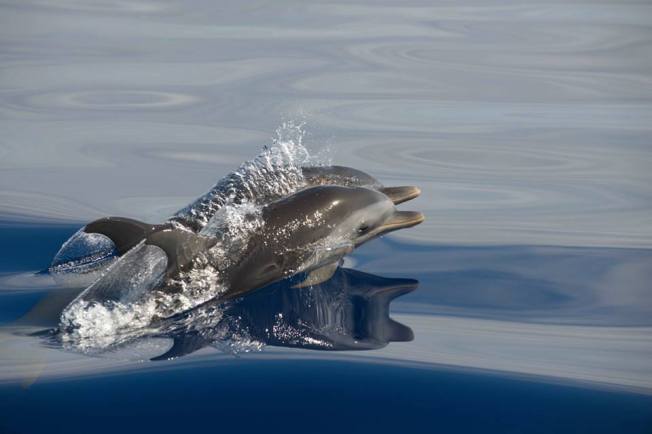
These are PANTROPICAL SPOTTED DOLPHINS Stenella attenuata, whose range encircles the globe but at a lower latitude than the far more frequently encountered resident  ATLANTIC SPOTTED DOLPHINS Stenella frontalis. Here are comparative range maps. The rarity of the Pantropical species in the Bahamas is indicated in the BMMRO report of a stranding in 2011 – see below.

ATLANTIC SPOTTED DOLPHIN                                                                    PANTROPICAL SPOTTED DOLPHIN

Verbreitungsgebiet des Zügeldelfins Stenella frontalis.PNG                                                Cetacea range map Pantropical Spotted Dolphin.PNG

Spotted Dolphin Abaco, Bahamas (BMMRO) copy 2

Spotted Dolphins Abaco  Bahamas (BMMRO)Spotted Dolphins  Abaco Bahamas (BMMRO) copy

The pantropical image below is from the BBC archive and not taken in the Bahamas. I’ve included it for illustrative purposes due to the close-up underwater view of the dolphin.Pantropical spotted dolphin (BBC)

This wonderful underwater video of pantropicals is by Jake Levenson, shot from a polecam. Although it is 6 minutes long, I highly recommend it for (a) the stunning views of these creatures at very close quarters (b) the excellent audio quality – you can clearly hear the dolphins communicating with ‘sonar’ clicks and squeaks, and (c) the strange sense of peace you may feel when you have watched it. 

[youtube http://youtu.be/-hXTYe58g34]

PANTROPICAL SPOTTED DOLPHIN STRANDING 2011

In May 2011 a dead dolphin was found on the sandbank at Casaurina Point, Abaco. BMMRO’s scientists established that it was a sub-adult male pantropical spotted dolphin with a stomach full of squid beaks, a known prey for the species. A full necropsy was conducted on the animal and samples were taken for scientific testing to determine the cause of death. At the time the BMMRO reported the find in their quarterly Newsletter:

Pantropical spotted dolphins are commonly found in off-shore waters, although they can be found close to Abaco’s coastline due to the close proximity of deep waters. They can occur in large group sizes of up to 100 animals. Adult males and females reach up to 2.6 m (8.5 ft) and 2.4m (7.9 ft) in length, respectively. Since our efforts began in 1991, BMMRO has records of only 28 sightings of pantropical spotted dolphins in The Bahamas (my rubric), although their cousin species, Atlantic spotted dolphin, is a common resident. This is the first recorded stranding of this species in The Bahamas.”

Credits: BMMRO / Diane Claridge; BBC; Jake Leveneson (video); Wiki (range maps)

Unknown's avatar

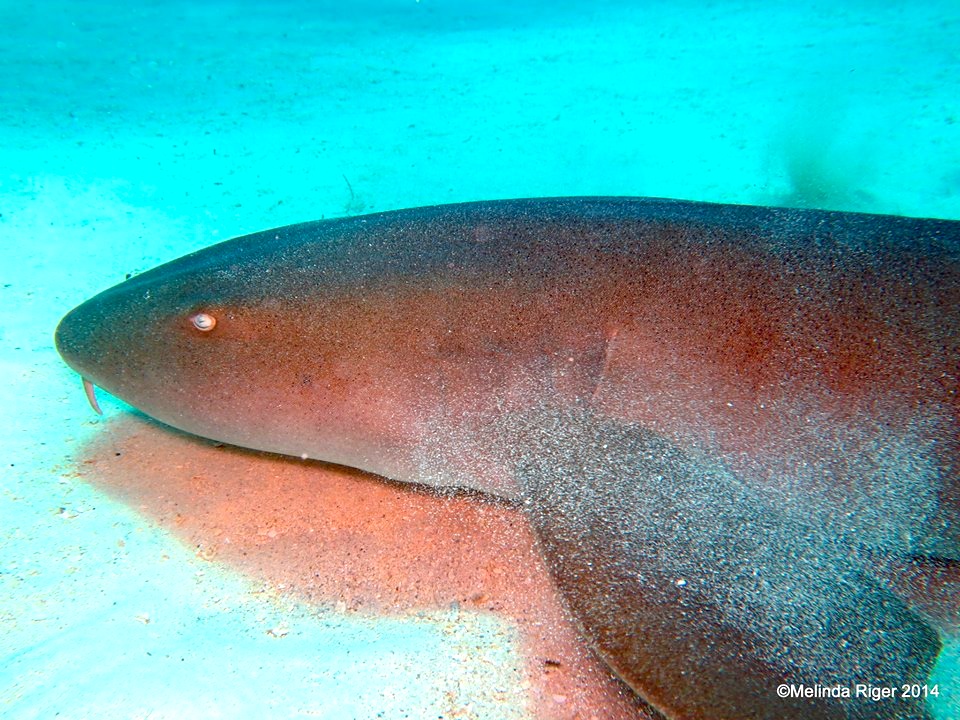
‘TREAT WITH PATIENCE…’ – NURSE SHARKS IN THE BAHAMAS


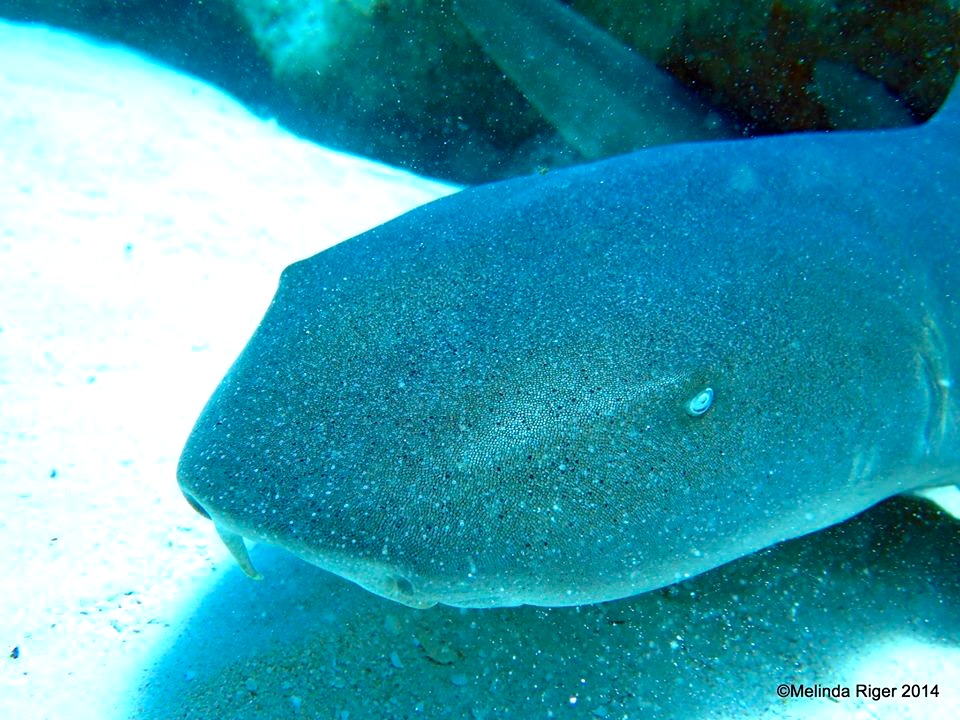
Nurse Shark ©Melinda Riger @ GB Scuba

‘TREAT WITH PATIENCE…’ – NURSE SHARKS IN THE BAHAMAS

The scientific name for the nurse shark sounds like something Bilbo Baggins might have said to summon elves to his rescue: Ginglymostoma cirratum. Actually the name is a mix of Greek and Latin and means “curled, hinged mouth” to describe this shark’s somewhat puckered appearance. The origin of the name “nurse shark” is unclear. It may come from the sucking sound they make when hunting for prey in the sand, which vaguely resembles that of a nursing baby. Or it may derive from an archaic word, nusse, meaning cat shark. The most likely theory though is that the name comes from the Old English word for sea-floor shark: hurse.

Shark ©Melinda Riger @ GB Scuba

Nurse sharks are slow-moving bottom-dwellers and are, for the most part, harmless to humans. However, they can be huge—up to 14 feet (4.3 meters)—and have very strong jaws filled with thousands of tiny, serrated teeth, and will bite defensively if stepped on or bothered by divers who assume they’re docile. [There are recorded instances of injuries caused to divers who have tried to pull nurse sharks by the tail. And serve them right, I say. Treat them with patience – and respect!] 

Nurse_shark_with_remoras Duncan Wright (Sabine's Sunbird)

Notice that the nurse shark in the above photo, and in the header image, is being attended by REMORAS. Click the link to find out more about the strange relationship these ‘weird suckers’ have with larger marine creatures.

Nurse Shark ©Melinda Riger @ G B Scuba

They use their strong jaws to crush and eat shellfish and even coral, but prefer to dine on fish, shrimp, and squid. [And also stingrays, apparently. They have been observed resting on the bottom with their bodies supported on their fins, possibly providing a false shelter for crustaceans which they then ambush and eat.] They are gray-brown and have distinctive tail fins that can be up to one-fourth their total length. Unlike most other sharks, nurses are smooth to the touch. 

Nurse Shark ©Melinda Riger @ Grand Bahama Scuba

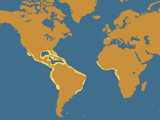
Nurse sharks are found in the warm, shallow waters of the western Atlantic and eastern Pacific oceans. They are abundant throughout their range and have no special conservation status, although the closeness of their habit to human activities is putting pressure on the species.

map-nurse-shark-160-20135-cb1321035858

Nurse sharks are nocturnal and will often rest on the sea floor during the day in groups of up to 40 sharks, sometimes piled on top of each other.

Shark, Nurse (young) ©Melinda Riger @ GB Scuba

FAST FACTS

  • Type: Fish 
  • Diet:  Carnivore
  • Size: 7.5 to 9.75 ft (2.2 to 3 m)
  • Weight: 200 to 330 lbs (90 to 150 kg)
  • Size relative to a 6-ft (2-m) man:
Illustration: Shark compared with adult manNurse Shark ©Melinda Riger @ G B Scuba copy

Credits: All photos Melinda Riger, Grand Bahama Scuba; range map and text mostly  NATIONAL GEOGRAPHIC  filled out with other pickings

Unknown's avatar

‘ELEGANTLY WEIRD’ – SPOTTED DRUMFISH JUVENILES: BAHAMAS REEF FISH (20)


‘ELEGANTLY WEIRD’ – SPOTTED DRUMFISH JUVENILES: BAHAMAS REEF FISH 20

I’ve posted before about the rather extraordinary SPOTTED DRUMFISH, one of those reef fish which in juvenile form is very different from the adult. This species was first up in the Bahamas Reef Fish series – click above link. Here are a few recent images, courtesy of Melinda Riger. The first three show the juvenile form (note the piscine photobomb in the first one). The last shows a group of adults hanging out on the reef with (I think) some soldierfish. You can see how the juvenile drumfish becomes the adult, but those little stripy bullet-heads with their two long elegantly trailing appendages differ considerably from the rather solid-looking spotty / stripy adults with their dramatic punko-rockabilly quiffs.

Drumfish (juv) 3 ©Melinda Riger @ Grand Bahama Scuba Drumfish (juv) 4 ©Melinda Riger @ Grand Bahama ScubaDrumfish (juv) 2 ©Melinda Riger @ Grand Bahama Scuba Drumfish ©Melinda Riger @ Grand Bahama Scuba

Unknown's avatar

CETACEAN SENSATION: SPERM WHALES & DOLPHINS ON ABACO


10492458_817200128299215_4153510656415477809_n - Version 2

CETACEAN SENSATION: SPERM WHALES & DOLPHINS ON ABACO

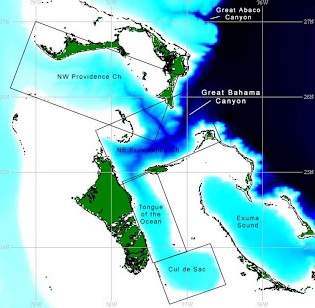
July has been ‘Whale Camp’ month for the BMMRO, when a small group of lucky youngsters get to spend time out at sea searching for whales and dolphins, and learning the intricacies of data recording and research. One target was the sperm whale, a species that may be found off the coasts of South Abaco. This is a favoured place because the deep trench of the Great Bahama Canyon throws up the food these whales need (see map below).
After some time spent searching, the BMMRO reported  “the sperm whales are back! We found a single animal yesterday, and finally in the evening found the rest of the group, 10+ animals including 3 mother-calf pairs, and dolphins at Rocky Point!” Here are some of the photos from the trip.

Sperm Whale Tailing, Abaco, Bahamas (BMMRO) Sperm Whale, Abaco, Bahamas (BMMRO) Sperm Whale, Abaco, Bahamas (BMMRO)

This map of the northern Bahamas shows the V-shaped tails of the Great Bahama Canyon, and explains why the east coast and (in particular) the shallower south-west coast between Hole-in-the-Wall and Rocky Point is so attractive to feeding whale species.

Great Bahama Canyon

The dolphins were quite prolific in July, in particular bottlenose and spotted dolphins. These photos were mostly taken while the search for sperm whales was going on: the BMMRO posted “lots of dolphins up at Gorda Cay yesterday… still not hearing any sperm whales in the area, has been a couple of weeks without sign of them so they should be showing up again soon…” As they obligingly did!

Bottlenose Dolphin, Abaco, Bahamas (BMMRO)Bottlenose Dolphins, Abaco, Bahamas (BMMRO) Bottlenose Dolphin, Abaco, Bahamas (BMMRO)Spotted Dolphins, Abaco, Bahamas (BMMRO)

10592949_747256928672527_8290058412214442799_n

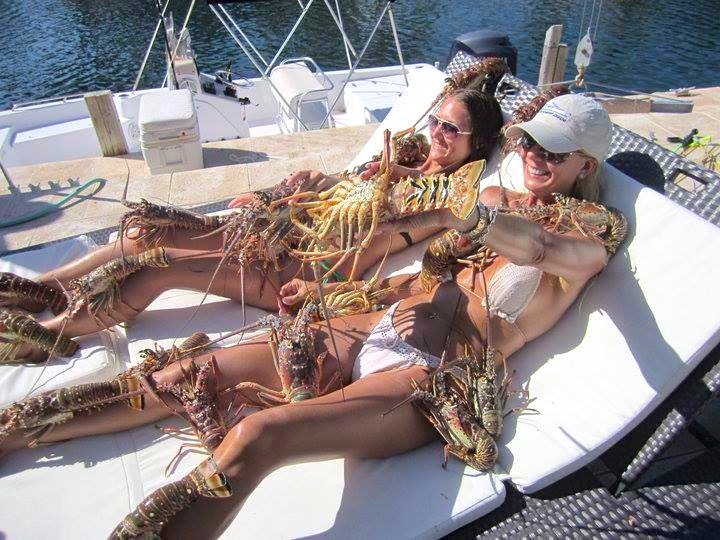
Today is the first day of the crawfish season and Facebook Abaco has been crawling with crawfish for a couple of days in feverish anticipation. So I decided to stick with whales and dolphins instead because there are enough crawfish images out there to keep anyone happy. However I did particularly like this offering today from Albury’s Ferry Services, always a byword for tastefulness and decorum. I’ve borrowed their picture (they borrow mine sometimes) – I wondered if it need a little more exposure, then decided there was probably quite enough already….

1560751_559512834154838_7953388384919364087_n

Photo credits: all cetaceans, BMMRO; Crawfish Ladies, Albury’s Ferries; ‘Keep Calm’, Mariah Sawyer

Unknown's avatar

THE OCTOPUS: MARINE BAGPIPES FILLED WITH INK


 THE OCTOPUS: MARINE BAGPIPES FILLED WITH INK

Few people know that, by international law, it is unlawful to fail to be fascinated by Octopuses… Octopi… Octopodes… Octopotomi… Whatever. For a learned dissertation on the correct plural form for these creatures – bear with me, there are strict rules that apply here – you’ll find out the right way at THE PLURAL OF OCTOPUS I won’t go into it all now, because it’s time to showcase some more wonderful underwater photography by Melinda Riger of Grand Bahama Scuba. Strictly, these are not Abacos Octos, but they share the same reef system and are therefore close cousins. Of such tenuous links are blog posts formed.

My favourite octopus photoOctopus ©Melinda Riger @ Grand Bahama Scuba

Settling down to a take-awayOctopus + dinner ©Melinda Riger @ GB Scuba

The all-seeing eye…Octopus ©Melinda Riger @ G B Scuba

On the move… so long suckers!Octopus  ©Melinda Riger @ Grand Bahama Scuba

Octopus InkOctopus Ink ©Melinda Riger @ G B ScubaAll photos: Melinda Riger

The Rare Scottish Tartan Octopus

Bagpipe

SAD POST SCRIPT:  As a Scot out of Norway (did you ever?) my father learnt to play the bagpipes. Indeed had a set. They lived in a cellar I wasn’t allowed into. The bag was allegedly preserved in treacle (don’t ask). I still have the ‘Chanter’ (a single pipe practice instrument), the sound of which is akin to trying to strangle one cat with another cat. I was fobbed off with that. Then one day as a treat the cellar was unlocked and a large wooden box was dragged out. The bagpipes! The lid was opened and… OMG! the bag had rotted away completely, the pipes looked pathetic and very disappointing, and the whole thing stank of nameless dead creatures… I can’t hear the sound of the pipes to this day without finding it (a) stirring yet (b) enough after a short time and (c ) a reminder of a broken dream… The end.