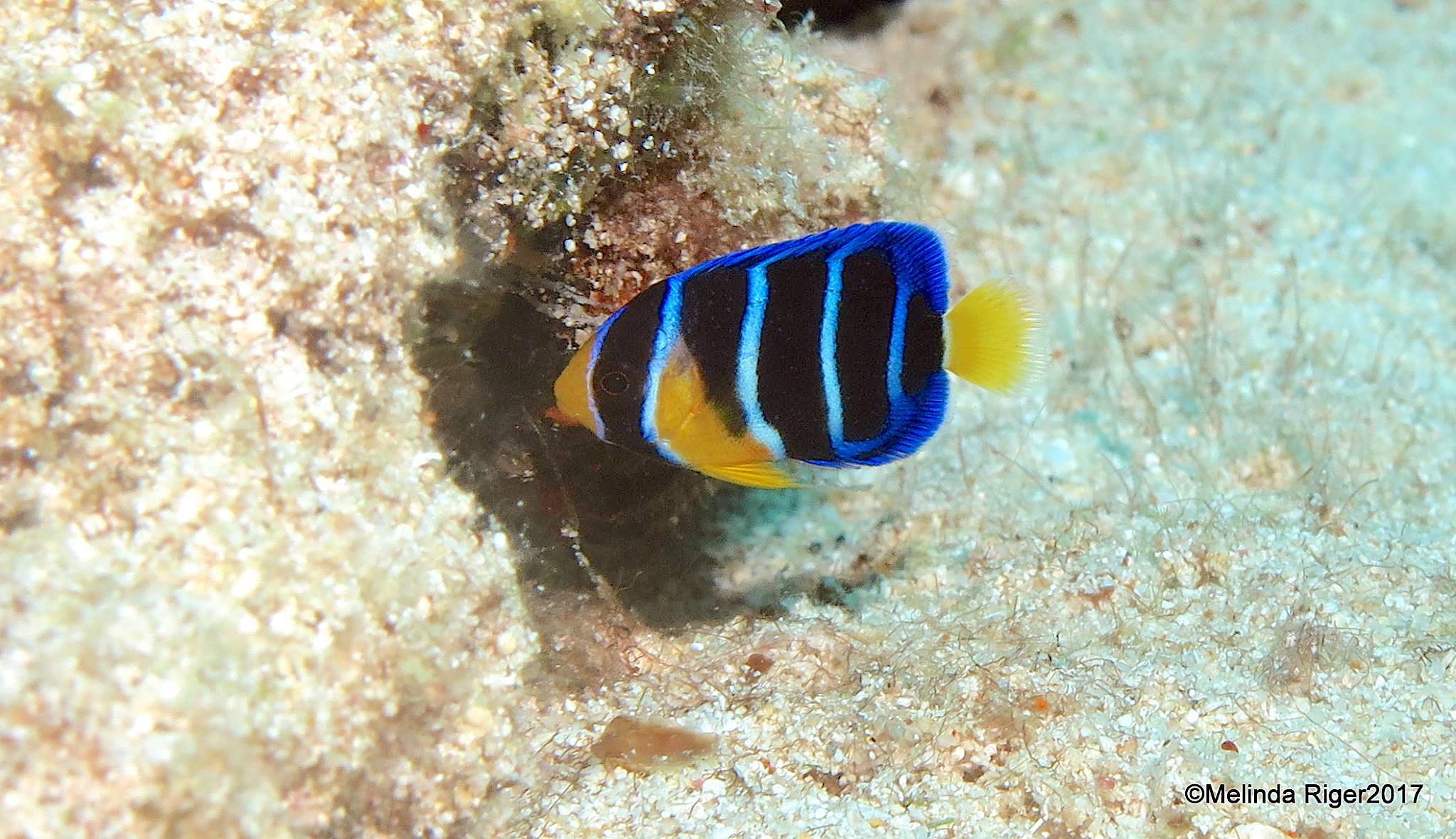
The Queen Angelfish Holacanthus ciliarisis is without doubt one of the most beautiful of all reef fishes in the Bahamas – and the competition is very strong. I have posted about them before, but to my surprise not for nearly 5 years. Too long: here are some much more recent photographs of adults and cute juveniles.
The bright colours, the pouty expressions, the appealing poses – these fish are true Beauty Queens. And helpfully, they are unlikely to be mistaken for any other fish species.
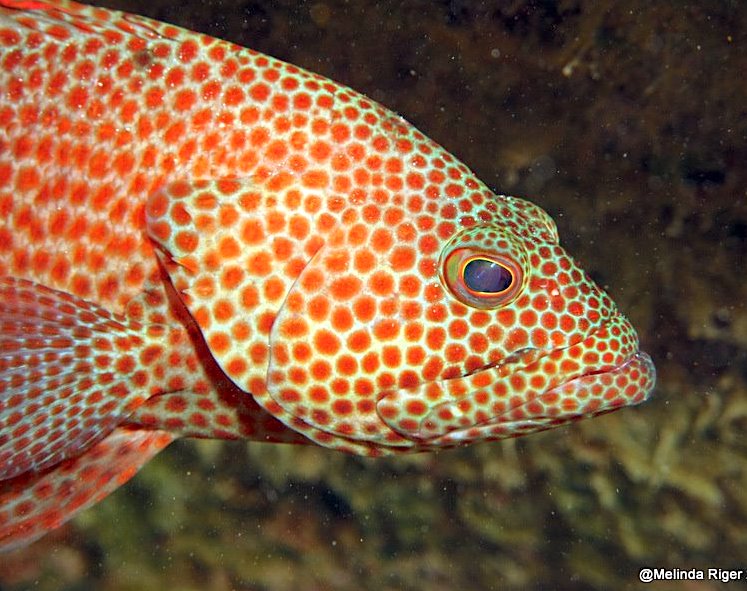
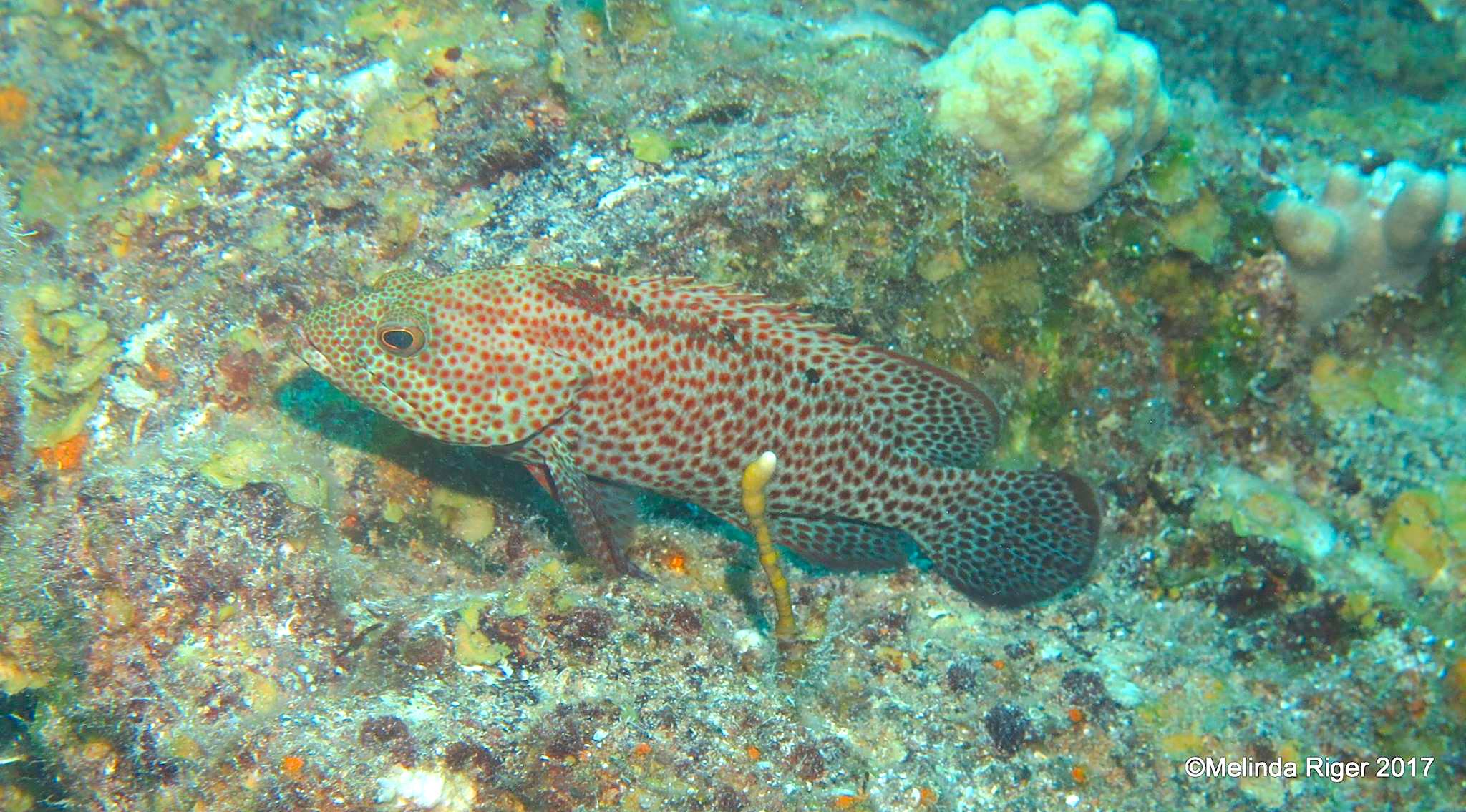
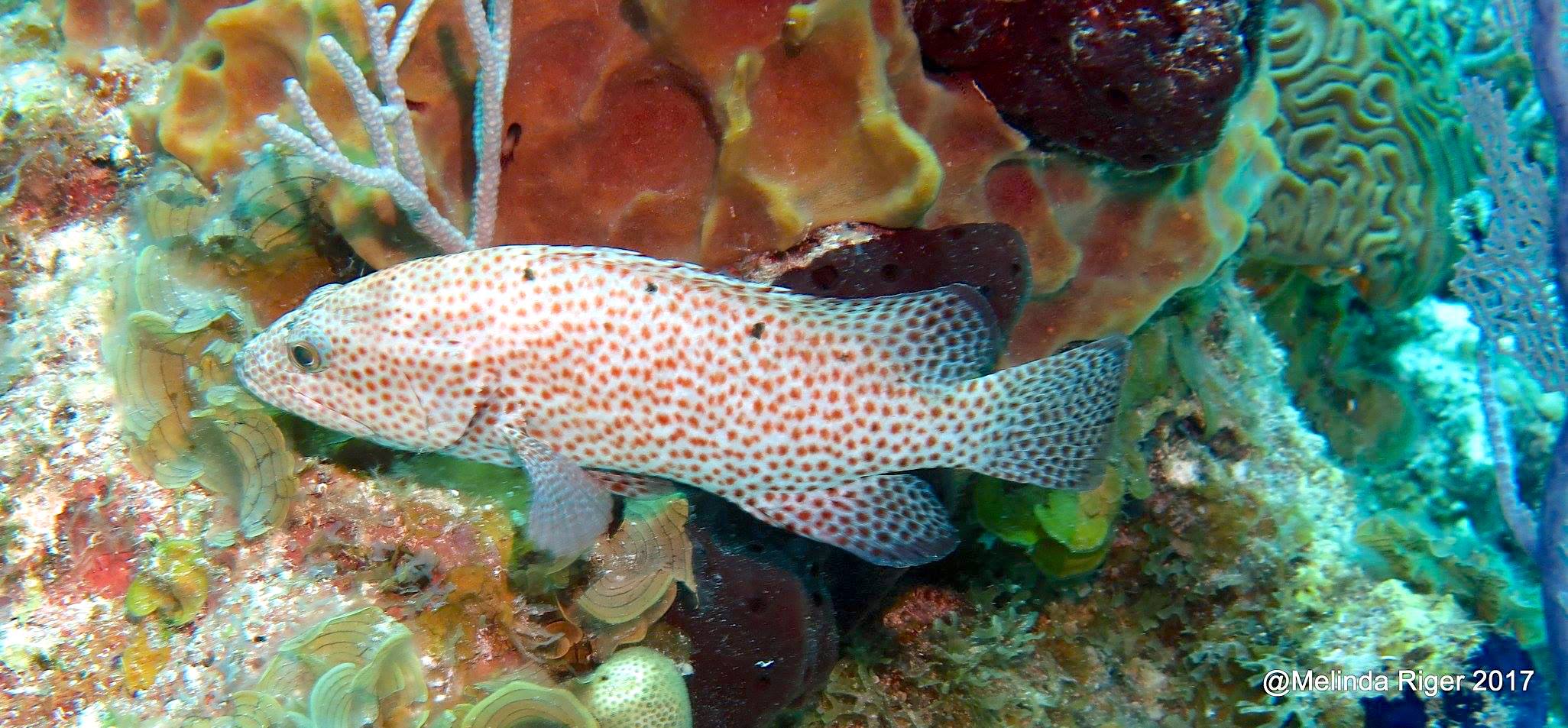
The Graysby Cephalopholis cruentata is a small, spotty grouper, which grows to a maximum of around 16 inches. These rather unassuming and solitary fish have a preference for coral reefs, where they can blend in with their surroundings on ledges and in caves and crevices during the day. At night, they become active – that’s when they feed on feed on small fish, crabs and shrimps.
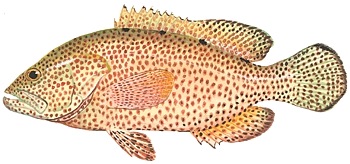
The graysby has variable colouring in a range from light brown to pale gray, with all-over spots that may be red, orange or brownish. Often, they have 3 to 5 contrasting spots on their backs, along the base of the dorsal fin, as below:
The long erectile dorsal fin comprises both spines and ‘rays’ – spines at the front, rays at the back. Like this:
The spots of a graysby can change in colour (at least to a limited extent), becoming either paler or darker. I imagine this is a protective feature to enable the fish to blend in more easily with its reef surroundings.
Signalling to turn right…
I wondered if they are edible. I believe so – but then I also read that the larger adults carry the risk of ciguatera and raised mercury levels. So I’ll give it a miss thanks.
Photo & other credits: all photographs by Melinda Riger / Grand Bahama Scuba; aqua.org; SAMFC (drawing)
Yellowtails are just one of several damselfish species in Bahamas waters. These small fish are conspicuous not just for the bright tails that give them their name. More striking if anything – especially if seen underwater in sunlight against the coral – are the electric blue spots visible in both adults and juveniles.
The body of adults is dark blue to brownish to almost black
The body of juveniles is blue
Yellowtails are a common and widespread variety of damselfish. They have a limited ability to change colour according to their surroundings, but with their bright tails and luminous blue flecks, it’s hard to see how they can look, to a predator, anything other than a tasty snack.
I have enjoyed seeing these little fish at Fowl Cay Marine Preserve, Abaco. The reef there makes for easy and rewarding snorkelling, with a wide variety of small and medium-size reef fishes to be seen. It’s an expedition I would definitely recommend to anyone wanting to see a healthy and active reef in a completely natural protected area.
I found that a video I took with a tiny camera was sadly of use only to myself. No one else would be able to make anything out due to the marked camera shake. Novices, huh? You are spared that: here’s a brief example of yellowtails swimming instead, showing the difference between juveniles and adults.
Credits: all photos, Melinda Riger / Grand Bahama Scuba; video from Desert Diving
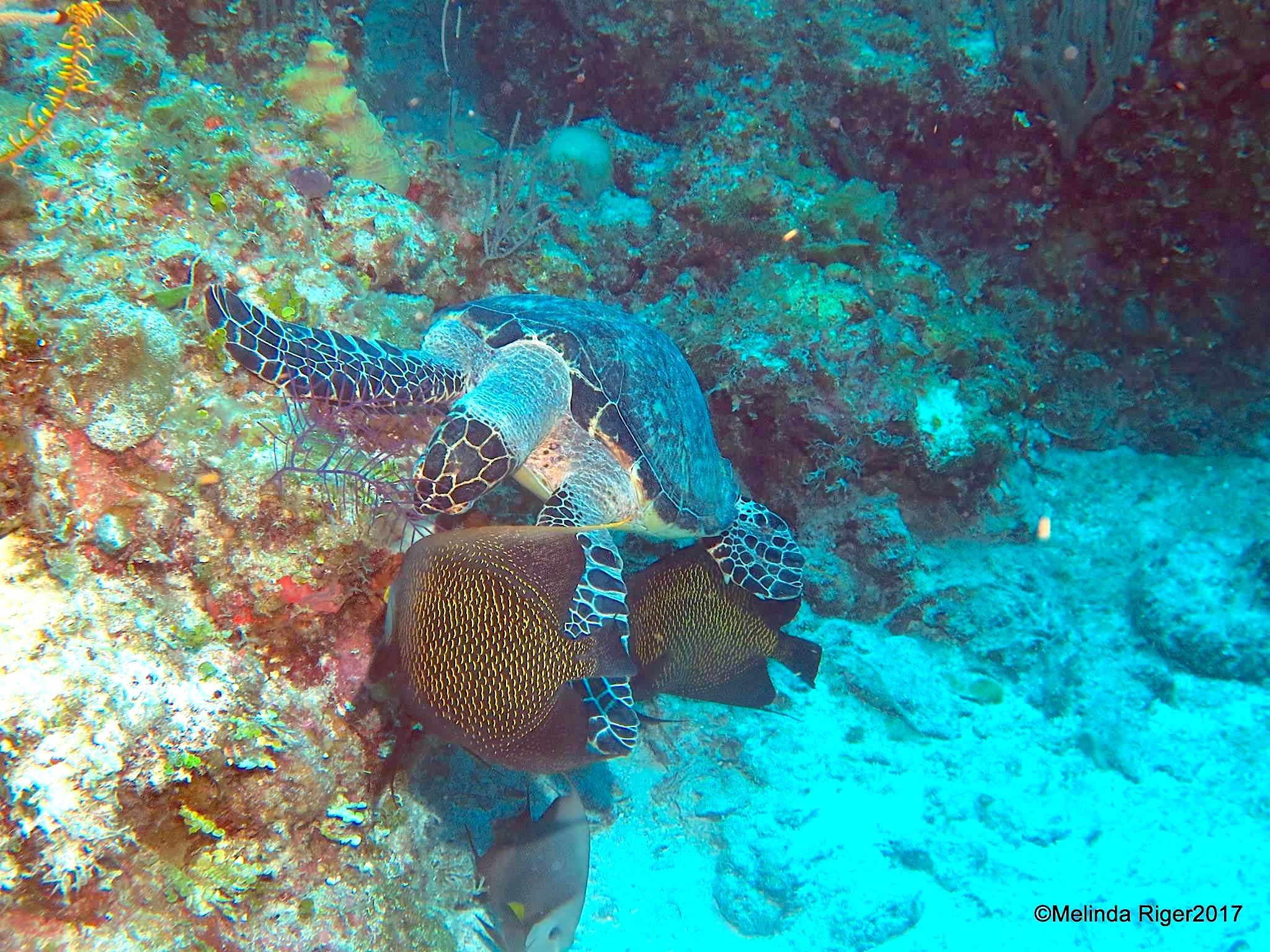
Hawksbills on their own, nosing around the colourful coral reefs of the Bahamas, are a beautiful sight. I don’t want to overdo the religious tendency of the title, but they are indeed wonderful to behold. Add FRENCH ANGELFISH and a QUEEN ANGELFISH and it’s as close to perfection as a reef scene gets. Click on the links above for more pictures and details about the two angelfish species seen here with the turtle. As ever, Melinda Riger was ready with her camera to capture these great images.
This astonishing photo was of course achieved by carefully balancing a GoPro on the turtle’s back, wrapping duct tape around it, and pressing ‘go’ (camera and turtle simultaneously). **
**This is not true. It’s just a cleverly shot turtle’s-eye view as it forages on the reef
This short video shot by Melinda’s husband Fred of a turtle ‘loving’ the camera is one of those wildlife events that cannot be predicted… but when it happens, it’s frankly a bit of a scoop.
OPTIONAL MUSICAL DIGRESSION
As I was writing this, an earworm started up and grew insidiously in both ears and then inside my head… the dread words “Elenore, gee I think you’re swell”. Followed by “so happy together…”. And then “she’d rather be with me…” Yes, I’ve now gotTURTLESin my head, the (?long-and-hitherto-forgotten) band from the second half of the 60’s, with their cheery anodyne soppy-poppy love songs. And dammit, they’ve stuck… Here’s a reminder for those whose memory I have jogged. For anyone under, say, 75, step away from this area. Nothing to hear here.
Credits: Grand Bahama Scuba: all photos – Melinda Riger & video – Fred Riger; Turtle music – someone else’s music collection, not mine, honestly… (oh dear another lie I am afraid – cred gone)
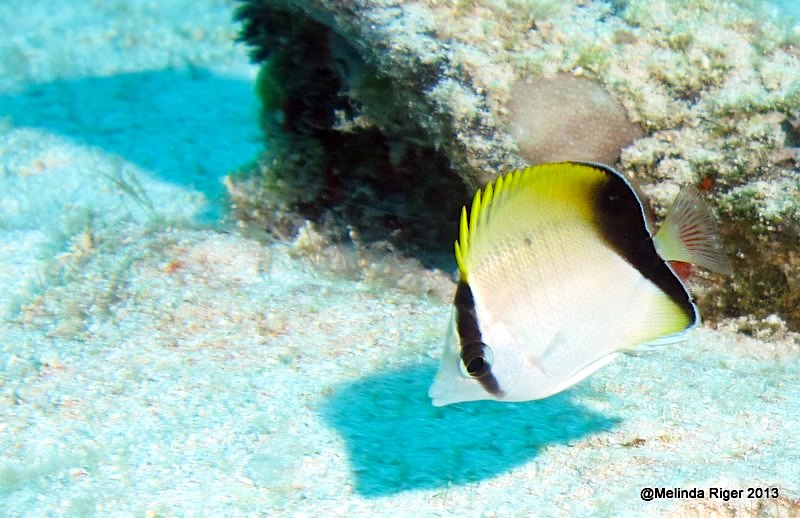
Butterflyfishes come in several varieties in Bahamian waters; and there are more than 120 species worldwide. Not so long ago I wrote about the LONGSNOUT variety, also known as the “Butterbun”. Now it’s time to take a look at the Reef Butterfyfish.
In some ways butterflyfishes resemble small angelfishes – adult Reefs are just a few inches long. As the name suggests, these are creatures of the reefs, and of shallow waters. As one might expect, these colourful fish are popular for aquariums (or, strictly I suppose, aquaria).
Butterflyfishes have interesting spawning patterns. They release large numbers of buoyant eggs into the water. These become mixed in with plankton and suchlike, and float where the tides take them until they hatch. Then, most unusually, they go through a larval stage when they are covered by bony material, which they lose as they mature. This is known as an ‘armoured’ stage, which I can only assume is to provide protection to the tiny fry – perhaps by making them crunchy and unappetising. I’ve been trying to find a usable illustrative drawing, without success so far.
OPTIONAL MUSICAL DIGRESSION
In some parts of the world the butterflyfish is called a BORBOLETTA, which is Portugese for ‘butterfly’. It is also the title of Santana’s criminally underrated sixth album (1974). For sure it’s no 1st, Abraxas, 3rd or Caravanserai… but if you can tolerate the man’s move to ‘jazz-funk-fusion’ – maybe John McLaughlinhad a hand in that – there is much to enjoy. There’s less searing guitar and there’s some strange ‘soundscape’ stuff that’s maybe not to everyone’s taste. But still – it stand up pretty well in comparison with some of the later Carlos creations where a certain tiresomeness began to creep in and some tracks are (IMVHO) not really listenable-to. Anyway, the recently released (2016) Santana IV is a welcome return to the good old days, and the good old team.
Here’s ‘Promise of a Fisherman’ – 8 minutes of Santana, from which you can judge the direction he’s taken by Album 6…
All photos by Melinda Riger of Grand Bahama Scuba – mainstay, with Adam Rees, of the underwater photos I use, what with me being a feeble swimmer and all. Tip o’ the Hat to Carlos, who I have even managed to see Live a couple of times.
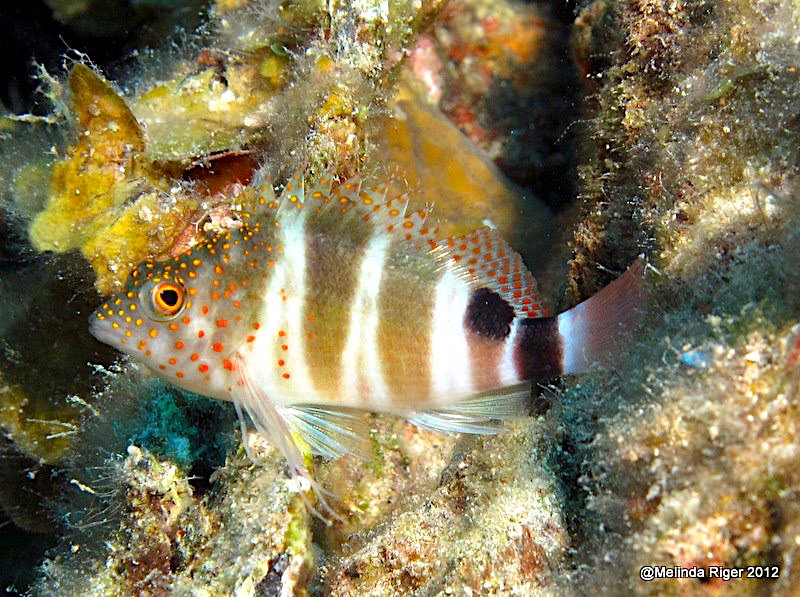
The redspotted hawkfish (Amblycirrhitus pinos) is one of a number of species of hawkfishes found worldwide. This one is found on the sub-tropical and tropical reefs of the Western Atlantic, and is therefore a fish you might see when out snorkelling or (more likely) scuba-ing in the Bahamas. These are small creatures – adults are unlikely to exceed 4 inches in length.
There’s not a whole lot else to report about them. They have no medicinal superpowers, for example, nor wickedly toxic spines. A quick scroll through the highways and byways of the interweb reveals that redspotted hawkfish are considered (rightly, I think) to be attractive, tend to be shy, enjoy perching on coral ledges, and are generally benign, except to smaller fishes to which they may show aggression or – worse – an appetite.
As you might predict, these pretty little fish are popular in the aquarium trade, where on any view they should be kept safe from predators. But maybe captivity is a little limited in opportunities for travel and exploration. They can be bought for (I just checked) $29.99. Or else left alone on a reef to take their chances.
Photo Credits: Melinda Riger / Grand Bahama Scuba, with thanks as per…
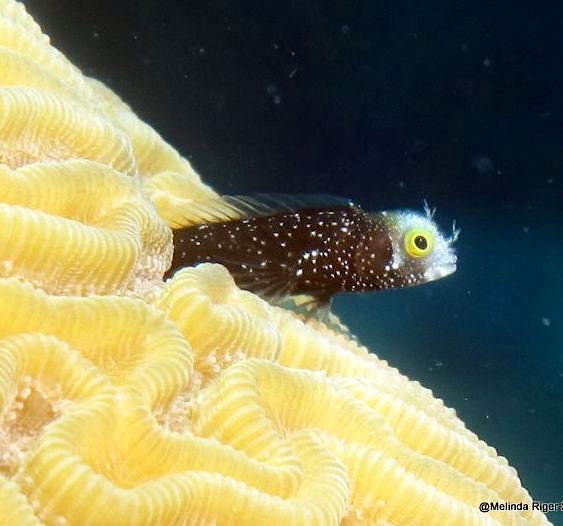
The WTF? series has looked at a number of bizarre reef denizens, and this little fish is certainly that. For a start, its ‘correct’ name is Acanthemblemaria aspera, an excellent challenge for saying 10 times very quickly **. And the name blenny comes from the Greek word for ‘slime’, quite enough to make the poor creature a laughing-stock in the reef community.
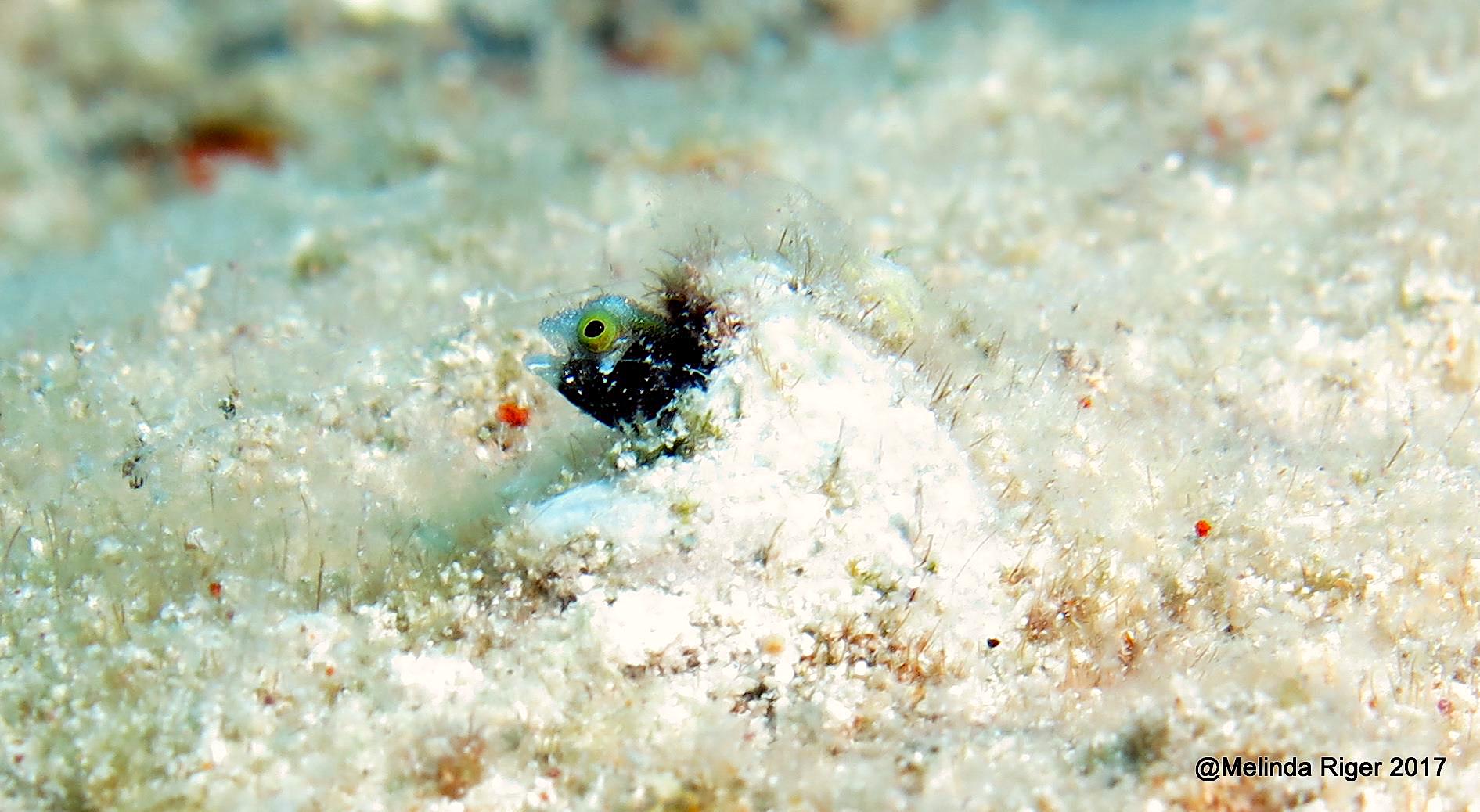
There are in fact several hundred blenny species and subspecies around the world. The roughhead is one of the most commonly found in western Atlantic subtropical and tropical waters. These are burrowing creatures, and they find holes in the nooks and crannies of coral reefs – and indeed in the coral itself. Brain coral seems to be a preferred location. Mollusc shells are another. Or they may just bury themselves in the sea floor.
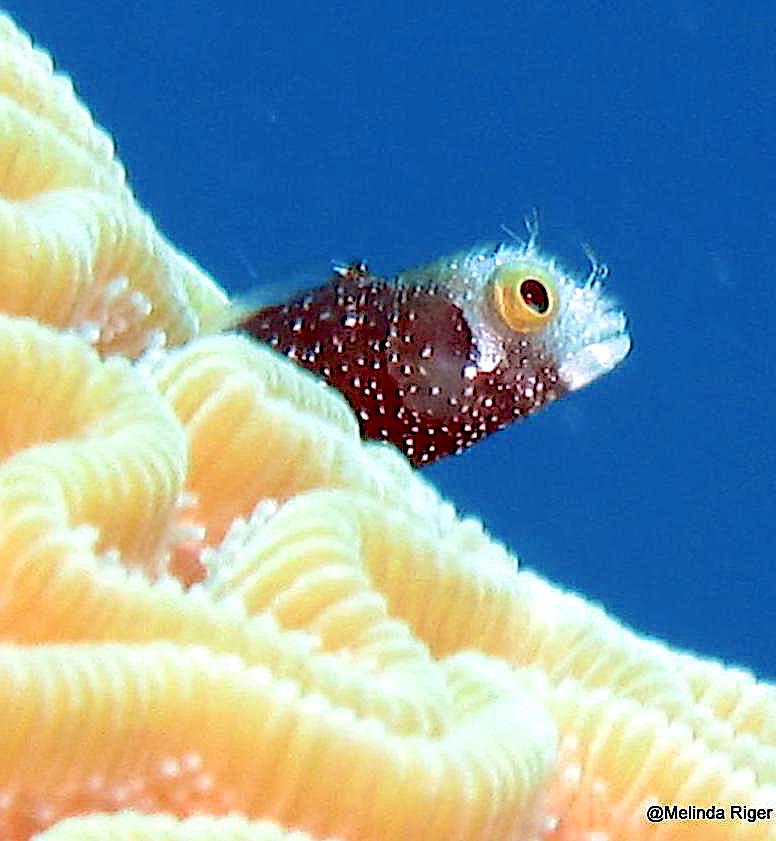
The ‘roughness’ of head refers to the whiskery appendages (cirri) on a blenny’s blunt bonce – slender tendril or hair-like filaments. The word cirri is the plural version of the wispy high altitude cirrus clouds that streak the sky. These tendrils are shown clearly in some of the photos here, despite the tiny size of the fish (± 1 inch).
THESE GUYS LOOK A BIT PRIMITIVE, AM I RIGHT?
To be precise – as far as is possible – blennies can be dated back to the Paleocene Era (or is it an Epoch?). This spanned a period 66 to 56 million years ago – around the time of the formation of the Rolling Stones.
You can find out more about roughheads in this excellent eHow video I came across after I’d written this post, to which I should now add that there is considerable colour variation in this subspecies, as you may already have noticed…
** You can also try this with ‘Red Lorry Yellow Lorry’. Yes I know. Maddening, isn’t it. You can’t stop now you’ve started. Sorry…
The dusky damselfish Stegastes fuscus is one of a number of damselfish species found in Bahamian waters. These small reef fish, in adult form, are dark coloured as their name suggests. Their appearance is brightened by having distinctive blue edges to their fins.
These fish feed mainly on algae, with a preference for red. They top up their diet with small invertebrates. Their value to the reef is that their feeding patterns help to prevent coarser seaweeds from becoming dominant in areas where these are prevalent.
Like many damselfish, the dusky is a territorial species, guarding its chosen area of seabed and the food sources within it by repelling intruders – often seeing off far larger algae-grazing fishes such as parrotfish and wrasse. Yet besides their aggressive traits, they are also rather cute, as photo #2 shows!
Time to return to those extremely expressive characters of the coral reefs, moray eels. Specifically, some green morays. One hesitates to anthropomorphise or ‘project’ human emotions onto creatures but with some species it’s hard not to do so. Following Mr Grumpy (or perhaps Mr Sad) in the header image, here are some close-ups of morays appearing to express their emotions, from happy to downright furious… Eels featured here include Judy and Wasabi, and I remind myself that the human habit of naming familiar wild creatures is itself a (perfectly harmless) form of benign animism. Exactly as with the regular banded piping plovers featured elsewhere in this blog that overwinter on Abaco’s beaches, such as Harry Potter, Bahama Mama and the delightfully-named Felicia Fancybottom…
Happy and contented?
Something on my mind…
Slightly amused?
Pretty funny, actually
Ha ha…! Hilair!
Watch it. You are beginning to bug us, Mr Harbour, with your stupid captions
ANGRY. BACK OFF… NOW!!!
THE NEXT POST WILL BE FROM ABACO HQ NEXT WEEK
Credits: All morayvellous photos, Melinda Riger / Grand Bahama Scuba except 6, Virginia Cooper / Grand Bahama Scuba
The bluehead wrasse (or blue-headed wrasse) Thalassoma bifasciatum is a denizen of the coral reefs of the tropical waters of the western Atlantic Ocean. This bright little 4-inch fish is… a wrasse with a blue head. No more and no less. Unless it’s a juvenile. Then it is mainly bright yellow. It’s similar to BLUE TANG (aka ‘the Disney Dory’), which starts life bright yellow and grows up to be blue.
The species may be found singly, in pairs or small groups, or in schools. They have an important role to play in the life of the reef. They are CLEANER FISH, vital to the health and wellbeing of the larger species they attend to, and thus of the reef itself. This is ‘cleaning symbiosis’, a relationship of mutual benefit. The big fish get cleaned; the little fish have a useful function and – importantly for them – therefore don’t get eaten.
Having said that, blueheads are of course fair game as a snack for species that aren’t in the market for their cleaning services. And, unfairly, some species that are content to let cleaner gobies runtle around their gills and mouths are not so considerate of the wrasse. Some types of grouper and moray eel, for example.
TELL US EXACTLY SEVEN BLUEHEAD WRASSE FACTS
Juveniles can alter the intensity of their colour, stripes & bars
The bluehead wrasse is a ‘protogynous sequential hermaphrodite’
All are born female**. Some change sex to male during maturation (see below)
Food includes zooplankton, small molluscs and small crustaceans…
…and parasites / other juicy bits (fungal growths, anyone?) from bigger fish
The main threat to the species is coral reef degradation or destruction
The bright colours invite aquarium use, but the trade is not a significant one
** Some sources suggest some are born male and remain male. I’m not sure which is right
A juvenile bluehead (with feather-duster worms) – mostly yellow, with a pale underside
THE REMARKABLE SEX LIFE OF THE BLUEHEAD WRASSE
This is an unavoidable topic, I’m afraid. The bluehead’s sex life is the most interesting thing about them, and this is no time to be prudish. It is the subject of extensive scientific research, not all of which I have read since I decided to write about the species last night. Like many human relationships, “it’s complicated”, but in a conch shell it boils down to this:
To recap, BWs are born female and as they mature, some become male.
Males reach an ‘initial phase’ when they can breed in groups with females
Some males grow even larger & reach full colouration. This is the ‘terminal phase’
These large males aggressively chase away smaller ones & seek females to pair with
Their state of readiness (as it were) is signalled by colour changes
This behaviour is similar to that seen in many city centres in a Saturday night
The smaller fish have one bonus – their sperm count is higher than a dominant male
Prozac tests have shown that the drug reduces a dominant male’s aggression
As the excellent organisation OCEANA puts it: Bluehead Wrasses may reproduce in four different ways throughout their lifetime: 1) as a female in a group spawning event; 2) as a female in a pair spawning event within the territory of a large male; 3) as a small male in a group spawning event; and 4) as a dominant, terminal male in a pair spawning event within its own territory.
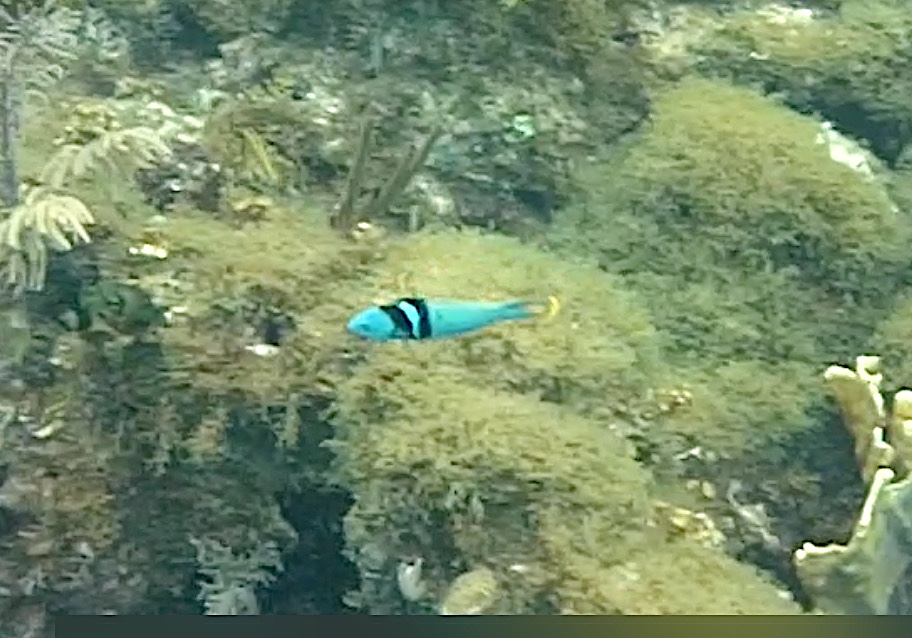
A cropped still from a video I took at Fowl Cay marine reserve. I’ve looked at dozens of images online and not found one that was all blue with a yellow end to its tail fin. Maybe it’s not a BW at all. Or it’s a different type of fish completely. Or perhaps it is just an all-blue alpha male.
Credits & Sources: Melinda Riger; Adam Rees; James St John; Oregon State edu / Pinterest; Wiki images; self; Oceana; IUCN; magpie pickings
A bluehead wrasse passes the time of day with a grunt
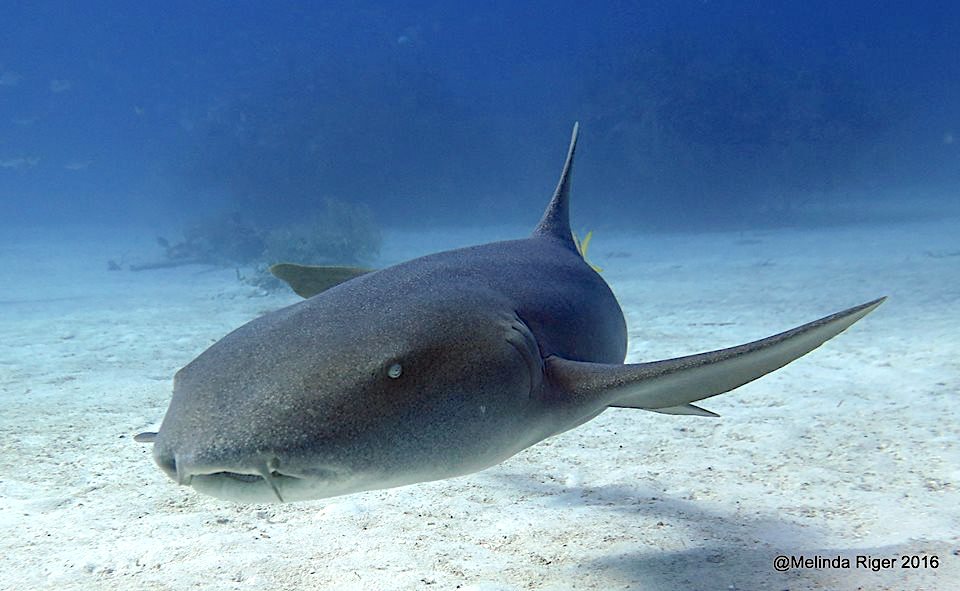
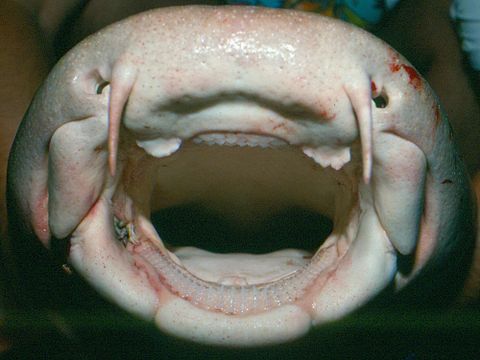
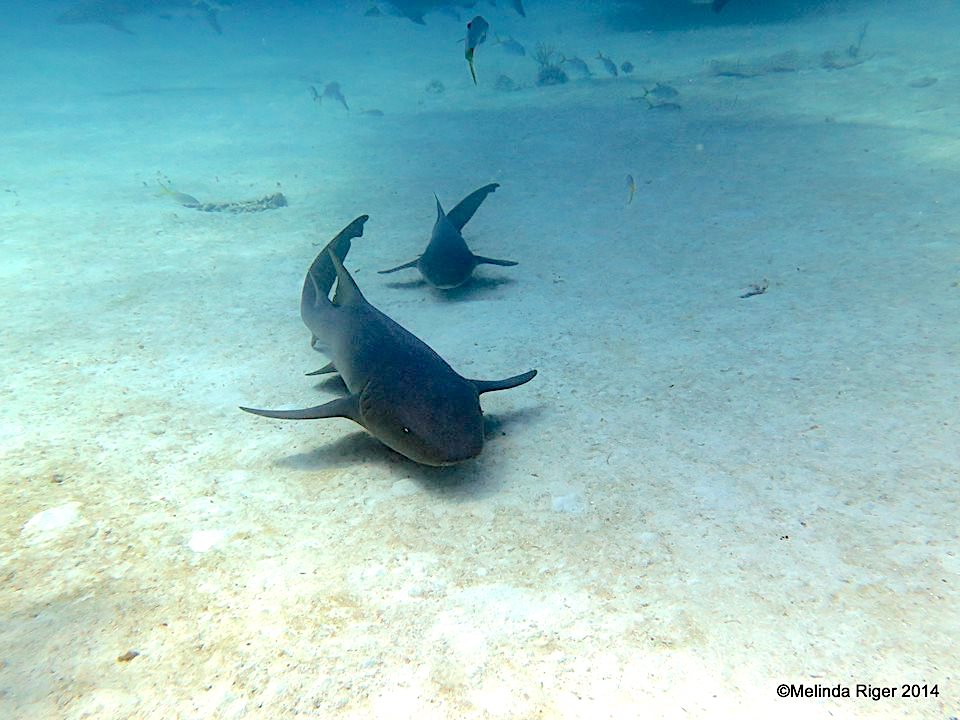
I last took a look at nurse sharks nearly 3 years ago HERE. Time to revisit these creatures. Indeed, time for a close-up look. If you want to know more about this fascinating species, just click the link above.
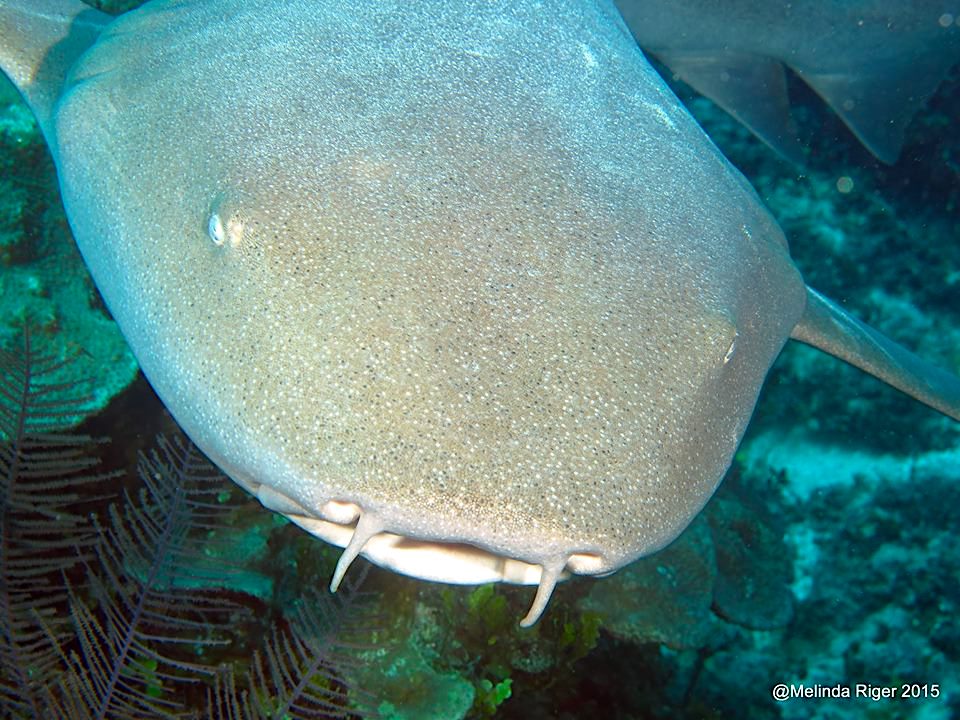
The two strange items hanging down from the upper lip are sensory barbels
This side-view shows the shark’s relatively small mouth (for a shark anyway)
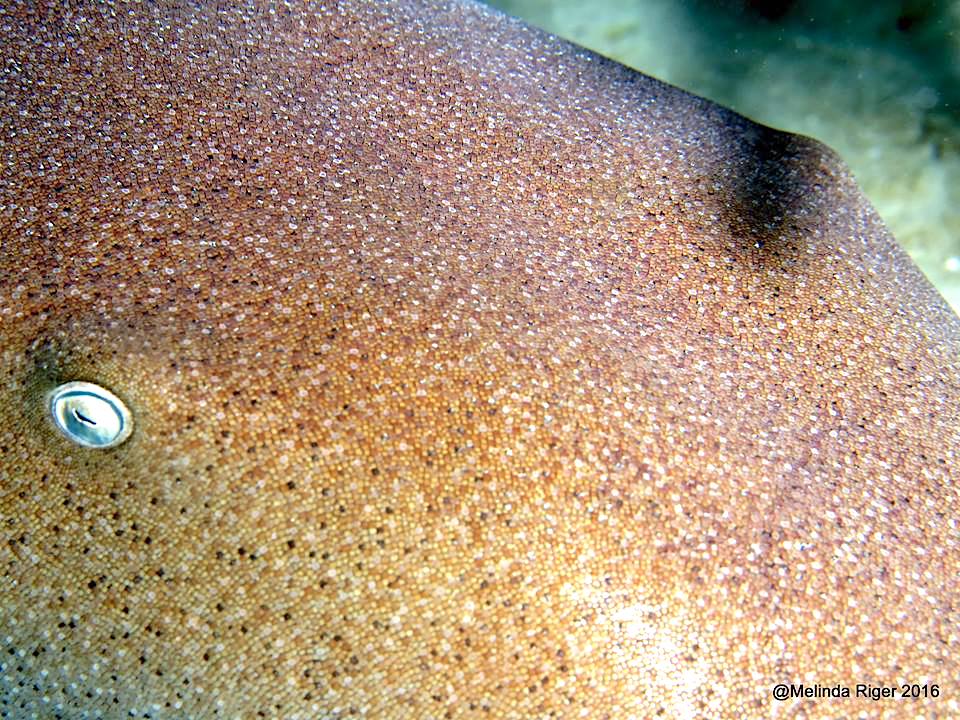
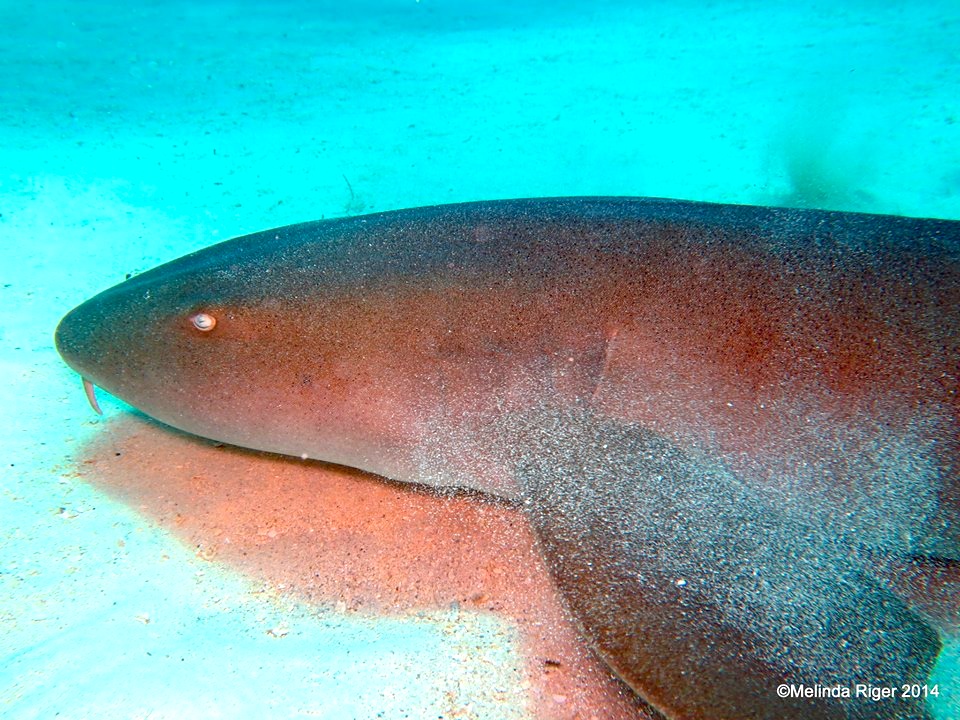
Admire the extraordinary texture of the the skin; and the tiny evil eye. Click or – better – double click on the image and you will see that the skin is in fact tessellated, made up of a mosaic of tiny squares and near-squares**
This one is a baby nurse shark
A juvenile nurse shark with a couple of grunts. Note the youngster’s paddle-like fin
Head, mouth, jaws and teeth
SO, THEY ARE SHARKS – ARE THESE GUYS DANGEROUS?
Not really, no. They aren’t looking to pick a fight; and they are not as territorially aggressive as the ‘bitey’ sharks are (or can be). These slow-moving bottom-dwellers are generally harmless to humans. However, they can be huge—up to 4 metres —and have very strong jaws filled with thousands of tiny, serrated teeth. They will bite defensively if stepped on or bothered by divers who assume they’re docile.[As I said previously, “there are recorded instances of injuries caused to divers who have tried to pull nurse sharks by the tail. And serve them right, I say. Treat them with patience and respect!”]
**FUN FACT
M.C. ESCHER (the inspiration for Mr Hammer) was the master of tessellation in art. Click the link to explore the dedicated website. Maybe, sensationally, one day a shark will be found with skin like this… (Alert reader: “Actually, I think it most unlikely…”)
Credits: field photos by Melinda Riger, Grand Bahama Scuba; Wiki for the 4 mouth images & the Escher
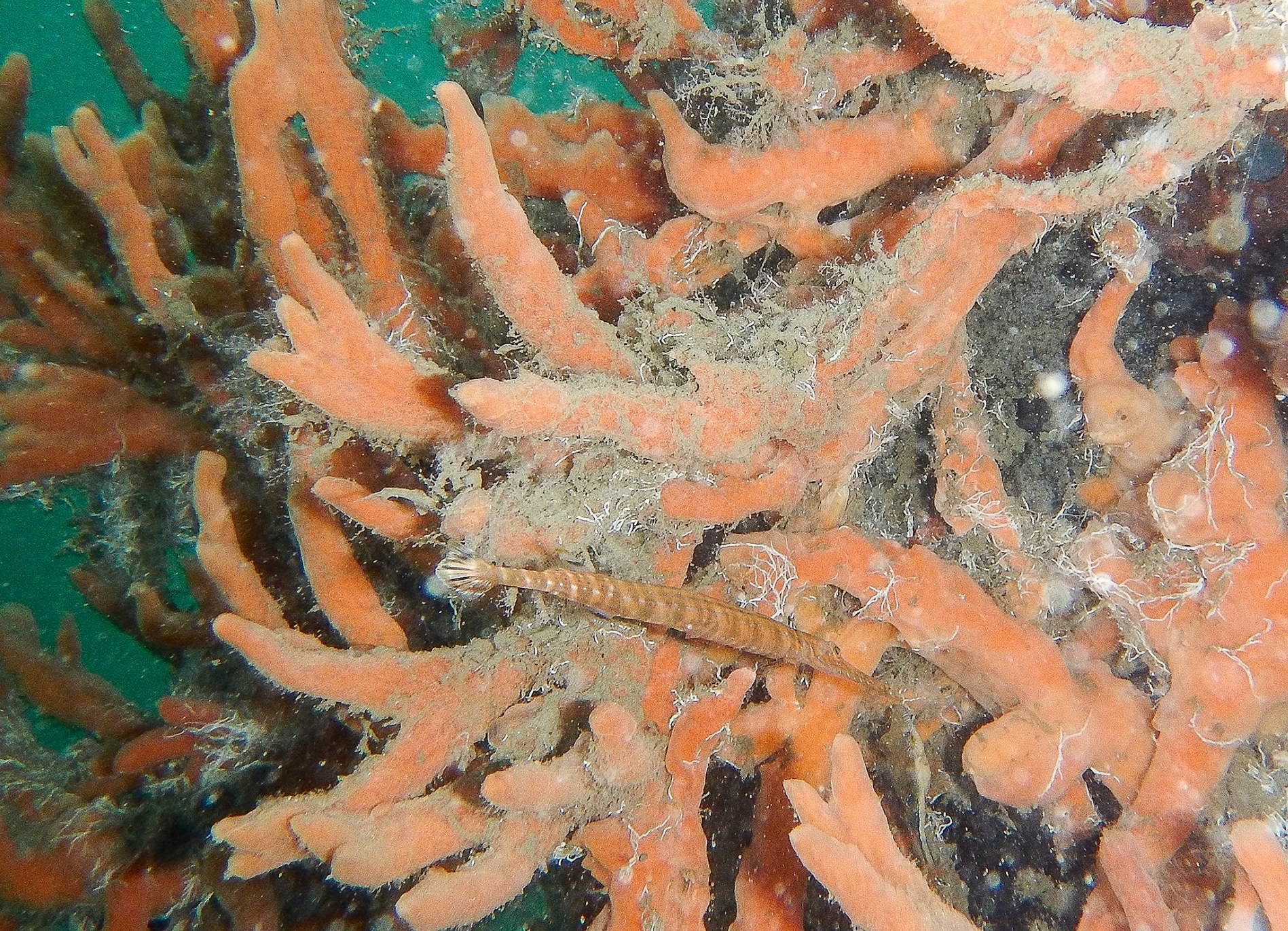
It’s been a while since the previous post in the WTF? series, dedicated to the unusual or downright weird marine creatures that, when you see them swim into in the frame of your mask, prompt the involuntary exclamation “WTF?” (What’s That Fish?). Now, in all its glory meet… The Trumpetfish. These long piscine pipes are in no way related to the President-Elect and his tank of pet fish, but perhaps more explicably to seahorses and seadragons.
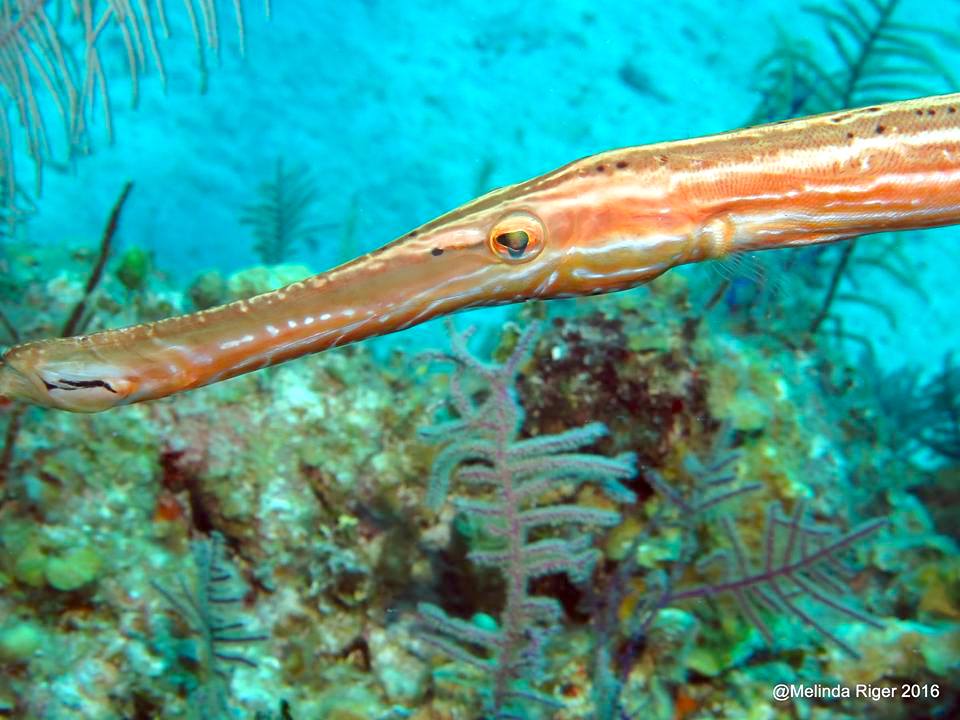
Trumpetfishes Aulostomus maculatus are as happy to swim upright as more conventionally, which helps them to blend in with vertical corals and sponges on the reefs in the tropical waters of the western Atlantic. Adults may grow to 3 foot long or more. These creatures come in a variety of colours – shades of red, orange, brown, green and yellow.
At the end of the fish’s long snout – see how far back the eyes are set – is a small mouth. Here’s how a trumpetfish goes about catching its prey (mostly small fishes):
Slowly swimming or drifting to a target from behind, and sucking it into its mouth
Staying suspended in the water, motionless, and waiting like a malevolent stick for a passing wrasse or similar to get too close
Swimming alongside larger fishes, which camouflages its presence and enables it to ambush small fish as they pass
More generally, the trumpetfish has some ability to change its colour to blend with its surroundings – both a defensive as well as an attacking advantage
The very excellent Peppermint Narwhal recently produced a series of posters in appreciation of particular species – and trumpetfishes and their kin in the Order syngnathidae were honoured. The PN’s cheerful website is well worth checking out for the sheer diversity of their ideas.
MUSICAL NOTES
We are beginning to collect the makings of a decent orchestra here. The trumpetfish has a relative, the cornetfish, elsewhere in the world. The remarkable GUITARFISH has already featured in the WTF? series, as has a species of BASS, the Harlequin. And – hey! – what about the spotted DRUMFISHto lay down the beat? Maybe I need to compose a little jingle featuring these one day…
Credits: Melinda Riger (Grand Bahama Scuba); Adam Rees (Scuba Works)
FAIRY BASSLET (‘MIND YOUR GRAMMA’): BAHAMAS REEF FISH (33)
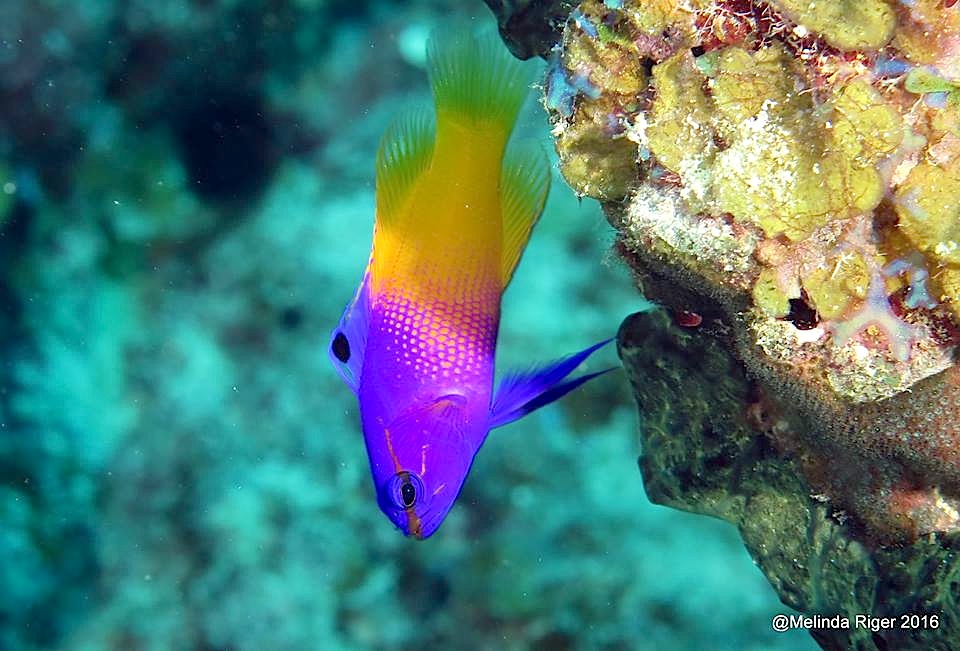
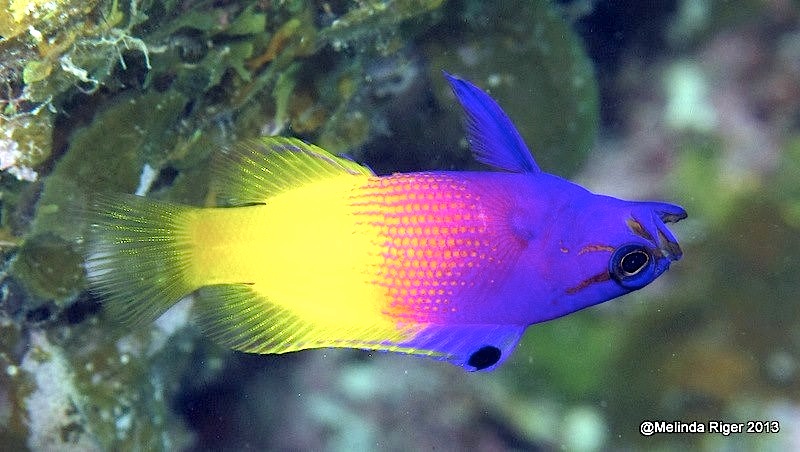
The Fairy Basslet is a tiny brightly-coloured fish with a pretentious alternative name. It is otherwise known as the Royal Gramma (Gramma loreto). These fish are found in the coral reefs of the (sub)tropical western Atlantic. They are also found in aquariums anywhere you like, being small, bright, placid and generally good-natured.
Conveniently, the basslet is unlikely to be confused with any other species. Its striking two-tone colour scheme of purple and yellow is hard to miss. The purple front half (which is presumably where the ‘royal’ comes from, being a regal or imperial colour) may also be violet or even blue in some fish and / or in some light conditions. Another identification pointer is a black spot on the dorsal fin.
You’ll notice that the basslet above appears to be upside down. Which is because it is – this isn’t an inadvertent photo-flip. These little fish tend to orientate themselves to be parallel with the closest surface. This leads to them happily swimming upside down, or aligning vertically. As one article I read says severely, “this behaviour is not to be mistaken for illness”.
Fairy basslets / royal grammas are also CLEANER FISH. They pick parasites and dead skin off larger fish that visit so-called cleaning stations to be attended to by tiny fish and cleaner shrimps, and in some instances to have their gills and even their teeth cleaned. The deal is that, in return, the large fish do not eat the cleaners. Even snack-sized ones rootling around inside their mouths.
WHAT ABOUT BREEDING?
I really can’t improve on this rather touching description from Wiki: “The male will build the nest among rocks using pieces of algae.The male will then lead the female to the nest, where she will deposit 20-100 eggs in the nest. During the breeding period, this behaviour is repeated almost every day for a month or longer (my italics). The eggs are equipped with small protuberances over the surface with tiny threads extending from them which hold onto the algae of the nest and keep the eggs in place. The eggs will hatch in five to seven days, normally in the evening…”
HOW COME THE NAME ‘GRAMMA LORETO’?
This official name became a brainworm with me after I started this post. I had to check it out. The ‘Gramma’ part is unrelated to the fond name for a grandmother; rather, it simple denotes a member of the genus of fishes in the family Grammatidae.
The Loreto part is more mysterious. It is an an ancient town in Italy; and the name of several British schools, including – almost too good to be true – a school called Loreto Grammar. In a nutshell, the link between the town and places of education is that the Sisters of Loreto, founded in the c17 and named for a shrine in the Italian village, are dedicated to education in their Ministry.
How that ties in with a tiny Caribbean reef fish, I have yet to find out. I probably never will… Here’s a short video to alleviate the disappointment.
I failed to be able to resist finding out whether any country of the world has a purple and yellow flag. The answer is, no. However I am delighted to be able to report that the flag of the Independent Party of Uruguay is basslet-coloured.
Credits: all fantastic photos by Melinda Riger of Grand Bahama Scuba; magpie pickings of an unacademic sort for facts and speculation
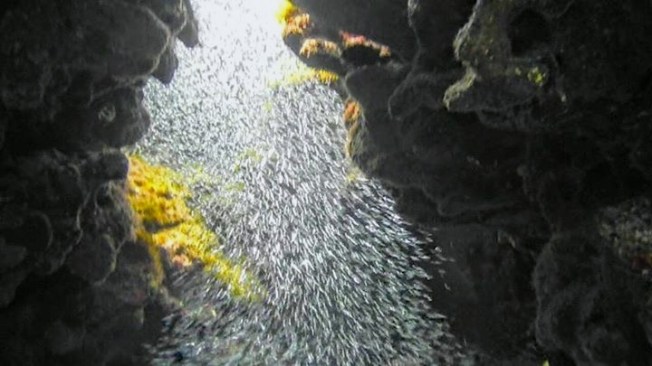
I have no idea if there is a collective noun for a large group of silversides. ‘Frenzy’ would cover it, but that is reminiscent of ‘feeding freezing’ which has a specialist meaning – and anyway, silversides are crazy even when they aren’t feeding. 24/7/12/365 as far as I can make out. I think ‘a panic of silversides’ might be the answer. They are just… all over the place at high speed. Sometimes swirling around pointlessly, other times moving in unison and suddenly all changing direction simultaneously, like a single creature made of tiny shards of silver.
There are quite a few silverside species around the world. The ones in the Bahamas are Atlantic silversides (Menidia menidia), also known in the north east of the United States as ‘spearing’. They seem to exist for two purposes. The main one is to be breakfast, lunch or dinner for larger fish, sea birds and shore birds. The other is for their usefulness in scientific research because of their sensitivity to environmental changes.
In one sense they are easy prey for predators. A determined fish will always manage a snack by swimming into the middle of a panic and (probably) simply by opening its mouth wide. On the other hand, their sheer numbers coupled with the speed and randomness of movement mean that a single may find a degree of safety in numbers. It’s hard for a predator to target any individual fish in the general melee and confusion. Silversides also favour seagrass beds, which give some shelter and protection – and a reasonably safe place to spawn. Or, as some of these photos show, they will hang around wrecks or squeeze into rocky spaces in the reef.
A panic of silversides apparently pouring like a waterfall down through a gap in the reef
WHAT DOES A STATIONARY ATLANTIC SILVERSIDE LOOK LIKE?
Some time ago we used to go to the reef at Fowl Cay Marine Preserve with Kay Politano, and I would snorkel with a small and very basic lo-res underwater camera. I was hampered by being a disgracefully feeble swimmer; by not having snorkelled for a length of time calculable in decades; and by being a complete novice at underwater photography. Despite these not inconsiderable disadvantages I managed to cobble together a few short movies on my computer (I was new to that too). Here’s one that nearly works, in that it gives an idea of what happens if you ‘swim with silversides’. I know you scuba guys all swim with sharks, but cut me some slack here please…
Photo Credits: Main photos Melinda Riger of Grand Bahama Scuba; Silverside Waterfall by Kay Politano; motionless silversides byFISHBASE.ORG. Music: Goldon Giltrap, ‘Fast Approaching’
It’s a real shocker! This fish is a serious contender. An A-list horror-fish. The WTF? series has featured some extraordinary, bizarre and frankly unbelievable fish species. Here’s one that might just blow them all out of the water. So to speak. Not only is this fish weird in a number of respects, but it is also dangerous. Behind its eyes it has a special ‘electric organ’ (a “Hammond”?**) that produces a shock when touched. Oh for a superpower like that, even if only to be used defensively.
“They’re the meanest things in creation,” fish scientist William Leo Smith, who owns a stargazer, told the New York Times. “I was so excited to get it. It’s the worst pet on earth.”
‘Fish out of water’. Note (but do not touch) the area behind its eyes…
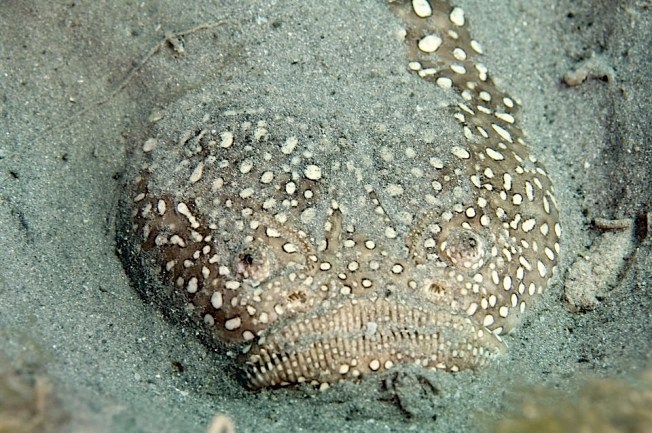
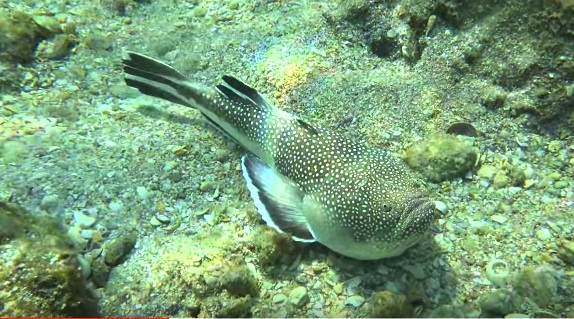
The Northern Stargazer Astroscopus guttatus whiles away the long lazy days lying mostly buried by sand, the stargazy eyes on top of its head picking out prey – mostly small fish – to ambush and stuff into its bizarre YKK zip-mouth. It can bury itself in seconds. An adult stargazer may grow to nearly 2-foot of concealed eating machine. They will stay put unless disturbed, confident that a false move by a creature – it could be you in your flippers – will mean it will be in for a shock.
10 STARGAZER ATTRIBUTES TO ADMIRE (BESIDES THE ELECTRIC SHOCKS)
The strange mouth looks as it does because it is fringed to keep out sand
The head-top eyes can be made to protrude to allow a wider field of vision
It ambushes small fish and swallows them whole (see video below)
To lure prey, stargazers discharge seawater through their gills… (Alert Reader: why?)
It stirs up sand – possible lunch is waiting for a fish further up the food chain to enjoy
They are born with their eyes on side of the head (Alert Reader: why?)
Their eyes move to the top of the head as they grow from the larval stage
They are content to be solitary, except in the Spring (for the usual reasons)
Apparently little is known about the mating behaviours of these creatures. A pity, I feel.
They have no scales, but they make up for that with an impressive 13 anal spines
Unimpressed? Well they also have venomous spines near their gills & above their pectoral fins
WEIRD FISH – AND WHAT’S WITH THE WEIRD NAME?
I wondered that too. The Astroscopus part derives from the Greek, ‘astro’ (star) and Latin ‘scopus’, a conceptual noun combining watching and targeting – think ‘telescope’, or ‘far-target-watching’. The guttatus (L) part simply means spotted or speckled. A Homo guttatus may need mild medical attention.
THOSE ELECTRIC SHOCKS – HOW BAD ARE THEY?
Well. I kinda knew you’d ask so I looked into it. According to the exceptionally cool ‘Monsters of the Deep’ (see credits), the stargazer shock is approximately 50 volts. The British Health and Safety Executive, whose job is normally to interfere with almost every aspect of daily life in the UK (“you are strongly advised not to drink from bottles marked ‘Rat Poison’ portraying a Skull & Crossbones motif, lest disappointment should result”) has assisted:
A voltage as low as 50 volts applied between two parts of the human body causes a current to flow that can block the electrical signals between the brain and the muscles. This may have a number of effects including: stopping the heart beating properly; preventing the person from breathing; causing muscle spasms.
The exact effect is dependent upon a large number of things including the size of the voltage, which parts of the body are involved, how damp the person is, and the length of time the current flows.
Sadly, you are quite unlikely to find a stargazer in Abaco waters, which lie slightly beyond their fairly limited western Atlantic range. But hop over to Floridian waters, move a bit north, and you might meet one.
**A musical instrument allusion
Credits: Adam Rees / Scuba Works; Canvasmas21 wiki; Nat Geo Kids; MONSTERS OF THE DEEP(cool underwater site to check out!); Casey Patton / FMNH; Mother Nature Network (inc for video); Wideangl (clip)
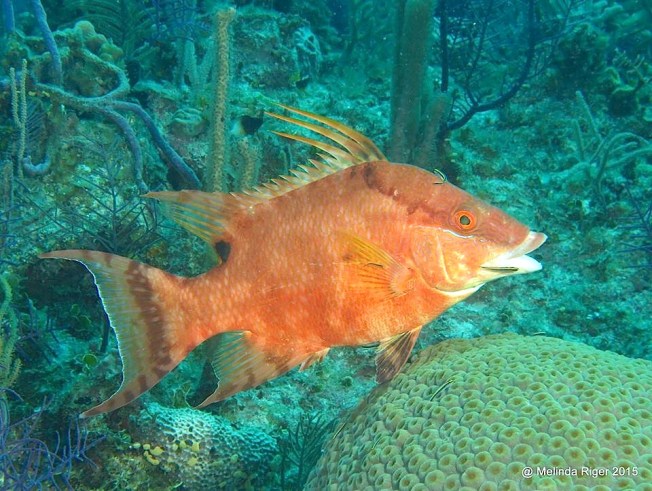
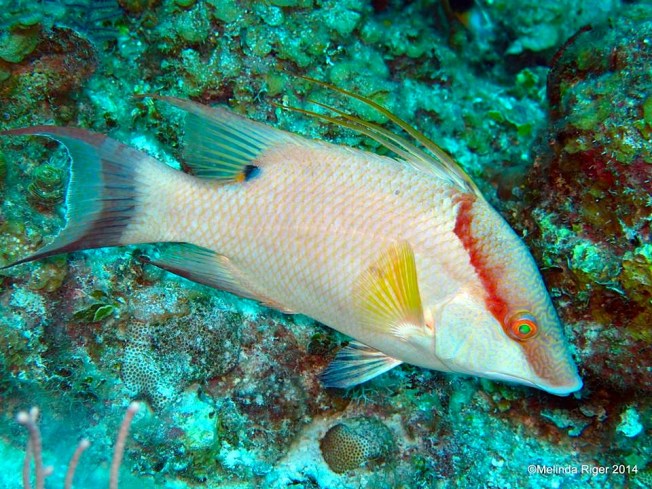
Hogfish. Fisherman’s delight… getting ‘high on the hog’. This wrasse species Lachnolaimus maximus is a reef denizen, especially wheregorgoniansare found. It has the distinction of being the only known member of its genus, and because it is IUCN listed as vulnerable, there are strict regulations governing bag, size, and gear limits to protect the species from overfishing.
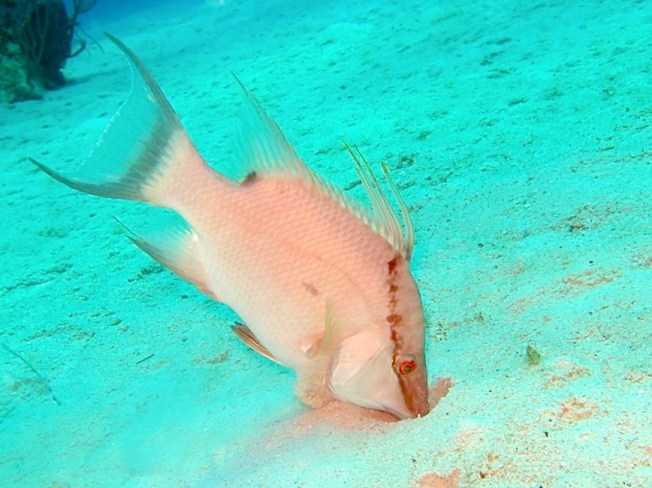
The hogfish gets its name from its long ‘pig-like’ snout, coupled with its rootling behaviour on the sea floor for crustacean prey.
GENDER STUDIES: IT’S COMPLICATED
The hogfish is a sequential hermaphrodite, meaning it changes sex during different life stages. Juvenile hogfish are female, but mature into males at around 3 years old.
Hogfish social groups are organized into harems, where one male will protect a group of females in his territory and mate with them.
CAUTIONARY NOTECapt. Rick, a loyal follower, has made another of his pertinent comments: “A bit of caution is necessary here! There is some history in the Bahamas of mild to severe Ciguatera poisoning from Hogs. Our M.O. was to only eat Hogs no larger than 5 or 6 lbs. Temporary or permanent blindness, paralysis, and even death is possible with bigger Hogs”. Ciguatera is also a problem with, for example, ‘cuda on Abaco. Those caught on the Marls (west) side are ok to eat; those from the east side have to be treated with circumspection…
Credits: all fantastic fish fotos – Melinda Riger at Grand Bahama Scuba
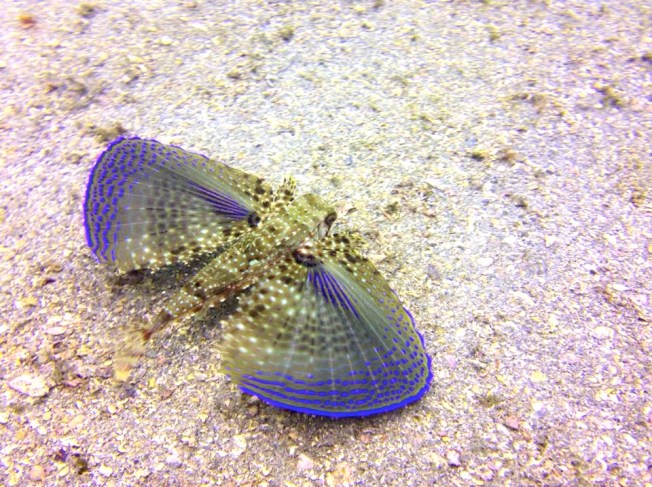
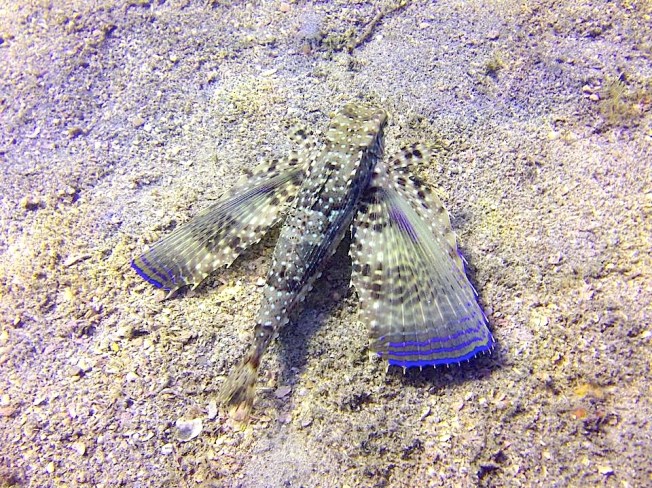
Imagine that you are swimming along resplendent in your snorkelling gear (me) – or in scuba gear for the advanced swimmer (you). There, below you, camouflaged against the sea bottom is a fish. A strange-shaped brown sort of creature with odd side fins. As it progresses over the gravelly sand, your immediate reaction is ‘what the…?’ Its fins seem to be turning into… wings. Like this:
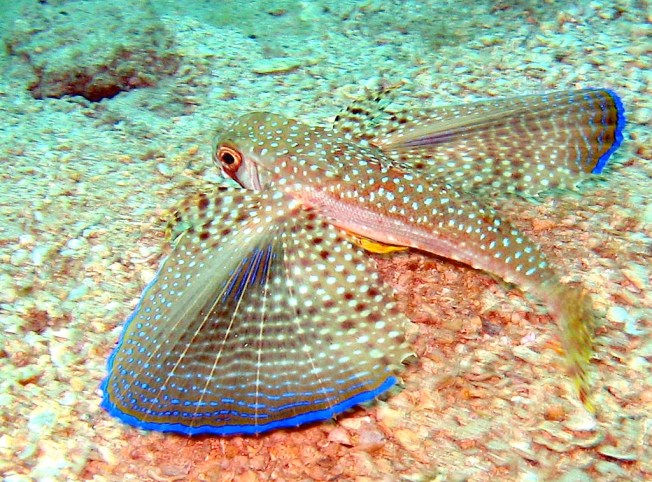
Yes, it’s a flying gurnard. Unlike flying fish, it can’t actually fly through the air. But once its wings are fully spread, it certainly looks as though it could.
WHAT’S THE POINT OF THE WINGS IF THE THING CAN’T FLY?
This gurnard species usually gets around using its ventral fins as ‘legs’, with the pectoral fins (‘wings’) close to the body. There seem to be several possible reasons for possessing the ‘sudden-deployment-of-flashy-wings’ superpower.
It surprises and deters predators by movement, turning prospective prey into an apparently different creature
Bright or lurid colouring may be a deterrent warning of a foul-tasting or poisonous species (APOSEMATISM)
A creature may actually be harmless and even tasty (as here) but may appear to be unpalateable or poisonous(BATESIAN MIMICRY)
In any event, the wings enable the fish to take off from the sea bottom and travel faster by ‘flying’ thought the water to escape a predator
Here’s a short video of a flying gurnard on the move, from ‘Sia Big Fish’
Credits: All main images Adam Rees / Scuba Works with many thanks, except final one ‘cralize wiki’; Hyperallergic for the historic image; Sia Big Fish for the video
I’m conscious of being rather unfair on this pretty dwarf bass species by including it in the WTF? series. The usual denizen of the series is a fish so strange that one’s immediate instinct is to yell into one’s facemask, “WTF?”. BATFISH or FROGFISH or GUITARFISH and their bizarre ilk. So with apologies to this species for its somewhat harsh classification, here are some quite flattering photos of it to make up for any hurt feelings.
The Harlequin Bass Serranus tigrinus has unusually striking body markings and a rather endearing spotty tailfin. They are hardy creatures and I note that they are recommended aquarium fish “and make a great candidate for beginners”, though there are warnings that they are “semi-aggressive”. NB they are only a few inches long, so no need to panic.
If you are still not confident that you can ID one in the wild, here is a short video… Actually I’m really including it to show how these fish swim around. And next time, I promise a truly eye-watering WTF? fish from Bahamian waters, though its camouflage is so good that you may never notice it…
Credits: Melinda Riger / Grand Bahama Scuba (1, 2); jpc/ what’s that fish; wiki
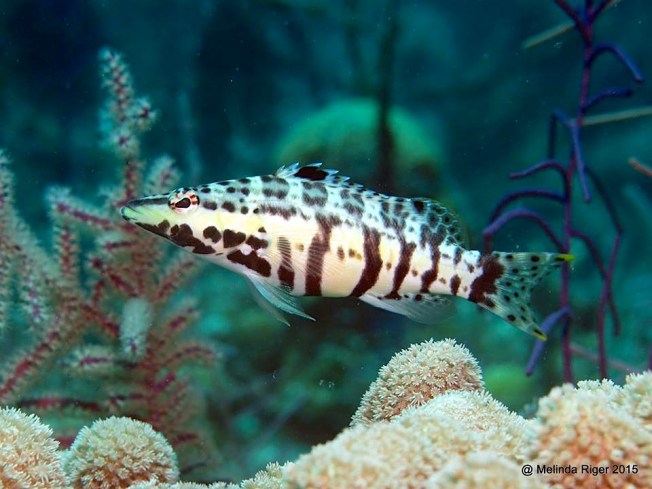
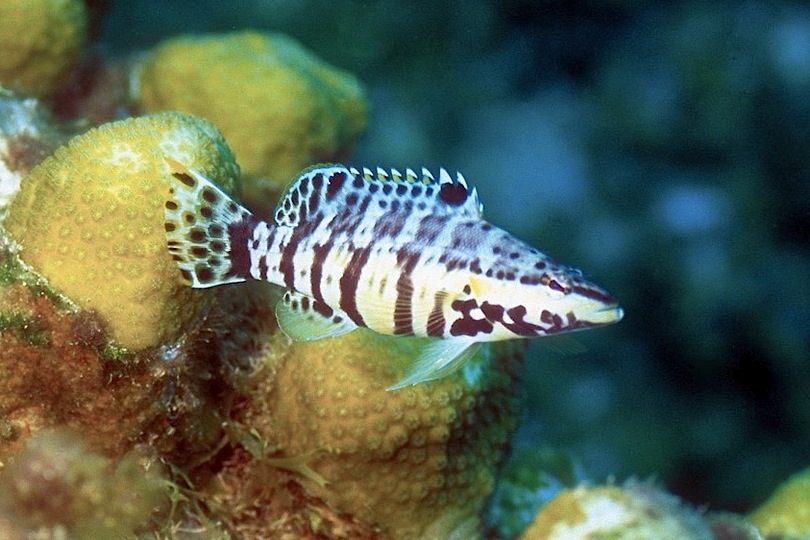
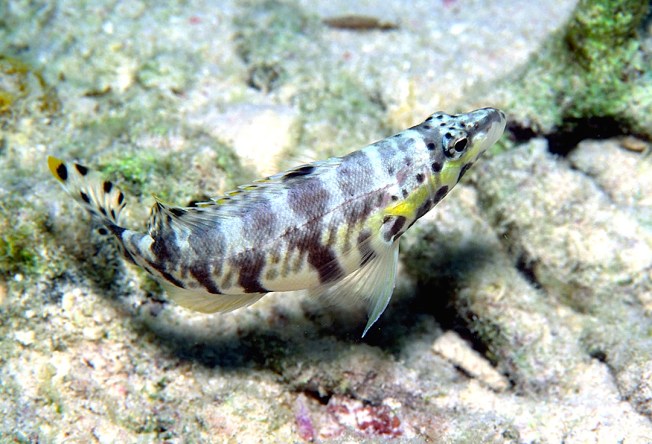
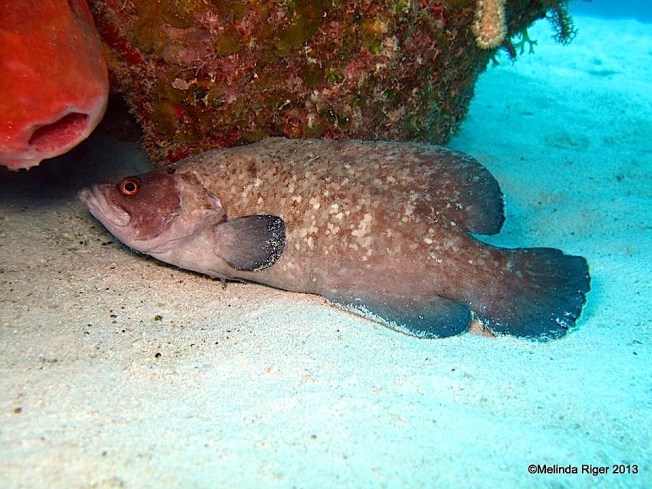
The WTF? series features some of the stranger fish that inhabit the waters of the Bahamas. Ones that, were you to encounter one on the reef, might make you exclaim “WTF?”. The soapfish Rypticus belongs in the same family as grouper and sea bass. Within the soapfish genus there are quite a few varieties in different shapes, sizes and colours that include several mottled, freckled, spotted and generally blotchy fish. This post features one (or two) of them! Sorry to be lame here and lacking in authority, but having looked carefully online at images of several types of soapfish, I reckon there are 3 candidates. Freckled, I think these are. Enlightenment would be welcome!
Rypticus tend to inhabit shallower tropical and sub-tropical waters. They are mainly nocturnal in their habits, feeding at night on small fish, crustaceans and molluscs. The WTF? factor arises from the creature’s oddly truncated shape. If you cover the back end of the fish in the image below with your hand, you might expect the fish to be about the same length again. But no, there’s just the tail to come. It looks a bit cut in half.
DOES THE SOAPFISH HAVE ANY AWESOME POWERS?
I’m glad you asked because in fact it has two. First, these fish respond to threats by secreting large amounts of toxic mucus from their skins. This acts as a defensive barrier to repel predators. Secondly, female soapfish are able to change sex to male. This is not uncommon among fish, and in some (e.g. Clownfish) the change works the other way, male to female. I read a lot about chemicals and gonads in this connection, then decided to spare you the details. So basically, it’s toxic slimy coats and female gender realignment.
Credits: all photos, Melinda Riger of Grand Bahama Scuba
A while ago now, I wrote a detailed post about so-called fish ‘cleaning stations’ – the special spots on the reef where large fish can go to have small fish buff up their scales and floss their teeth. You can read all about it HERE.
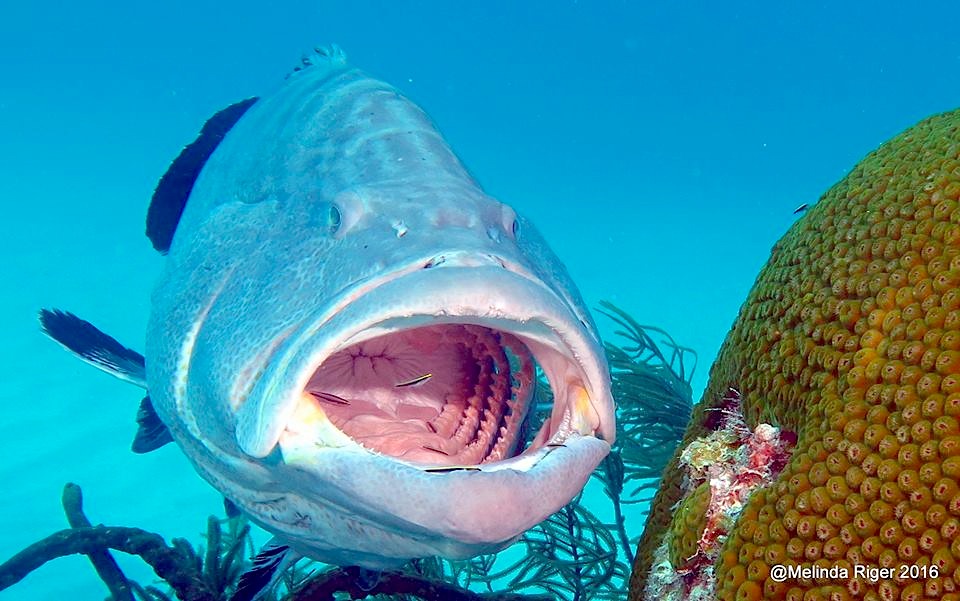
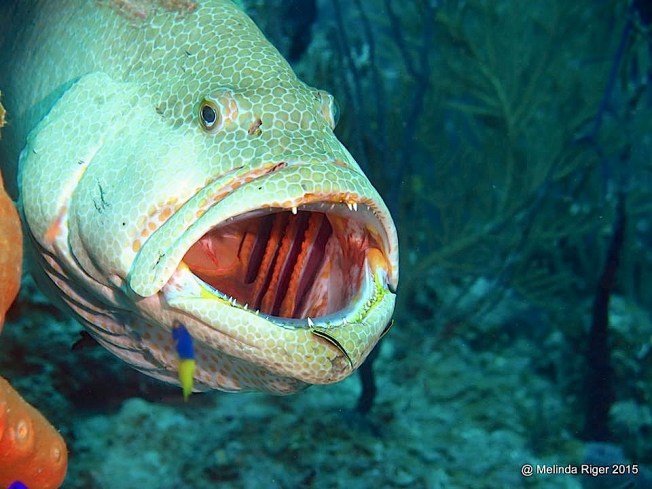
I have accumulated a number of new photos from expert scuba diver and underwater photographer Melinda Riger that demonstrate this phenomenon. A big fish with a normally voracious appetite will patiently wait while gobies and other small fry go about their work. This often involves actually entering the mouth of the (as it must seem to them) monster to pick the insides and the teeth clean. There is an extraordinary understanding and trust between the species that means during the operation, the little fish are perfectly safe. Here are some examples, of which the very recent header image of a grouper named Arnold is quite outstanding.
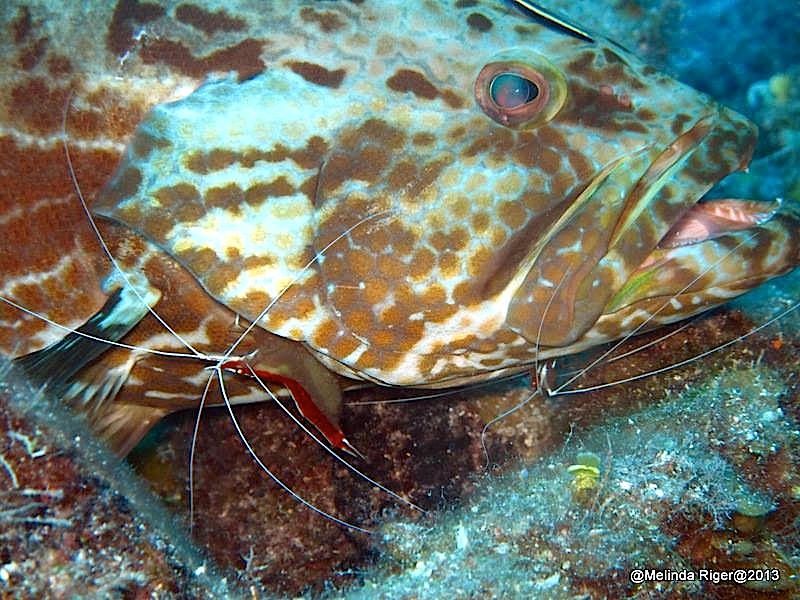
It is not just gobies that attend the fish. Various species of shrimp also volunteer for the job.
Groupers are not the only species to make use of cleaning stations. Here is a dog snapper at the same cleaning station as the grouper in the header image. Below is a stingray being attended to.
Southern Stingray with cleaning gobies
GRAMMATICAL DIGRESSIONThere is this ‘thing’ about the correct use of the words ‘fish’ and ‘fishes’ in the plural form. The basic principle is simple: ‘fish’ where you are referring to several of the same species; ‘fishes’ where more than one species is involved. I don’t care. My policy is to use ‘fish’ as the plural on all occasions, so I don’t have to think about it. Pedants, look away now.





























































 ROLLING HARBOUR ABACO
You must be logged in to post a comment.