Unknown's avatar

CASPIAN TERNS: A RARE TREAT FOR ABACO


caspian-terns-winding-bay-abaco-keith-kemp1

CASPIAN TERNS: A RARE TREAT FOR ABACO

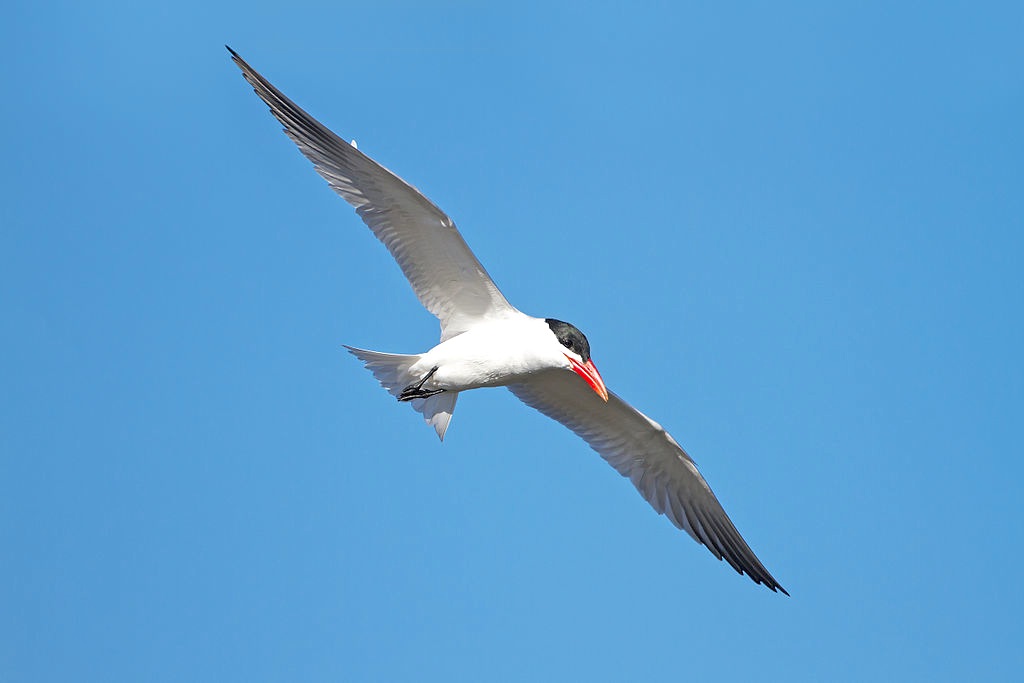
The magnificent Caspian Tern Hydroprogne caspia is the world’s largest tern species, with an adult wingspan of about 5 feet. These birds are widely distributed throughout the world, though on Abaco and in the Bahamas generally they are classed as a very uncommon transient species, classified as T4 signifying a mere handful of reports. Ever. 

caspian-terns-winding-bay-abaco-keith-kemp2

However Keith Kemp, redoubtable beach monitor for piping plovers, recently saw 2 on Winding Bay beach, Abaco. Moreover he managed to photograph them in flight (see header and above image).

caspian-terns-in-flight-dmitry-mikhirev-wiki

Keith’s are not the first Caspians to be photographed on Abaco. Bird wizard Woody Bracey managed to take one (below), which duly found its way into the ‘The Birds of Abaco‘.  Sadly it could only be included in the single-bird supplement: we needed at least two images of a species for it to qualify for a spread in the main part.

caspian-tern-wb-dsc_1587-copy-2

Caspians have black legs, which usefully distinguish them from the tern species with orange or yellow legs. Note the heavy red / orange bill, which has a dark tip that is more noticeable in the breeding season. These large birds feed mainly on fish, and use their spectacular bills to good effect, hovering and then plunge-diving onto their prey.

caspian_tern_takeoff-dick-daniels-wiki

Caspian terns are found on 5 continents. The transient birds that pause in the Bahamas are on their migration to the West Indies and Gulf. Or on their way back, of course.

caspian-tern-planetofbirds

WHY ‘CASPIAN’?

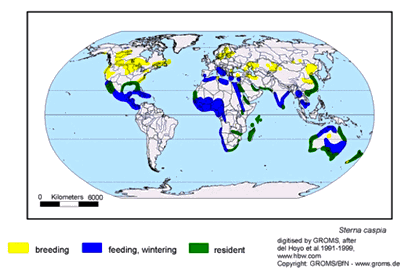
In the late c18, a specimen bird was found on, in or beside the Caspian Sea and was promptly named after it. The distribution map above suggests they still breed in the area. How fortunate it wasn’t found by the Dead Sea…

caspian-tern-in-flight-j-j-harrison-wiki

WORRYING WIKI FACT OF THE DAY

In 2016, a nest of the Caspian tern was found in the Cape Krusenstern National Monument in northwestern Alaska, 1,000 miles further north than any previous sighting. This development was part of a general trend in Alaska of species moving to the north, a tendency ascribed to global warming.

caspian-tern-wb-dsc_1584-copy-2

Credits: Keith Kemp (1, 2); Dmitry Mikhirev (3); Woody Bracey (4, 7); Dick Daniels (5); J J Harrison (6); planetofbirds (range map)

Unknown's avatar

HUDSONIAN GODWITS ON ABACO: VANISHINGLY RARE


Hudsonian Godwit, Abaco (Roger Neilson)

HUDSONIAN GODWITS ON ABACO: VANISHINGLY RARE

MEET ‘HUGO’

Abaco continues to enhance its reputation as a prime birding destination. New species. Rare species. Unusual species. Endangered species. Surprising species. Every year they turn up, whatever the season. And those, of course, are only the ones that get seen by someone who knows what they are or anyway what they might be. This is where the digital camera – or even a modern phone camera – trumps (oops… stepping into a political minefield) the old-fashioned method of collecting and identifying specialist birds. Which was, shoot them…

Hudsonian Godwit, Abaco (Roger Neilson)

Woody Bracey, Abaco’s ornithological eminence grise, is currently hosting a party of birders on Abaco. On a visit to one of the excellent birding hotspots of South Abaco, the group of 5 came across an totally unexpected wading species mixed in with a group of yellowlegs. At first, they were thought to be Marbled Godwits. Further consideration confirmed the 2 birds to be equally rare Hudsonian Godwits Limosa haemastica (HUGOs for short). Since then, at least one of the birds has been seen in the same location by birder Keith Kemp.

hudsonian-godwit-abaco-stewart-neilson-2

SO JUST HOW EXCITING IS THIS SIGHTING?

Extremely! Both species of godwit are exceptionally rare on Abaco and indeed in the Bahamas. They are officially classified as V5, which is to say vagrant / accidental visitors outside their normal range, with fewer than five records since… records began. In practical terms, the baseline is considered to be 1950. There must have been at least one previous sighting of a HUGO on Abaco, but Woody has never seen one before, nor does he know when the report was made. And he knows his godwits – he is the person who, some years ago, saw the MAGO on Abaco that accounts for its existence as a V5 in the complete checklist for Abaco.

hudsonian-godwit-abaco-stewart-neilson-1

WHERE DOES HUGO LIVE?

These large shorebirds – a species of sandpiper – with their long, upturned bills, breed in Arctic or tundra regions, and winter in southern South America. Note in the photo above the contrast in size, bill and leg colouring compared to the yellowlegs they were mixing with. The Cornell range map below shows how remote the HUGO summer (red) and winter (blue) habitats are. And you can see clearly the two main migration routes – in the simplest terms, the central flyway and the eastern flyway. Neither route takes the birds directly over the Bahamas, although one can see how the occasional one might be blown off course and need a rest during its journey.

limo_haem_allam_mapHudsonian Godwit in flight, Abaco (Roger Neilson)

HOW OFTEN HAVE THEY BEEN SEEN IN OR AROUND THE BAHAMAS?

I checked the invaluable database EBIRD for HUGO reports over the last 10 years. The only previous report for the entire Bahamas was made by Bruce Purdy, who saw one one Grand Bahama (Reef Golf Course)… in 2007. Sightings in Florida over the period are scant. The most notable feature of the map clip below is that Bermuda has had a couple of HUGO visits, perhaps suggesting off-course birds finding an area of land to rest on in a vast expanse of open sea. Further afield, the birds are rare vagrants to Europe, and even to Australia and South Africa.

Hudsonian Godwit 10-year eBird sighting map

WHY ‘GODWIT’? OR HUDSONIAN? OR Limosa haemastica?

‘Godwit’ is said to derive from the bird’s call, in the same way as ‘Bobwhite’ and ‘Killdeer’ – so, these are birds that say their own name… The Hudson Bay area is one of the summer breeding grounds, and a place where the birds congregate for migration. ‘Limosa‘ derives from the Latin for mud (see header image); and ‘haemastica’ relates to their red breeding plumage, from the Ancient Greek for ‘bloody’. Bloody muddy. It’s not a great name, in truth. Let’s move swiftly on to what they sound like…

Doug Hynes / Xeno-Canto

Hudsonian Godwit, Abaco (Roger Neilson)

STOP PRESS As mentioned earlier, Keith Kemp found one of the HUGOs at the same location a couple of days later – a “lifer” for him and everyone else! Here are three images he posted on eBird.

Hudsonian Godwit, Abaco (Keith Kemp) Hudsonian Godwit, Abaco (Keith Kemp)Hudsonian Godwit, Abaco (Keith Kemp)

I always check a new species to see if it was depicted by Audubon. I didn’t expect him to have included the HUGO but I was wrong. He did, and with his characteristic slightly exaggerated elegance.

_57

This post is rather special, because these are almost certainly the first photographs of a Hudsonian Godwit taken on Abaco – or indeed in the entire Bahamas. And very good they are, too.  So even if a lone HUGO was noted on Abaco 40 years ago pausing briefly on a rock before continuing its journey to Argentina, I consider this qualifies as a new sighting. It certainly does for the c21.

Hudsonian Godwit (Crossley ID Guide, Eastern Birds)  463px-hudsonian_godwit_from_the_crossley_id_guide_eastern_birds

Credits: special thanks to Woody Bracey, Roger Neilson, and Keith Kemp (Stop Press) for photos, information and use permissions; Cornell Lab – Range Map; open source Audubon; Doug Hynes / Xeno-Canto; Crossley ID Guides; wiki and sundry standard sources for snippets


Unknown's avatar

SANDWICH TERNS: NO LINK TO BREAD SLICES, SAY SCIENTISTS


Sandwich Tern (Danny Sauvageau)

SANDWICH TERNS: NO LINK TO BREAD SLICES, SAY SCIENTISTS

Have you noticed how newspapers and periodicals increasingly seize every opportunity for a headline ending “…say Scientists”. It lends a spurious authority to any tenuous assertion, like “astronauts unlikely to find cheese on moon, say Scientists” (suggesting at least the faint possibility of some mature cheddar lodged in a crater). Or “Frooty-pops cereal may protect against ingrown toenails, say Scientists”.  To which the proper response is: “research reference please”. But it seems 37.9% of people are actually prepared to believe this tendencious stuff… say Scientists.

But I digress. To the business in hand. The Sandwich Tern (Thalasseus sandvicensis) is a smart-looking medium-sized tern. Its clearest ID signifier among terns is a sharp black beak with a yellow tip. Also, its black legs helpfully distinguish it from other tern species that have orange legs.Sandwich Tern (Sandy Point), Abaco - Bruce Hallett

The origin of the name for this species is an unexpected one. The Thaleasseus (formerly Sterna) simply refers to the sea (Gk). The Sandwich part is more complicated. It’s certainly nothing to do with a tasty filling for a sliced bread snack **. Other bird species such as Branta sandvicensis, an endemic Hawaiian goose, have the name because Hawaii was historically known as the Sandwich Islands. But Sandwich terns are not found there. In fact, the name comes from the town name of Sandwich, Kent UK (sand wic OE – ‘trading post by the sea’). The ornithologist who first described the bird in 1787, John Latham, just happened to live there. (And how fortunate for ornithology that he did not come from Pratts Bottom, also in Kent).

Sandwich Tern, Abaco (Woody Bracey)

Sandwich terns have a wide range around the world. As the range map below show, the most significant breeding area is Great Britain and northern Europe. On Abaco, the birds are uncommon summer residents. Both images above were taken on the main island, the top one at Sandy Point on the jetty (an excellent place for birdwatching, incidentally).Thalasseus_acuflavidus_and_Thalasseus_sandvicensis_map-location-2.svgSarnie Tern range

Like all the Thalasseus terns, the Sandwich tern plunge-dives for fish. I love the sight of diving terns. They hang high in the air as they scope out the water for fish, only to break free from the sky and smash down into the sea, often emerging with a silver prize. Here’s a wonderful photo of one that missed its meal – and one that succeeded.

Sandwich Tern (Danny Sauvageau)Sandwich Tern (Danny Sauvageau) An endearing characteristic of these terns can be seen during their courtship display. The male will catch a fish, then offer it to the female. Her acceptance of the gift signals her readiness to approve the male as a suitable mate. 

Of the  12 tern species recorded for Abaco most are summer residents, some of which breed on Abaco. The royals are the only permanent residents; and the Forster’s are the only winter residents. The other 4 species are transient in migration, or vagrant (arctic tern).

Tern Species on Abaco

As I have mentioned before, a very good source for easy ID to distinguish between different birds of the same family is to head off to BIRDORABLE. The drawings (cartoons!) may not be scientific, but they do highlight the most notable distinctions. Invaluable as a last resort. Or first resort, even! For similar-looking birds, compare the beaks and the legs. The composite below shows how simple it is.

91b5e2a19a20fb1eeace596efbac5a57

Noisy neighbours? Put this short recording of a sandwich tern colony in the breeding season on a continous loop, and you have the makings of a powerful retaliatory weapon. They’ll be out within a fortnight…

Alex Lees / Xeno-Canto

** The food we call a sandwich was named after the 4th Earl of Sandwich. He found eating while playing cards inconvenient, so asked his valet for two slices of bread, requesting “and squash a tern between them, if you’d be so very kind…” The Sandwich Islands were also named after his Lordship by Captain James Cook, as a compliment for financially supporting an expedition there, say Historians…

Sandwich_Tern_(Sterna_sandvicensis)_(Ken Billington)

Credits: Danny Sauvageau (1, 4, 5); Bruce Hallet (2); Woody Bracey (3); Ken Billington (6); Alex Lees @ Xeno-Canto, Birdorable, wiki for range map & info, other magpie pickings of glistening facts

Unknown's avatar

DOVE LOVE: APPRECIATING PIGEONS ON ABACO


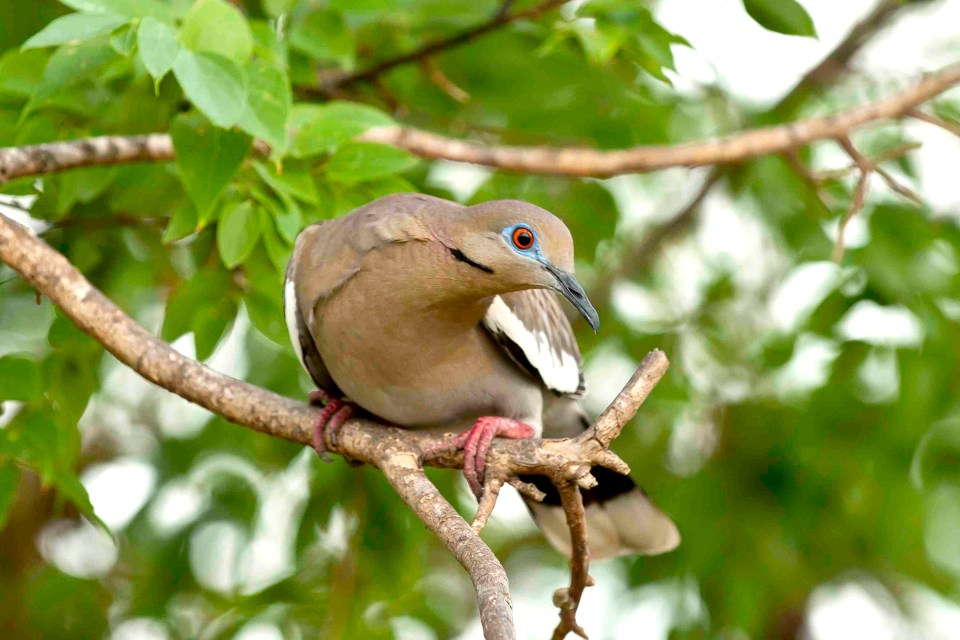
White-crowned Pigeon, Abaco, Bahamas (Gerlinde Taurer)

DOVE LOVE: APPRECIATING PIGEONS ON ABACO

Monday was International Pigeon Appreciation Day 2016, apparently. I’m not a huge fan of limitless species being accorded their own special day each year: “Celebrate International Plankton Day – Be Kind to your Favourite Protozoa!” or “Global Millipede Day: Take an Arthropod for a Walk!”.

White-crowned Pigeon (& header image)White-crowned Pigeon, Abaco (Alex Hughes)

I’m not sure where pigeons come in all this. In many cities feral pigeons are considered vermin – yet people love to feed them, even the ones with rotted feet and one eye. Especially those ones. Pigeons may be pests in crop fields, yet HEROES in wartime. They may be decorative, yet are, regrettably, good sport and delicious.

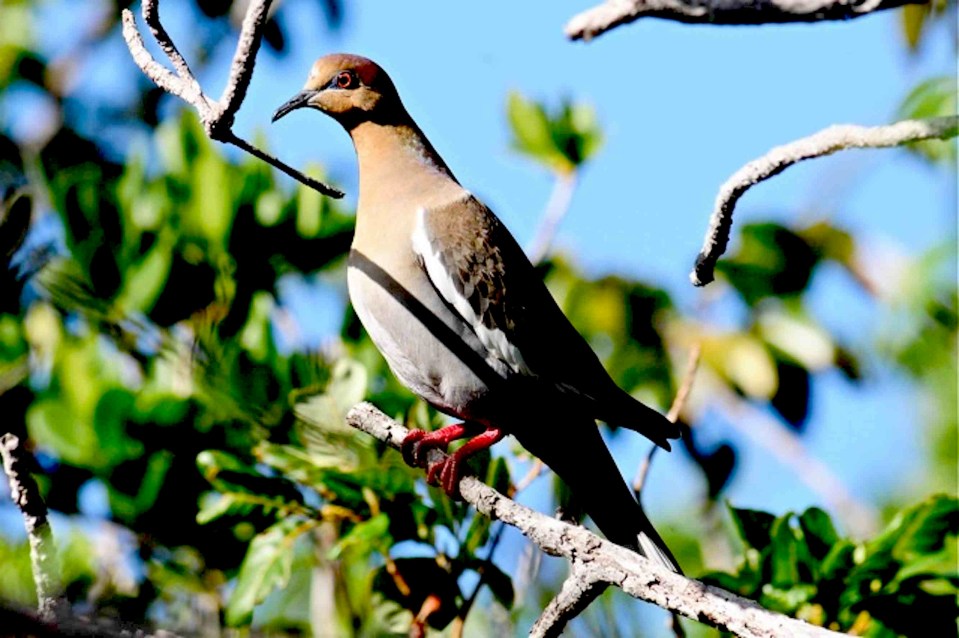
White-winged doveWhite-winged Dove, Abaco Bahamas - Tom SheleyWhite-winged Dove, Abaco - Tony Hepburn

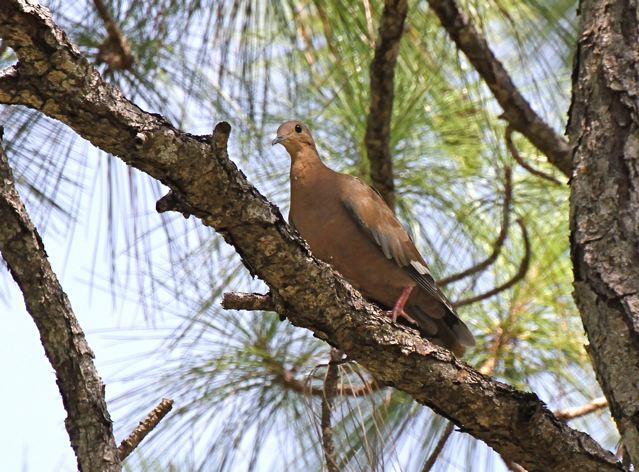
I’ve decided to take a broad view with pigeons and doves (there’s no significant difference), and not to be sniffy about Columba and their special day. They are pretty birds and they deserve it. So I’m featuring some Abaco pigeons and doves to enjoy, representing every species found on Abaco – and a bonus dove from New Providence at the end.

Eurasian Collared DoveCollared Dove, Abaco - Keith Salvesen / Rolling HarbourEurasian Collared Dove, Abaco (Bruce Hallett)

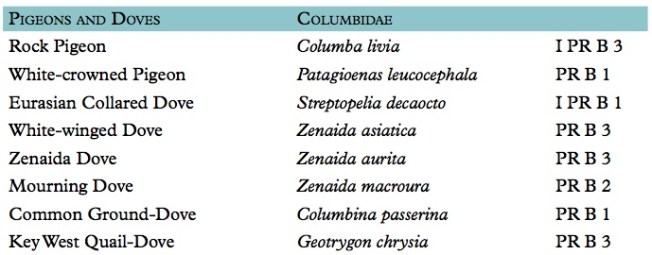
The Columbidae of Abaco: all permanent breeding residentsPigeons : Doves Abaco

Common Ground Dove (Tobacco Dove)Common Ground Dove, Abaco 1 (Tom Sheley)Common Ground Dove, Abaco (Keith Salvesen)

SPORT REPORT

PROTECTED SPECIES From a sporting and culinary point of view, the following pigeons and doves are protected by law at all times: Common Ground (Tobacco) Dove; Keywest Quail-Dove

SHOOTING IN SEASON The following have open season from roughly mid-September until March: Zenaida Dove; White-crowned Pigeon; Eurasian Collared Dove; Mourning Dove

UNPROTECTED – NO DESIGNATED CLOSED SEASON White-winged Dove (but why? they are fairly uncommon on Abaco); Rock Pigeon.

Zenaida DoveZenaida Dove, Abaco (Bruce Hallett)Zenaida Dove, Abaco (Bruce Hallett)

Key West Quail-Dove

The second bird of this pair was recently photographed by Milton Harris at the north end of Elbow Cay. More details HERE Key West Quail Dove, Nassau, Woody BraceyKey West Quail-Dove, Elbow Cay, Abaco (Milton Harris) 1a

Rock PigeonRock Pigeon, Sandy Point, Abaco Bahamas.Tom Sheley 2bRock Pigeon NYC (keith Salvesen)

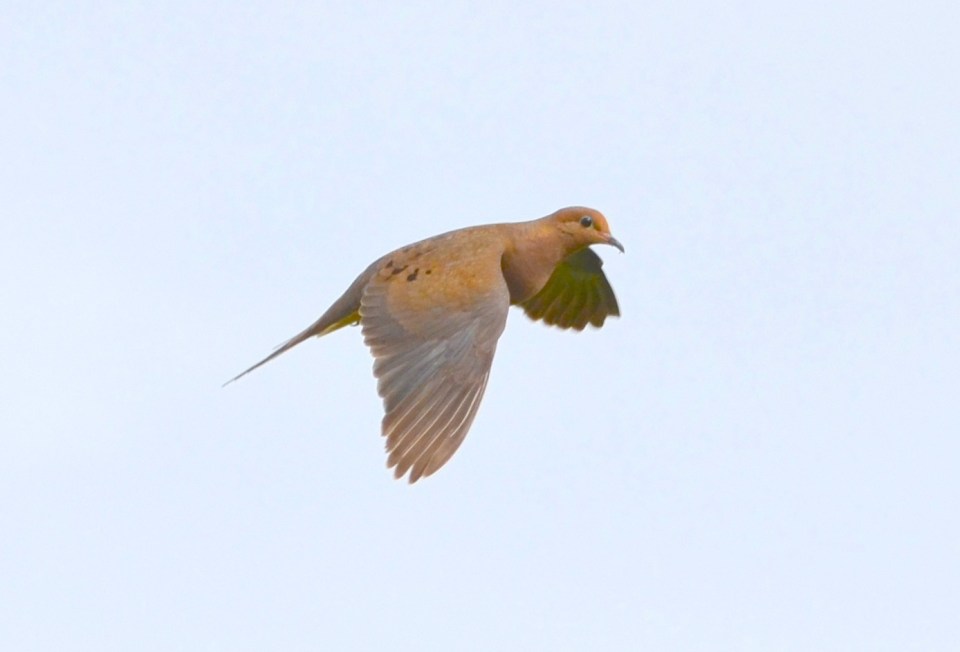
Mourning DoveMourning Dove, Abaco (Charles Skinner)

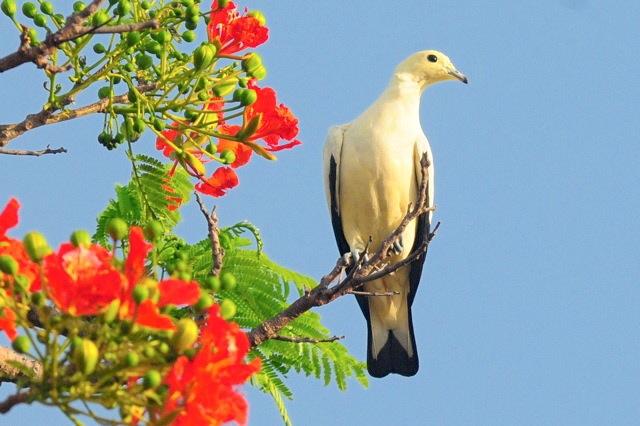
The birds shown above represent the 8 species found on Abaco. However, not far away in New Providence, there is a beautiful pigeon that has not yet made its way over to Abaco and has yet to be introduced there. I am ambivalent about the deliberate introduction of alien species, because of the frequently very real risks to native species in terms of territory, habitat, food sources and so forth. But where there is no detectable threat to the local species, perhaps there is no great harm. I’d certainly like to see these lovely birds flying around – if possible, as a protected species…

Pied Imperial Pigeon (Nassau)Pied Imperial Pigeon 1, Nassau (Woody Bracey) Pied Imperial Pigeon 2, Nassau (Woody Bracey).JPG

Photo credits: Gerlinde Taurer (1); Alex Hughes (2); Tom Sheley (3, 7, 13); Tony Hepburn (4); Keith Salvesen (5, 8, 14); Bruce Hallett (6, 9, 10); Woody Bracey (11, 16, 17); Milton Harris (12); Charles Skinner (15)

Unknown's avatar

TONY WHITE: CHAMPION OF BAHAMAS BIRDS


Tony White, Birds of Abaco launch, Delphi Club 3

Tony White, Keith Salvesen, Bruce Hallett & Woody Bracey

TONY WHITE: CHAMPION OF BAHAMAS BIRDS

Tony White passed away 2 days ago. The sad news has spread rapidly through the birding community and far beyond it. It is not my place to write a detailed appreciation of Tony’s life and achievements; others who have been his long-term friends, associates and birding companions are in a far better position to do so than I. However, I do have direct experience of Tony’s kindness, enthusiasm and pragmatism in connection with the compilation of The Delphi Club Book of the BIRDS OF ABACO

Tony with Caroline Stahala Walker, erstwhile parrot supremo of AbacoTony White with Caroline Stahala

It took 16 months or so from the initial idea of the project to the finished 30-contributor book and a launch party at the Delphi Club in March 2014. During that time I had amazing support from the birding elite of the Bahamas. The proposed book might well have been treated as misconceived fantasy by amateur hicks from out of town. Instead, we received nothing but courtesy, kindness, cooperation, and a willingness that the project should succeed.

Tony with Bruce Hallett (author of Birds of the Bahamas and TCI)Tony White, Birds of Abaco launch, Delphi Club 1

Tony was one of the invaluable experts on whom I knew I could rely. His emails were invariably cordial, helpful and to the point. When I asked if he would undertake a complete revision of the checklist for Abaco that appears in his indispensable book for Bahamas birders (see link below), he agreed without hesitation. In due course, and in conjunction with Woody Bracey, a new checklist for all birds recorded for Abaco – however rare – from 1950 until the day of publication was completed.

Tony in the field (Lynne Gape, BNT)Tony White in the filed (Lynne Gape)

When the book was launched Tony was there of course, his startlingly blue eyes bright with excitement. His friends Bruce Hallett and Woody Bracey, without whose help the book would never have been the avian showcase that it is, were also present. The contributions of all three were indispensable .

Tony after a Grand Bahama bird count (Erika Gates)Tony White

I have included some photos of Tony as we would all like to remember him, with thanks to Lynn Gape of the Bahamas National Trust and to Erika Gates, Grand Bahama.

Tony White, Bruce Hallett & Woody Bracey at “Birds of Abaco” launch; author aka RH (seated)Tony White, Birds of Abaco launch, Delphi Club V2

51KAMPYWDEL._SX323_BO1,204,203,200_

To read my original review of Tony’s magisterial book click HERE

To see Tony and Woody’s complete Abaco bird checklist, up to date as at March 2014, click CHECKLIST FV 06 table sun2 Since then, 5 new species have been recorded on Abaco.

RH 3 June 2016

Unknown's avatar

STIRRING TALES OF NORTHERN SHOVELERS


Northern Shoveler male. Abaco Bahamas. 2.12.Tom Sheley copy 2

STIRRING TALES OF NORTHERN SHOVELERS

I’m broadly in favour of self-identifying bird names. You know where you are with a Spoonbill. If its bill is spoon-shaped, it is one. Conversely if it isn’t, it isn’t. True, you might waste a lot of time looking for a brownish duck gadding about near a wall, but the general principle of WYCIIWYG (what you call it is what you get) is a useful one.

Northern Shoveler 2.Abaco Bahamas.2.12.Tom Sheley

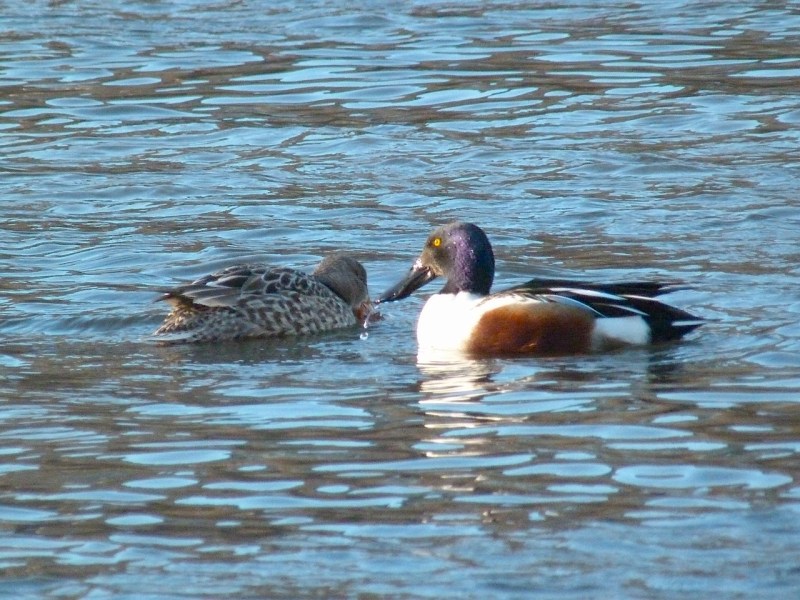
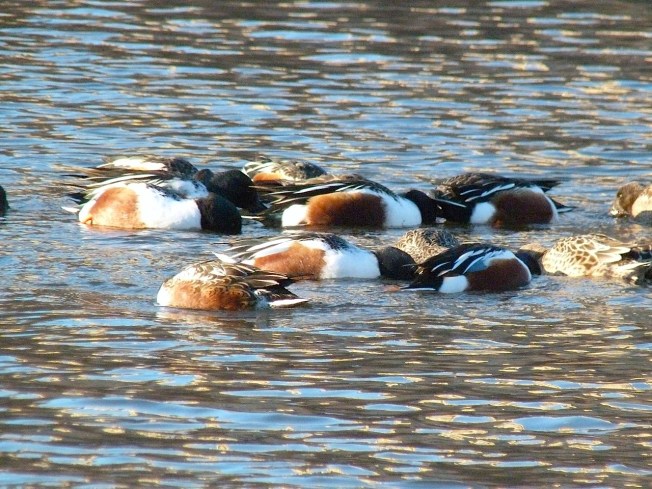
Thus with shovelers. Their beaks are shovel-shaped. They shovel about in the water to feed. It’s that simple. Being dabbling ducks, they are dab hands (wings?) at upending themselves to get that sturdy beak down in the water. These are highly specialist gadgets too, edged with ‘combs’ (lamellae) that strain out the water from a diet that includes aquatic vegetation and invertebrates.  You can see this arrangement in the male shoveler in the header image.

Northern Shoveler.Abaco Bahamas.2.12.Tom Sheley

The male shoveler has striking plumage, with one of those ‘mallard drake’-coloured heads that is green except when the light catches it and it looks blue. I say ‘looks’, because the blue shades apparent in bird plumage do not result from pigments (which absorb most colours but reflect the visible colours) but from so-called ‘structural colouration’ resulting from scattered light, with the blue wavelength dominant. So even the bluest of blue birds – a bluebird, say, or an indigo bunting – is not blue but appears blue. But the bright red pigmentation of a male Northern cardinal is ‘real’ colour. 

This male shoveler does not have a blue head…Northen Shovelers Foraging (Keith Salvesen) 5

Northern Shoveler (m & f) Abaco (Tony Hepburn) Northern Shoveler, Abaco (Woody Bracey)

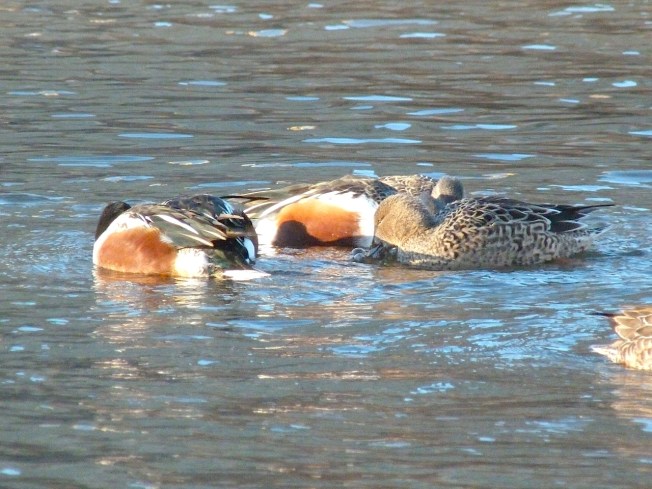
The shovelers shown above (except for the ‘blue’-headed one which comes from the set below) were all photographed on Abaco. I mentioned the familiar dabbling method of feeding earlier. However a few days ago in Central Park NYC on The Lake near Bow Bridge, I witnessed shoveler feeding behaviour that was new to me. It’s probably perfectly well-known and documented, but that’s amateurs for you**. A flock of about 30 male and female shovelers had split into smaller groups of between 2 and 10. They formed circles – sometimes very tight – and swam round each other with their heads underwater, stirring up the water as they paddled round, so that their bills were always immersed in freshly disturbed food possibilities. The effect was hypnotic, as you can see from the 15 sec video I took. Although in the clip it looks as though the birds are rapidly progressing to the right, they in fact stayed in much the same place. They were not very close to me, so these are illustrative images rather than ‘Audubon shots’.

Northen Shovelers Foraging (Keith Salvesen) 7Northen Shovelers Foraging (Keith Salvesen) 1Northen Shovelers Foraging (Keith Salvesen) 3

** Of course as soon as I looked I discovered that “Large groups of northern shovelers swim rapidly in circles to collect food from the surface by creating a funnel effect” (cheers to Wiki)Spinus-northern-shoveler-2015-01-n025006-w

Credits: Tom Sheley (1, 2, 3); Tony Hepburn (4); Woody Bracey (5); Keith Salvesen (the rest)

Unknown's avatar

BRIGHT & BEAUTIFUL BUNTING FOR AN ABACO CHRISTMAS


Painted Bunting.Bahama Palm Shores.Abaco Bahamas.Tom Sheleyimagesimagesimagesimages

BRIGHT & BEAUTIFUL BUNTING FOR AN ABACO CHRISTMAS

BUNTING  /ˈbʌntɪŋ/  (Noun)

[Yay! A Christmas gift of a puntastic avian / festive double-meaning]
  1. A small New World songbird of the cardinal subfamily
  2. Flags and other colourful festive decorations

imagesimagesimages

PAINTED BUNTINGPainted Bunting, Abaco (Erik Gauger)
Painted Bunting, Abaco (Tara Lavallee)Painted Bunting, Abaco (Tara Lavallee)

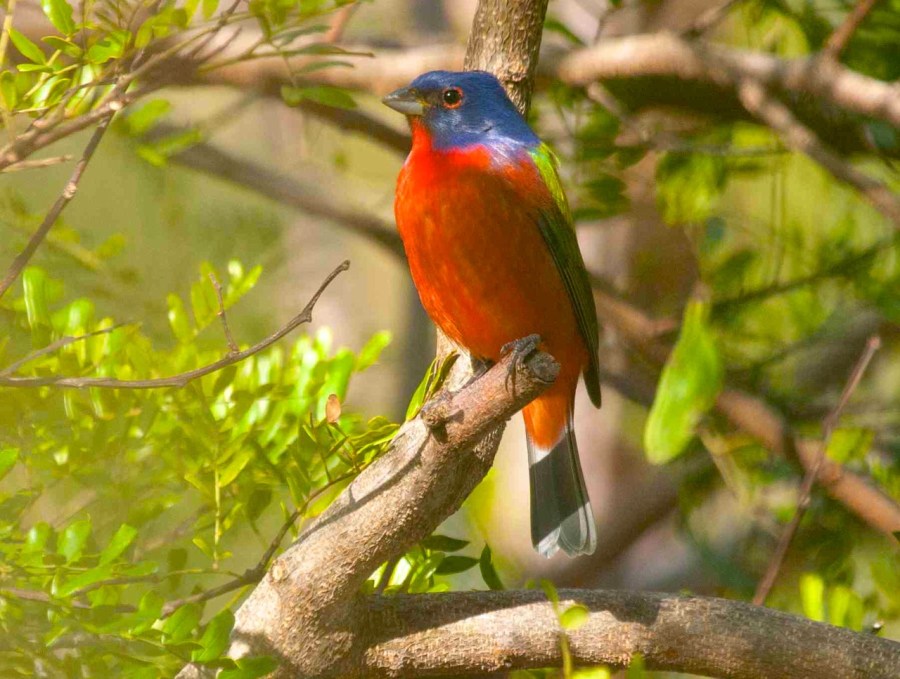
It’s hard to imagine a more Christmasy little bird than the Painted Bunting. Bright blue, red, green primary colours make for a spectacular small bird to grace any garden or feeder. There are other bunting species and close relations – e.g. grosbeaks – on Abaco. A common factor is the little fat beak and voracious seed greed…

                                                           painted-buntingimagespainted-bunting copy

Feeders at the Delphi Club. The first is of a female & a male PABU feeding together (RH). The second is a male PABU with a pair of black-faced grassquits (Sandy Walker)Painted Buntings (M & F), Delphi, Abaco (Keith Salvesen)Painted Bunting, Delphi, Abaco (Sandy Walker)

                                                        painted-buntingimagespainted-bunting copy

The next two wonderful photos are by Tom Sheley, a major photographic contributor to THE BIRDS OF ABACO. They were taken in Texas, not on Abaco, but I include them because of Tom’s strong connection with the birdlife of Abaco; and because on any view they are fantastic shots…
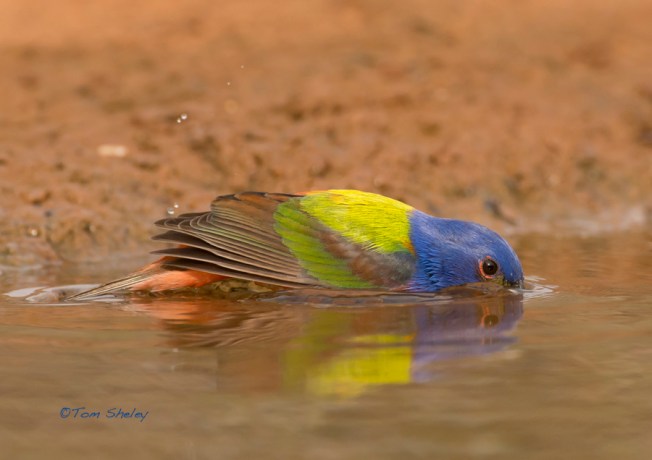
Painted Bunting reflection LR.Laguna Seca.South TX. 4.16.13.Tom SheleyPainted Bunting dip reflection LR.Laguna Seca.South TX. 4.16.13.Tom Sheley

Credits: Tom Sheley (1, 7, 8), Erik Gauger (2), Tara Lavallee (3, 4), Keith Salvesen (5) Sandy Walker (6); Birdorable Cartoons

imagesimagesimagesimages

Unknown's avatar

SAYING NO TO BEAUTIFUL BAHAMAS BIRDS…


Pied Imperial Pigeon 1, Nassau (Woody Bracey)

Pied Imperial Pigeon, Nassau

SAYING NO TO BEAUTIFUL BAHAMAS BIRDS…

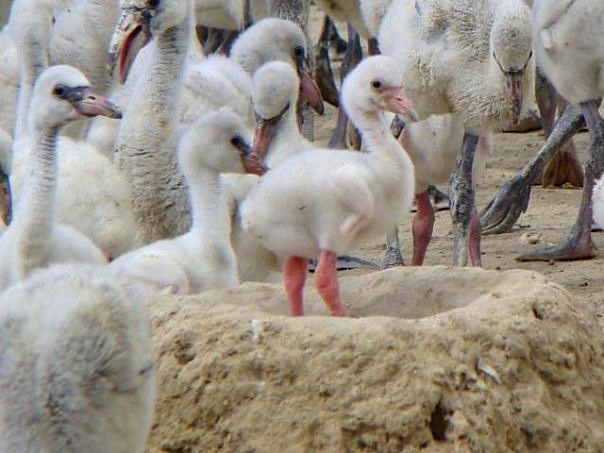
Flamingos & Chicks, Inagua (Melissa Maura)

Flamingos & Chicks, Inagua

Writing a bird book involves defining parameters at an early stage. Best to avoid working them out 6 months into the project; or (worse) letting them evolve gradually as each obstacle along the stony track to the printers is encountered. Far better to decide the general rules of engagement at the outset, and be able to tweak them later if need be. 

Brown Booby + egg, San Salvador (Woody Bracey)

Brown Booby on its nest, San Salvador

And so it was that we stayed for a convivial weekend with Peter and Jane Mantle to discuss the pros and the cons, the whys and the wherefores, the format and the style of a book to showcase the birds of Abaco. And how on earth to get started on the project…

Pied Imperial Pigeon 2, Nassau (Woody Bracey).JPG

Pied Imperial Pigeon, Nassau

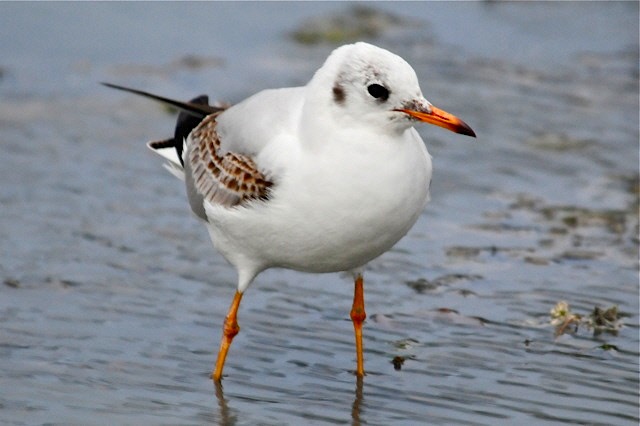
Black-headed Gull imm, New Providence (Bruce Hallett)

Black-headed Gull (immature), New Providence

One thing was clear at the outset. It was essential that every photograph in the book would have to be taken on Abaco. It wasn’t to be ‘The Birds of Abaco including Birds from Grand Bahama, New Providence, Eleuthera and Inagua that You Might also Find on Abaco’. Or ‘The Birds of Abaco, Mostly’. And there was to be no cheating.

burrowing-owl-great-inagua-woody-braceyjpg

Burrowing owl, Great Inagua

The project involved the work of some 30 photographers in all, from the prolific to a couple of people who offered a single excellent photo. I amassed a large archive, though only a percentage could be used. For example many fine photos fell by the wayside because resolution was inadequate for high-quality print purposes.  

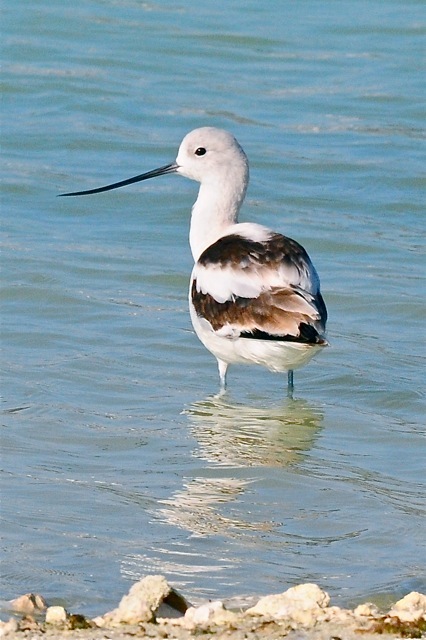
American Avocet, Bahamas 1 (Tony Hepburn)

American Avocet, Nassau

I also collected plenty of folders containing images of birds we desperately wanted to include, that were not all taken on Abaco but were part of a wider field trip. These were ruthlessly (but painfully) excluded from consideration. In fact, to stick within the (self-imposed) guidelines, I set aside all photos that I was not certain had been taken on Abaco. Where there was doubt, they were out.

Key West Quail-Dove, Nassau, Woody Bracey

Key West Quail-Dove, Nassau

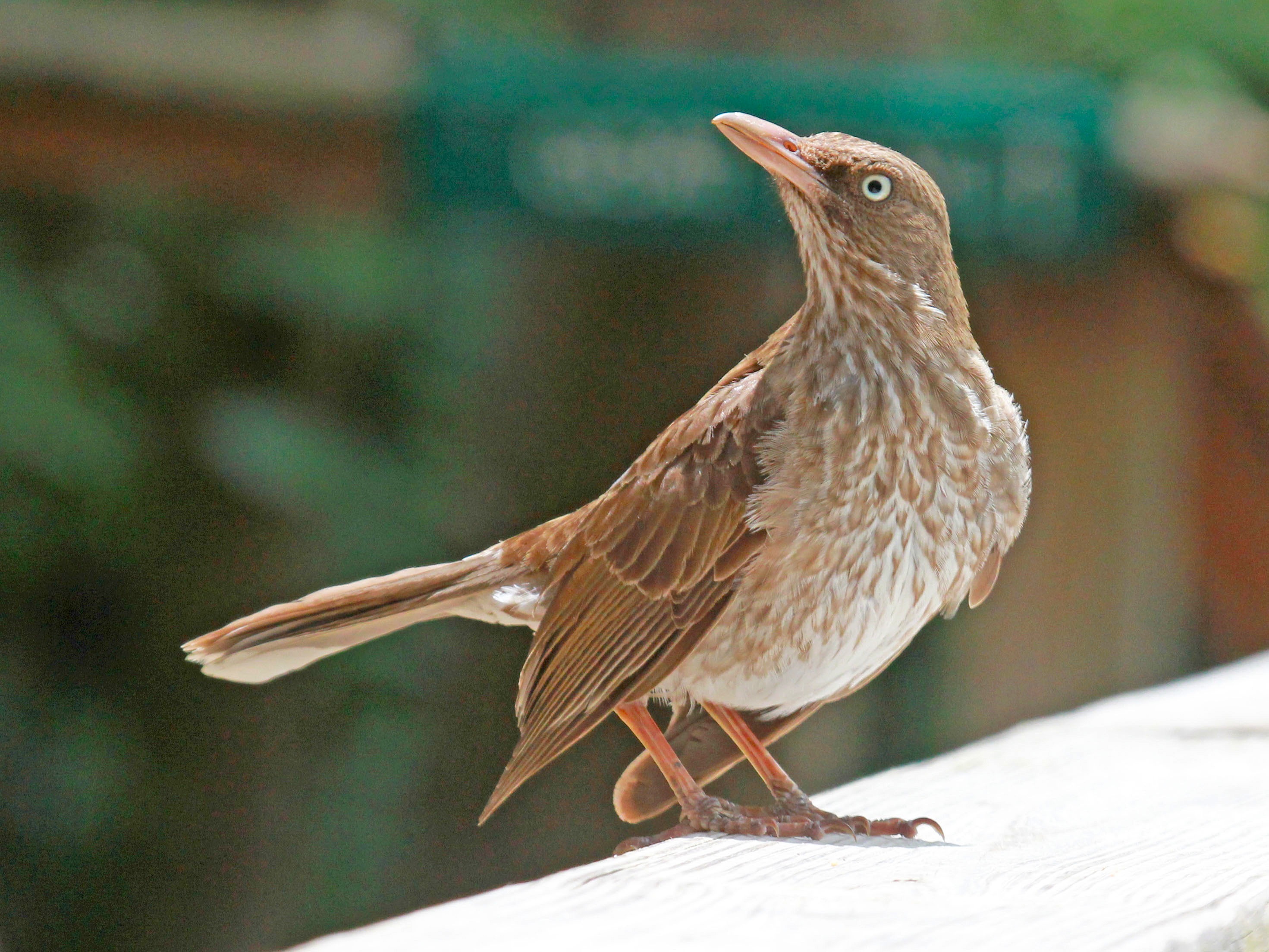
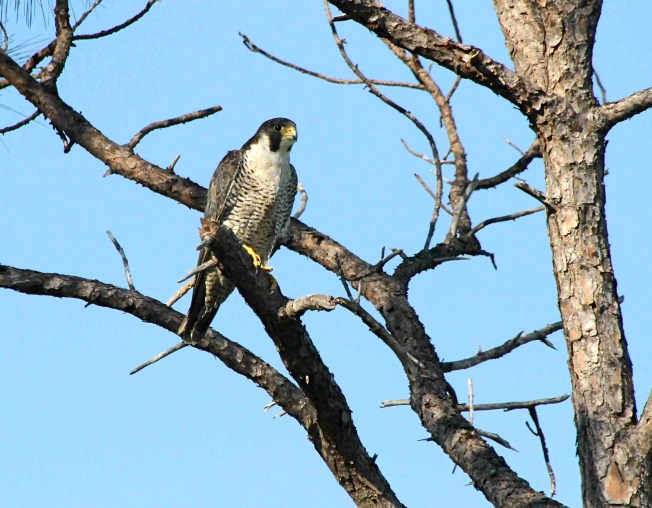
This post contains a selection of photos from the Aviary des Refusés. We would have loved to have included the peregrine falcon and burrowing owl, for example, but had no Abaco images to use then. Other bird species were in any event disqualified for being unknown on Abaco. A Pearly-eyed Thrasher recently found its way to Treasure Cay, this first recorded for Abaco; yet could be found elsewhere in the Bahamas two years ago.

Peregrine Falcon (Woody Bracey) sm

Peregrine Falcon, New Providence

Pearly-eyed Thrasher, San Salvador (Woody Bracey) jpg

Pearly-eyed Thrasher, San Salvador

Horned Lark, Nassau (Woody Bracey)

Horned Lark, Nassau

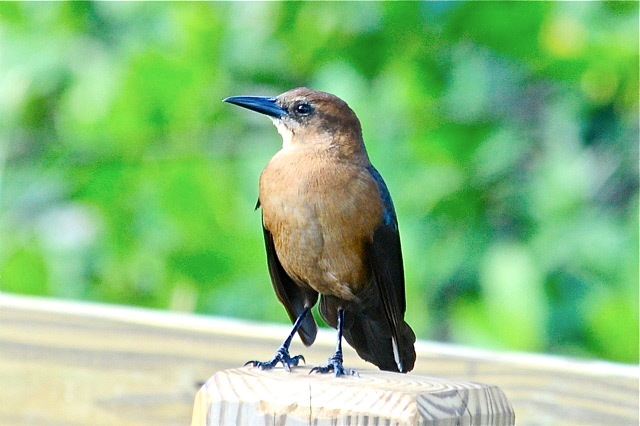
Boat-tailed Grackle (f), Nassau (Woody Bracey)

Boat-tailed Grackle (f), Nassau

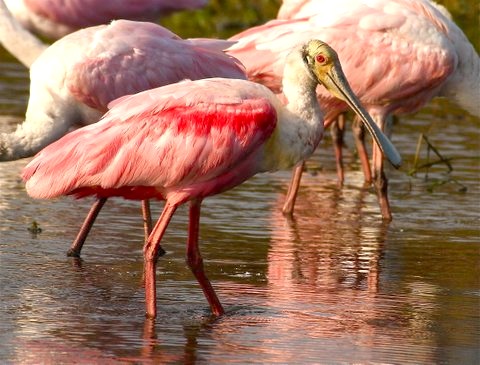
Roseate Spoonbill WB 59_IMG_6302 copy 3

Roseate Spoonbill WB 58_IMG_6230 copy 3
Roseate Spoonbill, Great Inagua

Cuban Grassquit, Nassau (Woody Bracey)

Cuban Grassquit, Nassau

Brown-headed Nuthatch, Grand Bahama (Woody Bracey) cr sm copy

Brown-headed Nuthatch, Grand Bahama

American Avocet, San Salvador (Woody Bracey)

American Avocet, San Salvador

Flamingos & Chicks, Inagua (Melissa Maura)

Flamingo Chicks, Inagua

Credits: Woody Bracey for taking / supplying a most of these great images, with Tony Hepburn, Bruce Hallett, Melissa Maura (the wonderful Flamingos) and all those involved in the joint field trips from which some of these photos originate. And Peter Mantle for having the idea for the book and for being wholeheartedly supportive through thick and thin…


Unknown's avatar

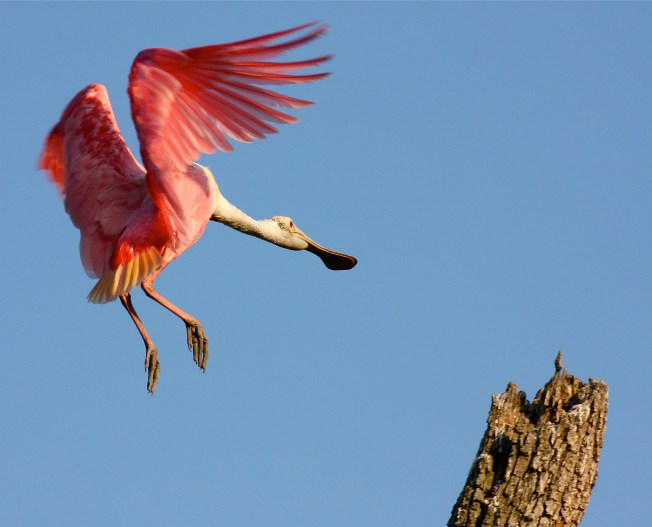
A RARE SPOONBILL VISITS GILPIN POND, ABACO


Roseate Spoonbill, Gilpin Pond, Abaco (Keith Kemp)4

A RARE SPOONBILL VISITS GILPIN POND, ABACO

In past posts I have mentioned what an excellent birding place Gilpin Point has become. There’s the large pond; and right beside it, dunes, the other side of which is a fine secluded beach and the ocean. The place is a magnet for birds of all shapes and sizes, from brown pelicans down to the tiny endemic Bahama woodstars. There are water birds, wading birds, shorebirds and coppice birds. It has become a place where Abaco parrots regularly congregate. You can reach the Gilpin FB page HERE.

A while back, there was a rare visitor, a Flamingo that stayed a few months then disappeared again. It was in some ways a sad reminder of past flamingo glory days, when they were commonly found on Abaco. Now they are confined to Inagua apart from the occasional vagrant. For more on the the topic, with wonderful photos by Melissa Maura of the breeding season on Inagua, click HERE. Another rare vagrant – formerly quite plentiful on Abaco – was recently found at Gilpin by Keith Kemp, who skilfully managed to get photos of it from some distance away: a Roseate Spoonbill.

Roseate Spoonbill, Gilpin Pond, Abaco (Keith Kemp)2

I have featured spoonbills before in a post IN THE PINK, but the photos were taken on New Providence by Woody Bracey. I had no Abaco spoonbill photos. To be fair, we did once see one while we were bonefishing far out on the Marls. It was on the edge of the mangroves a good distance away, and the pale pink tinge caught my eye. My photo with an iPhone 4 (the one with the risibly cr@p camera – remember?) was so utterly pathetic that I dumped it (the photo, I mean, but the phone soon followed). But we knew what we had seen, and that was enough.

roseate-spoonbill                roseate-spoonbill               roseate-spoonbill

STOP PRESS 1 I should add that a friended visited the pond after the side-effects of Hurricane Joaquin had receded, and the spoonbill had gone. So the spoonbill alone would not make the journey worthwhile!

STOP PRESS 2 A check of eBird reveals that a handful of spoonbills have been reported in Northern Bahamas this year, about 6 in all. Almost none before that. I have the impression that birding intensity in The Bahamas, coupled with the ease of uploading reports to eBird, will increasingly make a difference to the incidence of sightings of uncommon and rare species, cf the recent WHIMBRELS of Grand Bahama.

Spoonbill, Gilpin Pond, Abaco (Keith Kemp)3

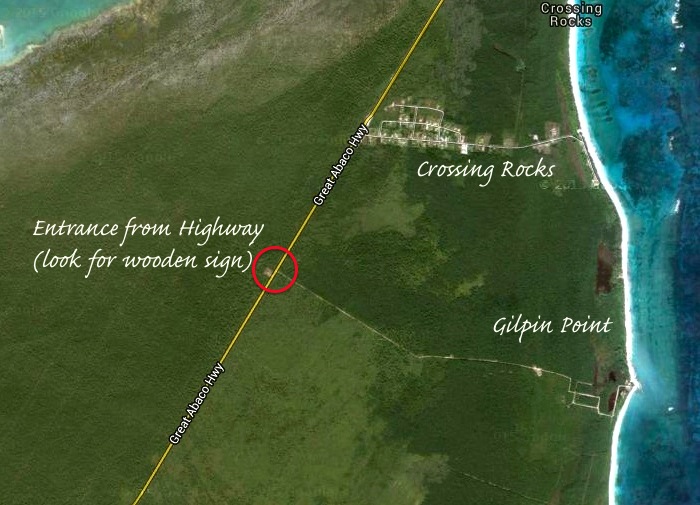
GILPIN POINT LOCATION

Gilpin Point is just south of Crossing Rocks. The brackish pond – sometimes an alarming reddish colour that I assume is algal – is just inland from the shoreline and provides a wonderful haven for birds. It’s a long mile from the highway. There is no vehicle nor even human traffic apart from occasional birders and walkers. Please note that the drive and the property are private. However Perry Maillis is always welcoming to tidy birders who (as I have written elsewhere) bring only enthusiasm and take only photographs (though a picnic on the beach is worth considering. And maybe a swim…). 

Helpful location mapsGilpin Map 1 Gilpin Map 2 Gilpin Map 3

WHAT SPECIES MIGHT BE FOUND AT GILPIN?

A brief list includes regular visits from parrots. It’s the only place we have found a furtive little sora skulking in the reedy margins. It’s a reliable spot for herons and egrets of every kind, white-cheeked (Bahama) pintails by the score, black-necked stilts and lesser yellowlegs. Occasionally a northern pintail, ruddy duck or merganser. Turkey vultures. Limpkins. We’ve seen belted kingfishers, Bahama woodstars, cuban emeralds, american kestrels, Bahama swallows, doves, pigeons, western spindalis and many more coppice birds besides. One flamingo. One spoonbill. Pelicans have been seen on the rocks on the beach. Shorebirds include turnstones, sundry plovers & sandpipers, and oystercatchers. You may well see tropicbirds and frigate birds off-shore, and assorted gulls and terns. I can’t personally be more species-specific  because I have never ‘shorebirded’ properly there, but I have noticed an impressive mix…

When we launched THE BIRDS OF ABACO at the Delphi Club, we were delighted that Pericles was able to come to the party. He took a few photos and I’m sure he won’t mind my including a small gallery to end with, featuring a couple of the Gilpin entries in his signed copy.

10153160_10152104925423929_44675888_n 1926631_10152104925178929_80294246_n11856_10152104921903929_1879699722_n 1525102_10152104925648929_1614125758_n

Bahamas birding nobility: Tony White with Caroline Stahala; Woody Bracey & Bruce Hallett
1911624_10152104926303929_1596185906_n

Credits: Keith Kemp for the great spoonbill photos; Perry for the Delphi photos

Unknown's avatar

WOOD STORKS ON ABACO? CLOSE BUT NOT CLOSE ENOUGH…


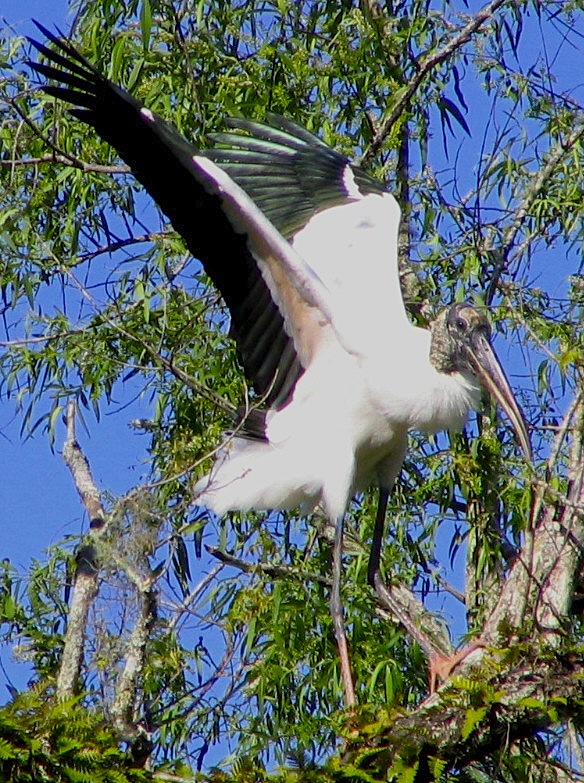
Wood stork in flight (Huhnra, Wiki)

WOOD STORKS ON ABACO? CLOSE BUT NOT CLOSE ENOUGH…

I very rarely write about birds that you can’t find on Abaco, especially ones that have never been recorded there. In fact, I don’t think I have ever done so. The nearest was the critically endangered endemic BAHAMA ORIOLE, until quite recently available on Abaco. For the familiar and depressing reasons it was deemed extirpated in the 1990s and is found now only in very specific area of Andros. Its future is very uncertain: another species a feather’s width from extinction.

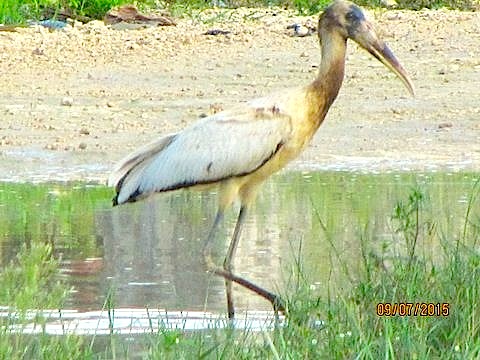
Which brings me to the Wood Stork Mycteria americana, a fine bird with a breeding population in Florida. Yet the last one recorded for the Bahamas was 51 years ago – and not on Abaco. It’s surprising that the species is not driven across the stretch of sea to the northern Bahamas by curiosity or more plausibly by storms (as with other vagrant species).

Wood Stork Fl. (Mehmet Karatay, Wiki)

The first Bahamas sighting of a Wood Stork since 1964 occurred on September 4th at the unromantic-sounding ‘Freeport Dump’ on Grand Bahama, when naturalist and birding guide Erika Gates found one. The bird was still there on September 7th when Woody Bracey flew over from Abaco and joined Erika to check. Here it is.

Wood Stork, Grand Bahama (Erika Gates) copy

Woody took a date-stamped shot for future reference

IMG_4529

The distance from Freeport to Marsh Harbour, Abaco is about 100 miles as the stork flies. But from the eastern end of Grand Bahama to the nearest point on Abaco is much closer – 35 miles or so. So with a following wind perhaps it won’t be another 51 years until the next Wood Stork is seen in the Bahamas. And maybe next time it will fly as far as Abaco…

Wood Stork, Florida (Googie Man, Wiki)

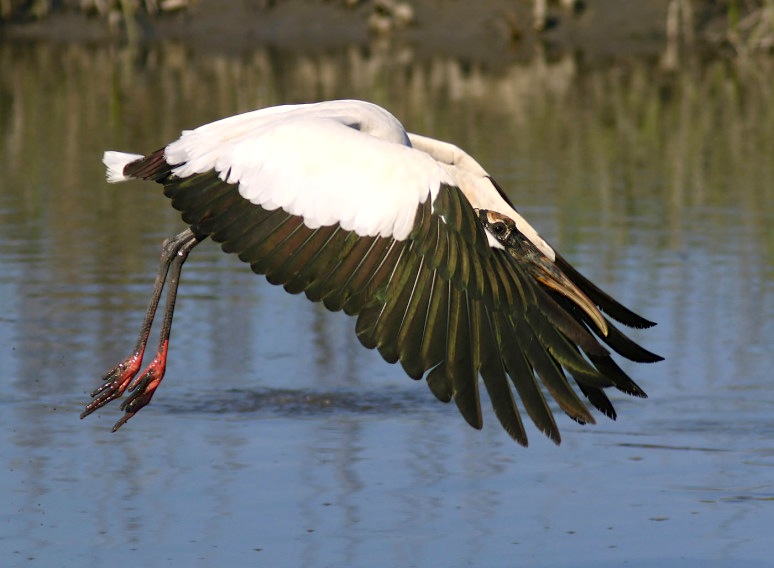
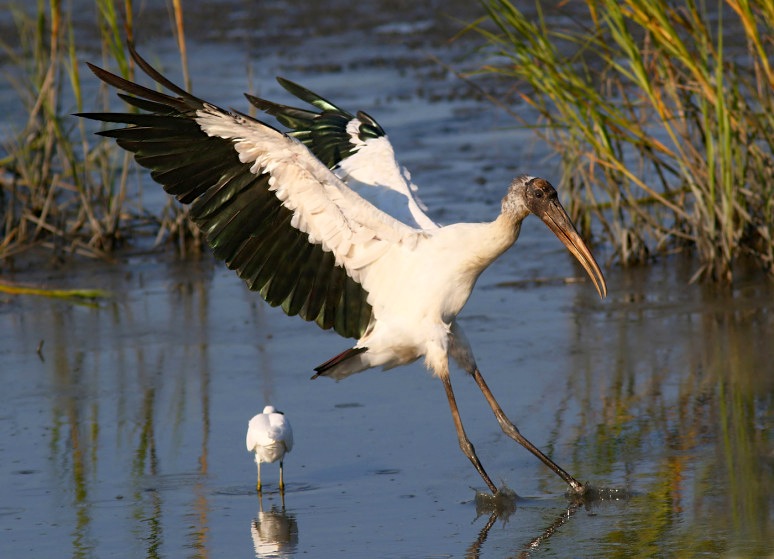
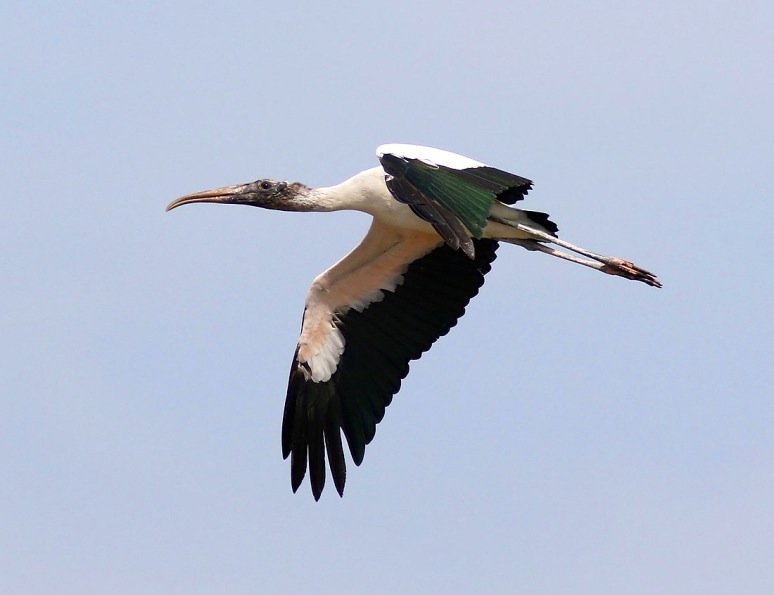
I sometimes feature photos by Florida photographer PHIL LANOUE, whose website is a must for anyone with an interest in birds. Among his specialities are the wood storks in his area, and I have chosen 4 outstanding WS images to end with (thanks as always to Phil for use permission).

Wood Stork in Flight, Florida (Phil Lanoue)Wood Stork landing, Florida (Phil Lanoue)Wood Stork in Flight, Florida (Phil Lanoue)Wood Stork in water, Florida (Phil Lanoue)

Credits: Erika Gates, Woody Bracey, Phil Lanoue, ‘Huhnra’, Mehmet Karatay, ‘Googie Man’

Unknown's avatar

‘CHECK OUT THE WEB’: SEMIPALMATED PLOVERS ON ABACO


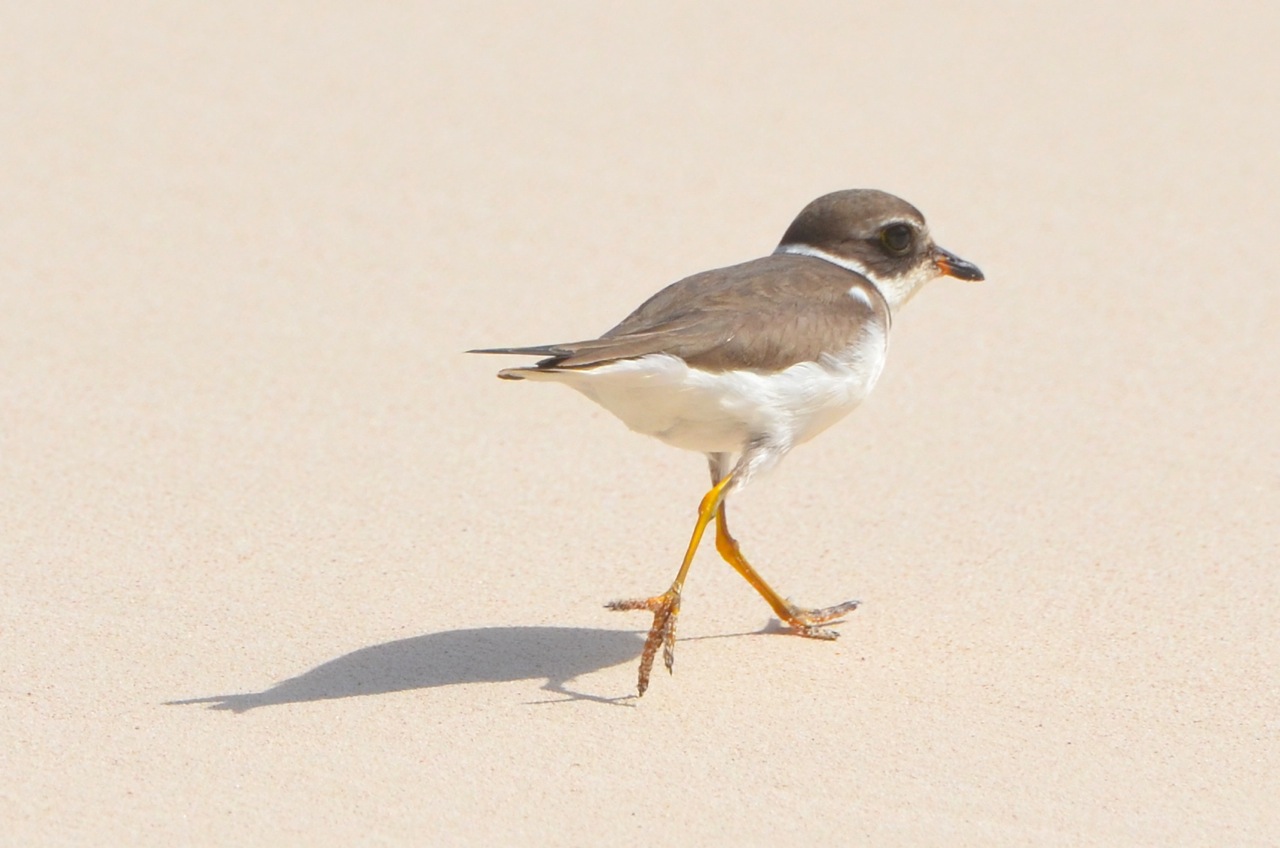
Semi-Palmated Plover, Abaco (Alex Hughes)

‘CHECK OUT THE WEB’: SEMIPALMATED PLOVERS ON ABACO

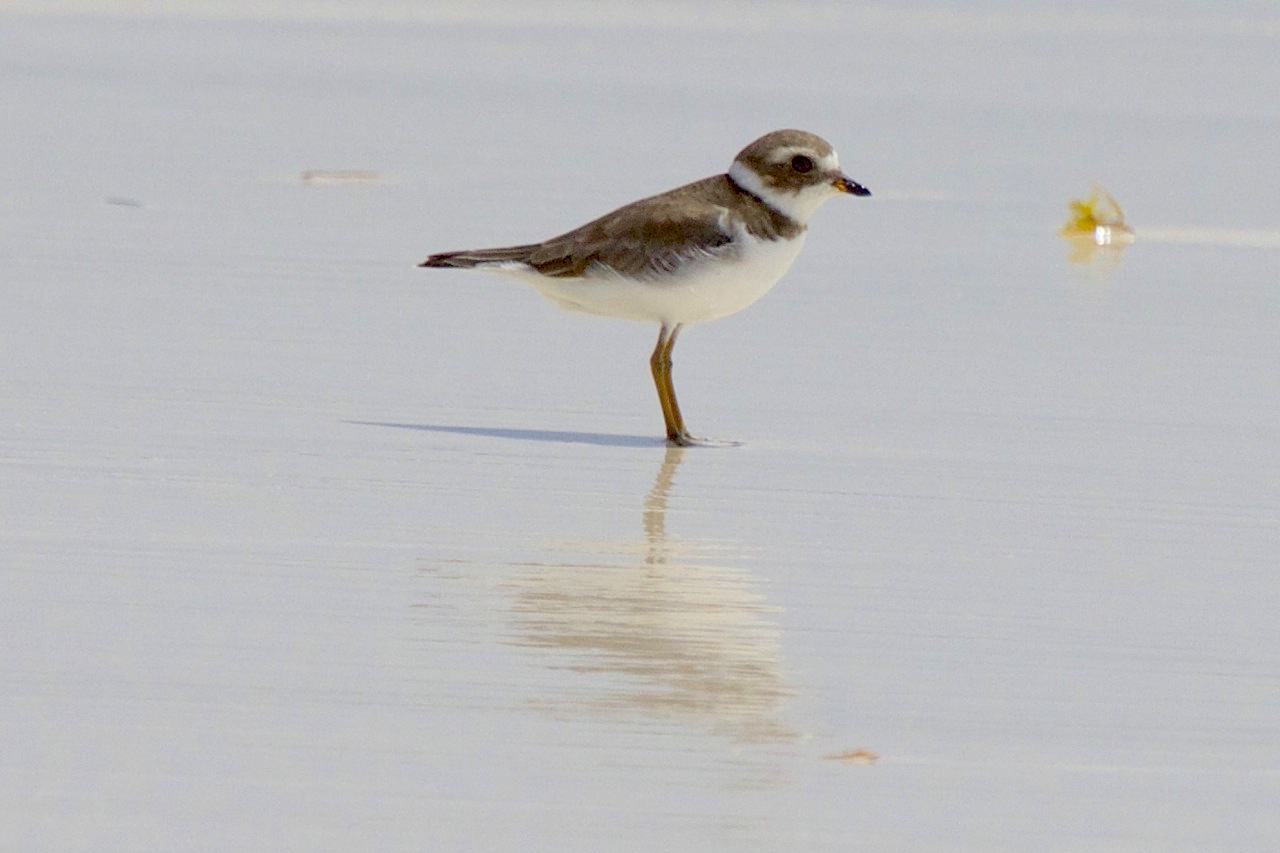
“Semipalmated”. You what? Come again? Ehhhh? My reactions to the word until embarrassingly recently. In fact until the steep learning curve involved in writing a bird book made some all of the terminology clearer. Plovers and sandpipers both have semipalmated versions, and I’ll take the semipalmated plover (Charadrius semipalmatus) first.

Semipalmated Plover, Abaco (Woody Bracey)

WHAT SHOULD I LOOK FOR?

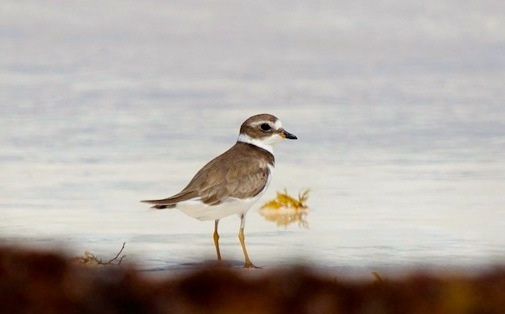
A small shorebird with a grey-brown back and wings, a white underside with a single black neck band, and orange legs. They have a brown cap, a white forehead, a black eye mask and a short black bill with an orange base to it. And feet to be discussed below.Semi-palmated Plover WB P1001211 copySemipalmated Plover, Abaco (Tony Hepburn)

WHERE DO THEY LIVE?

Their summer home and breeding habitat is on the beaches and flats of northern Canada and Alaska. They nest in scrapes on the ground right out in the open. In the Autumn these little birds set off on long journeys south to warmer climes until Spring: the coasts of the southern states, Caribbean and South America. On Abaco, they are fairly common in certain areas including the beach at Delphi. Like other plovers, these  birds are gregarious and will mix in with other shorebirds – which can make them hard to pick out in the crowd.Semipalmated Plover, Abaco (Charles Skinner)

GET ON WITH THE ‘SEMIPALMATED’ BIT, PLEASE

‘Semipalmated’ refers to the partial webbing between their toes. There are different degrees of palmation, as these handy graphics demonstrate:

Semipalmate: in practice, very hard so see in the field e.g. plovers & sandpipers semipalmate

Palmate: full webbing across the ‘front’ 3 toes, e.g. gulls

palmate

Totipalmate: all toes are fully webbed e.g. cormorants

totipalmate

Nonpalmate: please supply own imagination 

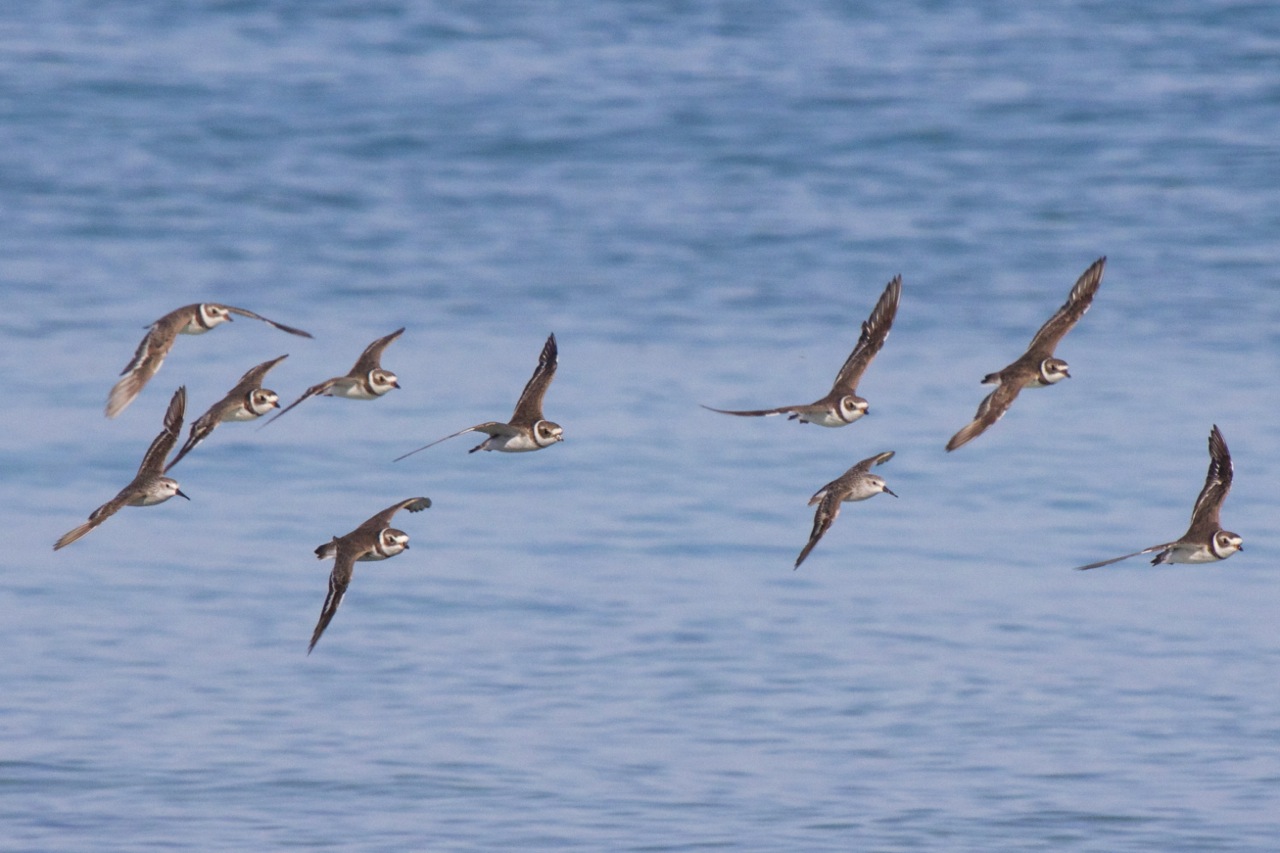
Gregarious flight: there are sandpipers in the mix (clue: long bills)Semipalmated Plover, Abaco (Alex Hughes)

WHAT DO THESE BIRDS EAT?

Semipalmated plovers are much like any other small shorebird foraging on beaches and foreshores. They eat insects, crustaceans and worms. Here is a bird in a promising place for its preferred diet.

Semipalmated Plover, Abaco (f, nb) Bruce Hallett FV

ANYTHING ELSE TO LOOK OUT FOR?

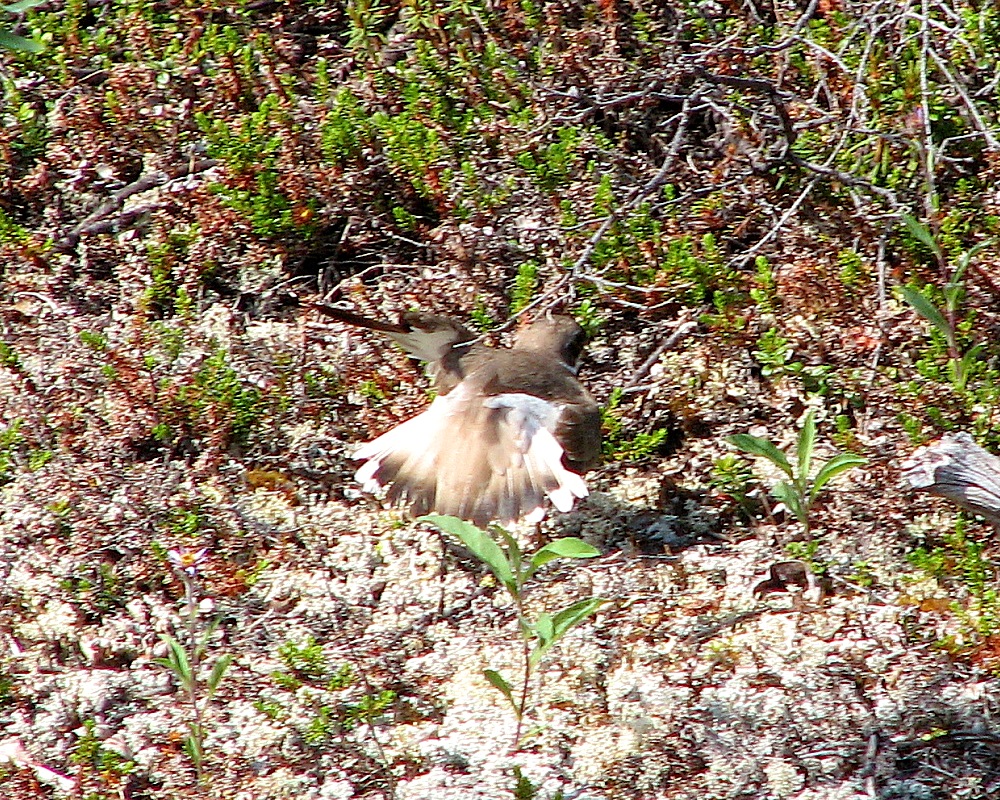
Like other plover species – Wilson’s and Killdeer for example – a semipalmated will  use the ‘broken wing’ ploy to lure a predator away from a nest and the eggs or chicks in it. As it flops about pathetically on the sand looking vulnerable, it actually moves gradually further away from the nest. If it comes to the crunch it is able to take wing rapidly, leaving a very puzzled predator behind.Semipalmated_Plover,_broken_wing_display (D Gordon E Robertson)

Semipalmated plovers flying with 2 sandpipersSemi-palmated Plover AH IMG_0612 jpg

Credits: Alex Hughes (1, 6, 9, 10); Woody Bracey (2, 3); Tony Hepburn (4); Charles Skinner (5); Bruce Hallett (7); D Gordon E Robertson (8);  Bird foot infographics people.eku.edu AH IMG_1637 copy

Unknown's avatar

SHEARWATERS ON ABACO: SAD TALES FROM THE SEA


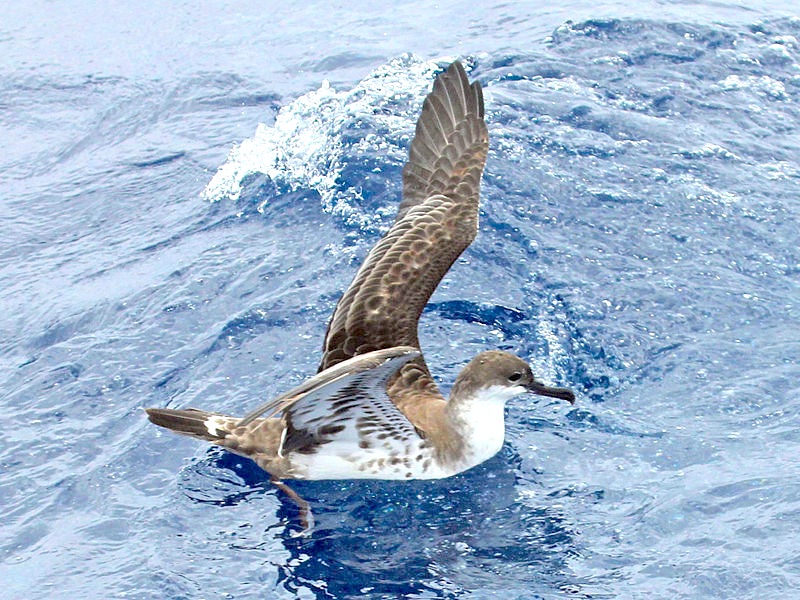
GREAT SHEARWATER Puffinus gravis (Patrick Coin Wiki)

SHEARWATERS ON ABACO: SAD TALES FROM THE SEA

We do not generally do sad or sombre at Rolling Harbour. It’s a beautiful and happy place, and the Delphi Club is a haven of good fellowship and good craic (stemming no doubt from its Irish connections). But I have to report on a sad occurrence on the beach at Delphi and, as it turns out, at many other Abaco locations (and beyond) during June – a notable number of shearwaters being found dying or dead on beaches or else in the sea, their bodies in due course being washed in on the tide.

There are quite a few species of shearwater worldwide, of which 5 are recorded for Abaco. The only permanent breeding resident is the Audubon’s Shearwater, a bird that is quite commonly seen out at sea though not, I imagine, on land. We never managed to obtain a photo of one for “The Birds of Abaco”. I presume there are breeding colonies on Abaco, but not that I have heard about.

Shearwater Checklist, Abaco

As the checklist above shows, three of the other shearwaters are rare transients. These birds fly long migration routes over the ocean and so the casual birder is in practice unlikely to encounter one, let alone get a photograph. The Manx can be ignored as an aberration – the V5 means that one or two vagrant individuals have been recorded since (say) 1950. Great Shearwater Puffinus gravis - Patrick Coin Wiki

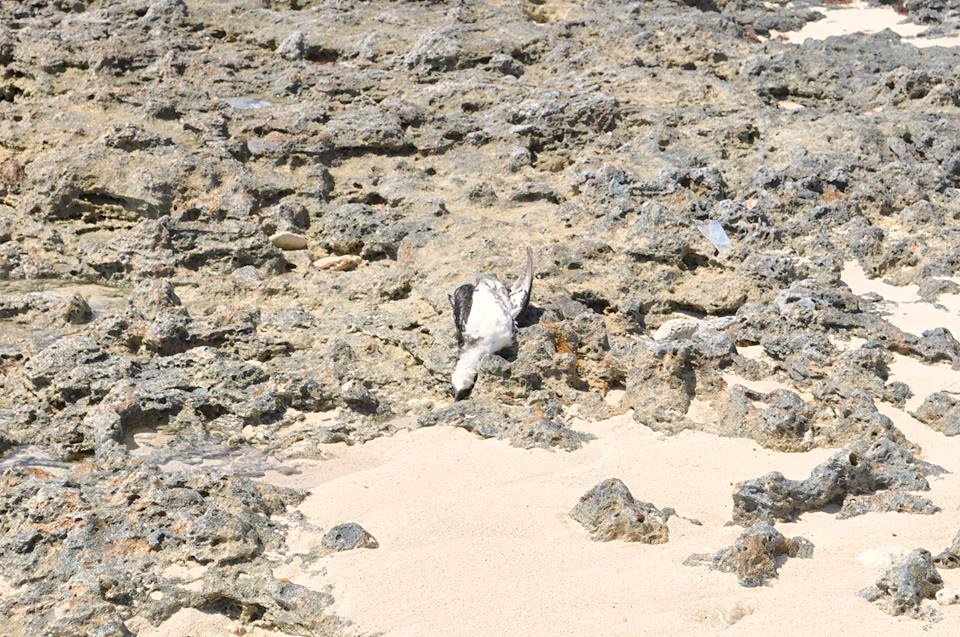
My first inkling that something unusual was occurring came a week ago from a FB post by Melissa Maura, whose wonderful parrot and flamingo photos feature elsewhere in these pages. She said …on my rugged Abaco ocean beach last week, were many dead magnificent seabirds – greater shearwaters (about 5) and a couple of Frigate birds… They didn’t appear to wash in on the waves, but appeared to have perished perhaps from exhaustion on the beach”.  Various later comments suggested that this phenomenon had been noted periodically in the past, the last time 4 or 5 years ago. 

Great Shearwater (dec'), Abaco (Melissa Maura)

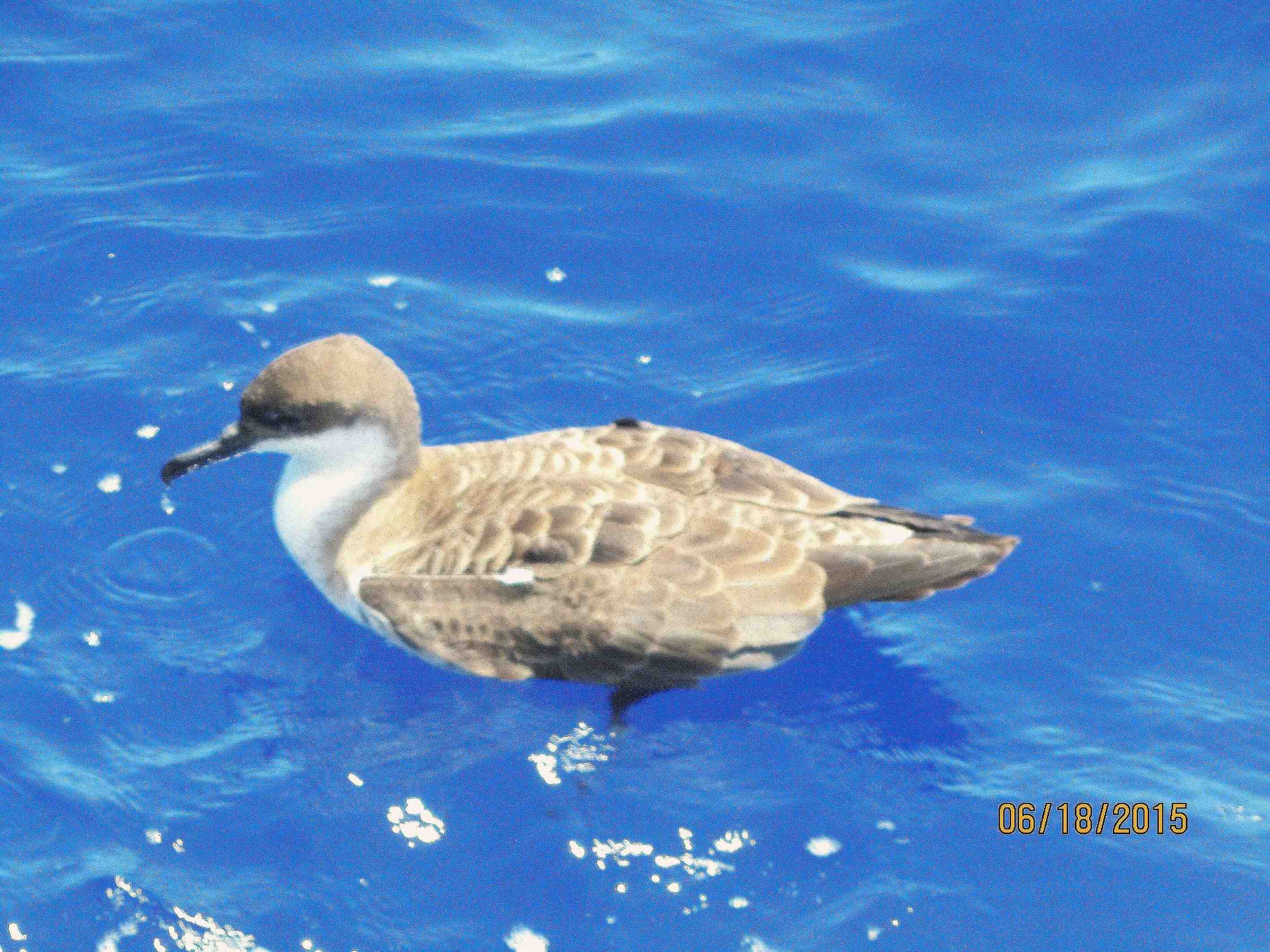
This was followed a couple of days later by evidence from well-known birding maestro Woody Bracey that living great shearwaters were in Abaco waters, perhaps confirming that they are in mid-migration at the moment. The one in #2 was “caught” 3 miles off Great Guana Cay.

Great Shearwater Abaco (Woody Bracey)Great Shearwater, Abaco boated (Woody Bracey)

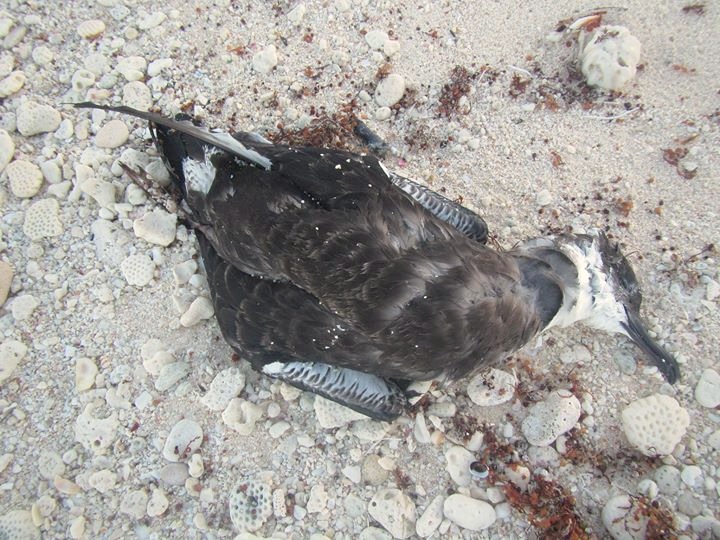
Then a couple of days ago Jane Mantle emailed me with photos of some dead birds on the beach at Delphi saying that half- dead birds are washing up on the beach ‘only for the vultures to finish off’.  We must have over 20 with more to come”. I circulated these to the ‘usual suspects’ for ID and comment.

Great Shearwater, Abaco (dec'd) (Jane Mantle)Great Shearwater, Abaco (dec'd) (Jane Mantle)

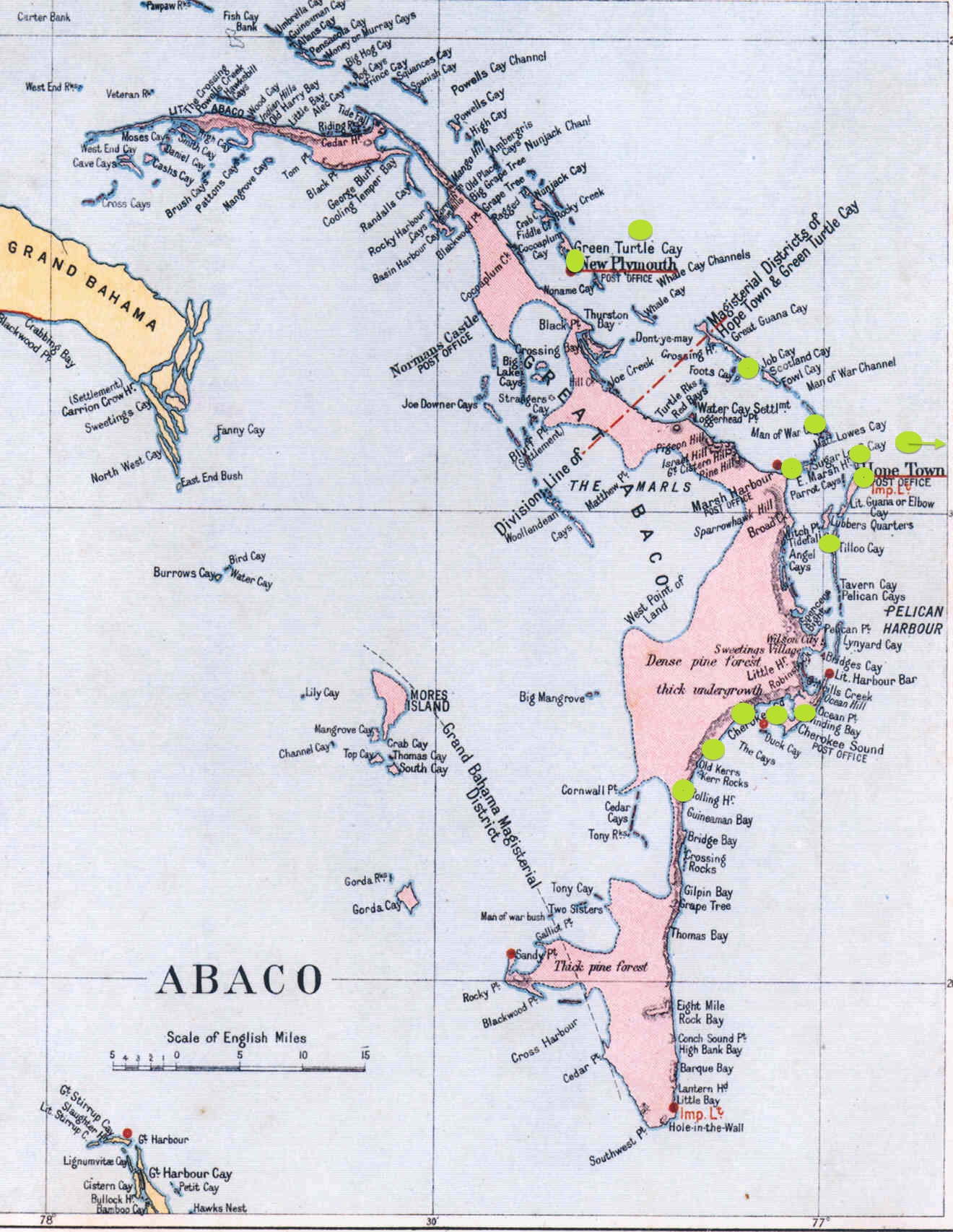
I also posted the photos on my RH FB to see if others had seen anything similar. Many thanks to all those who ‘liked’, shared or commented on the post. Here is a summary of the responses, from which a pretty clear picture emerges of widespread recent shearwater deaths on Abaco mainland and Cays.

  • Delphi Club Beach – 20 plus
  • Bahama Palm Shores – ‘many many’ dead birds washed up on the shore
  • Casuarina Beach – 1
  • Cherokee (Watching Bay) – 3 or 4
  • Cherokee (Winding Bay) – 4
  • Marsh Harbour area – about 5
  • Great Guana Cay, southern end   – 1 (possibly a gull)
  • Tilloo Cay – 13 at least on Junk Beach, more than ever seen (see photos below)
  • Elbow Cay – 2 + 1 Atlantic side beach near Abaco Inn
  • Elbow Cay – 2, North End
  • Green Turtle Cay beach – 2
  • Green Turtle Cay, offshore – “a lot in the water”
  • Man-o-War Cay – 1 by the roadside
  • Ocean 20m from HT Lighthouse – 2 in the sea

also Exuma Sound (5 birds), Briland Beach Harbour Island (“some”) and Shroud Cay (gull?”)

SIGHTINGS MAP, ABACO AS AT 09.00 JUNE 25 (2X click to enlarge)
Shearwater Map, Abaco

Shearwaters at Tilloo Cay (Janie Thompson)

Great Shearwater (dec'd) Tilloo Cay Abaco988563_780040245445527_87776362163085216_n10429826_780040222112196_5624095942981629125_n

Shearwaters on Elbow Cay (Rudolf Verspoor)

11406243_10153041925951245_9107566668485466585_o 11537917_10153041926991245_4040884745830449528_o

WHAT SORT OF SHEARWATERS ARE THESE?

In the main it looks and sounds as though these are migrating great shearwaters. Woody Bracey has identified several dead birds as ‘greats’ from photos, and one as an alive Cory’s shearwater swimming in the sea off the Delphi Beach. ID is not easy, and a few of the birds found may be gulls. It’s possible that there are some Audubon’s shearwaters among the stricken birds, although since they are resident to Abaco that would go against the theory of an exhausted migratory species that has been blown of course en masse.

Great Shearwater Puffinus gravis (JJ Harrison Wiki)

WHAT DO THE EXPERTS THINK?

There are a few obvious contenders for the solution to the riddle of the shearwaters, ranging from the frontrunner migration exhaustion to disease and trash ingestion. The evidence of mass deaths over a wide geographical area during a short time probably rules out trash ingestion – although I’m sure the poor creatures must have plenty of plastic bits inside them. Mass disease striking suddenly over one area is seems unlikely. Once those two possibilities are ruled out, the primary cause, covering most instances of the sad and upsetting phenomenon, becomes clearer.

Lynn Gape of BNT posted the view of William Mackin, a seabird biologist who looked at some of the photos and wrote “The five birds look like greater shearwaters. They breed at Gough Island in the South Atlantic. The young begin life by flying 10000 miles to Newfoundland in the North Atlantic. Some do not make it. They wash up on eastern US and Bahamian beaches. It is sad. We should monitor the numbers. The frequency is variable but possibly increasing.”

Tony White, the omniscient Recorder of Bahamas Birds and compiler of the comprehensive and authoritative checklist for the area, writes: 

“The dead birds on the beach (and in the water) is a phenomenon that happens every five to ten years. According to the late Dave Lee these are young Great Shearwaters migrating from their natal home in the South Atlantic to their feeding grounds off the US and Canada, Combination of poor food supply and wind conditions in the doldrums lead to their expending all their energy and expiring. It is a normal event for this species and has been recorded many times The Great Shearwater population appears to weather the bad years and do well in the good years. Relevant articles are: Lee, D.S. 2009. Mass die-offs of Greater Shearwater in the Western North Atlantic: Effects of weather patterns on mortality of a trans-equatorial migrant. Chat 73(2):37; Seabird Ecological Assessment Network. 2007. Greater Shearwater Die-off in the Atlantic: June-July 2007. Volunteer Newsletter 3(2):2; and Watson, George. 1970. A Shearwater Mortality on the Atlantic Coast.  Atlantic Naturalist 25(2):75-80.

Woody Bracey has now left an informative and perceptive comment: “It’s amazing how far(10,000 miles) these young birds have to travel to their feeding grounds so soon after being fledged. Breeding colonies are on isolated subantarctic islands of the southern hemisphere. Breeding begins in October. Incubation of the single egg lasts 55 days and it is another 105 days until the chick is ready to fly. Each loss of a bird represents much time and effort of a pair to produce a single chick which then has to fly the gauntlet through the windless, often foodless doldrums to reach its northern feeding grounds. So many hazards, so few birds! It’s sad to witness these die-offs but the species still survives. Global warming cannot be helping this species on its journey to the colder, nutrient rich more northern briny destinatioin. Lets stop setting our dumps and forests on fire here in the Abacos. Eventually it will not only affect the Great Shearwaters but us as well”.

I should add that it is reassuring to be able to confirm that, at least at present, the great shearwater is IUCN-listed “Least Concern”

Status_iucn3.1_LC.svg

Great Shearwater in flight (Hardaker)

Tony has asked for all available information Bahamas-wide: “It would be very useful if someone could collect some hard data on the die-off, e.g. when was it first noted and how many birds are found along a given stretch of beach? Check for other species and take a few wings as samples of the desiccated birds. In past events the number of dead birds was much greater on Crooked and Acklin Islands than Abaco. Eleuthera too should be checked if possible”.

Lynn has also asked “Please photograph and count birds found on your beaches and send images and the number counted to me at lgape@bnt.bs. We will send on to William Mackin and Tony White who are keeping records of these occurrences The image with this post is a Greater Shearwater in flight…” (see above, as we would all like to think of these magnificent birds)

Or by all means contact me at rollingharbour.delphi@gmail.com and I’ll pass on any info

STOP PRESS An update to this post written the following week, detailing new sightings and reporting the passing of a sad fortnight of shearwater fatalities in the Bahamas, can be found HERE

A happier great shearwater image to leave you with…
Great Shearwater (Dick Daniels, Wiki)
Credits and thanks to Woody Bracey, Melissa Maura, Lynn Gape, Jane Mantle, William Mackin, Patrick Coin, J J Harrison, Dick Daniels, Norvell Slezycki, Lory Kenyon, Selah Vie, Lindsey Delaphine McCoy, Turtle Cove Tilloo, Janie Thompson, Rudolf Verspoor, Laurie Schreiner, Caroline Woodson Sawyer, Steph Russell, Ashley L. Albury, Dwayne Wallas, Sully Vincent T Sullivan, Ben Albury, Abaco Bulletin, Carol Rivard Roberts, Jason McIntosh, Dale Sawyer, Barbara Trimmer, Dominique Allen, Jessica Aitken and Juana Rudzki, with apologies to anyone else who has slipped through the net…
Unknown's avatar

NORTHERN PINTAILS ON ABACO: LOOKING SHARP


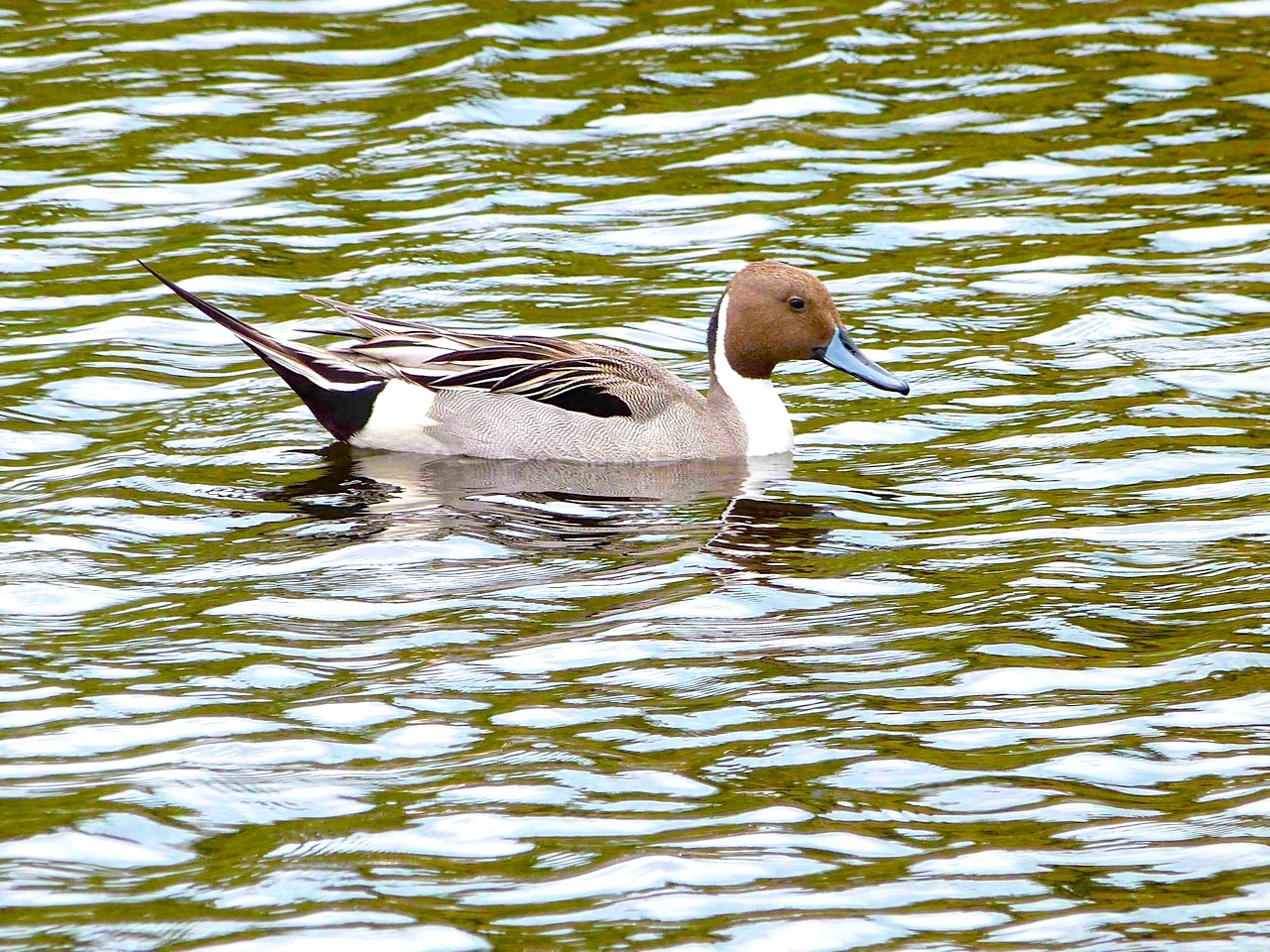
Northern Pintail, Abaco (Keith Salvesen)

NORTHERN PINTAILS ON ABACO: LOOKING SHARP

The Northern Pintail Anas acuta is a relatively rare winter resident dabbling duck on Abaco. The species has a huge range, being found throughout much of the northern hemisphere. 

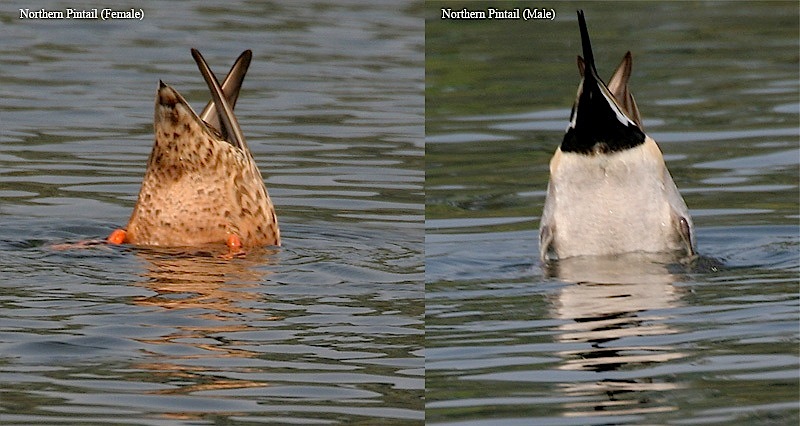
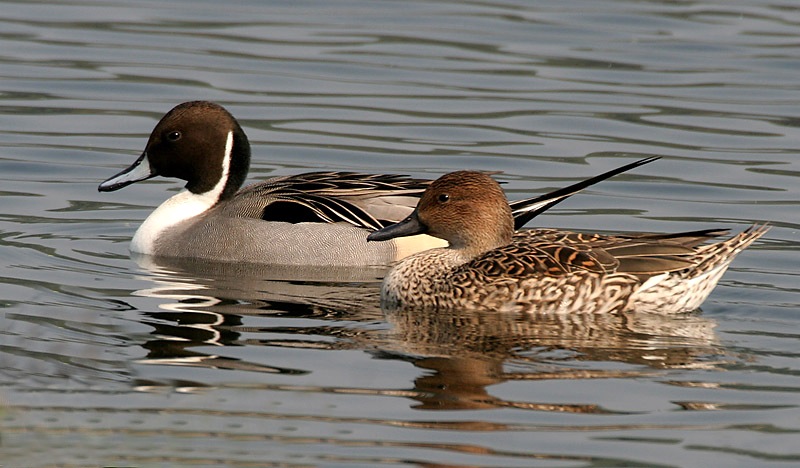
DABBLING DUCKS – PINTAILS UPNorthern Pintails (M & F) Up-ending (J M Garg)jpg

The ‘acuta’ in the Latin name refers to the characteristic sharp ‘pin tail’. As so often, the drake is a somewhat flashy specimen while the female is unassuming or, as some sources harshly put it, dull and drab. And while the drake makes a melodious whistle, the female simply quacks or croaks.

FLASHY MALENorthern Pintail, Abaco (Tony Hepburn)

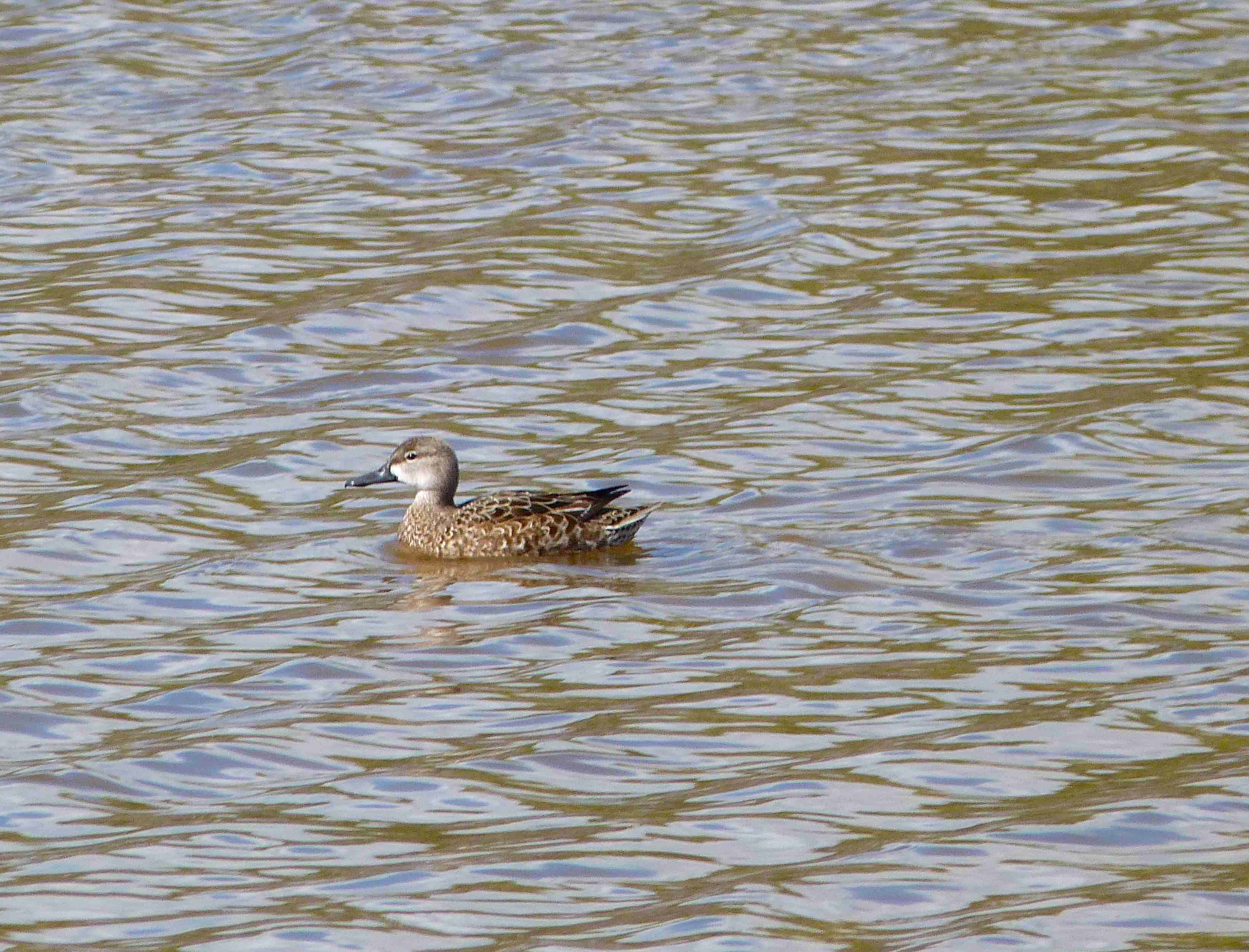
DULL & DRAB FEMALE? DEBATABLE!Northern Pintail (f), Abaco (Keith Salvesen)Northern Pintail (f) x 4 (Woody Bracey)

Northern Pintails form flocks and are happy to mix with other species.  Their long necks give the edge over similarly-sized dabbling ducks such as the mallard, enabling them to reach deeper down in the water to feed.

Northern Pintail PM IMG_5342 copy 2

THREATS TO THE SPECIES

  • Predation of nests and chicks by animals and birds such as birds of prey and (some) gulls
  • Parasites including worms and lice, to which they seem to be susceptible; and avian diseases including bird ‘flu
  • Hunting: they are a good target species being swift and agile in the air (for sport) yet quite large (for success rate). Also, delicious (for dinner).
  • Lead poisoning from shot or angling tackle, research has shown. A major problem with all bottom-feeders, though improved where laws prohibiting lead shot have been introduced
  • Loss of wetland areas to agriculture or due to habitat or climate changes

Northern Pintail, Abaco (Keith Salvesen)

On Abaco, Northern Pintails arrive in the autumn and leave as spring approaches. They are most likely to be found on ponds such as the one at Treasure Cay Golf Course, where I photographed the male; and at Gilpin Point where I spotted the lone female (at a distance). Below are both genders together for comparison (NB not taken on Abaco). 

BREEDING TIME

Mating is aquatic, by the usual anatine method in which the female lowers herself in the water to indicate her agreement to the proposal whereupon the male tries to drown her. Apparently after mating, the male raises his head and whistles – whether as a signal that it’s all over or exaltation or relief has not been researched. Yet. 

Northern Pintails (M & F) J M Garg

 RELATED POSTS

BAHAMA (WHITE-CHEEKED) PINTAIL

BAHAMA PINTAIL PAGE

Credits: RH x 3, Peter Mantle x 1, Tony Hepburn x 1, Woody Bracey x 1, J M Garg x 2, Birdorable 

        northern-pintail        northern-pintail        northern-pintail

Unknown's avatar

PIONEER NATURALISTS & ABACO BIRDS: POTTED BIOGRAPHIES


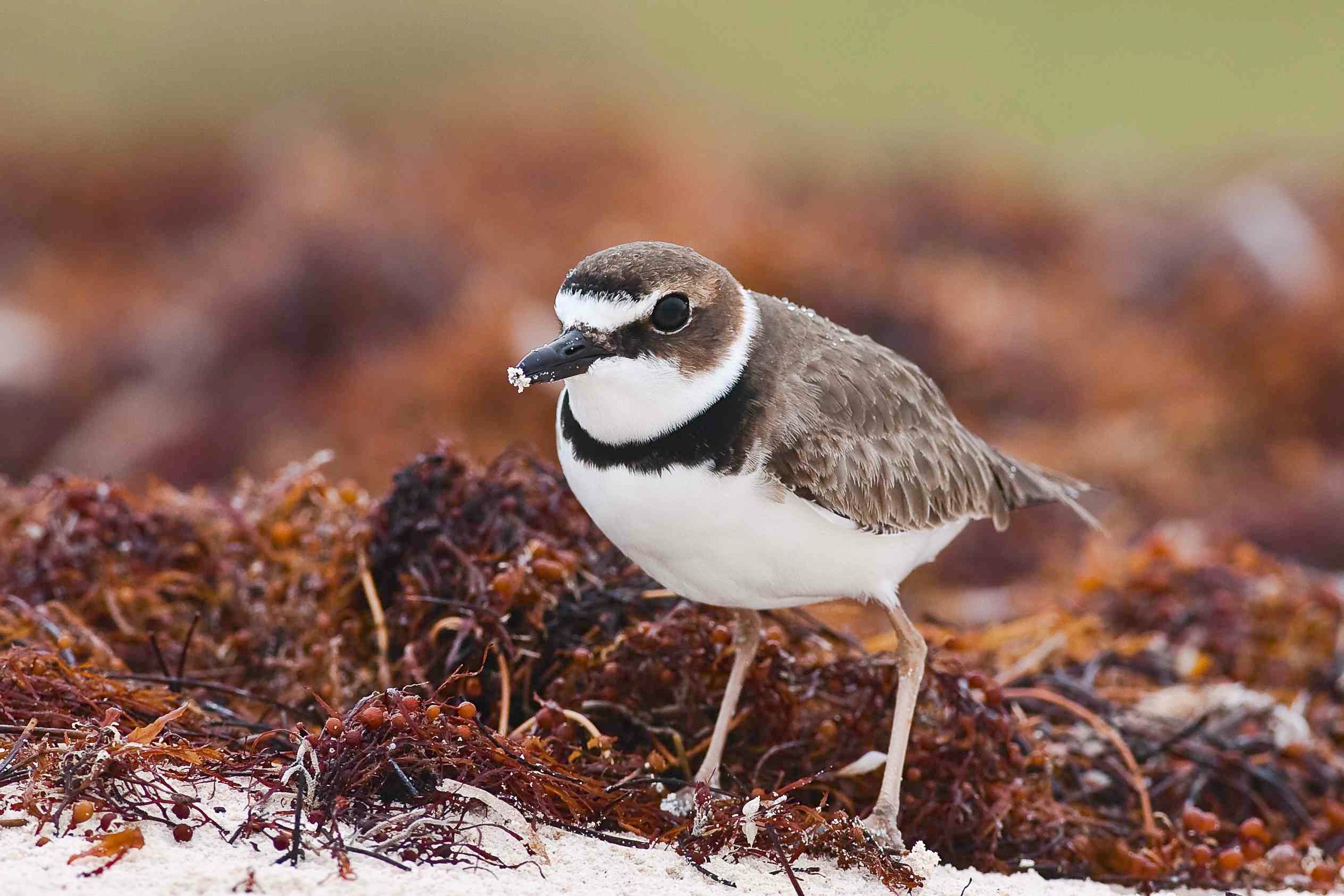
Wilson's Plover, Abaco (Craig Nash)

Wilson’s Plover, Abaco (Craig Nash)

PIONEER NATURALISTS & ABACO BIRDS: POTTED BIOGRAPHIES

Who were all the people – all men, I’m afraid – who are immortalised in the names of birds they first discovered or recorded or collected specimens of or wrote about? In various previous birds posts I have given brief bios of the naturalist for whom the particular species under consideration is named. I’ve decided to bring all those who specifically relate to Abaco together in one place. There is not (as far as I know) a collective term for ornithologists, so may I introduce a “Scope” or “Twitch” of them…

ALEXANDER WILSON 1766 – 1813

Mr WilsonWilson’s phalarope, plover, snipe, storm-petrel, warbler

Alexander Wilson was a scottish poet and writer. He specialised in ballads, pastoral pieces, and satirical commentary on the conditions of weavers in the mills. The latter got him into trouble when he overstepped the mark by making a vicious written attack on one mill owner. He was arrested, convicted and sentenced to burn the work in public (fair enough, perhaps) and imprisoned (somewhat harsh). After his release, he sensibly emigrated to America in 1794.
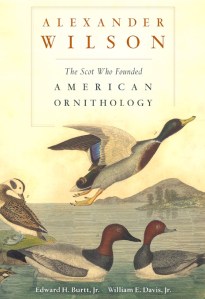
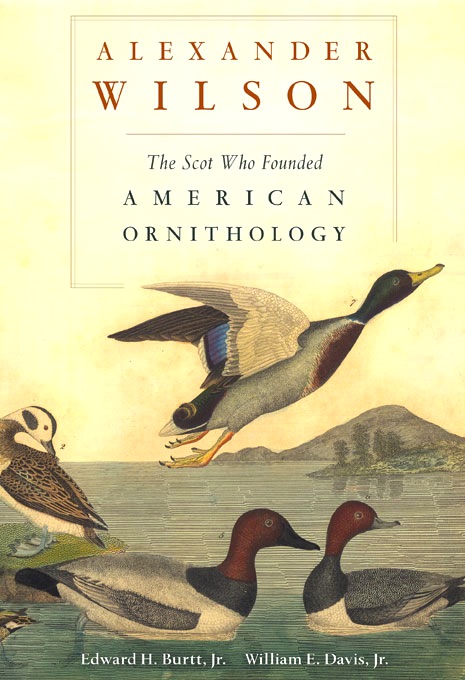
Alexander Wilson: The Scot Who Founded American Ornithology

Wilson became a teacher in Pennsylvania, and develpoped his interests in ornithology and painting. His ambitious plan was to publish a collection of illustrations of all the birds of North America. He travelled widely, collecting, painting, and securing subscriptions to fund a nine-volume American Ornithology (1808–1814). Of the 268 species of birds illustrated, 26 had never previously been described. Wilson died during the preparation of the ninth volume, which was completed and published by George Ord. Wilson predated John James Audubon (though not by many years) and  is generally acknowledged to be the founder of American ornithol0gy.

For examples of Wilson’s American Birds, check out the excellent Virginia University records HERE 
Wilson's Phalarope (Craig Nash)

Wilson’s Phalarope (Craig Nash)

CHARLES LUCIEN BONAPARTE 1803 – 1853

Bonaparte, Charles Lucien (1803-1857)Bonaparte’s gull, Zenaida dove

Charles Lucien Bonaparte, 2nd Prince of Canino and Musignano was a French biologist and ornithologist. He was nephew of the Emperor Napoleon. He married his cousin Zenaïde, by whom he had twelve children. They moved from Italy to Philadelphia, by which time Bonaparte had already developed a keen interest in ornithology. He collected specimens of a new storm-petrel, later named after the Scottish ornithologist Alexander Wilson (see above).

Bonaparte studied the ornithology of the United States, and updated Wilson’s American Ornithology. His revised edition was published between 1825 and 1833. He was a keen supporter of a (then unknown) ornithologist John James Audubon. Rather sweetly, he created the genus Zenaida, after his wife, applying it to the White-winged Dove Zenaida asiatica,  Zenaida Dove Zenaida aurita and Mourning Dove Zenaida macroura. He himself was later honoured in the name ‘Bonaparte’s Gull’.

Bonaparte's Gull, Abaco (Bruce Hallett)

Bonaparte’s Gull, Abaco (Bruce Hallett)

RAMON LA SAGRA (1798 -1871)
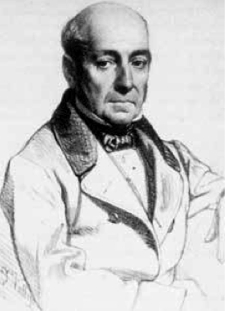
Mr La Sagra La Sagra’s Flycatcher

Ramón Dionisio José de la Sagra y Peris was a multi-talented man, being a Spanish botanist and also a writer, economist, sociologist, politician, anarchist, and founder of the world’s first anarchist journal El Porvenir (“The Future”). He lived in Cuba and became director of Havana’s Botanical Garden; his name lives on arguably more significantly in ornithological than in anarchist circles (actually, an ‘anarchist circle’ must surely be a contradiction in terms…)
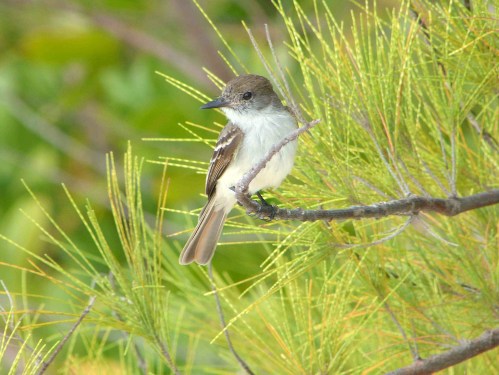
La Sagra's Flycatcher, Abaco (Keith Salvesen)

La Sagra’s Flycatcher, Abaco (Keith Salvesen)

A Cuban stamp commemorates the death of Juan Gundlach, the nauralist who chose La Sagra’s name to bestow on the flycatcher, and who himself is honoured in the name of the Bahama Mockingbird Mimus gundlachii Cuba Stamp La Sagra's Flycatcher

WILLIAM JOHN SWAINSON (1789 – 1855)

Mr SwainsonFor Abaco: Swainson’s Hawk, Thrush & Warbler

Swainson was an English ornithologist, entomologist, conchologist, natural historian, and a gifted illustrator of the natural world. He was a pioneer of the new lithographic technology, which enabled quicker reproduction of his work than engraving. Swainson lent his name to a number of avian species, three of which may be found on Abaco – the Swainson’s Hawk, Thrush and Warbler. The hawk is a rare visitor; the thrush is a transient, passing through the Bahamas during migration; and the warbler is a hard-to-find winter resident. Below is the only known Swainson’s Hawk to be photographed on Abaco.

Swainson's Hawk, Abaco (Bruce Hallett)

Swainson’s Hawk, Abaco (Bruce Hallett)

JOHN ISIAH NORTHROP (1861 – 91)
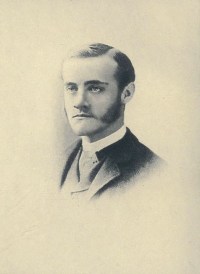
640px-Picture_of_John_Isaiah_NorthropBahama Oriole (Icterus northropi)

John Isiah Northrop, for whom the endemic BAHAMA ORIOLE Icterus northropi is named, entailed a bit more research. The link above will take you to my post about this very beautiful species that is sadly on the brink of extinction. Until recently it was found only on Abaco and Andros, but is now extirpated from Abaco and exists only in certain enclaves on Andros.
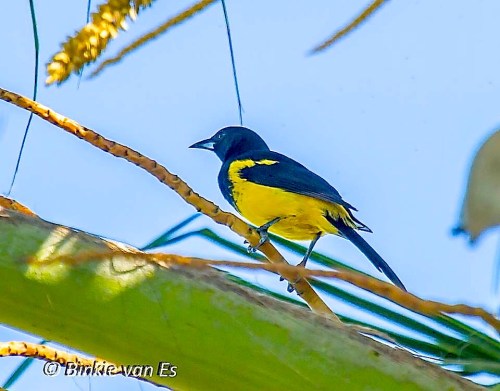
Bahamas Oriole, Andros (Binkie Van Es)

Bahamas Oriole, Andros (Binkie Van Es)

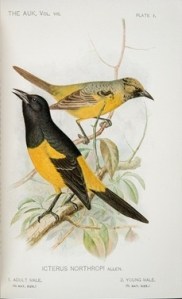
I can do no better than regurgitate the info provided by the University of Glasgow Library Research Annexe in relation to a fine  illustration from A Naturalist in the Bahamas (1910), reprinted in The Auk journal (below) at a time when Icterus northropi was still a mere subspecies:

The yellow and black Bahama Oriole (Icterus Northropi) is a bird species unique to the Bahamas. The bird was named for American ornithologist and zoologist, John Isiah Northrop (1861–91); the illustration comes from an account of the trip Northrop and his botanist wife, Alice, took to the Bahamas in 1889 which was published in his memory: A Naturalist in the Bahamas: John I. Northrop, October 12 1861-June 25, 1891; a memorial volume (Columbia University Press, 1910). It was edited and introduced by Henry Fairfield Osborn, professor of zoology at Columbia University where Northrop worked as a tutor and was killed in a laboratory explosion shortly (9 days) before the birth of his son John Howard Northrop (who became a Nobel prize-winning chemist)”.Icterus Northropi illustrated in A Naturalist in the Bahamas (plate 1)
 

JARED POTTER KIRTLAND 1793 –1877

260px-Jared_Potter_Kirtland_1793-1877Kirtland’s Warbler (Setophaga kirtlandii)

Jared Potter Kirtland was a naturalist, malacologist and politician, most active in Ohio where he served as a probate judge, and in the Ohio House of Representatives. He was also a physician and co-founder of a University Medical School. Kirtland became one of America’s leading naturalists, with a particular interest in horticulture and sea shells. He published numerous natural history articles, and was a founder and president of the Kirtland Society of Natural History and the Cleveland Academy of Natural Science.

Somewhere in amongst all this, he discovered or at least studied the warbler that was named after him. This rare bird is found in small numbers only in certain areas of Michigan; and overwinters in the Bahamas including on Abaco. They a very hard to find, and harder still to photograph. This year we made an expedition into remote backcountry and found 4, more of which another time…
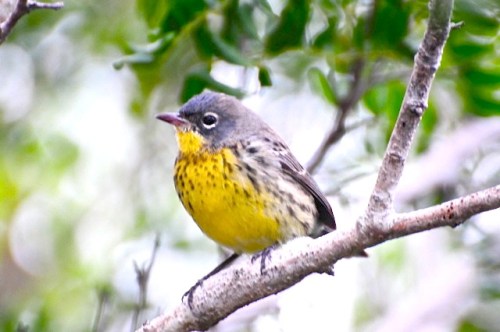
Kirtland's Warbler, Abaco (Woody Bracey)

Kirtland’s Warbler, Abaco (Woody Bracey)

JOHN JAMES AUDUBON (1785 – 1851)

John James Audubon never went to Abaco. The nearest he got was probably in 1820, when he made a field trip to the southern states, including Florida; or in the 1830s when he made at least one trip to Key West. One technique that set him apart from contemporaries was his method of producing naturalistic (as opposed to ‘stuffed bird’) drawings. It involved killing birds using very fine shot, and then using wires to pose them naturally, according to his field sketches. This contrasted with the usual technique of using a stuffed specimen as a model.

Although no Abaco birds are specifically named for Audubon, it is almost impossible to dip a toe into ornithological history without immediately stubbing it on Audubon’s name. Hence his inclusion in this piece, bringing it to a conclusion.

Audubon’s master-work was his renowned Birds of America, arguably the most famous bird tome ever. There are about 120 sets of the original book still in existence. They were incredibly expensive to produce in contemporary terms; and in modern times a set sold for $11.5 million at Sotheby’s London in 2010, setting the unbeaten record for the world’s most expensive book sale. Recently there was great excitement over the sale of another set at Christie’s New York, but the sale price was far lower, a mere $7,922,500… 

Audubon Birds of America.jpg

Credits: Bird pictures as shown; Encyclopaedia of Cleveland History, University of Glasgow Library, The Auk, Audubon Society, Wiki, Magpie pickings
Unknown's avatar

“HANDSOME BIRD, BLUE EYES, LIKES FISH, SEEKS MATE…” REDDISH EGRET ON ABACO


Reddish Egret,  Abaco, Bahamas (Keith Salvesen)

“HANDSOME BIRD, BLUE EYES, LIKES FISH, SEEKS MATE…”

REDDISH EGRET ON ABACO

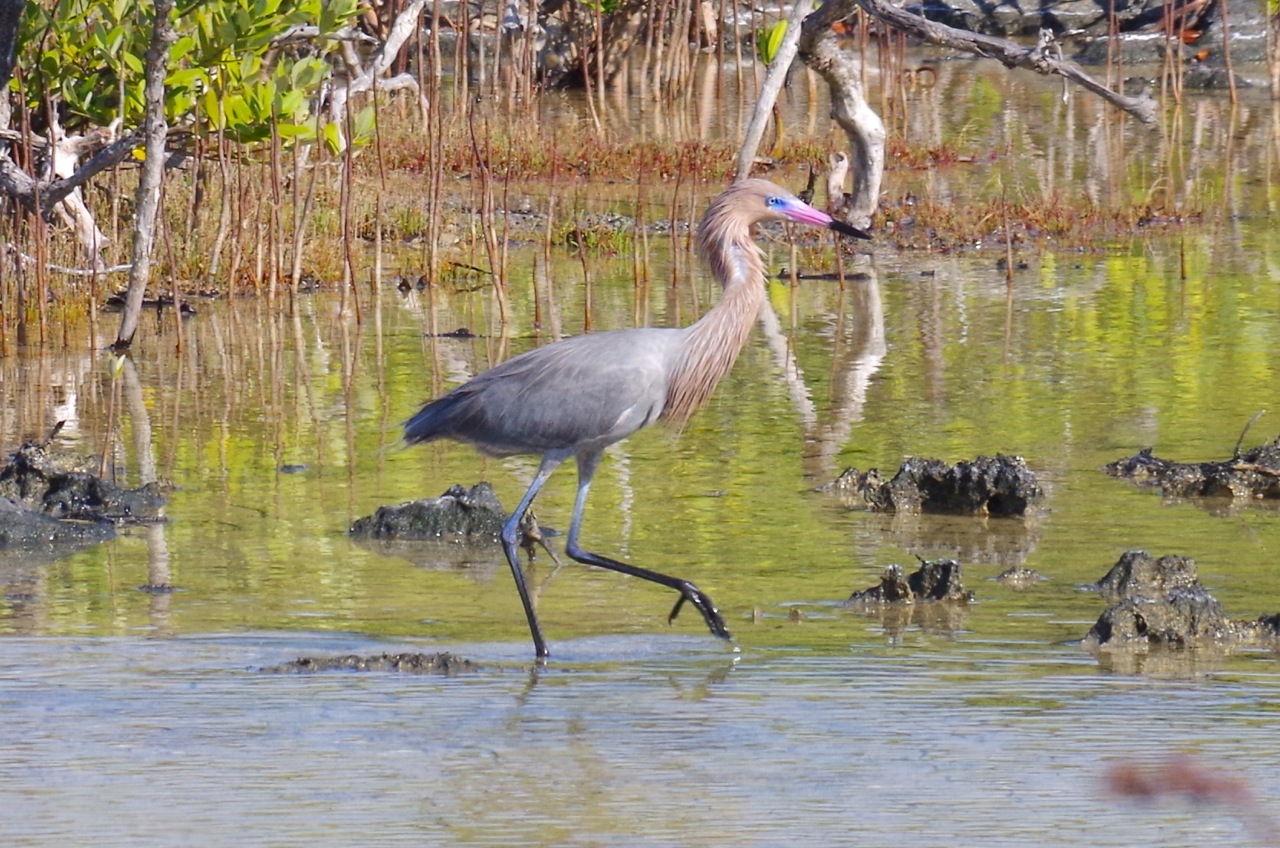
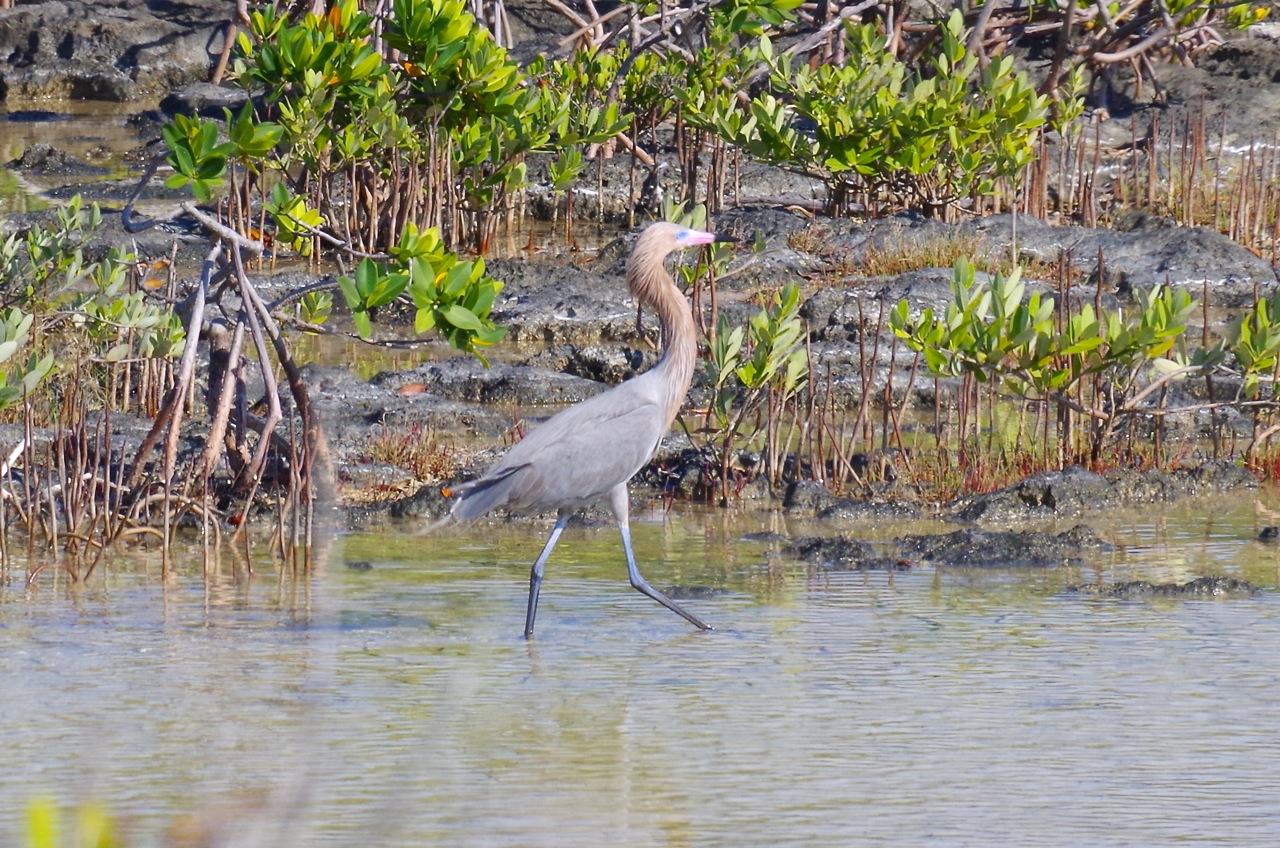
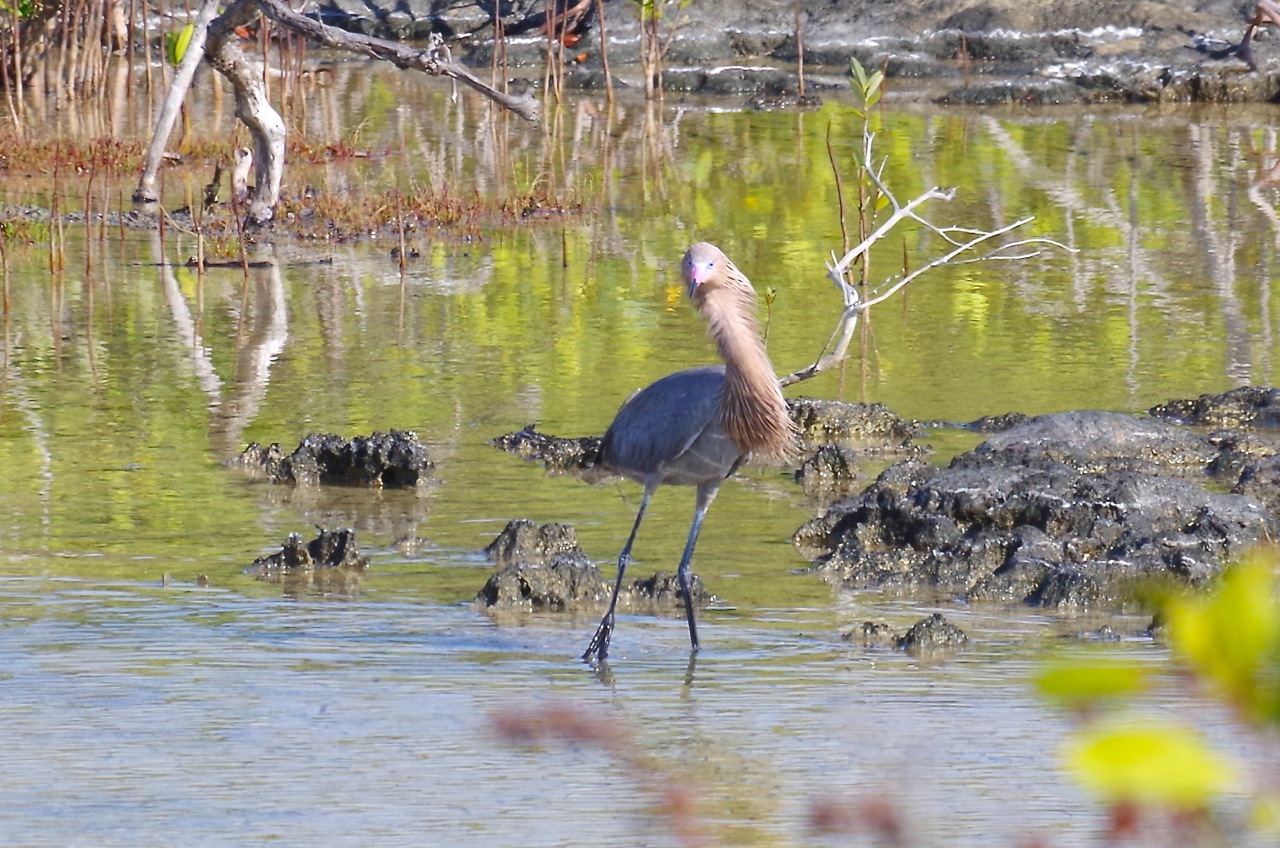
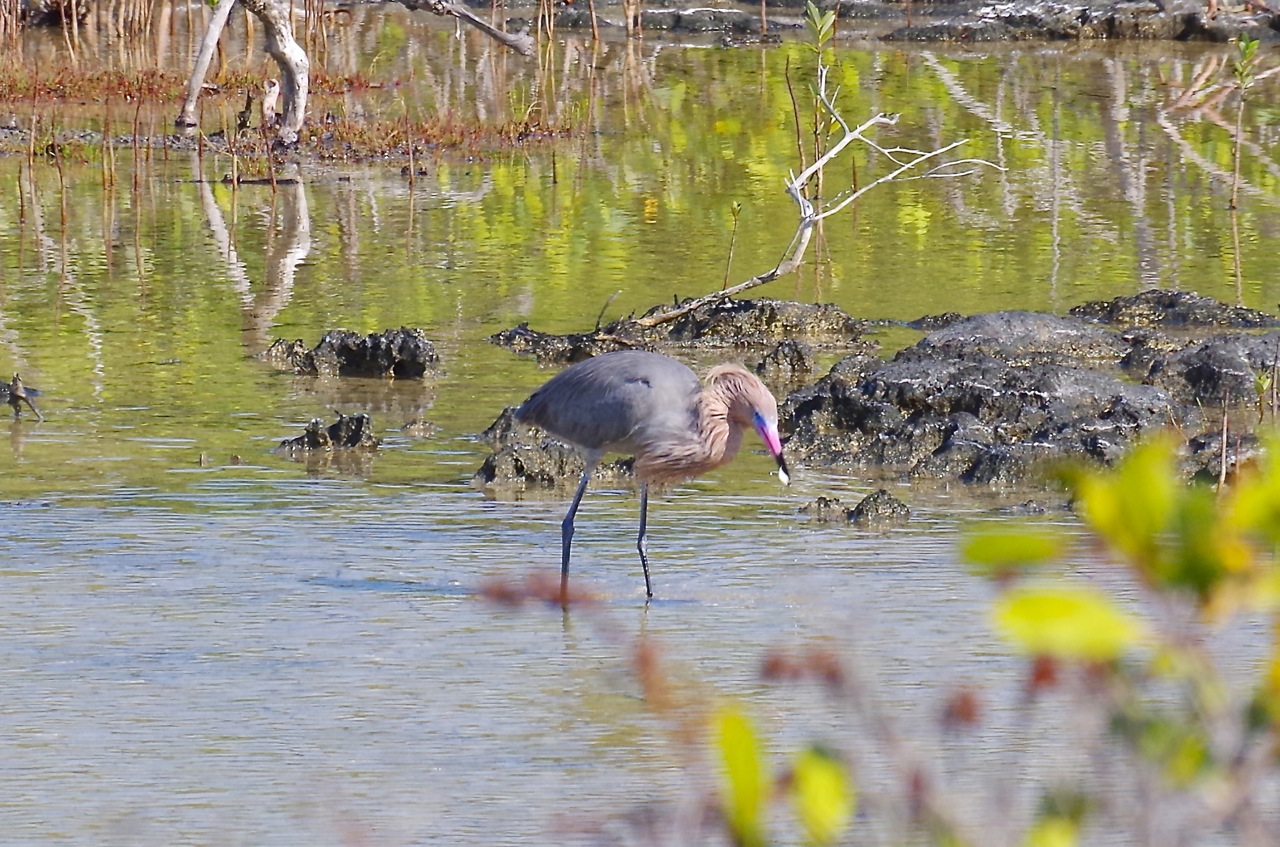
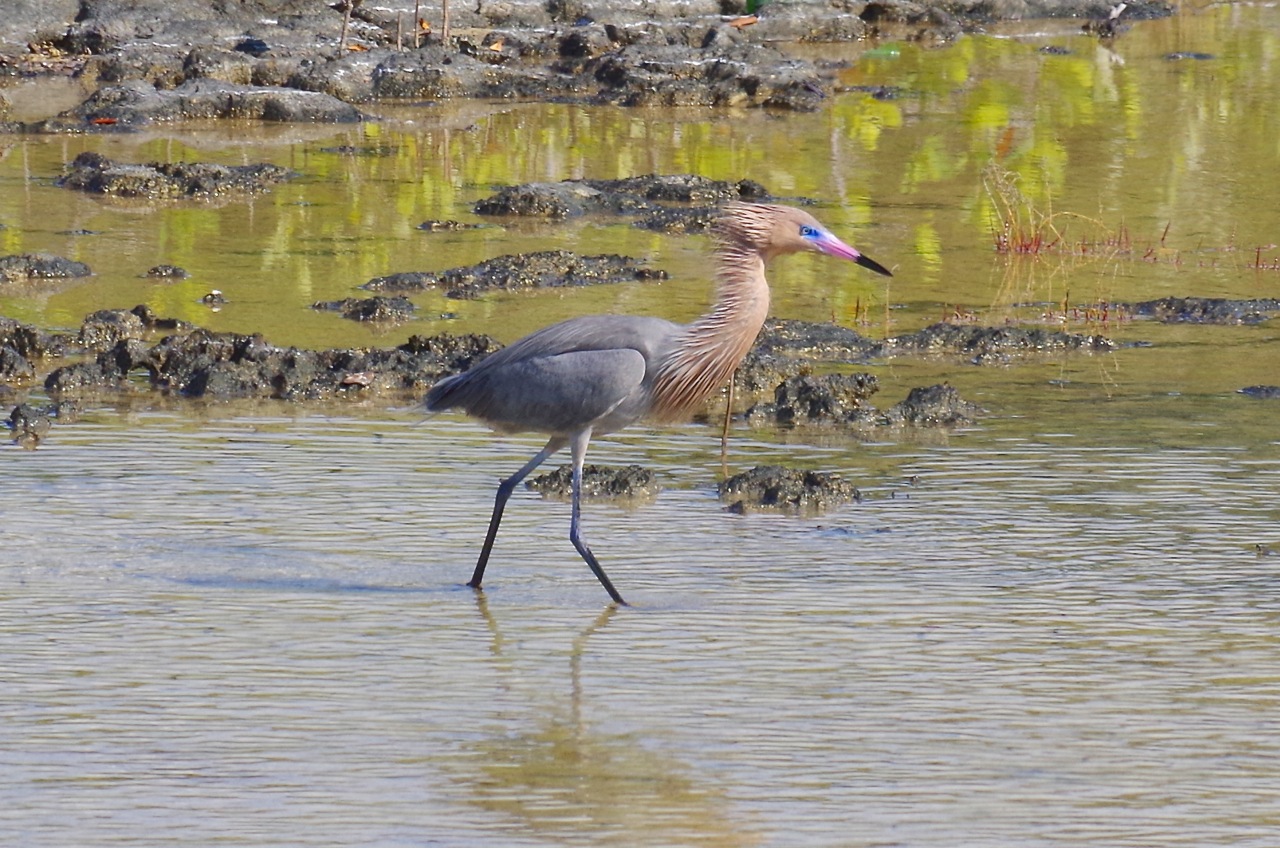
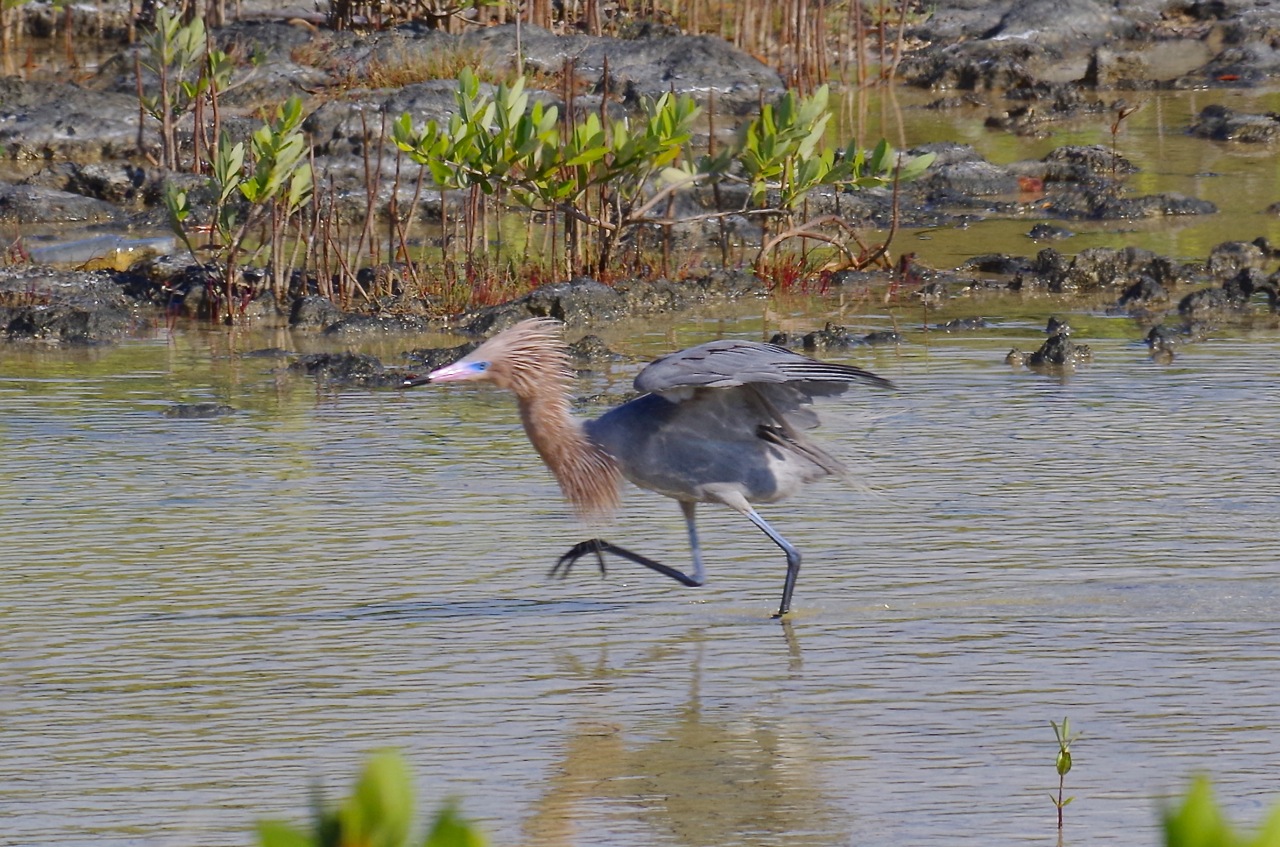
Reddish Egrets come in two colour schemes, reddish and pure white; and both are available on Abaco. ID hint – among the 10 heron and egret species found on Abaco, these are the only ones with a black tip to the beak. In March, these birds are thinking about fish. They do that every day of the year. But they are also thinking about finding a mate. The colouring of the males intensifies, and in particular the greyish-pinkish base of its beak turns a bright ‘hi babe, how are you doing’ pink. The male RE in this post is resplendent in his breeding plumage. We encountered this RE at Crossing Rocks in the brackish pond area on the opposite side of the highway to the bonefishing jetty. This in an excellent place to check out for herons, egrets and other wading birds such as yellowlegs. The island is at its thinnest point here, with the hard dry land over which the highway passes just a few yards across. On either side it’s basically water, mangroves, and other wetland plants. Reddish Egret,  Abaco, Bahamas (Keith Salvesen) The RE noticed us at the edge of the pond and put on a little display. This is unlikely to have been a ‘come on’… Conceivably, he wanted to show off his distinctive ‘bad hair day’ styling. More plausibly, he was probably put out by having his fishing disturbed. Reddish Egret,  Abaco, Bahamas (Keith Salvesen) Reddish Egret,  Abaco, Bahamas (Keith Salvesen) He wasn’t diverted for long, though, and soon got back to business hunting fish. Sometimes he would stand stock still, poised for a rapid strike into the water with that lethal beak. This is the RE’s classic fishing method, the static hunt. Reddish Egret,  Abaco, Bahamas (Keith Salvesen) However, there are times for being proactive and chasing down the prey. While bonefishing out on the Marls, I have seen this done from a distance, especially by the white RE morphs. They splash about near the edge of the mangroves, moving back and forth, lifting their long legs high in the vegetation as they hunt down their small silver snacks. Our Crossing Rocks RE was suddenly on a mission…Reddish Egret,  Abaco, Bahamas (Keith Salvesen) Reddish Egret,  Abaco, Bahamas (Keith Salvesen) Reddish Egret,  Abaco, Bahamas (Keith Salvesen) We had to tear ourselves away from this performance, grateful to have seen it at such close quarters. However we went back a few days later while on a birding trip to the pond at Gilpin Point. But that’s a post for another time…

RELATED POSTS

REDDISH EGRETS (WHITE MORPH)

GREAT EGRETS 

SNOWY EGRETS

GREAT BLUE HERON

GREEN HERON

CATTLE EGRET

All photos RH; cheers to Woody Bracey for stopping the truck here during our warbler expedition!

Unknown's avatar

PEARLY-EYED THRASHER – ANOTHER NEW BIRD FOUND ON ABACO


Margarops_fuscatus_Mike's Birds Wiki

 PEARLY-EYED THRASHER – ANOTHER NEW BIRD FOUND ON ABACO

Exactly a year ago, the ultimate, complete and utter Checklist of the birds of Abaco, compiled by Tony White with Woody Bracey, was published. It covers 4 pages of close print in THE BIRDS OF ABACO, and lists the 282 species recorded since 1950, including so-called ‘exotics’ but excluding so-called ‘pets’ (sadly your minah bird would not qualify). New sightings had been static since a BLACK-BROWED ALBATROSS had made an unheralded appearance out at sea. In the last year, 5 new species have been recorded. The links to them are listed below. That Checklist already needs an update!

Pearly-eyed_ThrasherDick Daniels (Wiki)

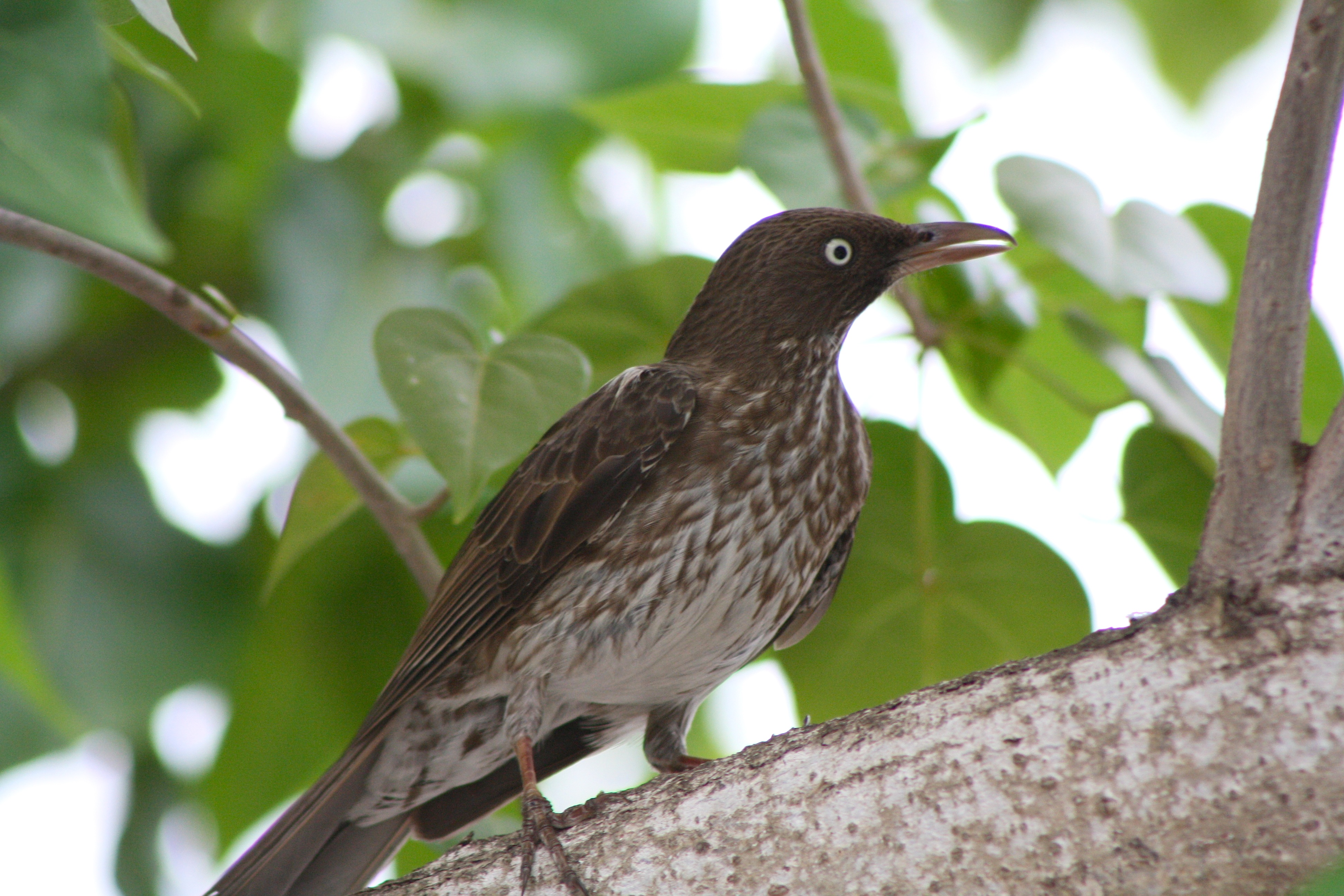
The newest bird in town is the Pearly-eyed Thrasher (Margarops fuscatus). This is a bird in the family Mimidae, along with mockingbirds and the gray catbird. Until last November, no thrasher species had ever been recorded for Abaco. Then there was a sighting of a BROWN THRASHER. Just a few months later, its Pearly-eyed cousin has turned up right in the heart of Treasure Cay, seen by first by Erik Gauger and confirmed by Woody Bracey (each a contributor to THE BIRDS OF ABACO). 

This thrasher species is found widely throughout the Caribbean, though with several varieties that are genetically distinct. In the Bahamas, they breed on some of the southern islands. They are known to overwinter on Eleuthera and Cat Island, but have not previously been recorded as far north as Abaco. This sighting is important in suggesting that the species may be beginning to extend its range, although it could of course simply be a one-off ‘vagrant’, as they are officially yet disrespectfully known.

Pearly_Eyed_Thrasher,_Margarops_fuscatus (Kati Fleming Wiki)

Since the first sightings by Erik & Woody a couple of days ago, Woody has been out again with a camera seeking to obtain photographic  evidence of the bird. Last night he sent me a snapshot taken in difficult circumstances – the bird was being hassled by a Eurasian Collared Dove (who should have known better, being a non-native species itself…). The pearly eye is quite clear, as is the speckled front and white end to the underside of the tail. If  a clearer shot comes in, I’ll add it. So, TC-based birders, a Rolling Harbour Kalik challenge is on!

IMG_3432 copy

STOP PRESS Woody has sent a couple more photos of the PET taken right in the centre of Treasure Cay. Or perhaps there is a second one… and if so, different sexes… and if so, a nest, eggs, chicks, fledglings and in due course a new breeding species on Abaco… 

Pearly-eyed Thrasher, Treasure Cay, Abaco - Woody Bracey (new species for Abaco)IMG_3444 Pearly-eyed Thrasher, Treasure Cay, Abaco - Woody Bracey (new species for Abaco)

STOP PRESS April 2015 Erik Gauger has now written up his account of his discovery of this new species for Abaco. You can read it HERE (scroll down to the second article on the page)

The other photos I have used are ‘open source’ for obvious reasons, and credited below as far as the information is available…

 NEW ABACO BIRD SPECIES – MAR 2014 to MAR 2015

BLACK-BELLIED WHISTLING DUCKS

FORK-TAILED FLYCATCHER

BROWN THRASHER

MASKED BOOBY

Photo credits with thanks for public postings: (1) ‘Mike’s Birds (2) Dick Daniels (3) Kati Fleming, and  (4) Woody Bracey

Unknown's avatar

WHAT’S IN A NAME? COMMON GALLINULE aka MOORHEN


Common Gallinule.Abaco Bahamas.6.13.Tom Sheley

WHAT’S IN A NAME? COMMON GALLINULE aka MOORHEN

Names can be a hassle. My own, when not my alter ego Rolling Harbour (from a long line of Harbours), was a act of Baptismal Folly for which I cannot be held responsible. I could have changed it by Deed Poll were I seriously bothered, but I am aware that there are far worse names out there and at least mine reflects my scandi-scottish origins I suppose.

Common Gallinule, Abaco - Bruce Hallett

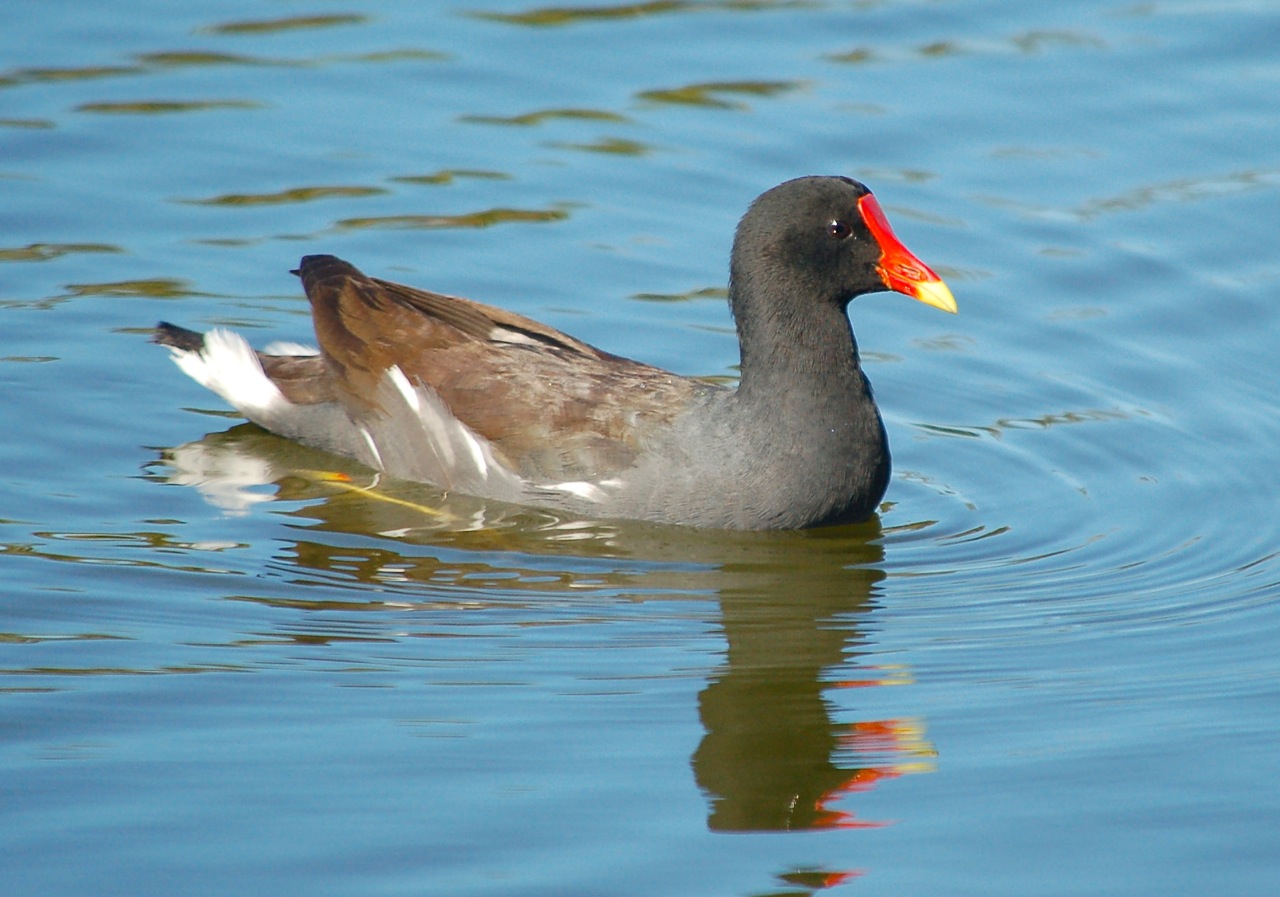
The Moorhen has had a far worse time of it. Over many decades its name has been changed, changed back and changed again. Partly it’s to do with a continuing debate over the New World and Old World subspecies – or as it now stands, separate species. Even that status has changed around over time. It’s enough to give the poor creature an ID crisis.

Bahamas-Great Abaco_7551_Common Gallinule_Gerlinde Taurer copy

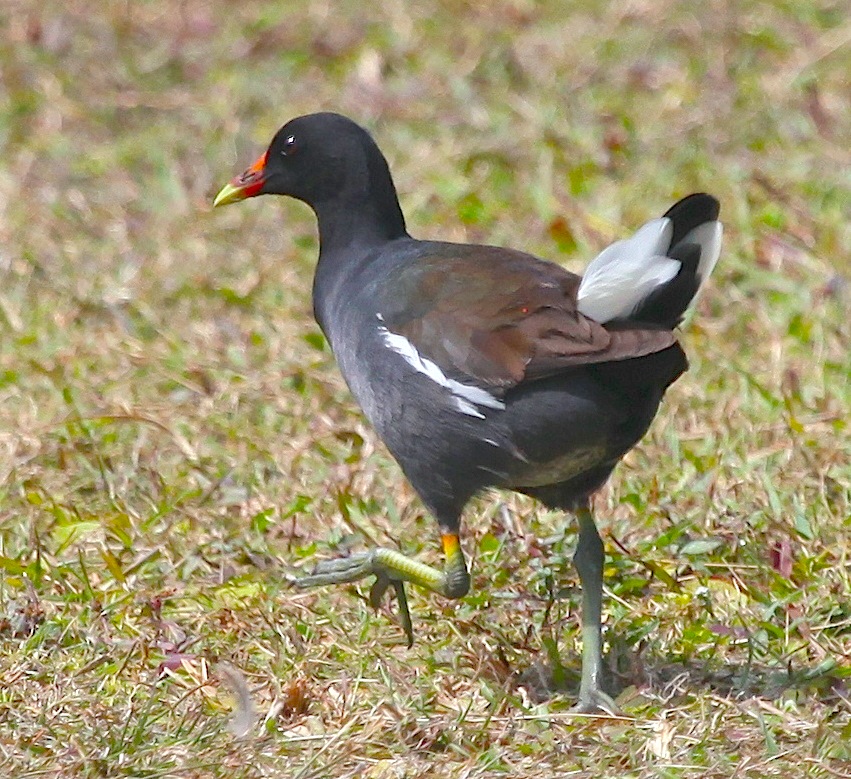
The Common Gallinule Gallinula galeata, as it has been known since 2011, is a bird of the rail family. The AOU decreed its divorce from the Common Moorhen after due consideration of the evidence and it is now lumbered with the less familiar and user-friendly Gallinule name.

Common Gallinule, Abaco - Peter Mantle

Note the yellow legs and large feet (unwebbed)

Moorhens (I’m using this as a comfortable nickname, aware that I am flying in the face of progress) are usually seen swimming serenely around ponds or picking their way through marshy ground as they forage. They have an aggressive side, hissing loudly if they feel threatened and fighting to preserve their territory or nest. Nestlings have been observed clinging to a parent as it flies to safety with its offspring as passengers.
Bahamas-Great Abaco_7536_Common Gallinule_Gerlinde Taurer copy

WHAT IS A ‘GALLINULE’ WHEN IT’S AT HOME

I wondered what the word ‘Gallinule’ actually means? What is the derivation? The BINOMIAL NOMENCLATURE (basically = scientific name in Latin) of most species is largely unintelligible unless you have some knowledge of Latin. But most birds end up with a useful, often descriptive, everyday name. Red-tailed Hawk. Least Tern. Yellow Warbler. Painted Bunting. You know what to expect with those. But a ‘Gallinule’ could as easily be a french cooking receptacle or delicious dish. Or a grim and slimy horror from Tolkien. Or maybe something / someone out of Harry Potter. Sleuthing online reveals that the word is a modern Latin construct of the c18, derived from the Latin diminutive word for a ‘hen’. So it’s simply a hen. As in Moorhen.

Common Gallinule, Abaco Woody Bracey

WHAT IS A ‘MOOR’ WHEN IT’S ATTACHED TO A HEN?

This does not refer to a wide swathe of open upland country, often covered in heather and gorse, where in the UK (especially in Scotland) every August 12 thousands of grouse are traditionally shot. It stems from an honest Old English word for a marshy or swampy area, Mor. It was used from early mediaeval times and itself comes from Saxon and Germanic roots. So perhaps calling the Common Gallinule a [Common] Marsh Hen would be more helpful… Or – hey! – why not have American Moorhen and Eurasian Moorhen, a perfectly valid differentiation used quite satisfactorily for other species…?

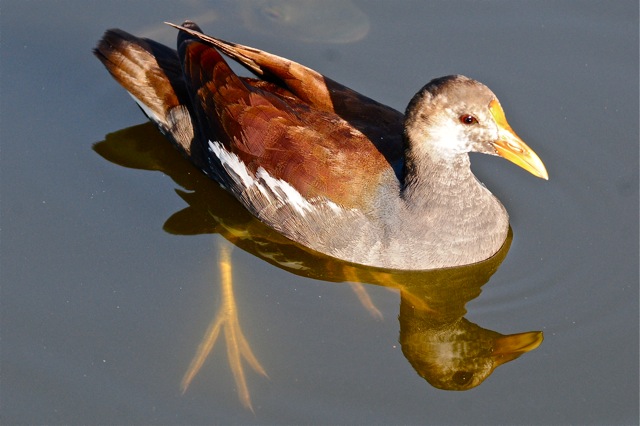
Common Gallinule (nonbreeding adult).Abaco Bahamas.2.12.Tom Sheley

Adult non-breeding plumage

There’s more on the naming of birds generally and Moorhens specifically in a couple of amusingly-written sources I came across. The first is from NEMESIS BIRD written by Alex Lamoreaux in 2011, called Goodbye Moorhen, Hello Gallinule. The second is from the excellent 10000BIRDS.COM entitled Moorhen Mania – the splitting and renaming of the Common Moorhen

Common Gallinule (Leucistic?) - Tony Hepburn

The bird above with a striking colouring and orange beak was photographed by the late Tony Hepburn. He believed it to be an unusual LEUCISTIC moorhen with reduced pigmentation, a condition that has similarities with ALBINISM

BAHAMAS - Common Gallinule, Abaco, TC GC Hole 11 - Becky Marvil

At some stage I am planning a companion Coot post. I won’t need to go on and on about that name. It may not be descriptive but it is short and simple, and everyone knows where they stand with it. Until they decide to rename it a Cotellinule…

Gallinule © Hans Hillewaert

Credits: Tom Sheley, Bruce Hallett, Peter Mantle, Gerlinde Taurer, Woody Bracey, Tony Hepburn, Becky Marvil, Hans Hillewaert, Nemesis Bird, 10000birds.com

     common-gallinule     common-gallinule     common-gallinule     common-gallinule     common-gallinule     common-gallinule

Unknown's avatar

DOWITCHERS FOR ABACO TWITCHERS


Short-billed Dowitcher, Abaco (Bruce Hallett) DOWITCHERS FOR ABACO TWITCHERS

(THE LONG AND THE SHORT OF IT…)

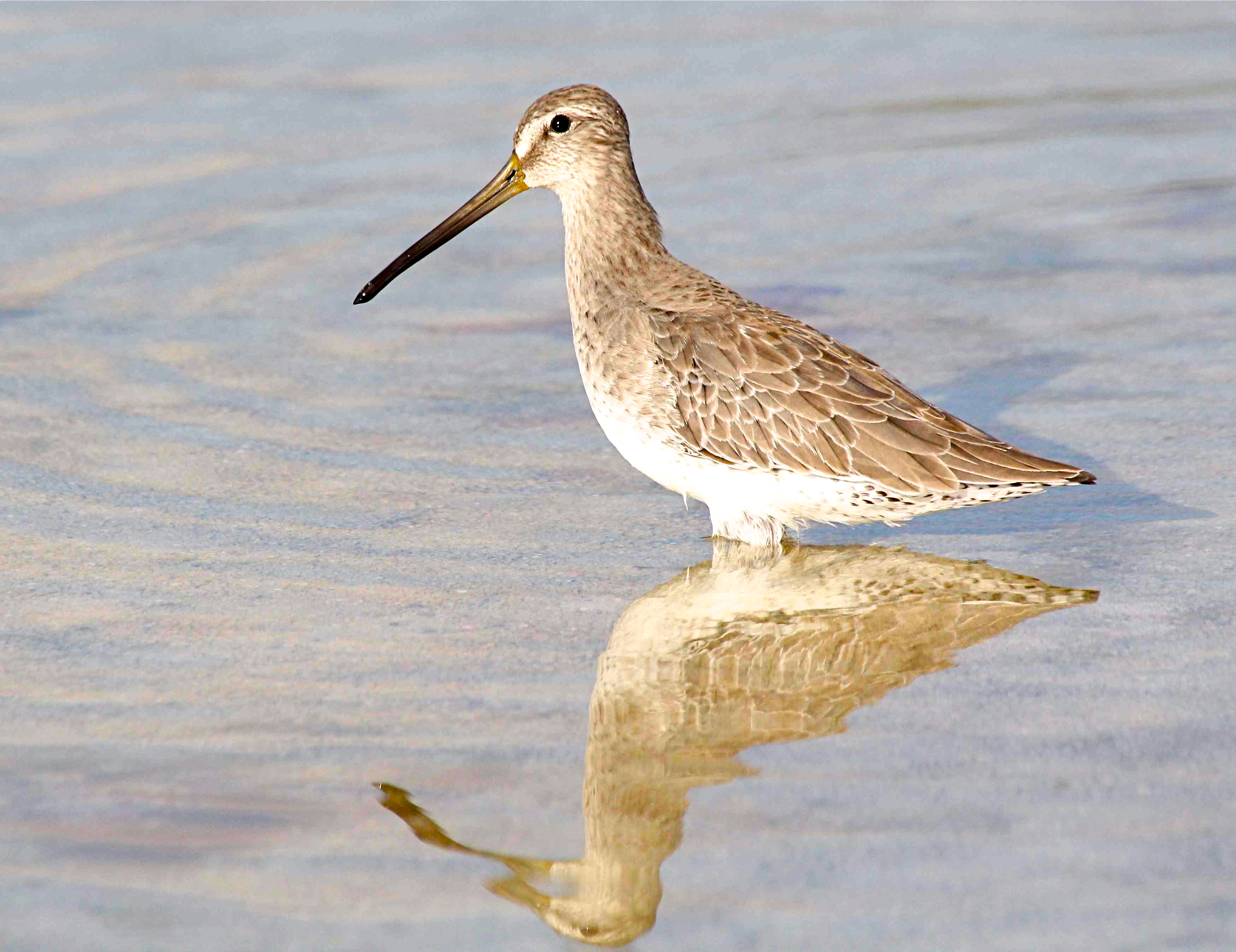
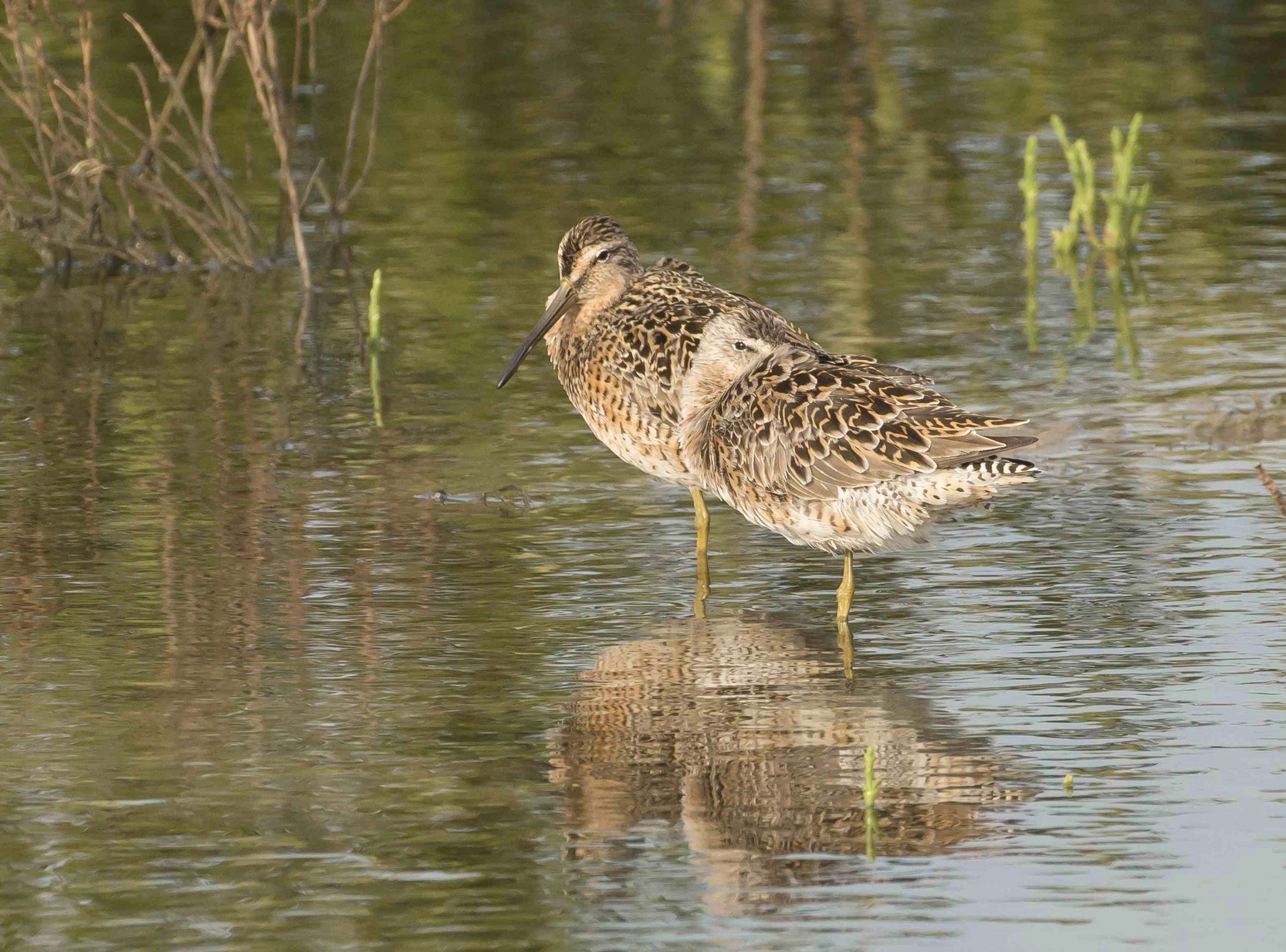
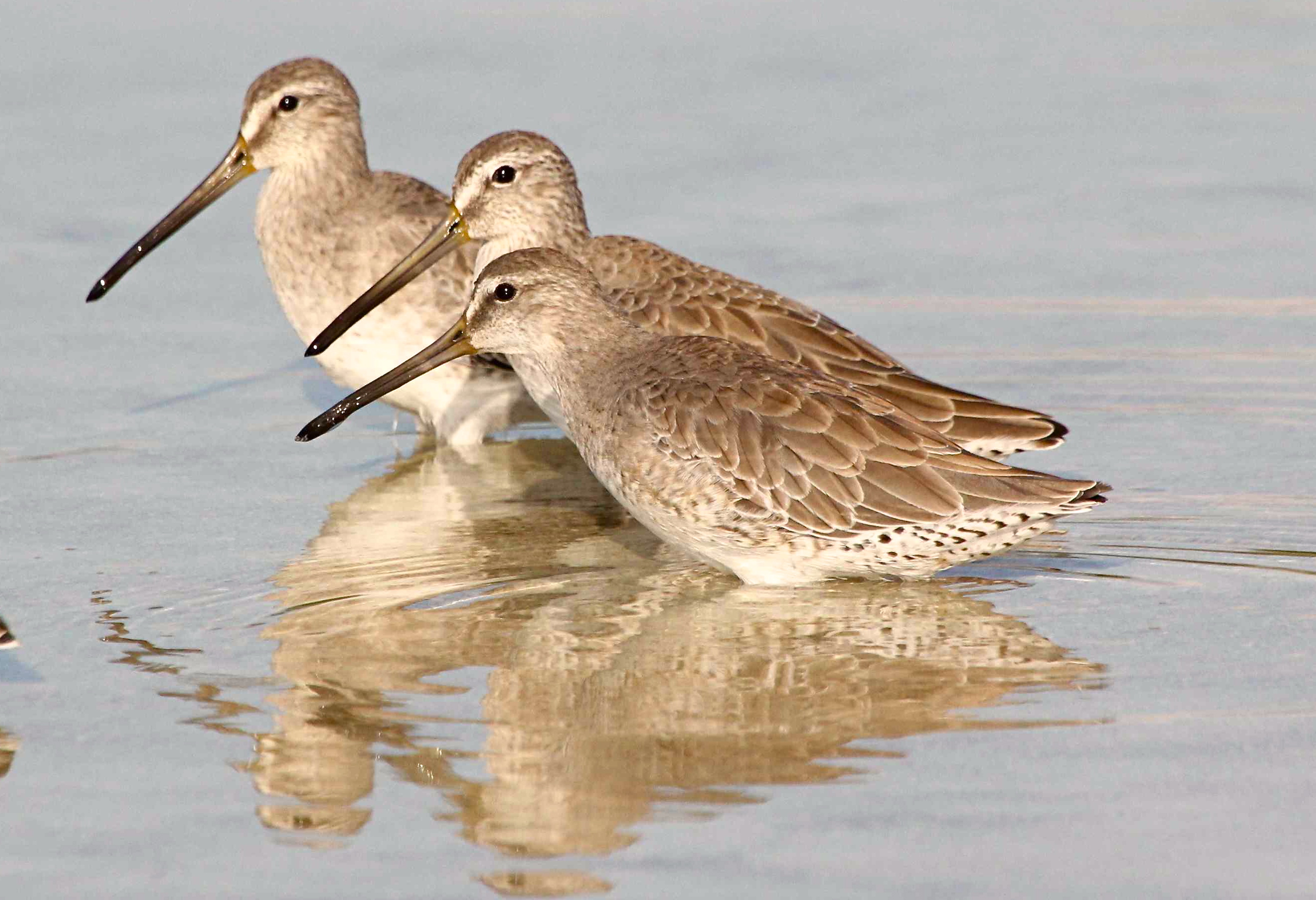
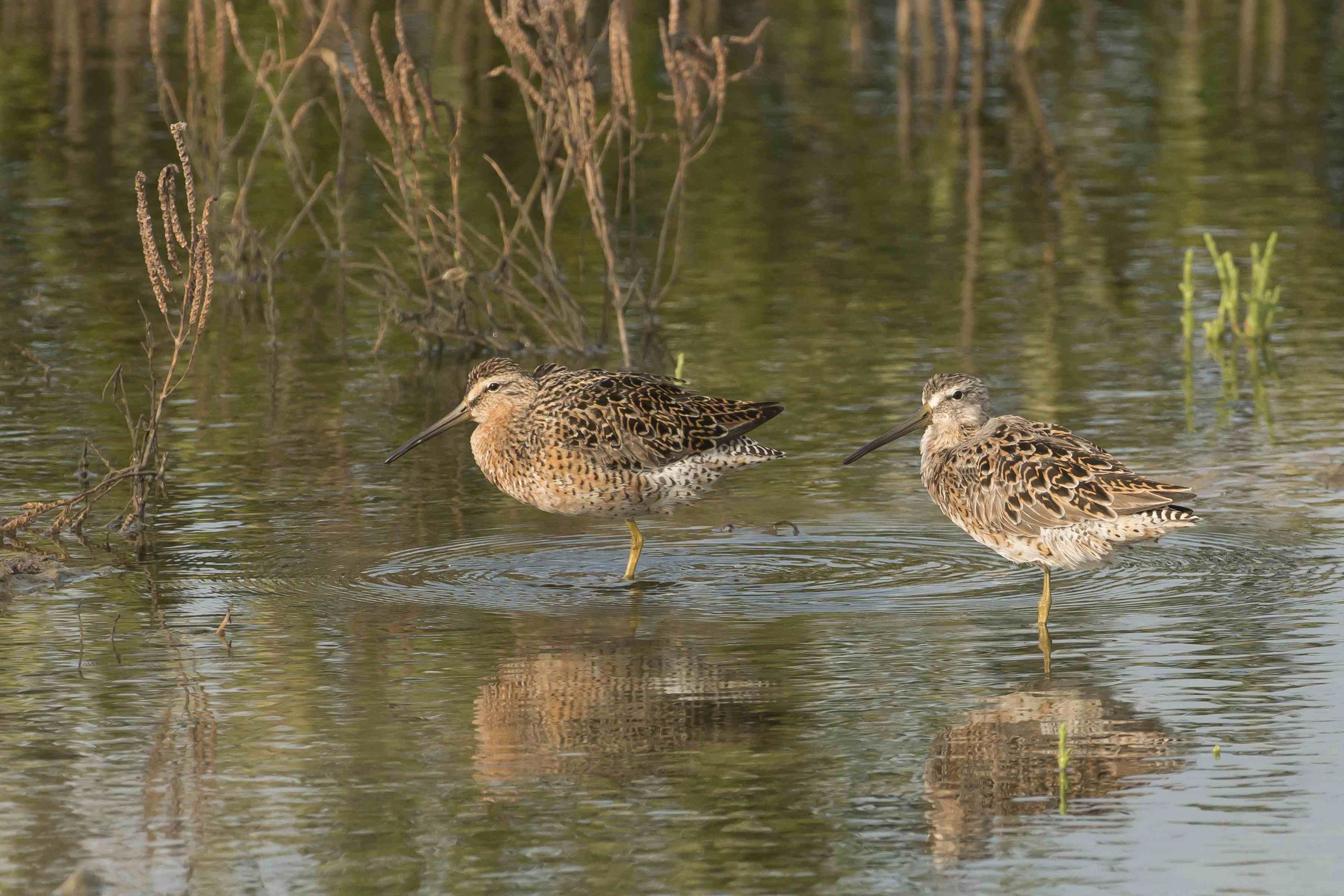
Long-billed (Limnodromus scolopaceus)? Or Short-billed (Limnodromus griseus)? Which one is that over there? No, not there. There! For Abaco, the answer is very easy. The SBD is a common winter resident, whereas the LBD is an occasional casual visitor, recorded rarely and irregularly in the Northern Bahamas. So if you are looking at a Dowitcher, it’s 98% certain that’s it’s an SBD. Which is lucky – they are so similar that telling them apart is a complex ID challenge, even if seen together! Until 60 years ago they happily existed as one species until the avian powers-that-be decided to prise them apart and award them separate species status. All the birds featured here are Abaco SDBs, with one exception… More on the comparisons and differences below.

The Dowitcher’s bill is an extremely effective instrument for probing deep into low water and mud. The rapid stabbing for concealed invertebrates has been vividly described as being ‘like a sewing-machine’. A ‘Dowitcher Stitcher’. So to speak.Short-billed Dowitcher, Abaco 2 (Bruce Hallett)

 HOW DID THE DOWITCHER GET ITS NAME?

I had assumed that the strange name for these birds was onomatopoeic, in the same way that a Killdeer is supposed to call “Kill…Deer”. And a Bobwhite, an interrogative “Bob…White?”. When I tried to check this online, I found that the usually valuable primary sources for bird info were silent on the topic. In the end, I tracked down a Merriam Webster entry that simply said “probably of Iroquoian origin; akin to Oneida tawístawis. First Known Use: 1841”. Which left me better informed, but no wiser…

Short-billed Dowitcher2.Abaco Bahamas.Tom Sheley

THERE’S A BUNCH OF SHOREBIRDS OVER THERE – WHAT DO SBDs SOUND LIKE?

 Phoenix Birder / Xeno Canto

In the header image, the bird is foraging in shallow water. In deeper water or with softer mud, SBDs will plunge their bills in to the hilt

Short-billed Dowitchers, Abaco -  Bruce Hallett

SHORT OR LONG – HOW ON EARTH DO I TELL? 

1. HELPFUL(ISH) WAYS

  • On Abaco, if you see a Dowitcher the overwhelming likelihood is that it’s a SBD
  • The species prefer different habitats, with the LBS preferring freshwater even in coastal regions
  • The SBD prefers coastal areas, shorelines and brackish / muddy ponds
  • The SBD’s call is said to be “mellower” than the LDB – though unless you have heard both for comparison, that’s not a very useful identifier.
  • The body shapes are apparently subtly different, in ways I personally can only begin to guess
  • In breeding plumage, the species have perceptible colour / pattern differences. (If you have binoculars?)
 2. CONFUSING FACTORS
  • LBDs may occasionally join SBDs that are foraging on open tidal flats
  • Actual bill length may not help, there’s an overlap – some SBDs may have longer bills and vice versa.
  • There are theories about bill-length / head size comparison as a field ID method. Do they work? As if!
  • Winter plumage of both species is very similar (grey). Both are only on Abaco in winter. Go figure.

Short-billed Dowitcher, Abaco 1 Bruce Hallett

DOES THE DOWITCHER HAVE ANY PRACTICAL APPLICATION?

Yes! In Scrabble you can form a stonking 315 words from those 9 letters, all permitted under Scrabble rules (though not my own house rules, which forbid ridiculous 2 and 3 letter words that sound invented for the purpose of winning Scrabble). Apart from the full 9 letter original, there’s one 8 letter word – ‘witherod’, a type of viburnum plant; and 13 words of 7 letters, of which I’d say 8 are in common though not everyday usage. I’ll leave you to work out the remaining 301 words…

Short-billed Dowitcher.Abaco Bahamas.Tom Sheley

DO YOU HAVE ANY LBD PHOTOS TAKEN ON ABACO?

I surely do. Woody Bracey photographed a pair of dowitchers together on Abaco, one SBD and one LBD. But even though this looks a pretty straightforward comparison of bill length, colouring and marking, by now I’m now so confused that I’m beginning to wish the two species could be happily reunited into one…Long & Short Billed Dowitchers, Abaco Woody Bracey

 Credits: Bruce Hallett, Tom Sheley, Woody Bracey, past researches, the usual bird info suspects

Unknown's avatar

COLOURFUL BUNTING FOR CHRISTMAS ON ABACO


imagesimagesimagesimages

Painted Bunting, Abaco (Erik Gauger)

COLOURFUL BUNTING FOR CHRISTMAS ON ABACO

BUNTING  /ˈbʌntɪŋ/  (Noun)
[Yay! A Christmas gift of a puntastic avian / festive double-meaning]
  1. A small New World songbird of the cardinal subfamily
  2. Flags and other colourful festive decorations

imagesimagesimages

PAINTED BUNTINGPainted Bunting, Abaco Tara Lavallee

It’s hard to imagine a more Christmasy little bird than the Painted Bunting. Bright blue, red, green primary colours make for a spectacular small bird to grace any garden or feeder. The 2 birds above were featured in a detailed post on the species several months ago, with plenty of other great photos, HERE But there are other bunting species and close relations on Abaco that haven’t yet had a look-in on these pages. A common factor is the little fat beak and a great liking for seeds…

images

INDIGO BUNTINGIndigo Bunting.BPS.Abaco Bahamas.Tom Sheley

Indigo Bunting male with 2 females going for the seeds, Bahama Palm ShoresIndigo Bunting, BPS, Abaco Ann Capling

images

ROSE-BREASTED GROSBEAKRose-breasted Grosbeak PMRose-breasted Grosbeak, Delphi, Abaco (Caroline Stahala)

images

SUMMER TANAGERSummer Tanager (m), Abaco Bruce Hallett

images

SCARLET TANAGERScarlet Tanager, Abaco Woody Bracey

The birds above are all buntings or part of the wider bunting family. The definition is somewhat flexible and includes piranga and tanager species (and in the past the Western Spindalis, formerly the Stripe-headed Tanager). All were photographed on Abaco, mostly at the Delphi Club or Bahama Palm Shores. The photos below are a flagrant cheat. You’ll never see one of these on Abaco. They were taken by me a couple of years back in Central Park, NYC, made magic with snow and freezing air. Have a very happy and colourful Christmas!
images

NORTHERN CARDINALRed Cardinal CP NYC 2Red Cardinal CP NYC 3

Credits: Erik Gauger, Tara Lavallee, Tom Sheley, Ann Capling, Caroline Stahala, Bruce Hallett, Woody Bracey, RH

imagesimagesimagesimages

Unknown's avatar

OVENBIRDS FOR CHRISTMAS ON ABACO (NB NOT ROAST TURKEY)


Ovenbird.Abaco Bahamas.Tom Sheley.2

OVENBIRDS FOR CHRISTMAS ON ABACO (NB NOT ROAST TURKEY)

The Ovenbird (Seiurus aurocapilla) is a small winter-resident warbler with distinctive orange head feathers that can be raised into a crest.  I’m guessing this accomplishment is mainly used in the breeding season as a way to impress and attract a mate. Maybe when alarmed or excited at other times as well. Right now, with Christmas only ’12 sleeps’ away, they have become a visible presence on Abaco and the Cays despite their shyness and a general tendency to shuffle around in the undergrowth looking for insects and small snails. Ovenbird.Delphi Club.Abaco Bahamas.Tom Sheley.1

You may hardly be aware of these rather unassuming little birds, and as they rootle their way through the dead leaves under shrubs they can look quite dull. See one lit up by the morning sun, however, and you’ll see how pretty and richly marked they are.

Ovenbird, Abaco  Woody Bracey

The Ovenbird enjoys the taxonomic distinction of being the only bird of its genus in the warbler family Parulidae. It is a so-called ‘monotypic’ species. It was formerly lumped in with Waterthrushes, but was found to be genetically dissimilar so its new status was granted. 

Ovenbird.Bahama Palm Shores.Abaco Bahamas.Tom Sheley

The ovenbird is so named because it builds a domed nest (“oven”) with a side-entrance, constructed from foliage and vegetation. They tend to nest on the ground, making them vulnerable to predation. The species name for the ovenbird, Seiurus aurocapilla, has nothing to do with the nest shape, though. It derives from both Greek and Latin, and loosely means ‘shaking tail, golden haired’. No, nothing to do with Miley Cyrus either. Leave it.

Here are some recent shots taken by Charmaine Albury on Man-o-War Cay, showing the orange crest very clearly.

Ovenbird, M-o-W Abaco (Char Albury 3) Ovenbird, M-o-W Abaco (Char Albury 2) Ovenbird, M-o-W Abaco (Char Albury 1)

My plan to include audio of the ovenbird’s song and call has been temporarily thwarted by a glitch, but I’ll add them here when I have overcome the problem.Ovenbird, Abaco (Gerlinde Taurer)

Gauge the size of the bird against the pod it is standing on…Ovenbird, Abaco - Bruce Hallett

In this photo, you can see that the orange crest feathers are raisedOvenbird Seiurus aurocapilla (Cephas, wiki)

Credits: Tom Sheley, Woody Bracey, Charmaine Albury, Bruce Hallett, Gerlinde Taurer, Cephas / Wiki