Manatees are apex ‘gorgeous marine mammals’. Gentle, inquisitive, brave, long-distance-but-rather-slow-swimming, grass-grazing miracle ur-elephant descendants. They never made it out of the sea in the Miocene epoch.
Incongruous in a world of fast sharks, snappy ‘cudas, large whales and leaping dolphins, they contentedly mooch around the seagrass beds. No one in the world has ever objected to or dissed a manatee. They bring only delight to the sea-world, and offer only charm to mankind.
In the past, I’ve written about the small number of manatees that inhabit the turquoise inner waters of the Bahamas. They were carefully recorded with individual identifying features – usually nicks in the paddle, or scarring. Usually they were named and, where possible, fitted with a tracker. Their friendships and amorous hook-ups were noted. Despite a 16-month birth cycle, manatee-lets were born. Then Dorian struck, and the situation for manatees (as with many other creatures) became unclear. The good news is that they are now increasingly sighted, with photos taken and soc med posts to admire.
Gina and Calf, Bahamas (BMMRO)
IS THERE A DOWNSIDE FOR THESE APPARENTLY BLISSFUL AND PEACEFUL CREATURES?
Yes indeed. It’s mankind, I’m afraid. Among the threats to the survival of these unusual, endearing, and legally protected creatures are, in no particular order:
Pollution of inshore waters and canals
Degradation of the (formerly limitless) sea-grass beds where they feed
Reduction or tainting of the fresh water sources that they need to survive
Understandable over-enthusiasm by admirers – especially in harbours – in dousing them with water from hoses and feeding them lettuce…
…and similar behaviours that may lead to a trusting dependance on humans
Unthinking or speed-selfish boat behaviour in or near harbours resulting in collisions
Simply not caring at all and carving them up, leaving often deep prop-scars. Few manatees escape at least a few of these. Some do not survive.
Probably I don’t need to mention man-caused Global Warming, but I just have.
Let’s celebrate this special month for manatees. Let’s hope that they can survive and prosper in these increasingly difficult and dangerous times for almost all species. Look at any of these photos… can we agree that these wonderful animals deserve care and protection.
All photos: Charlotte Dunn / BMMRO and research contributors; final image ‘Save the Manatee’
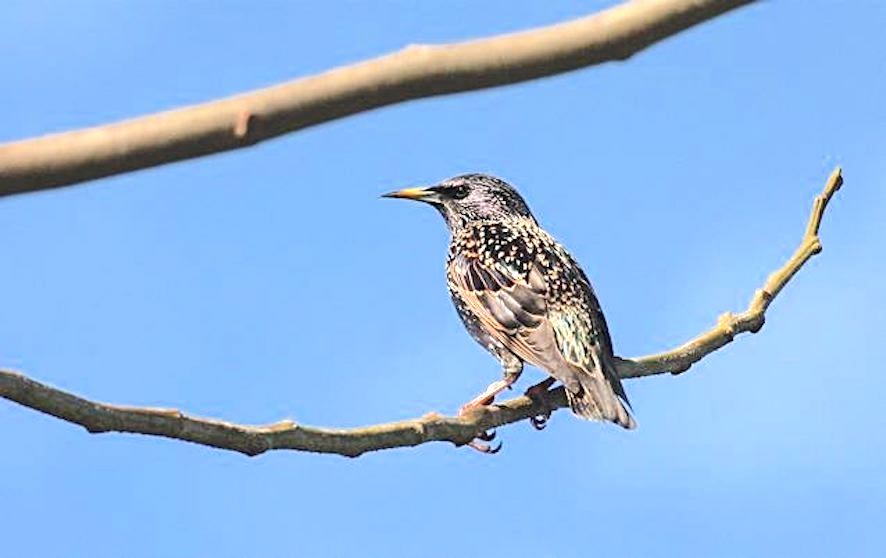
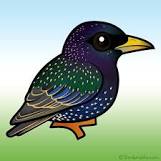
European Starling Sturnus vulgaris – High Line NYC – RH
We are all familiar with some of the collective nouns for birds – flocks, flights, broods, maybe companies (parrots) and so on. There are plenty of lesser known terms for specific birds, of which quite a few seem rather remarkable: a wisdom of owls, a murder of crows, a lamentation of swans, an unkindness of ravens, an exaltation of larks. Most of these refer to perceived characteristics of a particular species (the swan pining for a lost mate – they pair for life). Some date from medieval times.
MURMURATIONS OF STARLINGS
In the UK in late autumn, starlings start to gather in huge flocks in trees and open fields. Twitchers begin to gather too, in their all-weather plumage, ready to watch the sensational avian displays of thousands and thousands of starlings as they take to the air almost simultaneously. They swirl in densely packed random formation, drawing complex patterns across the sky. The group will constantly change direction and height, sometimes splitting into subgroups and reforming. They may suddenly drop to the ground in a teeming raucous mass, before taking off again to continue the display.
It is sometimes possible to sense when the flight is about to begin, In a huge packed group on the ground, there is a hint of restlessness. There is movement. A few birds seem to jump slightly. Then in a flash they are away into the sky.
A brief encounter with a small murmuration last week
Murmuration, early evening, Maiden Castle, Dorset (an iron-age hill fort) – iPhone
Starlings Sturnus vulgaris are a European species. They are now common in North America, less so in the Bahamas. The non-European distribution happened this way: All the European Starlings in North America are descended from 100 birds set loose in New York’s Central Park in the early 1890s. The birds were intentionally released by a group who wanted America to have all the birds that Shakespeare ever mentioned.* In return, gray squirrels were introduced into Europe at about the same time, with the population increasing exponentially and displacing the indigenous red squirrel..
* All About Birds – Cornell Lab
Photos: Keith Salvesen, Bruce Hallett, Wiki Commons; Video Clip Keith Salvesen; Cartoon by the very excellent Birdorable
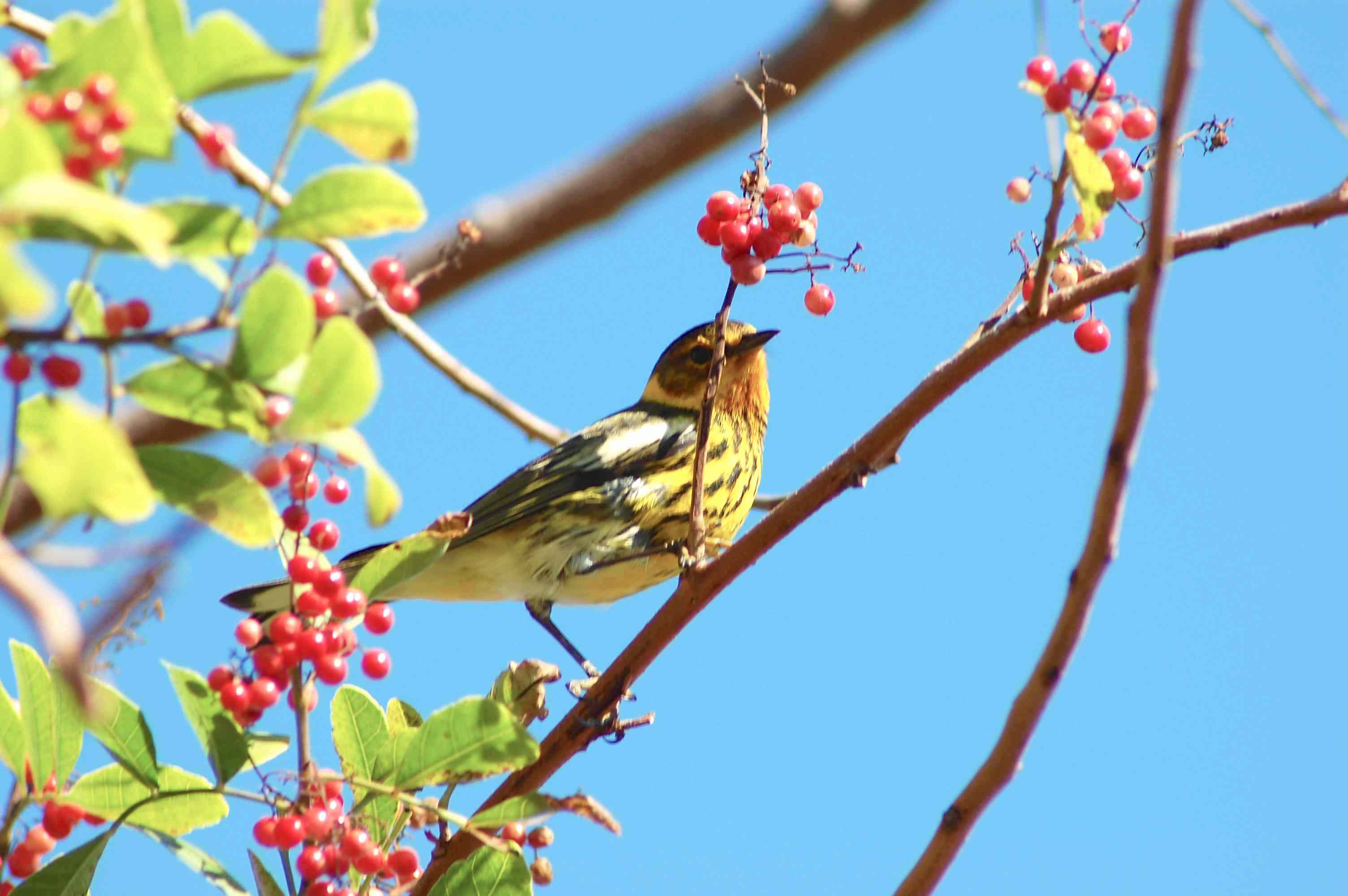
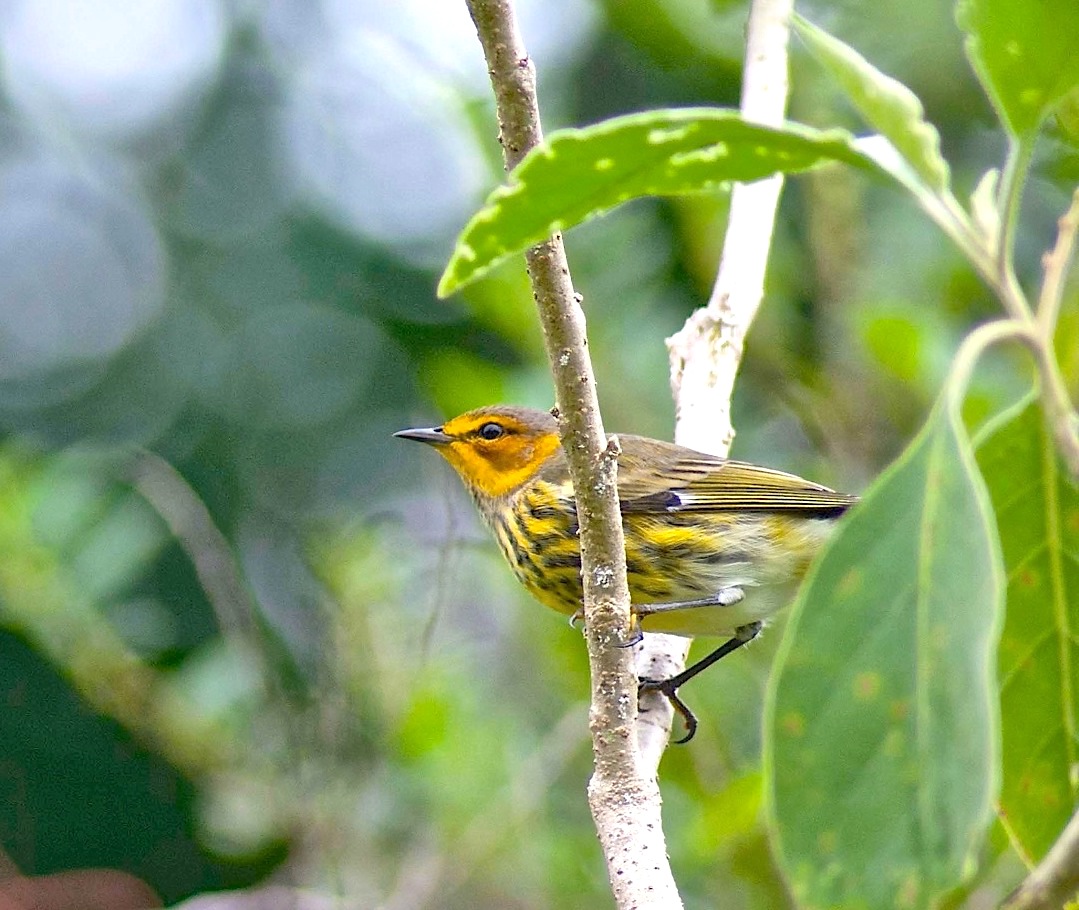
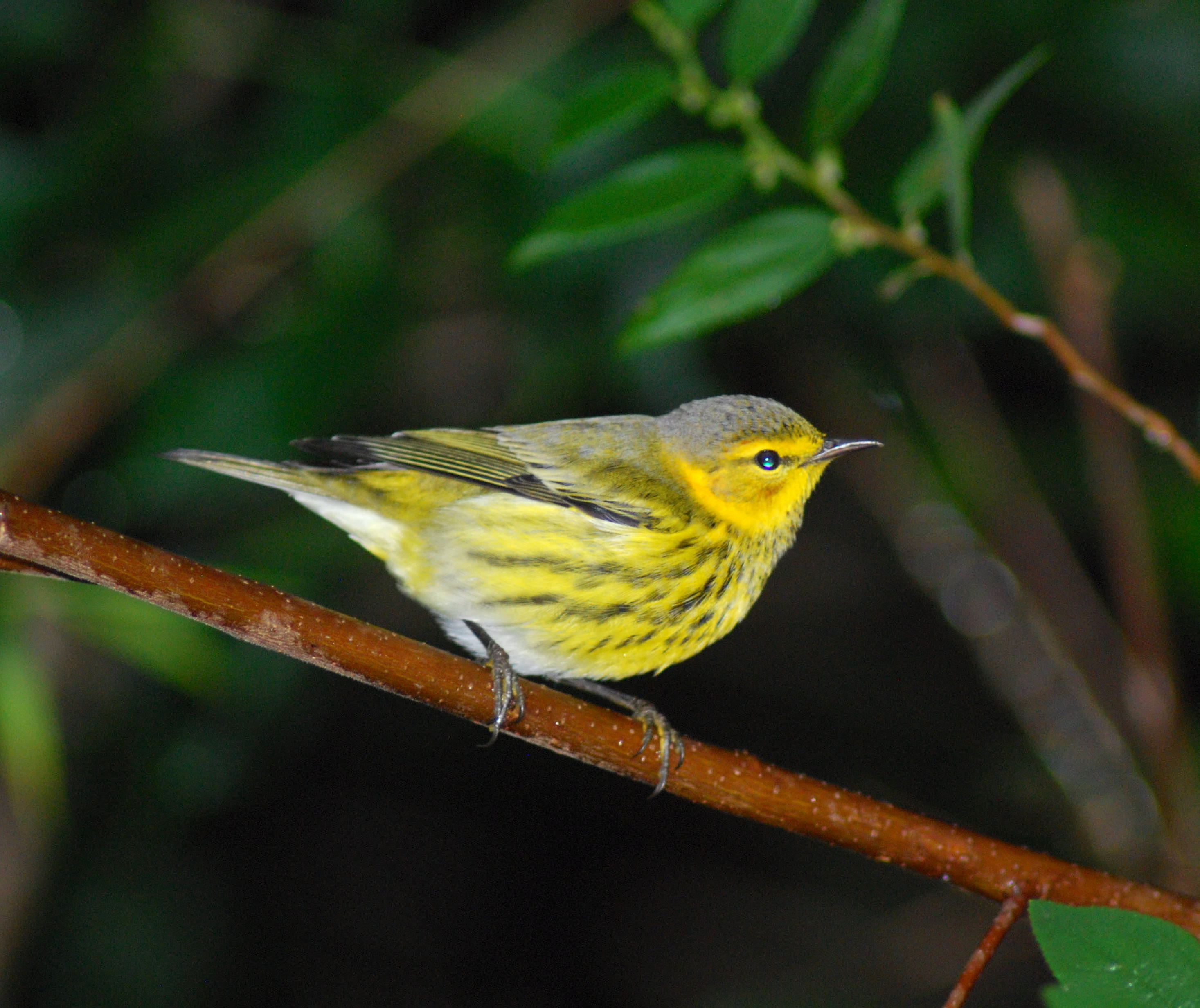
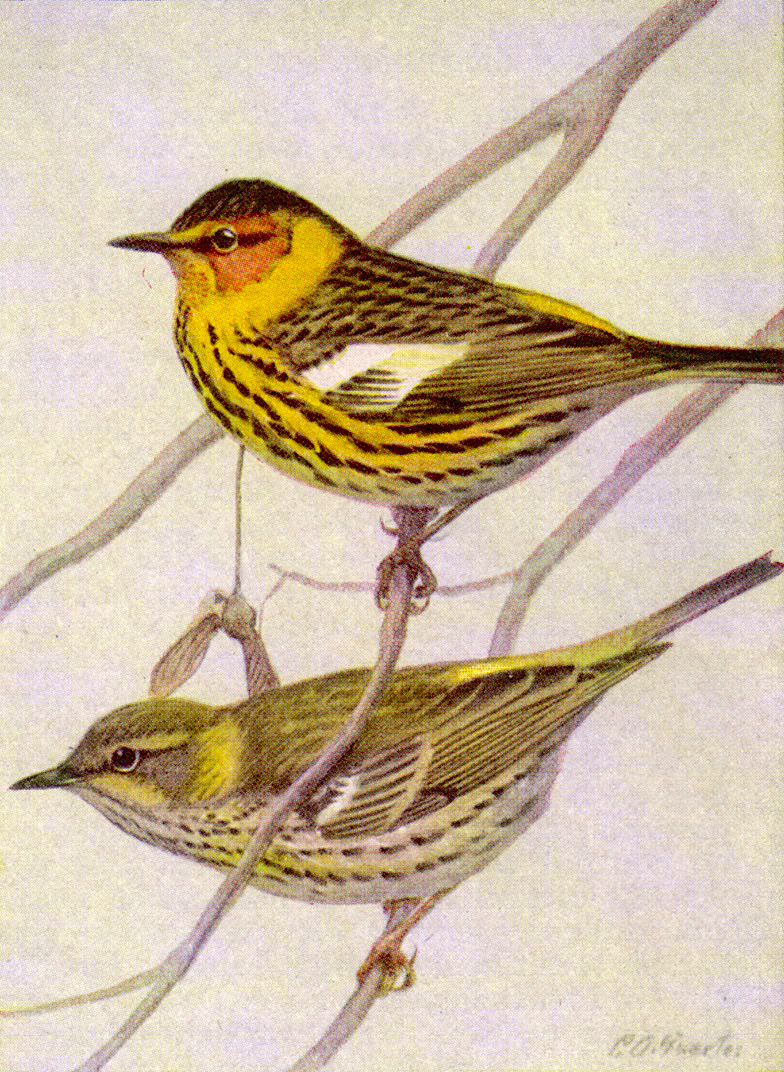
The history of ornithological classification and nomenclature is littered with peculiarities. The attractive migratory Cape May Warbler Setophaga tigrina is a very good example of premature evaluation.
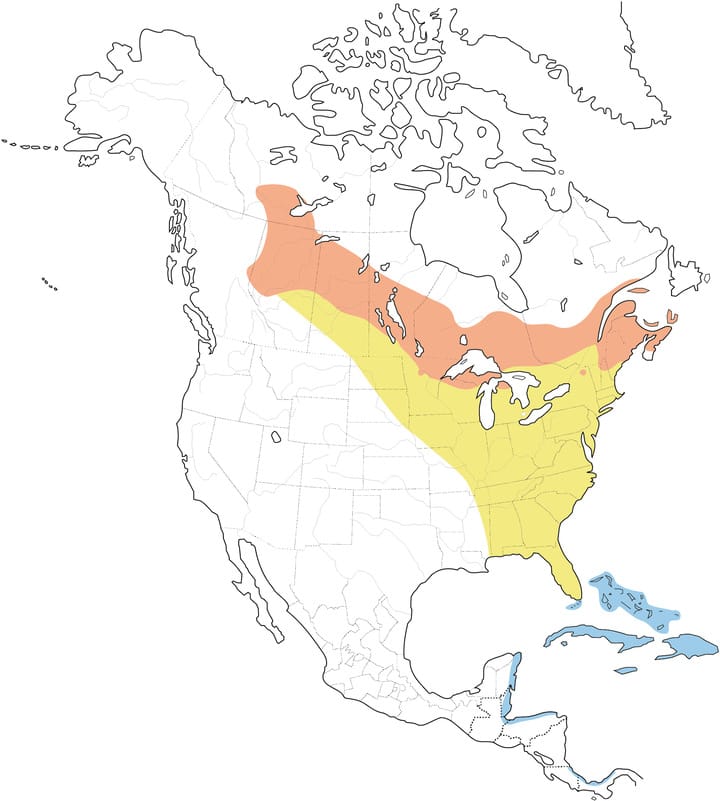
The range of the species is well defined. In the summer the birds live within a broad band that straddles northern USA and Canada. In the winter they head south with all their migratory warbler cousins across the yellow band to (mainly) the Bahamas.
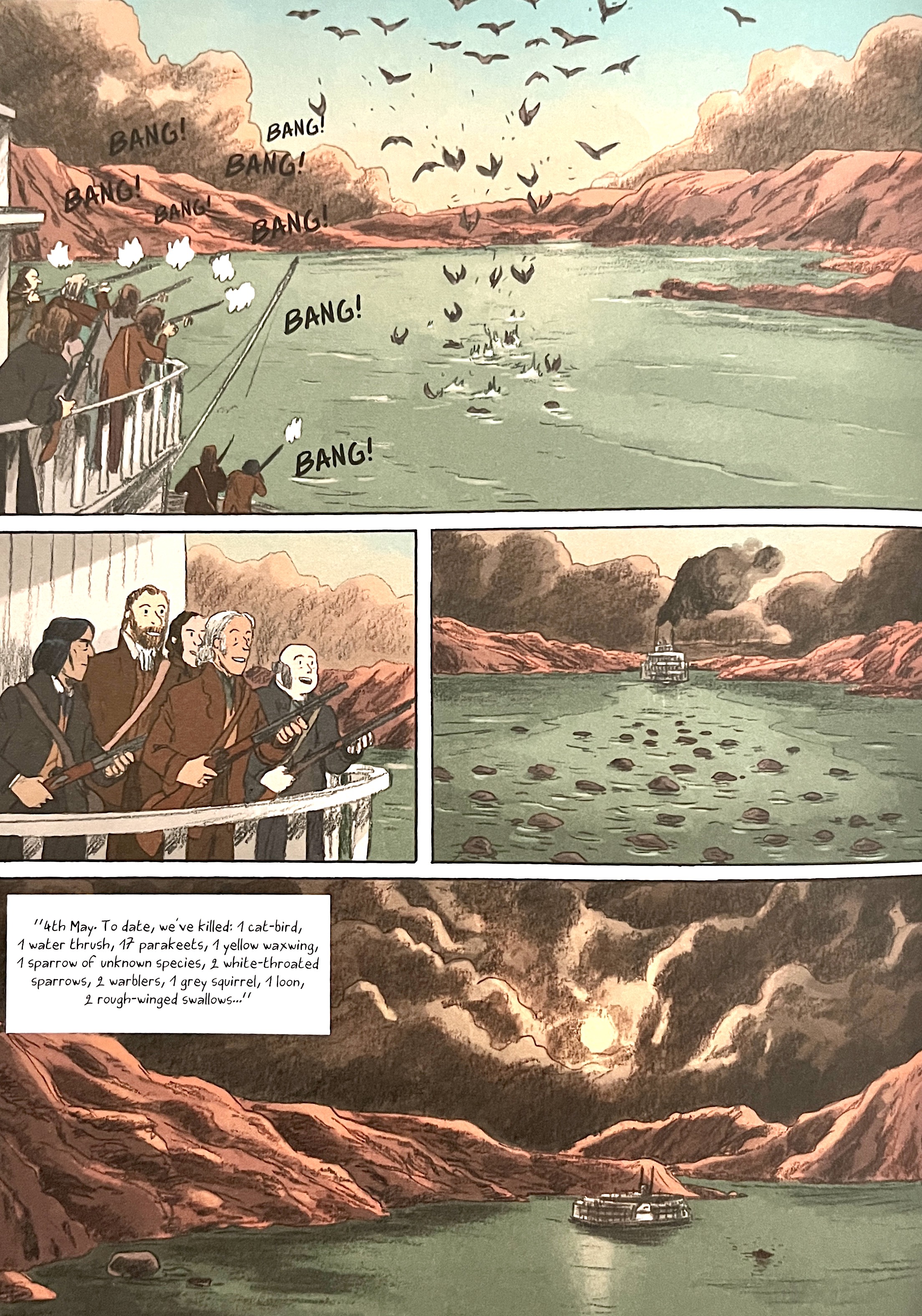
As with all migratory species, some birds each year will wander or be blown off-course; or will take a rest stop en route and decide to stick around. And so it was that in May 1812, a month before the Battle of Waterloo, the first ever specimen of the species was collected on Cape May NJ by George Ord during an exploratory trip with naturalistALEXANDER WILSON(he of plover & snipe fame). To be specific, they had gone to shoot the birds they wanted to collect. The bodies, from large down to tiny, were after all the only irrefutable evidence of a new ‘find’ at that time. Detailed drawings could be made and descriptions composed. The later display of the specimens enabled the expansion of ornithological knowledge and methodology, and brought consequent renown. The great Audubon took the research method *treading very carefully here* rather further than one might be comfortable with today, with somewhat indiscriminate use of lead shot.
As Wilson later wrote (note the words ‘beautiful little species, ‘shooting excursion’ and ‘ransacked’):
THIS new and beautiful little species was discovered in a maple swamp, in Cape May county, not far from the coast, by Mr. George Ord of this city, who accompanied me on a shooting excursion to that quarter in the month of May last…The same swamp that furnished us with this elegant little stranger, and indeed several miles around it, were ransacked by us both for another specimen of the same; but without success. Fortunately it proved to be a male, and being in excellent plumage, enabled me to preserve a faithful portrait of the original.
The odd (indeed ‘Ord’) thing was that the first-ever specimen was a complete one-off in that location at that time. Not a single sighting of the species (named Sylvia maritima by Wilson) was reported on Cape May or in that area for more than a century. Then at last in 1920, another example was found. Nowadays the CMW is not in the least unusual in the location that gave it its name.
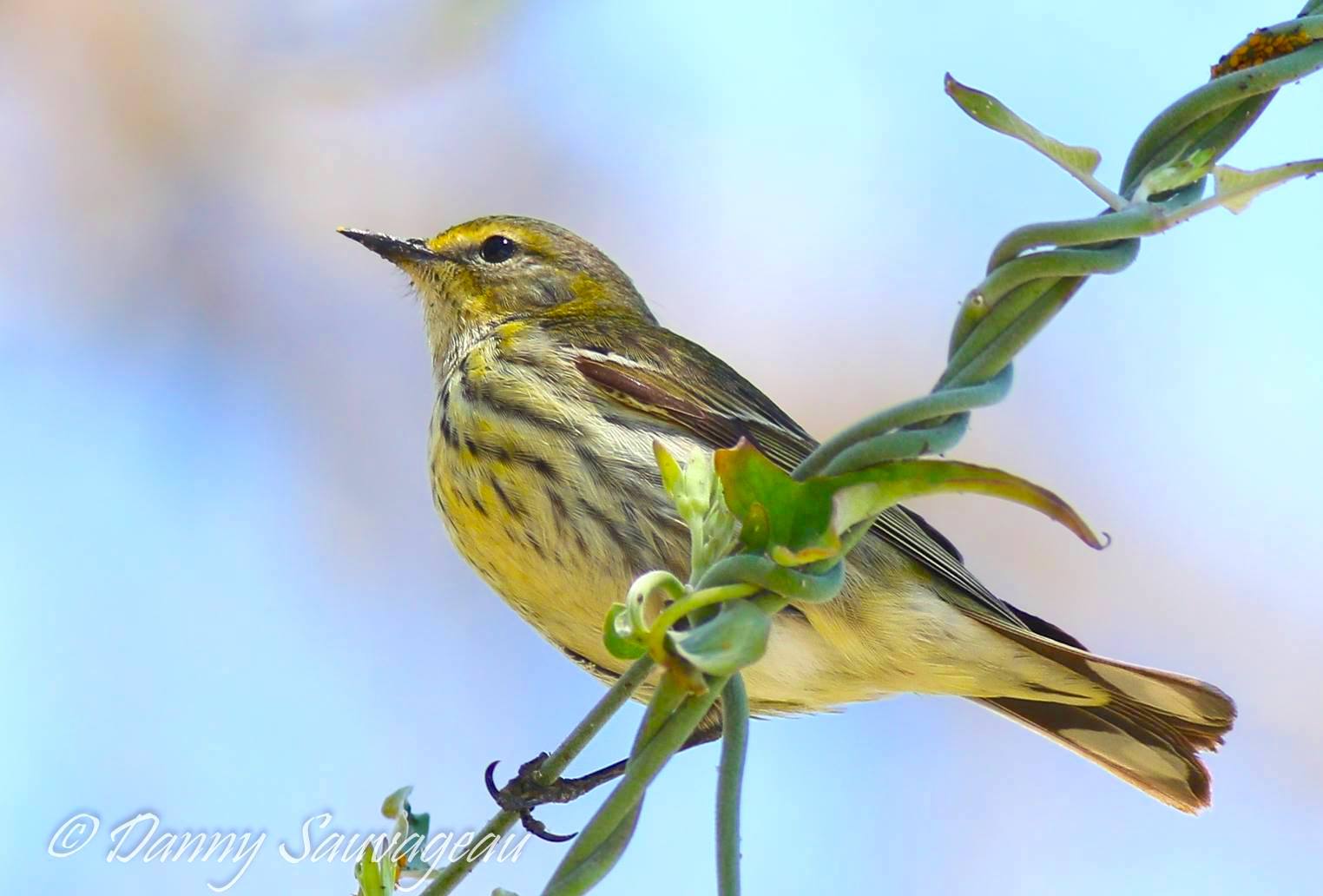
On Abaco, CMWs are classified as WR1, which is to say common winter residents. Males have striking chestnut cheeks in the breeding season, with strong streaking on the underside. Note also the black eyestripe. Females and juveniles are paler and the marking is less prominent. These warblers are insectivorous; in winter they may also feed on nectar and fruit. Behaviour-wise, they have aggressive tendencies in defence of their territory and of their food sources.
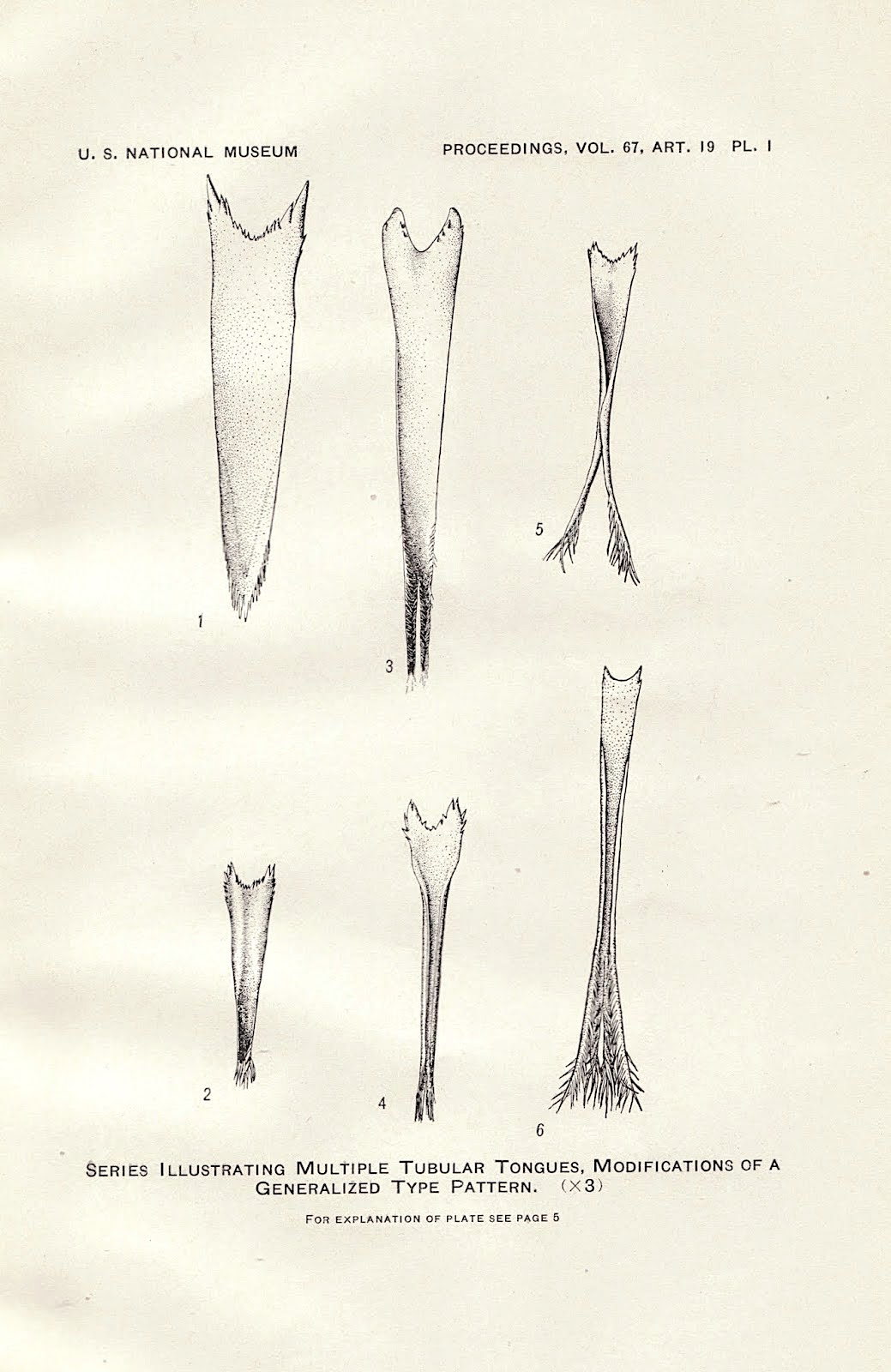
In researching this post, I discovered a strange (but slightly dull) fact. The CMW is unique among warblers in having a tubular tongue to enable nectar feeding (as with hummingbirds). This random fact hardly has the makings of lively conversation (though you might want to try it out) but considering the multitude of warbler species in existence, the CMW has the benefit of a rather special adaptation.
Tongue 2 (bottom left) is the CMW; No.5 is a bananaquit’s feathery tongue
WHAT SHOULD I LISTEN OUT FOR?
Unhelpfully, even the authorities have a tough time describing the song and call of a CMW. As with so many song-birds, variations on the theme “the song is a simple repetition of high tsi notes; the call is a thin sip” are the best you can hope for. However, it’s worth noting that the species generally prefers to sing from high perches, which might help with ID. But then so do other warblers I’m afraid. Here’s something more practical – the tsi and the sip:
ALL BIRDS, EXCEPT THE LAST, PHOTOGRAPHED ON ABACO, BAHAMAS
Photo Credits: Charmaine Albury [from The Birds of Abaco] (1); Bruce Hallett (2, 6); Sandy Walker (3, 4, 7); Becky Marvil (5); Danny Sauvageau (8).
Audubon Cartoon: On the Wings of the World; Grolleau & Royer / Nobrow (highly recommended)
Drawing, Nat Geo
Range map, Allaboutbirds / Cornell
Audio clips Martin St-Michel / Xeno-Canto;
Research refs include, with thanks, American Ornithological Society / Bob Montgomerie (Queen’s University); Camino Travel Costa Rica; OS
The northern curly-tailed lizard Leiocephalus carinatus, to give it its full name, resembles a tiny dragon with a twist in the tail. These little critters bask in the sun, or scuttle away into holes and crevices as you approach them. I suspect that even a confirmed herpophobic would find some charm in them. They are, of course, completely harmless to humans.
Surprisingly, the Bahamas is home not just to one but five different curly-tail species, and nine sub-species. Broadly-speaking, the variants are found on different and specific islands and have discrete local markings. Mostly they are brownish, but they may also be grey or with a greenish tinge like this one I recently photographed.
Curly-tail males, being territorial, turn somewhat aggressive around breeding time, which is basically most the the year, from February to October. Behaviours indicative of their territorial claims include tail curling / uncurling (of course), head-bobbing, strutting about in an agitated way and inflating the sides of their necks in a threatening kind of way. The tiny-tails, 2″ long when born, are known as ‘hatchlings’.
An impressive poolside ‘double curly’
THREATS TO CURLY TAILS
According to the Bahamas National Trust BNT, the main dangers to the curly-tails of the Bahamas are:
Dogs, cats, rats and introduced predators such as raccoons
Collection for the pet trade – curly tails are unprotected by CITES listing (also cute)
Collection of the rarer endemics by reptile enthusiasts seeking ‘exotics’
Development and habitat destruction (though it is noted that curly tails seem to adjust quite well in developed areas)
A curly tails sloughs its skin as it grows, as with snakes and other reptiles
WHY THE CURLY TAIL?
As mentioned above, for use in territorial posturing
In courtship displays by males to attract females (luckily a method not available to humans)
As a response to predators, confusing an attacker with movement at both ends
As a last resort, to detach to aid escape (the tail re-grows)
For fun and just because they can grow one and you cannot
Credits: all photos, Keith Salvesen except #2 & #6, Charles Skinner; BNT
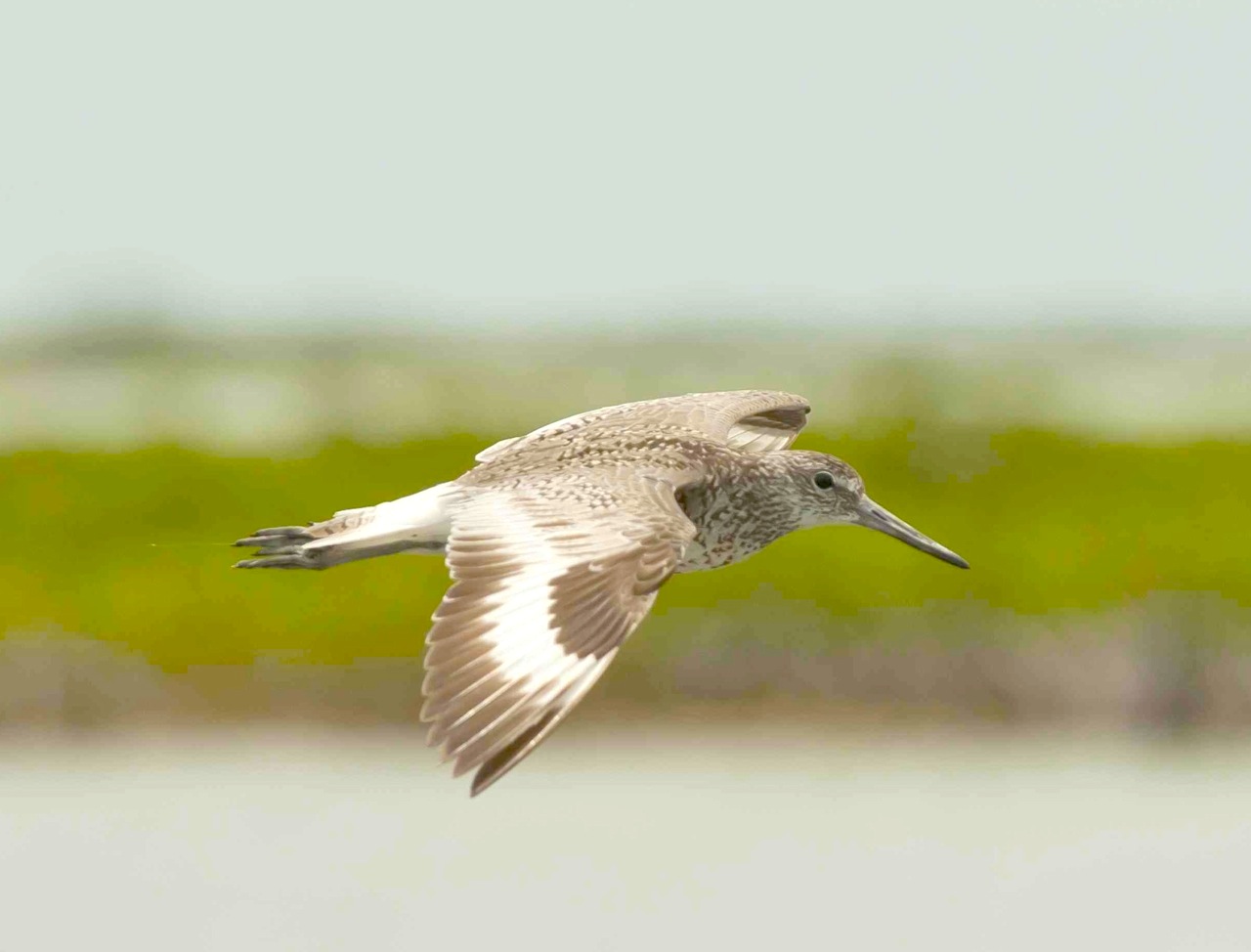
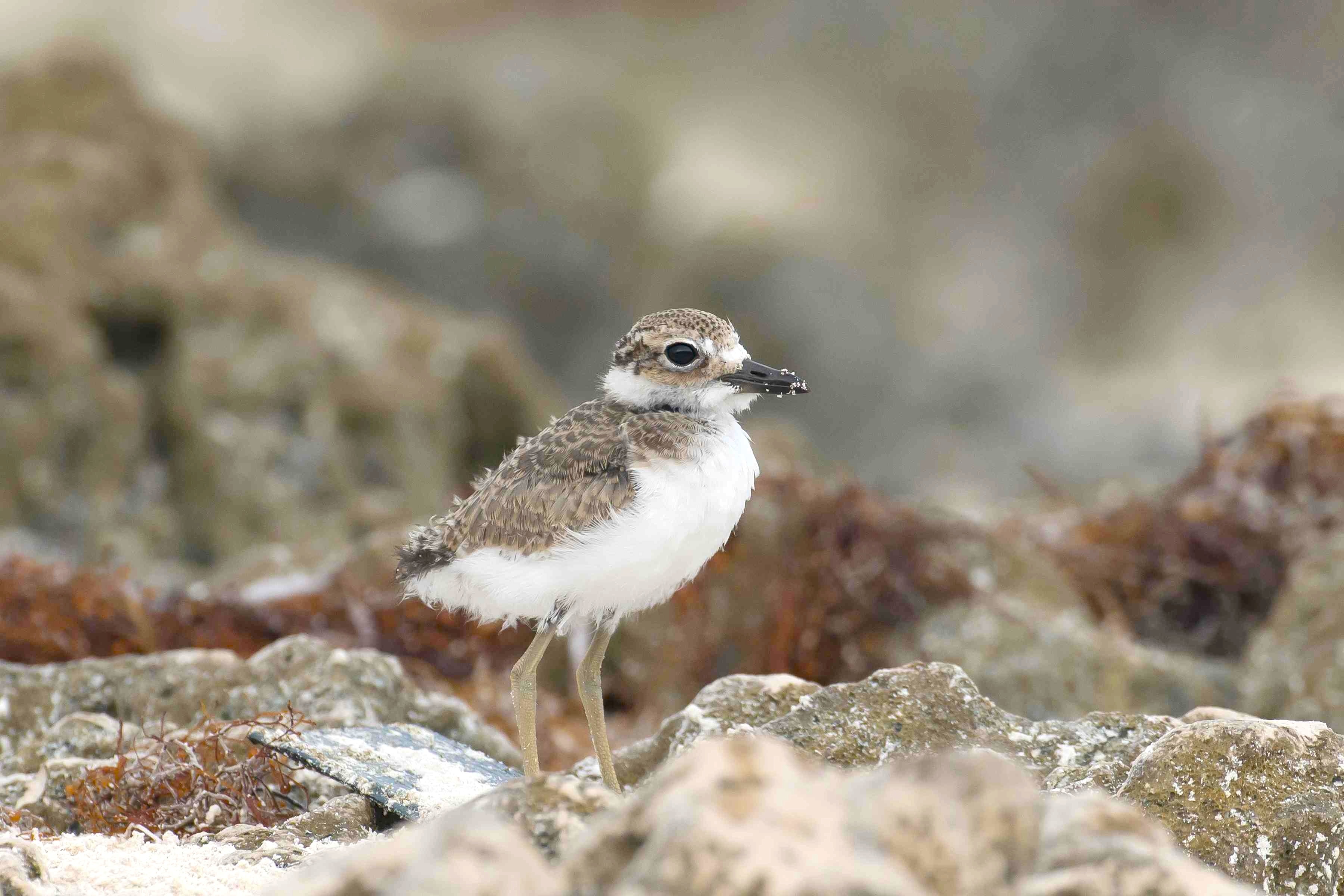
Abaco’s birding records compiled for over 20 years include 33 shorebird species. For a few, the islands and cays are a permanent residence; for many others they are winter quarters; some species are visitors transient in their migrations; a few are rare vagrants. The complete checklist of Abaco’s shorebirds is below, along with 3 links to specific posts.
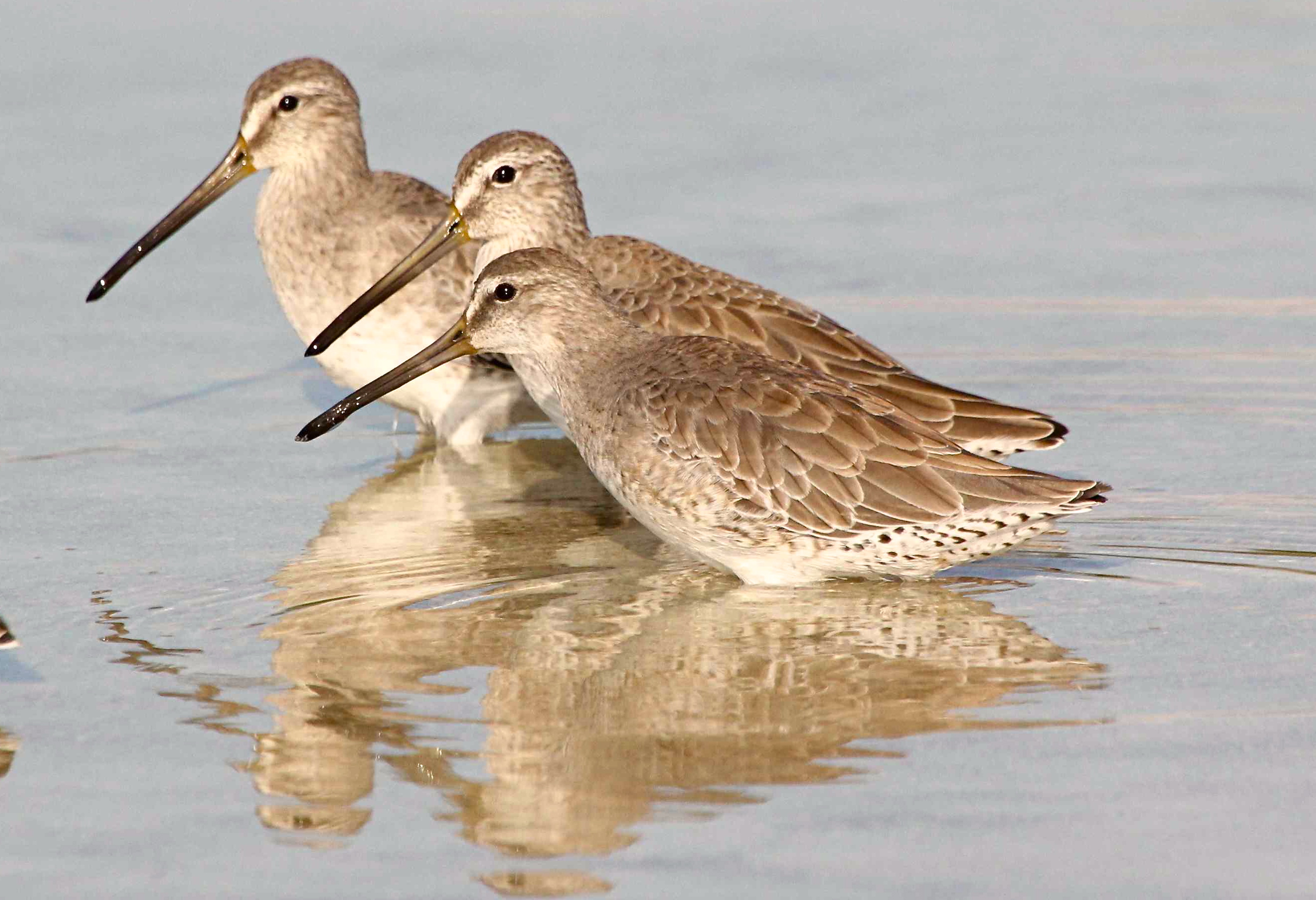
I have divided the species into 3 categories: sandpipers & kin; plovers; and a catch-all ‘large shorebird’ group that includes one or two sandpipers. Of the 26 birds featured and shown in the main checklist below, 23 are ones you might reasonably hope or expect to encounter on Abaco, though some only if you are lucky or your field-craft is excellent. The others are the long-billed dowitcher, American avocet and Wilson’s phalarope (of which only one has ever been seen on Abaco, with a photo to prove it). Many of these are showcased in my book The Birds of Abaco.
The codes tell you, for any particular bird, when you may see it (P = permanent, WR = winter resident, TR = transient, V = vagrant); whether it breeds (B) on Abaco; and your chance of seeing it, graded from easy (1) to vanishingly unlikely (5).
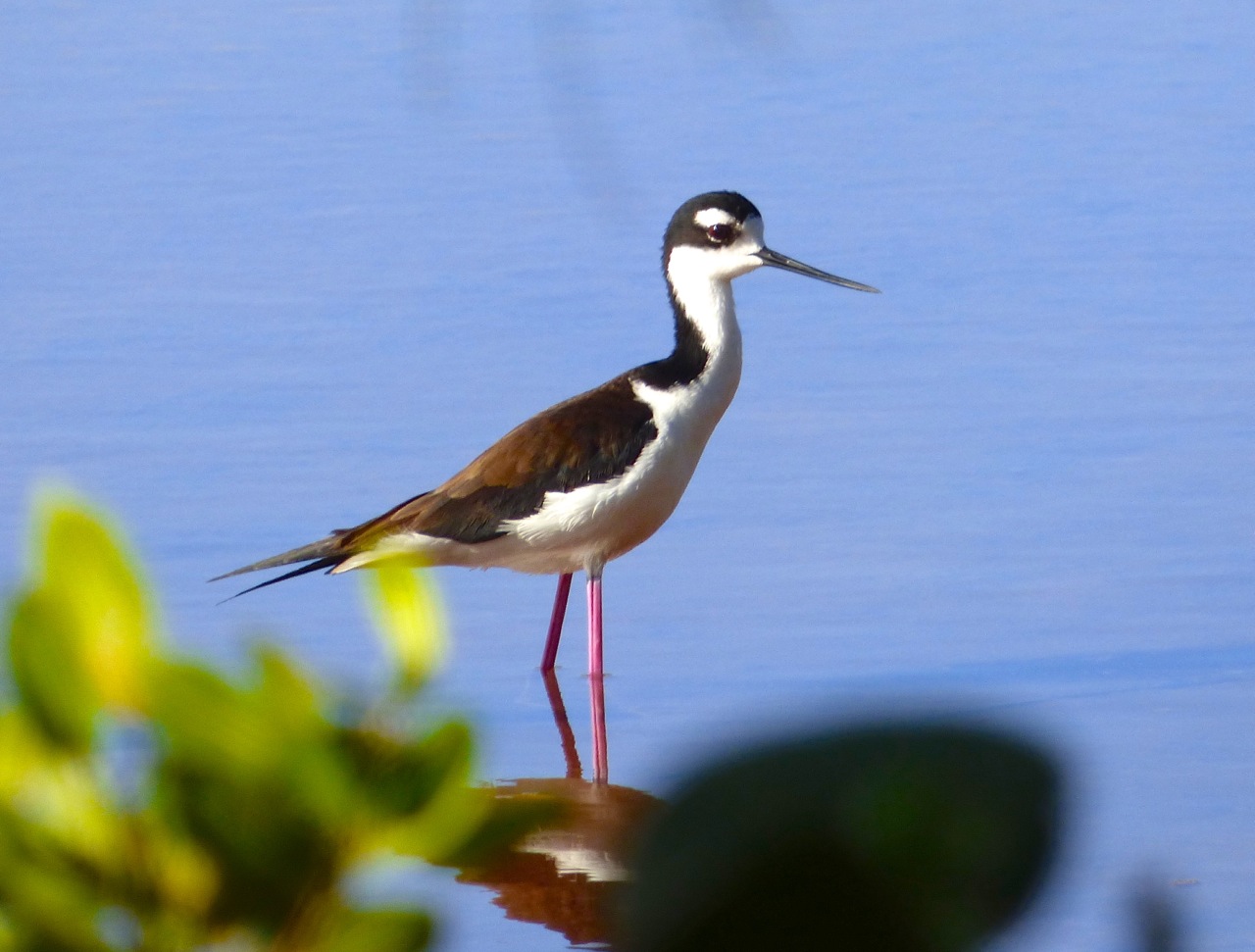
Black-necked Stilt Himantopus mexicanus PR B 3
American Avocet Recurvirostra americana WR 4
American Oystercatcher Haematopus palliatus PR B 2
And not just the tail*. Other parts of a bird. Sometimes most of a bird. More rarely, an entire bird. Whichever, a bird affected by leucism stands out from the crowd – out of the ordinary and therefore startling to the eye. I’d be very surprised if the fine turkey vulture in the header image didn’t make you look twice – maybe even to check if some devious photoshop trickery had been at work. Yet it’s just a normal TUVU in the Florida Keys, living a normal vulturine life.
LEUCISTIC DISCOVERY ON ABACO
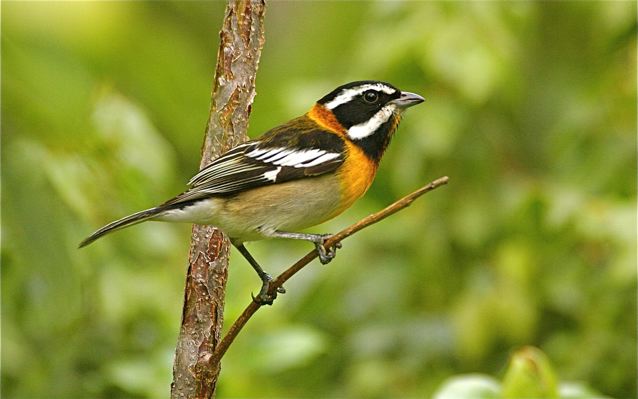
A leucistic Western Spindalis discovered on Abaco by birder Keith Kemp
For comparison – the real deal
LEUCISM? EXCUSE ME, AND THAT IS?
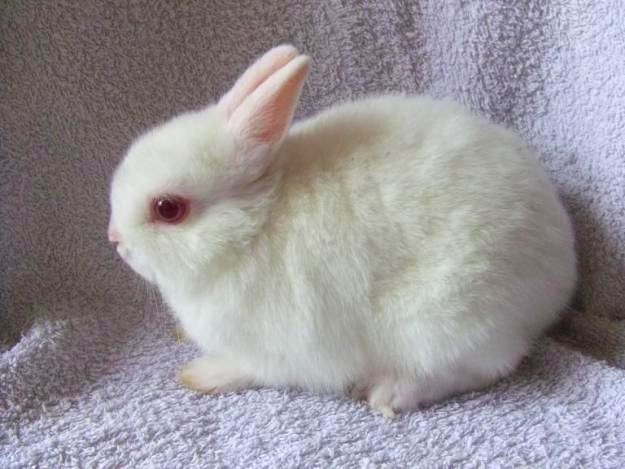
First, what it is not. It is not albinism, which results from diminished or lost melanin production that affects pigmentation. One characteristic of the condition is the tendency to pink eyes, which of course is seen in humans as well as animals and birds. Meet the perfect example…
WELL, WHAT IS IT THEN?
Put simply, melanin is only one of many ingredients of pigmentation. Leucism is caused through pigment loss involving many types of pigment, not just melanin. In birds this results in unnaturally light or white colouring of feathers that may be partial or entire. The eyes of a bird with leucism are unaffected. At one extreme, if all pigment cells fail, a white bird will result; at the other extreme, pigment defects cause patches and blotches of pale or white on the bird, often called a ‘pied’ effect. The condition can be inherited.
A mallard on Abaco. The species is known for its wide colour variations in both sexes. Sometimes the variations go beyond the usual range: this is a leucistic bird
A leucistic common gallinule (moorhen) on Abaco
Leucistic rock pigeon
BAHAMA (WHITE-CHEEKED) PINTAIL: A PIGMENT PUZZLE
I have found more examples of leucism in the ‘Bahama Duck’ than any other local species on Abaco. But there is also scope for confusion. First, here’s a pintail that is undoubtedly leucistic – note that the eyes and beak are unaffected by pigmentation deficiency:
But not all pale variants can be so confidently labelled. In the first picture, bottom right, there is an obviously an ‘odd’ pintail, silvery rather than ruddy brown like the rest of them (and yes, I do see the coot in the pack as well…). The second photo shows the same bird on dry land.
This is known as a ‘silver pintail’. These are said to be a leuchistic variant, and they are stocked by poultry dealers as ornamental ducks at a higher price than the much-loved standard brown version. However this bird clearly retains the essential markings of a normal pintail that you might expect to be absent (at least in patches) in the ‘true’ leucistic bird. I’ve seen it described as a ‘gray morph’. I wonder where the line is drawn between a noticeable colour variant or morph in a bird; and an obviously pigment-abnormal, leucistic bird where the incidence and extent of the condition seems to be random.
A fine example of a ‘pied’ American Robin, an occasional visiting species on Abaco
Leucistic American Robin (Amy Evenstad, PoweredByBirds.com)
PIPING PLOVERS CAN BE LEUCISTIC TOO
PIPL are one of my bird species preoccupations, but until I checked them out I hadn’t imagined what a leucistic one would look like, or whether they had ever been recorded. I now have the answer…
These photos of a leucistic female were featured by Audubon Alliance for Coastal Waterbirds, Audubon Connecticut. They were taken by Jim Panaccione, a Biological Science Technician at Parker River National Wildlife Refuge, Newburyport, Massachusetts. I hope he won’t mind their illustrative use here… Despite the theory that leucistic birds may find it hard to find a mate – and might even be attacked by its own species – this pair successfully nested.
OPTIONAL MUSICAL & CULTURAL DIGRESSION
A WHITER SHADE OF PALE
*Obviously, it had to be ‘tail’ in the title to justify one of my clunky ‘jokes’ and an accompanying musical diversion. That’s just the way it is, I’m afraid. Bach’s well-known descending chord sequence of was of course shamelessly ripped off by ingeniously adapted by Procol Harum for ‘A Whiter Shade of Pale’, their first single in 1967. Relive a Summer of Love right here and now.
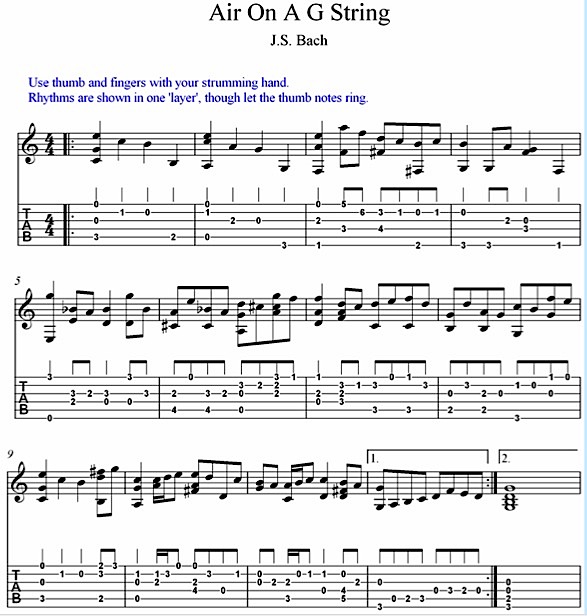
Any fret-tweakers might like to see the sheet music of Bach’s Air for guitar – you could even play it on Air Guitar – which is relatively easy, being in C major.
‘BACH IN A MINUET’
The best known commercial use of the tune was in the famed series of adverts that equated a mild cigar called Hamlet with happiness, accompanied by an excerpt from a jazzy version of Bach’s ‘Air on the G String’. Here is one of the best – and possibly the only advert to my knowledge to feature not one, but two excellent Sir Walter Raleigh jokes.
Credits: thanks to Amy Evenstad (PoweredByBirds.com) for use permission for her wonderful TUVU & AMRO photos; other photos by Keith Kemp & Bruce Hallett (Spindalis); Pinterest (rabbit); Nina Henry (mallard); Tony Hepburn (moorhen); Wiki (pigeon); Jim Edmonson (leucistic pintail); Keith Salvesen (silver pintail); Jim Panaccione / Audubon (piping plovers); Procol Harum, esp. Robin Trower for building a great career round being ‘reminiscent of Jimi Hendrix’; J.S. Bach for a nagging tune; Hamlet cigars for ingenuity & making me laugh
BLACK WITCH MOTHS: HARBINGERS OF DEATH OR LOTTERY BANKERS?
Black Witch moths Ascalapha odorata are seriously bad news. Or wonderfully good news, depending where you are and who you talk to. First, let’s look at some of the local names for the creature, from which you will get a pretty clear idea of its somewhat negative folklore status, as well as its area of distribution. I do this not to demonstrate how effortlessly I can ‘borrow’ from Wiki, but rather to show how a simple moth can give rise to widespread superstition and even fear.
12 SCARY NAMES FOR ONE MOTH
Mariposa de la muerte (butterfly of death) – Mexico / Costa Rica
Pirpinto de la Yeta (something like ‘jinxing butterfly’) – Argentina
Tara Bruja (witch moth) – Venezuela)
Miquipapalotl (black death moth) – Mexico
Taparaco (something like ‘messenger in black’) – Peru
Money Moth, Money Bat – Jamaica, Caribbean (including Bahamas)
Other names include Papillion-devil, La Sorcière Noire, Mourning moth, Sorrow moth.
WHICH MOTH?
These very large moths (wingspan up to 7″) are nocturnal, with females larger than the males. The diagnostic markings are a spot on each forewing shaped like a number nine or a comma. This spot is often green with orange highlights (seen in the header image). The hind wings are decorated with distinctive ‘eyes’. The overall effect is an example of aposematism – coloration or markings that act as signals to warn or repel predators. The link above will take you to an excellent Wiki article on the topic, including the debate on the topic between Alfred Russel Wallace and Charles Darwin
The stripy larval caterpillar can grow up to 7 cm in length.
‘BAD LUCK & TROUBLE’
The moth is a migratory species, flying from (roughly speaking) South America as far north as Florida and Texas. The worst luck is believed to come from having one flutter into your house. Once inside, it will either bring bad luck to the house – or if there is already misfortune there, it will make it even worse. There are variations on this belief – e.g. that the more corners of a room the moth visits, the more doomed the household.
ANY GOOD NEWS ABOUT THIS CREATURE, OR ALL GLOOM & DOOM?
Fortunately yes, and it’s high time to dispel the gloom hereabouts. In some places (e.g. Hawaii), it is believed that when a loved one has died and an Ascalapha odorata is seen soon after, it is the person’s soul returning to say farewell.
More promisingly still, in the Bahamas and wider Caribbean a far more positive and practical attitude is shown. If a Money Moth (or Money Bat) lands on you, you will receive some money. Or so it is said. I have never heard of this happening, but at least it is an optimistic approach to the moth. And Texas, thinking big, takes this several steps further to the prediction that you will win the lottery (I have a feeling this is a very modern theory).
WHY ARE YOU SCARING US WITH THIS THING?
Because at one time I had never heard of these moths, let alone seen one. Then one balmy Bahamian evening, at dusk, someone pointed out a large dark smudge on the door-frame. I only had a phone, and I had to use the flash. Here is the moth, with its evil little eyes shining in the bright light. Luckily, it was outside and not inside the building, which I hope diluted the malevolence radiation level. I didn’t realise the significance of the moth and the implications at the time of course, until I’d looked it up in Sibley’s indispensable ‘Compendium of Evil Moths‘**). It’s a poor photo, but it was useful for ID and I feel that taking a quick shot helped to ward off the worst of any unpleasantness. Though I remember that I fished very badly (even by my low standards and expectations) the following day…
CULTURAL SIGNIFICANCE IN LITERATURE
Remember Silence of the Lambs? Well in the book, pupae of the Black Witch moth were placed in the mouths of victims by serial killer ‘Buffalo Bill’ as his calling card – though for the film, the moth species was changed to a Death’s-head Hawkmoth, as featured on the poster.
You can read about Hannibal Lecter’s link to moths, and learn how for the film the pupae were made from sweets (Gummi Bears ™) so as to be harmless if swallowed, HERE
SO – BE HONEST – ARE THEY HARMFUL IN ANY WAY AND / OR WILL ONE MAKE ME RICH?
No
Taking one’s life in one’s hands…?
Photo credits: Charles J Sharp (1, 5) OS; Wiki (2); Julia Gotz (‘juliatrees’) (3)*; Keith Salvesen (4) Sources: Julia Gotz (‘juliatrees’), Terry Sovil, , Texasbutterflyranch.com, Wiki, Sibley’s ‘Compendium of Evil Moths‘**
*Julie closed her blog, from which photo 3 comes, in 2010. I’m hoping she won’t mind my resurrection of her image to illustrate the species… Black Witch moth photos are quite rare online
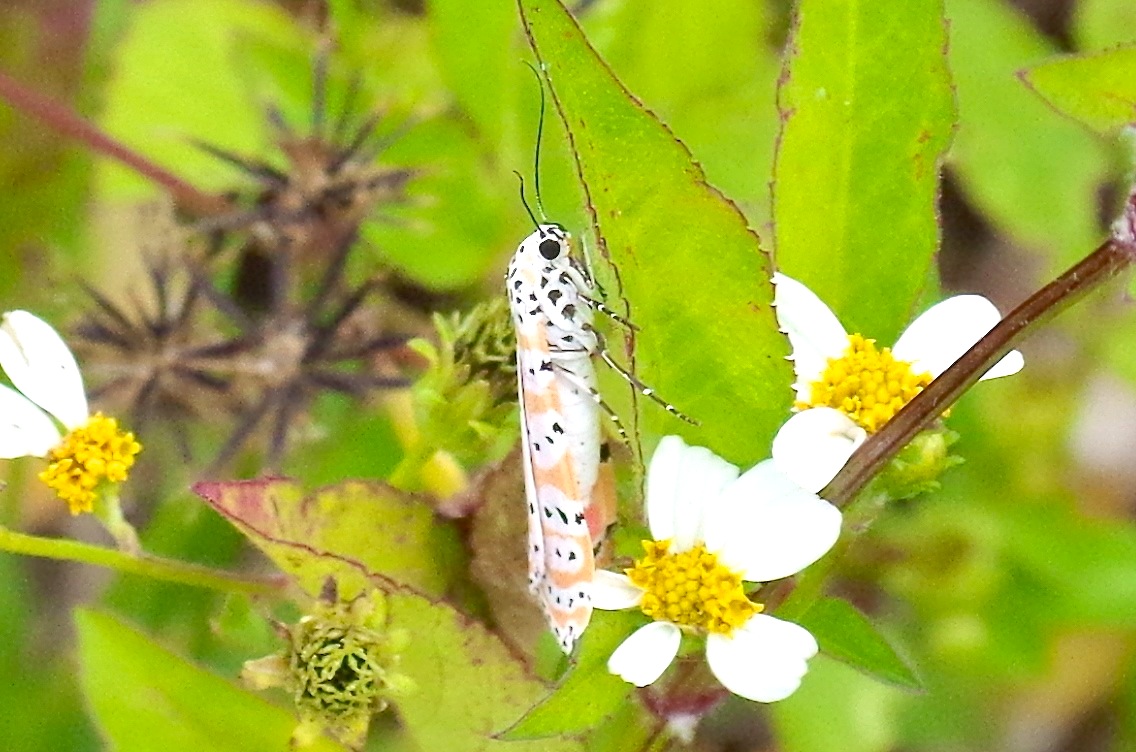
The BELLA MOTH Utetheisa ornatrix is also known as the ‘ornate moth’ or ‘rattlebox moth’ (a tall spiky plant of the species Crotalaria). The italianate ‘bella’ signifies beauty and all the many synonyms for it. These moths come in colours ranging from pink to red or orange, and yellow to white. Some have vivid coloration, others are less bright. Their black dot markings are broadly similar. Moths are often thought of as creatures of the night, so daytime would not be an auspicious time for moth-hunting. In fact there are many moth species that are active during the day (‘diurnal’), and the Bella Moth is one of them.
DEFENSIVE WARNINGS
The bright coloration is (as in many species) nature’s way of saying ‘leave me alone’ and in particular, ‘I am very unpleasant to eat’. It is called APOSEMATISM. The unpleasantness derives from toxins of the plants they feed on. This starts at the larval stage. The larvae feed on plants that contain poisonous alkaloids – in particular the yellow rattlebox plant – rendering them extremely unpalatable. both as larvae and adults. Bella adults in need of an alkaloid boost may cannibalise moth eggs, pupae or larvae to counter a deficiency.
BELLA MOTH SEX LIVES: ‘IT’S COMPLICATED’
Sexual encounters are dictated by females, who compete with other females for males
Females seeking to mate always outnumber available males
A female bella will release powerful pheromones at dusk to lure males
Related females uniquely engage in collective pheromone release
This is termed “female pheromonal chorusing”, an irresistible draw for the males
Several males will give the female chemical ‘nuptial gifts’ of both poison and sperm
The female chooses the best of her various suitors and copulates with 4 or 5 of them
The whole process of multiple copulation may take up to 12 hours
In some way I don’t understand, she is then able to select her preferred sperm provider
The sperm of the other males is rejected and they go away disappointed
Humans: do not try any of this, whether at home, in the office, in public, or when driving
Credits: Bob Peterson (1, 6); Keith Salvesen (2, 3); Charles J Sharp (4); open wings by Dumi (5)
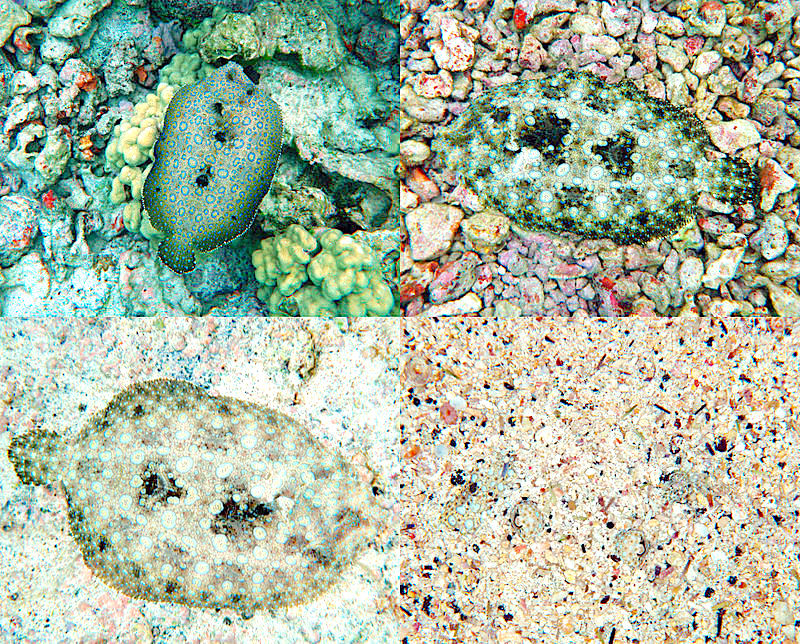
I featured the extraordinary, colour-transforming PEACOCK FLOUNDER Bothus lunatus a while back as part of a Bahamas Reef Fish series. These really are remarkable creatures, and I have decided to return to them mainly because of the wonderful illustrative photos I was able to incorporate. There are plenty of flounder facts too, but if you just enjoy the pictures and skip the blurb I’ll understand.
ROVING EYES
In the fish shown here, you’ll see that – surprisingly – both eyes are on the upper-side of the fish, above the rather grumpy mouth, whereas the head is horizontal to the ocean floor. Oddest of all, juveniles are constructed conventionally with bilateral eyes, and look like ‘normal’ fish rather than flatfish.
As the fish matures, in some magic way the mechanics of which I can only guess at**, the right eye grows round to the topside and the flounder transforms from a ‘vertical’ fish to a flatfish. For this reason, the PF is known as a ‘left-eye’ flounder. Maybe in other flounder species in the world – the southern hemisphere maybe? – the eye that moves round to the upper-side is the left eye.
The eyes of this fish have another special trick up their sleeves (so to speak). They operate completely independently. Thus the creature can look left and right, or forwards and backwards, simultaneously. It’s an excellent system for detecting predators coming from any angle. It’s a superpower we might all benefit from.
DO THEY HAVE ANY OTHER TRICKS WE SHOULD KNOW ABOUT?
Yes they do indeed. If you have been admiring the fish shown so far, you’ll have noticed that the colour of each one differs from the others. In addition to the predator-protection that the eyes provide, the peacock flounder can make itself (near) invisible. They can rapidly change colour to match their surroundings. There are 3 reasons for this: to avoid / confuse predators; to conceal themselves on the sea-floor to catch passing prey; and, as dive expert Fred Riger has pointed out, “the male peacock flounder can, and does greatly intensify his colours to declare territory and attract females. When doing this the males will also signal with the left pectoral fin, sticking it straight up and waving it around.”
The same fish, photographed over several minutes as it moves over the ocean floor
Matching the background happens as the fish swims, and in a few seconds. When they rest on the sea-floor, the camouflage may even become total. In #4 above you can just about make out the eyes. The whole effect is known as ‘cryptic coloration’ or CRYPSIS. In contrast, the image below shows just how adaptable the transformation can be. Note how the fish can even mimic the pinkish tinge of the sand perfectly. If threatened, the fish will bury itself in the sand, with just its eyes showing.
HOW DO THEY MANAGE TO CHANGE COLOUR IN SECONDS?
It’s complicated! A simple answer is: a mix of hormones, pigment-cells and vision, all coordinating rapidly. The colour change works in two ways: pigments are selectively released to the skin cells; and other pigments can be selectively suppressed. An analogy might be image manipulation using variations in brightness, saturation etc. Not convinced? Then watch this short video and prepare to be impressed. Astonished, even.
WHAT IF A FLOUNDER CAN’T SEE CLEARLY FOR SOME REASON?
As with many (all?) superpowers, there is usually some kryptonite-style flaw. A flounder with a damaged eye, or one temporarily covered (by sand, for example) will have difficulty in changing colour – possibly at all, or at any rate with the swiftness it needs to have.
THESE SIDEWAYS FISH – HOW DO THEY… YOU KNOW…?
Take a look at the fish above with its top fin raised. It’s a ‘ready’ signal in a harem. Male flounders have a defined and defended territory within which live up to 6 females – a so-called ‘harem.’ I can do no better than borrow the description of the rituals from an article derived from scientific papers byKonstantinou, 1994; Miller, et al., 1991in the websiteanimaldiversity.org/…ounts/Bothus_lunatusTo which I can only add, ’15 seconds, eh?’
“Mating activities usually begin just before dusk. At this time, a male and a female approach each other with the ocular pectoral fin erect. The two fish arch their backs and touch snouts. After this interaction the female swims away, and the male sometimes follows, approaching the female again from the left side. At this point the male pectoral fin is erect and the female pectoral fin moves up and down, possibly signalling willingness to mate. The male then positions himself underneath the female and mating begins. This process consists of a mating rise, during which the female and male rise in the water column together. On average, these rises last about 15 seconds. At the highest point of this rise, usually around 2 m above the substrate, gametes from both fish are simultaneously released, producing a cloud of sperm and eggs. Once the couple returns from the rise, the male “checks” to make sure mating was successful, and the pair separates quickly, swimming away from each other in opposite directions. Not all mating rises are successful, and the process of “checking” is thus important. The exact purpose of the mating rise in these flounders unknown; possible reasons for rising include better dispersal of gametes and predator avoidance.”
Peacock Flounder – Kim Rody Art
**This may in fact have been through sheer laziness
Credits: Melinda Riger & Virginia Cooper / Grand Bahama Scuba; Melinda Rogers / Dive Abaco; Adam Rees / Scuba Works; Kim Rody; animaldiversity.org; magpie pickings and other credits in the text
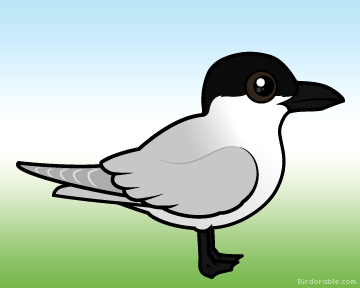
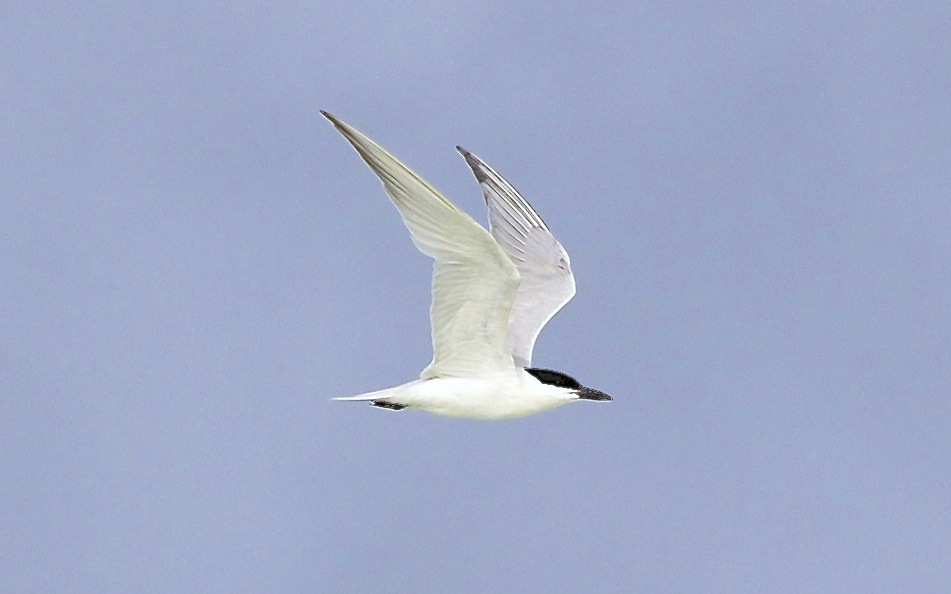
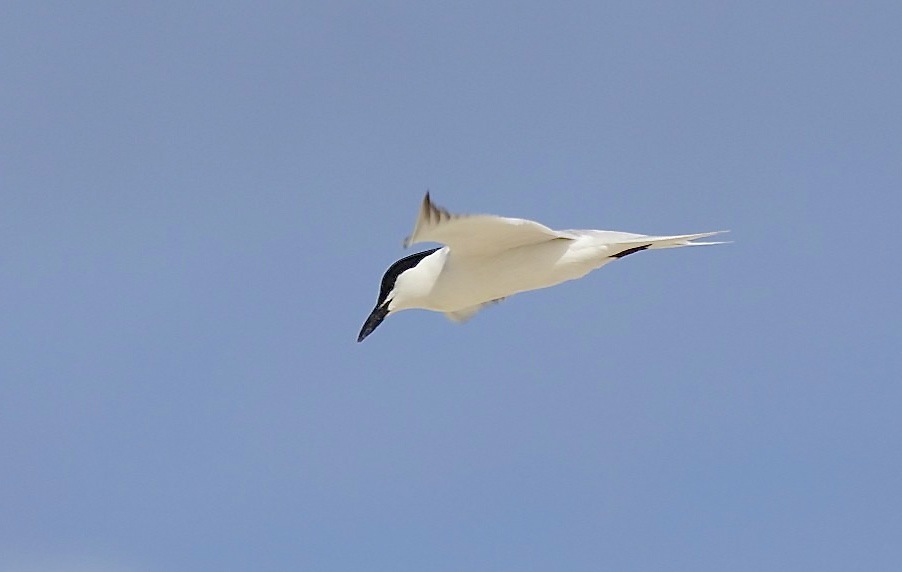
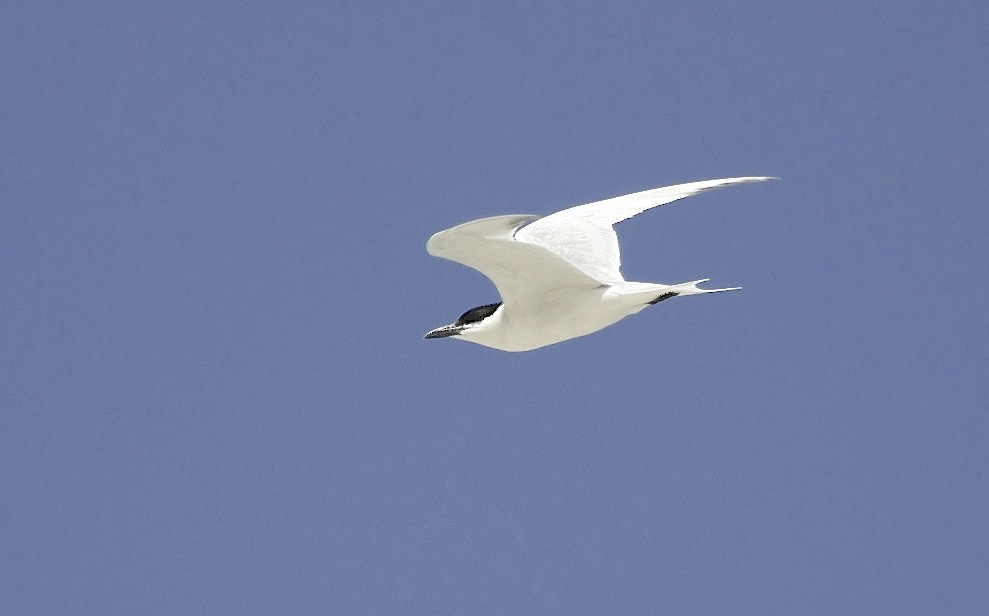
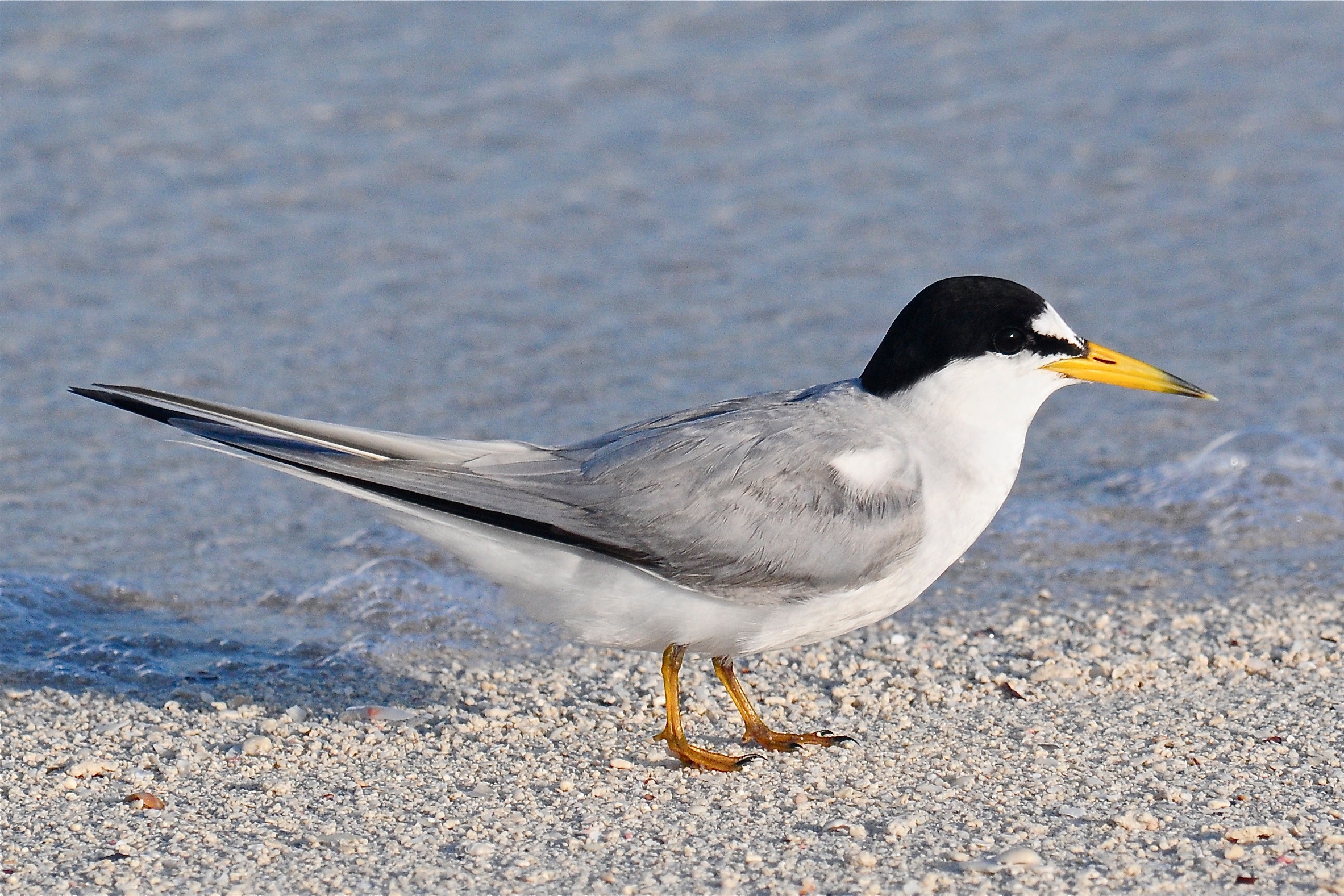
The gull-billed tern Gelochelidon nilotica had a name upgrade from Sterna nilotica some years ago, and was awarded the honour of its own genus.
Let’s be clear at the outset: there’s no such thing as a tern-billed gull. Which fortunately lessens the scope for species confusion.
There are 12 species of tern recorded for Abaco. Only one, the royal tern, is a permanent resident. There is one winter resident, the Forster’s tern and there a 6 summer resident terns of varying degrees of commonness. The other 4 are transient or vagrant, and probably definitely not worth making a special trip to Abaco to find. The G-BT is designated SB3, a summer breeding resident that is generally uncommon, though may be more common in particular areas.
TERN TABLE****I know! Too tempting…
The bird gets its name from it short, thick gull-like bill. It’s quite large in tern terms, with a wingspan that may reach 3 foot. They lose their smart black caps in winter.
There are 6 species of G-BT worldwide, and it is found in every continent. While many terns plunge-dive for fish, the G-BT mostly feeds on insects in flight, and will also go after birds eggs and chicks. Small mammals and amphibians are also on the menu. The header image shows a G-BT with a small crab. I always imagined that they must eat fish. Surely they do?But I have looked at dozens of images online to find one noshing on a fish, with no success.
All photos were taken by Alex Hughes, a contributor to THE BIRDS OF ABACO, when he spent some time on Abaco some years ago in connection with the conservation of the Abaco Parrot and the preservation of the habitat integrity of their nesting area in the Abaco National Park
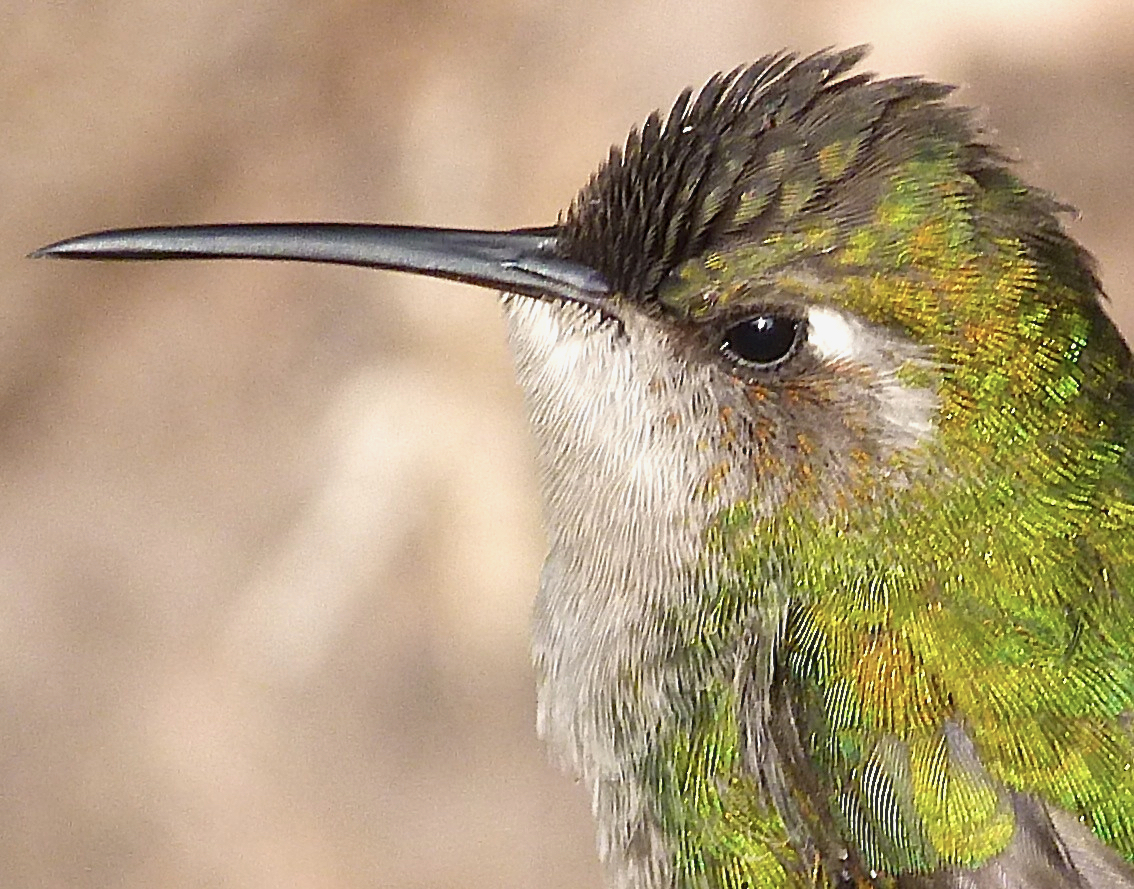
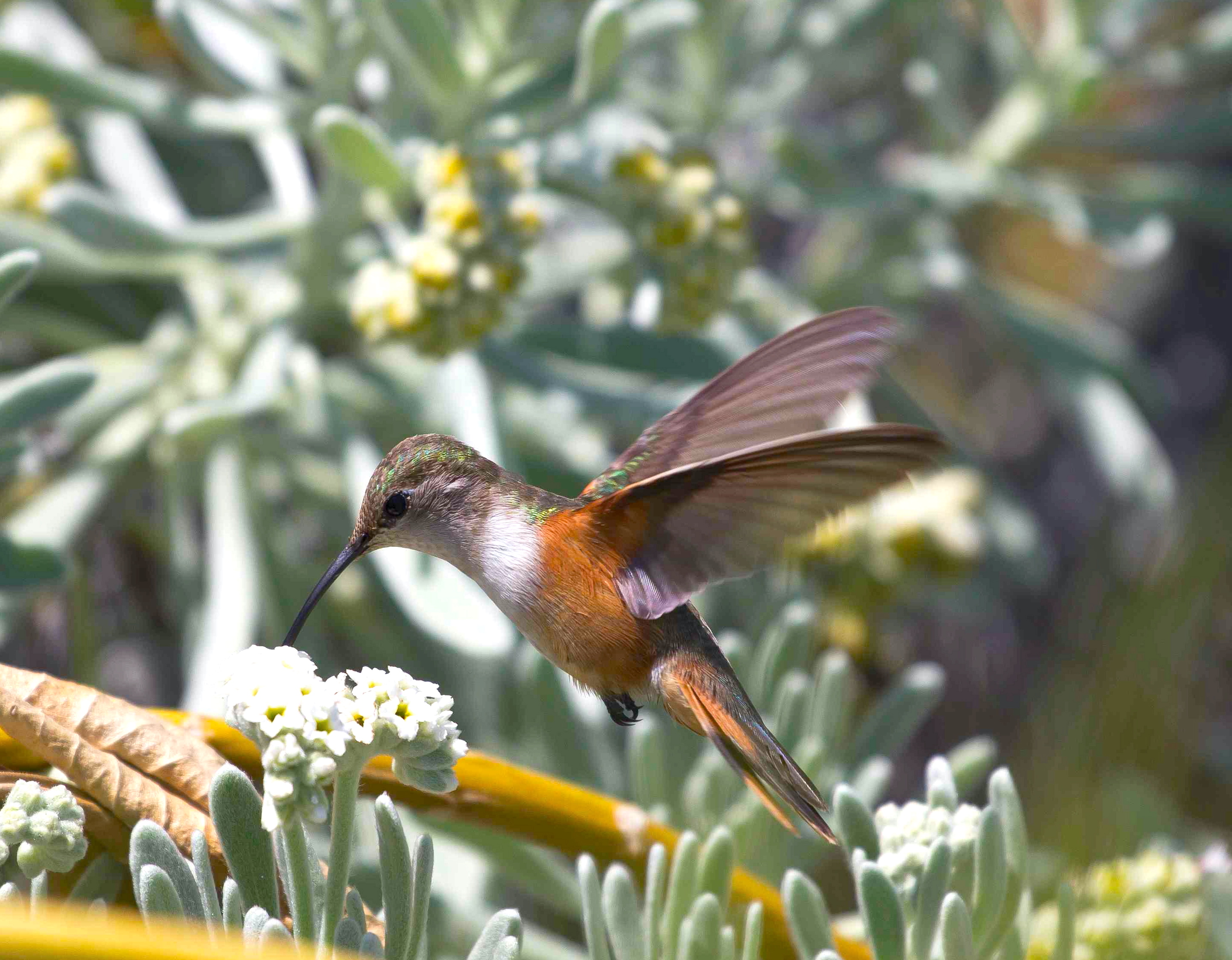
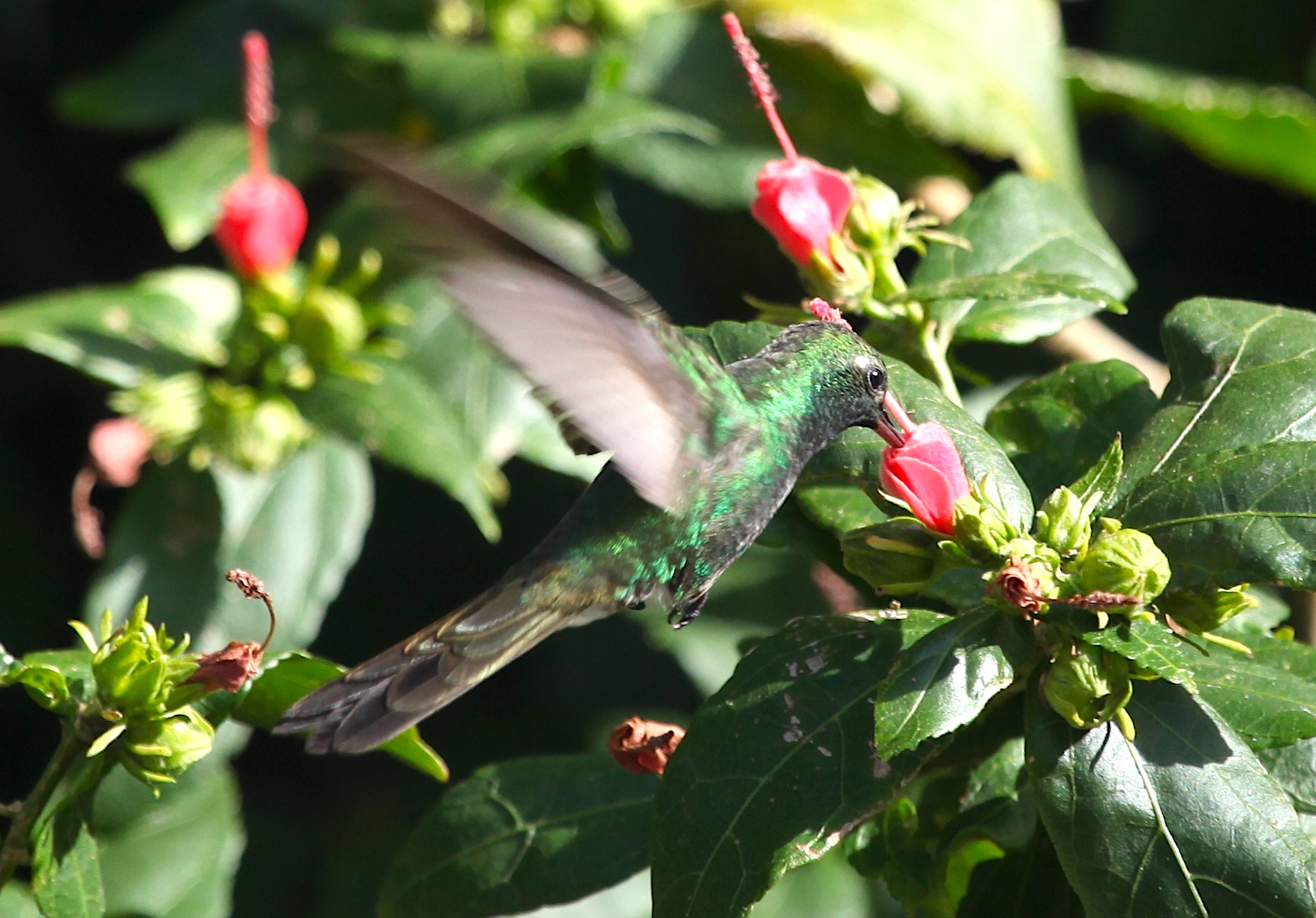
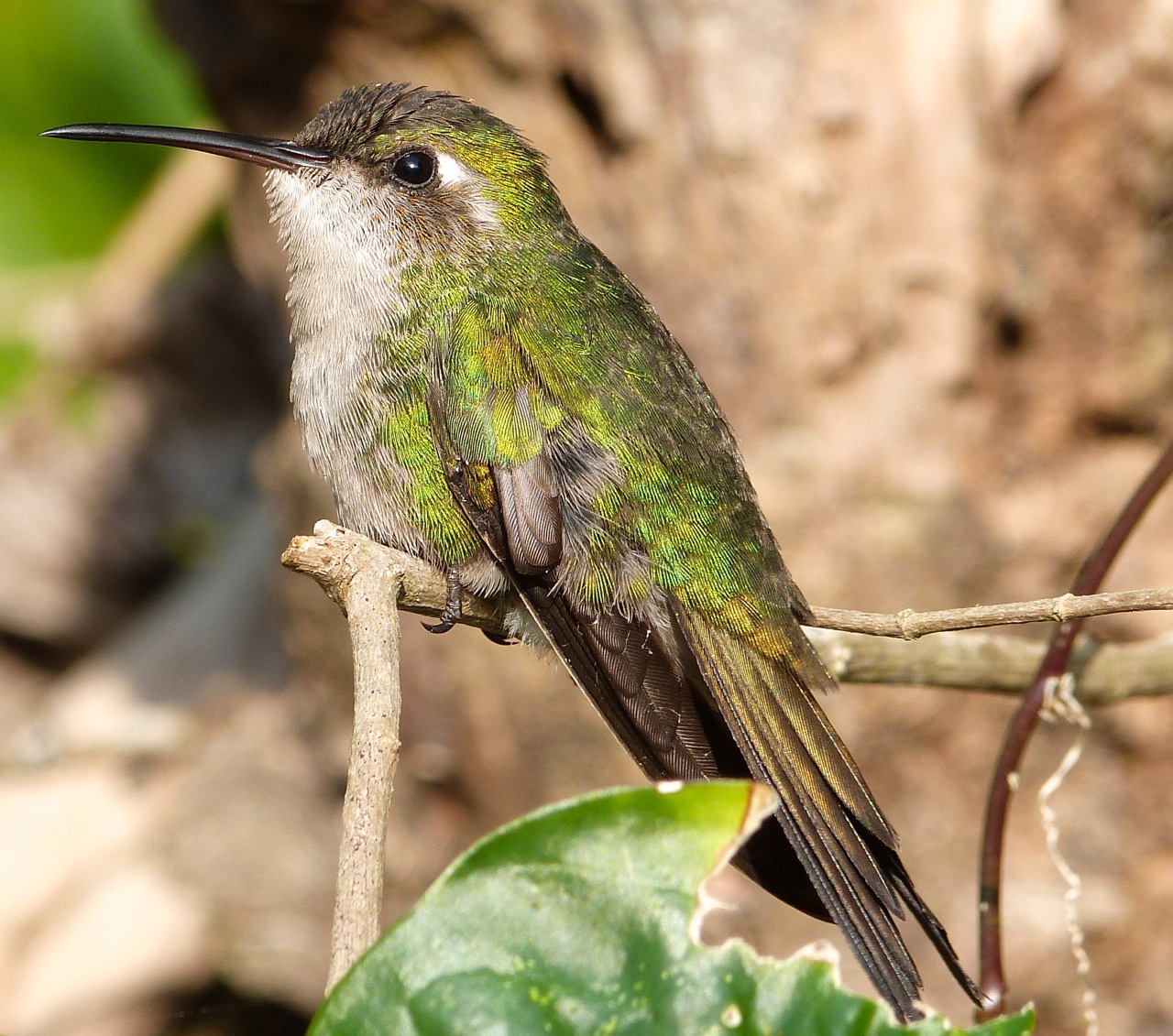
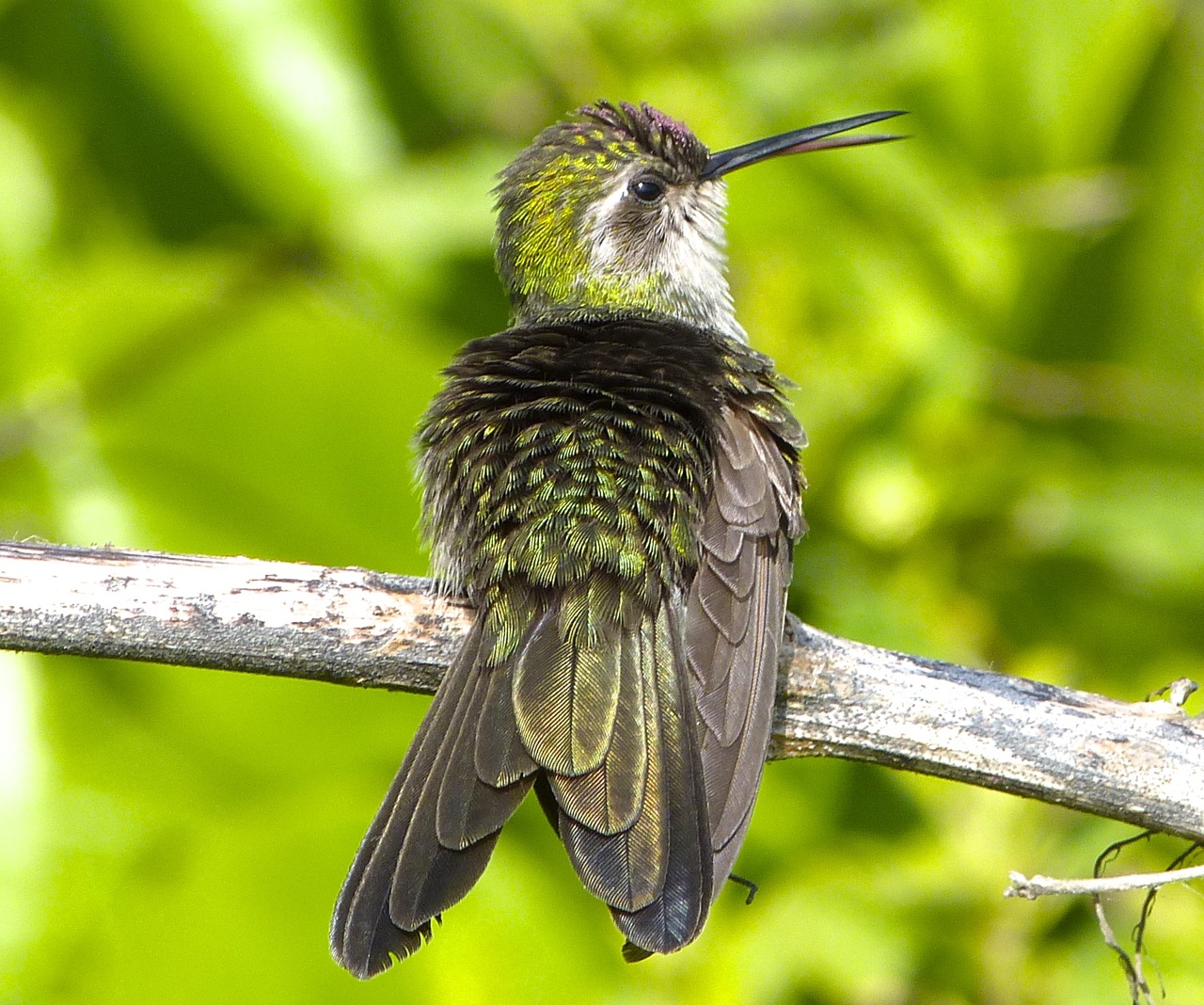
The drastic effects of Hurricane Dorian on Abaco’s birdlife continue, with recent reports suggesting that all species remain affected, and some severely so. However there are signs of a slow improvement, and this good news includes the two hummingbird species, the endemic Bahama Woodstar and the Cuban Emerald. A couple of recent posts on FB indicate that sightings of both these species have been a very welcome surprise. So, a good time to write about them and to show their beauty.
Cuban Emerald (male) Abaco (Charlie Skinner)
The subject matter of this post is not as indelicate as the title might imply; nor is it a ‘hands-on’ practical guide for intimate examinations of tiny birds. In particular it does not publicise some recently discovered louche activity involving unfeasibly large motor vehicles. It’s all about plumage and recognition. And there are only two species – and two genders for each one – to wrestle with.So here are the adult male and female Bahama Woodstars and Cuban Emeralds in all their glory…
And finally, a brilliant Woodstar photo taken by Tom Sheley, birdman and generous fishing partner, that I spans the boundary between wildlife photography and art.
Bahama Woodstar female. Abaco Bahamas . Tom Sheley
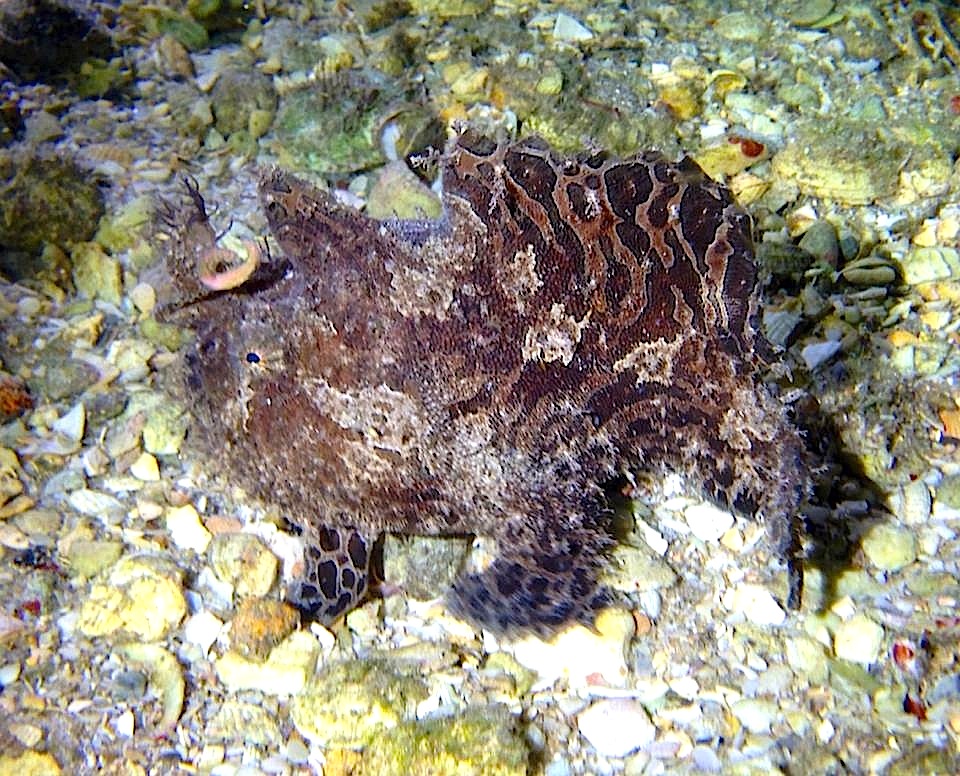
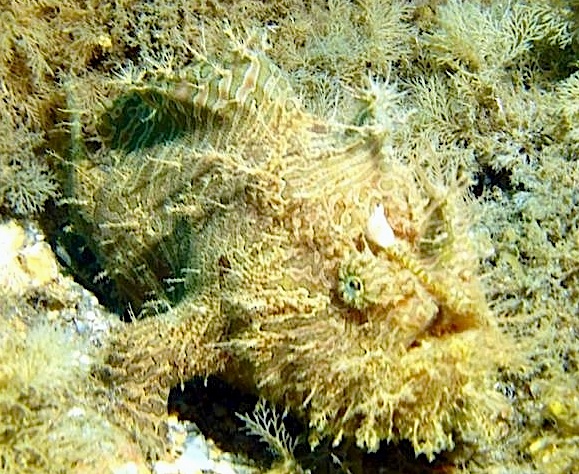
I have just been lightly involved in a long online thread showcasing the weirdest / most science fiction-y creatures around the world. Trust me, there are plenty. There were quite a few duplications. My own contribution was the frogfish, which no one else had nominated. They are so special – and so weird – that I am reposting my article about them. Don’t miss the last video!
This ‘WTF?’ series started with a relatively conventional species, the REMORA. It has been getting progressively more bizarre. We moved onto an omnium gatherum of WEIRDO FISHES, then the remarkable LETTUCE SEA SLUG, and most recently the BATFISH. Time to ramp up the stakes: with many thanks to scuba expert Adam Rees for use permission for his terrific photos, I present… the FROGFISH.
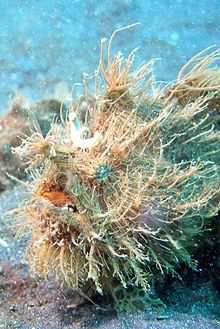
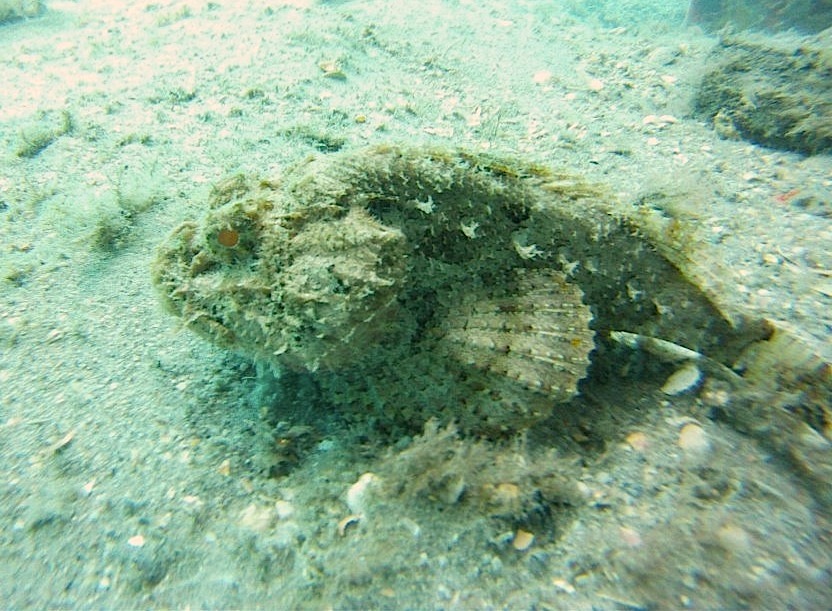
The frogfish is a kind of anglerfish found in almost all tropical and subtropical oceans and seas. There are about 50 different species worldwide, covering an astonishing range of strange appearances. They generally live on the sea floor around coral or rock reefs. In size they vary from tiny to about 15 inches long – although ‘long’ is a flexible concept because they are to an extent shape-changers in height and width.
FROGFISH SUPERPOWERS YOU MAY WISH TO HAVE
INVISIBILITY CLOAK . Frogfish are masters of disguise and camouflage. This enables them to catch their prey with minimal effort and also to avoid predators. Their camouflage methods – broadly known as ‘aggressive mimicry’ – include
Ability to change colour for days or even weeks to mimic their surroundings
Getting covered in algae and other organic matter that matches their habitat or
Looking inherently like a plump rock or in some cases, plant
Fear for the life of the spider crab…
IRRESISTIBLE ATTRACTION
A sort of frontal dorsal fin called an illicium to which is attached a
Lure called an esca which may mimic a worm, shrimp or small fish etc and which is
Retractable in many species and
Regenerates if it gets mislaid
The ‘dollop of cream’ thing is the esca. Note the characteristic large mouth
Spot the esca…
BUOYANCY CONTROL & SHAPE-SHIFTING
Most frogfish have a ‘gas bladder’ to control their buoyancy.
Some species can change shape or even inflate themselves by sucking in quantities of water in a so-called defensive ‘threat display’.
HOW DO FROGFISH REPRODUCE?
Although not conventionally attractive creatures, frogfish clearly manage to reproduce. Little is known about the techniques in the wild, but one is probably ‘with care’, especially for a male frogfish who may not survive for long if he hangs around after fertilisation has taken place. It has been noted that females tend to select far smaller males to fertilise their huge numbers of eggs, perhaps for that very reason.
FROGFISH FEEDING SKILLS – GOOD OR BAD?
When deploying the lure, potential prey that comes too close to that wide mouth stands no chance. A frogfish will strike in a fraction of a second. Frogfishes have voracious appetites for crustaceans, other fish, and even each other. I can do no better than borrow this vivid description of a feeding frogfish:
“When potential prey is first spotted, the frogfish follows it with its eyes. Then, when it approaches within roughly seven body-lengths, the frogfish begins to move its illicium in such a way that the esca mimics the motions of the animal it resembles. As the prey approaches, the frogfish slowly moves to prepare for its attack; sometimes this involves approaching the prey or “stalking” while sometimes it is simply adjusting its mouth angle. The catch itself is made by the sudden opening of the jaws, which enlarges the volume of the mouth cavity up to twelve-fold, pulling the prey into the mouth along with water. The attack can be as fast as 6 milliseconds. The water flows out through the gills, while the prey is swallowed and the oesophagus closed with a special muscle to keep the victim from escaping. In addition to expanding their mouths, frogfish can also expand their stomachs to swallow animals up to twice their size.“
HOW DO FROGFISHES GET AROUND? SWIM? WALK? CRAWL?
Frogfishes do not in fact move around a great deal. Using their camo advantages, they prefer to lie on the sea floor and wait for prey to come to them. As mentioned in the quote above, they may slowly approach prey using their pectoral and pelvic fins to “walk” along the sea bottom. They can swim using their tail fin (or in some species by simple ‘jet propulsion’ by forcing water out of their gills) but rarely do so – they don’t feed on the move, and they are adapted to the sea floor environment where they food is readily available. However their “walking” ability is limited to short distances.
DO FROGFISH HAVE OTHER COLOUR SCHEMES?
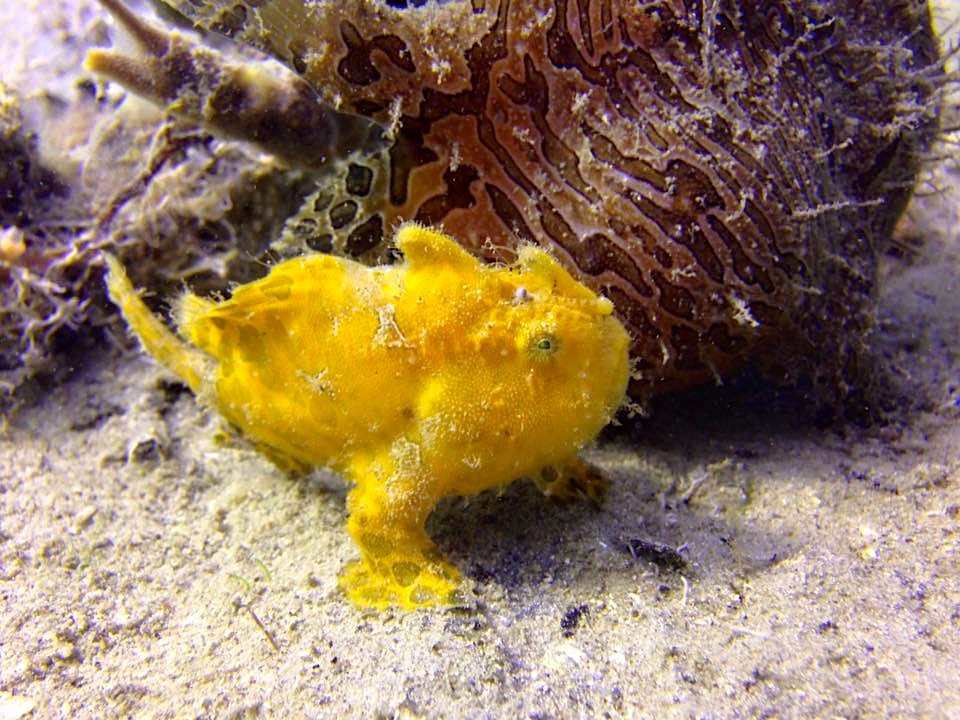
Indeed they do. In stark contrast to the camo species, some frogfishes are highlighter bright. Here are two of my favourite photos by Adam that show this clearly. I’ve no idea if these are a male and female. I suspect they are different species. I think the brown one is a striated frogfish and the other is… a yellow frogfish. Some people keep these creatures in aquaria, but apparently it is impossible to sex them, and they have to be kept on their own for everyone’s peace of mind…
FROGFISH INFOGRAPHICS
FROGFISH VIDEOS
These two videos, from Lester Knutsen and Daan Van Wijk respectively, show some of the characteristics I have written about above. Both are short and both are fascinating.
To read more about frogfishes and for some fabulous photos I highly recommend the websiteFROGFISH.CHYou can reach the main page(s) but the link seem to be broken so I have not been able to contact Teresa Zubi, whose site it is. She clearly has a sense of humour and uses a neat pair of gifs which I hope she won’t mind my using…
Credits: All main photos, Adam Rees of Scuba Works with many thanks; wiki for ‘spot the esca’, red quote & basic info; videos Lester Knutsen & Daan Van Wijk; Teresa Zubi for website & gifs; infographics, authors u/k
After many decades of the savage depletion of the global whale population, the tide turned in their favour in the 1960s. It was fair to assume that, gradually, a new era of cetacean recovery must follow and that whales would be accorded the respect they deserve. Over time, many organisations were formed with the specific aim of protecting and conserving marine mammals, theBahamas Marine Mammal Research Organisation (BMMRO)based on Abaco among them.
The struggle to fulfil that aim in the face of entirely man-made environmental damage has become increasingly difficult. However, there have more recently been encouraging reports of population recovery in some seas, a good reason to celebrate WORLD WHALE DAY and to consider supporting the many organisations that work to preserve marine mammals.
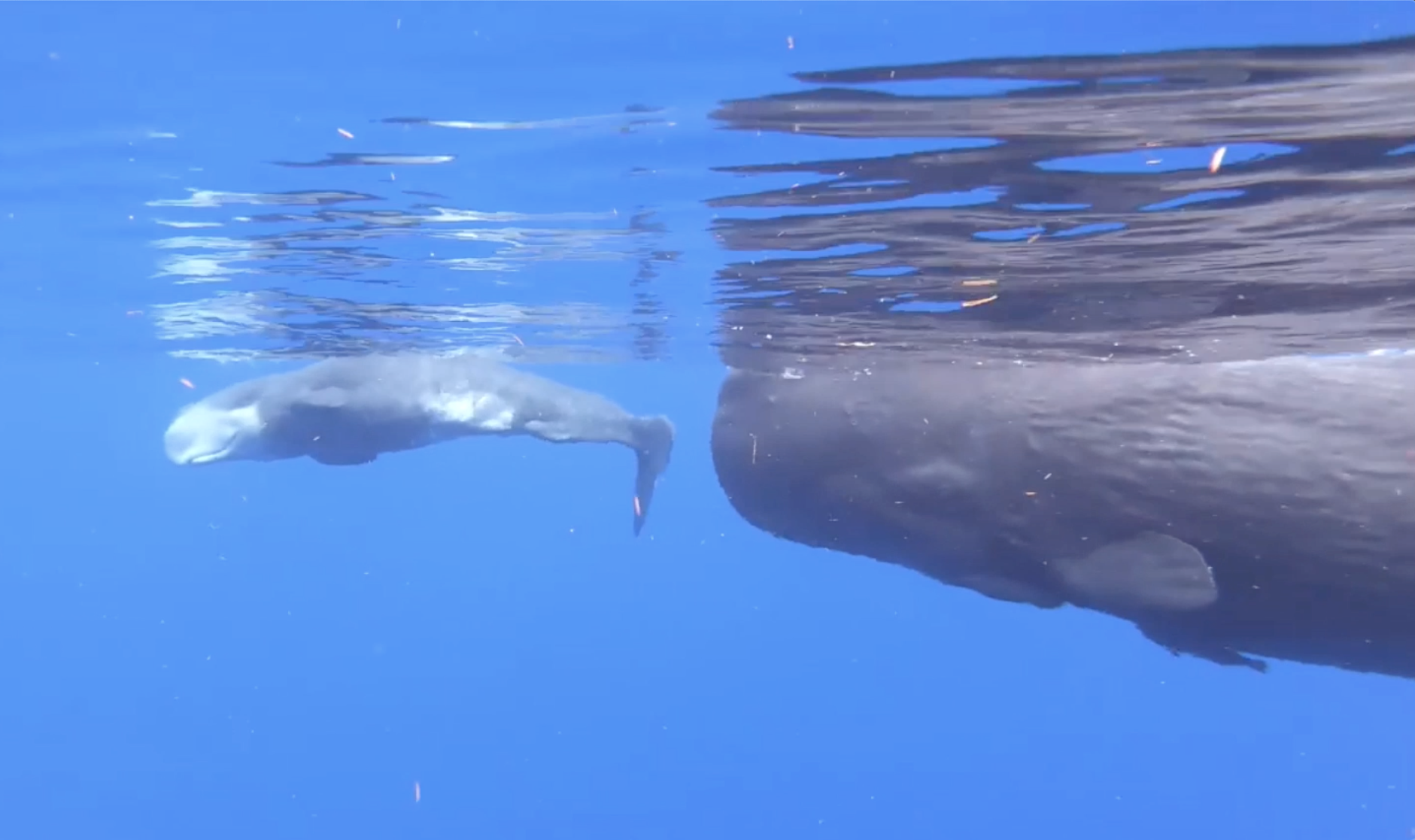
The photographs and the 2 very moving videos below are of an adult sperm whale and new-born calf. They were taken by BMMRO in Bahamas waters. There’s optimism in these images. I’d like to think that a smiling baby whale holds out hope for the future. Hopefully it will flourish and live for decades. If it does not, the overwhelmingly likely cause will be mankind, either directly or indirectly.
CREDITS: Close-up footage plus the clips I have taken from it – Charlotte Dunn / Diane Claridge / BMMRO
DONATE: If you are touched by the magic of this little Bahamas sperm whale, may I invite you to consider making a donation to BMMRO for its research and conservation work – a scientific commitment that reaches far beyond the waters of the Bahamas. The system is set up to process donations from just $10 upwards, and every cent is used to further the work of BMMRO. Please click the logo below to reach the right page directly.
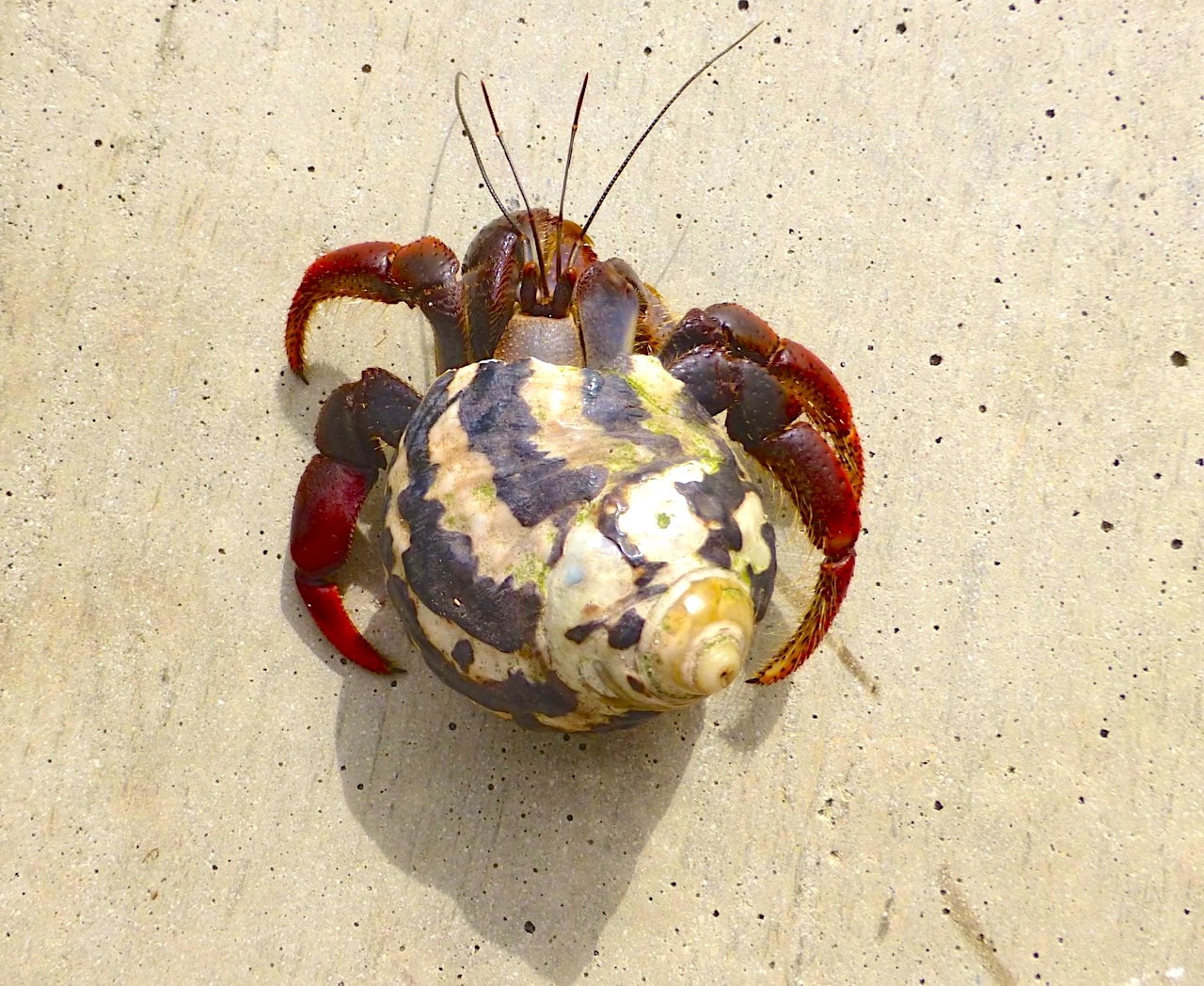
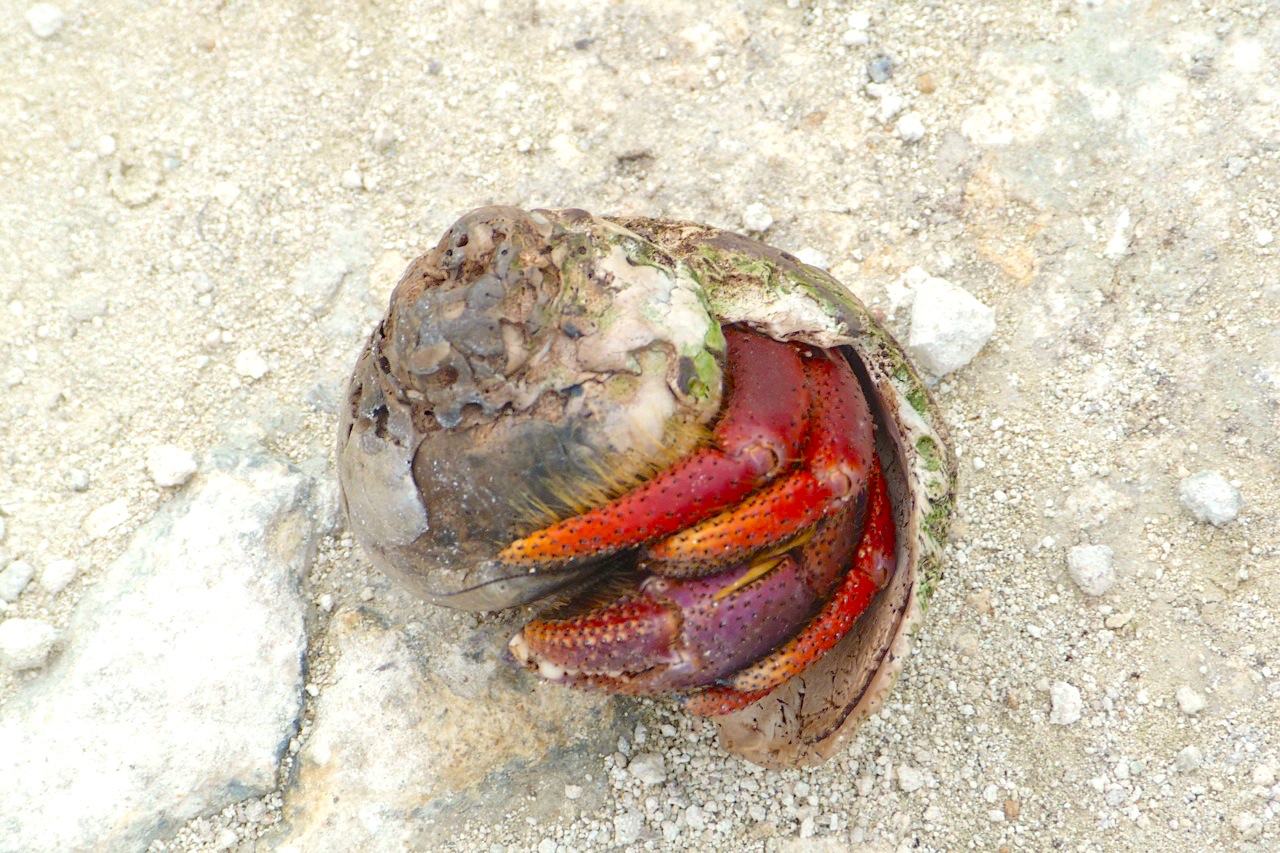
As everyone knows, Hermit Crabs get their name from the fact that from an early age they borrow empty seashells to live in. As they grow they trade up to a bigger one, leaving their previous home for a smaller crab to move into. It’s a benign** chain of recycling that the original gastropod occupant would no doubt approve of, were it still alive… The crabs are able to adapt their flexible bodies to their chosen shell. Mostly they are to be found in weathered (‘heritage’) rather than newly-empty shells for their home. [**except for fighting over shells]
HERMIT CRAB FACTS TO ENLIVEN YOUR CONVERSATION
The crabs are mainly terrestrial, and make their homes in empty gastropod shells
Their bodies are soft, making them vulnerable to predation and heat.
They are basically naked – the shells protect their bodies & conceal them from predators
In that way they differ from other crab species that have hard ‘calcified’ shells / carapaces
Ideally the shell should be the right size to retract into completely, with no bits on display
As they grow larger, they have to move into larger and larger shells to hide in
As the video below shows wonderfully, they may form queues and upsize in turns
Occasionally they make a housing mistake and chose a different home, eg a small tin
The crabs may congregate in large groups which scatter rapidly when they sense danger
The demand for suitable shells can be competitive and the cause of inter-crab battles
Sometimes two or more will gang up on a rival to prevent its move to a particular shell
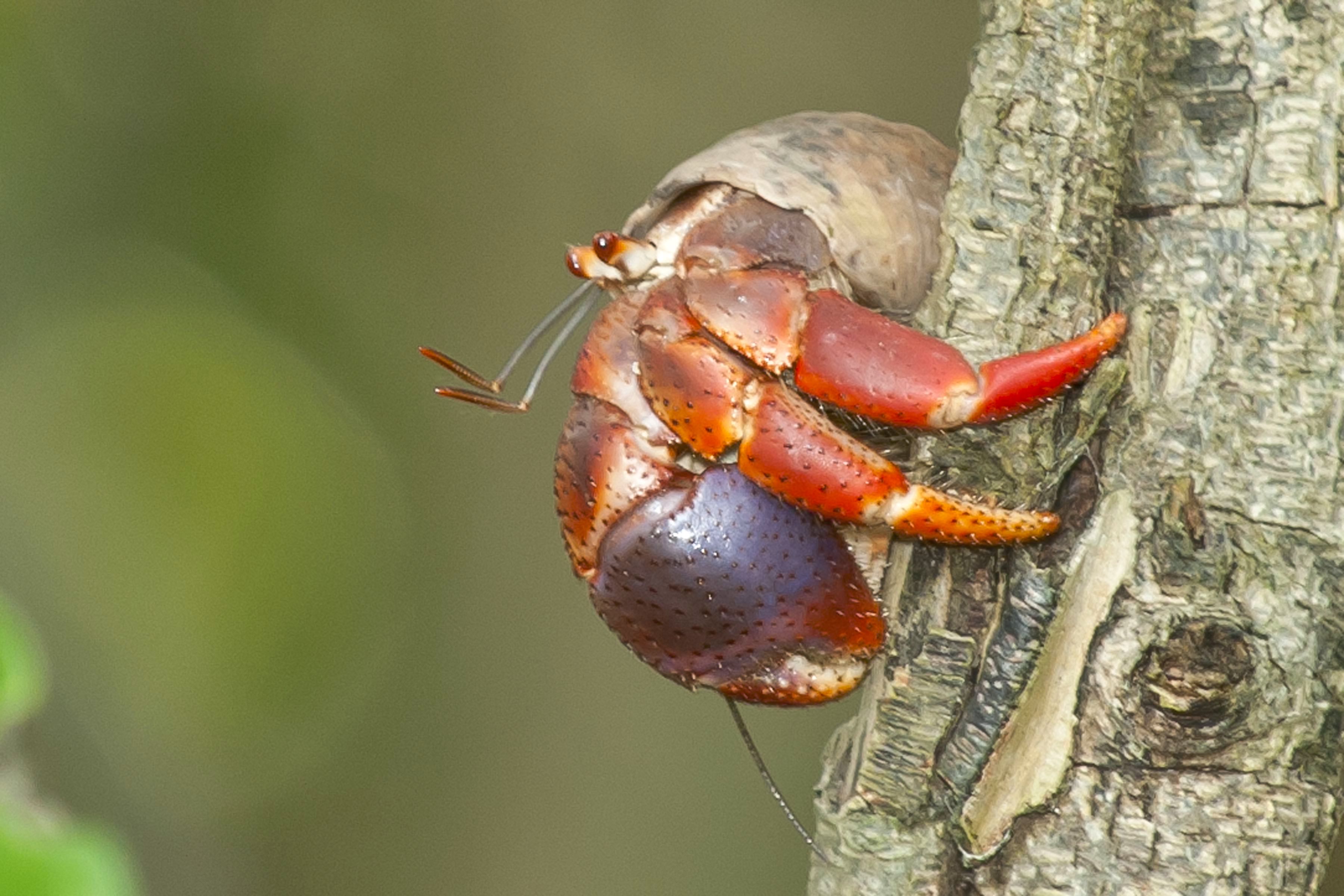
HERMIT CRABS CAN EVEN CLIMB TREES – WITH THEIR SHELLS ON TOO
HERMIT CRABS EXCHANGING HOMES with DAVID ATTENBOROUGH
This is a short (c 4 mins) extract from BBC Earth, with David Attenborough explaining about the lives and habits of these little crabs with his usual authoritative care and precision . If you have the time I highly recommend taking a look.
Credits: All photos taken on Abaco by Keith Salvesen except for the tree-climber crab photographed by Tom Sheley; video from BBC Earth
There’s nothing like a massive house clear-out (after 42 years) to reveal lost possessions, forgotten treasures, and (for that matter) a few things best forgotten… Last Spring we began to prepare for a house-move, during which I found a box of bird books that I duly reported here (and happily sold). Recently, sorting through a packed shipping container parked in the unlikely setting of a local farm has revealed plenty of surprises, including a couple more boxes of BIRDS OF ABACO. There definitely aren’t any more. There may be one or two people who might like one / who lost their copy during Dorian / who are new to Abaco and its wonderful birdlife. Here is a chance to own one…
In the spirit of recycling I am reusing the original blurb because it still holds good today. The book is only ‘out of date’ to the extent that since publication about a dozen new species have been reported. Most were seen just the once, some for a few weeks at most. So although exciting, the newcomers were more ‘Birds Passing Through…’ than ‘Birds Of…’ Abaco
The originator of the idea for the book – as with the entire Delphi Club project – was Peter Mantle, the publisher. He took a risk based on my (then) quite feeble Rolling Harbour blog about the birds and other attractions of the island. The 2kg book took 16 months from conception to the arrival of three pallets of printed books on the dockside in Marsh Harbour, having travelled by a tortuous route from specialist printers in Italy.
As part of the project, Abaco schools, libraries and wildlife organisations were given copies for educational purposes. A percentage of profits was given to local wildlife causes. We quickly sold a great many copies, and couldn’t have been more pleased with the response to the book, a unique publication for the Bahamas. The captions (below) about the book and content were written much nearer the time, so I’ll leave them as they are. I hope you enjoy the photos even if you don’t want a copy!
The Guide showcases the rich and varied bird life of Abaco, Bahamas and features both resident and migratory species including rarities and unusual sightings. The main features are as follows:
272 pages with more than 350 photographs
163 species shown in vivid colour – nearly two-thirds of all the bird species ever recorded for Abaco
Every single photograph was taken on Abaco or in Abaco waters
All birds are shown in their natural surroundings – no feeders or seed trails were used
Several birds featured are the first ones ever recorded for Abaco or even for the entire Bahamas
A total of 30 photographers, both experienced and amateur, contributed to the project
The book has had the generous support of many well-known names of Abaco and Bahamas birding
A complete checklist of every bird recorded for Abaco since 1950 up to the date of publication was compiled specially for the book.
A neat code was devised to show at a glance when you may see a particular bird, and the likelihood of doing so. Birds found at Delphi are also marked.
Specially commissioned cartographer’s Map of Abaco showing places named in the book
Informative captions intentionally depart from the standard field guide approach…
…as does the listing of the birds in alphabetical rather than scientific order
Say goodbye to ’37 warbler species on consecutive pages’ misery
Say hello to astonishing and unexpected juxtapositions of species
The book was printed in Florence, Italy by specialist printers on Grade-1 quality paper
Printing took pairs of printers working in 6 hour shifts 33 hours over 3 days to complete
The project manager and the author personally oversaw the printing
The book is dedicated to the wildlife organisations of Abaco
A percentage of the proceeds of sale will be donated for the support of local wildlife organisations
A copy of the book has been presented to every school and library on Abaco
The book is published by the Delphi Club. The project was managed by a publishing specialist in art and architecture books. The author is the wildlife blogger more widely known on Abaco and (possibly) beyond as ‘Rolling Harbour’. Oh! So that would in fact be Mrs Harbour and myself. Well well! What were the chances?
BOOK LAUNCH BAHAMAS BIRDING ROYALTY (Tony White, Bruce Hallett, Woody Bracey), A COMMONER… & AN EMBARRASSING AMOUNT OF REFRESHMENT
BOOK SALE DETAILS
I am pricing the books at $120 inc. shipping. They are in England, heavy, and expensive to post. 1/3 of the price will be the flight of the birds across the Atlantic. If you would like a copy and do not already have my contact details, email me at rollingharbour.delphi@gmail.com
Photos: Tom Sheley (3,4,9,10), Bruce Hallett (6,8), Gerlinde Taurer (1,7), Tony Hepburn (5), Keith Salvesen (2,11)
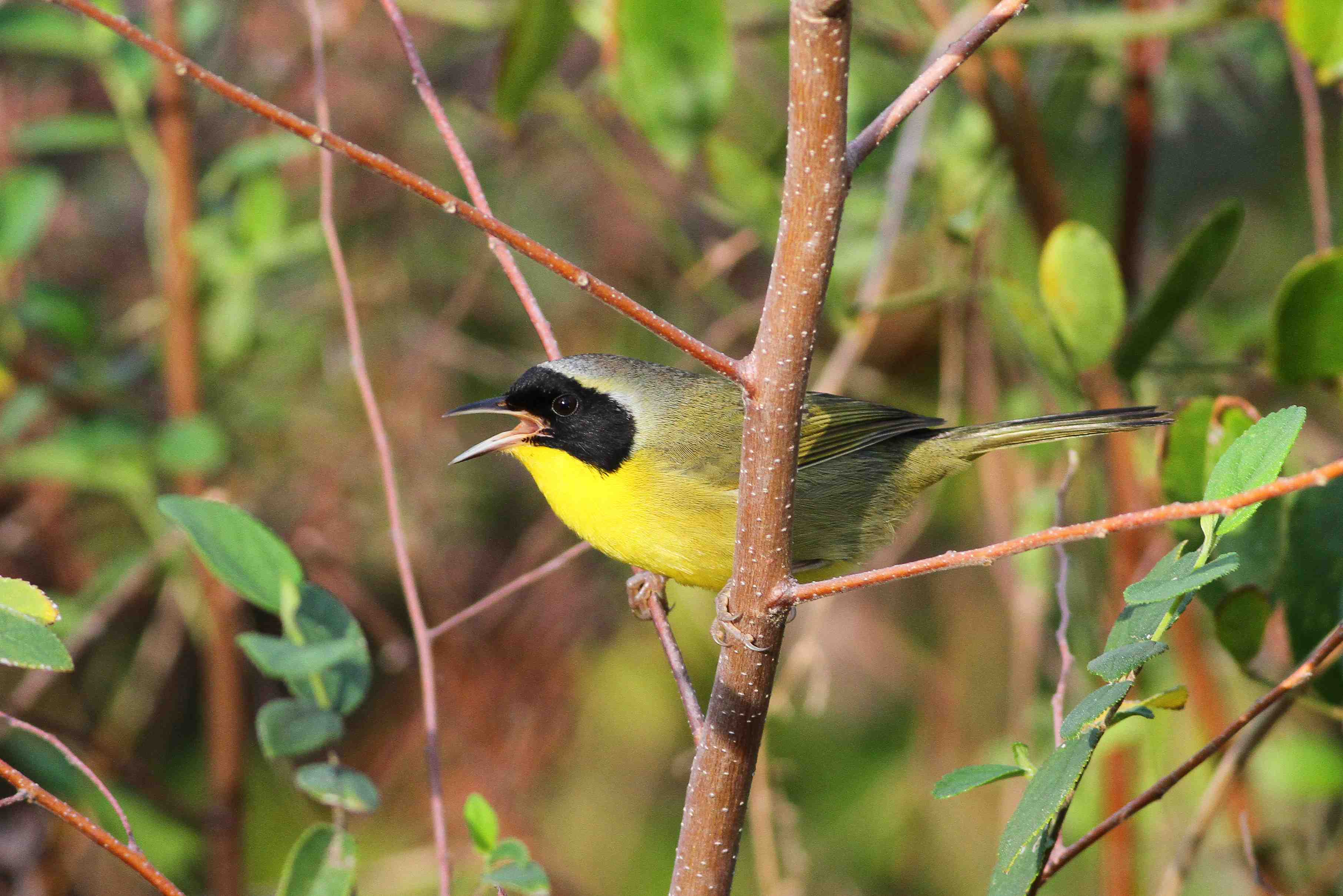
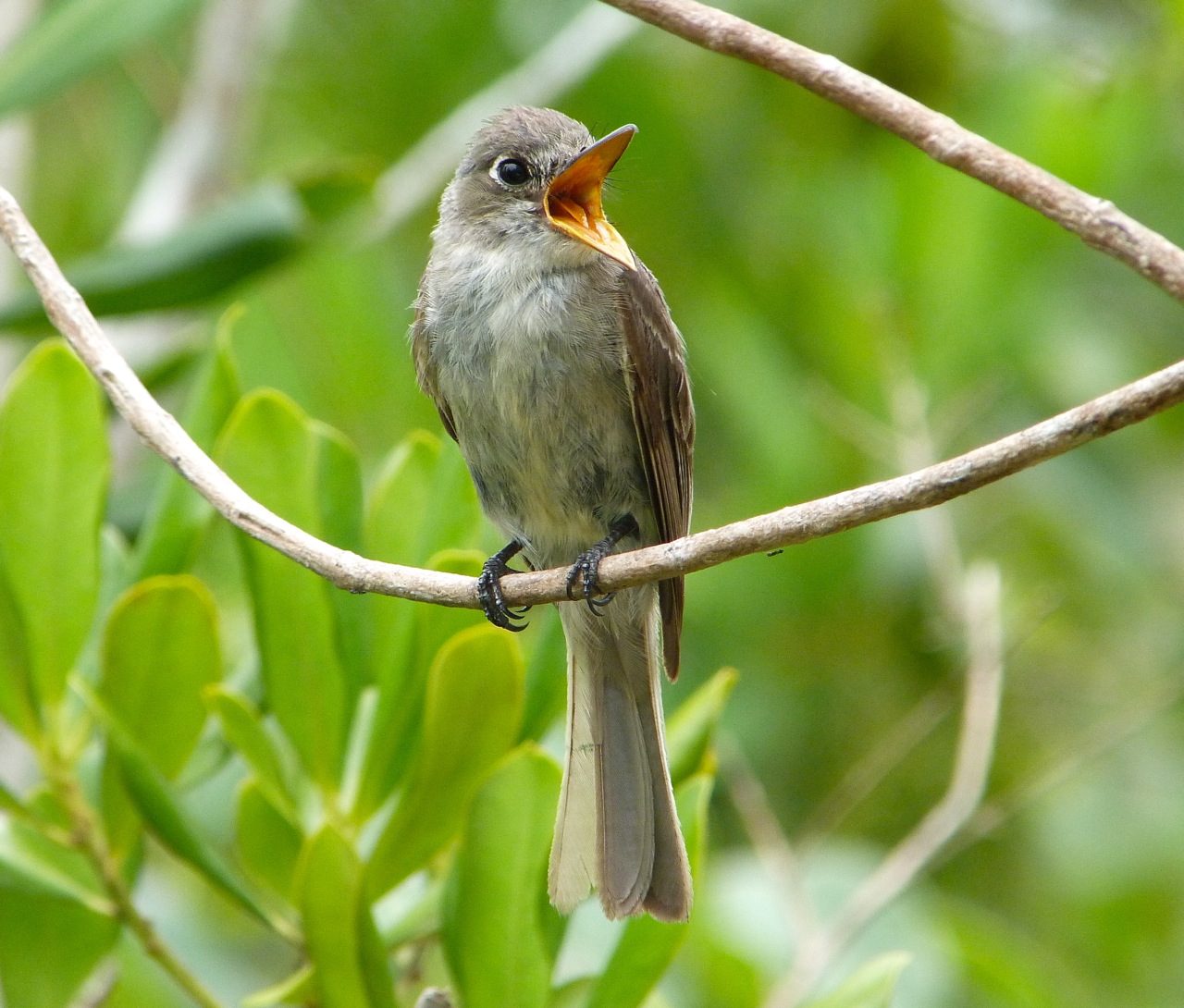
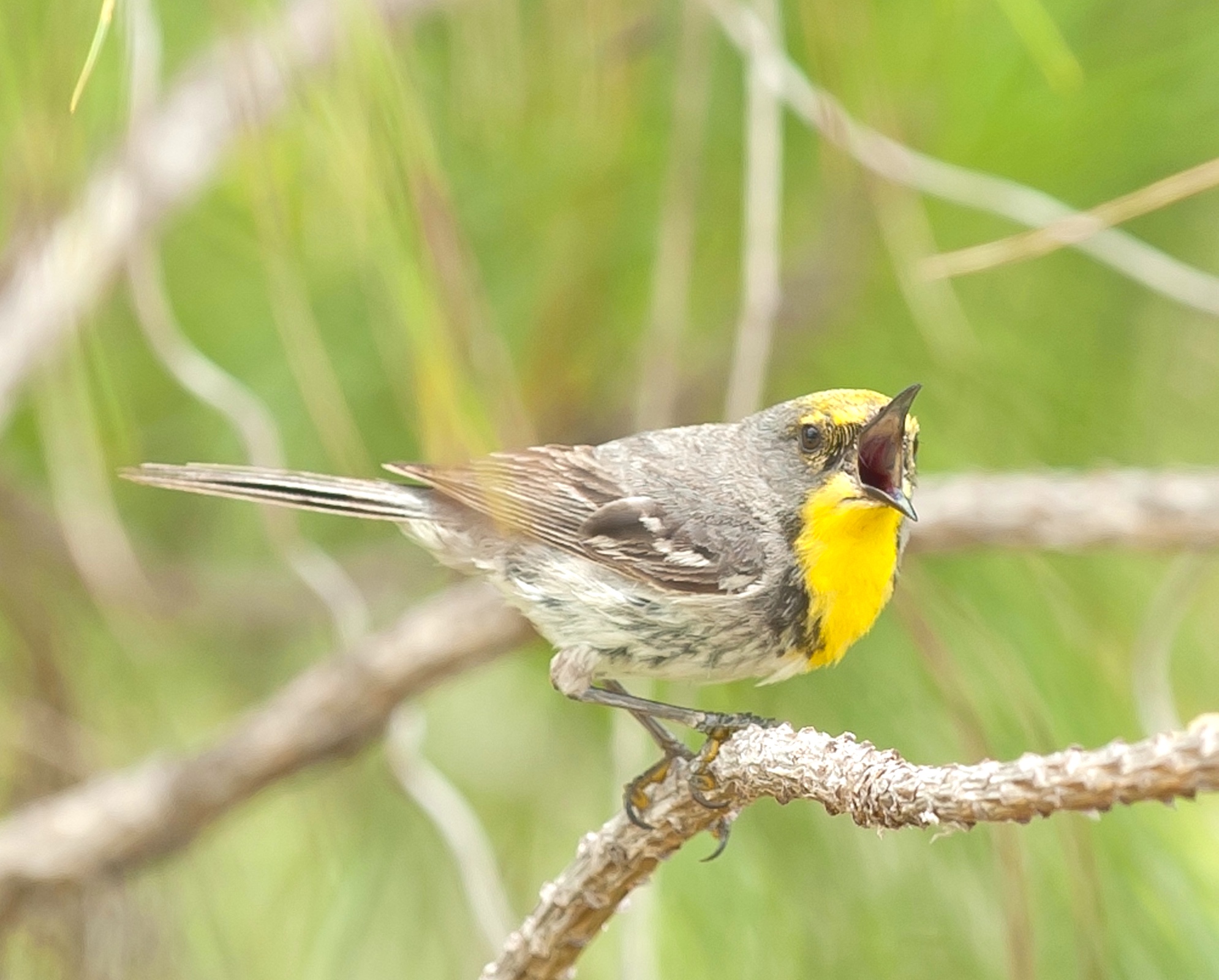
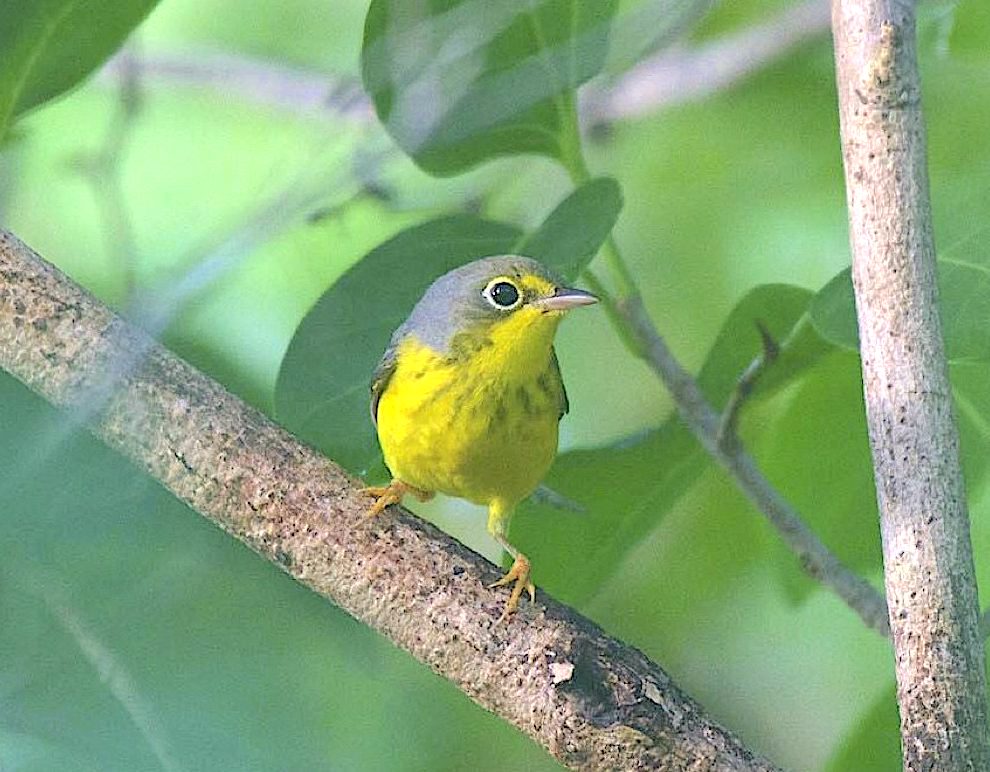
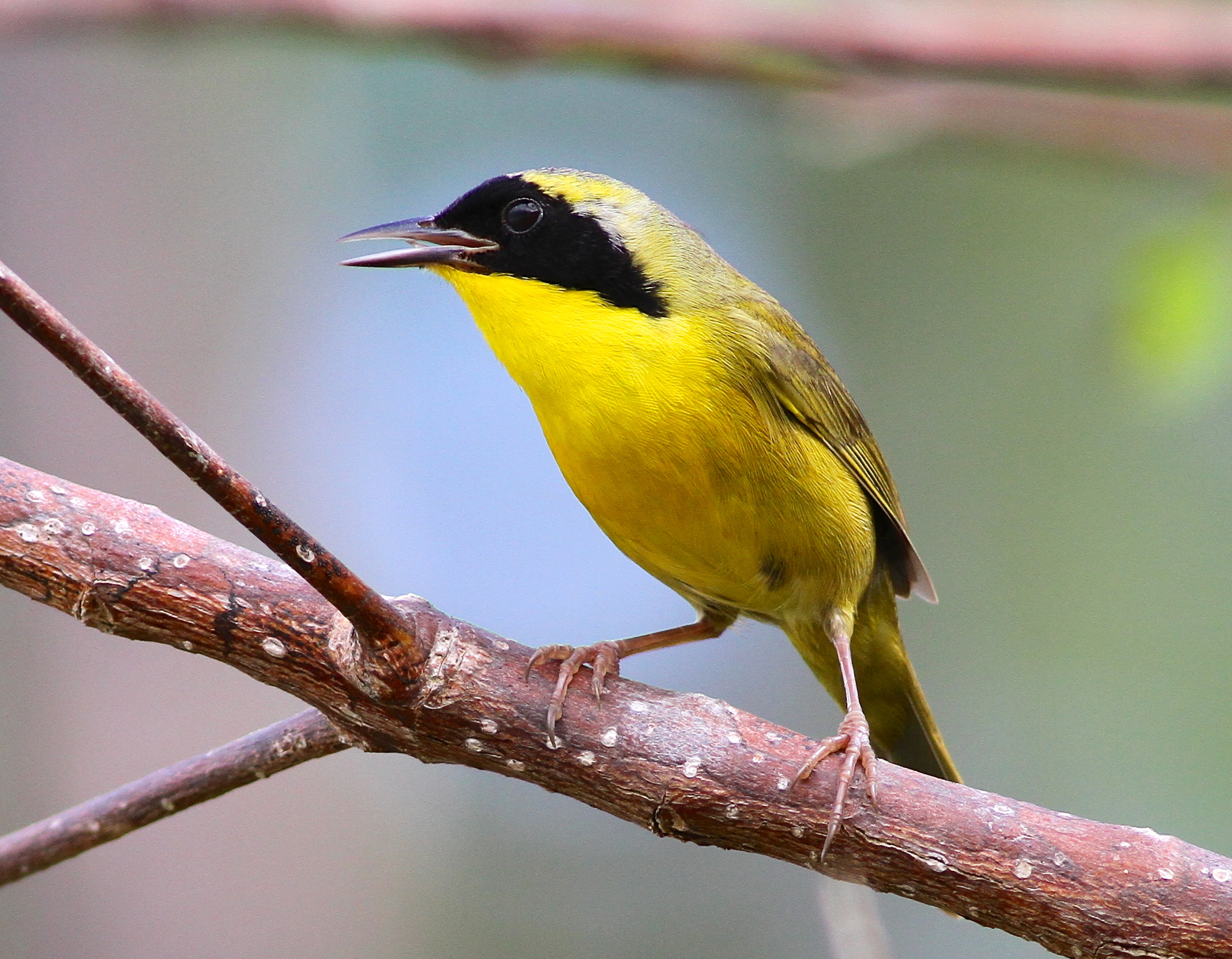
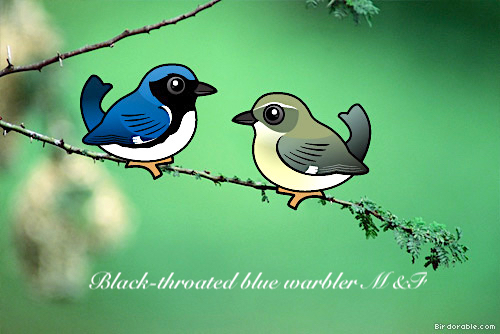
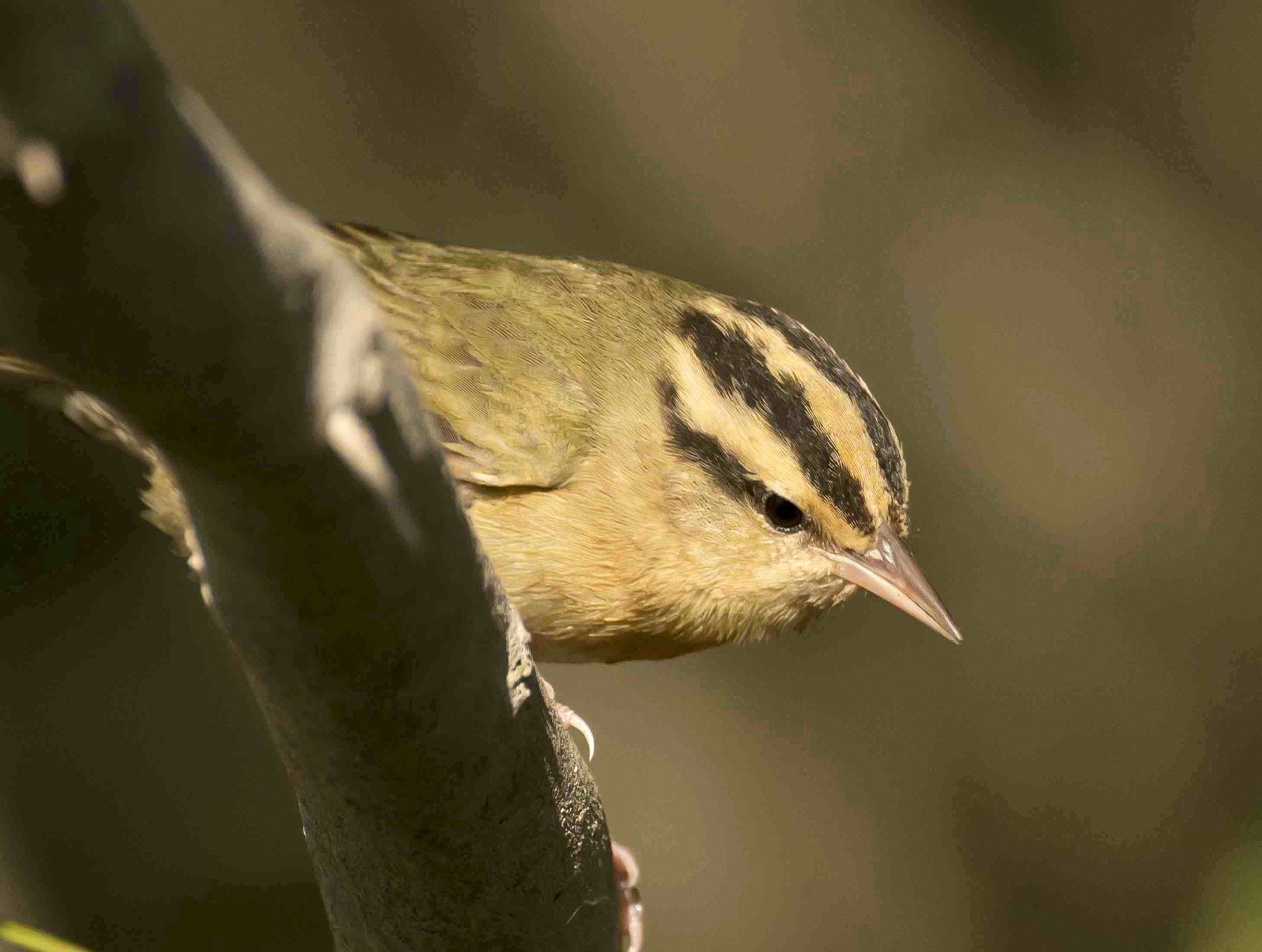
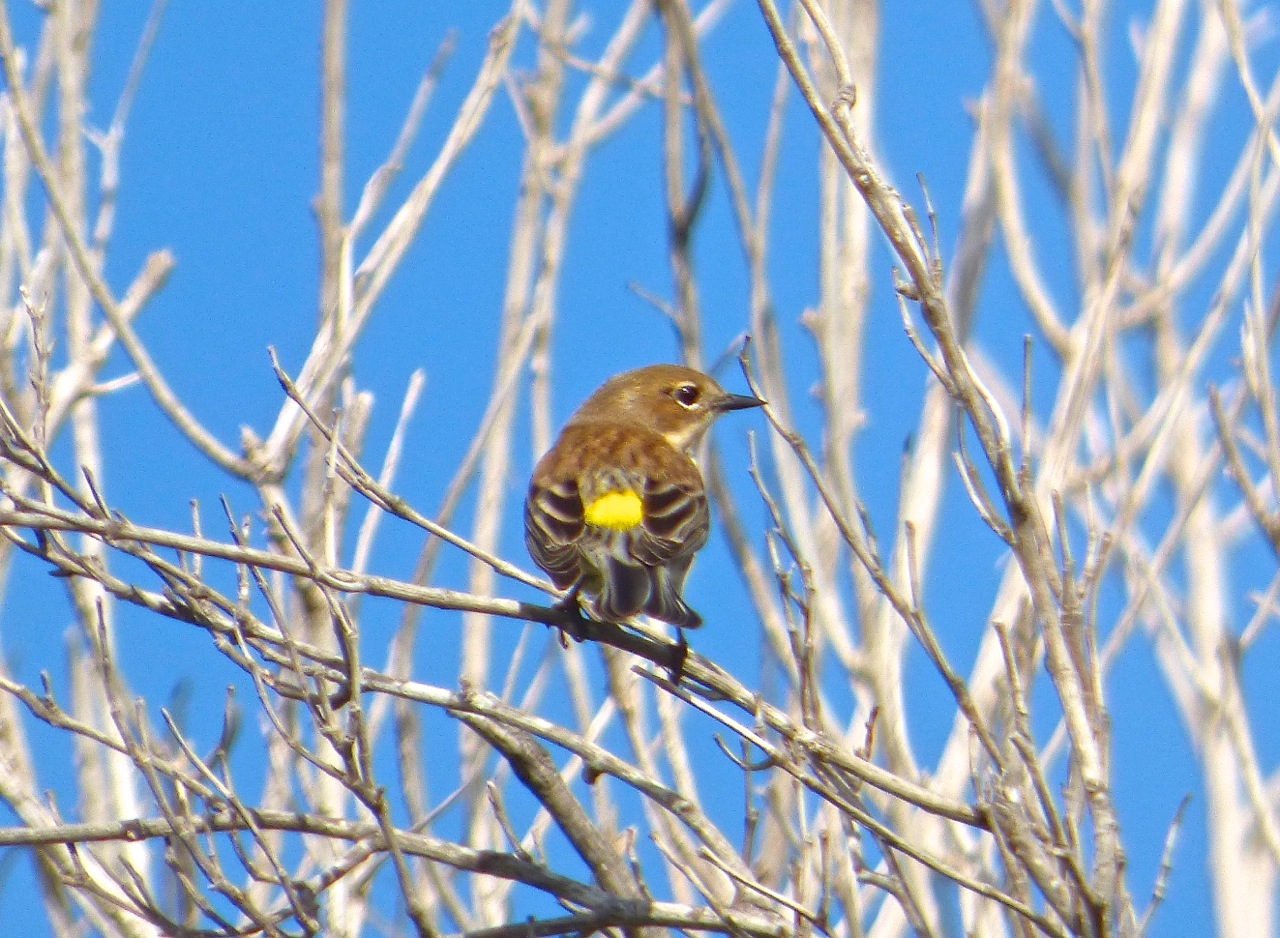
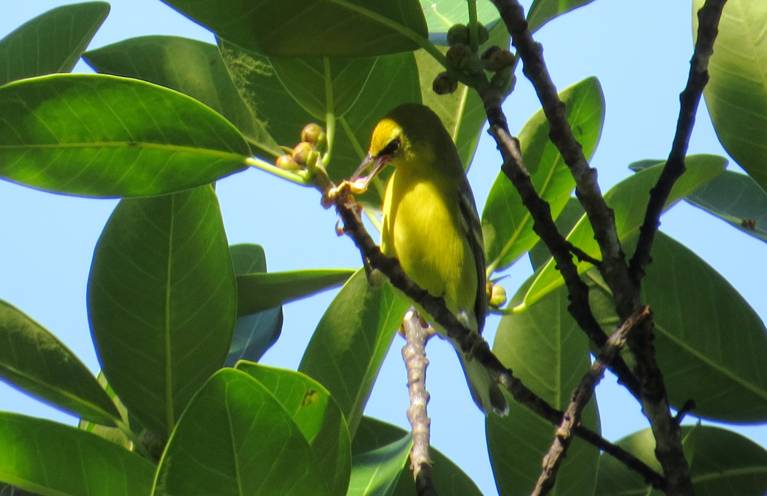
IT’S STARTED The great winter migration of warblers and their imminent arrival in The Bahamas is underway. Any day now – if not already – the ‘winter’ (in fact autumn & early spring as well) warblers will be arriving on Abaco. There are 38 warbler species recorded for the main island and the cays. For years, it was just 37. Then in 2018 a CANADA WARBLER was seen and photographed by well-known Bahamas birder Chris Johnson. It was a first for Abaco – and the first-ever report for the Bahamas as well. You’ll find the story HERE.
This article is updated from an earlier one written pre-Dorian and the situation will undoubtedly be different now, especially with the transients and rare species. Consider it as a historical record of the prolific warbler species recorded for Abaco and more generally the northern Bahamas before the hurricane struck. The 5 permanent resident warbler are still resident. Many migrants and possibly all transients have sadly not been recorded since, and the rarest perhaps never will be. The hope must be that at least the most common winter warblers will continue to arrive, and in increasing numbers.
First-ever Canada Warbler for Abaco & the entire Bahamas: Aug 2018 (Chris Johnson)
Hooded Warbler, Abaco Bahamas (Chris Johnson)
The guide divides the original 37 species (excluding the Canada warbler) into categories, with a code for each bird to show:
Resident status – permanent / breeding, migratory or transient
Frequency – likelihood of seeing each species in its season, rated from 1 (very likely) to 5 (extreme rarities, maybe recorded only once or twice since c1950 when recording began)
Numerically, the division breaks down into 3 categories of warbler:
5 permanent residents (PR) that breed on Abaco (B), of which two are ENDEMIC
21 winter residents (WR) ranging from ‘everyday’ species to extreme rarities like the very vulnerable Kirtland’s Warbler that needs a specific winter habitat that Abaco can provide
11 transients, most of which you will be very lucky to encounter
Palm Warbler, Abaco Bahamas (Nina Henry)
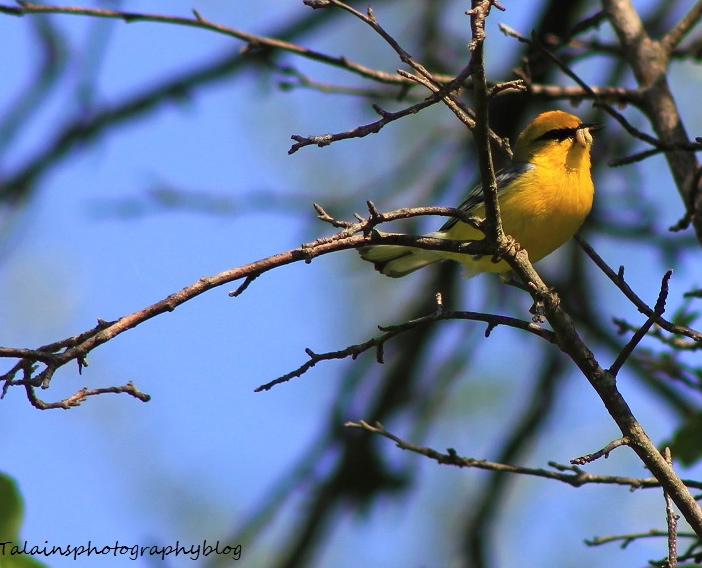
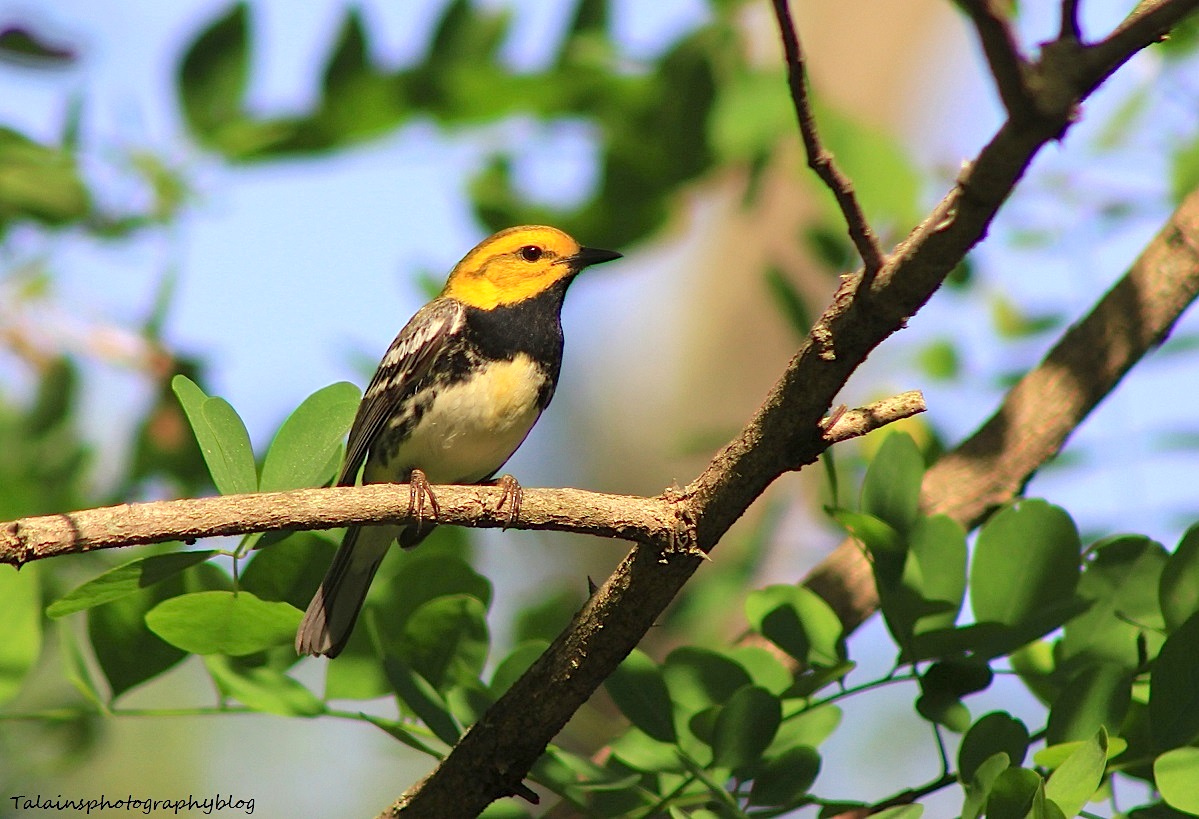
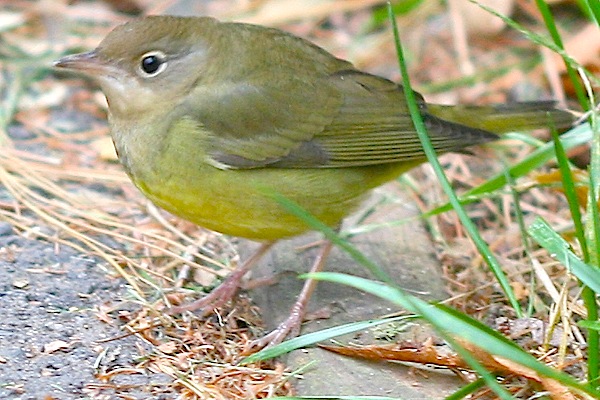
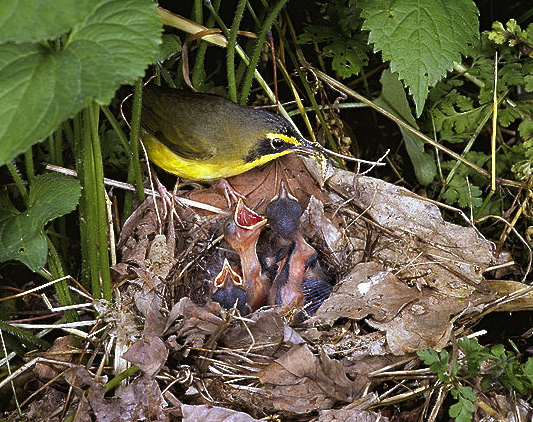
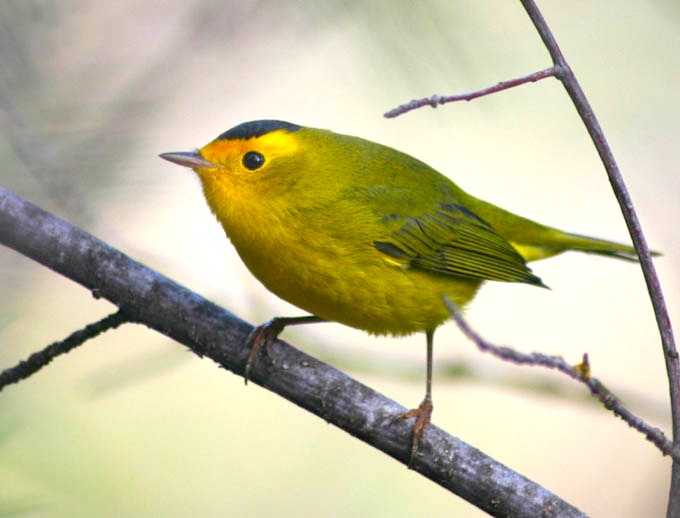
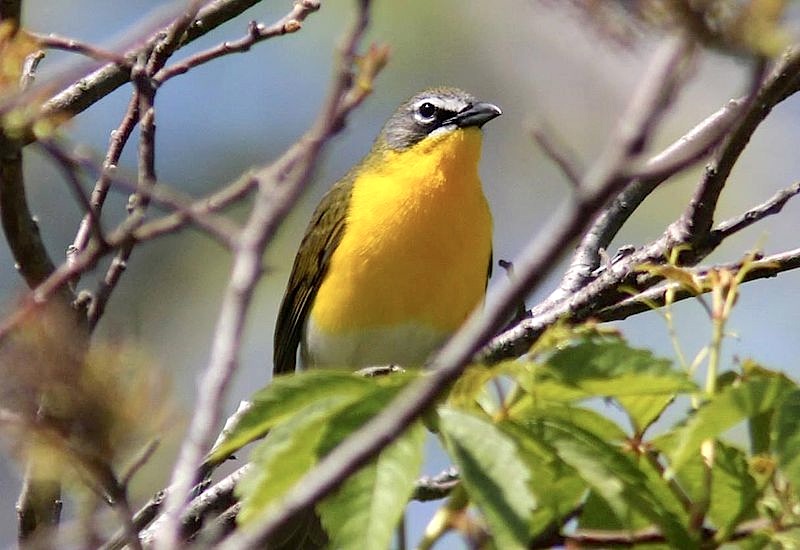
The photos that follow show an example of each warbler, where possible both (1) male and (2) taken on Abaco. Where I had no Abaco images – especially with the transients – I have used other mainstream birding resources and Wiki. All due credits at the foot of the post.
PHOTO CREDITS (1 – 37) Bruce Hallett (Header, 3, 9, 12, 14, 17, 21, 22); Tom Reed (1, 4); Cornell Lab (2); Tom Sheley (7, 10); Alex Hughes (5); Gerlinde Taurer (6, 11, 18); Becky Marvil (8, 20a); Woody Bracey (13, 24); Peter Mantle (15); Keith Salvesen (16); William H. Majoros wiki (19); talainsphotographyblog (20b, 26, 34); Charmaine Albury (23); Craig Nash (25); Ann Capling (27); Jerry Oldenettel wiki (28); Dominic Sherony wiki (29); 10000birds (30); Steve Maslowski wiki (31); MDF wiki (32, 33); Avibirds (35); Michael Woodruff wiki (36); Emily Willoughby wiki (37)
CHECKLISTbased on the complete checklist and codes for Abaco devised by Tony White with Woody Bracey for “THE DELPHI CLUB GUIDE TO THE BIRDS OF ABACO” by Keith Salvesen
West Indian Woodpecker . Abaco . Bahamas (π Keith Salvesen)
The WEST INDIAN WOODPECKER Melanerpes superciliaris is one of Abaco’s specialist birds. Islanders and regular visitors will be familiar with the sight – and indeed the raucous sound – of these beautiful birds. They are commonly found throughout Abaco and the cays. Possibly their rarity across the wider Bahamas is underestimated. The only other island where these birds are found is San Salvador. Formerly resident on Grand Bahama, they are believed to be extirpated there. Abaco is very fortunate to enjoy their noisy company.
These little birds are far from rare, but watching a flock of them scuttling back and forth on the sand, in and out of the tide, is always a treat. And as you will notice, when they are foraging in earnest they not only stick their bills into the sand right up to the base… they go for total immersion of the head!
I learn today that this week is Insect Week (or, as it may prefer, The International Week for Insect Appreciation and Protection). I’m all for it. There are annual Days for almost any creature you can think of – Warthogs; Fruit Bats; Porcupine Fish, and so on. There are few whole Weeks devoted to an entire taxonomic class. Here is an insect I wrote about several years ago. It’s an aggressive-looking creaturethat I found in the coppice on South Abaco. I could only get a partial shot of the insect, and I wondered whether to try to reach it and get a more complete shot. Perhaps I could have, but very fortunately for for me (as I later found out) I didn’t touch it.
This creature turned out to be a Spider Wasp (aka Pepsis Wasp), of the Pompilidae family. The insect is familiarly known as a Tarantula Hawk, for reasons given in unsparing detail below. For it turns out that this creature would be the hardest bastard insect on Planet Bastard in the Galaxy Bastardium.
It’s lucky that I didn’t try to try to collect it to keep in a small box as a pet. Note, for start, the scary eating apparatus… and it’s not for nibbling leaves as I had thought, but chopping up small insects. The leg claws and barbs are for pinning down its prey. You would not believe how unpleasant these little buddies are – and that’s before we even mention the sting…
SPIDER WASPS IN ACTION
These wasps are known in some countries as “horse-killers”. The Pepsis wasp is a sub-species, and is called Tarantula Hawk because it hunts tarantulas and uses them in a most ingenious and cruel way… NB theBNT have rightly pointed out that these insects are unaggressive to humans. If you leave them alone, they will spare you. I’ve also read that“The tarantula hawk is relatively docile and rarely stings without provocation”Now read on to see if it might be sensible to provoke one or not.
SCARY CRITTERS & LIVING LARDERS
(Trigger Warning: this is really rather gross)
SPIDER WASPS are ‘solitary’ insects that feed on ground spiders / tarantulas by stinging them to paralyse them, then eating them. In the most sinister way, the females also make use of spiders for breeding purposes. Hear this! They build a nest in a burrow, find a spider (a tarantula for choice), paralyse it with their sting, drag it to the nest and lay a single egg on its abdomen. Then they seal up the burrow.
When the egg hatches, the larva chews a hole on the spider’s abdomen and enters a living larder. It gradually eat its host as it grows. The spider’s vital organs are left till last, so that the spider stays alive as long as possible until the larva has reached full-size. After several weeks, the larva spins a cocoon and pupates (often over winter). Finally, the wasp becomes an adult, bursts Alien-like from the spider’s abdomen (deftly evading Ripley), and tunnels out of the burrow…
Do NOT try this at home or more than 10 yards from a medical centre
SPIDER WASPS: MORE FEARFUL FACTS
Their hunting improves with experience – the more spiders they eat, the quicker they find, attack & kill them
Males use ‘perch territories’ to scan for receptive females from a tall plant or other vantage point, a behaviour known as HILL-TOPPING
Adult wasps also feed on a variety of plants for nectar & pollen. They may become intoxicated on fermented fruit, which affects their ability to get around (I think we’ve all been there at some time…)
The female Pepsis gets her spider in two main ways: approaching a tarantula causing it to rear up defensively on its legs, thus exposing its abdomen to the sting or
She locates a tarantula’s burrow, using her sense of smell. She tricks the spider into emerging by tweaking the web at the burrow’s entrance or ‘intruding’ (see video below)
The wasp uses her long stinger to stab her prey. The poison rapidly paralyses the spider. She then drags it to her burrow, lays her egg onto the tarantula’s abdomen, seals the burrow and leaves. Job done
The hooked claws and barbs on the wasps’ long legs are weapons for grappling with victims
The stinger of a female tarantula hawk can be up to 7 mm (1/3 inch) long – and the sting is among the most painful insect stings in the world (see below)
Only the females sting (males may pretend to) because the stinger is linked to the ovipositor (egg-laying organ)
You can distinguish females from males by the curled antennae of the female. Mine was therefore female
The Pepsis wasp has (unsurprisingly) very few predators, though apparently roadrunners and bullfrogs may tackle them
Here is a hypnotically fascinating 3-minute video of the life-or-death struggle
SPIDER WASP –v- TARANTULA
THE STING
The sting of these wasps is among the most painful of any insect, though the most intense pain lasts on a few minutes. Entomologist Justin Schmidt bravely submitted himself to the stings of various insects and described this pain as“…immediate, excruciating pain that simply shuts down one’s ability to do anything, except, perhaps, scream. Mental discipline simply does not work in these situations.”
Schmidt produced his SCHMIDT STING PAIN INDEXThe pain scale, based on 78 species, runs from 0 to 4, with 4 awarded for the most intense pain. Spider Wasps of the species Pepsis – i.e. Tarantula Hawks – have a sting rating of 4.0, described as“blinding, fierce, shockingly electric. A running hair drier has been dropped into your bubble bath”Only the bite of the Bullet Ant – and the sting of the Warrior Wasp – is ranked higher, with a 4.0+ rating, vividly described as“pure, intense, brilliant pain. Like fire-walking over flaming charcoal with a 3-inch rusty nail in your heel”
LIGHT RELIEF AFTER THE PAIN
1. In 1989, New Mexico chose the Tarantula hawk wasp as the official state insect. The choice seems to have been left to schoolchildren and I’m guessing here (or gender-stereotyping) but I suspect it was the boys’ choice that won…
2. Tarantula Hawk is a “psychedelic progressive metal band” from San Diego, Ca. Their short discography includes their debut Tarantula Hawk (CD/LP, 1998); Burrow (Live CD, 2000, self-released); and Untitled. The cover of their debut provides the perfect ending for this post, vividly depicting the colour and texture of the swirling fiery pain you could experience (and I don’t really mean from listening to the music…)
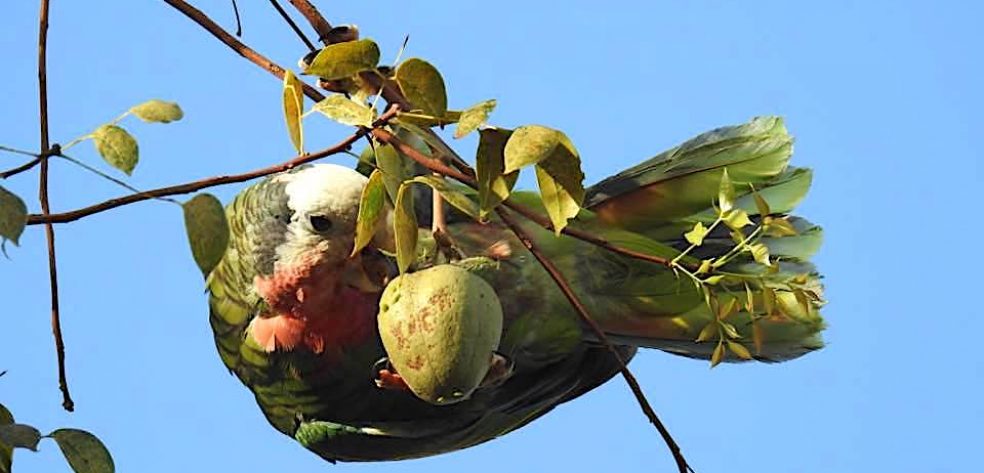
A small tribute, in gallery form, to the unique ground-nesting Abaco Parrots. Brought back from the brink of extinction through care, skill and patience. Surviving forest fires, hurricanes, predators, incautious humans. Sweeping across the sky in raucous flocks. Squawking deafeningly in the gumbo limbo trees. Lighting up the sky with flashing green, red and blue. Noisy ambassadors for Abaco wildlife. Generally being fabulous creatures loved by everyone.
An additional treat is the inclusion of a few of parrot scientist Caroline Stahala’s wonderful photos of parrot nests in the limestone caves deep in the Abaco National Park, taken while she was researching and protecting them. In the past, I felt very privileged to be able to use them and it’s been a while since I featured any. Very few people will have seen anything like this, so today is a very good occasion to show nests, eggs and chicks.
Photographs by Nina Henry, Melissa Maura, Craig Nash, Peter Mantle, Caroline Stahala, Keith Salvesen / Rolling Harbour
You must be logged in to post a comment.