Unknown's avatar

WHEN NEW PROVIDENCE WAS OLD: MAPPING BAHAMAS HISTORY


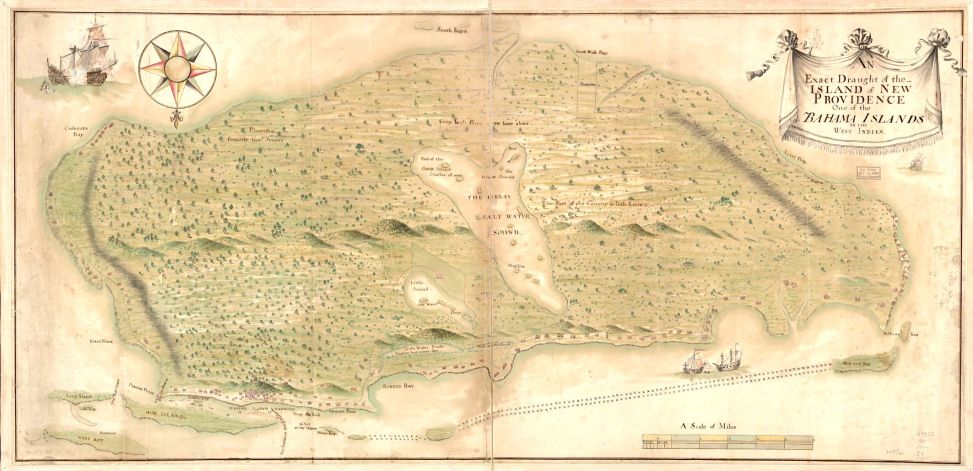
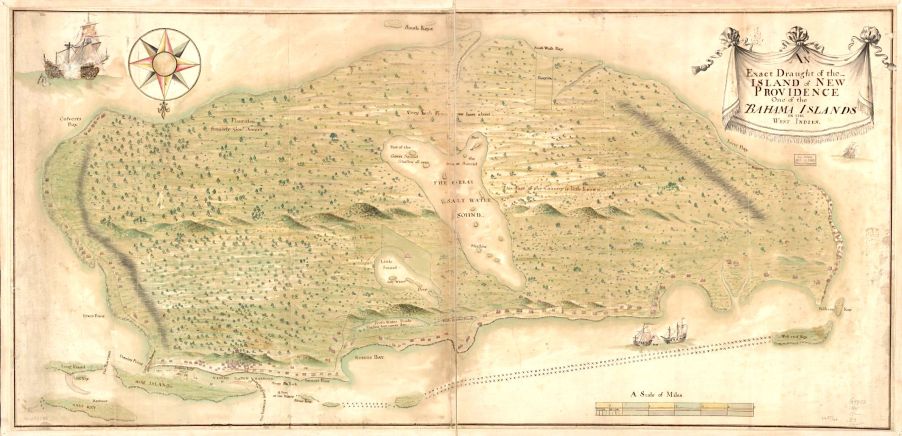
Map of New Providence / Nassau Bahamas (early c18)

WHEN NEW PROVIDENCE WAS OLD: MAPPING BAHAMAS HISTORY

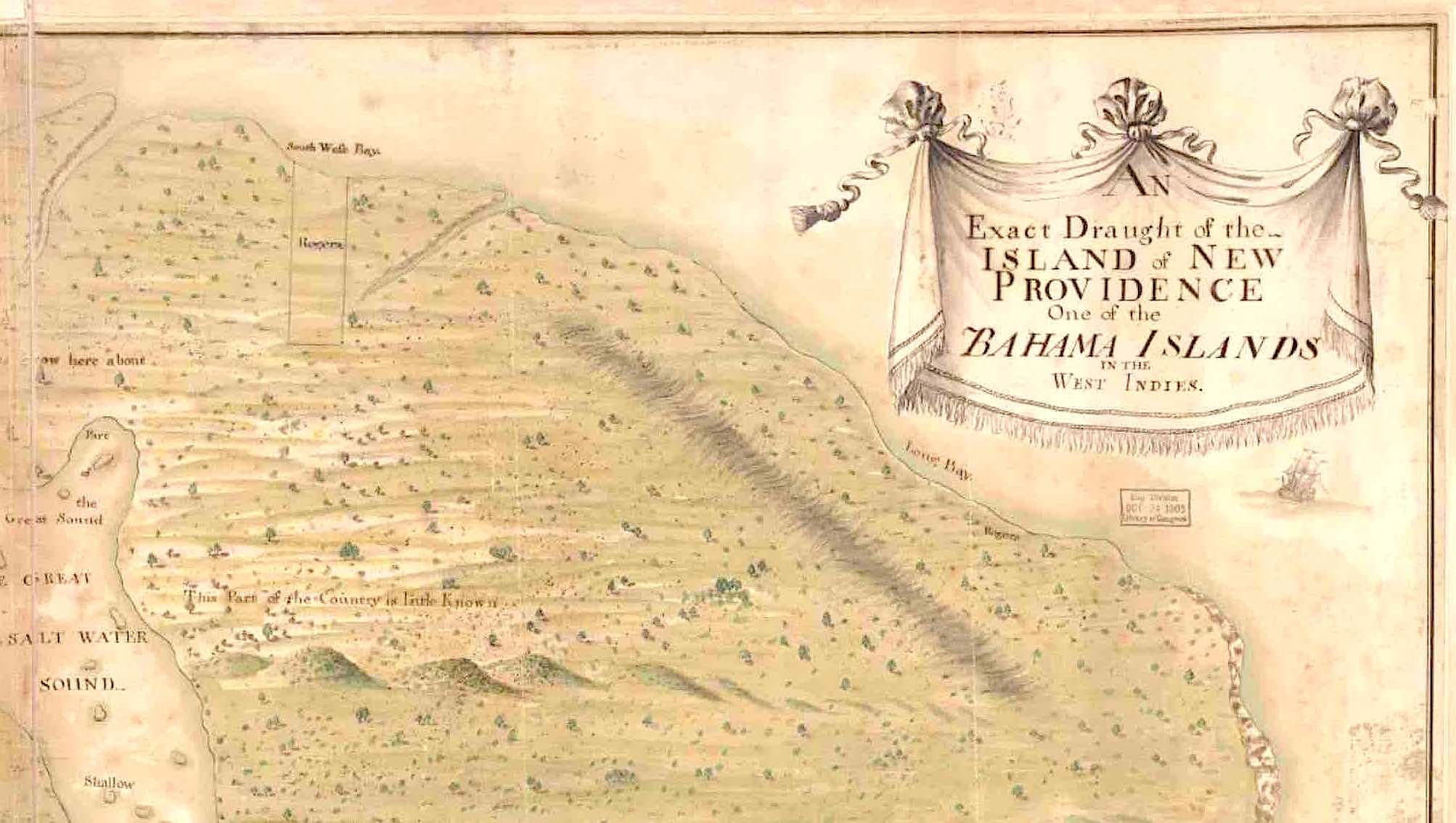
‘Exact Draught of the Island of New Providence

One of the Bahama Islands in the West Indies’

ORIENTATION

Lateral thinking is one thing; topsy-turvy thinking is in another league. The map that graces the top of this page is of New Providence and Nassau in the the early c18. By today’s exacting mapping conventions, which historically were less rigorously  observed, it is upside-down, with Nassau on what we would call the south-west corner. However the convention that maps were orientated to the North was not generally accepted before C19. And in the middle ages maps were mostly orientated to the East (whence the term ‘orientating’). With advancing survey techniques from C17 on, maps were mostly orientated to the South like this map of New Providence.

DATE

The map is undated on the face of it, and I have found attributed dates of both 1700 and 1750 (see below). It could be anywhere in-between. At the time this map was made, New Providence was sparsely populated except for Nassau itself; and little was known about the island’s interior. Contemporary accounts describe a haven for pirates operating around the coastline. Not for nothing was Nassau protected by a battery and a fort. I’ve divided to map into sections to make it easier to take a closer look at each area. You can click each to enlarge.

new-providence-c18-map-part-7-2

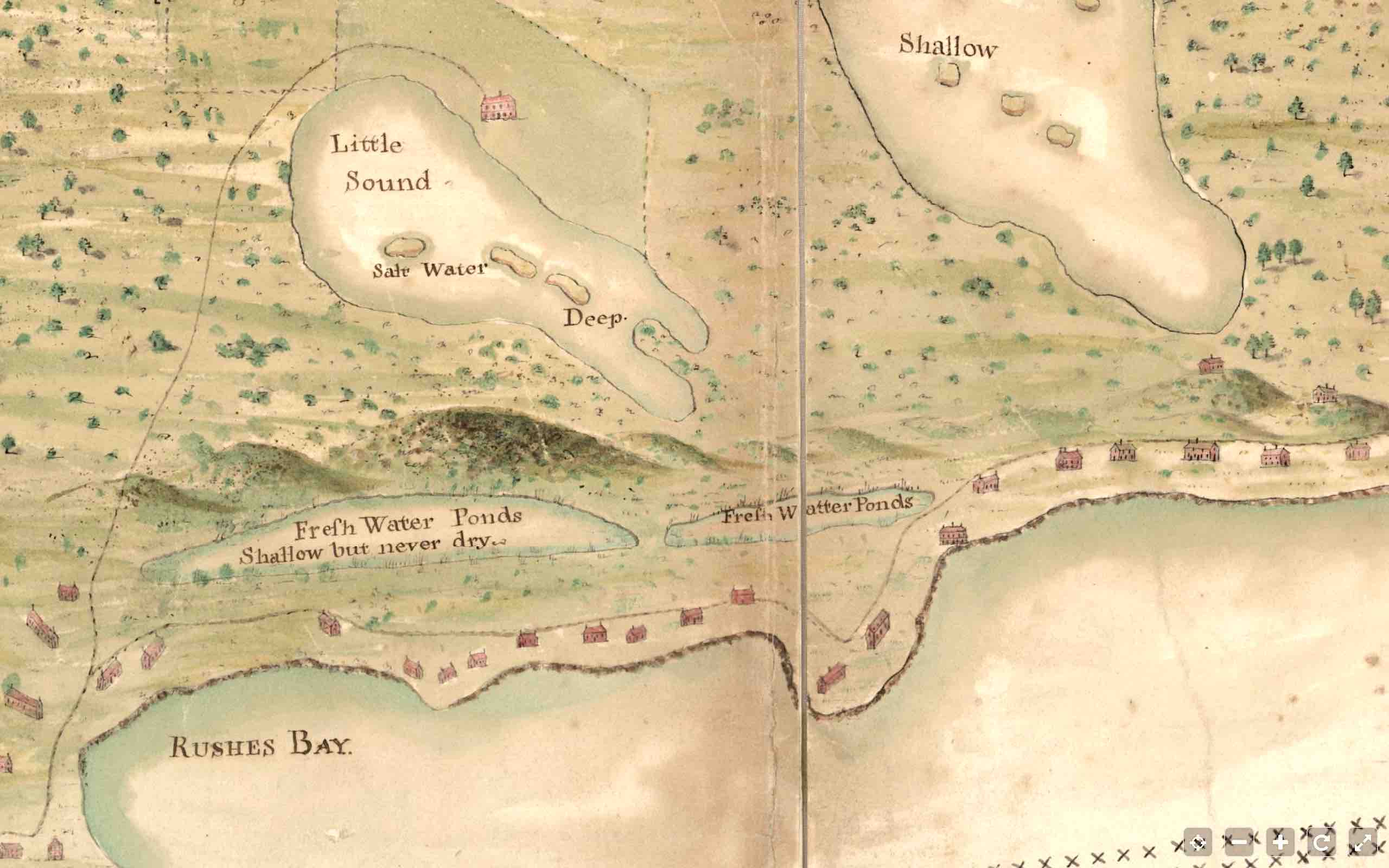
1. TOP LEFT CORNER (the south-east of NP in actuality), with the compass pointing downwards to the north. A smattering of houses dot the ‘west’ coast. There is one significant property above Little Sound, standing in what looks like a cleared or even cultivated area. I’ll look at that in more detail below. Note the words above The Great Salt Water Sound: “Very High Pines Grow Here Aboue (sic)”, evidence that forests of tall pines familiar even today on Abaco were found on NP 300 years ago. The island is otherwise mostly marked as if the landscape was fairly open.

new-providence-c18-map-part-1

2. TOP RIGHT CORNER (south-west & west), with the confident title in a cartouche proclaiming exactness. This was not uncommon in historic map-making – the cartographical equivalent of today’s boastful product slogans – ‘simply the best’ and so on**. The caption next to the Great Sound, This Part of the Country is little Known, suggests an unexplored and perhaps hostile environment – possibly one of marshes and bogs. This sector of the island appears to have been uninhabited, or at least to having no population centres worth recording.

new-providence-c18-map-part-3-2

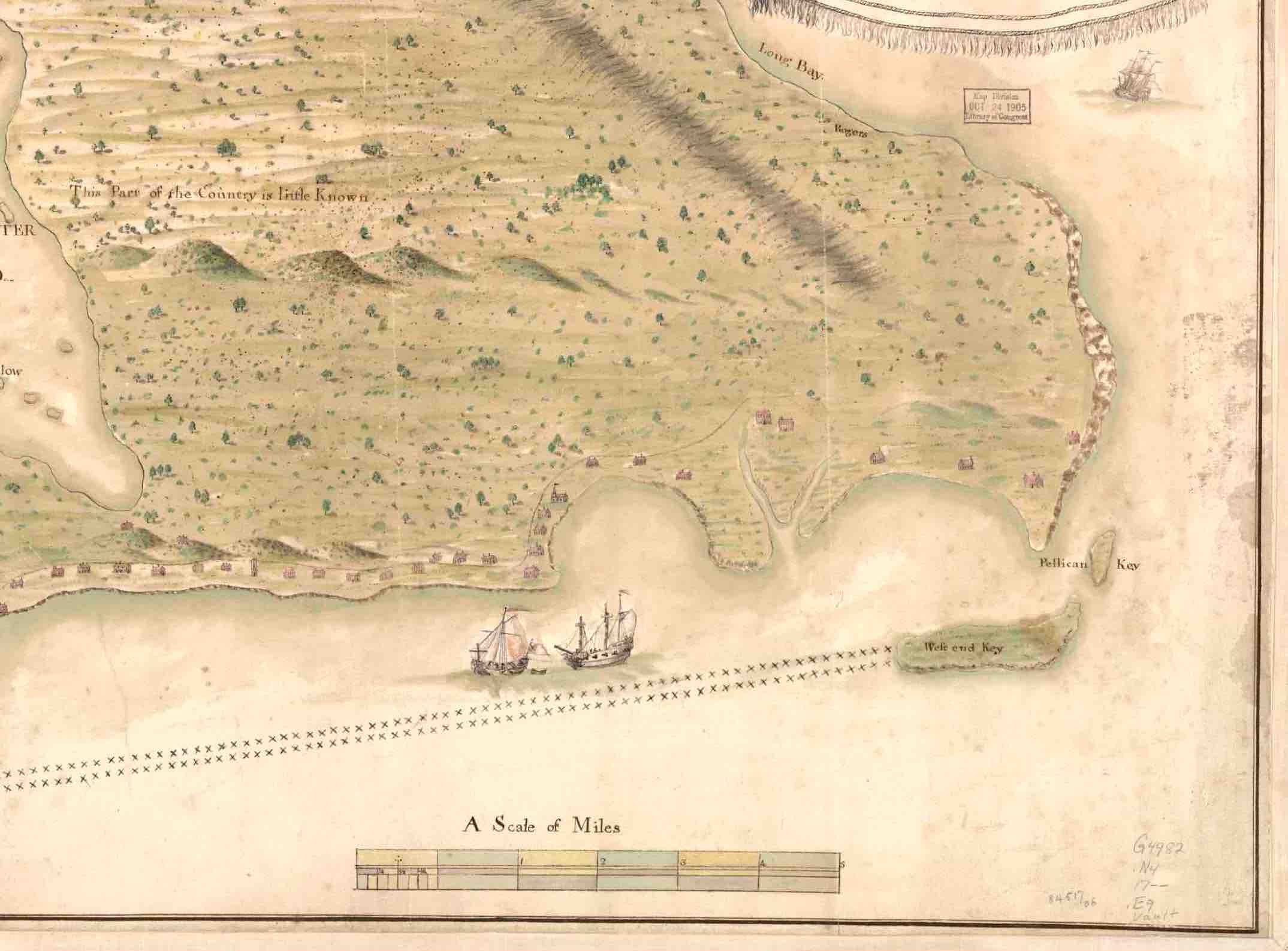
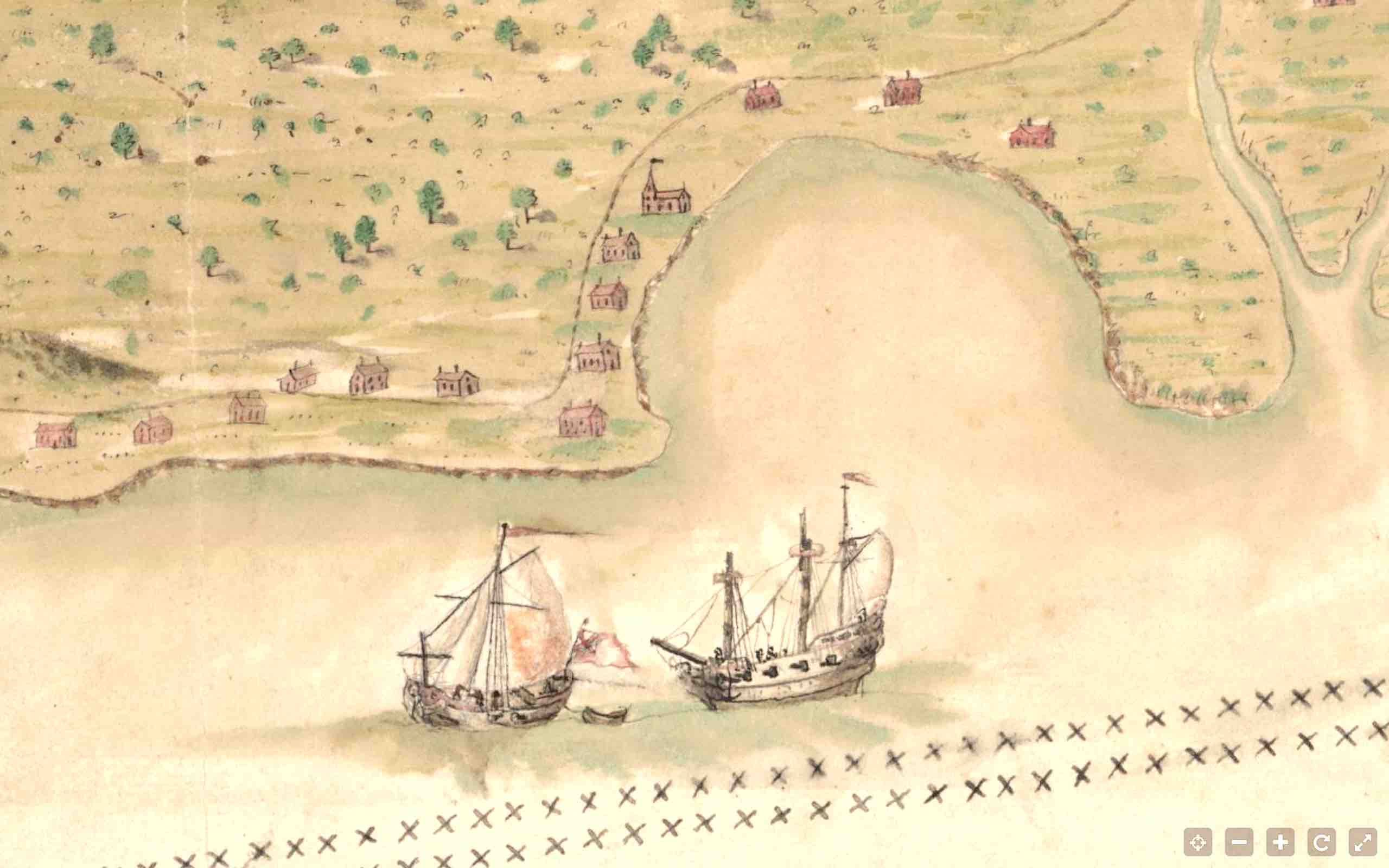
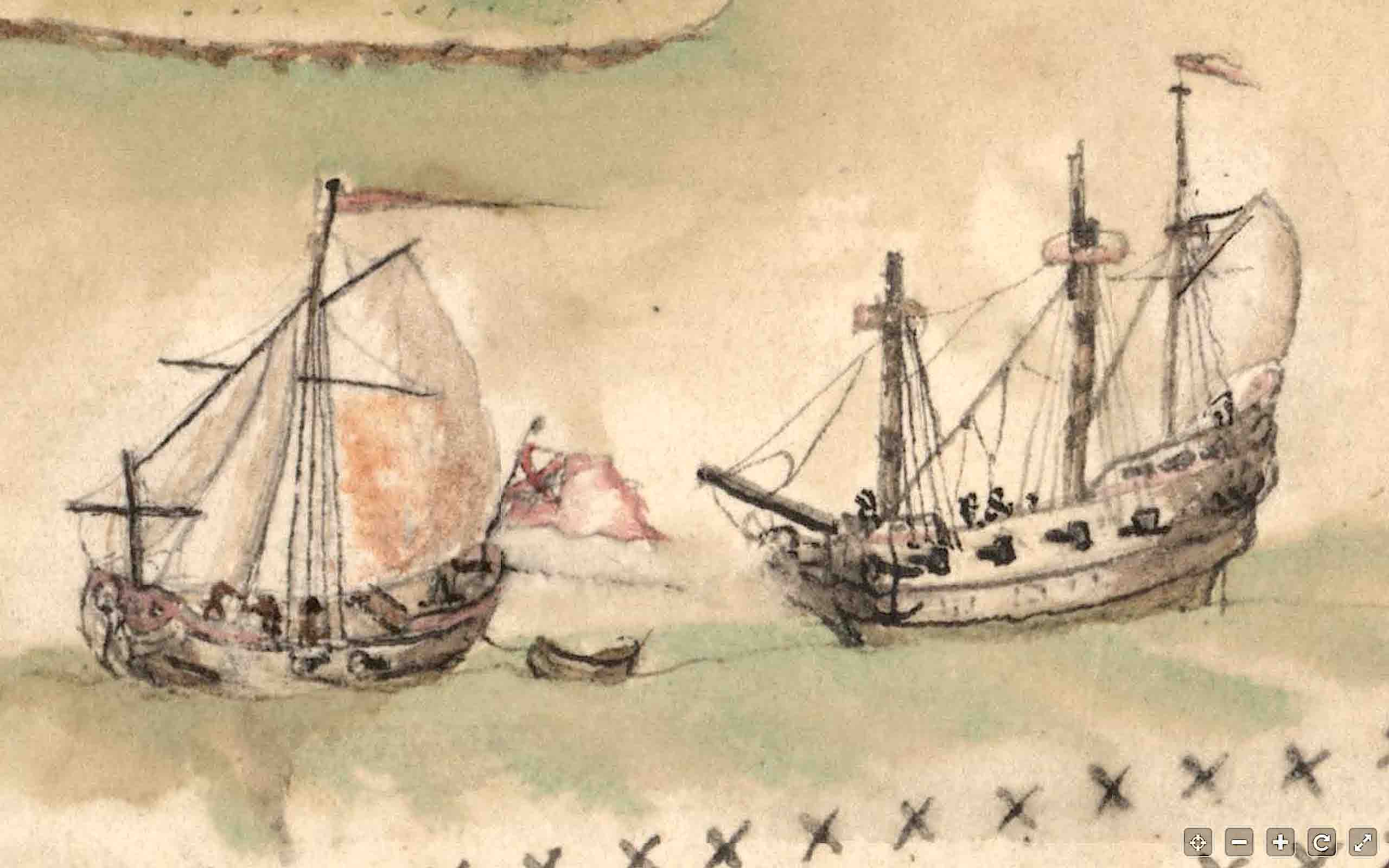
3. BOTTOM RIGHT CORNER (north-west). At last there is more evidence habitation, with a string of dwellings along the coastline. The 2 cays shown have names, West End and ‘Pellican’. And it looks as though the two ships have set out from port. On the left side of the bay above them, a church can be seen. Initially I thought the double row of crosses might indicate an area close to the shoreline that might be safe – or at least safer – from pirate attack. The leading ship – as the detailed crop shows clearly – is a warship. No harm in romantically speculating that it is escorting a trading vessel… More recently an online friend Klausbernd told me that the double crosses on map are in fact a navigational aid indicating cross bearings.

new-providence-c18-map-part-4

new-providence-c18-map-part-5

4. BOTTOM MIDDLE SECTION As we move towards the main – indeed only – town on the island, it is clear that the northern coast was the most desirable place to live. The scattering of houses along the coast continues; and the captions for the ponds show a possible reason why: fresh water, on an island where other areas of water are actually marked as ‘salt’ or which might have been unpleasantly brackish. And now we can see more of the posh establishment I referred to above. Not only did it lie in open (or perhaps cultivated) country, but it was plainly of some importance. It is notably larger that other buildings depicted, for a start; and it has its own very long track that forks off the coastal track.

new-providence-c18-map-part-10

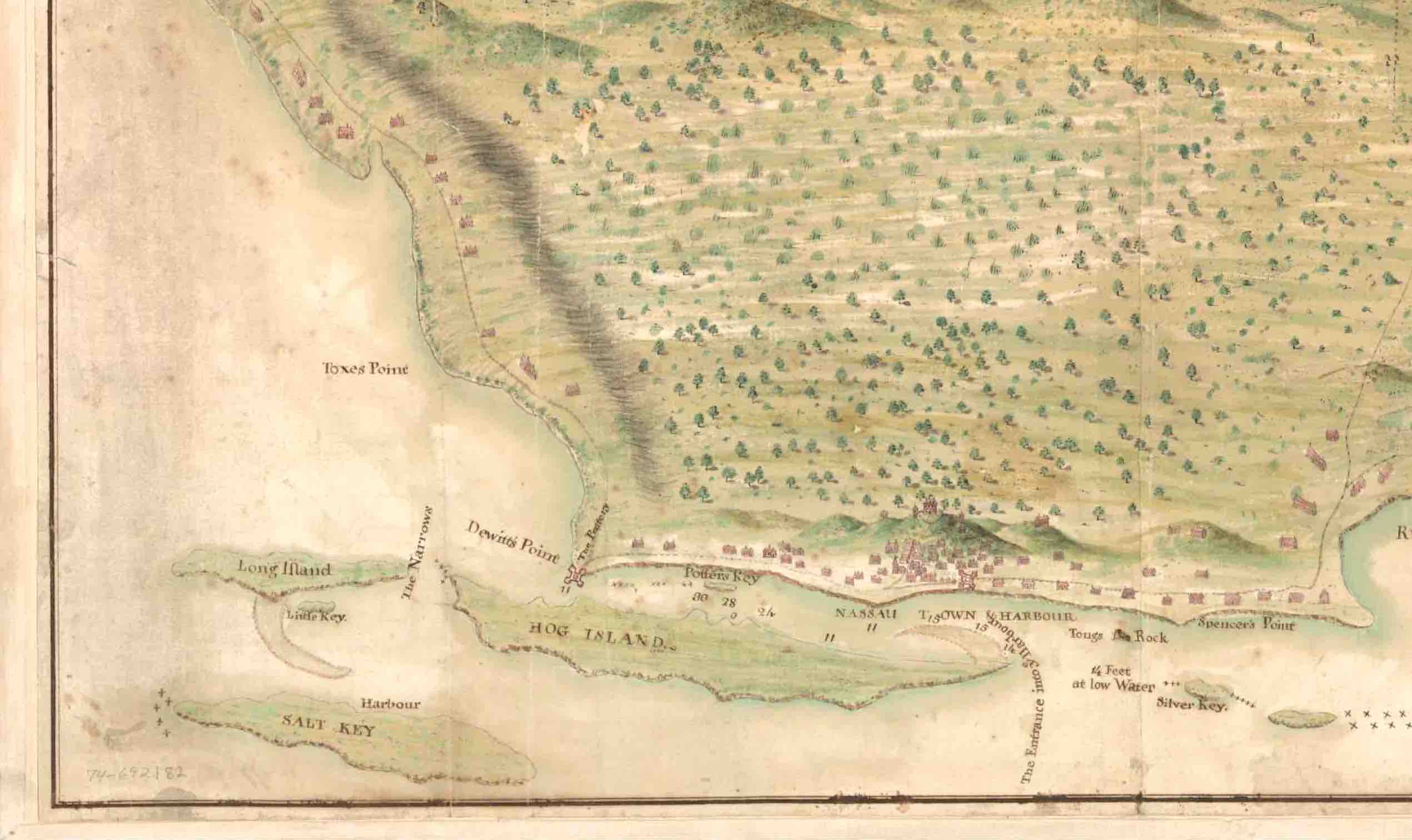
5. BOTTOM LEFT CORNER: NASSAU We have reached the big city, the centre of the population, and the port – with the harbour entrance handily marked. It bore the same name then as now; though the other names marked (as far as I can make out) have mostly if not all changed over 3 centuries. The Baha Mar development and its attendant travails seem light years away from this map. The double line of crosses ends here (bottom right at the first cay). If they marked a safe zone for vessels passing back and forth into Nassau harbour, they did not need to extend further because of the town fortifications (see detailed crop). There is a fort right on the shore; and at the far end of the harbour sound is a battery at Drewitt’s Point. The town is watched over by a substantial building – presumably a Governor’s residence – that is surrounded by a stockade . In the early c18 Nassau put on a show of strength to deter invaders and pirates.

new-providence-c18-map-part-2new-providence-c18-map-part-14

DO WE KNOW THE EXACT DRAUGHT’S EXACT DATE?

The map itself is undated. The Library of Congress, whose map I have chopped up for this post, simply dates it as 17– and notes: 

Manuscript, pen-and-ink and watercolor; Has watermark; Oriented with north to the bottom; Relief shown pictorially and by shading; Depths shown by soundings.

The excellent David Rumsey Historical Map Collection chooses the year 1750, the maker unknown. Another source puts the date at 1700.

Whichever, a clue to establish the map in the first half of the c18 is that the publisher is believed to be ‘William Innys [et al.]’, London. Innys and his brother John (the ‘et al’ presumably) were active at that time. In 1726, for example, they published an edition of Newton’s  Philosophiae naturalis principia mathematica (first published in 1687), indicating that they must already have been well-established.

new-providence-c18-map-part-7-2

WHAT ABOUT THE PIRATES?

The “Deposition of  Capt. Matthew Musson” made on  5 Jul 1717 in London, contains some excellent contemporary  pirate-based material. The middle passage in particular gives an indication how well organised and extremely well-armed the pirates were. And it is clear that piracy was actually driving inhabitants away from New Providence.

  • “On March last he was cast away on the Bahamas. At Harbour Island he found about 30 families, with severall pirates, which frequently are comeing and goeing to purchase provissons for the piratts vessells at Providence. There were there two ships of 90 tons which sold provissons to the said pirates, the sailors of which said they belong’d to Boston”.
  • “At Habakoe one of the Bahamas he found Capt. Thomas Walker and others who had left Providence by reason of the rudeness of the pirates and settled there. They advis’d him that five pirates made ye harbour of Providence their place of rendevous vizt. [Benjamin] Horngold, a sloop with 10 guns and about 80 men; [Henry] Jennings, a sloop with 10 guns and 100 men; [Josiah(s)] Burgiss, a sloop with 8 guns and about 80 men; [Henry?] White, in a small vessell with 30 men and small armes; [Edward] Thatch, a sloop 6 gunns and about 70 men. All took and destroyd ships of all nations except Jennings who took no English; they had taken a Spanish ship of 32 gunns, which they kept in the harbour for a guardship”.
  • “Ye greatest part of the inhabitants of Providence are. already gone into other adjacent islands to secure themselves from ye pirates, who frequently plunder them. Most of the ships and vessells taken by them they burn and destroy when brought into the harbour and oblidge the menn to take on with them. The inhabitants of those Isles are in a miserable condition at present, but were in great hopes that H.M. would be graciously pleas’d to take such measures, which would speedily enable them to return to Providence their former settlement, there are severall more pirates than he can now give an accot. of that are both to windward and to leward of Providence that may ere this be expected to rendevous there he being apprehensive that unless the Governmt. fortify this place the pirates will to protect themselves”. Signed, Mathew Musson. Endorsed, Read 5th July, 1717. 1½ pp. [C.O. 5, 1265. No. 73.]

new-providence-c18-map-part-11

CAN I BUY THIS MAP FOR MY WALL?

You certainly can. Well, not an original obviously. But you can find prints of it on eBay and elsewhere – just google the map title. You can get a modern copy for around $20 + shipping

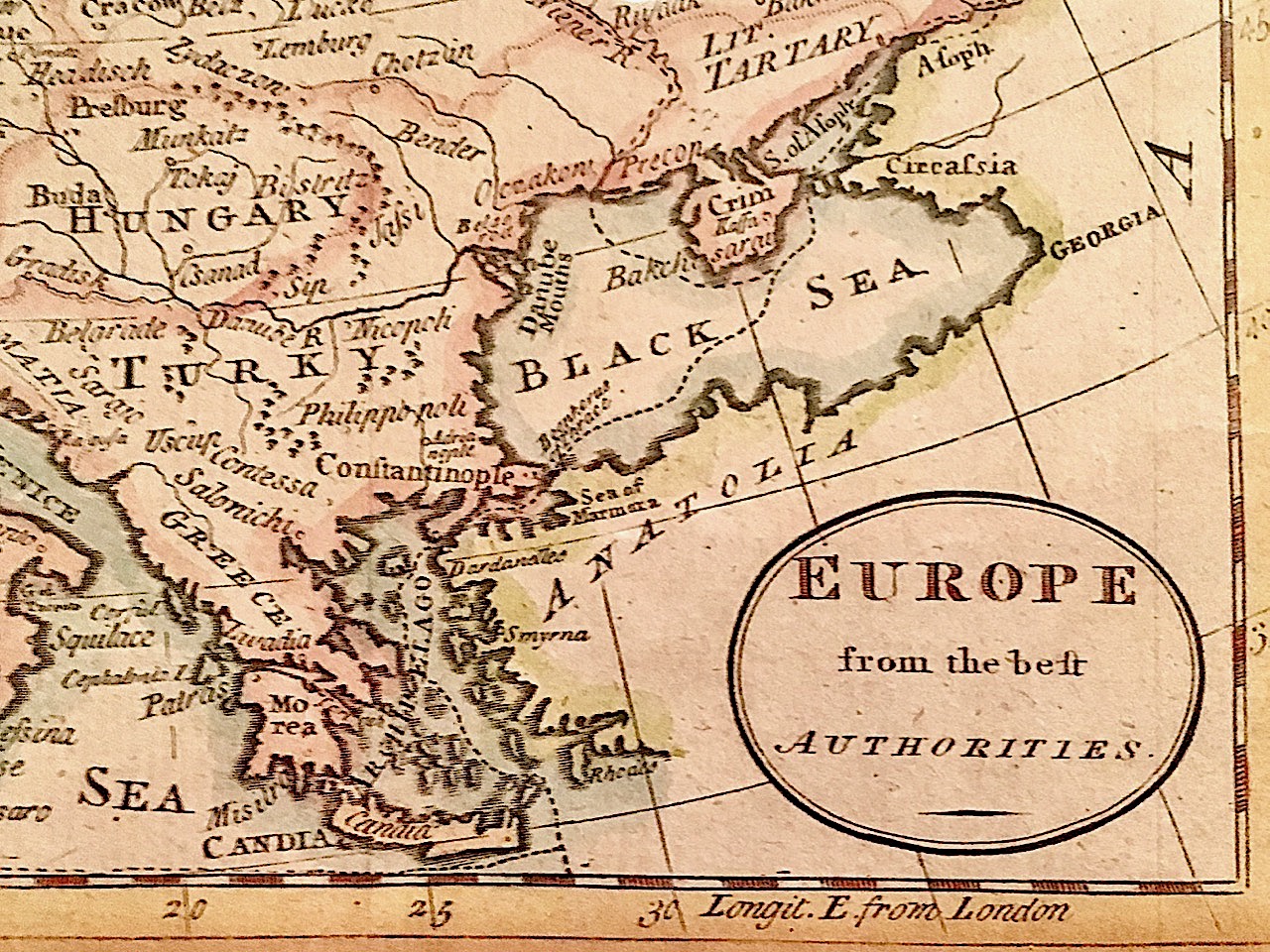
** I have an enjoyable example of this tendency on a William Guthrie map of Europe dated c1800 that I own. A map from “the beft authorities” could surely have no serious rival!

img_4771

Credits: Library of Congress Online Catalog (Geography and Map Division); David Rumsey Historical Map Collection; Baylus C Brooks, Professional Research & Maritime Historian, Author, & Conservator / “America and West Indies: July 1717, 1-15,” in Calendar of State Papers Colonial, America and West Indies: Volume 29, 1716-1717, ed. Cecil Headlam (London: His Majesty’s Stationery Office, 1930), 336-344; Bonhams (Auctioneers). Thanks to Klaubernd for his advice on map orientations.

Map of New Providence / Nassau Bahamas (early c18)

Unknown's avatar

BRITTLE STARS: PRIMITIVE YET INCREDIBLY COMPLEX STARFISH


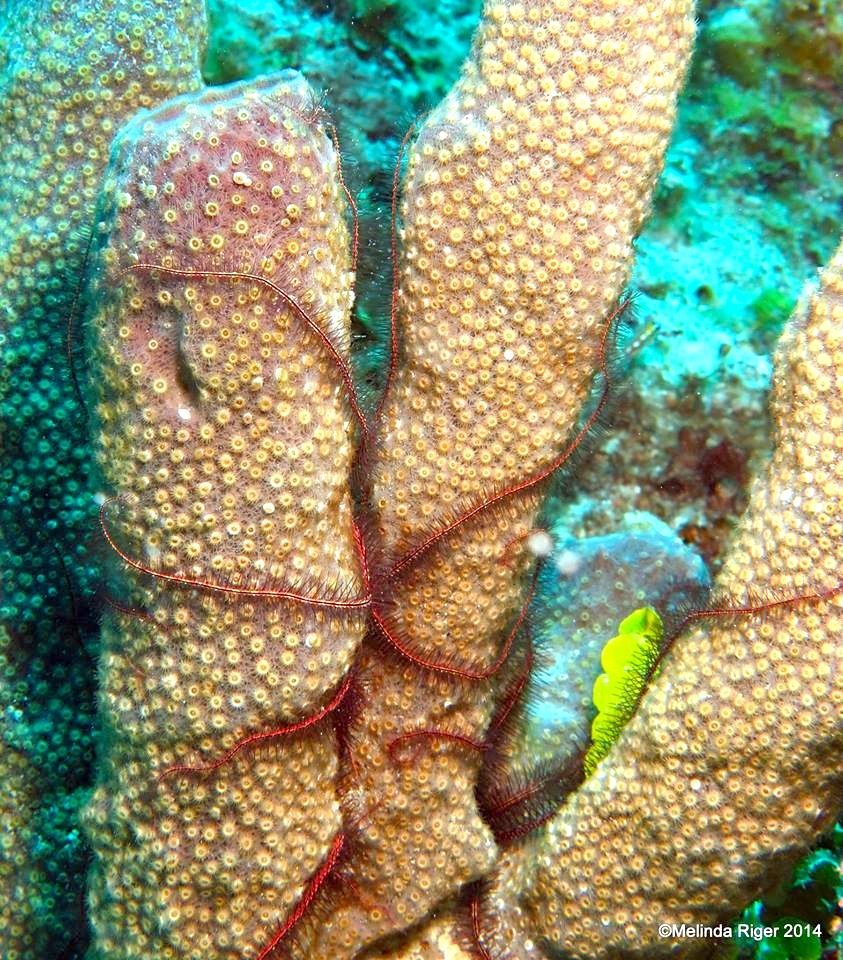
Brittle Star around a Tube Sponge ©Melinda Riger @ GB Scuba

BRITTLE STARS: PRIMITIVE YET INCREDIBLY COMPLEX STARFISH

BRITTLE STARS are closely related to starfish, and in particular to Basket Stars. They are commonly known as “serpent stars”, having 5 long, thin arms that may grow as long as 2 feet long. There are lots of different types of brittle star – at least 2000 – and they are found in every ocean on earth from the poles to the tropics. In Bahamian waters they a commonly found living on reefs.

Although these creatures look primitive, their structure, nervous systems, respiratory systems, digestive systems, sex lives and transportation methods are incredibly complex. Take it from me – I’ve just read about it all. So I’ve decided to pick a few aspects of these creatures to highlight rather than discuss the minutiae of their ossicles (tiny bones), madroporites (a sort of water filter / pressure balancer) and viscera.

You are most likely to see Brittle Stars clinging to coral or spongesSponge & Brittle Star ©Melinda Riger @GB Scuba

A DOZEN BRITTLE STAR FACTS TO PLAY WITH

  • The star has no eyes and no sense organs as we know them, but can detect light chemically; and (why would they need this?) sense smell through their ‘feet’… [Not a superpower I would prize, but still]
  • The mouth is on the underside of the central disc (‘body’) of 5 segments, each with a toothed jaw
  • The mouth is used both for ingestion and, putting it delicately, egestion. [Nor that superpower]
  • Stars eat tiny organisms suspended in the water or mini-worms, gathering them with their arms
  • If I have understood this, they breathe through their armpits, and can excrete from here also
  • The arms fit the main part with ball and socket joints, and are flexible in all directions
  • The genitals seem to be located in or between the armpits (lucky we are not descended from stars)
  • Stars readily regenerate lost arms until they lose the 5th – then they are in real trouble
  • This enables them to shed an arm in a predator attack, like a lizard its tail
  • Trials indicate that a jettisoned arm cannot regenerate from itself
  • They use only 4 arms to move along, with the fifth ‘steering’ out in front or trailing behind
  • Brittle Stars are inedible but non-toxic

Brittle Star on Green Rope Sponge ©Melinda Riger @ GB Scuba

Often, brittle stars will cling on inside a spongeBrittle Stars in sponge ©Melinda Riger @ GB Scuba

I quite liked this infographic from a source new to me, ‘Weird ‘n’ Wild Creatures Wikia’Brittle_Stars_front

Here is a great video from Neptune Canada of a brittle star fight on the ocean floor over the remains of a shrimp. If you watch the ones joining the fight, you will clearly see the locomotion method described above, with one limb pathfinding and the other four ‘walking’.

I’m not renowned for extreme sensitivity, so I feel no shame in showing mating brittle stars, courtesy of Channel Banks. It’s not exactly Lady Chatterley and Mellors, but the entwined arms are rather romantic, no?

Credits: all wonderful photos by Melinda Riger of Grand Bahama Scuba; BS infographic and viddys as credited

Unknown's avatar

FLAMINGO TONGUE SNAILS: DECORATIVE CORAL-DWELLERS


Flamingo Tongue Snails (Melinda Rogers, Dive Abaco, Bahamas)


FLAMINGO TONGUE SNAILS: DECORATIVE CORAL-DWELLERS

FLAMINGO TONGUE SNAILS Cyphoma gibbous are small marine gastropod molluscs related to cowries. The living animal is brightly coloured and strikingly patterned, but that colour only exists in the ‘live’ parts – the so-called ‘mantle’. The shell itself is usually pale, and characterised by a thick ridge round the middle. Whether alive or as shells, they are gratifyingly easy to identify. These snails live in the tropical waters of the Caribbean and the wider western Atlantic. 

Flamingo Tongue Snails (Melinda Rogers, Dive Abaco, Bahamas)

THE IMPORTANCE OF CORAL

Flamingo tongue snails feed by browsing on soft corals. Often, they will leave tracks behind them on the coral stems as they forage (see image below). But corals are not only food – they provide the ideal sites for the creature’s breeding cycle.

Flamingo Tongue Snails (Dive Abaco, Bahamas)Flamingo Tongue Snails (Melinda Rogers, Dive Abaco, Bahamas)

Adult females attach eggs to coral which they have recently fed upon. About 10 days later, the larvae hatch. They eventually settle onto other gorgonian corals such as Sea Fans. Juveniles tend to live protectively on the underside of coral branches, while adults are far more visible and mobile. Where the snail leaves a feeding scar, the corals can regrow the polyps, and therefore the snail’s feeding preference is generally not harmful to the coral.

The principal purpose of the patterned mantle of tissue over the shell is to act as the creature’s breathing apparatus. The tissue absorbs oxygen and releases carbon dioxide. As it has been (unkindly?) described, the mantle is “basically their lungs, stretched out over their rather boring-looking shell”. There’s more to them than that!

Flamingo Tongue Snails (Melinda Rogers, Dive Abaco, Bahamas)

THREATS AND DEFENCE

The species, once common, is becoming rarer. The natural predators include hogfish, pufferfish and spiny lobsters, though the spotted mantle provides some defence by being (a) startling in appearance and (b) on closer inspection by a predator, rather unpalatable. Gorgonian corals contain natural toxins, and instead of secreting these after feeding, the snail stores them. This supplements the defence provided by its APOSEMATIC COLORATION, the vivid colour and /or pattern warning sign to predators found in many animal species.

Flamingo Tongue Snails (Melinda Rogers, Dive Abaco, Bahamas)

MANKIND’S CONTRIBUTION

It comes as little surprise to learn that man is considered to be the greatest menace to these little creatures, and the reason for their significant decline in numbers. The threat comes from snorkelers and divers who mistakenly / ignorantly think that the colour of the mantle is the actual shell of the animal, collect up a whole bunch from the reef, and in due course are left with… dead snails and their allegedly dull shells Don’t be a collector; be a protector…

Flamingo Tongue Snails (Melinda Rogers, Dive Abaco, Bahamas)

The photos below are of nude flamingo tongue shells. Until I read the ‘boring-looking shell’ comment, I believed everyone thought they were rather lovely… I did, anyway. I still do. You decide!

Flamingo Tongue Snail Shell, Keith Salvesen AbacoFlamingo Tongue Snail Shell, Keith Salvesen Abaco

Flamingo Tongue Snails (Melinda Rogers, Dive Abaco, Bahamas)

Image Credits:  Melinda Rogers / Dive Abaco; Keith Salvesen / Rolling Harbour; Wiki Leopard

Unknown's avatar

LIKE THE CLAPPERS: LEARN THE RAILS ON ABACO


Clapper Rail preening, Abaco Bahamas (Tom Sheley)


LIKE THE CLAPPERS: LEARN THE RAILS ON ABACO

Note: You may find ads in this post. This is because WordPress / AI has now decided that you (dear reader) and I (angry author) are presumed to be up for car insurance deals, slimming advice, and incontinence apparatus. I’m probably going to have to buy my way into a new contract, as they presumably intend.

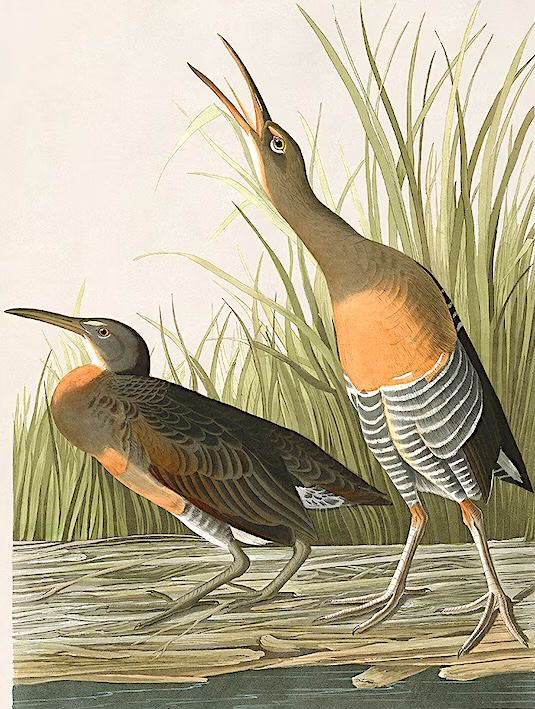
CLAPPER RAILS Rallus crepitans are elusive birds of mangrove swamp and marsh, more frequently heard than seen. They tend to lurk around in foliage and are easy to overlook – creatures of the margins rather than of open ground. If lucky, you may come across one foraging secretively, beak-deep in the mud.

Clapper Rail stretching.Abaco Bahamas - Tom Sheley ("The Birds of Abaco" by Keith Salvesen, p80)

Tom Sheley’s wonderful photos featured here of a preening clapper rail were taken during backcountry explorations to locate and photograph species for BIRDS OF ABACO.  By being an early riser and a patient cameraman, Tom managed to capture this fine bird engaging in some quality grooming. The one below is also ‘vocalising’ – also known in rails as ‘rousing’.

Clapper Rail rousing.Abaco Bahamas.Tom Sheley

CALL

AGGRESSIVE CALL

Clapper rails are capable of swimming and even of flying if they choose to (which isn’t often). However the most likely activity you will observe is skulking, picking their way quite delicately through marginal  vegetation, or (if you are lucky) doing some serious beak-deep foraging in the mud. Their foraging is made easier by the fact that they are omniverous.

Clapper Rail (Audubon)

Occasionally they run, a process that looks endearingly comical and which possibly gives rise to their name (see below).

Clapper Rail running, Abaco Bahamas (Erik Gauger))

Clapper Rail running, Abaco Bahamas (Sandy Walker)

It almost goes without saying nowadays, but the biggest threat to these rather charming inoffensive birds is habitat loss. Which is to say, mankind either directly or indirectly. Drive bulldozers through the mangroves and marshland of sub-tropical coastal areas, chuck down a few acres of concrete and tarmac… and the clappers will very soon be clapped out. As they will if the climate we have unarguably changed irrevocably ruins their unobtrusive lives.

ADVISORY LINGUISTIC STUDY

When I first wrote about this species, its binomial name was Rallus longirostris ie simply ‘long-beaked rail‘. Which it is. Then came an annual official AOU shuffling of species and revision of names. The clapper rail was re-designated Rallus crepitans or ‘rattling / rustling rail‘. Which it does, but it also has other vocalisations (try the sound-files above). So maybe less clear-cut for ID purposes (there were other rail name innovations that, reading about them, made me crack open a beer instead of wanting to tell you about them. I’m old-school. 

OPTIONAL LINGUISTIC DIVERSION

TO RUN LIKE THE CLAPPERS“. This phrase seems to be fairly recent, most likely originating as military (?Air Force) slang early in WW2 or possibly from earlier conflicts. Some suggest it is a rhyming slang bowdlerisation of ‘run like hell’ with ‘clapper(s)’ standing for ‘bell’, along the lines of the Cockney “I’ve bought a new whistle” (whistle and flute = suit). Almost all plausible explanations relate to bells: the speed of the clapper of a vigorously rung handbell. One stand-out meaning relates to the historical era of City prostitution and the high risk of syphilis (‘pox’) or gonnorrhea (‘clap’). You can probably make the link.

Photo credits:Tom Sheley, Sandy Walker, Erik Gauger, University of Amsterdam (print), OS / CC

Clapper Rail preening.Abaco Bahamas.3.12.Tom Sheley copy

Unknown's avatar

SAWMILL SINK, ABACO: INDUSTRIAL ARCHAEOLOGY IN A POST-APOCALYPTIC LANDSCAPE


Sawmill Sink Abaco 8

SAWMILL SINK, ABACO

INDUSTRIAL ARCHAEOLOGY IN A POST-APOCALYPTIC LANDSCAPE

This article was written quite some time ago but I reckoned that, several years on, it might still be of interest. I haven’t changed much because it is what it was, so please ignore the time-slip. This was by chance a fire-fuelled opportunity to uncover a relic of Abaco’s industrial past.

The Blue Holes of Abaco are geological wonders about which much has been written. Sawmill Sink is one of the best-known inland ones. These are deep chasms in the limestone rock, some leading to extensive and complex cave systems under the island. Divers exploring Sawmill Sink have found many prehistoric fossils, including those of an extinct giant tortoise, and land crocodiles. The sink area was also a location for such finds.

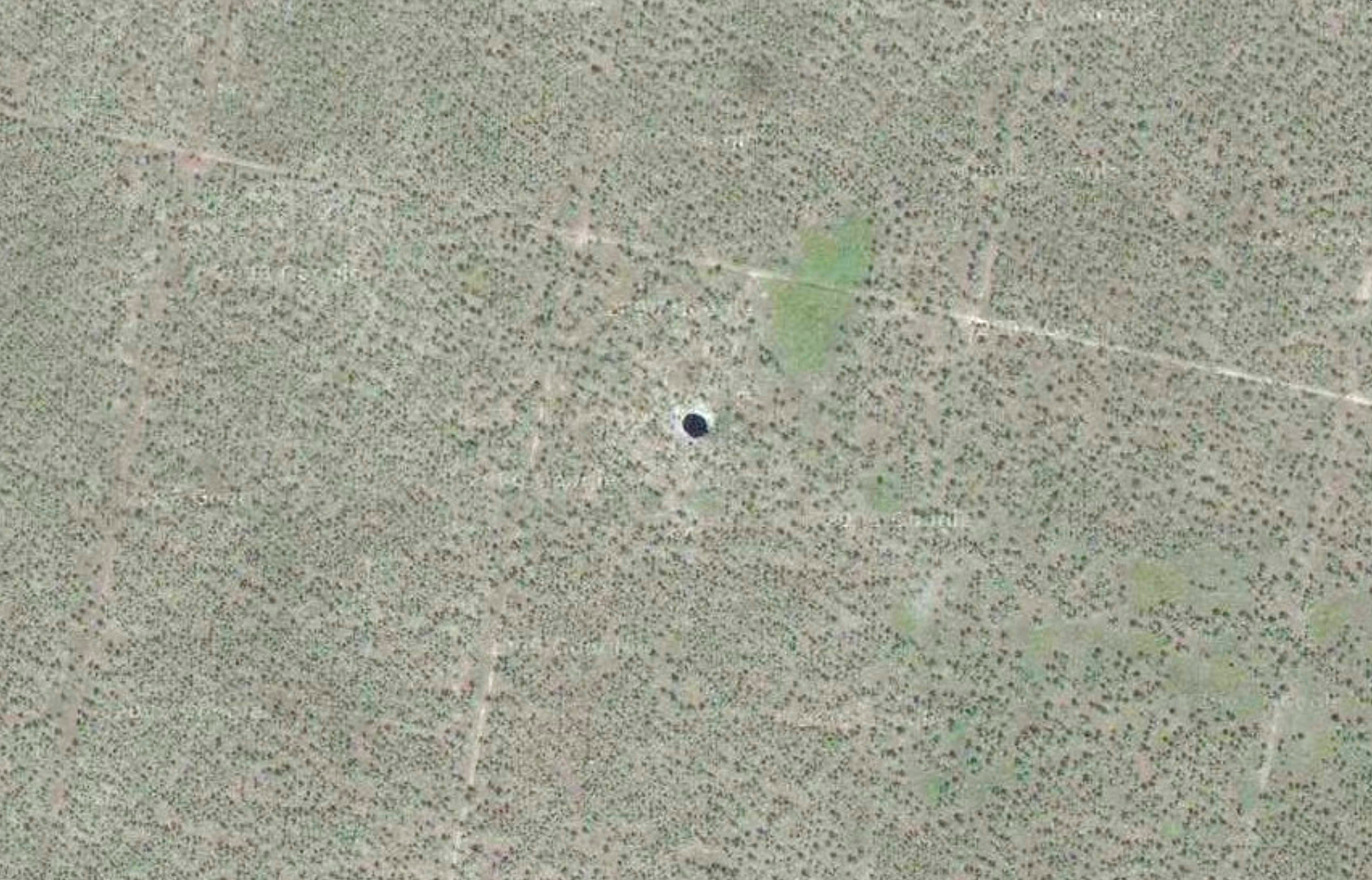
AERIAL VIEW OF SAWMILL SINK DEEP IN THE PINE FOREST

Screenshot 2024-11-16 at 17.15.58

LOGGING TRACK TO SAWMILL SINK BLUE HOLE

Screenshot 2024-11-16 at 17.15.30

LOGGING HISTORY

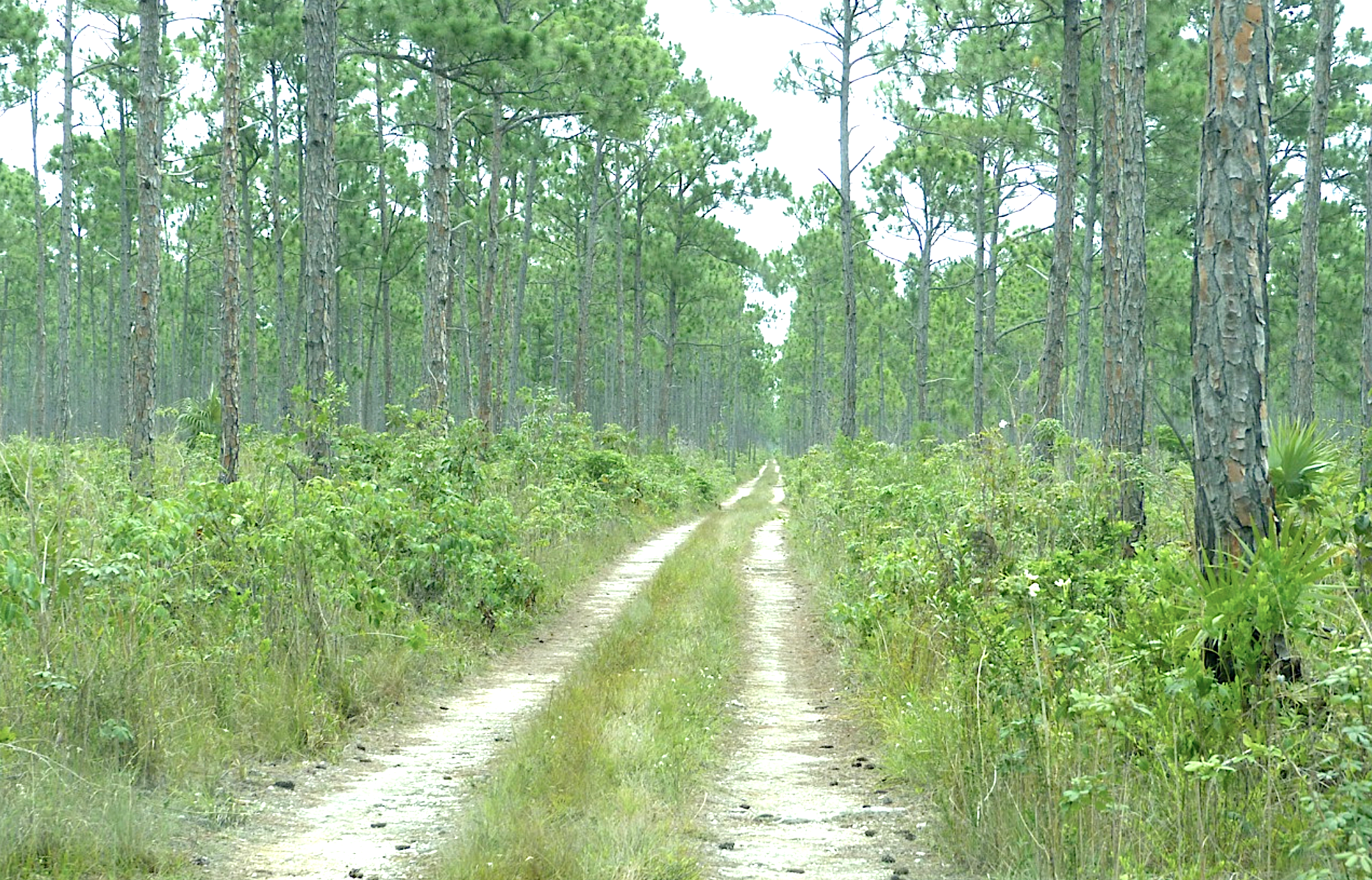
South Abaco – defined loosely as the area south of Marsh Harbour – is dominated by pine forest. There are a few settlements and individual residences, all by the coast. The forested swathes are criss-crossed by an extensive system of logging tracks, many now all but impassable. They are reminders of Abaco’s historic importance as a source of wood deriving from the ubiquitous tall, slim pines. One use to which they were put was as mine pit props in the collieries of Wales.

 1996.2039.db

TRACKING RAILS

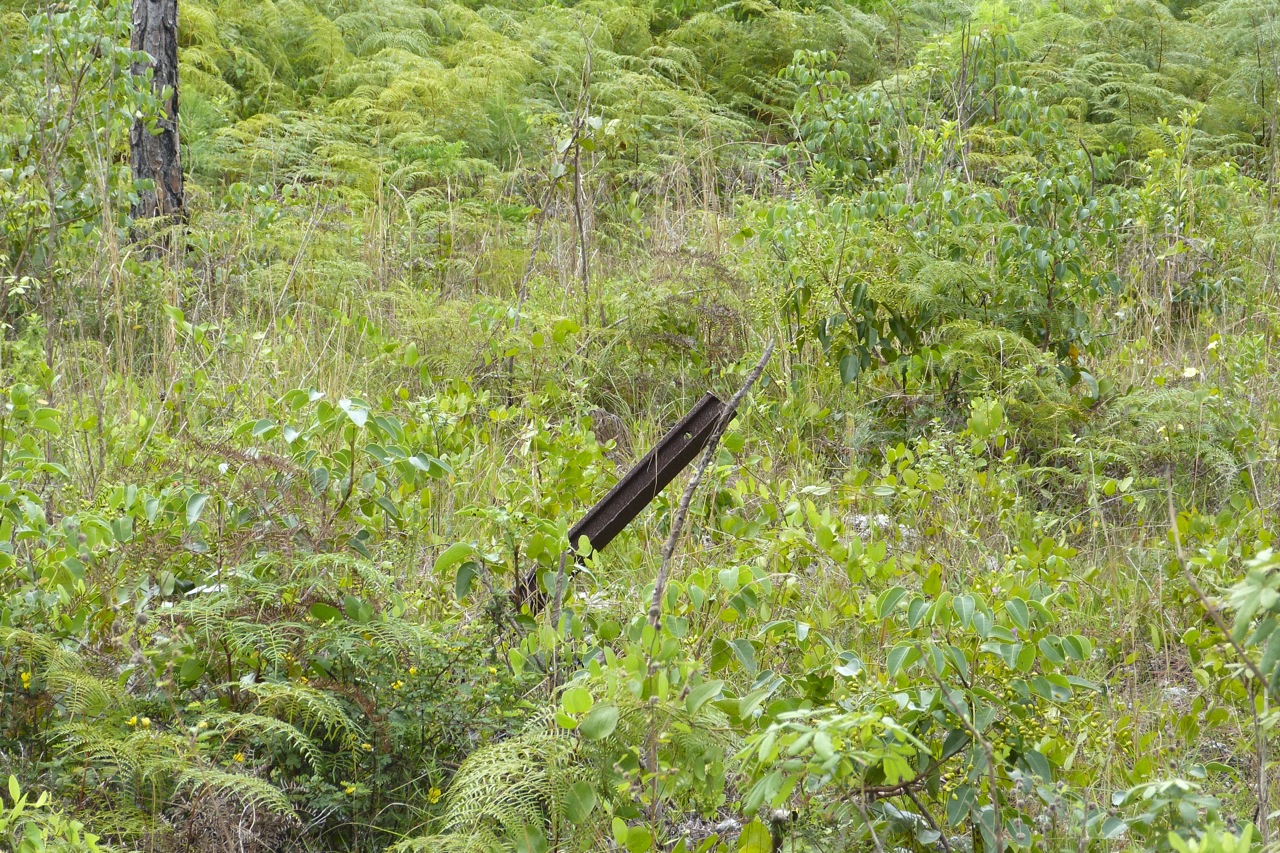
During a walk to Sawmill Sink, we noticed a rusty rail sticking up from the undergrowth. This was a remnant of the light railway tracks that had been laid through the forest to carry felled timber to the highway. From there it was transported to the coast to be loaded onto ships.

Sawmill Sink Abaco 17

Later, we went back to Sawmill Sink at a time when the south part of the island was enduring the annual outbreak of forest fires, some natural and some set to clear undergrowth. While the occasional natural fire is actually good for regeneration of a forest (cf burning moorland), a fire out of control and fuelled by wind can very quickly damage a vast area. Thick palls of smoke drift across the island and out to sea. Even while we were fishing far out on the Marls, flames were visible as tall pines burned, with the acrid smell of the blaze was carried on the wind.

REMEMBERED EMBERS

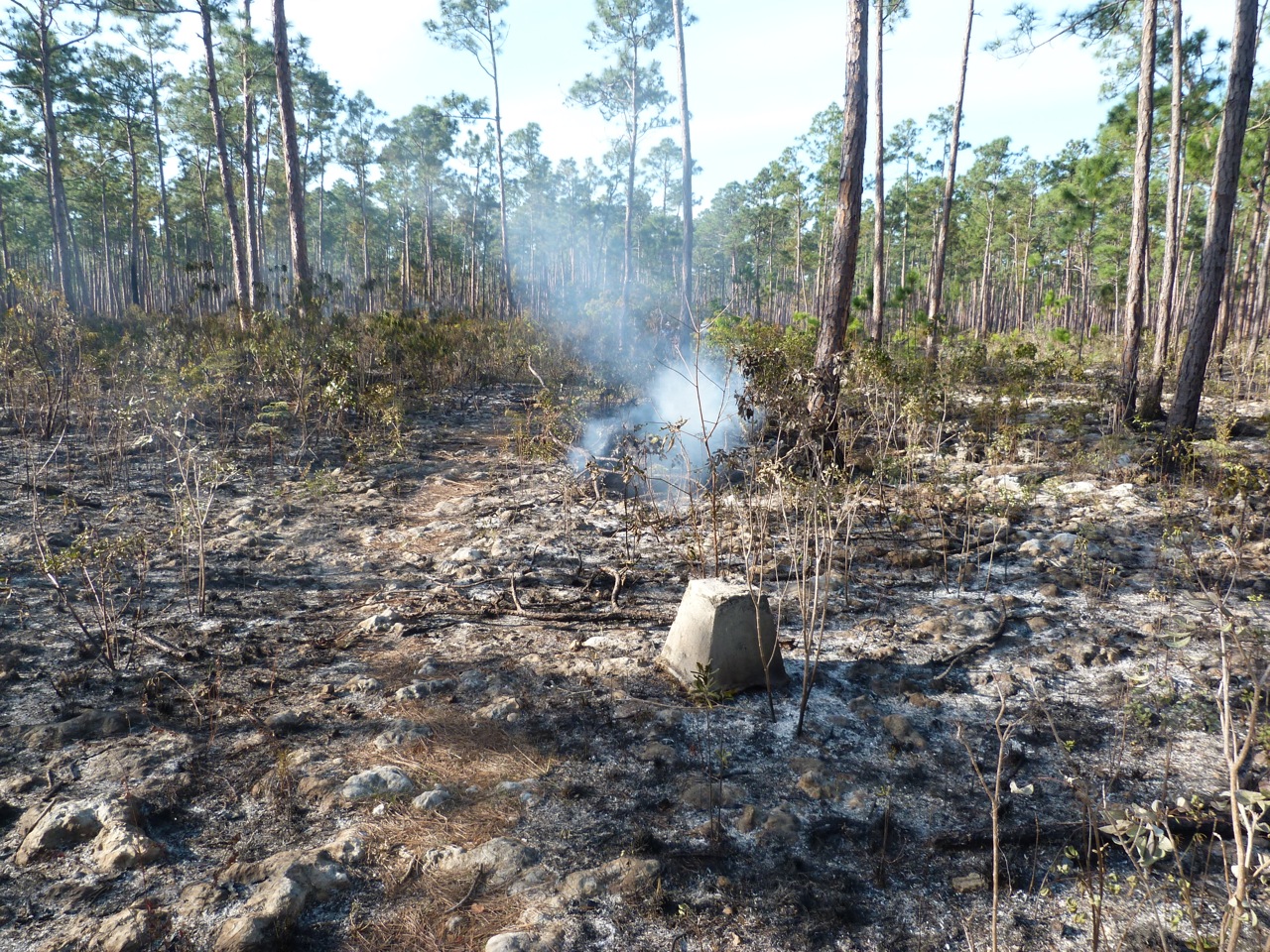
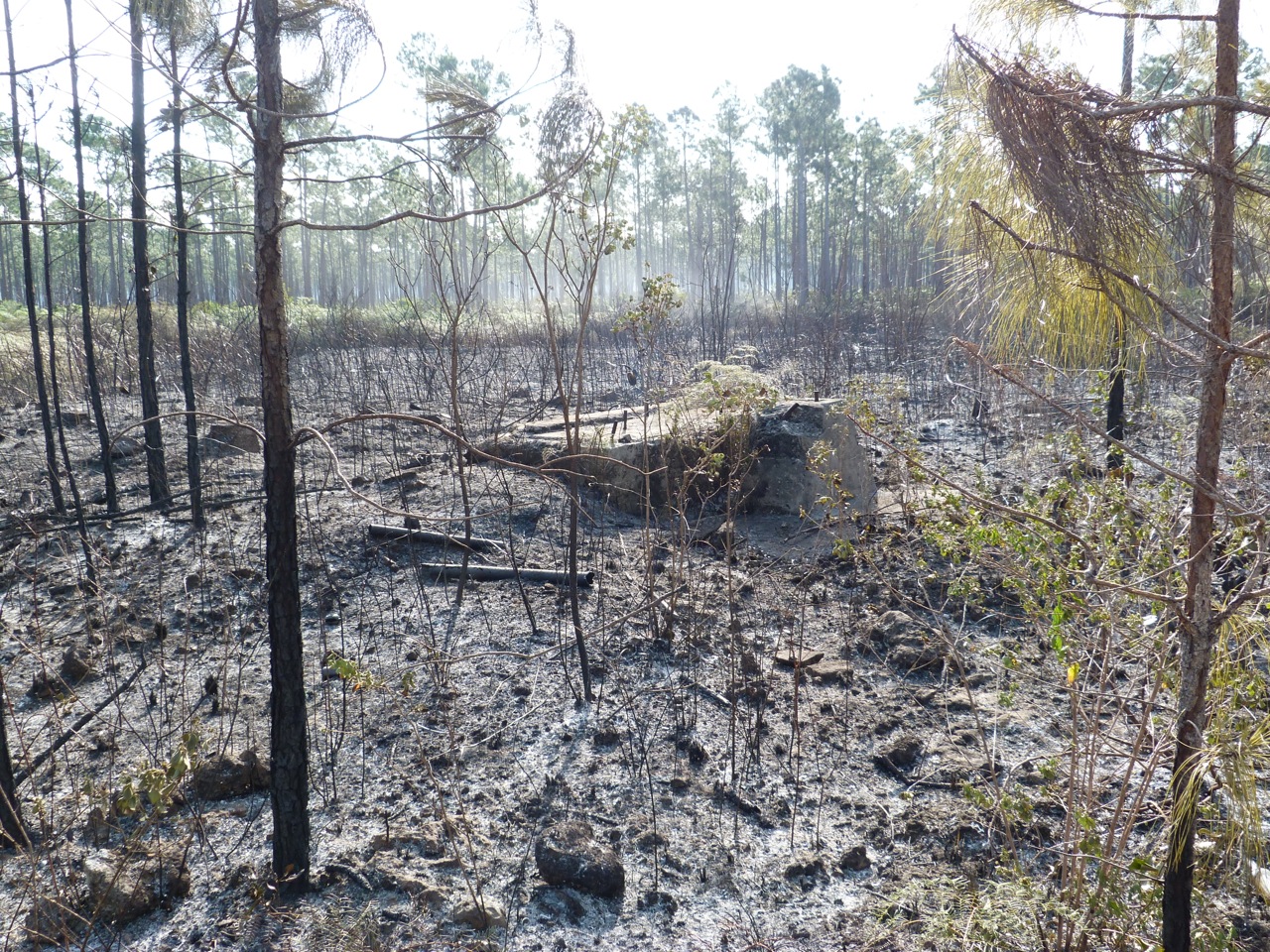
The photos that follow show the area round Sawmill Sink immediately after a fire had swept through the area, revealing the past. Trees were still smouldering and in places the ground was still hot to the touch. The evidence of the former usage had been laid bare. Some images below  show the paved path that leads from the logging track to the Sink. I never found out if these were the first detailed images of so many visible remains of the logging trade revealed by the burnt-off undergrowth. 

Sawmill Sink Abaco 1 Sawmill Sink Abaco 2 Sawmill Sink Abaco 3 Sawmill Sink Abaco 5 Sawmill Sink Abaco 6 Sawmill Sink Abaco 7 Sawmill Sink Abaco 9 Sawmill Sink Abaco 10 Sawmill Sink Abaco 11 Sawmill Sink Abaco 12 Sawmill Sink Abaco 13 Sawmill Sink Abaco 14

PREHISTORY

We found this rock close to the Sink. Are those plant fossils? Bearing in mind that in prehistory the ocean covered this area entirely (the highest point on Abaco is a mere 134 feet ASL), might these be anemones or sponge fossils of some sort? As I said then, ‘comments from fossilologists welcome’, and a kind follower FOSSIL LADY (aka Kathi) reponded:  Those don’t look like plant fossils to me, they remind me of stromatolites, a sponge like creature that first dominated the earth billions of years ago. Some varieties still survive today. It would be worth it to have a geologist have a look see. ps the sinkhole is awesome!

Sawmill Sink Abaco 15

Photo credits: all RH except pit props (Scottish Mining Museum); aerial view (Gmaps)

Unknown's avatar

BREADFRUIT: NATURE’S BOUNTY WITH ADDED MUTINY


Artocarpus altilis - breadfruit (Hans Hillewaert)


BREADFRUIT: NATURE’S BOUNTY WITH ADDED MUTINY

Capt. William Bligh achieved fame for all the wrong reasons. Despite a distinguished and wide-ranging seafaring career he is widely remembered for just two things: (1) The Bounty and (2) Mutiny On. In 1787, he was dispatched to Tahiti to collect specimens of BREADFRUIT (a fruit of the Pacific islands, in particular Polynesia) to help provide food for the British colonies in the West Indies. The breadfruit was intended to be a basic and cheap staple food not just for settlers but also for the indigenous population.

Breadfruit 2


‘BLIGH’S BLIGHT’ – MUTINY!

Capt. Bligh’s Bounty crew unfortunately mutinied – possibly to do with the amount of water the breadfruit required in transit, compared to their own meagre rations. So they threw overboard the hundreds of breadfruit plants that were in transit. Then they set adrift Bligh with his loyal officers and crew. He was later court-martialled but cleared of culpability for provoking a mutiny by his conduct (from a strictly legal viewpoint and on the bare facts, not a surprising ruling you might think).

Mutiny on the HMS Bounty (Robert Dodd)


This isn’t the place for a disquisition on the Mutiny. You can read all about it HERE. Or better still, watch one of the rollicking all-star-cast films based loosely on the episode for a careful and accurate historical record of the events that will buckle your swash…


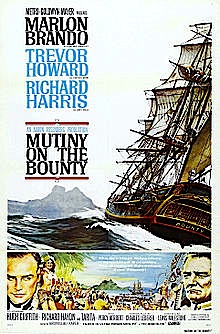
Mutiny_on_the_Bounty_Poster (1935) 220px-Poster_for_Mutiny_on_the_Bounty BLIGH’S SECOND CHANCE

Following that skirmish, and indeed blemish, on his record, in 1793 Capt. Bligh was yet again charged with the task of shipping breadfruit trees from their origin to the Caribbean. His heart must have sunk at the prospect, yet finally he succeeded. However, he completed his journey only for those on the consumption end to express considerable distaste for such a bland, starchy fruit. It took a long time to catch on, and even longer for its culinary versatility to become appreciated. 


Breadfruit image (Pacific site)


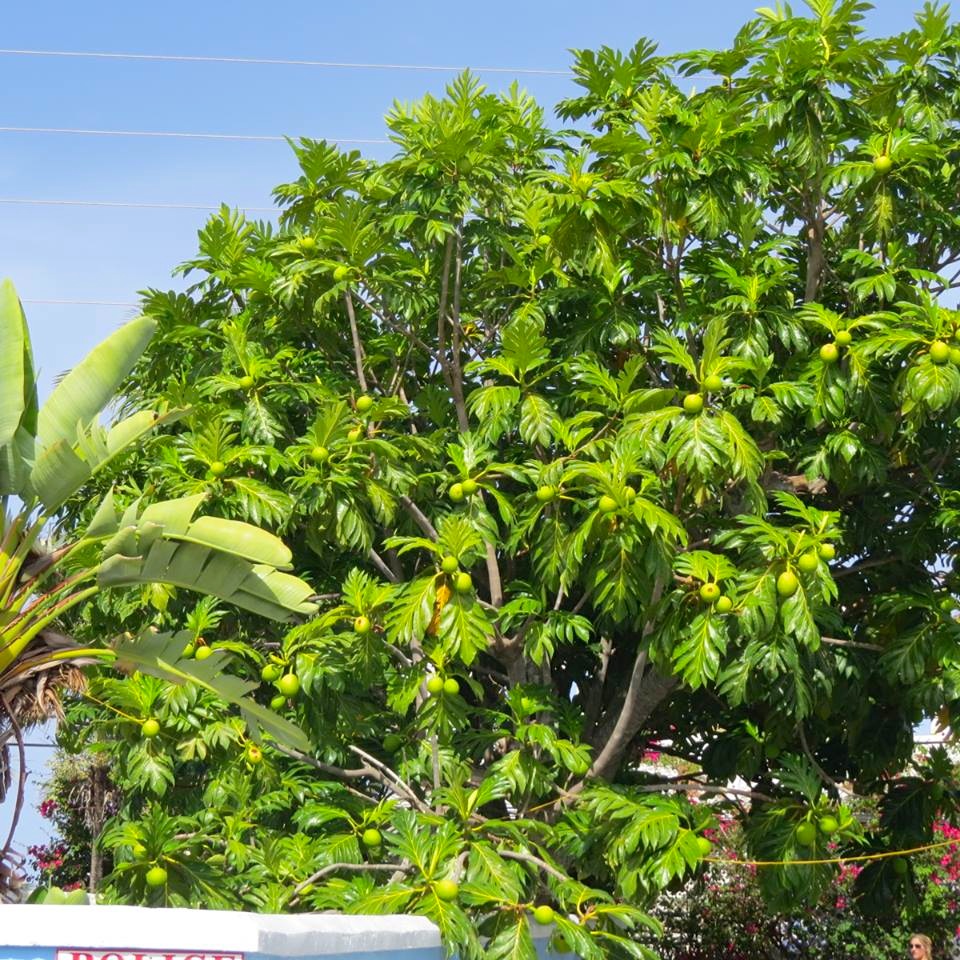
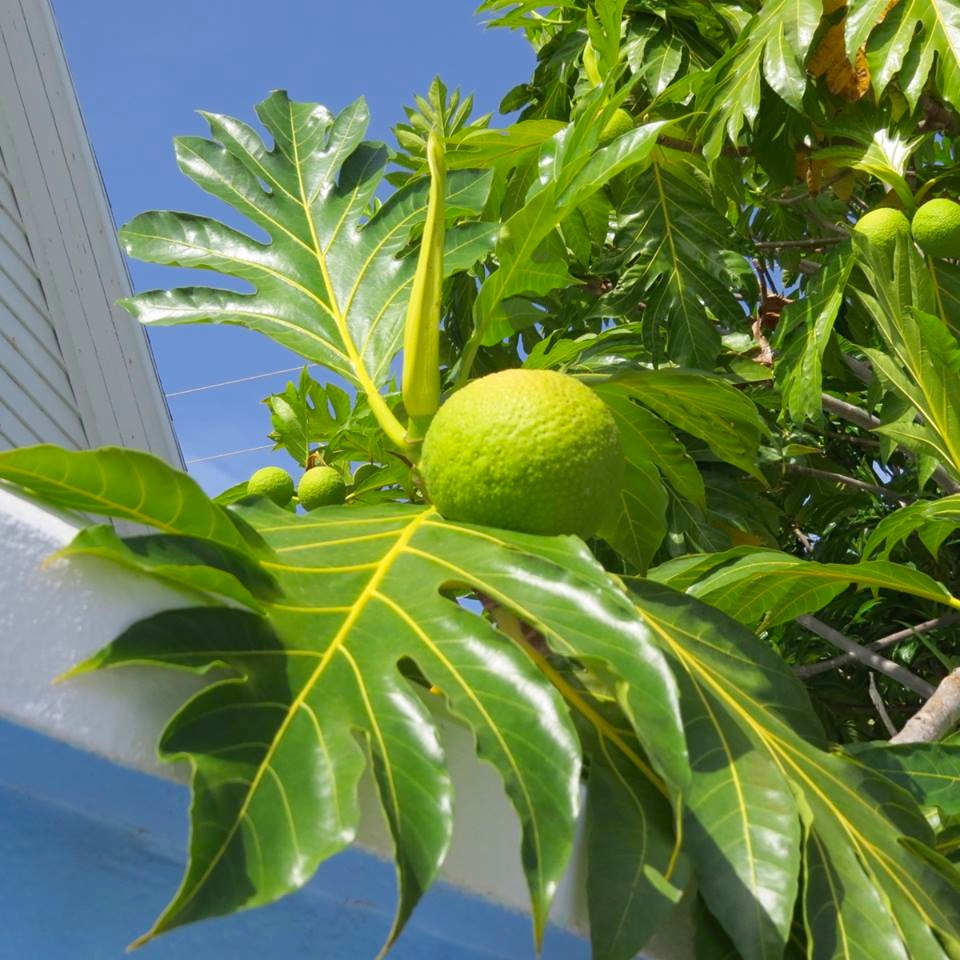
The most famous breadfruit tree in all Abaco is to be found in Hope Town, on Elbow Cay. I can do no better than display the notice that proudly proclaims the historic significance of the tree and its eponymous fruit.

Breadfruit Tree Notice, Hope Town Abaco (Dp PatersonBreadfruit Tree, Hope Town Abaco (Dp Paterson)


Unusually for a fruit plant, a true breadfruit Artocarpus altilis does not produce seeds. It is propagated by removing the suckers that grow at at the base of the tree.

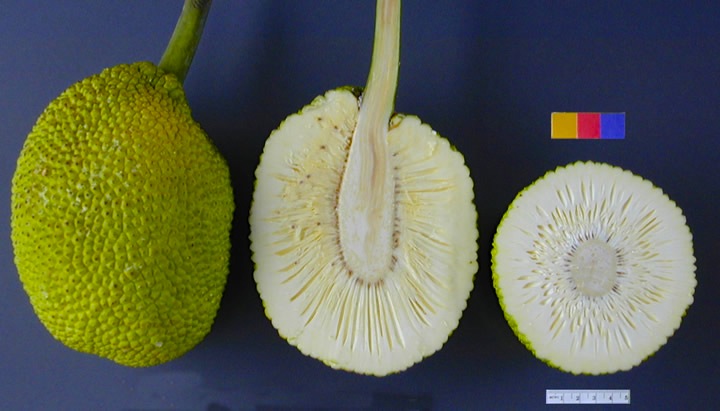
For those unfamiliar with the fruit and its interior, here it is in both slice and cross-sectionBreadfruit sliced (US Pacific Basin Agricultural Research Center)


BREADFRUIT IN ART

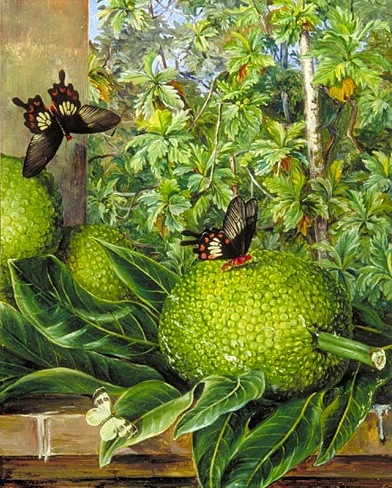
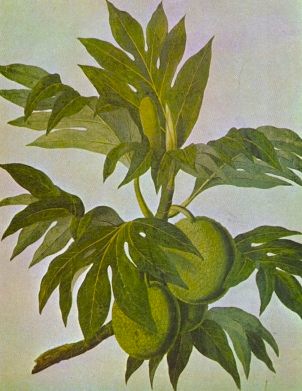
Breadfruit has (somewhat surprisingly?) received some artistic recognition over the years. Here are a few examples. The first, very jolly, includes early representations of the Polydamus Swallowtail butterfly; the second is quite dull; the third is instructional (oddly equating breadfruit with tea, coffee and chocolate); and the fourth is not at all appetising to look at… nor, in the days of adhesive stamps, to lick.

Breadfruit with butterflies (Royal Botanic Garden, Kew)Breadfruit (Royal Botanic Gardens, Kew)

                                 Breadfruit (John Frederick Miller)                                  Breadfruit drawing John Frederick Miller

      Breadfruit & related plants used as food (William Rhind (1841)     Breadfruit etc William Rhind (1841)

Breadfruit - Bahamas Stamp


SO WHERE DOES BREADFRUIT GROW NOW?

Breadfruit will flourish only within a certain latitude range where the rainfall and temperature suit it, as this map shows. I include this information in case you ever find yourself in the awkward position of being socially stranded with someone whose conversation has become soporific. Be armed with some useful worldwide breadfruit stats for just such an occasion – the fact that Madagascar is a suitable yet not a very good location, for example (not enough rainfall). You will soon find yourself alone…

Breadfruit - the world propagation range


A CULINARY TREAT

Breadfruit is sometimes thought to be a dull and un-tasty, at least compared with many other fruits. I thought I’d include a recipe or two that rather appealed to me – the second because even I could do that… it’s within my shamefully limited culinary skill-set.


Breadfruit Recipe (myrecipefriends.com)


BAKED BREADFRUIT

Large, ripe breadfruit 1 cup water Butter 1 lime or lemon

Heat oven to 350 degrees F. Put the water in a shallow pan and place the whole breadfruit in the water. Bake in oven for three hours. Remove from oven, allow to cool slightly, peel, removing the large core and stem. Cut the fruit into sections and place in a serving dish. Cover with butter and a squeeze of lime or lemon juice.

A PERFECT HOPE TOWN BREADFRUIT
Breadfruit, Hope Town Abaco (Dp Paterson)


BLIGH’S END

Capt. Bligh managed to put his breadfruit adventures and the mutiny behind him. He continued a distinguished naval career with successive command of an impressive number of ships. He ended up as a Vice-Admiral, and (on his death in 1817) in a grave in Lambeth, London.

V-A William Bligh (1814)

Grave of William Bligh, Lambeth, London (Geograph, Commons Media

This post was originally published a while back, inspired by an article on breadfruit and the Hope Town tree by local historian Deb ‘DP’ Patterson. I’m grateful to her for permission to use her idea and indeed some of her material, in particular her photos of the tree and its notice.

Wyannie Malone Museum Crest, Hope Town, Abaco

HMS BOUNTY II (Full Sails). A 1960 reconstruction (Dan Kasberger)HMS_BOUNTY_II_Full_Sails 1960 reconsrtuction (Dan Kasberger)

Credits: First and foremost, Deb Patterson; Magpie Pickings including Hans Hillewaert, US Pacific Basin Agricultural Research Center, Royal Botanic Garden Kew, myrecipefriends, M Kwek, whatsonbahamas, Wyannie Malone Historical Museum, ‘Geograph’, Dan Kasberger, Wiki; and anyone else I have omitted…

Unknown's avatar

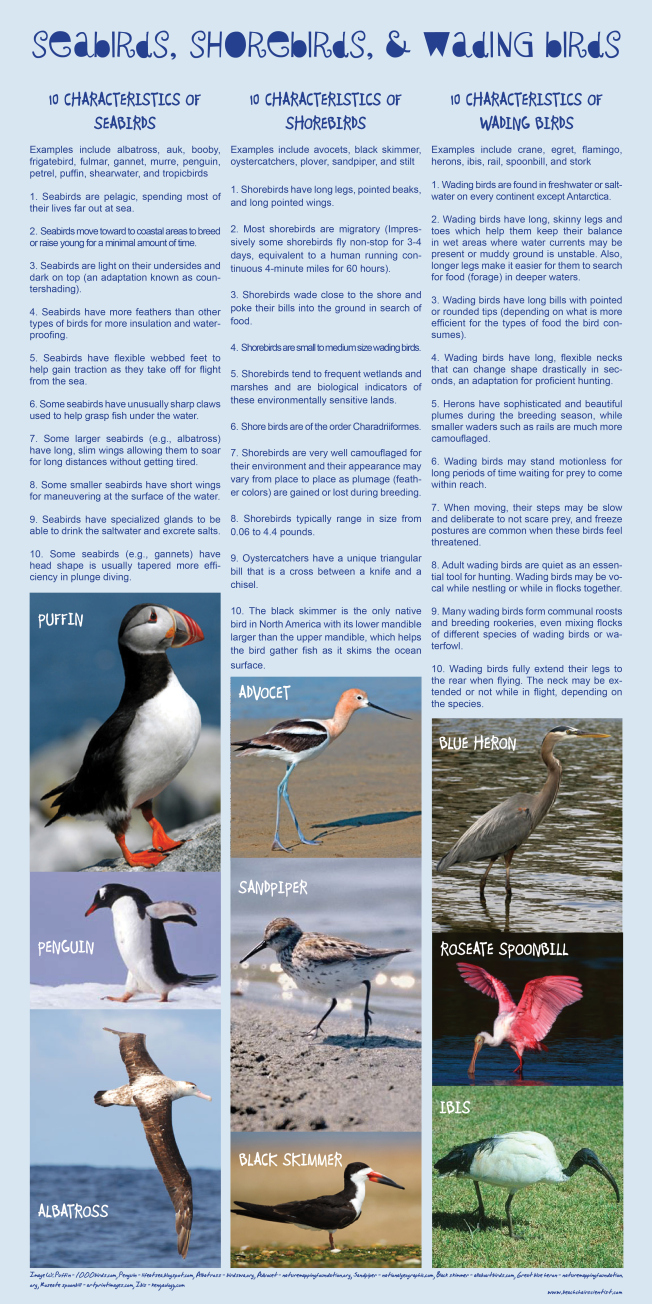
SHOREBIRDS, WADERS & SEABIRDS: 30 WAYS TO DISTINGUISH THEM


Sanderling Trio, Delphi Beach, Abaco (Keith Salvesen) 5


SHOREBIRDS WADERS & SEABIRDS: 30 WAYS TO DISTINGUISH THEM 

Today, September 6th, is World Shorebirds Day. Every year I look forward to scrolling back through the archives of ‘Birds of Abaco‘ for the occasion. It reminds me of the wonderful and plentiful varieties of birds that lead semi-aquatic or aquatic lives on and around the shores of Abaco. Some are permanent, others are migratory visitors.

.They can be broadly categorised as shorebirds, wading birds, and seabirds. With some bird species there may be doubt as to which category applies. In different parts of the world, the categories themselves may be named differently. 

There is the strict Linnaean ordering of course, but in practice there is a degree of informal category overlap and some variation in the various bird guides. This is especially so between shorebirds and the smaller wading birds. Shorebirds may wade, and wading birds may be found on shores.  Even if you have no problem distinguishing birds in the 3 categories, there are avian characteristics within each list that are interesting observations in themselves. 


10 CHARACTERISTICS OF SHOREBIRDS 

American Oystercatcher, Delphi, Abaco (Tom Sheley)

(Examples include avocet, black skimmer, oystercatcher, plover, sandpiper, and stilt)

1. Shorebirds have long legs, pointed beaks, and long pointed wings.

2. Most are migratory. Some shorebirds fly non-stop for 3-4 days to reach base.

3. Shorebirds are small to medium size birds. The shoreline is their main foraging ground.

4. They often feed close to the waterline and poke their bills into the ground in search of food.

5. Shorebirds also frequent wetlands and marshes and are biological indicators of these environmentally sensitive lands.

6. They are of the order Charadriiformes.

7. Shorebirds are very well camouflaged for their environment and their appearance may vary from place to place as plumage (feather colors) are gained or lost during breeding.

8. Shorebirds typically range in weight from 0.06 to 4.4 pounds.

9. Oystercatchers have a unique triangular bill that is a cross between a knife and a chisel.

10. The black skimmer is the only native bird in North America with its lower mandible larger than the upper mandible, which helps the bird gather fish as it skims the ocean surface.


10 CHARACTERISTICS OF WADING BIRDS 

Great Egret, Abaco - Tom Sheley

(Examples include crane, egret, flamingo, herons, ibis, rail, spoonbill, and stork)

1. Wading birds are found in freshwater or saltwater on every continent except Antarctica.

2. They have long, skinny legs and toes which help them keep their balance in wet areas where water currents may be present or muddy ground is unstable. Also, longer legs make it easier for them to search for food (forage) in deeper waters.

3. Wading birds have long bills with pointed or rounded tips (depending on what is more efficient for the types of food the bird consumes).

4. Wading birds have long, flexible necks that can change shape drastically in seconds, an adaptation for proficient hunting.

5. Herons have sophisticated and beautiful plumes during the breeding season, while smaller waders such as rails are much more camouflaged.

6. Wading birds may stand motionless for long periods of time waiting for prey to come within reach.

7. When moving, their steps may be slow and deliberate to not scare prey, and freeze postures are common when these birds feel threatened.

8. Adult wading birds are quiet as an essential tool for hunting. Wading birds may be vocal while nestling or while in flocks together.

9. Many wading birds form communal roosts and breeding rookeries, even mixing flocks of different species of wading birds or waterfowl.

10. Wading birds fully extend their legs to the rear when flying. The neck may be extended or not while in flight, depending on the species.


10 CHARACTERISTICS OF SEABIRDS 

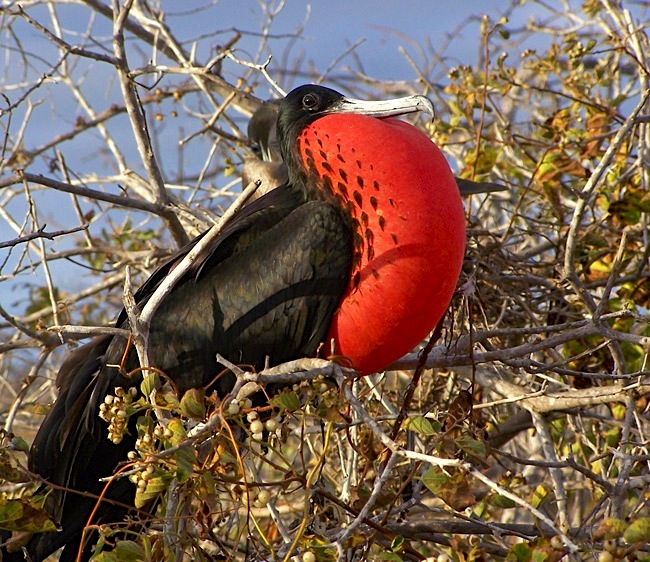
Magnificent Frigatebird (inflated-throat) (Michael Vaughan)

(Examples include albatross, auk, booby, frigatebird, fulmar, gannet, petrel, shearwater, and tropicbirds)

1. Seabirds are pelagic, spending most of their lives far out at sea.

2. Seabirds move toward to coastal areas to breed or raise young for a minimal amount of time.

3. Seabirds are light on their undersides and dark on top (an adaptation known as countershading).

4. Seabirds have more feathers than other types of birds for more insulation and waterproofing.

5. Seabirds have flexible webbed feet to help gain traction as they take off for flight from the sea.

6. Some seabirds have unusually sharp claws used to help grasp fish under the water.

7. Some larger seabirds (e.g. albatross) have long, slim wings allowing them to soar for long distances without getting tired.

8. Some smaller seabirds have short wings for maneuvering at the surface of the water.

9. Seabirds have specialised glands to be able to drink the saltwater and excrete salts.

10. Some seabirds (e.g. gannets) have a head shape that is usually tapered for more efficiency in plunge diving.

These lists were put together in useful chart form by the excellent Beach Chair Scientist

seabird shorebird wading bird chart ©beachchairscientistTable ©Beach Chair Scientist, with thanks for use permission;

Image Credits: Keith Salvesen, Michael Vaughn, Tom Sheley

Unknown's avatar

FLUTTER BY, BUTTERFLY: ATALA ENCHANTING


Atala Hairstreak Butterfly, Abaco 7

FLUTTER BY, BUTTERFLY: ATALA ENCHANTING

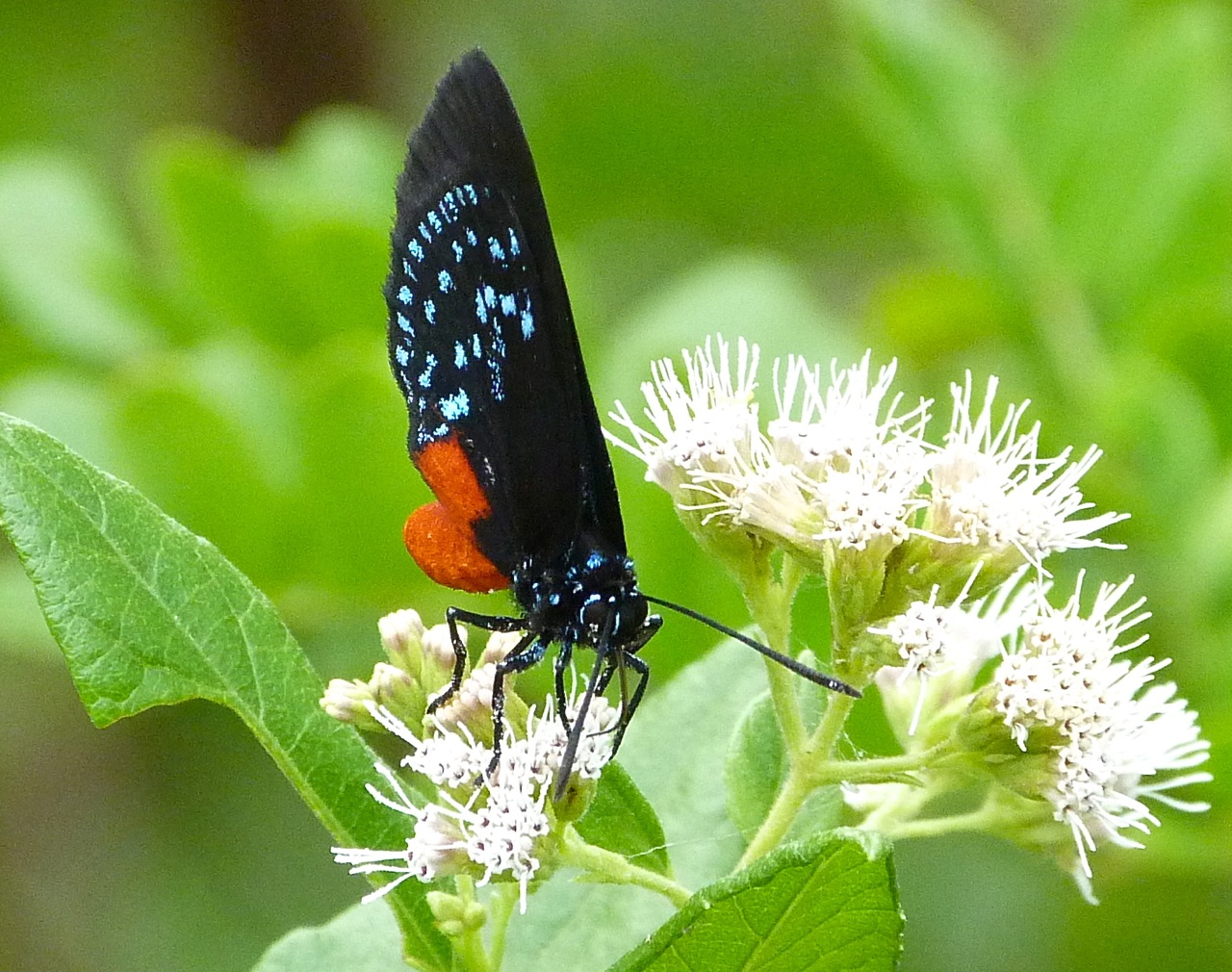
It’s hard to miss the fly-past of an Atala Hairstreak Butterfly Eumaeus Atala . Once seen, never forgotten. They are small wonders, with their plump orange abdomens and their striking blue-dotted motif; obvious candidates for a signature Rolling Harbour logo for insect posts.

Atala Hairstreak Logo

Atala Hairstreak Butterfly, Abaco 1

It is rare to see the inside of an Atala’s wings. In flight they tend just to look black; then they land with precision and immediately close their wings.

Atala Hairstreak Butterfly, Abaco 4

Atala Hairstreak Butterfly, Abaco 2

This close-up shows clearly that the vivid blue markings are not confined to the Atala’s wings. They are also on the body, the head, and surprisingly on the legs as well.

Atala Hairstreak Butterfly, Abaco 6

In sunshine the spots of the feeding Atala shine out like small LEDs. When they do open their wings, they reveal the velvety blue upper sides.

Once, I was watching a single Atala when a second one arrived and almost immediately ‘jumped’ the first. By which I mean that, for a few seconds, the new arrival ‘covered’ the feeding Atala in every sense of the word. Mere moments later, it was all over. I made my excuses and left.

Atala Hairstreak Butterfly, Abaco 3

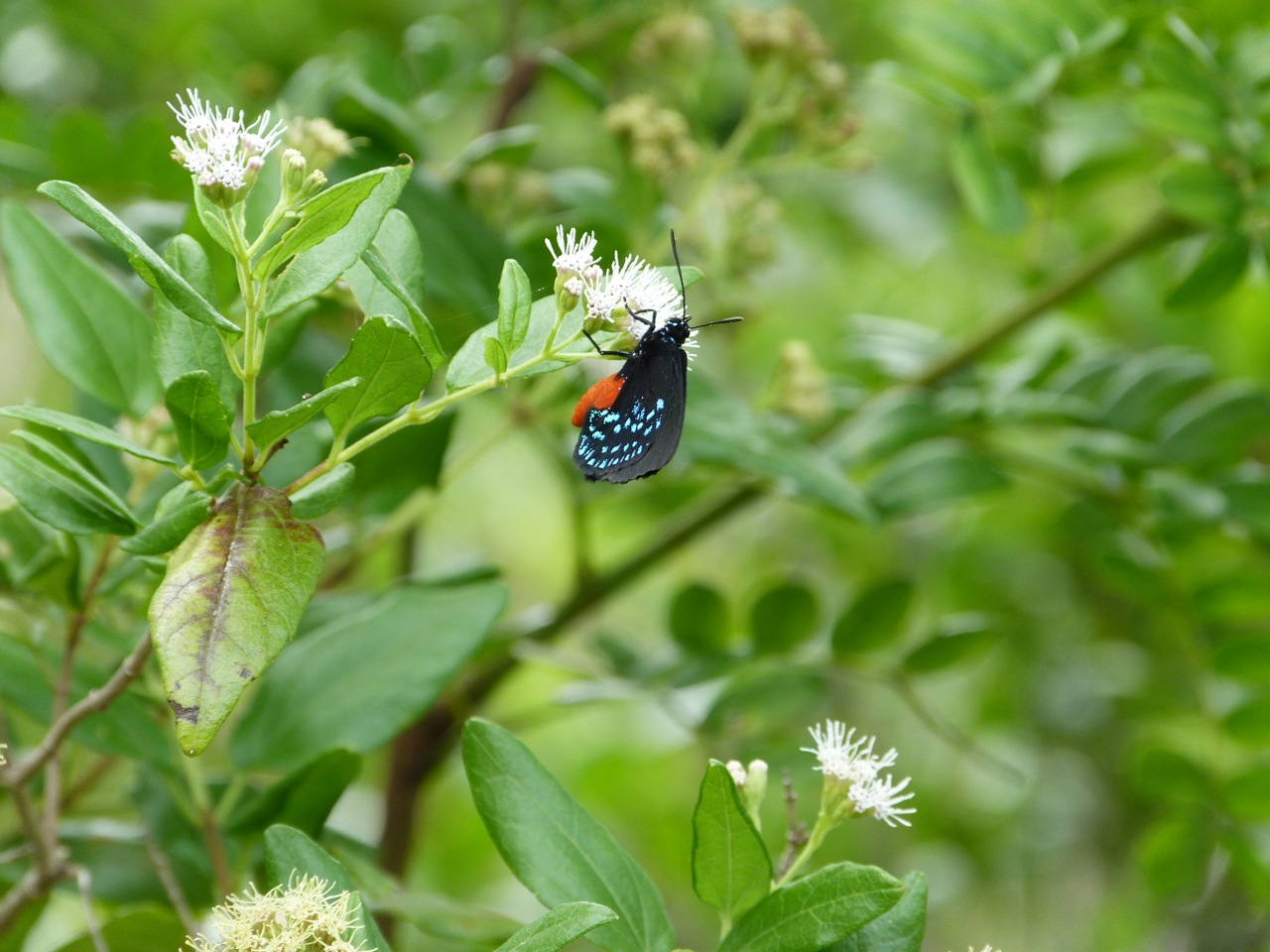
Finally, you may want to get a sense of size for this butterfly – crops and zooms can sometimes give a distorted impression. So here is a normal snap of the butterfly feeding.

Atala Hairstreak, Abaco 9

Unknown's avatar

COOKIECUTTER SHARKS: BEASTLY LITTLE SUCKERS


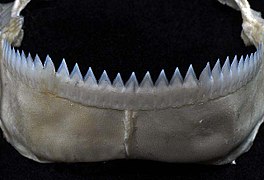
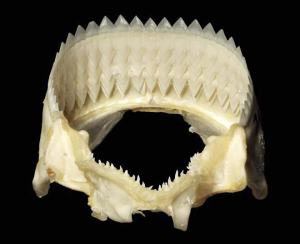
Cookiecutter Shark mouth, jaws & teeth (BMMRO Bahamas)

COOKIECUTTER SHARKS

BEASTLY LITTLE SUCKERS

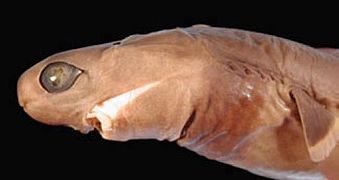
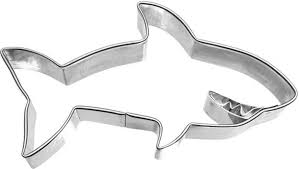
The Cookiecutter shark Isistius brasiliensis (aka the less scary, more genial sounding Cigar Shark), might be an ideal candidate for a Room 101 nemesis.** These little beasts – a species of dogfish shark – are found in several mainly island-based areas dotted around the globe, including in Bahamas waters.


HOW COME THE NAME?
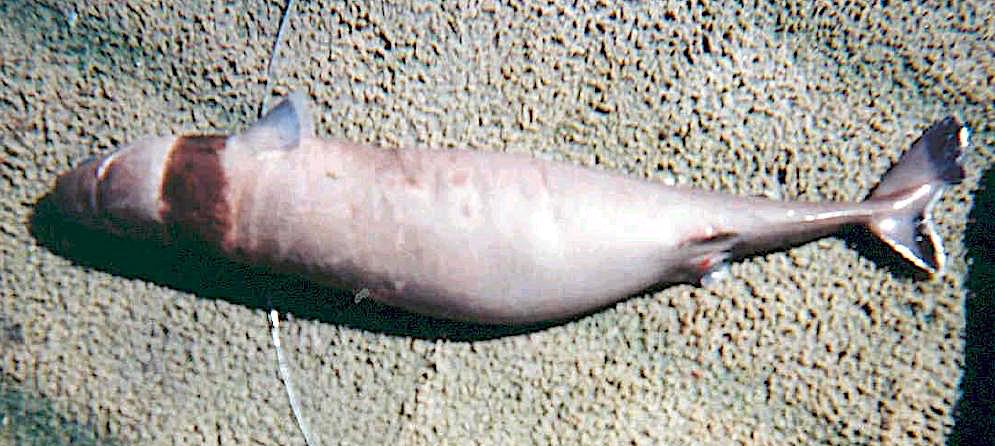
These sharky little b@st@rds (*scientific term*) attack marine mammals and fishes, attaching themselves by suction and gouging out perfect round plugs of skin and flesh, leaving what are sometimes called ‘crater wounds’. Then they eat them. Imagine getting hold of a really sharp domestic cookie cutter with circular rows of razor-sharp teeth, and grinding it hard into your thigh. There! That! 
The size of an adult shark:16″ max
The term ‘cookiecutter’ is also a pejorative slang term, meaning mass-produced, lacking in originality, or boringly samey, as in cookiecutter cars or TV genres etc. Never apply that definition to these little critters… 
                                 .
HORRIFYING COOKIECUTTER FACTS

  • Live in the depths, rise vertically in the day & dive back down at dusk
  • Undersides have light-emitting ‘photophores’ which emphasise…
  • …the dark collar which acts as a lure, resembling a small innocent fish
  • Bioluminescence lures prey & confuses predators (more on this below)
  • The glow is so strong it may last for some time after removal from water

  • Their lips are ‘suctorial’ = they attach tightly to their target
  • The jaws then gouge out the victim’s flesh in a remarkably neat circle
  • Omni-vicious: any medium to large ocean creature is vulnerable to attack
  • There are even occasional reports of humans being targeted

WHERE IS YOUR EVIDENCE?

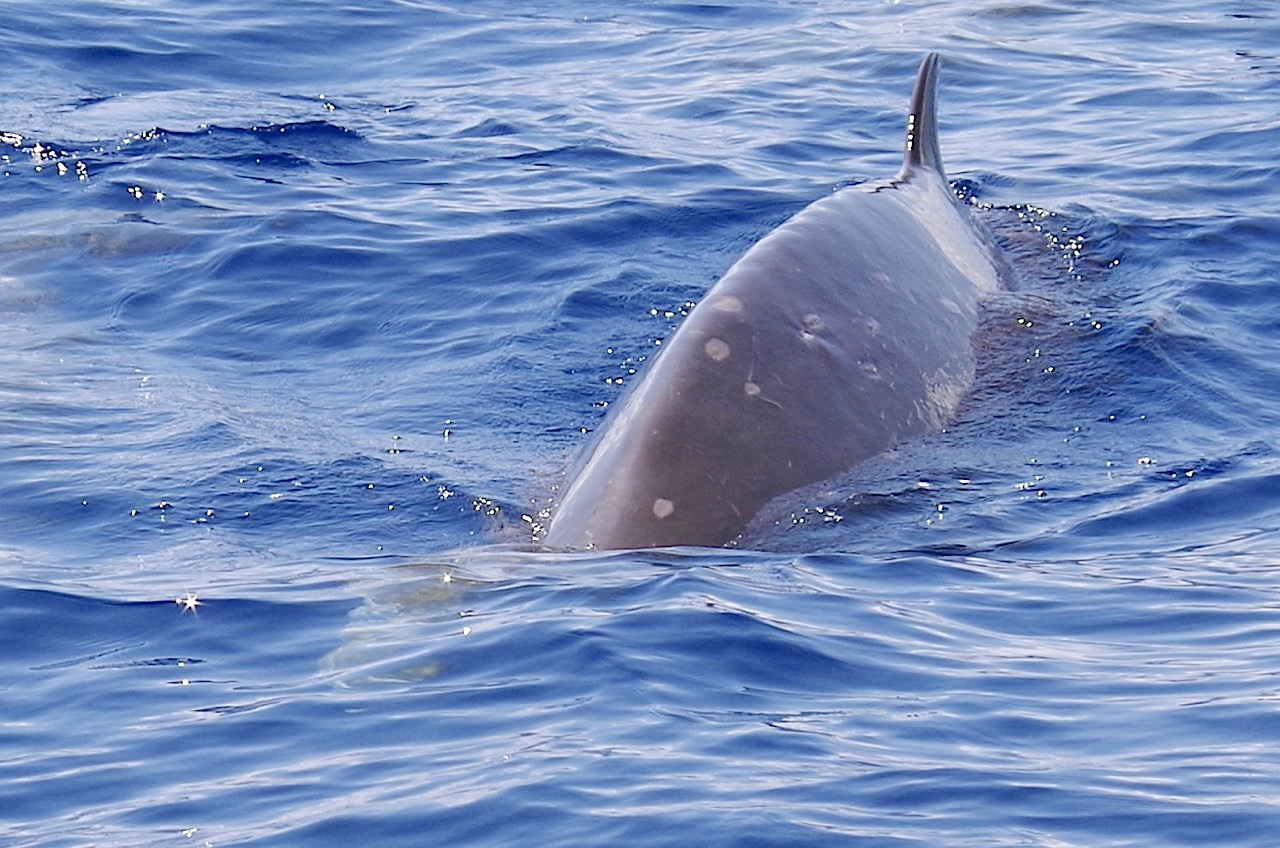
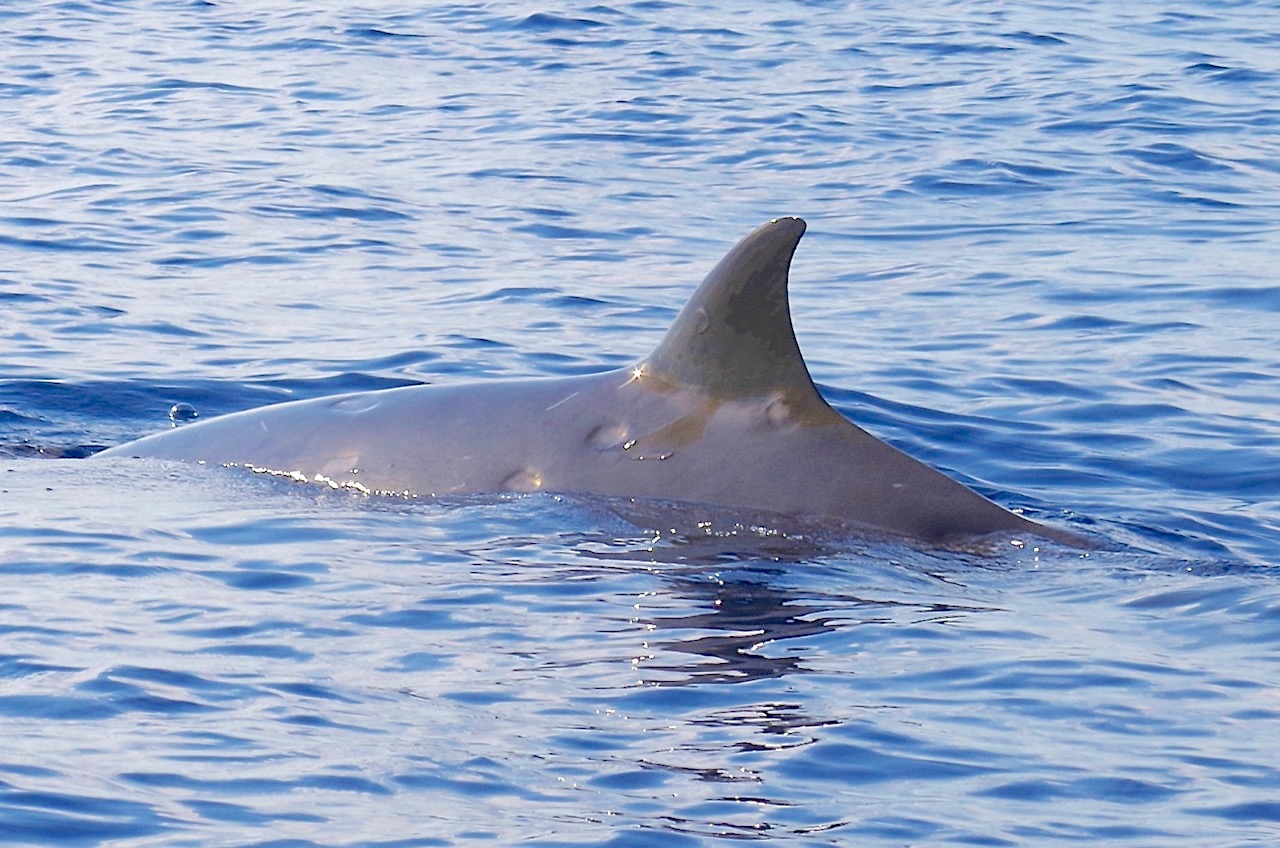
Here are two Blainville’s beaked whales that I photographed from the BMMRO research vessel. The top whale has a number of circular healed attack marks and a recent one. You can see how deep the gouged hole is. The other has plenty of well-healed scars.

Blainville's Beaked Whale - cookiecutter shark damage (Keith Salvesen)Blainville's Beaked Whale - cookiecutter shark damage (Keith Salvesen)

WHAT CUTTING EQUIPMENT ARE THEY BLESSED WITH?

  • Multi-toothed: top rows of small teeth, rows of larger teeth on the bottom
  • The lower teeth are the cutters, acting like a saw when locked on


HOW EXACTLY DO THEY DO WHAT THEY DO?
I can explain it no better than the renowned authority Prof. W. K. P. Dear:  “the suctorial lips ensure a tight seal. It then bites, using its narrow upper teeth as anchors while its razor sharp lower teeth slices into the prey. Finally, the shark twists and rotates its body to complete a circular cut, quite possibly aided by the initial forward momentum and subsequent struggles of its prey. The action of the lower teeth may also be assisted by back-and-forth vibrations of the jaw, a mechanism akin to that of an electric carving knife”.


ARE THESE SHARKS ‘PARASITES’, WOULD YOU SAY?

The behaviour of these sharks is an example of a symbiotic relationship between two species that is parasitic. This means essentially that one gains and the other suffers (eg humans & no-see-ums). This is distinct from commensalistic symbiosis, where one species gains and the other is unaffected (e.g. cattle egrets with cattle); and mutualistic symbiosis, where both gain (e.g. cleaner fish & groupers). So, in a word, yes.

AMBUSH PREDATOR

  • These little sharks ‘hover’ in the water column waiting for their opportunities
  • They are capable of rapid movement to catch up & latch onto prey
  • They will eat a passing small fish, crustacean or even squid as a snack
  • Sometimes they operate in schools; there is safety in numbers
  • The schools are thought to increase the ‘lure’ effect of the dark collar

A beached whale that’s been heavily targeted

FUN FACT TO COUNTERACT THE BAD STUFF

In the late c20, more than 30 U.S. Navy submarines were forced back to base to repair damage caused by cookiecutter shark bites, either to the neoprene footings of sonar domes or to rubber-sheathed cables. The problems were solved by using fibreglass. Oceanographic equipment and telecommunications cables are also recorded as being damaged by these sharks.

Cookiecutter Shark – the real deal

MONSTERS OF THE DEEP

These great cards from the weirdly spelled WIERD ‘N’ WILD CREATURES provide excellent factual info. Their CCS card is no exception. You’ll find more details here about the effect of the bioluminescence and so on, written as clearly as I might hope to. 

Cookiecutter Shark Facts (Monsters of the Deep)Cookiecutter Shark Facts (Monsters of the Deep)

** “The worst thing in the world varies from individual to individual. It may be burial alive or death by fire, or by drowning, or by impalement, or fifty other deaths. There are cases where it is some quite trivial thing, not even fatal.” (George Orwell, 1984). Being in a tank with some cookiecutters might count.

Alright now… the wounds eventually healBlainville's Beaked Whale - cookiecutter shark damage (Keith Salvesen)

Credits: BMMRO – header image; beaked whale photos – Keith Salvesen / BMMRO; Te Ara NZ for the main jaw image; all small images with thanks to Wiki and respective photographers who took the time to upload them for all to enjoy & learn from; ‘wierdnwonderful creatures’ for the monster card; range map from Wiki

Unknown's avatar

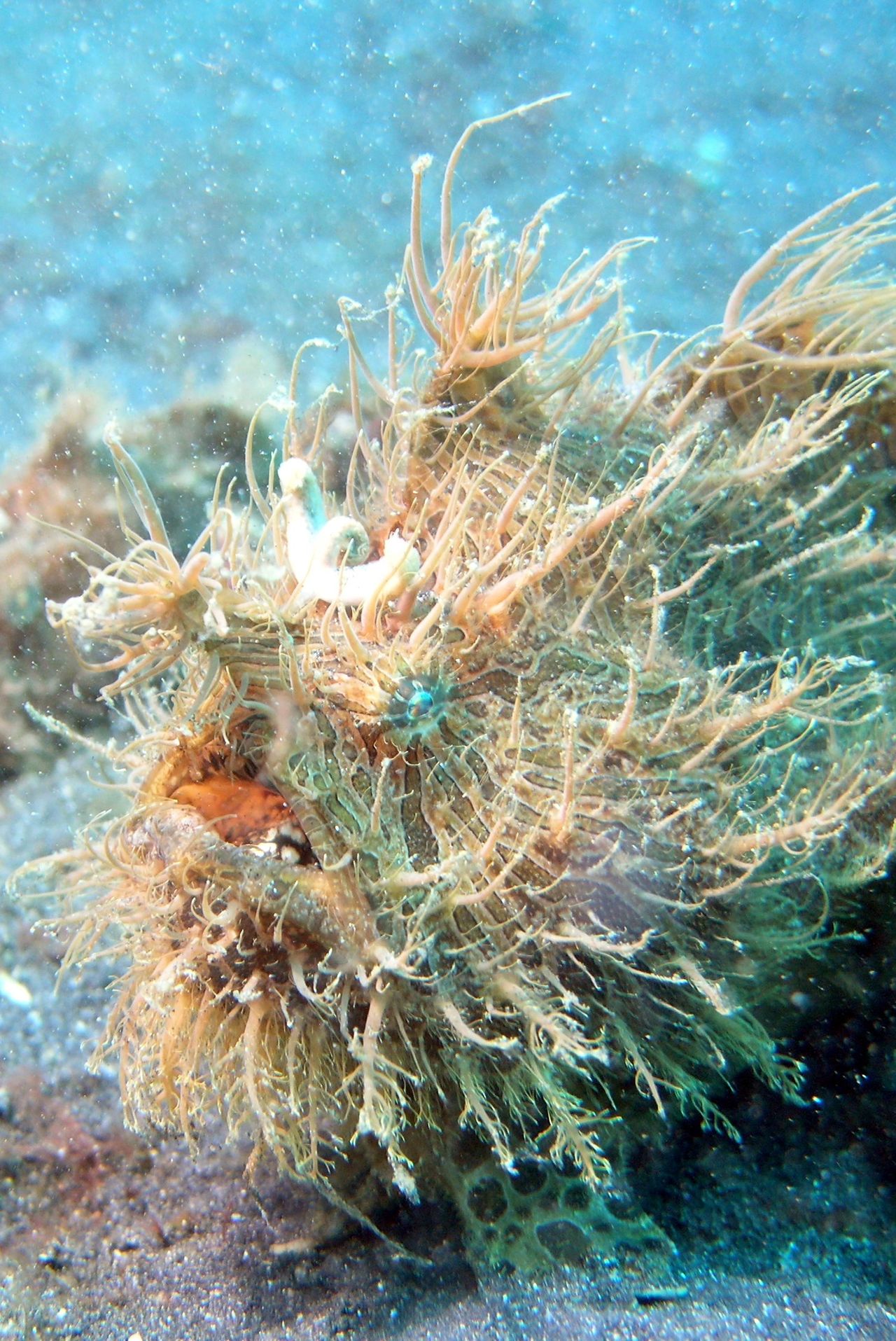
WTF? (WHAT’S THAT FISH?): THE FROGFISH


Frogfish (Adam Rees, Scuba Works)


WTF? (WHAT’S THAT FISH?): THE FROGFISH

frogfish-anglerfisch

The ‘WTF?’ series started with relatively conventional species eg REMORAS and became progressively more bizarre. In due course, having covered the excellently strange BATFISH it was time to ramp up the stakes: with many thanks to scuba expert Adam Rees for use permission for his terrific photos, I present… the FROGFISH.

Frogfish (Adam Rees, Scuba Works)

The frogfish is a kind of anglerfish found in almost all tropical and subtropical oceans and seas. There are about 50 different species worldwide, covering an astonishing range of strange appearances. They generally live on the sea floor around coral or rock reefs. In size they vary from tiny to about 15 inches long – although ‘long’ is a flexible concept because they are to an extent shape-changers in height and width.

Frogfish (Adam Rees Scuba Works)

FROGFISH SUPERPOWERS YOU MAY WISH TO HAVE

  • INVISIBILITY CLOAK . Frogfish are masters of disguise and camouflage. This enables them to catch their prey with minimal effort and also to avoid predators. Their camouflage methods – broadly known as ‘aggressive mimicry’ – include
    • Ability to change colour for days or even weeks to mimic their surroundings
    • Getting covered in algae and other organic matter that matches their habitat or
    • Looking inherently like a plump rock or in some cases, plant

Fear for the life of the spider crabFrogfish (Adam Rees, Scuba Works)

  • IRRESISTIBLE ATTRACTION
    • A sort of frontal dorsal fin called an illicium to which is attached a
    • Lure called an esca which may mimic a worm, shrimp or small fish etc and which is
    • Retractable in many species and
    • Regenerates if it gets mislaid

The ‘dollop of cream’ thing is the esca. Note the characteristic large mouthFrogfish (Adam Rees, Scuba Works)


  • BUOYANCY CONTROL & SHAPE-SHIFTING
    • Most frogfish have a ‘gas bladder’ to control their buoyancy.
    • Some species can change shape or even inflate themselves by sucking in quantities of water in a so-called defensive ‘threat display’.

frogfish-black

Frogfish (Adam Rees Scuba Works) Frogfish (Adam Rees Scuba Works)

HOW DO FROGFISH REPRODUCE? 

Although not conventionally attractive creatures, frogfish clearly manage to reproduce. Little is known about the techniques in the wild, but one is probably ‘with care’, especially for a male frogfish who may not survive for long if he hangs around after fertilisation has taken place. It has been noted that females tend to select far smaller males to fertilise their huge numbers of eggs, perhaps for that very reason.


Spot the esca1280px-Antennarius_striatus2


FROGFISH FEEDING SKILLS – GOOD OR BAD?

When deploying the lure, potential prey that comes too close to that wide mouth stands no chance. A frogfish will strike in a fraction of a second. Frogfishes have voracious appetites for crustaceans, other fish, and even each other. I can do no better than borrow this vivid description of a feeding frogfish:

“When potential prey is first spotted, the frogfish follows it with its eyes. Then, when it approaches within roughly seven body-lengths, the frogfish begins to move its illicium in such a way that the esca mimics the motions of the animal it resembles. As the prey approaches, the frogfish slowly moves to prepare for its attack; sometimes this involves approaching the prey or “stalking” while sometimes it is simply adjusting its mouth angle. The catch itself is made by the sudden opening of the jaws, which enlarges the volume of the mouth cavity up to twelve-fold, pulling the prey into the mouth along with water. The attack can be as fast as 6 milliseconds. The water flows out through the gills, while the prey is swallowed and the oesophagus closed with a special muscle to keep the victim from escaping. In addition to expanding their mouths, frogfish can also expand their stomachs to swallow animals up to twice their size.

images

HOW DO FROGFISHES GET AROUND? SWIM? WALK? CRAWL?

Frogfishes do not in fact move around a great deal. Using their camo advantages, they prefer to lie on the sea floor and wait for prey to come to them. As mentioned in the quote above, they may slowly approach prey using their pectoral and pelvic fins to “walk” along the sea bottom. They can swim using their tail fin (or in some species by simple ‘jet propulsion’ by forcing water out of their gills) but rarely do so – they don’t feed on the move, and they are adapted to the sea floor environment where they food is readily available. However their “walking” ability is limited to short distances.

frogfish-anglerfisch

DO FROGFISH HAVE OTHER COLOUR SCHEMES?

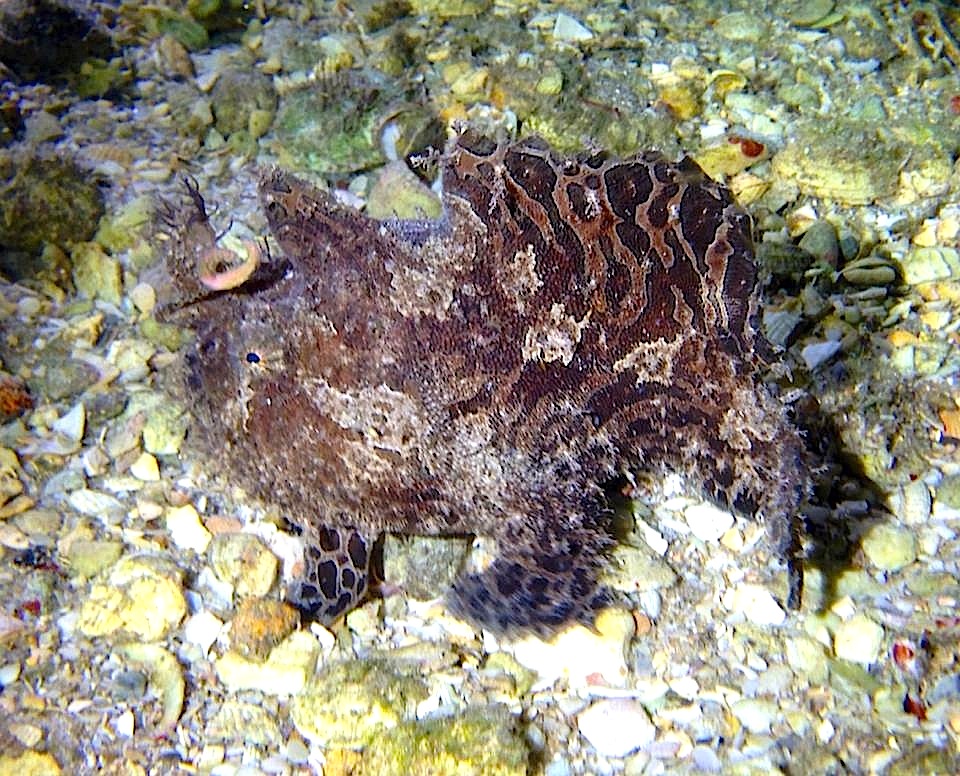
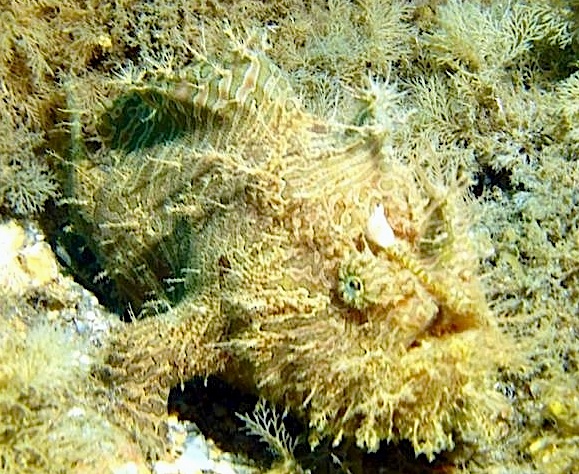
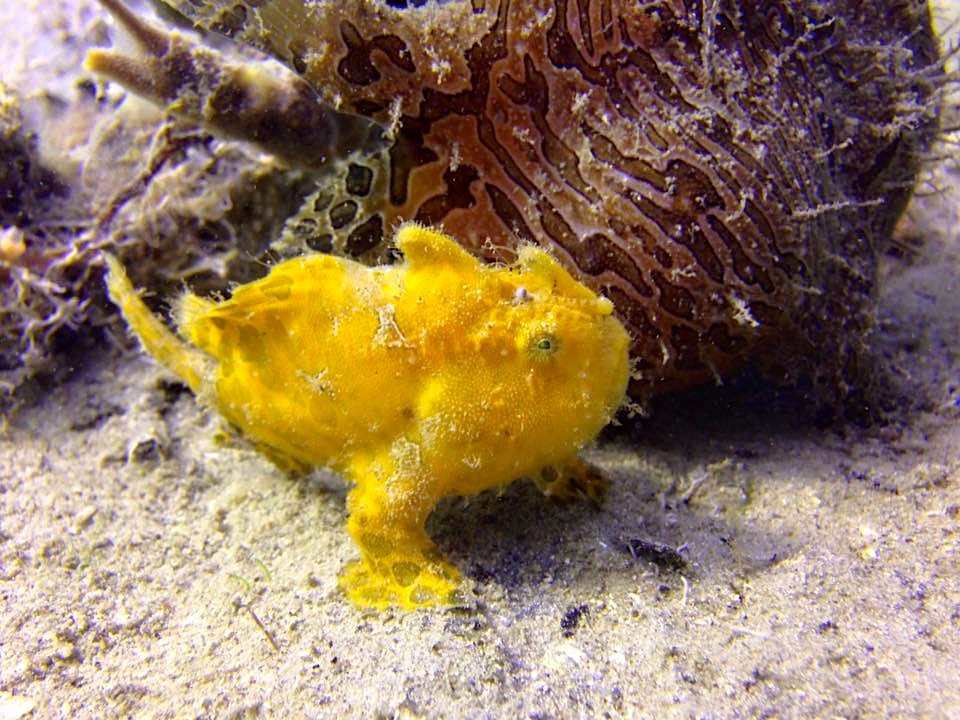
Indeed they do. In stark contrast to the camo species, some frogfishes are hi-lighter bright. Here are two of my favourite photos by Adam that show this clearly. I’ve no idea if these are a male and female. I suspect they are different species. I think the brown one is a striated frogfish and the other is… a yellow frogfish. Some people keep these creatures in  aquaria, but apparently it is impossible to sex them, and they have to be kept on their own for everyone’s peace of mind…

Frogfish (Adam Rees Scuba Works) Frogfish (Adam Rees Scuba Works)

FROGFISH INFOGRAPHICS

frogfishFrogfish Infographic 'Monsters of the Deep'

FROGFISH VIDEOS

These two videos, from Lester Knutsen and Daan Van Wijk respectively, show some of the characteristics I have written about above. Both are short and both are fascinating.

Credits: All main photos, Adam Rees  of Scuba Works with many thanks; wiki for ‘spot the esca’, red quote & basic info; videos Lester Knutsen & Daan Van Wijk; Jens Petersen /wiki; Teresa Zubi for website & gifs; infographics, authors u/k  

Frogfish Tee Shirt

Unknown's avatar

PURPLE VASE SPONGES: BAHAMAS REEF ORNAMENTS


Purple Vase Sponge, Bahamas (Melinda Riger / G B Scuba)

PURPLE VASE SPONGES: BAHAMAS REEF ORNAMENTS

The Purple Vase is an unmistakeable sponge, a colourful reef creature (for they are animals, of course) that stands even out amongst the bright corals that surround it. And like corals, sponges are vulnerable to all the usual threats (mainly human-generated).

Purple Vase Sponge, Bahamas (Melinda Riger / G B Scuba)

Catch them while you can in the clear waters of the Bahamas while stocks last. I say this because as study after study concludes, the prospects of reef-mageddon get closer each year. When the corals die off, so in all probability will the sponges and anemones…

Purple Vase Sponge, Bahamas (Melinda Riger / G B Scuba)

After such a depressing intro, let’s move on to take a positive look at the purple vase sponge. As with all sponges, once a newborn sponge is wafted by the current to a place on the reef, it takes root there throughout its life. There, these attractive sponges exist by filtering the water that surrounds them, separating out plankton to feed on. Static filter-feeders, if you will.

Purple Vase Sponge, Bahamas (Melinda Riger / G B Scuba)

You’ll notice that in some of the photographs, the sponges have guests. These are BRITTLE STARS, and they are often found on – and indeed in – purple vases. This is a form of symbiotic relationship known as commensalism, in which one species benefits and the other is neither benefitted nor harmed. The brittle star gains a shelter and a safe base for feeding; the vase gets a harmless companion. Small fishes benefit from the vases in a similar way.

Purple Vase Sponge, Bahamas (Melinda Riger / G B Scuba)

Besides the impact of damaging human interventions (which may be permanent), extreme weather events also affect reef life and the static inhabitants adversely. Storms and hurricanes can cause localised havoc, but the damage is not necessarily permanent. The reef can in time repopulate naturally and flourish again. Humans can even promote this recovery. The photograph above shows a purple vase sponge that was detached from the reef by Hurricane Matthew in October 2016. Melinda Riger in effect replanted it on the reef and it reattached itself and grew. In due course it even acquired its brittle star occupant. 

Purple Vase Sponge, Bahamas (Melinda Riger / G B Scuba)

*JIMI AND ‘PURPLE VASE’ – A VOLUNTARY MUSICAL DIGRESSION

In an interview with NME Hendrix is reported to have said that Purple Haze “was about a dream I had that I was walking under the sea.” Originally the song was intended to be ‘Purple Vase’, and reflect the psychedelic experience of life on a coral reef. Realising he was getting bogged down by sub-aquatic imagery (he was a non-swimmer), he toked for a while and then ‘Purple Haze’ emerged almost fully formed. Jimi was always far happier kissing the sky than wandering about under water. Most covers of the song are pale imitations of the original, but here’s a rather unusual take that succeeds by trying a different approach. 

Credits: Melinda Riger / Grand Bahama Scuba for all great photos; magpie pickings for bits and pieces, with a shout-out to ‘Critter Squad’ for its informative site aimed at kids. And amateur grown-ups can benefit too… commensalism in humans; Friend ‘n’ Fellow audio

Purple Vase Sponge, Bahamas (Melinda Riger / G B Scuba)

Unknown's avatar

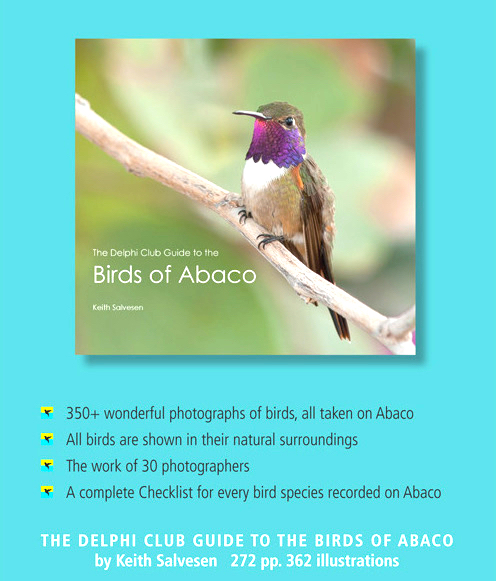
THE DELPHI CLUB GUIDE TO THE BIRDS OF ABACO (1) – 10th Anniversary Flyers


FIRST FLYER

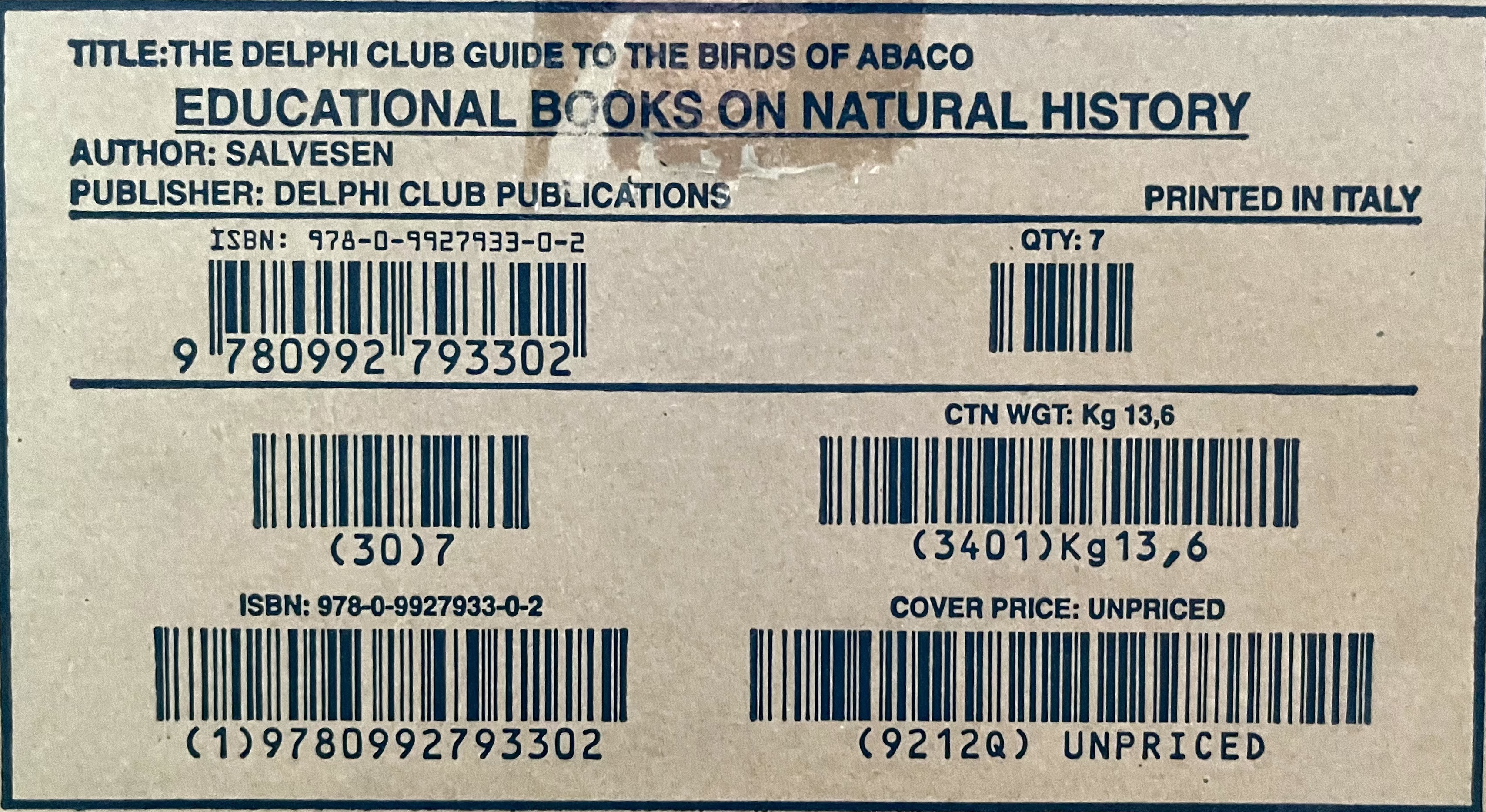
It is February 2014, and two pallets carrying 500+ heavy books in boxes have just arrived in Nassau. Printed in Italy at the end of January, the cargo had made its way from specialist printers in Florence via Bologna, Leipzig, Brussels, Cincinnati, Miami to Nassau. They spent an unexpectedly long sojourn in Nassau while formalities were unhurriedly dealt with, then made their way safely to the Delphi Club. In early March, the book was launched in the Great Room at Delphi.

Delphi Lodge 2014

The book was generously received. The Delphi years rolled by: happy years of amateur birding, incompetent bonefishing (me), adventures, companionship, conviviality, Kalik. Then a change of ownership at Delphi; the destructive power of Dorian; and the tentacles of Covid spreading round the world.

10 years on at Rolling Harbour Towers HQ, a plan is hatching like an Abaco parrot’s precious egg. Might there be an audience ready for some kind of e-Edition of the whole book, checklists and all? Technology has moved on since 2014. Even I have now read an eBook. There’ll be some tech-stuff involved to get the most practical way to proceed. I’ll need to check with the birds first, and we will get back to you.

SECOND FLYER

Sanderlings on the beach at Delphi – more interested in snacking than eBook stardom

Unknown's avatar

WTF? (WHAT’S THAT FISH?): SCORPIONFISH


Caribbean Scorpionfish, Bahamas (Melinda Riger / G B Scuba)

WTF? (WHAT’S THAT FISH?) 15: SCORPIONFISH

The WTF? series is aimed at shedding light on fishes that are unusual. Or very unusual. Or puzzling, dangerous and maybe less than elegant in appearance. The scorpionfish is one such. It belongs to a large family, the Scorpaenidae, and many types are found throughout the world, especially in the Pacific and Indian oceans. LIONFISH, the newcomers to the western Atlantic, are a species of scorpionfish. 

Just another rock on the seabed…Caribbean Scorpionfish, Bahamas (Melinda Riger / G B Scuba)

WHY ‘SCORPIONFISH’? THEY LOOK SCARY. ARE THEY DANGEROUS?

One feature common to many scorpionfish species is that they are highly venomous. As the name suggests, a sting is involved. Or several stings. These come from the creature’s sharp spines, which are coated with mucus, and are to be avoided. If you want to pet one, the dorsal, anal and pelvic fins are the ones to steer clear of – these all have venom glands at the base. The spines act like injection needles. Scorpionfish aren’t naturally aggressive (except to prey), but they know how to defend themselves if need be. If you get ‘got’, you are in for “extreme pain and burning sensation”.

Caribbean Scorpionfish, Bahamas (Melinda Riger / G B Scuba)

DO THEY HAVE ANY OTHER TRICKS TO WATCH OUT FOR?

As many have written, scorpionfish are ‘Masters of Camouflage’. They are able to disguise themselves very effectively. Their appearance is a remarkably adapted to their surroundings, as if covered in a raggle-taggle of colourful algae. They can change colour to aid concealment. They can flick sand over themselves as they settle on the seabed. These ploys enable them to lie motionless on a coral reef or on the seabed, ready to ambush their prey. This consists mainly of small fishes and crustaceans, but really anything edible that will fit in their mouths is fair game. 

Concealed against coralCaribbean Scorpionfish, Bahamas (Melinda Riger / G B Scuba)

HOW DO THEY FEED?

The large mouth of scorpionfishes has a particular function. They don’t have teeth because they have no need. A scorpionfish can open its mouth and its gills simultaneously, thereby creating an instant vacuum that will suck in its prey in a flash. I have seen this described as “a nearly imperceptible split-second movement (15 milliseconds)”

Caribbean Scorpionfish, Bahamas (Ocean Frontiers Dive Shop)

THESE SCARY MONSTERS MUST BE HUGE, RIGHT? I’M KEEPING OUT OF THE WATER

Not so fast. When all is said and done – and in my view, most disappointingly – adult Caribbean Scorpionfish grow in the range of… erm… 7 – 14 inches. So now you are reassured, here’s a great short video from Ocean Frontiers Dive Shop, who kindly shared it on YT. I’ve used a couple of illustrative stills from it too.

ANYTHING ELSE WE NEED TO KNOW?

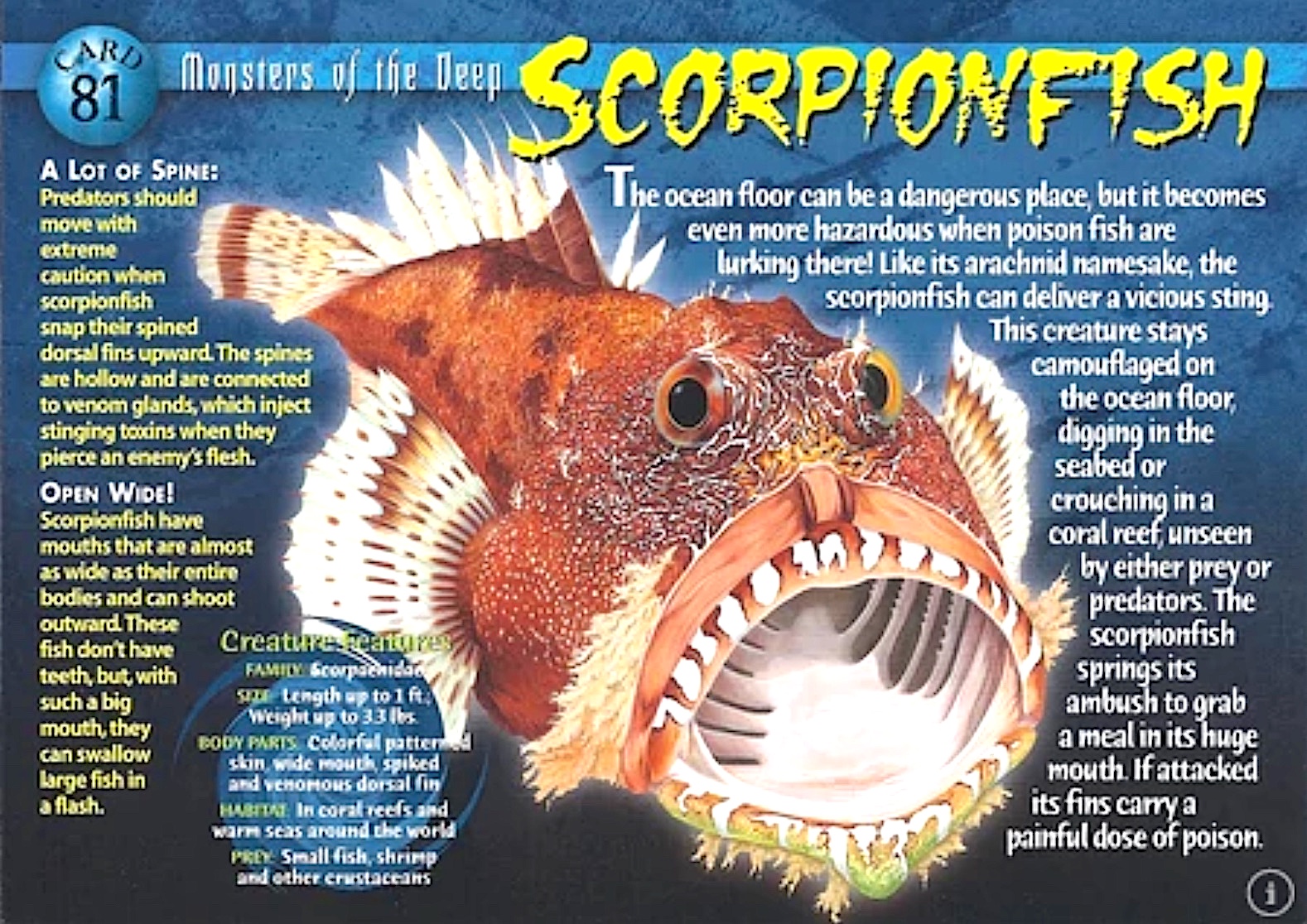
I can do no better than to turn to Card 81 to the excellent Monsters of the Deep‘ series of trading cards (the link is to my MotD page). I do realise that this is a rather unscientific approach. On the other hand these guys pack memorable information into a very short space, and do it well. Note that you can get a reflex sting from a scorpionfish for up to a week after it has died. Eat dust, earthbound scorpions.

Credits: Melinda Riger / Grand Bahama Scuba (1, 2, 3, 4,); Ocean Frontiers Dive Shop (video from YT, 2 stills); Wierd (sic) Creatures / Monsters of the Deep (O/S)

Scorpionfish, Bahamas (Ocean Frontiers Dive Shop)

Unknown's avatar

LETTUCE SEA SLUGS: SOLAR POWERED ‘CRISPY BLISSFUL HEAVEN’


Lettuce Sea Slug, Bahamas (Melinda Riger / G B Scuba)

LETTUCE SEA SLUGS: SOLAR POWERED ‘CRISPY BLISSFUL HEAVEN’

The Lettuce Sea Slug Elysia crispata (transl. ‘Crispy Blissful Heaven’) was No.3 in the ‘WTF’ ‘What’s That Fish’ series (despite not actually being a fish at all). It is not by any means the weirdest creature featured so far but it is nonetheless an animal whose appearance excites curiosity. Unless you see one moving, it could easily be mistaken for a plant. Maybe even lettuce. It is in fact a SACOGLOSSAN.

Lettuce Sea Slug, Bahamas (Melinda Riger / G B Scuba)

The name ‘sacoglossan’ literally means ‘sap-sucker’. This group (or ‘clade’) comprises small gastropod mollusks that ingest the cellular content of algae (which isn’t really sap).

WHY WOULD THEY DO THAT?

Because they are… SOLAR POWERED slugs

Lettuce Sea Slug, Bahamas (Melinda Riger / G B Scuba)

WHAAAAA…..?

As I mentioned when I last visited these remarkable creatures, this isn’t a technical forum and too much science hurts my head. This species primarily lives off algae. May I give you the word KLEPTOPLASTY to drop lightly into your conversation? In a couple of sentences, algae / algal content is eaten but only partially digested. Certain elements are stored to produce photosynthesis by which light is converted to energy (cf plants) and the slug can in effect live and move around without food. You could entertain your neighbour at dinner (or maybe on public transport, why not?) by summarising the process as “chloroplast symbiosis”. Meanwhile, I’m fetching a beer. Two beers.

Lettuce Sea Slug, Bahamas (Melinda Riger / G B Scuba)

HOW DO THEY REPRODUCE?

This topic doesn’t seem to have excited much investigative interest, and there’s not much specific information about it. What there is sounds unnecessarily complicated, so I am just going to say authoritatively ‘they do it like many other slug species’ and hope that covers it. The pair shown below may be exploring the possibilities, or at least trying to work out which end is which. Time to make our excuses and leave…

Elysia_crispata_(Lettuce_Sea_Slug_pair) Nick Hobgood

HOW FAST, EXACTLY, DOES A LETTUCE SEA SLUG MOVE?

This rather beautiful video from ‘CORAL MORPHOLOGIC STUDIO’ will reveal all. You’ll soon see that progress is very slow. I recommend watching the first 30 seconds and you’ll get the idea. If you choose to persist, you will see the slug sort of turn and move off to the left.

DO SAY:        What an intriguing creature. It’s a true wonder of marine nature.

DON’T SAY:  Any good in a mixed salad?

Lettuce Sea Slug, Bahamas (Melinda Riger / G B Scuba)

Credits: Melinda @ Grand Bahama Scuba, Nick Hobgood, Coral Morphologic Studio, Laszlo Ilyes wiki

Lettuce Sea Slug (Laszlo Ilyes)

Unknown's avatar

URCHIN RESEARCHIN’: SEA HEDGEHOGS OF THE REEF


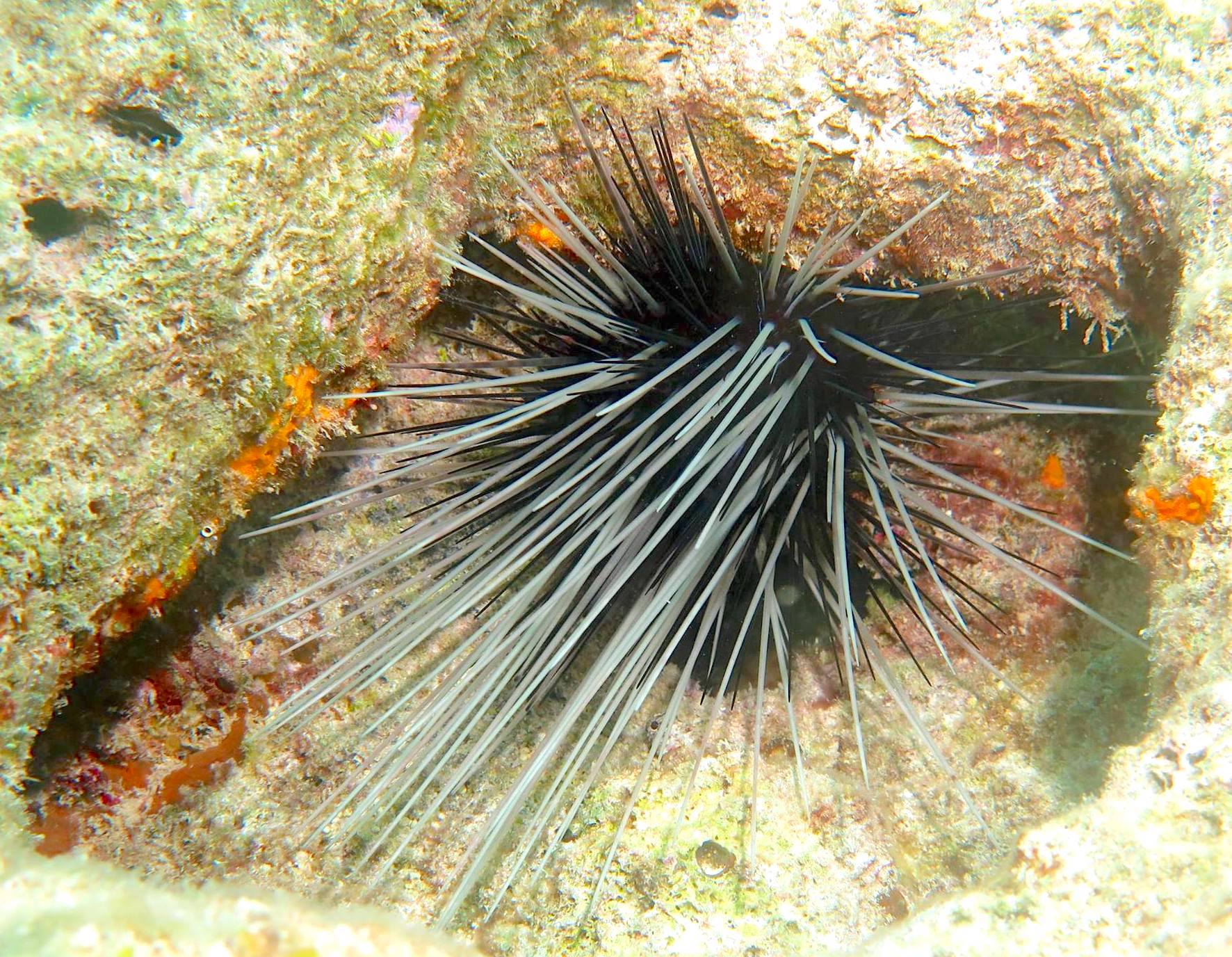
Long-spined sea urchin Diadema antillarum (Melinda Rodgers / Dive Abaco)


URCHIN RESEARCHIN’: SEA HEDGEHOGS OF THE REEF

The long-spined sea urchin Diadema antillarum featured in this post is one of those creatures that handily offers its USP in its name, so you know what you are dealing with. Something prickly, for a start. These are creatures of the reef, and many places in the Caribbean and in the western Atlantic generally sustain healthy populations.

Long-spined sea urchin Diadema antillarum (Melinda Rodgers / Dive Abaco)

These animals are essentially herbivores, and their value to vulnerable coral reefs cannot be overstated. Where there is a healthy population of these urchins, the reef will be kept clean from smothering algae by their methodical grazing. They also eat sea grass.

Long-spined sea urchin Diadema antillarum (Melinda Rodgers / Dive Abaco)

HOW DO THE SPINES OF DIFFERENT KINDS OF URCHIN COMPARE?

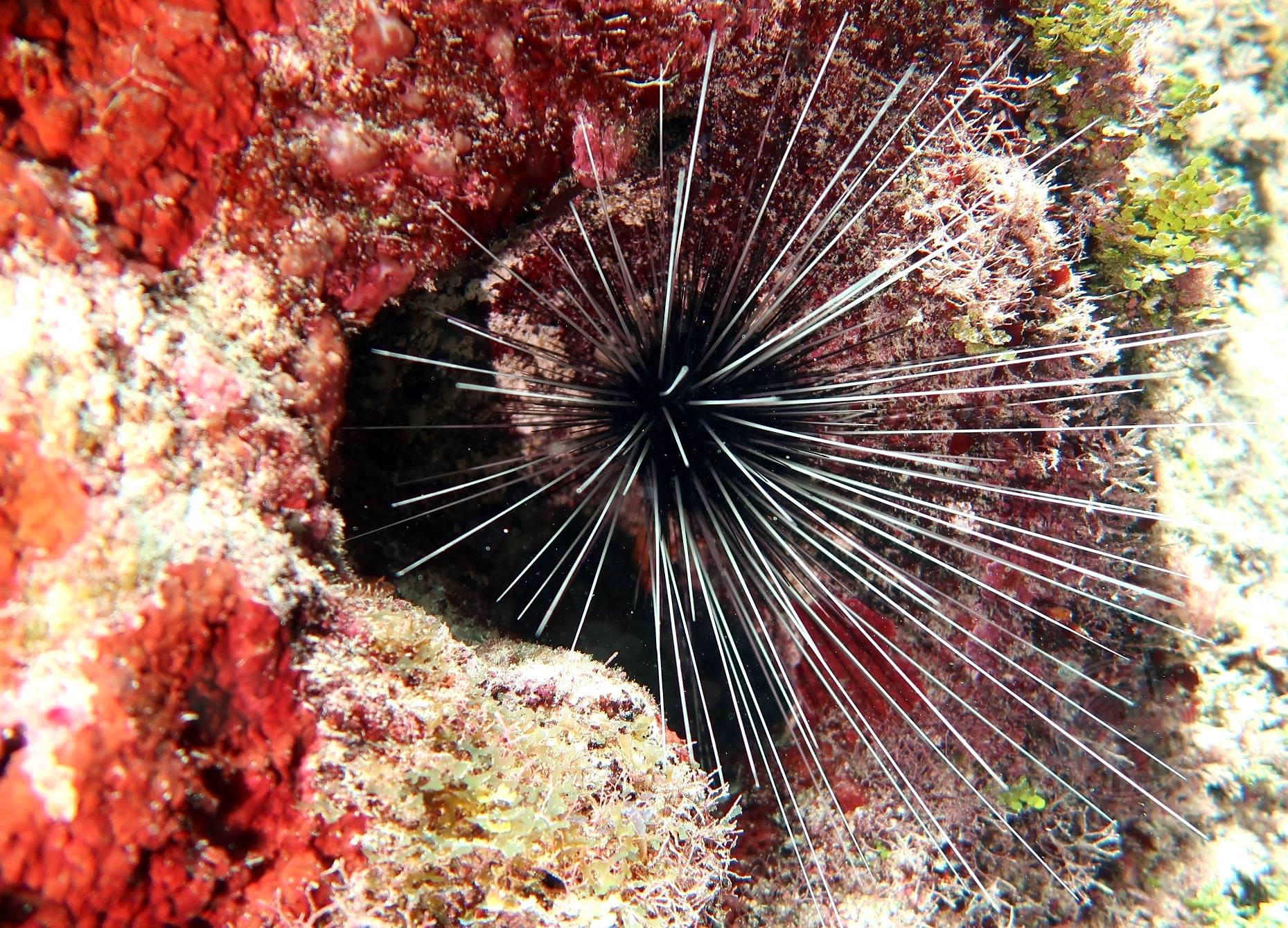
Small sea urchin species have spines a few cms long at most. The long-spine variety can exceed 10 cms, and the largest may have spines up to 30 cms (= 1 foot) long. The length, as shown here, means that when the creatures are safely lodged in crevices near their algae supply, their spines remain very visible.
 
Long-spined sea urchin Diadema antillarum (Melinda Riger / G B Scuba)
 
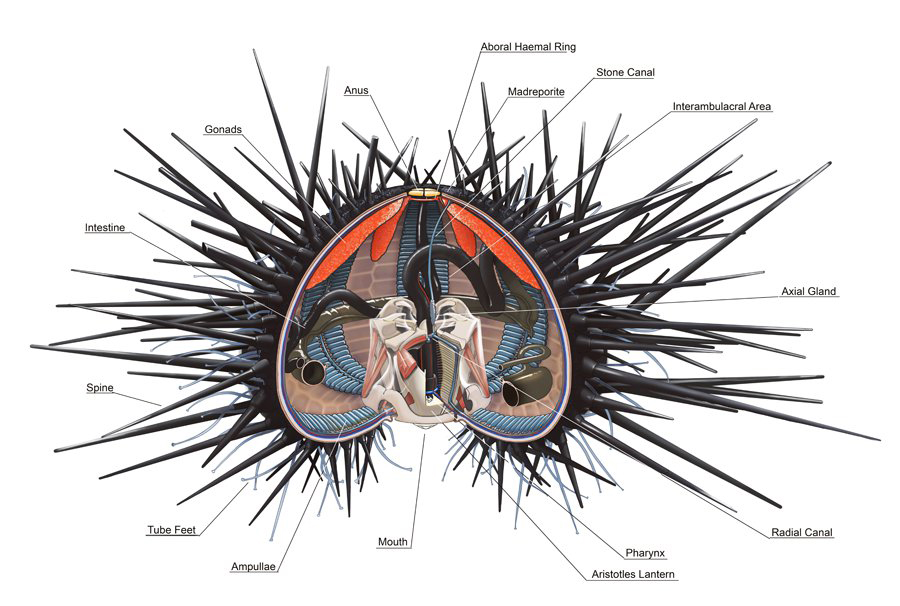
Anatomy of a long-spined sea urchin. You may possess a few of these organs yourself…

Long-spined sea urchin Diadema antillarum anatomy diagram (wiki)

Long-spined sea urchin Diadema antillarum (Melinda Rodgers / Dive Abaco)

CAN YOU GIVE US A TEST, PLEASE?

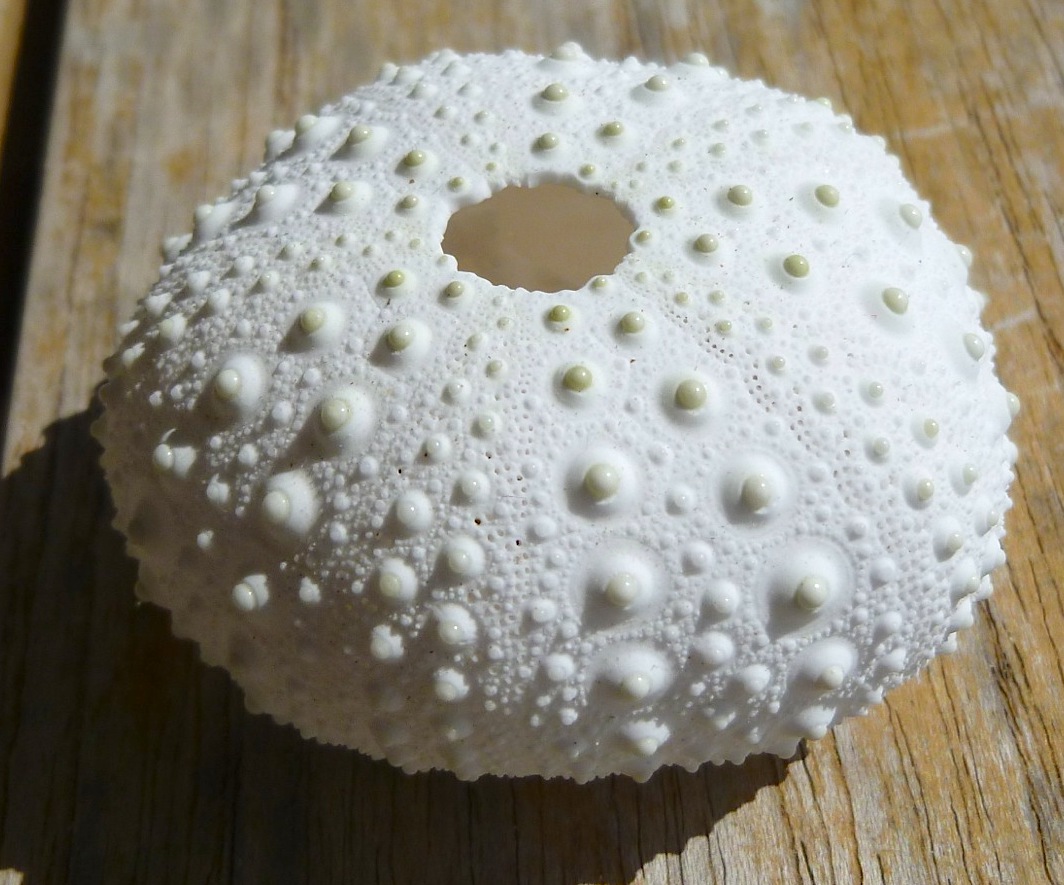
As with SAND DOLLARS and similar creatures, the skeleton of a sea urchin is known as a ‘test’. Urchin tests are remarkably beautiful, especially seen in sunlight. Here are 2 examples I photographed a while ago. You’ll immediately notice the delicate colours and the amazing complexity of the pattern and symmetry. The top one is (or is most like) a long-spined urchin test.
 
 
Long-spined sea urchin Test / Skeleton Diadema antillarum (Keith Salvesen / Rolling Harbour) Long-spined sea urchin Test / Skeleton Diadema antillarum (Keith Salvesen / Rolling Harbour)

A BIT ABOUT SYMMETRY

Sea urchins are born with bilateral symmetry – in effect, you could fold one in half. If you wear gloves. As they grow to adulthood, they retain symmetry but develop so-called ‘fivefold symmetry’, rather as if an orange contained 5 equal-sized segments. The graphic above gives a good idea of how the interior is arranged inside the segments.

Long-spined sea urchin Diadema antillarum (Melinda Rodgers / Dive Abaco)

A FEW FACTS TO HAND DOWN TO YOUR CHILDREN

  • Urchin fossil records date the species back to the Ordivician period c 40m years ago
  • In the ’90s the population was decimated and still has not recovered fully
  • Urchins feel stress: a bad sign that the spines here are white rather than black
  • Urchins are not only warm water creatures: some kinds live in polar regions
  • Urchins are of particular use in scientific research, including genome studies
  • Some urchins end up in aquariums / aquaria, where I doubt the algae is so tasty
  • Kindest not to prod or tread on them
  • Their nearest relative (surprisingly) is said to be the Sea Cucumber 

Sea Cucumber (Melinda Riger / G B Scuba)

ARE THEY EDIBLE?

They are eaten in some parts of the world, but only where the gonads and roe are considered a delicacy. Personally, I could leave them or leave them.

CREDITS: Melinda Rogers / Dive Abaco (1, 2, 3, 6, 9) taken Abaco; Melinda Riger / G B Scuba (4, 10, 11) taken Grand Bahama; Keith Salvesen / Rolling Harbour (7, 8) taken Abaco; Wiki graphic (5) CC . RESEARCH Fred Riger for detailed  information; otherwise magpie pickings… This is an archive post

Long-spined sea urchin Diadema antillarum (Melinda Riger / G B Scuba)

Unknown's avatar

LIZARDS OF ABACO: ANOLES & DEWLAPS


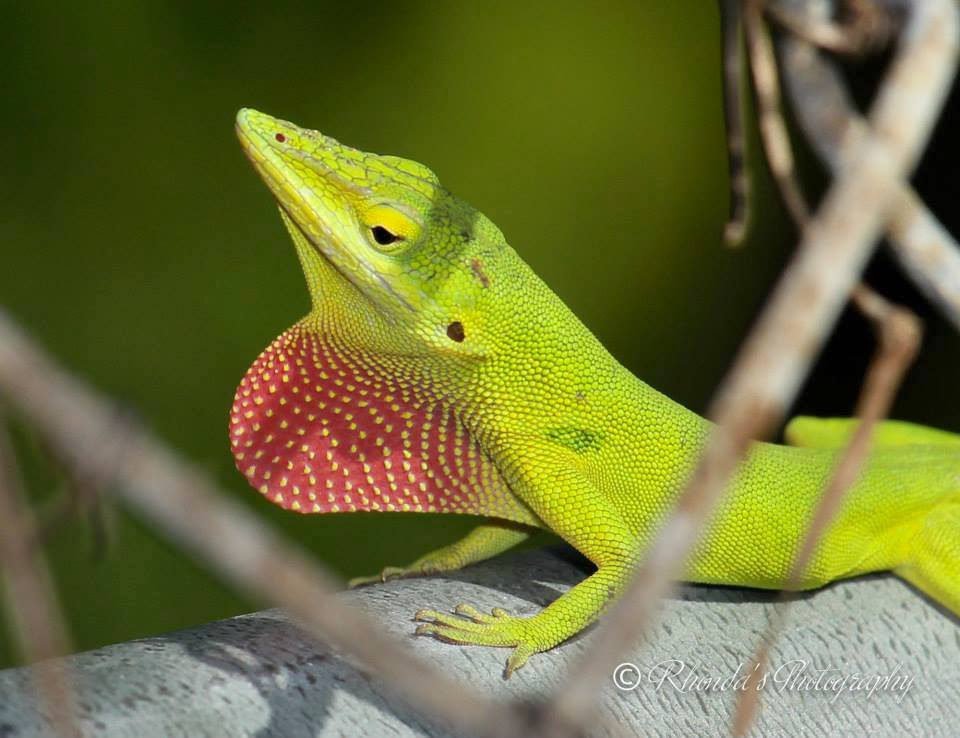
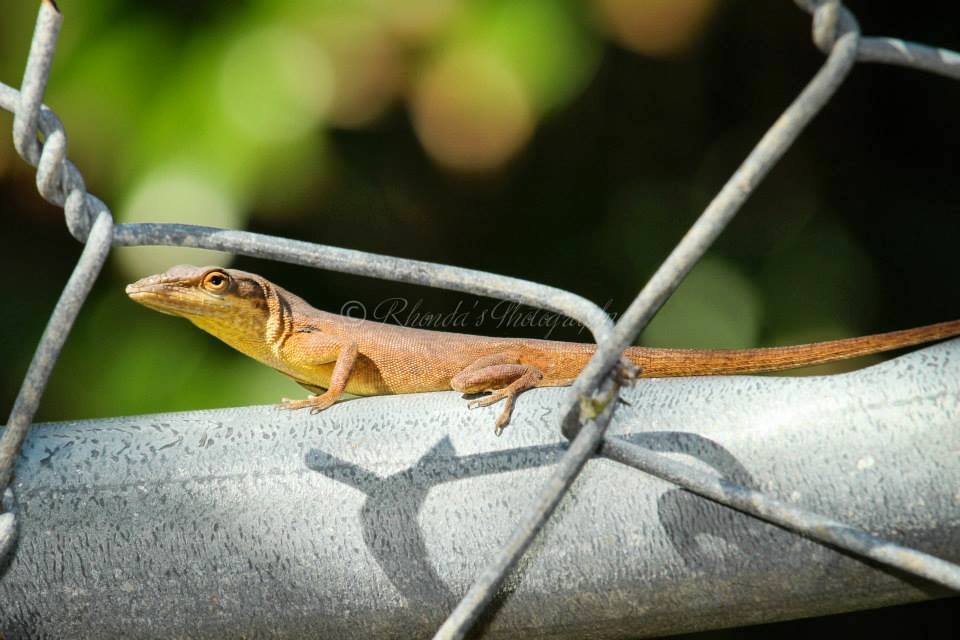
Anoles of Abaco, Bahamas (Rhonda Pearce)


LIZARDS OF ABACO: ANOLES & DEWLAPS

Yesterday was World Lizard Appreciation Day (or something similar), and it is only right to acknowledge the occasion. Everyone knows about CURLY TAIL LIZARDS. Everyone loves them and their little ways. But there are other lizards that may be found on Abaco and in the wider Bahamas. ANOLES, green and brown, should not be overlooked in the global celebration. They don’t have curly tails, but they do have a special power, the ability to display a DEWLAP. These are essentially folds of neck skin that are seen in many creatures – even large ones like the moose – and which in some species are inflatable / retractable.


A while back, Abaconian Rhonda Pearce took an outstanding sequence of photos of anoles. To begin, here are some impressive dewlaps to admire.

Anoles of Abaco, Bahamas (Rhonda Pearce)Anoles of Abaco, Bahamas (Rhonda Pearce) Anoles of Abaco, Bahamas (Rhonda Pearce)

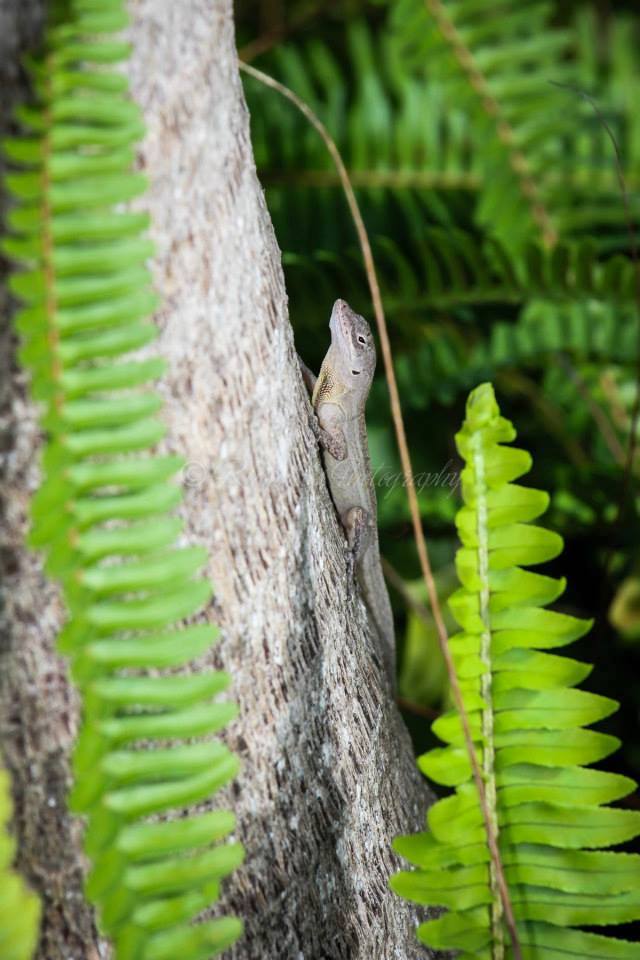
And here are a few green and brown anoles hanging out on trees and leaves in an anoley-type way. In a couple of these images, you can see the dewlap in its non-display mode. They are all just… lizards. Non-scary, non-venomous, non-poisonous little guys that are probably a peripheral part of everyone’s experience, but which really deserve a closer look. 

Anoles of Abaco, Bahamas (Rhonda Pearce) Anoles of Abaco, Bahamas (Rhonda Pearce) Anoles of Abaco, Bahamas (Rhonda Pearce) Anoles of Abaco, Bahamas (Rhonda Pearce) Anoles of Abaco, Bahamas (Rhonda Pearce)

You can read more about anoles, including their interesting sex lives, in the excellent Wiki article HERE. Usually, this is where I put a list of the various anole-related mating rituals, but actually the Wiki entry is more comprehensive (but you don’t get free jokes).

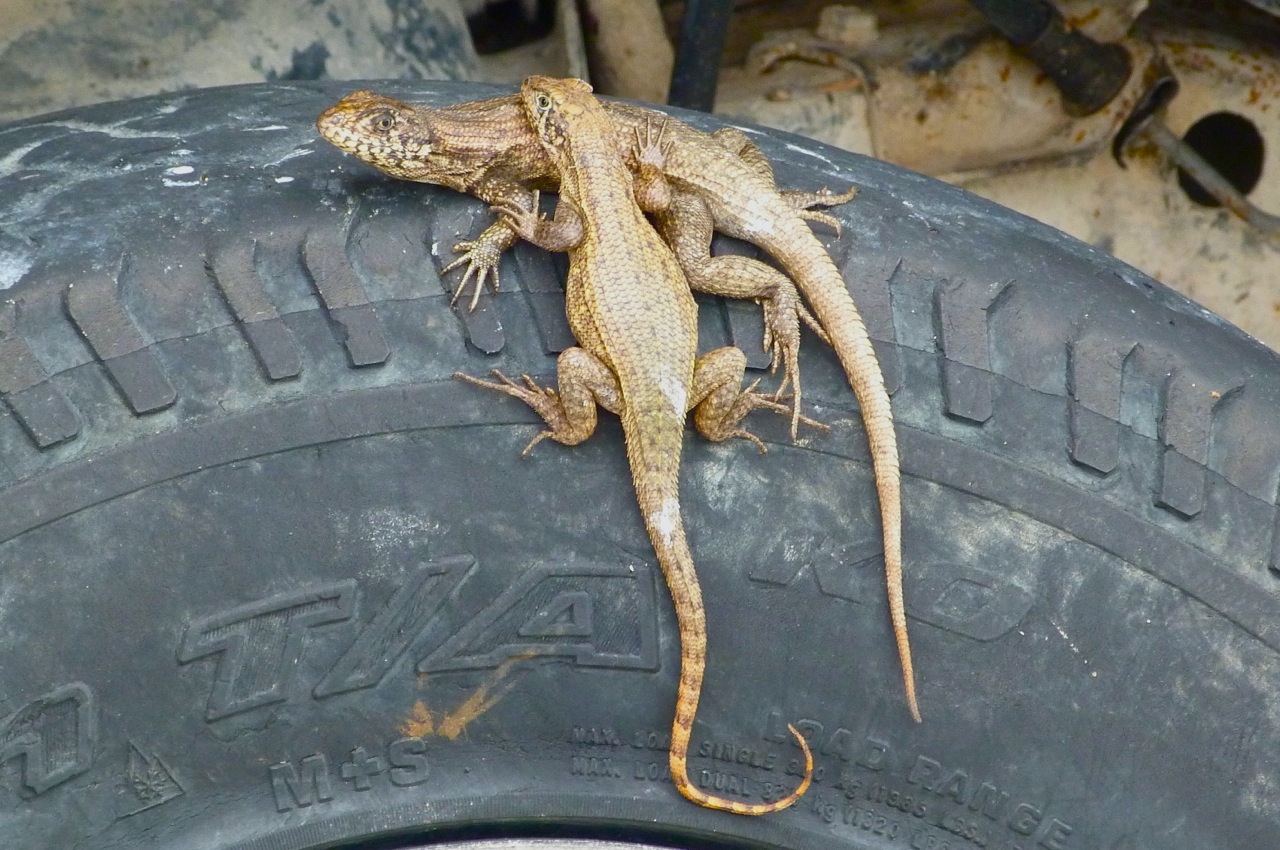
ADDENDUM: On this topic, at Crossing Rocks I did once photograph 2 curly tails in amorous conjunction on a lorry tyre / tire.

curly-tail-lizards-delphi-abaco


OPTIONAL MUSICAL DIGRESSION

The first time I heard the word ‘dewlap’ (misheard by the young me as ‘dewlat’) was in the mid-60s, in Georgie Fame’s excellent Ballad of Bonnie & Clyde. This song – and doubtless the film – was number 1 in the UK and maybe also the States. 

I assumed then that a ‘dewlat’ was some sort of valuable gold coin  – like a gold sovereign – that bank robbers put into a specially designed ‘dewlat bag’ to carry them away… Ah! The naivety of youth.

Bonnie and Clyde advanced their reputation

And made the graduation into the banking business

“Reach for the sky,” sweet-talking Clyde would holler

As Bonnie loaded dollars in the dewlap bag

Anoles of Abaco, Bahamas (Rhonda Pearce)

Credits: all fantastic photos, Rhonda Pearce with thanks as ever; Vogue


Unknown's avatar

WHEN NEW PROVIDENCE WAS OLD: MAPPING BAHAMAS HISTORY


Map of New Providence / Nassau Bahamas (early c18)

WHEN NEW PROVIDENCE WAS OLD: MAPPING BAHAMAS HISTORY

‘Exact Draught of the Island of New Providence

One of the Bahama Islands in the West Indies’

ORIENTATION

Lateral thinking is one thing; topsy-turvy thinking is in another league. The map that graces the top of this page is of New Providence and Nassau in the the early c18. By today’s exacting mapping conventions, which historically were less rigorously  observed, it is upside-down, with Nassau on what we would call the south-west corner. However the convention that maps were orientated to the North was not generally accepted before C19. And in the middle ages maps were mostly orientated to the East (whence the term ‘orientating’). With advancing survey techniques from C17 on, maps were mostly orientated to the South like this map of New Providence.

DATE

The map is undated on the face of it, and I have found attributed dates of both 1700 and 1750 (see below). It could be anywhere in-between. At the time this map was made, New Providence was sparsely populated except for Nassau itself; and little was known about the island’s interior. Contemporary accounts describe a haven for pirates operating around the coastline. Not for nothing was Nassau protected by a battery and a fort. I’ve divided to map into sections to make it easier to take a closer look at each area. You can click each to enlarge.

new-providence-c18-map-part-7-2

1. TOP LEFT CORNER (the south-east of NP in actuality), with the compass pointing downwards to the north. A smattering of houses dot the ‘west’ coast. There is one significant property above Little Sound, standing in what looks like a cleared or even cultivated area. I’ll look at that in more detail below. Note the words above The Great Salt Water Sound: “Very High Pines Grow Here Aboue (sic)”, evidence that forests of tall pines familiar even today on Abaco were found on NP 300 years ago. The island is otherwise mostly marked as if the landscape was fairly open.

new-providence-c18-map-part-1

2. TOP RIGHT CORNER (south-west & west), with the confident title in a cartouche proclaiming exactness. This was not uncommon in historic map-making – the cartographical equivalent of today’s boastful product slogans – ‘simply the best’ and so on**. The caption next to the Great Sound, This Part of the Country is little Known, suggests an unexplored and perhaps hostile environment – possibly one of marshes and bogs. This sector of the island appears to have been uninhabited, or at least to having no population centres worth recording.

new-providence-c18-map-part-3-2

3. BOTTOM RIGHT CORNER (north-west). At last there is more evidence habitation, with a string of dwellings along the coastline. The 2 cays shown have names, West End and ‘Pellican’. And it looks as though the two ships have set out from port. On the left side of the bay above them, a church can be seen. Initially I thought the double row of crosses might indicate an area close to the shoreline that might be safe – or at least safer – from pirate attack. The leading ship – as the detailed crop shows clearly – is a warship. No harm in romantically speculating that it is escorting a trading vessel… More recently an online friend Klausbernd told me that the double crosses on map are in fact a navigational aid indicating cross bearings.

new-providence-c18-map-part-4

new-providence-c18-map-part-5

4. BOTTOM MIDDLE SECTION As we move towards the main – indeed only – town on the island, it is clear that the northern coast was the most desirable place to live. The scattering of houses along the coast continues; and the captions for the ponds show a possible reason why: fresh water, on an island where other areas of water are actually marked as ‘salt’ or which might have been unpleasantly brackish. And now we can see more of the posh establishment I referred to above. Not only did it lie in open (or perhaps cultivated) country, but it was plainly of some importance. It is notably larger that other buildings depicted, for a start; and it has its own very long track that forks off the coastal track.

new-providence-c18-map-part-10

5. BOTTOM LEFT CORNER: NASSAU We have reached the big city, the centre of the population, and the port – with the harbour entrance handily marked. It bore the same name then as now; though the other names marked (as far as I can make out) have mostly if not all changed over 3 centuries. The Baha Mar development and its attendant travails seem light years away from this map. The double line of crosses ends here (bottom right at the first cay). If they marked a safe zone for vessels passing back and forth into Nassau harbour, they did not need to extend further because of the town fortifications (see detailed crop). There is a fort right on the shore; and at the far end of the harbour sound is a battery at Drewitt’s Point. The town is watched over by a substantial building – presumably a Governor’s residence – that is surrounded by a stockade . In the early c18 Nassau put on a show of strength to deter invaders and pirates.

new-providence-c18-map-part-2new-providence-c18-map-part-14

DO WE KNOW THE EXACT DRAUGHT’S EXACT DATE?

The map itself is undated. The Library of Congress, whose map I have chopped up for this post, simply dates it as 17– and notes: 

Manuscript, pen-and-ink and watercolor; Has watermark; Oriented with north to the bottom; Relief shown pictorially and by shading; Depths shown by soundings.

The excellent David Rumsey Historical Map Collection chooses the year 1750, the maker unknown. Another source puts the date at 1700.

Whichever, a clue to establish the map in the first half of the c18 is that the publisher is believed to be ‘William Innys [et al.]’, London. Innys and his brother John (the ‘et al’ presumably) were active at that time. In 1726, for example, they published an edition of Newton’s  Philosophiae naturalis principia mathematica (first published in 1687), indicating that they must already have been well-established.

new-providence-c18-map-part-7-2

WHAT ABOUT THE PIRATES?

The “Deposition of  Capt. Matthew Musson” made on  5 Jul 1717 in London, contains some excellent contemporary  pirate-based material. The middle passage in particular gives an indication how well organised and extremely well-armed the pirates were. And it is clear that piracy was actually driving inhabitants away from New Providence.

  • “On March last he was cast away on the Bahamas. At Harbour Island he found about 30 families, with severall pirates, which frequently are comeing and goeing to purchase provissons for the piratts vessells at Providence. There were there two ships of 90 tons which sold provissons to the said pirates, the sailors of which said they belong’d to Boston”.
  • “At Habakoe one of the Bahamas he found Capt. Thomas Walker and others who had left Providence by reason of the rudeness of the pirates and settled there. They advis’d him that five pirates made ye harbour of Providence their place of rendevous vizt. [Benjamin] Horngold, a sloop with 10 guns and about 80 men; [Henry] Jennings, a sloop with 10 guns and 100 men; [Josiah(s)] Burgiss, a sloop with 8 guns and about 80 men; [Henry?] White, in a small vessell with 30 men and small armes; [Edward] Thatch, a sloop 6 gunns and about 70 men. All took and destroyd ships of all nations except Jennings who took no English; they had taken a Spanish ship of 32 gunns, which they kept in the harbour for a guardship”.
  • “Ye greatest part of the inhabitants of Providence are. already gone into other adjacent islands to secure themselves from ye pirates, who frequently plunder them. Most of the ships and vessells taken by them they burn and destroy when brought into the harbour and oblidge the menn to take on with them. The inhabitants of those Isles are in a miserable condition at present, but were in great hopes that H.M. would be graciously pleas’d to take such measures, which would speedily enable them to return to Providence their former settlement, there are severall more pirates than he can now give an accot. of that are both to windward and to leward of Providence that may ere this be expected to rendevous there he being apprehensive that unless the Governmt. fortify this place the pirates will to protect themselves”. Signed, Mathew Musson. Endorsed, Read 5th July, 1717. 1½ pp. [C.O. 5, 1265. No. 73.]

new-providence-c18-map-part-11

CAN I BUY THIS MAP FOR MY WALL?

You certainly can. Well, not an original obviously. But you can find prints of it on eBay and elsewhere – just google the map title. You can get a modern copy for around $20 + shipping

** I have an enjoyable example of this tendency on a William Guthrie map of Europe dated c1800 that I own. A map from “the beft authorities” could surely have no serious rival!

img_4771

Credits: Library of Congress Online Catalog (Geography and Map Division); David Rumsey Historical Map Collection; Baylus C Brooks, Professional Research & Maritime Historian, Author, & Conservator / “America and West Indies: July 1717, 1-15,” in Calendar of State Papers Colonial, America and West Indies: Volume 29, 1716-1717, ed. Cecil Headlam (London: His Majesty’s Stationery Office, 1930), 336-344; Bonhams (Auctioneers). Thanks to Klaubernd for his advice on map orientations.

Map of New Providence / Nassau Bahamas (early c18)

Unknown's avatar

ROYAL CORONATION TERNS


CORONATION

ONE ROYAL TURN DESERVES… AN ABACO ROYAL TERN

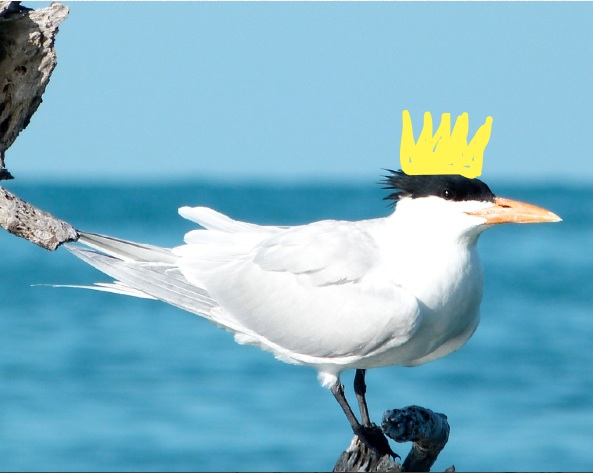
Royal Tern Crowned

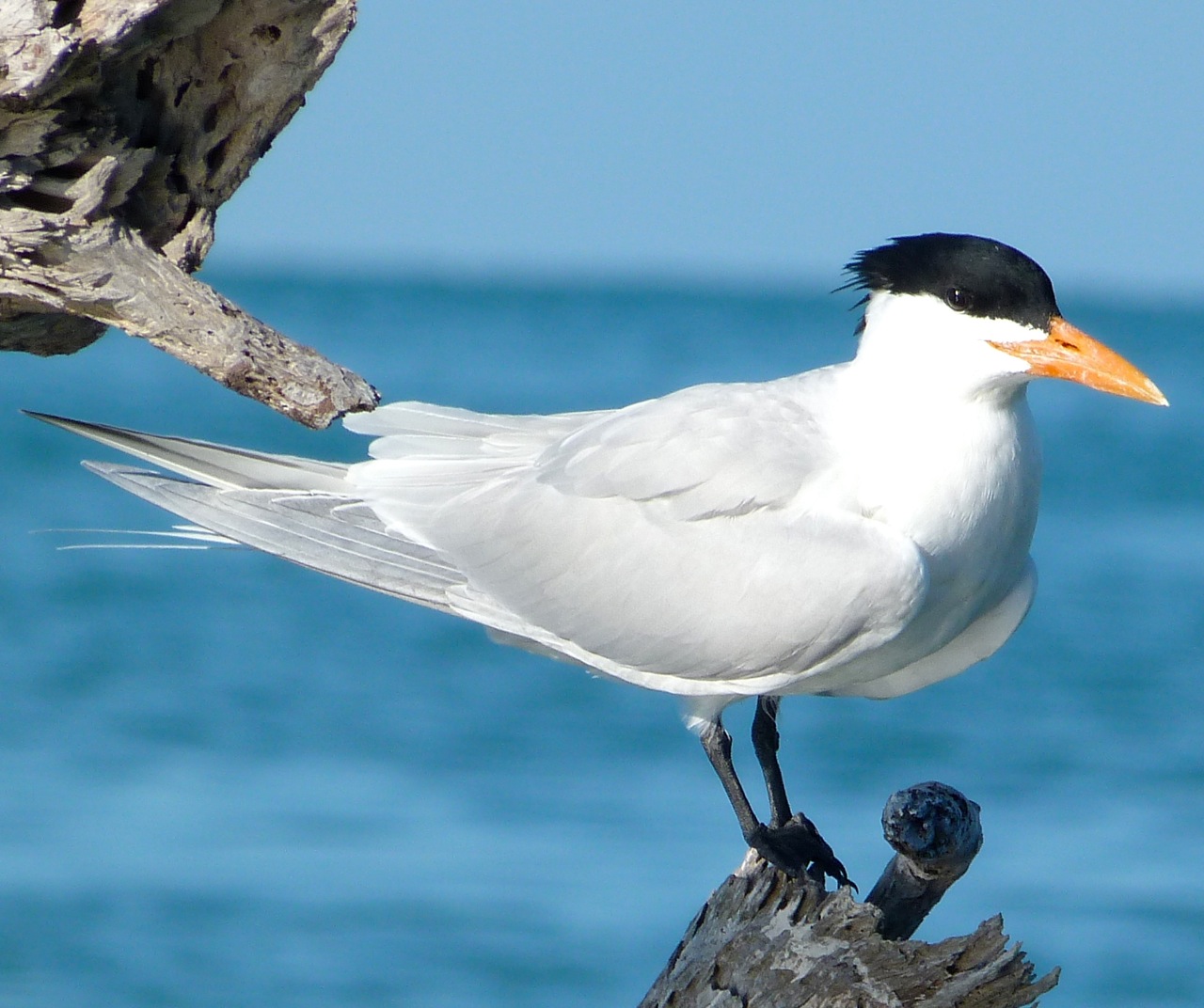
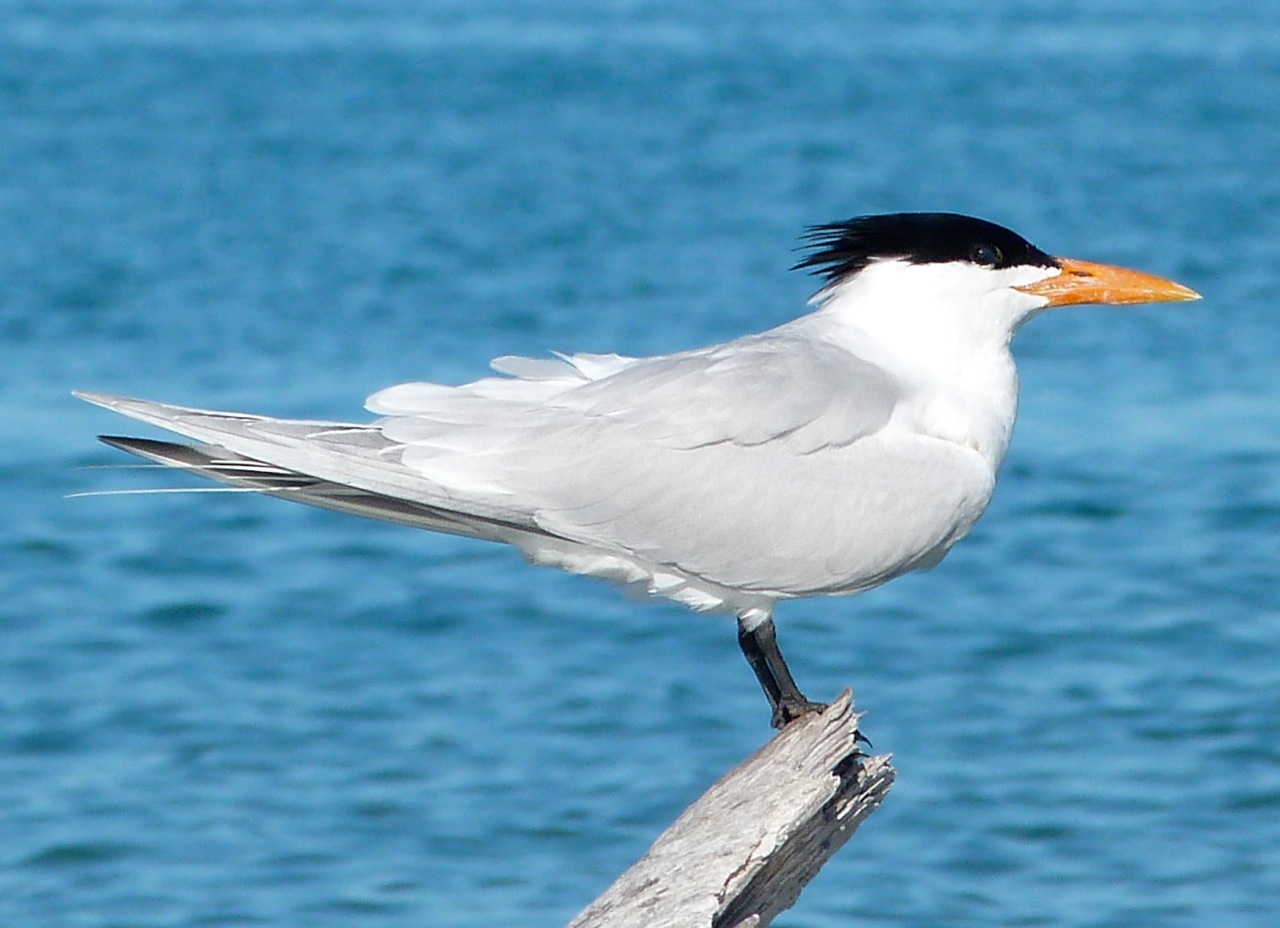
I wrote this post about Royal Terns Thalasseus maximus* quite some time ago, in the early days of Delphi  (and indeed Rolling Harbour™ ® ). Bonefishing was a completely new experience and my skills were embryonic. As they continued to be for the duration. By then the amazing birdlife of Abaco had reeled me in and BIRDS OF ABACO was in the planning stage.

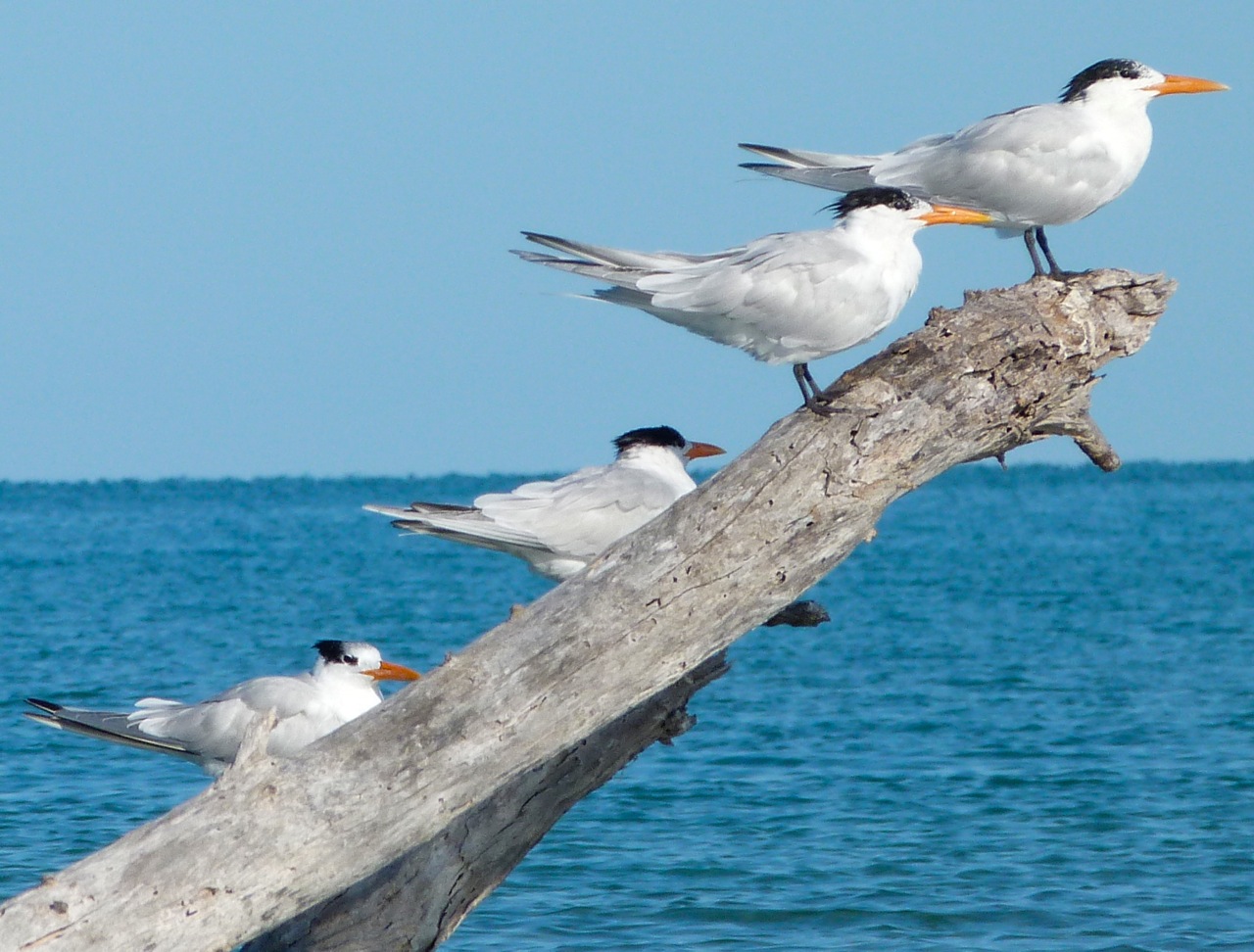
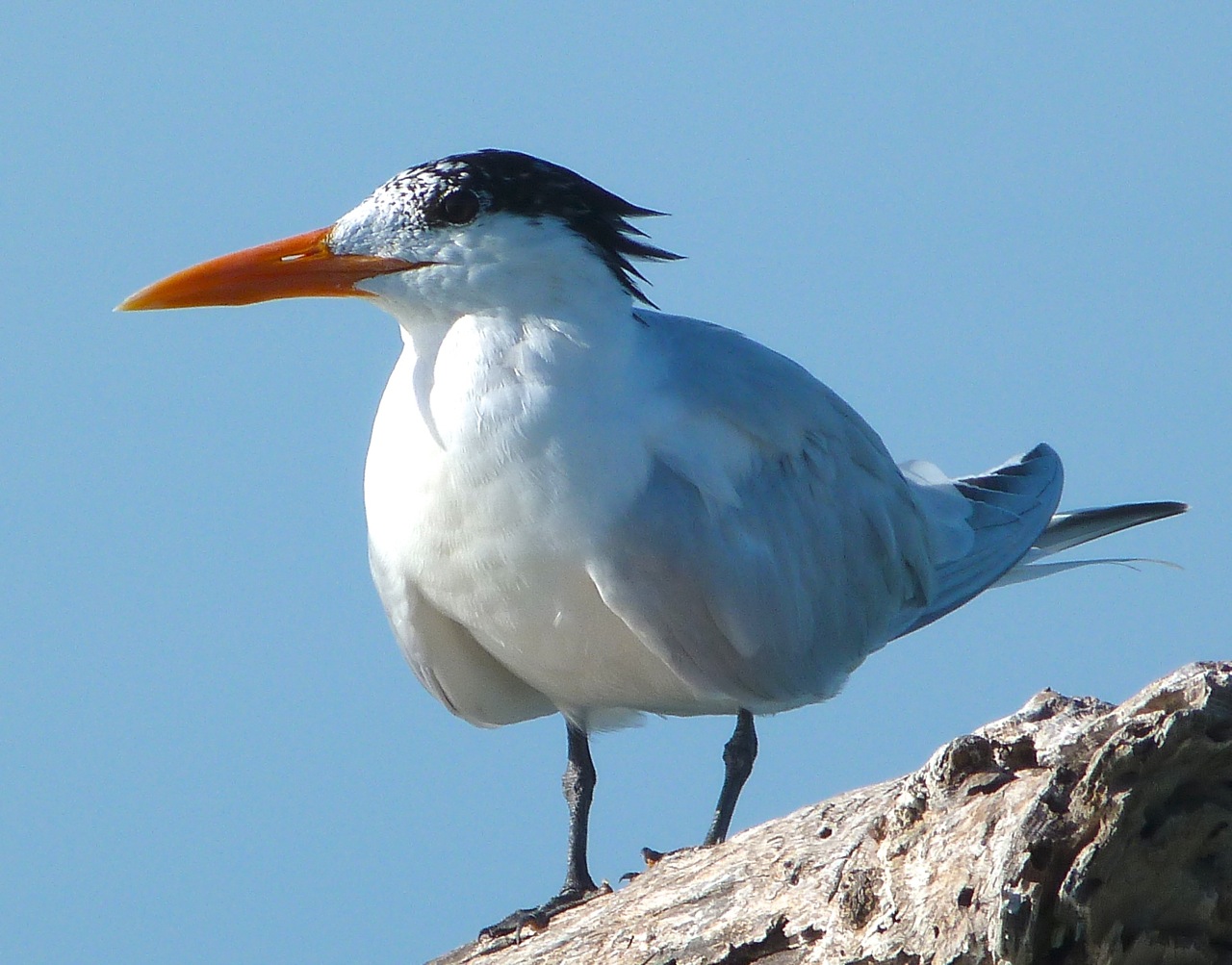
If there’s a magnificent golden bandwagon drawn by 8 horses passing by, why not just hop on? I’ve skipped the info about the range and nesting arrangements of these birds. Here are a few, in all their regal glory, posing in the sunshine on a dead tree way out on the Abaco Marls. The header image was taken on Cherokee Long Dock, long pre-Dorian and its magnificent replacement.

Royal Terns Abaco (2) 4Royal Terns Abaco (2) 6 Royal Terns Abaco (2) 5 Royal Terns Abaco (2) 3 Royal Terns Abaco (2) 2 Royal Terns Abaco (2) 1

** Now to be renamed Thalasseus carolus rex magnificans. Not worldwide, obviously.

PS No terns were injured in trying to get the yellow crown to fit one of them

Unknown's avatar

ROCK BEAUTY: BAHAMAS REEF FISH


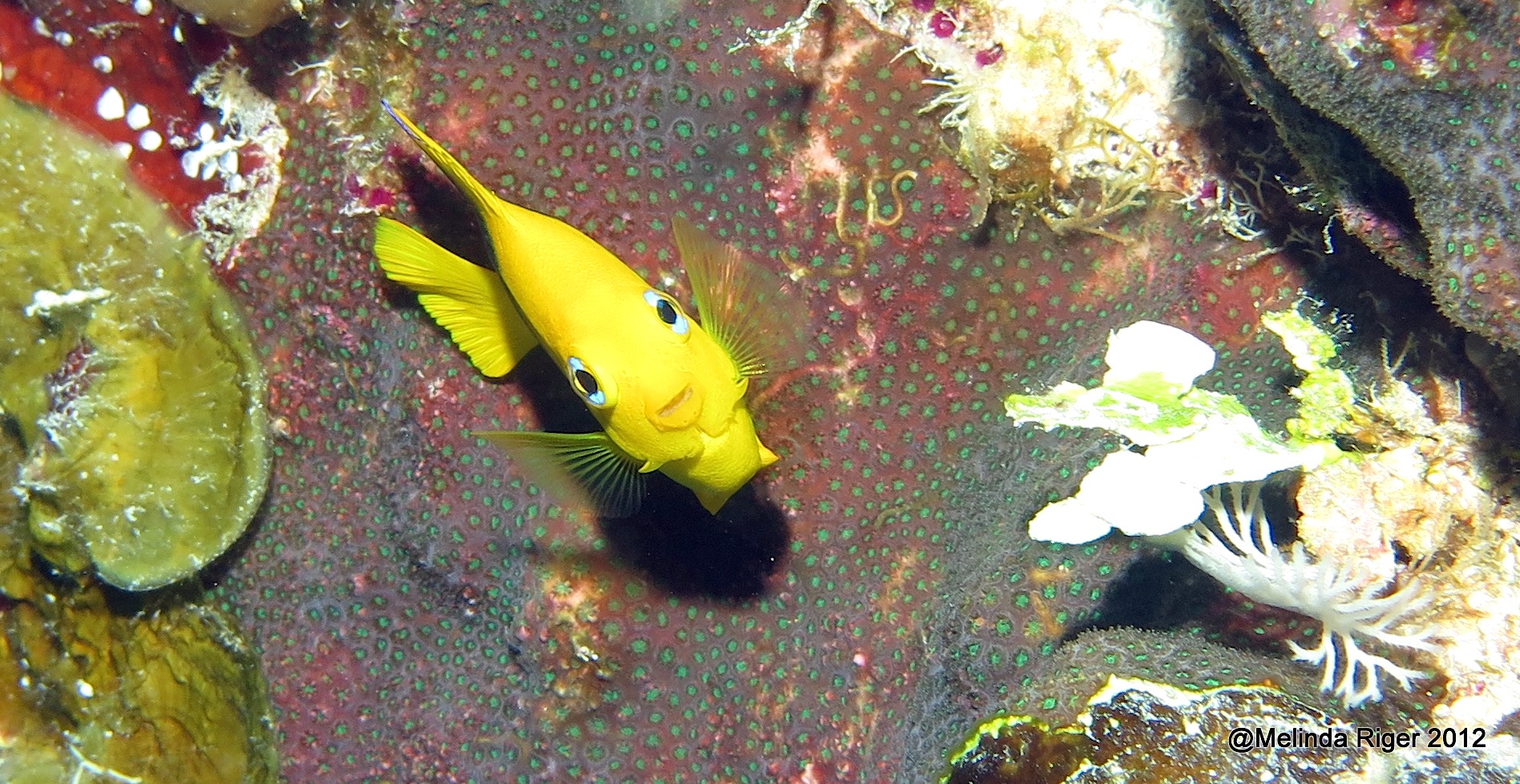
ROCK BEAUTY: BAHAMAS REEF FISH (Melinda Riger / GB Scuba)


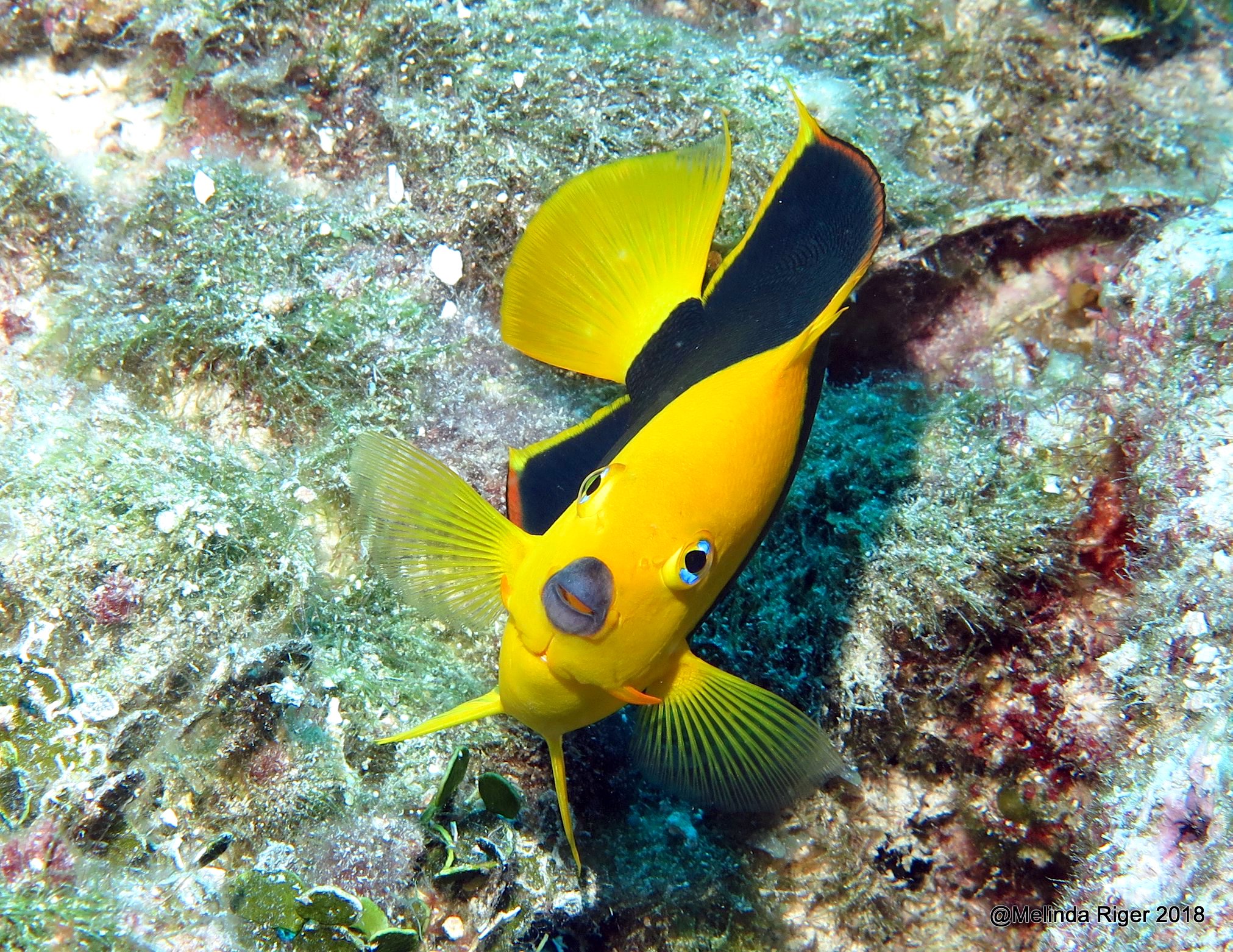
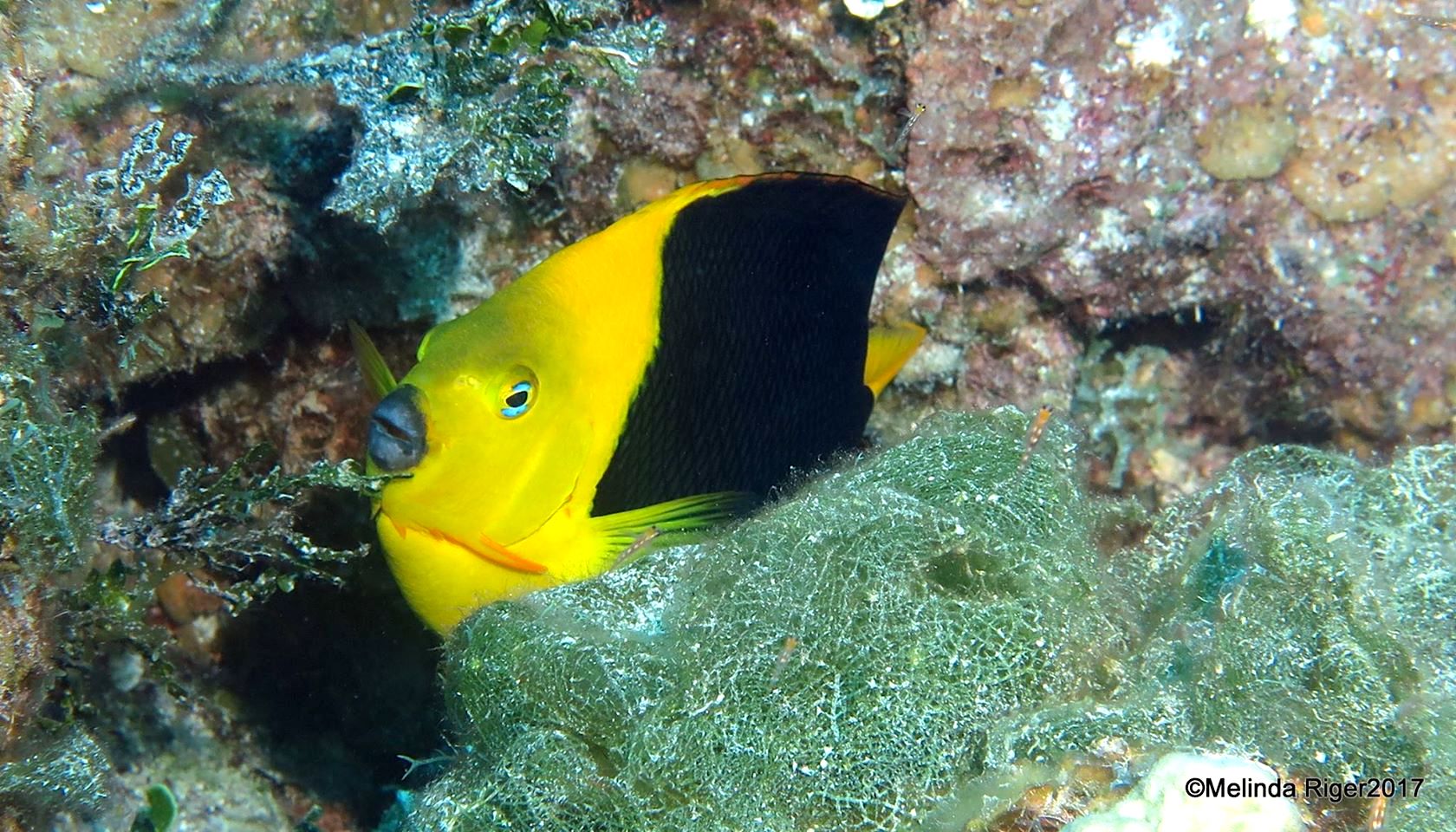
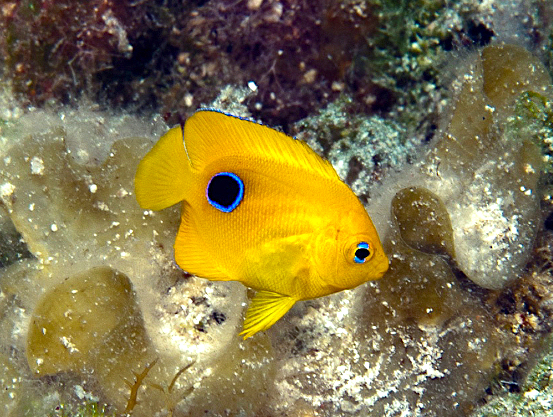
ROCK BEAUTY . Holacanthus tricolor  . BAHAMAS REEF FISH 

These creatures are a small species of angelfish. Seen swimming around the reefs they are unmistakeable, not least because of their bright yellow hi-viz jackets, remarkable blue eyeliner and blue-black lipstick. 

ROCK BEAUTY: BAHAMAS REEF FISH (Melinda Riger / GB Scuba)

Rock Beauties look like prime candidates for anyone’s aquarium, but they have picky dietary requirements and a tendency for aggression that make them unsuitable (fortunately for them).

ROCK BEAUTY: BAHAMAS REEF FISH (Melinda Riger / GB Scuba)

They are highly specialised feeders, needing marine sponges in their daily diet. They are also prone to chase tank-mates and nip them. On balance, they look more fetching nosing about the coral anyway.

ROCK BEAUTY: BAHAMAS REEF FISH (Melinda Riger / GB Scuba)

WHAT DO JUVENILES LOOK LIKE?

ROCK BEAUTY: BAHAMAS REEF FISH (Melinda Riger / GB Scuba)

Juvenile rock beauties are cute mini-versions of the adults, only even more yellow and with yellow lips.

ROCK BEAUTY: BAHAMAS REEF FISH (Melinda Riger / GB Scuba)

In development stages, they may have a vivid blue and black circle in front of the tail fin…

Rock Beauty, Bahamas (Living Oceans Foundation))

… or a large dark patch on their sides

ROCK BEAUTY: BAHAMAS REEF FISH (Melinda Riger / GB Scuba)


NOT A TRUE ‘ROCK BEAUTY’ (no offence, Lita)

A TRUE ROCK BEAUTY

Credits: Melinda Riger, Grand Bahama Scuba; WP

Unknown's avatar

FLAMINGO TONGUE SNAILS: DECORATIVE CORAL-DWELLERS


Flamingo Tongue Snails (Melinda Rogers, Dive Abaco, Bahamas)

FLAMINGO TONGUE SNAILS: DECORATIVE CORAL-DWELLERS

FLAMINGO TONGUE SNAILS Cyphoma gibbous are small marine gastropod molluscs related to cowries. The living animal is brightly coloured and strikingly patterned, but that colour only exists in the ‘live’ parts – the so-called ‘mantle’. The shell itself is usually pale, and characterised by a thick ridge round the middle. Whether alive or as shells, they are gratifyingly easy to identify. These snails live in the tropical waters of the Caribbean and the wider western Atlantic. 

Flamingo Tongue Snails (Melinda Rogers, Dive Abaco, Bahamas)

THE IMPORTANCE OF CORAL

Flamingo tongue snails feed by browsing on soft corals. Often, they will leave tracks behind them on the coral stems as they forage (see image below). But corals are not only food – they provide the ideal sites for the creature’s breeding cycle.

Flamingo Tongue Snails (Dive Abaco, Bahamas)Flamingo Tongue Snails (Melinda Rogers, Dive Abaco, Bahamas)

Adult females attach eggs to coral which they have recently fed upon. About 10 days later, the larvae hatch. They eventually settle onto other gorgonian corals such as Sea Fans. Juveniles tend to live protectively on the underside of coral branches, while adults are far more visible and mobile. Where the snail leaves a feeding scar, the corals can regrow the polyps, and therefore the snail’s feeding preference is generally not harmful to the coral.

The principal purpose of the patterned mantle of tissue over the shell is to act as the creature’s breathing apparatus. The tissue absorbs oxygen and releases carbon dioxide. As it has been (unkindly?) described, the mantle is “basically their lungs, stretched out over their rather boring-looking shell”. There’s more to them than that!

Flamingo Tongue Snails (Melinda Rogers, Dive Abaco, Bahamas)

THREATS AND DEFENCE

The species, once common, is becoming rarer. The natural predators include hogfish, pufferfish and spiny lobsters, though the spotted mantle provides some defence by being (a) startling in appearance and (b) on closer inspection by a predator, rather unpalatable. Gorgonian corals contain natural toxins, and instead of secreting these after feeding, the snail stores them. This supplements the defence provided by its APOSEMATIC COLORATION, the vivid colour and /or pattern warning sign to predators found in many animal species.

Flamingo Tongue Snails (Melinda Rogers, Dive Abaco, Bahamas)

MANKIND’S CONTRIBUTION

It comes as little surprise to learn that man is considered to be the greatest menace to these little creatures, and the reason for their significant decline in numbers. The threat comes from snorkelers and divers who mistakenly / ignorantly think that the colour of the mantle is the actual shell of the animal, collect up a whole bunch from the reef, and in due course are left with… dead snails and their allegedly dull shells Don’t be a collector; be a protector…

Flamingo Tongue Snails (Melinda Rogers, Dive Abaco, Bahamas)

The photos below are of nude flamingo tongue shells. Until I read the ‘boring-looking shell’ comment, I believed everyone thought they were rather lovely… I did, anyway. I still do. You decide!

Flamingo Tongue Snail Shell, Keith Salvesen AbacoFlamingo Tongue Snail Shell, Keith Salvesen Abaco

Flamingo Tongue Snails (Melinda Rogers, Dive Abaco, Bahamas)

Image Credits:  Melinda Rogers / Dive Abaco; Keith Salvesen / Rolling Harbour; Wiki Leopard