Unknown's avatar

BLACK & WHITE WARBLERS: WINTER VISITORS TO ABACO


Black & White Warbler (Wiki)

BLACK & WHITE WARBLERS (Mniotilta varia)

WINTER VISITORS TO ABACO

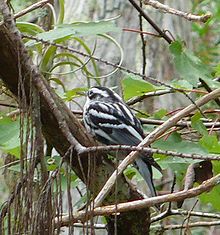
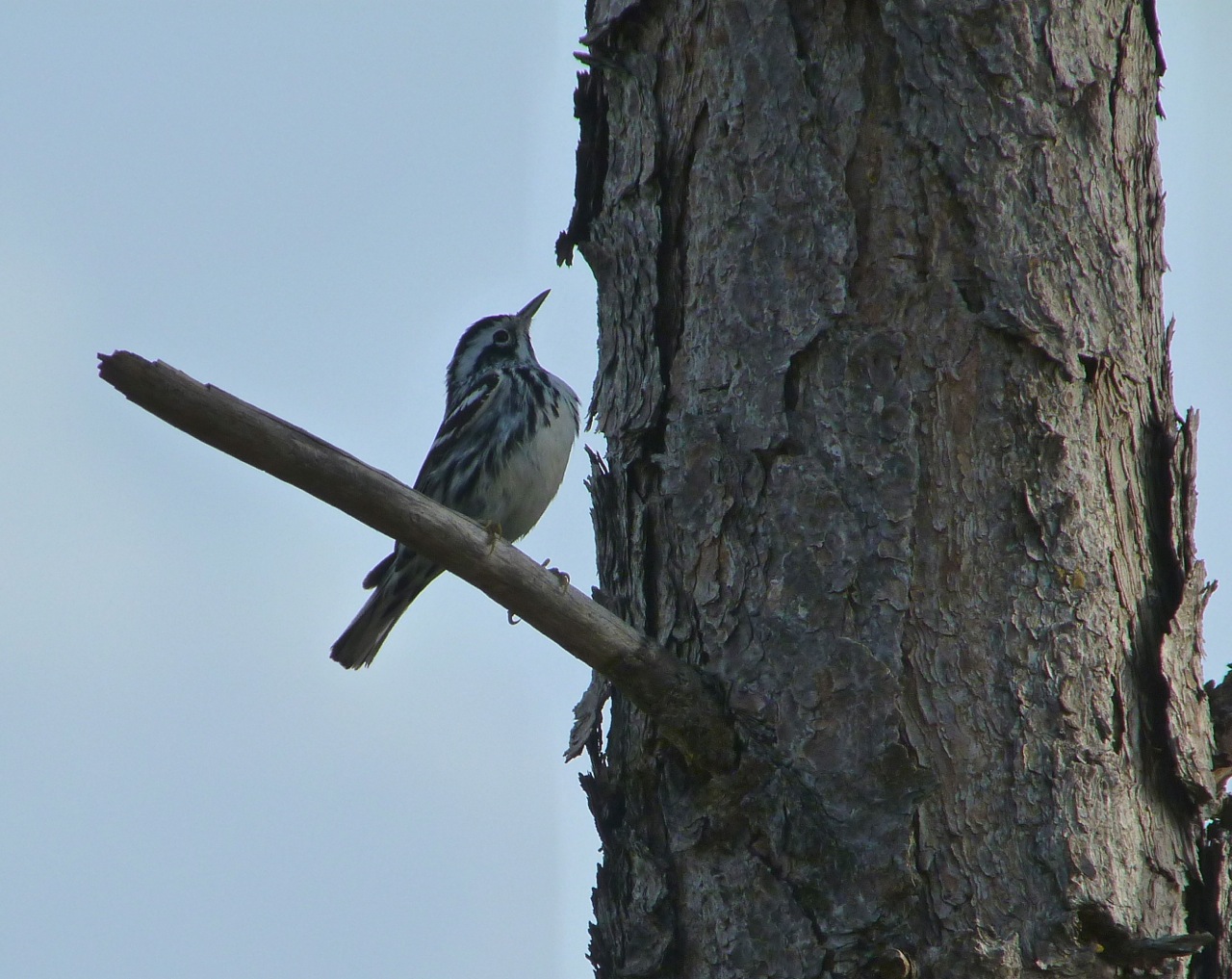
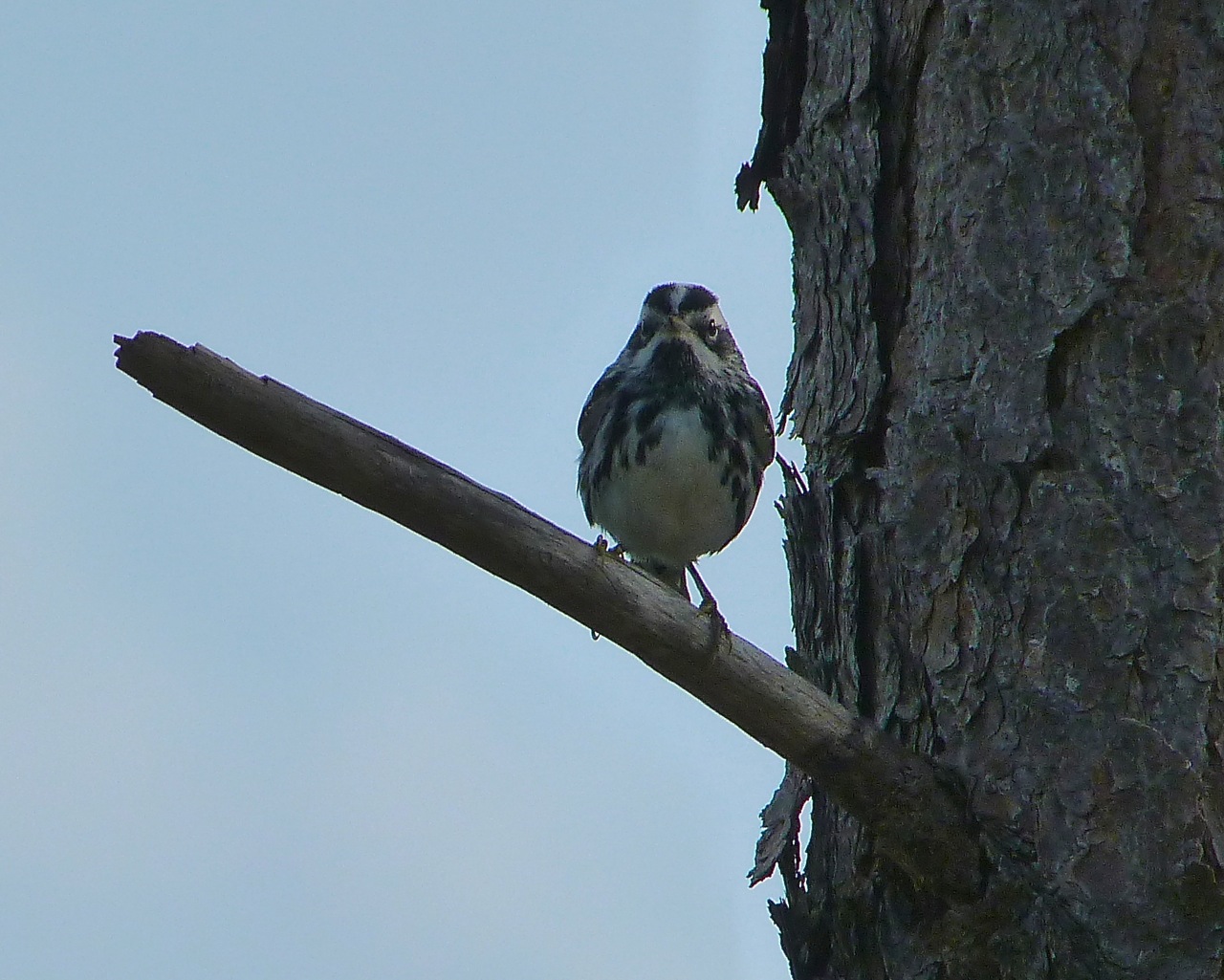
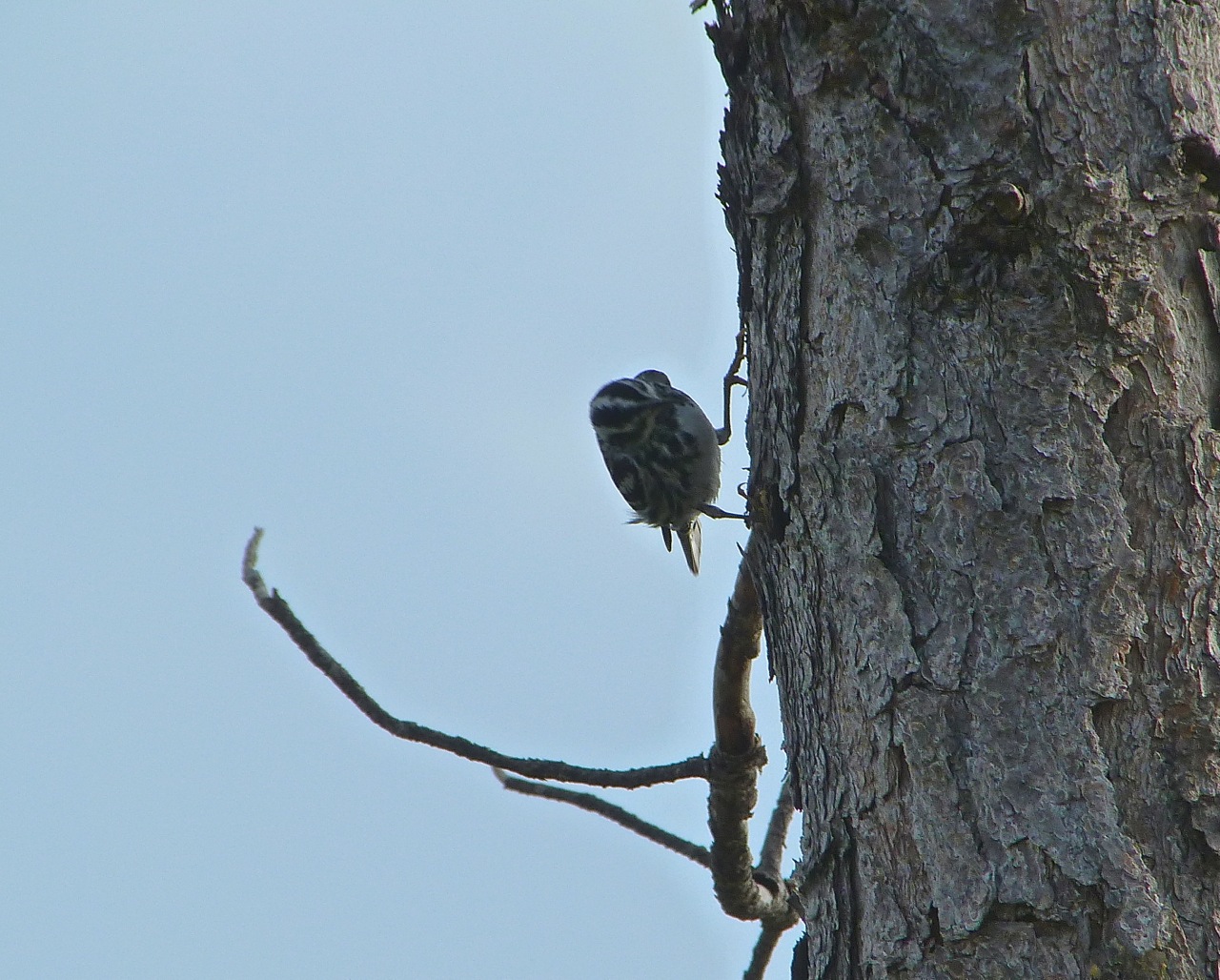
By no stretch of the imagination are the images below very impressive. Sorry about that. The wonder is that we noticed this little bird at all – also, that it stayed still for long enough for me to get a bead on it. I credit the sharp eyes of Mrs RH (from whom little is hid) for spotting a fleeting movement on a pine trunk along the Delphi drive. Unlike any other warbler, these small birds feed in the manner of nuthatches or tree / brown creepers. They run rapidly up and down tree trunks and branches foraging on insects in the bark with their sharp little beaks. 

Black & White Warbler, Abaco, Bahamas 1Summer & Winter Ranges

Black & White Warbler, Abaco, Bahamas 2

IUCN status

Black & White Warbler, Abaco, Bahamas 3

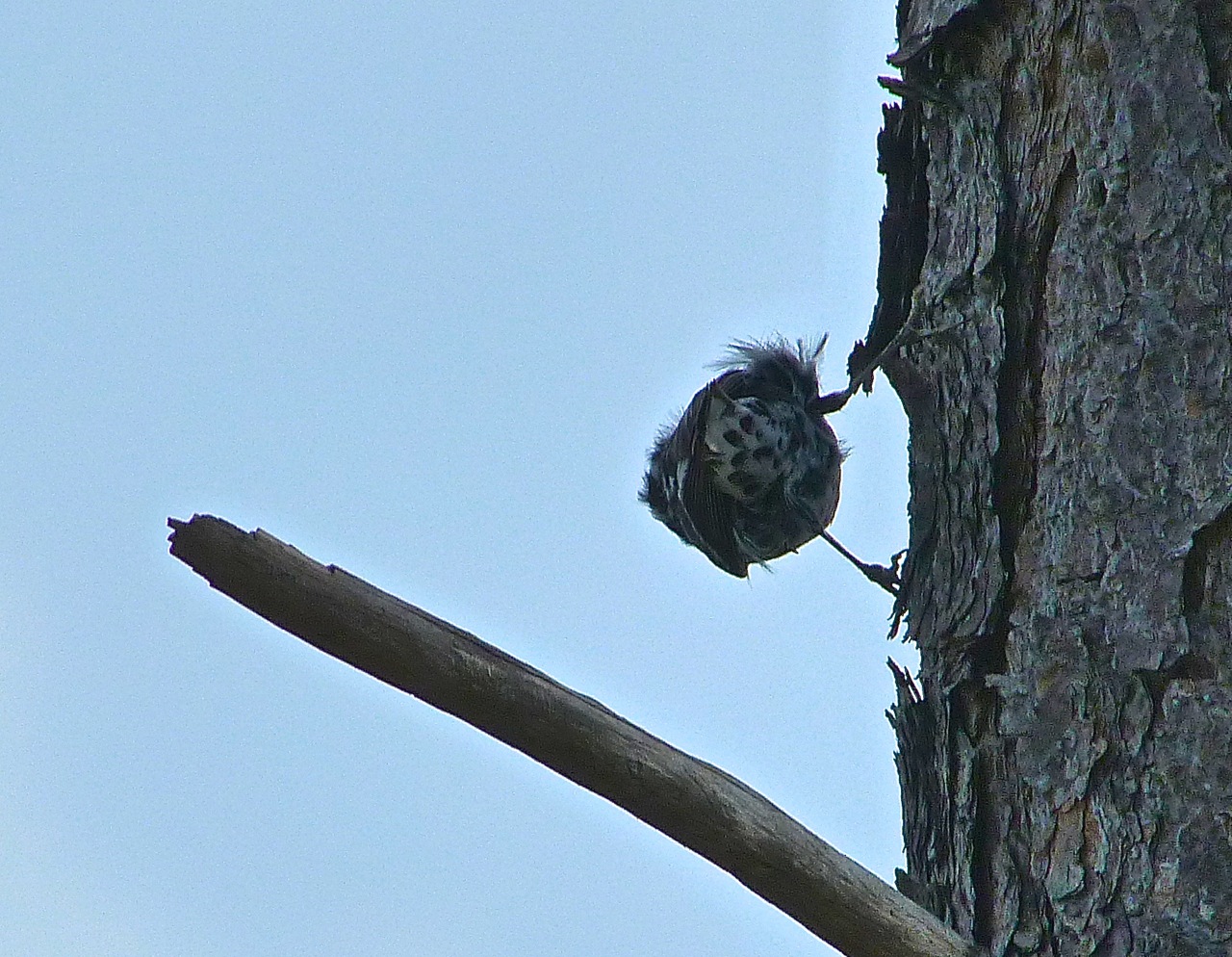
The next 2 photos (yes, I agree, they’re not very good, nor taken – the top one, anyway – from an elegant angle) are included to demonstrate the remarkable length and dexterity of the bird’s legs. During the minute we watched it before it flew off, we noted this characteristic legs-splayed ‘pausing pose’ several times.

Black & White Warbler, Abaco, Bahamas  4Black & White Warbler KS P1050385 - Version 2

Unknown's avatar

ONE GOOD (ROYAL) TERN ON THE ABACO MARLS…


ONE GOOD TERN ON THE ABACO MARLS…4

ONE GOOD (ROYAL) TERN ON THE ABACO MARLS…

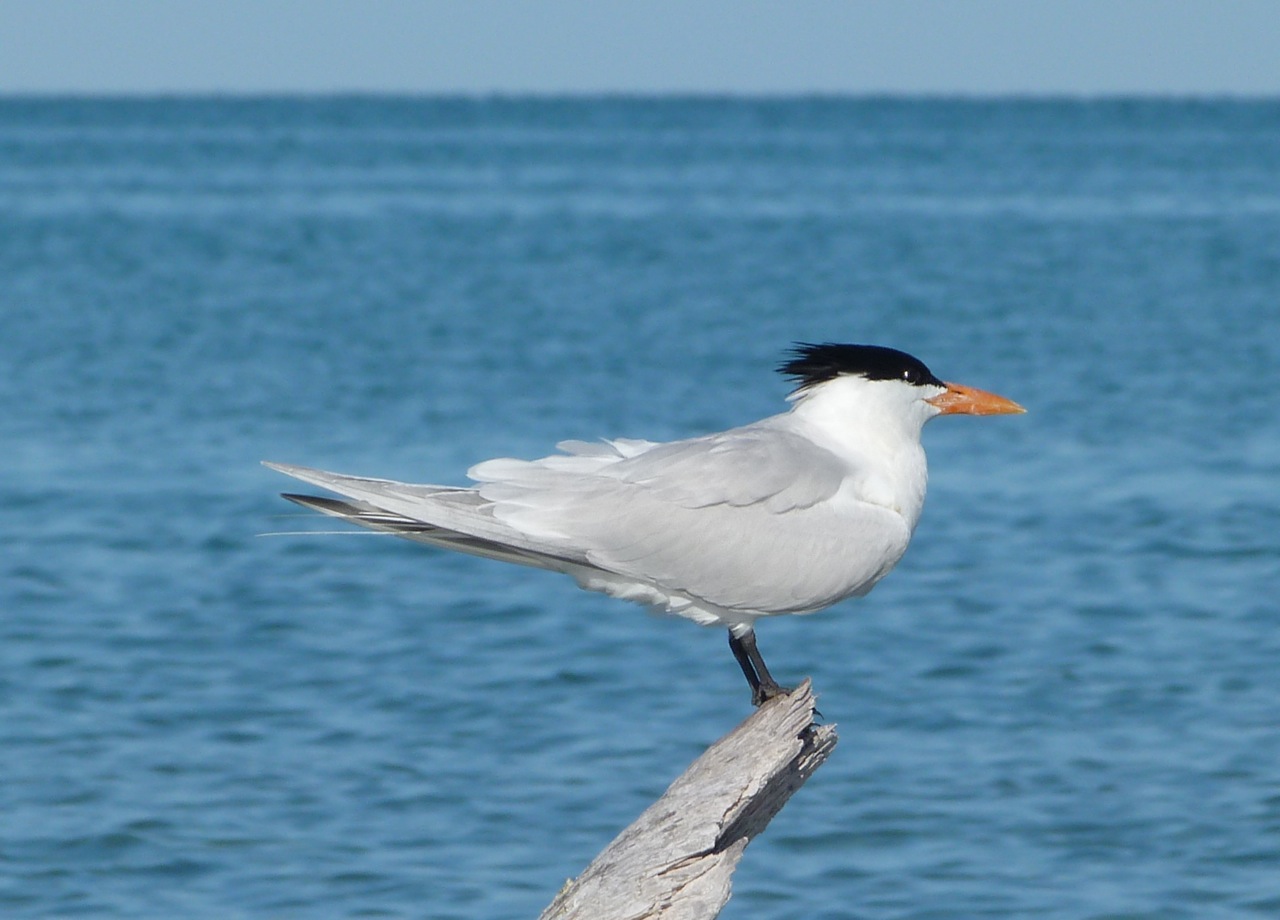
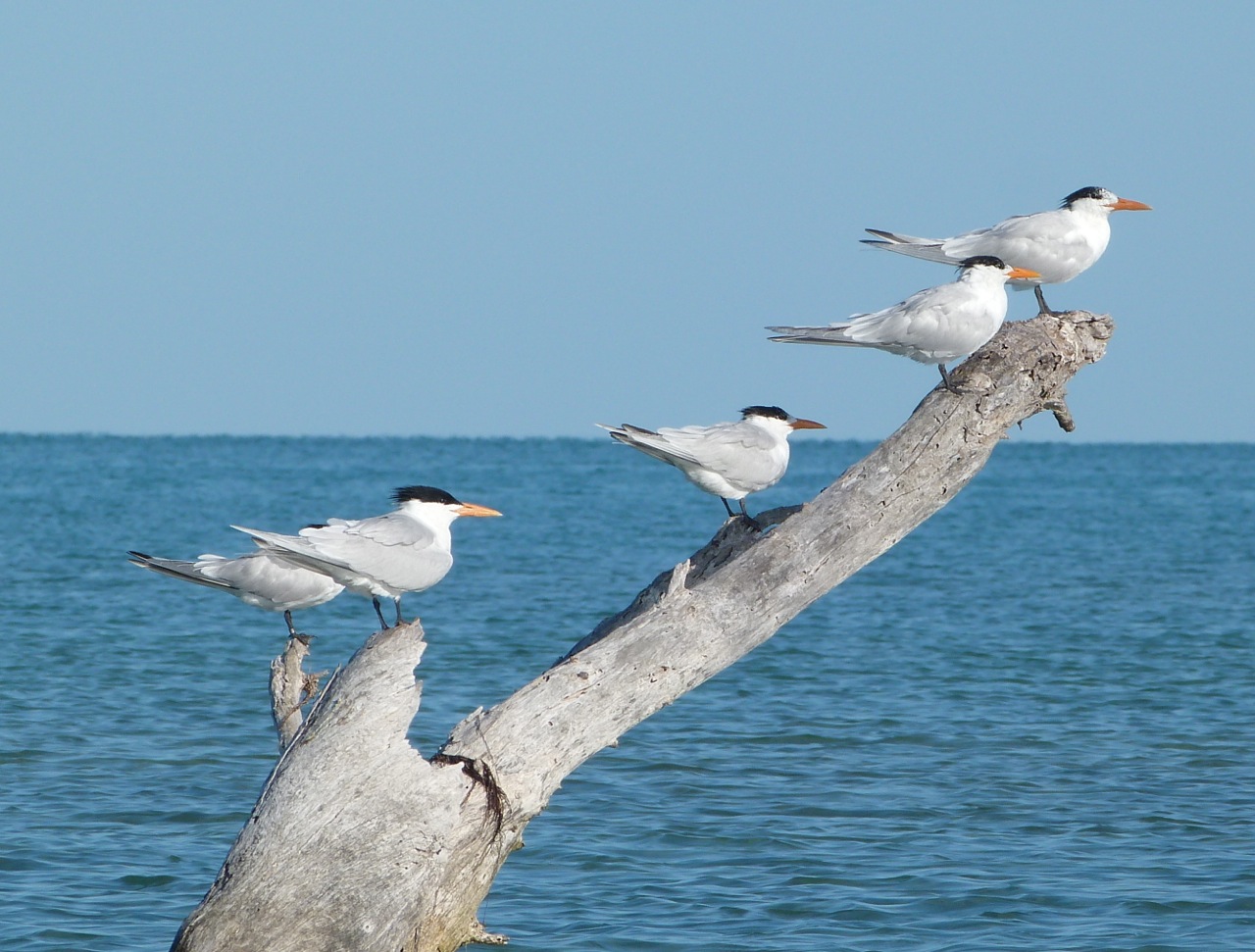
Royal Tern, Abaco, Bahamas (Marls) 1…deserves another…Royal Tern, Abaco, Bahamas (Marls) 2…and a few more besides…Royal Tern, Abaco, Bahamas (Marls) 3

We passed these fine Royal Terns during the boat ride ride out to the bonefishing grounds of the Abaco Marls. The single dead tree lay alone in a vast expanse of open water near the mangrove swamps, providing a perfect perch and vantage point for the birds. Their positioning on the tree suggested a distinct “pecking order”, which turned out to be literally true. The terns were unembarrassed by our presence, but at one stage they all took off and circled lazily round once before settling back on the tree. Those that tried to take a higher perch were aggressively treated by the original occupant. In the end, things settled down much as before. However, one disappointed claimant to promotion was dispossessed of the main trunk entirely. He ended up, uncomfortable and huffy, on a small stump facing the opposite way to the rest of the birds – perhaps from wounded dignity, or to make his feelings known through body language….Royal Tern (Sterna maxima), Abaco Marls, Bahamas 5

220px-Status_iucn3.1_LC.svg 

Unknown's avatar

MASTERS OF UNDERWATER CAMOUFLAGE: BAHAMAS REEF FISH (7)


BAHAMAS MASTERS OF UNDERWATER CAMOUFLAGE

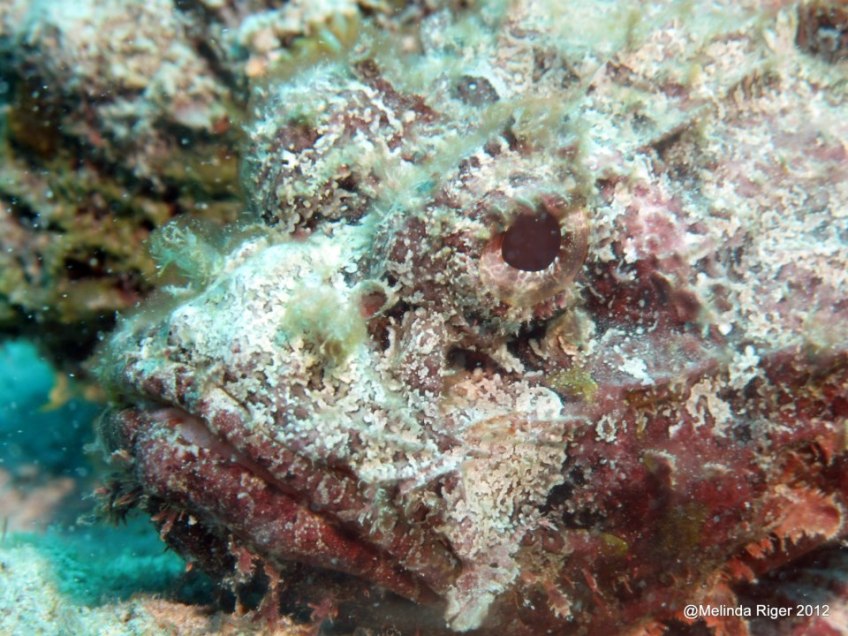
SCORPIONFISHScorpionfish camouflaged against coral ©Melinda RigerScorpionfish Close-up ©Melinda Riger @GBS

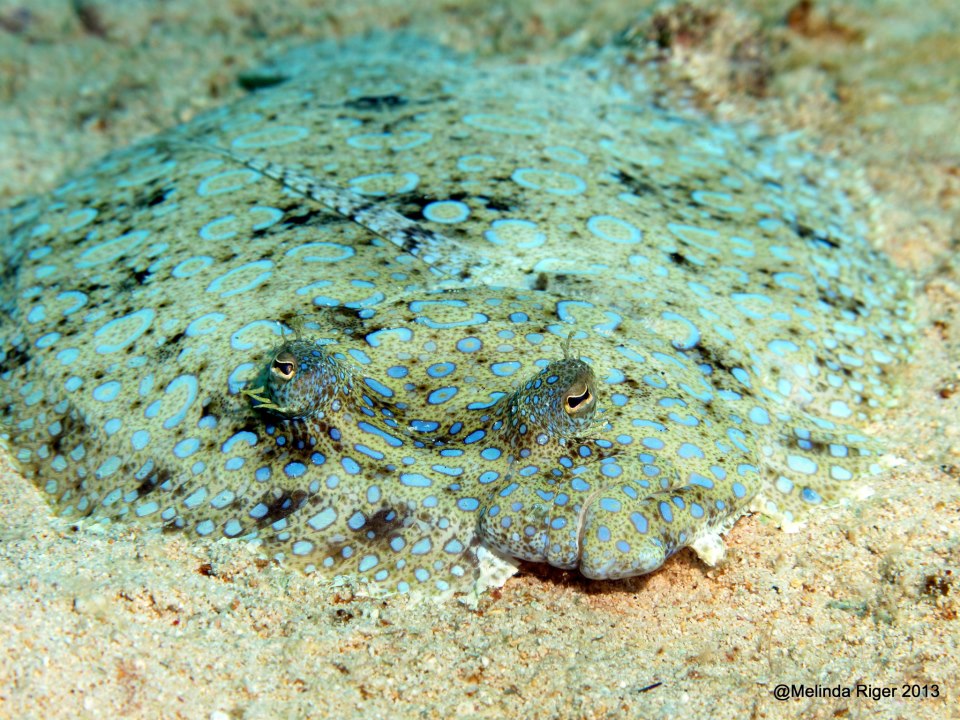
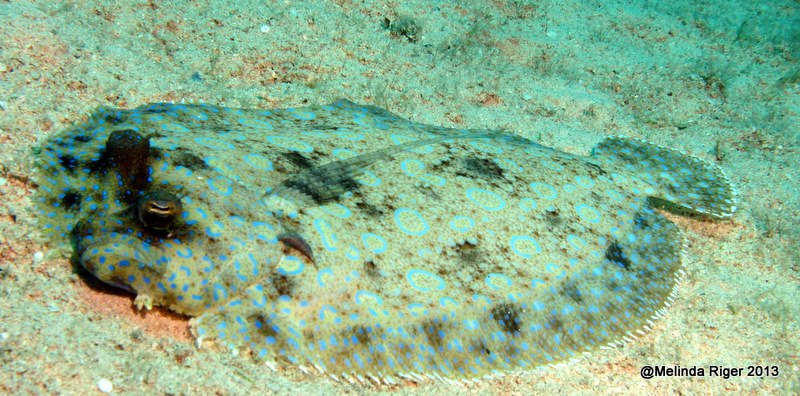
PEACOCK FLOUNDER or PLATE FISH Bothus lunatusPeacock Flounder Peacock FlounderPeacock Flounder ©Melinda Riger @ GB ScubaPhotos: Melinda at Grand Bahama Scuba

This is my last post until next week, when apparently we can expect a snowy welcome. Hmmmm. Plenty of new material for kind followers – both of you..

20130321-075611.jpg

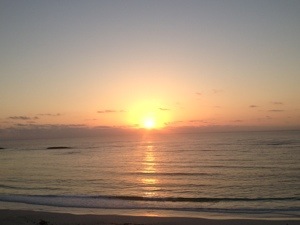
DELPHI DAWN

Unknown's avatar

HUMMINGBIRDS OF ABACO SPARKLING IN THE SUN


KS Hummer 4

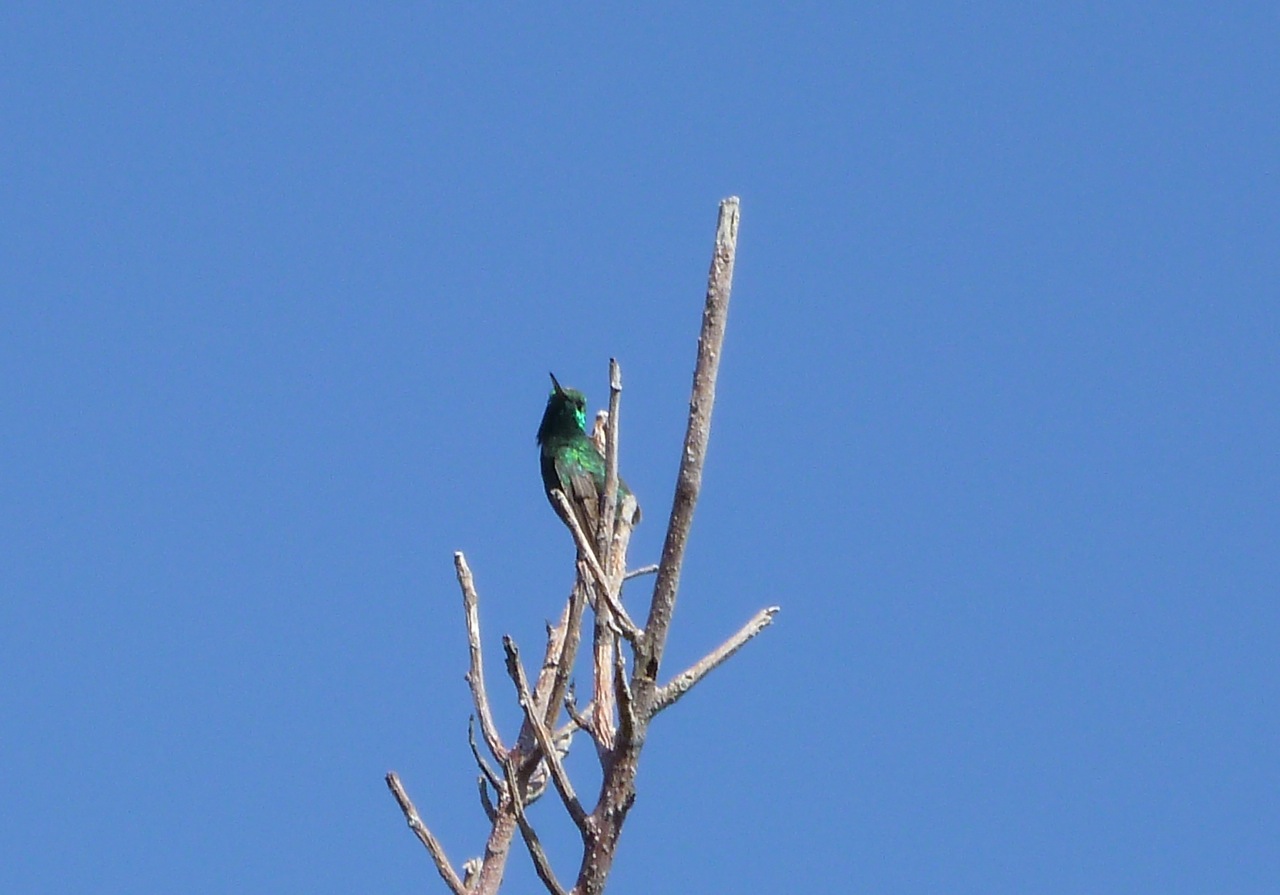
This is a ‘holding’ post while I am actually on Abaco, to be rejigged in due course. The weather is a bit variable, my fishing is somewhat variable (as usual – more miss than hit, though my biggest bone yet a couple of days ago), the birds are fantastic. Abaco has two hummingbird species, the endemic Bahama Woodstar and the Cuban Emerald. The Woodstars are rather pushed around by the Emeralds, and tend to be scarcer where there are plenty of Emeralds. We are lucky at Delphi that both species coexist in relative harmony, although this may be largely due to the sugar-water feeders and the hummer-friendly planting around the Lodge. Here are a few irridescent images I’ve taken in the last few days. Things are a bit slow here (the internet connections, not me), so the image order, formatting and sizing may need attention later on…

KS Hummer 6KS Hummer 1KS Hummer 3KS Hummer 5Oh. Is that the time? I need a Kalik and lie down. I’ll add a couple pics more later!

NB these photos are posted exactly as taken. No photoshop, no iFiddling, no cropping. That’s how close you can get to these tiny birds…

ADDENDUM A few shots of a hummer in flight feeding on plants can now be seen on my subsidiary website HERE

Unknown's avatar

A RARE ABACO PARROT DISPLAYS A RARE TALENT…


DCB GBG Cover Logo

A RARE ABACO PARROT DISPLAYS A RARE TALENT…

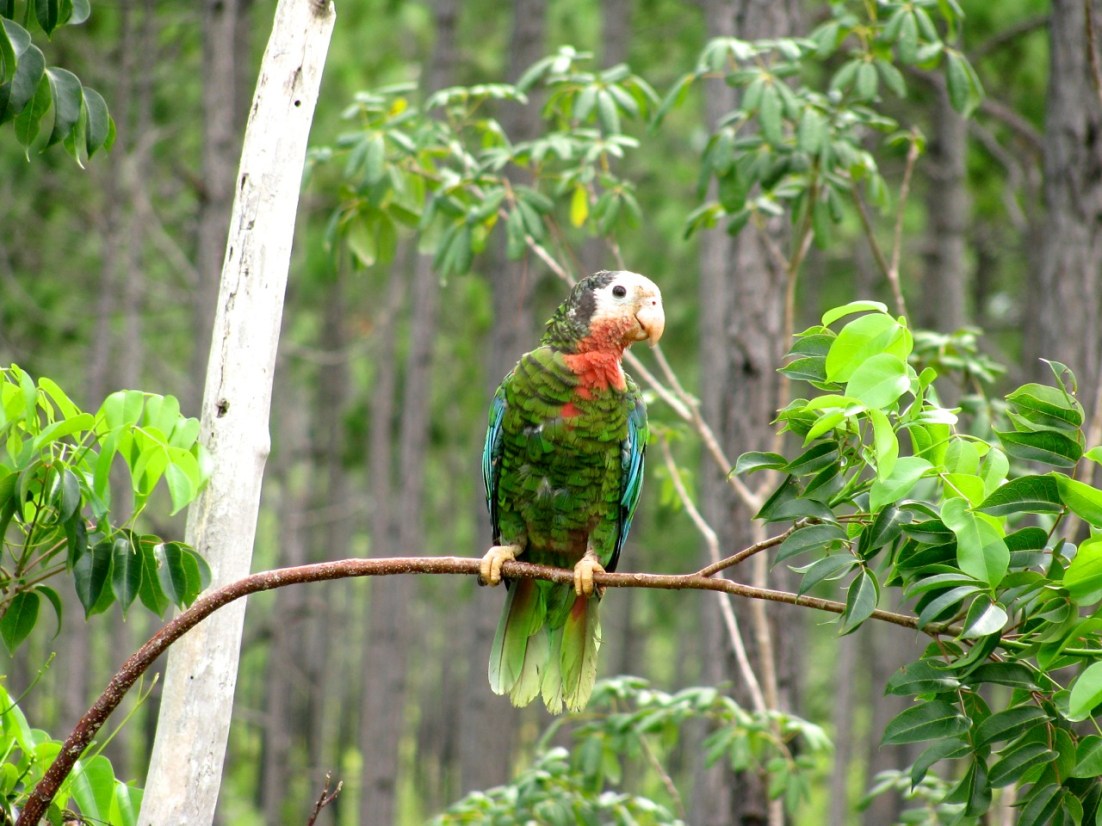
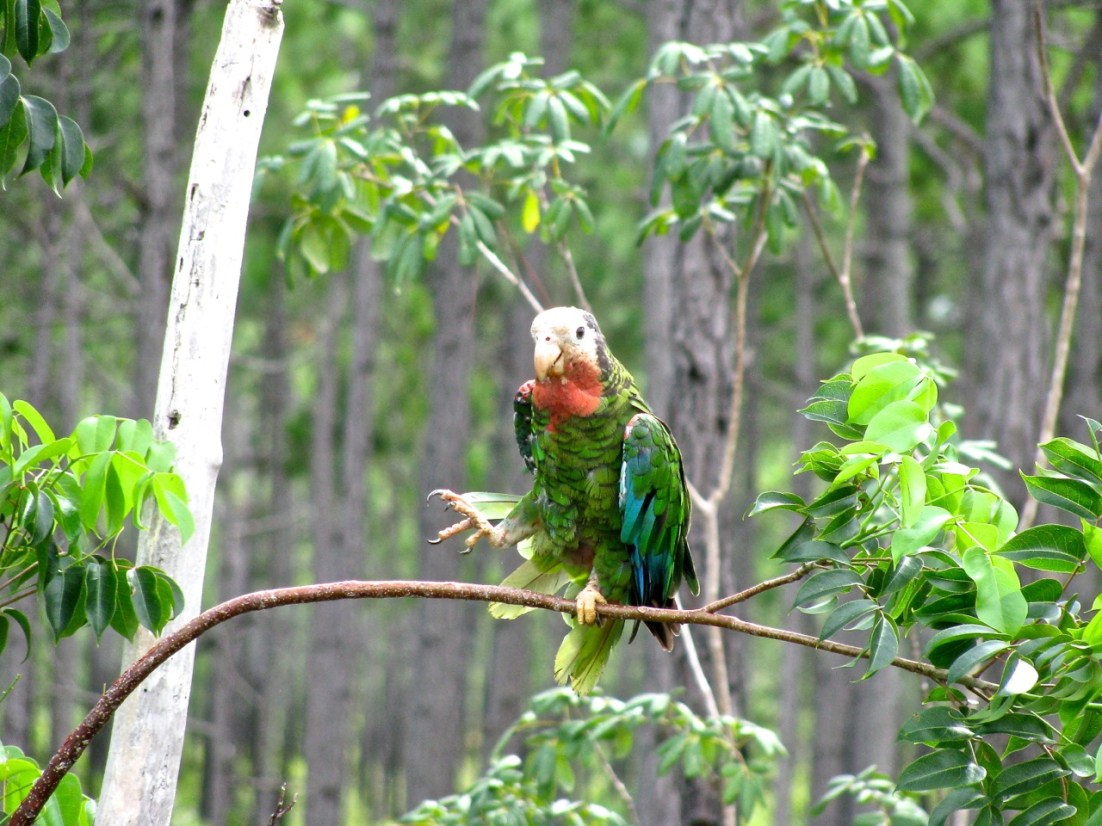
WOULD YOU LIKE TO SEE MY LITTLE TRICK?ABACO PARROT CS 13-3

I’M A BIT CAMERA-SHY – I’LL JUST TURN ROUNDABACO PARROT CS 13-4

THAT’S BETTER. ARE YOU SURE YOU ARE READY FOR THIS?ABACO PARROT CS 13-2

TA DAAAAAAAAAAAAAAAAAAAABACO PARROT CS 13-1

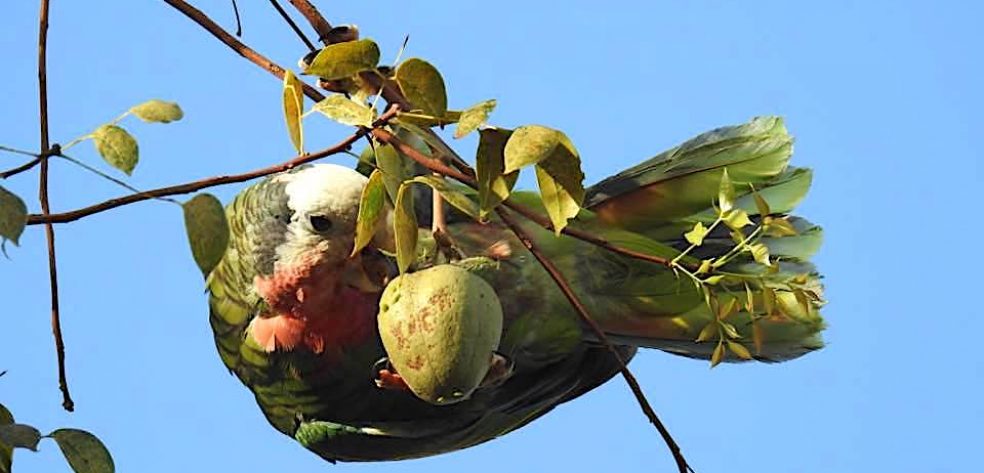
The Abaco Parrot is a unique subspecies of Cuban Parrot found on only Abaco. They are the only parrot to nest underground, in limestone caves in the pine forest. Their numbers have increased from near extinction to a sustainable population as the result of an intensive program of conservation and anti-predation. They get plenty of publicity hereabouts, and have their own page HERE. We normally avoid too much whimsy in these parts, but I am in parrot territory right now, so I have given myself permission to break my own rule. Photos: ©Caroline Stahala (who looks after them)

Unknown's avatar

HERRING GULLS (Larus smithsonianus) CLOSE ENCOUNTERS OF A PREFERRED KIND


Herring Gull Header

HERRING GULL Larus smithsonianus

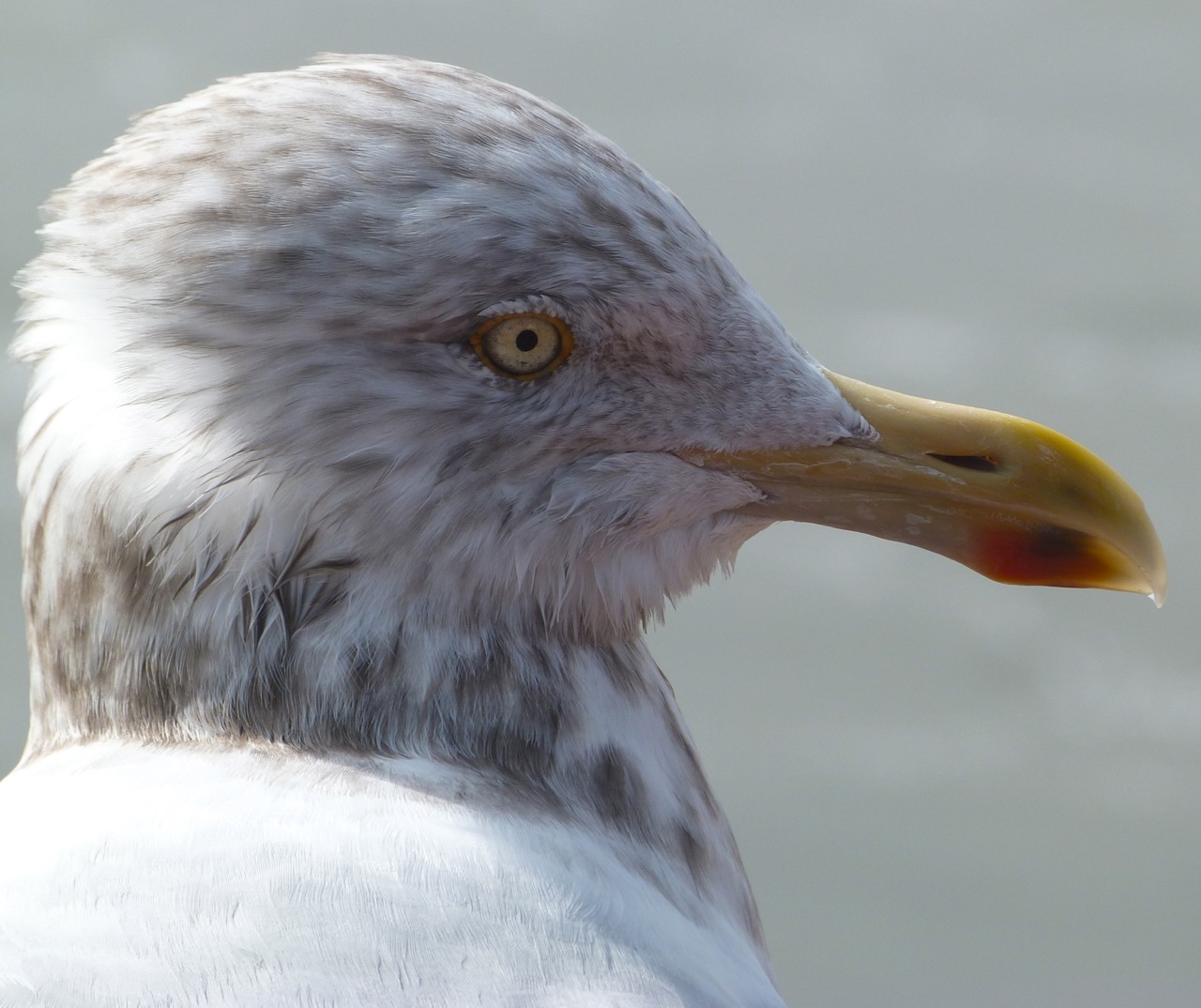
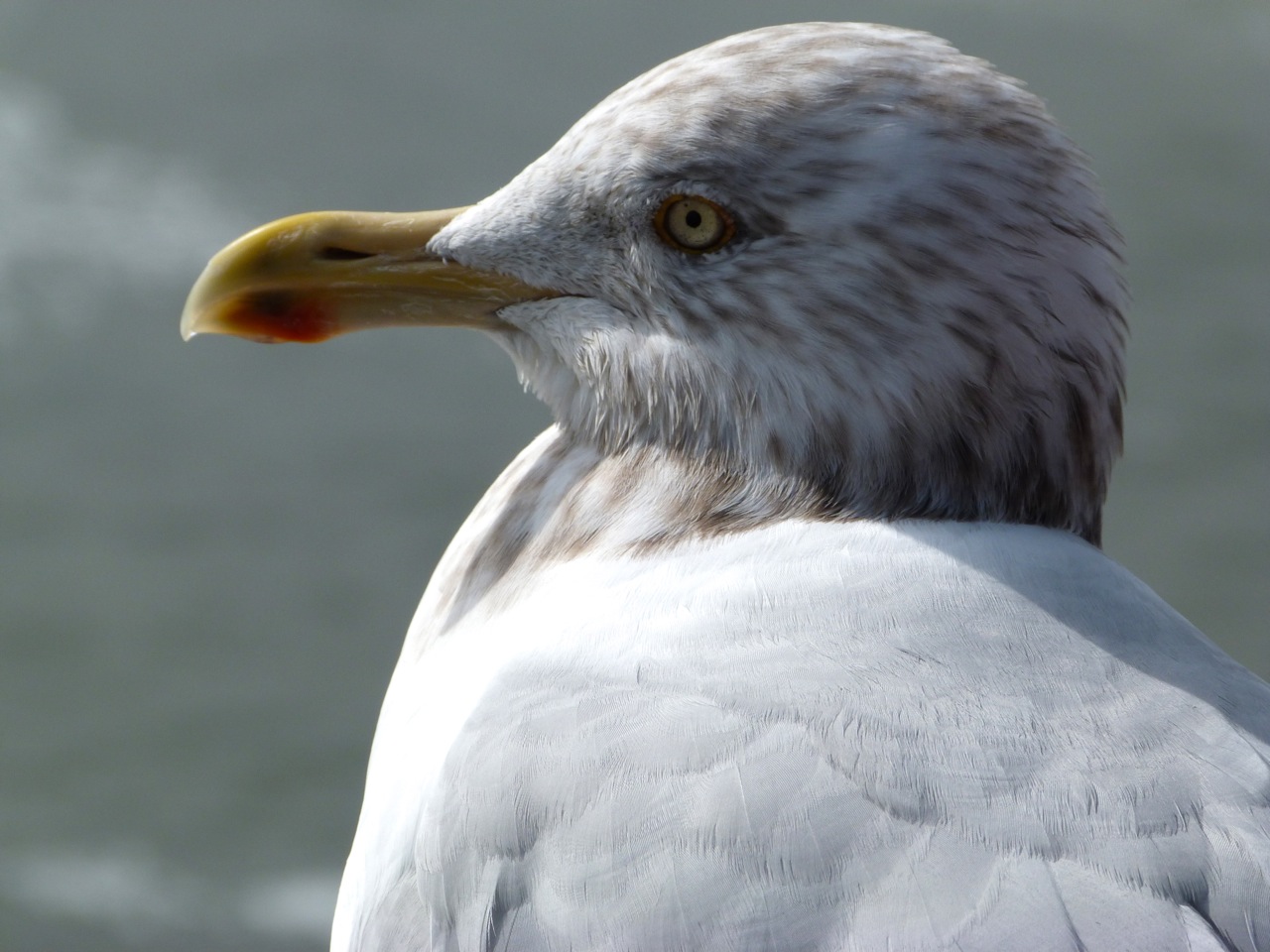
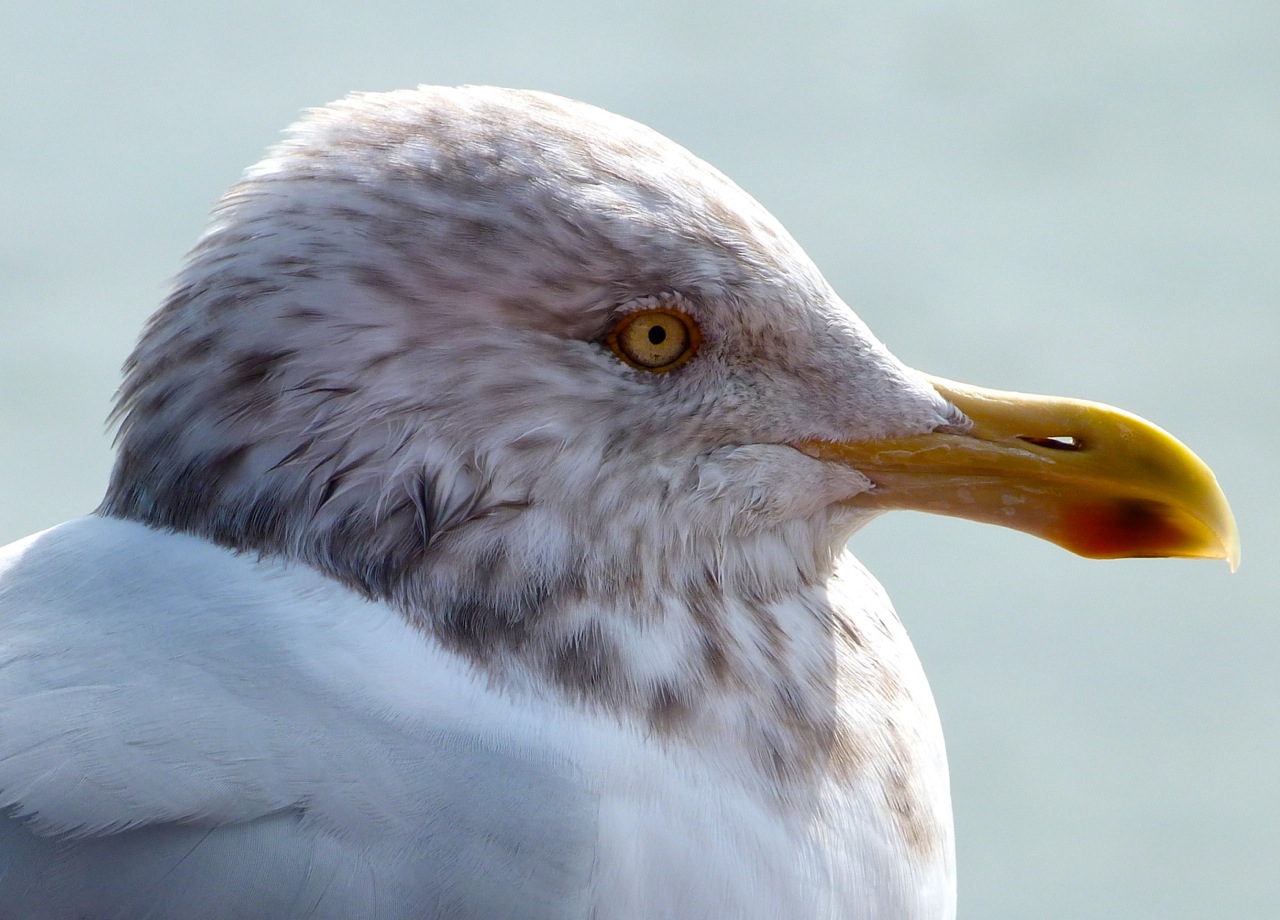
The Herring Gull needs no introduction. So I won’t give it one. Instead, here are some close-ups of one that obligingly stayed still long enough, and at close enough range, to enable me to focus. The final two are possibly worth single- or double-clicking on to see the finer details. I prefer cooperative birds like this…

HERRING GULL IN FAMILIAR ‘BOAT POSE’Herring Gull 2Herring Gull 4Herring Gull 3Note the characteristic crossing of the black-and-white wing-tip feathers

HERRING GULL HEAD SHOTSHerring Gull 1Herring Gull 5All images ©RH; audio clip from the wonderful Xeno-canto archives

Unknown's avatar

ROCK BEAUTY Holacanthus tricolor: BAHAMAS REEF FISH (5)


Rock Beauty Desktop WP clip 

BAHAMAS REEF FISH (5) – ROCK BEAUTY Holacanthus tricolor

(No, this is not all about you, Madge…)

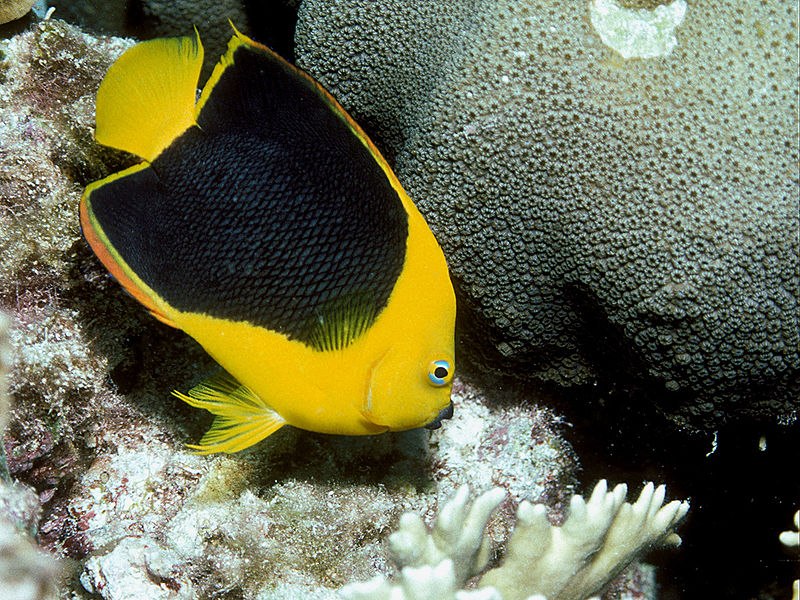
The Rock Beauty is a species of small Angelfish, measuring up to 10 inches in length. They are bright yellow and dark blue, in varying proportions according to the stage of development, with startling blue eyelids. They are mainly sponge-feeders, but vary their diet with plankton, algae, corals and even small jellyfish. Although the cheerful colouring of the Rock Beauty might make many think “my aquarium”, their diet – particularly the need for sponges – makes them unsuitable for captivity (see below for details). They also become aggressive, and cannot be successfully bred in an aquarium which is an excellent lifestyle choice by them, and no doubt helps them to retain an IUCN listing of LC.220px-Status_iucn3.1_LC.svg

These fish inhabit the reefs of  the tropical western Atlantic down to the northern areas of the Gulf of Mexico. Although mainly encountered on reefs, they are capable of living at considerable depths, and have been found at more than 90 meters.

ADULT ROCK BEAUTYRock Beauty

Adult Rock Beauties are often found in pairs year round, perhaps suggesting a long-term monogamous bond. The pairs reproduce by rising up in the water, bringing their bellies close together, and releasing clouds of sperm and eggs. The female can release anywhere from 25 to 75 thousand eggs each evening and as many as ten million eggs during each spawning cycle. The eggs are transparent, buoyant, and pelagic, floating in the water column. They hatch after 15 to 20 hours into larvae that lack effective eyes, fins, or even a gut. The large yolk sac is absorbed after 48 hours, during which time the larvae develop normal characteristics of free-swimming fish. Larvae are found in the water column and feed on plankton. The larvae grow rapidly and about 3-4 weeks after hatching the 15-20mm long juvenile settles on the bottom.

JUVENILE ROCK BEAUTY
Rock Beauty (Juvenile)

The Rock Beauty Angelfish is considered to be a difficult fish to keep in captivity; it is ill-suited for all but the most experienced aquarists. They are highly specialised feeders that will likely perish without some marine-sponge formulation in their daily diet. They are an aggressive species. Most aquarists recommend a minimum tank size of 100 gallons. Young Rock Beauty Angelfish feed in part, on the slime of other fish and will persistently chase their tank-mates and nip at them. It is not a reef safe fish, and larger specimens may nip at or consume corals, particularly stony or soft ones, and ornamental invertebrates.800px-Holacanthus_tricolor_1

Credits: Melinda Riger of Grand Bahama Scuba, random pickings, ‘DT Wallpapers’ & wiki

Unknown's avatar

RED-TAILED HAWKS (Buteo jamaicensis) RAPTOR RAPTURE


 RED-TAILED HAWKS: RAPTOR RAPTURE

220px-Status_iucn3.1_LC.svg

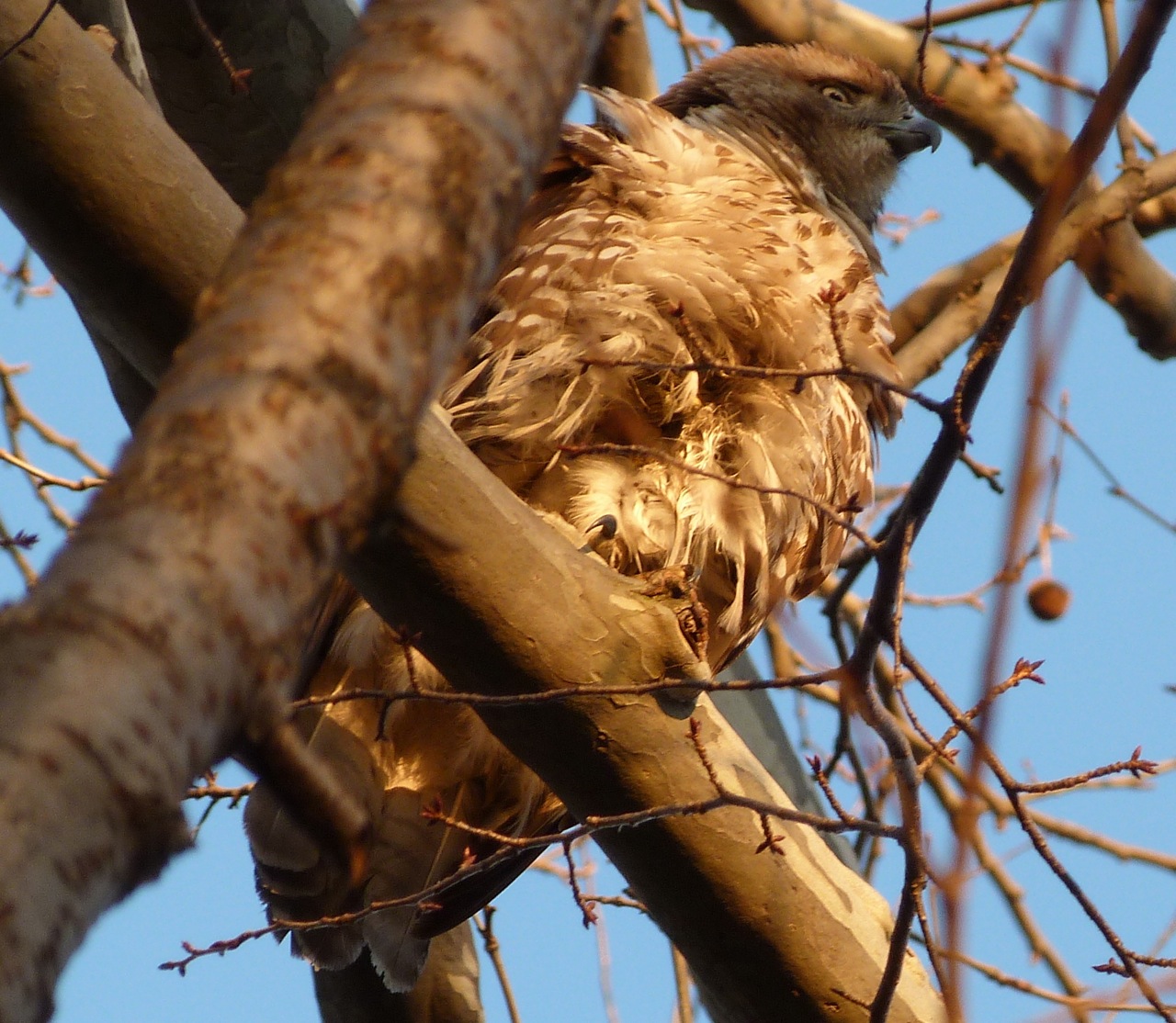
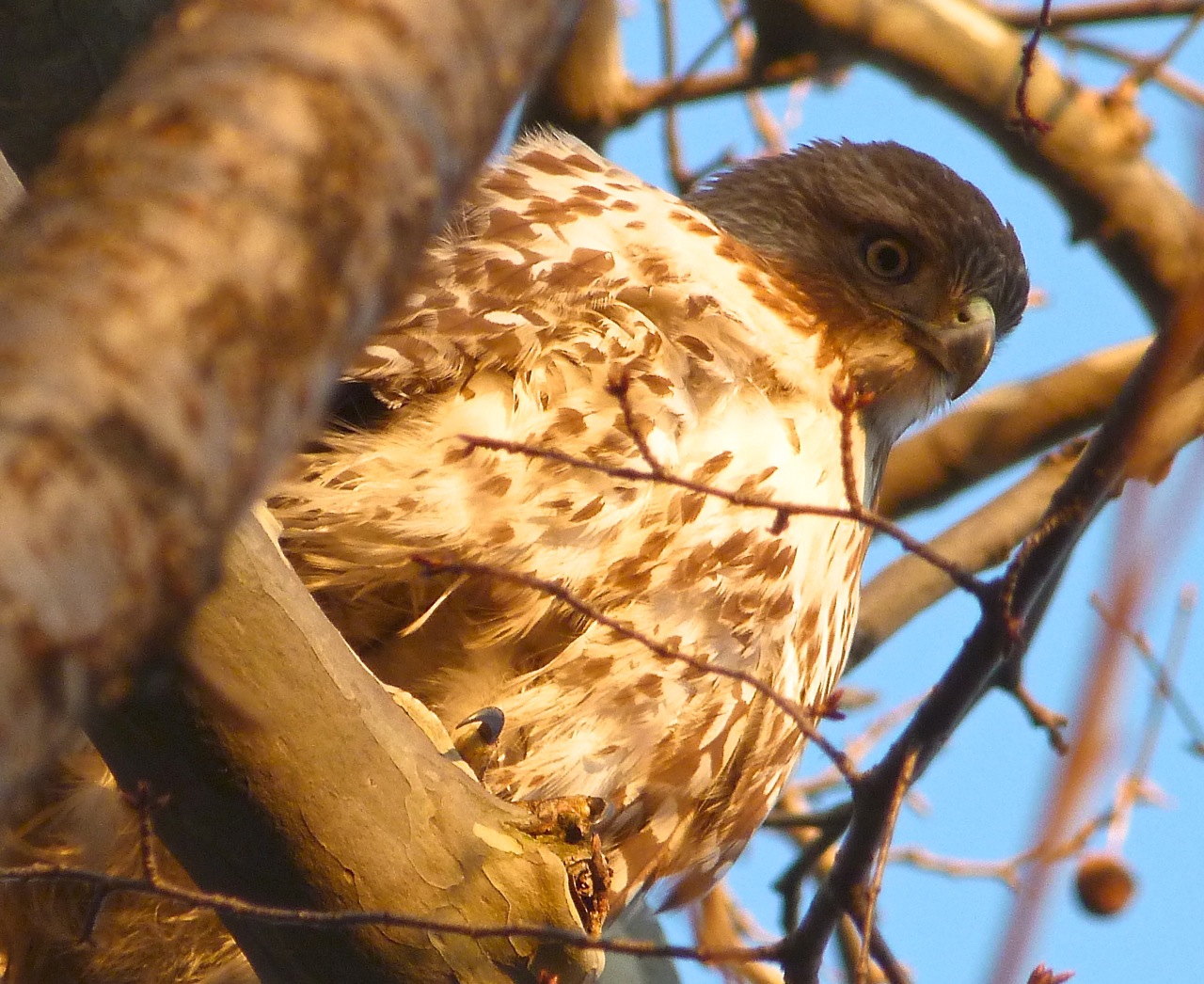
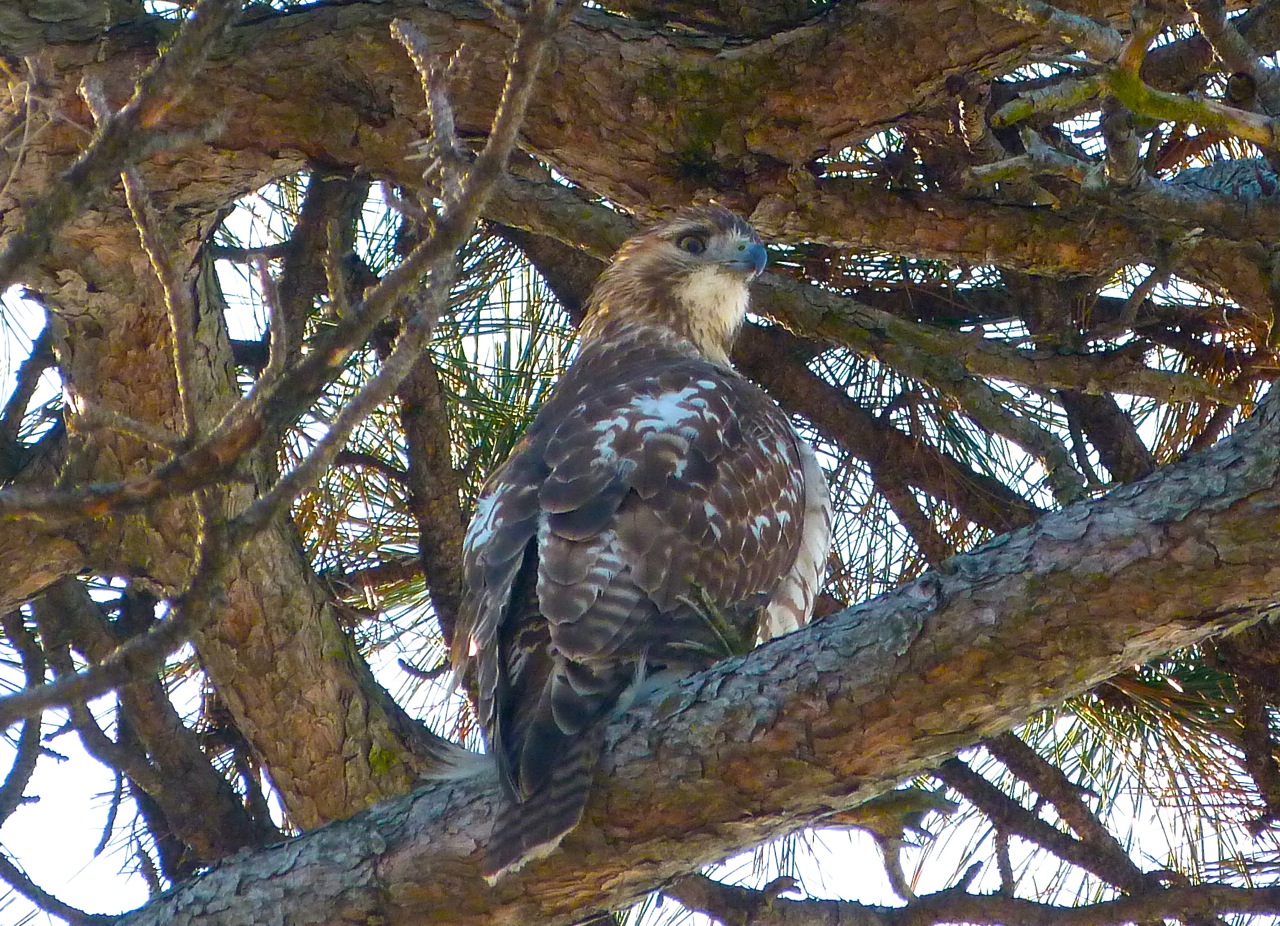
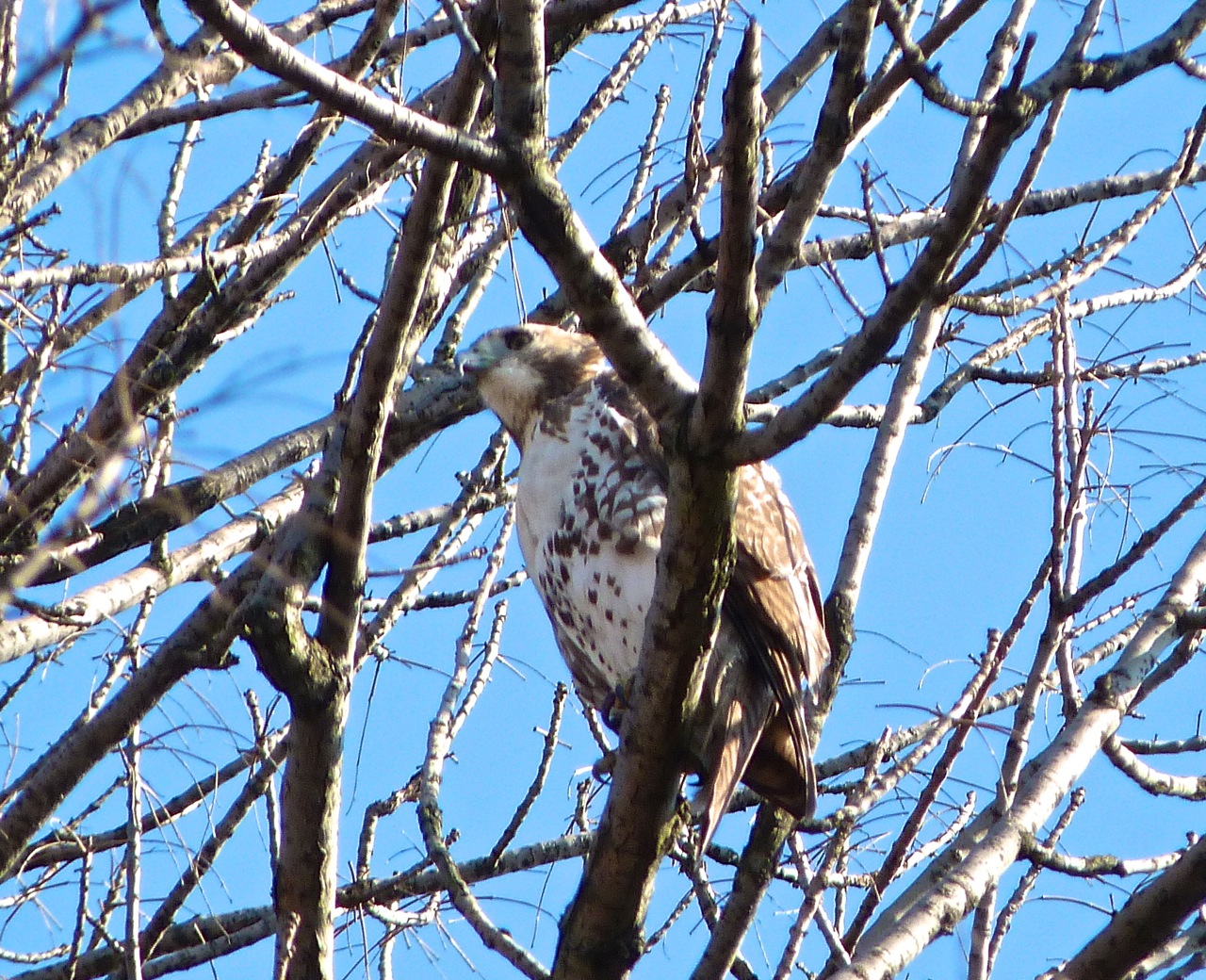
Red-tailed hawks are one of the commonest and largest  BUTEO species in North America, the Caribbean and further afield. There are fourteen widely-distributed subspecies. Their omni-habitat flexibility helps to maintain their prolific populations. They are equally at home in forests, grassland, open country, desert and even cities, at most altitudes. Red-tailed Hawk CP 7Red-tailed Hawk CP 1

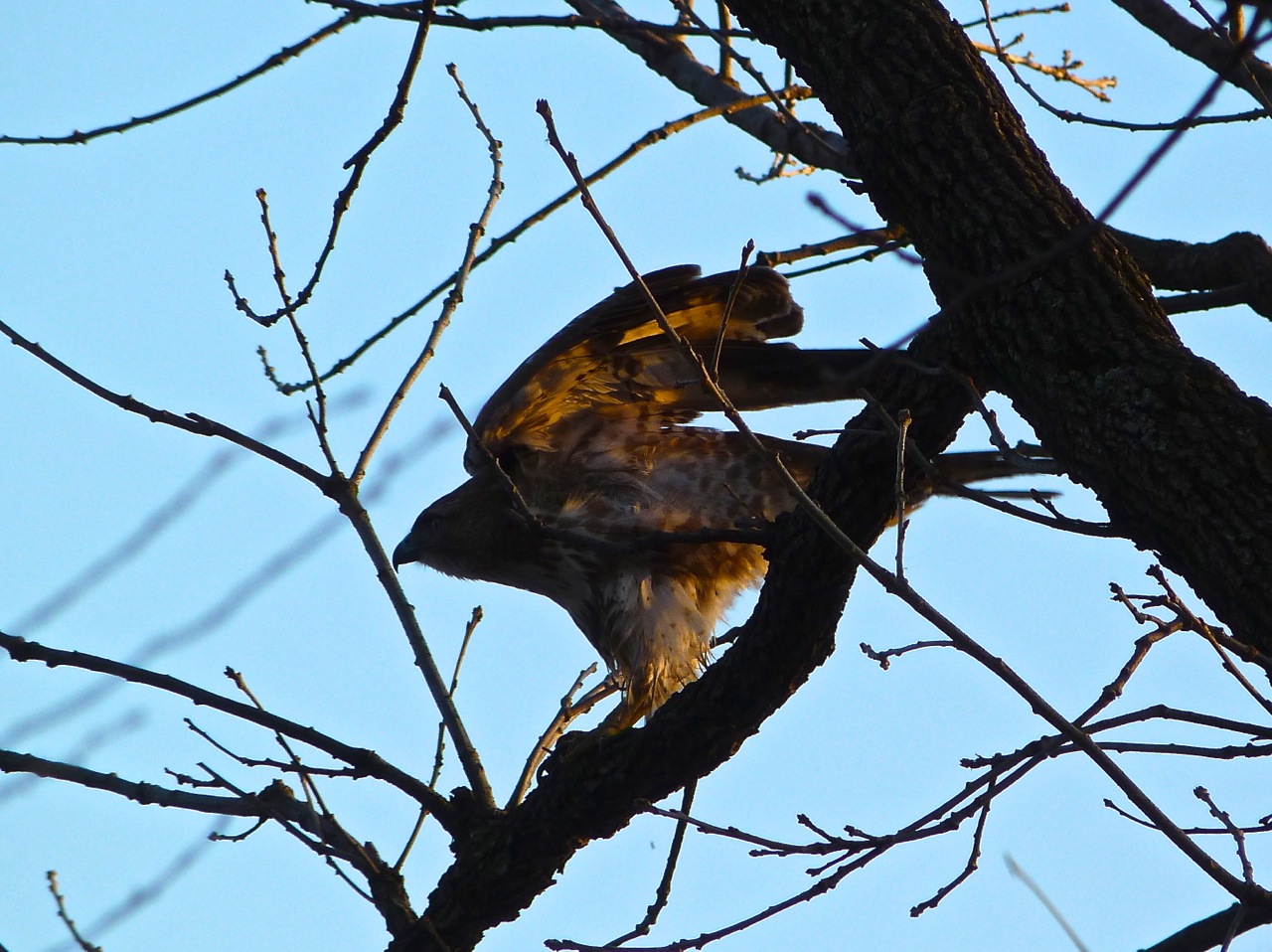
This red-tail is preparing for flight. It had been sitting upright (see above), scanning for prey. Suddenly it hunched forwards, poised for take-off, the light of late afternoon sun catching its leg feathers. Moments later it raised its wings and was gone in an instant – the next photo an unusable blur of feathery speed.Red-tailed Hawk CP 6Red-tailed Hawk CP 3

6 RED-TAILED HAWK FACTS TO STARTLE YOUR AUNT WITH

1. The RTH displays SEXUAL DIMORPHISM in size – females average 25% heavier than males

2. Immature birds have yellowish irises. As the bird matures the iris darkens to a reddish-brown hue

3. They are easily trained to hunt: most hawks used for (tightly regulated) falconry in the US are Red-tails

4. They use tall trees, high rocks, utility poles or buildings as perch sites to scan large areas for prey

5. City hawks helpfully prey on rock pigeons and rats. ROSIE lives in Washington Sq NYC & has a web-cam

6. One urban RTH, known as PALE MALE, became famous as the first Red-tail in decades to successfully nest and raise young in Manhattan. He was immortalised by MARIE WINN in her book Red -Tails in Love: A Wildlife Drama in Central Park [RH Note: Good read]

Red-tailed Hawk CP 4Red-tailed Hawk CP 5

6 RED-TAILED HAWK FACTS TO SURPRISE YOUR UNCLE WITH

1. The fierce, screaming cry of the RTH is often used as a generic raptor sound effect in TV shows & films

2. Eggs are incubated primarily by the female. The male helps out when the female leaves to hunt or stretch her wings. The male brings food to the female while she incubates

3. RTH young are known as eyasses (“EYE-ess-ez”), a falconry term for a raptor still in its downy stage

4. About 6 / 7 weeks after fledging RTH young begin to capture their own prey. They reach breeding maturity around 3 years of age

5. Red-tailed Hawks can live for more than 2o years – the oldest recorded was 29

6. RTH feathers are considered sacred to many American indigenous people. The feathers of the RTH are regulated by the “Eagle Feather Law” which governs possession of feathers and parts of migratory birdsRed-tailed Hawk PPB 6Red-tailed Hawk PPB 5Red-tailed Hawk PPB 1AFTERWORD These photos were all taken recently in New York, in Central Park (The Ramble, a birding hotspot) and in Prospect Park, Brooklyn. They are therefore a bit of a cheat in a website based mainly on Abaco. But I have never managed to photograph a RTH on the island, so these pics are illustrative of what I might have photographed had I (a) seen a RTH (b) had my wits about me (c) for long enough to find my camera (d) to photograph it before it flew away (e) and sufficiently well to be able to use the result [Header and due credit to Wiki]

See also NICOLEs excellent birding website at http://www.oiseaux-birds.com/card-red-tailed-hawk.html

(PS apologies to those who have neither aunts nor uncles. I have no wish to be amitist or avunculist. Have you a cousin you can try?)

Unknown's avatar

MAN-O-WAR CAY, ABACO: THE HIDDEN BOAT-BUILDING VILLAGE


hole-in-the-wall-print-1803

MAN-O-WAR CAY, ABACO: THE HIDDEN BOAT-BUILDING VILLAGE 

I am very pleased to be able to feature a Guest Contributor Fabian Fernander, managing editor and owner of SANDY SLIPPER TRAVEL and online magazine. The boat-building history of the Bahamas, of Abaco, and in particular of Man-o-War Cay, is a fascinating one. It is not a subject in my own repertoire, so I welcome the chance to showcase Fabian’s article and the wonderful historic photos courtesy of the MAN-O-WAR HERITAGE MUSEUM.
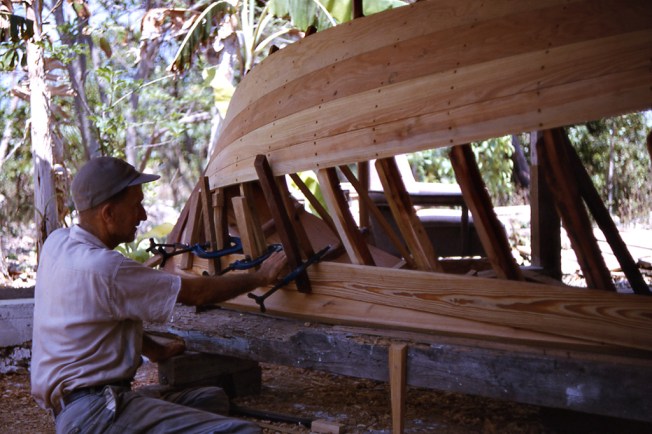
maurice-albury-building-dinghy-mow-19xx

Maurice Albury building dinghy on MOW cay 19xx

“Who would ever think nestled in the heart of the Bahamas. Hidden away from view. Inaccessible by large planes and removed from the hum of technology; would be a boat building village in the Bahamas.

Man of war cay (named after the bird) is a small yet well knitted community of bustling boat builders, that have been graced with their skill from generation to generation.

Residents here have always depended on shipbuilding for its livelihood and some boats are still handmade-without-plans in a tradition that has been passed down for centuries.”

boat-under-construction-wa-albury-yard-19602

Boat under construction W.H. Albury yard 1960

“The town has remained untransformed over time and resembles a New England sea-side village; and rightly so.

As its original inhabitants were both religious and political escapees; loyalist to be exact.

It is through resilience that these men and women who fled from their homes, picked up and honed the trait of boat building.

In the early days of boat building the residents began by using Abaco Pine to craft their world renowned fishing and sailing vessels.”

basil-sands-working-on-a-boatwh-albury-yard-1960

Basil Sands working on a boat, at the W.H. Albury yard 1960

“Boats were originally built by crafting a skeleton or rib of the boat from pine that grew locally in the Abaco forests. These skeletons were then hand carved and shaved to conform perfectly to the palms-up-spread template of the hull.

After the ribs were coupled, pine wood planks were then affixed to form the hull of the boat.

During the 1960′s when Abaco pine became a quintessential element in building structures and homes in all of the islands, the procurement of pine for boat building became harder and harder.

It is during that period that innovation reared its head once again and fiberglass became the material of choice to continue the successful process of building renown fishing and sailing vessels.

Using fiberglass as molds was a very expensive process, but in modernization a necessary tool that reduced the amount of manual labor required.

The frame of the wooden boat was coated with the fiberglass material and from this a permanent mold was created, which was then used to make the outer shell of numerous boats.

This style of boat is called the Outboard Runabout (or the Outboard Fishing Boat).

Many other types of boats are also made including model boats, 14 ‘ wooden Man O’War sailing dinghies and 21′ Man O’War speed boats.

The boats have become collectors items and much requested custom designed artifacts.”
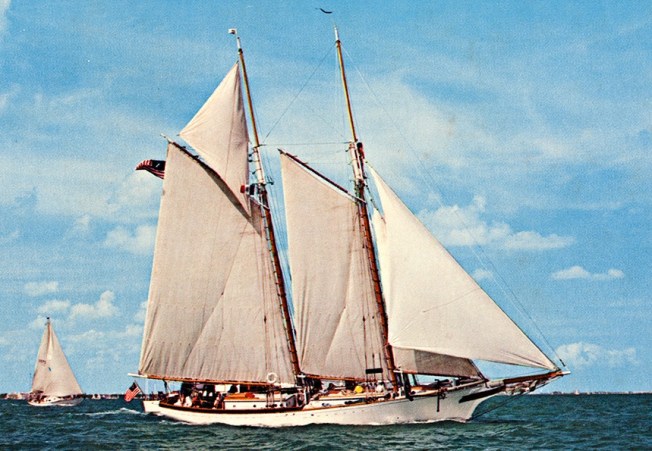
william-h-albury-schooner1

The William H Albury Schooner

“Man o’ War Village: another one of the hidden secrets of the Bahama Islands”

“About the author: Fabian Christopher is the Managing editor and owner of Sandy Slipper Travel and online magazine. An avid enthusiast of the Bahamas, he is always ready and available to make your vacation dreams in the islands a memorable experience.”

Sandy Slipper Logo

MoW Museum Logo

Photo credits  MAN-O-WAR HERITAGE MUSEUM 

(except for historic 1803 aquatint header of the ‘late’ Hole-in-the Wall)

[RH note: If you have enjoyed this article, I recommend a visit both to Fabian’s website (link in the first para), and to the Museum’s website, also linked above, where you will find a wealth of historical Abaco material]
Unknown's avatar

YELLOW STINGRAY Uboritas jamaicensis: BAHAMAS REEF FISH (4)


240px-Yellow_Stingray,_Belize,_2007-09

BAHAMAS REEF FISH (4) – YELLOW STINGRAY Uboritas jamaicensis

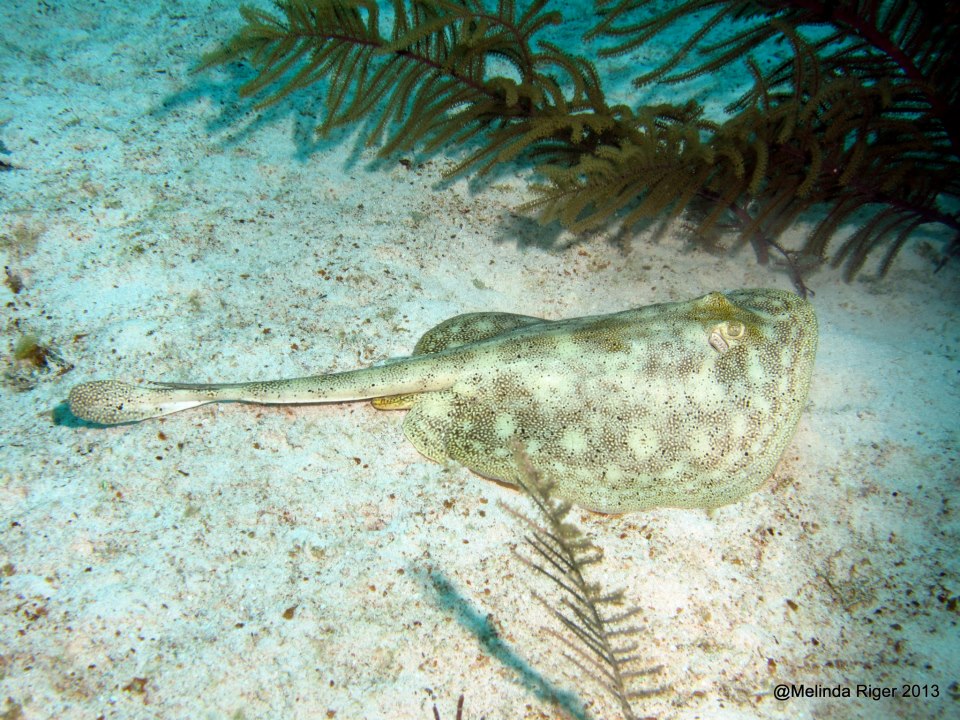
The YELLOW STINGRAY (Uboratis jamaicensis) is one of several ray species found in the tropical western Atlantic ocean. They live  in shallow water on sandy or seagrass bottoms, and are commonly found near coral reefs. Their light and dark splotchy colouring can rapidly change according to the surroundings and the need for camouflage. Look at the photos below with half-closed eyes and (apart from knowing perfectly well that there’s a ray there), the blending in is remarkable.

The yellow stingray feeds on small invertebrates and fishes. It can use its ‘wings’ to uncover buried / hiding prey by disturbing the sand. It also has a subtle ‘passive’ method of hunting by using its mantle to form a lethal ‘cave’ that attracts shelter- or shade-seeking prey.Yellow Stingray ©Melinda Riger GB Scuba Bahamas

Yellow stingrays breed in seagrass. They are quite prolific, breeding year round and usually having two litters a year of up to 7 young. This species is ‘aplacental viviparous’: the developing embryos are sustained initially by yolk and later by uterine milk. To find out more about viviparity, you’ll find a section at the bottom of this post where the inquiring may opt in… Not everyone’s sac of yolk, I quite understand.

The yellow stingray is innocuous towards humans, but can inflict a painful injury with its venomous tail spine. The threats to the species are (1) taking as bycatch by commercial fisheries;  (2) collection for the aquarium trade; (3) negative impact from habitat degradation, both of reef areas and seagrass breeding grounds. For now, it remains common and widespread and retains its IUCN LISTING of ‘Least Concern’.Yellow Stingray

REPRODUCTIVE STRATEGIES (Marine Biodiversity, Canada)

As with all elasmobranchs, skate and rays are internal fertilizers.  Internal fertilization is beneficial because it increases the likelihood and efficiency of fertilization by reducing sperm wastage.  In addition, it ensures that the energy-rich eggs produced by the female are not consumed by predators, and that all the energy allocated to reproduction is passed to the embryos and not lost to the environment.  This is especially the case for species that retain their embryos until the embryos have completely developed, a reproductive mode termed viviparity.  Elasmobranches that practice viviparity are called viviparous (or live-bearing).  There are many types of viviparity, which can be divided into two broad categories: aplacental and placental viviparity. Placental viviparity is the most advanced mode of reproduction, during which the embryos are initially dependent on stored yolk but are later nourished directly by the mother through a placental connection.  This type of reproduction is not exhibited by any type of batoid.  Ovoviviparity (or aplacental viviparity), on the other hand, is the only mode of reproduction employed by rays.  In rays, the embryos rely on the substantial yolk within the ovulated egg only during the initial stages of development. After the nutrients stored in the egg have been consumed, the embryo ingests or absorbs an organically rich histotroph (or “uterine milk”) produced by the mother and secreted into uterus.  The most highly developed of these strategies occurs in some rays in which the lining of the uterus forms tiny, finger-like projections (termed trophonemata) that increase the surface area for histotroph secretion.  This form of nutrient supply (or maternal investment) results in very large offspring, which is characteristic of most species of ray.
For those now fluent in viviparity, the treat of one of Melinda Riger’s fabulous aquatic close-up photos –  keeping a close eye on you…Up close of the eye of a yellow stingrayCredits: Melinda Riger of Grand Bahama Scuba, with thanks; Wiki for other images / source material; selected online pickings

Unknown's avatar

SHARK FINS – OOOP! A MODEL USE OF HUMOUR TO CONVEY ASERIOUS MESSAGE (VIDEO)


306092_500604003294327_1470960886_n

SHARK FINS – OOOP! A MODEL USE OF HUMOUR
TO CONVEY A SERIOUS MESSAGE
(VIDEO)

The CAPE ELEUTHERA FOUNDATION has produced a short video about sharks and shark fins that manages to be both amusing and to carry a powerful conservation message. It’s a hard trick to pull off successfully. Attempts to use humour to leaven a serious message or to modify earnestness in presentation so often trespass into the no-man’s land known as ‘Meh’ (twinned with ‘Wotevah’). I’m grateful to the always-interesting ABACO SCIENTIST for sharing this item. Photo credit: Melinda Riger, with thanks for use permission [I am posting this from NYC via iPhone, so any weird formatting or typos will have to be dealt with next week]

Unknown's avatar

GRAY ANGELFISH (Pomacanthus arcuatus) BAHAMAS REEF FISH (3)


Gray_angelfish
Gray Angelfish

GRAY ANGELFISH (Pomacanthus arcuatus) BAHAMAS REEF FISH (3)

I recently posted about the highly coloured QUEEN ANGELFISH, a striking coral reef resident glowing with fluorescent blues and yellows. It’s the Angelfish that went into showbiz and succeeded. Its close cousin the Gray Angelfish is a more sedate creature, with the appearance of a professional – law, possibly, or medicine. That thin blue fin-edging suggests a flamboyant streak. Slightly mean mouth? Lawyer.**Gray Angelfish ©Melinda Riger GB Scuba

This species is found in the warm waters of Florida, and south through the Bahamas and Caribbean as far as Brazil. They are found at depths from 2 m. down to 30 m. You are most likely to encounter one on a coral reef feeding on sponges, its main diet.  The fish below with the bluer face is a teenager, in transition between juvenile and adult. Gray Angelfish between juvenile and adult phase

It’s clear from side on that Gray Angelfish are ‘upright flat’, but it’s surprising just how slim they actually are. Photographer Melinda Riger has captured this front view against a stunning red backdrop. Disappointingly, these fish seem to lead blameless and anodyne lives as reef-foragers, and I’ve been unable to turn up a single interesting fact about them. That’s lawyers for you.**Gray Angelfish (front view) ©Melinda RigerGray Angelfish ©Melinda Riga @ BP ScubaPhoto Credits: main images ©Melinda Riger, Grand Bahama Scuba; Header – Wikipix

[youtube http://youtu.be/QETF9UWeXFk]

** I can say this – I am one…

Unknown's avatar

SEABIRDS, SHOREBIRDS & WADERS: 30 WAYS TO DISTINGUISH THEM


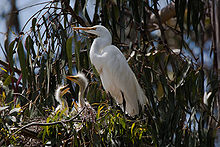
Magnificent Frigate male Wikipics
Magnificent Frigatebird

SEABIRDS, SHOREBIRDS & WADERS: 30 WAYS TO DISTINGUISH THEM 

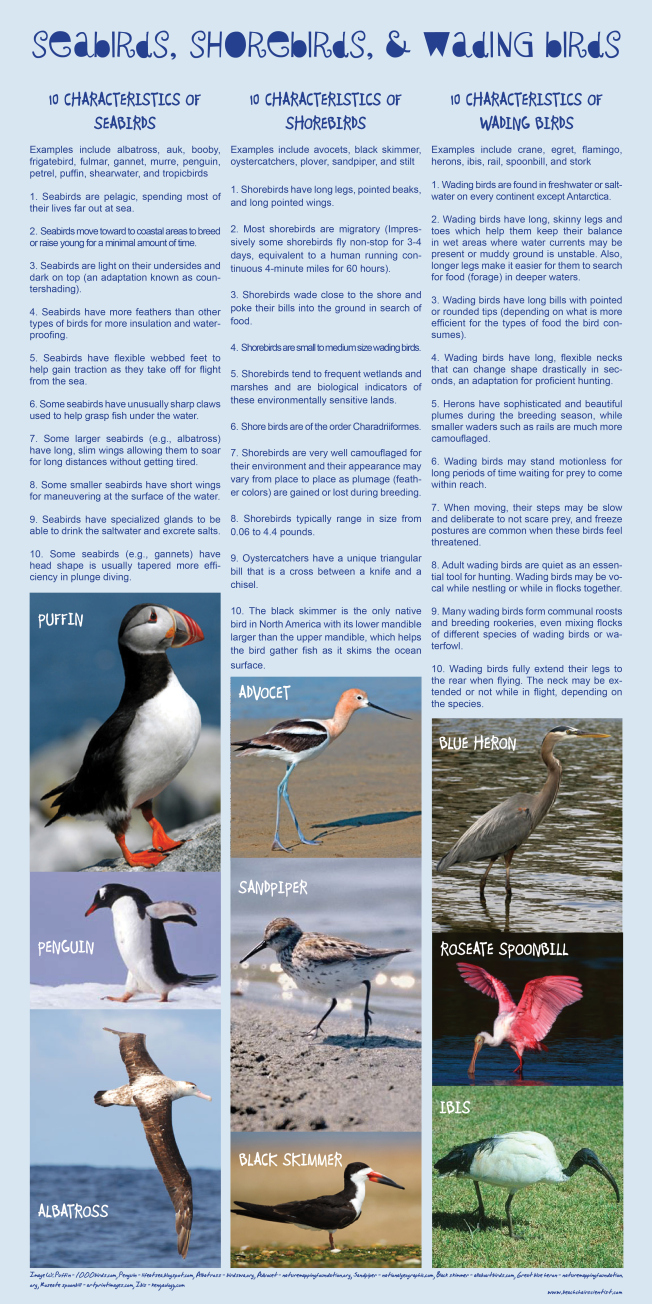
I have recently been looking at hundreds of photos of birds, many with aquatic or semi-aquatic lives. These can be broadly categorised as seabirds, shorebirds or wading birds. But with some bird breeds, there can be doubt as to which category applies. There is the strict Linnaean ordering of course, but in practice there is a degree of informal category overlap and some variation in the various bird guides. This is especially so between shorebirds and the smaller, less exotic wading birds. Shorebirds may wade, and wading birds may be found on shores. Then I remembered a past blog post by the estimable BEACH CHAIR SCIENTIST that I thought deserved an outing here. I re-blogged the chart from BCS early last year. In the meantime site followers and site hits have surprisingly increased considerably, but I suspect only the dedicated make time to sift through any blog’s archives…  Even if you have no problem distinguishing birds in the 3 categories, there are avian characteristics within each list that are interesting observations in themselves. 

10 CHARACTERISTICS OF SEABIRDS 

Whitetailed Tropicbird WikiPicWhite-tailed Tropicbird

(Examples include albatross, auk, booby, frigatebird, fulmar, gannet, penguin, petrel, puffin, shearwater, and tropicbirds)

1. Seabirds are pelagic, spending most of their lives far out at sea.
2. Seabirds move toward to coastal areas to breed or raise young for a minimal amount of time.
3. Seabirds are light on their undersides and dark on top (an adaptation known as countershading).
4. Seabirds have more feathers than other types of birds for more insulation and waterproofing.
5. Seabirds have flexible webbed feet to help gain traction as they take off for flight from the sea.
6. Some seabirds have unusually sharp claws used to help grasp fish under the water.
7. Some larger seabirds (e.g. albatross) have long, slim wings allowing them to soar for long distances without getting tired.
8. Some smaller seabirds have short wings for maneuvering at the surface of the water.
9. Seabirds have specialized glands to be able to drink the saltwater and excrete salts.
10. Some seabirds (e.g. gannets) have a head shape that is usually tapered for more efficiency in plunge diving.

10 CHARACTERISTICS OF SHOREBIRDS 

Wilson' Plover male Wikipic

Wilson’s Plover

(Examples include avocets, black skimmer, oystercatchers, plover, sandpiper, and stilt)

1. Shorebirds have long legs, pointed beaks, and long pointed wings.
2. Most shorebirds are migratory (Impressively some shorebirds fly non-stop for 3-4 days, equivalent to a human running continuous 4-minute miles for 60 hours).
3. Shorebirds wade close to the shore and poke their bills into the ground in search of food.
4. Shorebirds are small to medium size wading birds.
5. Shorebirds tend to frequent wetlands and marshes and are biological indicators of these environmentally sensitive lands.
6. Shore birds are of the order Charadriiformes.
7. Shorebirds are very well camouflaged for their environment and their appearance may vary from place to place as plumage (feather colors) are gained or lost during breeding.
8. Shorebirds typically range in size from 0.06 to 4.4 pounds.
9. Oystercatchers have a unique triangular bill that is a cross between a knife and a chisel.
10. The black skimmer is the only native bird in North America with its lower mandible larger than the upper mandible, which helps the bird gather fish as it skims the ocean surface.

10 CHARACTERISTICS OF WADING BIRDS 

Great Egret Wikipic
Great Egret

(Examples include crane, egret, flamingo, herons, ibis, rail, spoonbill, and stork)

1. Wading birds are found in freshwater or saltwater on every continent except Antarctica.
2. Wading birds have long, skinny legs and toes which help them keep their balance in wet areas where water currents may be present or muddy ground is unstable. Also, longer legs make it easier for them to search for food (forage) in deeper waters.
3. Wading birds have long bills with pointed or rounded tips (depending on what is more efficient for the types of food the bird consumes).
4. Wading birds have long, flexible necks that can change shape drastically in seconds, an adaptation for proficient hunting.
5. Herons have sophisticated and beautiful plumes during the breeding season, while smaller waders such as rails are much more camouflaged.
6. Wading birds may stand motionless for long periods of time waiting for prey to come within reach.
7. When moving, their steps may be slow and deliberate to not scare prey, and freeze postures are common when these birds feel threatened.
8. Adult wading birds are quiet as an essential tool for hunting. Wading birds may be vocal while nestling or while in flocks together.
9. Many wading birds form communal roosts and breeding rookeries, even mixing flocks of different species of wading birds or waterfowl.
10. Wading birds fully extend their legs to the rear when flying. The neck may be extended or not while in flight, depending on the species.

These lists were put together in useful chart form. Please check with BCS (link above) if you want to ‘borrow’ itseabird shorebird wading bird chart ©beachchairscientistImage Credits: Table – ©Beach Chair Scientist; Pics – good old wiki

Unknown's avatar

ABACO FROM SPACE: NASA / ISS VIEWS 225 MILES ABOVE THE BLUE PLANET


STS060-84-32

ABACO FROM SPACE:  NASA  /  ISS VIEWS 225 MILES ABOVE THE BLUE PLANET

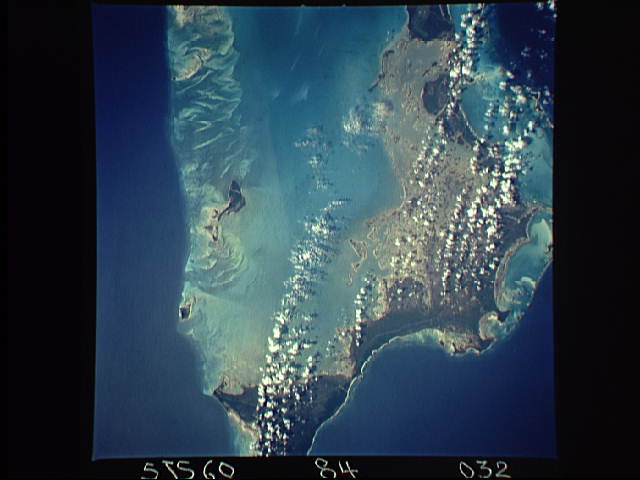
I have had another look through NASA‘s stock of Bahamas images taken from the INTERNATIONAL SPACE STATION. They come in differing formats. Over time the Station’s orbit takes it directly over or close to Abaco. In the past I have posted images of Hurricane Irene and Hurricane Sandy taken from space; and one of the astonishing Bahama variations of the colour BLUE. Here is a further selection.

The first two images show an orbit from north to south. I have annotated the first for those unfamiliar with the geography of Abaco. I assume the next was taken only a second or two later, with the whole of the southern tip / National Park / Hole-in-the-Wall area of Abaco now shown.

Abaco Map NASA:ISSA annotated STS060-84-33

This image gives an idea of the underwater connection between the island land masses. Here, a corrugated underwater sequence of ridges and troughs can be seen linking the southern end of Abaco with the south western end of Grand Bahama. Moore’s Island and, barely visible below it, Gorda (‘Castaway’) Cay rise above sea level between the two larger islands. The Berry Is. and Great Harbour Cay can be seen bottom left; Eleuthera snakes downwards bottom right. [At Rick Guest’s suggestion, I have rotated the image 90˚ from the original to make sense of a view distorted by angle (the space station’s), earth curvature and my own misinterpretation… It makes far more sense now, and I have corrected geographic errors accordingly… I’ve also added an annotated aeroplane’s-eye view below it, taken from much closer to the earth and therefore less subject to distortion. Many thanks, Rick]STS108-724-71 copyAbaco Map  - Island relationships

Abaco seen from the southeast. Little Abaco and Grand Bahama are at the top, and all are shown inter-connected underwater. The reef chain of the Abaco Cays – the world’s third longest barrier reef – can clearly be seen on the rightISS017-E-12812

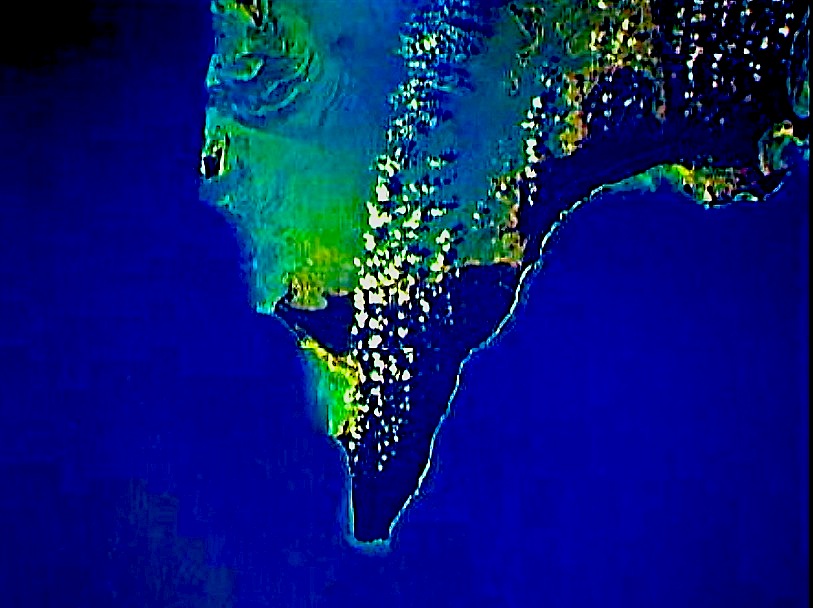
This image appears to be a blow-up of the sharper ‘filmic’ second one above. The detail has become hazy and indistinct, though part of the island-long ribbon of highway remains clearly visible. Time for a photo-enhancing experiment…
NASA clip

I played around with the contrast and colour settings of the photo above, to see what effect it produced (below). The most marked result is that areas of low water  – the coastline, the underwater high ground, the Marls and mangrove swamps, the low water of Cherokee Sound – became vividly highlighted. I don’t know what the small russet patches are, particularly visible in the Marls. My (ill-)educated guess is that they represent mangrove / mud islands that are underwater at high tide only, and that were in tidal transition as the Space Station passed overhead. Any ideas welcomed via the comment box.NASA clip - Version 2
Unknown's avatar

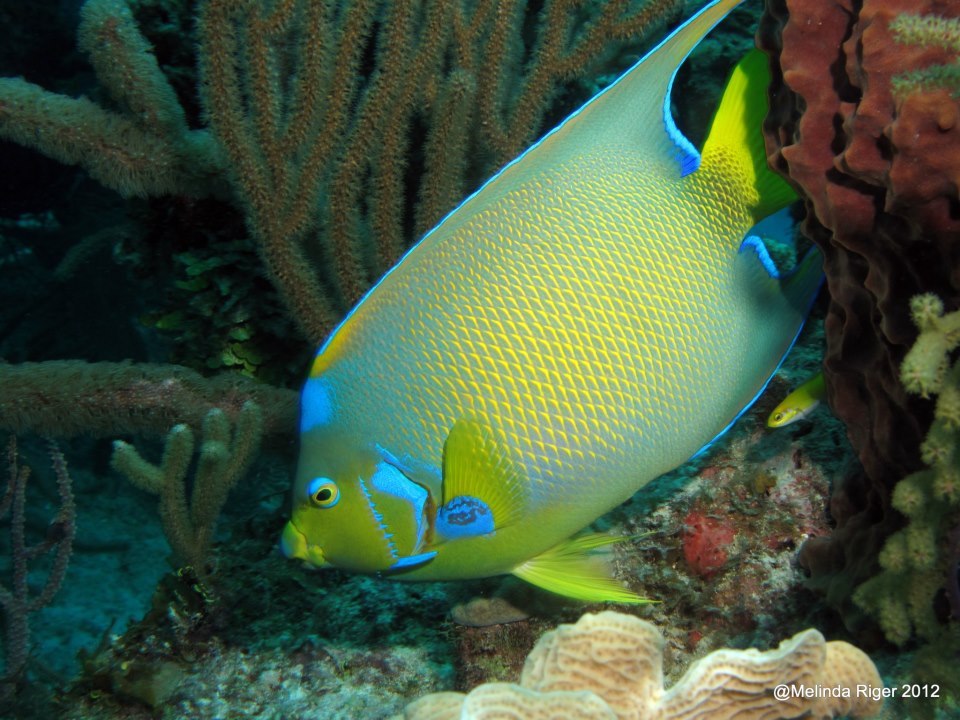
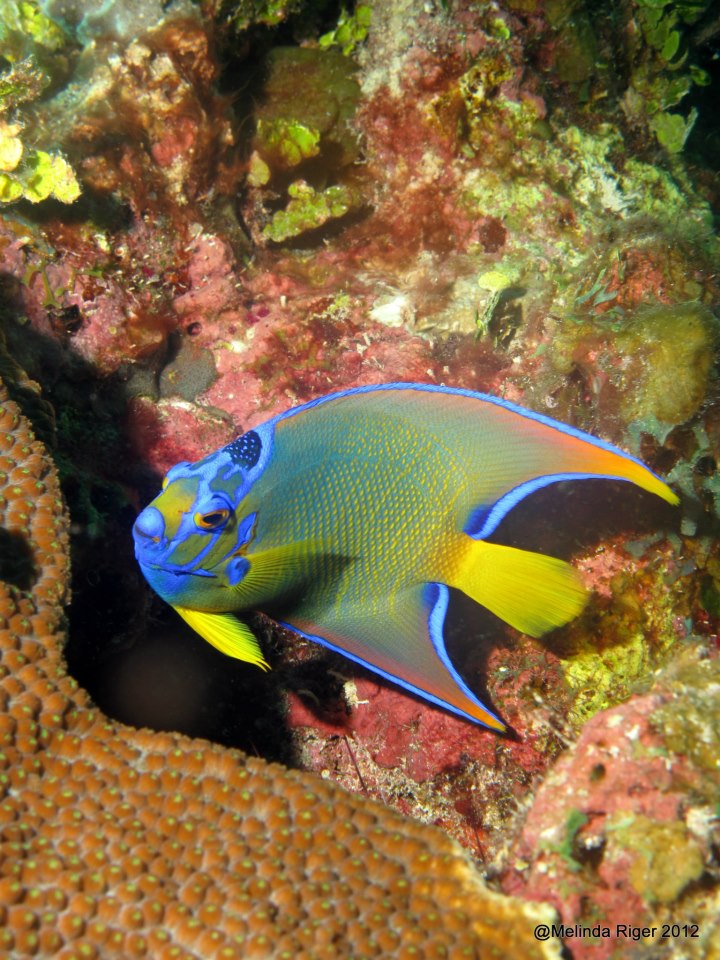
QUEEN ANGELFISH (Holacanthus ciliaris) – BAHAMAS REEF FISH (2)


Queen Angelfish Holacanthus ciliaris

QUEEN ANGELFISH (Holacanthus ciliaris)  – BAHAMAS REEF FISH (2)

The Queen Angel is one of several reef fish species where the difference in colouring between juveniles and adults is marked.  They are commonly found in the waters of Florida and the Bahamas, with a range extending to the Gulf of Mexico. Adults can grow to 3.5 lbs (to mix metric with avoirdupois) and they can live up to 15 years. Like all Angelfish, they rely on their pectoral fins for propulsion as they forage on the reefs for their mixed diet of sponges, coral, plankton, algae, and even jellyfish. As the photo below shows, they have no problem swimming upside down…

QUEEN ANGELFISH (JUVENILE) Juvenile Queen Angel ©Melinda Riger GB Scuba

Evidence suggests that adult Queen Angels may form ‘monogamous’ pairings. Brief research in the factosphere suggests that the proposition is somewhat tenuous. Maybe pairs just like hanging out – possibly to gain some territorial advantage – and anthropomorphising that into lifelong partnership terms may be overstating the relationship… Whether wed for life or not, the actual mating process is remarkably efficient. The pair snuggle up close, simultaneously releasing large quantities of sperm and tens of thousands of eggs. The fertilised eggs hatch within a day. Respect!

QUEEN ANGELFISH (ADULT)Queen Angel fish ©Melinda Riger GB ScubaQueen Angelfish ©Melinda Riger / Grand Bahama ScubaQueen Angelfish (juv) ©Melinda Riger @GBS

Photo Credits for the amazing main images: ©Melinda Riger (Grand Bahama Scuba), with thanks; header image WikiPic

Unknown's avatar

SPOTTED DRUM FISH – BAHAMAS REEF FISH (1)


SPOTTED DRUM FISH Equetus punctatus BAHAMAS REEF FISH (1)

This post is the first of a planned series on Bahamian reef fish. Those who follow this blog (I thank you both) may recall with horror (or worse, pity) my own efforts with reef fish, using a tiny cellphone-sized video camera.  Misty stills culled from video footage. Enthusiastically wobbly movies as I struggle to swim and breathe simultaneously in an alien element. I am more underwater CLOUSEAU than COUSTEAU. However, thanks to Melinda Riger, who with husband Fred runs GRAND BAHAMA SCUBA, I have kind permission to borrow and display images from her stock of wonderful reef fish photographs.

The spotted drum fish (related to two other Caribbean drumfish, the High-Hat and the Jack-knife fish) belongs to a large worldwide family, the Sciaenidae. Besides other drum varieties, the family includes ‘croakers’. These species are all named for the repetitive throbbing or drumming sounds they make. This involves the fish beating its abdominal muscles against its swim bladder. If I find out the reason for this (Species communication? Food call? Alarm? Warning? A piscine ‘advance’? Happiness?) I will add it here in due course. Here an example of an atlantic croaker from the excellent DOSITS site (Discovery of Sounds in the Sea)

[audio http://www.dosits.org/files/dosits/croaker48.mp3]

The spotted drum is one of the few fish of the species to inhabit coral reefs – most are bottom-dwellers (often in estuaries), avoiding clear water. These fish tend to be nocturnal feeders, feeding on small crabs, shrimp and small invertebrates. As far as I can make out they are solely (or primarily) carnivore, and do not graze on algae of other reef plant life.

Drumfish

Drumfish

The photos above are of adult spotted drums. The ones below are of juveniles, and show the remarkable growth-pattern of these fish, from the fragile slender creature in the top image, through the intermediate phase of the one below it (with the amazing brain coral), to the striking adult versions above. People like to keep these pretty fish in aquariums; fine, I’m sure there are plenty to go round, but these ones look pretty happy to me in their natural reef environment…

Juvenile Drum Fish (pre-school)Juvenile Drumfish 2 ©Melinda Riger GB Scuba

Juvenile drum fish (school-age)

Juvenile Drumfish ©Melinda Riger GB Scuba(Header image credit: Wiki-Cheers)

Finally, I’ve just come across this short video from a “Florida Aquarium”, showing how these fish swim. It rather looks as though it has been fin-clipped for some reason… or just damaged, maybe

[youtube http://www.youtube.com/watch?v=dqEWqfLeqOw]

Unknown's avatar

BMMRO: WHALE ETC SIGHTINGS; BLAINVILLE’S BEAKED WHALES; WINTER NEWSLETTER


D

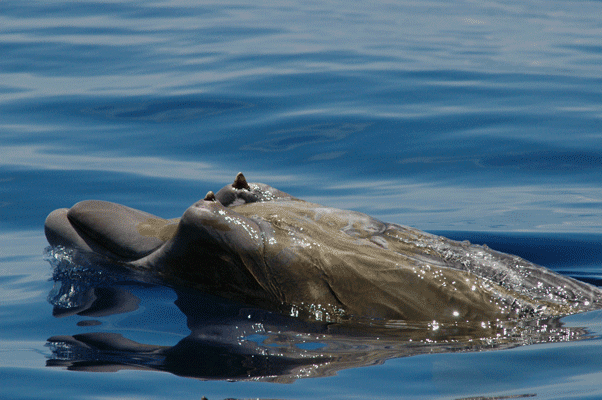
Blainville’s Beaked Whale, Abaco, Bahamas

SIGHTINGS REPORT OCT – DEC 2012

The last quarter of 2012 produced relatively few open-ocean CETACEAN sightings, not least because of a reduction in spotting trips during the period, with some members of the team elsewhere in the world completing their research. SIRENIAN activity is thankfully on the increase, with reporting opportunities increased by the manatees’ preference for sticking close inshore, usually in harbour areas. Georgie has gained her first yellow spot as Abaco’s only resident manatee following her long trip over from the Berry Is. (and away from mother Rita) last summer. She has  taken up residence in Cherokee. She performed a worrying vanishing trick during Hurricane Sandy, holing up (presumably) in seagrass off-shore, and (definitely) in an inshore channel for some of the time. She went AWOL again before Christmas, but has returned to Cherokee in good condition after a short vacation. Having shed her tag (several times) it was not possible to track her. The big plus is that she has proved capable of independent living, and has not become reliant on proximity to humans and their offerings of cabbage leaves etc… This photo was taken at Cherokee a few days ago.
Manatee Georgie, Abaco, Bahamas

The other notable new entry is a manatee sighting in the Freeport area of Grand Bahama. A single photo exists – a head shot – but it hasn’t been possible to identify the creature as a known one. (S)he may be a new visitor to the Bahamas. People in the area are asked to report any further sightings in the area to the BMMRO – and if possible to get a picture!
BMMRO CETACEAN SIGHTINGS OCT:DEC 12

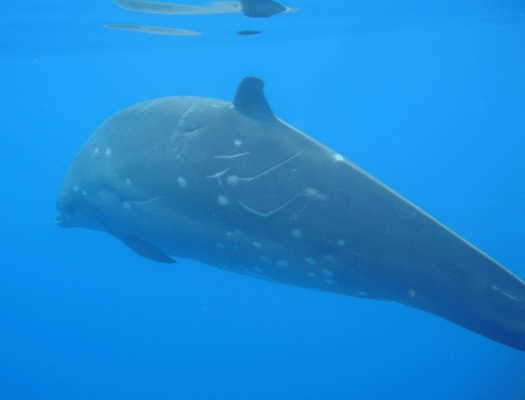
BLAINVILLE’S BEAKED WHALES

RANGE MAP                                                         IUCN RATING “DATA DEFICIENT”


Mid-frequency broadband sounds of Blainville’s beaked whales

Recent research has been carried out on the sound variations of this relatively little-understood species of whale. “Recordings from acoustic tags show that five Blainville’s beaked whales produced mid-frequency broadband sounds on all of their deep dives, with each sex producing two different sound types. These broadband sounds are atypical of the regular echolocation sounds previously described for this species. One male produced a total of 75 sounds over four dives, between the depths of 109 and 524 meters, and four females produced a total of 71 sounds over 18 dives, between the depths of 305 and 1289 meters. Ninety-six percent of the male sounds and 42 percent of the female sounds were produced before the onset of foraging echolocation sounds, and all were produced before the deepest point of the dives. These sounds may be candidate communication signals, with their production timed to mitigate the risk of both predation and hypoxia (oxygen deprivation).”

The report includes sample sounds from the 3 BBWs shown below, and the one heading the page. I haven’t found a way to embed the sounds, but I am working on it (there’s a time -consuming method involving conversion to MP3, but maybe another day…)

Blainville’s Beaked Whales, Abaco, Bahamas Blainville's Beaked Whale AbacoDA

Thanks to the prolific DEAR KITTY for a cross-reference to this topic on her website, featuring a fine video of  BBW in French Polynesia

[youtube http://youtu.be/Ks1aLp5_hqo]

Finally, the action-packed, information-filled, image-laden 4 page winter newsletter. Click below to open.

BMMRO WINTER NEWSLETTER 2012 (Jan13)

Georgie Manatee BMMRO SUPPORT LOGO

mantsw~1

Unknown's avatar

BAHAMA WOODSTARS & CUBAN EMERALDS: THE HUMMINGBIRDS OF ABACO


THE HUMMINGBIRDS OF ABACO

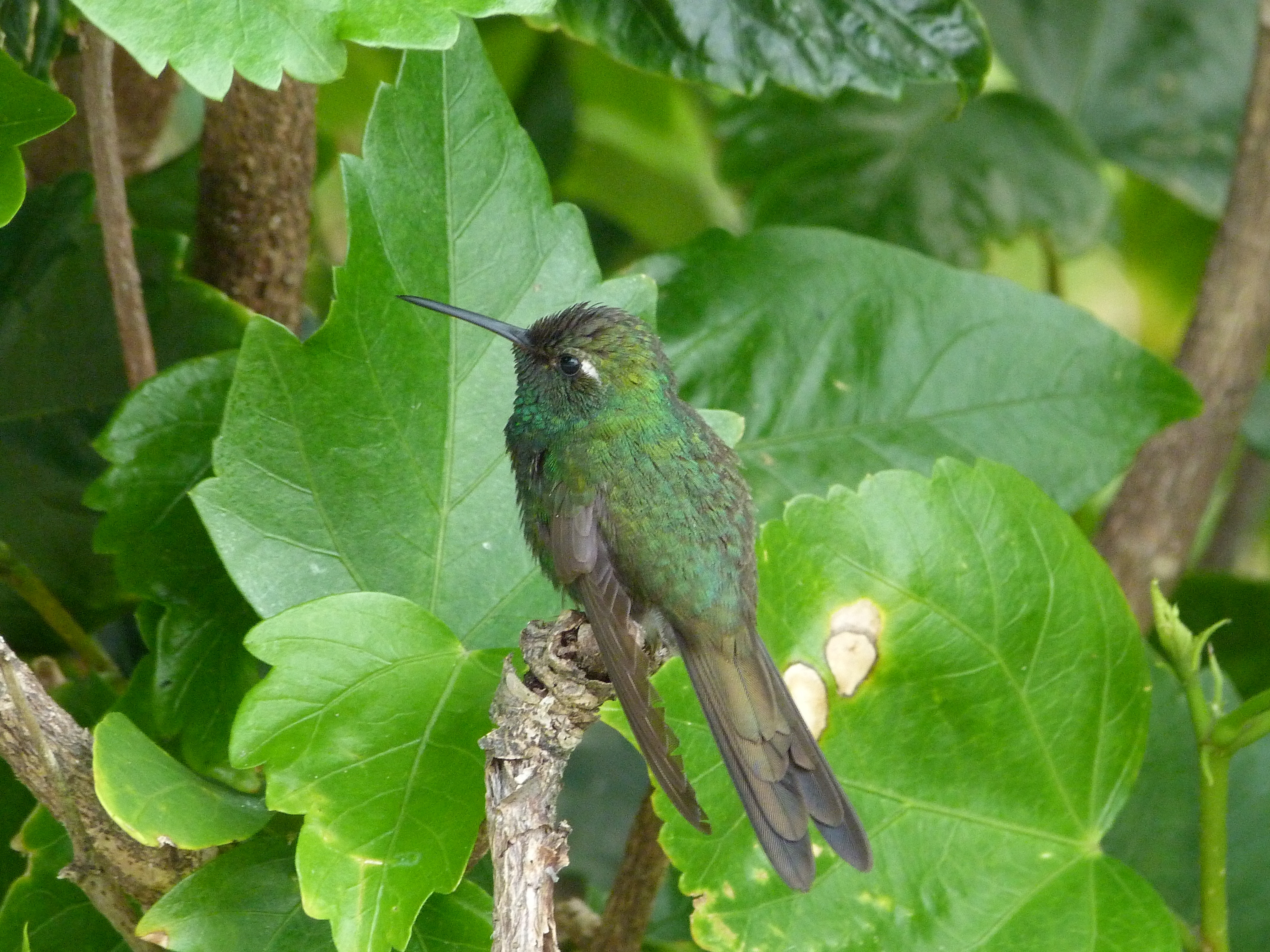
At last I have got round to the hummingbirds. It’s quite simple. There are only two species of hummingbird on Abaco. The endemic variety is the Bahama Woodstar, one of only 3 endemic bird species on Abaco (the others are the Bahama Yellowthroat and the Bahama Swallow). The settled migrant is the Cuban Emerald.

               BAHAMA WOODSTAR                                    

 Calliphlox evelynae

Male and female Bahama Woodstars  (Photo Credit: Phil Brown – and VG too)

These hummingbirds are found throughout the Bahamas. They do not migrate, although are occasional vagrants in SE Florida. They breed all year round, the main season being in April. The female lays 2 elliptical white eggs, which she incubates for 15-18 days. As with humans, the female is mainly responsible for childcare while males go drinking at the nectar bar and hang out with their mates.

This BW was one of a small group at Hole-in-the-Wall. They were completely unconcerned by our presence, and we could get within arm’s length of them. Woodstars, though tame in human terms, can be aggressive and territorial. They are plentiful throughout the Bahamas except on Grand Bahama, Abaco and Andros. Significantly those are the only islands where the Cuban Emerald is found in any numbers. As with the native red and import grey squirrel problem in the UK, the migrant emerald is aggressive towards the woodstar, which is consequently rare where emeralds are abundant.

Here is their call (credit Jesse Fagan Xeno-canto)

Addition April 2012 Here is a seriously cute female Woodstar photographed by Ann Capling at Bahama Palm Shores, close to Ocean Drive – a really pretty little bird

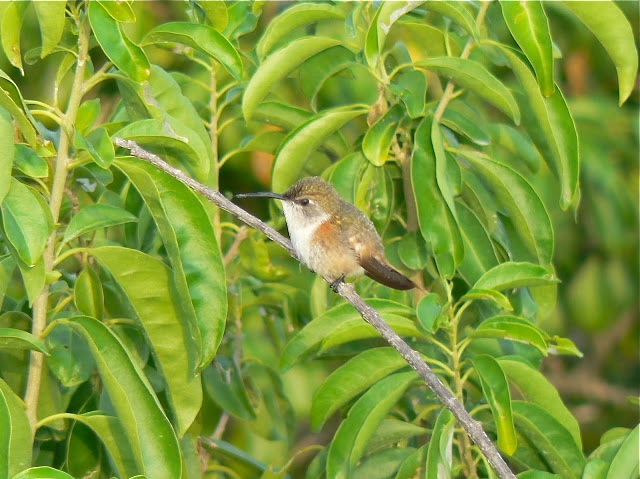
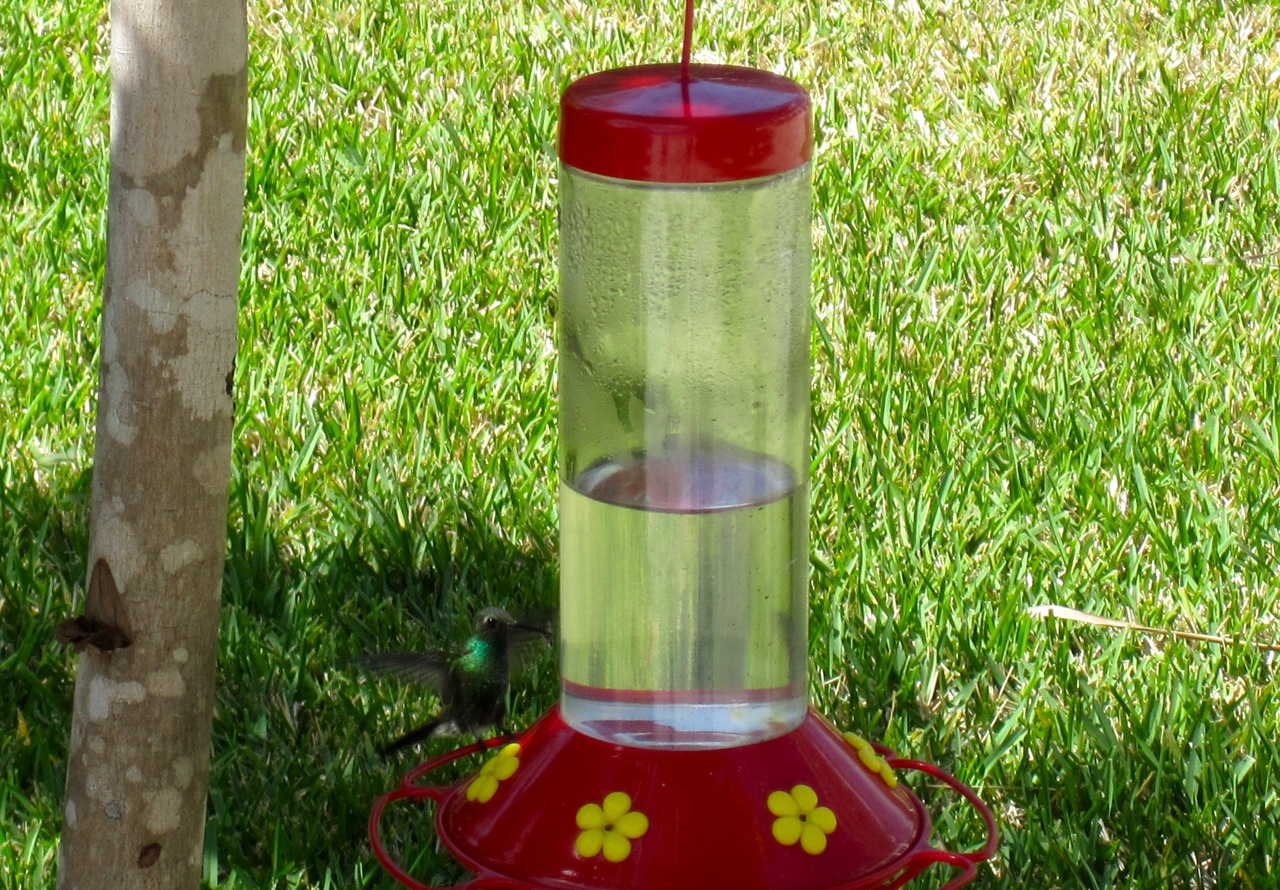
At Delphi, you’ll frequently see emeralds, especially now that feeders with sugar water have been hung up for them. The pool area is a very good place to watch them. But there are occasional woodstars to be seen as well – in the coppice on the drives for example, and even on the feeders. The vague blur to the left of the feeder below is a woodstar in the millisecond between me pointing the camera and it flying away… Don’t bother to click to enlarge it – it’s a useless photo, I know, but it is evidence even at the lowest level

CUBAN EMERALD Chlorostilbon ricordii


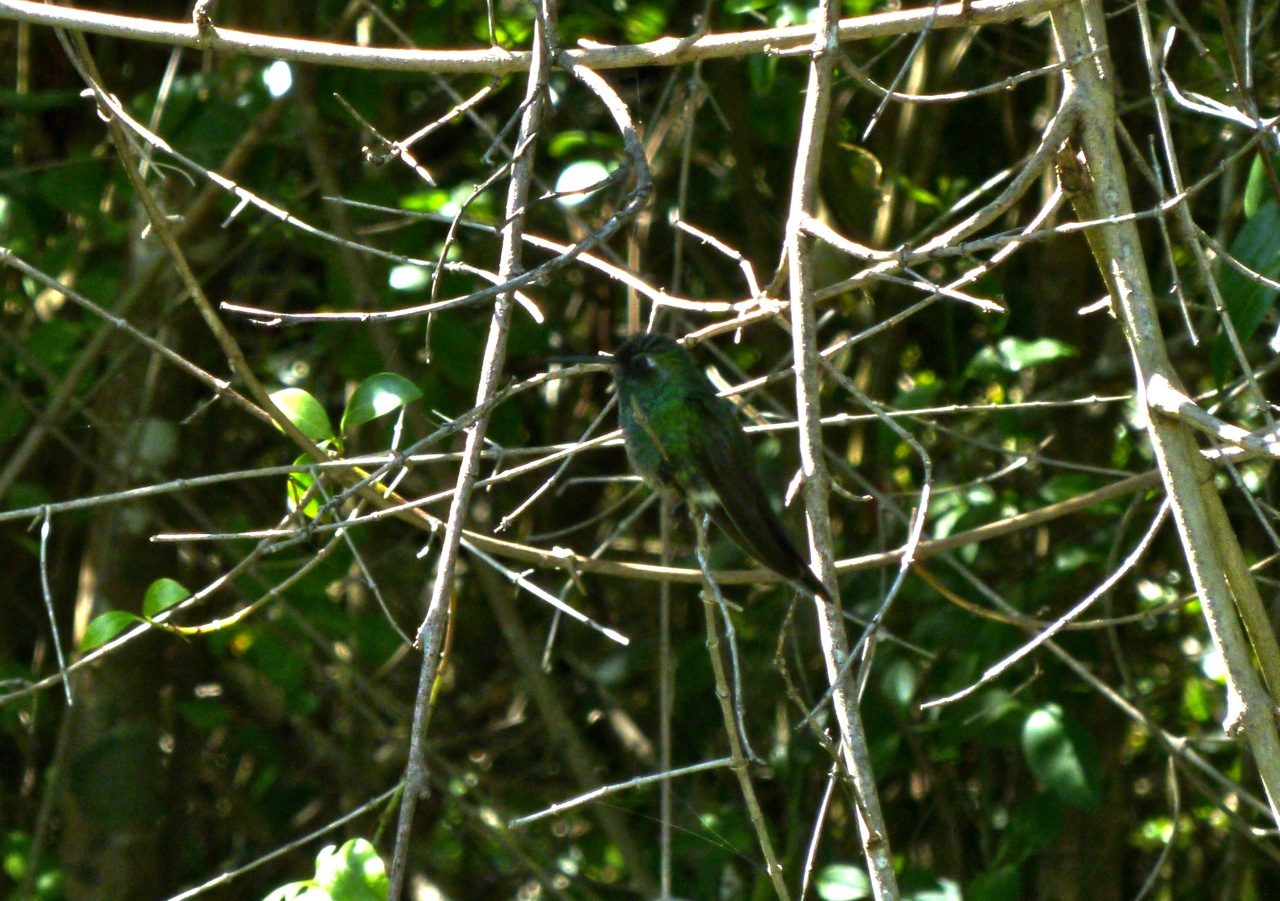
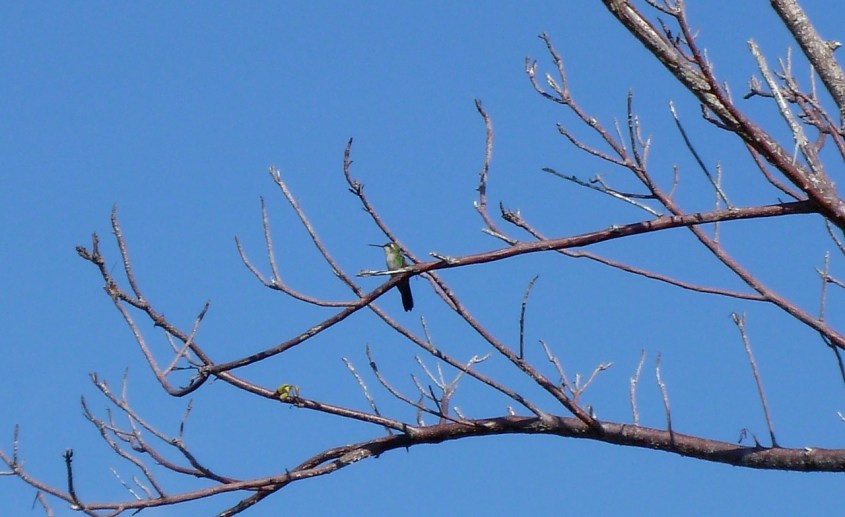
There’s probably a great deal to be written about the emeralds, but not by me. Or not now, anyway.  The little you need to know from me is already covered above, and I haven’t yet discovered whether their childcare arrangements differ significantly from the woodstars. Probably not. So I’ll put in a selection of photos, and remark that it is strange how quickly they can change from sleek and slender birds to small rather cold and dispirited looking bundles of feathers. Both states are depicted below. Here’s what to listen for (credit Xeno-canto.org) 


Delphi – pool feeder

Delphi – pool feeder

Delphi – pool feeder

Delphi – far side of pool

Delphi – near pool

Delphi – front drive

Delphi – front drive

All the above birds were photographed at Delphi. We saw emeralds elsewhere, of course – in the pine forest, flicking across the logging tracks; on other Cays. The best sighting was during our day trip reef-snorkelling and island-hopping with Kay Politano, when we had an excellent lunch for 14 at Cracker P’s on Lubbers Cay (see future post about this and the island-hops). There was a bird feeder by our table, to which emeralds came and went throughout the meal. Here are some photos – I wanted to get them hovering, and kind of succeeded. More or less.


This link may or may not result in you hearing an emerald’s call. Let’s see if I can make it work…
http://www.xeno-canto.org/sounds/uploaded/LNEEOOWCQR/Emerald_Cuban_feedingcall_10122010_0831_0075.mp3

HUMMER FACTS
  • The colourful throat of a (male) bird is known as a ‘gorget’
  • Hummingbirds are the only birds that can fly backwards
  • There are 320 species of hummingbird worldwide
  • The smallest is the bee hummingbird of Cuba, at 2″ for an adult
  • John Gould, the c19 ornithologist and artist, invented many of the names to reflect the varied and iridescent colours of the birds.
  • Hummingbird wings beat as much as 75 times per second
  • Hummingbirds have the highest metabolic rate of any warm-blooded creature; also the largest hearts (proportionately, obviously…)
  • On TCI, the Bahama Woodstar is known as ‘The God Bird
  • There are many collective nouns, including a “bouquet”, “glittering”, “hover”, “shimmer”, and “tune” of hummingbirds