Unknown's avatar

A VISIT TO BIMINI’S MARINE ENVIRONMENT (2)


Seahorse (Bimini's Marine Protected Area Campaign)

A VISIT TO BIMINI’S MARINE ENVIRONMENT (2)

In this second part of the look at Bimini’s Marine Protected Area Campaign and the photographs that illustrate the vital importance of the mangroves, reefs, sea grass and pristine sea to marine life, it’s time to look at some of the the smaller sea creatures in their underwater habitat. Many of these are vulnerable to changes in their environment; some are already rare. 

SPINY LOBSTER

Spiny Lobster Bimini's Marine Protected Area Campaign copy 3 Spiny Lobster Bimini's Marine Protected Area Campaign

SEA HORSES

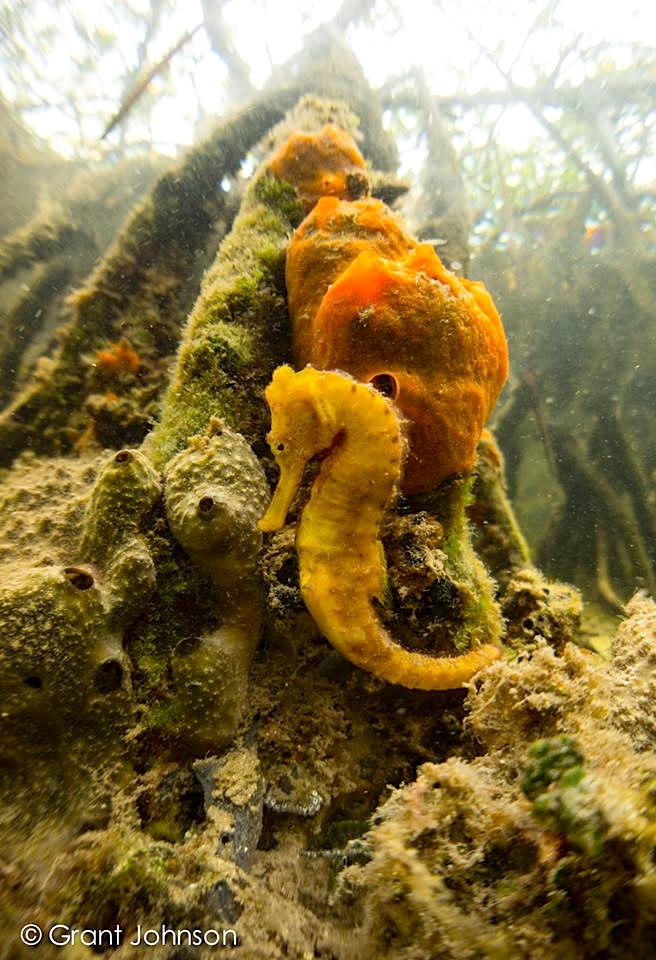
Sea Horse Bimini's Marine Protected Area Campaign Seahorse Bimini's Marine Protected Area Campaign Seahorses Bimini's Marine Protected Area Campaign

SEA HARE

For more information on this creature, click HERE

164441_607403889277224_192821659_nSea Hare squirting ink Bimini's Marine Protected Area Campaign

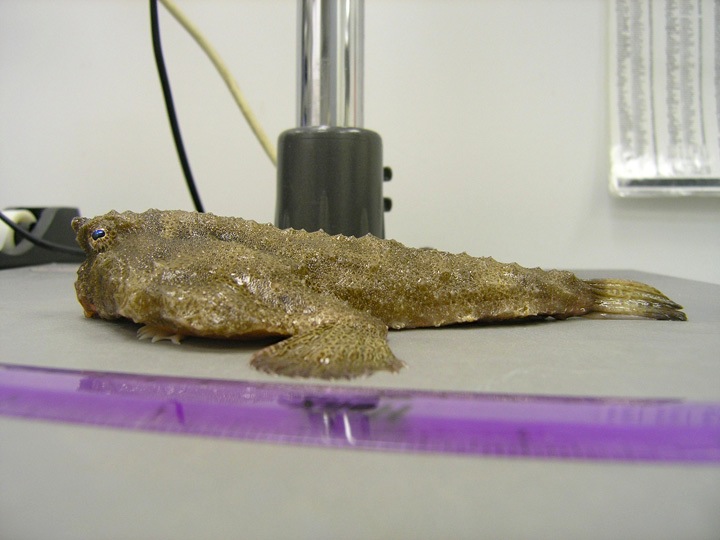
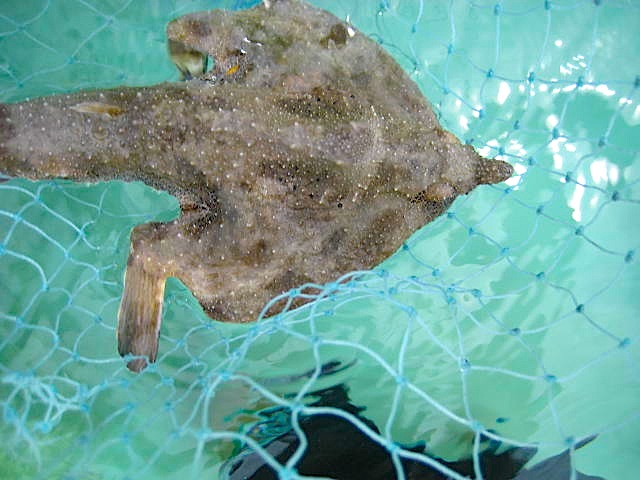
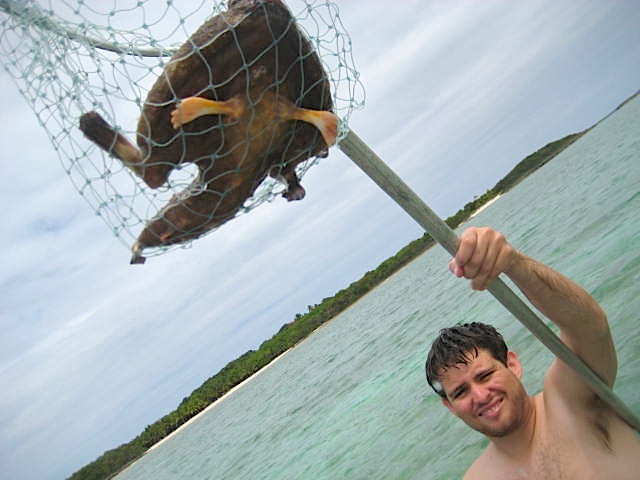
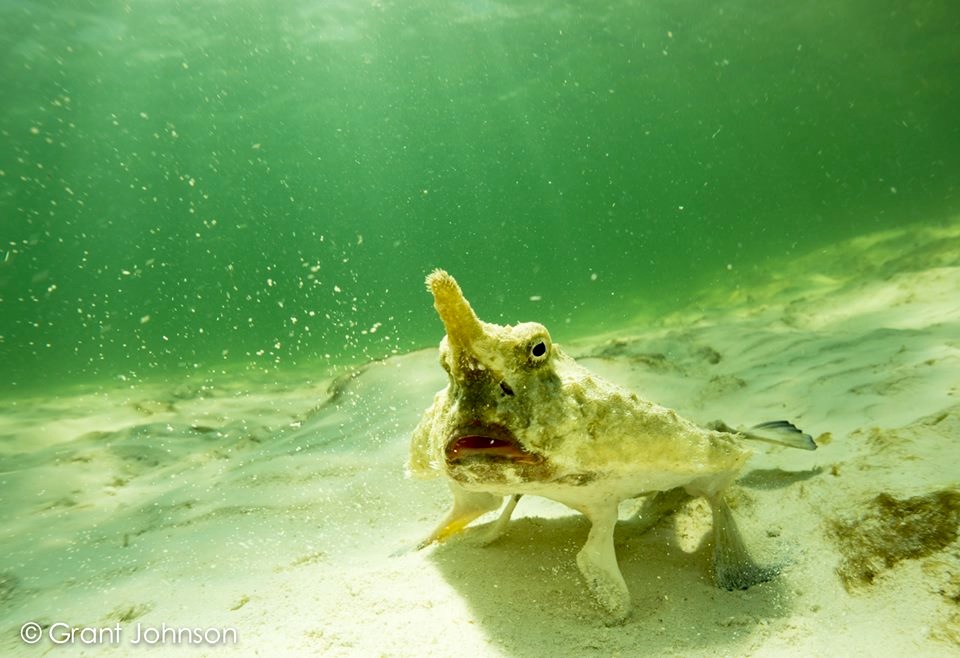
BATFISH

To learn more about Batfish, click HERE

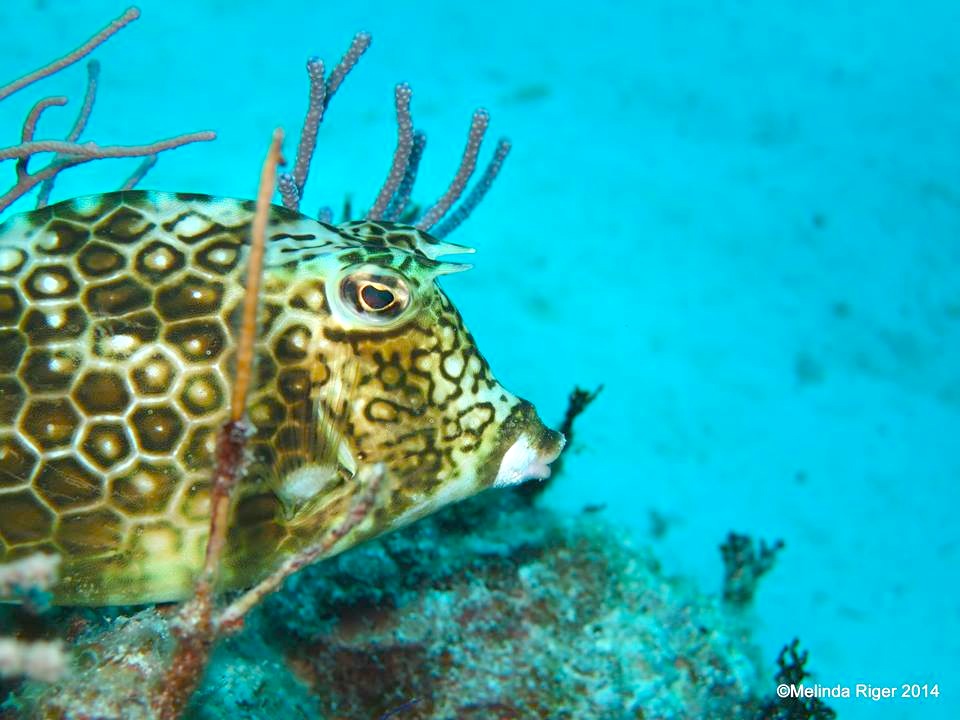
Batfish Bimini's Marine Protected Area Campaign

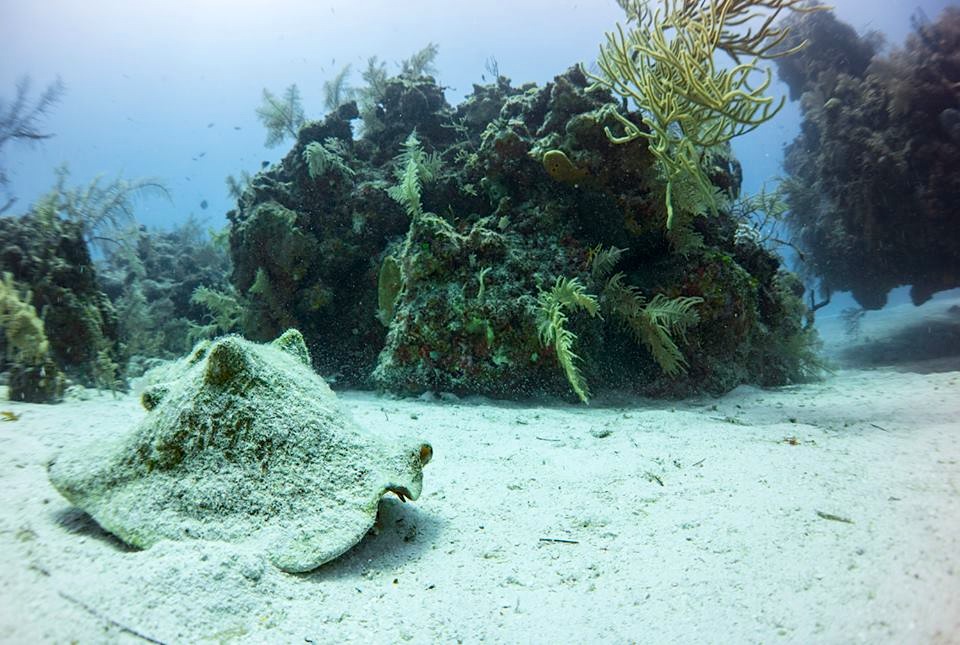
QUEEN CONCHQueen Conch Bimini's Marine Protected Area Campaign

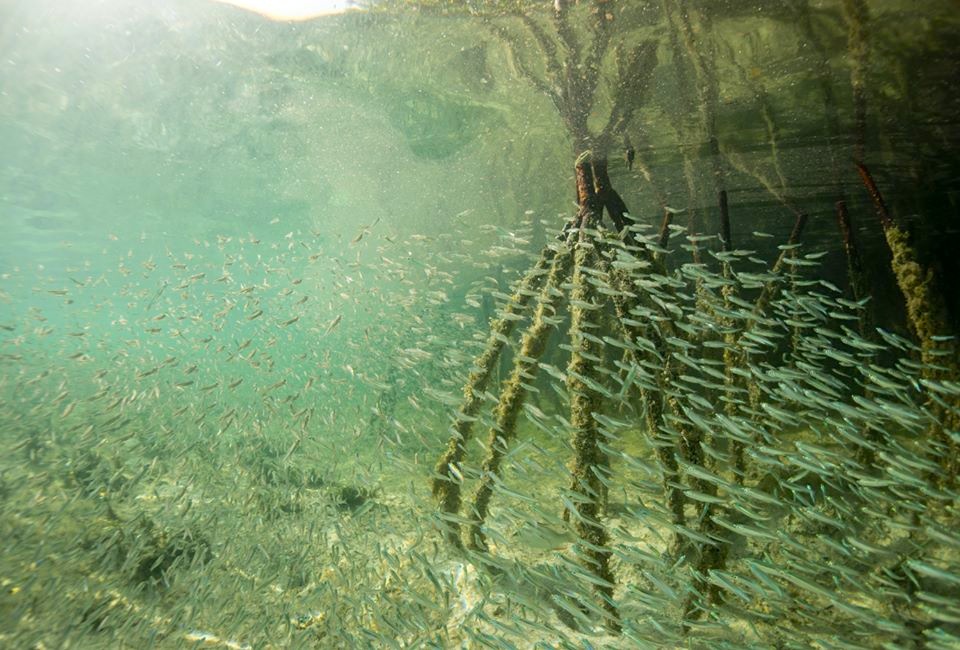
SILVERSIDES

At first glance you may wonder why these little fish are worth including. The answer lies in the food chain. The clean environment in which these bait fish thrive provides food for larger species and so on up the chain… If silversides ceased to exist, a vital source of marine nutrition would be lost.

Silversides Bimini's Marine Protected Area Campaign copySilversides Bimini's Marine Protected Area Campaign

CREDITS: Bimini’s Marine Protected Area Campaign with many thanks for use permission of their material including images © Grant Jonson / 60 Pound Bullet Photography, and to all other photographers featured. Overall, cheers to Bimini, wildlife and conservation…
Unknown's avatar

“CLINGING TO THE WRECKAGE”: BAHAMAS CLINGING CRABS


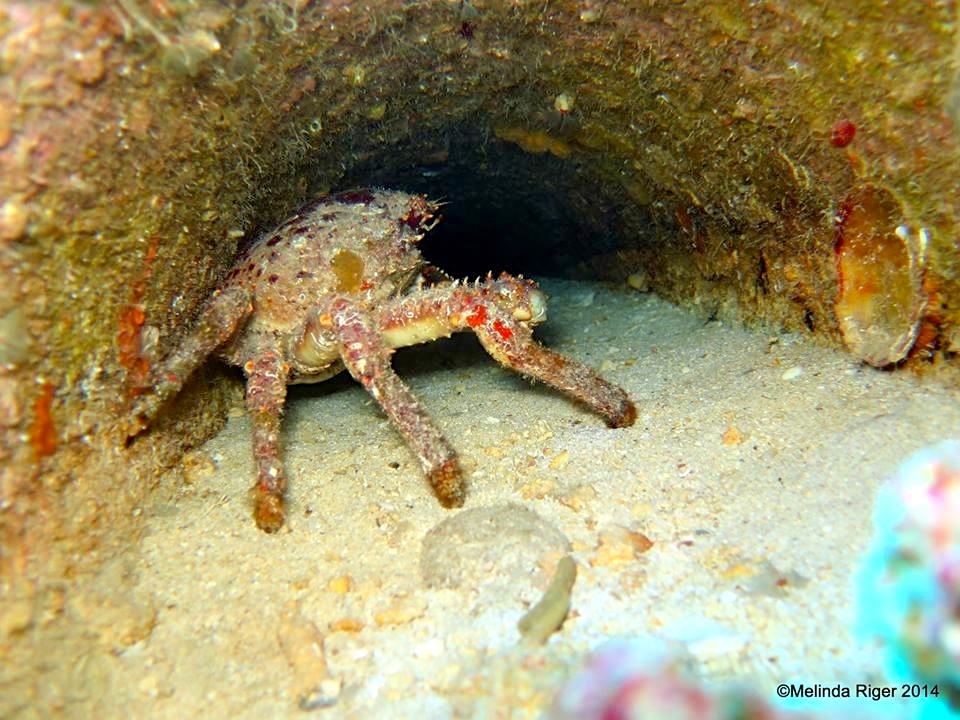
Clinging crab in smoke stack on Theo's Wreck ©Melinda Riger @ G B Scuba

“CLINGING TO THE WRECKAGE”: BAHAMAS CLINGING CRABS

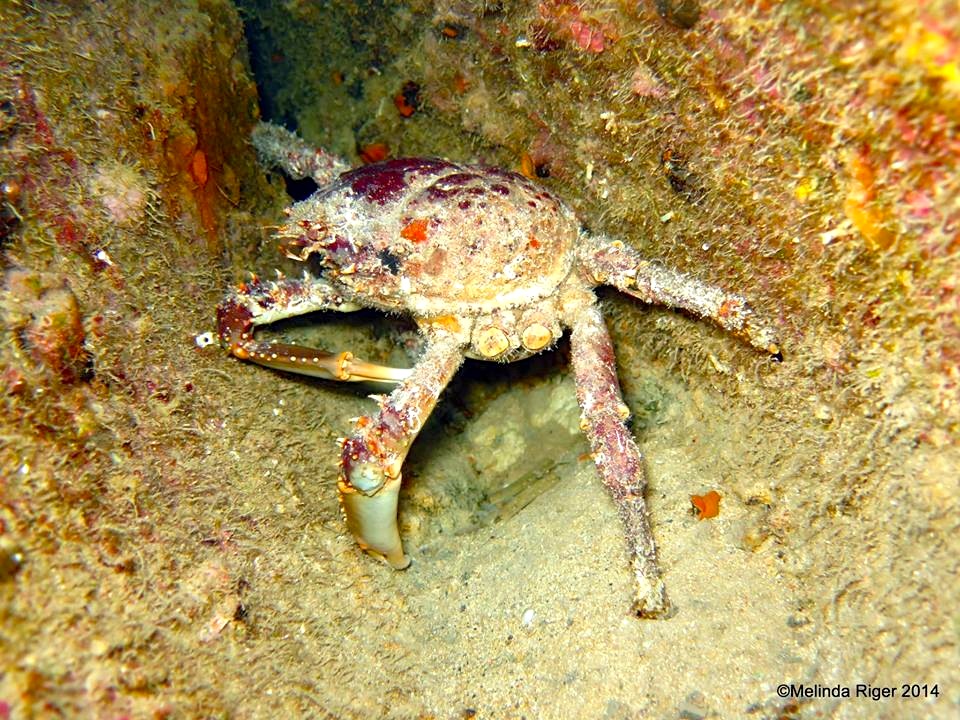
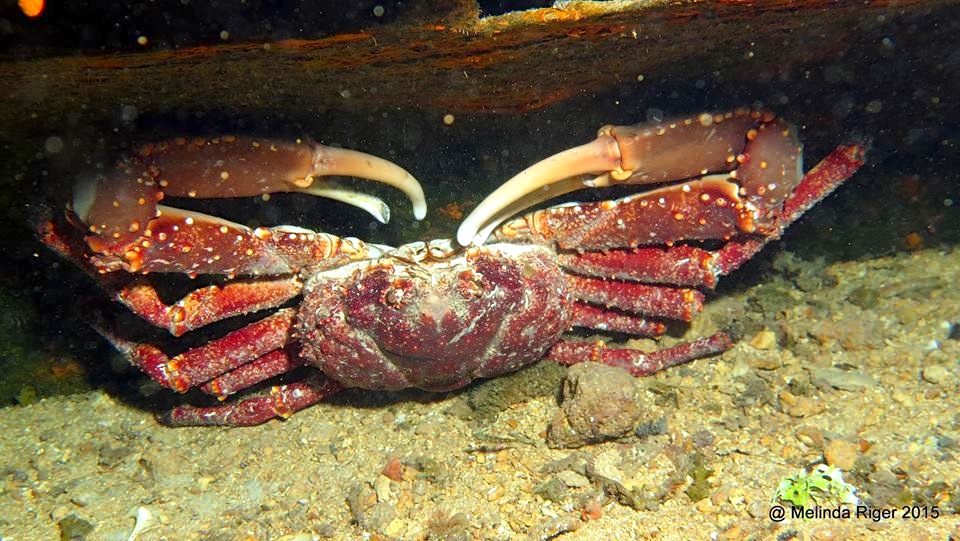
The Clinging Crab Mithrax spinosissimus answers to a number of names: West Indian spider crab, channel clinging crab, reef or spiny spider crab, or coral crab. It is found throughout the waters of South Florida and the Caribbean. Clinging Crab ©Melinda Riger @ G B Scuba copy

These are crabs of the reef, or indeed of the wrecks that may be found around reefs. Some of the crabs in this post have chosen wrecks as their home – in the header image the crab is living inside the smoke stack of ‘Theo’s Wreck’, Grand Bahama.Clinging Crab ©Melinda Riger @ GB Scuba

The clinging crab is believed to be omniverous, its main diet being algae and carrion. They can grow to 2 kg, and it is the largest species of reef crab found in the Caribbean.Clinging Crab © Melinda Riger @ G B Scuba

The clinging crab / West Indian spider crab is (apparently) not commercially harvested for its meat. Although I read somewhere that they are delicious, I would be very reluctant to test the theory.

Clinging Crab ©Melinda Riger @ G B Scuba

Life on the reef can be dangerous. This crab has lost some legs: its clinging powers are somewhat curtailed…Clinging Crab (legs missing) ©Melinda Riger @ G B Scuba

This guy has some missing parts, but seems quite laid back about it…Clinging Crab, Bahamas (Melinda Riger, G B Scuba)

Credits: Melinda Riger of Grand Bahama Scuba (all photos), with thanks as always

Unknown's avatar

A VISIT TO BIMINI’S MARINE ENVIRONMENT (1)


Loggerhead Hatchling Bimini BMPAC

Loggerhead Hatchling (Bimini’s Marine Protected Area Campaign)

A VISIT TO BIMINI’S MARINE ENVIRONMENT (1)

Abaco is fortunate already to have special conservation areas, both on land (e.g. the huge National Park) and at sea (e.g. Fowl Cay Marine Preserve). Other preserves are in active stages of development. Elsewhere in the Bahamas, where the natural life is equally wonderful, battles are being fought to protect pristine habitat from the encroachments of modern life such as unsuitable development (or development in unsuitable locations). For this first look at Bimini, I am most grateful to Bimini’s Marine Protected Area Campaign  for permission to use some of their wonderful photographic archive that illustrates the vital importance of the mangroves, reefs, sea grass and pristine sea to marine life large and small. It’s worth checking out the background and surrounding context of these images to see the sort of habitat the creatures depicted prefer. This post features some of the larger species.
HAMMERHEAD SHARKS

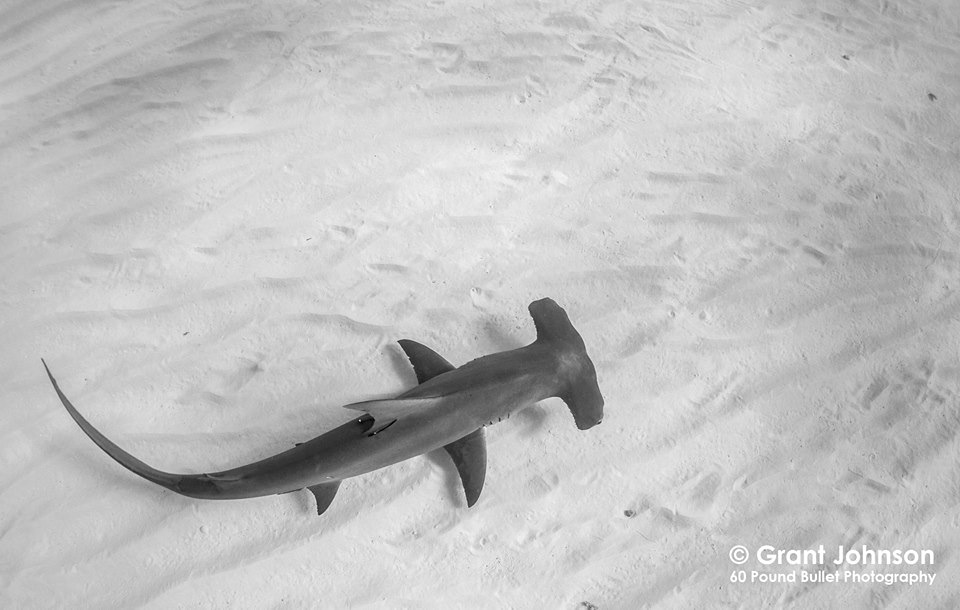
Hammerhead Shark, Bimini (Grant Johnson/ 60 Pound Bullet)Hammerhead Sharks 3 Bimini's Marine Protected Area Campaign Hammerhead Shark 2 Bimini's Marine Protected Area Campaign Hammerhead Shark 4 Bimini's Marine Protected Area Campaign

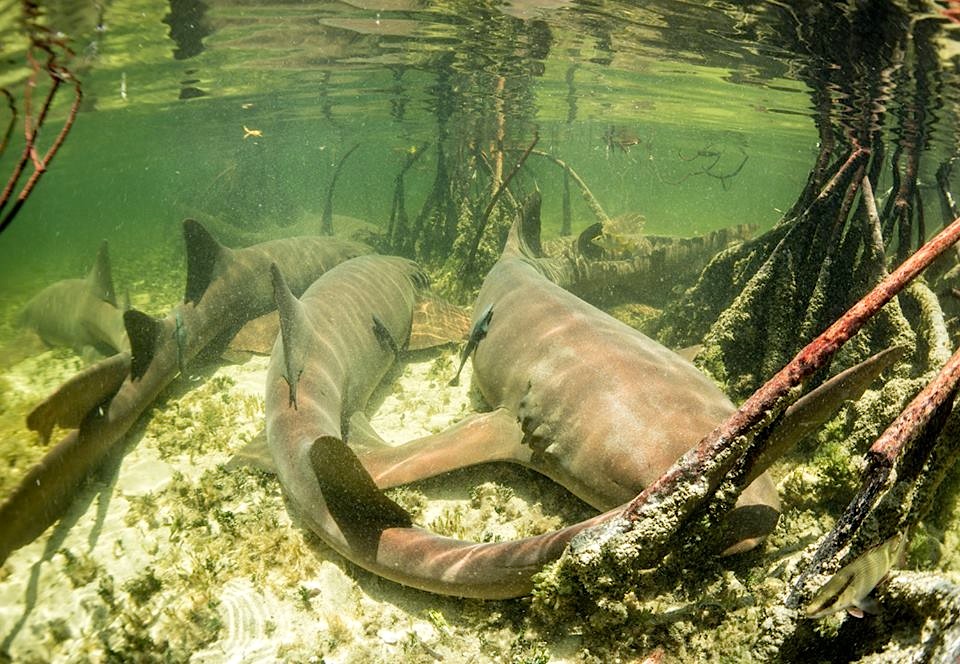
NURSE SHARK NURSERY IN THE MANGROVES

Nurse Sharks Bimini's Marine Protected Area Campaign Nurse Shark BMPAC

BOTTLENOSE DOLPHINS

Dolphin 2 Bimini's Marine Protected Area CampaignDolphin Bimini's Marine Protected Area Campaign

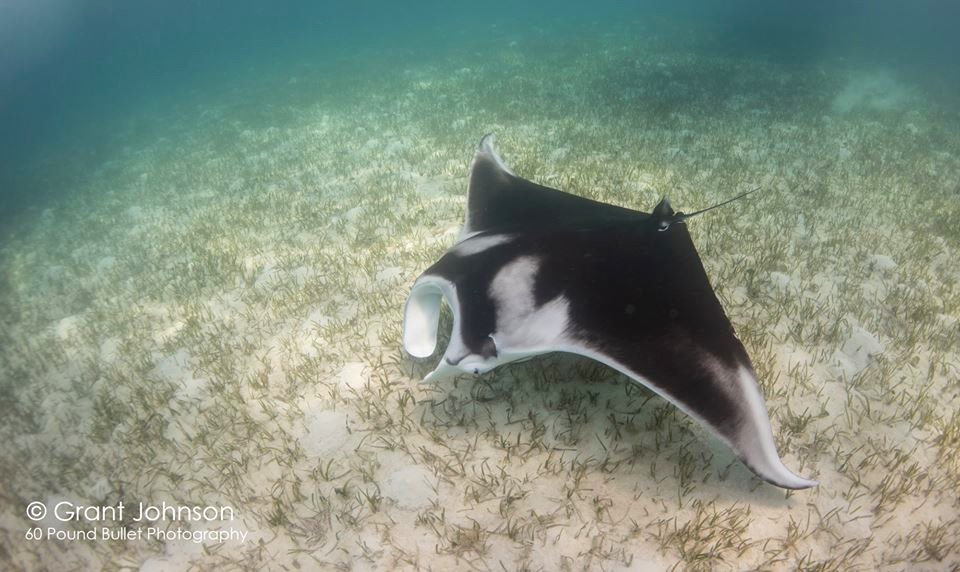
RAYS

A pregnant female southern stingray, seen from belowSouthern Stingray (pregnant) Bimini's Marine Protected Area CampaignRay, Bimini's Marine Protected Area Campaign Ray, Bimini's Marine Protected Area Campaign

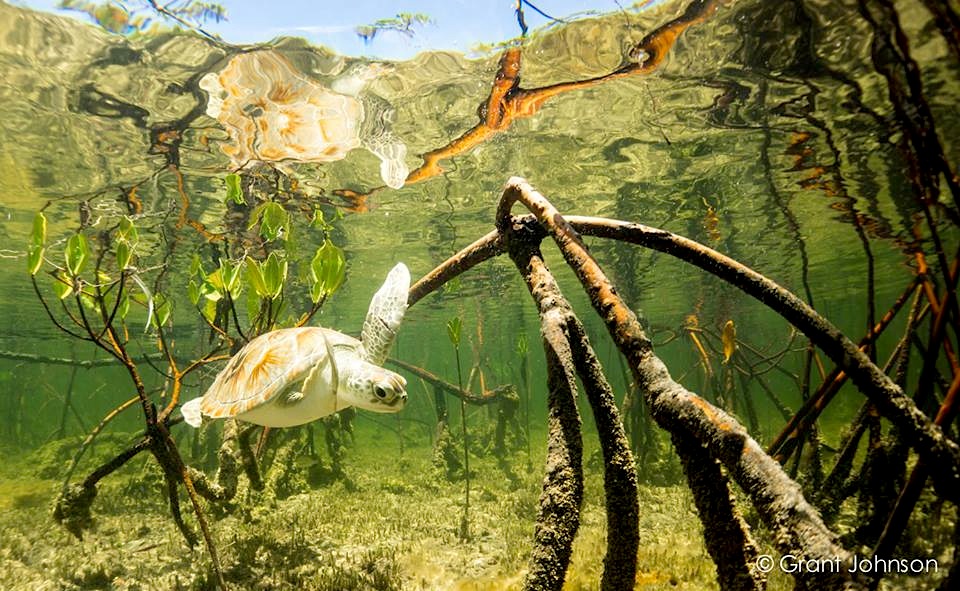
HAWKSBILL TURTLES

Turtle in Mangroves Bimini's Marine Protected Area CampaignHawkshead Turtle 2 Bimini's Marine Protected Area Campaign

CREDITS: Bimini’s Marine Protected Area Campaign with many thanks for use permission of their material including images © Grant Jonson / 60 Pound Bullet Photography, and to all other photographers featured. Overall, cheers to Bimini, wildlife and conservation…

Unknown's avatar

MARK CATESBY: PIONEERING NATURALIST OF EARLY c18


Mark Catesby Bahama Finch (Western Spindalis, Spindalis Zena)

Mark Catesby: Bahama Finch (Western Spindalis, Spindalis zena)

MARK CATESBY: PIONEERING NATURALIST OF EARLY c18

There’s been (yet) another abrupt side-swerve away from a topic I’d intended to post about, resulting from a newspaper article I read over the weekend. This concerns what was gushingly described as “the ultimate coffee table book”, a facsimile of Mark Catesby’s renowned work, The Natural History of Carolina, Florida and the Bahama Islands.

Catesby (1682 – 1749) was a pioneering English naturalist and artist who published his magnum opus based on a number of expeditions he undertook from 1712 onwards. His was the first ever published account of the flora and fauna of North America, and the 2 volumes (with a supplement) included some 220 colour plates of the creatures and plants of land and sea that he had come across.
Mark Catesby - Angelfish

Mark Catesby – Angelfish

Mark Catesby - Queen Triggerfish

Mark Catesby – Queen Triggerfish

Catesby’s growing fame as a botanist led to his undertaking expeditions on behalf of the Royal Society to collect plants and seeds in Carolina. He widened his researches both in America and to the West Indies, collecting plants and fauna as he went and sending them back to England. Among other discoveries, he was one of the very first people to observe and record the occurrence of bird migration as a twice-yearly phenomenon.

Red-legged Thrush in Gumbo Limbo Tree (HM QE2)

Red-legged Thrush in Gumbo Limbo Tree

Eventually, in 1726 Catesby also returned to base and set about writing up his findings and painting what he had seen. He learnt how to etch printing plates, and gradually the illustrations became more sophisticated, starting without backgrounds then including plants with the animals and birds. The whole project took him some 20 years; quite soon after completing it, he died.

Flamingo Head + Gorgonian Coral (HM QE2)

Flamingo Head & Gorgonian Coral

 
CATESBY: THE VIDEO INTRO
WHERE IS THE ORIGINAL WORK NOW?
 
Catesby’s original drawings were bought by King George III for £120 (a very considerable sum in 1768 – my quick attempts to discover how much suggest ± £200,000) and have remained in the Royal Family ever since. This treasure is kept in the Royal Library of Windsor Castle, the property of HM QE2, though it is occasionally exhibited elsewhere. Later facsimiles of the original were produced, of which some 50 survive today.
Mark Catesby - 'Bahama Titmous' (Bananaquit)

Mark Catesby – ‘Bahama Titmous’ (Bananaquit)

SO WHAT’S ALL THE EXCITEMENT ABOUT NOW? 
Addison Publications has printed a very limited edition facsimile of 60 in 4 lavish volumes, printed one at a time, “to mark the 300th anniversary of Catesby’s arrival in the New World”.
catesbys_natural_history_9
The cost per set? A stonking £39,500 ($61,330). Now this may sound a great deal of money for a modern copy of an old book and it undoubtedly is. But here’s the Christie’s Auction catalogue entry for one of the early facsimiles. Mmmmmm.
CATESBY AUCTION JPG
Mark Catesby - plate 139 Hawksbill Turtle

Mark Catesby – Hawksbill Turtle

“Illuminating natural history is so particularly essential to the perfect understanding of it”                 (Mark Catesby)
Mark Catesby (Black-faced Grassquit)

Mark Catesby (Black-faced Grassquit)

Delphi afficionados, especially any who have stayed in Room 1, may recognise 3 of the illustrative images I have chosen – the Spindalis, the Bananaquit and the Grassquit. No, I don’t mean the actual species, I mean that Catesby prints of them are tastefully hung on the walls. I can never decide which of the 3 is my favourite…
RELATED POSTS

CHARLES CORY & ABACO 1891

THE PIONEERS (Wilson, Audubon, et al)  

MR SWAINSON (on his 224th Birthday)

51C+Zz+7CSL._SX363_BO1,204,203,200_

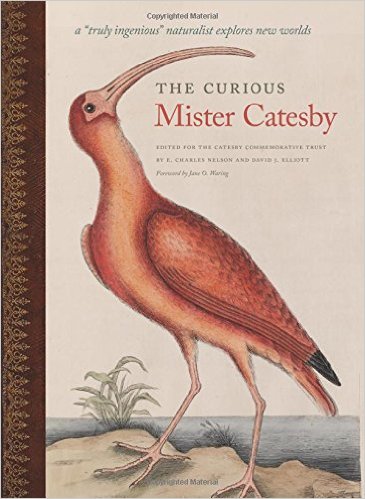
STOP PRESS Thanks to Woody Bracey for his interesting comment. More information about the Catesby Commemorative Trust and the book The Curious Mister Catesby can be found HERE. A slightly curious promo video was also released.

For anyone tempted to look further into the importance of this ground-breaking naturalist, the CCT produced a 50 minute film that is well worth watching if you can spare the time.

Credits:  Sunday Times (article), HM QE2, National Geographic, Catesby Commemorative Trust, sundry open source info-&-pic-mines inc. Wiki, Addison Publs, & my Bank Manager for declining to loan me the purchase price of the new facsimile…

Unknown's avatar

“THE BUTTERBUN” (LONGSNOUT BUTTERFLYFISH): BAHAMAS REEF FISH (26)


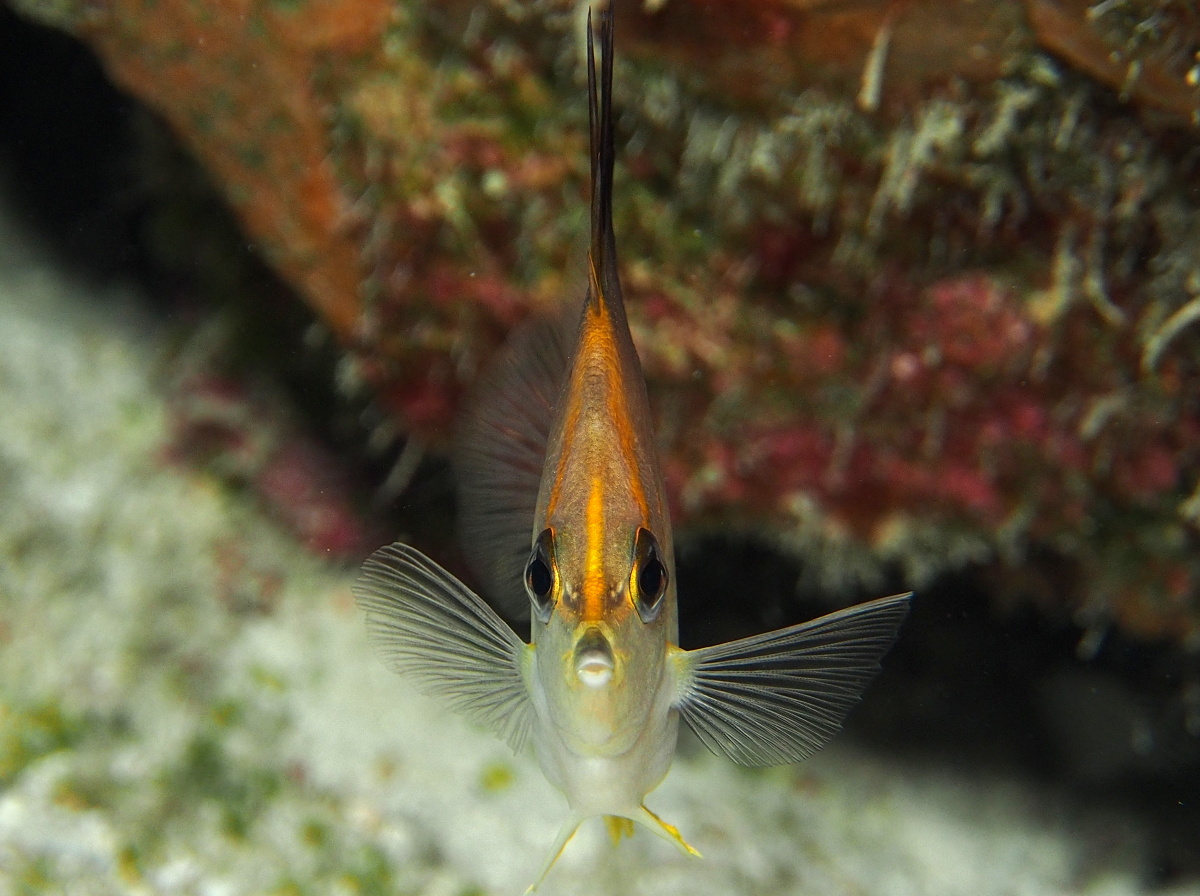
Longnose : Longsnout Buttefly Fish ©Melinda Riger @ G B Scuba copy

“THE BUTTERBUN” (LONGSNOUT BUTTERFLYFISH)

BAHAMAS REEF FISH (26)

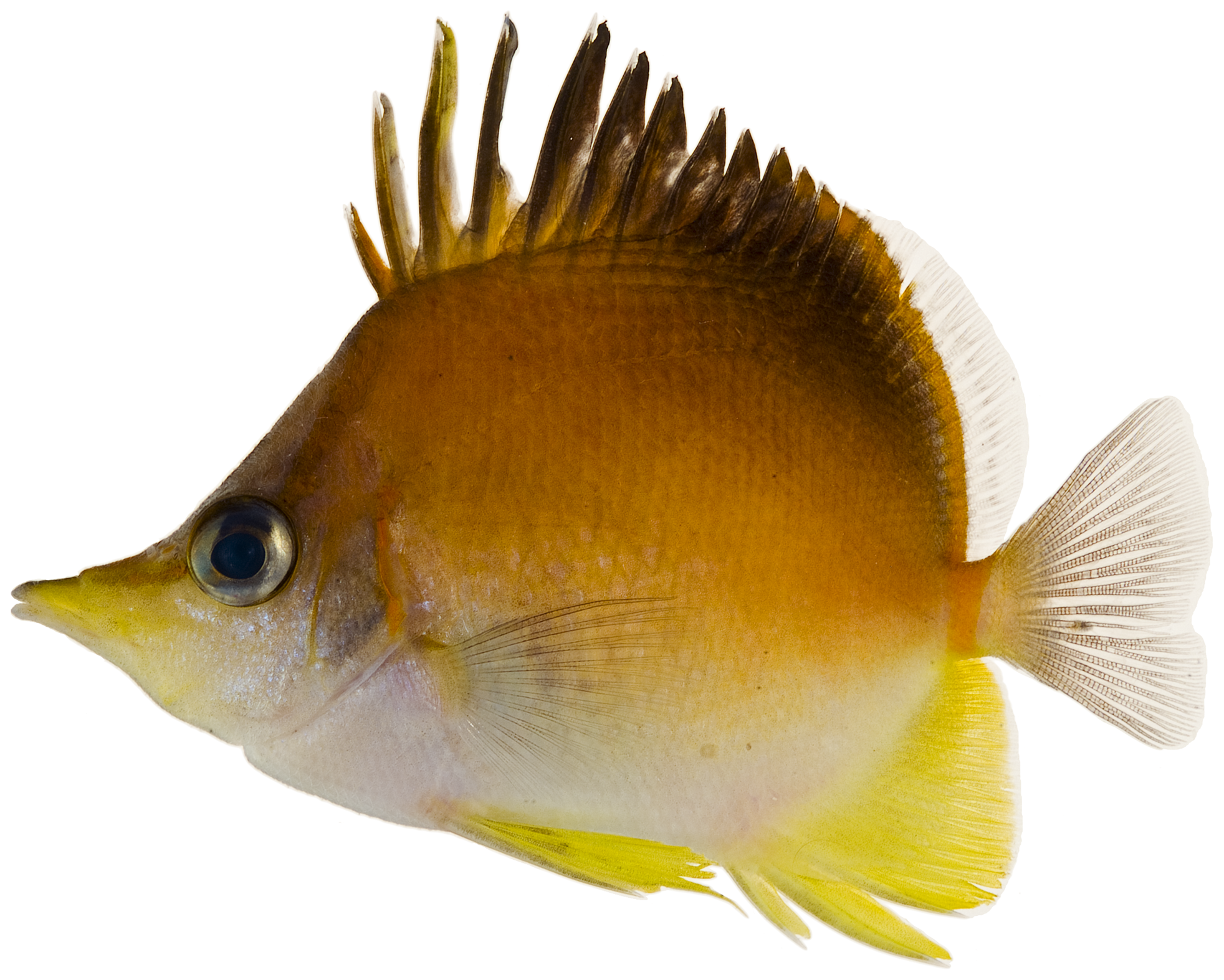
The Atlantic/ Caribbean Longsnout Butterflyfish Prognathodes aculeatus is sometimes known locally as the Longnose (not to be confused with the bright yellow Indo-Pacific Longnose Butterflyfish). The affectionate name for it is ‘Butterbun’. A more scientific name is ‘Poey’s Butterflyfish’, named for the man who first identified the species in 1841.

Mr Felipe Poey

Longnose : Longsnout Butterflyfish  © Melinda Riger @ GB Scuba copy
These little fish, 2 0r 3 inches long, are commonly found on reefs from Florida down to Venezuela. Unlike most butterflyfishes, they prefer deeper water and have been found at 200 ft; and they tend to be solitary rather than gregarious.
Longnose: Longsnout Butterflyfish ©Melinda Riger @ G B Scuba copyLongsnout Butterflyfish (www.whatsthatfish.com)
BUTTERBUN. THAT SUGGESTS THEY ARE PLUMP?

Longsnout Butterflyfish (π Florent's Reef Guide)NOPE!Longsnout Butterflyfish Prognathodes aculeatus (Wiki)

RELATED LINKS

BUTTERFLYFISHES (RH guide to reef, banded, four-eyed & spotfin)

REEF FISH INDEX gateway to loads of colourful finny species

WHAT’S THAT FISH? A handy resource

FLORENT’S GUIDE A ditto

Longnose : Longsnout Butterflyfish ©Melinda Riger @GB Scuba copy

Credits: Melinda Riger for her brilliant underwater images (as marked); plus What’s That Fish?, Florent’s Guide and good old Wiki…

Unknown's avatar

FORAYS WITH MORAYS (3): LET’S GO GREEN…


Green Moray Eel with Soldierfish (Melinda Riger @ G B Scuba)

FORAYS WITH MORAYS (3): LET’S GO GREEN…

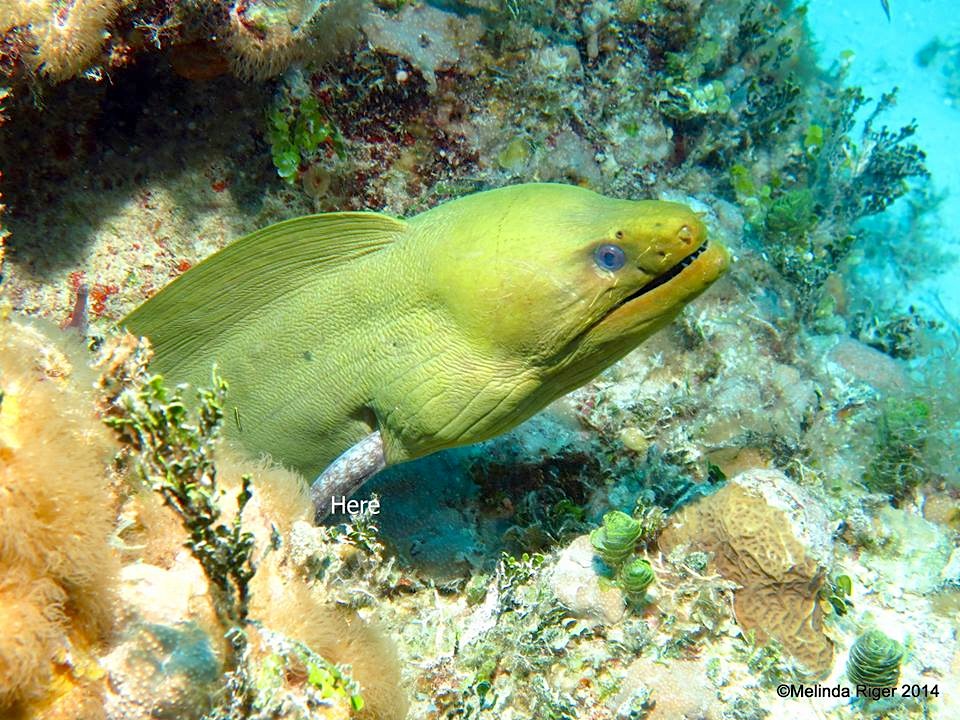
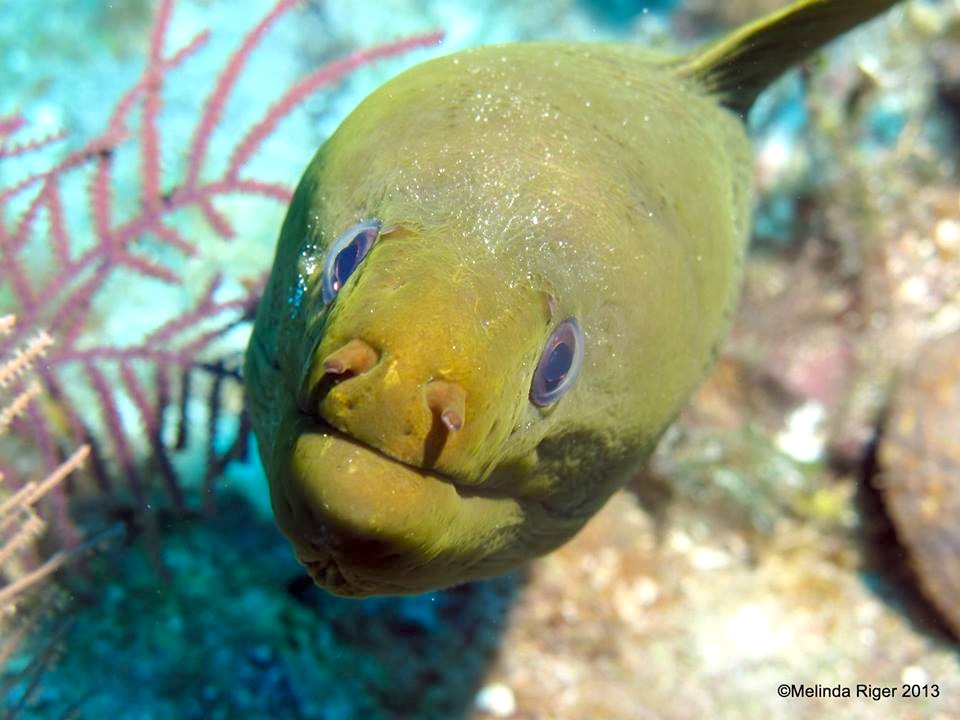
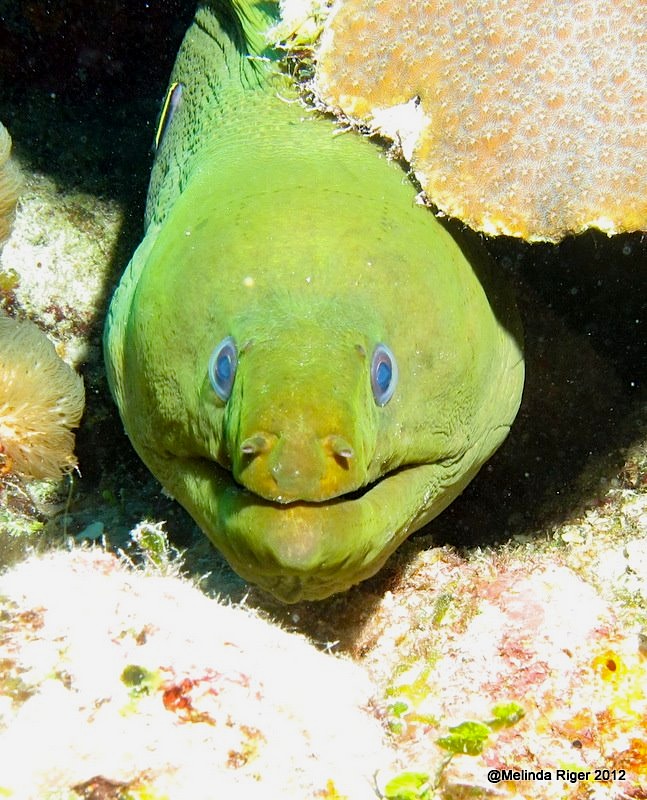
A short while back I posted about SPOTTED MORAYS, which people seem to enjoy. It generated requests for more forays, specifically with green morays. I gotcha – here they are, as promised… All the eels shown below, familiar to the divers who regularly encounter them and given names such as “Judy’ and “Wasabi” (my favourite), were photographed by Scuba expert Melinda Riger, whose skills with a camera are well-known. Let’s go Green…
Like all moray species, Greens like to lurk in convenient hiding places to watch the underwater world – and possible prey – go by. Here are some typical ‘lurking’ shots.Moray Eel, Green, with lunch (eel) emerging from gill ©Melinda Riger @ Grand Bahama Scuba Green Moray Eel ©Melinda Riger @ GB Scuba copy

Green Moray Eel (Judy) ©Melinda Riger @ G B Scuba Moray Eel, Green (Wasabi) ©Melinda Riger @ GB Scuba Green Moray Eel ©Melinda Riger @ GB Scuba

Green morays also have the unusual breathing apparatus that resemble nasal plugsGreen Moray Eel Melinda Riger @ G B ScubaGreen Moray Eel ©Melinda Riger @ Grand Bahama Scuba

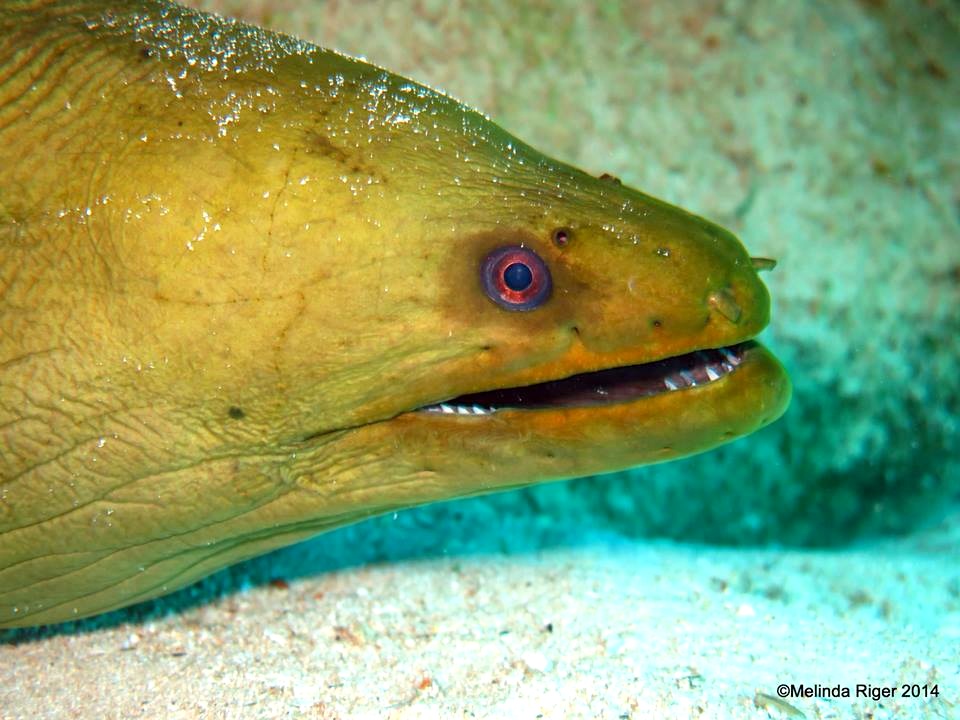
Those who recall the spotted moray post and their singular dentition arrangements that included a long sharp tooth sticking down from the upper jaw will no doubt be thinking, “are we going be shown any dental close-ups?” But of course… why would I not?

Note the cluster of teeth in the upper jaw, differing from the spotted morayMoray Eel (Yellow) Judy ©Melinda Riger @ G B Scuba

Grrrrrrrrrrrrrrr…….Moray Eel, green ©Melinda Riger @ G B Scuba

All photos: Melinda Riger, Grand Bahama Scuba

Unknown's avatar

WTF? (WHAT’S THAT FISH?) (5): THE FROGFISH


Frogfish (Adam Rees, Scuba Works)

WTF? (WHAT’S THAT FISH?) (5): THE FROGFISH

This ‘WTF?’ series started with a relatively conventional species, the REMORA. It has been getting progressively more bizarre. We moved onto an omnium gatherum of WEIRDO FISHES, then the remarkable LETTUCE SEA SLUG, and most recently the BATFISH. Time to ramp up the stakes: with many thanks to scuba expert Adam Rees for use permission for his terrific photos, I present… the FROGFISH.

Frogfish (Adam Rees, Scuba Works)

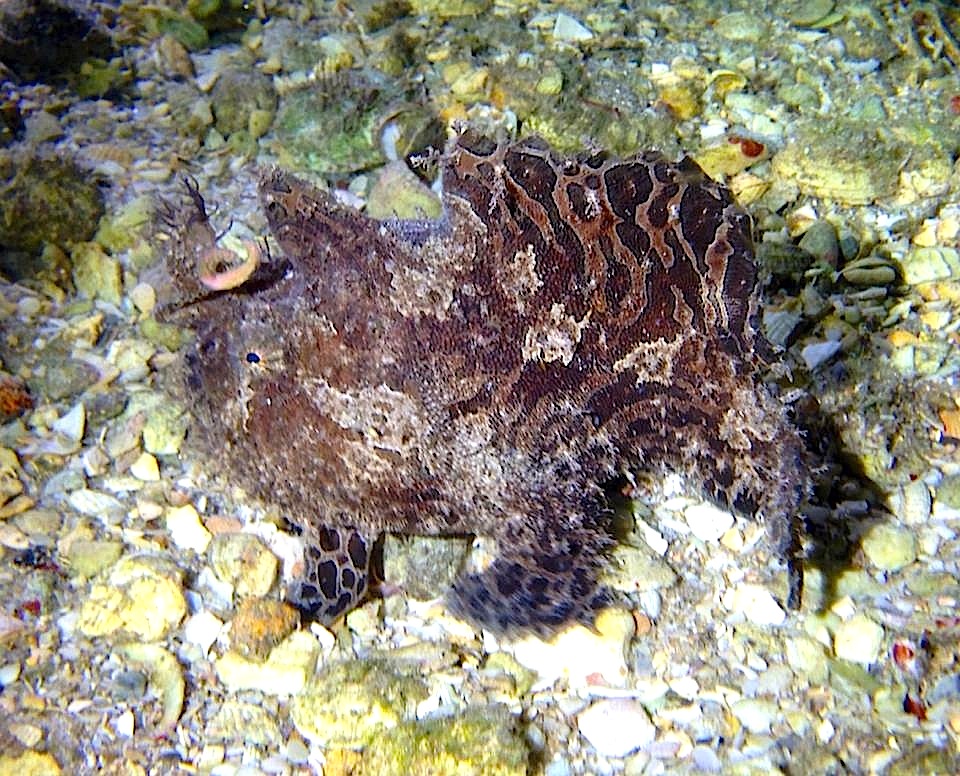
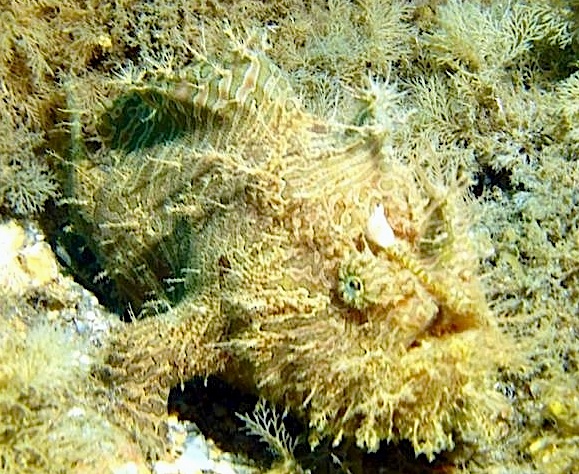
The frogfish is a kind of anglerfish found in almost all tropical and subtropical oceans and seas. There are about 50 different species worldwide, covering an astonishing range of strange appearances. They generally live on the sea floor around coral or rock reefs. In size they vary from tiny to about 15 inches long – although ‘long’ is a flexible concept because they are to an extent shape-changers in height and width.Frogfish (Adam Rees Scuba Works)

FROGFISH SUPERPOWERS YOU MAY WISH TO HAVE

  • INVISIBILITY CLOAK . Frogfish are masters of disguise and camouflage. This enables them to catch their prey with minimal effort and also to avoid predators. Their camouflage methods – broadly known as ‘aggressive mimicry’ – include
    • Ability to change colour for days or even weeks to mimic their surroundings
    • Getting covered in algae and other organic matter that matches their habitat or
    • Looking inherently like a plump rock or in some cases, plant

Fear for the life of the spider crabFrogfish (Adam Rees, Scuba Works)

  • IRRESISTIBLE ATTRACTION (just like that nice Mr Grey)
    • A sort of frontal dorsal fin called an illicium to which is attached a
    • Lure called an esca which may mimic a worm, shrimp or small fish etc and which is
    • Retractable in many species and
    • Regenerates if it gets mislaid

The ‘dollop of cream’ thing is the esca. Note the characteristic large mouthFrogfish (Adam Rees, Scuba Works)

Spot the escaFrogfish (wiki)

  • BUOYANCY CONTROL & SHAPE-SHIFTING
    • Most frogfish have a ‘gas bladder’ to control their buoyancy.
    • Some species can change shape or even inflate themselves by sucking in quantities of water in a so-called defensive ‘threat display’.

frogfish-black

Frogfish (Adam Rees Scuba Works) Frogfish (Adam Rees Scuba Works)

HOW DO FROGFISH REPRODUCE? 

Although not conventionally attractive creatures, frogfish clearly manage to reproduce. Little is known about the techniques in the wild, but one is probably ‘with care’, especially for a male frogfish who may not survive for long if he hangs around after fertilisation has taken place. It has been noted that females tend to select far smaller males to fertilise their huge numbers of eggs, perhaps for that very reason.

Frogfish (Adam Rees, Scuba Works)

FROGFISH FEEDING SKILLS – GOOD OR BAD?

When deploying the lure, potential prey that comes too close to that wide mouth stands no chance. A frogfish will strike in a fraction of a second. Frogfishes have voracious appetites for crustaceans, other fish, and even each other. I can do no better than borrow this vivid description of a feeding frogfish:

“When potential prey is first spotted, the frogfish follows it with its eyes. Then, when it approaches within roughly seven body-lengths, the frogfish begins to move its illicium in such a way that the esca mimics the motions of the animal it resembles. As the prey approaches, the frogfish slowly moves to prepare for its attack; sometimes this involves approaching the prey or “stalking” while sometimes it is simply adjusting its mouth angle. The catch itself is made by the sudden opening of the jaws, which enlarges the volume of the mouth cavity up to twelve-fold, pulling the prey into the mouth along with water. The attack can be as fast as 6 milliseconds. The water flows out through the gills, while the prey is swallowed and the oesophagus closed with a special muscle to keep the victim from escaping. In addition to expanding their mouths, frogfish can also expand their stomachs to swallow animals up to twice their size.

images
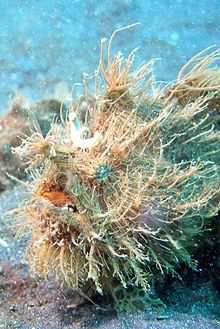
HOW DO FROGFISHES GET AROUND? SWIM? WALK? CRAWL?

Frogfishes do not in fact move around a great deal. Using their camo advantages, they prefer to lie on the sea floor and wait for prey to come to them. As mentioned in the quote above, they may slowly approach prey using their pectoral and pelvic fins to “walk” along the sea bottom. They can swim using their tail fin (or in some species by simple ‘jet propulsion’ by forcing water out of their gills) but rarely do so – they don’t feed on the move, and they are adapted to the sea floor environment where they food is readily available. However their “walking” ability is limited to short distances.

frogfish-anglerfisch

DO FROGFISH HAVE OTHER COLOUR SCHEMES?

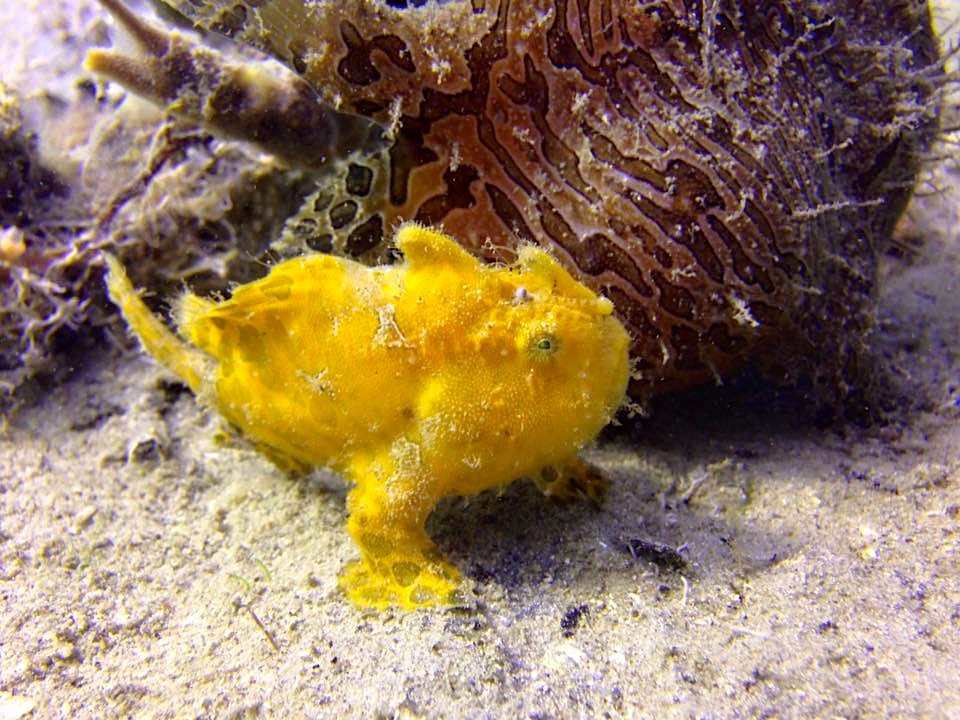
Indeed they do. In stark contrast to the camo species, some frogfishes are highlighter bright. Here are two of my favourite photos by Adam that show this clearly. I’ve no idea if these are a male and female. I suspect they are different species. I think the brown one is a striated frogfish and the other is… a yellow frogfish. Some people keep these creatures in  aquaria, but apparently it is impossible to sex them, and they have to be kept on their own for everyone’s peace of mind…

Frogfish (Adam Rees Scuba Works) Frogfish (Adam Rees Scuba Works)

FROGFISH INFOGRAPHICS

frogfishFrogfish Infographic 'Monsters of the Deep'

FROGFISH VIDEOS

These two videos, from Lester Knutsen and Daan Van Wijk respectively, show some of the characteristics I have written about above. Both are short and both are fascinating.

To read more about frogfishes and for some fabulous photos I highly recommend the website FROGFISH.CH You can reach the main page(s) but the link seem to be broken so I have not been able to contact Teresa Zubi, whose site it is. She clearly has a sense of humour and uses a neat pair of gifs which I hope she won’t mind my using…

Credits: All main photos, Adam Rees  of Scuba Works with many thanks; wiki for ‘spot the esca’, red quote & basic info; videos Lester Knutsen & Daan Van Wijk; Teresa Zubi for website & gifs; infographics, authors u/k

Frogfish Tee Shirt

Unknown's avatar

FORAYS WITH MORAYS (2): SPOTTED IN THE BAHAMAS…


Spotted Moray Eel, Bahamas (Melinda Riger Grand Bahama Scuba)

FORAYS WITH MORAYS (2): SPOTTED IN THE BAHAMAS…

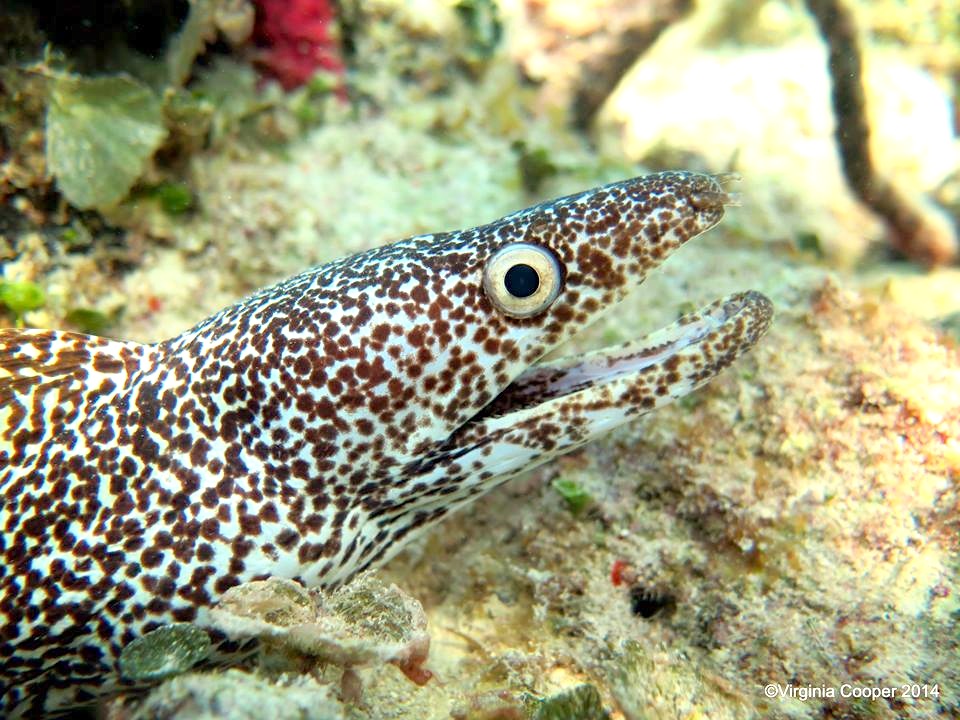
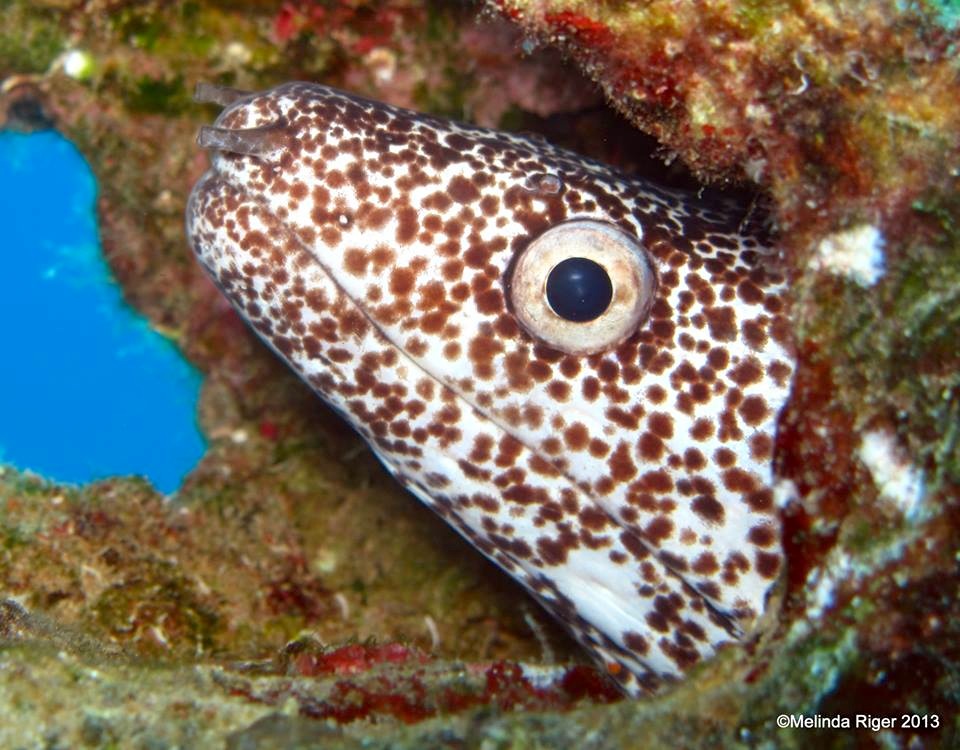
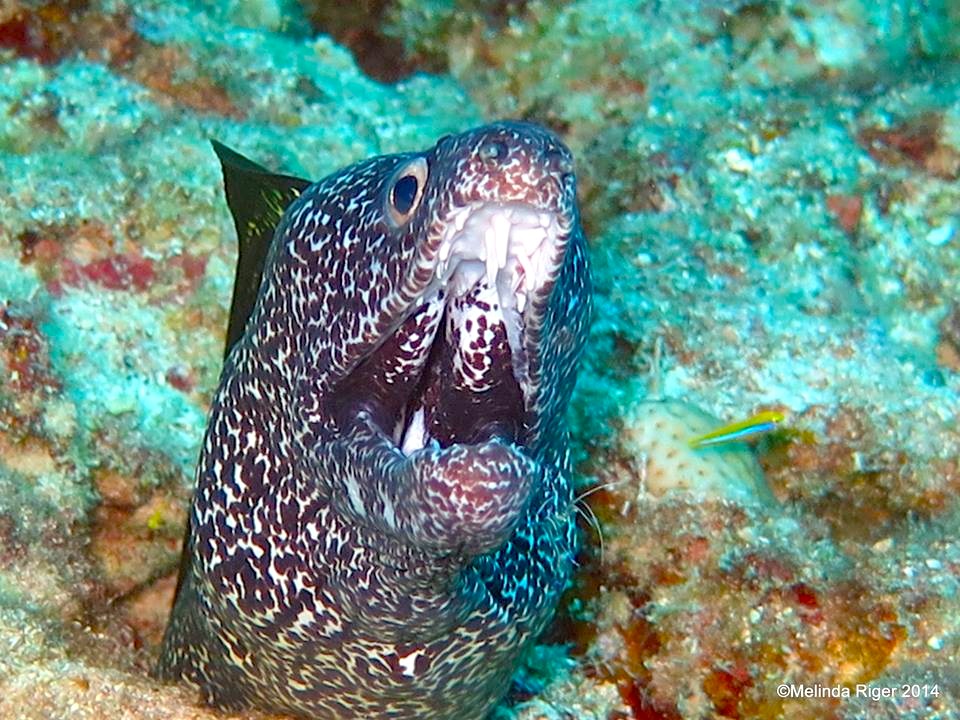
I’ve been neglecting the moray eels. It’s ages since I did a post about them, and it’s time to put that right. Specifically, time to take a look at Spotted Morays Gymnothorax moringa. These eels can grow up to 2 meters, and live mainly in the sub-tropical waters of the Atlantic. They are solitary creatures, most often seen with just their heads protruding from holes and fissures reefs and r0cks. They have interesting dental arrangements (see below) and their bite is one that, all things being equal, is probably best avoided… Here’s what to look for.

ADULT SPOTTED MORAYSSpotted Moray Eel, Bahamas (Melinda Riger Grand Bahama Scuba) Spotted Moray Eel, Bahamas (Melinda Riger Grand Bahama Scuba) Spotted Moray Eel, Bahamas (Melinda Riger Grand Bahama Scuba) Spotted Moray Eel, Bahamas (Melinda Riger Grand Bahama Scuba)

TOOTHSOME CRITTERS (FANGS FOR THE MEMORY…)Spotted Moray Eel, Bahamas (Melinda Riger Grand Bahama Scuba) Spotted Moray Eel, Bahamas (Melinda Riger Grand Bahama Scuba) Spotted Moray Eel, Bahamas (Melinda Riger Grand Bahama Scuba)

WICKLE BABY MORAY. MORAYKIN?BABY Spotted Moray Eel, Bahamas (Melinda Riger Grand Bahama Scuba)

Photo credits: all amazing photos courtesy of Melinda Riger of Grand Bahama Scuba; Props to ‘Earl the Eel’ who appears in some of them!

Unknown's avatar

WTF? (WHAT’S THAT FISH?) (4): THE BATFISH


Batfish (Brenda Bowling, Texas Parks & Wildlife Department)

WTF? (WHAT’S THAT FISH?) 4 : THE BATFISH

That’s ‘Batfish’ (or strictly, Batfishes, for there are some 60 species worldwide), as in one of the weirdest, most alien underwater creatures you may ever encounter. As opposed to ‘Bait Fish’, those little silvery specimens that are so attractive to predator fish higher up the food chain – the ones fishermen might be interested in… And the Batfish has no connection at all with Bruce Wayne of Wayne Manor, Gotham City nor with his sidekick Robin. Batfish (Brenda Bowling, Texas Parks & Wildlife Department) I mention this bizarre-looking and -acting creature because two have recently been seen and photographed in Abaco waters and although I’d heard of the batfish and even knew vaguely what one looked like, I was quite unprepared for the real thing. Ellen Sokol is a Captain for Kiskeedee Sailing Charters which during the summer is based in the Abacos and which amongst other things gives youngsters the opportunity to snorkel and to learn about undersea life. Ellen says: “I was snorkelling when I saw this thing on the bottom.  At first, I thought it was a dead bird!  It wasn’t moving at all even when I touched it with my flipper.  Later when I read about this fish I learned that it sits motionless and uses the long nose to attract prey.  I suppose that is exactly what it was doing when I rudely interrupted it! I later researched, and found it to be a spotted batfish”.   Because they had no underwater camera on board, Ellen’s son gently scooped it up in a net so they could take a quick photo of the fish before returning it. Quick thinking! Batfish, Abaco 1 (Ellen Sokol, Kiskeedee Sailing)Batfish, Abaco 3 (Ellen Sokol, Kiskeedee Sailing) The other recent sighting was posted with a photo on FB within the last 3 weeks by the excellent CRUISE ABACO.  Batfish (?Shortnose), Abaco Waters (FB, source unclear)

10 OGCOCEPHALIDAE (BATFISH) FACTS TO TREASURE

  • There are some 60 species of batfishes worldwide
  • They live in warm and temperate seas, including the waters of the Bahamas
  • An adult batfish is 12″ – 14″ in length
  • Their bodies are generally lumpy, with some hard spines
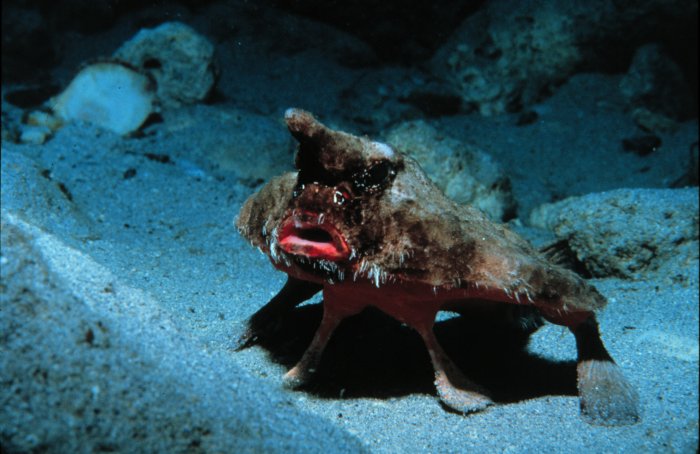
  • Some have a long, upturned snout. Others have bright red ‘lipstick lips’
  • They are rubbish swimmers, and often ‘walk’ on their limb-like pectoral and pelvic fins
  • Most species are deep sea denizens but some (short nose, spotted) inhabit shallower water
  • The fleshy snout above the mouth lures prey close enough to its jaws to eat
  • The batfish is becoming increasingly rare worldwide, and is considered to be endangered
  • Only the word ‘Logcock’ (pileated woodpecker) contains the initial 4 letters of Ogcocephalidae 

 CAN YOU SHOW ME SOME MORE EXAMPLES OF THIS INTRIGUING FISH?

By all means. Here are some images of other batfish species – red-lipped, long nosed, short nosed – each peculiar in its own way. You’ll see their preferred, most unfishlike method for getting around.

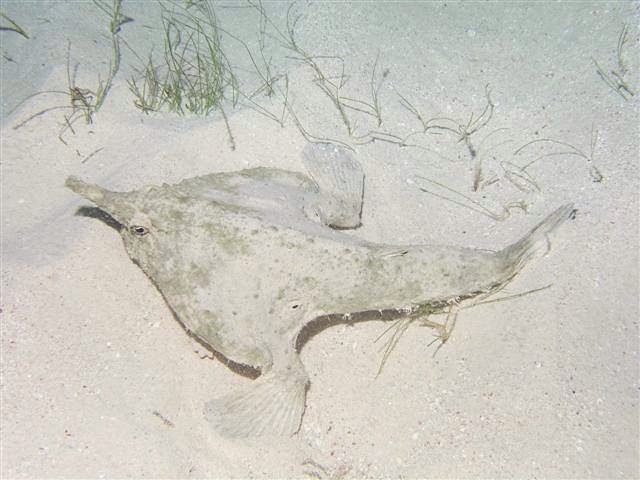
13179-004-429B61E0Red_lipped batfish (Barry Peters) Ogcocephalus_parvus Undersearch Research Program (NURP)Long-nosed Batfish Wiki

Shortnose Batfish Divephotoguide.com Eric Reich

Q. PLEASE MAY I SEE A VIDEO OF A BATFISH? A. YES. TWO.

“Heather Ashcraft found this very rare short-nosed bat fish on Eleuthera, Bahamas Sept 17 2013. It is a very strange (almost alien) looking combination of bat, frog, bird, and fish. The pelvic fins are used for walking on the ocean floor… Above the bat face is a horn (or beak)…”

“Taken at Coco Cay, Bahamas, April 29, 2014. At first we had no Idea what we were looking at… one of the weirdest things we had ever seen. Apparently they are rare. Even some of the locals had no idea what we were describing”

Batfish, Man-o-War Cay Abaco (Cheryl Marx MacKee)Batfish, Man-o-War Cay, Abaco (Cheryl Marx McKee)

Batfish, Abaco (Bob Williams August 2015)Batfish, Abaco, Bahamas (Bob Williams) Batfish, Abaco, Bahamas -2 (Bob Williams)

Credits: Header image courtesy Texas Parks and Wildlife Department (Brenda Bowling); Ellen Sokol and Kiskeedee Sailing Charters; Cruise Abaco; Wiki, Barry Peters, NURP, Eric Reisch; Youtubers x 2; Petersen, Arkive, Cheryl Marx MacKee, Bob Williams and sundry magpie pickings…
Unknown's avatar

‘BONEFISH CHASE’: A SKIFF RIDE FROM CROSSING ROCKS


Shadows on the Flats, Crossing Rocks, Abaco

‘BONEFISH CHASE’: A SKIFF RIDE FROM CROSSING ROCKS

Does any ‘fun’ (toxic concept) ever happen around Rolling Harbour? All that detailed business about our little winged friends. All that earnest historic stuff with, like, maps and things. All those fish that are basically just… fish. Ditto the flowers. The prints of Whales (geddit?). But does Rolling Harbour ever truly come alive?

Well here’s a little brief entertainment in a skiff setting off from Crossing Rocks for a day of bonefishing, throwing some shapes along the twisty channel between the jetty and the flats beyond. Anyone who has enjoyed the sometimes exhilarating / sometimes painful (in choppy waves) skiff trips on Abaco to get out to the bonefish grounds will relate to this. You get 2 versions: high definition, with some pretentious music to match the mood. According to me. 

Here’s a smaller version with a more familiar theme (also to be found on the Sidebar of this blog) for those who are allergic to pretentious music… it’s more ‘fun’, in fact.

Dreadits: all stuff, RH; music by Preston Reed and Commander Bond

Unknown's avatar

BAHAMAS WHALES & DOLPHINS IN ABACO & ANDROS WATERS


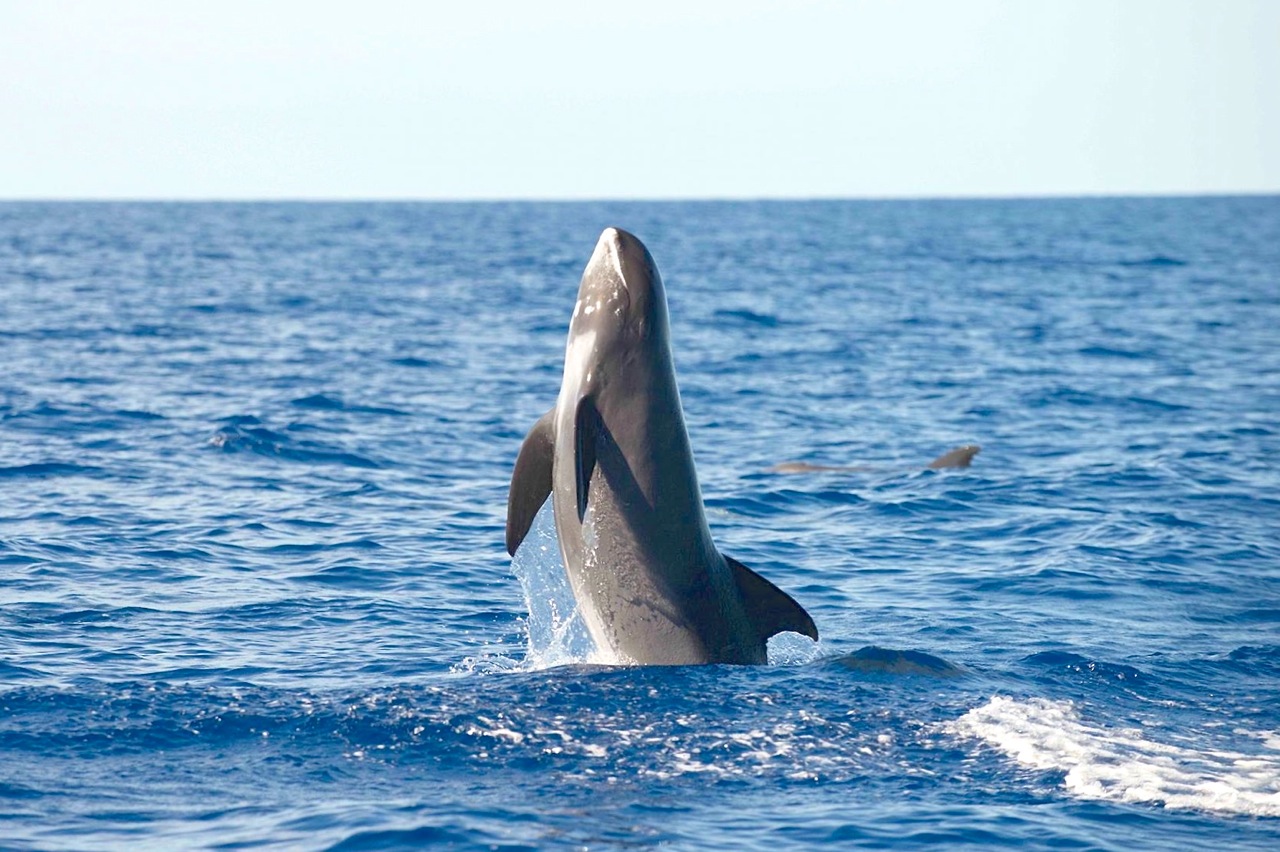
Melon-headed Whale breaching - BMMRO copy

Melon-headed Whale breaching – BMMRO

BAHAMAS WHALES & DOLPHINS IN ABACO & ANDROS WATERS

The Bahamas Marine Mammal Research Organisation (BMMRO)  has its HQ at Sandy Point, Abaco. We recently went out in their research boat, a RHIB, to spend an unforgettable day with Blainville’s beaked whales and bottlenose dolphins. I posted some of the dolphins HERE; and a two-part beaked whale post is a work in progress.

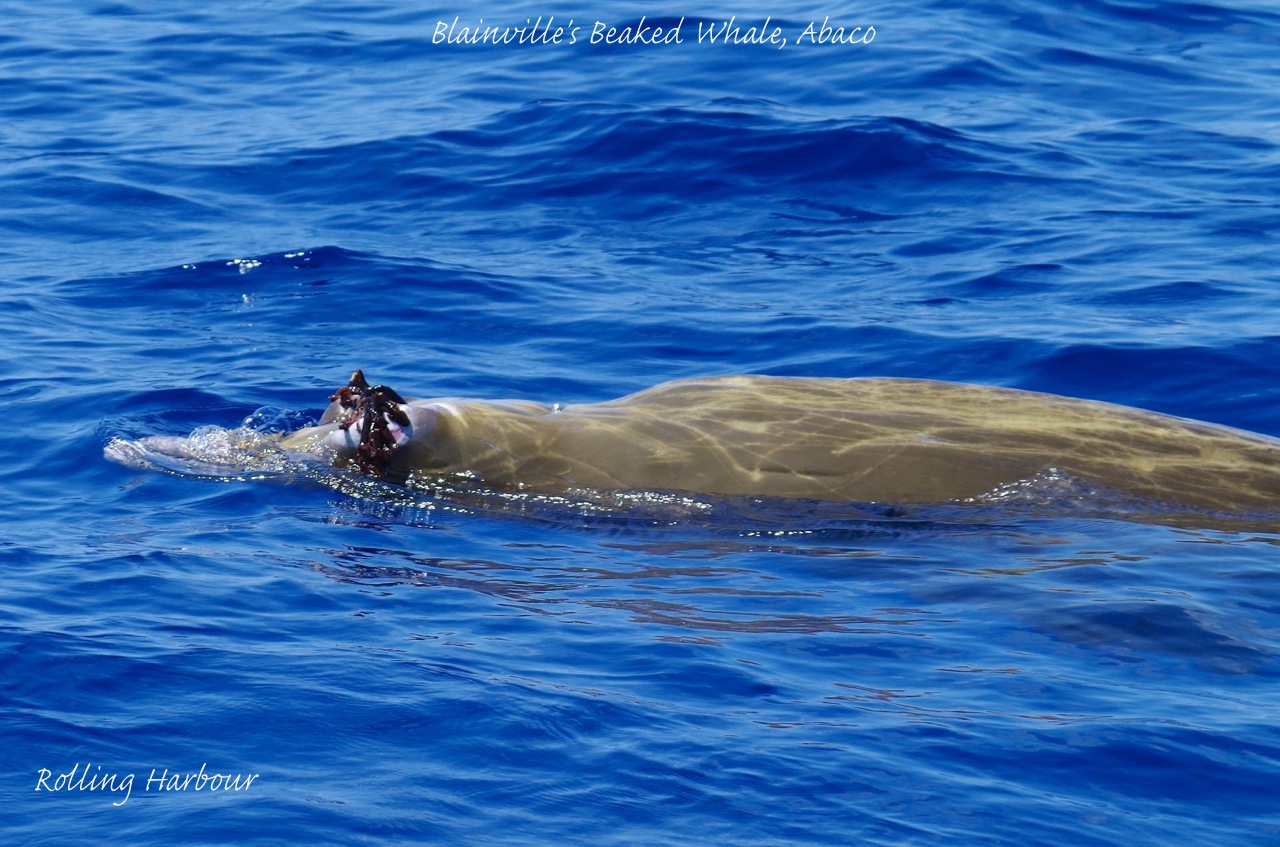
Male Blainville’s beaked whale with its extraordinary barnacle-encrusted teeth that protrude upwards from its lower jaw. The prominent beak is plainly visible. Sighted off the south-west point of Abaco during our second encounter with a group of these whales – the only male we saw that dayBlainville's Beaked Whale KS 1

Abaco waters are ideal for marine mammals, especially off the southern shores where the walls of the Great Bahama Canyon drop vertiginously down from the shallow coastal waters to depths of up to 3 miles below. This is one of the deepest ocean canyons in the world.  The area provides a rich source of food and nutrients for the whales and dolphins and many different species are regularly sighted there, from huge sperm whales to small pilot whales (including plenty of species I had never heard of before). 

Great Bahama Canyon Map edit

As the name suggests, the BMMRO’s remit extends far beyond Abaco. The researchers often spend time exploring and recording cetaceans in other Bahamian waters. For the last few weeks the team have been off Andros and have encountered quite a few target species. I have included a selection below taken within the last month to illustrate the importance of the area for a remarkable assortment of wonderful whales and dolphins.

BLAINVILLE’S BEAKED WHALEBlainville's Beaked Whale copy

DWARF SPERM WHALESDwarf Sperm Whales - BMMRO copy

PANTROPICAL SPOTTED DOLPHINSPantropical Spotted Dolphin - BMMRO Pantropical Spotted Dolphin leap - BMMRO copy

On board the research vessel, every sighting is recorded in detail – where possible by species, numbers, ages, sexes, and individual identifying characteristics. Thus ‘SW34’ may have a damaged fluke, whereas ‘RD49’ may have a long scar on its back. 

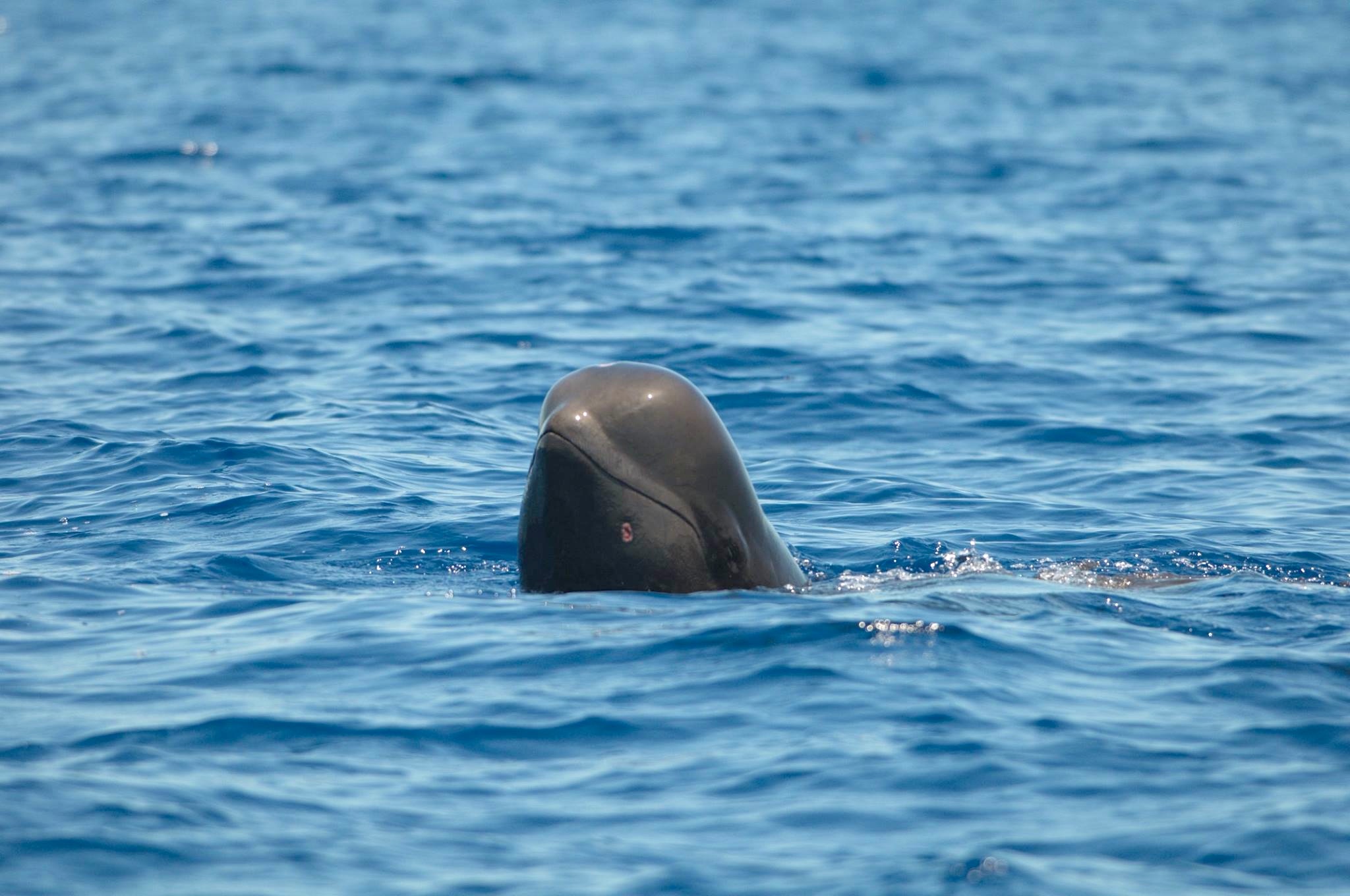
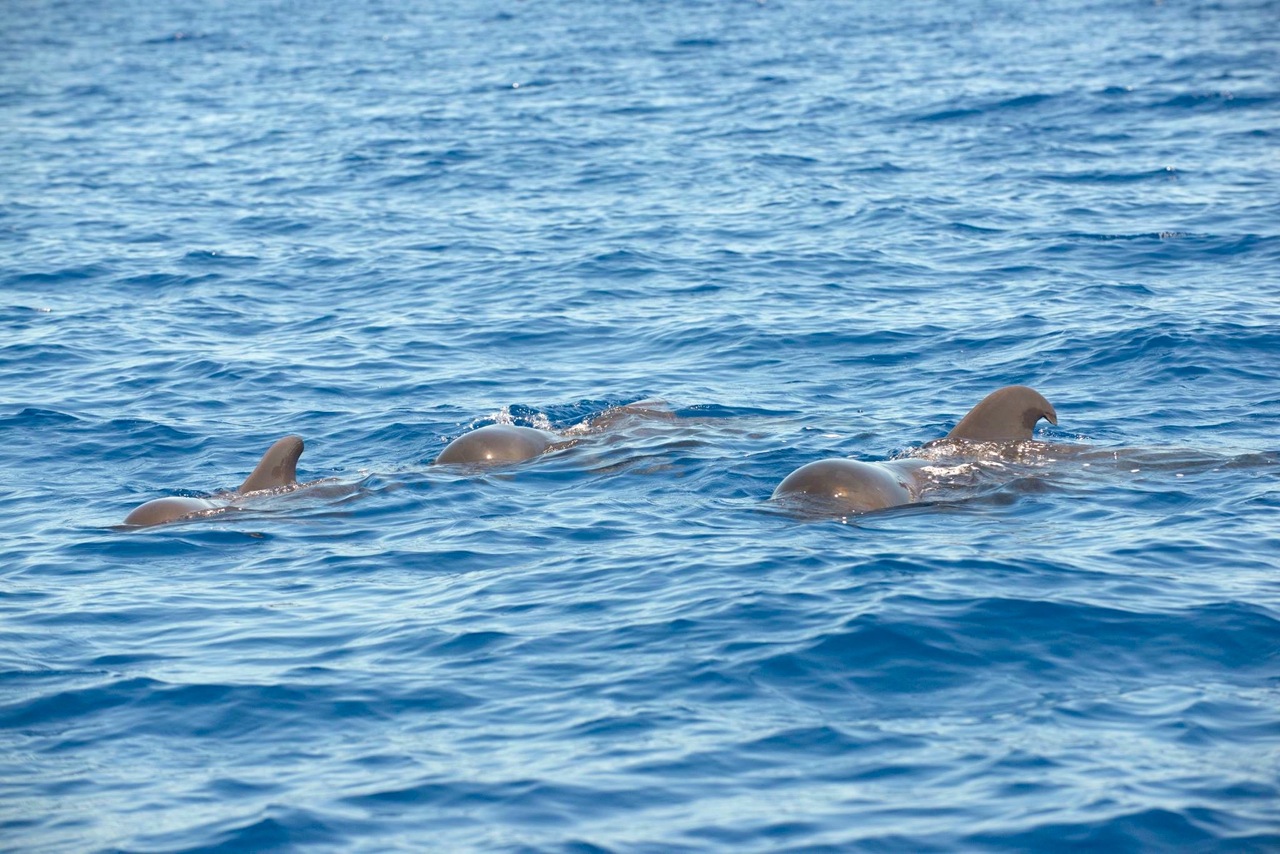
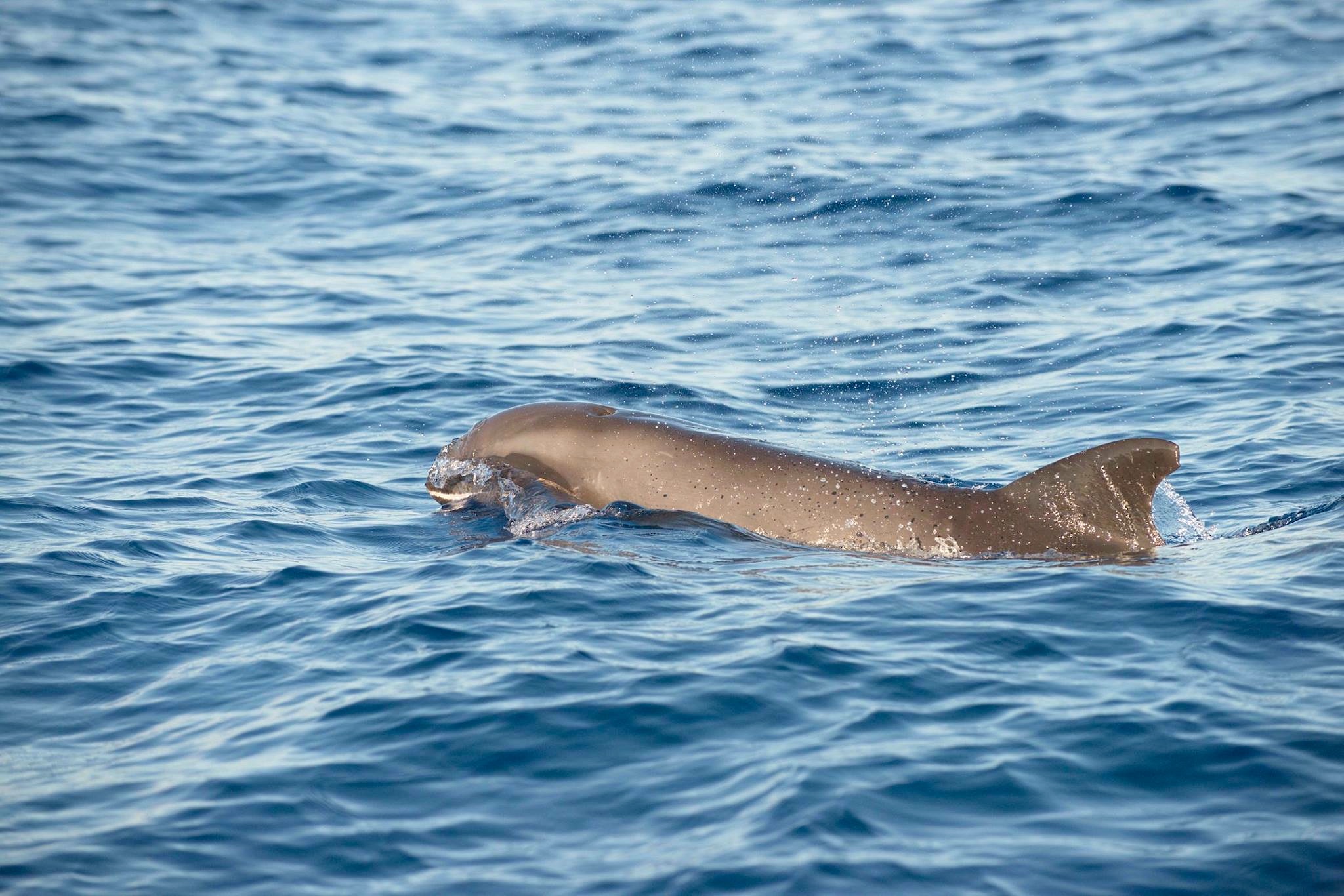
PILOT WHALESPilot Whale - BMMROPilot Whales - BMMRO copyPilot Whales 2 - BMMRO

The research boat is equipped with sound devices which, when the microphone is immersed, are capable of picking up whale or dolphin sounds from a considerable distance. It’s astounding to be able to listen in ‘live’ to the wide assortment of clicks and whistles produced as the creatures communicate with each other. The recorded sound patterns are studied and can often be matched to enable an individual animal to be identified. 

MELON-HEADED WHALESMelon-headed Whales - BMMRO Melon-headed Whale - BMMRO

RISSO’S DOLPHINRisso's Dolphin - BMMRO copy

Other work, including photography, is done underwater. Perhaps the most intriguing aspect is the collection of poop specimens, from which a great deal can be ascertained about the diet and health of an individual animal. I wrote about this task and the methods used a while ago inFAMILIAR FECES‘.

I’ll be writing more about whales soon. Meanwhile, here’s a short BMMRO video of a large group of melon-headed males. At the start, you can clearly hear communication sounds between them.

Credits: Charlotte & Diane of the BMMRO for taking us out with them and for all the photos except the male Blainville’s beaked whale (mine, for once!)

Unknown's avatar

BRITTLE STARS: PRIMITIVE YET INCREDIBLY COMPLEX STARFISH


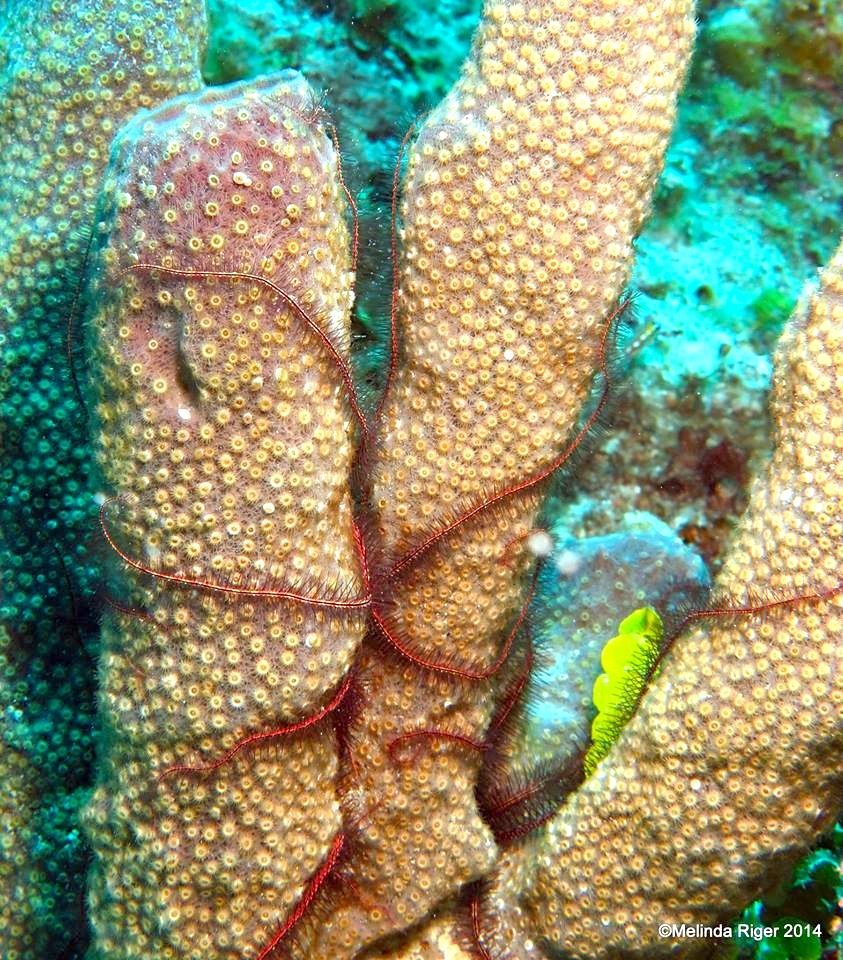
Brittle Star around a Tube Sponge ©Melinda Riger @ GB Scuba

BRITTLE STARS: PRIMITIVE YET INCREDIBLY COMPLEX STARFISH

BRITTLE STARS are closely related to starfish, and in particular to Basket Stars. They are commonly known as “serpent stars”, having 5 long, thin arms that may grow as long as 2 feet long. There are lots of different types of brittle star – at least 2000 – and they are found in every ocean on earth from the poles to the tropics. In Bahamian waters they a commonly found living on reefs.

Although these creatures look primitive, their structure, nervous systems, respiratory systems, digestive systems, sex lives and transportation methods are incredibly complex. Take it from me – I’ve just read about it all. So I’ve decided to pick a few aspects of these creatures to highlight rather than discuss the minutiae of their ossicles (tiny bones), madroporites (a sort of water filter / pressure balancer) and viscera.

You are most likely to see Brittle Stars clinging to coral or spongesSponge & Brittle Star ©Melinda Riger @GB Scuba

A DOZEN BRITTLE STAR FACTS TO PLAY WITH

  • The star has no eyes and no sense organs as we know them, but can detect light chemically; and (why would they need this?) sense smell through their ‘feet’… [Not a superpower I would prize, but still]
  • The mouth is on the underside of the central disc (‘body’) of 5 segments, each with a toothed jaw
  • The mouth is used both for ingestion and, putting it delicately, egestion. [Nor that superpower]
  • Stars eat tiny organisms suspended in the water or mini-worms, gathering them with their arms
  • If I have understood this, they breathe through their armpits, and can excrete from here also
  • The arms fit the main part with ball and socket joints, and are flexible in all directions
  • The genitals seem to be located in or between the armpits (lucky we are not descended from stars)
  • Stars readily regenerate lost arms until they lose the 5th – then they are in real trouble
  • This enables them to shed an arm in a predator attack, like a lizard its tail
  • Trials indicate that a jettisoned arm cannot regenerate from itself
  • They use only 4 arms to move along, with the fifth ‘steering’ out in front or trailing behind
  • Brittle Stars are inedible but non-toxic

Brittle Star on Green Rope Sponge ©Melinda Riger @ GB Scuba

Often, brittle stars will cling on inside a spongeBrittle Stars in sponge ©Melinda Riger @ GB Scuba

I quite liked this infographic from a source new to me, ‘Weird ‘n’ Wild Creatures Wikia’Brittle_Stars_front

Here is a great video from Neptune Canada of a brittle star fight on the ocean floor over the remains of a shrimp. If you watch the ones joining the fight, you will clearly see the locomotion method described above, with one limb pathfinding and the other four ‘walking’.

I’m not renowned for extreme sensitivity, so I feel no shame in showing mating brittle stars, courtesy of Channel Banks. It’s not exactly Lady Chatterley and Mellors, but the entwined arms are rather romantic, no?

Credits: all wonderful photos by Melinda Riger of Grand Bahama Scuba; BS infographic and viddys as credited

Unknown's avatar

GRACE WITH ATTITUDE: SOUTHERN STINGRAYS IN THE BAHAMAS


Southern Stingray 2 ©Melinda Riger @ G B Scuba copy

GRACE WITH ATTITUDE: SOUTHERN STINGRAYS IN THE BAHAMAS

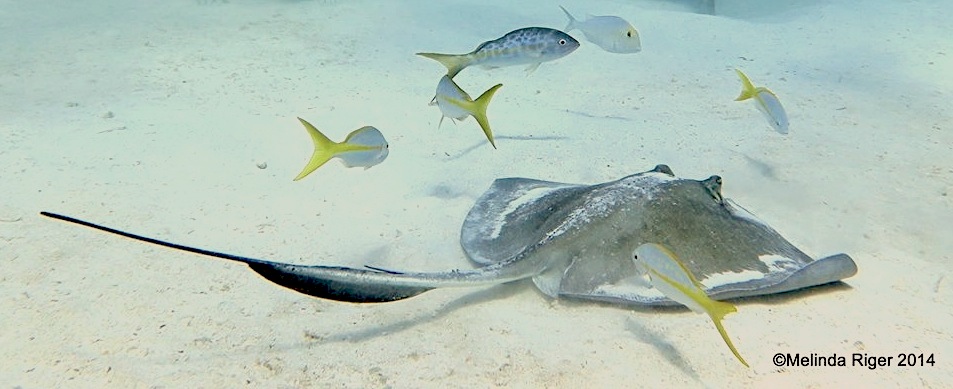
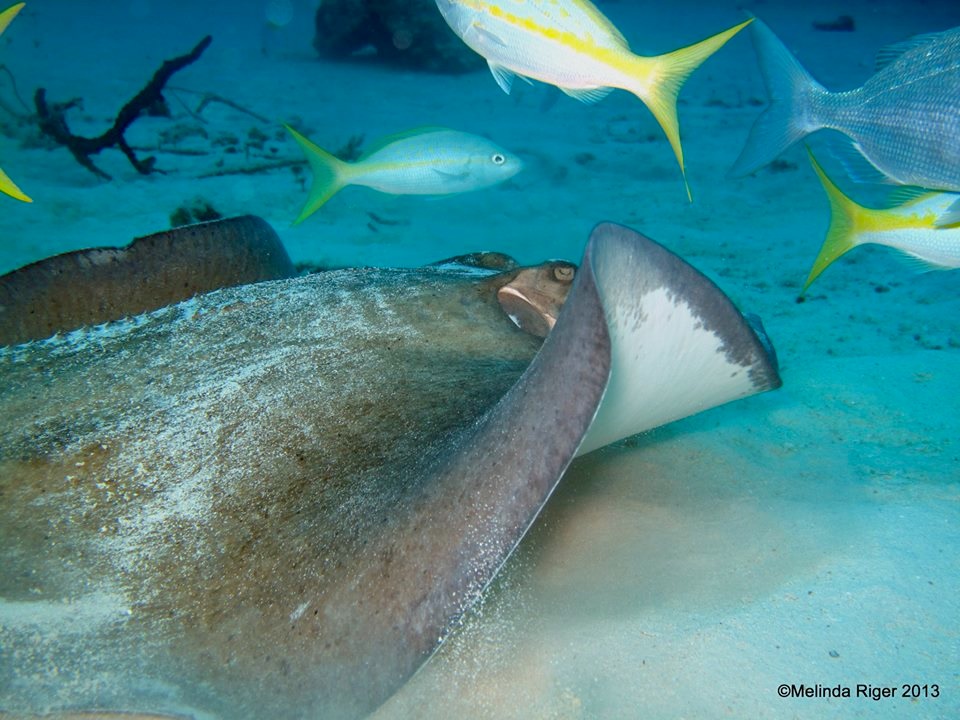
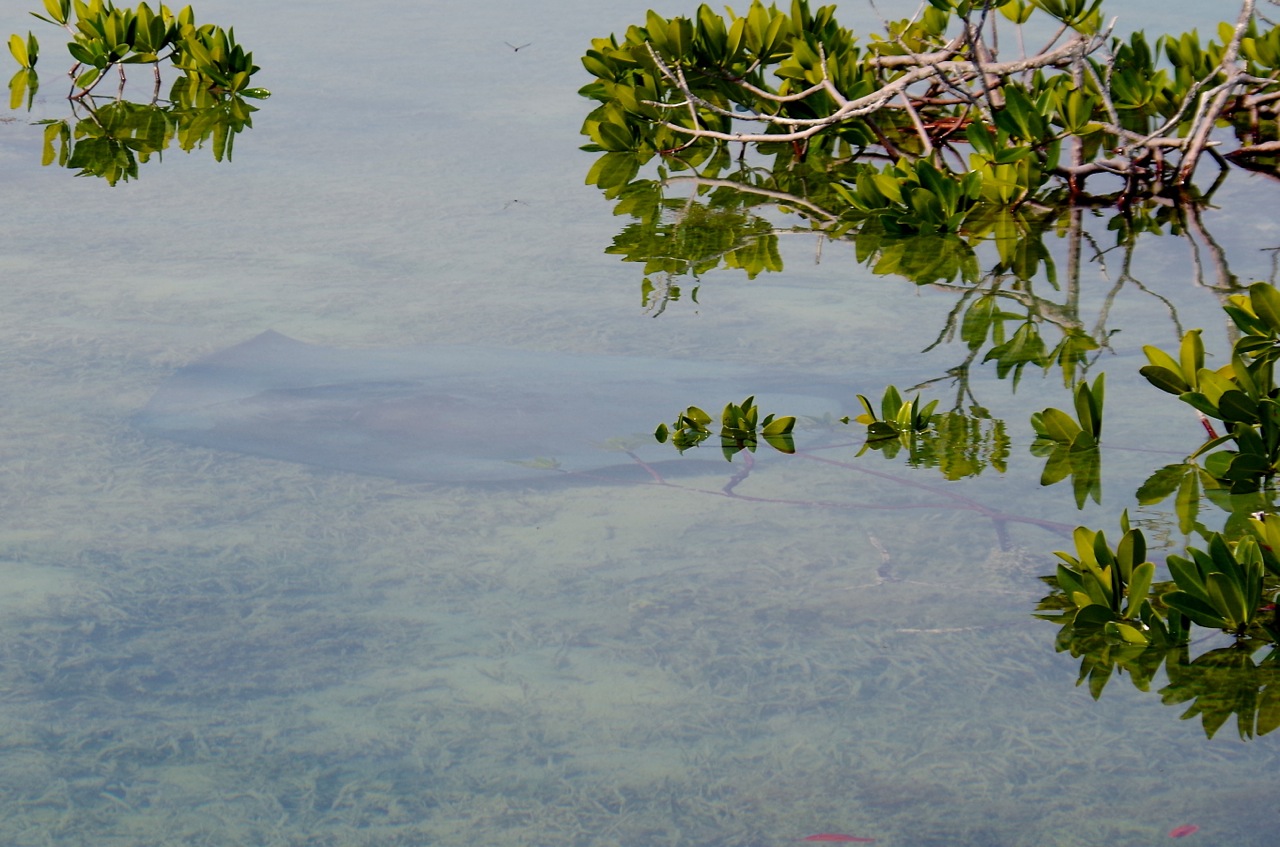
Southern Stingrays are often seen in Abaco waters. In the bay of Rolling Harbour at Delphi, we sometimes watch them admiringly from the balcony or beach as they lazily cruise along the shoreline in the turquoise water. If someone is in the water, they will make a leisurely detour round them – unfrightened in their own element, but unthreatening and disinclined to investigate human intrusion. Diving with them is a wonderful experience (though I have never got very close). Melinda Riger – a scuba expert with great camera skills – takes the most beautiful photos of the stingrays she encounters. Here are a few that I haven’t yet featured.  Notice the little striped CLEANING GOBIES going about their business. 

Stingray, Southern with cleaning gobies ©Melinda Riger @ G B Scuba copyStingray, Southern at cleaning station ©Melinda Riger @ G B Scuba  copySouthern Stingray © Melinda Riger @GB Scuba copy

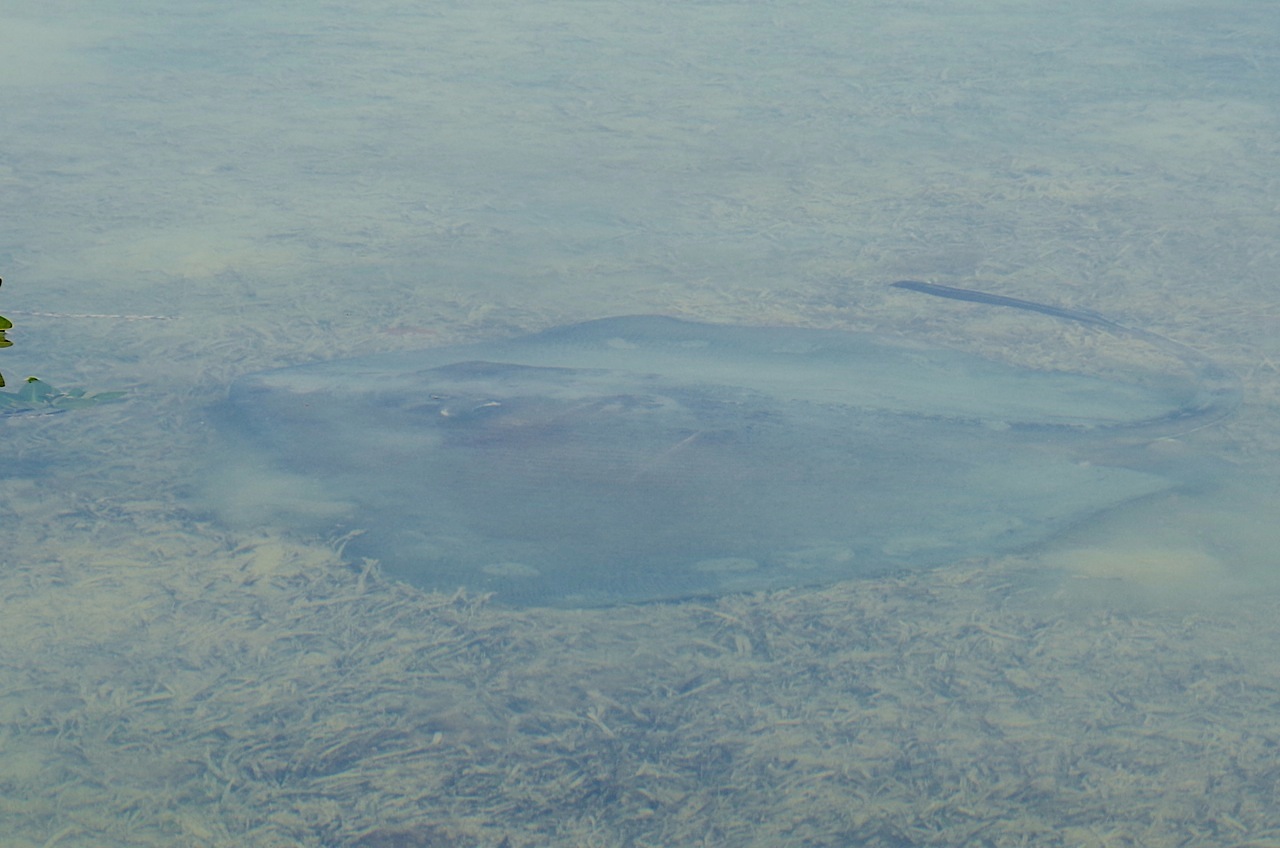
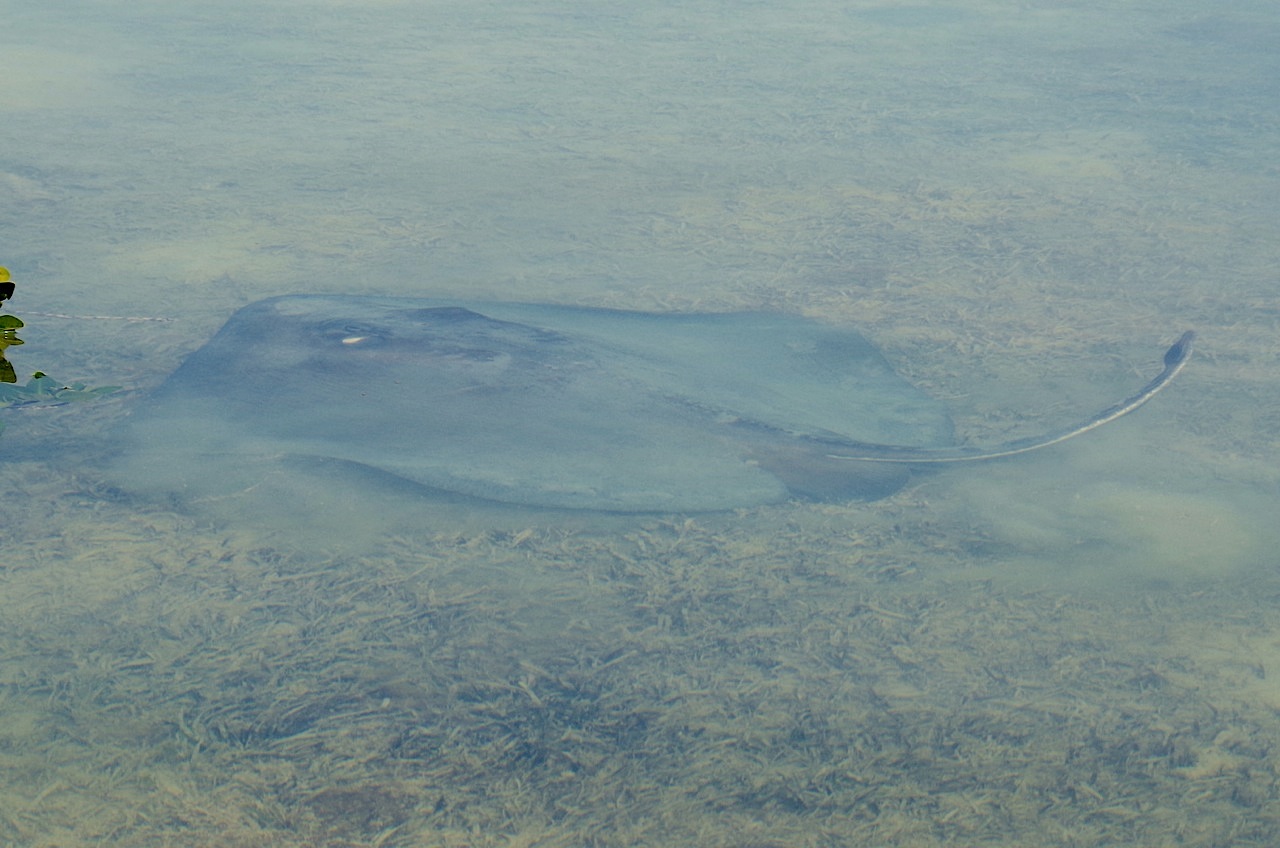
Southern Stingrays are often encountered when one is bonefishing in the low waters of the Marls. I took the photos below while we were fishing in a channel between areas of mangrove. As the skiff was poled very slowly forward, I saw the stingray coming straight towards us. I wondered how it would react. Very elegantly, was the answer. It turned effortlessly and unperturbed to one side, then resumed its original course leaving a clump of mangrove between it and the skiff. 

Southern Stingray, Abaco Marls (Keith Salvesen 1)Southern Stingray, Abaco Marls (Keith Salvesen 2)Southern Stingray, Abaco Marls (Keith Salvesen 3)Southern Stingray, Abaco Marls (Keith Salvesen 4)

RELATED POSTS

SOUTHERN STINGRAYS

RAYS OF SUNSHINE

YELLOW STINGRAYS

Credits: Melinda Riger, Grand Bahama Scuba; RH

Unknown's avatar

“ONE IS CALLED LUCY…”: SWIMMING WITH BAHAMAS SHARKS


Shark, Blacktip ©Melinda Riger @ G B Scuba copy 2

“ONE IS CALLED LUCY…”: SWIMMING WITH SHARKS

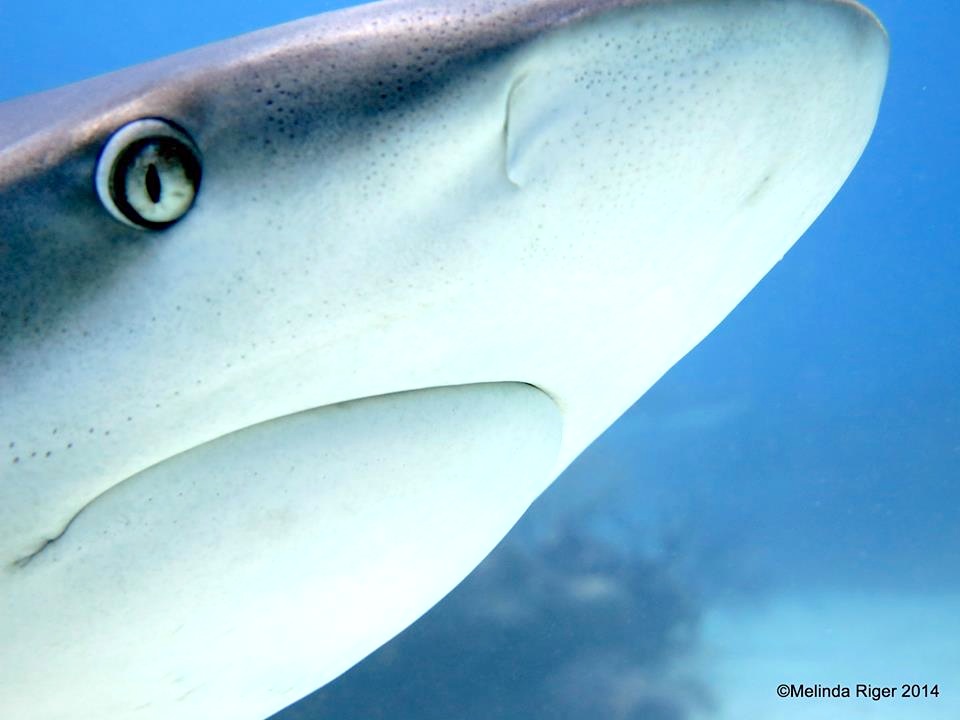
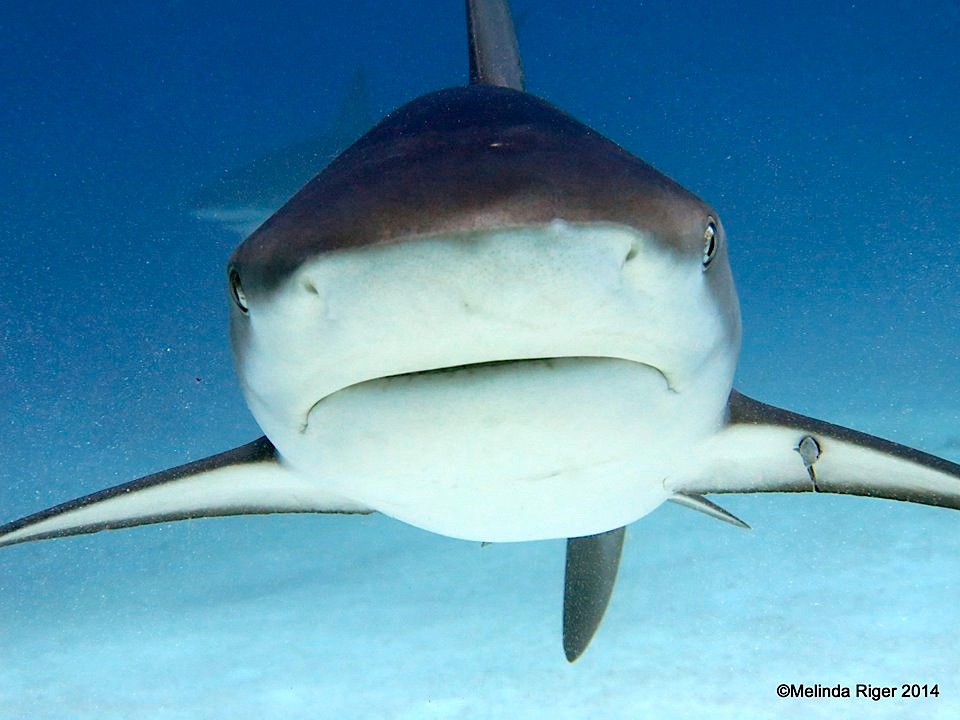
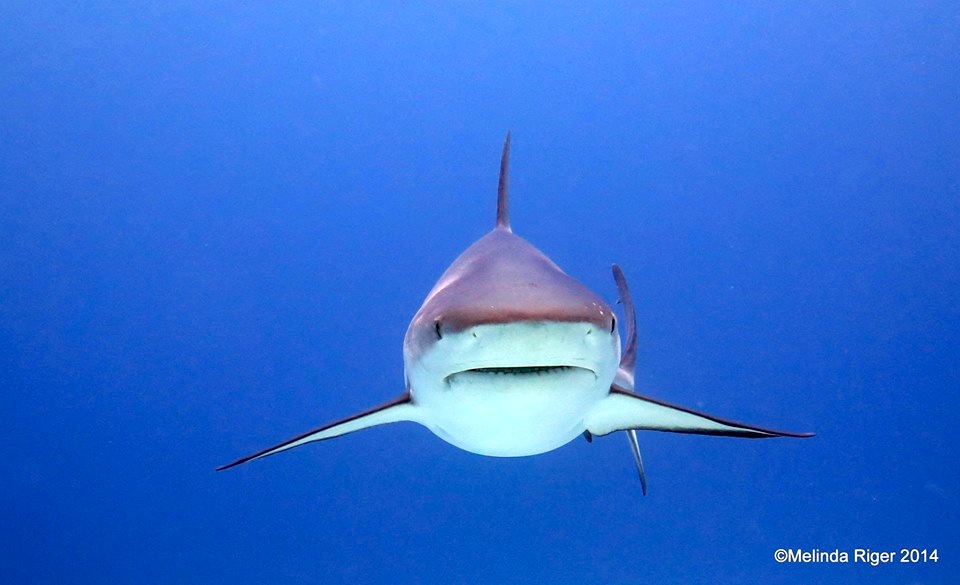
From time to time I wonder about the naming of animals. I know about the problems that can arise when people name their chickens Henny, Penny, Denny & Lenny, and the time comes to (please look away now). And how a slavering dog coming towards you (not on a lead) that the owner calls ‘Tyson’ or ‘Killer’ is possibly one to cross the street for. And that the owner of a cat called ‘The Reverend Wenceslas Muff’ (Sir Roy Strong, in fact) may not take kindly to you referring to it facetiously as ‘Puddy-tat’. But does it make things any better to know that the shark that is eyeballing you is called Lucy? I don’t know the names of the others, but I am sure they would all like to be introduced… Shark close-up ©Melinda Riger @ G B Scuba copyShark with remora ©Melinda Riger @ G B Scuba copyShark © Melinda Riger @ G B Scuba copy 2Shark ©Melinda Riger @ GB Scuba copy 2Shark Head ©Melinda Riger @ GB Scuba copy 2Shark 2 ©Melinda Riger @ G B Scuba copy 2Shark 4 ©Melinda Riger @ G B Scuba copyShark (pregant female) ©Melinda Riger @G B Scuba copy

REMORAS Some of the photos show a strange creature attached to the underside of the shark. For more info about these weird shark passengers, and some great images, click HERE

All the fabulous photographs above were taken by Melinda Riger and Virginia Cooper of Grand Bahama Scuba, on whom I rely entirely for subaqueous material, being a pathetic swimmer, a gnarly ancient, and a certified scaredy-cat (‘highly commended’). My thanks as always to them for use permission

Unknown's avatar

RED HIND GROUPER: BAHAMAS REEF FISH (25)


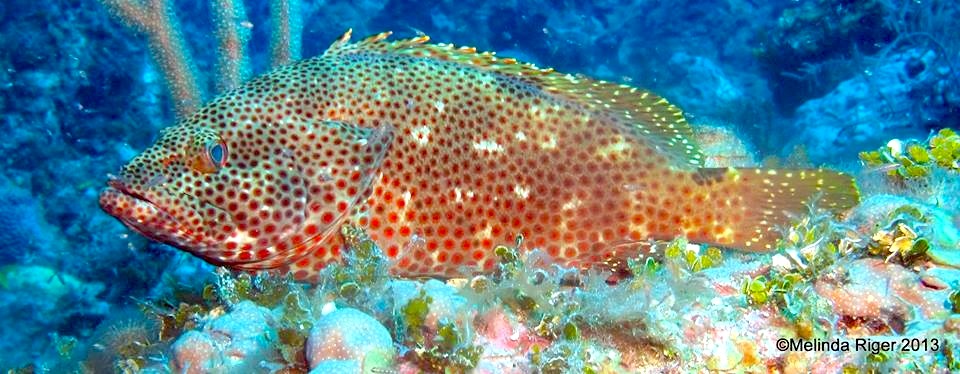
Red Hind Grouper Melinda Riger @ G B Scuba copy

RED HIND GROUPER: BAHAMAS REEF FISH (25)

The Red Hind is one of several grouper species commonly found in  Bahamas waters. Commonly for now, anyway. There is less information available about this species compared with other groupers, but sources seem agreed that it is (a) abundant and (b) IUCN listed ‘least concern’ but (c) heavily fished and (d) delicious.

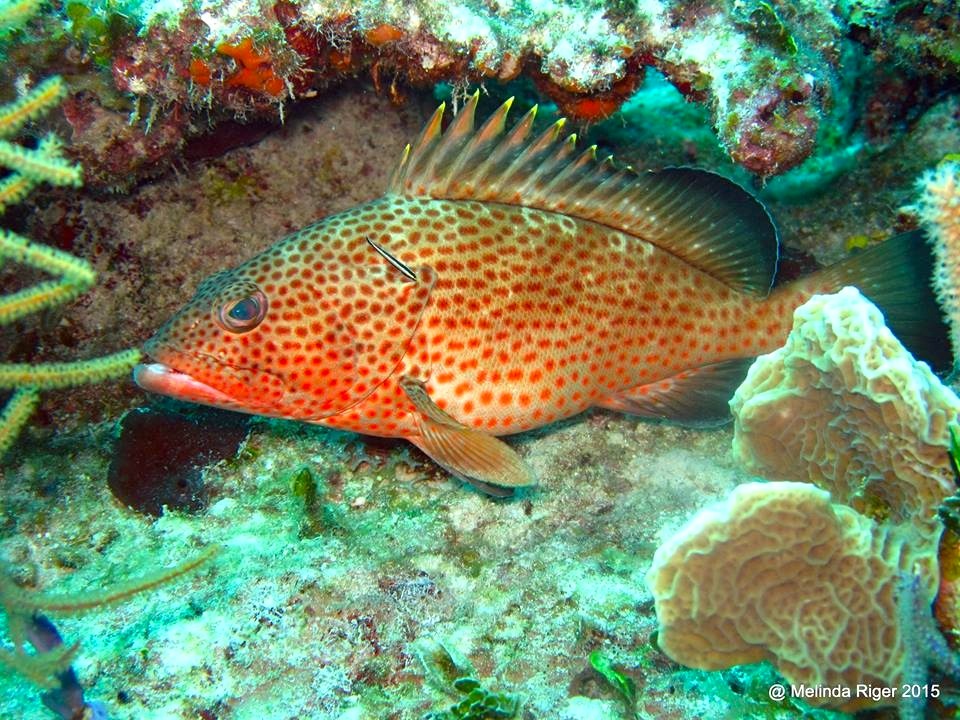
Red Hind, attended by Cleaner FishRed Hind Grouper ©Melinda Riger @ G B Scuba copy 2

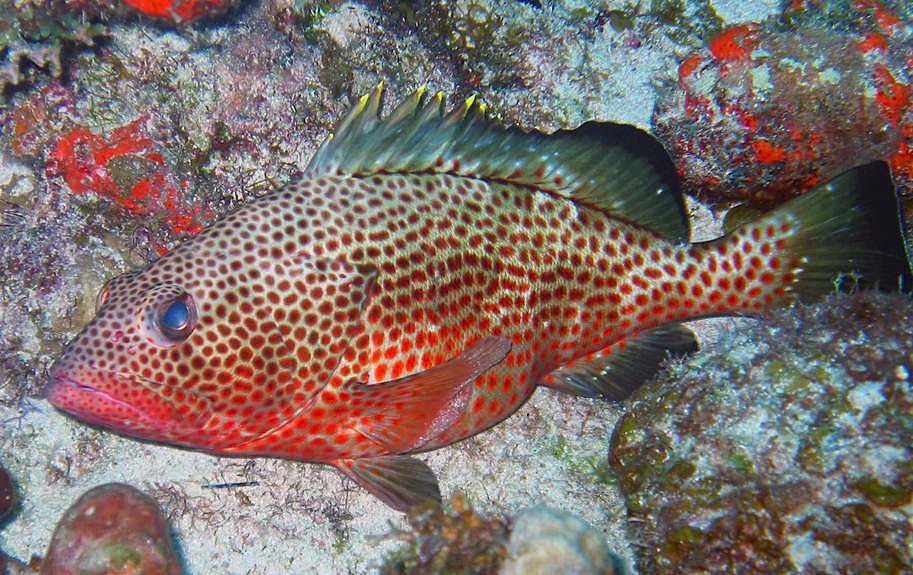
Red Hind Grouper ©Melinda Riger GB Scuba copy

One problem arises from the fact that Red Hinds form spawning aggregations in particular areas, making them vulnerable to fishing exploitation in those locations, and consequent population decline. Already, some of their spawning areas are protected.

Another threat comes from the degradation of coastal habitats coupled with increasing commercial and recreational fishing.  Red Hinds are targeted with speargun, hook and line, fish traps and nets. They may also be by-catch of other fishing operations. Fortunately Marine Protected Areas such as the ones in Abaco waters provide localised protection but these are not found throughout the Red Hind’s range. Closed seasons have been imposed in a few areas, another conservation method that has recently been introduced in the Bahamas for the Nassau grouper. 

Female spawning Red Hind Grouper (Univ of Puerto Rico:NOAA)

Getting the right balance between traditional fishing for food, and stock conservation is inevitably a tricky calculation. For the Red Hind, the factors that may result in the population decline of a plentiful species are in plain sight and will continue to be monitored by the various scientific research organisations involved…

OTHER GROUPERS YOU MAY ENJOY…

NASSAU GROUPER

TIGER GROUPER

BLACK GROUPER

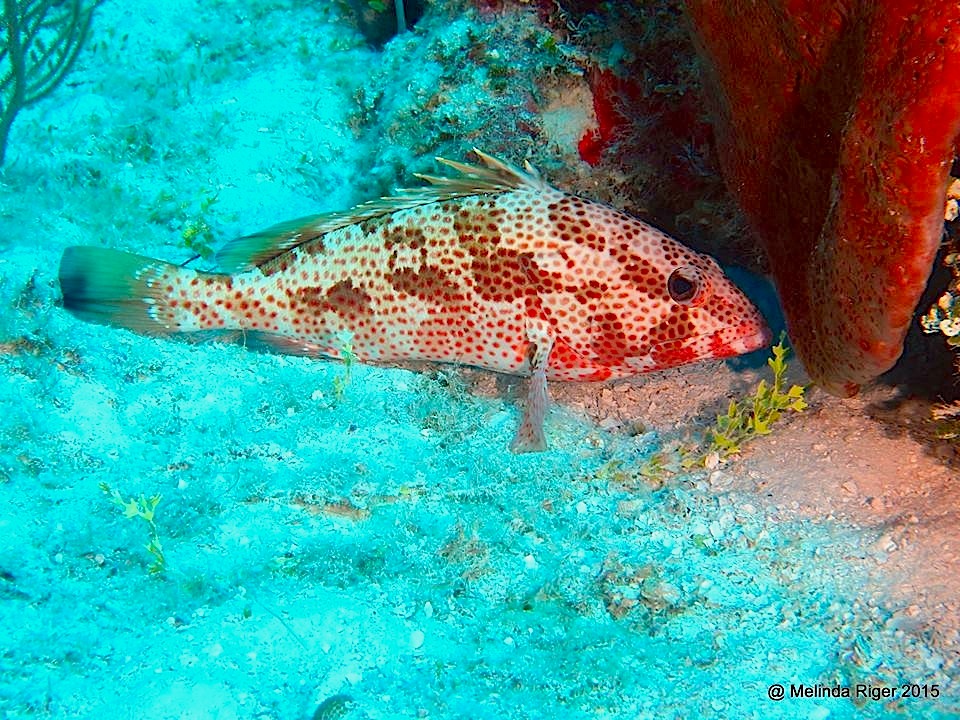
Red Hind Grouper ©Melinda Riger @ G B Scuba copy 3

Credits: All images Melinda Riger at Grand Bahama Scuba except (4) NOAA / Puerto Rico Univ; research from several sources, tip of the hat to SCRFA

Unknown's avatar

BOTTLENOSE DOLPHINS IN ABACO WATERS (2): MOTHER & CALF


Dolphin Mother & Calf, Sandy Point, Abaco, Bahamas 12

Sometimes things happen that completely take my breath away. Here is one of those moments, from our recent trip with Charlotte and Diane in the BMMRO research boat. As we returned from whale-watching to base in Sandy Point and moved from the deep dark ocean to the bright blue shallows, we encountered a group of bottlenose dolphins. You can see my recent post featuring some of the adults HERE. That was exciting enough, as they played around the boat. Then another participant appeared… 

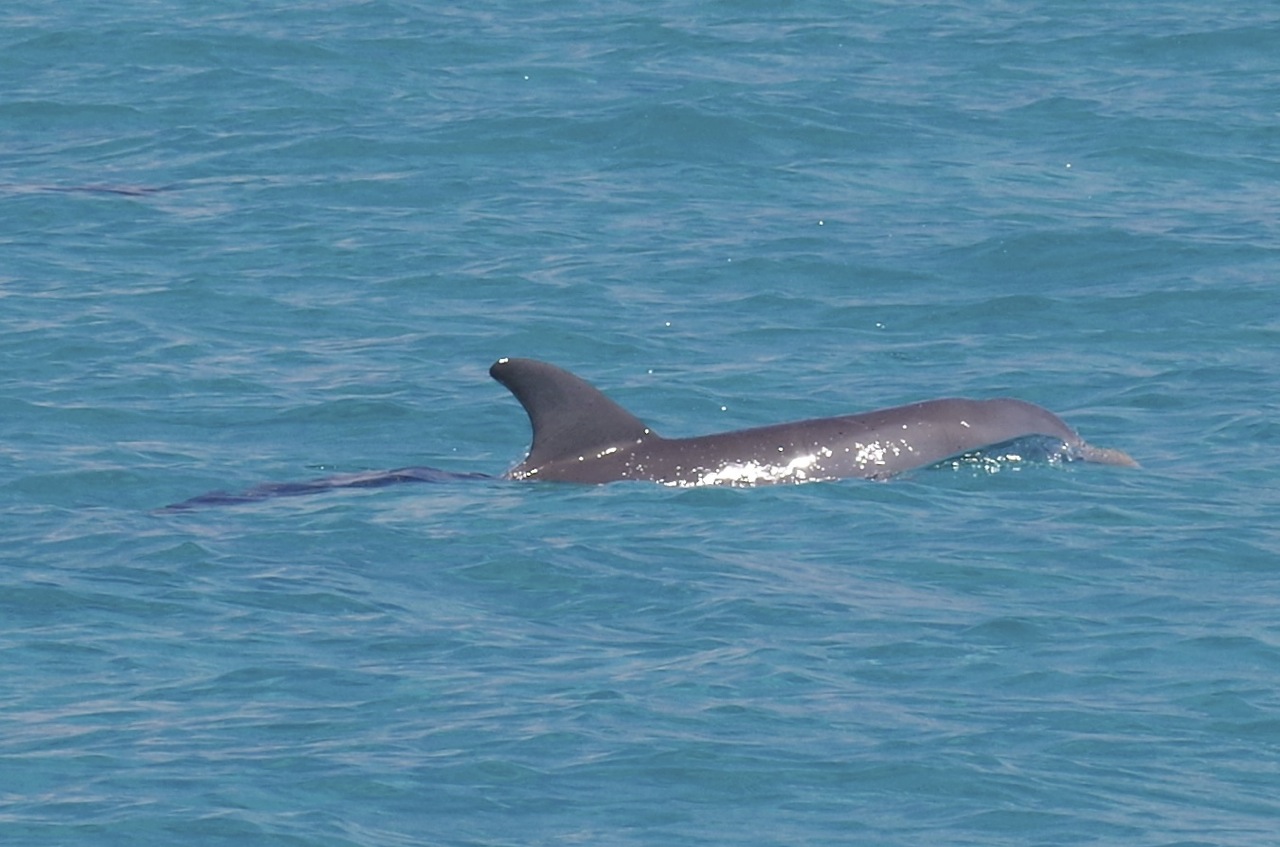
 Notice the dark area behind the adult dolphin… Dolphin Mother & Calf, Sandy Point, Abaco, Bahamas

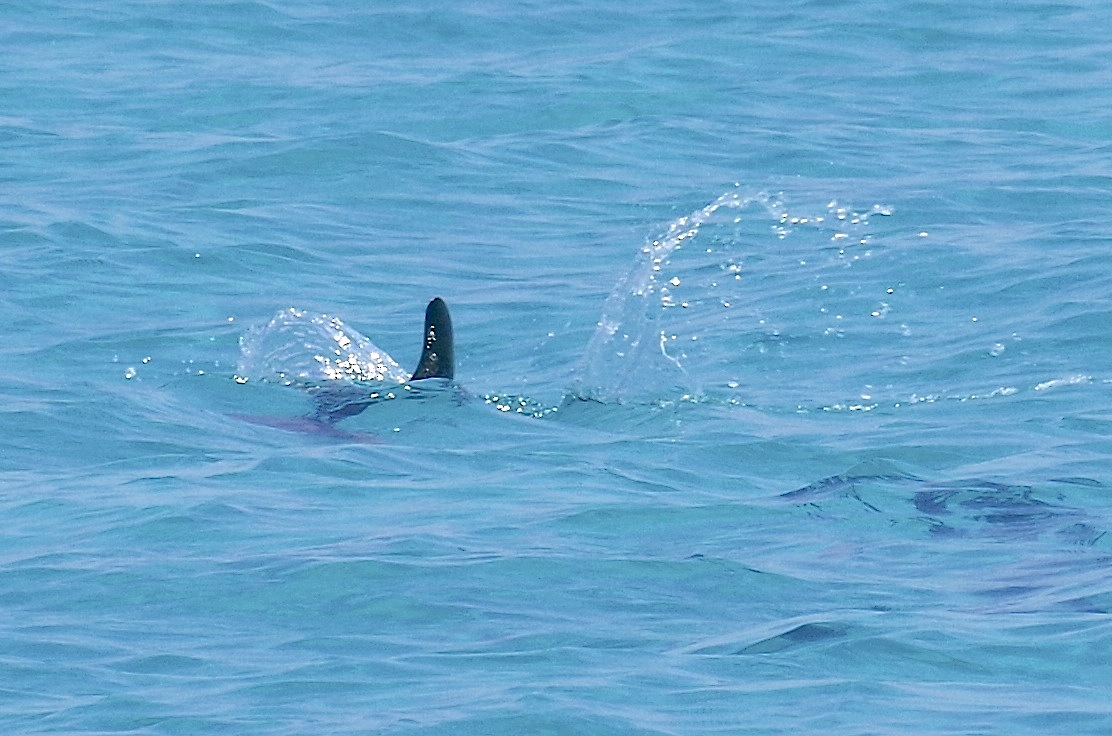
…which soon separated into a small dark splashing creature with its own fin cutting the waves…Dolphin Mother & Calf, Sandy Point, Abaco, Bahamas

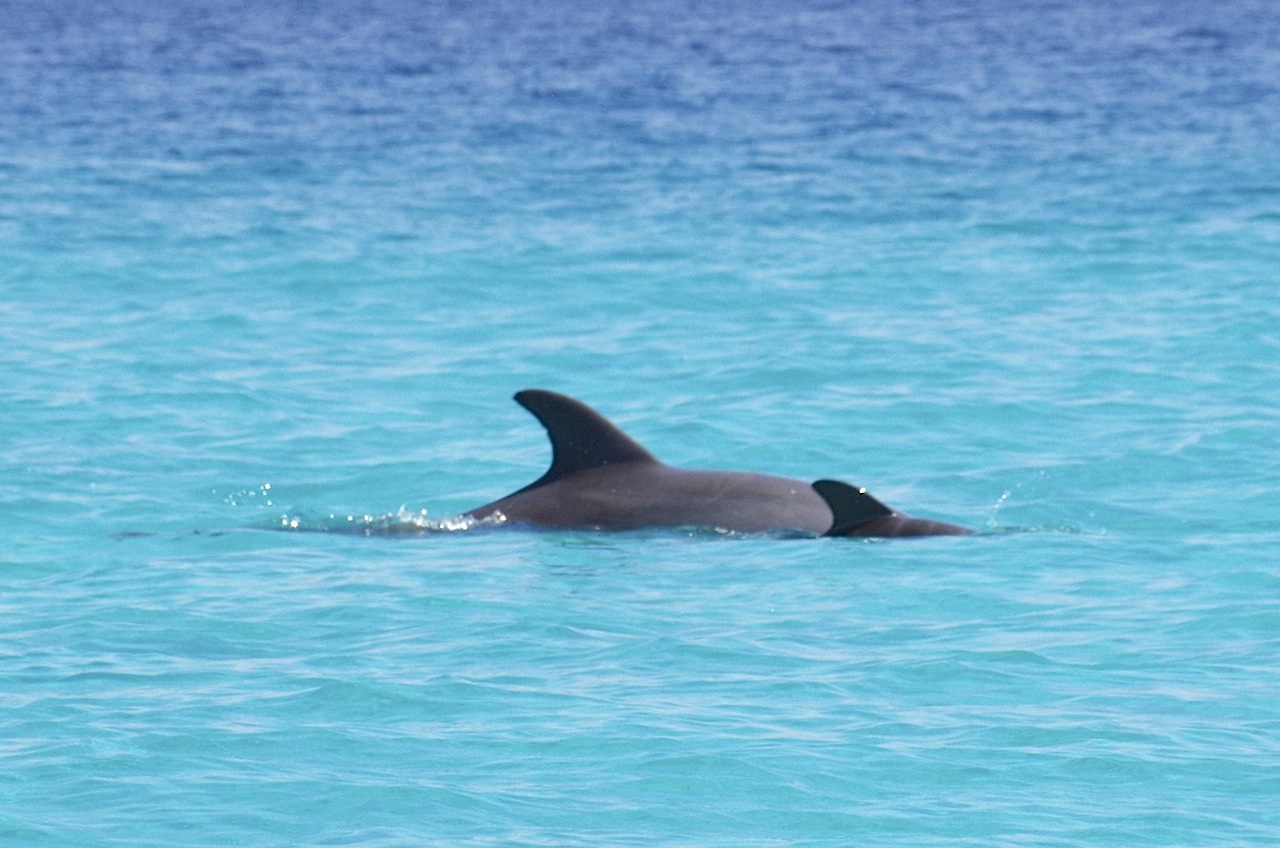
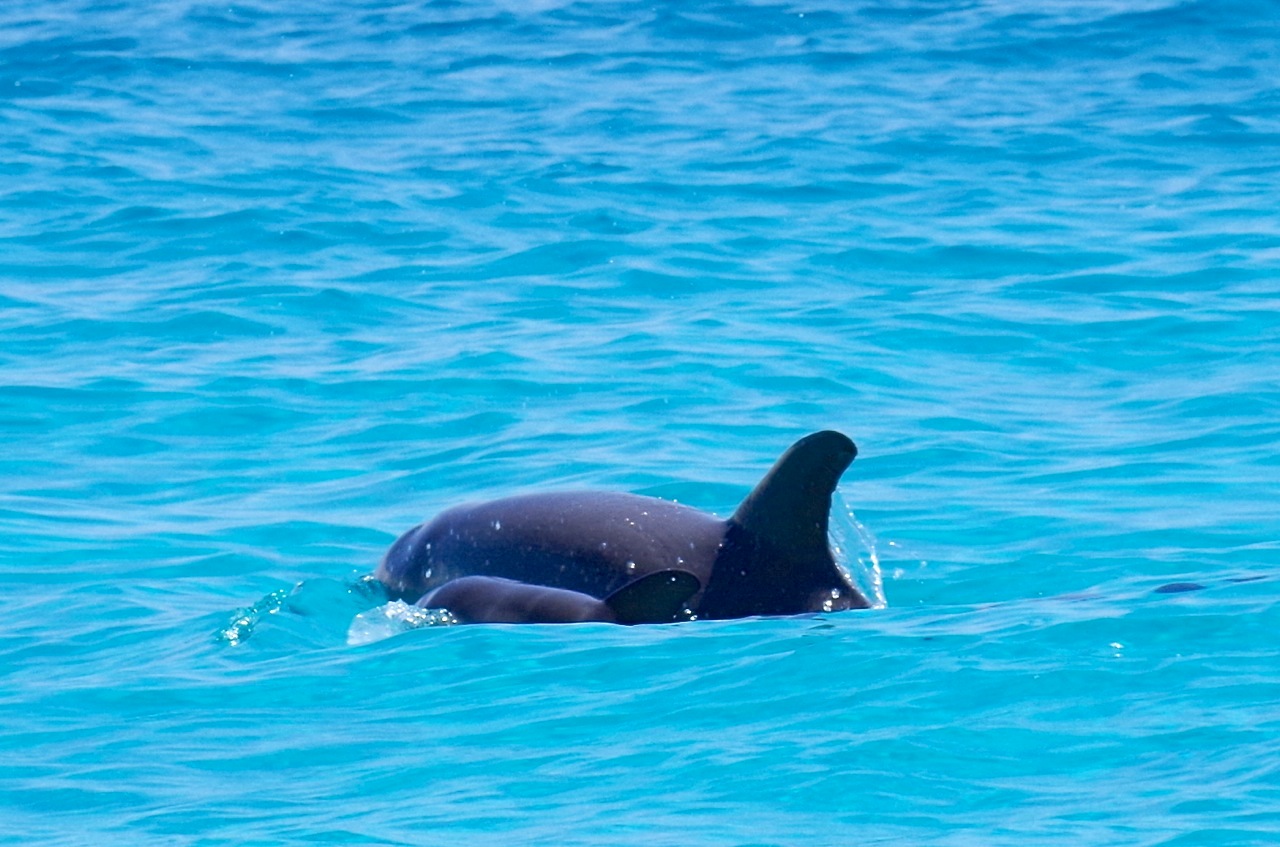
…and next seen keeping pace with its parentDolphin Mother & Calf, Sandy Point, Abaco, Bahamas

The sharp line between the light and the dark sea is where the sandy shallows abruptly give way to the deep waters of the Grand Bahama Canyon, a massive trench up to 2.5 miles deep with almost vertical cliff walls to the depths in some places

Dolphin Mother & Calf, Sandy Point, Abaco, Bahamas

Dolphin Mother & Calf, Sandy Point, Abaco, Bahamas

There were less active and splashy moments as the pair swam around togetherDolphin Mother & Calf, Sandy Point, Abaco, BahamasDolphin Mother & Calf, Sandy Point, Abaco, Bahamas

Then it was back to doing what they like best…Dolphin Mother & Calf, Sandy Point, Abaco, BahamasDolphin Mother & Calf, Sandy Point, Abaco, Bahamas

Then some more restful moments…Dolphin Mother & Calf, Sandy Point, Abaco, Bahamas Dolphin Mother & Calf, Sandy Point, Abaco, Bahamas

And finally the pair moved away. On the far horizon, the Massive Mickey Mouse Cruise ship moored at ‘Disney’s Castaway Cay’ (formerly the sober-sounding Gorda Cay), where you can be a Pirate of the Caribbean. Or anyway a very happy Tourist. The choice is yours. Would you like fries with that?Dolphin Mother & Calf, Sandy Point, Abaco, Bahamas

And looking out to sea from the cheerful place that is Castaway Cay, I wonder if a small child was wondering “Ok, love Mickey and his Friends – but I’d also really love to see a wild dolphin swimming free… 

Disney Magic docked next to the Castaway Cay Family Beach copy

All photos RH (except Castaway, Wiki). Huge thanks to Charlotte, Diane and Bahamas Marine Mammal Research Organisation BMMRO for a truly wonderful day photo 2

bmmro_logo

Unknown's avatar

BOTTLENOSE DOLPHINS IN ABACO WATERS (PART 1)


Bottlenose Dolphins, Rocky Point, Abaco (Keith Salvesen : BMMRO) 7

BOTTLENOSE DOLPHINS IN ABACO WATERS (PART 1)

DCB GBG Cover Logo dolphin

This seems to be a excellent early Spring for dolphin and whale sightings in Abaco waters. I’ve noticed that people have been posting dolphin sightings on FB recently. In our brief window of opportunity each March, I usually reckon to see 2 or 3 dolphins at most – maybe crossing over to Hope Town on the ferry, or more probably on a fishing trip. This year we saw 2 groups of about 6 off Cherokee while fishing, including calves. On another day, 4 adults made a leisurely progress the whole length of Rolling Harbour while we watched from the balcony of the Delphi Club. I don’t think they have ever been so close to the shore there before. The best was to come.Bottlenose Dolphins, Rocky Point, Abaco (Keith Salvesen : BMMRO) 3

Near the end of our trip Charlotte Dunn and Diane Claridge invited us to go out with them on the BMMRO research boat. This is equipped with a hydrophonic system that can detect the bleeps, whistles and clicks of cetaceans, and record them for comparison with previous data. This enables particular animals to be identified from their vocalisations. The other method is to note particular features of an animal – damage to a fin, markings on the flank and so on. During the day C & D happily conversed in code: “Is that 132 over there?” “No, it’s got a nick in the fluke, it must be 127…”BMMRO Research Boat, Sandy Point, Abaco

As we returned in the RHIB from an amazing day spent at close quarters with beaked whales [more on these soon], we moved from deep dark blue ocean to sandy turquoise shallows. There, just off Rocky Point (near BMMRO HQ at Sandy Point) were half a dozen bottlenose dolphins, including a mother and calf. This post contains a small batch of photos of adults – there’ll be another post shortly featuring the calf… Bottlenose Dolphins, Rocky Point, Abaco (Keith Salvesen : BMMRO) 4Bottlenose Dolphins, Rocky Point, Abaco (Keith Salvesen : BMMRO) 1Bottlenose Dolphins, Rocky Point, Abaco (Keith Salvesen : BMMRO) 5

Here’s a taster for the next post – the calf, just visible close alongside its mother, was being given leaping practice. Watch this blog…

Bottlenose Dolphins, Rocky Point, Abaco (Keith Salvesen : BMMRO) 6

All photos RH. Huge thanks to Charlotte, Diane and Bahamas Marine Mammal Research Organisation BMMRO for a truly wonderful day (and for my cool sweatshirt!) photo 2

bmmro_logo

Unknown's avatar

THE OCTOPUS: THERE’S NOTHING QUITE LIKE IT…


THE OCTOPUS: THERE’S NOTHING QUITE LIKE IT…

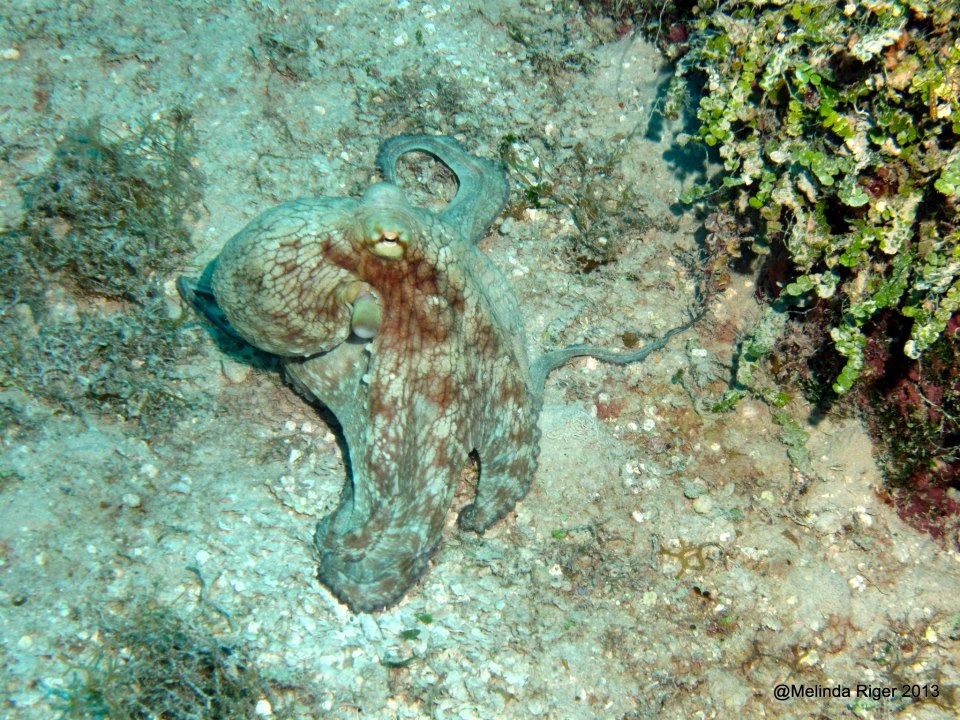
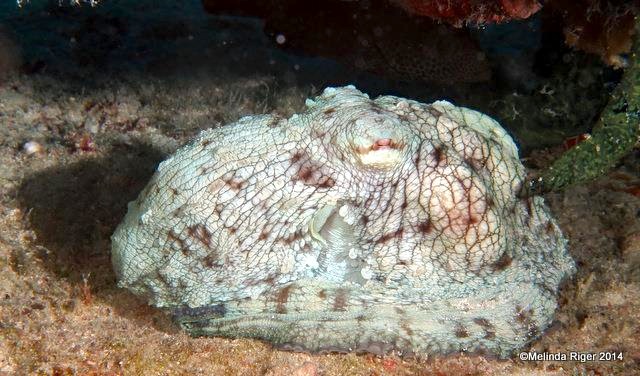
I’ve posted about the octopus a couple of times before. The first time was to explore the correct plural of the word ‘and related cephalopod mysteries’. You can see that HERE. More recently there was ‘Marine Bagpipes filled with Ink’, which you can see HERE. Both posts were really a way to show some of Melinda Riger’s stunning underwater photography, with an octopoidal theme. Now I have some more images for you, so I present some new photos of Octopi… erm, Octopodes… erm, Octopuses… Octopus ©Melinda Riger @G B Scuba Octopus 1:15 ©Melinda Riger @ G B Scuba Octopus 4

This octopus is having a sleep, disguised as a rockOctopus Sleeping ©Melinda Riger @ GB Scuba

Credits: All images courtesy of Melinda Riger of Grand Bahama Scuba
Unknown's avatar

CHERUBFISH (PYGMY ANGELFISH): BAHAMAS REEF FISH (23)


Cherubfish (Pygmy Angelfish) © Melinda Riger @ G B Scuba

 CHERUBFISH (PYGMY ANGELFISH): BAHAMAS REEF FISH (23)

Time for a bright little denizen of the not-so-deep. The Cherubfish Centropyge argi or pygmy angelfish is a very small (8cm) and distinctively coloured angelfish species. These fish are native to the Caribbean and Gulf of Mexico, and flicker round the coral reefs happily feeding as they go (see the video below to see how busily they forage). Or maybe they are just having a good time…

Cherubfish (rare) ©Melinda Riger @ G B Scuba

The Cherubfish is unsurprisingly a popular aquarium species. Don’t rush straight out and buy some though: a typical warning says “like other angel fish, they are not completely 100% reef-safe. Results vary among individual fish and tank qualities (size, feeding, tankmates, etc.), so caution is recommended when adding this fish to a coral tank“. You can read the whys and the wherefores HERE – sadly I lack the vibrant interest in aquaria to go into it myself…

Cherubfish Melinda Riger @ G B Scuba

Looking beyond Melinda’s lovely images of the species, I have found that these creatures will often show more yellow at the nose end. Here’s an example of a more two-tone Cherubfish in case you come across one. Cherubfish Centropyge argi  (Brian Gratwicke)

I mentioned that Cherubfish flicker around the reefs instead of proceeding serenely and in an orderly fashion.  Have a look at this short video to see what active little fish they are.

RELATED POSTS

GRAY ANGELFISH 1

GRAY ANGELFISH 2

QUEEN ANGELFISH 1

QUEEN ANGELFISH 2

DAMSELFISH

ROCK BEAUTY

Credits: all images Melinda Riger of Grand Bahama Scuba except the last, Brian Glanville

Unknown's avatar

MARK’S BONEFISH FLIES (MARK 2): THE ABACO CHALLENGE, ROUND 2


Here's one I caught earlier...

Here’s one I caught earlier… (Photo: Mrs RH)

 MARK’S BONEFISH FLIES (MARK 2): THE ABACO CHALLENGE, ROUND 2

Last March I took 6 bonefish flies specially tied by MARK MINSHULL out to Abaco to test on the Marls. They were lovely flies, tied with great skill by a man who can pull beautiful fly-caught fish out of the Thames. I tried them. Far better fishermen than me tried them. The result was a failure that can only be qualified by the word ‘complete’. Mark took the news very well, and promised to redesign some flies that might be more enticing this year. Here is his design report for the Mark 2 version that I received this morning. The links to the first experiment can be found at the end of this post. 

RH fish on 2013

RH gets lucky with a Delphi Daddy…

JLM BONEFISH SPECIAL MARK 2

Those of you who may have read my previous posts about JLM Specials and Bonefish already know about RH (of Rolling Harbour fame) and his wonderfully generous spirit. He kindly field tested my original pattern with fantastically conclusive results in 2014! The beauty of designing fly patterns is that one can tweak every variable based on feedback received… The basic pattern still holds however the revised editions are a far cry from their predecessors:

The original JLM Specials

The original JLM Specials

This afternoon I completed a set of adapted flies based on RH’s generous report from last time. White and pink, with small flashes of red or orange are my main ingredients and for the streamers, I used varying proportions of elk hair and/or Arctic fox fibres.

"Optimism is the faith that leads to achievement" - Helen Keller (photo - metiefly)

“Optimism is the faith that leads to achievement” – Helen Keller (photo – metiefly)

Thanks in advance to RH and his March 2015 test team!

Thanks in advance to RH and his March 2015 test team!

I’ll keep you posted of the Outcome in due course. As always – thank you for reading and I look forward to your return.

Here is my own photo of the new Mark 2 flies on a white background to show their subtle differences. I can see at once that I shall have to number them all and remember who is using which, so that the killer variation(s) can be identified… As you will notice, the craftsmanship is terrific. My bet would be on the skinnier ones being the most effective in clear water, but I fancy casting one of the hairier ones across a feeding cloud and dragging it back through the murky water… (which is the only way I’ve ever caught 6+ lb fish – yes, yes, I hear you, that’s pure luck and not skill at all).

Bonefish Flies Mark2

Now I just have to sort out my fly box for next month’s escapades. Some things need to go to make some room – those appalling brown stripy ones for a start, which the guides have chortled at. Or, worse, stared at sadly… Oh, did I mention I also have the little tin with foam in… and that small green ‘Orvisman at Orvis’ fly box from Orvis™… 

The Snowbee Stripping Glove has been thrown to the ground at my feet. The challenge is accepted!