“CLINGING TO THE WRECKAGE”: BAHAMAS CLINGING CRABS
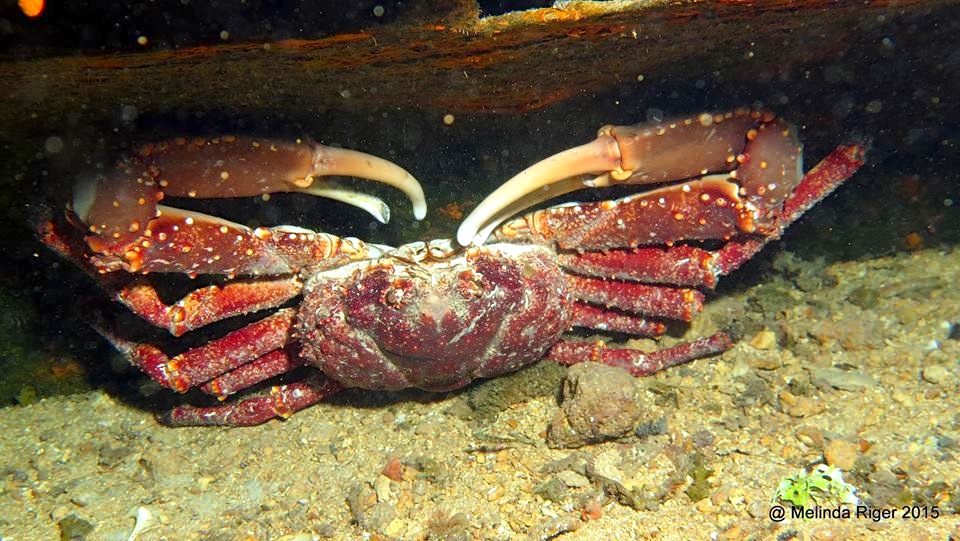
The Clinging Crab Mithrax spinosissimusanswers to a number of names: West Indian spider crab, channel clinging crab, reef or spiny spider crab, or coral crab. It is found throughout the waters of South Florida and the Caribbean.
These are crabs of the reef, or indeed of the wrecks that may be found around reefs. Some of the crabs in this post have chosen wrecks as their home – in the header image the crab is living inside the smoke stack of ‘Theo’s Wreck’, Grand Bahama.
The clinging crab is believed to be omniverous, its main diet being algae and carrion. They can grow to 2 kg, and it is the largest species of reef crab found in the Caribbean.
The clinging crab / West Indian spider crab is (apparently) not commercially harvested for its meat. Although I read somewhere that they are delicious, I would be very reluctant to test the theory.
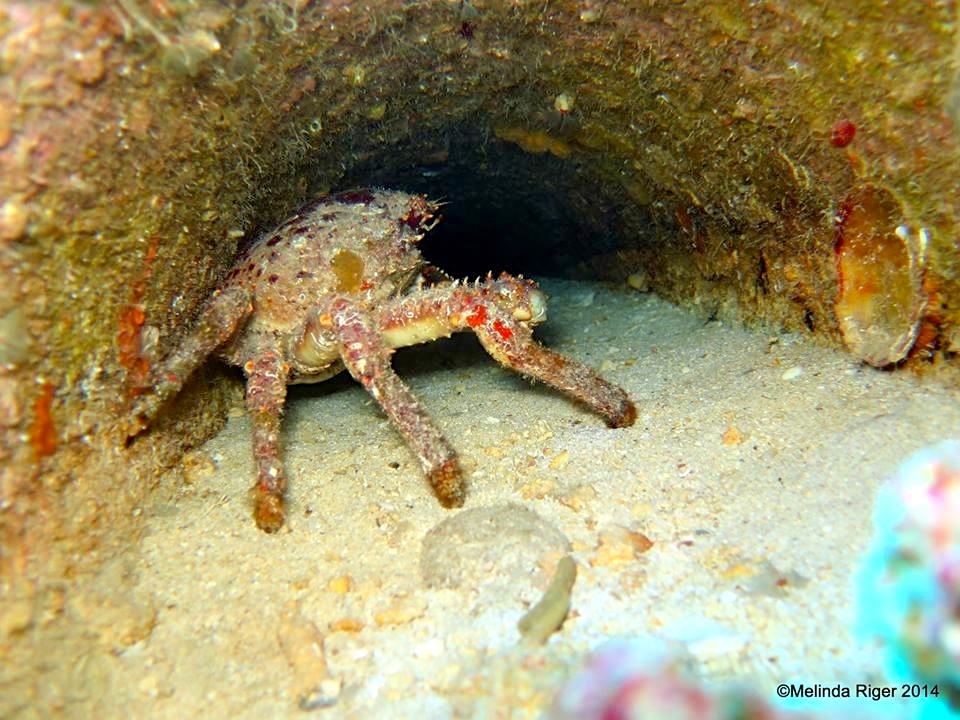
Life on the reef can be dangerous. This crab has lost some legs: its clinging powers are somewhat curtailed…
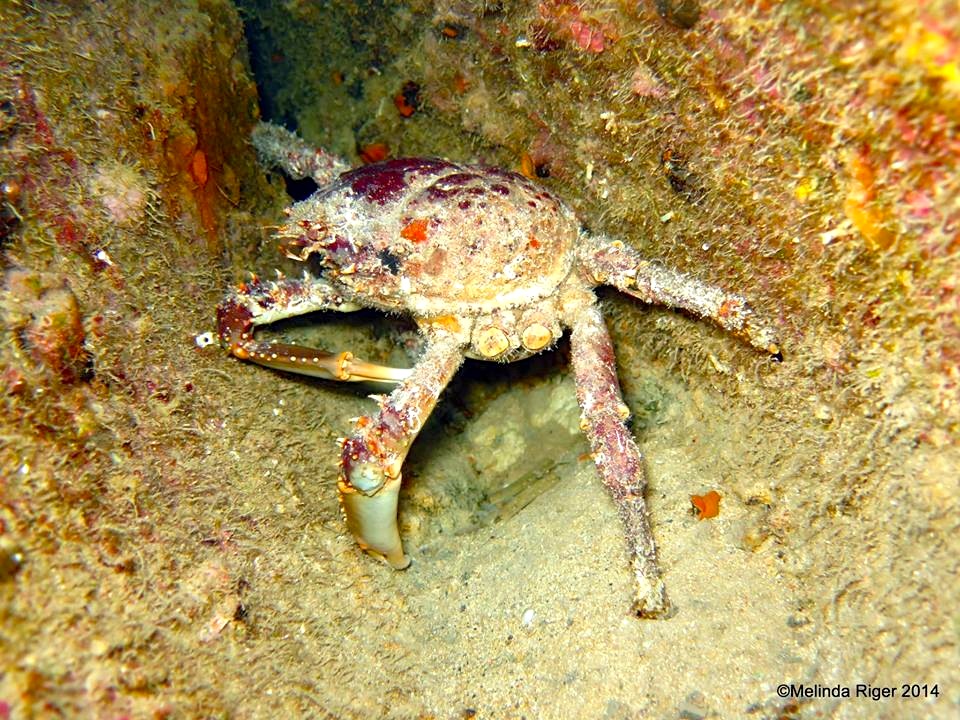
This guy has some missing parts, but seems quite laid back about it…
Credits: Melinda Riger of Grand Bahama Scuba (all photos), with thanks as always
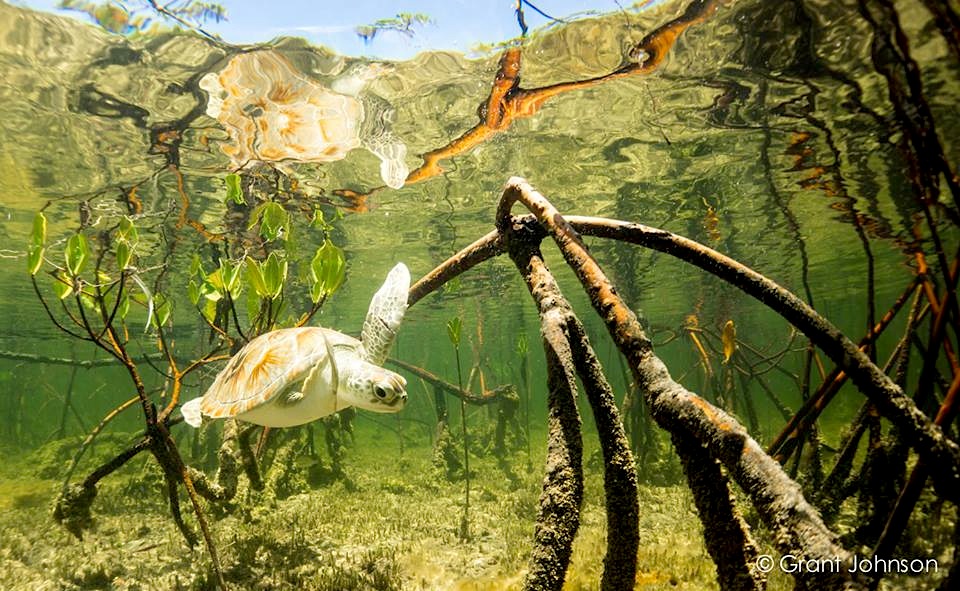
Loggerhead Hatchling (Bimini’s Marine Protected Area Campaign)
A VISIT TO BIMINI’S MARINE ENVIRONMENT (1)
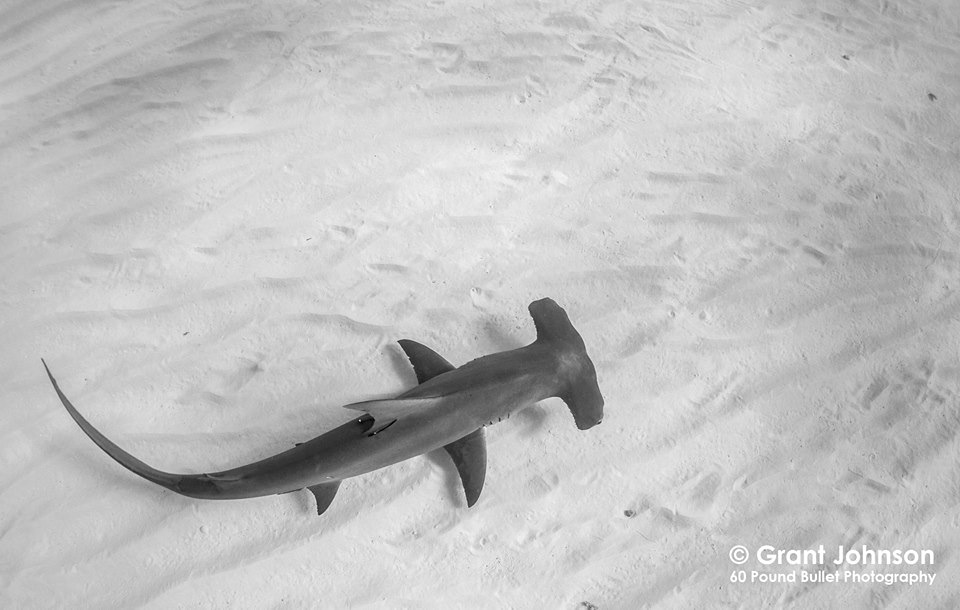
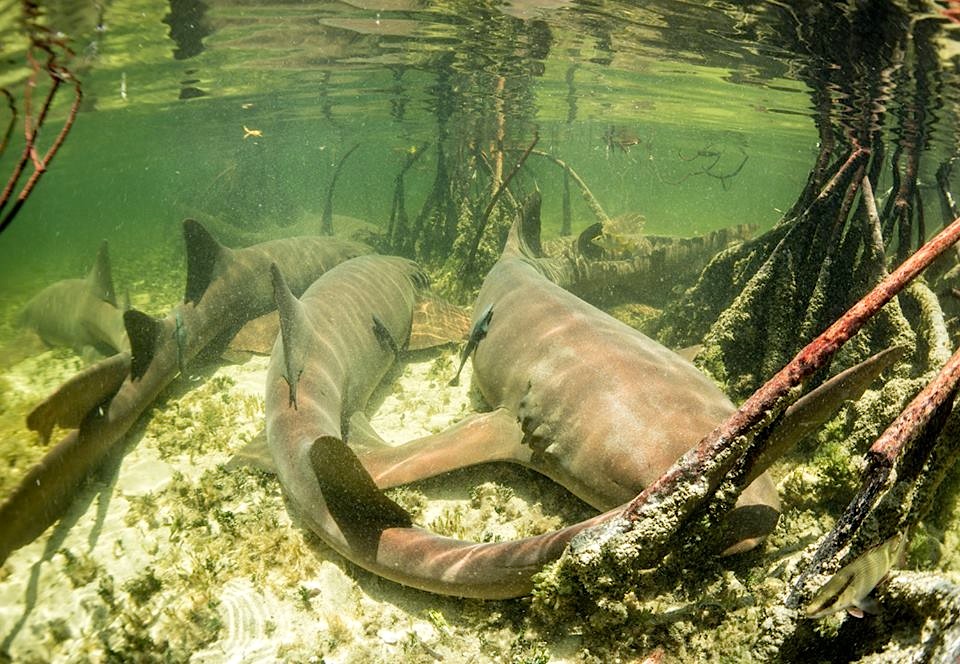
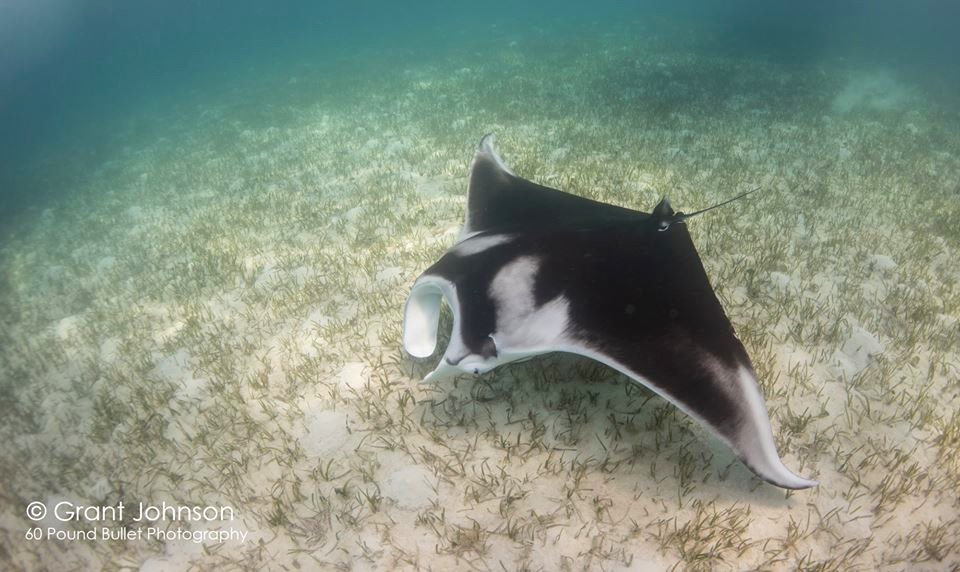
Abaco is fortunate already to have special conservation areas, both on land (e.g. the huge National Park) and at sea (e.g. Fowl Cay Marine Preserve). Other preserves are in active stages of development. Elsewhere in the Bahamas, where the natural life is equally wonderful, battles are being fought to protect pristine habitat from the encroachments of modern life such as unsuitable development (or development in unsuitable locations). For this first look at Bimini, I am most grateful toBimini’s Marine Protected Area Campaignfor permission to use some of their wonderful photographic archive that illustrates the vital importance of the mangroves, reefs, sea grass and pristine sea to marine life large and small. It’s worth checking out the background and surrounding context of these images to see the sort of habitat the creatures depicted prefer. This post features some of the larger species.
HAMMERHEAD SHARKS
NURSE SHARK NURSERY IN THE MANGROVES
BOTTLENOSE DOLPHINS
RAYS
A pregnant female southern stingray, seen from below
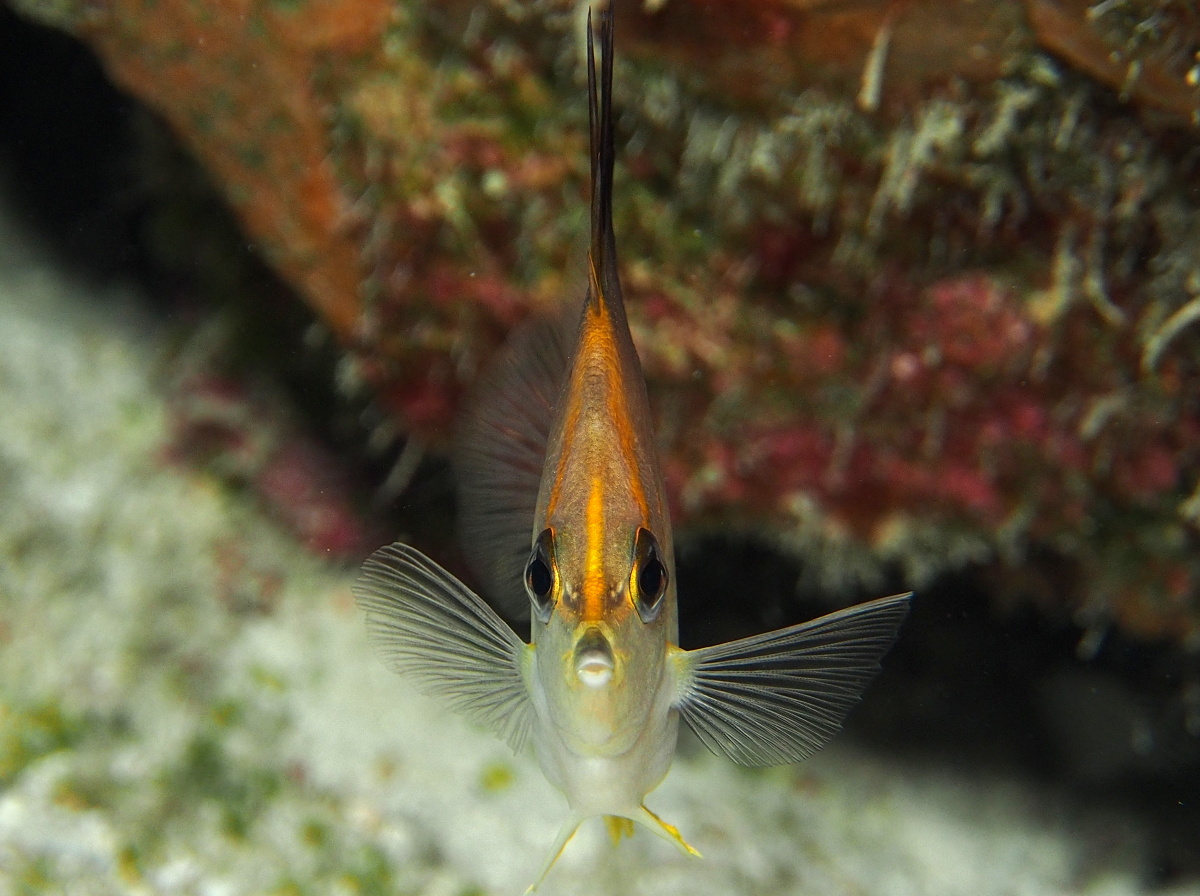
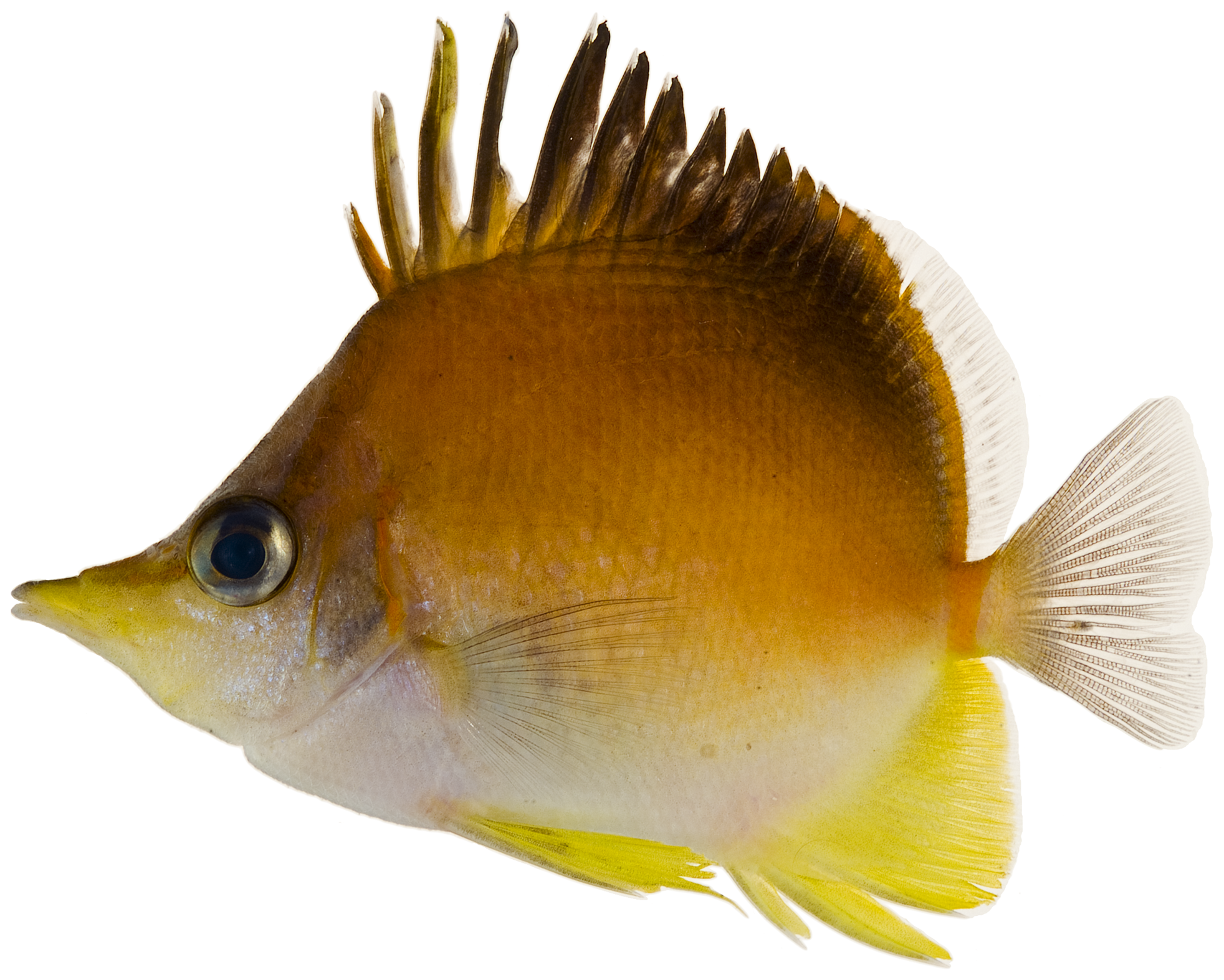
The Atlantic/ Caribbean Longsnout Butterflyfish Prognathodes aculeatus is sometimes known locally as the Longnose (not to be confused with the bright yellow Indo-Pacific Longnose Butterflyfish). The affectionate name for it is ‘Butterbun’. A more scientific name is ‘Poey’s Butterflyfish’, named for the man who first identified the species in 1841.
Mr Felipe Poey
These little fish, 2 0r 3 inches long, are commonly found on reefs from Florida down to Venezuela. Unlike most butterflyfishes, they prefer deeper water and have been found at 200 ft; and they tend to be solitary rather than gregarious.
BUTTERBUN. THAT SUGGESTS THEY ARE PLUMP?
NOPE!
RELATED LINKS
BUTTERFLYFISHES(RH guide to reef, banded, four-eyed & spotfin)
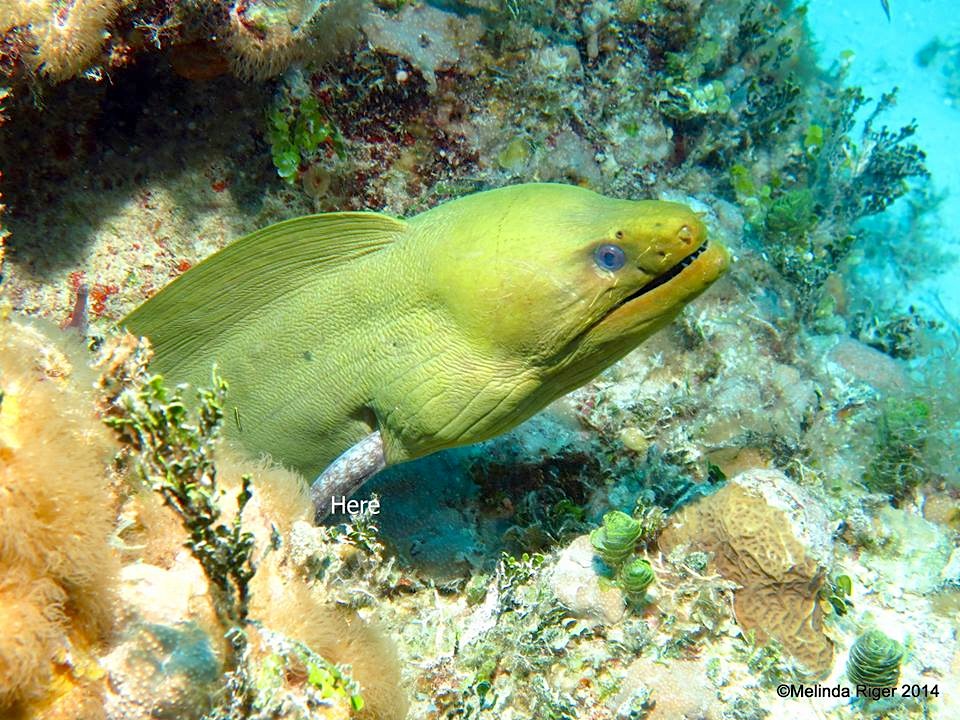
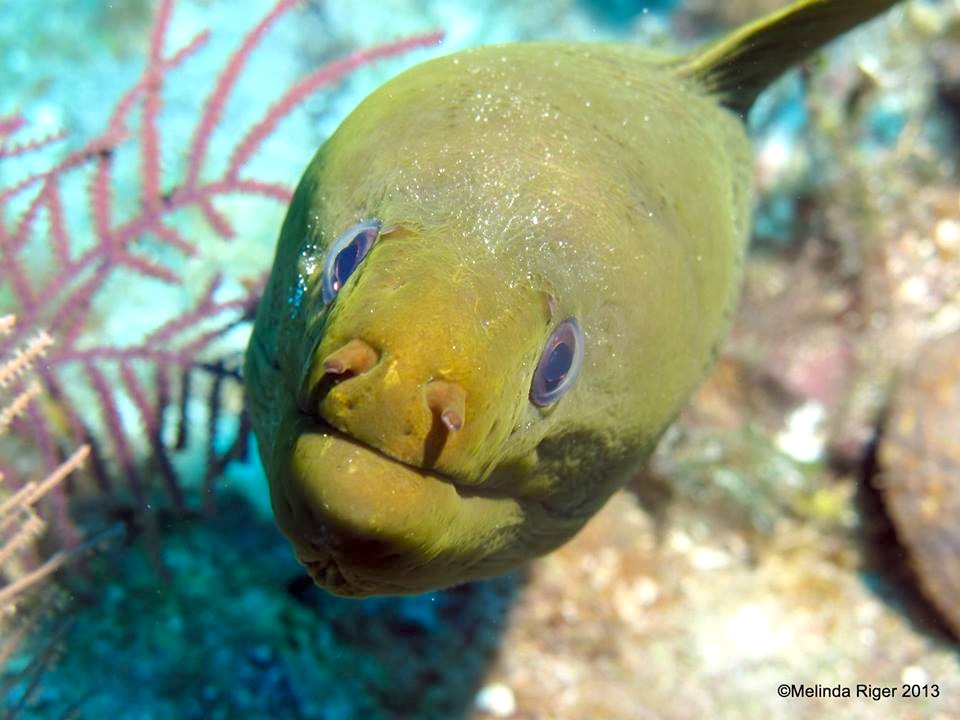
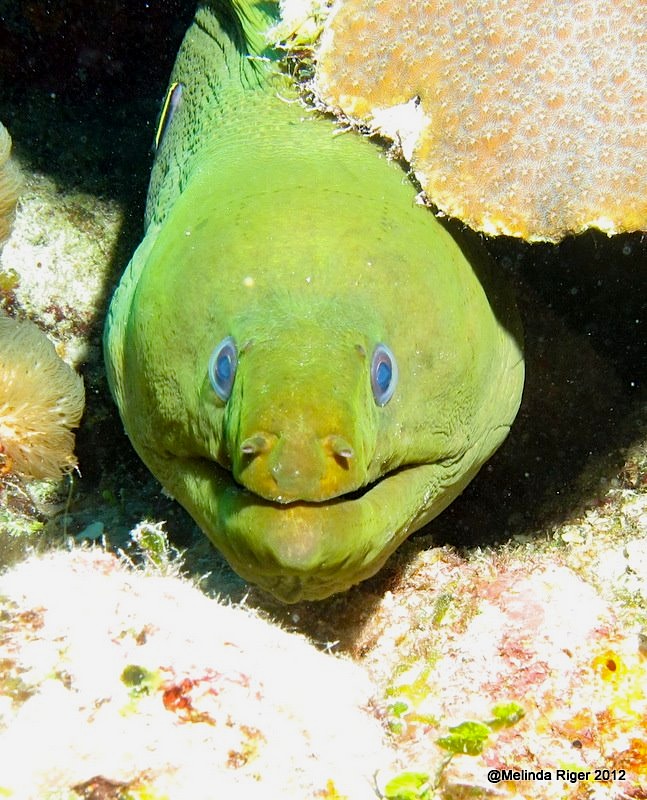
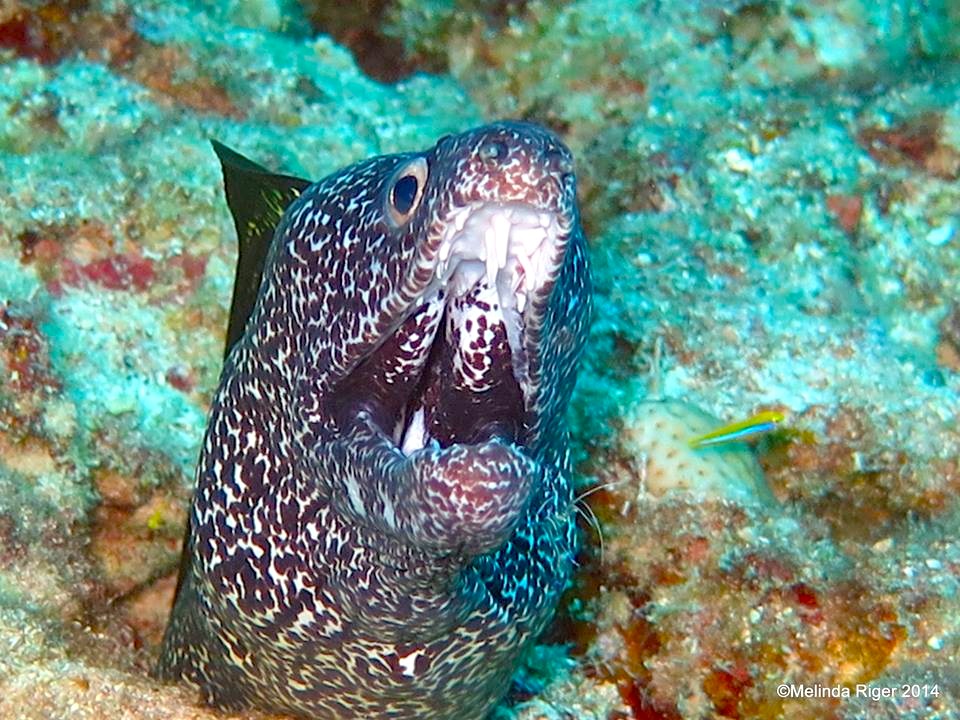
A short while back I posted aboutSPOTTED MORAYS, which people seem to enjoy. It generated requests for more forays, specifically with green morays. I gotcha – here they are, as promised… All the eels shown below, familiar to the divers who regularly encounter them and given names such as “Judy’ and “Wasabi” (my favourite), were photographed by Scuba expert Melinda Riger, whose skills with a camera are well-known. Let’s go Green…
Like all moray species, Greens like to lurk in convenient hiding places to watch the underwater world – and possible prey – go by. Here are some typical ‘lurking’ shots.
Green morays also have the unusual breathing apparatus that resemble nasal plugs
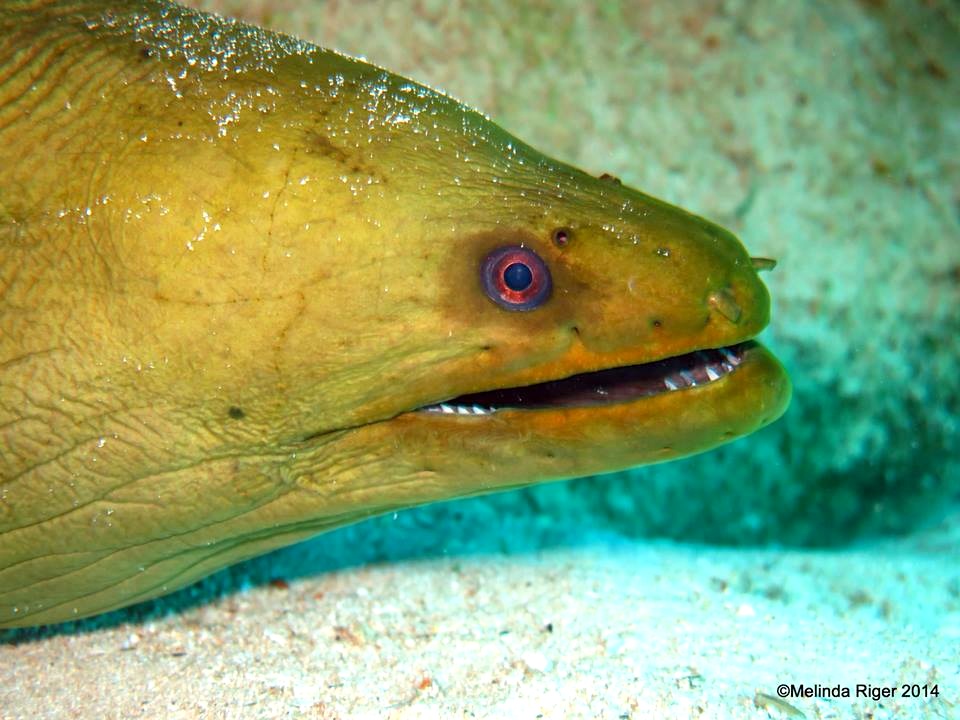
Those who recall the spotted moray post and their singular dentition arrangements that included a long sharp tooth sticking down from the upper jaw will no doubt be thinking, “are we going be shown any dental close-ups?” But of course… why would I not?
Note the cluster of teeth in the upper jaw, differing from the spotted moray
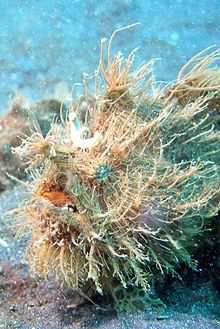
This ‘WTF?’ series started with a relatively conventional species, the REMORA. It has been getting progressively more bizarre. We moved onto an omnium gatherum of WEIRDO FISHES, then the remarkable LETTUCE SEA SLUG, and most recently the BATFISH. Time to ramp up the stakes: with many thanks to scuba expert Adam Rees for use permission for his terrific photos, I present… the FROGFISH.
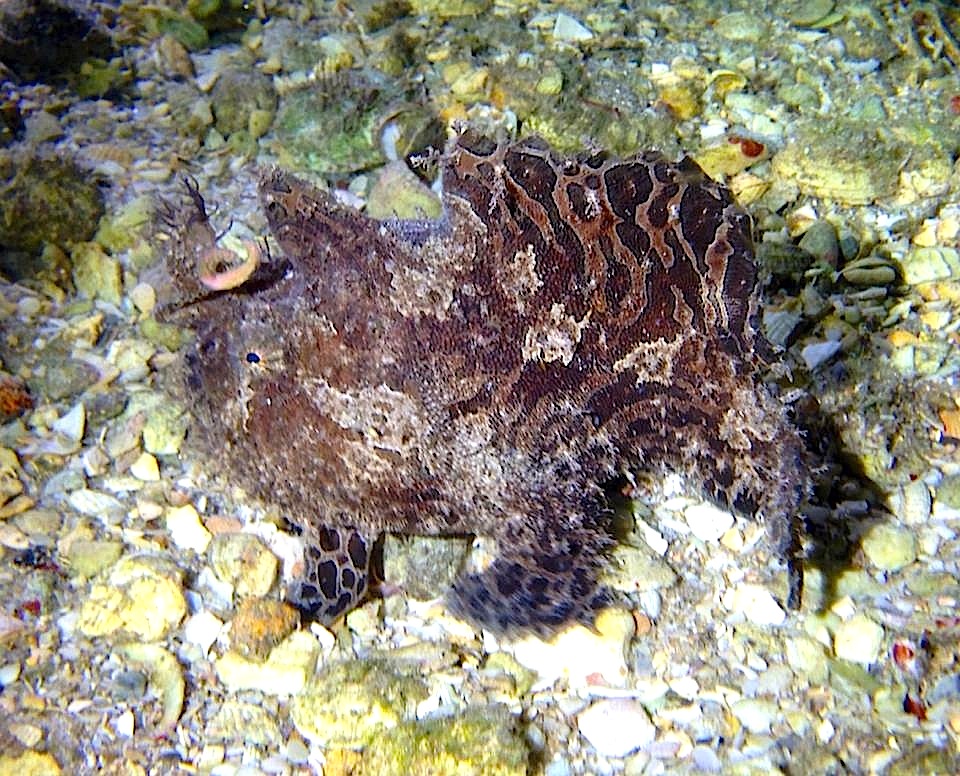
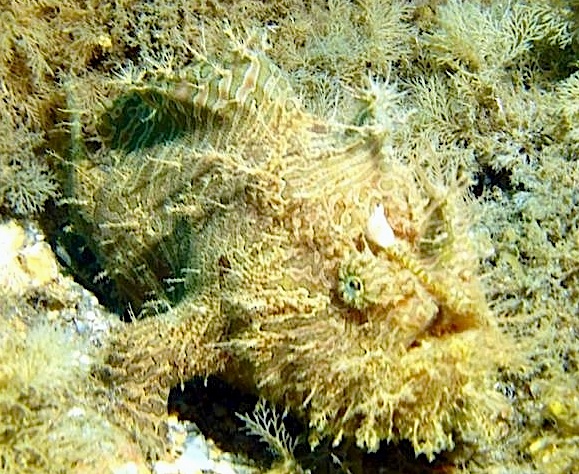
The frogfish is a kind of anglerfish found in almost all tropical and subtropical oceans and seas. There are about 50 different species worldwide, covering an astonishing range of strange appearances. They generally live on the sea floor around coral or rock reefs. In size they vary from tiny to about 15 inches long – although ‘long’ is a flexible concept because they are to an extent shape-changers in height and width.
FROGFISH SUPERPOWERS YOU MAY WISH TO HAVE
INVISIBILITY CLOAK . Frogfish are masters of disguise and camouflage. This enables them to catch their prey with minimal effort and also to avoid predators. Their camouflage methods – broadly known as ‘aggressive mimicry’ – include
Ability to change colour for days or even weeks to mimic their surroundings
Getting covered in algae and other organic matter that matches their habitat or
Looking inherently like a plump rock or in some cases, plant
Fear for the life of the spider crab…
IRRESISTIBLE ATTRACTION (just like that nice Mr Grey)
A sort of frontal dorsal fin called an illicium to which is attached a
Lure called an esca which may mimic a worm, shrimp or small fish etc and which is
Retractable in many species and
Regenerates if it gets mislaid
The ‘dollop of cream’ thing is the esca. Note the characteristic large mouth
Spot the esca…
BUOYANCY CONTROL & SHAPE-SHIFTING
Most frogfish have a ‘gas bladder’ to control their buoyancy.
Some species can change shape or even inflate themselves by sucking in quantities of water in a so-called defensive ‘threat display’.
HOW DO FROGFISH REPRODUCE?
Although not conventionally attractive creatures, frogfish clearly manage to reproduce. Little is known about the techniques in the wild, but one is probably ‘with care’, especially for a male frogfish who may not survive for long if he hangs around after fertilisation has taken place. It has been noted that females tend to select far smaller males to fertilise their huge numbers of eggs, perhaps for that very reason.
FROGFISH FEEDING SKILLS – GOOD OR BAD?
When deploying the lure, potential prey that comes too close to that wide mouth stands no chance. A frogfish will strike in a fraction of a second. Frogfishes have voracious appetites for crustaceans, other fish, and even each other. I can do no better than borrow this vivid description of a feeding frogfish:
“When potential prey is first spotted, the frogfish follows it with its eyes. Then, when it approaches within roughly seven body-lengths, the frogfish begins to move its illicium in such a way that the esca mimics the motions of the animal it resembles. As the prey approaches, the frogfish slowly moves to prepare for its attack; sometimes this involves approaching the prey or “stalking” while sometimes it is simply adjusting its mouth angle. The catch itself is made by the sudden opening of the jaws, which enlarges the volume of the mouth cavity up to twelve-fold, pulling the prey into the mouth along with water. The attack can be as fast as 6 milliseconds. The water flows out through the gills, while the prey is swallowed and the oesophagus closed with a special muscle to keep the victim from escaping. In addition to expanding their mouths, frogfish can also expand their stomachs to swallow animals up to twice their size.“
HOW DO FROGFISHES GET AROUND? SWIM? WALK? CRAWL?
Frogfishes do not in fact move around a great deal. Using their camo advantages, they prefer to lie on the sea floor and wait for prey to come to them. As mentioned in the quote above, they may slowly approach prey using their pectoral and pelvic fins to “walk” along the sea bottom. They can swim using their tail fin (or in some species by simple ‘jet propulsion’ by forcing water out of their gills) but rarely do so – they don’t feed on the move, and they are adapted to the sea floor environment where they food is readily available. However their “walking” ability is limited to short distances.
DO FROGFISH HAVE OTHER COLOUR SCHEMES?
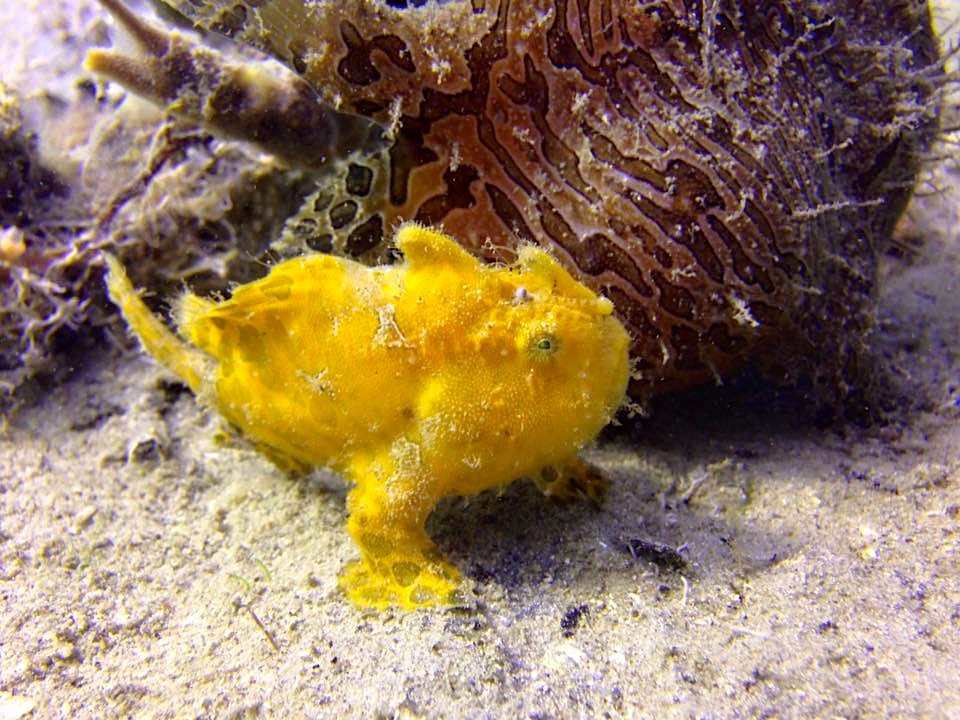
Indeed they do. In stark contrast to the camo species, some frogfishes are highlighter bright. Here are two of my favourite photos by Adam that show this clearly. I’ve no idea if these are a male and female. I suspect they are different species. I think the brown one is a striated frogfish and the other is… a yellow frogfish. Some people keep these creatures in aquaria, but apparently it is impossible to sex them, and they have to be kept on their own for everyone’s peace of mind…
FROGFISH INFOGRAPHICS
FROGFISH VIDEOS
These two videos, from Lester Knutsen and Daan Van Wijk respectively, show some of the characteristics I have written about above. Both are short and both are fascinating.
To read more about frogfishes and for some fabulous photos I highly recommend the websiteFROGFISH.CHYou can reach the main page(s) but the link seem to be broken so I have not been able to contact Teresa Zubi, whose site it is. She clearly has a sense of humour and uses a neat pair of gifs which I hope she won’t mind my using…
Credits: All main photos, Adam Rees of Scuba Works with many thanks; wiki for ‘spot the esca’, red quote & basic info; videos Lester Knutsen & Daan Van Wijk; Teresa Zubi for website & gifs; infographics, authors u/k
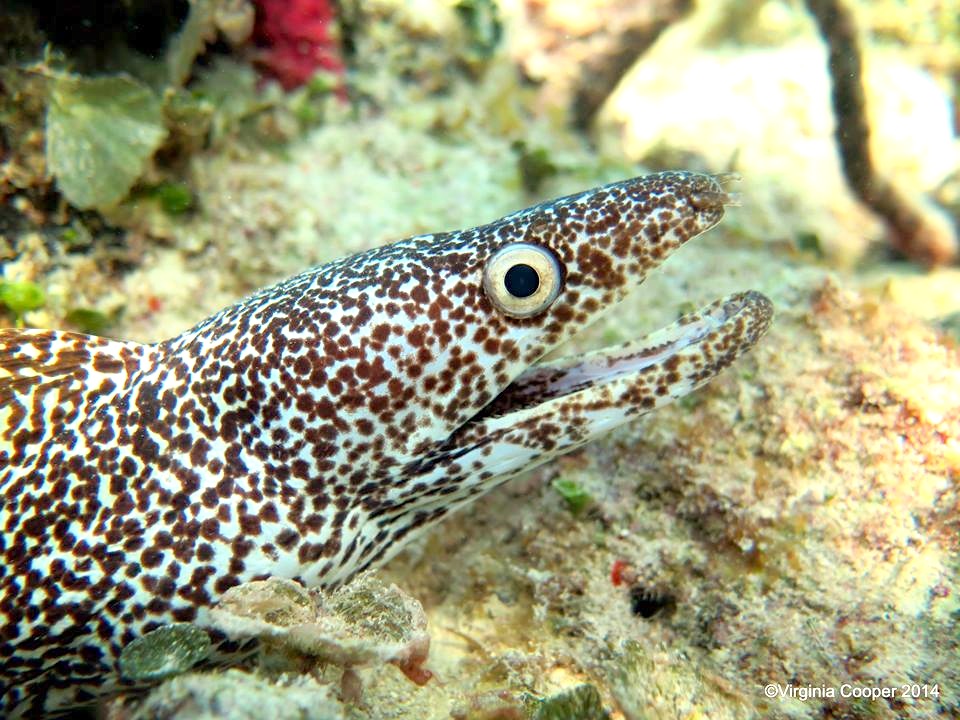
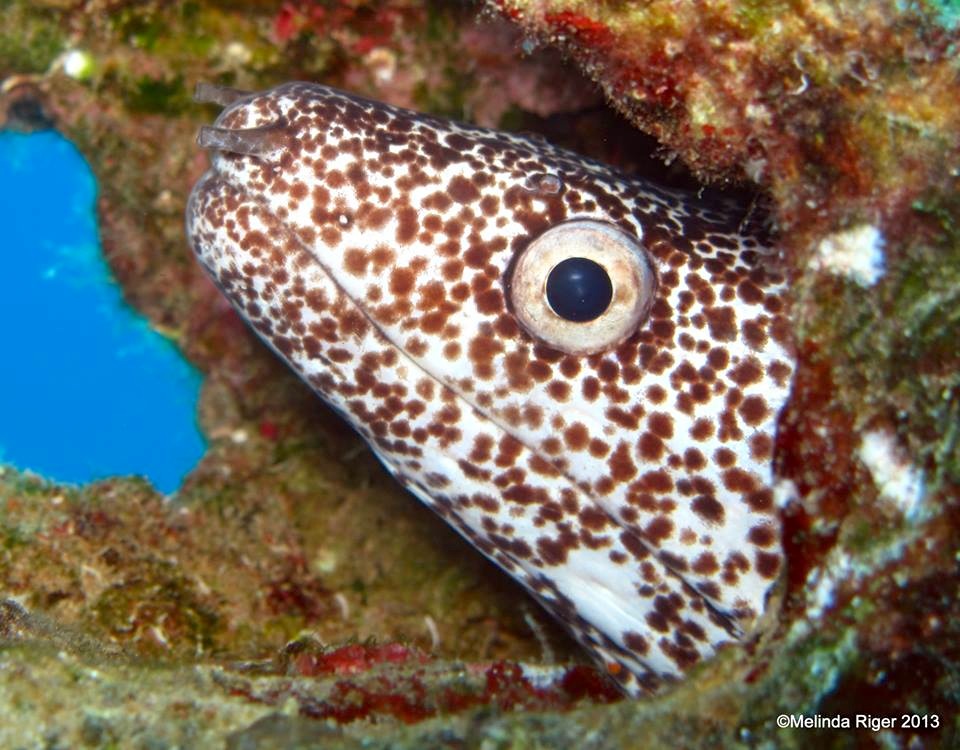
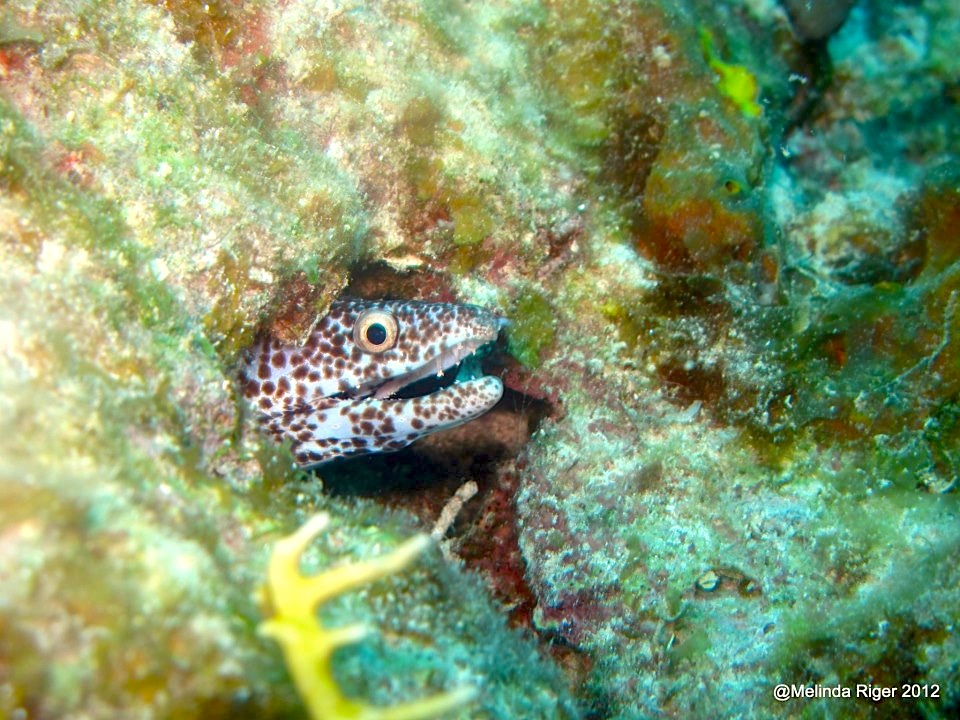
I’ve been neglecting the moray eels. It’s ages since I did a post about them, and it’s time to put that right. Specifically, time to take a look at Spotted Morays Gymnothorax moringa. These eels can grow up to 2 meters, and live mainly in the sub-tropical waters of the Atlantic. They are solitary creatures, most often seen with just their heads protruding from holes and fissures reefs and r0cks. They have interesting dental arrangements (see below) and their bite is one that, all things being equal, is probably best avoided… Here’s what to look for.
ADULT SPOTTED MORAYS
TOOTHSOME CRITTERS (FANGS FOR THE MEMORY…)
WICKLE BABY MORAY. MORAYKIN?
Photo credits: all amazing photos courtesy of Melinda Riger of Grand Bahama Scuba; Props to ‘Earl the Eel’ who appears in some of them!
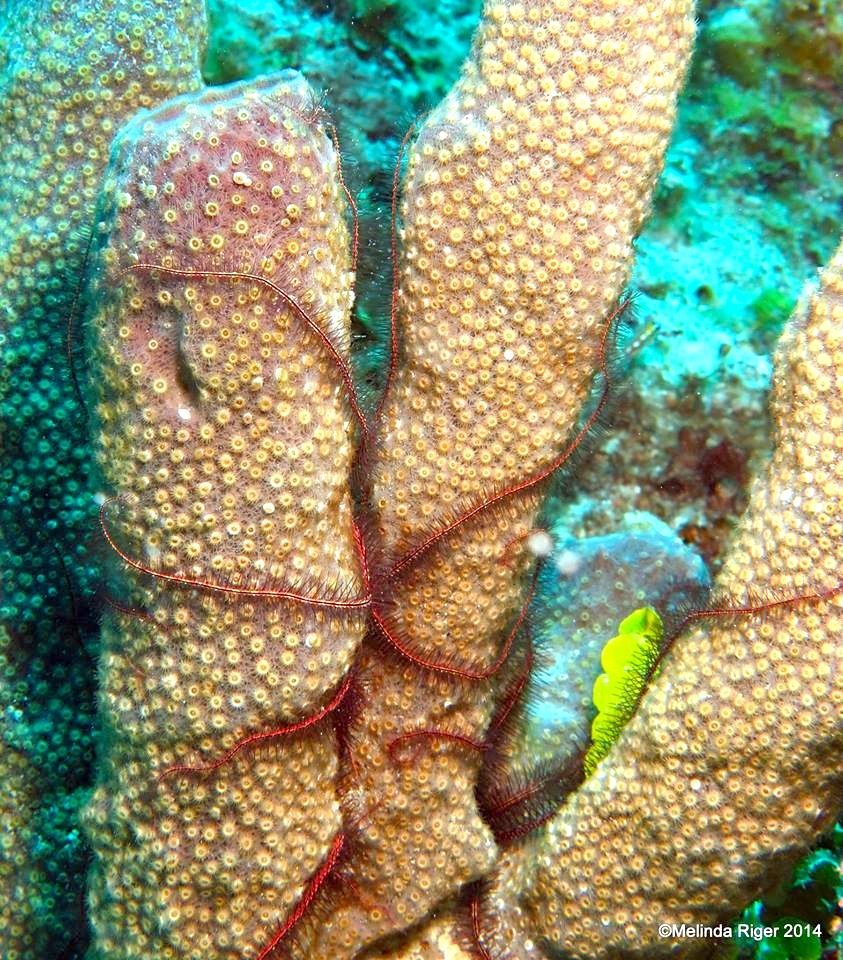
BRITTLE STARS are closely related to starfish, and in particular to Basket Stars. They are commonly known as “serpent stars”, having 5 long, thin arms that may grow as long as 2 feet long. There are lots of different types of brittle star – at least 2000 – and they are found in every ocean on earth from the poles to the tropics. In Bahamian waters they a commonly found living on reefs.
Although these creatures look primitive, their structure, nervous systems, respiratory systems, digestive systems, sex lives and transportation methods are incredibly complex. Take it from me – I’ve just read about it all. So I’ve decided to pick a few aspects of these creatures to highlight rather than discuss the minutiae of their ossicles (tiny bones), madroporites (a sort of water filter / pressure balancer) and viscera.
You are most likely to see Brittle Stars clinging to coral or sponges
A DOZEN BRITTLE STAR FACTS TO PLAY WITH
The star has no eyes and no sense organs as we know them, but can detect light chemically; and (why would they need this?) sense smell through their ‘feet’… [Not a superpower I would prize, but still]
The mouth is on the underside of the central disc (‘body’) of 5 segments, each with a toothed jaw
The mouth is used both for ingestion and, putting it delicately, egestion. [Nor that superpower]
Stars eat tiny organisms suspended in the water or mini-worms, gathering them with their arms
If I have understood this, they breathe through their armpits, and can excrete from here also
The arms fit the main part with ball and socket joints, and are flexible in all directions
The genitals seem to be located in or between the armpits (lucky we are not descended from stars)
Stars readily regenerate lost arms until they lose the 5th – then they are in real trouble
This enables them to shed an arm in a predator attack, like a lizard its tail
Trials indicate that a jettisoned arm cannot regenerate from itself
They use only 4 arms to move along, with the fifth ‘steering’ out in front or trailing behind
Brittle Stars are inedible but non-toxic
Often, brittle stars will cling on inside a sponge
Here is a great video from Neptune Canada of a brittle star fight on the ocean floor over the remains of a shrimp. If you watch the ones joining the fight, you will clearly see the locomotion method described above, with one limb pathfinding and the other four ‘walking’.
I’m not renowned for extreme sensitivity, so I feel no shame in showing mating brittle stars, courtesy of Channel Banks. It’s not exactly Lady Chatterley and Mellors, but the entwined arms are rather romantic, no?
Credits: all wonderful photos by Melinda Riger of Grand Bahama Scuba; BS infographic and viddys as credited
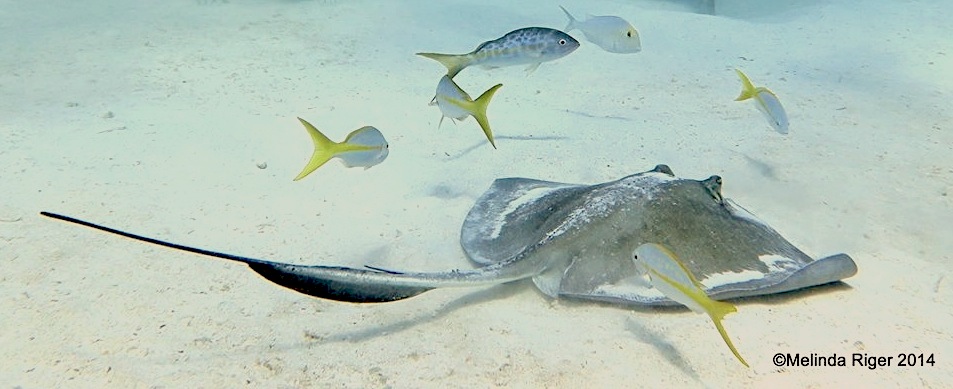
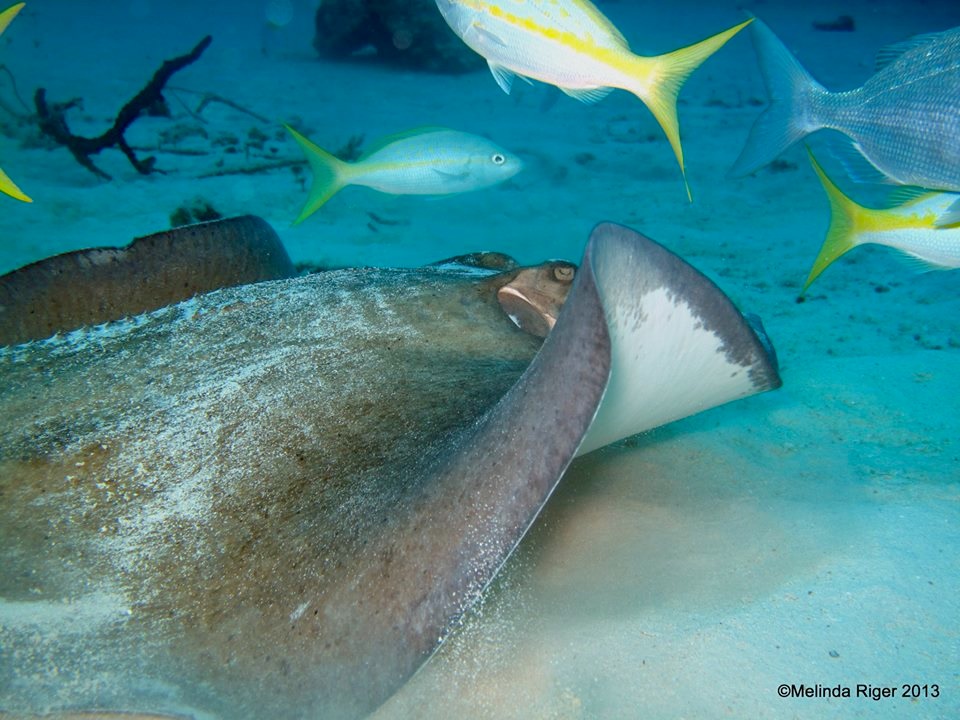
GRACE WITH ATTITUDE: SOUTHERN STINGRAYS IN THE BAHAMAS
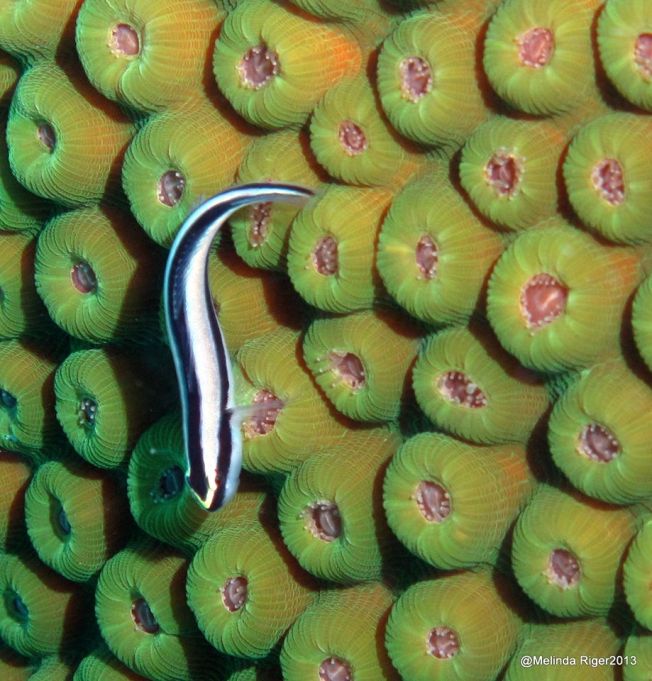
Southern Stingrays are often seen in Abaco waters. In the bay of Rolling Harbour at Delphi, we sometimes watch them admiringly from the balcony or beach as they lazily cruise along the shoreline in the turquoise water. If someone is in the water, they will make a leisurely detour round them – unfrightened in their own element, but unthreatening and disinclined to investigate human intrusion. Diving with them is a wonderful experience (though I have never got very close). Melinda Riger – a scuba expert with great camera skills – takes the most beautiful photos of the stingrays she encounters. Here are a few that I haven’t yet featured. Notice the little striped CLEANING GOBIES going about their business.
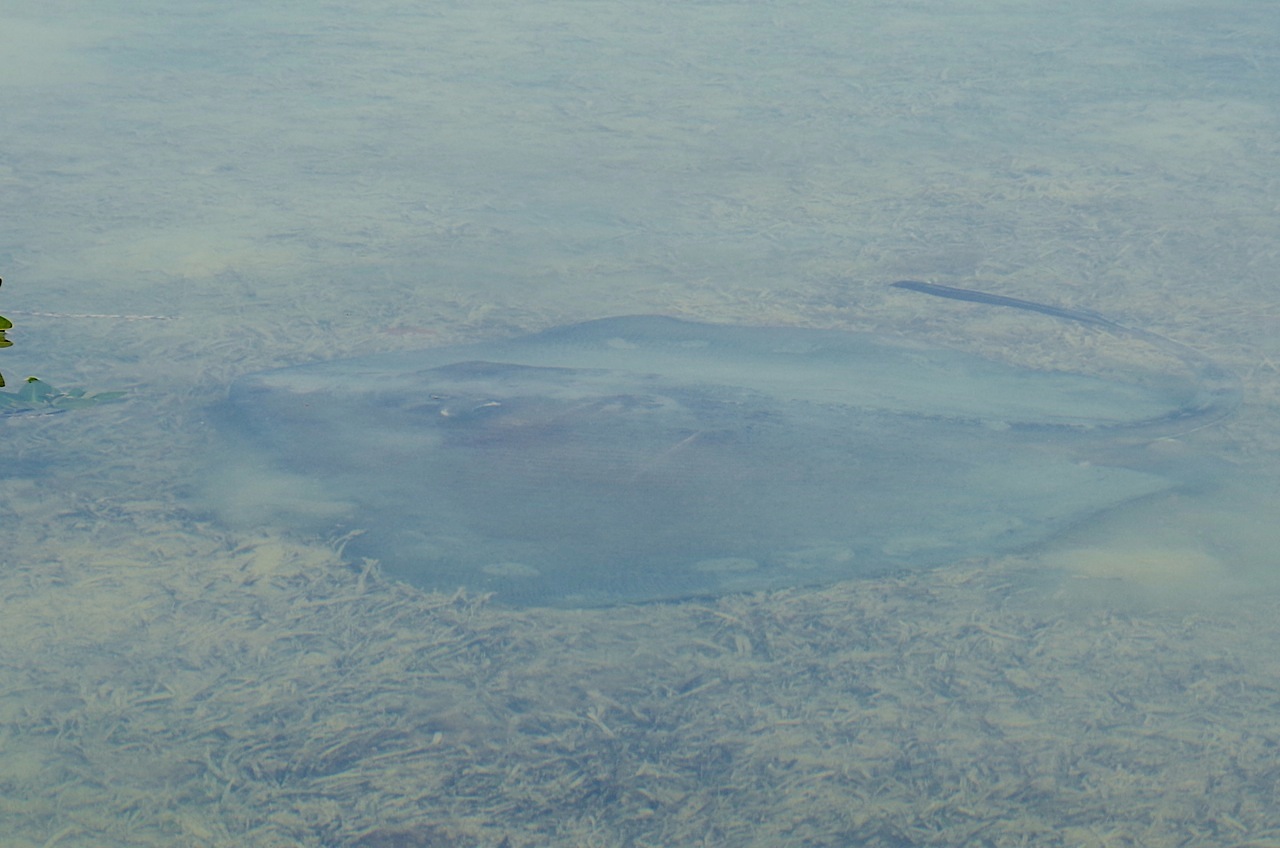
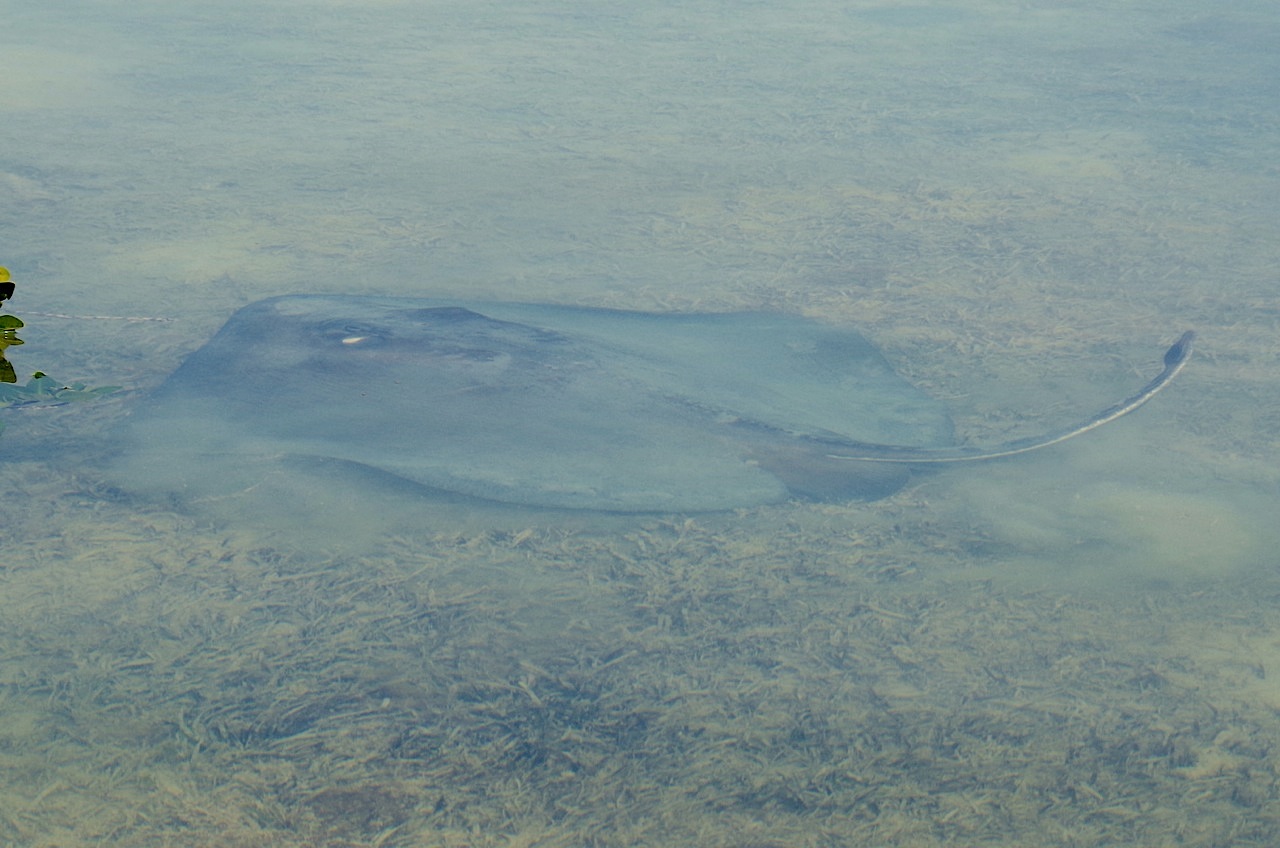
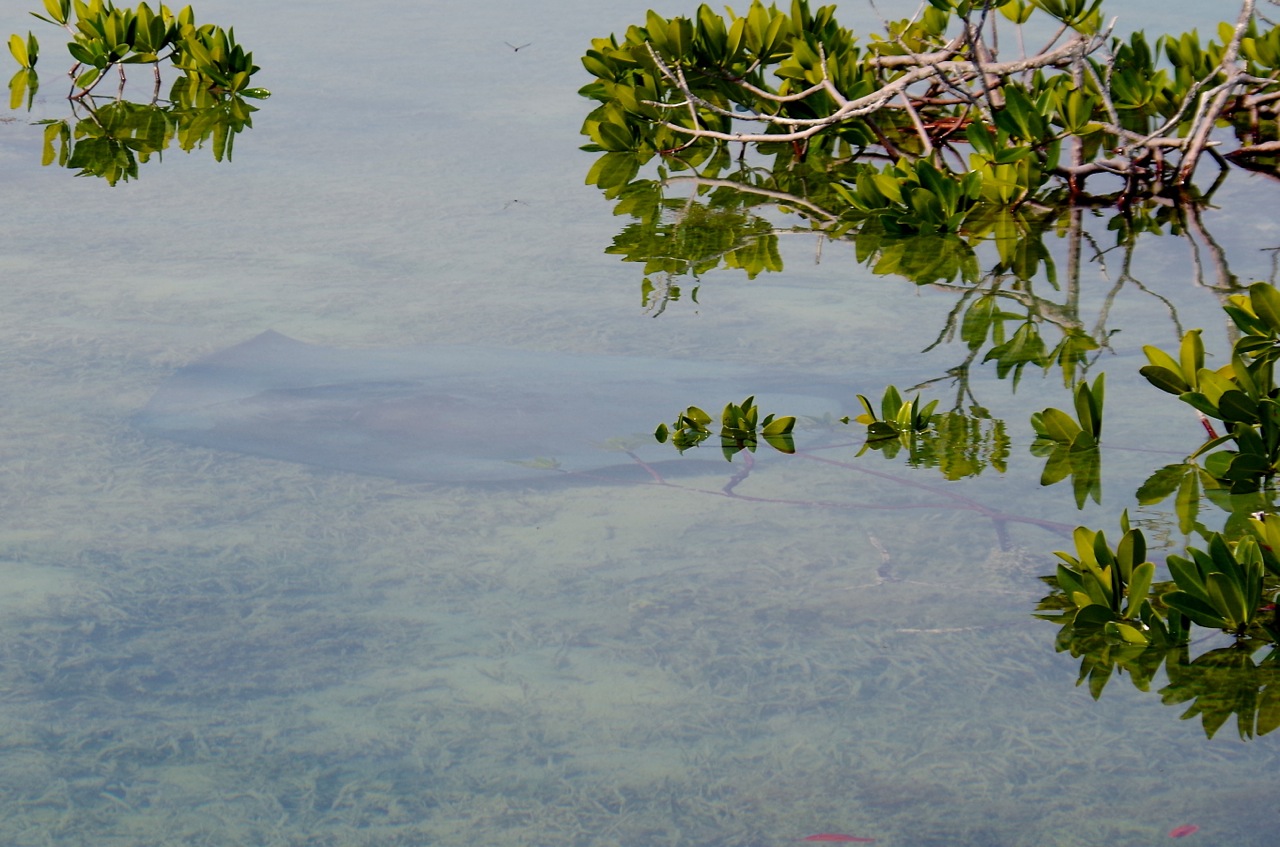
Southern Stingrays are often encountered when one is bonefishing in the low waters of the Marls. I took the photos below while we were fishing in a channel between areas of mangrove. As the skiff was poled very slowly forward, I saw the stingray coming straight towards us. I wondered how it would react. Very elegantly, was the answer. It turned effortlessly and unperturbed to one side, then resumed its original course leaving a clump of mangrove between it and the skiff.
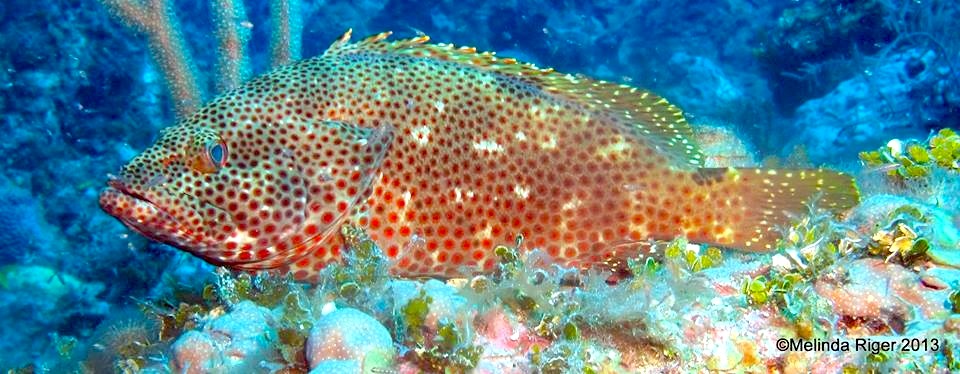
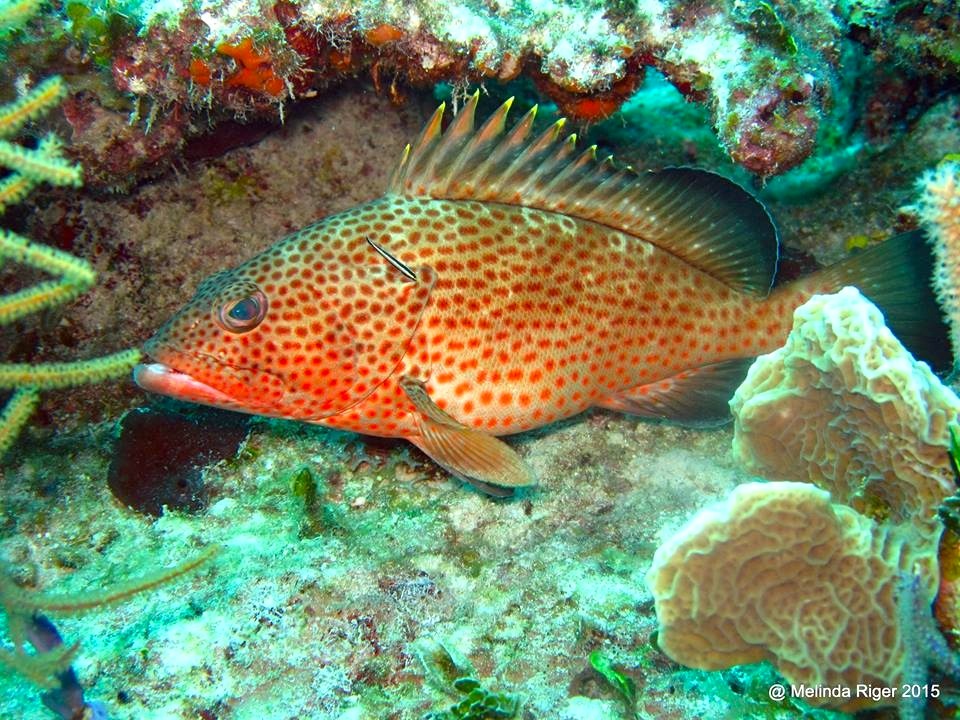
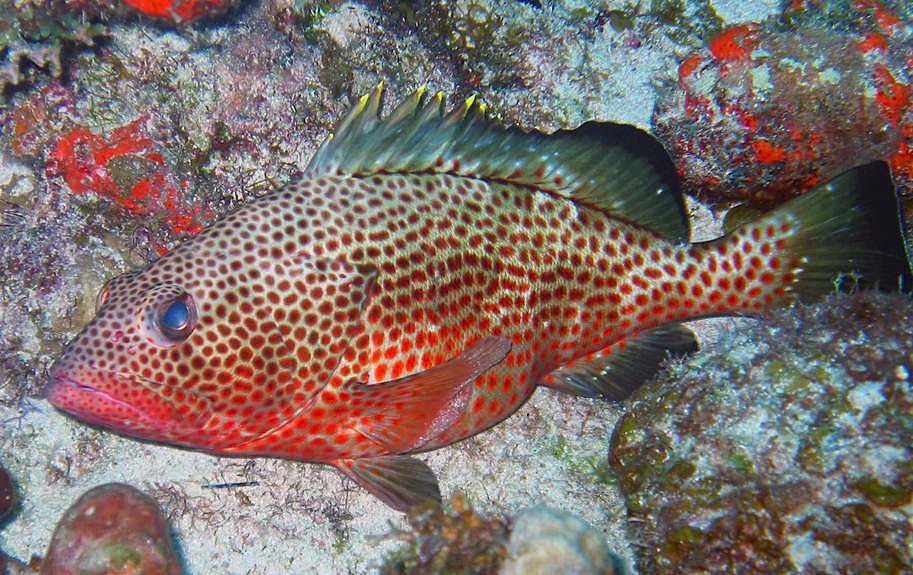
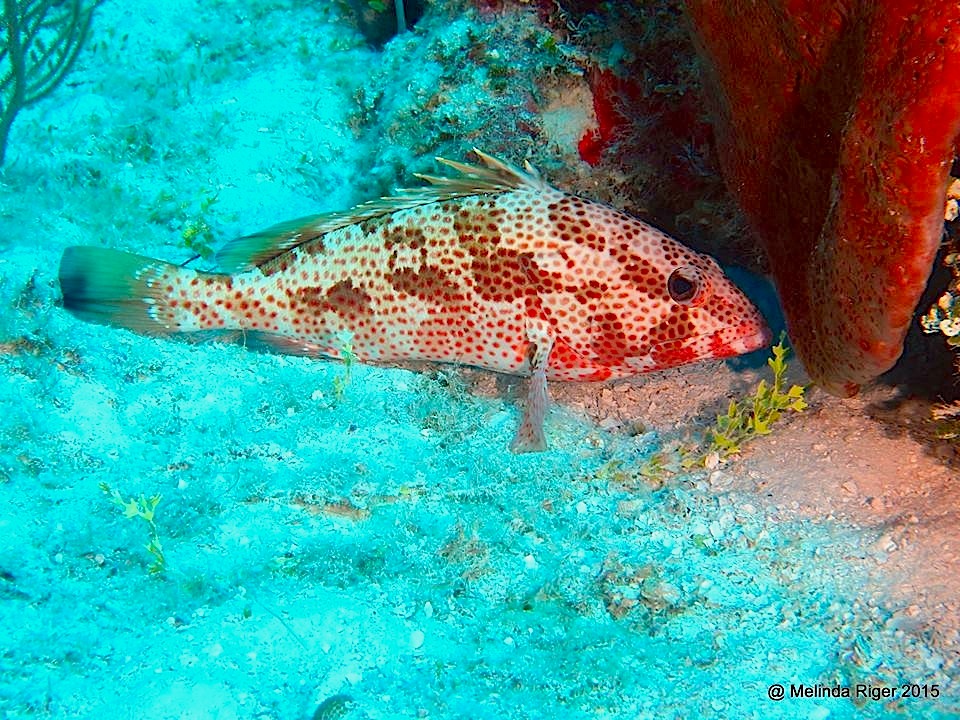
The Red Hind is one of several grouper species commonly found in Bahamas waters. Commonly for now, anyway. There is less information available about this species compared with other groupers, but sources seem agreed that it is (a) abundant and (b) IUCN listed ‘least concern’ but (c) heavily fished and (d) delicious.
One problem arises from the fact that Red Hinds form spawning aggregations in particular areas, making them vulnerable to fishing exploitation in those locations, and consequent population decline. Already, some of their spawning areas are protected.
Another threat comes from the degradation of coastal habitats coupled with increasing commercial and recreational fishing. Red Hinds are targeted with speargun, hook and line, fish traps and nets. They may also be by-catch of other fishing operations. Fortunately Marine Protected Areas such as the ones in Abaco waters provide localised protection but these are not found throughout the Red Hind’s range. Closed seasons have been imposed in a few areas, another conservation method that has recently been introduced in the Bahamas for the Nassau grouper.
Getting the right balance between traditional fishing for food, and stock conservation is inevitably a tricky calculation. For the Red Hind, the factors that may result in the population decline of a plentiful species are in plain sight and will continue to be monitored by the various scientific research organisations involved…
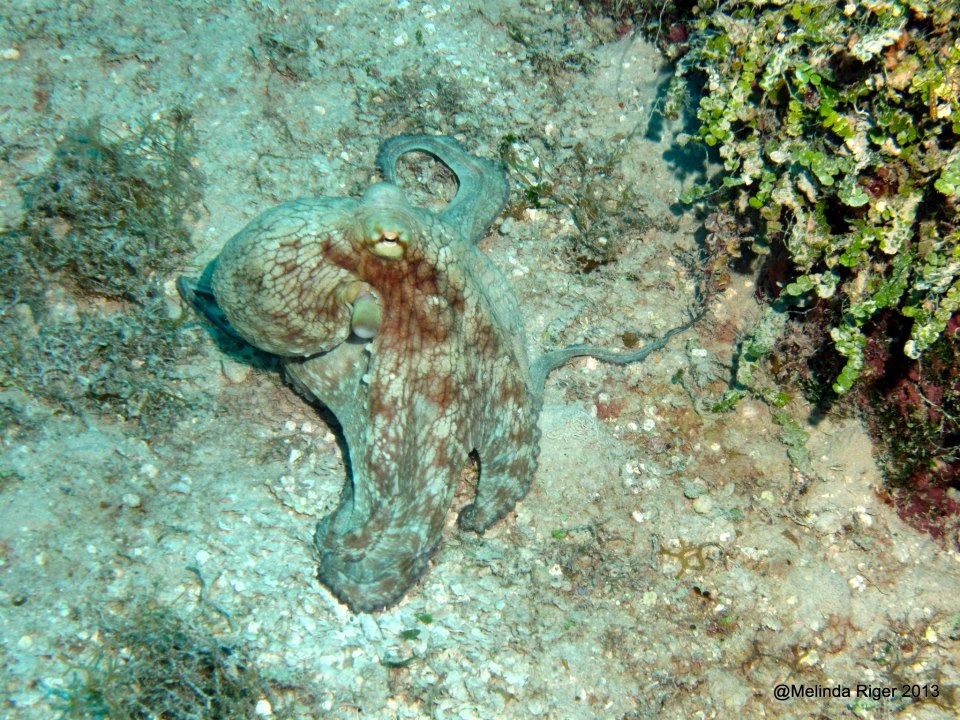
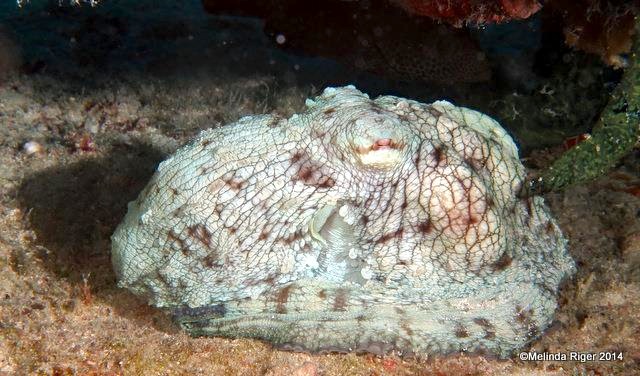
I’ve posted about the octopus a couple of times before. The first time was to explore the correct plural of the word ‘and related cephalopod mysteries’. You can see that HERE. More recently there was ‘Marine Bagpipes filled with Ink’, which you can see HERE. Both posts were really a way to show some of Melinda Riger’s stunning underwater photography, with an octopoidal theme. Now I have some more images for you, so I present some new photos of Octopi… erm, Octopodes… erm, Octopuses…
This octopus is having a sleep, disguised as a rock
Credits: All images courtesy of Melinda Riger of Grand Bahama Scuba
CHERUBFISH (PYGMY ANGELFISH): BAHAMAS REEF FISH (23)
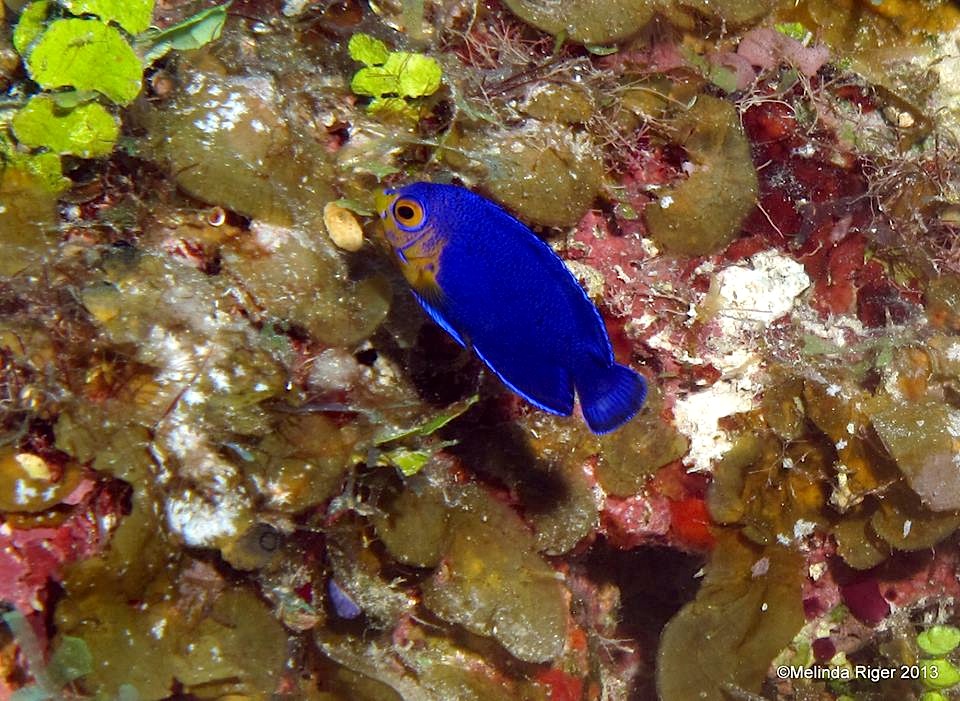
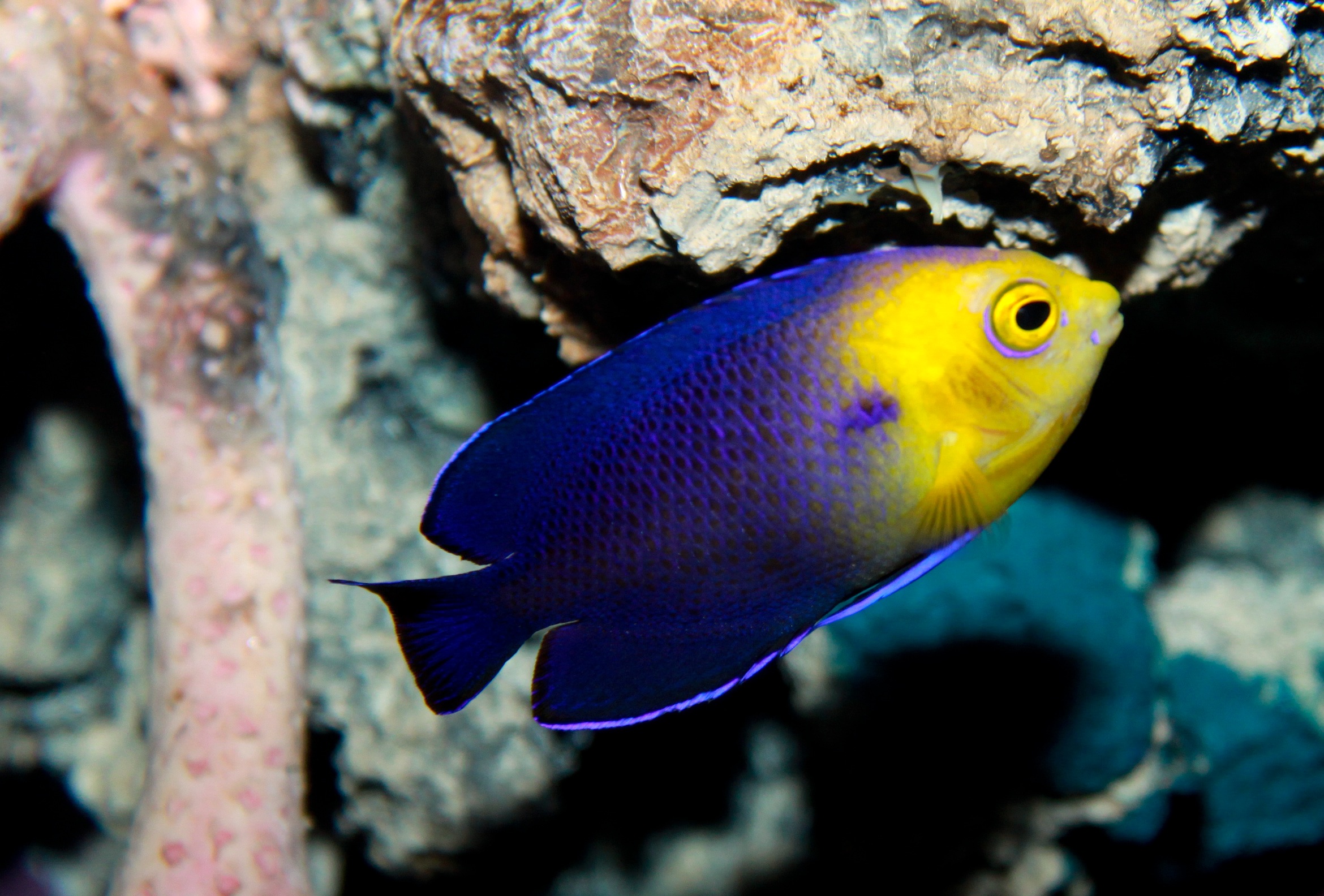
Time for a bright little denizen of the not-so-deep. The Cherubfish Centropyge argi or pygmy angelfish is a very small (8cm) and distinctively coloured angelfish species. These fish are native to the Caribbean and Gulf of Mexico, and flicker round the coral reefs happily feeding as they go (see the video below to see how busily they forage). Or maybe they are just having a good time…
The Cherubfish is unsurprisingly a popular aquarium species. Don’t rush straight out and buy some though: a typical warning says “like other angel fish, they are not completely 100% reef-safe. Results vary among individual fish and tank qualities (size, feeding, tankmates, etc.), so caution is recommended when adding this fish to a coral tank“. You can read the whys and the wherefores HERE – sadly I lack the vibrant interest in aquaria to go into it myself…
Looking beyond Melinda’s lovely images of the species, I have found that these creatures will often show more yellow at the nose end. Here’s an example of a more two-tone Cherubfish in case you come across one.
I mentioned that Cherubfish flicker around the reefs instead of proceeding serenely and in an orderly fashion. Have a look at this short video to see what active little fish they are.
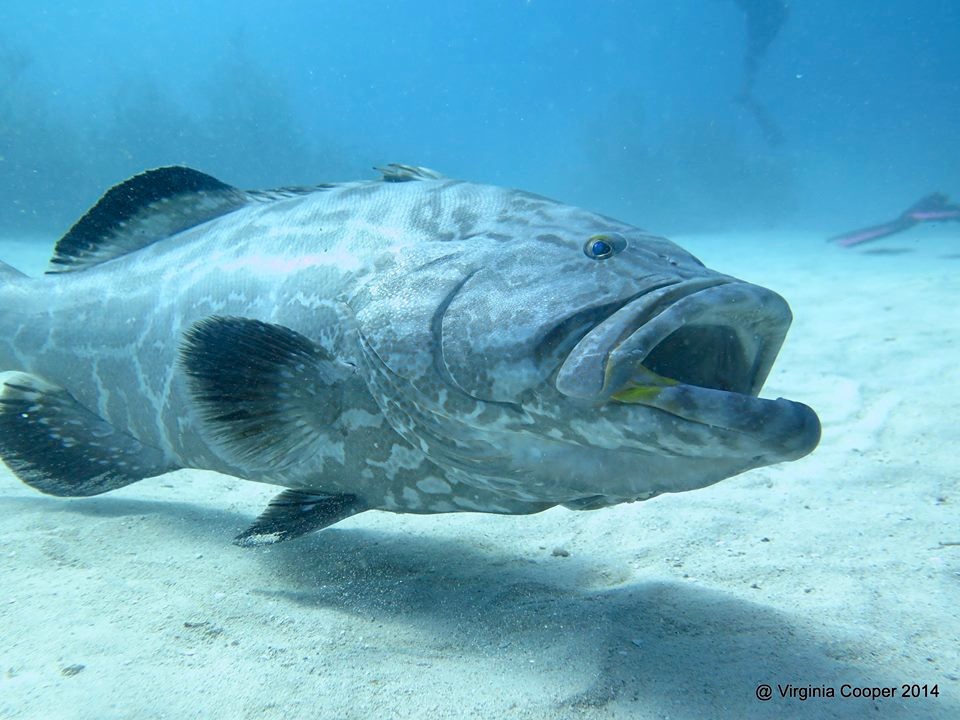
The Black Grouper is a large fish of the reefs found in the western Atlantic, particularly in the waters of Florida, Bahamas, Caribbean and the Gulf of Mexico. It is a solitary species that mostly prefers the shallow waters around coral reefs.
Formerly plentiful, these groupers (like other grouper species) have moved from an IUCN listing of ‘Least Concern’ to ‘Near-Threatened’. They have the twin disadvantages of being fished for sport and fished for food. As demand for grouper on the menu rises, so does its vulnerability. The species is described as a ‘slow breeder’, so a depleting population has less chance of sustaining numbers.
An adult black grouper’s diet consists of small fish and squid. Juveniles feed primarily on crustaceans. However, certain tiny reef fish are important to the species as ‘cleaners’. You can read about their significance by clicking CLEANING STATIONSHere are examples of two black groupers receiving attention at the same cleaning station. Both also seem to be giving a ride toREMORAS.
Note that this fish has an embedded hook and is trailing a line – one that ‘got away’
Despite the name, black groupers are not all black. They have many shades from dark to olive-coloured to pale. I believe the two photos below are of a grouper known as Arthur, a favourite with divers and definitely off the menu…
The tiny bright blue fish in the photo above are Blue Chromis, a regular accompaniment on any snorkel or dive on a reef. I like the colourful little Fairy Basslet in the next photo
Now that the NASSAU GROUPER has been awarded a closed season to help maintain numbers, it will be interesting to see if the winter fishing ban is extended to the Black Grouper…
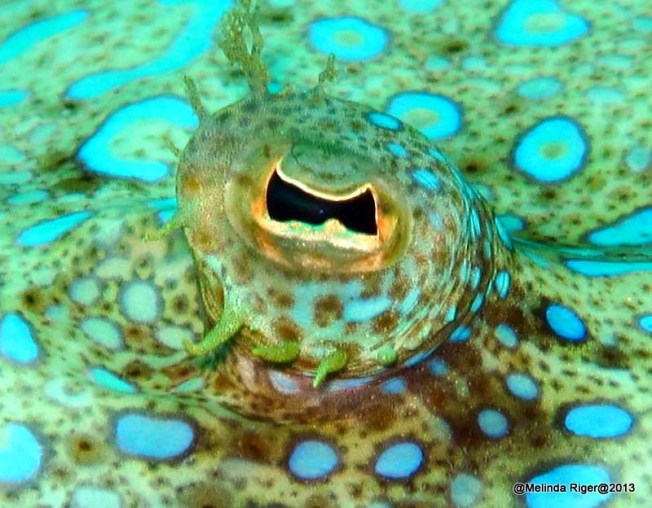
I have briefly featured this fish before in the context of its extraordinary camouflage abilities; and also its interesting ocular arrangements. Time to give it another swim around, I think, with some additional photos that I have collected.
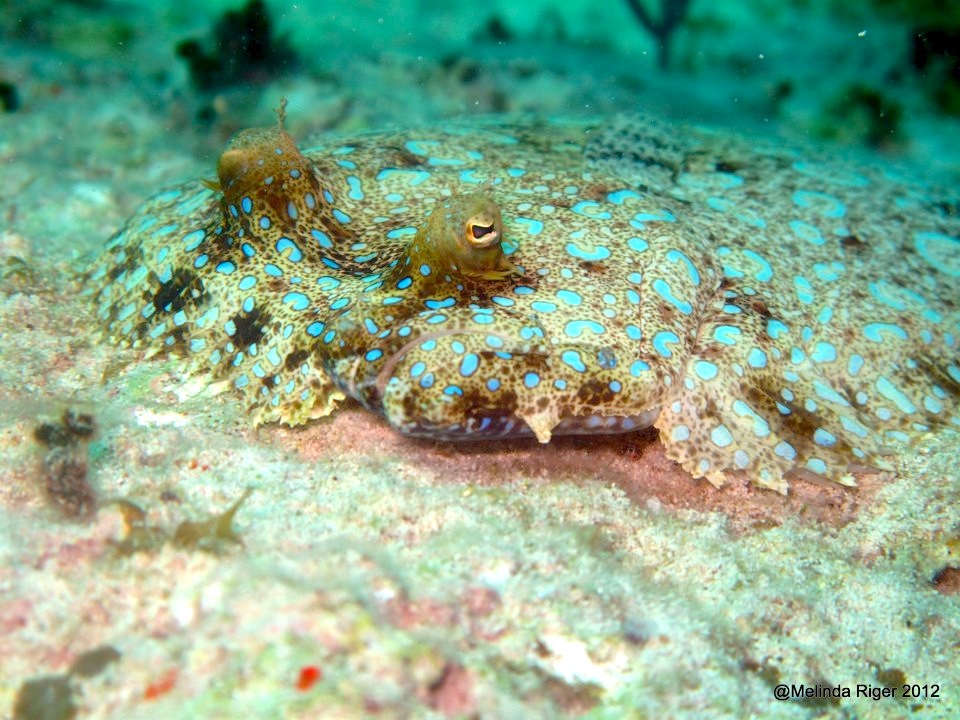
Bothus lunatus is the Atlantic / Caribbean version of a species also found in the Pacific and Indian oceans. Adults may grow up to 18 inches long. The species is a ‘lefteye’ flounder, with both eyes on its left (top) side & its right side underneath. However a baby flounder looks & swims like normal fish, with bilateral eyes. As it grows, the right eye gradually ‘moves’ round to the topside, and it becomes a flatfish.
A flounder’s eyes can move independently of each other. One may look forwards, the other backwards
‘NOW YOU SEE IT…’ CAMO-FISH
The Peacock Flounder has extraordinary colour-changing powers, and can rapidly vary its background colour to make it closely resemble that of its surroundings. This enables it camouflage itself as it lies on the seabed.It can change coloration completely in between two to eight seconds.
Four frames of the same fish taken a few minutes apart showing the ability of flounders to change colors to match the surroundings (Wiki)
Check out these imitative patterns in Bahamas waters…
There are two advantages to the ability to camouflage (‘cryptic coloration‘). One is obviously to avoid detection by predators. The other is to enable the flounder to ambush its meals. They feed primarily on small fishes, crabs and shrimps, lying concealed on the seabed and grabbing any unwary prey that ventures too close. They will even partially bury themselves in the sand, leaving just their eye-stalks keeping watch…
HOW CAN THEY POSSIBLY CHANGE COLOUR SO QUICKLY?
Scientists are still puzzling this out. In a conch shell, it seems the flounder can coordinate its amazing all-round vision with its hormones, instantly releasing certain pigments to its skin cells and suppressing other pigments to make the colour match. Not convinced? Then watch this short video and prepare to be impressed.
Fred Riger of Grand Bahama Scuba, who kindly keeps a benign eye on my reef fish posts (he’s the expert), adds a third excellent reason for coloration changes: sex… “the male peacock flounder can, and does greatly intensify his colors, presumably to declare territory and attract females to his person. When doing this the males will also signal with the left pectoral fin, sticking it straight up and waving it around.” Maybe that is what is going on in the photo below – intensified, non-camouflage colours, and a raised fin…
Peacock Flounder on a plate – Kim Rody Art
Credits: Melinda Riger of Grand Bahama Scuba for almost all photos; wiki for 2 illustrative images
NASSAU GROUPER: VULNERABLE, ENDANGERED… & NOW PROTECTED
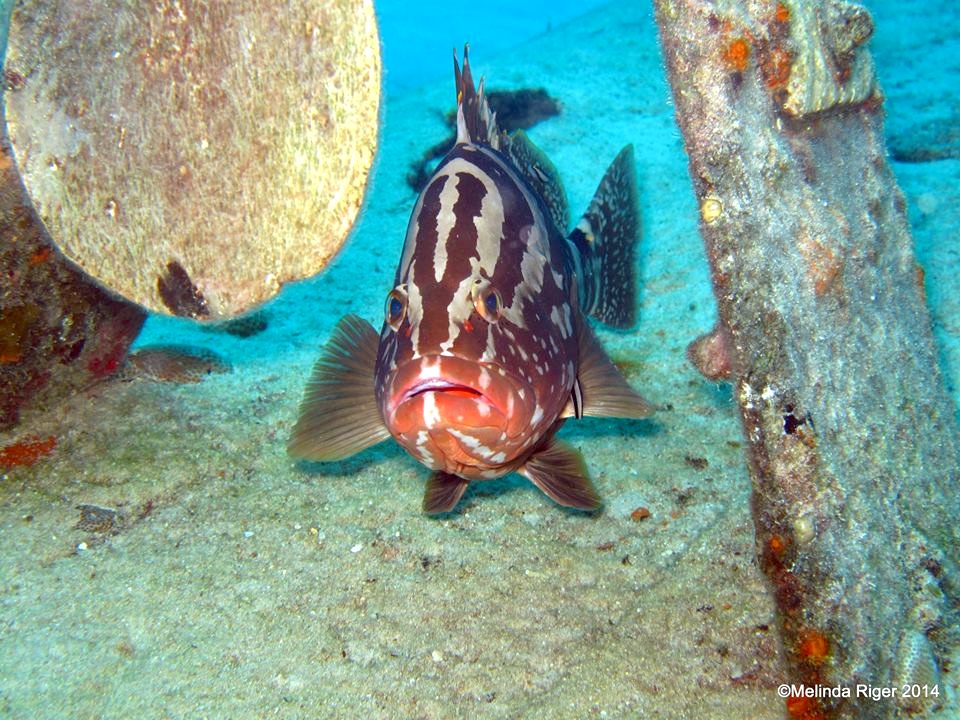
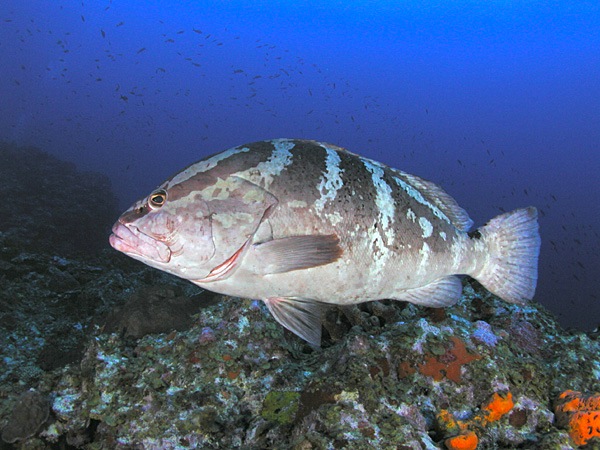
The Nassau grouper Epinephelus striatus is one of a number of Caribbean grouper species found generally in the Northern Bahamas and specifically in Abaco waters. Others include the Black, Tiger, and Yellowfin groupers, the Red Hind,and the Graysby. The Nassau grouper is special, however, not least because (unlike the others) it is on theIUCN Red Listas an Endangered Species and is also a USNational Marine Fisheries ServiceSpecies of Concern. It is considered the most important of the groupers for commercial fishing in the Caribbean, and the IUCN listing data suggests that a population decline of 60% occurred over the last three generations (27-30 years), a startling rate. The current population size is estimated at >10,000 mature individuals.
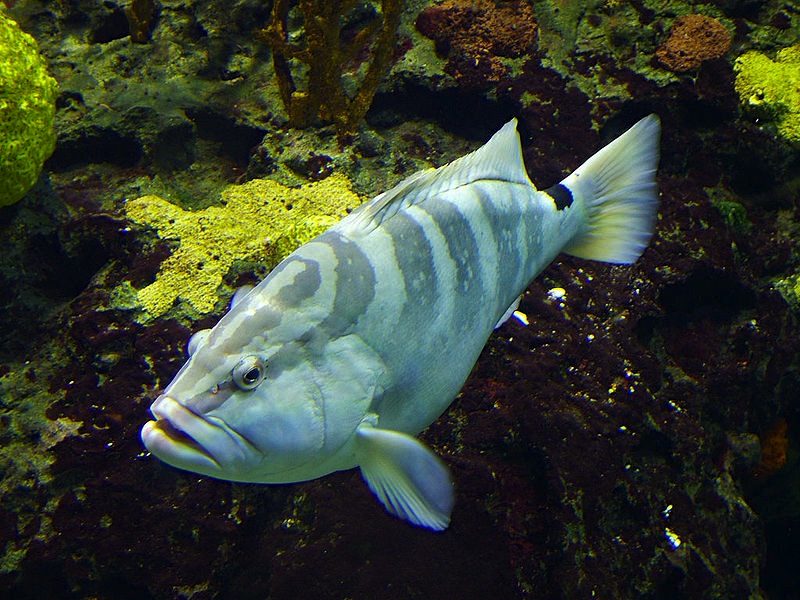
The Nassau Grouper is a creature of the coral reefs in the Caribbean and adjacent seas, though it can also be found in deep water. It feeds in the daytime on small fish and small crustaceans such as shrimps, crabs and lobsters. It lurks in caves and recesses in the reef, sucking in the prey that passes unsuspecting by. The coloration of an individual fish may vary considerably with conditions, and it can adapt its colour to its surroundings as camouflage.
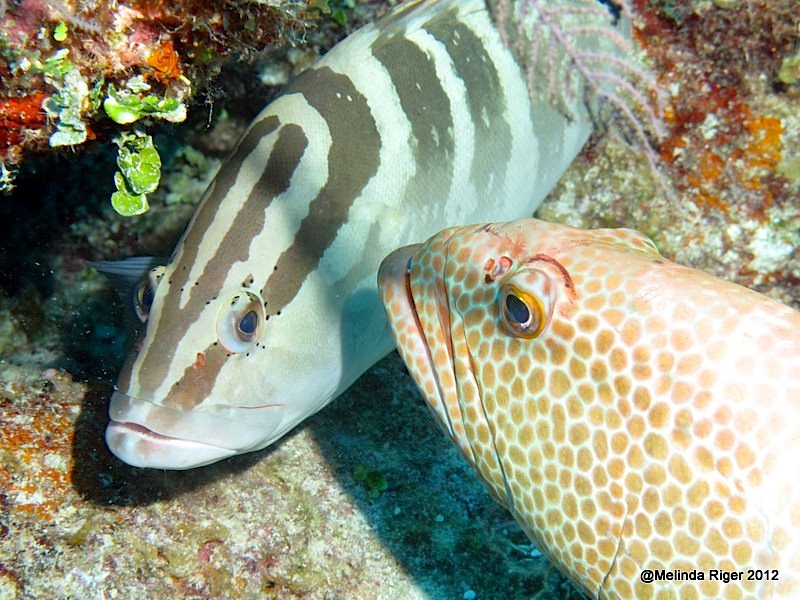
Tiger grouper meets Nassau grouper
Spawning takes place in December and January as the seawater cools, always at full moon, and always in the same place. In the moonlight, huge numbers of the grouper gather together to mate in a mass spawning aggregation. This may continue for several days. However, the species is slow breeder, which is why overfishing is particularly damaging to the population as the depleted stock cannot readily be replaced.
CONSERVATION ISSUES
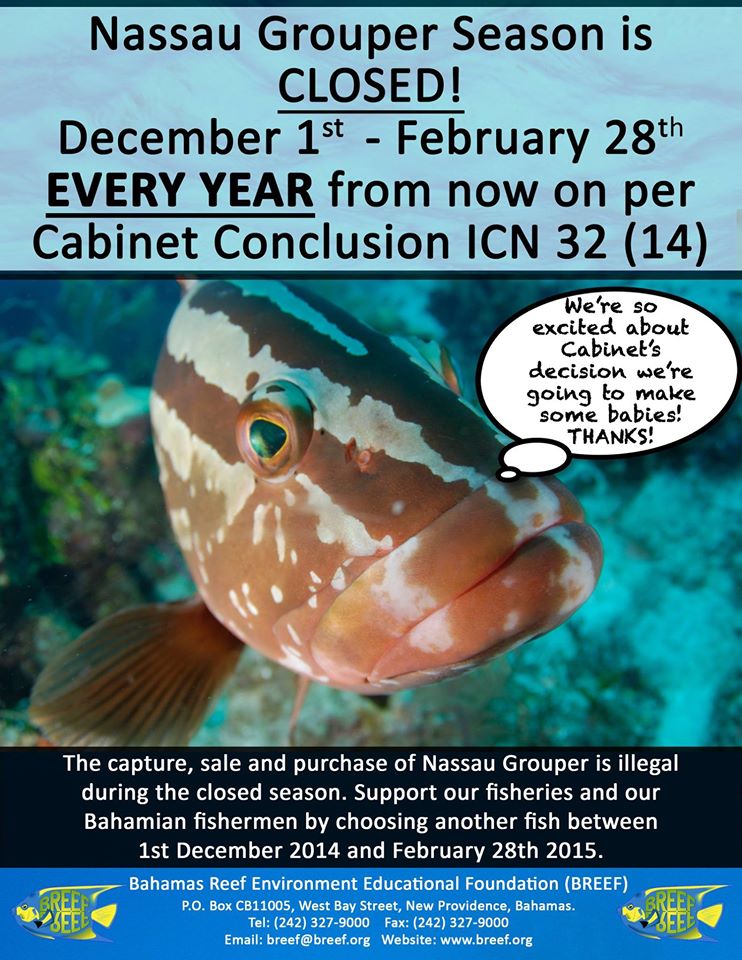
There are other besides factors commercial overfishing that make the Nassau grouper so vulnerable, including fishing during the breeding season; taking undersized fish; pollution and reef decline; habitat loss; and invasive species. The spawning areas are especially vulnerable to exploitation. In the Bahamas, as elsewhere, the government has now instituted a closed fishing season for the Nassau grouper. Here is the BREEF flyer, just circulated – and in fact the reason for this post, which reminded me that I had planned to write about this fish!
Nassau grouper is eaten by barracudas, lizard fish, dolphins, sharks and other large predators of the reef community. But the predators that have the biggest impact on the grouper population are humans. People are fishing groupers before they can grow to maturity and reproduce. Sex change may also cause a problem. In undisturbed areas there are usually equal numbers of male and females. In heavily fished areas there are often three or more times more females than males. This means many eggs will not be fertilized during spawning. Other threats include, habitat destruction, coral breakage from divers, siltation from construction, runoff from logging and agriculture, dredging, sewage, oil spills and other contaminants that harm coral reefs where Nassau Groupers live.
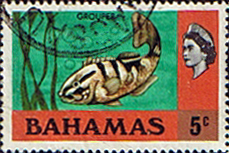
There’s an extent to which a country can be judged on its attitude to wildlife from the stamps it chooses to issue. It’s something to do with appreciation and promotion of the country’s natural resources. For example, North Korea rates nil in this respect, with stamps involving scary weaponry, flags, marching and eerily glowing leaders – not a single sparrow to be seen. By fortunate contrast the Bahamas and itsPostal Service score very highly in celebrating the diversity of the wildlife of the islands.The Nassau Grouper was first featured on Bahamas stamps as long ago as 1971, some 25 years before the IUCN Red Listing, and probably before the sharp decline in population numbers had even begun.
In 2012 the Bahamas Postal Service released ‘a new definitive 16 stamp series’ depicting the marine life of The Bahamas. The Nassau has been promoted from 5c in 1971 to 70c in 2012. That’s inflation for you.
Finally in 2013 BREEF’s 20 years of marine conservation was commemorated with a distinguished and colourful set of 8 stamps, noting in their release:‘Two of the new stamps feature the Nassau Grouper, a now endangered species that has experienced severe population decline throughout the region… BREEF is well known as an advocate for an annual closed season for the iconic Nassau Grouper during its winter breeding period. The push for the closed season was based on scientific evidence of population collapses throughout the region due to overfishing. BREEF is calling on the government to implement a fixed closed season for the Nassau Grouper in order to protect the species and the fishing industry. The closed season traditionally runs during the spawning season from December 1st until February 28th, to allow the fish to reproduce. BREEF is calling urgently for the announcement of this year’s Nassau Grouper closed season….’ And so it came to pass… Not only is the Nassau grouper now worth 2 x 65c; it is strictly protected for 3 months during its breeding season. Maybe philately even had a hand in getting somewhere…
Credits: Melinda Riger, Rick Smit, Open Source, BNT, BREEF, Wikimedia, Bahamas Postal Service
WTF? (WHAT’S THAT FISH?) 2: STRANGE BAHAMAS REEF FISH
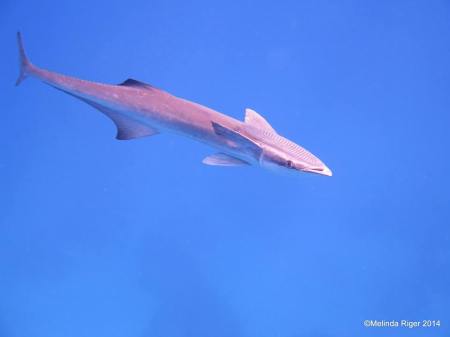
WTF 1 concerned the REMORA, the upside-down looking fish with the trainer-sole sucker on its head with which it attaches itself to sharks and other large undersea creatures. If you’ve ever seen a picture of a shark with one or more grey passengers hitching a ride, those are these.
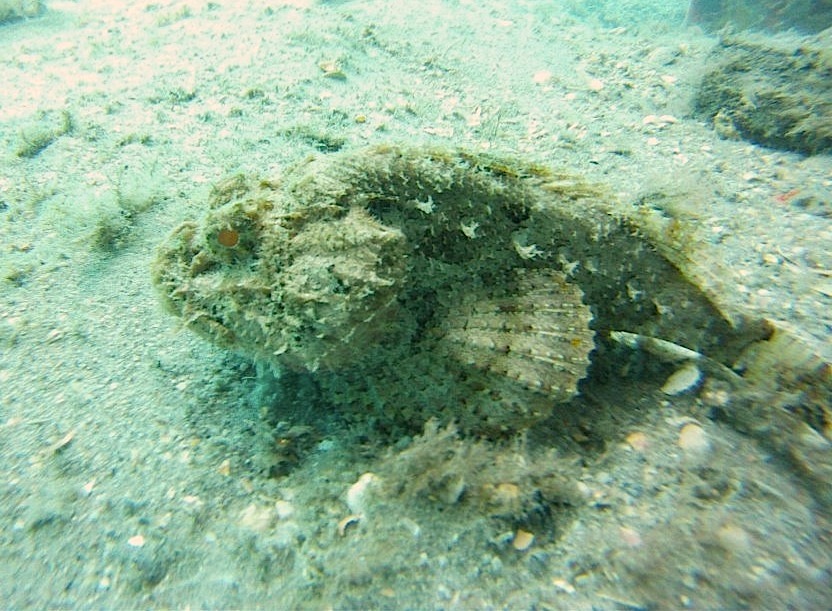
WTF 2 features some creatures found in the reef waters of the Bahamas that make you wonder just how and why they are as they are. They look unnecessarily complicated, and the design is somewhat outlandish. See what you think of these…
BURRFISH
SLIPPER LOBSTER
SCORPIONFISH (& header image) camouflaged against coral
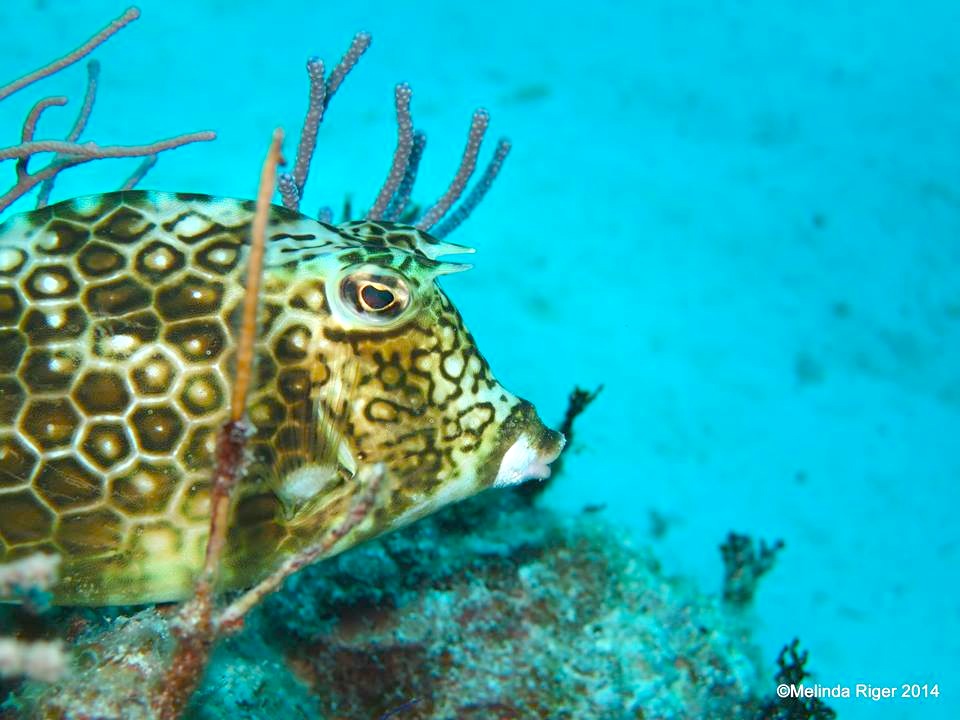
COWFISH
TRUNKFISH
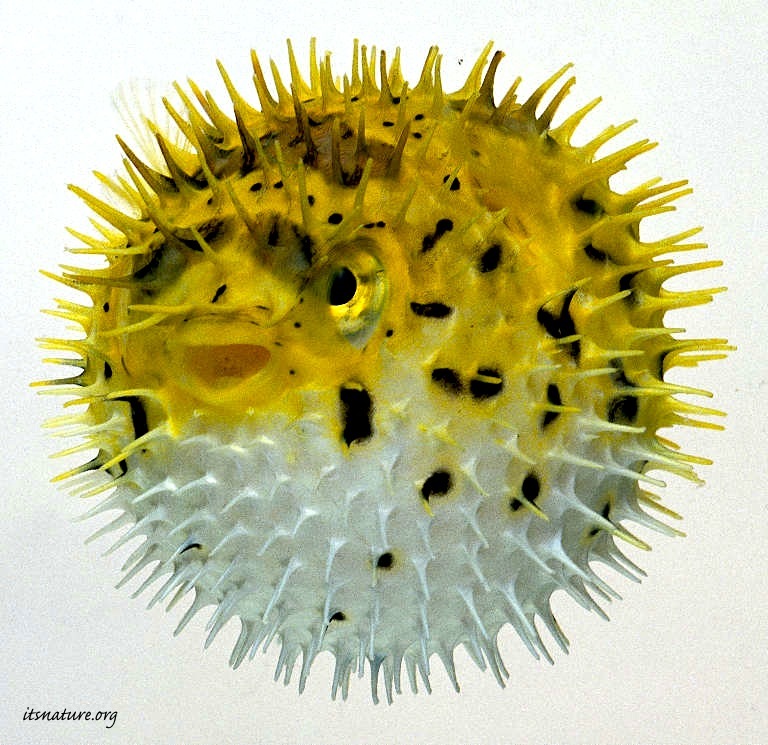
PORCUPINE FISH
“Watch this…”
“Ta Daaaaaa”
AIRPLANEFISH*
*Well, it’s really airplane wreckage. Besides a few other planes and a variety of ships that can be explored underwater, there are also two locomotives in Abaco waters that “fell off” a ship while being transported. Now recreate in your mind the subsequent conversation with an insurance company…
APOLOGIES Header image repeated to sort out FB visuals problem that’s driving me nuts
Credits: Melinda Riger, Grand Bahama Scuba;Virginia Cooper; itsnature.org
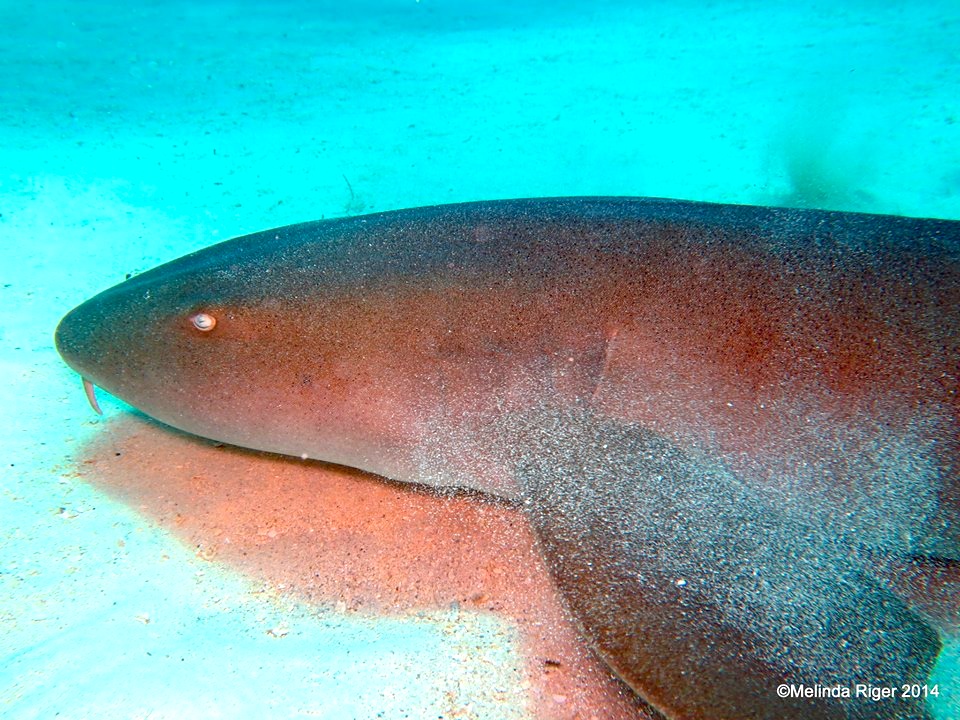
‘TREAT WITH PATIENCE…’ – NURSE SHARKS IN THE BAHAMAS
The scientific name for the nurse shark sounds like something Bilbo Baggins might have said to summon elves to his rescue: Ginglymostoma cirratum. Actually the name is a mix of Greek and Latin and means “curled, hinged mouth” to describe this shark’s somewhat puckered appearance. The origin of the name “nurse shark” is unclear. It may come from the sucking sound they make when hunting for prey in the sand, which vaguely resembles that of a nursing baby. Or it may derive from an archaic word, nusse, meaning cat shark. The most likely theory though is that the name comes from the Old English word for sea-floor shark: hurse.
Nurse sharks are slow-moving bottom-dwellers and are, for the most part, harmless to humans. However, they can be huge—up to 14 feet (4.3 meters)—and have very strong jaws filled with thousands of tiny, serrated teeth, and will bite defensively if stepped on or bothered by divers who assume they’re docile.[There are recorded instances of injuries caused to divers who have tried to pull nurse sharks by the tail. And serve them right, I say. Treat them with patience – and respect!]
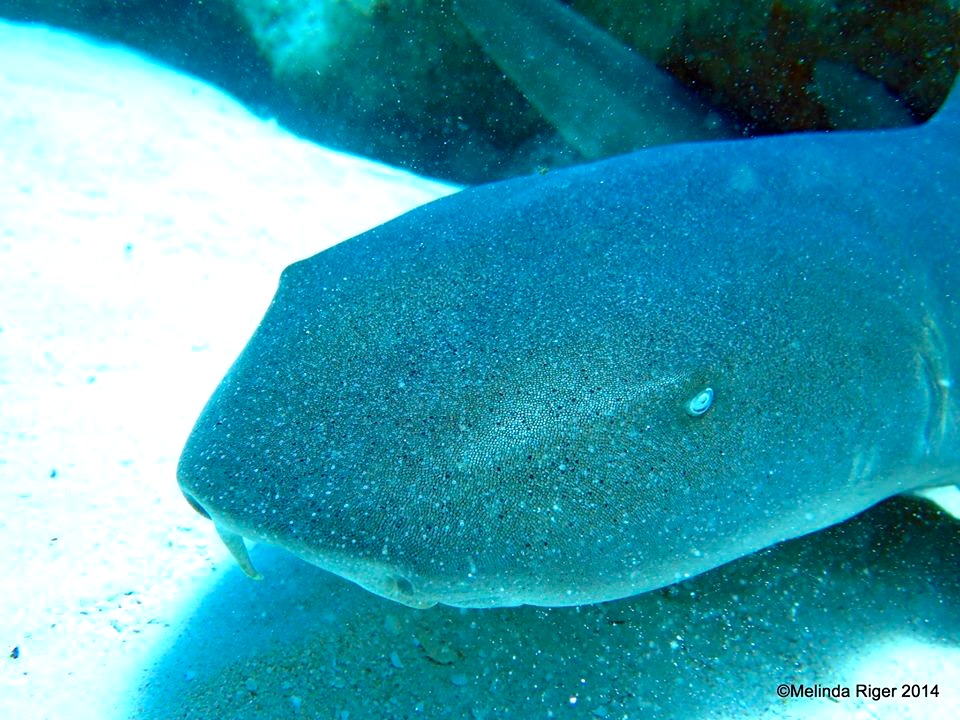
Notice that the nurse shark in the above photo, and in the header image, is being attended by REMORAS. Click the link to find out more about the strange relationship these ‘weird suckers’ have with larger marine creatures.
They use their strong jaws to crush and eat shellfish and even coral, but prefer to dine on fish, shrimp, and squid. [And also stingrays, apparently. They have been observed resting on the bottom with their bodies supported on their fins, possibly providing a false shelter for crustaceans which they then ambush and eat.] They are gray-brown and have distinctive tail fins that can be up to one-fourth their total length. Unlike most other sharks, nurses are smooth to the touch.
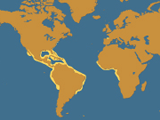
Nurse sharks are found in the warm, shallow waters of the western Atlantic and eastern Pacific oceans. They are abundant throughout their range and have no special conservation status, although the closeness of their habit to human activities is putting pressure on the species.
Nurse sharks are nocturnal and will often rest on the sea floor during the day in groups of up to 40 sharks, sometimes piled on top of each other.
FAST FACTS
Type: Fish
Diet: Carnivore
Size: 7.5 to 9.75 ft (2.2 to 3 m)
Weight: 200 to 330 lbs (90 to 150 kg)
Size relative to a 6-ft (2-m) man:
Credits: All photos Melinda Riger, Grand Bahama Scuba; range map and text mostly NATIONAL GEOGRAPHIC filled out with other pickings
‘ELEGANTLY WEIRD’ – SPOTTED DRUMFISH JUVENILES: BAHAMAS REEF FISH 20
I’ve posted before about the rather extraordinarySPOTTED DRUMFISH, one of those reef fish which in juvenile form is very different from the adult. This species was first up in the Bahamas Reef Fish series – click above link. Here are a few recent images, courtesy of Melinda Riger. The first three show the juvenile form (note the piscine photobomb in the first one). The last shows a group of adults hanging out on the reef with (I think) some soldierfish. You can see how the juvenile drumfish becomes the adult, but those little stripy bullet-heads with their two long elegantly trailing appendages differ considerably from the rather solid-looking spotty / stripy adults with their dramatic punko-rockabilly quiffs.
RED REEF RESIDENTS: A RUFOUS ROUND-UP IN THE BAHAMAS
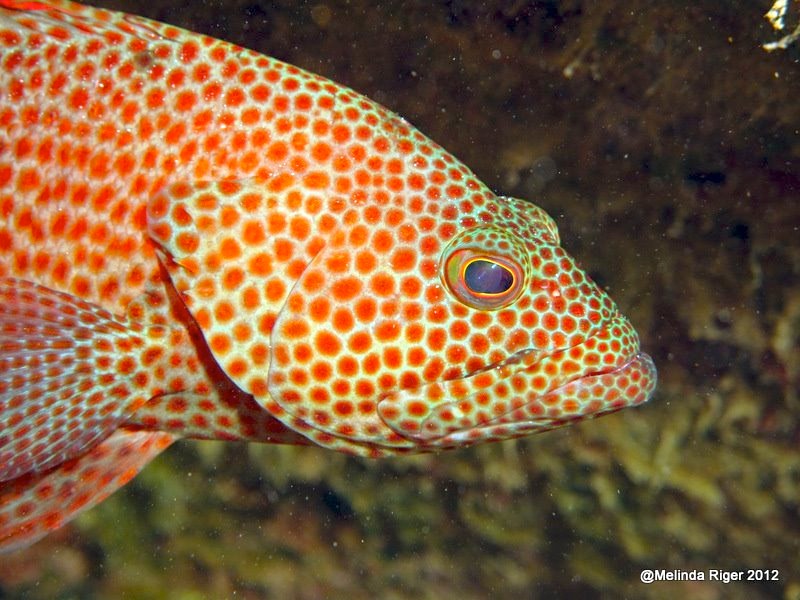
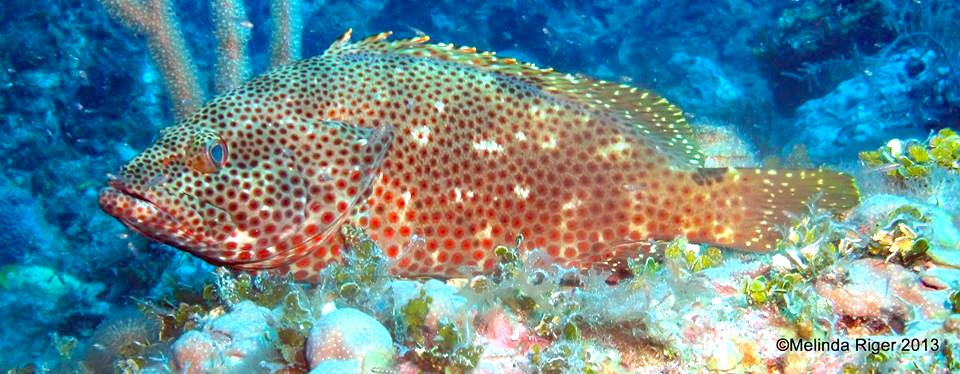
It’s sunny and very hot. Time to take another dive with Melinda to see what is going on under water around the reefs. Here are some residents, a somewhat loose description since some of the denizens featured are not especially active. But they are alive, so they qualify by my wide rules. And please may we not get into a discussion about where precisely red and orange overlap. It’s a grey area. And it’s too hot to argue about it… Let’s start with three types of GROUPER that may be spotted in the northern Bahamas. In fact, they are always spotted. One of my favourite pictures is the Graysby – it’s such a great expression, and he really rocks the spots!
GRAYSBY
TIGER GROUPER AT A CLEANING STATION with Peterson Cleaning Shrimps & a GobyRED HIND
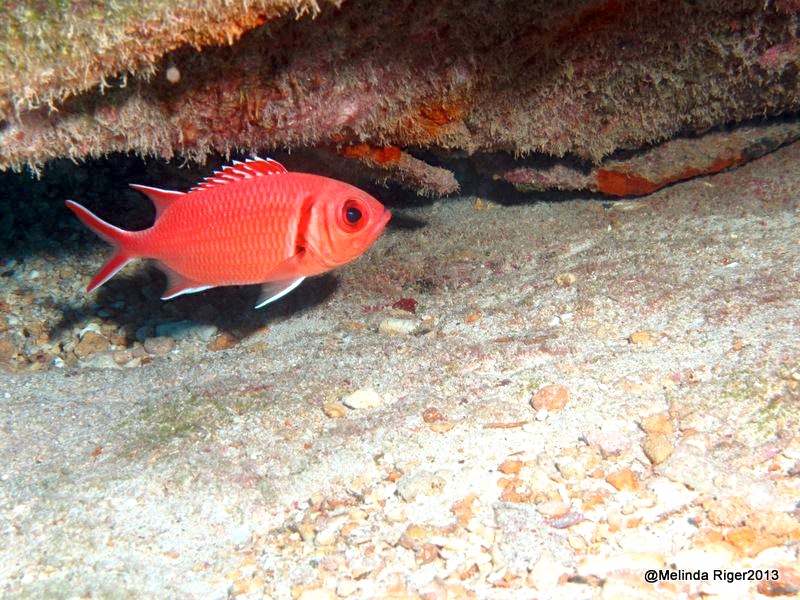
BLACKBAR SOLDIERFISH
HOGFISH
SQUIRRELFISH
But red fish are not the only red reef residents. Here are some that won’t swim away from you as you swim towards them to admire them…
‘TAKEN TO THE CLEANERS’: REEF FISH & CLEANING STATIONS
A cleaning station is a place where fish and and other aquatic life congregate to be cleaned. This involves the removal of parasites both externally and internally, and is be performed by various creatures including, on the coral reefs of the Bahamas, cleaner shrimps and various species of cleaning fish such as wrasses and gobies. The process conveniently benefits both the cleaned and the cleaner.
Tiger Grouper being cleaned by Cleaner Shrimps
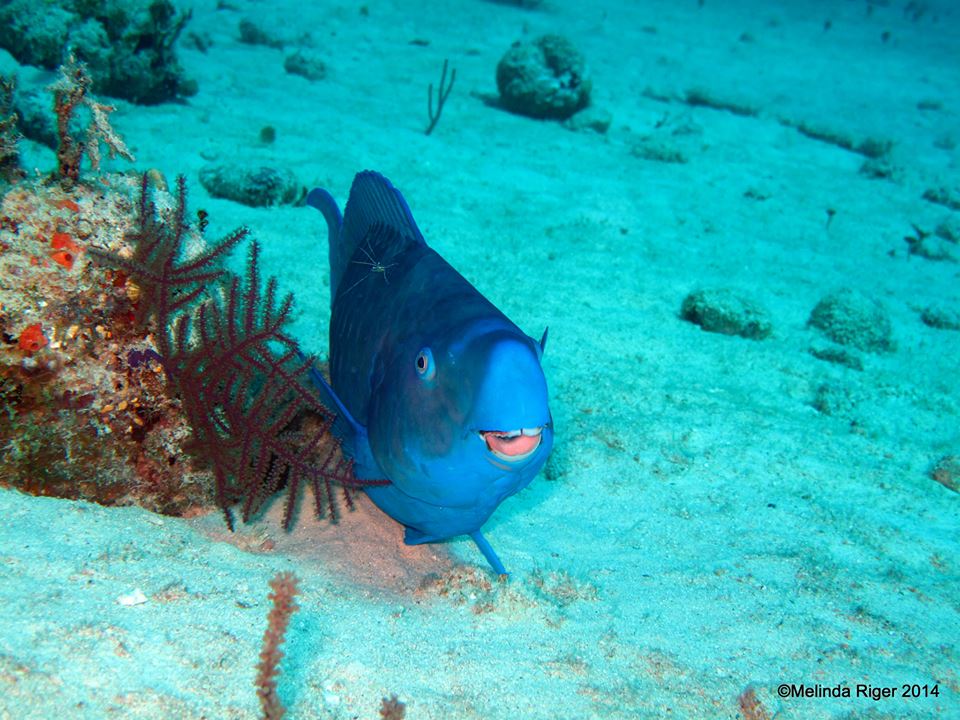
Blue Parrotfish being cleaned (or tickled, from its expression) by a Cleaner Shrimp
Black Grouper being cleaned by gobies – note the ones in its mouth
Black Grouper at a Cleaning Station with gobies. Note the hook and line…
Tiger Grouper being cleaned by Gobies
Gobies checking a hand for parasites….
When a fish approaches a cleaning station it will open its mouth wide or position its body in such a way as to signal that it needs cleaning. The cleaner fish will then remove and eat the parasites from the skin, even swimming into the mouth and gills of the fish being cleaned.
“Clean me!” An amazing view of a Tiger Grouper at a CleaningStation with its gills wide open
Grouper at a cleaning station over a sponge
Remora clinging to a shark. For more on this unusual symbiotic relationship, click HERE
All photos: Melinda Riger of Grand Bahama Scuba, with thanks as ever
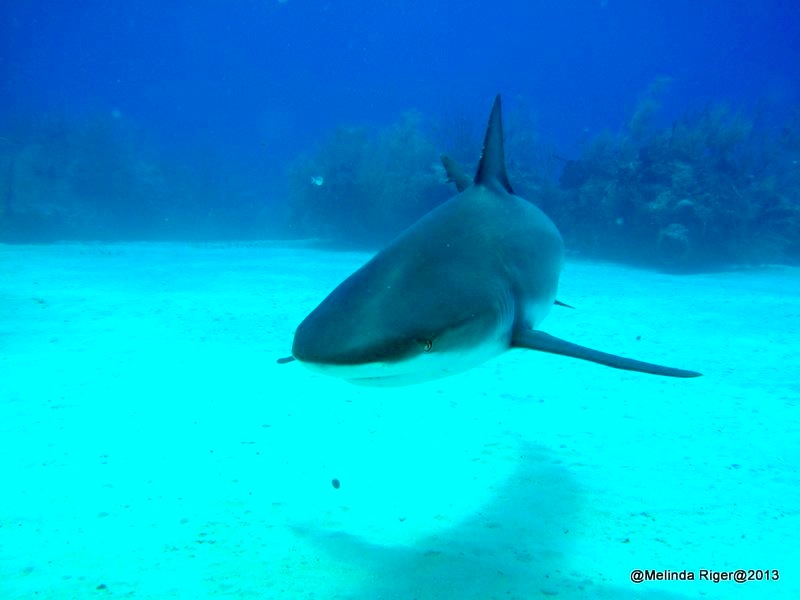
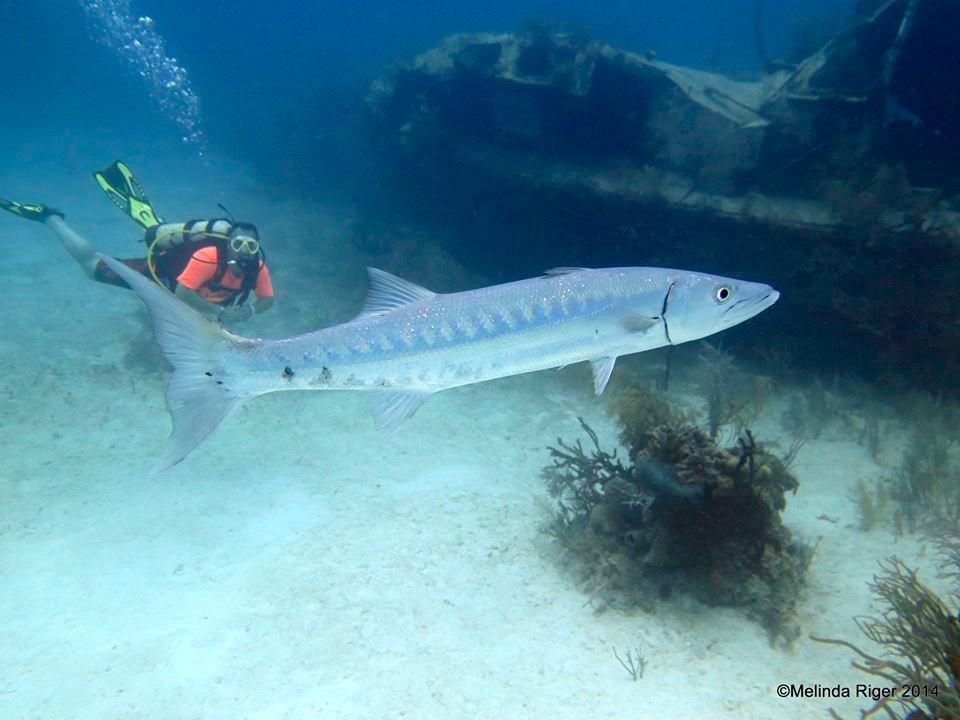
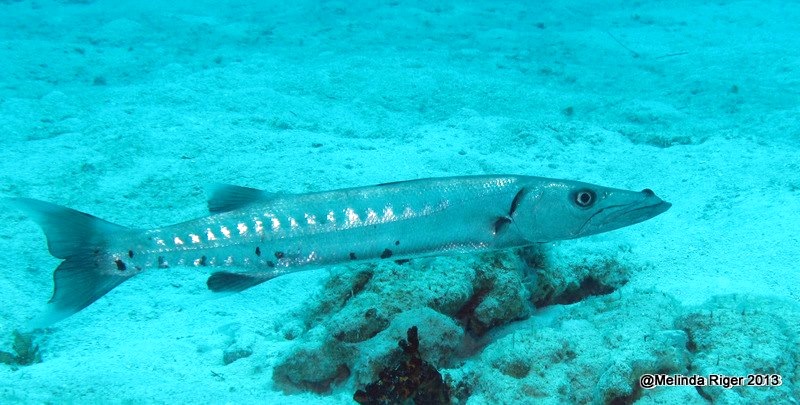
We’ve had some sharks swimming around the blog, for example HERE. But not a great deal about barracudas. Time to put that right. Melinda Riger’s excellent photographs tell you the basics of what you need to know – they are lean, mean biting machines with wicked teeth. In fact, ‘cuda bites are quite rare (unless you you very stupid or very unlucky) and many of the common sense rules that apply to fraternising with sharks in their own element apply equally with ‘cudas.
Great gnashers – some teeth angle forwards & some backwards for mincing prey effectively
Lobbing a brightly-coloured lure from a skiff using a spinning rod into the general vicinity of a barracuda can result in a heart-stopping few seconds as the fish plunges towards the lure at astonishing speed. If it takes it, there’s even more fun to be had bringing it in. ‘Cuda steaks are delicious, but some care needs to be taken. These fish are known carriers ofCIGUATERA fish-poisoning. Click the link to find out about the unpleasantness of the toxin involved. On Abaco, ‘cudas from one side of the island are OK, and from the other side may be suspect… just make sure you know which is which before you cook your supper…






































































 ROLLING HARBOUR ABACO
You must be logged in to post a comment.