Unknown's avatar

ECHINODERMS, DOLLAR DOVES & PETRIFIED BISCUITS


Sand Dollar Doves (Keith Salvesen) 6

Sand Dollar from Abaco containing 5 miniature white doves…

ECHINODERMS, DOLLAR DOVES & PETRIFIED BISCUITS

Echinoderms (Gr. ‘Hedgehog Skin’) comprise a large variety of sea creatures characterised (mostly) by radial symmetry, often five-way. For Abaconians, the most frequently encountered are starfish, sea urchins, sand dollars and sea biscuits. I am going to look at two particular aspects of dollars and biscuits, conscious that my illustrative photos of white objects were stupidly taken against a white background.

DOLLAR DOVES

I’m sure all Bahamians know or are aware of at least one version of the famous ‘Sand Dollar’ poem, in which the various characteristics of the test (the skeleton of the creature) are given religious significance. One verse of the poem may be puzzling: “Now break the centre open And here you will release The five white doves awaiting To spread good will and peace”.

Recently, Senior Granddaughter (10 this week) was looking at some Abaco sand dollars in her unfeasibly huge collection of shells. She picked one up, shook it and it rattled. She said a friend at school had told her that a rattling sand dollar has ‘doves’ inside it, and asked if we could break it open and see. I’ve learnt that it is useless to argue with her – she has the tenacity of a trial lawyer – so we did. This is what we found.

Sand Dollar with a spiky interior like a white cave with stalagmites and stalagtitesSand Dollar Doves (Keith Salvesen) 4
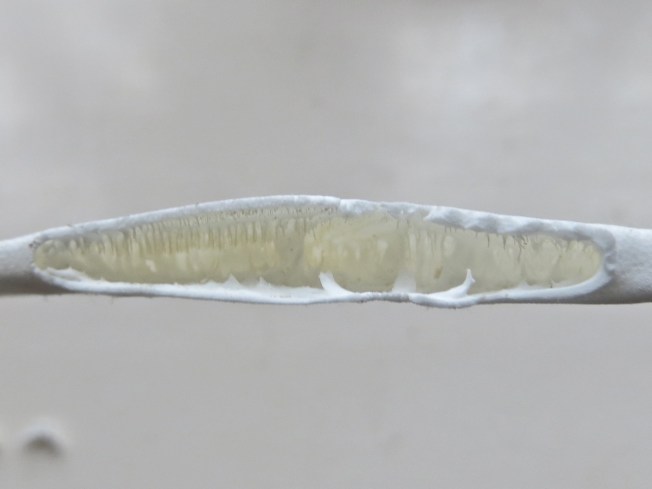
Five white doves (in fact, the separated parts of the creature’s feeding apparatus)Sand Dollar Doves (Keith Salvesen) 1

Two broken pieces showing where the doves are centrally locatedSand Dollar Doves (Keith Salvesen) 5
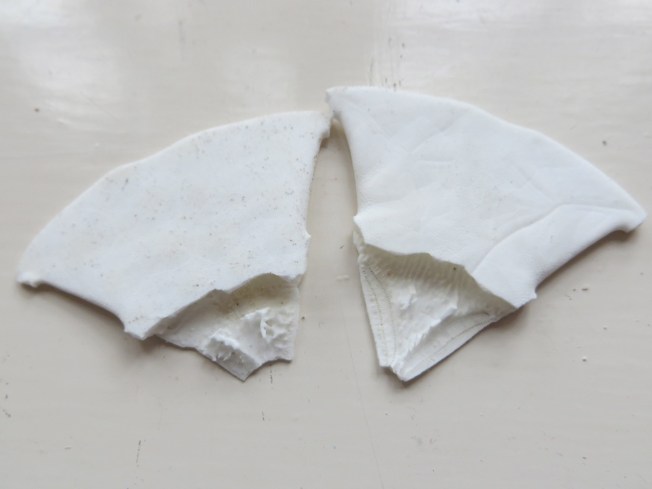
A single dove (best viewed the other way up for full-on doveliness)Sand Dollar Doves (Keith Salvesen) 3

The photo below, from Pinterest, shows the ‘mouth’ with its 5 dove-parts intact, an arrangement called ‘Aristotle’s Lantern’.

Sand Dollar : Aristotle's Lantern : Doves (Pinterest)

PETRIFIED BISCUITS

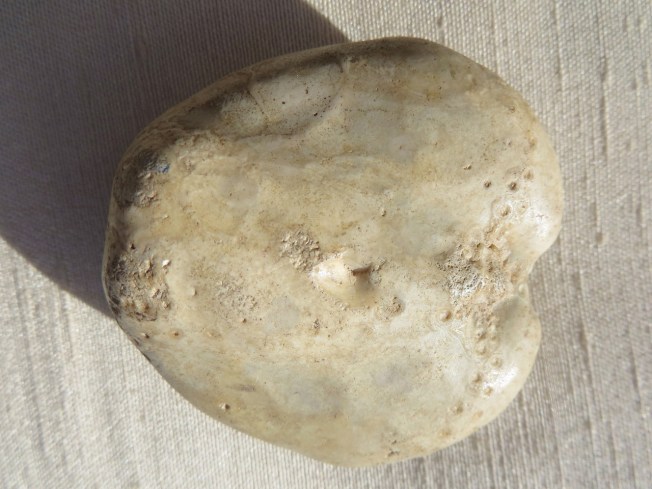
In common parlance ‘petrified’ is an extreme version of ‘terrified’. Literally, it means ‘turned to stone’ (L. Petrus, a rock). It is descriptive of a state of fossilisation, where an animal skeleton or dead wood or plant matter turns over aeons into stone. Undaunted by her Doves discovery, SG (a most inquisitive girl) also discovered a box containing random stones and fossils. She found these two items:

Fossilised sea biscuitsPetrified Sea Biscuit (Keith Salvesen) 1
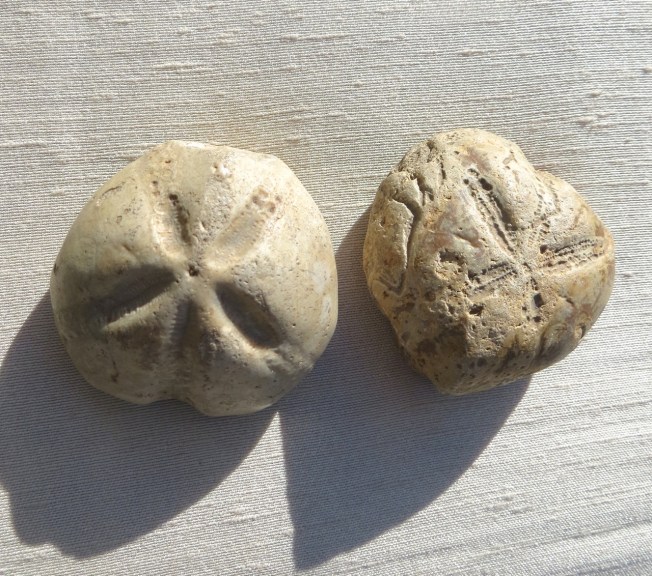
A closer look at the pair of rocksPetrified Sea Biscuit (Keith Salvesen) 5 Petrified Sea Biscuit (Keith Salvesen) 4

The undersides of the fossils above – looking like stones but with some tell-tale small holesPetrified Sea Biscuit (Keith Salvesen) 2 Petrified Sea Biscuit (Keith Salvesen) 3

A close-up of the pale biscuitPetrified Sea Biscuit (Keith Salvesen) 6

Sea biscuits as everyone knows them, on the beach at Delphi – skeletons but not yet fossilsSea Biscuits, Delphi, Abaco (Clare Latimer) copy

A ‘modern’ sea biscuit in close-upSea Biscuit, Abaco (Rhonda Pearce) copy

FUN FACT

Florida has an unofficial but proposed State Fossil, the ‘Sea Biscuit (Eocene Age)’. I didn’t know it before, but it turns out that around 40 States have State Fossils. Whatever next? State Bacteria?

SO HOW OLD MIGHT A PETRIFIED BISCUIT BE?

The fossil biscuits I have looked at, from Florida to Madagascar, are said to come from three specific historic epochs – from the oldest, Jurassic (145m – 201m years ago),  to Eocene (34m – 56m) and Pleistocene (0.01m – 2.6m). 

HOW DOES THAT HELP ANYBODY? BE MORE PRECISE

By all means. Here is an excellent Geochart that gives an idea of the time span. A Jurassic sea biscuit would be more than 145m years old. So maybe the next plan should be to take the 2 petrified sea biscuits plus SG to a museum to see if we can get an idea of their age…geotimescale

All photos ‘in-house’ except the Delphi biscuits, Clare Latimer & the single biscuit Rhonda Pearce; Geochart to be credited asap, mislaid the source…

Unknown's avatar

SMALL ABACO BIRDS TO MAKE THINGS BETTER


Blue-gray Gnatcatcher, Abaco 1 (Keith Salvesen)

SMALL ABACO BIRDS TO MAKE THINGS BETTER

Bad day. I know about random outage outrage and so on, but really… The router died, unmourned. Bought another. Wasted 2 hours trying to make it work. Turns out to be ‘defective’, which is to say broken. Or another B word. Bought another. Almost lost the will to live. I have the briefest window in which to check emails etc before it, too, checks out of the Mac Hotel. The ONLY SOLUTION (apart from Kalik in copious quantities, sadly not available where I am right now), is to look at some pretty birds taken in the gardens round the Delphi Club. Mmmmm. Feeling better now. Deep breaths… and… relax…

Bananaquit, Abaco 1 (Keith Salvesen)La Sagra flycatcher, Abaco 1 (RH)Cuban Emerald, Abaco (Keith Salvesen)Yellow-throated Warbler, Abaco (RH)

All pics by a rather stroppy RH

STOP PRESS Exactly 24 hours after excitedly unwrapping the (second) new router, after a convoluted and Kafkaesque series of phone calls to various techie centres, headily mixed with wine, beer, tears and tantrums, I combined some of the info from each and miraculously the recalcitrant beast sprang to life. For how long, though? Router advice given: $100 ph + exes

Unknown's avatar

BRIGHT & BEAUTIFUL BUNTING FOR AN ABACO CHRISTMAS


Painted Bunting.Bahama Palm Shores.Abaco Bahamas.Tom Sheleyimagesimagesimagesimages

BRIGHT & BEAUTIFUL BUNTING FOR AN ABACO CHRISTMAS

BUNTING  /ˈbʌntɪŋ/  (Noun)

[Yay! A Christmas gift of a puntastic avian / festive double-meaning]
  1. A small New World songbird of the cardinal subfamily
  2. Flags and other colourful festive decorations

imagesimagesimages

PAINTED BUNTINGPainted Bunting, Abaco (Erik Gauger)
Painted Bunting, Abaco (Tara Lavallee)Painted Bunting, Abaco (Tara Lavallee)

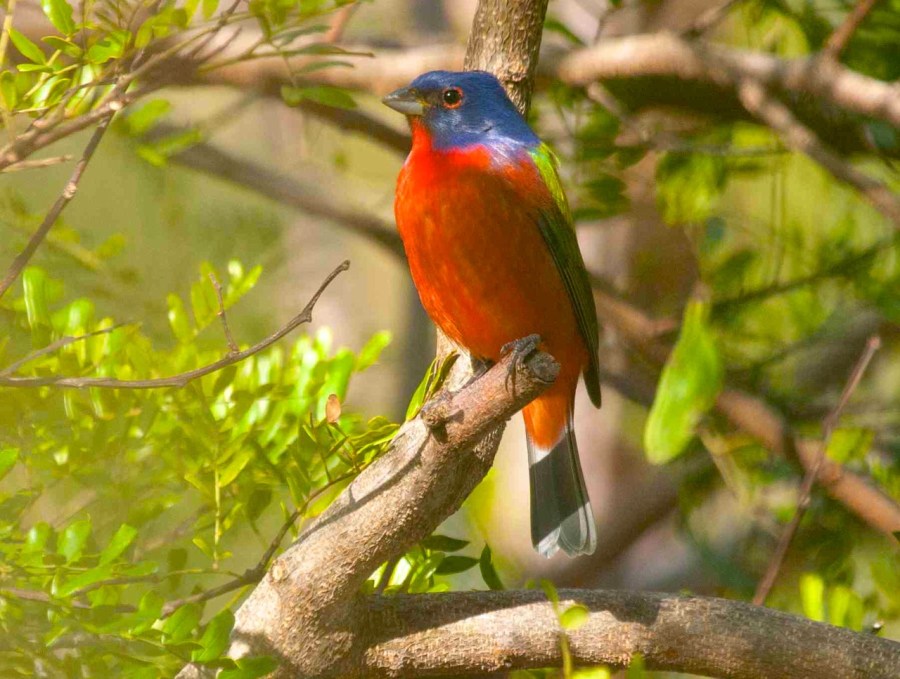
It’s hard to imagine a more Christmasy little bird than the Painted Bunting. Bright blue, red, green primary colours make for a spectacular small bird to grace any garden or feeder. There are other bunting species and close relations – e.g. grosbeaks – on Abaco. A common factor is the little fat beak and voracious seed greed…

                                                           painted-buntingimagespainted-bunting copy

Feeders at the Delphi Club. The first is of a female & a male PABU feeding together (RH). The second is a male PABU with a pair of black-faced grassquits (Sandy Walker)Painted Buntings (M & F), Delphi, Abaco (Keith Salvesen)Painted Bunting, Delphi, Abaco (Sandy Walker)

                                                        painted-buntingimagespainted-bunting copy

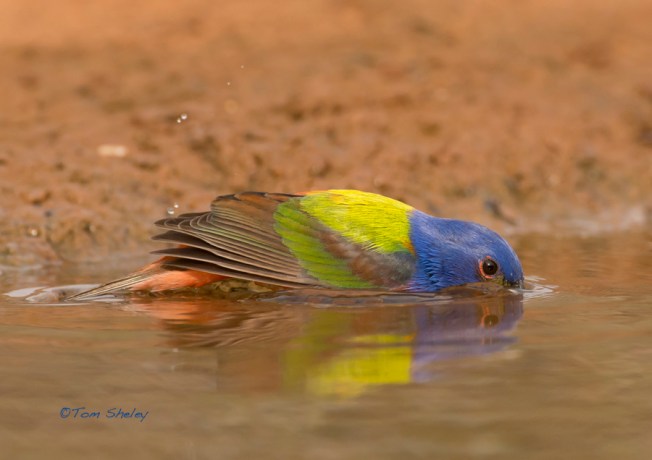
The next two wonderful photos are by Tom Sheley, a major photographic contributor to THE BIRDS OF ABACO. They were taken in Texas, not on Abaco, but I include them because of Tom’s strong connection with the birdlife of Abaco; and because on any view they are fantastic shots…
Painted Bunting reflection LR.Laguna Seca.South TX. 4.16.13.Tom SheleyPainted Bunting dip reflection LR.Laguna Seca.South TX. 4.16.13.Tom Sheley

Credits: Tom Sheley (1, 7, 8), Erik Gauger (2), Tara Lavallee (3, 4), Keith Salvesen (5) Sandy Walker (6); Birdorable Cartoons

imagesimagesimagesimages

Unknown's avatar

“THE DELPHI CLUB GUIDE TO THE BIRDS OF ABACO”


Abaco Parrot, Abaco Bahamas (Peter Mantle)

“THE DELPHI CLUB GUIDE TO THE BIRDS OF ABACO”

A new season – the seventh – of the Delphi Club is now underway. There are fish to be caught, poolside inactivities to relish, chef-prepared meals to eat and a capacious wine cellar to be explored. To which, add birds to be spotted. Delphi has turned out to be a superb place for birding – not a feature given prominence in the original prospectus… The Club’s remoteness and its rich mix of pine forest, coppice, gardens and a pristine one-mile beach ensure the prefect protected habitat for a vast number of bird species common, uncommon and rare.

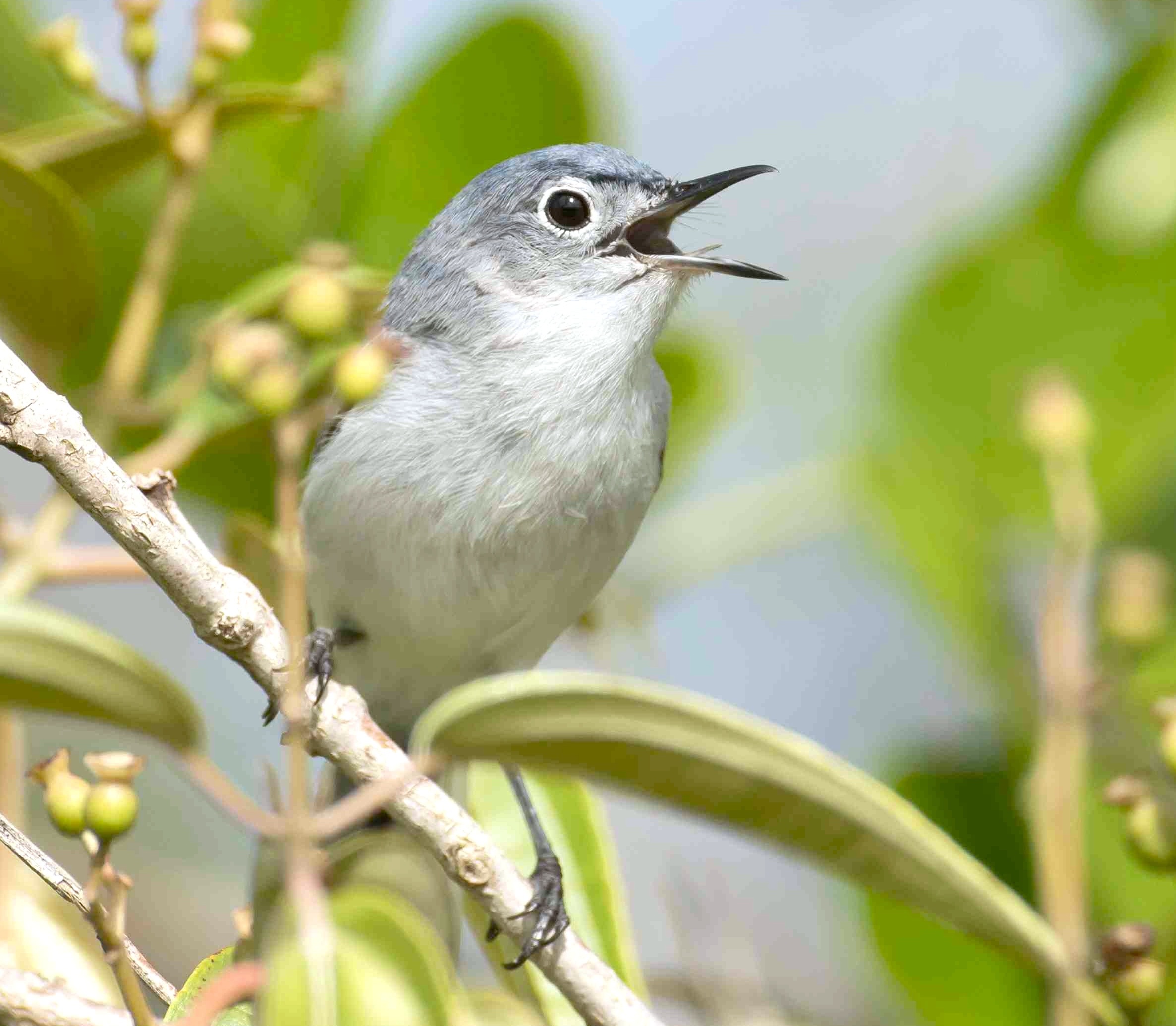
Blue-gray Gnatcatcher vocalizing.Abaco Bahamas.6.13.Tom Sheley a

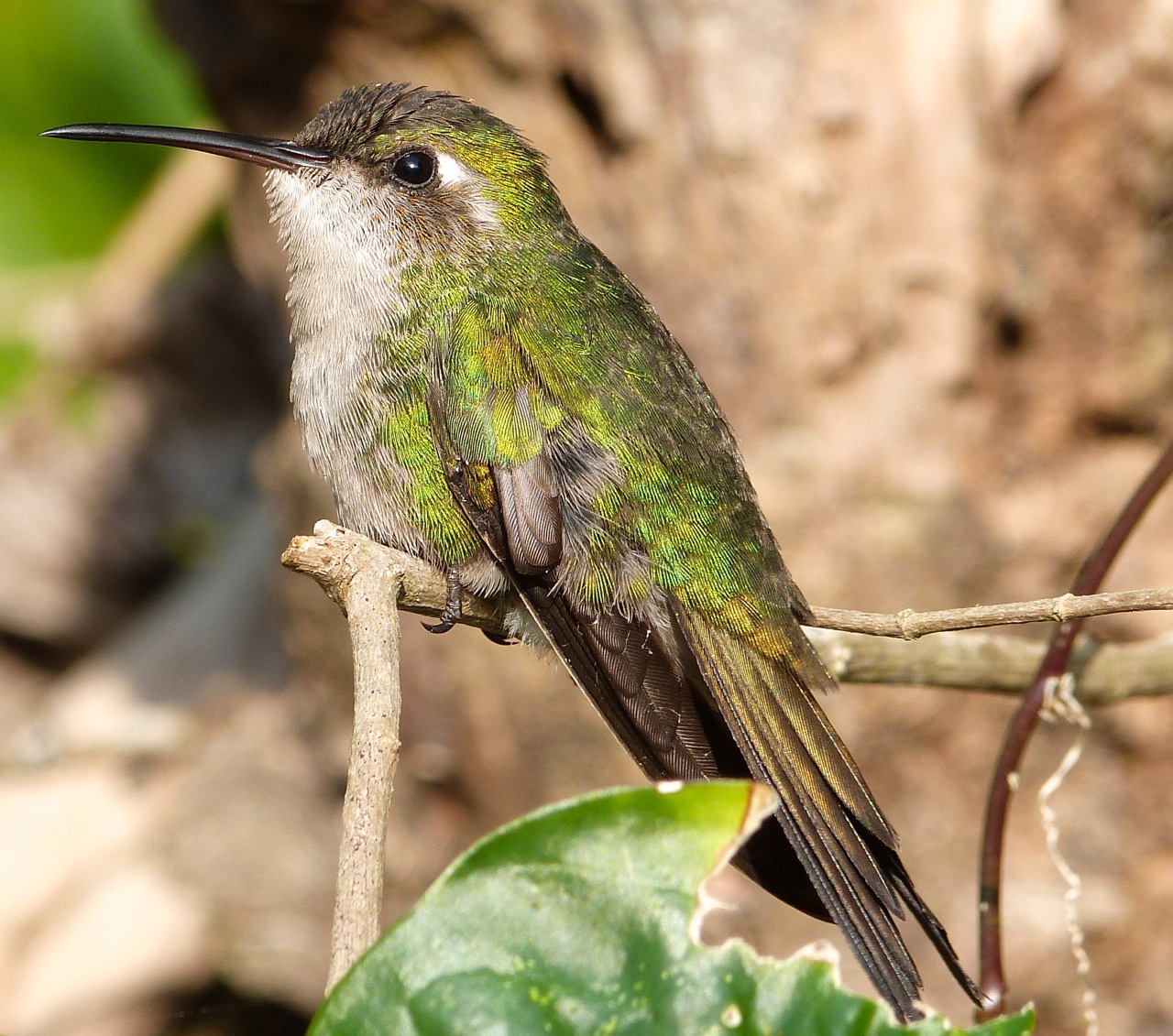
Eighteen months ago, “The Delphi Club Guide to THE BIRDS OF ABACOwas published. The originator of the idea – as with the entire Delphi project – was of course Peter Mantle, the publisher. The book took 16 months from conception to the arrival of three pallets of printed books on the dockside in Marsh Harbour, having travelled by a tortuous route from specialist printers in Italy. Cuban Emerald Hummingbird, Delphi, Abaco (Keith Salvesen)

The book was launched at the Delphi Club in March 2014, to generous enthusiasm and support both on Abaco and beyond. 75% of the edition has been sold already. In addition, Abaco schools, libraries and wildlife organisations have been given copies for educational purposes. A percentage of profits is to be given to local wildlife causes. We couldn’t be more pleased with the response to this lavish book, a unique publication in the Bahamas. 

Delphi Club Guide to the Birds of Abaco (Jacket)

The incremental growth of social media is rapid. Blogs gain readers. Facebook and Twitter pages gain new friends and followers. The start of this new Delphi season is therefore a good moment to post a reminder about the book, illustrated with a few of the wonderful bird species featured. And… ahem… there are only 57 more ‘sleeps’ until Christmas. 

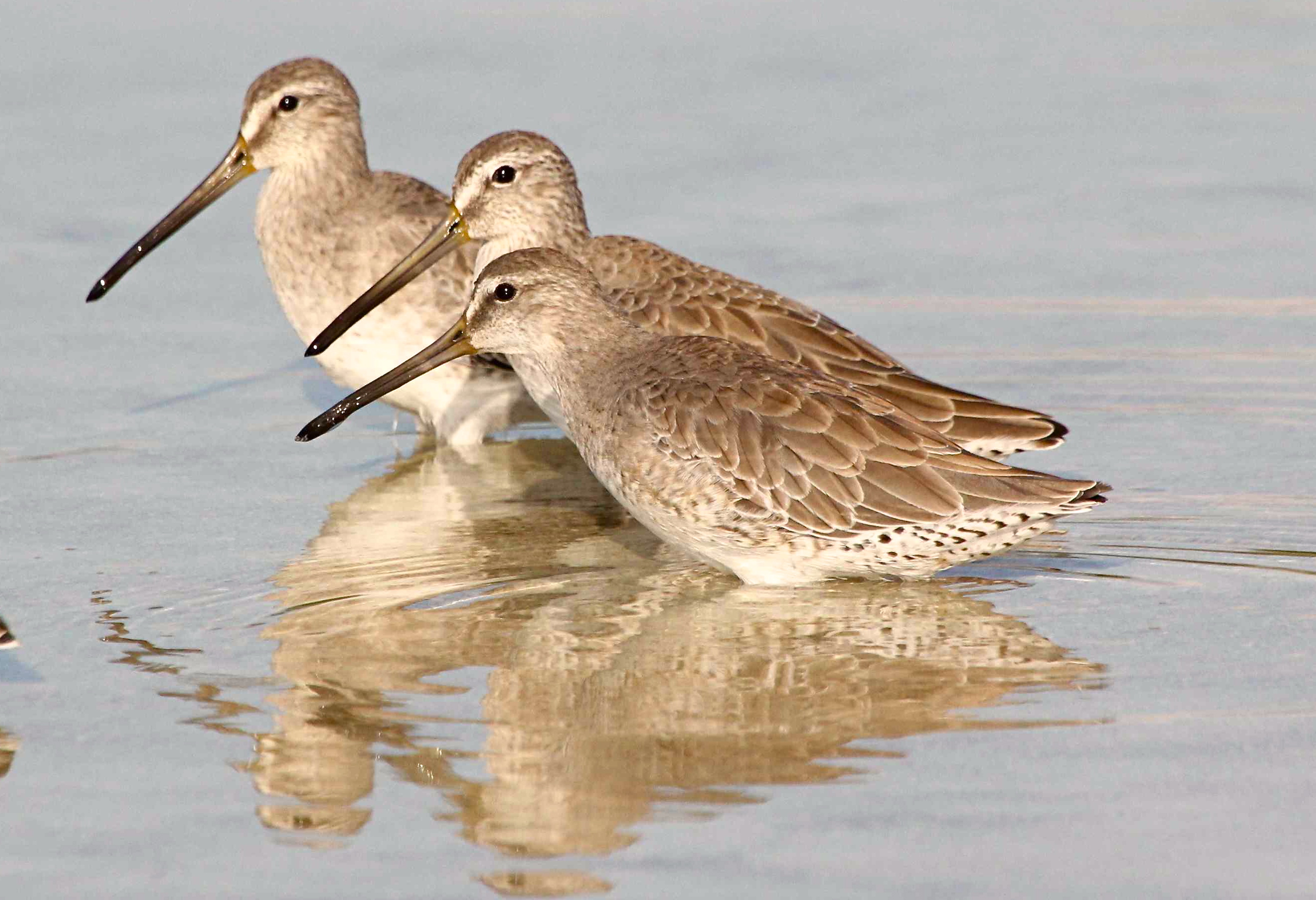
Short-billed Dowitcher, Abaco (Bruce Hallett)

The Guide showcases the rich and varied bird life of Abaco, Bahamas and features both resident and migratory species including rarities and unusual sightings. The main features are as follows:

  • 272 pages with more than 350 photographs
  • 163 species shown in vivid colour – nearly two-thirds of all the bird species ever recorded for Abaco
  • Every single photograph was taken on Abaco or in Abaco waters
  • All birds are shown in their natural surroundings – no feeders or trails of seed were used
  • Several birds featured are the first ones ever recorded for Abaco or even for the entire Bahamas

Clapper Rail Abaco Bahamas Tom Sheley

  • A total of 30 photographers, both experienced and amateur, contributed to the project
  • The book has had the generous support of many well-known names of Abaco and Bahamas birding
  • A complete checklist of every bird recorded for Abaco since 1950 up to the date of publication was compiled specially for the book.
  • A neat code was devised to show at a glance when you may see a particular bird, and the likelihood of doing so. Birds found at Delphi are also marked.
  • Specially commissioned cartographer’s Map of Abaco showing places named in the book

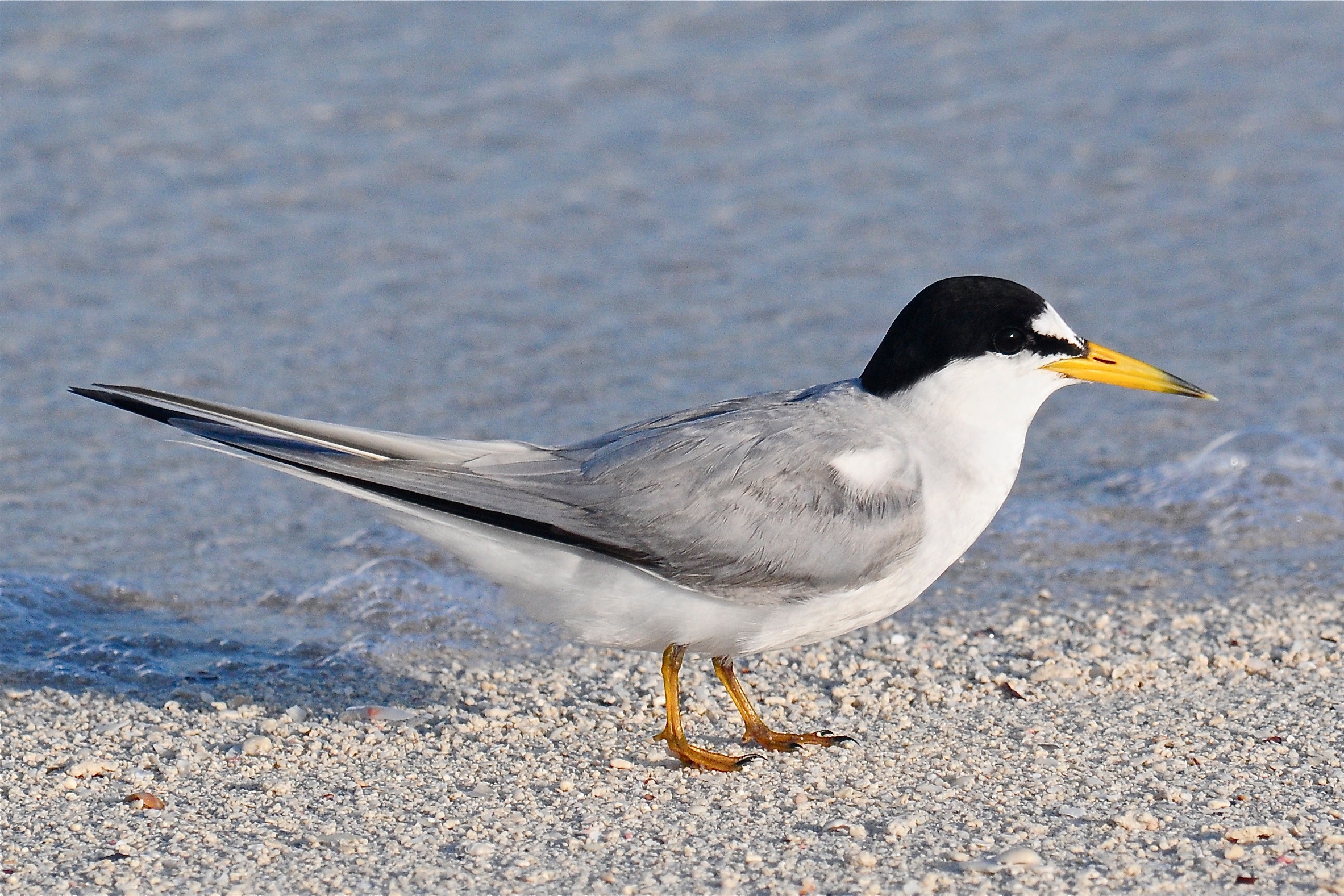
Least Tern_ACH3672 copy

  • Informative captions intentionally depart from the standard field guide approach…
  • …as does the listing of the birds in alphabetical rather than scientific order
  • Say goodbye to ’37 warbler species on consecutive pages’ misery
  • Say hello to astonishing and unexpected juxtapositions of species

Abaco_Bahama Yellowthroat_Gerlinde Taurer copy

  • The book was printed in Florence, Italy by specialist printers on Grade-1 quality paper
  • Printing took pairs of printers working in 6 hour shifts 33 hours over 3 days to complete
  • The project manager and the author personally oversaw the printing

Smooth-billed Ani pair GT

  • The book is dedicated to the wildlife organisations of Abaco
  • A percentage of the proceeds of sale will be donated for the support of local wildlife organisations
  • A copy of the book has been presented to every school and library on Abaco

Piping Plover BH IMG_1919

The book is published by the Delphi Club (contact details below). The project was managed by a publishing specialist in art books. The author is the wildlife blogger more widely known on Abaco and (possibly) beyond as ‘Rolling Harbour’. Oh! So that would in fact be Mrs Harbour and myself. Well well! What are the chances? Painted Bunting male.Abaco Bahamas.Tom Sheley

The Delphi Club at Rolling Harbour
PO Box AB-20006, Marsh Harbour, Abaco, Bahamas
Tel: +1-242-366-2222
General Manager – Max Woolnough: +1-242-577-1698
delphi.bahamas@gmail.com

Or email rollingharbour.delphi@gmail.com with any queries or commentsAmerican Oystercatchers BH IMG_2000 copy 2

Images by Tom Sheley,  Bruce Hallett, Gerlinde Taurer, Tony Hepburn, Peter Mantle, RH

Cuban (Crescent-eyed) Pewee, Delphi, Abaco (Keith Salvesen)"Birds of Abaco" flyer

Unknown's avatar

“CRABACO?”: CRABBING ON ABACO, BAHAMAS


Ghost Crab in surf.Delphi Club.Abaco Bahamas.Tom Sheley

“CRABACO?”: CRABBING ON ABACO, BAHAMAS

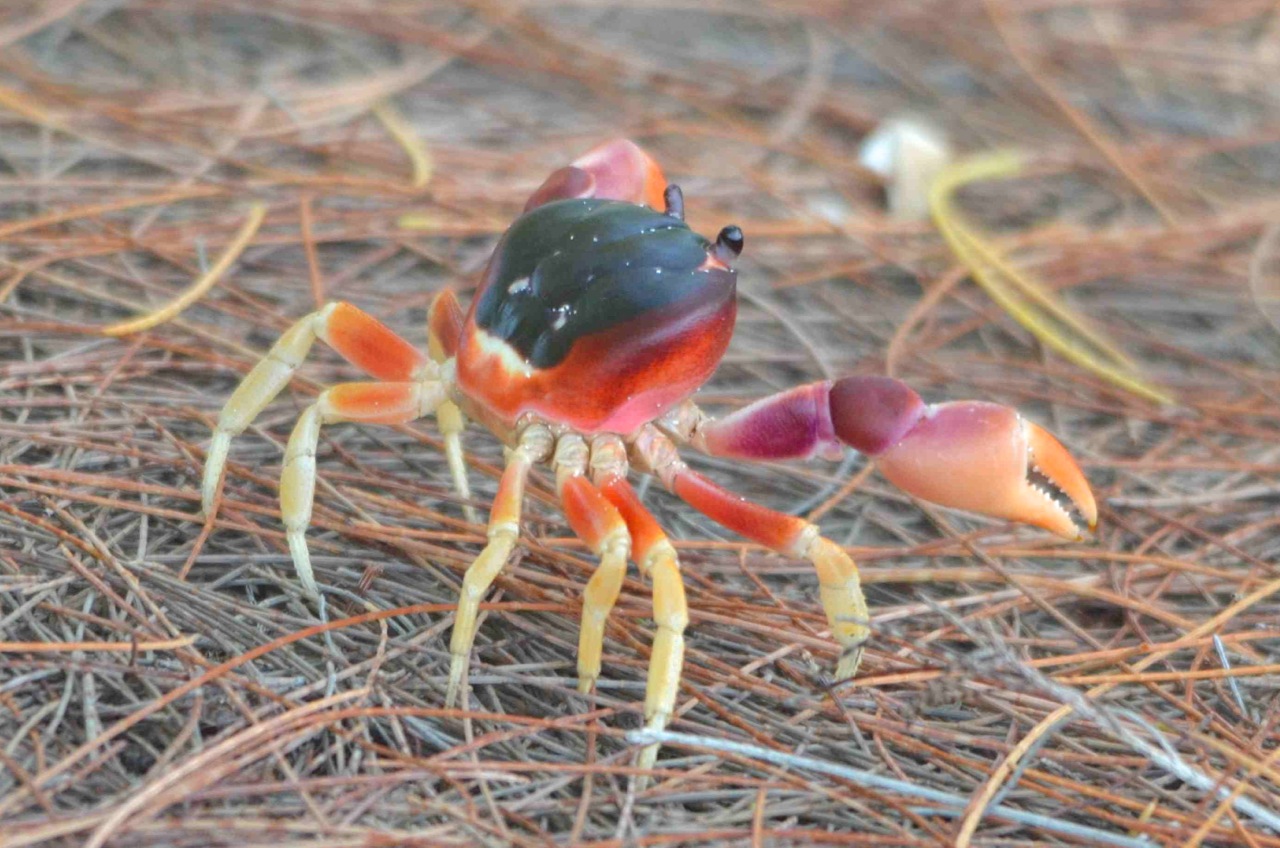
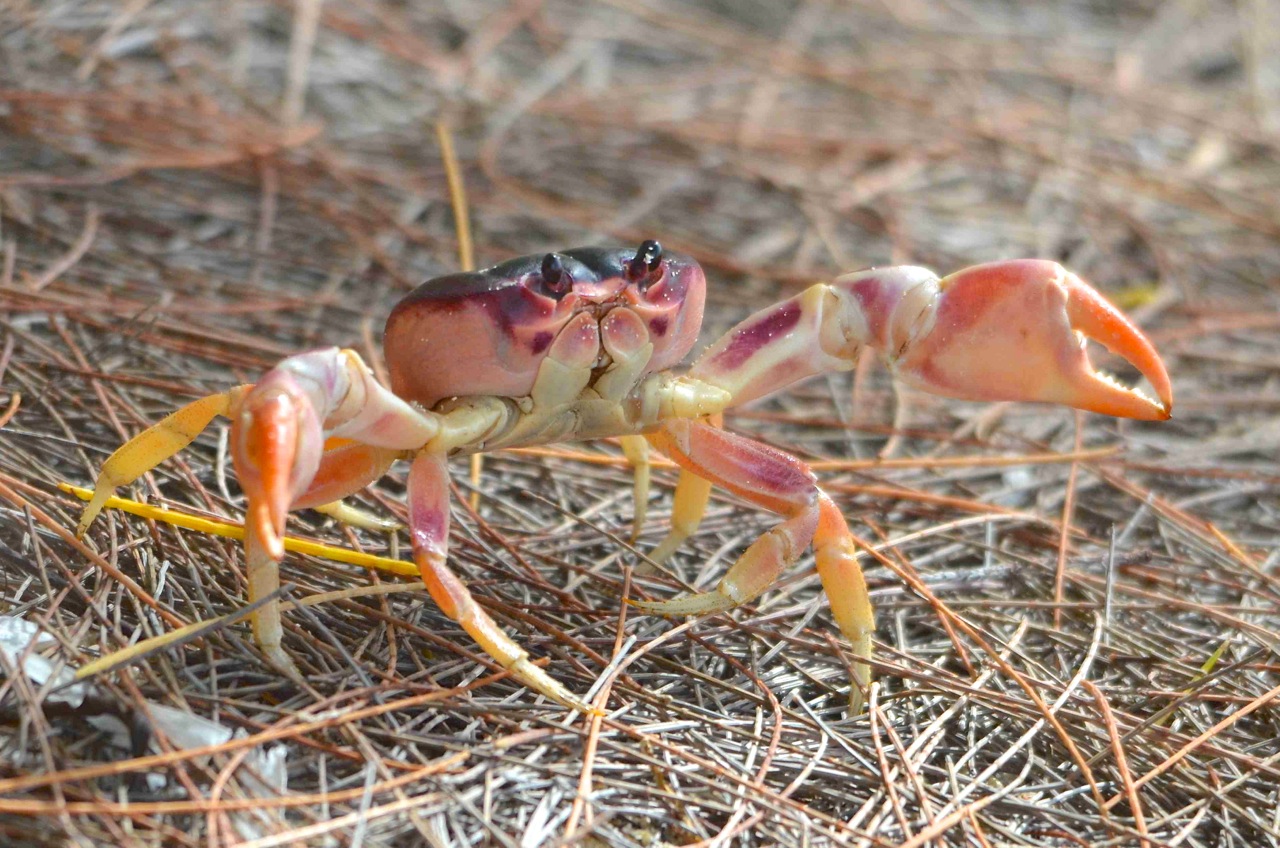
It’s been a while since I was in a crabby mood, but autumn is here and there’s a sharp nip in the early morning air… What better time to visit a selection of the many crab species found on Abaco. 

GHOST CRAB

I thought I had some good photos of these cute little guys with their ‘Carson the Downton Abbey Butler’ white gloves. However, Tom Sheley (header and below) has perfectly caught the  tide-hanging that they enjoy, sometimes disappearing completely or perhaps leaving just their twin periscopes showing.Ghost Crabin surf.Delphi Club.Abaco bahamas.Tom Sheley

HERMIT CRAB

Many people’s favourite small crab, with their endearing house-moving habits as they grow. Excellent for racing, too (see HERE). Here’s one taking its mobile home up a tree; and another tucked safely into a nerite [Capt Rick Guest amends] Magpie Shell, Cittarium pica, (used to be Livona pica), the living animal of which is the 3rd most consumed animal behind Lobster & Conch in the Caribbean. They are Littoral around Shorelines and are also used as bait.Hermit Tree Crab.Abaco Bahamas.6.13.Tom Sheley copy Hermit Crab in a nerite shell, Delphi Abaco (Keith Salvesen)

BLACK-BACKED LAND CRAB Black-backed land crab, Abaco 1 (Charles Skinner) Black-backed Land Crab, Abaco 2 (Charles Skinner)

Faithful guardians of my rod (there are 2 there)!Black-backed Land Crab, Delphi, Abaco (Keith Salvesen)

LAND CRAB Land Crab, Bahamas Palm Shores Abaco (Keith Salvesen)Land Crab, Bahamas Palm Shores Abaco 2 (Keith Salvesen)

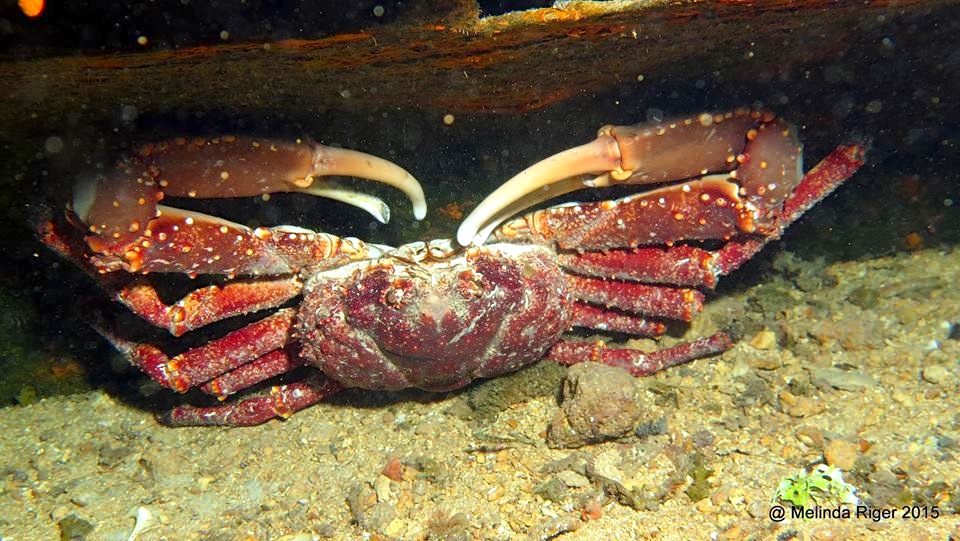
STONE CRABStone Crab ©Melinda Riger @ G B Scuba

ARROW CRAB Arrow Crab ©Melinda Riger @ GB Scuba copy

CLINGING CRAB Clinging Crab © Melinda Riger @ G B ScubaClinging Crab ©Melinda Riger @ G B Scuba copy

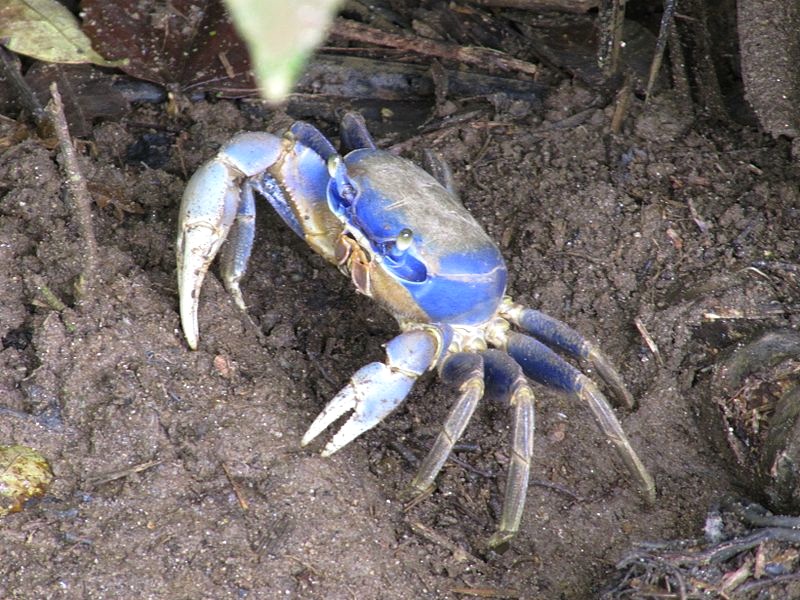
BLUE CRAB Blue crab (Atlantic) - Leoadec Wiki

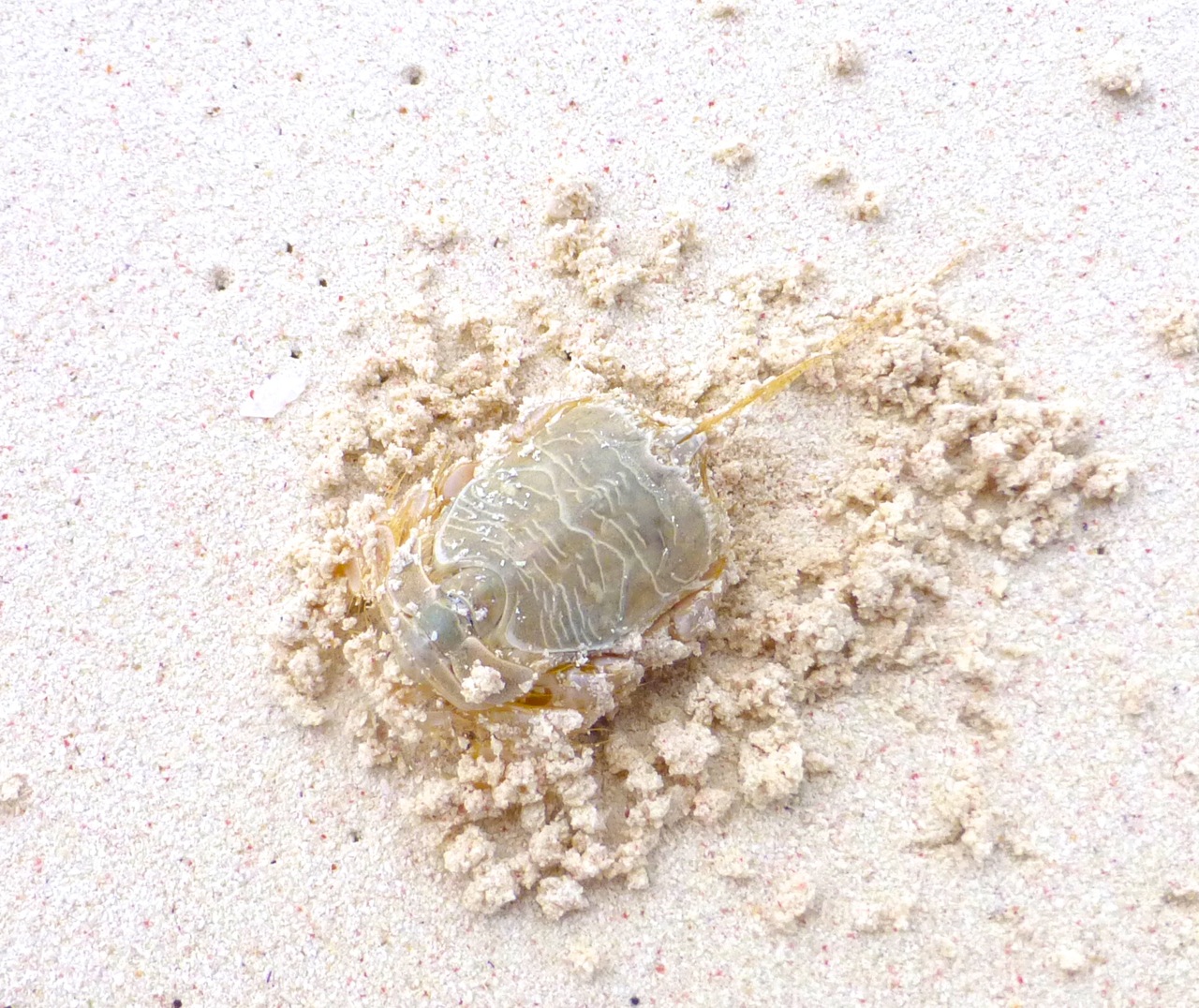
HORSESHOE CRAB (LIMULUS)Horseshoe Crab (Limulus), Delphi Beach, Abaco Bahamas (Keith Salvesen)


Credits: Tom Sheley (1, 2, 3); Keith Salvesen (4,7,8,9,15); Charlie Skinner (5,6); Melinda Riger (10,11,12,13); Leodec (14)

Unknown's avatar

A RARE SPOONBILL VISITS GILPIN POND, ABACO


Roseate Spoonbill, Gilpin Pond, Abaco (Keith Kemp)4

A RARE SPOONBILL VISITS GILPIN POND, ABACO

In past posts I have mentioned what an excellent birding place Gilpin Point has become. There’s the large pond; and right beside it, dunes, the other side of which is a fine secluded beach and the ocean. The place is a magnet for birds of all shapes and sizes, from brown pelicans down to the tiny endemic Bahama woodstars. There are water birds, wading birds, shorebirds and coppice birds. It has become a place where Abaco parrots regularly congregate. You can reach the Gilpin FB page HERE.

A while back, there was a rare visitor, a Flamingo that stayed a few months then disappeared again. It was in some ways a sad reminder of past flamingo glory days, when they were commonly found on Abaco. Now they are confined to Inagua apart from the occasional vagrant. For more on the the topic, with wonderful photos by Melissa Maura of the breeding season on Inagua, click HERE. Another rare vagrant – formerly quite plentiful on Abaco – was recently found at Gilpin by Keith Kemp, who skilfully managed to get photos of it from some distance away: a Roseate Spoonbill.

Roseate Spoonbill, Gilpin Pond, Abaco (Keith Kemp)2

I have featured spoonbills before in a post IN THE PINK, but the photos were taken on New Providence by Woody Bracey. I had no Abaco spoonbill photos. To be fair, we did once see one while we were bonefishing far out on the Marls. It was on the edge of the mangroves a good distance away, and the pale pink tinge caught my eye. My photo with an iPhone 4 (the one with the risibly cr@p camera – remember?) was so utterly pathetic that I dumped it (the photo, I mean, but the phone soon followed). But we knew what we had seen, and that was enough.

roseate-spoonbill                roseate-spoonbill               roseate-spoonbill

STOP PRESS 1 I should add that a friended visited the pond after the side-effects of Hurricane Joaquin had receded, and the spoonbill had gone. So the spoonbill alone would not make the journey worthwhile!

STOP PRESS 2 A check of eBird reveals that a handful of spoonbills have been reported in Northern Bahamas this year, about 6 in all. Almost none before that. I have the impression that birding intensity in The Bahamas, coupled with the ease of uploading reports to eBird, will increasingly make a difference to the incidence of sightings of uncommon and rare species, cf the recent WHIMBRELS of Grand Bahama.

Spoonbill, Gilpin Pond, Abaco (Keith Kemp)3

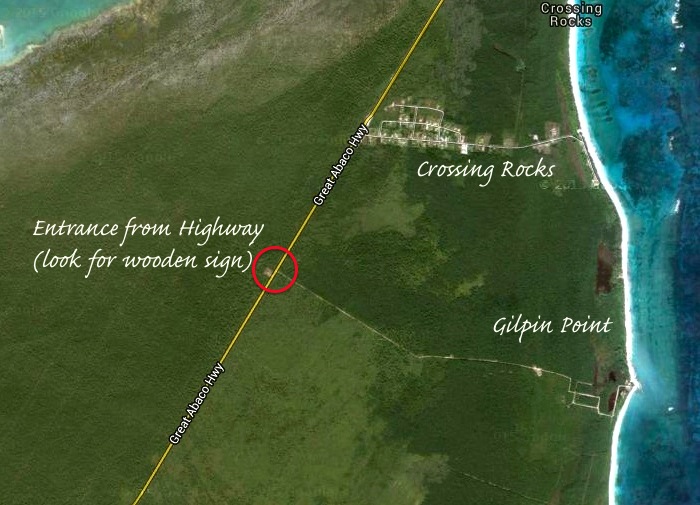
GILPIN POINT LOCATION

Gilpin Point is just south of Crossing Rocks. The brackish pond – sometimes an alarming reddish colour that I assume is algal – is just inland from the shoreline and provides a wonderful haven for birds. It’s a long mile from the highway. There is no vehicle nor even human traffic apart from occasional birders and walkers. Please note that the drive and the property are private. However Perry Maillis is always welcoming to tidy birders who (as I have written elsewhere) bring only enthusiasm and take only photographs (though a picnic on the beach is worth considering. And maybe a swim…). 

Helpful location mapsGilpin Map 1 Gilpin Map 2 Gilpin Map 3

WHAT SPECIES MIGHT BE FOUND AT GILPIN?

A brief list includes regular visits from parrots. It’s the only place we have found a furtive little sora skulking in the reedy margins. It’s a reliable spot for herons and egrets of every kind, white-cheeked (Bahama) pintails by the score, black-necked stilts and lesser yellowlegs. Occasionally a northern pintail, ruddy duck or merganser. Turkey vultures. Limpkins. We’ve seen belted kingfishers, Bahama woodstars, cuban emeralds, american kestrels, Bahama swallows, doves, pigeons, western spindalis and many more coppice birds besides. One flamingo. One spoonbill. Pelicans have been seen on the rocks on the beach. Shorebirds include turnstones, sundry plovers & sandpipers, and oystercatchers. You may well see tropicbirds and frigate birds off-shore, and assorted gulls and terns. I can’t personally be more species-specific  because I have never ‘shorebirded’ properly there, but I have noticed an impressive mix…

When we launched THE BIRDS OF ABACO at the Delphi Club, we were delighted that Pericles was able to come to the party. He took a few photos and I’m sure he won’t mind my including a small gallery to end with, featuring a couple of the Gilpin entries in his signed copy.

10153160_10152104925423929_44675888_n 1926631_10152104925178929_80294246_n11856_10152104921903929_1879699722_n 1525102_10152104925648929_1614125758_n

Bahamas birding nobility: Tony White with Caroline Stahala; Woody Bracey & Bruce Hallett
1911624_10152104926303929_1596185906_n

Credits: Keith Kemp for the great spoonbill photos; Perry for the Delphi photos

Unknown's avatar

FEEDER BIRDS AT THE DELPHI CLUB, ABACO


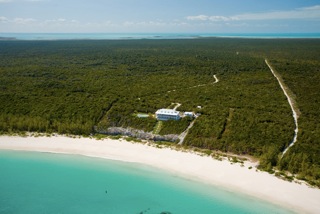
Delphi Club, Rolling Harbour, Abaco aerial

FEEDER BIRDS AT THE DELPHI CLUB, ABACO

The compilation of The Delphi Club Guide to THE BIRDS OF ABACO involved making a few rules and sticking to them. For example, the avian images in the book – and there are a great many –  had to be of birds actually photographed on Abaco or in Abaco waters. Gorgeous pictures from Grand Bahama or New Providence were ruthlessly excluded, however painful it was to do. Some wonderful spoonbill photos taken in Nassau stayed in the ‘Not Use’ folder. The temptation to slip in an non-Abaco whimbrel to fill a whimbrel-shaped space among the shorebirds had to be resisted – even though at the time the last recorded sighting of one on Abaco (no photo) was in 2000…

Bananaquit 2, Delphi, Abaco (Keith Salvesen)

Another important restriction was the stipulation that we would only use birds that had been photographed in their natural surroundings, defined as being a place where a particular species might naturally be found. Coppice and shoreline, obviously, but this included utility wires, posts and docks etc for species that habitually use them to perch on or hunt from. However, the rule meant a complete embargo on feeder photos, however winsome a hummingbird might look as it sips sugar water. We extended the principle to include a ban on luring birds into camera-shot with seed or corn trails; and similar ruses beyond the simple whistles and pishes that anyone might use to tempt a bird out of deep cover.

Cuban Emerald coming in to land… and feedingCuban Emerald, Delphi, Abaco (Peter Mantle) 1 Cuban Emerald, Delphi, Abaco (Peter Mantle) 2

The Delphi club is the perfect location for an enviably varied number of species. Its remoteness down a one-mile drive from the Highway, with pine forest giving way to luxuriant coppice, ensures minimal disturbance for the birds including a number of rarer species.  Delphi Club Rolling Harbour Abaco Aerial view

The one-mile white sand curve of the beach sees many shorebirds and seabirds in all seasons. The gardens attract both the usual suspects and less common birds. The building, too, has its resident West Indian Woodpeckers in two nesting boxes under the eaves, thoughtfully provided to discourage the Club’s woodwork from exploratory drilling.

Mr and Mrs Black-faced GrassquitBlack-faced Grassquit (m) Delphi, Abaco (Keith Salvesen) Black-faced Grassquit (f) Delphi, Abaco (Keith Salvesen)

There are a number of seed and sugar water feeders around the place, and bird baths too. It’s a long time since I featured a collection of ‘tame’ birds. This post shows a few of the species that have made Delphi their home.

Mr and Mrs Greater Antillean BullfinchGreater Antillean Bullfinch (m), Delphi, Abaco (Keith Salvesen)Great Antillean Bullfinch. Delphi, Abaco (Keith Salvesen)

Mr and Mrs Painted BuntingPainted Bunting, Delphi, Abaco (Keith Salvesen)

Bananaquit: the curved beak makes it easy to use the hummer feeder (see above)Bananaquit (f) Delphi, Abaco (Keith Salvesen)

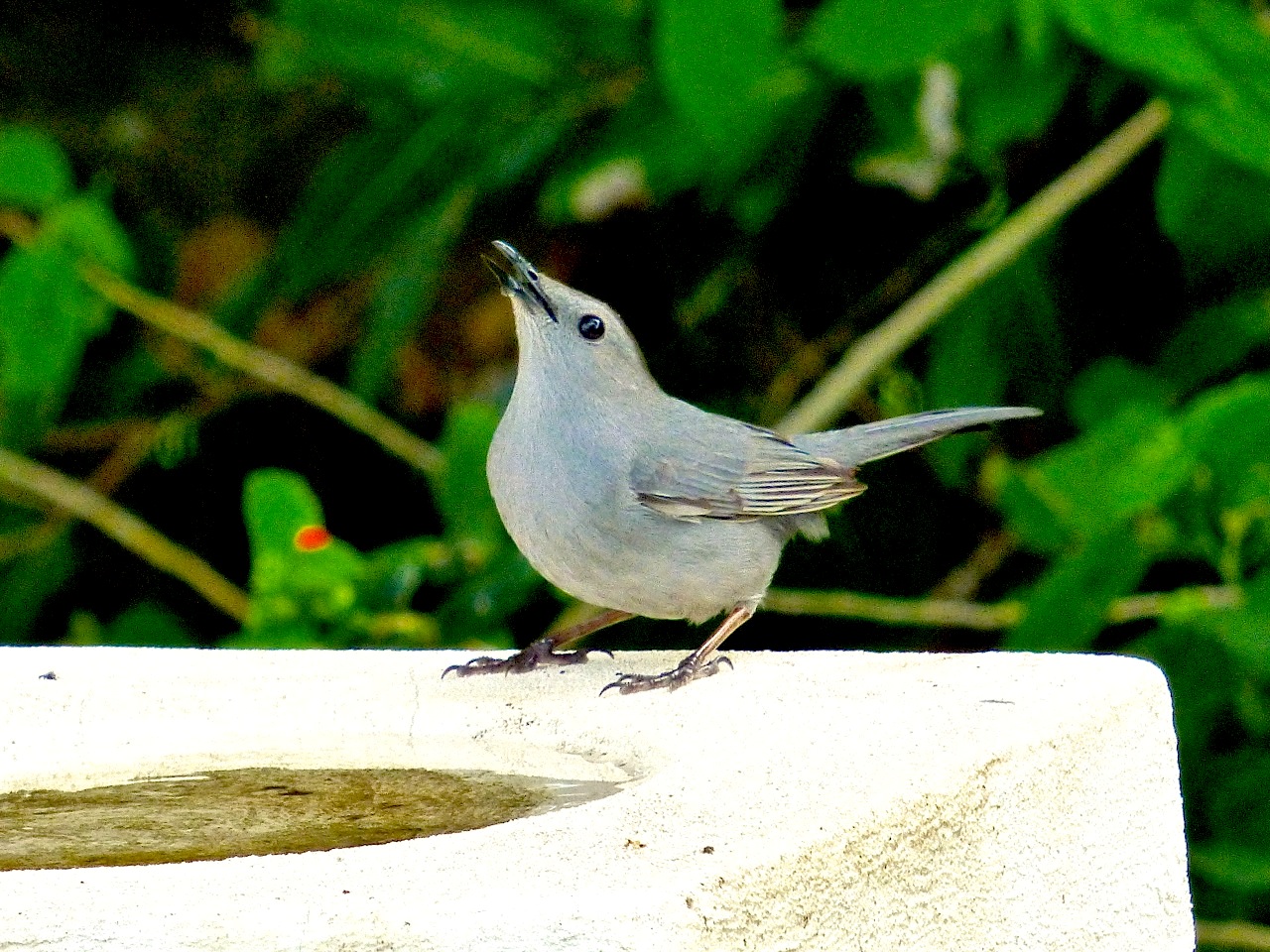
A Gray Catbird takes a drink… and a bathGray Catbird, Delphi, Abaco (Keith Salvesen)Gray Catbird, Delphi, Abaco (Keith Salvesen)

Adaptive behaviour from a W I Woodpecker – that long tongue is perfect for the jobWest Indian Woodpecker, Delphi, Abaco (Keith Salvesen)

The turkey vulture takes priority over all smaller birds…Turkey Vulture, Delphi, Abaco (Keith Salvesen)

A red-legged thrush enjoys picking up the seed shrapnel off the ground…Red-legged Thrush Abaco 7

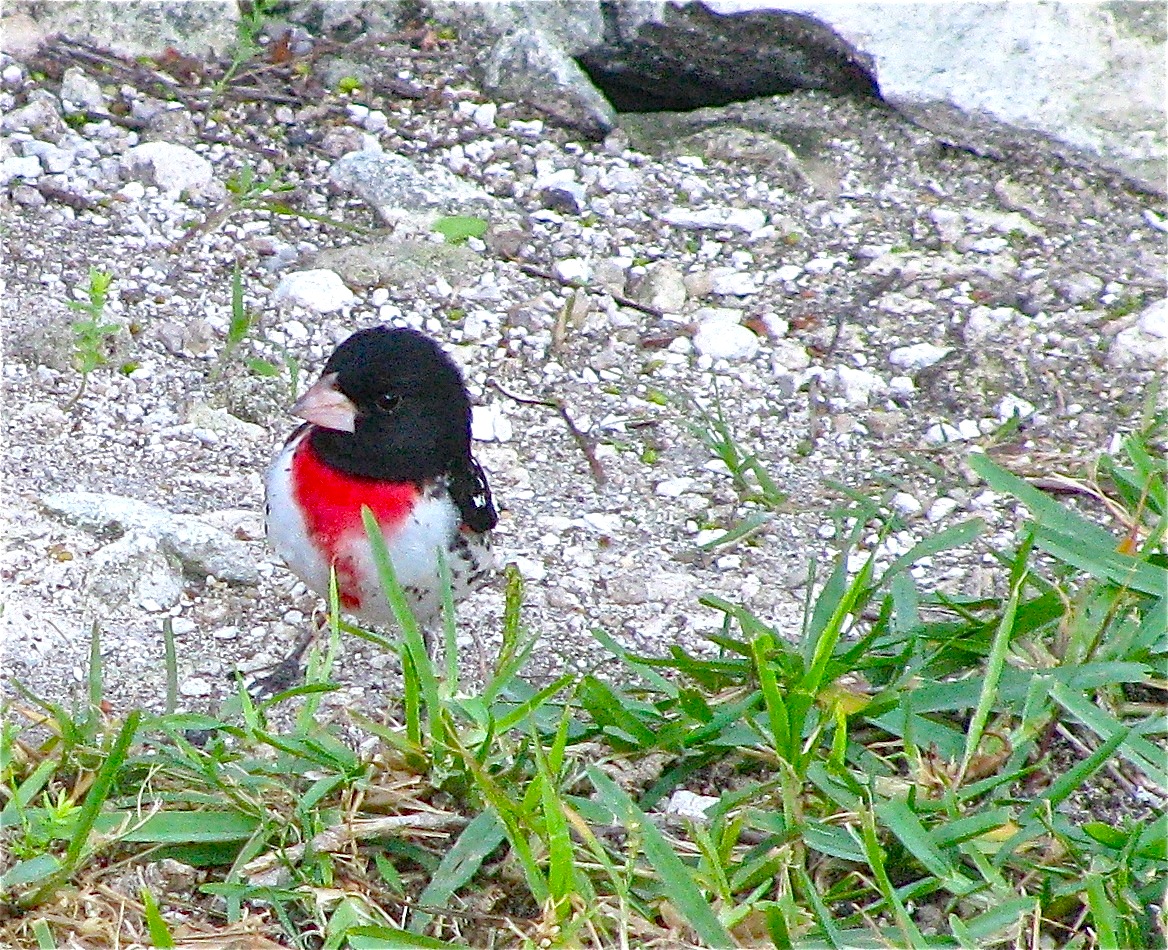
As do rose-breasted grosbeaks and indigo buntingsIndigo Bunting & Grosbeaks, Delphi, Abaco ©C StahalaRose-breasted Grosbeak

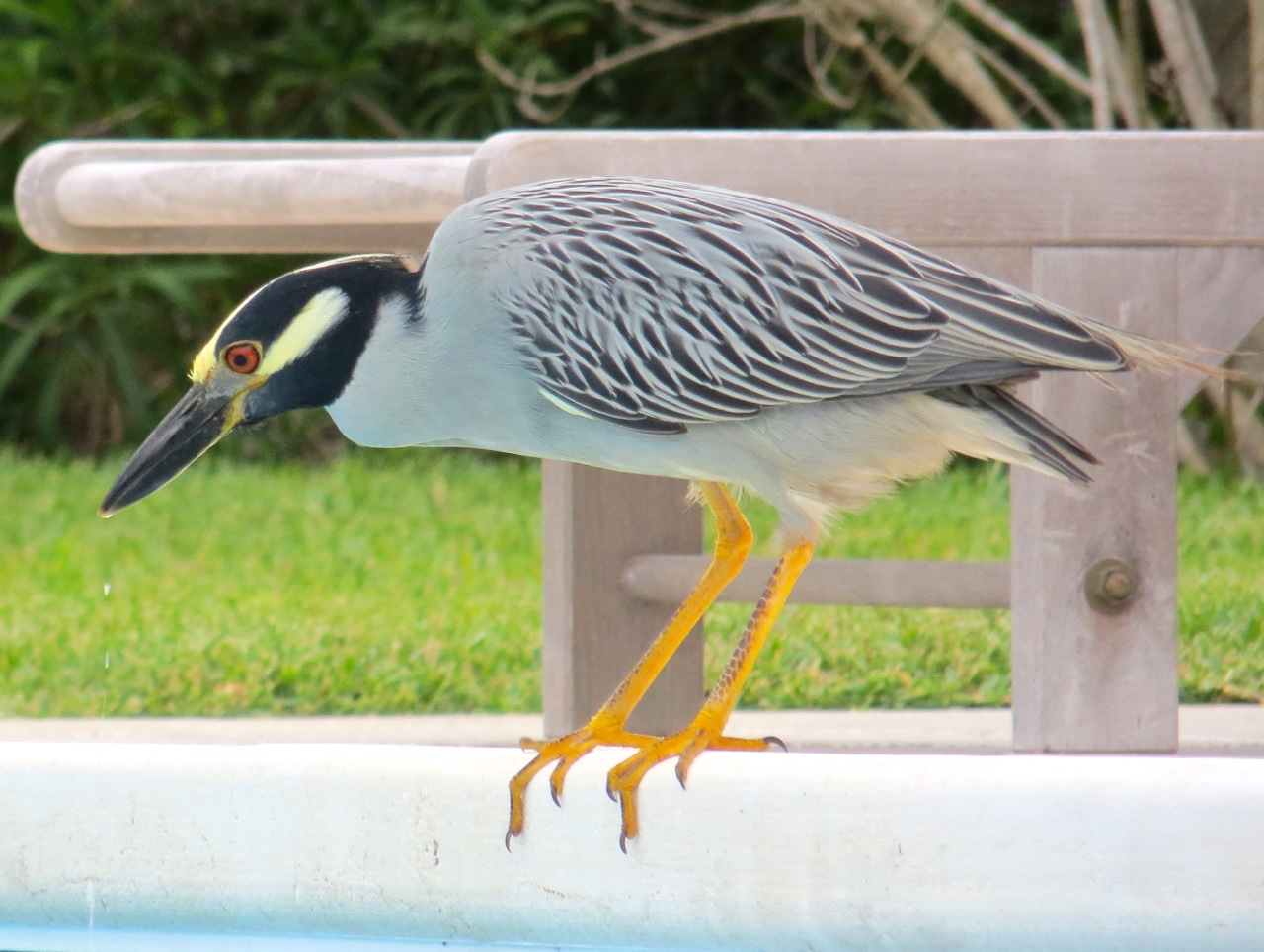
Meanwhile, a yellow-crowned night heron takes a drink from the poolYellow-crowned Night Heron, Abaco 9

Credits: all photos RH except aerial shot of Delphi, Peter Brown; the hummers, Peter Mantle; and the buntings / grosbeaks, PM and Caroline Stahala…

dcbg2ba-jacket-grab-for-pm-v2-copy

Unknown's avatar

ABACO’S WINTER WARBLERS: ARRIVING ANY MOMENT!


Yellow-throated Warbler, Abaco - Bruce Hallett

Yellow-throated Warbler, Abaco

ABACO’S WINTER WARBLERS: ARRIVING ANY MOMENT!

To celebrate the forthcoming influx of the ‘confusing fall warblers’ of the winter season, here is a reminder of my guide to the 37 warbler species found on Abaco, of which only 5 are permanent residents. The remainder are either winter residents of variable scarcity; or transients somewhat randomly passing through. As ace birdman Woody Bracey has rightly commented on the guide, “One note of caution to new birders. Most transients are seen in Abaco in the fall. They are not in bright breeding plumage at this time. That’s why they’re called ‘confusing fall warblers’. So don’t expect all the birds you see to look exactly like the photos. Females and juveniles are generally duller and may look very different from Spring males”.

Last season, Charmaine Albury saw 22 of the possible warbler species on Man-o-War Cay, a remarkably good proportion for a small island (I’d be interested if anyone can top that in one location).  Add prolific shorebirds including piping plovers to the mix and it looks as though MoW is fast becoming a reliable hotspot for birding. Charmaine’s species were:  Yellow-throated, Tennessee, Common Yellowthroat, Yellow, Pine, Bahama, Ovenbird, Worm Eating, Northern Waterthrush, Black and White, Cape May, Redstart, Northern Parula, Black-throated Blue, Palm, Yellow-rumped, Prairie, Hooded, Prothonotary, Orange-crowned, Blackburnian, BlackPoll.

AN ILLUSTRATED GUIDE TO ABACO’S 37 WARBLER SPECIES

Until a couple of years ago, I lazily believed all of the warblers were (a) near identical and (b) yellow, differing only in their extent of yellowness. Not so. I know better now. The seasonal migration prompted me to devise a general guide to all the various warblers, so that the great diversity can be appreciated. The photos that follow show an example of each warbler, where possible (1) male and (2) taken on Abaco. Where I had no Abaco images – especially with the transients – I have used other mainstream birding resources and Wiki. All due credits at the foot of the post.

Abaco has 37 warbler species recorded for the main island and cays. They fall into 3 categories: 5 permanent residents (PR) that breed on Abaco (B), of which two are endemics; 21 winter residents (WR) ranging from ‘everyday’ species to rarities such as the Kirtland’s Warbler; and 11 transients, most of which you will be lucky to encounter. The codes given for each bird show the residence status and also the likelihood of seeing each species in its season, rated from 1 (very likely) to 5 (extreme rarities, maybe only recorded once or twice).

Yellow Warbler at sunrise.Abaco Bahamas.6.13.Tom Sheley copy copy

PERMANENT RESIDENTS

BAHAMA YELLOWTHROAT Geothlypis rostrata PR B 1  ENDEMIC

Bahama Yellowthroat, Abaco - Tom Reed

YELLOW WARBLER Setophaga petechia PR B 1 

Yellow Warbler, Abaco Bahamas.6.13.Tom Sheley

OLIVE-CAPPED WARBLER Setophaga pityophila PR B 1 

Olive-capped Warbler, Abaco - Bruce Hallett

PINE WARBLER Setophaga pinus PR B 1 

Pine Warbler, Abaco - Tom Reed

BAHAMA WARBLER Setophaga flavescens PR B 1 ENDEMIC

Bahama Warbler, Abaco - Alex Hughes

Yellow Warbler at sunrise.Abaco Bahamas.6.13.Tom Sheley copy copy

WINTER RESIDENTS  (COMMON)

OVENBIRD Seiurus aurocapilla WR 1 

OVENBIRD_Bahamas-Great Abaco_6639_Ovenbird_Gerlinde Taurer 2

WORM-EATING WARBLER Helmitheros vermivorum WR 2 

Worm-eating Warbler.Bahama Palm Shores.Abaco Bahamas.Tom Sheley

NORTHERN WATERTHRUSH  Parkesia noveboracensis WR 1 

BAHAMAS - Northern Waterthrush - Oct 2010 Becky Marvil

BLACK-AND-WHITE WARBLER Mniotilta varia WR 2 

Black & White Warbler, Abaco - Bruce Hallett

COMMON YELLOWTHROAT Geothlypis trichas WR 1 

Common Yellowthroat.Gilpin Pond.Abaco Bahamas.Tom Sheley copy

AMERICAN REDSTART  Setophaga ruticilla WR 1 

Bahamas-Great Abaco_6334_American Redstart_Gerlinde Taurer copy

CAPE MAY WARBLER Setophaga tigrina WR 1 

Cape May Warbler (m), Abaco - Bruce Hallett

NORTHERN PARULA Setophaga americana WR 1 

Northern Parula, Abaco - Woody Bracey

BLACK-THROATED BLUE WARBLER Setophaga caerulescens WR 2 

Black-throated Blue Warbler (m), Abaco - Bruce Hallett

PALM WARBLER  Setophaga palmarum WR 1 

Palm Warbler, Abaco - Peter Mantle

YELLOW-RUMPED WARBLER Setophaga coronata WR 2 

Yellow-rumped Warbler, Abaco - Keith Salvesen (RH)

YELLOW-THROATED WARBLER Setophaga dominica WR 1 

Yellow-throated Warbler, Abaco - Bruce Hallett

PRAIRIE WARBLER Setophaga discolor WR 1 

Bahamas-Great Abaco_6609_Prairie Warbler_Gerlinde Taurer copy 2

Yellow Warbler at sunrise.Abaco Bahamas.6.13.Tom Sheley copy copy

 WINTER RESIDENTS  (UNCOMMON TO RARE)

LOUISIANA WATERTHRUSH Parkesia motacilla WR 3 

Louisiana waterthrush William H. Majoros WIKI

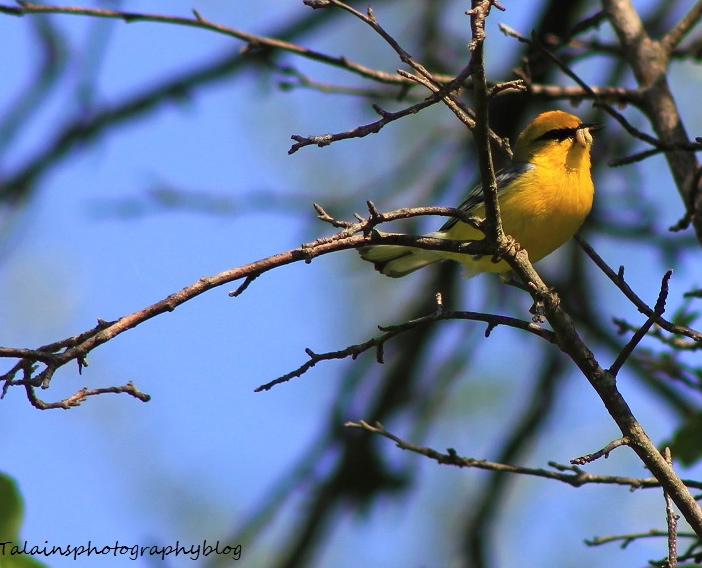
BLUE-WINGED WARBLER Vermivora cyanoptera WR 3

Blue-winged Warbler, Abaco (Becky Marvil)

Blue-winged Warbler. talainsphotographyblog

SWAINSON’S WARBLER  Limnothlypis swainsonii WR 4 

Swainson's Warbler, Abaco - Bruce Hallett

NASHVILLE WARBLER Oreothlypis ruficapilla WR 4 

Nashville Warbler, Abaco - Bruce Hallett

HOODED WARBLER Setophaga citrina WR 3 

Hooded Warbler, Abaco (Charmaine Albury)

KIRTLAND’S WARBLER Setophaga kirtlandii WR 4 

Kirtland's Warbler (m), Abaco - Woody Bracey

MAGNOLIA WARBLER Setophaga magnolia WR 3 

Magnolia warbler, Abaco - Craig Nash

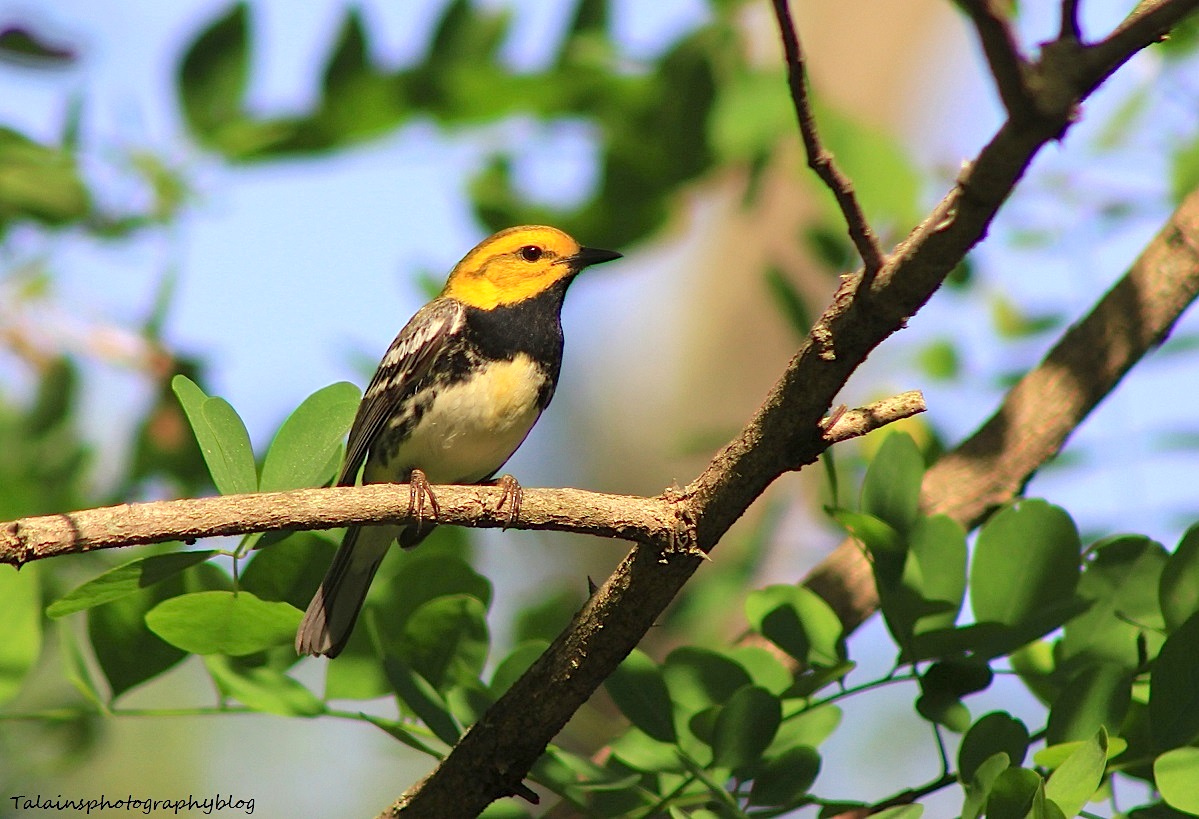
BLACK-THROATED GREEN WARBLER Setophaga virens WR 3 

Black-throated Green Warbler - talainsphotographyblog

Yellow Warbler at sunrise.Abaco Bahamas.6.13.Tom Sheley copy copy

TRANSIENTS

PROTHONOTARY WARBLER Protonotaria citrea TR 3 

Prothonotary Warbler, Abaco - Ann Capling

TENNESSEE WARBLER Oreothlypis peregrina TR 4 

Tennessee Warbler Jerry Oldenettel Wiki

ORANGE-CROWNED WARBLER  Oreothlypis celata TR 4 

Orange-crowned Warbler dominic sherony wiki

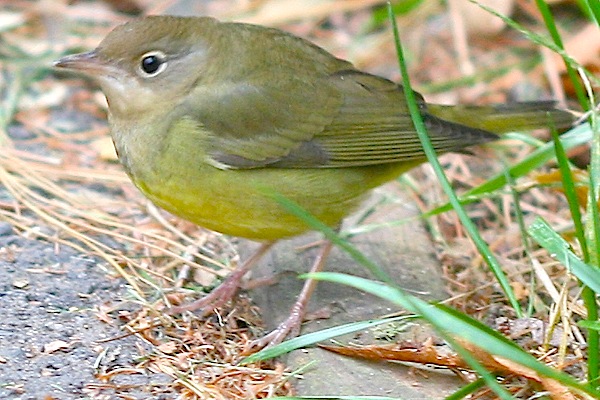
CONNECTICUT WARBLER Oporonis agilis TR 4 

Connecticut Warbler Central Park NYC 10000birds.com

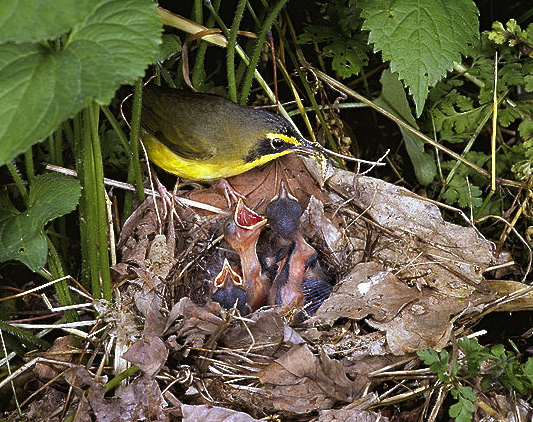
KENTUCKY WARBLER Geothlypis formosa TR 4 

Kentucky_Warbler Steve Maslowski wiki - Version 2

BAY-BREASTED WARBLER Setophaga castanea TR 4 

Bay-breated warbler MDF Wiki

BLACKBURNIAN WARBLER Setophaga fusca TR 4

Blackburnian Warbler Mdf wiki

CHESTNUT-SIDED WARBLER Setophaga pensylvanica TR 4

Chestnut-sided Warbler talainsphotographyblog - Version 2

BLACKPOLL WARBLER Setophaga striata TR 3 

Blackpoll Warbler avibirds.com

WILSON’S WARBLER Cardellina pusilla TR 4 

Wilson's Warbler Michael Woodruff wiki

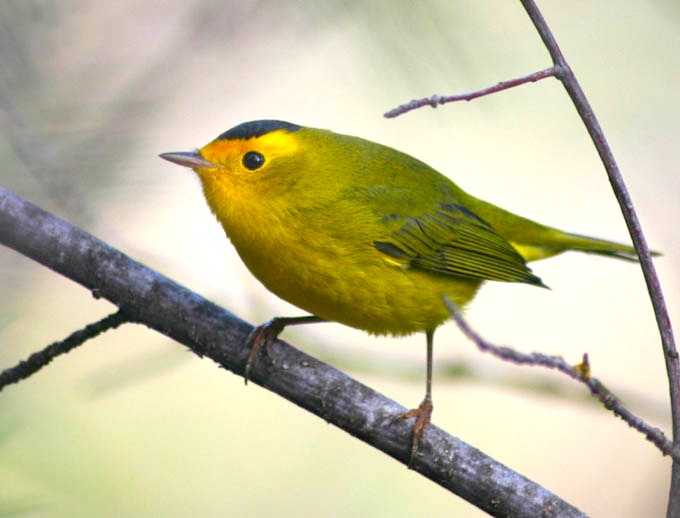
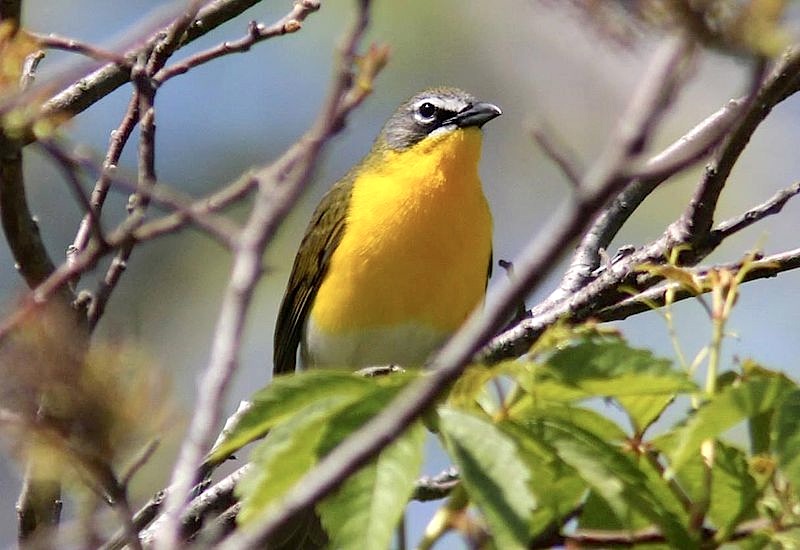
YELLOW-BREASTED CHAT Icteria virens TR 4 

Yellow-breasted Chat Emily Willoughby wiki

PHOTO CREDITS: GUIDE (1 – 37) Bruce Hallett (Header, 3, 9, 12, 14, 17, 21, 22); Tom Reed (1, 4); Tom Sheley (2, 7, 10); Alex Hughes (5); Gerlinde Taurer (6, 11, 18);  Becky Marvil (8, 20a); Woody Bracey (13, 24); Peter Mantle (15); RH (16); William H. Majoros (wiki)(19);  talainsphotographyblog (20b, 26, 34); Charmaine Albury (23); Craig Nash (25); Ann Capling (27); Jerry Oldenettel wiki (28); Dominic Sherony wiki (29); 10000birds (30); Steve Maslowski wiki (31);  MDF wiki (32, 33); Avibirds (35); Michael Woodruff wiki (36); Emily Willoughby wiki (37)

CHECKLIST & CODES based on the complete checklist and codes for Abaco devised by Tony White with Woody Bracey for “THE DELPHI CLUB GUIDE TO THE BIRDS OF ABACO” by Keith Salvesen

Unknown's avatar

A QUARTER OF A MILLION GLIMPSES OF ABACO…


Abaco (Cuban) Parrot, Abaco, Bahamas  (Keith Salvesen)

A QUARTER OF A MILLION GLIMPSES OF ABACO…

Well here’s a rum do. About four years ago, this somewhat minority interest blog emerged ‘mewling and puking’¹ into the world, guided by an incompetent male midwife whose basic training had been about 4 weeks of exposure to Abaco, its fishing, its wildlife, its geography and its history. ‘Bananaquit’ might as well have meant taking up a plantain-free diet. ‘Grassquit’ might have been the local word for ‘keep off the lawn’. And that’s before all the flowers. And the reef fish. And everything else that turned up during the storm-wracked voyage of discovery via polydamus swallowtails, manatees, spider wasps and batfish that led slowly to the calmer waters of ‘rather better informed (if no wiser)’. 

Anyway, at midnight last night some unknown person kindly made the 250,000th visit to the blog, a target that once seemed inconceivable. In the past month, the 1000th person also signed up as a follower, another source of amazement. The reality is that despite Abaco being a sparsely-populated microdot island in a huge world, there are a great many people on the island or associated with it who are passionate about it and its extraordinarily diverse natural history. That knowledge makes curating this blog both easy and pleasurable. 
RH Stats clip

I checked my stats for the last year to find out where hits from the top 10 countries – and for fun the bottom 1o – came from. Here’s the answer. Rather shamefully there was also a country I had never knowingly heard of, Palau (Micronesia). There follows a selection of a few photographs that have been popular over the years, mostly my own but the underwater ones are from Melinda Riger and Virginia Cooper of Grand Bahama Scuba.

Top 10                                                                   Bottom 10
Top 10 countries jpg   Bottom 10 countries jpg

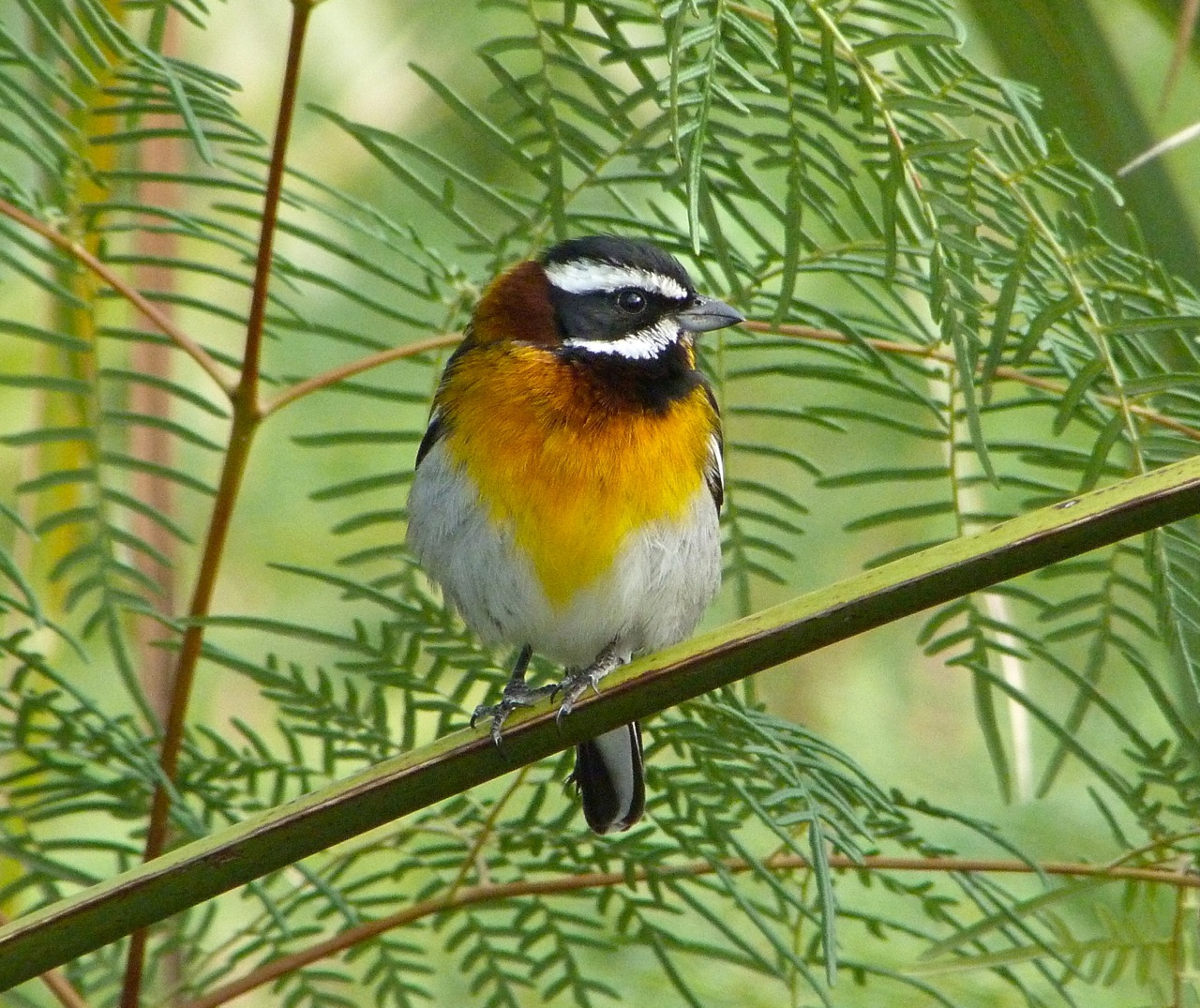
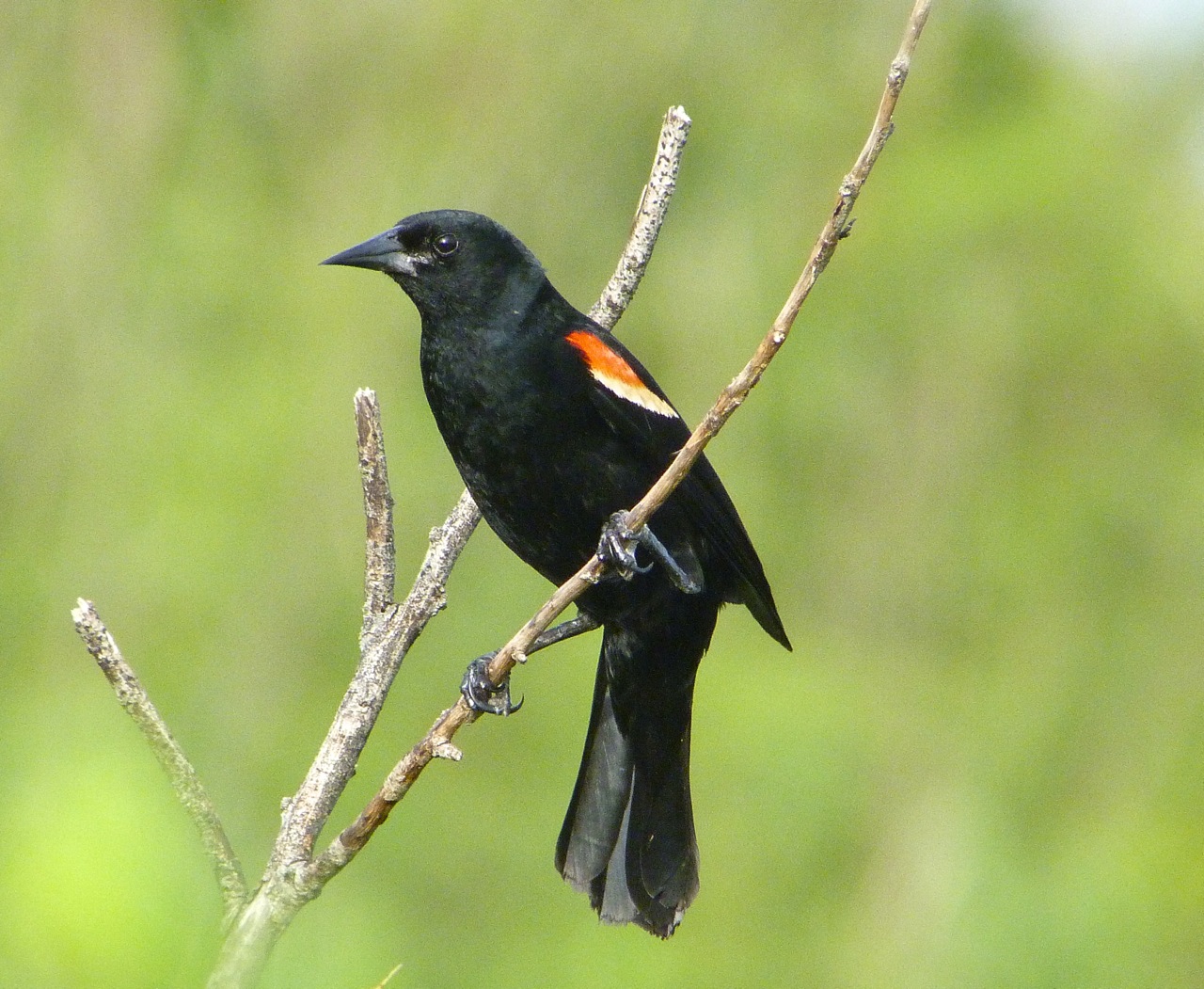
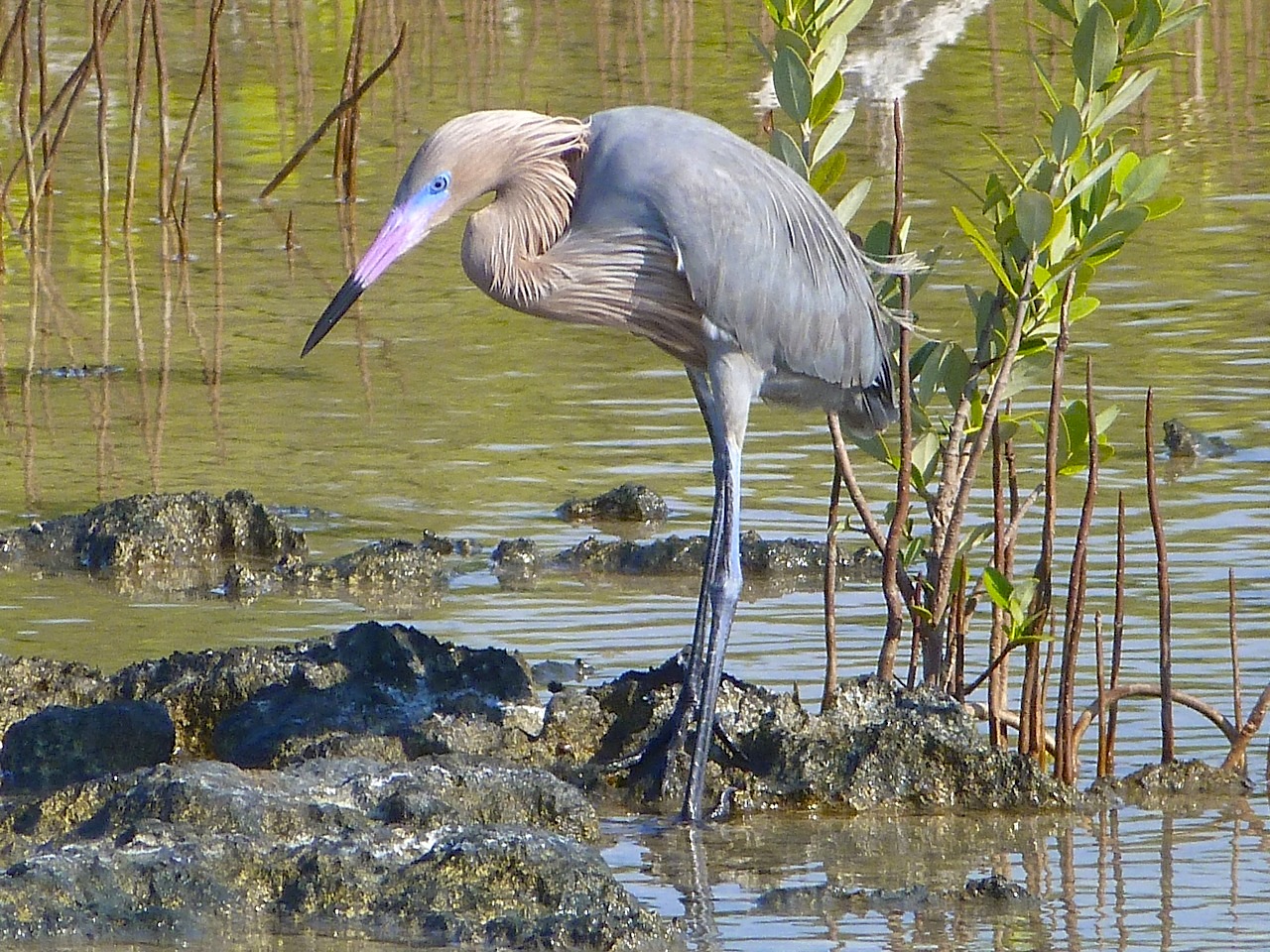
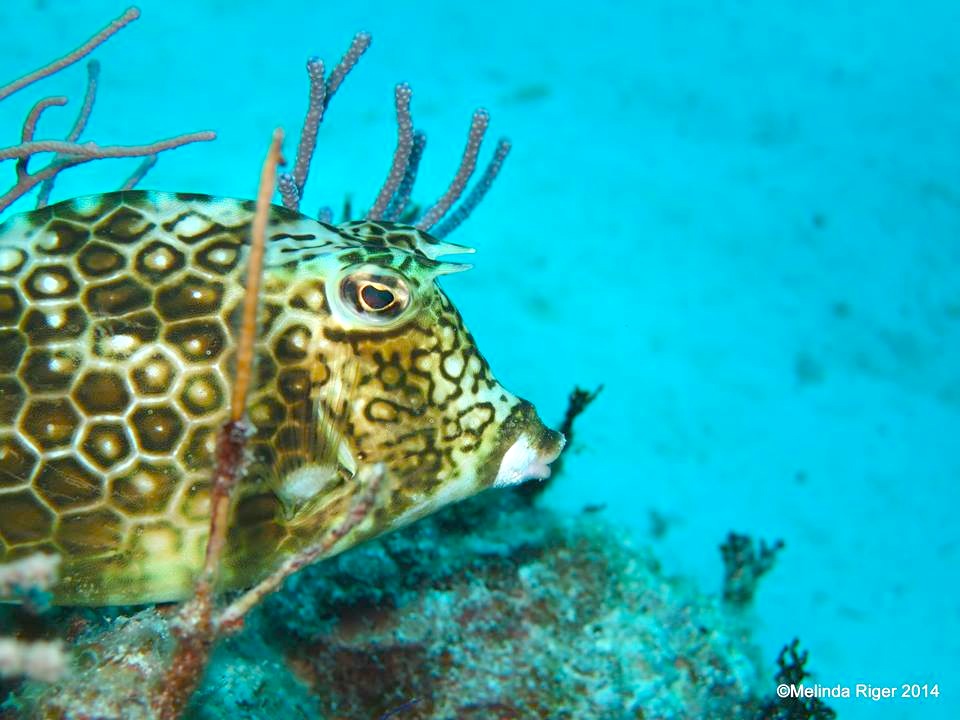
Cuban Emerald Hummingbird, Delphi, Abaco (Keith Salvesen)Bananaquit & palm, Delphi, Abaco, Bahamas  (Keith Salvesen)Western Spindalis, Abaco, Bahamas  (Keith Salvesen)Blue-gray Gnatcatcher, Abaco, Bahamas (Keith Salvesen)Red-winged Blackbird, Abaco, Bahamas  (Keith Salvesen)Brown Pelicans, Sandy Point, Abaco  (Keith Salvesen)Reddish Egret, Crossing Rocks, Abaco, Bahamas (Keith Salvesen)French Angelfish (juv), Bahamas (Melinda Riger)Four-eyed Butterflyfish ©Melinda Riger @GBSCowfish ©Melinda Riger @ GB ScubaOctopus ©Melinda Riger @ Grand Bahama ScubaNassau Grouper, Bahamas (Melinda Riger)Blacktip Shark ©Virginia Cooper @ G B Scuba copy 2Curly-tail Lizard, Delphi, Abaco, Bahamas (Keith Salvesen)Atala Hairstreak Butterfly, Abaco, Bahamas (Keith Salvesen)Bird of Paradise Flower (Strelitzia) Abaco (Keith Salvesen)Hibiscus : Polydamus Swallowtail, Delphi Abaco (Keith Salvesen)Yellow Elder Hope Town, Abaco, Bahamas (Keith Salvesen)

SEARCH TERMS

The most popular searches – omitting posts about hurricanes, which always generate a lot of traffic – have concerned Abaco Parrots, Lignum Vitae, Sea Glass, the Loxahatchee poster series, Tarantula Hawk Wasps, Sea Biscuits / Urchins, Yellow Elder, Parrotfish, Shipwrecks, Hutias, Hole-in-the-Wall, Lionfish, Remora, and Abaco Maps. The most leftfield search of all was ‘How dispose of dead bodies?’, by someone who had clearly strayed into the wrong category of website…

A FEW OF THE MOST POPULAR POSTS / PAGES
SEA SHELLS
SPIDER WASPS & TARANTULA HAWKS: DON’T MESS WITH THESE GUYS    
ABACO FACTS (including likelihood of adverse shark encounter or shipwreck)    
ABACO MAPS    
LIGNUM VITAE – BAHAMAS NATIONAL TREE    
YELLOW ELDER – THE BAHAMAS NATIONAL FLOWER    
SEA URCHINS & SEA BISCUITS – BEACHCOMBING TREASURES ON ABACO    
ABACO FOOD & DRINK (cook hog / bonefish; clean a conch; sip an Abaco cocktail / Goombay Smash)
ABACO & HOLE-IN-THE-WALL, BAHAMAS: A SHORT HISTORY IN MAPS    
PINEAPPLES: SYMBOLS OF WELCOME & WEALTH (ALSO, DELICIOUS)    
ABACO ISLAND BOA: THE ONLY ABACO SNAKE    
WHALES & DOLPHINS    
ABACO PARROTS    
FLORA

It would be strange to end this little celebration without a tip of the hat to Peter Mantle, old friend and genial doyen of the Delphi Club, for his wholehearted encouragement and support for the production and publication of THE DELPHI CLUB GUIDE TO THE BIRDS OF ABACO. This hefty tome, published in March 2014, showcases the wonderful and varied avian life on Abaco and has proved very popular – indeed well beyond our expectations. Although I appear nominally as author on the cover, it is in fact an extraordinary collaborative effort by some 30 people. The book’s success further demonstrates the commitment of Abaconians and other who love the island to Abaco’s rich natural heritage in an age of  rapid change; and provides another good incentive for me to continue with the blog. Next stop: 500,000!

¹ © W. Shakespeare, Romeo & Juliet Act 2 Sc. 7

dcbg2ba-jacket-grab-for-pm-v2-copyShark Gif

Unknown's avatar

LIMESTONE CAVES ON ABACO: WELL WORTH LOOKING INTO…


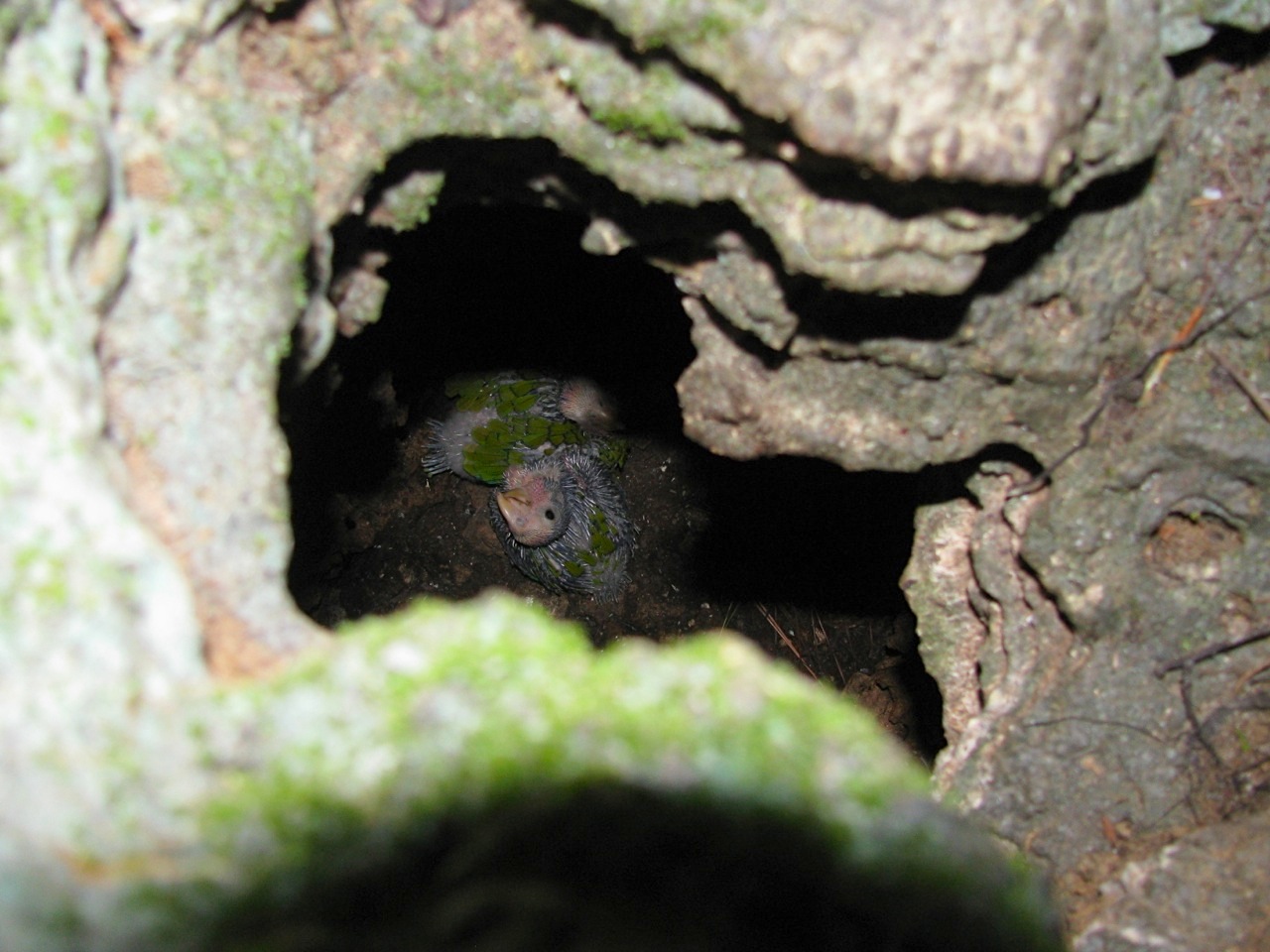
Abaco Parrot nest (Caroline Stahala)

LIMESTONE CAVES ON ABACO: WELL WORTH LOOKING INTO…

I have written several posts in the last few months featuring Brian Kakuk’s amazing photos of the underwater caves of Abaco. These caves, mostly beneath Abaco’s pine forests, are fabulous treasures of rock and crystal. A recent post example can be seen HERE. I have also featured some of the famous Blues Holes of Abaco from time to time, for example HERE. So now it’s time to turn attention to ‘land caves’, the dry(ish) limestone holes and caverns that are dotted around Abaco, especially in the South, and bear witness to aeons of geological development through erosion.

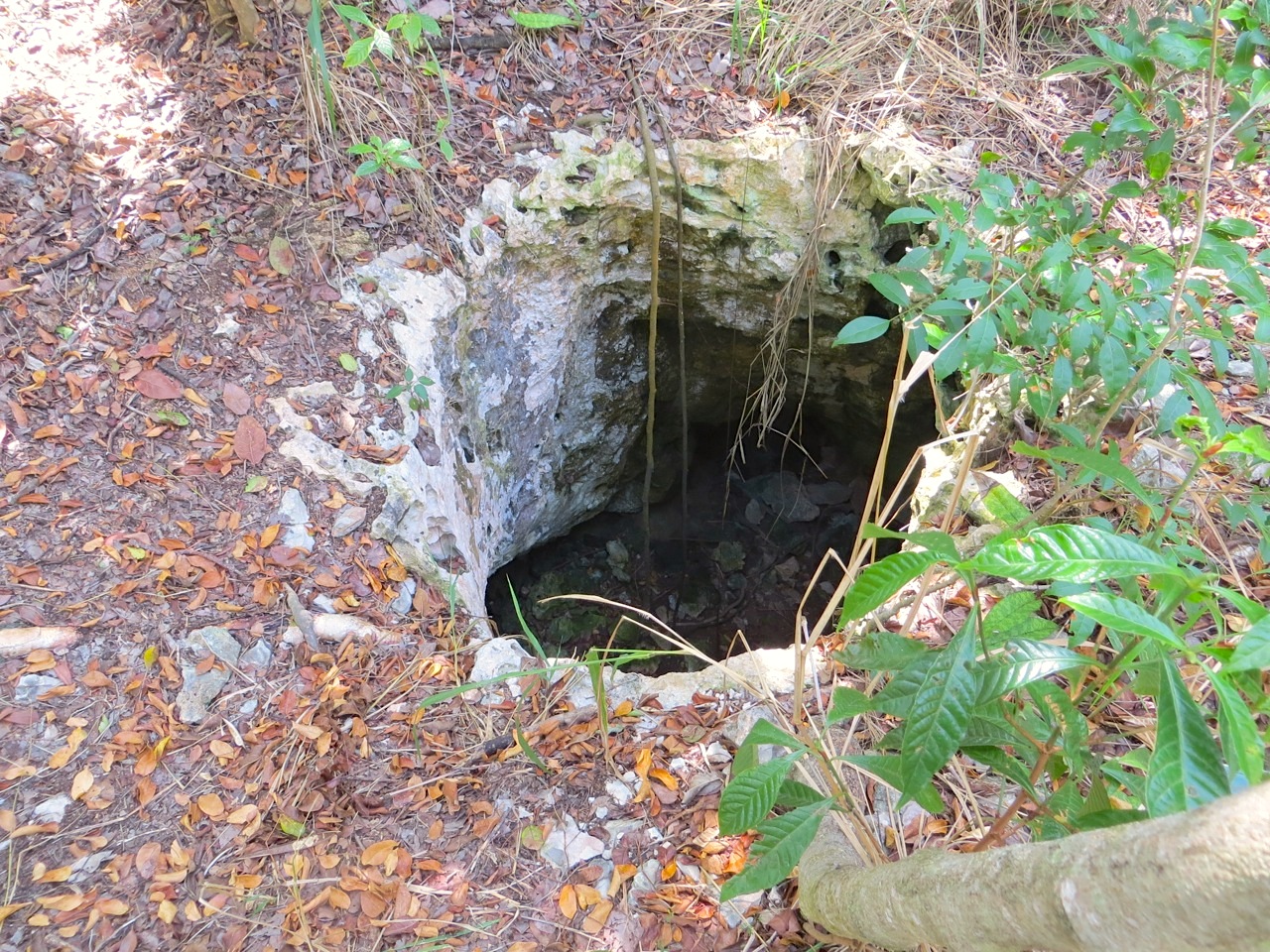
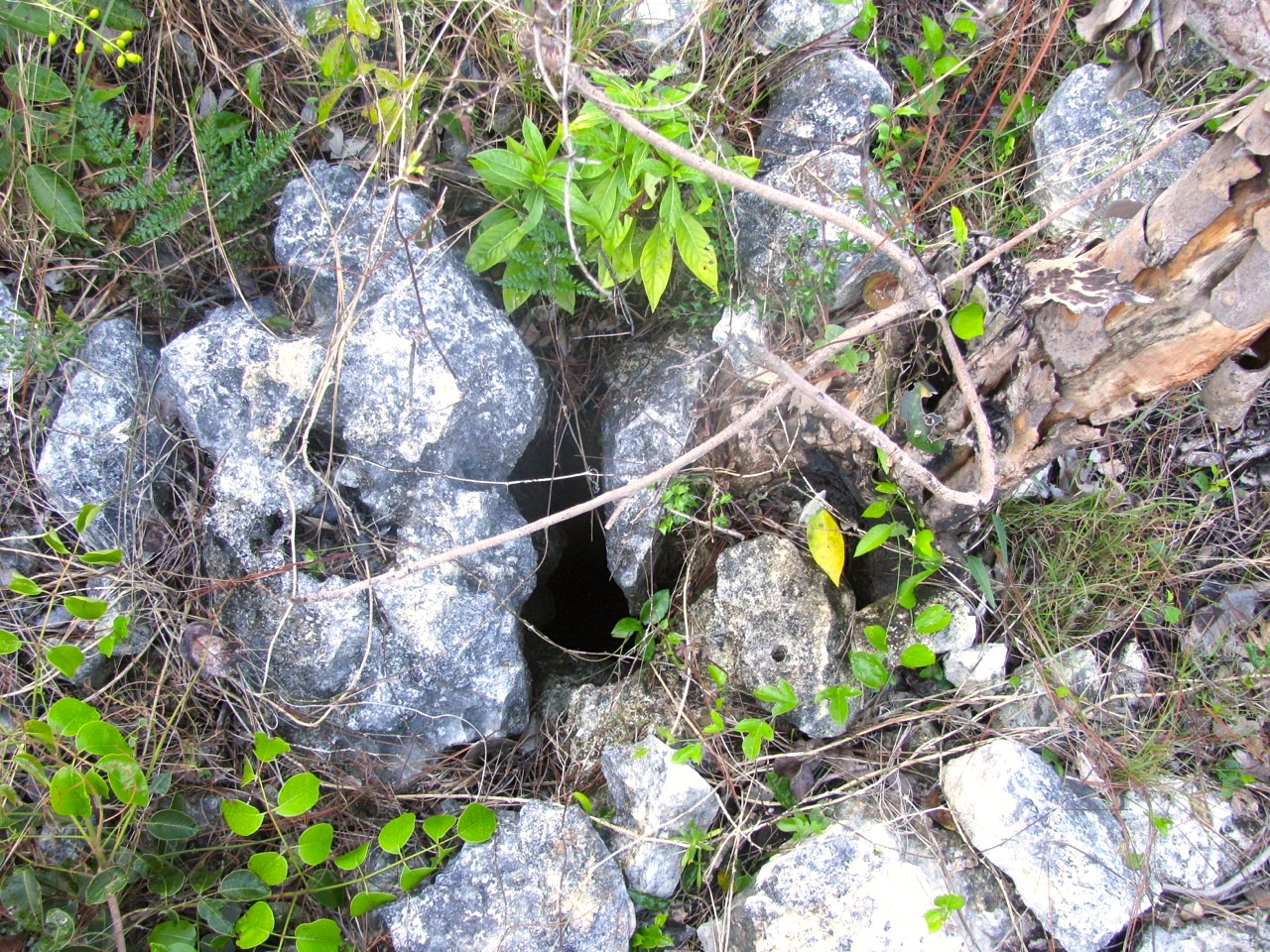
The coppice and extensive pine forests are pitted with holes of widely varying sizes. I’m way out of my depth here, geology-wise (polite corrections invited), but this sort of landscape is I believe known as KARST. This term presumably includes Abaco’s ‘dry’ holes, the blue holes and the substantial network of underwater caverns. Small examples can readily be found in easily accessible places such as non-dense coppice. We were very surprised when we pushed our into the coppice bordering the Delphi Club guest drive and took a closer look at a hole. Although the weather was hot and dry at the time, you will see that the hole has some form of micro-climate, with damp walls and interior and wet-climate plants like small ferns and forms of what I take to be moss and algae.

ONE OF MANY LIMESTONE HOLES BESIDE THE DRIVES AT DELPHILimestone Hole, Delphi, Abaco (Keith Salvesen)

A HOLE NEAR HOLE-IN-THE -WALL – LARGER INSIDE THAN IT LOOKS 

Limestone Hole, Hole-in-the-Wall Abaco01  Limestone Hole, Hole-in-the-Wall Abaco03

THE CAVE-DWELLERS OF ABACO: THE FABULOUS PARROTS

Among the best-known special residents of Abaco are the ground-nesting parrots, gorgeous birds that I have often featured in the past – see the parrot page HERE. Not so long ago, their numbers had reduced to an unsustainable population – fewer than 1000 – that faced extinction. The creation of the National Park covering the pine forests where they breed, coupled with a vigilant and intensive conservation program, have reversed the trend. There is now a sustainable breeding population again, exceeding 3000 birds.  

The only other breeding Cuban parrot population in the Bahamas is found on Inagua, where they nest conventionally in trees. There is a very small non-breeding population on New Providence. Abaco’s cave-dwelling subspecies of the cuban parrot is unique. Here’s an insight into how they live, deep in the pine forest, during the summer breeding season, with many thanks to Caroline Stahala, the scientist who spent some 10 years researching and protecting the parrots.

PARROT NEST HOLES: VULNERABLE TO PREDATORS, PROTECTED FROM FOREST FIRESLimestone Holes & Abaco Parrots (Caroline Stahala) Limestone Holes & Abaco Parrots (Caroline Stahala)

PARROTS MAY NEST DEEP – OR SHALLOW. Limestone Holes & Abaco Parrots (Caroline Stahala)Limestone Holes & Abaco Parrots (Caroline Stahala)

THE BREEDING SEASON: NEST, EGGS, HATCHLINGS, FLEDGELINGS…Limestone Holes & Abaco Parrots 08Limestone Holes & Abaco Parrots (Caroline Stahala)Limestone Holes & Abaco Parrots (Caroline Stahala)Limestone Holes & Abaco Parrots (Caroline Stahala)

HOW BIG DO THE ‘DRY’ HOLES GET?

TBH my personal experience is somewhat limited. I believe there are large, sea-scoured caves along rocky parts of the south coast, but those are rather different from the eroded ground holes discussed here. As so often I rely on Mrs RH – far more intrepid than me – and her exploring skills. The cave shown below is right down at the far south of Abaco, at Hole-in-the-Wall, hidden in the coppice along the ‘Soldier Road’ from the T-junction (we are talking rough tracks here – very – not proper roads) towards the lighthouse. 

Soldier Road Sign, Hole-in-the-Wall Abaco

Limestone Hole, Hole-in-the-Wall Abaco15Limestone Hole, Hole-in-the-Wall Abaco16Limestone Hole, Hole-in-the-Wall Abaco06Limestone Hole, Hole-in-the-Wall Abaco13

The rock is far more colourful than you  might expectLimestone Hole, Hole-in-the-Wall Abaco09

Credits: Caroline “The Parrot Lady” Stahala; Mrs RH for investigating the last cave and taking the camera with her; RH the rest; Woody Bracey for our great day of birding at Hole-in-the-Wall and his local knowledge of the area… 

Unknown's avatar

PINEAPPLES REVISITED: SYMBOLS OF WELCOME & WEALTH (ALSO, DELICIOUS)


PINEAPPLES REVISITED – A SHORT BUT FRUITY HISTORY

INTRODUCTORY NOTE 

I rarely recycle old posts, though I sometimes rewrite them. Occasionally a past subject returns later as a new hot topic, usually because of some related event or news item. Suddenly I get a flurry of hits for ‘do manatees have toenails?’ or ‘does one good tern deserve another?’. That kind of thing. Right now – indeed for the past 10 days – the current sporting event in London SW19 (i.e. Wimbledon) has by a side-swipe of a mis-hit tennis racket affected the smooth operations at Rolling Harbour. The fruit generally associated most with Wimbledon is of course The Strawberry. Yes, they are now so expensive at the ground that they have to be sold singly. If you want Cream with it, they offer moderate loan terms in return for a charge on your house. A small cardboard box to eat it from is extra, though eating from your hand remains free. For now. But the fruit that is rocking the blog at the moment is the PINEAPPLE. I am suddenly getting lots of ‘search’ hits daily with various combos of the question “why is there a pineapple on top of the Wimbledon Trophy?” So I am rolling out my pineapple post from a couple of years back, slightly modified, which will answer this and many other ananatic questions. 

🍍  🍍  🍍  🍍  🍍

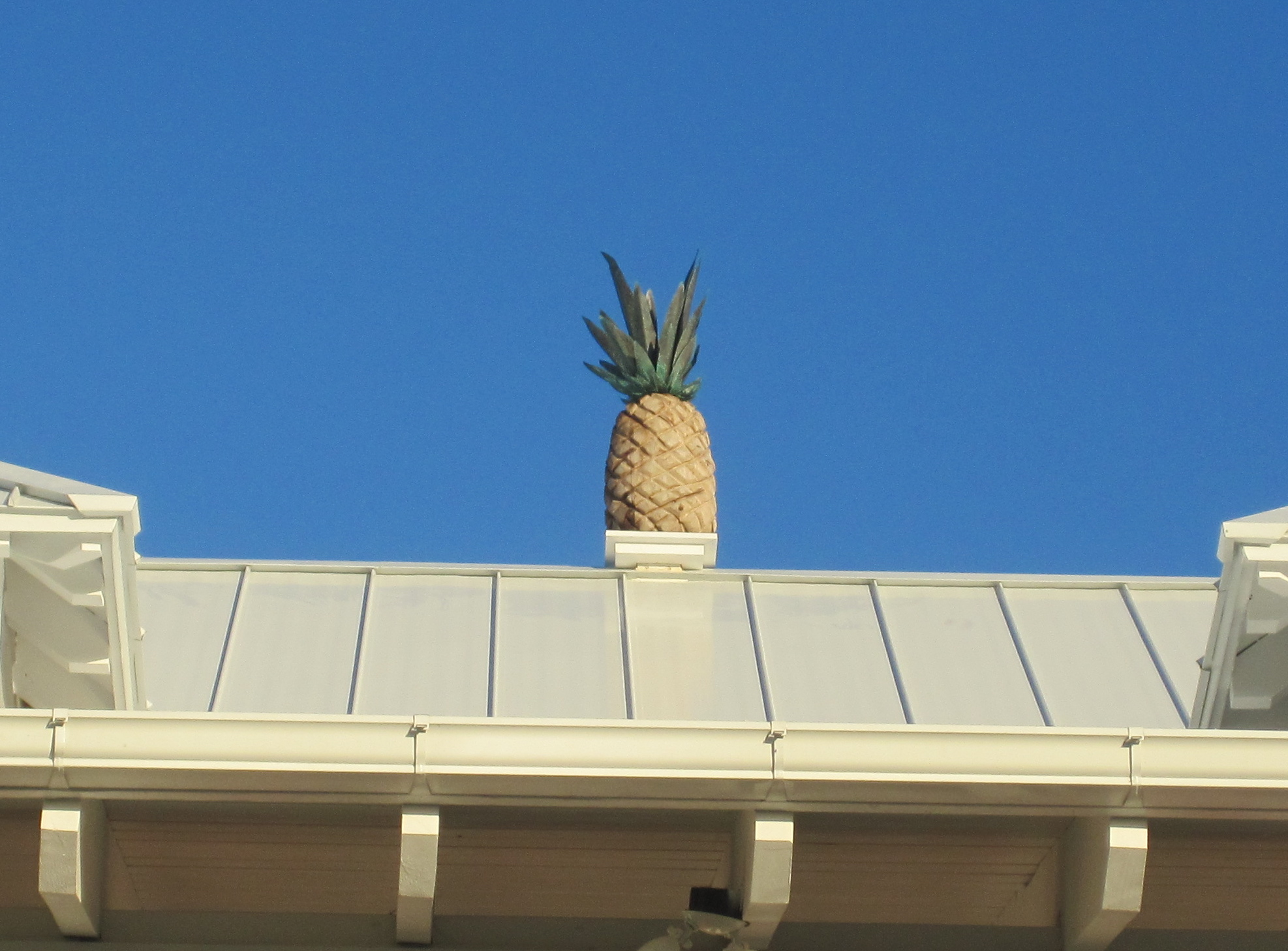
The first image below is of the handsome locally hand-carved pineapple that surmounts the roof of the DELPHI CLUB Abaco. The fruit lost a few leaves in Hurricane Irene, which scored a direct hit on the Club. As posted on the ABACO FACTS page (under RANDOM main menu) “the precise Longitude & Latitude coordinates of the Pineapple [on] the Delphi Club roof are respectively 77.1787834167480  &  26.20450323936187 “. But why is it there? Time for a Short Voyage around the Pineapple…

PINEAPPLE FACTS TO ENLIVEN YOUR CONVERSATION

HISTORICAL & SOCIAL CONTEXT

  • Brought back to Europe by Christopher Columbus in 1493 on his return from his second voyage
  • Taken on long voyages as a protection against scurvy and because of its long life
  • By the c17 royalty & aristocracy grew them in hot-houses (or rather, their gardeners did). King Charles II tried one, an event so important it was recorded by the Court painter Hendrik Danckerts 
  • By c18 considered a great delicacy and a status symbol of wealth, often the centre-piece of a feast.
  • If you couldn’t afford to buy one, you could rent one and return it afterwards. Someone richer than you would then buy it.
  • Pineapples were grown in pits of fermenting manure. In England Queen Victoria was not amused and soon put an end to that unpleasant nonsense
  • In the c19 pineapples were one of the most significant exports from Abaco
  • The Earl of Dunmore built a huge pineapple folly in Scotland in 1761, which you can stay in (We have. It’s a lot of fun)

     110-1004_IMG

  • On ‘Unter den Linden’ in Berlin,  the cast iron posts round the huge equestrian statue of Frederick the Great are topped by pineapples.

Berlin, Unter den Linden, Reiterstandbild Friedrich II                 Reiterstandbild_-_Friedrich_der_Große Berlin Wikimedia

CULTURAL SYMBOLISM

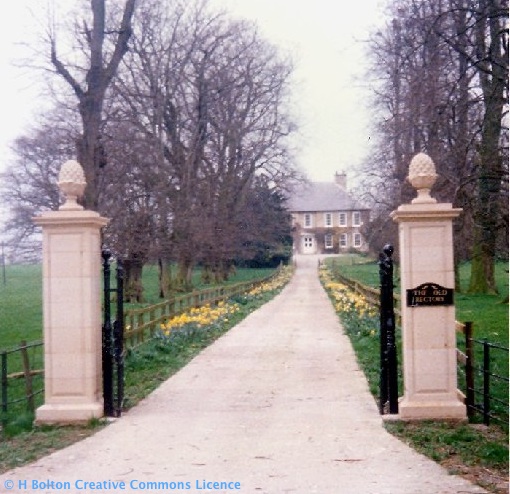
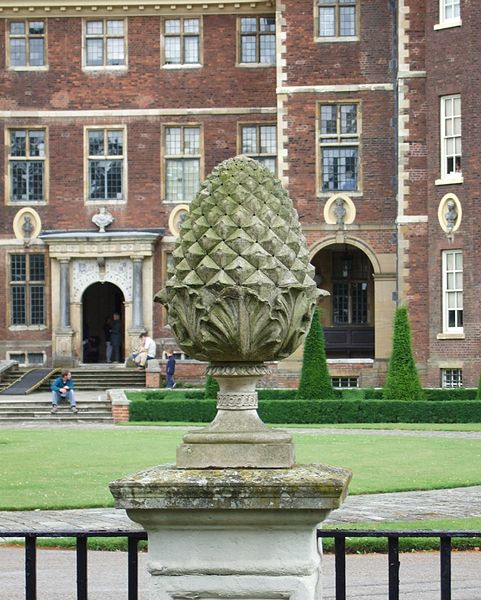
  • Pineapples symbolise welcome and hospitality, placed at the entrance to villages or plantations. The tradition spread to Europe where they were carved as gateposts; staircase finials; and incorporated into wooden furniture (including bedposts at the Delphi Club)

  • Seafarers put pineapples outside their homes on their return to show that they were back from their travels and ‘at home’ to visitors
  • An expensive fruit to grow & to transport; remained a luxury until the arrival of steamships
  • Their costliness made them status symbols / indicators of wealth and rank. Displaying or serving pineapple showed that guests were honoured. And, coincidentally, that the hosts were loaded.
  • In the 1920s the grandest dinners apparently needed both “a pineapple and Lady Curzon” (I have been asked whether this is Interwar Period code for some sort of disreputable activity… let’s hope the answer is ‘yes’)
           Ornamental Pineapple at Ham House - James Long @ Wikimedia

  • The future Queen Elizabeth was sent 500 cases of canned pineapple as a wedding present from Australia. She asked them the traditional Royal Question “Hev you come far?” Prince Phillip’s reaction was – apart from the word ‘pineapple’ – unprintable
  • In the play Abigail’s Party (Mike Leigh) pineapple chunks on cocktail sticks were used as a plot device to highlight the desperate social ambitions of a hellish hostess trying to impress & outclass her guests
  • A 1930s ad promised that by baking a pineapple pie a wife would make her man “smack his lips in real he-man enjoyment” (NB This may not work so well in the 2010s) 

By Appointment to HM the Queen

ARTS & CRAFTS

  • Used on Wedgwood pottery designs as early as the 1760s; others soon followed suit
  • Became widely used decoratively as a motif for gateposts, weather vanes, door lintels, wallpaper, table linen & curtains, and incorporated into furniture
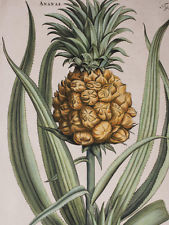
  • Depicted as curiosities in early botanical engravings (Commelin 1697 Hortus Botanicus)

Commelin - Engraving - Ananas - Hortus Botanicus 1697

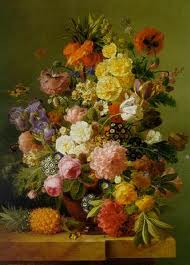
  • Featured in still life paintings as a crowning example of opulence (e.g. De Heem, Jan van Os)

                             Josef Schuster

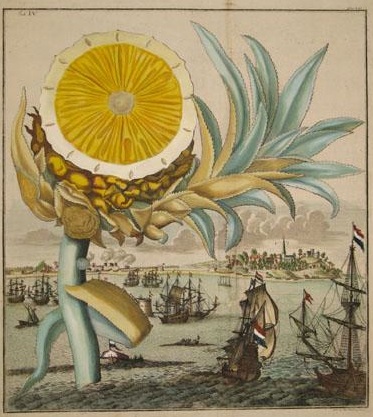
  • Depicted in plant and fruit studies, for example these by Johann Christoph Volckamer, very early c18        
  • Occasionally found in Church stained glass windows (e.g. St Lawrence’s, Jersey)

Églyise_Pârouaîssiale_dé_Saint_Louothains_Jèrri Man Vyi * Wikimedia

  • Featured in music e.g. Pineapple Rag (Scott Joplin); Pineapple Head (Crowded House); Escape – The Piña Colada Song (Rupert Holmes); Pineapple Express (Huey Lewis); Pineapple (Sparks) 
  • Used as a motif on shutters in Marsh Harbour 

SPORT

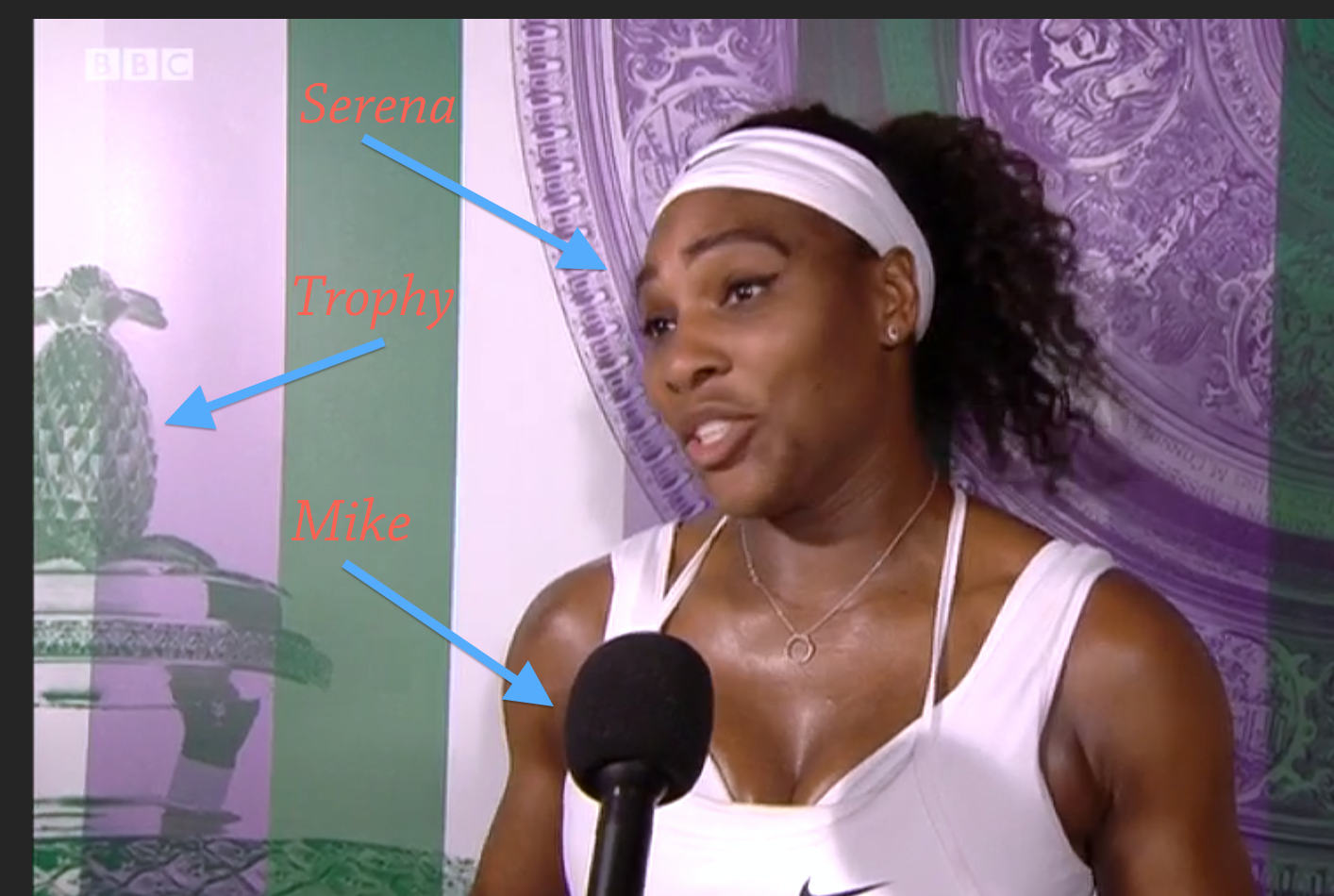
  • The Men’s Singles Trophy at  Wimbledon is a silver gilt cup with a gilded pineapple on top of the lid. It used to mean “Welcome back, Roger!” Now it stands for the first British male singles win since 1937 (‘Go, Andy!’). [British women have fared rather better in the singles in that time (‘Go, Angela, Ann & Virginia!’)]

fedwin1_71759545_andy_murray_kisses_trophy_paScreen Shot 2015-07-09 at 17.21.12

MOTORING

  • Vauxhall produced the Vauxhall Astra Sport in ‘tasteful’ Pineapple Yellow. For the history of the use of the far more glamorous Bahama Yellow  in motoring history, click HERE

10 TASTY PINEAPPLE CHUNKS

  • The cocktail Afterglow is 1 part grenadine, 4 parts orange juice & 4 parts pineapple juice on ice
  • Piña Colada is rum, coconut milk & crushed pineapple. Omit the rum for a Virgin Colada
  • It is impossible, for chemical reasons, to make jelly with fresh pineapple
  • “Pineapple heat” was once a standard marking on thermometers
  • A pineapple grows as two interlocking helixes (8 one way, 13 the other – each being a Fibonacci number)
  • A pineapple will never become any riper than it was when harvested
  • Workers who cut up pineapples eventually have no fingerprints – a gift fact for crime writers
  • Pineapple stems are being tested for anti-cancer properties
  • Pine Apple, a small Alabama town full of pineapple symbols, was originally named “Friendship” but there turned out to be another town called that, so they changed it
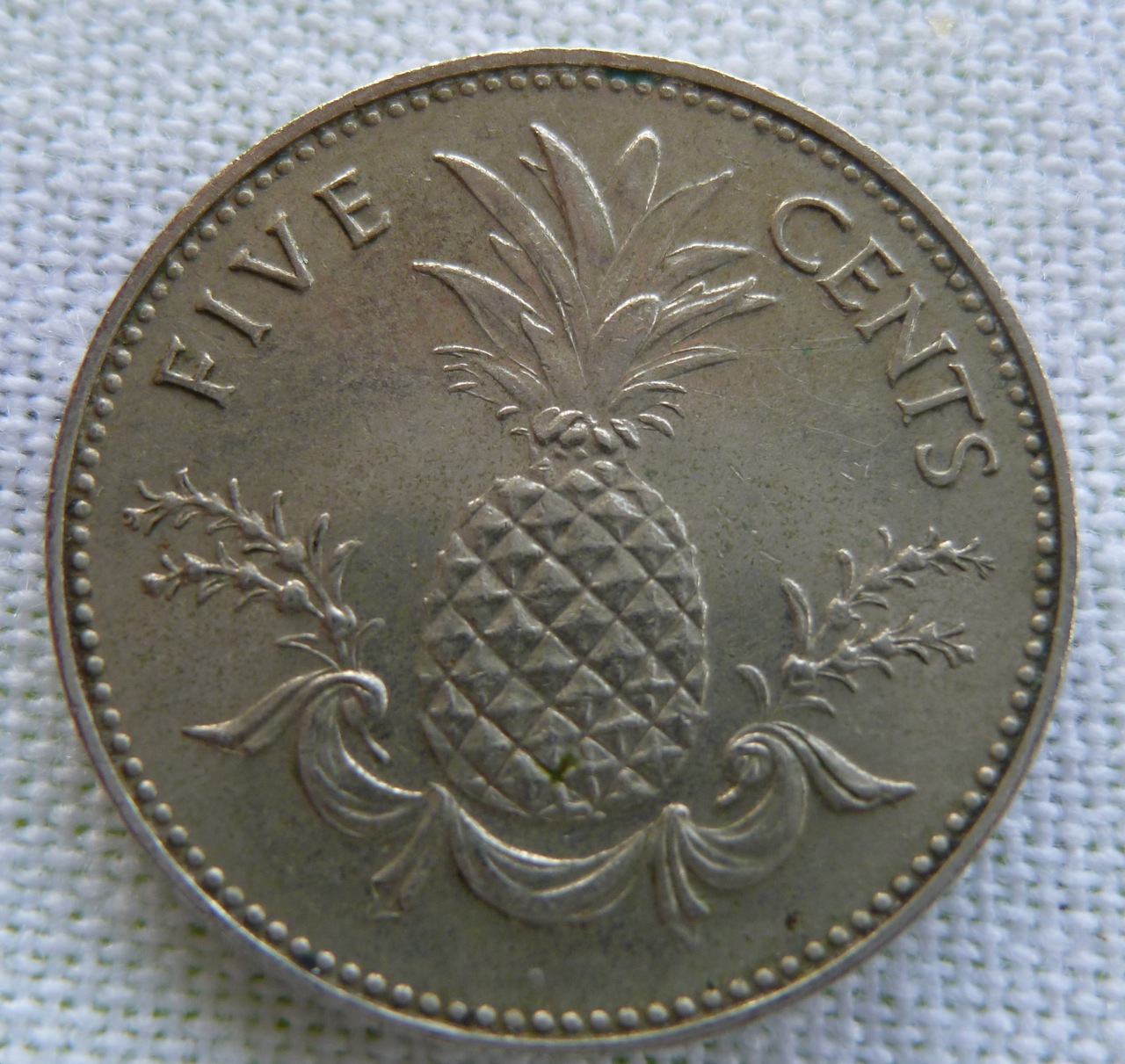
  • Features on the Bahamian 5 cents coin…

  • …and  a $1 stamp

BAHAMAS PINEAPPLE STAMP

Read Jim Kerr’s interesting article in ABACO LIFE on Abaco’s pineapple past HERE

FRANCESCA BEAUMAN 2006 THE PINEAPPLE – KING OF FRUITS If you want to find out more about pineapples, their  history and social significance, you should be able to pick up a copy of this book on Am@z%n, Abe or ALibris for a few dollars “What?” I hear you cry, “you’ve managed a whole page about pineapples without mentioning modern advertising”. Shall I do so now? The man from Del Monte, he says YES

FOUR WAYS TO CUT UP & SERVE A PINEAPPLE

Sources: Own ideas + some magpie-thieving-borrowing from a variety of sources, many of which contain identical info and / or quote from the above book. Hope everyone is comfortable with that… NB Not every fact above is strictly 100% true, so expect to be challenged if you try one out. In particular Prince Phillip is of course naturally docile and gentle-mouthed…

POST SCRIPT The first 21 Fibonacci numbers (just add 2 successive numbers to produce the next) are

F0 F1 F2 F3 F4 F5 F6 F7 F8 F9 F10 F11 F12 F13 F14 F15 F16 F17 F18 F19 F20
0 1 1 2 3 5 8 13 21 34 55 89 144 233 377 610 987 1597 2584 4181 6765
Unknown's avatar

SHEARWATERS ON ABACO: SAD TALES FROM THE SEA


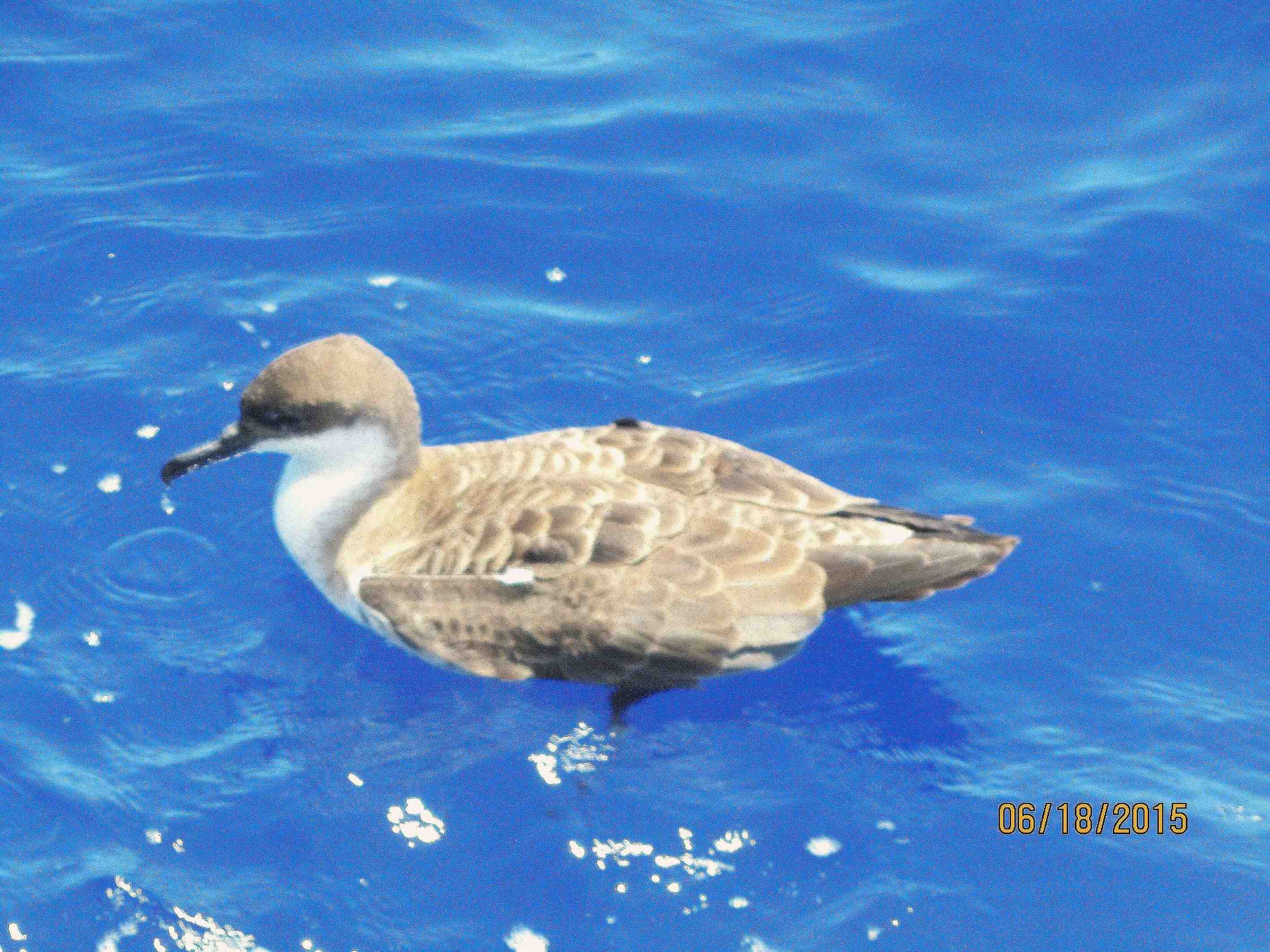
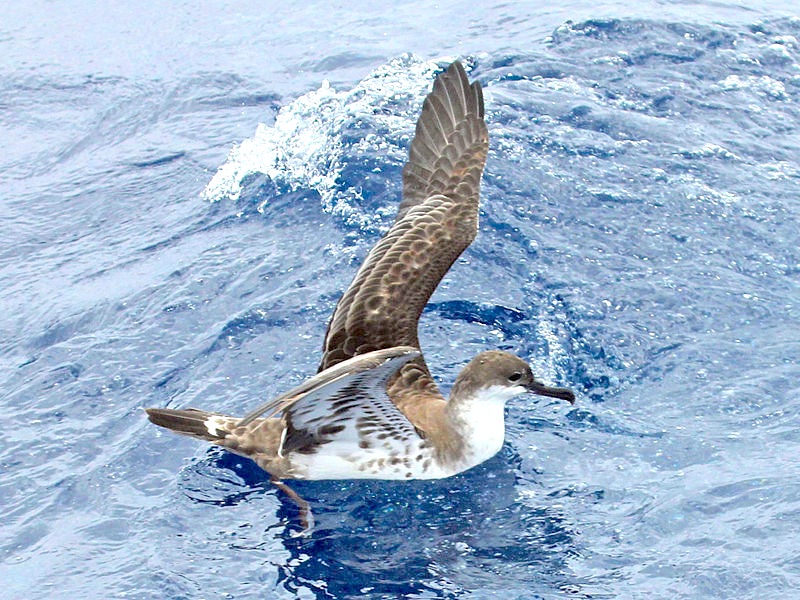
GREAT SHEARWATER Puffinus gravis (Patrick Coin Wiki)

SHEARWATERS ON ABACO: SAD TALES FROM THE SEA

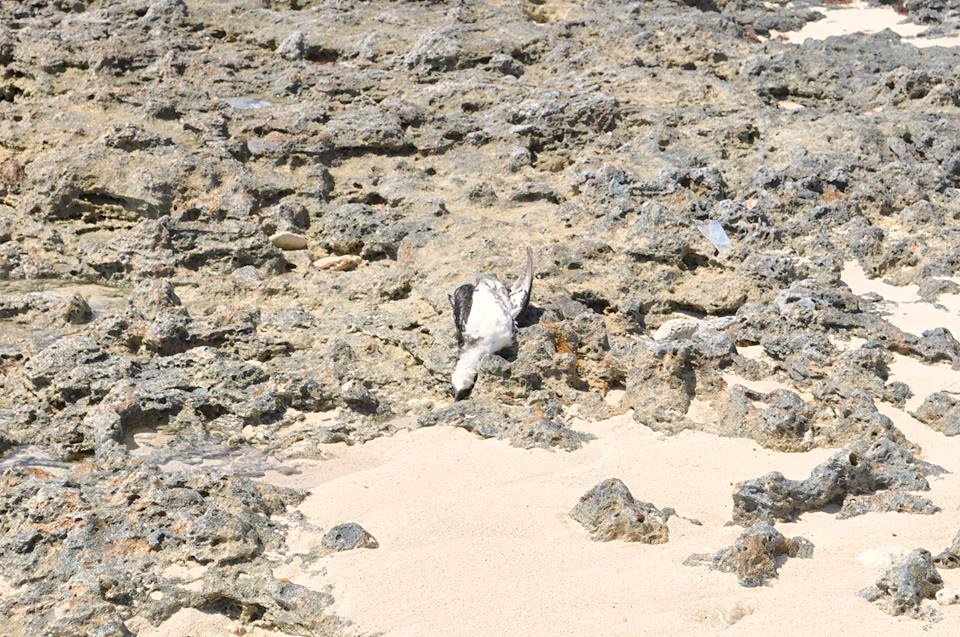
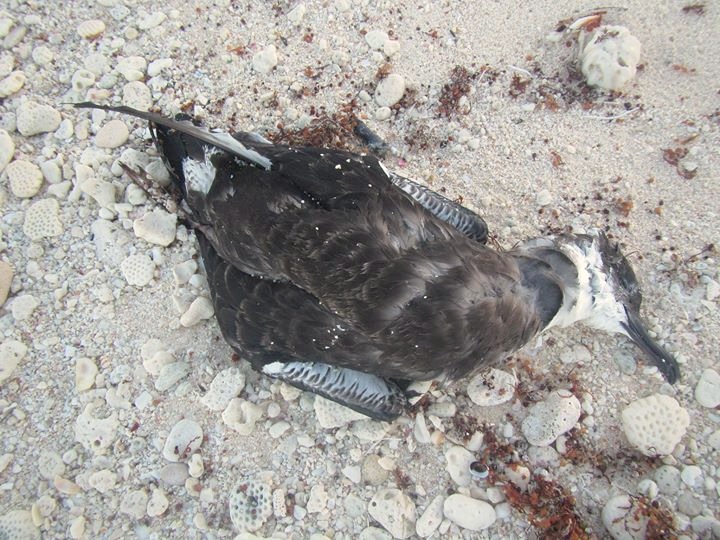
We do not generally do sad or sombre at Rolling Harbour. It’s a beautiful and happy place, and the Delphi Club is a haven of good fellowship and good craic (stemming no doubt from its Irish connections). But I have to report on a sad occurrence on the beach at Delphi and, as it turns out, at many other Abaco locations (and beyond) during June – a notable number of shearwaters being found dying or dead on beaches or else in the sea, their bodies in due course being washed in on the tide.

There are quite a few species of shearwater worldwide, of which 5 are recorded for Abaco. The only permanent breeding resident is the Audubon’s Shearwater, a bird that is quite commonly seen out at sea though not, I imagine, on land. We never managed to obtain a photo of one for “The Birds of Abaco”. I presume there are breeding colonies on Abaco, but not that I have heard about.

Shearwater Checklist, Abaco

As the checklist above shows, three of the other shearwaters are rare transients. These birds fly long migration routes over the ocean and so the casual birder is in practice unlikely to encounter one, let alone get a photograph. The Manx can be ignored as an aberration – the V5 means that one or two vagrant individuals have been recorded since (say) 1950. Great Shearwater Puffinus gravis - Patrick Coin Wiki

My first inkling that something unusual was occurring came a week ago from a FB post by Melissa Maura, whose wonderful parrot and flamingo photos feature elsewhere in these pages. She said …on my rugged Abaco ocean beach last week, were many dead magnificent seabirds – greater shearwaters (about 5) and a couple of Frigate birds… They didn’t appear to wash in on the waves, but appeared to have perished perhaps from exhaustion on the beach”.  Various later comments suggested that this phenomenon had been noted periodically in the past, the last time 4 or 5 years ago. 

Great Shearwater (dec'), Abaco (Melissa Maura)

This was followed a couple of days later by evidence from well-known birding maestro Woody Bracey that living great shearwaters were in Abaco waters, perhaps confirming that they are in mid-migration at the moment. The one in #2 was “caught” 3 miles off Great Guana Cay.

Great Shearwater Abaco (Woody Bracey)Great Shearwater, Abaco boated (Woody Bracey)

Then a couple of days ago Jane Mantle emailed me with photos of some dead birds on the beach at Delphi saying that half- dead birds are washing up on the beach ‘only for the vultures to finish off’.  We must have over 20 with more to come”. I circulated these to the ‘usual suspects’ for ID and comment.

Great Shearwater, Abaco (dec'd) (Jane Mantle)Great Shearwater, Abaco (dec'd) (Jane Mantle)

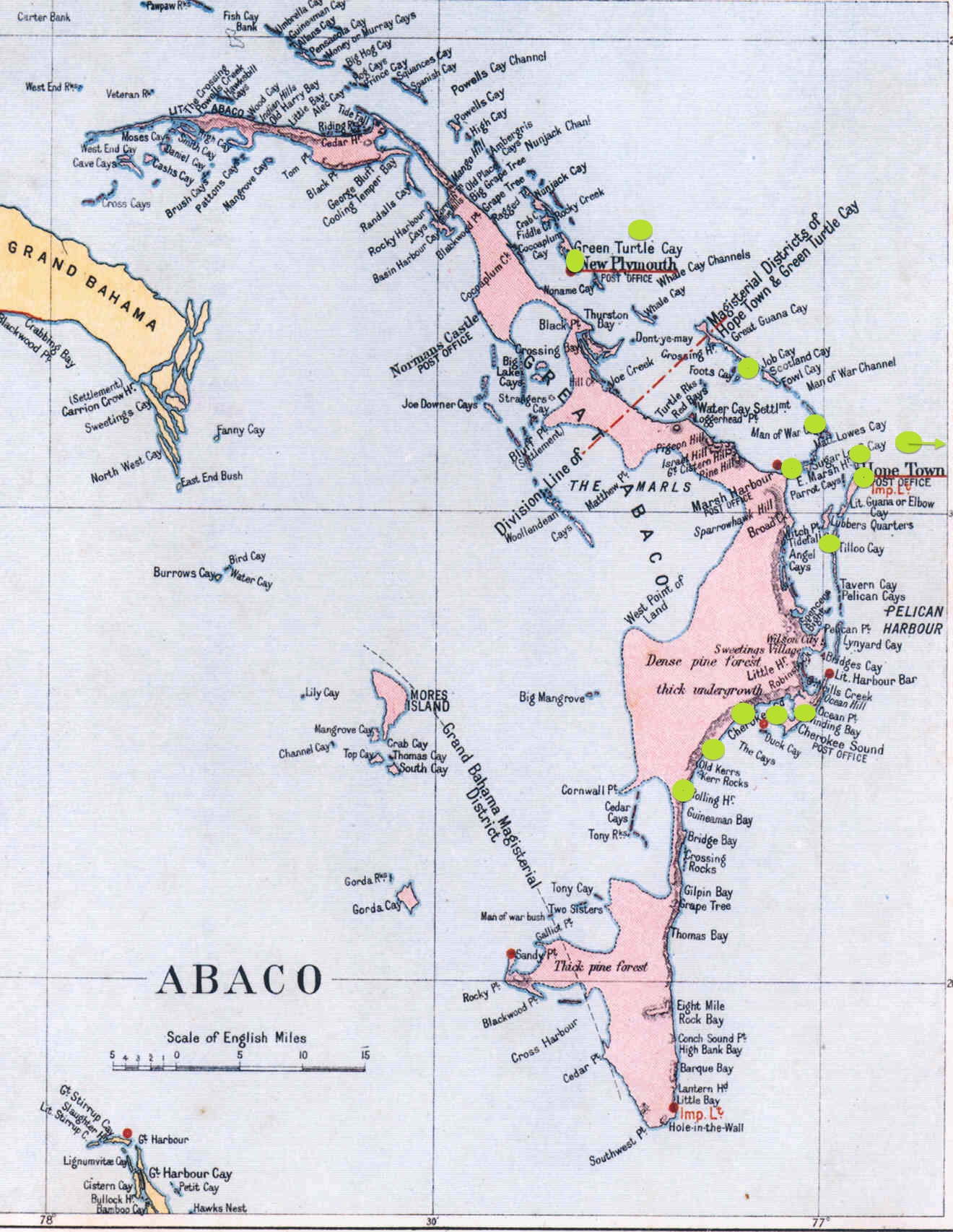
I also posted the photos on my RH FB to see if others had seen anything similar. Many thanks to all those who ‘liked’, shared or commented on the post. Here is a summary of the responses, from which a pretty clear picture emerges of widespread recent shearwater deaths on Abaco mainland and Cays.

  • Delphi Club Beach – 20 plus
  • Bahama Palm Shores – ‘many many’ dead birds washed up on the shore
  • Casuarina Beach – 1
  • Cherokee (Watching Bay) – 3 or 4
  • Cherokee (Winding Bay) – 4
  • Marsh Harbour area – about 5
  • Great Guana Cay, southern end   – 1 (possibly a gull)
  • Tilloo Cay – 13 at least on Junk Beach, more than ever seen (see photos below)
  • Elbow Cay – 2 + 1 Atlantic side beach near Abaco Inn
  • Elbow Cay – 2, North End
  • Green Turtle Cay beach – 2
  • Green Turtle Cay, offshore – “a lot in the water”
  • Man-o-War Cay – 1 by the roadside
  • Ocean 20m from HT Lighthouse – 2 in the sea

also Exuma Sound (5 birds), Briland Beach Harbour Island (“some”) and Shroud Cay (gull?”)

SIGHTINGS MAP, ABACO AS AT 09.00 JUNE 25 (2X click to enlarge)
Shearwater Map, Abaco

Shearwaters at Tilloo Cay (Janie Thompson)

Great Shearwater (dec'd) Tilloo Cay Abaco988563_780040245445527_87776362163085216_n10429826_780040222112196_5624095942981629125_n

Shearwaters on Elbow Cay (Rudolf Verspoor)

11406243_10153041925951245_9107566668485466585_o 11537917_10153041926991245_4040884745830449528_o

WHAT SORT OF SHEARWATERS ARE THESE?

In the main it looks and sounds as though these are migrating great shearwaters. Woody Bracey has identified several dead birds as ‘greats’ from photos, and one as an alive Cory’s shearwater swimming in the sea off the Delphi Beach. ID is not easy, and a few of the birds found may be gulls. It’s possible that there are some Audubon’s shearwaters among the stricken birds, although since they are resident to Abaco that would go against the theory of an exhausted migratory species that has been blown of course en masse.

Great Shearwater Puffinus gravis (JJ Harrison Wiki)

WHAT DO THE EXPERTS THINK?

There are a few obvious contenders for the solution to the riddle of the shearwaters, ranging from the frontrunner migration exhaustion to disease and trash ingestion. The evidence of mass deaths over a wide geographical area during a short time probably rules out trash ingestion – although I’m sure the poor creatures must have plenty of plastic bits inside them. Mass disease striking suddenly over one area is seems unlikely. Once those two possibilities are ruled out, the primary cause, covering most instances of the sad and upsetting phenomenon, becomes clearer.

Lynn Gape of BNT posted the view of William Mackin, a seabird biologist who looked at some of the photos and wrote “The five birds look like greater shearwaters. They breed at Gough Island in the South Atlantic. The young begin life by flying 10000 miles to Newfoundland in the North Atlantic. Some do not make it. They wash up on eastern US and Bahamian beaches. It is sad. We should monitor the numbers. The frequency is variable but possibly increasing.”

Tony White, the omniscient Recorder of Bahamas Birds and compiler of the comprehensive and authoritative checklist for the area, writes: 

“The dead birds on the beach (and in the water) is a phenomenon that happens every five to ten years. According to the late Dave Lee these are young Great Shearwaters migrating from their natal home in the South Atlantic to their feeding grounds off the US and Canada, Combination of poor food supply and wind conditions in the doldrums lead to their expending all their energy and expiring. It is a normal event for this species and has been recorded many times The Great Shearwater population appears to weather the bad years and do well in the good years. Relevant articles are: Lee, D.S. 2009. Mass die-offs of Greater Shearwater in the Western North Atlantic: Effects of weather patterns on mortality of a trans-equatorial migrant. Chat 73(2):37; Seabird Ecological Assessment Network. 2007. Greater Shearwater Die-off in the Atlantic: June-July 2007. Volunteer Newsletter 3(2):2; and Watson, George. 1970. A Shearwater Mortality on the Atlantic Coast.  Atlantic Naturalist 25(2):75-80.

Woody Bracey has now left an informative and perceptive comment: “It’s amazing how far(10,000 miles) these young birds have to travel to their feeding grounds so soon after being fledged. Breeding colonies are on isolated subantarctic islands of the southern hemisphere. Breeding begins in October. Incubation of the single egg lasts 55 days and it is another 105 days until the chick is ready to fly. Each loss of a bird represents much time and effort of a pair to produce a single chick which then has to fly the gauntlet through the windless, often foodless doldrums to reach its northern feeding grounds. So many hazards, so few birds! It’s sad to witness these die-offs but the species still survives. Global warming cannot be helping this species on its journey to the colder, nutrient rich more northern briny destinatioin. Lets stop setting our dumps and forests on fire here in the Abacos. Eventually it will not only affect the Great Shearwaters but us as well”.

I should add that it is reassuring to be able to confirm that, at least at present, the great shearwater is IUCN-listed “Least Concern”

Status_iucn3.1_LC.svg

Great Shearwater in flight (Hardaker)

Tony has asked for all available information Bahamas-wide: “It would be very useful if someone could collect some hard data on the die-off, e.g. when was it first noted and how many birds are found along a given stretch of beach? Check for other species and take a few wings as samples of the desiccated birds. In past events the number of dead birds was much greater on Crooked and Acklin Islands than Abaco. Eleuthera too should be checked if possible”.

Lynn has also asked “Please photograph and count birds found on your beaches and send images and the number counted to me at lgape@bnt.bs. We will send on to William Mackin and Tony White who are keeping records of these occurrences The image with this post is a Greater Shearwater in flight…” (see above, as we would all like to think of these magnificent birds)

Or by all means contact me at rollingharbour.delphi@gmail.com and I’ll pass on any info

STOP PRESS An update to this post written the following week, detailing new sightings and reporting the passing of a sad fortnight of shearwater fatalities in the Bahamas, can be found HERE

A happier great shearwater image to leave you with…
Great Shearwater (Dick Daniels, Wiki)
Credits and thanks to Woody Bracey, Melissa Maura, Lynn Gape, Jane Mantle, William Mackin, Patrick Coin, J J Harrison, Dick Daniels, Norvell Slezycki, Lory Kenyon, Selah Vie, Lindsey Delaphine McCoy, Turtle Cove Tilloo, Janie Thompson, Rudolf Verspoor, Laurie Schreiner, Caroline Woodson Sawyer, Steph Russell, Ashley L. Albury, Dwayne Wallas, Sully Vincent T Sullivan, Ben Albury, Abaco Bulletin, Carol Rivard Roberts, Jason McIntosh, Dale Sawyer, Barbara Trimmer, Dominique Allen, Jessica Aitken and Juana Rudzki, with apologies to anyone else who has slipped through the net…
Unknown's avatar

KILLDEER ON ABACO? IT DOESN’T, BUT ACE NAME ANYWAY


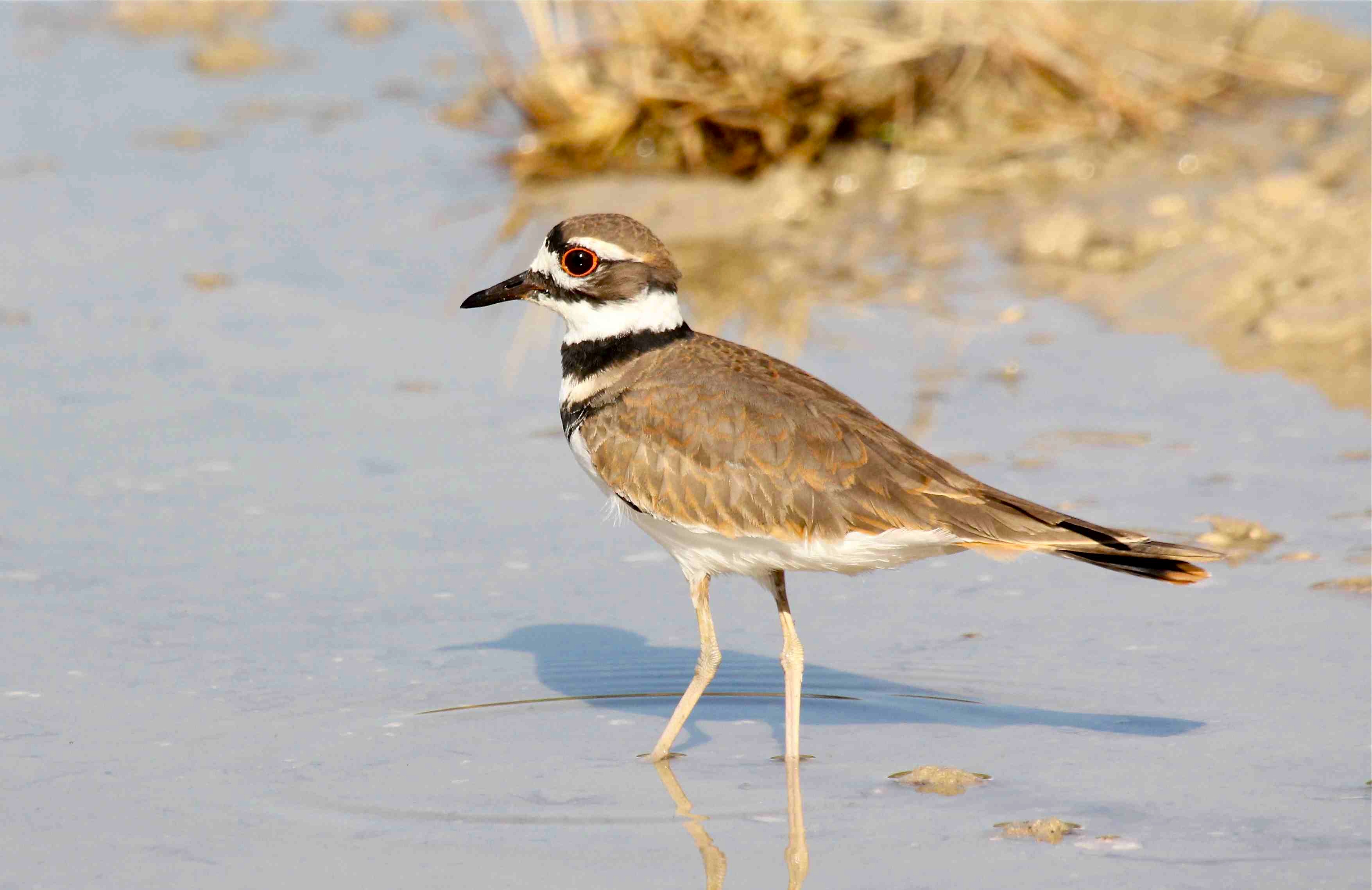
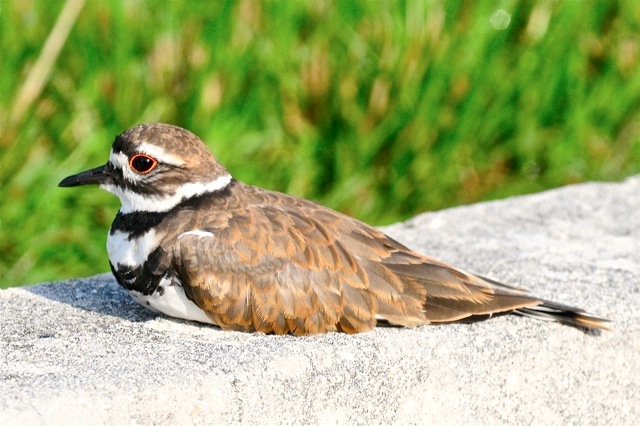
Kildeer, Abaco (Bruce Hallett)

KILLDEER ON ABACO? IT DOESN’T, BUT ACE NAME ANYWAY

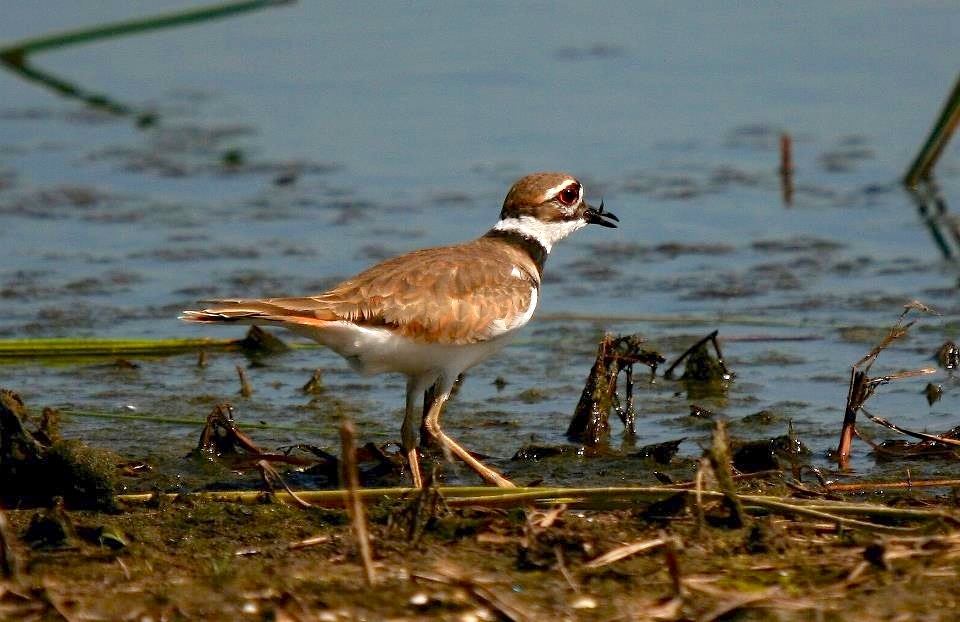
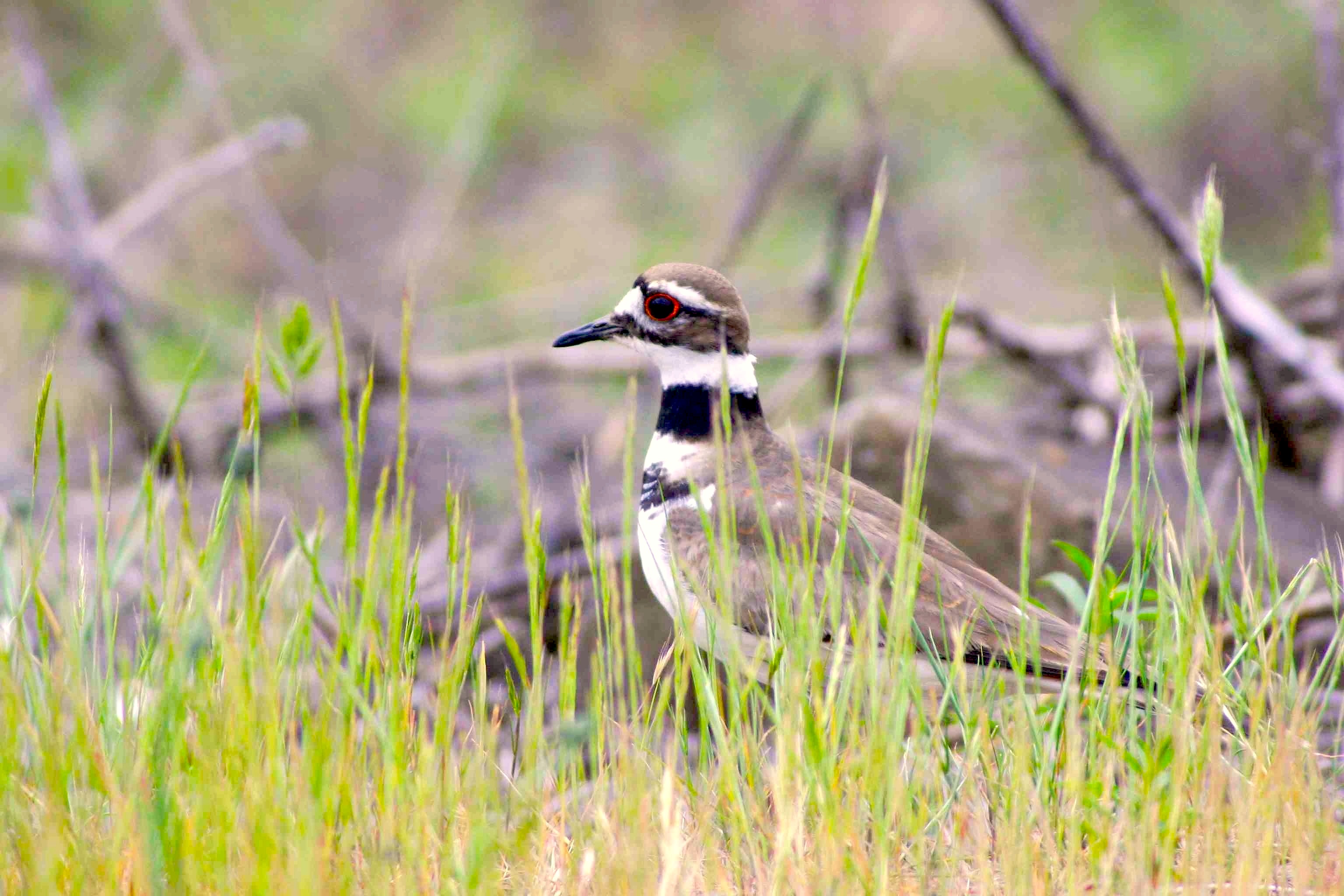
The KILLDEER Charadrius vociferus is a fairly common winter resident plover on Abaco. They can often be found on the Delphi beach, and the lovely beach at Casuarina is another place to spot them. They can easily be distinguished from other plover species, being the only ones with two black frontal bands – see above and below. The lower picture, you’ll be relieved to hear, is not the fabled ‘legless killdeer’, but is simply having a little rest on a nice warm wall.

Killdeer, Abaco (Tony Hepburn)

The killdeer’s name is a bit of a puzzle, frankly. The Latin term Charadrius vociferus basically means “shouty plover”, but it’s a long way from that to “killdeer”. This is another one of those bird names that are allegedly onomatopoeic – and thankfully it has nothing whatsoever to do with savage behaviour involving Bambi and his ilk (or elk, even). Supposedly the killdeer call is “Kill…Deer”, in the same way as the bobwhite calls an interrogative “Bob…White?”. 

Killdeer - Harrold & Wilson Ponds, NP (Rick Lowe) copy

Consulting some random authorities reveals divergence of opinion on the issue, with definite bet-hedging between ‘kill-dee’ variations and ‘dee dee dees’. Except for Messrs Flieg & Sanders who opine (rudely) ‘the shrill, loud, monotonous call resembles its name’. Yet while I completely get the ‘Bob…White?’ thing, I’m not so sure with the killdeer. Were I a little killdeer, it’s a name I’d like to have anyway. Respect! But what do these sound like to you?

or this

Guillermo Funes Xeno Canto

or this

Peter Boesman Xeno CantoKIlldeer (Danny Sauvageau)

I’ve mentioned the distinctive double black breast-bands that distinguish the killdeer from its brother plovers. These can be seen at quite a distance, as this shot on the Delphi beach by Mrs RH shows (the tracks are from Smithy’s seaweed-clearing tractor).

Killdeer SS edits

The babies are, like all plover chicks, totes irresistibz munchkinsKilldeer hatchling (NTox)Killdeer FB

And like other plovers, a killdeer will defend its nest and young with a broken wing display to distract predators, lurching pathetically across the sand, moving ever further away from the nest. 

I think we can safely conclude that, while the bird doesn’t quite live up to the cervidae-cidal tendencies suggested by its name, nor even sound particularly as though it is saying “killdeer”, it is a very attractive plover to have around whatever the heck its call may resemble.Killdeer, Abaco (Erik Gauger)

Photo credits: Bruce Hallett, Tony Hepburn, Rick Lowe, Danny Sauvageau, Mrs RH, NTox, Very Recent FB & I’ll track down the source if it kills me**, Erik Gauger

** Got it now: The very excellent Mike Bizeau, whose on his wonderful NATUREHASNOBOSS website posts a single daily image. Many are birds, some are landscapes, some are other things that have caught his eye. I get a daily email, and am invariably impressed by the quality of the images…

Unknown's avatar

IT’S A WARBLER. WITH A YELLOW THROAT. ON ABACO. SIMPLE?


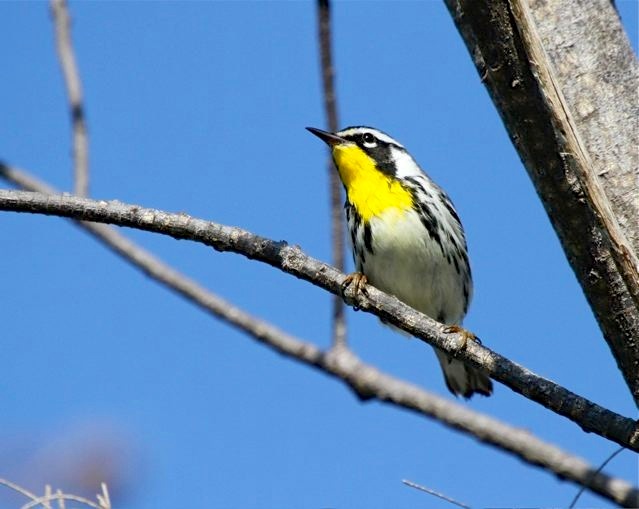
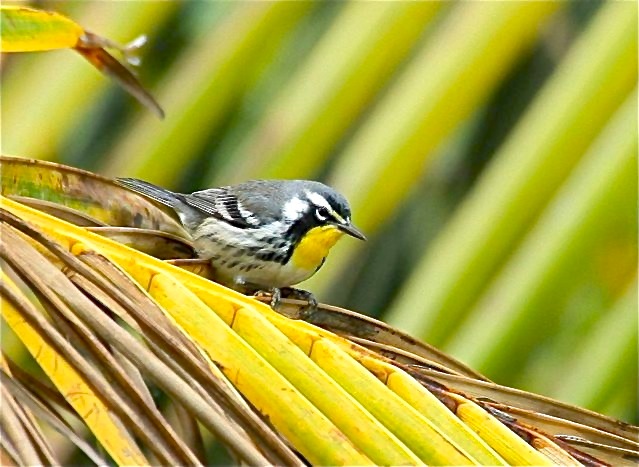
Yellow-throated warbler, Abaco  (Keith Salvesen)

IT’S A WARBLER. WITH A YELLOW THROAT. ON ABACO. SIMPLE?

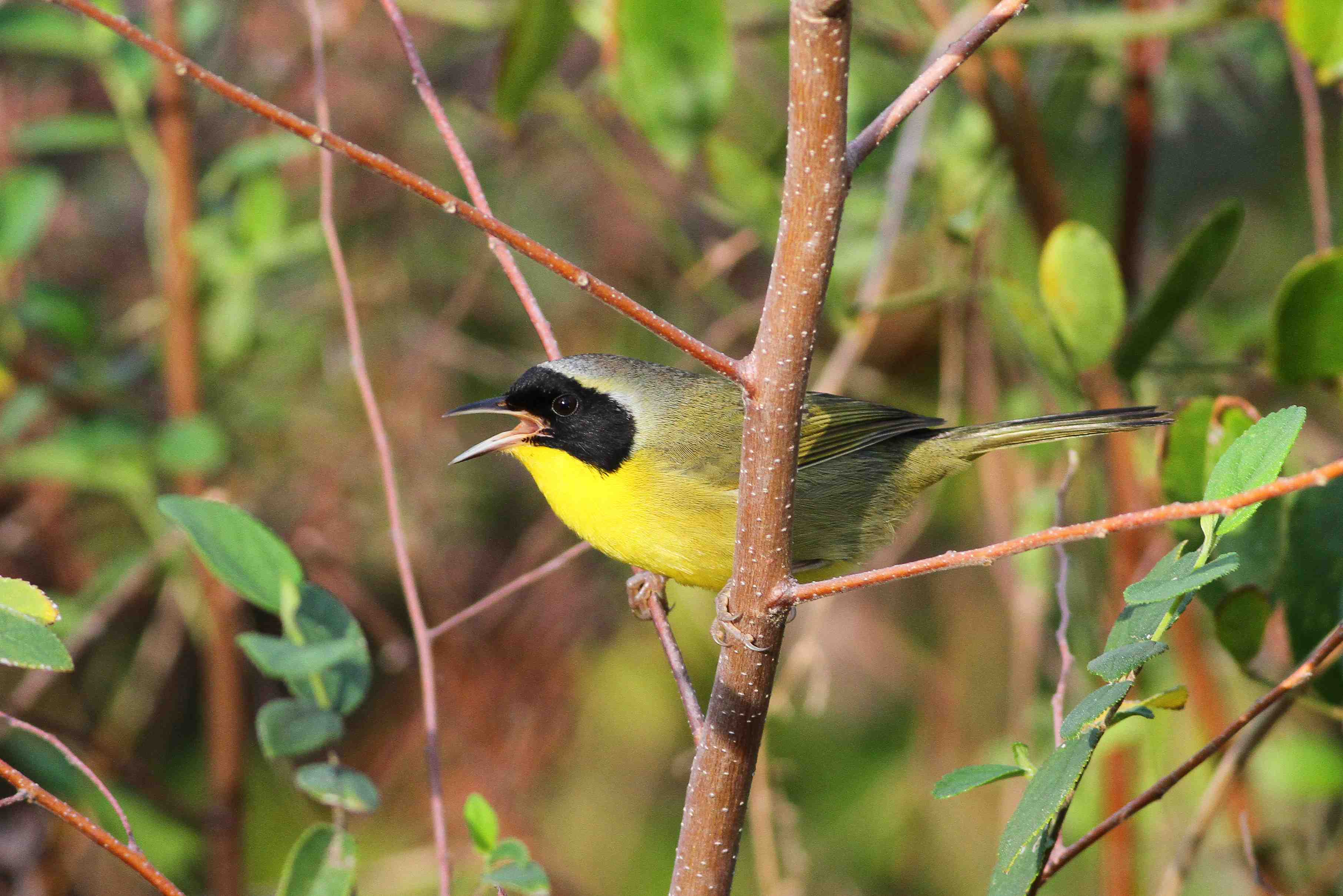
The Yellow-throated Warbler (Setophaga dominica) is a most helpful warbler, in that what you see is what you get. You needn’t go to embarrassing lengths to determine whether it has a Yellow Rump. It doesn’t make extravagant geographical claims like the Cape May, Kentucky, Tennessee, Nashville or Connecticut warblers. It doesn’t disguise its warblerdom with a confusing name like ‘American Redstart’ or ‘Ovenbird’. Nor with a weird warbler name that is completely obscure like the Prothonotary. It’s a winter resident only, so it won’t try to puzzle you in the summer. The males and females are roughly similar in appearance, unlike so many species. All-in-all, a most agreeable and obliging little bird. Here are a few to enjoy, before I spoil the magic slightly…

Yellow-throated Warbler, Abaco (Bruce Hallett)Yellow-throated Warbler, Abaco (Bruce Hallett) 2Yellow-throated warbler, Abaco (Erik Gauger)

YTWs are quite pose-y birds, and tend to strike attitudes. One is the ‘head-in-the-air’, as below and further above. There’s the ‘butt-in-the-air’ too, immediately above (one of my favourite photos)Yellow-throated Warbler, Abaco (Becky Marvil) Yellow-throated Warbler, Abaco - Becky MarvilYellow-throated warbler, Abaco  (Keith Salvesen)

This shape is both characteristic and characterful. You might call it the ‘sag-in-the-middle’Yellow-throated warbler, Abaco  (Keith Salvesen)

This year I saw my first YTW in the Delphi Gardens, skulking around in a Gumbo Limbo tree. Having taken a number of rather poor shots – partly due to the intervention of branches, twigs, leaves, berries, shaky hands and so forth – I got some clearer shots at it, the two above and below being the best of an indifferent bunch.Yellow-throated warbler, Abaco  (Keith Salvesen)Yellow-throated warbler, Abaco  (Keith Salvesen)

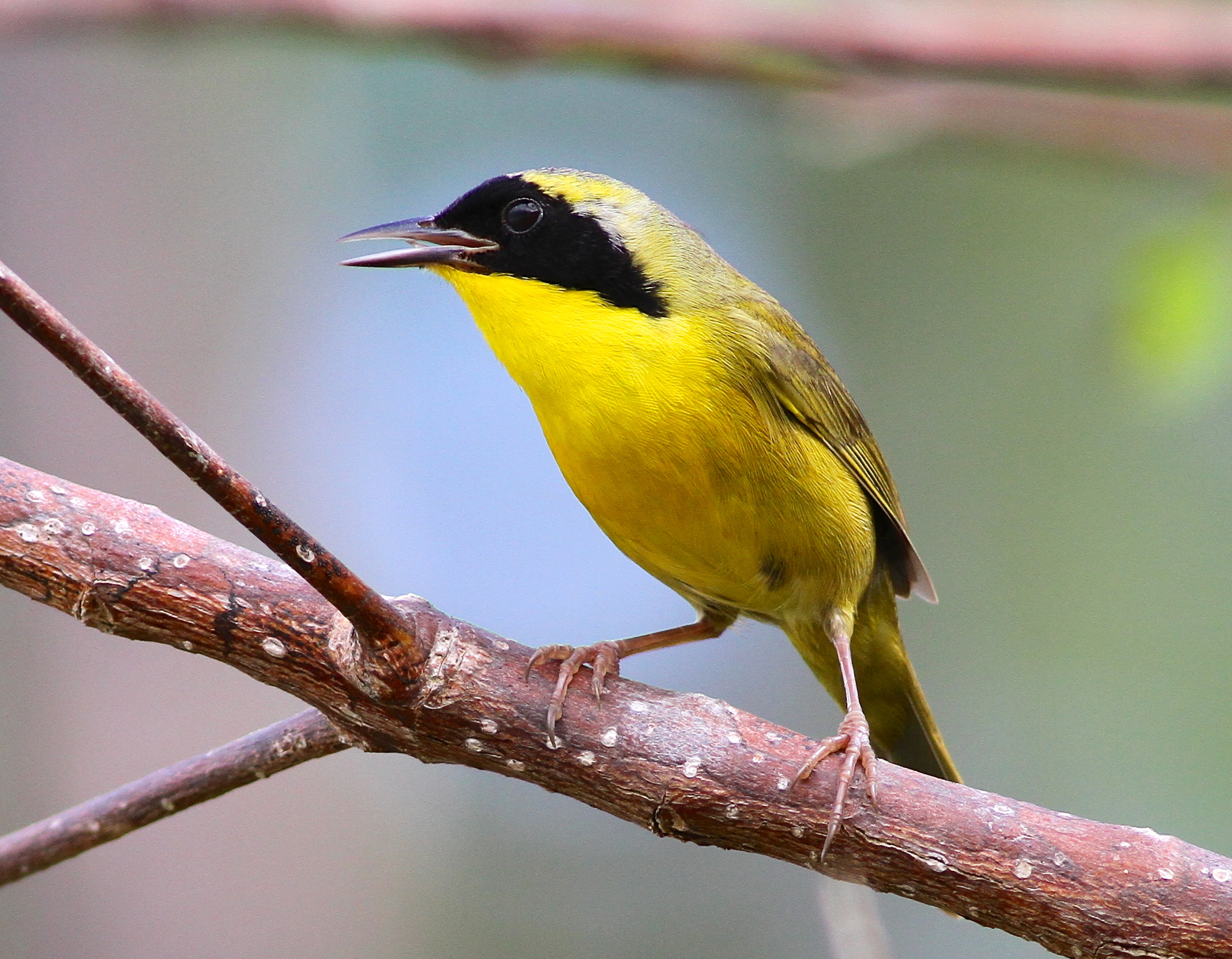
I said earlier that the magic of the apparently simple ID of a warbler that lives up to its name would have to be spoiled. I’m afraid this little gallery rather undoes the certainties I’d promised… two more species common to Abaco, also named for their yellow throats (yet it’s more extensive than just the throat, anyway) . 
BAHAMA YELLOWTHROAT
                                                     20130106_Bahamas-Great Abaco_4846_Bahama Yellowthroat_Gerlinde Taurer copy Bahama Yellowthroat (m) Bruce Hallett
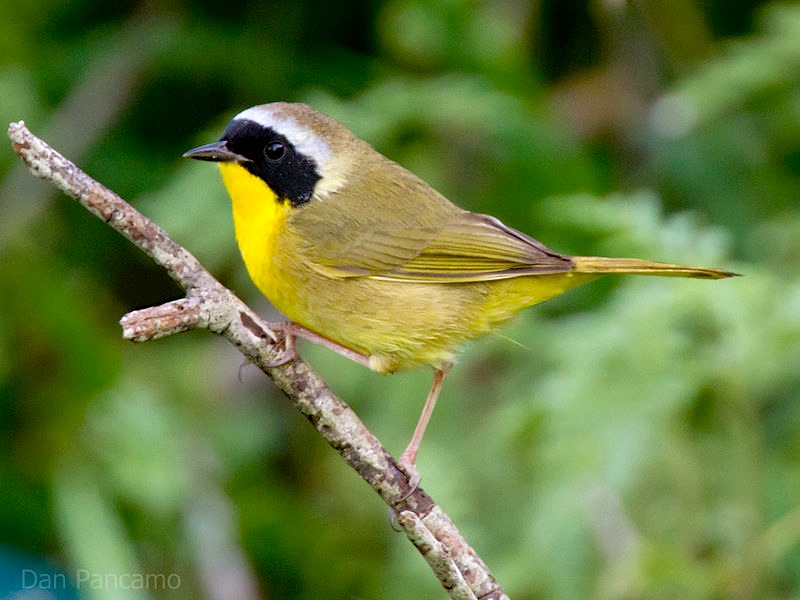
COMMON YELLOWTHROAT
800px-Common_Yellowthroat_by_Dan_Pancamo Common Yellowthroat, Gilpin Pond, Abaco Bahamas (Tom Sheley)
You’d really think that someone at Audubon Towers or Cornell Castle might have thought of calling these two species ‘Bahama’ and ‘Common’ Masked Warblers, wouldn’t you – after all there’s a Hooded Warbler, which indeed has a hood. No other warbler has a mask like these 2. Then any confusion could be avoided. So remember: the Yellow-throated Warbler has a yellow throat AND is otherwise black and white, with streaks. Erm, just like a…
BLACK AND WHITE WARBLER

Black & White Warbler (Wiki)

RELATED POSTS
 
Credits: RH (1,7,8,9,10); Bruce Hallett (2, 3); Erik Gauger (4); Becky Marvil (5, 6). Thumbnails: Gerlinde Taurer, Bruce Hallett, Dan Pancamo, Tom Sheley, Wiki
Unknown's avatar

‘TYRANTS OF ABACO’: FLYCATCHER ID (1) – LOGGERHEAD vs GRAY KINGBIRD


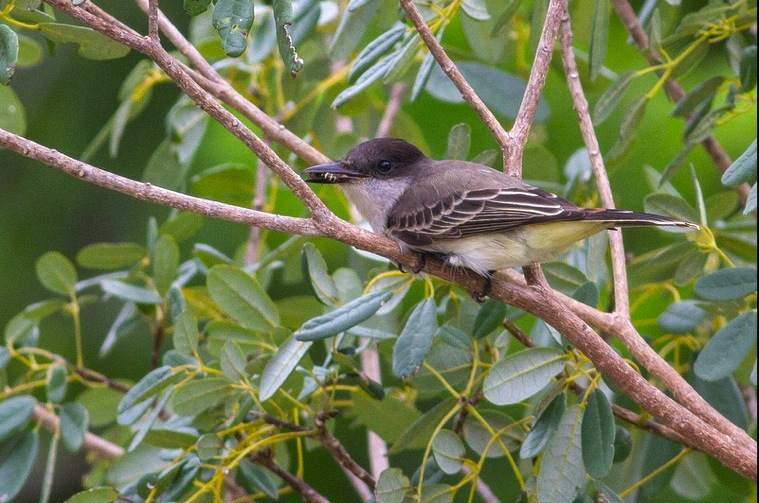
Loggerhead Kingbird, Abaco - Tom Reed

Loggerhead Kingbird with bee. Note dark head, yellowish underside

‘TYRANTS OF ABACO’: FLYCATCHER ID (1)

LOGGERHEAD vs GRAY KINGBIRD

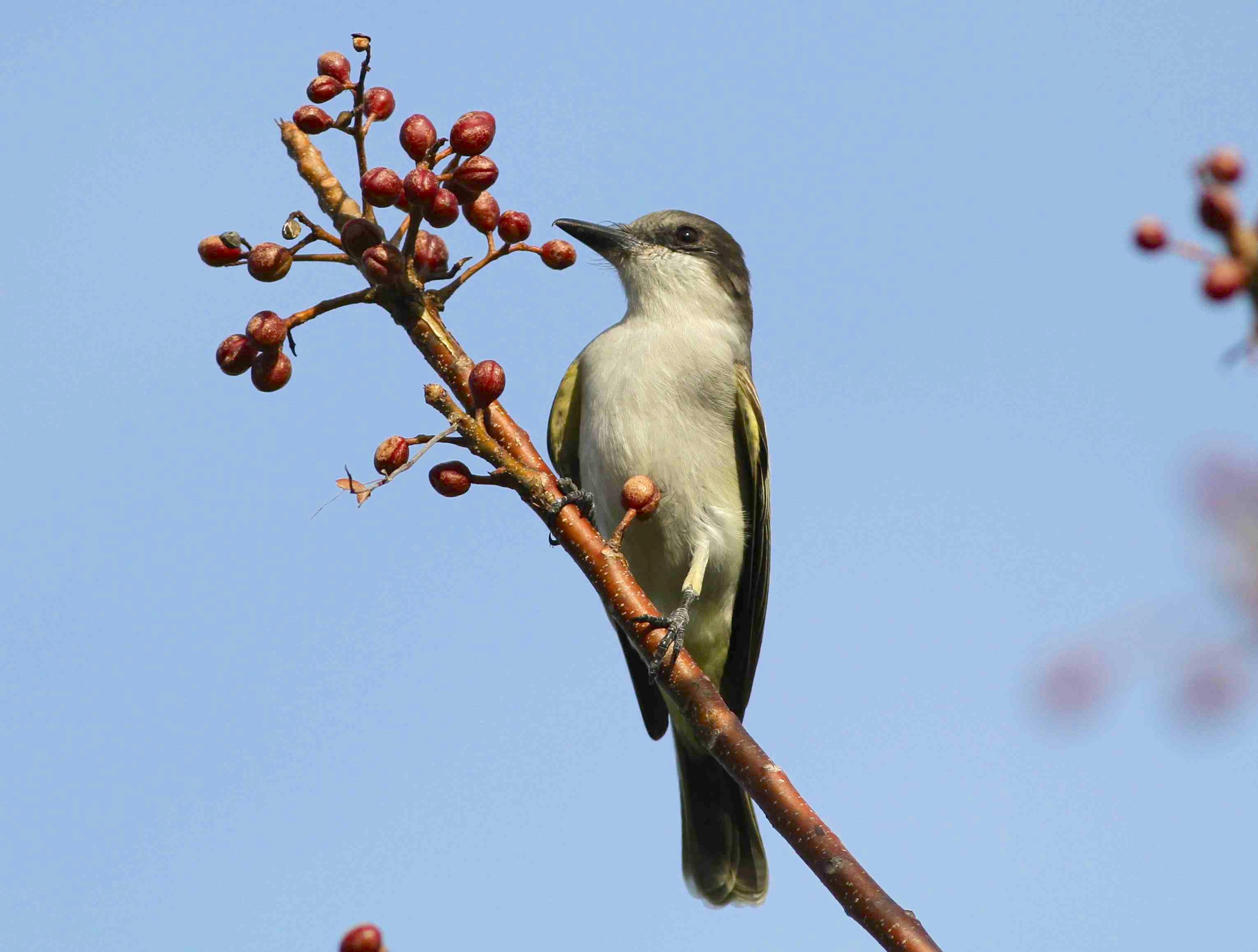
Gray Kingbird, Abaco - Tom Sheley

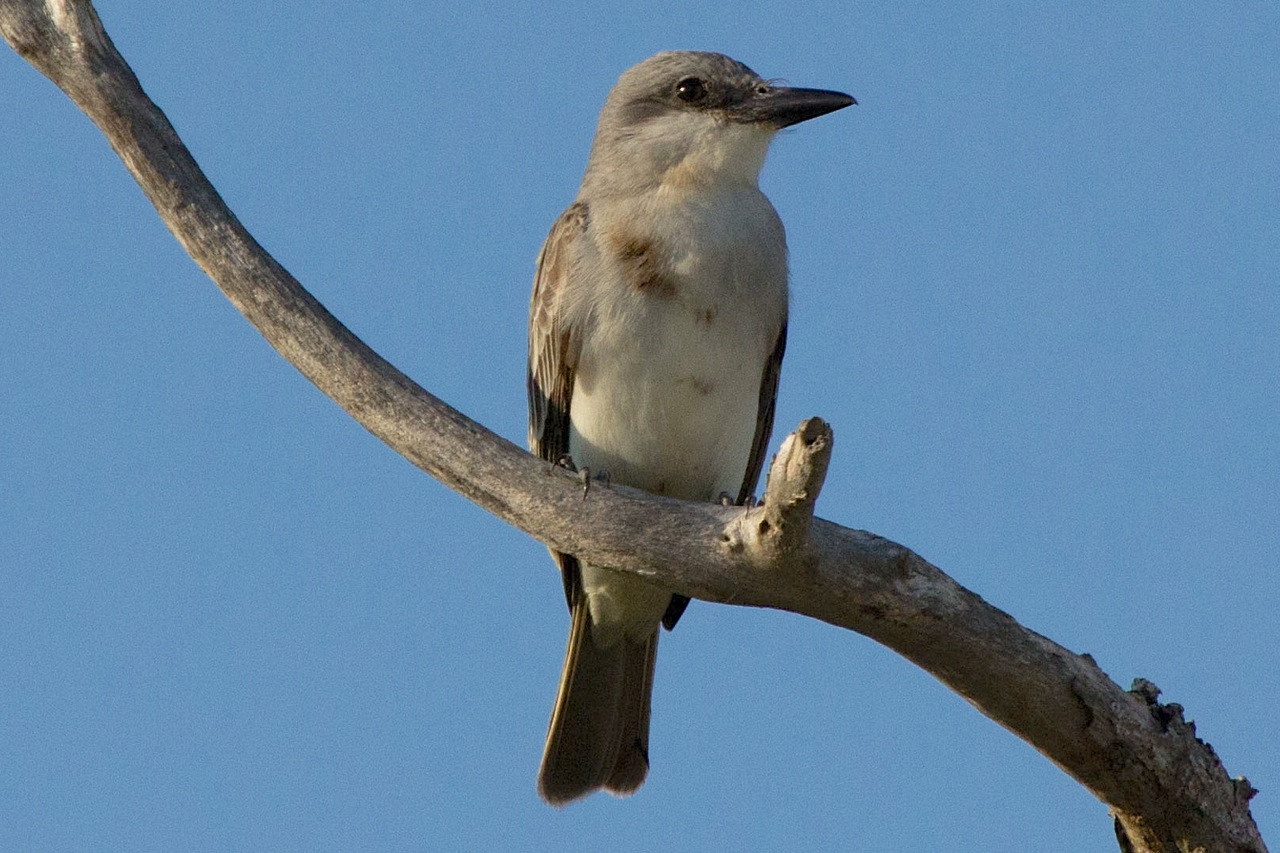
Gray Kingbird: note dark eye ‘mask’, lighter head, mainly white underside & notched tail

Abaco has 275 (or so) recorded bird species. Omitting the transients, vagrants and (frankly) oddities – hello, feral peafowl of Casuarina – and concentrating on the residents and the summer / winter migrants brings the checklist down considerably. Maybe to around 200. But there is still an awful lot of scope for species confusion. This is frequently found with the warblers (37 species, mostly yellow), shorebirds and (my particular blind spot) gulls & terns with all their gender, age, season and breeding plumage variations. There is one common confusion that surrounds just 4 birds. I’ve decided to tackle the issue because these are the birds I am most frequently asked by people to identify. They send me their photos or a link, or post them on my FB page, and I am always delighted to help. Except… I get confused myself sometimes. So now I plan to demystify the Tyrant Flycatchers (Tyrannidae) of Abaco once and for all. Or for the time being, anyway.

ABACO’S TYRANT FLYCATCHER SPECIES

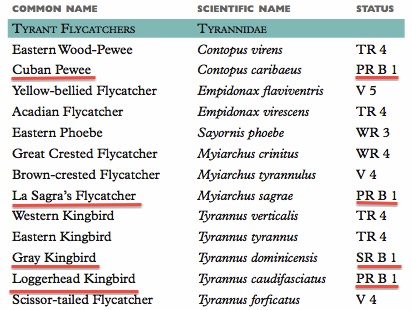
Tyrant Flycatcher Checklist jpg

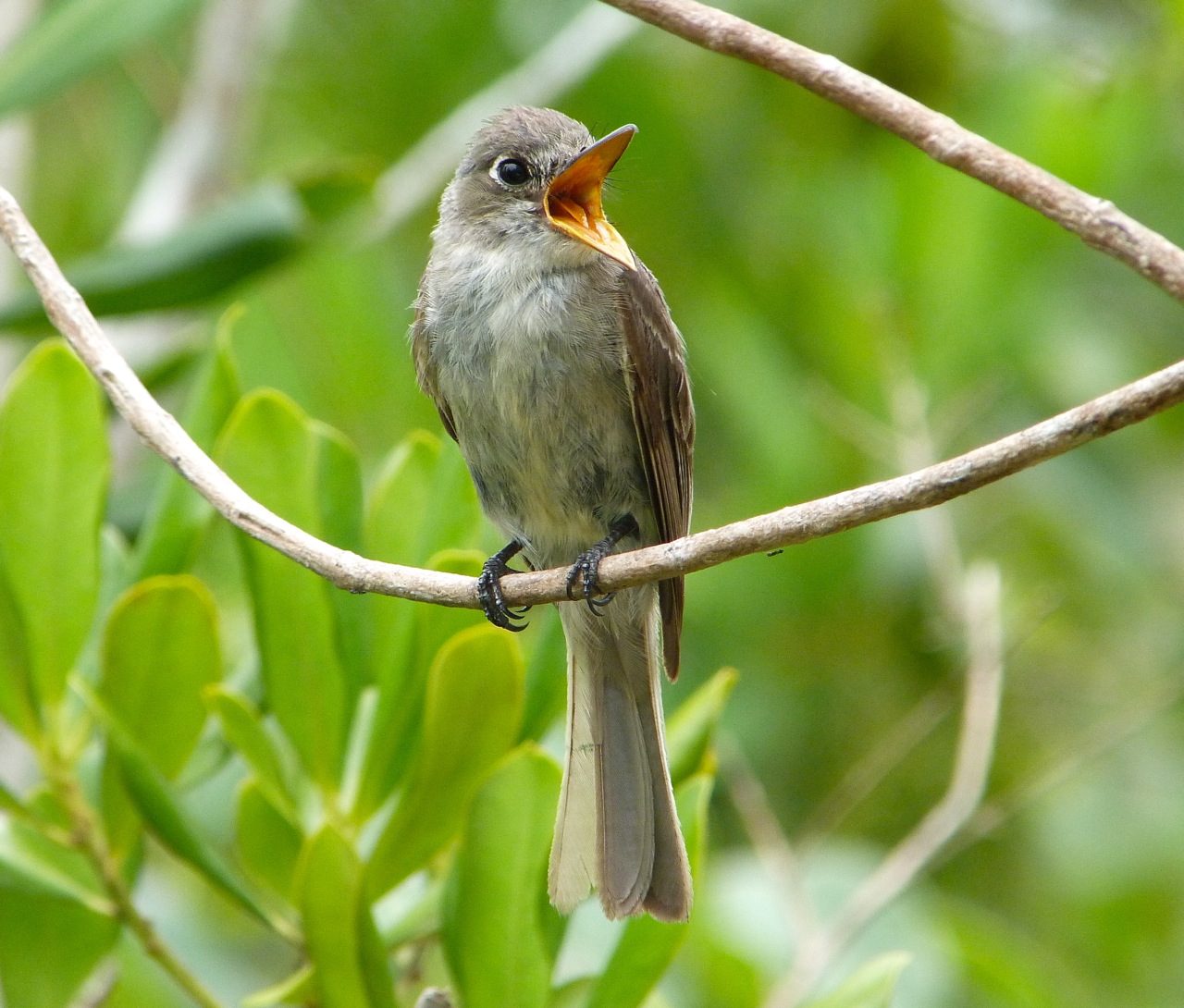
There are 14 tyrant species recorded for Abaco, as listed in the checklist clip above taken from “THE BIRDS OF ABACO” (a FORK-TAILED FLYCATCHER was seen recently for the first time on Abaco, and will in due course be added to the checklist). You’ll be relieved to learn that we can at once dispense of 10 of the above for present purposes. In practical terms – i.e. everyday life – the only flycatchers you need to be concerned with are the 4 underlined in red above: Cuban Pewee, Gray Kingbird, La Sagra’s Flycatcher and Loggerhead Kingbird. The underlined codes provide useful information for each bird .

  • PR 3 of the 4 are permanent residents – not the gray kingbird, which is SR a summer resident
  • B    these 4 are the only flycatchers that breed on Abaco
  • 1     all 4 are widespread, commonly and easily found. All other candidates are unusual to very rare
Loggerhead Kingbird, Abaco - Gerlinde Taurer

Which is this?

LOGGERHEAD Tyrannus caudifasciatus vs GRAY Tyrannus dominicensis 

DIFFERENCES and SIMILARITIES

TOP TIP ANY KINGBIRD SEEN IN WINTER WILL BE A LOGGERHEAD

  • A kingbird seen between (say) October and March is a Loggerhead. Grays are strictly summer visitors
  • Both are medium size birds and roughly the same size as adults (around 23 cms)
  • Loggerheads have dark brownish heads (some say black), grays have lighter, slate-coloured heads
  • Loggerheads have a ‘squared’ tip to the tail; grays have a notched tip
  • Loggerheads may have a whitish fringe at the tip of the tail; grays not so
  • Loggerheads have yellowish tinges to their white undersides & forewings; grays less so or not at all
  • Grays have a dark or black ‘mask’ through the eyes, often clear but not always easy to see
  • Loggerheads allegedly have inconspicuous orange head crests; grays are red. I’ve never seen either!
  • [*RH opinion alert*] Grays have larger, heavier beaks than loggerheads
  • Grays are territorially aggressive; when they turn up, the loggerheads tend to retreat to the forest

Here is how David Sibley shows the differences

 6323_Sibl_9780307957900_art_r1 3069_Sibl_9780307957900_art_r1-1

Illustrations: David Allen Sibley

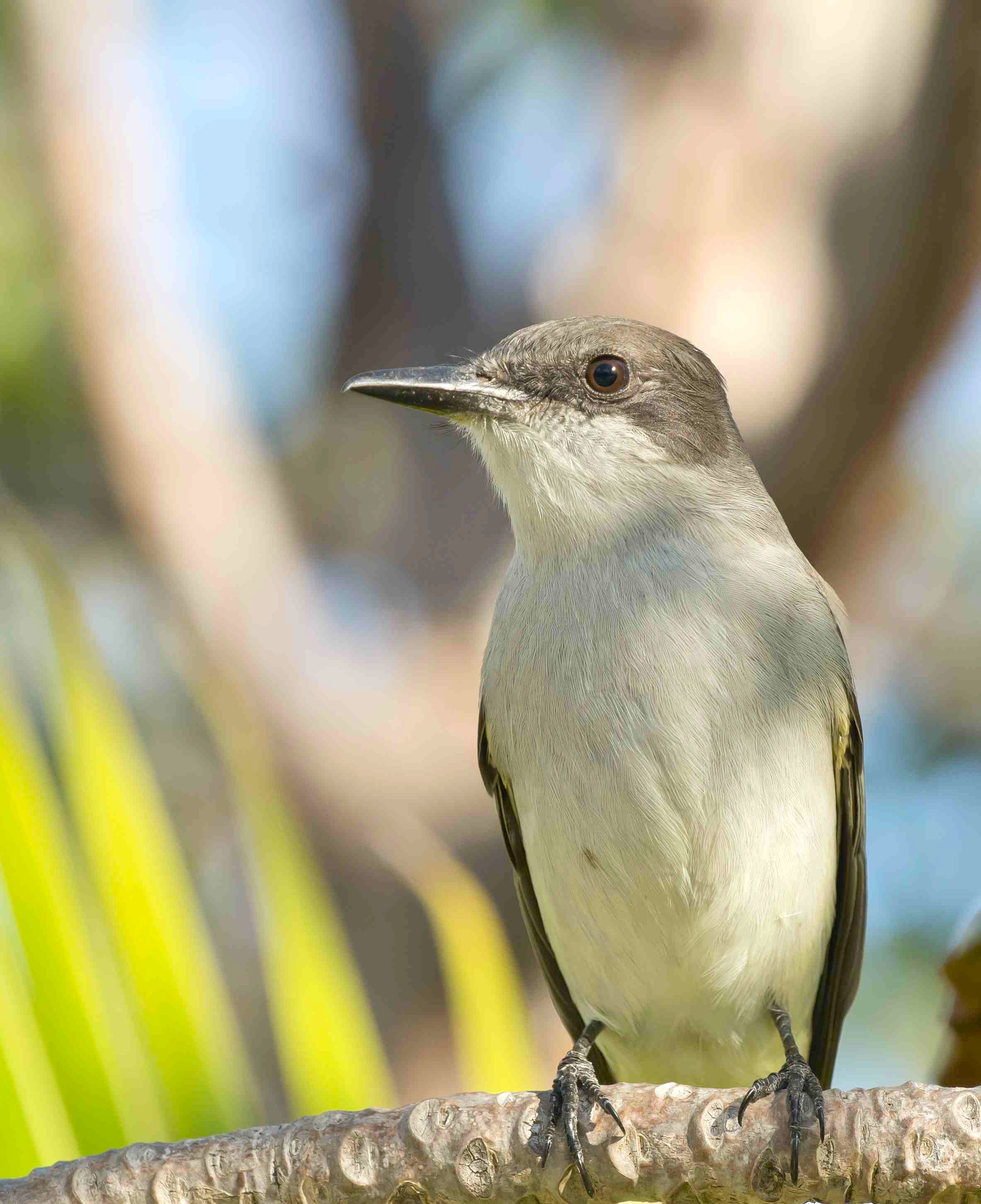
Gray or Loggerhead? Note the light head, discernible mask & notched tailGray Kingbird, Abaco - Tom Sheley

Loggerhead or Gray? Note the darker head and no maskLoggerhead Kingbird.Abaco Bahamas.Tom Sheley

GRAY KINGBIRDS: masked & notch-tailedGray Kingbird, Abaco - Alex Hughes Gray Kingbird (Charlesjsharp Wiki) Gray_Kingbird (Dick Daniels Wiki)

CLASSIC LOGGERHEAD: squarer tail, yellowish underside, dark head, hint of a crestLoggerhead Kingbird Abaco - Peter Mantle

COMMON TO ALL FLYCATCHERS An Insect ‘Hook’ at the tip of this Loggerhead’s ‘top’ billLoggerhead Kingbird, Abaco (Mrs RH)

MEMORABLE FACT TO DEPLOY IN CONVERSATION

The collective names for a group of kingbirds are: a Court, a Coronation, or a Tyranny

I hope this helps with ID, but it’s fair to say that even the birds shown here don’t conform strictly to the rules. A couple of gray kingbirds have distinctly yellowish undersides. And the real problem is this: you see a medium-size bird. It is hawking for insects. It is high summer. It’s a kingbird. It is 150 feet away, and against the sun. It’s just a darkish bird. You can’t see a notched tail or yellowish underside, still less a mask. But at least you can be confident that you can restrict the ID to just 2 birds… Just ask me which, and I’ll do my best…

NEXT UP LA SAGRA’S FLYCATCHER vs CUBAN PEWEE 

Credits: Tom Reed (1), Tom Sheley (2, 4, 5), Gerlinde Taurer (3), Mrs RH (6, 7), Alex Hughes (8), Charles Sharp (9), Dick Daniels (10), Peter Mantle (11), RH (12); Illustrations David Sibley

Unknown's avatar

WEST INDIAN WOODPECKERS ON ABACO: GUEST POST


WEST INDIAN WOODPECKERS ON ABACO: GUEST POST

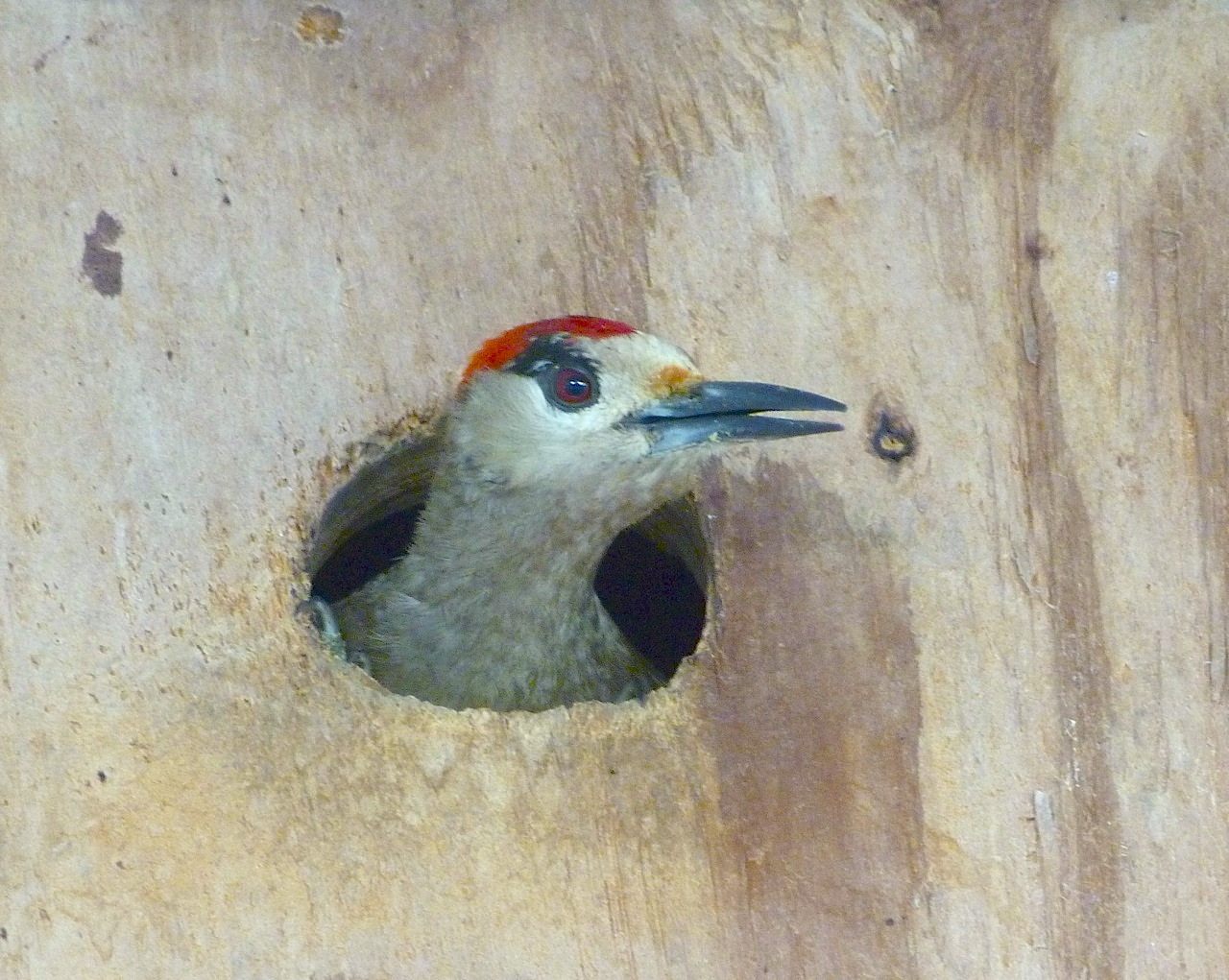
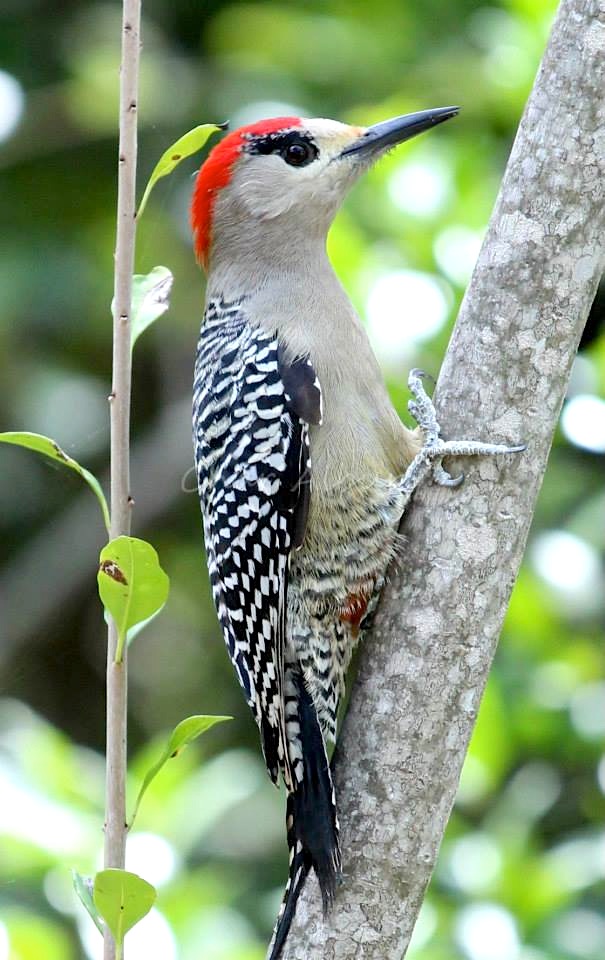
The WEST INDIAN WOODPECKER Melanerpes superciliaris is a specialist bird of Abaco, where it is common. The only other island in the Bahamas where it is found is San Salvador, where it is uncommon. Formerly found on Grand Bahama, it is now believed to be extirpated from that island, with no recent recorded sightings. In the early days at Delphi, we had to put up 2 nest boxes under the eaves to discourage the woodpeckers from destroying the woodwork – very effective, since they are now used every year by a pair that raises a family in one of the boxes and, even before the chicks have fledged, are busy kitting out the second box for a second family… 

WIW box Delphi

Charmaine Albury is a resident of Man-o-War Cay, Abaco. A photographic contributor to THE BIRDS OF ABACO, she is an enthusiastic birder and very handy with a camera. MOW has had a great winter season for birds, especially warbler species, and Charmaine has been recording her sightings and posting about them regularly. She has now started a photographic Facebook page SEES THE DAY which I commend to anyone wanting an overview of the rich birdlife of Abaco. This post shows some of her excellent recent photographs of West Indian Woodpeckers on Abaco. The male has the striking red crown; the female has a smaller, paler cap.

11035287_1625338024365232_6166437311448663000_n

20417_1625338127698555_7498796397392575987_n

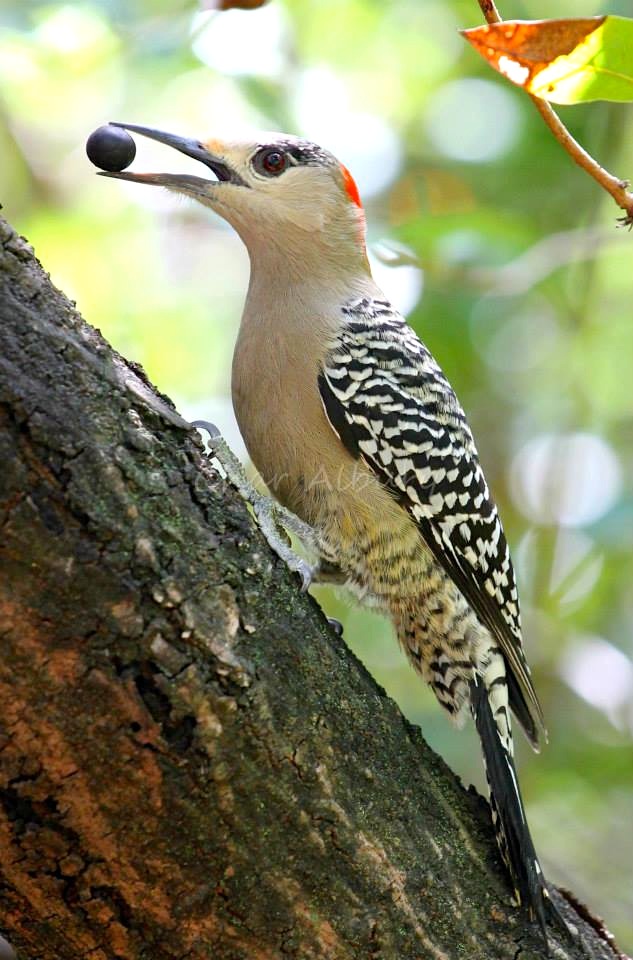
PLAYING WITH YOUR FOOD? HOW MUCH FUN CAN YOU HAVE WITH A BERRY?11117259_1625337987698569_7452867222430469765_n10942602_1625337984365236_7839433915910857592_n

and… pop it into the hole. Score!20417_1625338031031898_5316912847301464680_n

11035287_1625338024365232_6166437311448663000_n

NOW IT’S TIME TO VISIT THE STONE THING THAT HAS WATER IN IT10309181_1625338207698547_743705503764216360_n11080986_1625338147698553_6862424132411400508_n11060458_1625338187698549_1989610138388453679_n

   11035287_1625338024365232_6166437311448663000_n

MY TURN ON THE TREE NOW11133685_1625338034365231_5375400946628441291_n

GETTING A BIT SLEEPY NOW. GOT BED HEAD…11111962_1625338074365227_2479363145688616600_n

All photos Charmaine Albury, with many thanks for use permission. Delphi WIW in nest box & all silly anthropomorphising captions are down to me…

Unknown's avatar

ABACO, HERE WE COME – READY OR NOT…


Pelangi Store, eBay

ABACO, HERE WE COME – READY OR NOT…

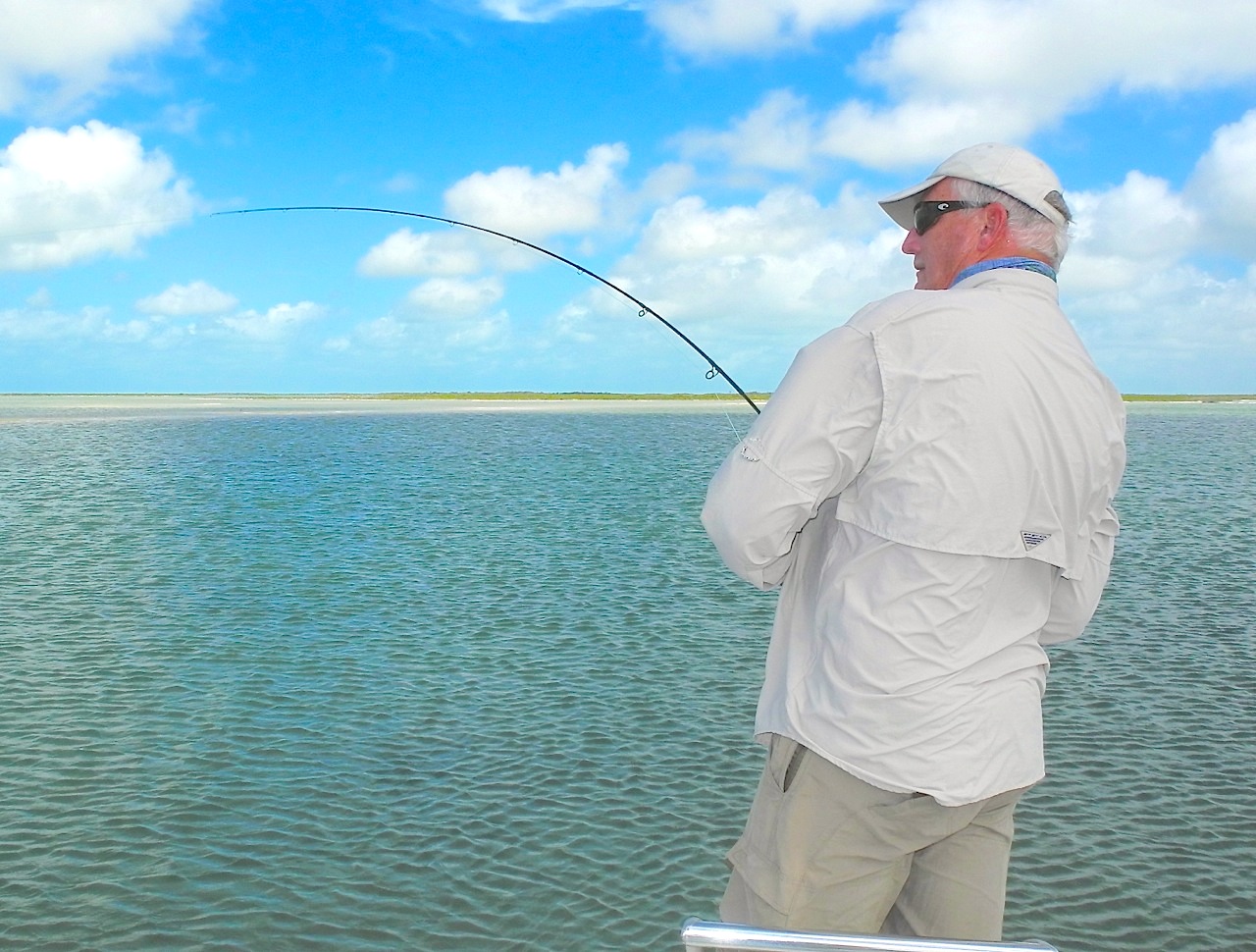
The seats are chosen, the online check-in done, the die is cast… Mr and Mrs Harbour are on their way in the BA cattle truck. Laptops are to be abandoned for the duration, but I intend to post occasional things of interest by iPhone – a Kirtland’s warbler sighting, maybe (I wish!) or a fish that has stupidly managed to impale itself on my hook perhaps. Normal blogging service, if there is such a thing round here, will be resumed in due course… 

Fish on! Abaco Marls RH

FISH ON!

“THE BIRDS OF ABACO”

The book was launched at the Delphi Club exactly one year ago. We have been really delighted by the huge interest in it and the enthusiasm for it shown by so many people – residents, migratory residents and transients. There are still copies available*. If anyone would like a signed copy while we are at Delphi, I’m sure that can be arranged. I shall bring my special signing pen (it doesn’t smudge!) just in case…

flyer 2 copy

It’s possible – by which I mean highly likely, of course – that perceived ‘downtime’ on Abaco will in fact be quite busy. Fishing. Birding. Beaching. Pooling. Talking. Drinking. Eating. Sleeping. So apologies in advance if I’m not so responsive to comments, Facebook stuff and general soshul meeja matters. No offence meant and I hope none taken – I’ll try to keep up with it or play catch up in due course. Anyway, for those who kindly stick with Rolling Harbour or drop in occasionally, much appreciated… 

DELPHI SUNDOWNDelphi Club Abaco Portrait FV

*The price shown in the flyer for the book is now $150 to take account of the VAT. The publisher has absorbed the balance

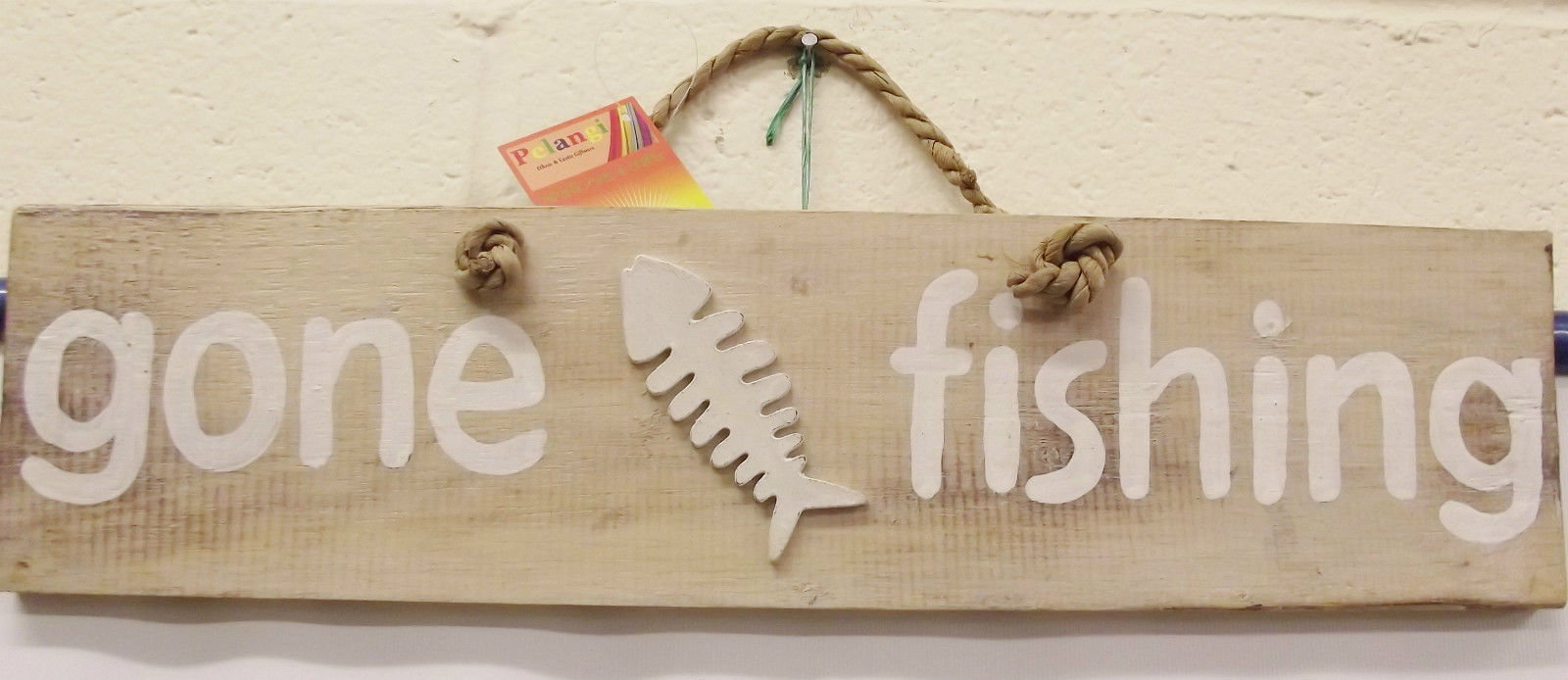
Fishing sign pic: Pelangi Store, eBay. I ‘borrowed’ it, but who knows, they might make a sale as a result…

Unknown's avatar

THE PECKING ORDER: FEEDER GREED ON ABACO


Black-faced Grassquits, Delphi, Abaco 2

THE PECKING ORDER: FEEDER GREED ON ABACO

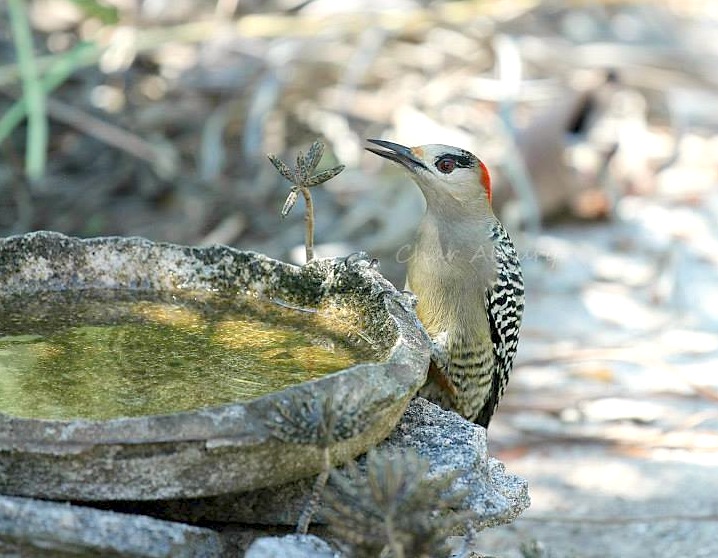
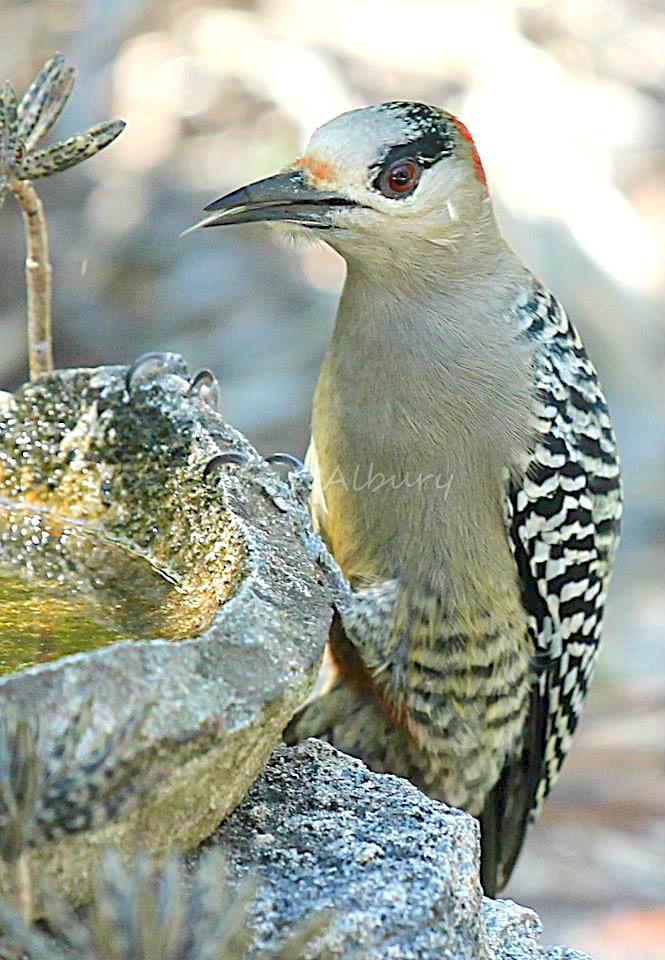
At Delphi there are several feeders, with seeds for the garden birds in general, and sugar water feeders for the specialist hummingbirds. The seed feeders are the cause of a certain amount of species squabbling, with a pecking order based on size. Smaller birds tend to give way to larger, and either flutter down to the ground to pick up dropped seeds or fly off to the bushes until it’s safe to return.  The hummer feeders are also visited by birds with adaptive beaks to fit the tiny holes, such as bananaquits; and birds with long and probing tongues like the resident West Indian woodpeckers. The hummers tend to flit away until the intruders have flown off again.

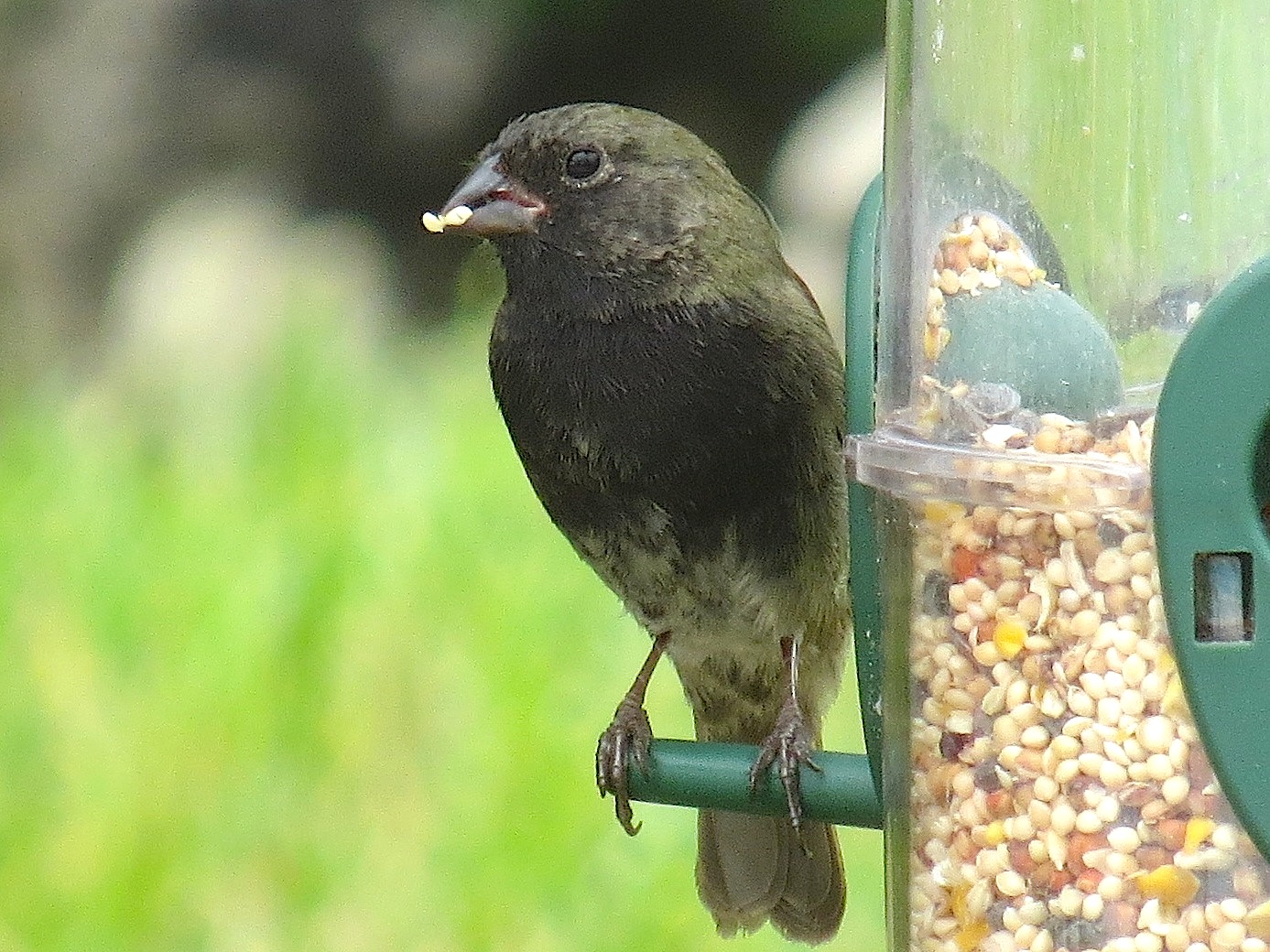
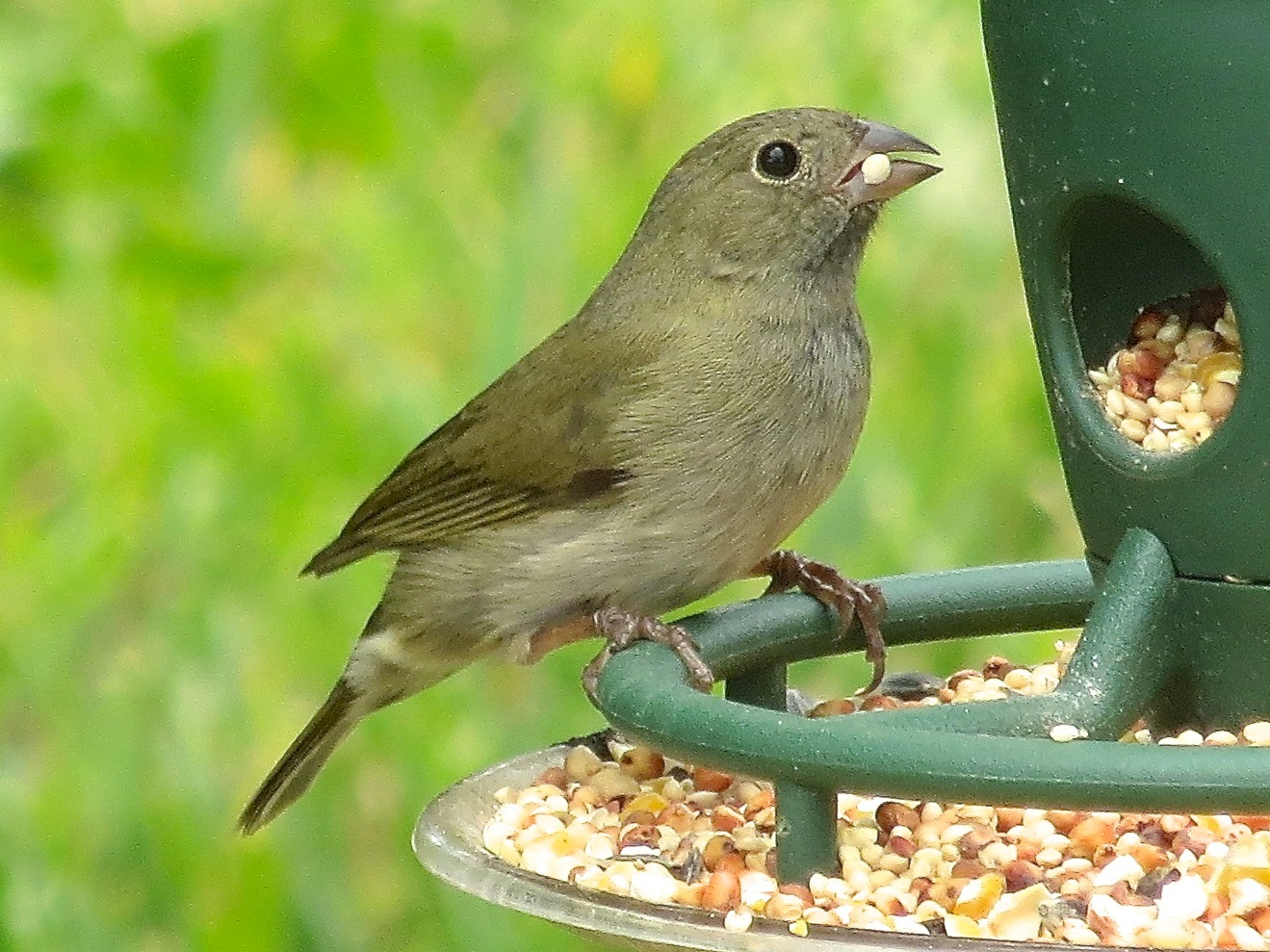
BLACK-FACED GRASSQUITS

There’s no getting away from it, I’m afraid. BFGs are greedy little birds. Many would also call them dull, but personally I rather like the assertive colouring of the male and the subtle olive shades of the female (but that said I’d trade one in for a painted bunting without a second thought…). They are easily bullied out of the way by GABs (see below), although I have noticed that both species happily coexist on the ground under the feeders, where there is more space for them to pick up fallen seeds.

Black-faced Grassquits, Delphi, Abaco 4Black-faced Grassquits, Delphi, Abaco 3 Black-faced Grassquits, Delphi, Abaco 6

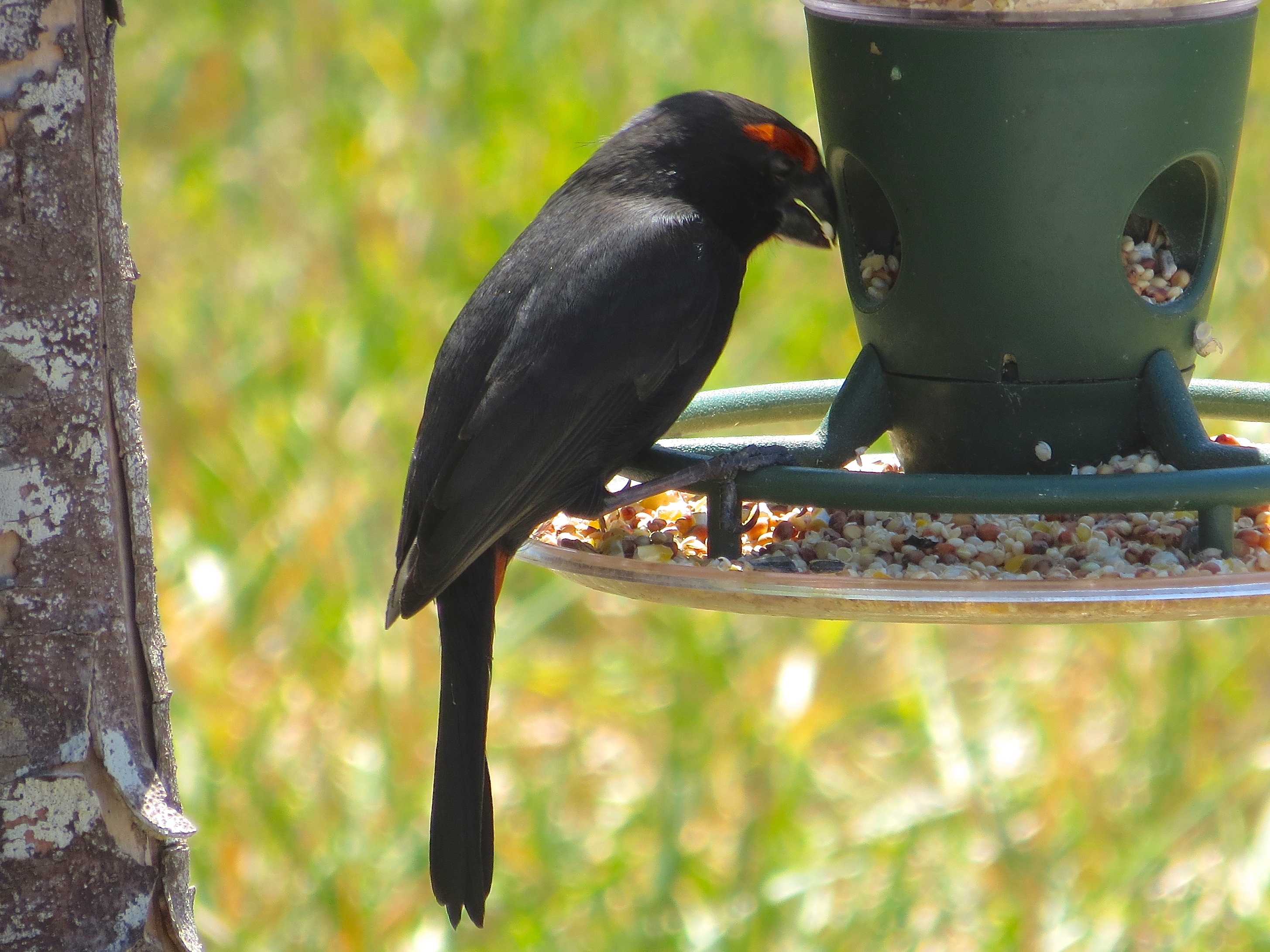
 GREATER ANTILLEAN BULLFINCH

These fine birds with their striking livery assume feeder priority. They are just as voracious as the BFGs, and get seriously stuck in. No other birds spoil their feasting. These are alpha seed guzzlers.Greater Antillean Bullfinch, Delphi, AbacoGreater Antillean Bullfinch, Delphi, Abaco

HEY YOU! GRASSQUIT! DON’T YOU DARE COME ANY CLOSER… MINE!Greater Antillean Bullfinch, Delphi, AbacoGreater Antillean Bullfinch, Delphi, Abaco

HUMMINGBIRD FEEDER RIVALS

BANANAQUIT

This bird had been sticking its thin, curved beak in to the tiny holes and drinking until I got a bead on it (with the camera). Annoyingly it then started to sip the spillage, so I missed the shot I really wanted… Meanwhile two Emeralds had retired to the bushed nearby, waiting for their chance at what was after all their own designated feeder.Bananaquit at Hummer feeder, Delphi, Abaco Bananaquit at Hummer feeder, Delphi, Abaco

This is a beak that can easily negotiate a little feeder holeBananaquit & palm, Delphi, Abaco, Bahamas 7

WEST INDIAN WOODPECKER

When Delphi’s resident woodpeckers decide to try out the hummer feeder, everyone keeps clear. Very meanly, the male takes precedence over the female, despite the fact that in the course of each year she rears two families, moving to the second nesting box to rearrange the furniture even before the chicks in the first box have flown. Nevertheless, she has to wait her turn… Note how the male manages to get his long tongue right into the small hole in the yellow flower…West Indian Woodpecker (male) at Hummer Feeder, Delphi, Abaco

Meanwhile, Mrs Woody politely waits her turn…West Indian Woodpecker (female) at Hummer Feeder, Delphi, Abaco

 All photos: RH

Unknown's avatar

ROLLING HARBOUR, ABACO: LIFE’S A BEACH & THEN SOME…


Rolling Harbour Beach, Abaco1b

ROLLING HARBOUR, ABACO: LIFE’S A BEACH & THEN SOME…

Rolling Harbour (the geographical feature) is a gently curving one-mile white sand bay presided over by the Delphi Club, which sits on a 50 foot cliff behind the beach. There are rocks at either end, fish in the sea (including bonefish and, in the right conditions, permit), birds on the shore and shells on the sand. And that’s it… 

Rolling Harbour Beach, Abaco2bRolling Harbour Beach, Abaco3bRolling Harbour Beach, Abaco4bRolling Harbour Beach, Abaco5bRolling Harbour Beach, Abaco6bRolling Harbour Beach, Abaco7bRolling Harbour Beach, Abaco8b

And if anyone can explain the strange ribbed sky effect that seems to have appeared from nowhere when I posted these photos that I took last year (300dpi), then I’d be very grateful…

Unknown's avatar

SAW FISH IN THE ABACO MARLS? NO SURPRISE. SAW A SAWFISH? AWESOME!


Pristis_pectinata _Georgia_Aquarium_ Diliff Wiki

SAW FISH IN THE ABACO MARLS? NO SURPRISE. SAW A SAWFISH? AWESOME!

Exactly a year ago, an extraordinary find was made out on the Abaco Marls. Almost disguised against the pale mud under the low water was the first sawfish reported for the Marls. This fish is not merely a rarity in the Northern Bahamas: all species of sawfishes worldwide are IUCN listed as Endangered or Critically Endangered.

Sawfish, Abaco Marls Feb 2014 (Photo: Jacque Cannon)

Sawfish, Abaco Marls Feb 2014 (Photo: Jacque Cannon)

Here is an account of the discovery reported by FRIENDS OF THE ENVIRONMENT: “On a recent fishing trip in the Marls with local guide Justin Sands, Sam and Jacque Cannon had an exciting encounter. As Justin was poling the flats, with Sam on the bow searching for bonefish, Jacque spotted a Sawfish! Jacque and Justin quickly forgot about Sam and his efforts to catch a bonefish and turned their focus to the Sawfish. This is a very rare sighting and one we are happy there was a camera available to document it…” A couple of weeks later I was lucky enough to sit next to Jacque at dinner at the Delphi Club, so I was able to hear at first hand the story of this amazing find. It also turned out to be the perfect time to sign an early copy of “The Birds of Abaco” for Jacque and Sam… 1900063_10152069487394482_984358031_n

Sawfish Book Plate (1884)

Sawfish Book Plate (1884)

 10 ESSENTIAL SAWFISH FACTS

  • Sawfishes are also known as Carpenter Sharks; their ‘saw’ is called a ROSTRUM
  • There are 7 species in oceans and seas worldwide, including the Mediterranean
  • All populations have declined drastically due to habitat loss, overfishing & pollution
  • The rostrum is used to feel, to dig, to slash & impale or stun its prey, and for defence
  • Sawfishes are nocturnal creatures and spend a lot of time face down on the sea floor
  • Like sharks, their skeleton is made of cartilage and not bone.
  • Some species can grow up to 7m long
  • They are generally unaggressive unless provoked but fight strongly when caught
  • Sawfishes are slow breeders, making population recovery more difficult
  • Babies are called ‘pups’. Their rostrum is flexible and sheathed until after birth
Sawfish seen from Underwater Tunnel - Atlantis, Nassau Bahamas (Fred Hsu)

Sawfish seen from below – Atlantis, Nassau, Bahamas (Fred Hsu)

Other sawfish have been seen recently in the Northern Bahamas, though not in Abaco waters. Last summer the Bahamas National Trust posted 2 great images of a Smalltooth Sawfish, saying “BNT was excited to receive these photographs of a Smalltooth Sawfish photographed in the proposed East Grand Bahama National Park – Bersus Cay Area. The sawfish was 12 to 13 feet long and was seen in water that was 2 -3 feet deep. Thank you to Buzz Cox, Island Manager at Deep water Cay for sending us these photos”. Sawfish, Grand Bahama Sawfish, Grand Bahama

CONSERVATION ISSUES

POPULATION DECLINE As noted above, Sawfish populations have declined to less than 10% of historical levels. The Smalltooth Sawfish – seen above – was once prolific in the Atlantic, Gulf of Mexico, Mediterranean, Black Sea and Indo-Pacific. Population numbers of this species are now estimated at less than 5% to perhaps as low as 1% of their historic levels.

THREAT TO SURVIVAL The threats to their existence are many: habitat loss, overfishing, accidental bycatch, rostrum souvenir hunters (good prices can be obtained), taking them for fins (as a delicacy) or oil from their liver (medicinal).

LEGAL PROTECTION Capturing a sawfish is illegal in certain countries, including the United States. The sale of smalltooth sawfish rostra is prohibited in the United States under the Endangered Species Act.  The import for sale of that of any sawfish species is also prohibited. The international trade of sawfish was banned by the CITES convention in June 2007.
For those that want to find out  a bit more detail about these issues, there’s plenty on interesting information in a scientific (but readable) paper from NOAA – click the link below

A very recent Bahamas smalltooth sawfish sighting on Bimini – Jan 2015Pristis_pectinata_(smalltooth_sawfish)_(Bimini,_western_Bahamas) Lee & Mary Ellen St John Jan 2015 Wiki

Smalltooth Sawfish (Pristis pectinata) Bimini, Bahamas – Lee & Mary Ellen St John Jan 2015

Time for some footage of these rare and wonderful creatures in the Bahamas. The first is from John Flanagan and was taken during a dive off Bimini in early 2014. He was so surprised by the sight that he nearly forgot to turn on his camera to take a short video… The second is a longer 5 min video taken off Andros by Grant Johnson of “wild footage of the critically endangered Smalltooth Sawfish (Pristis pectinata). The west side of Andros, Bahamas is one of the last places on Earth that still provides vast refuge for this incredible animal”.

Finally, you may be wondering how exactly the sawfish uses its rostrum to stun fish, as mentioned earlier. Watch this short video – see how quickly it moves, for such an apparently cumbersome and dozy creature…
Credits as shown above, with particular mention of Jacque Cannon for probably the first known sighting and anyway photo of an Abaco sawfish…; header pic in aquarium Diliff (Wiki)