Unknown's avatar

BOOKCOMBING: AN OCCASIONAL THEMED SERIES (2) SEA GLASS


2. SEA GLASS

Note 1 I give Amazon.uk pricing as a simple standard for new / used prices. Obviously Amazon.com is also worth comparing, as is Abe UK or US. With Abe watch out for the shipping costs. An apparently ‘bargain’ book may have a loading on the shipping, which (unlike Amazon) are not standard.

Note 2 You will see that I have included books that have had bad reviews as well as good – compare books 1 and 2 below – so that you are forewarned…

PURE SEA GLASS

RICHARD LAMOTTE

Amazon UK £22; new / used from £14

Amazon UK Reviews 1 x 5*           

Pure Beauty “I loved this book… Sea glass is fantastic and this book shows you how to recognise each colour, although in reality there are thousands of hues! I loved the photographs in this book and it made me surf the Internet for sea glass collectors, sites etc.

Amazon.com reviews: 70,  average rating 4.9 out of 5*. Here are a few nibbles

Discovering Nature’s Vanishing Gems  “This is an excellent volume, especially for beginners… A major attraction is that there are over 150 exquisite and elegant photographs… presenting some of the beat specimens ever collected, along with a vast array of classical glassware from around the world that is often its source. The book is a comprehensive guide, chock full of information on finding and identifying these gems, the bits of aged glass, enhanced by years beneath the sea or caught in the tides that wash our coasts. There are 224 pages with chapters on the history of sea glass and the history of sand, (fascinating), different types of glass, (bottles, containers, tableware, utility and flat glass, like window glass – plain and stained, marbles, insulators and bonfire glass – from ship and shore, etc) & appraising rarity, along with many other interesting topics”

Simply Exquisite  “…a must have for all the beachcombers who wander the strands of the world, bending to pick up those gorgeous fragments of glass. It offers history & facts about the globs of glass washed up by the waves, as well as page after page of exhilerating colors & shapes the glass comes in, & images of the seashore”

SEA GLASS HUNTER’S BOOK

C.S.LAMBERT

Amazon UK £8.54, new/used from £5.07

This book has divided readers. It’s worth bearing in mind that it costs a lot less than most, so it can’t be expected to be as lavish. but still… here’s a flavour. I rather enjoyed the two snidey reviews, I’m sorry to say

Amazon.com reviews: 9, average rating 3.7*

The Good Review “It’s exactly what I hoped — SGHH is a celebration of sea glass hunting. Simply put: the book is stunning. As a previous reviewer noted, this is not a “how to” book nor a map (although it does list exceptional locations around the world); rather, it is like a piece of sea glass itself: beautiful, tangible, a treasure. Chapter 1 the world of sea glass; 2, origins; 3, methods for hunting; 4, lexicon; 5, etiquette & laws; 6, destinations. It’s digest size, hard bound & first class… I strongly recommend it for anyone who truly loves sea glass or who would like to share the passion with others

The Model Sniffy Review Intended for total novices, not for a true sea glass hunter… mostly a very broad overview of the sea glass experience, basically nice small pictures in color of perfect pieces of sea glass etc. The book is very small, the type of thing you find in a hallmark gift shop in the mall, designed obviously for gifting to a hospital patient or homebound person, a little birthday type gift, would be nice to give to someone at christmas time that has no idea what seaglass is, or for a pre-teenager to early teens in reading level perhaps. I had too high expectations for this book… it’s just a little puff piece. If you seriously collect sea glass and actively pursue this with any passion, you won’t find anything in this tiny volume of importance that you don’t already know”

The Serious Panning “Ho Hum. The most remarkable thing about this book is how undistinguished it is. A book on sea glass should either be beautifully designed or loaded with useful information, or both. This one is neither. The visual appearance is not unlike what one might expect in a high school project. In particular, the extensive grab bag of colorful and unrelated fonts is amateurish to the extreme. There’s a dearth of information for something purporting to be a “handbook”. The author has thrown together a variety of snippets seemingly without the benefit of an organizing thought process or theme. You can skim this skimpy volume or better yet you can simply skip it – I wish I had. Read Pure Sea Glass by Richard LaMotte instead (see review above. rh)

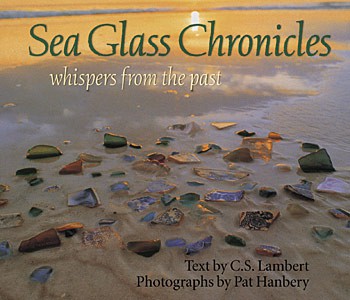
SEA GLASS CHRONICLES 

C.S.Lambert (Author) Pat Hanbery (Photographer)

Amazon UK £17.32 new / used from £12

REVIEW CLIPPINGS

1. The Overwrought (Suspected Publisher’s Puff)  “Hunting for sea glass treasures and safeguarding the hiding places where these precious images of the past wash ashore, are passions among the beach-faithful… This hunger for sea glass is a natural progression… blah…ageless hobby of beachcombing as an anthropological art…blah…this lovely book is a terrific and meaningful gift… blah..those dazzling little pieces of glistening remnants leftover after the sea has abused them as a worthwhile hobby and aesthetic pastime…blah…before being rescued by the beachcombing enthusiast. Holiday gifts, coffee table conversation table toppers or inspirational reading…blah…a book to treasure just like the mysterious particles described between the book jacket covers”

2. The Enthusiast “I love this book. It has a unique perspective – the history of objects from another time – which have washed up on our shores. It is remarkable that a history could be written about a shard of glass. The author manages to trace back through infinitesimal clues the origin and use of what to most is just colorful detrius. The text is very brief and poetic but also informative. The photographs beautifully enhance the found objects. They are insightful and clever, and the quality and sharpness is always first rate”

3. The Pragmatist “I am delighted with this book. Large clear artistic photographs illustrate the research. I have learned a lot about the origins of the beach found objects. To my suprise one of my prized found objects is featured – a Lea & Perrins glass bottle stopper, and I now know it dates from 1876 onwards. I shall be looking out for some purple glass – the rarest colour of all! The text explains why it is so rare. Not a craft book, but a book of answers and interesting facts to inspire the collector”

4. The To-the-Point “Useful purchase beautifully illustrated with creative thought provoking ideas of what can be found on the sea shore and what can be made from what is essentially waste”

And for those that have found glass and want to know what they can do with it, the later companion volume to Sea Glass Chronicles…

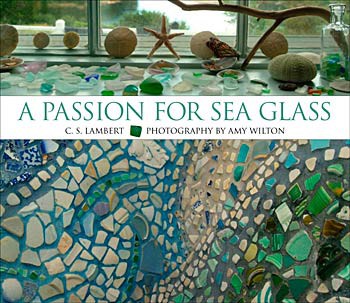
A PASSION FOR SEA GLASS

C. S. LAMBERT AMY WILTON

Amazon UK £19.99 new/used about £15

REVIEW CLIPPINGS

“Heaven is sea glass shaped What a wondeful book that transports the reader to a heaven of sea glass images. I thought I was the only weird person, searching the shore line like an oyster catcher, looking for elusive pieces of wave-worn glass and pottery shards. This book shows me there are other like-minded persons who have taken their search to a whole new creative level by fashioning the most beautiful and imaginative pieces of art from their finds”

“Beautiful images  A treasure for any sea glass lover. The images are beautiful and the ideas are creative and inspiring. A wonderfully readable picture book.”

“A fine guide for any art or photography collection Amy A. Wilton provides the stunning photos for A PASSION FOR SEA GLASS, a survey of major sea glass collectors and the workshops of artisans who use the glass to provide everything from sea-glass windows to mosaics, ornaments and more. It complements Lambert’s 2001 SEA GLASS CHRONICLES, which covered collection and identification of sea glass, and adds a new dimension of usage and conversion making this a fine guide for any art or photography collection”

“A worthy sequel to “Sea Glass Chronicles” Author C.S. Lambert and photographer Pat Hanbery showed us the beauty of those colorful beachside finds in “Sea Glass Chronicles: Whispers from the Past.” Now Lambert has gone one step farther by documenting what avid sea glass collectors do with all of their treasures. The people we meet on these pages make jewelry or wind chimes or mobiles. They assemble mosaics on tabletops or walls. One artist crafts panels that look much like stained glass windows, until you examine them more closely. And those are just some of the projects featured in this book. While a few of the profiles include directions for making your own artwork, the focus here is on beauty and art and imagination.”

A must for Sea Glass Lovers I received this book as a gift, and absolutely loved it. I found it interesting to see what other “seaglunkers” did with their collections to display them, where they found their pieces, and enjoyed the beautiful pictures and narrations throughout the book. It is beautifully photographed with great text from the contributing artisans. Terrific craft ideas and suggestions, much more than a tabletop book and well worth the investment”


Unknown's avatar

ABACO WHALE, DOLPHIN & MANATEE SIGHTINGS JANUARY 2012


ABACO CETACEANS AND SIRENIANS                                        BMMRO SIGHTING REPORTS JANUARY 2012

For the second month in succession MANATEES have been seen in the area: again in the Berry Is region, and additionally off Grand Bahama. With luck they will now be a fixture on the BMMRO monthly sightings map. The main reported Abaco activity, including a sperm whale, was on the ocean side of Elbow Cay. Thanks to Charlotte Dunn / BMMRO for permission to use their material

Unknown's avatar

BOOKCOMBING: AN OCCASIONAL THEMED SERIES (1) OCEAN DEBRIS


BOOKCOMBING

A MISCELLANY OF BOOKS MORE OR LESS RELEVANT TO ABACO LIFE

These are not books I have read myself. They are books that may be of interest to readers of this sort of blog. Islandy. Beachy. Mariney. A whiff of wildlife. They will be collected together under the BOOKS ETC menu as the series expands. If one of them catches your eye, then check online for reviews, reader ratings and prices. If I get round to one or more of them I will add my own views, but I am still gradually working through wildlife books that I have already paid for…

1. FLOTSAM, JETSAM & OCEAN DEBRIS

Flotsametrics and and the Floating World: How One Man’s Obsession With Runaway Sneakers and Rubber Ducks Revolutionized Ocean Science

by Curtis Ebbesmeyer & Eric Scigliano

“Curtis Ebbesmeyer has made important discoveries about everything from currents to the huge floating garbage patches in the ocean to how life was first spread on earth and how the Vikings settled Iceland. In the tradition of John McPhee’s bestselling books on scientists who both study and try to protect the natural world, The Floating World offers a fascinating look at the creativity and energy of a most unusual man—as well as offering an amazing look at what currents have meant for the world and especially mankind through the centuries.  Hardcover; PP: 288; Illustration: 10-15 images throughout” Smithsonian Store

Washed Up: The Curious Journeys of Flotsam and Jetsam

by Skye Moody

“The ocean gives up many prizes, just setting them on our beaches for us to find. From rubber ducks that started out somewhere in Indonesia to land Venice Beach, to an intact refrigerator makes it way to the Jersey Shore. Chunks of beeswax found on the Oregon coast are the packing remnants of 18th century Spanish gold. Author Skye Moody walks the coast, dons her wet suit, and heads out to sea to understand the excellent debris that accrues along the tideline. There she finds advanced military technology applied to locating buried Rolexes, hardcore competitive beachcombing conventions, and isolated beach communities whose residents are like flotsam congregated at the slightest obstacle on the coastline. This book confirms that the world is a mysterious place and that treasure is out there to be found” (Publisher’s Fluff)

Tracking Trash: Flotsam, Jetsam and the Science of Ocean Motion

by Lorree Griffen Burns

“Tracking Trash is the story of Dr. Curtis Ebbesmeyer, an oceanographer who studies the movement of ocean currents. Dr. Ebbesmeyer’s work has attracted attention because he has received much of his information from studying trash. It all began when his mother heard about sneakers that were washing up on a beach after a cargo ship lost one of its containers. Since then, he has tracked sneakers, Lego’s, and even rubber duckies that have been accidentally spilled at sea and made their way to shore. By understanding how ocean currents move, scientists hope to solve many problems such as fish shortages and animals being caught in fishing nets. This book was very enjoyable to read and easy to understand. The pictures were large and engaging. The author did a great job at making it feel like a story while at the same time giving a lot of scientific information” (Satisfied Amazon Punter)

Moby-Duck: The True Story of 28,800 Bath Toys Lost at Sea and of the Beachcombers, Oceanographers, Environmentalists, and Fools who wen in search of them…

Donovan Hohn

I have just spotted that this book is about to be reprinted and, I imagine, updated at the end of February, so I am adding it to the collection. I note in passing that it is published by Penguin…

One 5* review on Amazon UK sets the scene: “This is a book that follows the journey of plastic ducks, turtles, frogs and beavers after the container they are in falls overboard and breaks open on impact with the sea. Moby Duck is fact that reads as good as fiction. The Author doesn’t only traverse the world of escapee plastic toys but meanders his way through a factory in China that makes bath toys, gets on a ship that is on research mission even though he has a fear of open water and even ends in Alaska where the first plastic duck was found. This is a great read, for anyone who likes a quirky book that tells a true story with wit, charm and gentle humour. Moby Dick is never far away in this book, only he has been transformed into Moby Duck…”

Amazon.com has 42 reviews, averaging a disappoining 3.5*. Some are ecstatic, some lukewarm, few can resist the golden opportunity proffered by the author to be “puntastic”. I like the one titled “An Eclectic Tale, but Caught in Its Own Eddy in the End”. Maybe that is the most astute summary of all.

Unknown's avatar

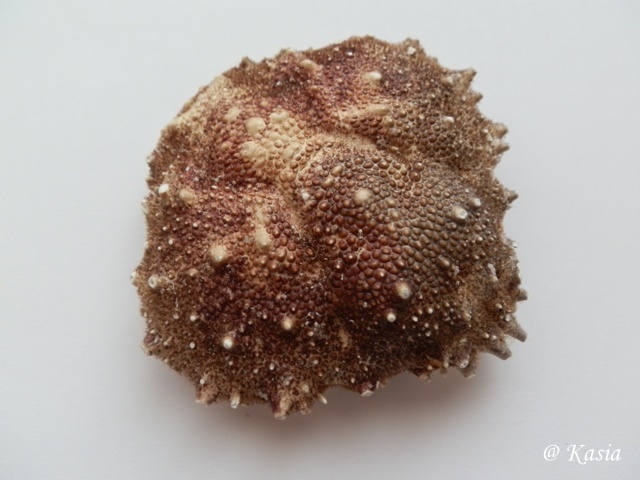
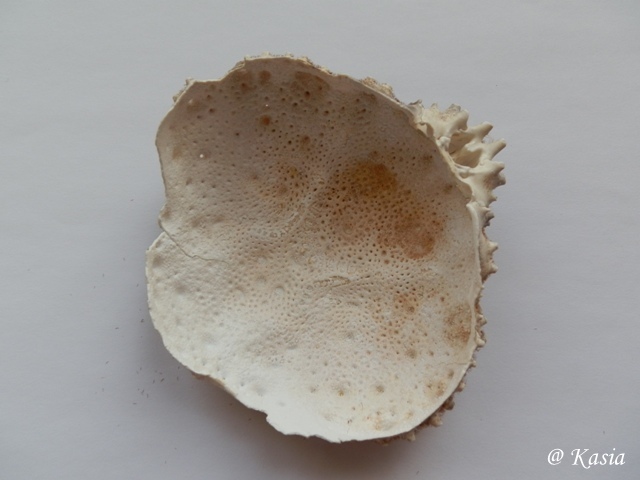
KING VENUS CLAMS & CRAB SHELLS (NO SPACE DEBRIS): ABACO BEACHCOMBING WITH KASIA


ANOTHER STROLL ALONG THE SHORE WITH KASIA

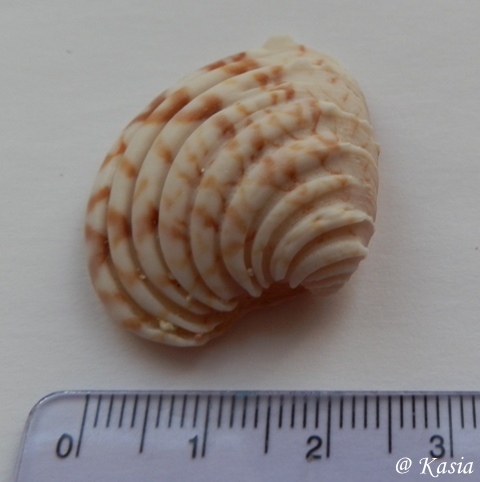
After all the recent excitement – well I was excited, anyway – involving Mars Mission space rocket debris washed up on the Delphi Club Beach CLICK MARS ROVER it’s a gentle touchdown back onto a sandy beach for some more of Kasia’s finds. First, a shell which I believe (tempting fate) I have correctly ID’d for once. Then a half crab shell, at a guess a spider crab’s roof. 

KING VENUS CLAM Verenidae – Chione Paphia

These bivalve molluscs seem to be inoffensive, and to lead rather dull lives: so far all I have discovered is that “they live buried in sand at depths of 1 – 20 fathoms” I shall investigate further & report back – there must be some small creature they molest or upset in some way…

CRAB SHELL, FORMER HOME TO A SPIDER CRAB
Unknown's avatar

HUMANS’ TASTE FOR DOLPHINS & MANATEES ON RISE


 HUMANS’ TASTE FOR DOLPHINS & MANATEES ON RISE

I am reblogging (thanks to Ann Novek at http://havehest.wordpress.com/the above link to an article by Jennifer Welch of LiveScience, published in Biological Conservation. It’s of particular relevance on these pages, since I have just posted about manatees and the threats to their survival; and also because dolphins are a regular feature of this blog. A quick G**gle search reveals a number of sites with recipes for marine mammals (including manatees), many species of which are protected by law… I suspect that the slow and inquisitive manatee will always be easy meat, as one might say. NB ‘Dolphin’ here does not include the dolphinfish (dorado) commonly found on menus as ‘dolphin’, for which there are no current conservation concerns (although there are officially preferred methods of catch)

Unknown's avatar

WEST INDIAN MANATEES AND THE BAHAMAS: THE FACTS


Bahamas Manatee Gina (BMMRO)

WEST INDIAN MANATEES IN THE BAHAMAS

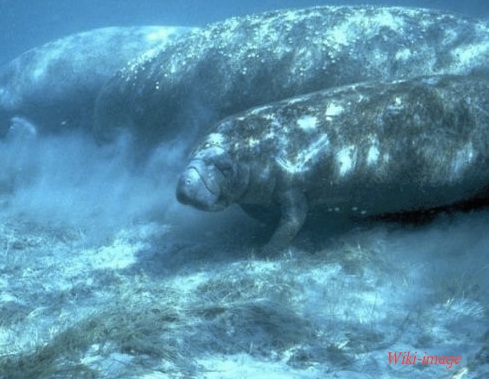
The appearance of a mother and calf manatee off the Berry Islands in December 2011 – see BMMRO SIGHTINGS post – led me to investigate these creatures a bit more. I added some more info and a couple of photos to that post, but really they deserve a post in their own right. So, with a wave of a flipper in the direction of Wiki and other open sources,  here’s some more about these most strange-looking mammals, just in case you ever happen to come across one…

I will expand the post when I have read the latest “What Manatee?”, “Total Manatee” and “Manatee Monthly” magazines 

MANATEES Trichechidae “Large, fully aquatic, mostly herbivorous marine mammals. There are three accepted living species of Trichechidae, representing three of the four living species in the order Sirenia. The name manatí comes from the Taíno, a pre-Columbian people of the Caribbean, meaning breast” 

10 MEMORABLE MORSELS OF MANATEE MINUTIAE

The 4 species of Sirenia are the West Indian, Amazonian and West African manatee; and the Asian / Pacific dugong. Fossil remains of Florida manatees date back 45 million years; their closest living relative is the elephant

Manatees are also known as Sea Cows. Some say sailors who’d been at sea for too long took them to be mermaids, a mistake I doubt they made twice…

They can weigh up to 1,300 lb and measure up to 13 feet. Females are larger than males. Baby manatees may weigh 65 lb. Adult intestines can reach 45 meters which would take Usain Bolt 4.31 seconds to run past (if straightened out, obviously)

Accurate population estimates seem to be impossible to obtain, varying by season and by year for no apparent reason. Overall,  the picture is of a declining population, with extinction likely without further protection (see below for the THREATS to the species)

West Indian Manatees can move freely between extremes of salinity, and may be found in warm shallow coastal waters, in estuaries, or migrated into rivers to freshwater springs (as in Florida). They cannot survive below 15°C (60°F). They have a propensity to hang around the warm-water outflows of power stations

Manatees have some intelligence and demonstrate discrimination and task-learning similar to dolphins.Their eyelids close “in a circular manner”, though I can’t quite picture this. They have only 6 teeth in each jaw, which are replaced throughout their lives

They breed every other year. Gestation lasts 12 months, and it takes a further 12 to 18 months to wean the calf. A single calf is born. Apart from mothers with a calf or males showing off to females, manatees tend to be solitary creatures

They are herbivores, eating many plant species, such as mangrove leaves, turtle grass, and types of algae. An adult manatee can eat up to 10% of its body weight per day. They have been known to eat small amounts of fish from nets

Half a manatee’s day is spent sleeping in the water. The rest of the time they graze in shallow waters. They swim at 3 to 5 mph, faster in short bursts. They may live up to 60 years (surprisingly, given their punishing daily schedule)

The oldest manatee in captivity is Snooty, at the South Florida Museum. He was born at the Miami Seaquarium on July 21, 1948 and came to the South Florida Museum in Bradenton, Florida in 1949

   PREDATION, THREATS AND CONSERVATION – A SUMMARY       The manatee is yet another creature whose worst enemy is mankind. The generalisations below apply to the West Indian manatee – elsewhere there may be different problems

Natural predators Manatees have few natural predators except, occasionally, sharks and crocodiles. Predation is not a significant survival threat. The main causes of death are human-related, such as habitat destruction and human marine objects; and natural causes such as low water temperature and disease

Hunting Historically, manatees were hunted for meat. They were easy to tempt to a canoe and then stun with a pole. Manatee hides were used – and traded – for canoes and shoes; their bones were used for ‘medicine’. Museums used to pay for hides or bones. Hunting was banned in 1893, though some poaching still occurs

                    Manatee Group                                                        Young Manatee                            

 Ship-strike Manatees move slowly and are curious… Coastal development has led to many violent collisions with propeller-driven boats and ships, causing maiming, disfigurement, and death. Manatees are cut in half by large vessels like ships and tugs. Many others have propeller scars and they can often be identified by their scar patterns –  some bear 50 scars and disfigurements from vessel strikes. Breeding ability may be affected. Infected injuries can prove fatal. Internal injuries also come from being trapped between hulls and docks. Studies of the attrition rate from “boat mortality” alone is causing much concern for the survival of the species. In 2009, of 429 Florida manatees recorded dead, 97 (23%) were killed by commercial and recreational vessels

Red tide Another cause of manatee deaths is “red tide”, blooms of the microscopic marine algae Karenia Brevis.  This produces toxins that affect the central nervous systems of sea creatures. In 1996 an outbreak off the Florida coast killed 151 manatees

Other threats (1) Fishing gear: hooks, metal weights, and especially  mono-filament line clogging a manatee’s digestive system; entanglement in fishing lines (2) water-control structures such as navigation locks and floodgates (3) drowning in pipes and culverts (4) bizarrely, there have been numerous reports people, when allowed to swim with manatees in Florida, harassing them

CONSERVATION All three species of manatee are listed by the World Conservation Union as vulnerable to extinction. It is illegal under US federal and Florida law to injure or harm a manatee. They are classified as endangered by both the US state and the federal governments. Some vessels are now adapted to help prevent harm to manatees where they operate

Florida Sea Park Manatee

For news of forthcoming BMMRO research into the apparent recovery in the population of manatees in the Bahamas CLICK HERE

Finally, here’s the link to a website that contains more manatee information and images. You can join, adopt a manatee, donate or buy stuff. Who wouldn’t want a T-shirt – or a ‘ManaT-shirt’, even – adorned with a picture of the lady above? CLICK LINK===>>> SAVE THE MANATEE CLUB

Unknown's avatar

ABACO BEACHCOMBING: KASIA IS BACK… WITH ANOTHER MYSTERY OBJECT


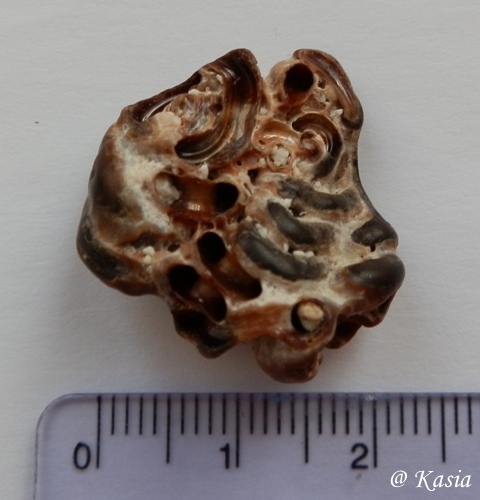
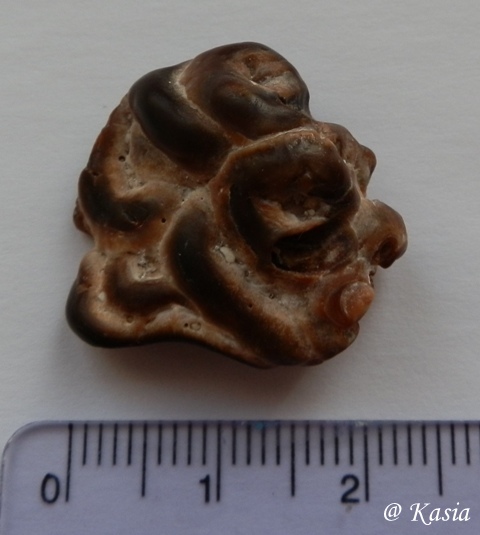
Kasia has returned to grace the blog with treasures from her Abaco beach-combing from the Delphi Club and further afield. Expect more shells, more sea glass… and more mystery objects. We have already had part of a RAY’S PALATE and a PACIFIC ANGARIA SHELL  that had somehow arrived on the shores of Abaco. There’s a long thin WHITE BONE, as yet unidentified (no suggestions yet). And now this extraordinary item… 

To which my answer is “not the faintest idea”. My guesses are (1) a fossilised vertebra of some medium-sized creature (2) a fossilised ‘soft’ rock that worms have been at (but why only on one side?) (3) a bread roll that went disastrously wrong in the baking…

All suggestions welcome, preferably via the COMMENT box (so others can view them); or to rollingharbour.delphiATgmail.com (spam guard: convert AT to @)

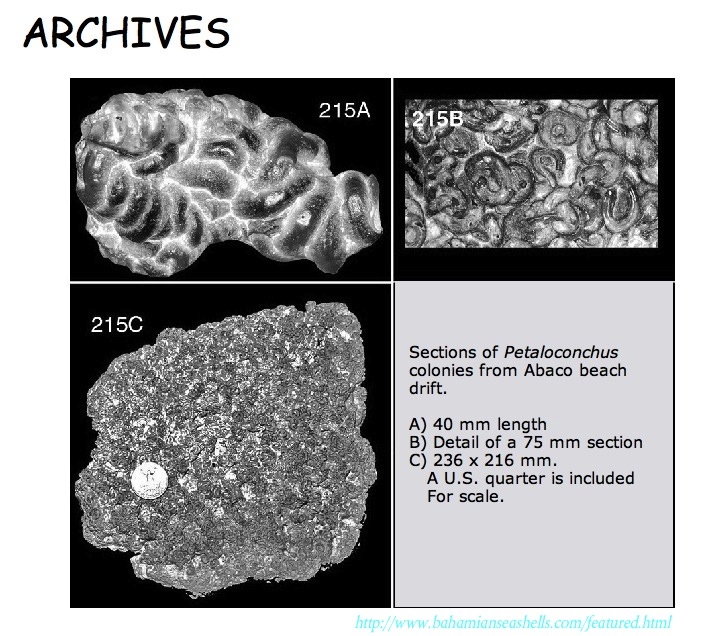
STOP PRESS Mystery quickly solved, thanks to Colin Redfern who says “This is part of the remains of a colony of Petaloconchus worm-shells (molluscs). They attach to rock or coral, and the colonies can be quite large.”  Colin’s website includes some examples from his archive, one chunk being very similar to Kasia’s 

And here’s another chunk, top and bottom view Photos courtesy of James St. John (Geology, Ohio State University at Newark)
…and here is the worm that makes the vermi-accretion or whatever the term is
Unknown's avatar

SOUNDS UNDER THE SURFACE: NOISE EFFECTS ON WHALES


The NOAA (National Oceanic & Atmospheric Administration) has produced a short video with the conclusions from recent research into the effects of extraneous (i.e. non-natural) noise on the habits of whales. The cooperative project involved a number of organisations including the BMMRO and Florida State University and lasted two years.

The study concentrated on beaked whales, pilot whales, and melon headed whales. Using readings from tagged whales, the scientists created animations showing the whales behavior before, during, and after being exposed to low levels of a variety of sounds; including sonar. The results showed that beaked whales, known for diving to extreme depths, were much more sensitive to sonar than other species.  Even low levels of these sounds disrupted their diving, vocal, and likely feeding behaviors.

The complete report including a VIDEO and a transcript can be found by clicking LINK==> Sounds Under the Surface | Science and Technology | Ocean Today   (I haven’t been able to embed the Video, so you’ll get the whole page)

Unknown's avatar

EXPLORING CORAL REEFS: FOWL CAY MARINE PRESERVE, ABACO


EXPLORING THE CORAL REEF AT FOWL CAY MARINE PRESERVE, ABACO

First, a warning for anyone arriving new to this blog (hi! welcome) either on purpose or accidentally: I can’t swim very well, I hadn’t snorkelled for decades until last year, and I’d never before used a camera underwater.

That said, there is probably enough in this 2:40 min video  to warrant a quick view. As with other videos from this expedition to Fowl Cay Marine Preserve (STINGRAY / BLUE TANG), best viewed small to avoid queasiness and disorientation. You can always Pause for a breather. There are some nice fish obligingly in view from time to time, and the coral is very diverse. And I’ll know what to do this year to get better results, besides trying harder with the swimming… (Music: East Wes by Eric Johnson, off Ah Via Musicom)

Unknown's avatar

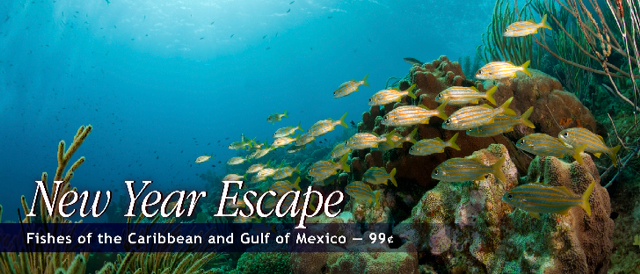
AUDUBON CARIBBEAN FISHES APP £0.69 / $0.99 PROMOTION: GET IT NOW!


AUDUBON FISHES OF THE CARIBBEAN & GULF OF MEXICO APP

iphone, ipad (172mb)    £0.69 / $0.99 offer until 31 Jan, then reverts to $9.99          rollingharbour rating *****

This is app is so good, and such an utter bargain until 31 Jan 2012, that I have awarded it the rh logo position at the top of the page. Praise indeed. Audubon guides are legendary, of course. The excellent Audubon bird app has already been reviewed and also given a rare 5*- see BIRD APP on the BOOKS ETC drop-down menu. Now here are the Caribbean Fishes, in all their glory. First, a clip shot of the download page – click on it to enlarge and avoid eye-strain

This is a very well designed app, a comprehensive search and identification tool with a myriad of features. It’s fine for an iPhone, but I guess it would really come into its own on an iPad. Whatever that is. Here’s a brief overview of the contents

SEARCH OPTIONS:  by shape (dividing size into 5 categories, from giant to tiny); family (alphabetical list of species); name (alphabetical list with useful thumbnails to assist – and cleverly, the ability to search by first name ‘Sergeant’ or last name ‘Major’), or advanced search (size / shape; habitat; regions; colour)

REFERENCE sections on biology; fish-watching tips; marine habitats; biogeography; conservation; fish taxonomy; dangerous fishes; large glossary

OTHER FEATURES include the facility for having a (free) account, enabling a ‘My Content’ facility; Journal; and GPS

Crits? Very few at first glance. The odd typo. My inital search for bonefish by size (over-optimistic, of course) led me to the larger ladyfish, but a search by name took me straight to it. The most significant confusions may arise from the present ‘single image’ ID format. For example, if you look for the uncomely  greeny-blue adult male stoplight parrotfish, you may be surprised to find the prettier black, white & red female pictured. Similarly, you won’t find juveniles, such as the small blue-with-yellow-spots yellowtail damselfish. But these are small points in an app with such a large scope. Anyway, who knows what upgrades will follow?

Overall for £0.69 / $0.99 a complete steal for New Year

Unknown's avatar

BMMRO WHALE, DOLPHIN & MANATEE SIGHTINGS / WINTER REPORT


BMMRO WHALE, DOLPHIN & MANATEE SIGHTINGS AND WINTER REPORT DECEMBER 2011

This was an interesting month. For a start, a humpback whale was reported off Elbow Cay, and a sperm whale further out to sea to the east. There were several cetacean reports between Sandy Point and Hole-in-the-Wall. Perhaps best of all, West Indian manatees – mother and calf – were reported in the area at the end of December, just off the Berry Islands – photo below, and further details in the BMMRO Winter Newsletter via the blue link.

THE WINTER NEWSLETTER contains much of cetacean interest, as always. It features articles on the effects of climate change of the declining Sea of Abaco bottlenose dolphin population; manatees in the Bahamas; ‘Life after Death’ – the importance of whale carcasses on the deep sea eco-system; sonic body-length measurement of sperm whales; the false killer whale stranding on Guana Cay (see POST); educational news update; and much more besides

BMMRO NEWSLETTER WINTER 2011/12

Courtesy of NAHRVALUR and her excellent wildlife blog, here is a cute view of a manatee in a Florida Reserve, where a webcam has been installed 

Manatees (family Trichechidae, genus Trichechus) are large, fully aquatic, mostly herbivorous marine mammals sometimes known as sea cows. There are three accepted living species of Trichechidae, representing three of the four living species in the order Sirenia: the Amazonian manatee (Trichechus inunguis), the West Indian manatee (Trichechus manatus), and the West African manatee (Trichechus senegalensis). They measure up to 13 feet (4.0 m) long, weigh as much as 1,300 pounds (590 kg), and have paddle-like flippers. The name manatí comes from the Taíno, a pre-Columbian people of the Caribbean, meaning “breast”
I’ll write a separate post about these creatures later, and cross-refer from here. rh
NOW CLICK LINK===>>>       MANATEES: THE FACTS
Unknown's avatar

SOUTHEAST COAST & GULF OF MEXICO MARINE / COASTAL FIELD GUIDE: 5* YALE BOOK REVIEW


BOOK REVIEW

This is a superlative field guide: comprehensive, clear and approachable. The illustrations are excellent, and include helpful examples of birds in flight, different views of marine creatures (basking shark side view and head on), whale fluke comparisons and dolphin profiles. The 11 Chapters comprise marine and coastal plants and habitats; invertebrates; sharks; rays; fish; sea turtles; crocodiles and alligators; marine and coastal birds; baleen whales; toothed whales and dolphins; and finally seals and manatee

Yale University Press 386pp, £20 / $24  ISBN 978 0300 11328 0

rollingharbour rating: a rare and coveted 5*****

Obviously this isn’t the guide for land-based birds – you’ll still need Hallett  or Arlott to help with all those warblers, for example. But for all aspects of marine and coastal wildlife it is as thorough as you could ever wish for in a book that is readily portable. While slightly too large (8″ x 6″) and heavy for a pocket, it would be perfect for a day-bag. Convention dictates that the most enthusiastic reviews should include a couple of tiny niggles to prove a book has been read… so,  the shell section is very brief at 2 pages; and the coral section also, with some types (Mustard Hill, for example) omitted. But such an ambitious yet compact book couldn’t possibly be exhaustive. In practical terms, it has everything you could want from a Field Guide when exploring or researching this area.

Publisher’s Summary [added here to indicate the scope & depth of the book]

  • Entries on 619 coastal and ocean species including seabirds, cetaceans, fish, turtles, invertebrates, and plants
  • More than 1,100 color illustrations & 121 colour photographs
  • 452 up-to-date range maps
  • Overviews of key ecological communities, including mangroves, salt marshes, beaches, sand dunes, and coral reefs
  • Special attention to threatened and endangered species
  • Discussions of environmental issues, including such catastrophic events as Hurricane Katrina and the Deepwater Horizon blowout
  • Glossary
  • Excellent organizational aids for locating information quickly
To which I would add:
  • Clear text alerts for endangered / red list species
  • 12-page index (which works very well)
  • Handy front and back flaps place-markers
  • Colour-coded section divisions

To see the publisher’s UK or US webpages for the book CLICK LINK===>>>  YUP UK   or   YUP US – it can also be obtained from the other  conventional sources already mentioned in the book section of this site

Finally, a declaration of interest: Mrs rh works in the London office of YUP, so I have been consciously avoiding partiality. However this just happens to be an excellent book by any standards, so fortunately the frosty domestic fall-out from a bad crit has been easily avoided…
Unknown's avatar

KASIA’S MYSTERY ABACO SHELL: A PUZZLE FOR XMAS


KASIA’S MYSTERY ABACO SHELL: A PUZZLE FOR XMAS

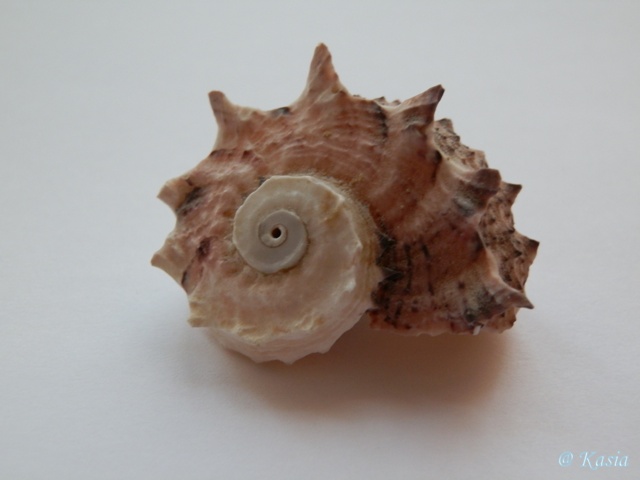
Kasia’s beachcombing exploits have produced some lovely seashells that have already featured here. Precise identification has sometimes been difficult for an amateur, because of the many varieties of a particular type of shell or close resemblance to other shell families. This one has got me stumped. I have trawled the  internet. I have studied field guides. I’m still baffled. It hasn’t quite matched any other shell…

XMAS PRIZE the first person to ID this shell correctly will enjoy a bottle of ice-cold Kalik being drunk on the Delphi balcony swing in February 2012. By me. Suggestions to rollingharbour.delphi@gmail.com welcome

STOP PRESS: NOW SOLVED – SEE UNDER IMAGES

Helpful thoughts: I’ve considered a  form of King’s Crown (but I’ve not found a close enough match) or a Ram’s Horn Snail (but they don’t seem to have spines)

First entry by Kasia (potentially disqualified as the shell’s owner): Angaria, a form of Turban shell. However these seem to be confined to Pacific areas…

The Solution:  And the winner (within 24 hours) is… Kasia!

I sent the link to the post to Bahamian seashell expert Colin Redfern at http://www.bahamianseashells.com, author of ‘Bahamian Seashells: 1000 Species from Abaco, Bahamas’. He confirms Kasia’s ID as an ANGARIA SHELL , one of a large number of species of turban shells TURBINIDAE found throughout the world. It is indeed a Pacific shell, probably from the Philippines. So what on earth was it doing on a beach on the east coast of Abaco? Colin has encountered this sort of anomaly before, and gives various possible explanations:

1. Homeowners’ shell collections come from areas other than the Bahamas & are sometimes thrown out onto a beach. They may be washed up along the coast

2. Shops sell packets of shells, including Pacific shells, which may become dispersed

3. In Fl. it is not unknown for resorts to “seed the beach” with Pacific shells, which are cheaper & more easily bulk-bought than Atlantic shells

4. Rare Pacific & Indian Ocean shells washed up on a beach were once traced to the owner, whose beach house had been lost in a hurricane some years before

Many thanks, Colin, for your help with this puzzle; and congratulations Kasia – I’ll claim my Kalik in February please. Oh I see, I’ve got to buy you one, have I?

Unknown's avatar

BLUE TANG: THE MOVIE (REEF SNORKELLING, FOWL CAY, ABACO)


BLUE TANG: THE MOVIE

RECIPE: Take one incompetent swimmer who hasn’t snorkelled in, oh, nearly 40 years. Place him over a coral reef for his first time ever. Add a small underwater camera totally alien to him. Immerse for 30 minutes in warm briny water.

Lessons have been learnt for next time. Mainly, don’t keep waving the camera about; let the fish move round you rather than vice versa; and most important of all, remember to keep breathing or else…

Here for the first time on public release is BLUE TANG: THE MOVIE (music by Adrian Legg), 45 secs of advanced camera-shake with some beautiful fish more or less in shot for most of the time. If you are prone to sea-sickness, do not enlarge the video. If you are allergic to poor photography… well, thanks for visiting.

[vimeo https://vimeo.com/44794952]
Unknown's avatar

PETERSON CONCISE GUIDE TO SHELLS OF NORTH AMERICA: REVIEW


PETERSON CONCISE GUIDE TO THE SHELLS OF NORTH AMERICA

This pocket guide is part of the well-known Peterson series of natural history guides. It’s called a ‘First Guide’ to denote its ‘beginner’ / condensed status, and to distinguish it from the serious business of the excellent and comprehensive Peterson Field Guides (I shall review 2 of these in due course. When I have read them. In 2012).                                  rh rating **

SUMMARY: this 128pp ‘concise field guide to 224 common shells of North America’ is a simple pocket guide, with quite basic descriptions, and colour drawings rather than photos. All the main gastropod and bivalve species are represented, each with a few variants. The vast majority of these will be found on Abaco and more generally in the northern Bahamas. For the used price I paid for a 1989 edition with a creased front cover (1 pence + P&P on Amazon UK!) I have actually found it quite useful for comparing or confirming IDs, or for snippets of additional information. However, it’s not the one to rely on entirely to identify your beachcombing finds or to get species details. Apart from anything else the illustration colouring is often somewhat approximate. At best, I’d say it’s a useful preliminary tool for ID on the beach if you don’t want to lug a much larger field guide around with you. Don’t use it for your doctoral thesis. Overall, some use, but not a great deal. There are better books: see FISH & SHELL BOOKS

Unknown's avatar

MANGROVE FLATS & BONEFISHING: CAST IN THE RIGHT PLACE [VIDEO]


BONEFISHING ON MANGROVE FLATS

The rollingharbour wildlife enterprise doesn’t normally mix with the technical side the bonefishing on Abaco in general or at the Delphi Club in particular. rh is personally adept at failing to boat fish even where he is lucky enough to hook up; and in turning genial, amiable guides into scowling cursing wrecks in a day.

This is an exception: an excellent 4.5 minute video from Dr Aaron Adams (marine biologist and Bonefish & Tarpon Trust Operations Director) on how to maximise your chances on the mangrove flats by not spending hours flogging the water pointlessly in obviously unproductive areas. Clearly if you have a guide, this is unlikely to happen – but what if you are wading or otherwise going solo? 

The reason to post this informative video here is for the insight into the structure of mangrove swamps, with clear underwater photography and commentary as a skiff glides the flats over ‘dead’, & productive, areas. What is a mangrove swamp? Where do the fish favour? Why? This video will help your understanding.

Unknown's avatar

DELPHI CLUB ABACO & ARIST RICHARD BRAMBLE: BONEFISH, CRAWFISH & PERMIT ART


Well-known artist Richard Bramble already features in his own page here under the CONTRIBUTIONS drop-down menu. For the previous post of RB hard at work on new designs at the Delphi Club CLICK EXAMPLE PHOTO BELOW

RB and Crawfish model posing (both)

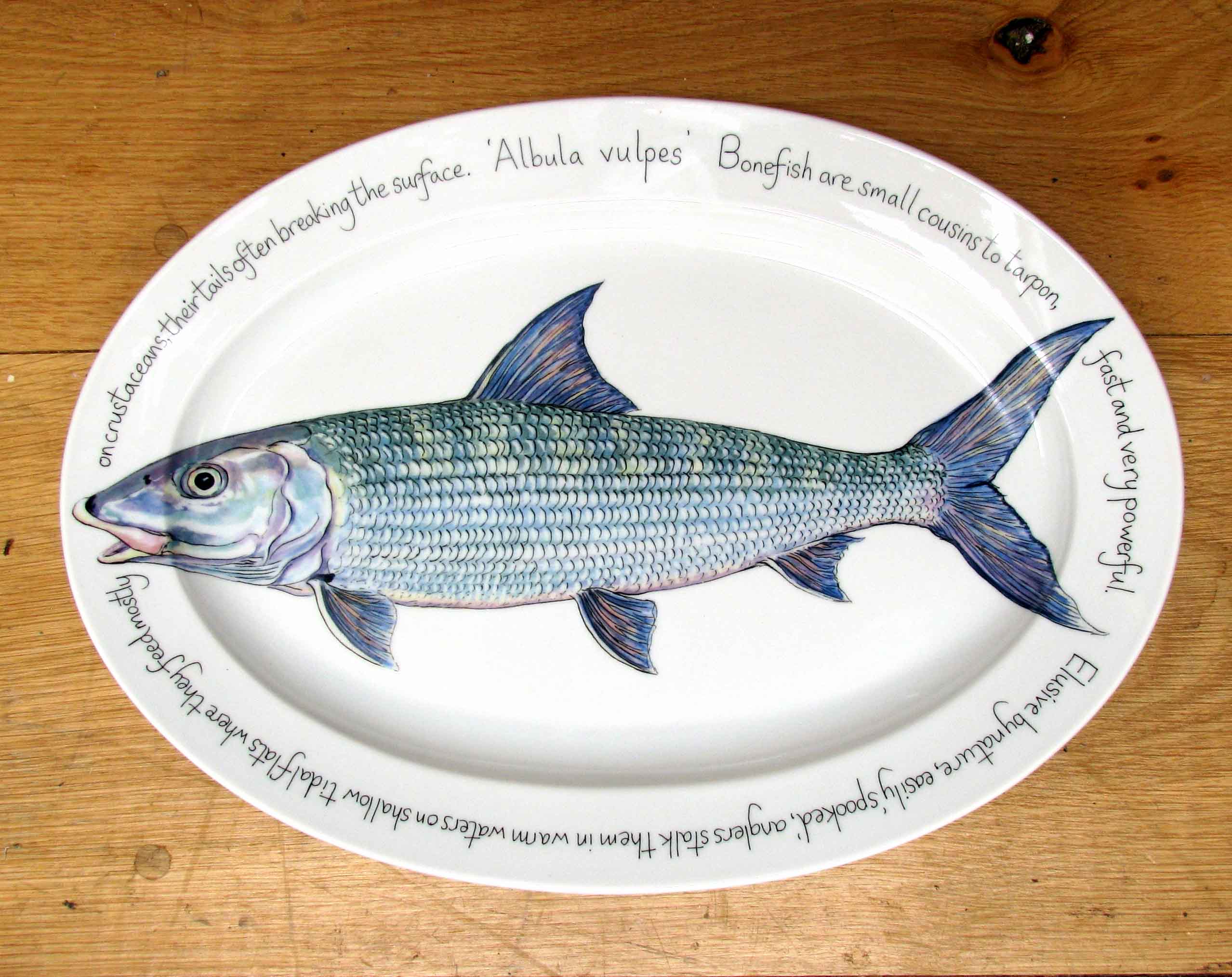
Richard has broadened his already considerable range of paintings and ceramics to include the Abaco marine life he painted while at Delphi. In addition to his very elegant Bonefish, there are now Permit and Crawfish plates (with the original ‘life model’ pictured above). Some weeks later I was at Richard’s studio in Dorset as he prepared to transfer these designs to ceramics, with crawfish cut-outs artfully strewn around the floor. Here are his new items, with his characteristic captions:

 (I have an oval bonefish plate to remind me of the ones I… I…’let go’ by mistake)

Richard’s comprehensive website featuring his entire oeuvre is to be found at the sign of the Crawfish   together with an elementary purchase method to take advantage  of the excellent online shopping opportunities (he might be too modest to say). I write this with Christmas-tide a mere 2 weeks away. You’ll find sea water and fresh water fish / creatures, shells, all manner of game birds and farmyards animals, on every conceivable type of ceramic platter, utensil and kitchen gizmo. 

(With apologies that this site seems t0 be turning into a cross between an online Mall and an advertising agency… Nature Tours. Boat Expeditions. Arts & Crafts. Kitchenware. Books. Cameras. Yup, ticked them all. But there’s plenty of other stuff to look at in these pages)

Unknown's avatar

ABACO: BMMRO WHALE & DOLPHIN SIGHTINGS NOV 2011 & A ‘FALSE KILLER WHALE’ STRANDING


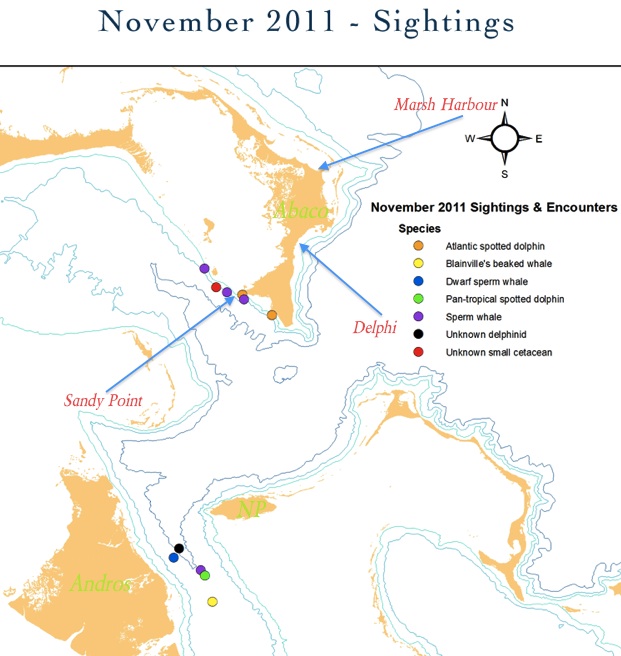
ABACO DOLPHIN & WHALE SIGHTINGS NOVEMBER 2011              ‘VERY DIFFERENT FROM OCTOBER’

October was a good month for bottlenose dolphins, with sightings both north and south of Marsh harbour –  however, no reported whales off Abaco at all. In complete contrast, in November no bottlenose dolphins were reported, nor any other cetaceans on the east side of Abaco. Instead, the observed activity was all around Sandy Point, with sperm whales in particular returning to the area. Increased sightings off Andros were also reported

                  STRANDED FALSE KILLER WHALE

Charlotte Dunn also reports that on December 2nd 2011, BMMRO was alerted that a whale had live-stranded on Guana Cay. After attempts to re-float it, it was seen heading north past Dolphin Beach. The animal had numerous lacerations and fresh scars, and appeared “very weak with labored breathing”The whale was later found beached at No Name Cay (north of Green Turtle Cay). At that time it was reportedly “still alive but just barely”. Unsuccessful attempts were made to get the animal back in the water.  Sadly, by evening it was dead. Photo ID confirmed it to be a FALSE KILLER WHALE Pseudorca 


For the full report on the BMMRO Facebook page CLICK STRANDED WHALE 

Click logo!

Unknown's avatar

MUREX & TRITON SHELL COLLECTING ON ABACO WITH KASIA


PAGE REWRITE IN PROGRESS

MUREX (MURICIDAE) & TRITONS (RANELLIDAE) 

1. MUREX SHELLS (Muricidae)

This is a vast family of shells worldwide, with many subspecies, each of which has many regional variations. Or even variations of the same subspecies on the same beach. Many have beautiful delicate spines or intricate shapes and elaborate patterns, like the pacific one shown

These molluscs are described as ‘voracious rock scavengers’ and exhibit uninhibited psychopathic tendencies. If you have a nervous disposition, stop reading here; Sam Peckinpah missed a great film collaboration with Jacques Cousteau with these vicious little creatures

10 ESSENTIAL YET GRISLY MUREX FACTS

  • Murex are highly carnivorous with rasping teeth, and drilling equipment for boring into the shells of their prey
  • A determined Murex may take up to 5 days to drill into its prey
  • Murex also use their foot to smother prey, or to crush it by using suction power
  • They eat clams by hoovering them up with their foot and smashing them on rocks to get at the occupant
  • They happily eat sea-floor carrion and sea-kill
  • Murex act in packs to carry out raids on unsuspecting beds of clams, which they feast on avidly
  • They are sexually wanton. Females store sperm from different males for many months, eventually producing embryos with different dads (I’m not making this up. I would like to have done so)
  • Cannibalism occurs. The kids are equally prone to extreme delinquency and are happy to eat each other when peckish
  • Some species of murex secrete a fluid that is believed to be used to drug their prey into paralysis
  • That same fluid (Murex / Mucus) is also used as a dye, ‘Tyrian’ or ‘Royal’ Purple, which can be ‘milked’ from a living murex (the Aztecs & Phoenicians did this). I’ll pass on that

NEW: VIDEO of how to obtain dye from a Murex

 KASIA’S BEACHCOMBED ABACO MUREX SKELETON

TWO MUREX SHELLS OF MINE (NOT FROM ABACO) FOR COMPARISON  DETAIL OF COLOUR & SHINE

2. TRITON SHELLS (RANELLIDAE)

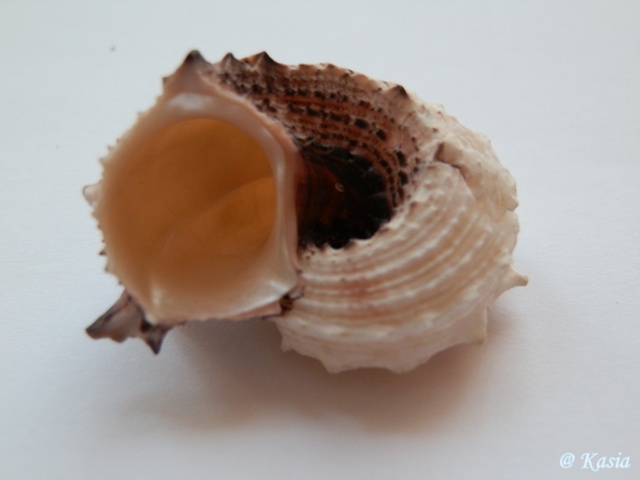
KASIA’S TRITON TROPHY FROM CASUARINA, ABACO

Here is another shell from Kasia’s beachcombing in the Casuarina Point area on Abaco. I’ve never seen one like this. I thought it was a TROPHON, a variety of the huge MUREX family. As I wrote, there are more than 30 types of trophon world-wide, many with a similar configuration, though I hadn’t managed to find one with a similar colouring and shell growth-pattern yet. I invited  confirmation or correction, which Colin Redfern kindly provided. It is in fact a fine example of a…


DOG-HEAD TRITON Cymatium cynocephalum

ANGULAR TRITON Cymatium femorale                                                                                A different sort of triton found by Kasia


Unknown's avatar

“SIZE MATTERS” – ABACO CRAWFISH CONSERVATION CAMPAIGN


Abaco Island, Bahamas

CAMPAIGN FOR SUSTAINABLE FISHERIES MANAGEMENT

Here’s a report I’ve turned up, which may well be of interest from a crawfish conservation viewpoint. And it’s also an excuse to post the excellent campaign song, which needs no added comment from me – see video below. The campaign slogan is… a delight. The Rare Planet website is well worth a rootle round – click the link below

Campaign manager: D’Shan Maycock
Partner:  Friends of the Environment

“When D’Shan Maycock launched a Pride campaign to rally her community around protecting marine life off of Abaco Island, she didn’t necessarily imagine her slogan becoming part of the daily lexicon for fishers, students, international conservation organizations, and even the Prime Minister. But thanks to a catchy phrase – Size Matters – and the idea of the locally-treasured crawfish shrinking due to overfishing, her campaign has caught on everywhere.

Crawfish are an important species for the biodiversity of Abaco Island, providing 60% of the total commercial fish catch and sustenance for other marine life in the region. However, due to unsustainable fishing practices and lack of local awareness, each year’s crawfish yield declines in numbers, total poundage, and average size. D’Shan discovered a heavy incidence of illegal fishing of juvenile crawfish, as well as a dearth of the formerly large crawfish that lay many times more eggs. There are 5 national land and sea parks around the island, yet it is a challenge for law enforcement to manage every landing dock. Community support is critical.  So D’Shan has gotten creative.
Progress on the campaign…
  • • Secured pledges from local fishers not to catch juvenile crawfish under 5.5 inches – their yield monitored through a new certification process
  • • Built awareness among key influencers and the general public about the importance of protecting juvenile crawfish
  • • Garnered the attention and support of high profile players in the region, including The Nature Conservancy, which is interested in taking the certification process to other islands in the Bahamas, and the Bahamian Prime Minister, who at a recent All-Abaco Expo on Food Security, called out the slogan of the campaign and pledged ongoing support for fisheries protection

To further explore this campaign, please visit our conservation community at RarePlanet.org.

(To whom thanks for this… but, hey guys, your ‘CONTACT’ page only gives long-distance phone numbers (wot no email?) Are you ok with me using this? If not please ring +44 763549390 between 19.00 and  21.00 and ask for ‘Tarquin’)

STOP PRESS: here is a news clip about the new campaign mural in M H, posted by campaign manager d”Shan on The Abaco Scientist