Unknown's avatar

A HISTORIC MONUMENT TO MARITIME HISTORY: CHEROKEE, ABACO


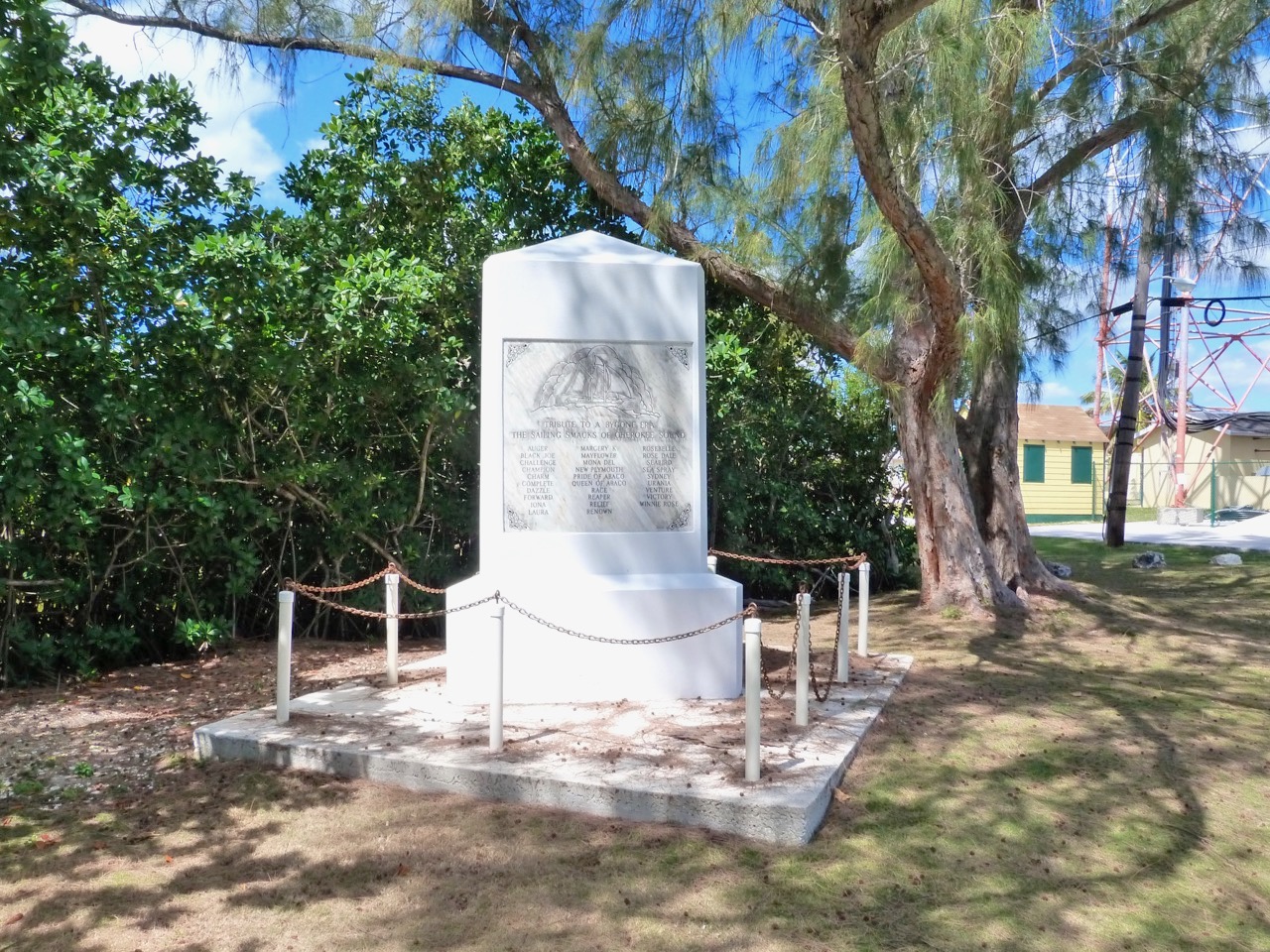
Tribute Monument to the Sailing Smacks of Cherokee Abaco (Keith Salvesen)

A HISTORIC MONUMENT TO MARITIME HISTORY: CHEROKEE, ABACO

The small and – until quite recently – remote settlement of Cherokee is said to have been founded by one Colonel Thomas Brown with his cohort of Loyalists from the Carolinas. The origin of the name has given rise to various theories, one of which stems from Col. Brown’s supposed link to Cherokee Indians.

The early settlers established themselves at this natural harbour, and life there was largely dependent on the sea. Fishing provided food, wrecking provided goods and presumably the wherewithal for trade or barter. In due course, boat building became an important part of the community, as with other places on Abaco (e.g. Man-o-War Cay). Later still, smack fishing with the locally made boats brought stability and no doubt a degree of prosperity to the community.

The monument, and in the background right, the comms tower & the new SHELL MUSEUMTribute Monument to the Sailing Smacks of Cherokee Abaco (Keith Salvesen)

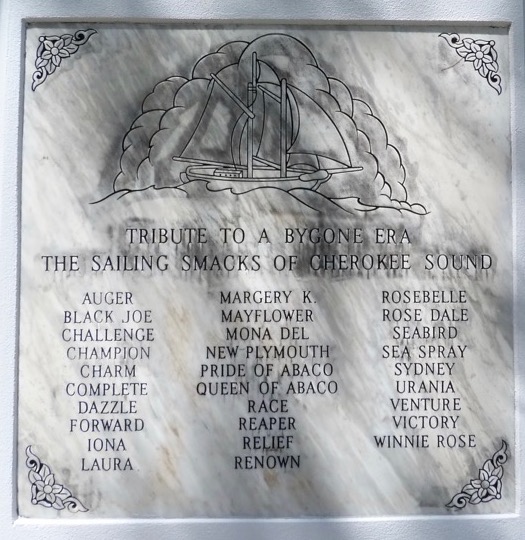
The fishing smacks of Cherokee were designed to carry 5 sails rather than the usual 7 sails. Not being a sailor, I can’t tell if this was just a local stylistic choice, or for simplicity, or perhaps for a specific sea-going reason in that particular area. As a tribute to this honourable industry, in October 1988 the community of Cherokee Sound erected a fine monument near the famous LONG DOCK dedicated to the Cherokee fishermen and their smacks, and naming many of the vessels involved over many decades.

Tribute Monument to the Sailing Smacks of Cherokee Abaco (Keith Salvesen)

The monument also sets out the long history of smack fishing dating from the early c19 until the 1960s, by which time the advent of the diesel engine had begun to make setting the sails for fishing redundant. The moving tribute speaks to the great pride of the community in its history and its forbears.

The short poem, with the authorship shown as Anon, is in fact based on a sea-song written by a non-seafaring Scotsman called Allan Cunningham (1784- 1842), A Wet sheet and a flowing sea – said to be his best known song. The full version is given at the end, and you’ll see that the second verse (with some minor changes) is the part chosen to form the shorter tribute.

Tribute Monument to the Sailing Smacks of Cherokee Abaco

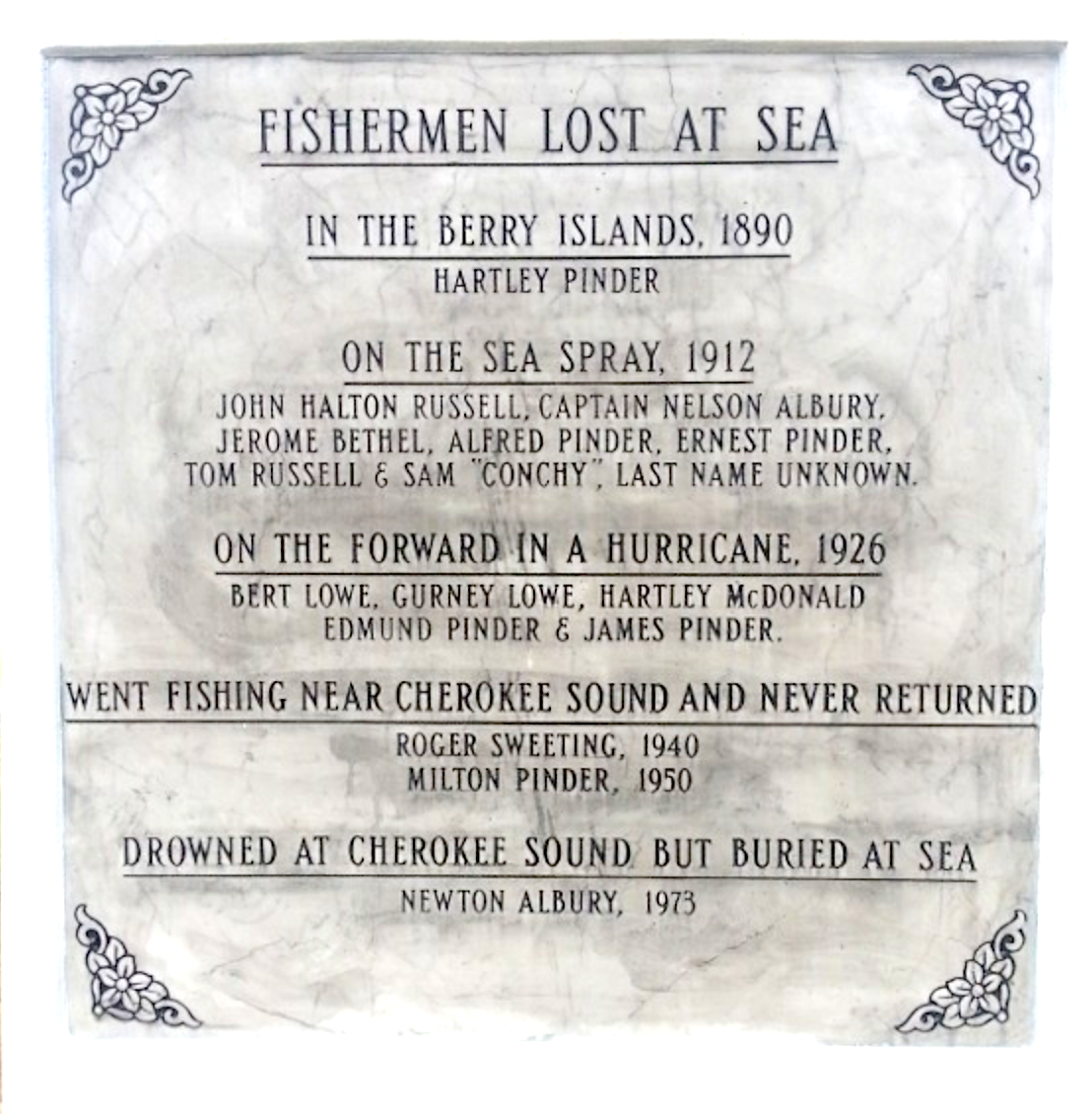
The monument also includes a panel dedicated to the fishermen of the community who lost their lives in plying their trade from 1890 onwards. It is notable that every one of them bears a family name familiar to this day on Abaco in the succeeding generations.

Tribute Monument to the Sailing Smacks of Cherokee Abaco

A Wet Sheet and a Flowing Sea by Alan Cunningham (1784- 1842)

A Wet sheet and a flowing sea, 
    A wind that follows fast 
And fills the white and rustling sail 
    And bends the gallant mast; 
And bends the gallant mast, my boys, 
    While like the eagle free – 
Away the good ship flies, and leaves 
    Old England on the lee.

“O for a soft and gentle wind!” 
    I heard a fair one cry: 
But give to me the snoring breeze 
    And white waves heaving high; 
And white waves heaving high, my lads, 
    The good ship tight and free – 
The world of waters is our home, 
    And merry men are we.

There’s tempest in yon hornèd moon, 
    And lightning in yon cloud: 
But hark the music, mariners! 
    The wind is piping loud; 
The wind is piping loud, my boys, 
    The lightning flashes free – 
While the hollow oak our palace is, 
    Our heritage the sea.

Credits & research: Keith Salvesen, Kaderin Mills / BNT, Bahamas.com, National Geographic, Bahamas Ministry of Tourism

Unknown's avatar

OCTOPUSES: IN THEIR ELEMENT


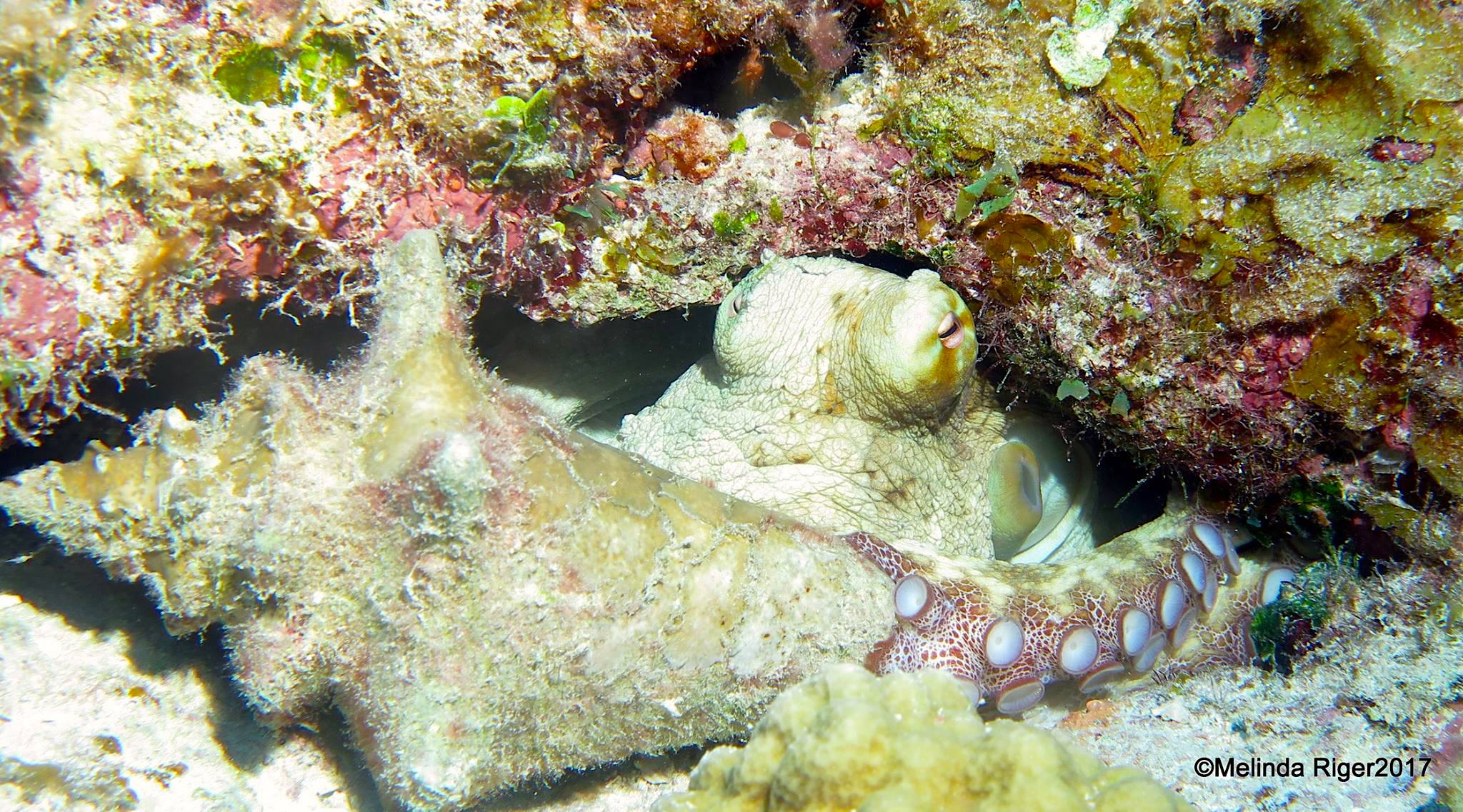
Octopus, Bahamas (Melinda Riger / Grand Bahama Scuba)

OCTOPUSES: IN THEIR ELEMENT

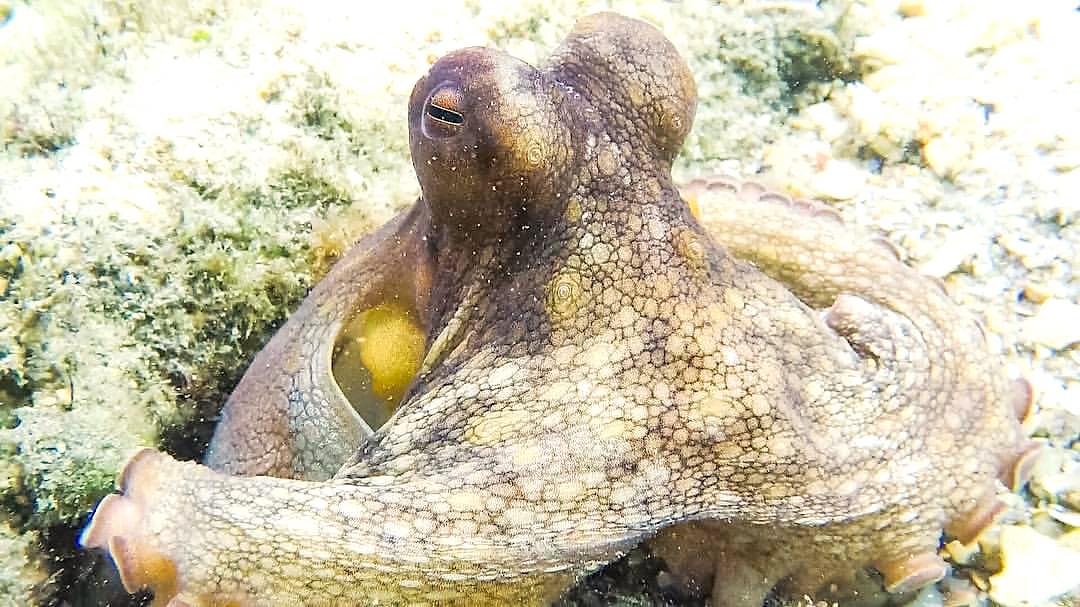
We haven’t seen many octopuses in these parts for quite a while. Time to put that right. The seas of the Bahamas teem with many many marine species, but few are as fascinating or indeed versatile as the octopus. Don’t take my word for it, just watch ‘Finding Dory’ to see how amazing Hank the… [what’s that, Skippy? It’s fiction?]. As you were. That these extraordinary creatures even exist let alone thrive in our waters is a truly wonderful thing. Here are a few to admire – or in the case of the one below, to admire you.

‘Here’s lookin’ at you…’Octopus, Bahamas (Melinda Riger / Grand Bahama Scuba)Octopus, Bahamas (Melinda Riger / Grand Bahama Scuba)Octopus, Bahamas (Melinda Riger / Grand Bahama Scuba)

You can find out some more about octopuses – including the correct plural for ‘octopus’ – by clicking the links below. More importantly, you’ll see more of them too.

THE PLURAL OF OCTOPUS & RELATED CEPHALOPOD MYSTERIES

MARINE BAGPIPES FILLED WITH INK

OCTOPUSES: WORTH LEARNING TO SCUBA FOR

Octopus, Bahamas (Adam Rees / Scuba Works)

All octopedal photos: thanks to Melinda Riger / Grand Bahama Scuba (1 – 4) and Adam Rees / Scuba Works (5)

Unknown's avatar

‘WELL SPOTTED’ (2): ATLANTIC SPOTTED DOLPHINS IN ABACO


Atlantic Spotted Dolphins in Abaco Waters (BMMRO)

‘WELL SPOTTED’ (2): ATLANTIC SPOTTED DOLPHINS IN ABACO

No sooner have I posted about PANTROPICAL SPOTTED DOLPHINS sighted during the current BMMRO whale research program, than the other Bahamas spotted dolphin species shows up as well. These are the more numerous Atlantic Spotteds Stenella frontalis, more confined in range (as the names suggest) than the Pantropicals. 

Atlantic Spotted Dolphins in Abaco Waters (BMMRO)

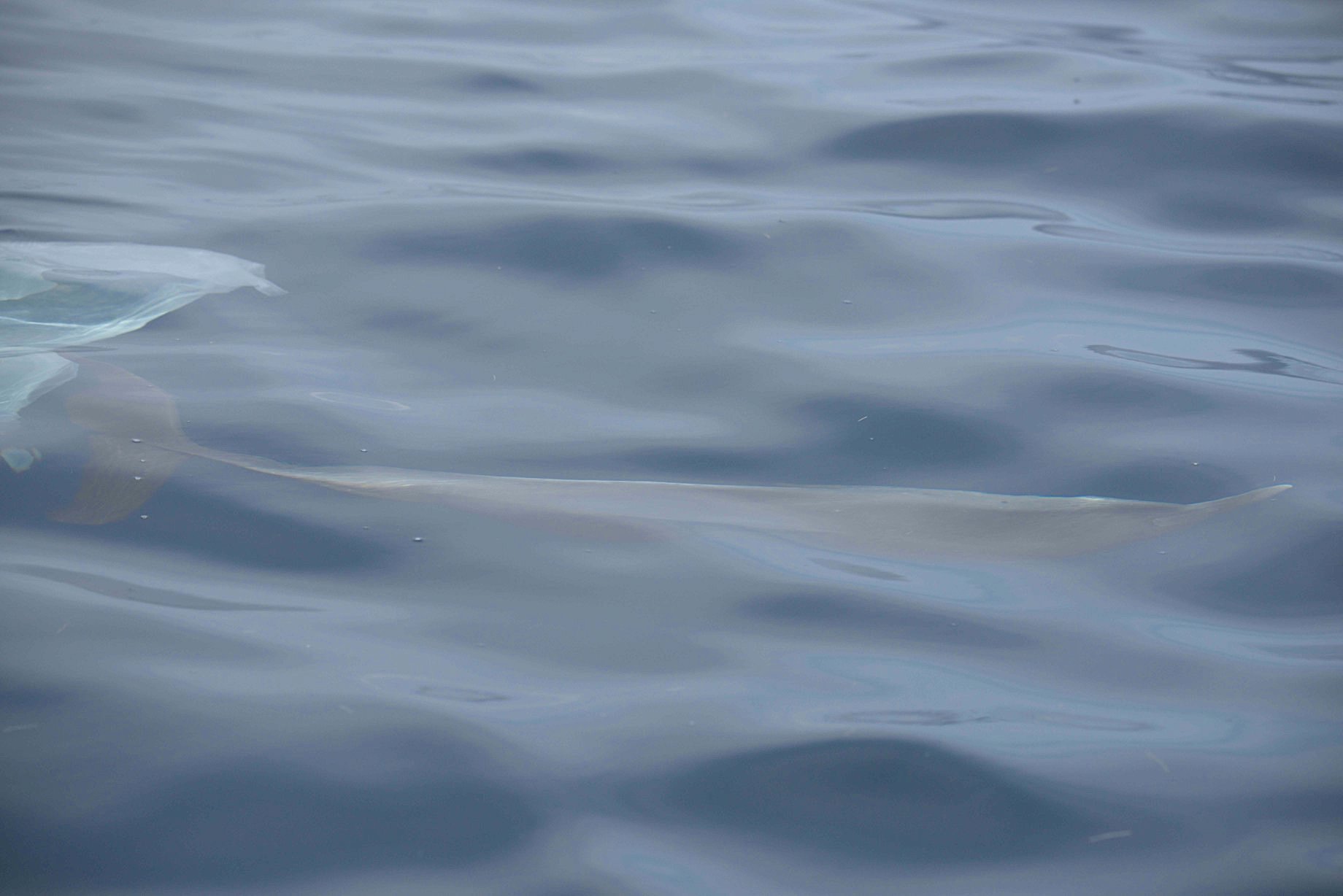
The BMMRO caption reads “Atlantic spotted dolphins today! Small social group playing with sargassum – they swam past what looked like a plastic mattress cover – one dolphin whacked it with its tail as it swam by…”

Atlantic Spotted Dolphins in Abaco Waters (BMMRO)

Just because it can…Atlantic Spotted Dolphin leaping in Abaco Waters (BMMRO)

RUBBISHING RUBBISH: A RANT

Behold a large plastic bag, made by humans and dumped by humans into a place that is not theirs to use as a trash repository. It will take some 500 years to break down completely. But when people say that they don’t really mean it will have harmlessly disappeared over that period and become salt water. Far rom it. It will just break down into smaller and smaller pieces, to bite-sized bits for turtle, fish and seabirds who will idiotically mistake them for food (duh!), then to micro-plastic that will become part of the evolving plastic soup that will be ingested by tiny sea creatures and coat the reefs in polyethylene gunk. [End of rant. Ed.]

Atlantic Spotted Dolphins in Abaco Waters - marine trash (BMMRO)

Behold an Atlantic Spotted Dolphin giving the bag a passing whack with its tail. It won’t do anything to help with marine pollution, but is shows a robust disdain for a piece of man-made rubbish that has made it into the creature’s home environment.

Atlantic Spotted Dolphins in Abaco Waters - marine trash (BMMRO)

Below is a short GoPro shoot of a pair of ASDs, that I took from the BMMRO research boat last year. Marvel at the grace and elegance of these beautiful animals as they swim just below the surface (wonder, too, at the incompetence of the cameraperson who, to be fair, was leaning over the side of the RHIB with the camera on a stick…)

All photos BMMRO; video from the Rolling Harbour achives, intemperate rant all my own

Unknown's avatar

QUEEN ANGELFISH: BAHAMAS REEF FISH (46)


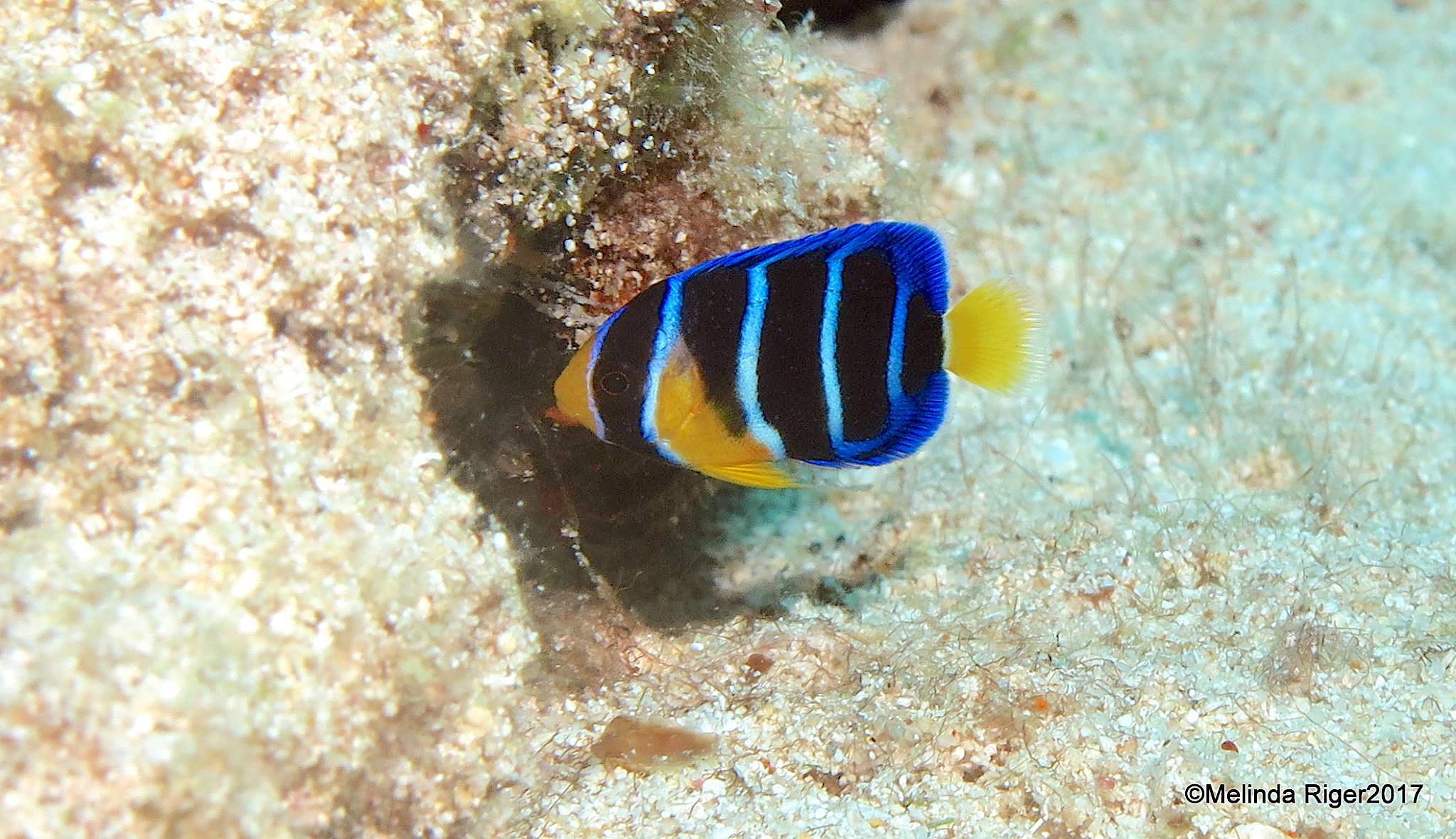
Queen Angelfish, Bahamas (Melinda Riger / Grand Bahama Scuba)
QUEEN ANGELFISH: BAHAMAS REEF FISH (46)
The Queen Angelfish Holacanthus ciliarisis is without doubt one of the most beautiful of all reef fishes in the Bahamas – and the competition is very strong. I have posted about them before, but to my surprise not for nearly 5 years. Too long: here are some much more recent photographs of adults and cute juveniles.

Queen Angelfish, Bahamas (Melinda Riger / Grand Bahama Scuba)Queen Angelfish, Bahamas (Melinda Riger / Grand Bahama Scuba)

The bright colours, the pouty expressions, the appealing poses – these fish are true Beauty Queens. And helpfully, they are unlikely to be mistaken for any other fish species.

Queen Angelfish, Bahamas (Melinda Riger / Grand Bahama Scuba)

TEENAGE QUEEN ANGELFISHQueen Angelfish (Juv), Bahamas (Melinda Riger / Grand Bahama Scuba)

JUVENILE QUEEN ANGELFISHQueen Angelfish (Juvenile), Bahamas (Melinda Riger / Grand Bahama Scuba) Queen Angelfish (Juvenile), Bahamas (Melinda Riger / Grand Bahama Scuba)

Photo Credit: ©Melinda Riger (Grand Bahama Scuba), with thanks as ever

Unknown's avatar

MARINE POSTER COMPETITION FOR ABACO KIDS


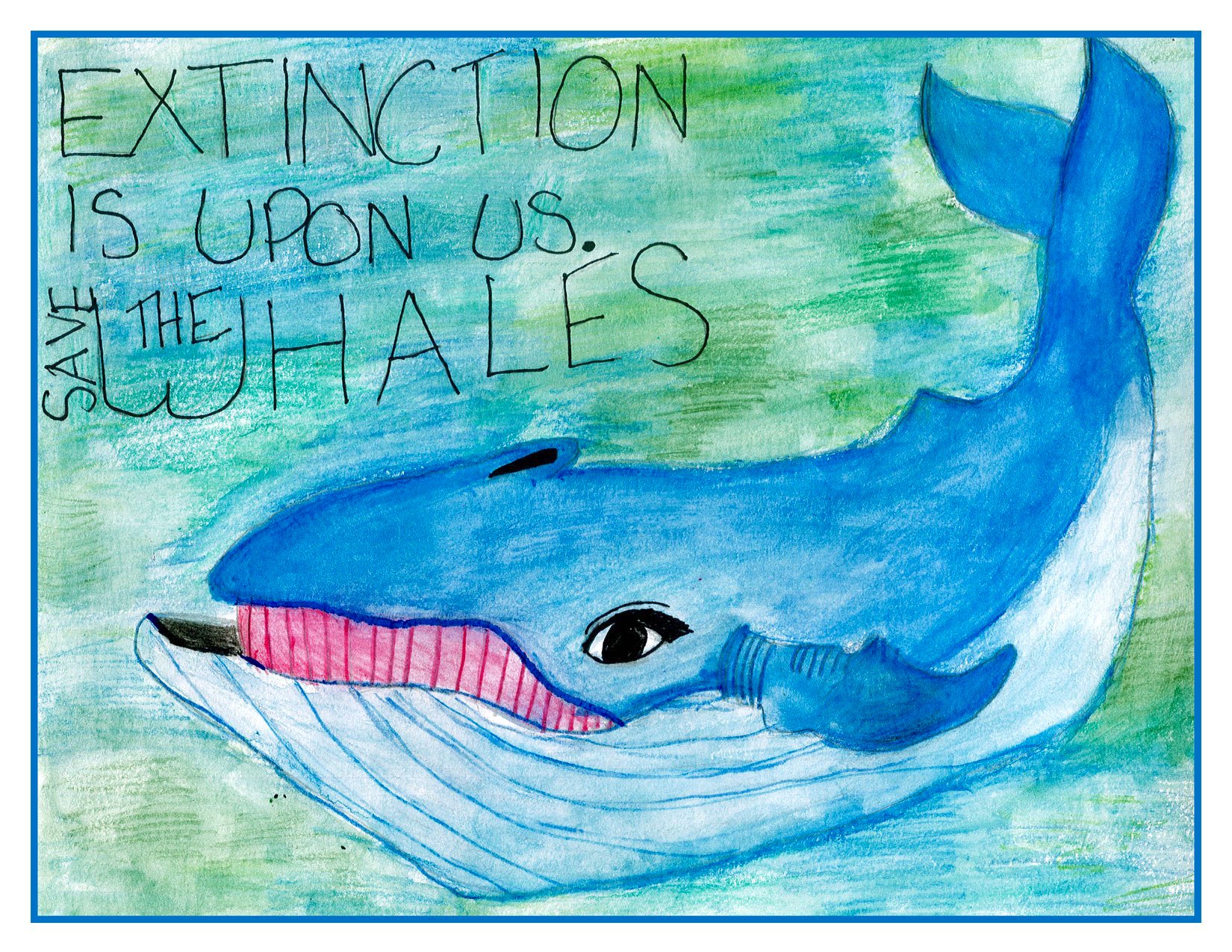
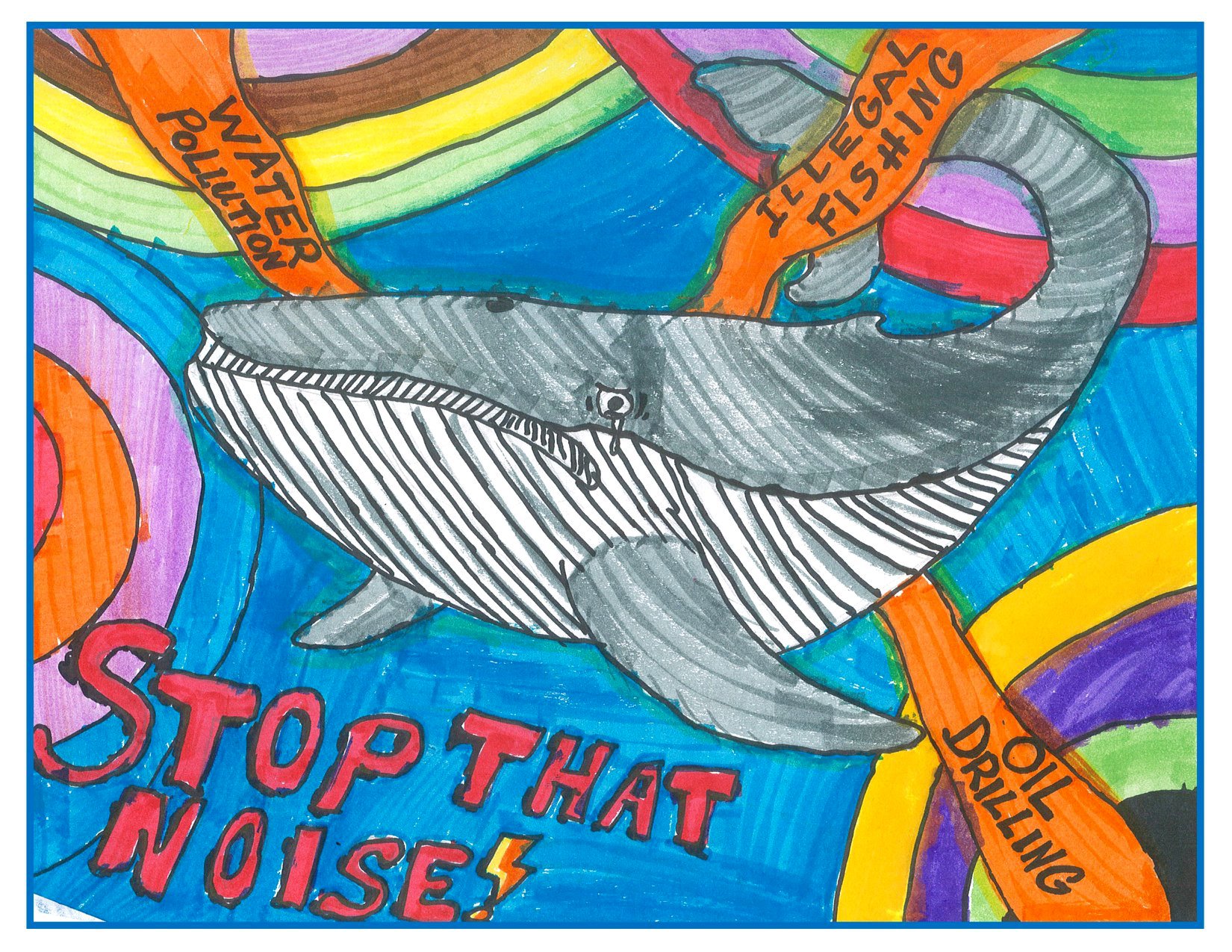
BMMRO children's poster competition winners

MARINE POSTER COMPETITION FOR ABACO KIDS

BMMRO recently collaborated with Dolphin Encounters Marine Education Poster Contest in a competition for schoolchildren on Abaco. There were 3 age groups, 3 -5, 6 – 8, and 9 – 12. The young participants received the excellent BMMRO marine educational poster as a prize, though I suspect they were motivated not so much by a prize but by the fun possibilities of the challenges set for them. 

BMMRO children's poster competition winners

And how well they met them. I am featuring a selection of the prizewinners as posted by BMMRO on FB and Insta. Bearing in mind the ages of the artists, the results are astounding. As someone for whom the task of drawing a stickman presents insurmountable difficulties of perspective, proportion, form and accuracy, I am in awe of the inventiveness of these young minds and their artistic skills. They’ve done a fantastic job in highlighting the critical conservation issues facing all marine creatures large and small, with an awareness that I hope will help stay with them into adulthood.

BMMRO children's poster competition winnersBMMRO children's poster competition winnersBMMRO children's poster competition winnersBMMRO children's poster competition winnersBMMRO children's poster competition winnersBMMRO children's poster competition winnersBMMRO children's poster competition winnersBMMRO children's poster competition winnersBMMRO children's poster competition winnersBMMRO children's poster competition winners

Do I have a favourite, I asked myself. Actually, no – I’d just be proud to have any of these on my wall. And I bet the teachers and the families involved all feel the same.

HUGE CONGRATULATIONS TO ALL THE WORTHY WINNERS

BMMRO children's poster competition winnersBMMRO children's poster competition winners


Unknown's avatar

SPERM WHALES GATHERING IN ABACO WATERS


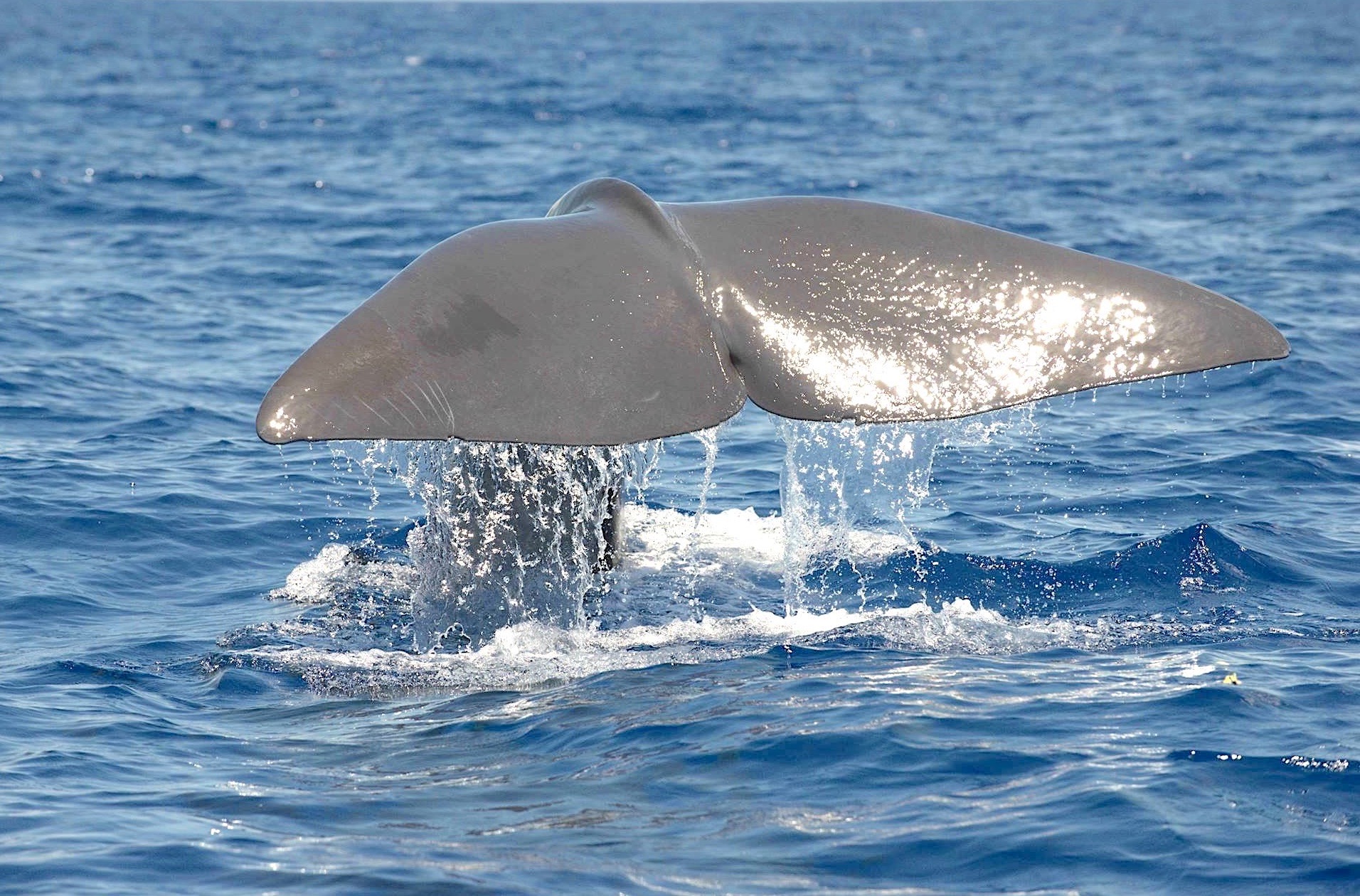
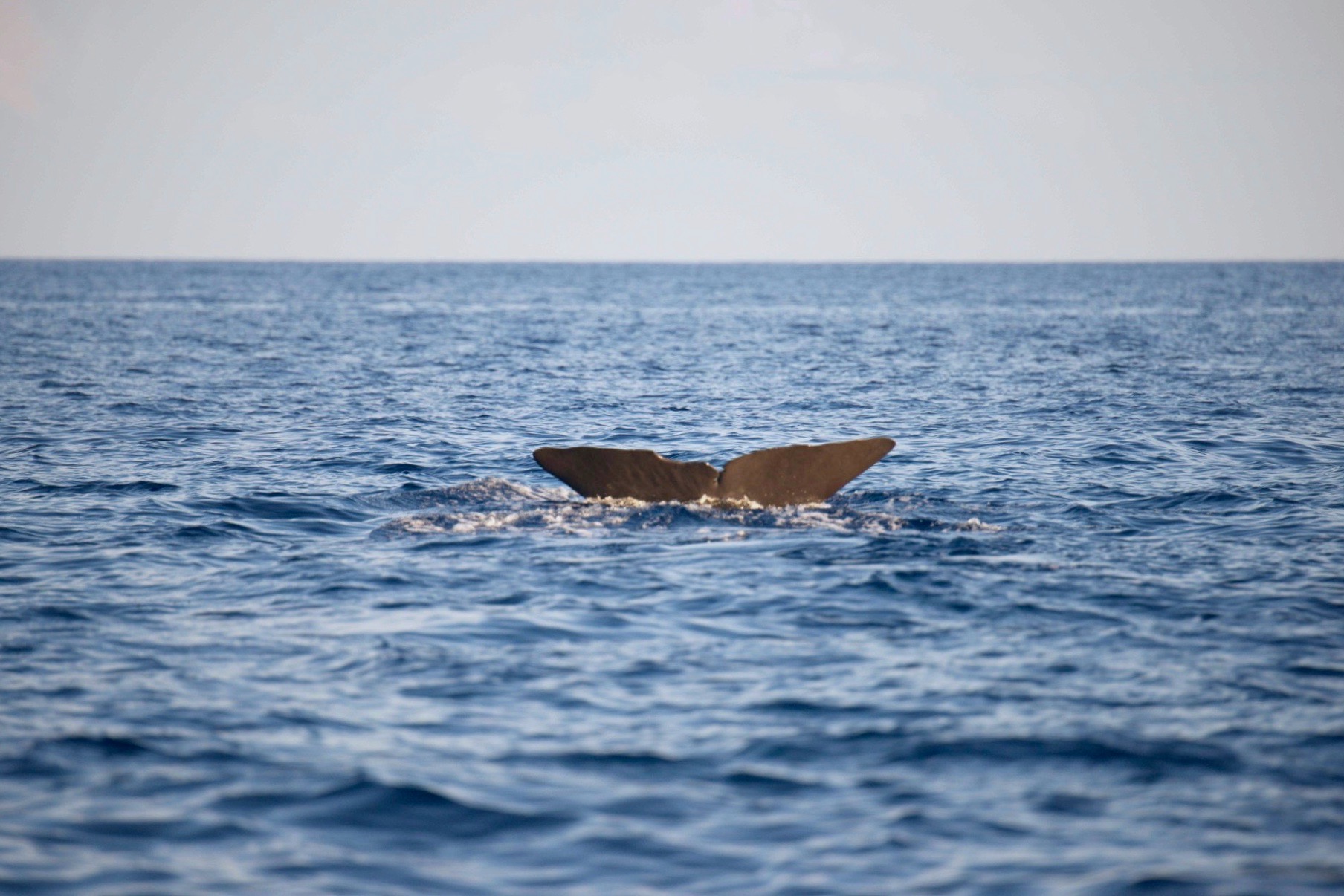
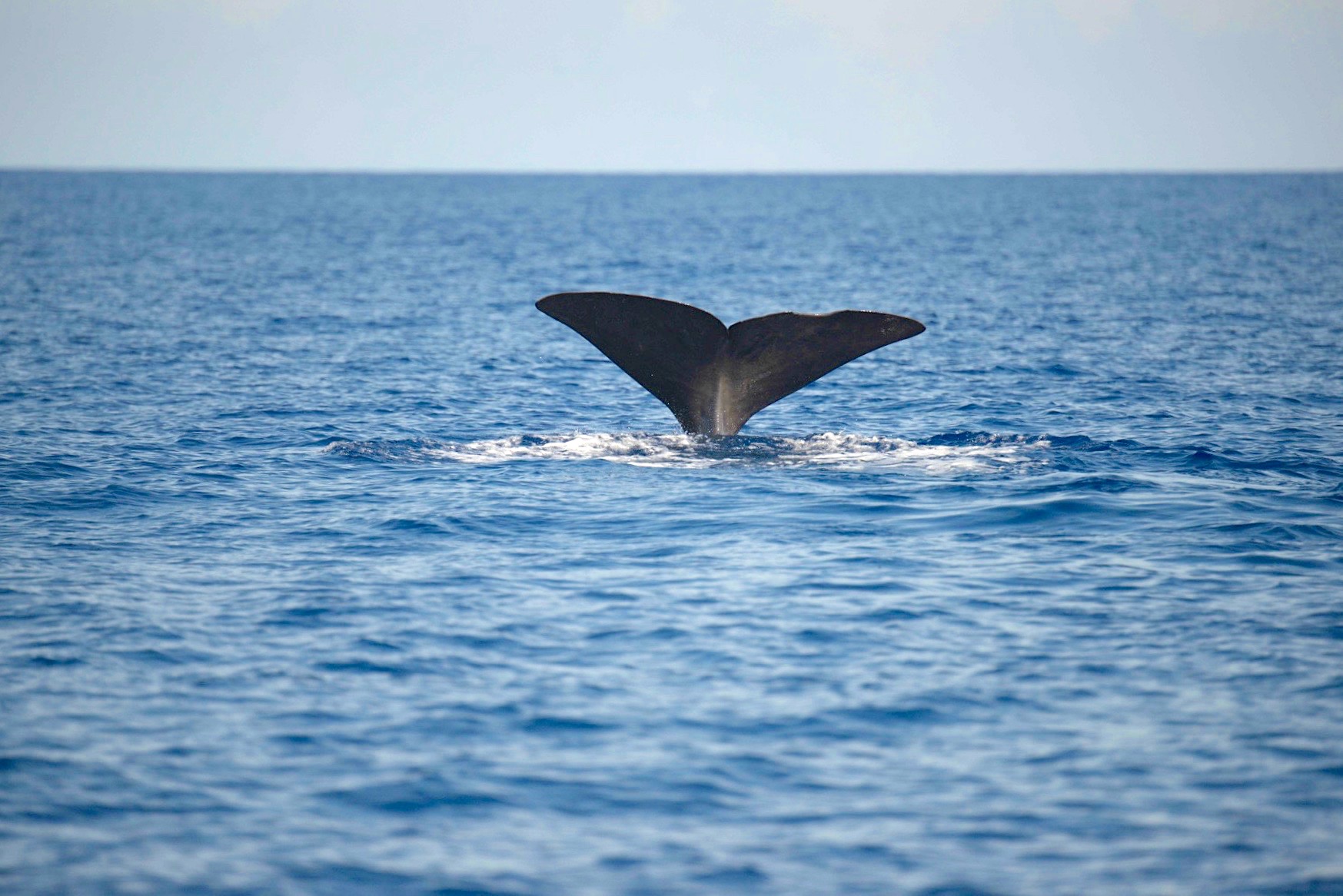
Sperm Whales, Abaco Bahamas (BMMRO / Keith Salvesen)

SPERM WHALES GATHERING IN ABACO WATERS

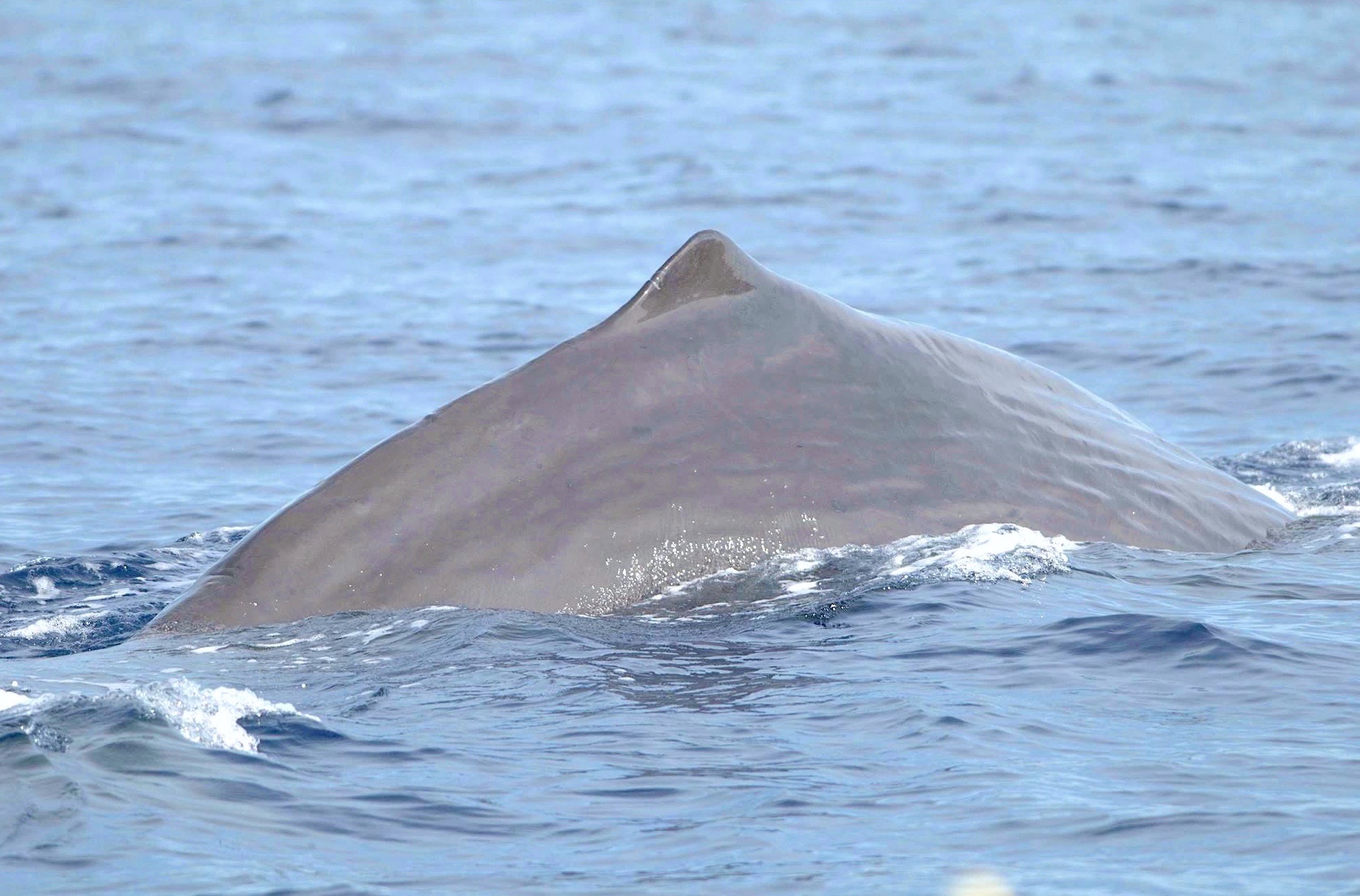
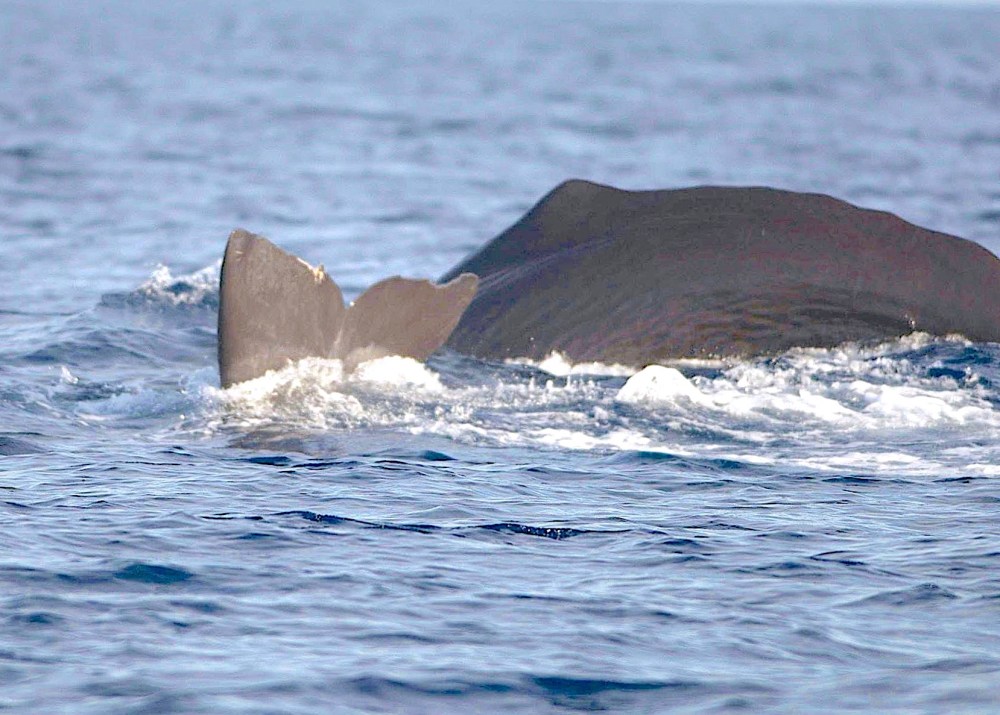
During the past week, the BMMRO research boat has been tracking sperm whales off the south coast of Abaco. These huge creatures are the largest marine mammals found in Bahamian waters, and the area between Rocky Point around the south coast to Hole-in-the Wall is a great place to find them. 

Sperm Whales, Abaco Bahamas (BMMRO / Keith Salvesen)Sperm Whales, Abaco Bahamas (BMMRO / Keith Salvesen)

One reason they are found in this particular area is the existence of the Great Bahama Canyon, one of the deepest submarine canyons in the world. The depth of the canyon ensures that the waters are nutrient-rich, with food being drawn up from the depths towards the surface. In season it’s the perfect place for female sperm whales and their calves.

Sperm Whales, Abaco Bahamas (BMMRO / Keith Salvesen)Sperm Whales, Abaco Bahamas (BMMRO / Keith Salvesen)

The BMMRO research trip encountered more than a dozen sperm whales, mostly females with their calves. And the amazing thing is that the sightings are often made within sight of land. In these photos, the are two landmarks visible. One is the huge Disney vessel parked at Gorda Cay aka Castaway Cay (header image); the other is HOLE-IN-THE-WALL LIGHTHOUSE (above)

Sperm Whales, Abaco Bahamas (BMMRO / Keith Salvesen) Sperm Whales, Abaco Bahamas (BMMRO / Keith Salvesen)

Credits: All photos BMMRO 2018, with thanks to Diane & Charlotte as ever

Sperm Whales, Abaco Bahamas (BMMRO / Keith Salvesen)

Unknown's avatar

CARIBBEAN REEF SQUID REVISITED: SUPERPOWERS & SQUID SEX


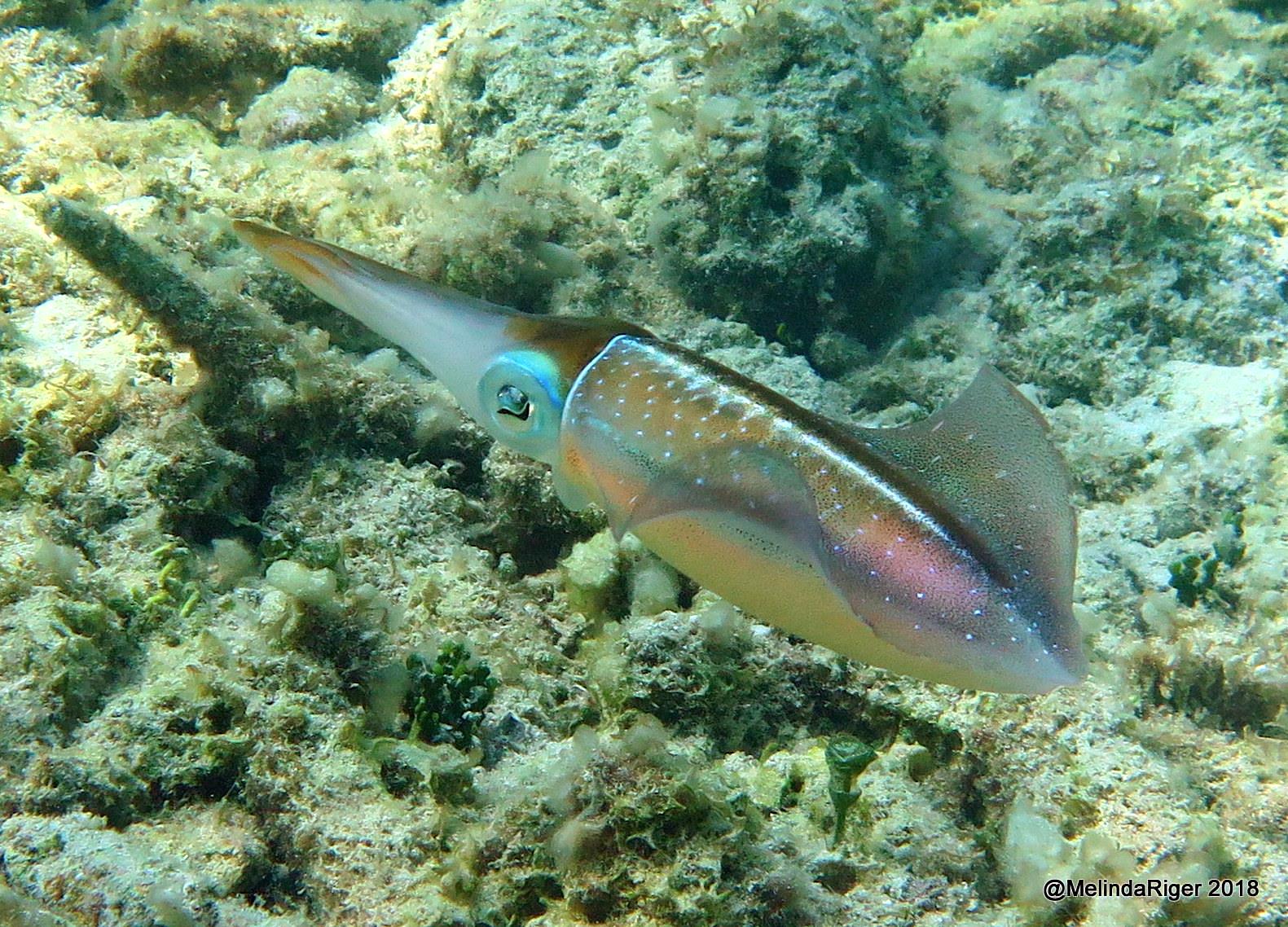
Caribbean Reef Squid, Bahamas (Melinda Riger / G B Scuba)

CARIBBEAN REEF SQUID REVISITED: SUPERPOWERS & SQUID SEX  

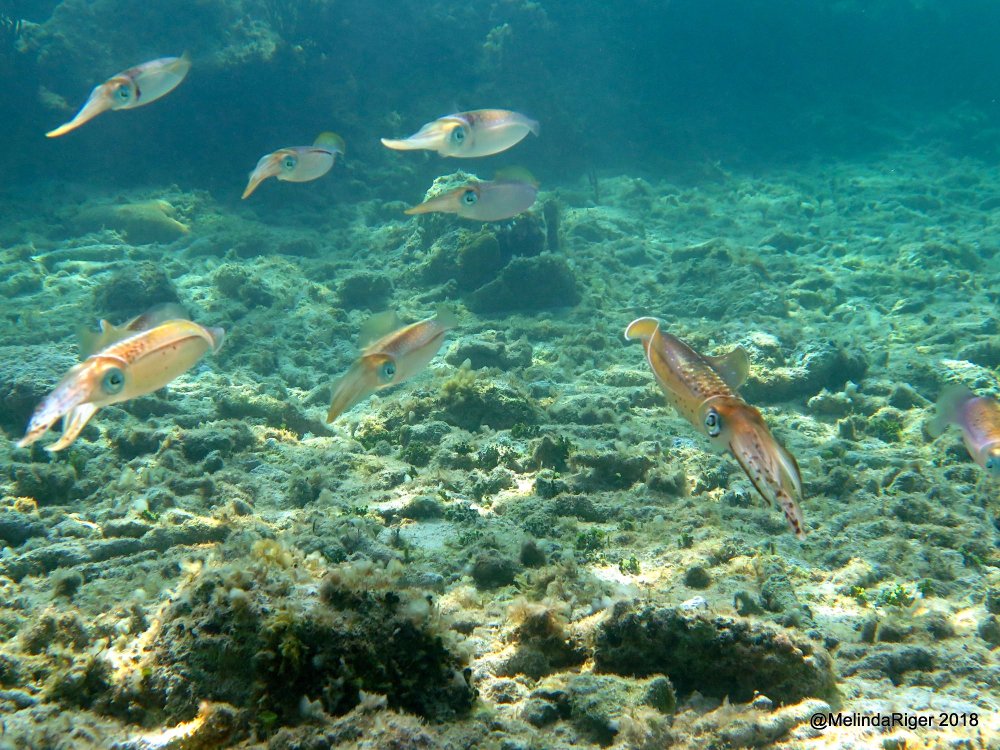
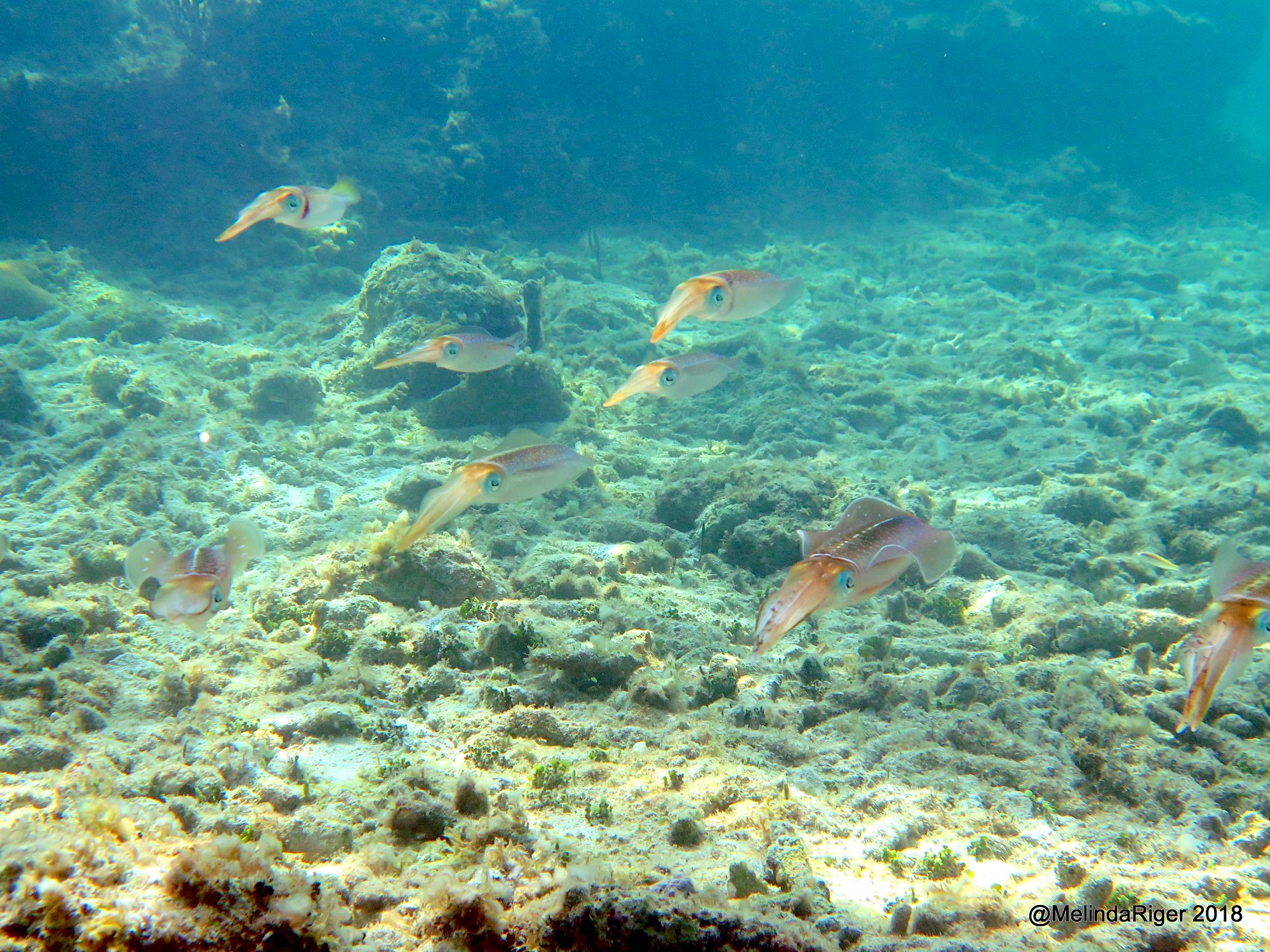
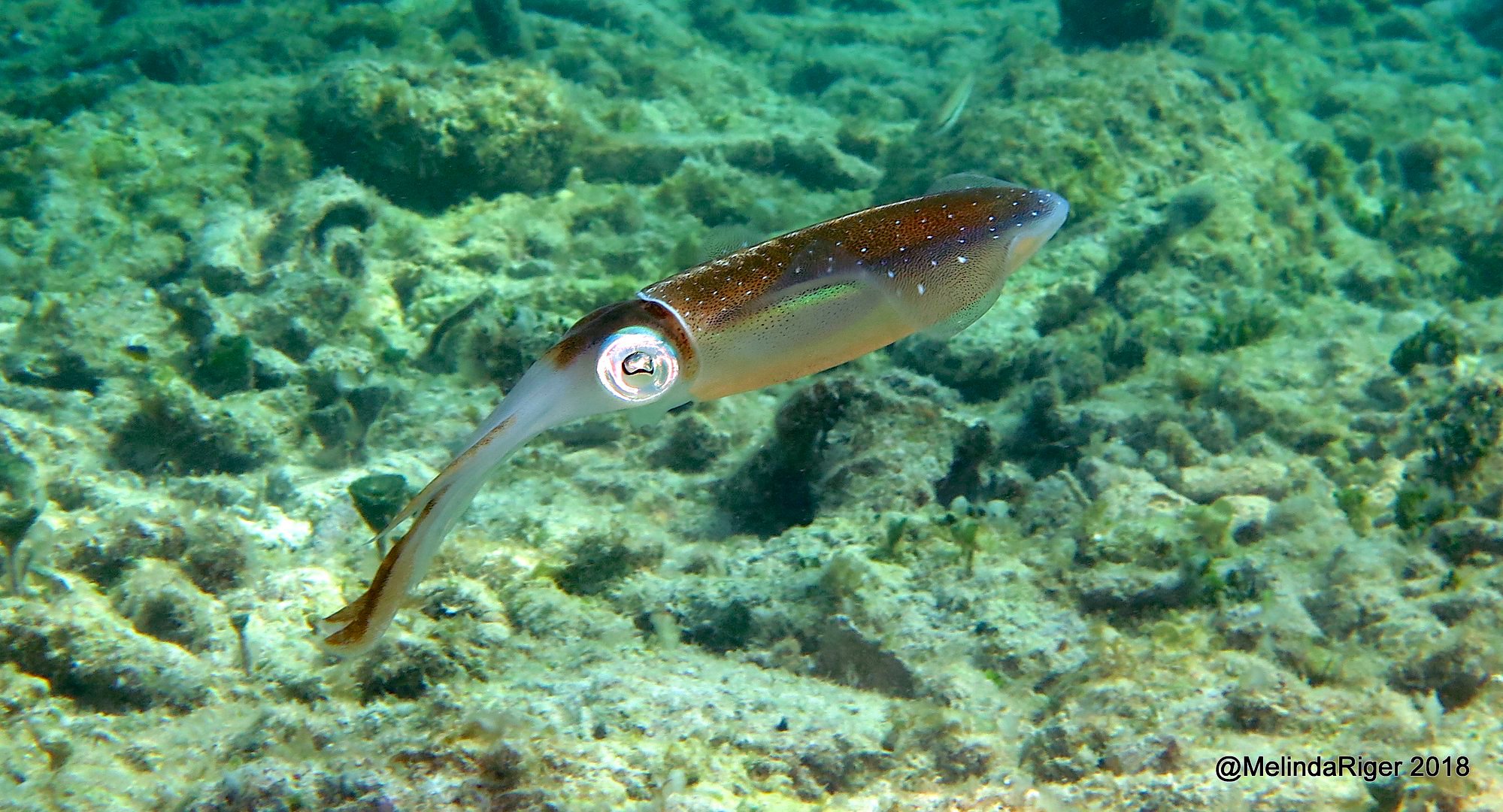
The Caribbean reef squid Sepioteuthis sepioidea is a small squid species of (mainly) the Caribbean Sea and the Floridian coast, and the most common in its range. These squid tend to form small shoals in and around reefs. Right now, in June, is a good time to find these creatures swimming in groups – all these photos were taken during the last fortnight. I wrote about squid a while back (3 years, maybe)? This post includes some parts of the earlier one, with all-new images. Squidmages, even.

Caribbean Reef Squid, Bahamas (Melinda Riger / G B Scuba)

Squid are voracious eaters, dragging their prey to their mouths with some or all of their 10 limbs and using their beak to cut it up. The target species are small fish, molluscs and crustaceans. The squid have a ‘raspy tongue’ known as a radula which further breaks up the food for easy consumption.

Caribbean Reef Squid, Bahamas (Melinda Riger / G B Scuba)

REEF SQUID SUPERPOWERS (SUPERCOOL)

  • Squid are capable of brief flight out of the water (a fairly recent discovery)
  • They can also hide from / confuse predators by ejecting a cloud of black ink
  • Squid can change colour, texture and shape, and can even match their surroundings
  • This enviable power is used defensively as camouflage or to appear larger if threatened
  • It is also used in courtship rituals (something that humans might find most disconcerting)
  • Colour patterns are also used for routine squid-to-squid communication AND GET THIS:
  • A squid can send a message to another on one side, and a different one to a squid on the other side

Caribbean Reef Squid, Bahamas (Melinda Riger / G B Scuba)

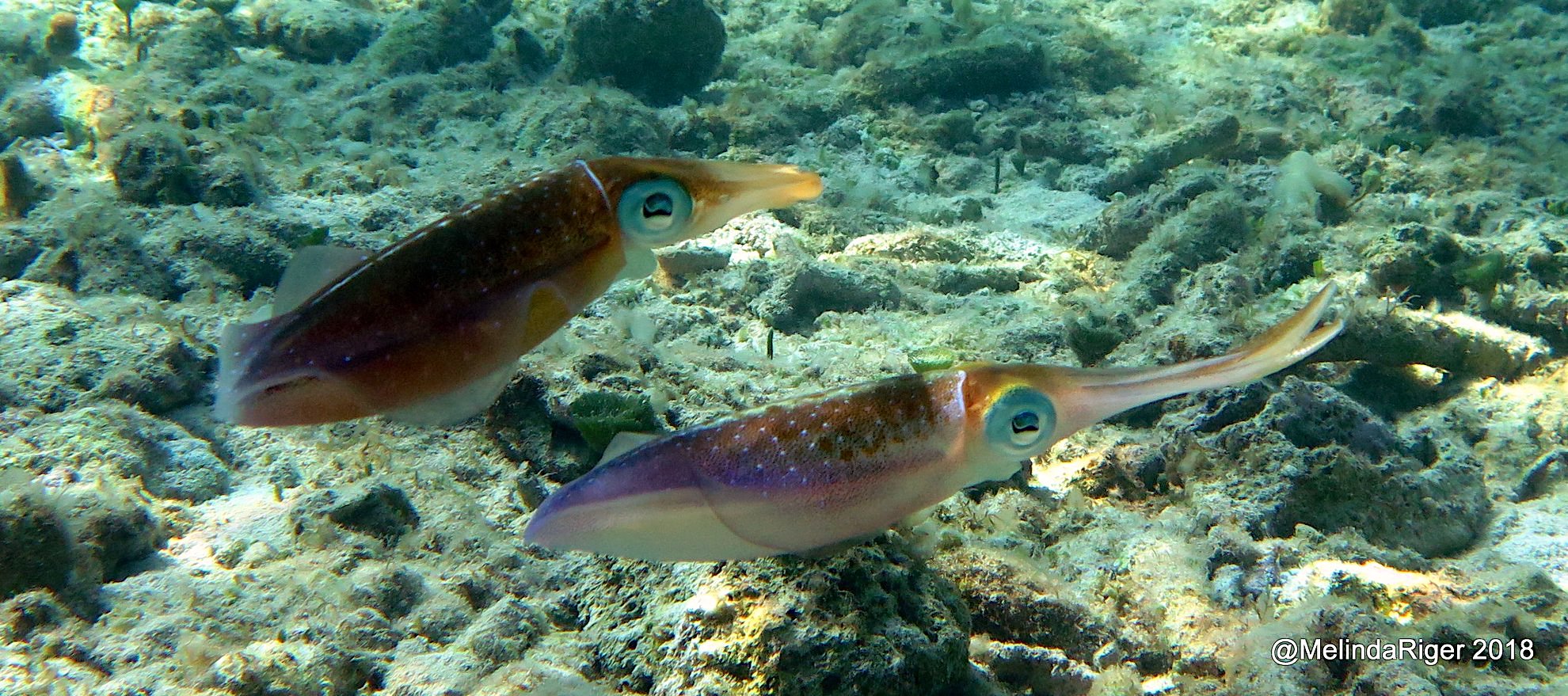
SQUID SEX (1) “ROMANCING THE SQUID”

  • A male will gently stroke a female with his tentacles
  • The female will (most likely) flash an ‘alarm’ pattern. She’s hard to get.
  • The male soothes her (don’t try this at home, guys) by blowing and jetting water at her
  • If this doesn’t go well, he’ll move off, then repeat the routine until she sees his good points
  • However this on / off courtship can last for hours until at last he succeeds and then…
  • … he attaches a sticky packet of sperm onto the female’s body (romance is not dead on the reef)
  • She then reaches for it and moves it to her seminal receptacle
  • Meanwhile he stays close, emitting a pulsing pattern, as well he might after all that palaver
  • She then finds a safe place to lay her eggs. Job done.

Caribbean Reef Squid, Bahamas (Melinda Riger / G B Scuba)

SQUID SEX (2) IT ALL ENDS BADLY. VERY BADLY.

  • As soon the female squid has laid her eggs, she dies at once
  • The male squid lives a bit longer and… may have other packets to stick on other lady squid
  • But then in the end he dies too
  • It’s all horribly reminiscent of Romeo and Juliet. The lovers die. But no the balcony scene

Caribbean Reef Squid, Bahamas (Melinda Riger / G B Scuba)

THE CORRECT PLURAL OF SQUID

I had an unwise look online, always a hotbed of conflicting opinions. Inserting an algorithm into the interstices of the internet proves conclusively that the plural of squid is… squid. One squid, ten squid, a group of squid, a plate of squid. Unless, that is, you are talking about more than one of the many squid species, when you could also have ‘I collect both reef and giant squids’. “Squidses” sounds fun but is sadly not permitted.

Caribbean Reef Squid, Bahamas (Melinda Riger / G B Scuba)

RELATED POSTS

THE PLURAL OF OCTOPUS

Credits: As ever (for fabulous underwater pics) Melinda Riger of Grand Bahama Scuba; research sources include MarineBio; Animal Diversity Web (Michigan Uni)

Unknown's avatar

GREEN TURTLES & TURTLE AWARENESS ON ABACO


Green Turtle, Bahamas (Adam Rees)

GREEN TURTLES & TURTLE AWARENESS ON ABACO

There’s something slightly unsettling about the perspective of the header image, with foreshortening suggesting that the turtle is actually a gigantic creature with a tiny diver swimming close to it…

I don’t seem to have given green turtles much space in the past, the most frequently photographed (and therefore featured) species being the hawksbill. This post is both to right the wrong, and to provide some information about the species.

Green Turtle, Bahamas (Adam Rees)

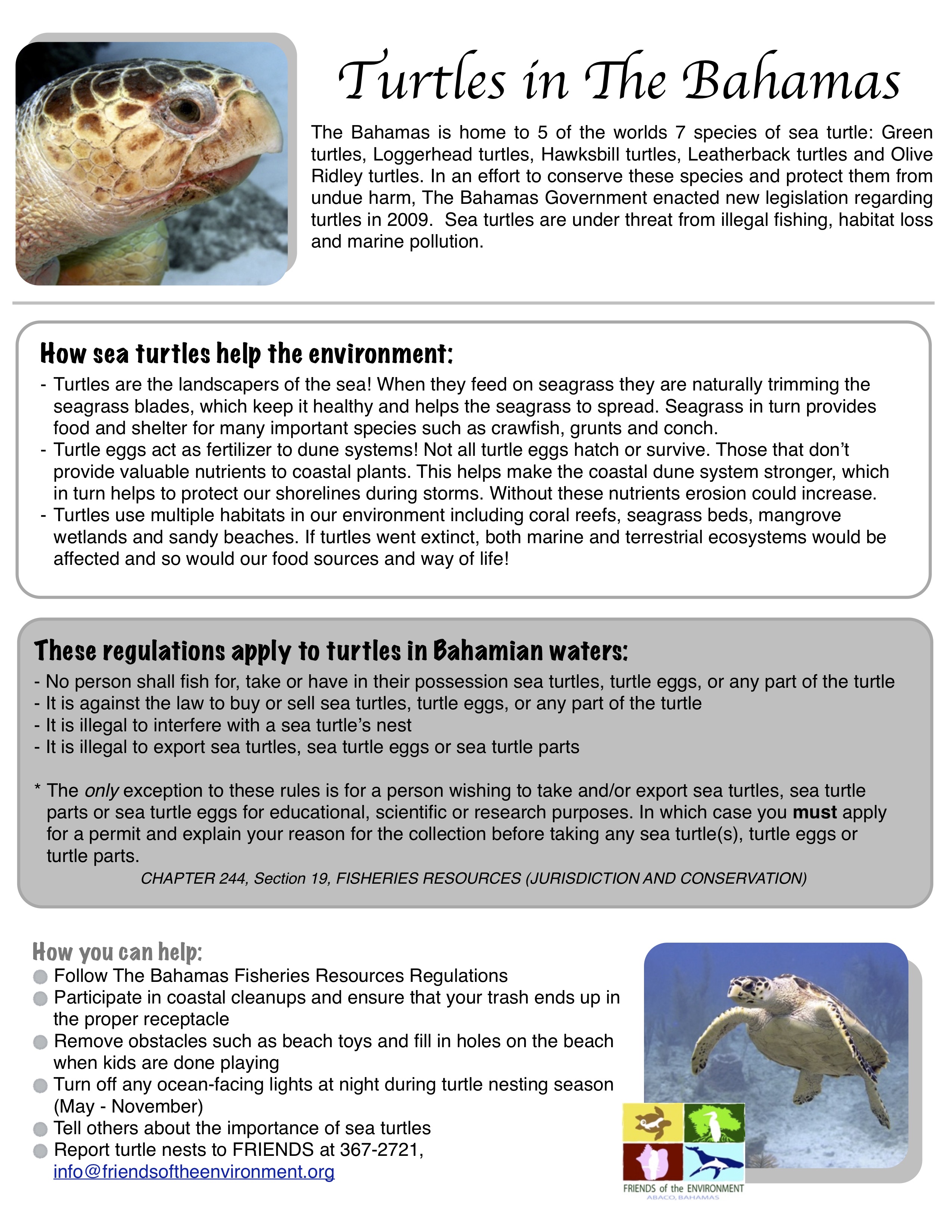
Friends of the Environment has produced an interesting short guide to the sea turtles of the Bahamas. One of the many facts included is that 5 of the 7 sea turtle species in the world can be found in Bahamian waters. The turtle protection law is also given – also the way to report turtle nests so they can be watched and protected.

Green Turtle, Bahamas (Adam Rees)

The 4 main species are the hawksbill, green, loggerhead and leatherback. The 5th and lesser known one is the Olive Ridley turtle. The differences between most of these is considerable, as can be seen from this IUCN-produced Identification Chart (credits as shown).

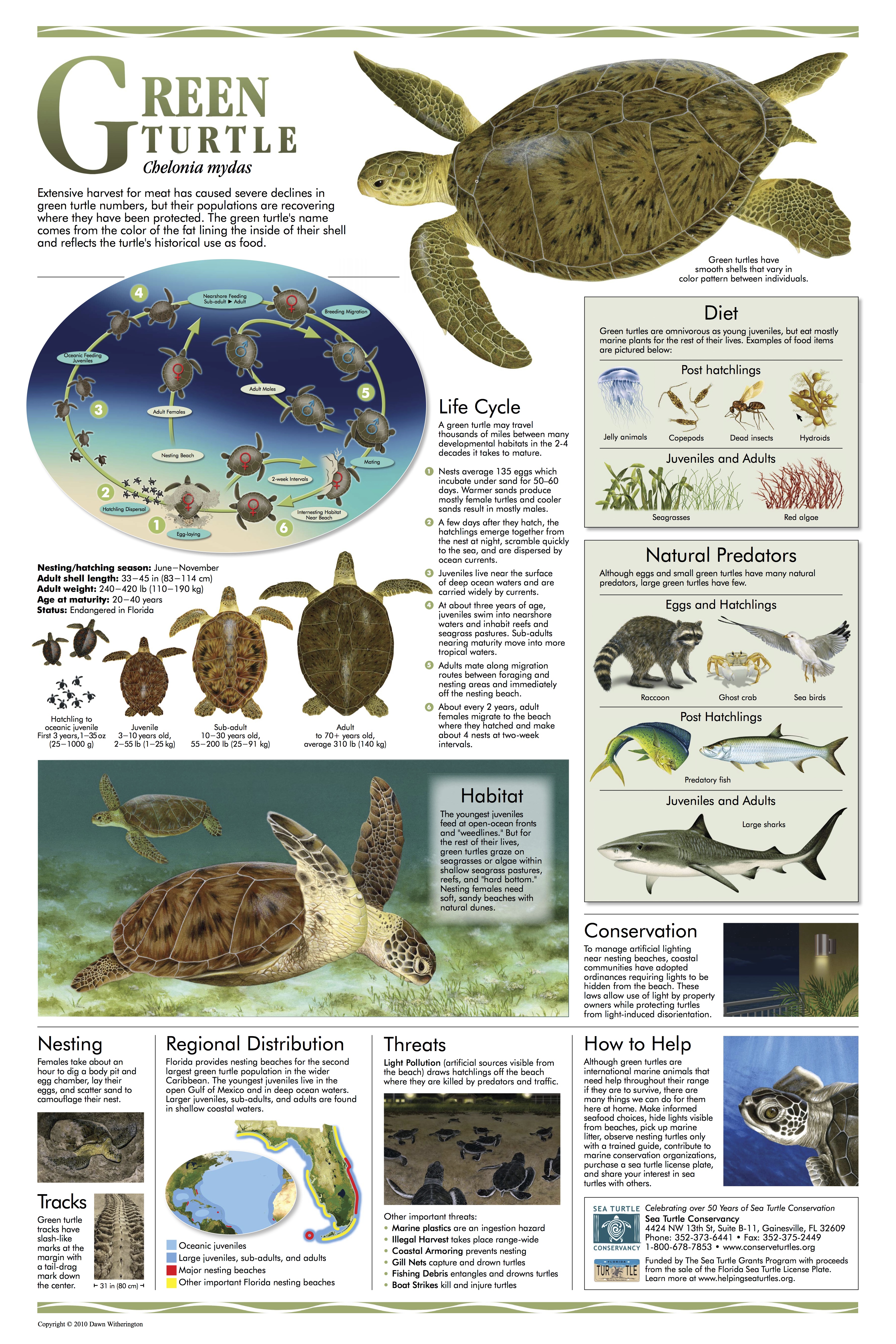
Another useful source of information for green turtles is this extremely well produced poster illustrated by the excellent Dawn Witherington, who has somewhat (and deservedly) cornered the market with this kind of large-scale infographic. The sea turtle series is so helpful that I have dedicated a whole page to them HERE. Dawn also created the LOXAHATCHEE poster series covering such topics as Lionfish, Sea Grasses, Land Crabs, Bonefish, Coral Reefs and more

Green Turtle, Bahamas (Adam Rees)

All photos: Adam Rees Photography, with thanks for use permission here and elsewhere

Unknown's avatar

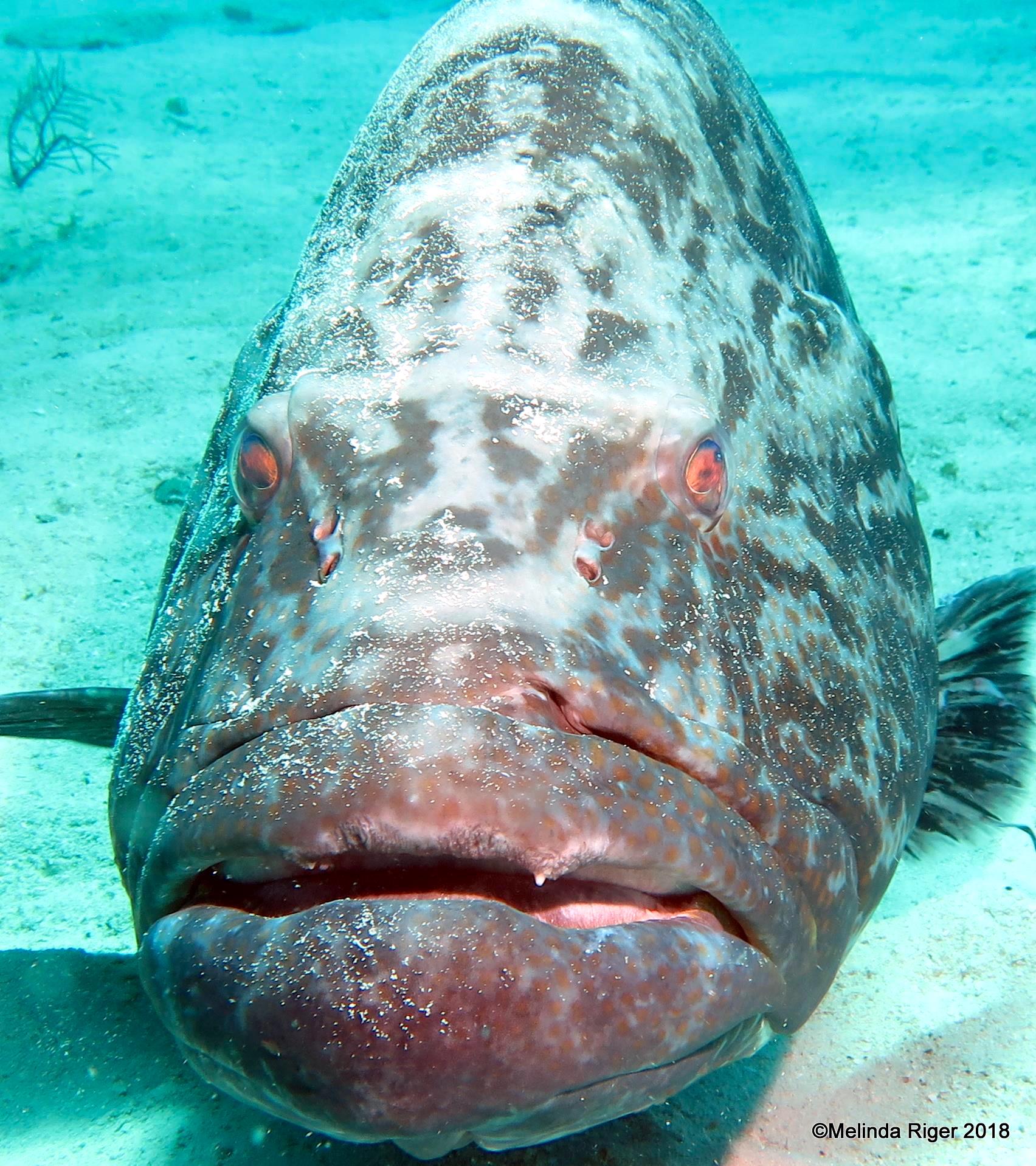
‘CURIOUS GEORGE’ THE INQUISITIVE BLACK GROUPER


Black Grouper Bahamas (Curious George) - Melinda Riger / GB Scuba

‘CURIOUS GEORGE’ THE INQUISITIVE BLACK GROUPER

Fish, like humans, have a wide variety of temperaments, or so it seems. Resorting to anthropomorphic analysis of animal behaviour is a favourite pastime for humans. Who really knows if a creature is actually feeling shy or confident or playful or aggressive or indeed inquisitive. Often it just seems that way and we are happy to categorise dolphins as playful, sharks as vicious, angelfish as serene, small darting fish as timid and so on. 

Black Grouper Bahamas (Curious George) - Melinda Riger / GB Scuba

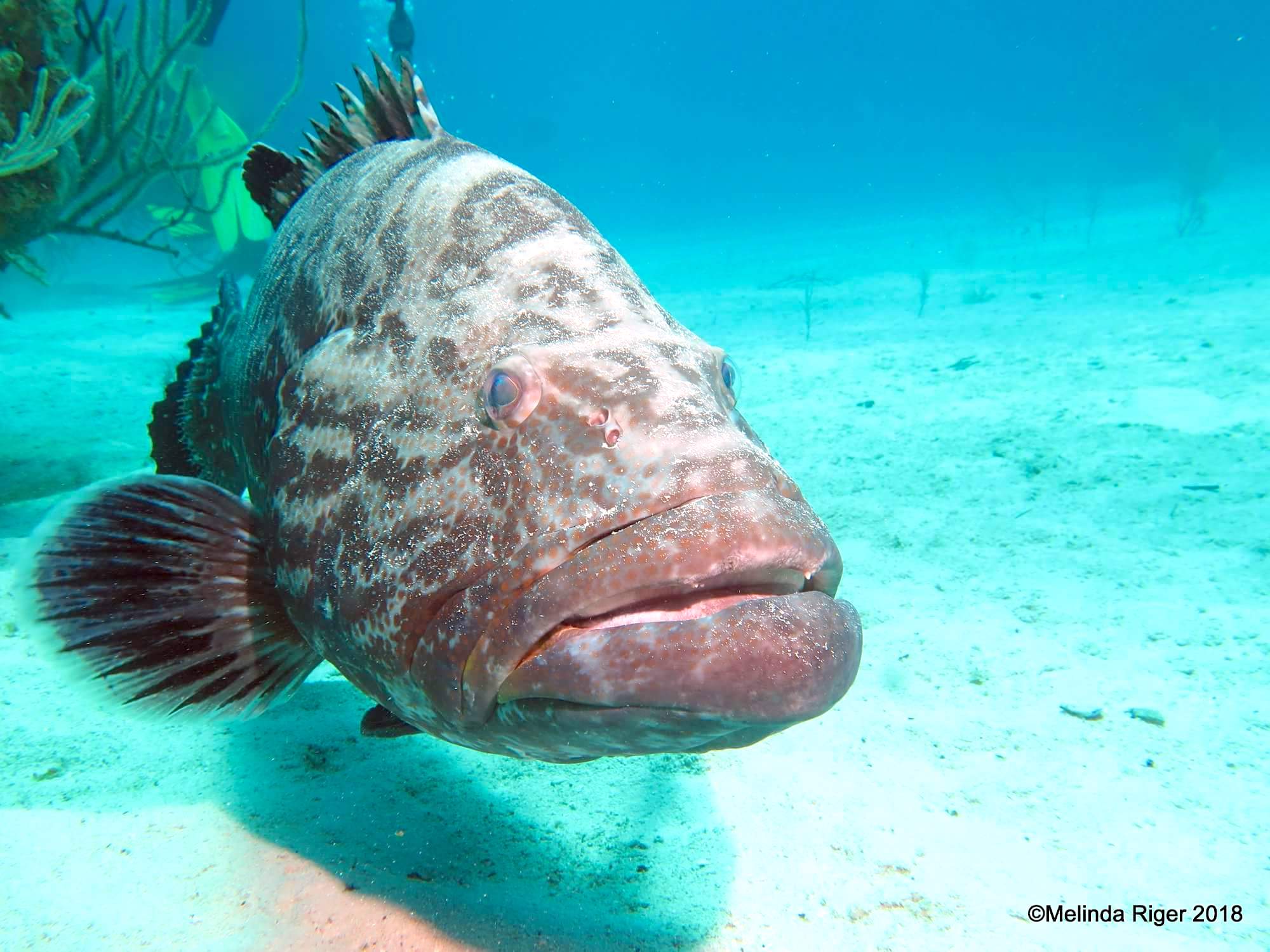
Occasionally a creature displays a ‘human’ characteristic that seems undeniable. One such is Curious George. He has become used to the divers around the reef where he lives, and greets them. He enjoys the photography sessions and the equipment, even though they may be for recording other fish. He demonstrates inquisitiveness for the strange-looking black-suited creatures that visit his patch. Like many groupers, he likes to be gently patted and stroked. 

Black Grouper Bahamas (Curious George) - Melinda Riger / GB Scuba

All this curiosity and friendliness evidences a benign interspecies relationship of symbiotic mutualism, through which both species (man and fish) benefit from the interaction. The mutually beneficial feeling might in broad terms be described as ‘pleasure’.

Black Grouper Bahamas (Curious George) - Melinda Riger / GB Scuba

Or maybe I am just indulging in a bit of over-anthropomorphisation (if there is such a word)…

All photos by one half of the symbiotic mutualism here, Melinda Riger (Grand Bahama Scuba)

Unknown's avatar

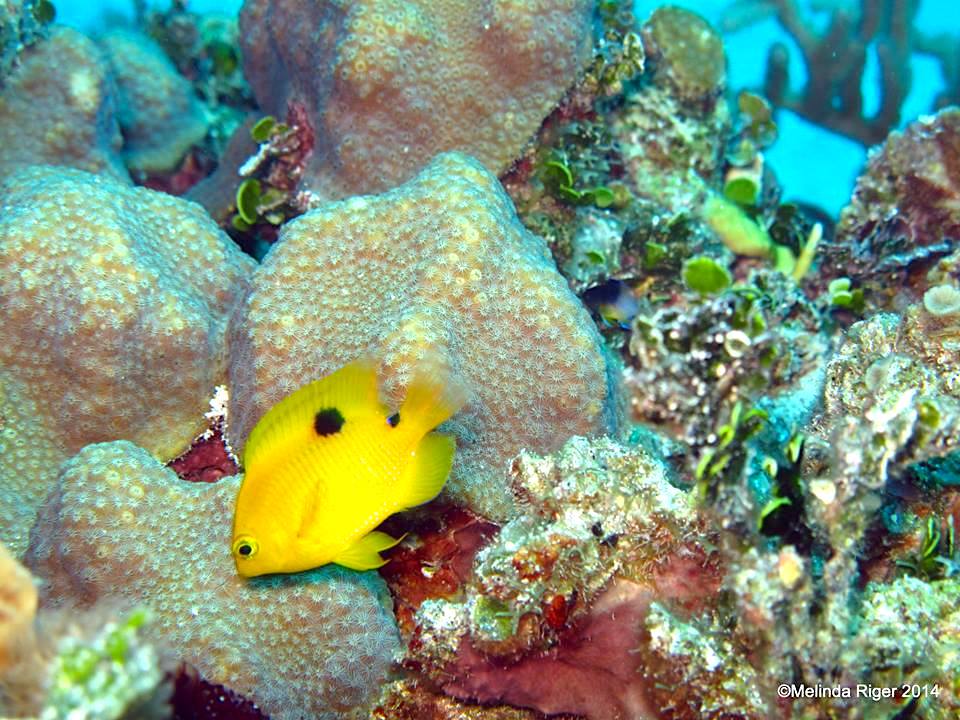
BAHAMAS REEF FISH (45) THREESPOT DAMSELFISH


Threespot Damselfish (Melinda Riger / GB Scuba)

BAHAMAS REEF FISH (45) THREESPOT DAMSELFISH

The threespot damselfish Stegastes planifrons is one of several damselfish types found in the Bahamas and more generally in the western Atlantic. As with so many reef species, there is a marked difference in coloration between juveniles (bright yellow) and darker-hued adults (above).

Threespot Damselfish (Melinda Riger / GB Scuba)Threespot Damselfish (Melinda Riger / GB Scuba)

These are bony little creatures, equipped with both spines and ‘soft rays’ on some of their fins. This perhaps make them unappealing to potential predators; and maybe the very brightness and ‘hi-viz’ of the juveniles is aposematic, a coloration thats acts as a warning or repellent to potential predators.

Threespot Damselfish (Melinda Riger / GB Scuba)

On the reef it seems threespots favour staghorn coral as a daytime base. Their diet is mainly seaweed, with small molluscs, gastropods and worms for variety. At night they retire to crevices and caves.

Threespot Damselfish (Melinda Riger / GB Scuba)

Adults are, for such small fish, vigorously protective of their territories. They will chase and nip intruders into their domains, even far larger creatures (up to and including humans).

Threespot Damselfish (Melinda Riger / GB Scuba)

A breeding pair will both be involved in egg care. Once the female has laid her eggs, they adhere to the lower reef and seabed. The male guards them and rather sweetly fans them with his fins to keep them oxygenated. And then another generation hatches and the threespot life cycle repeats.

Threespot Damselfish (Melinda Riger / GB Scuba)

Credits: All fantastic photos by Melinda Riger / Grand Bahama Scuba

Unknown's avatar

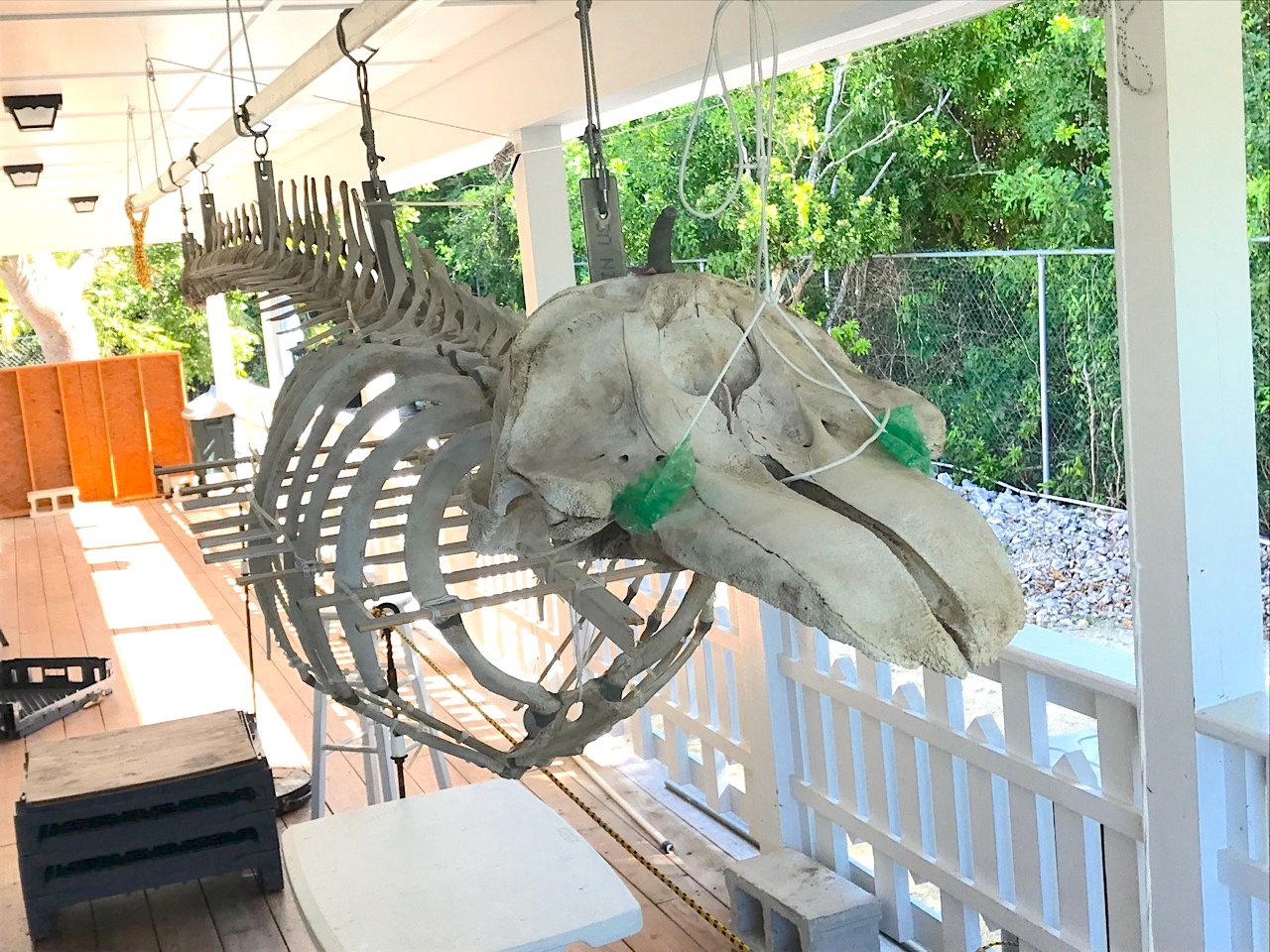
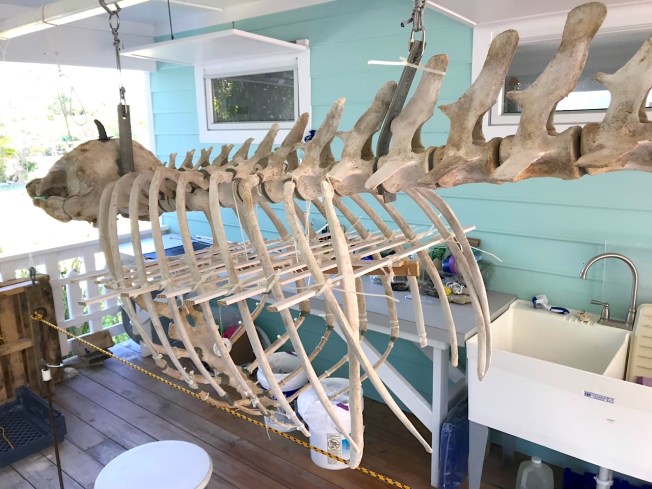
THE ARTICULATE WHALE (2): MARINE SCIENCE ON DISPLAY


False Killer Whale Skeleton, Abaco Bahamas (Keith Salvesen / BMMRO)

THE ARTICULATE WHALE (2): MARINE SCIENCE ON DISPLAY

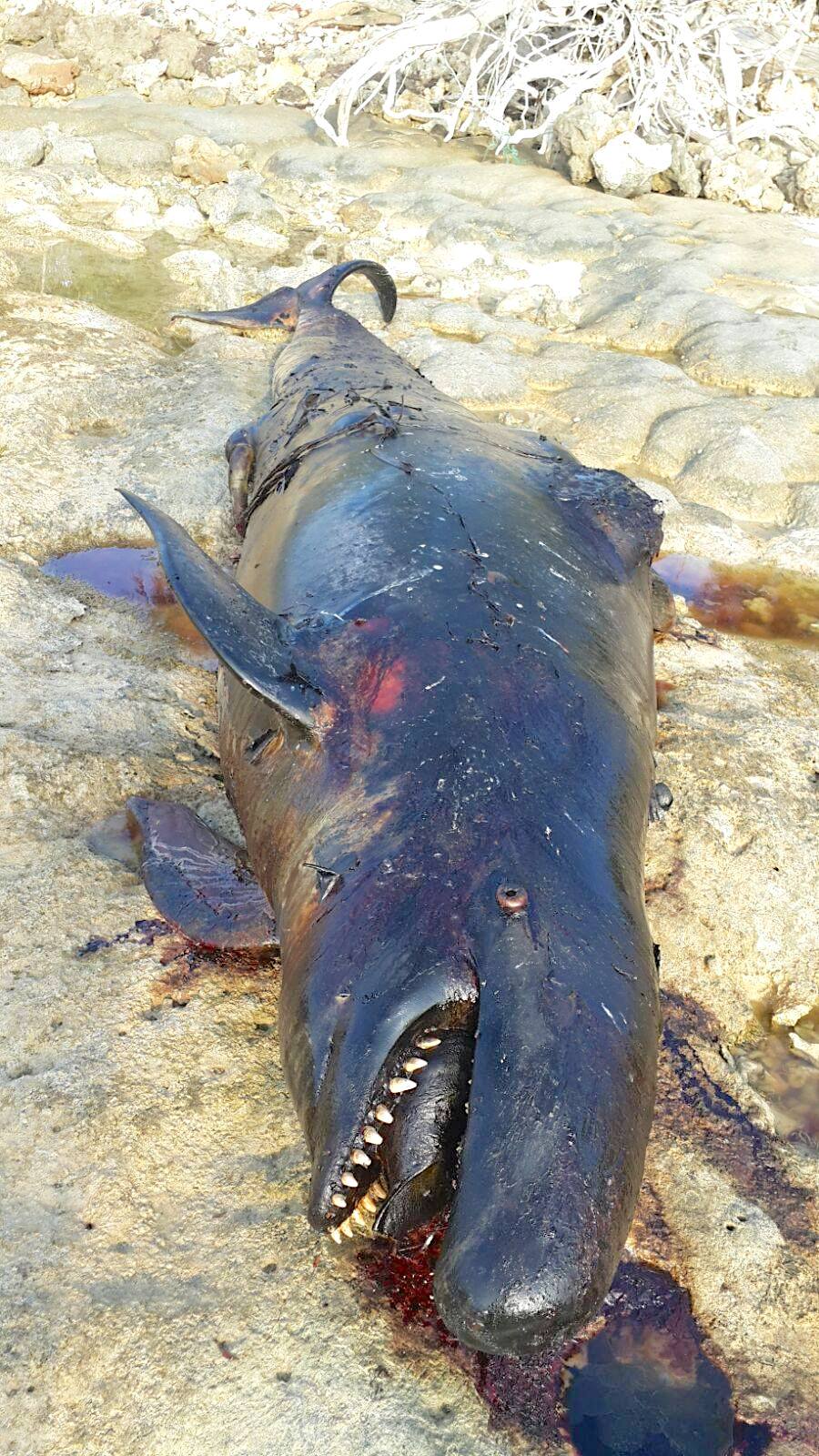
A couple of months back I wrote about the fate of the false killer whale Pseudorca crassidens (in fact a species of dolphin) that was stranded on Duck Cay. After its discovery, it was cut up, buried for many months before being disinterred, cleaned… and made ready to be reconstructed for display at Friends of the Environment, Marsh Harbour for research and educational purposes. The poor dead creature was destined to have a future ‘life’ (in a sense) as an exhibit. You can read the details and see the various stages of the preparatory processes (including some gory images) HERE.

False Killer Whale Skeleton, Abaco Bahamas (Keith Salvesen / BMMRO)

The FKW joint project (see below for participants) has taken more than a year. The final stage has been similar to doing a jigsaw puzzle, with the added complication that it isn’t entirely clear where or even whether all the pieces fit – there may even be one or two leftover small bones when the reconstruction is finished.

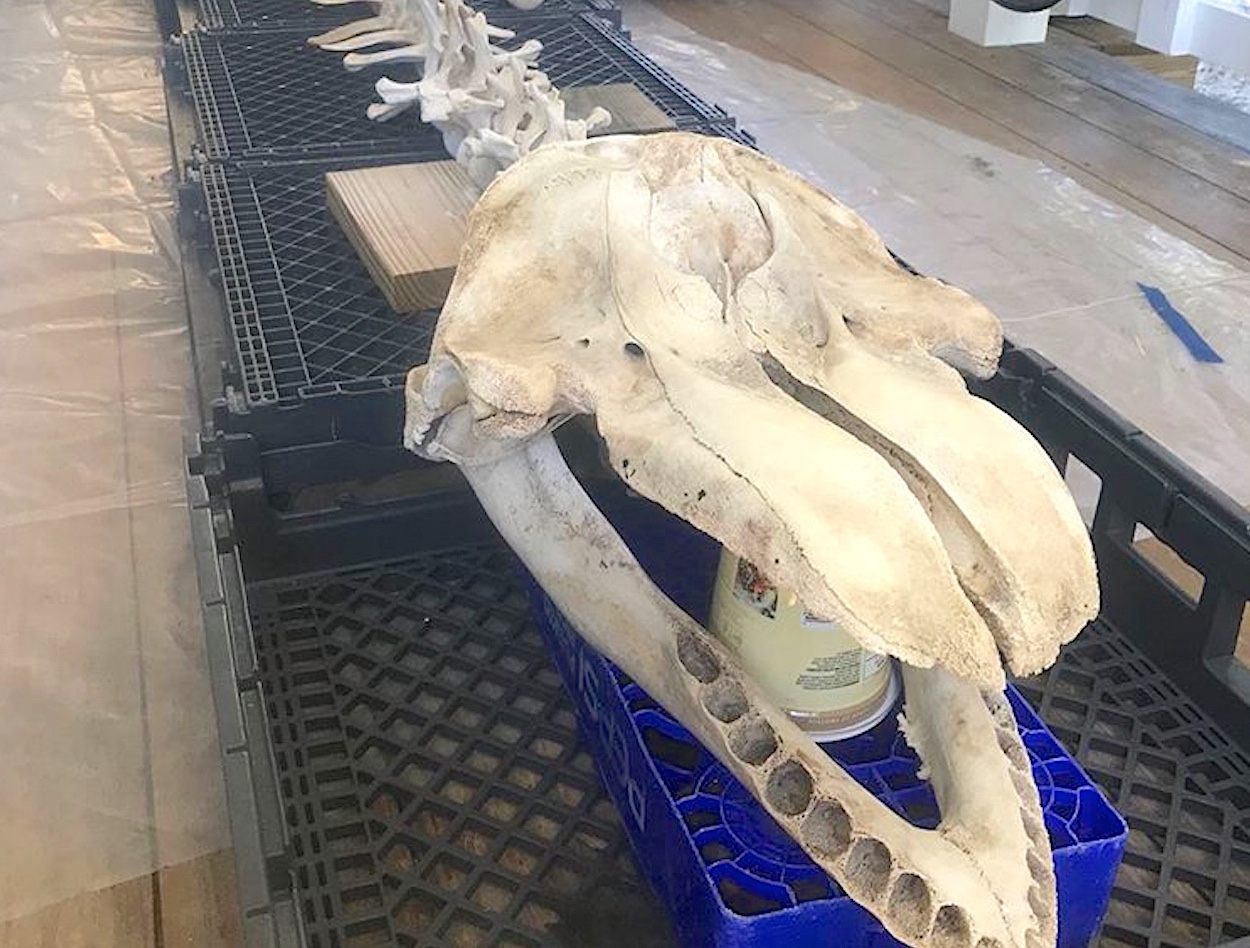
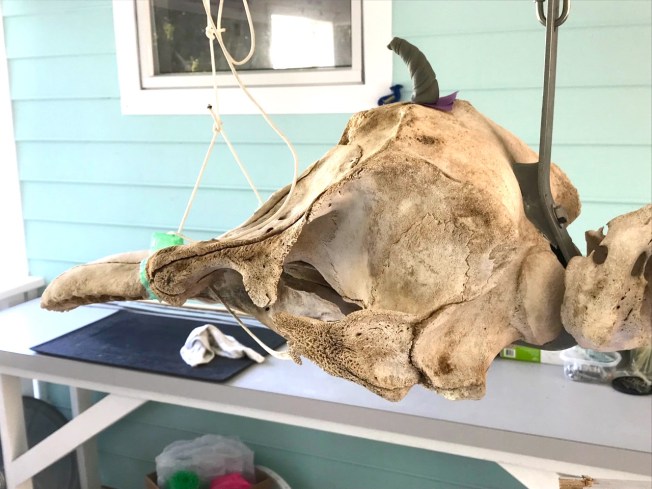
HEADFalse Killer Whale Skeleton, Abaco Bahamas (Keith Salvesen / BMMRO)False Killer Whale Skeleton, Abaco Bahamas (Keith Salvesen / BMMRO)

Since I last wrote about the ‘rearticulation’ project, I have spent some time on Abaco. A highlight was our visit to FotE to meet the jocundly-named ‘Ducky’ of Duck Cay [I’d have gone for ‘Killer’ as a name – there’s no such thing as bad publicity]. Incidentally the strange item on the whale’s skull is in fact nothing to do with the creature’s real structure – it’s a natural historian’s unicorn-related jest…

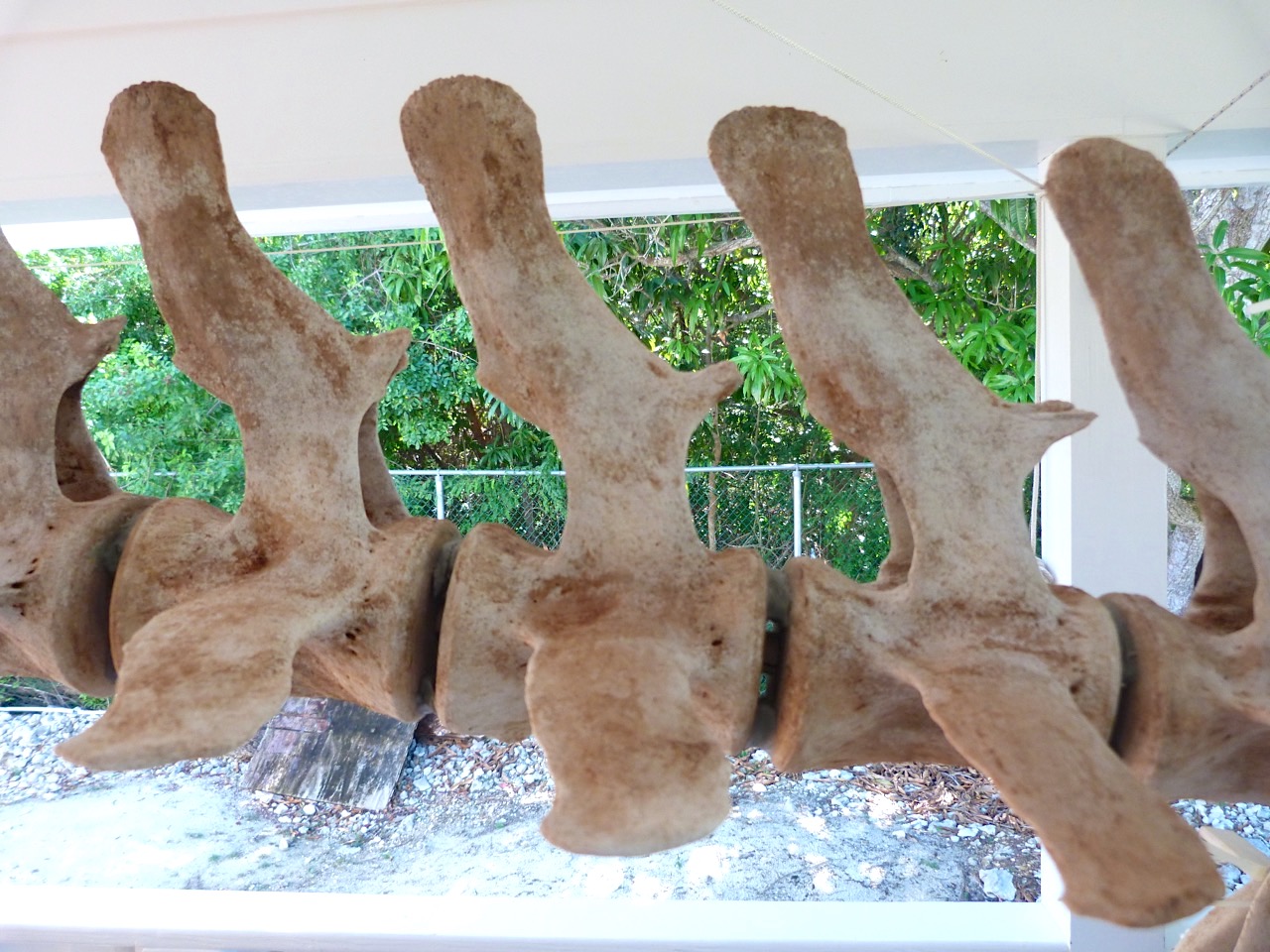
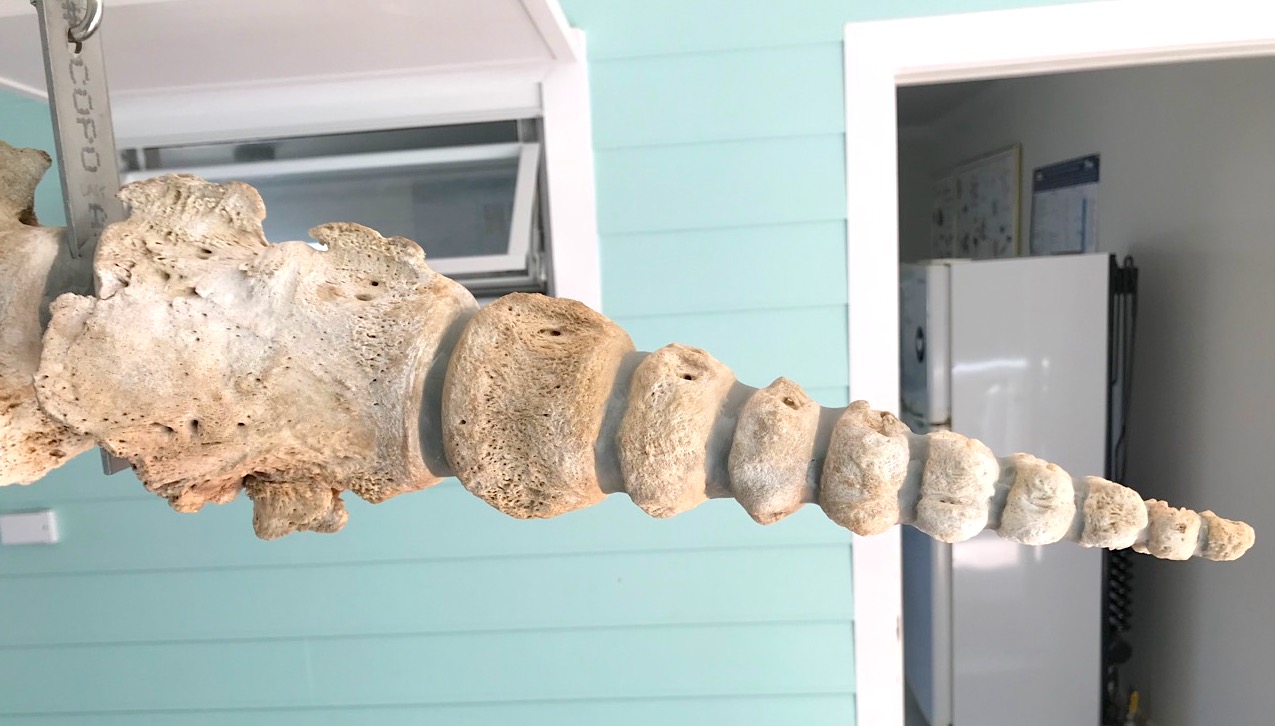
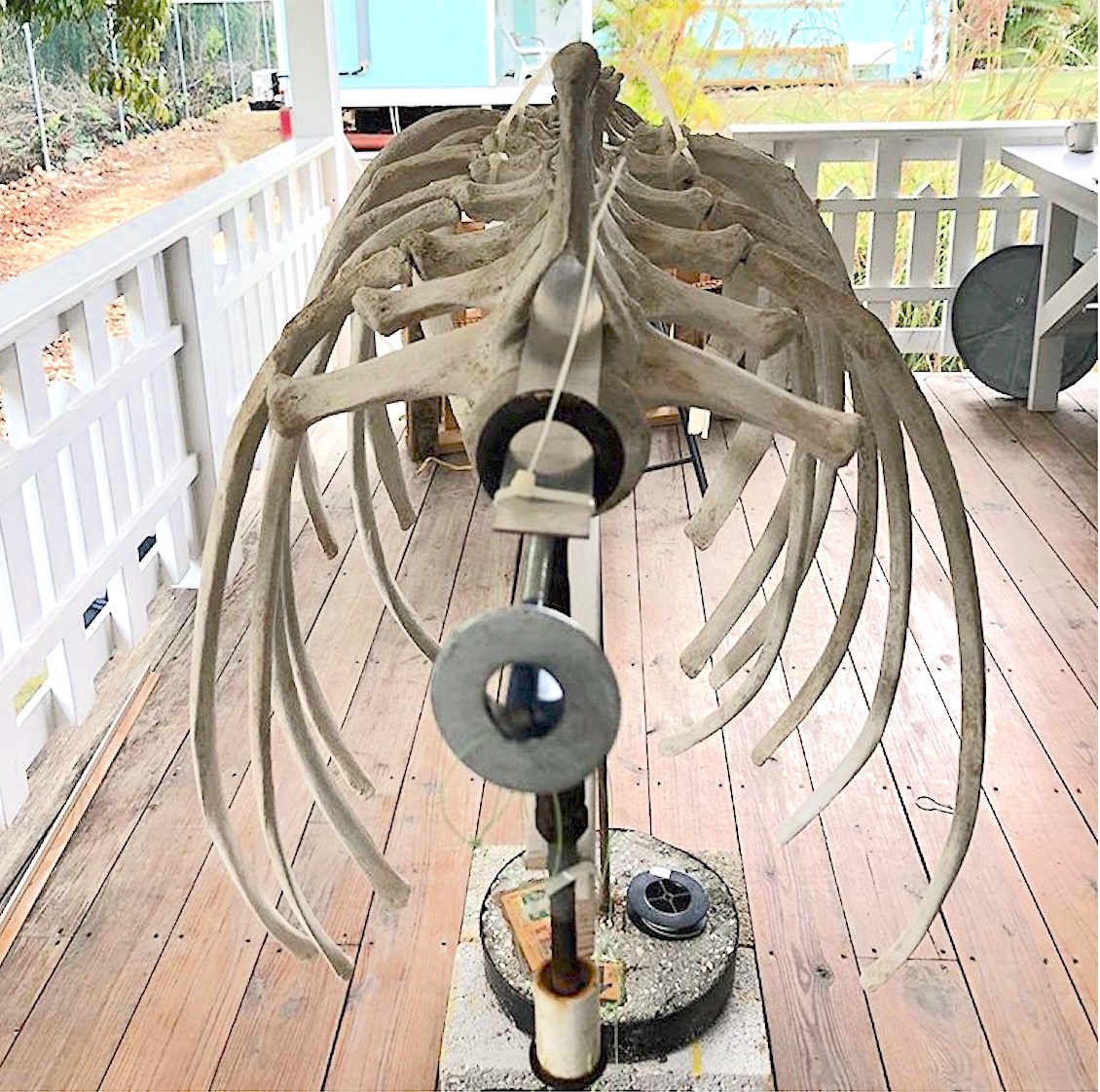
RIBCAGE & SPINEFalse Killer Whale Skeleton, Abaco Bahamas (Keith Salvesen / BMMRO)False Killer Whale Skeleton, Abaco Bahamas (Keith Salvesen / BMMRO) False Killer Whale Skeleton, Abaco Bahamas (Keith Salvesen / BMMRO)

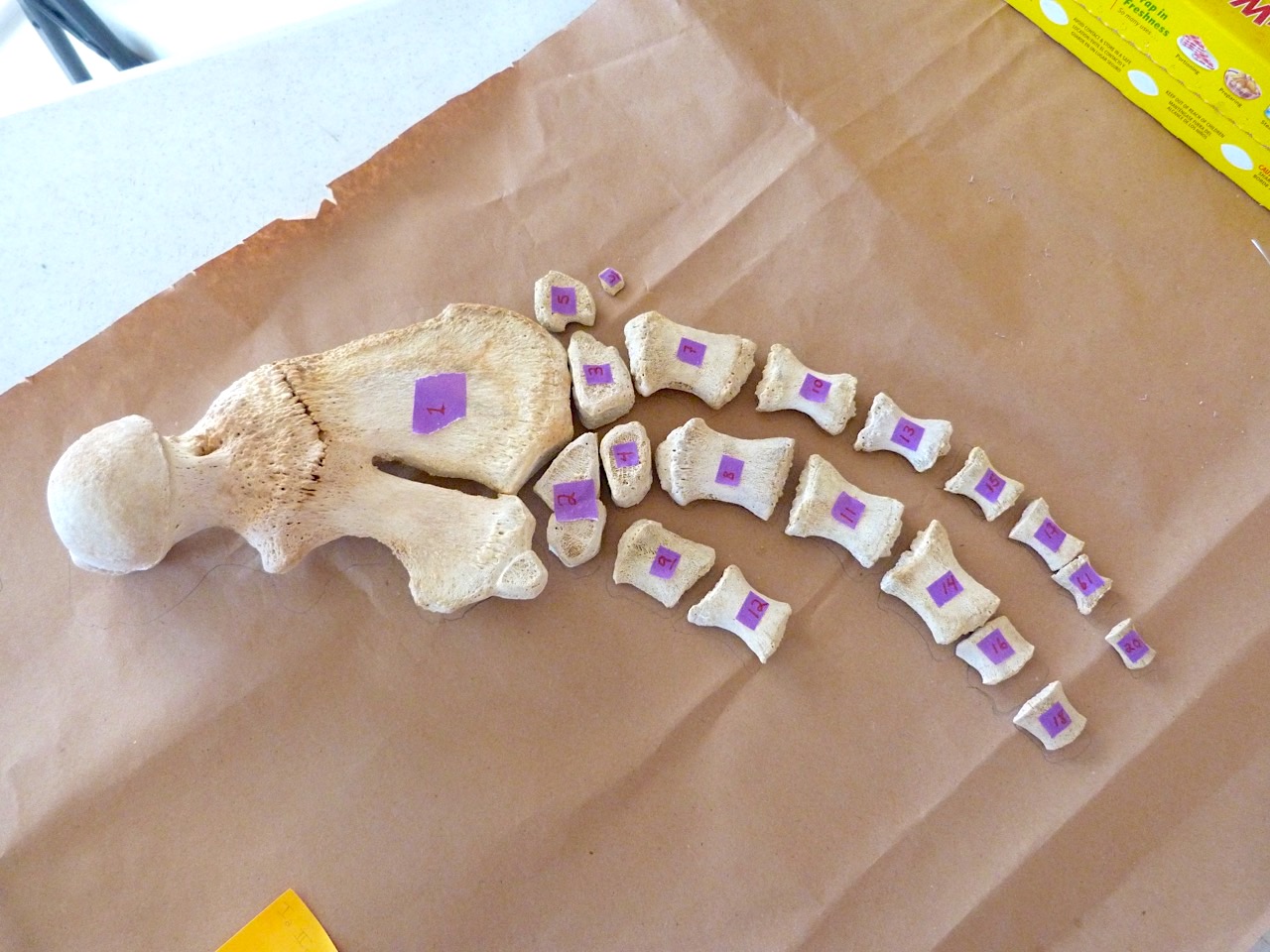
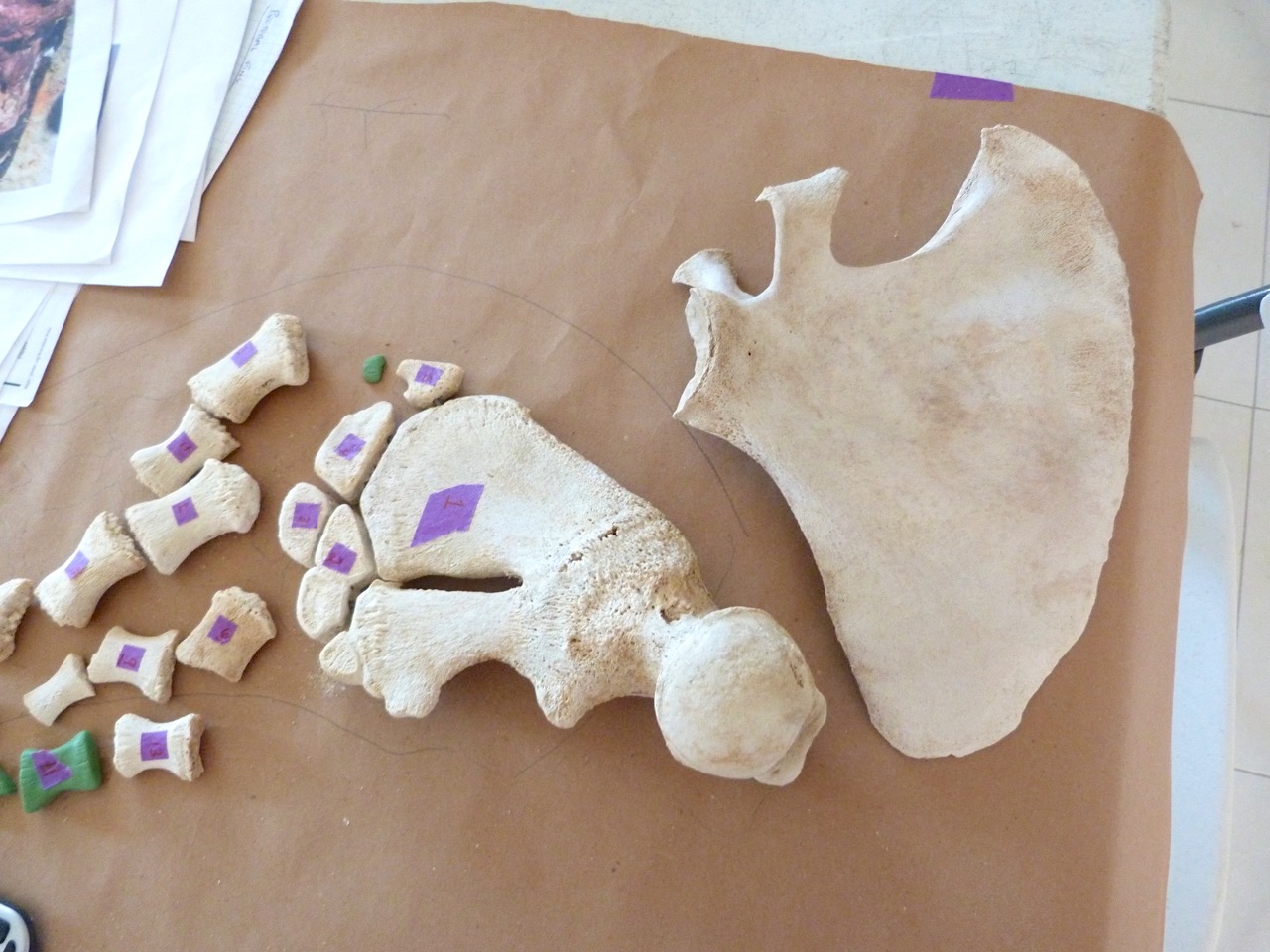
Besides identifying all the bones and numbering them, those working on this project have had to devise ingenious methods for display to make the reconstruction as accurate as possible – not an easy task with a creature nearly 20 feet long.

SPINEFalse Killer Whale Skeleton, Abaco Bahamas (Keith Salvesen / BMMRO)False Killer Whale Skeleton, Abaco Bahamas (Keith Salvesen / BMMRO)         

FLIPPER 1 – COMPLETEFalse Killer Whale Skeleton, Abaco Bahamas (Keith Salvesen / BMMRO)

FLIPPER 2 – WORK IN PROGRESSFalse Killer Whale Skeleton, Abaco Bahamas (Keith Salvesen / BMMRO)

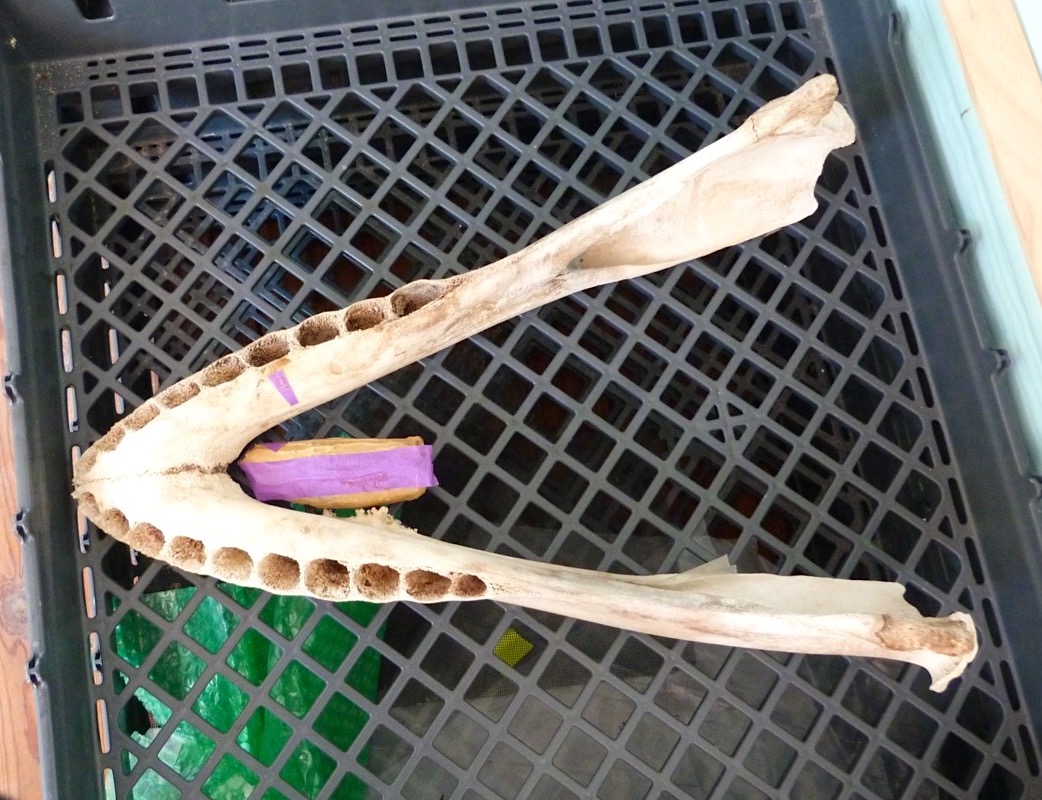
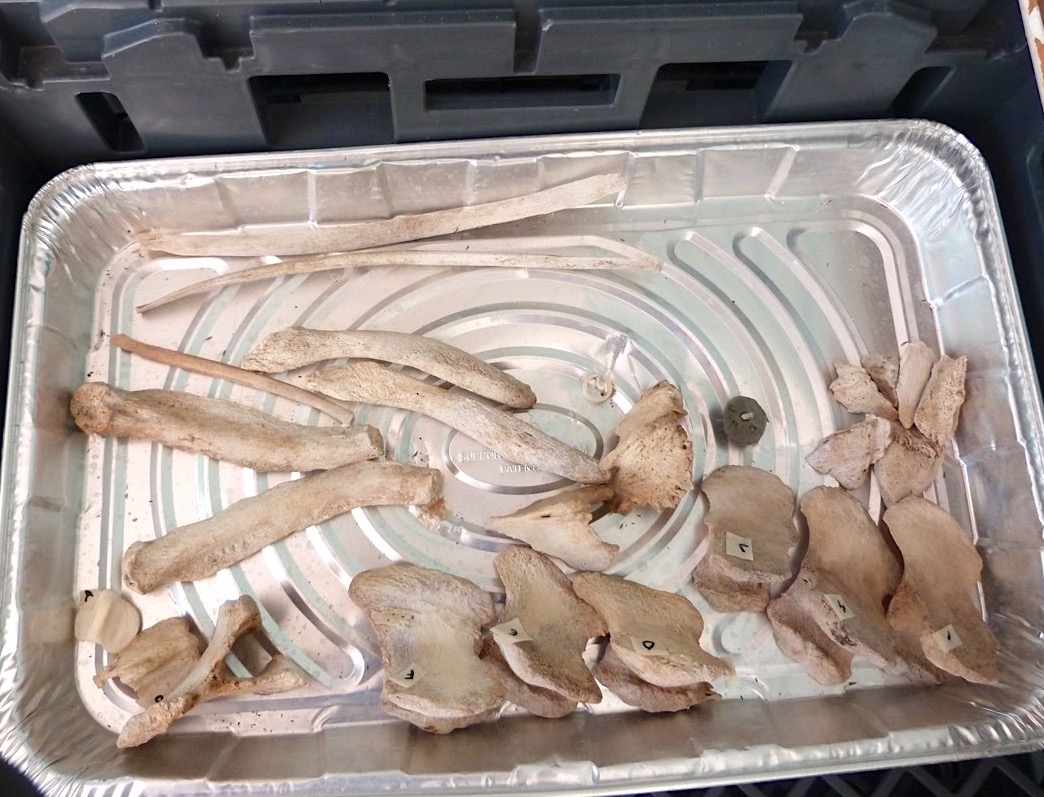
JAW & A TRAY OF SUNDRIES…False Killer Whale Skeleton, Abaco Bahamas (Keith Salvesen / BMMRO) False Killer Whale Skeleton, Abaco Bahamas (Keith Salvesen / BMMRO)

It would be against the principles of this blog to miss out on an obvious open goal of an opportunity for an apposite final caption…

A WHALE TALE THAT ENDS WITH THE WHALE TAILFalse Killer Whale Skeleton, Abaco Bahamas (Keith Salvesen / BMMRO)False Killer Whale Skeleton, Abaco Bahamas (Keith Salvesen / BMMRO)

This ambitious year-long project has involved BMMRO, FOTE, BEP (Bahamas Environment Protection Foundation), interns, and volunteers. A number of children from local schools have already been to visit Ducky and been completely fascinated. A dead stranded whale now has a new incarnation, and a new story to tell.

ARE STRANDINGS FREQUENT – AND WHY REPORT THEM?

Each year there may be half-a-dozen reports of cetacean strandings in Abaco waters, both whales and dolphins. As far as I can make out, the animals are almost invariably dead. If still alive, reporting is clearly urgent to ensure a quick response and to maximise the creature’s chances of survival. If dead, a carcass can provide scientists with valuable data on the biology and health of marine mammals and, in turn, the health of our marine ecosystems. This includes basic information, such as an animal’s age, its size, the types of prey it consumes, and the occurrence of diseases. Necropsies can provide more detailed information to add to the growing knowledge-base of marine mammal populations.

And a project like this one, with its great educational potential, can in effect enable a stranded marine mammal to tell its story even after death.

STRANDING NETWORK HOTLINE NUMBER +1 242 366 4155
(or +1 242 357 6666 / +1 242 577 0655)
Credits: all photos by Keith Salvesen / BMMRO. Special thanks to Olivia Patterson and all at Friends of the Environment for a fascinating time visiting Ducky Killer; and to Nancy Albury for showing us around the excellent Museum. If you haven’t been, go!
Unknown's avatar

WTF? (WHAT’S THAT FISH?) 15 PORCUPINEFISH


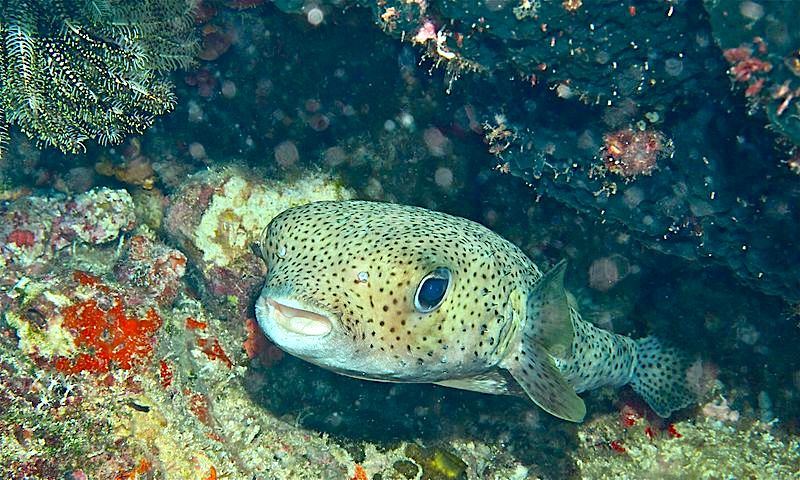
Porcupinefish, Bahamas (©Melinda Riger / Grand Bahama Scuba)

WTF? (WHAT’S THAT FISH?) 15 PORCUPINEFISH

The porcupinefish Diodon hystrix falls into the general category ‘pufferfish’, though the particular species named PUFFERFISH are distinct in their own right. There are other similar species – e.g. balloonfish, blowfish and burrfish – with which there is scope for confusion. The relationship is something like this: all porcupinefish are pufferfish (in a broad sense); but not all pufferfish (in its species sense)  are porcupinefish. 

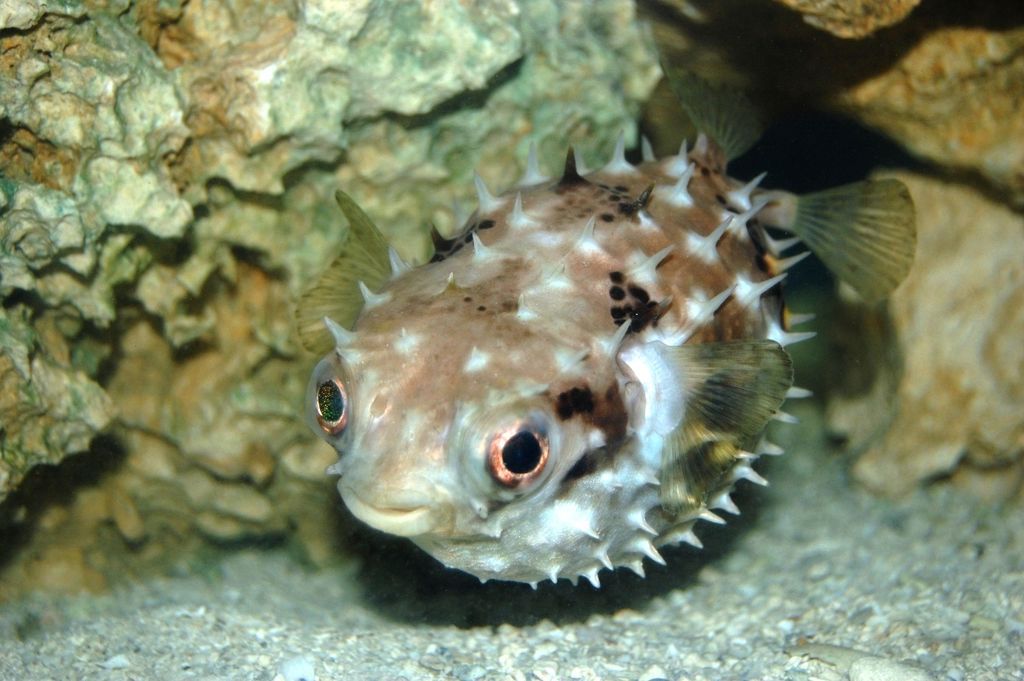
Porcupinefish, Bahamas (©Melinda Riger / Grand Bahama Scuba)

Porcupinefish are slow-moving reef dwellers and like their puffer cousins, they can inflate themselves by ingesting water, turning them into spiny balloons. This defence mechanism is a response to threat and works in two way: only predators with large mouths would consider them a meal; and even then they have to deal with the spines that become prominent when the fish is bloated.

Porcupinefish, Bahamas (George Parilla wiki)

I’VE HEARD PUFFERFISH ARE POISONOUS? WHAT ABOUT THIS GUY?

Good question. Checking it out, I’ve found some contrary statements about this. The truth seems to be that unlike pufferfish, they do not produce toxic secretions from their skins, so are not poisonous to touch (if you must**).

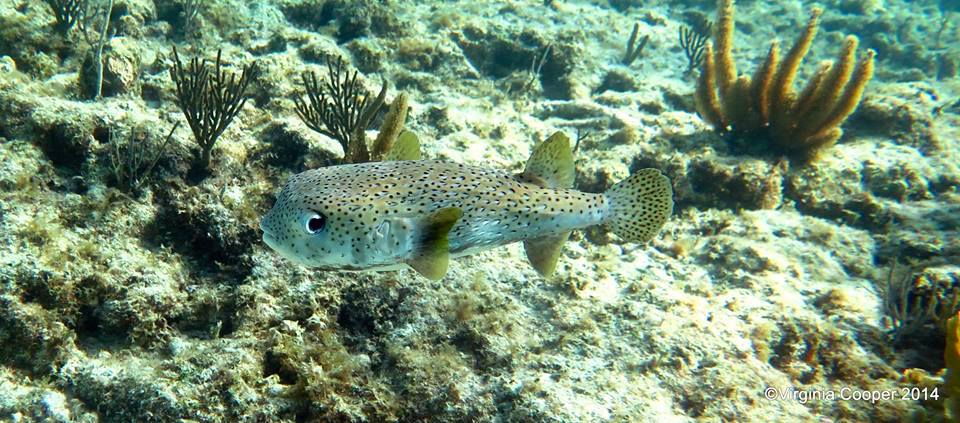
Porcupinefish, Bahamas (©Virginia Cooper / Grand Bahama Scuba)

However porcupinefish do contain powerful (neuro)toxins in their internal organs and are best not eaten – though in some parts of the world they are considered a minor delicacy. They may also suffer the ignominy of being dried in their inflated state and sold to tourists as novelties –  with lightbulbs inside for added amusement value. 

Porcupinefish, Bahamas (Bernard Dupont wiki)

ARE PORCUPINEFISH FAMOUS IN ANY RESPECT?

Indeed they are. They had the honour of being recorded by Charles Darwin. He gives a surprisingly long account of this creature, encountered during his renowned voyage on the Beagle. It clearly fascinated him. I’ve ‘ripped’ the relevant passage (open source – it’s ok) and turned it into an eezi-reed pdf if you want to check out Darwin’s careful observations in more detail:

THE VOYAGE OF THE BEAGLE – CHARLES DARWIN

Porcupinefish, Bahamas (Adam Rees / Scuba Works)

WAIT! ISN’T THERE A MORE RECENT CLAIM TO FAME?

Yes! In ‘Finding Nemo’, Bloat the Porcupinefish was part of the ‘Tank Gang’ in a dentist’s office. He had an encore in the closing credits of ‘Finding Dory’. Enough of fame already. Here’s a 50 second video demonstrating the puffer / porcupine distinction.

Porcupinefish, Bahamas (Adam Rees / Scuba Works)

RELATED POSTS
Photo Credits: Melinda Riger (1, 2); George Parilla (3); Virgini Cooper (4); Bernard Dupont (5); Adam Rees (6, 7); Video, ‘AquariumKids’ (I do high-powered research, see?)

**Incidentally, it’s apparently not considered an act of animal kindness to catch them / scare them so you can have the pleasure of watching them blow up

Unknown's avatar

THE PRINCE OF WHALES: BLAINVILLE’S BEAKED WHALES IN ABACO


Blainville's Beaked Whale, Abaco Bahamas (Keith Salvesen / BMMRO)

THE PRINCE OF WHALES: BLAINVILLE’S BEAKED WHALES IN ABACO

There’s a strange affinity between humans and whales. Humans seem to think so, anyway – and whales seem to tolerate them amiably, perhaps now that the decimation of their populations by humans is (largely) a thing of the past. The Bahamas in general and Abaco in particular are in the mainstream of progressive cetacean research, led by the BMMRO at Sandy Point.

Blainville's Beaked Whale, Abaco Bahamas (Keith Salvesen / BMMRO)

One of the speciality research species is the Blainville’s Beaked Whale. These magnificent creatures are deep divers, and although they are found in many parts of the world, the Bahamas is one of only 3 locations with a significant population for study. Most of the whales here were photographed within sight of land (and a few with the Castaway Island Disney Cruise Ship visible on the horizon!).

Blainville's Beaked Whale, Abaco Bahamas (Keith Salvesen / BMMRO)

I’ve been lucky enough to be on the BMMRO research vessel on a beaked whale outing – and luckier still that we were able to spend plenty of time with a group of them, including some males. The header image is of a mature male with his huge teeth that protrude upwards from the lower jaw, and in time become encrusted with barnacles.

Blainville's Beaked Whale, Abaco Bahamas (Keith Salvesen / BMMRO)

The whales were quite undisturbed by our presence – indeed they behaved much like dolphins, circling the boat and swimming under it; moving away and returning. This was an opportunity to count the whales, to identify those that had already been recorded, and to document any new ones. Each whale has its own unique pattern of marks, striations and in some cases healed wounds. The pair below are a good example.

Blainville's Beaked Whale, Abaco Bahamas (Keith Salvesen / BMMRO)

Also, the whales have individually distinctive dorsal fins, with nicks and tears that also act as a means of identification. These can often be made out from a distance with powerful binoculars or photographed with a long lens for later analysis (this ID method also works reliably for dolphins).

Blainville's Beaked Whale, Abaco Bahamas (Keith Salvesen / BMMRO)

Beaked whales often bear the healed scars from the gouging bites of COOKIE-CUTTER SHARKS, a vicious little species that I recently featured. The distinctive circular scars on the back of the whale below result from encounters with these unpleasant creatures.

Blainville's Beaked Whale, Abaco Bahamas (Keith Salvesen / BMMRO)

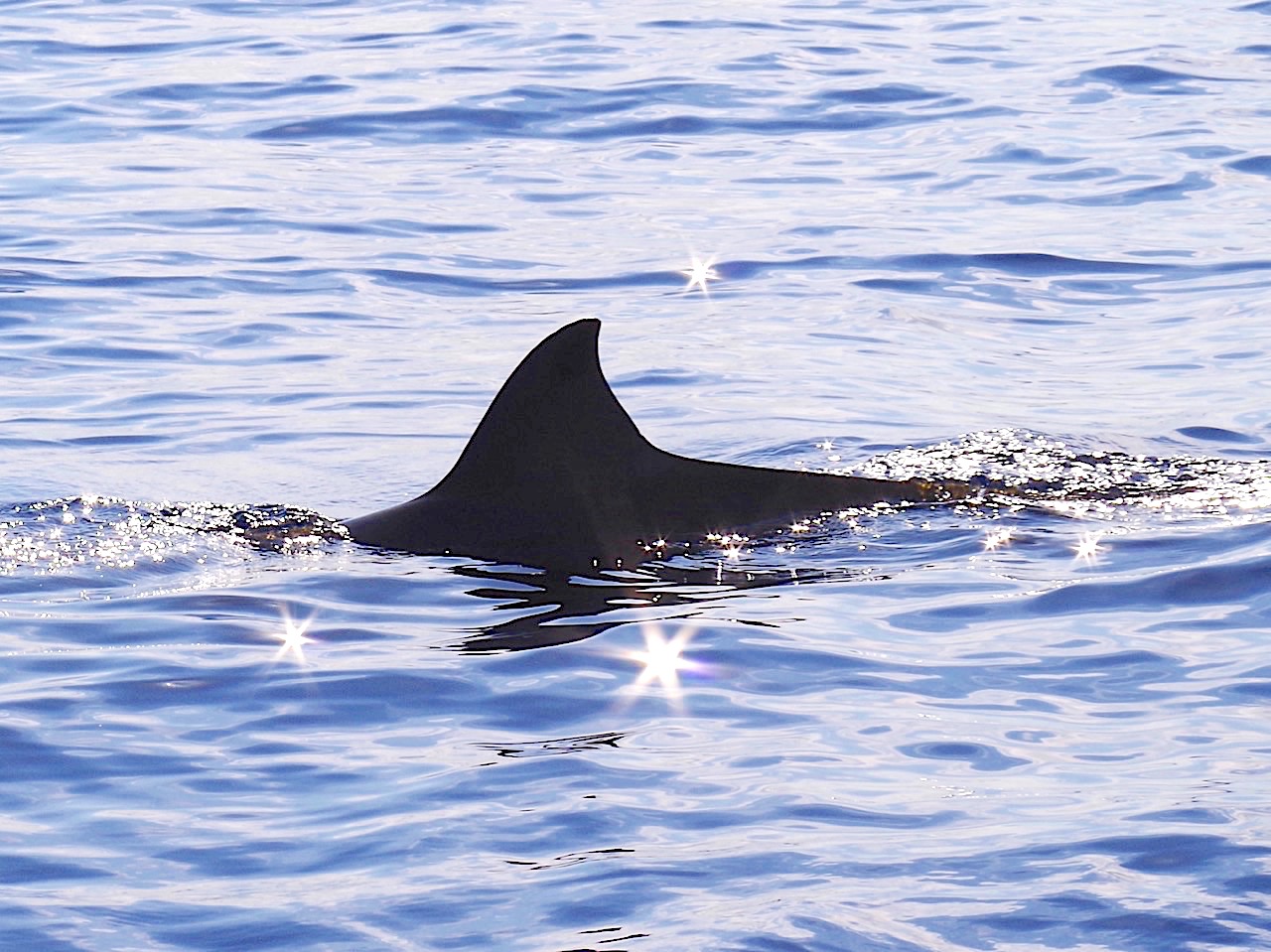
Finally, the photo below. It has no merit, photographically speaking, but I love the way that sometimes a ‘risk’ shot – into the sun, perhaps – produces rather magical effects. The unexpected ‘sea stars’ were a bonus!

Blainville's Beaked Whale, Abaco Bahamas (Keith Salvesen / BMMRO)

All photos: Keith Salvesen / BMMRO

Unknown's avatar

SHARKS! APEX PREDATORS IN THE BAHAMAS


Sharks in the Bahamas (Melinda Riger / Grand Bahama Scuba)

SHARKS! APEX PREDATORS IN THE BAHAMAS

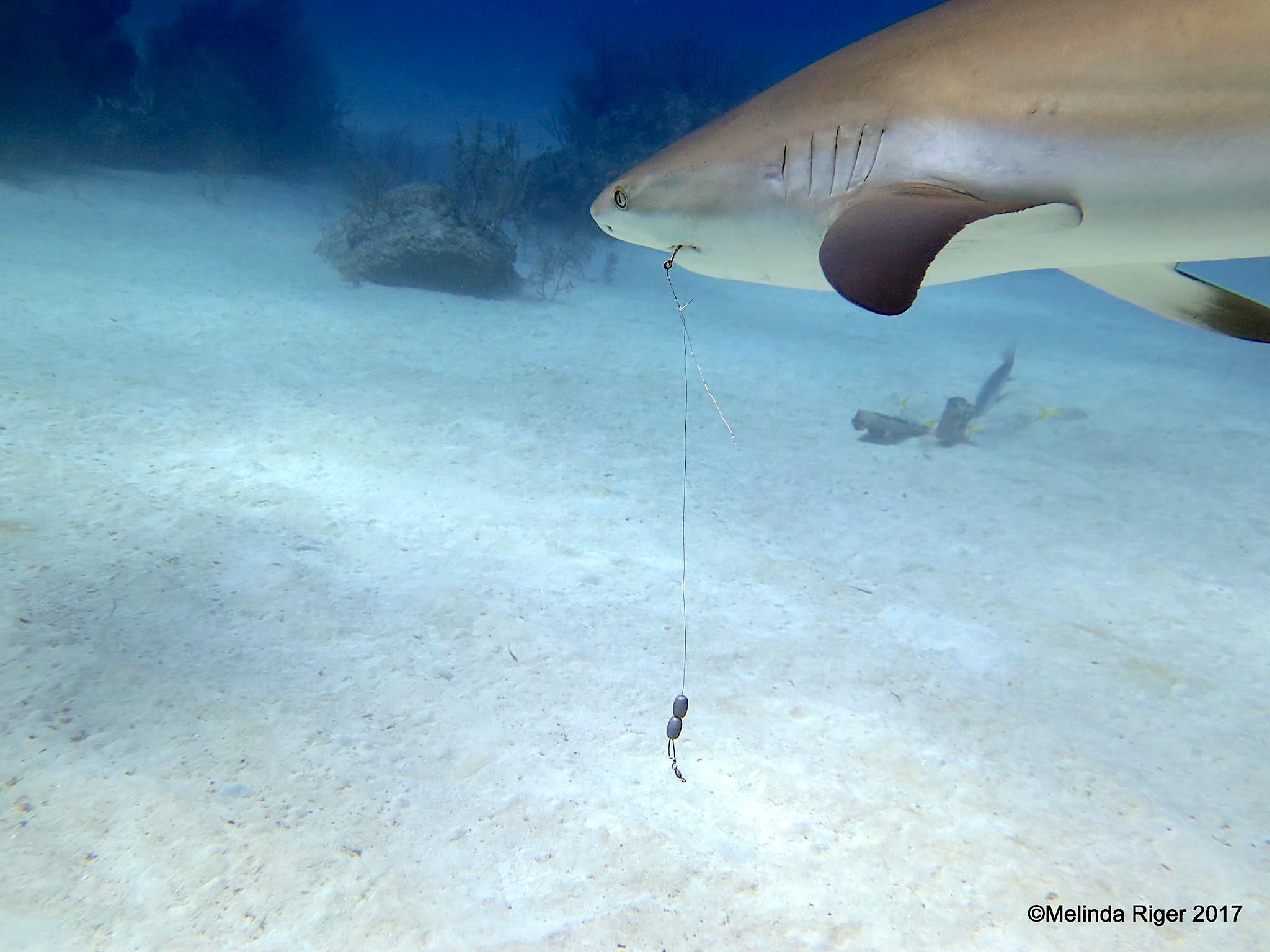
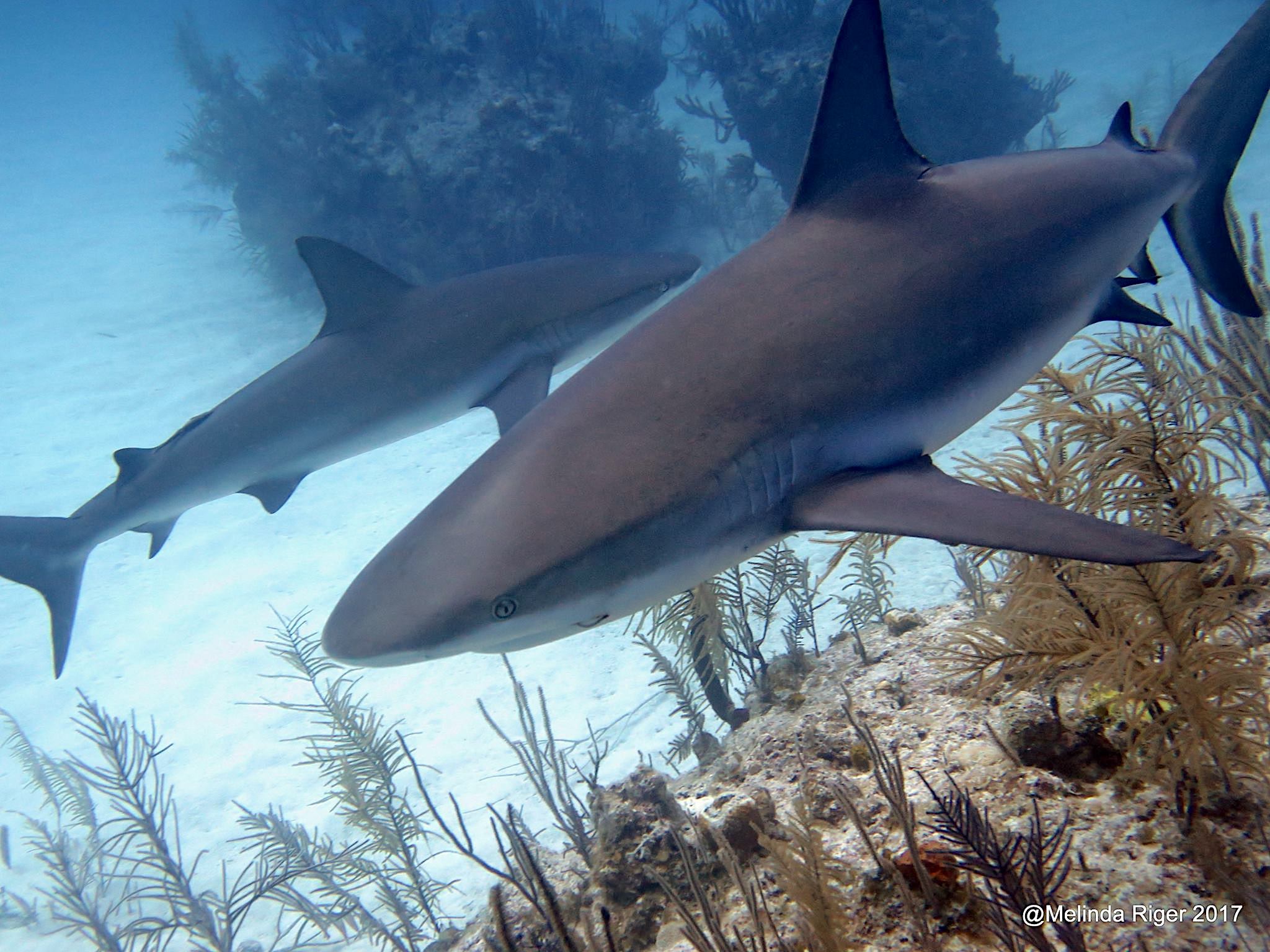
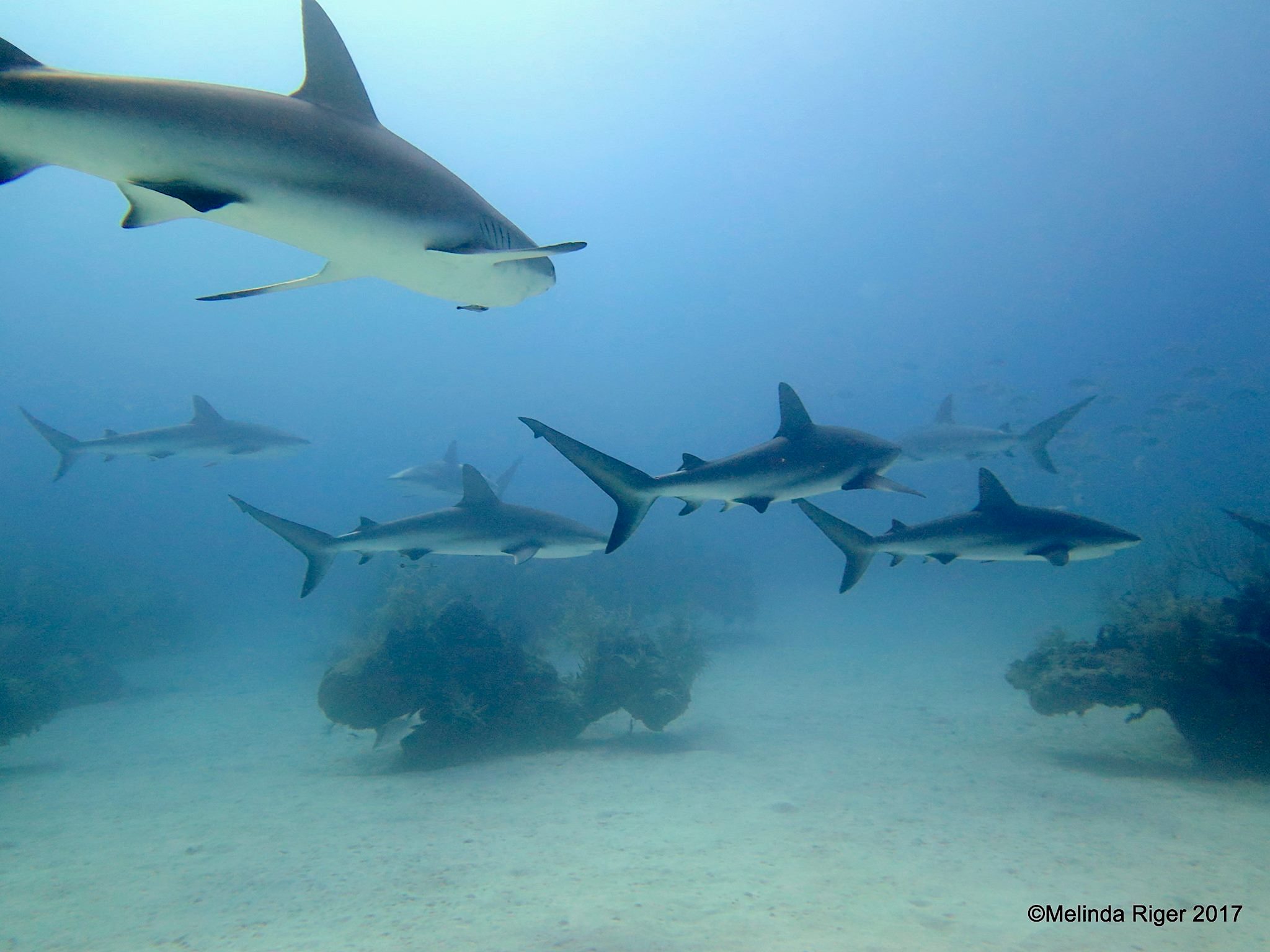
Immersion in current affairs these days brings inevitable acquaintance with sharks of various kinds, and all best avoided. Let’s have a look the real thing, the apex marine predators that in the Bahamas are all around you once you leave the safety of the shore. I haven’t featured them for ages, and it’s always a pleasure – a slight thrill, even.

Sharks in the Bahamas (Melinda Riger / Grand Bahama Scuba)Sharks in the Bahamas (Melinda Riger / Grand Bahama Scuba)

I don’t do scuba, indeed my swimming would easily be outclassed by a competent four-year old. But I see these creatures when I’m out fishing; or as they hang in the breaking waves off the Delphi beach, watching intently for a meal.

Sharks in the Bahamas (Melinda Riger / Grand Bahama Scuba)

We watch them (and stingrays) from the balcony as they lazily make their way round the margins of the wide bay, from little ‘uns to (recently) a huge bull shark. We watch as, when someone is in the water, they change course slightly to pass by them. So far, anyway…

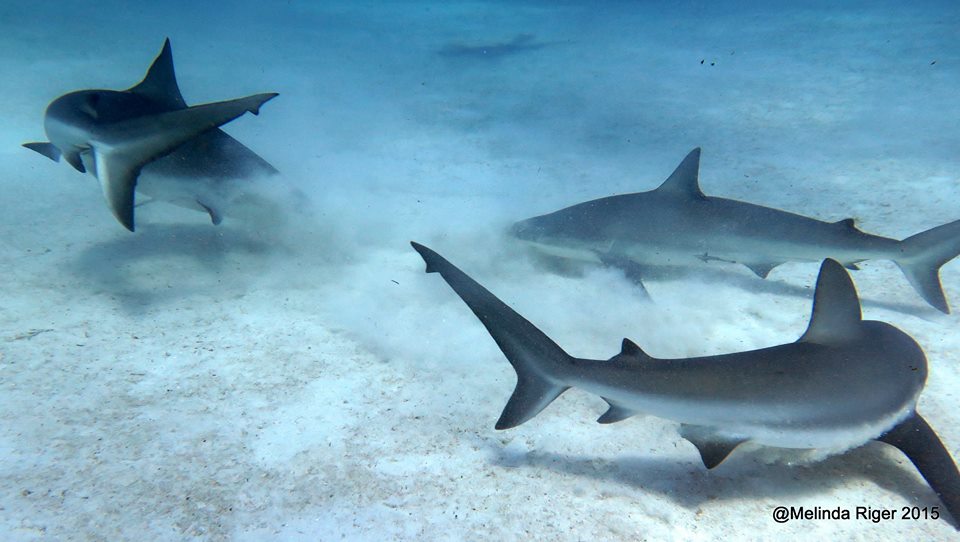
Feeding sharksSharks feeding in the Bahamas (Melinda Riger / Grand Bahama Scuba)

The one that got away… (a sad sight)Sharks in the Bahamas (Melinda Riger / Grand Bahama Scuba)

I once took a rather primitive underwater camera with me while snorkelling in Fowl Cays National Park. This was several years ago, when I believed a cheap 2mb camera might turn me into one of the Blue Planet team. I was wrong. The shark I saw, apparently some 20 miles away (when I examined the image) – well, that’s its tail, top left…

Sharks in the Bahamas (Melinda Riger / Grand Bahama Scuba)Sharks in the Bahamas (Melinda Riger / Grand Bahama Scuba)

Just to look at these images is to understand that when you are in the sea, you are in the sharks’ environment. They are the masters of it. They have their rules, and they are not much interested in you… unless you break them. Or so the theory goes.

Sharks in the Bahamas (Melinda Riger / Grand Bahama Scuba)Sharks in the Bahamas (Melinda Riger / Grand Bahama Scuba)

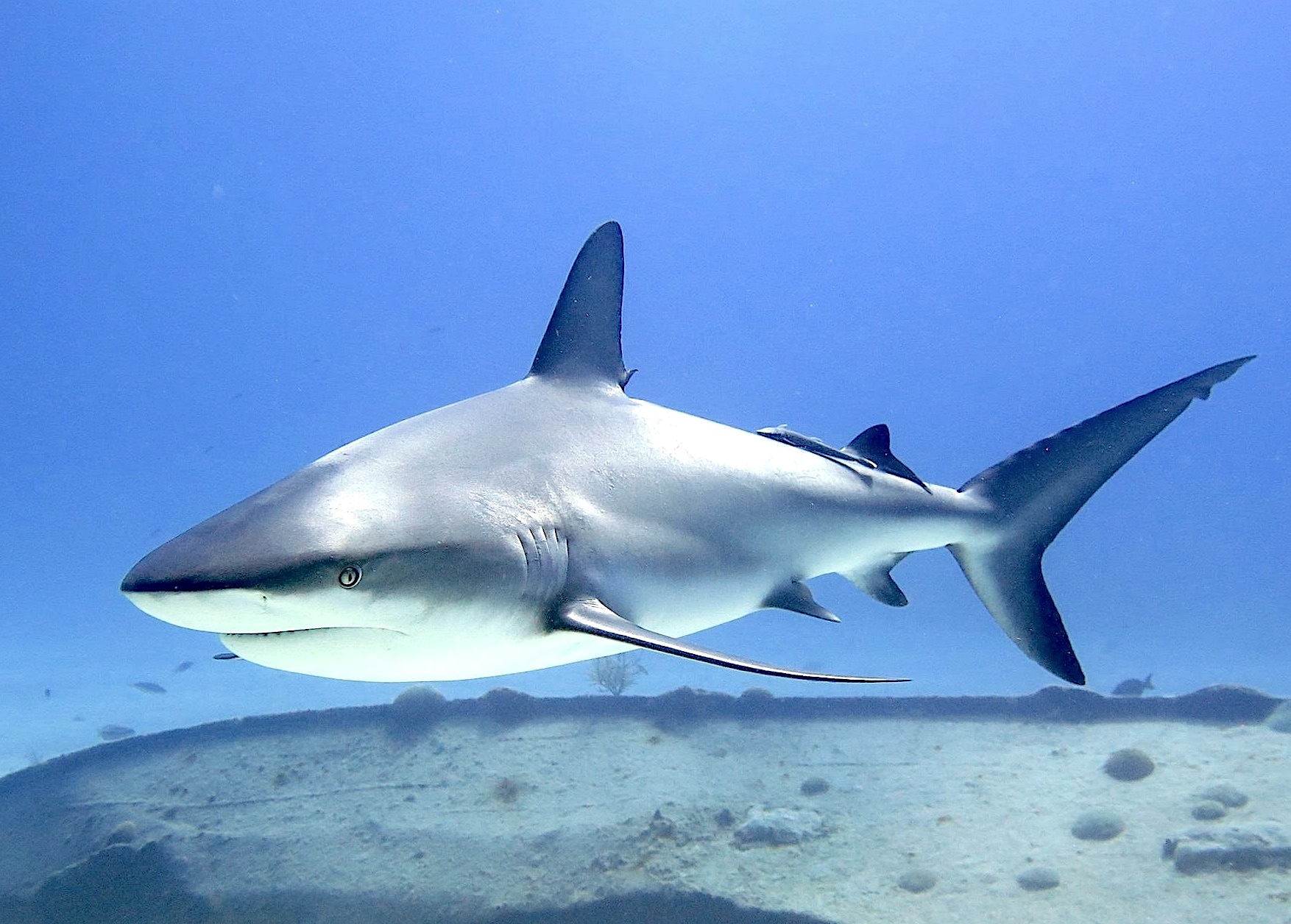
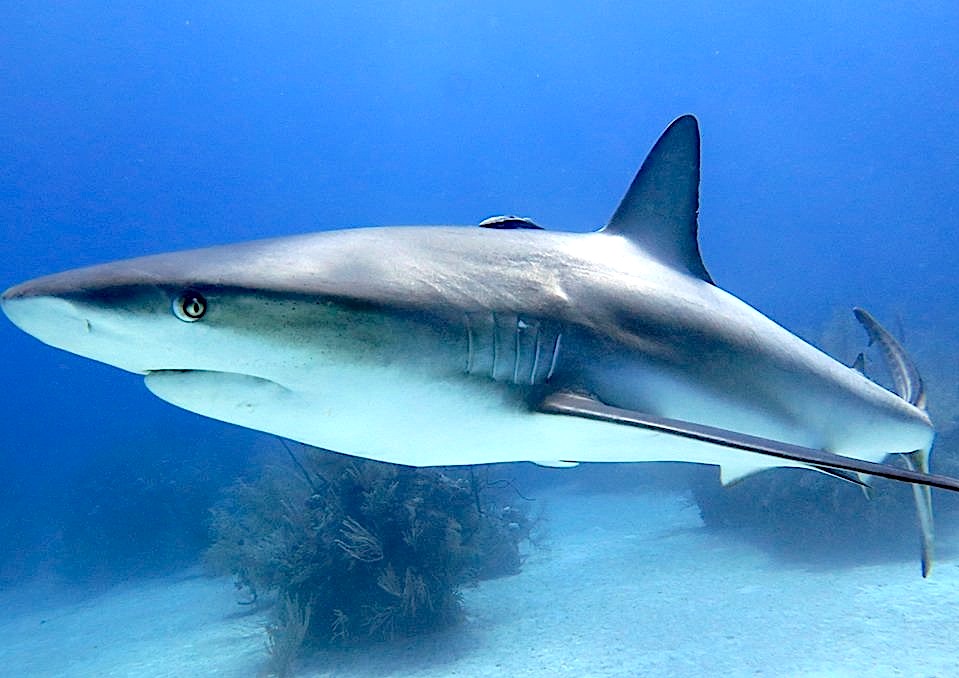
This fine shark below exemplifies the power and the menace of the shark. A creature to be admired, but also to be respected.

Sharks in the Bahamas (Melinda Riger / Grand Bahama Scuba)

All fantastic photos: Melinda Riger / Grand Bahama Scuba

Unknown's avatar

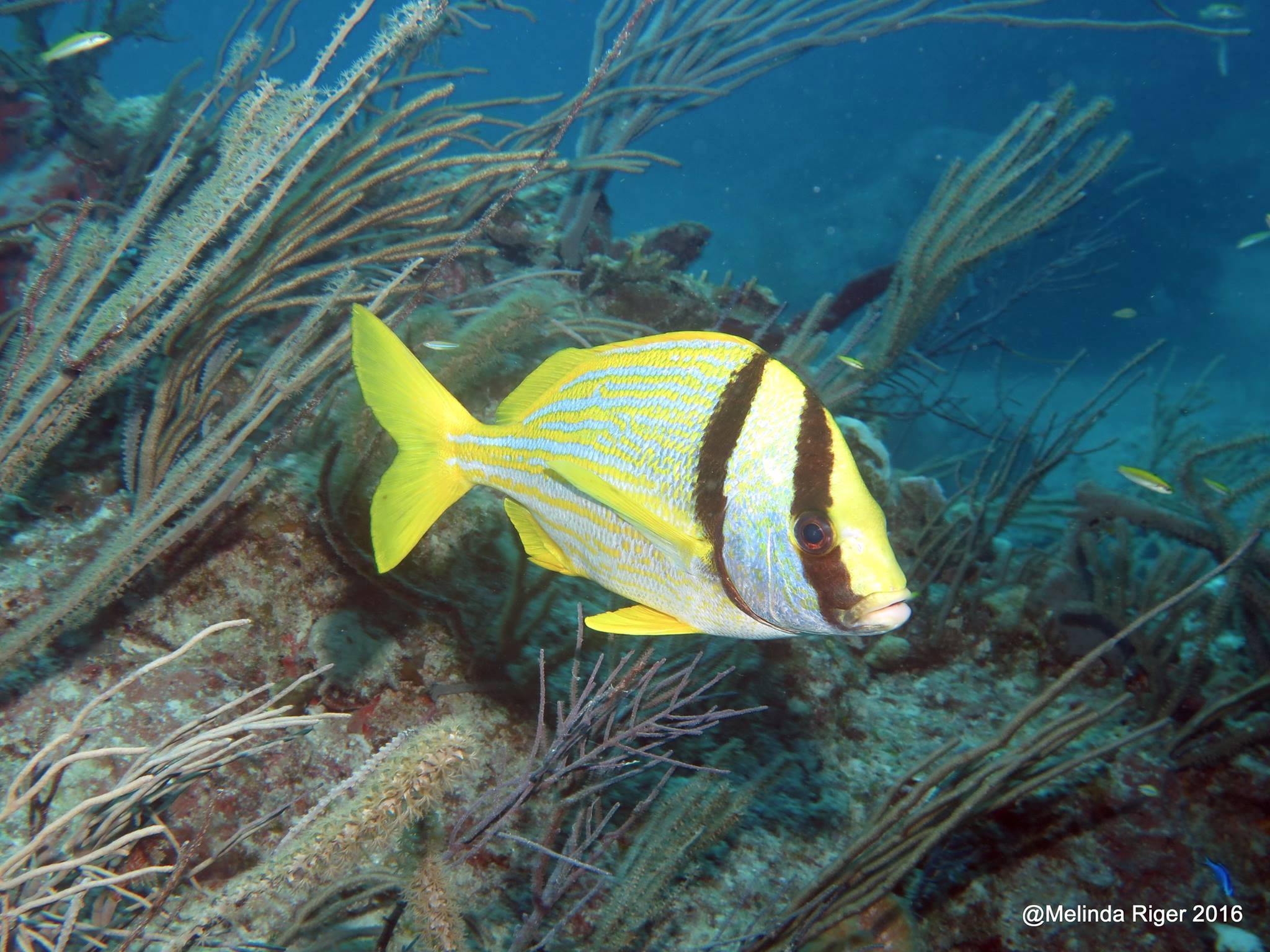
BAHAMAS REEF FISH (44): PORKFISH


Porkfish (Grunt), Bahamas - Melinda Riger / Grand Bahama Scuba

BAHAMAS REEF FISH (44): PORKFISH

Behold the porkfish Anisotremus virginicus, the slightly unattractively named representative of the (arguably) even less attractively named grunt species. These small, bright-coloured reef dwellers are rarely more than 12 inches long. They are mainly nocturnal fish, feeding on small crustaceans, mollusks and so on. Juveniles have been observed acting as cleaners to larger species, feeding on parasites – an example of mutualism between species, in which both sides benefit from the arrangement.

Porkfish (Grunt), Bahamas - Melinda Riger / Grand Bahama Scuba

WHY IS A ‘PORKFISH’ A ‘GRUNT’

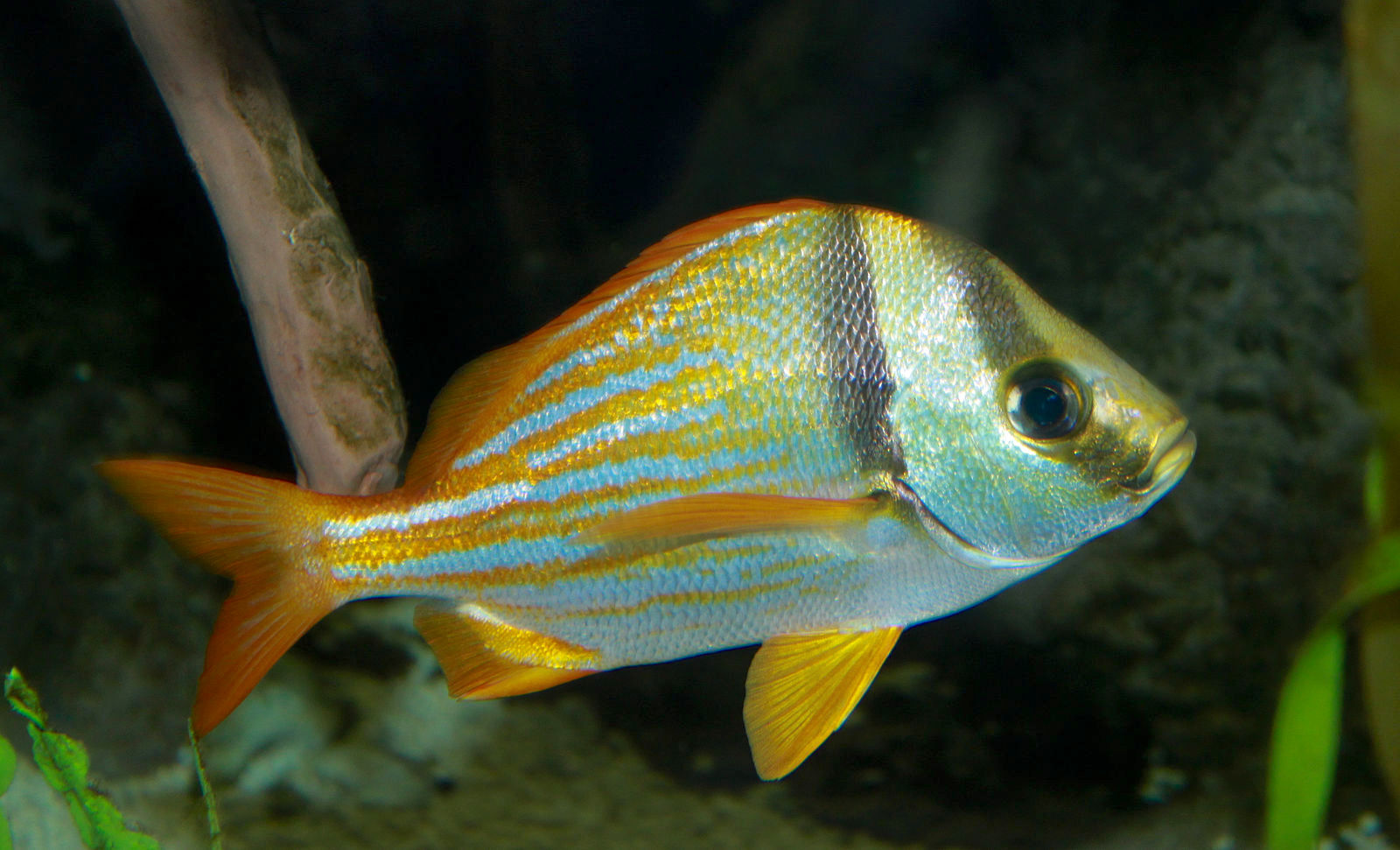
The terminology seems to be somewhat confused by local usages, but in general terms all porkfish are grunts; but not vice versa. Yet I notice that the term ‘porkfish’ is used to describe other types of grunt. A good rule of thumb is the the Atlantic Porkfish is the only grunt with two black vertical bars and yellow stripes… Note that grunts differ from their cousins the snappers by having a different dental arrangement – no canine teeth.

Porkfish (Grunt), Bahamas - Melinda Riger / Grand Bahama Scuba

AND WHY ‘GRUNT’ ANYWAY? DO THEY SOUND LIKE PIGS?

Well, perhaps a bit. All grunts, including porkfish, are capable of producing grunt-like sounds from some kind of grinding of their back teeth that is too technical to go into here**. The sound is associated with ‘situations of duress and danger’ – such as being caught and unhooked…

Porkfish (Grunt), Bahamas - Melinda Riger / Grand Bahama Scuba

DO YOU HAPPEN TO HAVE A RECORDING?

As it so happens I do. This is taken from a rather longer Youtube video in which a grunt was caught, unhooked and returned.You’ll hear a couple of grunts as the fish was unhooked, and some (perhaps understandable) hilarity on the boat. I guess you had to be there.

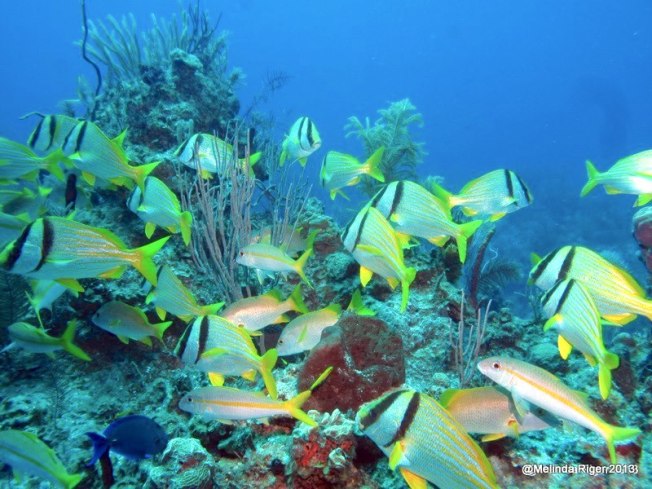
Porkfish are gregarious, and also mix with other speciesPorkfish (Grunt), Bahamas - Melinda Riger / Grand Bahama Scuba

ARE PORKFISH EDIBLE?

Like most if not all grunts, they are, with the proviso that there is some association with ciguatera. I’ve never knowingly eaten one myself, but I gather that “grits and grunts” is a popular culinary combo in some places. For those that might want to know more, a quick look at a couple of threads reveals the following:

  • They taste great, a bit like ham
  • Their white meat cooks very well
  • They taste better than black margates (another grunt species)
  • Eat them in enchilado or breaded fillets
  • ‘Big-ass head’ on them so not much if you filet
  • If you scale and cook whole you get a better yield on them
  • When fishing for supper, ‘shoot ’em up and hold off for the bigger ones’

Porkfish (Grunt) - Brian Gratwicke (wiki)

Credits: all great photos by Melinda Riger /  Grand Bahama Scuba, except the last by Brian Gratwicke (wiki); soundbite from Youtube video 2010 by peachyree; research from seaworld.org; britannica.com and the usual suspects…

** Subtle code for “I haven’t really understood it…”

Unknown's avatar

THE ARTICULATE WHALE (1): TELLING A TALE AFTER DEATH


False Killer Whale (Endless Ocean-wiki)

THE ARTICULATE WHALE (1): TELLING A TALE AFTER DEATH

The ‘false killer whale’ Pseudorca crassidens has a somewhat misleading name: first (as implied), it is not a killer whale; second, it’s not actually a whale at all, but a large species of dolphin. However, it does have some killer whale tendencies – attacking and killing smaller marine mammals for example – and perhaps a passing resemblance, so the species has been given something of an upgrade, name-wise.

False Killer Whale (NOAA-wiki)

Although these fine creatures are distributed widely around the globe, the overall numbers are thought to be small, and relatively little is known about them in the wild. They are, of course, used as aquarium exhibits but the knowledge gleaned in captivity cannot provide much of an overview of their oceanic behaviour, which remains relatively unstudied.

False Killer Whale range map - wiki

However, there is one source of valuable data – the scientific study of stranded animals. And as it happens, Abaconians will very soon be able to obtain at least a skeleton knowledge of the FKW, the end-product of a long and complicated research project by the BMMRO in conjunction with Friends of the Environment. Just a quick word of warning before you read further – some images below are not especially pleasant to look at, so be prepared for them… They are illustrative and not intended for close inspection (unless you want).

Exactly a year ago an FKW was reported to have stranded on Duck Cay, off Cherokee Sound. BMMRO were quickly on the scene, and hoping to undertake the usual procedure of a necropsy, in which post-mortem samples are taken for analysis. However the poor creature was in an advancing state of decomposition, so only skin samples and photographs could be taken.

False Killer Whale, Abaco Bahamas (BMMRO)         False Killer Whale, Abaco Bahamas (BMMRO)

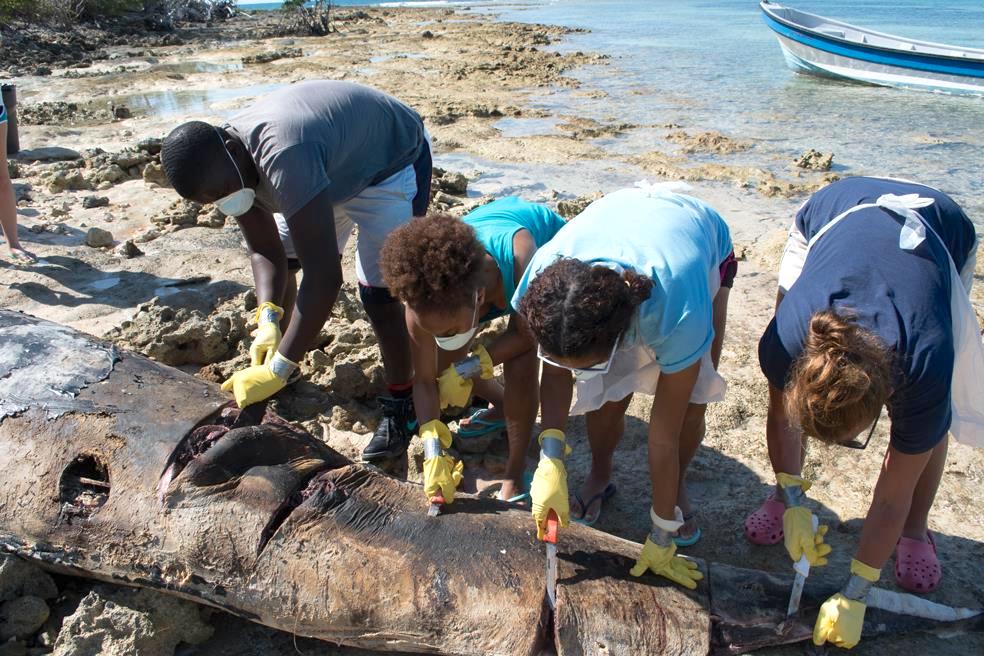
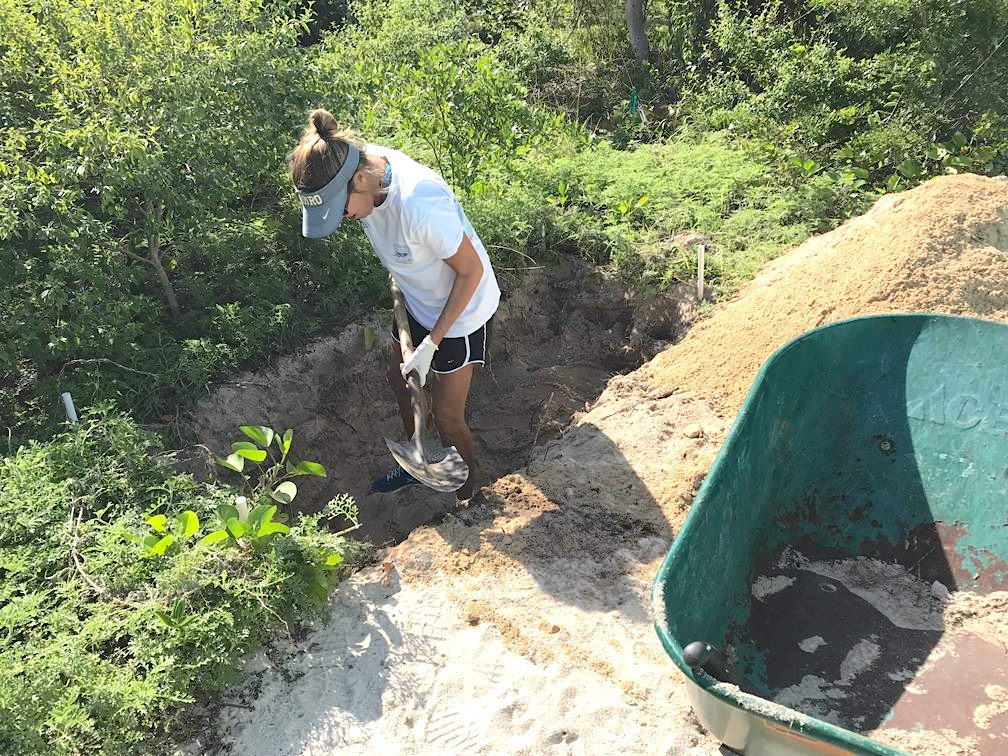
Telescoping the intervening months for the sake of brevity, the decision was made to cut up the carcass (note the face-masks) and bury it where it was, so that its integrity would be preserved for later retrieval, cleaning, reconstruction (‘re-articulation’) and exhibition for educational purposes.

False Killer Whale, Abaco Bahamas (BMMRO) False Killer Whale, Abaco Bahamas (BMMRO) False Killer Whale, Abaco Bahamas (BMMRO)

False Killer Whale, Abaco Bahamas (BMMRO)

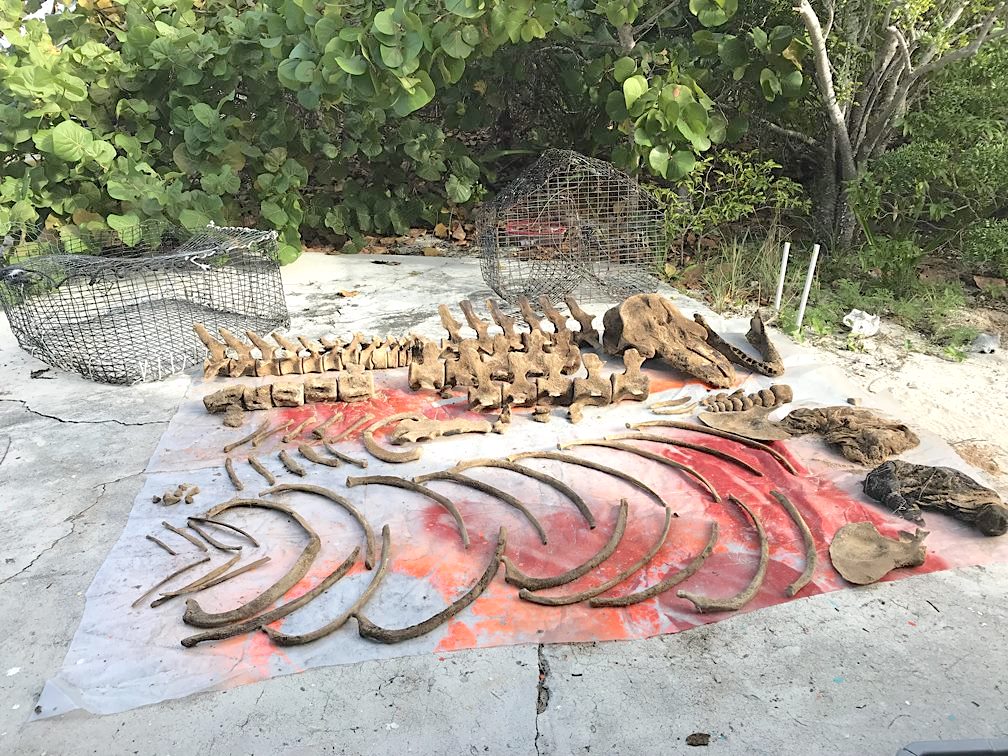
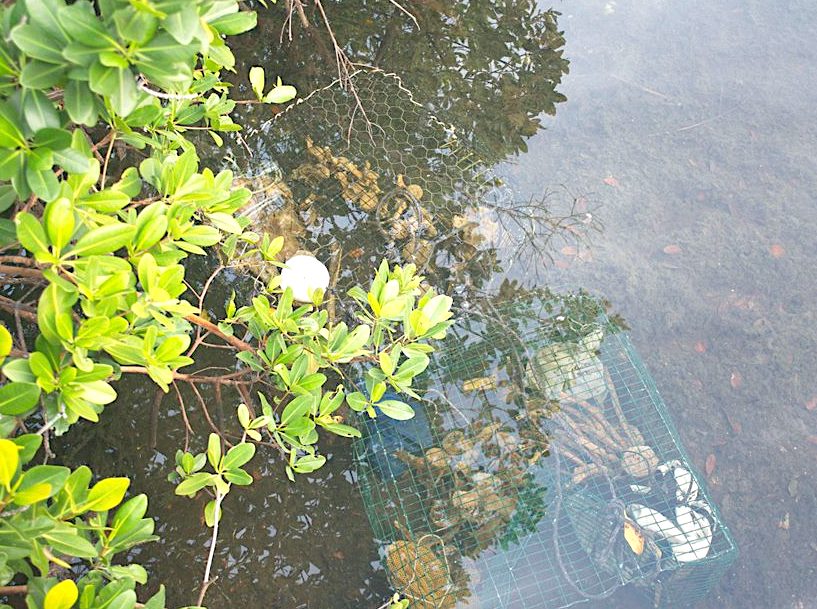
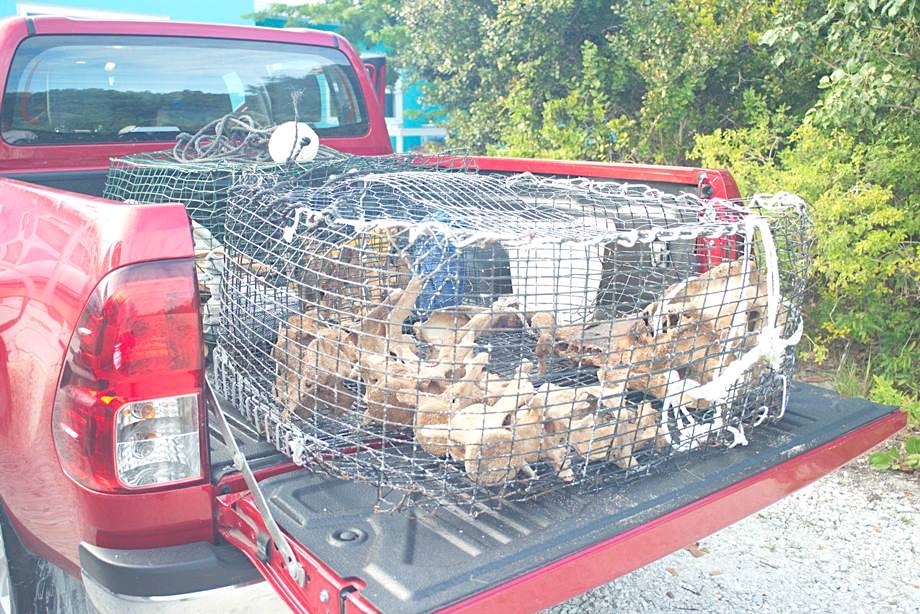
In December, the remains were exhumed for the next phase of the animal’s decomposition – submersion in cages in the mangroves – before the final cleaning of the bones in readiness for its re-articulation and display.

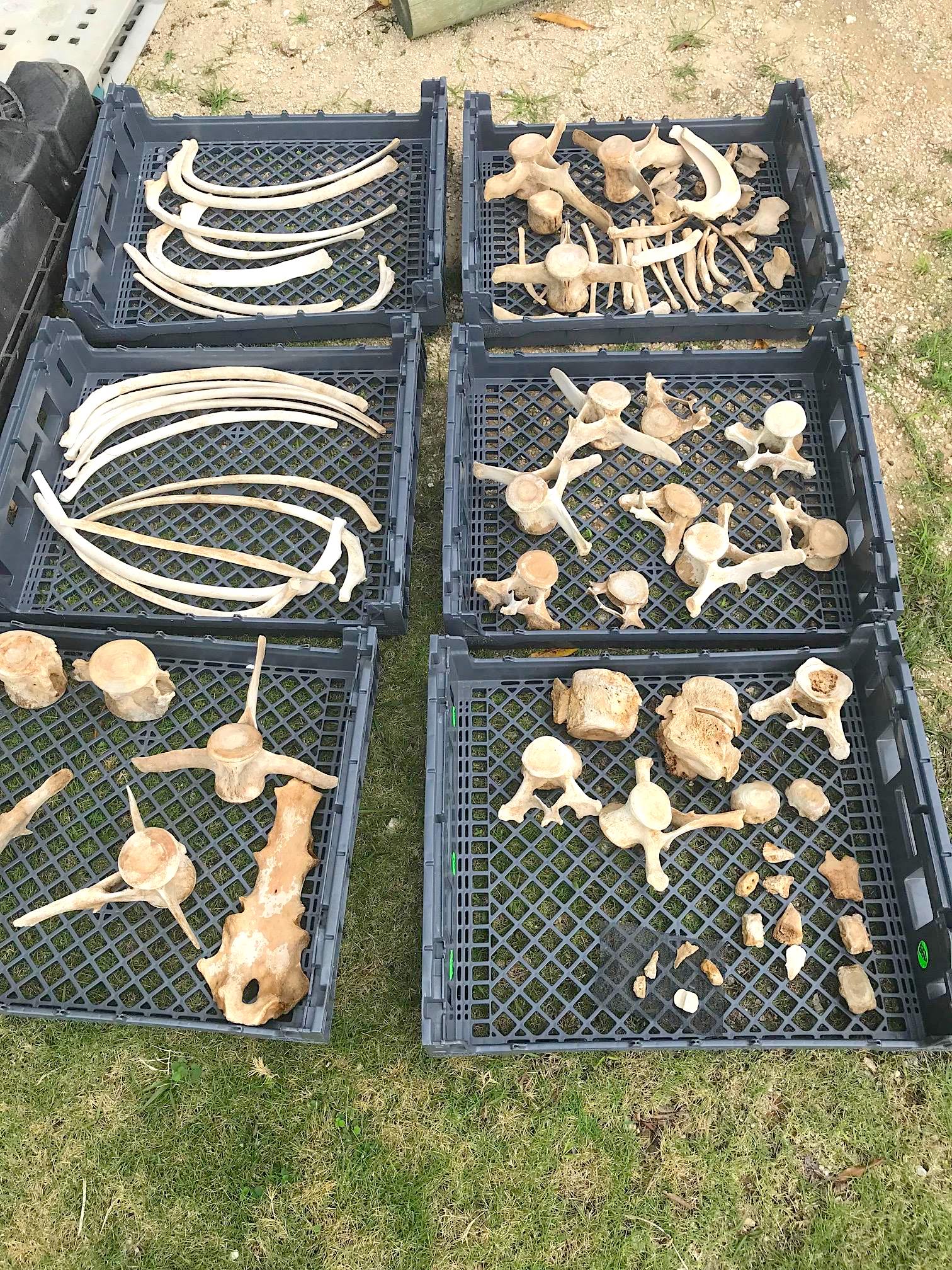
False Killer Whale bones, Abaco Bahamas (BMMRO)False Killer Whale, Abaco Bahamas (BMMRO)False Killer Whale bones, Abaco Bahamas (BMMRO)

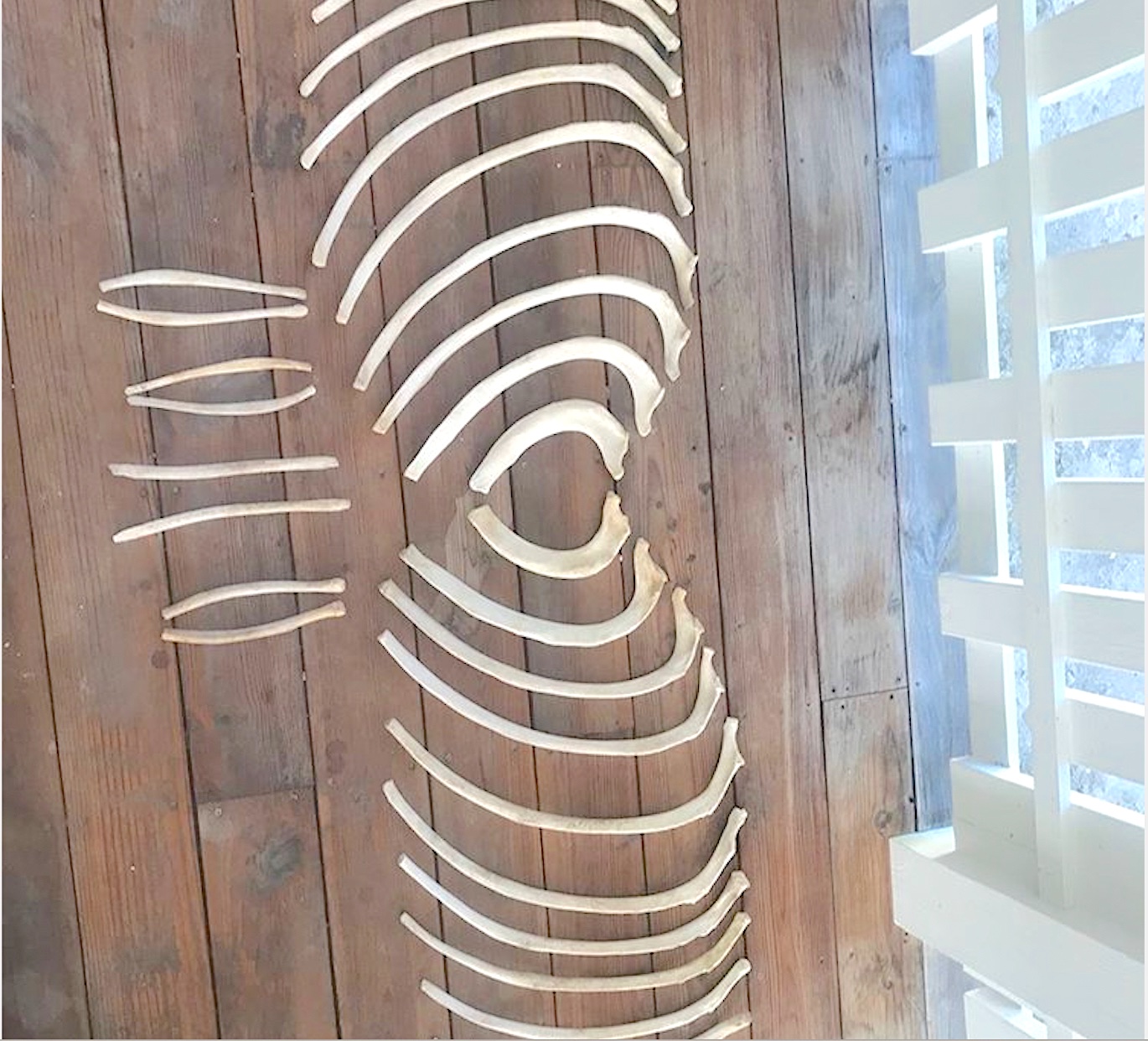
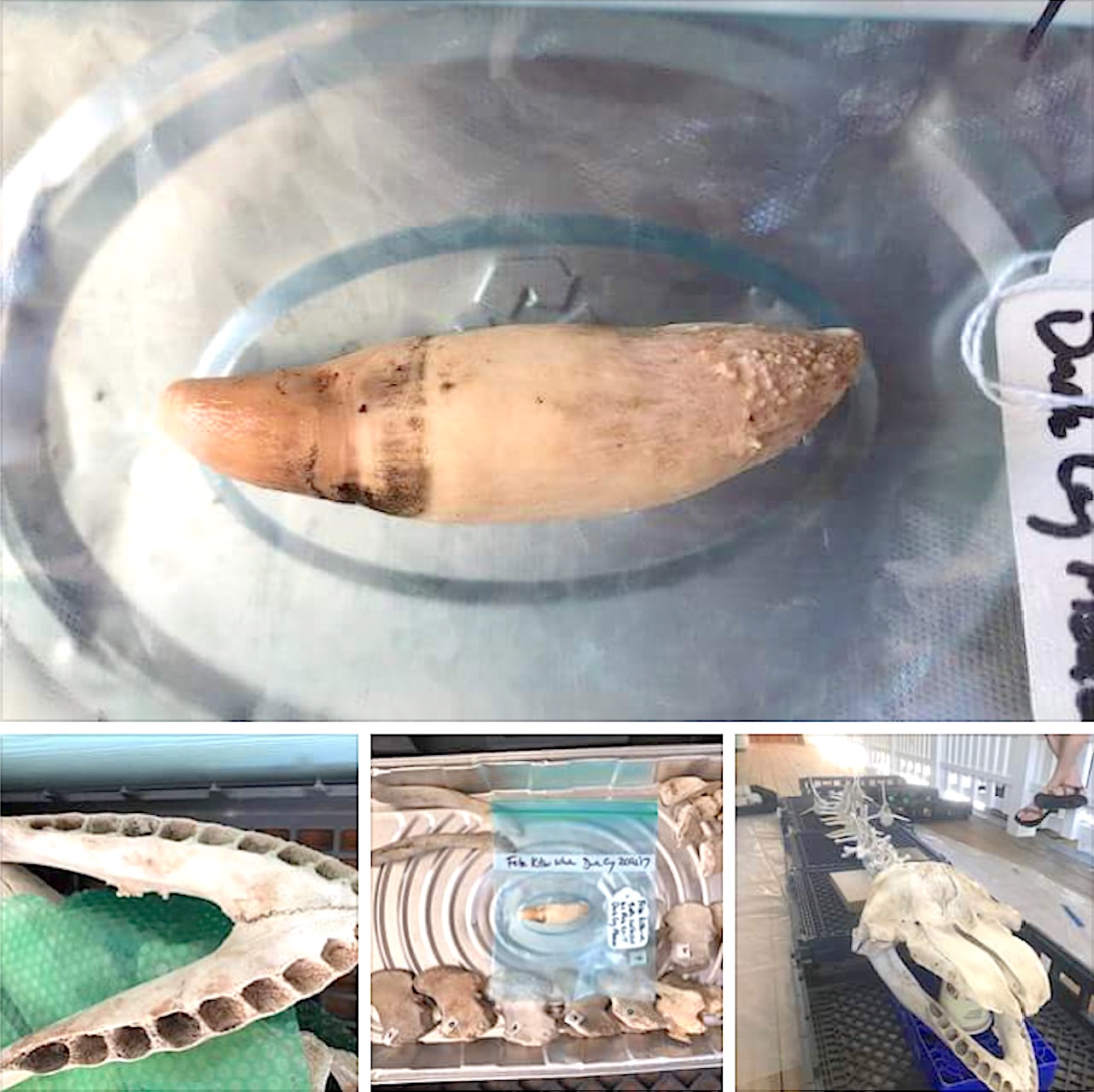
Cleaning the bones has been a meticulous process, leaving the resulting skeleton ready to reconstruct in situ at Friends of the Environment’s Kenyon Research Centre in Marsh Harbour. Adult FKWs can grow up to 6 metres long, so there are a great many bones from large to very small to place correctly – and plenty of teeth (see below). The re-articulation is nearly finished, and it is hoped that the completed skeleton will be on display in the very near future. I am planning to see it in about 2 weeks time, and – this sounds quite strange, I know – I’m very excited about it.

False Killer Whale bones, Abaco Bahamas (BMMRO)False Killer Whale bones, Abaco Bahamas (BMMRO)False Killer Whale tooth & bones, Abaco Bahamas (BMMRO)False Killer Whale skeleton, Abaco Bahamas (BMMRO)

This ambitious year-long project has involved BMMRO, FOTE, BEP (Bahamas Environment Protection Foundation), interns, and volunteers. I am keen to know whether, in the modern way, an affectionate name has been chosen for the skeleton. ‘Duck Cay’ doesn’t provide a very promising start. Well, maybe Donald is in vogue…? 

ARE STRANDINGS FREQUENT – AND WHY REPORT THEM?

Each year there may be half-a-dozen reports of cetacean strandings in Abaco waters, both whales and dolphins. As far as I can make out, the animals are almost invariably dead. If still alive, reporting is clearly urgent to ensure a quick response and to maximise the creature’s chances of survival. If dead, a carcass can provide scientists with valuable data on the biology and health of marine mammals and, in turn, the health of our marine ecosystems. This includes basic information, such as an animal’s age, its size, the types of prey it consumes, and the occurrence of diseases. Necropsies can provide more detailed information to add to the growing knowledge-base of marine mammal populations.

And a project like this one, with its great educational potential, can in effect enable a stranded marine mammal to tell its story even after death.

STRANDING NETWORK HOTLINE NUMBER +1 242 366 4155
(or +1 242 357 6666 / +1 242 577 0655)
False Killer Whale skull, Abaco Bahamas (BMMRO)

Credits: header image, Endless Ocean / wiki; #1 NOAA; all other photos BMMRO or FOTE, with thanks; range map wiki 

Unknown's avatar

MANATEES IN THE BAHAMAS? WE GOTTEM!


MANATEES IN THE BAHAMAS? WE GOTTEM!

Not so long ago, most people had no idea that the waters of the Bahamas in general – and Abaco in particular – contained a small population of these curious, gentle, trusting creatures. When I first wrote about them and their adventures, there was surprise – maybe disbelief. A few years later, all that has changed thanks to the BMMRO and an outreach program that raised awareness – and consequently the sighting and reporting – of manatees. They are now widely recognised as they nose their way round harbours, docks and landing stages – and quite rightly they still excite delight and a degree of wonderment. 

You can find out more – lots more – about Bahamas manatees on my page HERE. I have a post in progress about recent manatee developments with a rescue one but alas I have found I have already run out of week through some kind of bizarre time / space continuum dislocation (specifically, flagrant time-mismanagement). So I am posting a few adorable images to be going on with. 

And remember, if you happen to see one, please do report it to the BMMRO or let me know. Useful data includes date, location and a description if possible of any damage – notches and nicks – to the paddle (= tail). It’s a good method for ID. Photos a bonus.  Every sighting adds to the database of knowledge about these strangest of creatures of the Bahamian seas. And you’ll be pleased to know that they are undoubtedly managing to breed in the Bahamas: there are baby manatees to prove it…

All photos: BMMRO

Unknown's avatar

BAHAMAS REEF FISH (43): CUBERA SNAPPER


BAHAMAS REEF FISH (43): CUBERA SNAPPER

The cubera snapper (Lutjanus cyanopterus) is the largest snapper species. Adults may grow to 5′ long but they average around 3′ long and weigh 40 lbs or so (the record apparently stands at a massive 126 lbs). These are game fish, and they are a commercially important species. They are also IUCN listed as vulnerable, perhaps for that very reason. 

10 CUBERA SNAPPER SNAPPY  FACTS

  • The largest of a large number of snapper species in the western Atlantic
  • Feed on fish, shrimps & crabs, with large strong teeth (see pics) and jaws
  • Among their (few) predators are sharks, barracuda, and moray eels
  • Edible, but beware of the danger of CIGUATERA poisoning
  • In summer months, spawning is governed by lunar cycles
  • Cuberas form huge spawning masses (to 10k) in offshore shallows
  • Sadly the resulting eggs and larvae are rich pickings for predators…
  • Youngsters live in sea grass or mangroves for protection
  • Cuberas are game fish with commercial importance
  • IUCN listed as vulnerable – largely courtesy of mankind (see »)

RANGE FINDER

Cubera Snapper Range Map (wiki)

CONSERVATION MATTERS

Overfishing is one of the greatest threats to the species. Those young fish that are not predated naturally and grow to adulthood are targets for fishermen. There’s no prissy ‘catch & release’, as with bonefish. At spawning time, as the fish instinctively (and predictably) mass as the moon dictates, so do the human predators. The spawning sites are where the best protection can be given, to ensure the annual reproductive cycle is uninterrupted. If not, ‘vulnerable’ will soon give way to ‘endangered’…

I’d been going to pull apart a long recipe for the “wonderfully sweet white meat ” of this fish for the tastiest morsels of info, then (not being a cook) I quickly tired of the idea. Sorry to disappoint. 

Credits: Melinda Riger for the wonderful photos; range map from wiki; magpie research pickings, including (but not limited to ) Nat Geo

Unknown's avatar

COOKIECUTTER SHARKS: BEASTLY LITTLE SUCKERS


Cookiecutter Shark mouth, jaws & teeth (BMMRO Bahamas)

COOKIECUTTER SHARKS

BEASTLY LITTLE SUCKERS

The Cookiecutter shark Isistius brasiliensis (aka the less scary, more genial sounding ‘cigar shark’), might be an ideal candidate for a Room 101 nemesis.** These little beasts – a species of dogfish shark – are found in several mainly island-based areas dotted around the globe, including in Abaco waters.


HOW COME THE NAME?
These sharky little b@st@rds (*technical term*) attack marine mammals and fishes, gouging out perfect round plugs of skin and flesh, leaving what are sometimes called ‘crater wounds’. Then they eat them. Imagine getting hold of a really sharp domestic cookie cutter with circular rows of razor-sharp teeth, and grinding it hard into your thigh. There! That! 
The size of an adult shark:16″ max
The term ‘cookiecutter’ is also a pejorative slang term, meaning mass-produced, lacking in originality, or boringly samey, as in cookiecutter cars or TV genres etc. The little critters under consideration here are anything but…
                        

HORRIFYING COOKIECUTTER FACTS

  • Live in the depths, rise vertically in the day & dive back down at dusk
  • Undersides have light-emitting ‘photophores’ which emphasise…
  • …the dark collar which acts as a lure, resembling a small innocent fish
  • Bioluminescence lures prey & confuses predators (more on this below)
  • The glow is so strong it may last for some time after removal from water

  • Their lips are ‘suctorial’ = they attach tightly to their target
  • The jaws then gouge out the victim’s flesh in a remarkably neat circle
  • Omni-vicious: any medium to large ocean creature is vulnerable to attack
  • There are even occasional reports of humans being targeted

Here are two Blainville’s beaked whales that I photographed from the BMMRO research vessel. The top whale has a number of circular healed attack marks and a recent one. You can see how deep the gouged hole is. The other has well-healed scars.

Blainville's Beaked Whale - cookiecutter shark damage (Keith Salvesen)Blainville's Beaked Whale - cookiecutter shark damage (Keith Salvesen)

  • Multi-toothed: top rows of small teeth, rows of larger teeth on the bottom
  • The lower teeth are the cutters, acting like a saw when locked on
  • See header image and below for full details


HOW EXACTLY DO THEY DO WHAT THEY DO?
I can explain it no better than the renowned authority Prof. W. K. P. Dear:  “the suctorial lips ensure a tight seal. It then bites, using its narrow upper teeth as anchors while its razor sharp lower teeth slices into the prey. Finally, the shark twists and rotates its body to complete a circular cut, quite possibly aided by the initial forward momentum and subsequent struggles of its prey. The action of the lower teeth may also be assisted by back-and-forth vibrations of the jaw, a mechanism akin to that of an electric carving knife”.

                 ARE THESE SHARKS ‘PARASITES’, WOULD YOU SAY?

The behaviour of these sharks is an example of a symbiotic relationship between two species that is parasitic. This means essentially that one gains and the other suffers (e.g. no-see-ums!). This is distinct from commensalistic symbiosis, where one species gains and the other is unaffected (e.g. cattle egrets with cattle); and mutualistic symbiosis, where both gain (e.g. cleaner fish & groupers). So, in a word, yes.

  • An ‘ambush predator’: they ‘hover’ in the water column waiting…
  • They are capable of rapid movement to catch up & latch onto prey
  • They will eat a passing small fish, crustacean or even squid as a snack
  • Sometimes they operate in schools; there is safety in numbers
  • The schools are thought to increase the ‘lure’ effect of the dark collar

A beached whale that’s been heavily targeted

FUN FACT TO COUNTERACT THE BAD STUFF

In the late c20, more than 30 U.S. Navy submarines were forced back to base to repair damage caused by cookiecutter shark bites, either to the neoprene footings of sonar domes or to rubber-sheathed cables. The problems were solved by using fibreglass. Oceanographic equipment and telecommunications cables are also recorded as being damaged by these sharks.

Cookiecutter Shark – the real deal


MONSTERS OF THE DEEP

These great cards from the weirdly spelled WIERD ‘N’ WILD CREATURES provide excellent factual info. Their CCS card is no exception. You’ll find more details here about the effect of the bioluminescence and so on, written as clearly as I might hope to. 

Cookiecutter Shark Facts (Monsters of the Deep)Cookiecutter Shark Facts (Monsters of the Deep)

** “The worst thing in the world varies from individual to individual. It may be burial alive or death by fire, or by drowning, or by impalement, or fifty other deaths. There are cases where it is some quite trivial thing, not even fatal.” (George Orwell, 1984)

Alright now…Blainville's Beaked Whale - cookiecutter shark damage (Keith Salvesen)

Credits: BMMRO – header image; beaked whale photos – Keith Salvesen / BMMRO; Te Ara NZ for the main jaw image; all small images with thanks to Wiki and respective photographers who took the time to upload them for all to enjoy & learn from; ‘wierdnwonderful creatures’ for the monster card; range map from Wiki

PS Apologies to anyone who bothered to wade through this, and stayed awake long enough to notice that formatting gremlins struck halfway through

Unknown's avatar

GRAYSBY (GROUPER): BAHAMAS REEF FISH (42)


Graysby (grouper) - Melinda Riger / Grand Bahama Scuba

GRAYSBY (GROUPER): BAHAMAS REEF FISH (42)

The Graysby Cephalopholis cruentata is a small, spotty grouper, which grows to a maximum of around 16 inches. These rather unassuming and solitary fish have a preference for coral reefs, where they can blend in with their surroundings on ledges and in caves and crevices during the day. At night, they become active – that’s when they feed on feed on small fish, crabs and shrimps. 

Graysby (grouper) - Melinda Riger / Grand Bahama ScubaGraysby (grouper) - Melinda Riger / Grand Bahama Scuba

The graysby has variable colouring in a range from light brown to pale gray, with all-over spots that may be red, orange or brownish. Often, they have 3 to 5 contrasting spots on their backs, along the base of the dorsal fin, as below:

Graysby (grouper) - Melinda Riger / Grand Bahama ScubaGraysby (grouper) - Melinda Riger / Grand Bahama Scuba

The long erectile dorsal fin comprises both spines and ‘rays’ – spines at the front, rays at the back. Like this:

The spots of a graysby can change in colour (at least to a limited extent), becoming either paler or darker. I imagine this is a protective feature to enable the fish to blend in more easily with its reef surroundings. 

Graysby (grouper) - Melinda Riger / Grand Bahama Scuba

Signalling to turn right…

I wondered if they are edible. I believe so – but then I also read that the larger adults carry the risk of ciguatera and raised mercury levels. So I’ll give it a miss thanks.

Photo & other credits: all photographs by Melinda Riger / Grand Bahama Scuba; aqua.org; SAMFC (drawing)