Unknown's avatar

BUTTERFLIES ON ABACO (11): LONG-TAILED SKIPPER & NORTHERN CLOUDYWING


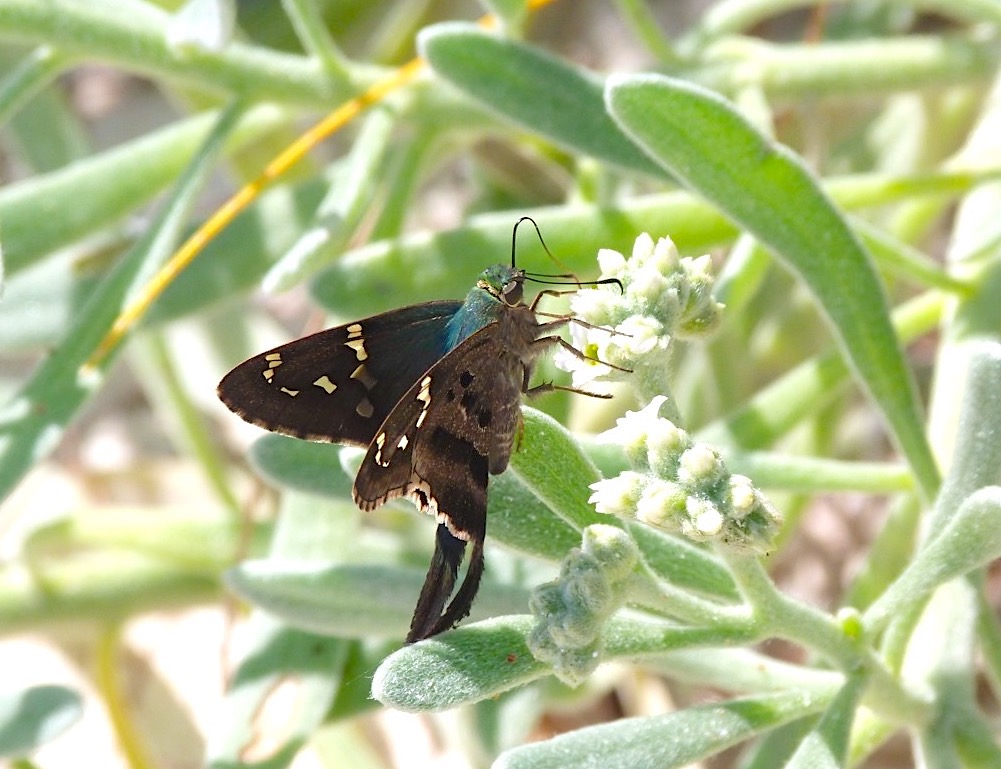
Long-tailed Skipper Butterfly, Abaco Bahamas (Keith Salvesen)

BUTTERFLIES ON ABACO (11): LONG-TAILED SKIPPER                        & NORTHERN CLOUDYWING

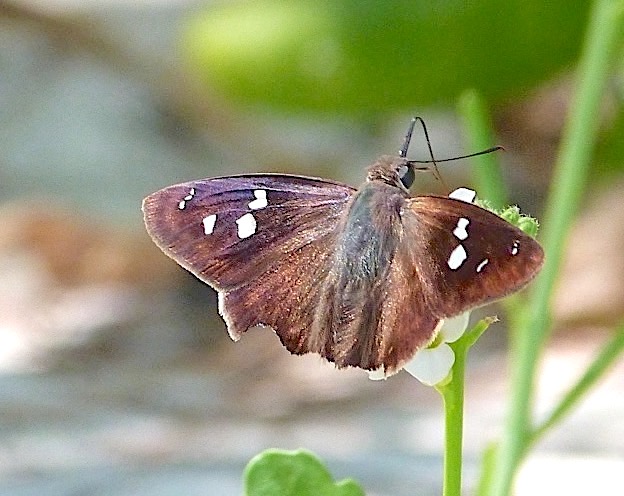
Two butterflies caught my attention on the same afternoon. The first was a Long-tailed Skipper Urbanus proteus, a species I have featured before. The other was new to me – the Northern Cloudywing Thorybes pylades. New to me in the sense that I have never managed to get near one that stayed still enough to photograph. You know how butterflies are – they use their antennae to detect when there’s a camera about, and redouble their skittishness and wing speed.

LONG-TAILED SKIPPER

Long-tailed skipper have… long tails, and a pretty bluish bodyLong-tailed Skipper Butterfly, Abaco Bahamas (Keith Salvesen)Long-tailed Skipper Butterfly, Abaco Bahamas (Keith Salvesen)Long-tailed Skipper Butterfly, Abaco Bahamas (Keith Salvesen)

NORTHERN CLOUDYWING

Northern Cloudywing Butterfly, Abaco Bahamas (Keith Salvesen)Northern Cloudywing Butterfly, Abaco Bahamas (Keith Salvesen)Northern Cloudywing Butterfly, Abaco Bahamas (Keith Salvesen)Northern Cloudywing Butterfly, Abaco Bahamas (Keith Salvesen)

All photos: Keith Salvesen

Unknown's avatar

BAHAMA MAMA: BIG NEWS ABOUT A TINY BIRD


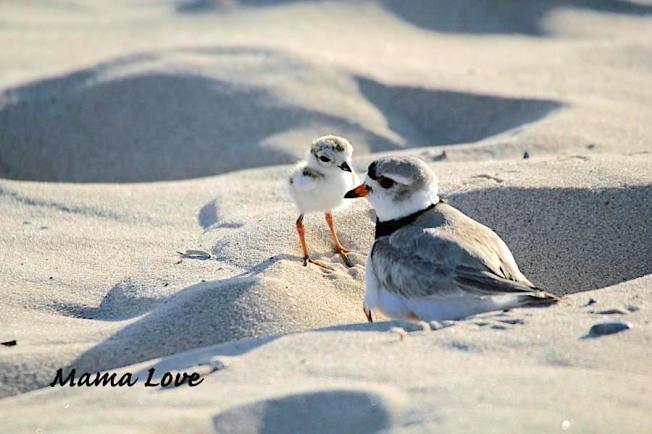
Piping Plover Bahama Mama, Michigan / Abaco (Carol Cooper)

BAHAMA MAMA: BIG NEWS ABOUT A TINY BIRD

The bird in the header image is the presciently named Bahama Mama in Muskegon State Park, Michigan – so, one of the rare Great lakes piping plovers. She originally hatched and was banded as a chick in 2014 at Tawas MI, some distance away from Muskegon. When later named in 2015 by Muskegon monitor Carol Cooper, no one could possibly have known then where she would chose to overwinter. The Bahamas, as it turned out – the avian equivalent of nominative determinism.

Piping Plover Chick (MDF / Wiki)

This little bird is the perfect example to demonstrate the success of (a) an organised monitoring and recording system in the breeding grounds of these rare birds; (b) the use of easily identified coded banding and (c) the deployment of ‘citizen scientists’ to back up the professionals in the overwintering grounds such a Abaco.

A combination of the three factors leads over time to the compilation of a life story. Invariably there will be gaps, but let’s take a look at what we know about Bahama Mama, in her own dedicated timeline. Note two things: her beach fidelity; and the evidence of mate infidelity…

  • 2014 Born Muskegon State Park, MI
  • 2015 Nested with Little Guy and raised chicks. Winter location unknown
  • 2016 Returned to Muskegon and again successfully nested with a new male, Bear, from Sleeping Bear Dunes Park MI. (Little Guy went off with another female on the same beach…)
  • 2016 Resighted in October on Long Beach Abaco and stayed for several months
  • 2017 Back at Muskegon and raised chicks again with Little Guy
  • 2017 Again resighted  in October on Long Beach Abaco and overwintered
  • 2018 Back at Muskegon, initially back with Little Guy, eventually nested with Enforcer

The official record of the latest union – evidence of fickleness

This summer 4 chicks  were hatched. Sadly, one of them (Ringo, 2 pics below) was lost, presumed predated, leaving 3 to fledge.

Bahama Mama with one of her chicksBahama Mama & Chick, Muskegon MI (Carol Cooper)

Little Ringo RIPRingo Piping Plover, Muskegon MI (Carol Cooper)

Another of the chicks

These are rare and threatened birds, vulnerable at both ends of their migration for all the usual reasons. The studies undertaken at both ends of the migration have revealed astonishing beach loyalty in these little birds that travel up to 1500 miles (sometimes more) every Spring and every Fall to be somewhere safe to nest and breed; and then to overwinter. In Michigan, Carol Cooper is Bahama Mama’s mama, watching over her, recording the details, checking when she has left the beach, and anxiously watching each Spring for her arrival home.

On Abaco, these duties – pleasures, even – are undertaken by ABACO PIPING PLOVER WATCH and the team of citizen scientists who keep an eye on the beaches, count the birds, note the banded birds and photograph them for ID, and pass the info on to HQ (which happens to be me). The data from all sightings is collated and then the season’s stats are compiled and provided to the scientists involved. Here’s a summary of stats for last season: 

Abaco Piping Plover Watch Stats 2017-18 (Keith Salvesen)

Bahama Mama, first sighting on Long Beach Abaco Oct 2017Bahama Mama Piping Plover, Long Beach Abaco (Keith Kemp)

Photo Credits: Carol Cooper (1, 3, 4, 5, 6); MDF (2); Keith Kemp (7). Special thanks to Carol Cooper, monitor in Michigan; and to Keith Kemp, primary monitor on Abaco. Also to Todd Pover CWFNJ and all the other real scientists involved for the last 3 years

POLITE REQUEST

If you live on Abaco or its cays anytime between August and March and might be interested in helping with piping plover research by becoming a monitor, please get in touch with me. It’s very simple and undemanding. A beach stroll from time to time – even as little as once a month – with a notebook, pencil, binoculars, a chocolate bar and (preferably for accurate ID of banded birds) a camera. Not a dog, though. Not on this walk anyway! Every report, even of a single bird, adds to the picture. Last season there was more than one ‘citizen scientist’ sighting of a plover where none had been seen before. 

Unknown's avatar

ABACO’S THREE CUCKOO SPECIES


Yellow billed cuckoo, Abaco Bahamas (Tom Sheley)

ABACO’S THREE CUCKOO SPECIES

Goodness, is it the end of the month already? So much going on, 3 half-written posts but running short of time. So here’s something (even) more interesting than the stuff I write – actual photos of actual birds with no words. Great photos (not mine) of Abaco’s 3 cuckoo species to compare and contrast. Until next month… when there’ll be stilts, hutias and a whole lot more.

YELLOW-BILLED CUCKOO (and header image)

Yellow billed cuckoo, Abaco Bahamas (Tom Sheley)

MANGROVE CUCKOO

Mangrove cuckoo, Abaco Bahamas (Tony Hepburn)Mangrove cuckoo, Abaco Bahamas (Alex Hughes)

SMOOTH-BILLED ANI

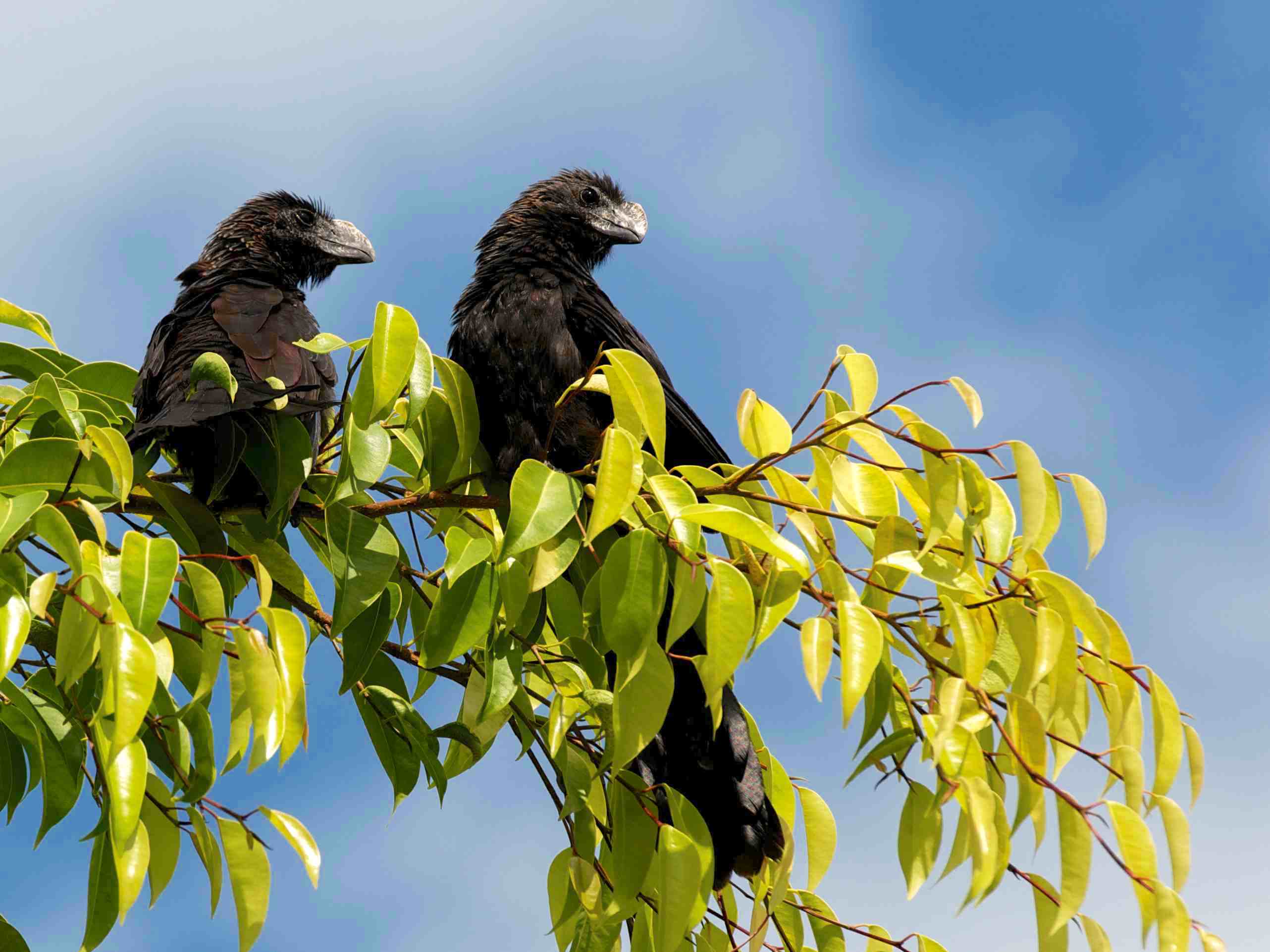
Smooth-billed Ani, Abaco Bahamas (Gerlinde Taurer)Smooth-billed Ani, Abaco Bahamas (Nina Henry)

Photo Credits: Tom Sheley, Tony Hepburn, Alex Hughes, Gerlinde Taurer, Nina Henry

Unknown's avatar

LOGGERHEAD KINGBIRD: BENIGN ‘TYRANT’ OF ABACO


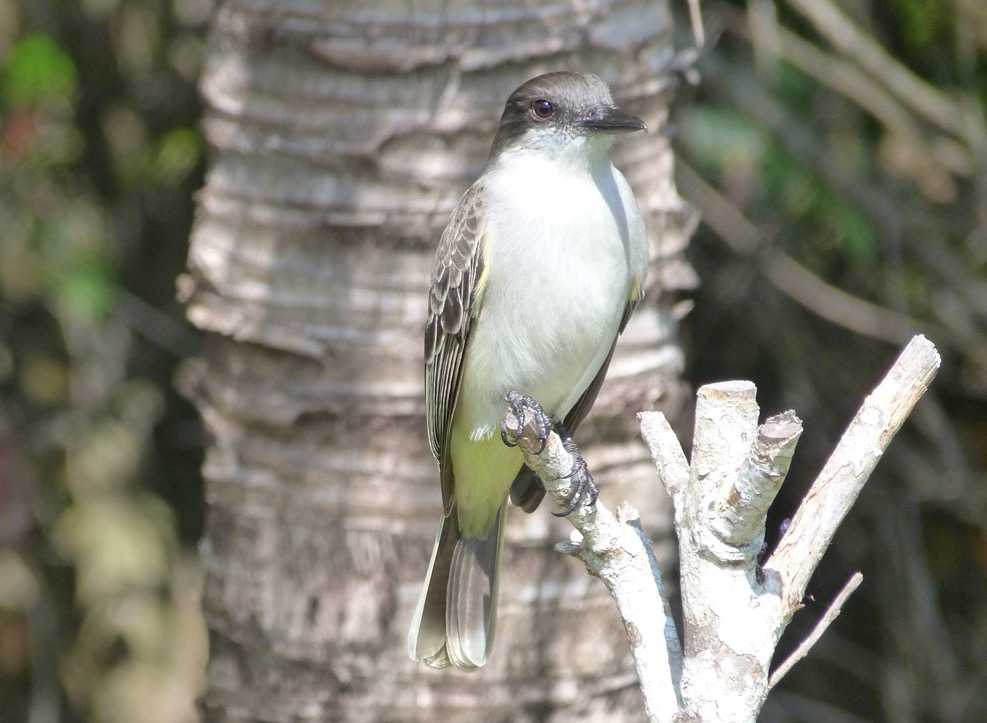
Loggerhead Kingbird, Abaco Bahamas (Keith Salvesen)

LOGGERHEAD KINGBIRD: BENIGN ‘TYRANT’ OF ABACO

Abaco is home to 4 main so-called tyrant flycatchers (Tyrannidae): the loggerhead kingbird, the gray kingbird, the La Sagra’s flycatcher and the Cuban pewee. All are common permanent residents except the gray kingbird, which is a summer resident only. Several other flycatcher species are found on Abaco, but they are very uncommon winter residents, rare transients, or vagrants.

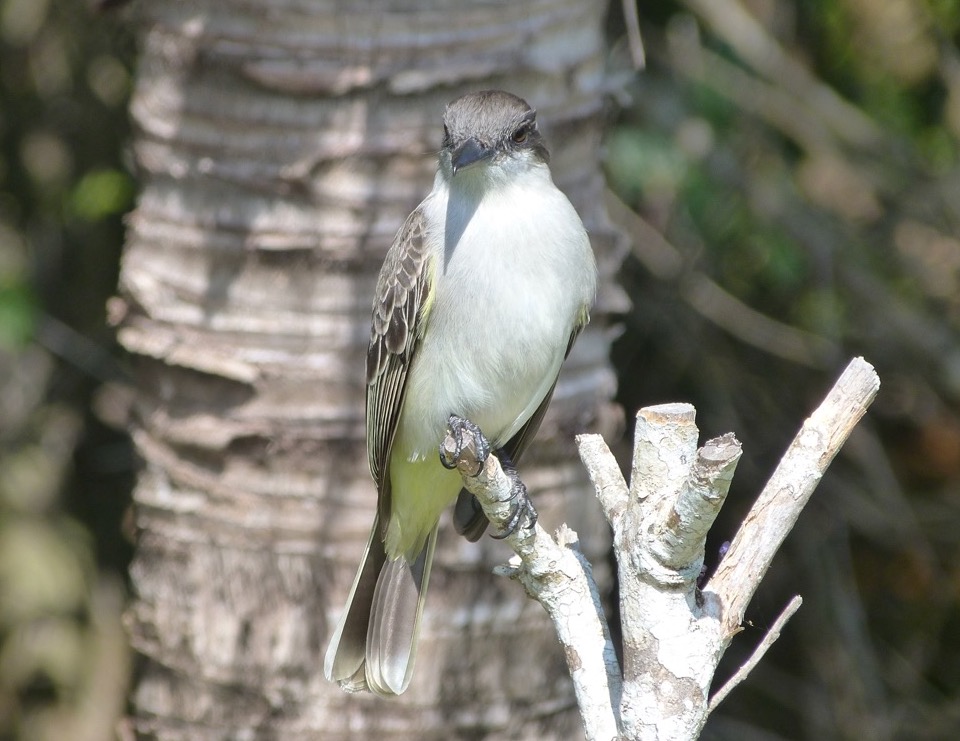
Loggerhead Kingbird, Abaco Bahamas (Keith Salvesen)

The loggerhead featured here in several poses is a watchful sentinel at Delphi. His preferred perches are in the edge of the coppice round the pool or at the edge of the main drive. From time to time he will leave his perch to catch a passing insect by ‘hawking’, returning to the same place to eat it.

Loggerhead Kingbird, Abaco Bahamas (Keith Salvesen)

Loggerhead and gray kingbirds can be quite easy to confuse. A couple of years ago I wrote about how to distinguish them, and with gray kingbirds in residence now this is probably a good time to set out the distinctions again.

Loggerhead Kingbird, Abaco Bahamas (Keith Salvesen)

LOGGERHEAD Tyrannus caudifasciatus vs GRAY Tyrannus dominicensis 

DIFFERENCES and SIMILARITIES

TOP TIP ANY KINGBIRD SEEN IN WINTER WILL BE A LOGGERHEAD

  • Kingbirds seen between (say) October & March are Loggerheads. Grays are strictly summer visitors
  • Both are medium size birds and roughly the same size as adults (around 23 cms)
  • Loggerheads have dark brown to near-black heads, grays have lighter, slate-coloured heads
  • Loggerheads have a ‘squared’ tip to the tail; grays have a notched tip
  • Loggerheads may have a whitish fringe at the tip of the tail; grays not so
  • Loggerheads have yellowish tinges to their white undersides & forewings; grays less so or not at all
  • Grays have a dark or black ‘mask’ through the eyes, often clear but not always easy to see
  • Loggerheads allegedly have inconspicuous orange head crests; grays are red. I’ve never seen either!
  • [*RH personal opinion alert*] Grays have larger, heavier beaks than loggerheads
  • Grays are territorially aggressive; when they turn up, the loggerheads tend to retreat to the forest

Loggerhead Kingbird, Abaco Bahamas (Keith Salvesen)

Here is how David Sibley shows the differences

 6323_Sibl_9780307957900_art_r1 3069_Sibl_9780307957900_art_r1-1

Illustrations: David Allen Sibley

GRAY KINGBIRD FOR COMPARISONGray_Kingbird (Dick Daniels Wiki)

MEMORABLE FACT TO DEPLOY IN CONVERSATION

The collective names for a group of kingbirds are: a Court, a Coronation, or a Tyranny

Loggerhead Kingbird, Abaco Bahamas (Keith Salvesen)

Photo Credits: All loggerheads, Keith Salvesen at Delphi;  gray kingbird by Dick Daniels; Illustrations David Sibley

Unknown's avatar

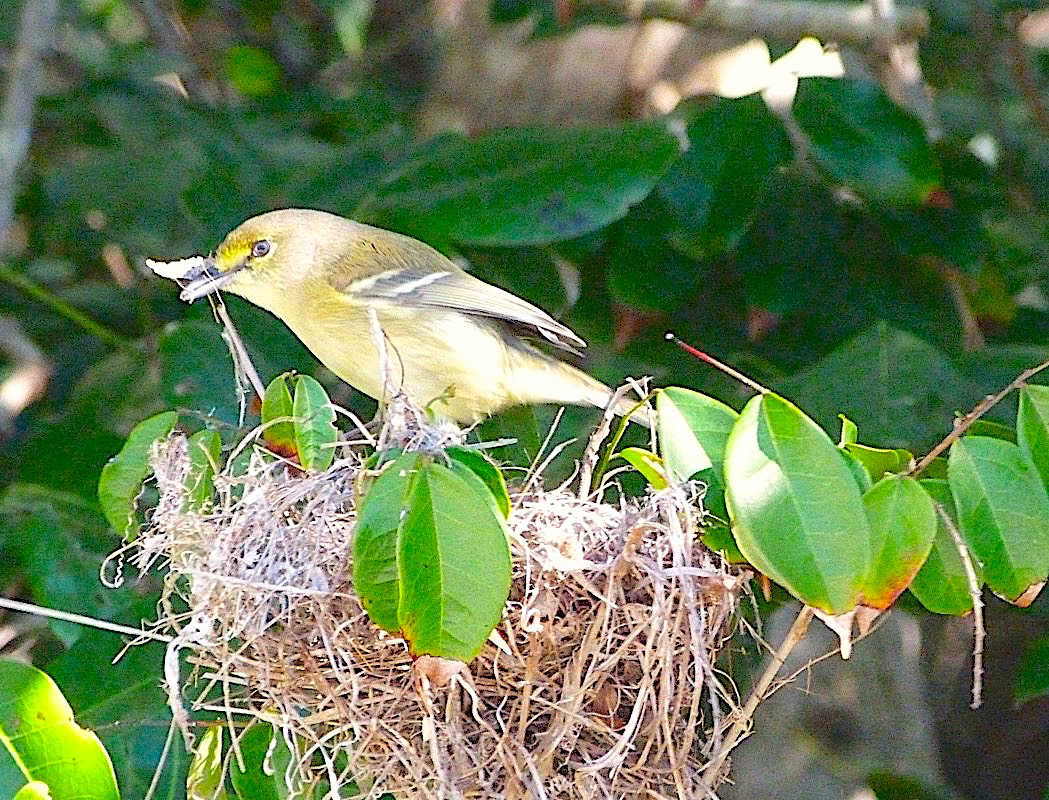
THICK-BILLED VIREOS ON ABACO: “NIDIFICATION”


Thick-billed Vireo nesting - Delphi, Abaco (Keith Salvesen)

THICK-BILLED VIREOS ON ABACO: “NIDIFICATION”

“Nidification” was one of the new words I learned from the wonderful book Birds of the West Indies by James Bond (a different one – for the full story behind the name click HERE). It means, essentially, the nesting process of a bird. It sounds pleasingly technical for a straightforward concept: nest-building.

Soft furnishings being addedThick-billed Vireo nesting - Delphi, Abaco (Keith Salvesen)

I spotted this TBV making its nest on the edge of the drive at Delphi. I usually think of these cheerful chirpy birds as ‘lurkers’, hanging back in the coppice and not making themselves easily visible. But this nest was right out in the open – possibly not the wisest place for nidification.

Thick-billed Vireo nesting - Delphi, Abaco (Keith Salvesen)

If you look up TBV’s in bird books, you may find a reference to nest building in the fork of shrubs or bushes – exactly what was going on here. It quite a messy nest, but then again it looks comfortable and firmly wedged in.

Thick-billed Vireo nesting - Delphi, Abaco (Keith Salvesen)

Although I only saw one of the pair actively engaged in the building, another TBV was ‘vocalising’ (there’s another technical term, = singing) nearby, presumably the mate. In a way that humans have been slow to adopt, both birds will be actively involved in raising their family, from incubating the eggs to chick care – feeding, cleaning out the nest and so on. 

WHAT DO THEY SOUND LIKE WHEN THEY VOCALISE?

Let’s hope for a successful outcome to the nidification…

Thick-billed Vireo nesting - Delphi, Abaco (Keith Salvesen)

All photos Keith Salvesen, also the sound recording (made at Delphi)

Unknown's avatar

AMERICAN KESTRELS BEING CREATIVE ON ABACO


American Kestrels mating, Abaco Bahamas (Rolling Harbour)

AMERICAN KESTRELS BEING CREATIVE ON ABACO

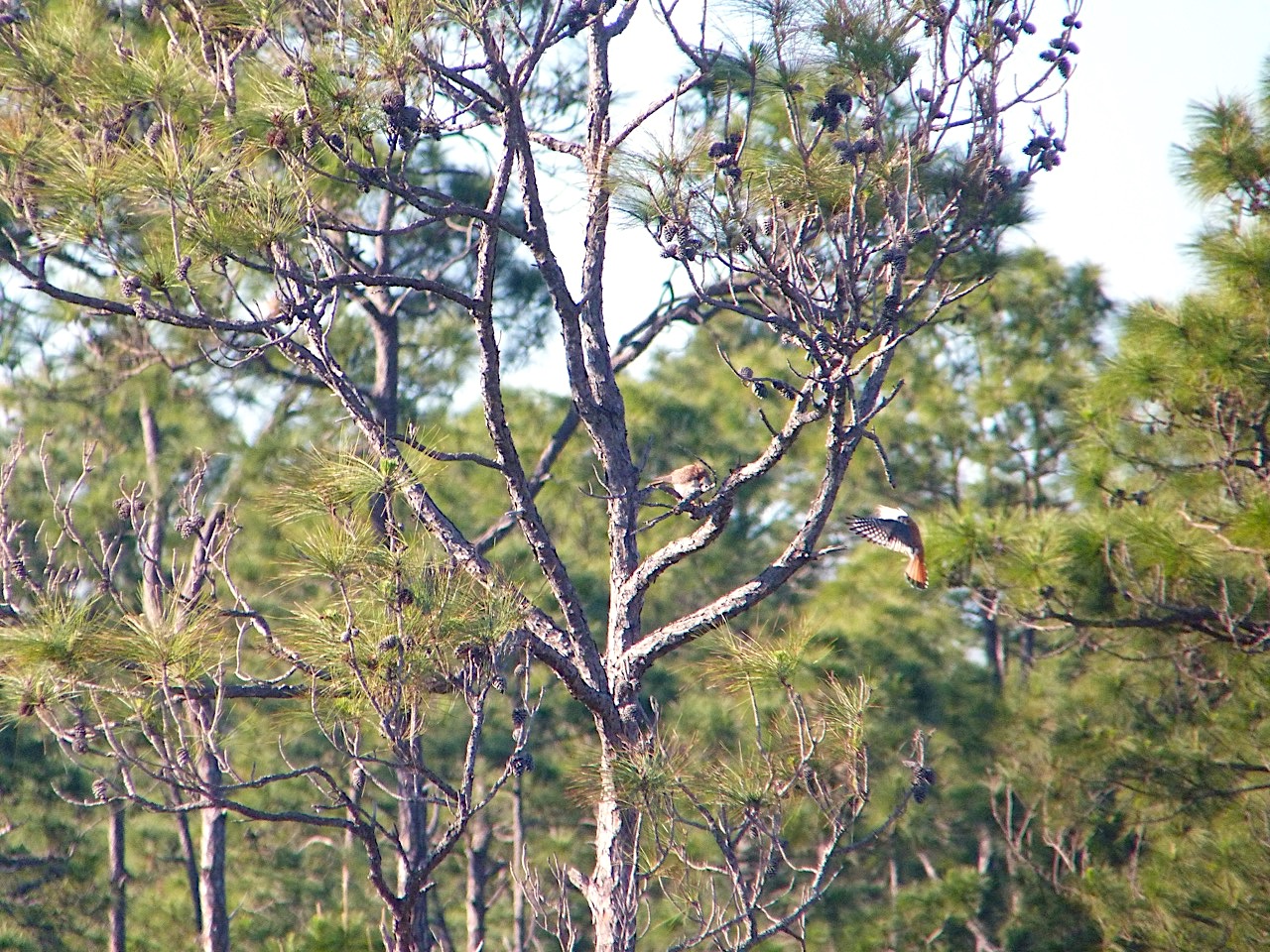
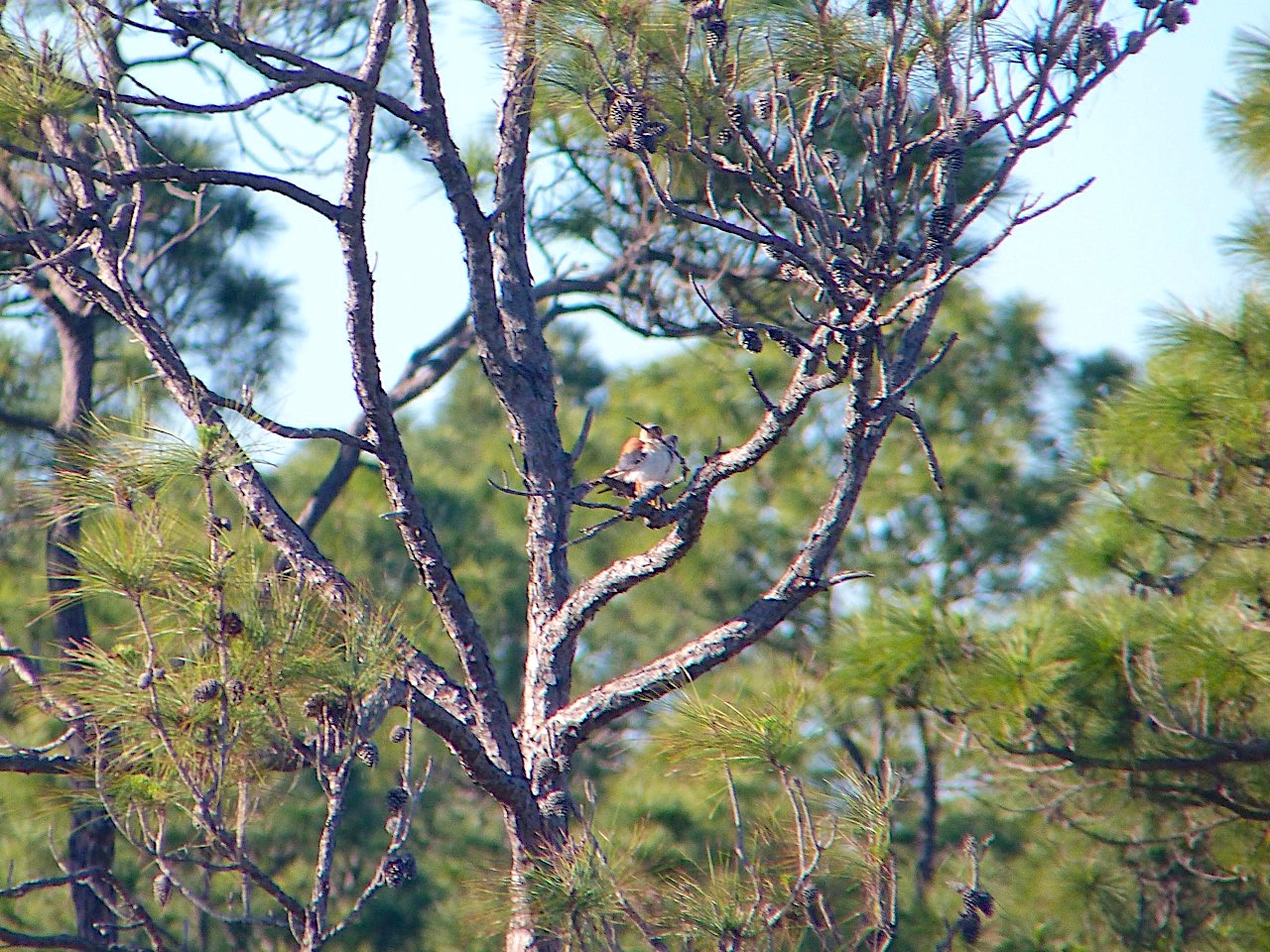
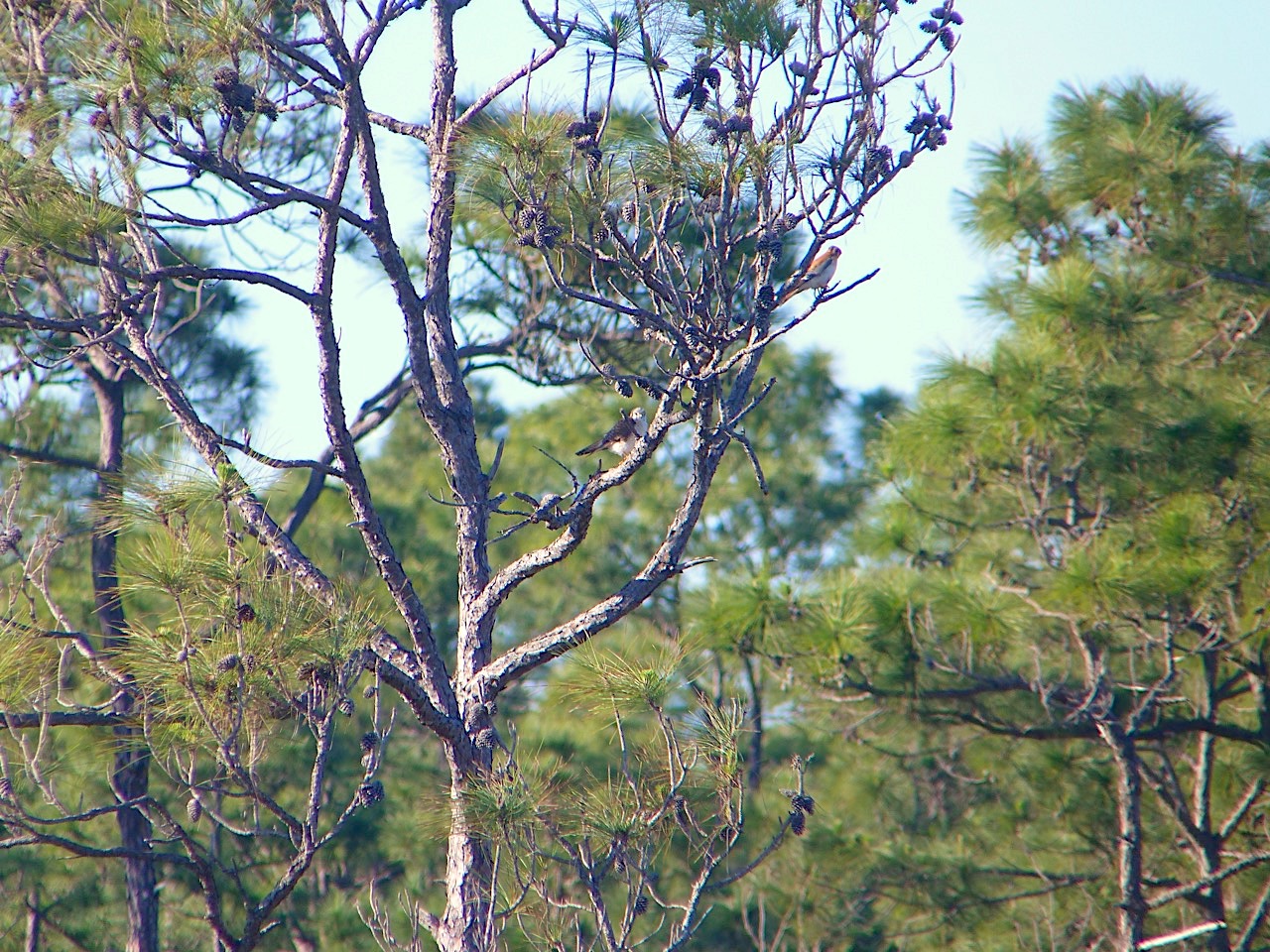
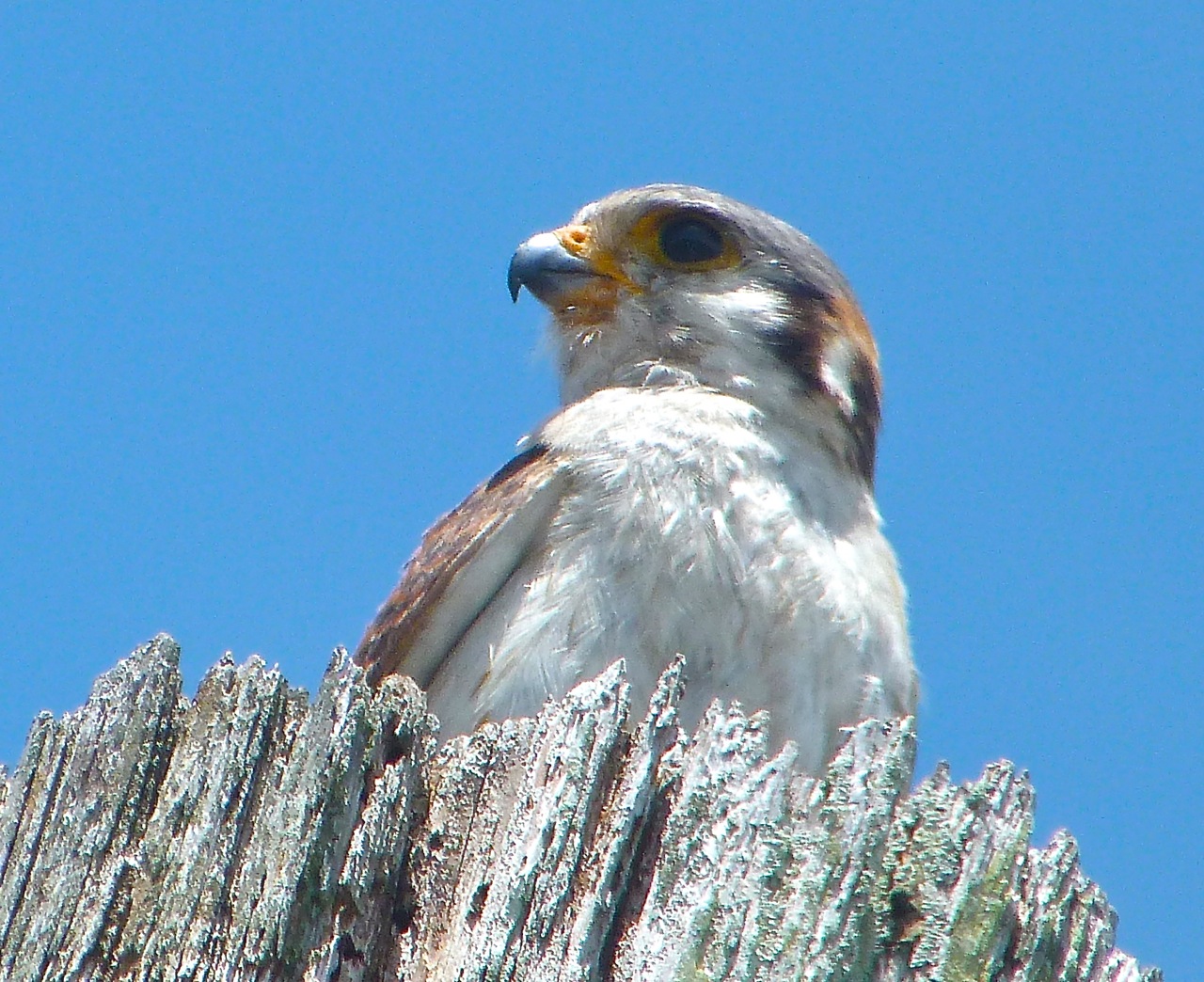
I don’t usually hold back from using (my) bad photos if there’s a reasonable excuse to do so. There’s a reason here. So here are a few bad photos. This sequence of mating kestrels was taken at a considerable distance, after I’d seen a bird fly into a pine tree out of the corner of my eye**. I couldn’t make out what species it was with the naked eye or through the viewfinder, so I took an ‘ID shot’ to enlarge later on. The image below is it – and a clear enough blur to say AMKE. Then I carried on taking pictures.

American Kestrels mating, Abaco Bahamas (Rolling Harbour)

The header image came next as I realised there was another bird flying in from the right. Then the sequence below: the male mating with the female at once, dispensing with preliminaries; the male moving off along the branch; the female following a short way up the branch; then the male eventually flying away. 

American Kestrels mating, Abaco Bahamas (Rolling Harbour) American Kestrels mating, Abaco Bahamas (Rolling Harbour) American Kestrels mating, Abaco Bahamas (Rolling Harbour) American Kestrels mating, Abaco Bahamas (Rolling Harbour) American Kestrels mating, Abaco Bahamas (Rolling Harbour)

And that was that: all over in no time at all; all captured on camera; all finding its way onto the internet before you can say K@rd@shi@n tape. Let hope some good comes of it. Some baby kestrels would be good…

These photos were taken at Bahama Palm Shores, one of the go-to hotspots on Abaco for great birding including the gorgeous parrots. A new local initiative has seen the building of a tall platform overlooking a secluded lake that offers birders a great view of the birdlife there. But that’s a topic for another day.

All photos: Keith Salvesen

**This is badly written, I do realise – no, it didn’t literally fly out of the corner of my eye, that’s just how I happened to see it.

Unknown's avatar

BONAPARTE’S GULLS ON ABACO


Bonaparte's Gull (Basar, wiki)

BONAPARTE’S GULLS ON ABACO

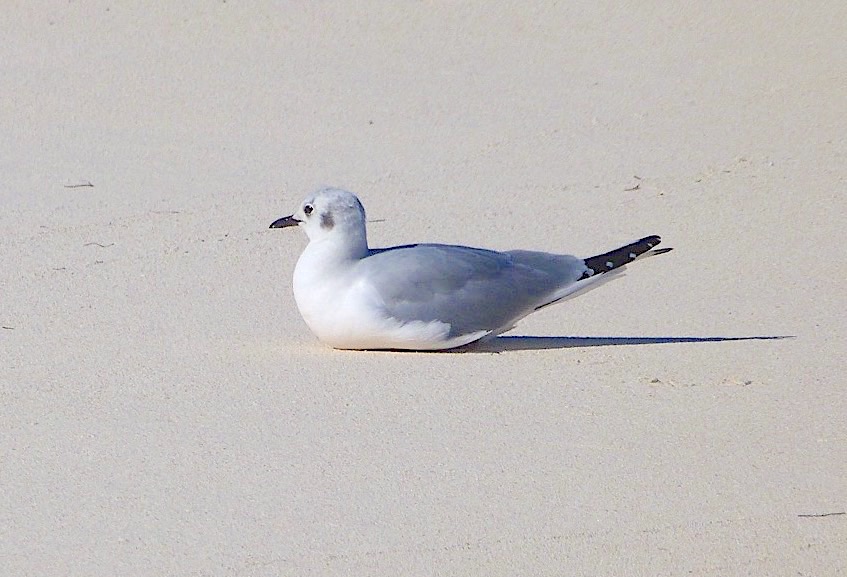
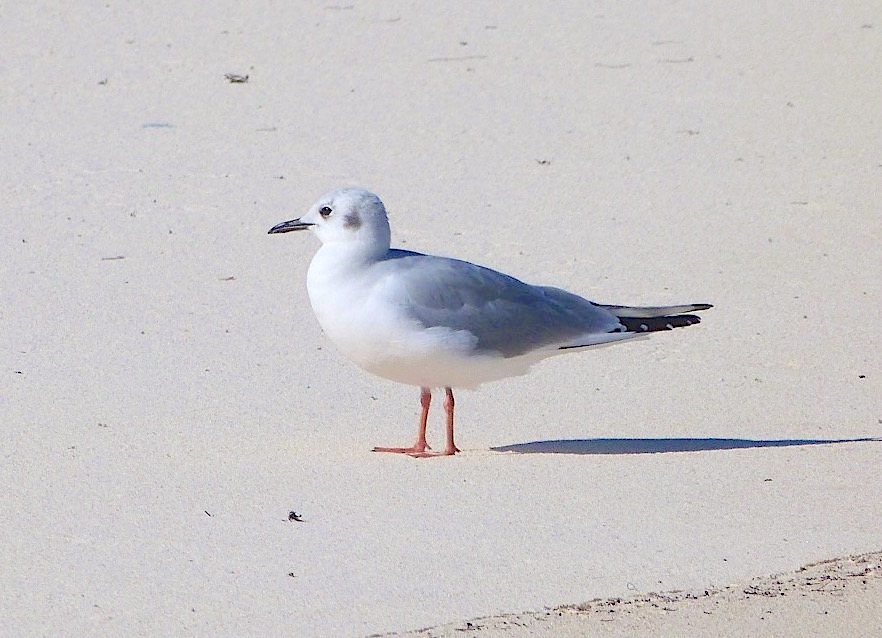
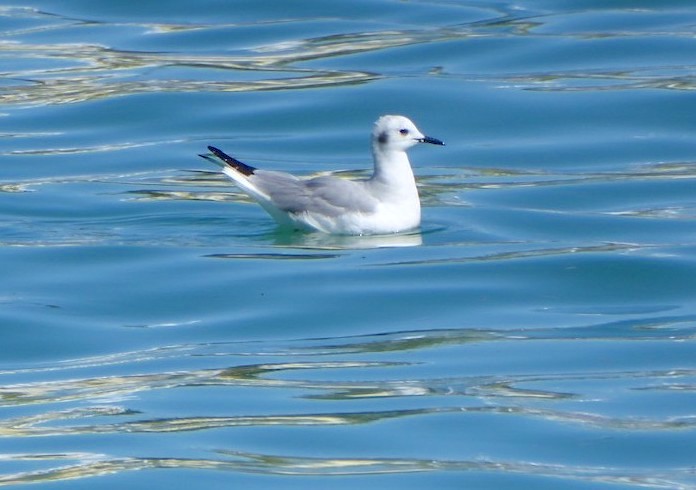
The Bonaparte’s gull Chroicocephalus philadelphia is one of the smallest gulls, and is found mainly in Canada and northern United States, though vagrants sometimes end up as far away as Europe. And Abaco. These birds are considered very uncommon winter residents on Abaco (categorised WR4). Yet within the last couple of months Elwood Bracey saw an amazing 4 in Treasure Cay harbour… Milton Harris reported seeing one at Hope Town harbour… Keith Kemp saw a couple on South Abaco (2 locations)… Eugene Hunn reported 1 on the Sandy Point dock… then suddenly there were 3 on the beach at Delphi. They have hung around there, too – let’s hope that all these birds find their way back to their breeding grounds safely. They have quite a journey ahead of them.

Bonaparte's Gull, Abaco Bahamas (Keith Salvesen)

The species is named for Charles Lucien Bonaparte, a French ornithologist and nephew to the French emperor (see below for more about him).  The philadelphia part of its Latin designation oddly results from the location from which the original ‘type specimen’ was collected (see below for the reason). This is not unlike the Cape May warbler, so named for the location of the original specimen, yet not recorded there again for more than a century (and still quite rare)…

Bonaparte's Gull, Abaco Bahamas (Keith Salvesen)

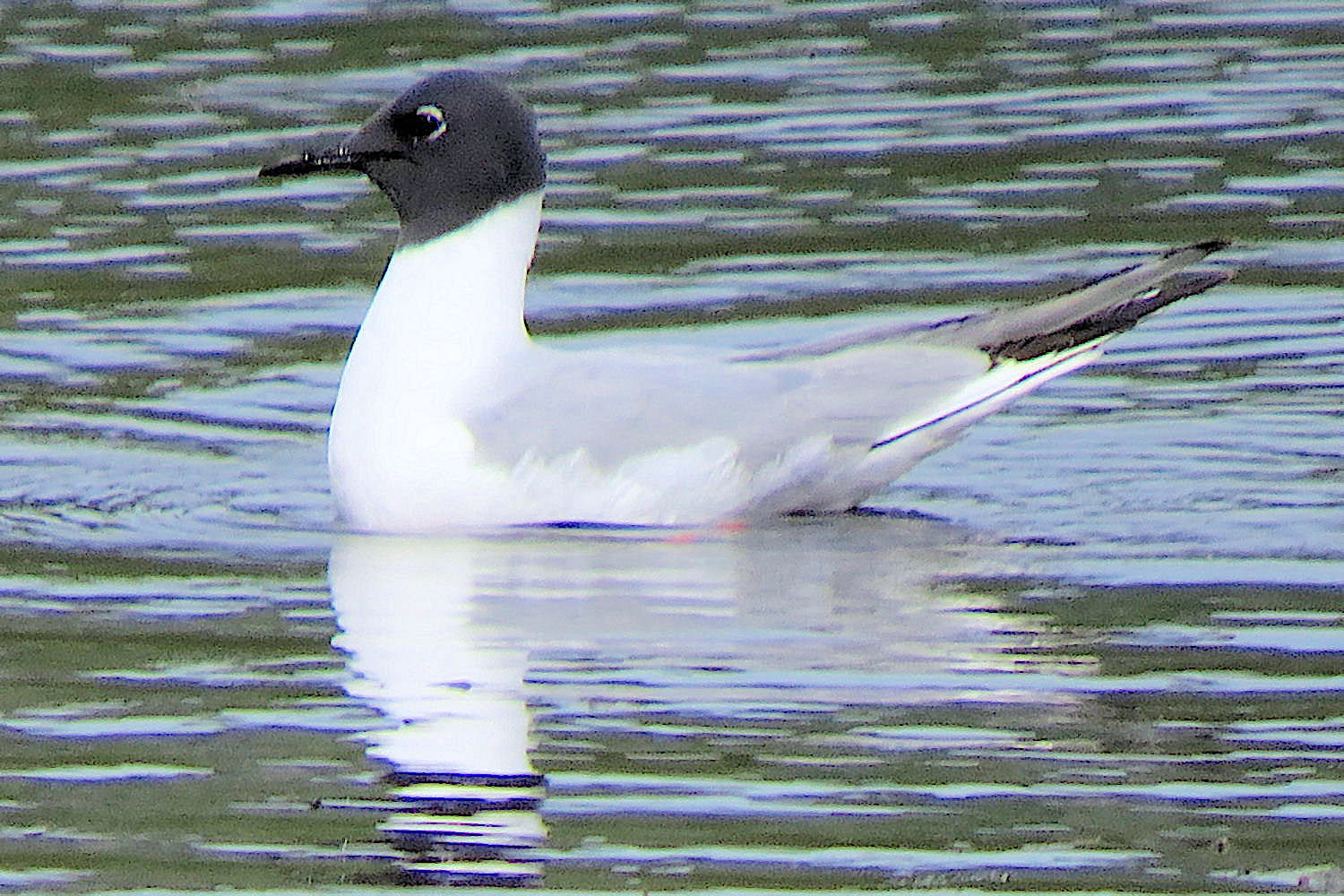
The gulls shown here are in their winter plumage, with the characteristic dark blotch behind the eye. In the breeding season, they acquire smart slate-black hoods:

Bonaparte's Gull, Abaco Bahamas (D Gordon Robertson wiki)

 10 BONAPARTE’S GULL FACTS TO TELL YOUR GRANDCHILDREN

  • Graceful in flight, resembling terns as much as gulls
  • Monotypic: the sole representative of its taxonomic subgroup
  • Males and females have very much the same colouring
  • Believed to be monogamous
  • Showy breeders, with much display, swooping, diving, yelling at each other etc
  • Typically (and ungull-like) they nest in trees, preferring conifers eg jack pine
  • Share nest-building and parenting duties
  • Capable of considerable aggression to protect their nests / chicks
  • Have been known to live 18 years
  • The only bird species with an Emperor’s name (prove me wrong!**)

Bonaparte's Gull, Abaco Bahamas (Keith Salvesen)

We saw these birds on the beach most days, usually just 2 of the 3 at any one time. They were quite shy and hard to get close to, however subtly. And they kept on the move – except when they decided to have a rest.

Bonaparte's Gull, Abaco Bahamas (Keith Salvesen)

TELL US MORE ABOUT PRINCE BONAPARTEBonaparte, Charles Lucien (1803-1857)Bonaparte’s gull, Zenaida dove

Charles Lucien Bonaparte, 2nd Prince of Canino & Musignano 1803 – 1853

Bonaparte was a French biologist and ornithologist, and the nephew of the Emperor Napoleon. He married his cousin Zenaïde, by whom he had twelve children. They moved from Italy to Philadelphia, by which time Bonaparte had already developed a keen interest in ornithology. He collected specimens of a new storm-petrel, later named after the Scottish ornithologist Alexander Wilson. And presumably that’s where he found his specimen gull.

Bonaparte studied the ornithology of the United States, and updated Wilson’s work American Ornithology. His revised edition was published between 1825 and 1833. He was a keen supporter of a (then unknown) ornithologist John James Audubon. Rather sweetly, he created the genus Zenaida, after his wife, applying it to the White-winged Dove Zenaida asiatica,  Zenaida Dove Zenaida aurita and Mourning Dove Zenaida macroura. He himself was later honoured in the name ‘Bonaparte’s Gull’.

Bonaparte's Gull, Abaco Bahamas (Keith Salvesen)

RELATED POSTS

GULL SPECIES ON ABACO

THE PIONEER NATURALISTS

Credits: excellent header image from ‘Basar’; breeding plumage gull by D Gordon Robertson; all the rest, Keith Salvesen

**Emperor Penguins don’t count!

STOP PRESS some of the other BOGUs mentioned in Para 1, by Elwood Bracey, and 2 from Keith Kemp

Unknown's avatar

SCALY TALES: CURLY-TAILED LIZARDS ON ABACO


Curly-tailed Lizard, Abaco Bahamas (Keith Salvesen)

SCALY TALES: CURLY-TAILED LIZARDS ON ABACO

The northern curly-tailed lizard Leiocephalus carinatus, to give it its full name, resembles a tiny dragon with a twist in its tail. These little critters bask in the sun, or scuttle away into holes and crevices as you approach them. I suspect that even a confirmed herpophobic would find some charm in them. They are, of course, completely harmless to humans. 

Curly-tailed Lizard, Abaco Bahamas (Charles Skinner)

Surprisingly, the Bahamas is home not just to one but five different curly-tail species, and nine sub-species. Broadly-speaking, the variants are found on different and specific islands and have discrete local markings. Mostly they are brownish, but they may also be grey or with a greenish tinge like this one I recently photographed.

Curly-tailed Lizard, Abaco Bahamas (Keith Salvesen) Curly-tailed Lizard, Abaco Bahamas (Keith Salvesen)

Curly-tail males, being very territorial, turn somewhat aggressive around breeding time, which is basically most the the year, from February to October. Behaviours indicative of their territorial claims include tail curling / uncurling (of course), head-bobbing, strutting about in an agitated way and inflating the sides of their necks in a threatening kind of way. The tiny-tails, 2″ long when born, are known as ‘hatchlings’.

An impressive ‘double curly’ by the pool at DelphiCurly-tailed Lizard, Abaco Bahamas (Keith Salvesen)

THREATS TO CURLY TAILS

According to the Bahamas National Trust BNT, the main dangers to the curly-tails of the Bahamas are:

  • Dogs, cats, rats and introduced predators such as raccoons
  • Collection for the pet trade – curly tails are unprotected by CITES listing (also cute)
  • Collection of the rarer endemics by reptile enthusiasts seeking ‘exotics’
  • Development and habitat destruction (though it is noted that curly tails seem to adjust well in developed areas)

A curly tails sloughs its skin as it grows, as with snakes and other reptilesCurly-tailed Lizard, Abaco Bahamas (Charles Skinner)

WHY THE CURLY TAIL?

  • As mentioned above, for use in territorial posturing
  • In courtship displays by males to attract females (luckily a method not available to humans)
  • As a response to predators, confusing an attacker with movement at both ends
  • As a last resort, to detach to aid escape (the tail re-grows)
  • For fun and just because they can grow one and you cannot

Curly-tailed Lizard, Abaco Bahamas (Keith Salvesen)

Credits: all photos, Keith Salvesen except #2 & #6, Charles Skinner; BNT

Unknown's avatar

BAHAMA MOCKINGBIRD: RARE LEUCISTIC VARIANT ON ABACO


Leucistic Bahama Mockingbird, Abaco Bahamas (Keith Kemp)

BAHAMA MOCKINGBIRD

RARE LEUCISTIC VARIANT ON ABACO

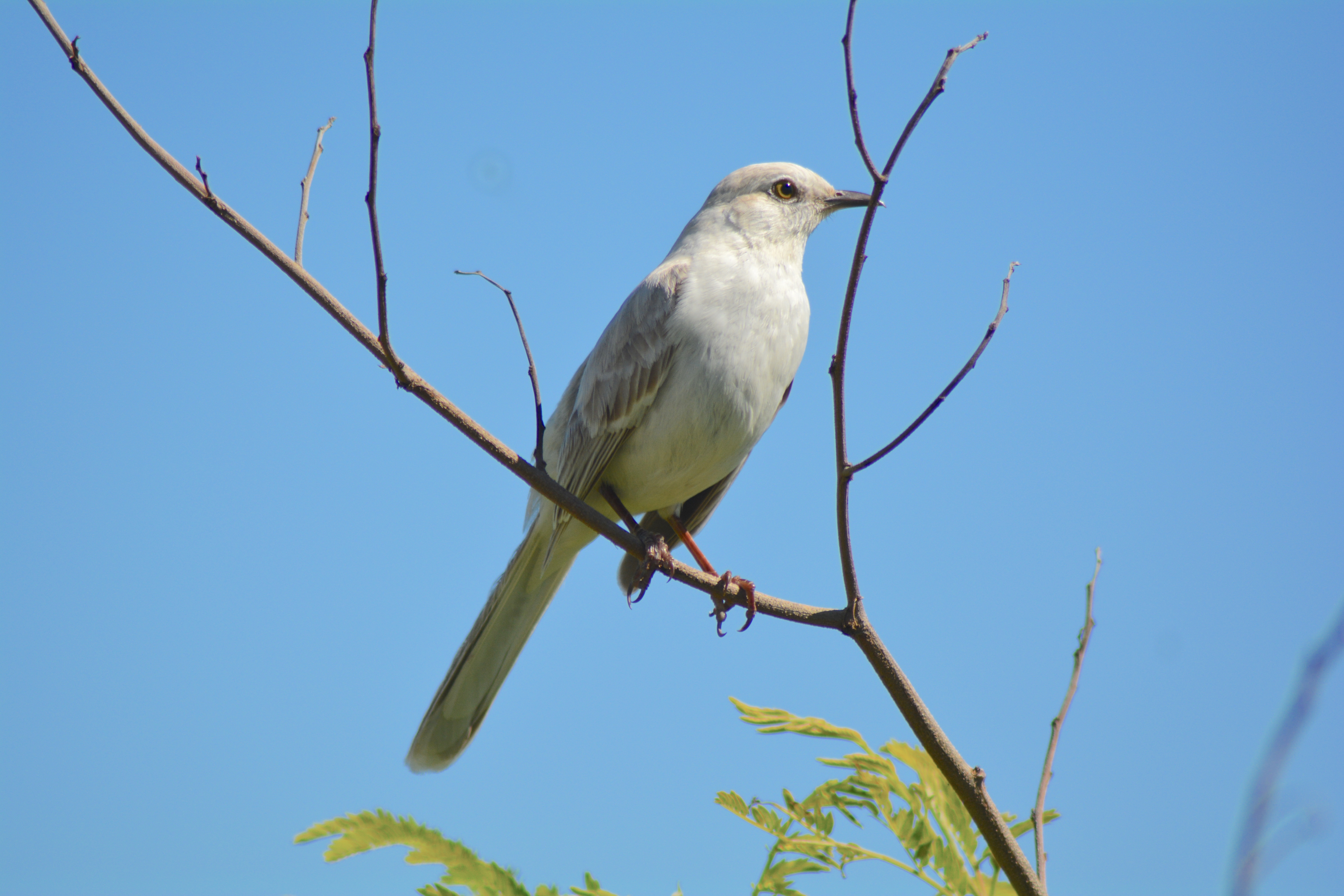
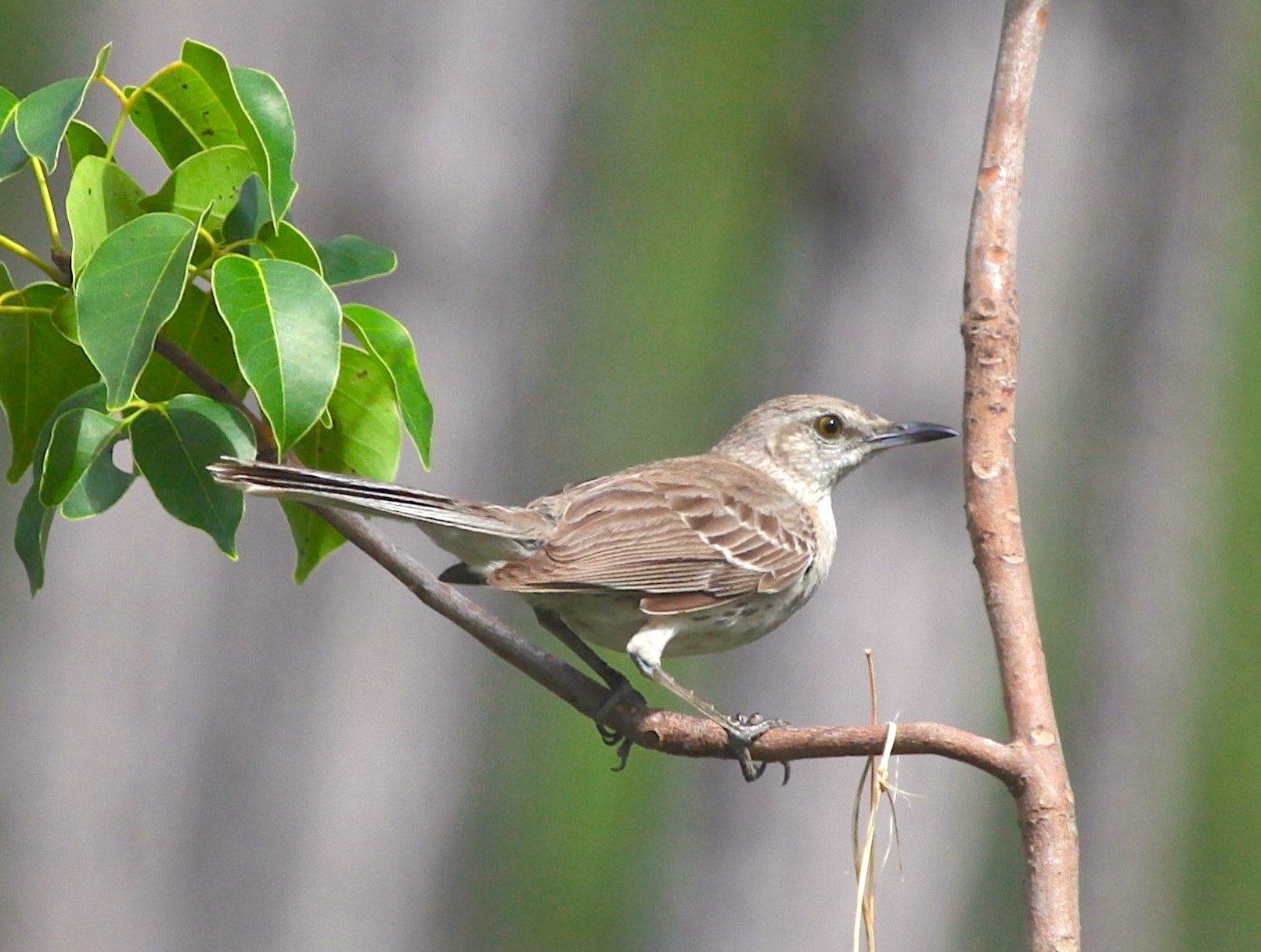
The header image is of a Bahama mockingbird recently photographed by keen-eyed Abaco birder Keith Kemp. It is a thing of wonder and beauty, exceptionally rare and possibly unique. I can find no other example of a leucistic bird of this species online.

This is not Keith’s first leucistic bird discovery on Abaco either – a while back he found a leucistic Western spindalis. You can read more about leucism and its distinction from albinism, and see a number of other examples of leucism including a white turkey vulture HERE

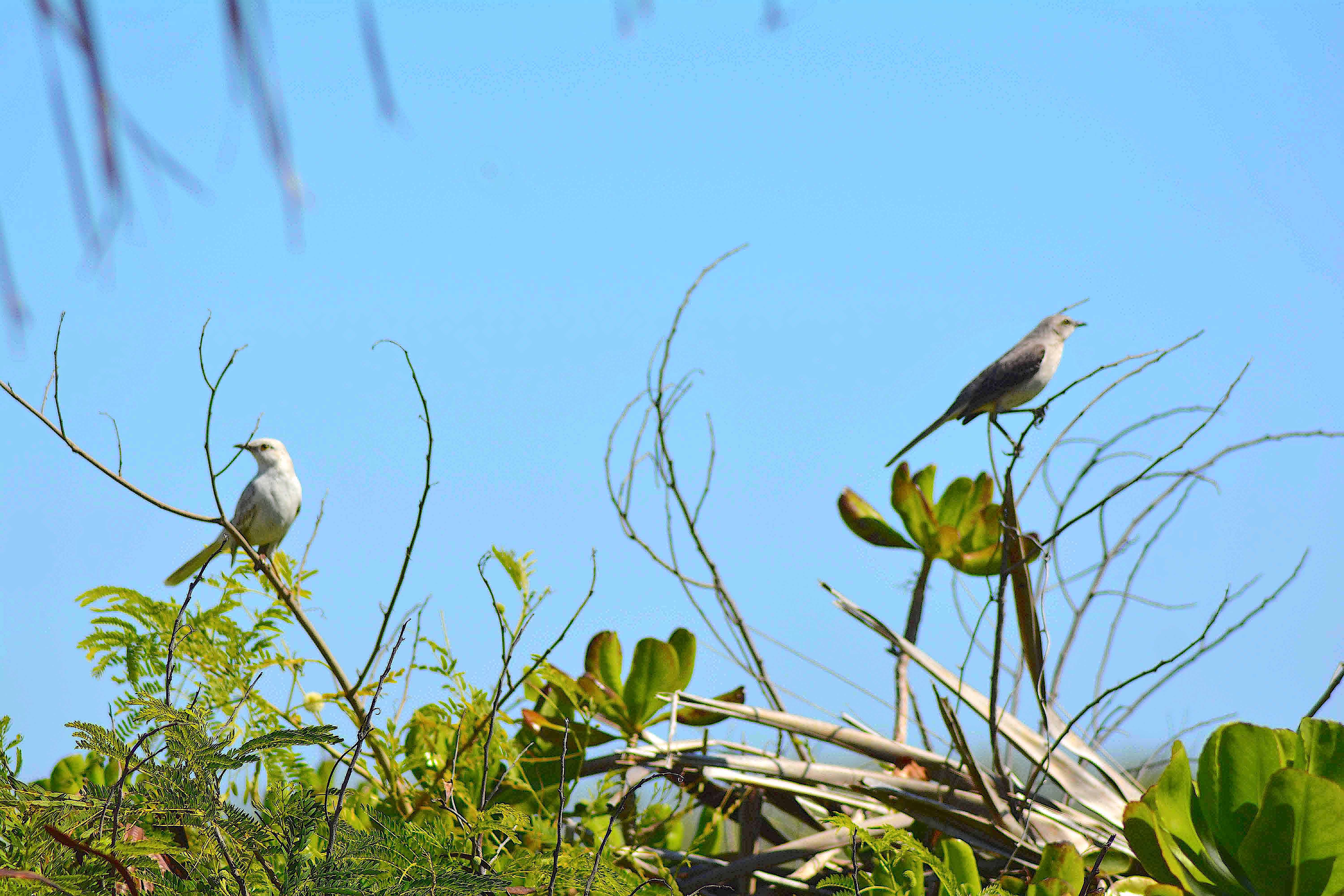
Leucistic & Normal Bahama Mockingbird, Abaco Bahamas (Keith Kemp)

Even more astonishingly, Keith managed to get a photo of the ‘white’ bird and a ‘normal’ bird together (above). The difference is startling. Below is a fine photo by Peter Mantle of a Bahama mockingbird, as you would expect to see one – basically brown with a pale, flecked front / underside.

Bahama Mockingbird, Abaco Bahamas (Peter Mantle)

LEUCISM? EXCUSE ME, AND THAT IS?

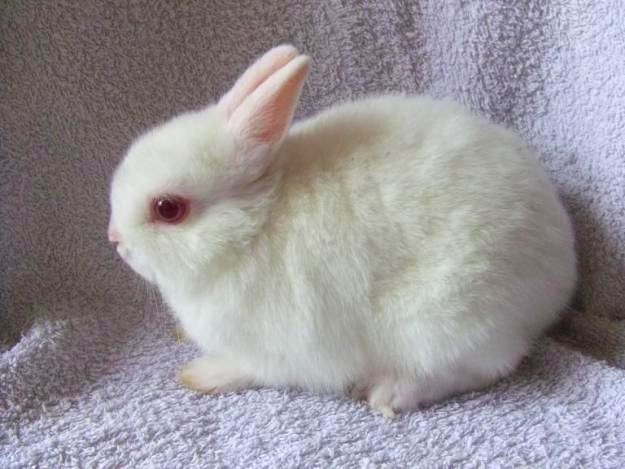
I’ll recap what I wrote in the earlier post linked above. First, what it is not. It is not albinism, which results from diminished or lost melanin production that affects pigmentation. One characteristic of the condition is the tendency to pink eyes, which of course is seen in humans as well as animals and birds. For example:

Albino Rabbit (pinterest)

Albino Fwuffy Bwunny Wabbit

WELL, WHAT IS IT THEN?

Put simply, melanin is only one of many ingredients of pigmentation. Leucism is caused by pigment loss involving many types of pigment, not just melanin. In birds this results in unnaturally pale or white colouring of feathers that may be partial or entire. The eyes of a bird with leucism are unaffected – so, not pink. At one extreme, if all pigment cells fail, a white bird will result; at the other extreme, pigment defects cause patches and blotches of pale or white on the bird, often called a ‘pied’ effect. The condition can be inherited.

KK’s leucistic Western spindalis, an example of partial or ‘pied’ leucism

Leucistic Western Spindalis, Abaco Bahamas (Keith Kemp) Leucistic Western Spindalis, Abaco Bahamas (Keith Kemp)

So there you have it: another extreme rarity for Abaco, and a further example of how rewarding – and surprising – birding on Abaco can be. To repeat the link to the more detailed article on leucism in birds, you can find with (*distraction alert*) some music and inappositely comedic material thrown in HERE

All photos Keith Kemp except the ‘normal’ bird, Peter Mantle

Unknown's avatar

BUTTERFLIES ON ABACO (10) : HAMMOCK SKIPPER


Hammock Skipper - Polygonus leo, Abaco Bahamas (©Keith Salvesen)

BUTTERFLIES ON ABACO (10)

HAMMOCK SKIPPER

The Hammock Skipper Polygonus leo is quite a small butterfly. We found the ones shown here in the vegetation at the back of the Delphi beach. Having initially thought this was a Northern Cloudywing (and a ‘lifer’ for me), Colin Redfern has kindly corrected my (mis-)ID, and I have made the consequent changes.

Hammock Skipper - Polygonus leo, Abaco Bahamas (©Keith Salvesen)

Perhaps unusually for butterflies these skippers are sexually ‘monomorphic’, i.e. very similar in both sexes. Males and females both have completely dark brown wings except for the small white spots.

Hammock Skipper - Polygonus leo, Abaco Bahamas (©Keith Salvesen)

We noticed that the spots and patterns were (again, unusually?) not symmetrical as between the wings. [That should probably be ‘not reflectively symmetrical’, as with a Rorschach inkblot.]


Hammock Skipper - Polygonus leo, Abaco Bahamas (©Keith Salvesen)

All photos, Keith Salvesen; timely ID correction courtesy of Colin Redfern…

Unknown's avatar

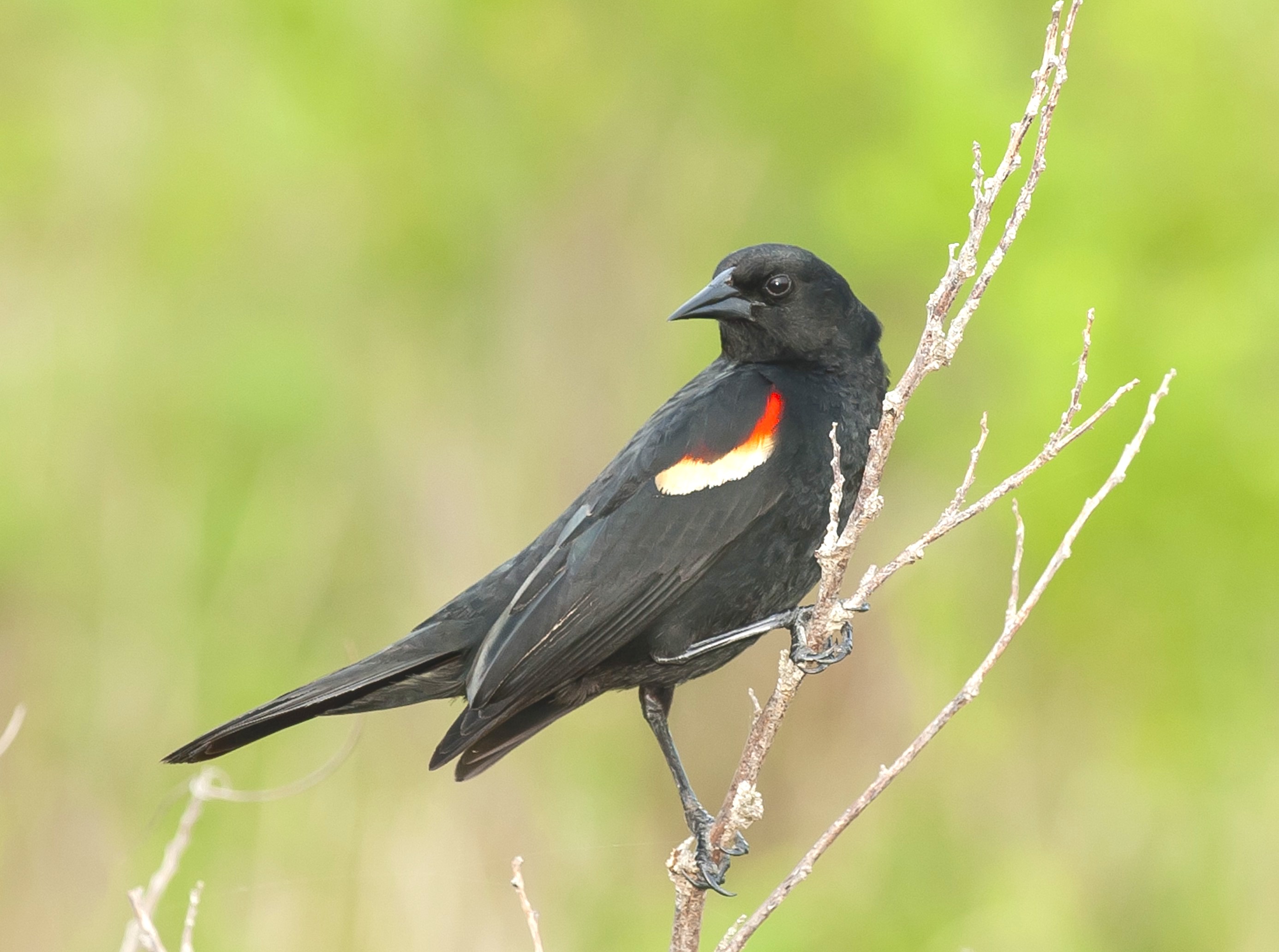
RED-WINGED BLACKBIRDS ON ABACO BAHAMAS


Red-winged Blackbird, Abaco (Tom Sheley)

RED-WINGED BLACKBIRDS ON ABACO

The sounds are unmistakeable – a discordant chorus of soft chuckling noises like tongue-clicks as the RWTs flock into a bush, interrupted by harsh, metallic calls like rusty metal gate-hinges being forced open. Or maybe a lone bird mournfully repeating its eerie call from the mangroves far out on the Marls as the bonefishing skiffs slip silently along the shoreline. No other species sound quite like Agelaius phoeniceus.

Red-winged Blackbird, Abaco (Tom Sheley)

The handsome males sport flashy epaulets, most clearly visible in flight or in display – for example to impress a prospective mate. Again, they are unlikely to be confused with another species.

Red-winged Blackbird, Abaco Bahamas (Alex Hughes)

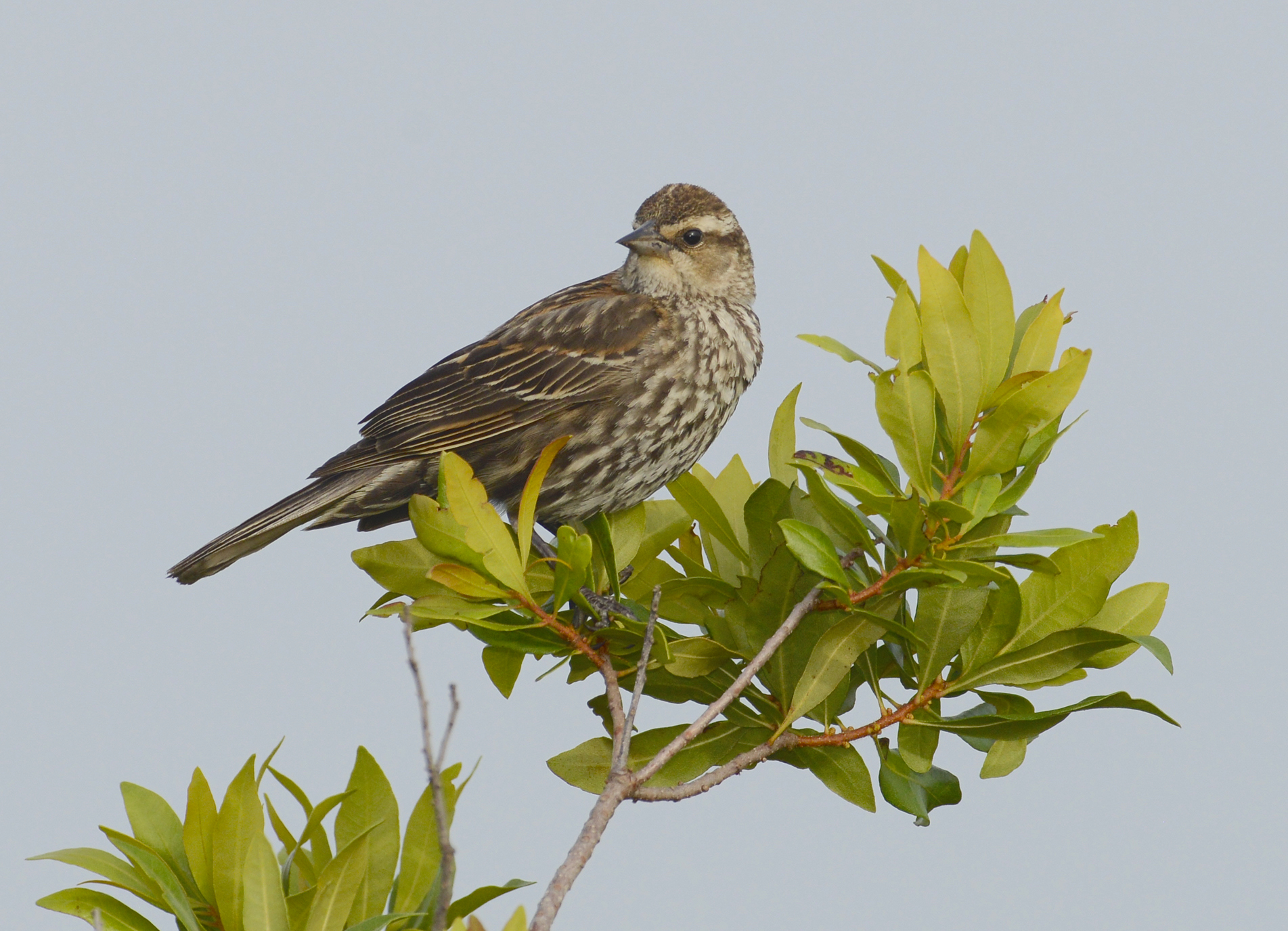
The females, as is often the way, are less showy. I have just read that they are ‘nondescript’, which is unnecessarily harsh I reckon. Here are a couple of examples.

And the darker brown ones that are clearly not handsome black males? These are young males in their first season, before they move on to the full adult male plumage. Previously I had designated them females (as I had assumed) until very gently corrected by the legendary Bruce Hallett. Not only was Bruce an essential part in the production of the Birds of Abaco, he also keeps a benign eye on my posts and occasionally steps in to clarify IDs etc.  I took the first male juvenile at Casuarina, when I also made the sound recording (below). The second was at Delphi – and with some ‘light’ issues, I notice…

Red-winged Blackbird, Abaco (Keith Salvesen / Rolling Harbour)Red-winged Blackbird, Abaco (Keith Salvesen / Rolling Harbour)

Fledglings are kind of cute…Red-winged Blackbird, Abaco (Tom Sheley))

SO WHAT DO THEY SOUND LIKE?

You may need to turn up the volume a bit. You will also here a lot of dove noise and, in the background, the sound of waves lapping onto the shore.

Red-winged Blackbird, Abaco (Keith Salvesen / Rolling Harbour)

Photo Credits: Tom Sheley (1, 2, 4, 5, 8); Alex Hughes (3); Keith Salvesen (6, 7, 9 & audio)

Unknown's avatar

REDDISH EGRET HUNTING ON THE MARLS, ABACO


REDDISH EGRET HUNTING ON THE MARLS, ABACO

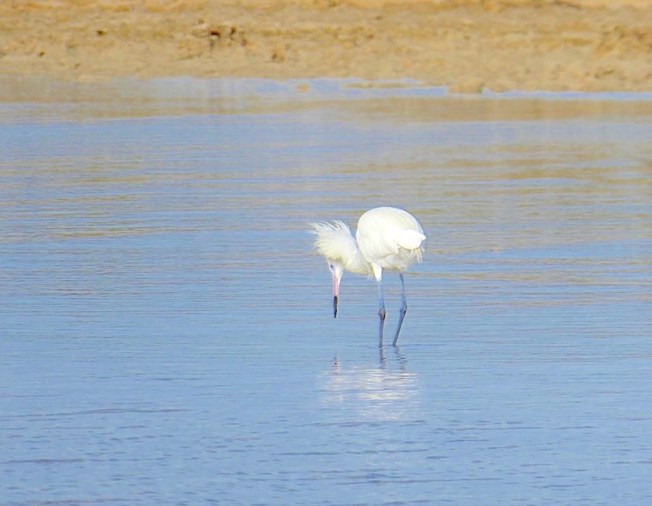
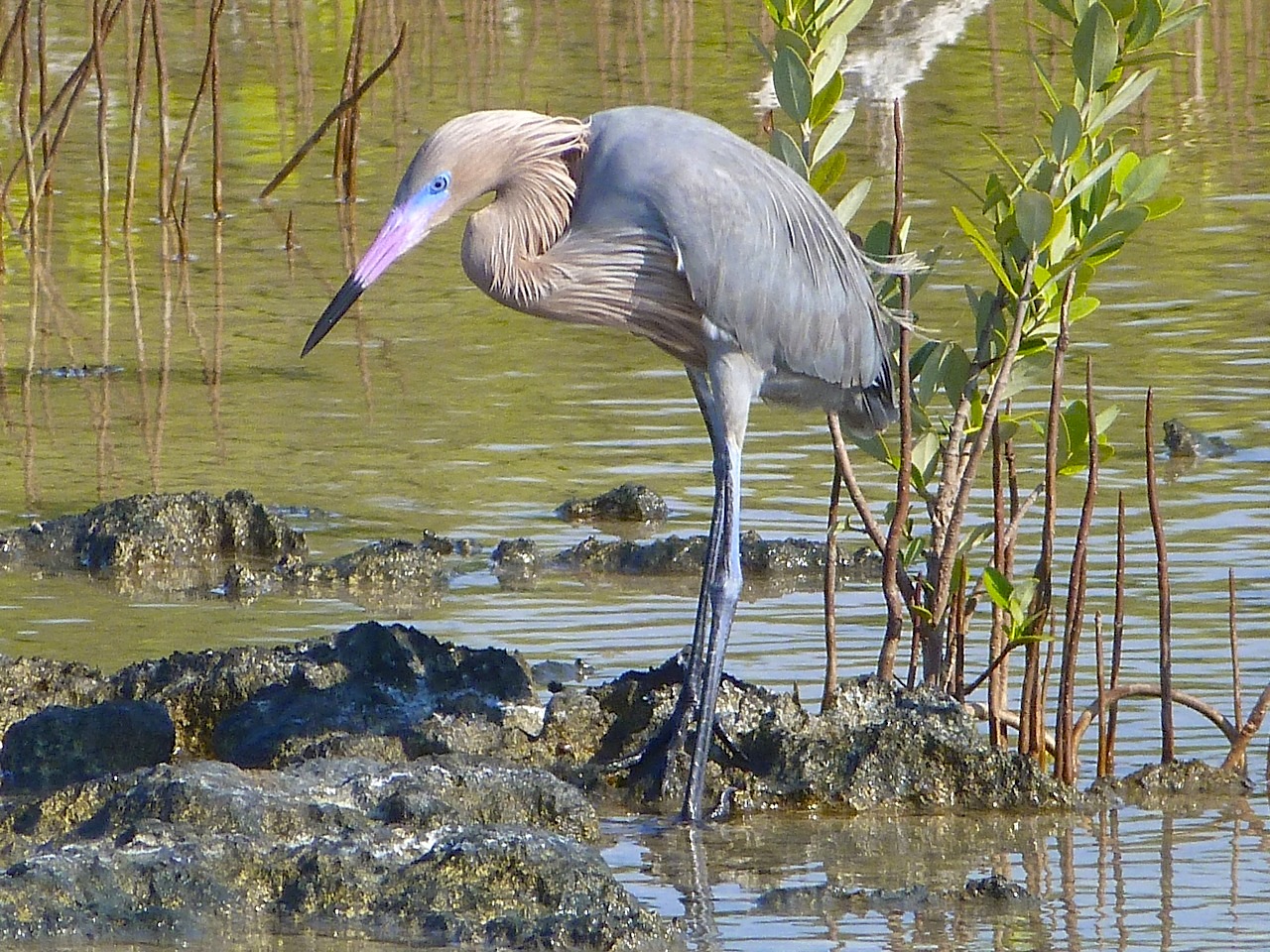
The trouble with reddish egrets is simple: they come in two colourways. There’s the conventional one which is indeed reddish, as one might hope and expect. Then there’s the snow white type (or ‘morph’). That’s the one featured here (with the other dark variety below, for comparison).

Both types are common breeding residents on Abaco. There are theories about which kind outnumbers the other; on balance I’m not sure the difference is very significant. Maybe reddish are a rather more frequently encountered than white, but there doesn’t seem to be much in it.

Looking back at photographs I took last spring, I found a sequence of a hunting white egret. Now these are not exhibition-quality photos. They were taken quite far out on the Marls, and a fair distance from the skiff I was standing on the front (prow?) of.

I had a smallish camera, and a fishing rod tucked under my arm rather hoping not to hear the usually welcome call “Hey RH**, bones at 10 o’clock moving left – 4 of them – give it 30 feet…” So this sequence is designed to give an idea of how the bird hunts the shallows. Rather than standing stock still and suddenly stabbing down to catch a fish, sometimes the egrets will stride purposefully though the shallow water, taking their chances as they move.

A small success at the start of the hunt (look carefully at the tip of the beak) A pause (and a slightly bad hair moment)

I always enjoy watching the actions of these birds make as they go about their work. But now the hunt is over; the egret has worked his way along the shoreline and he’s thinking out his next move… 

…which is to fly off and try his luck elsewhere

Your compensation for some mediocre – but hopefully illustrative – shots is a header image from the camera of the highly experienced birdman and photographer Danny Sauvageau. 

Finally, the way to tell that you are looking at a reddish egret, whichever version, rather than one of the other available egret / heron candidates is to look at the bill – pinkish, with a black tip. No other egreto-heronish species has this. 

A ‘proper’ reddish reddish egret taken in one of the brackish ponds at Crossing Rocks – always a good place to pull in and check for herons and egrets. This one, photographed in March, is in his handsome breeding plumage. Compare the bill with the white morph above – just the same.

** This not in fact how I am customarily addressed. I have a real name. Probably.

Credits: header image, Danny Sauvageau with thanks as always; all mediocre white morphs RH – also the rather better effort comparative photo of a ‘proper’ reddish one; cartoon by the inimitable Birdorable.

Unknown's avatar

BLACK-LEGGED KITTIWAKE: A RARE SPECIES FOR ABACO


Black-legged Kittiwake (Dick Daniels / carolinabirds.org / Wiki

BLACK-LEGGED KITTIWAKE: A RARE SPECIES FOR ABACO

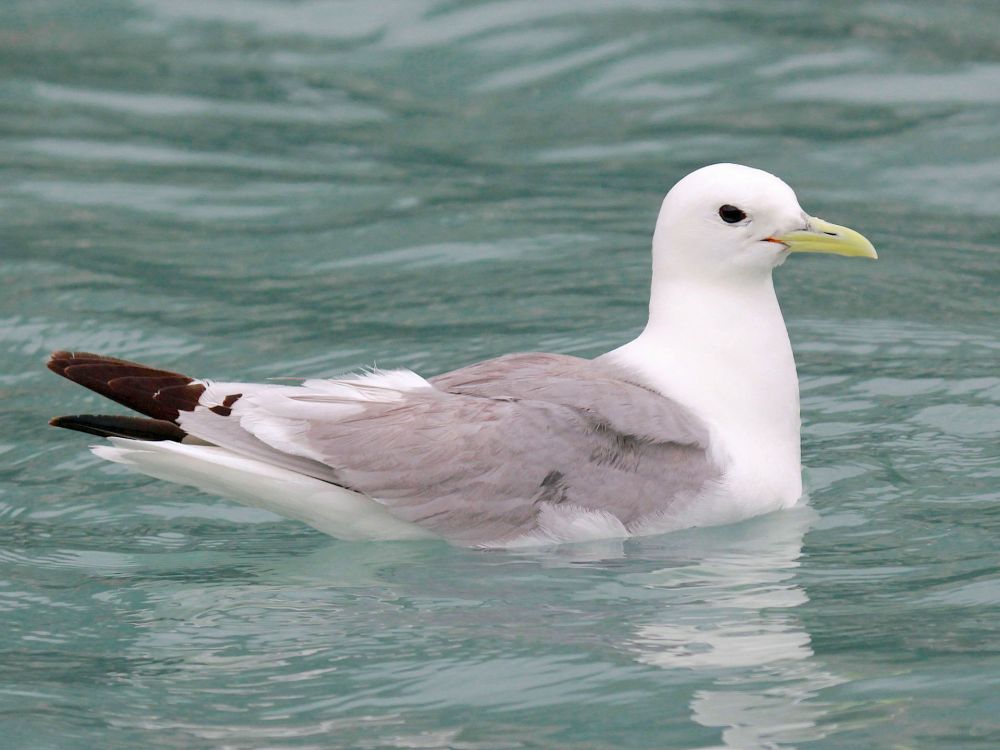
I recently posted about the sighting of an entirely new bird species for Abaco, the CINNAMON TEAL. Almost at once, another species was sighted – not a new one, but in the next category of rarity, the V5 and V4. ‘Vagrant’ birds that have been credibly recorded on Abaco / in Abaco waters fewer than 5 times – and maybe only once – are classified as V5 or ‘accidentals’.  Birds seen a few times more than that, but irregularly and unpredictably (‘casuals’) are V4s. One such is the fine black-legged kittiwake, also known as the seahawk and a close relative of gulls.

Black-legged Kittiwake (Yathin S Krishnappa / Wiki)

During the Abaco Christmas Bird Count in December, avid birder Keith Kemp and a small group were checking the beach at Crossing Rocks. In due course he uploaded a list of birds seen, with selected images, to the excellent eBird site. This included a royal tern. Or make that “royal tern”.
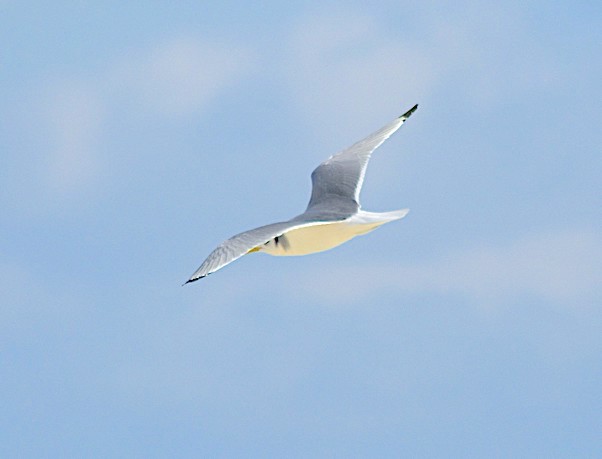
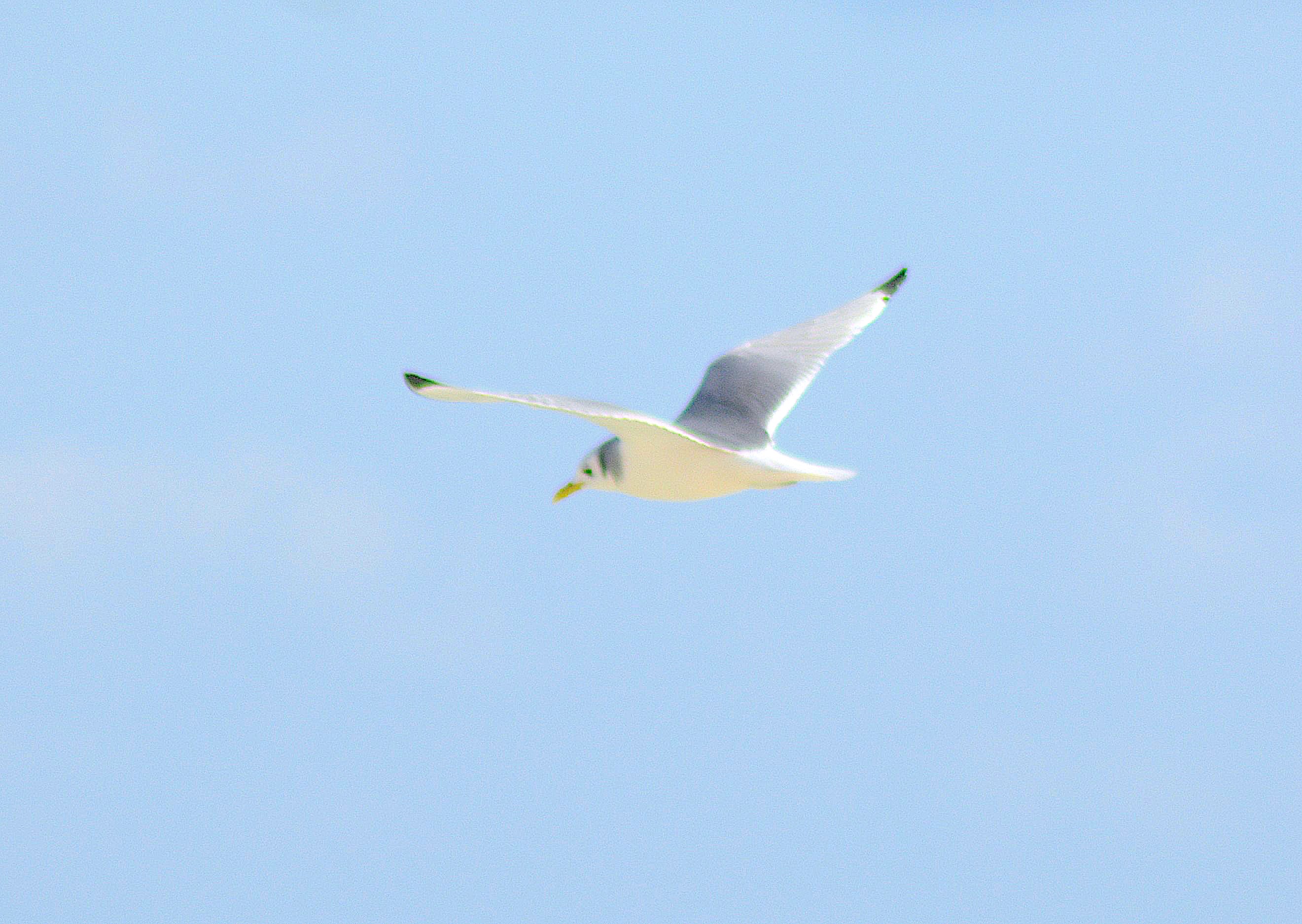
Black-legged Kittiwake (Keith Kemp)It wasn’t long before sharp-eyed Bruce Purdy from Cornell contacted Keith to say “You shot a picture of an adult non-breeding black-legged kittiwake!!!!!!!!”. This was confirmed by Bruce Hallett, author of the definitive field guide to the birds of the Bahamas.
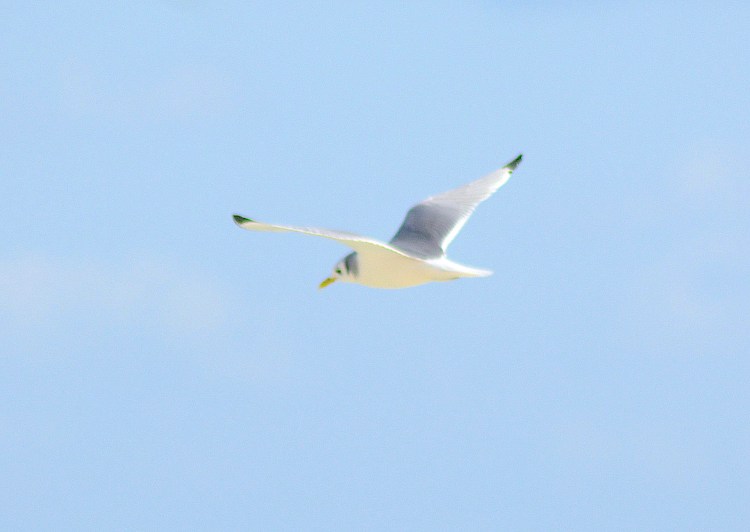
Black-legged Kittiwake (Keith Kemp)

As Bruce Purdy commented:

“This is the first kittiwake reported that I know of in the last 20 years.  Tony [White] shows a few reports but I don’t know if they were documented.  Probably not since most people just started carrying cameras, so you may have the first documented kittiwake… It is a great find”

So you are looking at (almost certainly) the first photographs of a kittiwake ever taken on Abaco. Actually, make that the Bahamas – no others are shown on eBird for the whole region; the nearest being a handful of sightings on the Florida coast.

STOP PRESS Keith’s sighting was in December 2017. The very day I pressed ‘publish’ on this post, January 30, two people immediately contacted me to say they had seen this bird in the Crossing dock area in Marsh Harbour! Thanks to Philip Sawyer and Nancy Albury for their sharp eyes and immediate response. Neither managed to get a photo, but two independent witnesses on one day in the same location make for a compelling ID. I imagine this is the same bird (rare enough as a single – the first in over 20 years – so exceptionally unlikely as a pair). Maybe there are rich fish pickings to be had in the MH harbour area.

Any further reports would be most welcome; a photo would earn the theoretical Kalik reward…

Black-legged Kittiwake (Keith Kemp)

These kittiwakes are a pelagic species, birds of the open sea. They spent most of their time over the ocean, where they live on fish. However, they return to land to breed – often on cliffs, and in large, noisy, nesting colonies. Here’s a very short idea of what that might look and sound like.

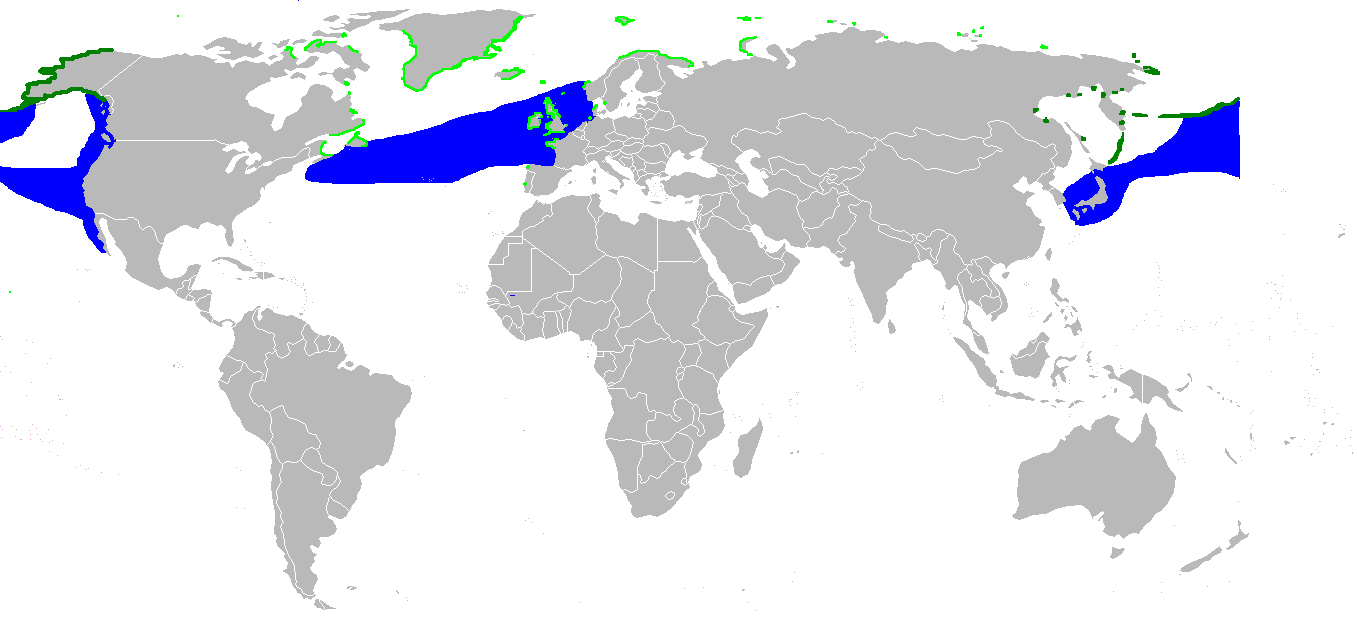
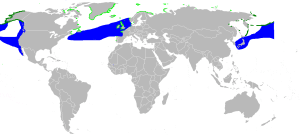
Keith’s Kittiwake was way out of its normal range. This map shows just how far.
I always like to include an image of a species under discussion, as it was depicted by one of the early pioneers such a Mark Catesby or (as here) Audubon.
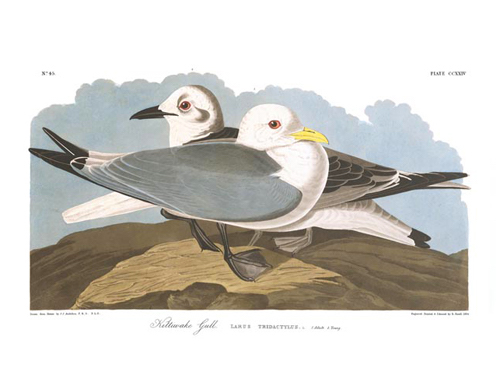
Black-legged Kittiwake (Audubon)

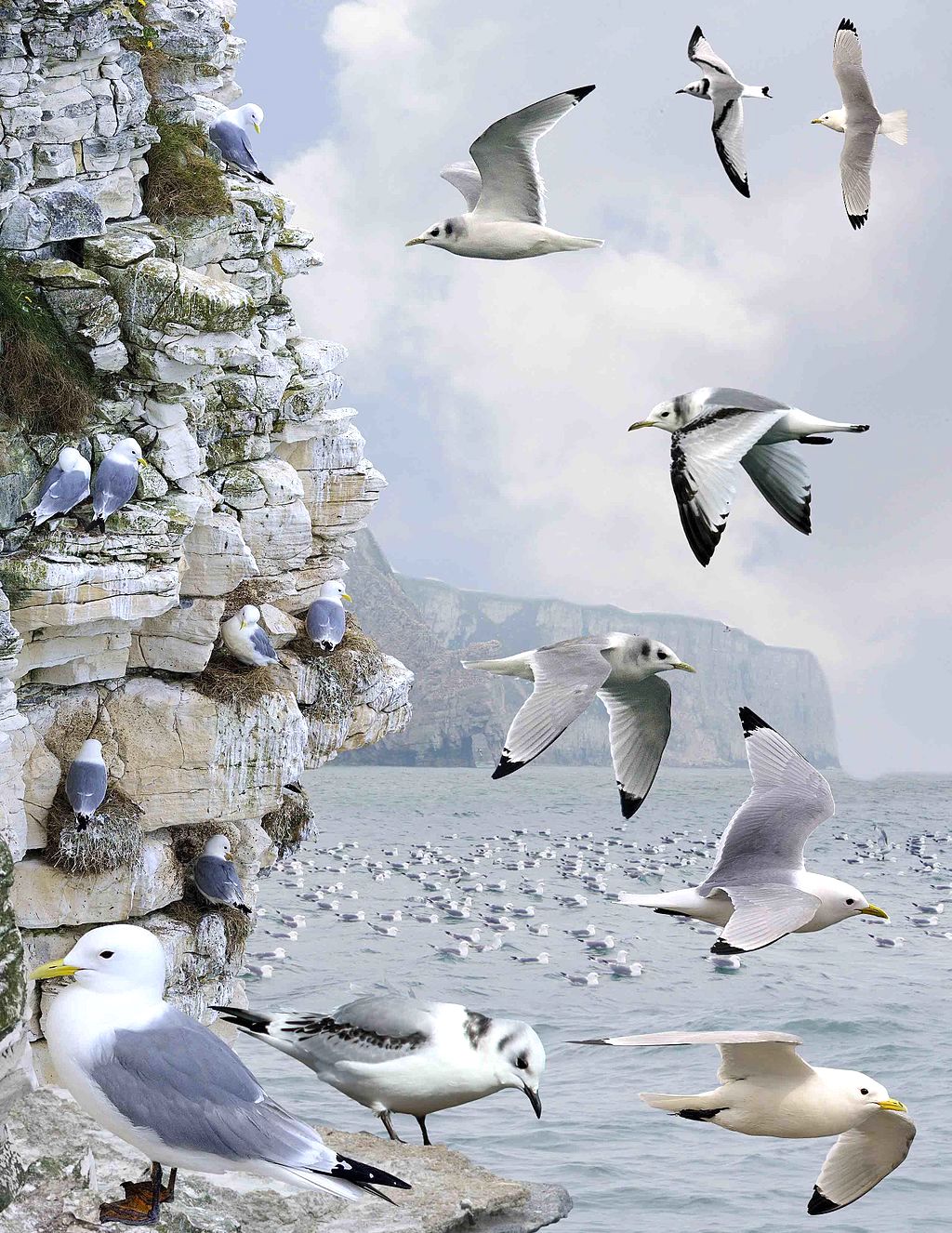
I’ll round off the story with another great source for comparative images – especially as between sexes, ages and seasons – the Crossley guide. The image below comes from the guide to Britain & Ireland, where kittiwakes are not uncommon locally where there are cliffs. Keith’s bird was in winter (non-breeding) plumage, as seen below, top left.

Kittiwakes (Crossley ID Guide Britain / Ireland)

Credits: Dick Daniels / carolinabirds.org (1); Yathin S Krishnappa (2); Keith Kemp (3, 4, 5); RSPB Britain (video); Audubon (OS) (6); Crossley Guide (OS) (7); range map Wiki
Unknown's avatar

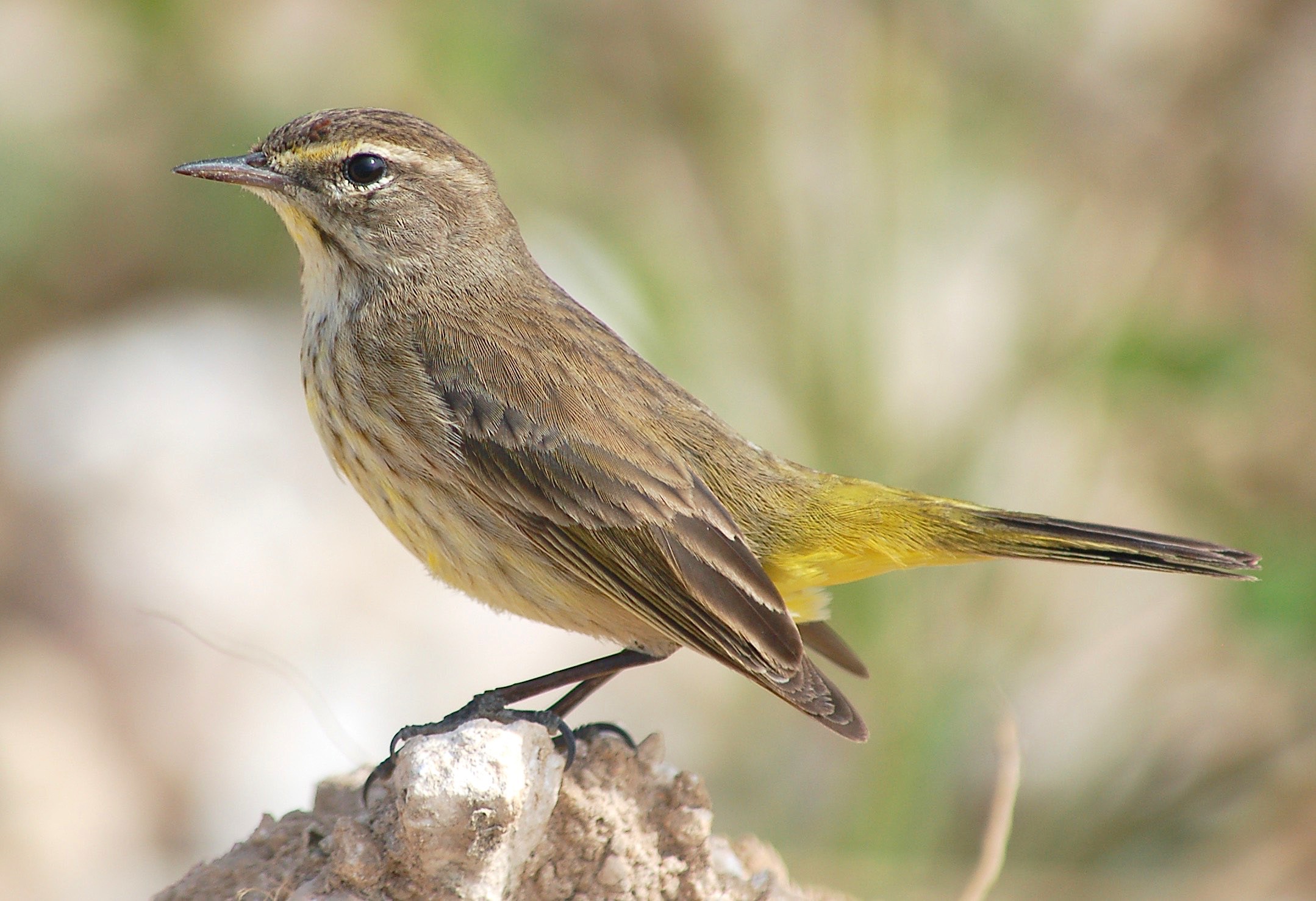
PALM WARBLERS: ‘HEADS-UP FOR BUTTERBUTTS’


Palm Warbler, Abaco Bahamas (Bruce Hallett / Tom Sheley)

PALM WARBLERS: ‘HEADS-UP FOR BUTTERBUTTS’

I realise that the title of this post has its unattractive aspects. This is a family blog, and we try to keep references to ‘butts’ and so forth to a minimum. But like it or not, the Palm Warbler is one of two species** that have acquired the nickname ‘butterbutt’.  They weren’t even consulted; birders just went ahead with it without checking how they’d feel about it.

Palm Warbler, Abaco Bahamas (Gerlinde Taurer)

On the other hand, it’s easy to see how this minor linguistic outrage came about. It’s there for all to see, right under the bird’s… erm… stern. That flash of vivid yellow, together with the pale speckled front, a rusty brown cap and striking eye-stripe, is diagnostic for this Abaco winter resident species.

Palm Warbler, Abaco Bahamas (Nina Henry)

The ‘heads-up’ is because right now they are among you. In the gardens, on the grass, on the tracks, in the coppice, in the casuarinas. And they have an endearing habit of bobbing their… tails, let’s say, as they forage. Palm Warblers are inclined to be fairly inquisitive and tame, so if you are careful, they may stay around to let you watch them. 

Palm Warbler, Abaco Bahamas (Nina Henry)

The PW above must, I think, have been photographed at the very end of the winter season, just before it headed north from Abaco. The strong colours suggest this guy is getting into the breeding mood. Compare him with the picture below, taken by the same photographer during the same period, of a slightly less garish stage of breeding plumage. But it’s on its way…

Palm Warbler, Abaco Bahamas (Nina Henry)

As often as not, a palm warbler will be fairly easy to spot. Not always, though. You may have to work a bit to locate one half-hidden in foliage. Its posterior may not even be visible.

Palm Warbler, Abaco Bahamas (Peter Mantle)

Luckily, PWs are common enough in winter to give you a chance to shoot them in the open, as it were. Perched on a branch works just fine to capture the essential characteristics.

Palm Warbler, Abaco Bahamas (Gerlinde Taurer)

Keep an eye out for these pretty little warblers. They are enjoyable to watch, and relatively easy to get a photo of at close quarters. Just make sure you get the butterbutt into the picture.

** The other butterbutt bird is the descriptively-named YELLOW-RUMPED WARBLER, though its buttery bits are on the topside so there’s no risk of confusion (I photographed this one from a pool-side lounger, a distance shot at the top of a tree with a small camera – but it captures the essentials!)

Yellow-rumped Warbler, Abaco, Bahamas (Keith Salvesen)

Credits: Bruce Hallett (1)*; Gerlinde Taurer (2, 7); Nina Henry (3, 4, 5); Peter Mantle (6); Keith Salvesen (8, 9)

* Possibly Tom Sheley – all I have got on the filename is ‘Fruit Farm’ so I can’t be sure of the photographer’s ID – apologies

 Palm Warbler, Abaco Bahamas (Keith Salvesen)

Unknown's avatar

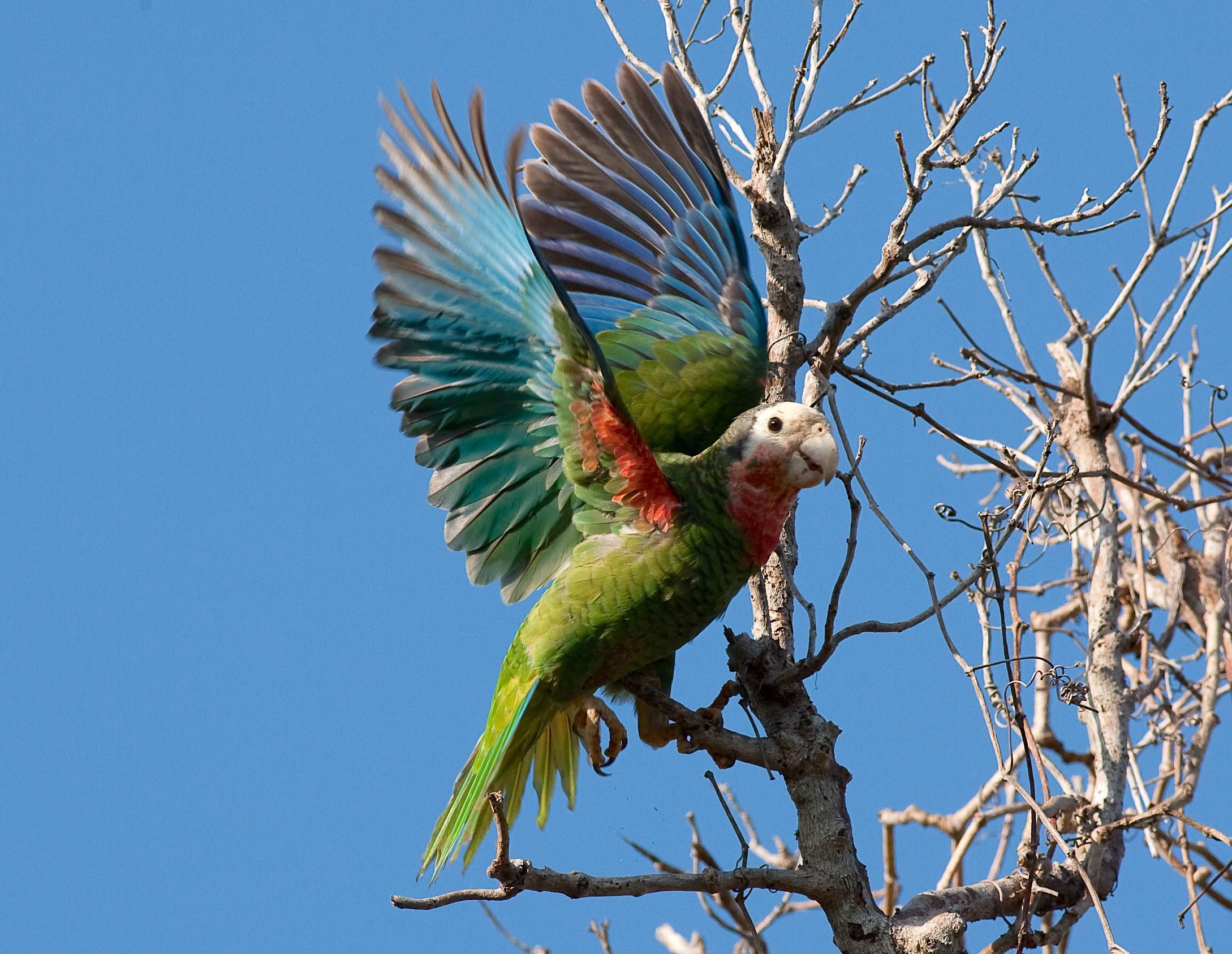
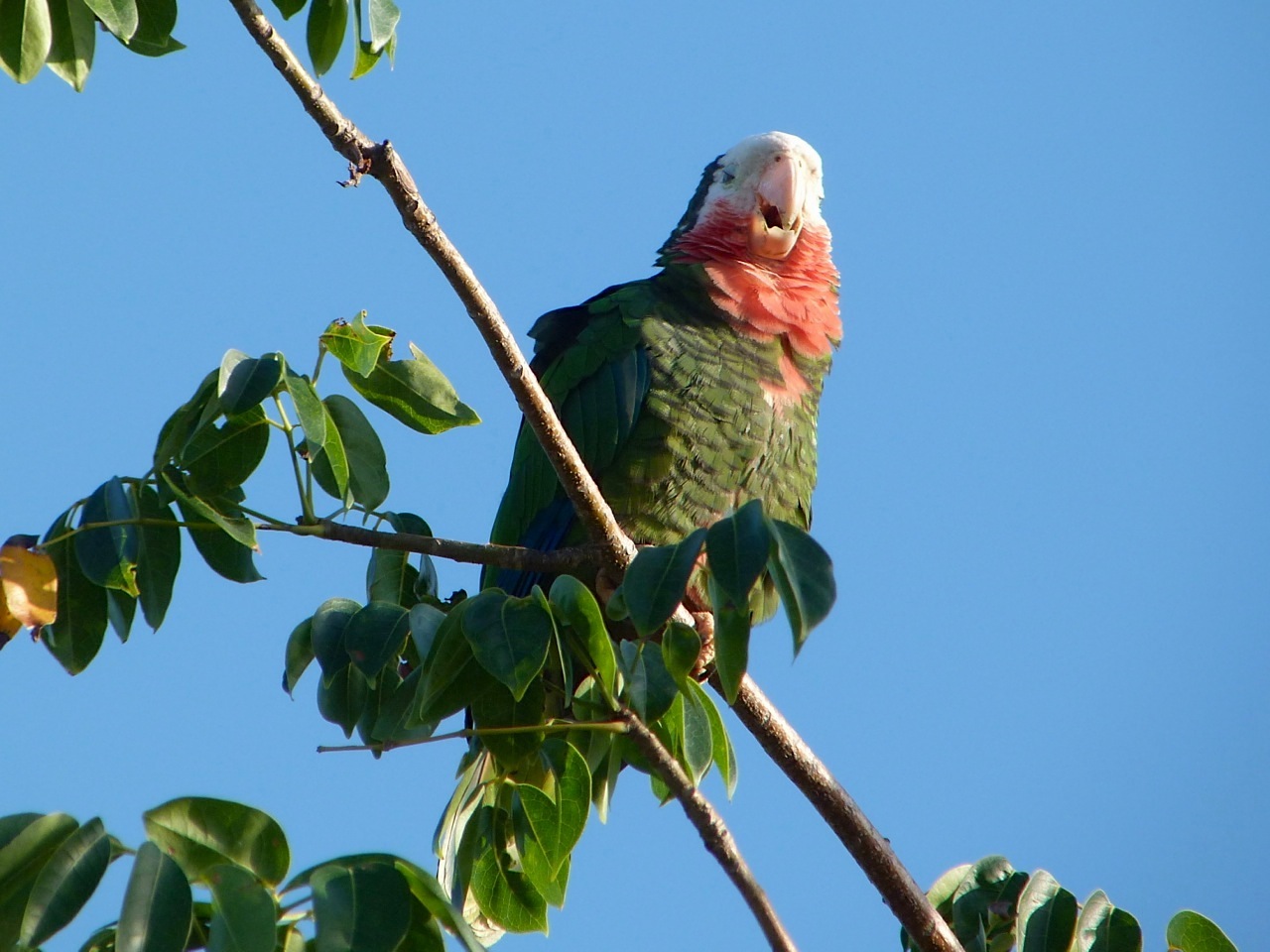
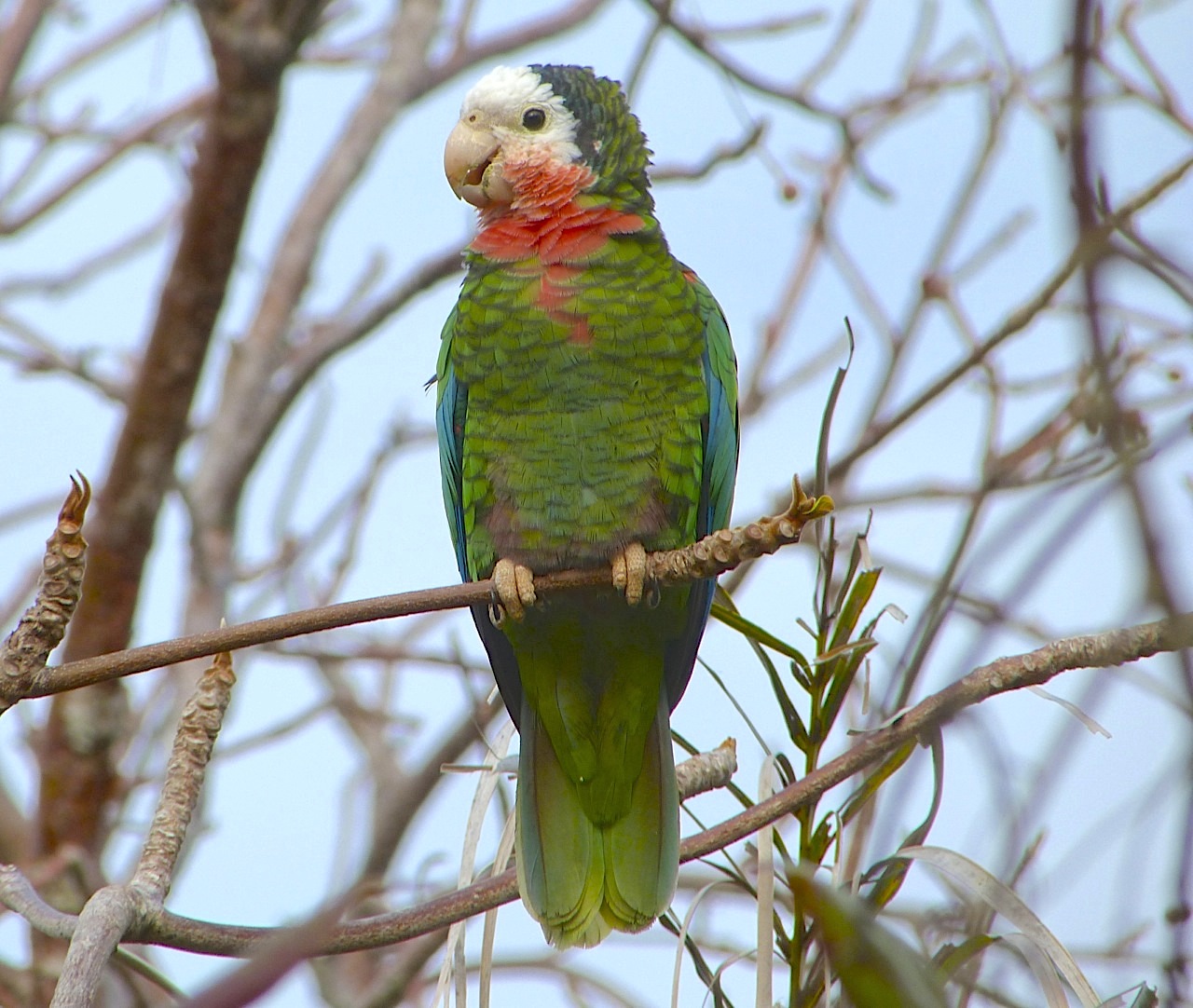
ABACO PARROTS FOR THE NEW YEAR!


Abaco (Cuban) Parrot, Bahamas (Gerlinde Taurer)

ABACO PARROTS FOR THE NEW YEAR!

Red, green, blue, and a touch of snowy white. The colours of Christmas, sort of. We are past all that for another year, but for those on Abaco the unique, ground-nesting Abaco parrots Amazona leucocephala flash those same colours throughout the year.

Abaco (Cuban) Parrot, Bahamas (Craig Nash)

These birds have cousins on Inagua that nest conventionally; and there are now a handful of NASSAU PARROTS on New Providence, of uncertain origin (click link for more on these).

Abaco (Cuban) Parrot, Bahamas (Tom Sheley)

The parrots are only found in South Abaco, between Marsh Harbour and the National Park where they live and breed in limestone holes in the forest floor. 

Abaco (Cuban) Parrot, Bahamas (Caroline Stahala)

You are most likely to hear these birds before you see them, as they make their way daily north in the morning and back again in the evening.

Abaco (Cuban) Parrot, Bahamas (Keith Salvesen)

Despite the racket they make, finding the parrots in the National Park is a bit ‘needle-in-haystack’. Instead, try the Gilpin Point point area, and coppice areas to the north. They pass back and forth over Delphi, pausing to squabble noisily, almost daily. I have made several recordings of them – here’s one example.

Abaco (Cuban) Parrot, Bahamas (Peter Mantle)

Far and away the best location is Bahama Palm Shores, where the mix of dense coppice with their favourite gumbo limbo trees and the open gardens is much to their liking. And frankly, it’s a great place for birding anyway, even if you blank for the parrots. 

Abaco (Cuban) Parrot, Bahamas (Nina Henry)

Just think: a dozen years ago, these fine birds were sliding towards extinction, with an unsustainable population of fewer than 900. Conservation efforts and in particular attention to habitat protection and predator control have resulted in population increases year-on-year, and the total now stands at around 5000 adults.

Abaco (Cuban) Parrot, Bahamas (Keith Salvesen)

I’ve posted quite a lot about these parrots over the years, so if you are already familiar with them, I hoped you felt free to skip the text, and simply to admire these wonderful creatures. 

Credits: Gerlinde Taurer, Craig Nash, Tom Sheley, Caroline Stahala, Keith Salvesen, Peter Mantle, Nina Henry, Erik Gauger; audio recording Keith Salvesen

Abaco (Cuban) Parrot, Bahamas (Erik Gauger)

Unknown's avatar

BEHOLD! SOME BUNTING(S) FOR AN ABACO CHRISTMAS


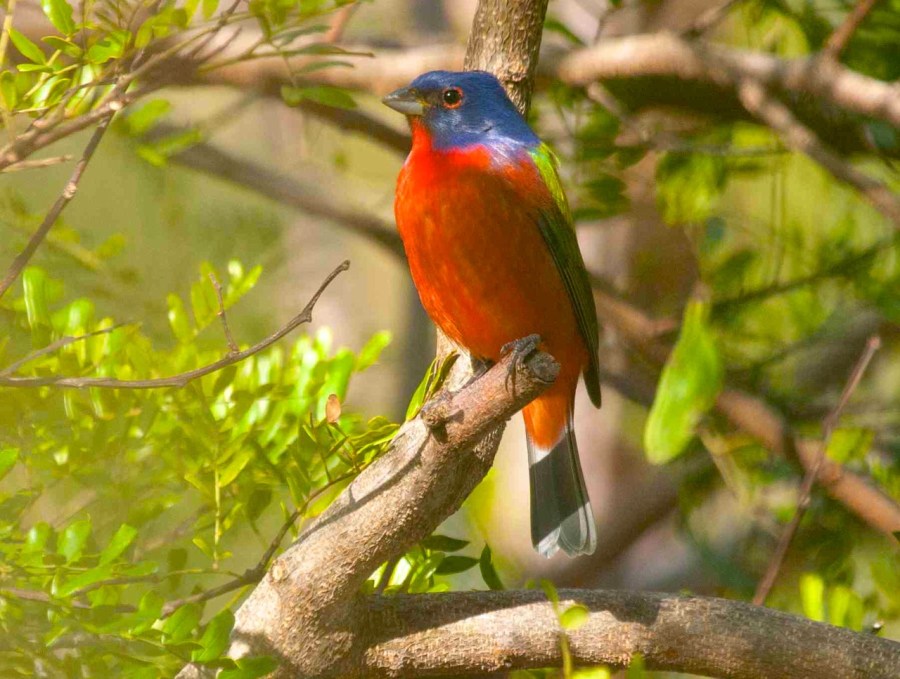
Painted Bunting.Bahama Palm Shores.Abaco Bahamas.Tom Sheleyimagesimagesimagesimages

BEHOLD! SOME BUNTING(S) FOR AN ABACO CHRISTMAS

painted-bunting copy

BUNTING  /ˈbʌntɪŋ/  (Noun)

[A Christmas gift of a puntastic avian / festive double-meaning]
  1. A small New World songbird of the cardinal subfamily
  2. Flags and other colourful festive decorations

imagesimagesimages

PAINTED BUNTINGPainted Bunting, Abaco (Erik Gauger)
Painted Bunting, Abaco (Tara Lavallee)Painted Bunting, Abaco (Tara Lavallee)

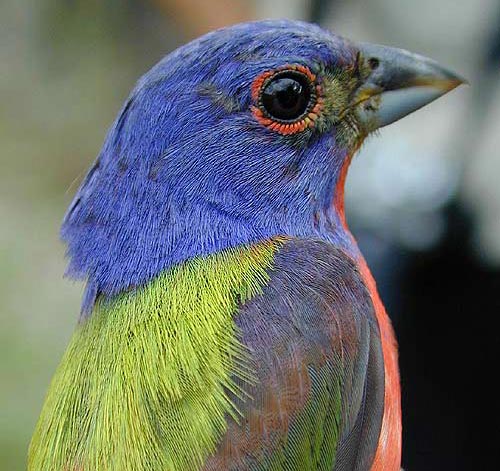
It’s hard to imagine a more Christmasy little bird than the Painted Bunting. Bright blue, red, green primary colours straight from a child’s paintbox make for a spectacular bird to grace the festive season. These are migratory winter residents, and the first reports of the bright and beautiful males on Abaco started to appear in November. Some will stay around until March.

                                                           painted-buntingimagespainted-bunting copy

Feeders at the Delphi Club. The first image shows a female & a male PABU feeding together. The second is a male with a pair of black-faced grassquitsPainted Buntings (M & F), Delphi, Abaco (Keith Salvesen)Painted Bunting, Delphi, Abaco (Sandy Walker)

                                                        painted-buntingimagespainted-bunting copy

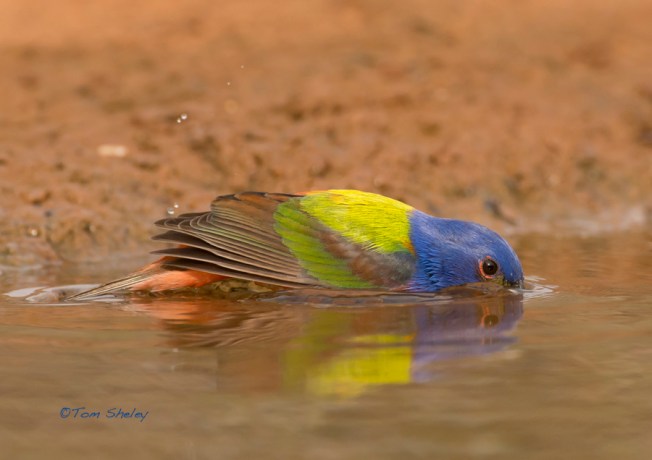
The two wonderful photos below are by Tom Sheley, a major photographic contributor to THE BIRDS OF ABACO. They were taken in Texas, not on Abaco, but I include them because of Tom’s strong connection with the birdlife of Abaco; and because on any view they are fantastic shots…
Painted Bunting reflection LR.Laguna Seca.South TX. 4.16.13.Tom SheleyPainted Bunting dip reflection LR.Laguna Seca.South TX. 4.16.13.Tom Sheley

painted-bunting copy

This is probably my last post until after Christmas, what with one thing and another, so it’s a good opportunity to wish a very Happy Christmas or [insert preferred seasonal appellation] to everyone who visits Rolling Harbour and especially those who, having done so, return for more!

Credits: Tom Sheley (1, 7, 8), Erik Gauger (2), Tara Lavallee (3, 4), Keith Salvesen (5) Sandy Walker (6); Birdorable Cartoons

imagesimagesimagesimagesPainted Bunting, Abaco Bahamas

Unknown's avatar

TRICOLORED HERON: A SPECTACULAR CATCH…


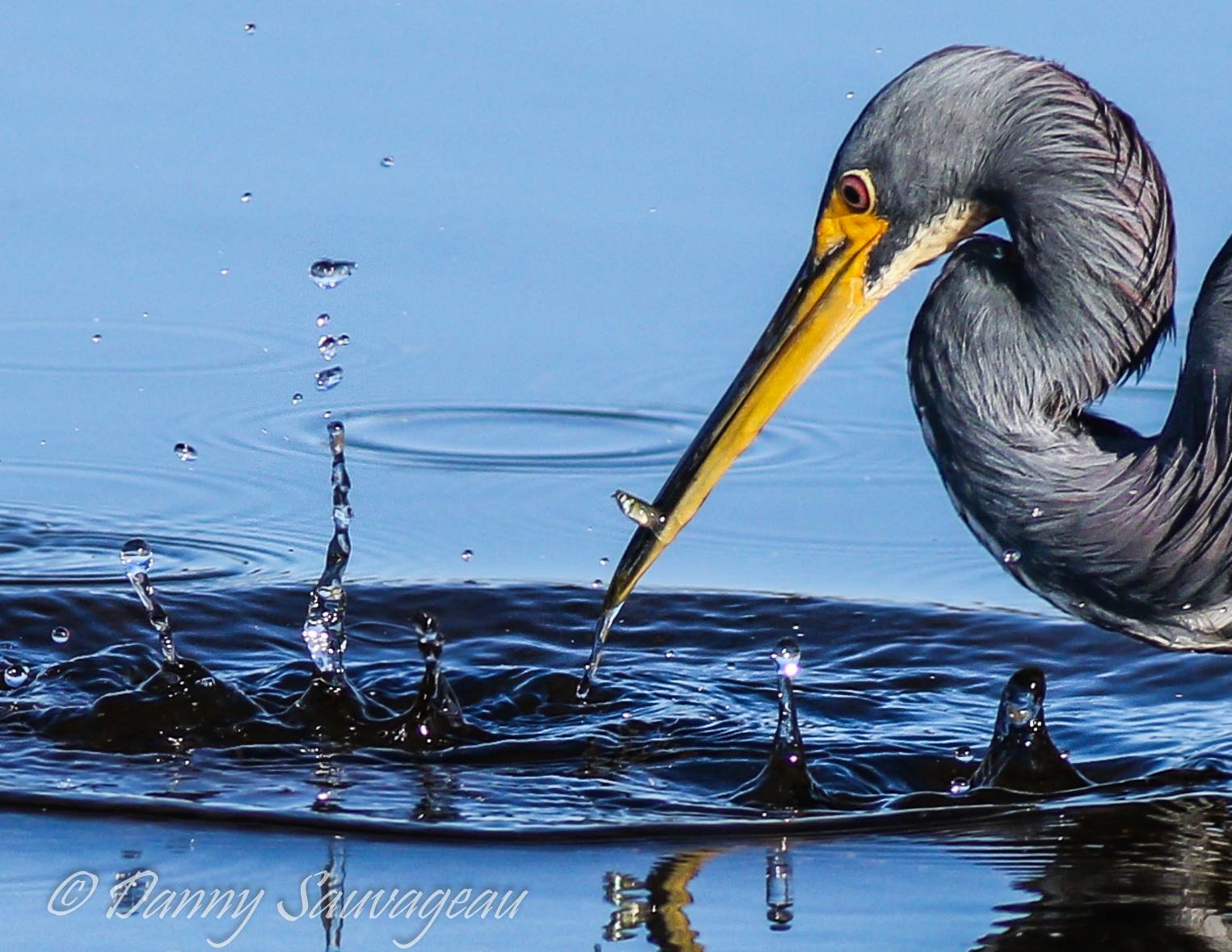
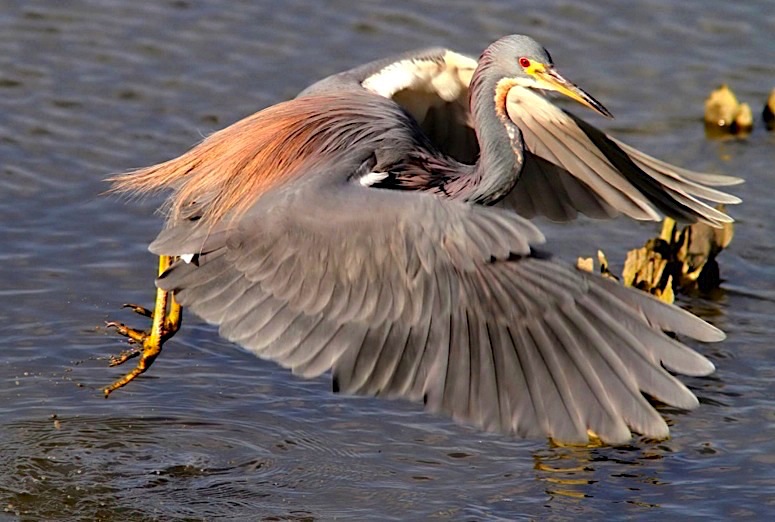
Tricolored Heron (Danny Sauvageau)

TRICOLORED HERON: A SPECTACULAR CATCH…

The photograph, I mean. The heron’s catch is rather modest, I think even it would agree. I’d been going to write about something else today but I’ve run out of time, and anyway this astonishing photo from bird photographer Danny Sauvageau ‘flew in’ over the weekend. It deserves a wider audience. 

You can read plenty more about these wonderful birds – common, permanent breeding residents on Abaco – by simply clicking TRICOLORED HERONS. Meanwhile, Danny’s outstanding image deserves an equally stunning partner; a similarly spectacular ‘catch’ by photographer Phil Lanoue that appears in the linked post.

Tricolored Heron (Phil Lanoue)

RELATED POSTS

GREEN HERON

YELLOW-CROWNED NIGHT-HERON

SNOWY EGRET

REDDISH EGRET

Credits: Danny Sauvageau; Phil Lanoue – with thanks to both for use permission for their terrific camerawork

Unknown's avatar

WILD TURKEYS ON ABACO (BAD TIMING…)


WILD TURKEYS ON ABACO (BAD TIMING…)

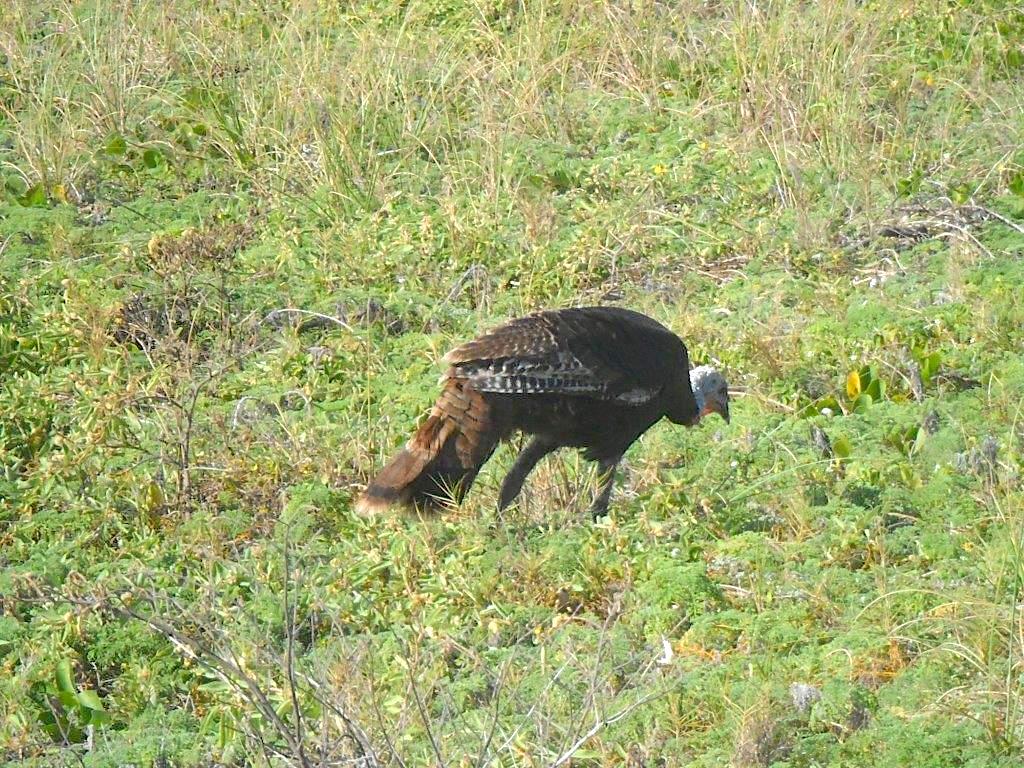
We have to face the facts here: this is absolutely the worst time of year to be a turkey. First, Thanksgiving. Then Christmas. It seems everyone wants a piece of you. Literally, I’m afraid. You could get very cut up about it. So this is not perhaps the most tactful time to mention that there are turkeys to be found on Abaco. Wild ones, though. Ones that lack the lavish feeding regimes enjoyed by the plump domestic turkeys that are integral to the festive season. And anyway, the Abaco turkeys – like the PEAFOWL of Casuarina – are harmless additions to the landscape and to the rich avian variety to be found on Abaco. 

Wild Turkey Hen, Abaco, Bahamas (Ali & Bob Ball)

Wild Turkey Hen, Abaco, Bahamas

I don’t know the origin of the Abaco wild turkeys, but I assume a few were introduced in the past and have become feral (again, just like the peafowl) . They may be flattered to know that they fall into a class called ‘exotics’. I note that we omitted to list them in THE BIRDS OF ABACO, where they would have kept company with muscovy ducks, mallards (a slightly harsh ruling maybe), chukars, red junglefowl, the peafowl, cockatiels, budgies, and a couple of macaw species. All these have been found on Abaco but do not strictly count as birds of Abaco. On the other hand, some introduced species such as the bobwhite have slipped under the radar and become fully accredited Abaco birds.

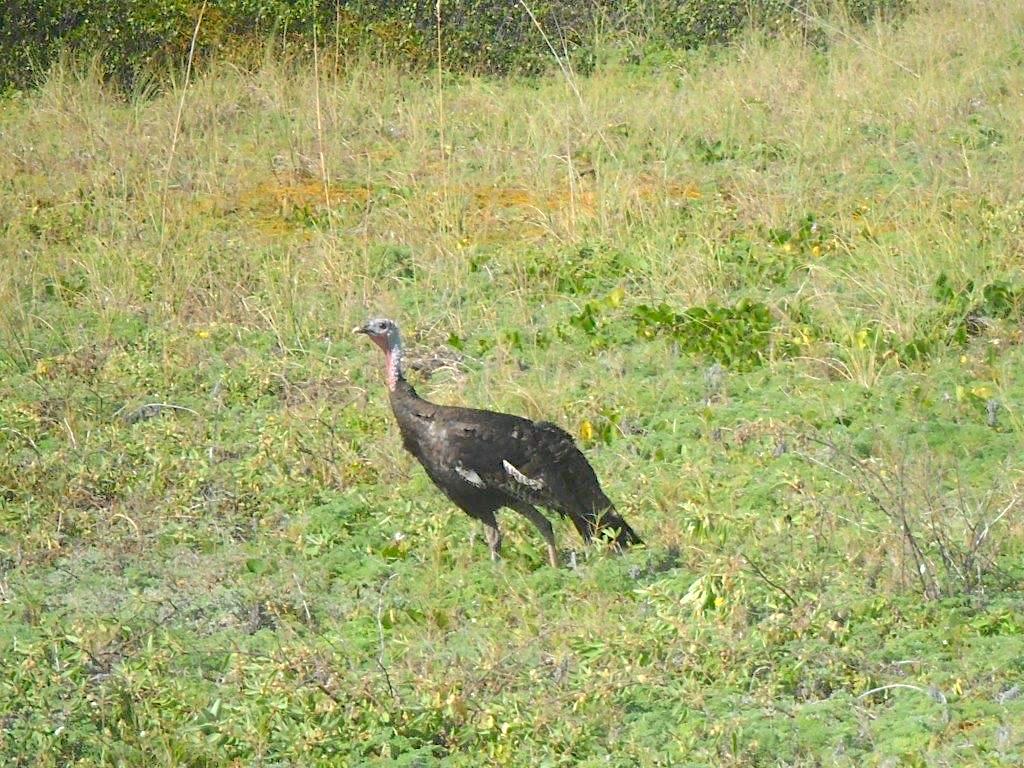
Wild Turkey Hen, Abaco, Bahamas (Ali & Bob Ball)

Wild Turkey Hen, Abaco, Bahamas

Adult male turkeys are called toms or gobblers; females are hens; juveniles are jakes; and the chicks are poults. In the breeding season, Toms engage in a great deal of strutting and fluffing-up-of-feathers business when they are trying to impress the hens – and frankly, they are notably free with their attentions. Promiscuous, one might say.

Historically, wild turkey populations in North America were decimated or destroyed by over-enthusiastic hunting. In many areas, conservation measures helped to restore the turkey populations. Still, the fact remains that they are potential food; and they are a (relatively) easy large target (cf turkey-shoot). Wild turkeys can fly short distances (which the domesticated variety cannot), but their body-weight somewhat limits the chance of escape by flight.

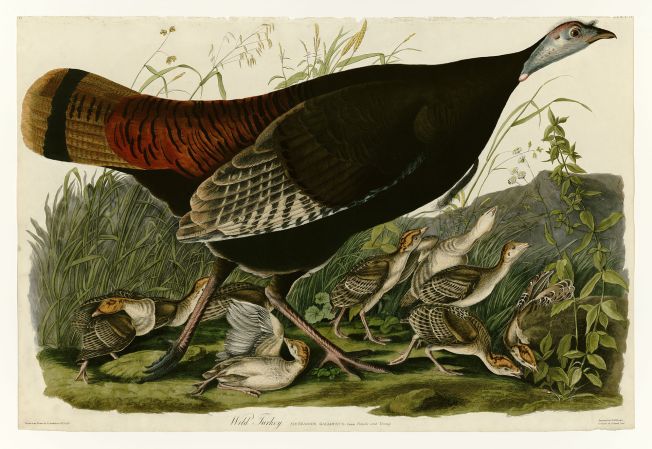
Audubon’s charming depiction of a turkey hen with her chicksWild Turkey Hen and Chicks (Audubon)

STRANGE BUT TRUE

Benjamin Franklin was unimpressed by the proposal of the Bald Eagle as national bird (and by the British, clearly…) As he wrote in letter to his daughter, “…in Truth the Turkey is in Comparison a much more respectable Bird, and withal a true original Native of America… He is besides, though a little vain & silly, a Bird of Courage, and would not hesitate to attack a Grenadier of the British Guards who should presume to invade his Farm Yard with a red Coat on”.

I’ve heard reports of Abaco wild turkeys seen north of Marsh Harbour; in the Little Harbour area; and in the far south of the island. I’d be pleased to learn of any recent sightings – it would be interesting to know how many small groups there are on the island. You can either comment here, DM me on FB, or email me. And perhaps I should add, let’s just map the turkeys, not eat them…

WHAT SORT OF WILD TURKEY SHOULD I CONSUME FESTIVELY?

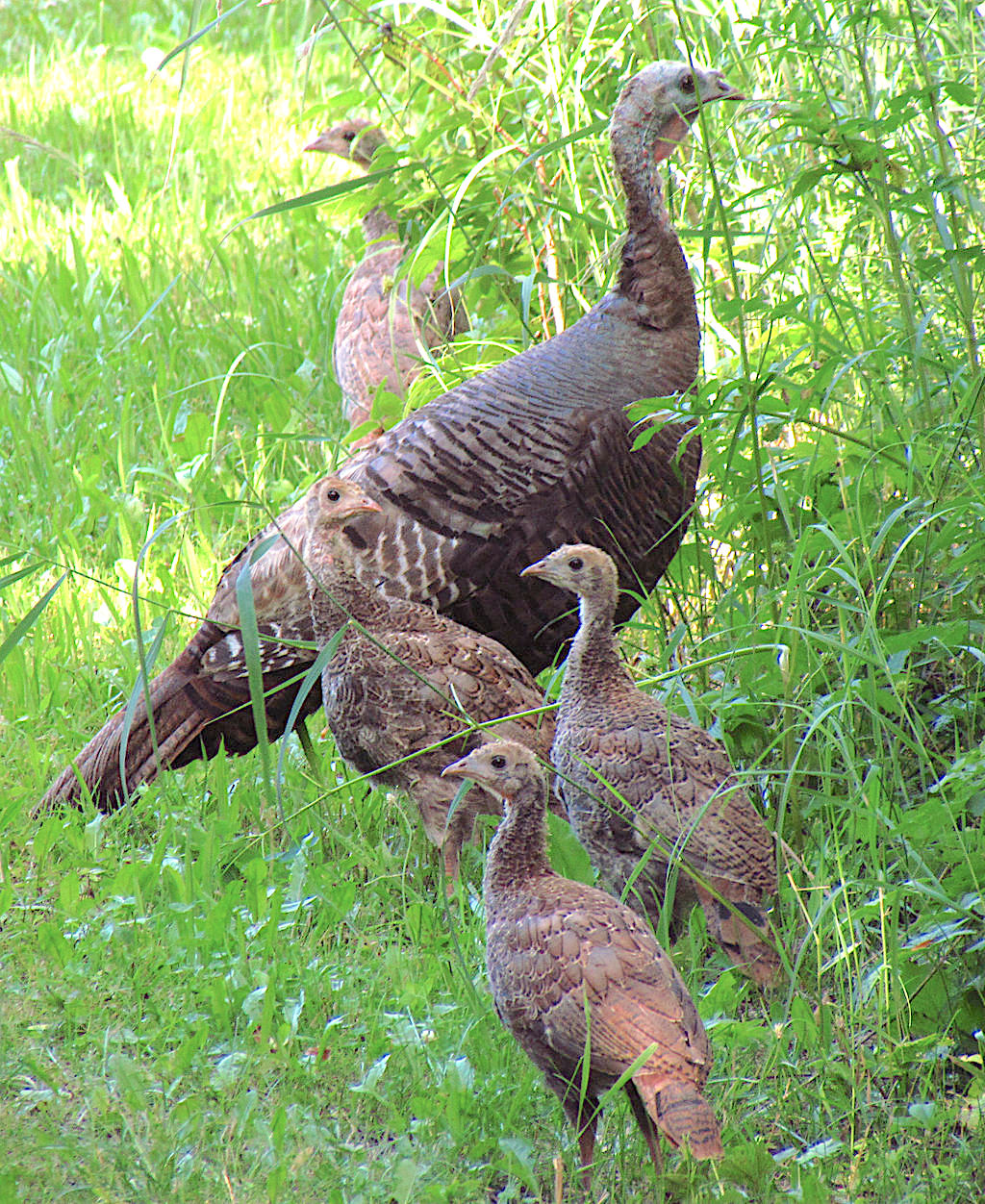
Wild Turkey Hens with chicks (d. gordon & e. robertson)

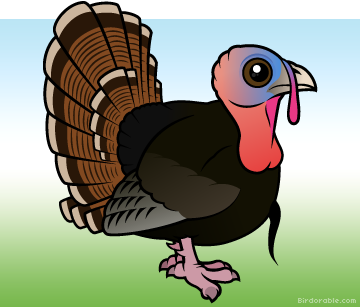
Credits: Audubon (1, 4); Ali & Bob Ball (2, 3); D. Gordon / E. Robertson (5); Birdorable (cartoon); Etsy (soft bird); some random drink ad

Unknown's avatar

LARK SPARROW: EXTREMELY RARE VISITOR TO ABACO


Lark Sparrow (Nature Pics Online / Wiki)

LARK SPARROW: EXTREMELY RARE VISITOR TO ABACO

There’s a category of bird in the Bahamas known as a ‘V5’. The V stands for vagrant: a ‘foreign’ bird that ends up on Abaco by pure mischance. Whether through meteorological mishap (a storm for example) or navigational error, a bird that ought by rights to be found elsewhere turns up. That’s the first part of the rarity. The second part is that someone actually sees it, knows what it is (or may be) and reports it.

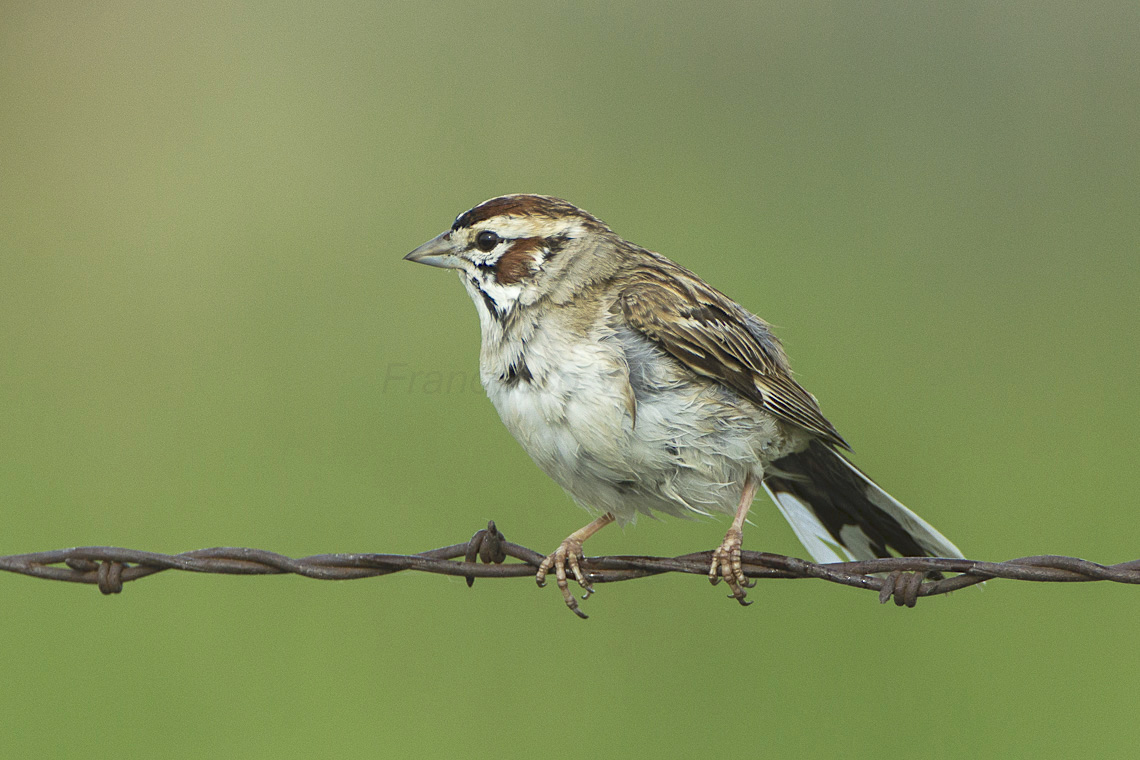
Lark Sparrow (Francesco Veronesi / Wiki)

The 5 part of V5 means that historically there may have been one, perhaps two previous reports of that species. Ever. More than 5 separate sightings, and the bird slips into the far less exclusive V4 category. The only category rarer than a V5 is an H. This stands for hypothetical, a bird that has been ‘credibly reported’ but where further confirmation is needed. Often, that never comes.

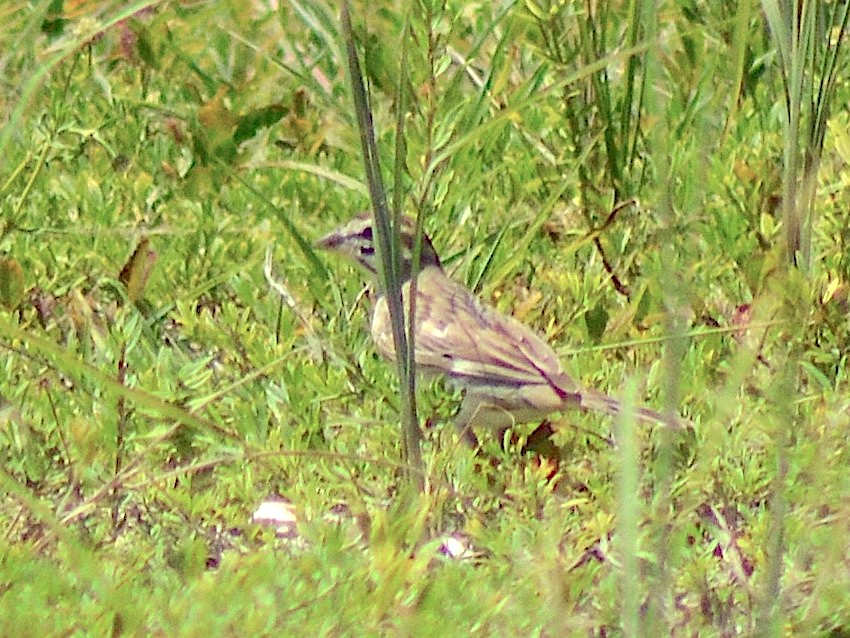
Lark Sparrow, Abaco Bahamas (Keith Kemp / Christopher Johnson)

The lark sparrow (Chondestes grammacus) is a fairly large sparrow, familiar enough in parts of the US and Canada. Until this August, there had only been a couple of reports on Abaco since records began. I’m not aware of any photographs from those sightings. Then in August, birder Keith Kemp was at Bahama Palm Shores bird-spotting with his keen-eyed nephew Christopher, who saw a sparrow-like bird fly into low grass near the beach. Keith managed to take a couple of photos of it, and later on checked his bird guides for ID… and lo! a lark sparrow. These are most likely the first photos of the species ever taken on Abaco – and there’s nothing like a photo, however hard to take, to provide confirmation of a sighting.

Lark Sparrow, Abaco Bahamas (Keith Kemp / Christopher Johnson)

Photo Credits: NaturePicsOnline / Wiki (1); Francesco Veronesi / Wiki (2); Keith Kemp with Christopher Johnson, Abaco (3, 4)


Unknown's avatar

BELTED KINGFISHERS: PROFICIENT PISCATORS


Belted Kingfisher (Phil Lanoue)

BELTED KINGFISHERS: PROFICIENT PISCATORS

The belted kingfisher (Megaceryle alcyon) is an unmistakable winter visitor to Abaco. With its impressive crest and an adult wingspan approaching 2 ft, these fine birds are far larger than the irridescent kingfisher species found in Europe.

Belted Kingfisher (Phil Lanoue)

CARL LINNAEUS himself first documented the belted kingfisher in the mid c18, giving the specific name ‘alcyon’, a word of both Latin & Greek origin. The familiar phrase ‘Halcyon days‘, meaning a time of calm, is used more than once by Shakespeare; it references a calm period of weather supposedly occurring at kingfisher nesting time.

Belted Kingfisher (Phil Lanoue) Belted Kingfisher (Phil Lanoue)

The breeding grounds of the belted kingfisher are in Canada and the northern US, on coasts or near inland waters. They migrate further south in winter, to the southern US, Central America and West Indies. However vagrants have been found as far afield as the UK.

Belted Kingfisher (Phil Lanoue)

WHERE CAN I FIND THEM ON ABACO?

I have seen BKs when fishing out on the Marls, either perched on dead branches looking for fish, or in the mangroves, or in flight. There’s quite often one to be seen at Gilpin Pond, but always – for me, anyway – on the far side and out of practical range of my somewhat modest camera… Sandy Point is another place I have seen them. But these are common birds in winter, so anywhere near water where there are good perches to prospect for fish could be promising for a sighting. Sadly I’ve never actually seen a kingfisher on Abaco plunge-dive for fish, let alone eating a fish. And NB they are exceedingly hard to photograph at the best of times, especially in flight. Which is why I am very pleased to feature some more wonderful shots by photographer Phil Lanoue.

Belted Kingfisher (Phil Lanoue)

GENDER IDENTIFICATION

The kingfishers shown so far are all males, and basically blue and white. The (slightly) larger adult females can easily be identified by their very visible russet chest band. This colouring in fact extends under the wings, where it is harder to see in a perched bird.

Belted Kingfisher (Teddy Llovat) Belted Kingfisher (Michael L Baird)

AUDUBON:  A GUIDE TO THE BELTED KINGFISHER

Birding folk are familiar with the excellent presentations of individual bird species in the go-to guides such a Sibley and Peterson. However it always interests me that the images in my small and incredibly cheapo book of Audubon illustrations often give a very good depiction of a particular bird. He was the first naturalist to portray birds in action as opposed to rather stiff poses. Check out the plate below with the photos here.

Belted Kingfisher (Audubon)

BIRDORABLE’S TAKE*

Belted Kingfisher (Birdorable)

Belted Kingfisher (Bruce Miller)

* BIRDORABLE cartoons are seriously good at reducing birds to their essentials. Try out their many warblers and you’ll see what I mean.

Photo Credits: Phil Lanoue (1 – 6), with thanks as ever for use permission; Teddy Lovatt (7); Michael L Baird (8); Audubon (9);  Bruce Miller (10); Birdorable – Cartoon