Unknown's avatar

“FAVOURITE BIRD” POLL RESULTS FROM ABACO, BAHAMAS


ABACO FAVOURITE BIRD POLL RESULTS

RESULTS Here are the results of the recent Abaco Favourite Bird Poll, with apologies for an intermission in activity around here. We were away for a few days somewhere that turned out to be sunny, returning late last night to near-zero temperatures…

THE POLL started with five birds, but the Tropicbird was removed after a week having failed to chart. To begin with, it looked as though the parrots would stay way out in front, but the smallest rival gained ground, flew past and won the title.

THANKS to all who took part by voting and or commenting – a gratifying number, enough to make for a reasonably accurate result. It would be nice to know what bird the voters in the last category would have chosen instead of the candidates on offer…

THE OTHER POLL was designed to find out if people were finding that the ongoing woodpecker saga is becoming (has become?) tedious  or is providing a modicum of entertainment. Of relatively few responses (nb I did not vote), the result speaks for itself. I will take voting abstention / inertia to indicate either indifference or tolerance, and continue as and when a new drama occurs.

Best outcome? Chicks!  

Unknown's avatar

HUMPBACK WHALES IN THE BAHAMAS: TWO SIGHTINGS & AN ENTANGLEMENT


HUMPBACK WHALES – BMMRO REPORT JANUARY 2012

The BMMRO has posted recent whale news on its site – an entanglement off Elbow Cay with a happy ending, a sighting off Long Island in January, and another in February with images    (CLICK LOGO for BMMRO website)

1. An Entanglement 30.12.11  During the winter months the Bahamas occasionally get a sighting of a humpback whale migrating northward. For some reason a few of the migrating whales take a route a little closer to our islands and allow us the wonderful experience of seeing them.

On the 30th December 2011 Joseph Strickland and his crew who had been staying on the Highlander in Hope Town harbour, came across an entangled humpback whale. Due to the courage and calm response of Joe and his team, they managed to release the 40′ humpback. The whale had been entangled in a thick rope of approximately 600′ in length attached to a fishtrap. The animal was found off  Sea Spray marina in 40 feet of water off Elbow Cay, Abaco. They managed to free the animal of the fishpot which it had been dragging… as well as freeing the animal of the majority of rope, with only 20′ of line remaining on the whale. We would sincerely like to thank Mr & Mrs Strickland and their family for their extrodinary effort to free this animal, and also to report the encounter in detail.

Unfortunately as humpbacks are one of the more coastal whales, they often end up entangled in fishing gear, and come into contact with fishing pots, as well as being susceptible to vessel strikes. However, this species have made a remarkable recovery since the whaling era and in the North Atlantic abundance estimates are now approximately 12,000 humpback whales.

2. A sighting on 14.01.12  A better start to the New Year provided us with a single humpback sighting on Saturday 14th January off of Cape Santa Maria, Long Island. 

3. A sighting on 8.02.12 Finally, on Wednesday 8th February, a mother-calf humpback pair were spotted off of Dutch Bar, Spanish Wells, providing us with these beautiful pictures! Report and Image Credits BMMRO 2012


Unknown's avatar

ABACO PARROT NEWS FROM THE DELPHI CLUB


ABACO PARROT NEWS FROM THE DELPHI CLUB, ABACO
Caroline Stahala has emailed me with some excellent parrot news of daily sightings around the Club and in the coppice along the drives. It sounds as though, if we are very lucky, Caroline might take us to the nest sites when we are at Delphi in May…
TWO ABACO PARROTS ON THE DEAD TREE BY THE DELPHI FRONT DRIVE
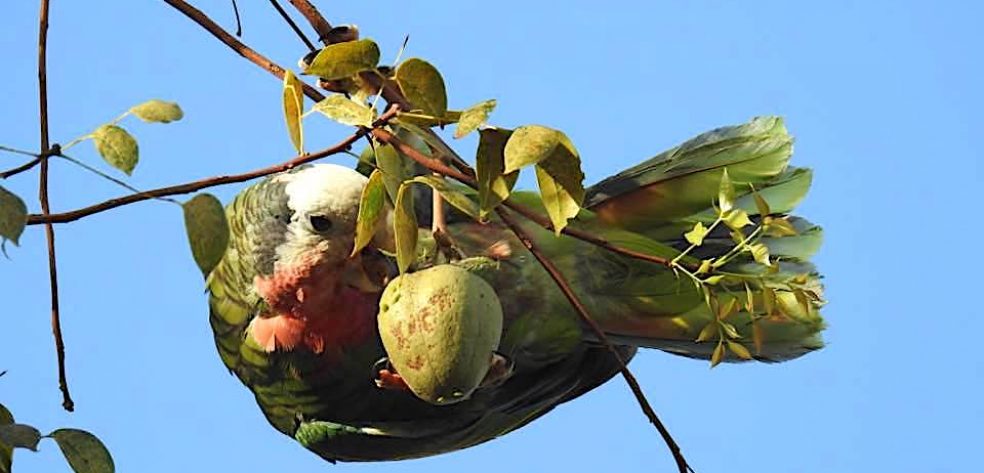
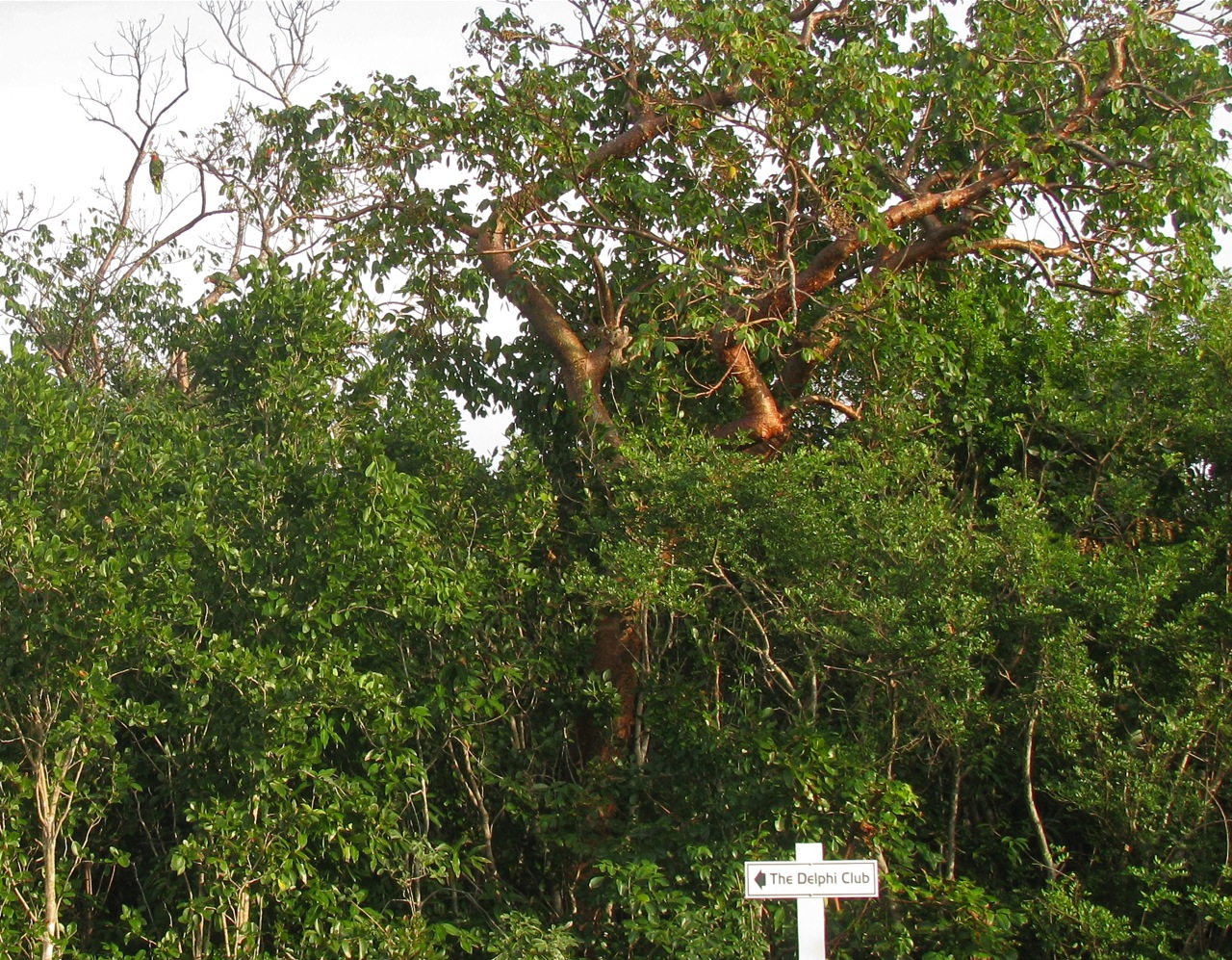
“As far as current parrot news.  Well, they are all around the lodge at the moment.  I can hear the parrots each day right on cue at 7:30 in the morning and then again just after 4pm.  They have been foraging in the fruiting hardwoods in the area, especially the Gumbo Limbo (Bursera simaruba).  I am attaching a picture of a small flock I saw right on the drive in front of the house. A couple of pictures are close up of the parrots and the ones with the Delphi signs do have parrots in them, see if you can find them. They have even been spotted just behind the pool.  Let’s hope they decide to make this a habit. I am currently working on getting the summer field season organized… writing reports and grant applications is the necessary evil in order to have a summer field season”
PARROTS IN THE COPPICE BY THE DELPHI DRIVE (TOP LEFT)
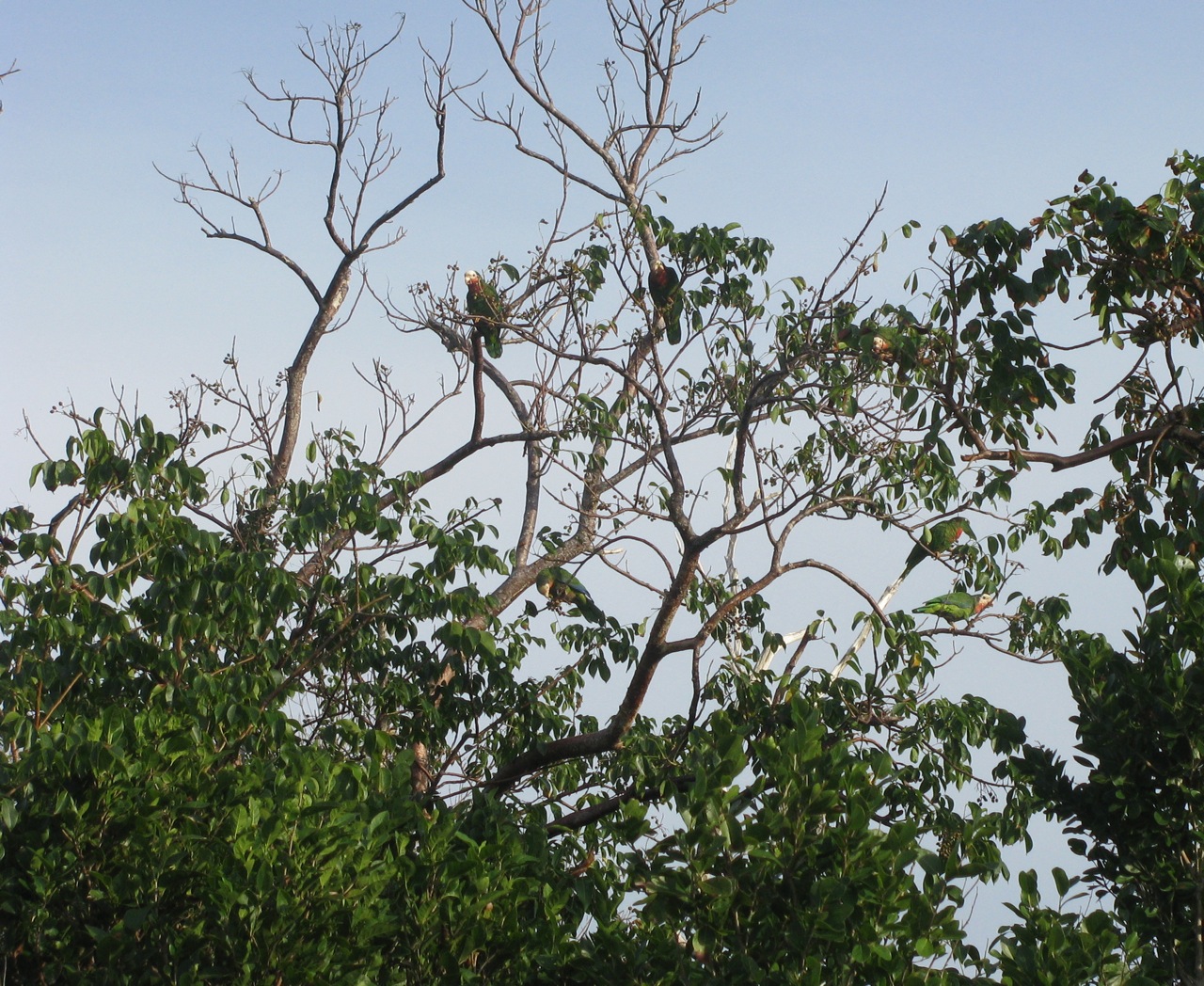
A CLOSE-UP OF THE FLOCK – THERE ARE 6 VISIBLE (ONE IS PEEPING)
A FLOCK OF ABACO PARROTS
[audio http://www.xeno-canto.org/sounds/uploaded/XUPTAZCQVD/LS100545-CubanParrot-110212_1503.mp3]
Credit: Laura Gooch @ Xeno-Canto
Unknown's avatar

YOUR FAVOURITE ABACO BIRD: VOTE NOW FROM THE 4 NOMINEES


A NEW BIRDING DIVERSION

BAHAMA WOODSTARS LEAD VOTE NOW POLL CLOSES 29 FEBRUARY 

This could be fun. Unless no one bothers to participate. I’ve just found out how to do this, having wondered for a while what the little widget did. There may be some way for you to put your own choice, but I am a slow learner. Another time maybe. For now,  you can positively opt out of the nominated birds – your very own protest vote. Or you can all just ignore the whole thing, as I rather fear may happen… If this prototype bombs, I’ve only wasted a couple of hours, after all…

UPDATE: After a week, the order is (1) Bahama Woodstar (2) Abaco Parrot (3) Western Spindalis (4=) Banaquit and ‘Sorry…’ The poor Tropicbird got no votes and has been removed…

Unknown's avatar

PINE FOREST REGENERATION AFTER FIRES ON ABACO IN 2011


Abaco Forest Fire 13

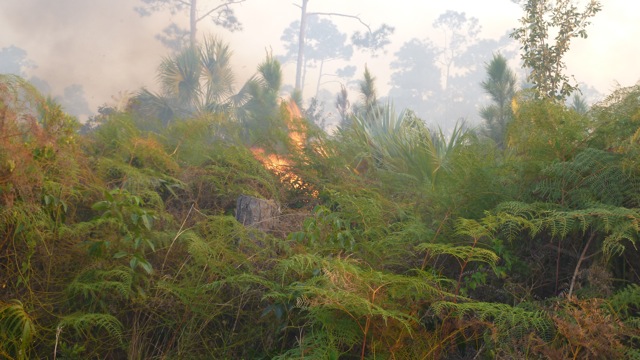
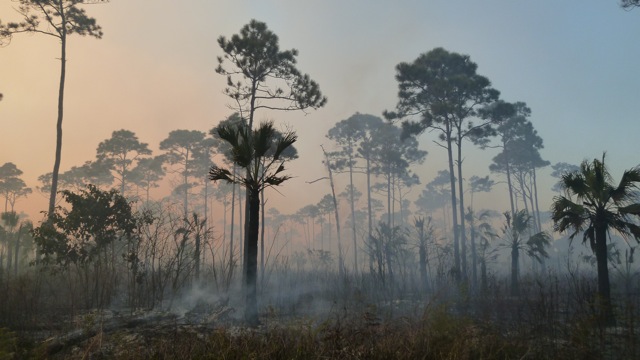
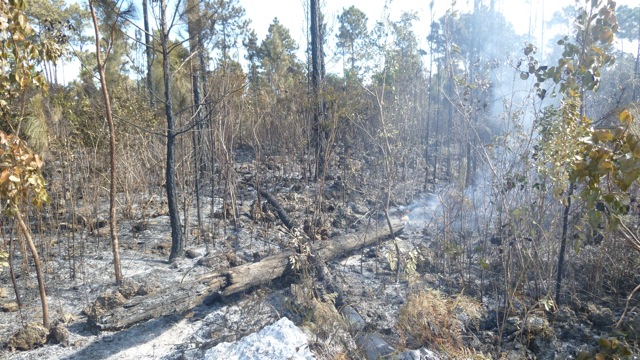
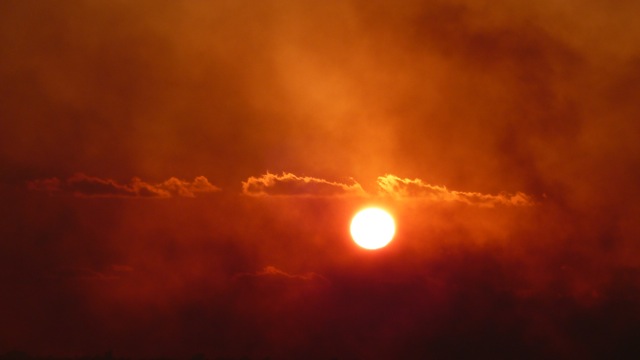
MARCH 2011 Fires swept through large areas of South Abaco, spreading rapidly and jumping the firebreak of the Highway in several places. At any one time, there were several ‘non-natural’ seats of fire. For 3 days the flames were uncomfortably close to the Delphi Club, halted only by the natural boundary between the flammable pine forest and the damper less combustible coppice. The smoke caused some amazing visual effects, especially at sunset. The first image was taken looking east from the Club verandah one evening as the fire got nearer

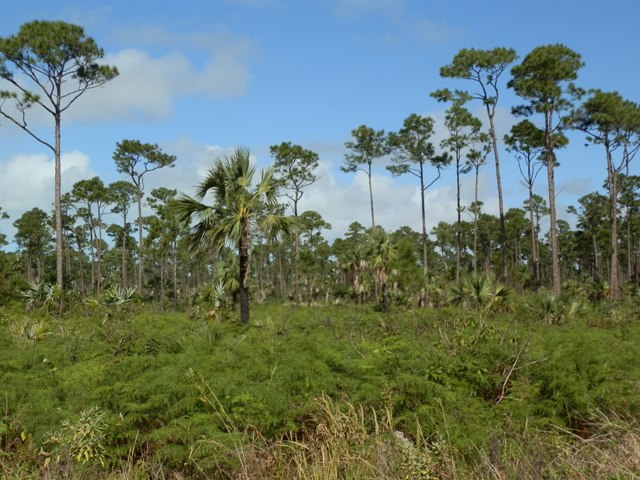
The vegetation alongside and between the drives was dense and lushly green before the fires. Here is a photo as fire began to take hold near the top of the drives towards the road, having jumped the Highway in the night…

As the fire rapidly spreads, this tall dead tree is actually flaming from the top

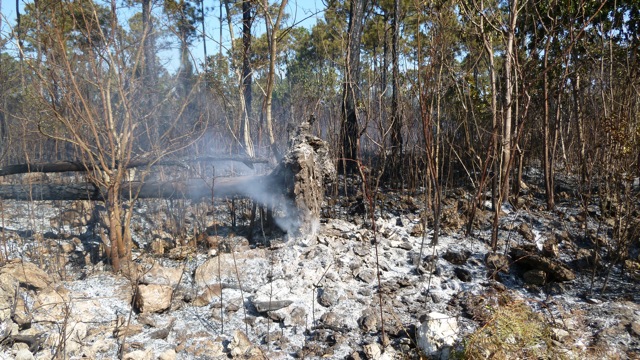
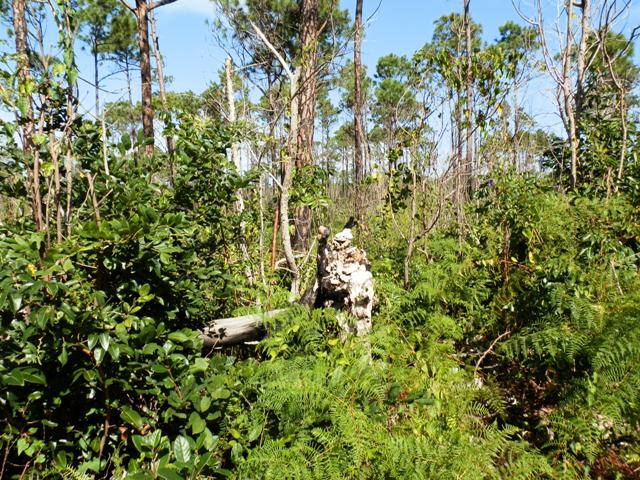
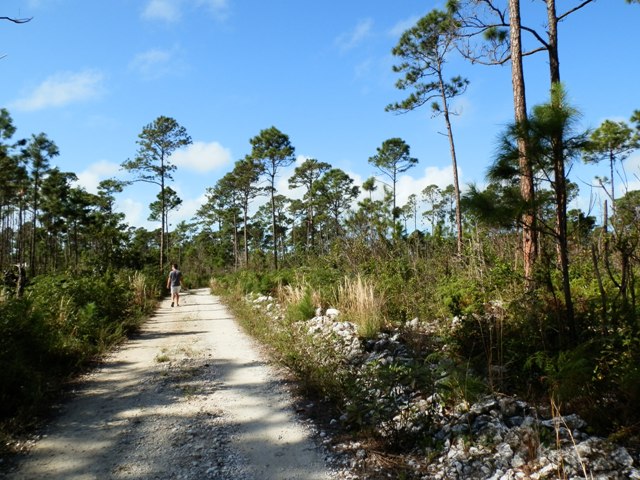
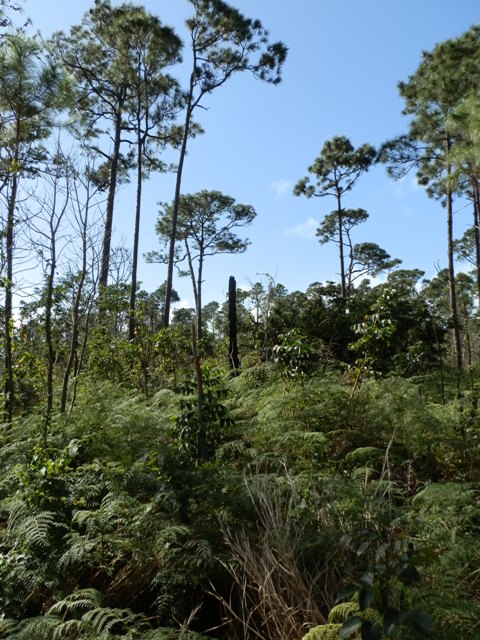
During the next couple of days, we took photographs along the drives of the apocalyptic scenes where there had so recently been impenetrable vegetation. Nearly a year later, indispensable beachcomber and photographer Kasia has taken some pictures of the drives as they are now. First, two ‘then and now’ views of the same scenes to illustrate the extent of forest regeneration

2011

2012

2011

2012

2011 The burnt-out forest between the drives

2012 A wander round the drive circuit

In some places the undergrowth has returned but trees have not recovered

Elsewhere, blackened stumps are visible in amongst the vigorous regrowth


Unknown's avatar

KING VENUS CLAMS & CRAB SHELLS (NO SPACE DEBRIS): ABACO BEACHCOMBING WITH KASIA


ANOTHER STROLL ALONG THE SHORE WITH KASIA

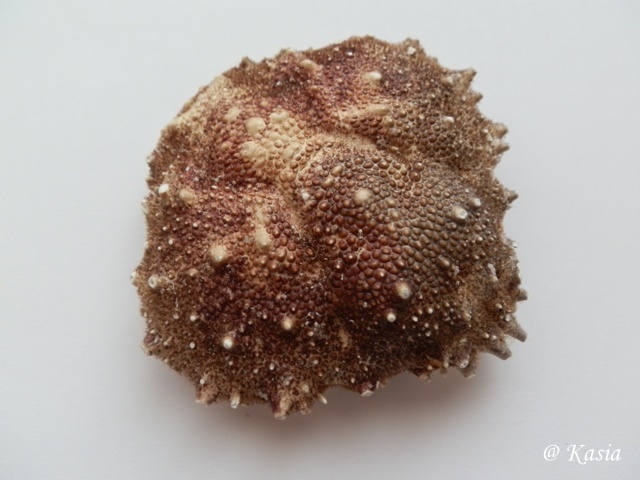
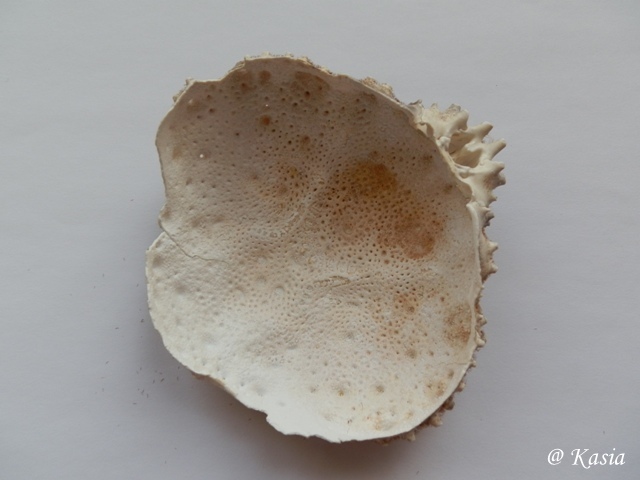
After all the recent excitement – well I was excited, anyway – involving Mars Mission space rocket debris washed up on the Delphi Club Beach CLICK MARS ROVER it’s a gentle touchdown back onto a sandy beach for some more of Kasia’s finds. First, a shell which I believe (tempting fate) I have correctly ID’d for once. Then a half crab shell, at a guess a spider crab’s roof. 

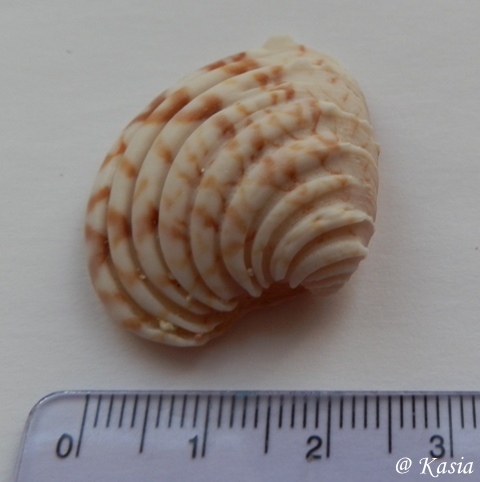
KING VENUS CLAM Verenidae – Chione Paphia

These bivalve molluscs seem to be inoffensive, and to lead rather dull lives: so far all I have discovered is that “they live buried in sand at depths of 1 – 20 fathoms” I shall investigate further & report back – there must be some small creature they molest or upset in some way…

CRAB SHELL, FORMER HOME TO A SPIDER CRAB
Unknown's avatar

BEACHCOMBING ‘CURIOSITY’ ON ABACO: OUT OF THIS WORLD TO THE RED PLANET


Sandy's Mystery Object

More news about the the space rocket debris washed up on the Delphi Club beach, Abaco. The booster rocket fairing found by Sandy fortunately had a serial number on it. Various inquiries have been made and a definitive explanation of the item has now been given by the NTSB. It turns out that the fairing was not, after all, from the Ariane 5 launch in French Guyana. More exciting than that – it comes from a Mars Program launch to put the Space Rover Curiosity on Mars. There’s an excellent Wikipedia article on the mission to be found at WIKIMARS

NTSB - An Independent Federal AgencyBob Swaim at the NTSB has emailed Sandy to say   “The serial number of the fairing fragment is from a part that was on a Delta V [sic – it was in fact an Atlas V, see comments] rocket launch of November 26, 2011. In August, a new car-sized rover will touch down on Mars and you’ll have something from the mission!”  He has kindly provided a link to the launch – see image below and direct link HERE  He has also given a direct link to the NASA MARS PROGRAM site from which I have taken the screen clip below. You will see an image of the Mars Rover Curiosity, and the time countdown until touch-down at the exact moment I took the shot…

I contacted Bill Ailor, Principal Scientist/Engineer, Center for Orbital and Reentry Debris Studies, The Aerospace Corporation AERO CORP thinking a booster fairing might be of interest for their rocket debris database. He writes

Thanks for the notification (and for your excellent web page – looks like a wonderful spot). On the website, we catalog debris that has reentered from orbit and don’t include payload fairings, solid and first stage rocket boosters, and other “range” debris, since these are suborbital and the launch is designed so that the debris impacts is in known safe areas.  That debris can sometimes float outside of the safe area and wash ashore.I should mention that we recently reentered a small device that might one day float to your beach.  I’ve attached a description.  Let us know if you see that one

Although the device he mentions may have in fact have landed a long distance away (the South Pacific even), best keep an eye out for this…REBR Fact Sheet   By a strange coincidence in a huge world, the Aerospace Database shows that in 1965 reentry debris was recovered from a beach on Abaco:

In early 1965 an object having the appearance of a space fragment was reported washed ashore on Abaco Island in the Bahamas Possibly from the Atlas-Mariner I booster which was destroyed by the range safety officer shortly after launch on 22 July 1962, and landed in the designated ocean impact area

Apologies if I have got sidetracked from normal beachcombing duties – shells and stuff – but wildlife blogging doesn’t get more exciting than this – well, unless they find a colony of Abaco parrots on Mars…

Unknown's avatar

HUMANS’ TASTE FOR DOLPHINS & MANATEES ON RISE


 HUMANS’ TASTE FOR DOLPHINS & MANATEES ON RISE

I am reblogging (thanks to Ann Novek at http://havehest.wordpress.com/the above link to an article by Jennifer Welch of LiveScience, published in Biological Conservation. It’s of particular relevance on these pages, since I have just posted about manatees and the threats to their survival; and also because dolphins are a regular feature of this blog. A quick G**gle search reveals a number of sites with recipes for marine mammals (including manatees), many species of which are protected by law… I suspect that the slow and inquisitive manatee will always be easy meat, as one might say. NB ‘Dolphin’ here does not include the dolphinfish (dorado) commonly found on menus as ‘dolphin’, for which there are no current conservation concerns (although there are officially preferred methods of catch)

Unknown's avatar

ABACO NEWS: ART FOR THE PARKS / BAHAMAS NATIONAL TRUST DAY


SATURDAY 28 JANUARY 2012 – A DATE FOR THE DIARY

CLICK LOGO!

The images below tell you all you need to know about this excellent festival presented by the BNT in conjunction with the Abaco Beach Resort. From this blog’s point of view, the highlights are:

PRESENTATIONS by Nancy Albury on ‘The Blue Holes of Abaco’; by Ricky ‘Blue’ Jones on Bush Medicines / teas; and by Caroline Stahala on the Breeding & Behaviour of Abaco Parrots

ART The Art. Yes, all of it. Ok?

PRODUCE Something of everything, please. 

OTHER Everything else on offer…

The very best of luck with this event and best wishes for successful fundraising from Rolling Harbour

Unknown's avatar

BAHAMAS CURLY TAILS ON ABACO: ENCHANTING LIZARDS


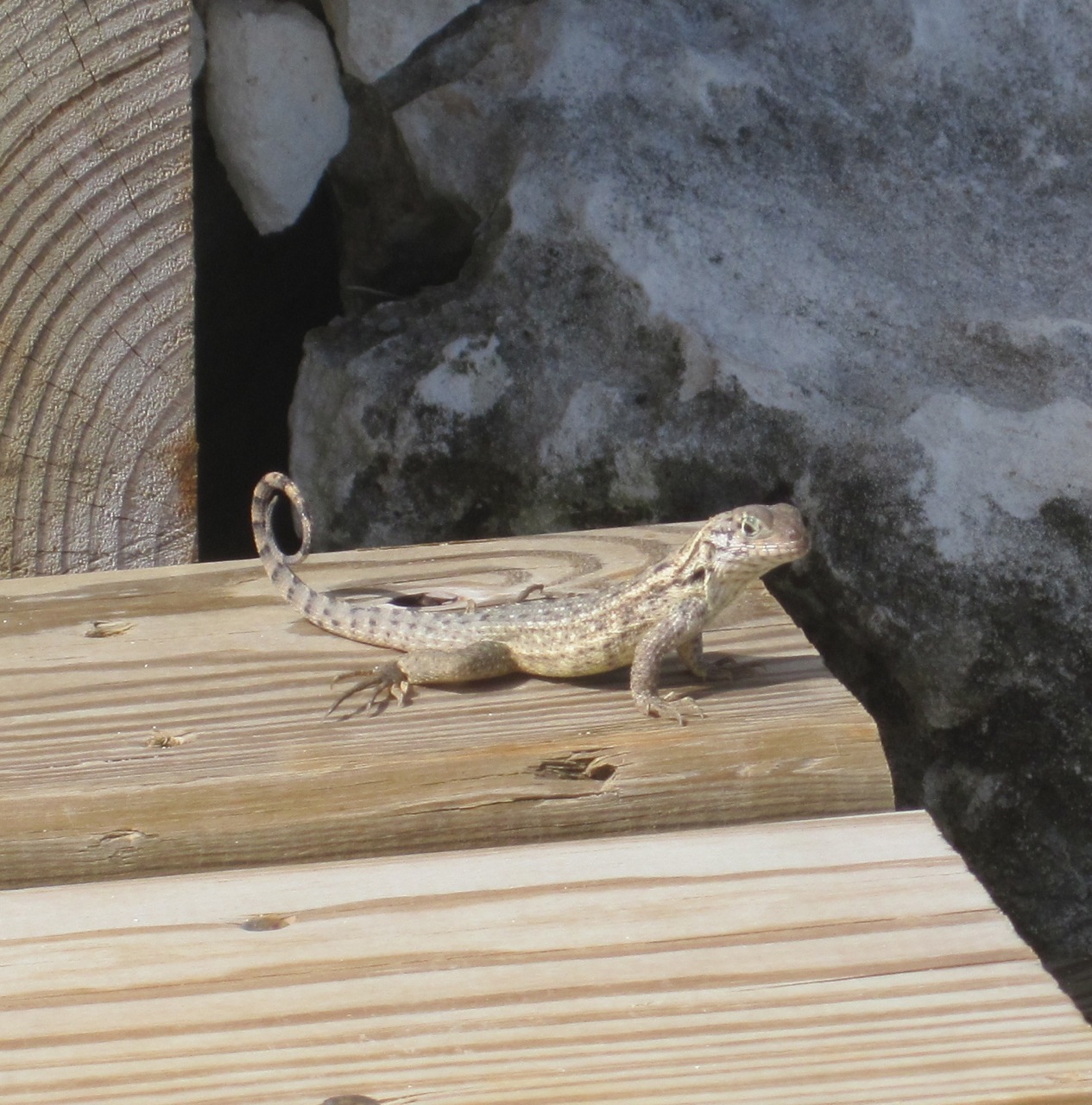
Curly Tail Lizard, Delphi, Abaco CS2

CURLY TAILS – ENCHANTING LIZARDS

This is an expanded and rejigged post based on  bits and pieces originally scattered around the MISC WILDLIFE page, written now partly because of various search queries recently – diet and so forth – which had not been covered.

First, the very dull scientific classification bit (wiki-debt): Kingdom – Animalia; Phylum – Chordata; Class – Sauropsida; Suborder – Iguania; Family – Leiocephalidae; Genus – Leiocephalus [Subspecies Carinatus?]

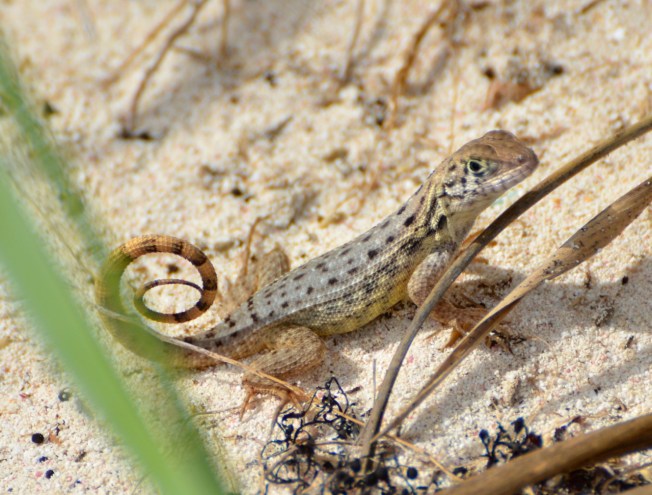
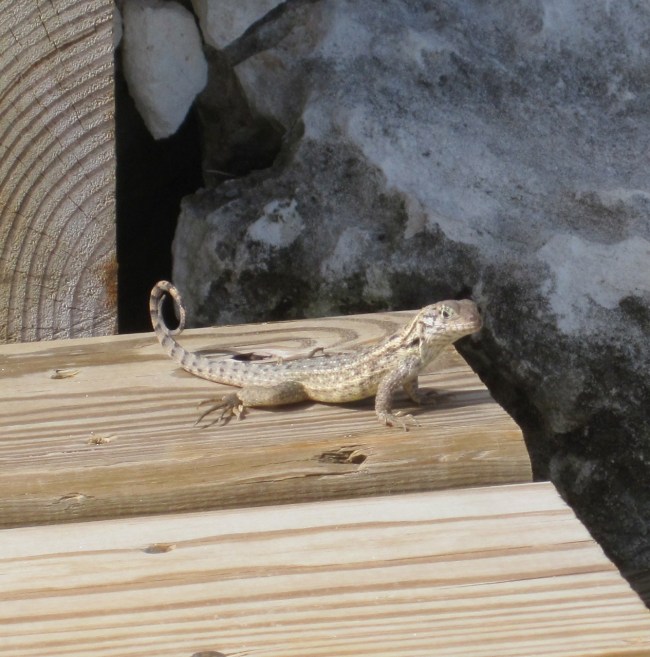
The ‘curly-tailed lizard’ family is widely found throughout the Caribbean but is apparently relatively unstudied (but why on earth not?). There are nearly 30 distinct varieties, many specific to individual islands. My completely uneducated guess is that the Abaco ones may be one of the several subspecies of ‘Cuban or Northern Curly-tailed Lizard’ carinatus, the ones found generally in the Bahamas. But who cares? By any standards they are totally cute! This photo was taken at the bottom of the steps down to the Delphi Club beach.
            (Photo credit: Mrs RH)

             (Photo credit: PM Himself)

NEW ADDITION April 2012 A fine Curly Tail from Brigitte Carey of Tilloo Cay 

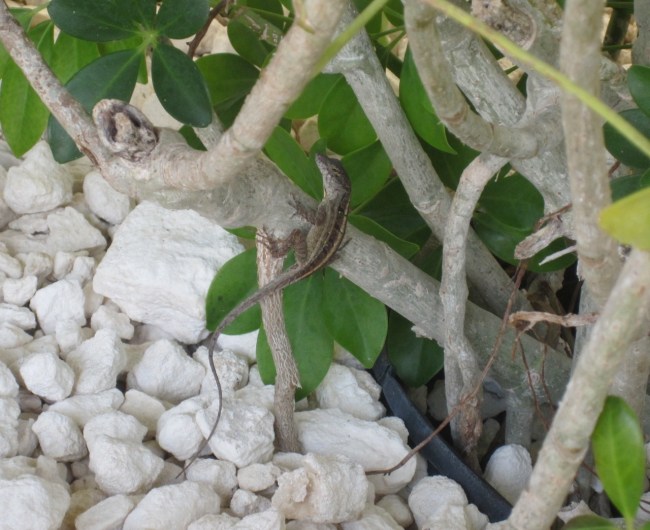
DEPLHI CLUB: ‘OFF-DUTY’ CURLY TAIL, OR A DIFFERENT TYPE OF LIZARD?
The CT is described as an active, robust lizard that is mostly terrestrial and will retreat into a burrow or cavity when frightened. It prefers sunny areas with loose rubble and rock. Bahamas curly tails were apparently released intentionally in Palm Beach, Florida, in the 1940s in an attempt to control sugar cane pests.

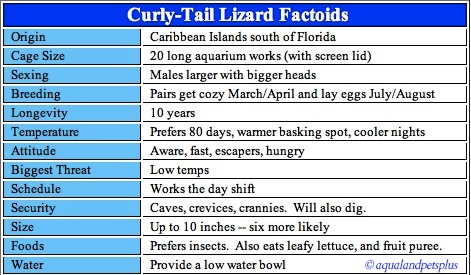
Jan 2012 update: Having had a number of hits over the last few months for ‘what do Curly Tails eat’ and other CT-related information, I checked out aqualandpetsplus.com of Des Moines, Iowa (the first Google hit, in fact). With kind permission (many thanks, Larry) here’s some more about these little lizards 

THE CURLY TAIL DIET: “Considered insectivores, curly-tails scamper right after crickets.  They’ll also learn to eat mealworms and superworms from your fingers.  You can give them other insects like wax worms which they love but tend to over-eat.  Roaches, houseflies, or any arthropods / bugs that accumulate around your porch light make a nice change of pace…OR…take a stroll down the baby food aisle.  Think twice about the bananas. Bananas are not good for some lizards.  Skip the bananas.  Anyway, apple sauce works great.  The best thing about baby food?  You can add a Calcium/Vitamin D supplement to it.  Much easier than dusting crickets (which start cleaning it off the second it gets on them).  Curly-tails will also eat bits of leafy lettuce.  Uneaten crickets in their cage  will also eat the fruits and vegetables you offer your lizards” Larry Arnold

So I can’t answer someone’s specific query ‘do they eat tomatoes?’, save to say ‘why not try tomato sauce’ (and I don’t mean a well-known proprietary brand, one of 57 varieties). Maybe have a few crickets handy in case it is politely declined

For further info on curly tails from theBahamas National Trust website CLICK LINK ===>>> http://www.bnt.bs/curlytaillizardinfo.php?catid=&subid=  where there is also a downloadable PDF version

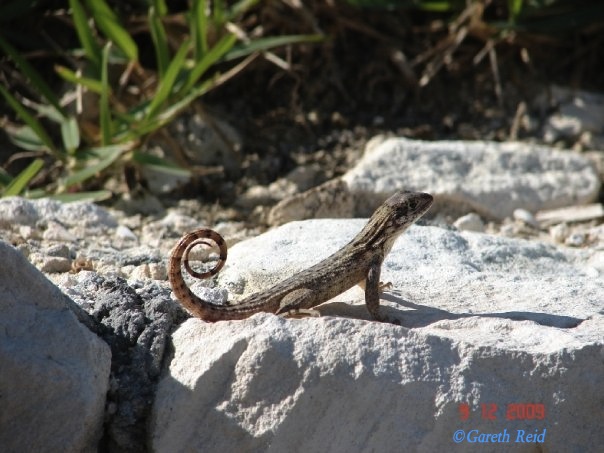
Finally, an excellent CT photo from Gareth Reid, the Master Chef of Delphi
BIBLIOGRAPHY:  “101 Uses for a Curly Tail” Rolling Harbour Press (2011)     

(1) The gate latch                                           (2) The window latch


(NB No Curly Tails were harmed in the creation of these images)

Unknown's avatar

BAHAMA PARROTS: BAHAMAS NATIONAL TRUST DOCUMENTARY


BNT ABACO / INAGUA PARROT DOCUMENTARY

In August 2011 the Bahamas National Trust published a documentary about the resident Abaco and Inagua populations of this Cuban Parrot subspecies. It features research scientist Caroline Stahala, and contains plenty of information about these birds, their nesting and breeding habits, and the problems they face from predation. In places, some of the devastation caused by the extensive forest fires in March 2011 is still evident (see images in earlier POST). If you want to know more about these attractive (but noisy) birds, the documentary video below covers a great deal in 8 minutes…

Unknown's avatar

BMMRO WHALE, DOLPHIN & MANATEE SIGHTINGS / WINTER REPORT


BMMRO WHALE, DOLPHIN & MANATEE SIGHTINGS AND WINTER REPORT DECEMBER 2011

This was an interesting month. For a start, a humpback whale was reported off Elbow Cay, and a sperm whale further out to sea to the east. There were several cetacean reports between Sandy Point and Hole-in-the-Wall. Perhaps best of all, West Indian manatees – mother and calf – were reported in the area at the end of December, just off the Berry Islands – photo below, and further details in the BMMRO Winter Newsletter via the blue link.

THE WINTER NEWSLETTER contains much of cetacean interest, as always. It features articles on the effects of climate change of the declining Sea of Abaco bottlenose dolphin population; manatees in the Bahamas; ‘Life after Death’ – the importance of whale carcasses on the deep sea eco-system; sonic body-length measurement of sperm whales; the false killer whale stranding on Guana Cay (see POST); educational news update; and much more besides

BMMRO NEWSLETTER WINTER 2011/12

Courtesy of NAHRVALUR and her excellent wildlife blog, here is a cute view of a manatee in a Florida Reserve, where a webcam has been installed 

Manatees (family Trichechidae, genus Trichechus) are large, fully aquatic, mostly herbivorous marine mammals sometimes known as sea cows. There are three accepted living species of Trichechidae, representing three of the four living species in the order Sirenia: the Amazonian manatee (Trichechus inunguis), the West Indian manatee (Trichechus manatus), and the West African manatee (Trichechus senegalensis). They measure up to 13 feet (4.0 m) long, weigh as much as 1,300 pounds (590 kg), and have paddle-like flippers. The name manatí comes from the Taíno, a pre-Columbian people of the Caribbean, meaning “breast”
I’ll write a separate post about these creatures later, and cross-refer from here. rh
NOW CLICK LINK===>>>       MANATEES: THE FACTS
Unknown's avatar

THE INTRIGUING PARROTS OF GREAT ABACO ISLAND – PODCAST


A 5 minute PODCAST from ABC Radio’s ‘The Science Show’ featuring Caroline Stahala, research scientist and Abaco Parrot expert, and David Knowles of the Bahamas National Trust, Chief Park Warden for Abaco

The online report is headed by this: Holiday homes and resorts are replacing the forests in which the Bahamian parrot of Great Abaco Island breeds. When Christopher Columbus discovered the beautiful Bahamian islands in 1492, he wrote in his journal ‘the flocks of parrots obscure the sun’. Now the Bahamian parrot is confined to just two islands and they’re a protected species. On Great Abaco Island Bahamian parrots breed in the pine forests of the south and, as Pauline Newman discovered, their nesting behaviour is quite extraordinary”

CLICK HERE==>> ABACO PARROTS PODCAST – THE ABC SCIENCE SHOW

For the relevant web page and a transcript of the talk CLICK LOGO===>>> 

Thanks to the ABC Science Show for use approval – click name for more Podcasts

Abaco Parrot
Unknown's avatar

ROLLING HARBOUR ABACO – SEEN IN A GOOD LIGHT


Many thanks to Nassau-based  WEBLOG BAHAMAS for giving such a positive recommendation on its eclectic site. Much appreciated. The site, by a small collective of independent bloggers, covers a multitude of mainly Bahamas-related topics including books, current affairs, economy, eduction, environment, food & drink, government, health, media, music, politics, religion and society, sport, and travel. An excellent place to spend some online exploration time…

To reach the rollingharbour review CLICK===>>> REVIEW                                 To reach the Home Page CLICK===>>> WEBLOG BAHAMAS 

Unknown's avatar

SUPPORT ABACO PARROTS – NEW YEAR WRITING CONTEST!


ABACO PARROT SUPPORTER ‘DOU DOU BIRDS’ runs a monthly bird-centric writing contest. Not content with sculpting a cute miniature clay ABACO PARROT with all proceeds of sale going to the parrots, she has now showcased the AP for her New Year writing competition. To see her Post, & indeed if you want to take part                                                                                                                     CLICK LOGO==>> & to see the AP in her shop window             CLICK LOGO==>> 

Unknown's avatar

ESSENTIAL SOUTH ABACO BIRD CHECKLIST FROM AVIBASE


The superb AVIBASE is a massive world-wide bird database – an essential reference point for birders, even the occasional enthusiast. Checklists, range maps, bird links, photos, bird sounds,  and even the facility to make your own contribution, all in one place. AVIBASE has been a work in progress for 20 years and now contains over 5 million records of about 10,000 species and 22,000 subspecies of birds, including distribution information, taxonomy, synonyms in several languages, and much more

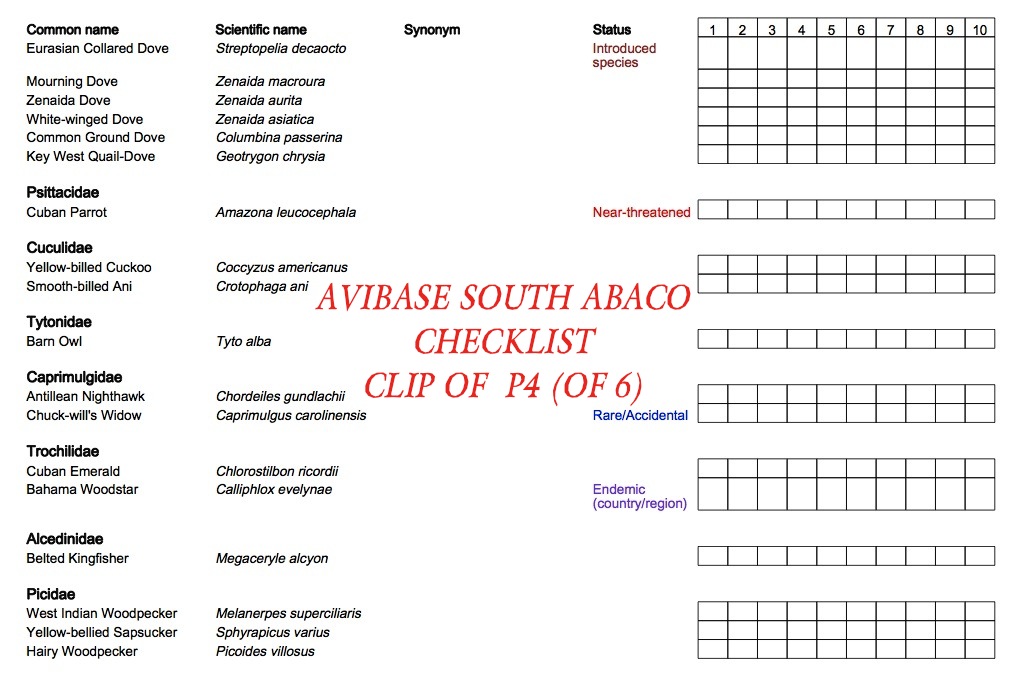
Here is the CHECKLIST FOR SOUTH ABACO, the area that I am most familiar with. It probably holds good for the whole of Abaco and the Cays. If you are staying at the Delphi Club, Rolling Harbour, you need this – and especially if you are planning a birding adventure with Ricky Johnson… Be prepared! The plan is that you can download it or print it out from here

SOUTH ABACO BIRD CHECKLIST  click to open!

Here is an illustrative clip of one of the 6 pages 

If you have a problem printing it from here – or for access to photos of a great many of the birds listed, with clips of their calls and songs –  use this direct link  CLICK LOGO===>>>

CREDITS: The Avibase website is managed by Denis Lepage and hosted by Bird Studies Canada, Canadian copartner of Birdlife International
Unknown's avatar

“ROSETTA STONE FOR WARBLERS” – Cornell Lab of Ornithology Research


RESEARCH INTO THE FLIGHT CALLS OF MIGRATING WARBLERS

  has found a way to investigate the nocturnal migrations of warblers using spectrograms. Many of the warblers featured in the project are found on Abaco and will be familiar to the more discerning birder – though I admit that ID of  members of this large family of little yellowy birds, even in broad daylight, remains a blind spot for me (and I suspect I am not the only one). Click the chart below for a clearer view. A downloadable / printable version is available via the link given below. It is also worth visiting  the page to compare the brief audio cheeps of the Northern Parula, Magnolia Warbler and Black-throated Green Warbler and their respective spectrograms

“These spectrograms are a visual representation of the very brief flight calls made by North American warblers during their nocturnal migrations. Some of these call notes sound almost identical to our ears, but spectrograms show minute differences between them. Scientists can compare spectrograms of night recordings to spectrograms of known species to identify nocturnal migrants in total darkness. Andrew Farnsworth, a scientist in the Cornell Lab’s Conservation Science program, developed this “Rosetta Stone” in 2006 in collaboration with Michael Lanzone, Cellular Tracking Technologies, William R. Evans, and Michael O’Brien. It covers all 48 warbler species of the U.S. and Canada (including Grace’s and Red-faced warblers, not shown), and is a major tool in our Acoustic Monitoring Project”

Click chart to enlarge

Putting Sound to Work for Conservation: “Our staff will use results from the Rosetta Stone… to “train” computers to identify the sounds of warblers and other nocturnally migrating birds, as well as other species including whales and forest elephants”

Working Toward a Bird Migration Forecast: “A new grant from the National Science Foundation will fund BirdCast, a project that will combine bird observations (both sightings and sound recordings) with weather models and terrain data to forecast migrations. The results of the predictions will help scientists understand migratory behavior and may aid decisions about wind turbine placement and other questions about environmental hazards to birds”

To see the complete article CLICK LOGO===>>> 

To learn more about BirdCast and the Acoustic Monitoring Project from the original article CLICK LINK===>>>  Cornell Chronicle 

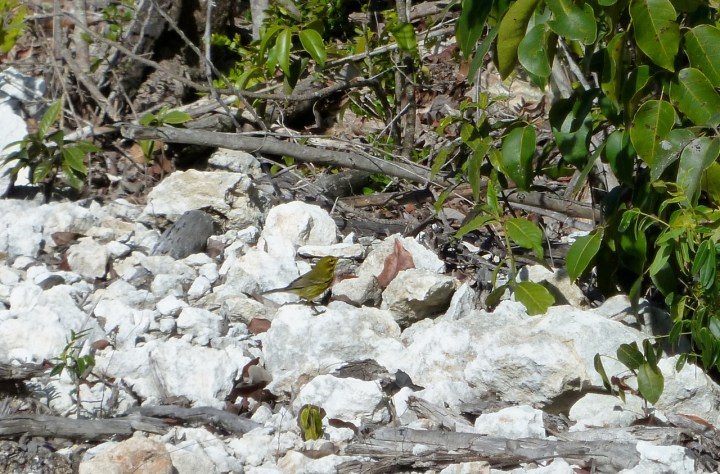
Prairie Warbler on the Delphi Club guest drive, Abaco

Unknown's avatar

HELP SAVE ABACO PARROTS – DOU DOU’S ART INITIATIVE


WELCOME BACK! Normal service is resumed after the family festivities of Christmas, with only the precious gift of a fractured wrist for rh to spoil an otherwise lovely few days. Immediately, I can report excellent parrot news…               DOU DOU, an avid birder and sculptor of most engaging miniature birds, has taken up the cause of the Abaco Parrot. We have been corresponding for a while about this, and I now reproduce her latest post, with the link to her site below

BIRD SCULPTURE – ABACO PARROT

“Help, the cats are eating my babies!” said the parrot. And it’s true. These parrots are endangered – only 1000 of them left. A woman named Caroline is trying to save them from the feral cats that have invaded their island in the Bahamas. Let’s help her out! All proceeds from the sale of this parrot are going to Parrots International, which supports Caroline’s work. 

This little parrot measures 3.5 x 1.5 x 1.5 inches. You can buy it HERE from me and I will send the money to Parrots International or you can use “Other” to check out, send me proof you donated at least $30 to Parrot’s International, and I will send you a code that gives you $30 discount on this parrot so you will just pay for shipping – I will verify that a donation was made.

We can save these parrots! Let’s do it!!!!!

Read about Caroline’s work to save the parrots: ABACO PARROT RESCUE

doudou      CLICK LOGO to visit website ===>>>      

More about this exciting development in due course – other ideas are afoot… Abaco Parrot conservation is strongly supported by the Delphi Club, Abaco; and the research scientist heading the project, Caroline Stahala, is delighted with dou dou’s initiative in helping to raise the profile of her conservation work and in contributing to the funding received through PARROTS INTERNATIONAL

This organisation allocates funding for the research into the Abaco Parrots and their conservation. You can now pay direct by Paypal or Credit Card (with gift tax benefits depending where you live). Please remember use the “Note to Seller” box to specify ‘ABACO PARROTS / CAROLINE STAHALA’

Membership and Donation page   CLICK LOGO===>>>       Parrots International

Unknown's avatar

SOUTH ABACO CHRISTMAS BIRD COUNT 2011


Here is a clip taken from the excellent website THE ABACO SCIENTIST, with the kind permission of Dr Craig Layman of FIU. The brief summary of the South Abaco Bird Count 2011 by Elwood D. Bracey is of great interest, not least for the Delphi Club, from where guided Nature Tours take place and where there is a lot of enthusiasm for the birdlife of the island. 75 separate species were recorded this year, including all the known Abaconian endemics.

It is also a very fine photo of a male Bahama Woodstar courtesy of BIRD FORUM