Unknown's avatar

ABACO PARROTS FOR THE NEW YEAR!


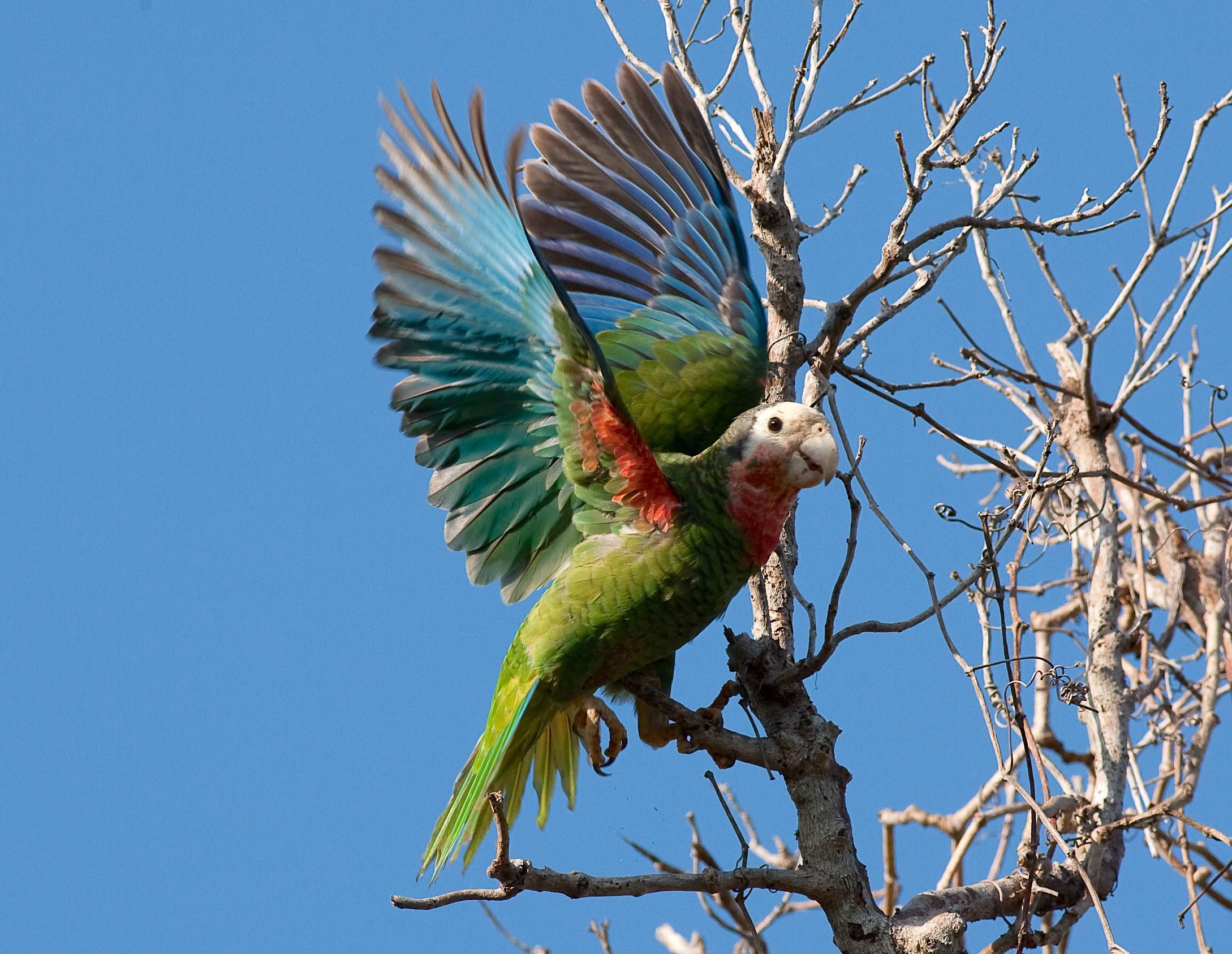
Abaco (Cuban) Parrot, Bahamas (Gerlinde Taurer)

ABACO PARROTS FOR THE NEW YEAR!

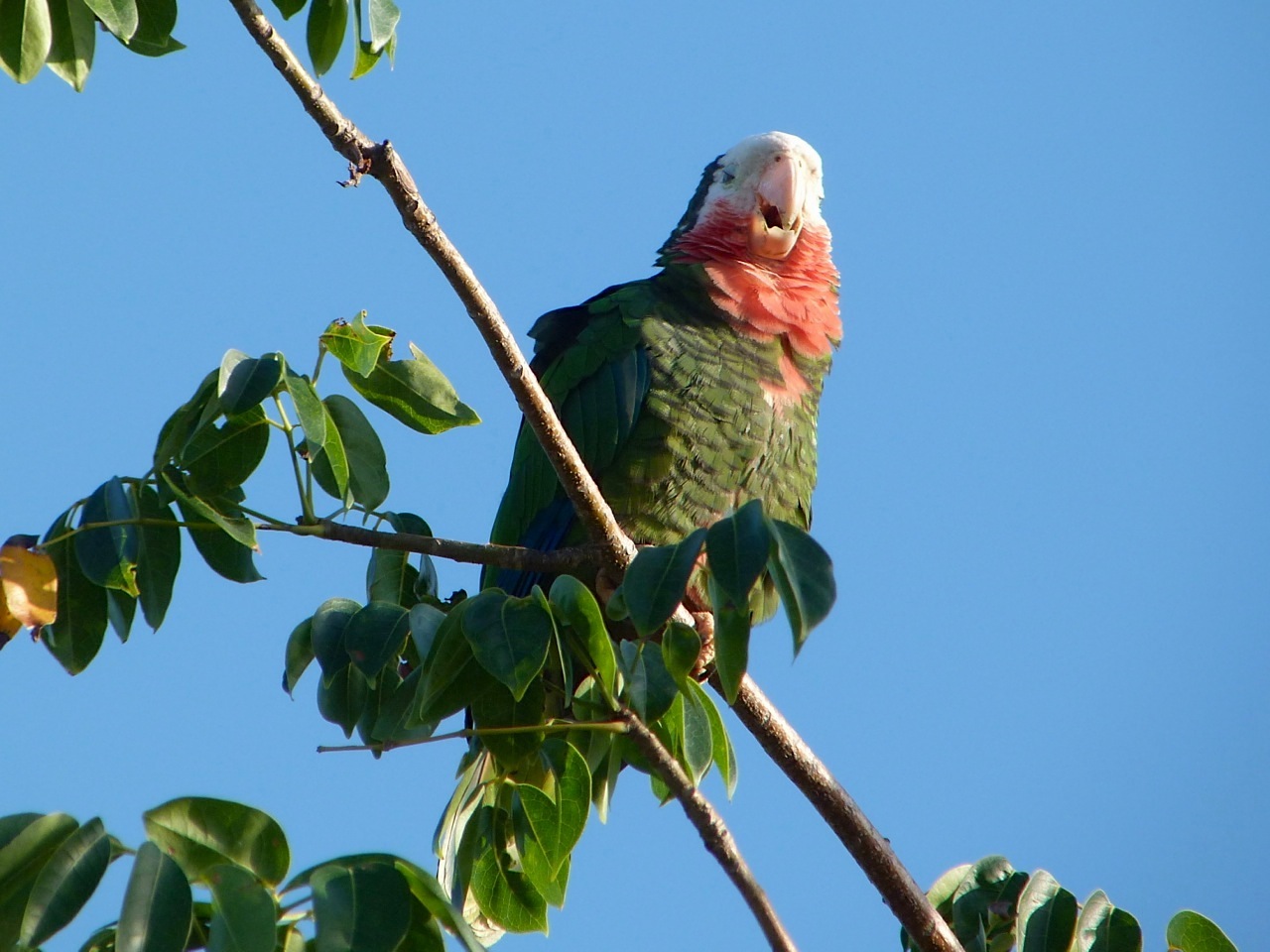
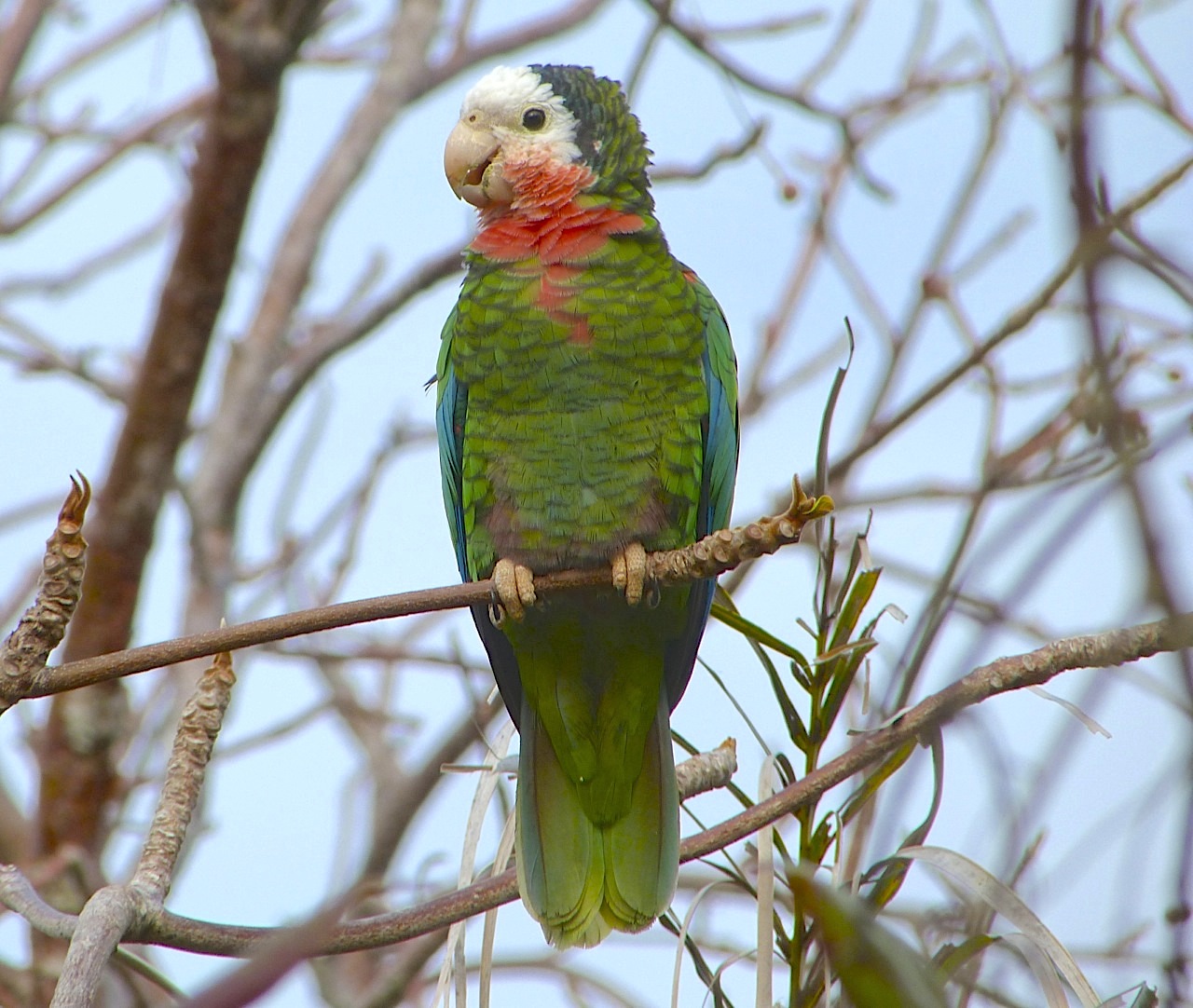
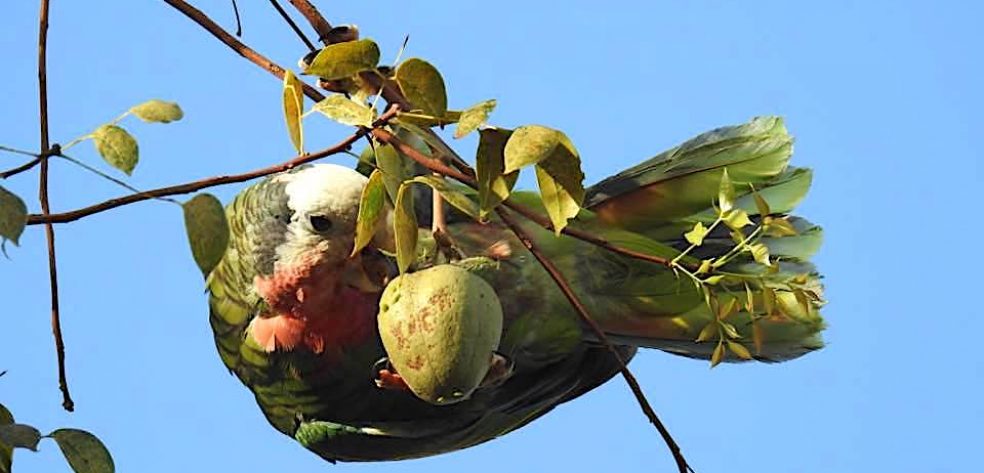
Red, green, blue, and a touch of snowy white. The colours of Christmas, sort of. We are past all that for another year, but for those on Abaco the unique, ground-nesting Abaco parrots Amazona leucocephala flash those same colours throughout the year.

Abaco (Cuban) Parrot, Bahamas (Craig Nash)

These birds have cousins on Inagua that nest conventionally; and there are now a handful of NASSAU PARROTS on New Providence, of uncertain origin (click link for more on these).

Abaco (Cuban) Parrot, Bahamas (Tom Sheley)

The parrots are only found in South Abaco, between Marsh Harbour and the National Park where they live and breed in limestone holes in the forest floor. 

Abaco (Cuban) Parrot, Bahamas (Caroline Stahala)

You are most likely to hear these birds before you see them, as they make their way daily north in the morning and back again in the evening.

Abaco (Cuban) Parrot, Bahamas (Keith Salvesen)

Despite the racket they make, finding the parrots in the National Park is a bit ‘needle-in-haystack’. Instead, try the Gilpin Point point area, and coppice areas to the north. They pass back and forth over Delphi, pausing to squabble noisily, almost daily. I have made several recordings of them – here’s one example.

Abaco (Cuban) Parrot, Bahamas (Peter Mantle)

Far and away the best location is Bahama Palm Shores, where the mix of dense coppice with their favourite gumbo limbo trees and the open gardens is much to their liking. And frankly, it’s a great place for birding anyway, even if you blank for the parrots. 

Abaco (Cuban) Parrot, Bahamas (Nina Henry)

Just think: a dozen years ago, these fine birds were sliding towards extinction, with an unsustainable population of fewer than 900. Conservation efforts and in particular attention to habitat protection and predator control have resulted in population increases year-on-year, and the total now stands at around 5000 adults.

Abaco (Cuban) Parrot, Bahamas (Keith Salvesen)

I’ve posted quite a lot about these parrots over the years, so if you are already familiar with them, I hoped you felt free to skip the text, and simply to admire these wonderful creatures. 

Credits: Gerlinde Taurer, Craig Nash, Tom Sheley, Caroline Stahala, Keith Salvesen, Peter Mantle, Nina Henry, Erik Gauger; audio recording Keith Salvesen

Abaco (Cuban) Parrot, Bahamas (Erik Gauger)

Unknown's avatar

BEHOLD! SOME BUNTING(S) FOR AN ABACO CHRISTMAS


Painted Bunting.Bahama Palm Shores.Abaco Bahamas.Tom Sheleyimagesimagesimagesimages

BEHOLD! SOME BUNTING(S) FOR AN ABACO CHRISTMAS

painted-bunting copy

BUNTING  /ˈbʌntɪŋ/  (Noun)

[A Christmas gift of a puntastic avian / festive double-meaning]
  1. A small New World songbird of the cardinal subfamily
  2. Flags and other colourful festive decorations

imagesimagesimages

PAINTED BUNTINGPainted Bunting, Abaco (Erik Gauger)
Painted Bunting, Abaco (Tara Lavallee)Painted Bunting, Abaco (Tara Lavallee)

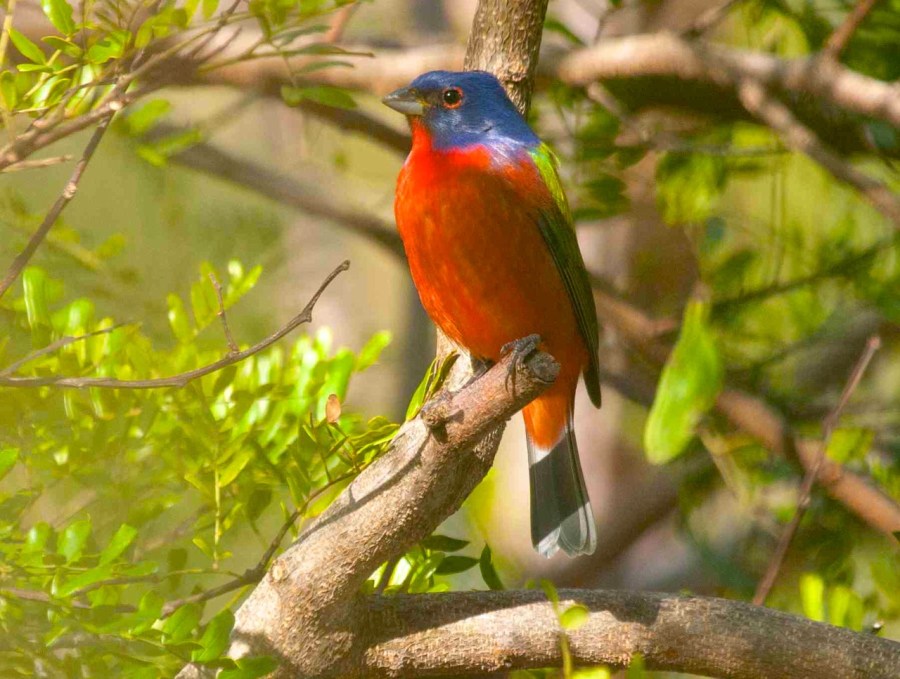
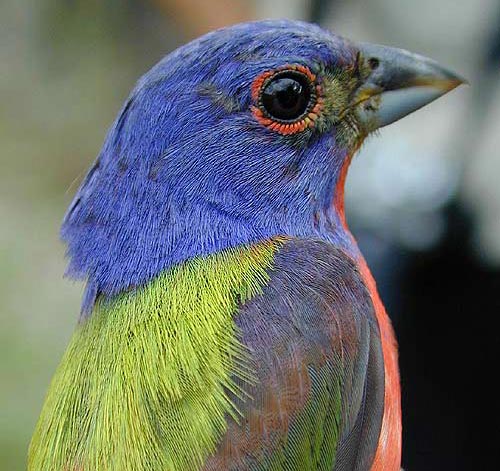
It’s hard to imagine a more Christmasy little bird than the Painted Bunting. Bright blue, red, green primary colours straight from a child’s paintbox make for a spectacular bird to grace the festive season. These are migratory winter residents, and the first reports of the bright and beautiful males on Abaco started to appear in November. Some will stay around until March.

                                                           painted-buntingimagespainted-bunting copy

Feeders at the Delphi Club. The first image shows a female & a male PABU feeding together. The second is a male with a pair of black-faced grassquitsPainted Buntings (M & F), Delphi, Abaco (Keith Salvesen)Painted Bunting, Delphi, Abaco (Sandy Walker)

                                                        painted-buntingimagespainted-bunting copy

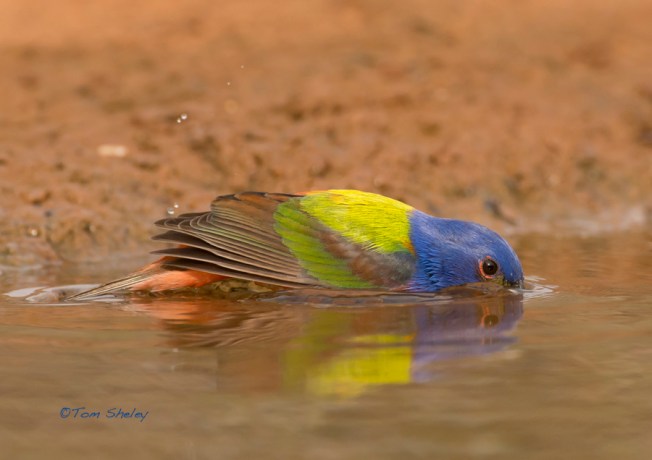
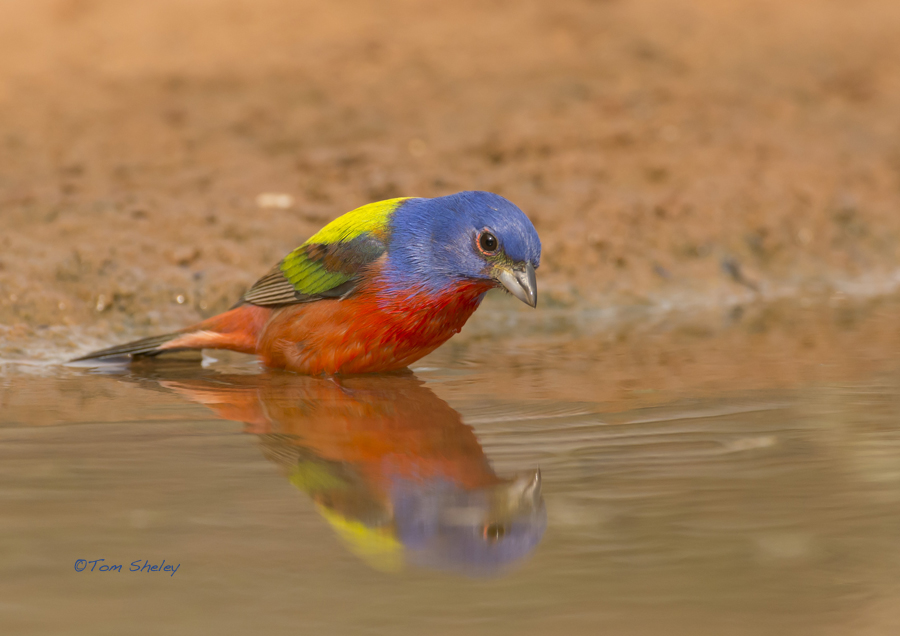
The two wonderful photos below are by Tom Sheley, a major photographic contributor to THE BIRDS OF ABACO. They were taken in Texas, not on Abaco, but I include them because of Tom’s strong connection with the birdlife of Abaco; and because on any view they are fantastic shots…
Painted Bunting reflection LR.Laguna Seca.South TX. 4.16.13.Tom SheleyPainted Bunting dip reflection LR.Laguna Seca.South TX. 4.16.13.Tom Sheley

painted-bunting copy

This is probably my last post until after Christmas, what with one thing and another, so it’s a good opportunity to wish a very Happy Christmas or [insert preferred seasonal appellation] to everyone who visits Rolling Harbour and especially those who, having done so, return for more!

Credits: Tom Sheley (1, 7, 8), Erik Gauger (2), Tara Lavallee (3, 4), Keith Salvesen (5) Sandy Walker (6); Birdorable Cartoons

imagesimagesimagesimagesPainted Bunting, Abaco Bahamas

Unknown's avatar

ABACO BALD EAGLE(S): NEW SIGHTINGS


Bald Eagle - Poquoson, Virginia - Brian Lockwood

ABACO BALD EAGLE(S): NEW SIGHTINGS

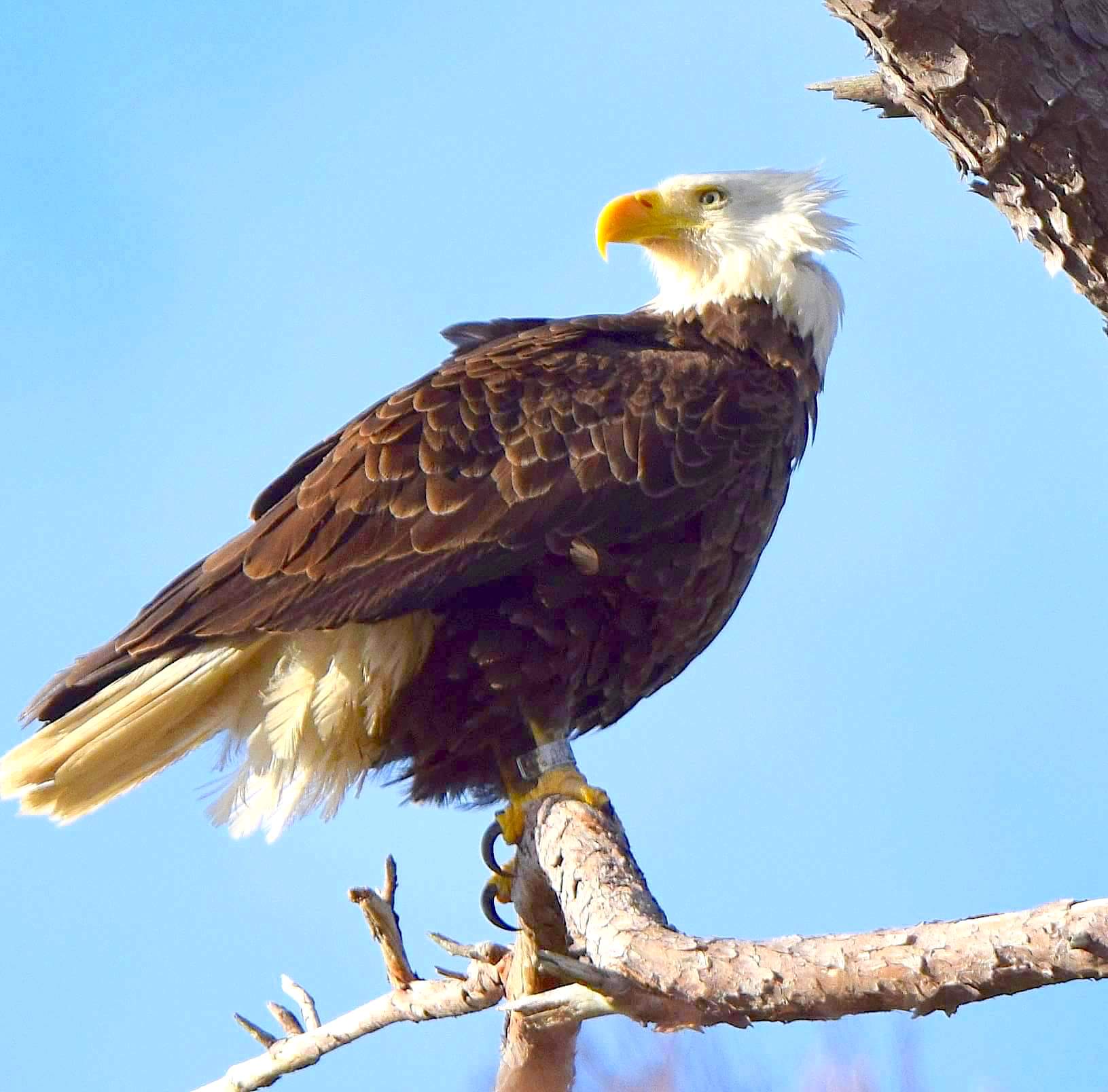
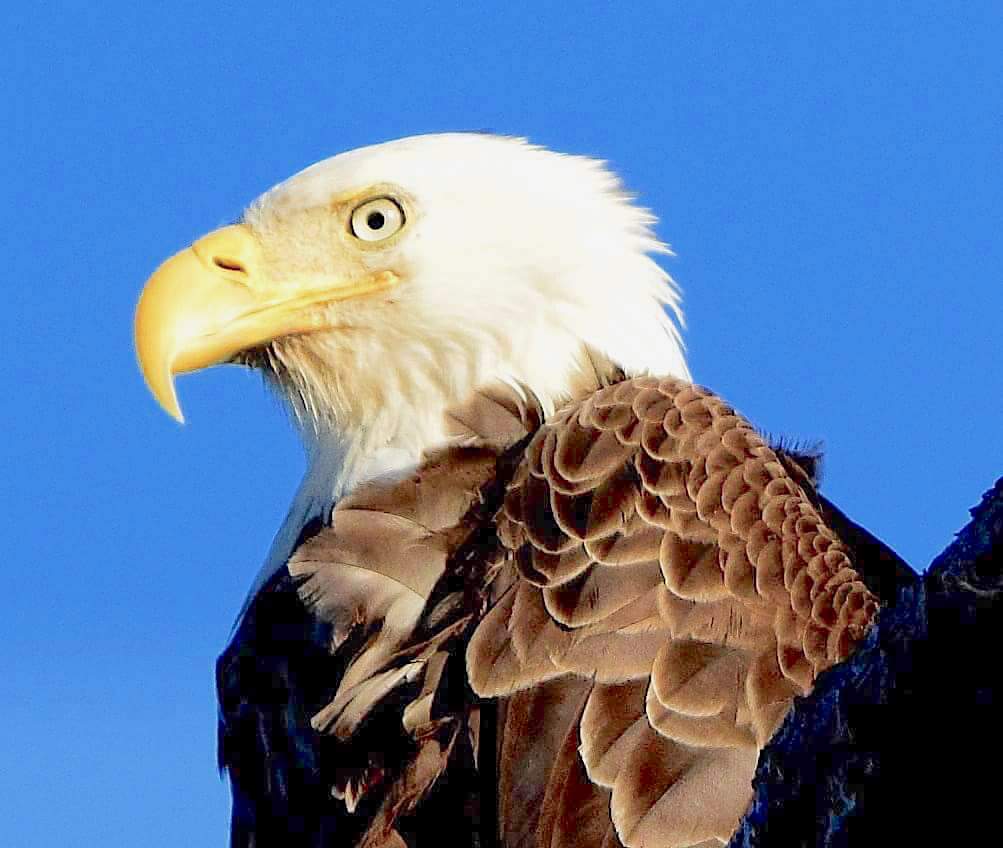
In March, I posted about a bald eagle spotted by a Delphi fisherman out on the Marls near Big Pine Point HERE – a very rare sighting indeed. The only previous Abaco sightings were sporadic, of a single bird, and all since 2000 (see below). 

In May, there was another bald eagle sighting, also on the Marls, this time by Danny Sawyer while out fishing; in the Power Plant area; and ‘Kelly’s Mom’ reported one from the Lubbers Quarters / Tahiti Beach area.

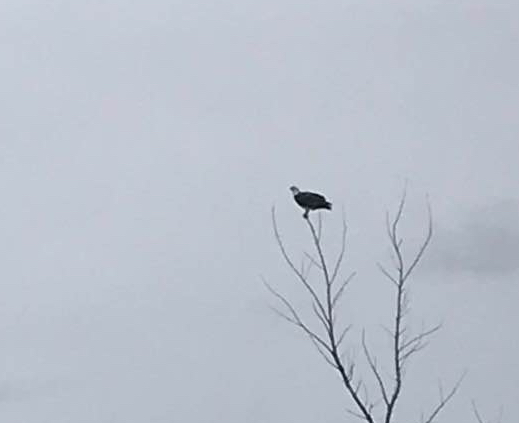
In September came the first photo ever of an Abaco bald eagle, taken by Carol Rivard Roberts in the Cross Harbour area from a considerable distance. 

And now, November, Delphi West & East fisherman, most entertaining boat partner, and friend Howard Pitts from Little Harbour has emailed to say that he saw a bald eagle “off the Cherokee Rd near the cell tower” in the last couple of days. 

BALD EAGLE SIGHTINGS REPORTED ON ABACO SINCE c1950 (= ‘ever’)

  • 2000 December, location unknown – info from Woody Bracey
  • 2001  December – Chicken Farm area – Betsy Bracey
  • 2002 December – over Marls opposite Treasure Cay – Woody Bracey
  • 2004 Autumn – south of Lynard Cay (after hurricane) – Cheryl Noice
  • 2014  Date unknown – circling the power plant – LC
  • ===================================
  • 2017  March – Big Pine Point, Marls – James Cheesewright
  • 2017  Early May – Power plant area – LC
  • 2017  May – Marls – Danny Sawyer
  • 2017  May  – Lubbers / Tahiti Beach area – ‘Kelly’s mom’
  • 2017  September – Cross Harbour – Carol Rivard Roberts (with photo)
  • 2017  November – Cherokee Road – Howard Pitts
  • STOP PRESS… NEW REPORTS 
  • 2017 November – Bahama Palm Shores / 8-mile beach – Steve Roessler
  • 2017 November – Tilloo Bank – Laurie Schreiner (with photo)

Italics = a report in comments on Danny’s FB page; Blue = added reports to me

So now for 2017 we have 6 sightings, including the first sighting with verification by photo. As I said previously, “there really is no mistaking a bald eagle. For obvious reasons it is surely one of the most recognisable raptors of all. And the only Abaco candidates for confusion would be a turkey vulture or an osprey. There’s very little scope for confusion with either”.

A THEORY

I suspect that the 2017 sightings are all of the same lone bird that has somehow strayed over to Abaco and finds the available prey good, and the location congenial. Also, he is undisputed king of the skies. I imagine his daily hunting range is a wide one, which would explain the varied sighting locations. I’m sticking with this theory unless and until 2 eagles are seen together.

 ABACO BALD EAGLE CHALLENGE

Carol Rivard Roberts is the winner of the challenge I set – the first person to capture an Abaco bald eagle on camera. She carries off the traditional yet strangely theoretical and / or symbolic Rolling Harbour bottle of Kalik, and the Kudos that attaches to it.

Reports of any further sightings would be very welcome, with photographs a bonus…

Bald Eagle - Poquoson, Virginia - Brian Lockwood

Credits: all brilliant eagle photos by very kind permission of Brian Lockwood, taken in his backyard in Poquoson, Va. except tiny distant Abaco eagle by Carol Rivard Roberts; amusing cartoon, Birdorable

Unknown's avatar

SANDERLINGS ON DELPHI BEACH, ABACO BAHAMAS


Sanderling, Delphi Beach Abaco Bahamas (Keith Salvesen)

SANDERLINGS ON DELPHI BEACH, ABACO BAHAMAS

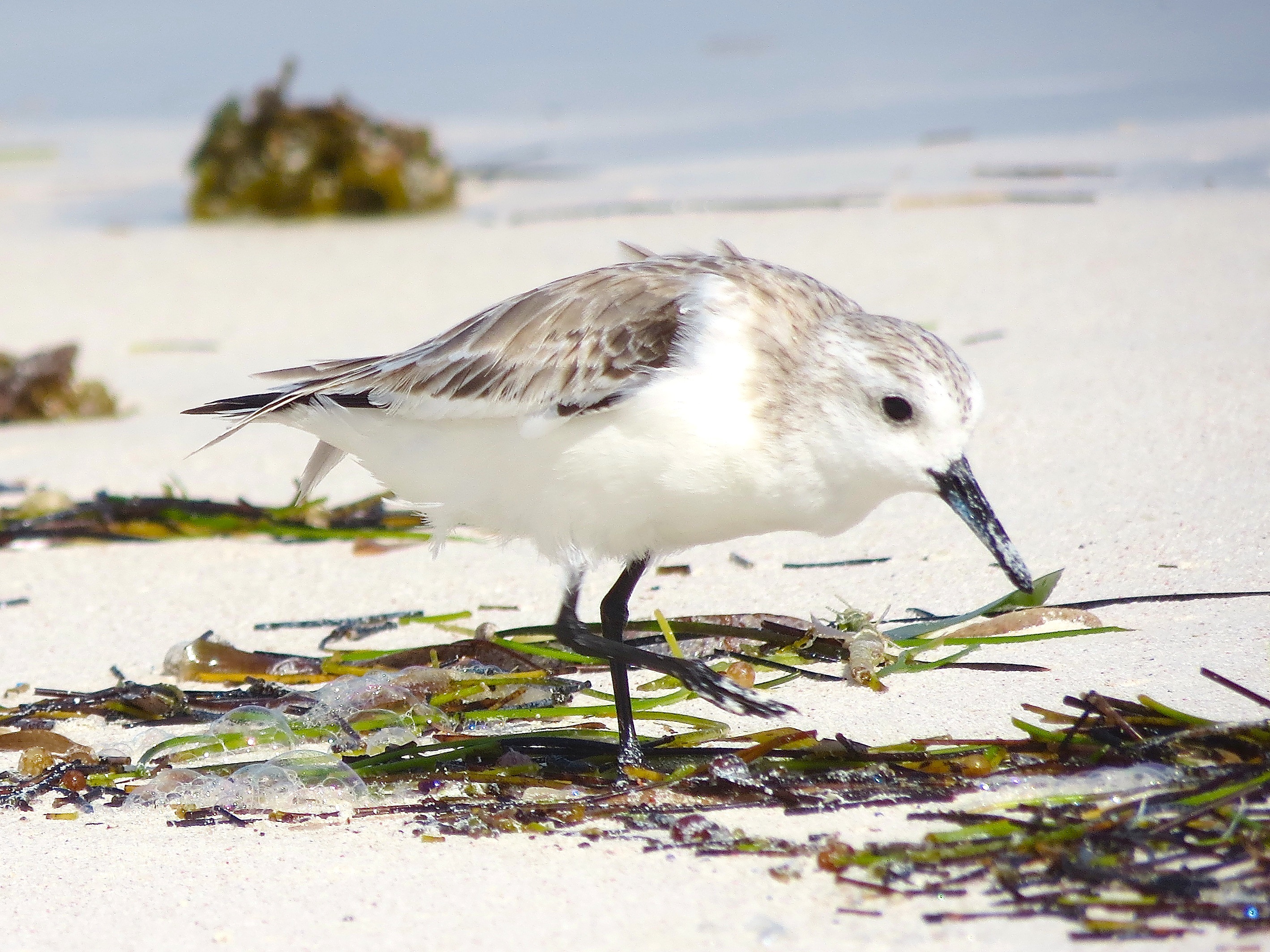
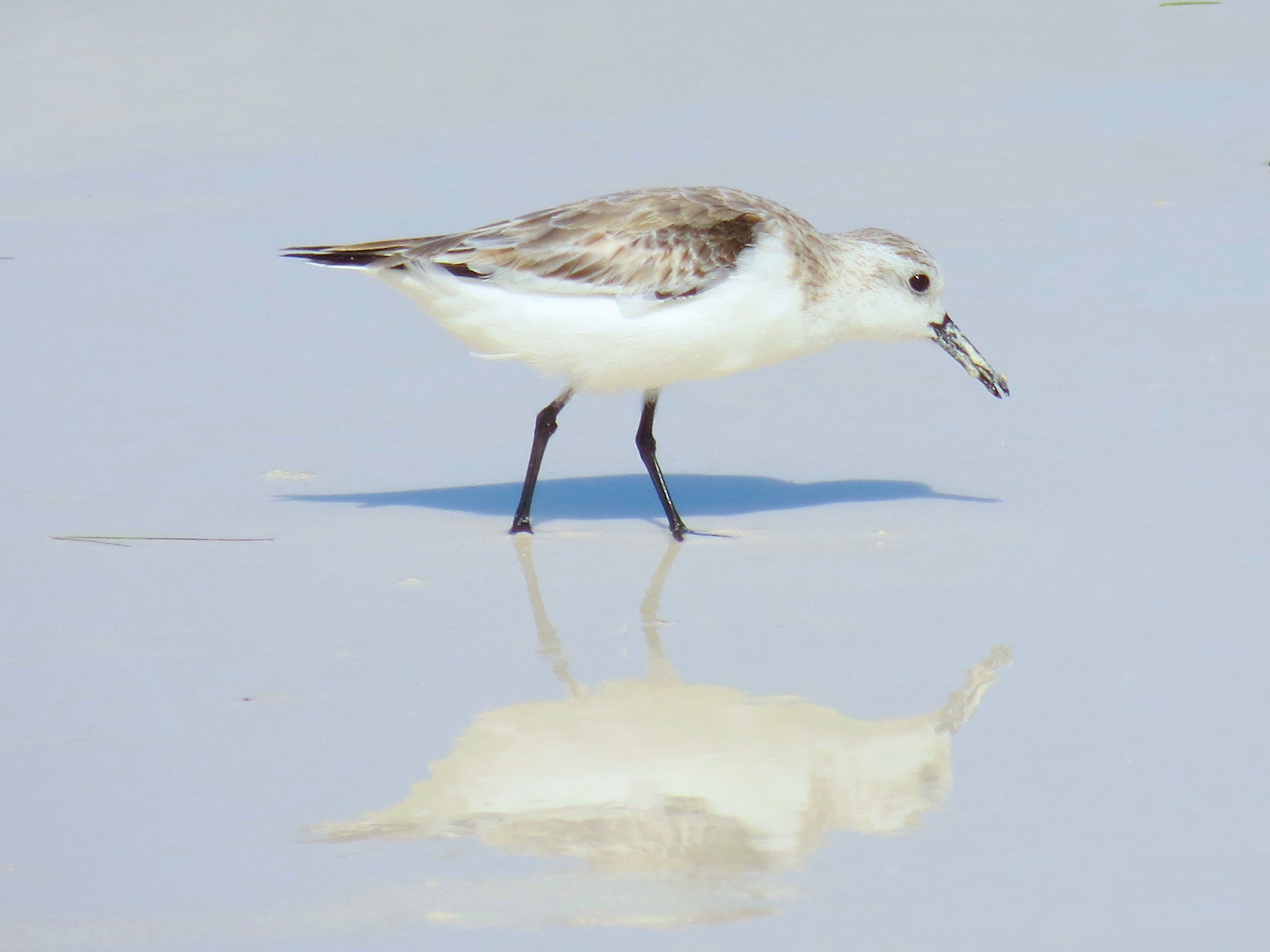
Looking back through some bird photo folders from last year, I came across these sanderlings that I photographed on the beach at Delphi. These little birds are far from rare, but watching a flock of them scuttling back and forth on the sand, in and out of the tide, is always a treat. And as you will notice, when they are foraging in earnest they not only stick their bills into the sand right up to the base… they go for total immersion of the head!

Sanderling, Delphi Beach Abaco Bahamas (Keith Salvesen)Sanderling, Delphi Beach Abaco Bahamas (Keith Salvesen)Sanderling, Delphi Beach Abaco Bahamas (Keith Salvesen)Sanderling, Delphi Beach Abaco Bahamas (Keith Salvesen) Sanderling, Delphi Beach Abaco Bahamas (Keith Salvesen)

All photos: Keith Salvesen, Rolling Harbour Abaco

Unknown's avatar

LEAST (BUT NOT LAST) SANDPIPERS ON ABACO


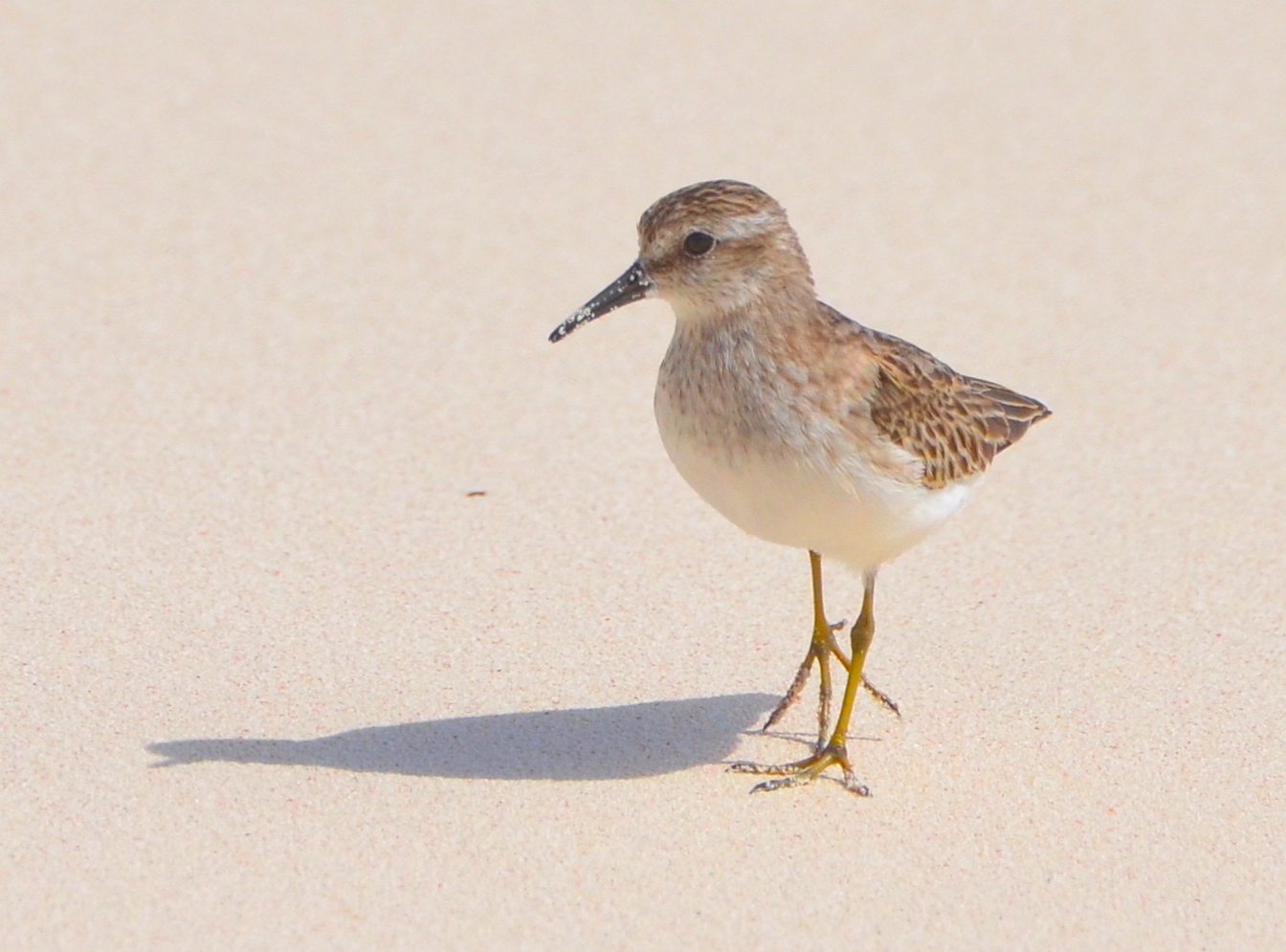
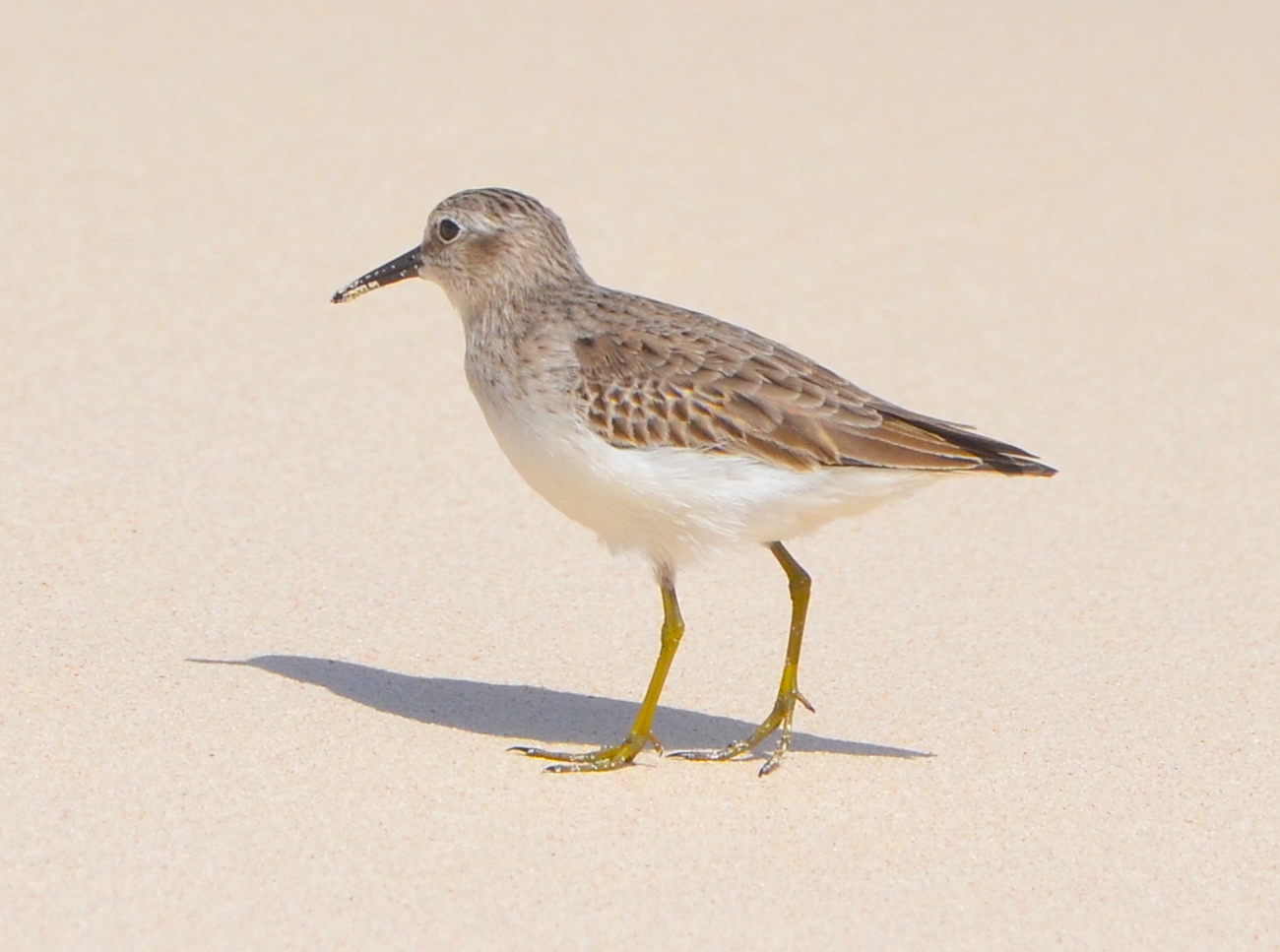
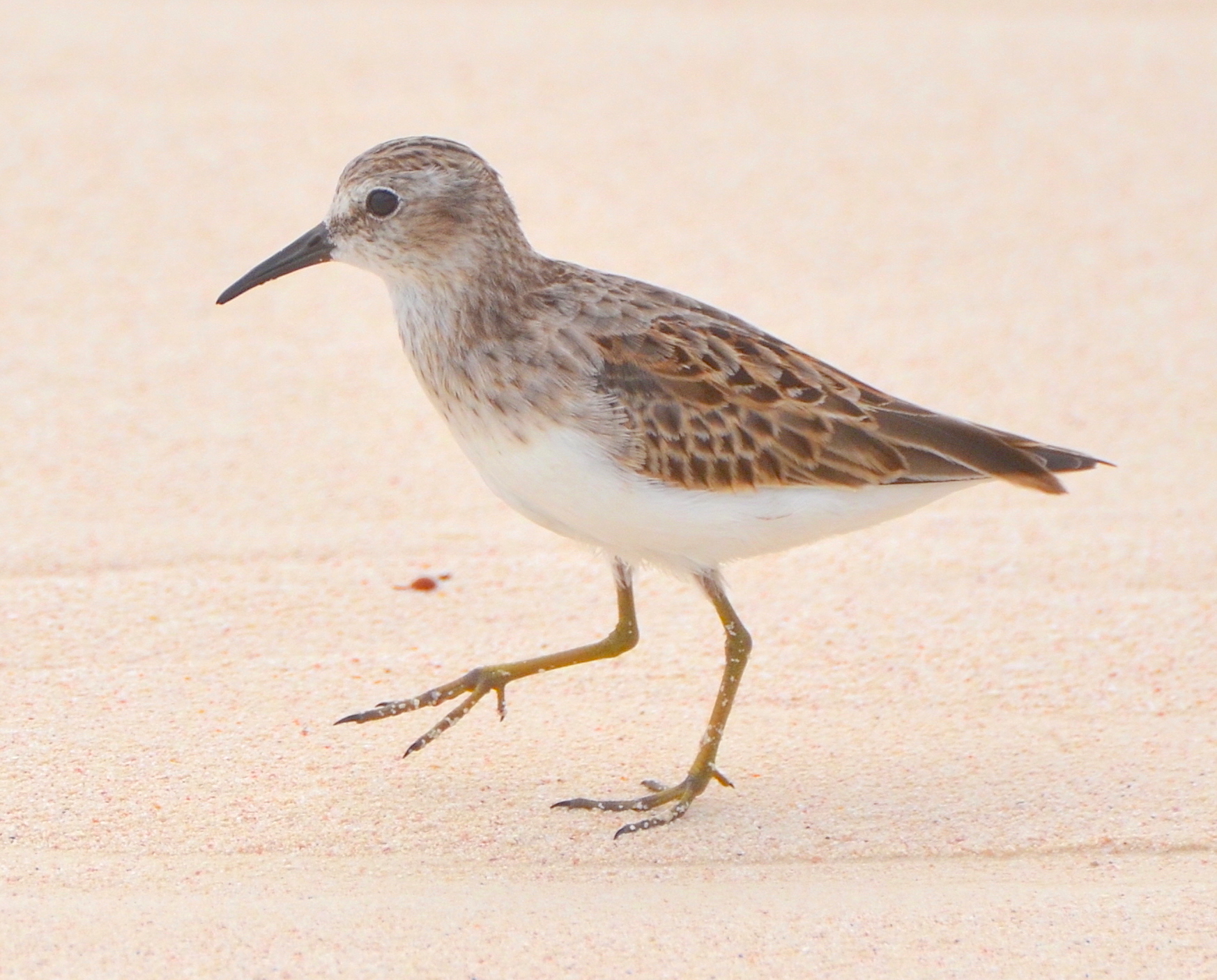
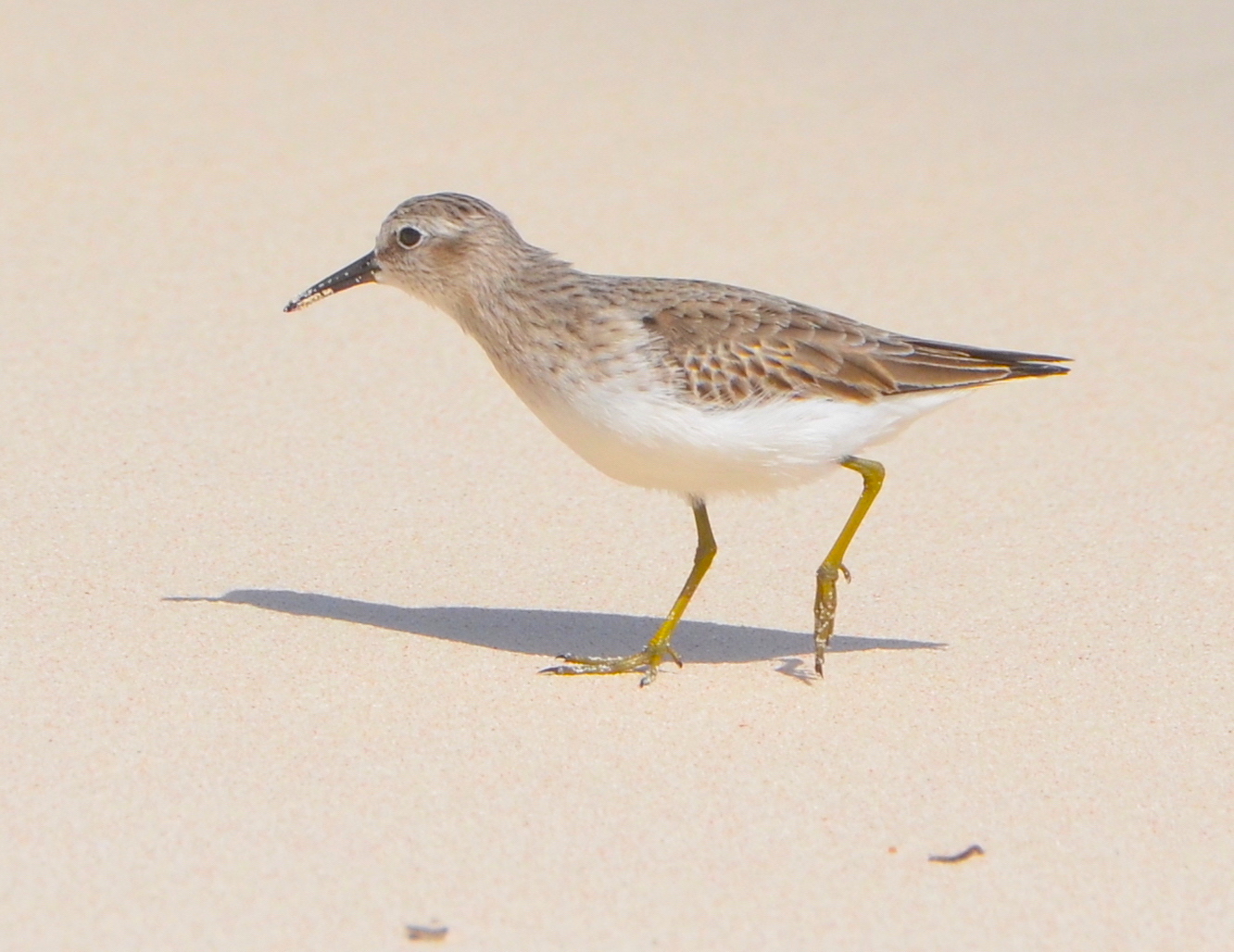
Least Sandpiper, Delphi Beach, Abaco (Charles Skinner)

LEAST (BUT NOT LAST) SANDPIPERS ON ABACO

There are 23 sandpiper species recorded for Abaco. Of those, 4 or 5 are vanishingly rare vagrants recorded once or twice in recent history (i.e. since about 1950).

Discounting those, the ones you are likely to encounter range from the large  (whimbrel, yellowlegs, dowitchers, stilts) to the small. Or, in the case of the least sandpiper, the least big of all. They are bigly little. Least Sandpiper, Delphi Beach, Abaco (Charles Skinner)

The binomial name of the least sandpiper – Calidris minutilla – is an apt clue to their size, the second part being Latin for “very small”. On Abaco, they are fairly common winter visitors, and each season a handful of them make their home on the beach at Delphi, where these photos were taken. Least Sandpiper, Delphi Beach, Abaco (Charles Skinner)

Along with their small sandpiper compadres such as SANDERLING, these busy, bustling birds of the shoreline are the ones known as “peeps” (also as stints). Least Sandpiper, Delphi Beach, Abaco (Charles Skinner)

Least Sandpipers breed in the northern tundra areas of North America. Like many or most shorebirds, newly hatched chicks are able to fend for themselves very quickly. It sounds unlikely I know, but within a couple of weeks or so they have fledged. Least Sandpiper, Delphi Beach, Abaco (Charles Skinner)

The birds forage on mudflats, in the tideline on beaches, and in wrack. They will probe into soft sand, sometimes the full length of their beak. They will even burrow right under weed to get at the concealed goodies. Their diet consists mainly of small crustaceans, insects, and snails.Least Sandpiper, Delphi Beach, Abaco (Keith Salvesen)

Credits: All photos by Charles Skinner (contributor to “The Birds of Abaco”) except the wrack-burrowers above, by Keith Salvesen (also on the Delphi Beach).

Least Sandpiper, Delphi Beach, Abaco (Charles Skinner)

Unknown's avatar

HURRICANE IRMA AFTERMATH: ABACO’S SIDESWIPE(S)


Hurricane Irma, Abaco

HURRICANE IRMA HITS CHEROKEE, ABACO, BAHAMAS

HURRICANE IRMA AFTERMATH: ABACO’S SIDESWIPE(S)

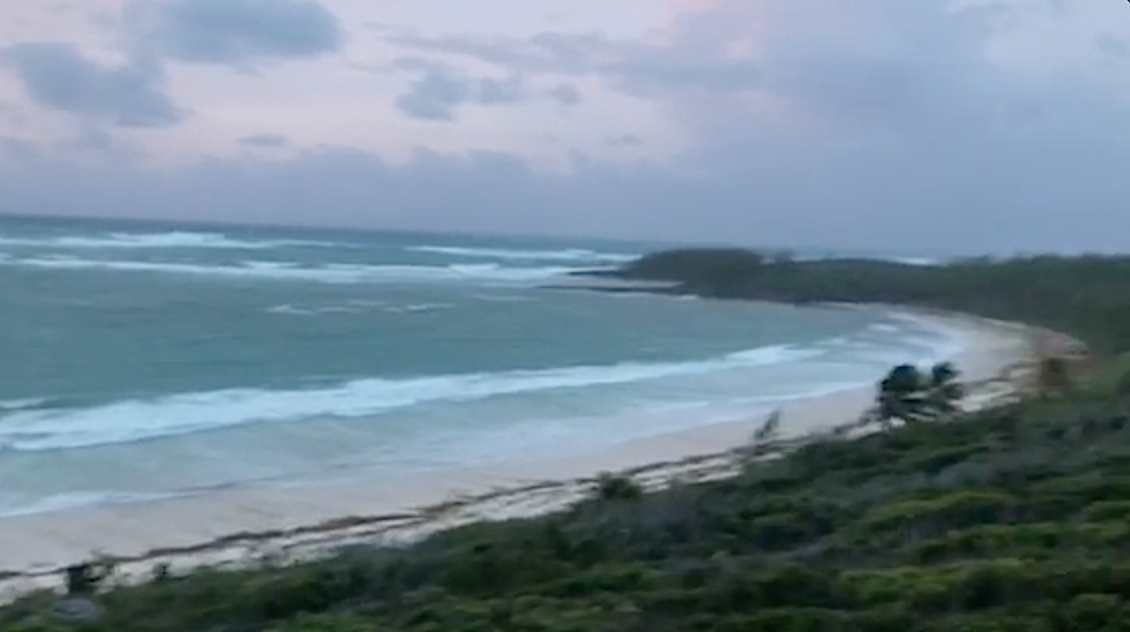
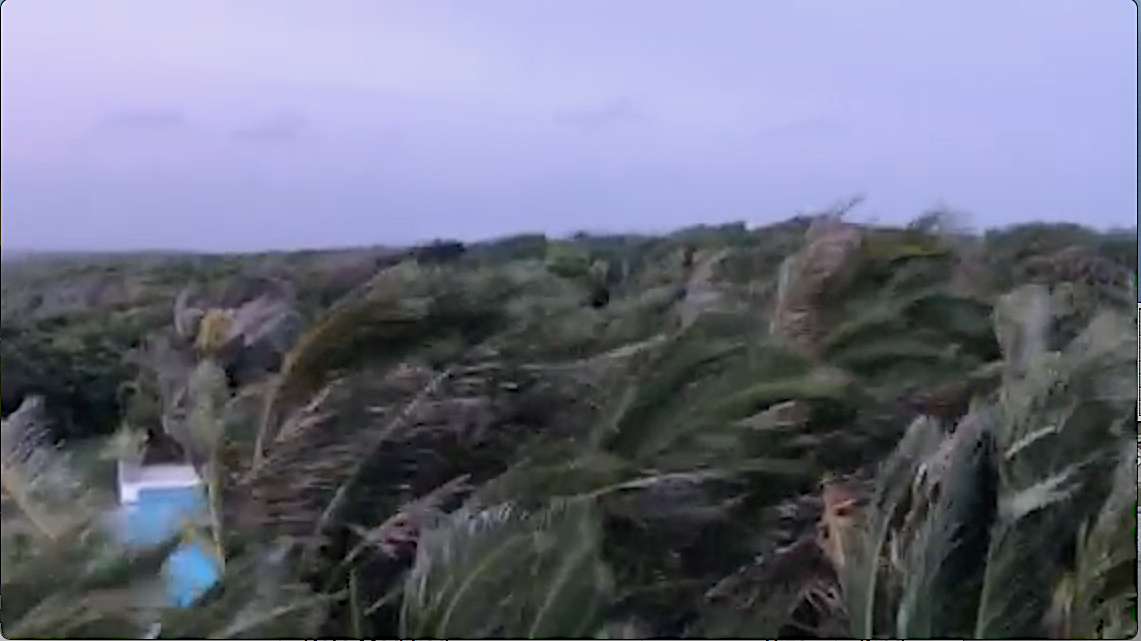
Hurricane Irma barrels on northwards as Florida begins to count the cost.  Abaco has had its turn to experience the awesome power of this brute of a storm. Or make that turns (plural) because such a massive storm 400 miles across, spiralling longs strands of filthy weather outwards with centrifugal menace, can strike more than once as the main storm passes further off.

Hurricane Irma, Abaco

Thanks to the relatively late shift of the storm’s path to the west, there was no direct hit on Abaco (as was once forecast). High winds and heavy seas, but none of the cruel devastation elsewhere that we have all been watching and reading about with horror and sympathy for the victims.

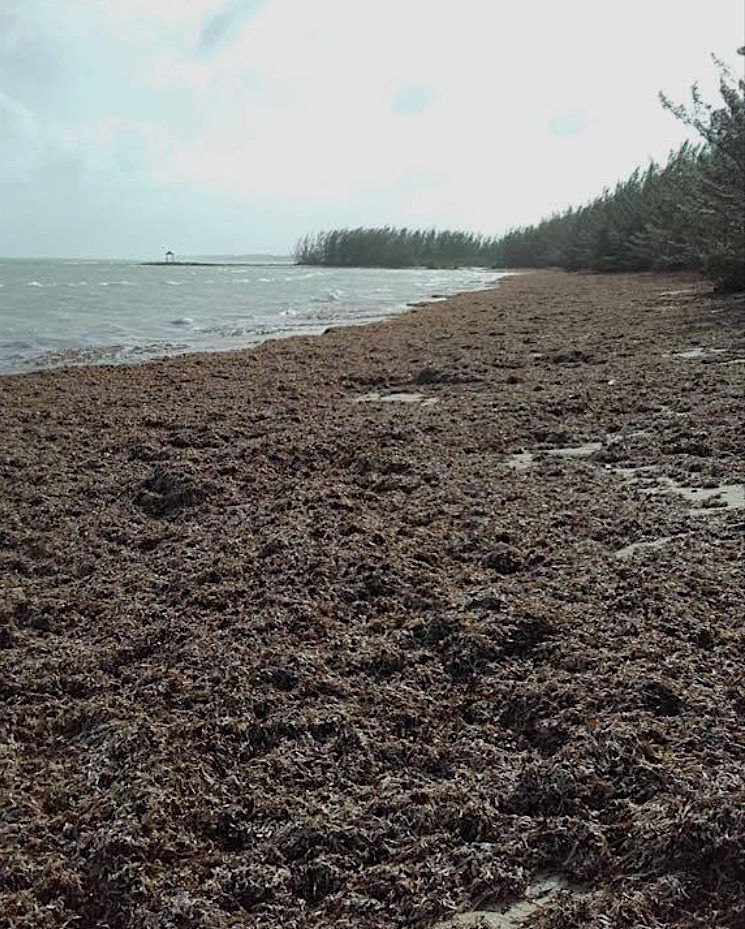
Seaweed covering the beach at Casuarina, AbacoHurricane Irma, Abaco

By Saturday evening, relieved messages were already being posted. Later, an official statement confirmed limited harm and damage. The airport was reopened. Albury’s Ferries announced the forthcoming resumption of services. Gradually, the overall picture took shape as more reports and messages came in from the mainland and the cays.

Tahiti Beach, Elbow Cay, Abaco

At Delphi, Jason confirmed that the worst of the storm passed quite quickly and that there was no structural damage, though doubtless the gardens have taken a beating – a minuscule inconvenience comparatively.

Hurricane Irma, Abaco    Hurricane Irma, AbacoHurricane Irma, Abaco

By yesterday morning, the only area I hadn’t seen anything about was the west side of Abaco – Sandy Point. Might things have been different -perhaps worse –  on the west coast? Then I heard from BMMRO HQ that the situation was much as elsewhere. The whales and dolphins of the Bahamas will continue be researched when the boat can put out to sea…

Atlantic Spotted Dolphins seen off Abaco before Irma came alongAtlantic Spotted Dolphins, Abaco, Bahamas (BMMRO)

Like the aftershocks of an earthquake, bouts of high winds and huge gusts have continued to pass over; and in places the sea has been sucked out from the beaches. There have been outages of course (not a novel experience even in calm times); and I’ve seen reports of interruption with water supplies. But I think it can be said that Abaco has escaped quite lightly – and certainly in comparison with the terrible devastation elsewhere.

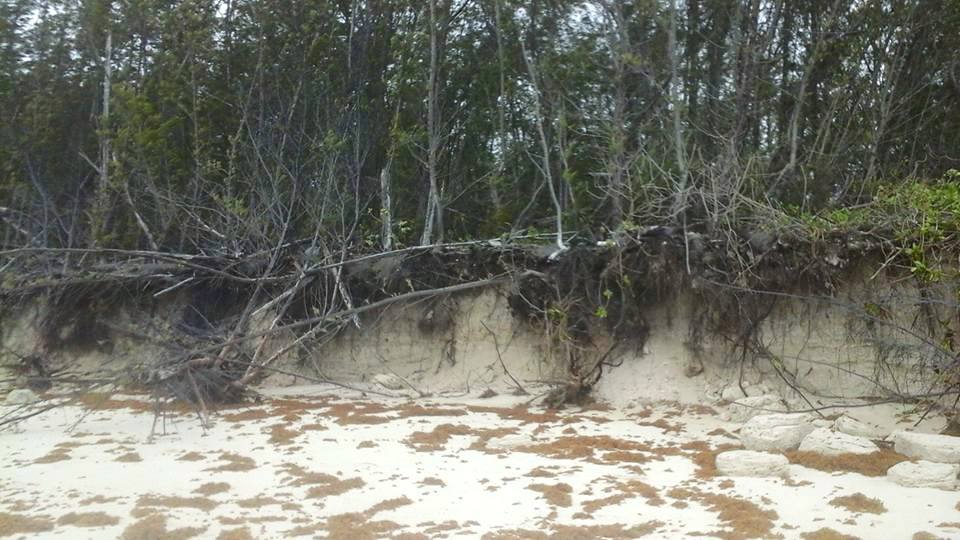
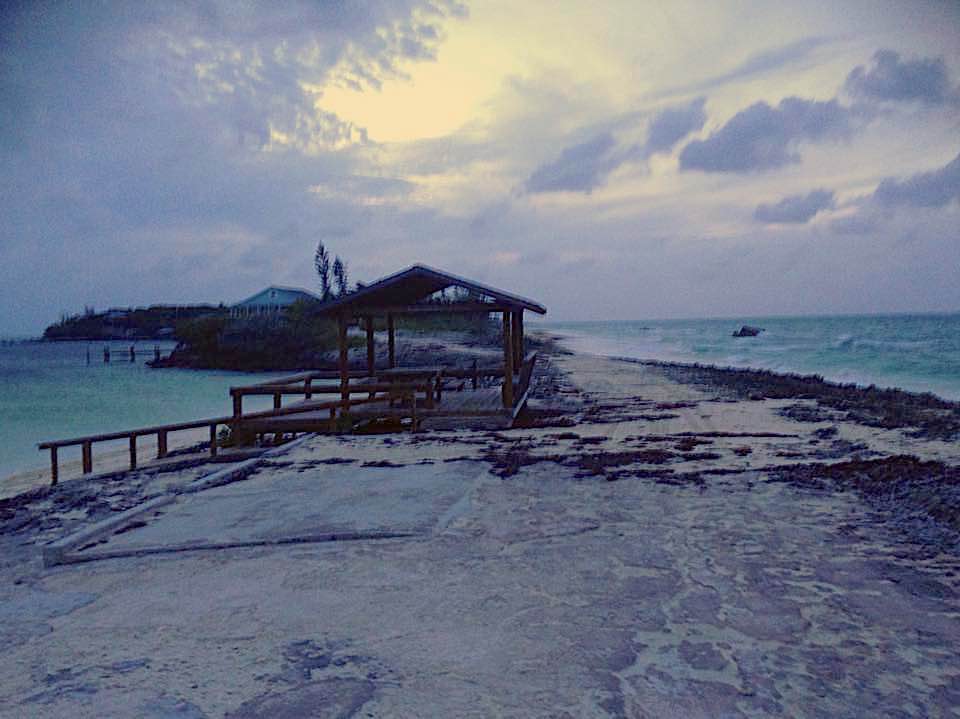
Roof tiles have been lost, but there seems to have been limited structural damage. Trees have been trashed of course, and there has been plenty of beach erosion. Many beaches have been smothered in seaweed. But all-in-all, Abaco has fared alright, which is not to say that people’s thoughts have been absent from those who have taken the hit and borne the brunt of Irma’s rage.

Bahama Palm Shores, Abaco

The Low Place, Man-o-War Cay

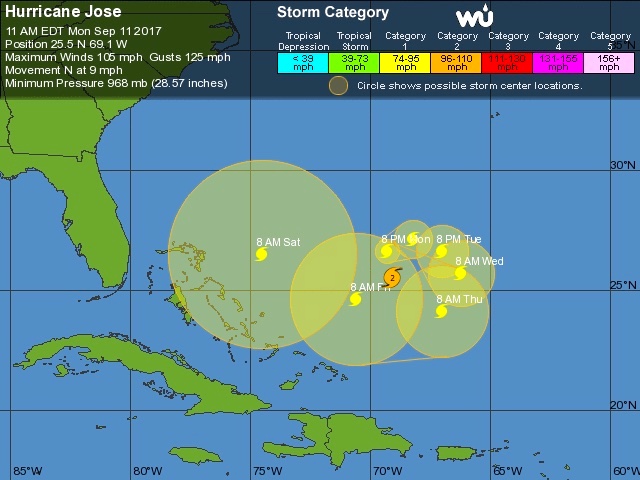
WHAT ABOUT HURRICANE JOSE?

The tracking for this pursuer of Irma has appeared to show the storm going round in circles in mid-Atlantic. Until quite recently. This morning’s prediction shows a determined move to the west towards the end of the week. One to keep a very close eye on still.

WHAT ARE THE VIEWS FROM SPACE RIGHT NOW?

NASA-NOAA’s Suomi NPP satellite: night-time view of Irma over Florida

NASA / GOES East satellite: daytime view of the storm moving north over Florida

Credits: Karen Eldon (1); Olivia Patterson Maura (2, 9, 10); Andrea Janeen Sands Albury (3); Abaco Buzz (4); Jason Prangnall (5, 6); Dive Abaco (7); BMMRO (8); Beth Nace (11, 12, 13); Charmaine Albury (14); Wunderground for the Jose Tracker; NASA / NOAA / GOES for the space shots 

Unknown's avatar

DOUBLE DELPHI: TWICE THE CRAIC, TWICE THE KALIK


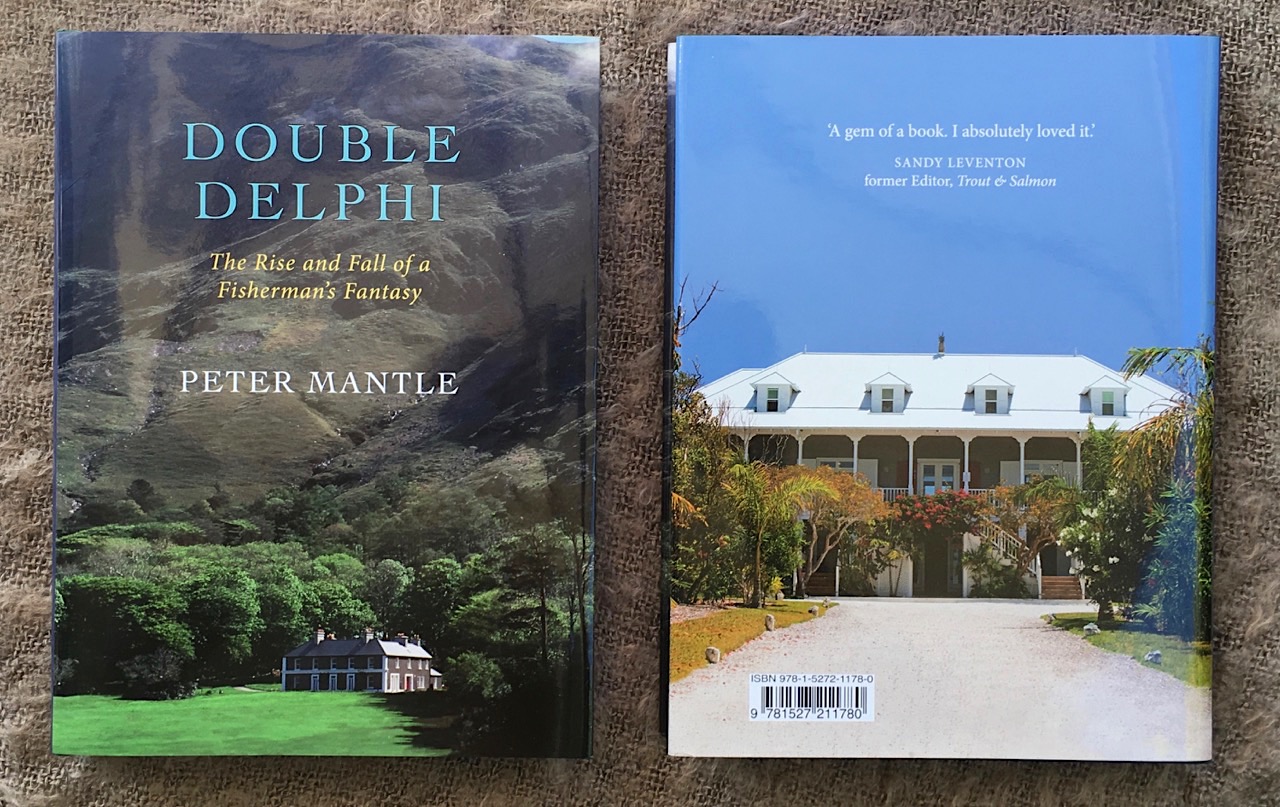
Double Delphi by Peter Mantle

DOUBLE DELPHI: TWICE THE CRAIC, TWICE THE KALIK

For some years those who know Peter Mantle have been willing him to write about his two very different Delphis: East (Co. Mayo Ireland) and West (Abaco, Bahamas). It is often said that ‘everyone has a book in them’, but most are without lively and engaging material to work with, or a talent for writing in the first place.  Peter has plenty of these assets: great stories to tell and the writing skills to bring them alive. I’m not being paid for a creepy encomium, but I’ve read ‘Double Delphi’ in its various iterations during the winding road to publication (it has been a prominent feature at Rolling Harbour Towers during production). It’s exactly what we all hoped for!

Double Delphi by Peter Mantle

I don’t want to issue ‘spoiler alerts’, and I’m not proposing to provide a cheery synopsis of Peter’s book. For all those who have loved Delphi Lodge in Ireland; for all those who have loved the Caribbean twist to the Delphi experience on Abaco; for all those who love fishing; and for all those who have admired Peter for his astonishing creation of two fabulous fishing establishments over 35 years – this book is for you. Sandy Leventon, well-known former editor of the indispensable Trout & Salmon Magazine has read the book: his views are on the back cover.

Double Delphi by Peter Mantle

Double Delphi contains plenty of incident. There are fishy tales of course; some people great and good; some perhaps less so; a gold rush; legal drama; financial drama; conflict and personality ‘mis-alignments’; and in amongst it all, hard work, success, craic and good times as Peter bestrides the Atlantic with his ambitious twin piscine projects. There seems to be a lot of whiskey along the way, too.

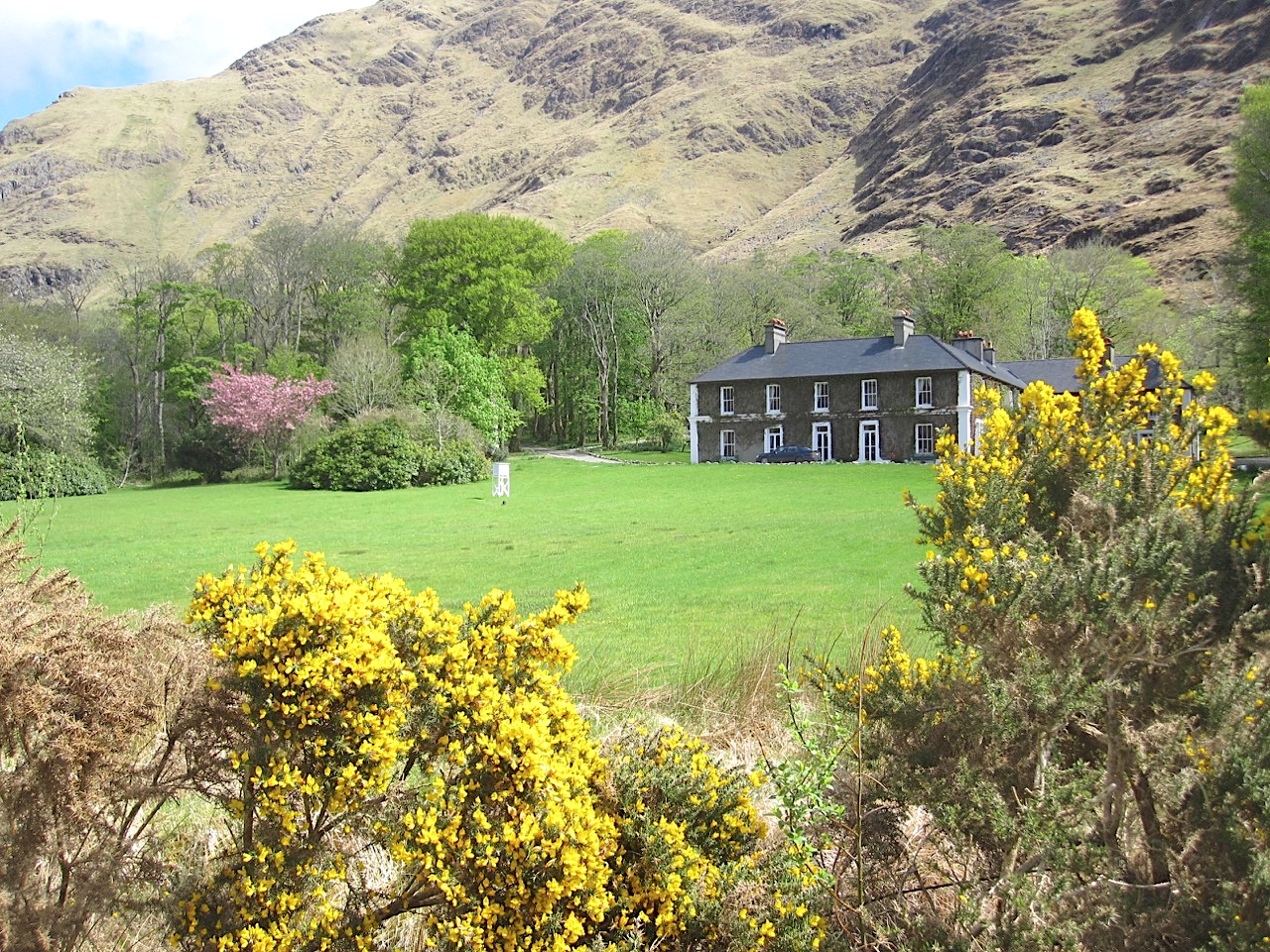
DELPHI LODGE IN 2011, RESTORED TO ITS FORMER GRANDEURDelphi Lodge, Co. Mayo, Ireland (Keith Salvesen)

Many readers will head straight to the index at the back of the book, looking eagerly to see if their own roles in the Delphi sagas have been recorded. They will be disappointed: there isn’t an index! But the chapter headings are promising, and include Of Lice & Men; Princes & Papers; Stars & Gripes; and Bahamian Rhapsody. And there are two sections with plenty of photographs (many historic) to enjoy – two examples shown below.

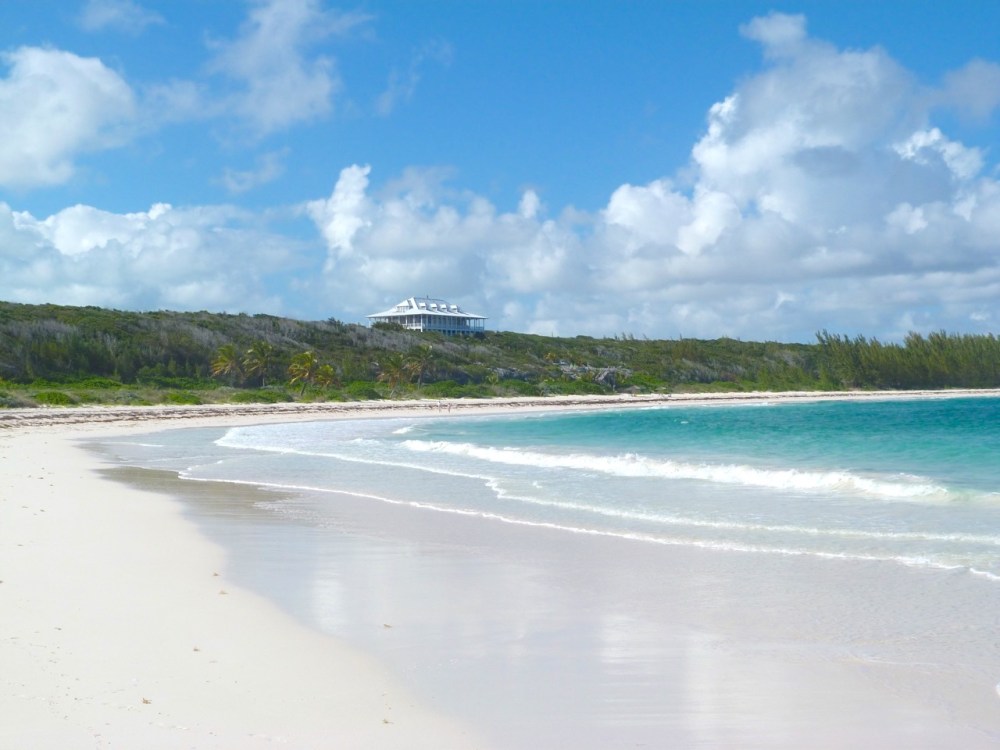
DELPHI (WEST) ON ABACO – ‘SOMEWHERE IN THE MIDDLE OF NOWHERE’Delphi Club, Abaco, Bahamas (Keith Salvesen)

PM’S FIRST DELPHI SALMON 1986

Double Delphi is imminently to be launched, and can easily be bought right now by clicking this linkhttps://wallopbooks.com/order-form/  (there’s some more blurb there too).

A YOUTHFUL PETER CONTEMPLATES THE FUTURE

All photos: KS / Rolling Harbour except B&W x 2 from the book

Unknown's avatar

CLAPPER RAILS ON ABACO: A SMALL SHOWCASE


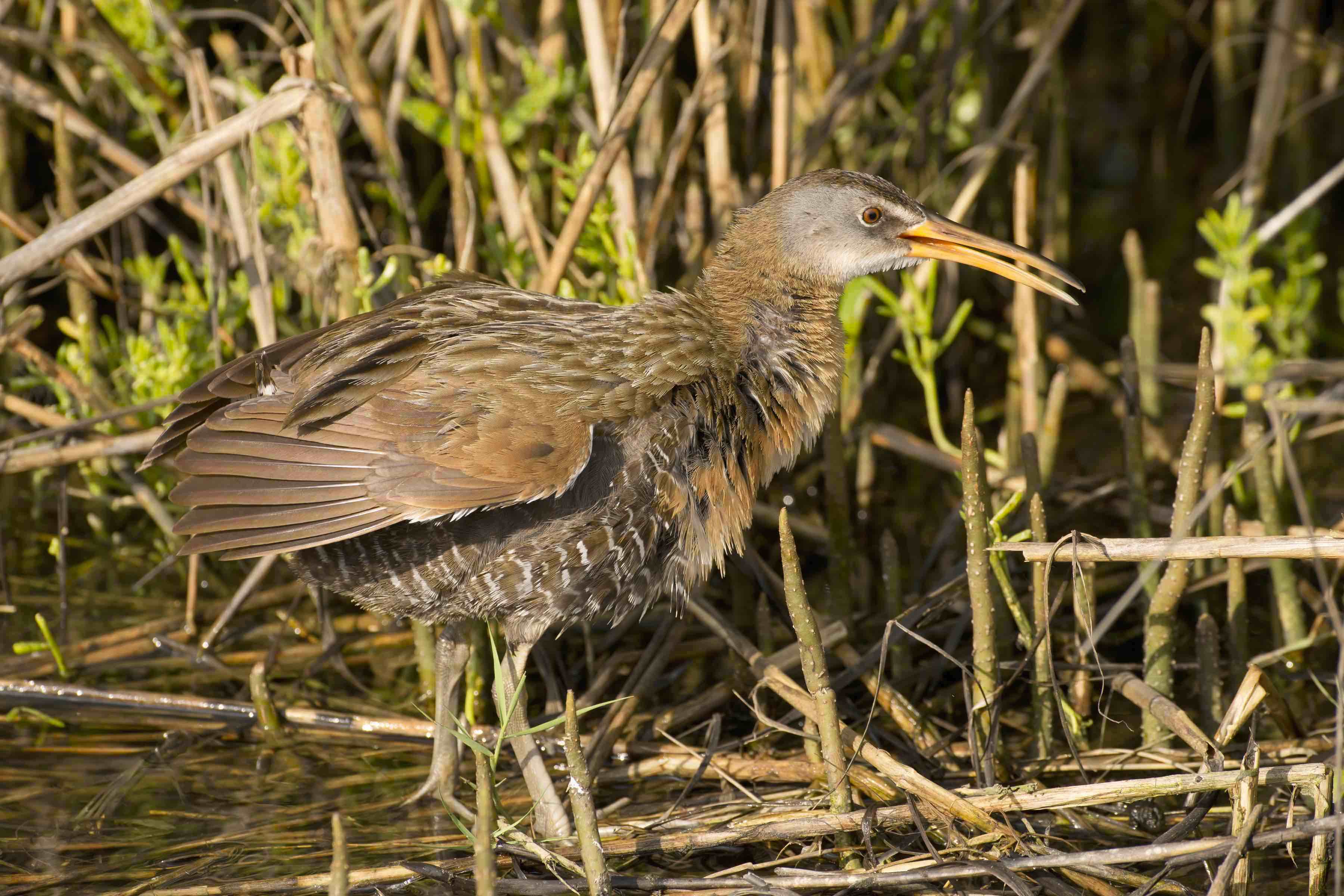
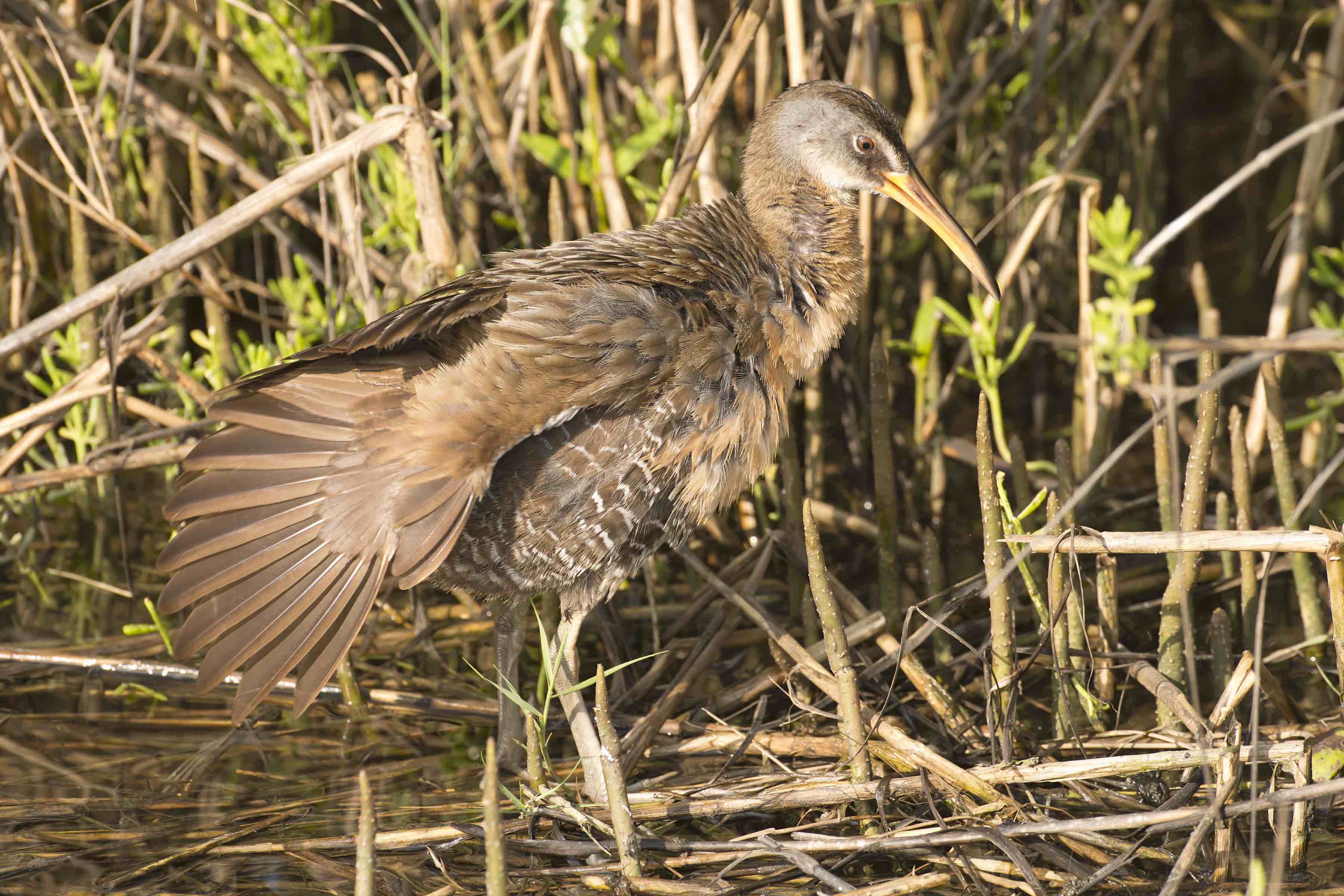
Clapper Rail, Abaco, Bahamas (Tom Sheley / Birds of Abaco)

CLAPPER RAILS ON ABACO: A SMALL SHOWCASE

Just over 3 years ago, THE BIRDS OF ABACO was published and launched at the Delphi Club. The book was intended to showcase the wonderful and varied bird life on Abaco – home to endemics, permanent residents, seasonal residents, and a wide variety of migrating transients. The book has been most generously received and supported – though I have to report that already its definitive checklist (dating from 1950) has become outdated with the recording of 6 additional species on Abaco, featured elsewhere in this blog.

Clapper Rail, Abaco, Bahamas (Tom Sheley / Birds of Abaco)

Tom Sheley was one of the main photographic contributors to the book, and I had the good fortune to coincide with one of his trips to Abaco, when he was armed with significant photographic weaponry; and to accompany him on some of his photographic day trips (not including the early morning ones, in my case). This clapper rail is one of my favourites of his photo sequences of a bird being a bird – preening, stretching, calling – in its own habitat.

Clapper Rail, Abaco, Bahamas (Tom Sheley / Birds of Abaco)

My one regret about my involvement  in producing the book (it took 16 months) and more generally in the wildlife of Abaco is that I have entirely failed to progress to sophisticated (expensive) photographic equipment capable of producing images the quality of Tom’s. Yes, I’ve moved on from compacts (ha!) to bridge cameras (Panasonic Lumix + lens extender), and some results ‘make the cut’. But my move up to a Canon SLR was mainly disastrous, and when eventually I inadvertently drowned it (I overbalanced while photographing shorebirds from breaking waves. Total immersion. Total stupidity.) I felt an unexpected sense of relief. A blessing really – I never understood it, nor in my heart of hearts (if I’m honest) really wanted to… But my feeble struggle made me realise and appreciate the enormous skill of those like Tom who take ‘National Geographic’ quality photographs. It’s not just the equipment – it’s knowing exactly how to use it, and often in a split second…

Clapper Rail, Abaco, Bahamas (Tom Sheley / Birds of Abaco)

Photos by Tom Sheley – with thanks for the adventures

Unknown's avatar

RUDDY TURNSTONES ON ABACO: BEACH NOSHING


Ruddy Turnstones, Delphi Beach Abaco Bahamas (Keith Salvesen)

RUDDY TURNSTONES ON ABACO: BEACH NOSHING

Some birds are named for the sounds they make (bobwhite, chuck-will’s-widow, pewee, killdeer). Some are named for their appearance (yellow-rumped warbler, painted bunting). And some are named for what they do (shearwater, sapsucker – but definitely NOT killdeer). The ruddy turnstone Arenaria interpres is in the last two of these categories: it looks ruddy and it literally turns stones to get at the goodies underneath.

Ruddy Turnstones, Delphi Beach Abaco Bahamas (Keith Salvesen)

And they don’t just turn stones to look for food. Someone with a lot of patience has defined 6 specific methods by which a turnstone forages for food:

  • Turning stones by flicking them with its beak
  • Digging using its beak to flick away sand or earth (see video below)
  • Routing around in piles of seaweed to expose food under it
  • Surface pecking with short, shallow pecks for food just below the surface
  • Probing by simply sticking its beak deep into soft sand or ground
  • Hammer-probing to crack open a shell and get at the occupant

Ruddy Turnstones, Delphi Beach Abaco Bahamas (Keith Salvesen)

In these photos taken on a rather gloomy day on the Delphi beach, a combination of mainly digging and routing is going on. Note the sandy beak of the RUTU below, right up to the hilt.

Ruddy Turnstones, Delphi Beach Abaco Bahamas (Keith Salvesen)Ruddy Turnstones, Delphi Beach Abaco Bahamas (Keith Salvesen)

This short video shows how effective the RUTU method is. It was fascinating to watch the team work their way through and around the piles of weed on the beach, flicking sand vigorously in their quest for sandflies or whatever. Watch the sand fly! Pity it wasn’t a sunny day – the photos might have looked a bit more cheerful… 


All photos Keith Salvesen

Unknown's avatar

RED-LEGGED THRUSHES: MAKING EYE-CONTACT ON ABACO


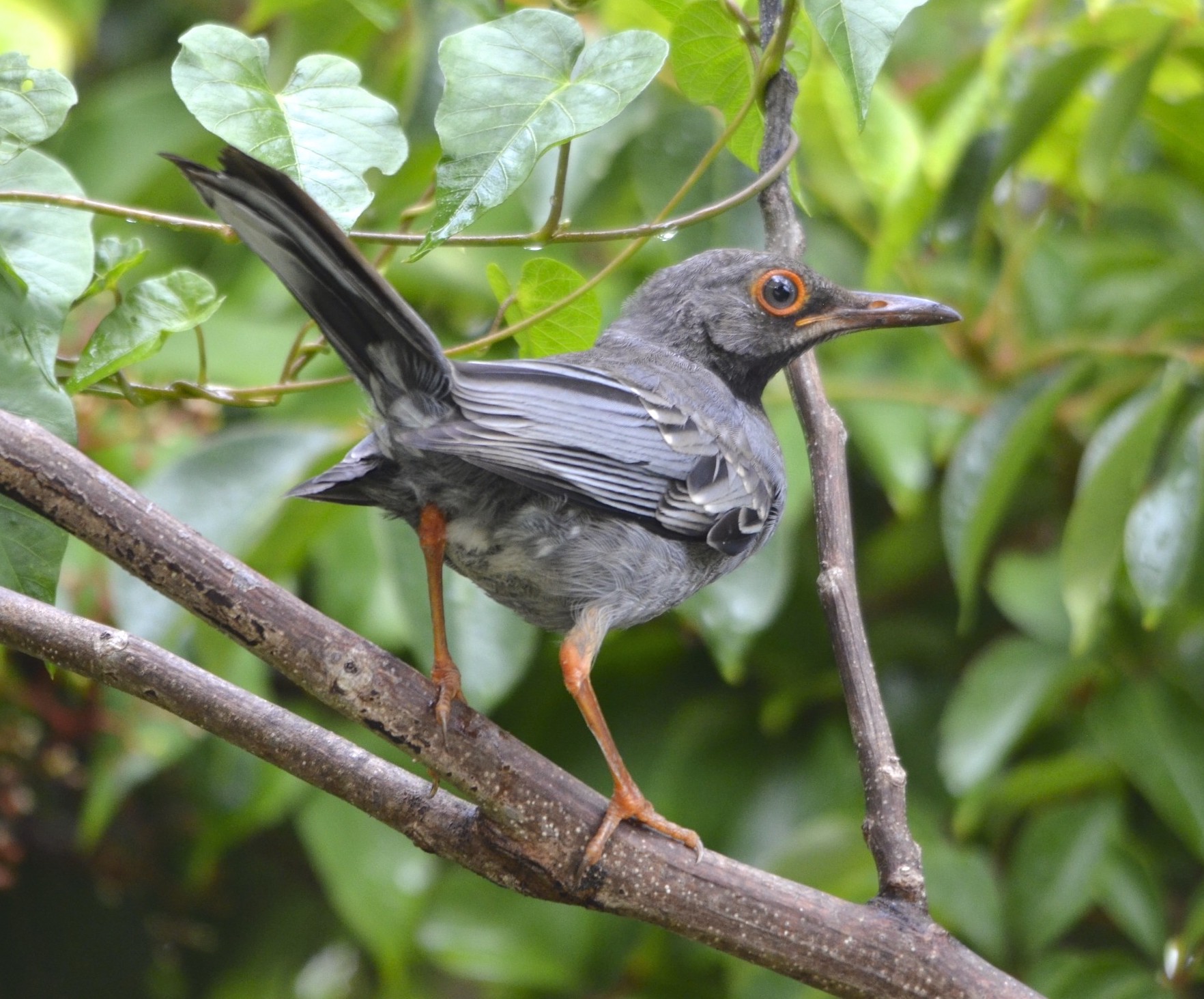
Red-legged Thrush, Abaco, Bahamas (Tom Sheley)

RED-LEGGED THRUSHES: MAKING EYE-CONTACT ON ABACO

I see it is ‘literally’** years since I last wrote about these lovely, accessible birds, the only permanent resident breeding thrush species on Abaco (out of 8). The post – OL’ RED-EYES IS BACK – featured mainly my own photos, plus one by Mrs RH. With a whole lot of more recent photos, it’s time to revisit these cheery birds. I promised something brighter after two rather sombre shearwater die-off posts – (incidentally, a far wider problem than just in the Bahamas, including NC & Cape May). Here it is.

A RED-LEGGED, RED-EYED GALLERY

Red-legged Thrush, Abaco, Bahamas (Peter Mantle)

Red-legged Thrush, Abaco, Bahamas (Gerlinde Taurer)

Red-legged Thrush, Abaco, Bahamas (Peter Mantle)

Many of the birds shown here were photographed in or around the grounds of Delphi. More recently, they have to an extent been displaced by red-winged blackbirds which are of course very fine birds but in large numbers sound (may I say this? Is this just me?) quite irritating after a while. Whereas the thrush of course has a sweet and melodious song, like this (my own recording – turn up the vol):

Mr & Mrs Harbour’s Handiwork at DelphiRed-legged Thrush, Abaco, Bahamas (Keith Salvesen)

Red-legged Thrush, Abaco, Bahamas (Keith Salvesen)

Red-legged Thrush, Abaco, Bahamas (S Salvesen)

As I may have mentioned before (impatient reader: ‘yes, yes, you did’), the eyes of the RLT are at least as prominent a feature as their legs. Lots of birds have red legs. Very few have such remarkable bright, fiery eye-rings, even in a youngster.

Red-legged Thrush, Abaco, Bahamas (Charles Skinner)Red-legged Thrush, Abaco, Bahamas (Charles Skinner)

Red-legged Thrush, Abaco, Bahamas (Erik Gauger)

This photo from birdman Tom Sheley is my favourite – a perfect compositionRed-legged Thrush, Abaco, Bahamas (Tom Sheley)

** This means it really is literally years (4), not in the modern modified sense of ‘not actually literally’, as  in “I am literally dying of hunger”. Unless you are exceptionally unfortunate, while you have the breath to say you are, you are literally not doing so…

FUN FACT

There is quite literally no song since 1950 with the word ‘thrush’ in the title. Hard to fathom why… One or two songs have a thrush buried away in the lyrics somewhere. Blackbirds have done rather better in this respect… 

Photo Credits: Tom Sheley (1, 11); Peter Mantle (2, 4); Gerlinde Taurer (3); Mr & Mrs Harbour (5, 6, 7); Charles Skinner (8, 9); Erik Gauger (10). Lo-fi audio recording: RH

Unknown's avatar

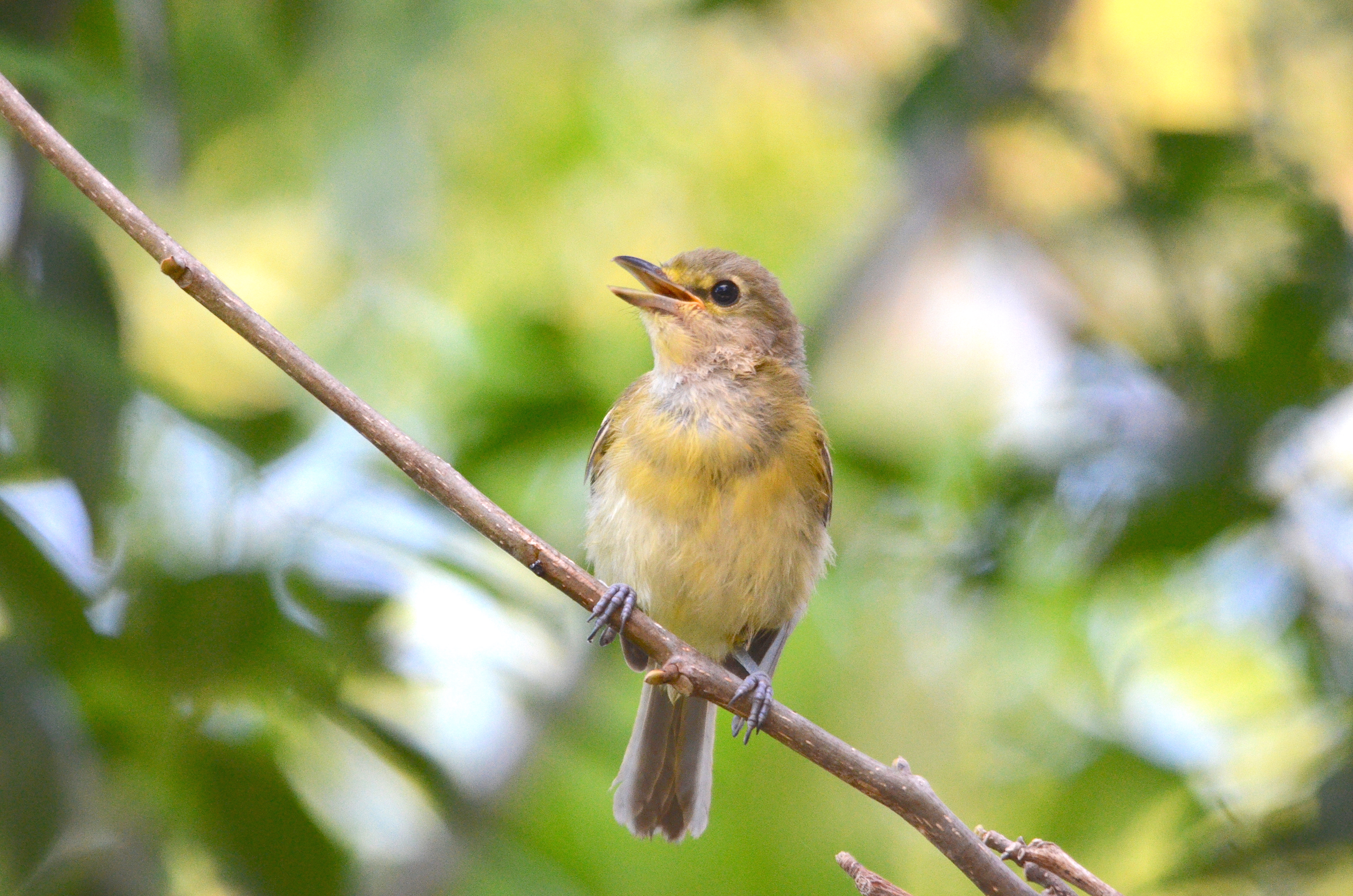
THICK-BILLED VIREO ‘ON VOCALS’: A CHIRPY JUVENILE ON ABACO


Thick-billed Vireo (juv), Abaco - Charles Skinner

THICK-BILLED VIREO ‘ON VOCALS’: A CHIRPY JUVENILE ON ABACO

I’m not sure that TBVs would rank as anyone’s all-time favourite bird. Probably not in the top 10. Or 20. But we have a particular affection for them. When we first arrive at Delphi, that cheerful call is invariably the first birdsong we hear. And when we leave, it’s often the last. These small birds inhabit the coppice on either side of the drive, and are often found right by the the Lodge.

Thick-billed Vireo (juv), Abaco - Charles Skinner

The strange thing about them is that despite their ubiquity and their uninhibited advertising of their presence, they are surprisingly hard to see, let alone get a clear photograph of. A singing TBV often seems to be at least 2 rows of bush further back than it sounds, concealed by intervening branches, leaves, and twigs.

Thick-billed Vireo (juv), Abaco - Charles Skinner

Maybe growing juveniles are less cautious. This little guy is right out in the open, and singing away happily. He’s still cutely fluffy, but his plumage already starting to turn yellow. He has the diagnostic yellow marking in front of and around the eyes. However at the base of his characteristically plump beak there’s still a hint of baby bird mouth.

Thick-billed Vireo (juv), Abaco - Charles Skinner

Here’s a recording of an adult TBV I took from the Delphi drive (you may need to turn up the volume a bit). And no, I couldn’t actually see the bird, though I knew exactly where it was from the slight movements of foliage. All-in-all, the TBV is a most engaging little bird and well-deserving of affection if not perhaps a high placing in the Avian Popularity Charts…  

Thick-billed Vireo (juv), Abaco - Charles Skinner

All photos by Charles Skinner (a significant contributor to The Birds Of Abaco)

Unknown's avatar

WATCHFUL TYRANT: A LOGGERHEAD KINGBIRD ON ABACO


Loggerhead Kingbird, Delphi, Abaco, Bahamas (Keith Salvesen)

WATCHFUL TYRANT: A LOGGERHEAD KINGBIRD ON ABACO

The Delphi Club on Abaco has a number of permanent residents (or by now – let’s be realistic – maybe their descendants). There’s the huge curly tail lizard that lives under the large stones by the outside staircase. There are the West Indian Woodpeckers that noisily nest in a box under the eaves of the verandah and produce 2 batches of shouty chicks each summer. And there is the silent sentinel – a loggerhead kingbird that spends much of its time in the trees and bushes at the far side of the pool.

Loggerhead Kingbird, Delphi, Abaco, Bahamas (Keith Salvesen)

It’s a good place to chose. The bird uses the tree branches and shrubs to ‘hawk’ for passing insects, suddenly leaving its perch to pounce, before returning to just the same place to eat its snack – classic flycatcher behaviour. I call it the ‘watchful tyrant’ because the kingbird is nearly always there. Somewhere. If you look carefully and wait patiently. He stays in the shade, so he’s not bright with sunlight (or P/shop) in these photos. This is just the way he is.

Loggerhead Kingbird, Delphi, Abaco, Bahamas (Keith Salvesen)

Kingbirds are of the family Tyrannidae and the genus Tyrannus. The ‘tyrant’ group includes a number of flycatcher species commonly found on Abaco: the KINGBIRDS (loggerhead and gray), the CUBAN PEWEE and the LA SAGRA’S FLYCATCHER being the most familiar. Note the hook at the end of the beak; and the yellowish tinge to the undertail area.

Loggerhead Kingbird, Delphi, Abaco, Bahamas (Keith Salvesen)

With the exception of the gray kingbird, the flycatchers named above are very common permanent breeders on Abaco. There’s probably one of them within 20 feet of your house right now. The gray, however, is a summer breeding resident. This is most helpful of it: if you see a kingbird between October and April, it will be a loggerhead. This gives you a 6-month window for near-certain ID.

Loggerhead Kingbird, Delphi, Abaco, Bahamas (Keith Salvesen)

IT’S SUMMER – SO HOW DO I TELL A LOGGERHEAD FROM A GRAY?

EASY. CLICK HERE

All photos: Keith Salvesen; Cartoon by the legendary Birdorable

Unknown's avatar

BAHAMA MOCKINGBIRDS ON ABACO: GOOD IMPRESSIONS


Bahama Mockingbird, Abaco - Tom Sheley

BAHAMA MOCKINGBIRDS ON ABACO: GOOD IMPRESSIONS

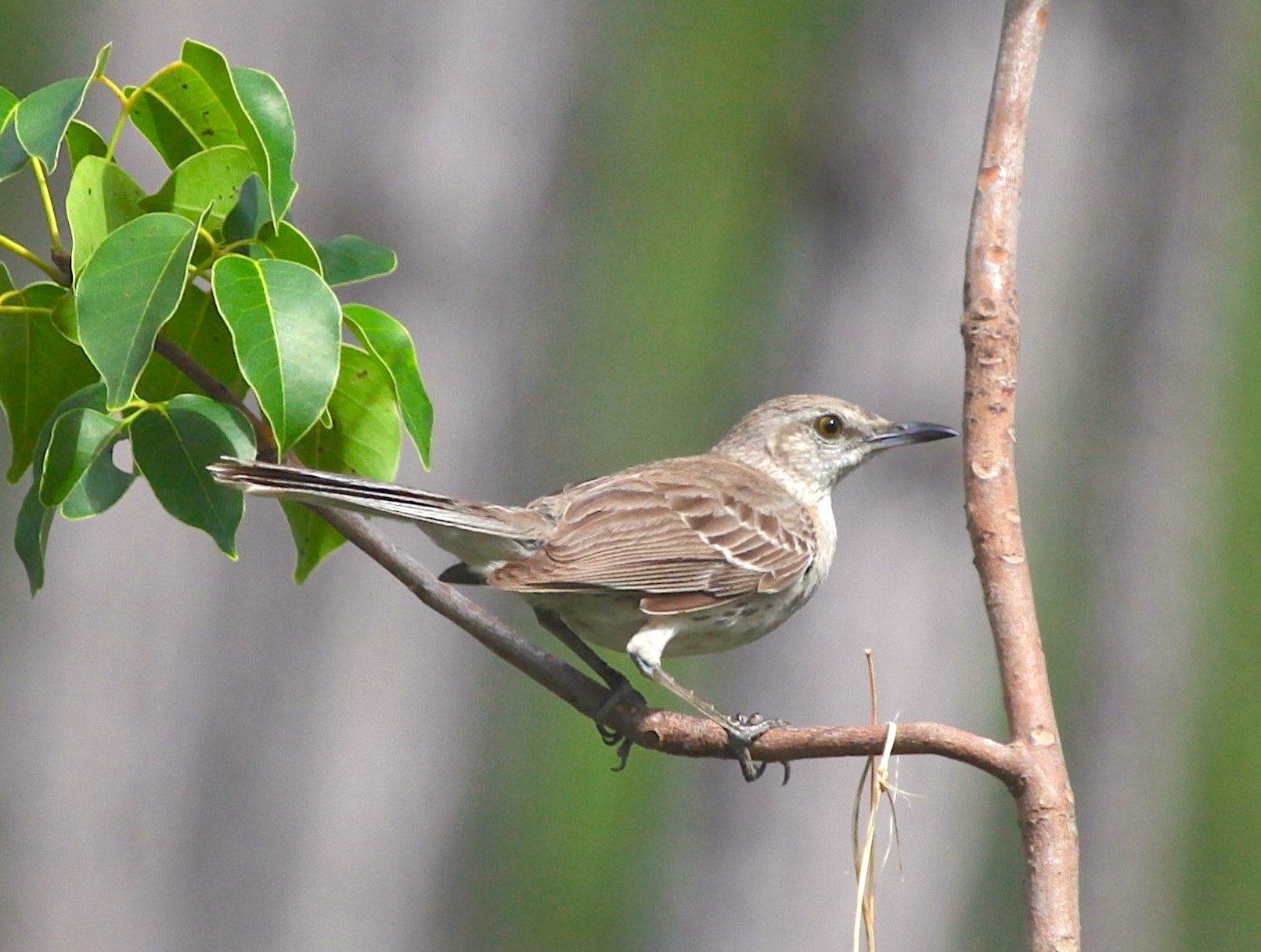
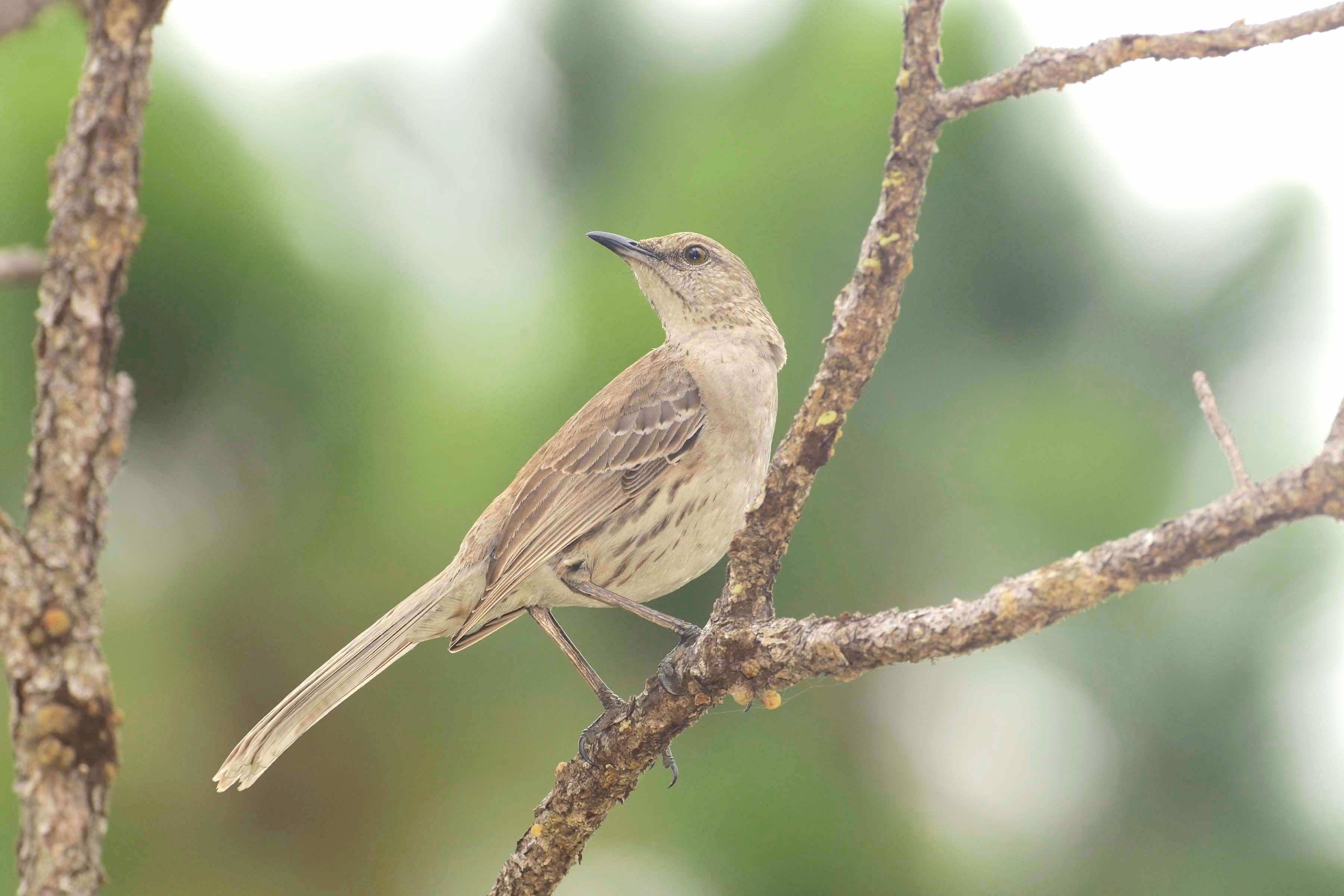
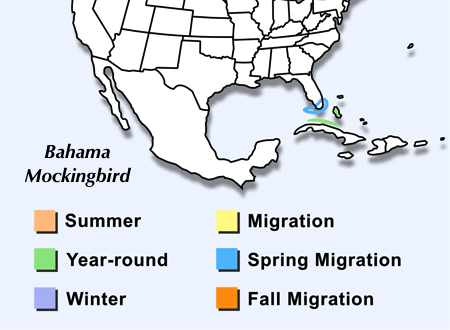
The Bahama Mockingbird Mimus gundlachii is similar to its slightly smaller cousin, the widespread Northern Mockingbird Mimus polyglottis. The range of Bahama Mockingbirds is not restricted to the Bahamas themselves, and includes areas of  Cuba, Jamaica and TCI, so despite the name they are not an endemic species to the Bahamas.  They are also occasional vagrants to the United States, especially – for reasons of proximity – southeastern Florida.

Bahama Mockingbird, Abaco - Peter Mantle

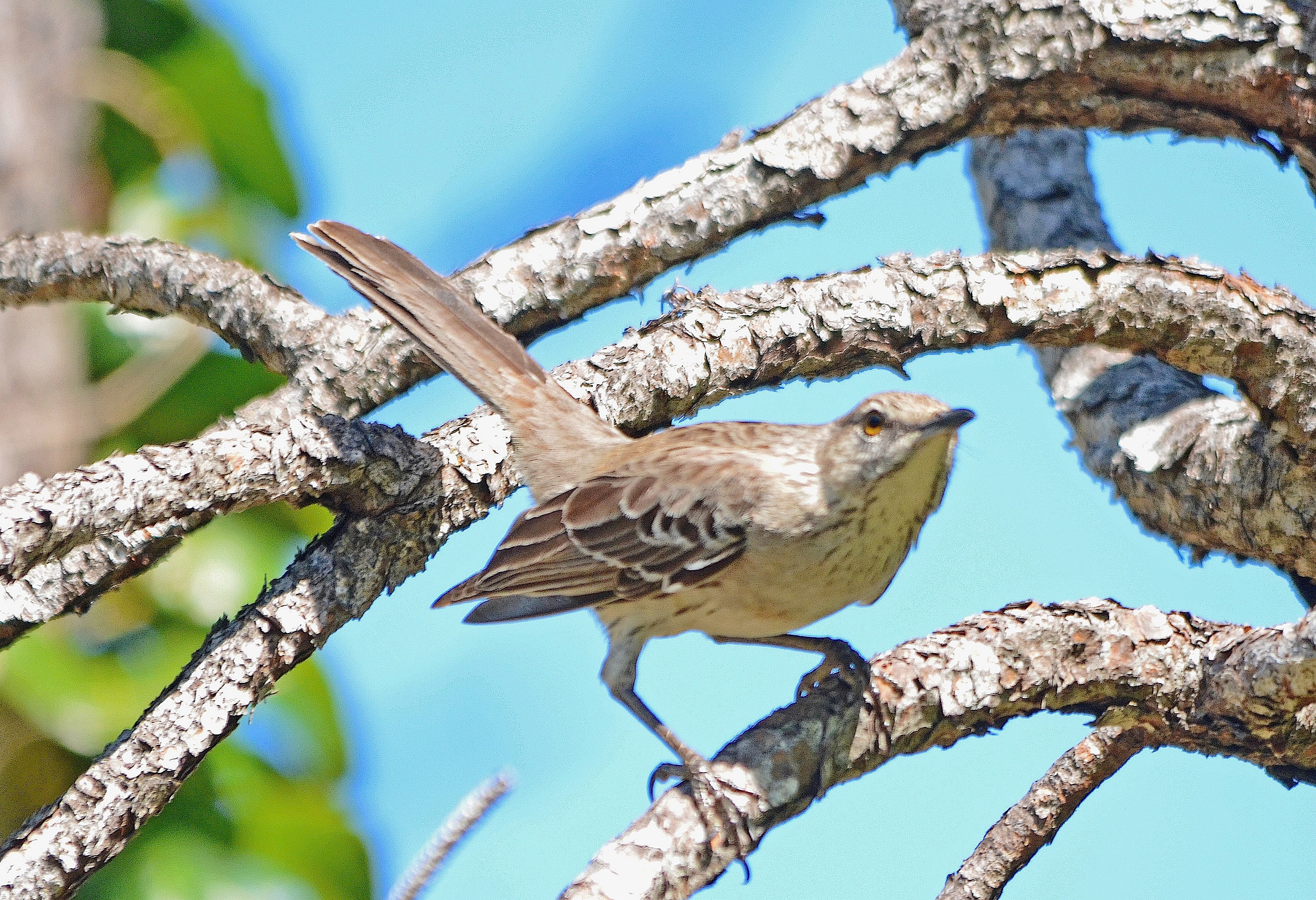
The Bahama Mockingbird is browner than the greyish Northern Mockingbird, and has distinctive streaking and spotting to its breast and undercarriage. This may extend to what you might describe as the bird’s ‘trouser legs’, though I’m sure there’s a more technically correct term.

Bahama Mockingbird, Abaco - Charlie Skinner

Both mockingbird species are found on Abaco. The NMs are ubiquitous in towns, settlements, gardens, coppice and pine forest, whereas BMs are shyer and tend to be found in the pine forest and well away from humans and their operations. When we were putting together The Birds of Abaco, I went on a birding trip with Abaco birding legend Woody Bracey and Ohio bird photographer Tom Sheley. We took a truck into the pine forest down a logging track south of Delphi, and they were quick to locate a bird, not least because one was sitting prettily on a branch singing lustily and unmistakably. It was well within range of Tom’s massive lens; more of a struggle for my modest camera (below). Caught the cobwebs, though…

Bahama Mockingbird, Abaco - Keith Salvesen

I was astounded by the beauty and variety of the song. It consisted of very varied notes and phrases, each repeated 3 or 4 times before moving on to the next sounds in the repertoire. Here is a short 18 second example I recorded, using my unpatented iPhone method, for which see HERE.

Bahama Mockingbird, Abaco - Alex Hughes

For those with interest in birdsong, here is a longer 1:13 minute song from the same bird, with largely different sounds from the first recording made minutes earlier. There’s even a decent stab at imitation of a 1960s Trimphone™. Had we not had to move on to Sandy Point for an appointment with some cattle egrets and American kestrels, I could have stayed listening for far longer.

Bahama Mockingbird, Abaco - Tom Sheley

THE ‘SUBSPECIES’ THAT WASN’T…

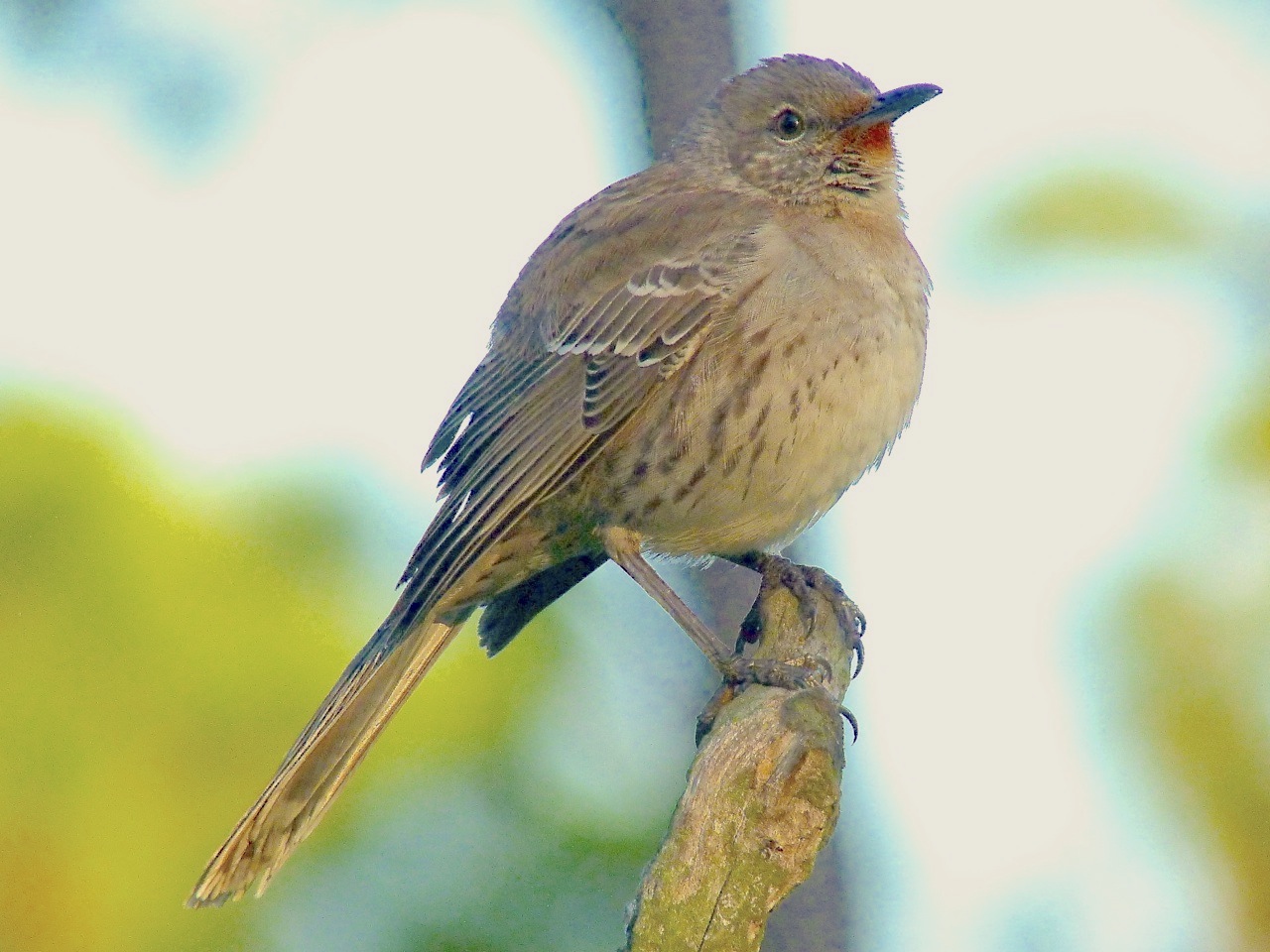
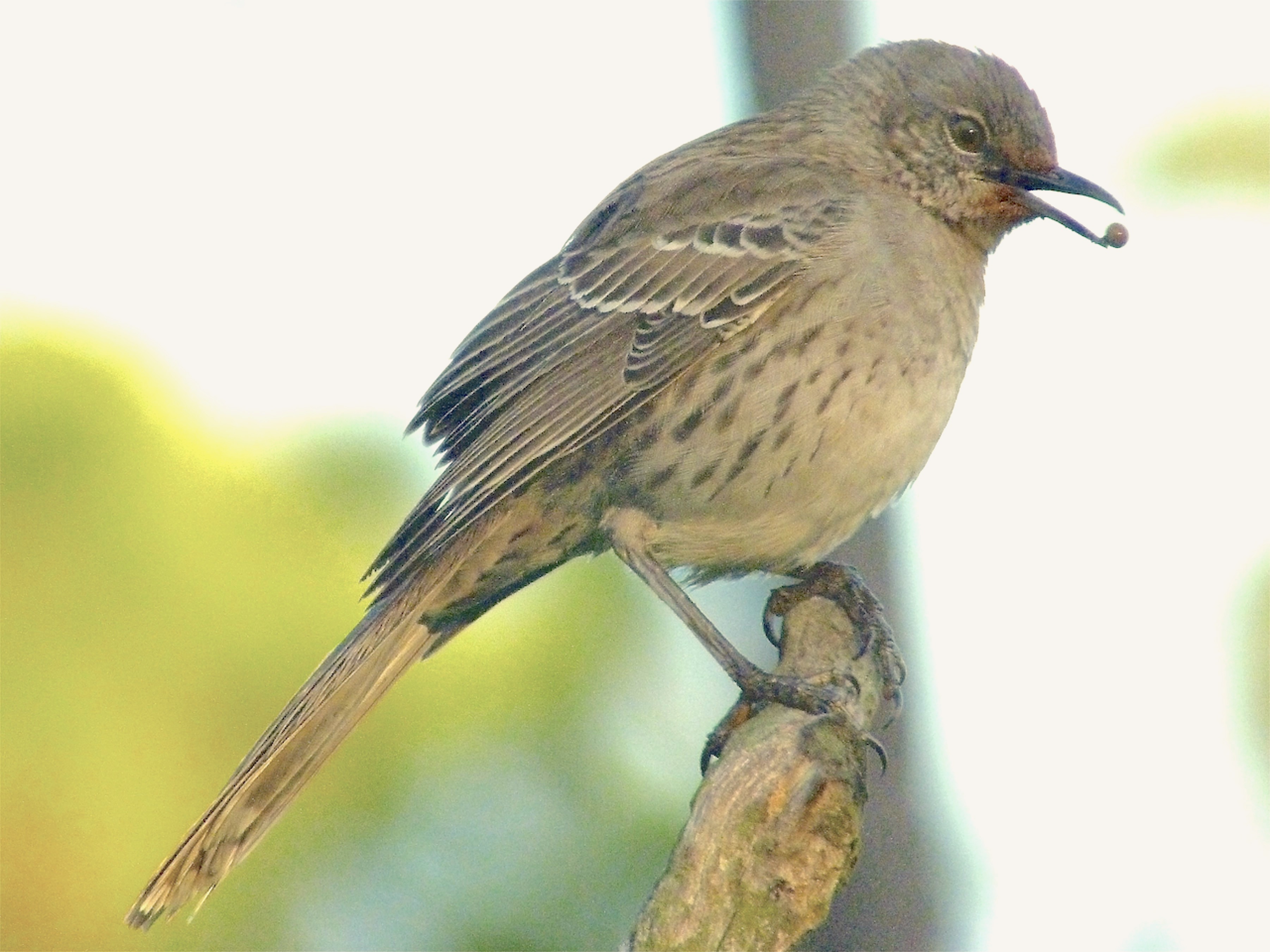
More recently, on a trip in backcountry to find Kirtland’s warblers – we saw 4 – the slow-moving truck jolted to halt in the middle of nowhere. This was because a Bahama Mockingbird was right by the track. I fired off some quick shots out of the window into a rather difficult light, to find that we appeared to have found a new subspecies, the scarlet-faced mockingbird.

Bahama Mockingbird, Abaco - Keith Salvesen

The reason was clear, however. The bird had been pigging out on some red berries, and had managed to collect plenty of the juice round the base of its beak. Bahama Mockingbird, Abaco - Keith Salvesen

SO WHAT DOES A NORTHERN MOCKINGBIRD LOOK LIKE, THEN?

I photographed the Northern Mockingbird below in a garden at Casuarina. The species is far tamer than its cousin, and seen side-by-side they are clearly very different. The range maps show the stark contrast between the very limited range of the Bahama Mockingbird and the vast distribution of the Northern Mockingbird.

220px-Northern_Mockingbird-rangemap

Northern Mockingbird, Abaco 1

Photos Credits: Tom Sheley (1, 6); Peter Mantle (2); Charlie Skinner (3); Keith Salvesen (4, 7, 8, 9); Alex Hughes (5); Susan Daughtrey (10). Range maps eBird & wiki.

Bahama Mockingbird, Abaco - Susan Daughtry

Unknown's avatar

SANDERLINGS: BATH TIME FUN AT DELPHI, ABACO


Sanderling Bath Time, Delphi Beach Abaco Bahamas - Keith Salvesen

SANDERLINGS: BATH TIME FUN AT DELPHI, ABACO

One of the pleasures of watching birds (as opposed to BIRDWATCHING, a more committed-sounding enterprise with its own Wiki entry, that may require equipment, books & mag subs…) is to spend some time observing them enjoying themselves. Perhaps you have a feeder, and like to watch the birds getting stuck into the seeds, carelessly flicking the husks around and throwing their ‘feeder shapes’ on the perches. Maybe you like to see the hummers, beaks deep into the little red plastic flowers on the rim of the sugar-water feeder, tiny bodies motionless and upright, wings a glistening blur of rapid movement in the sun. 

Sanderling Bath Time, Delphi Beach Abaco Bahamas - Keith Salvesen

Well, join me at Sanderling Bath Time on the Delphi Beach. We are the north end, where the exposed rocks of the reef curve round towards the beach. At low tide, there’s a sandbar bridge from beach to rocks. It is a perfect feeding area for shore birds. Sanderlings, ruddy turnstones, least sandpipers, Wilson’s plovers and the prized piping plovers forage happily together here.

Sanderling Bath Time, Delphi Beach Abaco Bahamas - Keith Salvesen

Towards mid-tide on the rise, the water begins to creep round the rocks and encroach onto the sandbar. At high tide, it is well under water and fish are back in residence. Small sharks sometimes hang in the waves just behind their breaking point over the shallow sand.  And so the tidal process repeats. But ± mid-tide is the time for the shore birds to bathe in the tidal pools that form – and become frothier as the water pours in. And it’s an excellent time to sit peacefully on the beach and watch the entertainment…

Sanderling Bath Time, Delphi Beach Abaco Bahamas - Keith SalvesenSanderling Bath Time, Delphi Beach Abaco Bahamas - Keith Salvesen

Substantial immersion is not out of the question…Sanderling Bath Time, Delphi Beach Abaco Bahamas - Keith SalvesenSanderling Bath Time, Delphi Beach Abaco Bahamas - Keith SalvesenSanderling Bath Time, Delphi Beach Abaco Bahamas - Keith Salvesen

These moments don’t last long. Soon the increasing force and height of the water spoils the fun, and the flock will suddenly take flight and move south a little way along the beach, away from the rocks. There’s the incoming tideline to play with – and more importantly, food to be uncovered with each incoming and retreating wave…Sanderling Bath Time, Delphi Beach Abaco Bahamas - Keith Salvesen

All photos © Rolling Harbour

Unknown's avatar

THE COLOUR OF CHRISTMAS: PAINTED BUNTINGS ON ABACO


Painted Bunting male - Bahama Palm Shores, Abaco -Tom Sheley

THE COLOUR OF CHRISTMAS: PAINTED BUNTINGS ON ABACO painted-bunting

It’s a statistical fact that 99% of people “love” or “adore” painted buntings. The 1%  were rather standoffish “Don’t Nose”, preferring to keep their views to themselves. PABU are winter residents on Abaco, not especially common but drawn irresistibly to feeders. To me they are the colour of Christmas, magically decorated with the favourite pigments from a child’s paintbox. So before I get stuck into the imminent festivities, I’ll leave you with a few of these gorgeous creatures to enjoy…

Painted Bunting, Abaco - Erik Gauger

Painted Bunting, Abaco - Tara LavalleePainted Bunting , Abaco - Tara LavalleePainted Bunting reflection LR.Laguna Seca.South TX.Tom Sheley

A male and female painted bunting sharing on of the Delphi Club feeders
Painted Bunting, Delphi, Abaco (Keith Salvesen)

Wishing all friends and followers of Rolling Harbour a wonderful Christmas and a very happy New Year. See you when I have been safely discharged from the festive recovery ward… 

painted-bunting

Credits: Tom Sheley (1, 5), Erik Gauger (2), Tara Lavallee (3, 4), Keith Salvesen (6)

Unknown's avatar

“THE DELPHI CLUB GUIDE TO THE BIRDS OF ABACO” (2016)


Delphi Club Guide to the Birds of Abaco (Jacket)

“THE DELPHI CLUB GUIDE TO THE BIRDS OF ABACO”

In a box in the corner over there – no, there – are my last 6 copies of ‘The Birds of Abaco’. Peter Mantle probably has a few over here in the UK too. And there are definitely some remaining at Delphi HQ in a cupboard  just a few lurches away from the surprisingly popular ‘honesty bar’. But there aren’t a great many left now, so forgive me for drawing attention to the fact that the Season of Goodwill is upon us. And… ahem… there are only 24 more ‘sleeps’ until Christmas. 

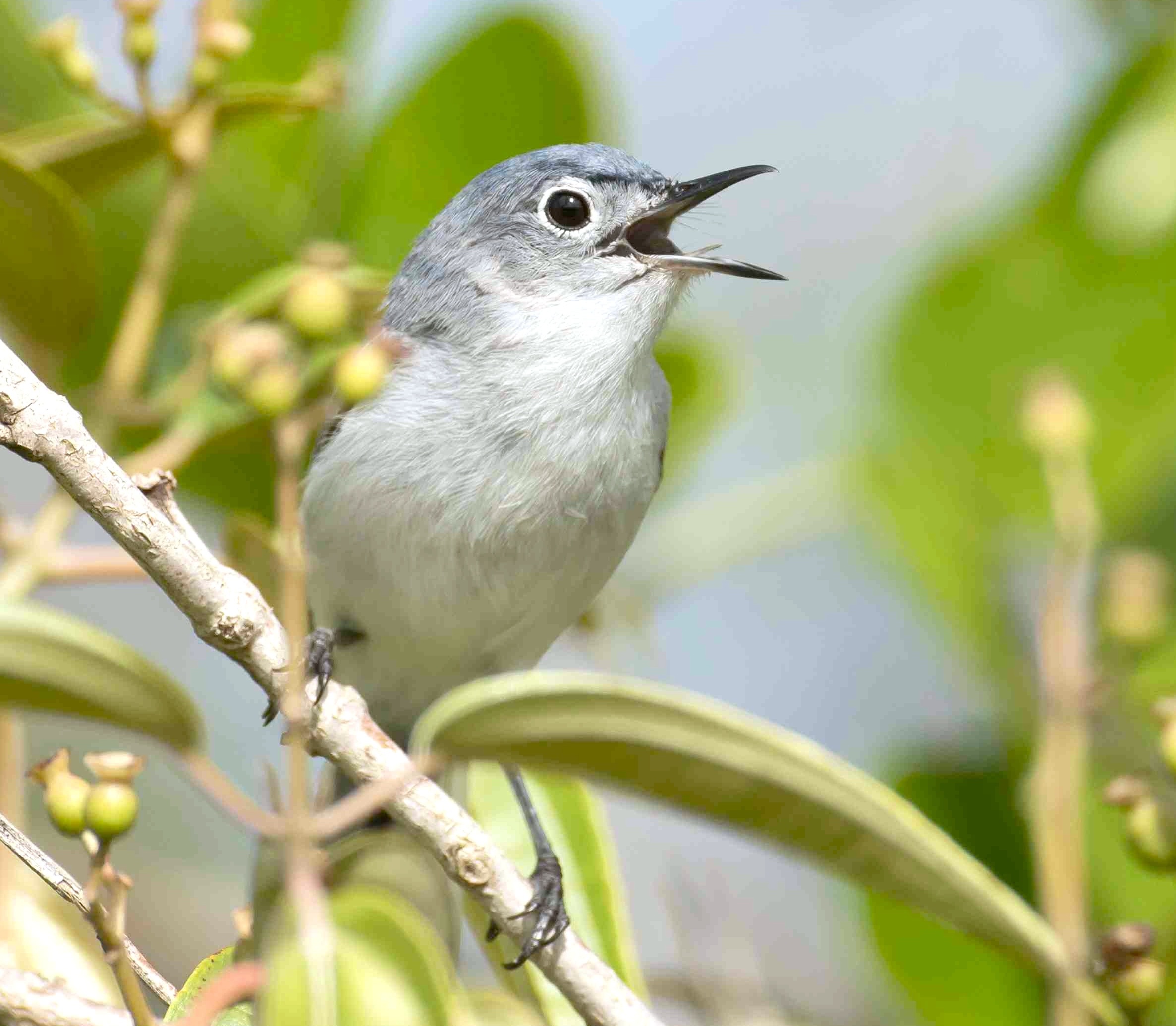
Blue-gray Gnatcatcher vocalizing.Abaco Bahamas.6.13.Tom Sheley aBlue-gray Gnatcatcher Tom Sheley

“The Delphi Club Guide to THE BIRDS OF ABACO” was published in March 2014. To say “I wrote it” would be a gross distortion of the truth: it was an entirely collaborative project. The originator of the idea – as with the entire Delphi Club project – was Peter Mantle, the publisher. The work of 30 photographers is included. There was huge input from the very experienced project manager and from Bahamas bird experts. So although my name is on the cover, it is as a participant representing the contributions, camera skills and brainpower of many people.

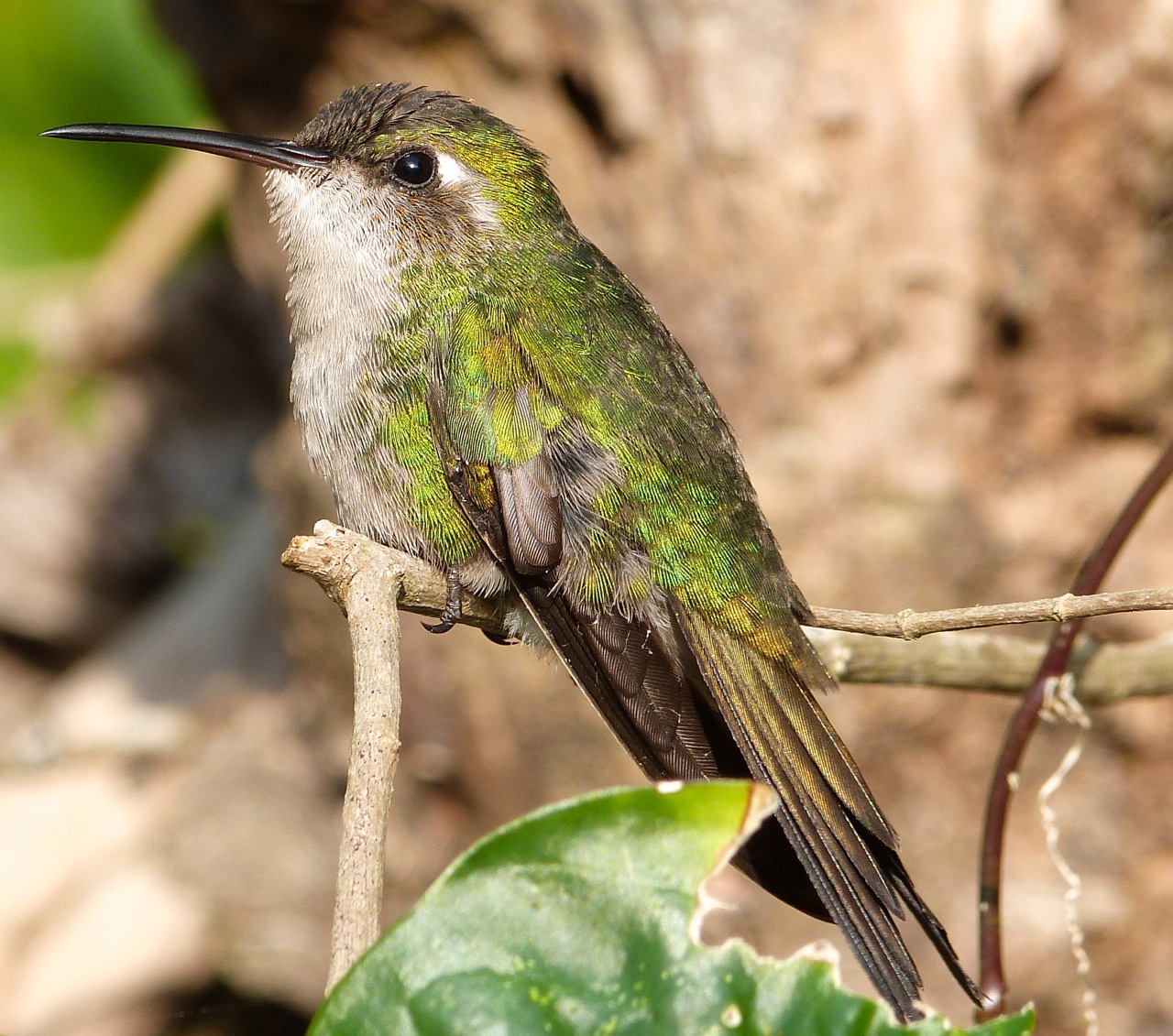
Cuban Emerald Hummingbird, Delphi, Abaco (Keith Salvesen)Cuban Emerald (f) Keith Salvesen

The book launched to generous enthusiasm and support both on Abaco and beyond, which has continued ever since. We have been astonished by the positive responses to this unique publication for the Bahamas. There is a wider purpose to the book than as a photographic showcase for Abaco birds. All Abaco schools, colleges, libraries and local wildlife organisations have been given free copies for educational purposes. And a percentage of the profits is set aside for local wildlife causes. 

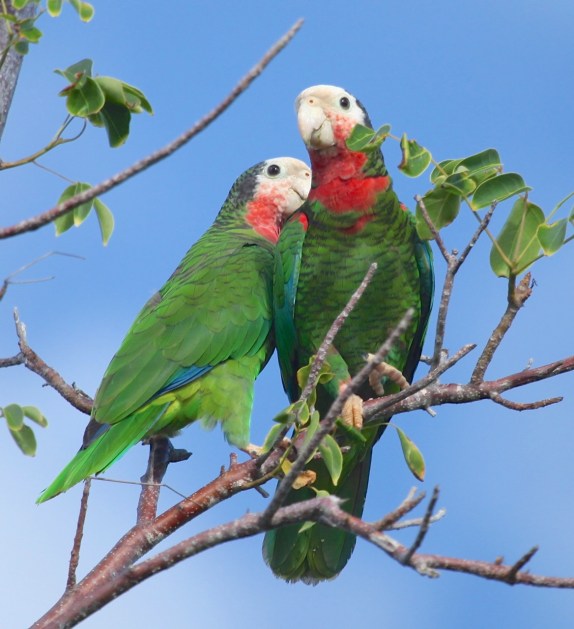
Abaco Parrot, Abaco Bahamas (Peter Mantle)Abaco (Cuban) Parrots Peter Mantle

Below are some facts and stats. Some people may well have seen these set out elsewhere, but a lot of new people have kindly tuned in to Rolling Harbour in the last 12 months or so, so I will repeat some of the details.

Short-billed Dowitcher, Abaco (Bruce Hallett)Short-billed dowitchers Bruce Hallett

The Guide showcases the rich and varied bird life of Abaco, Bahamas and features both resident and migratory species including endemics rarities and unusual sightings.

The main features are as follows:

  • 272 pages with more than 350 photographs
  • 163 species shown in vivid colour – nearly two-thirds of all the bird species ever recorded for Abaco
  • Every single photograph was taken on Abaco or in Abaco waters
  • All birds are shown in their natural surroundings – no feeders or trails of seed were used
  • Several birds featured are the first ones ever recorded for Abaco or even for the entire Bahamas

Clapper Rail Abaco Bahamas Tom SheleyClapper Rail Tom Sheley

  • A total of 30 photographers, both experienced and local amateurs, contributed to the project
  • The book had the generous support of many well-known names of Abaco and Bahamas birding
  • A complete checklist of every bird recorded for Abaco since 1950 up to the date of publication was compiled specially for the book (6 new species have been recorded since then…)
  • A code was devised to show at a glance when you may see a particular bird, and the likelihood of doing so. Birds found at Delphi are also marked
  • Specially commissioned cartographer’s Map of Abaco showing places named in the book

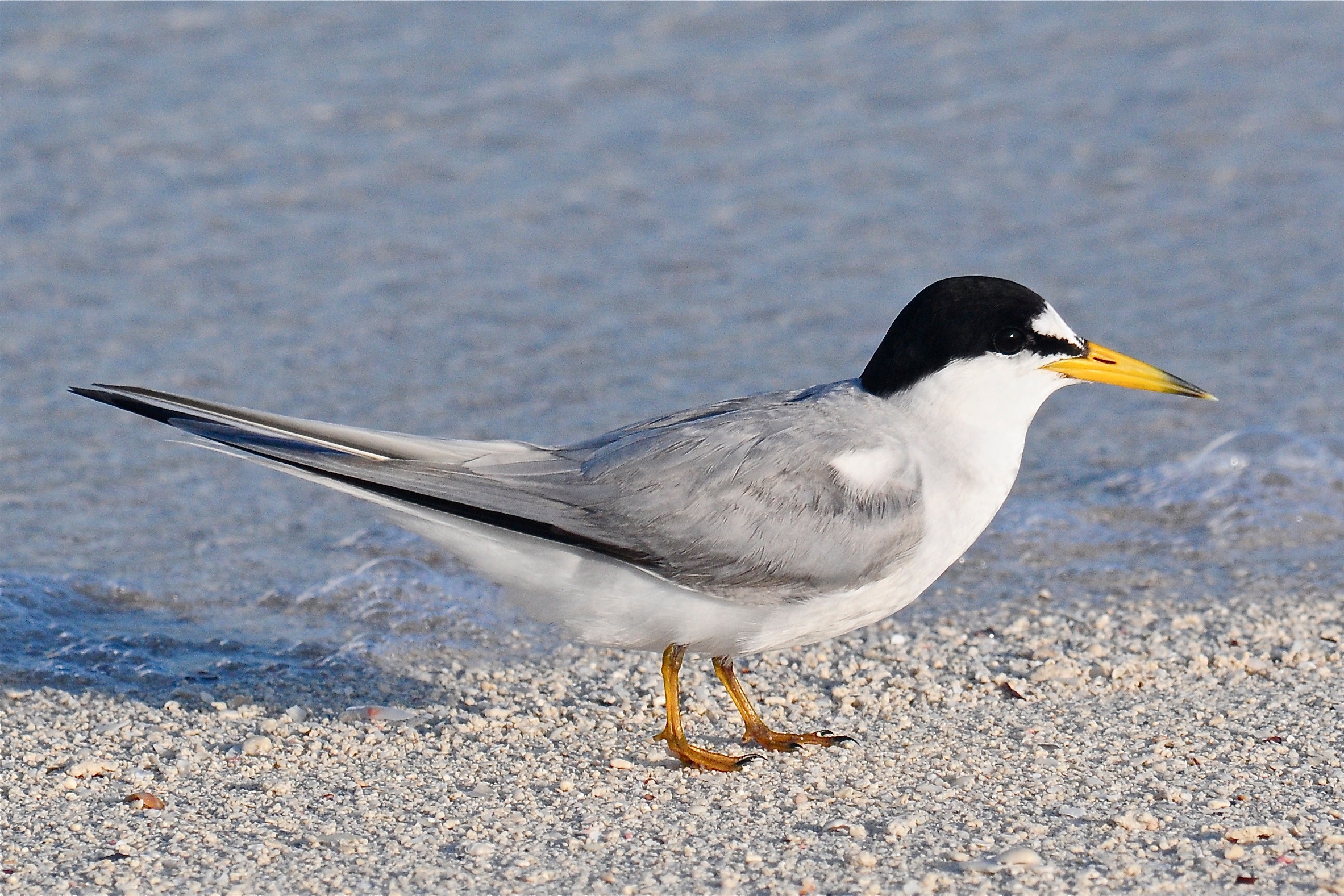
Least Tern, Abaco (Tony Hepburn)Least Tern Tony Hepburn

  • Informative captions intentionally depart from the standard field guide approach…
  • …as does the listing of the birds in alphabetical rather than scientific order
  • Say goodbye to ’37 warbler species on consecutive pages’ misery
  • Say hello to astonishing and unexpected juxtapositions of species

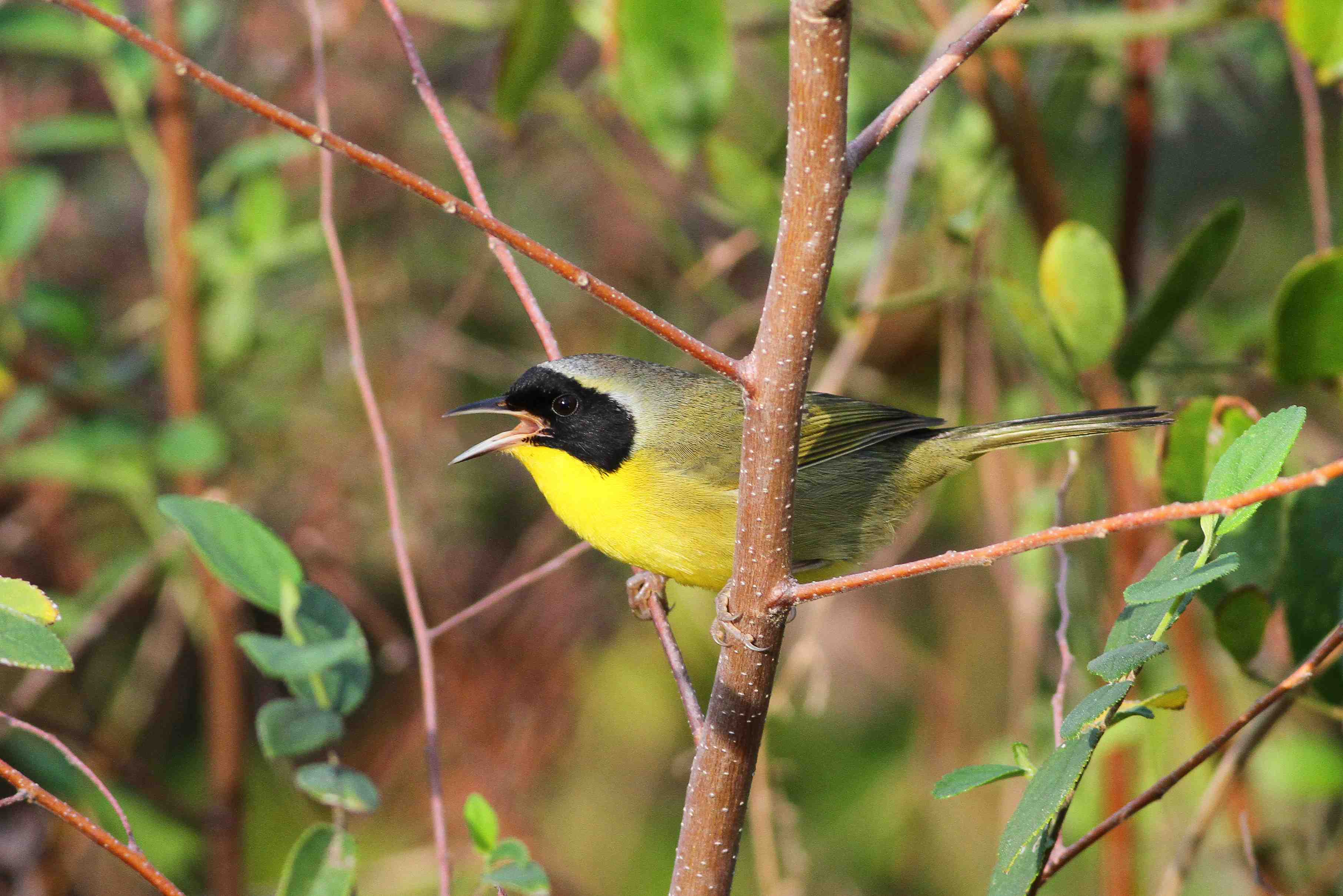
Abaco_Bahama Yellowthroat_Gerlinde Taurer copyBahama Yellowthroat Gerlinde Taurer

  • The book was printed in Florence, Italy by specialist printers on Grade-1 quality paper
  • Printing took pairs of printers working in 6 hour shifts 33 hours over 3 days to complete
  • The project manager and the author personally oversaw the printing 

Smooth-billed Ani pair, Abaco (Gerlinde Taurer)Smooth-billed Anis Gerlinde Taurer

  • The book is dedicated to the wildlife organisations of Abaco
  • A percentage of the profits is put by for the support of local wildlife organisations
  • A copy of the book has been presented to every school, college and library on Abaco

Piping Plover, Abaco - Bruce HallettPiping Plover Bruce Hallett

The book is published by the Delphi Club (contact details below). The project was managed by a publishing specialist in art books. The author is the wildlife blogger more widely known on Abaco and (possibly) beyond as ‘Rolling Harbour’. Oh! So that would in fact be Mrs Harbour and myself. Well well! What were the chances? 

Painted Bunting male.Abaco Bahamas.Tom SheleyPainted Bunting Tom Sheley

The Delphi Club at Rolling Harbour
PO Box AB-20006, Marsh Harbour, Abaco, Bahamas
Tel: +1-242-366-2222
General Manager – Max Woolnough: +1-242-577-1698
delphi.bahamas@gmail.com

Or email rollingharbour.delphi@gmail.com with any queries or comments

American Oystercatcher, Abaco - Tom SheleyAmerican Oystercatcher Tom Sheley

Photos: Tom Sheley,  Bruce Hallett, Gerlinde Taurer, Tony Hepburn, Peter Mantle, Keith Salvesen

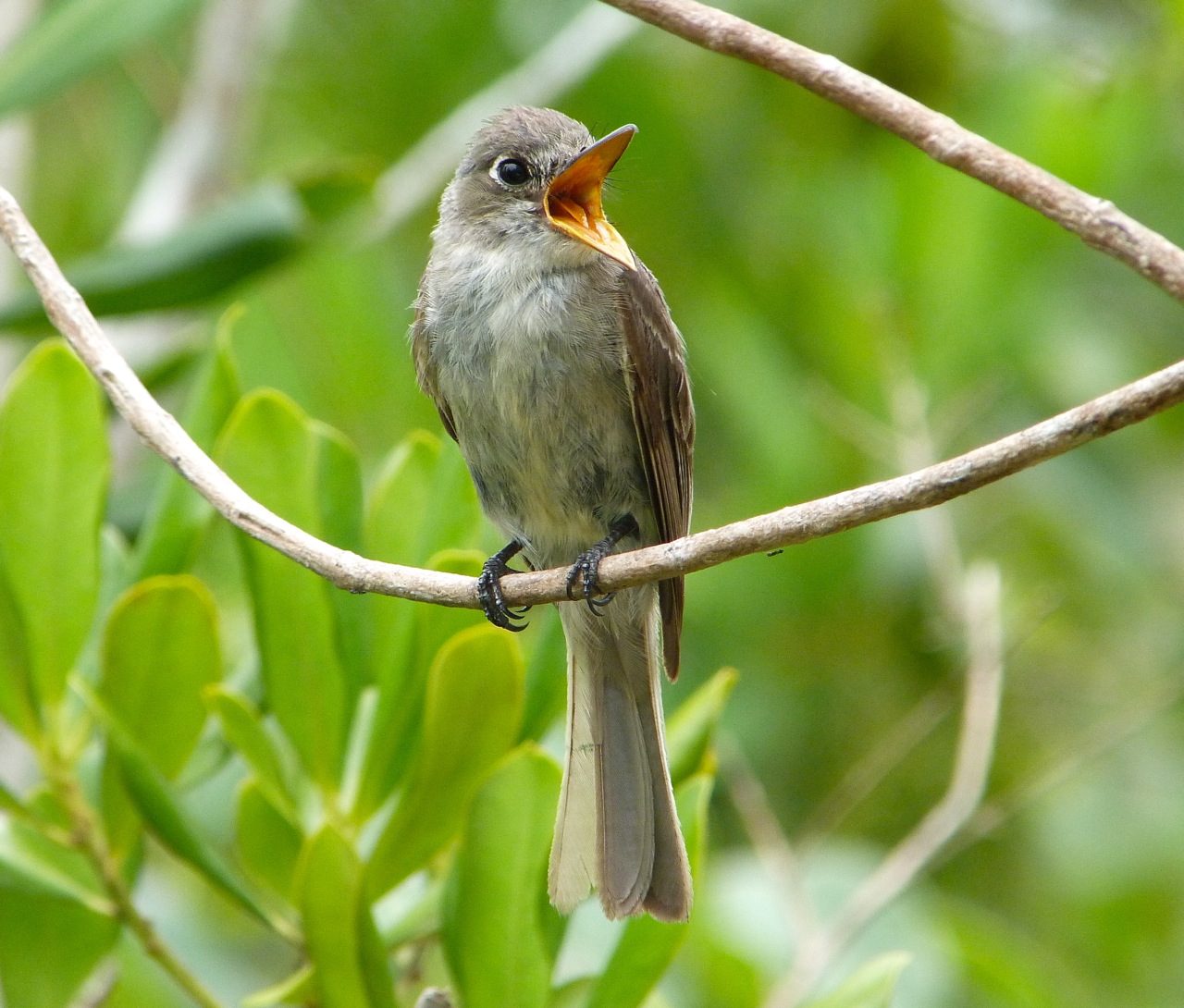
Cuban (Crescent-eyed) Pewee, Delphi, Abaco (Keith Salvesen)Cuban Pewee Keith Salvesen

USEFUL LINKS

DELPHI CLUB BAHAMAS

ABACO BIRDS. COM

ABACO PIPING PLOVER WATCH

The original flyer for the book"Birds of Abaco" flyer

Unknown's avatar

SPANISH MOTHS & CONVICT CATERPILLARS ON ABACO


xanthopastis-spanish-moth-abaco-bahamas-2

SPANISH MOTHS & CONVICT CATERPILLARS ON ABACO

I start confidently enough by using plurals in the headline, but in truth I have only ever seen one Spanish Moth on Abaco. It was sunning itself on the wooden stairs leading up to the Delphi Club verandah. I might have trodden on it, except that I usually check out the treads for insects or curly tails (and the surrounding foliage for small birds). They like the warmth of the wood, and also moisture from overnight rain or from plant watering. I took 3 quick photos, but I was on a mission. Breakfast beckoned…

xanthopastis-spanish-moth-abaco-bahamas-3

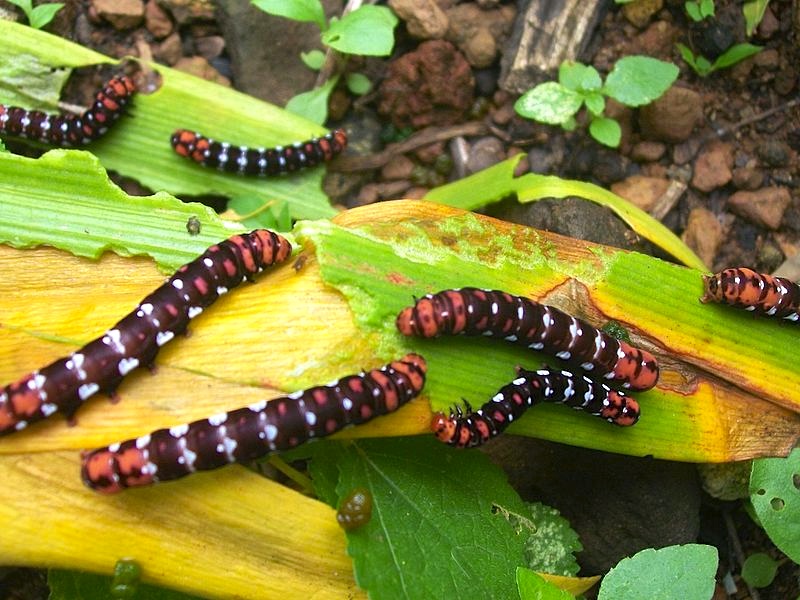
Spanish Moths (Xanthopastis timais) and their ‘Convict Caterpillars’, as they are known, are generally found in South and Central America, and in the Caribbean. There is a similar moth recorded for North America, but it is a different subspecies. However ‘our’ moth is apparently quite commonly found in Florida. 

xanthopastis_timais_cramer_feeding_on_amaryllis-shiras-wc

When I tried to ID this creature, I was surprised to find how few images of it are to be found online – and of those that are, most are either strictly © or are pinned into Pinterest.** So I’m grateful to the person who uploaded these cool convict caterpillars  above to a wiki-site. They are certainly worthy of admiration, and should be easy to identify. These colourful larvae feed on the leaves and bulbs of their host plants, mainly amaryllis, iris and lily species.

spanish-moth-robert-siegel-stanford-edu

I’d be really interested to hear from anyone who has seen these moths – or the caterpillars – on Abaco. Maybe they are everywhere, all the time, and I just haven’t noticed them. Or maybe it’s just that I am an occasional blow-in interloper, not a resident. Anyway, reports, observations and photos welcome (for the usual imaginary Kalik reward).

xanthopastis-spanish-moth-abaco-bahamas-1

**I’m never quite sure about the status of Pinterest images. Are they reusable with (where possible) an attribution, on the basis that they have been ‘put out there’ in the public domain, as on Facebook? Or does one risk a getting stroppy comments for recycling images that pinners have themselves borrowed in the first place? 

Credits: unknown Wiki benefactor (3); R. Siegel / Stanford.edu (4); moi (1, 2, 5)

Unknown's avatar

ABACO’S WRECKS INVESTIGATED: SS HESLEYSIDE


SS Hesleyside (wreck), Schooner Bay Abaco (Keith Salvesen) O4

ABACO’S WRECKS INVESTIGATED: SS HESLEYSIDE 

Abaco, like many of the islands of the Bahamas, has its fair share of wrecks around its shores – both ancient and modern. I reference some of these under my RANDOM menu, with some maps, links, and general information. One that I didn’t include is the SS Hesleyside, a wreck that lies broken and wave-tossed on the rocks at Schooner Bay. To reach it, you will have to arrange at the entrance for a golf-cart to take you down to the shore. The price for your transport may be an invitation to take a tour of the community there, an ambitious enterprise that was started about 10 years ago.

charlton_steamship_co_charlton_mcallum_co_ltd_charlton_w_cflag

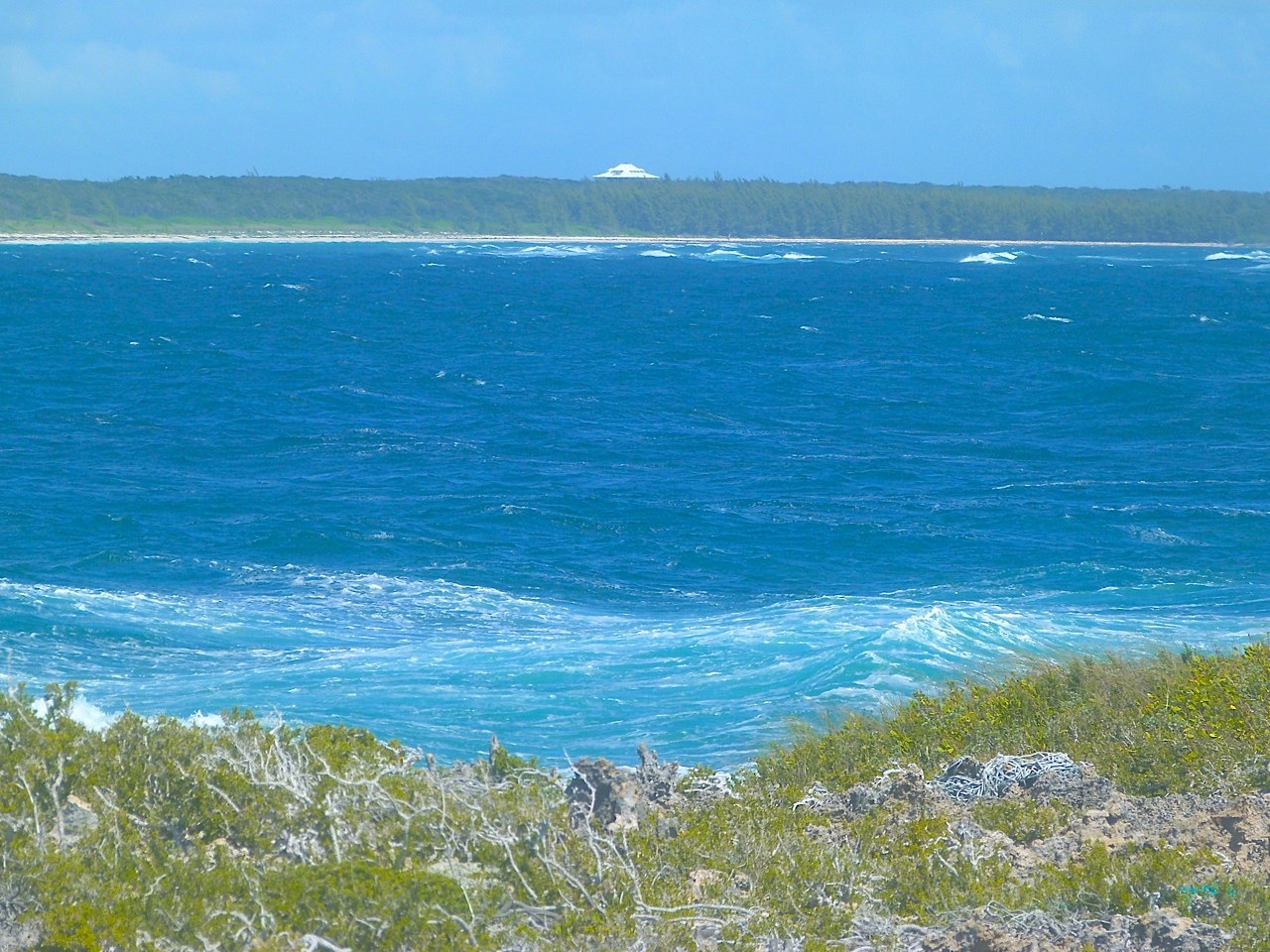
From where the Hesleyside lies, you get a long view across to Delphi, some 3 miles to the north. Delphi Club from Schooner Bay

For the energetic, you can walk the beach of Guinea Schooner Bay all the way to Delphi. However, the unpopulated strand is covered in seaweed (good for wildlife, though) and horrendous quantities of plastic, from micro off-cuts to macro bollards, oil containers and so forth. Frankly rather off-putting.

Guinea Schooner Bay, Abaco Beach Debris, Abaco

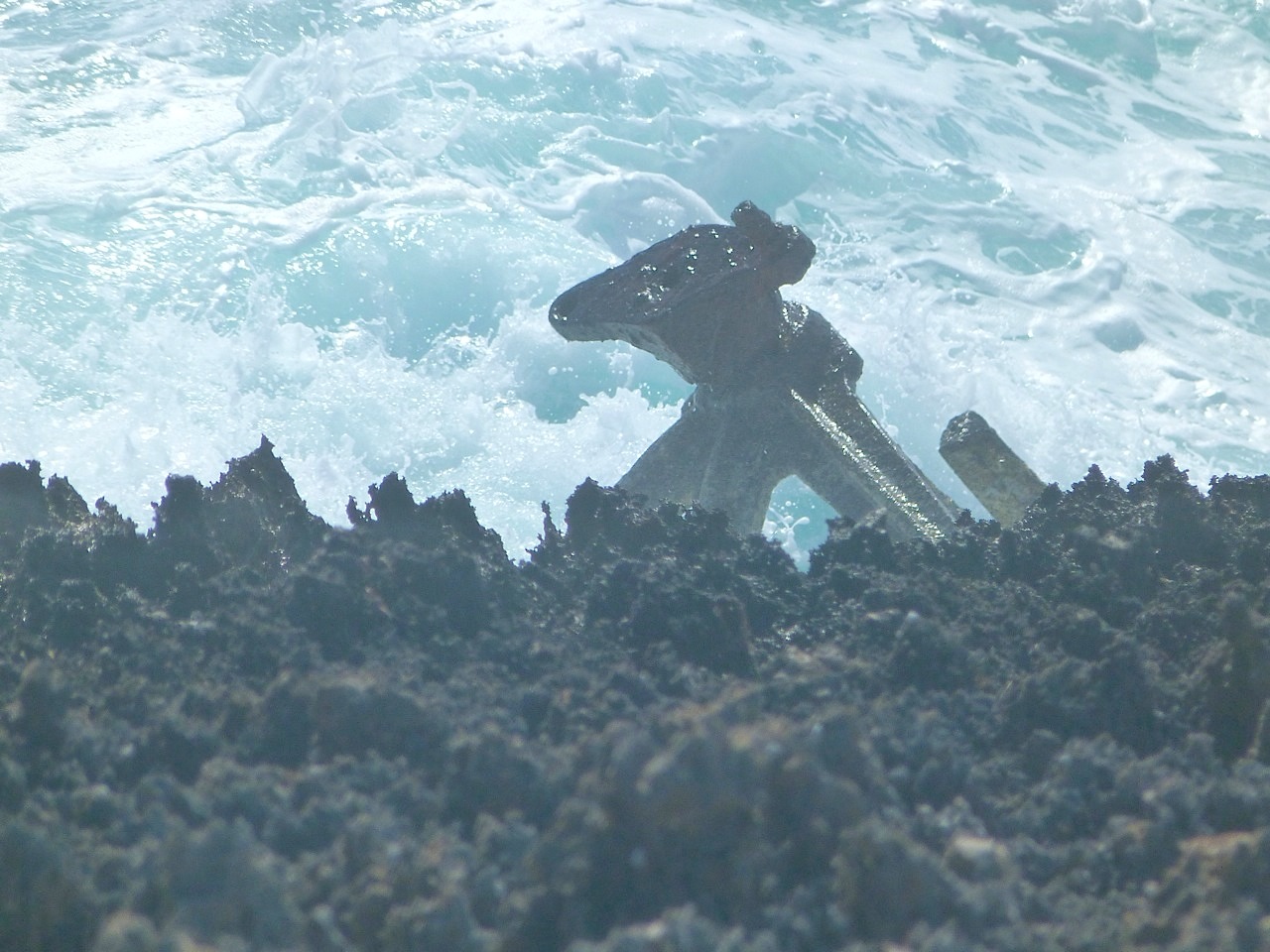
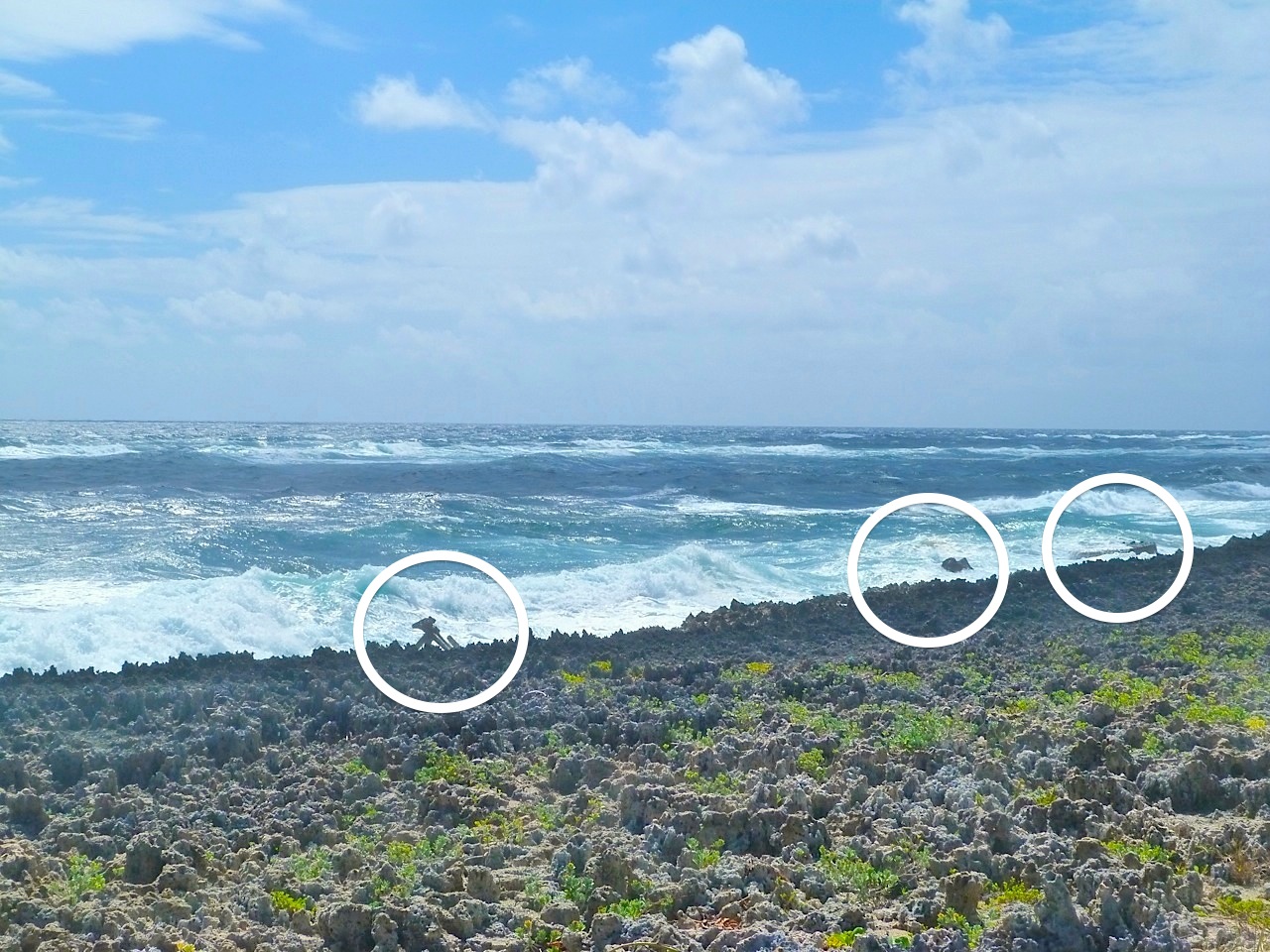
We visited Schooner Bay on a bright day with a strong wind that whipped up the waves all along the shoreline, with clouds of spray rather detracting from the photographic possibilities. The tide was high, and the remains of the wreck were at times barely visible. 

The bow, part of the central section towards the stern, and some sort of boiler (?) at the sternSS Hesleyside (wreck), Schooner Bay Abaco (Keith Salvesen) O1 copy

charlton_steamship_co_charlton_mcallum_co_ltd_charlton_w_cflag

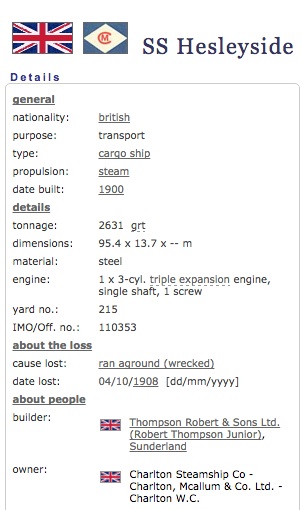
SS Hesleyside was a British cargo ship built in 1900 in Sunderland, England for the Charlton Steamship Co. (Charlton, McAllum). Steam-powered, the 2600 ton vessel was more than 300 foot long.  In 1908 she was was sailing from the Azores to Key West when bad weather struck, and on 1st October high winds – described in contemporary reports as a hurricane –  drove her aground where her remains now lie, a part of the coastline known as the ‘Iron Shore’. Fortunately the crew were able to escape, and there was no loss of life.

SS Hesleyside (wreck), Schooner Bay Abaco (Keith Salvesen) O7SS Hesleyside (wreck), Schooner Bay Abaco (Keith Salvesen) O3SS Hesleyside (wreck), Schooner Bay Abaco (Keith Salvesen) O5

A dramatic account of the shipwreck was published in the New York Times. The hero of the crisis was fireman Jack Thompson, who with notable courage volunteered to swim ashore with a line, by which the rest of the crew were able to make their way to safety.

Report from the New York TimesSS Hesleyside NYT report (Coconut Telegraph) jpg

charlton_steamship_co_charlton_mcallum_co_ltd_charlton_w_cflag

In accordance with standard practice, a Court of Inquiry was held in Nassau two weeks after the event to investigate the circumstances. The Master was exonerated of blame, having “tried every means of getting the ship under control without effect”.  SS Hesleyside 5 Report (Abaco Palms)
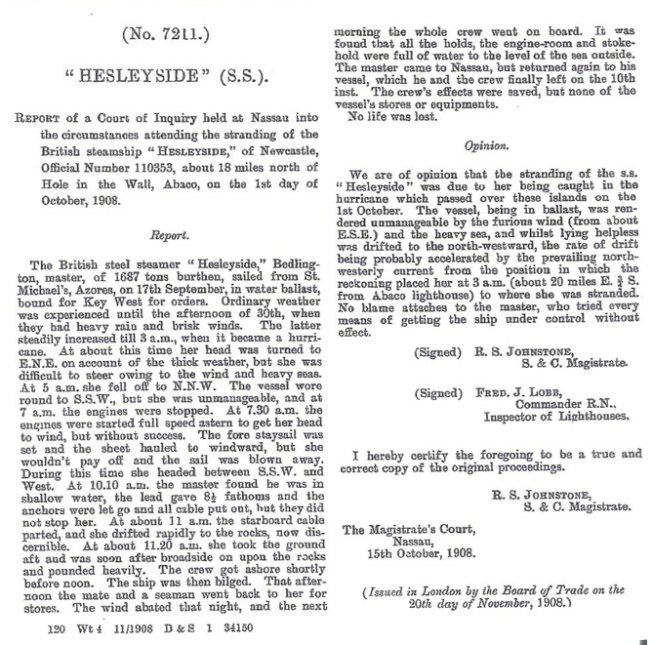
One interesting nautical and topographical note  is that the site of the wreck is described as “about 18 miles north of Hole in the Wall”. The navigational importance of HITW as a landmark was known from as early as the c17, and it was the first location to be named in the earliest maps of Abaco. For a detailed history of HITW in maps, click HERE

Nautical Map, 1856, showing the seas around ‘Le Trou dans le Mur’, and the lighthouseNautical Map 1857
Hesleyside details wrecksite.euSS Hesleyside details (wrecksite.eu / Tony Allen) [the date is wrong]

charlton_steamship_co_charlton_mcallum_co_ltd_charlton_w_cflag

WHO, WHAT OR WHERE IS HESLEYSIDE?

It’s a place in Northumberland, UK – inland, but not very from where the ship was built. Many of the Charlton ships began with an H and ended in …side. It was – and is – a common practice to have a naming theme for vessels. 

Hiram; SS 'Hesleyside'; Sunderland Museum & Winter Gardens; http://www.artuk.org/artworks/ss-hesleyside-35255

THE WRONG SORT OF HESLEYSIDE

I got quite excited when I thought I had tracked down a painting in the Sunderland Museum of the SS Hesleyside. After all, there could hardly be two steam ships with the same name, could there? Wrong. There were in fact 3 ‘Charlton’ Hesleysides in all. There is some coincidence (but not necessarily ‘irony’, Alanis Morissette) that all 3 were wrecked.

Hesleyside (1) 

86089 


1882 

688 

Ex-Turgenief, 1882 purchased from Baxter & Co, Sunderland r/n Hesleyside, 24.7.1893 wrecked at Sosnowetz.

Hesleyside (2) 

110353 


1900 

2631 

4.10.1908 wrecked at Abaco, Bahamas.

Hesleyside (3) 

133508 


1912 

3994 

1933 sold to P. Hadoulis, Andros, 1935 sold to M. Sitinas, Andros, 24.5.1940 torpedoed and sunk in 48.30N 09.30W by U.37

The rather glamourised painting shown above shows Hesleyside Mark 3 her glory days. She was built in 1912 but was sold in 1933 to a Greek company and renamed SS Kymas. Under that name she was torpedoed by a U-boat in May 1940, and 7 of her crew of 30 were killed.  The photo below (which took me a long time to decide was the same Helseyside) shows a much more steamery, freightery looking vessel… 

hesleyside_40

Sources of information: plimsoll.org; NY Times; http://wrecksite.eu / Tony Allen; coconuttelegraph.net; http://www.abacopalms.com; Wiki; Sunderland Museum http://www.artuk.org/artworks/ss-hesleyside-35255; magpie pickings from all over the place.
Unknown's avatar

HUNGRY MOUTHS TO FEED: W.I. WOODPECKER CHICKS (PT 2)


West Indian Woodpecker & Chicks, Abaco (Rhonda Pearce)

HUNGRY MOUTHS TO FEED: W.I. WOODPECKER CHICKS (PT 2)

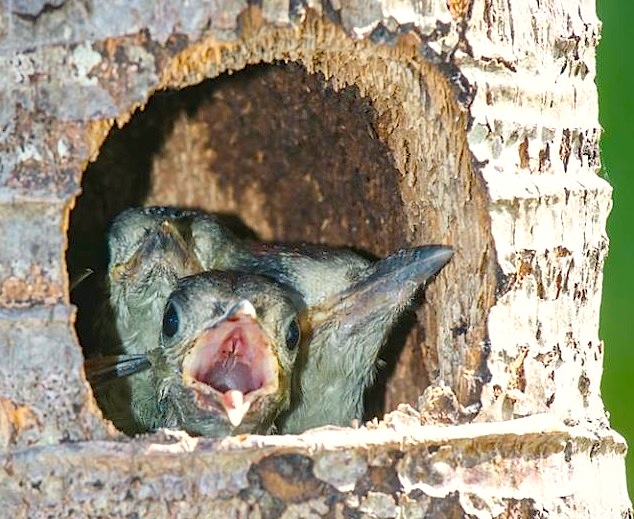
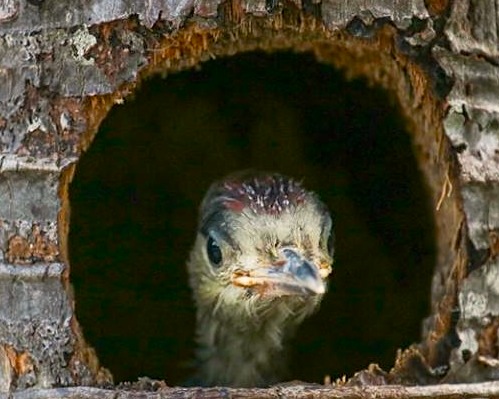
In just a few days, the West Indian WOODPECKER CHICKS have become bigger, noisier and much hungrier. Their heads are now tinged with red. They have started to compete for food: the first chick to push its way to the entrance hole gets the most food. Often there will be a smaller or weaker chick that gets rather left out in the frantic rush for grub (make that ‘grubs’ – see header image). But I suspect quite a lot of food shrapnel gets dropped and spread around inside the nest, so that in the end all the chicks are well sustained.

Rhonda Pearce has been taking photos of this growing family over the last few days, and if you saw my post last week, you will notice that the size of the chicks and the size of the food morsels jammed down their eager gullets has increased considerably…

A lizard hangs on tightly to the parent’s beak… but sadly it is doomed to be dinner…West Indian Woodpecker & Chicks, Abaco (Rhonda Pearce)

Mmmmmmm. It’s so tasty, little one…. and even if it isn’t, it’s going inWest Indian Woodpecker & Chicks, Abaco (Rhonda Pearce)

Hey, kids, who wants a bug with wriggly legs and feelers?West Indian Woodpecker & Chicks, Abaco (Rhonda Pearce)

What do we want? Food! When do we want it? Now!West Indian Woodpecker & Chicks, Abaco (Rhonda Pearce)West Indian Woodpecker & Chicks, Abaco (Rhonda Pearce)

“Wishin’ and hopin’…”West Indian Woodpecker & Chicks, Abaco (Rhonda Pearce)

“Is there any left for me…?”West Indian Woodpecker & Chicks, Abaco (Rhonda Pearce)

RELATED POSTS

HUNGRY WIW CHICKS (PT 1)

WEST INDIAN WOODPECKERS

WIWs AT DELPHI

Credits: all photos, Rhonda Pearce