Unknown's avatar

FEEDER BIRDS AT THE DELPHI CLUB, ABACO


Delphi Club, Rolling Harbour, Abaco aerial

FEEDER BIRDS AT THE DELPHI CLUB, ABACO

The compilation of The Delphi Club Guide to THE BIRDS OF ABACO involved making a few rules and sticking to them. For example, the avian images in the book – and there are a great many –  had to be of birds actually photographed on Abaco or in Abaco waters. Gorgeous pictures from Grand Bahama or New Providence were ruthlessly excluded, however painful it was to do. Some wonderful spoonbill photos taken in Nassau stayed in the ‘Not Use’ folder. The temptation to slip in an non-Abaco whimbrel to fill a whimbrel-shaped space among the shorebirds had to be resisted – even though at the time the last recorded sighting of one on Abaco (no photo) was in 2000…

Bananaquit 2, Delphi, Abaco (Keith Salvesen)

Another important restriction was the stipulation that we would only use birds that had been photographed in their natural surroundings, defined as being a place where a particular species might naturally be found. Coppice and shoreline, obviously, but this included utility wires, posts and docks etc for species that habitually use them to perch on or hunt from. However, the rule meant a complete embargo on feeder photos, however winsome a hummingbird might look as it sips sugar water. We extended the principle to include a ban on luring birds into camera-shot with seed or corn trails; and similar ruses beyond the simple whistles and pishes that anyone might use to tempt a bird out of deep cover.

Cuban Emerald coming in to land… and feedingCuban Emerald, Delphi, Abaco (Peter Mantle) 1 Cuban Emerald, Delphi, Abaco (Peter Mantle) 2

The Delphi club is the perfect location for an enviably varied number of species. Its remoteness down a one-mile drive from the Highway, with pine forest giving way to luxuriant coppice, ensures minimal disturbance for the birds including a number of rarer species.  Delphi Club Rolling Harbour Abaco Aerial view
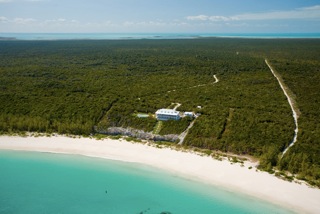
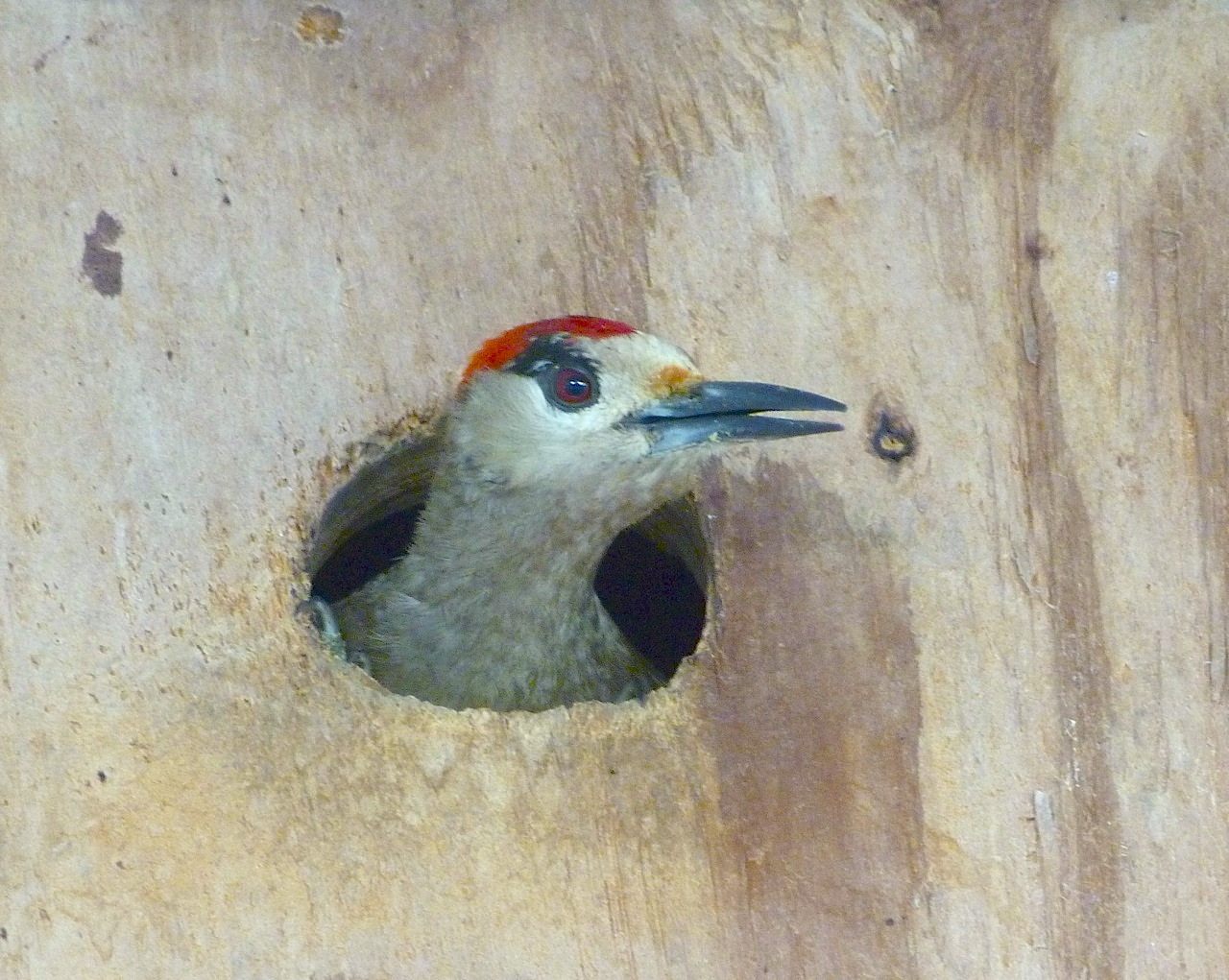
The one-mile white sand curve of the beach sees many shorebirds and seabirds in all seasons. The gardens attract both the usual suspects and less common birds. The building, too, has its resident West Indian Woodpeckers in two nesting boxes under the eaves, thoughtfully provided to discourage the Club’s woodwork from exploratory drilling.

Mr and Mrs Black-faced GrassquitBlack-faced Grassquit (m) Delphi, Abaco (Keith Salvesen) Black-faced Grassquit (f) Delphi, Abaco (Keith Salvesen)

There are a number of seed and sugar water feeders around the place, and bird baths too. It’s a long time since I featured a collection of ‘tame’ birds. This post shows a few of the species that have made Delphi their home.

Mr and Mrs Greater Antillean BullfinchGreater Antillean Bullfinch (m), Delphi, Abaco (Keith Salvesen)Great Antillean Bullfinch. Delphi, Abaco (Keith Salvesen)

Mr and Mrs Painted BuntingPainted Bunting, Delphi, Abaco (Keith Salvesen)

Bananaquit: the curved beak makes it easy to use the hummer feeder (see above)Bananaquit (f) Delphi, Abaco (Keith Salvesen)

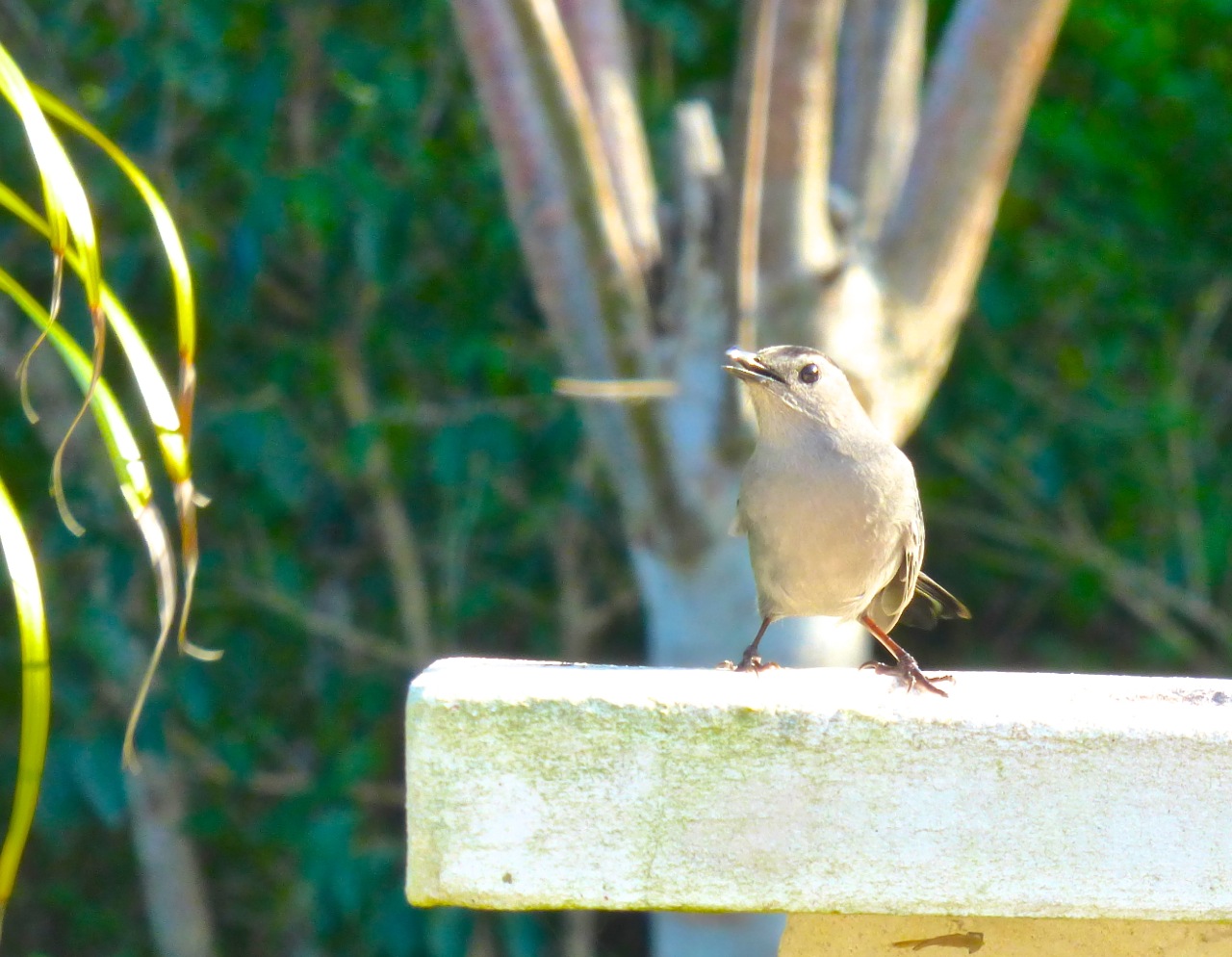
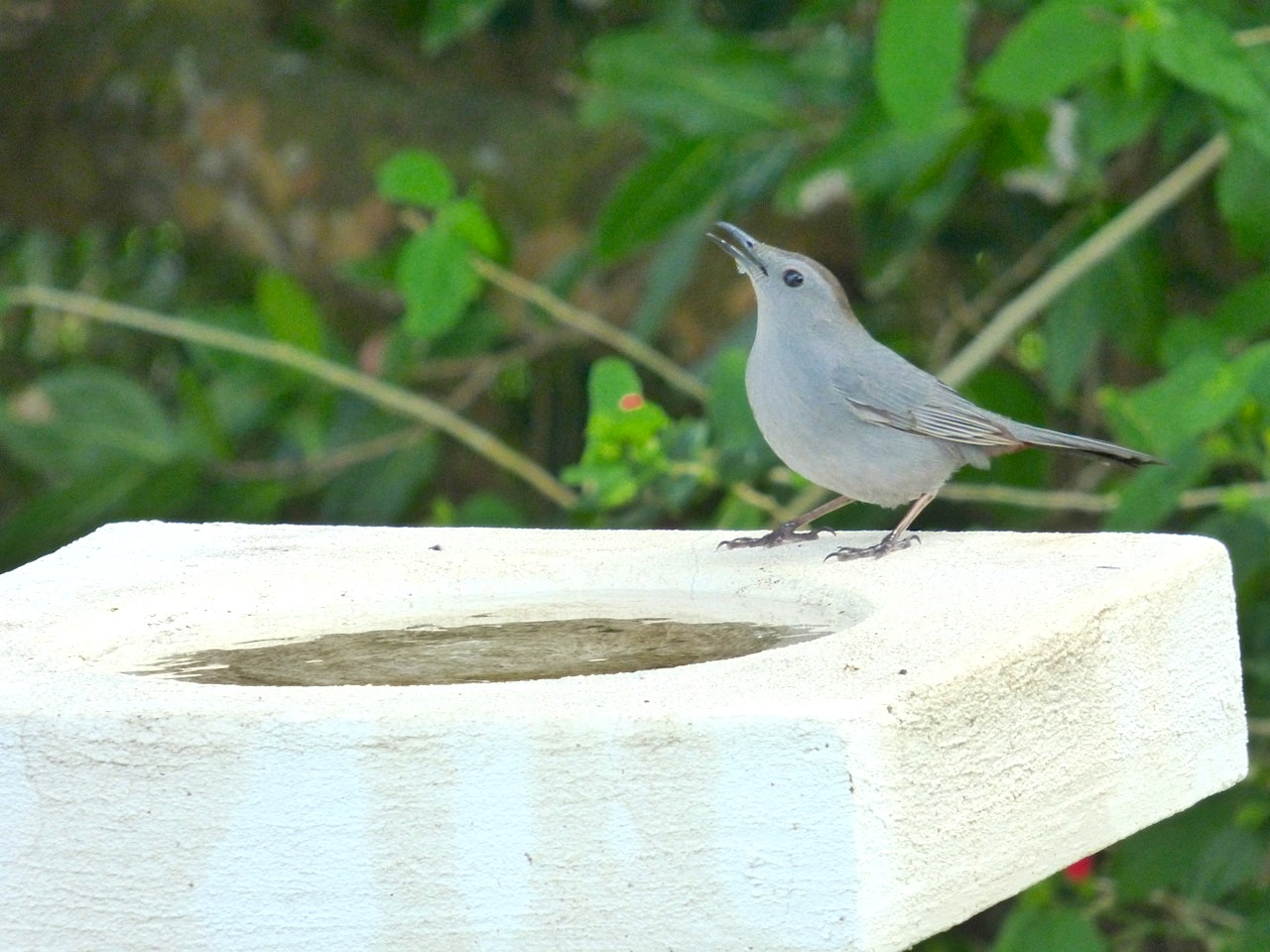
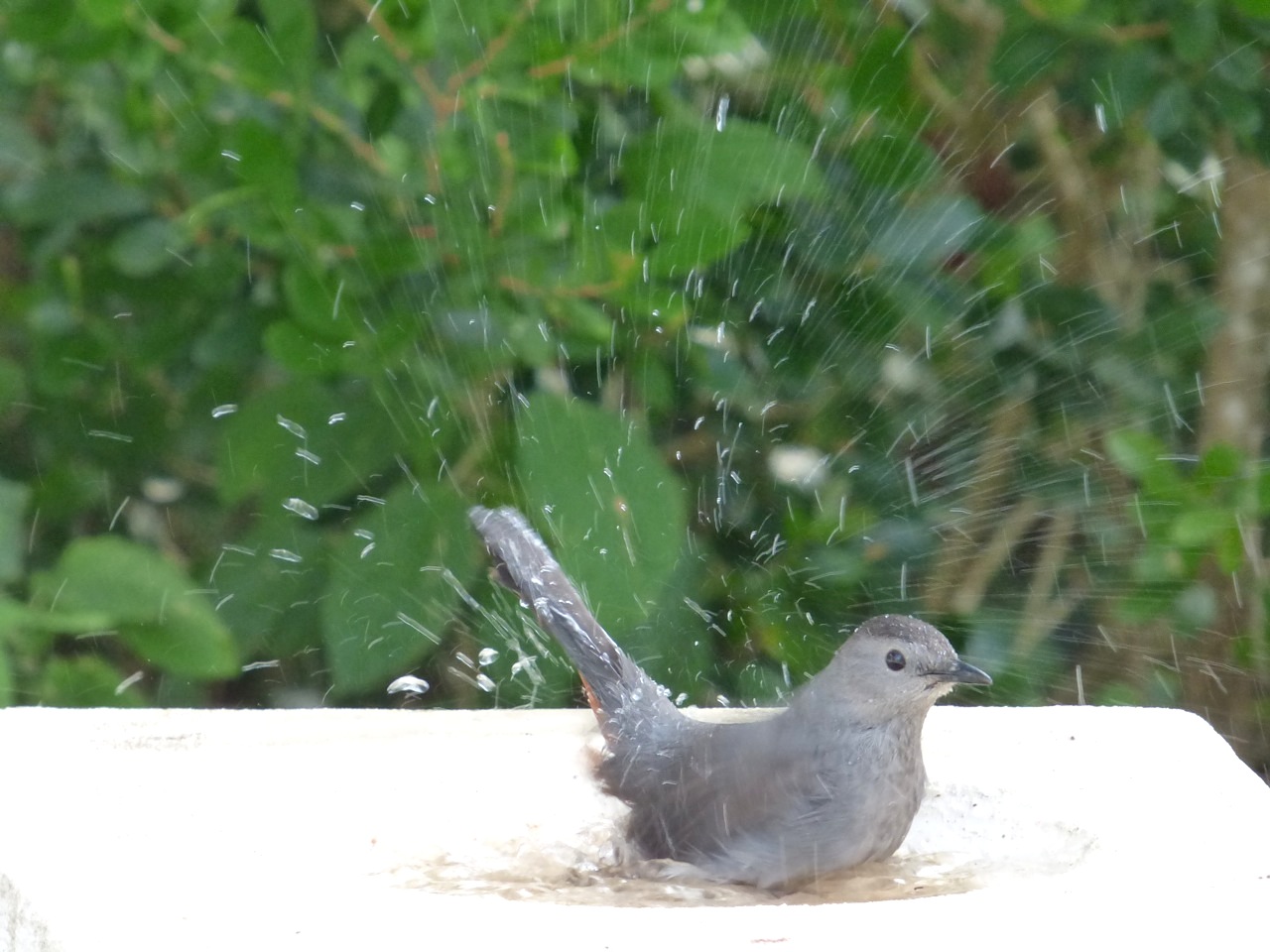
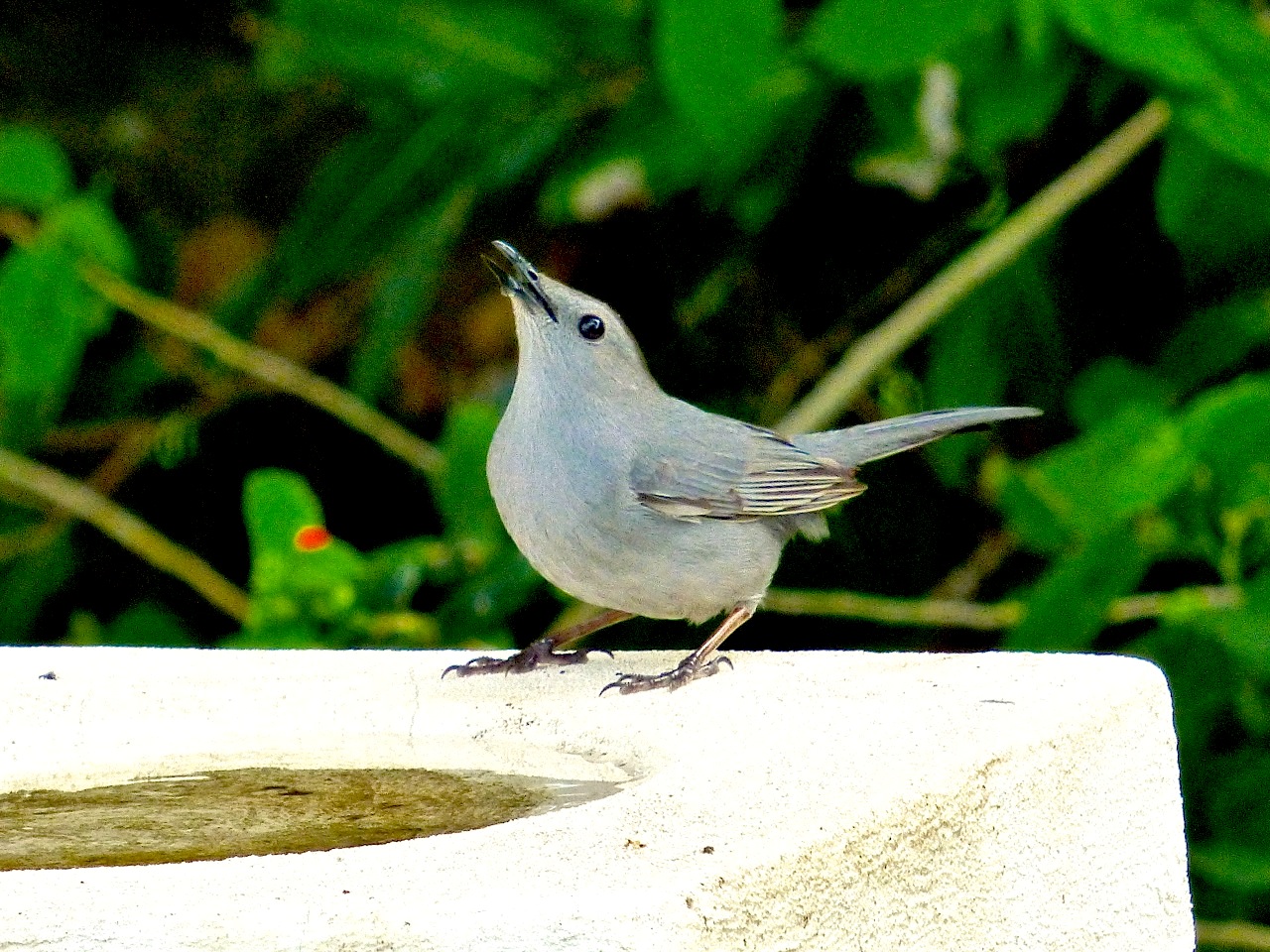
A Gray Catbird takes a drink… and a bathGray Catbird, Delphi, Abaco (Keith Salvesen)Gray Catbird, Delphi, Abaco (Keith Salvesen)
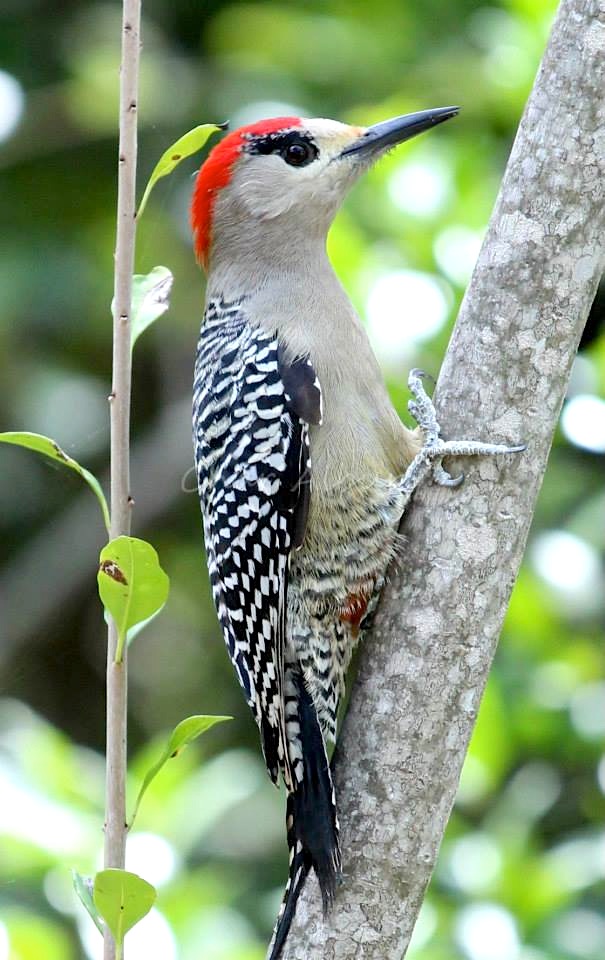
Adaptive behaviour from a W I Woodpecker – that long tongue is perfect for the jobWest Indian Woodpecker, Delphi, Abaco (Keith Salvesen)

The turkey vulture takes priority over all smaller birds…Turkey Vulture, Delphi, Abaco (Keith Salvesen)

A red-legged thrush enjoys picking up the seed shrapnel off the ground…Red-legged Thrush Abaco 7

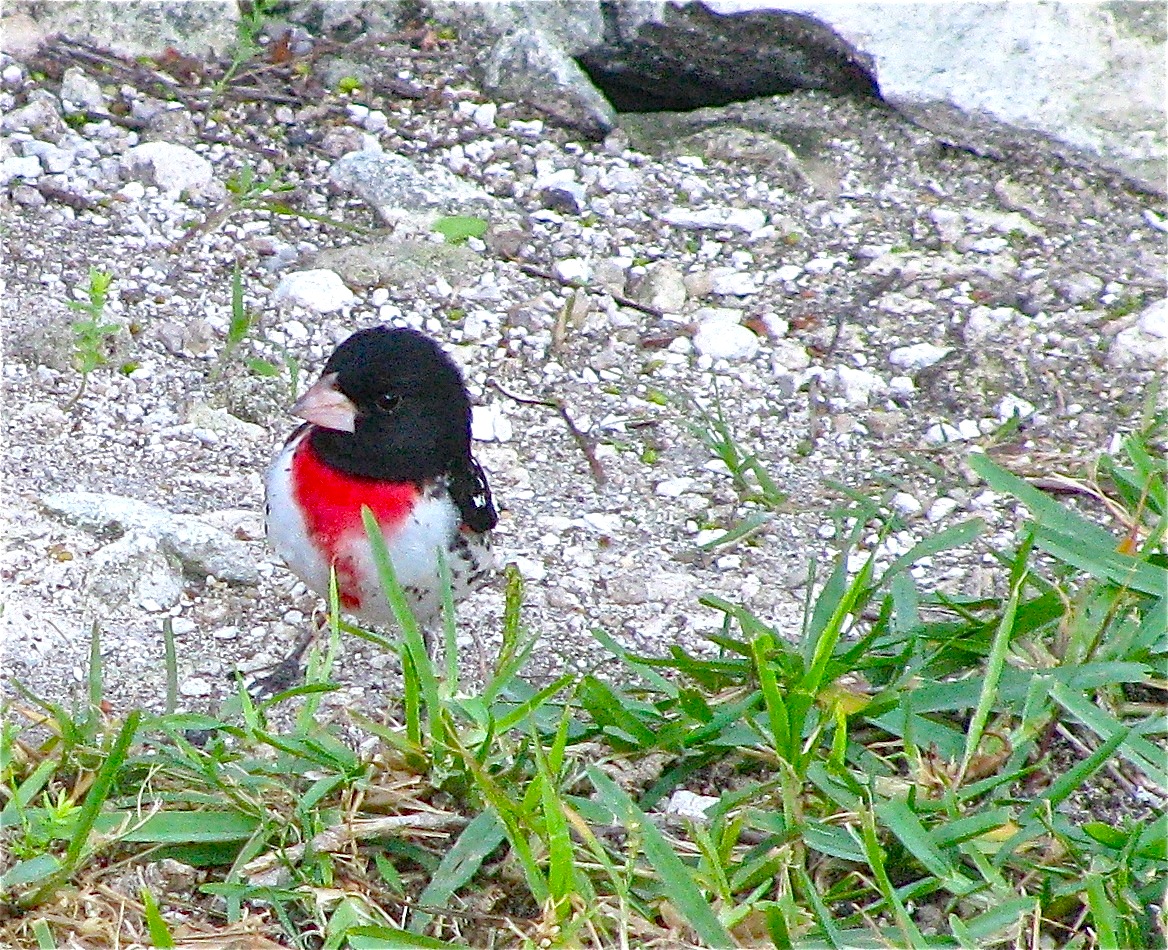
As do rose-breasted grosbeaks and indigo buntingsIndigo Bunting & Grosbeaks, Delphi, Abaco ©C StahalaRose-breasted Grosbeak

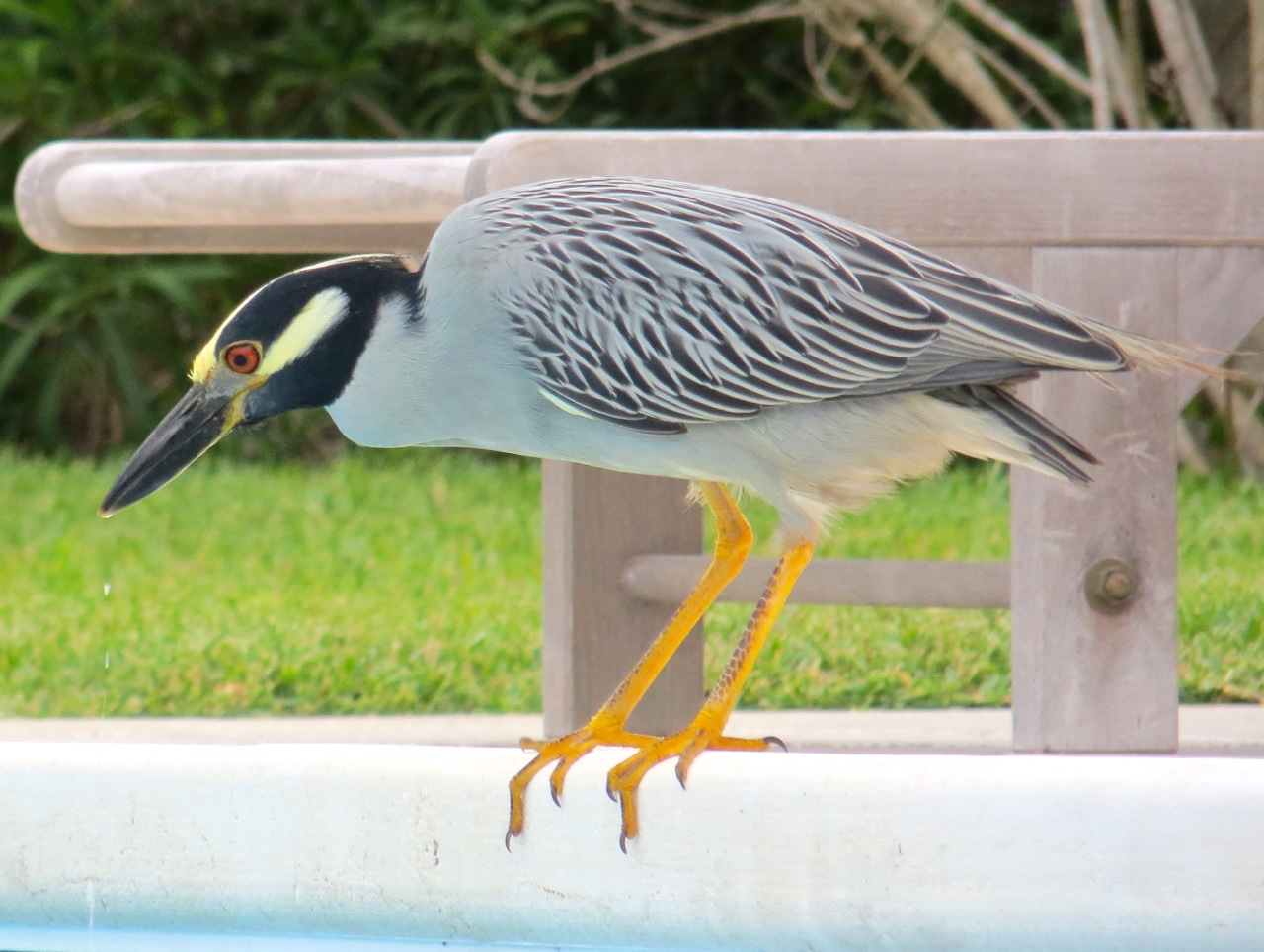
Meanwhile, a yellow-crowned night heron takes a drink from the poolYellow-crowned Night Heron, Abaco 9
Credits: all photos RH except aerial shot of Delphi, Peter Brown; the hummers, Peter Mantle; and the buntings / grosbeaks, PM and Caroline Stahala…

dcbg2ba-jacket-grab-for-pm-v2-copy

Unknown's avatar

A QUARTER OF A MILLION GLIMPSES OF ABACO…


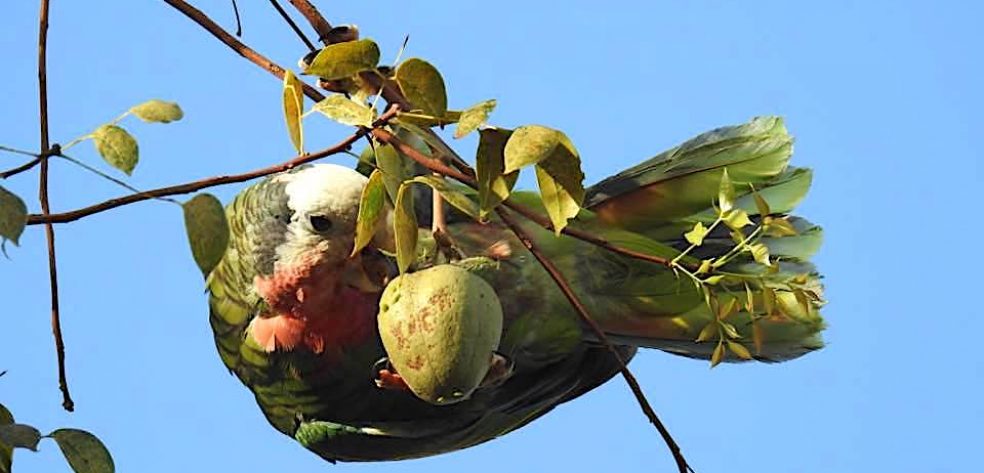
Abaco (Cuban) Parrot, Abaco, Bahamas  (Keith Salvesen)

A QUARTER OF A MILLION GLIMPSES OF ABACO…

Well here’s a rum do. About four years ago, this somewhat minority interest blog emerged ‘mewling and puking’¹ into the world, guided by an incompetent male midwife whose basic training had been about 4 weeks of exposure to Abaco, its fishing, its wildlife, its geography and its history. ‘Bananaquit’ might as well have meant taking up a plantain-free diet. ‘Grassquit’ might have been the local word for ‘keep off the lawn’. And that’s before all the flowers. And the reef fish. And everything else that turned up during the storm-wracked voyage of discovery via polydamus swallowtails, manatees, spider wasps and batfish that led slowly to the calmer waters of ‘rather better informed (if no wiser)’. 

Anyway, at midnight last night some unknown person kindly made the 250,000th visit to the blog, a target that once seemed inconceivable. In the past month, the 1000th person also signed up as a follower, another source of amazement. The reality is that despite Abaco being a sparsely-populated microdot island in a huge world, there are a great many people on the island or associated with it who are passionate about it and its extraordinarily diverse natural history. That knowledge makes curating this blog both easy and pleasurable. 
RH Stats clip

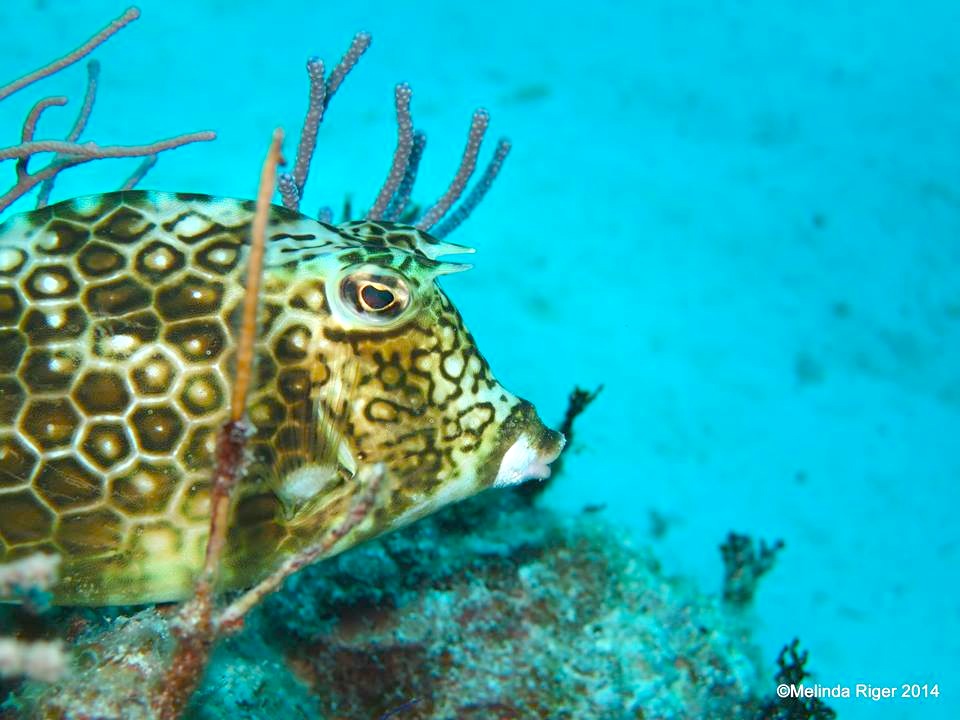
I checked my stats for the last year to find out where hits from the top 10 countries – and for fun the bottom 1o – came from. Here’s the answer. Rather shamefully there was also a country I had never knowingly heard of, Palau (Micronesia). There follows a selection of a few photographs that have been popular over the years, mostly my own but the underwater ones are from Melinda Riger and Virginia Cooper of Grand Bahama Scuba.

Top 10                                                                   Bottom 10
Top 10 countries jpg   Bottom 10 countries jpg

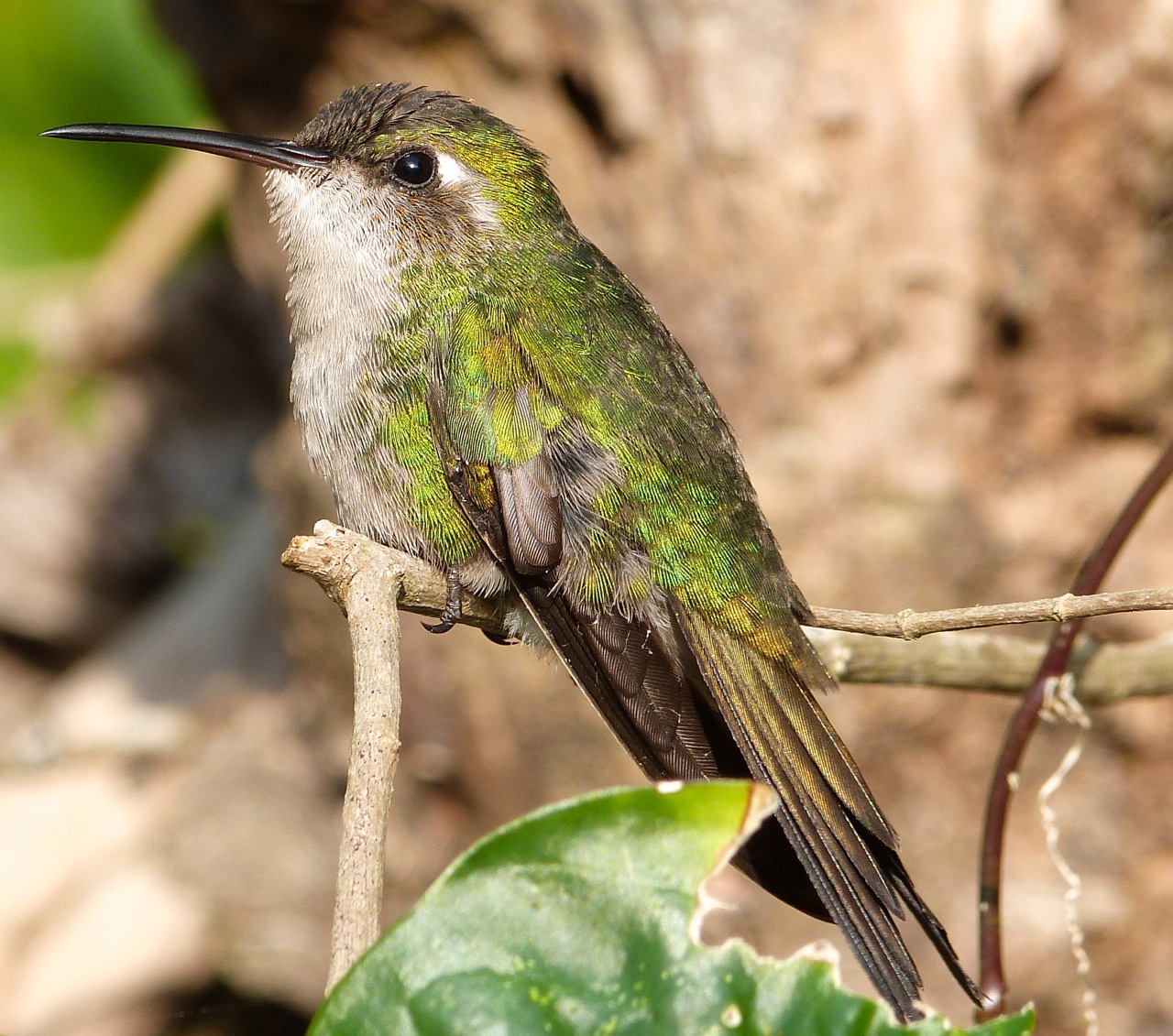
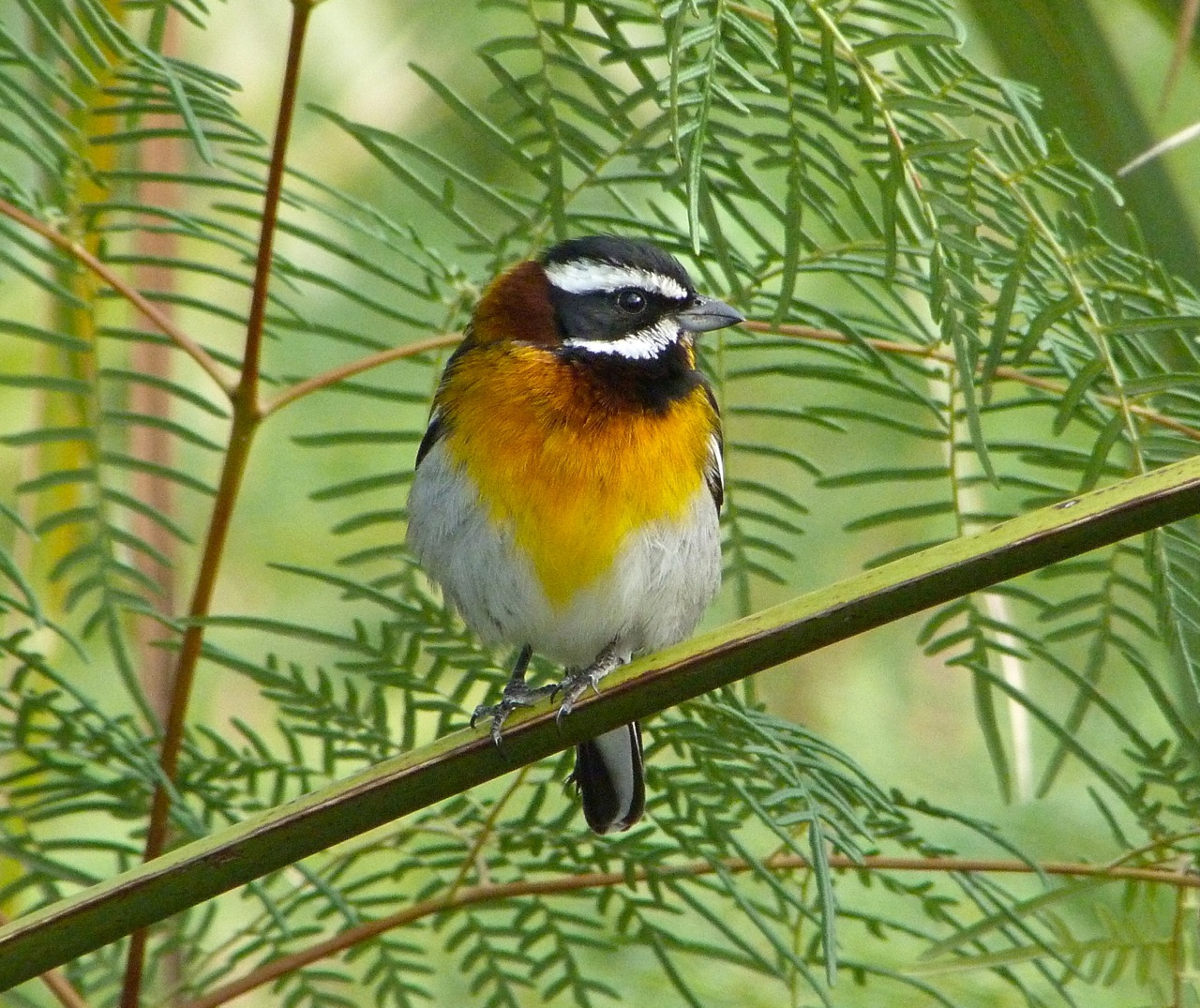
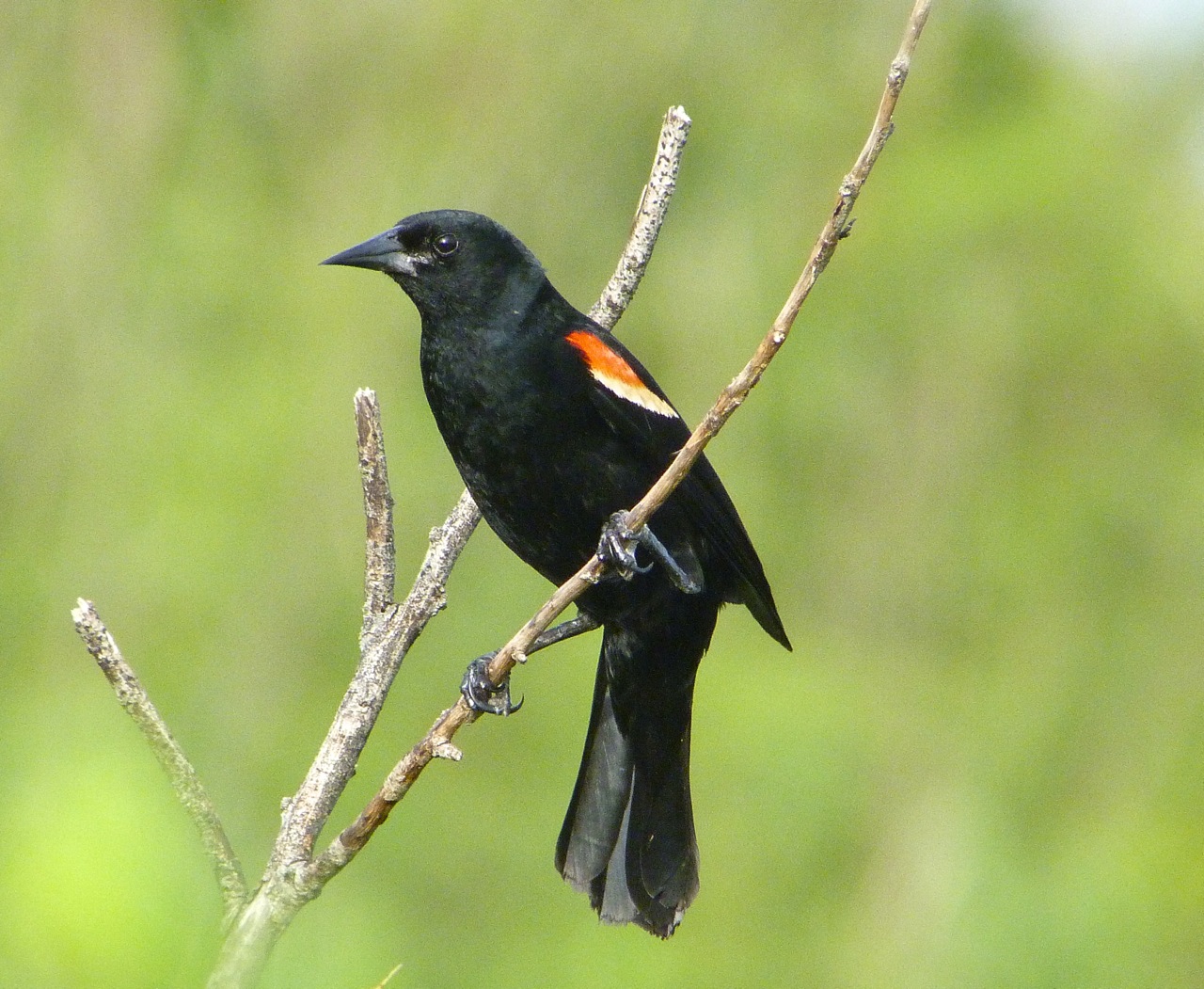
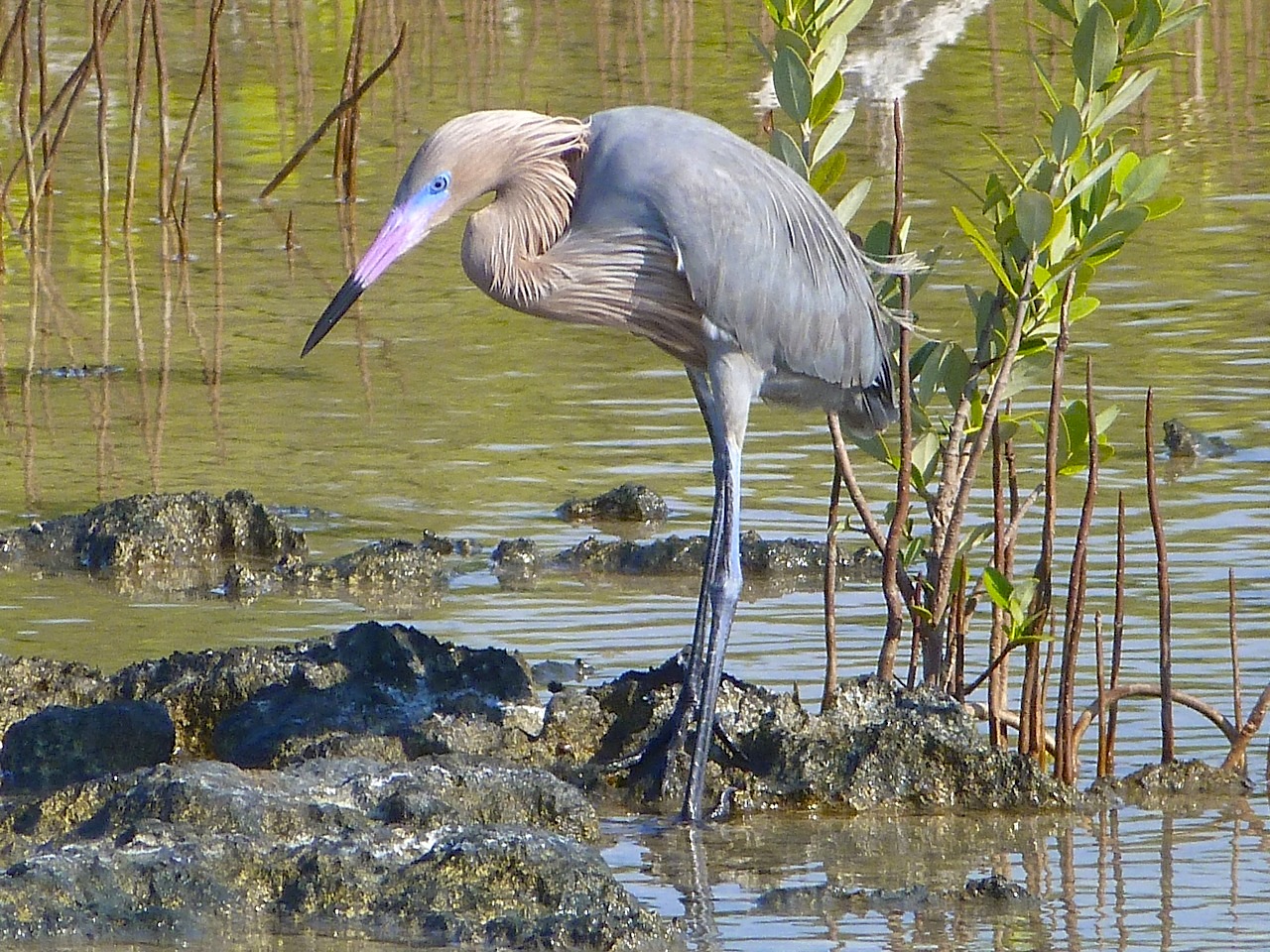
Cuban Emerald Hummingbird, Delphi, Abaco (Keith Salvesen)Bananaquit & palm, Delphi, Abaco, Bahamas  (Keith Salvesen)Western Spindalis, Abaco, Bahamas  (Keith Salvesen)Blue-gray Gnatcatcher, Abaco, Bahamas (Keith Salvesen)Red-winged Blackbird, Abaco, Bahamas  (Keith Salvesen)Brown Pelicans, Sandy Point, Abaco  (Keith Salvesen)Reddish Egret, Crossing Rocks, Abaco, Bahamas (Keith Salvesen)French Angelfish (juv), Bahamas (Melinda Riger)Four-eyed Butterflyfish ©Melinda Riger @GBSCowfish ©Melinda Riger @ GB ScubaOctopus ©Melinda Riger @ Grand Bahama ScubaNassau Grouper, Bahamas (Melinda Riger)Blacktip Shark ©Virginia Cooper @ G B Scuba copy 2Curly-tail Lizard, Delphi, Abaco, Bahamas (Keith Salvesen)Atala Hairstreak Butterfly, Abaco, Bahamas (Keith Salvesen)Bird of Paradise Flower (Strelitzia) Abaco (Keith Salvesen)Hibiscus : Polydamus Swallowtail, Delphi Abaco (Keith Salvesen)Yellow Elder Hope Town, Abaco, Bahamas (Keith Salvesen)

SEARCH TERMS

The most popular searches – omitting posts about hurricanes, which always generate a lot of traffic – have concerned Abaco Parrots, Lignum Vitae, Sea Glass, the Loxahatchee poster series, Tarantula Hawk Wasps, Sea Biscuits / Urchins, Yellow Elder, Parrotfish, Shipwrecks, Hutias, Hole-in-the-Wall, Lionfish, Remora, and Abaco Maps. The most leftfield search of all was ‘How dispose of dead bodies?’, by someone who had clearly strayed into the wrong category of website…

A FEW OF THE MOST POPULAR POSTS / PAGES
SEA SHELLS
SPIDER WASPS & TARANTULA HAWKS: DON’T MESS WITH THESE GUYS    
ABACO FACTS (including likelihood of adverse shark encounter or shipwreck)    
ABACO MAPS    
LIGNUM VITAE – BAHAMAS NATIONAL TREE    
YELLOW ELDER – THE BAHAMAS NATIONAL FLOWER    
SEA URCHINS & SEA BISCUITS – BEACHCOMBING TREASURES ON ABACO    
ABACO FOOD & DRINK (cook hog / bonefish; clean a conch; sip an Abaco cocktail / Goombay Smash)
ABACO & HOLE-IN-THE-WALL, BAHAMAS: A SHORT HISTORY IN MAPS    
PINEAPPLES: SYMBOLS OF WELCOME & WEALTH (ALSO, DELICIOUS)    
ABACO ISLAND BOA: THE ONLY ABACO SNAKE    
WHALES & DOLPHINS    
ABACO PARROTS    
FLORA

It would be strange to end this little celebration without a tip of the hat to Peter Mantle, old friend and genial doyen of the Delphi Club, for his wholehearted encouragement and support for the production and publication of THE DELPHI CLUB GUIDE TO THE BIRDS OF ABACO. This hefty tome, published in March 2014, showcases the wonderful and varied avian life on Abaco and has proved very popular – indeed well beyond our expectations. Although I appear nominally as author on the cover, it is in fact an extraordinary collaborative effort by some 30 people. The book’s success further demonstrates the commitment of Abaconians and other who love the island to Abaco’s rich natural heritage in an age of  rapid change; and provides another good incentive for me to continue with the blog. Next stop: 500,000!

¹ © W. Shakespeare, Romeo & Juliet Act 2 Sc. 7

dcbg2ba-jacket-grab-for-pm-v2-copyShark Gif

Unknown's avatar

WEST INDIAN WOODPECKERS ON ABACO: GUEST POST


WEST INDIAN WOODPECKERS ON ABACO: GUEST POST

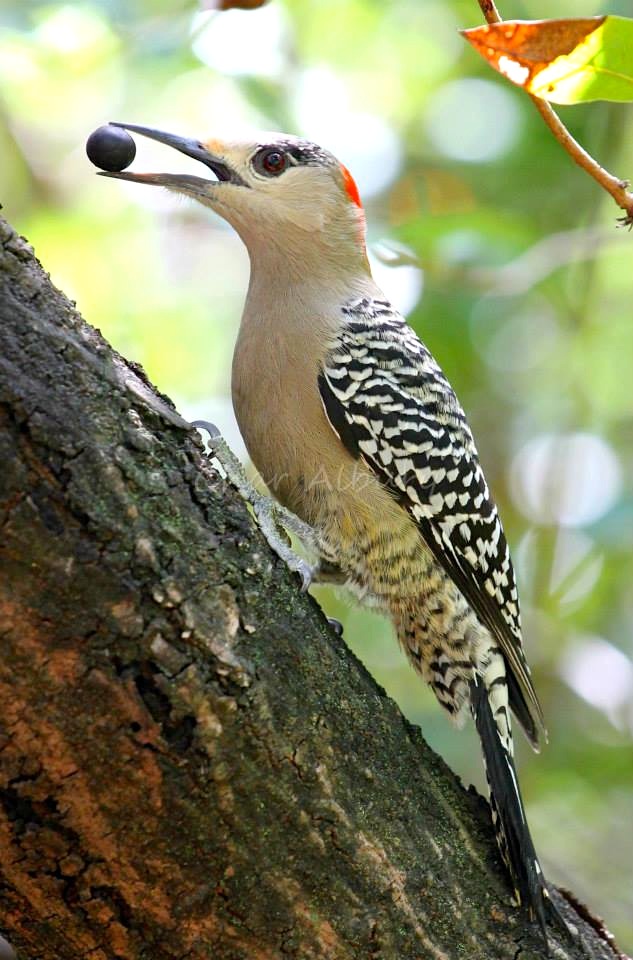
The WEST INDIAN WOODPECKER Melanerpes superciliaris is a specialist bird of Abaco, where it is common. The only other island in the Bahamas where it is found is San Salvador, where it is uncommon. Formerly found on Grand Bahama, it is now believed to be extirpated from that island, with no recent recorded sightings. In the early days at Delphi, we had to put up 2 nest boxes under the eaves to discourage the woodpeckers from destroying the woodwork – very effective, since they are now used every year by a pair that raises a family in one of the boxes and, even before the chicks have fledged, are busy kitting out the second box for a second family… 

WIW box Delphi

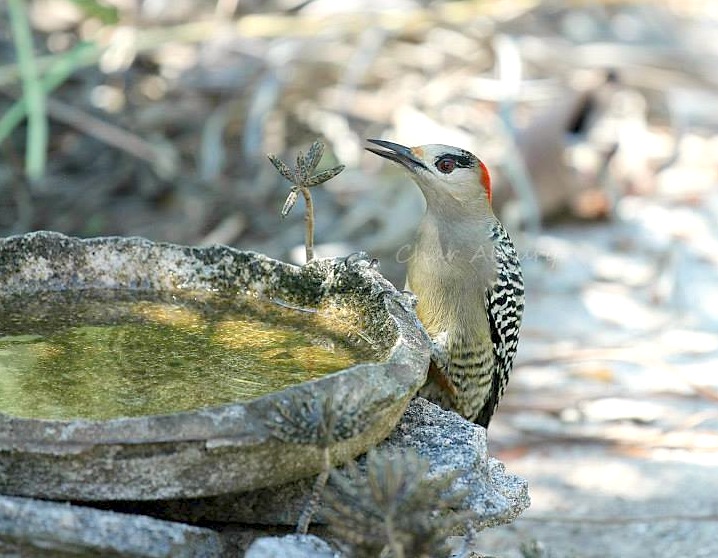
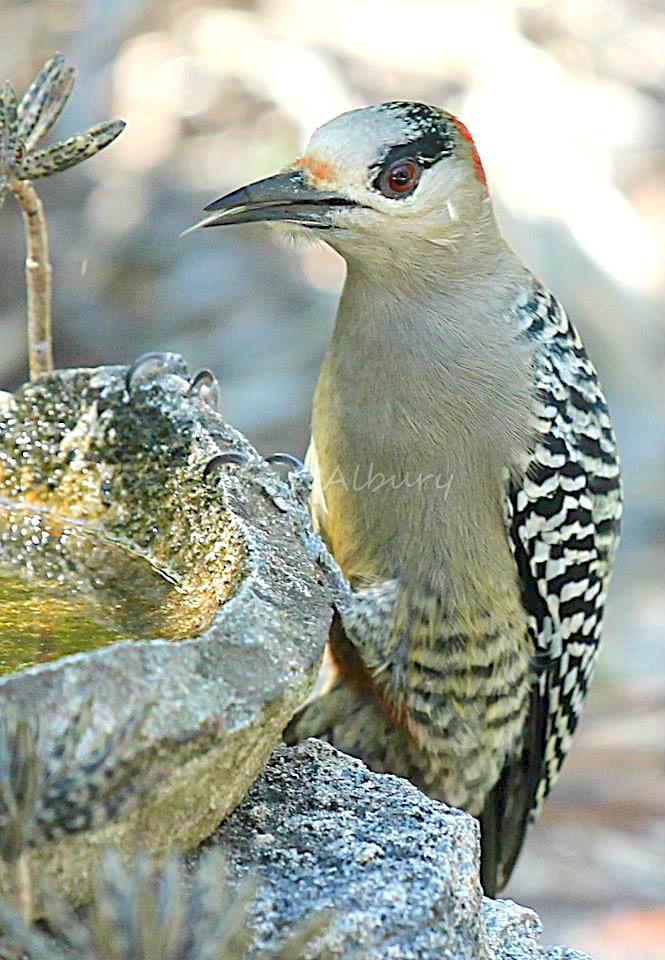
Charmaine Albury is a resident of Man-o-War Cay, Abaco. A photographic contributor to THE BIRDS OF ABACO, she is an enthusiastic birder and very handy with a camera. MOW has had a great winter season for birds, especially warbler species, and Charmaine has been recording her sightings and posting about them regularly. She has now started a photographic Facebook page SEES THE DAY which I commend to anyone wanting an overview of the rich birdlife of Abaco. This post shows some of her excellent recent photographs of West Indian Woodpeckers on Abaco. The male has the striking red crown; the female has a smaller, paler cap.

11035287_1625338024365232_6166437311448663000_n

20417_1625338127698555_7498796397392575987_n

PLAYING WITH YOUR FOOD? HOW MUCH FUN CAN YOU HAVE WITH A BERRY?11117259_1625337987698569_7452867222430469765_n10942602_1625337984365236_7839433915910857592_n

and… pop it into the hole. Score!20417_1625338031031898_5316912847301464680_n

11035287_1625338024365232_6166437311448663000_n

NOW IT’S TIME TO VISIT THE STONE THING THAT HAS WATER IN IT10309181_1625338207698547_743705503764216360_n11080986_1625338147698553_6862424132411400508_n11060458_1625338187698549_1989610138388453679_n

   11035287_1625338024365232_6166437311448663000_n

MY TURN ON THE TREE NOW11133685_1625338034365231_5375400946628441291_n

GETTING A BIT SLEEPY NOW. GOT BED HEAD…11111962_1625338074365227_2479363145688616600_n

All photos Charmaine Albury, with many thanks for use permission. Delphi WIW in nest box & all silly anthropomorphising captions are down to me…

Unknown's avatar

ABACO, HERE WE COME – READY OR NOT…


Pelangi Store, eBay

ABACO, HERE WE COME – READY OR NOT…

The seats are chosen, the online check-in done, the die is cast… Mr and Mrs Harbour are on their way in the BA cattle truck. Laptops are to be abandoned for the duration, but I intend to post occasional things of interest by iPhone – a Kirtland’s warbler sighting, maybe (I wish!) or a fish that has stupidly managed to impale itself on my hook perhaps. Normal blogging service, if there is such a thing round here, will be resumed in due course… 

Fish on! Abaco Marls RH

FISH ON!

“THE BIRDS OF ABACO”

The book was launched at the Delphi Club exactly one year ago. We have been really delighted by the huge interest in it and the enthusiasm for it shown by so many people – residents, migratory residents and transients. There are still copies available*. If anyone would like a signed copy while we are at Delphi, I’m sure that can be arranged. I shall bring my special signing pen (it doesn’t smudge!) just in case…

flyer 2 copy

It’s possible – by which I mean highly likely, of course – that perceived ‘downtime’ on Abaco will in fact be quite busy. Fishing. Birding. Beaching. Pooling. Talking. Drinking. Eating. Sleeping. So apologies in advance if I’m not so responsive to comments, Facebook stuff and general soshul meeja matters. No offence meant and I hope none taken – I’ll try to keep up with it or play catch up in due course. Anyway, for those who kindly stick with Rolling Harbour or drop in occasionally, much appreciated… 

DELPHI SUNDOWNDelphi Club Abaco Portrait FV

*The price shown in the flyer for the book is now $150 to take account of the VAT. The publisher has absorbed the balance

Fishing sign pic: Pelangi Store, eBay. I ‘borrowed’ it, but who knows, they might make a sale as a result…

Unknown's avatar

ROLLING HARBOUR, ABACO: LIFE’S A BEACH & THEN SOME…


Rolling Harbour Beach, Abaco1b

ROLLING HARBOUR, ABACO: LIFE’S A BEACH & THEN SOME…

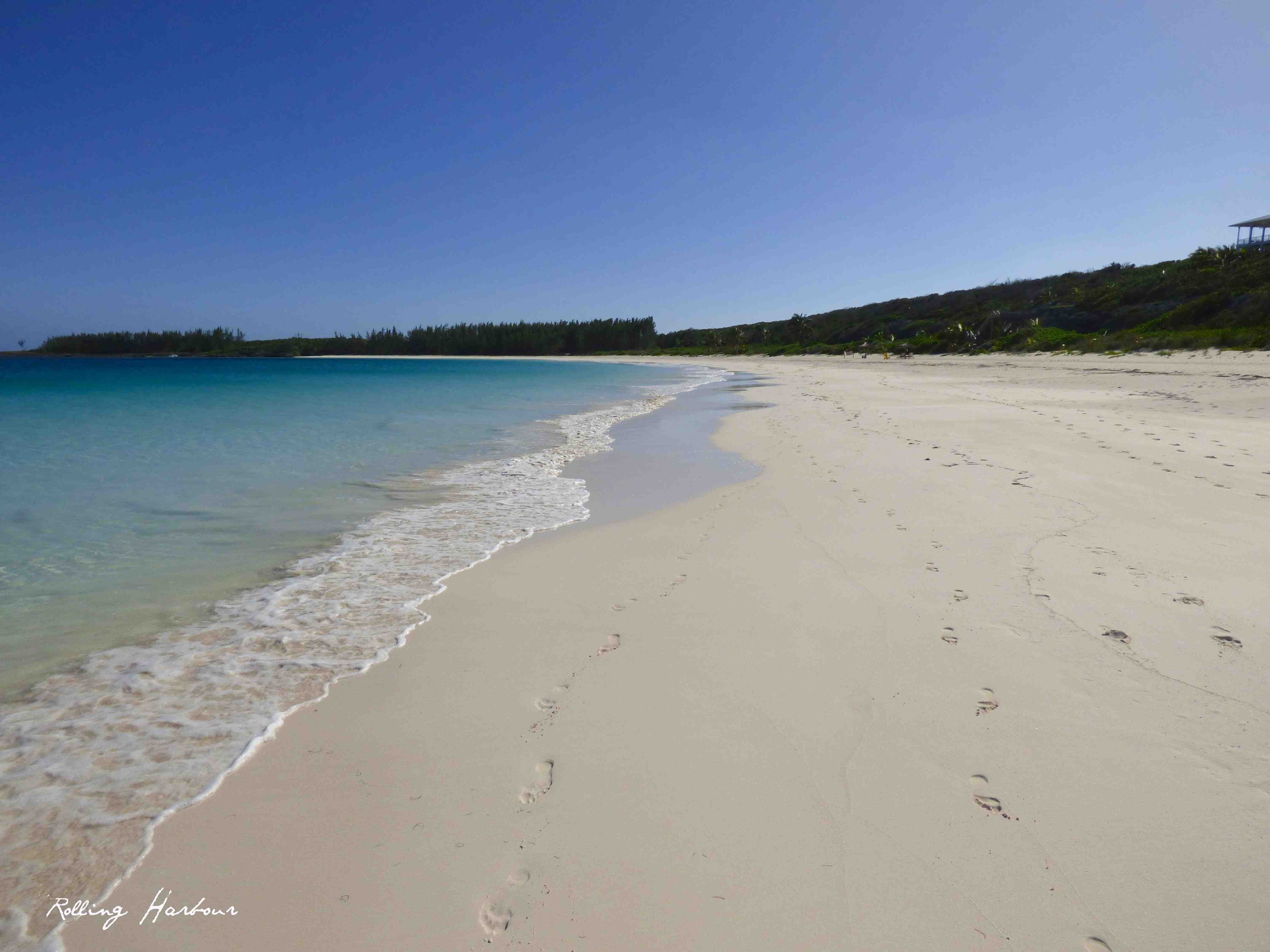
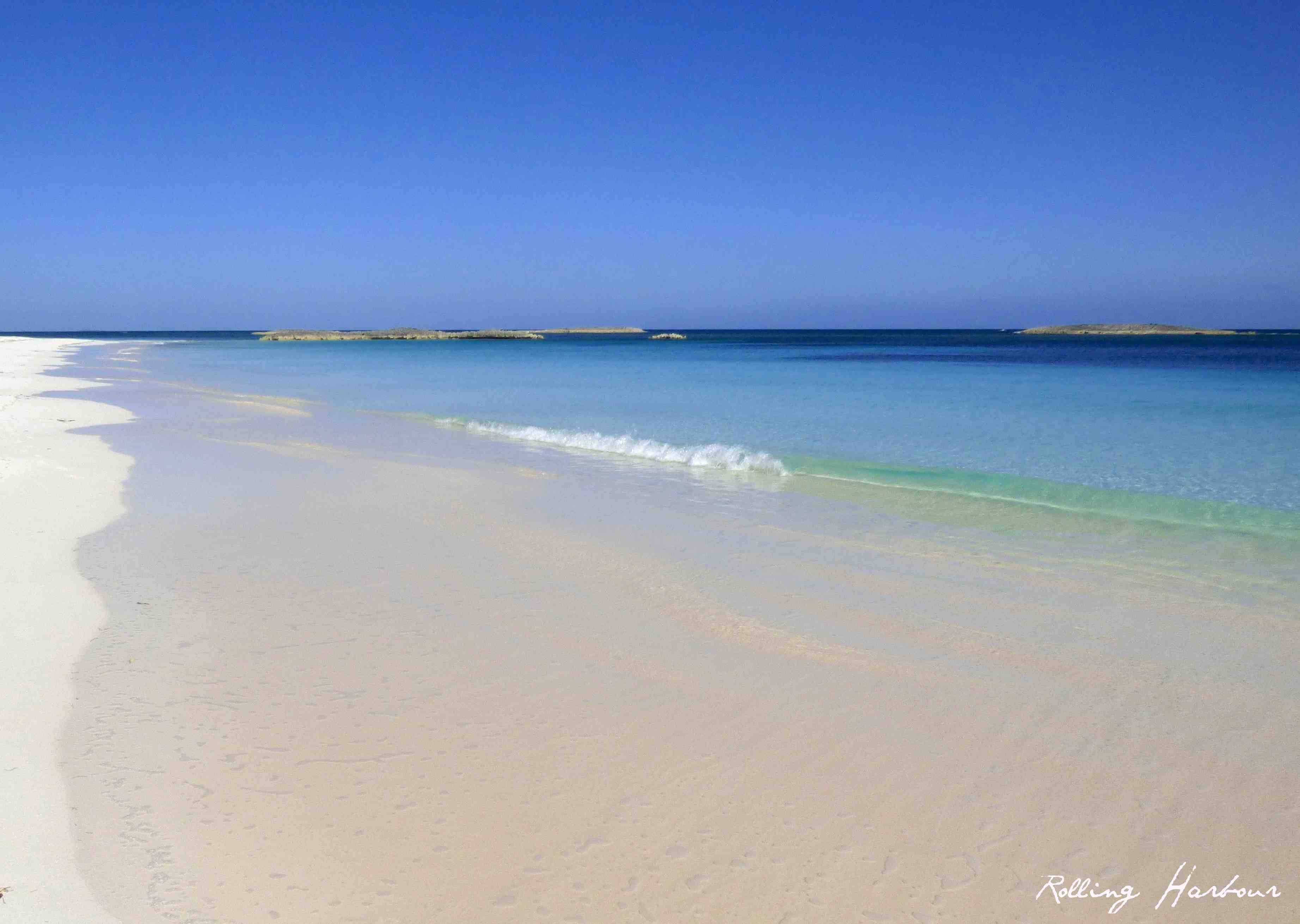
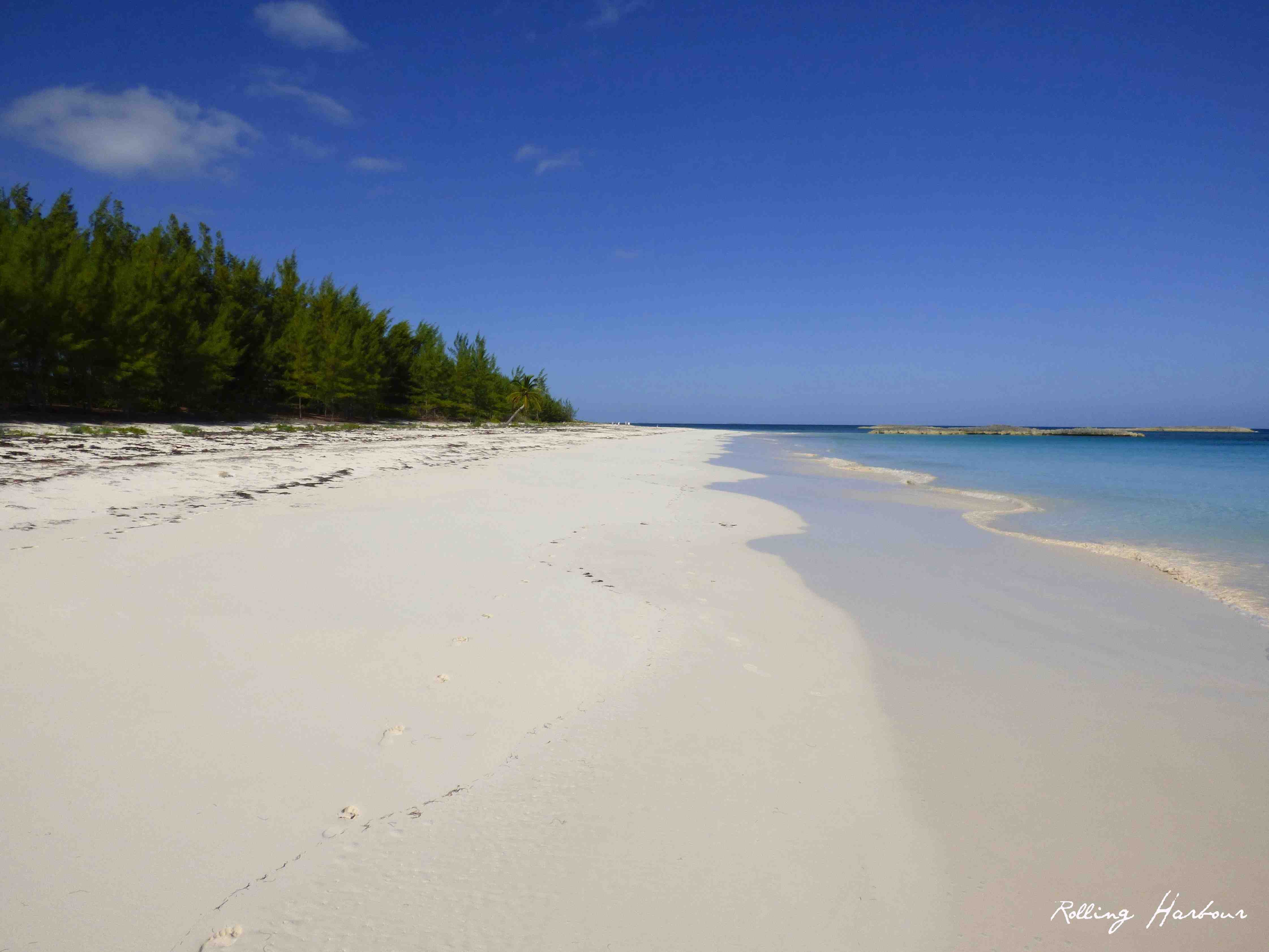
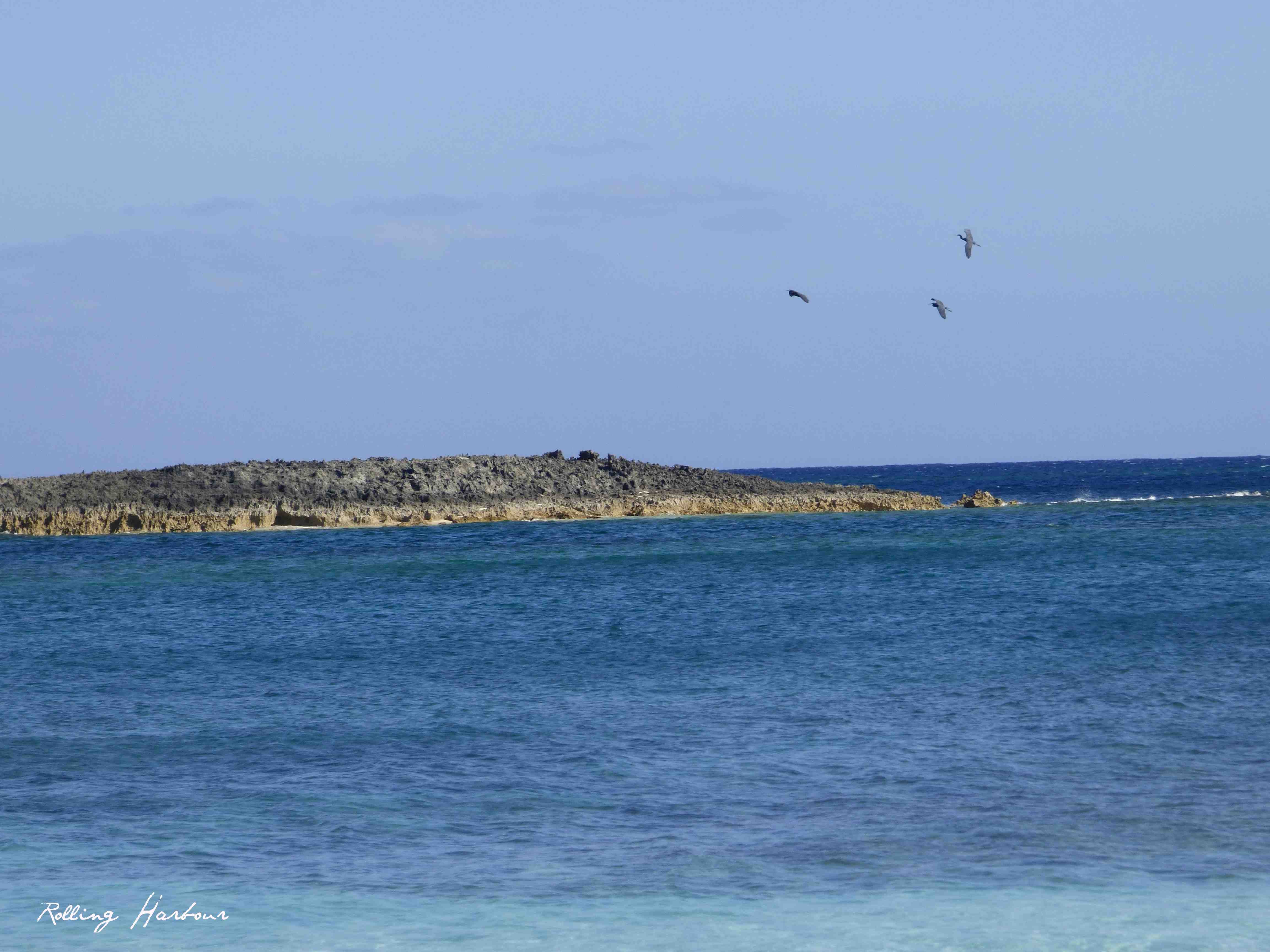
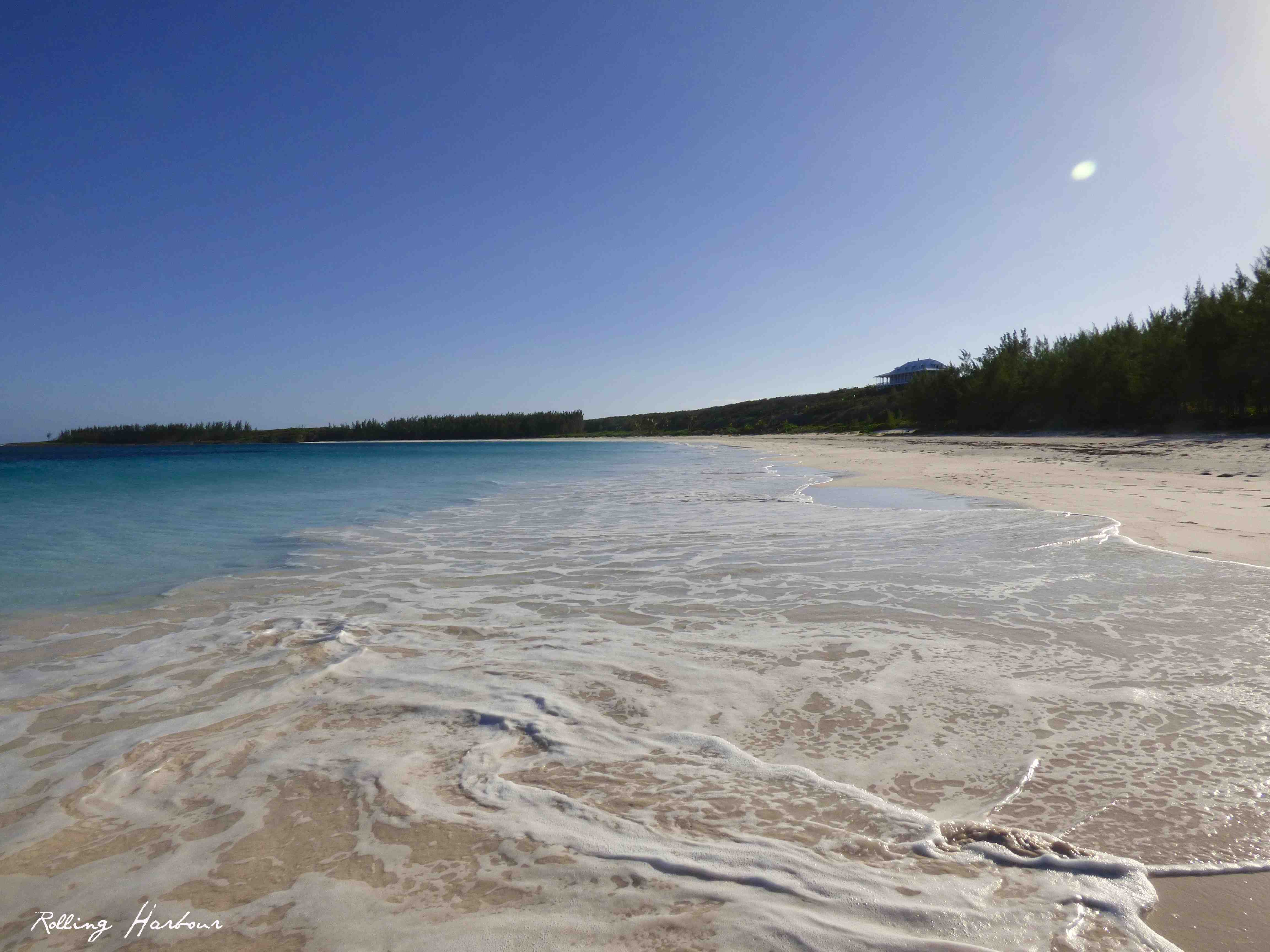
Rolling Harbour (the geographical feature) is a gently curving one-mile white sand bay presided over by the Delphi Club, which sits on a 50 foot cliff behind the beach. There are rocks at either end, fish in the sea (including bonefish and, in the right conditions, permit), birds on the shore and shells on the sand. And that’s it… 

Rolling Harbour Beach, Abaco2bRolling Harbour Beach, Abaco3bRolling Harbour Beach, Abaco4bRolling Harbour Beach, Abaco5bRolling Harbour Beach, Abaco6bRolling Harbour Beach, Abaco7bRolling Harbour Beach, Abaco8b

And if anyone can explain the strange ribbed sky effect that seems to have appeared from nowhere when I posted these photos that I took last year (300dpi), then I’d be very grateful…

Unknown's avatar

SAW FISH IN THE ABACO MARLS? NO SURPRISE. SAW A SAWFISH? AWESOME!


Pristis_pectinata _Georgia_Aquarium_ Diliff Wiki

SAW FISH IN THE ABACO MARLS? NO SURPRISE. SAW A SAWFISH? AWESOME!

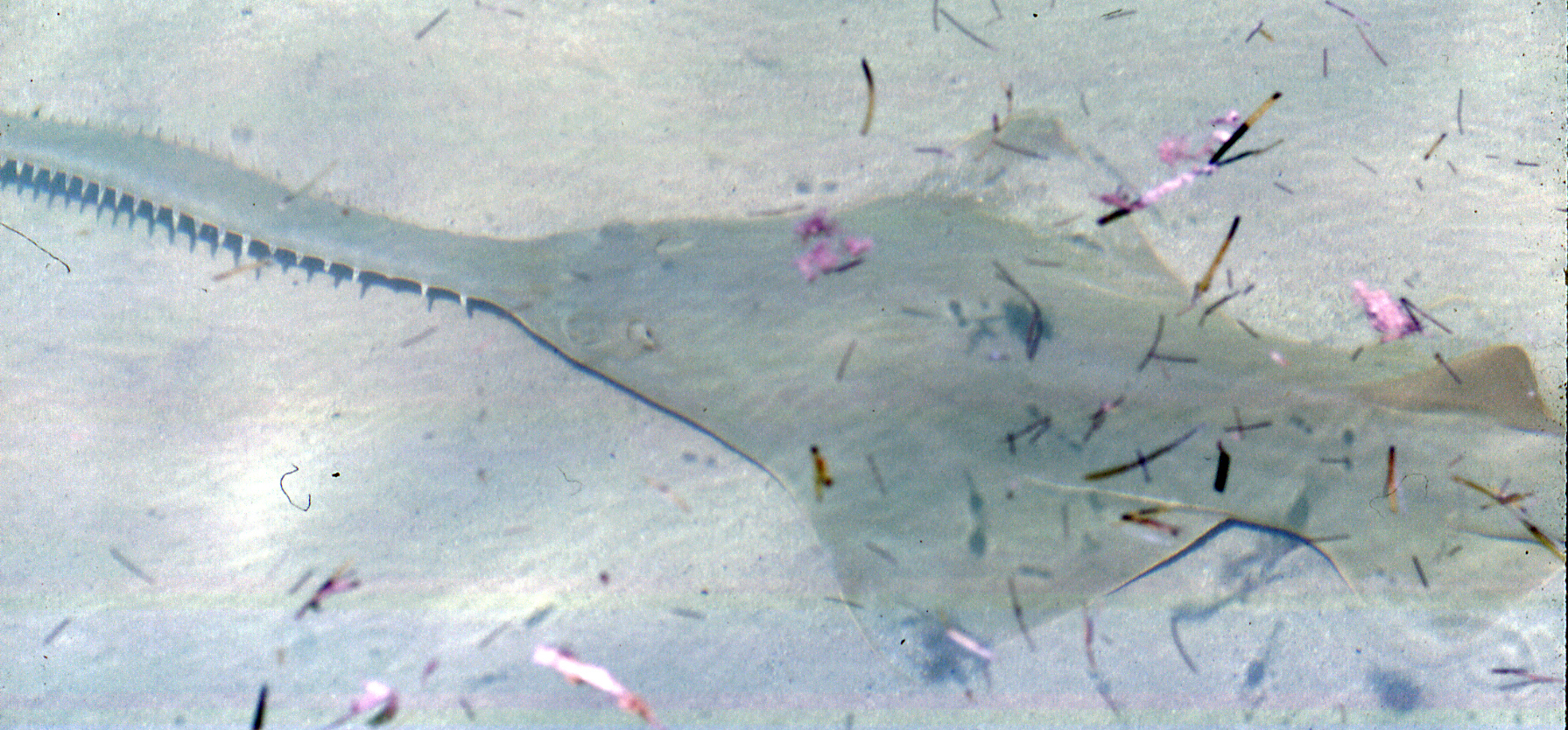
Exactly a year ago, an extraordinary find was made out on the Abaco Marls. Almost disguised against the pale mud under the low water was the first sawfish reported for the Marls. This fish is not merely a rarity in the Northern Bahamas: all species of sawfishes worldwide are IUCN listed as Endangered or Critically Endangered.

Sawfish, Abaco Marls Feb 2014 (Photo: Jacque Cannon)

Sawfish, Abaco Marls Feb 2014 (Photo: Jacque Cannon)

Here is an account of the discovery reported by FRIENDS OF THE ENVIRONMENT: “On a recent fishing trip in the Marls with local guide Justin Sands, Sam and Jacque Cannon had an exciting encounter. As Justin was poling the flats, with Sam on the bow searching for bonefish, Jacque spotted a Sawfish! Jacque and Justin quickly forgot about Sam and his efforts to catch a bonefish and turned their focus to the Sawfish. This is a very rare sighting and one we are happy there was a camera available to document it…” A couple of weeks later I was lucky enough to sit next to Jacque at dinner at the Delphi Club, so I was able to hear at first hand the story of this amazing find. It also turned out to be the perfect time to sign an early copy of “The Birds of Abaco” for Jacque and Sam… 1900063_10152069487394482_984358031_n

Sawfish Book Plate (1884)

Sawfish Book Plate (1884)

 10 ESSENTIAL SAWFISH FACTS

  • Sawfishes are also known as Carpenter Sharks; their ‘saw’ is called a ROSTRUM
  • There are 7 species in oceans and seas worldwide, including the Mediterranean
  • All populations have declined drastically due to habitat loss, overfishing & pollution
  • The rostrum is used to feel, to dig, to slash & impale or stun its prey, and for defence
  • Sawfishes are nocturnal creatures and spend a lot of time face down on the sea floor
  • Like sharks, their skeleton is made of cartilage and not bone.
  • Some species can grow up to 7m long
  • They are generally unaggressive unless provoked but fight strongly when caught
  • Sawfishes are slow breeders, making population recovery more difficult
  • Babies are called ‘pups’. Their rostrum is flexible and sheathed until after birth
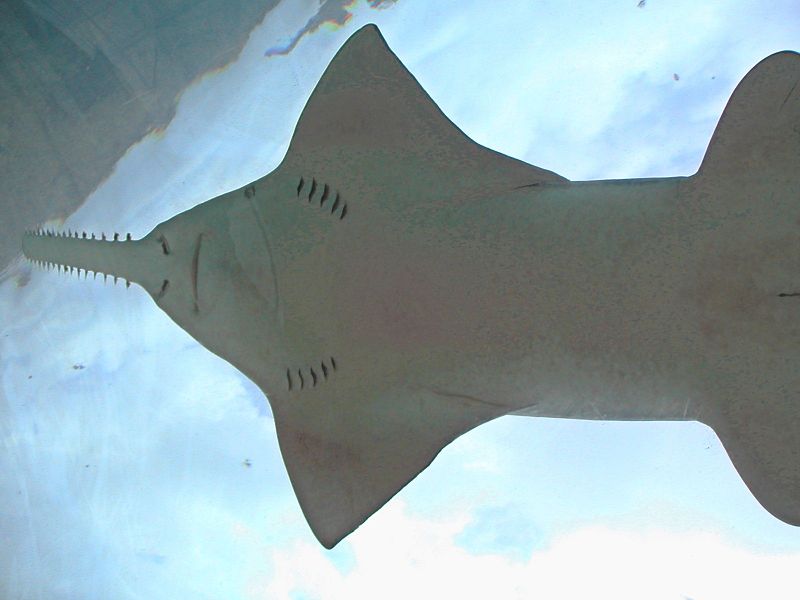
Sawfish seen from Underwater Tunnel - Atlantis, Nassau Bahamas (Fred Hsu)

Sawfish seen from below – Atlantis, Nassau, Bahamas (Fred Hsu)

Other sawfish have been seen recently in the Northern Bahamas, though not in Abaco waters. Last summer the Bahamas National Trust posted 2 great images of a Smalltooth Sawfish, saying “BNT was excited to receive these photographs of a Smalltooth Sawfish photographed in the proposed East Grand Bahama National Park – Bersus Cay Area. The sawfish was 12 to 13 feet long and was seen in water that was 2 -3 feet deep. Thank you to Buzz Cox, Island Manager at Deep water Cay for sending us these photos”. Sawfish, Grand Bahama Sawfish, Grand Bahama

CONSERVATION ISSUES

POPULATION DECLINE As noted above, Sawfish populations have declined to less than 10% of historical levels. The Smalltooth Sawfish – seen above – was once prolific in the Atlantic, Gulf of Mexico, Mediterranean, Black Sea and Indo-Pacific. Population numbers of this species are now estimated at less than 5% to perhaps as low as 1% of their historic levels.

THREAT TO SURVIVAL The threats to their existence are many: habitat loss, overfishing, accidental bycatch, rostrum souvenir hunters (good prices can be obtained), taking them for fins (as a delicacy) or oil from their liver (medicinal).

LEGAL PROTECTION Capturing a sawfish is illegal in certain countries, including the United States. The sale of smalltooth sawfish rostra is prohibited in the United States under the Endangered Species Act.  The import for sale of that of any sawfish species is also prohibited. The international trade of sawfish was banned by the CITES convention in June 2007.
For those that want to find out  a bit more detail about these issues, there’s plenty on interesting information in a scientific (but readable) paper from NOAA – click the link below

A very recent Bahamas smalltooth sawfish sighting on Bimini – Jan 2015Pristis_pectinata_(smalltooth_sawfish)_(Bimini,_western_Bahamas) Lee & Mary Ellen St John Jan 2015 Wiki

Smalltooth Sawfish (Pristis pectinata) Bimini, Bahamas – Lee & Mary Ellen St John Jan 2015

Time for some footage of these rare and wonderful creatures in the Bahamas. The first is from John Flanagan and was taken during a dive off Bimini in early 2014. He was so surprised by the sight that he nearly forgot to turn on his camera to take a short video… The second is a longer 5 min video taken off Andros by Grant Johnson of “wild footage of the critically endangered Smalltooth Sawfish (Pristis pectinata). The west side of Andros, Bahamas is one of the last places on Earth that still provides vast refuge for this incredible animal”.

Finally, you may be wondering how exactly the sawfish uses its rostrum to stun fish, as mentioned earlier. Watch this short video – see how quickly it moves, for such an apparently cumbersome and dozy creature…
Credits as shown above, with particular mention of Jacque Cannon for probably the first known sighting and anyway photo of an Abaco sawfish…; header pic in aquarium Diliff (Wiki)

Unknown's avatar

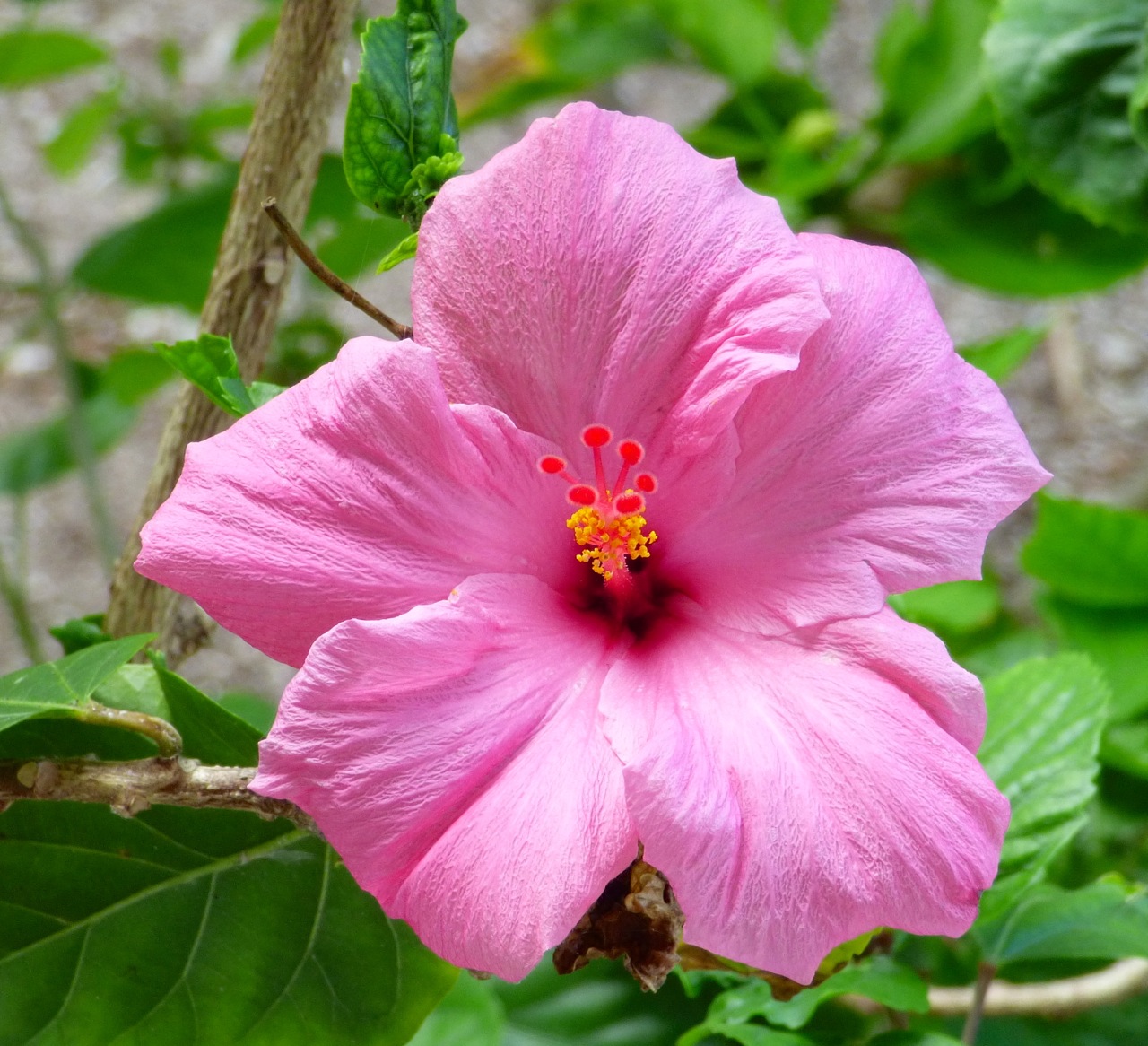
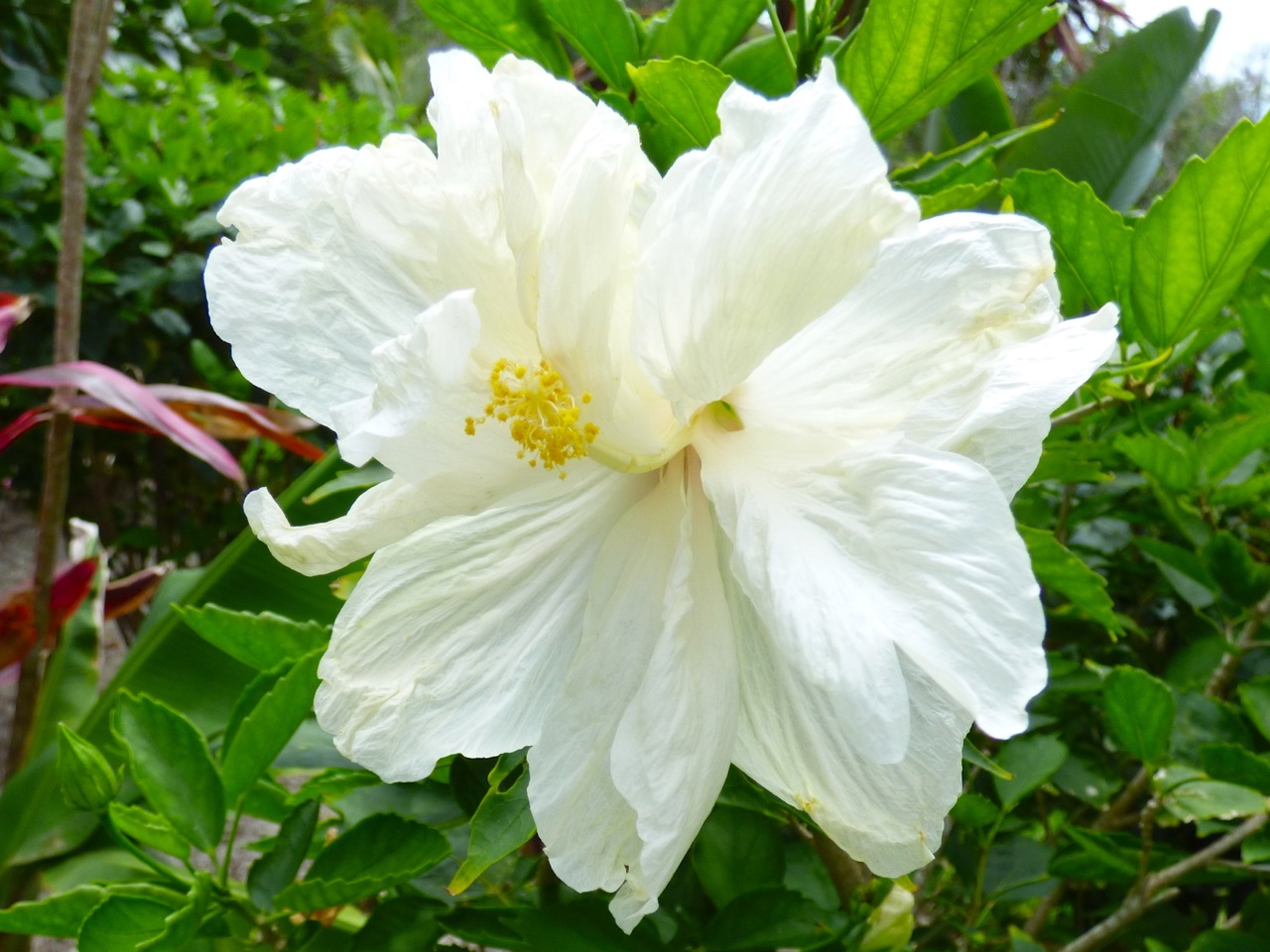
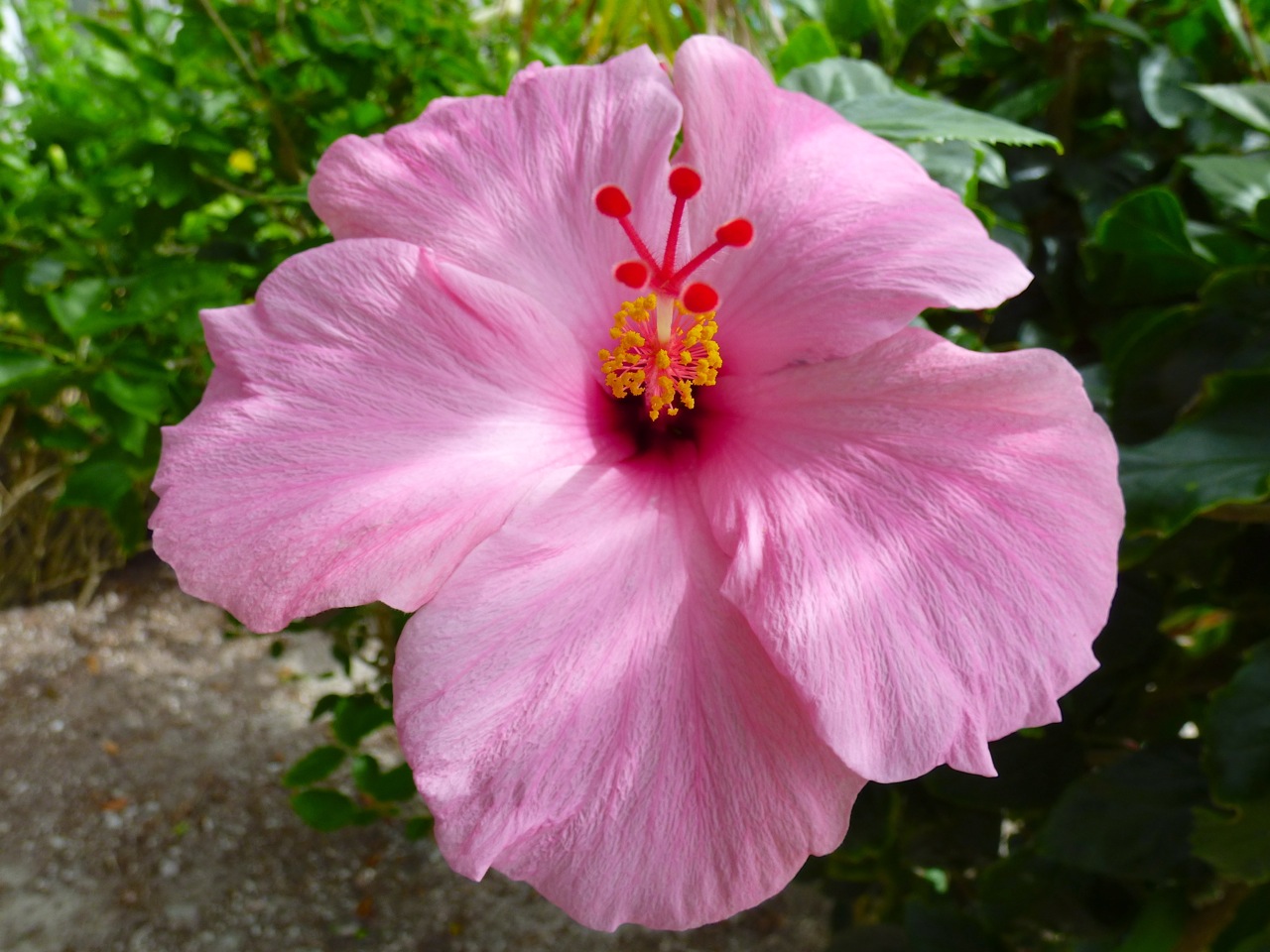
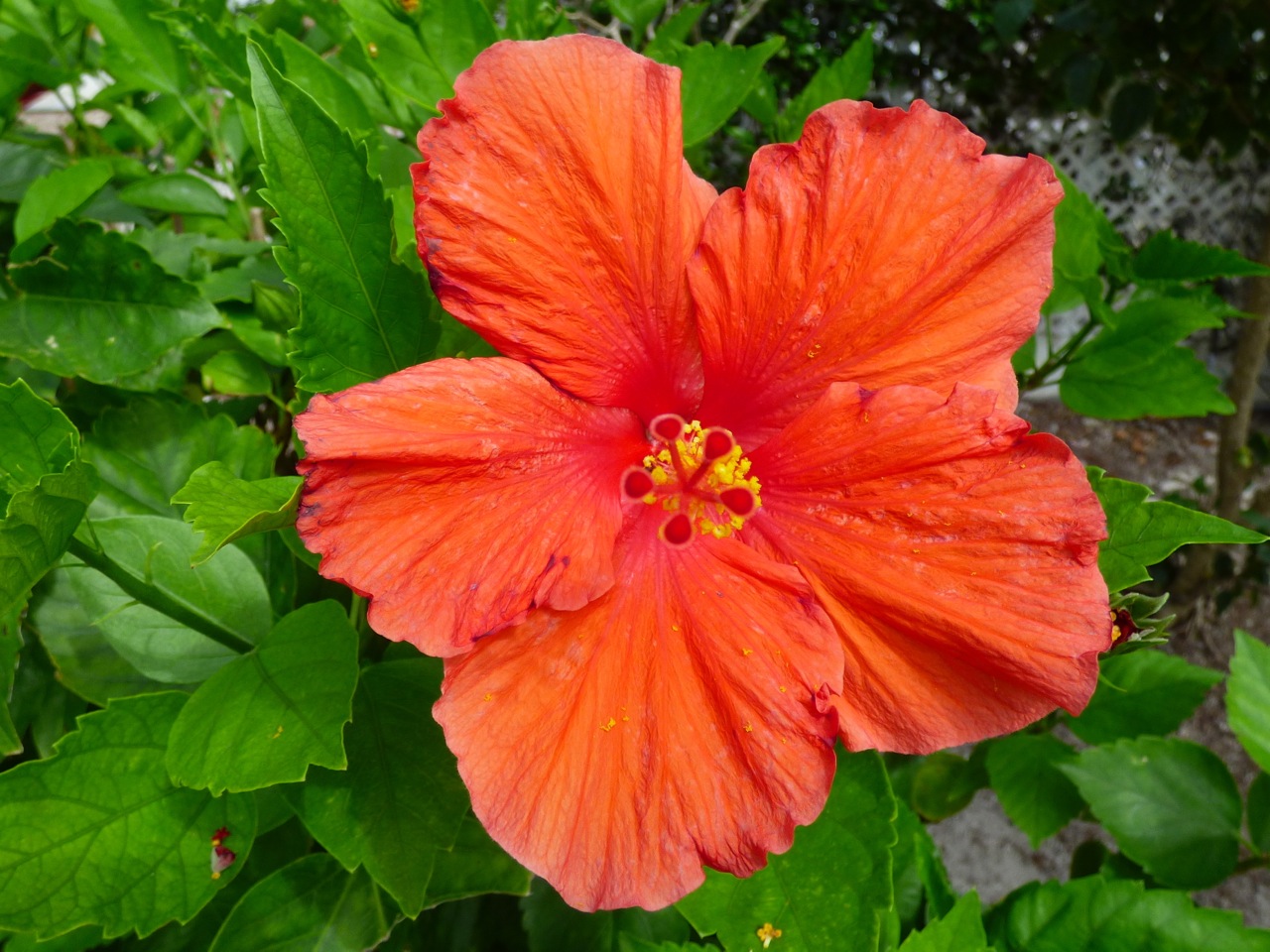
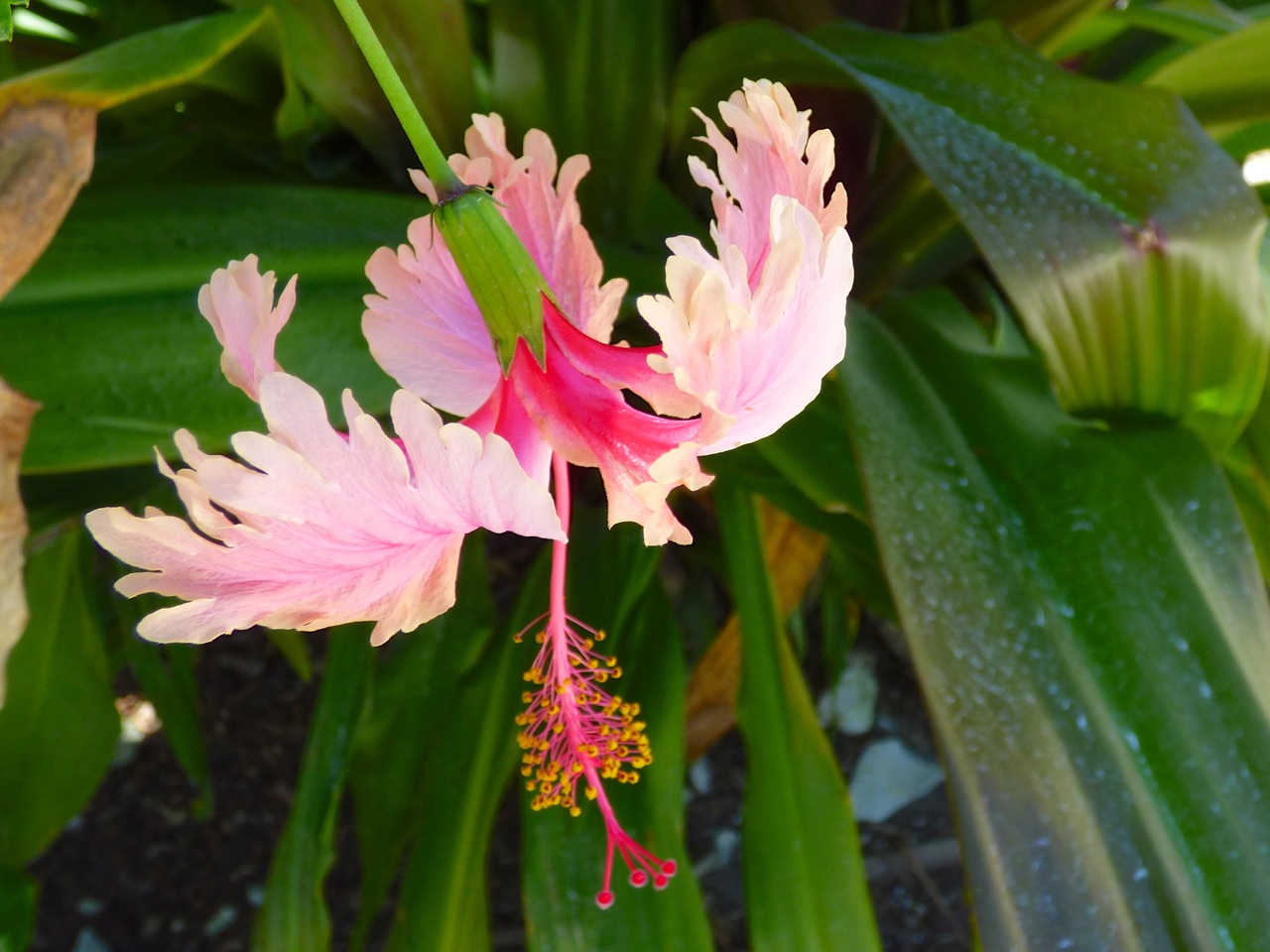
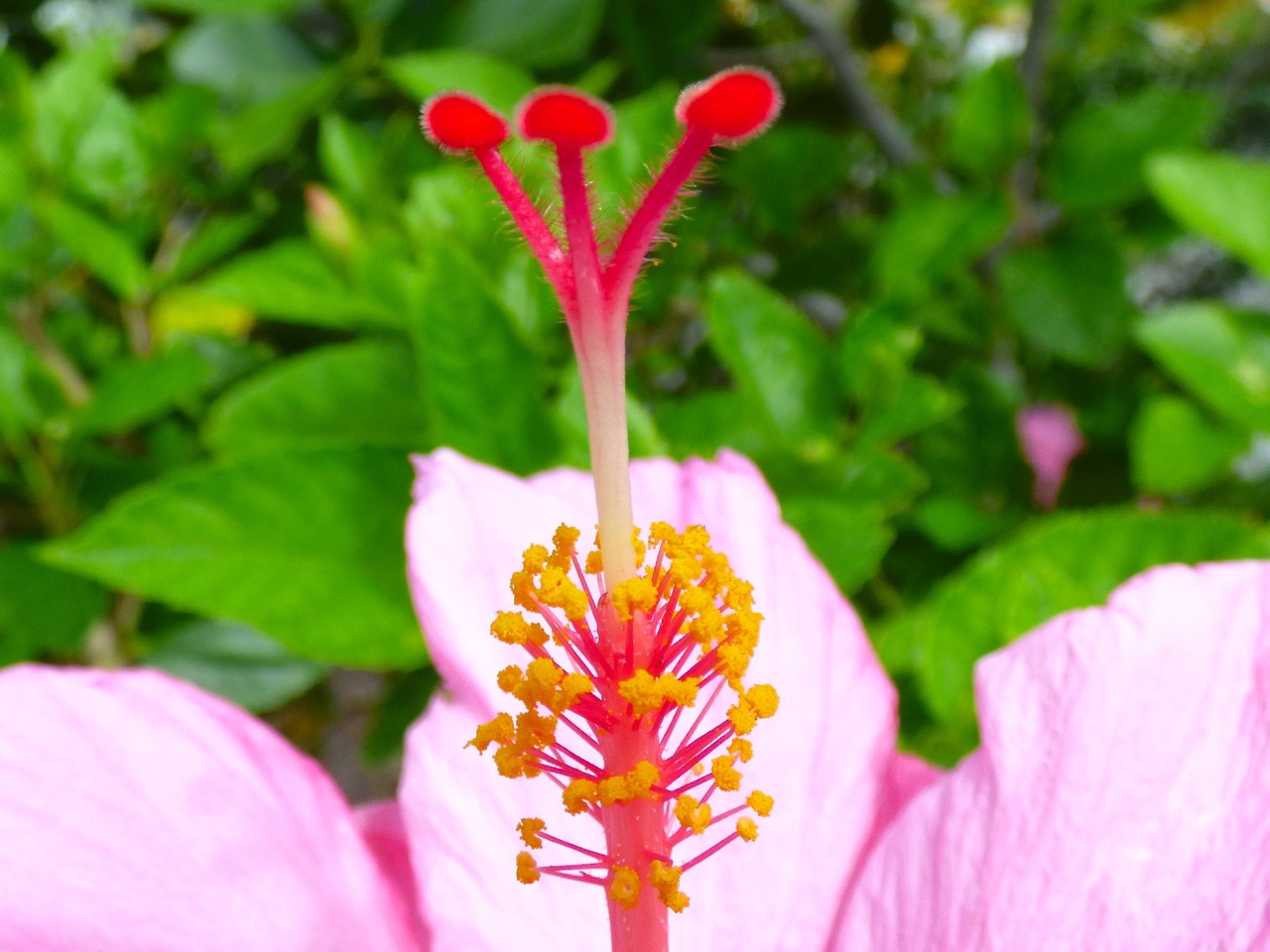
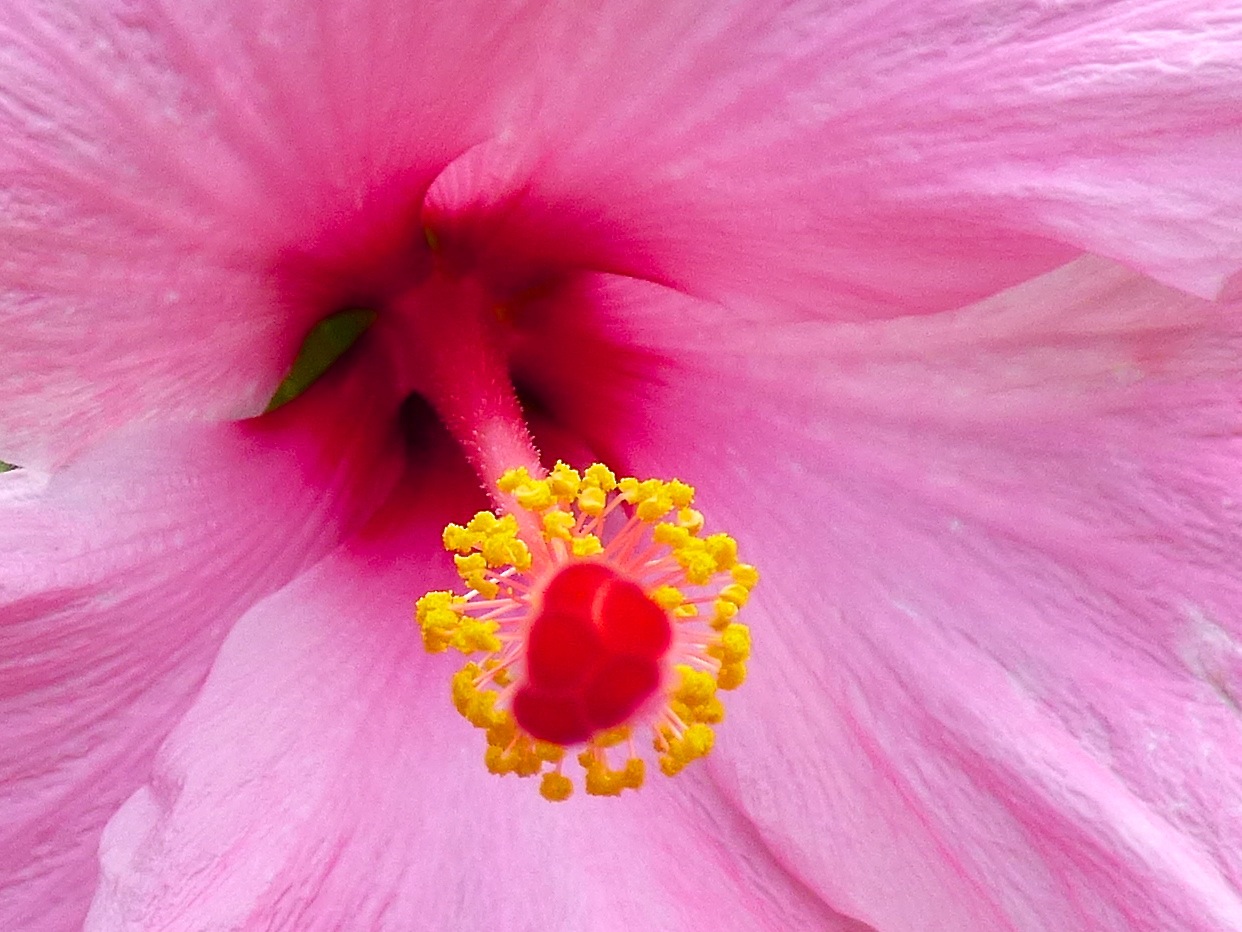
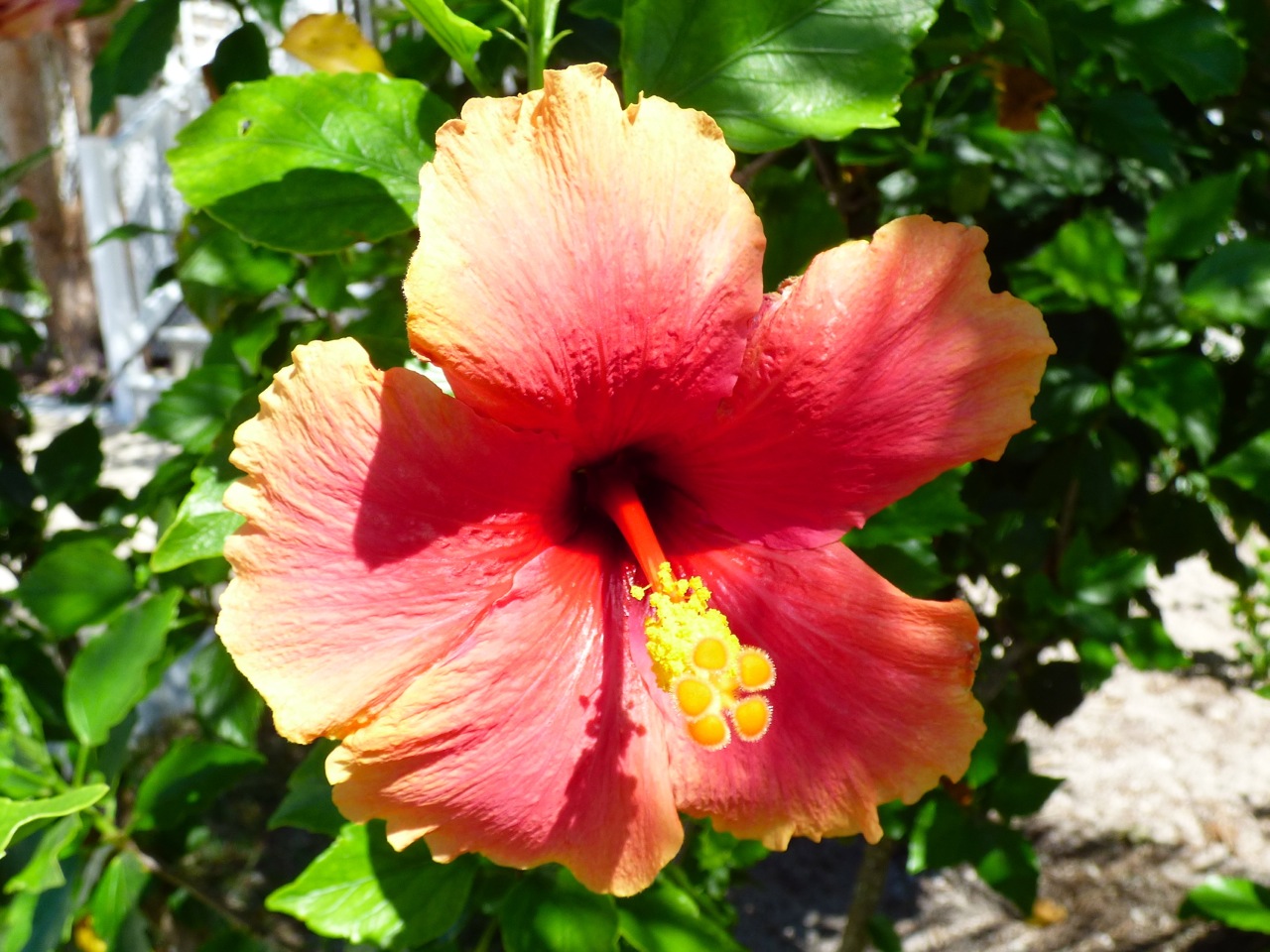
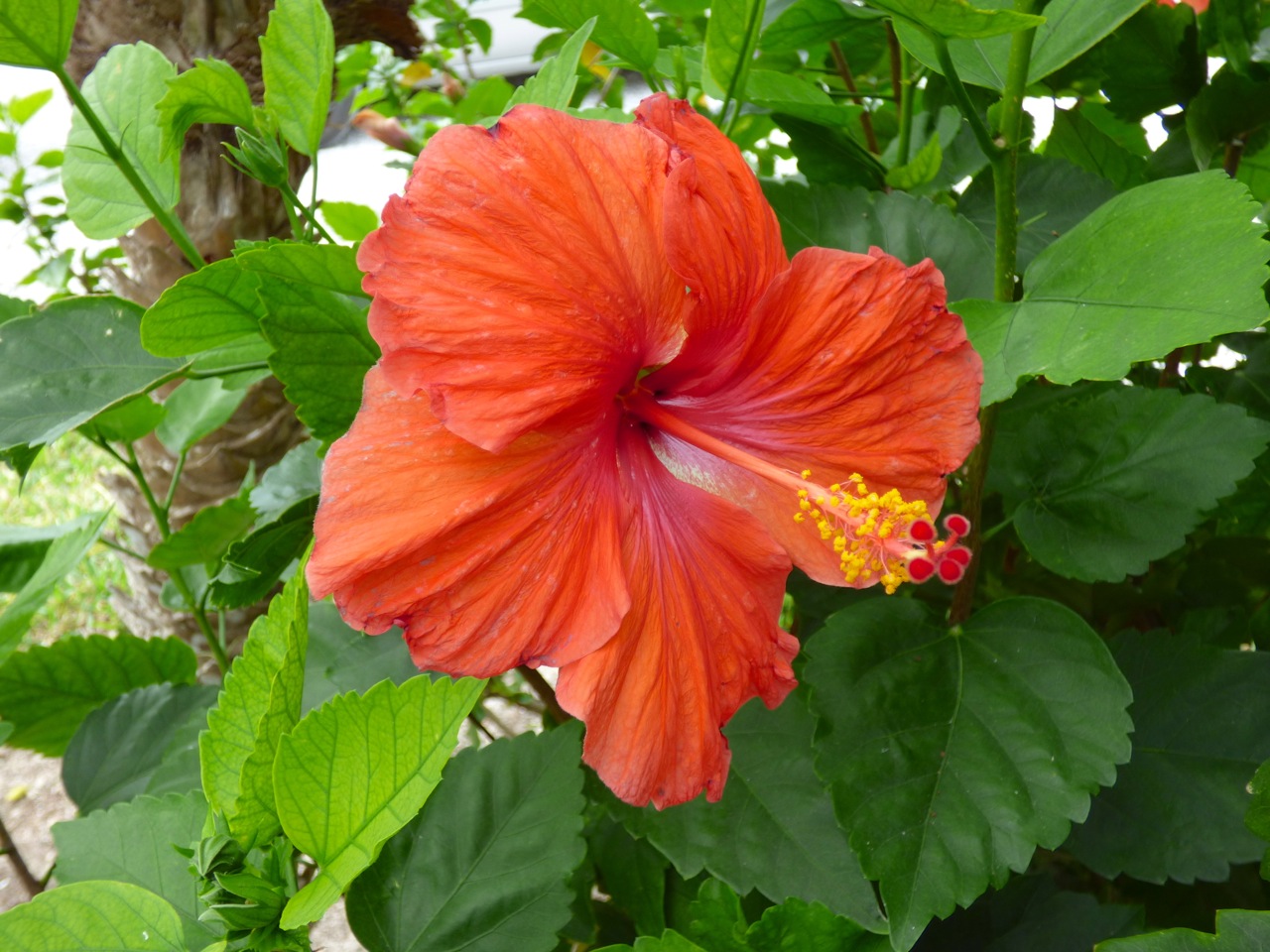
HIBISCUS ON ABACO: BLOOMING MARVELLOUS


Hibiscus, Delphi, Abaco 1

HIBISCUS ON ABACO: BLOOMING MARVELLOUS

I’ve been deleting old photos from past Abaco trips to free up space for some new ones. Why did I keep all those dreary back views of small birds? How many black shadow pics of Turkey Vultures flying high in a blue sky does one need? What’s with the blurry butterflies? Then I came across a clump of hibiscus photos taken in the Delphi garden last March. Can’t have too many of them, so here are a few to enjoy. In two weeks we will be among them again, and no doubt I’ll take a lot a few more. As if there aren’t enough already.  Hibiscus, Delphi, Abaco 4Hibiscus, Delphi, Abaco 3 Hibiscus, Delphi, Abaco 5Hibiscus, Delphi, Abaco 7 Hibiscus, Delphi, Abaco 9 Hibiscus, Delphi, Abaco 8Hibiscus, Delphi, Abaco 6Hibiscus, Delphi, Abaco 10Hibiscus, Delphi, Abaco 2

Unknown's avatar

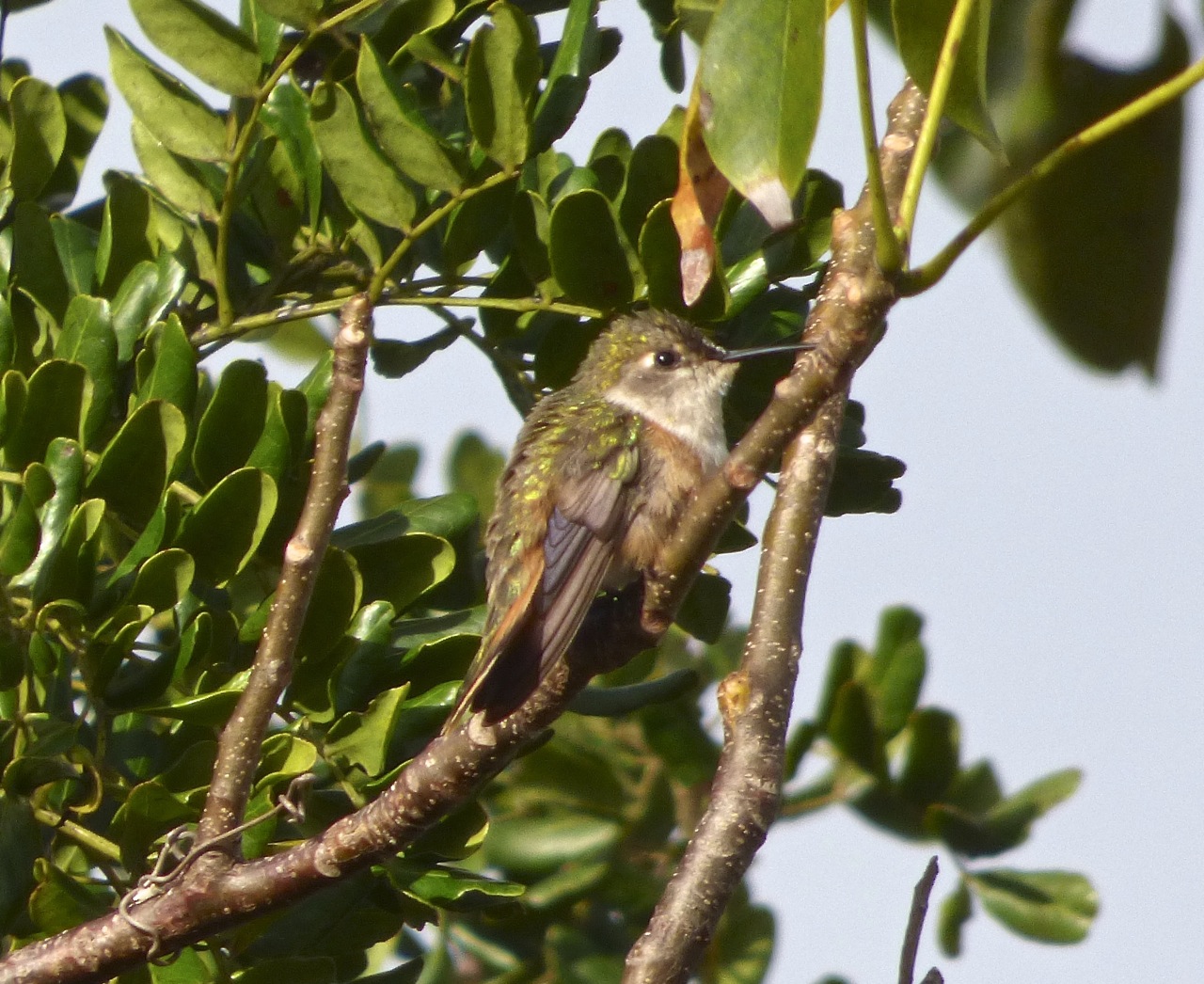
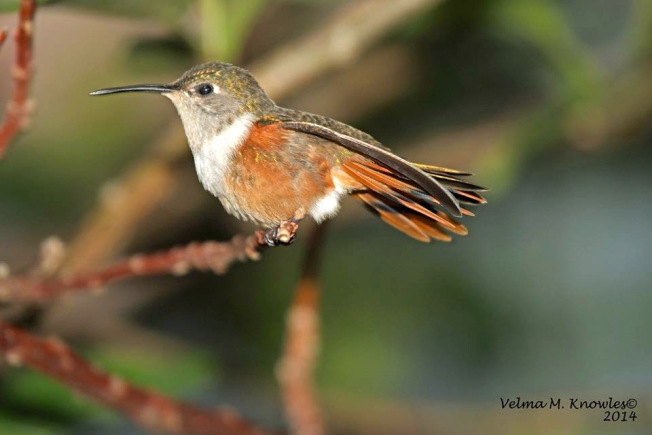
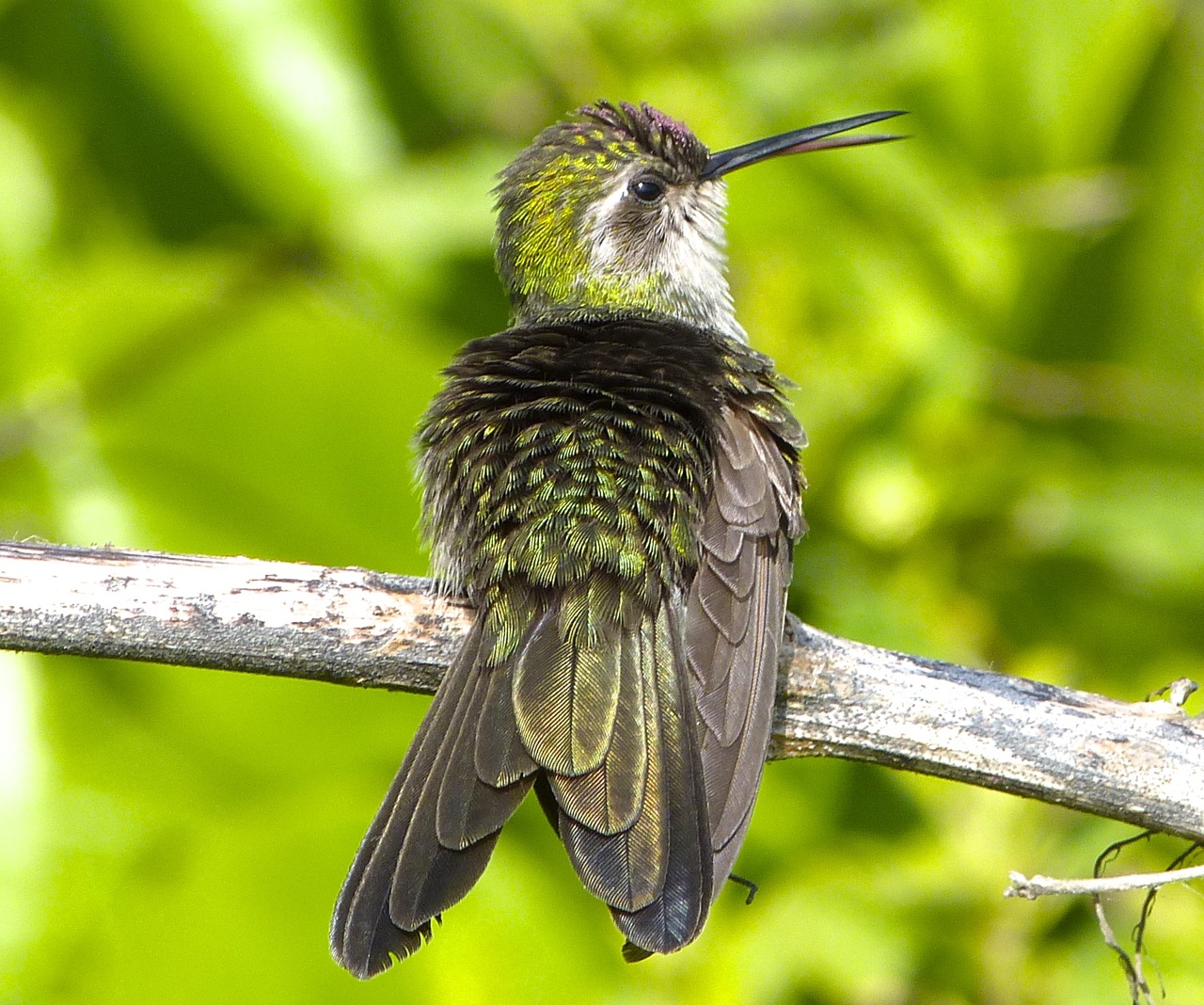
‘SEXING THE HUMMER’: A GENDER GUIDE TO ABACO’S HUMMINGBIRDS


Cuban Emerald (male) Abaco - Becky Marvil

Cuban Emerald (male) Abaco – Becky Marvil

 ‘SEXING THE HUMMER’: A GENDER GUIDE TO ABACO’S HUMMINGBIRDS

The subject matter of this post is not as indelicate as the title might imply; nor is it a ‘hands-on’ practical guide for intimate examinations of tiny birds. In particular it does not publicise some recently discovered louche activity involving unfeasibly large motor vehicles. It’s all about plumage. In my thin disguise as a person with apparent knowledge about the wildlife of a country that is not my own, I get frequent requests for bird ID. Some, I know at once. Some I have to think about, my memory not being quite as…

Where was I? Yes, bird ID. I use BRUCE HALLETT’S book of course, and online the CORNELL LAB and AUDUBON sites. OISEUX-BIRDS is also a good resource and has a large archive of images. And of course dear old Google – they may watch your every keystroke and know more about you than you do yourself, but put a bird’s name into Google Images and you’ll probably see your bird in every static pose or flight you need for ID. They’ll log that too for future use. I have had some queries about Bahama Woodstar gender ID, and more recently, Cuban Emeralds. So here are the adult males and females of each species in all their undoubted glory…

BAHAMA WOODSTAR (Calliphlox evelynae)

Bahama Woodstar (m), Abaco (Bruce Hallett)

Bahama Woodstar (male), Abaco (Bruce Hallett)

Bahama Woodstar male, Abaco Bahamas (Tom Sheley)

Bahama Woodstar male, Abaco Bahamas (Tom Sheley)

Bahama Woodstar, Delphi Club, Abaco (Keith Salvesen)

Bahama Woodstar (female), Delphi Club, Abaco (Keith Salvesen)

Bahama Woodstar (female), Abaco (Velma Knowles)

Bahama Woodstar (female), Abaco (Velma Knowles)

Bahama Woodstar (female), Bahama Palm Shores, Abaco  (Tara Lavallee)

Bahama Woodstar (female), Bahama Palm Shores, Abaco (Tara Lavallee)

 WOODSTAR ID MADE EASY

Males have a glorious purple, showy ‘gorget’. Females are less flamboyant, and have grey throats and fronts. Tara’s wonderful photo above vividly demonstrates their more delicate beauty. It’s one of my personal favourites from “BIRDS OF ABACO“, along with Tom Sheley’s above, the bird that graces the jacket. 

 CUBAN EMERALD (Chlorostilbon ricordii)

Cuban Emerald (male), Delphi Club, Abaco (Keith Salvesen)

Cuban Emerald (male), Delphi Club, Abaco (Keith Salvesen)

Cuban Emerald (male), Abaco (Erik Gauger)

Cuban Emerald (male), Abaco (Erik Gauger)

Cuban Emerald (female), Delphi Club, Abaco (Keith Salvesen)

Cuban Emerald (female), Delphi Club, Abaco (Keith Salvesen)

Cuban Emerald (female) Gilpin Point, Abaco (Keith Salvesen)

Cuban Emerald (female) Gilpin Point, Abaco (Keith Salvesen)

EMERALD ID MADE EASY

Male emeralds are basically… er… emerald green all over , apart from the wings. Females have grey throats and fronts, and lack the chestnut frontal band of the female woodstar. I’d say that their iridescent green is a different metallic shade from the male, but that may be just me. I don’t have the palette vocab to describe it, but advice welcome! Perhaps one can simply say it is more subtle.

SO IT’S JUST THE TWO HUMMERS ON ABACO, IS IT?

The answer is ‘No’. But don’t make a special trip to see the third species – they are casual / irregular vagrants only, and a definite sighting will be a rarity. But just in case, here are stock photos of a male and a female, and (taken on Abaco by Bruce Hallett) an immature male of the species…

RUBY-THROATED HUMMINGBIRD

MaleRuby-throated hummer (Steve Maslowski, Wiki)

FemaleRuby-throated Hummingbird (Tim Ross Wiki)

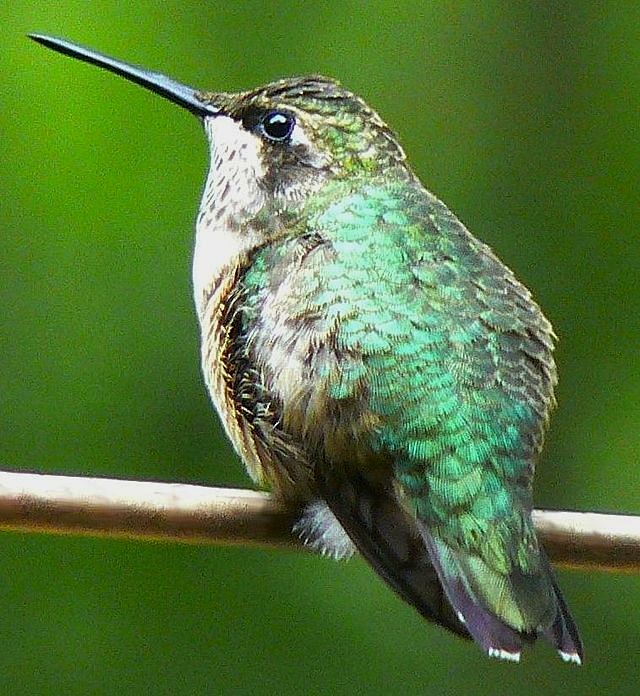
Ruby-throated Hummingbird (male, immature)

Ruby-throated Hummingbird (male, imm), Abaco (Bruce Hallett)

Ruby-throated Hummingbird (male, imm), Abaco (Bruce Hallett)

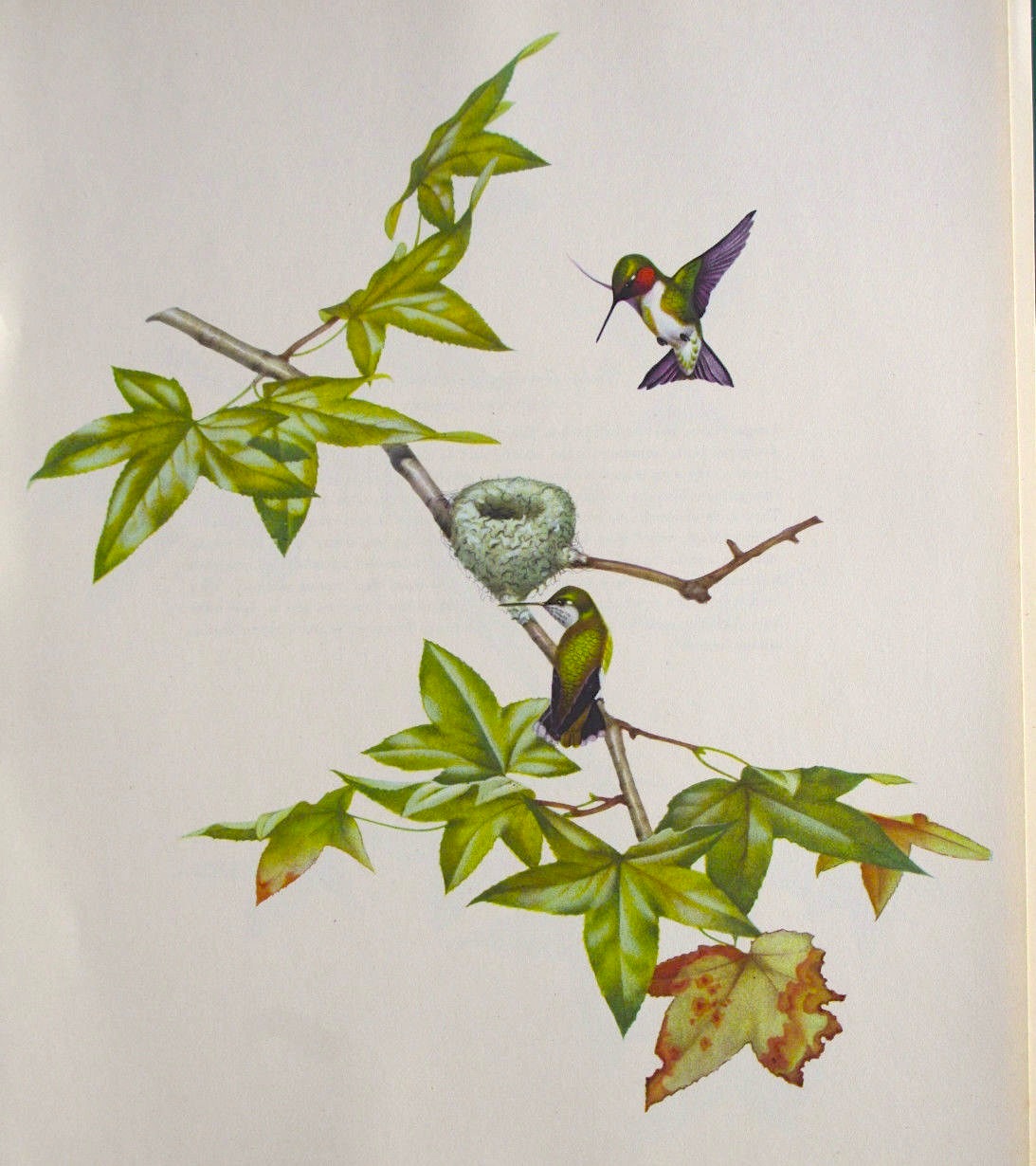
This is an attractive print of the R-tH by MenaboniRuby-throated Hummingbird - Menaboni

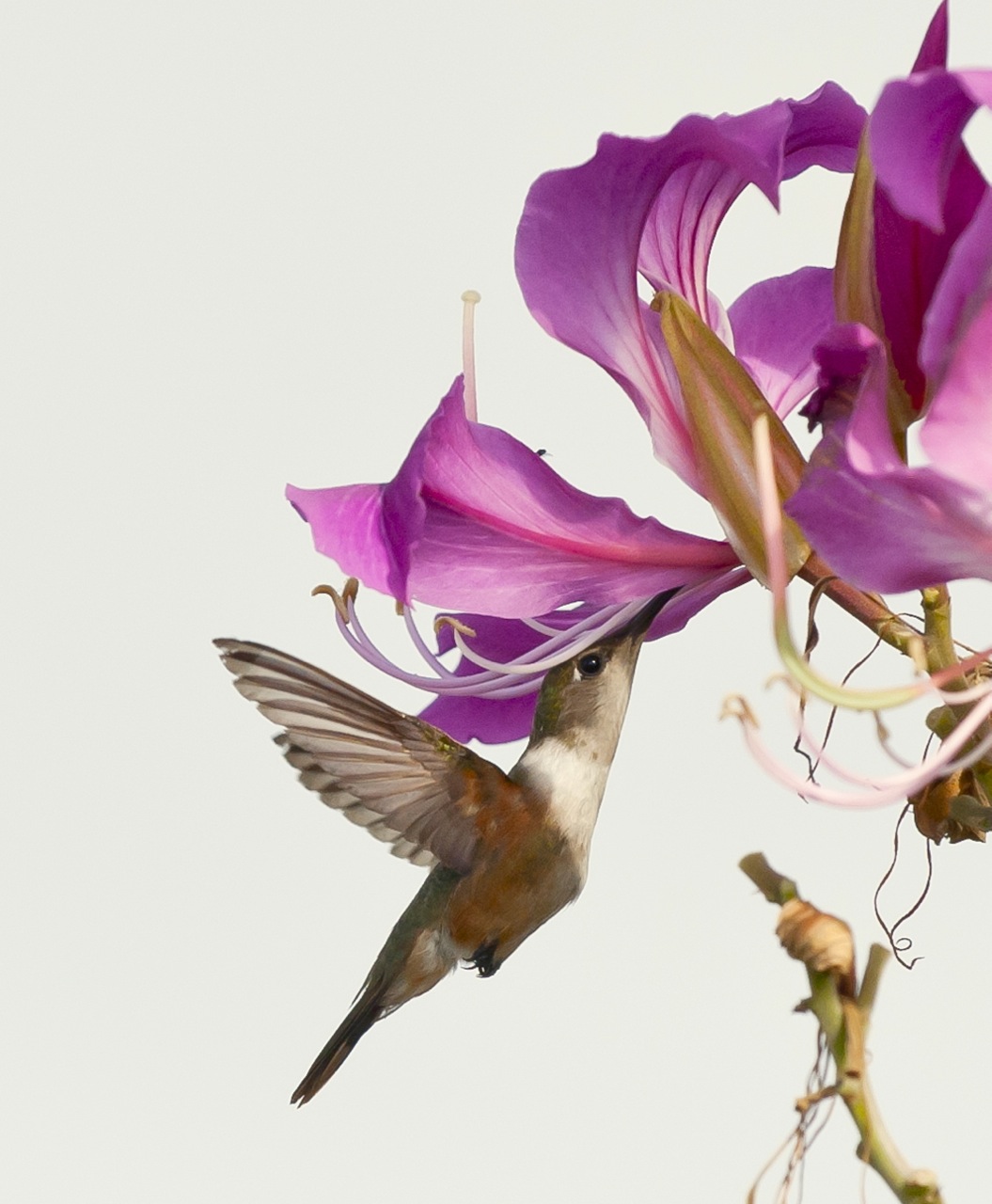
To complete this post, I’ll add a brilliant Woodstar photo taken by Tom Sheley, birdman and generous fishing partner, that I reckon spans the boundary between photography and art. 

Bahama Woodstar female.Abaco Bahamas.Tom Sheley

Bahama Woodstar female.Abaco Bahamas.Tom Sheley

Credits: In addition to those shown below images, Steve Maslowski and Tim Ross for the RTHs

Unknown's avatar

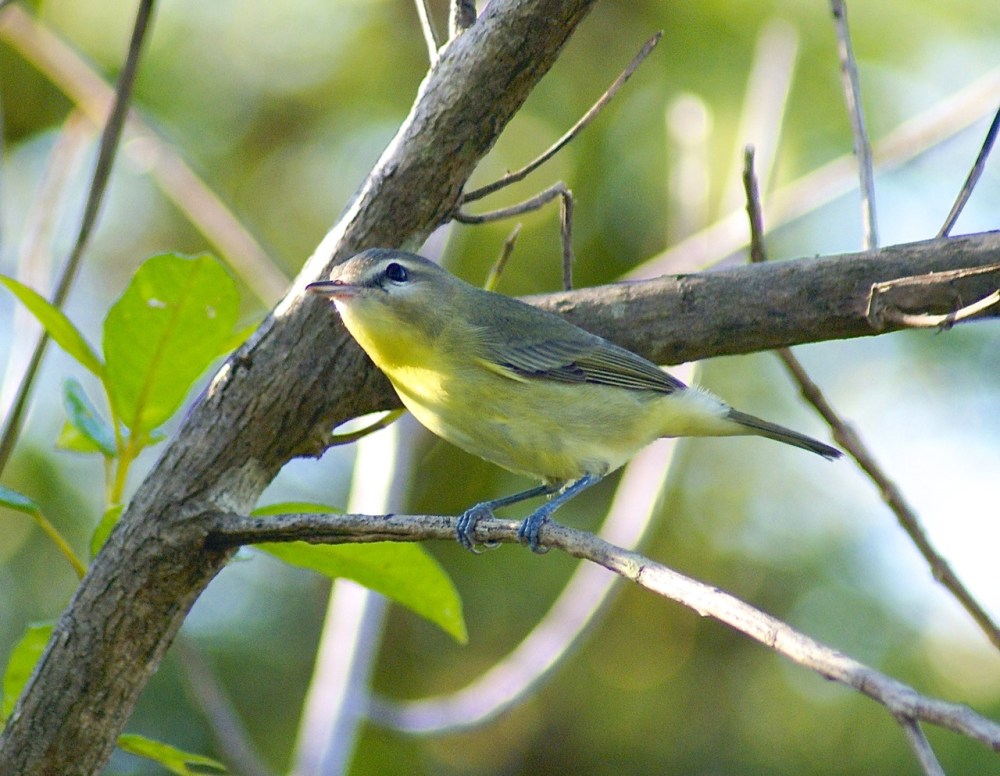
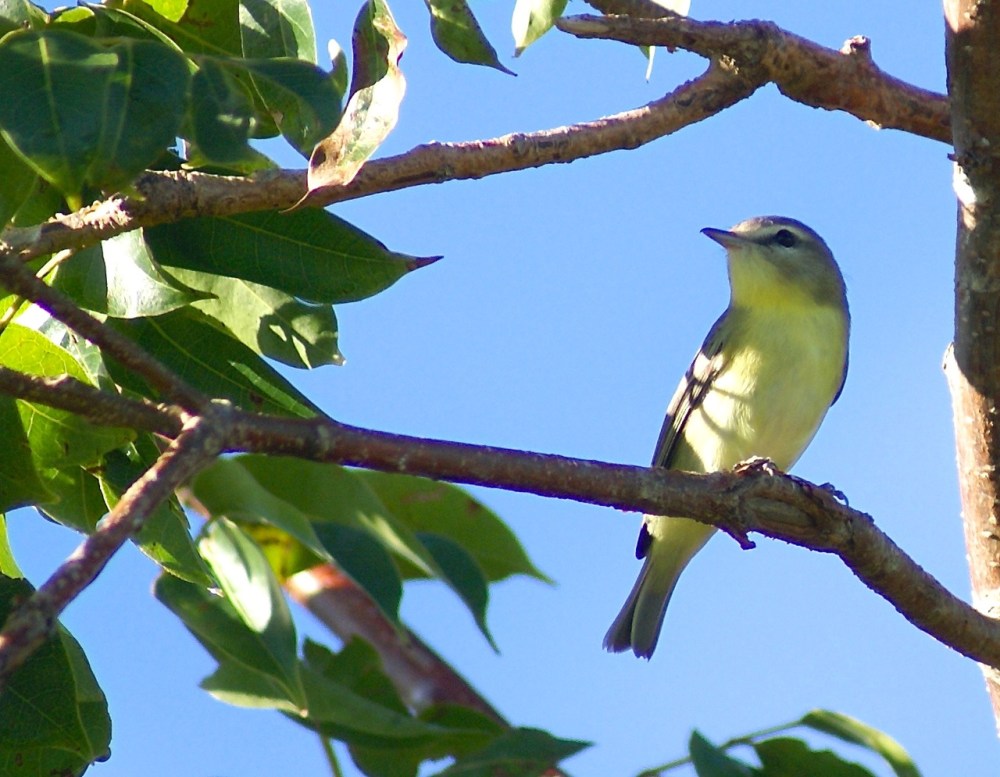
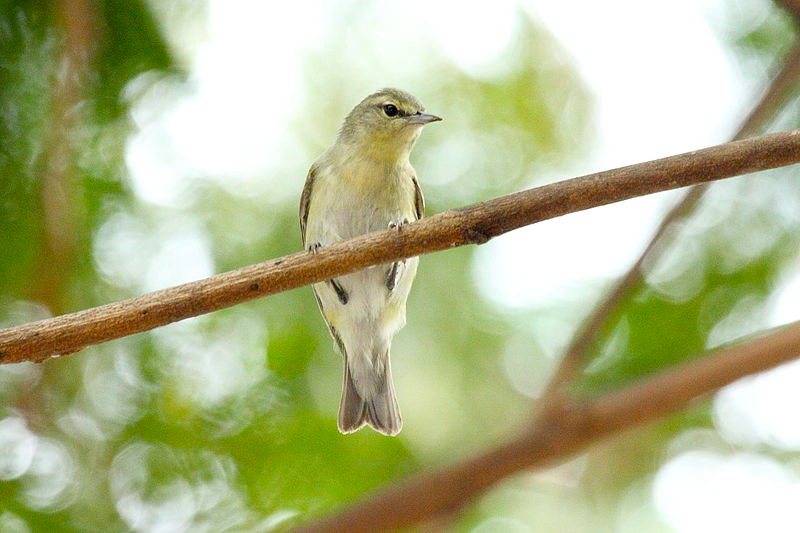
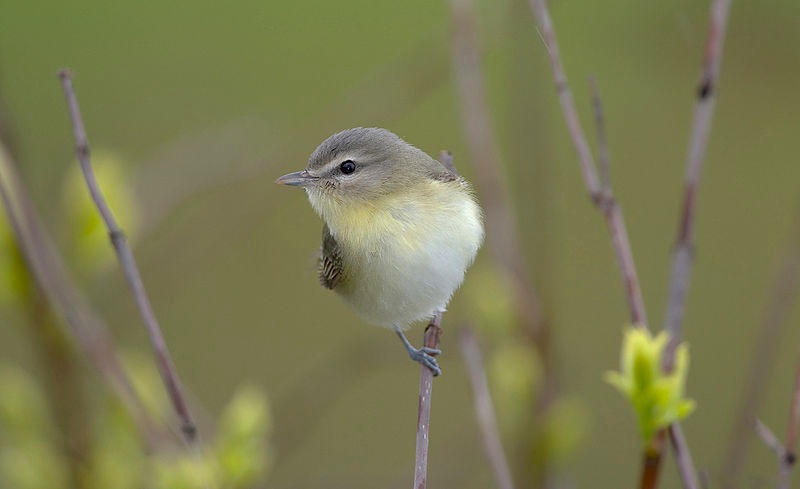
VIREOS ON ABACO (2): THE PHILADELPHIA VIREO


Vireo_philadelphicus Brian Mcclure (wiki) CROP

VIREOS ON ABACO (2): THE PHILADELPHIA VIREO

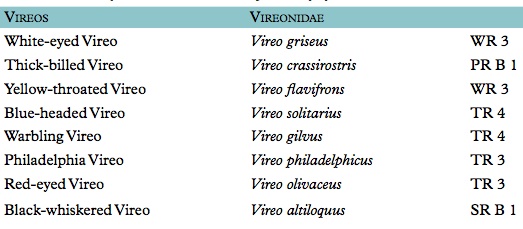
Vireos haven’t had as much attention as they deserve hereabouts. I have posted about the BLACK-WHISKERED VIREO, but the 7 other vireo species found on Abaco haven’t had much of a look in. It’s a wrong that I shall right at once by featuring the rather shy Philadelphia Vireo Vireo philadelphicus. Here is the full list of the vireos recorded for Abaco, from which you will see that only the Thick-billed Vireo is a common permanent resident. The Black-whiskered vireo is a common summer breeding resident; there are 2 uncommon winter residents; and the other 4 are transients that chose Abaco as a resting place on their migrations.

Taken from ‘The Birds of Abaco’ checklist by Tony White with Woody BraceyVIREO CHECKLIST

SONY DSC

This little bird tends  to be described with such unkind adjectives as ‘drab’, ‘dull’ and ‘plain’, but  like many under-appreciated species it has its own charm. The header image and the one above give excellent close-up views. The signifiers include the dark eyes, white eyebrows, the dark line through the eyes, the yellow underparts, and in the negative sense the complete absence of eye rings, wing bars or tail markings. And the thick bill is one quick way to distinguish it from similar-looking warbler species, with their generally smaller, pointy beaks. SONY DSC

The Philadelphia Vireo has a wide range, from its summer breeding grounds as far north as Canada down to its winter quarters in Mexico and South America. They have even, very rarely, been seen in Europe. The connection with Philadelphia is somewhat tenuous and arises because the bird was first identified in 1842 from a specimen collected near Philadelphia. However their visits there are brief, since at best it is only a stopover on their migration route…vire_phil_AllAm_map

Philadelphia Vireo (Vireo philadelphicus Dominic Sherony wiki

Here is the song comparison between (in order) the Philly, the familiar TBV whose song accompanies everyday life on Abaco, and the Black-whiskered vireo. My TBV recording is rather quieter than the other 2.

 Andrew Spencer / Xeno Canto

RH at Delphi

 Brian Cox / Xeno-Canto

Philadelphia Vireo William H. Majoros wiki If you want to know how to record birdsong easily using an iPhone or equivalent CLICK HERE 

Credits: Woody Bracey (2, 3); Brian McClure, Dominic Sherony, William H. Majoros, Xeno Canto, Wiki, Cornell Lab

Unknown's avatar

STANDIN’ ON THE DOCK OF THE BAY: GREAT BLUE HERON ON ABACO


Great Blue Heron, Sandy Point, Abaco - Keith Salvesen 2

STANDIN’ ON THE DOCK OF THE BAY: GREAT BLUE HERON ON ABACO

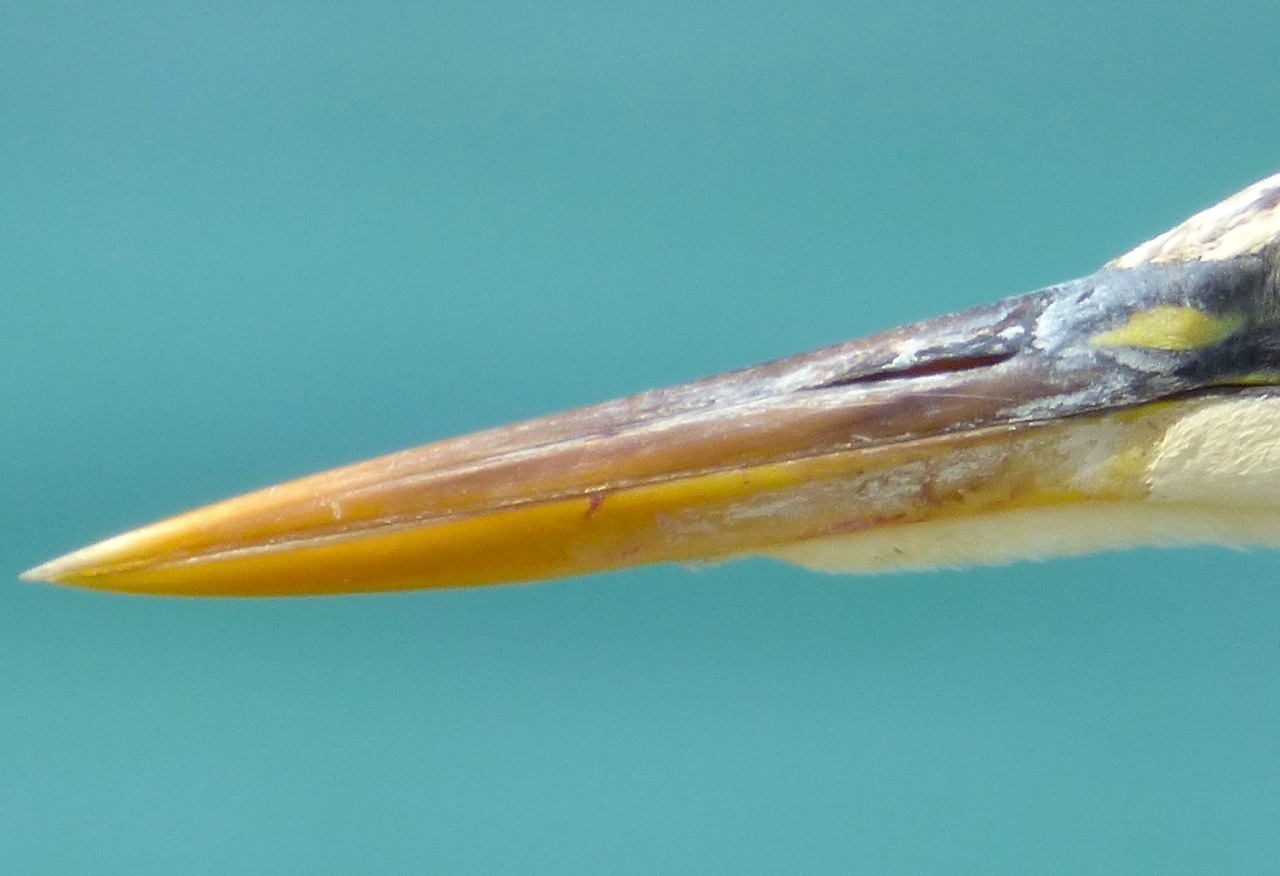
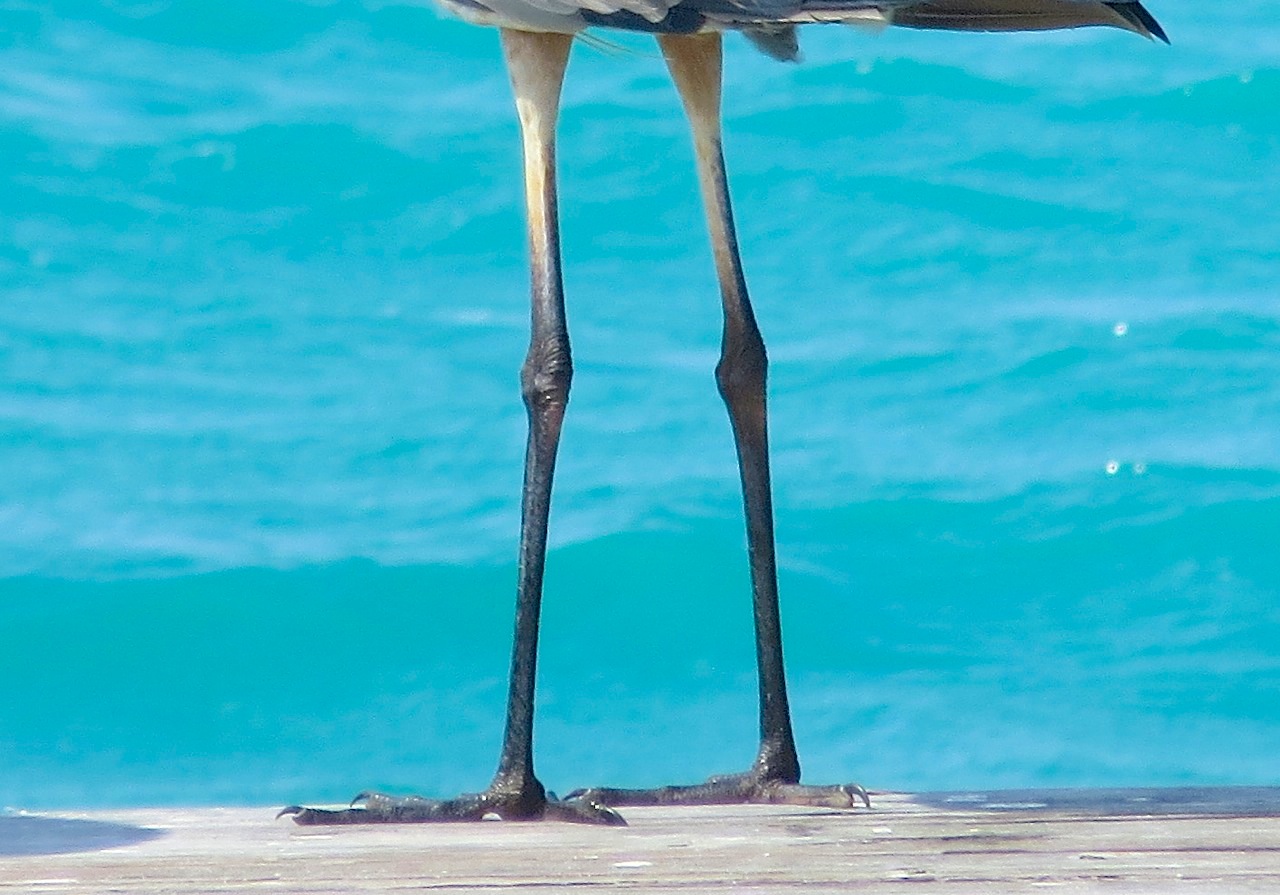
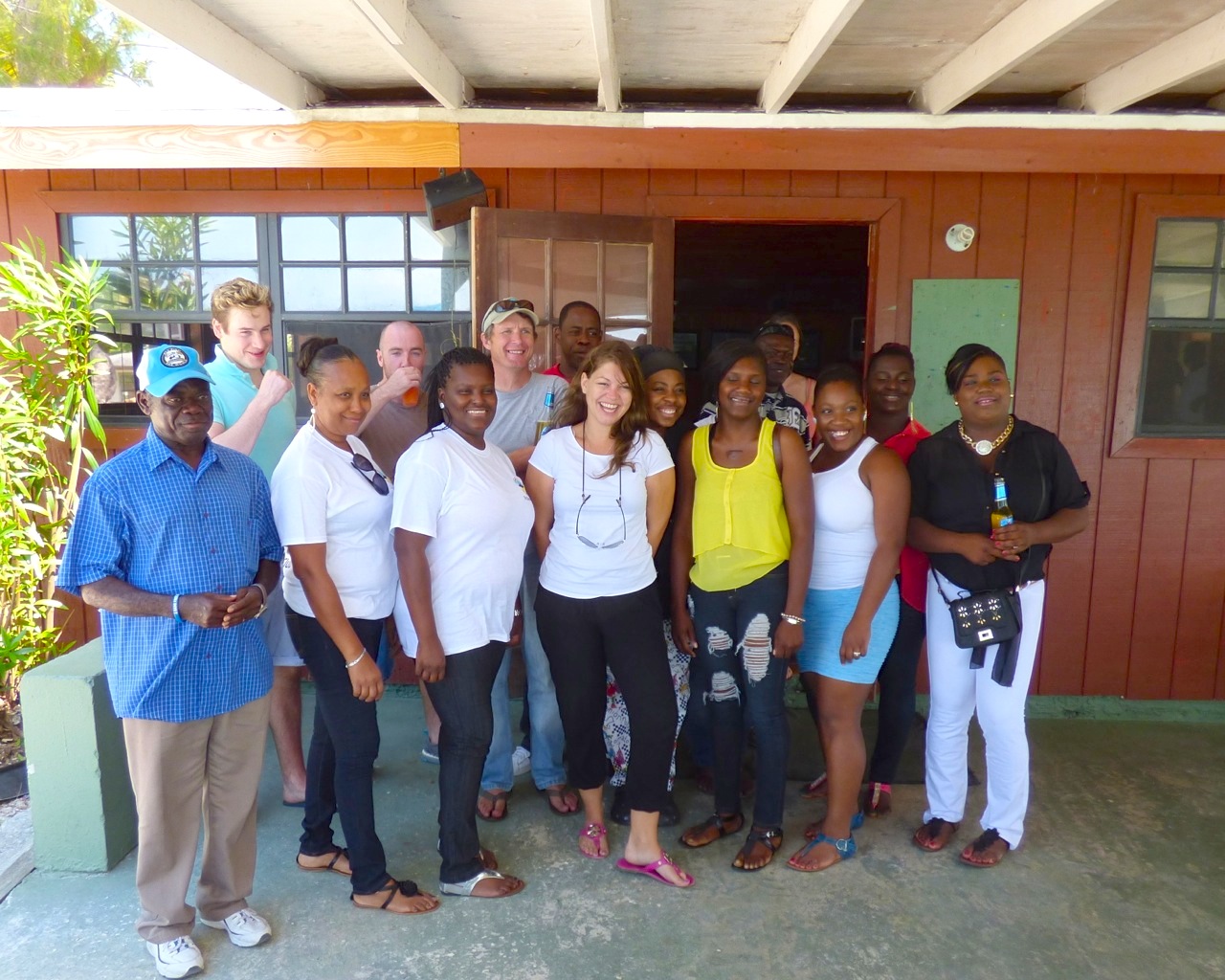
The occasion: a trip to Sandy Point for a lunch party at the legendary Nancy’s in honour of  Sandy Walker at the end of his 5 years as manager of the Delphi Club. A pair of brown pelicans on the nearby dock were clumsily flying around, diving, perching, drying their feathers, then repeating the cycle. In a quiet moment I slipped away to watch them – and a Great Blue Heron landed quite close by me. So as well as taking photos of the pelicans, I pointed the camera at the heron from time to time. My favourite view is of it standing proudly on the edge of the dock, with the truly azure sea behind it (header and final image).

Great Blue Heron, Sandy Point, Abaco - Keith Salvesen 6

THE PERILS OF A CAMERA UPGRADE

[PHOTOGRAPHIC INTERLUDE – SKIP IF EASILY BORED BY SUCH THINGS]

I don’t have a fancy camera. I would never get the settings right before the bird had flown. Or died, even. So I had been using a Panasonic Lumix FZ45 kindly given to me by Mrs RH in a benign moment, possibly Christmas. Then I made a classic error of upgrading to an FZ72 with an alleged massive 60X zoom. Brilliant, I thought. Big mistake. My old camera has a Leica lens. Used with care and a lens extension (zeugma score!), it is / I am occasionally capable of taking pin-sharp photos. The upgrade camera’s lens turned out not to be a Leica. Almost all the shots I took were ‘soft’, the more so using the zoom. A soft photo taken with a less good lens, zoomed 60X, will never be a better photo. Just an even softer one. I wish I’d had Old Faithful with me instead. When we got home, I immediately dug out OF and sold 60X disappointment. OF is now reinstated as my BF.  

The shots of this heron mostly turned out fairly well, largely because it stayed quite close to me. It flew off a couple of times, then returned to the edge of the dock. Here are a few close-up views of the heron selected from the various pics I took, showing some of the details of this fine bird. Great Blue Heron, Sandy Point, Abaco - Keith Salvesen 3 Great Blue Heron, Sandy Point, Abaco - Keith Salvesen 4 Great Blue Heron, Sandy Point, Abaco - Keith Salvesen 5Great Blue Heron, Sandy Point, Abaco - Keith Salvesen 7Great Blue Heron, Sandy Point, Abaco - Keith Salvesen 10 Then I remembered why I was meant to be at Sandy Point, and went back to Nancy’s for conch fritters and a Kalik or two well OK make that three… Great Blue Heron, Sandy Point, Abaco - Keith Salvesen 11

ROLLING HARBOUR MUSICAL DIGRESSION

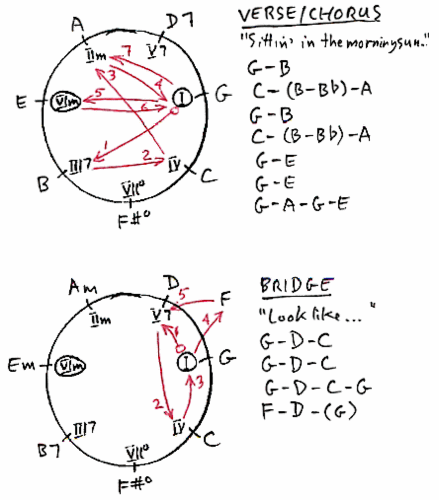
Otis Redding recorded ‘Sittin’ on the Dock of the Bay’, arguably his greatest moment, in 1967 a matter of days before he died in a plane crash. The record became the first ever posthumous US Chart #1 (#3 in UK). I’ve dug out a video compo by the excellent Rhino outfit that disinters or at least recycles gems from our musical heritage. It’s not just the voice of Otis Redding that makes this song so poignant and so good – Steve Cropper’s guitar is outstanding too.

Guitarists out there – you want a ‘Chase Chart’, don’t you?

Ch_6_Fig_114http://www.howmusicreallyworks.com

A rare photo of Sandy (centre back row, sunnies on cap) smilingSandy at Sandy Point

Photo Credits: RH, er… that it…

Unknown's avatar

SHELL HOMES: HERMIT CRABS IN THE BAHAMAS


Hermit Crab ©Melinda Riger @ Grand Bahama Scuba

SHELL HOMES: HERMIT CRABS IN THE BAHAMAS

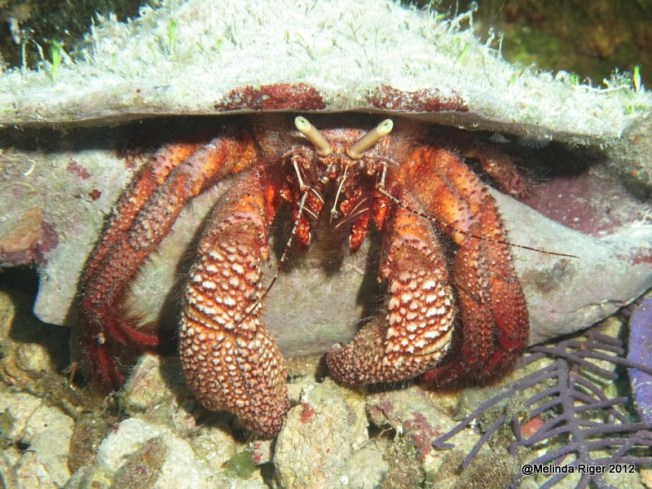
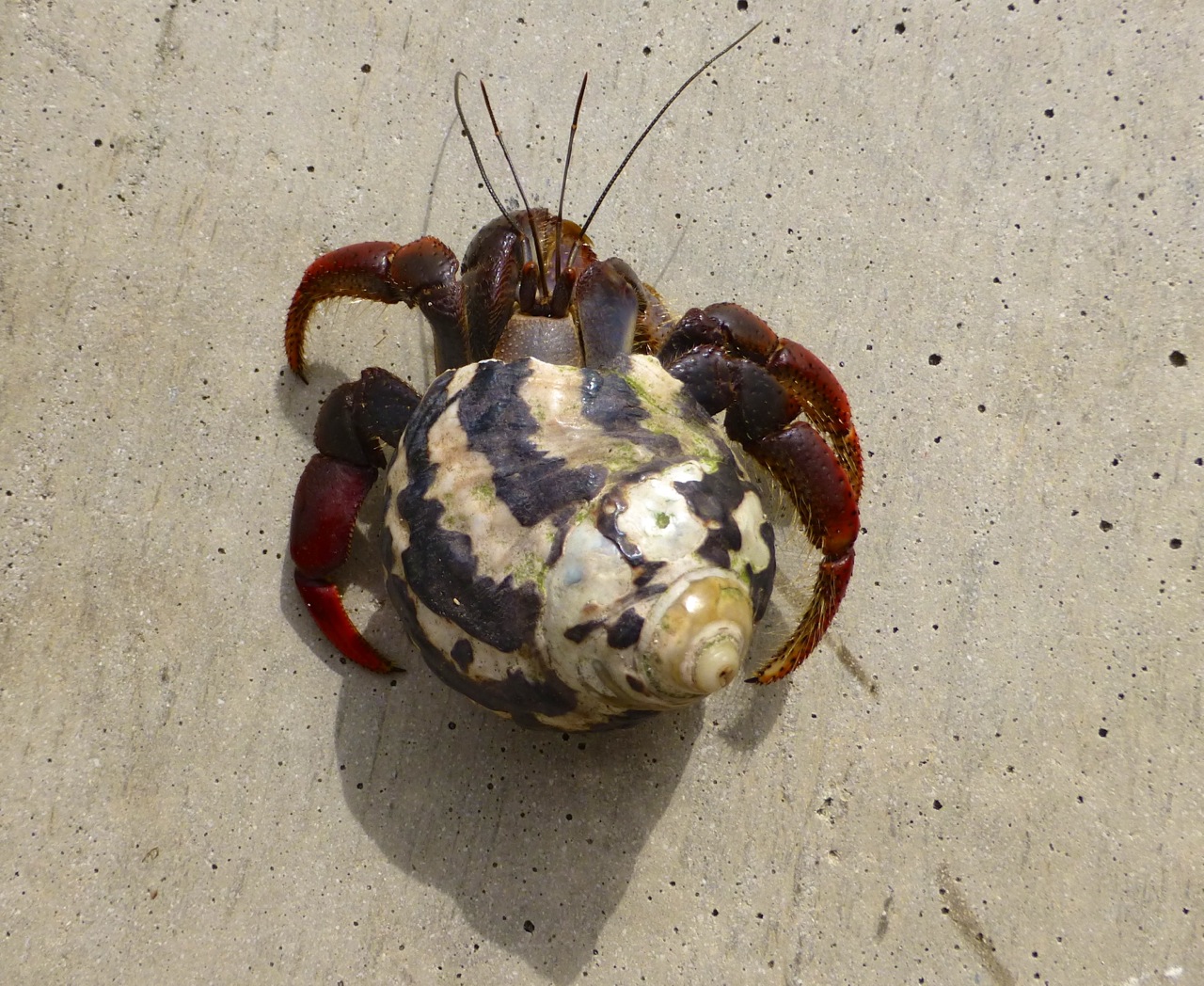
I’m feeling distinctly crabby right now. In a skilled move that would impress the Bahamas utility providers, the UK’s very own much-vaunted BT selected us for the privilege of being unplugged from the grid last week. From the time of reporting the problem, it has taken them 6 days to plug us back in. It’s a little reminder of the far more persistent Abaco experience! No landline, no wifi, no email for almost a week. To begin with, it was a light relief. After nearly a week, not funny anymore. Here are some nice crabs in conchs to celebrate getting back online while reflecting my crabby mood.Hermit Crab ©Melinda Riger @ G B Scuba Hermit Crab ©Melinda Riger @ GB Scuba copy Hermit Crab ©Melinda Riger @ GB ScubaFind out more about Hermit Crabs – in particular crab racing at Delphi and the intricate rules – here: WACKY RACES AT DELPHIHemit Crab, Delphi (Clare Latimer)

Hermit Crab in a conch ©Melinda Riger @ GB Scuba

Photo credits: all undersea shots – Melinda; potential crab race contestant – Clare

Unknown's avatar

WORLD SHOREBIRDS DAY – ABACO’S 33 SHORE SPECIES (1) LARGE BIRDS


Wilson's Plover chick 5.Delphi Club.Abaco Bahamas.6.13.Tom Sheley copy small

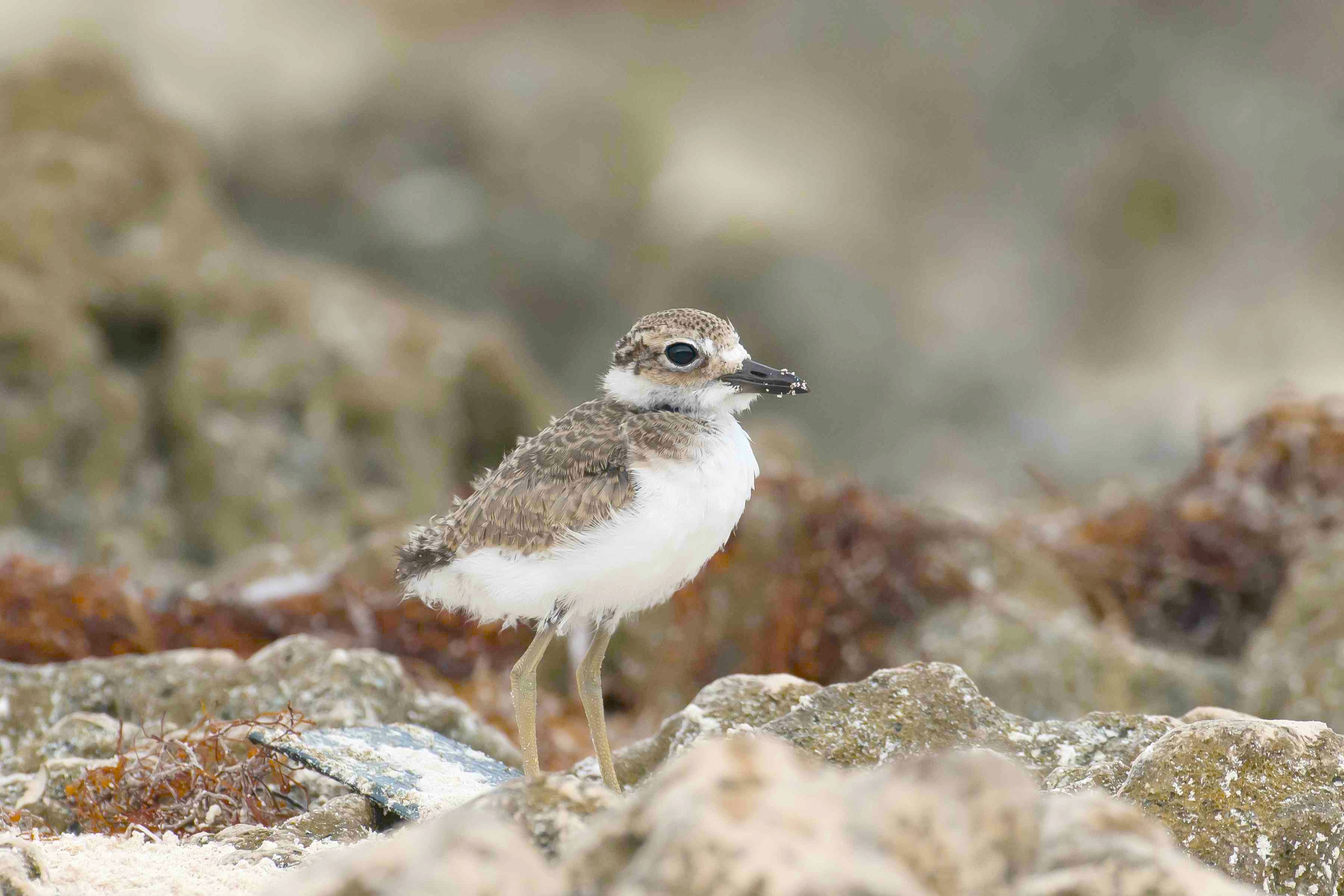
Wilson’s Plover chick, Delphi Club Beach, Abaco (Tom Sheley)

WORLD SHOREBIRDS DAY: ABACO’S 33 SHORE SPECIES (1)

Abaco is home to 33 shorebird species. Like the human residents of the main island and cays, some are permanent; some are winter visitors arriving to enjoy a warmer climate; and some a transients (e.g. Delphi Club members). To celebrate today being World Shorebirds Day, I am going to feature Abaco’s quota of the world’s shorebirds in 3 posts over the next few days. I’ll start with the definitive checklist of Abaco’s shorebirds compiled by Bahamas Birding author and authority Tony White  with Woody Bracey especially for the BIRDS OF ABACO. I have kept to the conventional / official species order. I’ve let the formatting run wild, though… problematic in WordPress. I may try to sort it. Or perhaps not…

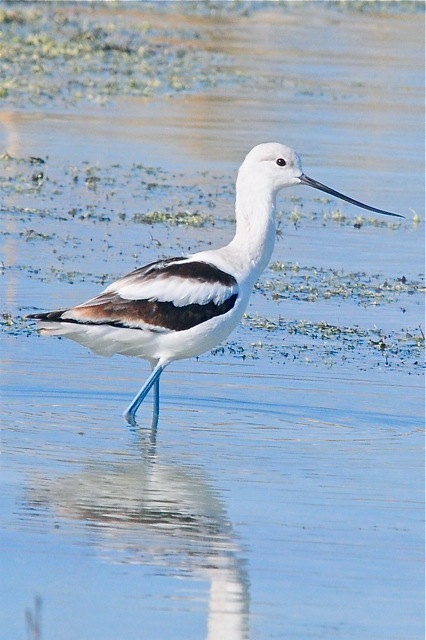
AMERICAN AVOCET Recurvirostra americana   WR 4
American Avocet, New Providence - Tony Hepburn

The codes will tell you, for any particular bird, when you may see it (P = permanent, WR = winter resident, TR = transient, V = vagrant); whether it breeds (B) on Abaco; and your chance of seeing it, graded from easy (1) to vanishingly unlikely (5).

  • Black-necked Stilt                             Himantopus mexicanus              PR B 3
  • American Avocet                               Recurvirostra americana             WR 4
  • American Oystercatcher                  Haematopus palliatus                   PR B 2
  • Black-bellied Plover                          Pluvialis squatarola                      WR 1
  • American Golden-Plover                 Pluvialis dominica                          TR 4
  • Wilson’s Plover                                  Ochthodromus wilsonia               PR B 2
  • Semipalmated Plover                        Charadrius semipalmatus             WR 2
  • Piping Plover                                      Charadrius melodus                     WR 3
  • Killdeer                                                 Charadrius vociferus                  WR 2
  • Spotted Sandpiper                              Actitis macularius                       WR 1
  • Solitary Sandpiper                             Tringa solitaria                              WR 2
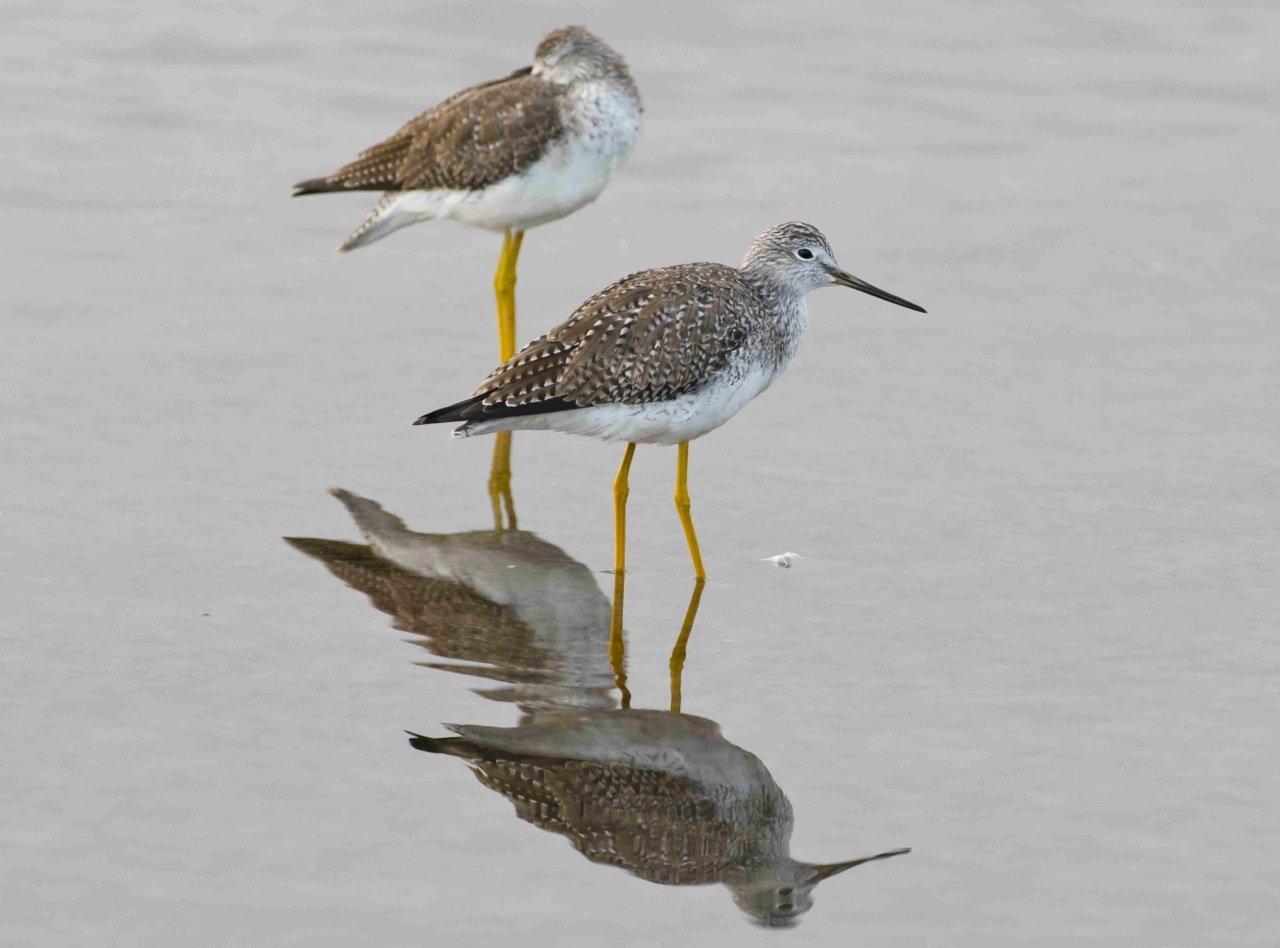
  • Greater Yellowlegs                             Tringa melanoleuca                      WR 2
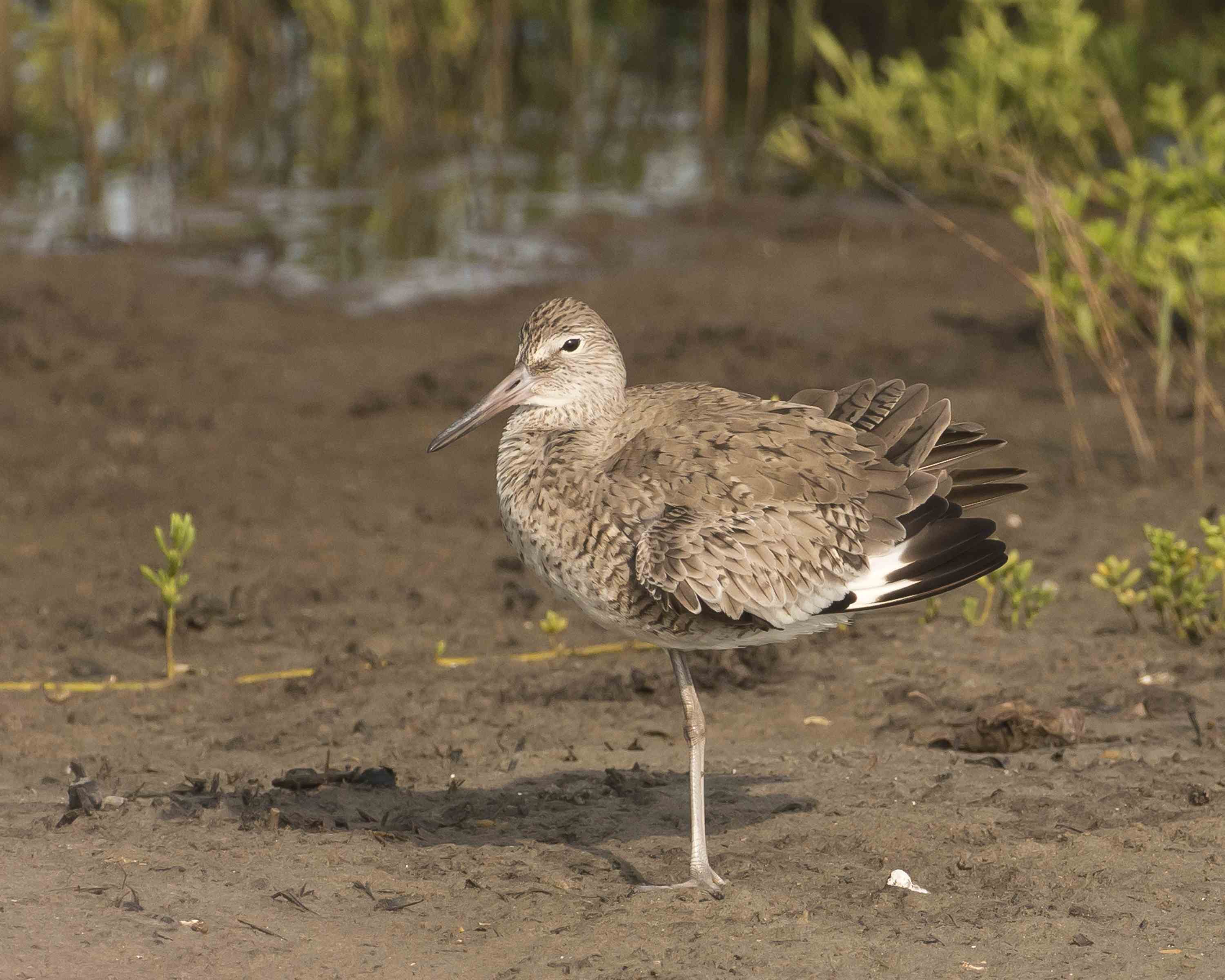
  • Willet                                                     Tringa semipalmata                   PR B 2
  • Lesser Yellowlegs                               Tringa flavipes                              WR 3
  • Ruddy Turnstone                                 Arenaria interpres                        PR 2
  • Red Knot                                                Calidris canutus                         WR 3
  • Sanderling                                             Calidris alba                                WR 1
  • Dunlin                                                    Calidris alpina                             WR 2
  • Least Sandpiper                                   Calidris minutilla                          WR 2
  • White-rumped Sandpiper                  Calidris fuscicollis                           TR 3
  • Semipalmated Sandpiper                  Calidris pusilla                                TR 2
  • Western Sandpiper                             Calidris Mauri                                TR 2
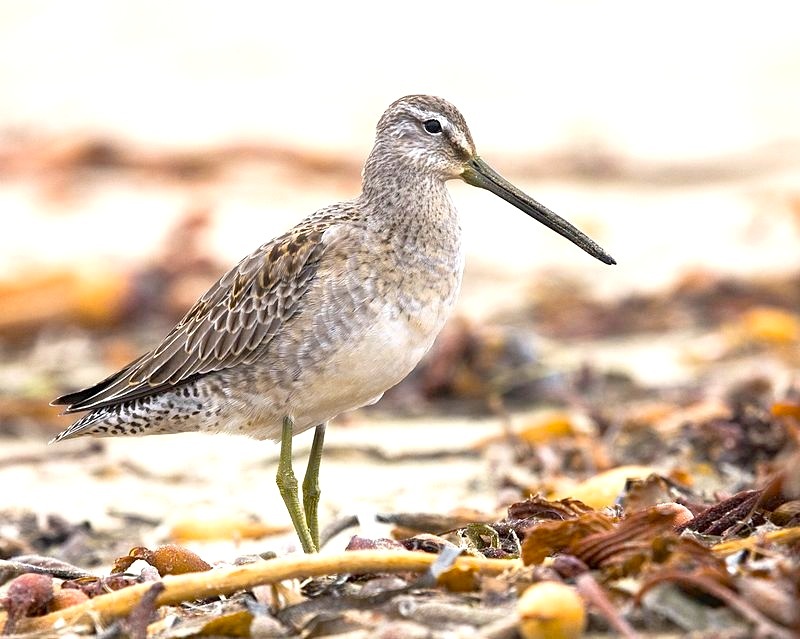
  • Short-billed Dowitcher                      Limnodromus griseus                     WR 1
  • Long-billed Dowitcher                      Limnodromus scolopaceus             WR 4
  • Wilson’s Snipe                                     Gallinago delicata                         WR 3
  • Wilson’s Phalarope                            Phalaropus tricolor                          V 4

Of these 26 birds, 23 are ones you might encounter, though some only if you are lucky or your field-craft is excellent. If you happen upon a Long-billed Dowitcher or an American Avocet, tell someone! And the photo I will be posting of a Wilson’s Phalarope is of the first specimen ever recorded for Abaco. And it so happens that I can illustrate them with photographs, mostly from the book archive… What a coincidence. All except 3 were photographed on Abaco; and I have purposely chosen many that were photographed on the lovely 1-mile curve of white sand watched over by the Delphi Club and historically named ‘Rolling Harbour’.

For the sake of completeness, the other 7 species of shorebird recorded for Abaco – all transients or vagrants – are:

  • Upland Sandpiper                     Bartramia longicauda             TR 4
  • Whimbrel                                    Numenius phaeopus                 TR 4
  • Hudsonian Godwit                   Limosa haemastica                   V5
  • Marbled Godwit                         Limosa fedoa                               V5
  • Buff-breasted Sandpiper          Tryngites subruficollis            V5
  • Pectoral Sandpiper                   Calidris melanotos                    TR 3
  • Stilt Sandpiper                           Calidris himantopus                 TR 3

photo

OK let’s see some of the birds. I’ll post one shot of each of the 26 birds to show them at their best in their perfect environment – wild coastline. Some of these species haven’t yet featured in the blog at all, or else not for a while. Let’s go with some of the larger and / or long-beaked species, including a couple of matching pairs.

GREATER YELLOWLEGS  Tringa melanoleuca   WR 2Greater Yellowlegs LR. Abaco Bahamas.Tom Sheley.2.12 copy 2

LESSER YELLOWLEGS  Tringa flavipes  WR 3Lesser Yellowlegs.Evening on the Marls.Abaco Bahamas.2.13.Tom Sheley small2

SHORT-BILLED DOWITCHER  Limnodromus griseus  WR 1Short-billed Dowitcher (NB), Abaco - Bruce Hallett 

LONG-BILLED DOWITCHER  Limnodromus scolopaceus   WR 4Long-billed Dowitcher Mike Baird Wiki

WILLETT  Tringa semipalmata  PR B 2Willet.Abaco Bahamas.2.13.Tom Sheley small

WILSON’S SNIPE  Gallinago delicata   WR 3Wilson's Snipe, Abaco - Woody Bracey

BLACK-NECKED STILT  Himantopus mexicanus  PR B 3Black-necked Stilt, Abaco - Tom Sheley

I’m adding a free  bonus stilt in flight, because it’s such a great shot…Black-necked stilt, Abaco - Alex Hughes

AMERICAN OYSTERCATCHER  Haematopus palliatus PR B 2American Oystercatcher, Abaco 5.1 Tom Sheley

Part 2 will be about the Plovers. Or maybe the Sandpipers

RELATED POSTS

WILLET

BLACK-NECKED STILT

AMERICAN OYSTERCATCHER

 Photo Credits: Tom Sheley, Bruce Hallett, Tony Hepburn, Mike Baird, Woody Bracey, Alex Hughes

photo                 photo              photo

Unknown's avatar

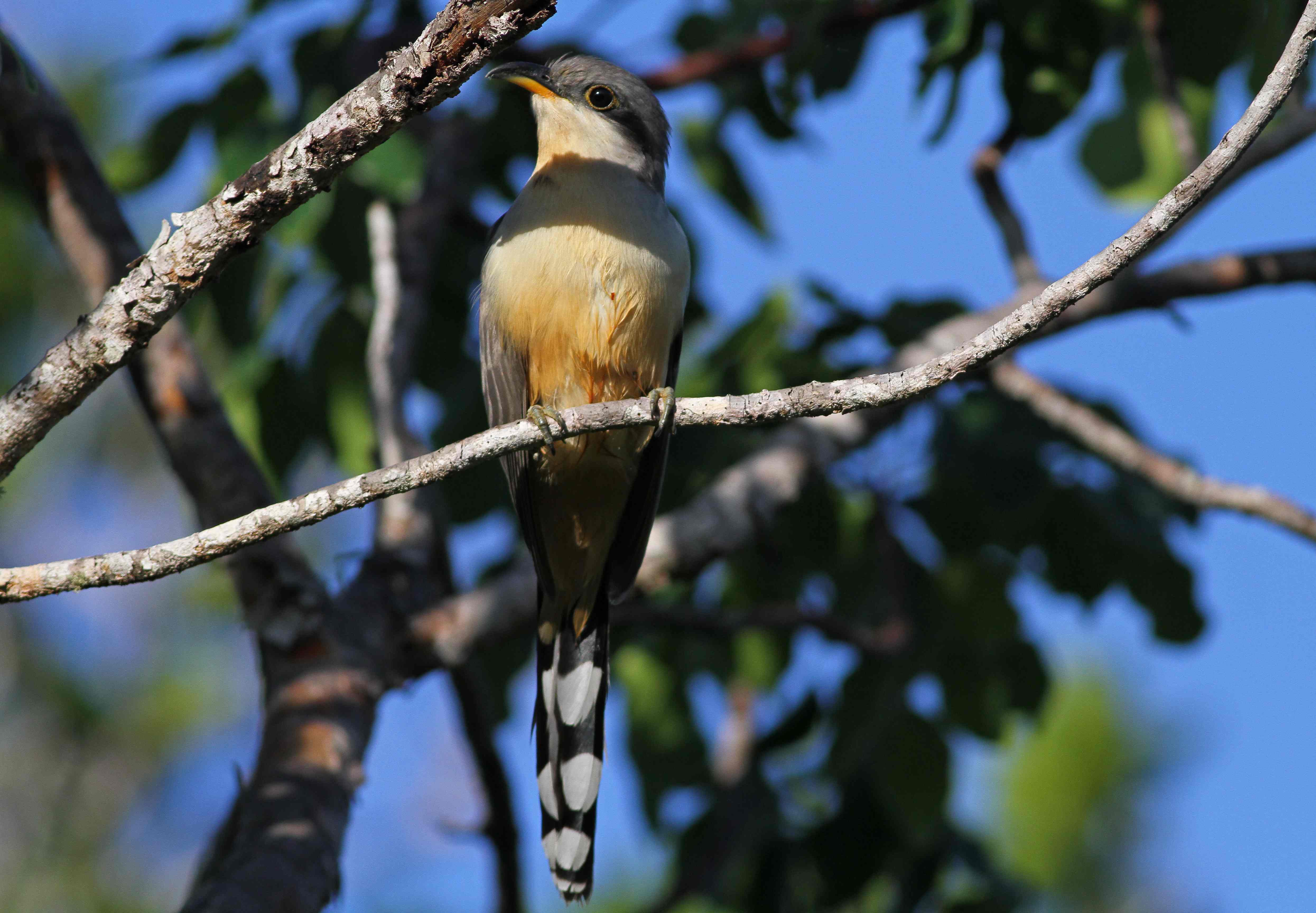
LHUDE SING, CUCCU! THE MANGROVE CUCKOO ON ABACO


 Mangrove Cuckoo, Abaco, Bahamas (Bruce Hallett)

LHUDE SING, CUCCU! THE MANGROVE CUCKOO ON ABACO

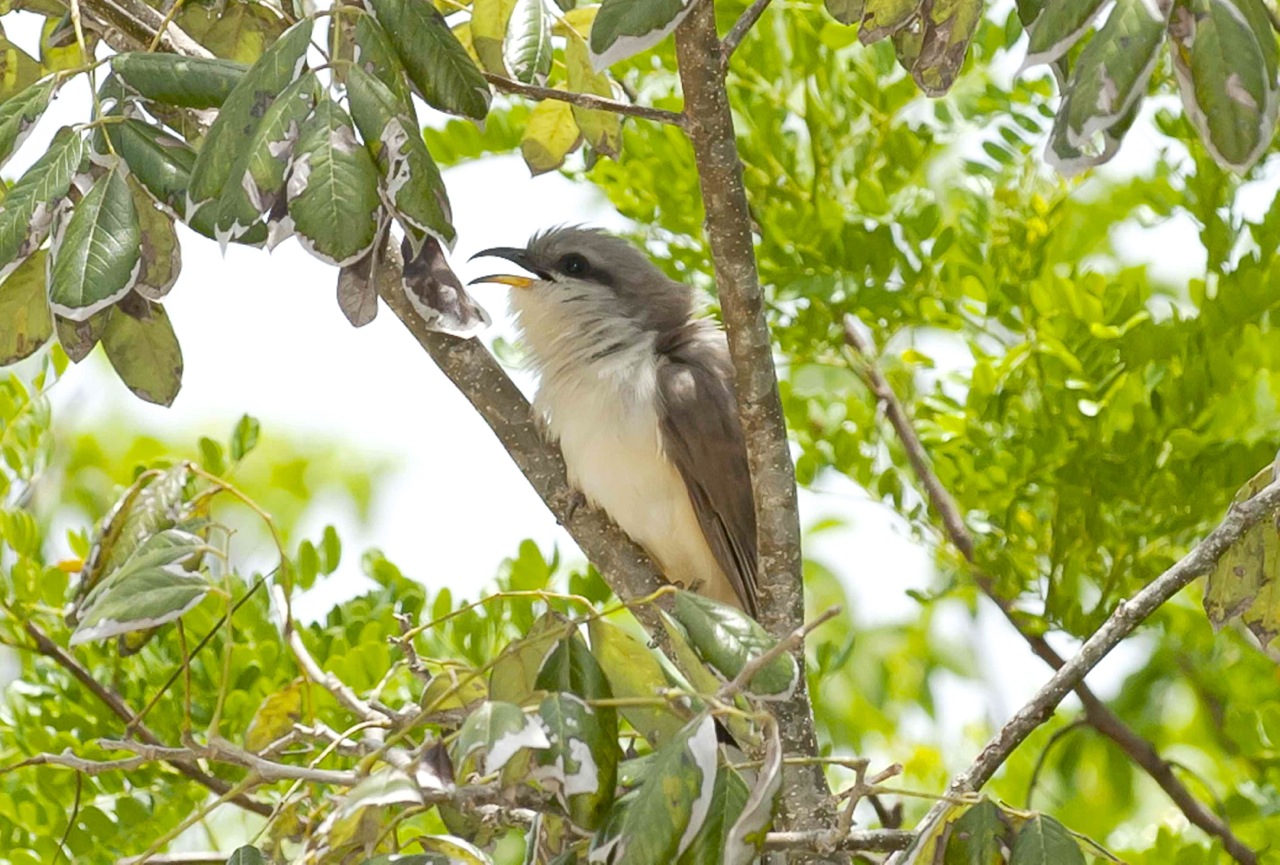
Summer is icumen in, that’s for sure. Has already cumen in, to be accurate. The approach of summer is the time when cuckoos tend to sing loudly (not lewdly, as the old lingo might suggest). The YELLOW-BILLED CUCKOO, recently featured, is one. The MANGROVE CUCKOO (Coccyzus minor) is another. Before I get on to some gorgeous pictures (none taken by me!), let’s have a sample of how this species sounds. The call has been described in various ways, for example as “gawk gawk gawk gawk gauk gauk”. I’m not so sure. And I can’t think of a sensible way to write it out phonetically. So I won’t. Please try, via the comment box…

Jesse Fagan / Xeno-Canto

Cornell Lab / Allaboutbirds  

MANGROVE CUCKOO, Abaco (Alex Hughes)Mangrove Cuckoo with insect.Delphi Club, Abaco, Bahamas (Tom Sheley)

You will notice that all three birds above have got fat insects in  their beaks. A lot of photos in the archive show feeding mangrove cuckoos. Maybe that’s when they are most likely to break cover, for they are quite a shy species.  Their preference is for caterpillars and grasshoppers, but they are happy to eat other insects, spiders, snails, lizards and (with a nod to an all-round healthy diet) fruit.

Mangrove Cuckoo, Delphi Club, Abaco, Bahamas (Tom Sheley) copyMangrove Cuckoo, Abaco, Bahamas (Gerlinde Taurer) Mangrove Cuckoo, Abaco Alex Hughes

Delphi is lucky to have some of these handsome birds lurking in dense foliage along the drives – the guest drive in particular. Some of these photographs were taken there. Occasionally you may see one flying across a track ahead of a vehicle, flashing its distinctive tail. It’s significant that only the last of these photos shows the bird right out in the open – the rest are all deeper in the coppice.

Mangrove Cuckoo, Abaco, Bahamas (Tony Hepburn) copyMangrove Cuckoo, Abaco, Bahamas (Tony Hepburn)  copyCredits: Bruce Hallett, Alex Hughes,  Tom Sheley, Gerlinde Taurer and the late Tony Hepburn; Audio – Xeno-Canto & Cornell Lab. All photos taken on Abaco!

SumerIsIcumenIn-line


Unknown's avatar

GRAY CATBIRDS & BIRDBATHS ON ABACO: HANDY FOR A DRINK OR A DIP


Gray Catbird, Delphi, Abaco 6

GRAY CATBIRDS & BIRDBATHS ON ABACO: HANDY FOR A DRINK OR A DIP

The birdbaths at Delphi are not as popular as the feeders, but certain species seem to make the most of them. Among the frequent users are Greater Antillean Bullfinches, Black-faced Grassquits and Gray Catbirds Dumetella carolinensis. The bird above and in the next 2 photos was one of several species using the poolside birdbath on a hot day. It seemed to pause after taking a drink, as if to enjoy the water trickling down their throats (or is that just me and Kalik?).

Gray Catbird, Delphi, Abaco 7Gray Catbird, Delphi, Abaco 8

This Gray Catbird started the day with a good drink at the birdbath near The Shack. There seems to be a certain amount of gargling and dribbling going on, but clearly it is enjoying some fresh cool water. Gray Catbird, Delphi, Abaco 1Gray Catbird, Delphi, Abaco 2

This catbird was tempted to the birdbath at the far side of the pool on a very hot afternoon. Not just to drink from, but actually to get in for a dip. And then a major bout of splashing about…  Note the characteristic russet undertail coverts of this bird, also visible on the header bird. And if you want to know how this species got its name and what it sounds like, this will explain all…

David Bradley Xeno-Canto

Gray Catbird, Delphi, Abaco 5Gray Catbird, Delphi, Abaco 4Gray Catbird, Delphi, Abaco 3

All photos: RH

Unknown's avatar

BLACK-BELLIED WHISTLING DUCKS: A NEW BIRD SPECIES FOR ABACO


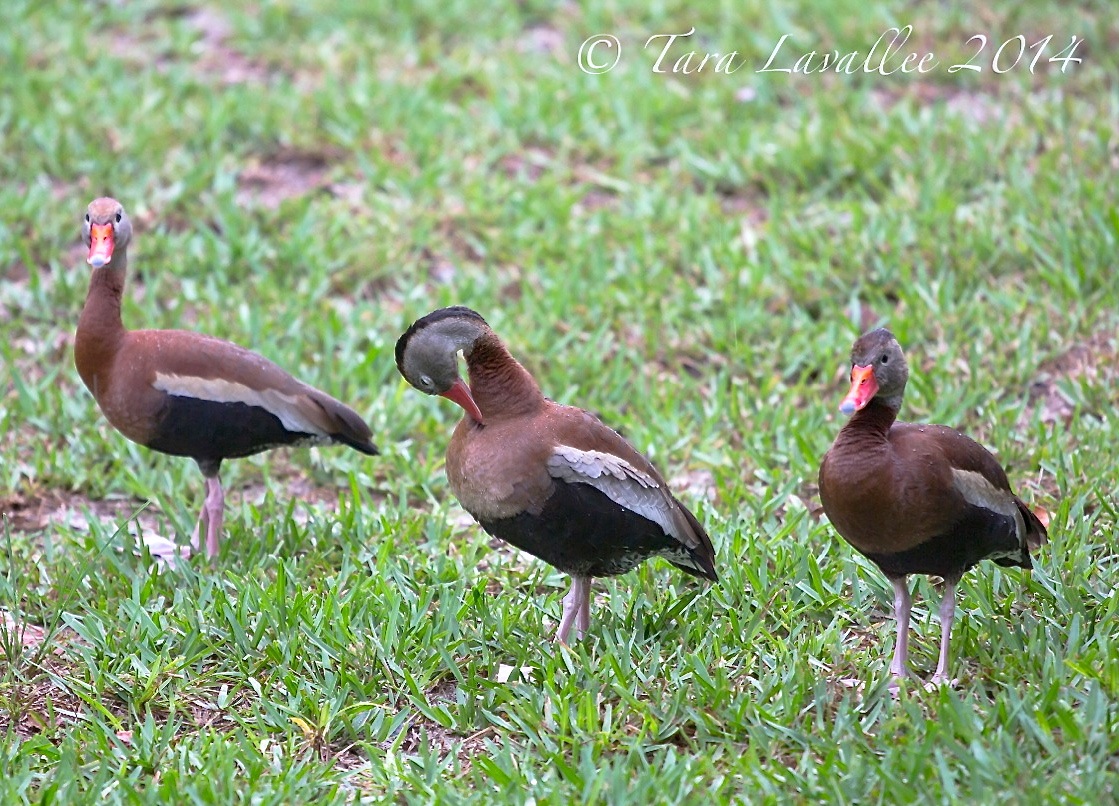
Black-bellied Whistling Duck, Abaco (Tara Lavallee)

BLACK-BELLIED WHISTLING DUCKS: A NEW BIRD SPECIES FOR ABACO

In March 2014 “The Delphi Club Guide to the Birds of Abaco” was published. It contains a checklist of every species recorded for Abaco that was accurate on the day of publication. So it was with a mix of excitement (new species!) tinged slight disappointment (the book is already out of date by June!) that I heard reports of Black-bellied Whistling Ducks Dendrocygna autumnalis being seen on Abaco. Followed by photographs to prove it.

The first report came from Woody Bracey in his account of a day in the field on June 9th in which 40 bird species were seen. He concluded the report: “Most remarkable of these sighting were the 5 Black-bellied Whistling Ducks. This species has been reported before on Andros and Grand Bahama but never on Abaco. 5 were seen clearly in flight with their bright white central upper wing patches, dark underbelly, red legs and bill and long neck. A Yellow-crowned Night Heron spooked 8 Parrots feeding in a Gumbo Limbo Tree when this small flock of whistling ducks flew by affording a good look coming, overhead and going. Unfortunately I did not get a photo even with camera in hand. They have bred in Cuba but not in the Bahamas”.

So, a clear sighting but no photographic evidence. Until the following morning, yesterday June 10 around breakfast time, when at the Delphi Club Lucy Mantle happened to notice some strange ducks right in front of the Club. She grabbed a camera (possibly her phone?) and took a couple of quick shots. Peter Mantle checked Hallett, the go-to field guide, and saw at once that these were not West Indian Whistling Ducks (a species found on Abaco). So he put the word about, adding Lucy’s photos. Hers are almost certainly the first ever images of this species on Abaco.

STOP PRESS 12 JUNE I’ve had an email from Woody Bracey saying that he first photos documenting the Black-bellied Whistling Ducks were in fact taken Saturday June 7 on the Schooner Bay Dock by Glen Kelly. These photos are the ‘official documenting ones’ so I’m afraid that as things stand, Lucy moves to silver medal position and Tara to bronze…

Black-bellied Whistling Ducks, Delphi Club (Lucy Mantle) – first second species photo on Abaco?Black-bellied Whistling Duck, Delphi, Abaco (Lucy Mantle) v2

Tony White, compiler of the checklist, responded to Peter: “Congratulations! you are the first to document a new species on Abaco since the book and checklist came out. These are Black-bellied Whistling-Ducks, casual visitors to the Bahamas. They are increasing rapidly in Florida and I think we can expect them to be breeding somewhere in the Bahamas in the next few years.There are two subspecies and they both have been seen in the Bahamas. I’ll let Woody try to figure out which these are. Thanks for being so alert and getting these photos”.

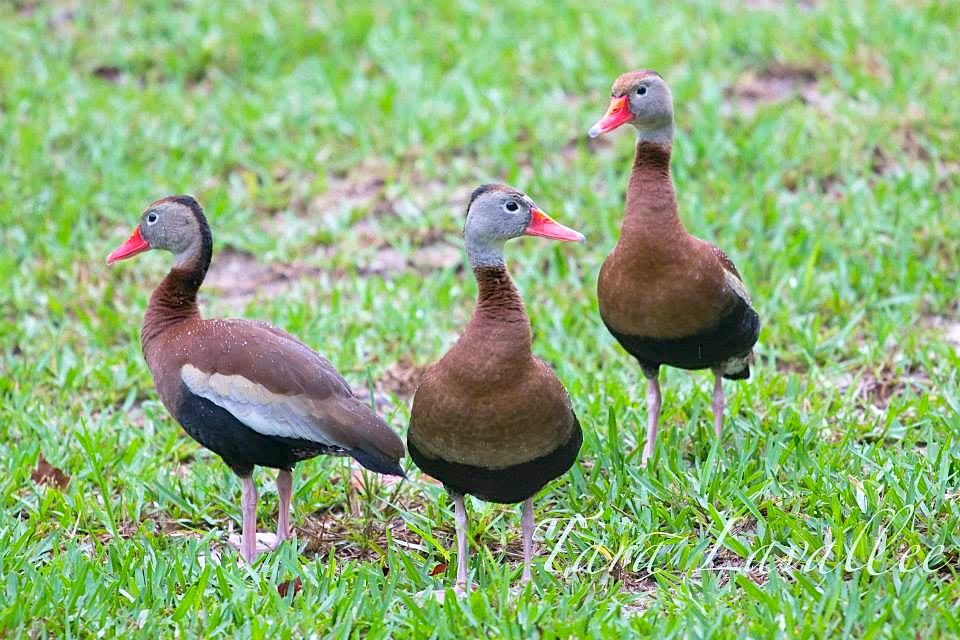
The birds must have moved gradually north during the day, and further sightings were reported online. Tara Lavallee took some photos of them in her yard a few miles north of Delphi and posted them on FB asking “Six of these beauties visiting my yard. Anyone know what they are?” 12-year old birder Chris Johnson was very quick off the mark with the correct ID as Black-bellied Whistling Ducks. Hector Morales had seen them flying over his house the previous day. I’ve seen no further reports, but I am really pleased to be able to feature Tara’s photos, which she kindly emailed earlier today. Her bird photography credentials are high – her wonderful photo of a Bahama Woodstar feeding from a flower takes up the whole of p43 of “The Birds of Abaco”.

Black-bellied Whistling Ducks, Abaco (Tara Lavallee) 2Black-bellied Whistling Ducks, Abaco (Tara Lavallee) 4Black-bellied Whistling Ducks, Abaco (Tara Lavallee) 3Black-bellied Whistling Duck, Abaco (Tara Lavallee)Black-bellied Whistling Ducks, Abaco (Tara Lavallee) 5

This is what they sound like. If you hear this call – grab a camera!

Paul Marvin @ Xeno-Canto

The present range of this species is shown in the Cornell Lab graphic below.It seems that the range is starting to expand, and that these ones are most likely to be visitors from Florida. It remains to be seen whether these ducks will remain vagrant curiosities, or settle down and begin to breed on Abaco. There are plenty of them, and they are IUCN listed as ‘Least Concern’. It’s a gregarious species, so perhaps that increases the chances of having a breeding population on Abaco.

Black-bellied Whistling-Duck Range Map

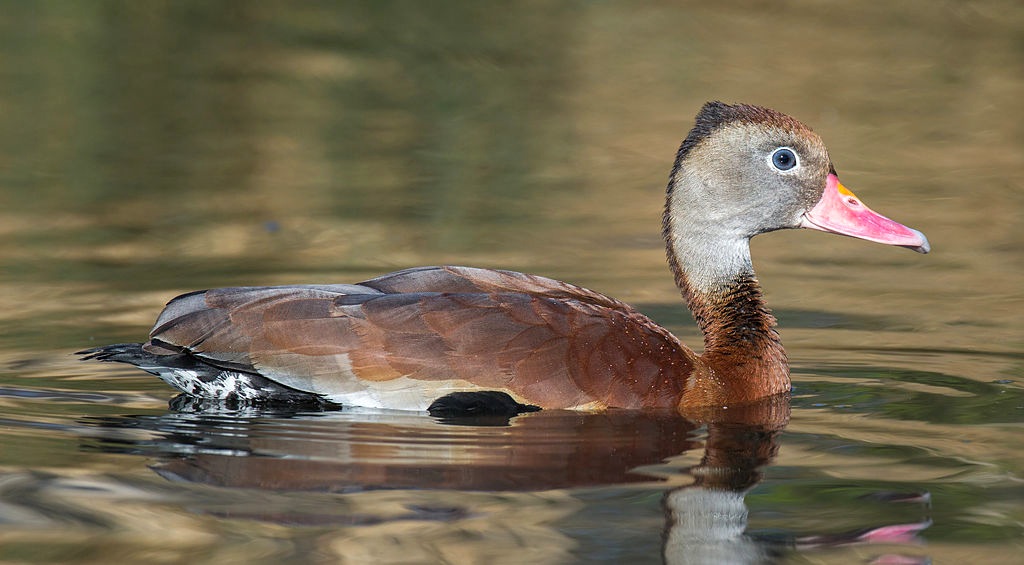
I’ll end with two excellent photos of the BBWD, taken by people who plainly had plenty of time to sort out and set up their equipment at their own pace, and not as the result of a totally unexpected and random arrival in the front yard!

Black-bellied Whistling Duck Alan D. Wilson, www.naturespicsonline.com Black-bellied Whistling Duck – Alan D. Wilson, http://www.naturespicsonline.com (Wiki)
Black-bellied Whistling Duck Dendrocygna autumnalis London_Wetland_Centre,_UK_-_Diliff Black-bellied Whistling Duck, London Wetland Centre, UK by Diliff  (Wiki)

Photo credits as shown, with special thanks to Lucy Mantle for her exclusive  ‘first’; to Tara for use permission and sending her originals; and an honourable mention to Chris Thomas for his powers of ID!


Unknown's avatar

‘BURNS NIGHT’ – CONTAINING FOREST FIRES ON ABACO


Abaco Forest Fire 4

‘BURNS NIGHT’ – CONTAINING FOREST FIRES ON ABACO

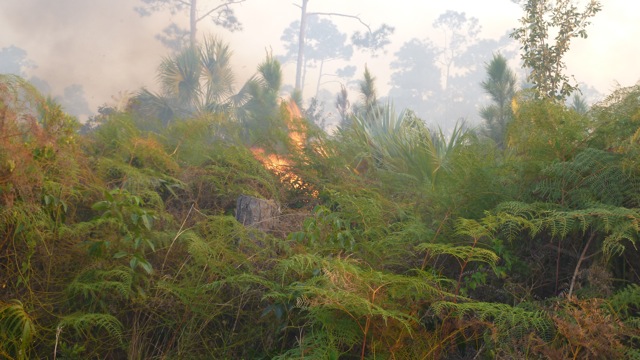
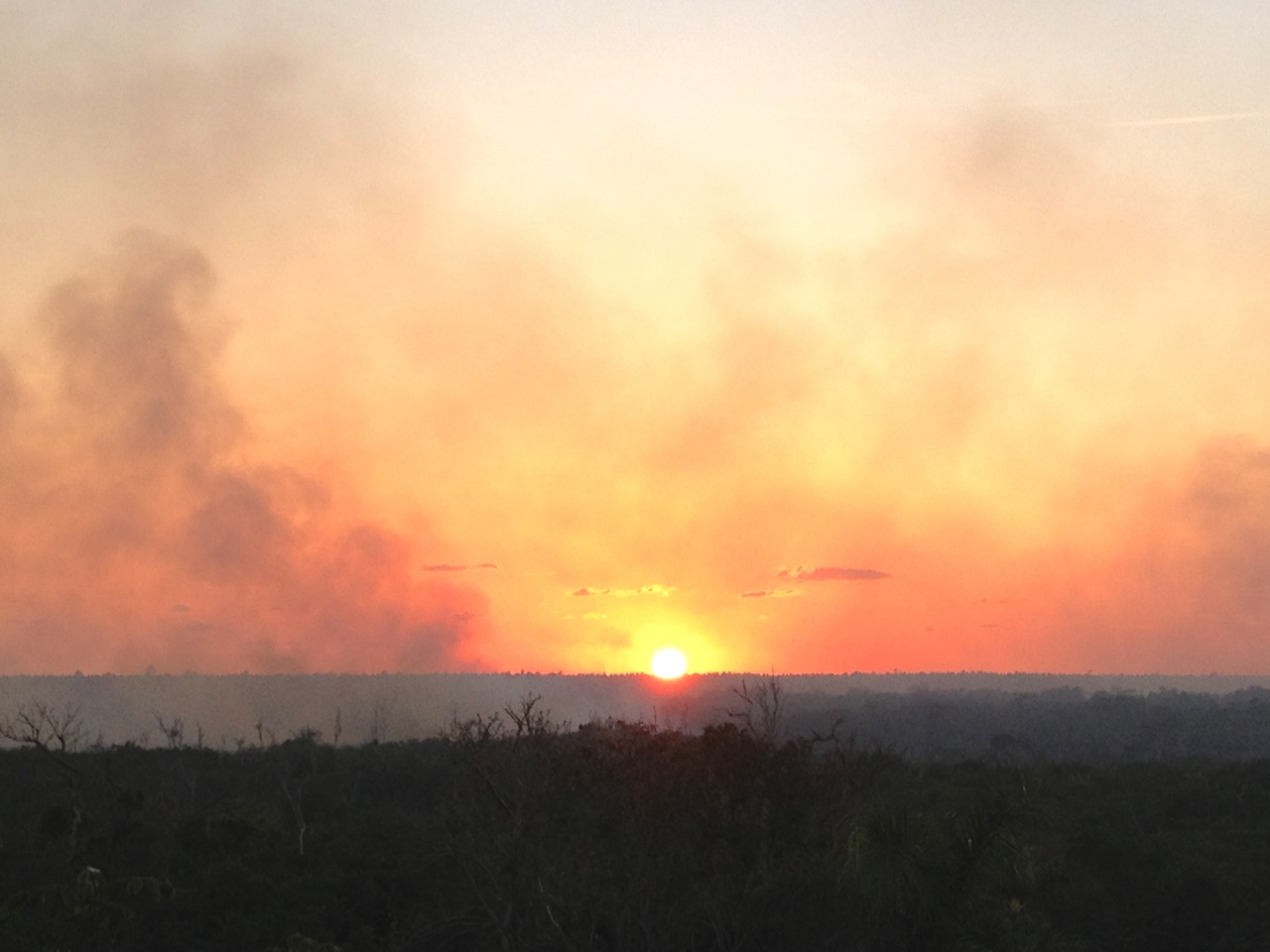
Every year Abaco has a number of forest fires, especially in the south of the island. The timing is variable –  sometimes it’s March, right now it’s… right now. The fires are good in some respects for the forest, and regeneration is remarkably rapid. Links to previous posts on the topic are shown below. Many, or most, are (allegedly) started by hunters clearing scrub and undergrowth so that the dogs can chase the hogs. The rights and the wrongs are debatable, but what is beyond doubt is that a change of wind can cause fires set in forest on the unpopulated west side to jump the Highway across to the east side. There are farms and settlements there, and these are regularly put in peril. The Delphi Club has had a couple of close calls when the thick coppice between the house and the pinewoods failed adequately to deter the flames (in theory, it should!); Crossing Rocks had some nights last year when the whole community united to protect the settlement. Now it’s the turn of Bahama Palm Shores, where the fire service and volunteers have spent the last few days – and nights – trying to prevent fire reaching the houses. So far, so good. Abaco is a wonderful place, but the fires can be powerful and scary, spreading rapidly in the wind.

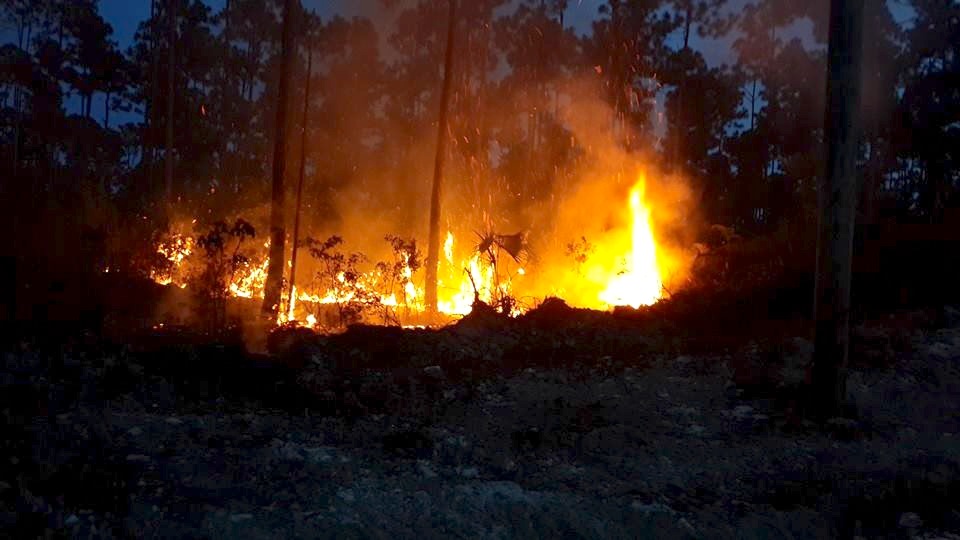
Luc Lavallee is one of the volunteers, and hasn’t had a lot of sleep recently. He has posted regular bulletins during the night on the BPS Facebook Page to keep everyone informed of the situation and the work in progress – for example creating firebreaks. Here are some of his photos over the last few days; the aerial shot is by photographer David Rees, who takes wonderful ‘drone’ photos.

Forest fire, BPS, Abaco (David Rees) Forest Fire, BPS, Abaco (Luc Lavallee) Forest Fire, BPS, Abaco (Luc Lavallee) Forest Fire, BPS, Abaco (Luc Lavallee)

This photo captures the fire raging in the middle of the night, making an almost abstract imageForest Fire, BPS, Abaco (Luc Lavallee)

FOREST FIRES –  BURNING SENSATIONS

FOREST FIRES – TOO CLOSE TO DELPHI

FOREST FIRES – REGENERATION

INDUSTRIAL ARCHAEOLOGY AT SAWMILL SINK REVEALED BY FIRE

Finally, here is a shot I took last year from the Delphi balcony looking west to the sunset. The fires had burned for several days, and the suns rays in daytime had to penetrate clouds of smoke and ash. The effect was striking.

Forest Fires, Delphi Abaco 2013


 Credits: Header & last pic- RH at Delphi 2013; aerial shot – David Rees; other images – Luc Lavallee


Unknown's avatar

BANANAQUITS ARE UBIQUITS ON ABACO – AND ÜBERCUTE TOO


Bananaquit & palm, Delphi, Abaco, Bahamas 7

BANANAQUITS ARE UBIQUITS ON ABACO – AND ÜBERCUTE TOO

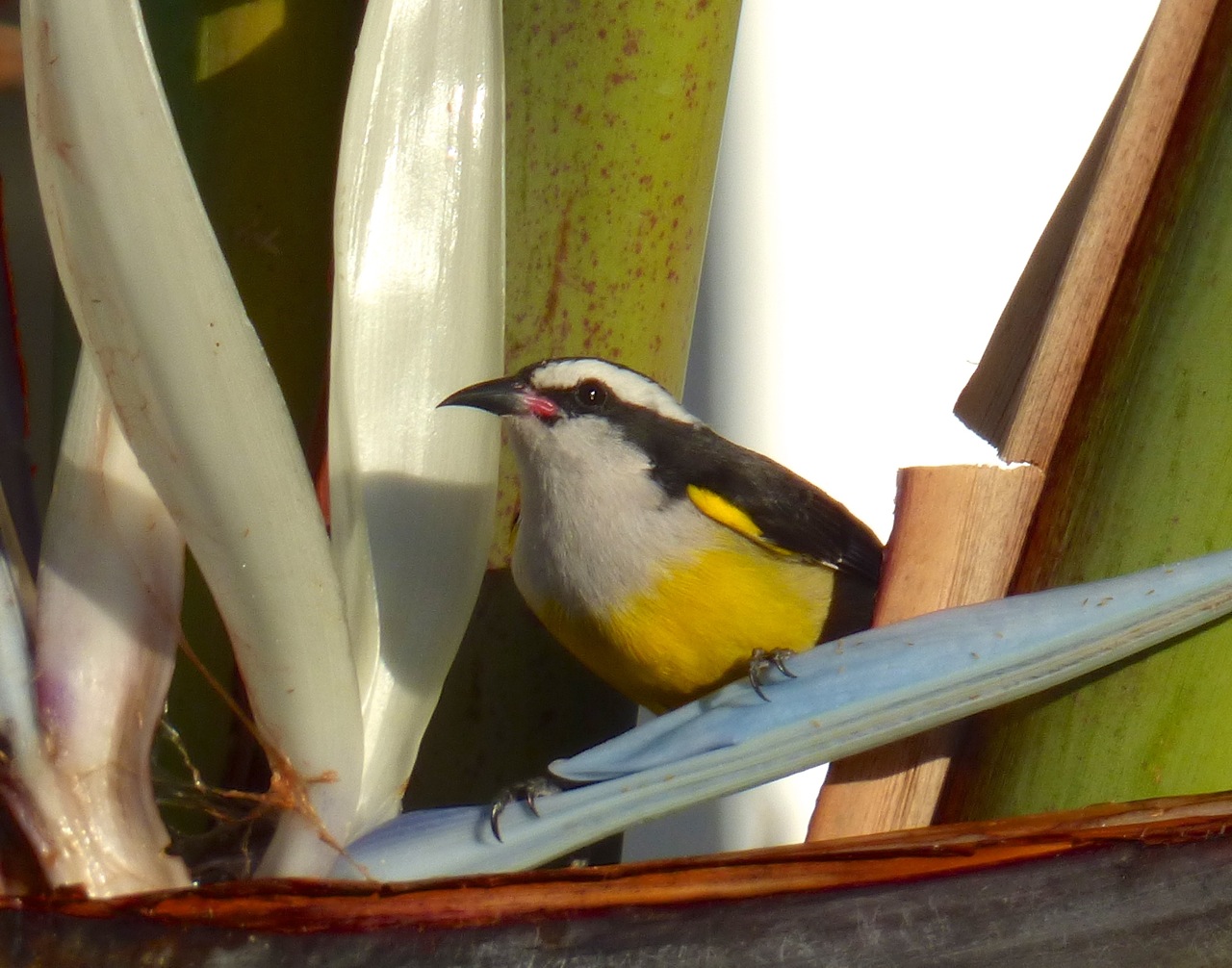
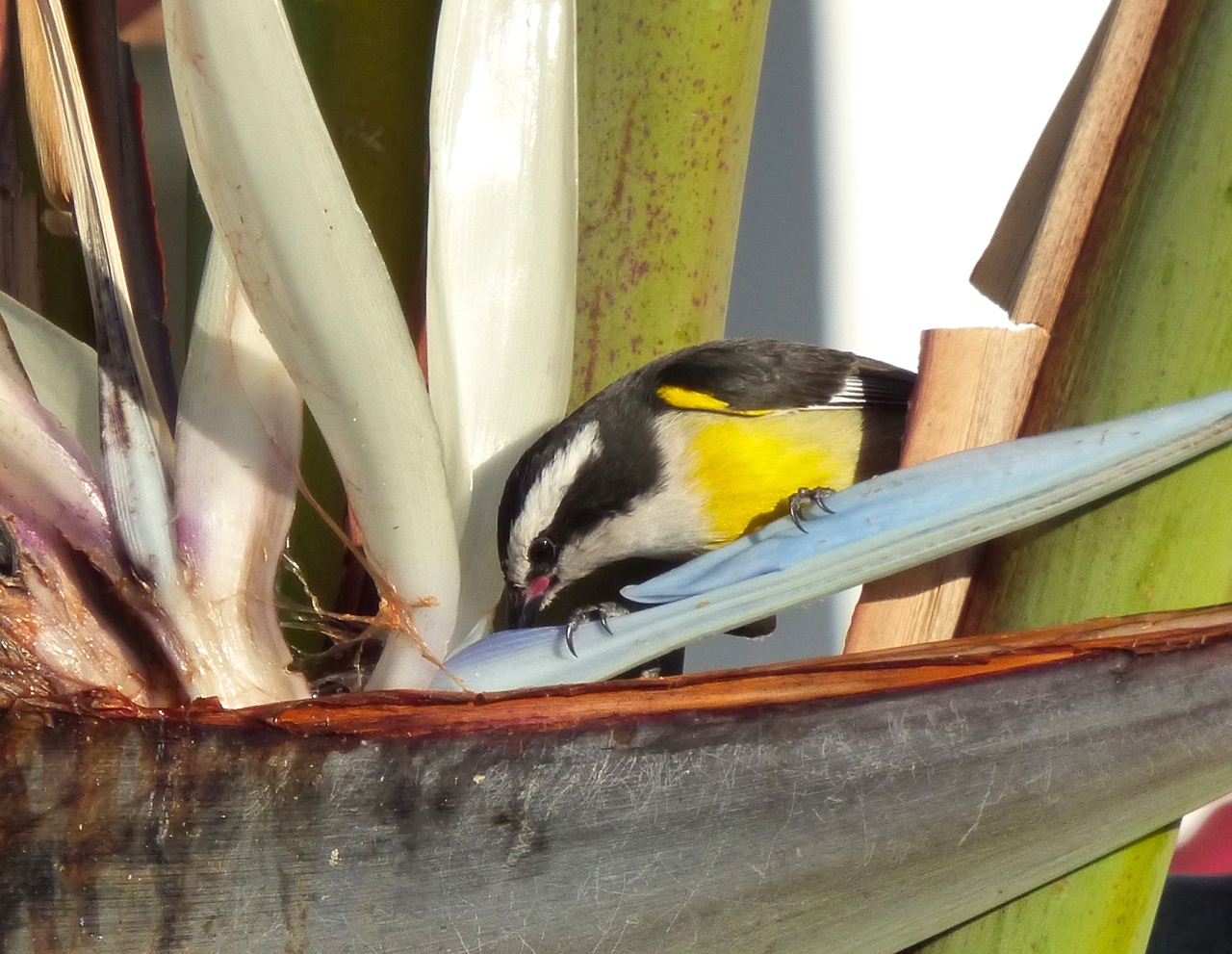
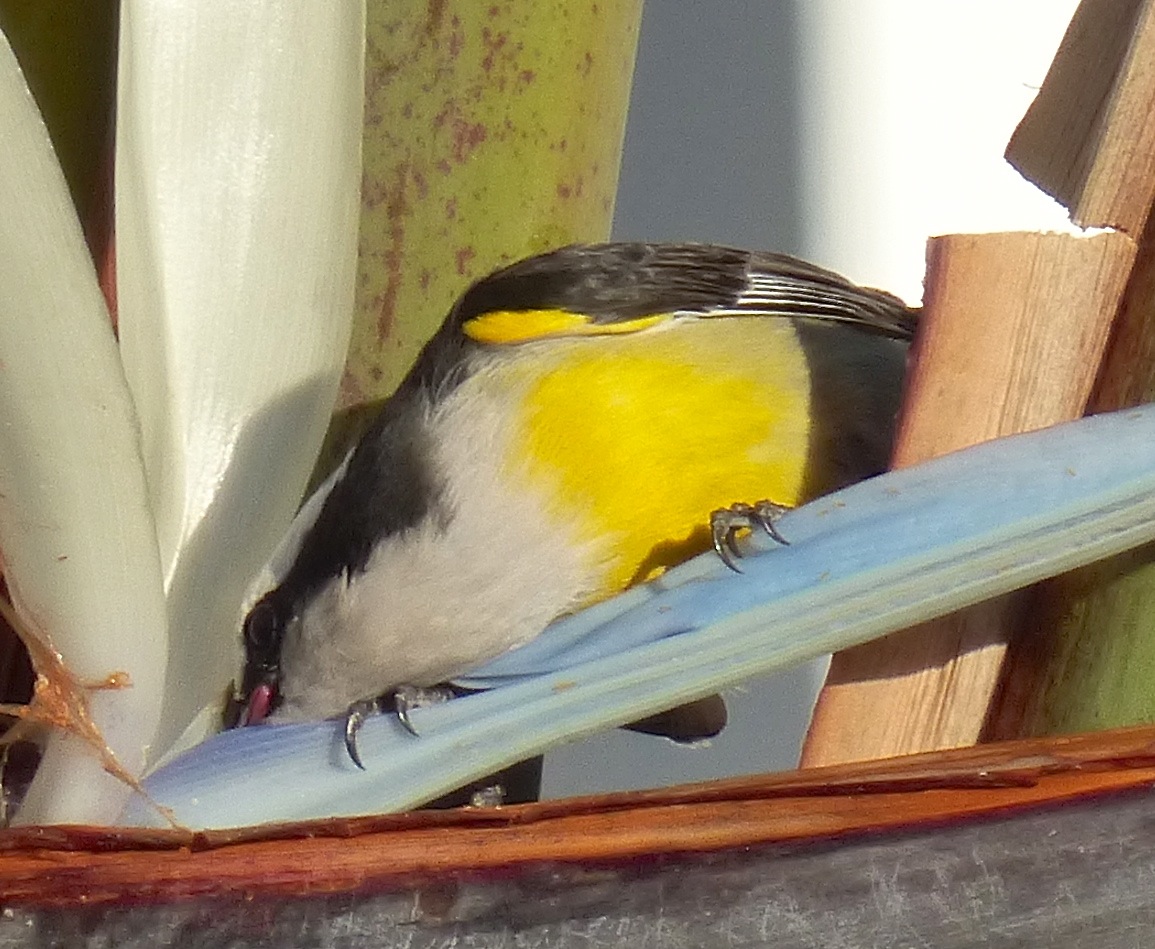
The Bananaquit Coereba flaveola. Permanently resident on Abaco, at the Delphi Club, and in my top ten favourite birds. And everyone else’s, I shouldn’t wonder. With their handsome livery and their cheeky chirping, they can be found almost anywhere. They could equally well be called ubiquits. I had been going to post some recent images of one feasting at a hummingbird feeder, but I found this thirsty palm-forager in my photo folder first, so here he is in all his glory…

Bananaquit & palm, Delphi, Abaco, Bahamas 1 Bananaquit & palm, Delphi, Abaco, Bahamas 2 Bananaquit & palm, Delphi, Abaco, Bahamas 5Bananaquit & palm, Delphi, Abaco, Bahamas 6Bananaquit & palm, Delphi, Abaco, Bahamas 4

Here’s the song of a bananaquit from Xeno-Canto (Paul Driver, Andros) (and there’s a thick-billed vireo in the background)

[audio http://www.xeno-canto.org/sounds/uploaded/FSCGENVPXK/XC140241-BANANAQUIT%20Andros%2042910.mp3]

And here is the ‘whole picture’ without the zooming, showing what a relatively small and cute bird the bananaquit isBananaquit & palm, Delphi, Abaco, Bahamas 3

All images: RH; sound recording Paul Driver, Xeno-Canto

Unknown's avatar

ABACO WARBLERS: IN SEARCH OF A YELLOW RUMP…


Yellow-rumped_Warbler Dan Pancamo (Wiki)

ABACO WARBLERS: IN SEARCH OF A YELLOW RUMP…

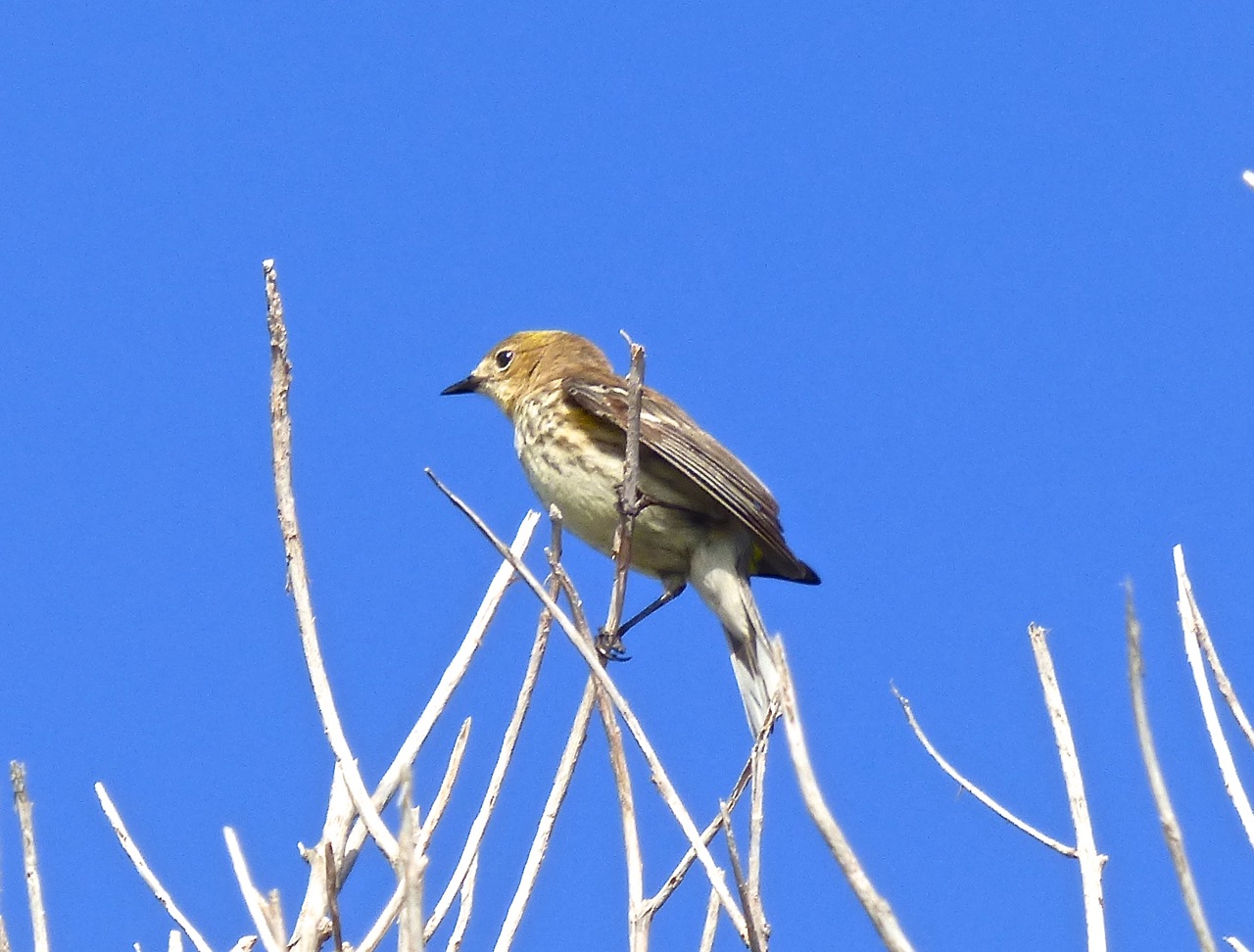
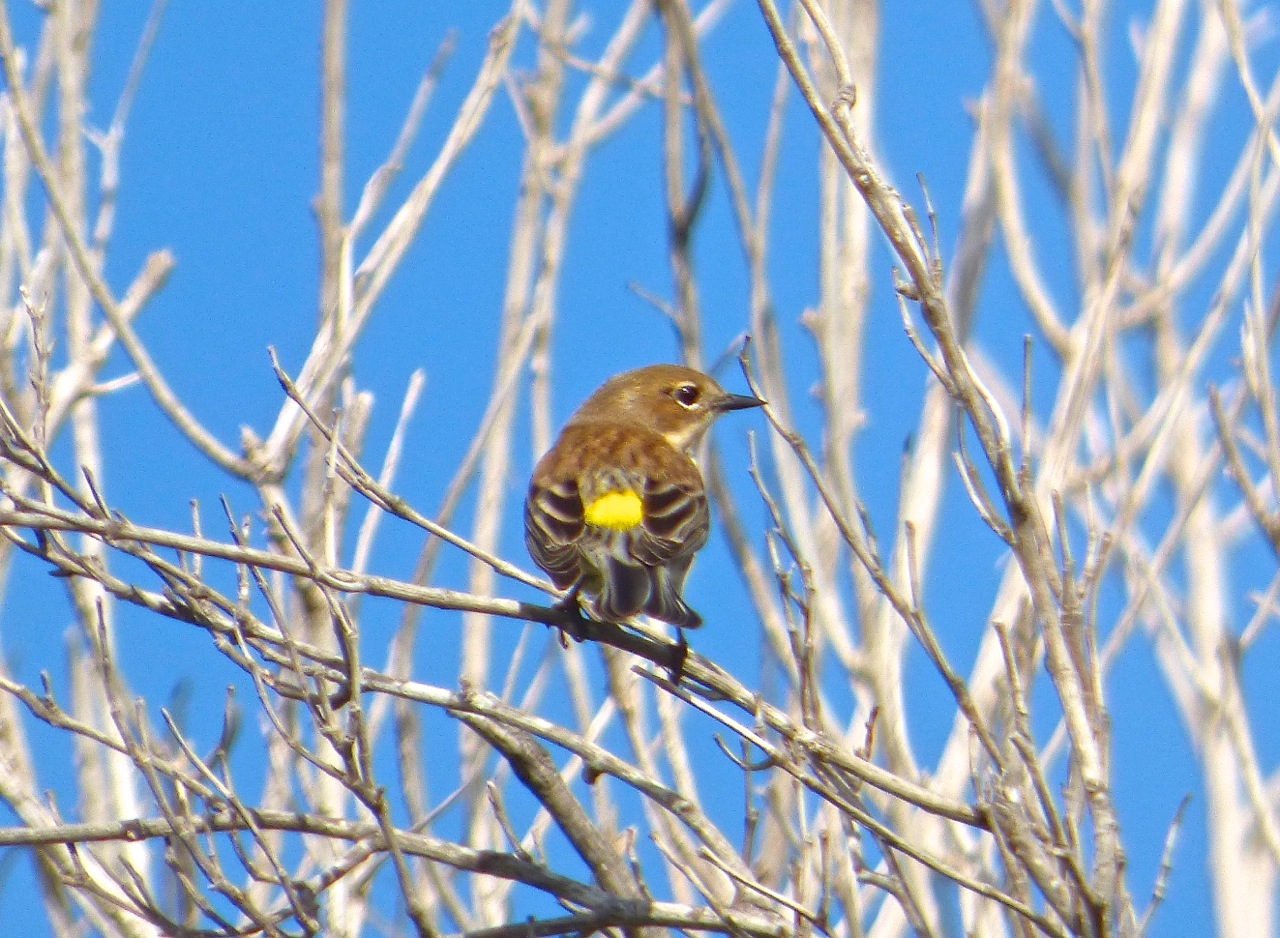
I haven’t been very lucky with yellow rumps in the past. This is not normally something one likes to talk about in a public forum… but to be honest I have been longing to get hold of a yellow rump of my own. The warbler Setophaga coronata, that is, a fairly common winter resident on Abaco. I’ve seen them of course. I’ve glimpsed a passing flash of yellow rump. But no YRW has stayed parked in tree with its backside towards me for long enough to permit me to photograph its posterior glory. Ideally I’d have liked a clear, attractive shot like the header image (Dan Pancamo, Wiki). But desperation leads to lowered expectations and plummeting standards. Frankly, this year I’d have been satisfied with any yellow rump. Abandoning my initial plan to apply a yellow highlighter pen to a compliant female grassquit, I bided my time. And suddenly there, at the very top of a tree near the swimming pool at Delphi, was my chance… A pair of YRWs were in evidence.

Yellow-rumped Warbler, Abaco 5Yellow-rumped Warbler, Abaco 6Yellow-rumped Warbler Abaco 1Yellow-rumped Warbler, Abaco 2

The tree wasn’t very close to me, and the birds stayed near the very top. My photos were never going to be great. Especially since each bird was meticulous in keeping its rear end out of sight. Then they flew away! However quite soon one was back. This time there were twigs in the way, one of the those little variables that makes camera focussing so enjoyable. But this time I managed to ‘pap’ its derrière…  Feeble shots but mine own. As an avian ‘Holy Grail’, a mere yellow rump leaves quite a lot to be desired, I can quite see. It’s on no one’s ‘bucket list’ of birding musts. But now I can move on, release that poor female grassquit and chuck out the highlighter pen.

Yellow-rumped Warbler, Abaco 3Yellow-rumped Warbler, Abaco 4

Unknown's avatar

GEE! BEES!! HIVE TALKIN’ ON ABACO


Bees at Delphi Abaco 1

GEE! BEES!! HIVE TALKIN’ ON ABACO

This post concerns the bees of Abaco, with little or no apology for the cultural cross-reference to the dread mid-70’s musical era. If you wish to experience the full horror, scroll straight to the bottom of the page and relive those heady days of Barry, Robin & Maurice… 

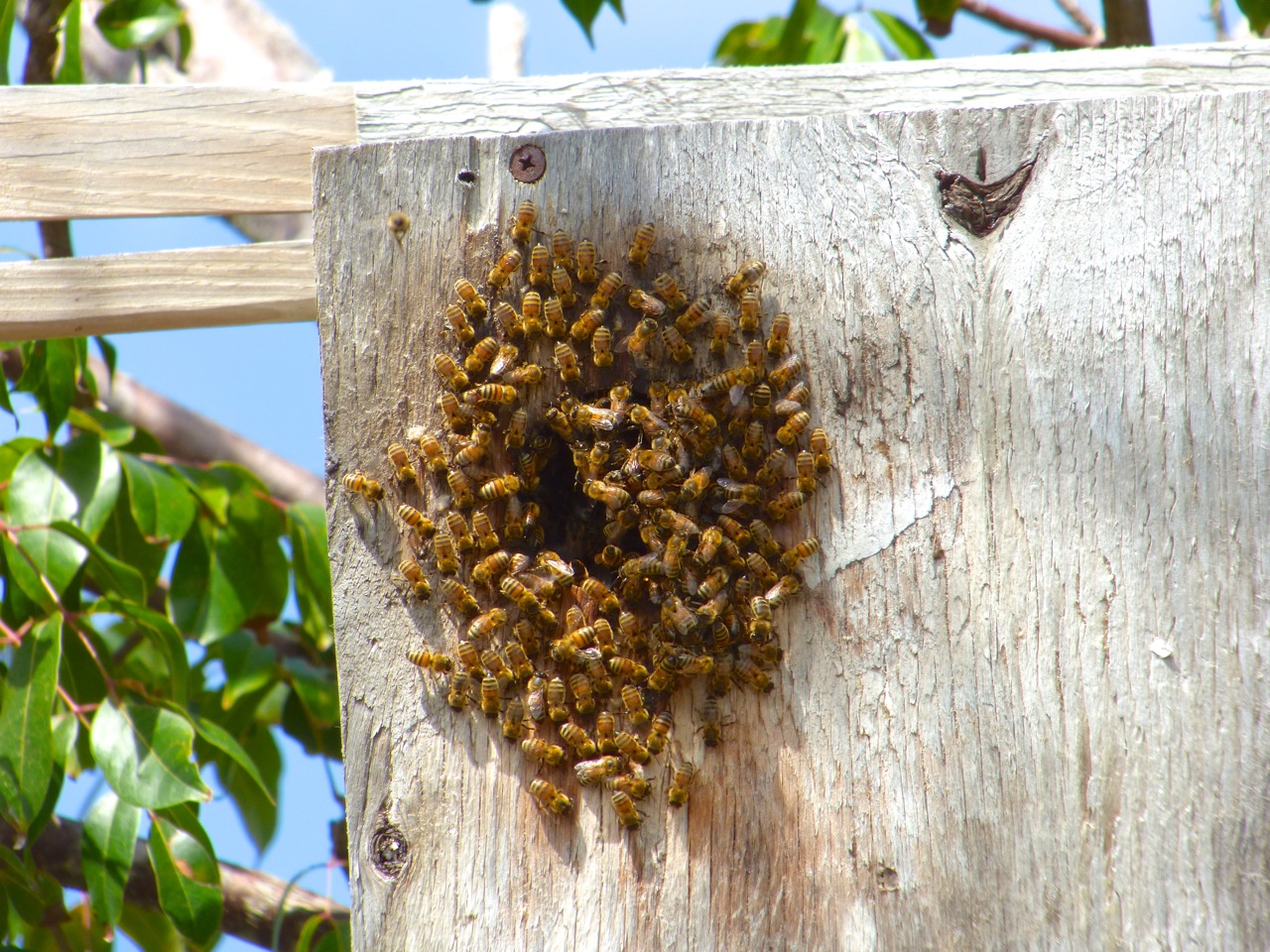
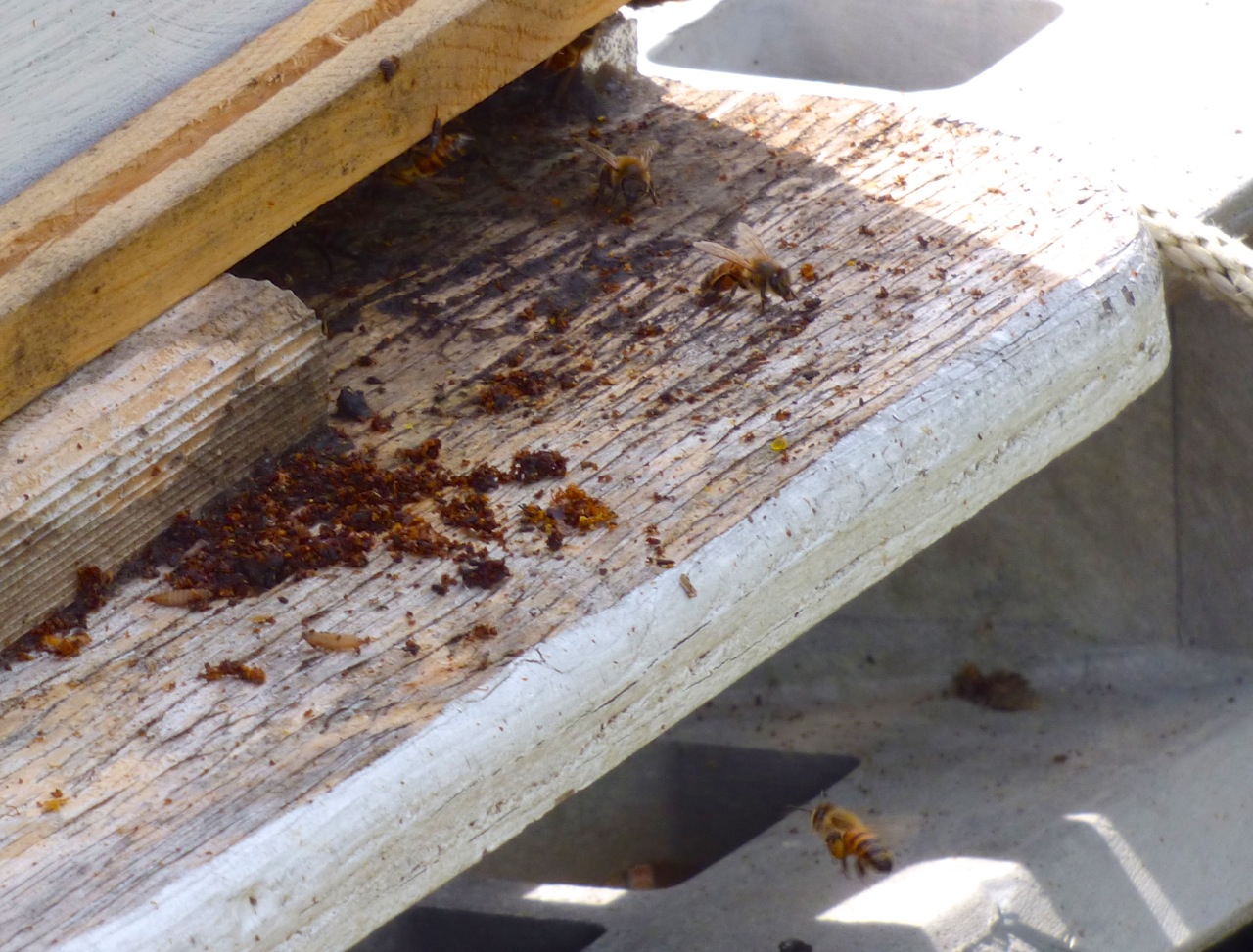
The bees on Abaco south of Marsh Harbour are mostly wild. The header photo shows the West Indian Woodpecker nest box near the skiff park at Delphi that has become the exclusive residence of bees. They have a profusion of flowers in the Delphi Club gardens to choose from, but it is not practical to keep hives for them. So they are left to do their own thing. Here they were last month, being busy.

Bees at Delphi Abaco 2

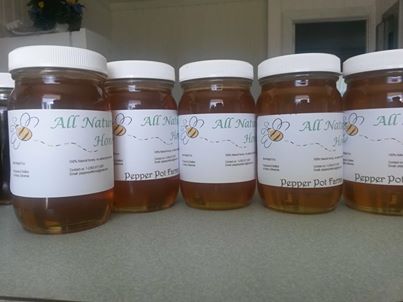
During the past year I have found 2 places between Delphi and MH that keep hives. One is PEPPER POT FARMS – click the name to reach their FB page. You can get their honey direct or in MH for $6.75 a pot. I enjoyed their evidence of why bees are called ‘workers’…

5 FUN BEE FACTS

  • Bees must visit approximately 2 million flowers to make 1 lb. of honey. 
  • Bees have to fly over 55,000 miles to make 1 lb. of honey. 
  • On average a worker bee will make 1/12 teaspoon of honey in her lifetime. 
  • Two tablespoons of honey would fuel a honey bee flying once around the world.
  • Honey bees will visit between 50-100 flowers during one nectar collection trip.

12721_208930259301915_1742177992_n

The other place with hives is ABACO NEEM FARMS, the base for the production of the stock at the Abaco Neem shop on the way into MH from the roundabout . The owner Nick has installed 2 hives which we had a look at when we took up his invitation to bird-watch there. It is something of a birding hotspot, benefitting from pine woods, coppice, fruit trees and open land over a large area. 

Abaco Neem Farm Hives 1Abaco Neem Farm Hives 2Abaco Neem Farm Hives 3

There was plenty of bee action around the hives on a warm sunny day and plenty of plants for them to feed from. We watched them come and go, the returning bees having filled their trouser pockets with pollen.Abaco Neem Farm Hives 4 Abaco Neem Farm Hives 5

There are both cultivated and wild flowers all over the place, with bees feasting on plants and fruit trees of many kinds. I liked the bright flower chosen by this bee. Abaco Neem Farm Hives 6

I’ll be posting more about the birds and plants of the Neem Farm in a while. Meanwhile, here are a couple of links to previous relevant links.

 TO SEE AN EARLIER ABACO BEE POST, CLICK HERE

TO SEE A CUBAN PEWEE AT THE NEEM FARM CLICK HERE

Finally, here is your chance to roll back the years with the Brothers Gibb. And below it, an excellent corrective!

This excellent Bee Gee parody by the “Hee Bee Gee Bees” called “Meaningless Songs in Very High Voices” is live from Sweden. Well, it still makes me laugh anyway (they also ripped off and ripped into Bowie, Jackson, The Police, Status Quo & many more).

Unknown's avatar

A BONEFISHING CHALLENGE ON ABACO: THE ‘WHICH?’ REPORT


_MG_4668_1280x853_

A BONEFISHING CHALLENGE ON ABACO

In January I posted an article called BONEFISHING ON ABACO: A CHALLENGE IS ACCEPTED. This stemmed from contact online with fisherman and fly tyer Mark Minshull, who kindly tied some flies for me to try on the Marls. In the post I showed pictures of my manky flybox and his immaculate flies. We agreed to see how things turned out while I was on Abaco in March, and  that I would report back…   

image24

Mark 1 Specimen Bonefish Flies

THE ‘WHICH?’ REPORT ON MARK 1 BONEFISHING FLIES

We set out to test the efficacy of  prototype ‘Mark 1’ bonefishing flies in the waters of the Abaco Marls. Our testers came from the US (TC & AH), Northern Ireland (AB), and England (RH). All are proficient fly fishermen with experience of several prime bonefishing destinations between them, except for the Englishman RH who was included to add balance to the trials by adding the element of incompetence. His fly box remained an object of ridicule throughout the tests, until he resorted to using a more carefully chosen small fly box containing his most successful flies, some ‘Delphi Club Approved’ flies and the test flies. 

QUALITY All our testers agreed that the Mark 1 flies were beautifully designed and tied. As flies, their quality was rated ‘superb’; ‘bloody good’; and ‘very impressive’. As potential winners for the waters of Abaco, however, there was considerable doubt about the suitability of the pattern for colouring, shape and size.

THE TEST AREA We used the huge area of prime bonefishing territory of the mangrove swamps and sand banks on the west side of Abaco known as the Marls. Our testers were familiar with the waters and all had fished them numerous times. The sea depth, depending on tide, is a few feet at most. The consistency of the bottom is of lightweight, pale coloured mud.

Bonefishing, Abaco Marls Abaco  1

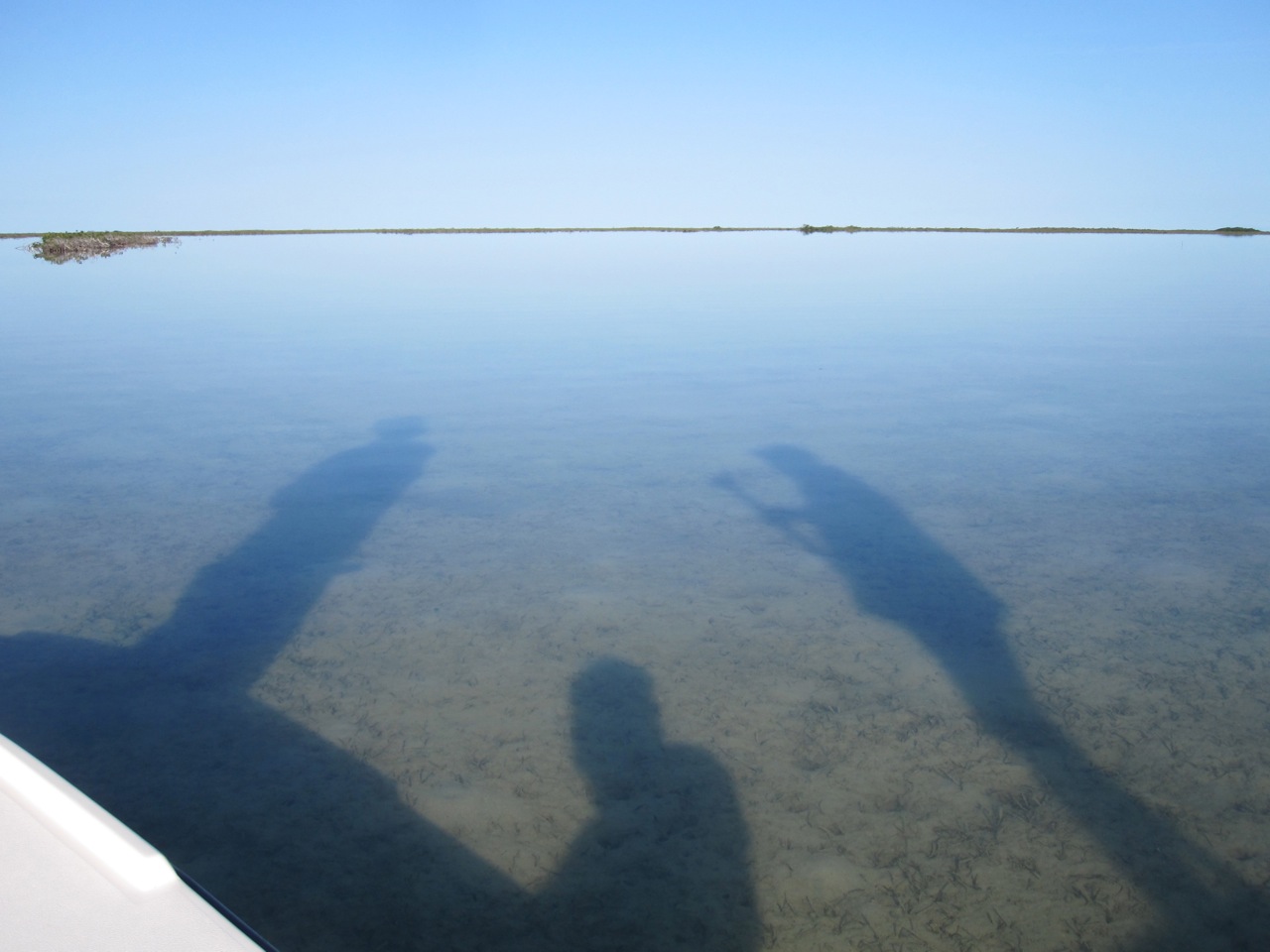
It is usually easier to look out for the shadows of the fish on the light bottom than for the fish themselves, which are often difficult to see in the water. Half-close your eyes and look at this image – the fish almost disappears, but the shadow is clearly visible. It is hard to believe the wonderful colouring of the fish until it is out of the water.Bonefish, Abaco Marls Abaco 2

THE TESTS The initial reservations of the testers unfortunately proved justified in the field. The testers all found that the fish tended not to follow the flies at all, and mostly behaved as if they had not seen them, even with the most accurate casts. The few ‘follows’ observed produced refusals of the fly at the end. Disappointingly, no fly was taken by a single fish throughout the trials.

OBSERVATIONS Our testers had some useful comments. Above all, the Mark 1 flies were undoubtedly of excellent quality and design. They simply were not suited to the waters – or the bonefish – of Abaco. TC thought they might work in Belize. It was thought that larger versions might attract permit. Overall, the Mark 1s were so radically different from the tried and tested fly patterns used successfully on Abaco that the 3 competent fishermen soon forsook the experiment and caught fish using more familiar flies. The 4th tester, lacking any finesse, might have fluked a take against the odds , but even he drew a blank.

THE PROFESSIONALS The Guides in each case had been fishing the Marls since they could walk and hold a rod. They each examined the flies, shook their heads and kept their thoughts to themselves. We interpret this as indicating a tendency for the local guides to doubt the effectiveness of the Mark 1 flies.

IMG_1169

RH’s ‘Selected Specimen’ Fly Box

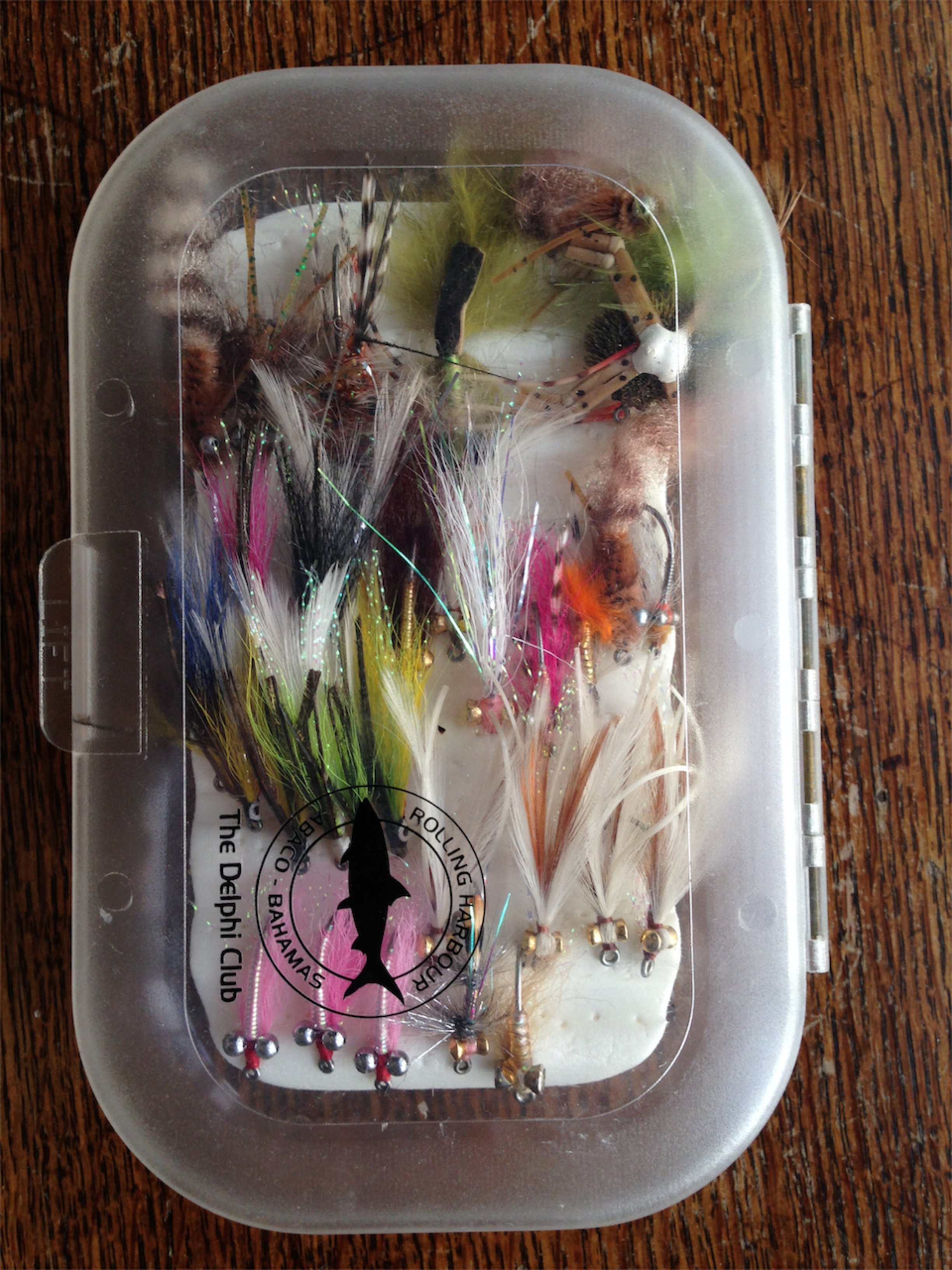
RESULTS ANALYSIS  The flies above show (front row) the 3 versions of the Mark 1 fly; (middle row) the highly effective Delphi Daddy and Delphi Diva patterns, with one random silver concoction of unknown origin; (back row) ; 2 browny / pale patterns plus a shocking pink one that the guides wisely forbade and, below, 3 roughly matching flies that brought great success even for RH this year (including 12 boated and 5 lost in one day), sourced from renowned tackle specialist E. Bay.

CONCLUSION The flies that catch the bones on Abaco tend to be pale and to have ‘streamer’ tails and / or a fair amount of sparkle. A touch of pink seems to be good. Too much pink, not so. Rubbery legs can be very effective (except in the fisherman after lunch). But lovely lifelike dark shrimp imitations are of no interest to the fish of the Marls.

‘WHICH?’ RATINGS FOR THE MARK 1 FLY 

  • Design and construction *****
  • Ease of use *****
  • Effectiveness for Abaco waters *

All photos RH. Thanks to Mark for creating the challenge and for being a great sport

A Box of Bonefish Flies (Abaco)

The largely ridiculous fly box of RH (most good ones removed)