Unknown's avatar

GREAT EGRETS: NOBLE (YET MISNAMED) HERONS


Great Egret, Bahamas (Nina Henry)

GREAT EGRETS: NOBLE (YET MISNAMED) HERONS

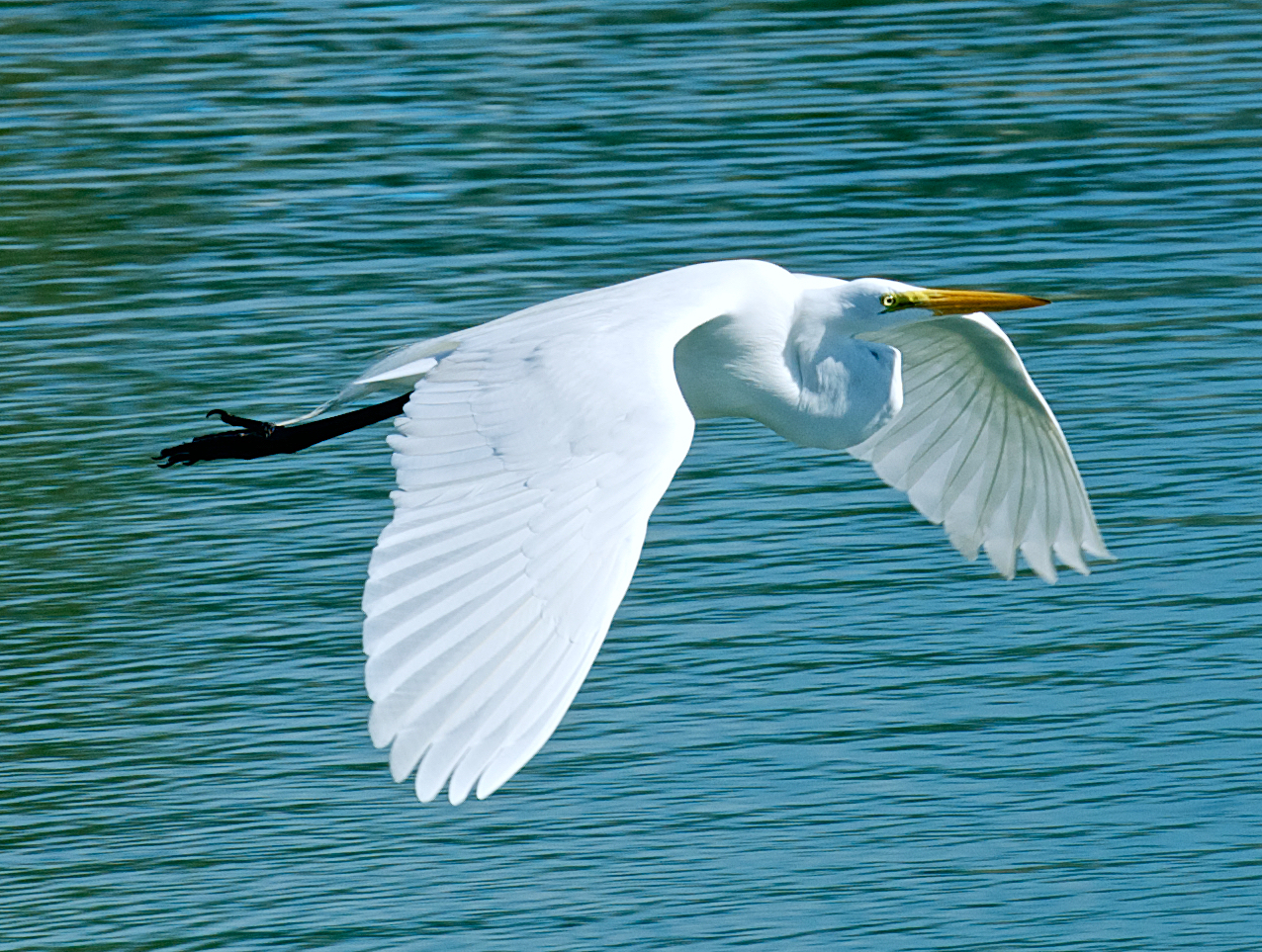
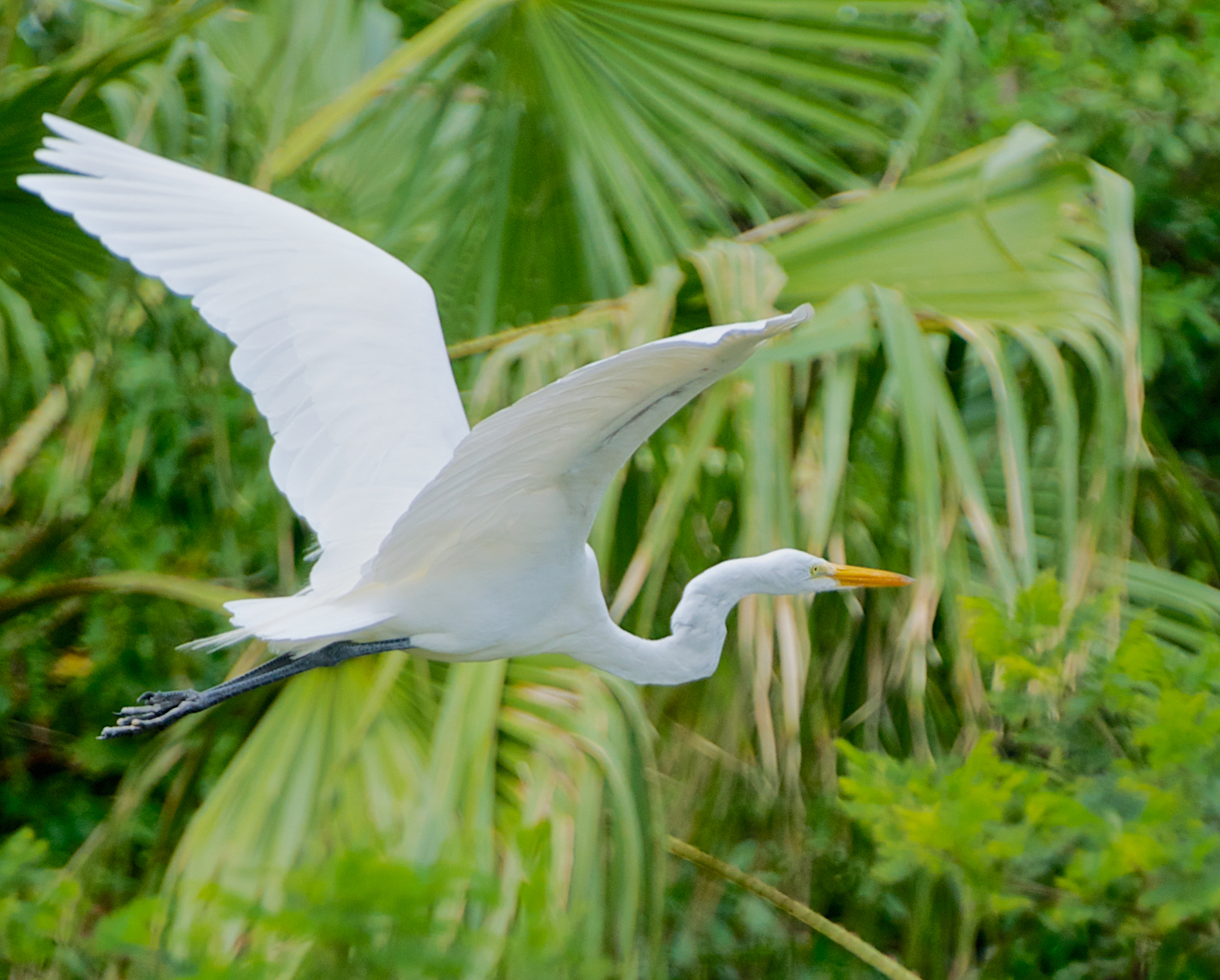
The Great Egret is actually a heron rather than an egret. It’s a Great Heron. All egrets are members of the heron family Ardeidae, but the converse is not true. As long ago as 1758, Linnaeus awarded the bird the binomial name Ardea alba i.e. ‘Heron white‘. Why it should have been so hard to stick to that authoritative nomenclature, I can’t imagine. Perhaps in time all heron and egret species became so hopelessly confusing for people that it ceased to matter much what they were called.

Great Egret, Bahamas (Nina Henry)

Maybe it was that type of carelessness that led to people from the mid-c19 onwards eyeing up GREGs as a source of hat feathers and other decorative necessities. As with flamingos and many other beautiful avian species, mankind’s millinery and other fashion needs were satisfied at the expense of gorgeous plumage. Actually, at the cost of the birds’ lives: they were simply shot in huge numbers. 

Great Egret, Bahamas (Nina Henry)

Healthy populations were decimated; for some species they never recovered. For others, the great egret among them, the passage of time and the passing of fashions – backed in many cases with conservation programs – have successfully restored the populations. In 1953 the National Audubon Society, which was formed at least in part to discourage the killing of birds for their feathers, took a decisive step in the cause of the great egret by making the bird the emblem of the organisation.

Great Egret, Bahamas (Nina Henry)

Photo Credit: Nina Henry photographed all the egrets in this post. Her wonderful images made a significant contribution to the “BIRDS OF ABACO” project.

Great Egret, Bahamas (Nina Henry)

Unknown's avatar

COOTS FIGHTING & THE CARIBBEAN COOT DEFEATED


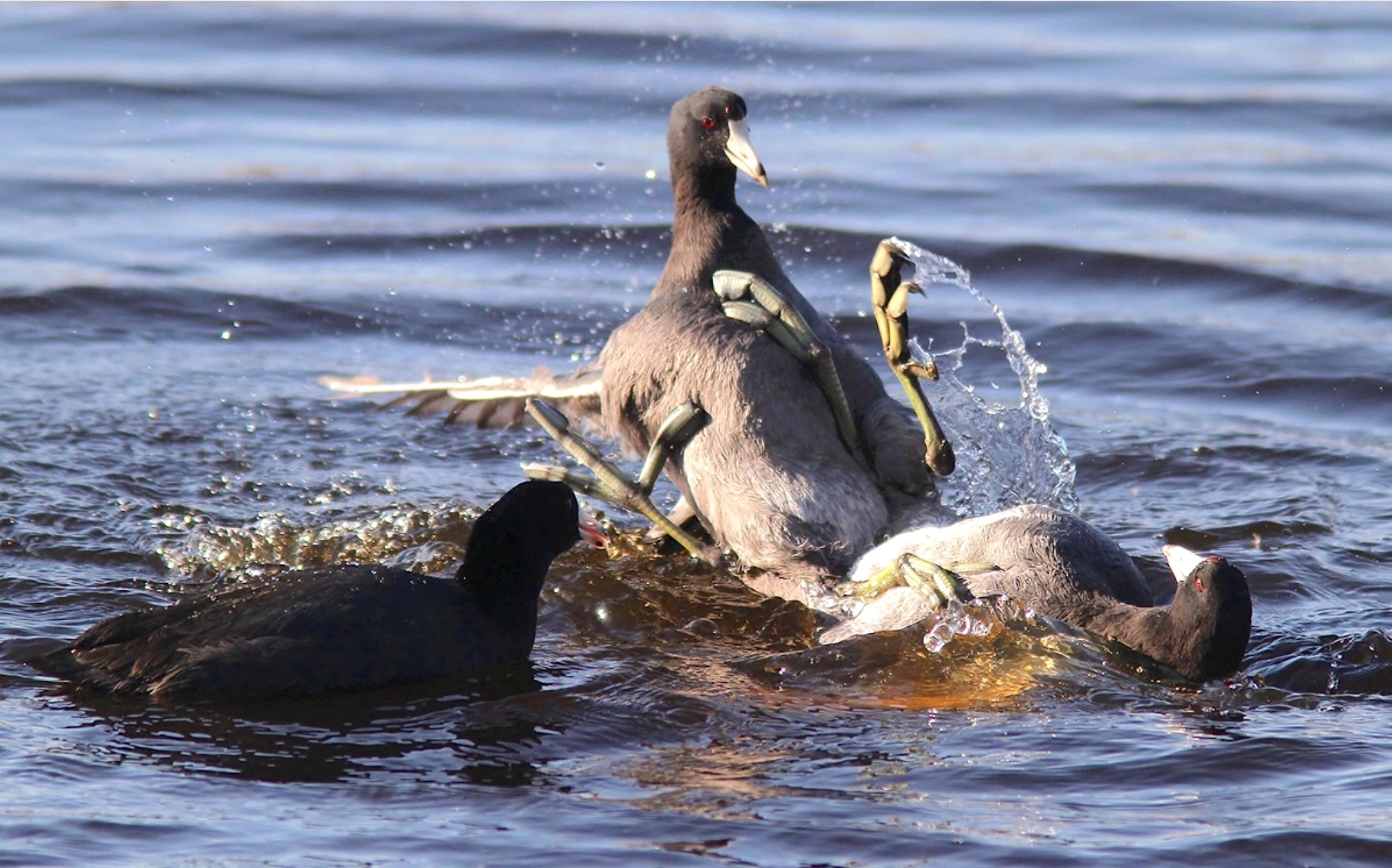
Coots Fighting (Phil Lanoue)

COOTS FIGHTING & THE CARIBBEAN COOT DEFEATED

These coot fight images are from Phil Lanoue, whom I have featured before. He is a master of bird sequences, magicking a whole avian story or drama in a few clear, sharp photos. These types of image are well beyond my skills and my camera limitations. Here are 2 males battling over a female which, by the final aggressive image in which dominance is asserted, has disappeared for the picture…

Coots Fighting (Phil Lanoue)Coots Fighting (Phil Lanoue)Coots Fighting (Phil Lanoue)

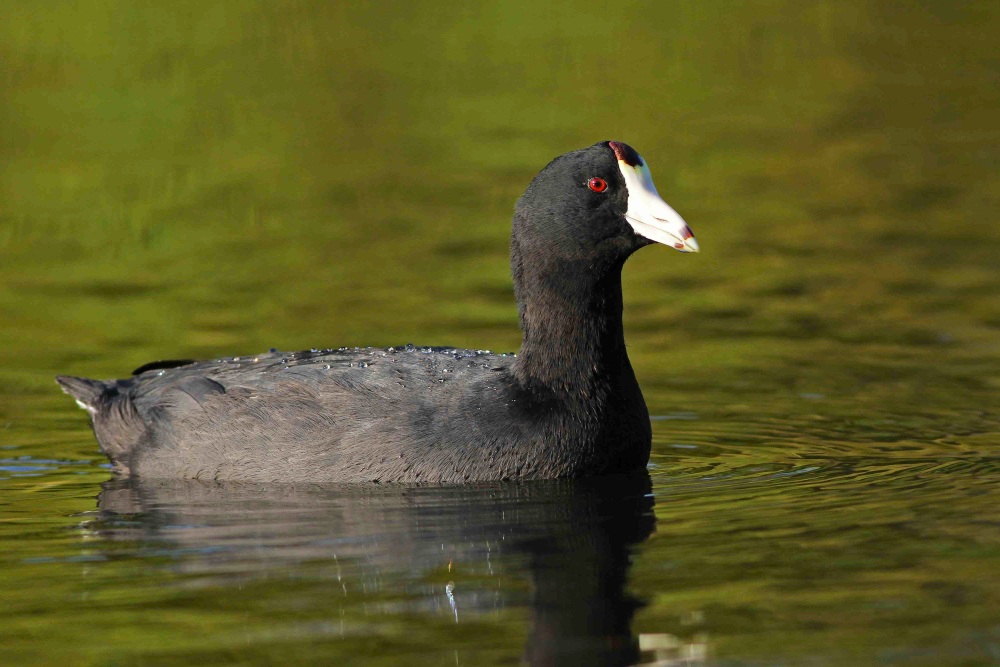
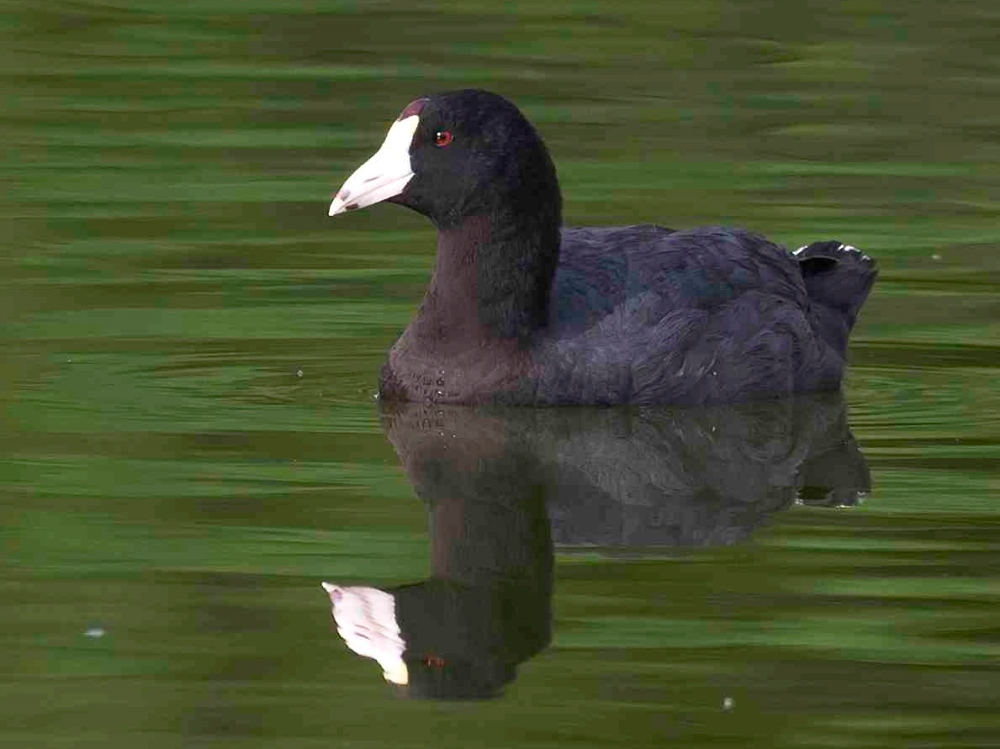
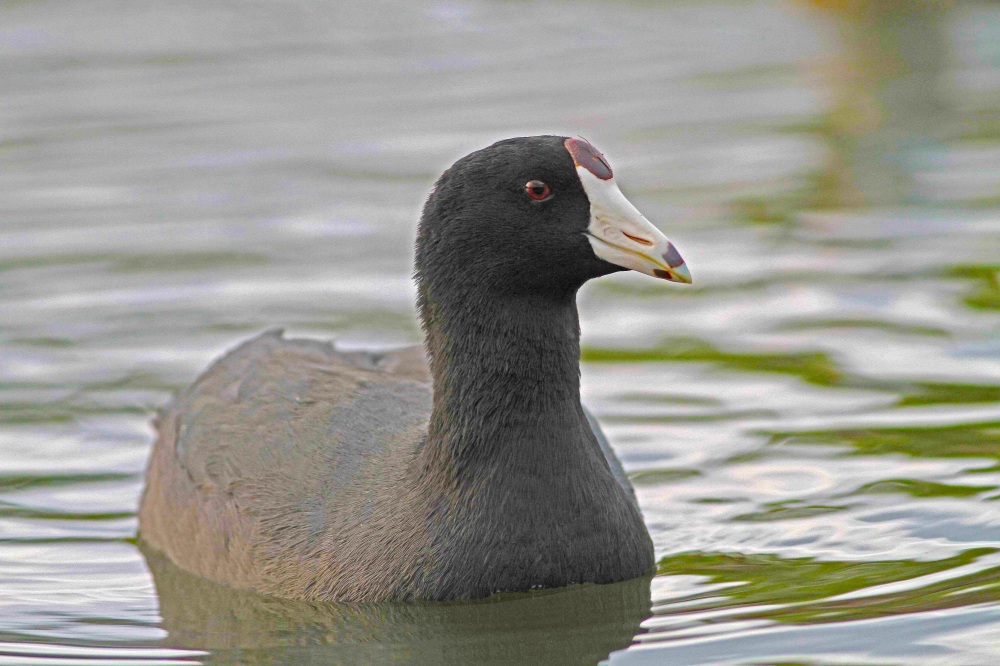
The other battle in Coot World occurred in 2016 when the endemic Caribbean Coot (formerly Fulica caribaea) was defeated by the combined forces of the American Coot (Fulica americana) and the all-powerful AOU, official arbiter of bird categorisation. They are now joined as a single species, the differences between the two types being considered insufficient to warrant separate species status. The familiar American version looks like this (note the red area on the shield above the beak):

American Coot - Bahamas - Great Abaco - Gerlinde Taurer

The ex-Caribbean Coot, has white frontal shield that extends to the top of the head. When I was compiling ‘Birds of Abaco‘ in 2013, there was already a question mark over the separate species status, with many regarding it as a sub-species of the American Coot. I wrote: There is an intriguing debate, a small book in itself, about the existence as a distinct species of the Caribbean Coot, with its white frontal shield. Many field guides include it separately, some with the rider that it is ‘unrecorded in the Bahamas’. The Bahamas Bird Records Committee does not recognise it, and Hallett, among other experts, views it simply as an American Coot variant. The image below of the two coots together is included to illustrate the visible difference between the birds. The genetic debate is fortunately outside the scope of this book”. That said, I pigheadedly went ahead and included it as a separate species anyway… 

An ex-Caribbean coot, with its white frontal shield.  Since 2016, just another coot'Caribbean' (now American' Coot - white frontal shield - Abaco, Bahamas. Woody Bracey

The research that led to the reclassification was based on the fact that breeding biology suggests that different species favour their own species for breeding. Research by Douglas McNair and Carol Cramer-Burke indicated that there is little or no ‘reproductive isolation’ of the sort to be expected in different species. The coots had no particular preference in their choice of mate. Also, they sound alike.

American Coot (Keith Salvesen)

RELATED POSTS

COOT AND GALLINULE  FEET: THE (BIG) DIFFERENCES

HOW THE MOORHEN (= GALLINULE) GOT ITS NAME

American Coot.Treasure Cay, Abaco Bahamas.Tom Sheley

Credits: Phil Lanoue (1 – 4); Gerlinde Taurer (5); Woody Bracey (6); Keith Salvesen (7); Tom Sheley (8). Research inc. eBird Caribbean – an excellent resource to check out

Unknown's avatar

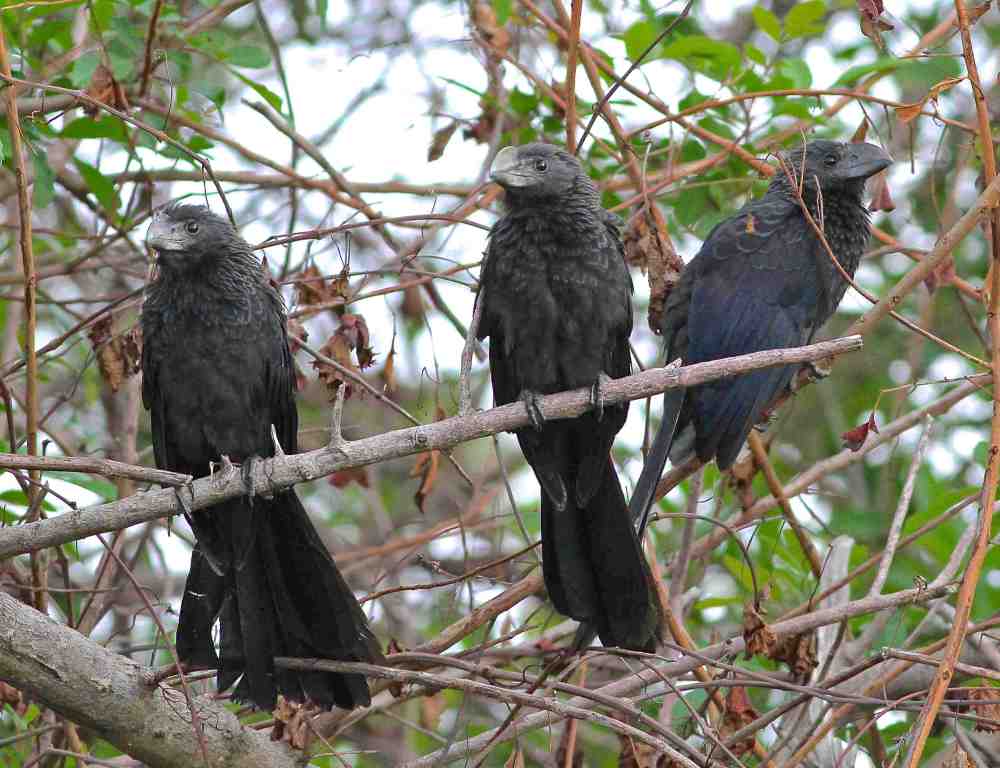
PRESENTING A LARGE BILL… ANIS ON ABACO


Smooth-billed Ani, TCGC Hole 11 - Becky Marvil

PRESENTING A LARGE BILL… ANIS ON ABACO

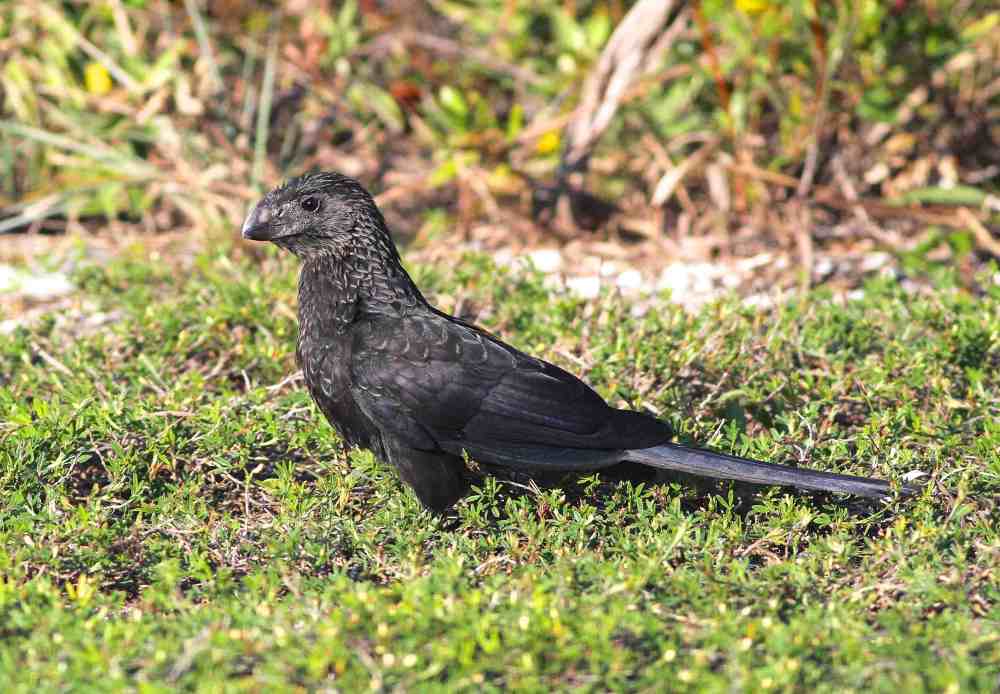
The Smooth-billed Ani (Crotophaga ani) is the third member of the cuckoo family found on Abaco, the others being the MANGROVE CUCKOOand the YELLOW-BILLED CUCKOO. Anis range from Florida and the Bahamas in the north, down through the Caribbean to South America, where they are widespread.

Smooth Billed Ani, Abaco - Nina Henry 2a

Unlike their shy and retiring cuckoo cousins, anis are extrovert shouty birds that like to hang out in noisy gangs and family groups. They can often be found in low scrub, bickering and squawking, and fluttering around. You’ll probably hear them from some way off, sounding like this:

Smooth-billed Anis_Abaco - Tony Hepburn

Anis have advanced social, parenting and chick-rearing skills. They build a communal nest for the group, and all share in egg incubation and chick-feeding duties They may raise up to three broods in a season, which keeps the numbers up. Rather touchingly, the young of earlier broods help to feed more recent chicks.

It follows from this that unlike many other cuckoo species, the ani is not a brood parasite. So the species does not lay its eggs in the nests of other, smaller birds which then unwittingly rear the interloper(s), who in turn push the legitimate hatchlings out of the nest and get all the food and attention.

Smooth-billed Anis Abaco - Gerlinde Taurer d

I have tried to discover why an ani’s beak is as it is, without much success. Very often beak shape relates directly to the feeding habits and preferences of a species, but it is hard to see how a diet consisting mainly of insects and small reptiles such as lizards would account for such a prominently protuberant proboscis. Here is a close-up of the item in question.
On Abaco (and indeed elsewhere) Anis are sometimes known as ‘Cemetery Birds’, no doubt because of their all-black appearance (though their raucous tendencies would be quite inappropriate for a graveyard). However although at a distance these birds may look completely black, catch one in the sun at the right angle, and you’ll find that the plumage is far more varied, and with some intricate patterning.

Smooth-billed Ani. Abaco Bahamas Tom Sheley

Look for Anis in low scrubland and coppice, cultivated areas, perched in unsteady noisy rows on utility lines, or foraging on the ground.

Smooth-billed Ani, Abaco. Gerlinde Taurer c

The appearance and flying abilities of Anis are wonders to behold. As I wrote in The Birds of Abaco, “Their curious heavy beaks, their clumsy flight and their untidy take-off and landing routines suggest a design fault”.

Smooth Billed Ani, Abaco - Nina Henry 1a

“One… is the loneliest number…” Oh, hang on a moment…Smooth-billed Ani Abaco - Gerlinde Taurer a

…”two of us…standing solo in the sun…”Smooth-billed Ani, Abaco (Gerlinde Taurer) b

The Philatelic Bureau of the Bahamas Postal Service is commendably committed to featuring the natural history of the Bahamas. Although probably not in the top-ten of anyone’s bird list, the ani nevertheless got its own stamp in a 1991 bird issue.

As far as I know, there is not yet a collective noun for a group of anis. There should be. Any suggestions welcome. Meanwhile I put forward A Commotion of Anis”

Smooth-biled Ani, Abaco - Bruce Hallett

Credits (all photos taken on Abaco): Becky Marvil, Nina Henry, Tony Hepburn, Gerlinde Taurer, Roselyn Pierce, Tom Sheley, Bruce Hallett, Keith Salvesen; sound files from Xeno Canto and FMNH; range map from IUCN; hat tip to the always excellent Aimee Mann.

This post is a revised, corrected and expanded version of one I wrote nearly 4 years ago.

Smooth-biled Ani, Abaco (Keith Salvesen)

Unknown's avatar

SEVEN NEW BIRD SPECIES ON ABACO


Black-bellied Whistling Duck (Keith Salvesen)

Black-bellied Whistling Duck June 2014

SEVEN NEW BIRD SPECIES ON ABACO

THE BIRDS OF ABACO was published very nearly 4 years ago. At the time, the checklist of species recorded for Abaco at the back of the book, so meticulously compiled by Tony White and Woody Bracey, was definitive for as long as records have existed (in practical terms, since 1950). The final new species included in the book was a Black-browed albatross amazingly spotted in Abaco waters from the BMMRO research vessel by a keen-eyed intern the previous summer.

Brown Thrasher (Manjith Kainickara - Wiki)

Brown Thrasher Nov 2014

Within 3 months of publication, the checklist had been rendered out of date. A totally new species had touched down on Abaco – a small flock of 6 black-bellied whistling ducks. They worked their way up South Abaco from down by Crossing Rocks up to MH Airport via Schooner Bay, Delphi and Bahama Palm Shores. By then, numbers were down to 2. Soon even they disappeared, heading presumably from wherever the flock had intended to go in the first place. Maybe they got tired en route. Maybe their internal Satnav suffered a collective failure. Maybe senior BBWD had had a bright idea for a shortcut…

Masked Booby (Duncan Wright wiki)

Masked Booby January 2015

We are not talking here of rarities in global terms, but species that have never been seen before on Abaco. Or, if seen, went unremarked. Or, if remarked, without awareness of the significance! The advent of the current enthusiasm for birding in the Bahamas plus the ease with which a quick photo can be taken – on a phone for example – as evidence of a sighting and to aid a clear ID, may well increase the number of new species sightings in the future.

Pearly-Eyed Thrasher, Treasure Cay, Abaco (Woody Bracey)

Pearly-Eyed Thrasher March 2015

There’s the added benefit from the ease with which photos can be taken and distributed – people will no longer have to do any of the following:

  • Shoot birds and take them as samples (hello, J.J. Audubon & historical cohorts)
  • Pack a sketch pad & crayons to draw birds before they fly away (or from memory)
  • Rely on scribbled notes made in low light and a light drizzle
  • Listen to, or read, a query about a “sort of brownish medium sized bird with maybe a bit of yellow on the wings, and a black tail I think, but I didn’t get a very good look and oh yes it had sort of beady eyes and sounded a bit like ‘Kalik Kalik Kalik’ “. 
Buff-breasted Sandpiper, Abaco (Keith Kemp)

Buff-breasted Sandpiper Oct 2016

Over the 4 years, there have been a few birds that, although not ‘first evers’, are second or third ever – and the first ones with supporting photos. These include the fabulous scissor-tailed flycatcher; and the bald eagle that was sighted several times over south Abaco last year. I’ll return to these rarities another time. Let’s see the sixth new bird, from late last year.

Scaly-naped pigeon (Dick Daniels / carolinabirds.org wiki)

Scaly-naped pigeon Nov 2107

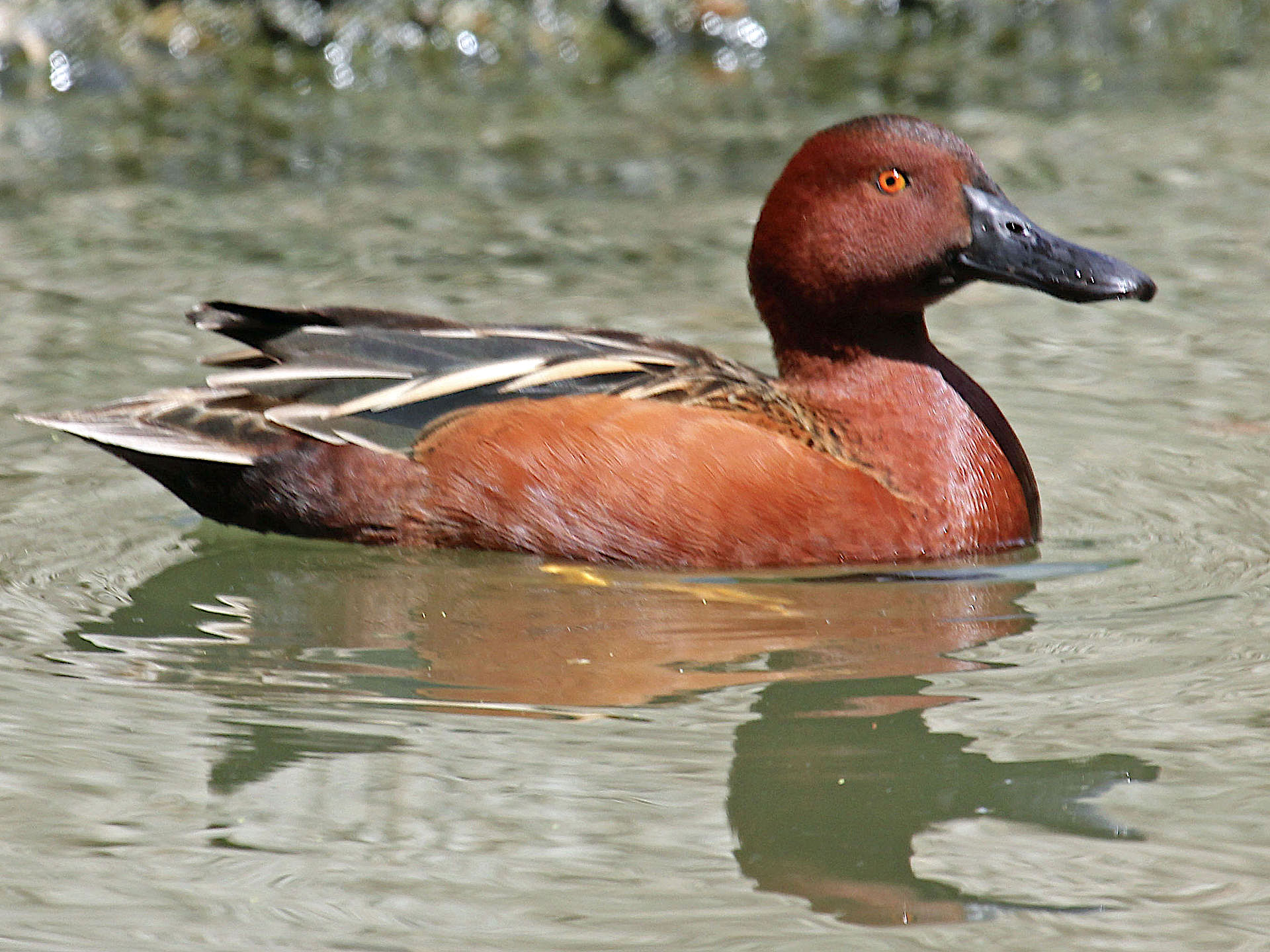
To complete the set, so to speak, 2017 ended with another gorgeous duck, the cinnamon teal. You can read more about all these birds using the following links to the relevant posts.

Cinnamon Teal (Dick Daniels / carolinabirds.org)

Cinnamon Teal Dec 2017

Credits: Keith Salvesen (1); Manjith Kainickara (2); Duncan Wright (3); Woody Bracey (4); Keith Kemp (5); Dick Daniels / carolinabirds.org / wiki (6, 7)

Unknown's avatar

BARN OWLS ON ABACO, BAHAMAS


Barn Owl, Abaco Bahamas (Woody Bracey)

Barn Owl, Abaco, Bahamas (Woody Bracey)

BARN OWLS ON ABACO, BAHAMAS

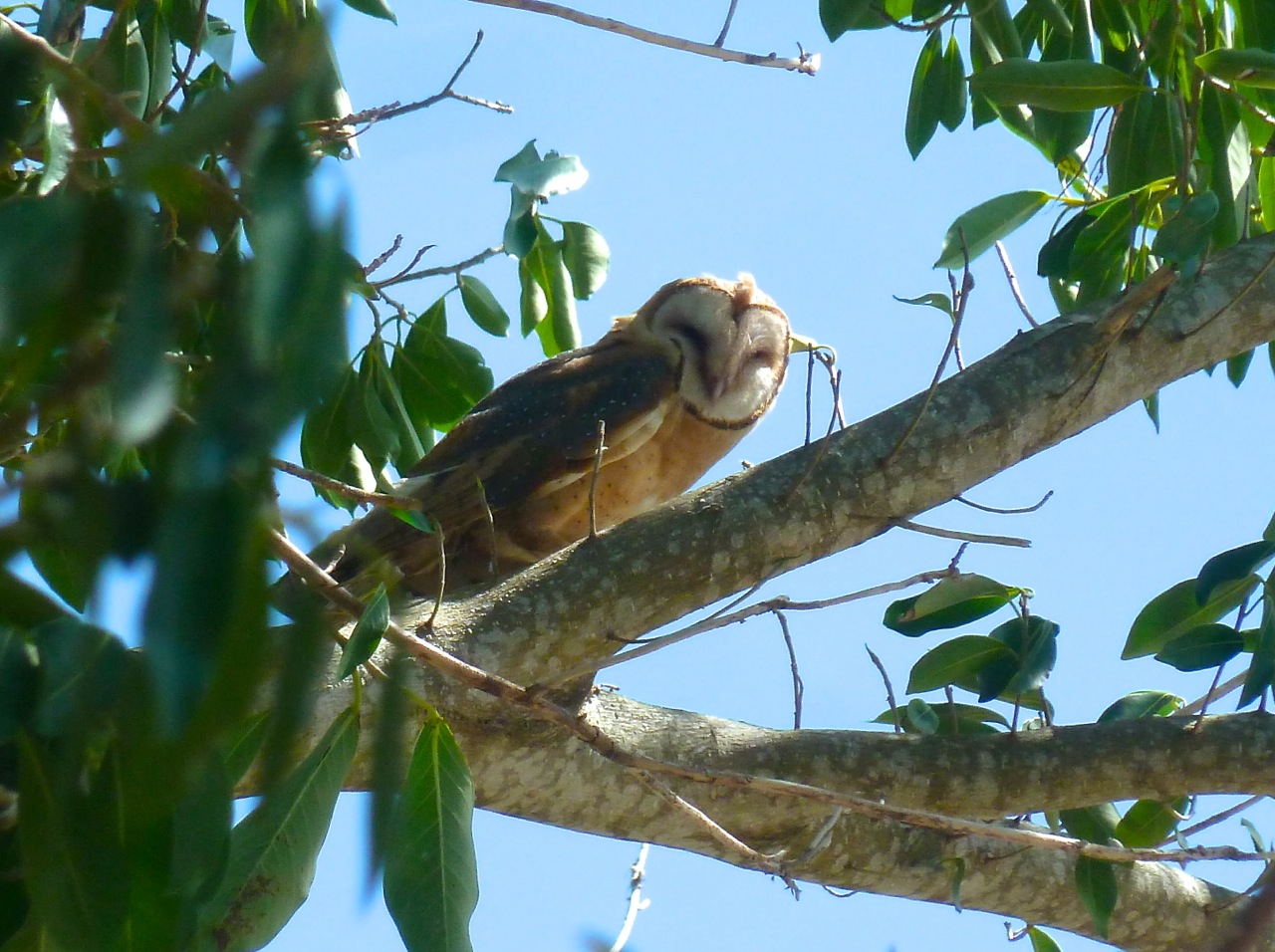
The Barn Owl (Tyto alba) is the only owl you are likely to see – and hear – on Abaco. The species is permanently resident, which is a good start in that sighting opportunities exist year-round. Although they are not at all common they can be found in particular locations, for example around Treasure Cay and Little Harbour; also on Elbow Cay, Lubbers Quarters (4 birds right now) and Man-o-War Cay (a while back). There are two other owl species recorded for Abaco: the rare Burrowing Owl (see link below for details); and the Northern Saw-whet Owl, a vanishingly rare vagrant recorded a handful of times that I don’t propose to feature unless and until it decides to visit Abaco more frequently…

Barn Owl (Birdorable)

I wrote about Barn Owls on Abaco many moons ago. I don’t usually rehash previous posts, but I am returning to the topic because of a recent barn owl sighting on Elbow Cay that caused interest, excitement and some speculation. 

Barn Owl, Treasure Cay, Abaco Bahamas (Becky Marvil)

Barn Owl, Treasure Cay, Abaco Bahamas (Becky Marvil)

The shrill wheezing cry of the Barn Owl – known in some places as the ‘screech owl’ (which, strictly, is a different owl species) – is unmistakeable. Barn owls also make an intimidating hissing noise. Mainly nocturnal, they fly noiselessly like white ghosts in the night. If you are lucky enough to see one in the daytime, you’ll be struck by the beautiful heart-shaped face and (if close enough) the delicate markings.

 Patrik Aberg Xeno-Canto

Both photos above were taken on Abaco. Woody Bracey’s header image is featured inTHE BIRDS OF ABACO“. Becky Marvil’s photo was taken near Treasure Cay. I’ve never seen a barn owl on Abaco, but  I’ve been lucky enough to get close to them in the UK. For those who have never seen one, here are a few of my own images that show what wonderful birds they are. They were photographed at a raptor rescue centre, so I am not going to pretend that these shots were taken in the wild. That would never do. 

Barn Owl (Keith Salvesen)Barn Owl Dorset (Keith Salvesen) Barn Owl Dorset (Keith Salvesen)Barn Owl 4 (Keith Salvesen)

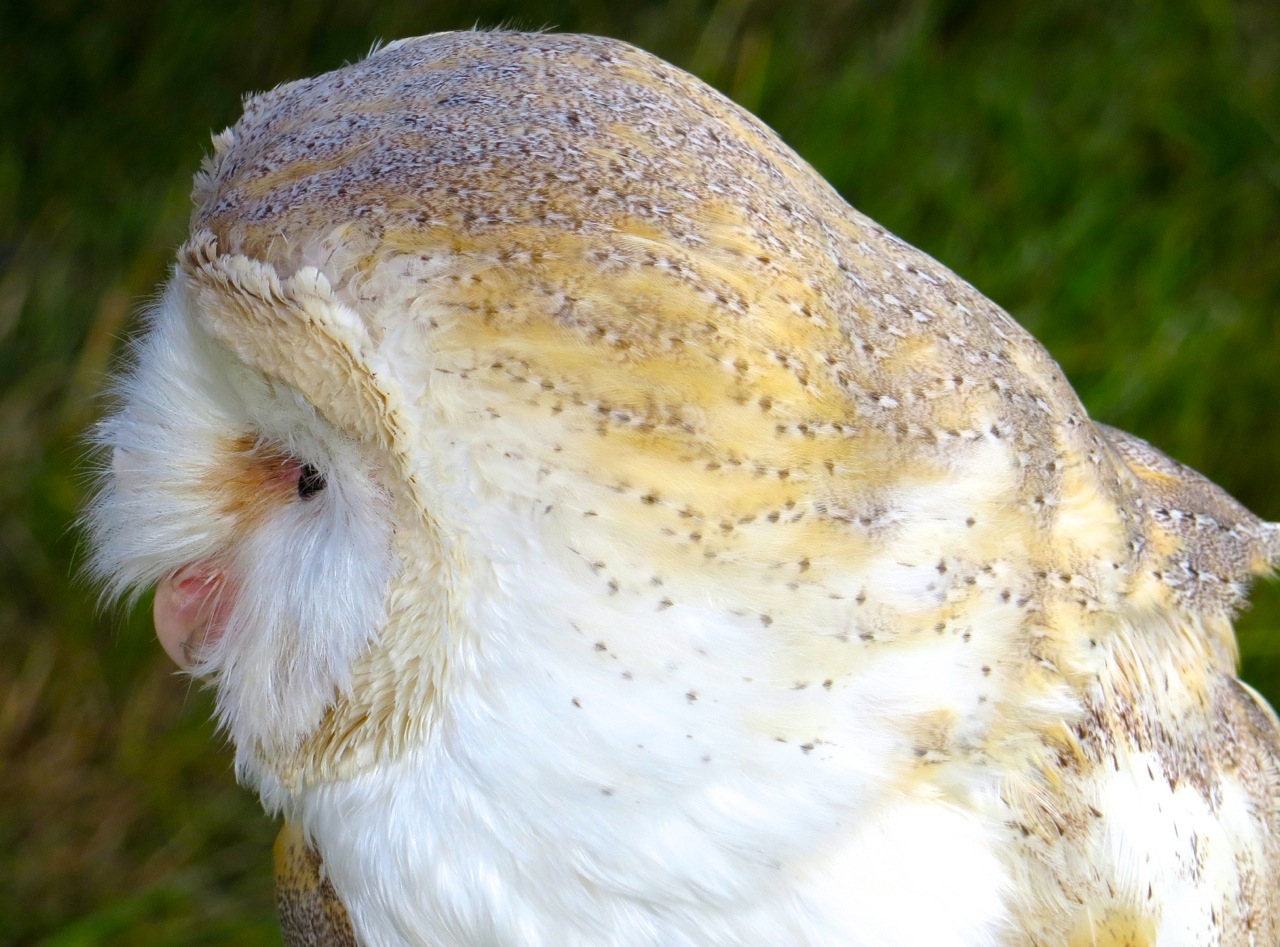
This close-up of the barn owl above shows the typical speckling on its pure white front, and the beautiful wing patterns. Amazingly for such a large bird, an adult weighs a mere 350g or so. As a comparison, The Birds of Abaco book weighs 2kg!

Barn Owl close-up (Keith Salvesen)

This fluffy baby barn owl had been rescued and was being cared for in a sanctuary before being returned to the wild. Whimsy is rarely permitted  in this blog, but seriously, folks – cuteness overload!Barn Owl 6 (Keith Salvesen)

RELATED POSTS

 OWLS OF ABACO (2) – BURROWING OWLS

BURROWING OWLS ON ELBOW CAY

Credits: Woody Bracey, Becky Marvil, Keith Salvesen, Patrik Aberg /  Xeno-Canto (audio), RSPB (video), Birdorable (Cartoon)

Unknown's avatar

TWO BOOKS: BIRDS, FISHING & DELPHI x 2


TWO BOOKS: BIRDS, FISHING & DELPHI x 2

November 1st. All Hallows, when the tricks or treats have passed, the amusing costumes are packed away for next year, and all restless souls are at peace once more. It’s a significant day for me – the first day I acknowledge the inevitability of the festive season. This, despite (or because of) the fact that Xmas shopping catalogues, charity appeals, store displays and optimistic ‘Book Your Christmas Dinner Today notices started to appear in early August… 

BOOK NEWS

The Birds of Abaco by Keith Salvesen

“THE BIRDS OF ABACO”

♦ ♦ ♦ ♦ SPECIAL OFFER ♦ ♦ ♦ ♦

We are reducing the price of the book for the time being, probably until early January. The price for each copy will now be $88 inc VAT + shipping. As always, you can arrange a drop at a convenient location in MH. To the many who have bought the book on Abaco and further afield, and been so appreciative, many thanks.

For those who haven’t come across the book but kindly follow ‘Rolling Harbour’, here is the original flyer which will give you an idea of its contents.

The Birds of Abaco by Keith Salvesen (flyer info)

Cuban Emerald, Delphi, Abaco (Keith Salvesen)

DOUBLE DELPHI

Double Delphi - jacket (Peter Mantle / KS edit)

Meanwhile, Peter Mantle’s wonderful recently published account of both his Delphis, East in Ireland and West in the Bahamas, is going down a storm. His ‘fisherman’s fantasy’ has had excellent reviews and has been featured in Trout & Salmon magazine, with other articles to come. Click the heading to find out more about the book, its cast of colourful characters, strange histories, triumphs and disasters, and most of all the fishing at each of Peter’s renowned Lodges: created from a ruin in one case; and from thick coppice in the other.

Double Delphi is for sale at $44 + shipping.

Email: delphi.bahamas@gmail.com

Direct online ordering of Peter’s book: https://wallopbooks.com/

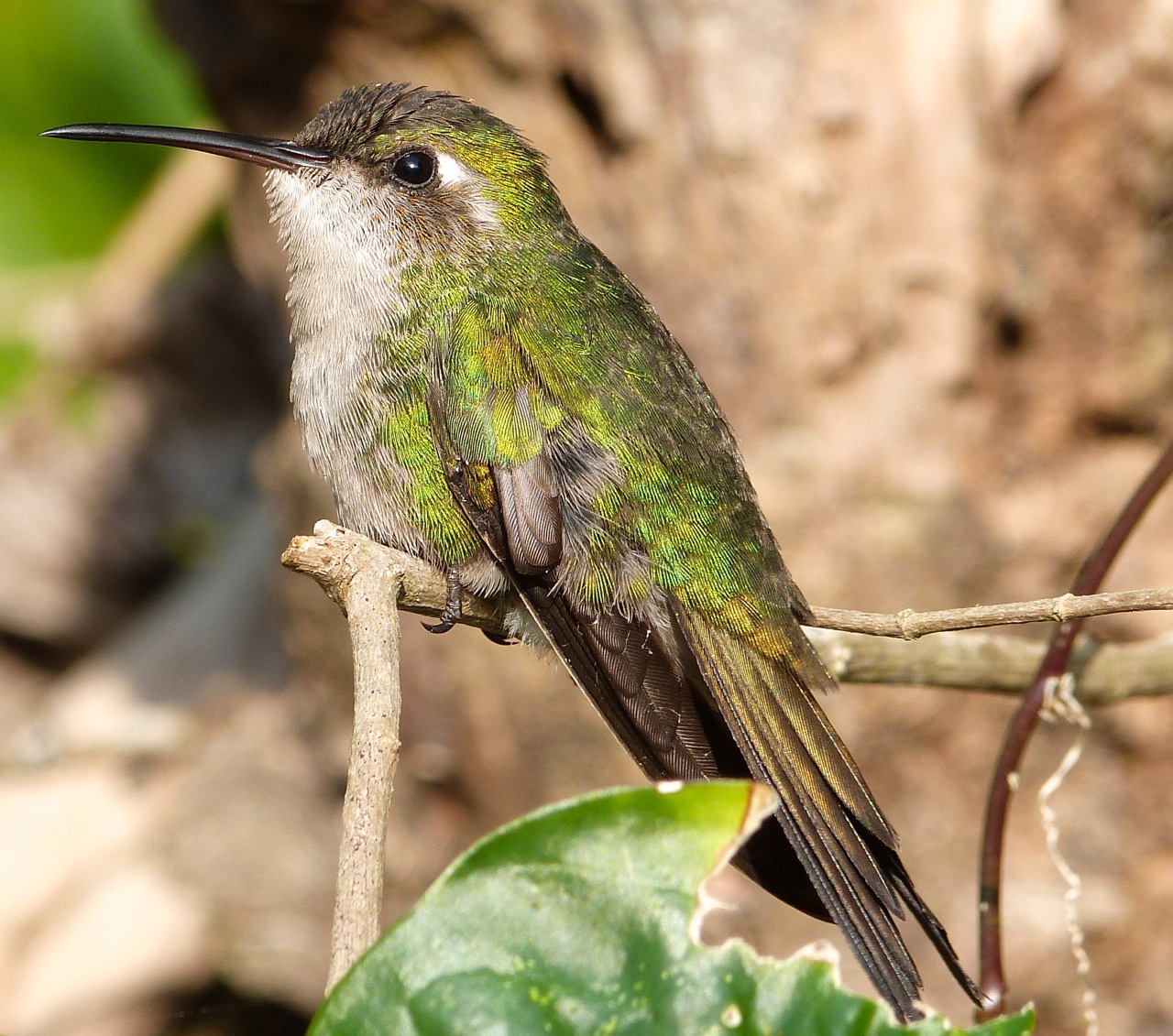
Cuban Emerald Hummingbird (f), Delphi, Abaco: Keith Salvesen

Unknown's avatar

LEAST (BUT NOT LAST) SANDPIPERS ON ABACO


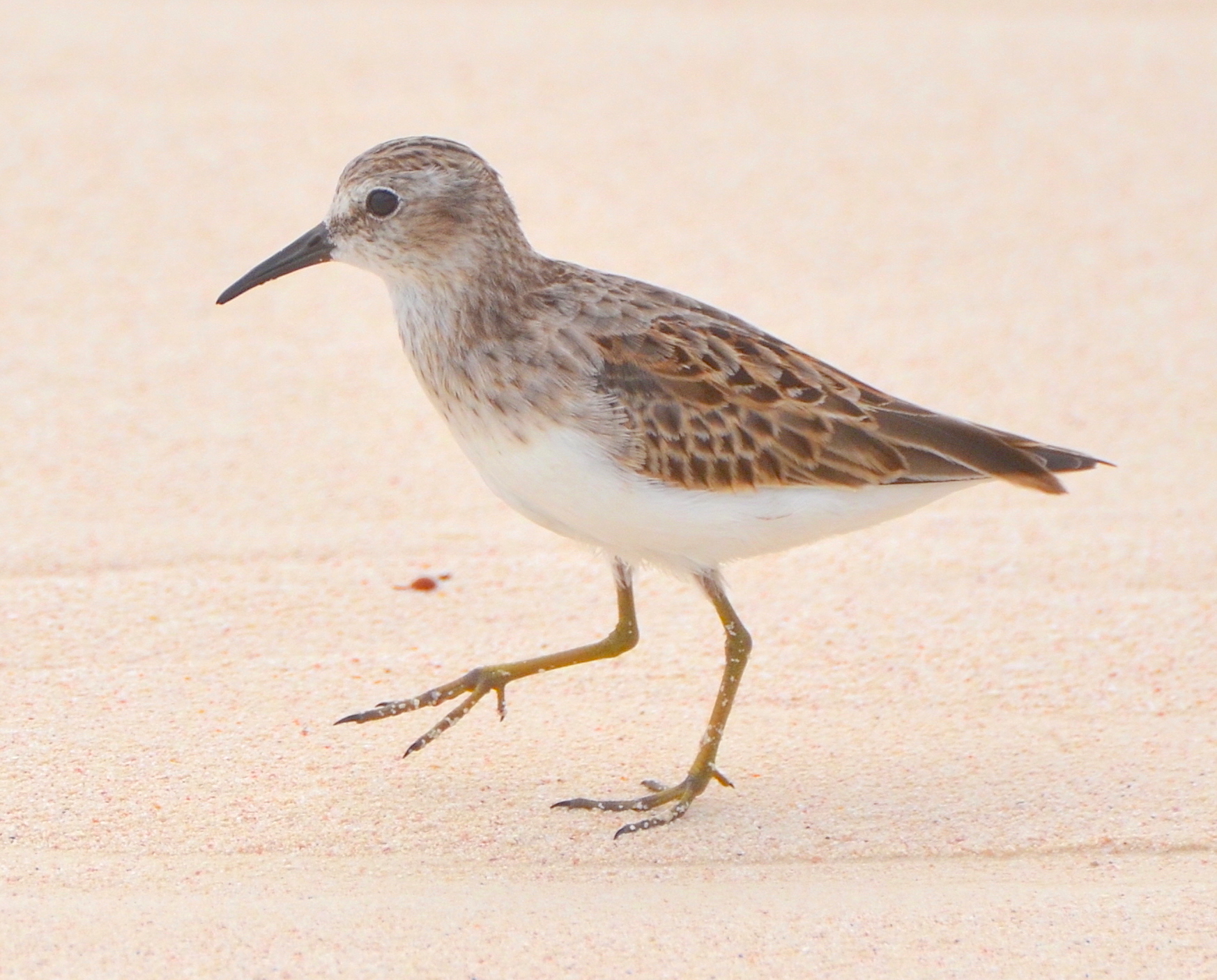
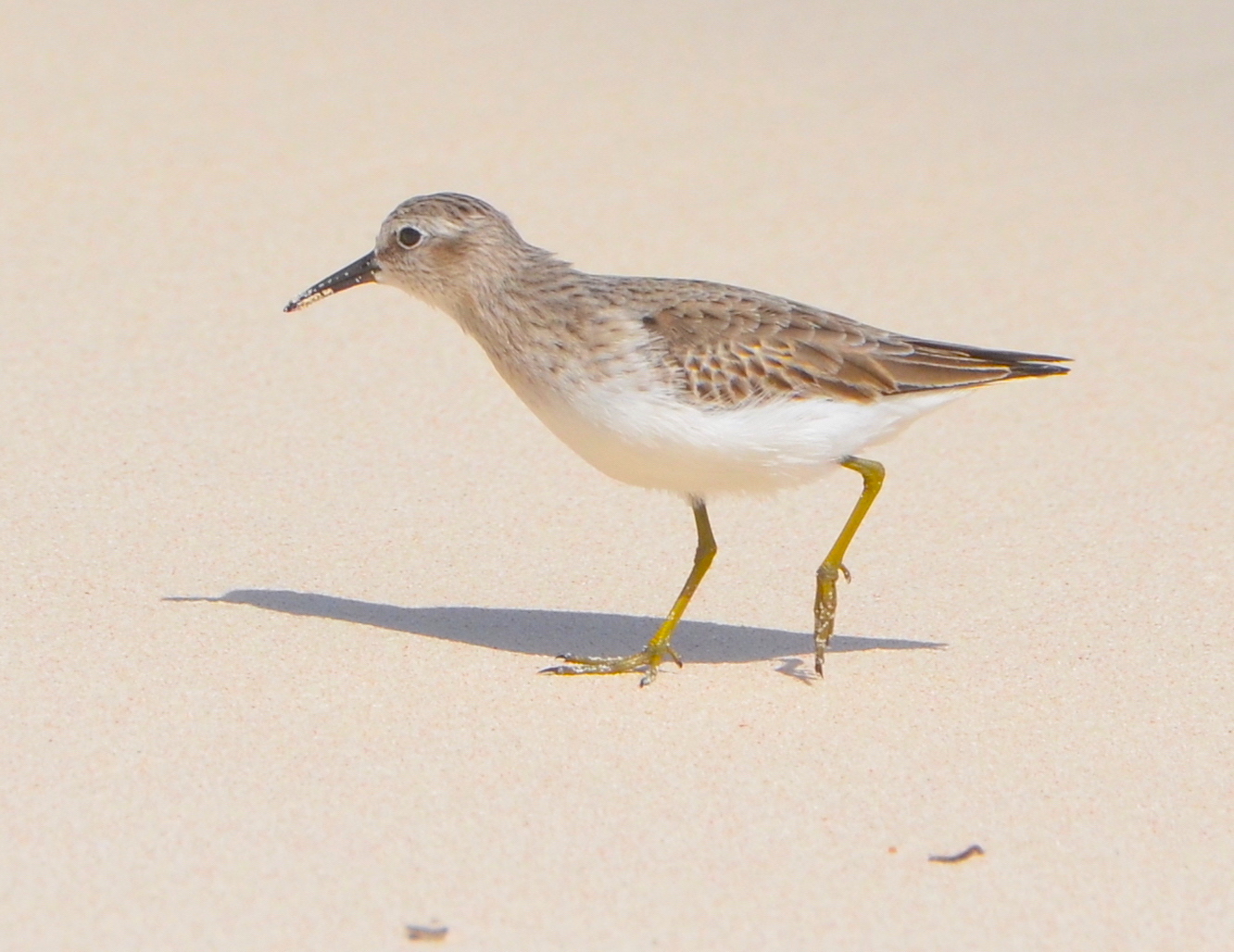
Least Sandpiper, Delphi Beach, Abaco (Charles Skinner)

LEAST (BUT NOT LAST) SANDPIPERS ON ABACO

There are 23 sandpiper species recorded for Abaco. Of those, 4 or 5 are vanishingly rare vagrants recorded once or twice in recent history (i.e. since about 1950).

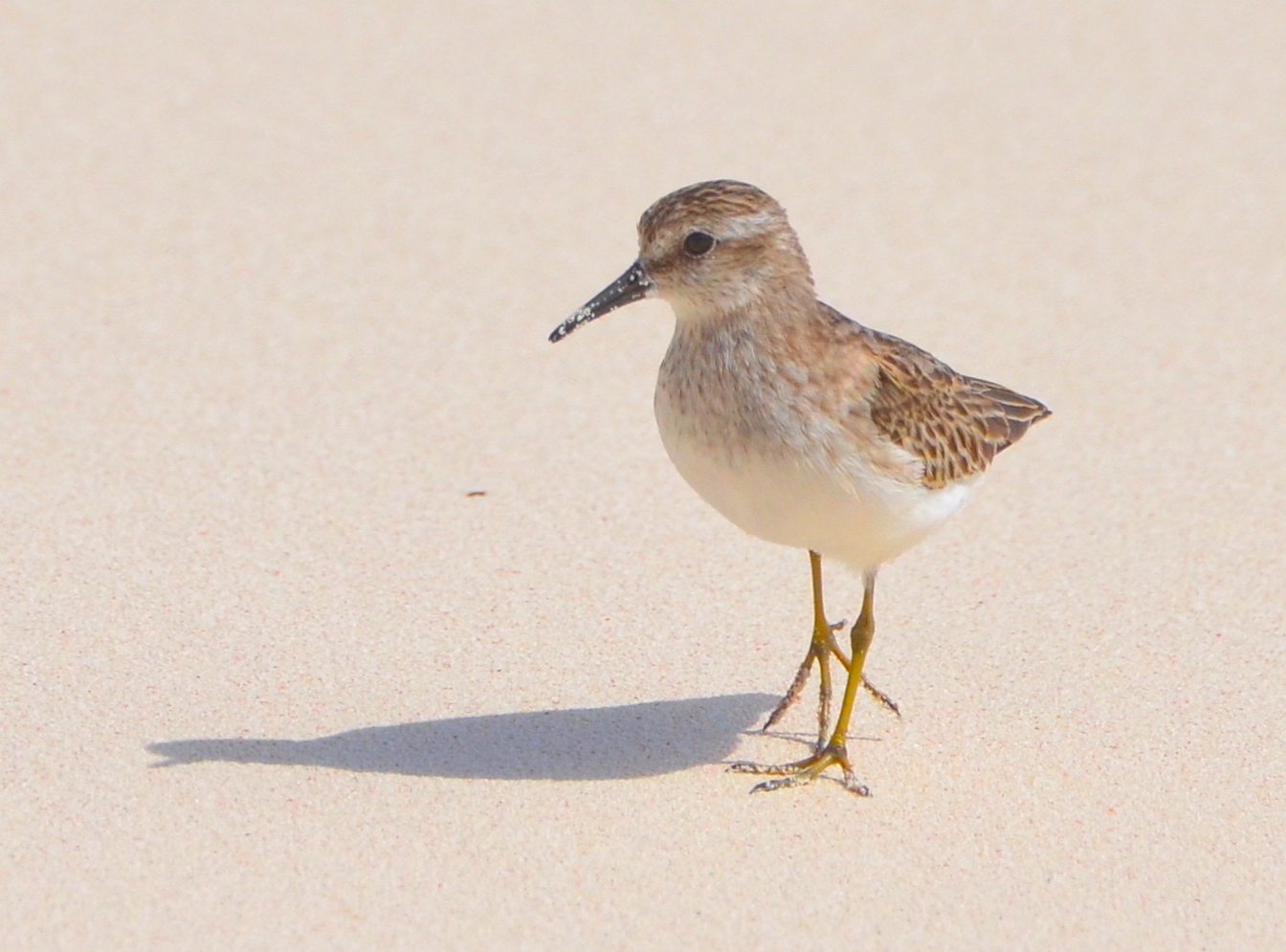
Discounting those, the ones you are likely to encounter range from the large  (whimbrel, yellowlegs, dowitchers, stilts) to the small. Or, in the case of the least sandpiper, the least big of all. They are bigly little. Least Sandpiper, Delphi Beach, Abaco (Charles Skinner)

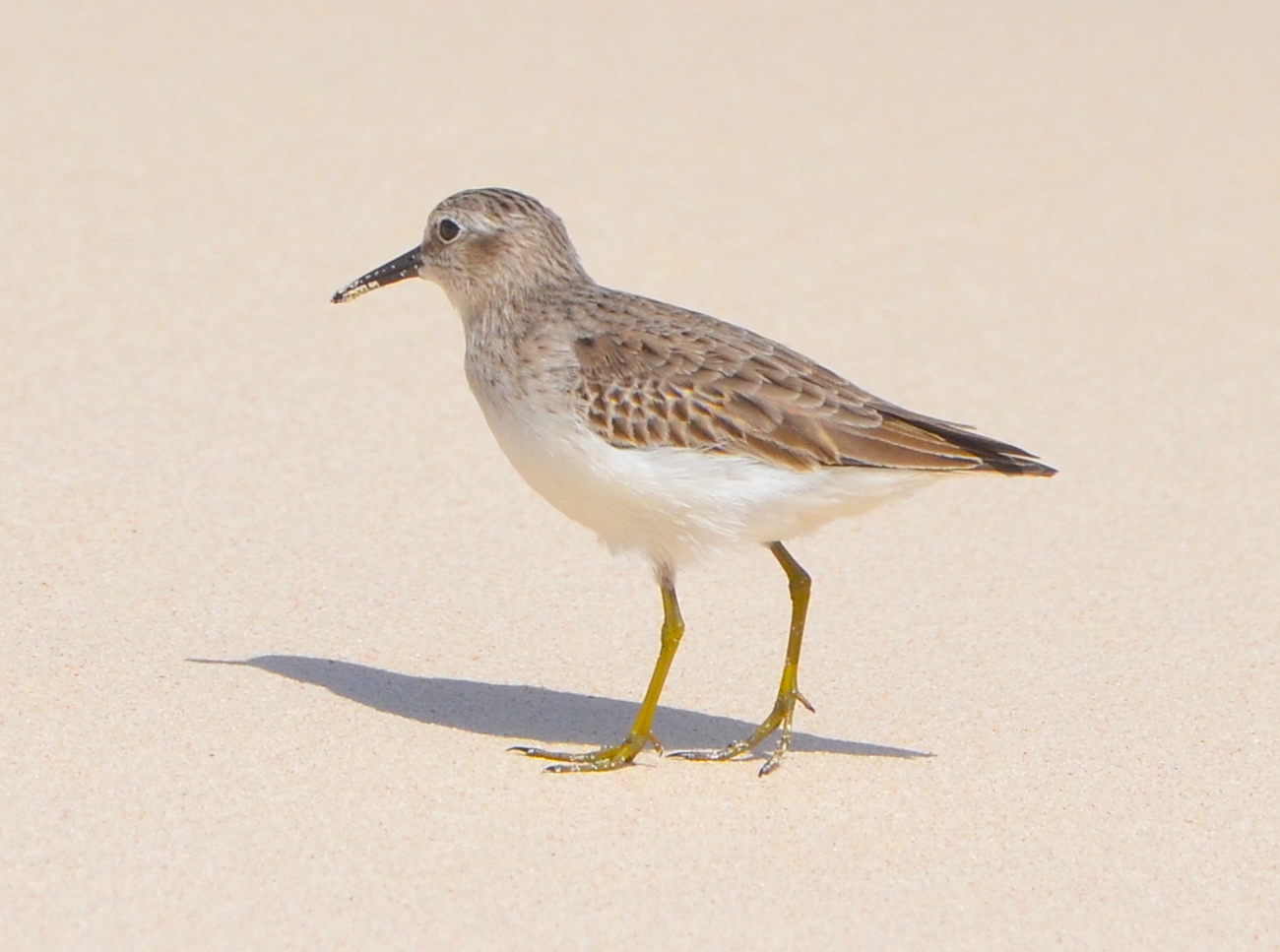
The binomial name of the least sandpiper – Calidris minutilla – is an apt clue to their size, the second part being Latin for “very small”. On Abaco, they are fairly common winter visitors, and each season a handful of them make their home on the beach at Delphi, where these photos were taken. Least Sandpiper, Delphi Beach, Abaco (Charles Skinner)

Along with their small sandpiper compadres such as SANDERLING, these busy, bustling birds of the shoreline are the ones known as “peeps” (also as stints). Least Sandpiper, Delphi Beach, Abaco (Charles Skinner)

Least Sandpipers breed in the northern tundra areas of North America. Like many or most shorebirds, newly hatched chicks are able to fend for themselves very quickly. It sounds unlikely I know, but within a couple of weeks or so they have fledged. Least Sandpiper, Delphi Beach, Abaco (Charles Skinner)

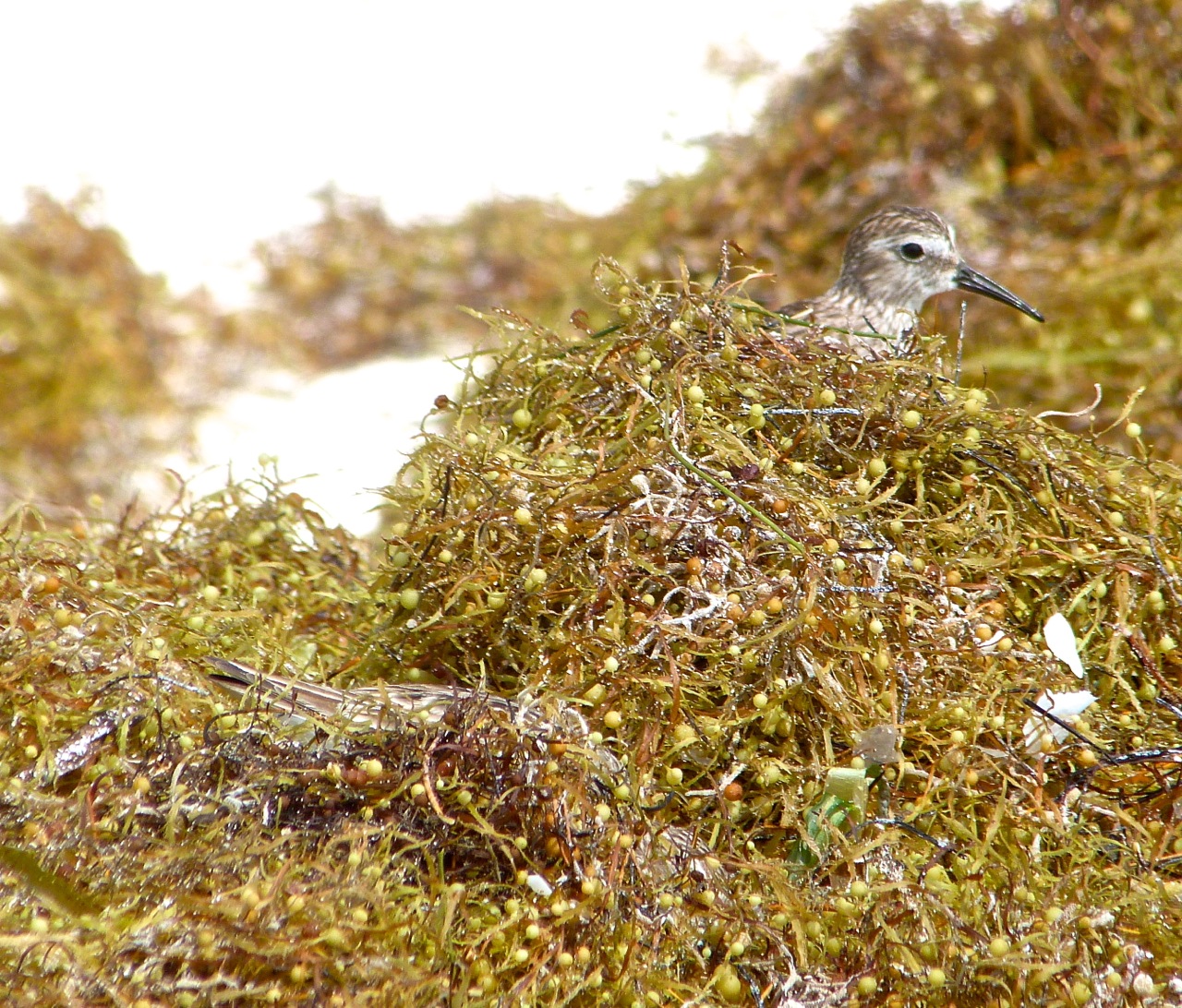
The birds forage on mudflats, in the tideline on beaches, and in wrack. They will probe into soft sand, sometimes the full length of their beak. They will even burrow right under weed to get at the concealed goodies. Their diet consists mainly of small crustaceans, insects, and snails.Least Sandpiper, Delphi Beach, Abaco (Keith Salvesen)

Credits: All photos by Charles Skinner (contributor to “The Birds of Abaco”) except the wrack-burrowers above, by Keith Salvesen (also on the Delphi Beach).

Least Sandpiper, Delphi Beach, Abaco (Charles Skinner)

Unknown's avatar

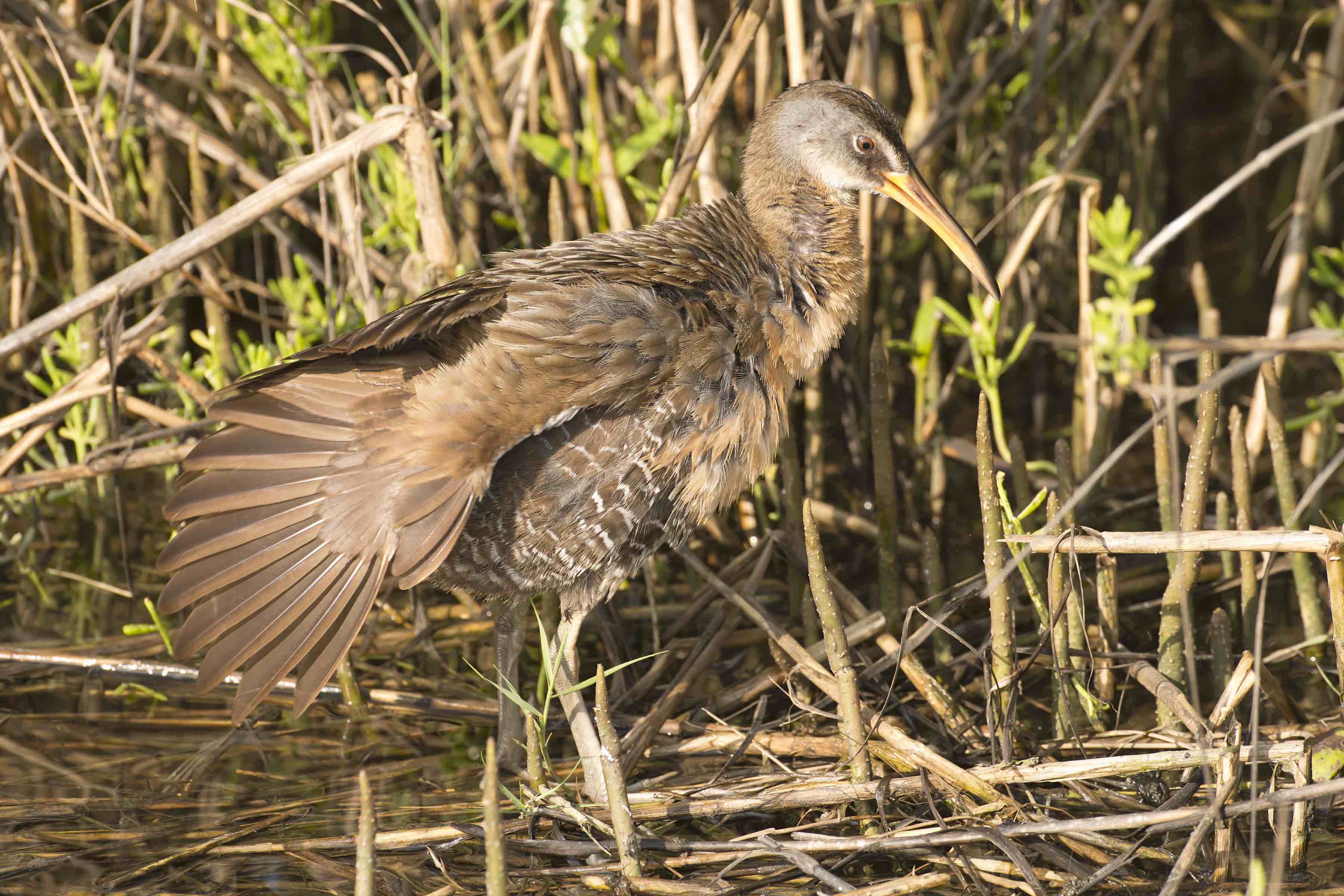
CLAPPER RAILS ON ABACO: A SMALL SHOWCASE


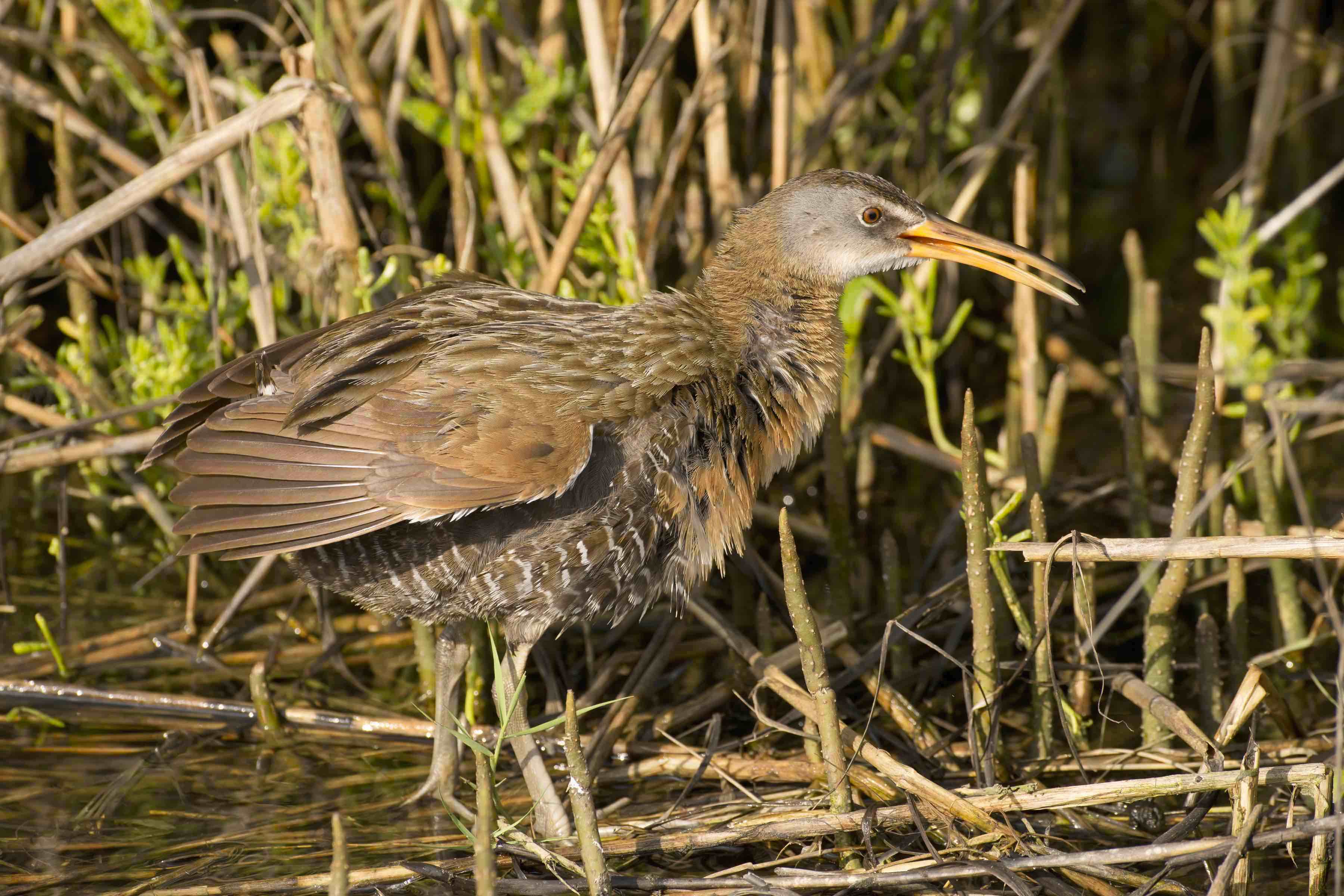
Clapper Rail, Abaco, Bahamas (Tom Sheley / Birds of Abaco)

CLAPPER RAILS ON ABACO: A SMALL SHOWCASE

Just over 3 years ago, THE BIRDS OF ABACO was published and launched at the Delphi Club. The book was intended to showcase the wonderful and varied bird life on Abaco – home to endemics, permanent residents, seasonal residents, and a wide variety of migrating transients. The book has been most generously received and supported – though I have to report that already its definitive checklist (dating from 1950) has become outdated with the recording of 6 additional species on Abaco, featured elsewhere in this blog.

Clapper Rail, Abaco, Bahamas (Tom Sheley / Birds of Abaco)

Tom Sheley was one of the main photographic contributors to the book, and I had the good fortune to coincide with one of his trips to Abaco, when he was armed with significant photographic weaponry; and to accompany him on some of his photographic day trips (not including the early morning ones, in my case). This clapper rail is one of my favourites of his photo sequences of a bird being a bird – preening, stretching, calling – in its own habitat.

Clapper Rail, Abaco, Bahamas (Tom Sheley / Birds of Abaco)

My one regret about my involvement  in producing the book (it took 16 months) and more generally in the wildlife of Abaco is that I have entirely failed to progress to sophisticated (expensive) photographic equipment capable of producing images the quality of Tom’s. Yes, I’ve moved on from compacts (ha!) to bridge cameras (Panasonic Lumix + lens extender), and some results ‘make the cut’. But my move up to a Canon SLR was mainly disastrous, and when eventually I inadvertently drowned it (I overbalanced while photographing shorebirds from breaking waves. Total immersion. Total stupidity.) I felt an unexpected sense of relief. A blessing really – I never understood it, nor in my heart of hearts (if I’m honest) really wanted to… But my feeble struggle made me realise and appreciate the enormous skill of those like Tom who take ‘National Geographic’ quality photographs. It’s not just the equipment – it’s knowing exactly how to use it, and often in a split second…

Clapper Rail, Abaco, Bahamas (Tom Sheley / Birds of Abaco)

Photos by Tom Sheley – with thanks for the adventures

Unknown's avatar

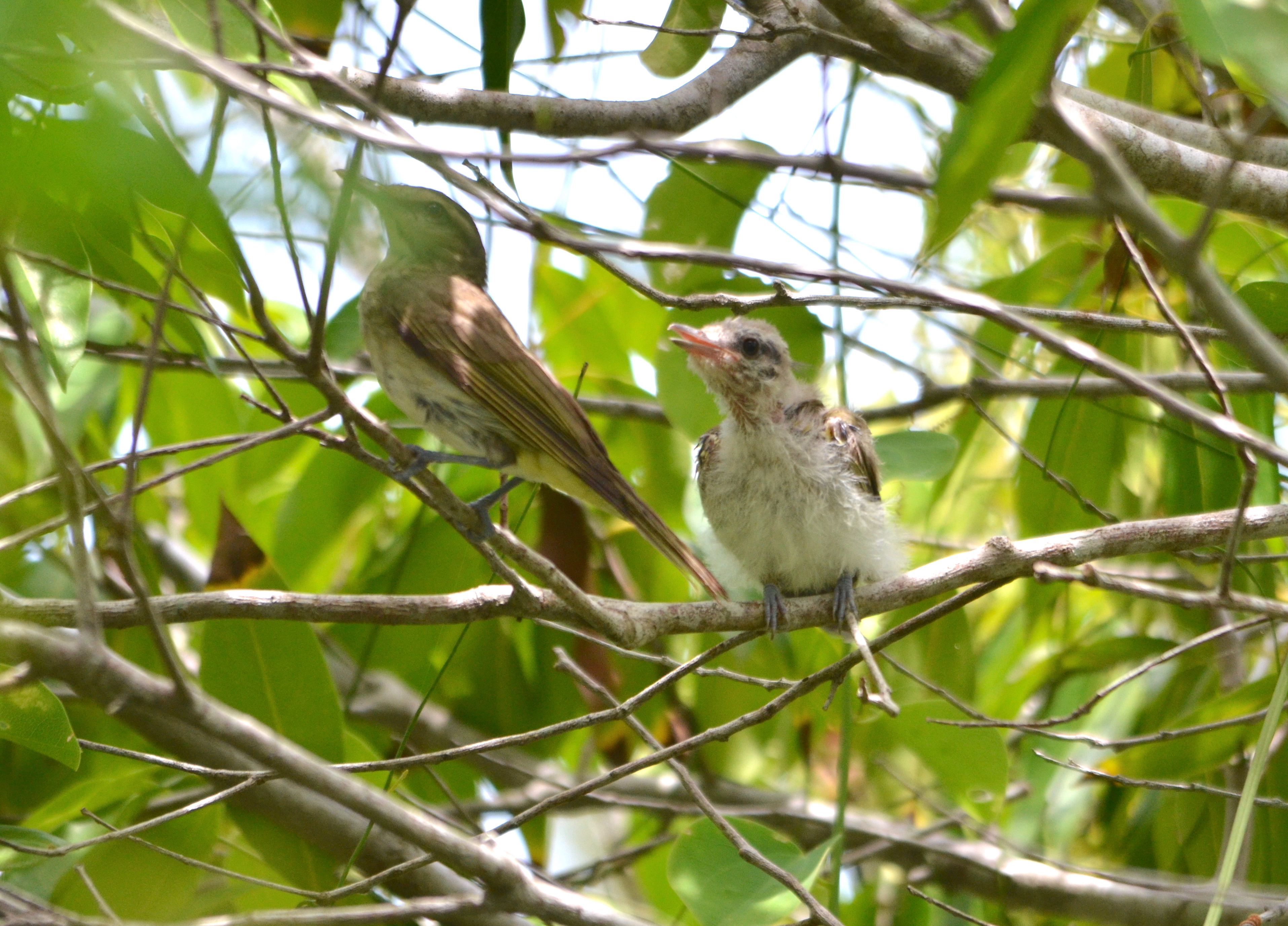
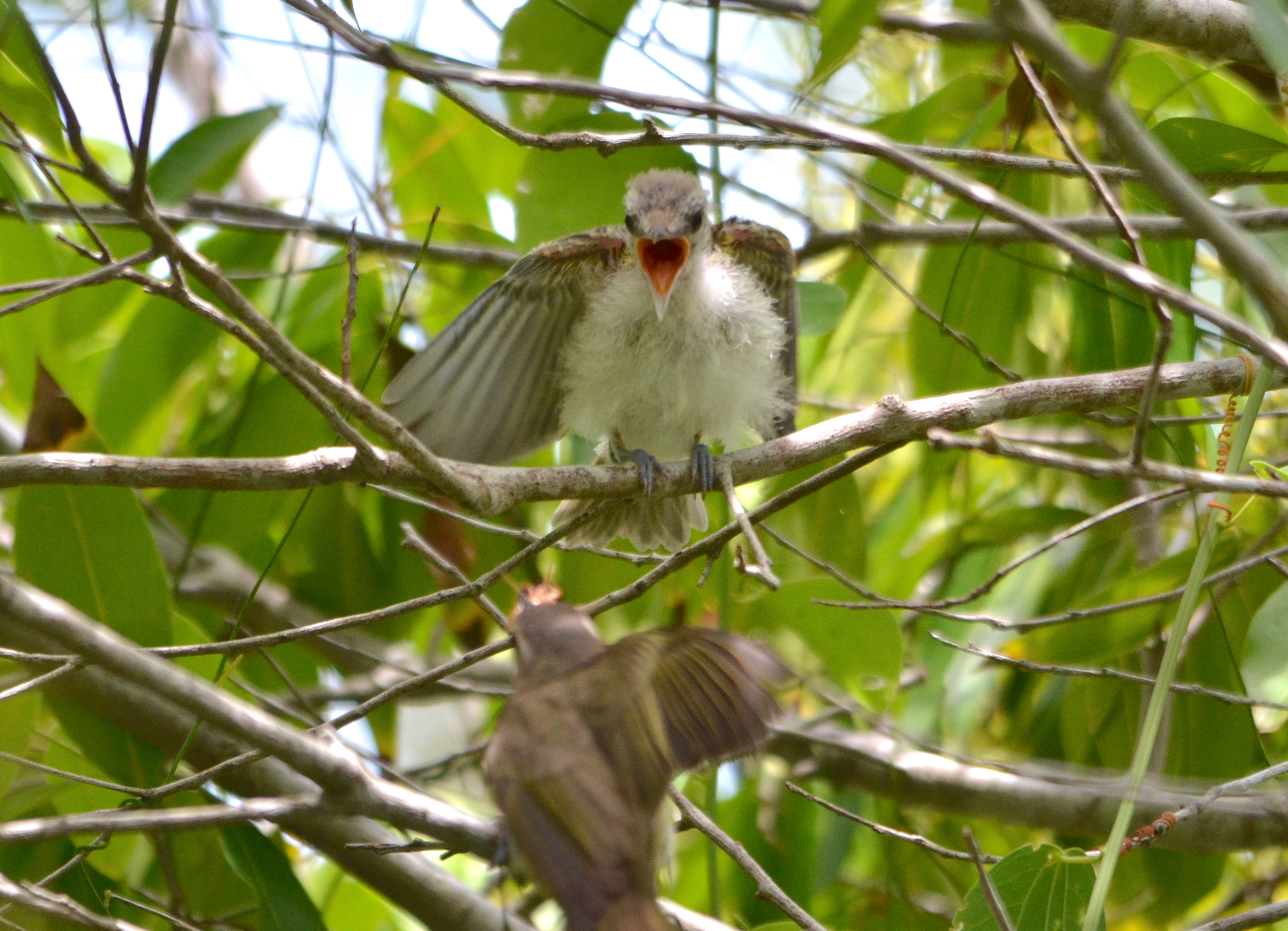
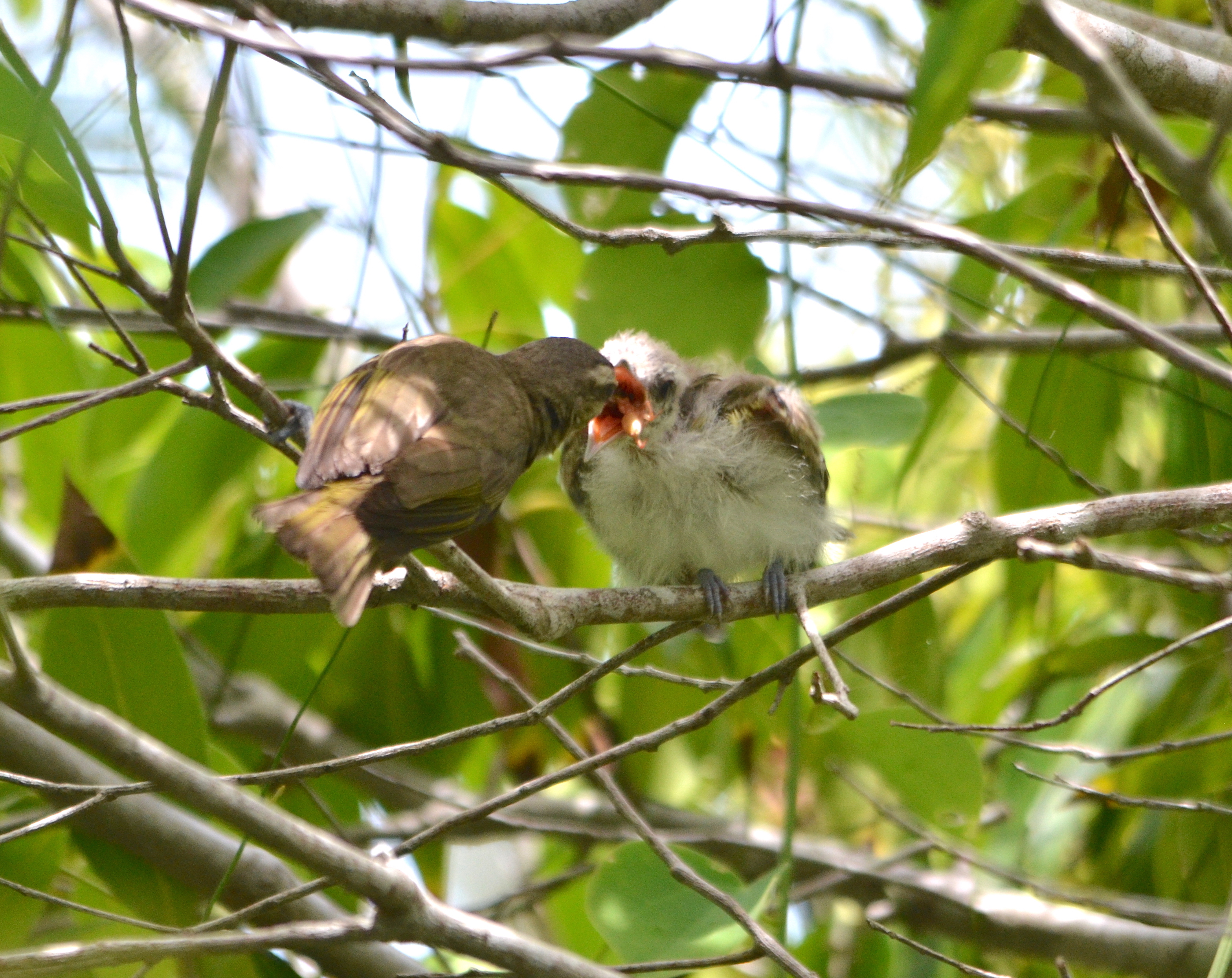
VORACIOUS VIREOS: A TALE OF GREED ON ABACO


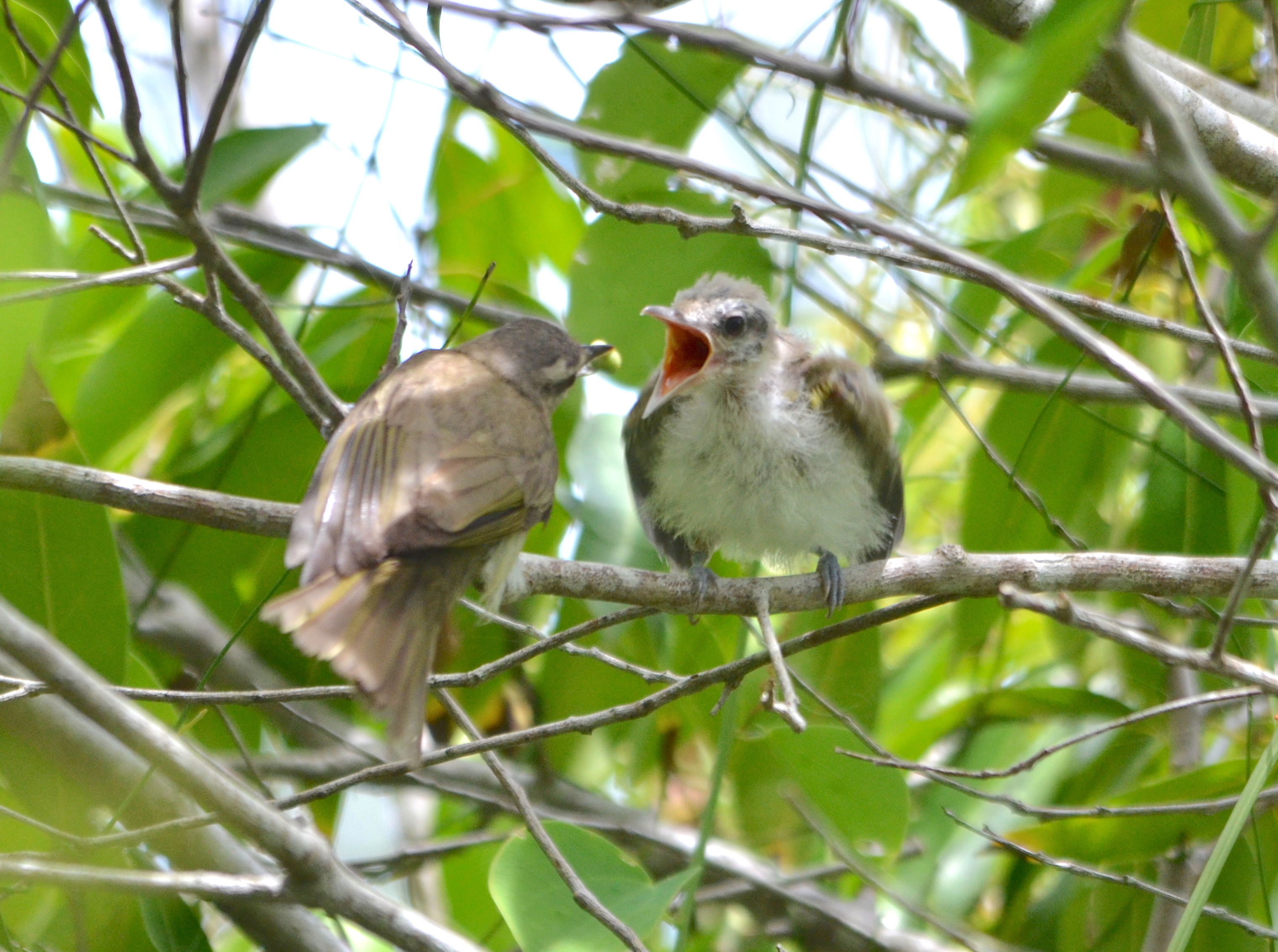
Black-whiskered Vireo (juvenile), Abaco (Charles Skinner)

VORACIOUS VIREOS: A TALE OF GREED ON ABACO

Lo, the tiny fluffy BLACK-WHISKERED VIREO fledgling, so innocent and coming close to aborbs (but for being frankly a little unkempt). Yet few would guess that beneath that delightfully virtuous exterior rages the appetite of a  MONSTER

Excuse me, I’m getting a little peckish…Black-whiskered Vireo (juvenile), Abaco (Charles Skinner)

That’s fine, son, I’ll go and get you a little snack…

Whaaaaa… Hungreeeee…Black-whiskered Vireo (juvenile), Abaco (Charles Skinner)

Whaaaaa…. want MORE…

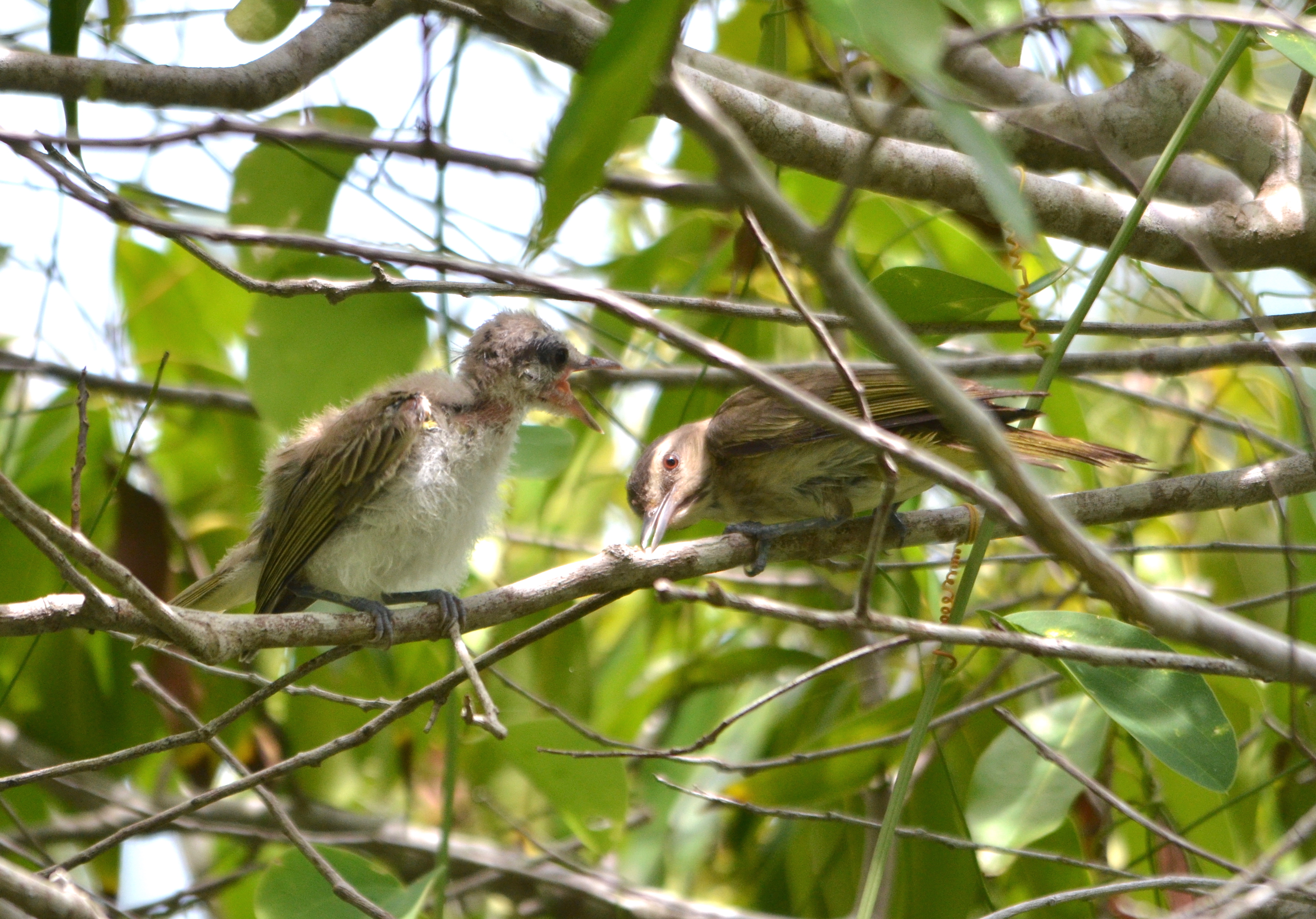
Black-whiskered Vireo (juvenile), Abaco (Charles Skinner)Black-whiskered Vireo (juvenile), Abaco (Charles Skinner)

And more…

And another one… keep ’em coming

Whaaaaa… more…               NO, son, you’ve had quite enough for one meal…Black-whiskered Vireo (juvenile), Abaco (Charles Skinner)

This one’s ALL for me…

All great photos by Charles Skinner, who must have had a fun time watching the entertainment. Although we intentionally featured very few juveniles in THE BIRDS OF ABACO, one of these shots insisted on being included…

Unknown's avatar

SCOOP! BLACK SKIMMERS FOUND ON ABACO


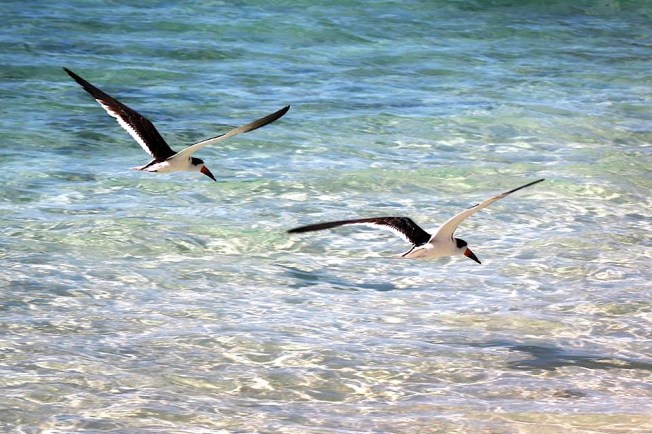
Black Skimmers in flight (Terry Foote, wiki)

SCOOP! BLACK SKIMMERS FOUND ON ABACO


I have been waiting soooooo long for photos of black skimmers (Rynchops niger) taken on Abaco. When we were putting together “The Birds of Abaco”, I had just one skimmer image – a bird standing self-consciously on a jetty facing the camera, a shot into difficult light with a low-res unusable picture resulting. I never collected another qualifer (‘Abaco birds only, natural surroundings, no feed trails’). So sadly they don’t feature in the book.

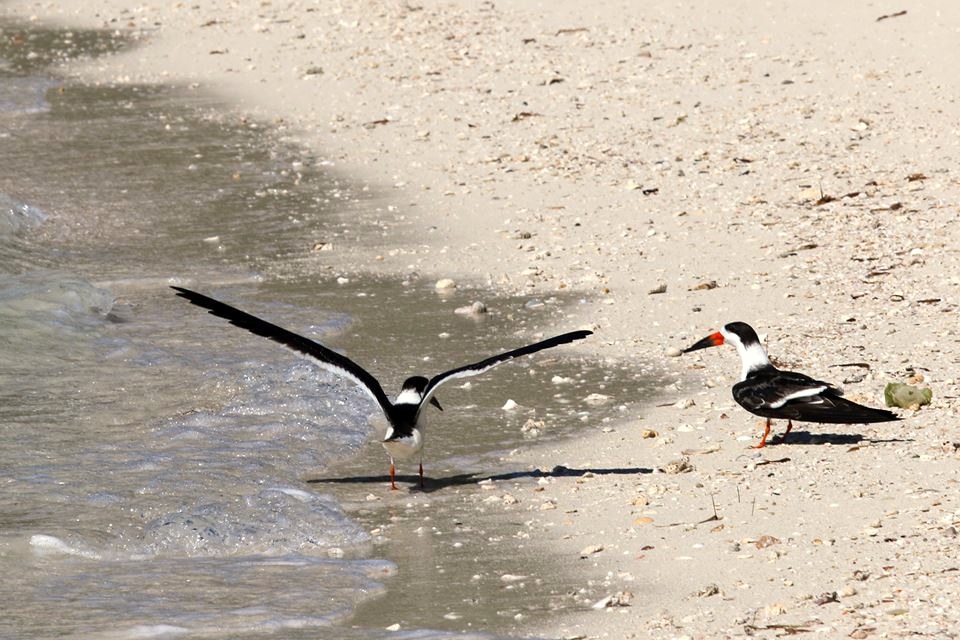
Black Skimmer, Abaco Bahamas (Charmaine Albury)

These rather special seabirds breed in North America. Very sensibly (and like many humans), they migrate south to overwinter in warmer climes, including the Caribbean. But in the northern Bahamas sightings are very rare. Or maybe I should say, reports of them are rare, and photos the more so. They are classified as WR4, very uncommon winter residents.

Black Skimmers, Abaco, Bahamas (Charmaine Albury)

But now the Rolling Harbour duck is broken (so to speak). Two skimmers were spotted yesterday by Man-o-War Cay resident Charmaine Albury, a keen birder and photographer. Her images of this chance sighting as the pair flew gracefully past to land on the beach show enviably quick reactions with the camera! We have a Big Scoop here. Two of them.

Black Skimmer, Abaco Bahamas (Charmaine Albury)

 WHAT’S SO SPECIAL ABOUT THEM?

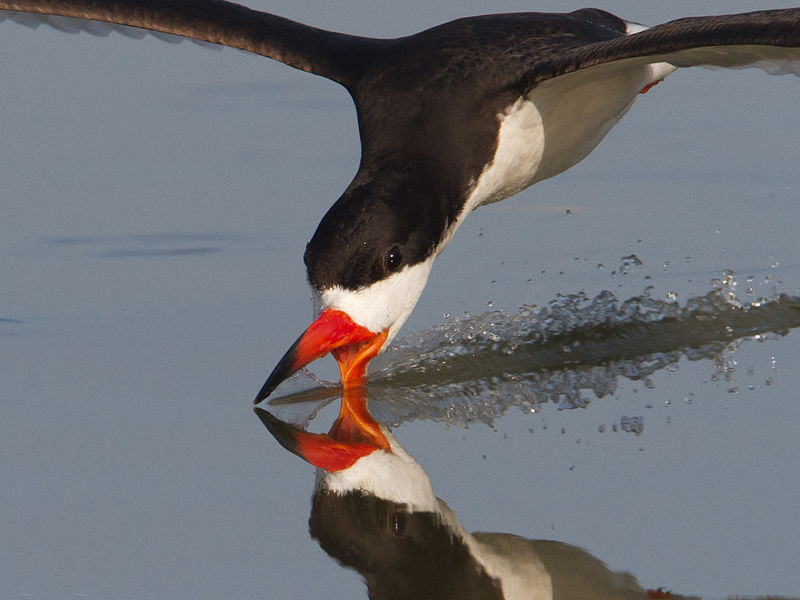
  1. EYES These birds have dark brown eyes. So far, so what. But their pupils are unique in birdland: they aren’t round, but vertical – like a cat. As far as I can make out, this is to maximise the fish-catching potential of their other speciality feature…
  2. BILL Take a look at this close-up of a great photo by Don Faulkner. Check out that unmistakeable bill, with the extraordinary elongated lower mandible. 

black-skimmer-close-up-don-faulkner-wiki

HOW DOES THAT HELP?

When hunting for food, skimmers fly fast and very close to the surface of the sea. The long thin lower mandible cuts through the water … and when it comes into contact with its prey, the bird snaps shut the upper mandible onto it. 

OK, SHOW ME!

Black Skimmer skimming water for prey (Dan Pancamo wiki)

NOT ENOUGH. I WANT TO ACTUALLY WATCH THEM DO IT…

This short video by EstuaryLiveTV shows skimmers feeding in real time, then in slow motion in an estuary. They are looking for fish, crusteaceans and molluscs. It explains all.

Black Skimmer, Abaco Bahamas (Charmaine Albury)

Credits: Terry Foote (1); Charmaine Albury (2, 3, 4, 7); Don Faulkner (5); Dan Pancamo (6); EstuaryLiveTV (video).

Unknown's avatar

BAHAMA WOODSTARS: JEWELS IN ABACO’S CROWN


Bahama Woodstar Hummingbird, Abaco (Bruce Hallett)

BAHAMA WOODSTARS: JEWELS IN ABACO’S CROWN

Abaco is spoilt for birds. What other island in the word has its very own population of ground-nesting parrots? (Clue: none). How many others provide a secluded winter home for the rare Kirtland’s Warbler? Or a safe habitat for piping plovers – more than 300 individual birds recorded last year, nearly 4% of the total population? Or host 32 warbler species in the winter to supplement the 5 resident species? Or record a visit from a black-browed albatross? Or enjoy 4 out of 5 of the Bahamian endemic species (no longer the Bahama Oriole sadly, now confined to specific areas of Andros). 

Bahama Woodstar Hummingbird, Abaco (Bruce Hallett)

A while back I held a poll for Abaco’s favourite bird, with about 10 contenders. Some were quick to point out that their own personal favourite was not an option, but I had to take a fairly broad brush approach. On the podium, gold went to the Bahama Woodstar; silver to the parrot; and bronze to the western spindalis. I’m in a genial mood today, having caught a fair-sized wild brown trout on my third (part) day of stalking it (over 2 weeks), on the smallest fly in my box (size 18). I put it straight back of course. Respect! So in a spirit of cordiality, here are some epic shots of Abaco’s democratically elected favourite bird… at least according to the poll.

BIRD POLL FV2

The two images above were taken by the legendary Bruce Hallett, author of the go-to field guide for the Bahamas, which no birder should be without. Many of his wonderful photos  appear in THE BIRDS OF ABACO, and he was a steady guiding hand during the preparation of the book. 

This brilliant photo of a female woodstar was taken by Tara Lavallee of Bahama Palm Shores, and for composition, clarity, colour and sheer charm it was a must for inclusion in the book.

Bahama Woodstar, Abaco (Tara Lavallee)

Another major photographic contributor was Tom Sheley. I had the pleasure of spending time on Abaco with Tom during expeditions deep into backcountry to find and photograph birds. He had two cameras, one with a long lens. The other had a very long lens. The results he obtained – showcased in the book – were outstanding. His woodstar graces the front cover.

Bahama Woodstar male, Abaco, Bahamas (Tom Sheley)Bahama Woodstar male, Abaco, Bahamas (Tom Sheley)

Tom also took a delicate little study of a female woodstar feeding, one of my favourite photosBahama Woodstar female, Abaco, Bahamas (Tom Sheley)

Credits: Bruce Hallett, Tara Lavallee, Tom Sheley


Unknown's avatar

TONY WHITE: CHAMPION OF BAHAMAS BIRDS


Tony White, Birds of Abaco launch, Delphi Club 3

Tony White, Keith Salvesen, Bruce Hallett & Woody Bracey

TONY WHITE: CHAMPION OF BAHAMAS BIRDS

Tony White passed away 2 days ago. The sad news has spread rapidly through the birding community and far beyond it. It is not my place to write a detailed appreciation of Tony’s life and achievements; others who have been his long-term friends, associates and birding companions are in a far better position to do so than I. However, I do have direct experience of Tony’s kindness, enthusiasm and pragmatism in connection with the compilation of The Delphi Club Book of the BIRDS OF ABACO

Tony with Caroline Stahala Walker, erstwhile parrot supremo of AbacoTony White with Caroline Stahala

It took 16 months or so from the initial idea of the project to the finished 30-contributor book and a launch party at the Delphi Club in March 2014. During that time I had amazing support from the birding elite of the Bahamas. The proposed book might well have been treated as misconceived fantasy by amateur hicks from out of town. Instead, we received nothing but courtesy, kindness, cooperation, and a willingness that the project should succeed.

Tony with Bruce Hallett (author of Birds of the Bahamas and TCI)Tony White, Birds of Abaco launch, Delphi Club 1

Tony was one of the invaluable experts on whom I knew I could rely. His emails were invariably cordial, helpful and to the point. When I asked if he would undertake a complete revision of the checklist for Abaco that appears in his indispensable book for Bahamas birders (see link below), he agreed without hesitation. In due course, and in conjunction with Woody Bracey, a new checklist for all birds recorded for Abaco – however rare – from 1950 until the day of publication was completed.

Tony in the field (Lynne Gape, BNT)Tony White in the filed (Lynne Gape)

When the book was launched Tony was there of course, his startlingly blue eyes bright with excitement. His friends Bruce Hallett and Woody Bracey, without whose help the book would never have been the avian showcase that it is, were also present. The contributions of all three were indispensable .

Tony after a Grand Bahama bird count (Erika Gates)Tony White

I have included some photos of Tony as we would all like to remember him, with thanks to Lynn Gape of the Bahamas National Trust and to Erika Gates, Grand Bahama.

Tony White, Bruce Hallett & Woody Bracey at “Birds of Abaco” launch; author aka RH (seated)Tony White, Birds of Abaco launch, Delphi Club V2

51KAMPYWDEL._SX323_BO1,204,203,200_

To read my original review of Tony’s magisterial book click HERE

To see Tony and Woody’s complete Abaco bird checklist, up to date as at March 2014, click CHECKLIST FV 06 table sun2 Since then, 5 new species have been recorded on Abaco.

RH 3 June 2016

Unknown's avatar

“AN OSTENTATION OF PEACOCKS”: FERAL BIRDS ON ABACO


Peahen, %22Different of Abaco%22 2 (Rhonda Pearce)

“AN OSTENTATION OF PEACOCKS”: FERAL BIRDS ON ABACO

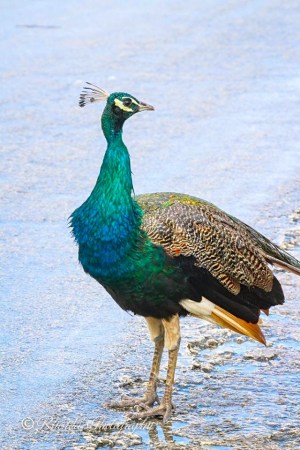
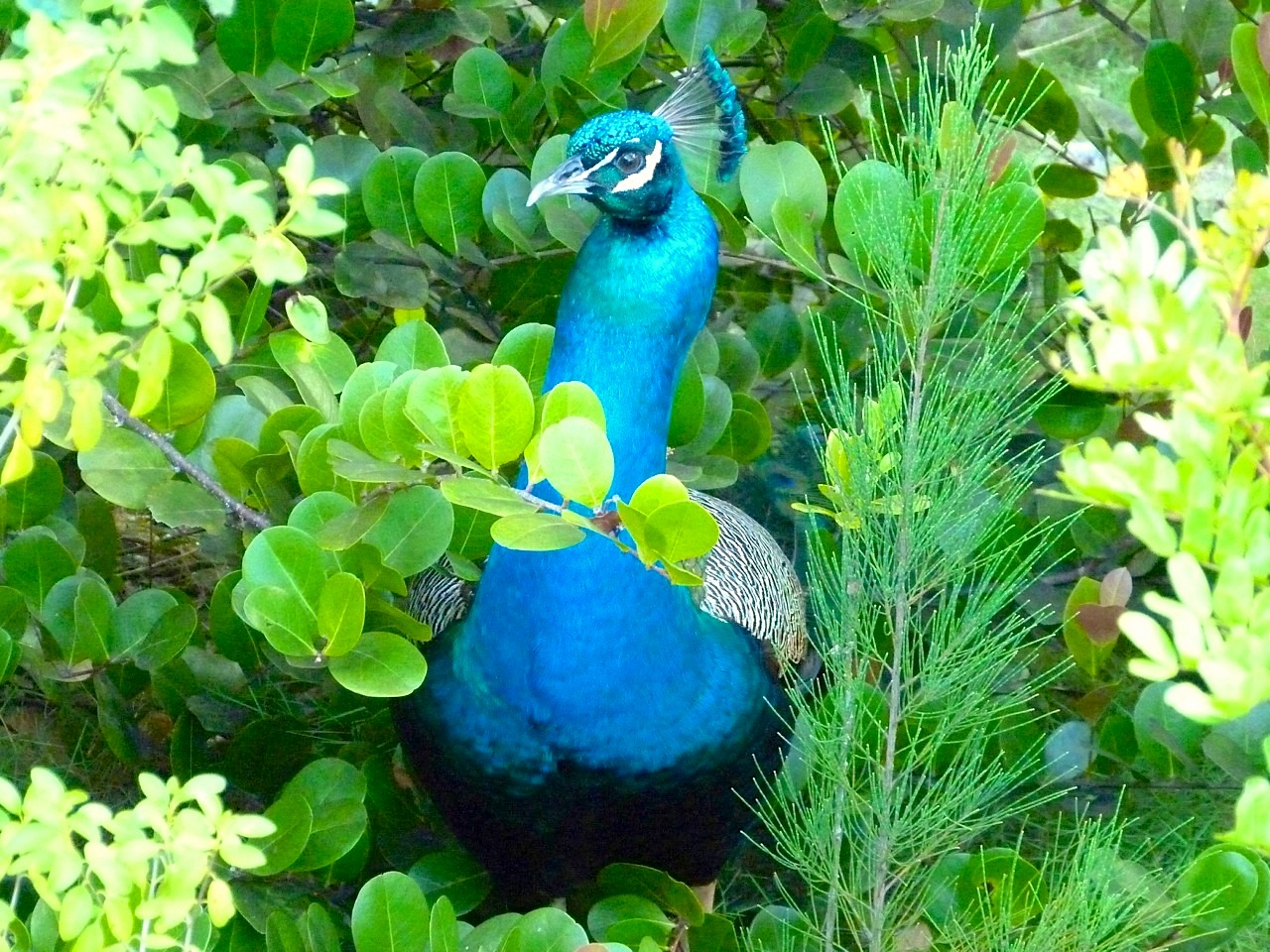
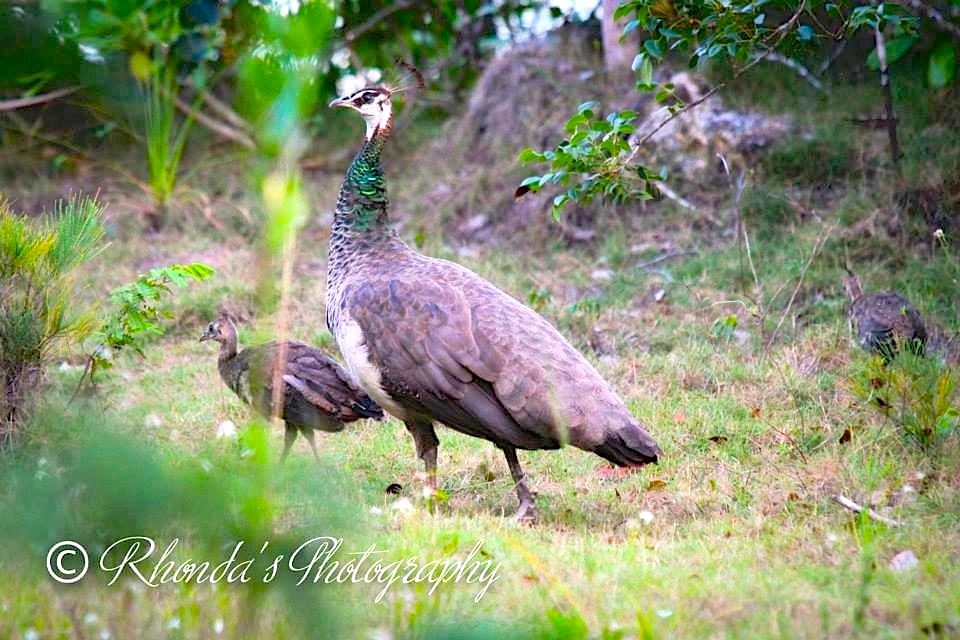
A year or so ago I wrote a post entitled SOMETHING COMPLETELY “DIFFERENT (OF ABACO)”, a nod to Monty Python and to Nettica Symonette’s long-defunct fishing lodge on the road to Casuarina that it still proudly signposted on the Highway. You can click the link to see the full post and plenty of peacocks. Or, as I mentioned then, peafowl (only the males are peacocks; the females are peahens; and the little ones are peachicks).

Peacock, %22Different of Abaco%22 1 (Rhonda Pearce)

“Different of Abaco” is a great place for birding. An overgrown wilderness with brackish ponds and a *dangerous structure alert* dilapidated building, it was once home to Nettie’s flamingos, reintroduced by her in the hope of reinstating Abaco’s lost breeding population. The experiment did not come off, but another one did. The legacy of her introduction of a few peacocks is very evident today: they have bred very successfully and provide an exotic – and noisy – addition to the breeding bird species on Abaco.

Peacock, %22Different of Abaco%22 3 (Rhonda Pearce)

The evidence from reports suggests that the peafowl are spreading from their base at Different of Abaco and the local Casuarina area. Celia Rogers saw 2 males on the Cherokee road, some 3 or 4 miles to the north. And Rhonda Pearce has more recently found them at the entrance to Bahama Palm Shores, some way to the south (below).

 Peacock, Bahama Palm Shores Abaco 2 (Rhonda Pearce)    Peacock, Casuarina, Abaco 1 (Rhonda Pearce)

Extent of peafowl range from reported sightingsCasuarina, Abaco area map

As I wrote before, “In the wilderness that Different of Abaco has become for many years, the descendants of the original peacocks are breeding contentedly, expanding their population, and are wholly unreliant on human intervention. Verily feral, in fact”. If anyone has encountered peacocks elsewhere than in the DoA / Casuarina area, I’d love to hear about it. A photo would be a bonus!

Peacock, %22Different of Abaco%22 4 (Rhonda Pearce)

OPTIONAL FUN FACTS

The collective noun for peafowl is generally considered to be a “pride”, as with lions. But many bird species have been assigned more than one collective noun – and many of the more unusual ones are historic, dating back to medieval times, in particular The Boke of St Albans (1486) by a nun called Dame Juliana Berners, which included lists of collective nouns for ‘companys of beestys and fowlys’. These were known as ‘terms of venery’, and many related to falconry and hunting. She also wrote the presumed first fishing guide, A treatyse of fysshynge wyth an Angle (her catch records do not survive).

Anyway, apart from ‘pride’, peacocks are also collectively known as a ‘muster’; and far more descriptively as an ‘ostentation’.

D of A: the glory daysimg0049

Credits: All peafowl Rhonda Pearce; final image π “The Abacos” online

Unknown's avatar

AMERICAN COOTS feat. “WHAT’S AFOOT?”


American Coot - Bahamas - Great Abaco - Gerlinde Taurer

AMERICAN COOTS feat. “WHAT’S AFOOT?”

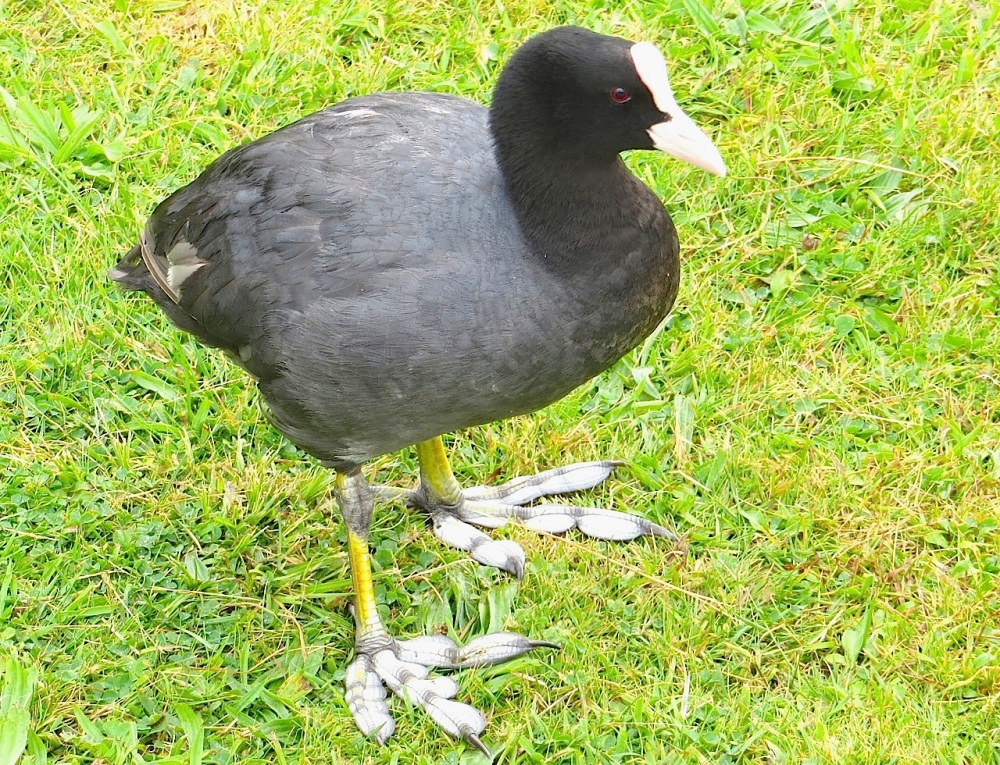
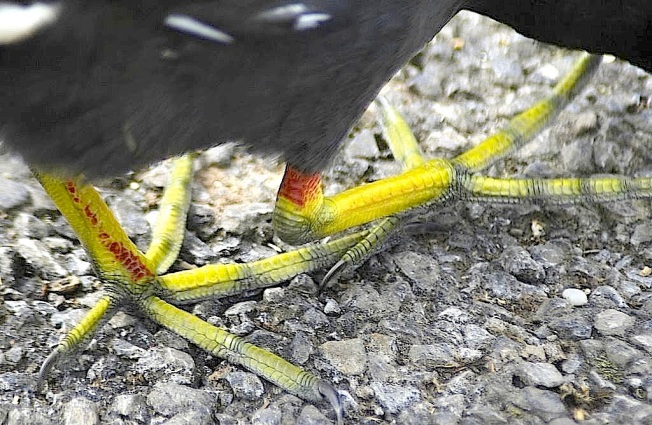
The American Coot Fulica americana is similar in many respects to the COMMON GALLINULE (MOORHEN). Except for the beak colour, of course. And as you will see below, the feet.

American Coot.Abaco Bahamas (Tom Sheley)

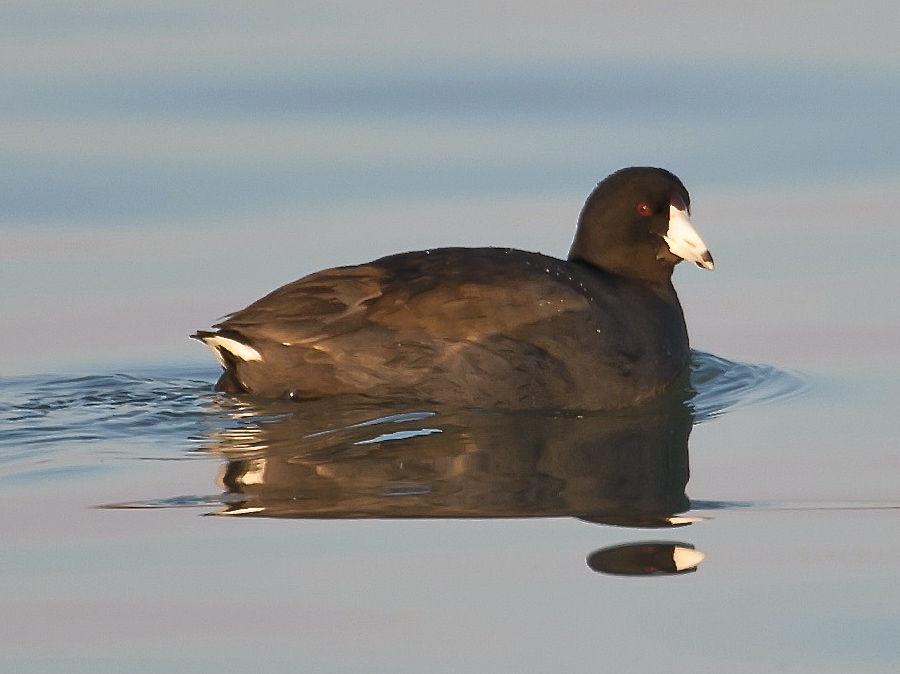
Most people would give an off-the-cuff description of a coot as ‘a black duck with a white beak’. They might add ‘…and a red eye’. Or ‘…and a dark band at the tip of the beak’. Or even ‘…I think there’s a white bit at the back end’. The header image pretty much sums up the classic coot.

American Coot 2 (Keith Salvesen)

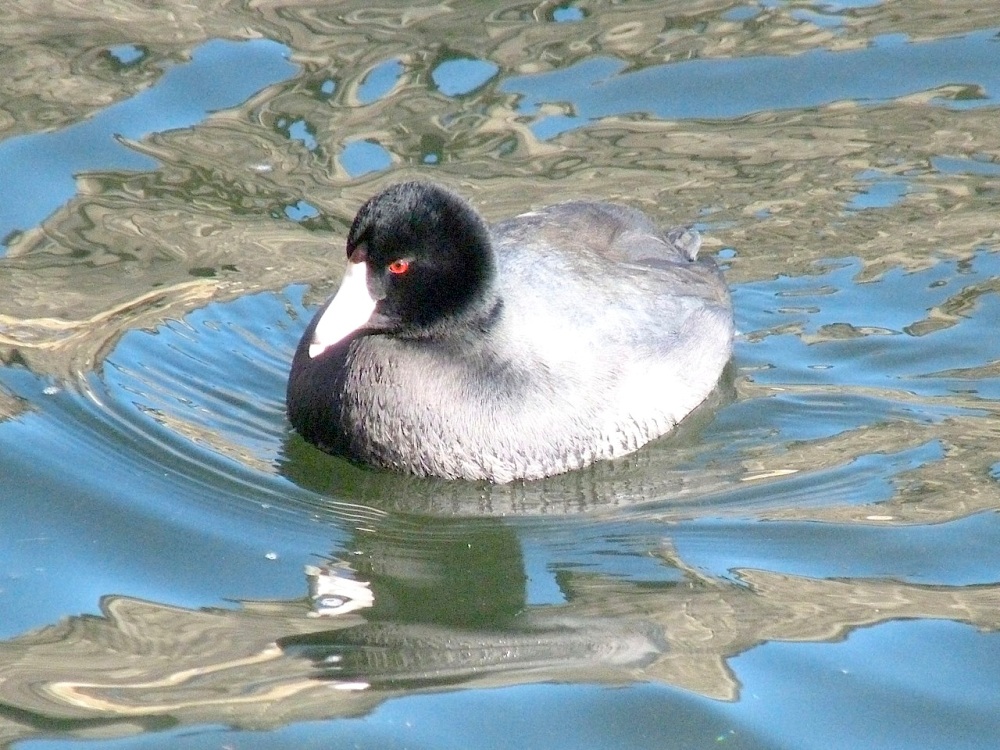
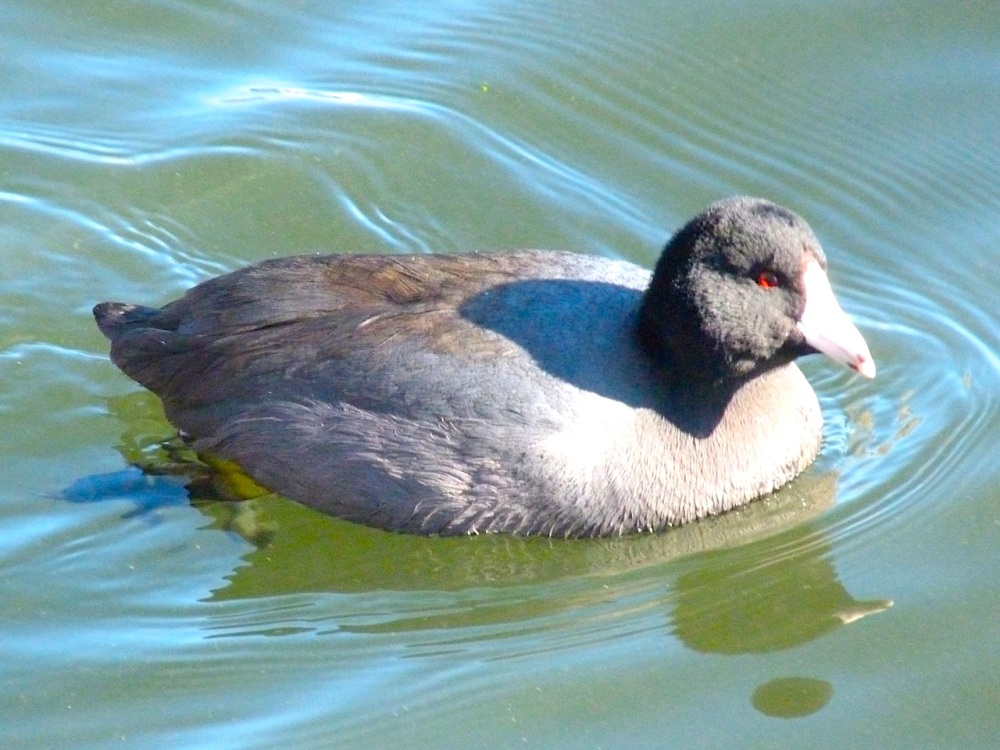
However, coots seem to take up or reflect other colours at times. The eyes remain a piercing red and the beak is white, but the body can range from black through slate-grey to pale grey, depending on the light. There may even be a tinge of brown or even orange.

American Coot - Bahamas - Great Abaco - Gerlinde Taurer

I always enjoy seeing coots and moorhens somewhere where the water ‘works’ with them and creates a dramatic image. I took the first photo below recently on the JKO reservoir in Central Park, New York, where the water looked weirdly like molten metal and some trick of the light made the bird seem as if is was in a shallow depression in the water.

American Coot (Keith Salvesen)

Tom Sheley took the photo below on a ‘green water’ day at the pond on Treasure Cay Golf Course. I have recommended it before as an excellent birding site for waterbirds – coots, moorhens, Bahama pintails, northern pintails, neotropic cormorants, blue-winged teal, least grebes, pied-billed grebes, green herons – I’ve even seen a reclusive least bittern there. There are plenty of ‘land’ birds on the course too.

American Coot.Treasure Cay, Abaco Bahamas.6.13.Tom Sheley copy 2

If you go to TCGC for the birding, you just need to clock in at the clubhouse in case it’s a match day; and so they know who is out and about on the course. And, as I wrote elsewhere, if you hear a loud yell of “Fore”, it probably won’t be someone counting the coots. Time to… er… duck.

Q: “WHAT’S AFOOT?” *

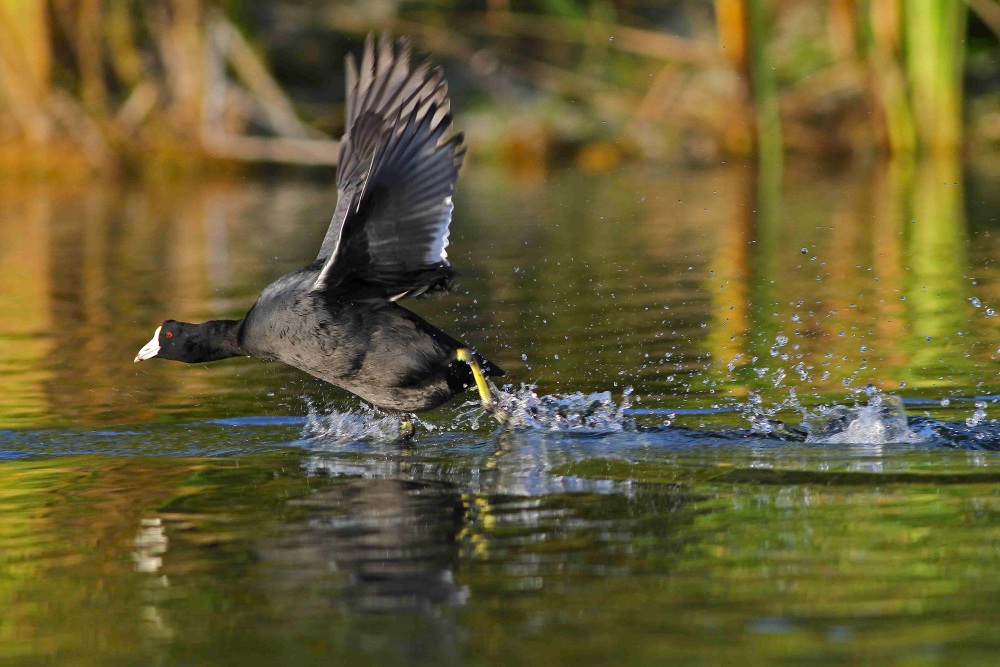
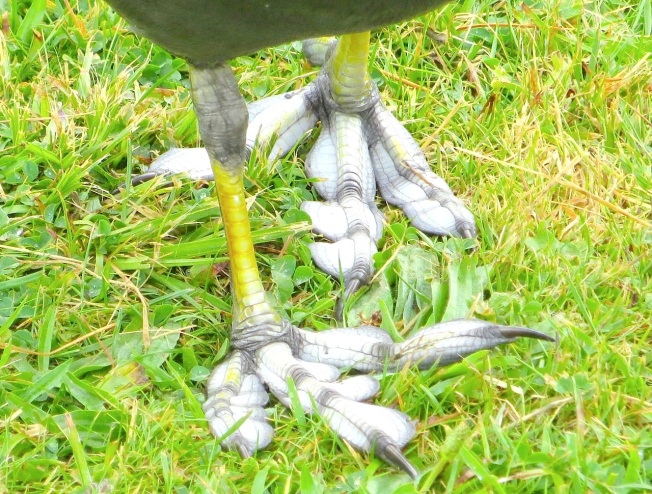
I mentioned that one of the differences between coots and moorhens is their feet. Gerlinde Taurer’s photo of a coot taking off suggests that something powerful is happening below the water to assist the wings to propel the bird into flight.American Coot - Bahamas - Great Abaco - Gerlinde Taurer

A coot’s feet are quite unlike the pedal extremities of any other birdCoot, showing feet (Keith Salvesen)Coot Feet Close-up Keith Salvesen copy

Moorhen’s feet for comparison – completely different structurallymoorhen_feet-mehmet-kartuk-wikijpg-copy* A: “A funny-shaped thing on the end of your leg”. How we laughed (aged 7)

Credits: Gerlinde Taurer (1, 4, 7); Tom Sheley (2, 6); Keith Salvesen (3, 5, 8, 9); Mehemet Kartuk (wiki) 10

Unknown's avatar

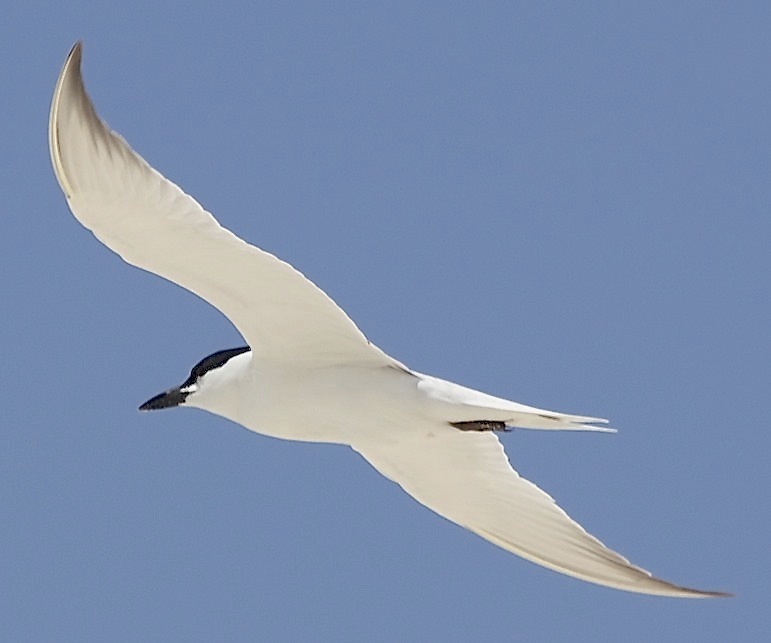
GULL-BILLED TERNS ON ABACO


Gull-billed Tern, Abaco (Alex Hughes) 01

GULL-BILLED TERNS ON ABACO

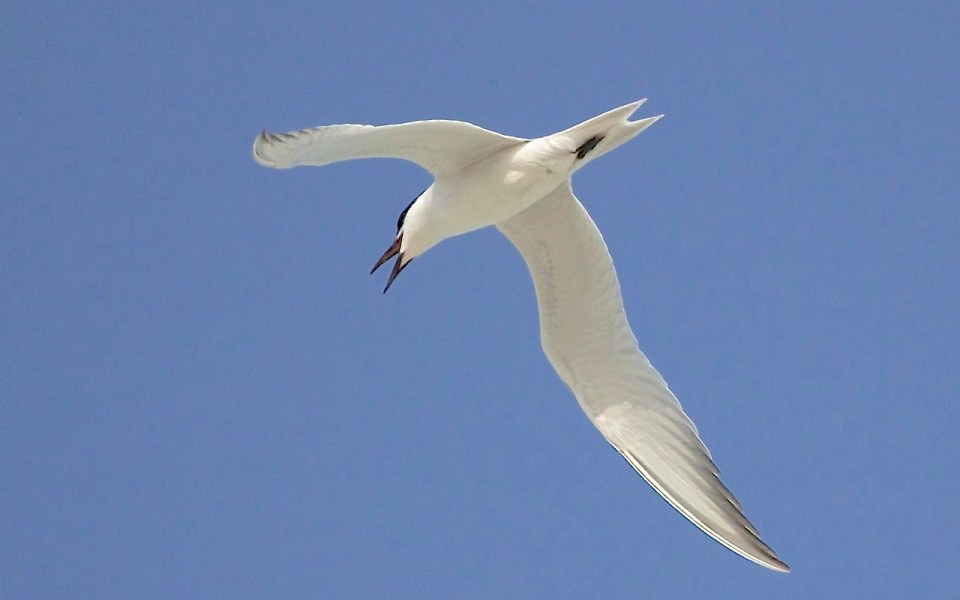
The gull-billed tern Gelochelidon nilotica had a name upgrade from Sterna nilotica some years ago, and was awarded the honour of its own genus. Let’s be clear at the outset: there’s no such thing as a tern-billed gull. Which slightly lessens the scope for species confusion. 

Gull-billed Tern, Abaco (Alex Hughes) 04

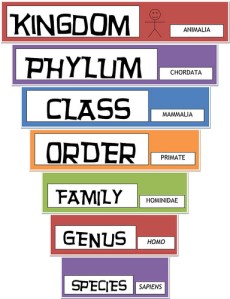
For those (me) who need a reminder about the whole family / genus / species taxonomic maze, here is a reminder. The example used is man. Or stickman, anyway.3958555126_4f85d9fa5b

Gull-billed Tern, Abaco (Alex Hughes) 05

There are 12 species of tern recorded for Abaco. Only one, the royal tern, is a permanent resident. There is one winter resident, the Forster’s tern and there a 6 summer resident terns of varying degrees of commonness. The other four are transient or vagrant, and probably not worth making a special trip to Abaco to find. The GBT is designated SB3, a summer breeding resident that is generally uncommon, though might be more common in particular areas.

TERN TABLE**Tern Species Abaco**I know! Too tempting…

gull-billed-tern

Gull-billed Tern, Abaco (Alex Hughes) 11

The bird gets its name from it short, thick gull-like bill. It’s quite large in tern terms, with a wingspan that may reach 3 foot. They lose their smart black caps in winter.

Gull-billed Tern, Abaco (Alex Hughes) 03

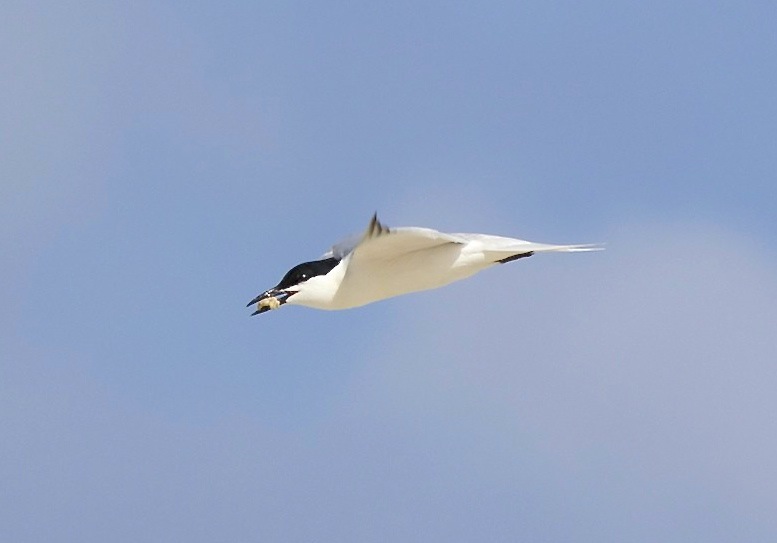
There are 6 species of GBT worldwide, and it is found in every continent. While many terns plunge-dive for fish, the GBT mostly feeds on insects in flight, and will also go after birds eggs and chicks. Small mammals and amphibians are also on the menu. The header image shows a GBT with a small crab. I imagine they must eat fish. Surely they do? But I have looked at dozens of images online to find one noshing on a fish, with no success. Does anyone have a ‘caught-in-the-act’ photo?

Gull-billed Tern, Abaco (Alex Hughes) 06Gull-billed Tern, Abaco (Alex Hughes) 02

All photos were taken by Alex Hughes, a contributor to “THE BIRDS OF ABACO”, when he spent some time on Abaco a while back in connection with the conservation of the Abaco Parrot and the preservation of the habitat integrity of their nesting area in the Abaco National Park

Gull-billed Tern, Abaco (Alex Hughes) 12


Unknown's avatar

SAYING NO TO BEAUTIFUL BAHAMAS BIRDS…


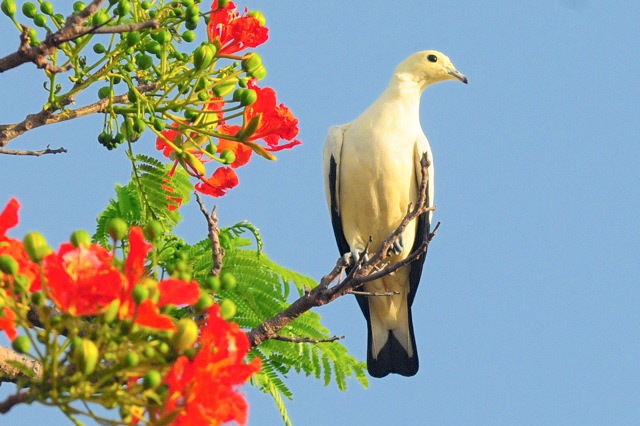
Pied Imperial Pigeon 1, Nassau (Woody Bracey)

Pied Imperial Pigeon, Nassau

SAYING NO TO BEAUTIFUL BAHAMAS BIRDS…

Flamingos & Chicks, Inagua (Melissa Maura)

Flamingos & Chicks, Inagua

Writing a bird book involves defining parameters at an early stage. Best to avoid working them out 6 months into the project; or (worse) letting them evolve gradually as each obstacle along the stony track to the printers is encountered. Far better to decide the general rules of engagement at the outset, and be able to tweak them later if need be. 

Brown Booby + egg, San Salvador (Woody Bracey)

Brown Booby on its nest, San Salvador

And so it was that we stayed for a convivial weekend with Peter and Jane Mantle to discuss the pros and the cons, the whys and the wherefores, the format and the style of a book to showcase the birds of Abaco. And how on earth to get started on the project…

Pied Imperial Pigeon 2, Nassau (Woody Bracey).JPG

Pied Imperial Pigeon, Nassau

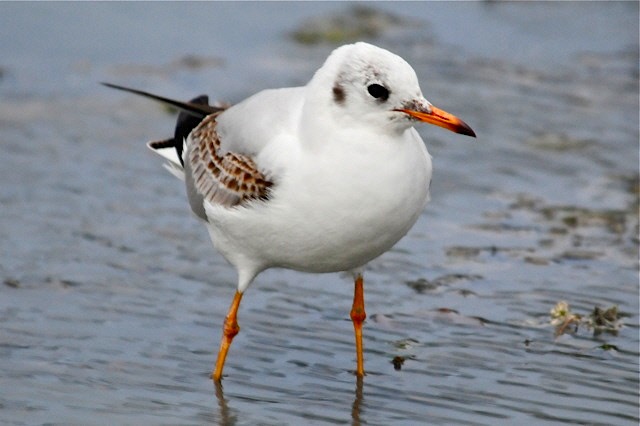
Black-headed Gull imm, New Providence (Bruce Hallett)

Black-headed Gull (immature), New Providence

One thing was clear at the outset. It was essential that every photograph in the book would have to be taken on Abaco. It wasn’t to be ‘The Birds of Abaco including Birds from Grand Bahama, New Providence, Eleuthera and Inagua that You Might also Find on Abaco’. Or ‘The Birds of Abaco, Mostly’. And there was to be no cheating.

burrowing-owl-great-inagua-woody-braceyjpg

Burrowing owl, Great Inagua

The project involved the work of some 30 photographers in all, from the prolific to a couple of people who offered a single excellent photo. I amassed a large archive, though only a percentage could be used. For example many fine photos fell by the wayside because resolution was inadequate for high-quality print purposes.  

American Avocet, Bahamas 1 (Tony Hepburn)

American Avocet, Nassau

I also collected plenty of folders containing images of birds we desperately wanted to include, that were not all taken on Abaco but were part of a wider field trip. These were ruthlessly (but painfully) excluded from consideration. In fact, to stick within the (self-imposed) guidelines, I set aside all photos that I was not certain had been taken on Abaco. Where there was doubt, they were out.

Key West Quail-Dove, Nassau, Woody Bracey

Key West Quail-Dove, Nassau

This post contains a selection of photos from the Aviary des Refusés. We would have loved to have included the peregrine falcon and burrowing owl, for example, but had no Abaco images to use then. Other bird species were in any event disqualified for being unknown on Abaco. A Pearly-eyed Thrasher recently found its way to Treasure Cay, this first recorded for Abaco; yet could be found elsewhere in the Bahamas two years ago.

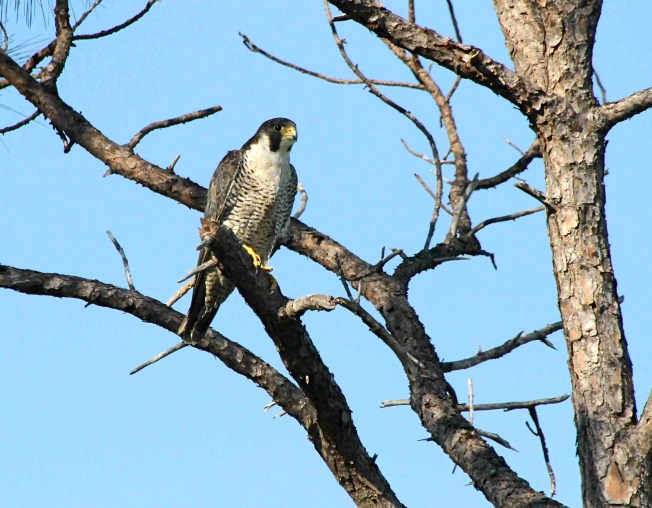
Peregrine Falcon (Woody Bracey) sm

Peregrine Falcon, New Providence

Pearly-eyed Thrasher, San Salvador (Woody Bracey) jpg

Pearly-eyed Thrasher, San Salvador

Horned Lark, Nassau (Woody Bracey)

Horned Lark, Nassau

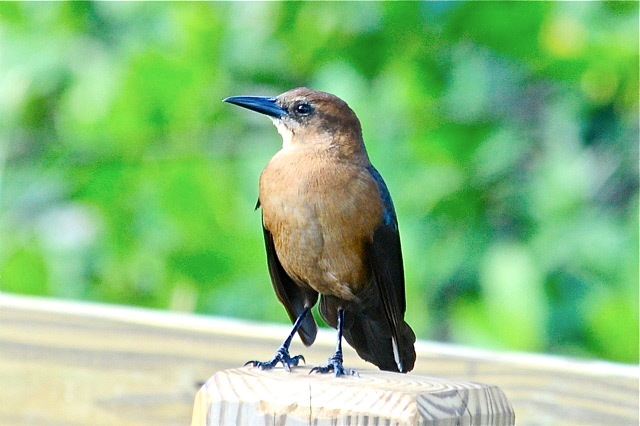
Boat-tailed Grackle (f), Nassau (Woody Bracey)

Boat-tailed Grackle (f), Nassau

Roseate Spoonbill WB 59_IMG_6302 copy 3

Roseate Spoonbill WB 58_IMG_6230 copy 3
Roseate Spoonbill, Great Inagua

Cuban Grassquit, Nassau (Woody Bracey)

Cuban Grassquit, Nassau

Brown-headed Nuthatch, Grand Bahama (Woody Bracey) cr sm copy

Brown-headed Nuthatch, Grand Bahama

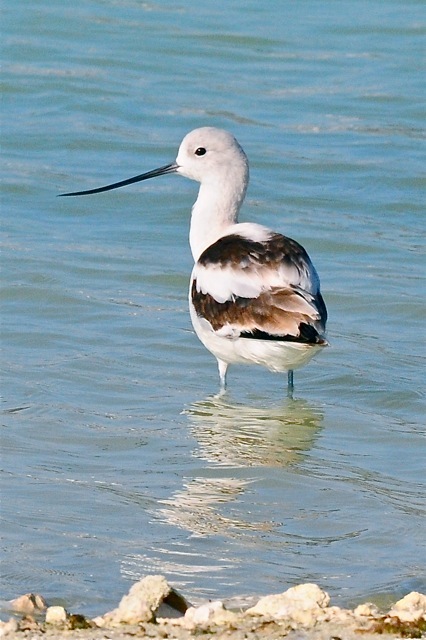
American Avocet, San Salvador (Woody Bracey)

American Avocet, San Salvador

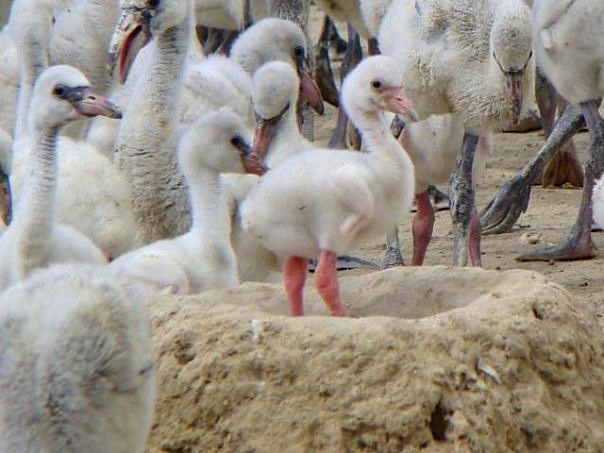
Flamingos & Chicks, Inagua (Melissa Maura)

Flamingo Chicks, Inagua

Credits: Woody Bracey for taking / supplying a most of these great images, with Tony Hepburn, Bruce Hallett, Melissa Maura (the wonderful Flamingos) and all those involved in the joint field trips from which some of these photos originate. And Peter Mantle for having the idea for the book and for being wholeheartedly supportive through thick and thin…


Unknown's avatar

A RARE SPOONBILL VISITS GILPIN POND, ABACO


Roseate Spoonbill, Gilpin Pond, Abaco (Keith Kemp)4

A RARE SPOONBILL VISITS GILPIN POND, ABACO

In past posts I have mentioned what an excellent birding place Gilpin Point has become. There’s the large pond; and right beside it, dunes, the other side of which is a fine secluded beach and the ocean. The place is a magnet for birds of all shapes and sizes, from brown pelicans down to the tiny endemic Bahama woodstars. There are water birds, wading birds, shorebirds and coppice birds. It has become a place where Abaco parrots regularly congregate. You can reach the Gilpin FB page HERE.

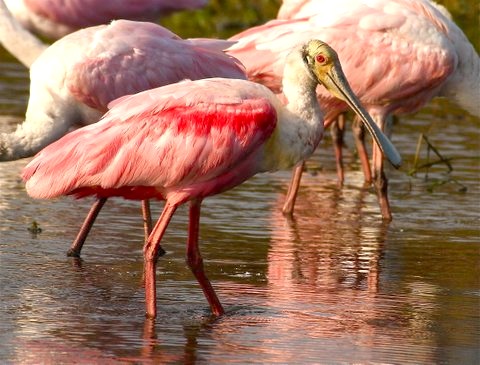
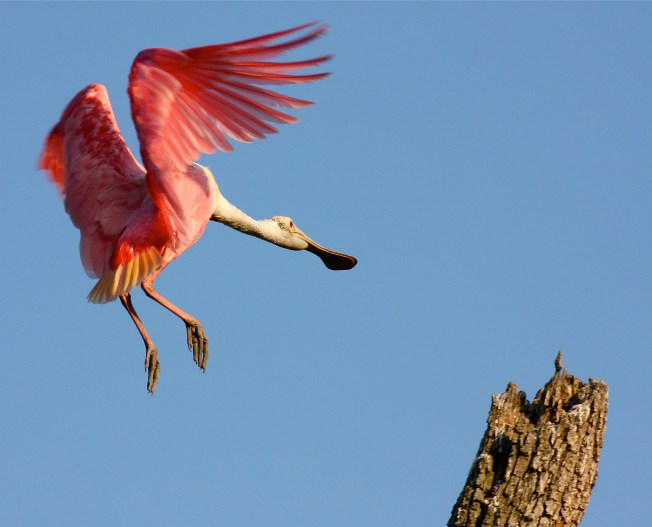
A while back, there was a rare visitor, a Flamingo that stayed a few months then disappeared again. It was in some ways a sad reminder of past flamingo glory days, when they were commonly found on Abaco. Now they are confined to Inagua apart from the occasional vagrant. For more on the the topic, with wonderful photos by Melissa Maura of the breeding season on Inagua, click HERE. Another rare vagrant – formerly quite plentiful on Abaco – was recently found at Gilpin by Keith Kemp, who skilfully managed to get photos of it from some distance away: a Roseate Spoonbill.

Roseate Spoonbill, Gilpin Pond, Abaco (Keith Kemp)2

I have featured spoonbills before in a post IN THE PINK, but the photos were taken on New Providence by Woody Bracey. I had no Abaco spoonbill photos. To be fair, we did once see one while we were bonefishing far out on the Marls. It was on the edge of the mangroves a good distance away, and the pale pink tinge caught my eye. My photo with an iPhone 4 (the one with the risibly cr@p camera – remember?) was so utterly pathetic that I dumped it (the photo, I mean, but the phone soon followed). But we knew what we had seen, and that was enough.

roseate-spoonbill                roseate-spoonbill               roseate-spoonbill

STOP PRESS 1 I should add that a friended visited the pond after the side-effects of Hurricane Joaquin had receded, and the spoonbill had gone. So the spoonbill alone would not make the journey worthwhile!

STOP PRESS 2 A check of eBird reveals that a handful of spoonbills have been reported in Northern Bahamas this year, about 6 in all. Almost none before that. I have the impression that birding intensity in The Bahamas, coupled with the ease of uploading reports to eBird, will increasingly make a difference to the incidence of sightings of uncommon and rare species, cf the recent WHIMBRELS of Grand Bahama.

Spoonbill, Gilpin Pond, Abaco (Keith Kemp)3

GILPIN POINT LOCATION

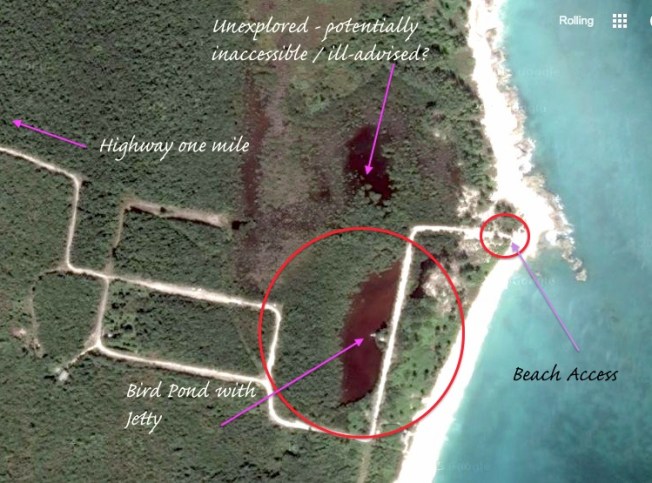
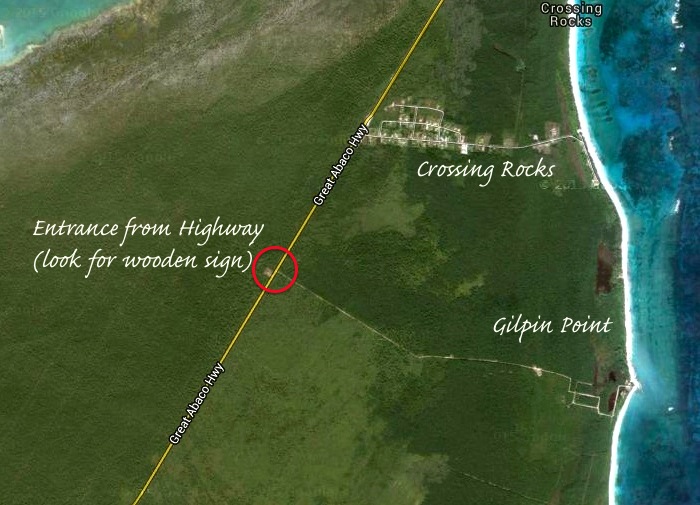
Gilpin Point is just south of Crossing Rocks. The brackish pond – sometimes an alarming reddish colour that I assume is algal – is just inland from the shoreline and provides a wonderful haven for birds. It’s a long mile from the highway. There is no vehicle nor even human traffic apart from occasional birders and walkers. Please note that the drive and the property are private. However Perry Maillis is always welcoming to tidy birders who (as I have written elsewhere) bring only enthusiasm and take only photographs (though a picnic on the beach is worth considering. And maybe a swim…). 

Helpful location mapsGilpin Map 1 Gilpin Map 2 Gilpin Map 3

WHAT SPECIES MIGHT BE FOUND AT GILPIN?

A brief list includes regular visits from parrots. It’s the only place we have found a furtive little sora skulking in the reedy margins. It’s a reliable spot for herons and egrets of every kind, white-cheeked (Bahama) pintails by the score, black-necked stilts and lesser yellowlegs. Occasionally a northern pintail, ruddy duck or merganser. Turkey vultures. Limpkins. We’ve seen belted kingfishers, Bahama woodstars, cuban emeralds, american kestrels, Bahama swallows, doves, pigeons, western spindalis and many more coppice birds besides. One flamingo. One spoonbill. Pelicans have been seen on the rocks on the beach. Shorebirds include turnstones, sundry plovers & sandpipers, and oystercatchers. You may well see tropicbirds and frigate birds off-shore, and assorted gulls and terns. I can’t personally be more species-specific  because I have never ‘shorebirded’ properly there, but I have noticed an impressive mix…

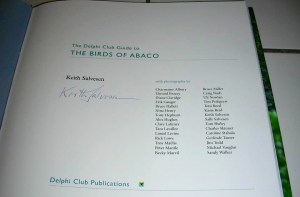
When we launched THE BIRDS OF ABACO at the Delphi Club, we were delighted that Pericles was able to come to the party. He took a few photos and I’m sure he won’t mind my including a small gallery to end with, featuring a couple of the Gilpin entries in his signed copy.

10153160_10152104925423929_44675888_n 1926631_10152104925178929_80294246_n11856_10152104921903929_1879699722_n 1525102_10152104925648929_1614125758_n

Bahamas birding nobility: Tony White with Caroline Stahala; Woody Bracey & Bruce Hallett
1911624_10152104926303929_1596185906_n

Credits: Keith Kemp for the great spoonbill photos; Perry for the Delphi photos
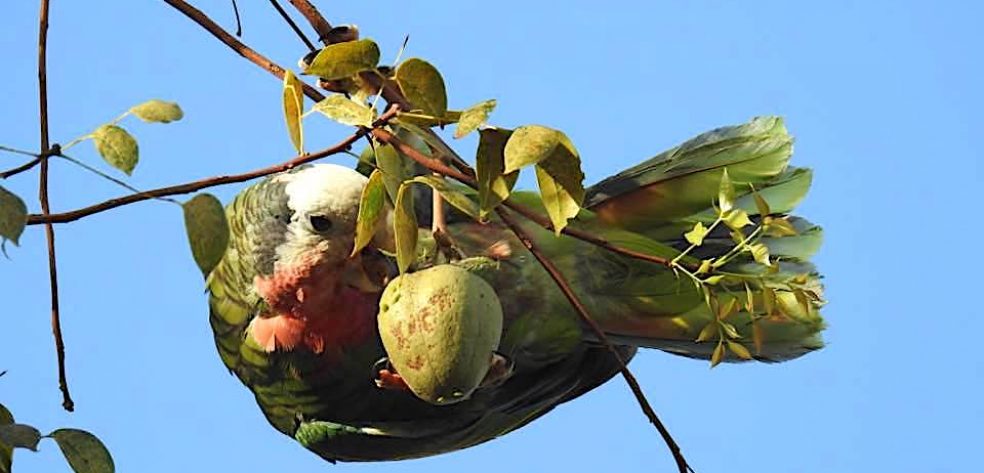
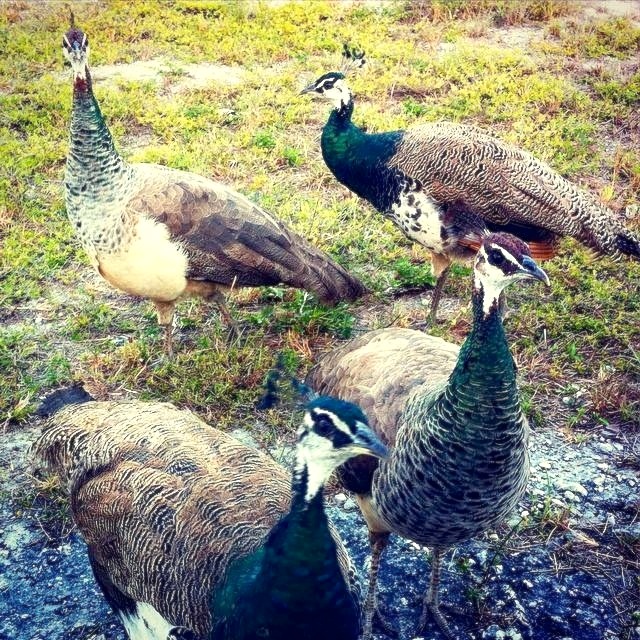
Unknown's avatar

WADING TO MAKE A COMEBACK: WHIMBRELS RETURN TO BAHAMAS


Whimbrel (Lip Kee wiki)

WADING TO MAKE A COMEBACK: WHIMBRELS RETURN TO BAHAMAS

It’s been many long years. Many checklists show the whimbrel Numenius phaeopus as a recorded bird for most of the Bahamas islands. On Abaco it is rated as a ‘TR4’ in Tony White’s magisterial checklist, which is to say a transient species in migration that is ‘casual, reported irregularly’. Elsewhere it is described as ‘rare / accidental’. This is only one step better than ‘vanishingly rare’. Prior to this year, the last documented sighting report I have found for Abaco was in 2000. Woody Bracey, renowned and persistent birder, last saw one there in 2002. We found no photos to use for “THE BIRDS OF ABACO”, not even as a snapshot in the supplement.

Frankly it was beginning to look as though the Bahamas whimbrel might be going… might already have gone… the way of the specimen below that I found last year in the Museum of Natural History in Dublin (it’s 109 years old). And the lovely whimbrel header picture is from elsewhere in the world. But suddenly…

Whimbrel (Dublin Natural History Museum) - Keith Salvesen

On August 20th this year, Keith Kemp, a regular birder on Abaco, encountered a whimbrel in the Cherokee Sound area. On the eBird map clip below, it is shown with the red marker, meaning a recent sighting. The blue marker is the 2000 sighting at Crossing Rocks. Keith didn’t get a photo, but he got the kudos of seeing the first Abaco whimbrel for 15 years!Whimbrel sightings Abaco

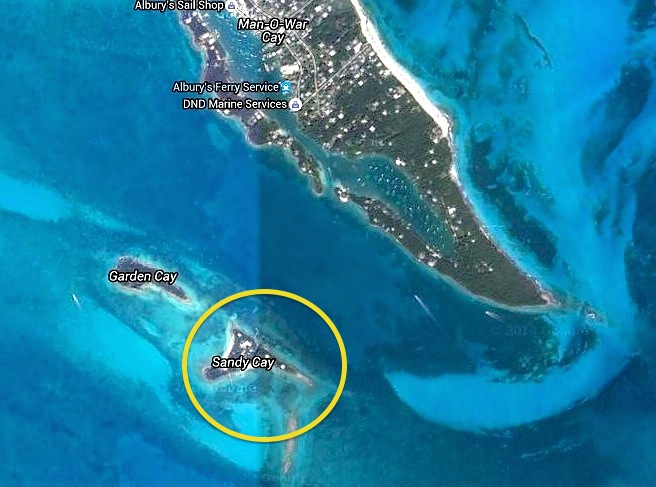
That was in August. On September 14th, Charmaine Albury went one better – she had her camera with her! Sandy Cay is a small islet to the southwest of Man-o-War Cay. There, in all it’s glory, was another whimbrel. She promptly shot it, luckily not in a Winsconsin dentist / Cecil the lion sense. She even managed to get a good in-flight shot.

Whimbrel, Sandy Cays, Abaco (Charmaine Albury) 2Whimbrel in flight, Abaco (Charmaine Albury)Sandy Cay Abaco jpg

And that might have been that for the Northern Bahamas for another 15 years. Except that the following day at West End, Grand Bahama, Linda Barry-Cooper went one better – she found 2 whimbrels together. Goodness knows how many decades have passed since the last sighting of a pair. Here they are.

Whimbrel, West End, Grand Bahama 1 Sep 2015 (Linda Barry Cooper) Whimbrel, West End, Grand Bahama 2 Sep 2015 (Linda Barry Cooper)     Whimbrel, West End, Grand Bahama 3 Sep 2015 (Linda Barry Cooper)

So that’s a massive influx of 4 whimbrels in the Northern Bahamas within one month. And who knows, maybe more to come. As for other Bahamas islands, a quick check on eBird for the last 10 years shows 3 on GB apart from Linda’s; a handful in the TCI; a couple on Inagua. And that’s it. Matt Jeffery says that on Andros one or two are seen every year as they pass through. And Eleuthera had a famous Whimbrel in 2011 called Chinquapin that had been fitted with a tracking device. It started its migration south, only to run slap into Hurricane Irene. After a doubtless severe buffeting it found safety on Eleuthera, where it was recaptured and cared for.  I think this goes beyond the usual concept of  ‘transient’ though it was undoubtedly ‘accidental’…

“…a shorebird, tracked using a satellite transmitter, flew through Hurricane Irene and survived. The bird, a whimbrel, left Southampton Island in northern Canada and reached the outer band of the huge storm as hurricane-force winds began pounding the Bahamas. The next day the whimbrel, nicknamed Chinquapin, migrated into the eye of the hurricane and landed on Eleuthera Island in the Bahamas” (π Repeating Islands). You can read more about Chinquapin’s epic adventure HERE

chinquapin_t607

If you are wandering on your favourite stretch of sand, idly beachcombing and keeping an eye out for Piping Plovers, here are the sounds that should make you stop in your tracks: the song and the extraordinary call of the new wave (hopefully) of whimbrels in the Bahamas…

SONG π Guillermo Funes Xeno-Canto

CALL π Stein Ø. Nilsen Xeno-Canto

Finally, having nothing to contribute personally to the great whimbrel comeback by way of Bahamas-made photos or sound recordings, I find I have actually photographed one in the UK. It was probably by mistake. The bird is certainly retreating rapidly. This is the only chance I shall ever have to fit it into a relevant post, so I claim writer’s prerogative to show it…
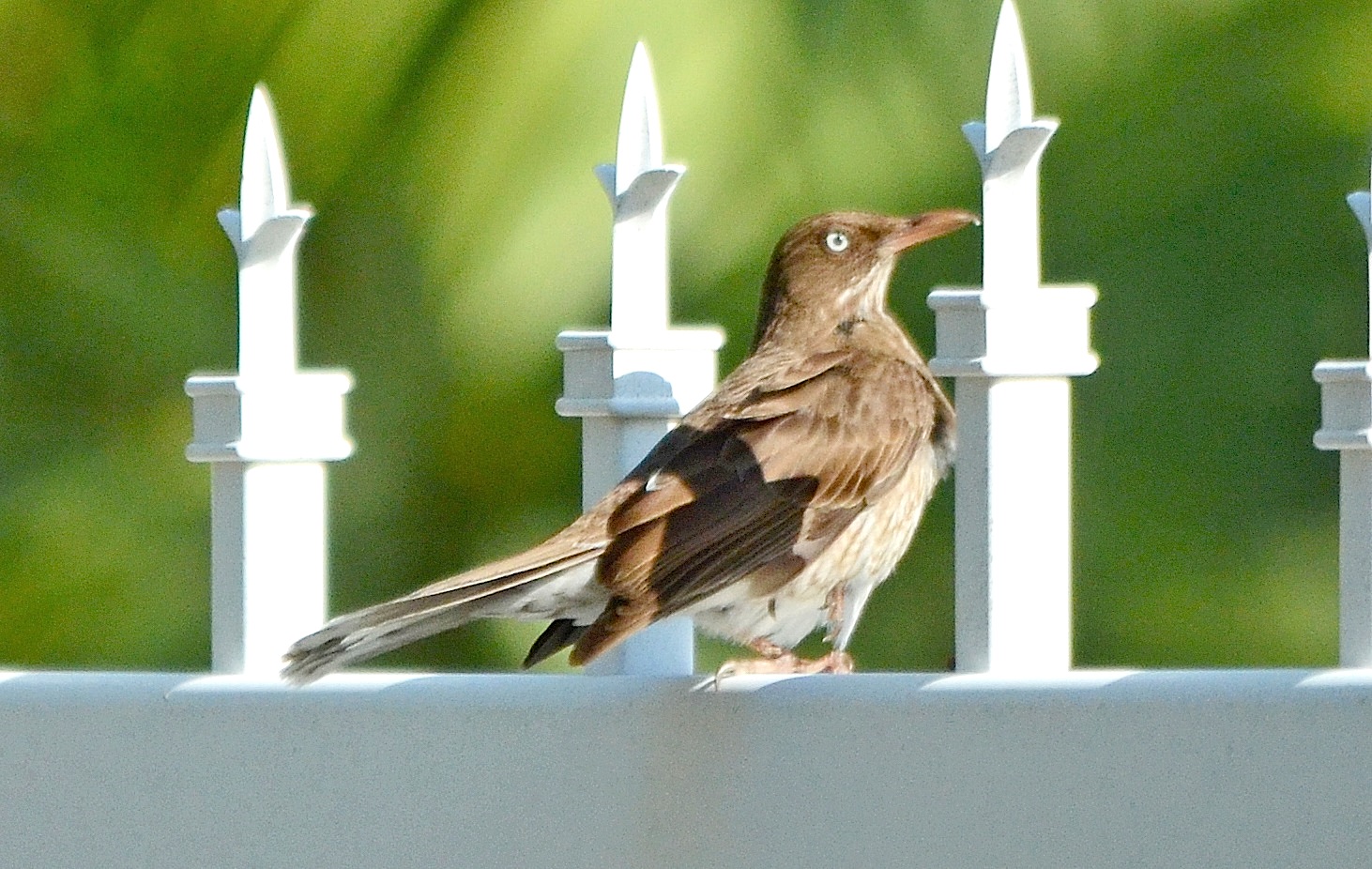
Whimbrel Pensthorpe 2010 copy

Credits: Charmaine Albury, Linda Barry-Cooper, Lip Kee (header), Lisa Paravisini (Chinquapin) and RH (the other pics); Xeno-Canto (recordings)

Unknown's avatar

A QUARTER OF A MILLION GLIMPSES OF ABACO…


Abaco (Cuban) Parrot, Abaco, Bahamas  (Keith Salvesen)

A QUARTER OF A MILLION GLIMPSES OF ABACO…

Well here’s a rum do. About four years ago, this somewhat minority interest blog emerged ‘mewling and puking’¹ into the world, guided by an incompetent male midwife whose basic training had been about 4 weeks of exposure to Abaco, its fishing, its wildlife, its geography and its history. ‘Bananaquit’ might as well have meant taking up a plantain-free diet. ‘Grassquit’ might have been the local word for ‘keep off the lawn’. And that’s before all the flowers. And the reef fish. And everything else that turned up during the storm-wracked voyage of discovery via polydamus swallowtails, manatees, spider wasps and batfish that led slowly to the calmer waters of ‘rather better informed (if no wiser)’. 

Anyway, at midnight last night some unknown person kindly made the 250,000th visit to the blog, a target that once seemed inconceivable. In the past month, the 1000th person also signed up as a follower, another source of amazement. The reality is that despite Abaco being a sparsely-populated microdot island in a huge world, there are a great many people on the island or associated with it who are passionate about it and its extraordinarily diverse natural history. That knowledge makes curating this blog both easy and pleasurable. 
RH Stats clip

I checked my stats for the last year to find out where hits from the top 10 countries – and for fun the bottom 1o – came from. Here’s the answer. Rather shamefully there was also a country I had never knowingly heard of, Palau (Micronesia). There follows a selection of a few photographs that have been popular over the years, mostly my own but the underwater ones are from Melinda Riger and Virginia Cooper of Grand Bahama Scuba.

Top 10                                                                   Bottom 10
Top 10 countries jpg   Bottom 10 countries jpg

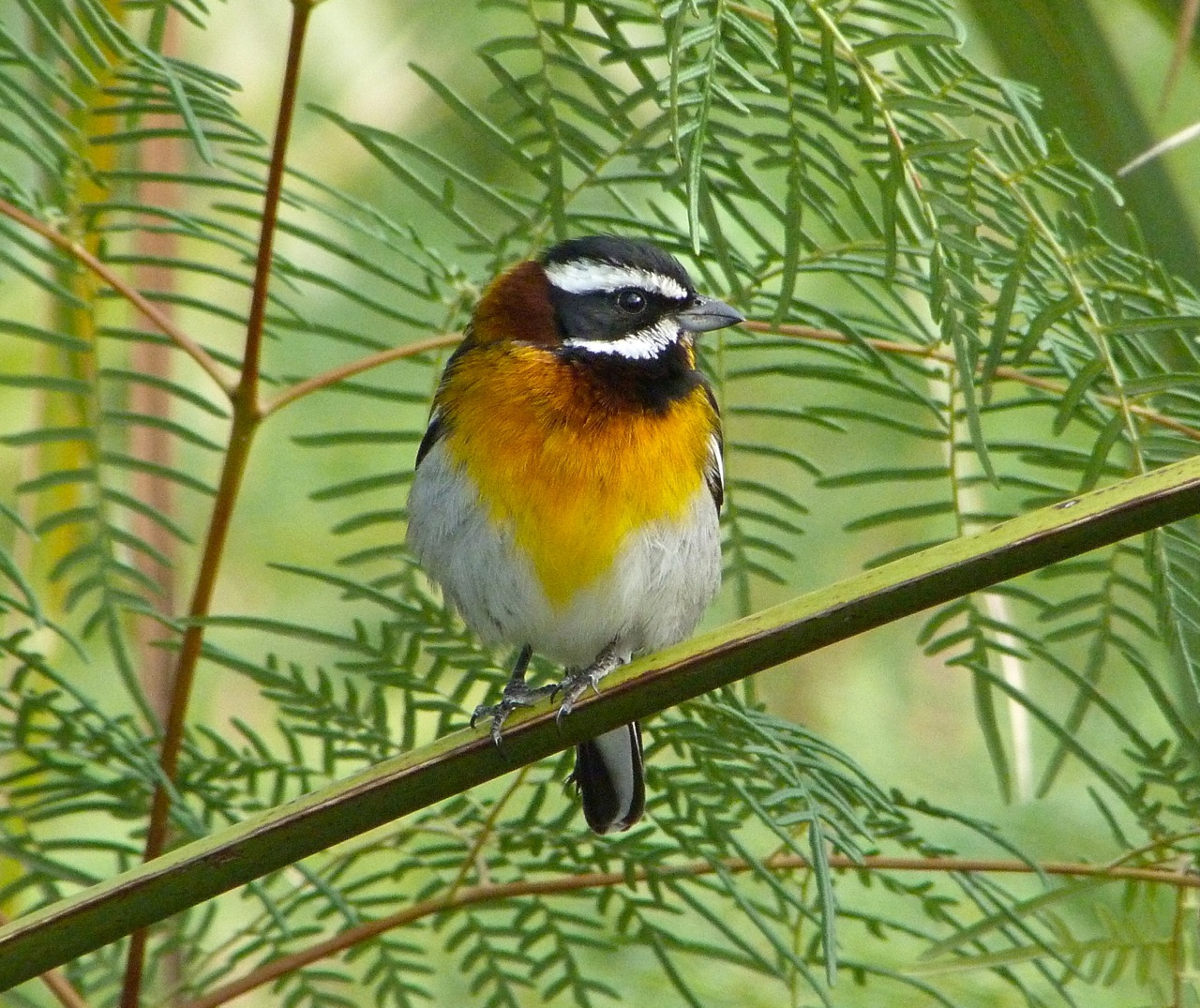
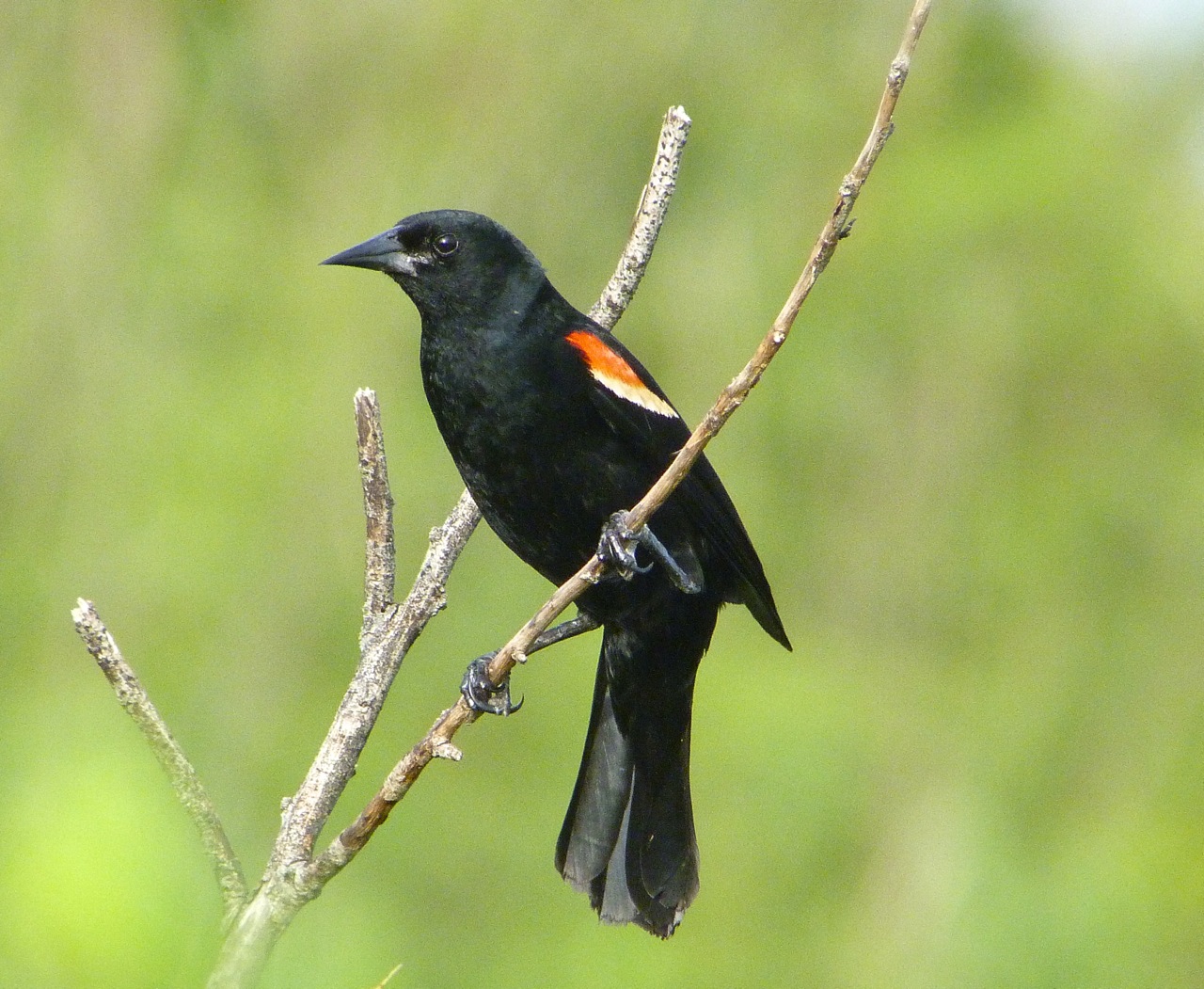
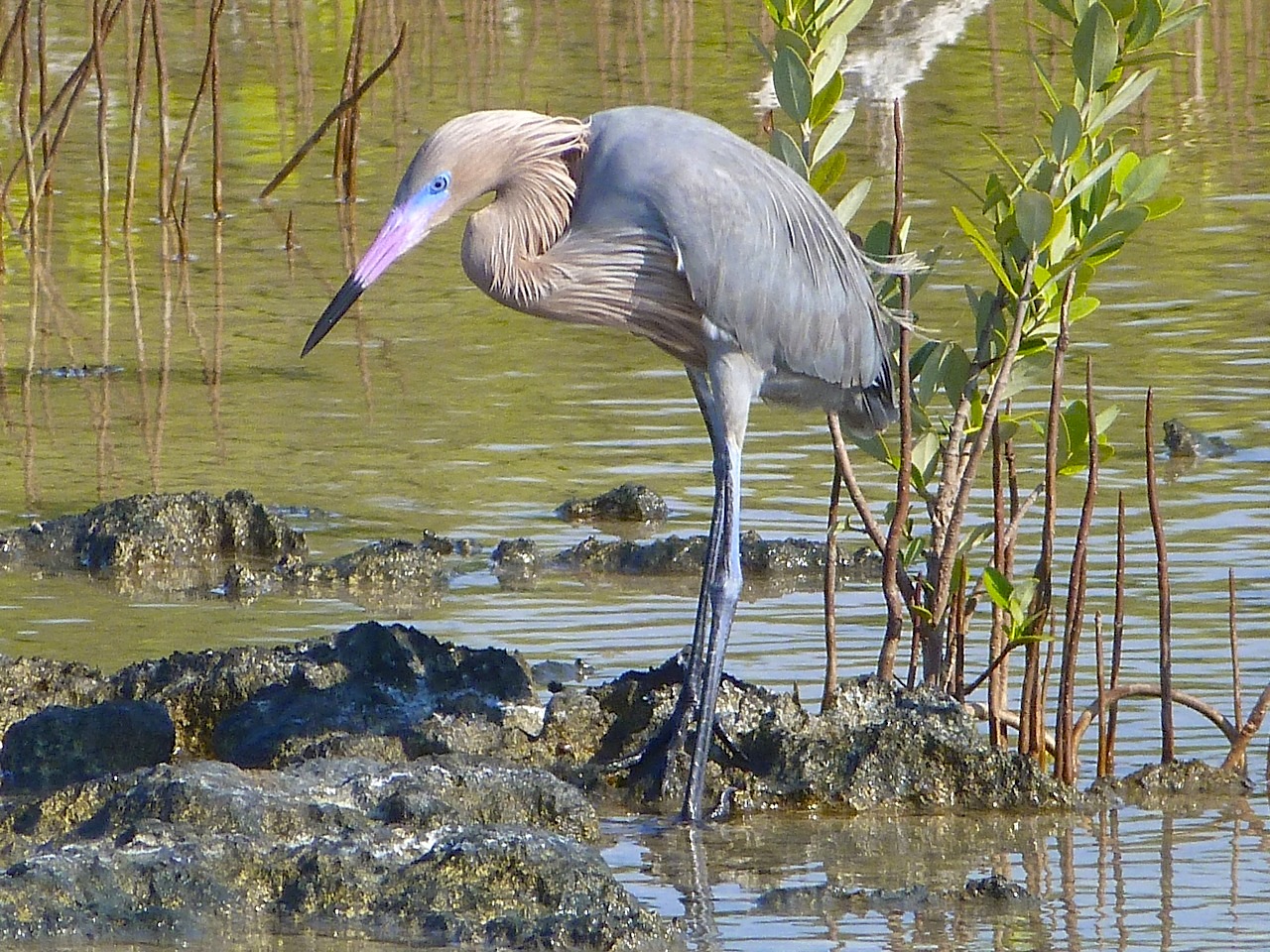
Cuban Emerald Hummingbird, Delphi, Abaco (Keith Salvesen)Bananaquit & palm, Delphi, Abaco, Bahamas  (Keith Salvesen)Western Spindalis, Abaco, Bahamas  (Keith Salvesen)Blue-gray Gnatcatcher, Abaco, Bahamas (Keith Salvesen)Red-winged Blackbird, Abaco, Bahamas  (Keith Salvesen)Brown Pelicans, Sandy Point, Abaco  (Keith Salvesen)Reddish Egret, Crossing Rocks, Abaco, Bahamas (Keith Salvesen)French Angelfish (juv), Bahamas (Melinda Riger)Four-eyed Butterflyfish ©Melinda Riger @GBSCowfish ©Melinda Riger @ GB ScubaOctopus ©Melinda Riger @ Grand Bahama ScubaNassau Grouper, Bahamas (Melinda Riger)Blacktip Shark ©Virginia Cooper @ G B Scuba copy 2Curly-tail Lizard, Delphi, Abaco, Bahamas (Keith Salvesen)Atala Hairstreak Butterfly, Abaco, Bahamas (Keith Salvesen)Bird of Paradise Flower (Strelitzia) Abaco (Keith Salvesen)Hibiscus : Polydamus Swallowtail, Delphi Abaco (Keith Salvesen)Yellow Elder Hope Town, Abaco, Bahamas (Keith Salvesen)

SEARCH TERMS

The most popular searches – omitting posts about hurricanes, which always generate a lot of traffic – have concerned Abaco Parrots, Lignum Vitae, Sea Glass, the Loxahatchee poster series, Tarantula Hawk Wasps, Sea Biscuits / Urchins, Yellow Elder, Parrotfish, Shipwrecks, Hutias, Hole-in-the-Wall, Lionfish, Remora, and Abaco Maps. The most leftfield search of all was ‘How dispose of dead bodies?’, by someone who had clearly strayed into the wrong category of website…

A FEW OF THE MOST POPULAR POSTS / PAGES
SEA SHELLS
SPIDER WASPS & TARANTULA HAWKS: DON’T MESS WITH THESE GUYS    
ABACO FACTS (including likelihood of adverse shark encounter or shipwreck)    
ABACO MAPS    
LIGNUM VITAE – BAHAMAS NATIONAL TREE    
YELLOW ELDER – THE BAHAMAS NATIONAL FLOWER    
SEA URCHINS & SEA BISCUITS – BEACHCOMBING TREASURES ON ABACO    
ABACO FOOD & DRINK (cook hog / bonefish; clean a conch; sip an Abaco cocktail / Goombay Smash)
ABACO & HOLE-IN-THE-WALL, BAHAMAS: A SHORT HISTORY IN MAPS    
PINEAPPLES: SYMBOLS OF WELCOME & WEALTH (ALSO, DELICIOUS)    
ABACO ISLAND BOA: THE ONLY ABACO SNAKE    
WHALES & DOLPHINS    
ABACO PARROTS    
FLORA

It would be strange to end this little celebration without a tip of the hat to Peter Mantle, old friend and genial doyen of the Delphi Club, for his wholehearted encouragement and support for the production and publication of THE DELPHI CLUB GUIDE TO THE BIRDS OF ABACO. This hefty tome, published in March 2014, showcases the wonderful and varied avian life on Abaco and has proved very popular – indeed well beyond our expectations. Although I appear nominally as author on the cover, it is in fact an extraordinary collaborative effort by some 30 people. The book’s success further demonstrates the commitment of Abaconians and other who love the island to Abaco’s rich natural heritage in an age of  rapid change; and provides another good incentive for me to continue with the blog. Next stop: 500,000!

¹ © W. Shakespeare, Romeo & Juliet Act 2 Sc. 7

dcbg2ba-jacket-grab-for-pm-v2-copyShark Gif

Unknown's avatar

FERAL PEACOCKS: SOMETHING COMPLETELY “DIFFERENT (OF ABACO)”


Peacock, Casuarina, Abaco (Sally Salvesen)

FERAL PEACOCKS: SOMETHING COMPLETELY “DIFFERENT (OF ABACO)”

Driving the Highway south from Marsh Harbour, past the turn-off to Winding Bay and Cherokee, you reach an unassuming side road. This takes you to Casuarina, its gorgeous beach and the canal cut that leads to Cherokee Sound and … bonefish. At the junction you can hardly fail to see the large, time-worn notice for “Different of Abaco“, the former fishing lodge owned by Nettica Symonette. It has been defunct for many years. The lodge buildings are sadly dilapidated and *safety alert* the wooden boards are frail. The grounds are romantically overgrown, and dotted with half-concealed derelict vehicles and machinery rusting away benignly as the seasons pass. The large ponds that must have once been attractive are brackish and uninviting. But guess what! The place is a haven for birds.

Peacock, Casuarina, Abaco (Keith Salvesen)

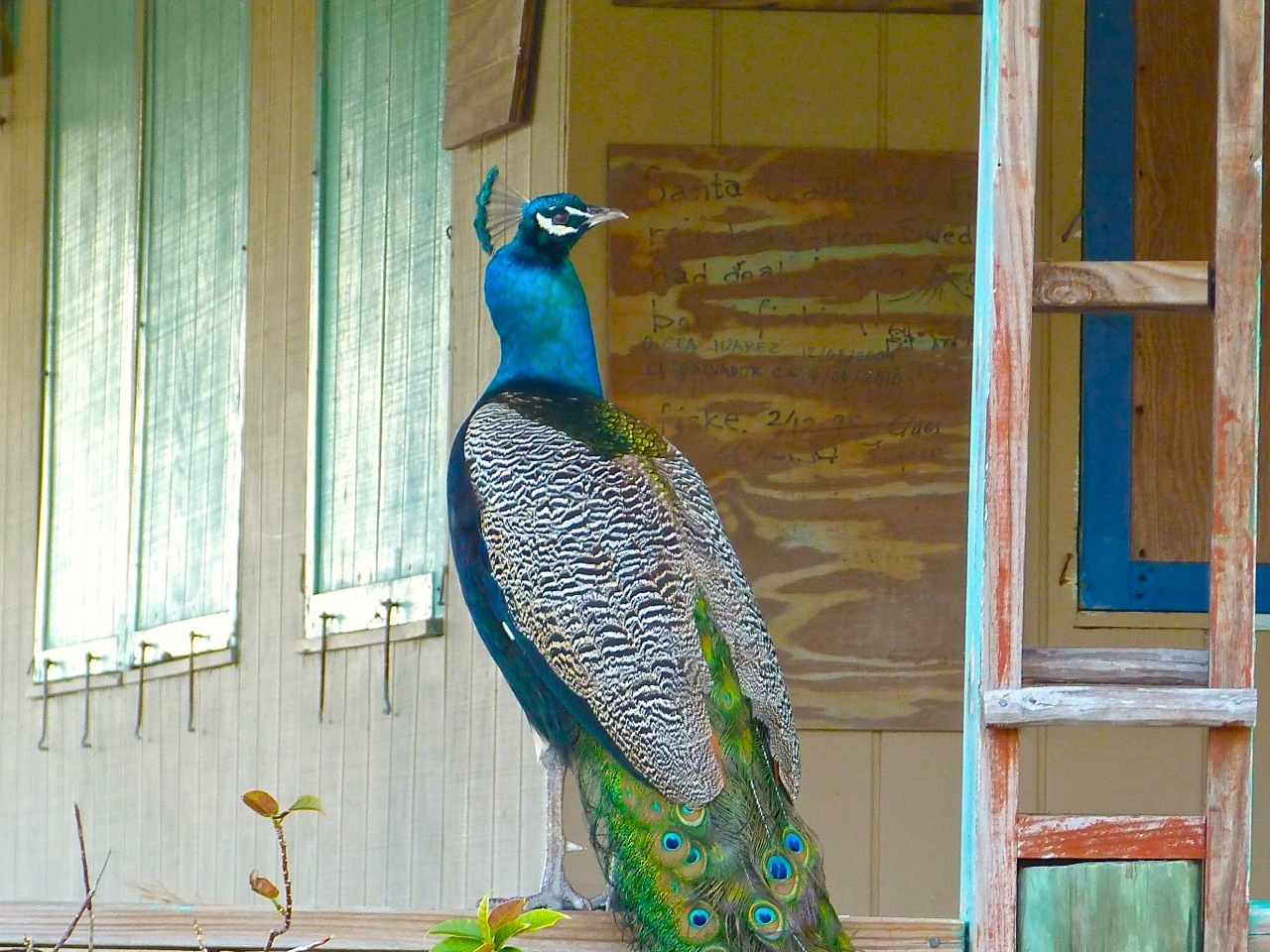
The most surprising sight is of peafowl – the collective name for peacocks, peahens and peachicks. This flamboyant species was introduced many years ago as a decorative addition to the Lodge and its grounds. It was part of a wider, more ambitious scheme to reintroduce a breeding flock of flamingoes to Abaco. These had regrettably become extirpated from the island and then, as now, were only found as vagrant individuals. The attempt sadly failed and the flamingoes disappeared. Rumours sometimes surface of breeding pairs far out on the Marls or in a secluded place in the far south of the island, but these remain unsubstantiated. The peafowl introduction, however, has proved to be an unexpected success.

Peacock, with bizarre graffiti addressed to Santa ClausFeral Peacock, Casuarina, Abaco (Keith Salvesen)

Peahen in the garden of “Different of Abaco”Peahen, Casuarina, Abaco (Sally Salvesen)

Peacocks swaggering in the grounds: note the fully feathered tails (cf photo #2  above)Peacock, Abaco (Nina Henry) 1Peacock, Abaco (Nina Henry) 3

The compilation of “THE BIRDS OF ABACO” involved plenty of decision-making. We obviously couldn’t feature every recorded species – for a start, for many species there were merely reports of sightings but no (or only inadequate) photographs. One interesting factor for consideration was the stage at which an introduced species becomes bird OF Abaco as opposed to a non-indigenous bird that happens to be IN Abaco.

1610795_10152397349768720_8542277013207863186_n10345763_10152398046303720_8315779621600880072_n10524740_10152397350053720_2270412119470328978_n10306740_10152397712968720_2616129013617847509_n    10647090_10152398010393720_8268702990135221309_n

Rhonda Pearce’s Peafowl Gallery (NB peachicks included!) above demonstrates why this species was an easy choice for inclusion. On the assumption that the original birds were brought to the Lodge in the late ’80s or early ’90s, the chicks you see here must be several generations down the line. A breeding population has been established in the wild, as the grounds of D of A have become. The evidence is that it is spreading slowly – across the road, further into the settlement at Casuarina and recently even further afield.

Celia Rogers photographed this cluster of peahens in Casuarina – but the two males were on the road to Cherokee, maybe 3 or 4 miles distance to the north as the peacock struts

Peahens, Casuarina (Celia Rogers)Peacocks (Cherokee Road)  Abaco (Celia Rogers)

So that’s how the feral peacocks of Abaco come to be classified (in a purely unofficial way) as birds OF Abaco for the purposes of the book**. Once they would have been viewed as pets – like the muscovy ducks that can be found in a few places, Gilpin Point for example. But in the wilderness that Different of Abaco has become for many years, the descendants of the original peacocks are breeding contentedly, expanding their population, and are wholly unreliant on human intervention. Verily feral, in fact.

**That, and the fact that Mrs RH borrowed my camera and undeniably took the best photos of the male and female birds (#1 and #4 above), as seen on pp 70-71 of the book…
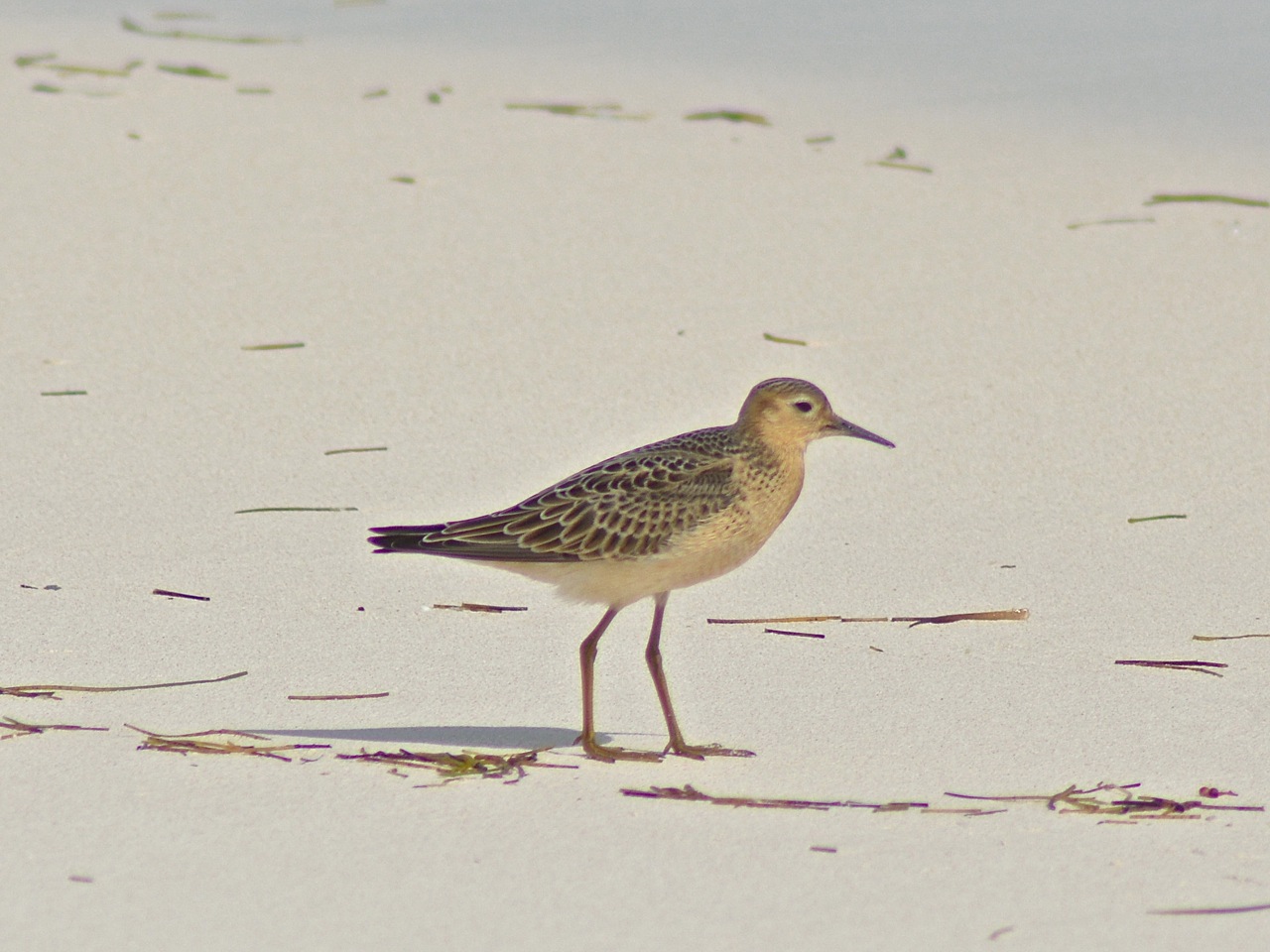
Peacock, Abaco (Liann Key Kaighin) 1

D of A: the glory daysimg0049

Credits: Mrs RH (1, 4); RH (2, 3); Nina Henry (5, 6); Rhonda Pearce (7 – 11); Celia Rogers (12, 13); Liann Key Kaighin (14); added final image π “The Abacos” online