

BAHAMAS REEF FISH (38): SPOTFIN BUTTERFLYFISH
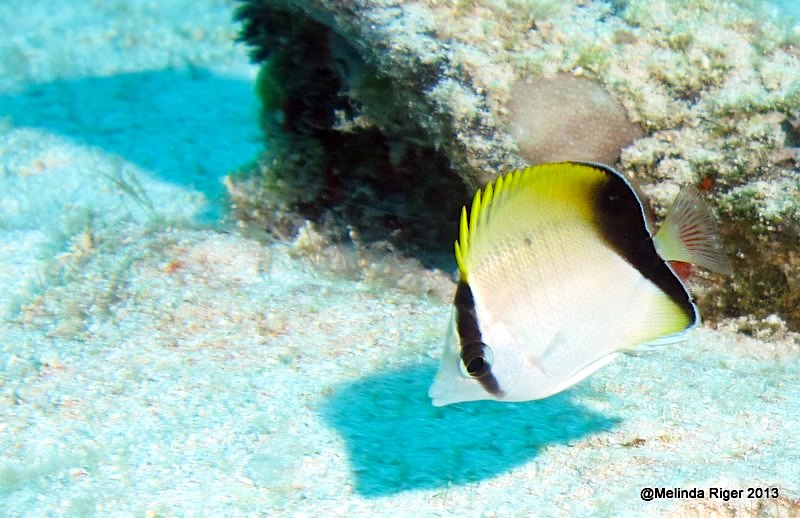
Butterflyfishes are a large family of mainly colourful small fish somewhat like mini-angelfish. The spotfin butterflyfish (Chaetodon ocellatus) is one of several types of butterflyfish found in the western Atlantic Ocean; and one of half a dozen or so you are likely to see nosing around the coral reefs of the Bahamas.
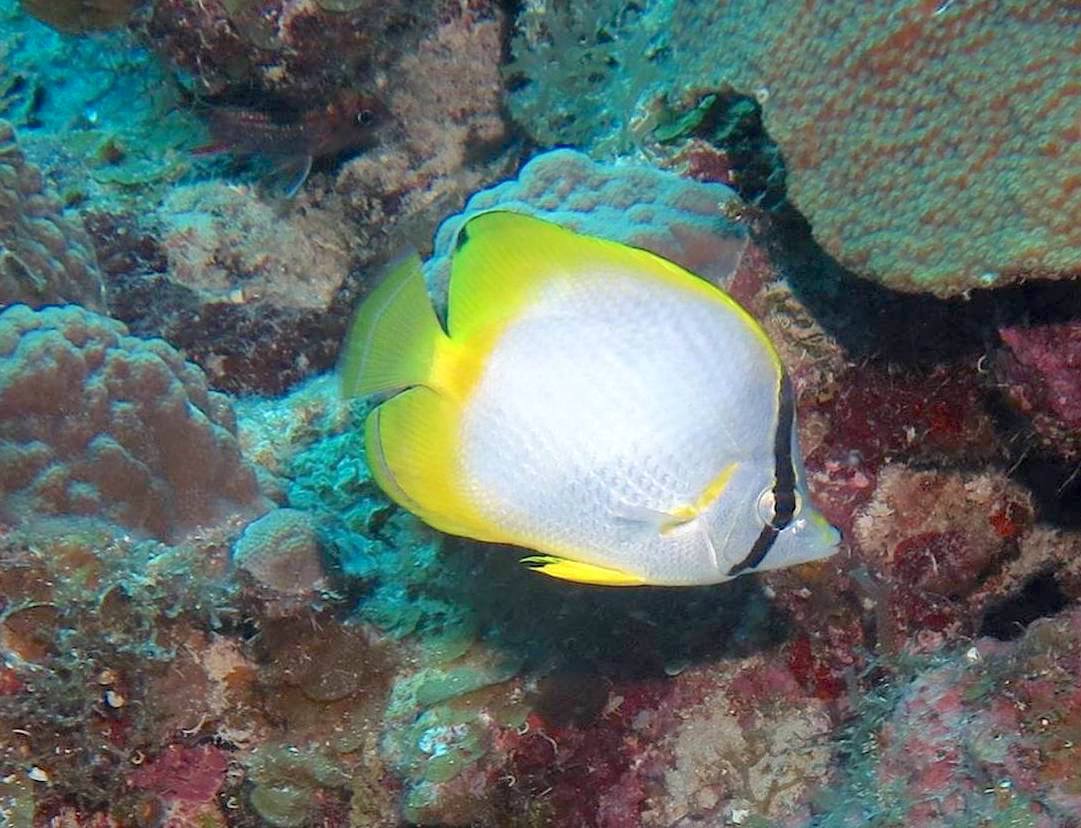
The name ‘spotfin’ derives from the dark spot on the dorsal fin. At the front end, there is a distinctive black vertical stripe that passes right through the eye. Combined with the vivid colouring, predators are in theory confused or warned off. The spotfin’s superpower (on a modest scale) is that at night, a change of appearance occurs in adults. The dark patch on the dorsal fin increases in size, and dark bands appear on the body. This seems to be in order to provide further protection during the darker hours.
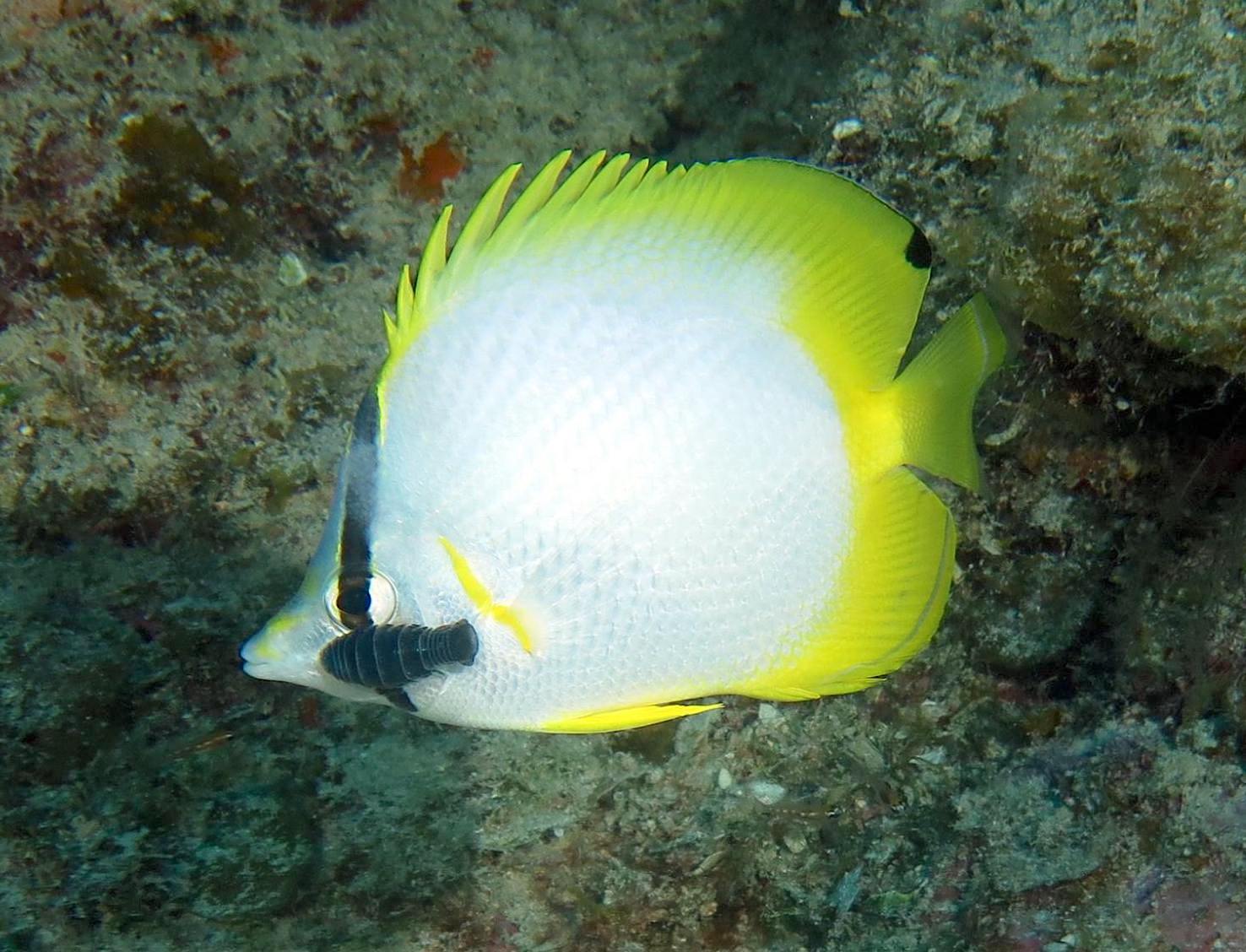
The spotfin above has an isopod attached to it, a type of crustacean with a segmented body. Primitive fossils of these creatures have been dated back some 3m years. Want to know want this one is up to? These things “are mostly external parasites of fish or crustaceans and feed on blood, having piercing and sucking mouthparts and clawed limbs adapted for clinging onto their hosts”.
Soldierfish photobombs a spotfin. Or maybe it’s vice versa?
Reading about this particular species of butterfly fish, I discovered that the spotfin “is very common and very hard to maintain in a tank” – as if the two facts are somehow connected. So might they be coarse or vulgar, and thus unsuitable companions for better bred and perhaps sensitive aquarium fish? As it turns out, it may be because they are vulnerable to predation, and so can coexist only with peaceable tank friends.
Spotfins are perfectly happy swimming upside down; and their party trick apparently is to rise to the surface and squirt a jet of water in the air. Sadly, I couldn’t come up with a photo of this…

RELATED POSTS
Credits: All fab photos by Melinda Riger / Grand Bahamas Scuba































































 ROLLING HARBOUR ABACO
You must be logged in to post a comment.