Unknown's avatar

LA SAGRA’S FLYCATCHER: SMALL TYRANTS ON ABACO


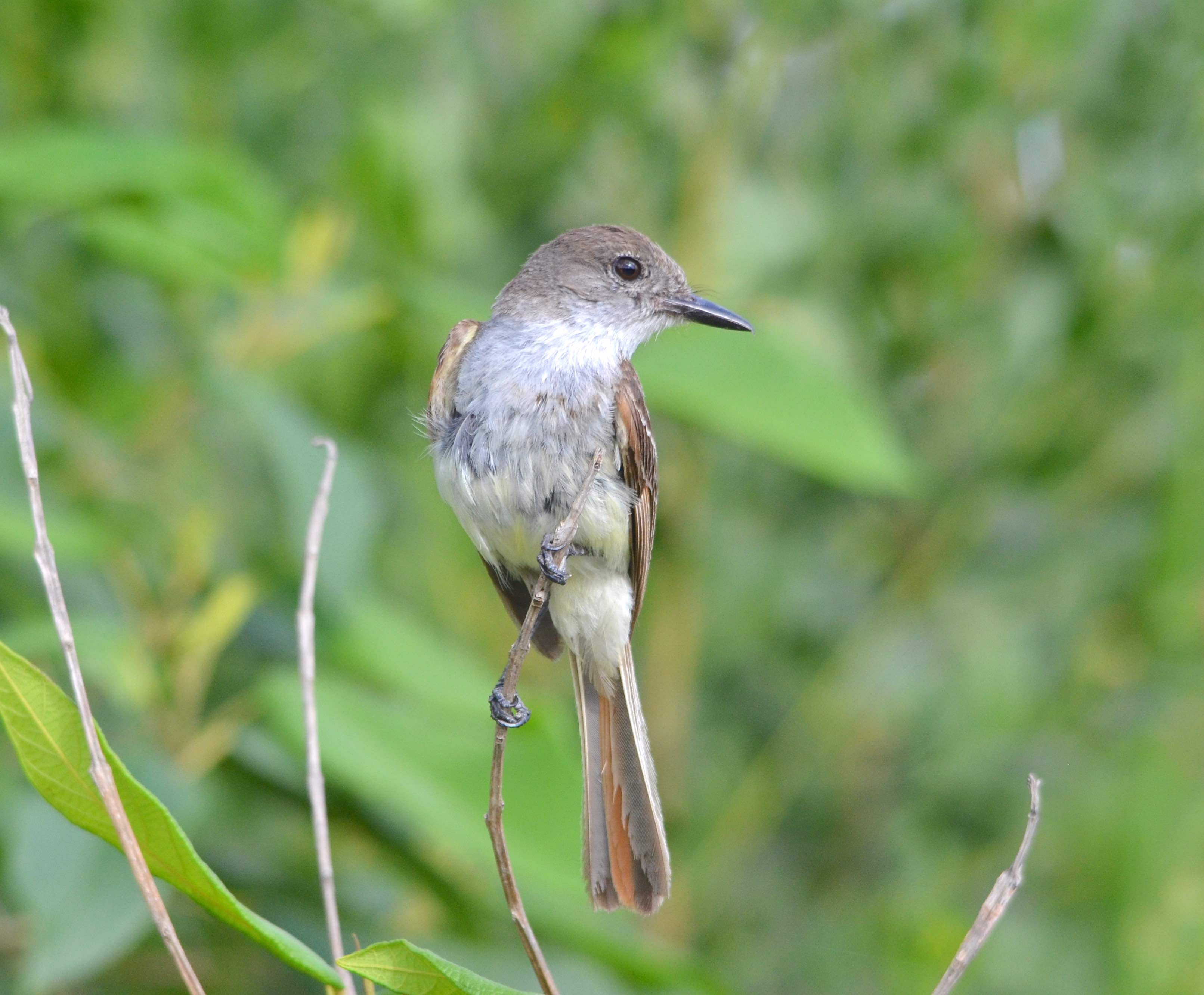
La Sagra's Flycatcher, Abaco - Gerlinde Taurer

LA SAGRA’S FLYCATCHER: SMALL TYRANTS ON ABACO

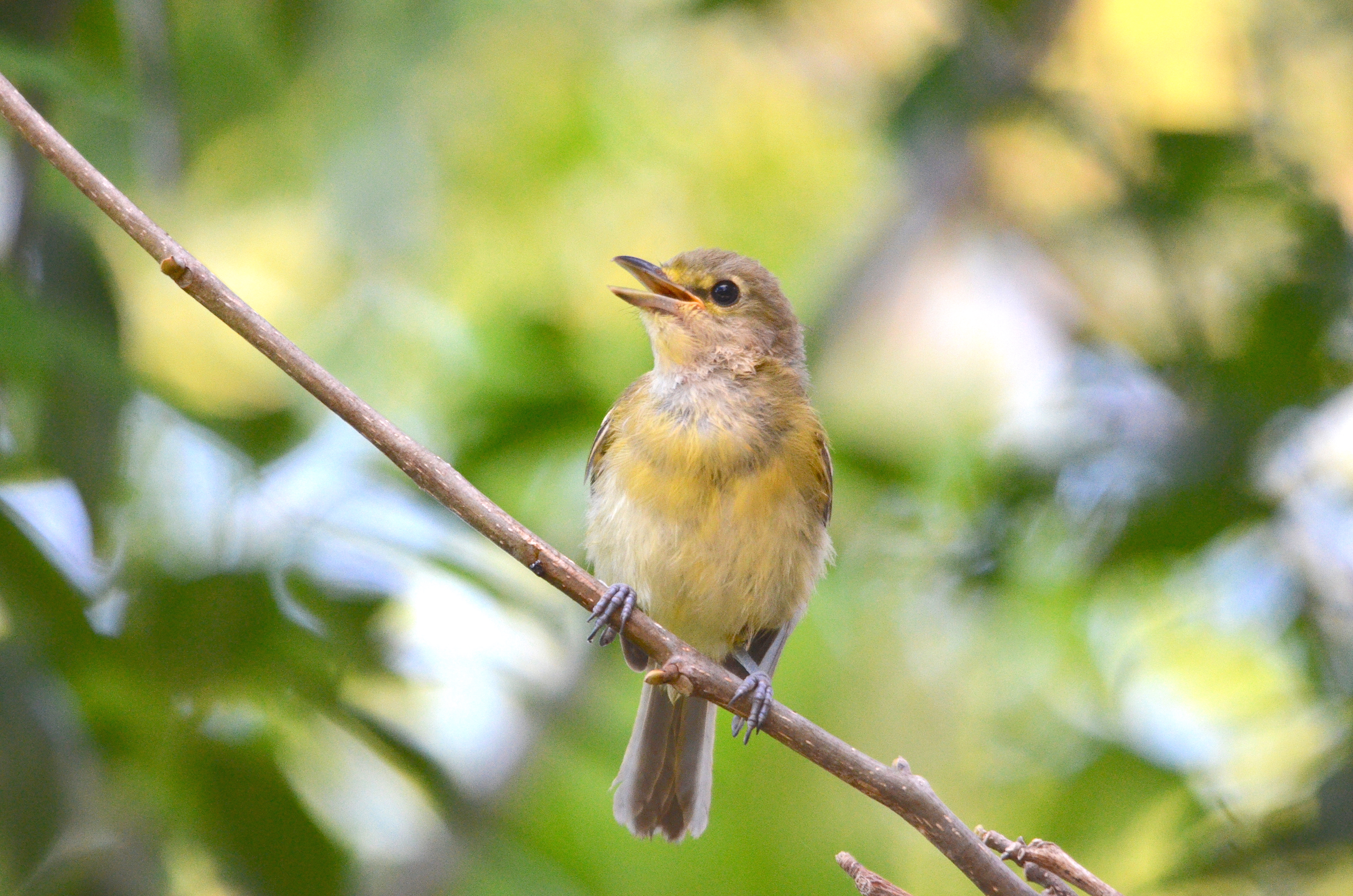
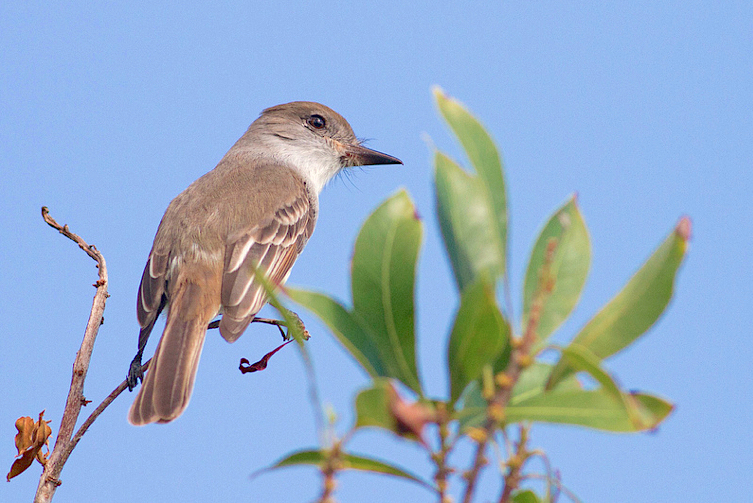
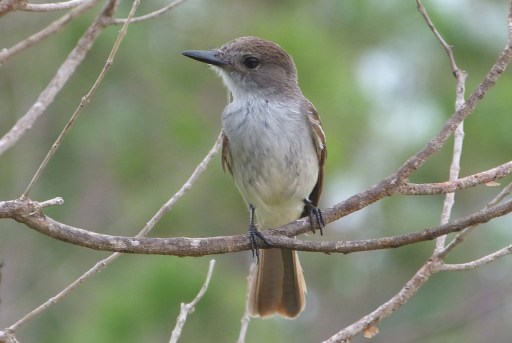
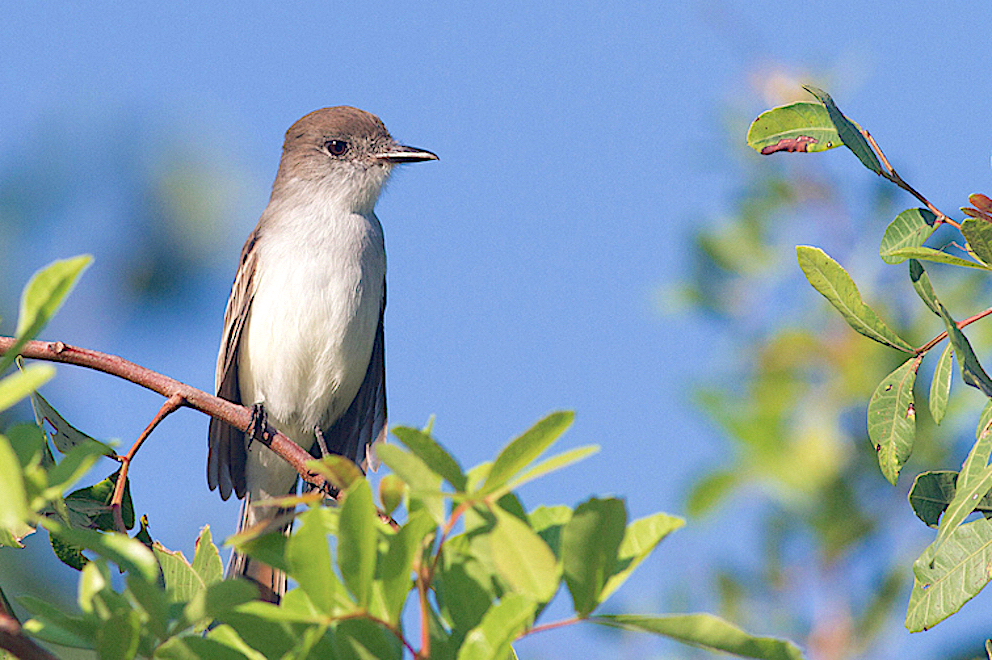
The LA SAGRA’S FLYCATCHER (Myiarchus sagrae) is a common resident breeding species of flycatcher on Abaco, and these very pretty small birds can be seen in many habitats – pine forest, scrubland, coppice and gardens, for example. They are insectivores, as the name suggests, but they also eat seeds and berries. 

La Sagra's Flycatcher, Abaco - Tom Reed

As a ‘tyrant flycatcher’, this little bird is a member of the large passerine order that includes kingbirds, pewees and phoebes, with which they are sometimes confused. I last wrote about LSFs in the infancy of this blog, illustrated with my own rather… ahem… ‘simple’** photos. Time to revisit them and to do them justice with some new, improved images.

‘Simple’ photo from a less complex era, taken with a 2mp ‘Cheepo’™ cameraLa Sagra's Flycatcher, Abaco - Keith Salvesen

Magnificent photo by Gelinde Taurer that you can actually enlarge (click pic see?)La Sagra's Flycatcher, Abaco - Gerlinde Taurer

Unlike many bird species, adult LSFs are very similar in appearance in both sexes. Whatever the gender, they are sometimes confused with their cousins the Cuban Pewees, but those have a very distinctive eye-crescent.

Cuban Pewee – note eye-crescent, absent in the LSFCuban Pewee, Abaco - Keith Salvesen

Both species have a tiny hook at the end of the (upper) beak – to help trap insects, I assumeLa Sagra's Flycatcher, Abaco - Tom Reed

Another thing to notice about LSFs is the amount of rufous brown in their plumage, particularly on the wings and tail – and even at the base of the beak. This coloration is absent from their larger cousin kingbirds, the loggerhead and the gray.La Sagra's Flycatcher, Abaco - Charles SkinnerLa Sagra's Flycatcher, Abaco - Charles Skinner

WHAT SHOULD I LISTEN OUT FOR?

“A high pitched single or double noted sound described as ‘wink’... ” Or it might be ‘bip‘. Or ‘weep‘. Or (on one recording I listened to, complete with sonograph) it sounded like ‘chi-chitty chew‘. But it may have been a misID.

 Hans Matheve @ Xeno-Canto

A hint of a crest is visible in this photoLa Sagra's Flycatcher, Abaco - Peter Mantle

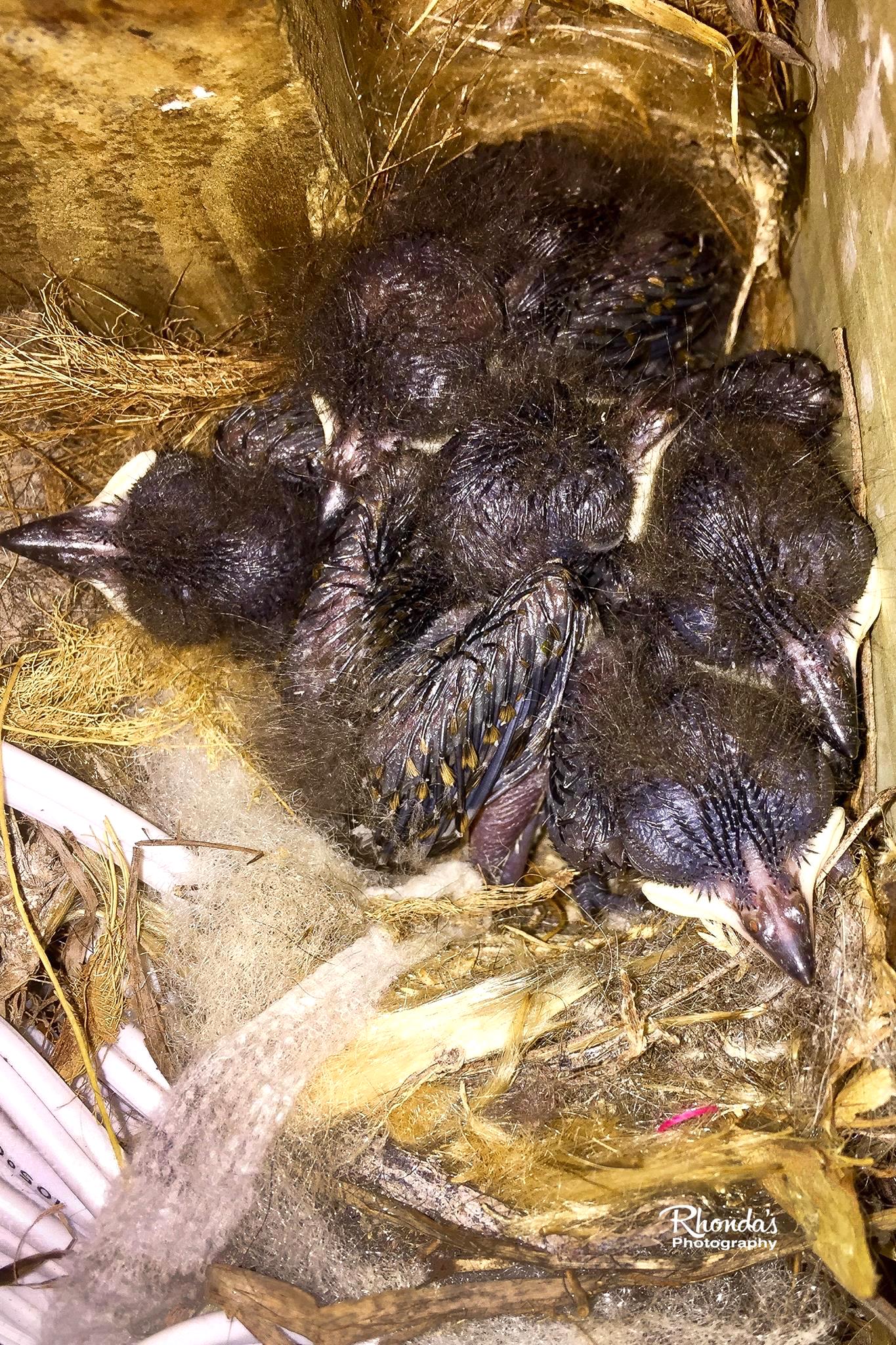
ANY IDEA WHAT LA SAGRA CHICKS LOOK LIKE?

Well, as it happens, yes. By good fortune Abaco photographer and piping plover monitor Rhonda Pearce happens to have had a nest at hand this very season. So, happy to oblige… La Sagra's Flycatcher chicks in nest, Abaco - Rhonda Pearce

WHO OR WHAT IS A ‘LA SAGRA’ WHEN IT’S AT HOME?

Mr La Sagra was a multi-talented Spanish botanist. Ramón Dionisio José de la Sagra y Peris (1798–1871) was also a writer, economist, sociologist, politician, anarchist, and founder of the world’s first anarchist journal El Porvenir (‘The Future’). At one time he lived in Cuba and became director of Havana’s Botanical Garden. His name lives on more significantly in ornithological than in anarchist circles (actually, ‘anarchist circles’ must be a contradiction in terms… that should be ‘anarchist disorganised squiggles’)

I note in passing that La Sagra is a provincial area in Spain, an Italian festive celebration, a chocolatier, and a small comet… All these meanings may have to be negotiated online before you get to the flycatcher…

Ramón Dionisio José de la Sagra y Peris

La Sagra's Flycatcher, Abaco - Tom Sheley

Continuing this blog’s philatelic natural history theme, here are stamps from the Cayman Islands and Cuba featuring the La Sagra’s Flycatcher. The Cuban stamp commemorates the death of Juan Gundlach, the man who chose La Sagra’s name to bestow on this bird. And Gundlach’s name lives on in the Bahama Mockingbird Mimus gundlachii…La Sagra's Flycatcher, Abaco - Keith Salvesen

** ‘Simple’, as in ‘not completely disastrous for an amateur effort but frankly not the sort of standard we have come expect around here’.

Photo Credits: Gerlinde Taurer (1, 4); Tom Reed (2, 6); Keith Salvesen (3 [!], 5, 12); Charles Skinner (7, 8); Peter Mantle (9); Rhonda Pearce (chicks) 10; Tom Sheley (11); Ramon and stamps, open source

Unknown's avatar

MAPPING ABACO, BAHAMAS & FLORIDA IN THE c17


MAPPING ABACO, BAHAMAS & FLORIDA IN THE c17

I once wrote a post tracking the history of Abaco in general, and Hole-in-the-Wall in particular, in historic maps spanning 4 centuries. You can read it HERE.

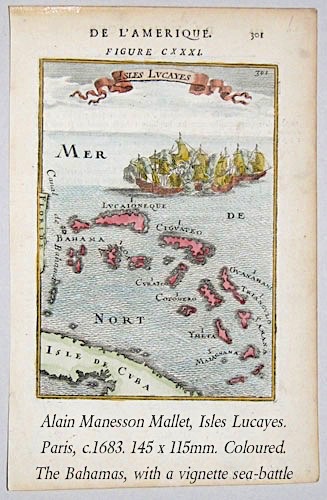
The post includes a map of the Bahama Islands (‘Isles Lucayes’) by the early French mapmaker Alain Manesson Mallet, published in Paris in 1683. The header shows a later hand-coloured version. The splendid original looks like this. Now that is a map (as Crocodile Dundee once said of a knife)

The recognisable shape of Abaco – I. Lucaioneque – lies weirdly on its side beneath the billowing sails of the vignette, with Grand Bahama (Bahama) between it and Floride. The confusingly named and sized I. Abacoa is Andros; I. Ciguateo is Eleuthera; and I. Curateo is Exuma. I. Guanahani was the landfall for Columbus, and was renamed by him San Salvador. New Providence may or may not be made from the two similar shapes shown west of Andros (at the time, the Lucayan name was Nema). And so on. There’s more to be said on the historic Lucayan names in the Bahamas – maybe one day I’ll get round to saying it…

For now, I want to move on to another map by Mallet that I have just come across. Published in c.1684 (sources vary), this map is of Florida (and beyond), titled rather strangely in German but otherwise in French. Here, the Isles Lucayes are very much a side-feature, reduced to the West End of Grand Bahama, and 4 unspecified small cays like the 4-dot on dice. There’s no embellishment besides the simple ‘draped’ title, the trees and mountains – no fleet of ships in full sail in the Gulf of Mexico. To be honest, though dated within a year or 2 of each, other the maps are so entirely different in style and even script that they could easily have been made by different people. In fact I had to double-check the authorship with various online sources.

Florida is named Tegesta, for the Native American tribe that lived in the region. The name still exists in the form Tequesta, in Palm Beach County Fl. You can read more about this fascinating tribe, their lives and cultural practices HERE. Just two settlements in Tegesta – St. Augustine and St. Mathieu – are shown. I’ve gone rather off-piste from my usual Bahamian territory, but this early map provides an enjoyably interesting cartographic overview of the known topography / geography of the day.

Approximate territory of the Tequesta in the 16th centuryFLMap-Tequesta-tribe2.PNG

If the earth had an uniform surface like a ping pong ball there would be nothing for a geographer to study. But it is not thusly uniform – the actual earth has numerous variations of every sort studied by geographers. Topography maps the physical surface, and geology explores the underground features. But the geography of the earth includes many other [factors] like economics, weather, climate, social distribution, trade, etc.  At the core of geography is cartography – which is the mapping of all these things. Rudolf G. Barton, BA in geography UCB (Commercial Pilot ret.)
Credits: the maps are open source – frequently passed around on the internet and impossible to locate the originator; Wiki for the diagram; Geography lesson, as shown above…
Unknown's avatar

JAW-DROPPING: GROUPERS AT THE CLEANERS


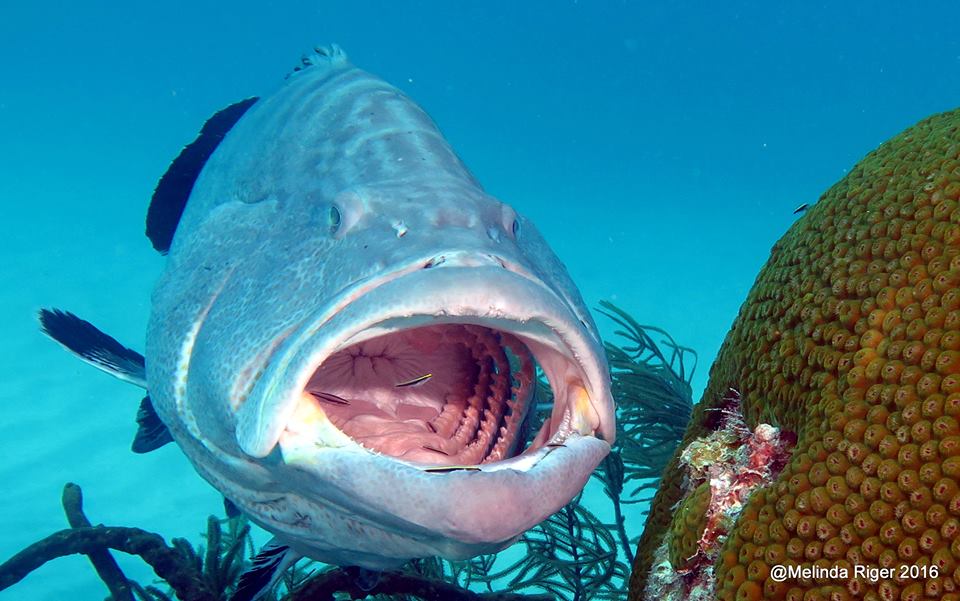
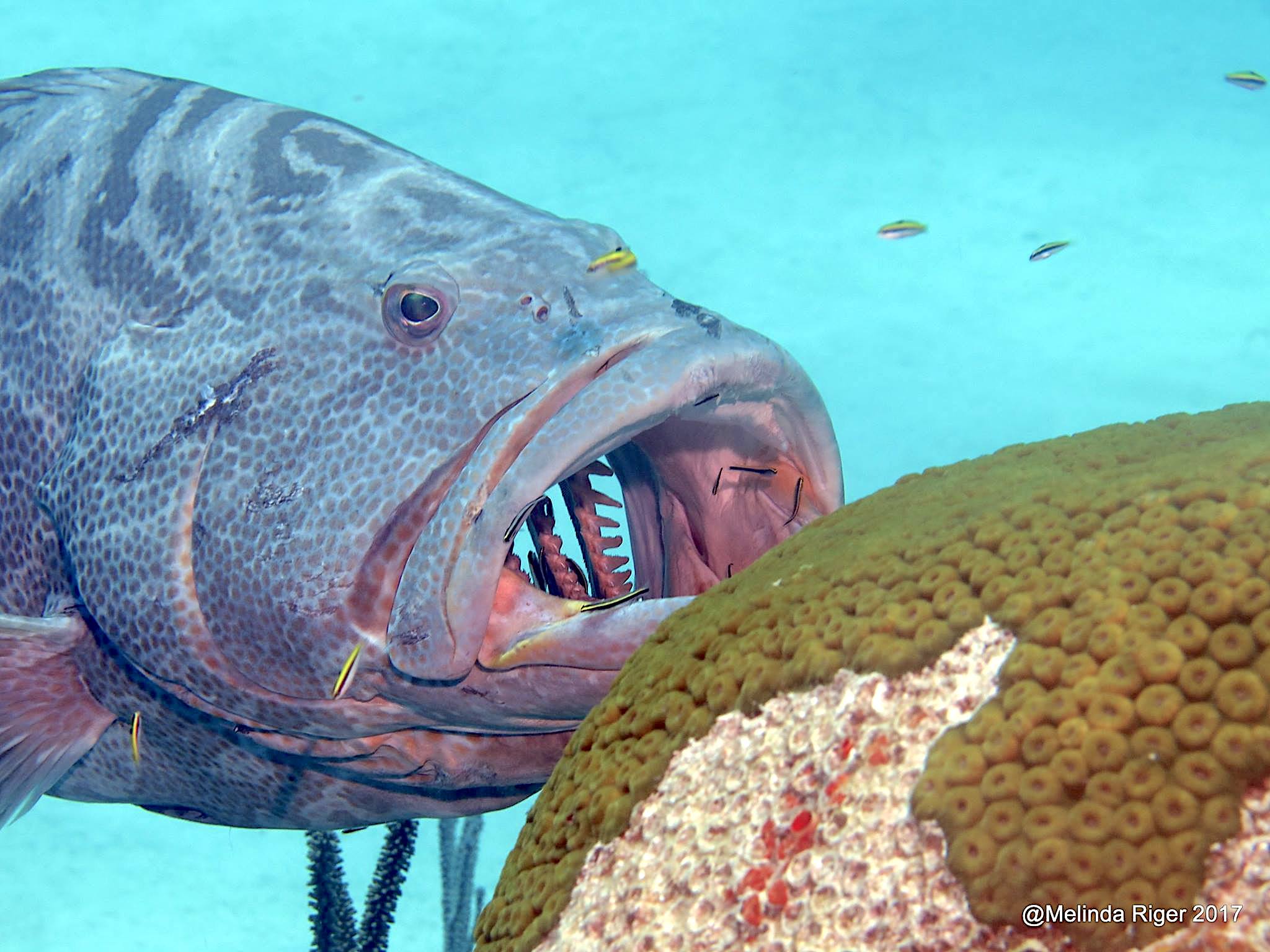
Grouper at cleaning station - Melinda Riger @ GB Scuba

JAW-DROPPING: GROUPERS AT THE CLEANERS

Grouper at cleaning station - Melinda Riger @ GB Scuba

In some of these photos you’ll notice tiny fish attending to the grouper. These are CLEANERS and they are an essential part of the bodily and oral hygiene routine for larger fish species. The big fish call in at so-called CLEANING STATIONS, where the tiddlers remove parasites and dead skin, and polish up the gills. They will even enter the fish’s mouth to pick bits from between its teeth – the deal being that they will not be eaten. This mutually beneficial arrangement is called ‘cleaning symbiosis’ and is carried out by (for example) gobies, wrasses and cleaner shrimps.

Pederson’s cleaner shrimps and cleaner wrasseGrouper with Peterson's cleaner shrimps and wrasse - Melinda Riger @ GB Scuba

Some of these photos show groupers with open gills as well as open mouths, an invitation to the cleaners to do their work. I’d intended to write about how and why gills work but I’ve thought better of it. There’s a lot of detail about chemical exchange involved that, when I looked more closely, seemed rather dull… and therefore outside the remit of this blog, which includes trying to avoid ‘dull’. If you really want to know more, Wiki has a good article HERE. Good luck with that….

Credits: All photos Melinda Riger, Grand Bahama Scuba

Unknown's avatar

ONE GOOD INTERN DESERVES ANOTHER (Part 1)


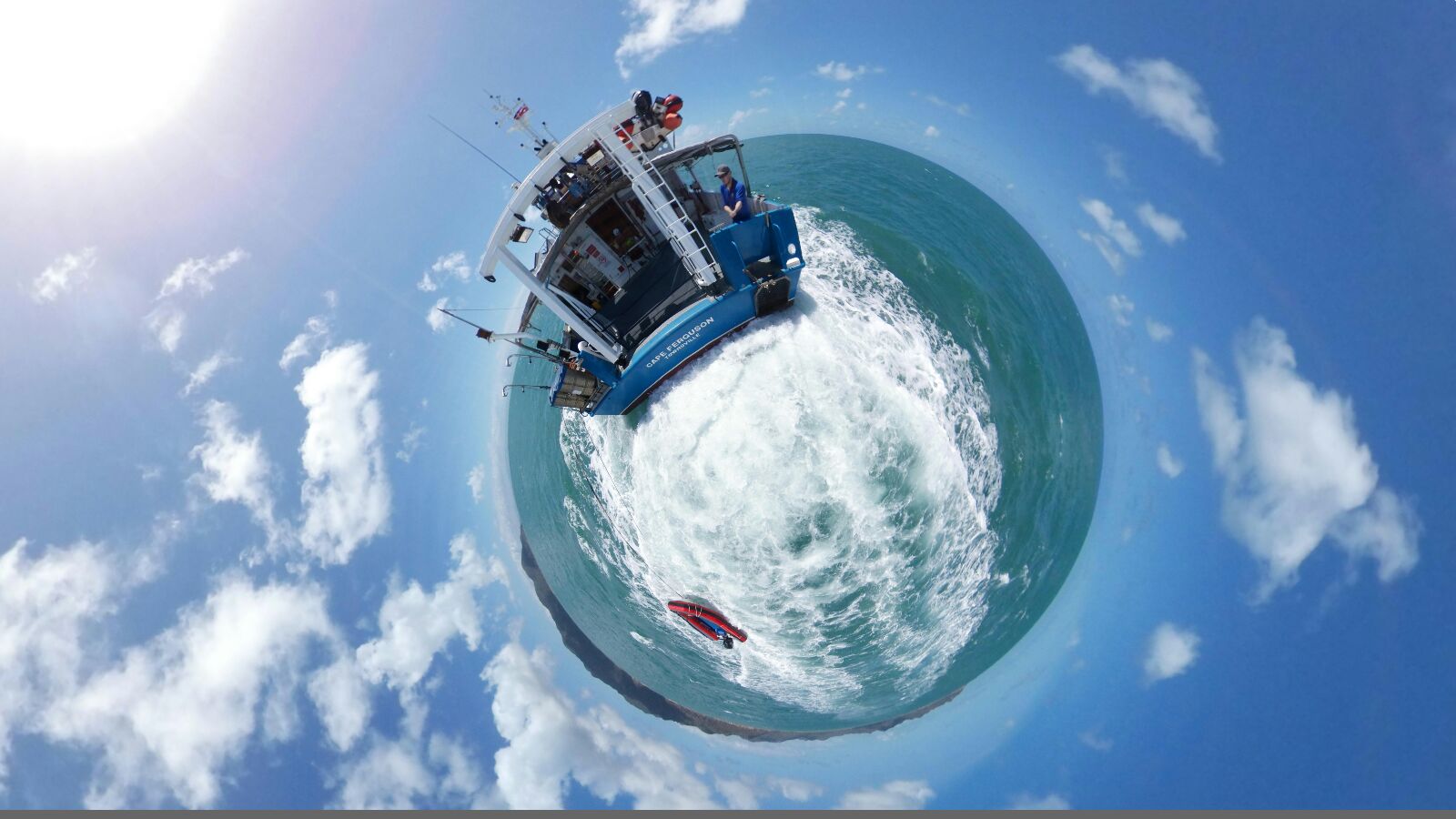
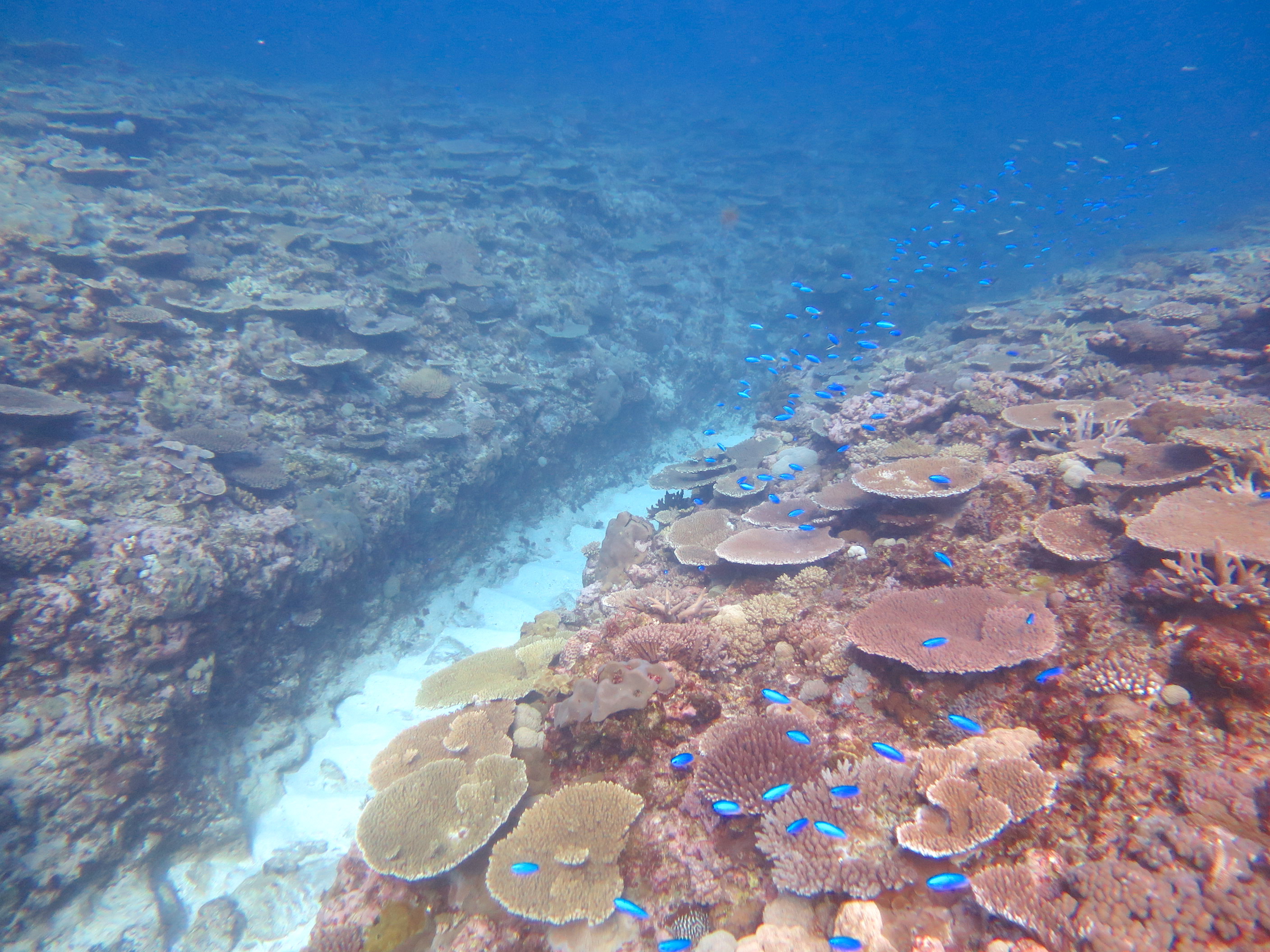
Coral reef research, Australia (Oscar Ward)

ONE GOOD INTERN DESERVES ANOTHER (Part 1)

Four years ago a young English friend of ours, Oscar Ward, was lucky enough to be offered an internship with the Bahamas Marine Mammal Research Organisation (BMMRO). At the time, he was post-school, and waiting to start a degree course in marine biology at university. He had no practical experience at all, so he had to progress from the menial tasks (scraping barnacles off the bottom of the research boat) to the more adventurous (whale poop-scooping) to the scholarly (collection and analysis of samples and data, including audio file matching of whale calls for identification). The need for hard work, concentration and accuracy were made clear from the outset… and as you will see, Oscar’s short internship has stood him in very good stead during his university course.

Oscar weekending at Gilpin Point – self-sufficientBMMRO Internship - weekend off (Oscar Ward)

From a promising start on Abaco, and with 2 year’s study behind him, Oscar is currently spending the 3rd year of his 4-year course in Australia, working with The Australian Institute of Marine Science. He has been involved in a number of complex projects focussed on corals and reef life – as we all know, a matter of huge concern – and the projections for the future of the reef systems in a time of warming seas and raised acid levels. Oscar also assists PhD students, for example examining the damaging effects of parasitic worms on coral; and the effect of changing light conditions on corals.

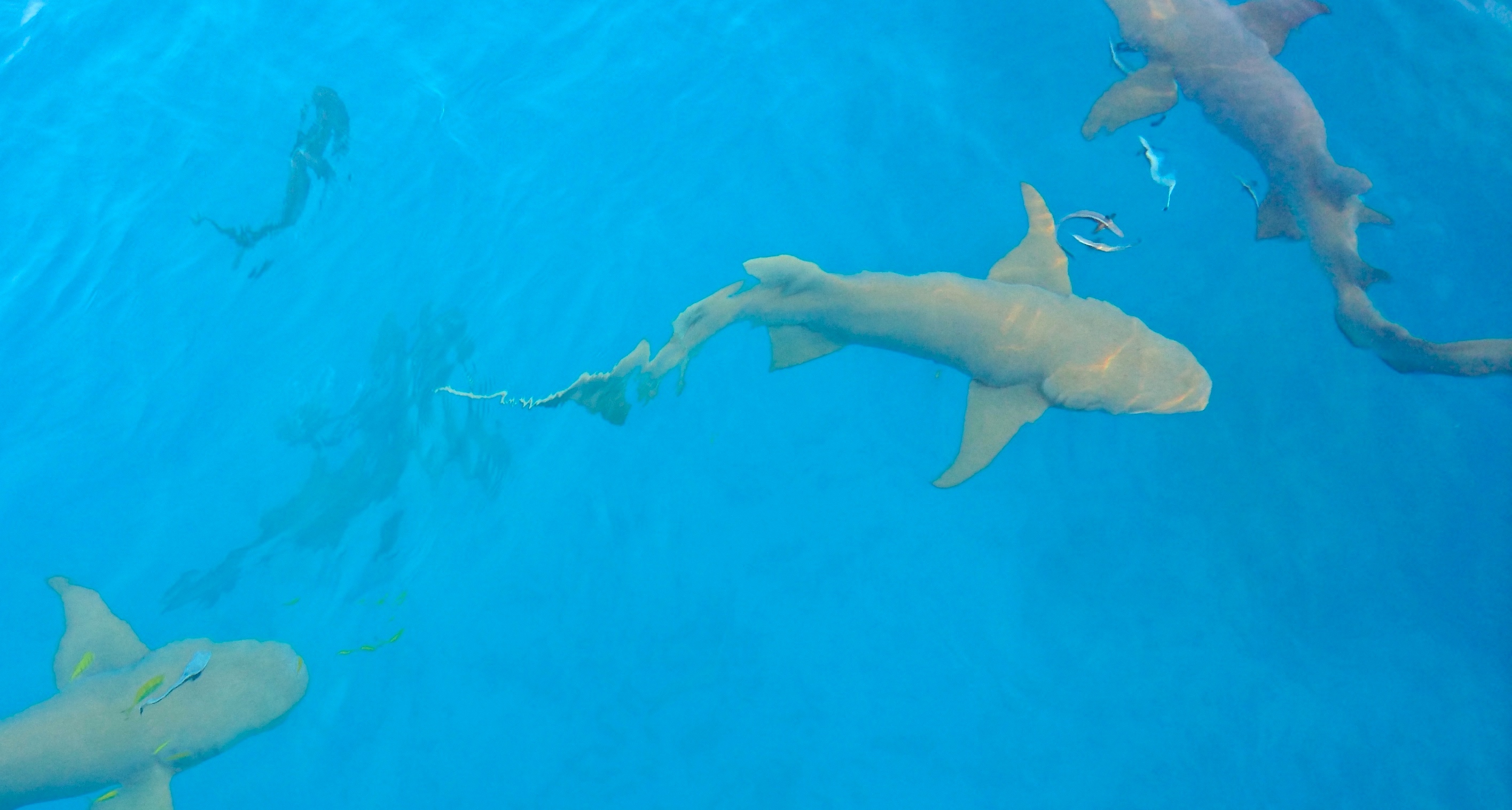
Nurse Sharks, Great Barrier Reef (Oscar Ward)

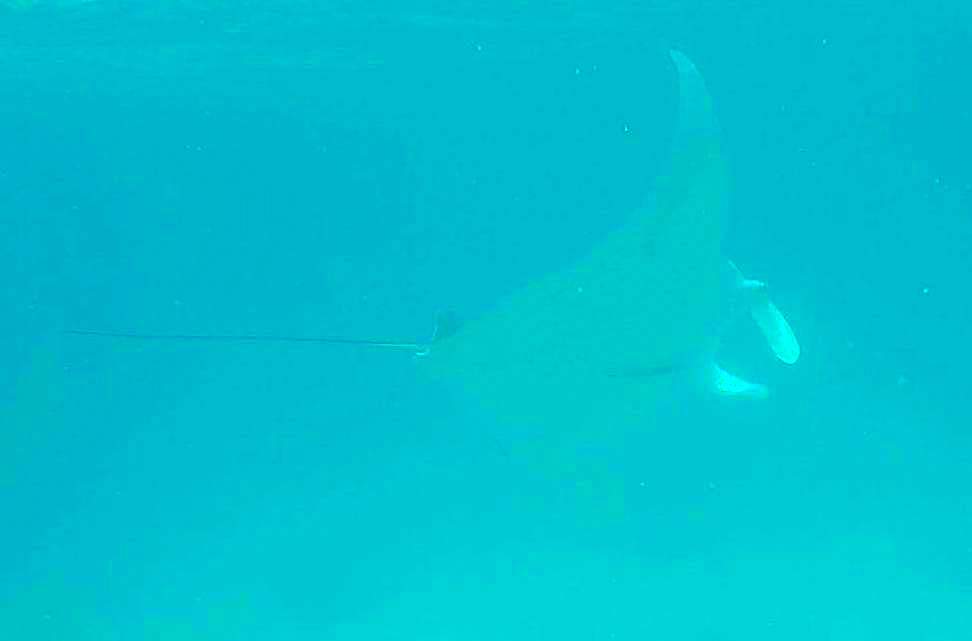
Much of Oscar’s time has been spent doing fieldwork. Often he is at sea, monitoring and collecting samples in the Southern Great Barrier Reef, diving two or three times a day. This work is often carried out in restricted or preservation zones, and with ever-present manta rays, sharks and sea turtles around him.

Manta Ray, Great Barrier Reef (Oscar Ward)

Right now Oscar is involved with the investigations into the recent bleaching events, work that is at the forefront of serious concern for the GBR and far beyond. I have recently corresponded with him – he has definitely not forgotten that his grounding for the fieldwork and studies that he is engaged in – and very likely his career – came from his time on Abaco and the lessons he learned during his time with the BMMRO at Sandy Point.  (In part 2: another good intern, currently at Sandy Point)

Coral reef research, Australia (Oscar Ward)

All photos: Oscar Ward (the header image is taken from a research vessel – no idea how, maybe a drone with fish-eye lens?)

Unknown's avatar

‘EAGLE EYES’: NEW BALD EAGLE SIGHTING(S) ON ABACO


Bald Eagle - Poquoson, Virginia - Brian Lockwood

‘EAGLE EYES’: NEW BALD EAGLE SIGHTING(S) ON ABACO

In March, I posted about a bald eagle spotted by a Delphi fisherman out on the Marls near Big Pine Point. He didn’t know it at the time, but it was a very rare sighting of this magnificent raptor. The bird is classified for Abaco as a V4, which is to say an extremely unusual vagrant (but not quite a ‘one-off’ V5). 

Bald Eagle - Poquoson, Virginia - Brian Lockwood

You can read all the details HERE, but to summarise, the only previous Abaco sightings were 3 years running over 2000 – 2002, at the end of each year. The annual visits over such a short time-span suggest that this may have been the same bird each time. So this March’s report is possibly the second bald eagle ever seen on Abaco… and on any view, the fourth.

Bald Eagle - Poquoson, Virginia - Brian Lockwood

Now comes the news of another bald eagle sighting in the last couple of days on the Marls, this time by Danny Sawyer while out fishing. The bird was sighted approx 1.5 miles west of the airport / 2 miles south of Bustic Point. Danny’s FB post has unsurprisingly attracted quite a number of comments – and even some more sighting reports. Here’s the list so far…

BALD EAGLE SIGHTINGS REPORTED ON ABACO SINCE c1950 (= ‘ever’)

  • 2000 December, location unknown – info from Woody Bracey
  • 2001  December – Chicken Farm area – Betsy Bracey
  • 2002 December – over Marls opposite Treasure Cay – Woody Bracey
  • 2004 Autumn – south of Lynard Cay (after hurricane) – Cheryl Noice
  • 2014  Date unknown – circling the power plant – LC
  • 2017  March – Big Pine Point, Marls – James Cheesewright
  • 2017  Early May – Power plant area – LC
  • 2017  May – Marls – Danny Sawyer
  • 2017  May  – Lubbers / Tahiti Beach area – ‘Kelly’s mom’
  • 2017  September – Cross Harbour – Carol Rivard Roberts (with photo)

Italics indicate a report in comments on Danny’s FB page; Blue = added reports

Bald Eagle - Poquoson, Virginia - Brian Lockwood

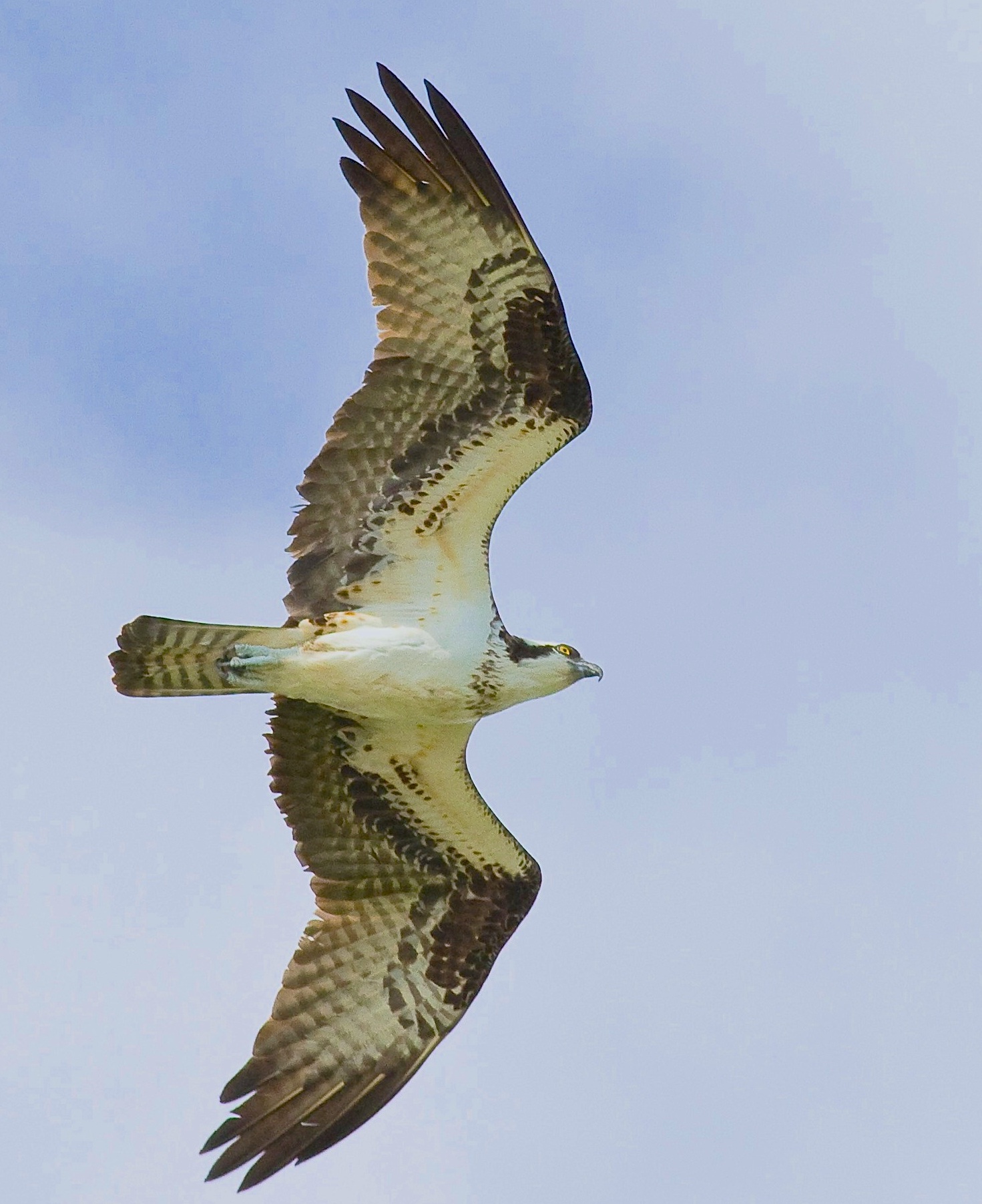
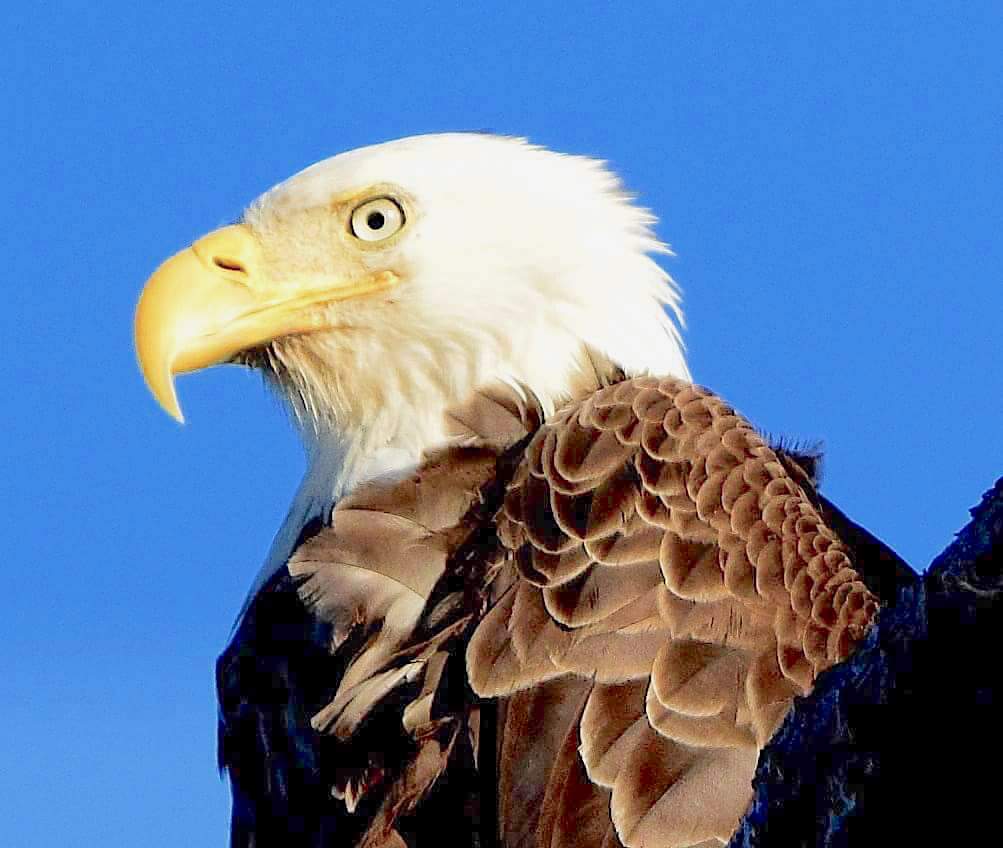
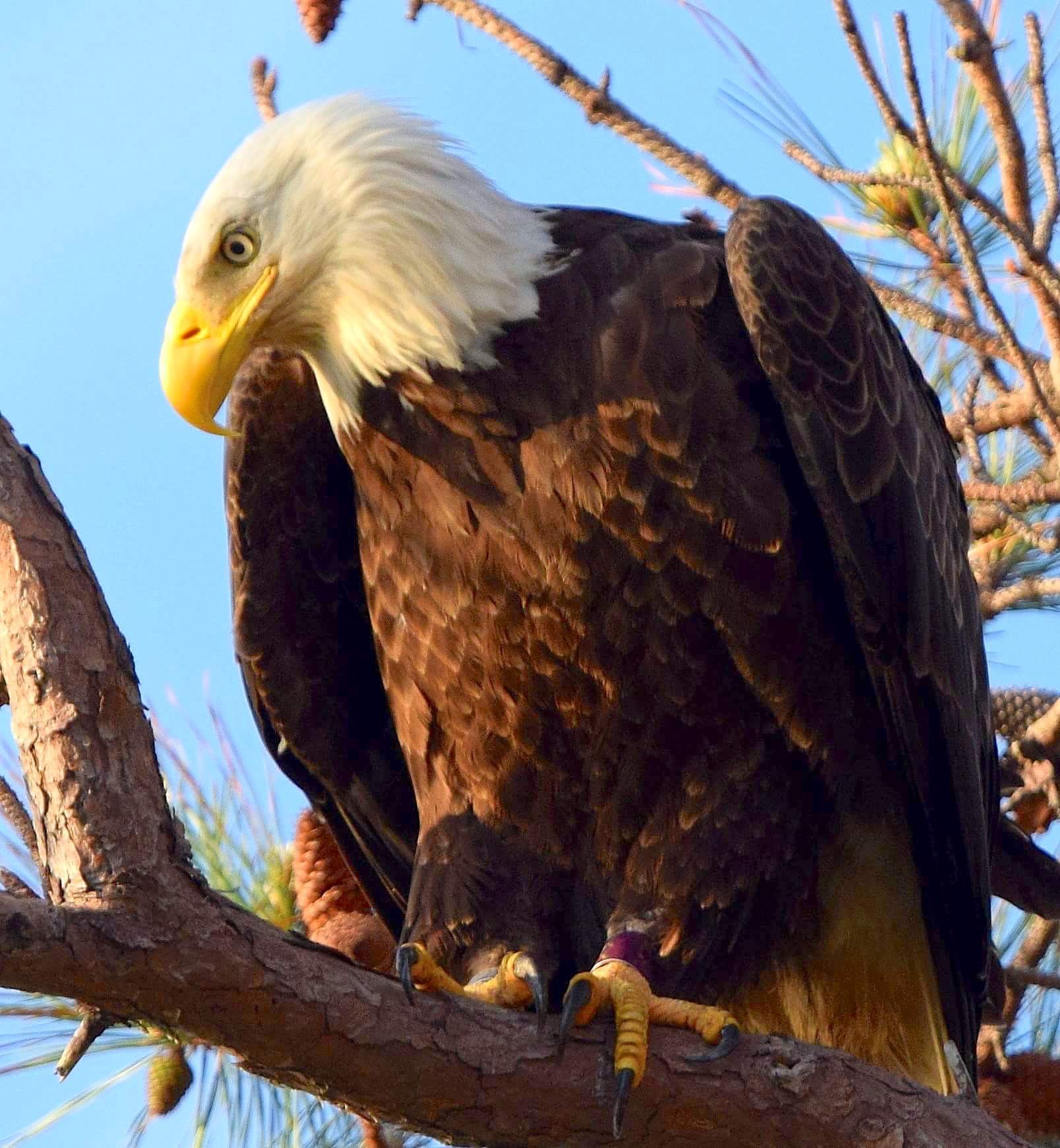
So far, however, there has been no photograph of an ‘Abaco’ bald eagle. It’s fair to say that the official verification of a sighting generally requires a photograph – more especially where there is a risk of confusion with a native bird (eg some warblers). But there really is no mistaking a bald eagle. For obvious reasons it is surely one of the most recognisable raptors of all. And the only Abaco candidates for confusion would be a turkey vulture or an osprey. A quick look shows very little scope for confusion with either:

Bald eagle in flight. Note: dark brown, head & tail bright white, huge yellow beak and feet Bald Eagle In Flight By Carole Robertson (Wiki)

Turkey vulture & Osprey for comparison. No comparison, in fact

Turkey Vulture, Abaco - Bruce Hallett  

 ABACO BALD EAGLE CHALLENGE

How about being the first person to capture an Abaco bald eagle on film digital media? The kudos! The traditional Rolling Harbour bottle of Kalik is already on ice in the expectation of a usable image, together with the accurate location… Failing that, all reports welcome anyway.

Bald Eagle - Poquoson, Virginia - Brian Lockwood

Credits: all brilliant eagle photos by very kind permission of Brian Lockwood, taken in his backyard in Poquoson, Va. except eagle in flight, Carol Robertson (wiki); TUVU (Bruce Hallett); Osprey (Craig Nash); Amusing Cartoon, Birdorable

Unknown's avatar

LIZARDS OF ABACO: ANOLES (AND DEWLAPS)


Anoles of Abaco, Bahamas (Rhonda Pearce)

LIZARDS OF ABACO: ANOLES (AND DEWLAPS)

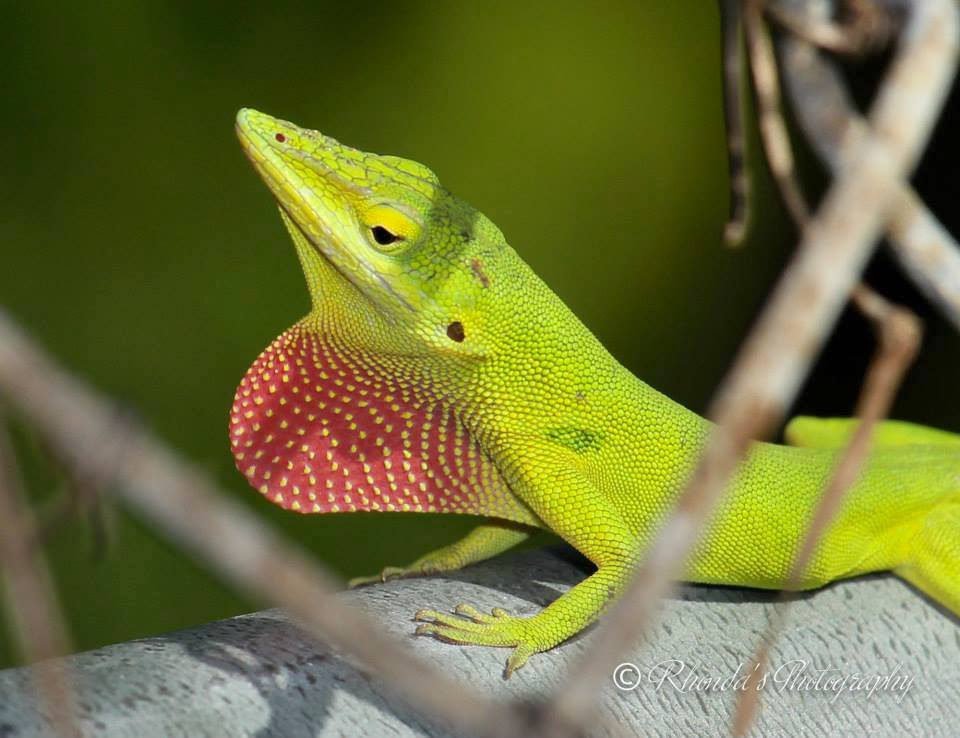
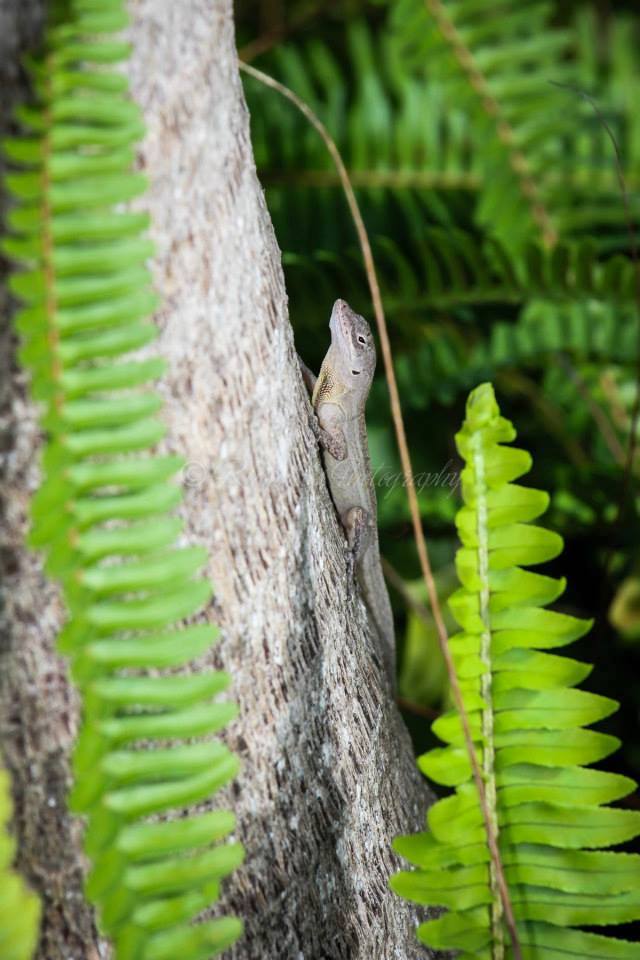
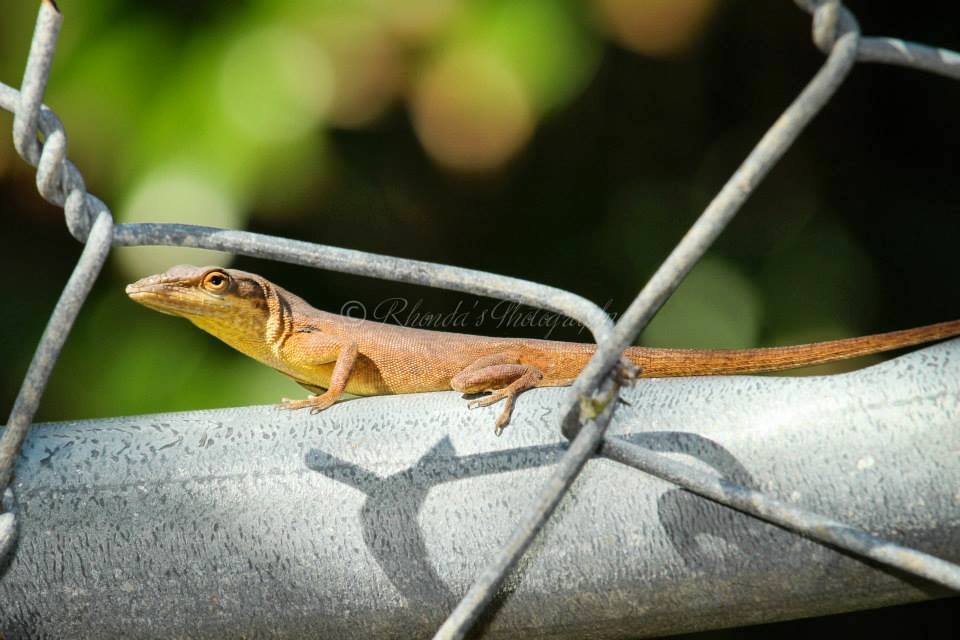
Everyone knows about CURLY TAIL LIZARDS. Everyone loves them and their little ways. The other lizards that may be found on Abaco – the anoles, green and brown – are easier to take for granted. Unless, maybe, you see one displaying its DEWLAP. These are essentially folds of neck skin that are seen in many creatures – even large ones like the moose – and which in some species are inflatable / retractable. 

Abaconian Rhonda Pearce has taken some excellent photos of anoles recently. By oversight I have never given anoles a day in the sun in this blog before, and it’s high time I did (see above re overlooking anoles in favour of curly tails…). First, here are some impressive dewlaps to admire.

Anoles of Abaco, Bahamas (Rhonda Pearce)Anoles of Abaco, Bahamas (Rhonda Pearce) Anoles of Abaco, Bahamas (Rhonda Pearce)

And here are a few green and brown anoles hanging out on trees and leaves in an anole-type way. In a couple of these images, you can see the dewlap in its non-display mode. They are all just… lizards. Non-scary, non-venomous, non-poisonous little guys that are probably a peripheral part of everyone’s experience, but which really deserve a closer look. 

Anoles of Abaco, Bahamas (Rhonda Pearce) Anoles of Abaco, Bahamas (Rhonda Pearce) Anoles of Abaco, Bahamas (Rhonda Pearce) Anoles of Abaco, Bahamas (Rhonda Pearce) Anoles of Abaco, Bahamas (Rhonda Pearce) Anoles of Abaco, Bahamas (Rhonda Pearce)

You can read more about anoles, including their sex lives, on the excellent Abaco Scientist’s site HERE

OPTIONAL MUSICAL DIGRESSION

The first time I heard the word ‘dewlap’ (misheard by the young me as ‘dewlat’) was in the mid-60s, in Georgie Fame’s excellent Ballad of Bonnie & Clyde. This song – and doubtless the film – was number 1 in the UK and maybe also the States. Famous too for such fine songs as ‘Yeh Yeh!’ and ‘Sitting in the Park’, Fame’s ‘Ballad’ is probably his best-loved song.

I assumed then that a ‘dewlat’ was some sort of valuable gold coin  – like a gold sovereign – that bank robbers put into a specially designed ‘dewlat bag’ to carry them away… Ah! The naivety of youth.

Bonnie and Clyde advanced their reputation

And made the graduation into the banking business

“Reach for the sky,” sweet-talking Clyde would holler

As Bonnie loaded dollars in the dewlap bag

Credits: all photos, Rhonda Pearce with thanks as ever; icecreammakesuhappy, youtube

Unknown's avatar

WATCHFUL TYRANT: A LOGGERHEAD KINGBIRD ON ABACO


Loggerhead Kingbird, Delphi, Abaco, Bahamas (Keith Salvesen)

WATCHFUL TYRANT: A LOGGERHEAD KINGBIRD ON ABACO

The Delphi Club on Abaco has a number of permanent residents (or by now – let’s be realistic – maybe their descendants). There’s the huge curly tail lizard that lives under the large stones by the outside staircase. There are the West Indian Woodpeckers that noisily nest in a box under the eaves of the verandah and produce 2 batches of shouty chicks each summer. And there is the silent sentinel – a loggerhead kingbird that spends much of its time in the trees and bushes at the far side of the pool.

Loggerhead Kingbird, Delphi, Abaco, Bahamas (Keith Salvesen)

It’s a good place to chose. The bird uses the tree branches and shrubs to ‘hawk’ for passing insects, suddenly leaving its perch to pounce, before returning to just the same place to eat its snack – classic flycatcher behaviour. I call it the ‘watchful tyrant’ because the kingbird is nearly always there. Somewhere. If you look carefully and wait patiently. He stays in the shade, so he’s not bright with sunlight (or P/shop) in these photos. This is just the way he is.

Loggerhead Kingbird, Delphi, Abaco, Bahamas (Keith Salvesen)

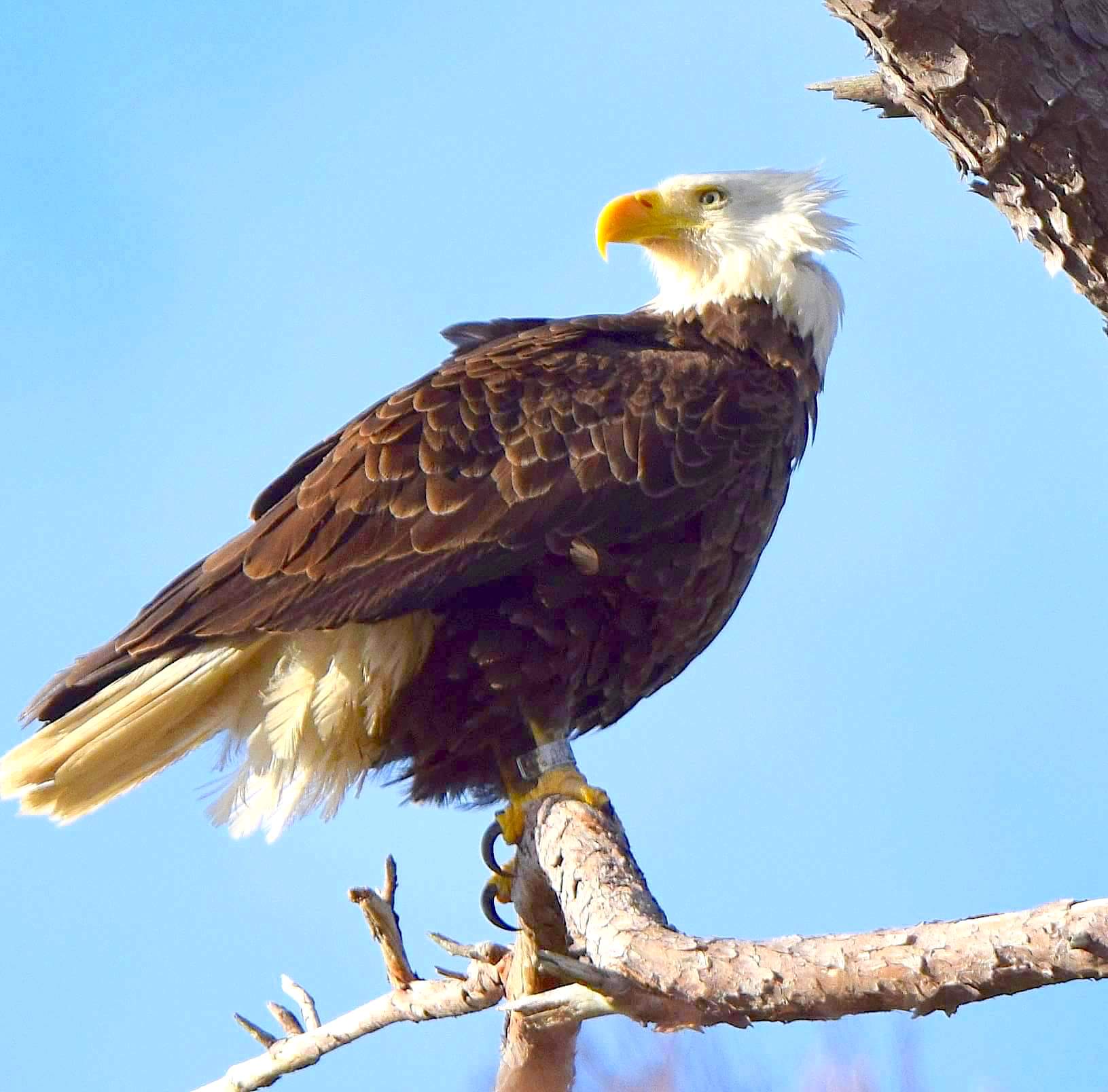
Kingbirds are of the family Tyrannidae and the genus Tyrannus. The ‘tyrant’ group includes a number of flycatcher species commonly found on Abaco: the KINGBIRDS (loggerhead and gray), the CUBAN PEWEE and the LA SAGRA’S FLYCATCHER being the most familiar. Note the hook at the end of the beak; and the yellowish tinge to the undertail area.
Loggerhead Kingbird, Delphi, Abaco, Bahamas (Keith Salvesen)

With the exception of the gray kingbird, the flycatchers named above are very common permanent breeders on Abaco. There’s probably one of them within 20 feet of your house right now. The gray, however, is a summer breeding resident. This is most helpful of it: if you see a kingbird between October and April, it will be a loggerhead. This gives you a 6-month window for near-certain ID.

Loggerhead Kingbird, Delphi, Abaco, Bahamas (Keith Salvesen)

IT’S SUMMER – SO HOW DO I TELL A LOGGERHEAD FROM A GRAY?

EASY. CLICK HERE

All photos: Keith Salvesen; Cartoon by the legendary Birdorable

Unknown's avatar

ABACO PLANTS & FLOWERS: AN ORCHID MYSTERY


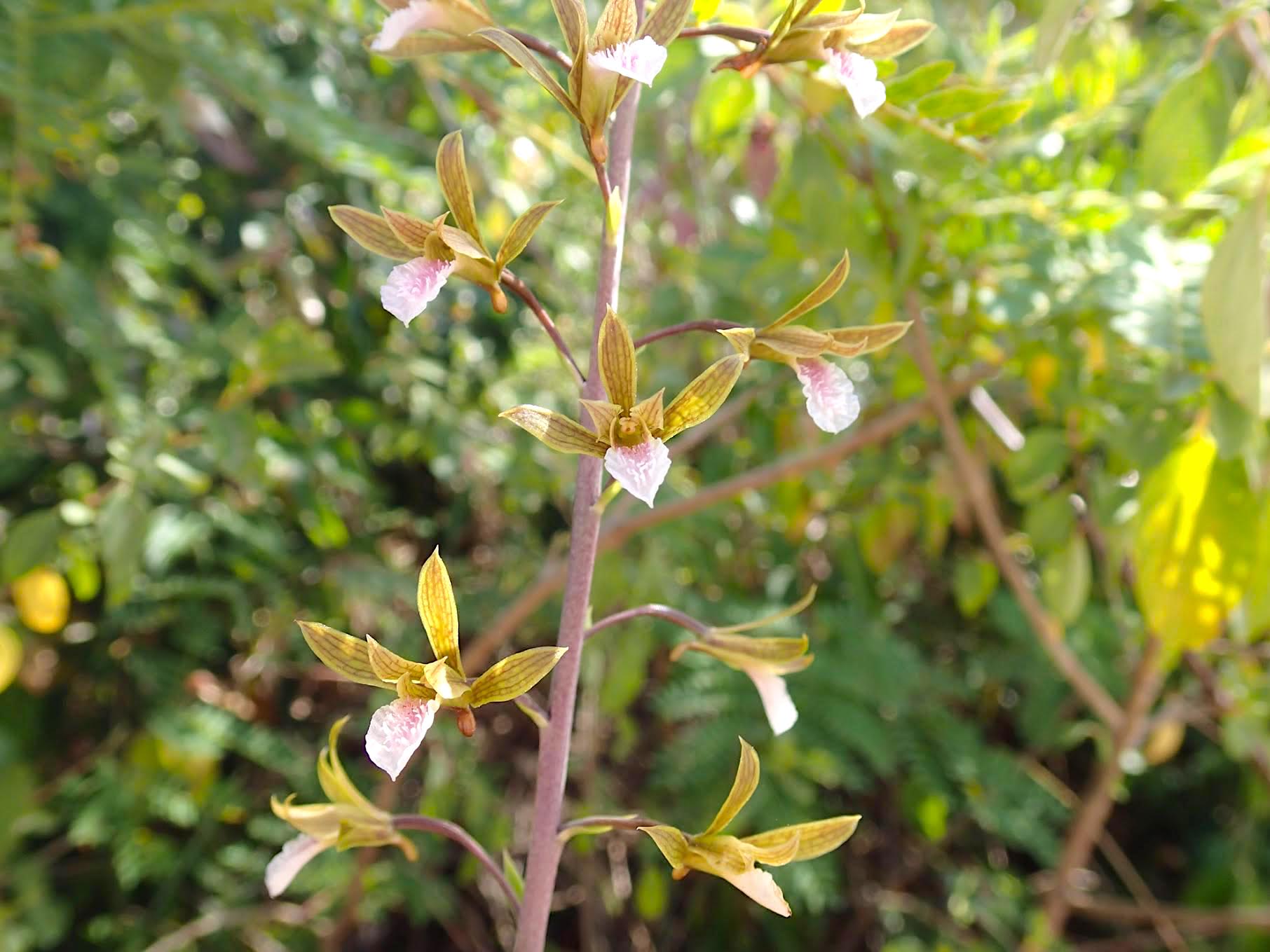
Orchid Eulophia graminea, Abaco, Bahamas (Lucy Davies)

ABACO PLANTS & FLOWERS: AN ORCHID MYSTERY

Recently I was contacted by someone who had found an unusual orchid on Abaco and wanted to find out more about it, starting with ID. Lucy, an English botanist who has been visiting Abaco with her husband for many years, discovered a strange wild orchid species that did not appear in any of her books. So she turned to Detective Harbour who, unknown to her, is mostly paralysed with hopelessness when it comes to plant ID (except hibiscus, obvs). But he can sometimes find the people who know these things…

Orchid Eulophia graminea, Abaco, Bahamas (Lucy Davies)

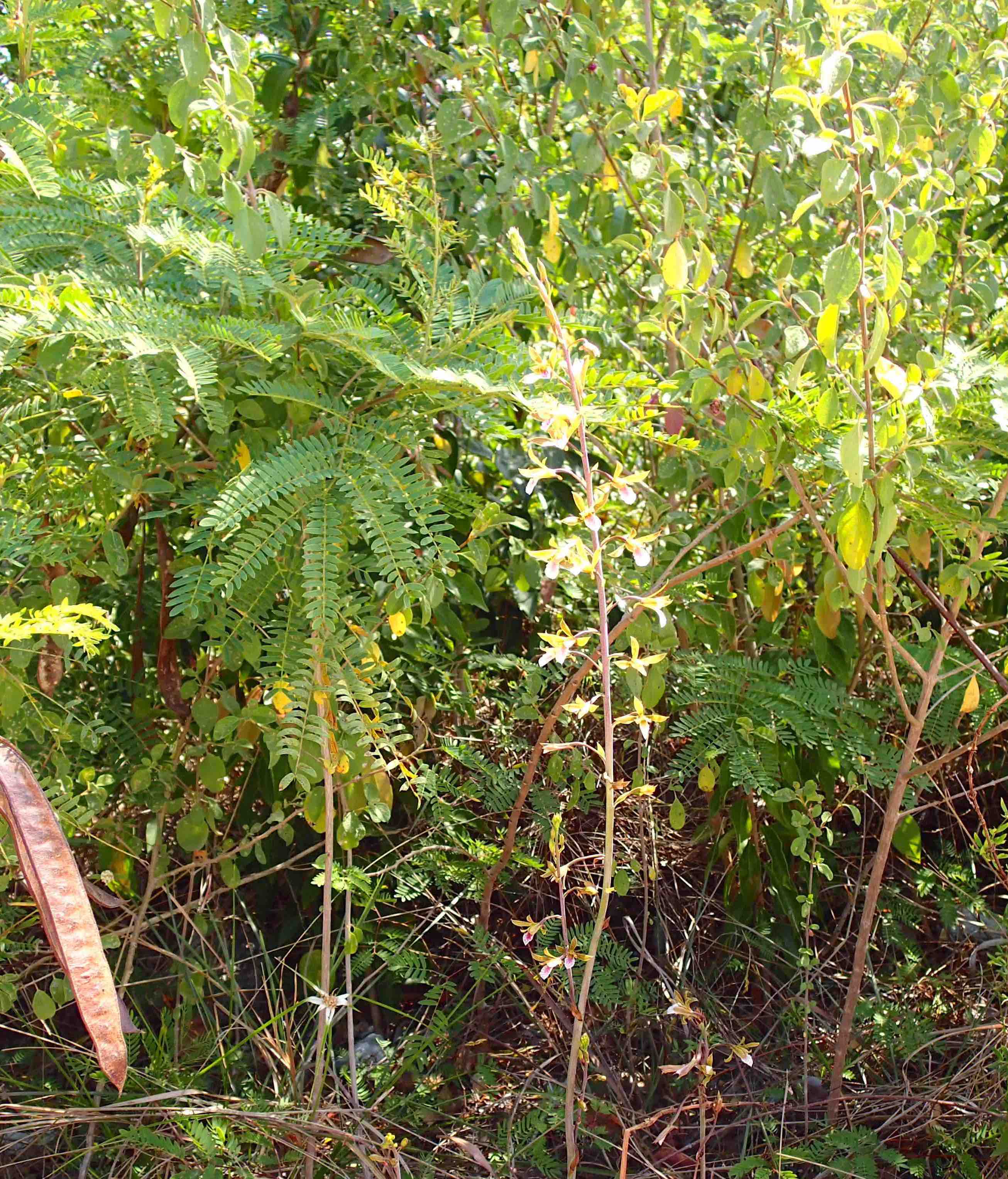
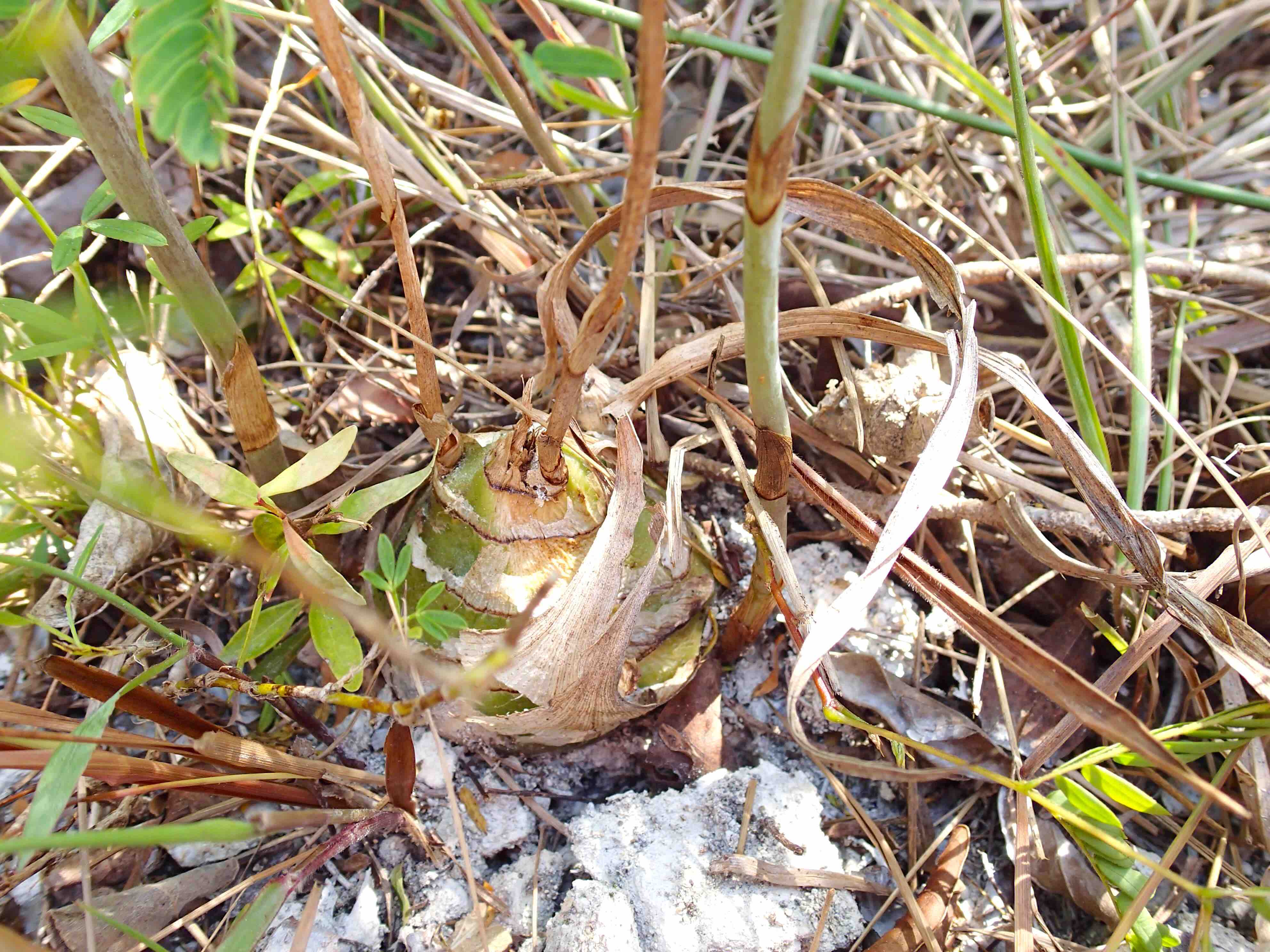
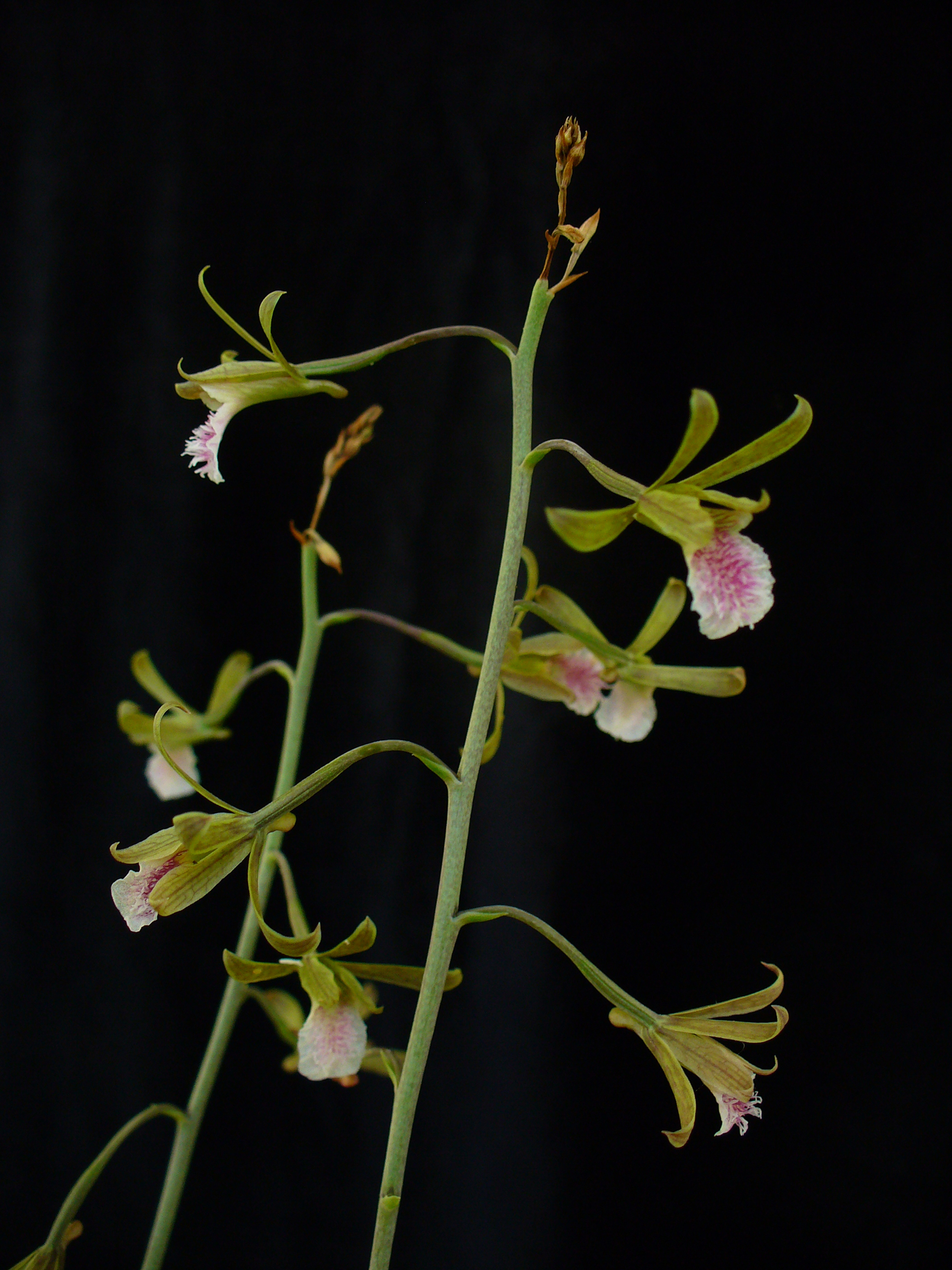
Lucy’s photos showed a striking, tall-stemmed plant growing from an exposed round root. She found 3 plants in Cherokee near Watching Bay; and another growing randomly beside the road at the airport – ‘bizarrely’, as she points out. She (and I) assumed the orchid to be a native species, and hopefully a rare one. I couldn’t track it down online so I got the views of Mark Bennet at the Leon Levy Preserve, and the BNT plant expert Ethan Freid. Both agreed that the orchid is Eulophia graminea

Orchid Eulophia graminea root, Abaco, Bahamas (Lucy Davies)

Disappointingly, this orchid species turns out not to be a rare native one at all – which explains the problem of searching for it in books and online as a Bahamas species. It is in fact a non-native invasive plant from south east Asia. It has apparently been spreading through the Bahamas over the last 10 years or so, having originally been introduced into the region in south Florida. So, while of interest, the orchid does not really ‘belong’ – unlike Encyclia Inaguensis which Laine Snow has helpfully identified as the most similar Bahamian orchid.
Orchid Eulophia graminea, Abaco, Bahamas (Lucy Davies)

This raises the ‘Brown-headed Cowbird Conundrum‘. The plant is here on Abaco. By rights it has no business to be. It has probably arrived from Florida, where it has no business to be either. So the big question is, does its presence impact on native flora species in any adverse way?

  • Is it a benign addition to the plant species of the Bahamas, that in 100 years time will be fondly viewed as a native and appearing in books / online as local.
  • Or is it an unwelcome intruder, quick to spread and slow to eradicate, aggressively gaining an increasing hold on the precious soil and water resources on Abaco and exterminating the native orchid species in the process (cf in the UK Himalayan Balsam / Giant Hogweed / Japanese Knotweed).
  • Or somewhere in-between – not exactly welcome and trouble free, but something the local flora can get along with, without unacceptable levels of damage to the local species. Just about tolerable.
 
Orchid Eulophia graminea, Abaco, Bahamas (Bob Peterson Wiki)
SO, WHICH OF THE THREE IS IT?

Well, I’m afraid Eulophia graminea is in category 2 – the real brown-headed cowbird category. It was first discovered in Miami in 2007. The bulbs from which the plants grow are hard to dig up. They are covered in little roots, each one of which has the potential to become a new plant. Already it has spread rapidly in Florida, and has now been found growing in most types of plant habitat, from maritime to rockland. In other words, it is not at all good news.

OH NO! WHAT’S TO BE DONE?
Well, first I would not advise unilateral action… I take a tough line, though, on potentially damaging non-natives – namely, remove them before they spread uncontrollably and ineradicably. In this case I’d suggest that if you see this plant, note and mark the location and report it to the BNT and ask their advice. They will no doubt have a general policy on invasives, or make one on a case-to-case basis.
 Orchid Eulophia graminea, Abaco, Bahamas (Scott Zona Wiki)
FUN (?) FACT

The word ‘orchid’ comes from the Latin Orchis or orchideæ, and Greek ὄρχις (orkhis). This means a testicle, and is based on the shape of the root. In medieval England, orchids were called ballockwort. To this day the surgical procedure known as an orchidectomy refers to the removal of one or both testicles. Moving swiftly on…

Credits: Lucy and Mark Davies (1 – 4); Bob Peterson Wiki (5); Scott Zona Wiki (6); Mark Bennet, Ethan Fried & Laine Snow for ID; University of Florida, Institute of Food and Agricultural Sciences,  Center for Aquatic and Invasive Plants, Plant Directory for research; Online Etymology Dictionary for Orchid definition…

Unknown's avatar

‘CUDAS: “WHAT BIG TEETH YOU’VE GOT…”


Barracuda - Melinda Riger / Grand Bahama Scuba

‘CUDAS: “WHAT BIG TEETH YOU’VE GOT…”

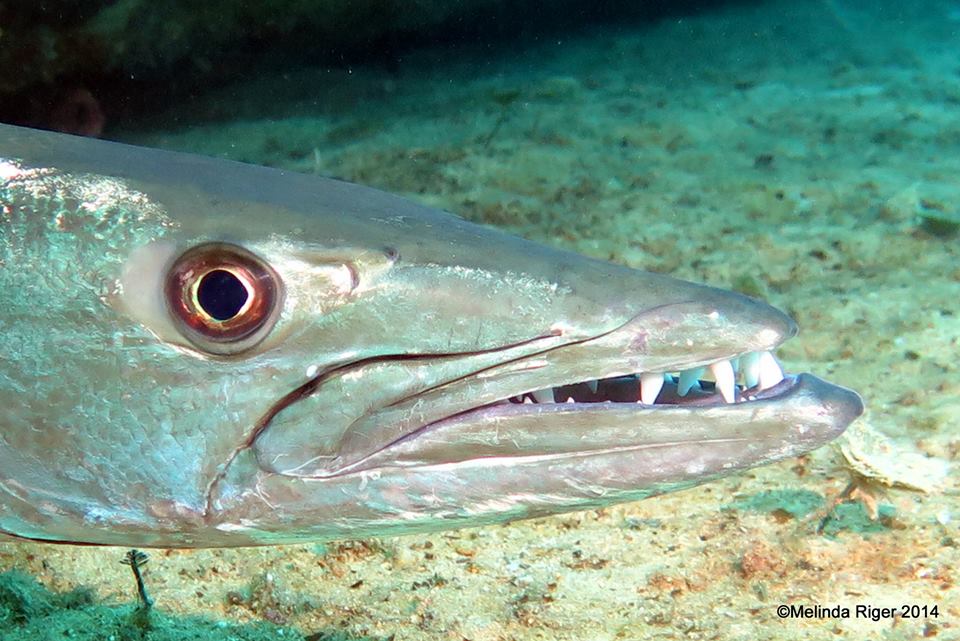
Or, if not exactly big then lethally lacerating. Their sharp fangs are all different sizes, which gives more of a mincing effect than a clean bite. Then there’s the underbite, involving more mincing. And the fact that the teeth are set at different angles. That’s a third mincing effect. Prey in those strong jaws? No chance. 

Three -way mincing machine. Avoid.Barracuda - Melinda Riger / Grand Bahama Scuba Barracuda - Melinda Riger / Grand Bahama Scuba

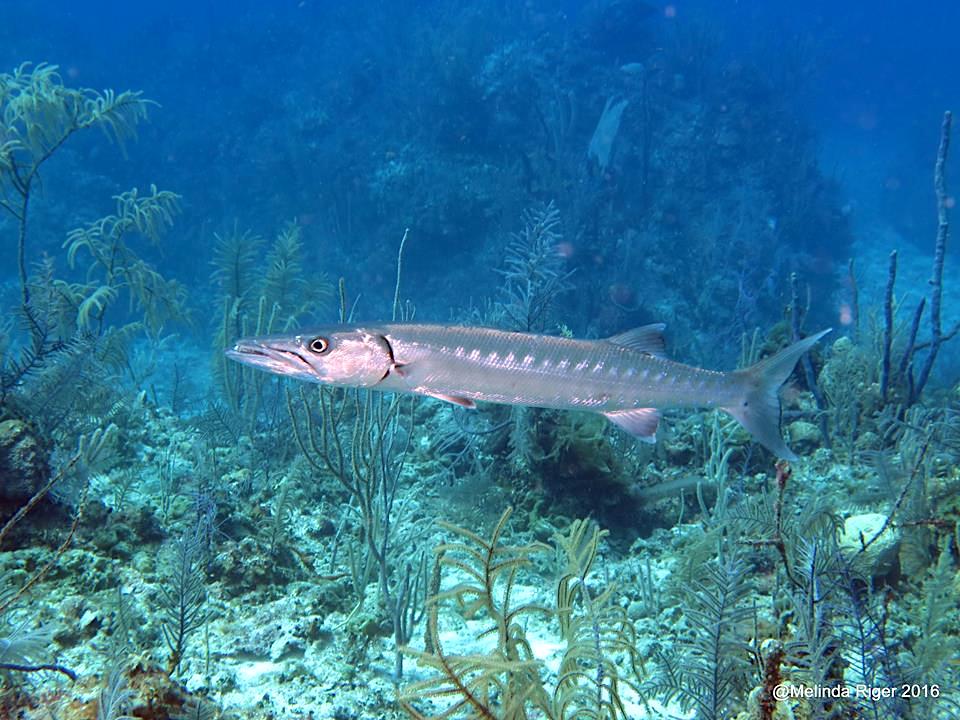
Teeth? Enough dentition already. It’s impossible not to admire these lean, mean eating machines as they glide around in their natural environment. The photos below are designed to redress the balance a bit. Sinister, yes. But mighty fine fish, without a doubt.

Barracuda - Melinda Riger / Grand Bahama ScubaBarracuda - Melinda Riger / Grand Bahama ScubaBarracuda - Melinda Riger / Grand Bahama ScubaBarracuda - Melinda Riger / Grand Bahama ScubaBarracuda - Melinda Riger / Grand Bahama Scuba

All photos: Melinda Riger, Grand Bahama Scuba, with thanks as ever for her terrific photos

Unknown's avatar

SCISSOR-TAILED FLYCATCHER: AN “IF ONLY” BIRD FOR ABACO


Scissor-tailed Flycatcher - Danny Sauvageau

SCISSOR-TAILED FLYCATCHER: AN “IF ONLY” BIRD FOR ABACO

About 3 years ago, there was great excitement when a new bird species was recorded on Abaco. Not just recorded, but actually photographed too – the best of evidence. This was a fork-tailed flycatcher, and to no one’s great surprise another one has never been seen since. So sadly the STFC must go down in the records as a V5, a one-off vagrant. Until another one turns up, anyway. But there will never be another ‘first STFC ever‘ on Abaco. You can read about the new species HERE.

Scissor-tailed Flycatcher - Danny Sauvageau

The sighting came quite soon after the publication of The Birds of Abaco, and instantly rendered the comprehensive checklist in the book out of date. In all, 6 new bird species have now been sighted on Abaco and in due course I need to amend the checklist to reflect the changes. And add ‘wild turkey’ to the also-ran column ‘Exotics Seen on Abaco.’

Scissor-tailed Flycatcher - Danny Sauvageau

The scissor-tailed flycatcher is another so-called ‘tyrant flycatcher’ with long streaming tail forks. I had a look at the checklist to see if the species was recorded for Abaco, and sure enough it is included as a V4, which is to say a very rare vagrant with maybe half-a-dozen sightings over the years. I’m not aware of any photos of one taken on Abaco. However, birding and photography authority Danny Sauvageau occasionally encounters these magnificent birds in Florida. His recent photos of the scissor-tailed flycatcher are so beautiful that you just have to see them. How wonderful if this exotic creature could find its way to the northern Bahamas more often. Until it does, it will remain what I term an ‘if only’ bird – one that is regretfully absent…
Scissor-tailed Flycatcher - Danny Sauvageau

All fantastic flycatcher fotos: Danny Sauvageau with many thanks – check online, you won’t see a better collection than this…; cartoon, Bordorable

Unknown's avatar

TURTLE BREEDING SEASON & A SMALL POEM TO PONDER


Sea Turtle - Adam Rees / Scuba Works

TURTLE BREEDING SEASON & A SMALL POEM TO PONDER

The turtle lives ‘twixt plated decks
Which practically conceal its sex.
I think it clever of the turtle 
In such a fix, to be so fertile.

Sea Turtle - Adam Rees / Scuba Works

Anyone unfamiliar with the works of OGDEN NASH (1902 – 1971) would do well the check out his inimitable poetry, in which he takes extreme liberties with both rhyme and scansion to great comic effect. The poem above is a good example of Nash’s neat way with words. It always makes me laugh, anyway. So simple, looks so easy, but a very difficult trick to pull off consistently as Nash effortlessly does.Sea Turtle - Adam Rees / Scuba Works

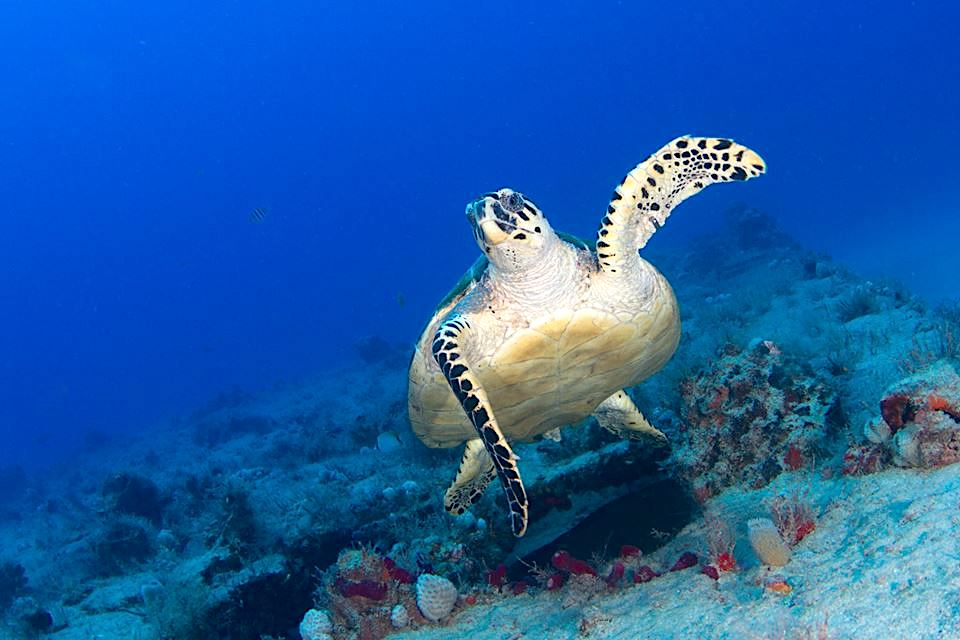
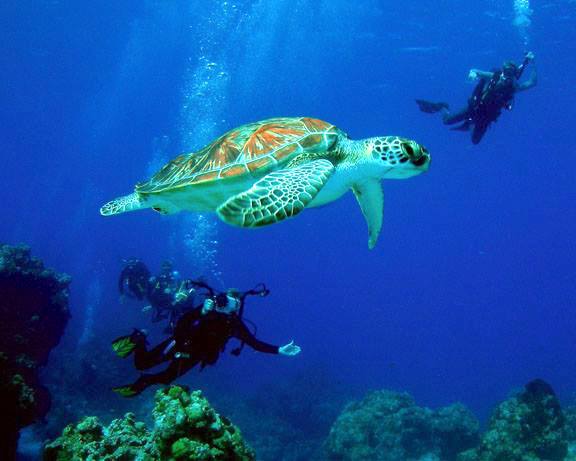
As the turtle breeding season moves forward, I though this would be a good time to show a few of the great turtle photos taken by Adam Rees of ‘Scuba Works’.Sea Turtle - Adam Rees / Scuba Works

Sea Turtle - Adam Rees / Scuba Works

All photos: Adam Rees / Scuba WorksSea Turtle - Adam Rees / Scuba Works

Unknown's avatar

BAHAMA MOCKINGBIRDS ON ABACO: GOOD IMPRESSIONS


Bahama Mockingbird, Abaco - Tom Sheley

BAHAMA MOCKINGBIRDS ON ABACO: GOOD IMPRESSIONS

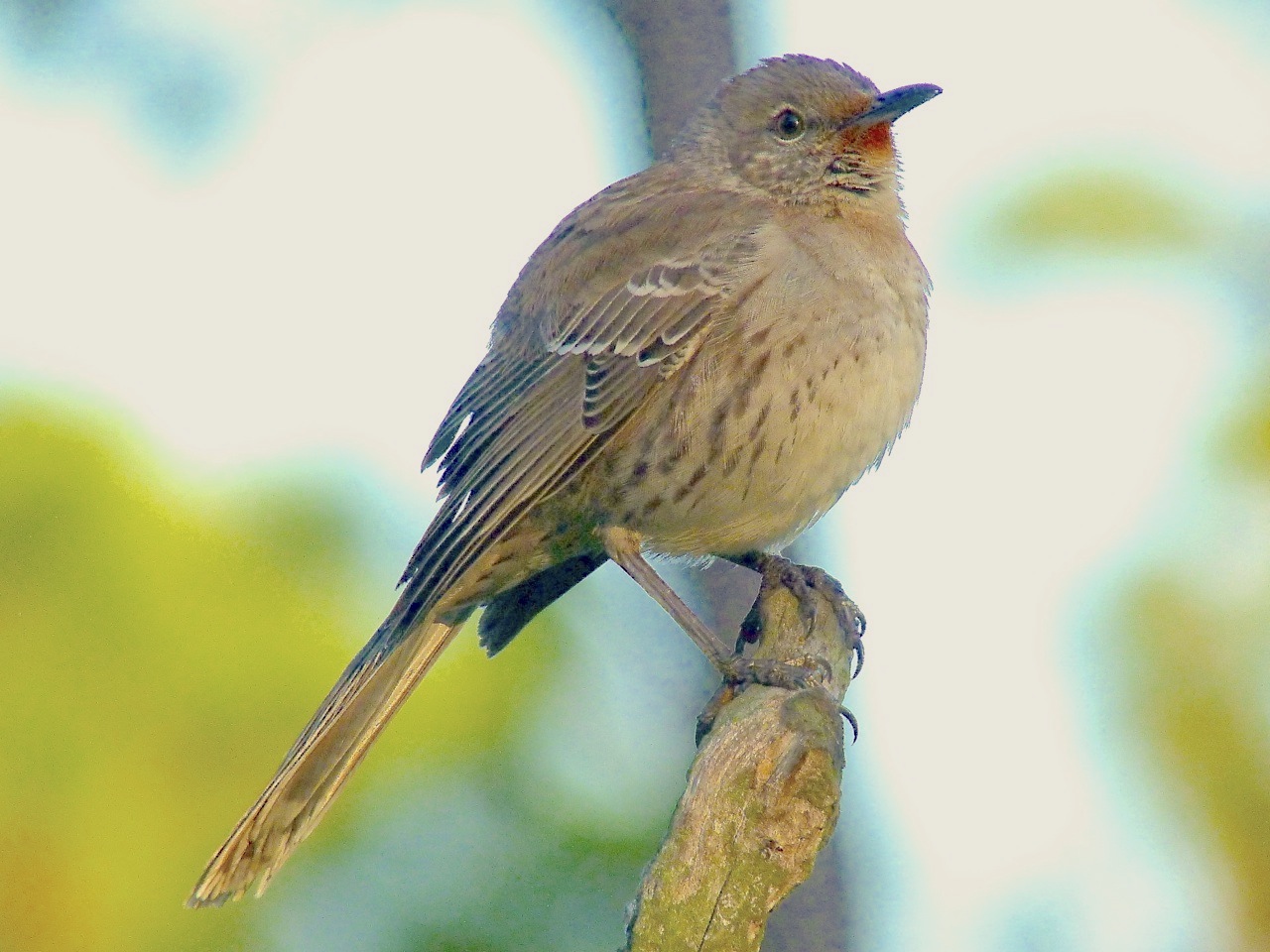
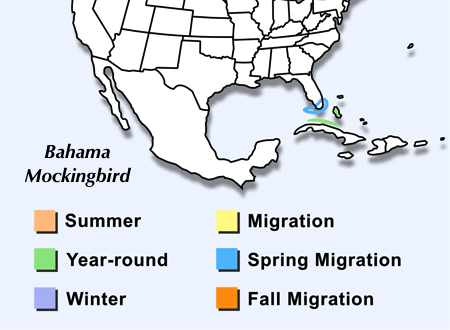
The Bahama Mockingbird Mimus gundlachii is similar to its slightly smaller cousin, the widespread Northern Mockingbird Mimus polyglottis. The range of Bahama Mockingbirds is not restricted to the Bahamas themselves, and includes areas of  Cuba, Jamaica and TCI, so despite the name they are not an endemic species to the Bahamas.  They are also occasional vagrants to the United States, especially – for reasons of proximity – southeastern Florida.

Bahama Mockingbird, Abaco - Peter Mantle

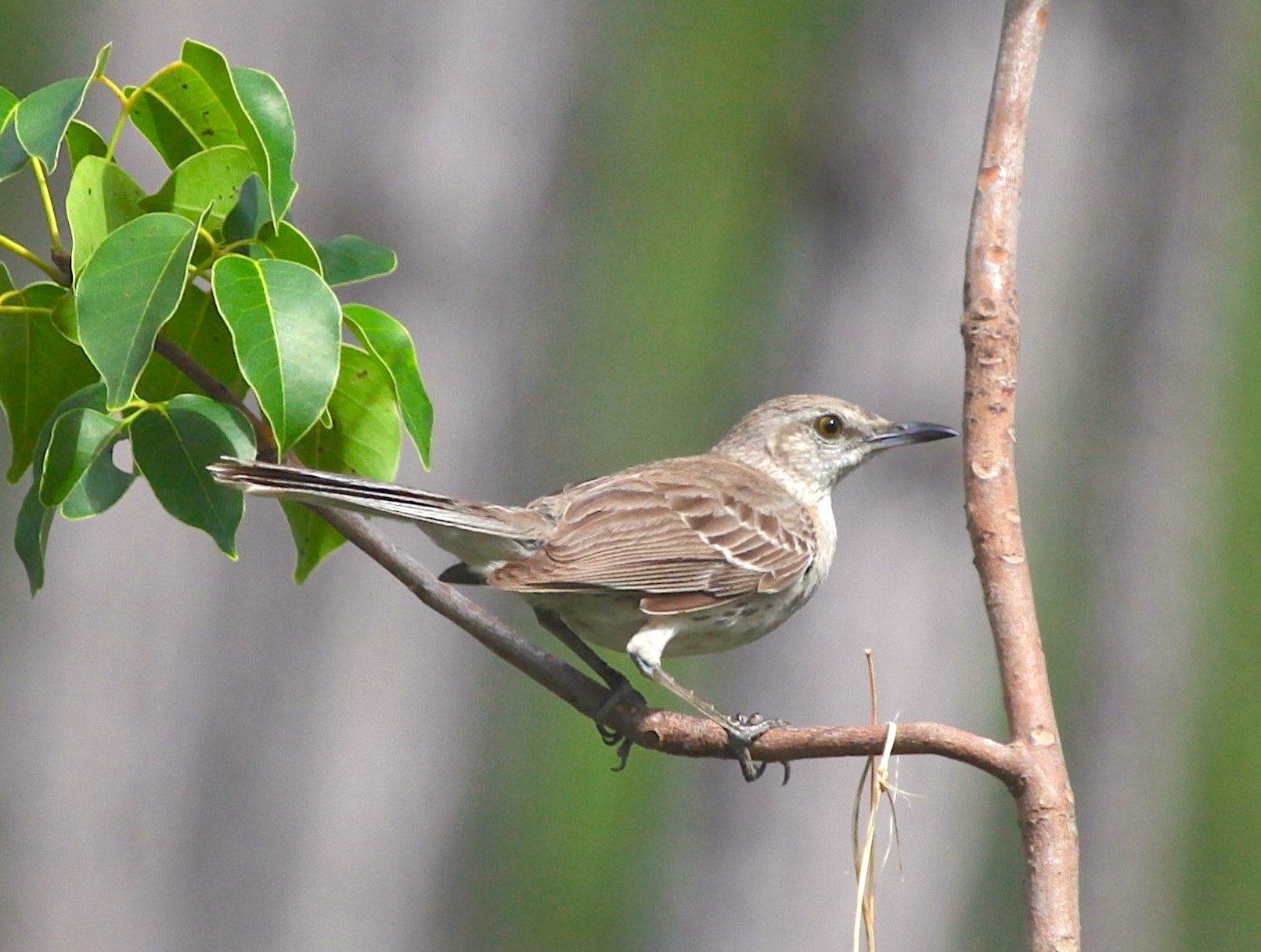
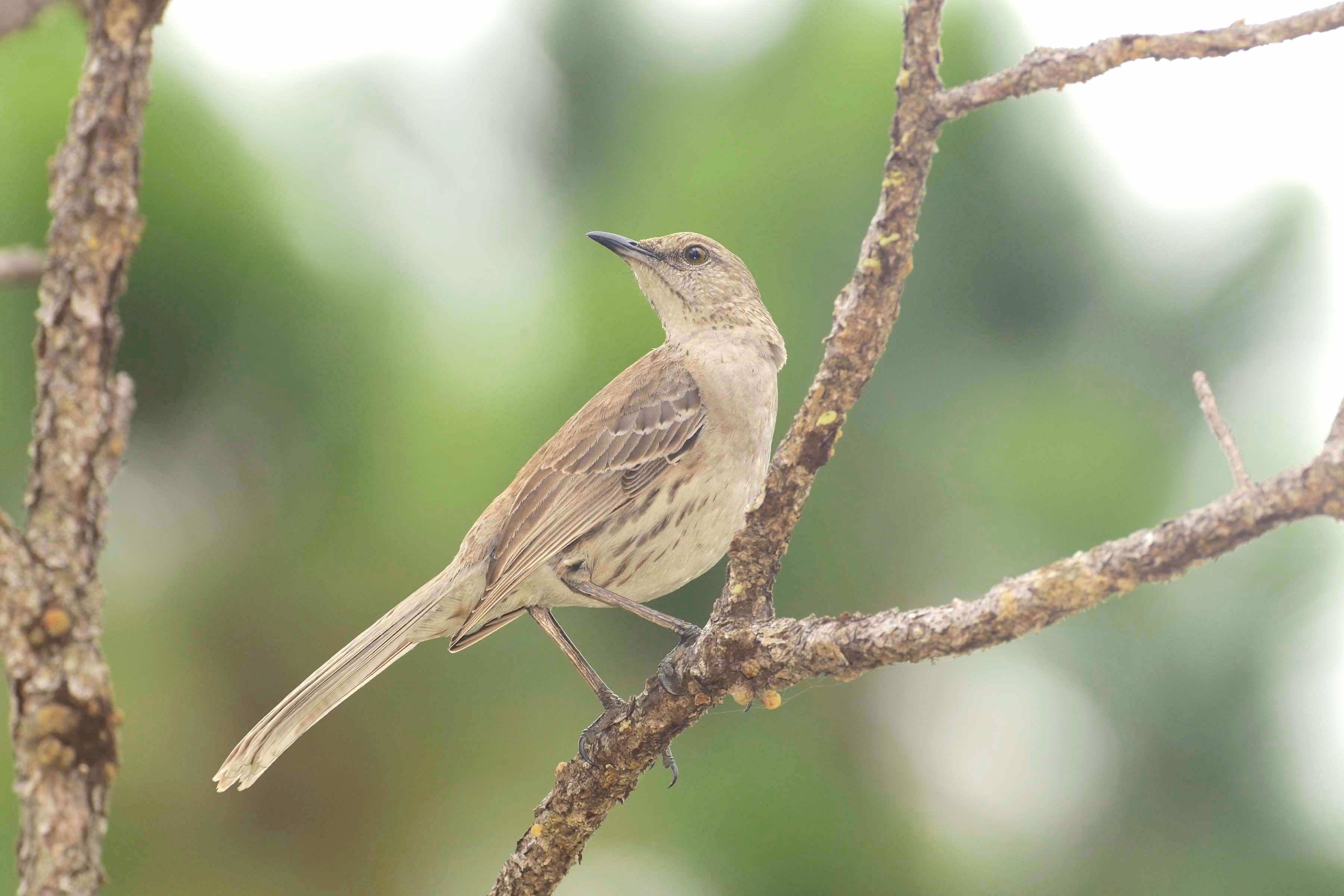
The Bahama Mockingbird is browner than the greyish Northern Mockingbird, and has distinctive streaking and spotting to its breast and undercarriage. This may extend to what you might describe as the bird’s ‘trouser legs’, though I’m sure there’s a more technically correct term.

Bahama Mockingbird, Abaco - Charlie Skinner

Both mockingbird species are found on Abaco. The NMs are ubiquitous in towns, settlements, gardens, coppice and pine forest, whereas BMs are shyer and tend to be found in the pine forest and well away from humans and their operations. When we were putting together The Birds of Abaco, I went on a birding trip with Abaco birding legend Woody Bracey and Ohio bird photographer Tom Sheley. We took a truck into the pine forest down a logging track south of Delphi, and they were quick to locate a bird, not least because one was sitting prettily on a branch singing lustily and unmistakably. It was well within range of Tom’s massive lens; more of a struggle for my modest camera (below). Caught the cobwebs, though…

Bahama Mockingbird, Abaco - Keith Salvesen

I was astounded by the beauty and variety of the song. It consisted of very varied notes and phrases, each repeated 3 or 4 times before moving on to the next sounds in the repertoire. Here is a short 18 second example I recorded, using my unpatented iPhone method, for which see HERE.

Bahama Mockingbird, Abaco - Alex Hughes

For those with interest in birdsong, here is a longer 1:13 minute song from the same bird, with largely different sounds from the first recording made minutes earlier. There’s even a decent stab at imitation of a 1960s Trimphone™. Had we not had to move on to Sandy Point for an appointment with some cattle egrets and American kestrels, I could have stayed listening for far longer.

Bahama Mockingbird, Abaco - Tom Sheley

THE ‘SUBSPECIES’ THAT WASN’T…

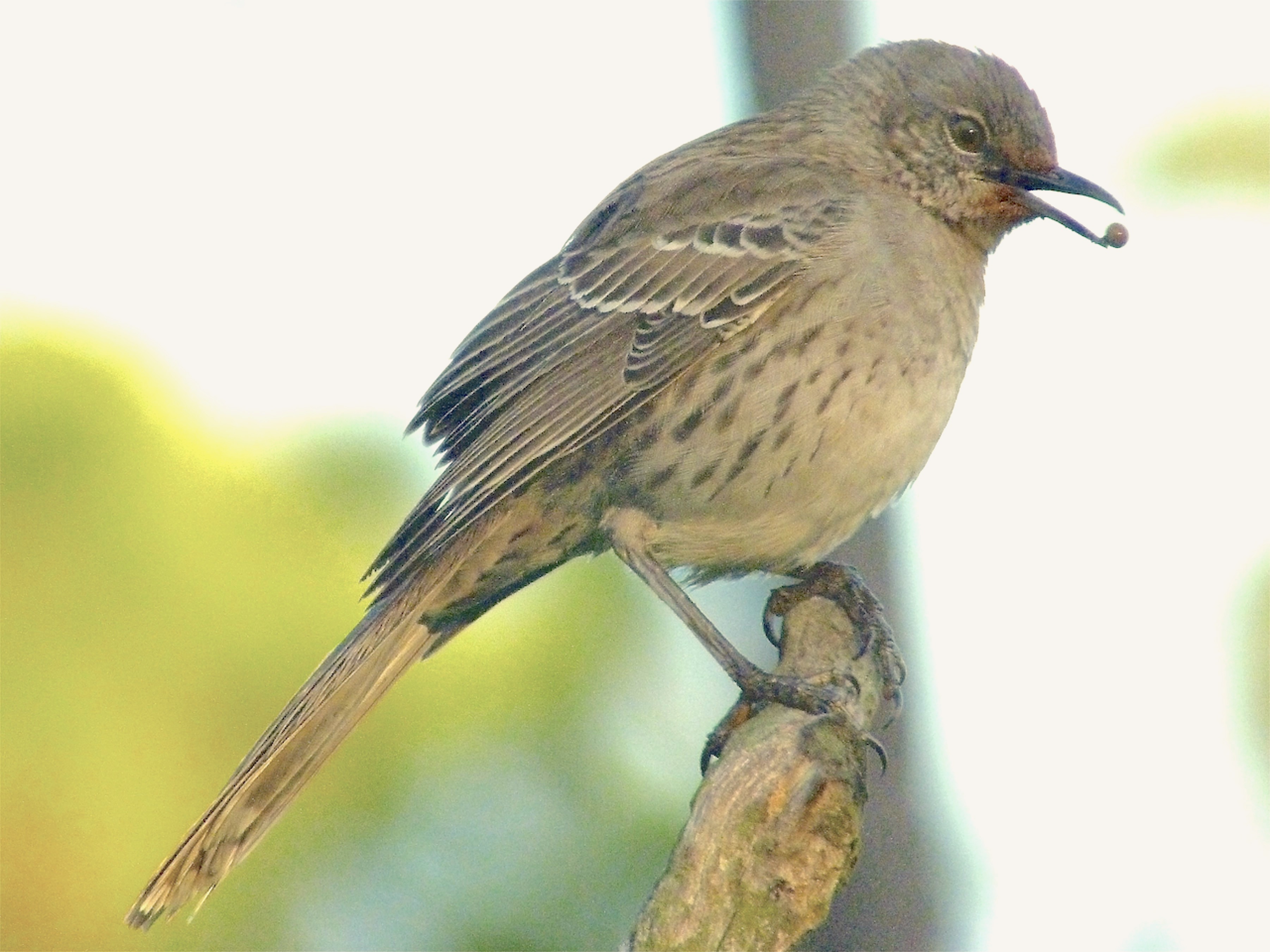
More recently, on a trip in backcountry to find Kirtland’s warblers – we saw 4 – the slow-moving truck jolted to halt in the middle of nowhere. This was because a Bahama Mockingbird was right by the track. I fired off some quick shots out of the window into a rather difficult light, to find that we appeared to have found a new subspecies, the scarlet-faced mockingbird.

Bahama Mockingbird, Abaco - Keith Salvesen

The reason was clear, however. The bird had been pigging out on some red berries, and had managed to collect plenty of the juice round the base of its beak. Bahama Mockingbird, Abaco - Keith Salvesen

SO WHAT DOES A NORTHERN MOCKINGBIRD LOOK LIKE, THEN?

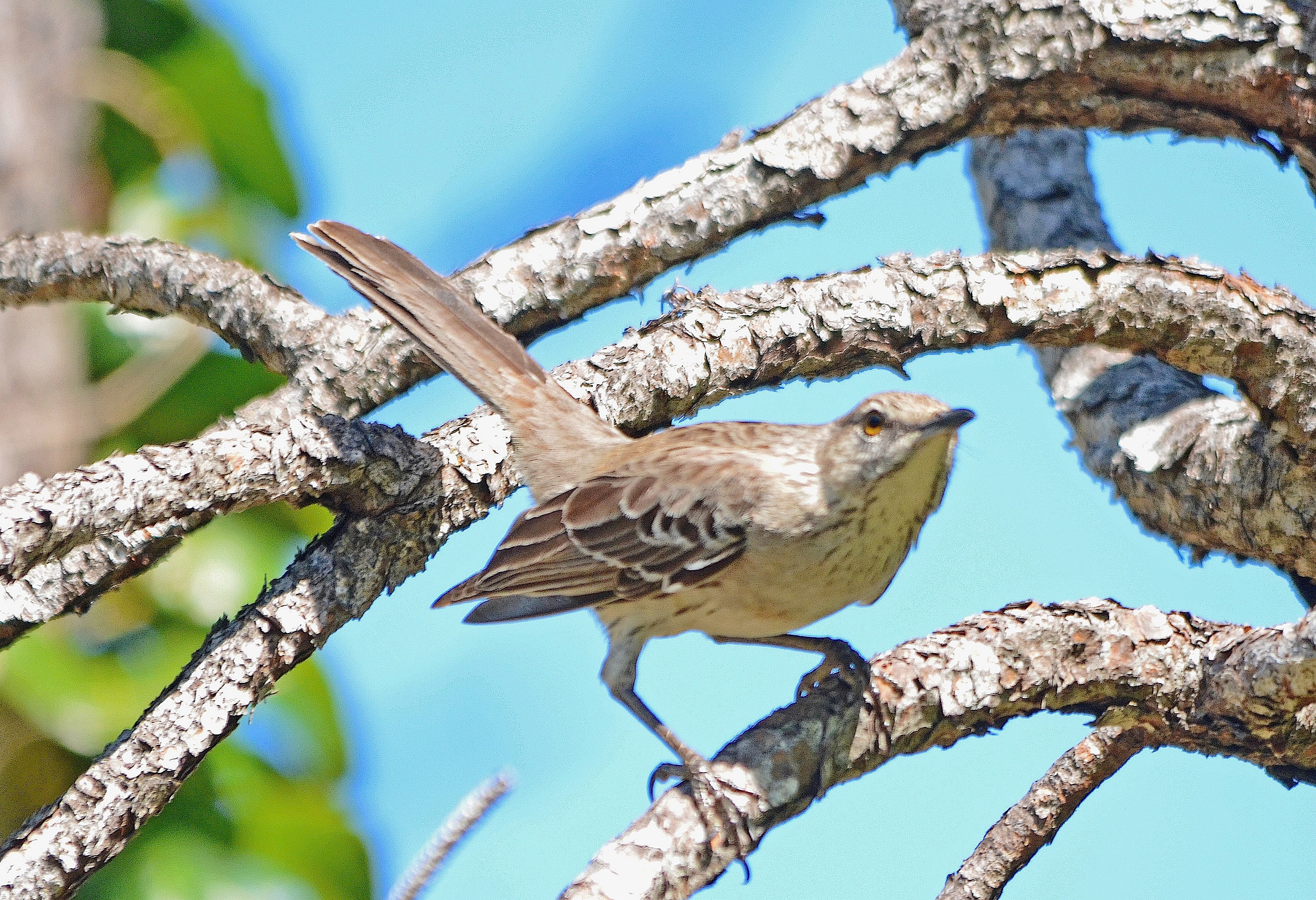
I photographed the Northern Mockingbird below in a garden at Casuarina. The species is far tamer than its cousin, and seen side-by-side they are clearly very different. The range maps show the stark contrast between the very limited range of the Bahama Mockingbird and the vast distribution of the Northern Mockingbird.

220px-Northern_Mockingbird-rangemap

Northern Mockingbird, Abaco 1

Photos Credits: Tom Sheley (1, 6); Peter Mantle (2); Charlie Skinner (3); Keith Salvesen (4, 7, 8, 9); Alex Hughes (5); Susan Daughtrey (10). Range maps eBird & wiki.

Bahama Mockingbird, Abaco - Susan Daughtry

Unknown's avatar

OCTOPUSES: WORTH LEARNING TO SCUBA FOR?


Octopus - Melinda Riger, Grand Bahama Scuba

OCTOPUSES: WORTH LEARNING TO SCUBA FOR?

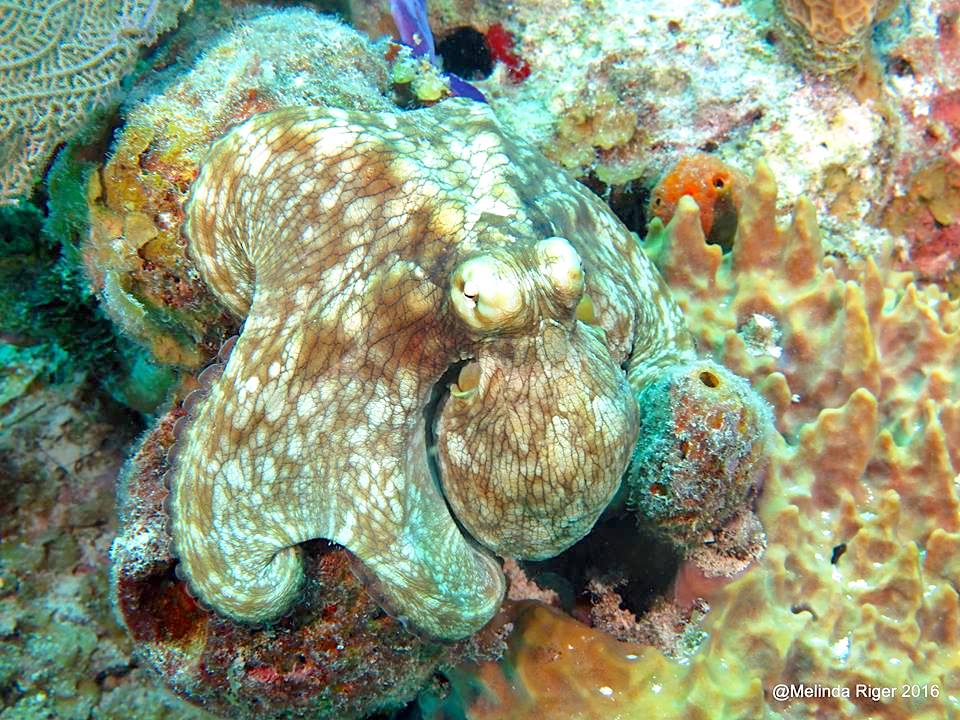
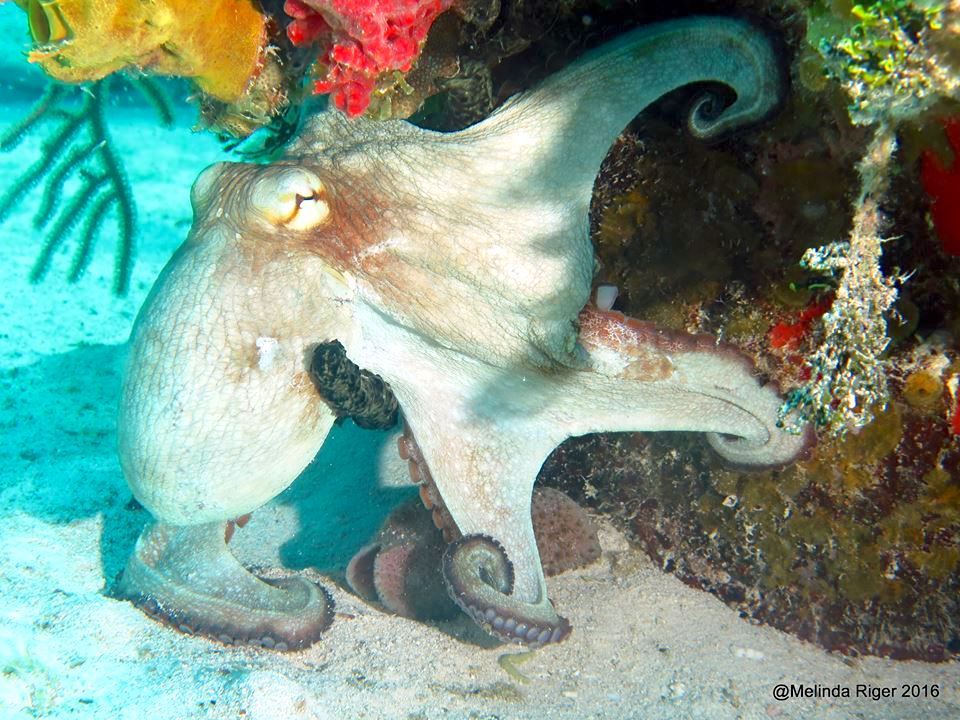
If I had to give a single reason for learning to scuba, watching an octopus would be very near the top of a long list. It’s never going to happen for me, of course – I have about 17 excuses lined up just in case anyone should ask me to try it. But still. One can dream…

Octopus - Melinda Riger, Grand Bahama Scuba

Meanwhile, I can luckily rely on an experienced professional to get the shots. Here are a few great octopus photos taken by Melinda Riger of Grand Bahama Scuba – perfect examples of an excellent reason for chucking aside the snorkel and doing something a bit more adventurous. Maybe…

Octopus - Melinda Riger, Grand Bahama Scuba

RELATED OCTOPUS POST

THE CORRECT PLURAL Learn 12 essential octopus facts plus the definitively correct plural of the word ‘octopus’ (out of 3 rival options). Please note that the possibilities do not include ‘octopodices’, which would be latin for ‘eight rumps’ (or ‘asses’, as you might say), if such weird creatures existed.

Octopus - Melinda Riger, Grand Bahama Scuba


REMEOctopus - Melinda Riger, Grand Bahama ScubaMBER – KEEP AN EYE OUT…


STARR-STUDDED MUSICAL DIGRESSION

Does Ringo still have it? Did he ever have it?

Unknown's avatar

CHEROKEE SHELL MUSEUM, ABACO: “GIFTS FROM THE SEA”


Cherokee Shell Museum, Abaco Bahamas / Gifts from the Sea / Cinder Pinder

CHEROKEE SHELL MUSEUM, ABACO: “GIFTS FROM THE SEA”

One of the smallest museums in the world has just opened on April 15 in the picturesque settlement of Cherokee on Abaco, Bahamas. Other contenders for the title include the MmuseumM in New York, housed in an elevator shaft (look through glass window + audio guide); a converted red telephone kiosk in Warley, Yorkshire UK dedicated to local history (one visitor at a time); and a tiny shed of 134 sq ft in Arizona featuring what might broadly be called ‘ephemera’, including a Beatles poster…

Cherokee Shell Museum, Abaco Bahamas / Gifts from the Sea / Abaconian

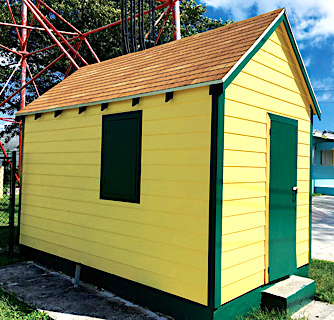
Whatever the size comparisons, the new shell museum is beyond doubt the very best one in the Bahamas, not least because it is the only one. “Gifts from the Sea” is housed in the former 1950s telegraph office that ceased to operate in 1987 and had fallen into disrepair. Leased from BTC for a nominal rent, the little building was restored, and given a smart new roof and a complete makeover. The new museum provides the perfect space for displaying a selection of the wonderful shells to be found in Abaco waters.

Cherokee Shell Museum, Abaco Bahamas / Gifts from the Sea / Cinder Pinder

The whole community has got behind this project, which is the vision and creation of Curator Lee Pinder. Derek Weatherford fitted cabinets for the exhibits, and artist Jo-Ann Bradley has painted a fabulous interior Cherokee-themed mural as a fitting backdrop to the displays.

Cherokee Shell Museum, Abaco Bahamas / Gifts from the Sea / Cinder Pinder

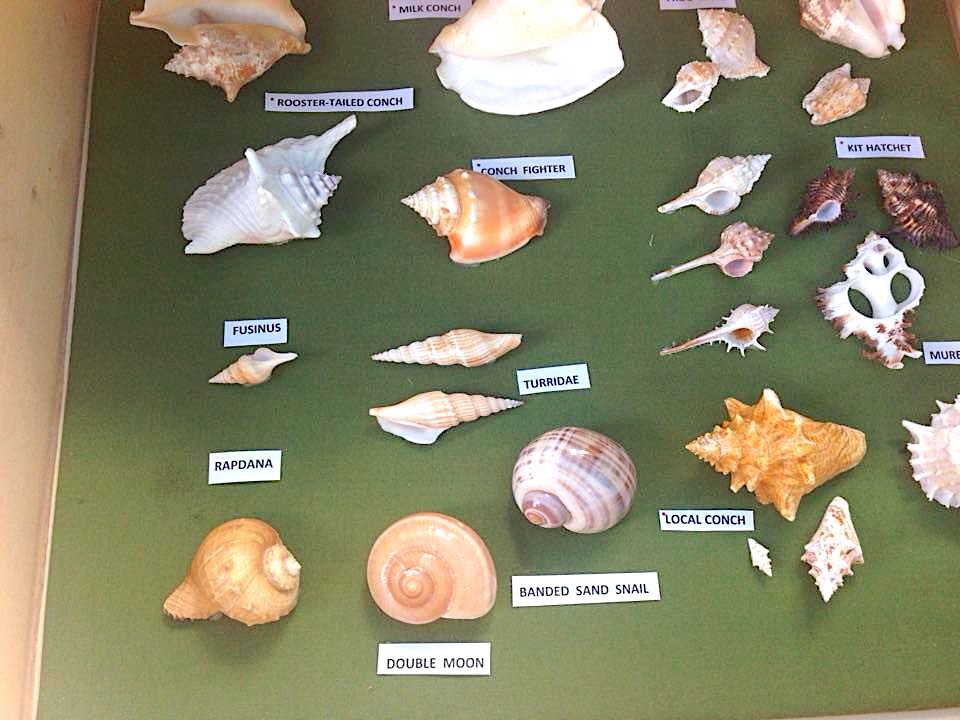
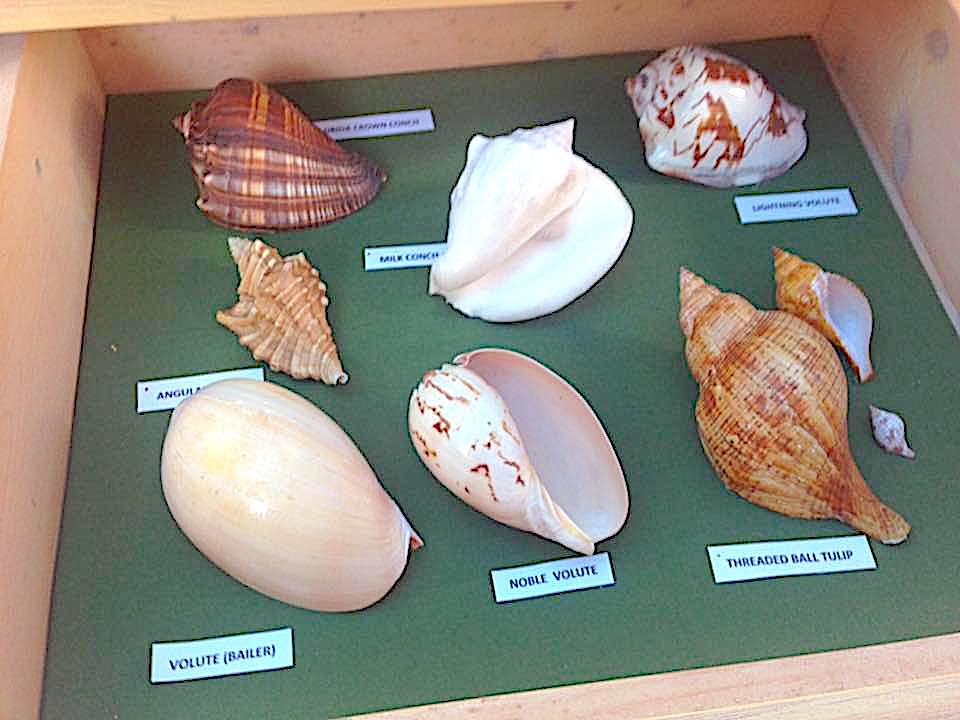
The exhibition shows more than 200 shells, each catalogued with its Latin and common name, and clearly labelled in the display. Most were found locally; a few are from further afield. Some specimens are very rare. It is hoped to expand the collection as people make shell donations to the museum. 

Cherokee Shell Museum, Abaco Bahamas / Gifts from the Sea / Abaconian

The building has a door at each end to give natural light and provide a ‘walk-through’ arrangement, which will make viewing in the confined space easier. Entry is free but there’s a glass jar for donations towards the upkeep of the museum. I’m guessing here, but I reckon donations that are made ‘outside the jar’ (so to speak) are very welcome too…

Museum Curator Lee PinderCherokee Shell Museum, Abaco Bahamas / Gifts from the Sea / Cinder Pinder

The opening ceremony took place on Easter Saturday, when Cherokee resident Rev. Bateman Sands performed the official ribbon cutting ceremony preceded by a prayer at precisely 12 noon. As Jennifer Hudson in an Abaconian article points out, he was the ideal person for the task, having been “the first telegraph operator in Cherokee Sound, working in the little building using Morse code and in charge of the one and only telephone in the settlement until 1987 when the new BTC building was opened”.

Cherokee Shell Museum, Abaco Bahamas / Gifts from the Sea / Cinder Pinder

The shell museum is not left open all the time, but visitors are welcomed and private tours can be arranged by calling 475-7868.

Cherokee Shell Museum, Abaco Bahamas / Gifts from the Sea / Cinder Pinder

To see a selection of the many types of Abaco shells, check out my shell page HERE

Sources and Credits: Bradley Albury / Jennifer Hudson / Abaconian; Cindy James Pinder for her great photos

Sand dollar, Abaco (Rolling Harbour)

Unknown's avatar

BLUE TANG AS REEF FILM STAR


Blue Tang, Bahamas (Melinda Riger / Grand Bahama Scuba)

BLUE TANG AS REEF FILM STAR

Last summer, the big motion picture sensation for the bird world was, of course, Pixar’s ineffably adorable creation, Piper – the ultimate ‘Chick Flick’. This little ball of cartoon fluff was not, as some thought, based on a piping plover but on a sanderling – a type of sandpiper (clue in name). This 6 minute ‘short’ preceded the main event, the hugely popular Finding Dory. You can read all about the film Piper and the birding aspects of the film HERE

Blue Tang, Bahamas (Melinda Riger / Grand Bahama Scuba)

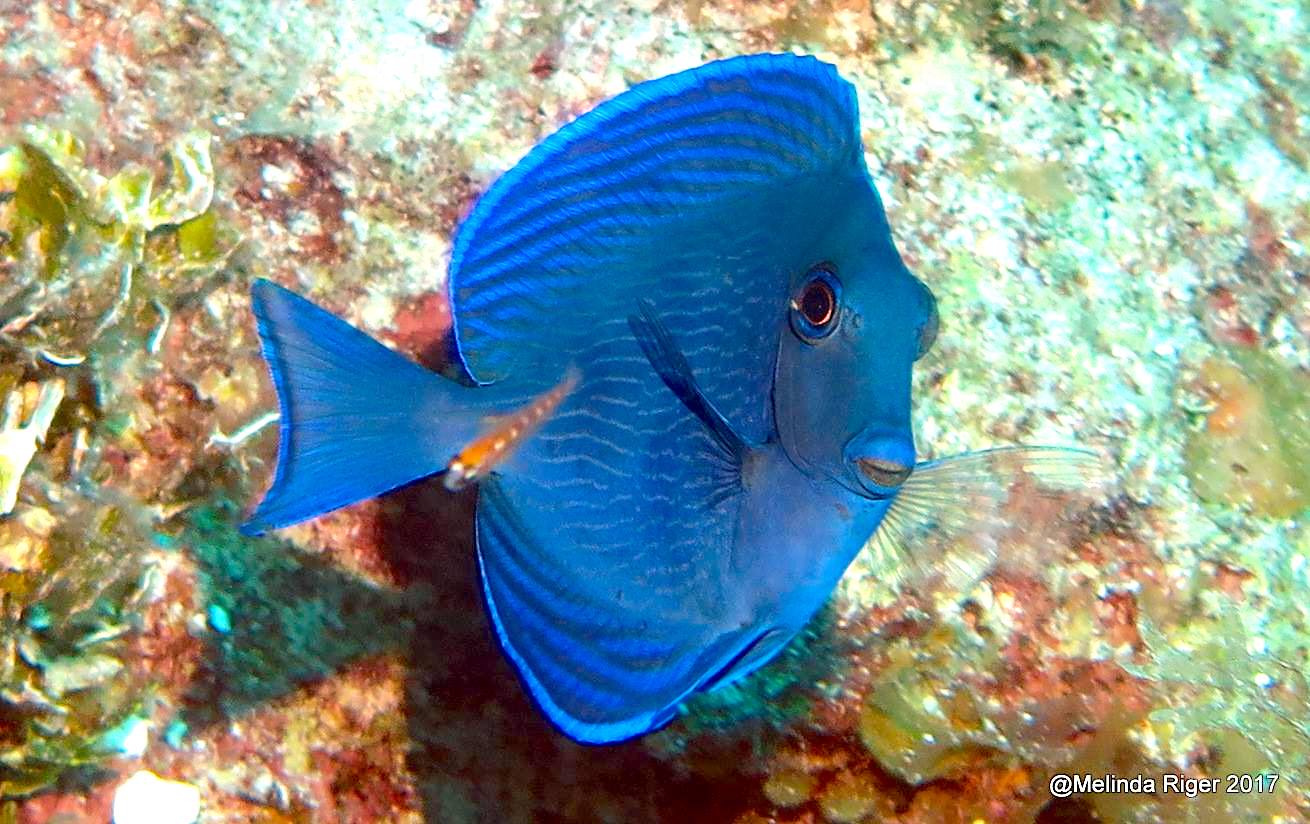
Finding Dory is not about a fish of the dory species, of course. Voiced by Ellen DeGeneres, Dory is in fact a species of surgeonfish Paracanthurus, the familiar blue tang found on the reefs of the Bahamas. To see these fish in Abaco waters, Fowl Cays National Park is always a good bet.

Blue Tang, Bahamas (Melinda Riger / Grand Bahama Scuba)

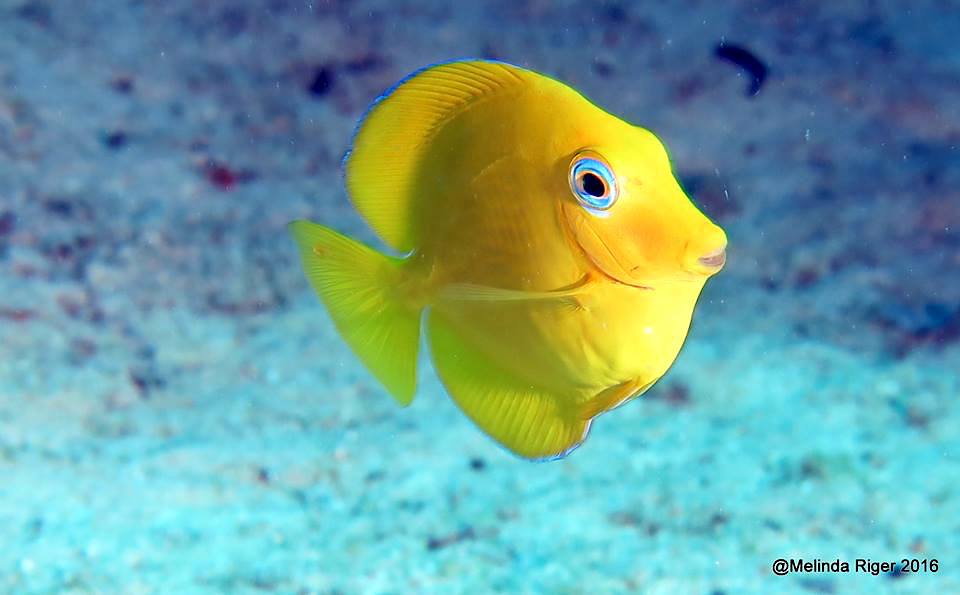
Dory can be identified as a maturing juvenile: blue, with a yellow tail. In due course – in time for the sequel film – she will become blue all over, with perhaps the odd flash of yellow (see photos above).

In real life, a baby blue tang is in fact entirely yellow, except for blue rings around the eyes. In Pixarland, however, Dory is just an adorbs miniature version of her youthful self.

Blue Tang juvenile, Bahamas (Melinda Riger / Grand Bahama Scuba)

Blue Tang are lovely to watch as they cruise round the reefs, sometimes in large groups. Their colouring ranges from pale to dark blue. However, these are fish that are best looked at and not touched – their caudal spines are very sharp. When the fish feels in threatened, the spine is raised and can cause deep cuts, with a risk of infection.  

Still from a crummy video taken at Fowl Cays some years back to illustrate a group of blue tangBlue Tangs, Fowl Cays Nature Park, Abaco Bahamas (KS)

Blue tangs are inedible, they apparently smell unpleasant, and they can cause ciguatera. However they are popular in the aquarium trade. This is a distinct downside of highly successful films such as Finding Nemo and Finding Dory. In defiance of the well-meant and broadly ecological message of both films, the trade in clown fish and to a lesser extent blue tang was boosted by their on-screen portrayal as adorbs creatures desirable for the entertainment of mankind… ‘Nuff said.

Blue Tang, Bahamas (Melinda Riger / Grand Bahama Scuba)

Credits: All excellent photos by Melinda Riger / Grand Bahama Scuba; one pathetically bad still from a low res video, me; cartoons purloined from an online aquarium somewhere or other

Unknown's avatar

FLAMINGO BREEDING SEASON ON INAGUA, BAHAMAS


Flamingo feeding chick, Inagua National Park (Casper Burrows / BNT)

FLAMINGO BREEDING SEASON ON INAGUA, BAHAMAS

The national bird of the Bahamas, featured in the nation’s Coat of Arms, was once a familiar sight in the Bahamas, but sadly no more. On Abaco they are no longer seen, apart from occasional vagrant birds that stay for a few weeks and then disappear. 
Flamingo chicks, Inagua National Park (Melissa Groo / Lynn Gape / BNT)

An attempt in the 1990s to reintroduce flamingos on Abaco and to establish a breeding population failed. You can read more about the history of the ‘fillymingo’ on Abaco HERE.

Flamingos & chicks, Inagua National Park (Melissa Groo / BNT)

Nowadays, the flamingos breed only on Inagua, and to see these gorgeous birds you will have to go to the INAGUA NATIONAL PARK , where you will find the world’s largest West Indian flamingo colony.  

Flamingo chicks, Inagua National Park (Melissa Groo / Lynn Gape / BNT)

The breeding season is now under way, with large numbers of fluffy gray chicks finding their legs in the lagoons. A team from the BAHAMAS NATIONAL TRUST is working with them at the moment.

Flamingo chicks, Inagua National Park (Melissa Groo / Lynn Gape / BNT)

The team have with them the distinguished wildlife photographer MELISSA GROO, whose wonderful award-winning work will be known to anyone with a keen interest in wildlife. If you want to see wild birds and wild animals as you may never have seen them portrayed before, do visit Melissa’s superb website by clicking her name link above.
Flamingo chicks, Inagua National Park (Melissa Groo / BNT)

Credits: Melissa Groo, with thanks as ever for use permission [please note that her images are subject to her professional copyright]; BNT, especeially Lynn Gape & Casper Burrows (header image)

Flamingo chicks, Inagua National Park (Melissa Groo / BNT)

Unknown's avatar

BLACK WITCH MOTH: HARBINGER OF DEATH OR LOTTERY BANKER?


Black Witch moths Ascalapha odorata (Charles J Sharp)

BLACK WITCH MOTH: HARBINGER OF DEATH OR LOTTERY BANKER?

Black Witch moths Ascalapha odorata are seriously bad news. Or wonderfully good news, depending where you are and who you talk to. First, lets look at some of the local names for the creature, from which you will get a pretty clear idea of its somewhat negative folklore status, as well as its area of distribution. I do this not to demonstrate how effortlessly I can ‘borrow’ from Wiki, but rather to show how a simple moth can give rise to widespread superstition and even fear. 

12 SCARY NAMES FOR ONE MOTH

  • Mariposa de la muerte (butterfly of death) – Mexico / Costa Rica
  • Pirpinto de la Yeta (something like ‘jinxing butterfly’) – Argentina
  • Tara Bruja (witch moth) – Venezuela)
  • Miquipapalotl (black death moth) – Mexico
  • Taparaco (something like ‘messenger in black’) – Peru
  • X-mahan-nah (‘borrows your house’ [eh? Ed]) – Mayan
  • Duppy Bat (lost soul / ghost /malevolent spirit) – Jamaica, Caribbean
  • Money Moth, Money Bat – Jamaica, Caribbean (including Bahamas)
  • Other names include Papillion-devil, La Sorcière Noire, Mourning moth, Sorrow moth.

These large moths (wingspan up to 7″)  are nocturnal, with females larger than the males. The diagnostic marking is a spot on each forewing shaped like a number nine or a comma (or maybe even ying / yang symbols?). This spot is often green with orange highlights (seen in the header image). The stripey larval caterpillar can grow up to 7 cm in length.

Black Witch moth larva - Ascalapha odorata - wiki

The moth is a migratory species, flying from (roughly speaking) South America as far north as Florida and Texas. The worst luck is believed to come from having one flutter into your house. It will either bring bad luck to the house – or if there is already misfortune there, it will make it worse. There are variations on this belief – e.g. that the more corners of a room the moth visits, the more doomed the household.

Black Witch moths Ascalapha odorata (Julia Gotz)

IS THERE ANY GOOD NEWS ABOUT THIS CREATURE?

Fortunately yes, and it’s high time to dispel the gloom. In some places (e.g. Hawaii), it is believed than when a loved one has died and an Ascalapha odorata is seen soon after, it is the person’s soul returning to say farewell.

More promisingly still, in the Bahamas a far more positive and practical attitude is shown. If a Money Moth (or Money Bat) lands on you, you will receive some money. Or so it is said. Texas, thinking big, takes this several steps further to the prediction that you will win the lottery (I have a feeling this is a very modern theory).

WHY ARE YOU SCARING US WITH THIS THING?

Because until last month I had never heard of these moths, let alone seen one. Then one balmy Delphi evening, at dusk, someone pointed out a large dark smudge on the door-frame. I only had a cellphone, and I had to use the flash. Here is the moth, with its evil little eyes shining in the flash. Luckily, it was outside not inside the building, which I hope diluted the malevolence radiation level (though I didn’t realise that at the time of course, until I’d looked it up in Sibley’s indispensible ‘Compendium of Evil Moths‘). It’s a terrible photo, but it was useful for ID and I feel that taking a quick shot helped to ward off the worst of the unpleasantness. Though now I think of it I did fish badly (even for me) the following day…

        A poor photo but mine own… 

CULTURAL SIGNIFICANCE IN LITERATURE

Remember Silence of the Lambs? Well in the book, pupae of the Black Witch moth were placed in the mouths of victims by serial killer ‘Buffalo Bill’ as his calling card – though for the film, the moth species was changed to a Death’s-head Hawkmoth, as featured on the poster.

You can read about Hannibal Lecter’s link to moths, and learn how for the film the pupae were were made from sweets (Gummi Bears ™) so as to be harmless if swallowed, HERE

SO ARE THEY HARMFUL IN ANY WAY AND / OR WILL ONE MAKE ME RICH?

No

Taking one’s life in one’s hands…?Black Witch moths Ascalapha odorata (Charles J Sharp)

Photo credits: Charles J Sharp (1, 5); Wiki (2); Julia Gotz (‘juliatrees’) (3)*; Keith Salvesen (4)   Sources: Julia Gotz (‘juliatrees’), Terry Sovil, , Texasbutterflyranch.com, Wiki, Sibley’s ‘Compendium of Evil Moths

*Julie closed her blog, from which photo 3 comes, in 2010. I’m hoping she won’t mind my resurrection of her image to illustrate the species… Black Witch moth photos are quite rare online

Unknown's avatar

CRYSTAL CAVES OF ABACO: CHANDELIERS


CRYSTAL CAVES OF ABACO: CHANDELIERS

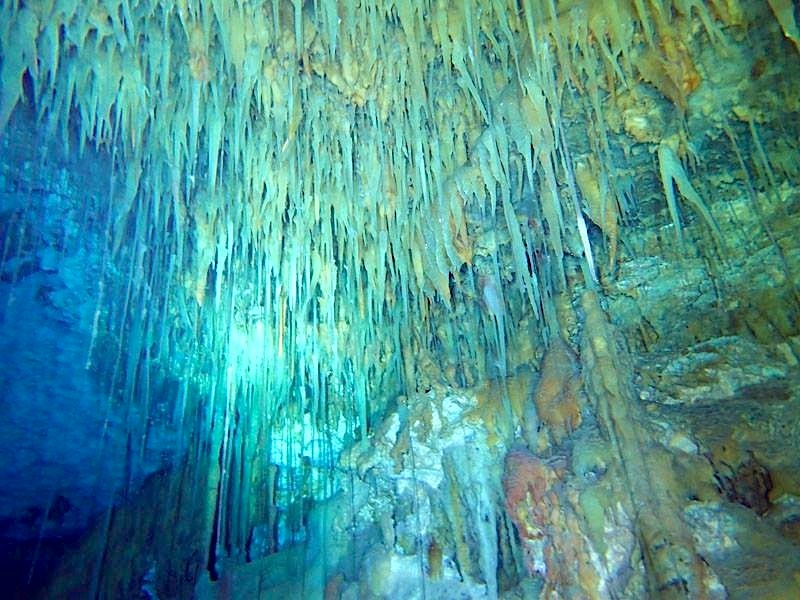
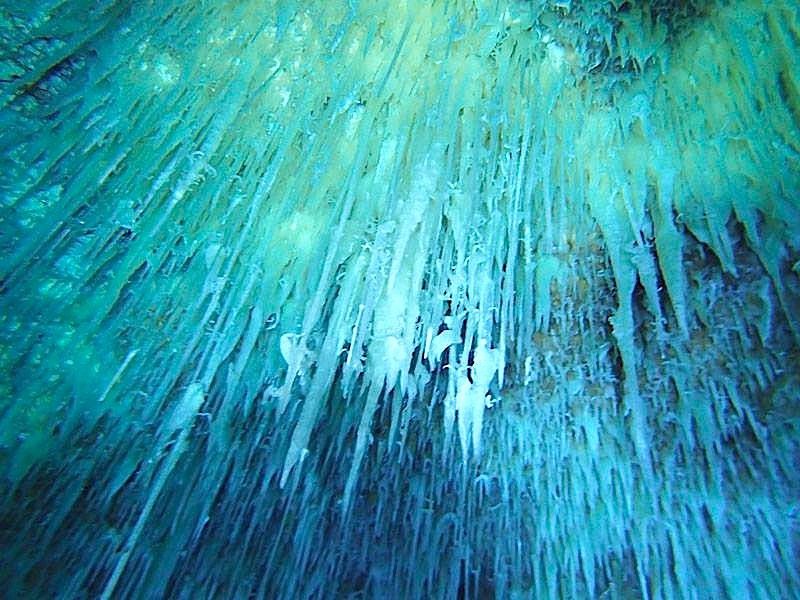
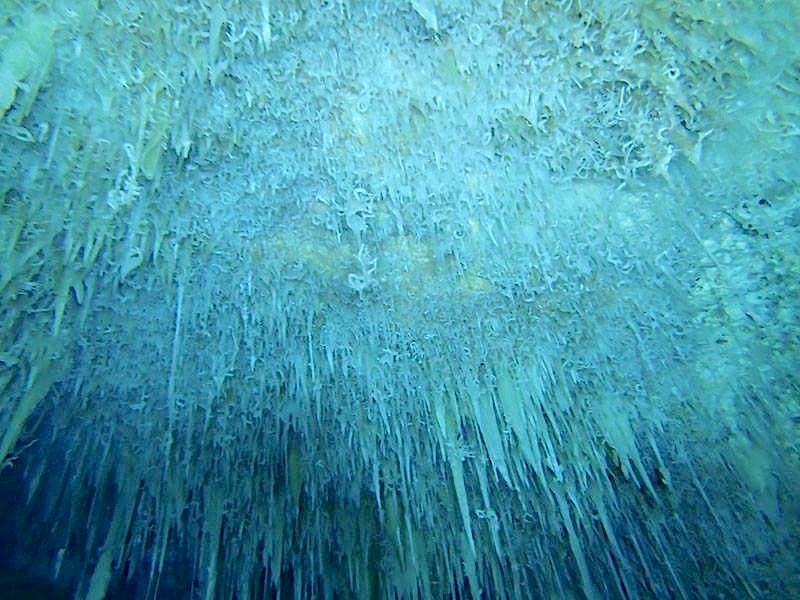
It’s been a while since I posted about the incredible cave systems that lie beneath the vast acres of pine forest on Abaco. Under the direction of Brian Kakuk, these networks of narrow passages and  huge caverns are being gradually explored and mapped. In the process, Brian and the other divers exploring the caves have created an amazing archive of photographs. Here are some taken by diver Hitoshi Miho. This sequence concentrates on the astonishing, crystal chandeliers hanging from the roofs of the large caverns.

The two main systems are in Dan’s Cave and Ralph’s Cave – which may even be linked

All photos: Hitoshi Miho, with thanks to him for use permission and as ever to Brian Kakuk

Unknown's avatar

SNOWY EGRETS: A FUSS ABOUT (ALMOST) NOTHING…


Snowy Egrets fishing (Phil Lanoue)

SNOWY EGRETS: A FUSS ABOUT (ALMOST) NOTHING…

Well, what’s all the fuss about here? One snowy egret is striding confidently forward. The other has gone into full-scale feather-frenzy melt-down. Something is clearly up…

…something that seems on close inspection to be a very small fishSnowy Egrets fishing (Phil Lanoue)Snowy Egrets fishing (Phil Lanoue)

After pausing to check what’s going on, the cool, calm and collected snowy continues on his way. His friend however seems to have lost all sense of decorum as a result of a successful stalk and the catch of a light snack… Snowy Egrets fishing (Phil Lanoue)

Sensible part: the dishevelled bird is displaying so-called ‘bridal plumage’. And for ID enthusiasts, note the diagnostic yellow feet (header image), black legs, and black beak with a yellow / orange ‘bit’ (*technical word alert*) at the blunt end.

Credits: these fantastic photos are the work of Phil Lanoue who specialises in sequential photography, to whom many thanks for use permission; cartoon, Birdorable

Unknown's avatar

DUSKY DAMSELFISH: BAHAMAS REEF FISH (34)


Dusky Damselfish, Bahamas (Melinda Riger)

DUSKY DAMSELFISH: BAHAMAS REEF FISH (34)

The dusky damselfish Stegastes fuscus is one of a number of damselfish species found in Bahamian waters. These small reef fish, in adult form, are dark coloured as their name suggests. Their appearance is brightened by having distinctive blue edges to their fins.

Dusky Damselfish, Bahamas (Melinda Riger)

These fish feed mainly on algae, with a preference for red. They top up their diet with small invertebrates. Their value to the reef is that their feeding patterns help to prevent coarser seaweeds from becoming dominant in areas where these are prevalent. 

Dusky Damselfish, Bahamas (Melinda Riger)

Like many damselfish, the dusky is a territorial species, guarding its chosen area of seabed and the food sources within it by repelling intruders – often seeing off far larger algae-grazing fishes such as parrotfish and wrasse. Yet besides their aggressive traits, they are also rather cute, as photo #2 shows!

Dusky damselfish, Bahamas (Melinda Riger)

All photos: Melinda Riger / Grand Bahama Scuba