In 2012 I wrote a post about the comparative rarity of the American Robin on Abaco, which had surprised me. They overwinter in Florida, and they might conceivably range further more often than they do. It turned out that one or two may be reported one year, none the next. I listed a number of sightings and some comments by Woody Bracey, but I lacked any photos of these birds taken on Abaco. I had to make do with wiki and bad ones taken in the US by me (including stuffed ones in the Natural History Museum, NYC – an act of desperation!). You can see the post HERE
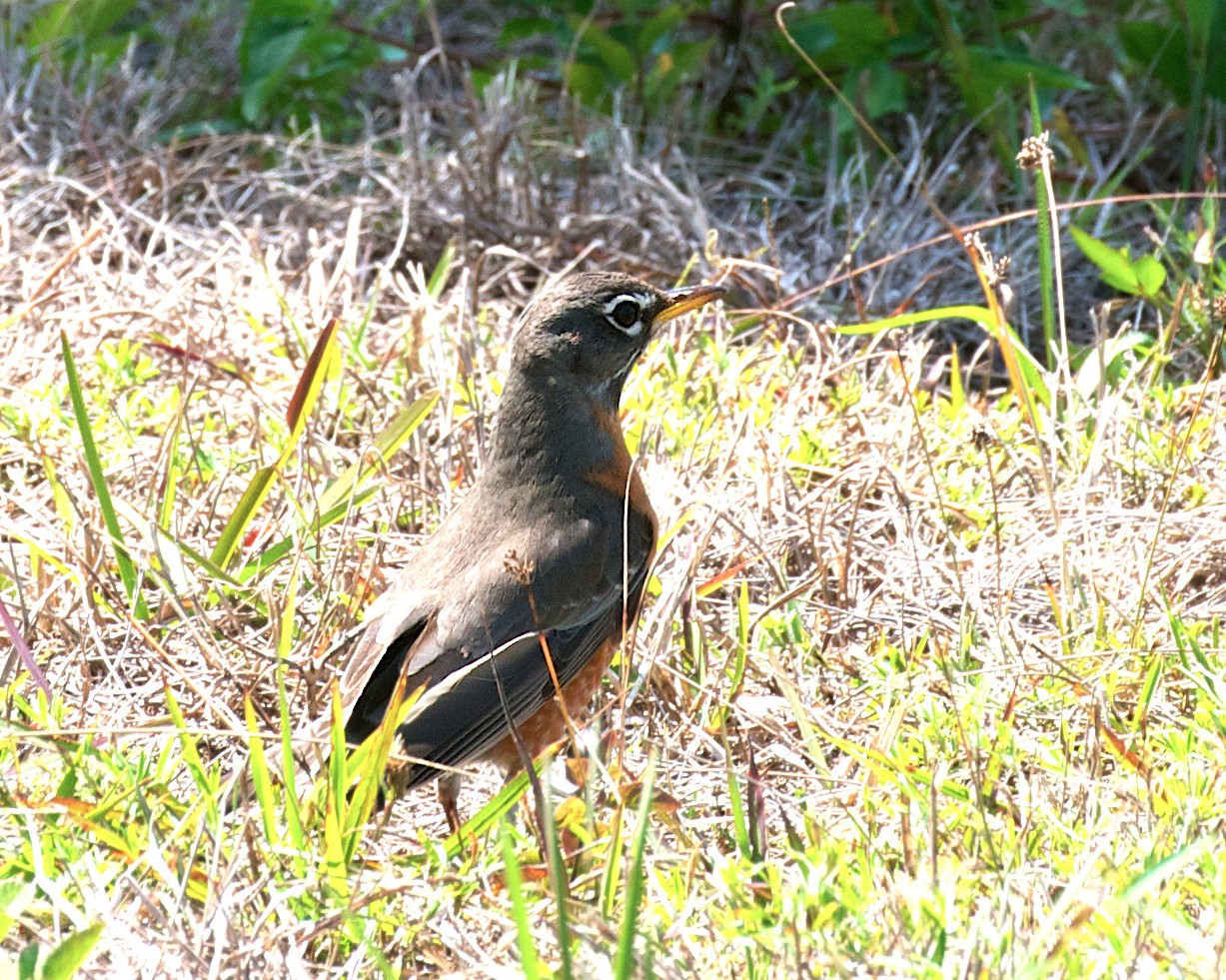
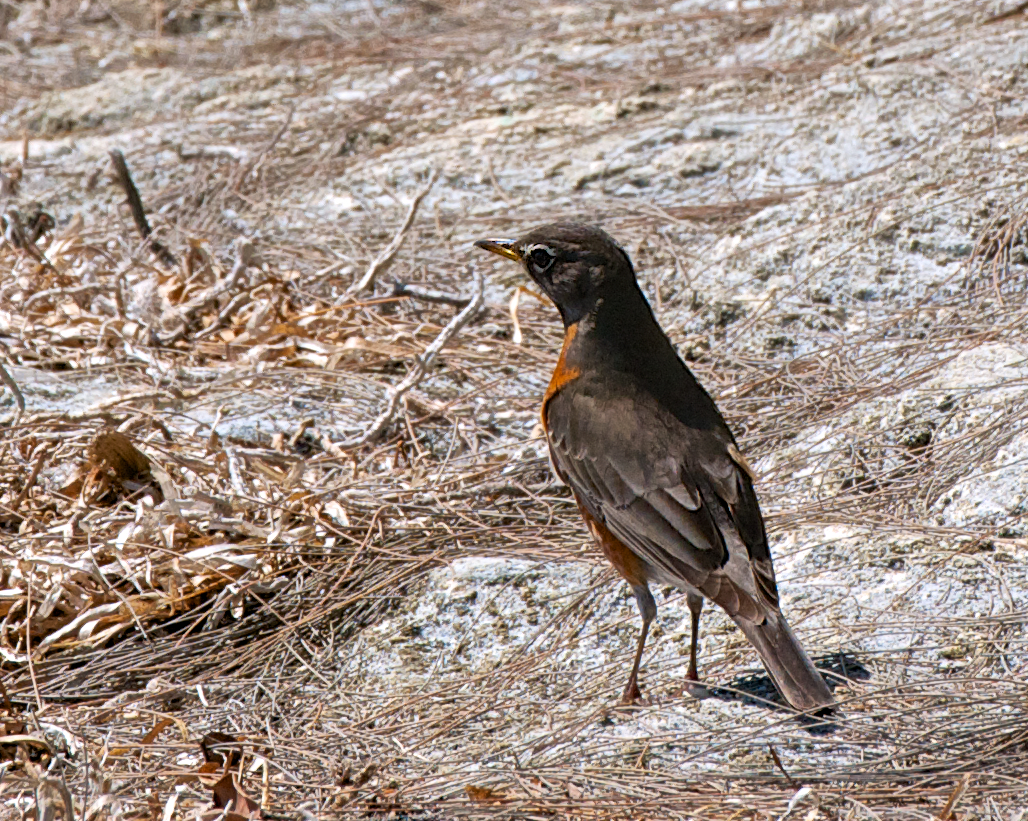
Nina Henry, a photographic contributor to BIRDS OF ABACO, had some good fortune last March 2014 when she found these 3 birds during her trip to Abaco. Maybe March is a good time for them – perhaps a few call in as they start to make their way north for the summer.
Many past sightings have been on the Cays rather than the main island. Here’s a recent photograph taken by Charmaine Albury on Man-o-Way Cay
Meanwhile I have been able to improve slightly on the tiny distant AMRO I posted before, with one taken more recently – still not on Abaco but in NYC. Closer, but definitely no cigar yet…
Credits: Bruce Hallett (header), Nina Henry x 3, Charmaine Albury, RH
‘SEXING THE HUMMER’: A GENDER GUIDE TO ABACO’S HUMMINGBIRDS
The subject matter of this post is not as indelicate as the title might imply; nor is it a ‘hands-on’ practical guide for intimate examinations of tiny birds. In particular it does not publicise some recently discovered louche activity involving unfeasibly large motor vehicles. It’s all about plumage. In my thin disguise as a person with apparent knowledge about the wildlife of a country that is not my own, I get frequent requests for bird ID. Some, I know at once. Some I have to think about, my memory not being quite as…
Where was I? Yes, bird ID. I use BRUCE HALLETT’Sbook of course, and online the CORNELL LAB andAUDUBONsites.OISEUX-BIRDS is also a good resource and has a large archive of images. And of course dear old Google – they may watch your every keystroke and know more about you than you do yourself, but put a bird’s name into Google Images and you’ll probably see your bird in every static pose or flight you need for ID. They’ll log that too for future use. I have had some queries about Bahama Woodstar gender ID, and more recently, Cuban Emeralds. So here are the adult males and females of each species in all their undoubted glory…
Males have a glorious purple, showy ‘gorget’. Females are less flamboyant, and have grey throats and fronts. Tara’s wonderful photo above vividly demonstrates their more delicate beauty. It’s one of my personal favourites from “BIRDS OF ABACO“, along with Tom Sheley’s above, the bird that graces the jacket.
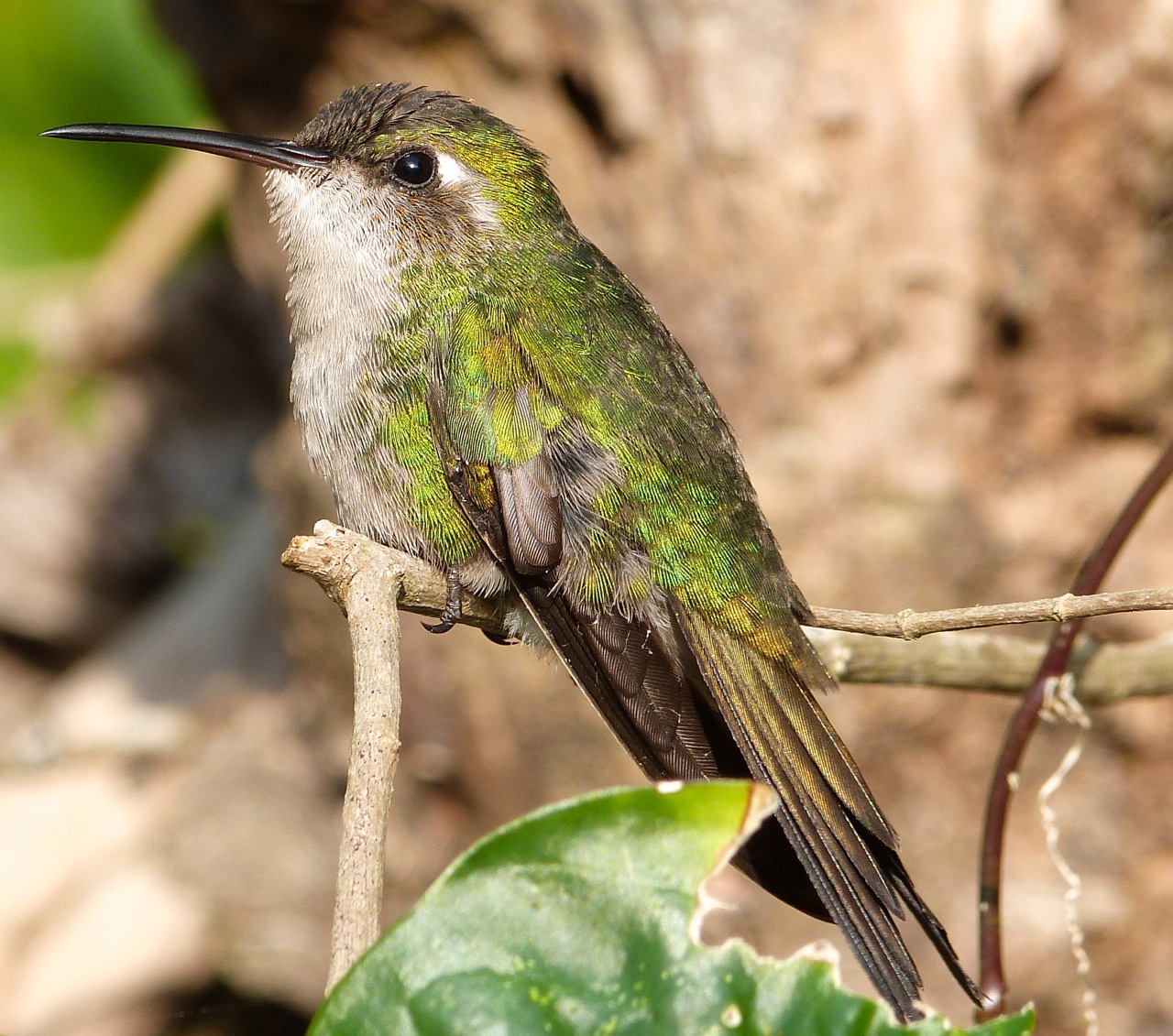
Cuban Emerald (female) Gilpin Point, Abaco (Keith Salvesen)
EMERALD ID MADE EASY
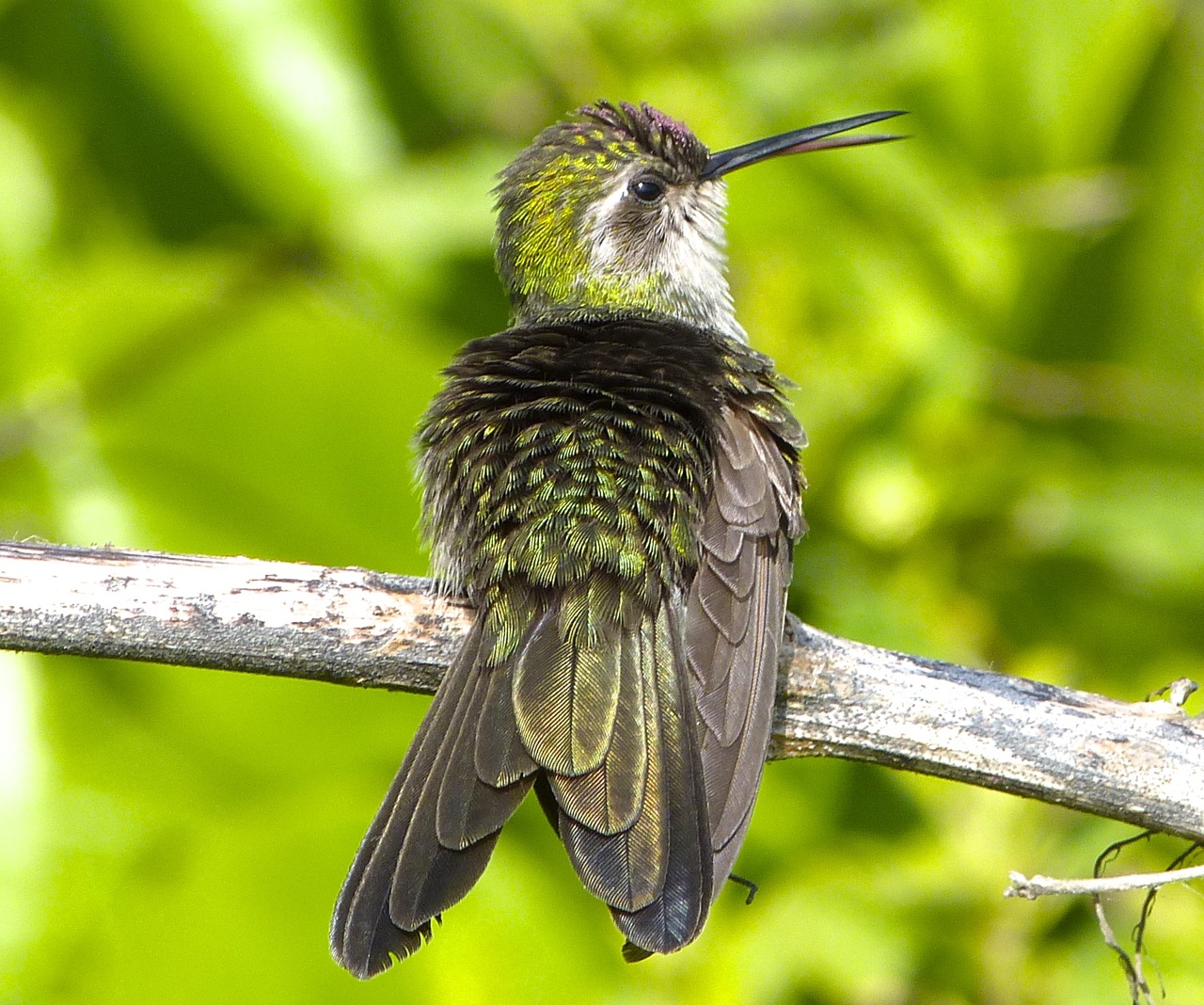
Male emeralds are basically… er… emerald green all over , apart from the wings. Females have grey throats and fronts, and lack the chestnut frontal band of the female woodstar. I’d say that their iridescent green is a different metallic shade from the male, but that may be just me. I don’t have the palette vocab to describe it, but advice welcome! Perhaps one can simply say it is more subtle.
SO IT’S JUST THE TWO HUMMERS ON ABACO, IS IT?
The answer is ‘No’. But don’t make a special trip to see the third species – they are casual / irregular vagrants only, and a definite sighting will be a rarity. But just in case, here are stock photos of a male and a female, and (taken on Abaco by Bruce Hallett) an immature male of the species…
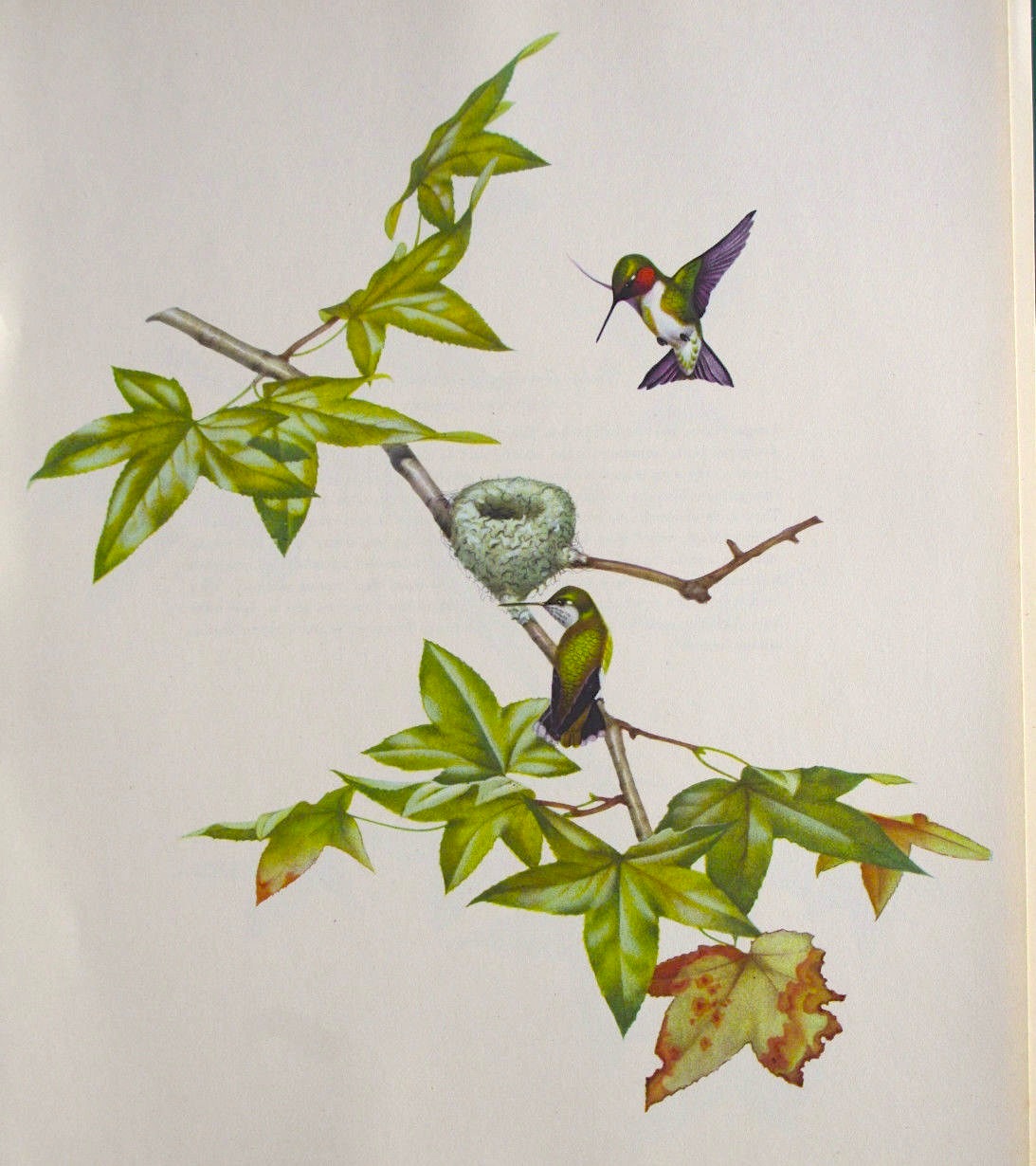
This is an attractive print of the R-tH by Menaboni
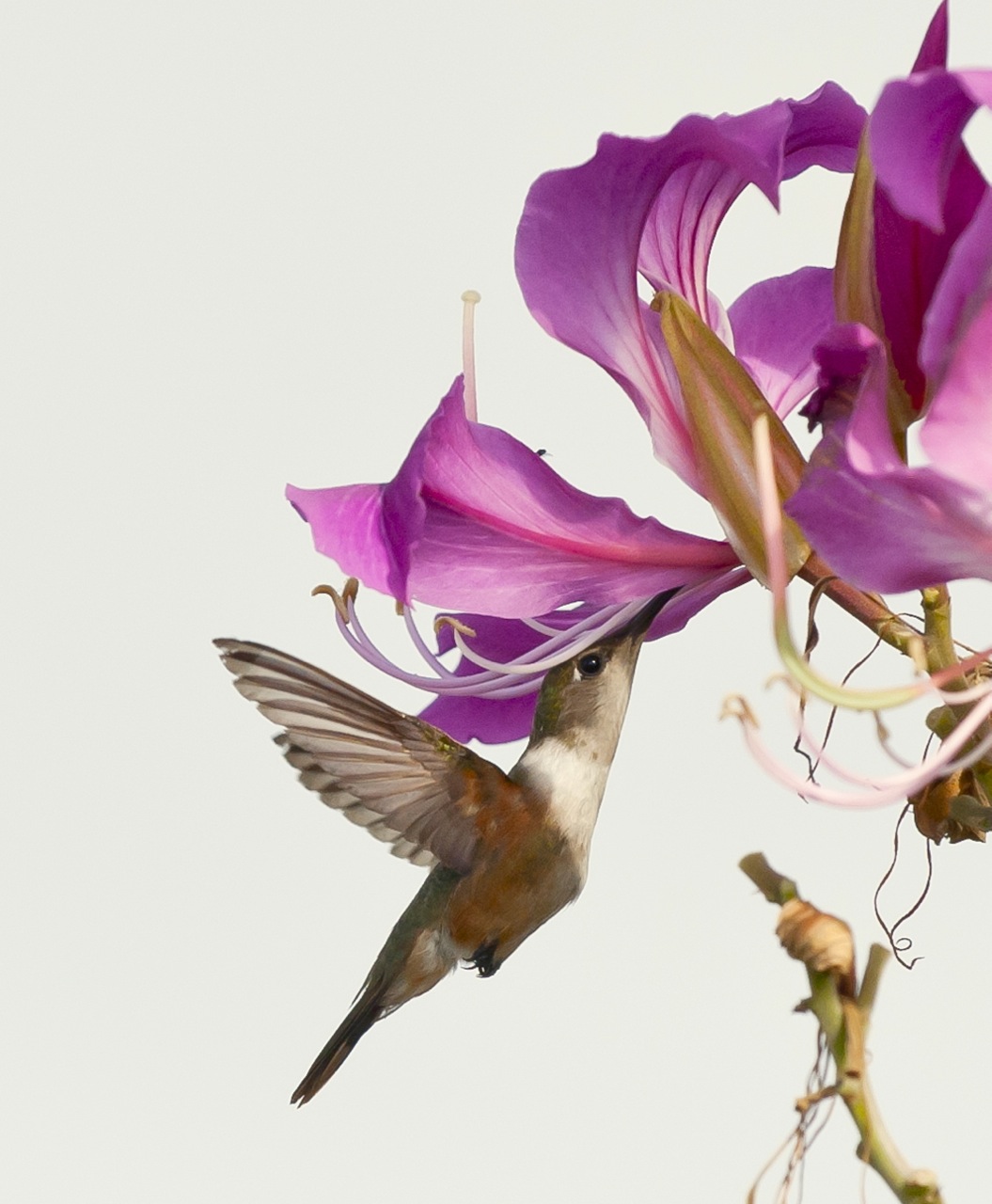
To complete this post, I’ll add a brilliant Woodstar photo taken by Tom Sheley, birdman and generous fishing partner, that I reckon spans the boundary between photography and art.
Bahama Woodstar female.Abaco Bahamas.Tom Sheley
Credits: In addition to those shown below images, Steve Maslowski and Tim Ross for the RTHs
South Abaco – the tract of land south of Marsh Harbour – has some of the richest birding in the Bahamas. Besides 4 of the 5 BahamasENDEMIC SPECIES, it contains some of the most interesting speciality birds. The uniqueABACO PARROTfor a start, with a population that is gradually increasing following a drastic decline and conservation intervention. RarePIPING PLOVERSon the eastern shoresthat overwinter, as do the endangeredKIRTLAND’S WARBLERS, of which more soon. In the Bahamas the WEST INDIAN WOODPECKER is common on Abaco, but elsewhere it is rare on San Salvador and is no longer found on Grand Bahama (missing, presumed extirpated). If you want to learn more about them and their engaging ways read Caroline Stahala’s fascinating article HERE
Olive-capped Warbler, one of 5 permanent resident warblers (of 37 species in all) Bruce Hallett
January was an excellent time for the Hope Town Birding Group to take the ferry over for a quality day of birding on south Abaco. In all, 44 species were identified, ranging from expected feathery denizens to what are sometimes described as ‘Good Gets’. The group was led by Bruce Wolck. Jan Metcalf contacted me to arrange for Delphi – a notable birding hotspot – to be on the itinerary. And as she wrote to me afterwards in summing up the day:
“Amazing birds, amazing day, amazing Delphi (where we saw the Bullfinch)”
Sally Chisholm has since emailed that among places visited were the “[town] dump, locations along the highway south to the Y, Sandy Point, the south ferry dock, Gilpin Point, Bahama Palm Shores and Delphi”. I’ve never been to the dock, so that’s one for us to try out in March…
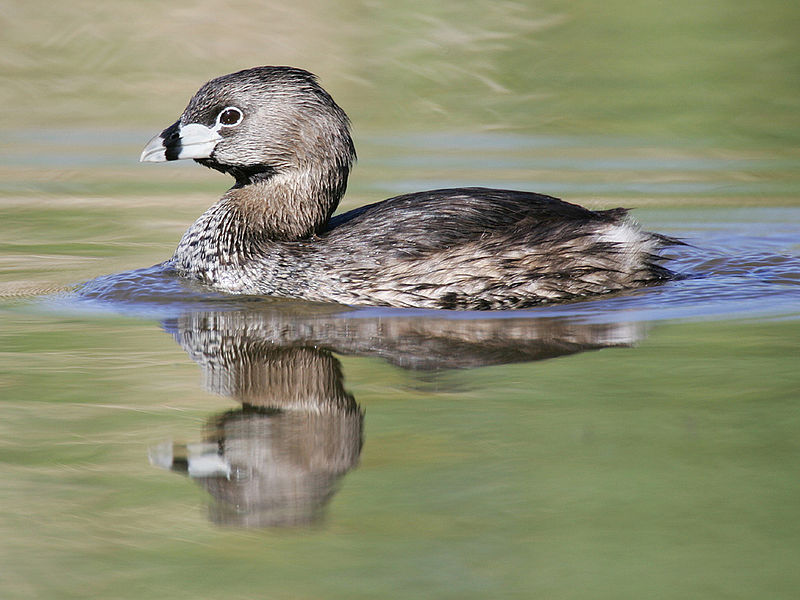
Here is the group’s checklist of the 44 species. I have added thumbnail images, almost all taken on Abaco by contributors toTHE DELPHI CLUB GUIDE TO THE BIRDS OF ABACO, including some used in the book. “Good Gets” include the Pied-billed Grebe, a permanent resident but quite scarce; the Bonaparte’s Gull; the Great Black-backed Gull; and the White Ibis. The last 3 are what are termed ‘casual’ winter residents – rarely seen and so irregularly reported.
HOPE TOWN BIRDING GROUP CHECKLIST – JANUARY 2015
CLICK on a thumbnail to enlarge it. That’s the idea anyway, but I’m a bit ‘casual’ myself in checking links. The ones I spot-checked worked so I am hoping for the best with the remainder…
Pied-billed Grebe
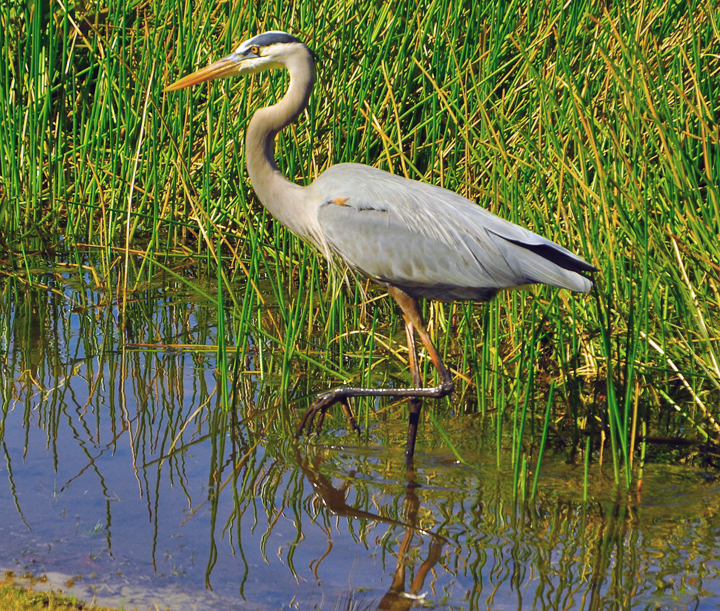
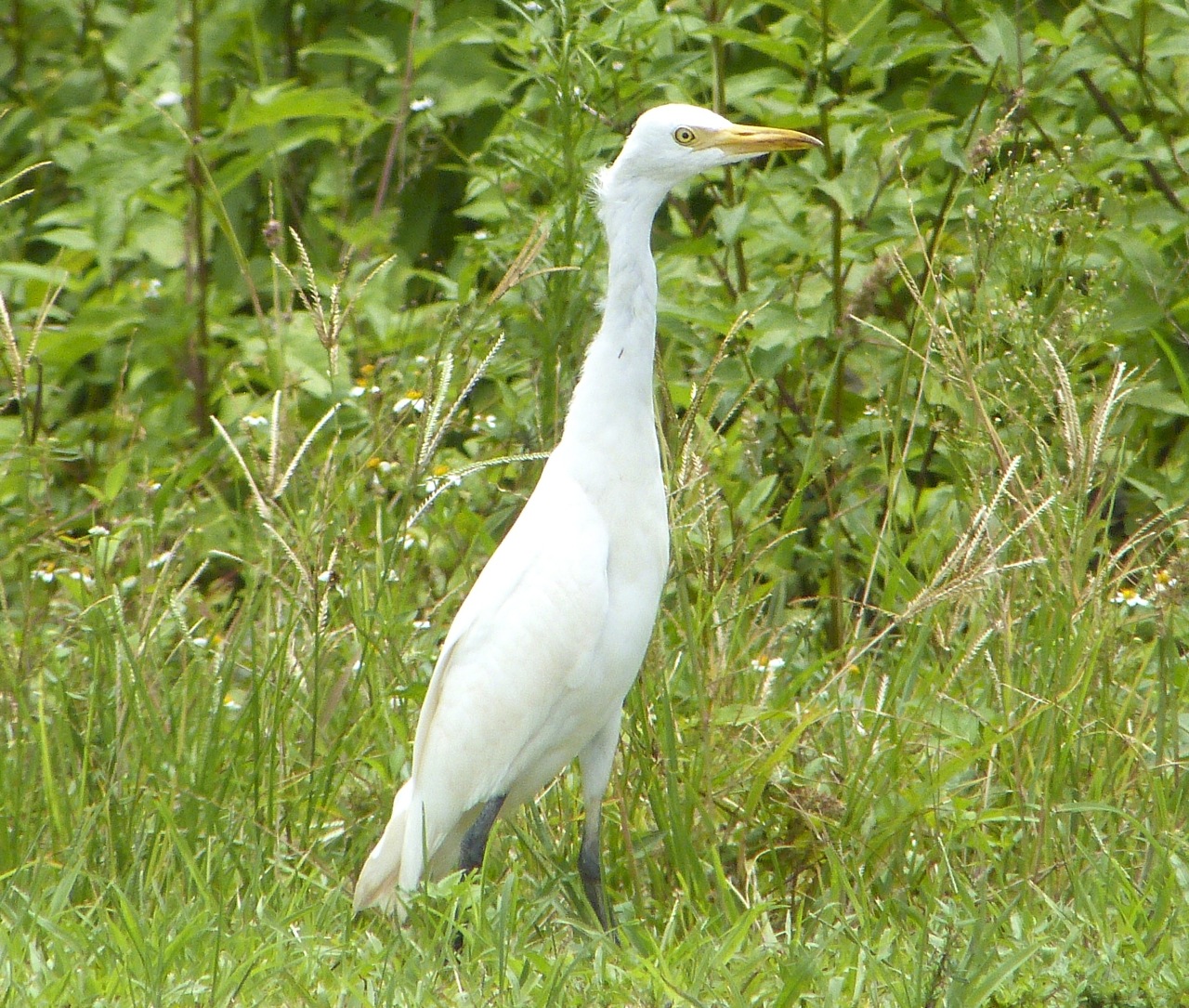
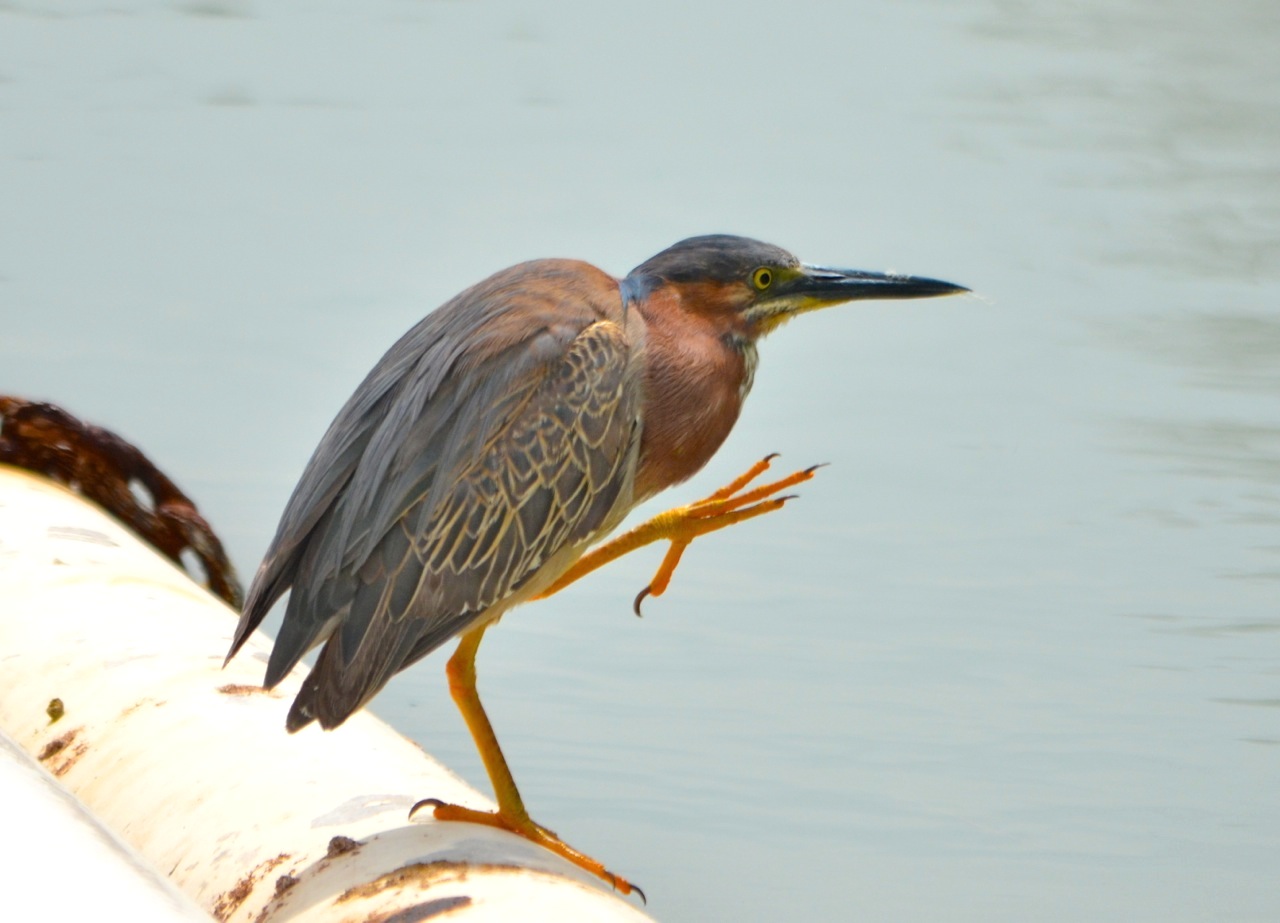
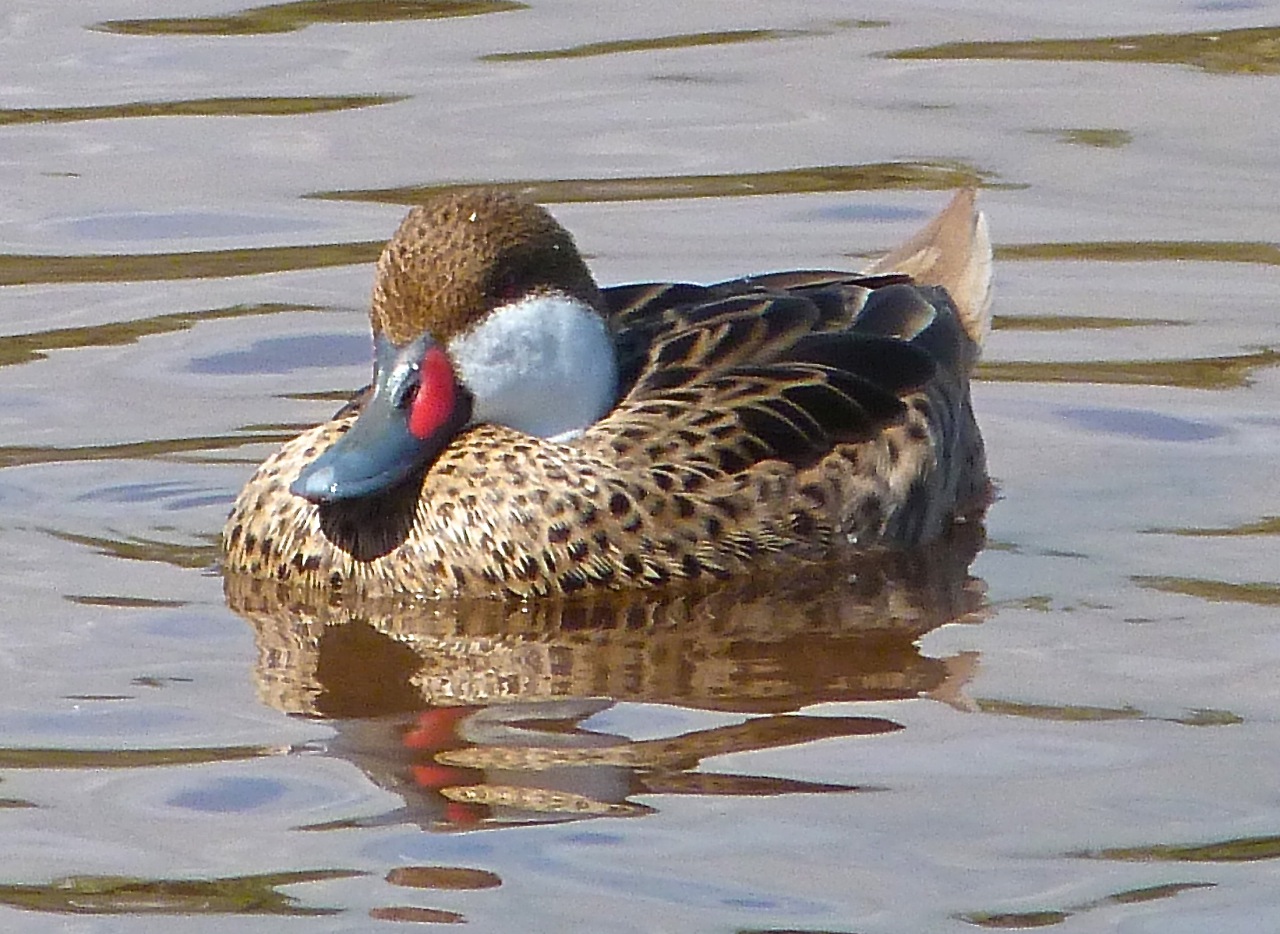
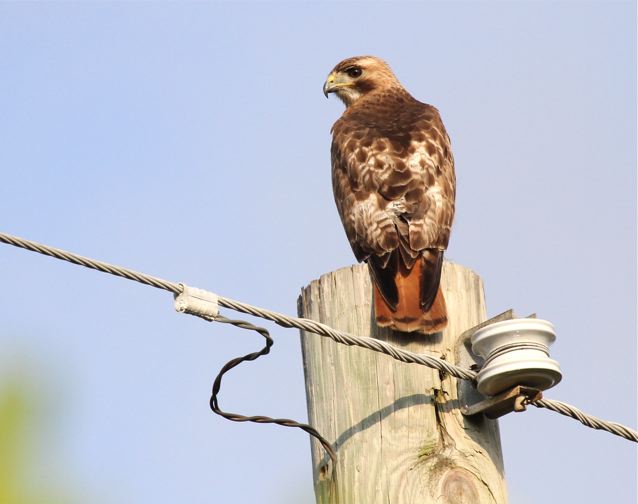
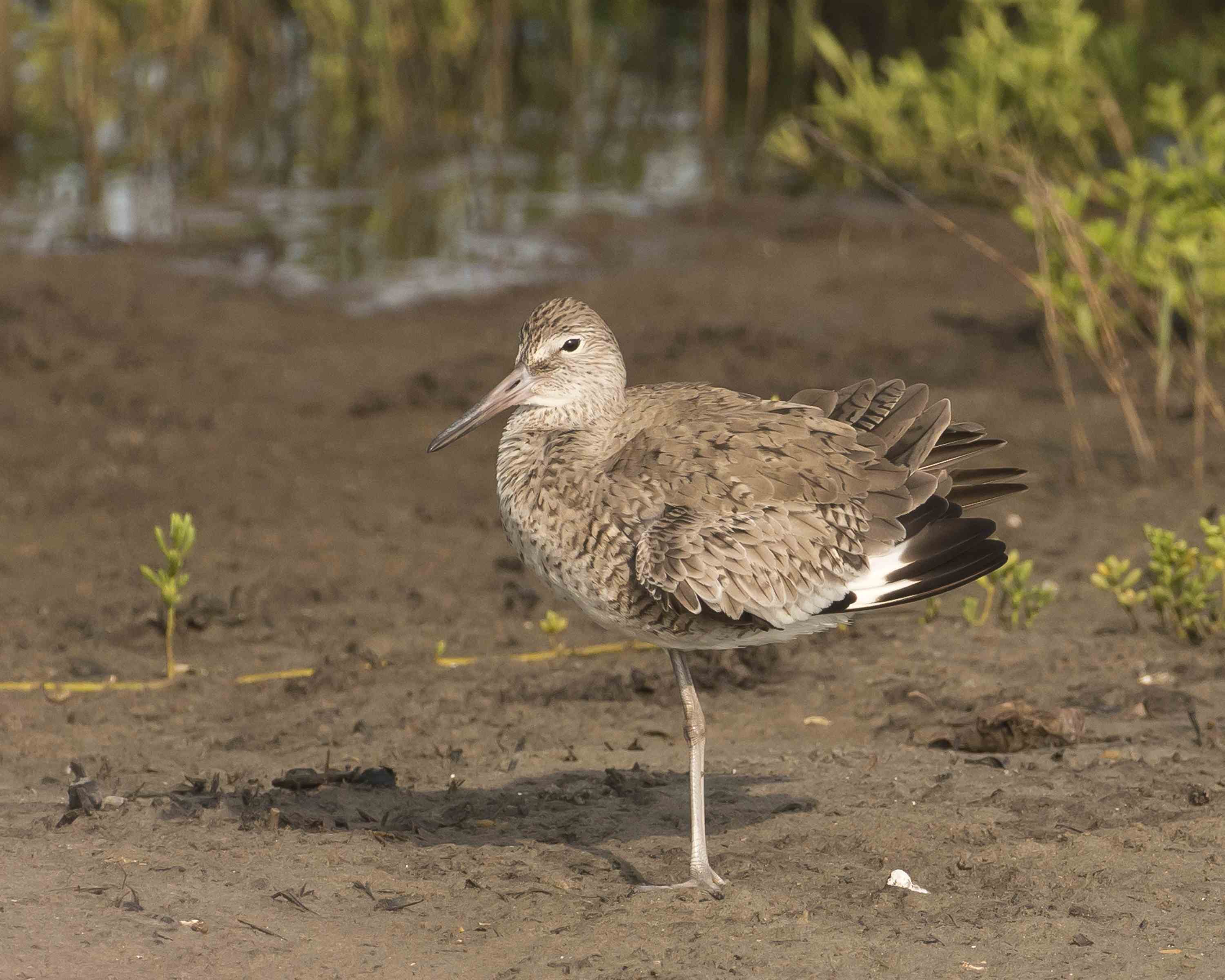
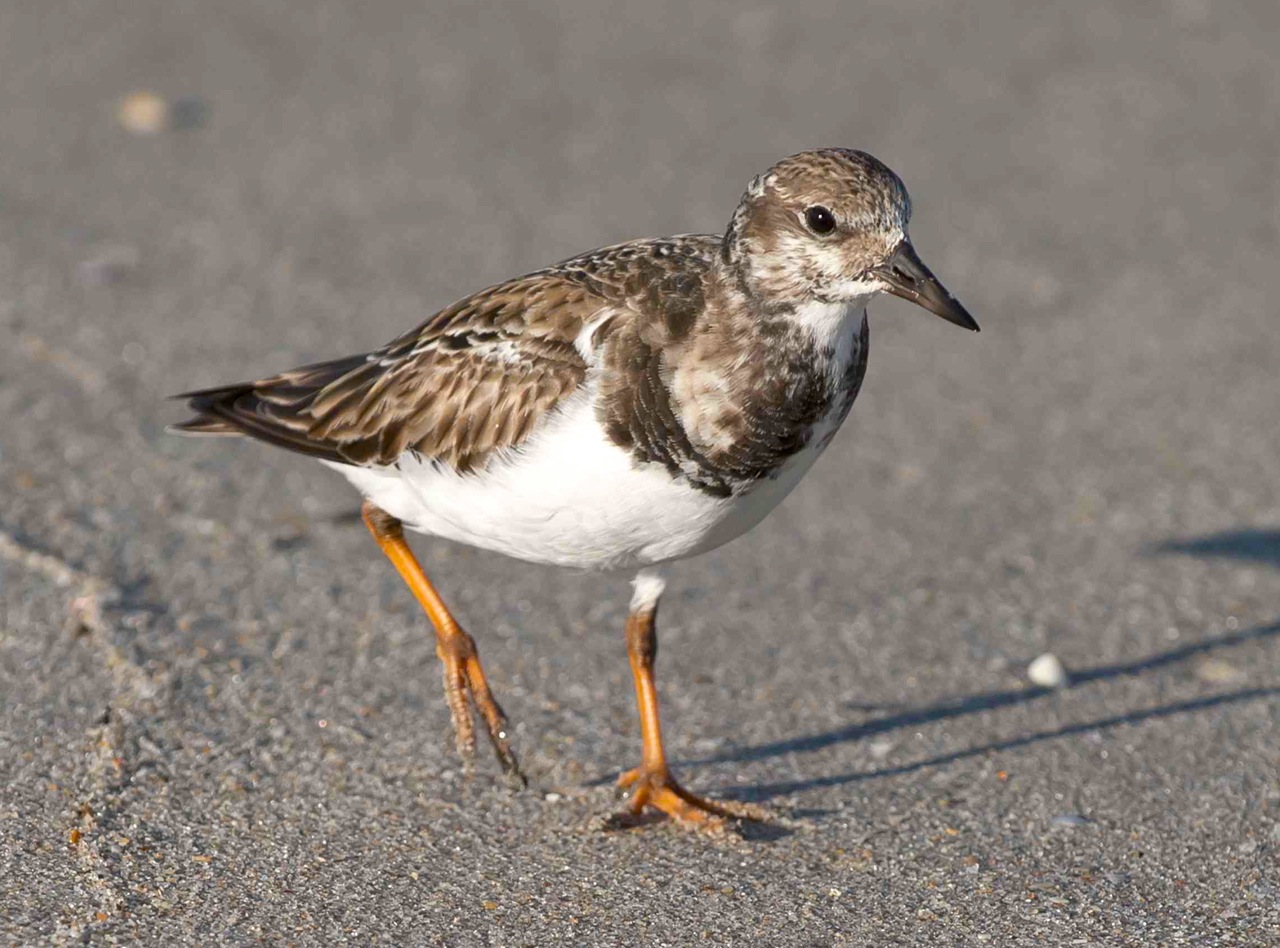
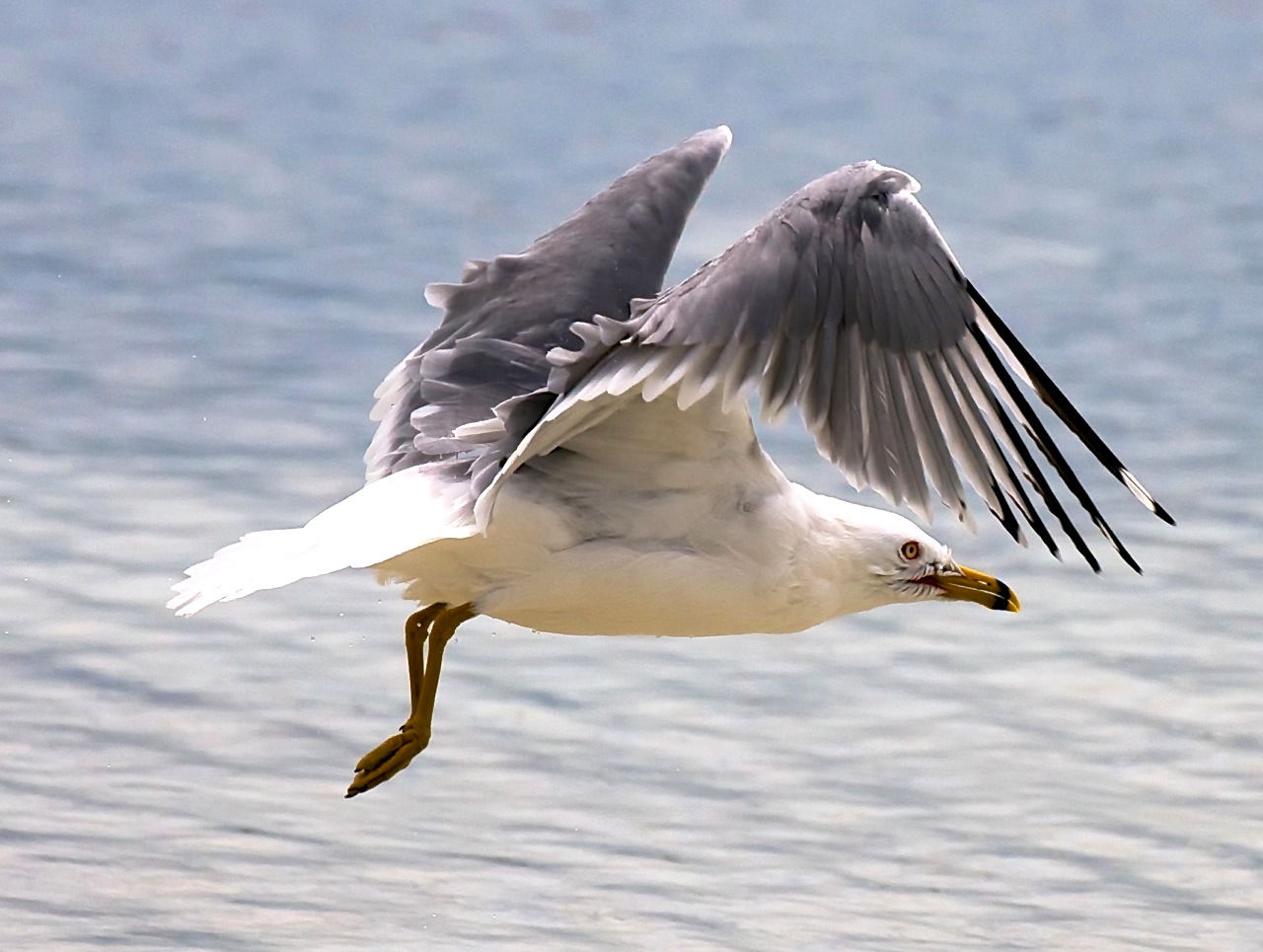
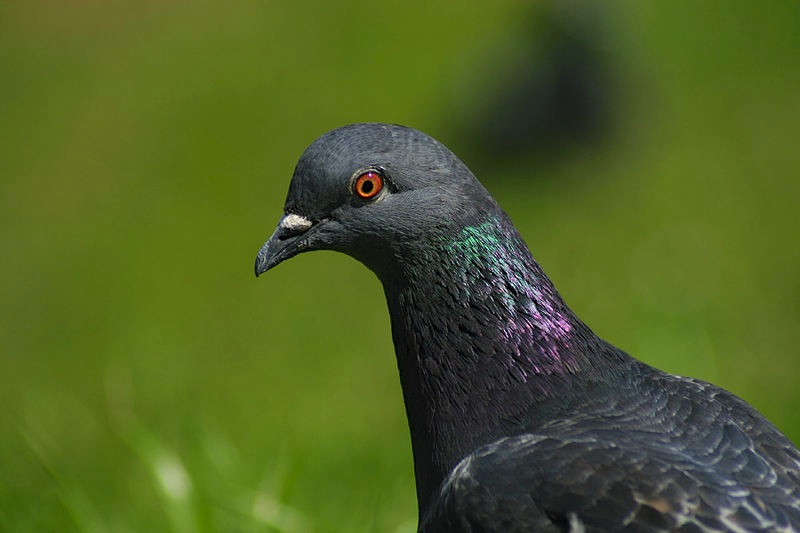
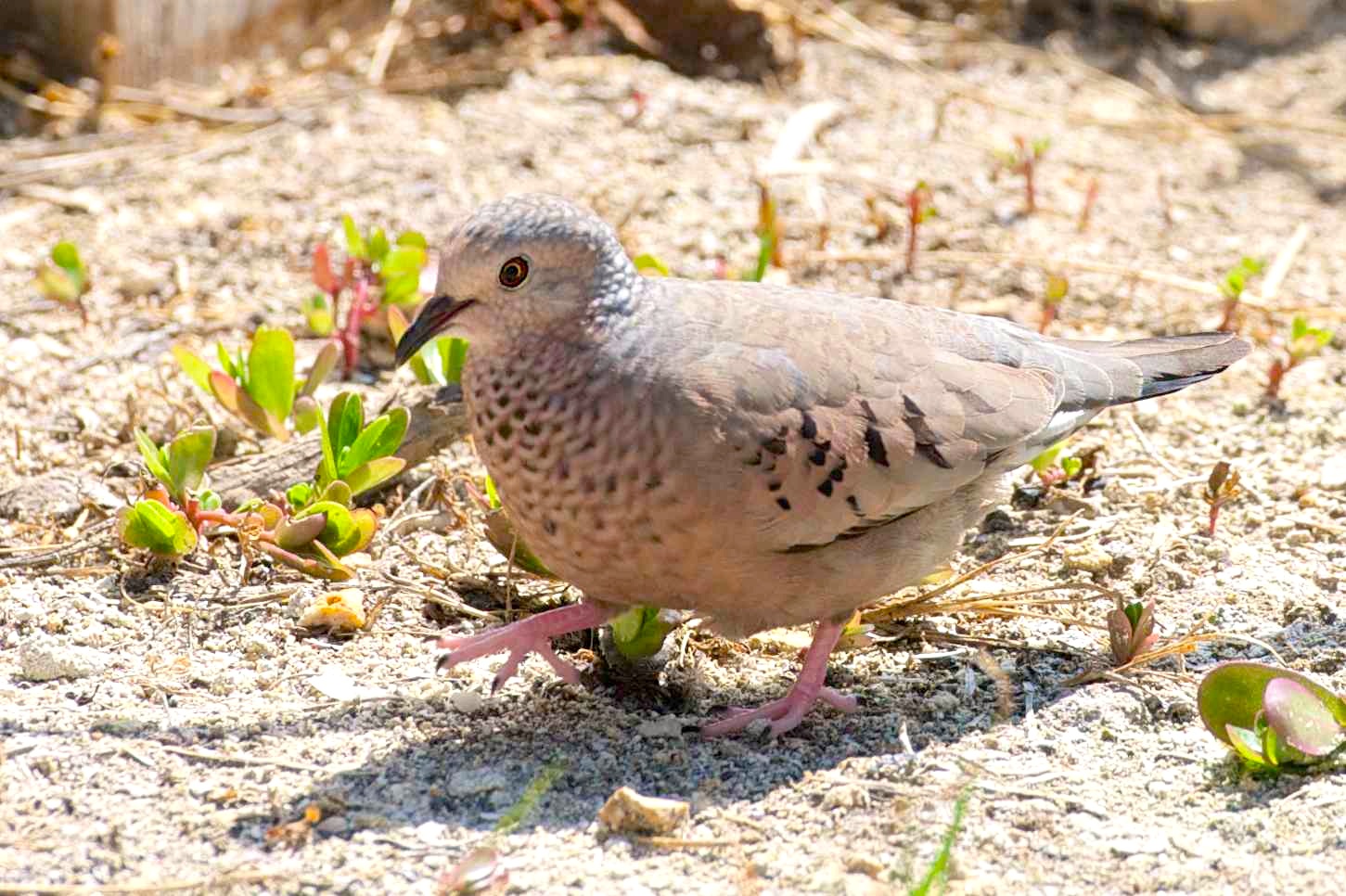
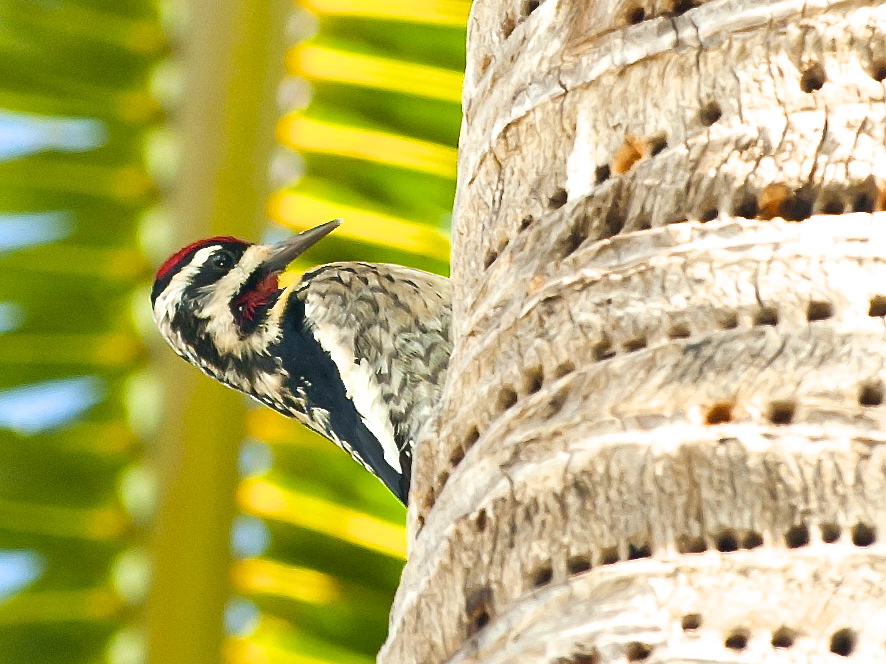
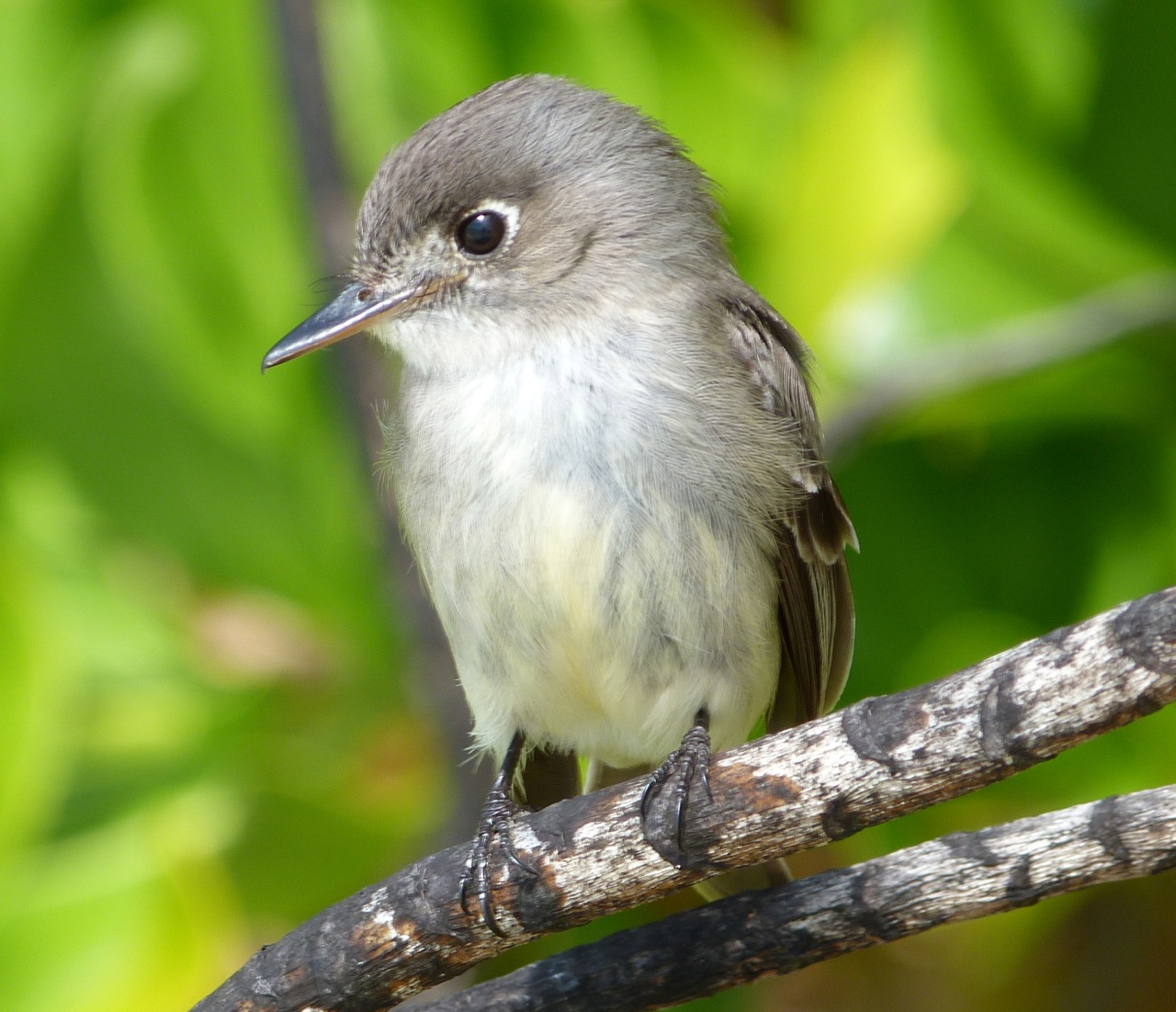
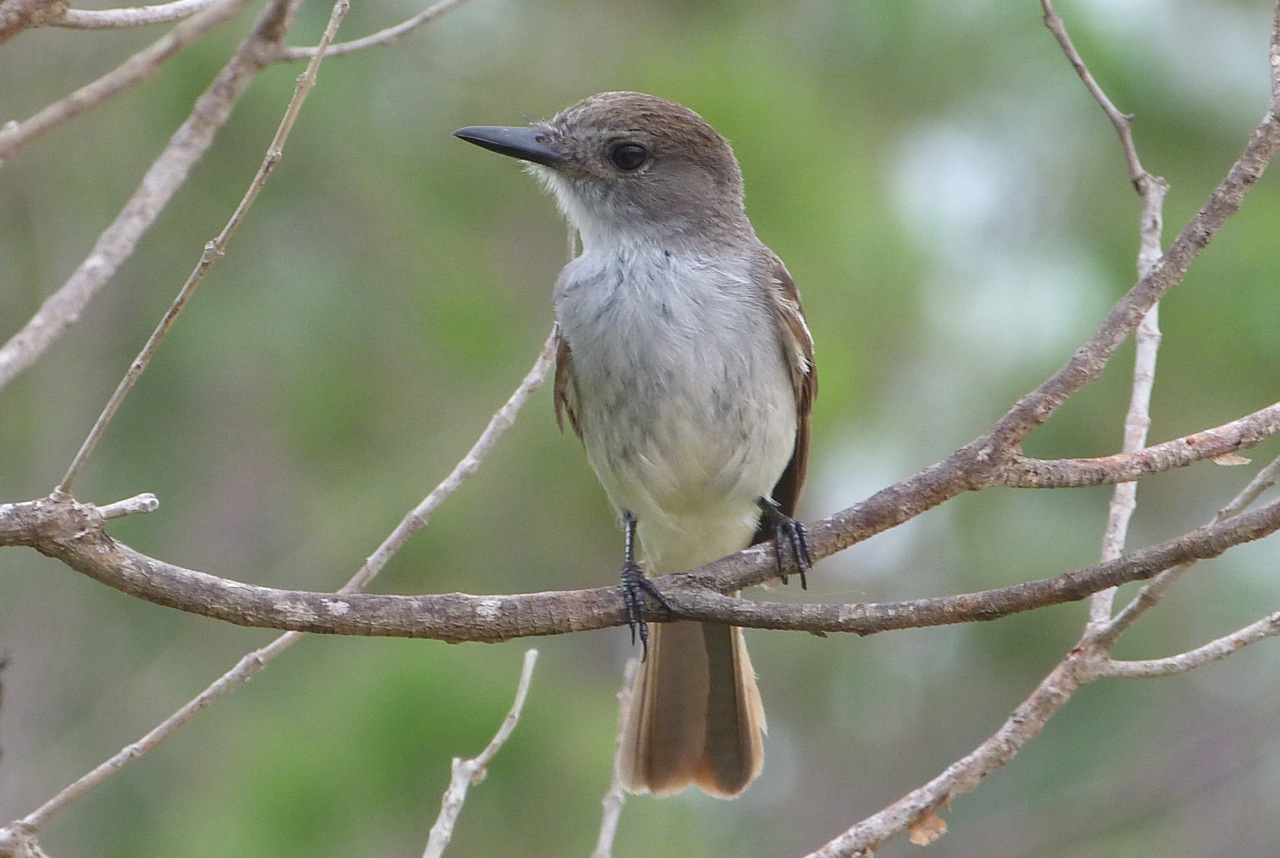
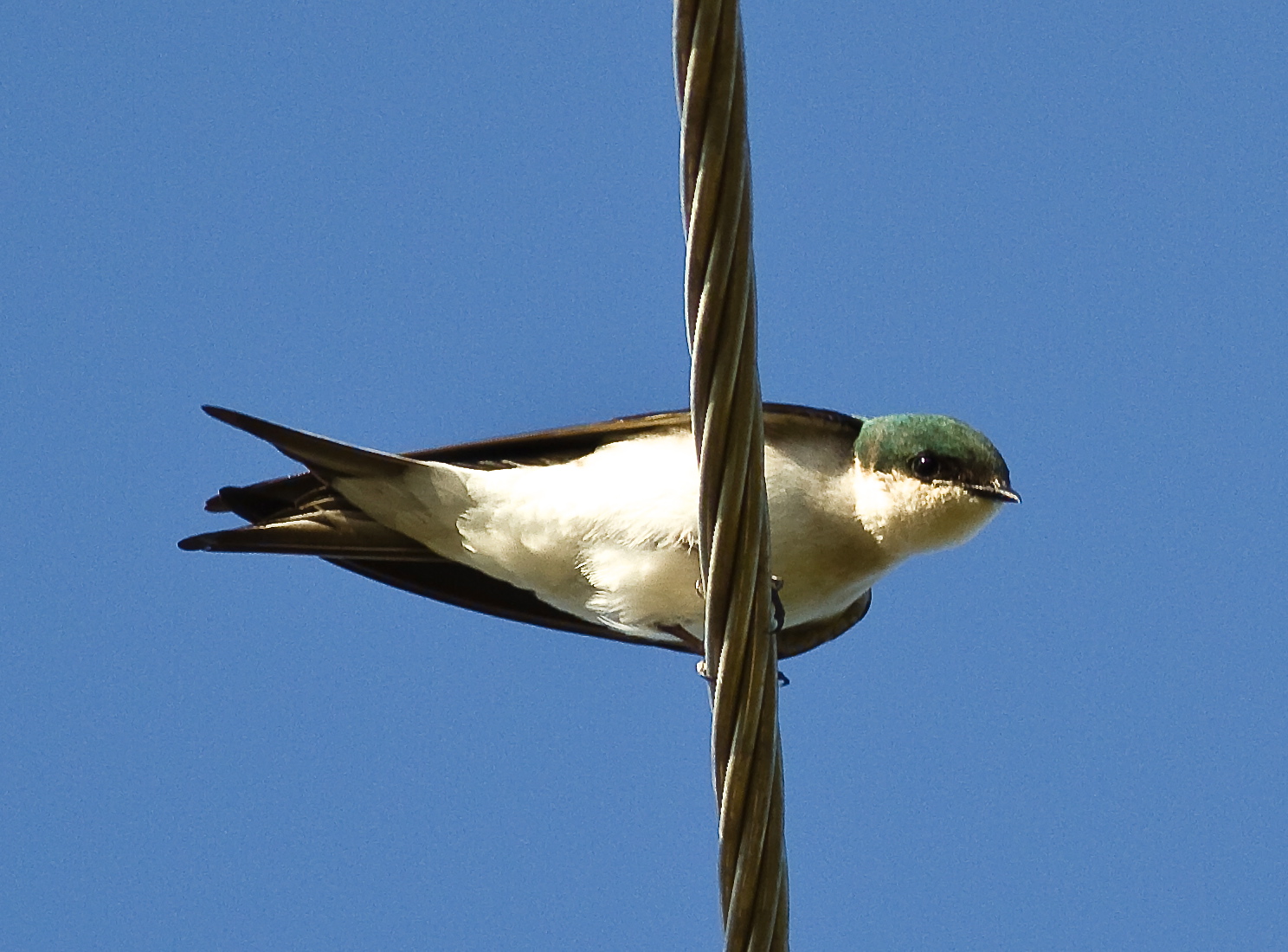
Brown Pelican Magnificent Frigatebird Great Blue Heron Great Egret Little Blue Heron Cattle Egret Green Heron White Ibis White-cheeked Pintail Turkey Vulture Red-tailed Hawk American Kestrel Black-bellied Plover American Oystercatcher Willet Ruddy Turnstone Laughing Gull Bonaparte’s Gull Ring-billed Gull Great Black-backed Gull Rock Dove Eurasian Collard Dove Common Ground Dove Cuban Parrot Smooth-billed Ani Cuban Emerald Belted Kingfisher West Indian Woodpecker Yellow-bellied Sapsucker Cuban Peewee La Sagra’s Flycatcher Loggerhead Kingbird Bahama Swallow Red-legged Thrush Northern Mockingbird Thick-billed Vireo Northern Parula
Yellow-throated Warbler Olive-capped Warbler
Pine Warbler Stripe-headed Tanager Black-faced Grassquit Greater Antillian Bullfinch
If any Birding Groups are interested in birding the one-mile drives (wonderful pine and coppice habitats), gardens and one-mile white sand beach at Delphi, let me know. It can easily be arranged, but there are times when it is not convenient or that some areas are not open for access. Email me as first contact at rollingharbour.delphi[AT]gmail.com
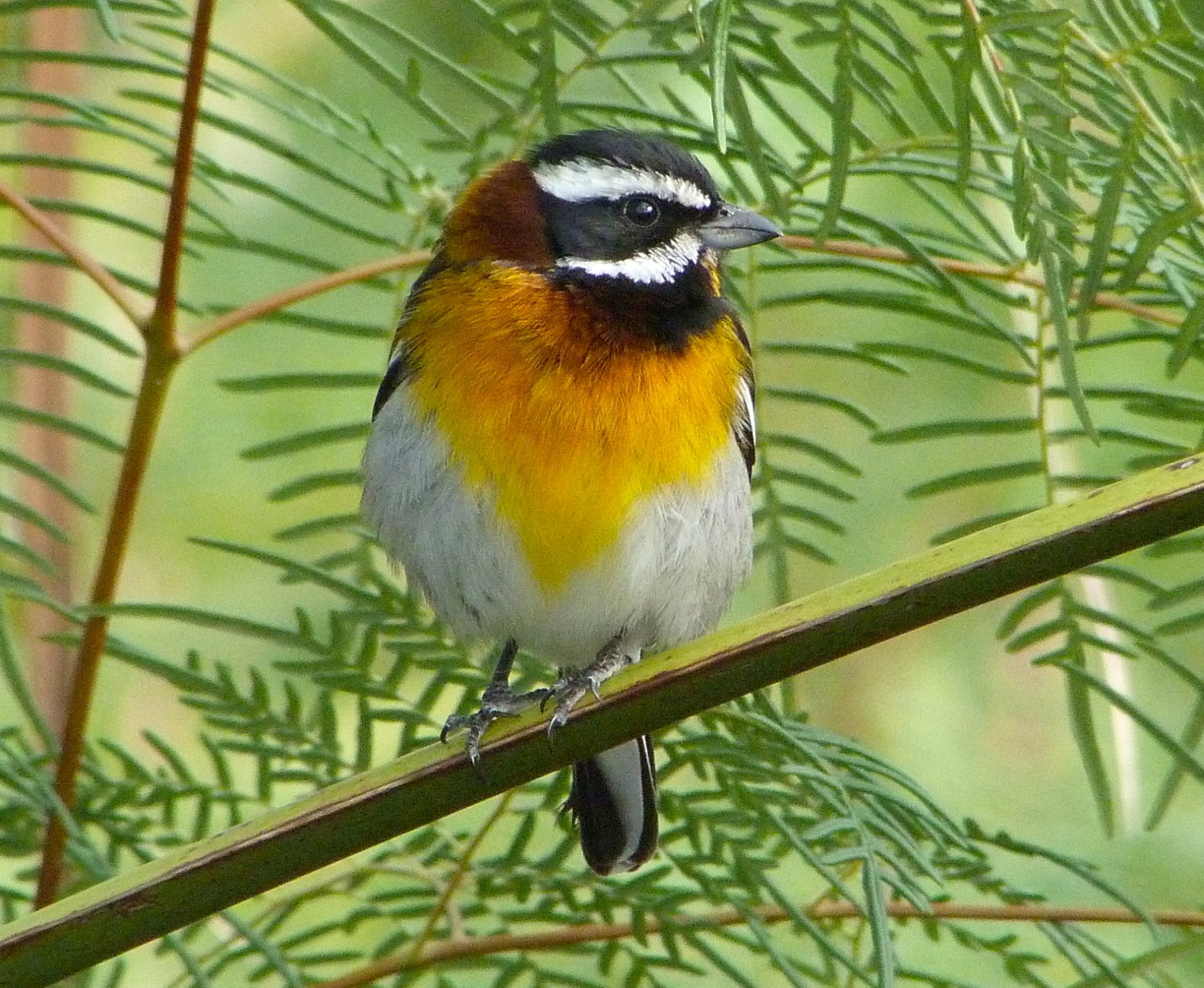
Western Spindalis, Abaco -Delphi Club Drive (Keith Salvesen)
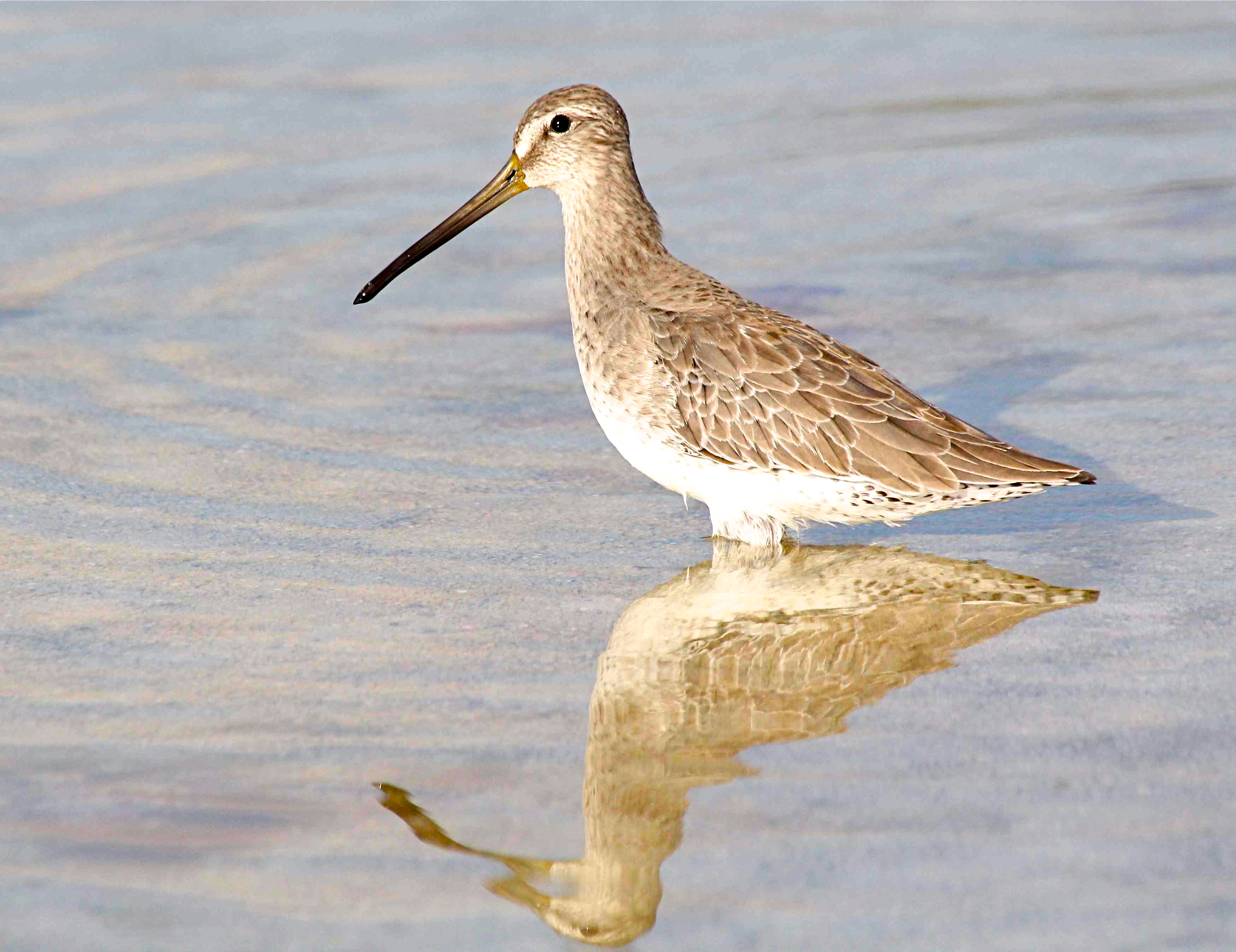
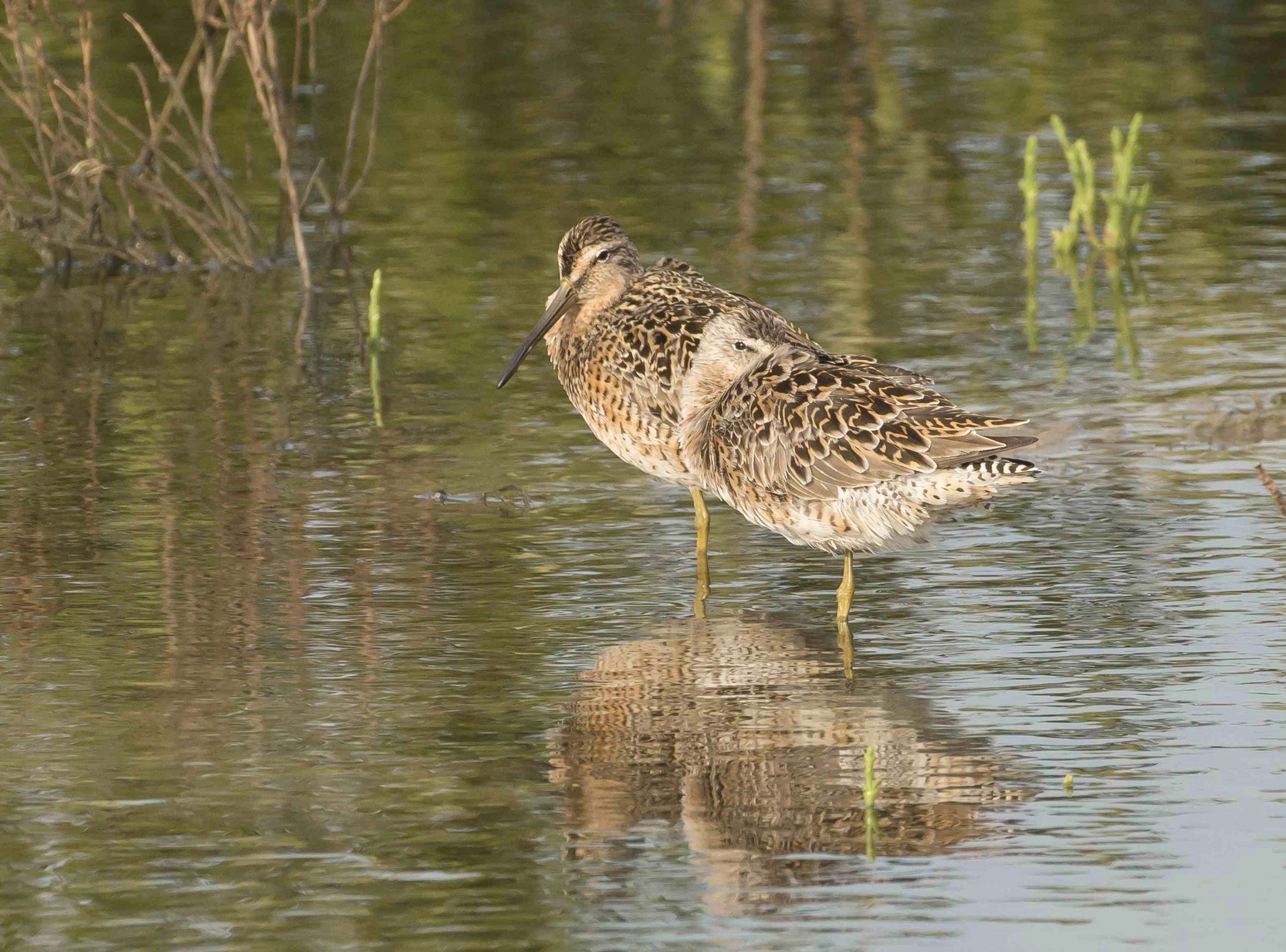
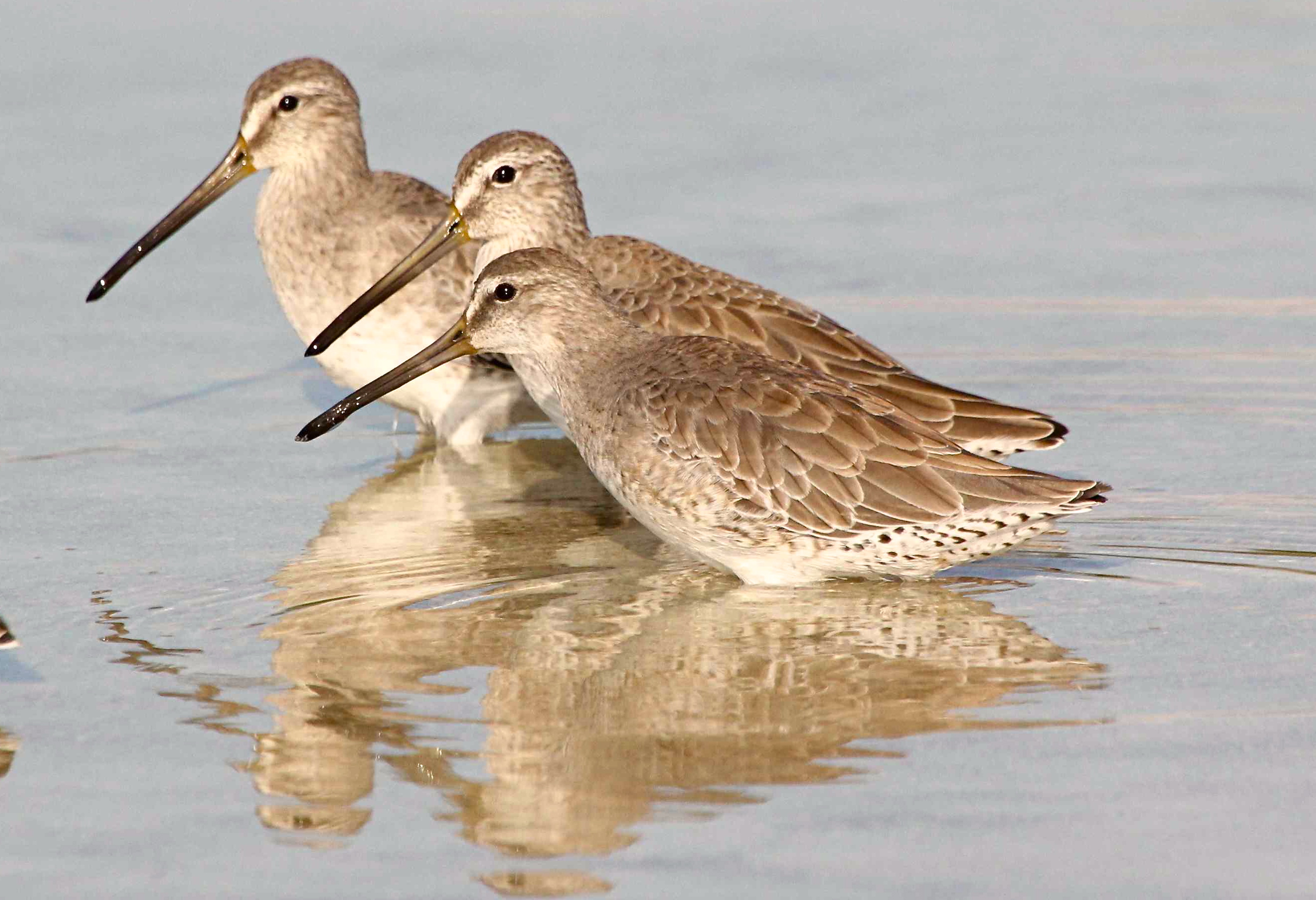
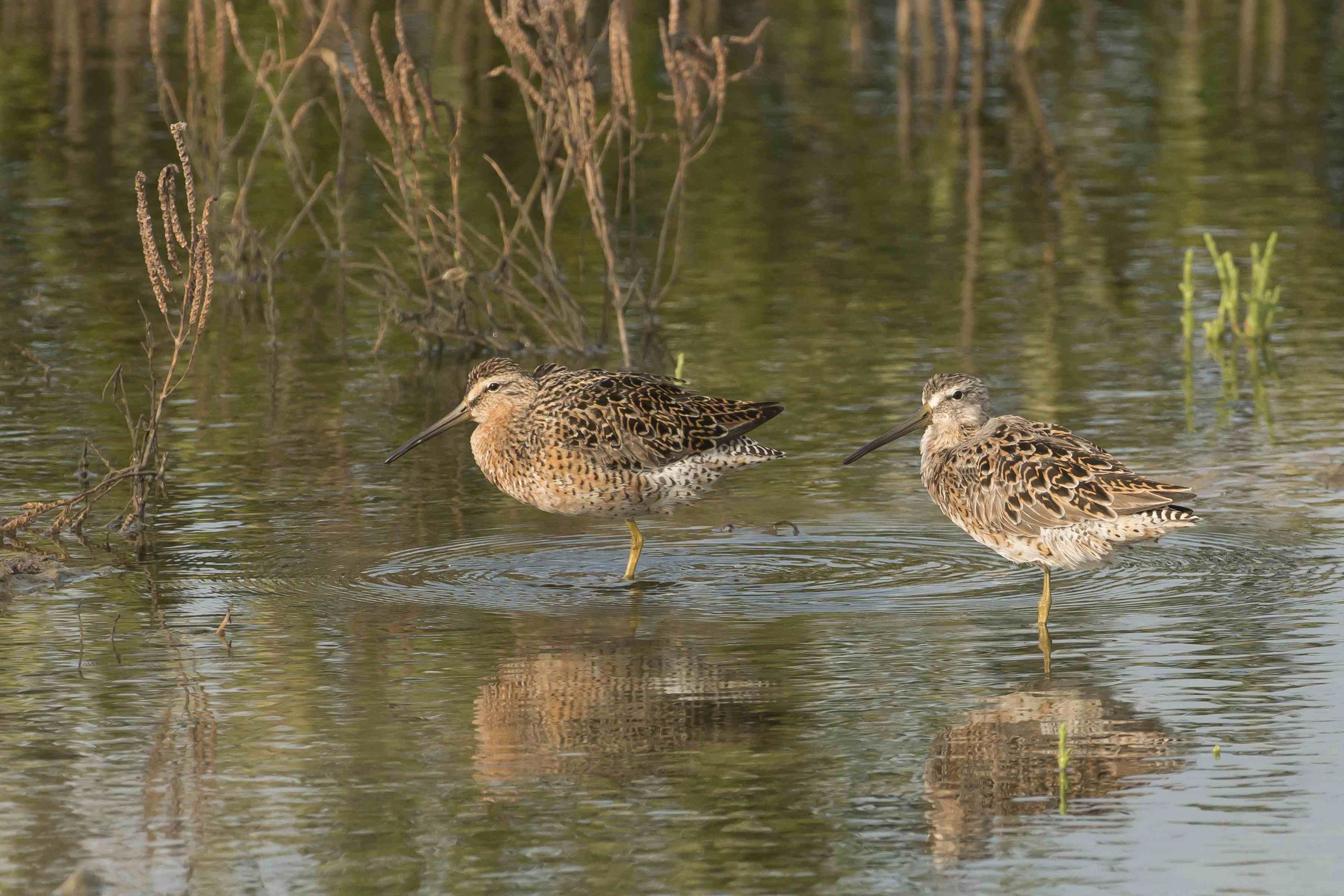
Long-billed (Limnodromus scolopaceus)? Or Short-billed (Limnodromus griseus)? Which one is that over there? No, not there. There! For Abaco, the answer is very easy. The SBD is a common winter resident, whereas the LBD is an occasional casual visitor, recorded rarely and irregularly in the Northern Bahamas.So if you are looking at a Dowitcher, it’s 98% certain that’s it’s an SBD. Which is lucky – they are so similar that telling them apart is a complex ID challenge, even if seen together! Until 60 years ago they happily existed as one species until the avian powers-that-be decided to prise them apart and award them separate species status. All the birds featured here are Abaco SDBs, with one exception… More on the comparisons and differences below.
The Dowitcher’s bill is an extremely effective instrument for probing deep into low water and mud. The rapid stabbing for concealed invertebrates has been vividly described as being ‘like a sewing-machine’. A ‘Dowitcher Stitcher’. So to speak.
HOW DID THE DOWITCHER GET ITS NAME?
I had assumed that the strange name for these birds was onomatopoeic, in the same way that a Killdeer is supposed to call “Kill…Deer”. And a Bobwhite, an interrogative “Bob…White?”. When I tried to check this online, I found that the usually valuable primary sources for bird info were silent on the topic. In the end, I tracked down a Merriam Webster entry that simply said “probably of Iroquoian origin; akin to Oneida tawístawis. First Known Use: 1841”. Which left me better informed, but no wiser…
THERE’S A BUNCH OF SHOREBIRDS OVER THERE – WHAT DO SBDs SOUND LIKE?
Phoenix Birder / Xeno Canto
In the header image, the bird is foraging in shallow water. In deeper water or with softer mud, SBDs will plunge their bills in to the hilt
SHORT OR LONG – HOW ON EARTH DO I TELL?
1. HELPFUL(ISH) WAYS
On Abaco, if you see a Dowitcher the overwhelming likelihood is that it’s a SBD
The species prefer different habitats, with the LBS preferring freshwater even in coastal regions
The SBD prefers coastal areas, shorelines and brackish / muddy ponds
The SBD’s call is said to be “mellower” than the LDB – though unless you have heard both for comparison, that’s not a very useful identifier.
The body shapes are apparently subtly different, in ways I personally can only begin to guess
In breeding plumage, the species have perceptible colour / pattern differences. (If you have binoculars?)
2. CONFUSING FACTORS
LBDs may occasionally join SBDs that are foraging on open tidal flats
Actual bill length may not help, there’s an overlap – some SBDs may have longer bills and vice versa.
There are theories about bill-length / head size comparison as a field ID method. Do they work? As if!
Winter plumage of both species is very similar (grey). Both are only on Abaco in winter. Go figure.
DOES THE DOWITCHER HAVE ANY PRACTICAL APPLICATION?
Yes! In Scrabble you can form a stonking 315 words from those 9 letters, all permitted under Scrabble rules (though not my own house rules, which forbid ridiculous 2 and 3 letter words that sound invented for the purpose of winning Scrabble). Apart from the full 9 letter original, there’s one 8 letter word – ‘witherod’, a type of viburnum plant; and 13 words of 7 letters, of which I’d say 8 are in common though not everyday usage. I’ll leave you to work out the remaining 301 words…
DO YOU HAVE ANY LBD PHOTOS TAKEN ON ABACO?
I surely do. Woody Bracey photographed a pair of dowitchers together on Abaco, one SBD and one LBD. But even though this looks a pretty straightforward comparison of bill length, colouring and marking, by now I’m now so confused that I’m beginning to wish the two species could be happily reunited into one…
Credits: Bruce Hallett, Tom Sheley, Woody Bracey, past researches, the usual bird info suspects
MASKED BOOBY: A SPECTACULAR NEW BIRD SPECIES FOR ABACO
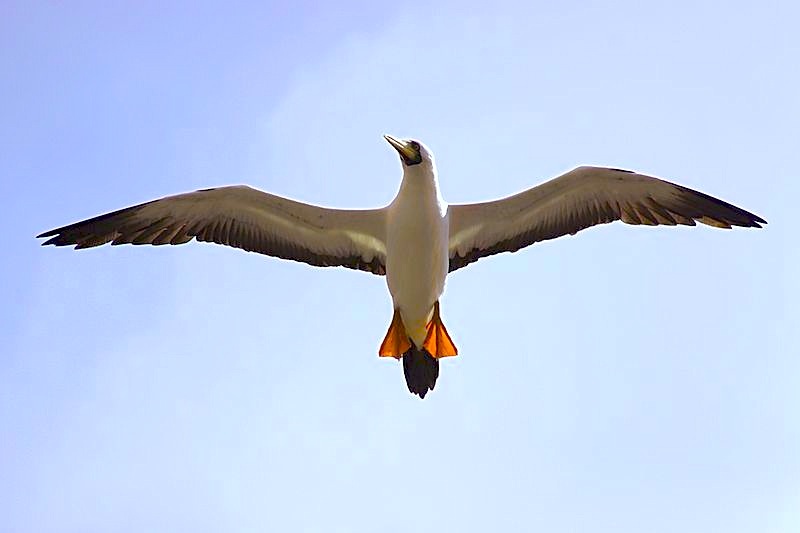
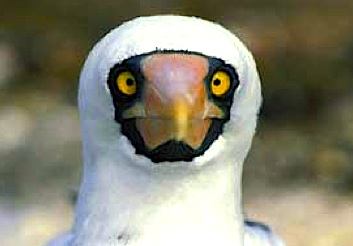
Hot avian news has arrived today from Woody Bracey: the 4th brand new species recorded for Abaco within the last 12 months has just been sighted in Abaco waters, north of Great Guana Cay. It was a single Masked Booby (Sula dactylatra), a large seabird also known as a Masked Gannet (and it certainly looks quite gannet-like). [NB the photos in this post are obviously not of the new bird, but are illustrative of the species]
THE LOGGED SIGHTING DETAILS
Date: Wed Jan 21, 2015 10:00 AM
Location: Deep Sea 2-15 miles off Great Guana Cay, Central Abaco, Hope Town and Green Turtle Cay, BS
Protocols: traveling – party size 2 – duration 6 hours – distance 30.0 miles
Observers: Karl Kleim and Kim Kuhnle; Reporter via Ebird, Elwood Bracey
Description: Single Masked Booby “Large white bird sitting on the sea with a yellow-greenish bill and no yellow on the head, then flew a few 100 yards showing the black trailing edge to the wings and wingtips and tail. Adult female.”
EIGHT ESSENTIAL MASKED BOOBY FACTS
First described by A French naturalist in 1831
One of six species of booby in the ‘Booby’ genus Sula
The largest Booby species
The only other Booby species recorded for Abaco is the Brown Booby
The closest breeding populations to Abaco are off Mexico and southern Caribbean
Silent at sea, whistling greeting call in nesting colonies plus a repertoire of ‘hissing and quacking’
Spectacular diving abilities
2 eggs are laid: very often the first chick to hatch kills the second (“Siblicide”)
The wingspan of an adult Masked Booby can exceed 5 feet
MAPPING ABACO: READ A NOVEL, TALK RUBBISH OR DISAPPEAR
I am probably the last person to twig the topological significance of Abaco’s location in the world. An email tipping me off about a TV programme led me to investigate further. There turn out to be 3 ways in which Abaco’s position in the Atlantic Ocean is of special interest. Two are geographic fact; and one is located in the grey area between myth and putative evidence-based supposition (if such a nebulous concept exists…). If everyone knew this already, sorry for being so late into the game. But you get some nice maps to look at, gratis, like the wonderful van Keulen map of 1728 above. About the only marked location on Abaco is ‘Hole Rok’ (now ‘GAP ROK’). For a history of Hole-in-the-Wall in historic maps, click HERE
1. THE DISAPPEARING TRICK?
Until the recent email, I hadn’t taken on board that Abaco is within the Bermuda Triangle. The island and its cays are contained snugly into the 60º tip of the western angle of an equilateral triangle based on Bermuda, Miami and Puerto Rico. The NOAA map below could not be clearer: Abaco is squarely within the triangle, if that is geometrically possible.
I wrestled with whether to write an earnest discourse along the lines “Towards a Greater Understanding of Triangle Phenomenology”. Then I thought, Nah! If it’s a myth, what’s the point in examining its credibility. If it’s all true, I would’t want to worry you more than I already have by mentioning it… So you can do the hard graft if you wish by checking out the links below. Or you can just move on to section 2. Or relax in the sun, go fishing, find some nice birds, or have a Kalik or 3.
THE WIKI ANGLE Excellent potted overview dealing with supposed position, the main ‘unexplained disappearances’, and the possible causes of these – both natural and supernatural. Frankly, this should do it for all but the most persistent, who probably are more widely informed already.
SCIENCE CHANNEL The top ten Bermuda Triangle theories. Note: may not include your own pet theory of aliens from Planet Tharkron with their Pukotic Missile Rays
HISTORY.COMComes complete with spooky-music video presentation. NB blurb nails its colours to the mast by using words like ‘Mythical’ and ‘Fanciful’ so if you are a believer you won’t want to go here, I suspect.
TEN WEIRD FACTSAn informative video for those who want a bit more sensation.
2. WHAT A LOAD OF RUBBISH
Rowing through the Great Atlantic Garbage Patch (sandiego.surfrider)
Abaco also finds itself at the western edge of the Northern Atlantic Gyre. Strictly speaking the Gyre comprises a combination of four main currents: the Gulf Stream in the west, the North Atlantic Current in the north, the Canary Current in the east, and the Atlantic North Equatorial Current in the south. It is not synonymous with the infamous North Atlantic Garbage Patch, which is contained within the geographical boundaries of the Gyre. The top image gives a broad-brush idea of the central area of concentration of the Garbage Patch within the Gyre. Abaco looks to be well clear of trouble. But don’t be too optimistic.
North Atlantic Garbage Patch (12Degreesoffreedom)
Looking at various sources, there is some variation in the precise boundaries of the Gyre, though Abaco is plainly within it. Q: is it safely beyond the edges of the plastic peril? A: as any resident will know, the naturally pristine beaches tell a tale of constant plastic and other debris brought in on the high tide almost daily. The incidence depends to an extent on weather and wind direction, but the overall picture is of a relentless intrusion of rubbish on golden and white sand expanses. There is an extent to which what the tide giveth, the tide taketh away; and of course many beaches are scrupulously kept clean. NB I’m not trying to propagate anti-visitor publicity – many people will have experienced the same situation elsewhere.
North Atlantic Gyre Garbage Patch (wired.com)
The research map above shows that, although the garbage hotspots and warmspots are well away from Abaco, the ever-widening circulating soup of plastic, rubber and metal has reached the island. Abaco is in the pale blue zone. Yellow is not that far off. Imagine what the orange or red areas must be like. This sort of thing:
In some places the junk stacks up to form islands with hills
Texas has become a standard ‘unit’ for large area comparisons. I notice that several sources describe the main area of the NA Garbage Patch in terms of Texas. But how big is that (BIG!)? To get an idea, I created a map overlaying Texas on an area centred on the Bahamas. So, Texas is this big…
I’ve got more about some very specific rubbish to discuss another time, so I’ll leave you with the most interesting piece of marine debris to wash up on the Delphi Beach, a 12 ft ROCKET FAIRING from the Mars ‘Curiosity’ launch! Click link for more details.
3. A NOVEL PLACE TO BE?
The Sargasso Sea is named for theSARGASSUMseaweed found in large concentrations in the area. Columbus was the first person to sail right across the Sea, in 1492 (well, he and the crews of his 3 ships Niña, Pinta, and Santa Maria). He noted the large areas of seaweed that his expedition’s ships had to plough through. Eventually he made landfall on San Salvador, Bahamas.
This fine Krümmel map from 1891 shows the extent of the sea, and you’ll see that its western fringes reach the ocean side of Abaco. Have you seen the seaweed pictured below the map? That’s Sargassum.
Sargasso See Map – Krummel -1891
A close-up of Sargassum – maybe it washes up on a beach near you…
EIGHT FACTS ABOUT THE SARGASSO SEA TO IMPRESS YOUR FRIENDS
Jean Rhys’s famous 1966 novel ‘The Wide Sargasso Sea’ is actually set in Jamaica (nb the Sea is mentioned!)
The Sargasso is the only ‘Sea’ to have no land boundary, being entirely in the Atlantic Ocean
It is vital to mass migrations of eels, where they lay their eggs
Young loggerhead turtles are believed to head for the Sea for seaweed protection while they grow
Much of the debris trapped in the NA Garbage Patch is in the Sargasso, and is non-biodegradable plastic
The Sea is protected by Commission established in 2014 involving at present 5 countries, including (unbelievably) Monaco, the second smallest country in the world at 0.75 sq miles. Green Turtle Cay is about twice the area!
Cultural references include the track “Wide Sargasso Sea” on Stevie Nick’s “In Your Dreams” (2011)
There are loads of other literary & musical references but I lost the will to pursue them when I saw the inclusion of ‘Dungeons & Dragons’
If you want to find out more about Jean Rhys’s novel, read it or clickHERE
MUSICAL DIGRESSION
While writing this post I have had a song thrumming annoyingly inside my head. It’s ‘Bermuda Triangle’, with its coyly rhyming ‘look at it from my angle’. Now it’ll be inside your head too! I couldn’t remember who it sang it. Rupert Holmes? No, that was the egregious “Escape (The Piña Colada Song)” (1979). Ah yes. Barry Manilow. Bazza Mazza. The Bazzman. As you’ve finished with the maps etc, here’s a musical memory with a counterbalance of the Stevie Nicks song mentioned earlier…
Those cover the Triangle and the Sargasso; what of the Garbage? Try some Fresh Garbage from Spirit…
OPTIONAL MUSICAL NOTES Randy California’s fingerpicked intro to ‘TAURUS‘ is remarkably similar to the later, far more famous guitar work of Jimmy Page’s intro to ‘STAIRWAY TO HEAVEN‘. And Spirit happened to tour with the early Led Zep. Legal action was commenced last year for copyright infringement, as yet unresolved… You be the Judge!
Credits: As credited above; open source; NOAA; mail.colonial; telegraph.co.uk; Sandy Walker;Bogdan Giușcă, Youtube self-credited; Wiki; Random Researches and Magpie Map & Fact pickings
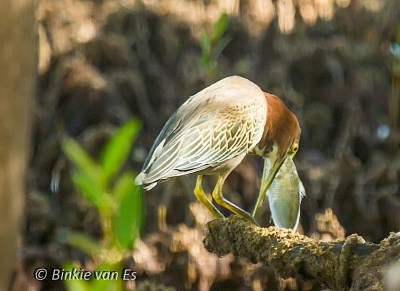
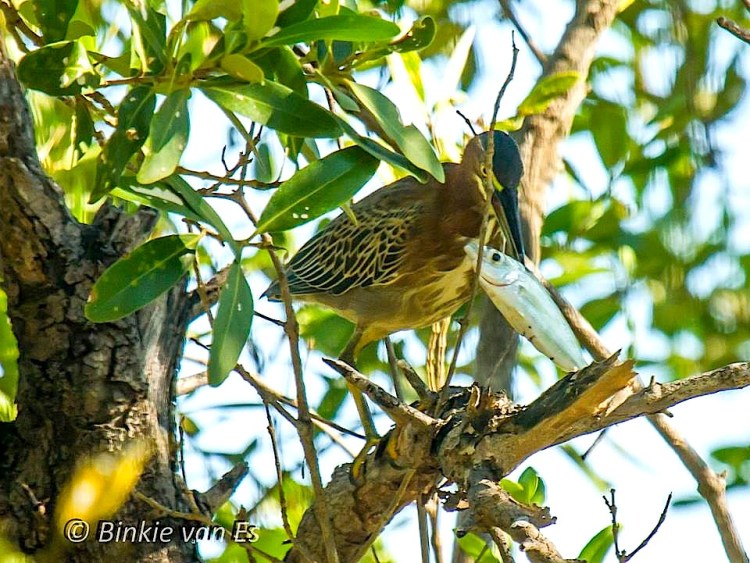
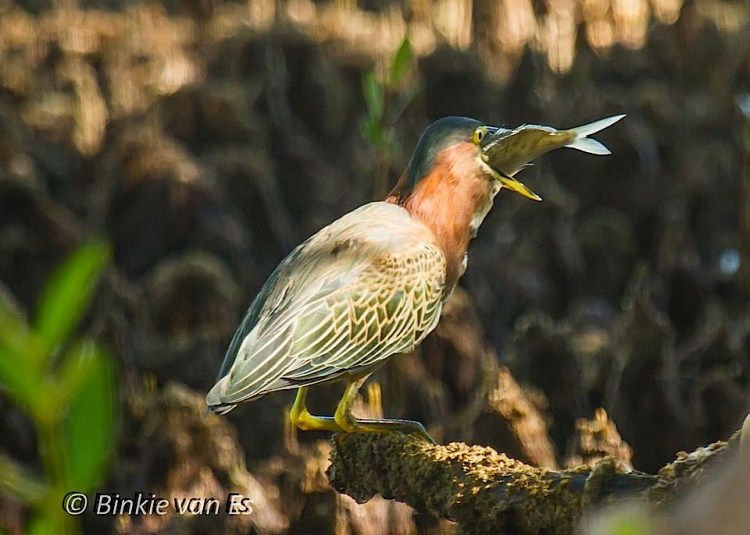
The Green Heron Butorides virescens is one of 6 heron species found on Abaco. I wrote a detailed post about them last summer HERE, with some wonderful Abaco images (none taken by me…). Since then, I got in touch with Binkie van Es, who had photographed the increasingly rare Bahama Oriole on Andros. Small areas of the island are the last remaining habitat of a lovely bird that until recently was one of Abaco’s prized endemics. You can see some excellent pictures of them HERE(none mine either!) and read the sad story of their population decline towards extinction.
Binkie kindly gave use permission for some of his other photos. I especially like this sequence of a green heron getting more than he bargained for in his choice of lunch. In the end greed overcomes a formidably large snack, but it’s a hard one to swallow…
I caught me a handsome fish to take to my dining area
Think this ain’t going to be easy? Just you watch!
See? I just sort of slurp it in like… so. Practice makes perfect.
Busy… can’t really talk right now
Nmmpphh Grfffffff Mmpphphphph Rmmmmmmmph!
Ulppppp!
No Green Heron was harmed in the photographing of this sequence. Sadly I can’t say the same for the fish, which despite its size had met its match…
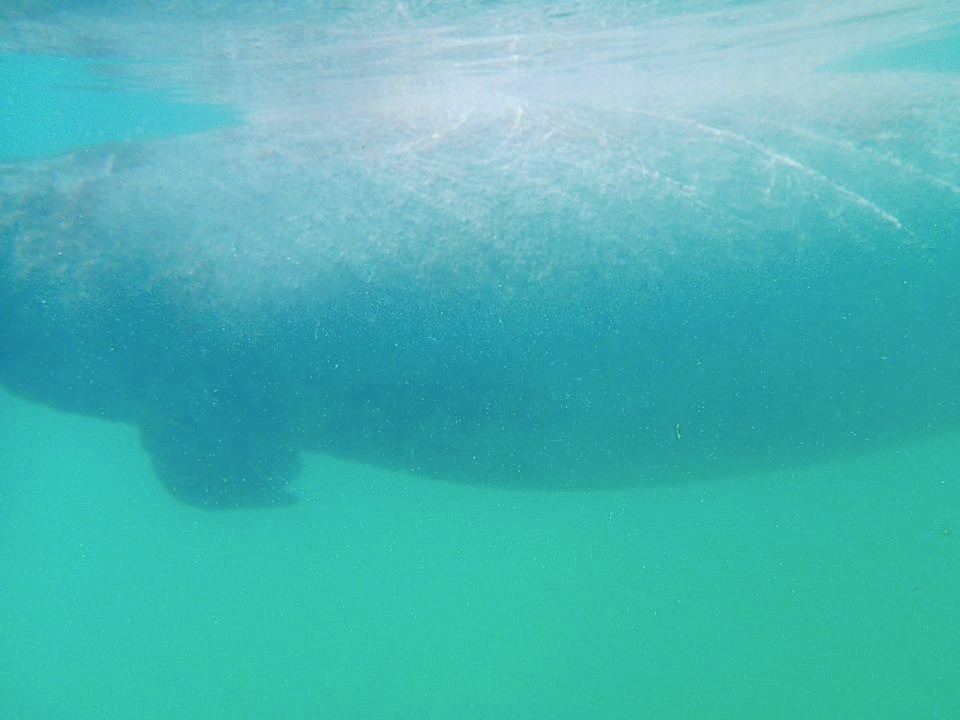
Last year held hopes of a joyous reunion – and indeed union – in Abaco waters between young manatees Randy and Georgie. He had taken the trip from the Berry Is., around the top of Abaco and down the east coast as far at Little Harbour. She lives in Cherokee. Tantalisingly close. But then Randy retraced his steps as far as Gorda Cay and hopes for the production of Abaco’s first manatee calf (at least, in living / recorded memory) turned to seagrass mulch. The poignant story and some great manatee close-up photos (including a ‘selfie’ of sorts on a Go-Pro) can be foundHERE
But manatees do breed elsewhere in the Bahamas, in particular the Berry Is. They also seem to favour the north end of Eleuthera, and have been seen on Andros and NP. True, the absence of significant freshwater sources in the Bahamas – an essential part of their diet – doesn’t make for an ideal habitat, but manatees do pair off and Bahamas calves are born. In summer 2012, there were four resident West Indian Manatees (Trichechus manatus) living in Great Harbour Cay, Berry Is. The adult female, Gina, had been there for 3 years – she originated from Florida. She had reportedly had 3 or 4 calves and was caring for her latest, a female calf called JJ, born in the late winter of 2011.
Adult female manatees are sexually mature at 6-10 years of age and have a gestation period of up to 13 months. The first two years of a calf’s life is spent with its mother. During this time they are taught where to find food, fresh water, warmth and shelter. Generally, after two years the calf is weaned and separates from its mother (see header image of Gina and JJ during that process)
Nursing a growing JJ
Now there is more good news for Gina, who has been under regular observation by the BMMRO. At the turn of the year, Gina was re-tagged in Harbour Island, Eleuthera. As reported, “she looks well, was very calm and is very pregnant… If the tag comes off and is found, please call the number on the tag to let us know – we are now monitoring her movements via the internet”.
Gina’s shows her best side
Coming atcher…
Tell-tale signs (to experts, anyway) of advanced pregnancy
I will post any further news about Gina as it arises. Meanwhile, for more information about West Indian manatees, you can visit the MANATEE PAGE. There are several links there to specific manatee stories, especially about Rita and her adventurous daughter GEORGIE, Abaco’s current favourite (indeed, only) resident manatee… Both Links need an update, I notice – they don’t cover Georgie’s subsequent return to Abaco and her contented settling down again in Cherokee where she seems happy as a… sirenian.
Credits: All photos and primary fount of Bahamas manatee knowledge: BMMRO; Magpie Pickings
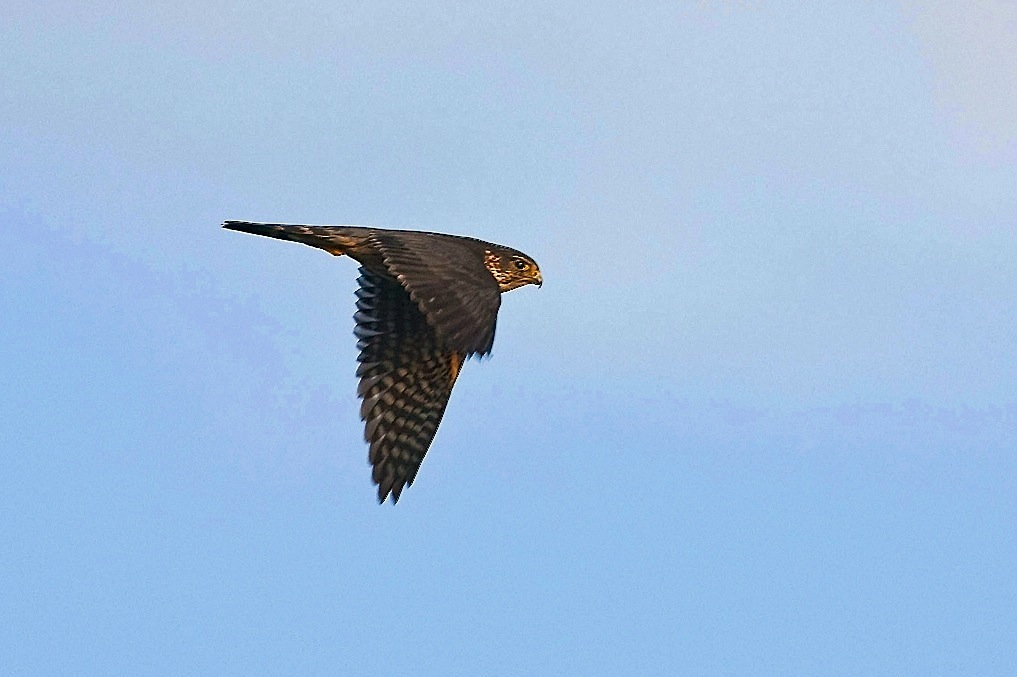
Merlins (Falco columbarius) are fierce small falcons that are fast and agile in flight. On Abaco, they are fairly common winter residents – though finding one and managing to photograph it may take a bit of doing. And maybe a dose of luck. The ‘columbarius‘ part of their taxonomy reflects their colloquial name ‘Pigeon Hawk’. Merlins are found throughout much of the northern hemisphere. They are classified as a New World species and an Old World / Eurasian subspecies, F c aesalon. Some argue for two distinct species, the gene pools of the two versions apparently having parted company ten of thousands of years ago. The birds aren’t overly bothered by the debate.
Merlin World Range Map: yellow = summer, blue = winter
HOW DO MERLINS DIFFER FROM AMERICAN KESTRELS (AMKE)?
Slightly larger and notably heavier (thus having more speed and endurance in flight)
Different colouring, e.g. lacking the indicative reddish-browns of the AMKE
Distinctive tail-barring as against black ends to the tail feathers with a white fringe
Unlike the AMKE they don’t hover, but close in directly on the small birds that are the main prey, often flying very low to surprise the victim.
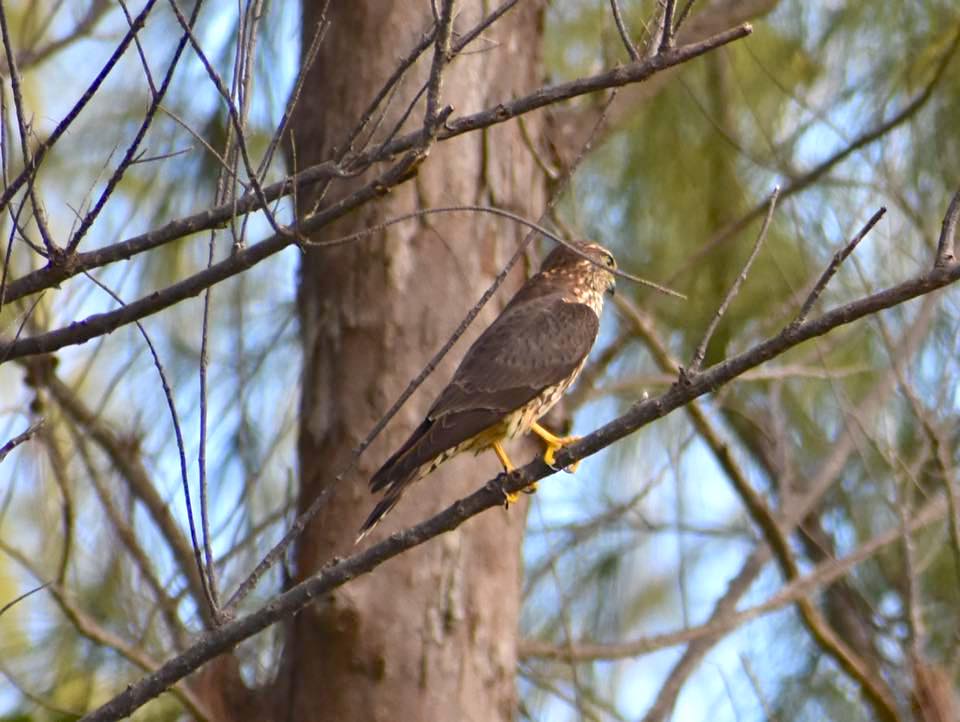
For comparison: Merlin in South Abaco, American kestrel at Sandy Point
SO JUST HOW FIERCE ARE MERLINS?
Formidable! If you are a small or even medium-sized bird, you need to keep your wits about you. Merlins are largely ‘omni-habitat’ within their range, which includes open country, shrubland, light forest, and grasslands. They are fast, agile and strong. They can fly high, at medium height or at ground level, and are expert in surprise attack and rapid pursuit of prey. If you are a large bird of prey – a red-tailed hawk, perhaps – they may attack you with ferocity. They may not actually be trying to nail you, but to get you out of their territory and their catchment area.
Most of a merlin’s prey is taken in flight, and their speciality is ‘tail-chasing’ terrified birds. Breeding pairs may hunt cooperatively, with one bird flushing prey from cover into the open for its mate to… well, you get the picture – they are clever too. They may even pursue birds that have been flushed out by another bird of prey in the vicinity.
MERLINS AND PHOTOGRAPHERS
This is a slightly fraught relationship, because Merlins do not always pose as one might wish. Sometimes they are hard to see, being fairly well camouflaged unless they choose to ‘go out on a limb’.
And sometimes they don’t play by the rules relating to light and focus, making a clear shot difficult
This photo (2017) was taken on Elbow Cay (north end) by Jan Purdy Hulme Metcalf. It’s the first merlin photo from one of the Cays that I have come across.
FALCONRY AND MEDIEVAL HISTORY
Dame Juliana Berners
Merlins were popular birds in medieval English falconry, and according to the 1486 Boke of Seynt Albans, the ‘Marlyon’ was considered the appropriate hunting bird for a lady. This book contained an essay on hunting attributed to Dame Juliana Berners, the prioress of a Priory near St Albans, who, game lady that she must have been, also contributed to one of the earliest treatises on fishing, ‘Fysshynge wyth an Angle‘ (hence, angling).
The Dame’s Manuscript
FURTHER HISTORICAL DIGRESSION (feel free to skip to final para)
While reading up further about Dame Juliana, I came across (wiki-tnx) a wonderful ranking for birds of prey matched to status that I hadn’t encountered before. Here’s the list, from Emperor to Knave / Servant. A Tercel was / is a male falcon, especially a Peregrine or Gyrfalcon. A Musket is a sparrowhawk.
The Boke of Seynt Albans also contains list of collective nouns for animals and birds, many familiar today such as “gaggle of geese”. There are also humorous collective nouns for different professions, such as a “diligence of messengers”, a “melody of harpers”, a “blast of hunters”, “a subtlety of sergeants”, and a “superfluity of nuns”…
Merlins are still trained for hunting smaller birds; and because of their speed and agility they are used in falconry displays. Despite changing habitat, and a perceptible dip in population from the use of pesticides now banned (such as DDT), the Merlin seems to be holding its own very well 5 centuries after the Boke was written.
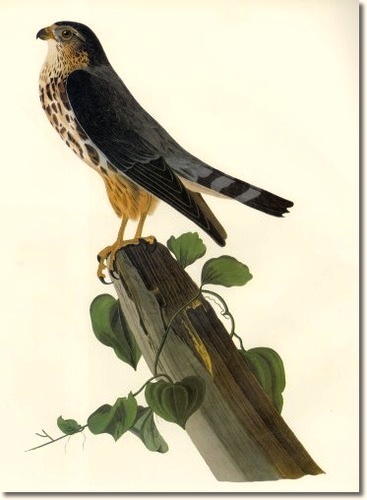
AND FINALLY… AUDUBON’S HANDSOME MERLINS
Credits: Becky Marvil (1 & 7); RH (2); Rhonda Pearce (3); Craig Nash (4 & 5); Gerlinde Taurer (6); Prairie Boy; (8) Jan Purdy Hulme Metcalf (2017 photo); (9) wiki – not taken on Abaco, but I liked it; Dame Juliana Berners (1486); Magpie Pickings
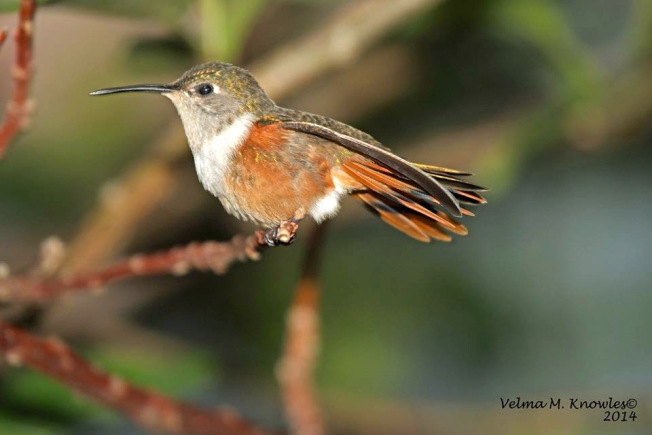
Velma Knowles is a resident of Nassau but originates from Abaco, where her grandparents lived. She is a keen photographer and birder, and recently spent a few days ‘back home’ on Abaco, staying on Man-o-War Cay during that strange ‘Christmas to New Year’ period that people have begun to refer to uncomfortably as ‘Twixmas’. Which I guess goes well with ‘Winterval’, if that neologism to describe the festive season rocks your sleigh.
Obviously, Velma had her camera with her; and a bit of quality birding was built into her schedule. Man-o-War has been having a prolific winter season, birdwise, with plenty of interesting migratory species passing through or settling there till Spring. But who would be content with a random warbler from the North, when there are Abaco’s specialist birds to encounter. Many of the birds featured – all are permanent residents – were seen on Man-o-War; others on the main island, though not actually at Delphi. Every bird shown can readily be found at Delphi, except perhaps for the Royal Tern, hence a few mentions. Let’s see how Velma did during her brief visit. (Spoiler Alert: very well indeed!).
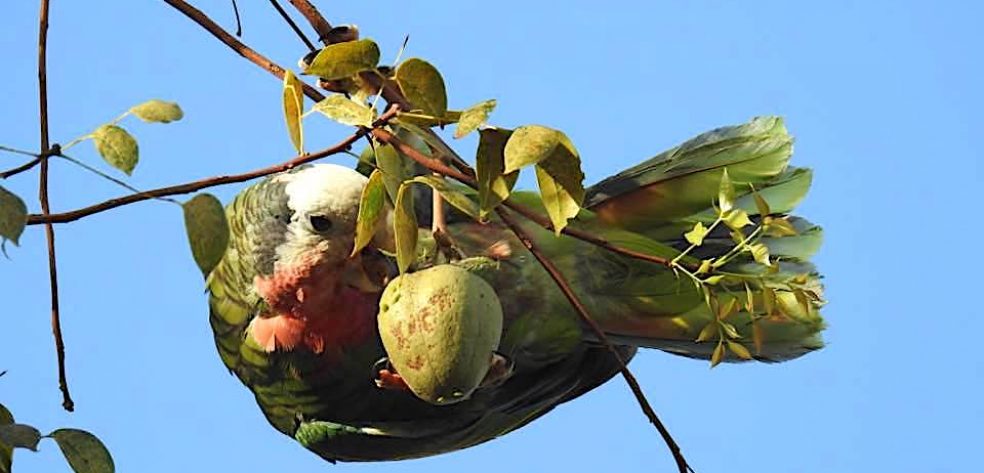
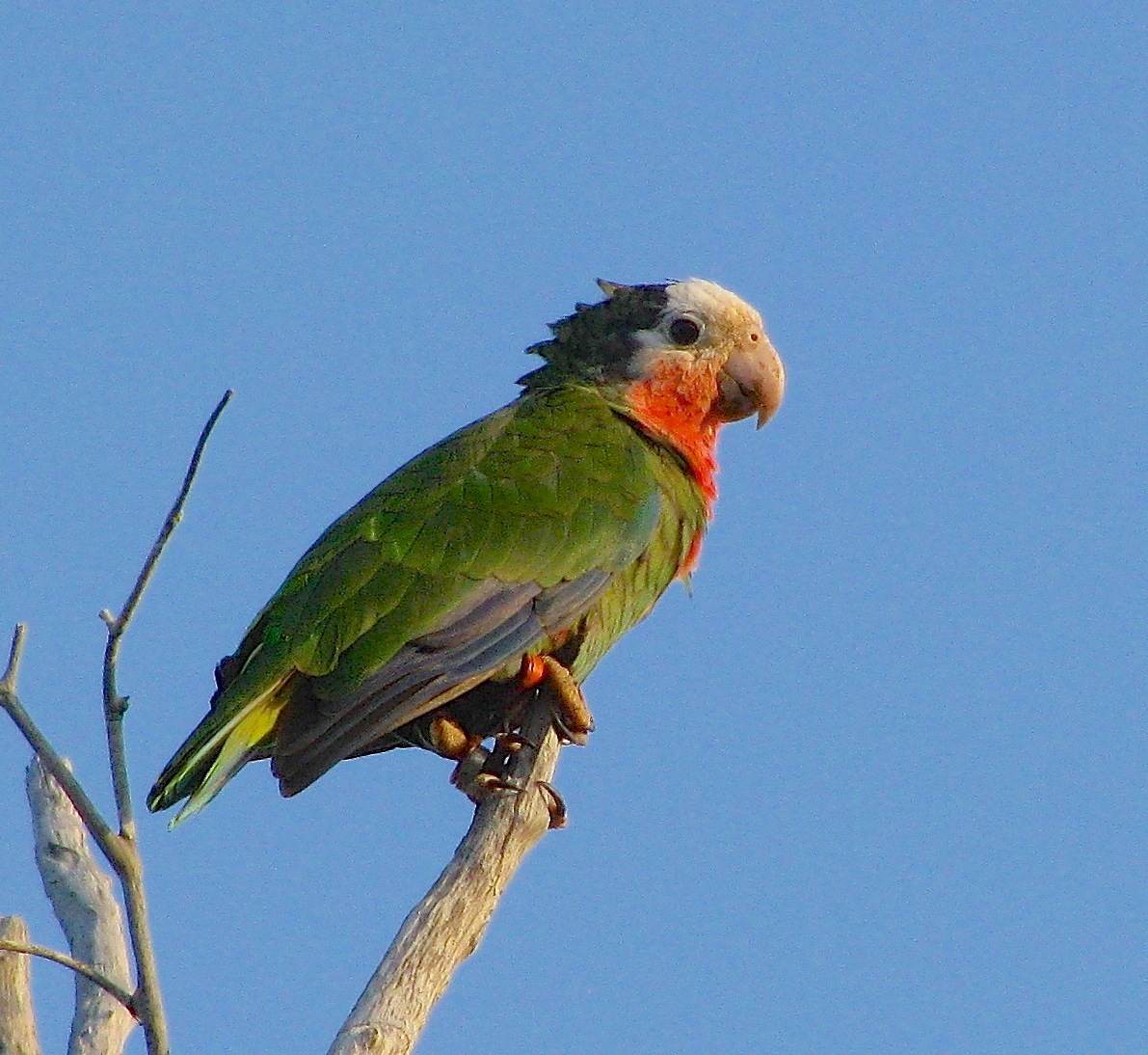
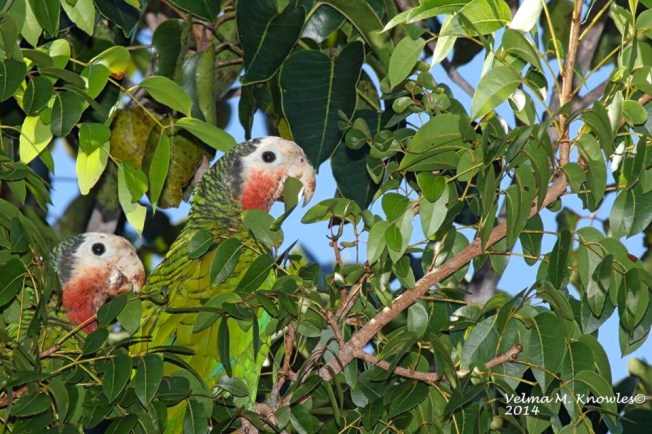
A first ‘get’ for anyone’s Abaco checklist, and hence the header image. Not available on the Cays, so a trip to the ‘mainland’ and the wild pine forest and coppice of South Abaco is called for (they don’t venture north of Marsh Harbour). Rescued from the brink of extinction by careful conservation measures, the newly regenerating population of these unique underground-nesting parrots is gradually spreading, making them easier to find. During the day, Bahamas Palm Shores is a likely spot, as are locations to the south, including Delphi and the area around Crossing Rocks down to Gilpin Point.
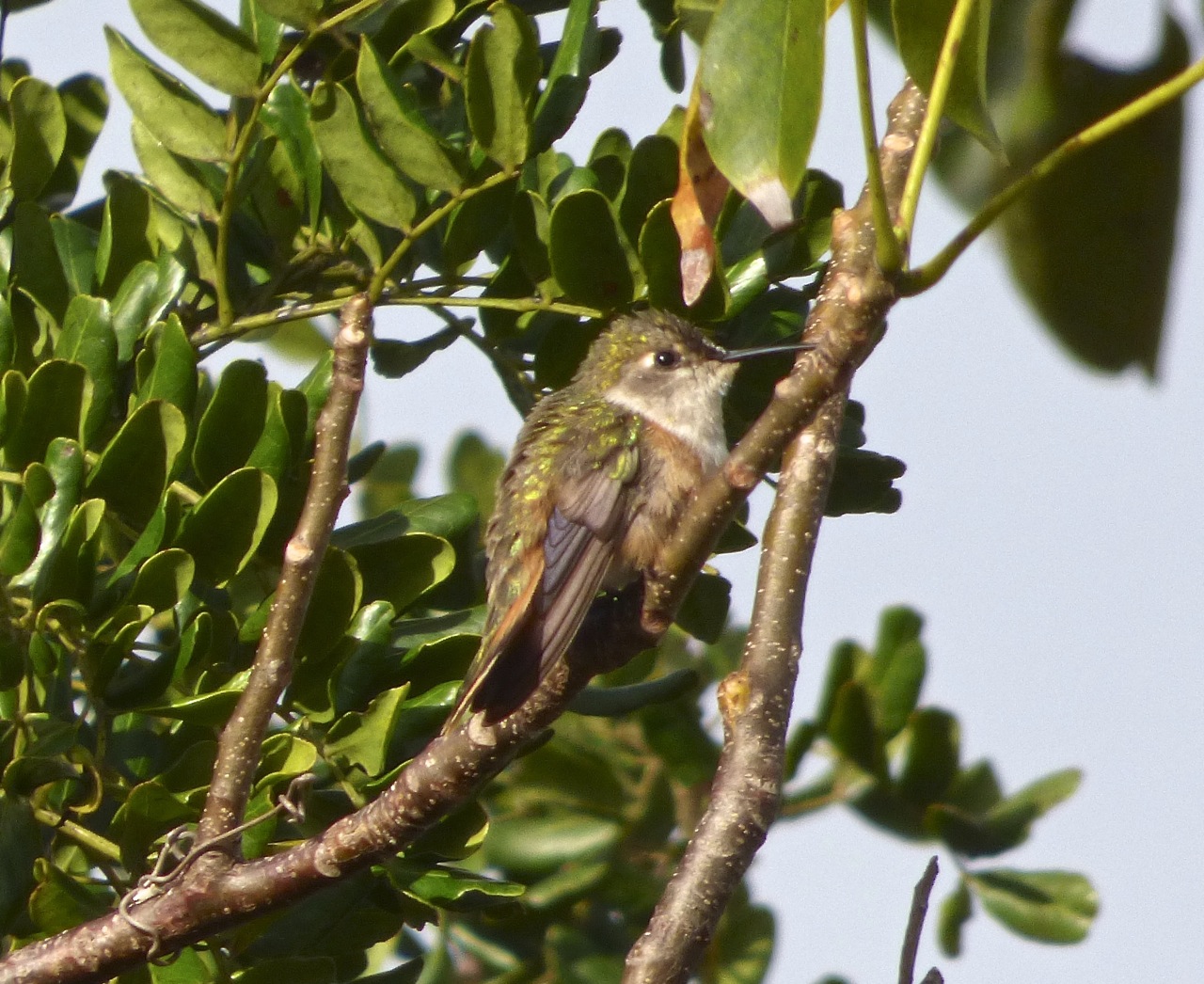
Abaco’s lovely endemic hummingbird, rather pushed around by the brash incomer Cuban Emerald and therefore tending to avoid them (though both can be found at Delphi). The MALE CUBAN EMERALD has a striking purple throat aka ‘gorget’; the female (below) encountered by Velma has a more delicate colouring.
Unlike the Woodstar, these pretty iridescent green hummers are not endemic yet are more frequently encountered. They fly and change direction with astonishing speed, and are feeder-keen! Your sugar-water feeder will also attract Bananquits (pointy curved beak for the little holes) and West Indian Woodpeckers (long tongue) – and possibly Woodstars.
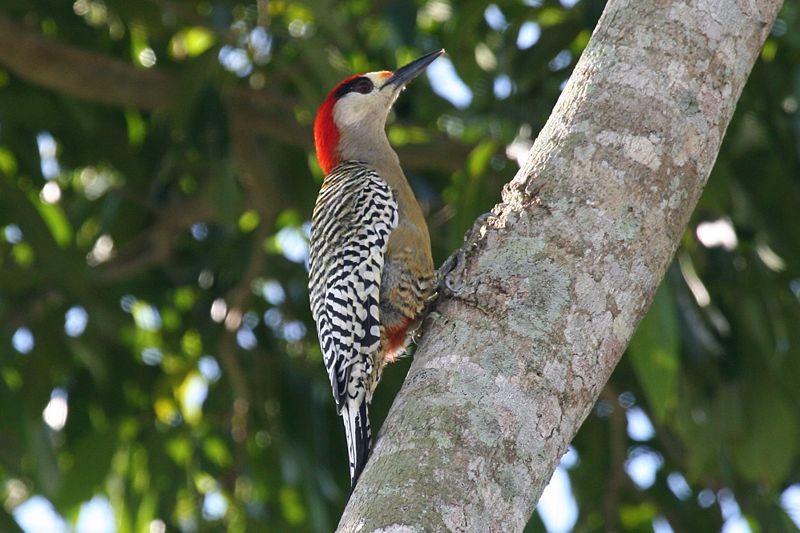
Splendid and occasionally noisy birds that nest in boxes under the eaves at Delphi. They produce two families a year. Velma writes “It has been a long wait but I finally saw this lifer, the West Indian Woodpecker. This bird is only found in The Bahamas, Cuba and the Cayman Islands. Awesome call!”
Velma writes “One of my targeted birds, the Western Spindalis, formerly called the stripe-headed tanager. On the way from the airport we spotted him on the side-of-the-road. Now that’s island-birding!”
Velma writes“Such a beautiful call… the Thick-billed Vireo. We heard a number of these guys on our bird-walks. The Thick-billed Vireo is a Caribbean endemic, being restricted to The Bahamas, the Caymans, the Turks and Caicos, two islands off of Cuba and one off of Haiti (though it has been reported in Florida)”
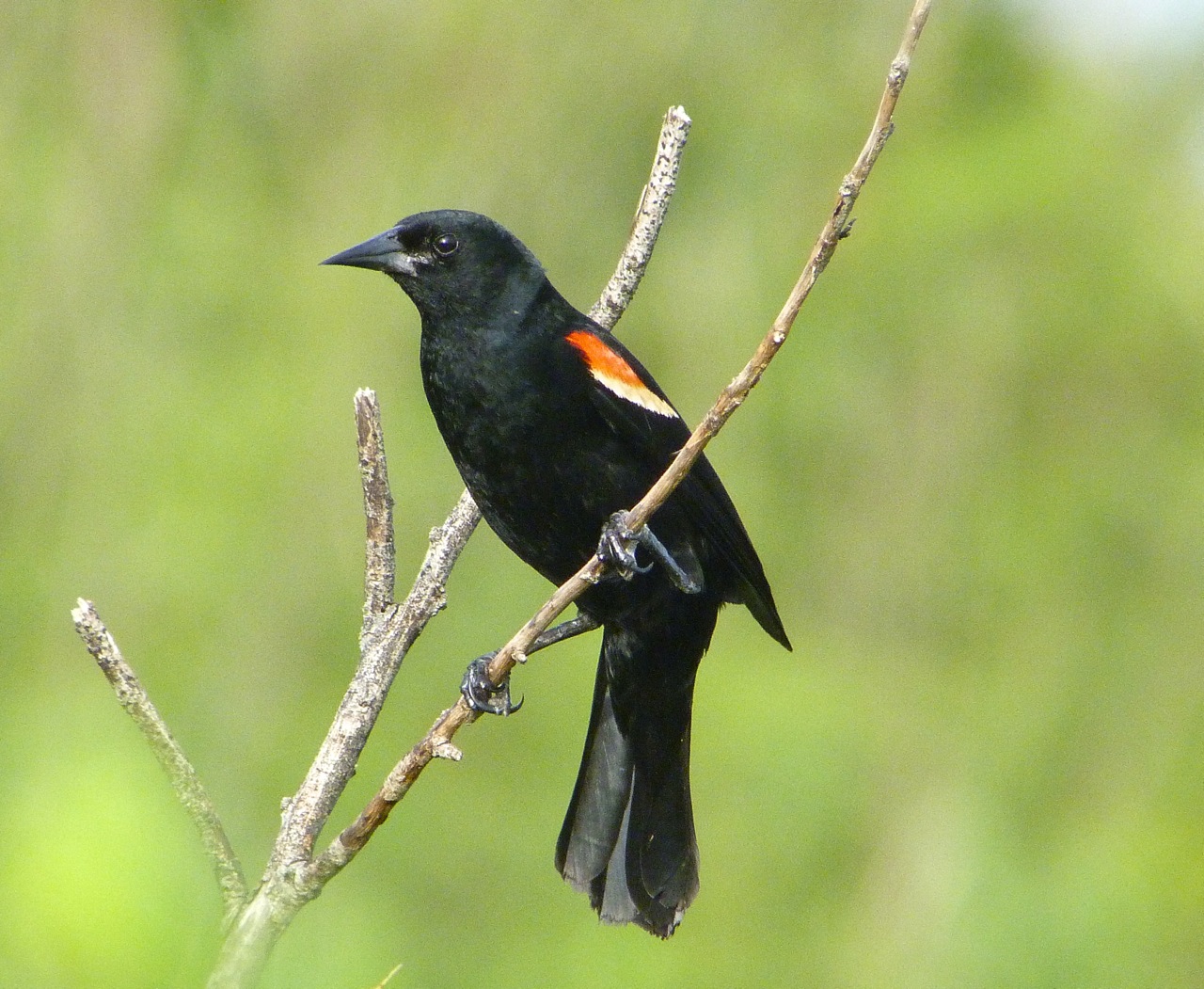
The adult male’s striking colour patches are orange-red; the female’s are more yellow. They are greedy at the feeder and rank high up in the pecking order, where smaller birds defer to them. One local name for them is ‘Police Bird’: the adult male’s colouring matches that of a Bahamian Police Officer’s uniform.
SANDERLING ON ABACO: A PERFECT PEEP FOR THE NEW YEAR
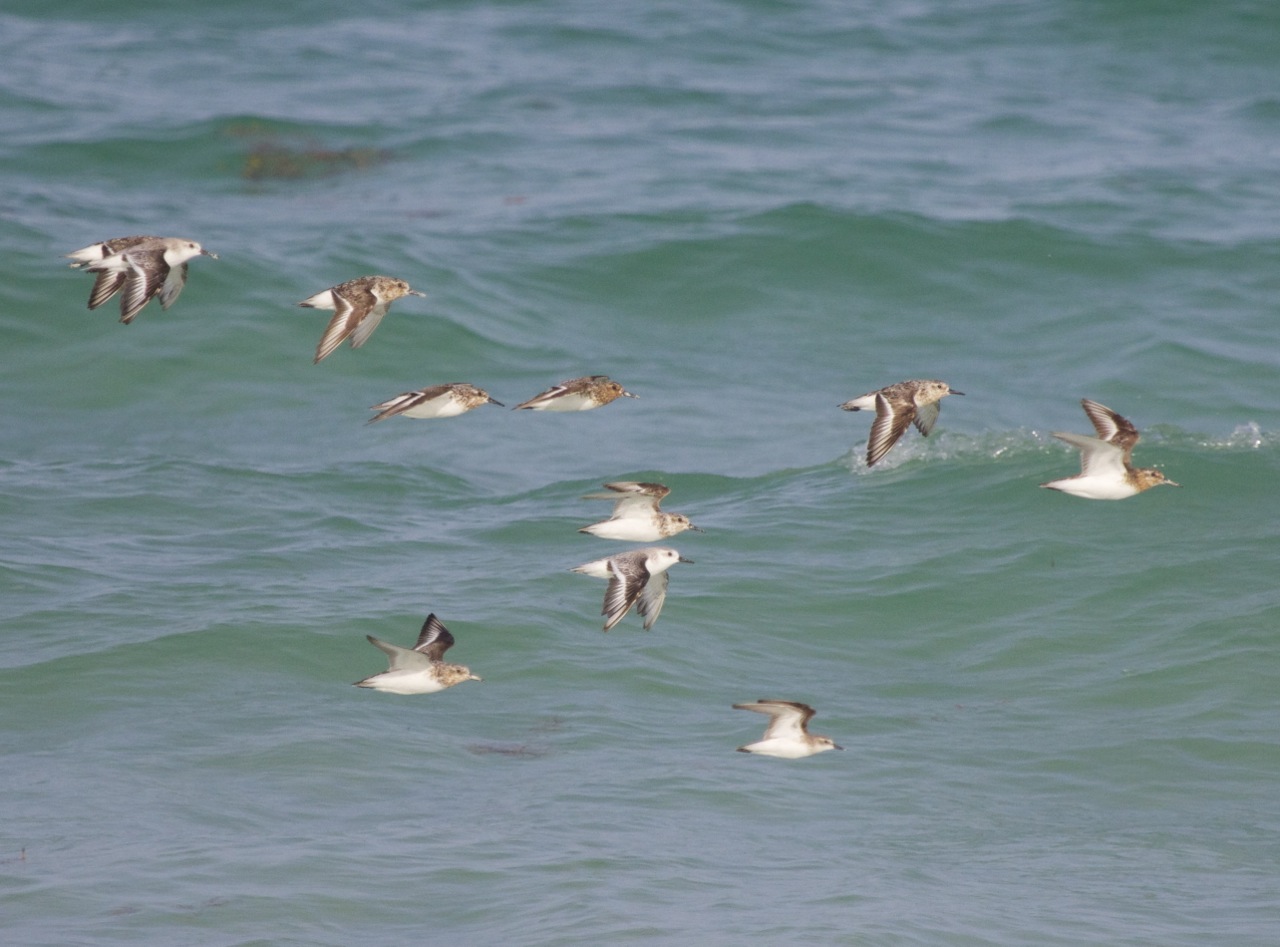
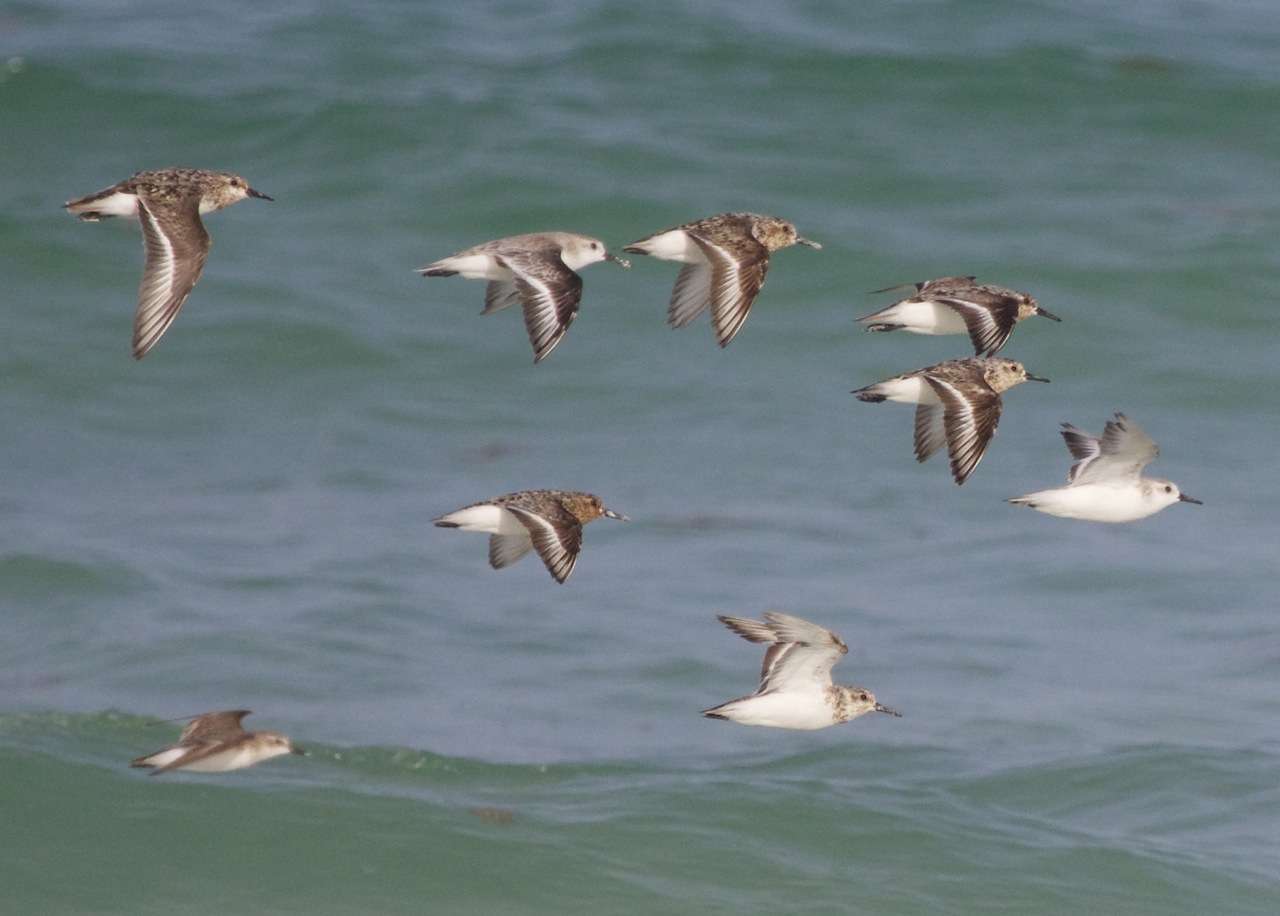
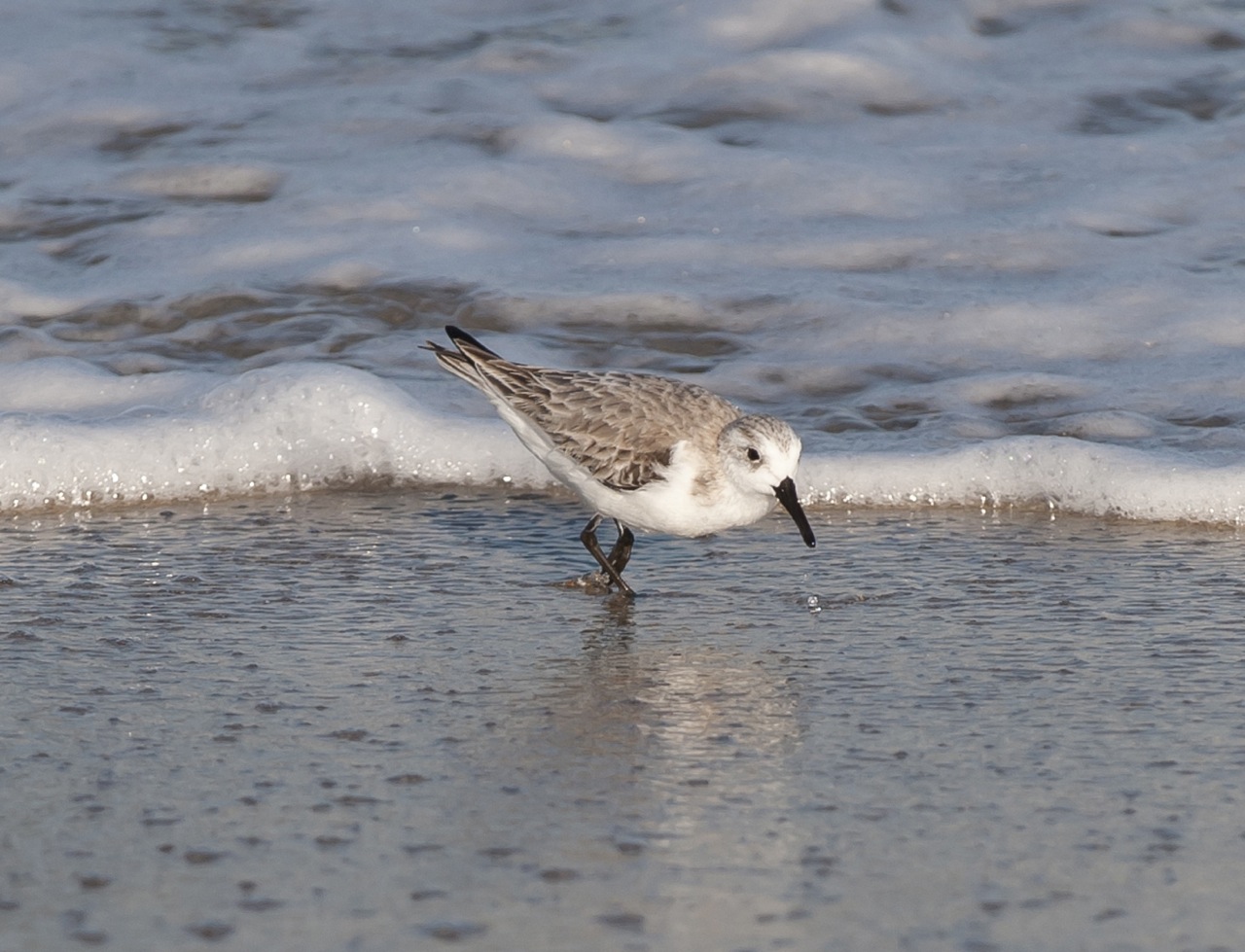
Various matters have kept me from the Blogosphere over the last week, so this is the first post for 2015. And what gorgeous little birds to have to hand for it – the Sanderling Calidris alba, a small sandpiper or ‘stint’ that is a common and welcome winter sight on the shorelines of Abaco, as in many other parts of the world. Who can resist these little guys, the ‘wave chasers’ that work along the shoreline, rapidly following the surf as food is exposed on the tide. Sometimes they will actually run into the ripples of an incoming wave to snap up a morsel of food, before scuttling back up the beach. They have been likened to clockwork toys. Amusing and cheering little birds to watch, so here is a gallery of them to enjoy and to welcome in the new year.
Classic Sanderling foraging area in the wet sand left by the retreating tideThe birds are small and fly fast: a clear ‘in-flight’ photo is a great achievement
This sandpiper was taken by the late Tony Hepburn on Abaco. It has been ringed in its summer breeding grounds, and feeds in wave-softened sand with the tidal foam still visible all around it.
This made me chortle… Sanderling Lonelyheart!
Credits: Craig Nash (1 – 3); Alex Hughes (4 – 7); Tom Sheley (8 – 9); Tony Hepburn (10)
Yay Mom! Apparently it’s something exciting called Christmas…
“ELEVENPIPERSPIPING“: CUTEPLOVERSFORCHRISTMAS…
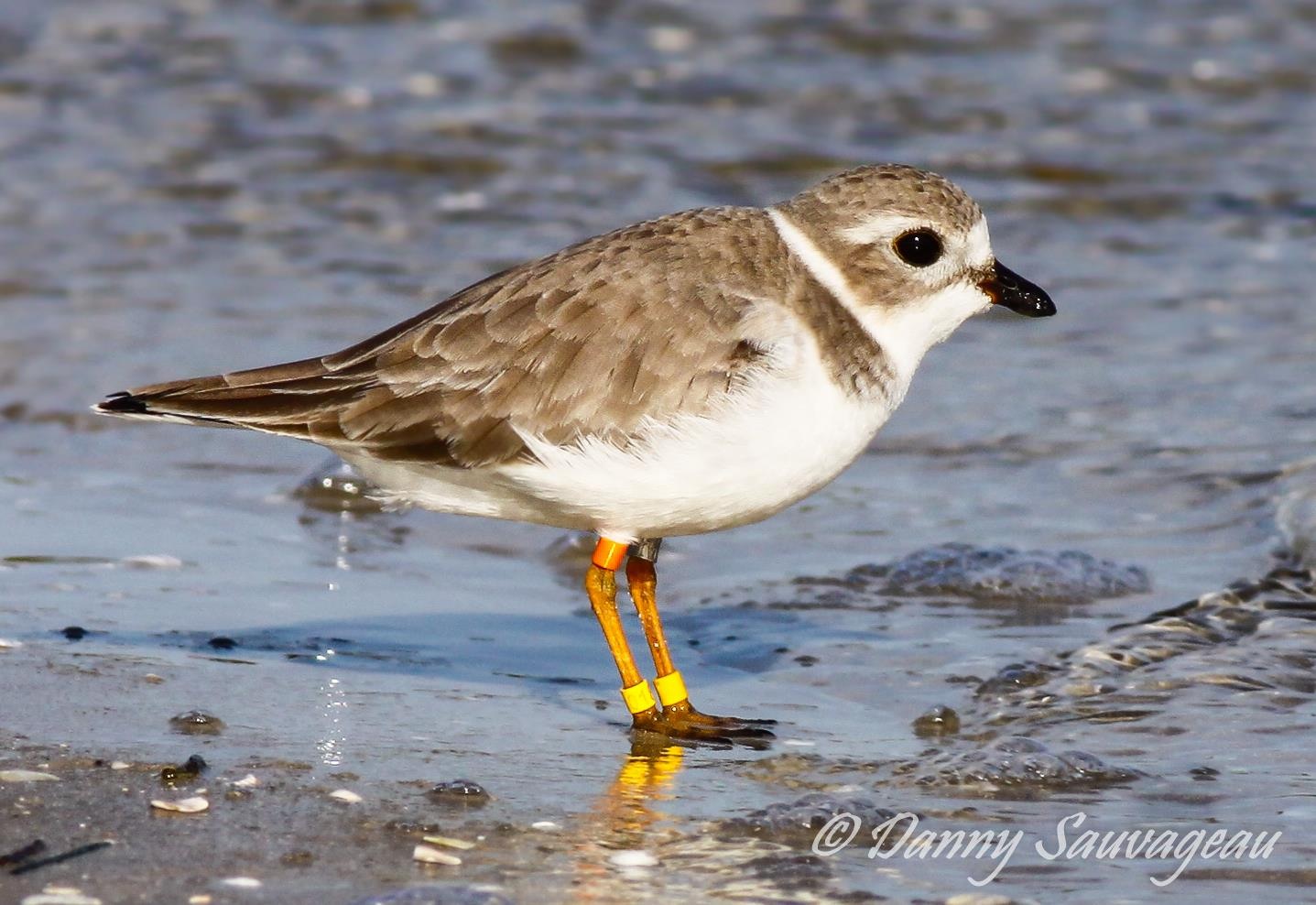
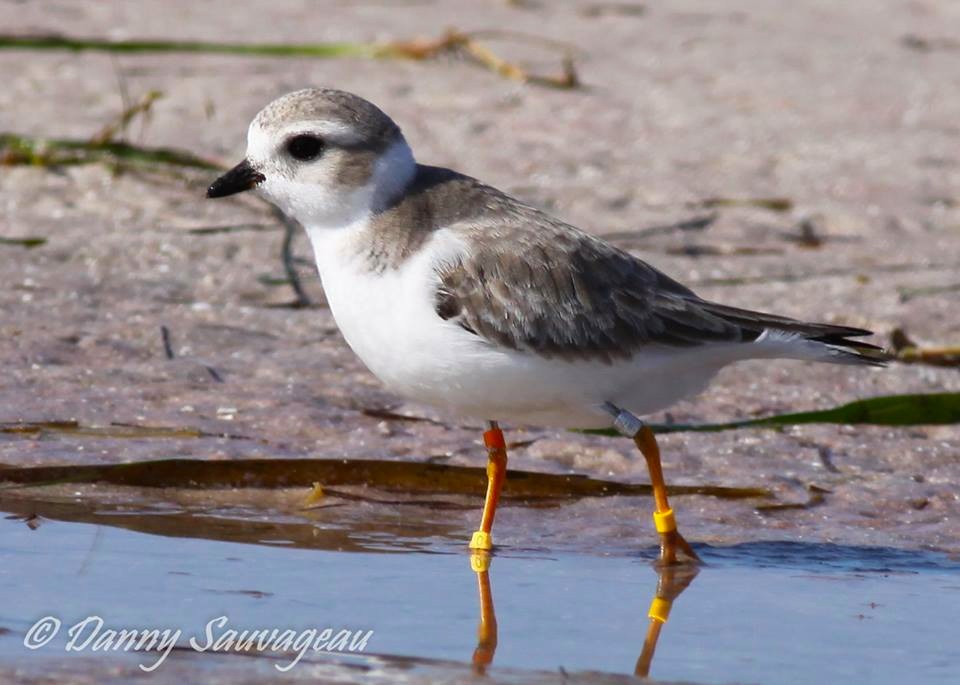
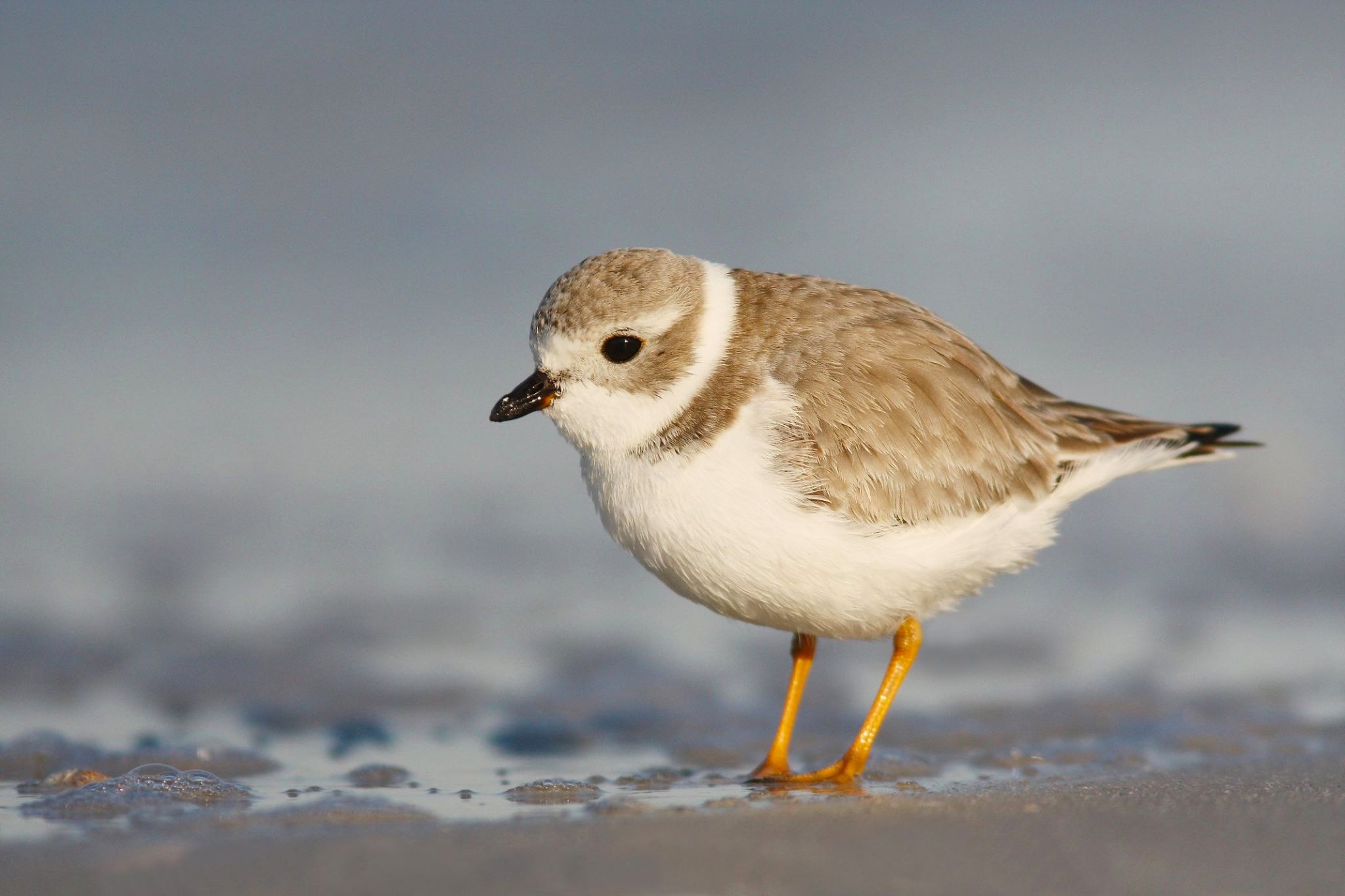
A Gorgeous Gallery of Ringed / Tagged PIPL by Danny Sauvageau
The numbers, positions, colours and numbering of the rings and tags pinpoints the precise origins of each bird. Note that some birds are ringed both above and below the ‘knee’. These markers have no effect on the daily lives of the birds, but are massively helpful in migration research. Danny’s photos are taken at ‘resting points’ in Florida where the birds pause as they migrate south for winter, many to Abaco and other Bahamas islands. Some birds shown below come from Canada, others from along the Eastern Seaboard of North America.
This New Jersey conservation organisation is very closely involved with research into PIPL migration to their winter grounds. Two scientists, Todd Pover and Stephanie Egger, recently made their annual visit to Abaco to count the plovers and check for ID markers. At one remote location they found an amazing 88 birds. However, by the time they got to Delphi, the four Pipers that had been playing on the beach for a couple of weeks had moved off, unsettled by windy conditions.
An unringed Piper taken recently by Charmaine Albury on Man-o-War Cay
The Epitome of Cute
AND ONE EXTRA FOR LUCK!
Eco-friendly PIPL plush ‘stuffies’ from the fabulousUNREAL BIRDS.Check out their other species – the American Oystercatcher is irresistible. NB 20% of every sale goes to the Conserve Wildlife Foundation of NJ (see link above).
Credits: Conserve Wildlife Foundation of NJ / ‘BirdsbyKim’; Danny Sauvageau; Char Albury; Unreal Birds; Cute chick from FB, unattributed – thanks, photographer!
[Yay! A Christmas gift of a puntastic avian / festive double-meaning]
A small New World songbird of the cardinal subfamily
Flags and other colourful festive decorations
PAINTED BUNTING
It’s hard to imagine a more Christmasy little bird than the Painted Bunting. Bright blue, red, green primary colours make for a spectacular small bird to grace any garden or feeder. The 2 birds above were featured in a detailed post on the species several months ago, with plenty of other great photos,HEREBut there are other bunting species and close relations on Abaco that haven’t yet had a look-in on these pages. A common factor is the little fat beak and a great liking for seeds…
INDIGO BUNTING
Indigo Bunting male with 2 females going for the seeds, Bahama Palm Shores
ROSE-BREASTED GROSBEAK
SUMMER TANAGER
SCARLET TANAGER
The birds above are all buntings or part of the wider bunting family. The definition is somewhat flexible and includes piranga and tanager species (and in the past the Western Spindalis, formerly the Stripe-headed Tanager). All were photographed on Abaco, mostly at the Delphi Club or Bahama Palm Shores. The photos below are a flagrant cheat. You’ll never see one of these on Abaco. They were taken by me a couple of years back in Central Park, NYC, made magic with snow and freezing air. Have a very happy and colourful Christmas!
NORTHERN CARDINAL
Credits: Erik Gauger, Tara Lavallee, Tom Sheley, Ann Capling, Caroline Stahala, Bruce Hallett, Woody Bracey, RH
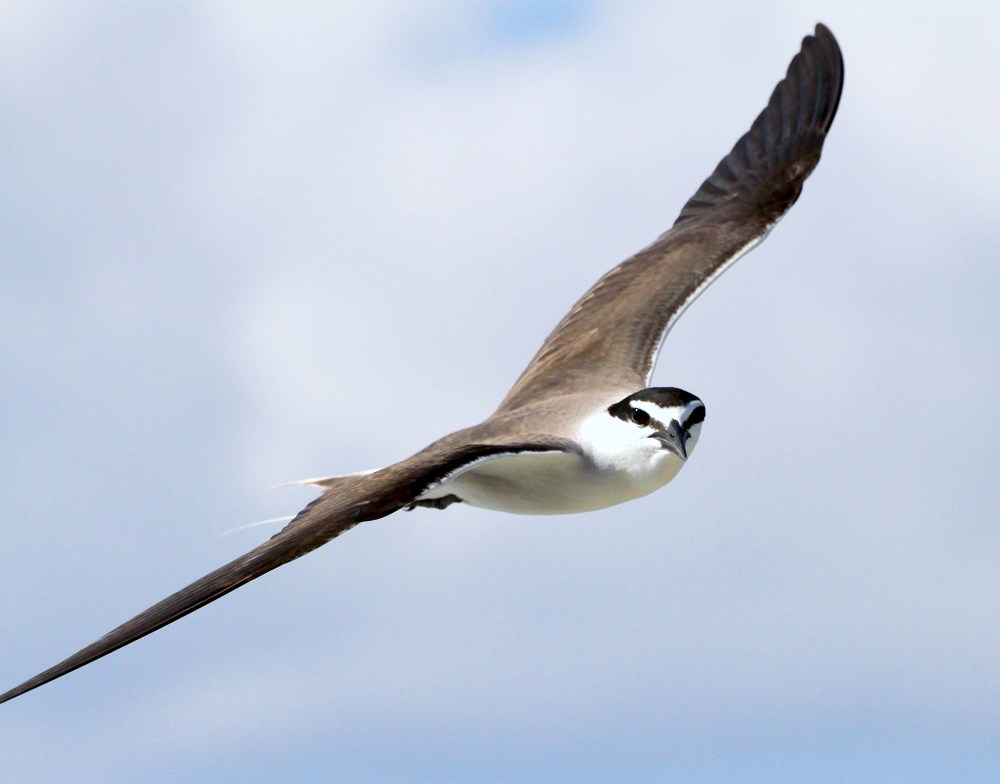
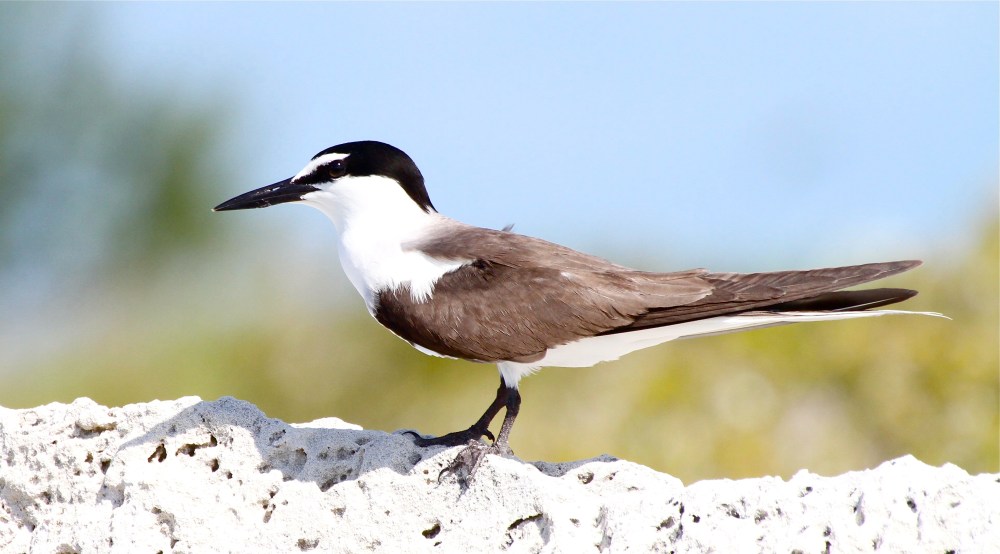
Well, with a bit of digging into the naming of this tern species, I have discovered that the ‘bridled’ part of it apparently refers to the white band / collar at the back of its neck. This is puzzling because one would expect a ‘bridle’ to start at the mouth / beak and angle backwards. Like a horse. Like the conspicuous black line from the base of this tern’s beak sweeping back past its eyes and joining its black cap at the back. How wrong that assumption would be…
Far more exciting than the ‘bridle’ question is the origin of the Bridled Tern’s species name, Onychoprion anaethetus. Wondering about the medical-sounding word, I discovered via the excellent ARKIVEthat the name derives from the Greek for ‘senseless’ or ‘stupid’, “a reference to the ease with which hungry sailors captured this bird“. So there you have it: not ‘aesthetically pleasing’ or similar compliment, but just plain dozy.
The Bridled Tern is a fairly common summer resident on Abaco, where it breeds. It is one of 12 tern species recorded on Abaco, the others being Sooty Tern, Least Tern, Gull-billed Tern, Caspian Tern, Black Tern, Roseate Tern, Common Tern, Arctic Tern, Forster’s Tern, Royal Ternand Sandwich Tern.
These terns plunge-dive for fish, but will also take them from the surface. Unlike other terns – for example the Least Tern – they usually dive directly and not from a hover. When courting, the male will rather charmingly woo the female by offering her fish.
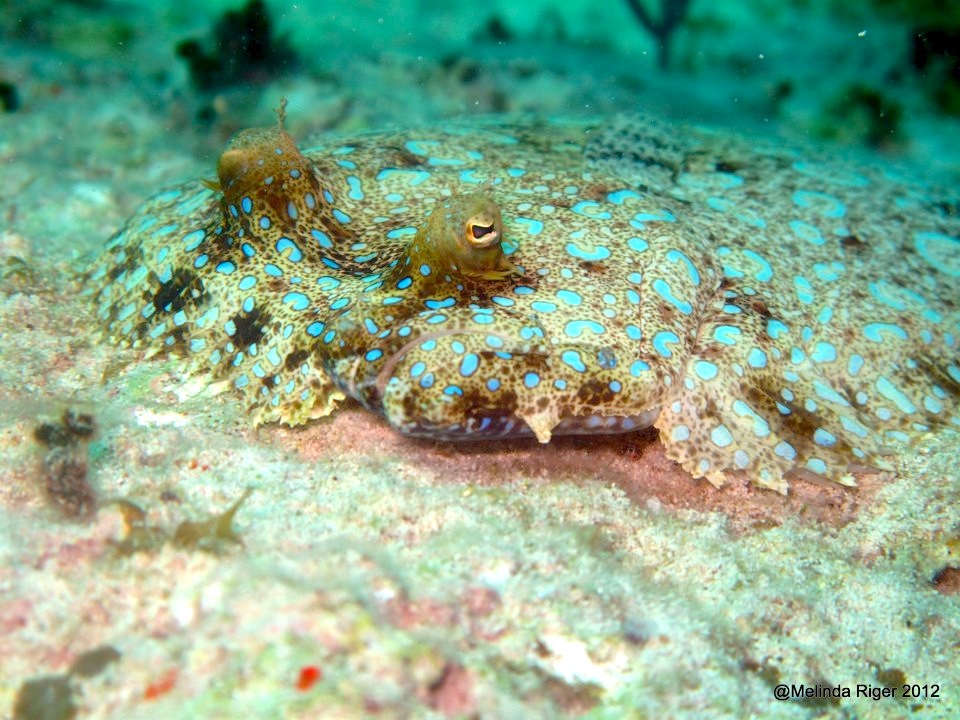
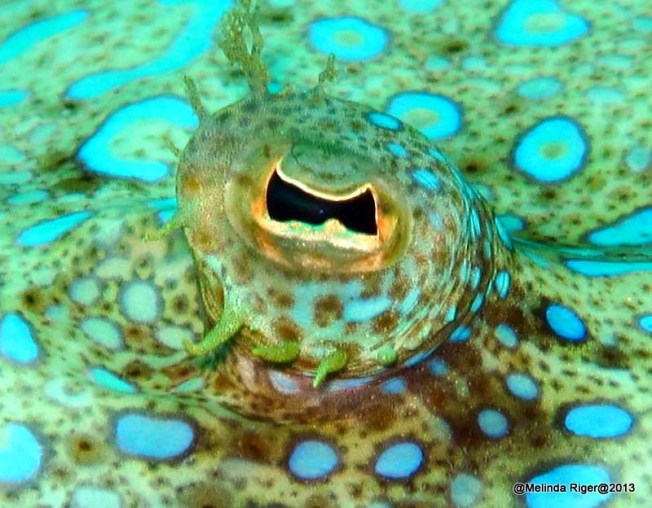
I have briefly featured this fish before in the context of its extraordinary camouflage abilities; and also its interesting ocular arrangements. Time to give it another swim around, I think, with some additional photos that I have collected.
Bothus lunatus is the Atlantic / Caribbean version of a species also found in the Pacific and Indian oceans. Adults may grow up to 18 inches long. The species is a ‘lefteye’ flounder, with both eyes on its left (top) side & its right side underneath. However a baby flounder looks & swims like normal fish, with bilateral eyes. As it grows, the right eye gradually ‘moves’ round to the topside, and it becomes a flatfish.
A flounder’s eyes can move independently of each other. One may look forwards, the other backwards
‘NOW YOU SEE IT…’ CAMO-FISH
The Peacock Flounder has extraordinary colour-changing powers, and can rapidly vary its background colour to make it closely resemble that of its surroundings. This enables it camouflage itself as it lies on the seabed.It can change coloration completely in between two to eight seconds.
Four frames of the same fish taken a few minutes apart showing the ability of flounders to change colors to match the surroundings (Wiki)
Check out these imitative patterns in Bahamas waters…
There are two advantages to the ability to camouflage (‘cryptic coloration‘). One is obviously to avoid detection by predators. The other is to enable the flounder to ambush its meals. They feed primarily on small fishes, crabs and shrimps, lying concealed on the seabed and grabbing any unwary prey that ventures too close. They will even partially bury themselves in the sand, leaving just their eye-stalks keeping watch…
HOW CAN THEY POSSIBLY CHANGE COLOUR SO QUICKLY?
Scientists are still puzzling this out. In a conch shell, it seems the flounder can coordinate its amazing all-round vision with its hormones, instantly releasing certain pigments to its skin cells and suppressing other pigments to make the colour match. Not convinced? Then watch this short video and prepare to be impressed.
Fred Riger of Grand Bahama Scuba, who kindly keeps a benign eye on my reef fish posts (he’s the expert), adds a third excellent reason for coloration changes: sex… “the male peacock flounder can, and does greatly intensify his colors, presumably to declare territory and attract females to his person. When doing this the males will also signal with the left pectoral fin, sticking it straight up and waving it around.” Maybe that is what is going on in the photo below – intensified, non-camouflage colours, and a raised fin…
Peacock Flounder on a plate – Kim Rody Art
Credits: Melinda Riger of Grand Bahama Scuba for almost all photos; wiki for 2 illustrative images
OVENBIRDS FOR CHRISTMAS ON ABACO (NB NOT ROAST TURKEY)
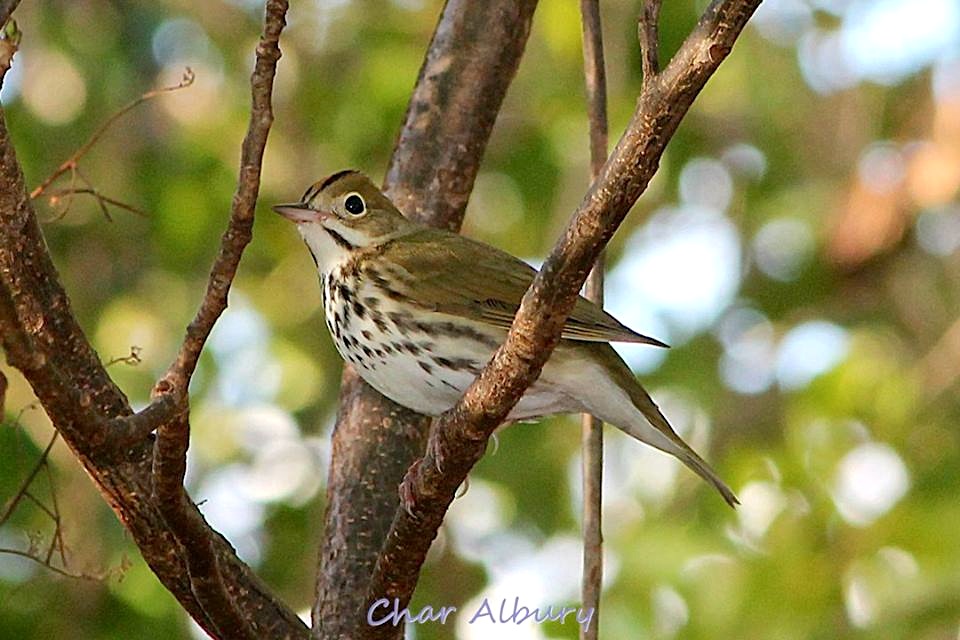
The Ovenbird (Seiurus aurocapilla) is a small winter-resident warbler with distinctive orange head feathers that can be raised into a crest. I’m guessing this accomplishment is mainly used in the breeding season as a way to impress and attract a mate. Maybe when alarmed or excited at other times as well. Right now, with Christmas only ’12 sleeps’ away, they have become a visible presence on Abaco and the Cays despite their shyness and a general tendency to shuffle around in the undergrowth looking for insects and small snails.
You may hardly be aware of these rather unassuming little birds, and as they rootle their way through the dead leaves under shrubs they can look quite dull. See one lit up by the morning sun, however, and you’ll see how pretty and richly marked they are.
The Ovenbird enjoys the taxonomic distinction of being the only bird of its genus in the warbler family Parulidae. It is a so-called ‘monotypic’ species. It was formerly lumped in with Waterthrushes, but was found to be genetically dissimilar so its new status was granted.
The ovenbird is so named because it builds a domed nest (“oven”) with a side-entrance, constructed from foliage and vegetation. They tend to nest on the ground, making them vulnerable to predation. The species name for the ovenbird, Seiurus aurocapilla, has nothing to do with the nest shape, though. It derives from both Greek and Latin, and loosely means ‘shaking tail, golden haired’. No, nothing to do with Miley Cyrus either. Leave it.
Here are some recent shots taken by Charmaine Albury on Man-o-War Cay, showing the orange crest very clearly.
My plan to include audio of the ovenbird’s song and call has been temporarily thwarted by a glitch, but I’ll add them here when I have overcome the problem.
Gauge the size of the bird against the pod it is standing on…
In this photo, you can see that the orange crest feathers are raised
Credits: Tom Sheley, Woody Bracey, Charmaine Albury, Bruce Hallett, Gerlinde Taurer, Cephas / Wiki
THICK-BILLED VIREOS: ABACO’S ONLY PERMANENT RESIDENT VIREO
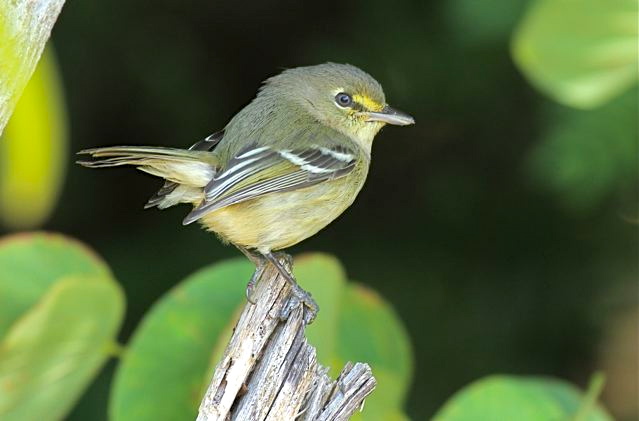
Hard to know why I haven’t got round to featuring these little vireos before. Unlike the other 7 vireo species found on Abaco seasonally or as transients, the Thick-billed Vireo Vireo crassirostris is an ever-present permanent resident of the coppice and scrub; and their unmistakeable repeating song can be heard almost everywhere. It was the first bird song I heard on Abaco, and therefore the TBV was the first bird I learned to ID. I’ve got quite a soft spot for them, really.
Although TBVs are very easy to hear and track to a general area of coppice, I find actually seeing the bird creating the noise quite hard – let alone getting a clear camera shot. They always seem to be lurking several feet further away, deeper in the foliage, than the sound suggests. I’ve had some fun making TBV song iPhone recordings along the Delphi drive, practising the technique. If you want to know more about recording and converting to MP3 CLICK HERE.
One of my favourite images, from Gerlinde Taurer: a ‘shouty’ bird. We used it for ‘BIRDS OF ABACO‘.
I also love this perky little guy with a great beady-eyed pose taken by Bruce Hallett
Here’s a clip of song, which I’m sure will be immediately familiar to Bahamians:
Paul Driver / Xeno Canto
The main signifiers for this species, which in combination distinguish the TBV from the other vireo species on Abaco, are:
Two white wing bars
Yellow patch – usually quite prominent – between eye and beak
Thick bill – which immediately rules it out of being one of the 37 warbler species on Abaco…
Text book TBV
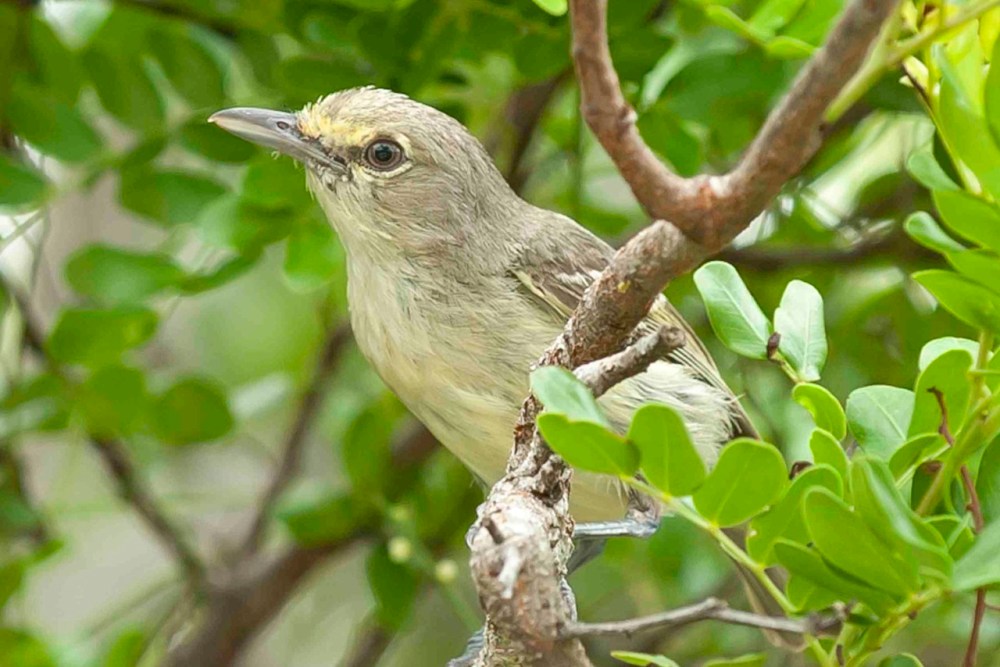
There are marked colour variations in the species according to maturity, season and to an extent gender (though m & f are quite similar). Here’s one that is causing wing-bar confusion by only showing traces. It also has quite dark upper parts.
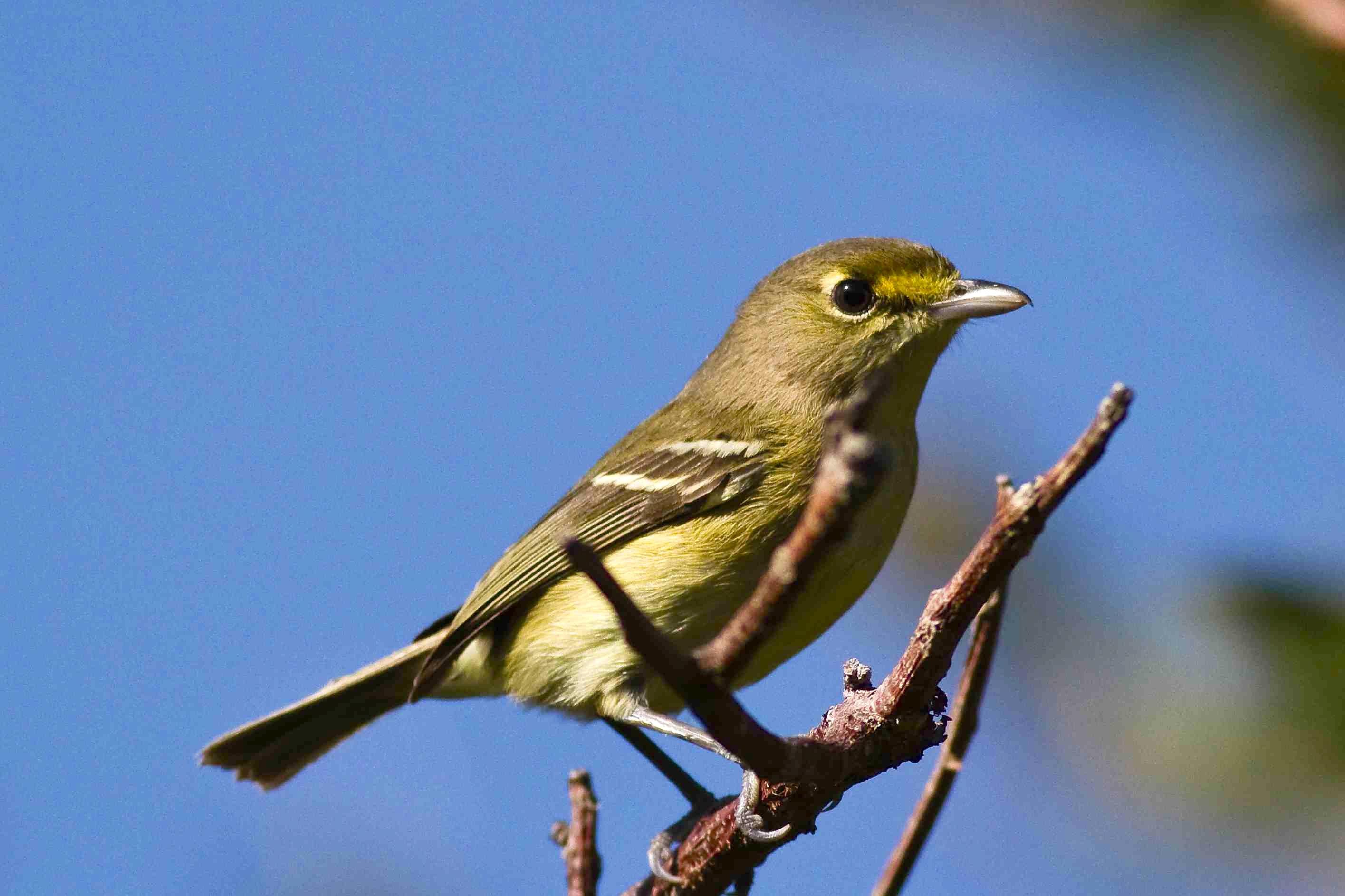
This is a very yellow TBVWhereas this one has rather anaemic colorationFinally, this pretty TBV is very delicately marked
MAKING A SPLASH: SPERM WHALES & MANATEES IN ABACO WATERS
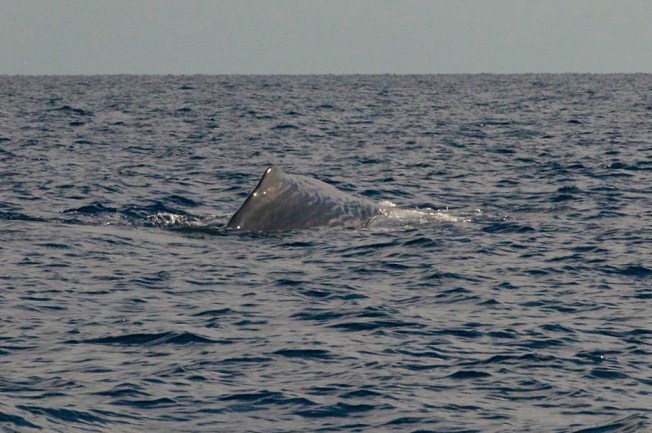
After a quiet spell on the cetacean and sirenian front, there is exciting news to report. First, the BMMRO encountered two sperm whales just off Sandy Point. I don’t know how close to the shore they actually were, but it was very friendly of them to come so near to the BMMRO HQ.
When whales are sighted from the research vessel, one of the tasks is to collect feces. This job is often undertaken by interns, and is a good way to learn that serious research may well involve unattractive work… They practise with… er… coffee grounds and a net. For more on this important yet unappealing aspect of whale research, CLICKNICE TO SEE FAMILIAR FECES. Another essential part of any sighting is to take fluke photos to enable ID. Every whale has different and distinctive patterning to the fluke, including general wear and tear. As a photo archive is built up, the researchers are able to recognise a particular whale and cross-reference it with previous sightings.
The third task of a sighting is to record clicks made by an individual whale. This enables an estimate of the whale’s size to be made, and again a sound archive is gradually built up from which comparisons can be made.
A NEW MANATEE VISITS MARSH HABOUR
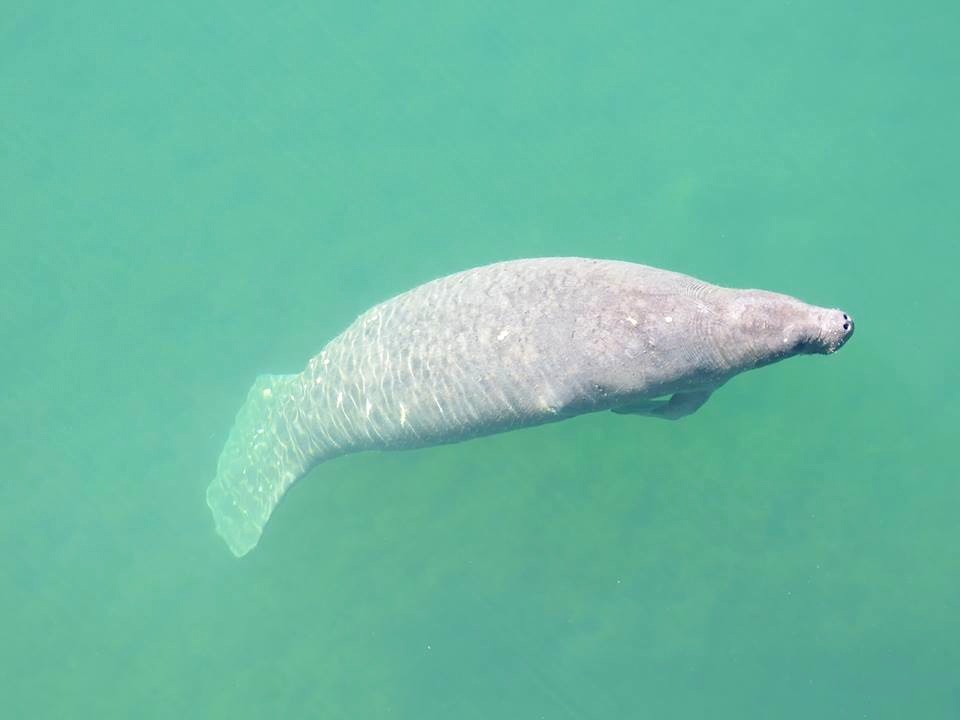
FRIENDS OF THE ENVIRONMENT has just reported the sighting of a new manatee at the head of Marsh Harbour harbour. I’m not aware of any other sightings in the last couple of days, but as they say, “Please keep your eyes out and drive carefully! ContactBahamas Marine Mammal Research Organizationwith any further sighting reports by calling 357-6666. You can also share photos with them on Facebook. Also, please do not feed the manatee. They are able to find their own food and anything else may make them unhealthy”.
This is Abaco’s third recent manatee. First there was GEORGIE, who as far as I know is still comfortably settled in the Cherokee area. Then RANDYarrived earlier this and got to within about a few miles of Georgie… High hopes of a meeting – and ‘friendship, maybe more’ – were dashed when Randy turned round and headed back to Castaway Cay. Let’s hope this newcomer stays around. I wonder what he – or she – will be named? My suggestion is Abby or Abi, which I think is unisex…
Just as with the whale flukes, the tail of a manatee is an important means of identification. The new manatee’s tail has its own distinctive edge pattern, which will enable its future recognition. Here is an image of Randy’s tail, with its unique notch.
Credits: BMMRO & FOTE with thanks as ever for use permissions
The White-rumped Sandpiper Calidris fuscicollisis one of a number of sandpiper species found on Abaco. You can see a gallery HERE. Many of them are confusingly similar, and it is with a sense of relief that one picks out some particular feature on a bird that marks it out from the other species.
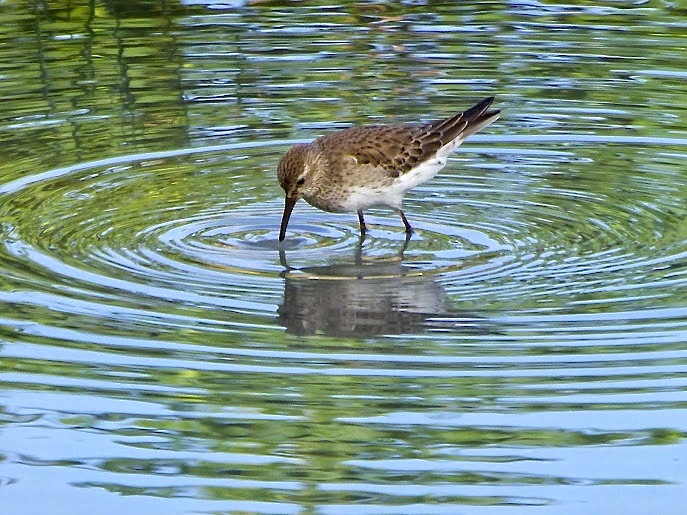
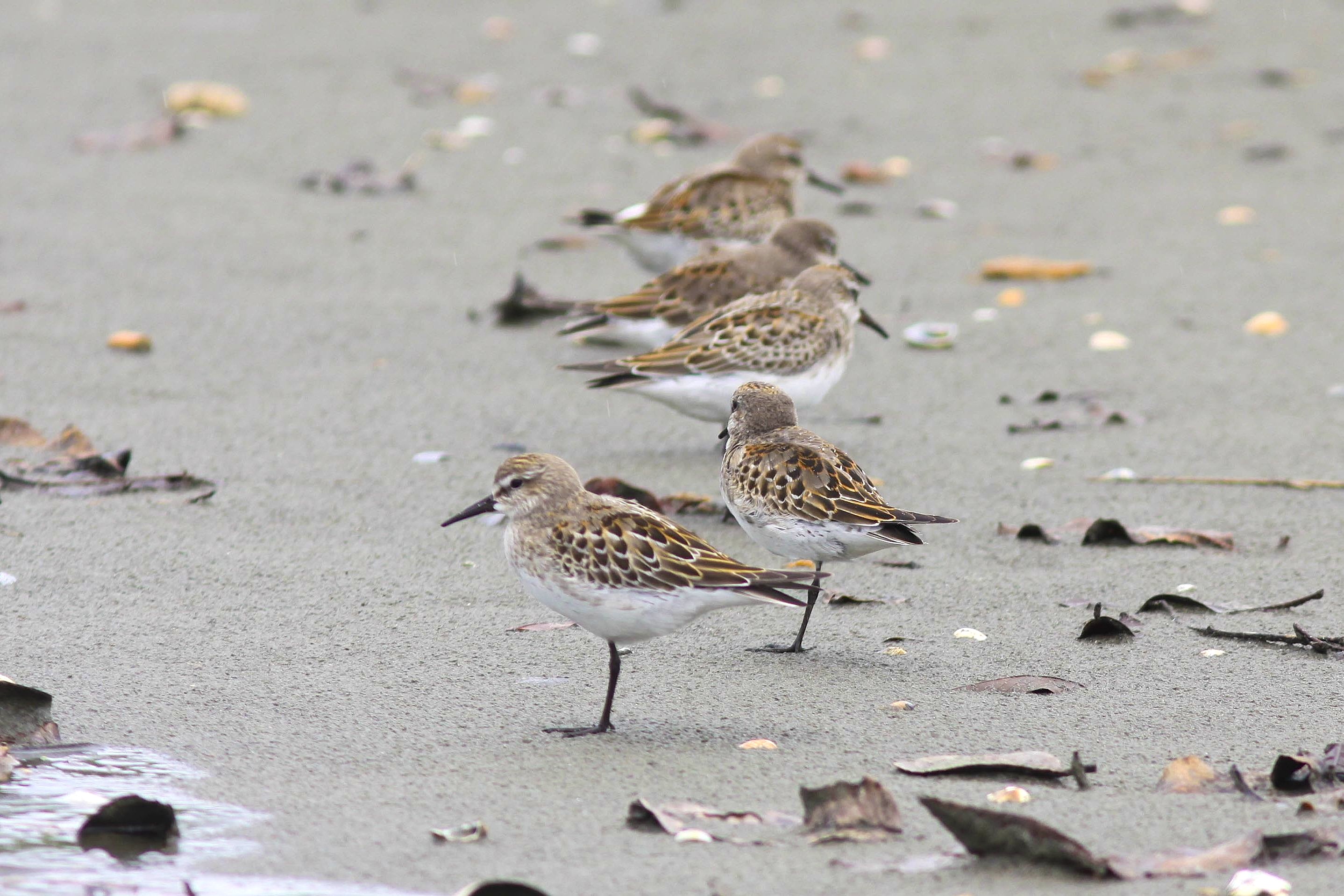
The white-rumped sandpiper has, for a start, a white patch that shows above the base of the tail, rather in the manner of theyellow-rumped warbler. It is the only sandpiper with such a feature, and it is conclusive of ID… if you actually see it. You’ll notice that in the header image and the one above, no such white patch is visible. So although it is undoubtedly there, the bird you happen to be looking at – perhaps at a distance – may not have arranged its position and feathers to assist you. Frankly, the birds in the WRS group below are not cooperating either, except the furthest (blurry) one.
You can’t see it on this bird either, as it forages in a pond, spreading concentric circles across the water
Nor with this one. In fact, I have looked at dozens of photos to find a clear shot of said white marking and found only one really good one… but hedged around by the thick thorny protection of copyright.
However all is not lost. There is another feature of this sandpiper species that is unique to it, at least on Abaco (it is found also in the Baird’s sandpiper, but you won’t see that bird on the island). The unusually long wings of the white-rumped sandpiper extend beyond its tail when it is on the ground. You can see this in the photos above. It is a feature that should be clearly visible as you watch a bird on the shore, even if it isn’t showing its white rump. Here’s a very helpful composite from the Crossley ID Guide (Eastern Birds). You can see the extended wing length in the birds in the foreground. And if you look at the birds in flight, you will see the white rump exposed.
Like all peeps, these birds make high-pitched weebling sounds, which I have seen described as ‘like a child’s squeaky toy’. Here’s a small flock make a characteristic noise.
Ian Cruickshank / Xeno Canto
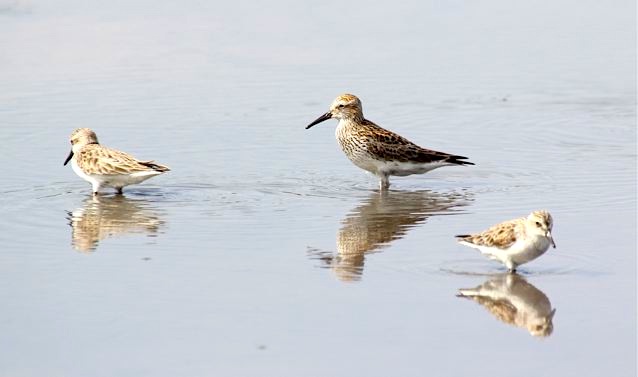
You will often see a WRS mixed up in a group of other shorebirds, so the wing-length ID method will help pick it out. Also, it will be notably larger than some, for example semipalmated sandpipers.
NB They are not always found on the shore or in water
Watch white-rumped sandpipers foraging
Credits: Woody Bracey, Tony Hepburn, Rick Elis Simpson, Tim Bowman, Crossley Guides, Xeno Canto




























 Pine Warbler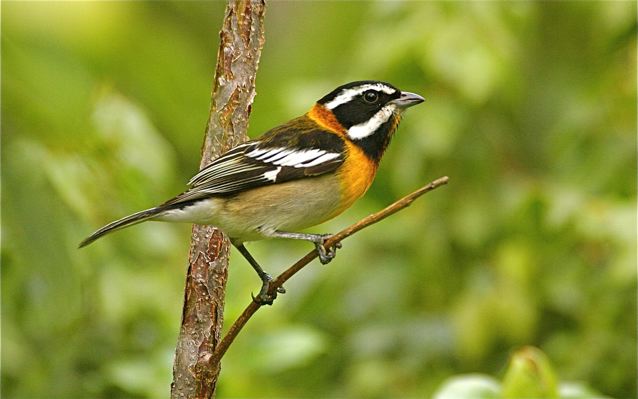













 FIERCE LITTLE FALCONS: MERLINS ON ABACO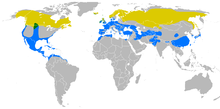














 Author signing copies, with Bahamas birding gurus Tony White, Bruce Hallett & Woody Bracey









 Eveny Louis / Xeno Canto








 Finally, this pretty TBV is very delicately marked








 ROLLING HARBOUR ABACO
You must be logged in to post a comment.