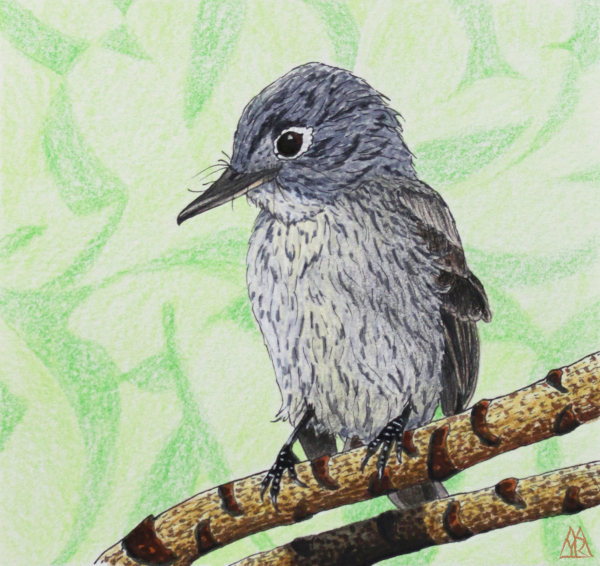
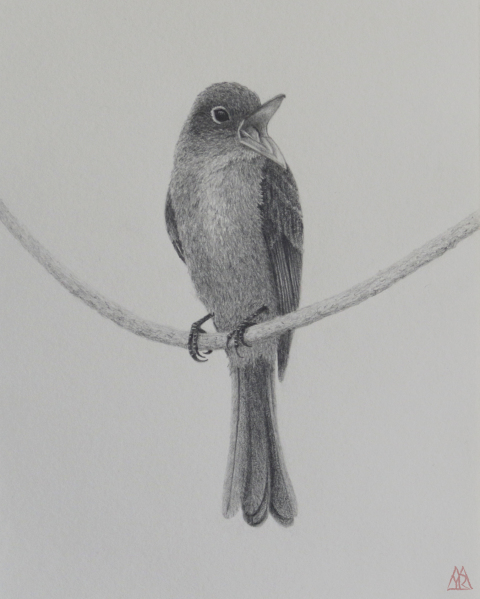
Happy Draw a Bird Day! To celebrate, I present, my first tyrant flycatcher drawing!
The Cuban Pewee, or Crescent-eyed Pewee, Contopus caribaeus, resides in Cuba and The Bahamas, and is occasionally sighted on the southeast coast of Florida. Keith Salvesen recently posted some lovely photos on his blog Rolling Harbour Abaco and he was cool with me using them for a Cuban Pewee drawing adventure.
I’m pleased that the bird in my drawing looks sweet-as-can-be and has a beautiful eye, and I like the colours and patterns of the branches and background. However, I’m not jazzed about the streakiness of the feathers. Hoping for more gentle feathery textures and easier control of varying grey shades, I grabbed 2H and HB graphite pencils and a kneaded eraser. I chose a different photo because that open bill is just marvellous! Clearly, Keith and the Cuban Pewees are good friends.
ABACO WARBLERS: THE FAMOUS 5 (PERMANENT RESIDENTS)
There are 37 warbler species recorded for Abaco. They fall into three distinct categories. Surprisingly perhaps, only 5 species are permanently resident on Abaco, ie non-migratory. Then there are warblers that commute from the breeding grounds of North America to warmer climes in the Fall, returning in the Spring to breed. Some will be familiar – PALM WARBLER, AMERICAN REDSTART, BLACK-AND -WHITE WARBLER. Others, like the HOODED WARBLER, are less common. One or two are very rare indeed, such as the KIRTLAND’S WARBLERSthat choose Abaco as a winter destination. Finally there are the so-called transients, warbler species that use the northern Bahamas as a stopover during their longer migratory flights, such as the BLACKPOLL WARBLER.
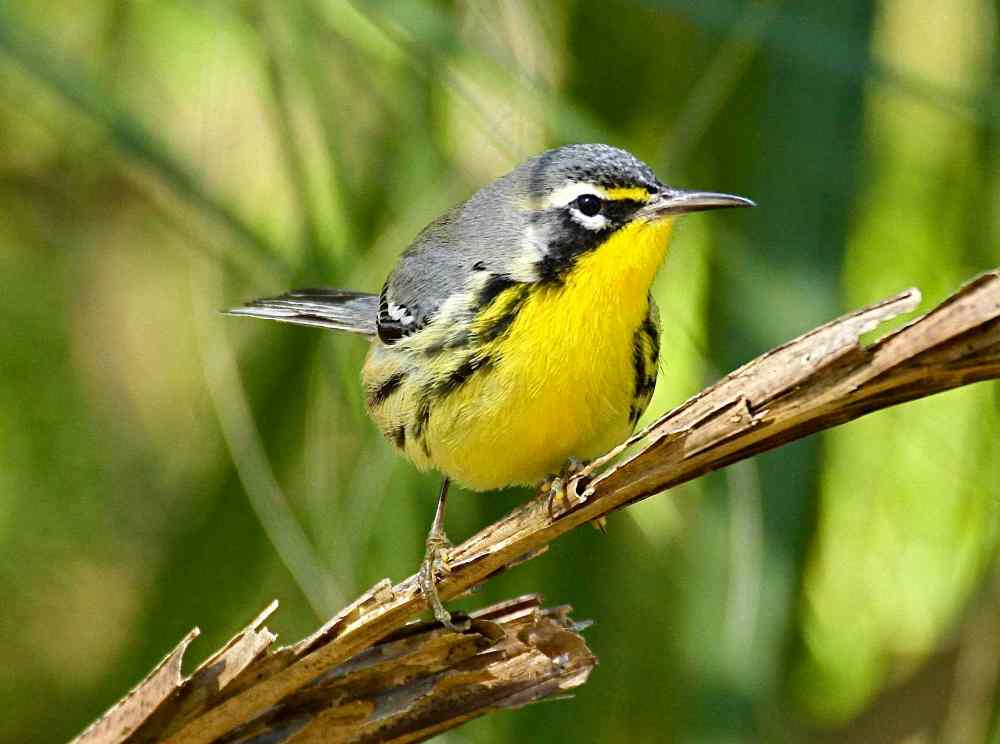
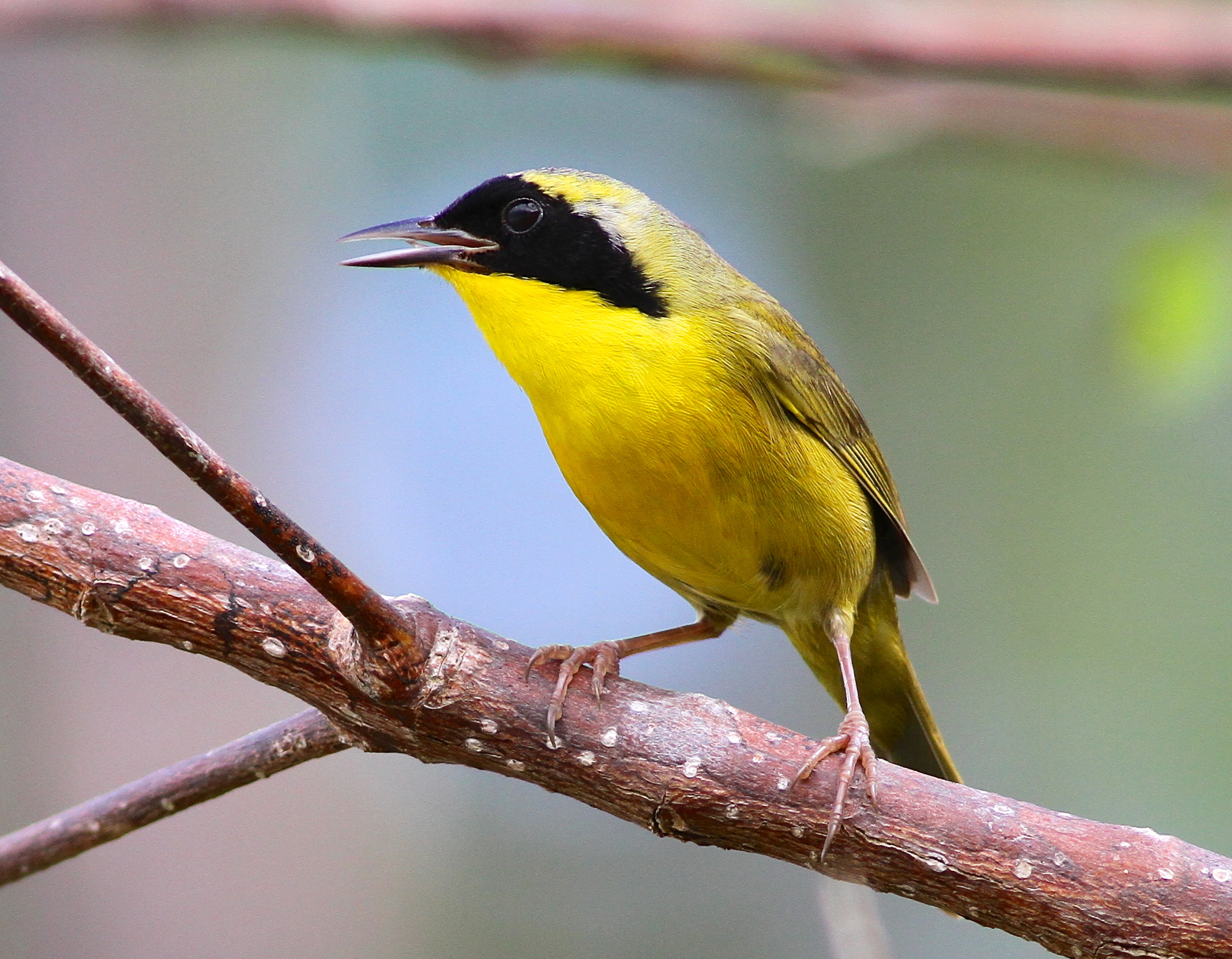
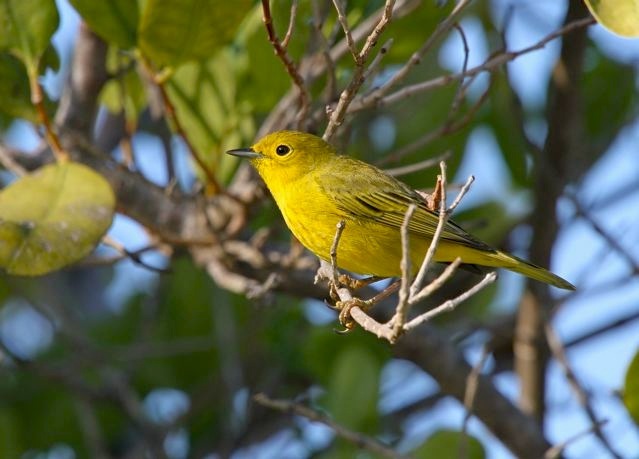
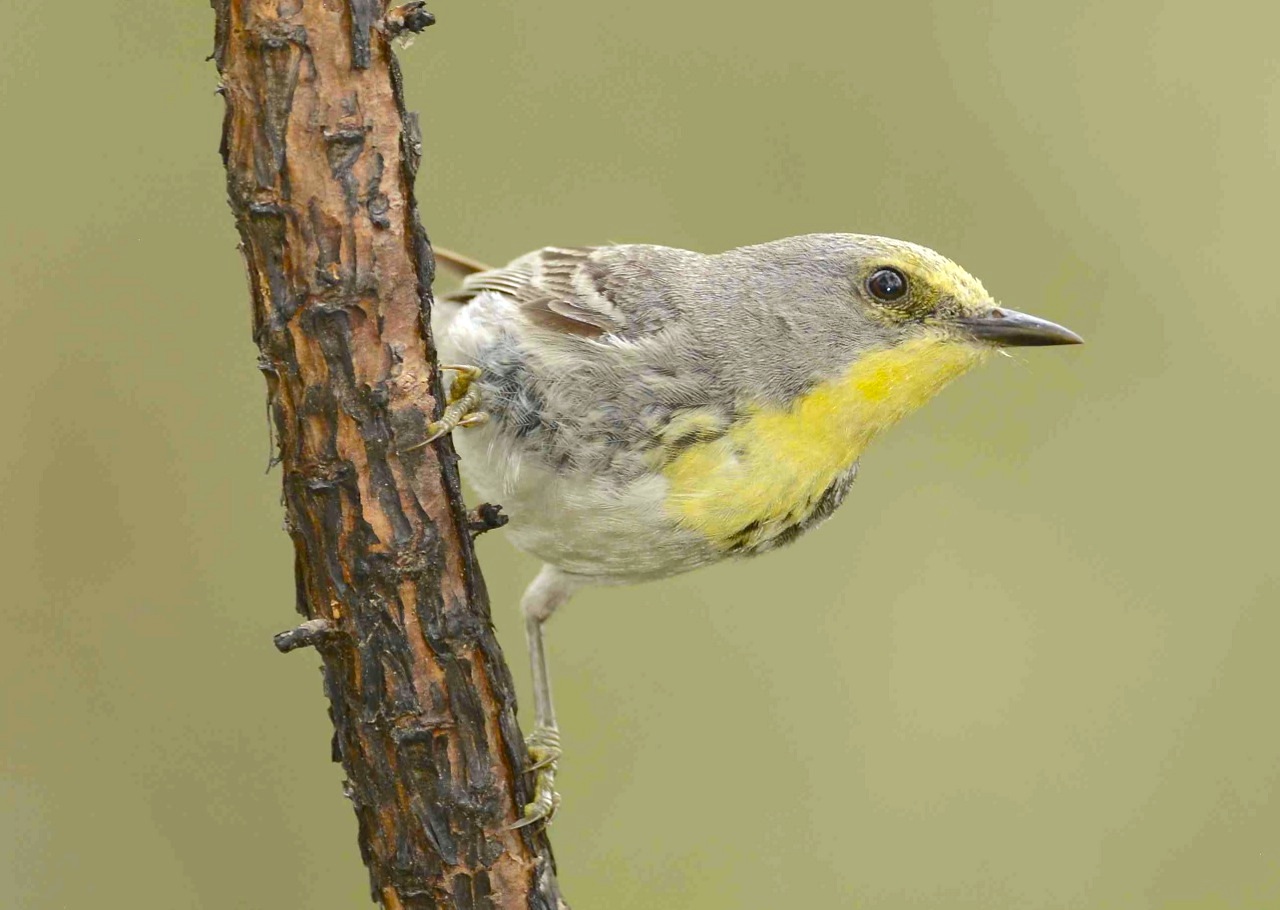
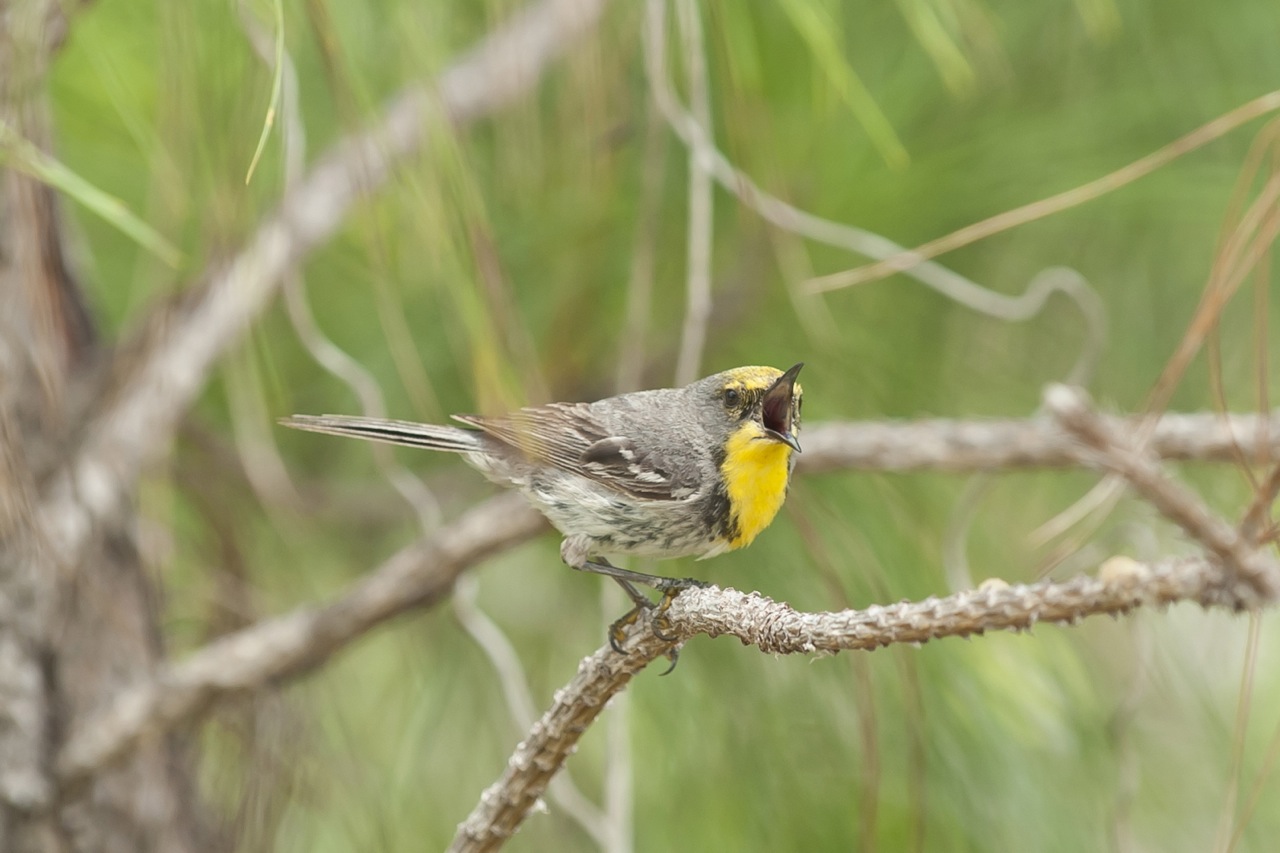
The 5 permanent residents obviously don’t migrate, so there is a chance to find them throughout the year. The pine forests would generally be the best place to start the quest. Importantly, 2 of the 5 species are endemic birds to the Bahamas and can be found nowhere else: BAHAMA YELLOWTHROAT and BAHAMA WARBLER. The latter and the OLIVE-CAPPED WARBLER, are very range-restricted, and only found on Abaco and Grand Bahama.
THE 5 PERMANENT RESIDENTS
BAHAMA YELLOWTHROAT Geothlypis rostrata PR B 1 ENDEMIC
YELLOW WARBLER Setophaga petechia PR B 1
OLIVE-CAPPED WARBLER Setophaga pityophila PR B 1
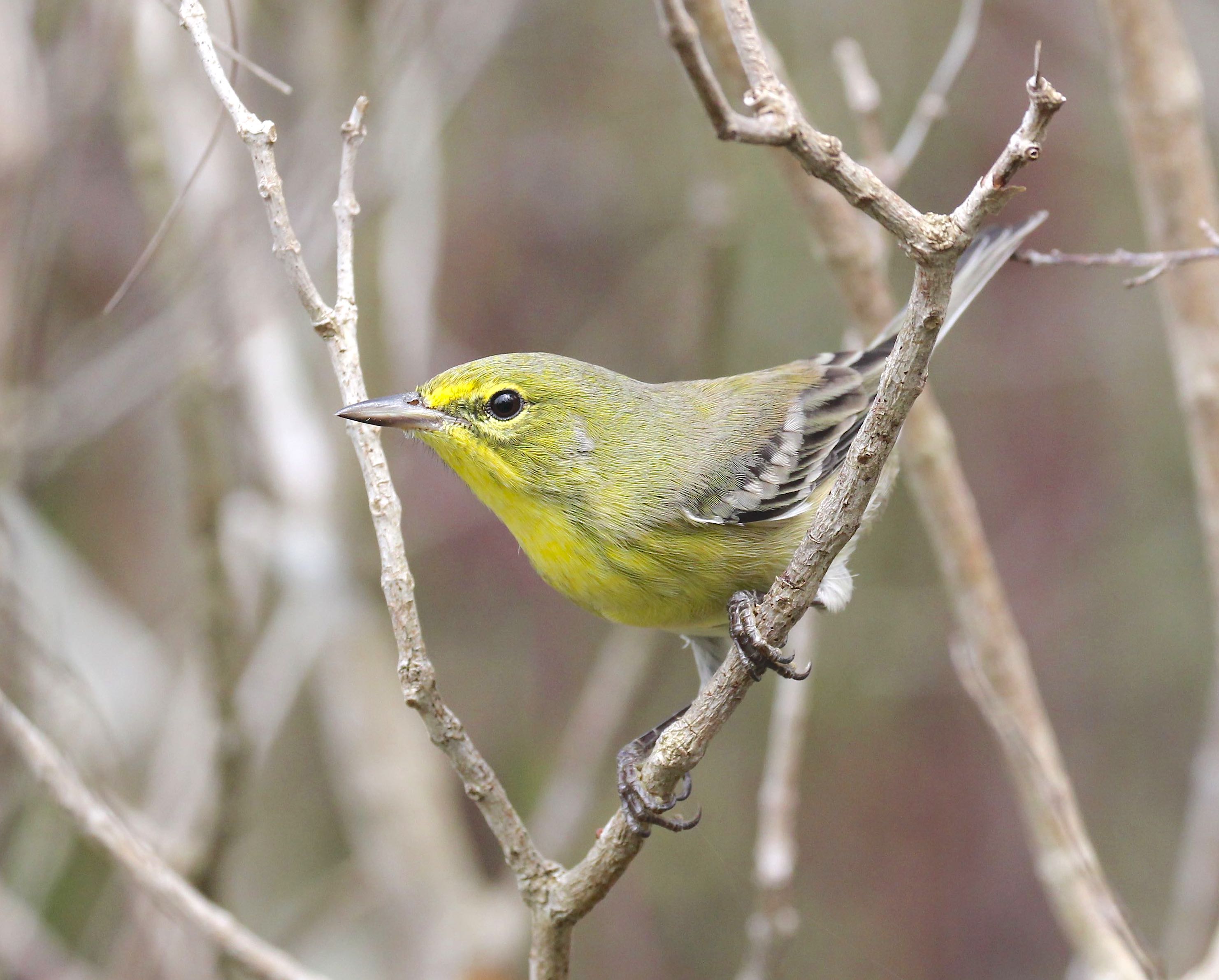
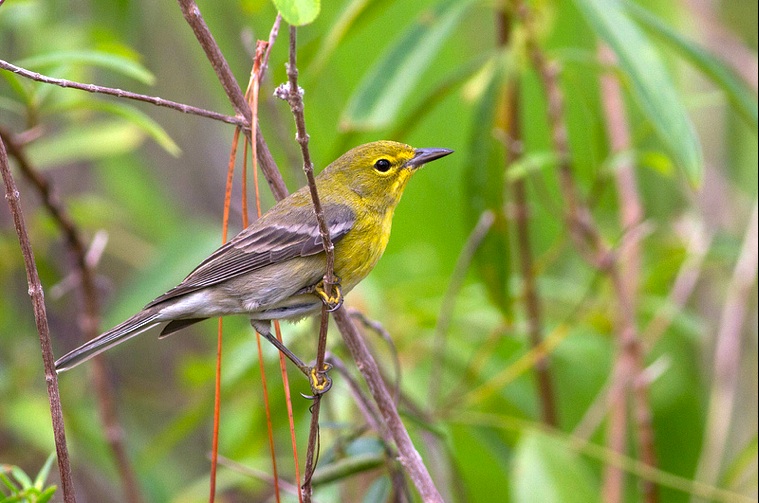
PINE WARBLER Setophaga pinus PR B 1
BAHAMA WARBLER Setophaga flavescens PR B 1 ENDEMIC
PHOTO CREDITS Bruce Hallett (1, 3, 5, 8, 11); Gerlinde Taurer (2); Tom Sheley (4, 6, 7); Tom Reed (9); Alex Hughes (10, 11)
CHECKLIST CODESbased on the complete checklist and codes for Abaco devised by Tony White with Woody Bracey for “THE DELPHI CLUB GUIDE TO THE BIRDS OF ABACO” by Keith Salvesen
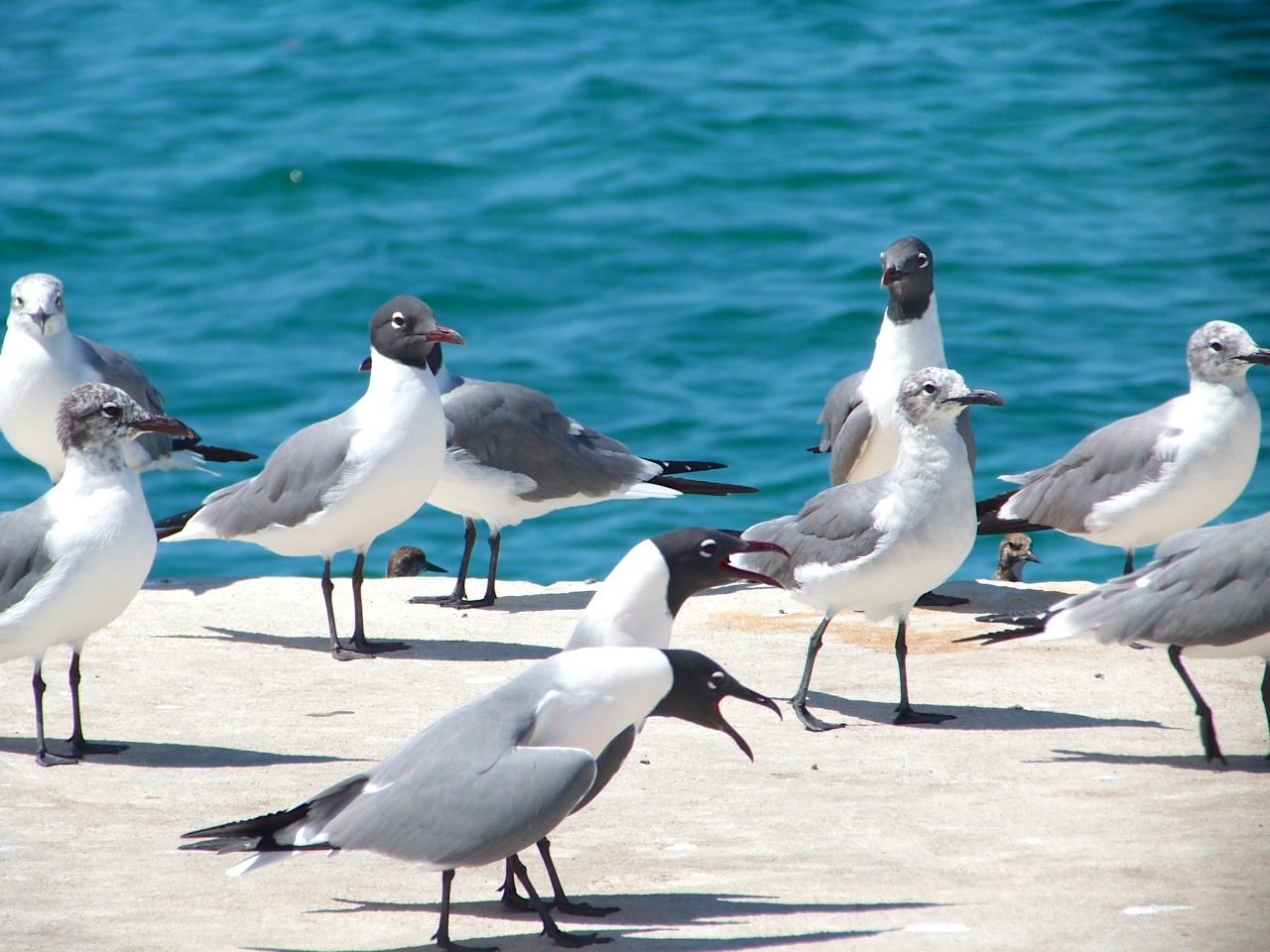
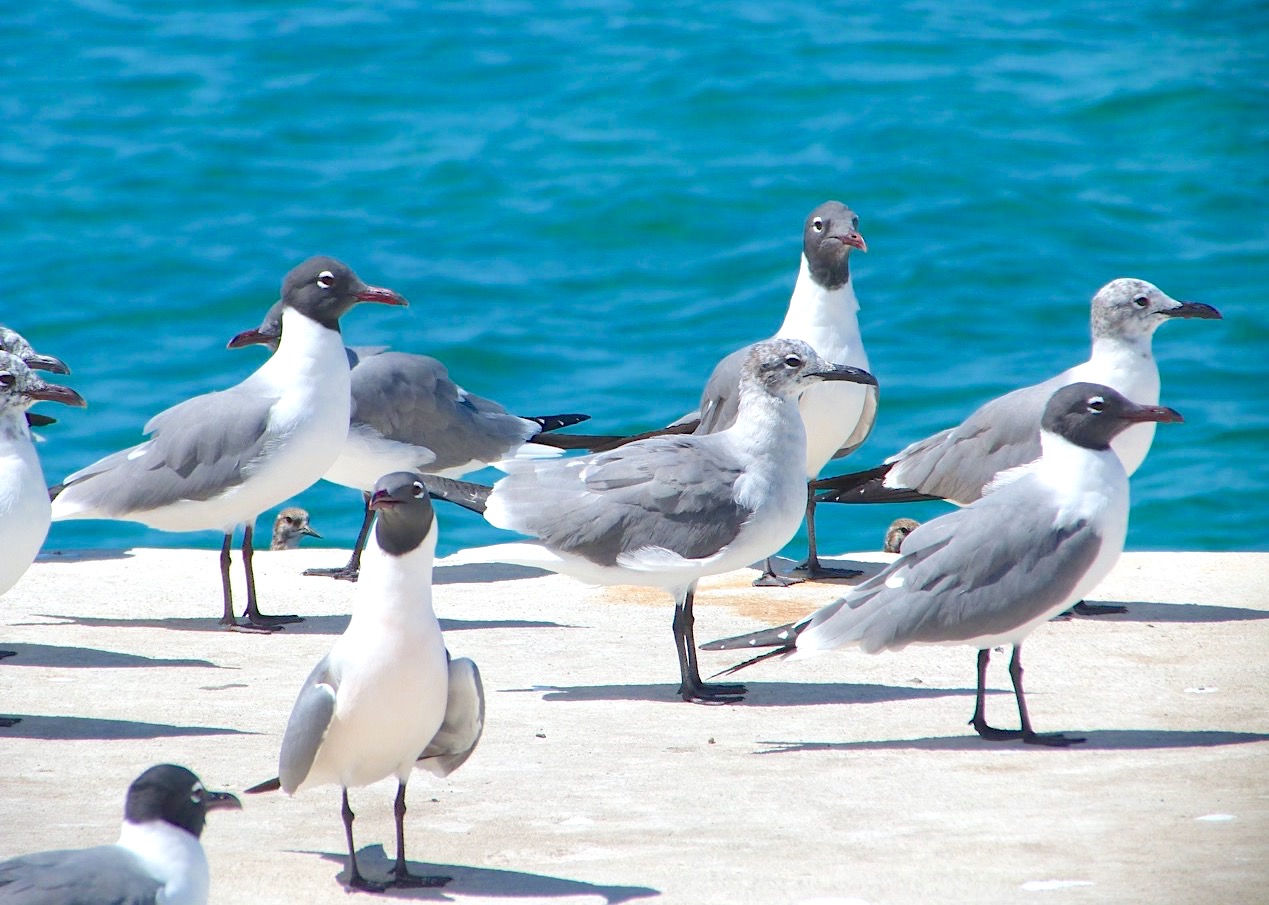
By the end of day 2 during my recent stay at Sandy Point, I thought that I had had just about enough of the laughing gulls Leucophaeus atricilla. They are delightful of course, and (in small doses) a joy to listen to. But their incessant outbursts of humour were getting beyond a joke.
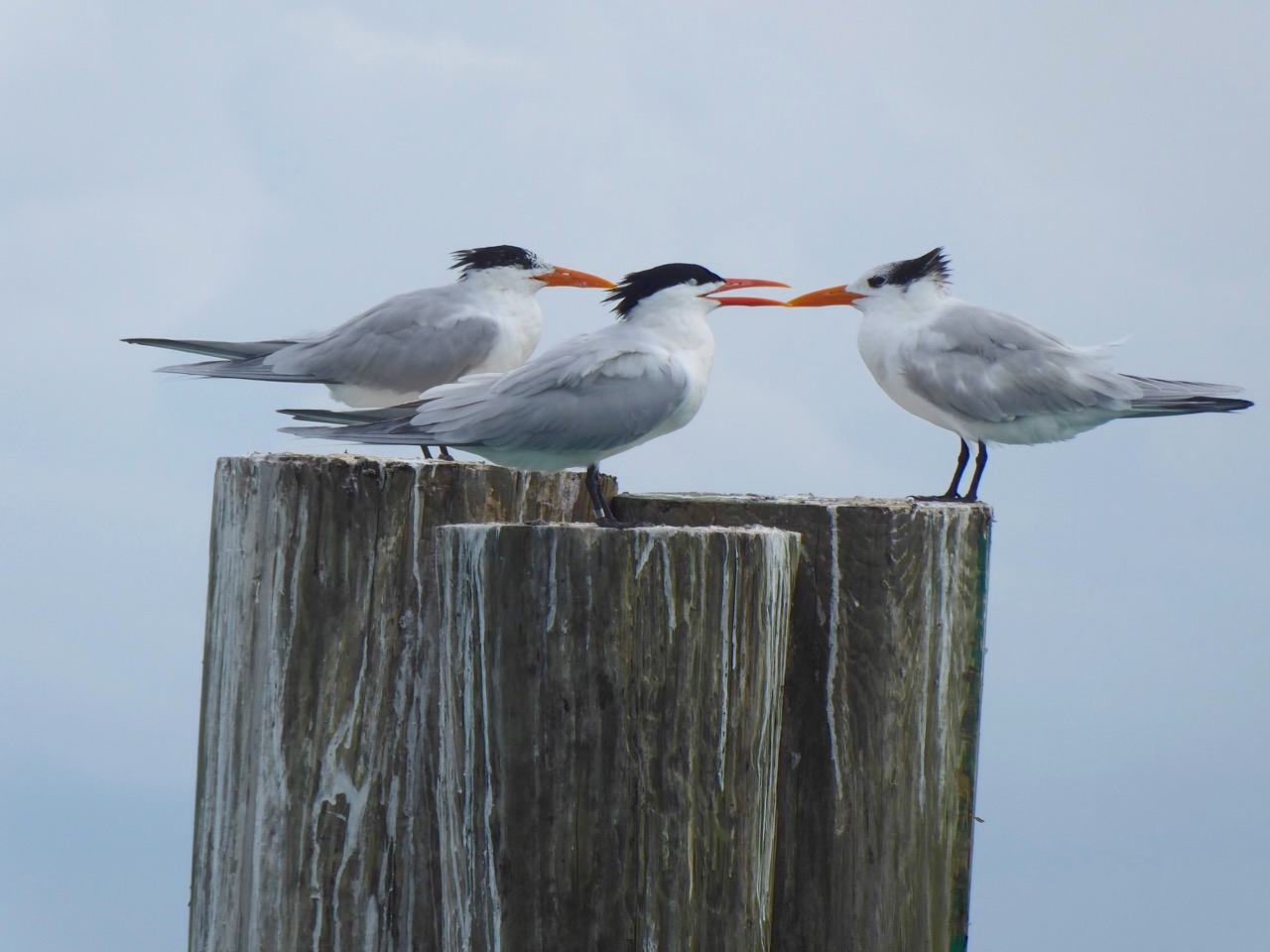
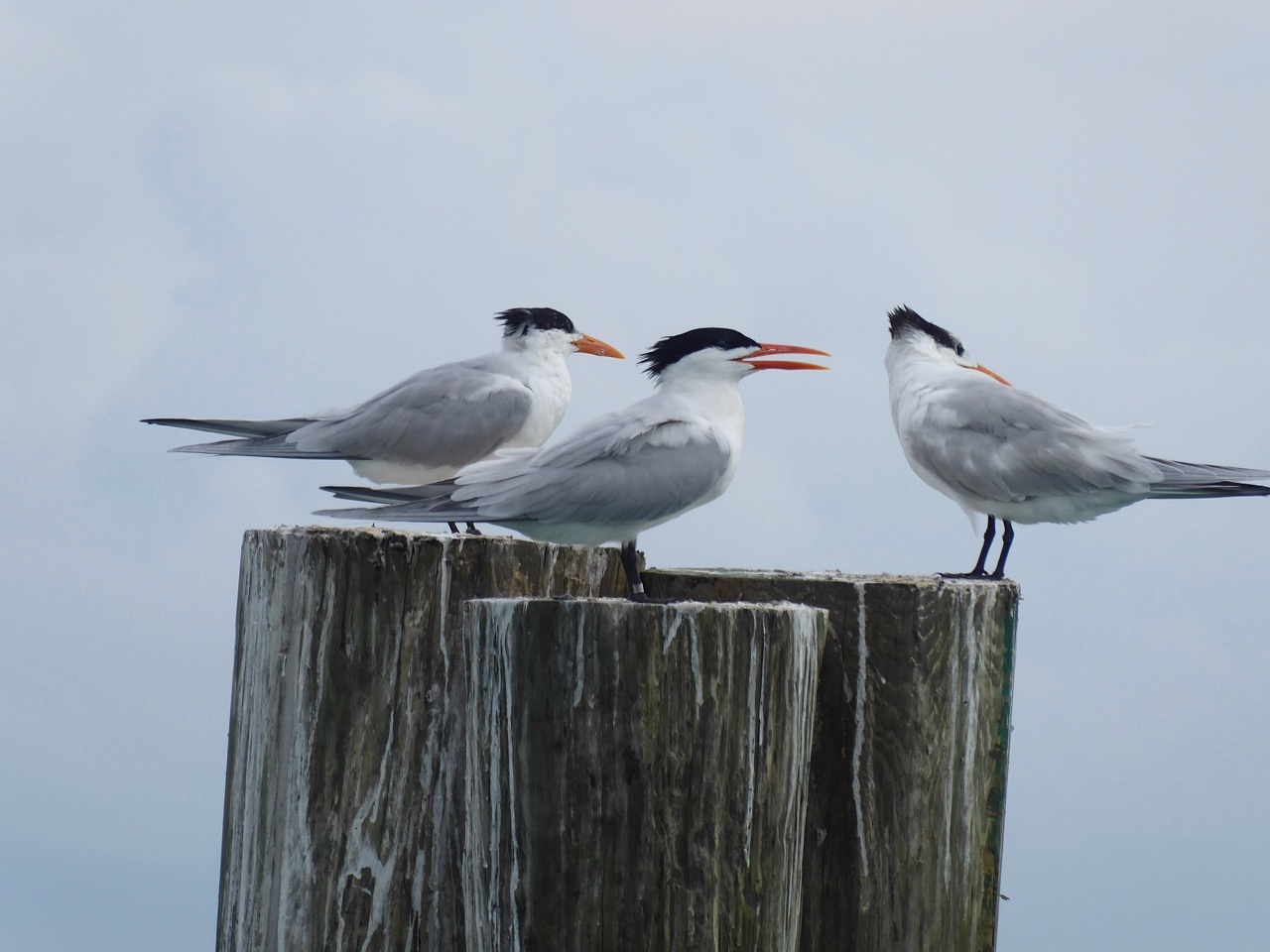
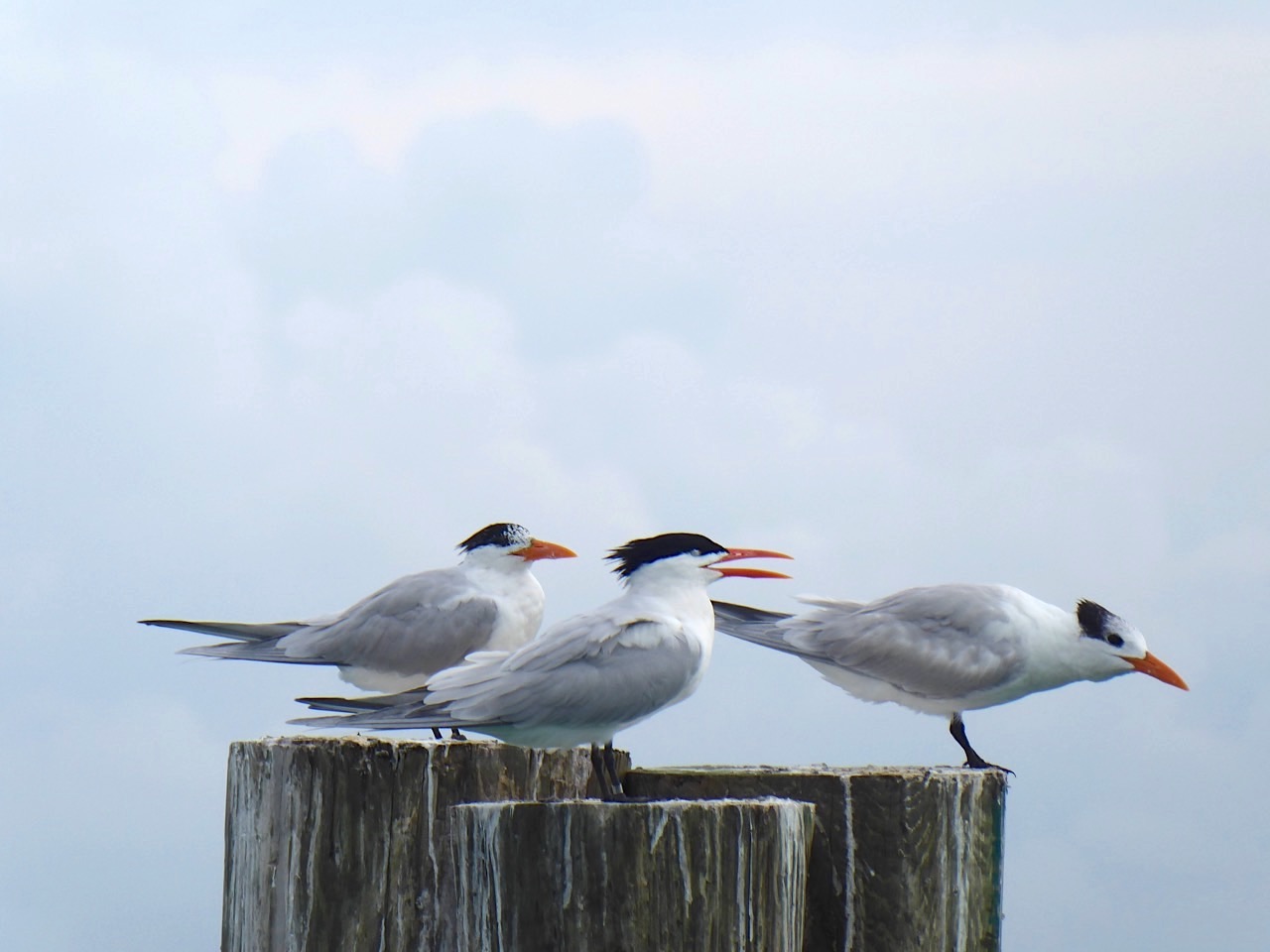
The next day, on the nearby jetty, the gulls were in full cry. A lone brown pelican stood on top of a piling, looking out to sea. A few Royal Terns turned their faces, characteristically, into the light wind. I wandered over and slowly walked down the jetty. This generated some laughter, but the birds were quite content to watch me edge slowly towards them.
Probably, the gulls feel safety in numbers. Maybe they hope the din will send you away. Or perhaps, if approached very carefully, they are simply curious. I got close to the birds, and one in particular caught my eye. It was plainly having a bad-feather day. I took it to be a non-breeding adult, but it lacked the white spots on the tail-feathers (primaries). Maybe it was a first winter juvenile. Whichever, it was happy to pose for me.
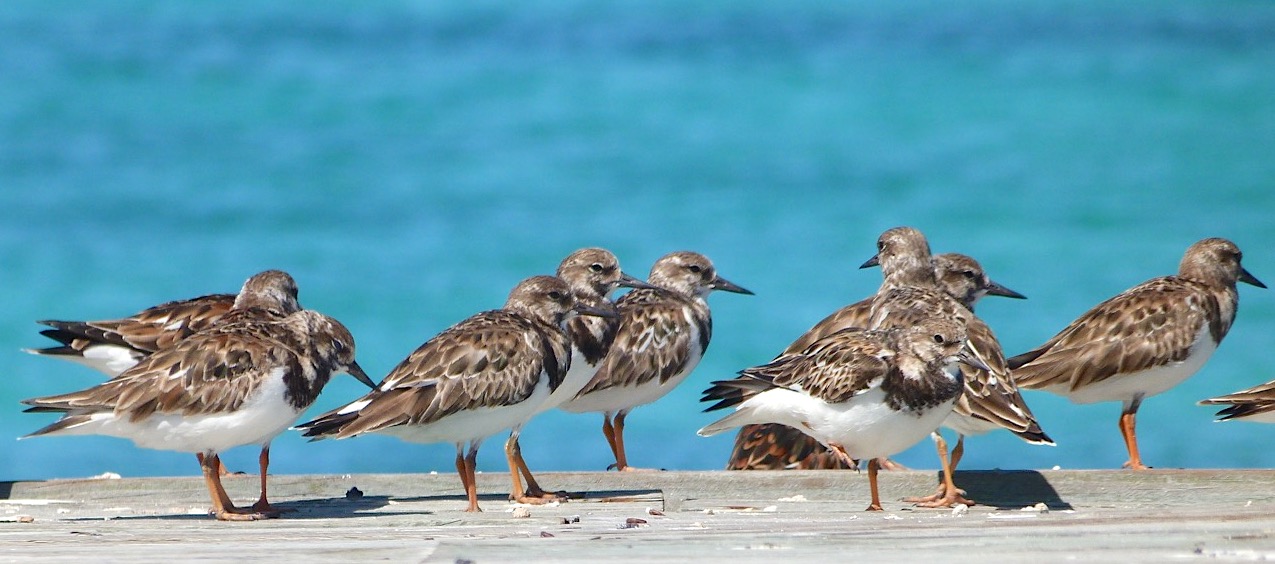
I realised, of course, that the jetty belonged to the birds, including the ruddy turnstones that had just joined the gang at the end of the jetty. I was the intruder in their world, and I had willingly visited their territory. So their racket was entirely their business, and absolutely none of mine**.
WHAT DO LAUGHING GULLS SOUND LIKE? ARE YOU OVERSENSITIVE?
I made a couple of short recordings of the gulls in full humour mode. If you have never heard them before, you might want to listen to the full 30 seconds. For anyone else there’s a convenient lull at around 15 secs before they kick off again.
Breeding adult (Birdorable)
**In the UK there’s a thing where someone buys an attractive cottage next to the c15 village church. Then they discover that the clock chimes. And the bell-ringers practise their art on Monday and Thursday evenings. And on Sunday all hell breaks loose, especially if there is Sunday cricket on the village green in the mix. And the occasional ball being hit into the flowerbed. So, complaints are made to the Council, noise abatement orders are sought, legal letters fly round the Parish. And everyone hates the newcomers. Adopting village life with no research? Way to go!
All photos + audio clip: Keith Salvesen / Rolling Harbour
When I first got a GoPro, I made a mistake. What I really needed was a GoAm. My level of sophistication in Camera-world lines up just above the ‘incompetent’ mark. So, in taking footage of a partial sperm whale skeleton on the sea floor in Abaco last week, I have found several total duds – as if I have confused the ‘take’ button with the ‘on-off’ button. Indeed, as I obviously did.
These photographic deficiencies are matched by my well-documented feeble swimming skills that improve only slightly with a snorkel and mask. And I am not legally permitted within 25 metres of Scuba equipment in all but landlocked countries.
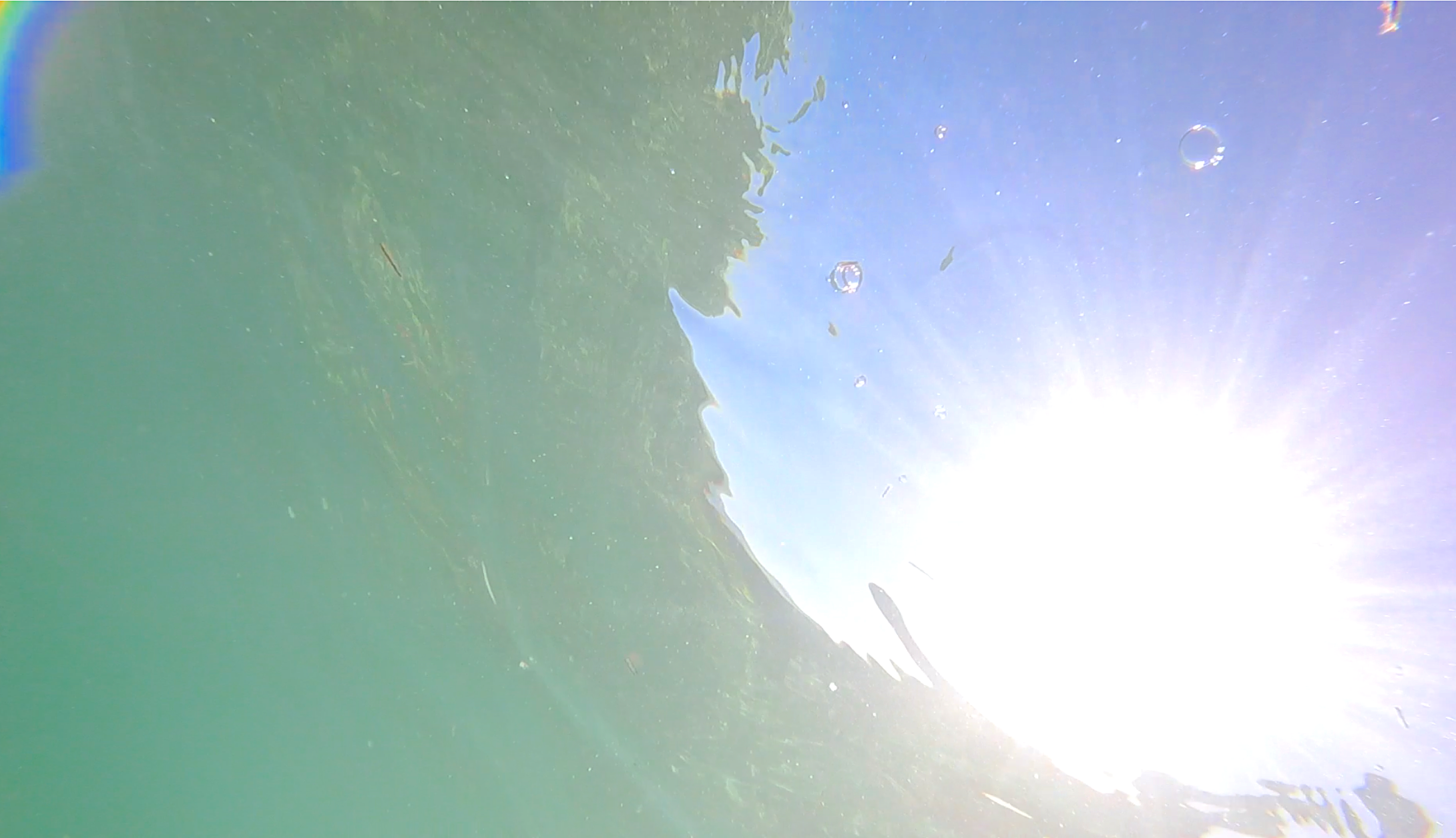
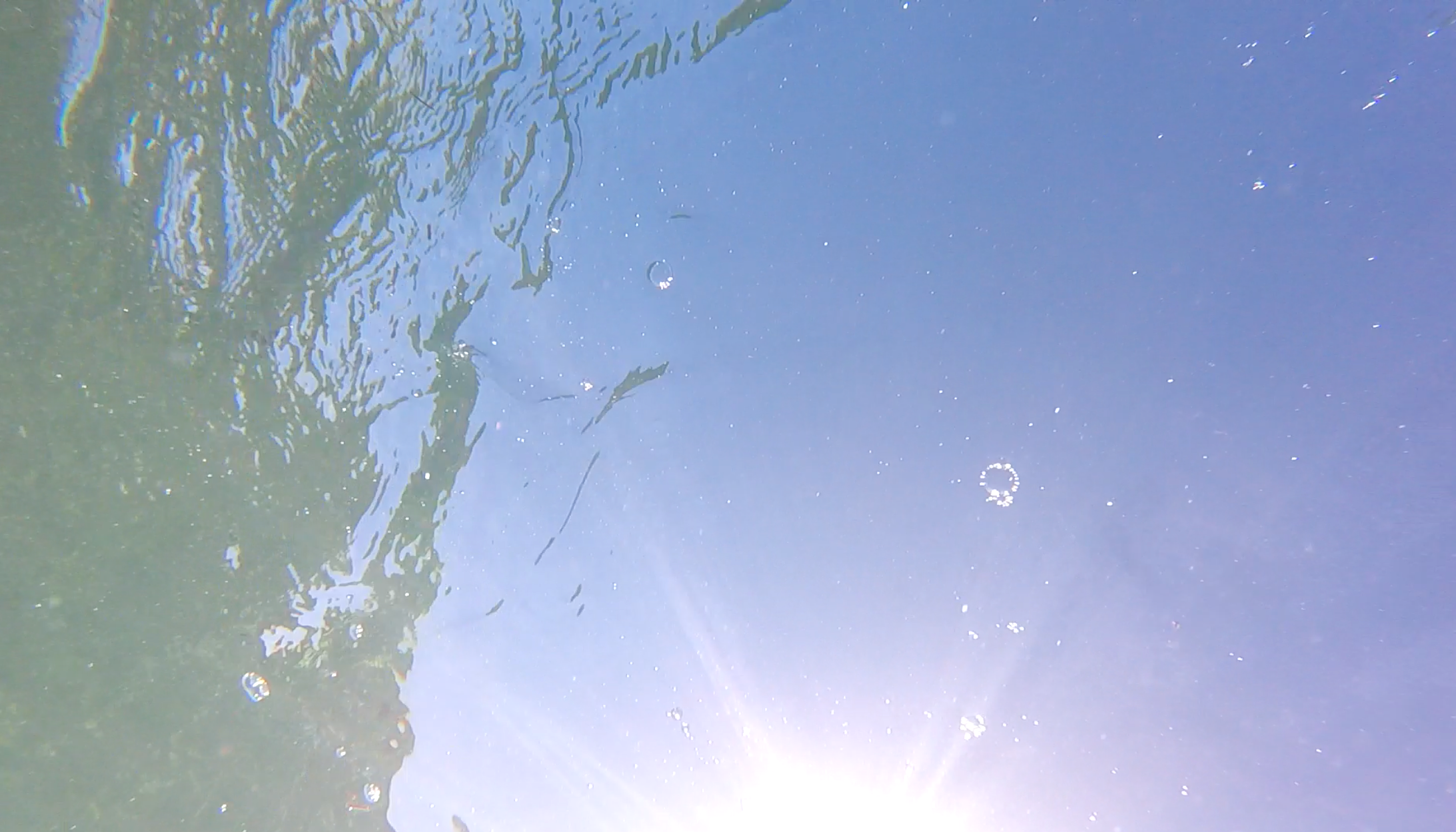
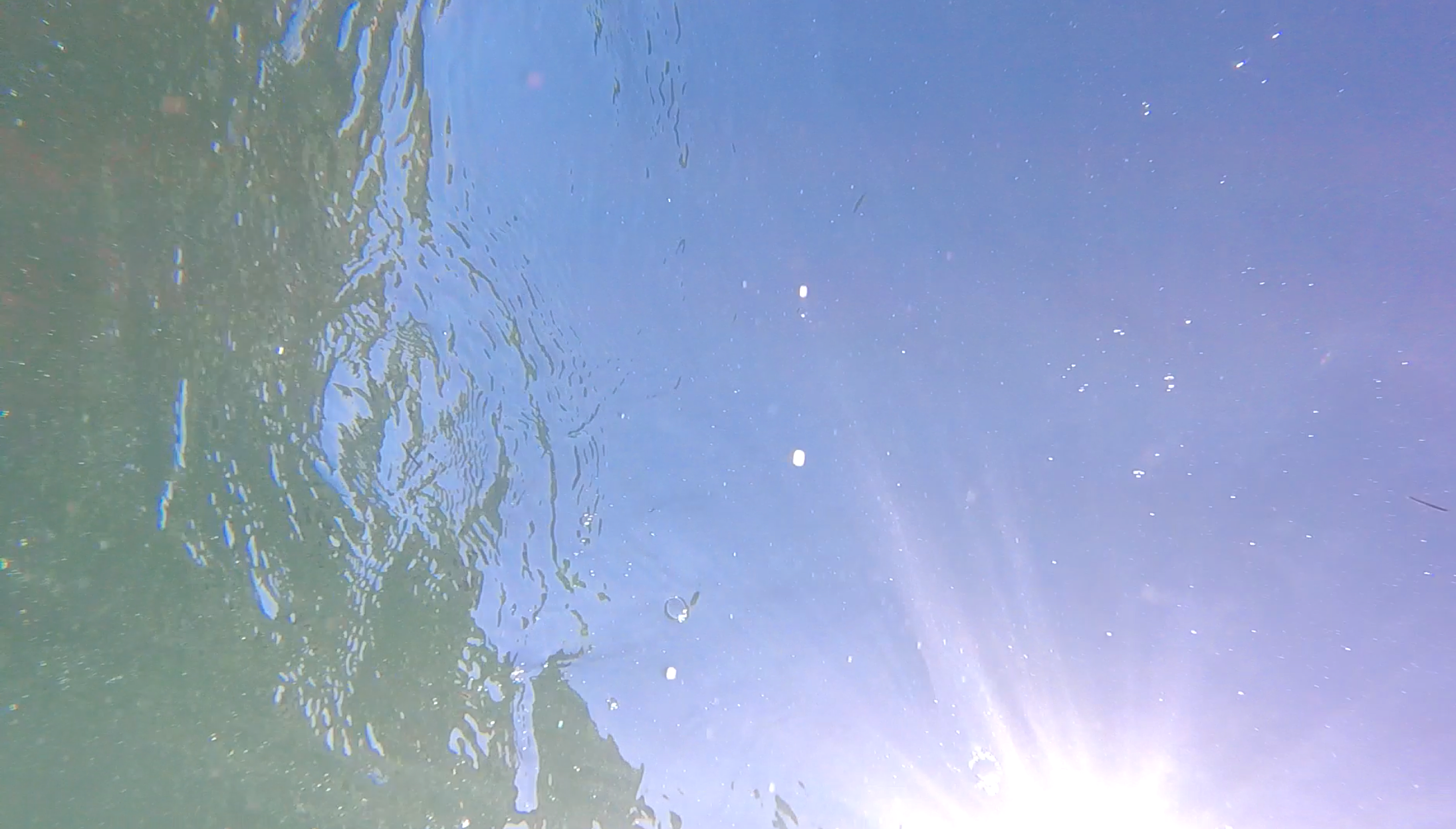
The footage of the whale skeleton worked out quite well in the end, considering the directional uncertainties caused by my swimming technique. In trimming the ends, I found I had taken quite a lot of underwater footage directed upwards to the surface rather than downwards on the cetacean remains. Probably, I was gasping for air.
I’m not sure that any of these stills count as photography at all. But as my finger hovered over the trashcan sign, it crossed my mind that there was (possibly) a strange beauty in these random outtakes. So I clipped and cropped to see how that might work. I wait to see the feedback (if any). If my number of followers drops below 50%, I will have to delete the dross swiftly, with due apologies.
I’ll be posting the story behind the sperm whale skeleton in due course. Meanwhile, these clips are an interim curiosity. And that’s probably putting it at its highest…
All photos taken at Sandy Point, Abaco Bahamas – Keith Salvesen / Rolling Harbour
I’m just back from Abaco. Mostly, it was about Marine Mammals (i.e. whales, dolphins, manatees) and the biennial Retreat for the Bahamas Marine Mammal Research Organisation (BMMRO). There was still time for some birding in Sandy Point, though. It’s a good place at any time for bird-watching BUT the settlement is rather remote. Specifically it is the terminus of the single 120-mile Highway that stretches south from Little Abaco in the north. Then the tarmac abruptly runs out and gives way at once to white sand. If that doesn’t halt you, you’ll wish your vehicle was amphibious…
Loggerhead kingbirds, with their hooky flycatcher beaks, cresty hair and dashing yellowish undersides, are intriguing companions. If they get interested in you (or maybe your camera bleep, as I have discovered), they will accompany you on a walk, flying ahead until you catch up, then doing it again. And if they are ‘hawking’ for flies from a favourite perch, they are fun to watch and… a big bonus… they won’t stop because you are spectating.
Like all the Bahamas flycatchers, from the little cuban pewee upwards, the Kingbirds have a charming way of cocking their head to one side or dropping it down towards their chest. Slightly posey, always endearing.
OPTIONAL MUSICAL DIGRESSION
‘Bird on the Wire’ was originally sung by Judy Collins, though written by Leonard Cohen. His own definitive version from 1968’s ‘Songs from a Room‘ is arguable the best known recording and preceded several hundred later cover versions. LC is a really “difficult” artist, however. Many will agree with his expressed view that the song is ‘a prayer and an anthem’. Others might say that it is simply growly dirge-like maundering. The (then-modish) mouth-harp twangling in the background may also be an opinion-divider. Since I have shoehorned Cohen’s song title into my blog title, you might as well have the song too, for contemplation. Is it a life-affirming ‘upper’ or a funereal ‘downer’? You be the judge!
Photos: Keith Salvesen / Rolling Harbour, Sandy point, Abaco.
I’ve been checking out jetties at Sandy Point, of which there are several. They look a bit rickety but are in fact sound except for having to step rounds piles of (empty) conch shells and occasional evidence on the timbers of recent fish-cleaning. This is a time of Laughing Gulls, and I have been recording their raucous hilarity. I may add a couple of sound files when I’ve downloaded them.
Sharing a joke
Right now, ruddy turnstones and laughing gulls seems to have formed a team of jetty birds, with a few royal terns in the mix and (as here) a random sanderling. The turnstones like to lie down in the hot sun on the jetty, possibly because it’s a bit breezier than on the burning sand of the beach.
Exhausted from turning stones
Random sanderling
These jokers are wild…
The jetties also attract pelicans, which use them to sun themselves and also to fish from. I will post about these remarkable birds another time. The largest flock of them I have seen so far is 5, one with a gold ‘breeding crown’.
The gulls also spend time on the beach, and flock on the sandbars that emerge at low tide
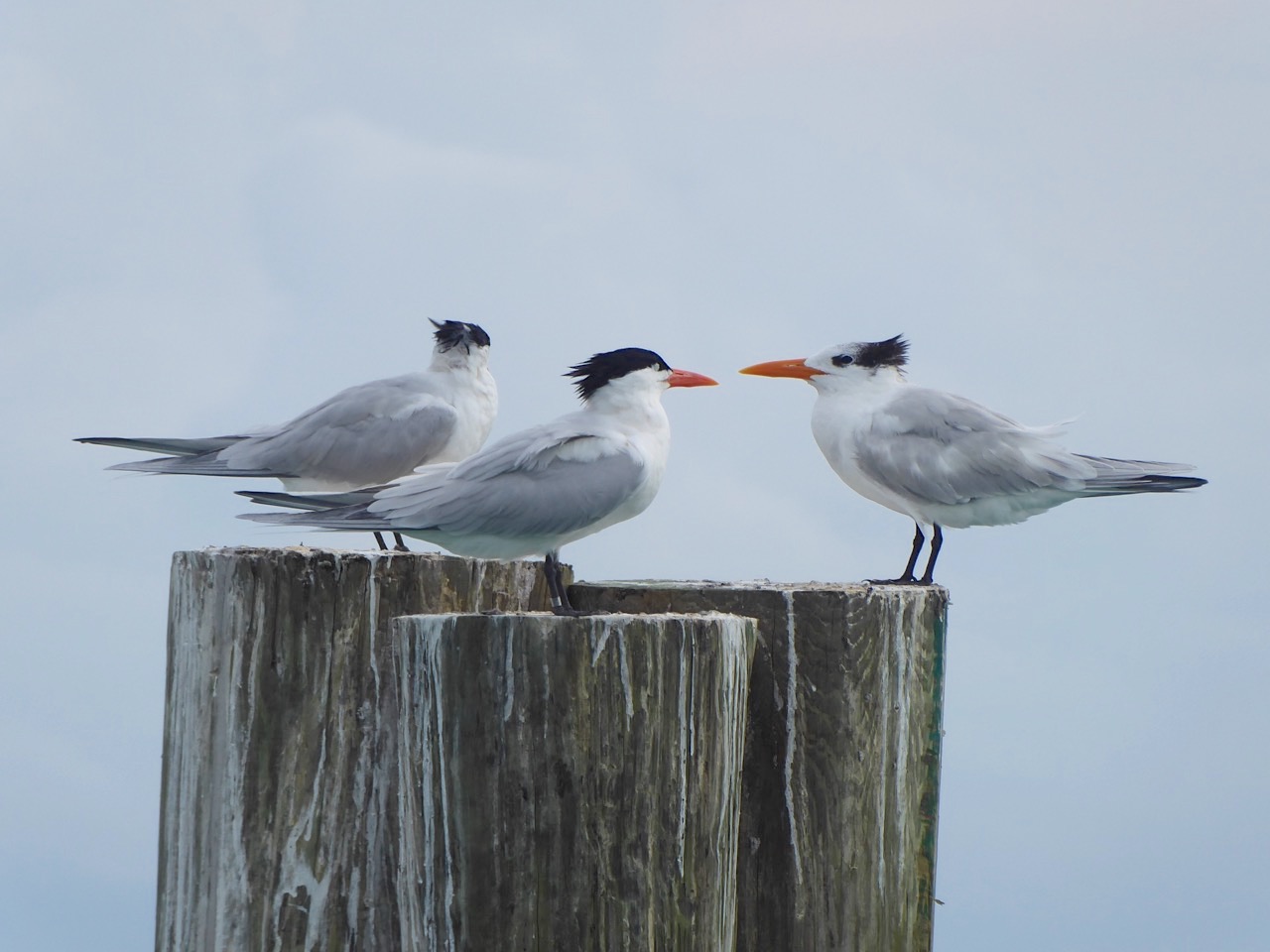
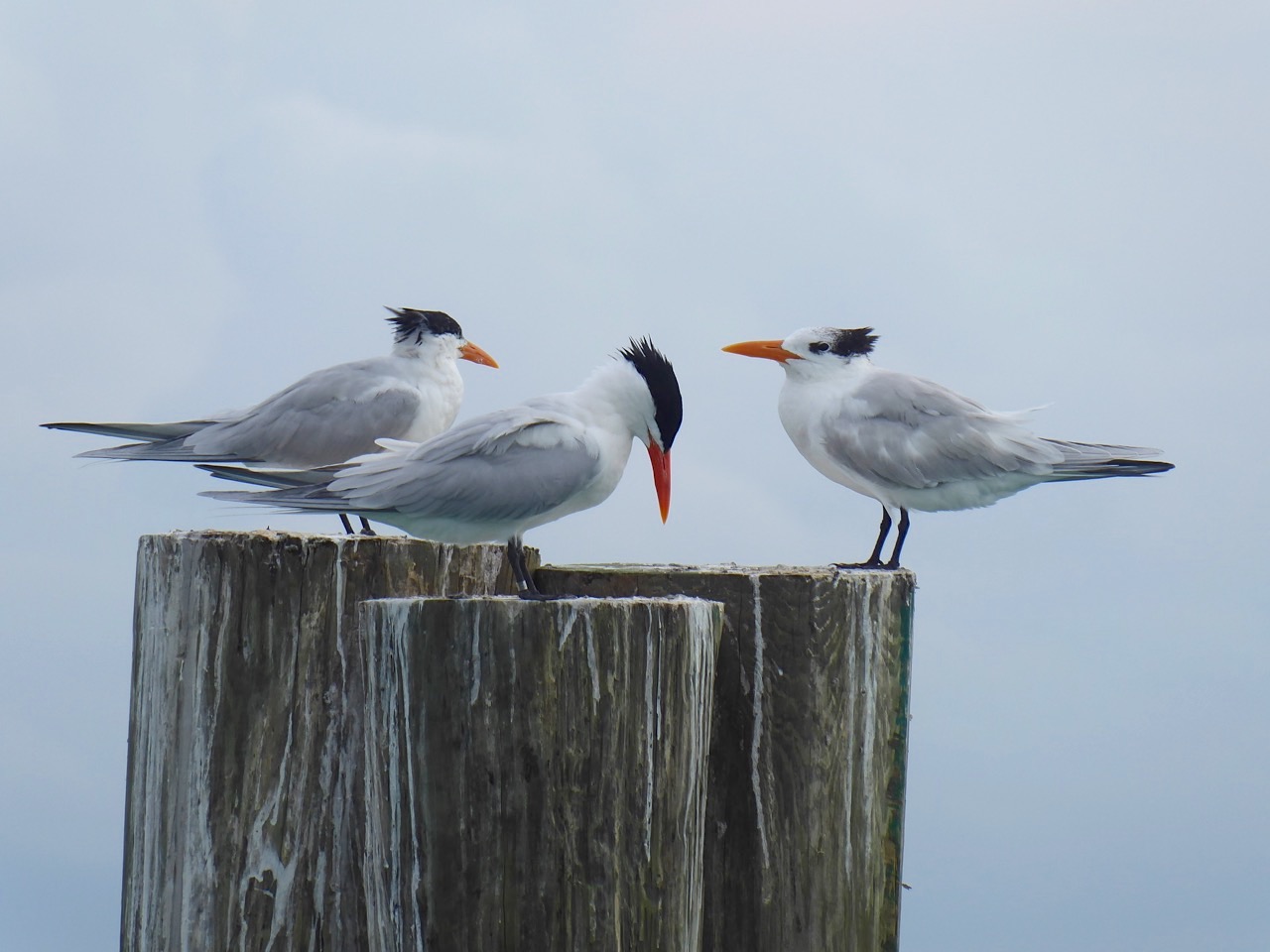
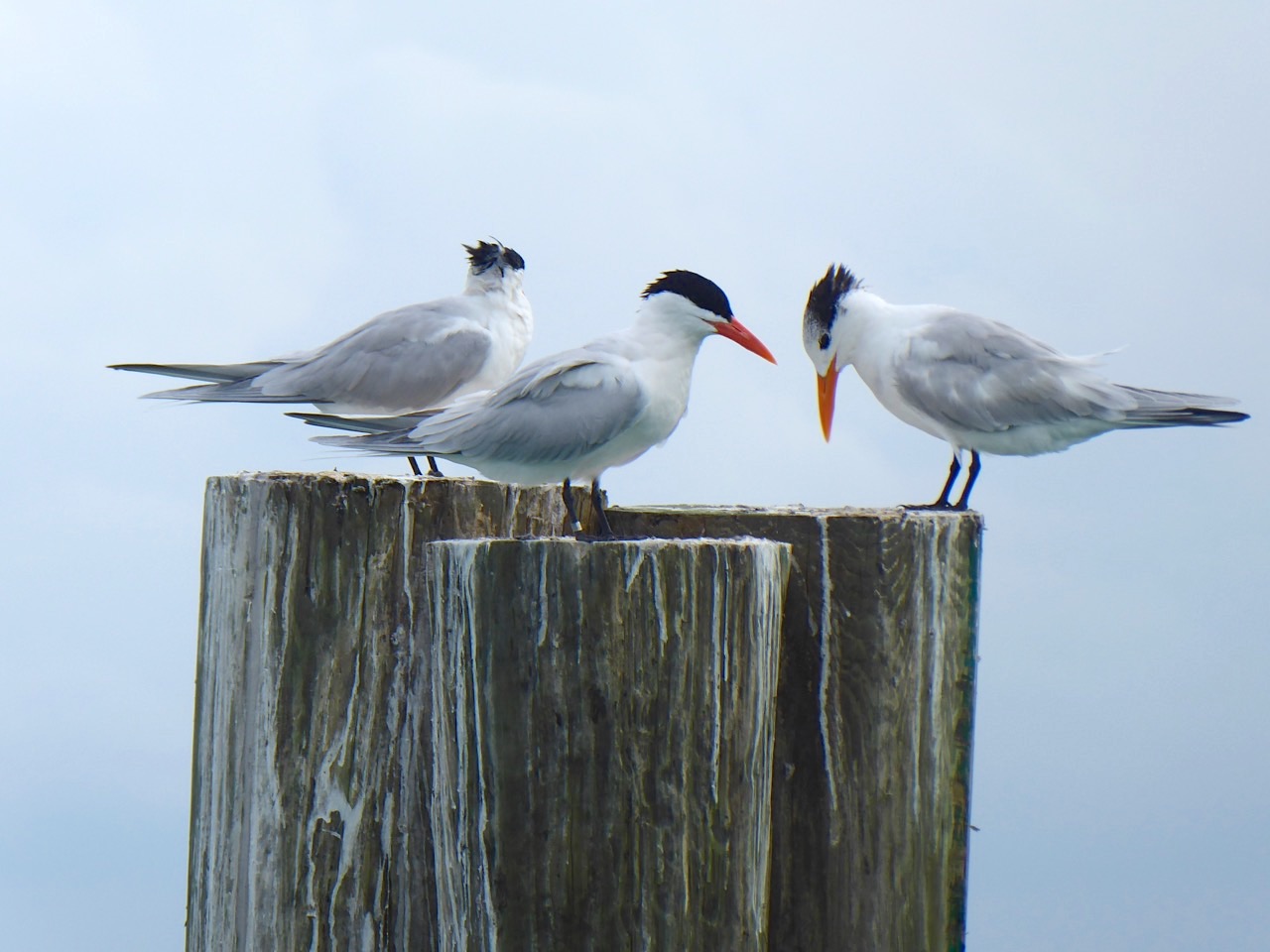
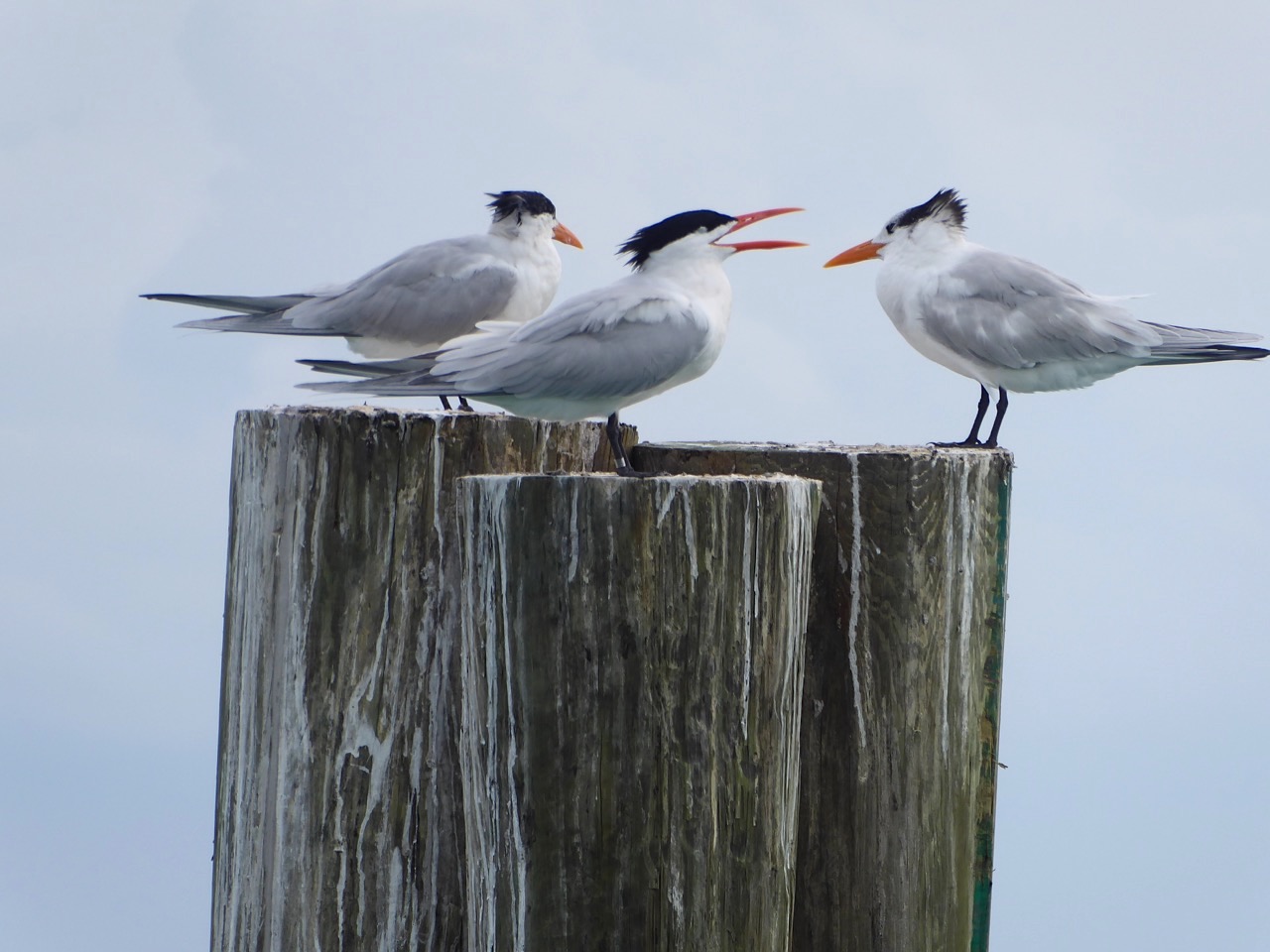
There’s a time and a place for anthropomorphising animal behaviour in terms of human responses. Usually it’s best done with caution or not at all… I’m going to press ahead, though, with a romantic encounter between two Royal terns today at Sandy Point, Abaco. Ultimately, this appeared to be an approach, a come-on, a poorly executed attempt at intimacy, and ultimately a rejection. Or else it’s just bird interchange that we should not read too much into…
Good afternoon, I should like to get to know you better…
Would you do me the honour of commencing a relationship?
Indeed I would, kind Sir!
*Boastfully* I happen to be the most handsome and regal tern this side of Marsh Harbour
I’m going to give you a peck that you’ll never forget…
Whaaaaaa? Wait… Too much, too soon. I hardly know you
You’ve moved as far away as possible on this post – you have no idea what you’re missing
I’ll be the judge of that. I’m off, don’t try to follow me…
Credits: all photos (artfully taken in fairly poor light), corny storyline, inappropriate anthropomorphism – Keith Salvesen
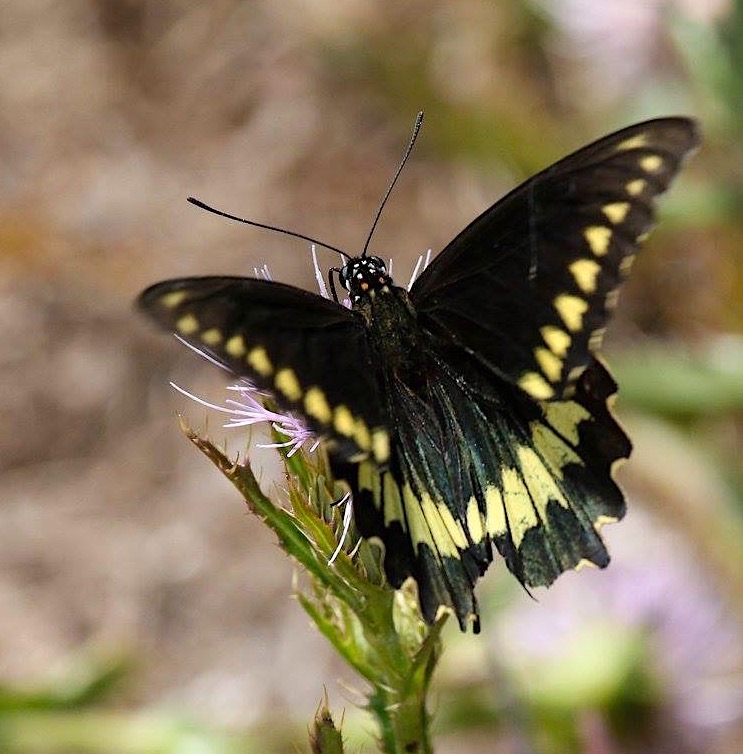
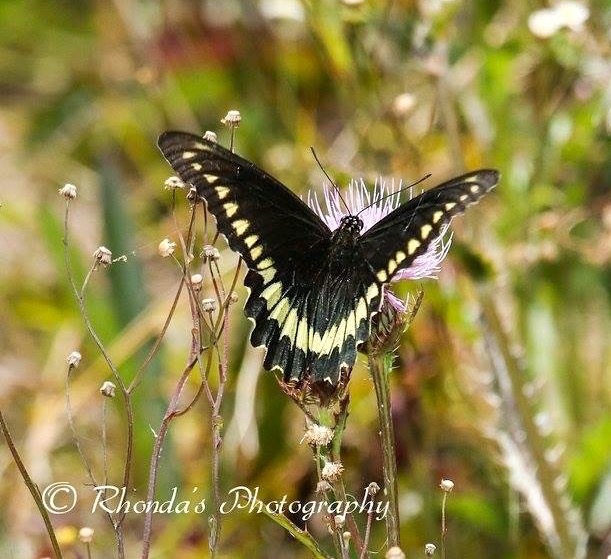
THE GOLD-RIMMED LUCAYAN FLORIDA BATTUS POLYDAMAS SWALLOWTAIL
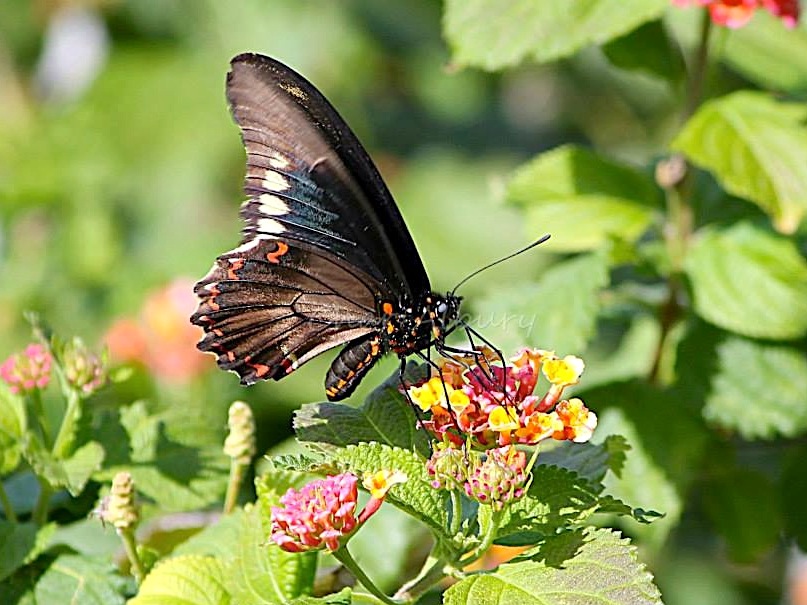
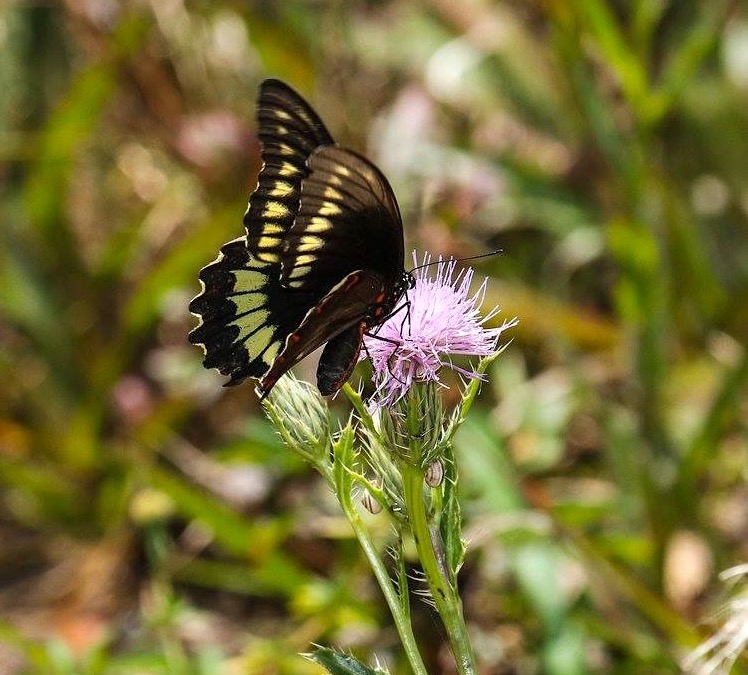
The Polydamus ‘Gold-rimmed’ Swallowtail Battus polydamas is a familiar sight in the Bahamas. It’s known by all the names above, though not all at once to be fair. This is the medium-sized black-brown butterfly with gold accessories and a tasteful selection of red ornamental jewellery. It’s one that hardly stays still for a moment. Its perpetual motion tendencies make it a right little… well, they are hard to photograph. I’ve never taken a totally still photo with no blurring from the creature’s rapid wingbeats.
The subspecies Lucaeus found on Abaco (where these photos were all taken)and elsewhere in the Bahamas is not confined to the archipelago, and is commonly found in Florida. There it seems to be called (slightly possessively?) the Florida swallowtail. The main species is found more widely. Here’s a helpful range map that shows the butterfly’s range – quite a wide band but latitudinally limited in global terms.
Mostly, you will see the topside of these butterflies as they do the rounds of sweet-scented flowers, often pausing briefly while still frantically fluttering. Note the rather gorgeous red patterns on the underside of the creatures shown above. Now compare with the open-wing images below.
This butterfly flies year round in the Bahamas (in contrast to its northern range). It breeds throughout most of the year (except on the fringes of its range), which is probably why it is relatively common.
CAN YOU SHOW US ONE THAT YOU HAVE TAKEN, PLEASE?
Certainly (with reservations). Nice coral hibiscus; it’s a shame that the stamen (if that is the correct term for the sticky-out bit) is in the way. Plus the wretched thing is still on the move. From this weekend, I get the chance to nail one on Abaco, but I’m not optimistic. I think they mistrust me.
WHAT DOES ‘POLYDAMAS’ MEAN?
I anticipated that question, kind Reader. I had thought it was Graeco-Roman for ‘many’ something or other. Wingbeats, maybe. Not being able to consult Linnaeus who originally came up with the word, I did some research. It turns out that Polydamas was a Trojan warrior and friend of Hector. He features a lot in Homer’s Iliad as a kind of ‘Best Supporting Warrior’, though they seem to have differed about battle tactics. Of which digression, enough.
Polydamas tries to stop Hector from attacking the Greeks
Credits: Nina Henry; Charmaine Albury; Rhonda Pearce, Keith Salvesen
RARE, PRECIOUS – AND FOUND ONLY ON ANDROS, BAHAMAS
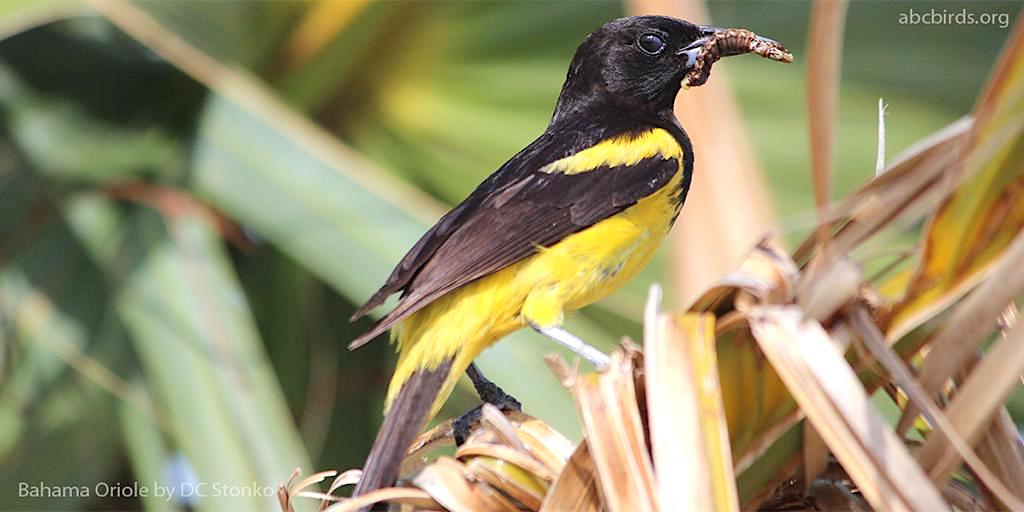
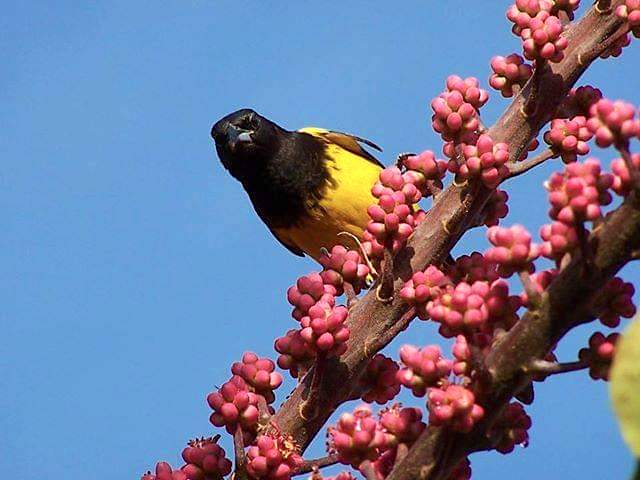
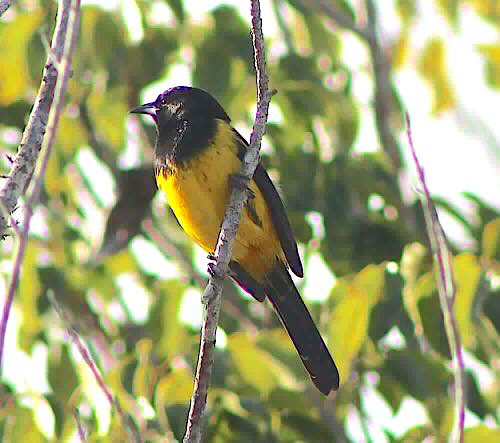
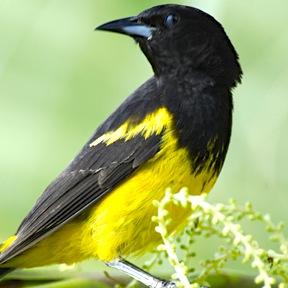
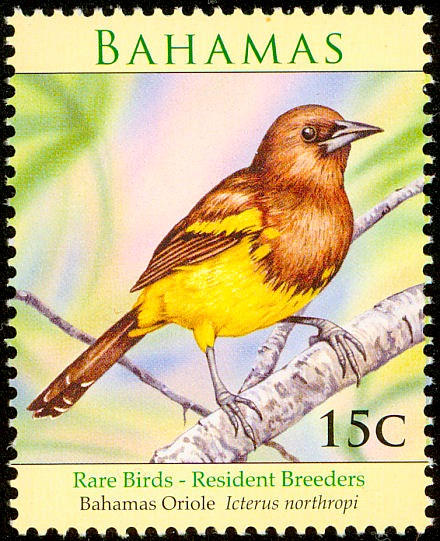
The future of the gorgeous endemic Bahama Oriole (Icterus northropi) hangs in the balance. IUCN Red Listed as ‘Critically Endangered’, the Oriole once lived on both Abaco and Andros. As recently as the 1990s, the species became extirpated on Abaco, leaving a small and fragile population in fairly specific areas of Andros. These are places where the habitat is conducive to the orioles’ well-being, and in particular where they can safely breed and (with luck) replenish their depleted population.
We hear a lot about habitat loss as a grave worldwide problem for an increasing number of species. Narrow that down to one species, one island, a few defined areas, then add mankind and his needs to the mix. The wrong mix of habitat degradation, clearances, predation or disease could cause the Andros population to disappear as well.
Which is where conservation and science come into play. The Bahamas archipelago benefits from an astonishing number of (broadly-speaking) environmental organisations that are involved in species and habitat protection, both terrestrial and marine. They range from international to Bahamas-wide and Governmental, to NFP organisations on the main islands, and on through local communities via citizen scientists to dedicated individuals. All are fighting a specific battle with a single aim; all face an increasing array of metaphorical weapons being deployed against them.
SO, ANY GOOD NEWS THEN?
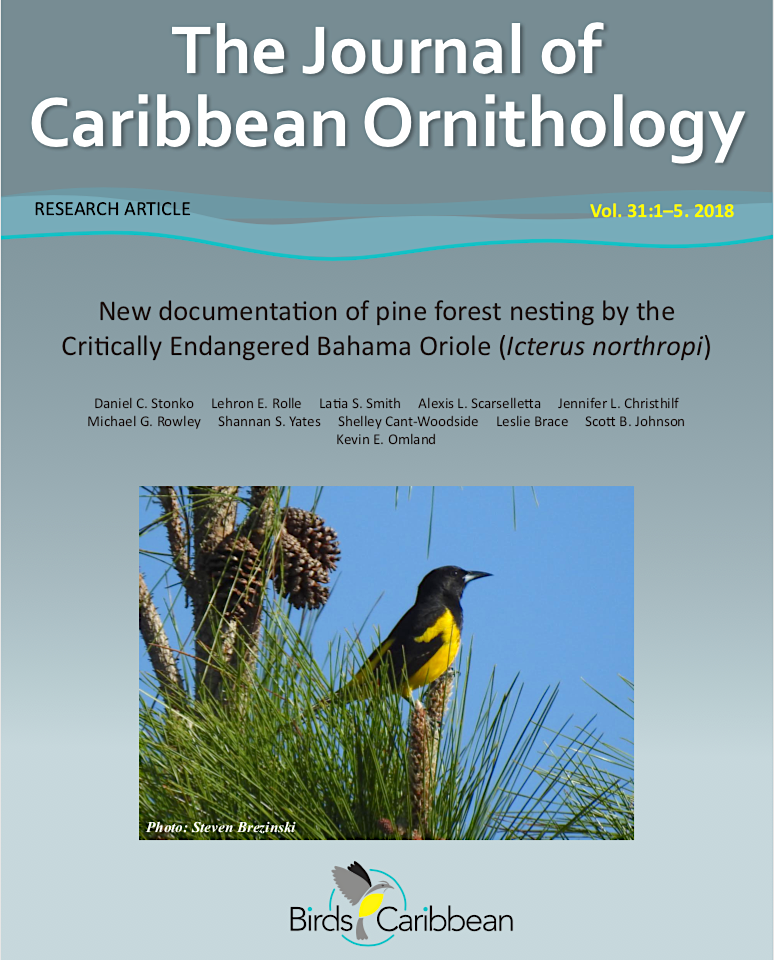
Returning to the orioles – in many ways a perfect indicator bird species – recent research has led to an encouraging discovery. A new study in The Journal of Caribbean Ornithology published by researchers from the University of Maryland, Baltimore County and Bahamas National Trust collaborating on the Bahama Oriole Project (@BahamaOrioleProject) reveals new evidence about the nesting habits and habitats of the orioles that will have “…major implications for future conservation” (this work was funded in part by the American Bird Conservancy and Birds Caribbean).
The study is the outcome of the work of a dozen conservation specialists. In a coconut-shell, the orioles were thought to nest only in the coconut palms found near the coast. However the recent intensive research program reveals that ‘multiple pairs’ breed in the pines and the thatch palms of the forests, away from the coast. Indeed, these may prove to be the primary nesting locations. The implications of these new findings are significant, not least for a possible uplift in numbers and the way in which conservation measures can be adapted to the new discovery. For those wanting something more authoritative, the short Abstract of the study is given at the end. And if you’d like to read the whole article, click on the link below.
Lethal Yellowing Diseaseof the coastal coconut palms, until very recently (see above) believed to be the prime nesting habitat for the oriole. In some areas the palms have been all but wiped out. The recent findings in the forests have clearly reduced the impact of this specific problem
The arrival in the 1990s and spread of the Shiny Cowbird Molothrus bonariensis, abrood parasitethat lays its eggs in the nests of other bird species*
Habitat loss / development
Forestry work / forest fires
Feral cats and rodents
Disease within the population is also cited as a contributory cause
*The date of this arrival seems to correspond to when the orioles were extirpated from Abaco. However, see next para.
WHEN & WHY DID THE ORIOLES VANISH FROM ABACO?
This is a classic ‘riddle wrapped in a mystery inside an enigma’. Various sources I have looked at use a formula such as “…became extirpated from Abaco in the 1990s”, or “disappeared for unknown reasons in the 1990s”. However, Abaco birding expert Elwood ‘Woody’ Bracey comments (see below) that Bahama Orioles were last formally recorded on Abaco in 1973 by researcher Duncan Everette and his partner who were banding warblers in Southern Abaco in what is now the Abaco National Park. At that time, the Shiny Cowbird was only rarely found on Abaco, if at all.
I’ve found no clear clue as to the cause – nor even when the last evidences sighting of an oriole on Abaco was made. I haven’t found a single photo of one taken on Abaco at any time in history. To be fair the option of snapping everything with wings multiple times using a digital camera with a huge chip didn’t exist then. As to past history, Kevin Omland of @BahamaOrioleProject says that there are at least 9 specimens in museums around the world collected from Abaco in the 1800s and early 1900s.
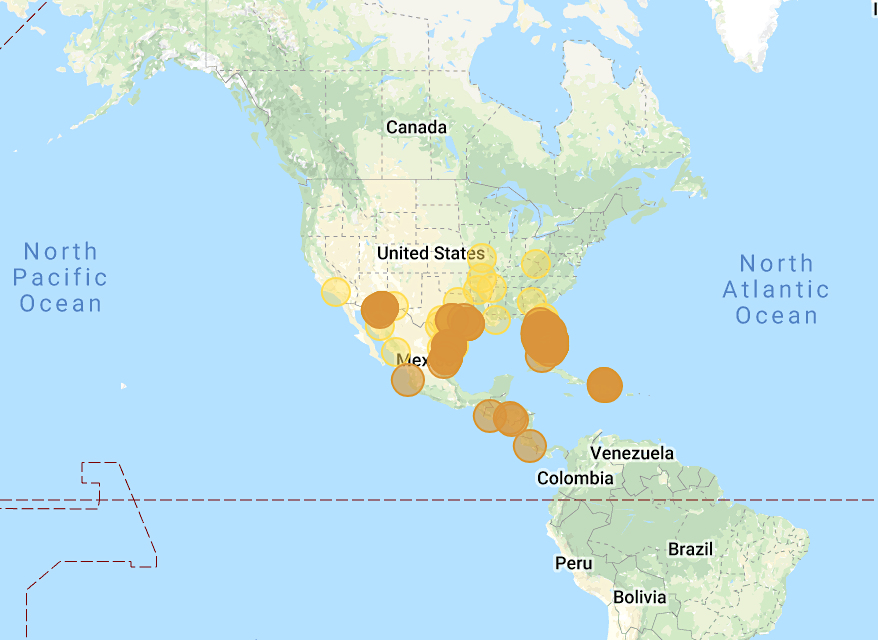
eBird map showing Bahama Oriole sightings distribution in c21
ABSTRACT
The Bahama Oriole (Icterus northropi) is a Critically Endangered species endemic to The Bahamas and currently found only on the Andros island complex. With the elevation of the Bahama Oriole to full species status in 2011, research suggested that there were fewer than 300 individuals remaining in the global population. The Bahama Oriole was also termed a “synanthropic species” based on data suggesting that the species nested almost exclusively within anthropogenic residential and agricultural habitats in introduced coconut palms (Cocos nucifera). These conclusions were based on population surveys primarily confined to settled areas near the coasts. However, we documented multiple pairs of orioles with breeding territories deep in pine forests, and we present the first records of Bahama Orioles nesting in pine forests—in both a Caribbean pine (Pinus caribaea) and native understory Key thatch palms (Leucothrinax morrisii). Given the predominance of the pine forests on Andros, this newly documented breeding habitat has important implications for developing population estimates and future conservation plans for the Bahama Oriole.
Credits: Dan Stonko / American Bird Conservancy, Michael Baltz / Bahama Oriole Project / Kevin Omland; Mary Kay Beach; Bahama Oriole Project FB header; C Ward / BNT; Thomas Nierle / Bahama Oriole Project; Bahamas Postal Service; BNT; D Belasco / American Bird Conservancy; Handbook of World Birds (drawing)
The brackish pond at Gilpin Point near Crossing Rocks is generally a reliable place to find waterbirds. For those birding on South Abaco (in many respects, one big hotspot) Gilpin is definitely worth a visit at almost any time. Bear in mind it is (a) a longish private road (we got a puncture down there once…**) and (b) it is private land. However, the owner Perry Maillis is always welcoming to tidy birders who bring only enthusiasm and take only pictures. Plus he very kindly changed our wheel!
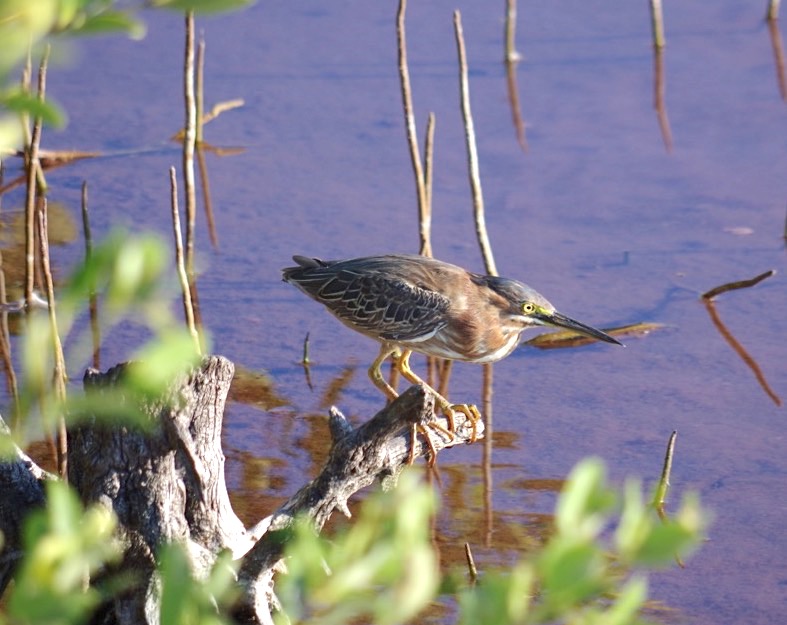
We found this small Green Heron quite easily. We’d watched it fly onto a stump in the pond near the jetty, then fly closer to the shoreline. By tiptoeing onto the jetty, we could see the bird perched close to the water, inspecting it with a fierce and predatory eye. Both eyes, in fact.
The hunting technique is deceptively simple. Note the long sharp stabbing beak. Note the large feet and claws for gripping securely Here’s how it is done. As a fish is sighted, so the heron leans gradually forwards, beak dipping closer to the water, the body more streamlined to look at. The procedure is beginning in the image above.
The stance means ‘small fish – 5 feet off – moving left and closing – prepare to strike‘. As the prey unwittingly approaches, the bird slowly tilts further forward unless its beak almost touches the water, the quicker and closer to strike.
The actual strike is so rapid that it is barely possible to see with the naked eye, let alone to photograph it clearly (not on my type of camera anyway). But the end result is rarely in doubt, with a small fish struggling but securely held in that long, clamping beak. It will be down the heron’s gullet in a matter of seconds.
I left the heron as it settled slowly back into ‘scanning the water mode’ while I went to watch some lesser yellowlegs nearby. Some minutes later, the heron was still contentedly fishing from its vantage point.
ROUGH GILPIN CHECKLIST
Species we have found on and around the pond include black-necked stilts, little blue heron, great blue heron, tricolored heron, snowy egret, reddish egret, yellow-crowned night heron, the relatively rare and very shy sora, hordes of white-cheeked pintails, northern pintails, lesser yellowlegs, belted kingfisher, turkey vulture, smooth-billed ani, American kestrel, Bahama woodstar, Cuban emerald, Mucovy duck (Perry’ pet!) – and the green heron of course.
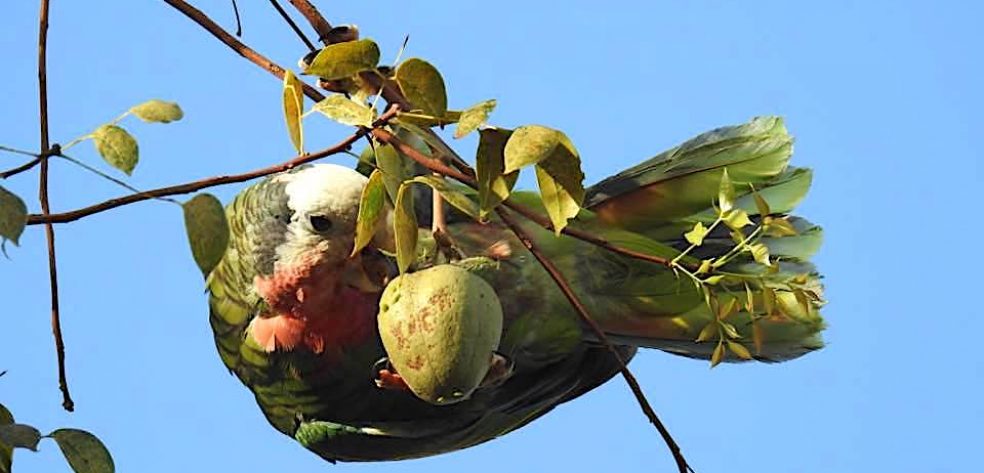
As a bonus, Gilpin has become an increasingly regular stop for raucous flocks of Abaco parrots. Rarer species found there include American flamingo (rare vagrant), brown pelican, double-crested cormorants, and limpkins. On the beach 5 minutes walk away, there are usually shorebirds including rare piping plovers, Wilson’s plovers, turnstones; gull and tern species; and passing tropicbirds & magnificent frigatebirds flying high over the water.
** I realise that strictly I should be saying ‘flat’ here, but that might be confusing for Euro-readers, who would understand that to mean that we had rented (or purchased) an apartment in a larger dwelling house containing similar accommodation.
All photos, Keith Salvesen except the cute chick, Charlie Skinner; and the cute cartoon GH, Birdorable…
Echinoderms (Gr. ‘Hedgehog Skin’) comprise a large variety of sea creatures characterised (mostly) by radial symmetry. In a nutshell a creature with radial (as opposed to bilateral) symmetry can be divided into equal portions from the centre, like a cake. It has no left or right side and no definable front or back. It is multidirectional from the centre, where the mouth is located. It obviously has a distinct upper side and an underside, but that has no bearing on this form of symmetry.
Within the family of radially symmetrical animals, echinoderms (starfish, sand dollars and sea urchins) are unique in having five-point radial symmetry. These are the creatures you are most likely to come across in Abaco. There are two particular aspects of dollars and biscuits that merit a closer look (made more difficult by me stupidly taking photos of white things on a white background).
DOLLAR DOVES
I’m sure all Bahamians know or are aware of at least one version of the famous ‘Sand Dollar’ poem, in which the various characteristics of the test (the skeleton of the creature) are given religious significance. One verse of the poem may be puzzling: “Now break the centre open And here you will release The five white doves awaiting To spread good will and peace”.
The Sand Dollar Legend
A few years back, Senior Granddaughter was looking at some Abaco sand dollars I’d given her for her growing collection of shells. She picked one up, shook it and it rattled. She said a friend at school had told her that a rattling sand dollar has ‘doves’ inside it, and asked if we could break it open and see. I’ve learnt that it is useless to argue with her – she has the tenacity of a trial lawyer – so we did. This is what we found.
Sand Dollar with a spiky interior like a white cave with stalagmites and stalagtites
Five white doves (in fact, the separated parts of the creature’s feeding apparatus)
Two broken pieces showing where the doves are centrally located
A regrettably poor photo of a single dove
The image below, from Pinterest, shows the ‘mouth’ with its dove-parts intact, in an arrangement called ‘Aristotle’s Lantern‘, a five-sided globular structure that supports the mouth and jaws of an echinoderm.
PETRIFIED BISCUITS
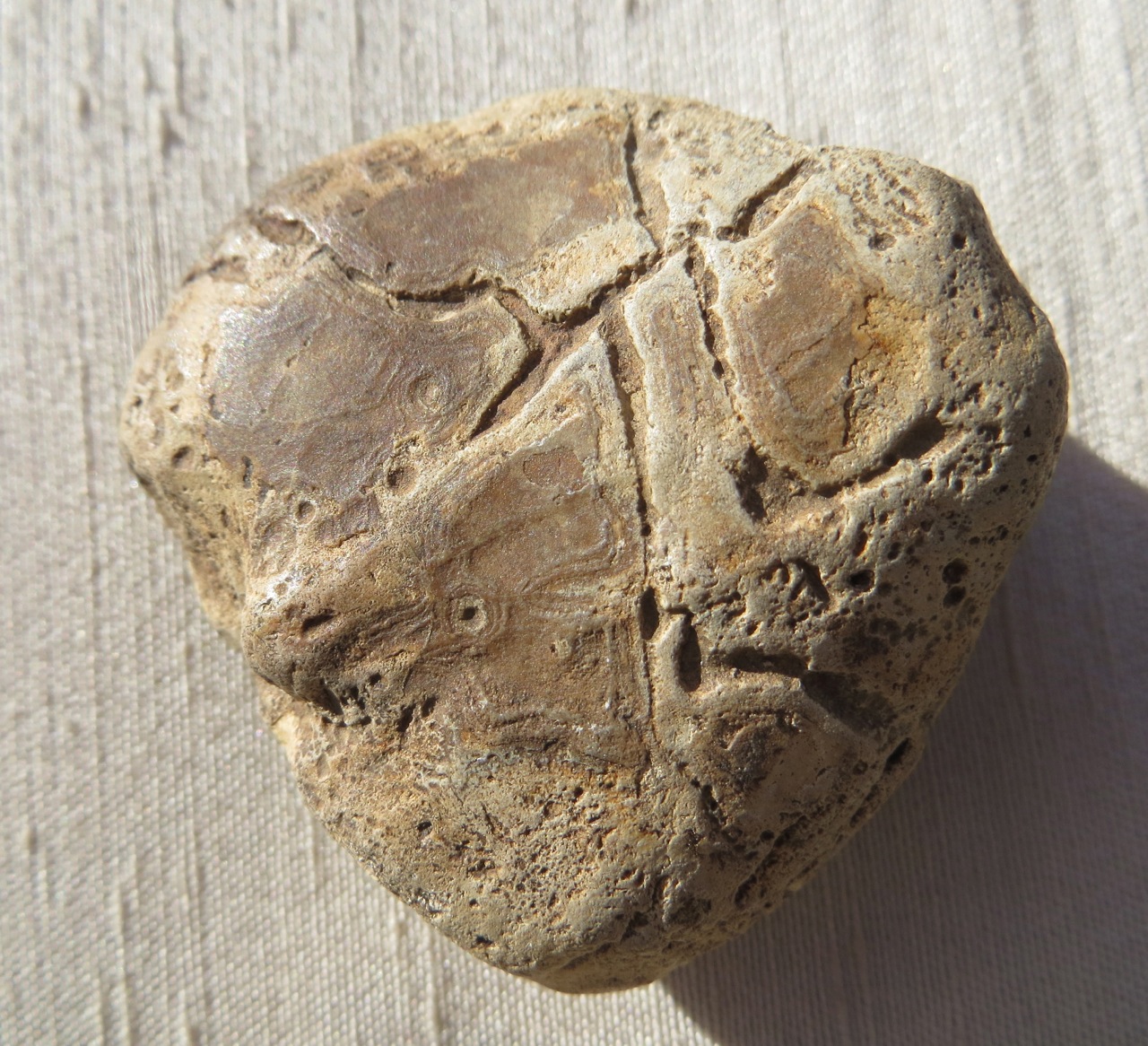
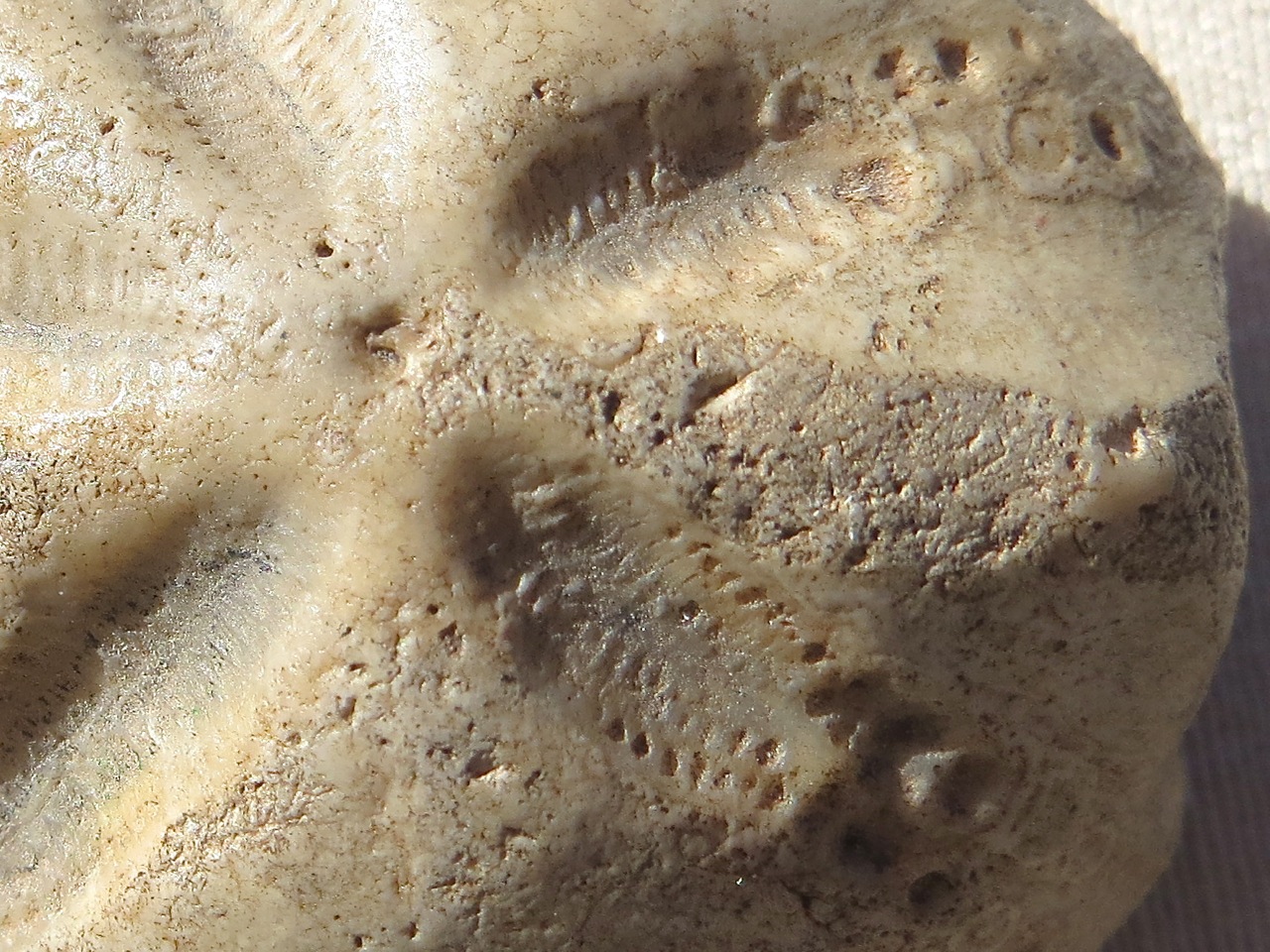
In common parlance ‘petrified’ is an extreme version of ‘terrified’. Literally, it means ‘turned to stone’ (L. petrus, a rock). It is descriptive of a state of fossilisation, where an animal skeleton or dead wood or plant matter turns over aeons into stone. Senior GD (a most inquisitive girl) followed up on the doves research after discovering a box containing random stones and fossils. She found these two items:
Fossilised sea biscuits
A closer look at the pair of rocks
The undersides of the fossils above – looking like stones but with some tell-tale small holes
A close-up of the pale biscuit
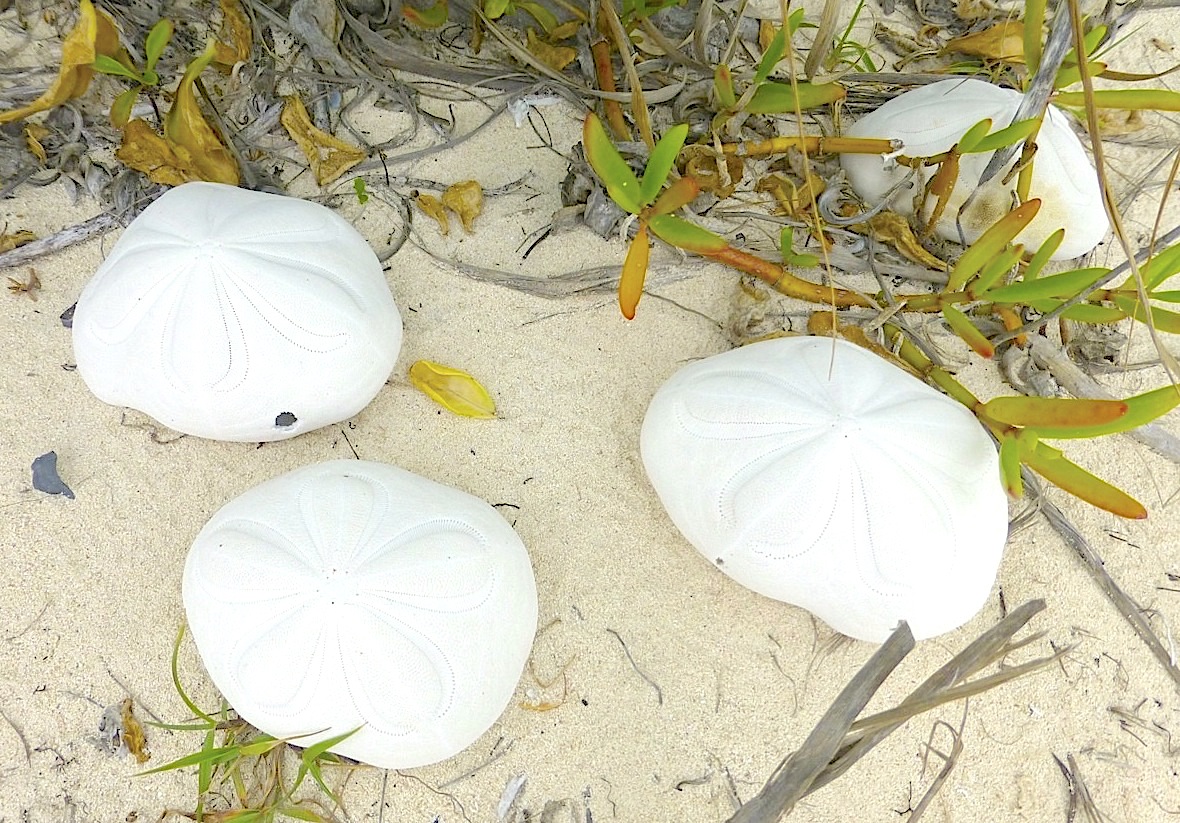
Sea biscuits on the beach at Delphi – familiar white skeletons (‘tests’) but not yet fossils
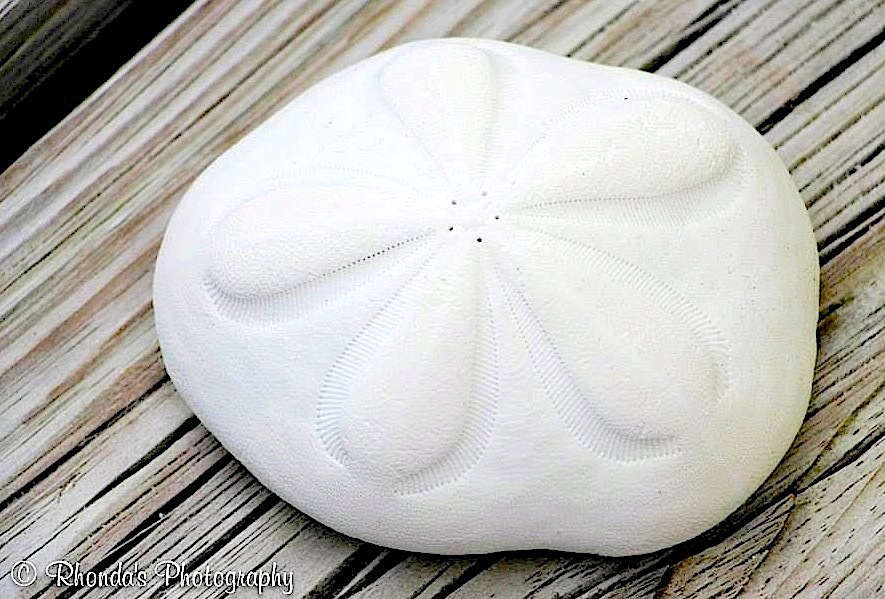
A ‘modern’ non-Jurassic Abaco sea biscuit in close-up
FUN FACT
Florida has an unofficial but proposed State Fossil, the ‘Sea Biscuit (Eocene Age)’. I didn’t know it before, but it turns out that more than 40 US States have State Fossils. Whatever next? State Bacteria? State Viruses?
SO HOW OLD MIGHT A PETRIFIED BISCUIT BE?
The fossil biscuits I have looked at, from Florida to Madagascar (see small image above), are said to come from three specific historic epochs – from the oldest, Jurassic (145m – 201m years ago), to Eocene (34m – 56m) and Pleistocene (0.01m – 2.6m).
HOW DOES THAT HELP ANYBODY? BE MORE PRECISE
By all means. Here is an excellent Geochart that gives an idea of the time span. A Jurassic sea biscuit would be more than 145m years old. This chart also helpfully helps avoid confusion with the Eon Era Period Epoch ordering.
All photos ‘in-house’ except the Delphi biscuits, Clare Latimer; & the single biscuit Rhonda Pearce; Sand Dollar poem on Postcard, Dexter Press; the Geochart was in my ‘useful chart photos’ folder but I can’t now find the source. I did try.
You know the thing about Britain and the US being ‘two Nations divided by a common language’? Among the many august people credited with first coming up with this remark, the leading contenders are Oscar Wilde, George Bernard Shaw and Winston Churchill. Generally, Wilde seems to be considered the winning author**. Whichever, the saying is intended to be lightly and amusingly rude, probably to both nations.
Well, pilot whales are in a similar position. They are found on both sides of the Atlantic (and many other places of course). As acoustic analysis of the sounds made by marine mammals becomes increasingly sophisticated, the evidence suggests that a pilot whale in The Canary Islands saying “Hey guys, meal approaching 11.00 o’clock, moving right, 30 feet” will use different sounds from its counterpart in the Bahamas.
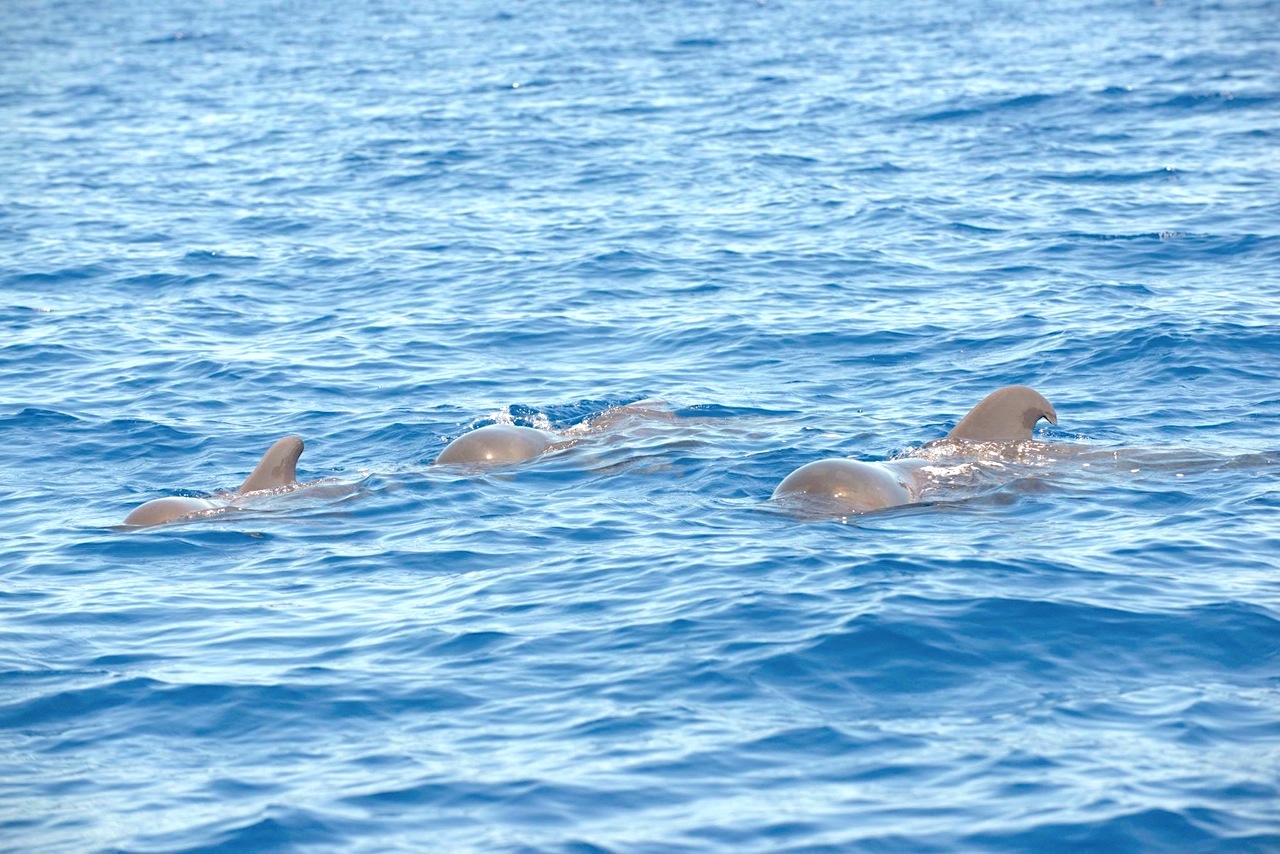
A pilot whale with a recent injury to its jaw. Chief suspect: a COOKIECUTTER SHARK?
Short-finned pilot whales (Globicephala macrorynchus) are also known as blackfish or potheads (though some may reserve this last term for – ahem – higher species). As with MELON-HEADED WHALES, they are in fact a species of large dolphin. They can grow to nearly 20′ long and weigh accordingly.
Pilot whales live in large pods of 50 or more. These are so-called ‘matrilineal’ groups, meaning that they consist of 2 or even 3 generations of related females. When the sea is calm, they sometimes adopt a behaviour known as ‘logging’, in which they will spend a long time – maybe hours – lying on the surface in tight groups.
In The Bahamas, pilot whales are seen year-round but are more common during the spring and summer months. Some are resident, but Bahama pilot whales appear to have large ranging patterns. Pilot whales tagged in The Bahamas have travelled as far north as North Carolina suggesting they are part of a population located in the US southeast .
HOW DO RESEARCHERS RECOGNISE EACH ANIMAL?
The first place to look is the dorsal fin. There are (at least) two reasons for this. First, it’s the part of the dolphin / whale that is most visible through binoculars; secondly, it is the part that tends to acquire nicks, ragged edges, and scar patterns that are unique to that animal. When a new cetacean is sighted, it is logged and assigned an ID. This will usually be kept simple and scientific: “look, there’s AL16 again” and so on; how unlike birds, where banders assign names such as Felicia Fancybottom, Bahama Mama and Harry Potter.
If you look at #2 above, notice the distinctive hooked dorsal fin of the right-hand pilot of the trio. An easy ID for future sightings. And see below for nicks and scarring.
MEANWHILE, 3643 MILES EAST ACROSS THE ATLANTIC
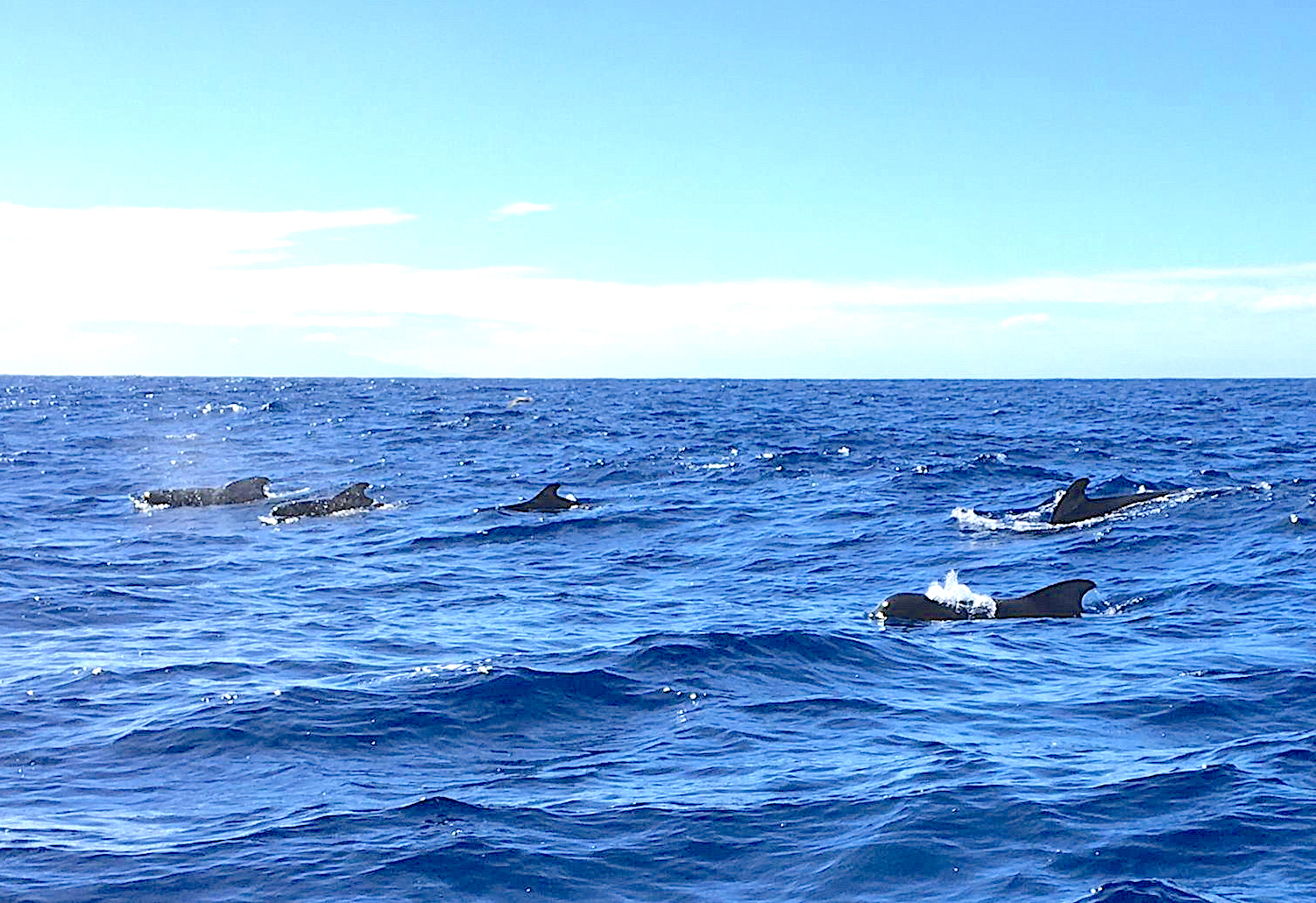
Last Autumn my niece and her family went to La Gomera, a small volcanic island in the Canaries. They all went on a whale / dolphin watching trip and were delighted to encounter a group of pilot whales. My great nephew, not yet a teenager, had an iphone with him and in the circumstances of standing on a moving platform photographing creatures swimming fast through the water, he did a very good job. A couple of them even have a bonus shearwater.
The west and east Atlantic pilot whales shown here are almost exactly on the same latitude
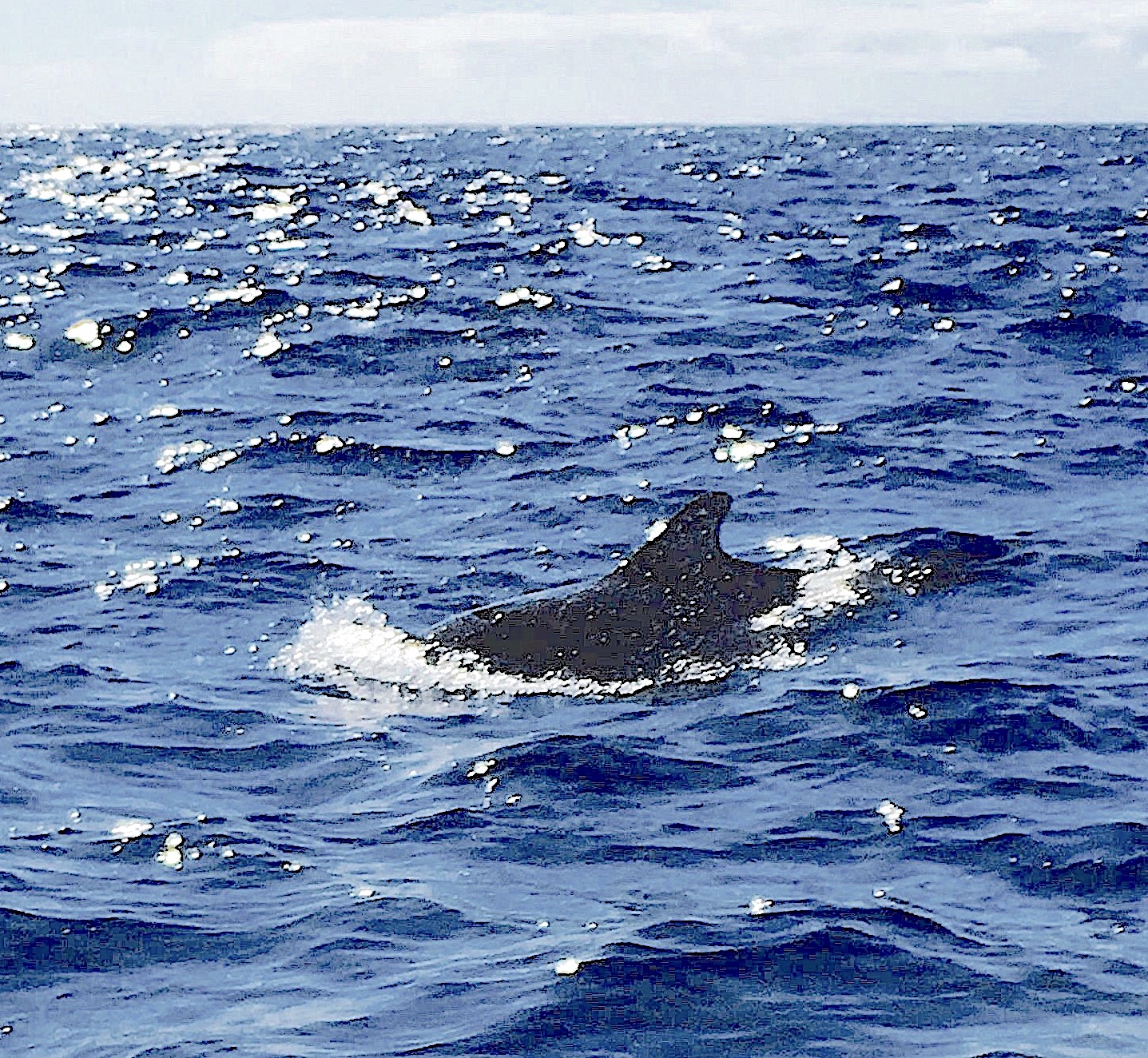
I’m not particularly bothered by my lack of photographic eptitude, but even I feel that my own shot of a pilot whale in the Sea of Abaco rates high in the list of epic fails
The identity of the photographer is protected under the Official Secrets Act 1989
** ‘We have really everything in common with America nowadays except, of course, language’ Oscar Wilde The Canterville Ghost (1887)
Photo Credits: 1 – 5, BMMRO / Rolling Harbour; 6 – 10, my naturalist nephew Yarin; 11, name withheld by order of the management; 12, Marina Nolte / Wiki. General thanks: Diane, Charlotte, BMMRO
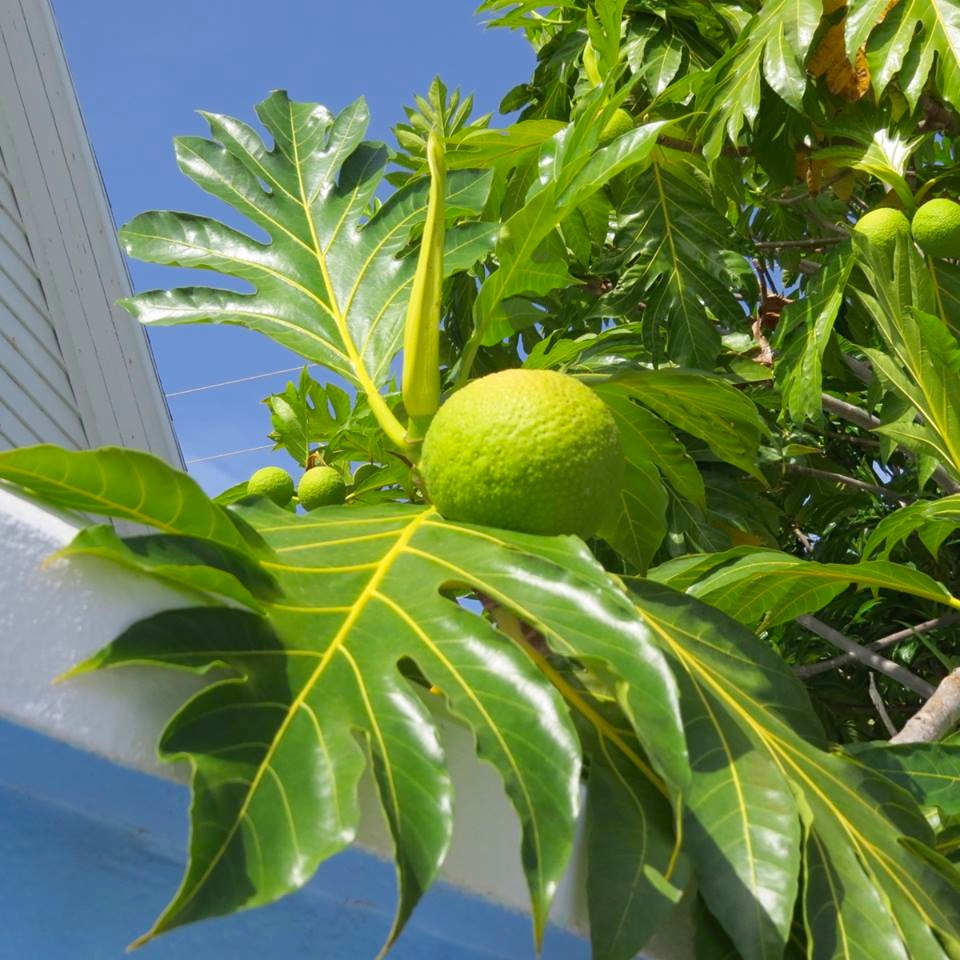
Capt. William Bligh achieved fame for all the wrong reasons. Despite a distinguished and wide-ranging seafaring career he is widely remembered for just two things: (1) The Bounty and (2) Mutiny On. In 1787, he was dispatched to Tahiti to collect specimens of BREADFRUIT (a fruit of the Pacific islands, in particular Polynesia) to help provide food for the British colonies in the West Indies. To be clear, the breadfruit was intended to be a basic and cheap staple food not just for settlers but also for the indigenous population. I think we can all guess the status of the latter at that time.
‘BLIGH’S BLIGHT’ – MUTINY!
Capt. Bligh’s Bounty crew unfortunately mutinied – possibly to do with the amount of water the breadfruit required in transit, compared to their own meagre rations. So they threw overboard the hundreds of breadfruit plants that were in transit. Then they set Bligh with his loyal officers and crew adrift… He was later court-martialled but cleared of culpability for provoking a mutiny by his conduct.
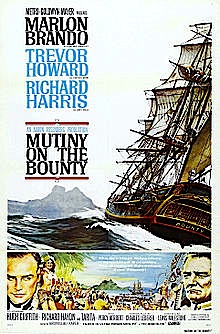
This isn’t the place for a disquisition on the Mutiny. You can read all about itHERE. Or better still, watch one of the rollicking all-star-cast films based loosely on the episode for a careful and accurate historical record of the events that will buckle your swash…
BLIGH’S SECOND CHANCE
Following that skirmish, and indeed blemish, on his record, in 1793 Capt. Bligh was yet again charged with the task of shipping breadfruit trees from their origin to the Caribbean. His heart must have sunk, yet finally he succeeded, only for those on the eating end to express considerable distaste for such a bland, starchy fruit. It took a long time to catch on, and its culinary versatility was only discovered many decades later. By which time slavery had thankfully been abolished anyway.
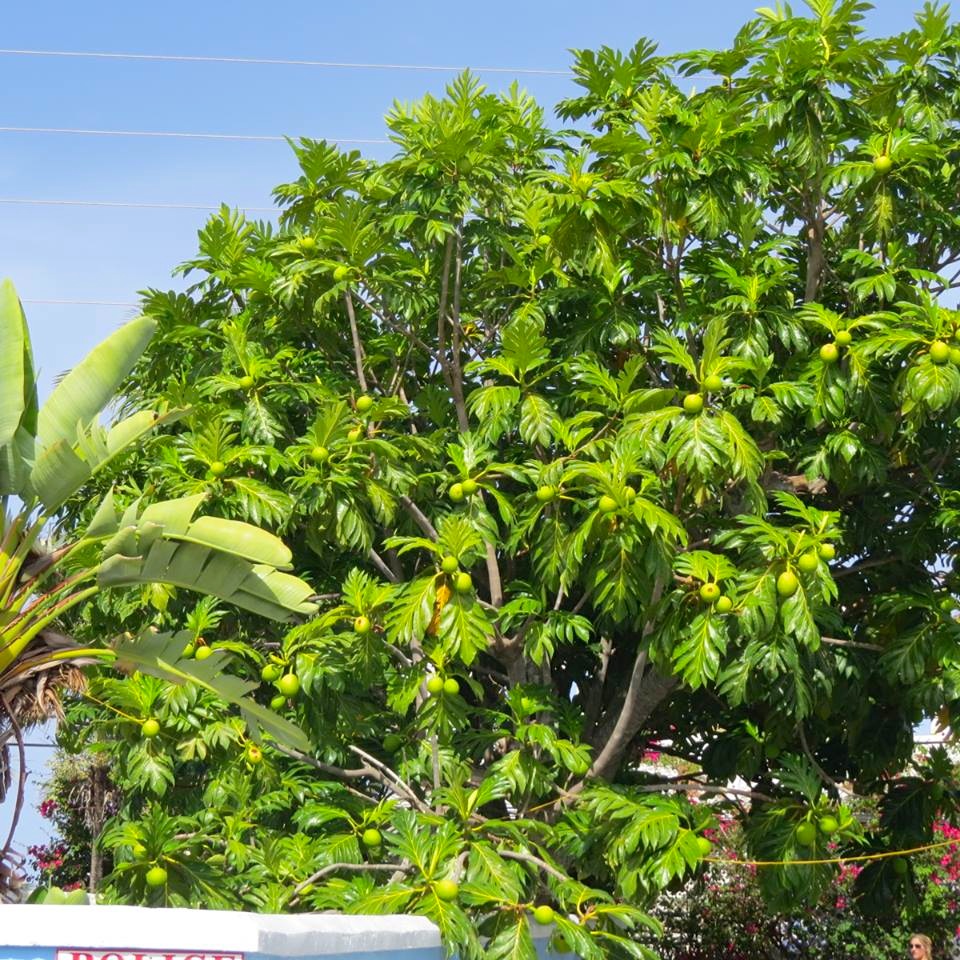
The most famous breadfruit tree in all Abaco is to be found in Hope Town, on Elbow Cay. I can do no better than display the notice that proudly proclaims the historic significance of the tree and its eponymous fruit.
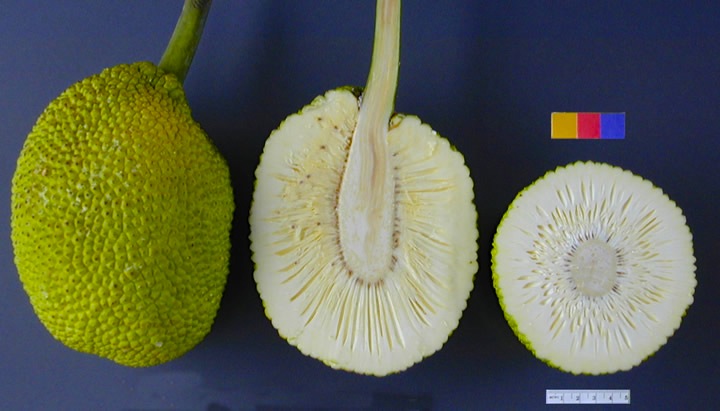
Unusually for a fruit plant, a true breadfruit Artocarpus altilis does not produce seeds. It is propagated by removing the suckers that grow at at the base of the tree.
For those unfamiliar with the fruit and its interior, here it is in both slice and cross-section
BREADFRUIT IN ART
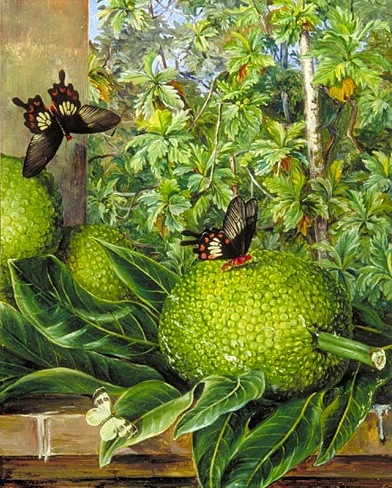
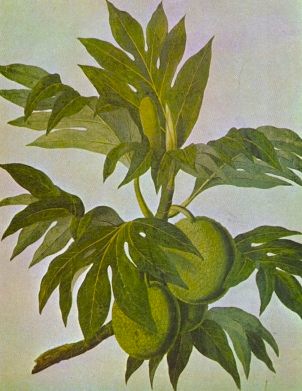
Breadfruit has (somewhat surprisingly?) received some artistic recognition over the years. Here are a few examples. The first, very jolly, includes early representations of the Polydamus Swallowtail butterfly; the second is quite dull; the third is instructional (oddly equating breadfruit with tea, coffee and chocolate); and the fourth, frankly not at all appetising to look at…
Breadfruit with butterflies (Royal Botanic Garden, Kew)
Breadfruit (John Frederick Miller)
Breadfruit & related plants used as food (William Rhind (1841)
SO WHERE DOES BREADFRUIT GROW NOW?
Breadfruit will flourish only within a certain latitude range where the rainfall and temperature suit it, as this map shows. I include this information in case you ever find yourself in the awkward position of being socially stranded with someone whose conversation has become soporific. Be armed with some useful worldwide breadfruit stats for just such an occasion – the fact that Madagascar is a suitable yet not a very good location, for example (not enough rainfall). You will soon find yourself alone…
A CULINARY TREAT
Breadfruit is sometimes thought to be a dull and untasty, at least compared with many other fruits. I thought I’d include a recipe or two that rather appealed to me – the second because even I could do that… it’s within my shamefully limited culinary skill-set.
BAKED BREADFRUIT
Large, ripe breadfruit 1 cup water Butter 1 lime or lemon
Heat oven to 350 degrees F. Put the water in a shallow pan and place the whole breadfruit in the water. Bake in oven for three hours. Remove from oven, allow to cool slightly, peel, removing the large core and stem. Cut the fruit into sections and place in a serving dish. Cover with butter and a squeeze of lime or lemon juice.
A PERFECT HOPE TOWN BREADFRUIT
This post was inspired by an article on breadfruit and the Hope Town tree by local historian Deb ‘DP’ Patterson, who will be known to many for her committed involvement with the Wyannie Malone Historical Museum in Hope Town. I’m grateful to her for permission to use her idea and indeed some of her material, in particular her photos of the tree and its notice. I originally posted this about 4 years ago, and have dusted it off for the benefit of new (thank you!) followers who might also have breadfruitphilia.
If you do visit this delightful little town, the museum is a treasure house of Abaconian history that deserves a visit. You can check out its website HERE and the FB pageHERE.
BLIGH’S END
Capt. Bligh managed to put his breadfruit adventures and the mutiny behind him. He continued a distinguished naval career with successive command of an impressive number of ships. He ended up a Vice-Admiral, and (on his death in 1817) in a grave in Lambeth, London.
HMS BOUNTY II (Full Sails). A 1960 reconstruction (Dan Kasberger)
Credits: First and foremost, Deb Patterson; Magpie Pickings including Hans Hillewaert, US Pacific Basin Agricultural Research Center, Royal Botanic Garden Kew, myrecipefriends, M Kwek, whatsonbahamas, Wyannie Malone Historical Museum, ‘Geograph’, Dan Kasberger, and Wiki; and anyone else I have omitted…
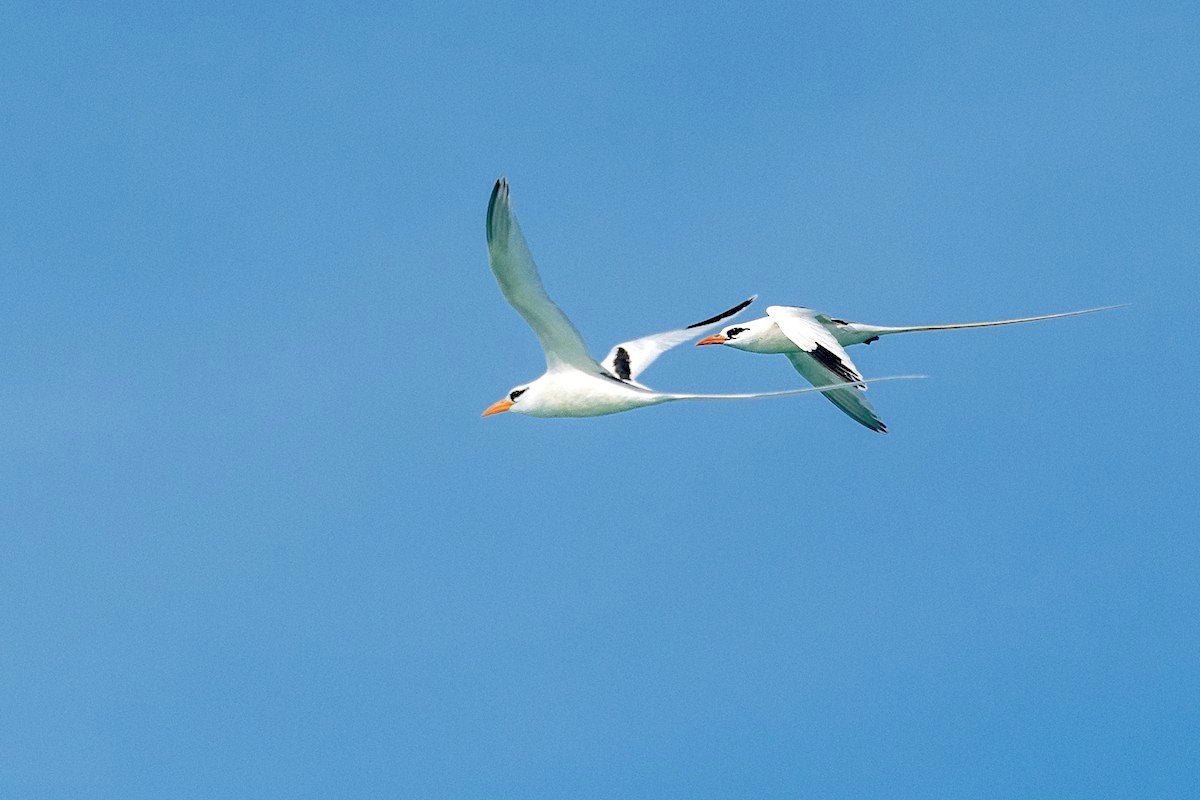
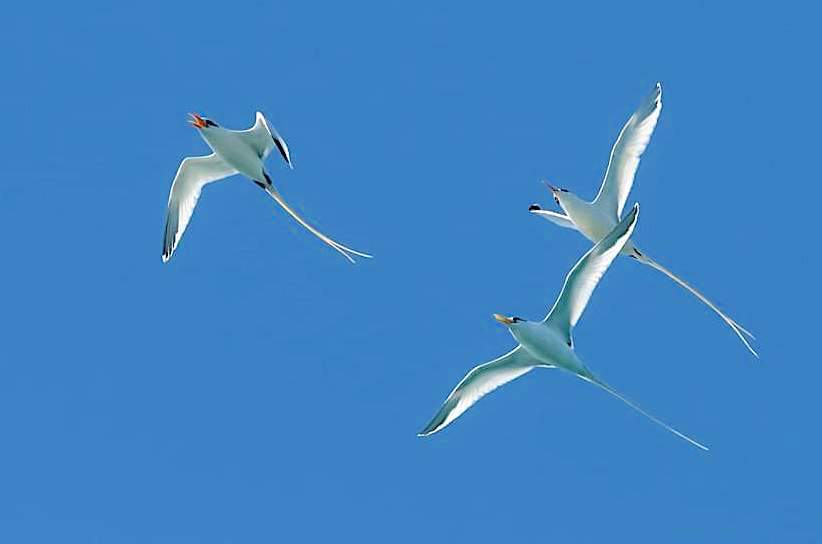
I am interrupting my intended sequence of posts (I try to plan ahead a bit…) to bring you some gorgeous white-tailed tropicbirds (Phaethon lepturus catesbyi) seen within the last week near the Low Place on Man-o-War Cay. There were 6 in the group, flying high, flying low, circling, dipping down, flirting – all of this taking place just offshore.
Sally Chisholm, Abaco birder and photographer, was with Todd Pover of CWFNJ, engaged in the final piping plover count of the season before the birds return to their summer breeding grounds [check out ABACO PIPING PLOVER WATCH if you are interested]. Sally and Todd were distracted from the matter in hand as the group of tropicbirds glided and swooped through the air. It was a free demonstration of beautiful flying skills that can be matched by few other species.
It became obvious that courtship was involved. As Sally vividly describes it, “The birds were observed for more than 15 minutes making wide circles, at times flying out of sight across towards Great Abaco and coming back flying low over the same area on MOW. Two birds would interact with a lot of “keck-keck-keck”, and then one of the pair flew down to land several times in the same crevice of the iron shore. It first appeared that the bird was landing for food but none of the photos showed anything carried. The display looked to be one of courtship and was amazing to watch”.
TROPICAL TOPICS
WTTR plunge-dive for fish and squid, sometimes submerging completely
Or they swoop and skim their prey from the surface
Another technique to take flying fish in the air (I’d love to see that…)
WTTR have no fixed breeding season, and may nest year-round
Nesting is colonial or in pairs in a particular area, or even in isolation
A pair will fly together, one above the other then…
…the higher bird bends its tail down to touch tail of lower bird and [veil drawn]
They nest in crevices, holes in rock, on ledges, on the ground under vegetation
Chicks are fed by both parents using regurgitation
The same site may be re-used for several years by the same pair
Credits: All photos, Sally Chisholm except the fantastic nest shot, Melissa Maura (many thanks to both for use permission – I’ve never got a decent photo of one); Audubon NA
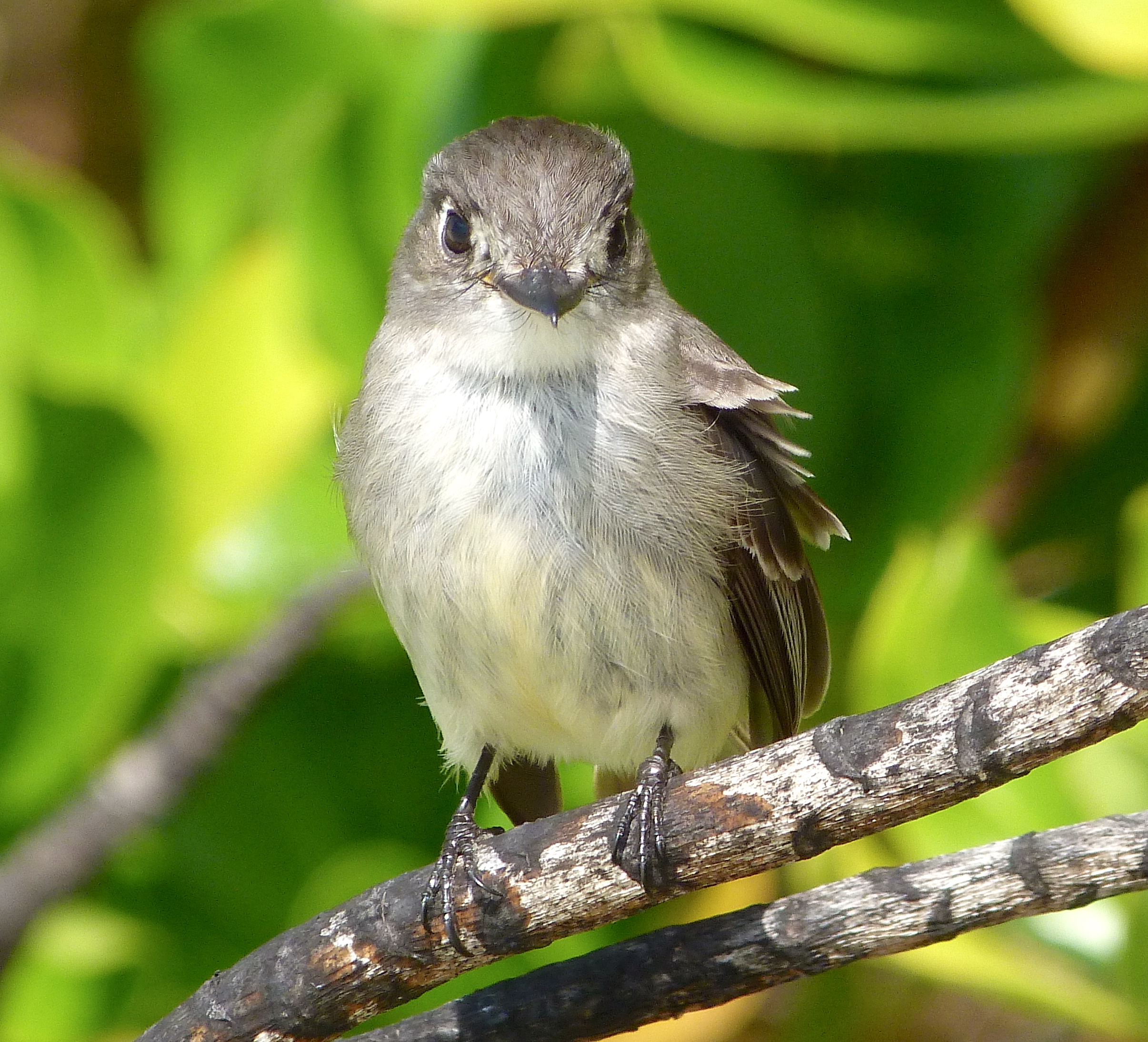
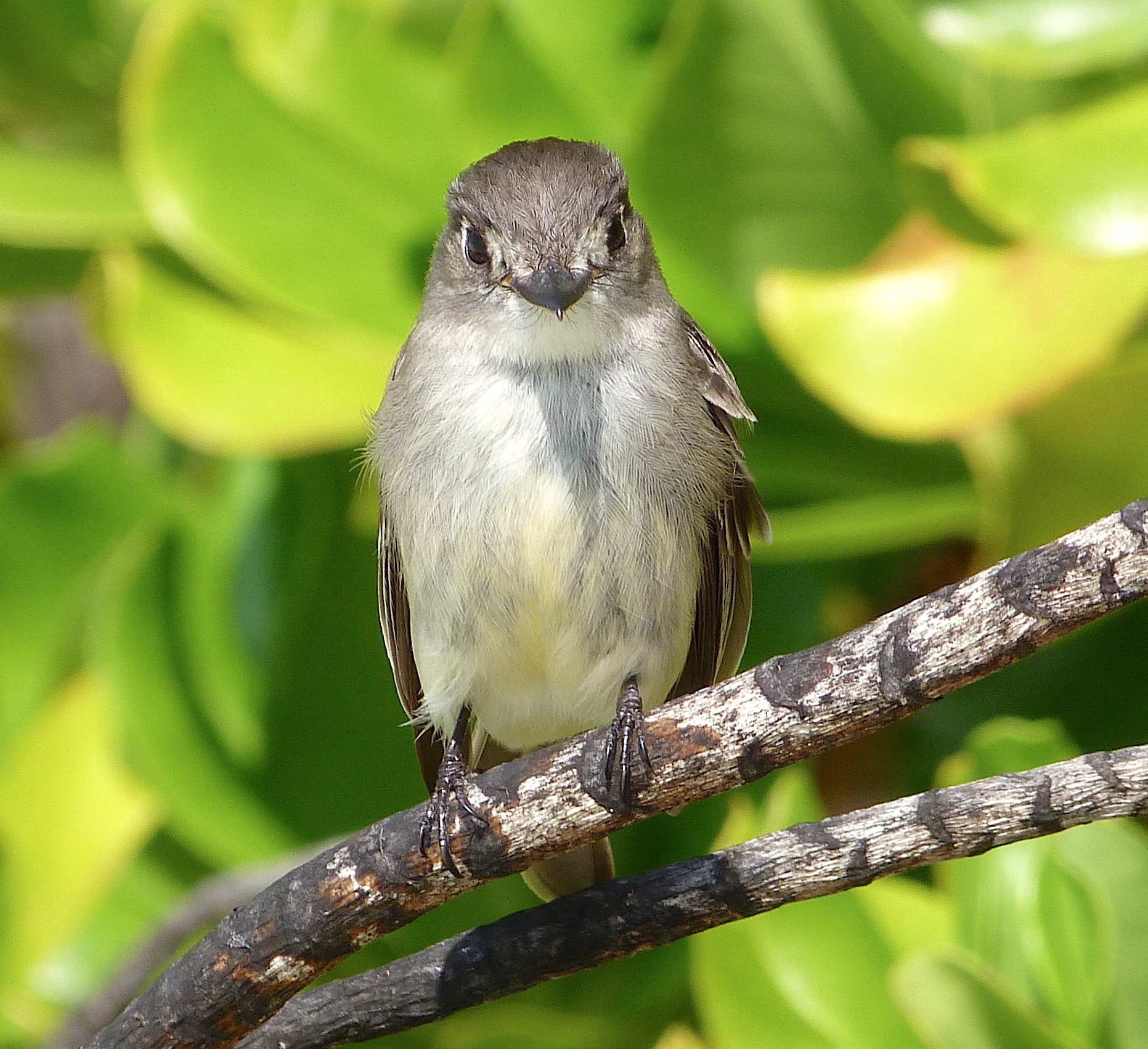
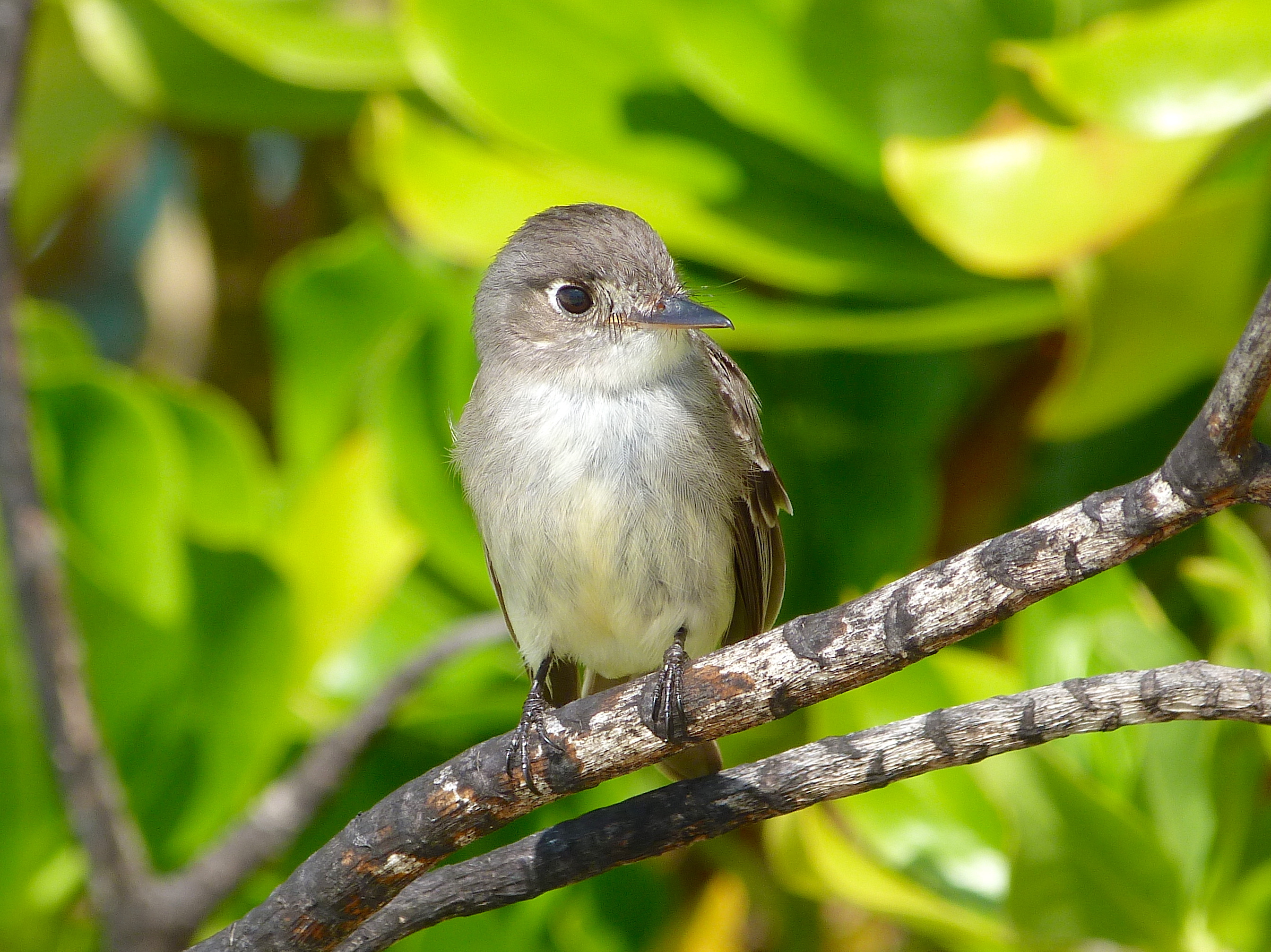
The small bird featured here is a CUBAN PEWEE Contopus caribaeus bahamensis (sometimes called the Crescent-eyed Pewee – see image for why this is so). It is without a doubt a tyrant. At barely 6″ long, it is the smallest tyrant you are likely to encounter in the Bahamas or indeed anywhere else. However it does happen to be a member of the family Tyranidae. These are the flycatchers, and on Abaco they include the larger LA SAGRA’S FLYCATCHER, the still largerLOGGERHEAD KINGBIRDand (a summer visitor only) the GRAY KINGBIRD(this last link explains the difference between the two kingbirds).
The Cuban Pewee is permanently resident on Abaco, and can be found in both pine woods and coppice. When returning to its perch after a fly-catching sortie – ‘hawking’ on the wing – this wee bird gives a characteristic flick of the tail. The bird featured here was in the rough scrub behind the beach of the beautiful bay at Casuarina. It became a favourite of mine simply by being completely unafraid of me, and accepting my extremely slow approach (3 inches at a time) with apparent interest mixed in with an endearing willingness to pose, even when I could almost have reached out and touched it.
Unlike many creatures, it did not seem concerned by eye-contact. It responded when I made a faint clicking sound by rather sweetly putting its head on one side. However, as I got as close to it as I dared, it began to fidget slightly (possibly feeling camera-shy). So I shuffled slowly back, so as not to disturb it in its own territory, where it was the resident and I was the intruder.
These close-ups clearly show the tiny hooked tip at the end of the upper beak, which (as in other tyrant species) relates to the business of catching flies. Also like other flycatchers, the Cuban Pewee has very distinctive whiskers around the base of the beak. In fact, these are not whiskers as such – not hairs so much as feathers that have modified into bristles. These act as ‘tactile sensors’ to assist the detection and targeting of aerial insects as the bird darts from a perch to intercept some passing tasty winged morsel.
The range of the Cuban Pewee is limited almost entirely to Cuba and the Bahamas, so it is very region specific. And how lucky we are to have these cute little specimens on Abaco. I note that the Audubon site calls them drab, which I think is a little unfair. Merely because a bird is not decked out like aPAINTED BUNTINGor startlingly marked like a male RED-WINGED BLACKBIRDdoes not make it drab. I prefer the word ‘subtle’. I like GRASSQUITS too, for the same reason: too often maligned as ‘dull’.
It is sometimes tempting to anthropomorphise such close encounters in terms of imputed human / creature empathy. It is probably best to try to resist that attitude (‘inter-species condescension’, as you might term it). But as I withdrew, leaving this little bird undisturbed on its branch, I did experience a strange feeling of mutual understanding and… [I must interrupt myself here. I’m a lawyer, so that’s quite enough of that sort of emotive nonsense]
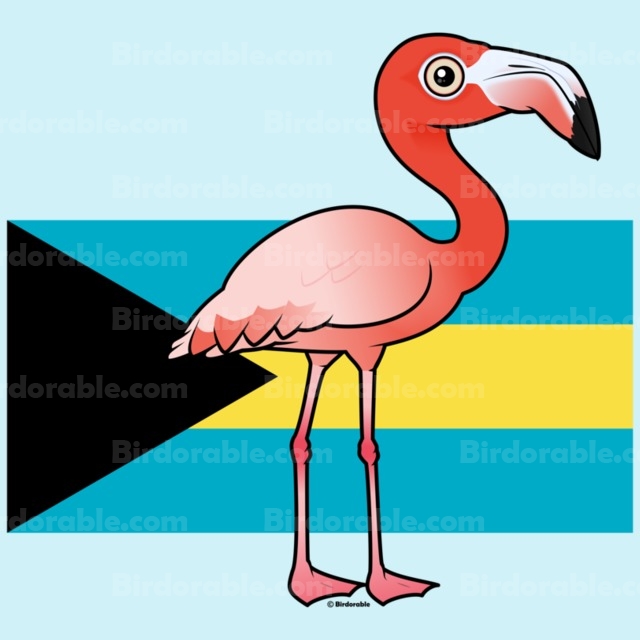
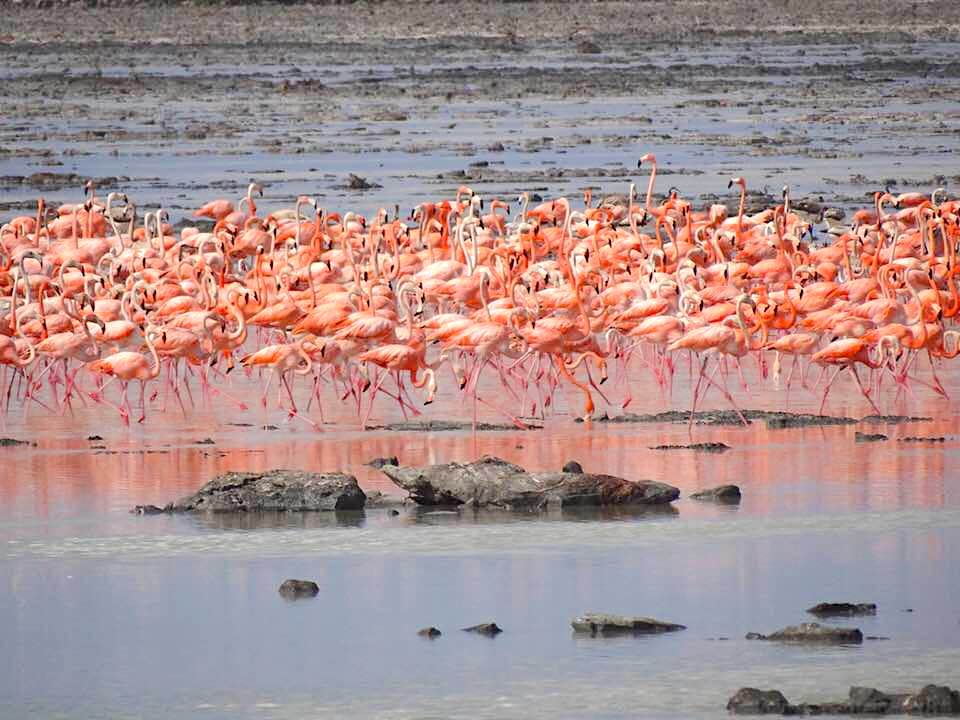
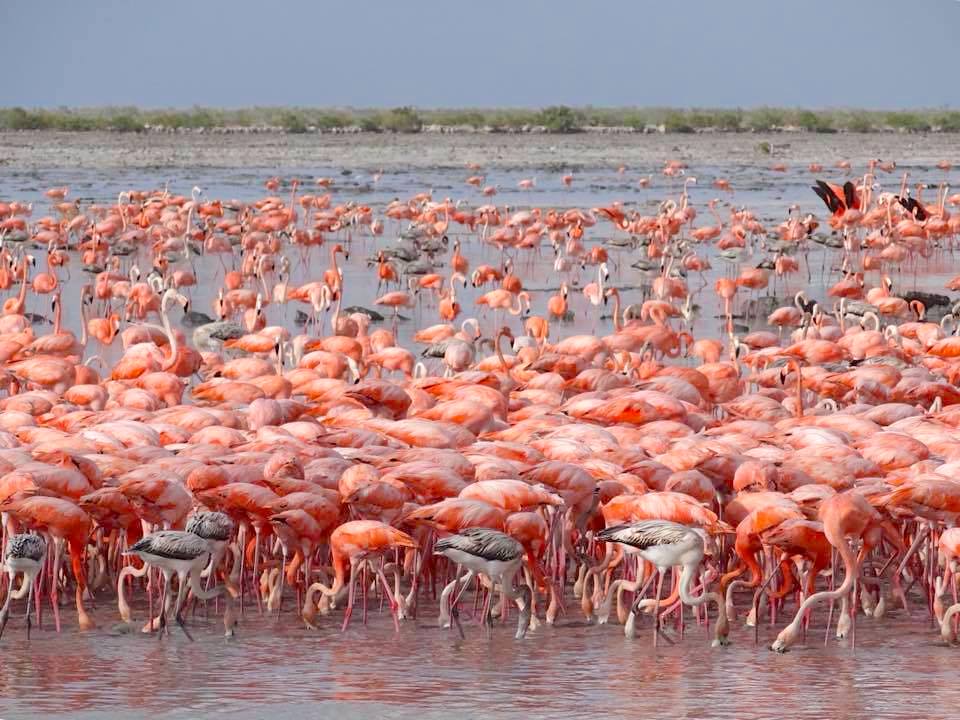
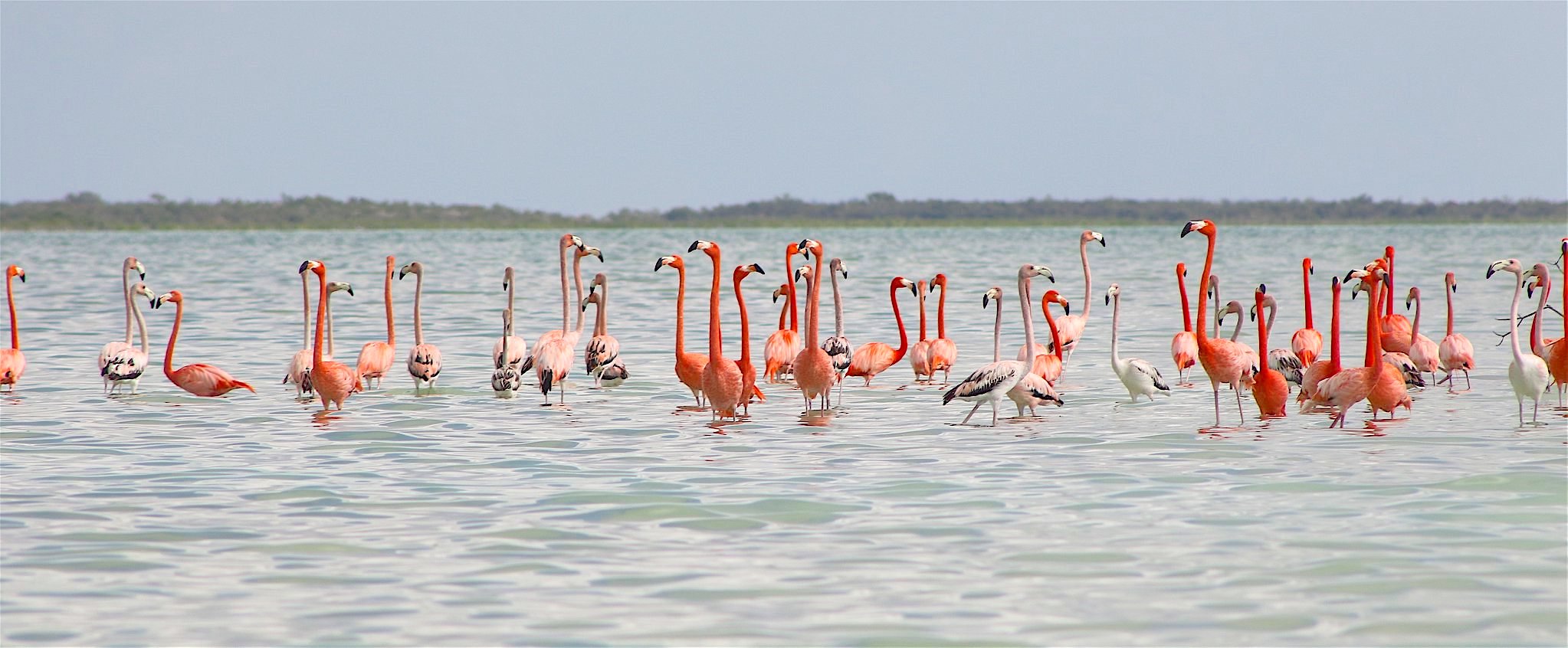
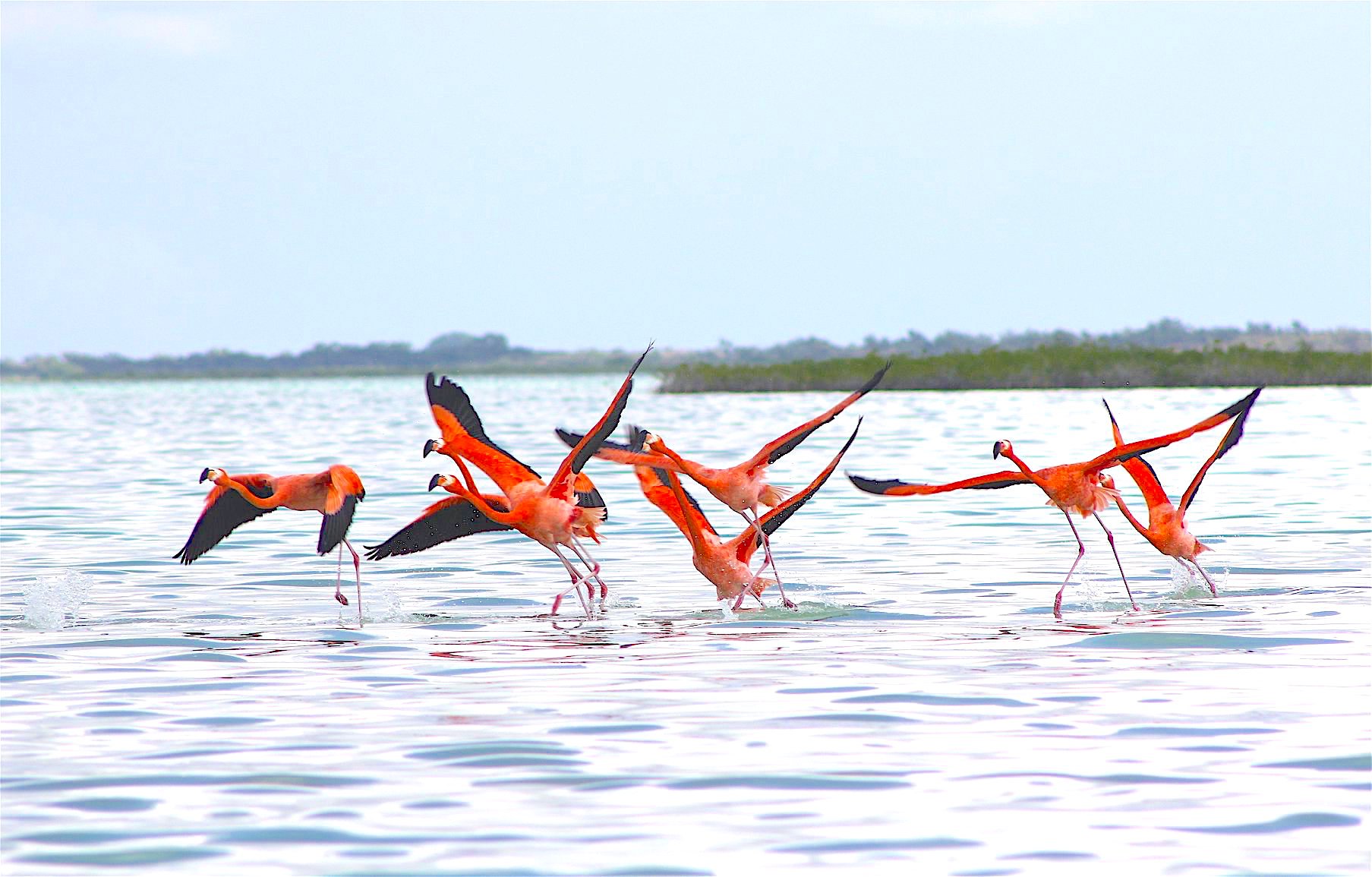
It is an ill-concealed secret that I don’t have an artistic bone in my body – I get acute angst if asked to draw a stickman. As I was looking through photos of large pink flamingo groups, I suddenly realised that I was getting some sort of abstract vision of them. Whoooh! Art-talk. Anyway, I wondered how a legion of flamingos might look in B&W. Add a bit of highlight and… does it work at all? Whether yes or no, this may be the only B&W photo of flamingos since the invention of colour film. Why would you? [Impatient reader: ‘Why did you?]
All great photos courtesy of Melissa Maura (1, 2, 3, 9, 10); Mary Kay Beach (4, 5, 6, 7, 8); Michael Vaughn (11), with many thanks for use permission; Cartoon, Birdorable
I was always taught ‘keep your mind open and your mouth closed’. Bad advice. Such bad advice. The worst. So many reasons to be exactly the opposite in these troubled times…
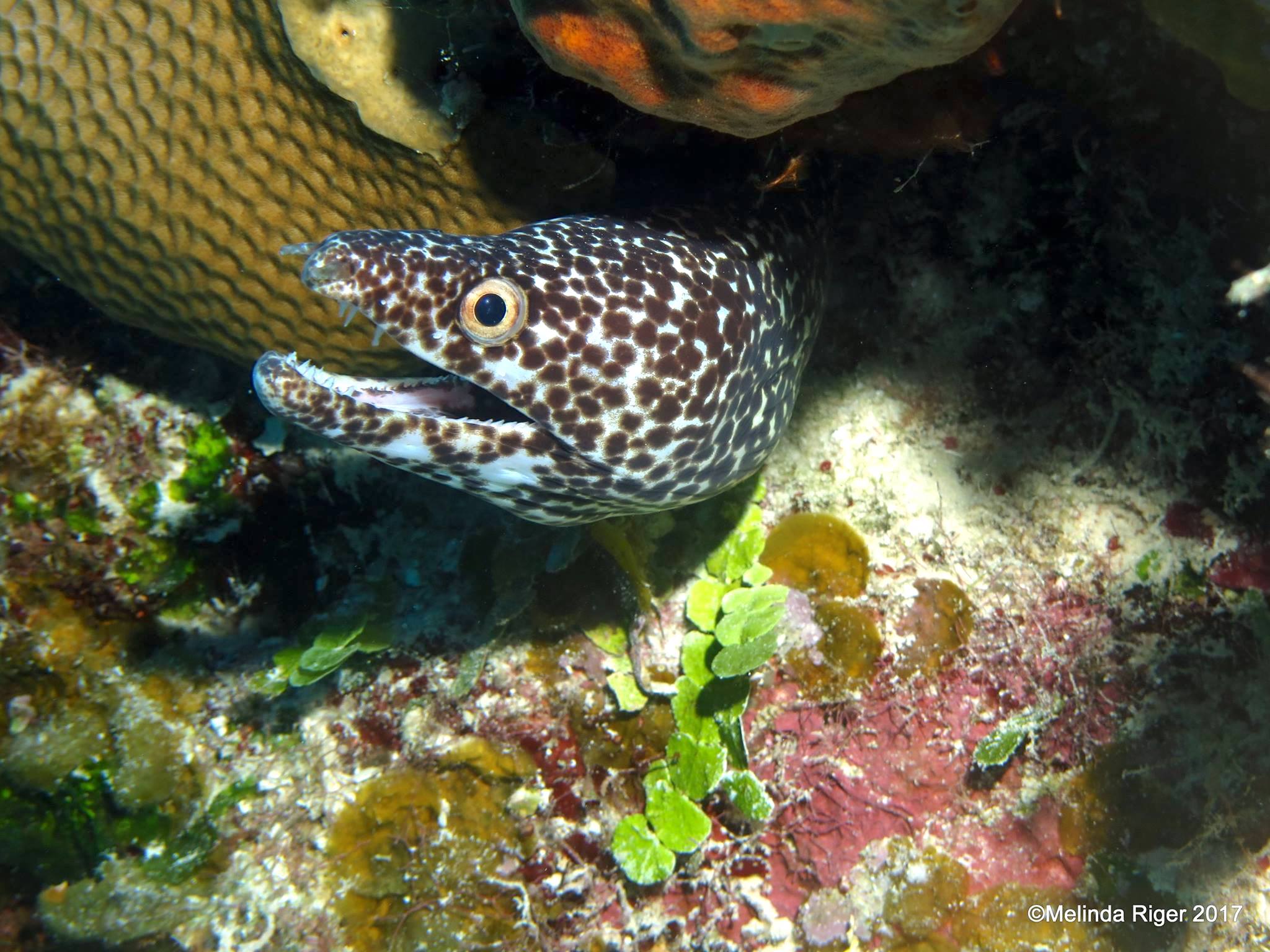
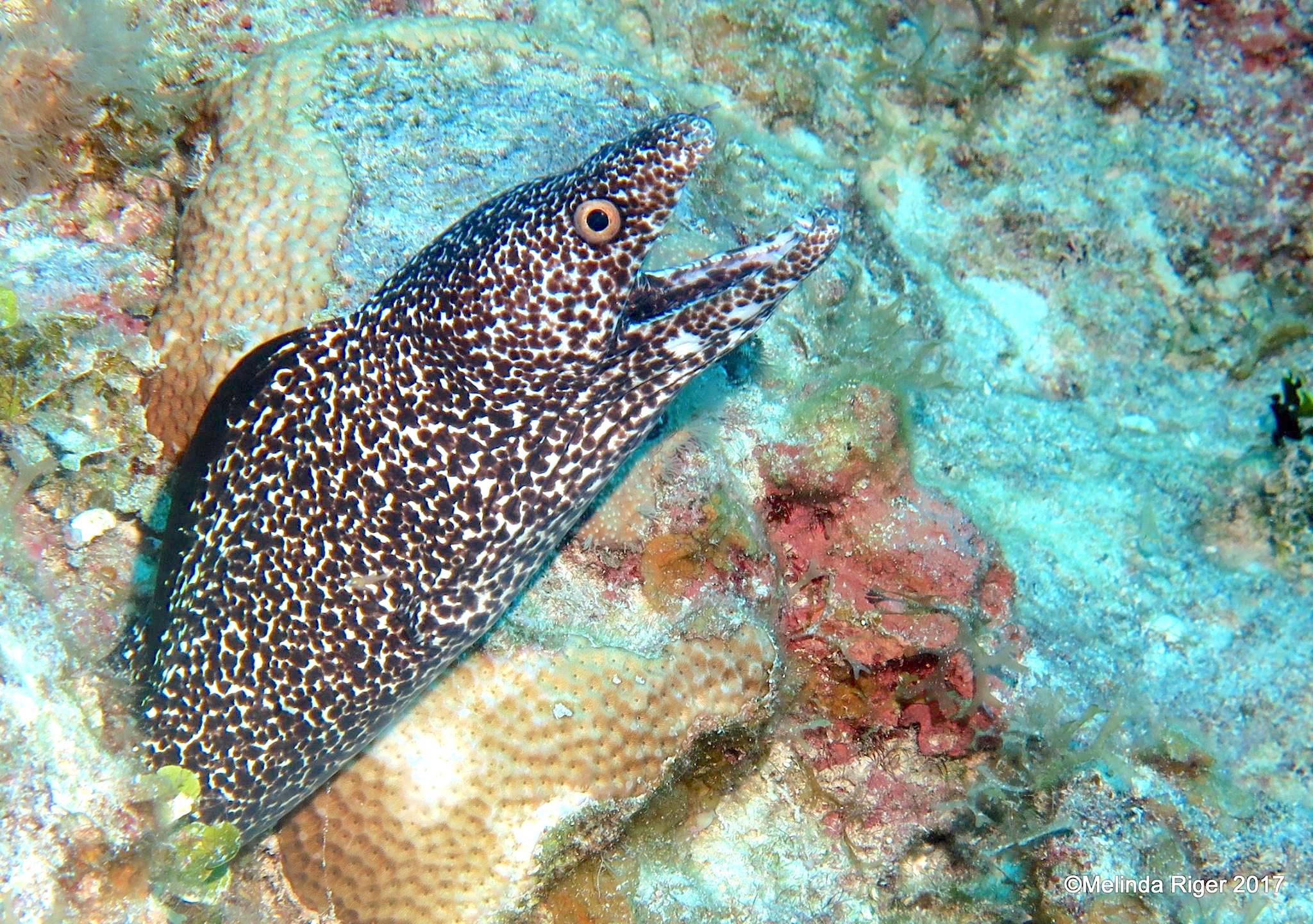
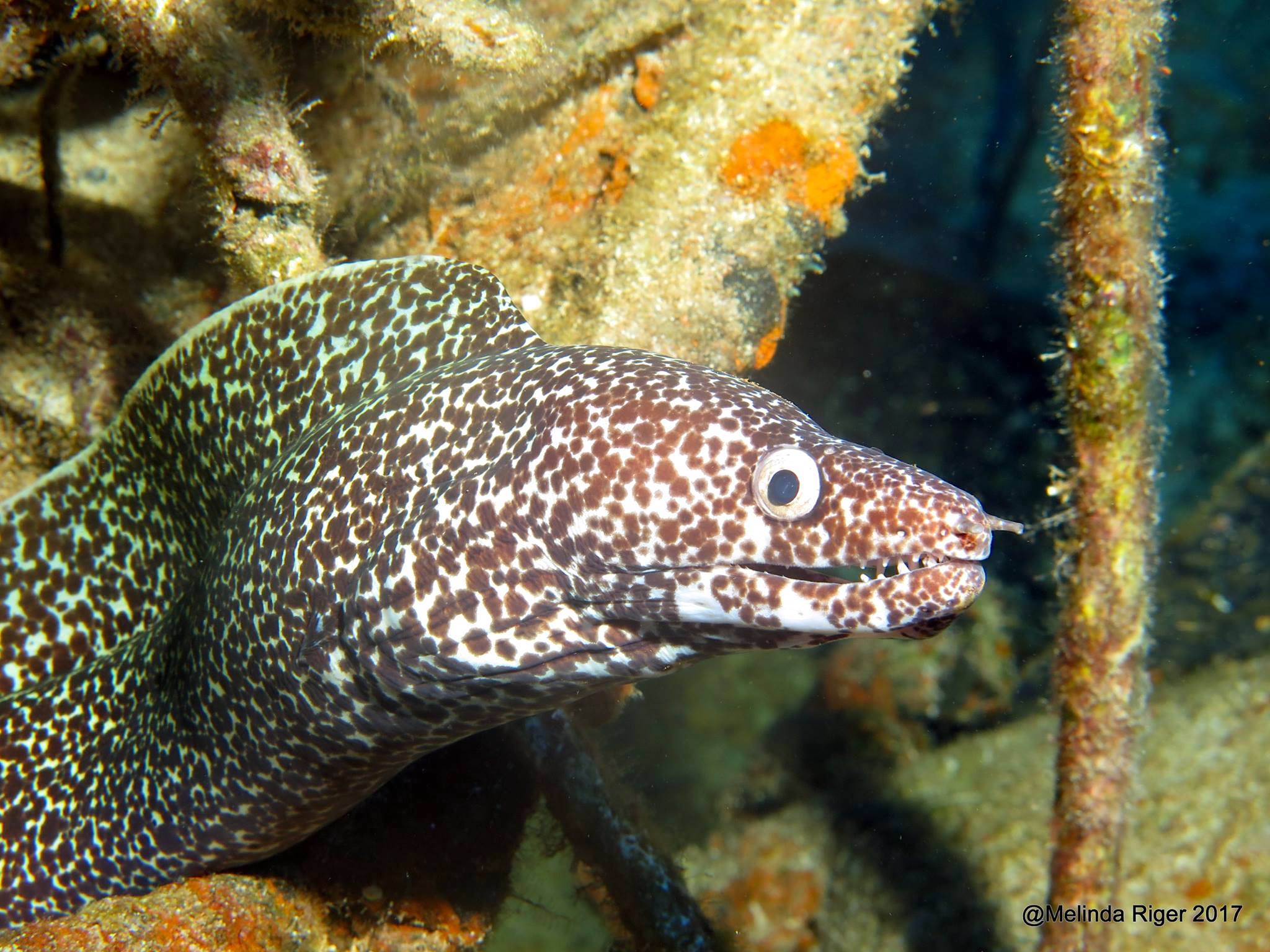
Spotted Moray eels Gymnothorax moringa, however, seem to have their own rules to live by. They appear to be open-minded and fairly sensible creatures around the reef. They tend to keep themselves to themselves, hanging out unassumingly in holes and crevices in the coral.
They do tend to stick their necks out a bit, but unless provoked (see below) they seem to be reasonably amiable (except maybe to the small fish and crustaceans that make up their diet).
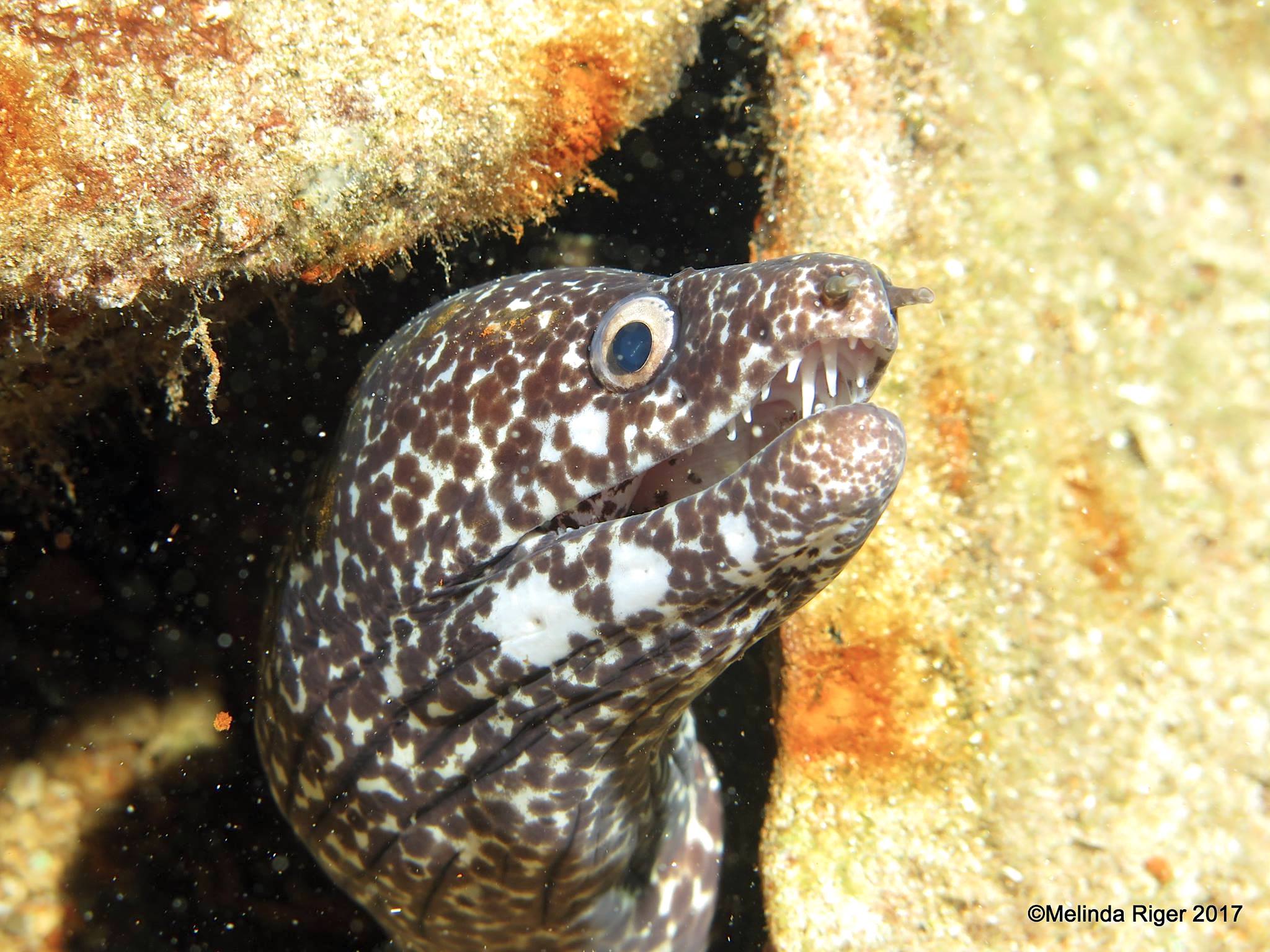
They do keep their mouths open a lot, though. And as you can see, they have sharp-looking teeth that you mightn’t want too near to you. I say that because their bite can be dangerous and should be avoided. To start with, the teeth are slightly backward-facing, so that when they bite there is a ‘pull-back’ effect when you react (not unlike a barb on a fish hook). They are not aggressive as such, but they know how to deal with unwanted interference in their lives…
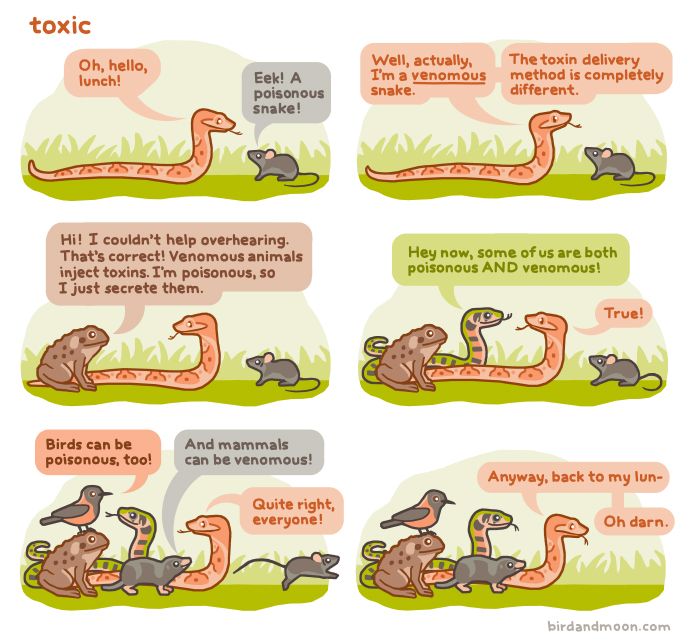
Apart from the unpleasant bite and associated pain that moray eels can inflict in defence, they are also poisonous (as opposed to venomous). Specifically they can release toxins into the wound; and in some species their skin contains toxins as well**. Serious infection may result.
CAN YOU GIVE THE POISONOUS / VENOMOUS DISTINCTION AGAIN
I could, but ace natural history cartoonist Rosemary Mosco makes a better job than I can:
**Before I leave the topic, maybe I ought to mention one bit of research I have just come across at Dove Med, from which I take away the message that you definitely don’t want to annoy a moray eel or get bitten by one. Ever. They are fine and interesting denizens of the reef, to be admired from a respectful distance…
Photo credits: all amazing photos courtesy of Melinda Riger, Grand Bahama Scuba; cute yet educative cartoon by Rosemary Mosco. Check out her website HERE – and birders, she v good on your specialist subject…
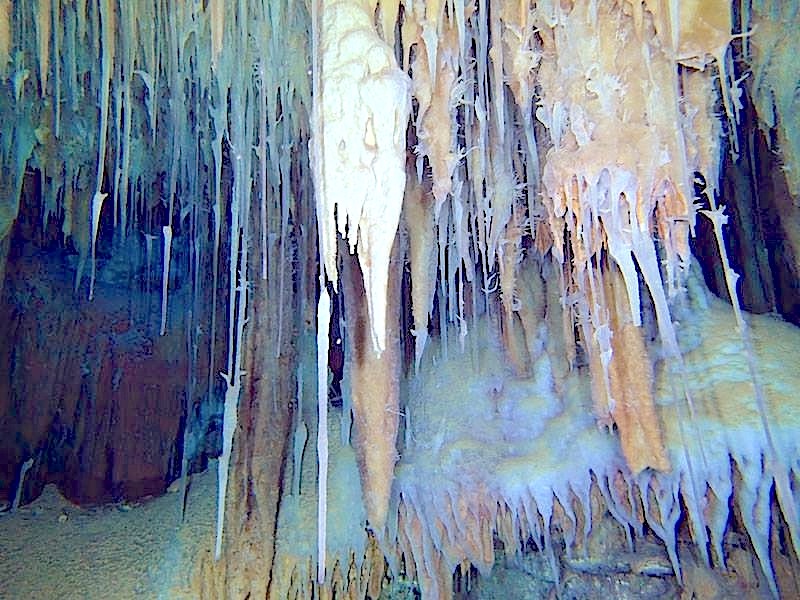
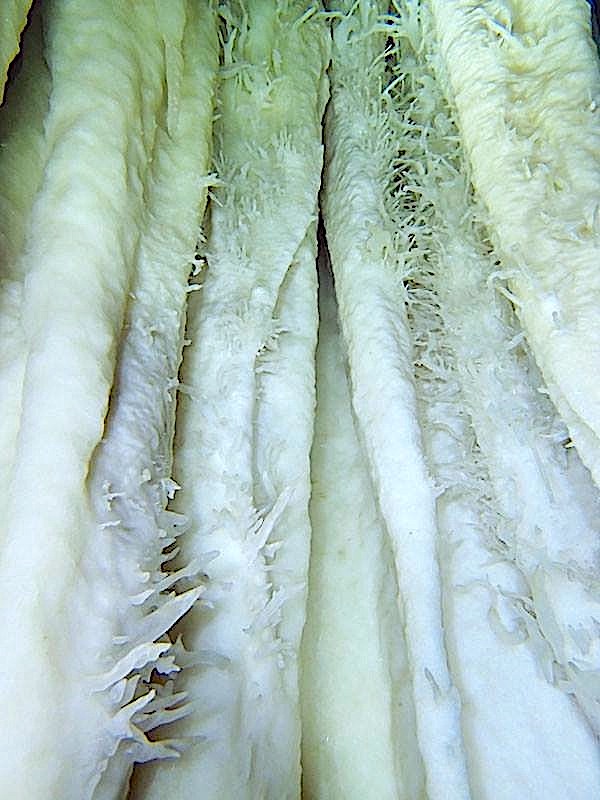
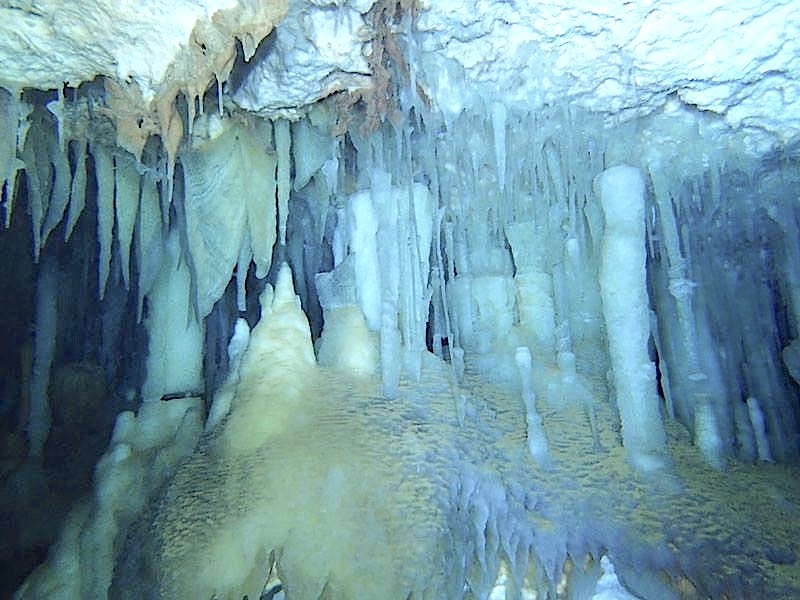
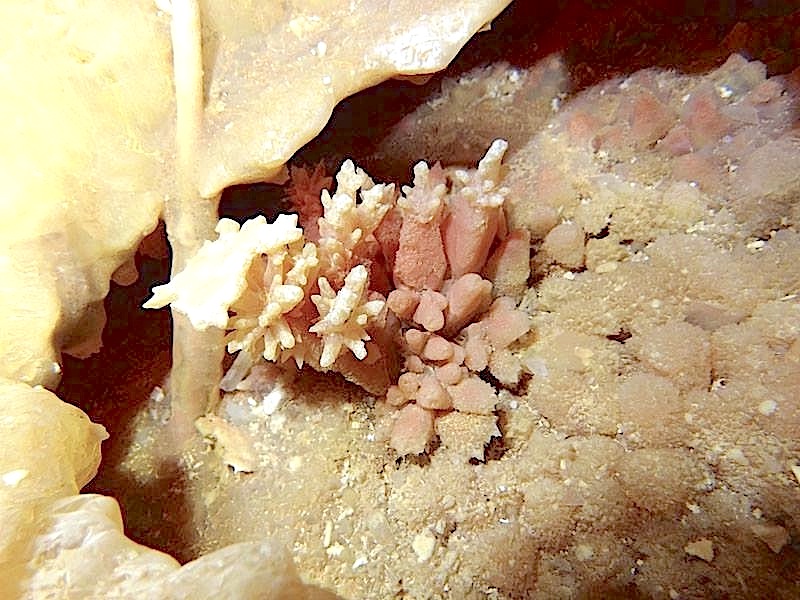
Over the years I have posted a number of times about the extraordinary and beautiful underground caves of Abaco that lie beneath the thousands of acres of pine forest that cover much of South Abaco.
I have previously featured sets of wonderful photos taken Abaco’s renowned cave-diving expert Brian Kakuk; and also some by his diving colleague Hitoshi Miho (in conjunction with the Bahamas Caves Research Foundation). Here are a few more from Brian and Hitoshi to wonder at.
The existence of the caves is not exactly secret but for obvious reasons they are not freely accessible except with permission, with expert guidance and with extreme care. Exploration of the complex systems is definitely not to be approached like a snorkelling dip.
The dives are challenging, and require specialist skills and equipment to avoid risking damage to the delicate centuries-old structures. And there’s undoubtedly a personal safety aspect to be considered as well.
The main caving area on Abaco is about 1/2 hour’s drove south of Marsh Harbour. Within a now-protected area lie the 2 main cave systems (Ralph’s and Dan’s); Nancy’s; and the well-known SAWMILL SINK, where it is possible to swim.
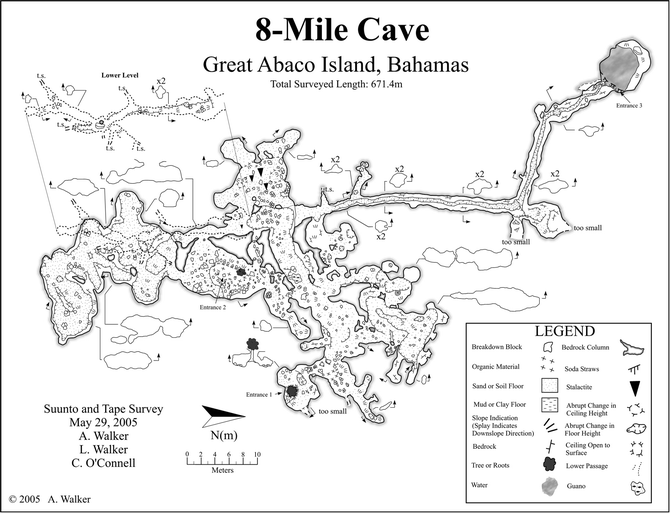
There are other cave systems on Abaco, not least at Hole-in-the-Wall where the descriptively-named ‘8-Mile Cave’ presents further challenges that include the drive down 15 miles of rough track (and of course back again). For an old account of this epic journey, see HERE.
Next time your are driving along the Ernest A. Dean Highway with the pine forest stretching out on either side of the road, give a thought to the caves that lie just off your route – or even (for all you know) deep down right under your wheels.
Credits: Hitoshi Miho, Brian Kakuk, Bahamas Caves Research Foundation, with many thanks as ever for use permission; A. Walker (8-Mile Cave map_
ROCKET MAN: MORE MUSKY GIFTS TO ABACO’S PRISTINE BEACHES
THE STORY SO FAR
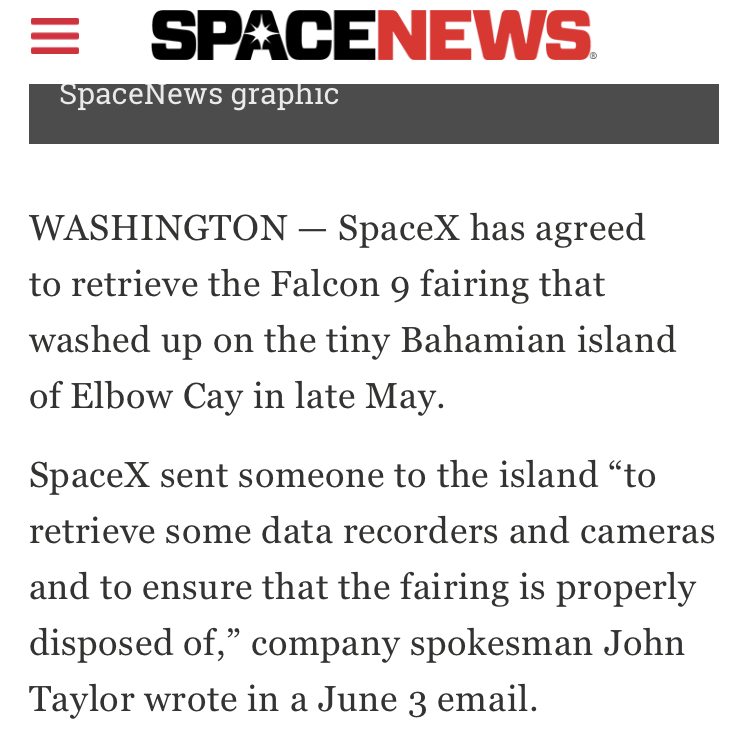
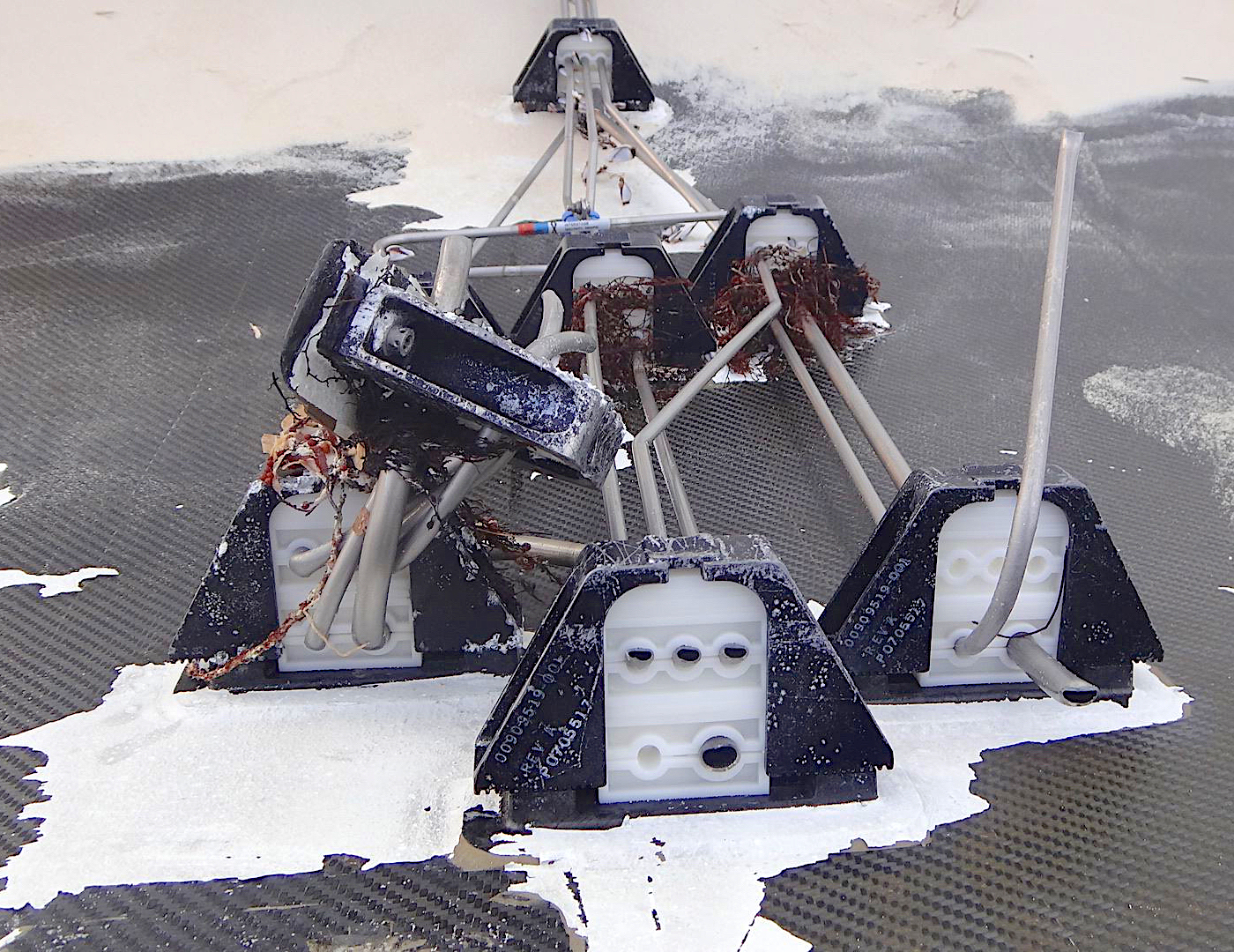
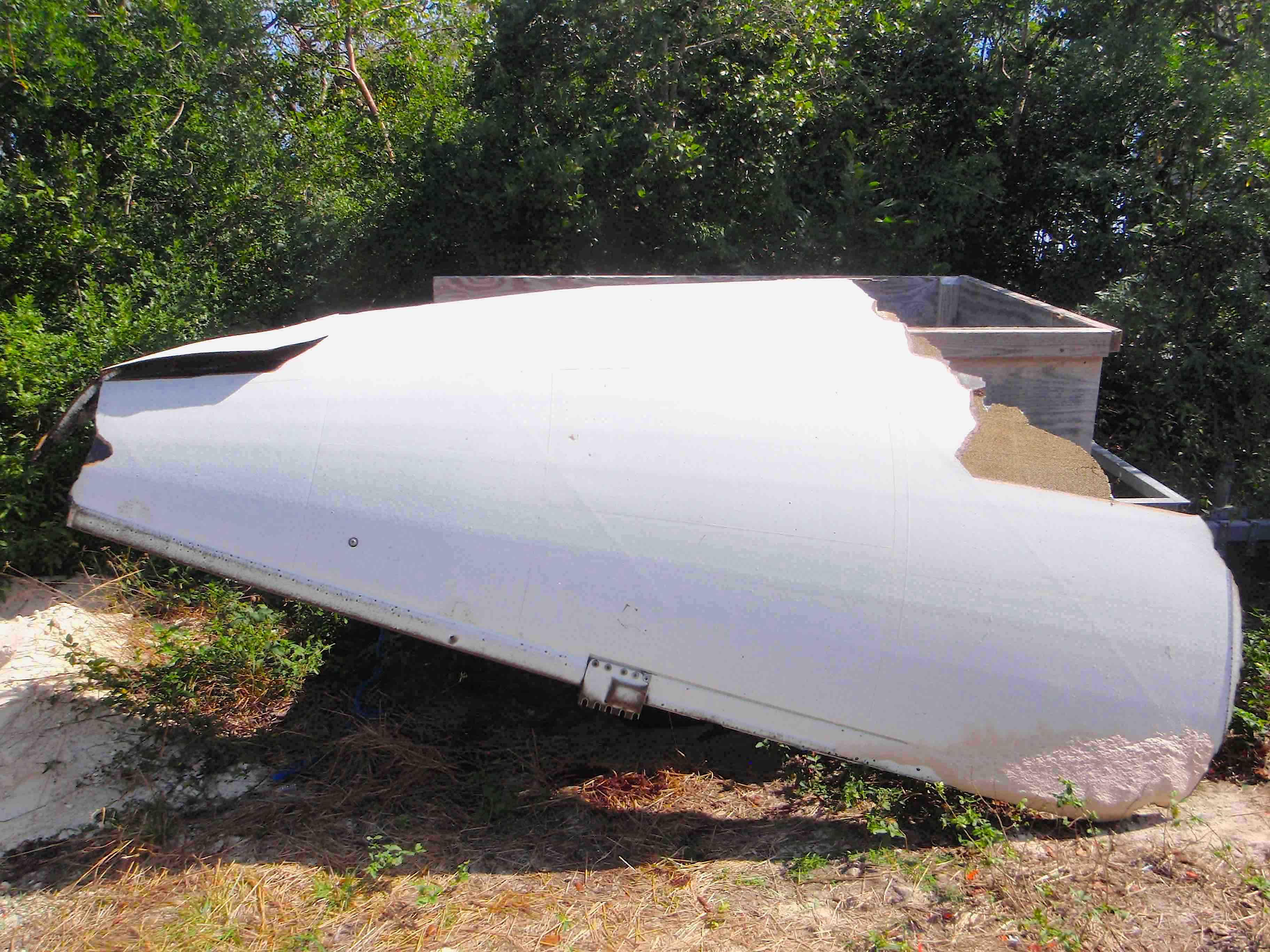
In early December a SpaceX (prop. E. Musk) Falcon 9 rocket was launched from Cape Canaveral. As it sped off purposefully into Space, the usual associated bits and pieces were jettisoned to fall with great precision into (a) open ocean and (b) a part where shipping was fortuitously absent. In due course (very quickly in fact), chunks of rocket debris turned up on the peaceful shores of Abaco. This is not unheard of: for example in 2012 we had a 12-foot fairing from the Curiosity Mars launch on the beach at Delphi (HERE); and in 2015 other space debris was found on Elbow Cay:
A CHUNK OF SPACE HISTORY, ELBOW CAY, ABACO, BAHAMAS (2015)
The latest space-debris festival on Abaco’s shorelines in December was first discovered at Bahama Palm Shores. ID was established from the partial red SpaceX / Musk logo visible in the below. The new arrival added to the ongoing excitement there of a huge 50′ and (sadly) dead sperm washing back onto the beach in a state of unattractive and ‘stay-upwind-at-all-costs’ decomposition…
Falcon 9 Rocket Fragment on the beach at Bahama Palm Shores, Abaco (2018)
This was quickly followed by a report from Tahiti Beach, Elbow Cay. You can read the details of these 2 events as follows: BPS HERE and Elbow Cay HERE.
Falcon 9 Rocket Fragment on Tahiti Beach, Elbow Cay Abaco Bahamas
As I mentioned in the Tahiti Beach post, a report from the west side of Abaco had just reached me from Charlotte Dunn, Director of the Bahamas Marine Mammal Research Organisation (BMMRO) at Sandy Point, Abaco. This was a surprising location because – with space-junk washing up on both sides of Abaco – an inference might be that the ‘drop’ area for nose-cones, fairings and the like might be somewhat wider than expected. Possibly wide enough to include a direct hit on land? Anyway, as promised, Charlotte has now had time to take some photos of Sandy Point’s involvement in the saga.
The top photo shows a long strip of space rocket, curving at one end. It’s obviously part of a larger part that was ejected after launch. In the Falcon 9 image below (note the logo matching the BPS part), the eye is drawn to the booster rocket fairings. Maybe it’s part of one of those. It’s not my area, so correction is invited, and probably welcomed if polite…
A SpaceX Falcon 9 rocket on the launch pad
WHERE ARE THE LOCATIONS IN RELATION TO EACH OTHER?
WILL THERE BE ANYMORE SPACE TREASURE WASHED UP ON ABACO?
With 3 sites now involved, and on both sides of the island, it seems very likely that more has washed up. However, there is so much unfrequented or inaccessible shoreline on Abaco that there may be no further reports from this launch. High tides will most likely take debris back out to sea and relocate it elsewhere.. We’ll have to see…
CAN I ‘BORROW’ A BIT OF ROCKET TO JOIN MY SEA GLASS COLLECTION?
That’s a very interesting question, thank you for raising it. We are in a grey area here, somewhere between things that (seem to) have been thrown away / discarded / abandoned by their owner (res nullius), which may be fair game; and items where it is safest to assume that – despite the careless and indeed haphazard nature of their ‘loss’ – they might still be of value, use or significance to the owner. Each case has to be looked at on its merits; overall, I suspect Mr Musk would like his parts back; alternatively that he may not want anyone else to take possession of them… He is litigious. Your call! In the UK people are bidden to take lost property to a Police Station. You could try that.
WHAT OTHER SPACE-X FLIGHTS OVER / NEAR ABACO ARE PLANNED?
Thanks to Jack Bowers who sent me the link to the SpaceX schedule. Here are some recent completed missions. Note the top one, a launch on 11th January. Now check your local beach…
DO YOU HAVE ONE OF YOUR MUSICAL DIGRESSIONS?
CREDITS: Jack Bowers & others at BPS; Mary McHenry (Elbow Cay); Sandy Walker (Delphi); SpaceX / Space News + Spaceflight Now (unclassified) online material; random debris from OS material
Mars Curiosity Launch: fairing on Delphi beach, Abaco 2012 (Sandy Walker)
Turkey Vultures Cathartes aura [TUVUs, to use their Alpha Bird Code for brevity]are a familiar sight flying over Abaco, wheeling effortlessly overhead on thermals or gliding with the wind in singles, pairs, or flocks. Statistically, 83% of all photographs of turkey vultures are taken from below and look like this:
A very good cameraman with a very good camera and very good luck might catch this
Of in-flight shots, 57% are taken in unhelpful light or conditions, and look like the image below (mea maxima culpa). On a positive note, this picture shows the extreme delicacy of the wing-tip feathering (starboard wing, anyway) that enables these birds to adjust their direction and speed with minimal effort.
TUVUs have a wide range in the Americas and the Caribbean, and will prosper in almost any type of habitat. This is mainly because these large birds are almost exclusively carrion feeders, and carrion is everywhere. They spend their days scavenging, or thinking about scavenging, or recalling successful locations to re-scavenge. They do not generally kill live creatures.
The word ‘vulture’ derives from the latin word ‘vulturus‘ meaning ‘ripper’, ‘shredder’, or in more recent times, ‘very loud Metallica song*‘. TUVUs have very good eyesight, and an acute sense of smell that enables them to detect from a considerable distance the scent of decay and consequent release of the chemical ethyl mercaptan. The smell is variously described as ‘persistent penetrating decayed cabbage’ or a ‘pungent malodorous skunk-like odour’. A breeding pair will raise two chicks, which revoltingly are fed by the regurgitation of all the rank and foul… excuse me a moment while I… I feel a little bit… ~~~~~~~~~~~ …alright, fine again now.
When they are not flying, feeding, breeding or nourishing their young, TUVUs like best to perch on a vantage point – a utility post is ideal. But unusually for a bird, you won’t ever hear them sing or call. They lack aSYRINX(the avian equivalent of a larynx), and their vocalisation is confined to grunting or hissing sounds. Here’s a single hiss (at 10 / 15 secs).
These vultures are often seen in a spread-winged stance, which has several functions that include drying the wings, warming the body, and baking bacteria. Possibly it also reduces the miasma of rotting meat that may surround them after a good meal.
Equally happy to spread their wings on a debris-strewn shoreline
10 SCAVENGED TURKEY VULTURE FACTS FOR YOU TO PICK OVER
One local name for a TUVU is ‘John Crow’
An adult has a wingspan of up to 6 feet
Sexes are identical in appearance, although the female is slightly larger
The eye has a single row of eyelashes on the upper lid and two on the lower lid
TUVUs live about 20 years. One named Nero had a confirmed age of 37
LEUCISTIC (pale, often mistakenly called “albino”) variants are sometimes seen
The TUVU is gregarious and roosts in large community groups
The TUVU has few natural predators
Though elegant in flight, they are ungainly on the ground and in take-off
The nostrils are not divided by a septum, but are perforated – from the side one can see through the beak [some humans also suffer from this condition. They tend to ‘sniff’ a lot]
REVOLTING CORNER / DEPT OF ‘WAY TOO MUCH INFORMATION’
SQUEAMISH? THEN LOOK AWAY NOW
UNATTRACTIVE HABITS The Turkey Vulture“often defecates on its own legs, using the evaporation of the water in the feces and/or urine to cool itself, a process known asUROHIDROSIS.This cools the blood vessels in the unfeathered tarsi and feet, and causes white uric acid to streak the legs”. The droppings produced by Turkey Vultures can harm or kill trees and other vegetation. Maybe don’t park your nice car under one of their perching posts…
HORRIBLE DEFENCES The main form of defence is“regurgitating semi-digested meat, a foul-smelling substance which deters most creatures intent on raiding a vulture nest. It will also sting if the predator is close enough to get the vomit in its face or eyes. In some cases, the vulture must rid its crop of a heavy, undigested meal in order to take flight to flee from a potential predator”
DIETARY NOTES TUVUs tend to prefer recently dead creatures, avoiding carcasses that have reached the point of putrefaction. They will occasionally resort to vegetable matter – plants and fruit (you could view this as their side-salad). They rarely, if ever, kill prey – vehicles do this for them, and you’ll often see them on roadsides feeding on roadkill. They also hang around water, feeding on dead fish or fish stranded in shallow water.
ECO-USES If you did not have birds like this, your world would be a great deal smellier and less pleasant place, with higher chance of diseases from polluted water and bacterial spread. TUVUs kept the highways clear and work their way round the town dumps recycling noisome items.
FORAGING TUVUs forage by smell, which is uncommon in birds. They fly low to the ground to pick up the scent of ethyl mercaptan, a gas produced by the beginnings of decay in dead animals. Their olfactory lobe in the brain is particularly large compared to that of other animals.
SEX TIPS Courtship rituals of the Turkey Vulture involve several individuals gathering in a circle, where they perform hopping movements around the perimeter of the circle with wings partially spread. In humans, similar occasions are called ‘Dances’. A pair will fly, with the female closely following the male while they flap & dive… then they land somewhere private and we draw the veil…
My favourite graphic of all time
Credits: Nina Henry (1); Bruce Hallett (2); Keith Salvesen (3, 4, 5, 11); Clare Latimer (4, 6); amy-at-poweredbybirds (7); Wiki, small pics 8, 9); Charlie Skinner (10); Craig Nash (12); Xeno-Canto / Alvaric (sound file); Info, magpie pickings; Birdorable (cartoon); RH (Keep Calm…); depressingnature.com (puking TUVU)
*As Metallica so appropriately wrote and sweatily sang (luckily there’s no verse referencing urination, defecation and puking). ALERT don’t actually play the video – the song hasn’t aged well! In fact… it’s terrible. Woe woe indeed…
The vultures come See the vultures come for me Fly around the sun But now too late for me Just sit and stare Wait ’til I hit the ground Little vultures tear Little vultures tear at flesh
Warts and all… the gorgeous, hygienic, roadkill-ridding vulture, with a few dirty habits

























 Credits: Dan Stonko / American Bird Conservancy, Michael Baltz / Bahama Oriole Project / Kevin Omland; Mary Kay Beach; Bahama Oriole Project FB header; C Ward / BNT; Thomas Nierle / Bahama Oriole Project; Bahamas Postal Service; BNT; D Belasco / American Bird Conservancy; Handbook of World Birds (drawing)
















































 ROLLING HARBOUR ABACO
You must be logged in to post a comment.