The Bahamas Marine Mammal Research Organisation (BMMRO) is based at Sandy Point, Abaco. The principals Diane Claridge and Charlotte Dunn with their team cover not only Abaco waters but the whole of the Bahamas. Their research work is complex, and some of it is carried out in conjunction with partners on specific projects or more generally.
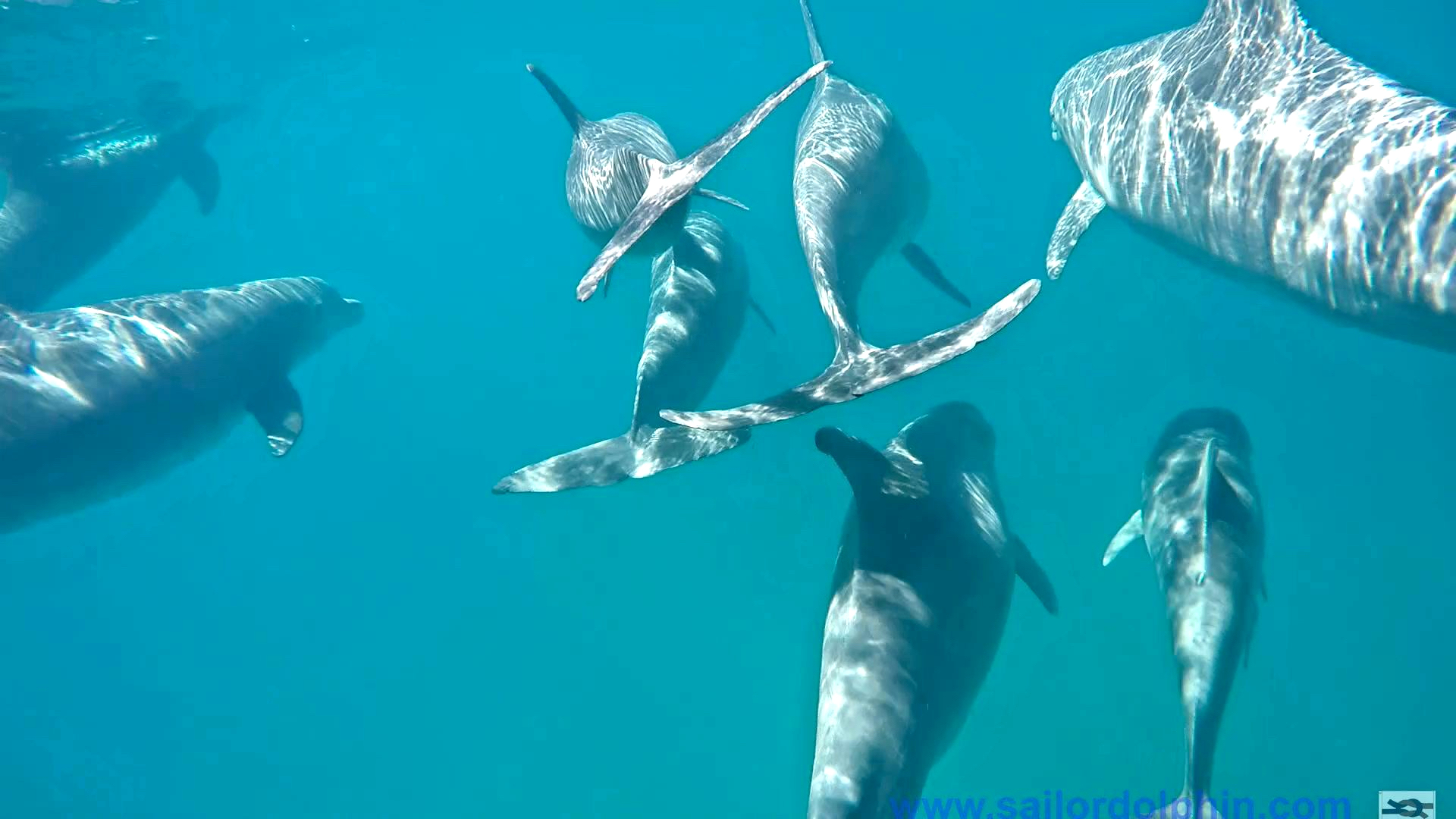
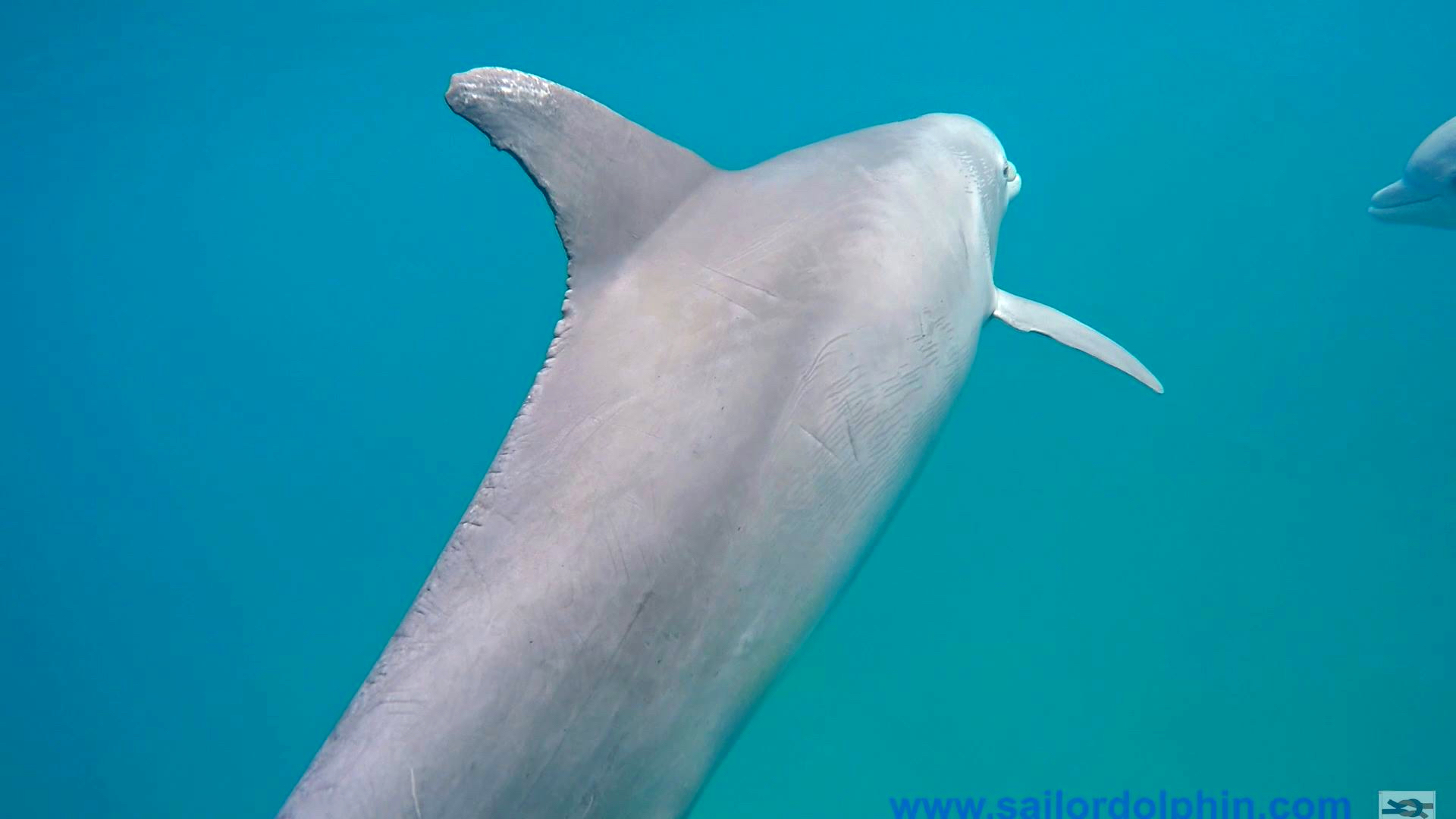
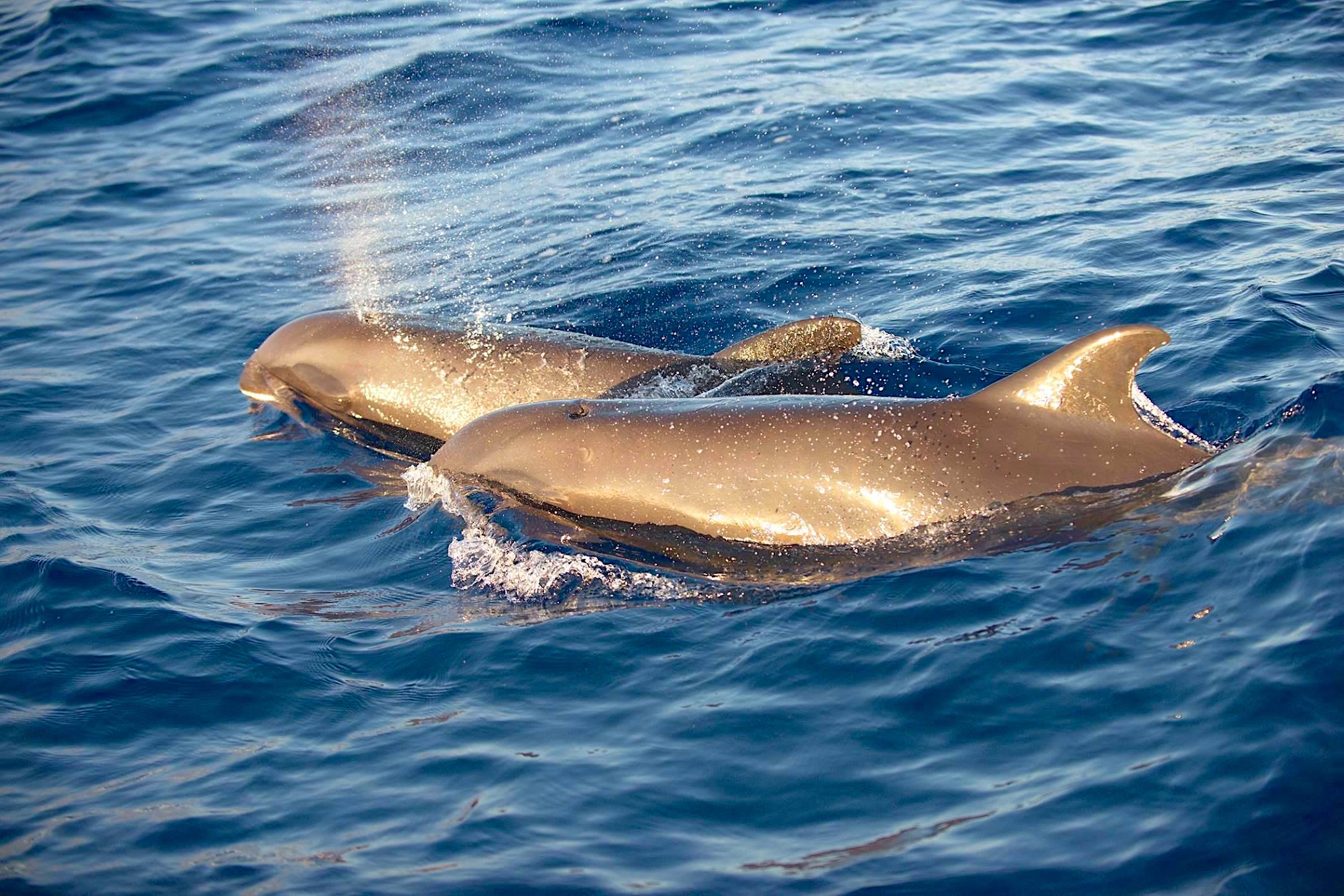
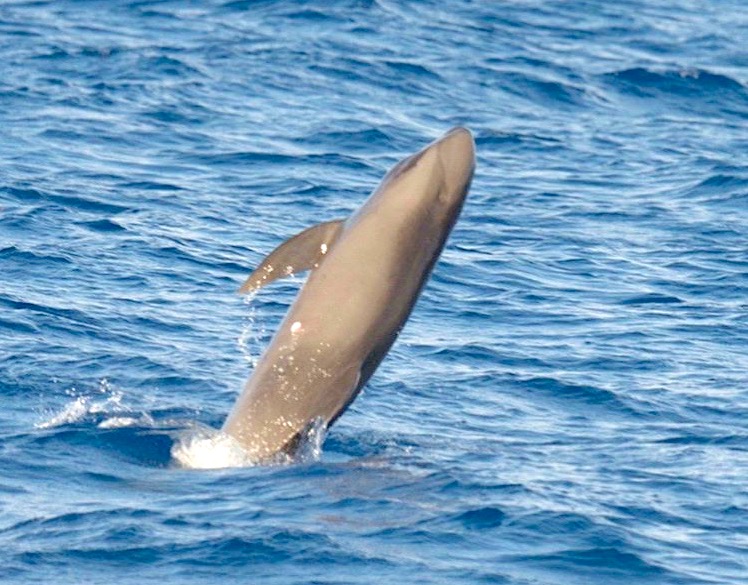
Which brings me to SailorDolphin Research, a project that involves the meticulous mapping, photographing, and recording of the details of each sighting. Much of the work is carried out in the Bahamas in partnership with BMMRO. The link will take you to the homepage, which notes “This website provides a list of Dolphins that I have documented on the US East coast and the Bahamas. It includes details (with photos & notes) for each dolphin and lists of their sightings from my personal database.” If you have an interest in dolphins (and who does not?), it will repay exploration – and you will see some awesome photographs. Here are a few of them to admire.
Now imagine yourself in the water, with these wonderful creatures cutting through the water in front of you, working their sleek bodies just below the surface, jostling and cavorting, occasionally letting a fin cut through the water. Hold that thought… Right, get back to work!
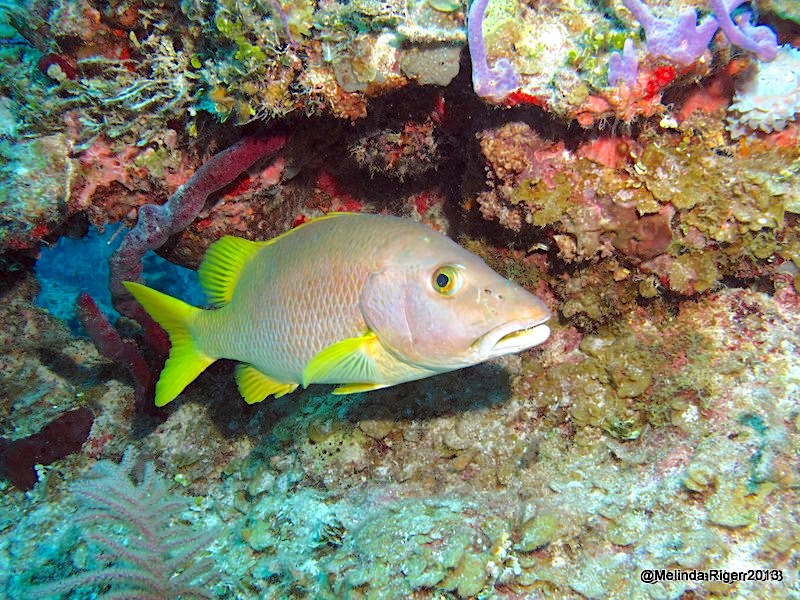
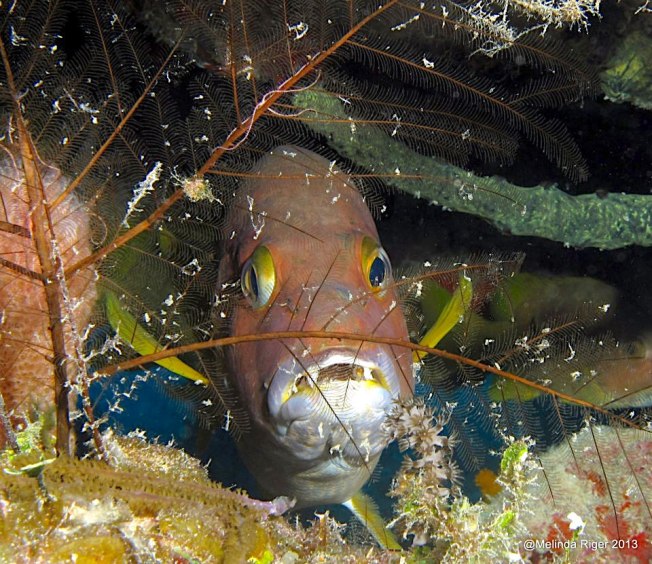
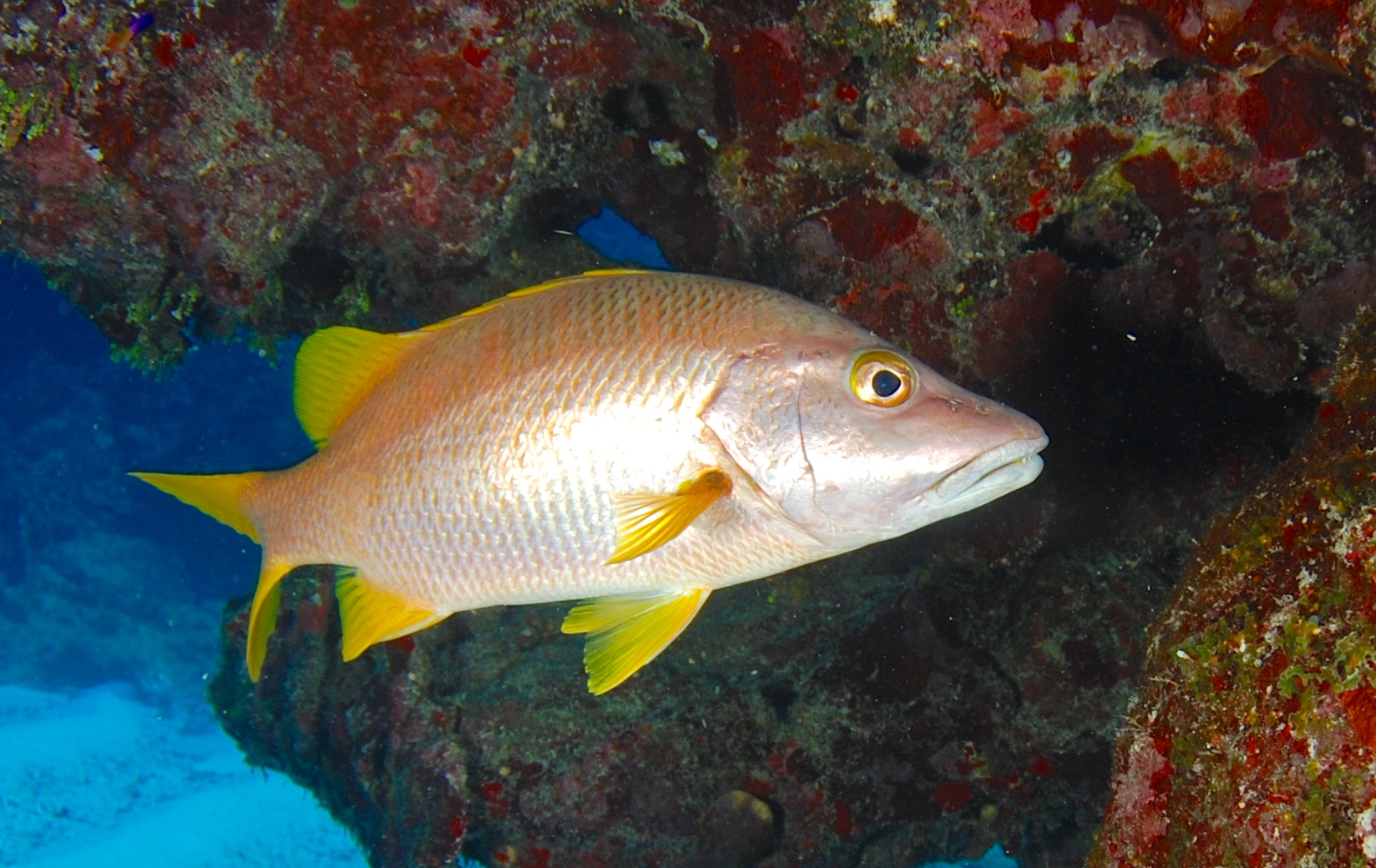
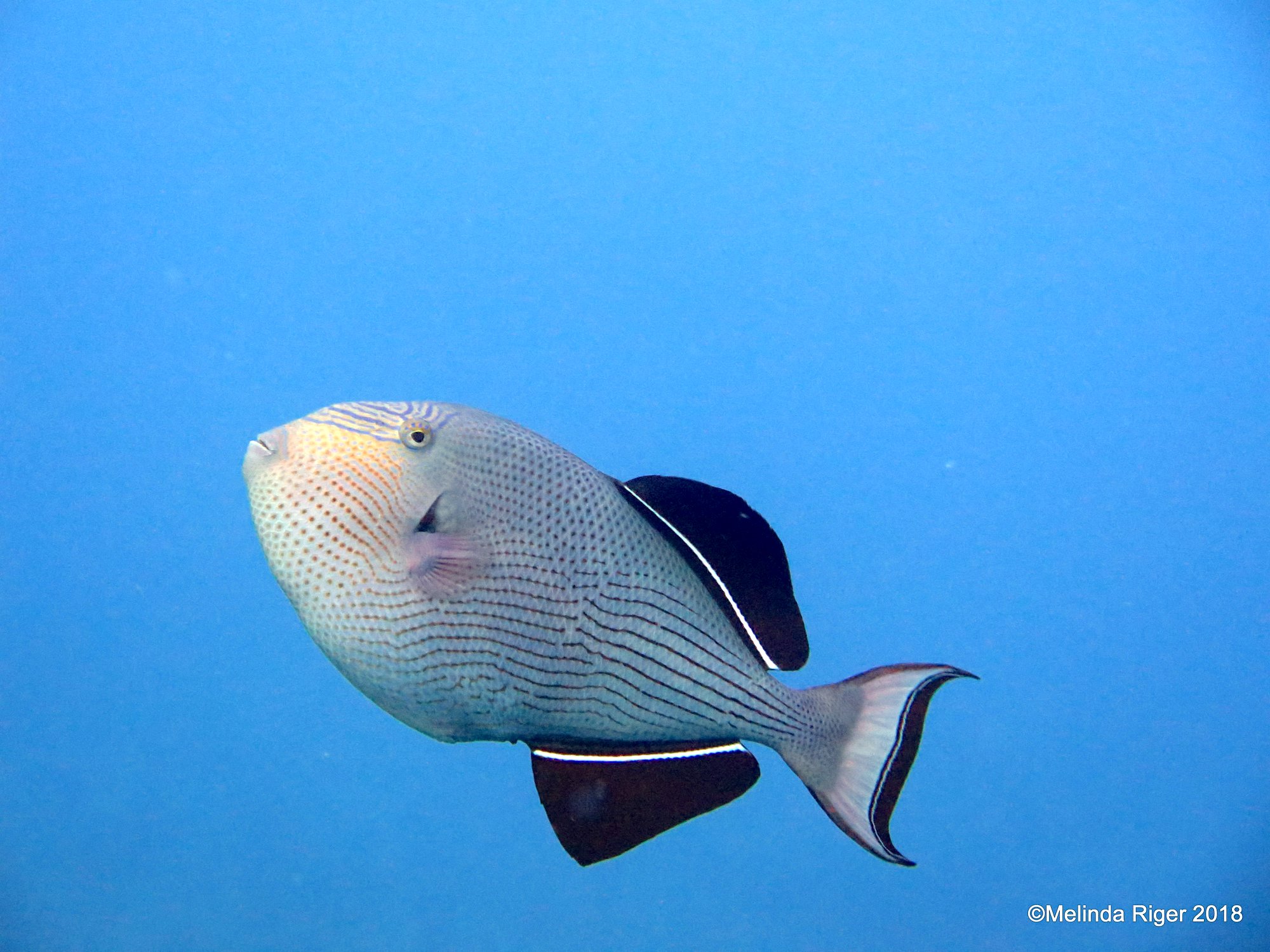
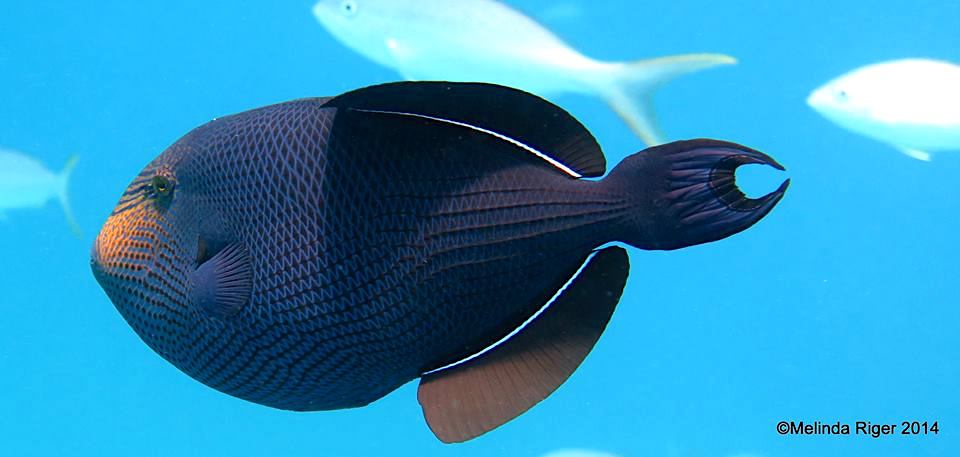
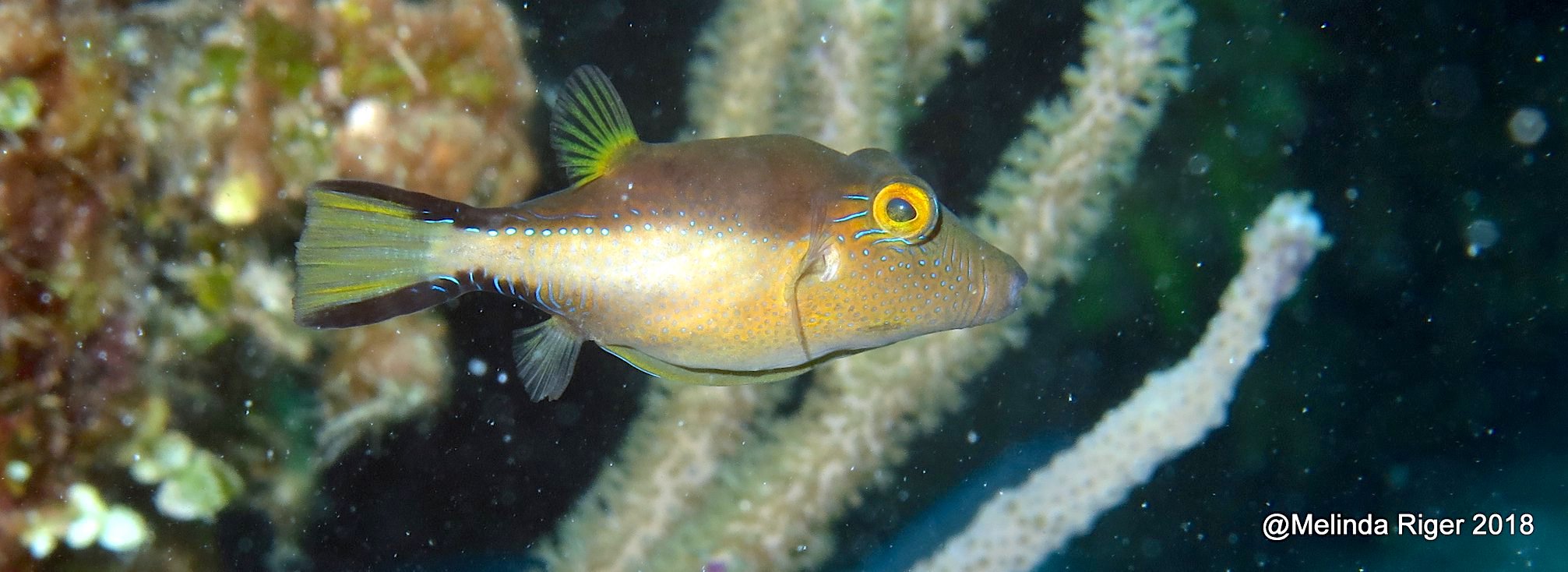
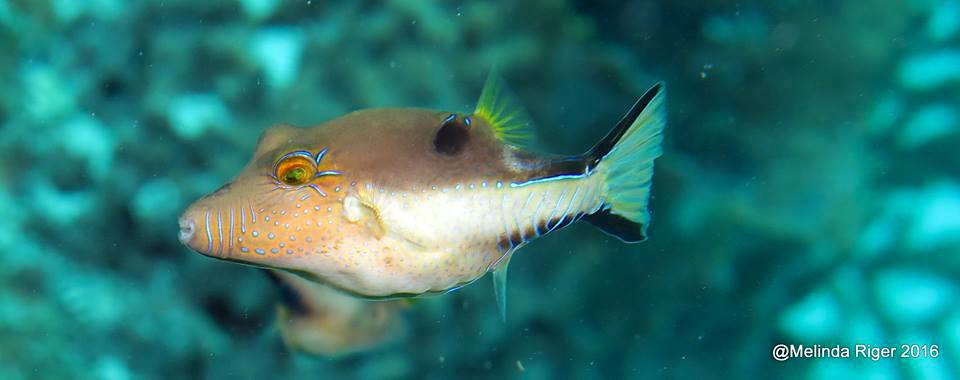
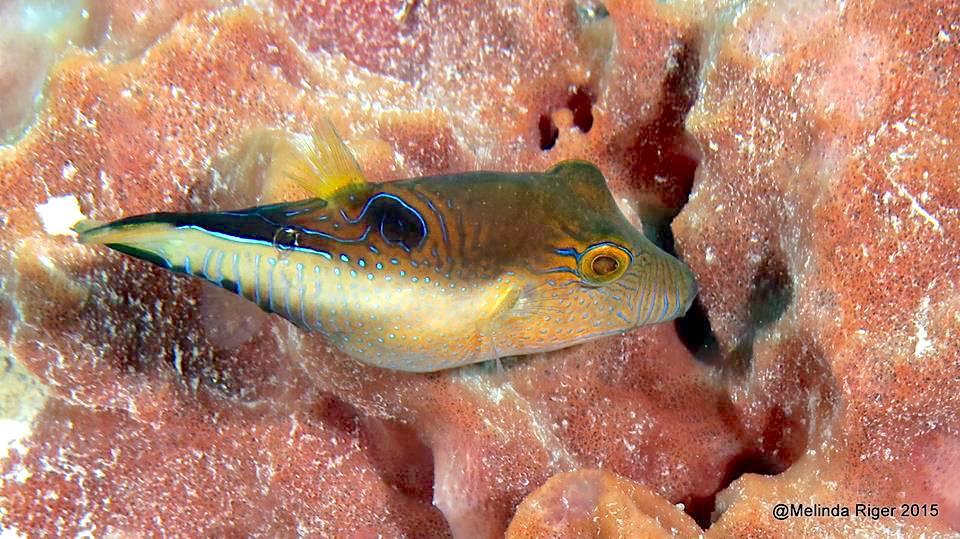
The Black Durgon (Black Triggerfish) seems to be a fairly rare triggerfish in Bahamas waters. I say that not because I know, but because there is very little mention of them in a Bahamas context. In fact, the (not especially profound) research I have done suggests it is not (originally?) really native to the Bahamas region at all. Correction of this impression welcome!
These fish have the ability to change colour, according to their surroundings. Mostly, they seem completely black. However they have intricate blue markings to the head, and regular patterning on their flanks that resembles the sort of thing one idly doodles during a long and less then attention-holding phone call (or the ‘hold music’) – see Header Image. They also have dramatic pale stripes where their fins join the body.
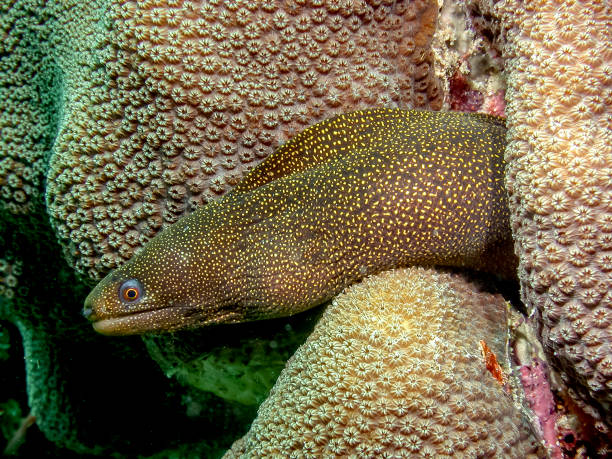
These fish have a varied diet that includes small fish, squid and shrimps, with side-helpings of algae, zooplankton and marine plants. And…
FUN FACT (REALLY!)
The Black Durgon has been studied, of course. One piece of research discovered that they… erm… ingested the feces and vomit of a species of dolphin. Other reef fish in the area did so too, but the Black Durgon was much the keenest on this distinctive diet. So these are ‘offal-eating’ fish… and welcome to it. Here’s a short video to take your mind off it all…
I’d be interested to hear from anyone who has encountered these fish in Abaco waters. I ought to look further into their prevalence. Maybe they just don’t get much publicity. They need a new agent.
Credits: Photos by Melinda Riger / Grand Bahama Scuba except #3, Getty Images; Kwik-Viddy, Cassandra-Tel; inadequate research, Author
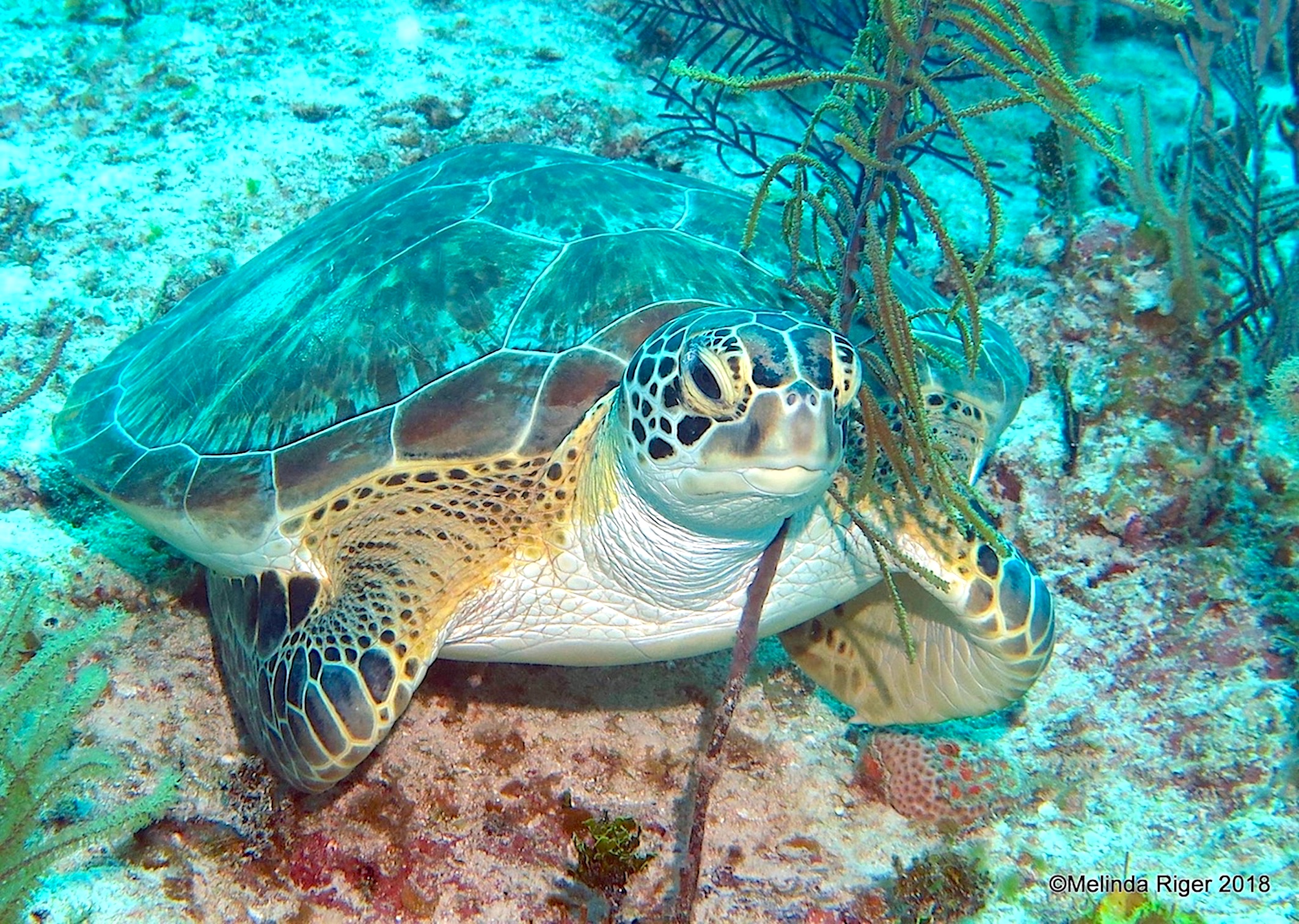
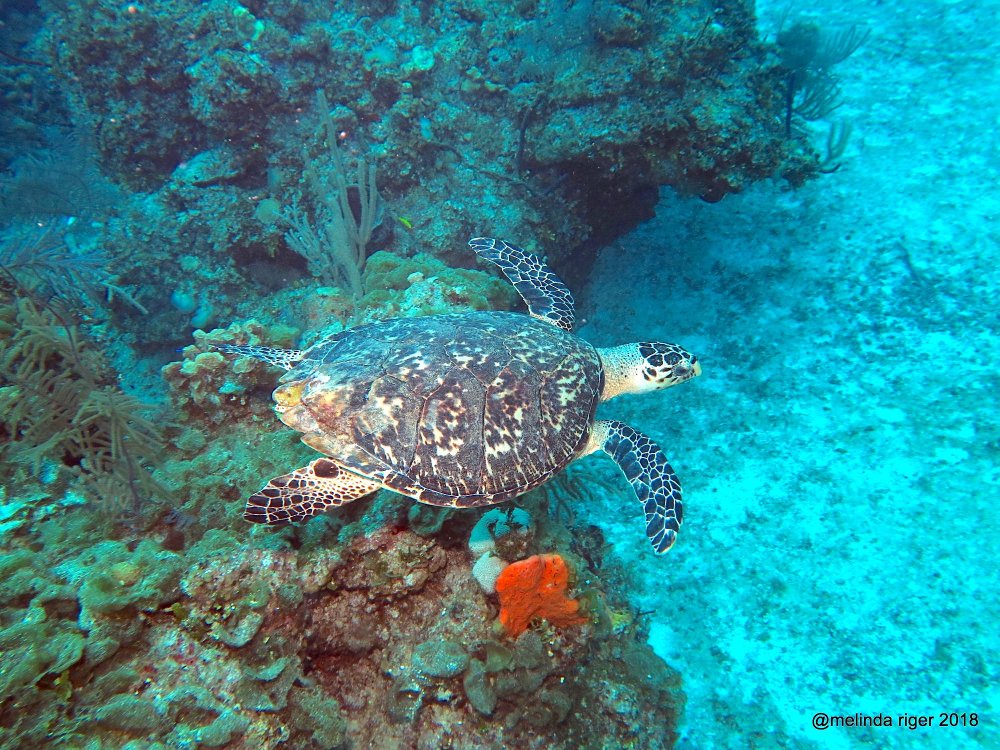
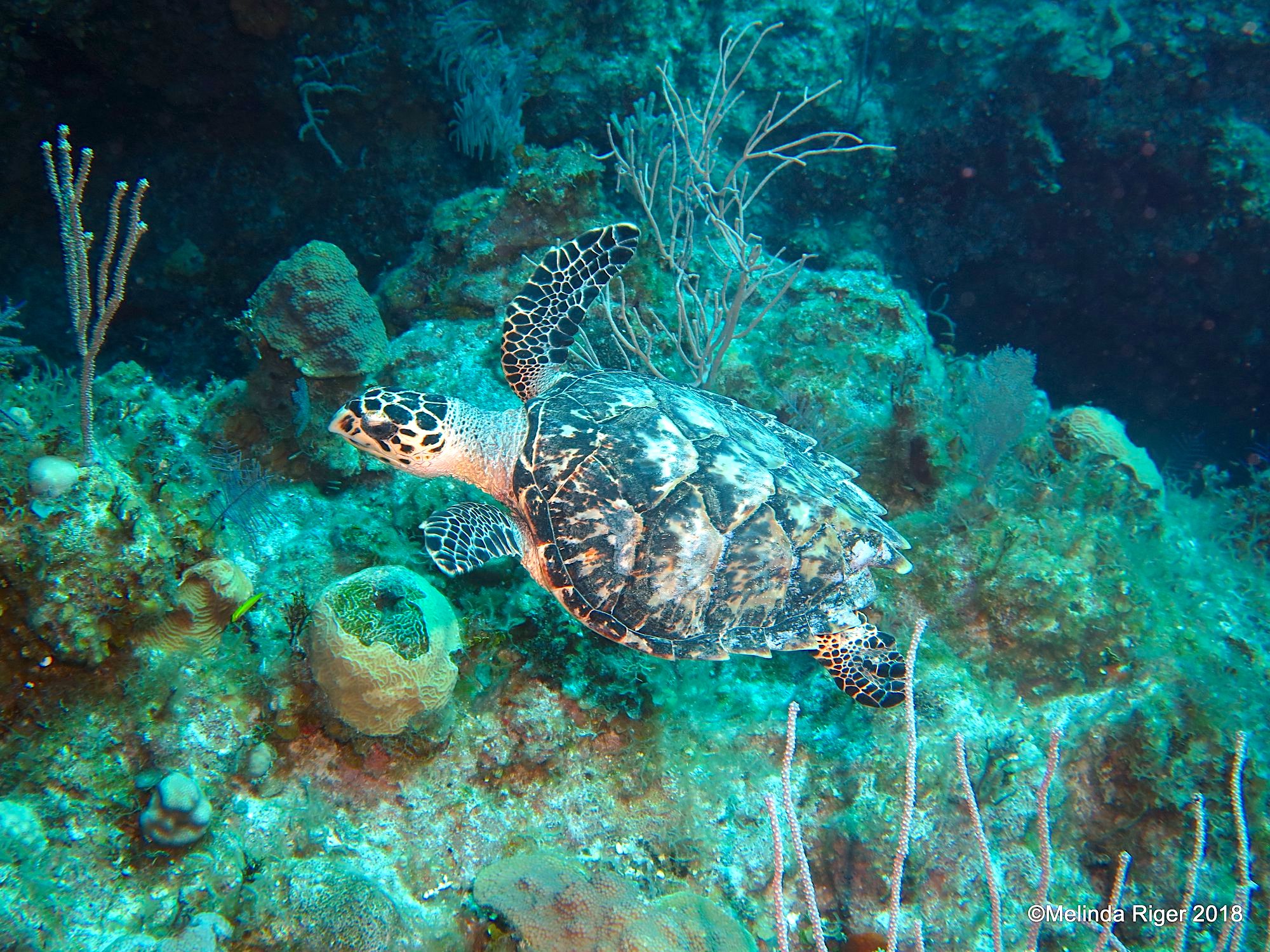
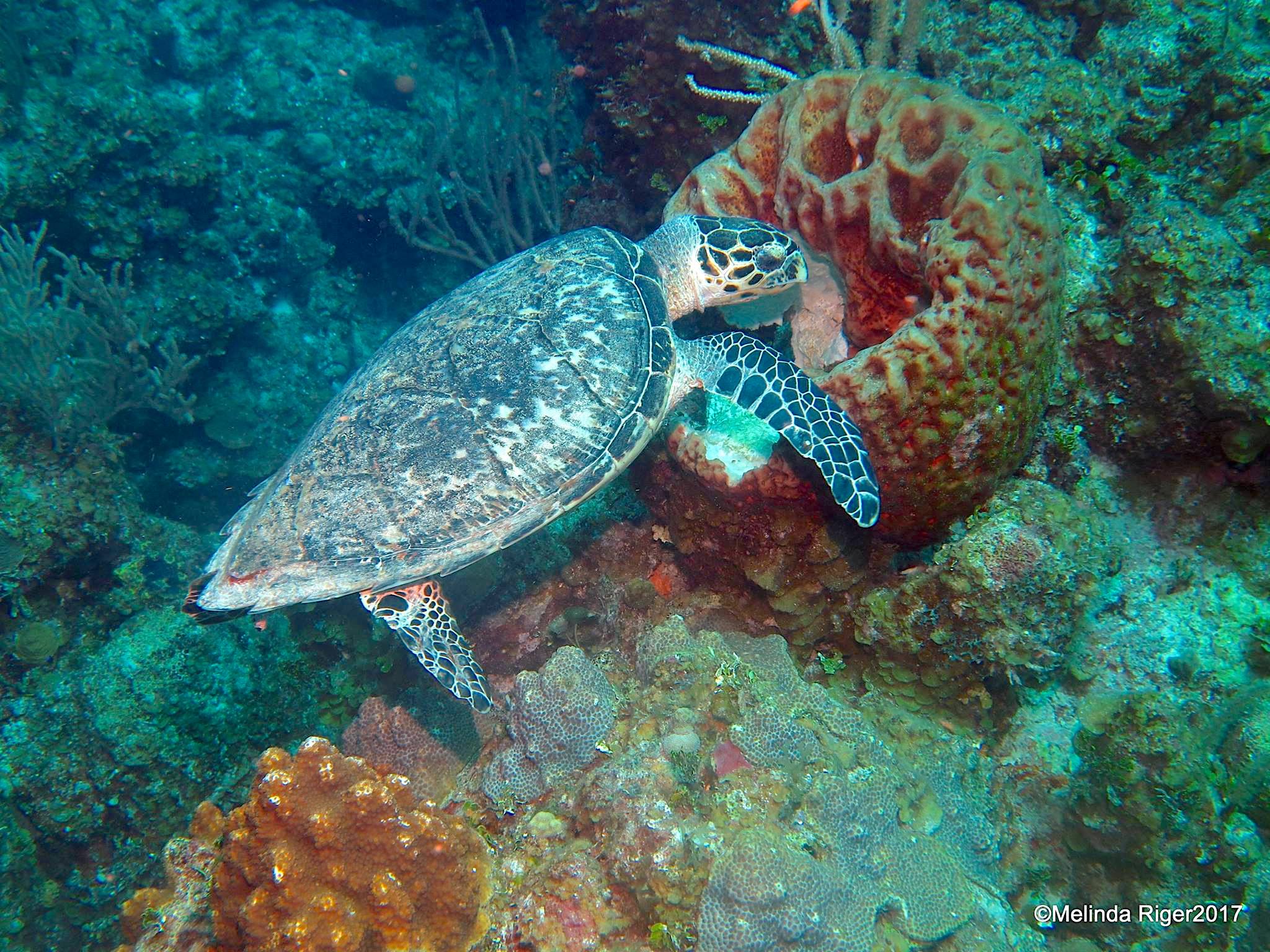
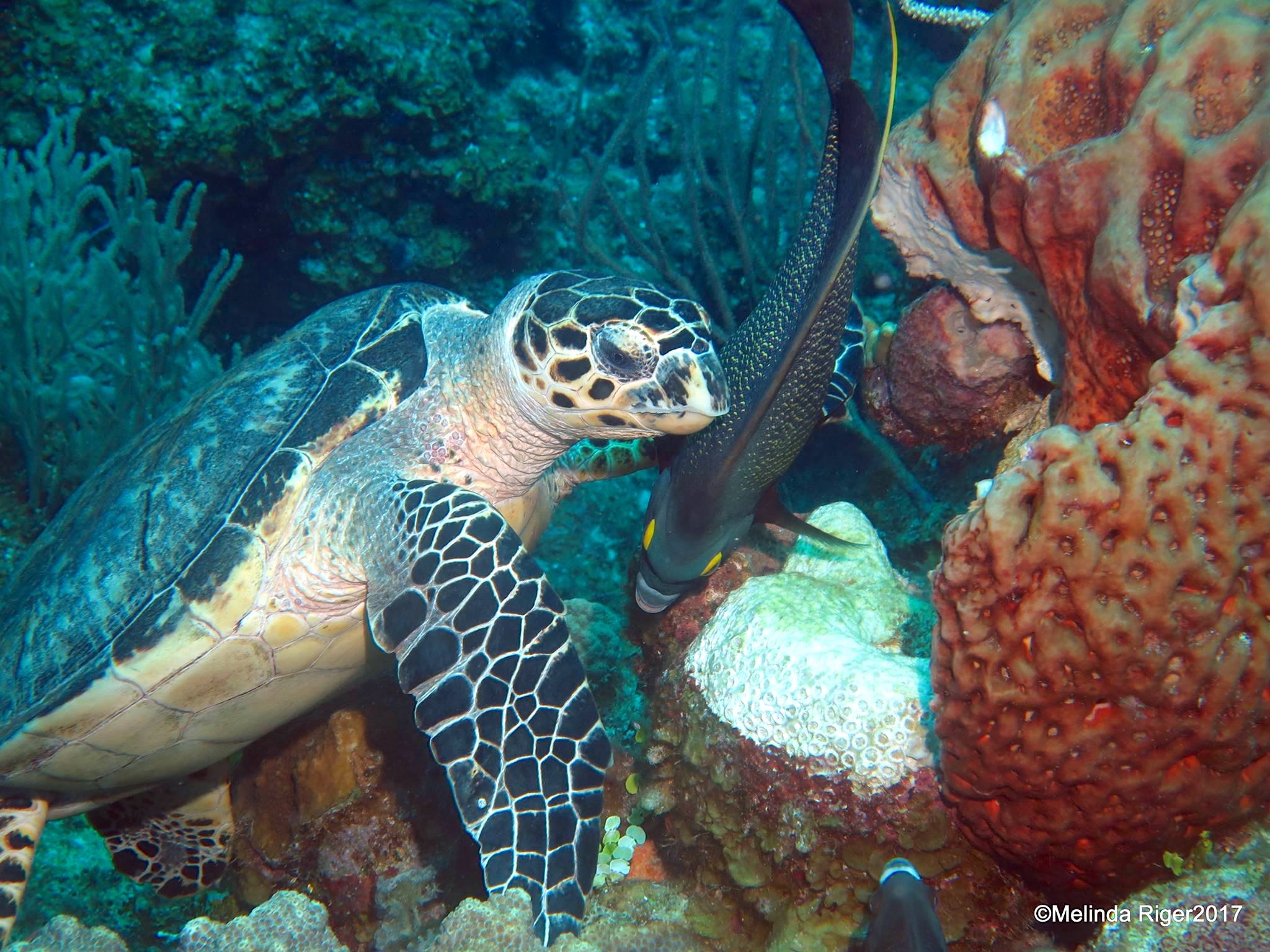
Of all the sea creatures in the limpid waters of the Bahamas, turtles are rightly among the most loved. These days, what with habitat degradation below the waves and the destruction of nesting sites on land, turtles have a hard time simply fighting for survival. And that’s before they have ingested the plastic garbage that mankind pours into their living quarters, by now probably beyond effective remedial action forever. So here are some gorgeous turtles to admire, while stocks last…
Hawksbill Turtles enjoying life around a still-healthy reef
A hawksbill snacking on a sponge
Interaction with other underwater species: gray angelfish and a rock beauty
If you are concerned about the plight of turtles and indeed other denizens of the thickening plastic soup we still call ‘ocean’, you could investigate the work some of the organisations that tackle the problem in the Bahamas and beyond. To name but a few, our own FRIENDS OF THE ENVIRONMENT; the BAHAMAS NATIONAL TRUST; the Bahamas Reef Environmental, Educational Foundation BREEF; the CAPE ELEUTHERA FOUNDATION; and the SEA TURTLE CONSERVANCY.
Photo credits: all great photos by Melinda Riger / Grand Bahama Scuba
LETTUCE SEA SLUGS: SOLAR POWERED ‘CRISPY BLISSFUL HEAVEN’
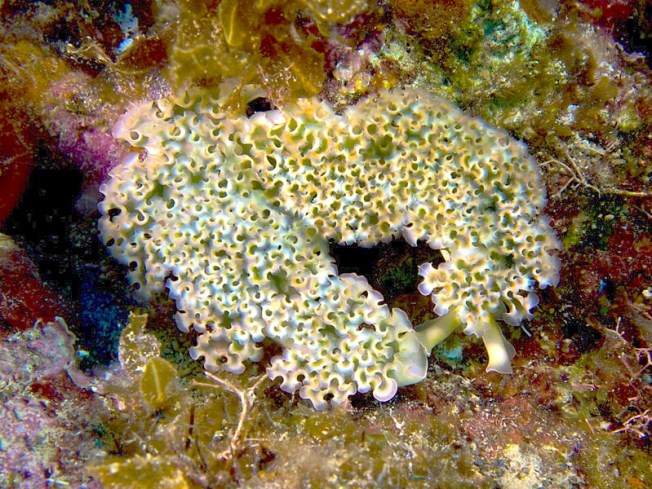
The Lettuce Sea Slug Elysia crispata (transl. ‘Crispy Blissful Heaven’) was No.3 in the‘WTF’‘What’s That Fish’ series (despite not actually being a fish at all). It is not by any means the weirdest creature featured so far but it is nonetheless an animal whose appearance excites curiosity. Unless you see one moving, it could easily be mistaken for a plant. Maybe even lettuce. It is in fact a SACOGLOSSAN.
The name ‘sacoglossan’ literally means ‘sap-sucker’. This group (or ‘clade’) comprises small gastropod mollusks that ingest the cellular content of algae (which isn’t really sap).
WHY WOULD THEY DO THAT?
Because they are… SOLAR POWEREDslugs
WHAAAAA…..?
As I mentioned when I last visited these remarkable creatures, this isn’t a technical forum and too much science hurts my head. This species primarily lives off algae. May I give you the word KLEPTOPLASTY to drop lightly into your conversation? In a couple of sentences, algae / algal content is eaten but only partially digested. Certain elements are stored to produce photosynthesis by which light is converted to energy (cf plants) and the slug can in effect live and move around without food. You could entertain your neighbour at dinner (or maybe on public transport, why not?) by summarising the process as “chloroplast symbiosis”. Meanwhile, I’m fetching a beer. Two beers.
HOW DO THEY REPRODUCE?
This topic doesn’t seem to have excited much investigative interest, and there’s not much specific information about it. What there is sounds unnecessarily complicated, so I am just going to say authoritatively ‘they do it like many other slug species’ and hope that covers it. The pair shown below may be exploring the possibilities, or at least trying to work out which end is which. One is easy to tell, but the other? Time to make our excuses and leave…
HOW FAST, EXACTLY, DOES A LETTUCE SEA SLUG MOVE?
This rather beautiful video from ‘CORAL MORPHOLOGIC STUDIO’ will reveal all. You’ll soon see that progress is very slow. I recommend watching the first 30 seconds and you’ll get the idea. If you choose to persist, you will see the slug sort of turn and move off to the left.
DO SAY: What an intriguing creature. It’s a true wonder of marine nature.
DON’T SAY: Any good in a mixed salad?
Credits: Melinda @ Grand Bahama Scuba, Nick Hobgood, Coral Morphologic Studio, Laszlo Ilyes wiki
The WTF? series is aimed at shedding light on fishes that are unusual. Or very unusual. Or puzzling, dangerous and maybe less than elegant in appearance. The scorpionfish is one such. It belongs to a large family, the Scorpaenidae, and many types are found throughout the world, especially in the Pacific and Indian oceans. LIONFISH, the newcomers to the western Atlantic, are a species of scorpionfish.
Just another rock on the seabed…
WHY ‘SCORPIONFISH’? THEY LOOK SCARY. ARE THEY DANGEROUS?
One feature common to many scorpionfish species is that they are highly venomous. As the name suggests, a sting is involved. Or several stings. These come from the creature’s sharp spines, which are coated with mucus, and are to be avoided. If you want to pet one, the dorsal, anal and pelvic fins are the ones to steer clear of – these all have venom glands at the base. The spines act like injection needles. Scorpionfish aren’t naturally aggressive (except to prey), but they know how to defend themselves if need be. If you get ‘got’, you are in for “extreme pain and burning sensation”.
DO THEY HAVE ANY OTHER TRICKS TO WATCH OUT FOR?
As many have written, scorpionfish are ‘Masters of Camouflage’. They are able to disguise themselves very effectively. Their appearance is a remarkably adapted to their surroundings, as if covered in a raggle-taggle of colourful algae. They can change colour to aid concealment. They can flick sand over themselves as they settle on the seabed. These ploys enable them to lie motionless on a coral reef or on the seabed, ready to ambush their prey. This consists mainly of small fishes and crustaceans, but really anything edible that will fit in their mouths is fair game.
Concealed against coral
HOW DO THEY FEED?
The large mouth of scorpionfishes has a particular function. They don’t have teeth because they have no need. A scorpionfish can open its mouth and its gills simultaneously, thereby creating an instant vacuum that will suck in its prey in a flash. I have seen this described as “a nearly imperceptible split-second movement (15 milliseconds)”…
THESE SCARY MONSTERS MUST BE HUGE, RIGHT? I’M KEEPING OUT OF THE WATER
Not so fast. When all is said and done – and in my view, most disappointingly – adult Caribbean Scorpionfish grow in the range of… erm… 7 – 14 inches. So now you are reassured, here’s a great short video from Ocean Frontiers Dive Shop, who kindly shared it on YT. I’ve used a couple of illustrative stills from it too.
ANYTHING ELSE WE NEED TO KNOW?
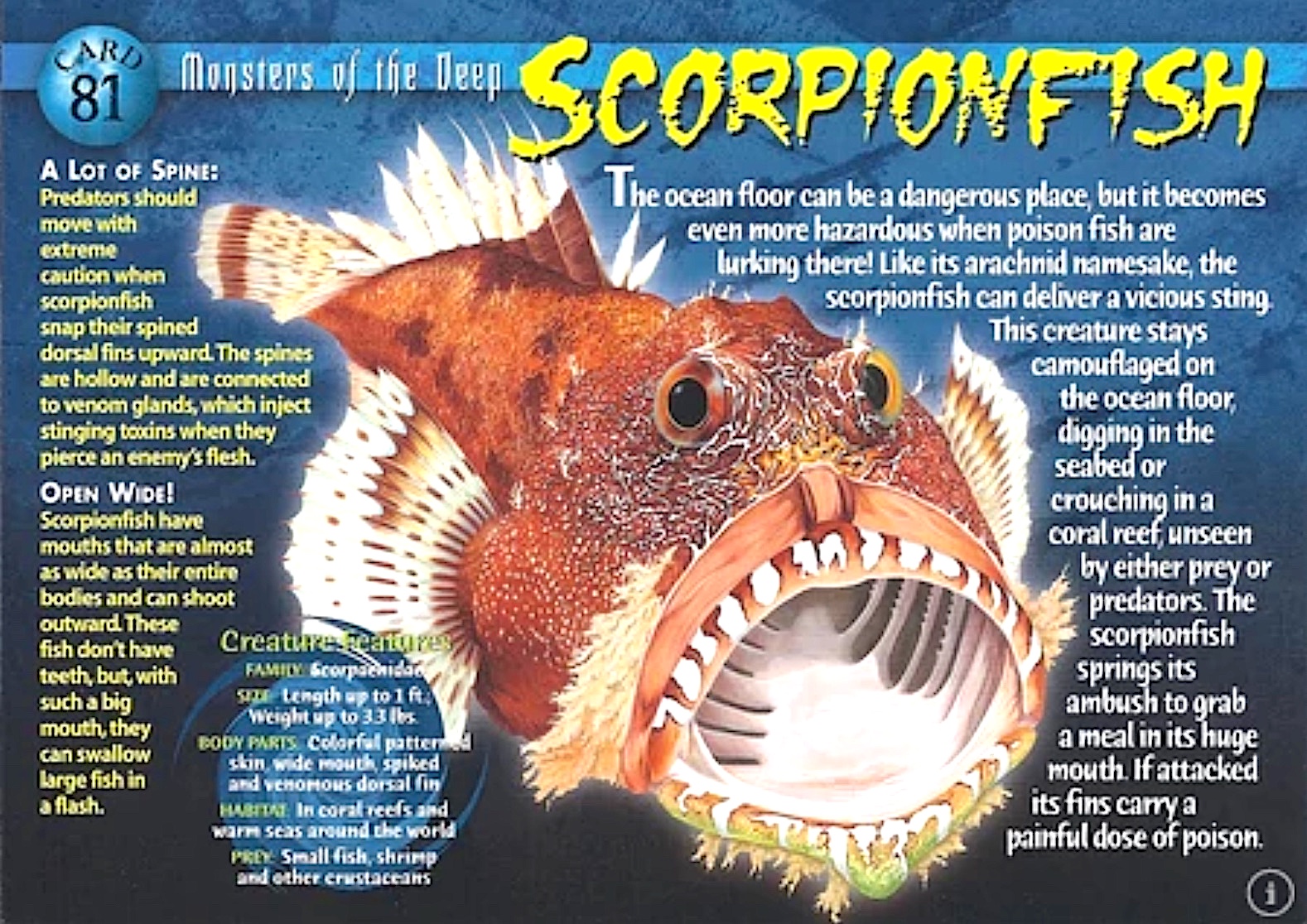
I can do no better than to turn to Card 81 to the excellent ‘Monsters of the Deep‘ series of trading cards (the link is to my MotD page). I do realise that this is a rather unscientific approach. On the other hand these guys pack memorable information into a very short space, and do it well. Note that you can get a reflex sting from a scorpionfish for up to a week after it has died. Eat dust, earthbound scorpions.
Credits: Melinda Riger / Grand Bahama Scuba (1, 2, 3, 4,); Ocean Frontiers Dive Shop (video from YT, 2 stills); Wierd (sic) Creatures / Monsters of the Deep (O/S)
The Goldentail Moray Eel Gymnothorax miliaris is one of the half-dozen moray species found in Bahamas waters. Adults range in length from about 1.5 to 2.5 feet, and they are creatures of the reefs and rocks of the western Atlantic. As far as I can make out, the goldentails are rather less common than green or spotted morays, the two main eel species of the Bahamas.
Like their moray cousins, goldentails likes to keep themselves to themselves, and lead largely solitary lives. That said, sometimes they have been observed hunting in a group. They live in holes, clefts, and caverns which they leave both during the day and at night to hunt for prey along the reefs, aided by an acute sense of smell. Their diet is mainly of crustaceans, mollusks, and small fishes.
ARE GOLDENTAILS DANGEROUS?
Like many other eels, goldentails secrete a protective mucus that contains a toxin, making them unattractive prey for large predators such a groupers and barracudas. They are also associated with ciguatera poisoning, the active ingredients of which are found in the mucus coating. They are sometimes found in aquariums – the associated sites give a warning of painful bites, because they have backwards-pointing teeth (aka prey traps) – see header image for a clear view of this.
CAN YOU EAT THESE FISH?
Well I wondered that too, so I checked. The answer seems to be yes, if you real really want to. Comments on forums include:
“Yes they are edible, I just ate one few weeks ago. Some parts are little bony and skinning it is a bitch. But the meat is very soft and white, delicious. Deep fry works”.
“After eating our moray eel something changed. The next morning, we were decidedly feeling ill. I won’t get into the details, but let’s just say that “gastrointestinal effects”
“…symptoms (of ciguatera) include gastronomic effects, and neurological effects which include headaches, numbness, paresthesia, muscle ache, and even hallucinations”.
“Before you can eat one you have to kill it. They are amazingly hard to kill. I would skip it.”
“I would rather eat a shoe”
So I’ll be moving straight on to the next course, please. Or just a Kalik would do, thanks.
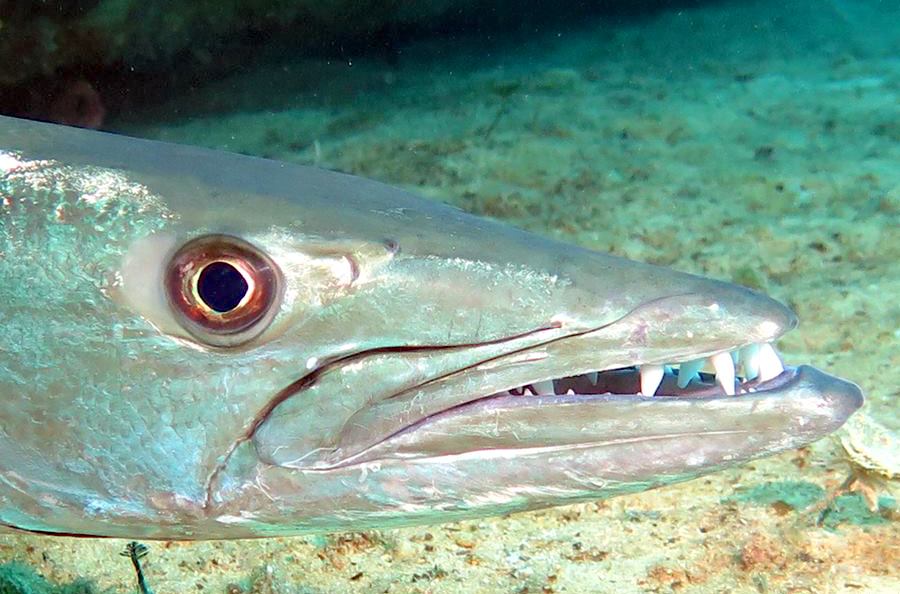
It’s probably fair to say that barracudas are among the less kindly-disposed of the denizens of the flats and reefs of the Bahamas. They certainly rank high on the Rolling Harbour Tooth Avoidance Scale. The seemingly random nature of the razor sharp dental arrangements – different sizes, different angles, different directions – does not inspire confidence.
The worst fishing injury I have picked up so far – aside from multiple terrible injuries to pride from botched casts, mistakes, missed takes and lost fish – has come from a large ling. What I didn’t know until I had been cut when my finger went into its mouth was that the teeth are coated in anticoagulant. I bled all over the boat and spent the rest of the day getting through a large roll of paper towel and several improvised bandages (J-cloths). That wiped the smug smile off my face – pride in the catch came before a notable fall in my standard-issue blood quota.
When bonefishing in the shallow waters around the coast of Abaco, there are always ‘cudas to be seen. They are not the main target fish, but the boats always have a spinning rod in them, just in case… At some stage in the day, some people find it hard to resist the urge to chuck out a lure when ‘cudas are about. It’s not something I generally do, though occasionally my fly gets intercepted by a practice-sized ‘cuda.
A learner ‘cuda that took a bonefish fly
Earlier this year I was in a boat fishing with the legendary Robin Albury, a guide who generally doubles my usual modest catch rate. My boat partner and I were taking a lunch break, with an open cool box of snacks between us and a Kalik in our hands. Robin went to the sharp end with the spinning rod on the off-chance. In a flash he had seen a big ‘cuda, chucked out the lure onto the creature’s nose and caught it, almost in one movement. I put down my beer to watch the entertainment. Robin decided otherwise, and simply handed me the rod to play the thing. And boy, was that fun. I didn’t get the kudos of making the hook-up, but I had plenty of work to do… It took an excitingly long time to bring the strong and vigorous fish to the boat. Robin got to hold the fish, of course – after my ling experience, I was happy enough to let him mess with the dental arrangements.
Credits: Melinda Riger / Grand Bahama Scuba (1, 2, 4, 6, 7); Keith Salvesen / Rolling Harbour (3, 5, 6)
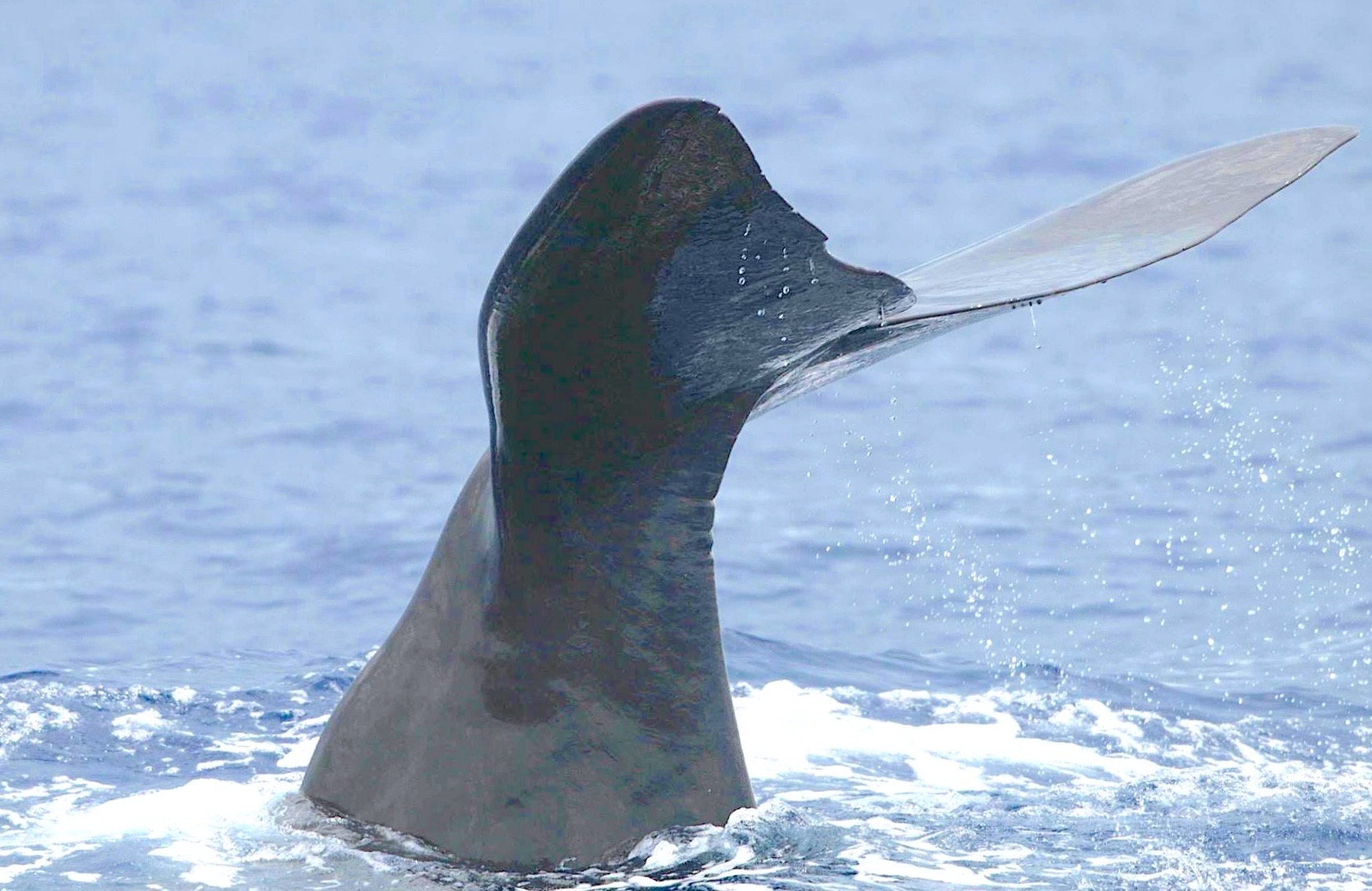
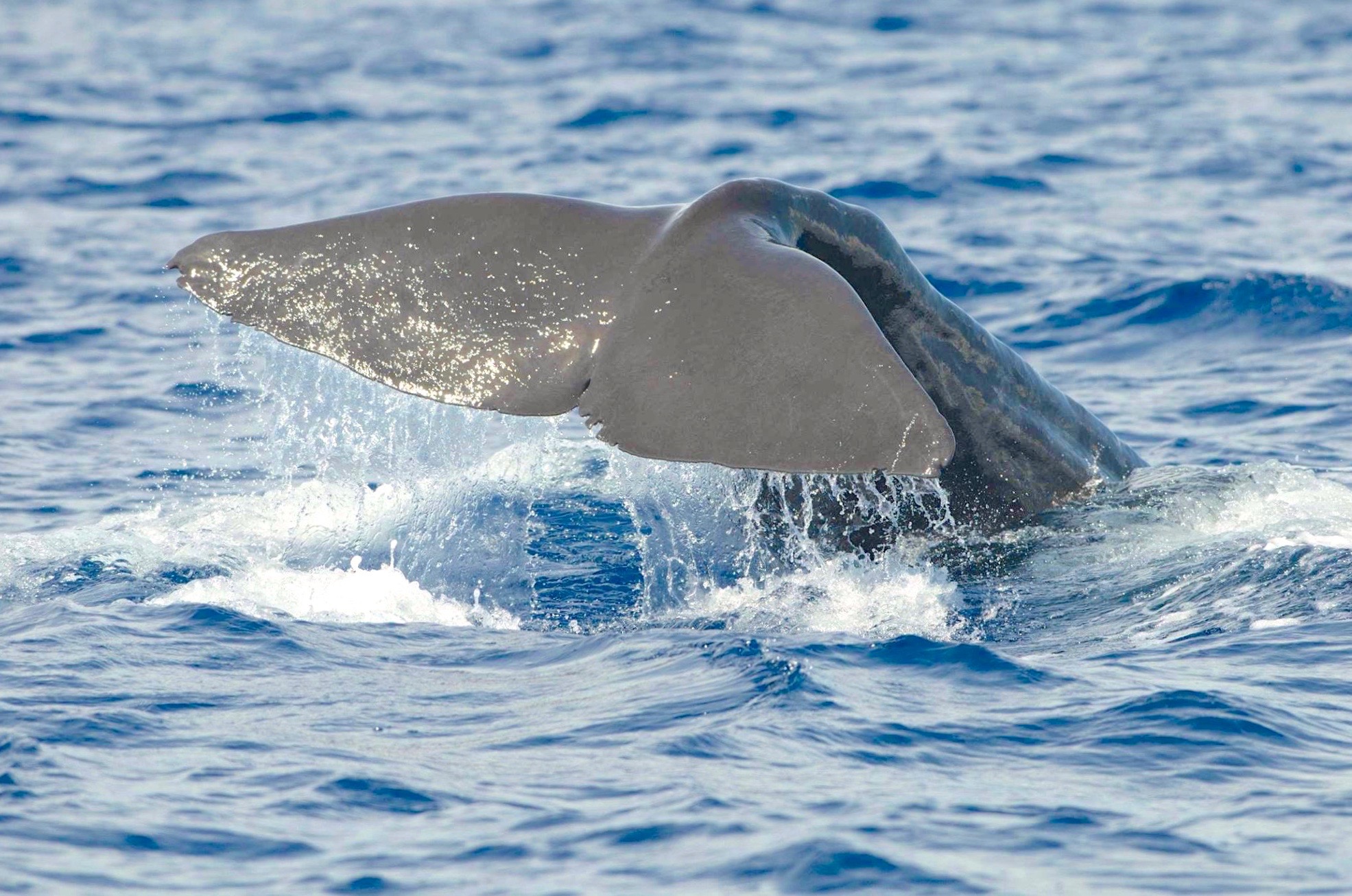
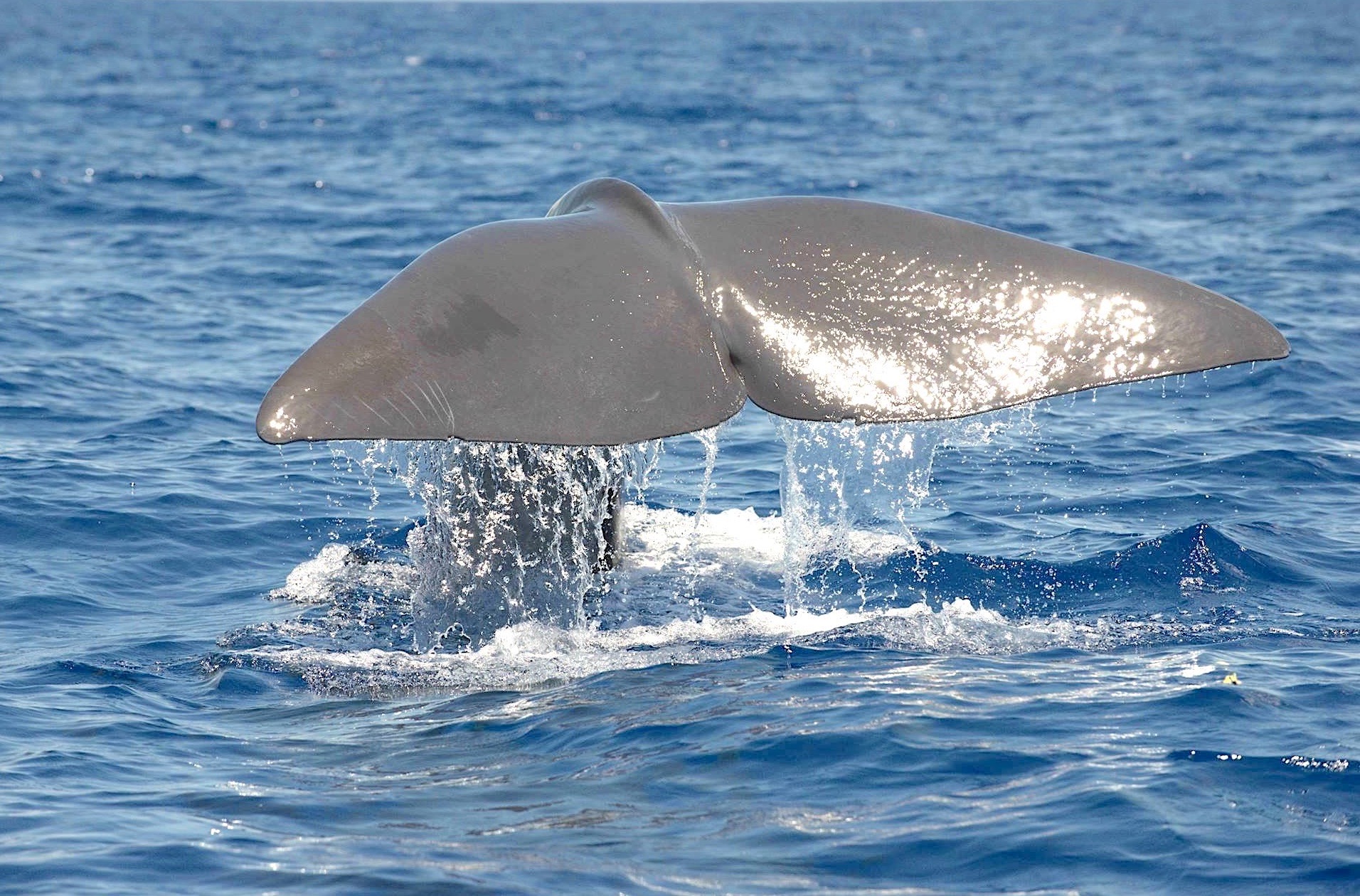
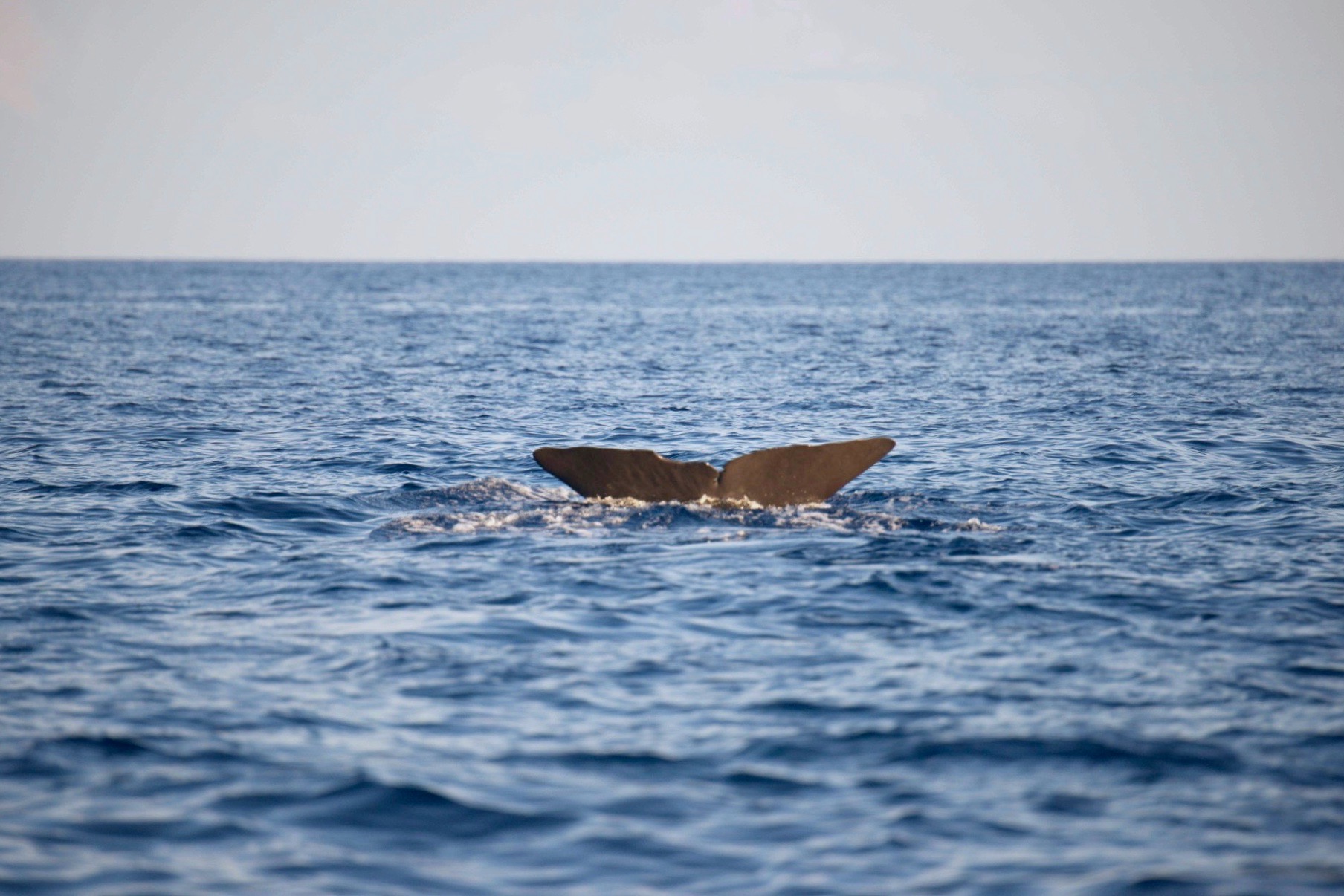
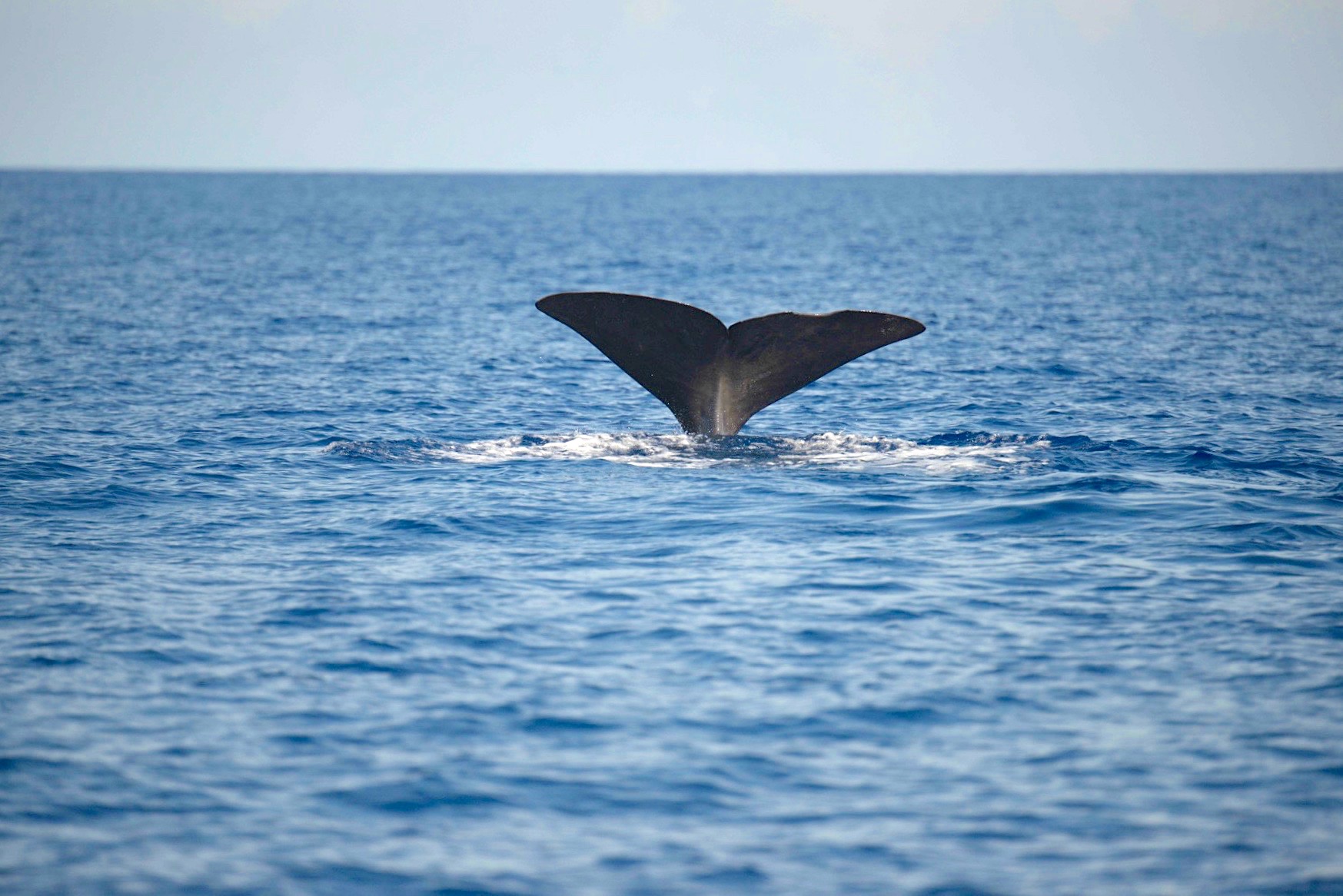
There can be very few people in the world whose breath would not be taken away by the sight of a massive sperm whale tailing close by. And as it happens, this very phenomenon can be seen in the deeper waters around the coast of Abaco. Here is a small gallery of photos of sperm whales tailing, taken from the BMMROresearch vessel. There’s no point in my writing a lot of commentary to the images – they speak for themselves of the awesome (in its correct sense) power and grace of these huge mammals.
In these images, you will notice that the whales have distinctive patterns of notches and tears in their flukes (ie tail fins). As with a dolphin’s dorsal fin, these areas of damage are like fingerprints – unique to each individual, and a sure means to identification. The researchers log each sighting and assign a cypher – a whale will become known as ‘B42’ and not usually by a less scientific name like ‘Derek’ or ‘Susie’).
Q. What happened next? A. You would see the tail emerge as the whale dives deep…
One of my favourite whale views is of the tail as it rises above the surface with water streaming off the flukes, before it flicks over and disappears beneath the waves.
A juvenile takes a dive alongside an adult. One day that tail will be massive…
It’s more than 4 years since I last wrote about these intriguing creatures and their endearing ways. It’s time for another look, with a new batch of great photos too. This is a species that lends itself to the ‘Fun Fact’ treatment, a method that tells you at least as much as you probably need – or want – to know about puffers. The message to take away is, best not to handle one – let alone eat one – unless you know exactly what you are doing…
10 PUFFER FISH FACTS TO ASTONISH YOUR FAMILY & FRIENDS
1. Puffers can inflate their bodies in an instant by ingesting huge amounts of water and becoming water-filled balloons. Then their tiny spines stick out.
2. They need a startling form of defence (or ‘piscatorial superpower’ Linnaeus 1763*) like this because they can’t swim very well to escape from predators: it’s surprising and intimidating – and it also makes them hard to eat.
3. However, a persistent predator undeterred by the trick will find that the puffer contains a toxin (tetrodotoxin TTX) that is said to be ‘1,200 times stronger than cyanide’. One puffer fish has enough toxin to kill up to 30 humans (National Geographic).
4. Notwithstanding the risks, selected parts of a puffer fish are a delicacy in some cultures (known as ‘fugu’ in Japan). Specially trained chefs are used to avoid mass deaths among diners. The insurance premiums must be huge.
5. Sharks are thought to be the only species immune to the puffer fish, and are not much bothered by a small fish that can blow itself up.
6. Puffers have skin, not scales; most have toxic fins or spines of some sort, besides toxic innards. Bright coloured kinds are likely to be more toxic than their duller cousins. This warning colouration in creatures is known as aposematism.
7. It’s worth finding out what an uninflated puffer looks like before you try to pet a random passing fish and have a toxic encounter. There is as yet no known antidote.
8. In all, there are more than a hundred puffer species in the world, all found where there are warm shallow waters. At least 3 main species – sharpnose, band-tail and chequered – are found in the Bahamas.
9. Some puffer species are not toxic at all; and some – especially in Pacific waters – are far more toxic than others. That’s the region where they are treated as a delicacy.
10. I’ve checked several research papers but I can’t find an evaluation of the relative toxicity as between the Bahamas puffer species. However it’s clear that the sharpnose is certainly not one play with. Take care!
Q. SO WHAT DOES AN INFLATED PUFFER LOOK LIKE? A. THIS!
Brian Lockwood took his life in his hands to get this fantastic shot…
Photo Credits: All puffer fish taken by Melinda Riger of Grand Bahama Scuba except for the photo of an inflated one from recent Abaco permanent resident Brian Lockwood
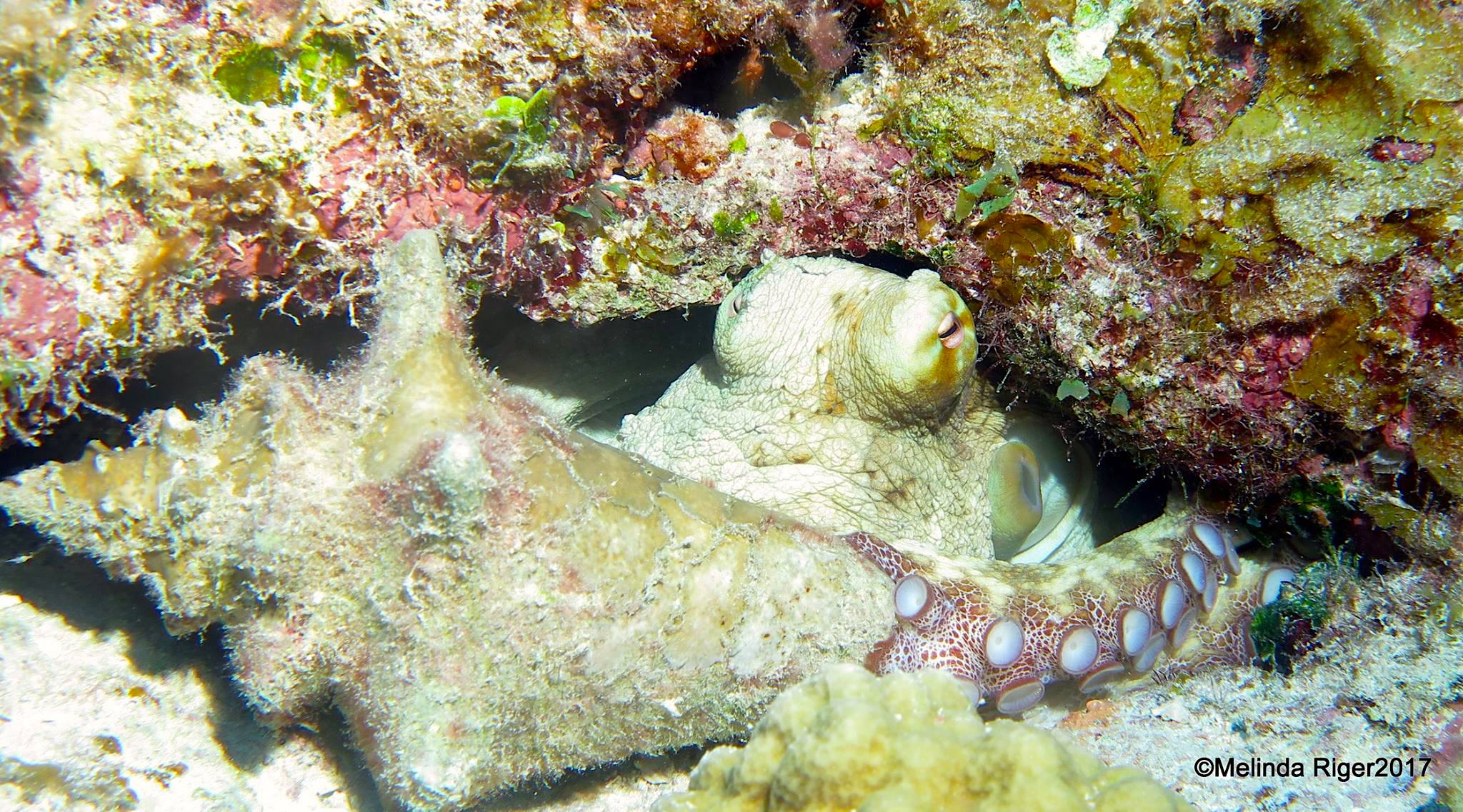
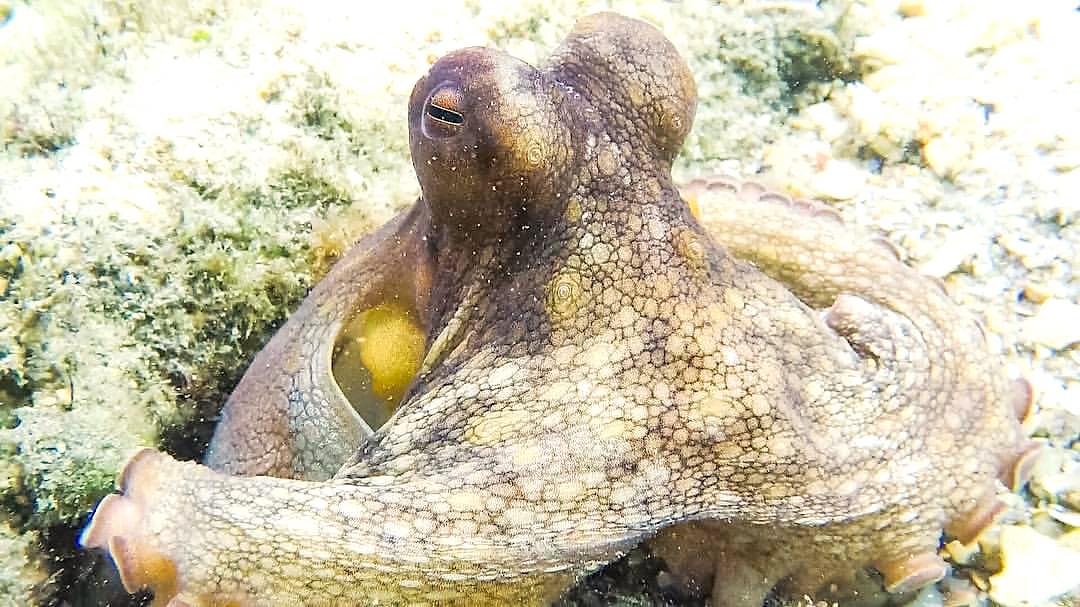
We haven’t seen many octopuses in these parts for quite a while. Time to put that right. The seas of the Bahamas teem with many many marine species, but few are as fascinating or indeed versatile as the octopus. Don’t take my word for it, just watch ‘Finding Dory’ to see how amazing Hank the… [what’s that, Skippy? It’s fiction?]. As you were. That these extraordinary creatures even exist let alone thrive in our waters is a truly wonderful thing. Here are a few to admire – or in the case of the one below, to admire you.
‘Here’s lookin’ at you…’
You can find out some more about octopuses – including the correct plural for ‘octopus’ – by clicking the links below. More importantly, you’ll see more of them too.
‘WELL SPOTTED’ (2): ATLANTIC SPOTTED DOLPHINS IN ABACO
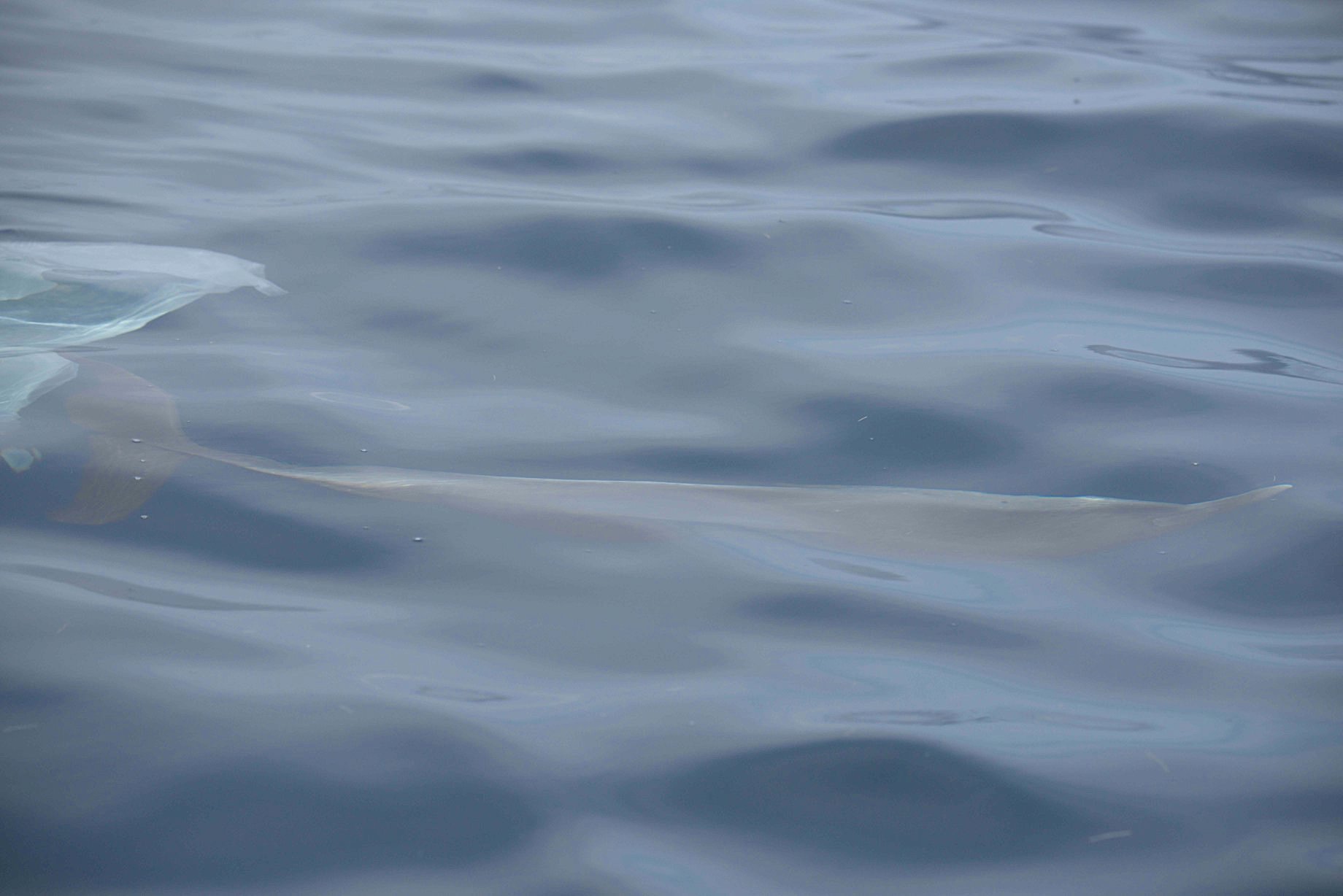
No sooner have I posted aboutPANTROPICAL SPOTTED DOLPHINS sighted during the current BMMRO whale research program, than the other Bahamas spotted dolphin species shows up as well. These are the more numerous Atlantic Spotteds Stenella frontalis, more confined in range (as the names suggest) than the Pantropicals.
The BMMRO caption reads “Atlantic spotted dolphins today! Small social group playing with sargassum – they swam past what looked like a plastic mattress cover – one dolphin whacked it with its tail as it swam by…”
Just because it can…
RUBBISHING RUBBISH: A RANT
Behold a large plastic bag, made by humans and dumped by humans into a place that is not theirs to use as a trash repository. It will take some 500 years to break down completely. But when people say that they don’t really mean it will have harmlessly disappeared over that period and become salt water. Far rom it. It will just break down into smaller and smaller pieces, to bite-sized bits for turtle, fish and seabirds who will idiotically mistake them for food (duh!), then to micro-plastic that will become part of the evolving plastic soup that will be ingested by tiny sea creatures and coat the reefs in polyethylene gunk. [End of rant. Ed.]
Behold an Atlantic Spotted Dolphin giving the bag a passing whack with its tail. It won’t do anything to help with marine pollution, but is shows a robust disdain for a piece of man-made rubbish that has made it into the creature’s home environment.
Below is a short GoPro shoot of a pair of ASDs, that I took from the BMMRO research boat last year. Marvel at the grace and elegance of these beautiful animals as they swim just below the surface (wonder, too, at the incompetence of the cameraperson who, to be fair, was leaning over the side of the RHIB with the camera on a stick…)
All photos BMMRO; video from the Rolling Harbour achives, intemperate rant all my own
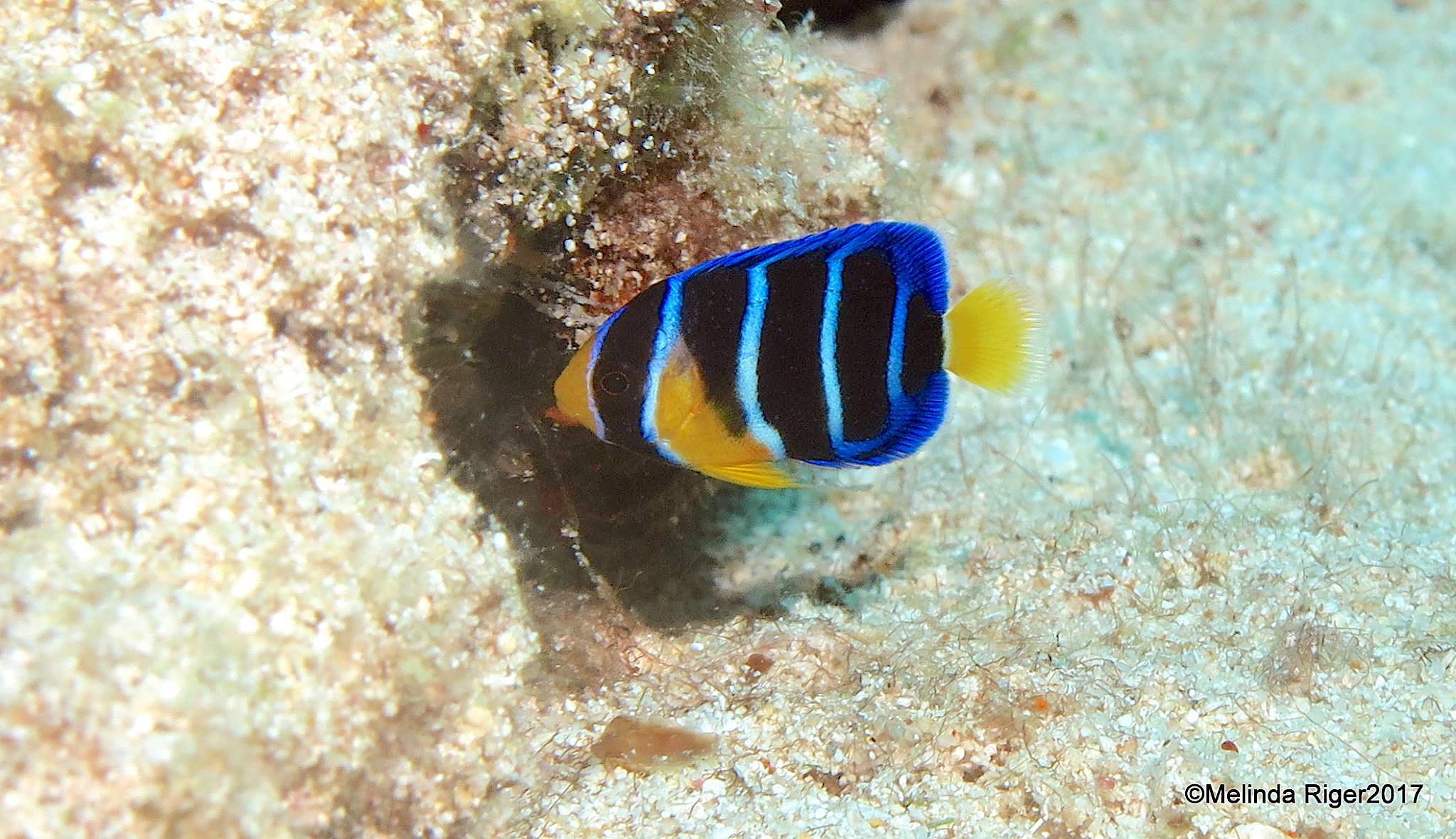
The Queen Angelfish Holacanthus ciliarisis is without doubt one of the most beautiful of all reef fishes in the Bahamas – and the competition is very strong. I have posted about them before, but to my surprise not for nearly 5 years. Too long: here are some much more recent photographs of adults and cute juveniles.
The bright colours, the pouty expressions, the appealing poses – these fish are true Beauty Queens. And helpfully, they are unlikely to be mistaken for any other fish species.
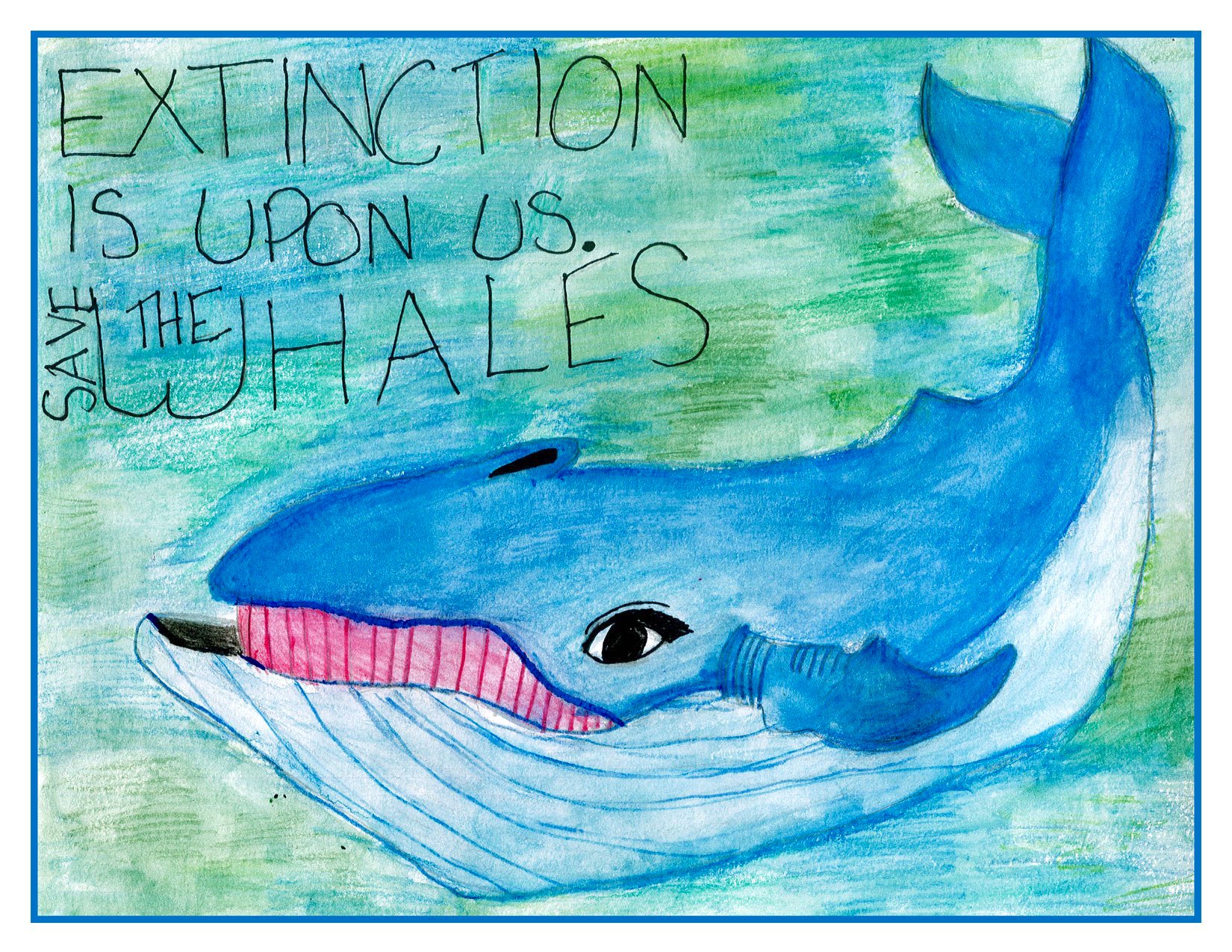
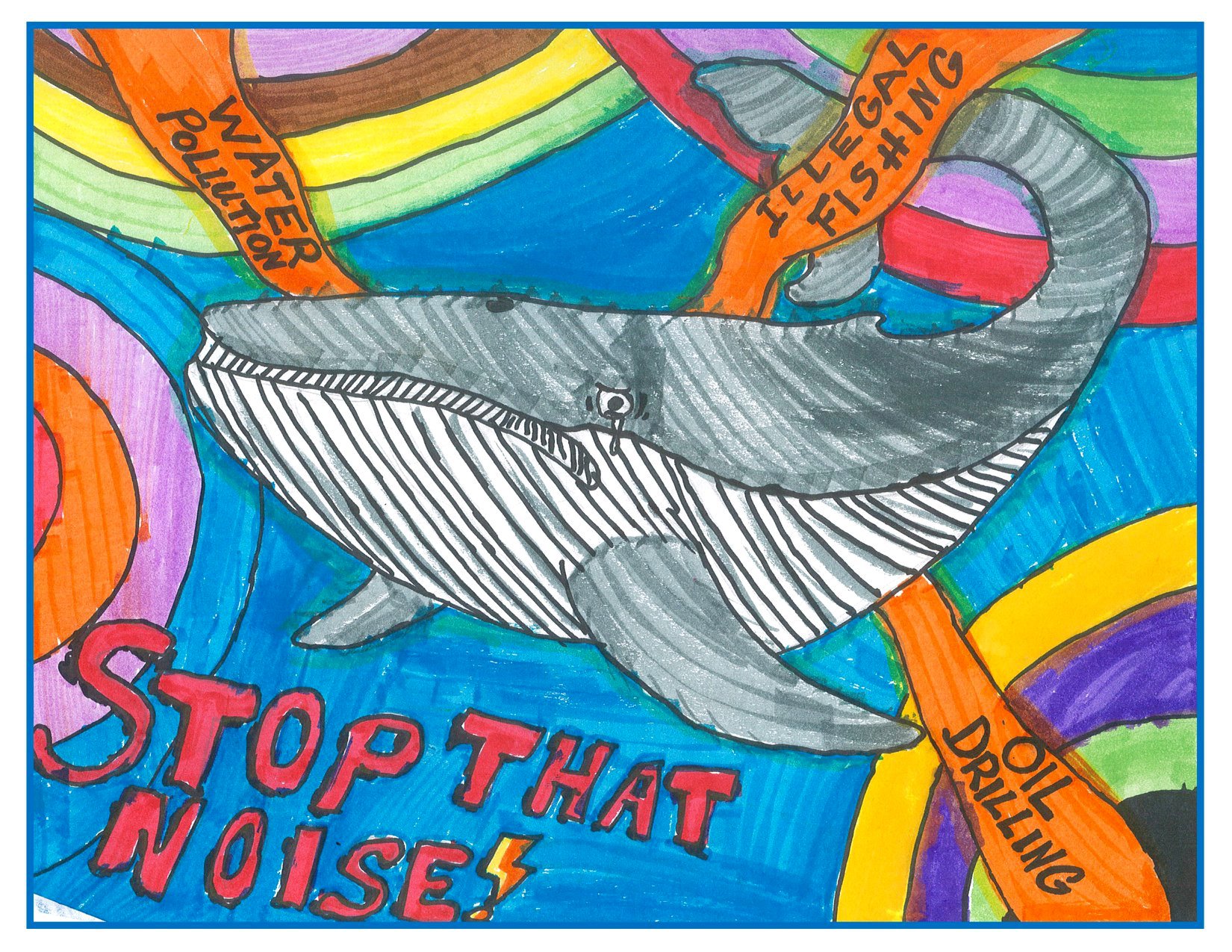
BMMRO recently collaborated with Dolphin Encounters Marine Education Poster Contest in a competition for schoolchildren on Abaco. There were 3 age groups, 3 -5, 6 – 8, and 9 – 12. The young participants received the excellent BMMRO marine educational poster as a prize, though I suspect they were motivated not so much by a prize but by the fun possibilities of the challenges set for them.
And how well they met them. I am featuring a selection of the prizewinners as posted by BMMRO on FB and Insta. Bearing in mind the ages of the artists, the results are astounding. As someone for whom the task of drawing a stickman presents insurmountable difficulties of perspective, proportion, form and accuracy, I am in awe of the inventiveness of these young minds and their artistic skills. They’ve done a fantastic job in highlighting the critical conservation issues facing all marine creatures large and small, with an awareness that I hope will help stay with them into adulthood.
Do I have a favourite, I asked myself. Actually, no – I’d just be proud to have any of these on my wall. And I bet the teachers and the families involved all feel the same.
In the shadow of a tall pylon in the secluded settlement of Cherokee stands Abaco’s smallest museum. Make that one of the world’s smallest museums. As I mentioned after it opened last year, other contenders for the title include the MmuseumM in New York, housed in an elevator shaft (look through glass window + audio guide); a converted red telephone kiosk in Warley, Yorkshire UK dedicated to local history (one visitor at a time); and a tiny shed of 134 sq ft in Arizona featuring what might broadly be called ‘ephemera’, including a Beatles poster…
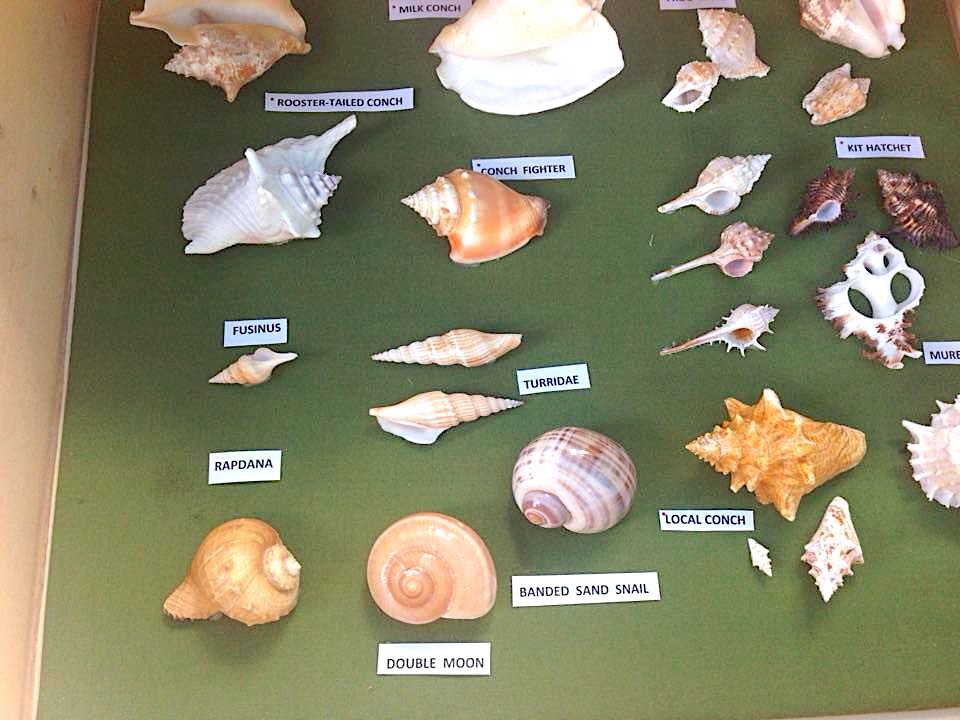
This tiny museum is dedicated to the shells of Abaco. It is almost certainly the smallest shell museum anywhere in the world (except maybe the one you kept in a small box under your bed when you were 10).
“Gifts from the Sea” is housed in the former 1950s telegraph office that ceased to operate in 1987 and had fallen into disrepair. Leased from BTC for a nominal rent, the little building was restored, and given a smart new roof and a complete makeover. It’s the perfect space for displaying a selection of the wonderful shells and corals to be found in Abaco waters.
This community project is the vision and creation of Curator Lee Pinder. Derek Weatherford fitted cabinets for the exhibits, and artist Jo-Ann Bradley painted a interior Cherokee-themed mural as a fitting backdrop to the displays.
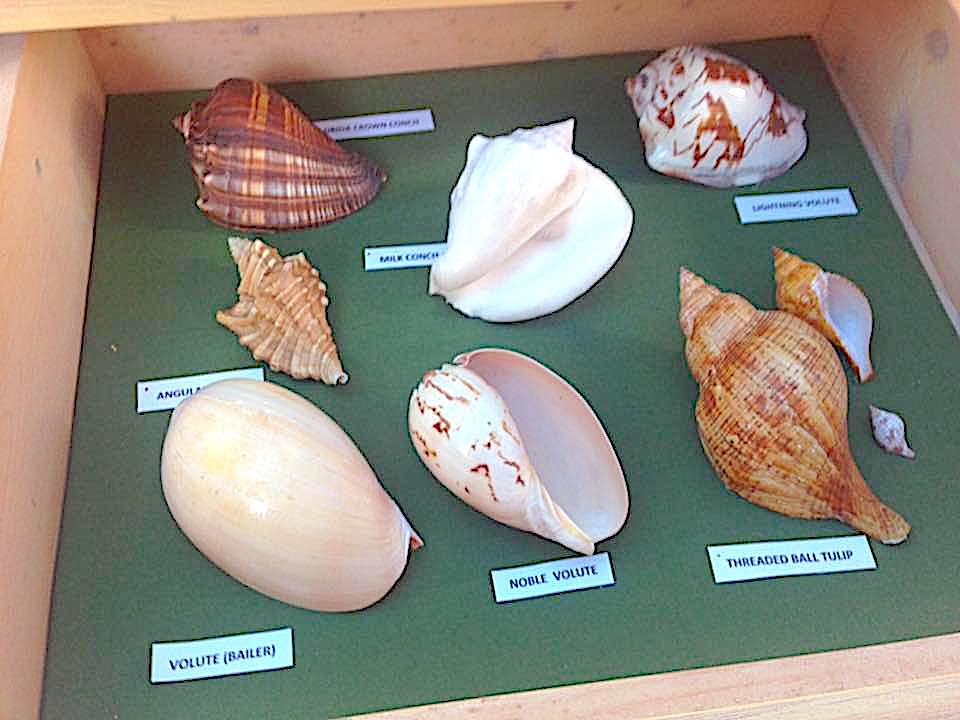
The exhibition shows more than 200 shells, each catalogued with its Latin and common name, and clearly labelled in the display. Most were found locally; a few are from further afield. Some specimens are very rare. The collection will expand as people make shell donations to the museum.
The building has a door at each end to give natural light and provide a ‘walk-through’ arrangement, which makes viewing in the confined space easier. Entry is free but there’s a glass jar for donations towards the upkeep of the museum. I’m guessing here, but I reckon donations made ‘outside the jar’ (so to speak) are very welcome too…
Museum Curator Lee Pinder
The opening ceremony took place on Easter Saturday 2017, when Cherokee resident Rev. Bateman Sands performed the official ribbon cutting ceremony preceded by a prayer at precisely 12 noon. As Jennifer Hudson in an Abaconian article pointed out, he was the ideal person for the task, having been “the first telegraph operator in Cherokee Sound, working in the little building using Morse code and in charge of the one and only telephone in the settlement until 1987 when the new BTC building was opened”.
The shell museum is not left open all the time, but visitors are welcomed on weekend afternoons, and private tours can be arranged by calling either number shown below on the notice attached to the door.
To see a selection of the many types of Abaco shells, check out my shell page HERE
Sources and Photo Credits: Bradley Albury / Jennifer Hudson / Abaconian; Cindy James Pinder (shells, interior 2017); Keith Salvesen (exterior, 2018)
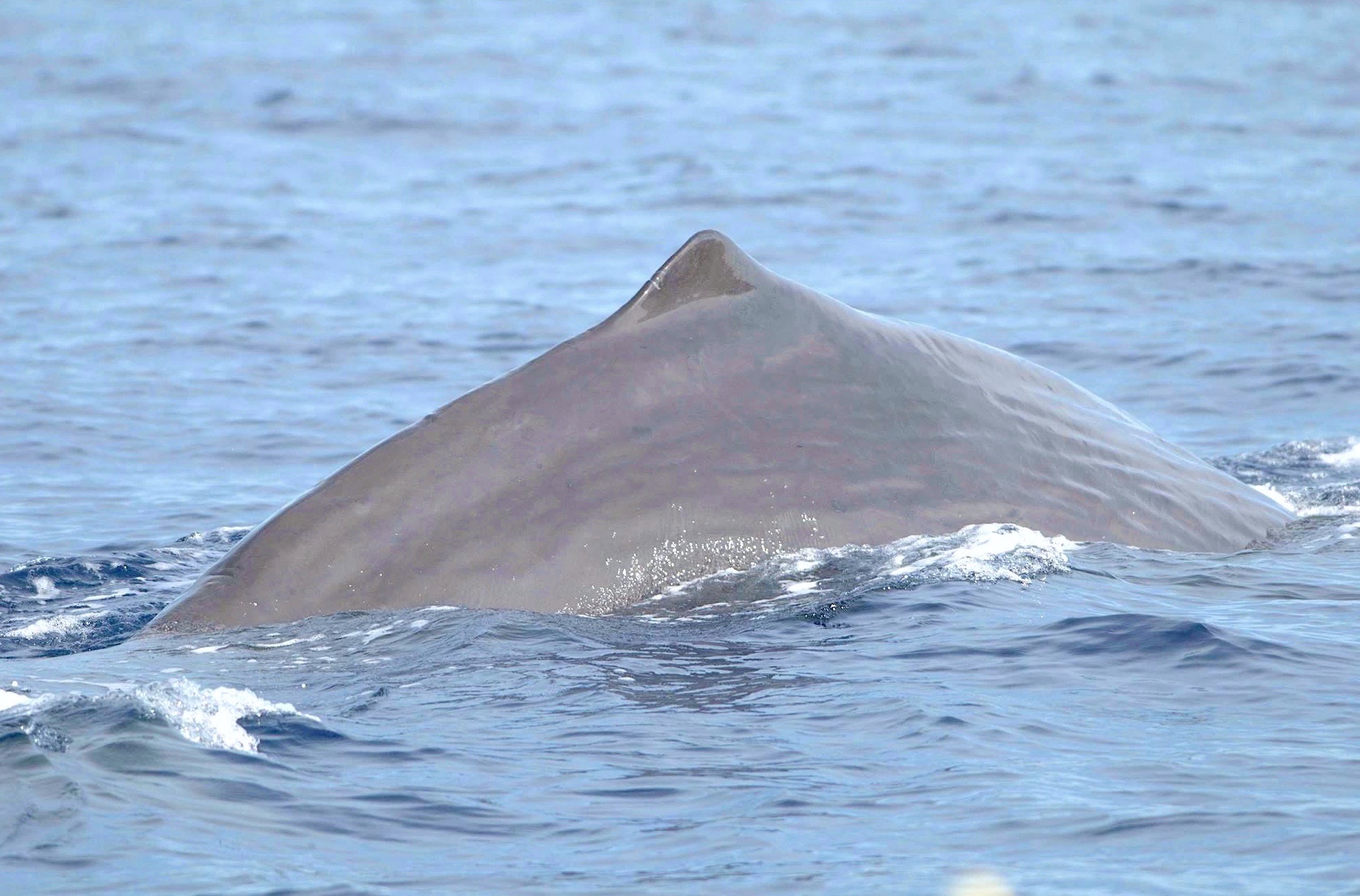
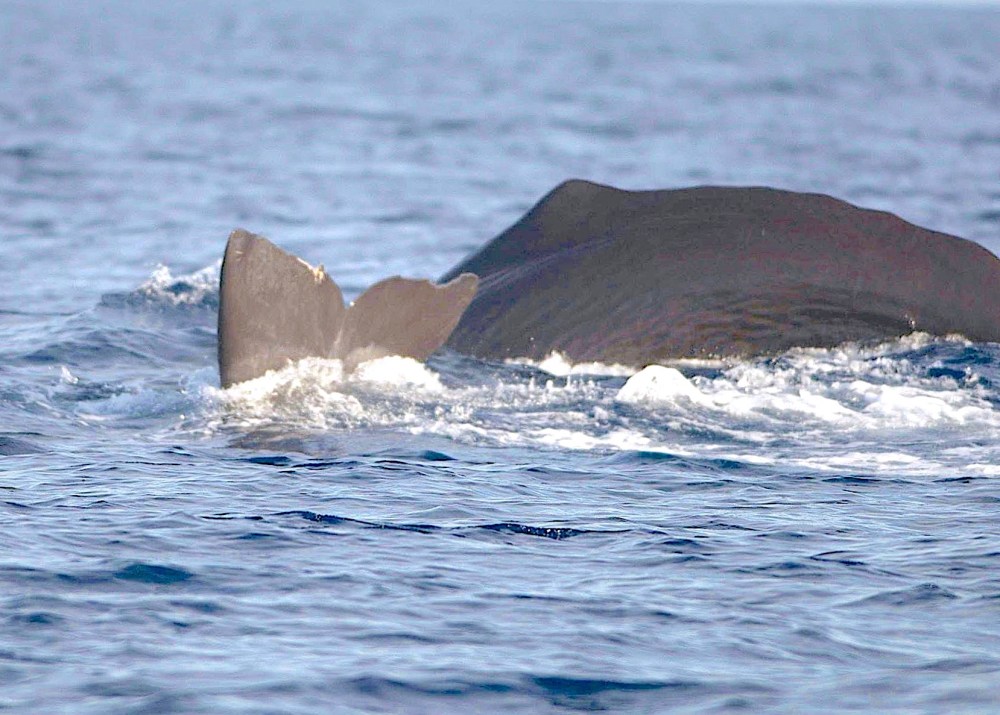
During the past week, the BMMRO research boat has been tracking sperm whales off the south coast of Abaco. These huge creatures are the largest marine mammals found in Bahamian waters, and the area between Rocky Point around the south coast to Hole-in-the Wall is a great place to find them.
One reason they are found in this particular area is the existence of the Great Bahama Canyon, one of the deepest submarine canyons in the world. The depth of the canyon ensures that the waters are nutrient-rich, with food being drawn up from the depths towards the surface. In season it’s the perfect place for female sperm whales and their calves.
The BMMRO research trip encountered more than a dozen sperm whales, mostly females with their calves. And the amazing thing is that the sightings are often made within sight of land. In these photos, the are two landmarks visible. One is the huge Disney vessel parked at Gorda Cay aka Castaway Cay (header image); the other is HOLE-IN-THE-WALL LIGHTHOUSE(above)
Credits: All photos BMMRO 2018, with thanks to Diane & Charlotte as ever
CARIBBEAN REEF SQUID REVISITED: SUPERPOWERS & SQUID SEX
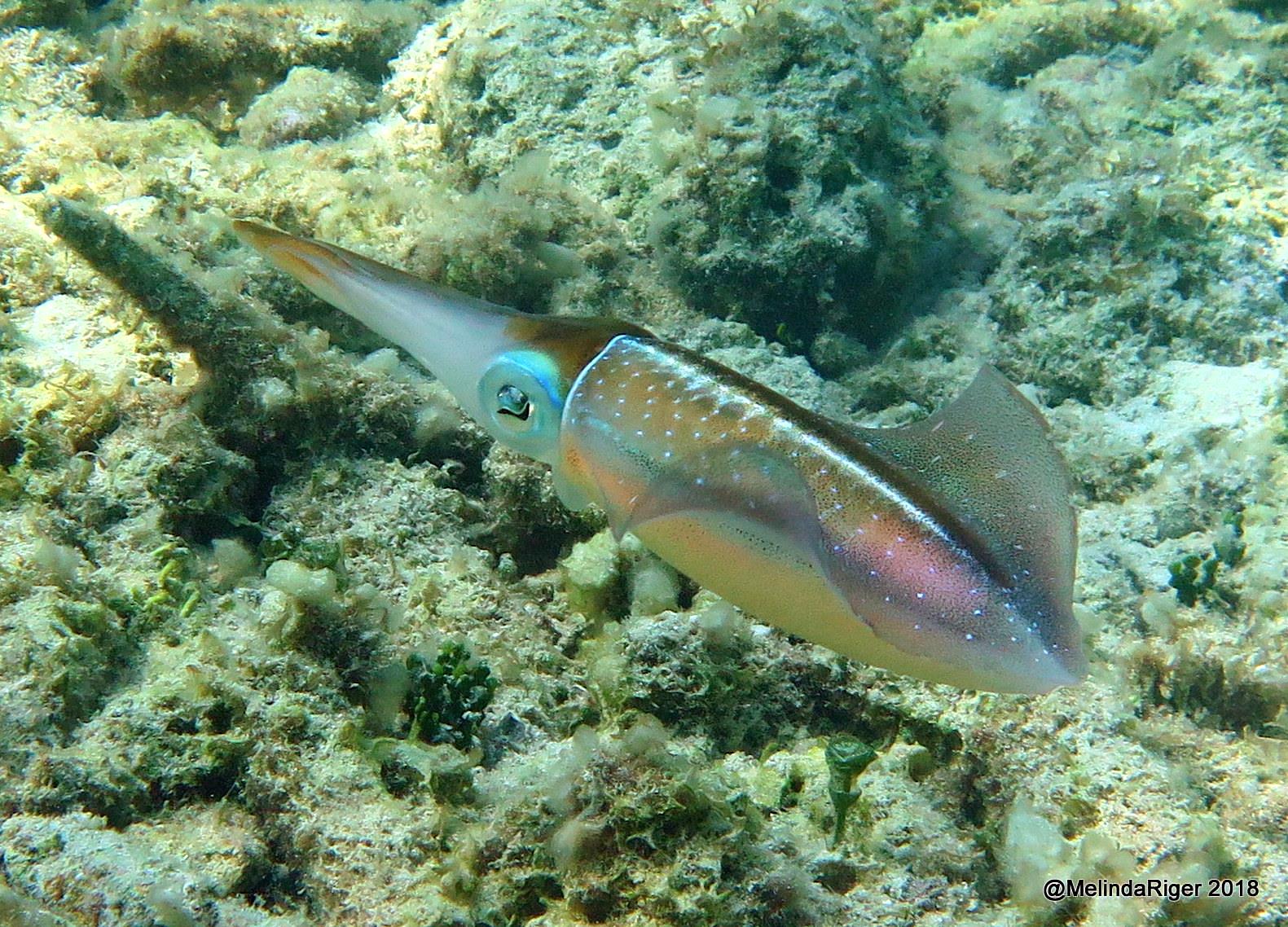
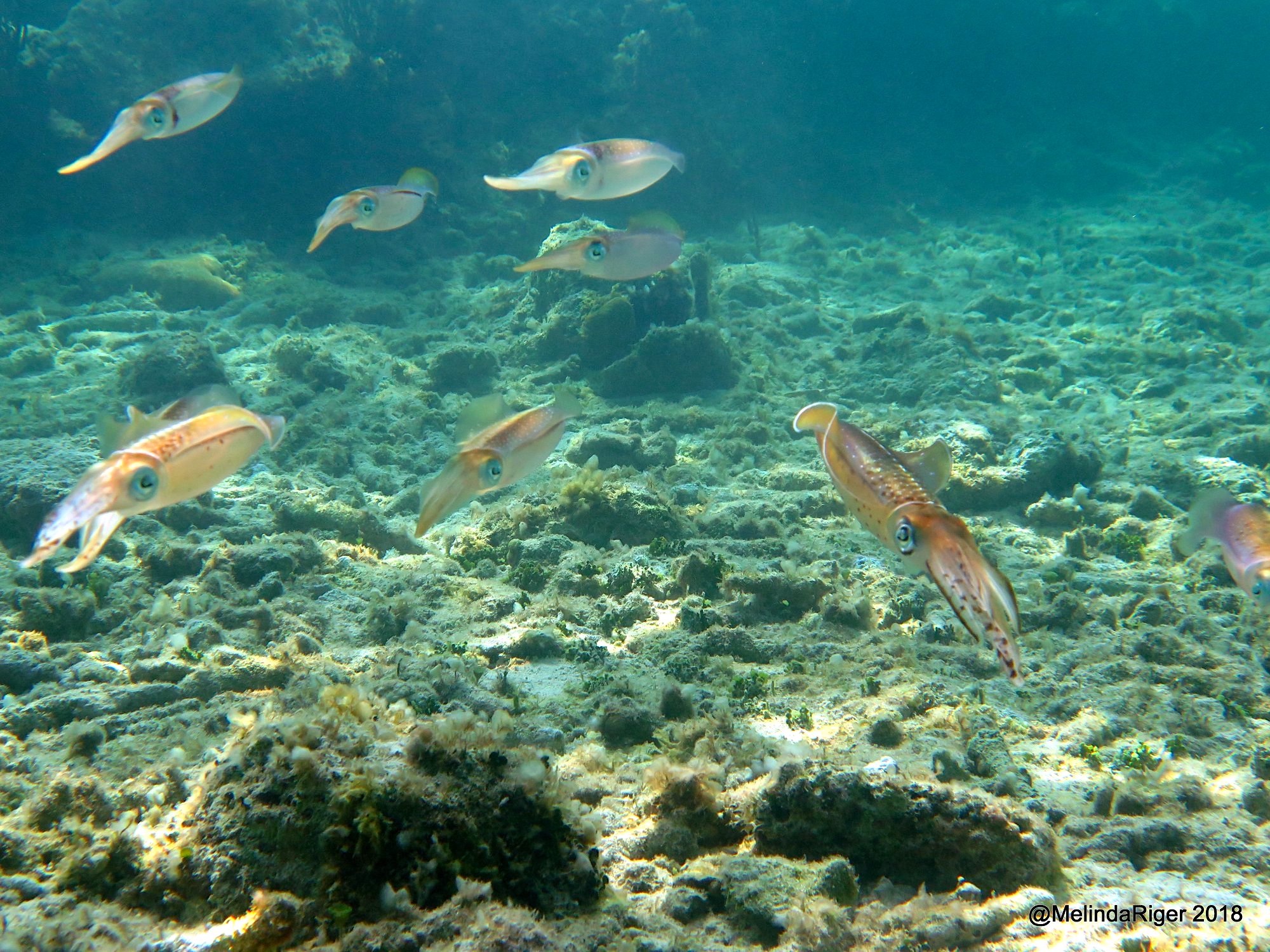
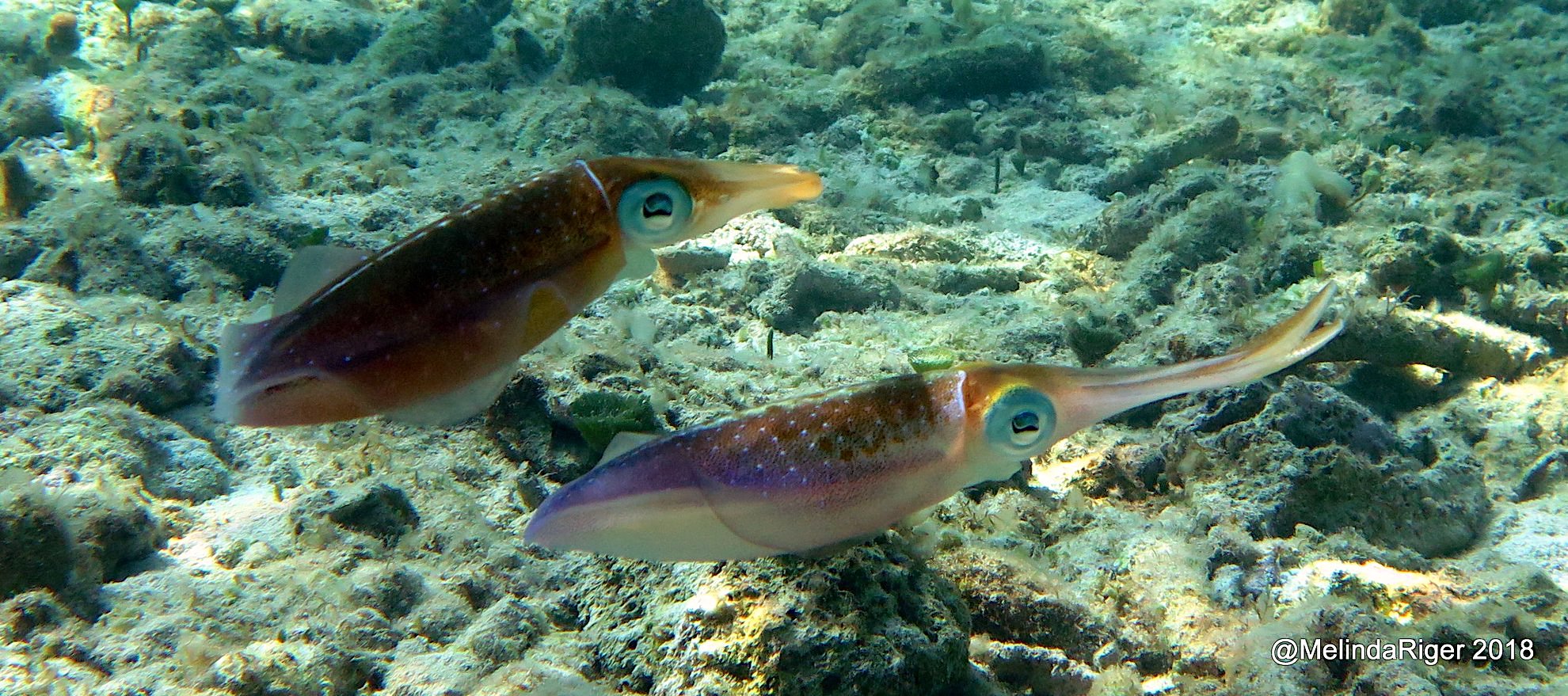
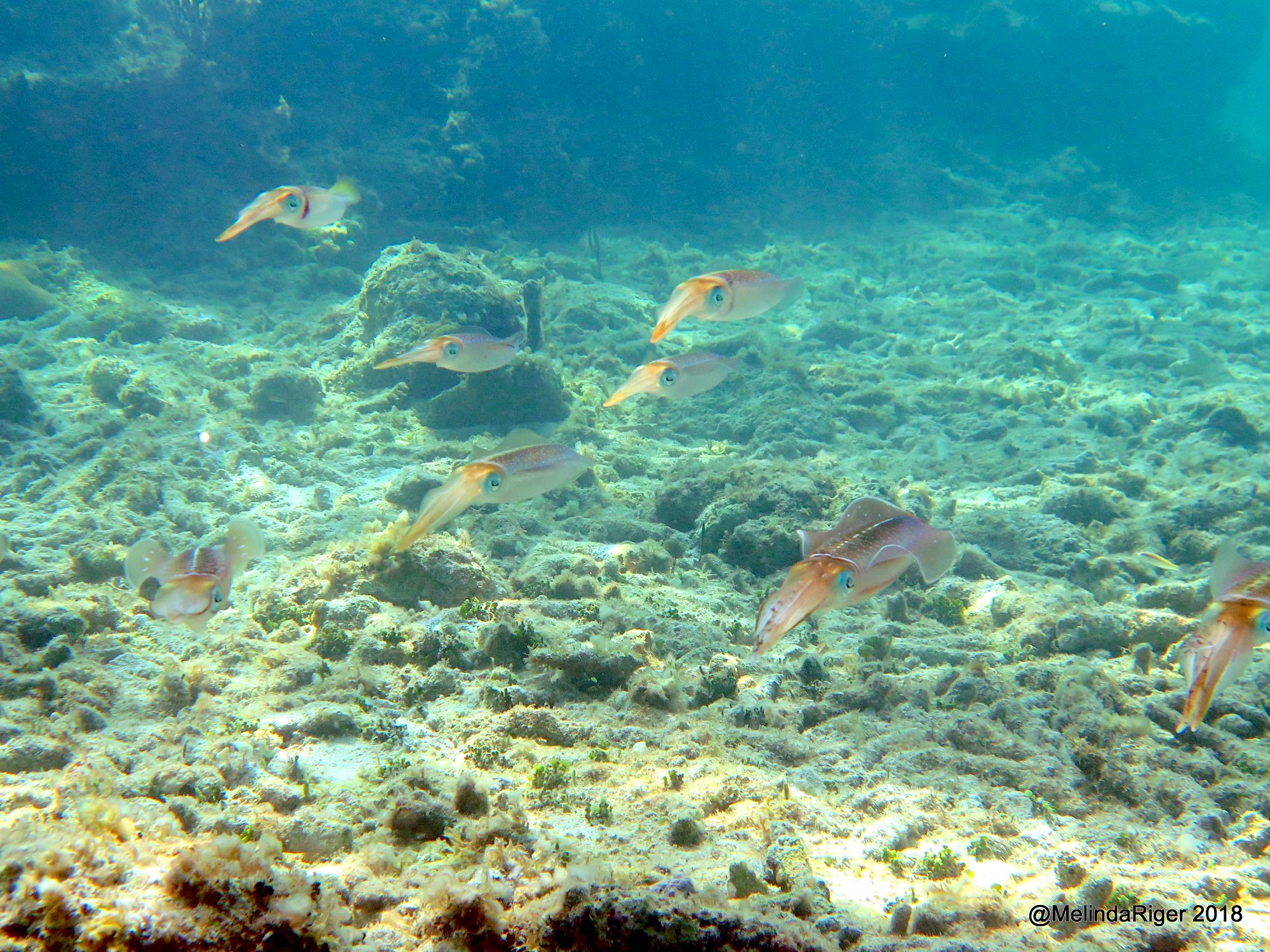
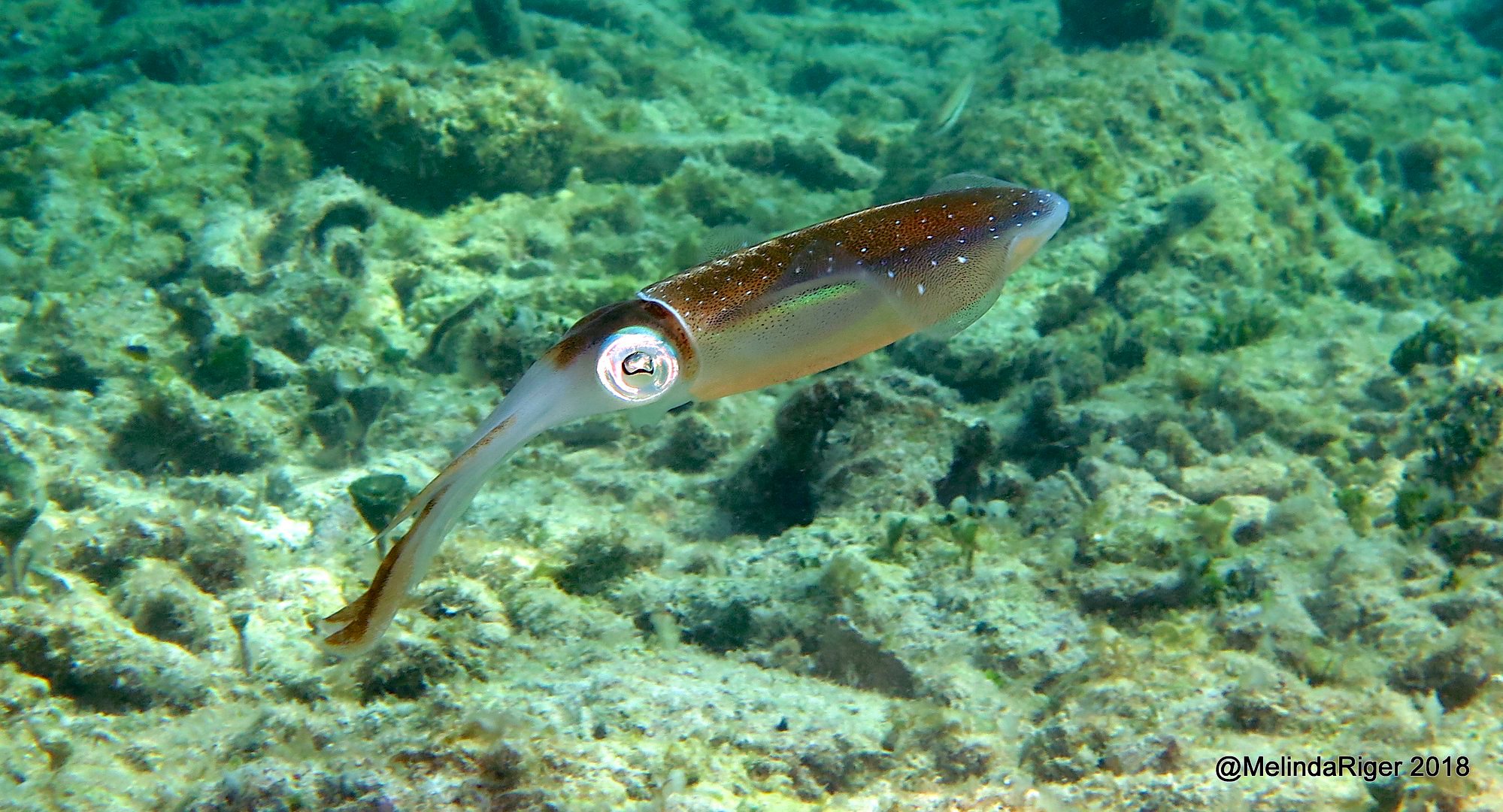
The Caribbean reef squid Sepioteuthis sepioidea is a small squid species of (mainly) the Caribbean Sea and the Floridian coast, and the most common in its range. These squid tend to form small shoals in and around reefs. Right now, in June, is a good time to find these creatures swimming in groups – all these photos were taken during the last fortnight. I wrote about squid a while back (3 years, maybe)? This post includes some parts of the earlier one, with all-new images. Squidmages, even.
Squid are voracious eaters, dragging their prey to their mouths with some or all of their 10 limbs and using their beak to cut it up. The target species are small fish, molluscs and crustaceans. The squid have a ‘raspy tongue’ known as a radula which further breaks up the food for easy consumption.
REEF SQUID SUPERPOWERS (SUPERCOOL)
Squid are capable of brief flight out of the water (a fairly recent discovery)
They can also hide from / confuse predators by ejecting a cloud of black ink
Squid can change colour, texture and shape, and can even match their surroundings
This enviable power is used defensively as camouflage or to appear larger if threatened
It is also used in courtship rituals (something that humans might find most disconcerting)
Colour patterns are also used for routine squid-to-squid communication AND GET THIS:
A squid can send a message to another on one side, and a different one to a squid on the other side
SQUID SEX (1) “ROMANCING THE SQUID”
A male will gently stroke a female with his tentacles
The female will (most likely) flash an ‘alarm’ pattern. She’s hard to get.
The male soothes her (don’t try this at home, guys) by blowing and jetting water at her
If this doesn’t go well, he’ll move off, then repeat the routine until she sees his good points
However this on / off courtship can last for hours until at last he succeeds and then…
… he attaches a sticky packet of sperm onto the female’s body (romance is not dead on the reef)
Meanwhile he stays close, emitting a pulsing pattern, as well he might after all that palaver
She then finds a safe place to lay her eggs. Job done.
SQUID SEX (2) IT ALL ENDS BADLY. VERY BADLY.
As soon the female squid has laid her eggs, she dies at once
The male squid lives a bit longer and… may have other packets to stick on other lady squid
But then in the end he dies too
It’s all horribly reminiscent of Romeo and Juliet. The lovers die. But no the balcony scene
THE CORRECT PLURAL OF SQUID
I had an unwise look online, always a hotbed of conflicting opinions. Inserting an algorithm into the interstices of the internet proves conclusively that the plural of squid is… squid. One squid, ten squid, a group of squid, a plate of squid. Unless, that is, you are talking about more than one of the many squid species, when you could also have ‘I collect both reef and giant squids’. “Squidses” sounds fun but is sadly not permitted.
Credits: As ever (for fabulous underwater pics) Melinda Riger of Grand Bahama Scuba; research sources include MarineBio; Animal Diversity Web (Michigan Uni)
There’s something slightly unsettling about the perspective of the header image, with foreshortening suggesting that the turtle is actually a gigantic creature with a tiny diver swimming close to it…
I don’t seem to have given green turtles much space in the past, the most frequently photographed (and therefore featured) species being the hawksbill. This post is both to right the wrong, and to provide some information about the species.
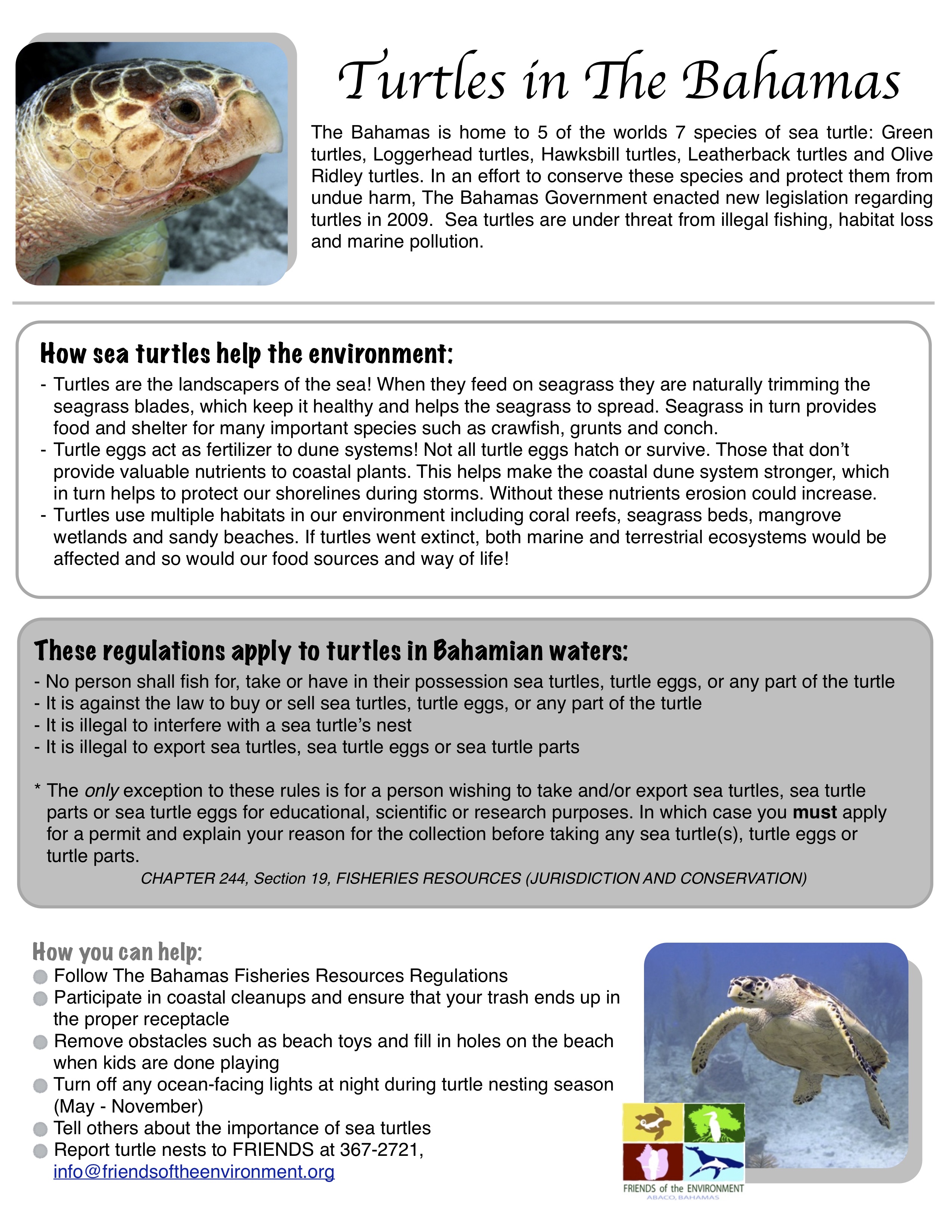
Friends of the Environment has produced an interesting short guide to the sea turtles of the Bahamas. One of the many facts included is that 5 of the 7 sea turtle species in the world can be found in Bahamian waters. The turtle protection law is also given – also the way to report turtle nests so they can be watched and protected.
The 4 main species are the hawksbill, green, loggerhead and leatherback. The 5th and lesser known one is the Olive Ridley turtle. The differences between most of these is considerable, as can be seen from this IUCN-produced Identification Chart (credits as shown).
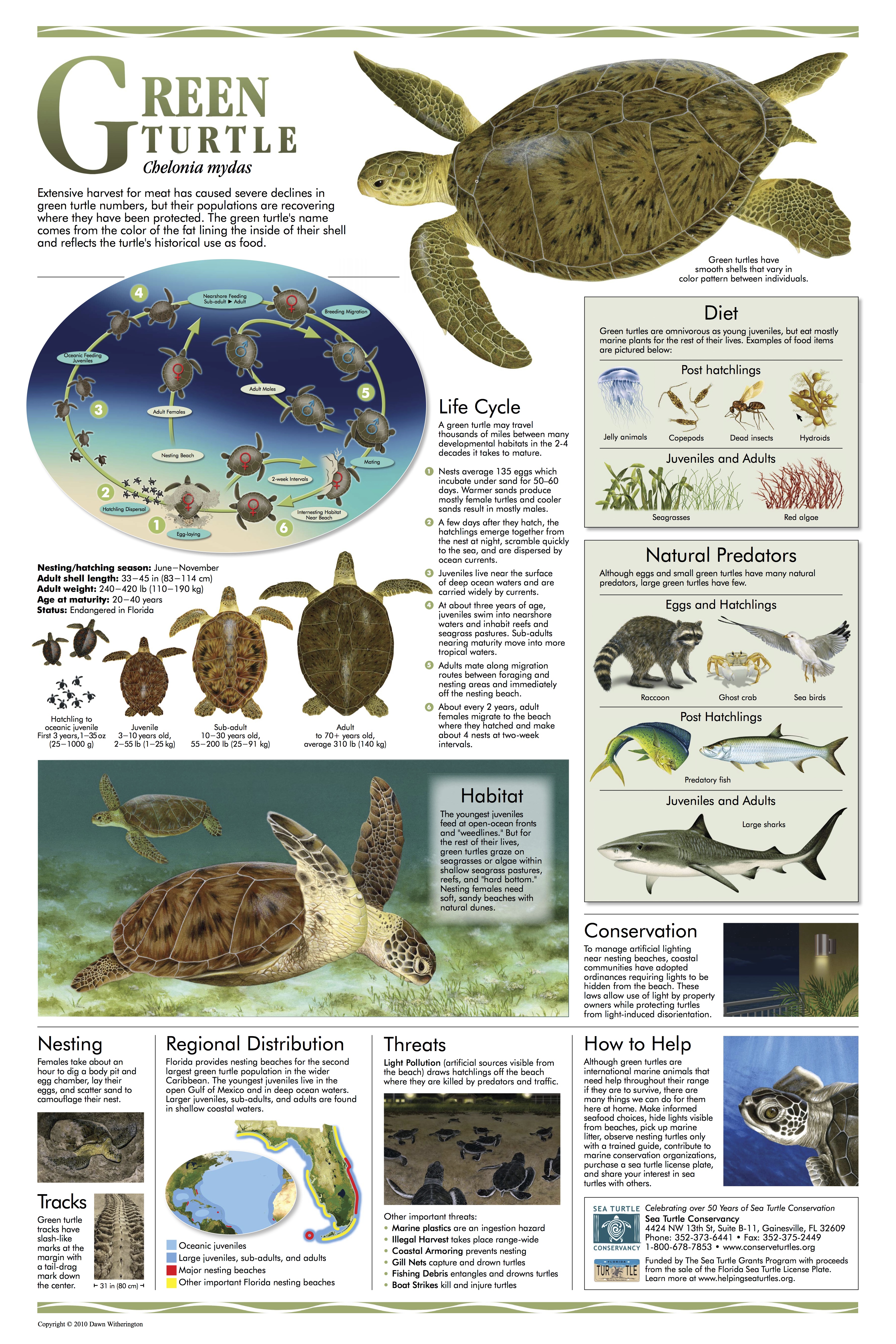
Another useful source of information for green turtles is this extremely well produced poster illustrated by the excellent Dawn Witherington, who has somewhat (and deservedly) cornered the market with this kind of large-scale infographic. The sea turtle series is so helpful that I have dedicated a whole page to them HERE. Dawn also created the LOXAHATCHEE poster series covering such topics as Lionfish, Sea Grasses, Land Crabs, Bonefish, Coral Reefs and more
All photos: Adam Rees Photography, with thanks for use permission here and elsewhere
Last month, BMMRO undertook a joint expedition with FIELD SCHOOL to carry out research on sperm whales. This took them out into deep water, where another, quite different, cetacean species was also encountered on the final day – a huge pod of more than 100 melon-headed whales Peponocephala electra.
The melon-headed whale is in fact – like the FALSE KILLER WHALEI recently wrote about – a species of dolphin. It is sometimes more accurately called the melon-headed dolphin, which removes any confusion. These creatures are oceanic, preferring deeper waters. For that reason they are not often encountered, despite being quite common in tropical and sub-tropical waters around the world.
The MHW belongs to a dolphin species commonly known as blackfish. Other dolphins in this group included, for the Bahamas, the pygmy killer whale and the more frequently encountered pilot whale, a species than can be seen in the Sea of Abaco.
In some of these photos you can see the distinctive white lips of the MHW
Melon-headed whales are notably social animals. They live in large groups – often more than 100-strong (as the expedition found), up to as many as 1000 individuals. Within these large groups, smaller groups of a dozen or so form and stay close as they swim.
Note the ‘Rainbow Blow’ caught in this photo
MHWs appear to communicate or perhaps to bond by touching flippers. MHWs also associate with other dolphin species, and they have even been recorded with large whales such as humpbacks.
Other observed behaviour includes sub-surface resting in numbers, boat-wave riding, and so-called ‘spy hopping’ (above). This last activity may be carried out by several resting animals, which jump vertically out of the water and splash back again into the ocean (see also the Header image).
This video was recorded during the expedition. You’ll get a very good idea of the size of the group from the drone shots as they pull out. I doubt that many people would expect to see such large sea creatures in such numbers – it must be an awesome** sight.
10 MELON-HEADED FACTS WITH WHICH TO ASTOUND YOUR LOVED ONES
The MHW’s head is rounded, lacking the obvious beak of more familiar dolphins
The darker grey face is sometimes called a ‘mask’
Their distinctive white lips are a good identifying feature
They are capable of swimming at very fast speeds
Like other dolphins, they make series of low jumps out of the water as they swim
Their groups often contain 100 individuals, up to as many as 1000
An adult grows to around 3m / 10′ long
They live for at least 20 years, and females may live as long as 30 years
As with many certaceans, their favourite food is squid
Oh, did I mention that they are really dolphins and not whales at all?
**In its true and original meaning of ‘inspiring wonder and awe’ (historically, in a religious sense), rather than the diluted modern usage as in ‘awesome pizza’ or ‘awesome selfie’
Like many of the blues musicians who covered Robert Johnson’s originals, we got ramblin’ on our minds. Specifically to ‘Delphi East’ in Ireland, thus stupidly exchanging 82F sunshine in southern UK for 46F rain in the Emerald Isle. Good for the fishing, if nothing else… So (always remembering that corals are actually creatures and not plants) here’s a bouquet of coral to be going on with until we next meet with wifi!
OPTIONAL MUSICAL RAMBLING
Robert Johnson’s output – a meagre 29 songs in all – formed the bedrock for later bluesmen and the blues / rock crossovers that followed. They mined Johnson’s talent and formed their own new material from it. Here’s the original – you’ve probably heard it or variations of it with different names, a thousand times – some good, some bad, most so-so.
Entire coral pot pourri by Melinda Riger / Grand Bahama Scuba
Fish, like humans, have a wide variety of temperaments, or so it seems. Resorting to anthropomorphic analysis of animal behaviour is a favourite pastime for humans. Who really knows if a creature is actually feeling shy or confident or playful or aggressive or indeed inquisitive. Often it just seems that way and we are happy to categorise dolphins as playful, sharks as vicious, angelfish as serene, small darting fish as timid and so on.
Occasionally a creature displays a ‘human’ characteristic that seems undeniable. One such is Curious George. He has become used to the divers around the reef where he lives, and greets them. He enjoys the photography sessions and the equipment, even though they may be for recording other fish. He demonstrates inquisitiveness for the strange-looking black-suited creatures that visit his patch. Like many groupers, he likes to be gently patted and stroked.
All this curiosity and friendliness evidences a benign interspecies relationship of symbiotic mutualism, through which both species (man and fish) benefit from the interaction. The mutually beneficial feeling might in broad terms be described as ‘pleasure’.
Or maybe I am just indulging in a bit of over-anthropomorphisation (if there is such a word)…
All photos by one half of the symbiotic mutualism here, Melinda Riger (Grand Bahama Scuba)
You must be logged in to post a comment.