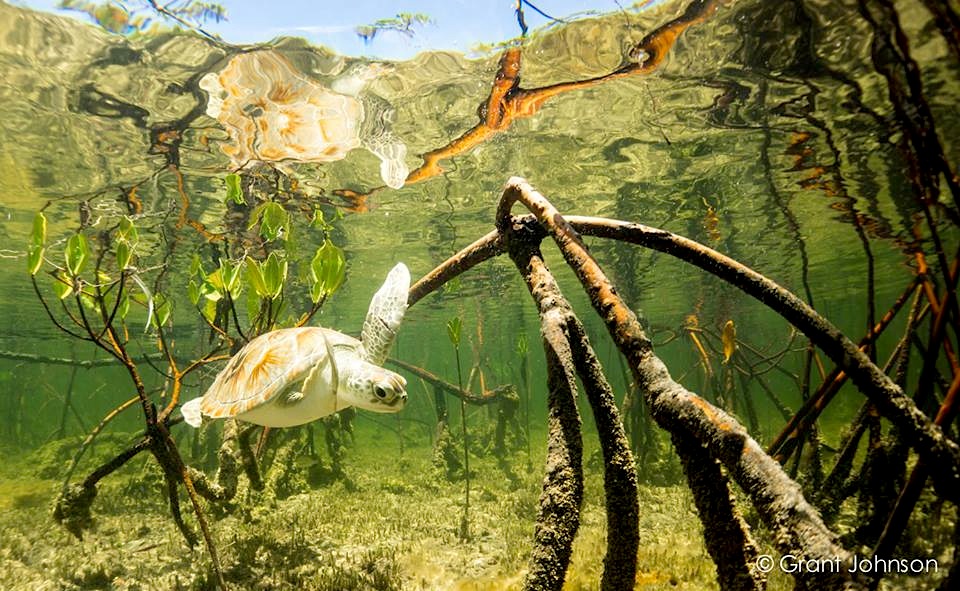
Loggerhead Hatchling (Bimini’s Marine Protected Area Campaign)
A VISIT TO BIMINI’S MARINE ENVIRONMENT (1)
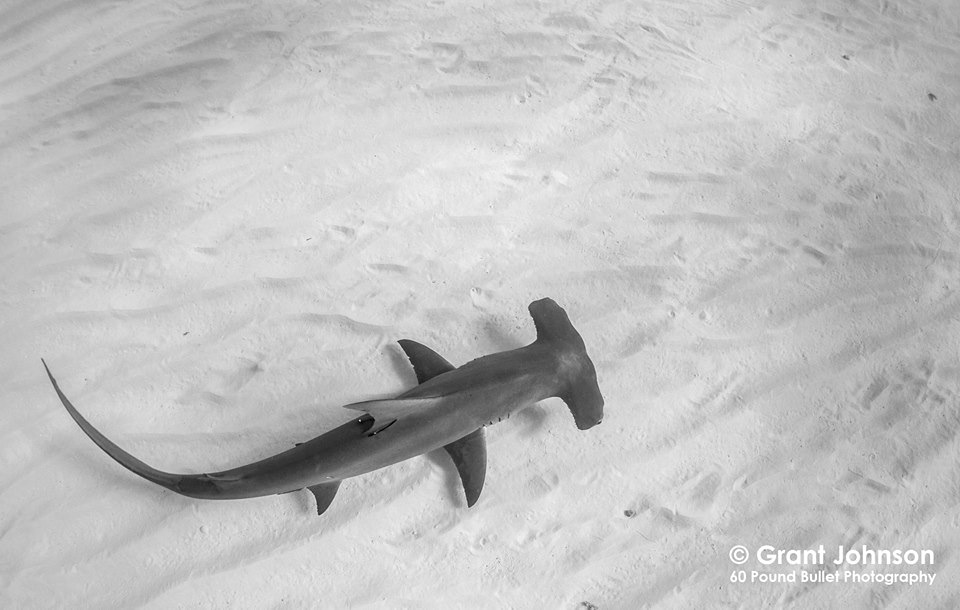
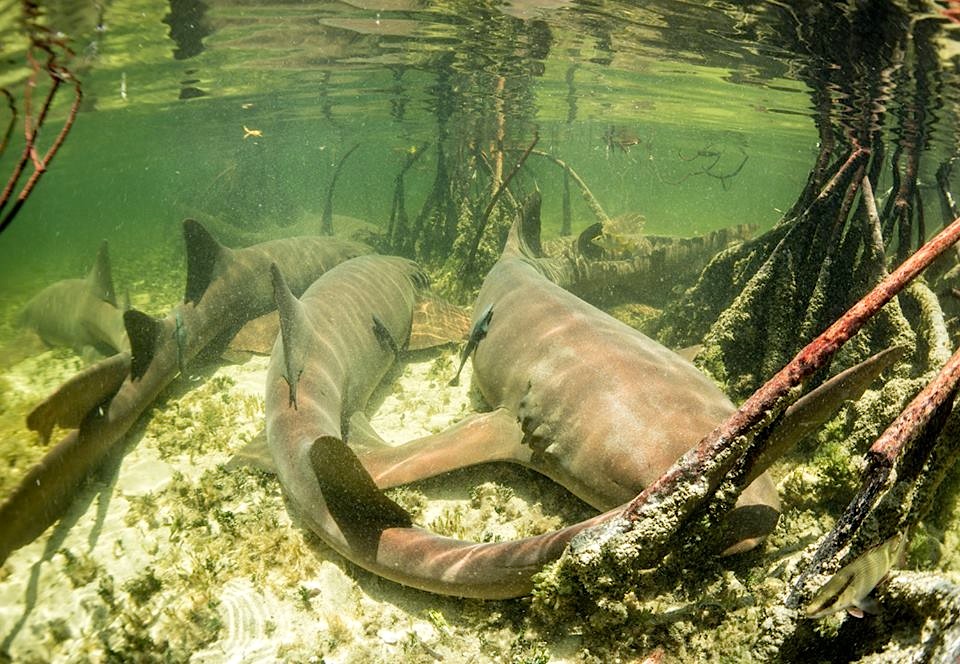
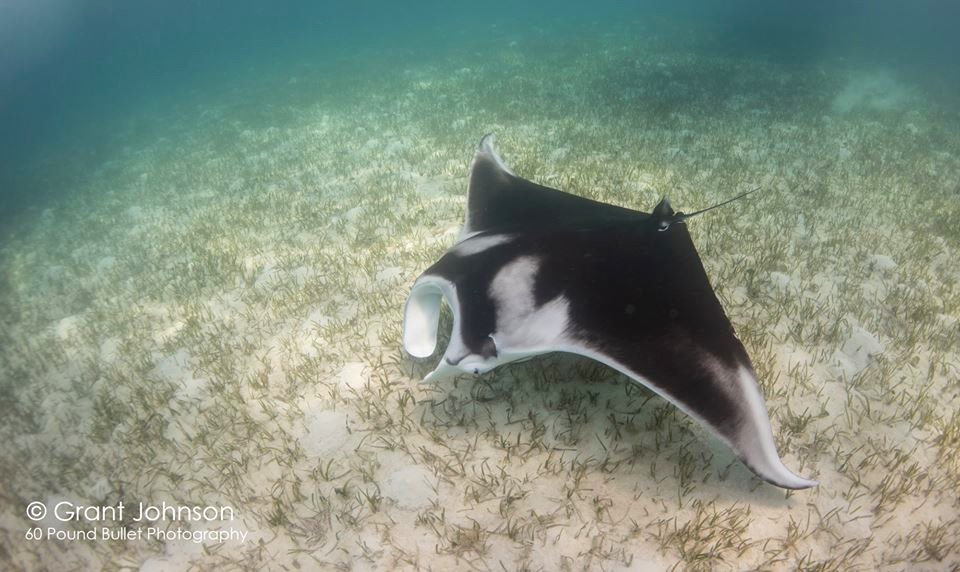
Abaco is fortunate already to have special conservation areas, both on land (e.g. the huge National Park) and at sea (e.g. Fowl Cay Marine Preserve). Other preserves are in active stages of development. Elsewhere in the Bahamas, where the natural life is equally wonderful, battles are being fought to protect pristine habitat from the encroachments of modern life such as unsuitable development (or development in unsuitable locations). For this first look at Bimini, I am most grateful toBimini’s Marine Protected Area Campaignfor permission to use some of their wonderful photographic archive that illustrates the vital importance of the mangroves, reefs, sea grass and pristine sea to marine life large and small. It’s worth checking out the background and surrounding context of these images to see the sort of habitat the creatures depicted prefer. This post features some of the larger species.
HAMMERHEAD SHARKS
NURSE SHARK NURSERY IN THE MANGROVES
BOTTLENOSE DOLPHINS
RAYS
A pregnant female southern stingray, seen from below
Mark Catesby: Bahama Finch (Western Spindalis, Spindalis zena)
MARK CATESBY: PIONEERING NATURALIST OF EARLY c18
There’s been (yet) another abrupt side-swerve away from a topic I’d intended to post about, resulting from a newspaper article I read over the weekend. This concerns what was gushingly described as “the ultimate coffee table book”, a facsimile of Mark Catesby’s renowned work, The Natural History of Carolina, Florida and the Bahama Islands.
Catesby (1682 – 1749) was a pioneering English naturalist and artist who published his magnum opus based on a number of expeditions he undertook from 1712 onwards. His was the first ever published account of the flora and fauna of North America, and the 2 volumes (with a supplement) included some 220 colour plates of the creatures and plants of land and sea that he had come across.
Mark Catesby – Angelfish
Mark Catesby – Queen Triggerfish
Catesby’s growing fame as a botanist led to his undertaking expeditions on behalf of the Royal Society to collect plants and seeds in Carolina. He widened his researches both in America and to the West Indies, collecting plants and fauna as he went and sending them back to England. Among other discoveries, he was one of the very first people to observe and record the occurrence of bird migration as a twice-yearly phenomenon.
Red-legged Thrush in Gumbo Limbo Tree
Eventually, in 1726 Catesby also returned to base and set about writing up his findings and painting what he had seen. He learnt how to etch printing plates, and gradually the illustrations became more sophisticated, starting without backgrounds then including plants with the animals and birds. The whole project took him some 20 years; quite soon after completing it, he died.
Flamingo Head & Gorgonian Coral
CATESBY: THE VIDEO INTRO
WHERE IS THE ORIGINAL WORK NOW?
Catesby’s original drawings were bought by King George III for £120 (a very considerable sum in 1768 – my quick attempts to discover how much suggest ± £200,000) and have remained in the Royal Family ever since. This treasure is kept in the Royal Library of Windsor Castle, the property of HM QE2, though it is occasionally exhibited elsewhere. Later facsimiles of the original were produced, of which some 50 survive today.
Mark Catesby – ‘Bahama Titmous’ (Bananaquit)
SO WHAT’S ALL THE EXCITEMENT ABOUT NOW?
Addison Publications has printed a very limited edition facsimile of 60 in 4 lavish volumes, printed one at a time, “to mark the 300th anniversary of Catesby’s arrival in the New World”.
The cost per set? A stonking £39,500 ($61,330). Now this may sound a great deal of money for a modern copy of an old book and it undoubtedly is. But here’s the Christie’s Auction catalogue entry for one of the early facsimiles. Mmmmmm.
Mark Catesby – Hawksbill Turtle
“Illuminating natural history is so particularly essential to the perfect understanding of it” (Mark Catesby)
Mark Catesby (Black-faced Grassquit)
Delphi afficionados, especially any who have stayed in Room 1, may recognise 3 of the illustrative images I have chosen – the Spindalis, the Bananaquit and the Grassquit. No, I don’t mean the actual species, I mean that Catesby prints of them are tastefully hung on the walls. I can never decide which of the 3 is my favourite…
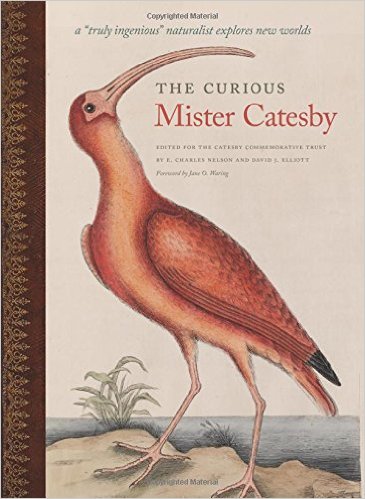
STOP PRESSThanks to Woody Bracey for his interesting comment. More information about the Catesby Commemorative Trust and the book The Curious Mister Catesby can be found HERE. A slightly curious promo video was also released.
For anyone tempted to look further into the importance of this ground-breaking naturalist, the CCT produced a 50 minute film that is well worth watching if you can spare the time.
Credits: Sunday Times (article), HM QE2, National Geographic, Catesby Commemorative Trust, sundry open source info-&-pic-mines inc. Wiki, Addison Publs, & my Bank Manager for declining to loan me the purchase price of the new facsimile…
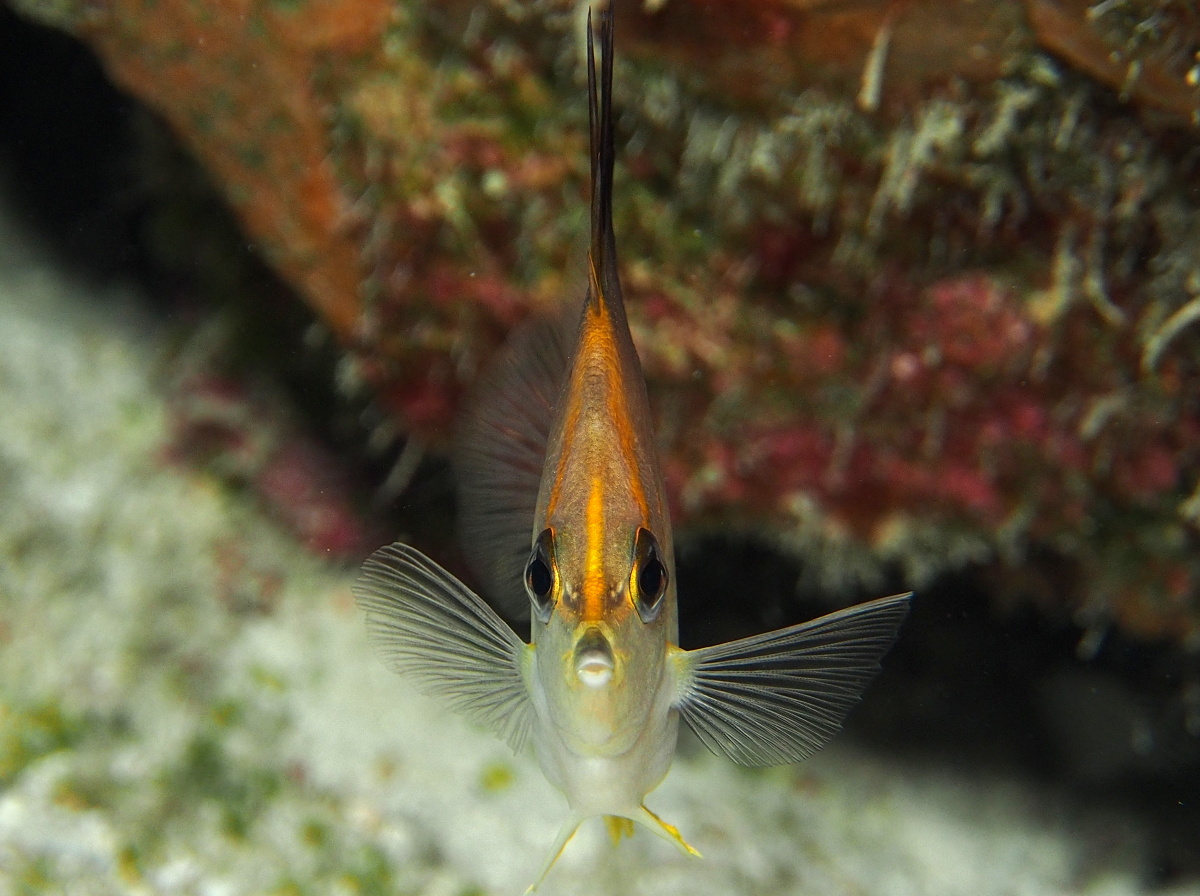
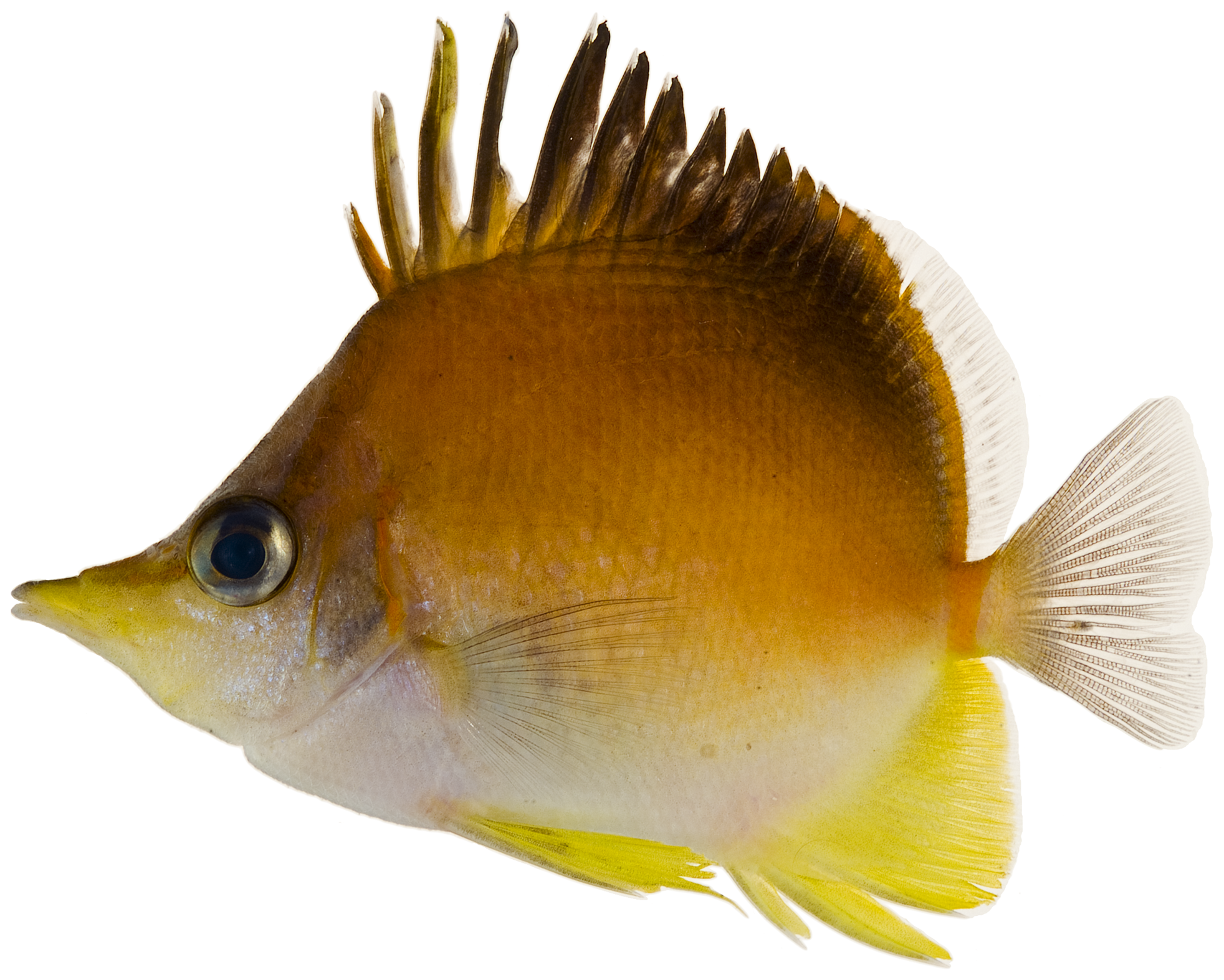
The Atlantic/ Caribbean Longsnout Butterflyfish Prognathodes aculeatus is sometimes known locally as the Longnose (not to be confused with the bright yellow Indo-Pacific Longnose Butterflyfish). The affectionate name for it is ‘Butterbun’. A more scientific name is ‘Poey’s Butterflyfish’, named for the man who first identified the species in 1841.
Mr Felipe Poey
These little fish, 2 0r 3 inches long, are commonly found on reefs from Florida down to Venezuela. Unlike most butterflyfishes, they prefer deeper water and have been found at 200 ft; and they tend to be solitary rather than gregarious.
BUTTERBUN. THAT SUGGESTS THEY ARE PLUMP?
NOPE!
RELATED LINKS
BUTTERFLYFISHES(RH guide to reef, banded, four-eyed & spotfin)
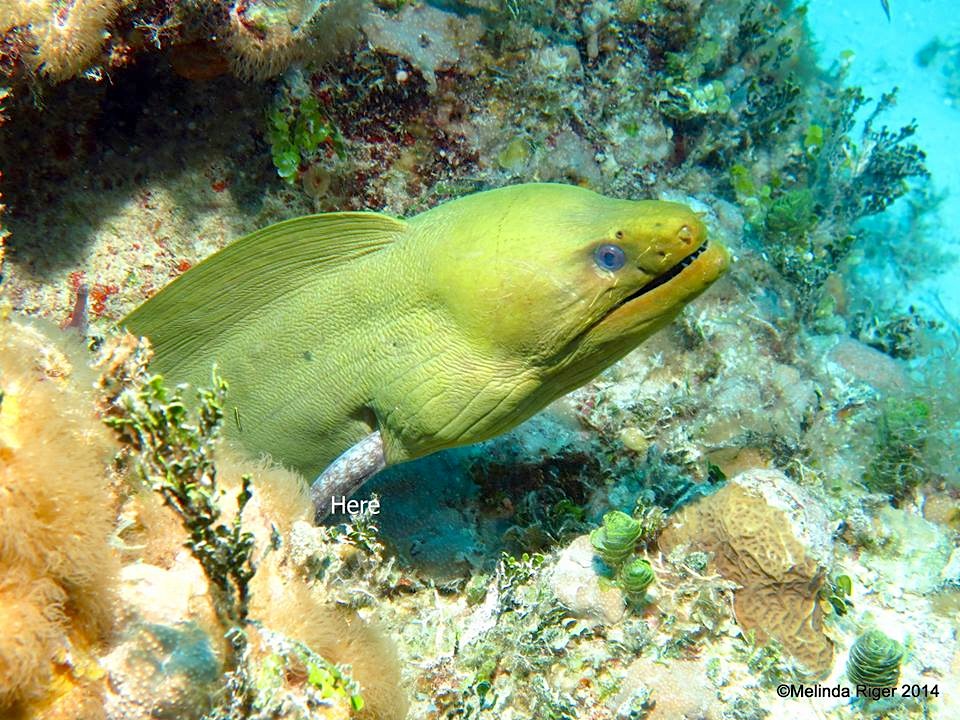
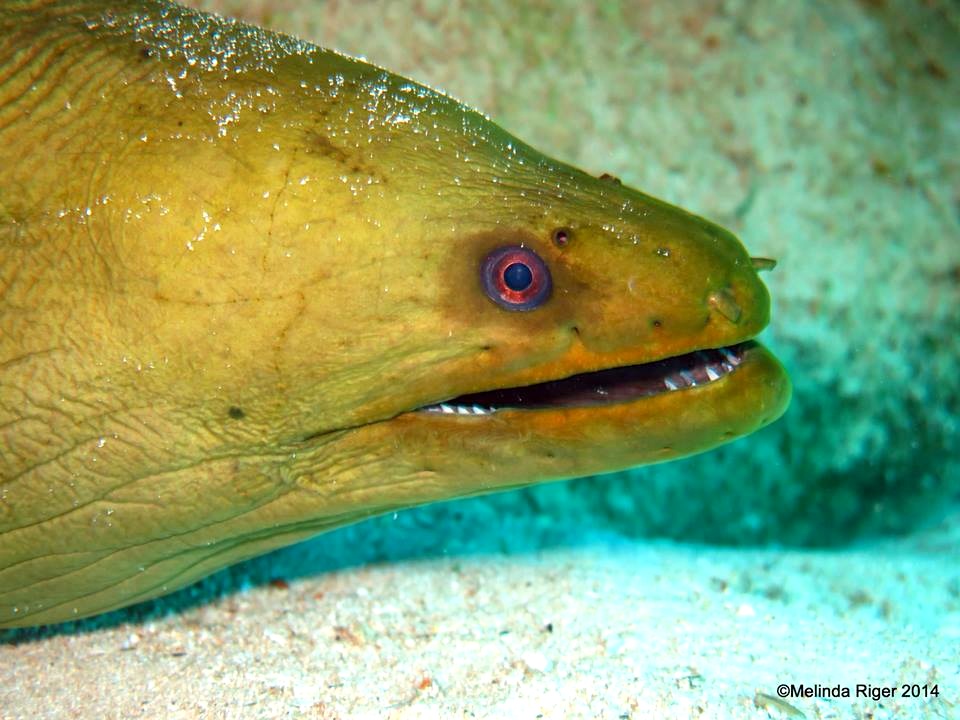
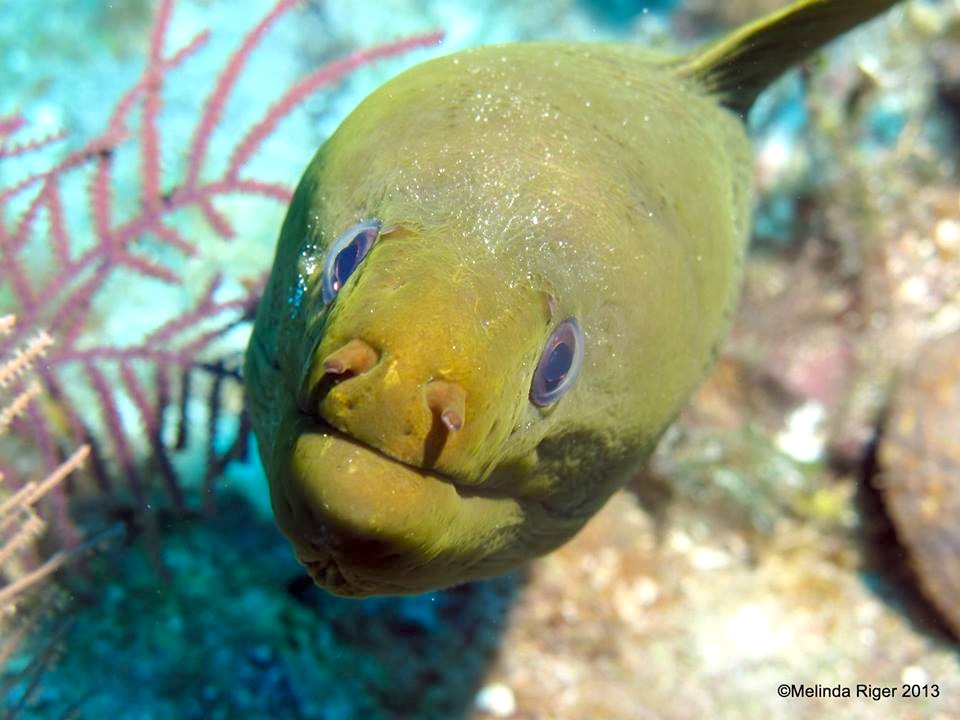
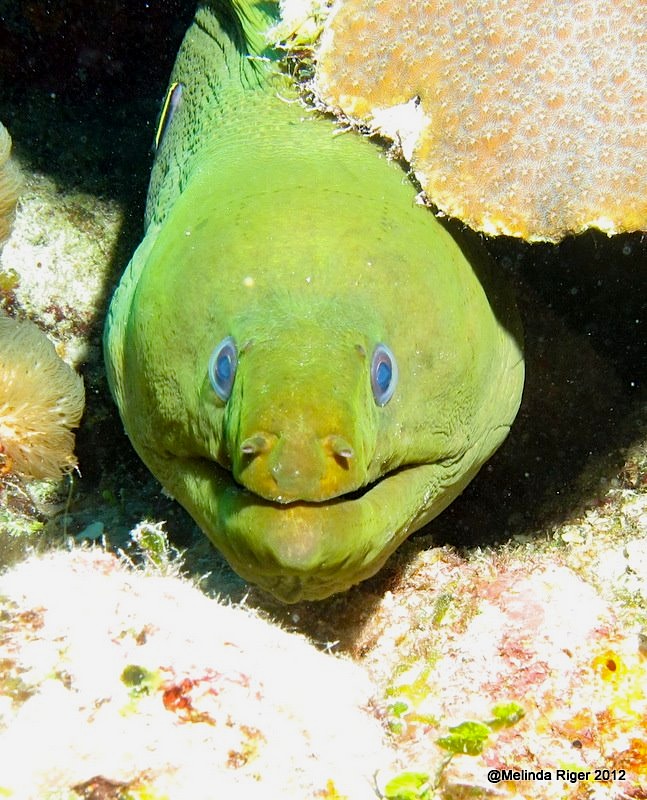
A short while back I posted aboutSPOTTED MORAYS, which people seem to enjoy. It generated requests for more forays, specifically with green morays. I gotcha – here they are, as promised… All the eels shown below, familiar to the divers who regularly encounter them and given names such as “Judy’ and “Wasabi” (my favourite), were photographed by Scuba expert Melinda Riger, whose skills with a camera are well-known. Let’s go Green…
Like all moray species, Greens like to lurk in convenient hiding places to watch the underwater world – and possible prey – go by. Here are some typical ‘lurking’ shots.
Green morays also have the unusual breathing apparatus that resemble nasal plugs
Those who recall the spotted moray post and their singular dentition arrangements that included a long sharp tooth sticking down from the upper jaw will no doubt be thinking, “are we going be shown any dental close-ups?” But of course… why would I not?
Note the cluster of teeth in the upper jaw, differing from the spotted moray
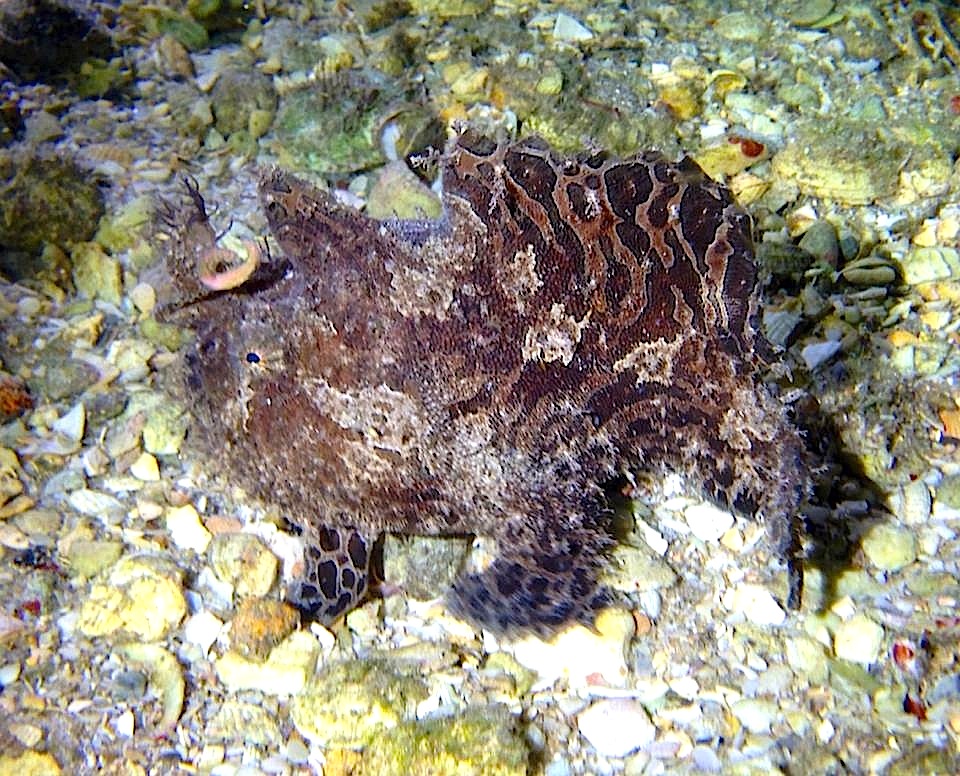
This ‘WTF?’ series started with a relatively conventional species, the REMORA. It has been getting progressively more bizarre. We moved onto an omnium gatherum of WEIRDO FISHES, then the remarkable LETTUCE SEA SLUG, and most recently the BATFISH. Time to ramp up the stakes: with many thanks to scuba expert Adam Rees for use permission for his terrific photos, I present… the FROGFISH.
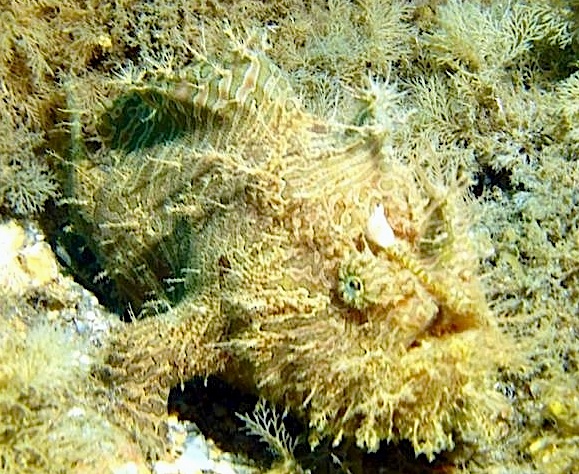
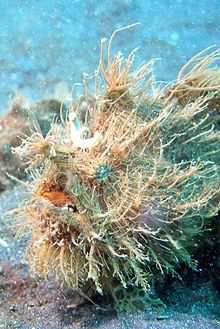
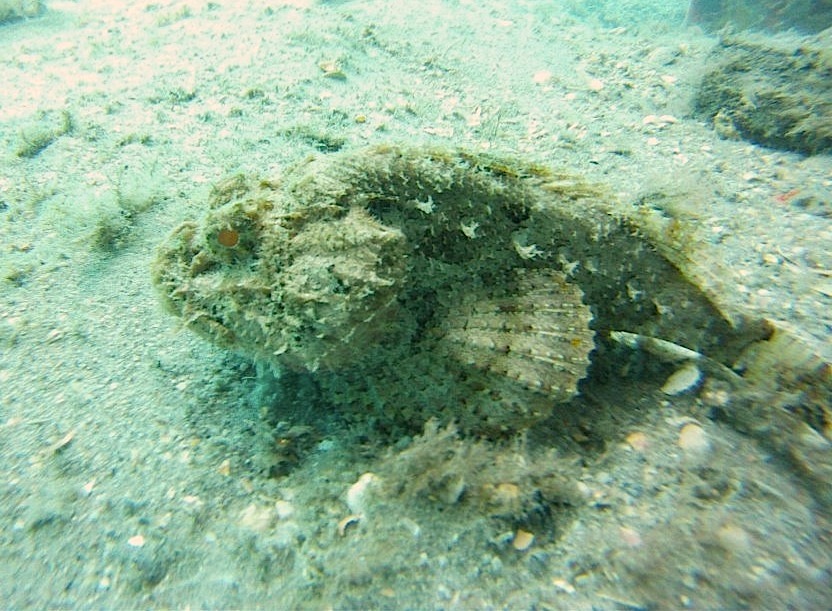
The frogfish is a kind of anglerfish found in almost all tropical and subtropical oceans and seas. There are about 50 different species worldwide, covering an astonishing range of strange appearances. They generally live on the sea floor around coral or rock reefs. In size they vary from tiny to about 15 inches long – although ‘long’ is a flexible concept because they are to an extent shape-changers in height and width.
FROGFISH SUPERPOWERS YOU MAY WISH TO HAVE
INVISIBILITY CLOAK . Frogfish are masters of disguise and camouflage. This enables them to catch their prey with minimal effort and also to avoid predators. Their camouflage methods – broadly known as ‘aggressive mimicry’ – include
Ability to change colour for days or even weeks to mimic their surroundings
Getting covered in algae and other organic matter that matches their habitat or
Looking inherently like a plump rock or in some cases, plant
Fear for the life of the spider crab…
IRRESISTIBLE ATTRACTION (just like that nice Mr Grey)
A sort of frontal dorsal fin called an illicium to which is attached a
Lure called an esca which may mimic a worm, shrimp or small fish etc and which is
Retractable in many species and
Regenerates if it gets mislaid
The ‘dollop of cream’ thing is the esca. Note the characteristic large mouth
Spot the esca…
BUOYANCY CONTROL & SHAPE-SHIFTING
Most frogfish have a ‘gas bladder’ to control their buoyancy.
Some species can change shape or even inflate themselves by sucking in quantities of water in a so-called defensive ‘threat display’.
HOW DO FROGFISH REPRODUCE?
Although not conventionally attractive creatures, frogfish clearly manage to reproduce. Little is known about the techniques in the wild, but one is probably ‘with care’, especially for a male frogfish who may not survive for long if he hangs around after fertilisation has taken place. It has been noted that females tend to select far smaller males to fertilise their huge numbers of eggs, perhaps for that very reason.
FROGFISH FEEDING SKILLS – GOOD OR BAD?
When deploying the lure, potential prey that comes too close to that wide mouth stands no chance. A frogfish will strike in a fraction of a second. Frogfishes have voracious appetites for crustaceans, other fish, and even each other. I can do no better than borrow this vivid description of a feeding frogfish:
“When potential prey is first spotted, the frogfish follows it with its eyes. Then, when it approaches within roughly seven body-lengths, the frogfish begins to move its illicium in such a way that the esca mimics the motions of the animal it resembles. As the prey approaches, the frogfish slowly moves to prepare for its attack; sometimes this involves approaching the prey or “stalking” while sometimes it is simply adjusting its mouth angle. The catch itself is made by the sudden opening of the jaws, which enlarges the volume of the mouth cavity up to twelve-fold, pulling the prey into the mouth along with water. The attack can be as fast as 6 milliseconds. The water flows out through the gills, while the prey is swallowed and the oesophagus closed with a special muscle to keep the victim from escaping. In addition to expanding their mouths, frogfish can also expand their stomachs to swallow animals up to twice their size.“
HOW DO FROGFISHES GET AROUND? SWIM? WALK? CRAWL?
Frogfishes do not in fact move around a great deal. Using their camo advantages, they prefer to lie on the sea floor and wait for prey to come to them. As mentioned in the quote above, they may slowly approach prey using their pectoral and pelvic fins to “walk” along the sea bottom. They can swim using their tail fin (or in some species by simple ‘jet propulsion’ by forcing water out of their gills) but rarely do so – they don’t feed on the move, and they are adapted to the sea floor environment where they food is readily available. However their “walking” ability is limited to short distances.
DO FROGFISH HAVE OTHER COLOUR SCHEMES?
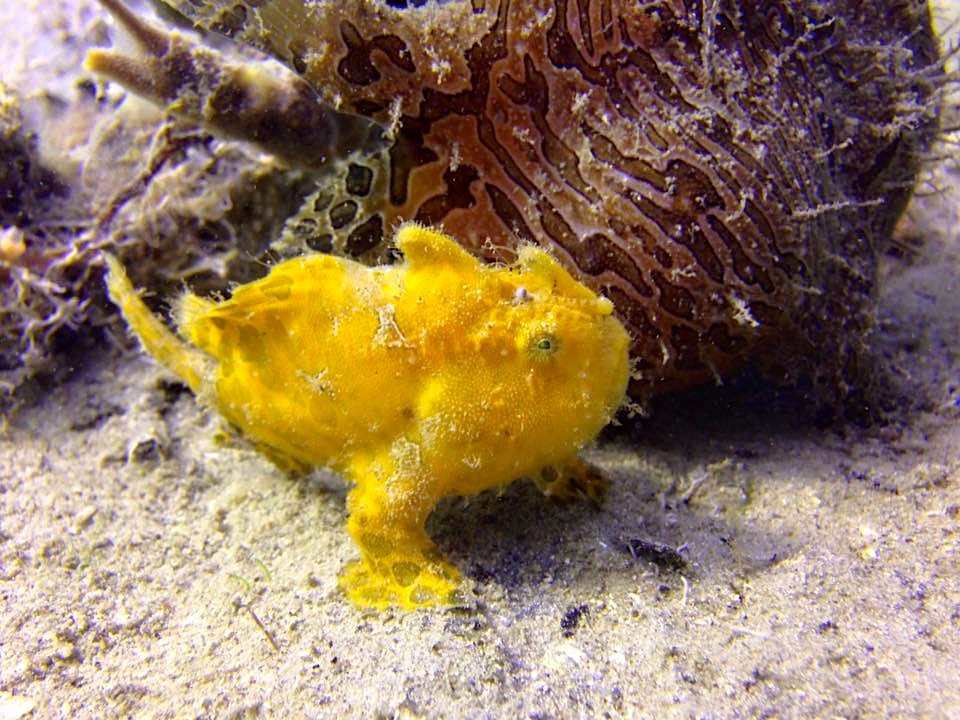
Indeed they do. In stark contrast to the camo species, some frogfishes are highlighter bright. Here are two of my favourite photos by Adam that show this clearly. I’ve no idea if these are a male and female. I suspect they are different species. I think the brown one is a striated frogfish and the other is… a yellow frogfish. Some people keep these creatures in aquaria, but apparently it is impossible to sex them, and they have to be kept on their own for everyone’s peace of mind…
FROGFISH INFOGRAPHICS
FROGFISH VIDEOS
These two videos, from Lester Knutsen and Daan Van Wijk respectively, show some of the characteristics I have written about above. Both are short and both are fascinating.
To read more about frogfishes and for some fabulous photos I highly recommend the websiteFROGFISH.CHYou can reach the main page(s) but the link seem to be broken so I have not been able to contact Teresa Zubi, whose site it is. She clearly has a sense of humour and uses a neat pair of gifs which I hope she won’t mind my using…
Credits: All main photos, Adam Rees of Scuba Works with many thanks; wiki for ‘spot the esca’, red quote & basic info; videos Lester Knutsen & Daan Van Wijk; Teresa Zubi for website & gifs; infographics, authors u/k
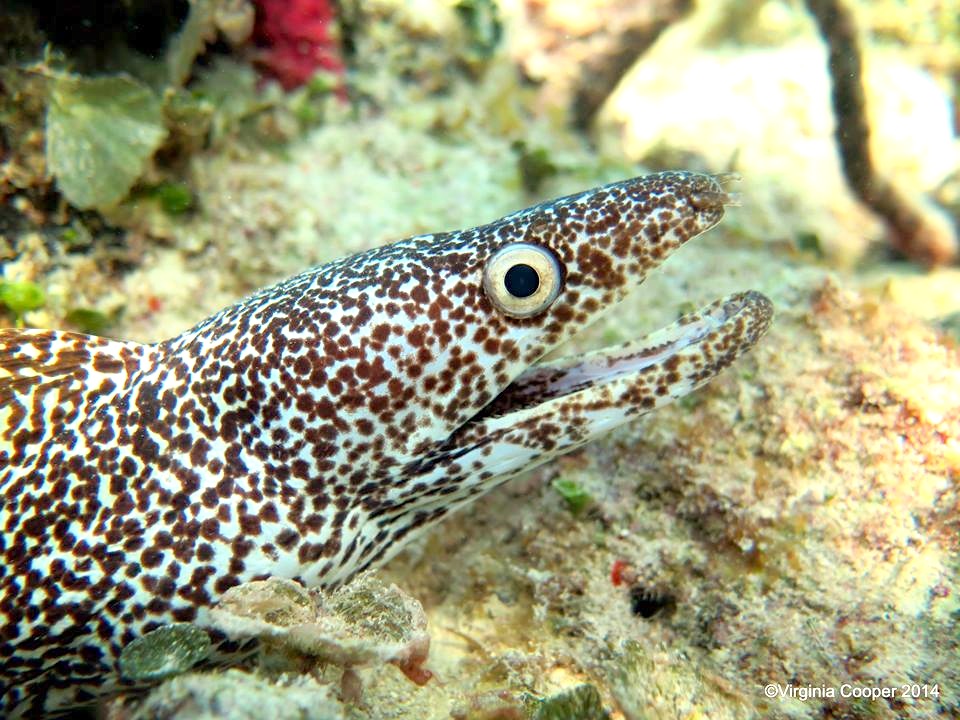
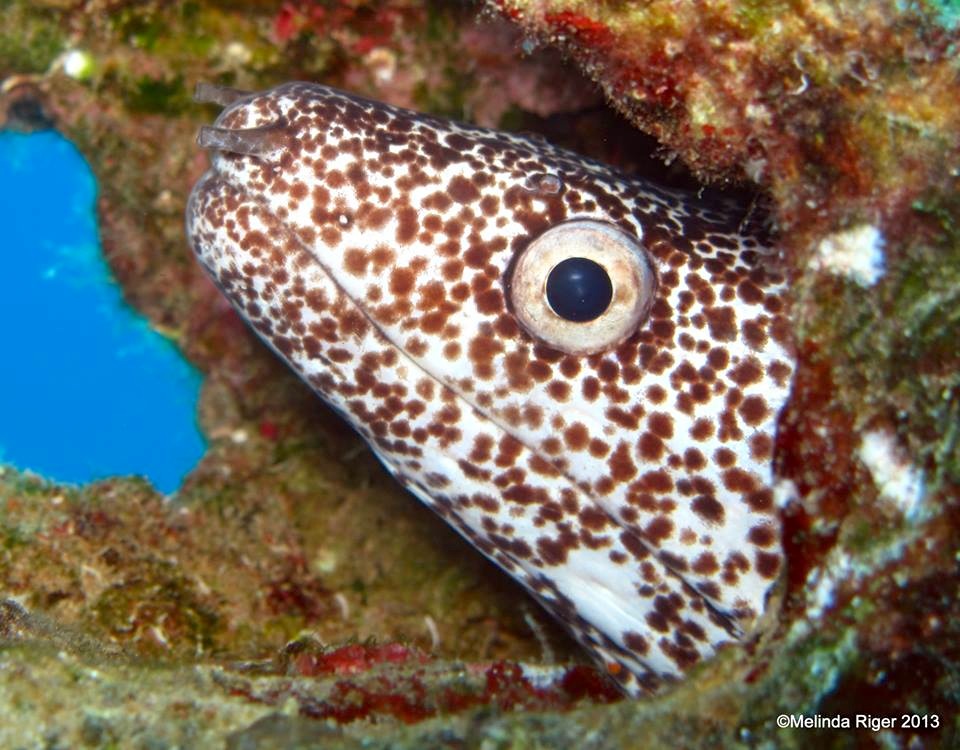
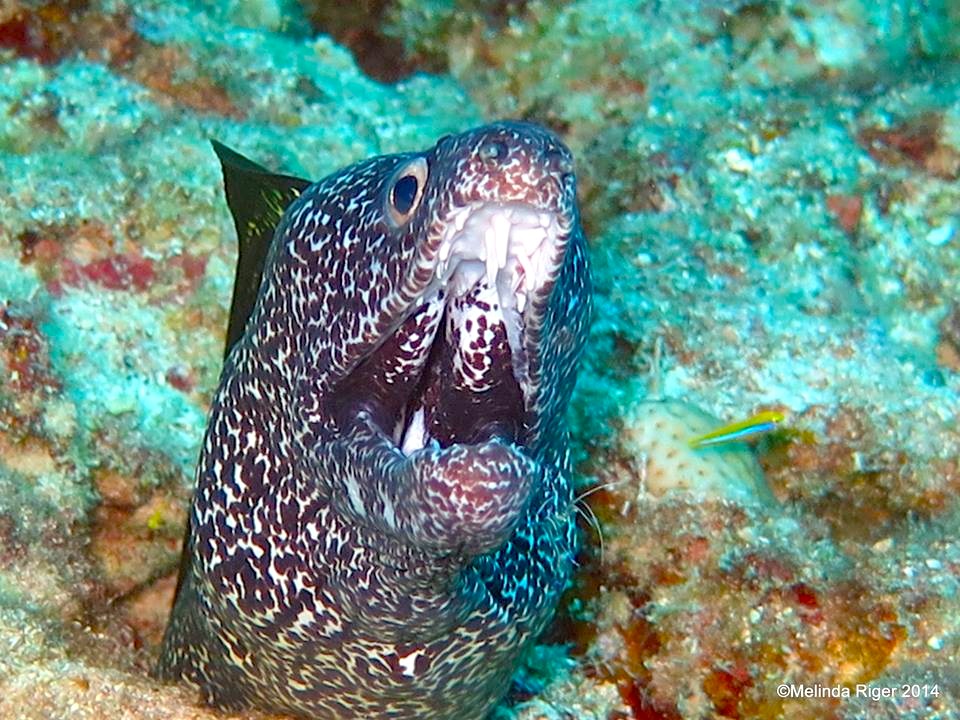
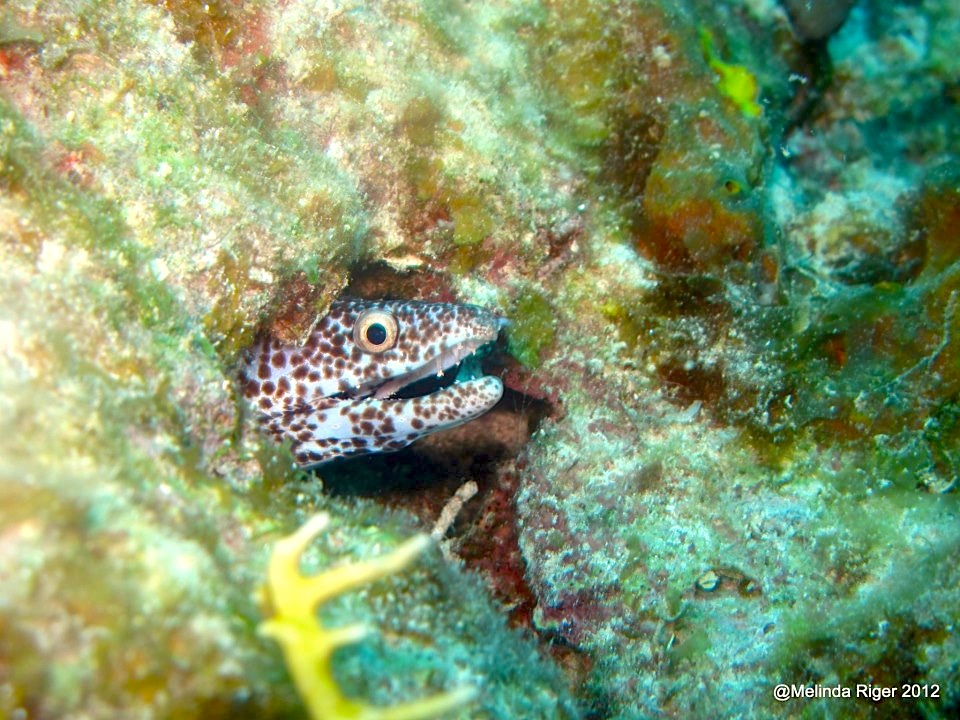
I’ve been neglecting the moray eels. It’s ages since I did a post about them, and it’s time to put that right. Specifically, time to take a look at Spotted Morays Gymnothorax moringa. These eels can grow up to 2 meters, and live mainly in the sub-tropical waters of the Atlantic. They are solitary creatures, most often seen with just their heads protruding from holes and fissures reefs and r0cks. They have interesting dental arrangements (see below) and their bite is one that, all things being equal, is probably best avoided… Here’s what to look for.
ADULT SPOTTED MORAYS
TOOTHSOME CRITTERS (FANGS FOR THE MEMORY…)
WICKLE BABY MORAY. MORAYKIN?
Photo credits: all amazing photos courtesy of Melinda Riger of Grand Bahama Scuba; Props to ‘Earl the Eel’ who appears in some of them!
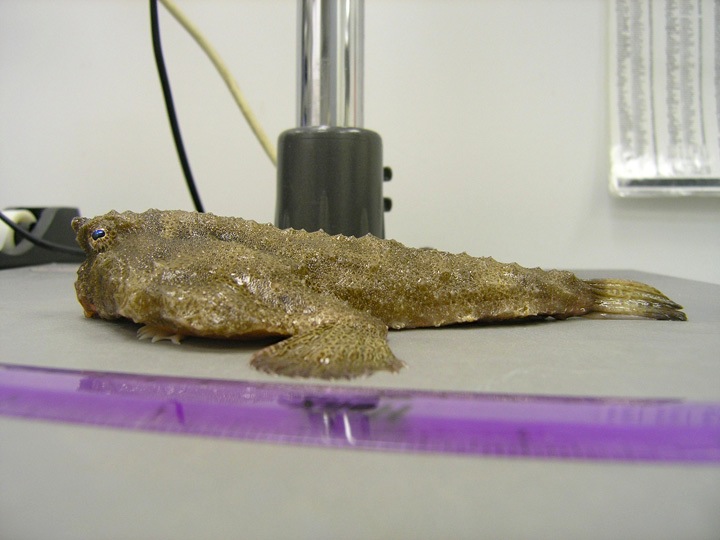
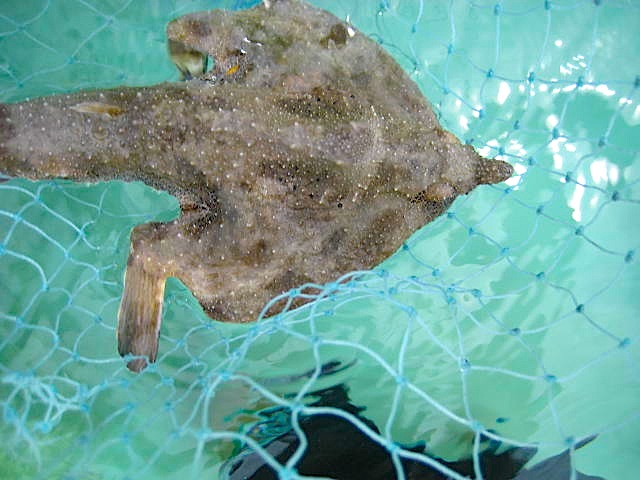
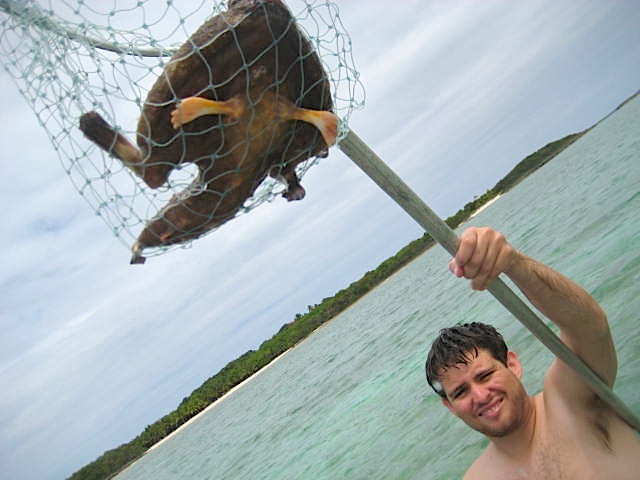
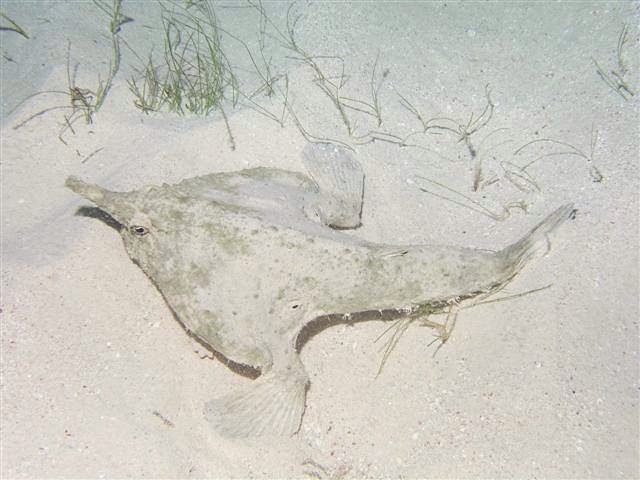
That’s ‘Batfish’ (or strictly, Batfishes, for there are some 60 species worldwide), as in one of the weirdest, most alien underwater creatures you may ever encounter. As opposed to ‘Bait Fish’, those little silvery specimens that are so attractive to predator fish higher up the food chain – the ones fishermen might be interested in… And the Batfish has no connection at all with Bruce Wayne of Wayne Manor, Gotham City nor with his sidekick Robin.I mention this bizarre-looking and -acting creature because two have recently been seen and photographed in Abaco waters and although I’d heard of the batfish and even knew vaguely what one looked like, I was quite unprepared for the real thing. Ellen Sokol is a Captain forKiskeedee Sailing Charters which during the summer is based in the Abacos and which amongst other things gives youngsters the opportunity to snorkel and to learn about undersea life. Ellen says: “I was snorkelling when I saw this thing on the bottom. At first, I thought it was a dead bird! It wasn’t moving at all even when I touched it with my flipper. Later when I read about this fish I learned that it sits motionless and uses the long nose to attract prey. I suppose that is exactly what it was doing when I rudely interrupted it! I later researched, and found it to be a spotted batfish”. Because they had no underwater camera on board, Ellen’s son gently scooped it up in a net so they could take a quick photo of the fish before returning it. Quick thinking!The other recent sighting was posted with a photo on FB within the last 3 weeks by the excellentCRUISE ABACO.
10 OGCOCEPHALIDAE (BATFISH) FACTS TO TREASURE
There are some 60 species of batfishes worldwide
They live in warm and temperate seas, including the waters of the Bahamas
An adult batfish is 12″ – 14″ in length
Their bodies are generally lumpy, with some hard spines
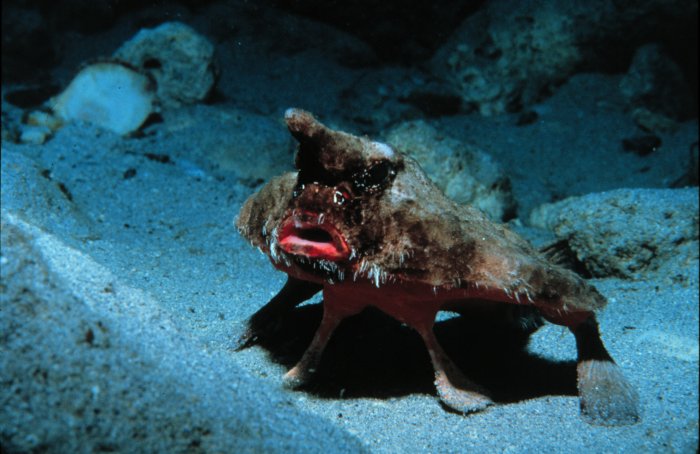
Some have a long, upturned snout. Others have bright red ‘lipstick lips’
They are rubbish swimmers, and often ‘walk’ on their limb-like pectoral and pelvic fins
Most species are deep sea denizens but some (short nose, spotted) inhabit shallower water
The fleshy snout above the mouth lures prey close enough to its jaws to eat
The batfish is becoming increasingly rare worldwide, and is considered to be endangered
Only the word ‘Logcock’ (pileated woodpecker) contains the initial 4 letters of Ogcocephalidae
CAN YOU SHOW ME SOME MORE EXAMPLES OF THIS INTRIGUING FISH?
By all means. Here are some images of other batfish species – red-lipped, long nosed, short nosed – each peculiar in its own way. You’ll see their preferred, most unfishlike method for getting around.
Q. PLEASE MAY I SEE A VIDEO OF A BATFISH? A. YES. TWO.
“Heather Ashcraft found this very rare short-nosed bat fish on Eleuthera, Bahamas Sept 17 2013. It is a very strange (almost alien) looking combination of bat, frog, bird, and fish. The pelvic fins are used for walking on the ocean floor… Above the bat face is a horn (or beak)…”
“Taken at Coco Cay, Bahamas, April 29, 2014. At first we had no Idea what we were looking at… one of the weirdest things we had ever seen. Apparently they are rare. Even some of the locals had no idea what we were describing”
Batfish, Man-o-War Cay Abaco (Cheryl Marx MacKee)
Batfish, Abaco (Bob Williams August 2015)
Credits: Header image courtesy Texas Parks and Wildlife Department (Brenda Bowling); Ellen Sokol and Kiskeedee Sailing Charters; Cruise Abaco; Wiki, Barry Peters, NURP, Eric Reisch; Youtubers x 2; Petersen, Arkive, Cheryl Marx MacKee, Bob Williams and sundry magpie pickings…
BAHAMAS WHALES & DOLPHINS IN ABACO & ANDROS WATERS
The Bahamas Marine Mammal Research Organisation (BMMRO) has its HQ at Sandy Point, Abaco. We recently went out in their research boat, a RHIB, to spend an unforgettable day with Blainville’s beaked whales and bottlenose dolphins. I posted some of the dolphins HERE; and a two-part beaked whale post is a work in progress.
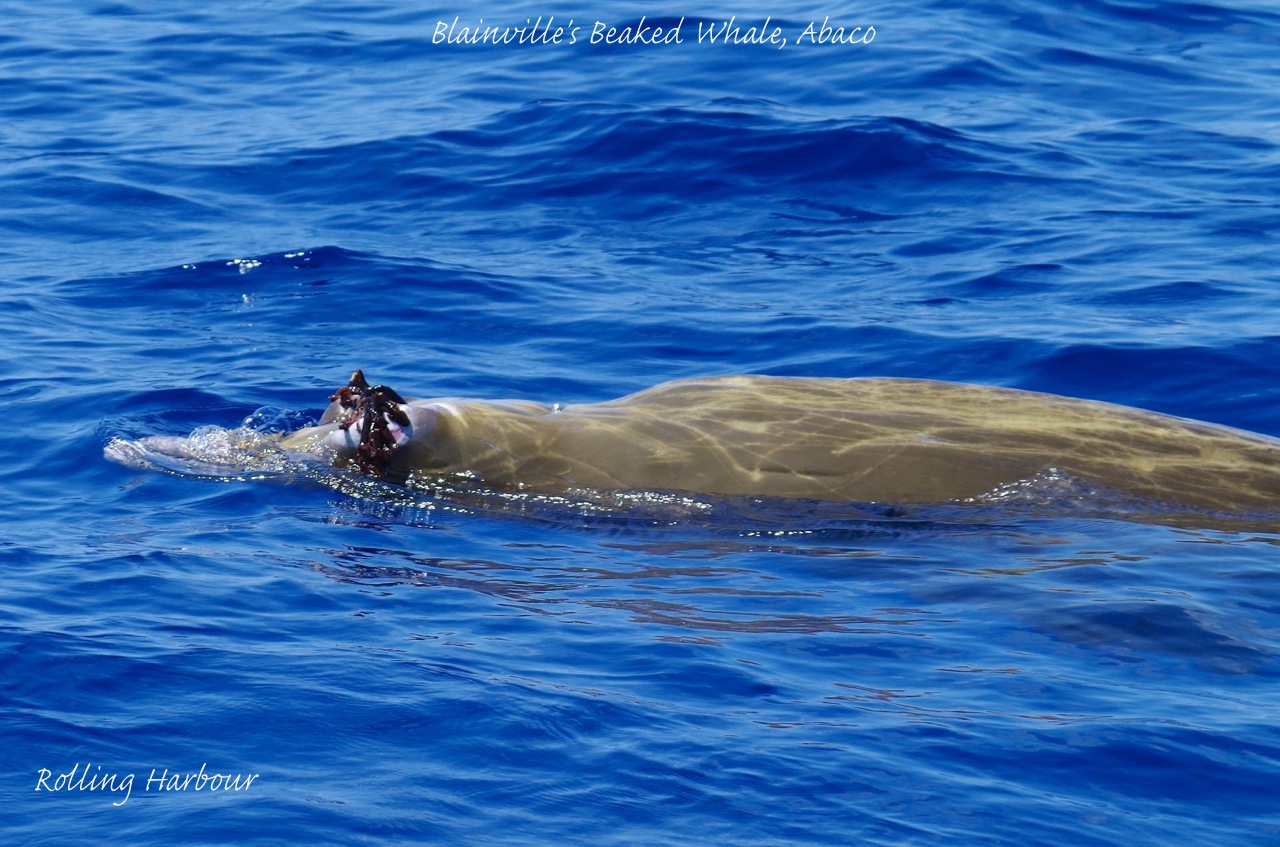
Male Blainville’s beaked whale with its extraordinary barnacle-encrusted teeth that protrude upwards from its lower jaw. The prominent beak is plainly visible. Sighted off the south-west point of Abaco during our second encounter with a group of these whales – the only male we saw that day
Abaco waters are ideal for marine mammals, especially off the southern shores where the walls of the Great Bahama Canyon drop vertiginously down from the shallow coastal waters to depths of up to 3 miles below. This is one of the deepest ocean canyons in the world. The area provides a rich source of food and nutrients for the whales and dolphins and many different species are regularly sighted there, from huge sperm whales to small pilot whales (including plenty of species I had never heard of before).
As the name suggests, the BMMRO’s remit extends far beyond Abaco. The researchers often spend time exploring and recording cetaceans in other Bahamian waters. For the last few weeks the team have been off Andros and have encountered quite a few target species. I have included a selection below taken within the last month to illustrate the importance of the area for a remarkable assortment of wonderful whales and dolphins.
BLAINVILLE’S BEAKED WHALE
DWARF SPERM WHALES
PANTROPICAL SPOTTED DOLPHINS
On board the research vessel, every sighting is recorded in detail – where possible by species, numbers, ages, sexes, and individual identifying characteristics. Thus ‘SW34’ may have a damaged fluke, whereas ‘RD49’ may have a long scar on its back.
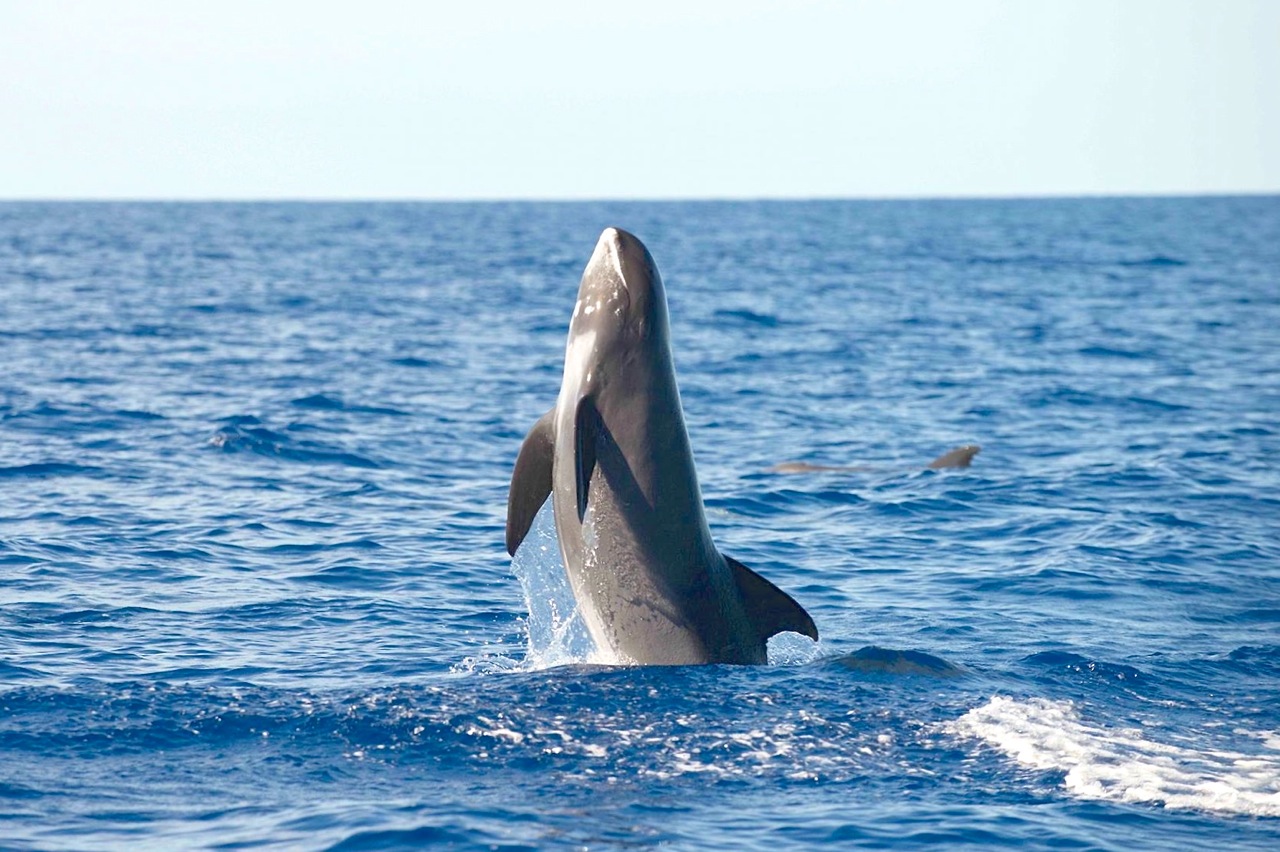
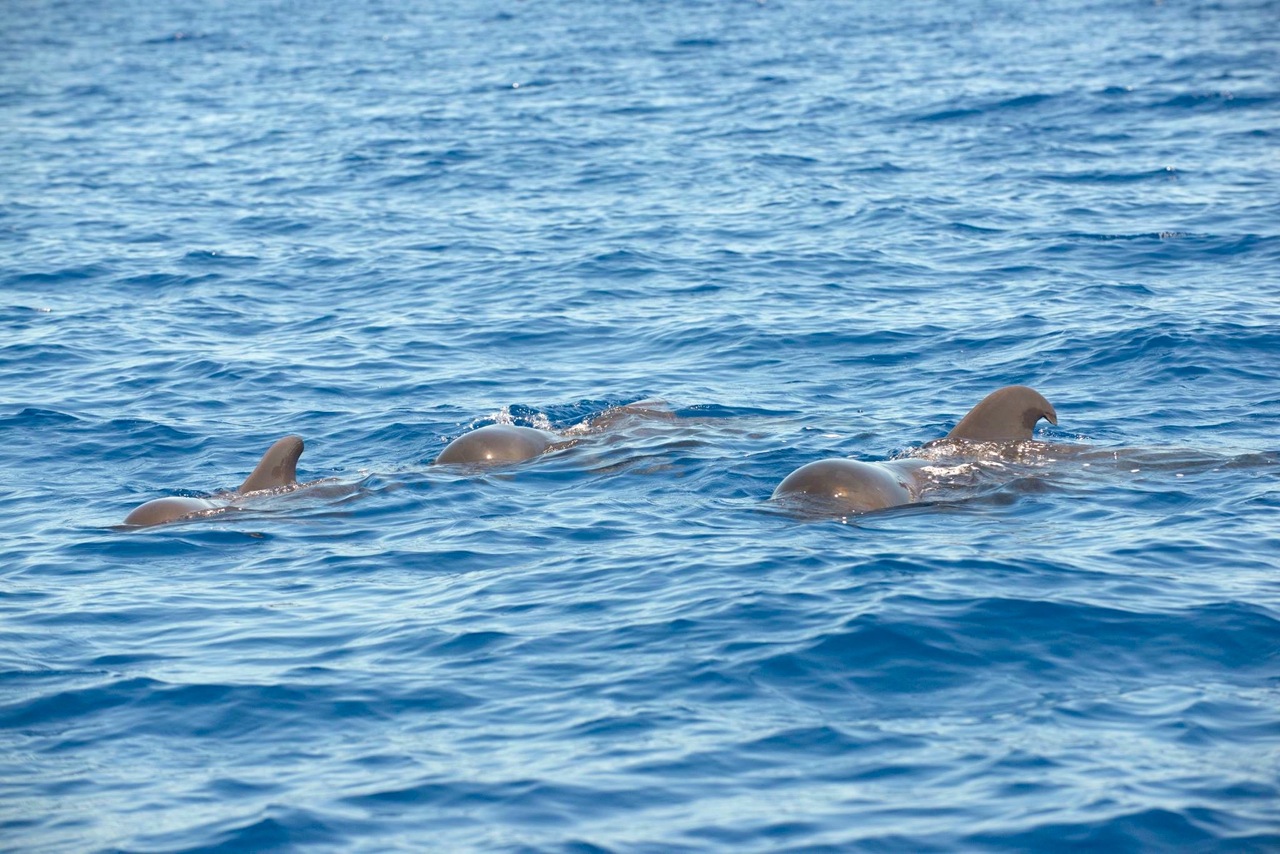
PILOT WHALES
The research boat is equipped with sound devices which, when the microphone is immersed, are capable of picking up whale or dolphin sounds from a considerable distance. It’s astounding to be able to listen in ‘live’ to the wide assortment of clicks and whistles produced as the creatures communicate with each other. The recorded sound patterns are studied and can often be matched to enable an individual animal to be identified.
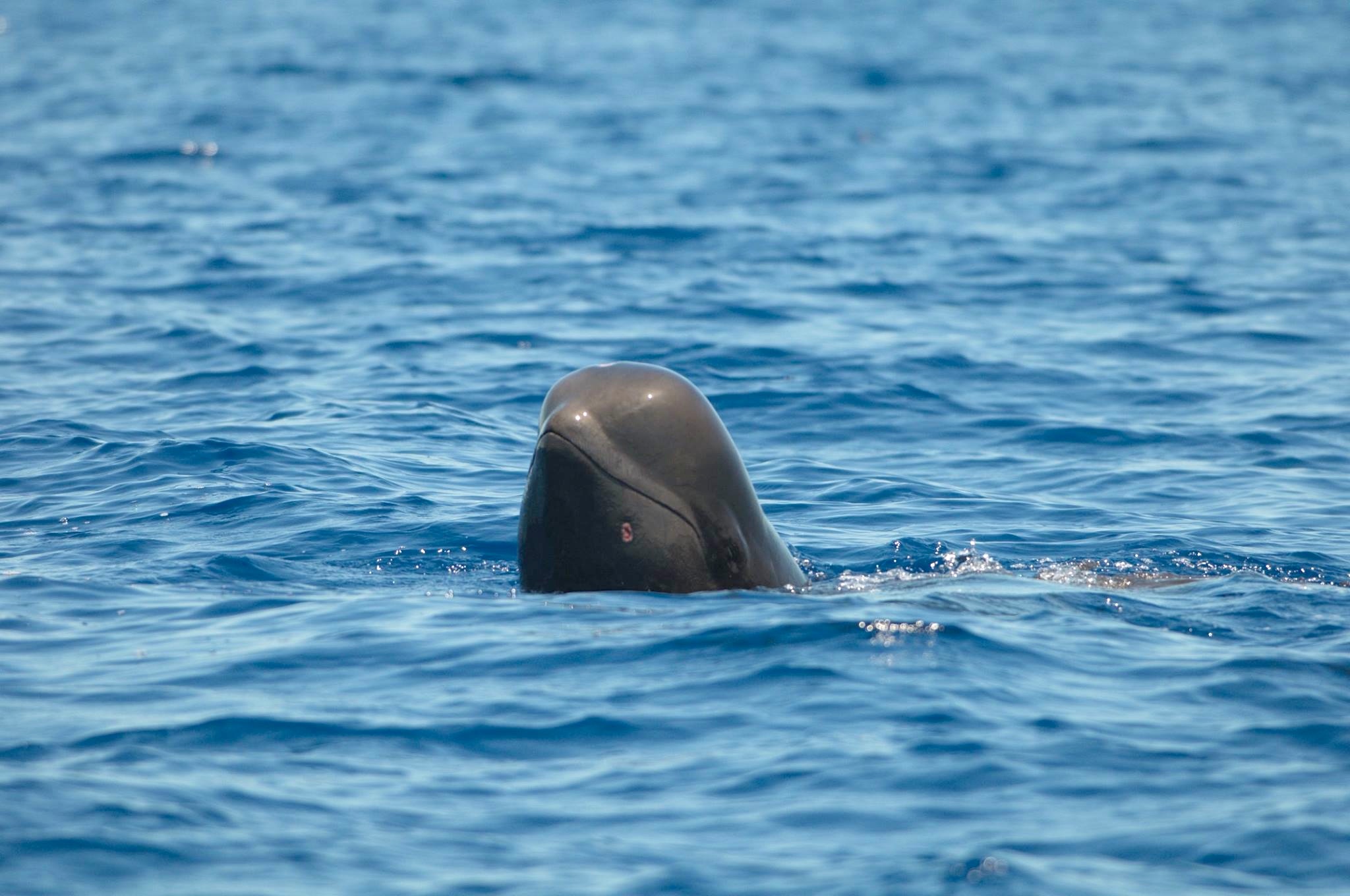
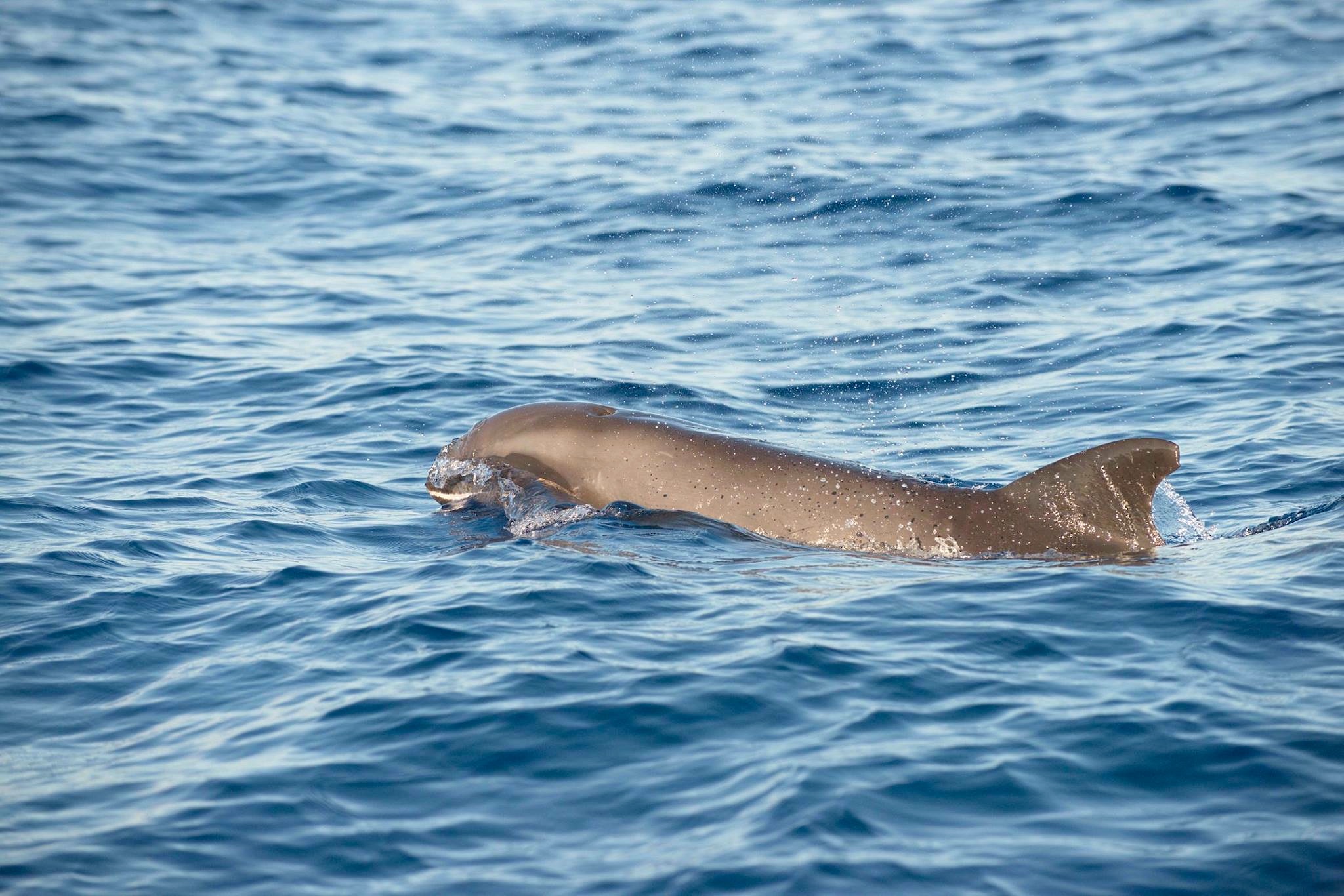
MELON-HEADED WHALES
RISSO’S DOLPHIN
Other work, including photography, is done underwater. Perhaps the most intriguing aspect is the collection of poop specimens, from which a great deal can be ascertained about the diet and health of an individual animal. I wrote about this task and the methods used a while ago in ‘FAMILIAR FECES‘.
I’ll be writing more about whales soon. Meanwhile, here’s a short BMMRO video of a large group of melon-headed males. At the start, you can clearly hear communication sounds between them.
Credits: Charlotte & Diane of the BMMRO for taking us out with them and for all the photos except the male Blainville’s beaked whale (mine, for once!)
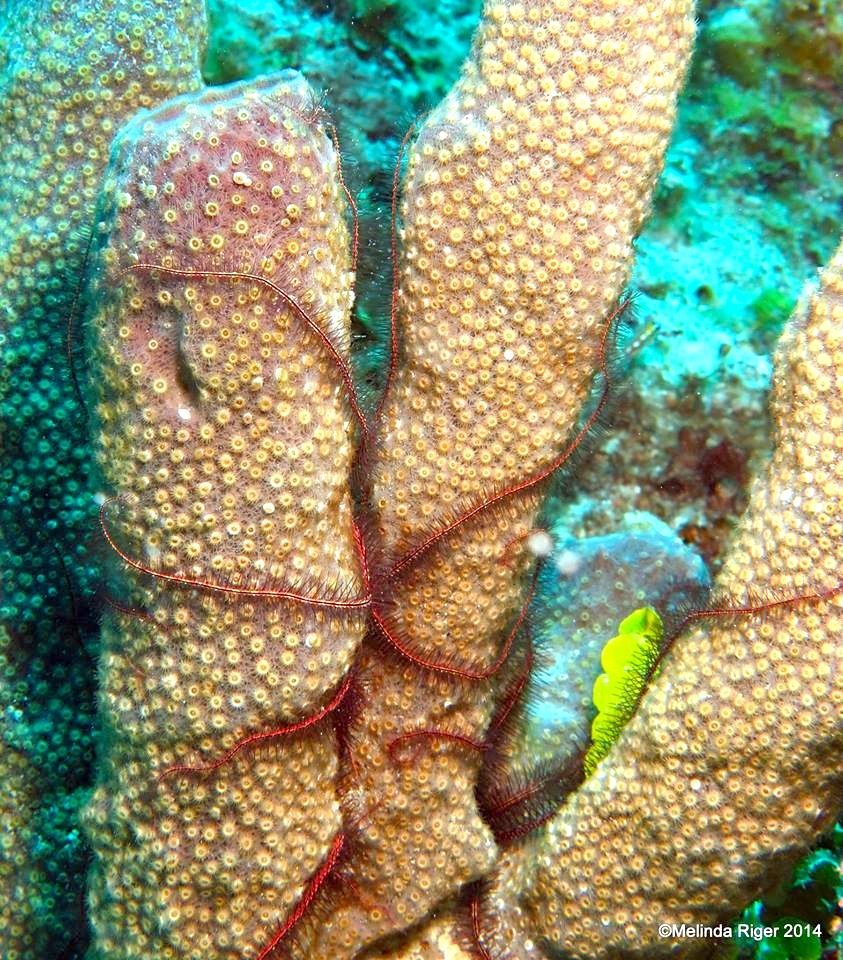
BRITTLE STARS are closely related to starfish, and in particular to Basket Stars. They are commonly known as “serpent stars”, having 5 long, thin arms that may grow as long as 2 feet long. There are lots of different types of brittle star – at least 2000 – and they are found in every ocean on earth from the poles to the tropics. In Bahamian waters they a commonly found living on reefs.
Although these creatures look primitive, their structure, nervous systems, respiratory systems, digestive systems, sex lives and transportation methods are incredibly complex. Take it from me – I’ve just read about it all. So I’ve decided to pick a few aspects of these creatures to highlight rather than discuss the minutiae of their ossicles (tiny bones), madroporites (a sort of water filter / pressure balancer) and viscera.
You are most likely to see Brittle Stars clinging to coral or sponges
A DOZEN BRITTLE STAR FACTS TO PLAY WITH
The star has no eyes and no sense organs as we know them, but can detect light chemically; and (why would they need this?) sense smell through their ‘feet’… [Not a superpower I would prize, but still]
The mouth is on the underside of the central disc (‘body’) of 5 segments, each with a toothed jaw
The mouth is used both for ingestion and, putting it delicately, egestion. [Nor that superpower]
Stars eat tiny organisms suspended in the water or mini-worms, gathering them with their arms
If I have understood this, they breathe through their armpits, and can excrete from here also
The arms fit the main part with ball and socket joints, and are flexible in all directions
The genitals seem to be located in or between the armpits (lucky we are not descended from stars)
Stars readily regenerate lost arms until they lose the 5th – then they are in real trouble
This enables them to shed an arm in a predator attack, like a lizard its tail
Trials indicate that a jettisoned arm cannot regenerate from itself
They use only 4 arms to move along, with the fifth ‘steering’ out in front or trailing behind
Brittle Stars are inedible but non-toxic
Often, brittle stars will cling on inside a sponge
Here is a great video from Neptune Canada of a brittle star fight on the ocean floor over the remains of a shrimp. If you watch the ones joining the fight, you will clearly see the locomotion method described above, with one limb pathfinding and the other four ‘walking’.
I’m not renowned for extreme sensitivity, so I feel no shame in showing mating brittle stars, courtesy of Channel Banks. It’s not exactly Lady Chatterley and Mellors, but the entwined arms are rather romantic, no?
Credits: all wonderful photos by Melinda Riger of Grand Bahama Scuba; BS infographic and viddys as credited
GRACE WITH ATTITUDE: SOUTHERN STINGRAYS IN THE BAHAMAS
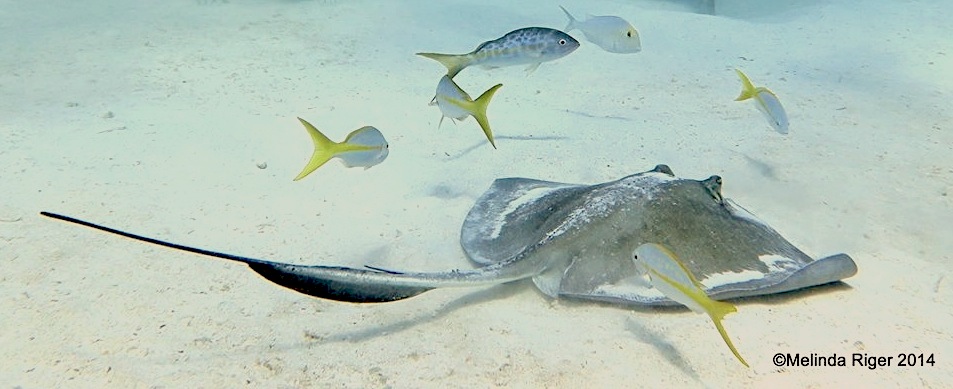
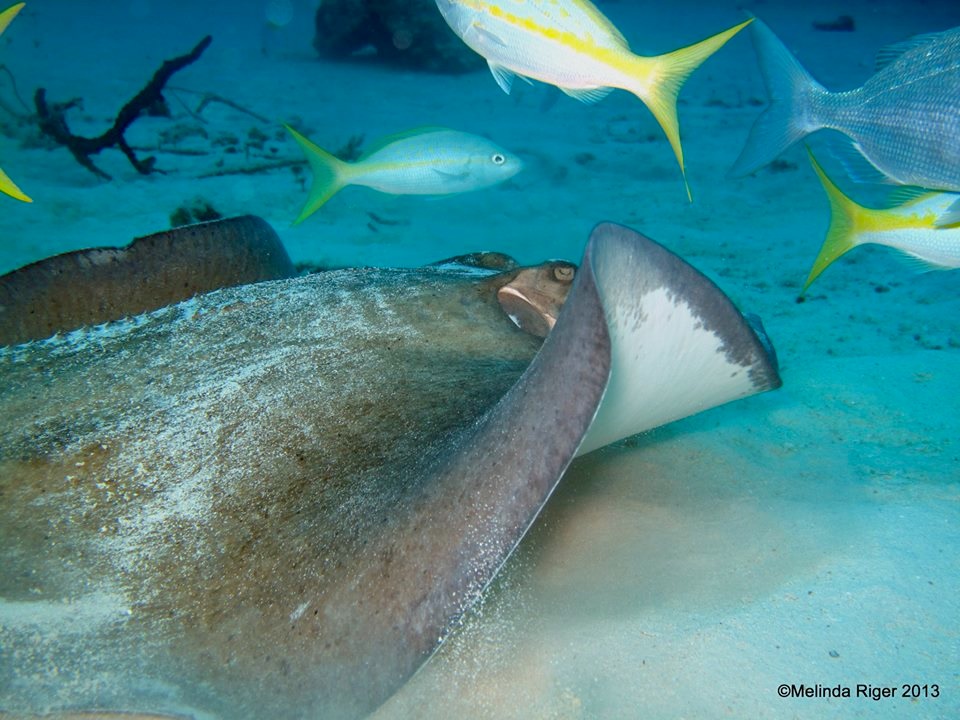
Southern Stingrays are often seen in Abaco waters. In the bay of Rolling Harbour at Delphi, we sometimes watch them admiringly from the balcony or beach as they lazily cruise along the shoreline in the turquoise water. If someone is in the water, they will make a leisurely detour round them – unfrightened in their own element, but unthreatening and disinclined to investigate human intrusion. Diving with them is a wonderful experience (though I have never got very close). Melinda Riger – a scuba expert with great camera skills – takes the most beautiful photos of the stingrays she encounters. Here are a few that I haven’t yet featured. Notice the little striped CLEANING GOBIES going about their business.
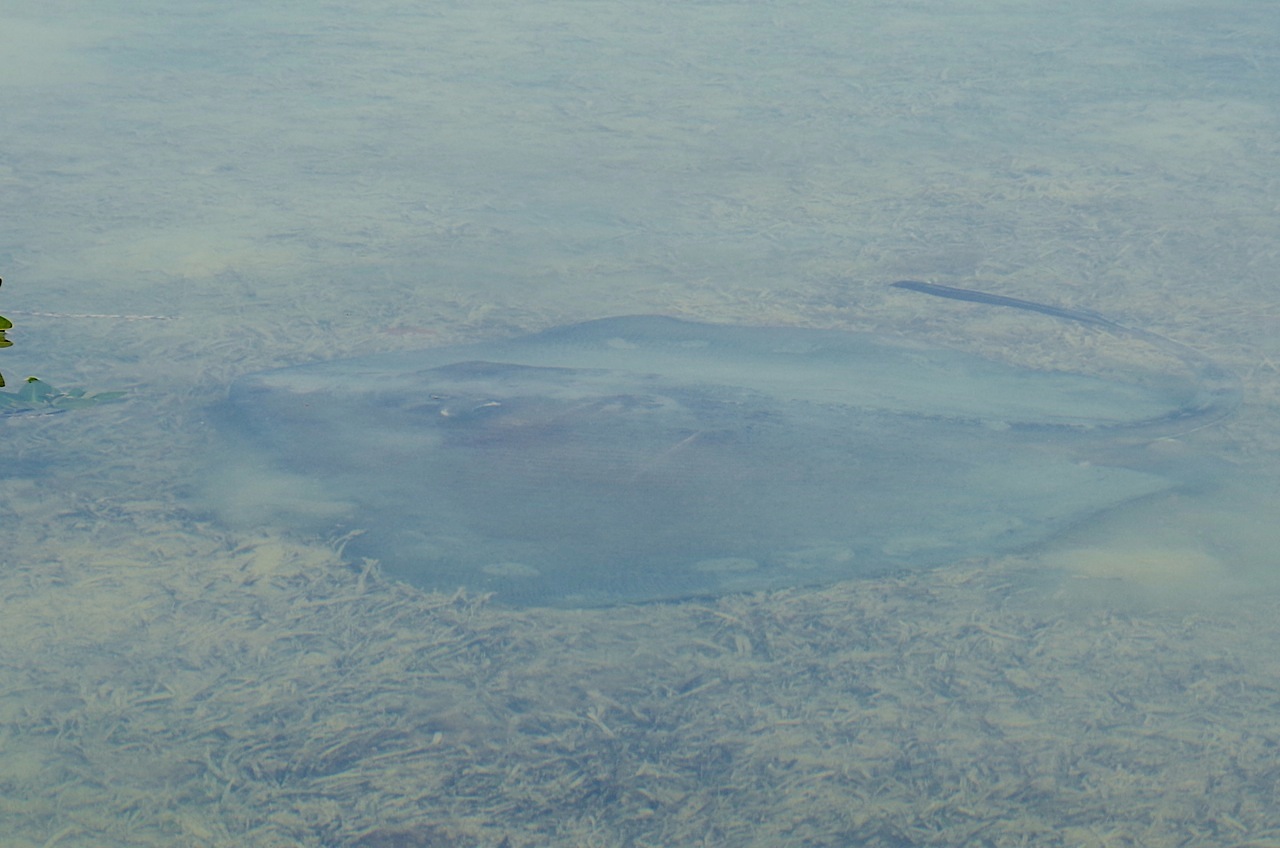
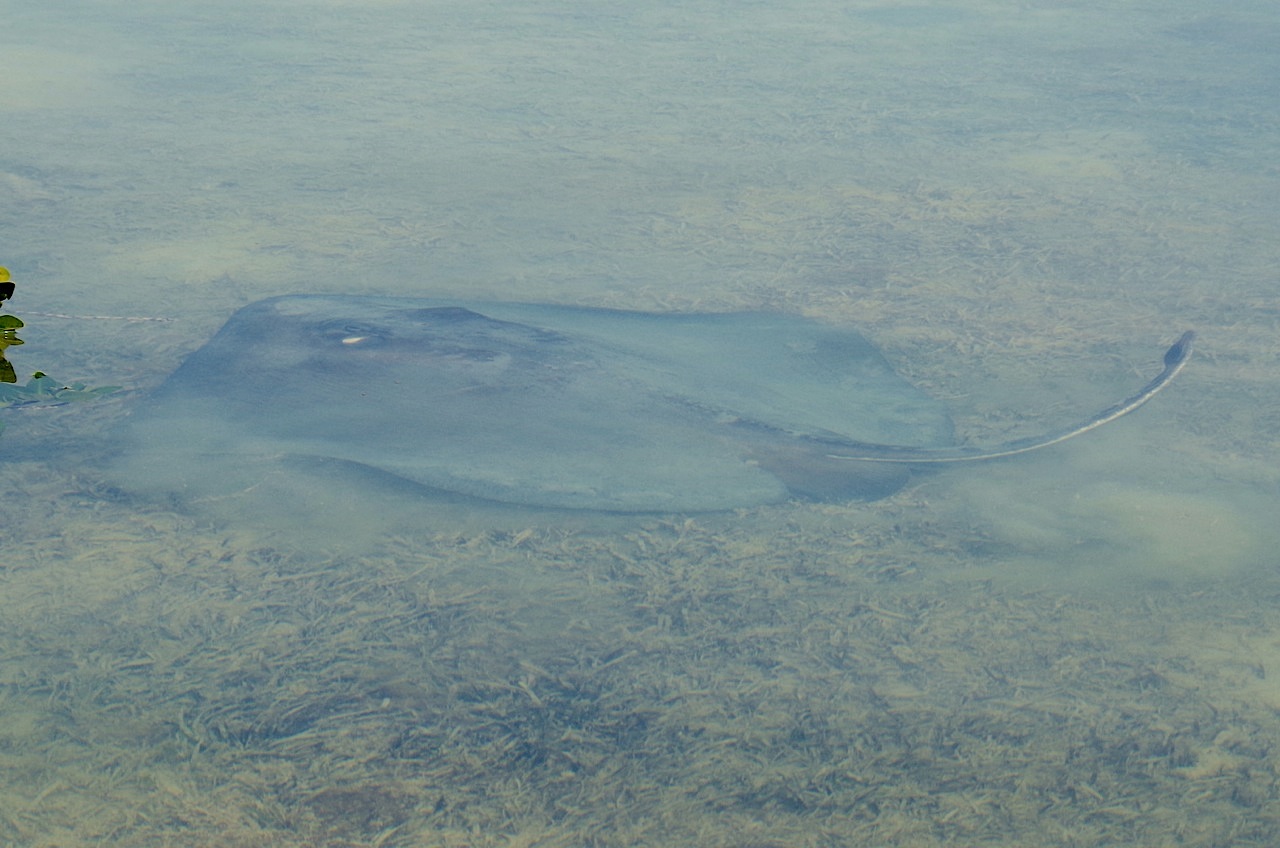
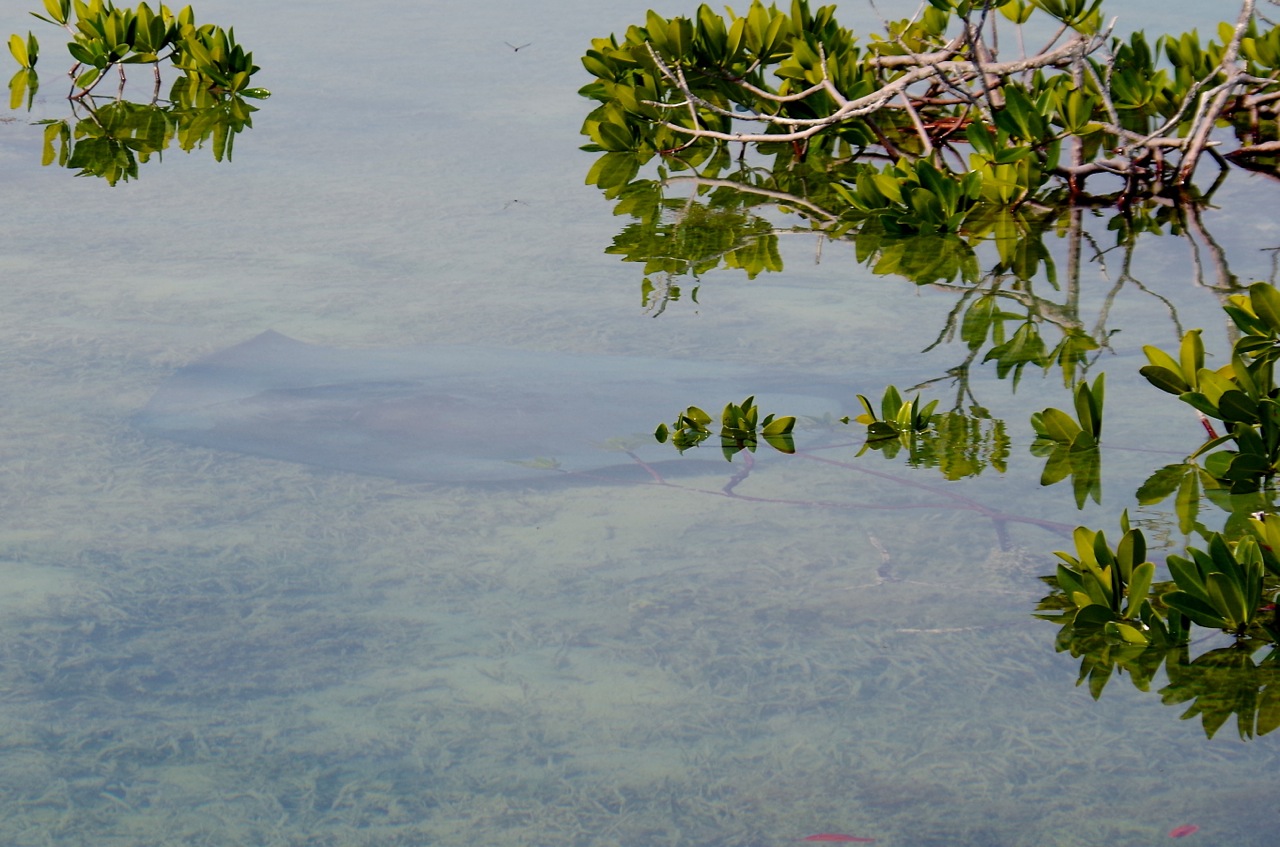
Southern Stingrays are often encountered when one is bonefishing in the low waters of the Marls. I took the photos below while we were fishing in a channel between areas of mangrove. As the skiff was poled very slowly forward, I saw the stingray coming straight towards us. I wondered how it would react. Very elegantly, was the answer. It turned effortlessly and unperturbed to one side, then resumed its original course leaving a clump of mangrove between it and the skiff.
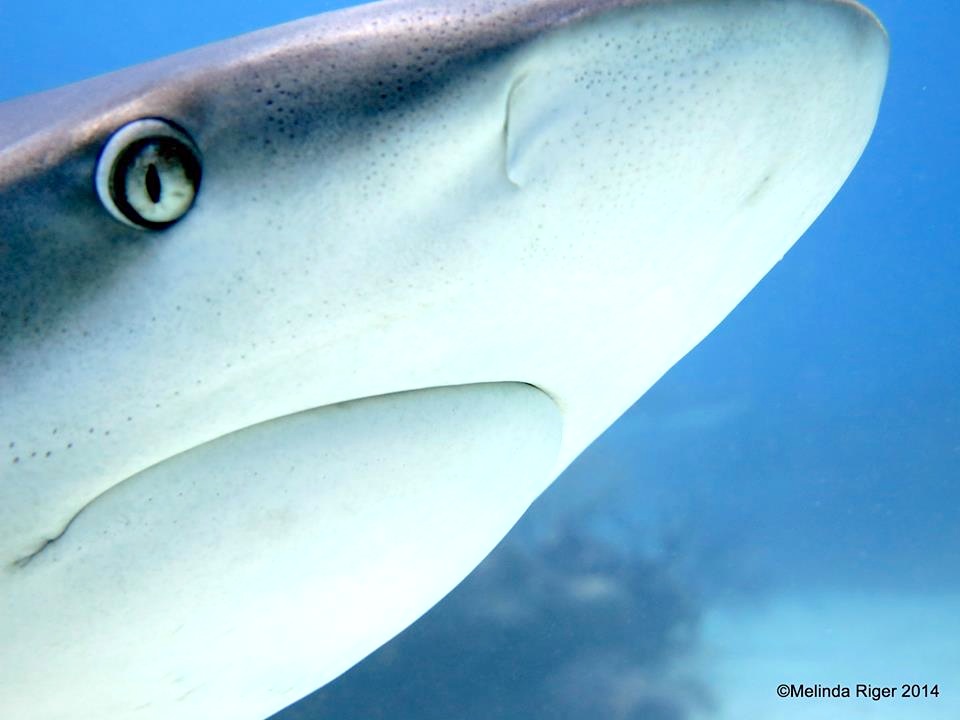
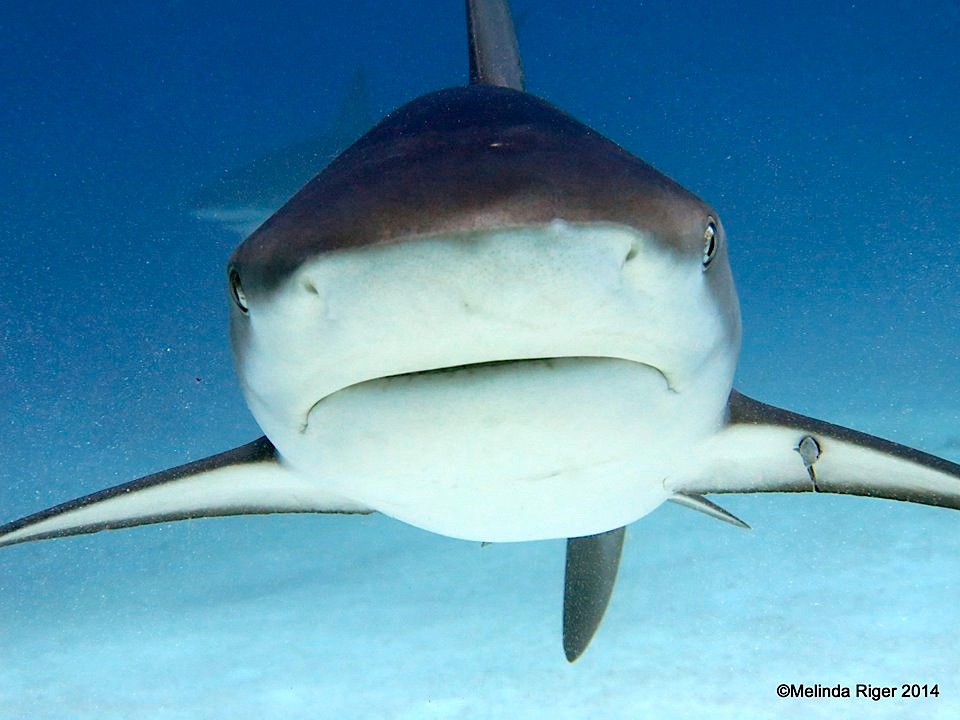
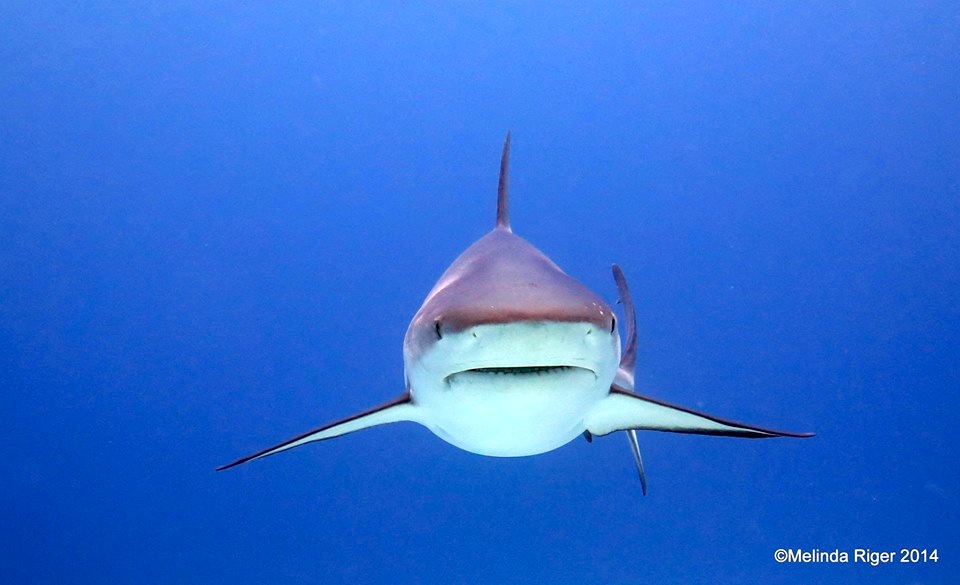
From time to time I wonder about the naming of animals. I know about the problems that can arise when people name their chickens Henny, Penny, Denny & Lenny, and the time comes to (please look away now). And how a slavering dog coming towards you (not on a lead) that the owner calls ‘Tyson’ or ‘Killer’ is possibly one to cross the street for. And that the owner of a cat called ‘The Reverend Wenceslas Muff’ (Sir Roy Strong, in fact) may not take kindly to you referring to it facetiously as ‘Puddy-tat’. But does it make things any better to know that the shark that is eyeballing you is called Lucy? I don’t know the names of the others, but I am sure they would all like to be introduced…
REMORAS Some of the photos show a strange creature attached to the underside of the shark. For more info about these weird shark passengers, and some great images, click HERE
All the fabulous photographs above were taken by Melinda Riger and Virginia Cooper of Grand Bahama Scuba, on whom I rely entirely for subaqueous material, being a pathetic swimmer, a gnarly ancient, and a certified scaredy-cat (‘highly commended’). My thanks as always to them for use permission
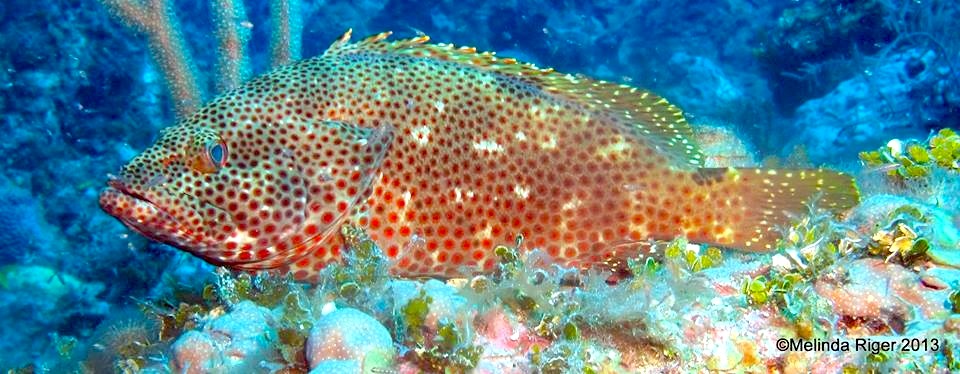
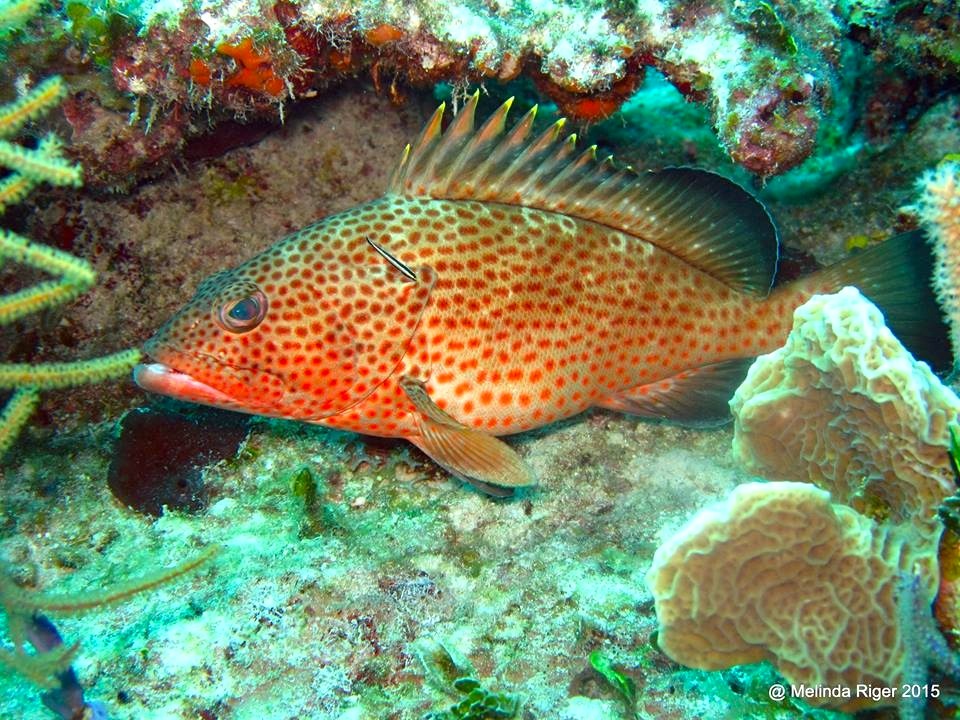
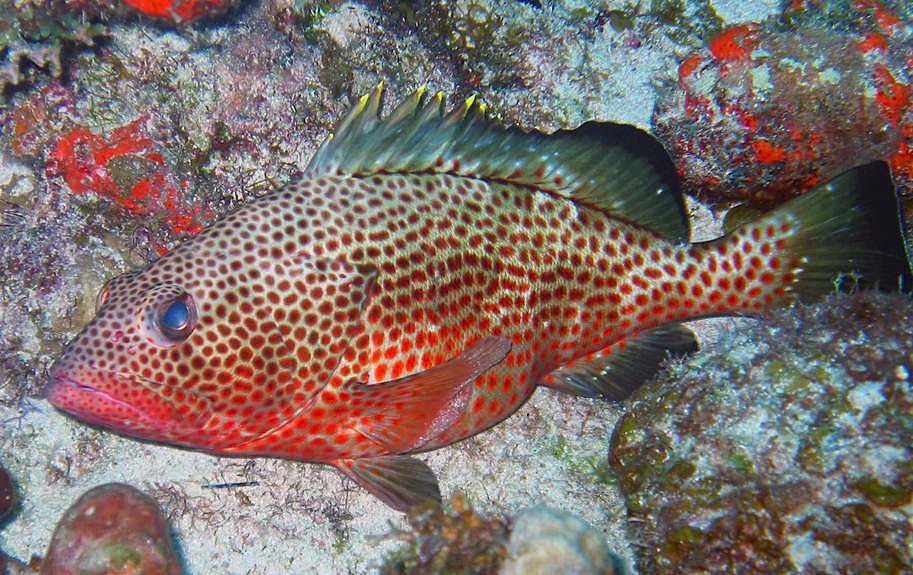
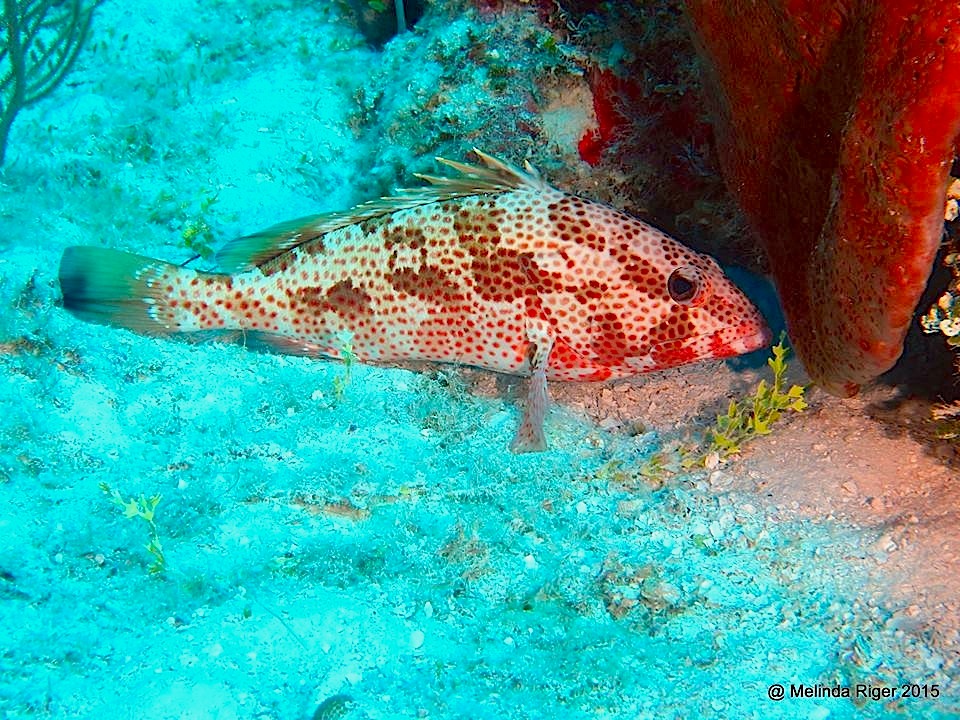
The Red Hind is one of several grouper species commonly found in Bahamas waters. Commonly for now, anyway. There is less information available about this species compared with other groupers, but sources seem agreed that it is (a) abundant and (b) IUCN listed ‘least concern’ but (c) heavily fished and (d) delicious.
One problem arises from the fact that Red Hinds form spawning aggregations in particular areas, making them vulnerable to fishing exploitation in those locations, and consequent population decline. Already, some of their spawning areas are protected.
Another threat comes from the degradation of coastal habitats coupled with increasing commercial and recreational fishing. Red Hinds are targeted with speargun, hook and line, fish traps and nets. They may also be by-catch of other fishing operations. Fortunately Marine Protected Areas such as the ones in Abaco waters provide localised protection but these are not found throughout the Red Hind’s range. Closed seasons have been imposed in a few areas, another conservation method that has recently been introduced in the Bahamas for the Nassau grouper.
Getting the right balance between traditional fishing for food, and stock conservation is inevitably a tricky calculation. For the Red Hind, the factors that may result in the population decline of a plentiful species are in plain sight and will continue to be monitored by the various scientific research organisations involved…
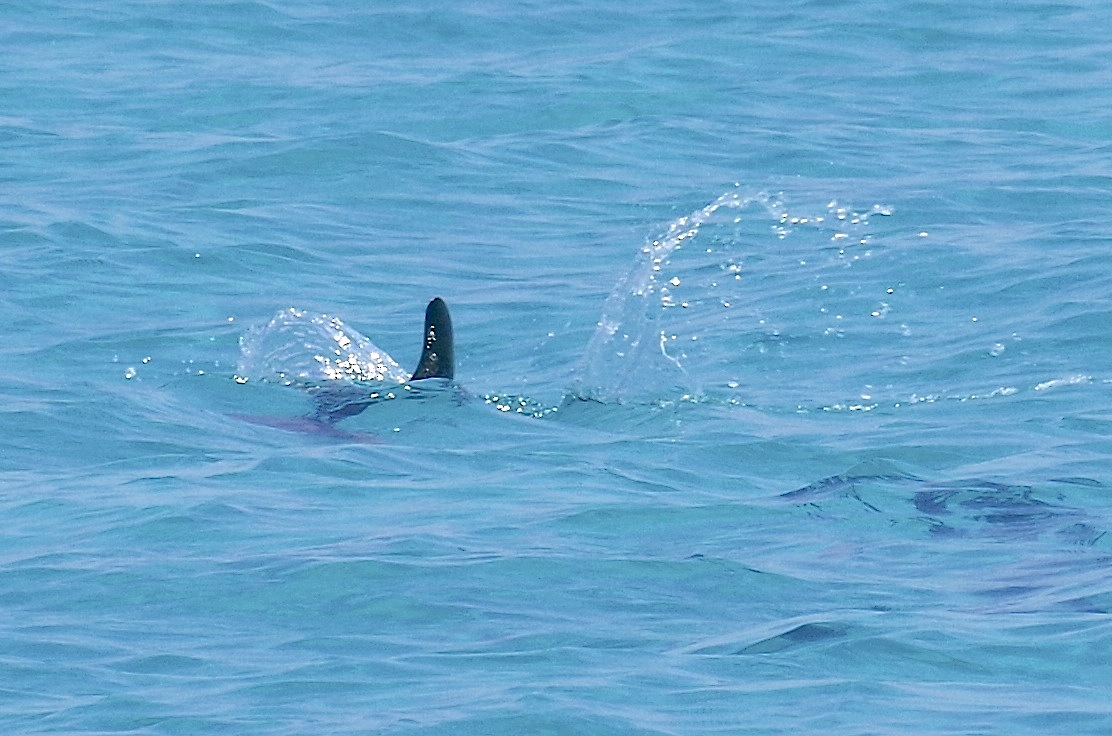
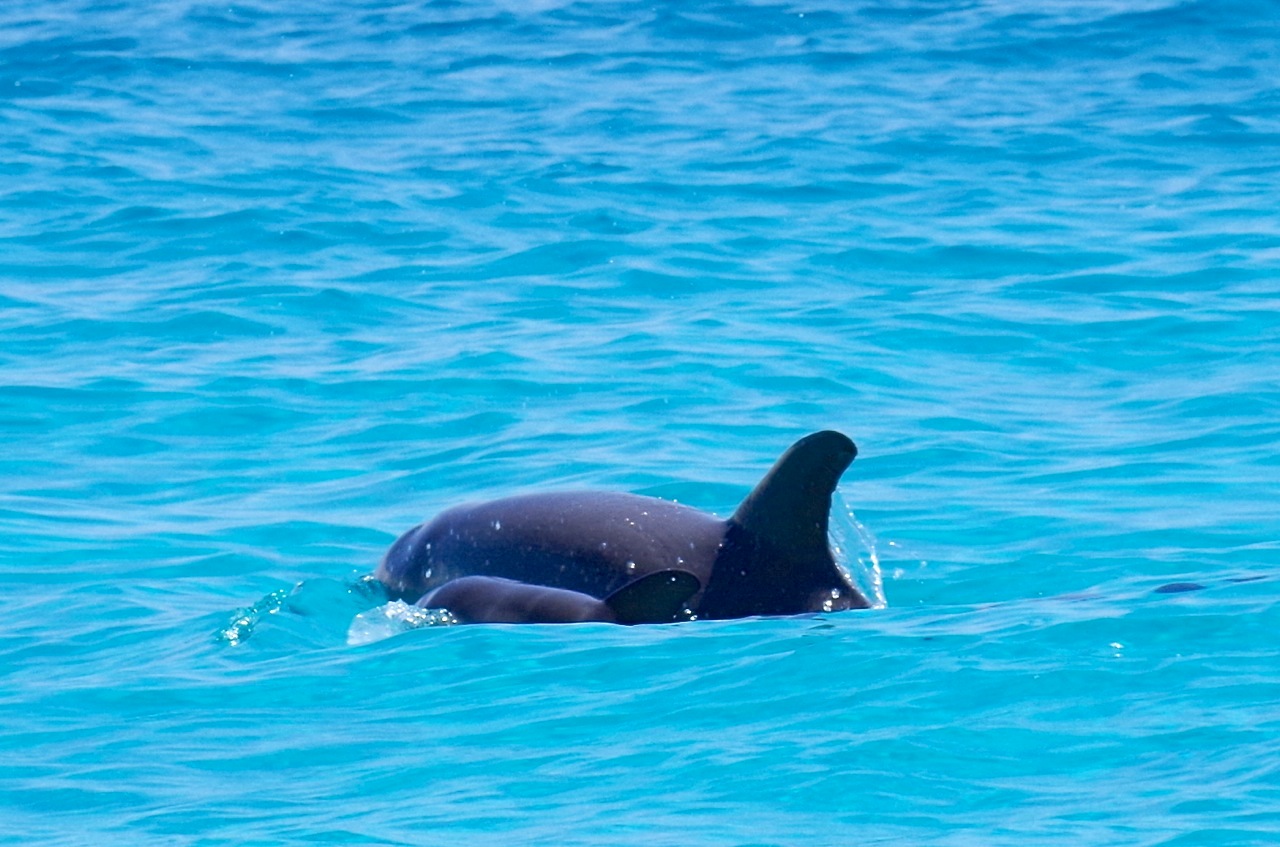
Sometimes things happen that completely take my breath away. Here is one of those moments, from our recent trip with Charlotte and Diane in the BMMRO research boat. As we returned from whale-watching to base in Sandy Point and moved from the deep dark ocean to the bright blue shallows, we encountered a group of bottlenose dolphins. You can see my recent post featuring some of the adults HERE. That was exciting enough, as they played around the boat. Then another participant appeared…
Notice the dark area behind the adult dolphin…
…which soon separated into a small dark splashing creature with its own fin cutting the waves…
…and next seen keeping pace with its parent
The sharp line between the light and the dark sea is where the sandy shallows abruptly give way to the deep waters of the Grand Bahama Canyon, a massive trench up to 2.5 miles deep with almost vertical cliff walls to the depths in some places
There were less active and splashy moments as the pair swam around together
Then it was back to doing what they like best…
Then some more restful moments…
And finally the pair moved away. On the far horizon, the Massive Mickey Mouse Cruise ship moored at ‘Disney’s Castaway Cay’ (formerly the sober-sounding Gorda Cay), where you can be a Pirate of the Caribbean. Or anyway a very happy Tourist. The choice is yours. Would you like fries with that?
And looking out to sea from the cheerful place that is Castaway Cay, I wonder if a small child was wondering “Ok, love Mickey and his Friends – but I’d also really love to see a wild dolphin swimming free…
All photos RH (except Castaway, Wiki). Huge thanks to Charlotte, Diane and Bahamas Marine Mammal Research Organisation BMMROfor a truly wonderful day
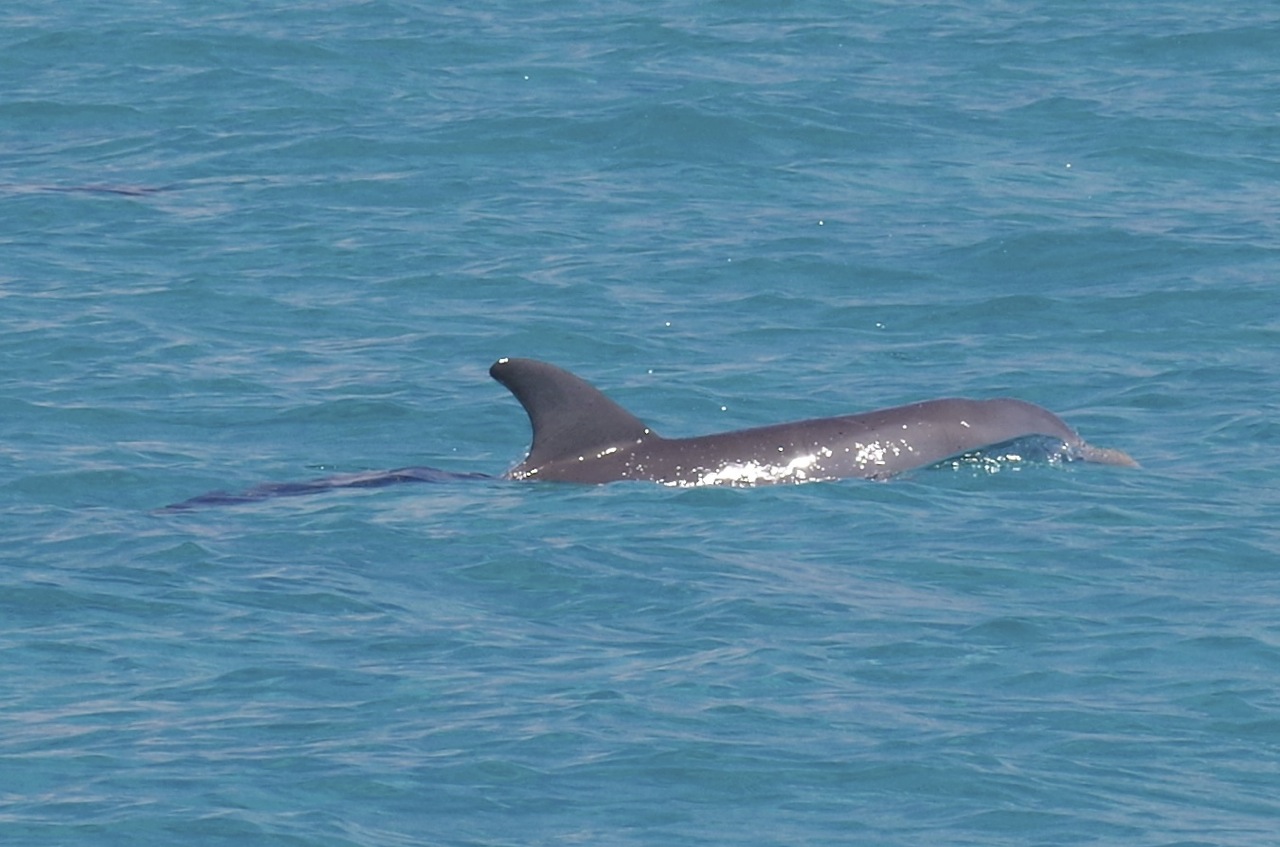
This seems to be a excellent early Spring for dolphin and whale sightings in Abaco waters. I’ve noticed that people have been posting dolphin sightings on FB recently. In our brief window of opportunity each March, I usually reckon to see 2 or 3 dolphins at most – maybe crossing over to Hope Town on the ferry, or more probably on a fishing trip. This year we saw 2 groups of about 6 off Cherokee while fishing, including calves. On another day, 4 adults made a leisurely progress the whole length of Rolling Harbour while we watched from the balcony of the Delphi Club. I don’t think they have ever been so close to the shore there before. The best was to come.
Near the end of our trip Charlotte Dunn and Diane Claridge invited us to go out with them on the BMMRO research boat. This is equipped with a hydrophonic system that can detect the bleeps, whistles and clicks of cetaceans, and record them for comparison with previous data. This enables particular animals to be identified from their vocalisations. The other method is to note particular features of an animal – damage to a fin, markings on the flank and so on. During the day C & D happily conversed in code: “Is that 132 over there?” “No, it’s got a nick in the fluke, it must be 127…”
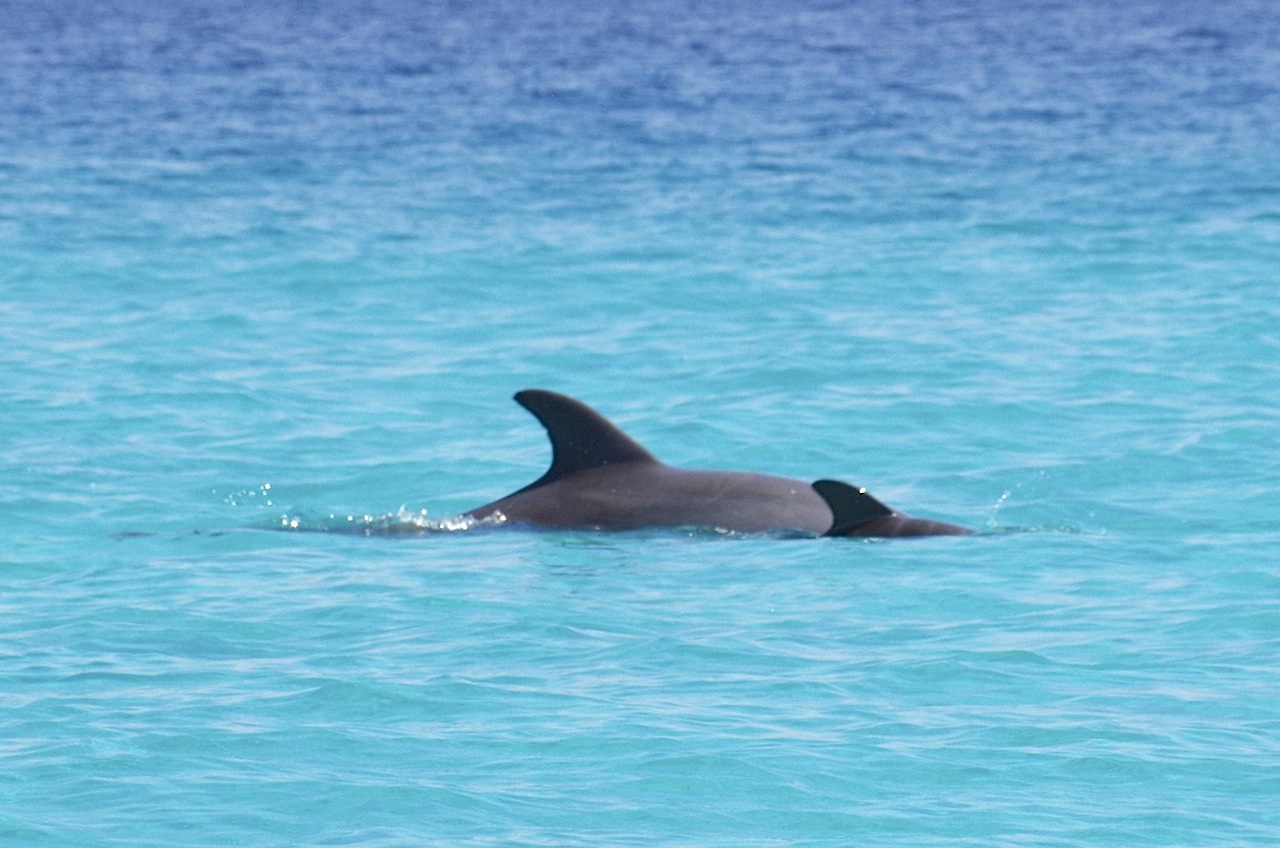
As we returned in the RHIB from an amazing day spent at close quarters with beaked whales [more on these soon], we moved from deep dark blue ocean to sandy turquoise shallows. There, just off Rocky Point (near BMMRO HQ at Sandy Point) were half a dozen bottlenose dolphins, including a mother and calf. This post contains a small batch of photos of adults – there’ll be another post shortly featuring the calf…
Here’s a taster for the next post – the calf, just visible close alongside its mother, was being given leaping practice. Watch this blog…
All photos RH. Huge thanks to Charlotte, Diane and Bahamas Marine Mammal Research Organisation BMMROfor a truly wonderful day (and for my cool sweatshirt!)
SAW FISH IN THE ABACO MARLS? NO SURPRISE. SAW A SAWFISH? AWESOME!
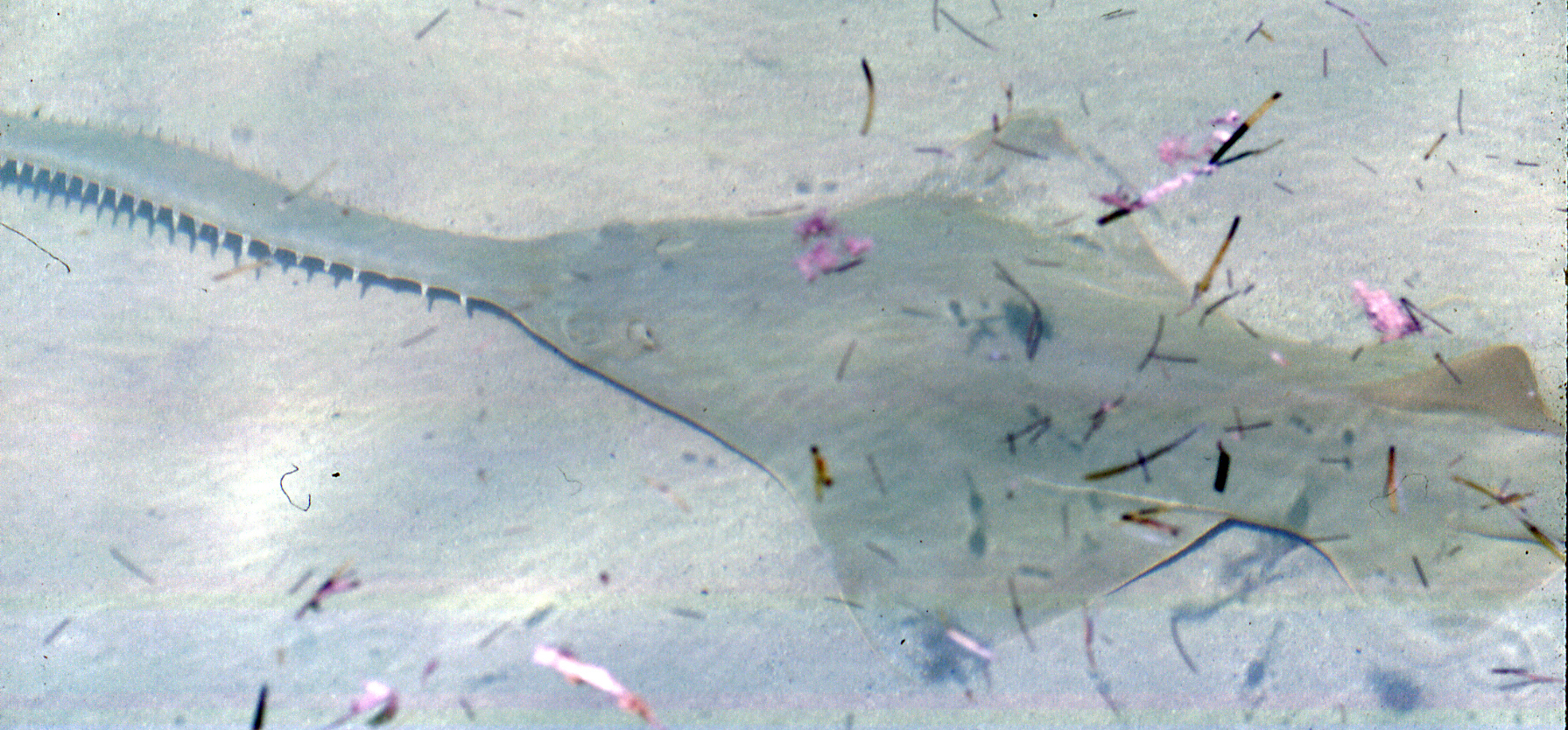
Exactly a year ago, an extraordinary find was made out on the Abaco Marls. Almost disguised against the pale mud under the low water was the first sawfish reported for the Marls. This fish is not merely a rarity in the Northern Bahamas: all species of sawfishes worldwide are IUCN listed as Endangered or Critically Endangered.
Sawfish, Abaco Marls Feb 2014 (Photo: Jacque Cannon)
Here is an account of the discovery reported by FRIENDS OF THE ENVIRONMENT: “On a recent fishing trip in the Marls with local guide Justin Sands, Sam and Jacque Cannon had an exciting encounter. As Justin was poling the flats, with Sam on the bow searching for bonefish, Jacque spotted a Sawfish! Jacque and Justin quickly forgot about Sam and his efforts to catch a bonefish and turned their focus to the Sawfish. This is a very rare sighting and one we are happy there was a camera available to document it…”A couple of weeks later I was lucky enough to sit next to Jacque at dinner at the Delphi Club, so I was able to hear at first hand the story of this amazing find. It also turned out to be the perfect time to sign an early copy of “The Birds of Abaco” for Jacque and Sam…
Sawfish Book Plate (1884)
10 ESSENTIAL SAWFISH FACTS
Sawfishes are also known as Carpenter Sharks; their ‘saw’ is called a ROSTRUM
There are 7 species in oceans and seas worldwide, including the Mediterranean
All populations have declined drastically due to habitat loss, overfishing & pollution
The rostrum is used to feel, to dig, to slash & impale or stun its prey, and for defence
Sawfishes are nocturnal creatures and spend a lot of time face down on the sea floor
Like sharks, their skeleton is made of cartilage and not bone.
Some species can grow up to 7m long
They are generally unaggressive unless provoked but fight strongly when caught
Sawfishes are slow breeders, making population recovery more difficult
Babies are called ‘pups’. Their rostrum is flexible and sheathed until after birth
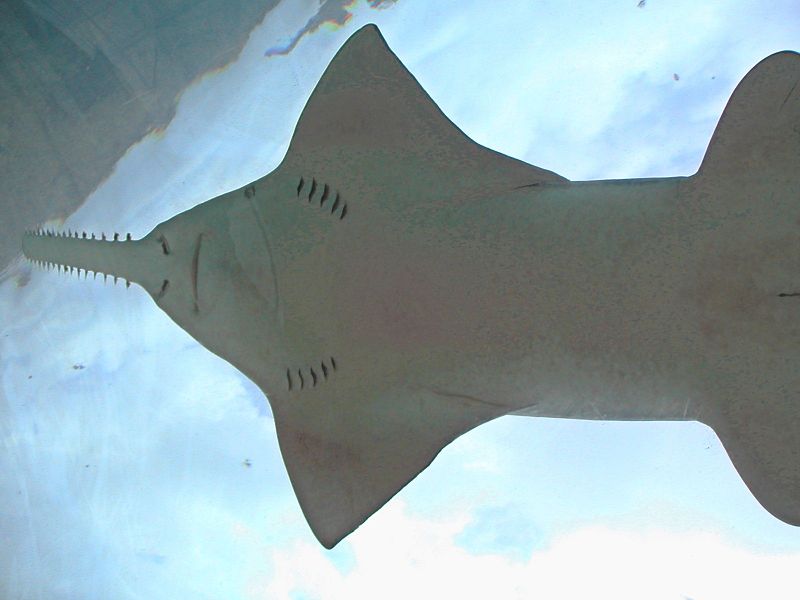
Sawfish seen from below – Atlantis, Nassau, Bahamas (Fred Hsu)
Other sawfish have been seen recently in the Northern Bahamas, though not in Abaco waters. Last summer the Bahamas National Trust posted 2 great images of a Smalltooth Sawfish, saying“BNT was excited to receive these photographs of a Smalltooth Sawfish photographed in the proposed East Grand Bahama National Park – Bersus Cay Area. The sawfish was 12 to 13 feet long and was seen in water that was 2 -3 feet deep. Thank you to Buzz Cox, Island Manager at Deep water Cay for sending us these photos”.
CONSERVATION ISSUES
POPULATION DECLINE As noted above, Sawfish populations have declined to less than 10% of historical levels. The Smalltooth Sawfish – seen above – was once prolific in the Atlantic, Gulf of Mexico, Mediterranean, Black Sea and Indo-Pacific. Population numbers of this species are now estimated at less than 5% to perhaps as low as 1% of their historic levels.
THREAT TO SURVIVAL The threats to their existence are many: habitat loss, overfishing, accidental bycatch, rostrum souvenir hunters (good prices can be obtained), taking them for fins (as a delicacy) or oil from their liver (medicinal).
LEGAL PROTECTION Capturing a sawfish is illegal in certain countries, including the United States. The sale of smalltooth sawfish rostra is prohibited in the United States under the Endangered Species Act. The import for sale of that of any sawfish species is also prohibited. The international trade of sawfish was banned by the CITES convention in June 2007.
For those that want to find out a bit more detail about these issues, there’s plenty on interesting information in a scientific (but readable) paper from NOAA – click the link below
A very recent Bahamas smalltooth sawfish sighting on Bimini – Jan 2015
Smalltooth Sawfish (Pristis pectinata) Bimini, Bahamas – Lee & Mary Ellen St John Jan 2015
Time for some footage of these rare and wonderful creatures in the Bahamas. The first is from John Flanagan and was taken during a dive off Bimini in early 2014. He was so surprised by the sight that he nearly forgot to turn on his camera to take a short video… The second is a longer 5 min video taken off Andros by Grant Johnson of “wild footage of the critically endangered Smalltooth Sawfish (Pristis pectinata). The west side of Andros, Bahamas is one of the last places on Earth that still provides vast refuge for this incredible animal”.
Finally, you may be wondering how exactly the sawfish uses its rostrum to stun fish, as mentioned earlier. Watch this short video – see how quickly it moves, for such an apparently cumbersome and dozy creature…
Credits as shown above, with particular mention of Jacque Cannon for probably the first known sighting and anyway photo of an Abaco sawfish…; header pic in aquarium Diliff (Wiki)
CHERUBFISH (PYGMY ANGELFISH): BAHAMAS REEF FISH (23)
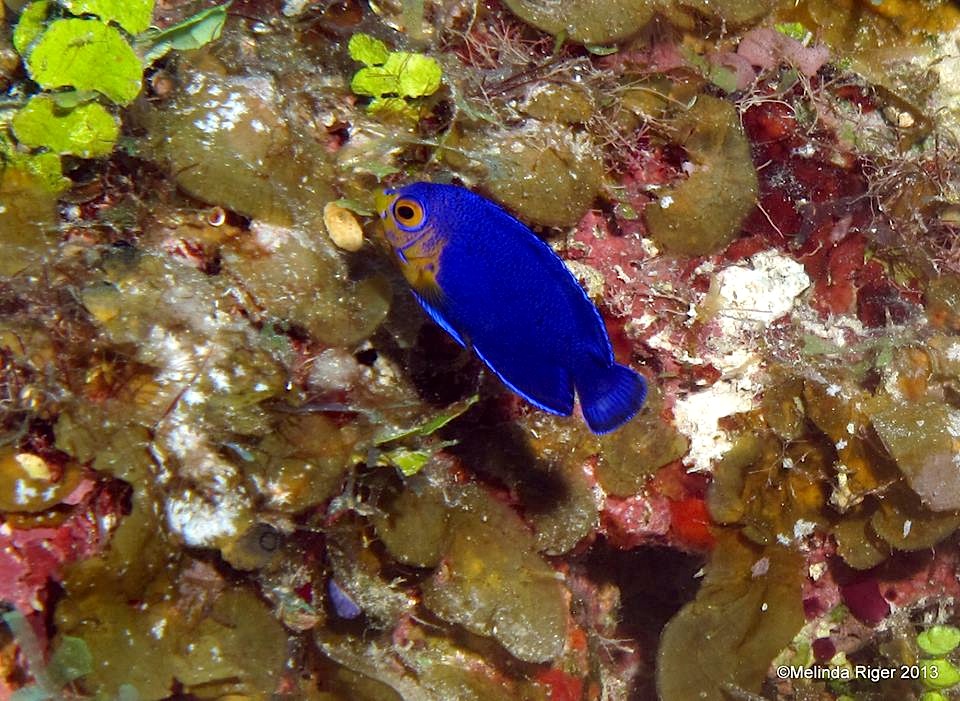
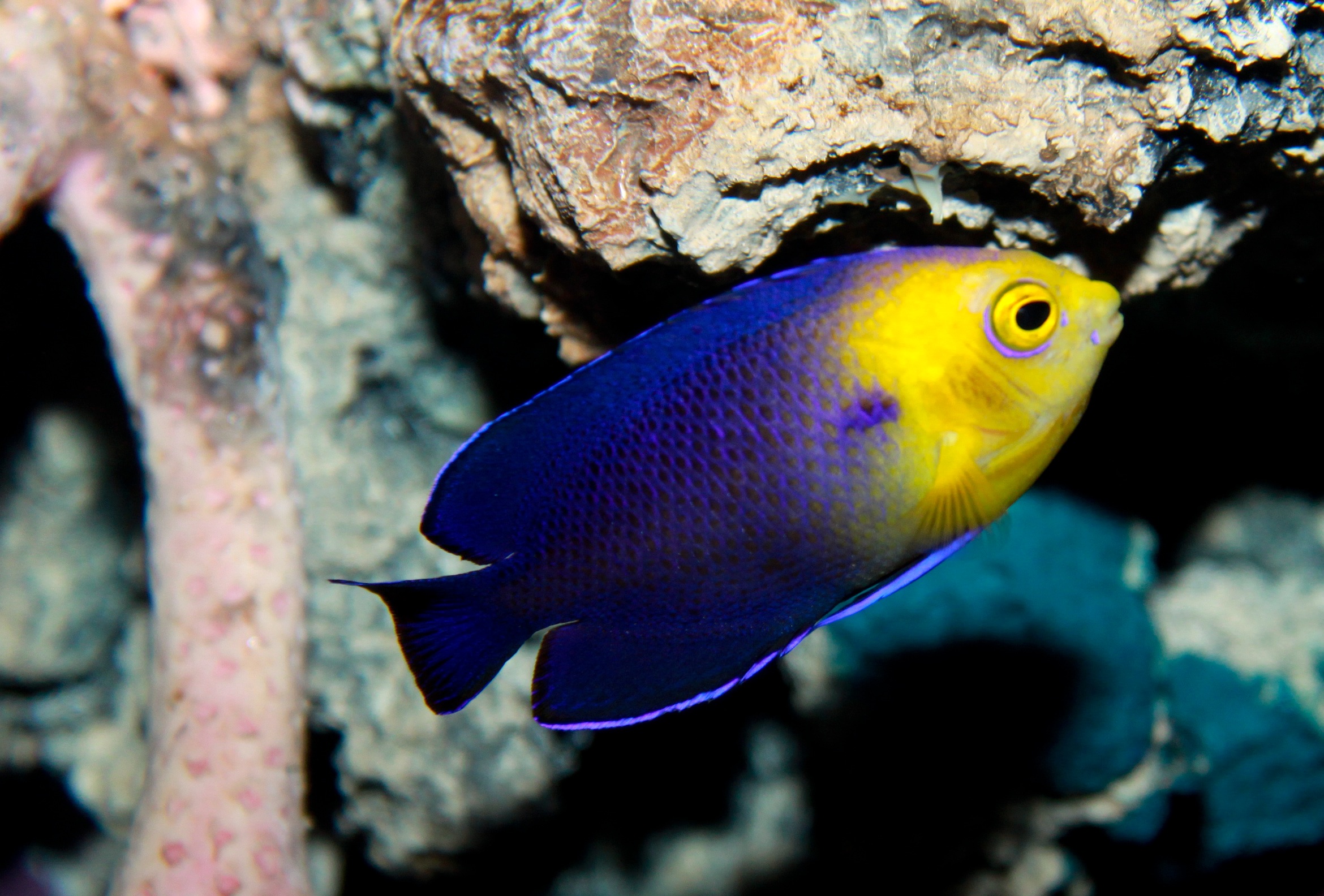
Time for a bright little denizen of the not-so-deep. The Cherubfish Centropyge argi or pygmy angelfish is a very small (8cm) and distinctively coloured angelfish species. These fish are native to the Caribbean and Gulf of Mexico, and flicker round the coral reefs happily feeding as they go (see the video below to see how busily they forage). Or maybe they are just having a good time…
The Cherubfish is unsurprisingly a popular aquarium species. Don’t rush straight out and buy some though: a typical warning says “like other angel fish, they are not completely 100% reef-safe. Results vary among individual fish and tank qualities (size, feeding, tankmates, etc.), so caution is recommended when adding this fish to a coral tank“. You can read the whys and the wherefores HERE – sadly I lack the vibrant interest in aquaria to go into it myself…
Looking beyond Melinda’s lovely images of the species, I have found that these creatures will often show more yellow at the nose end. Here’s an example of a more two-tone Cherubfish in case you come across one.
I mentioned that Cherubfish flicker around the reefs instead of proceeding serenely and in an orderly fashion. Have a look at this short video to see what active little fish they are.
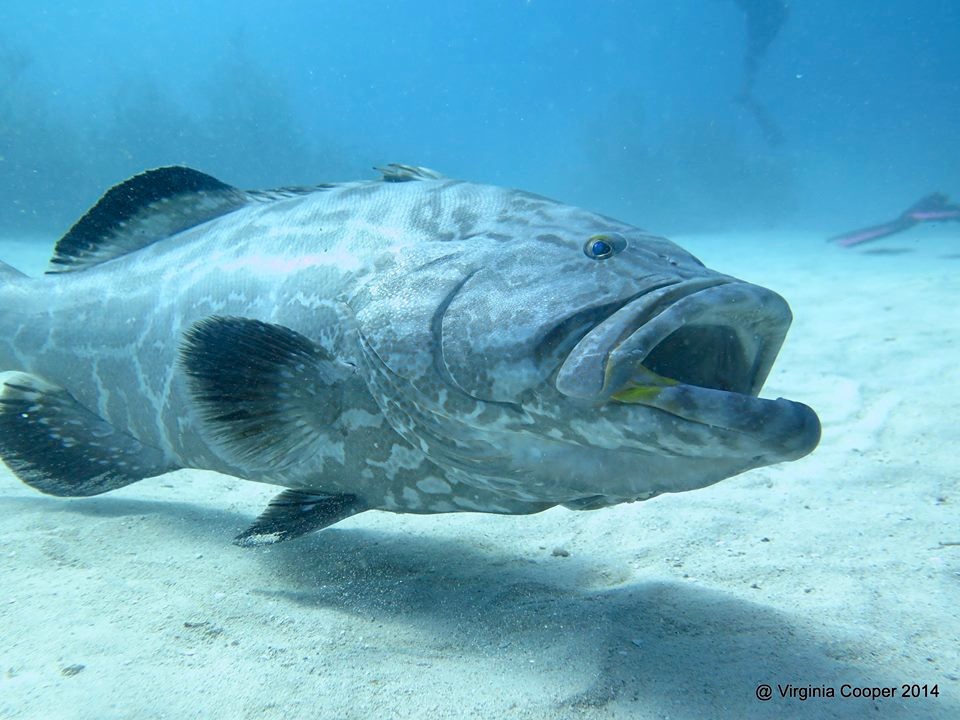
The Black Grouper is a large fish of the reefs found in the western Atlantic, particularly in the waters of Florida, Bahamas, Caribbean and the Gulf of Mexico. It is a solitary species that mostly prefers the shallow waters around coral reefs.
Formerly plentiful, these groupers (like other grouper species) have moved from an IUCN listing of ‘Least Concern’ to ‘Near-Threatened’. They have the twin disadvantages of being fished for sport and fished for food. As demand for grouper on the menu rises, so does its vulnerability. The species is described as a ‘slow breeder’, so a depleting population has less chance of sustaining numbers.
An adult black grouper’s diet consists of small fish and squid. Juveniles feed primarily on crustaceans. However, certain tiny reef fish are important to the species as ‘cleaners’. You can read about their significance by clicking CLEANING STATIONSHere are examples of two black groupers receiving attention at the same cleaning station. Both also seem to be giving a ride toREMORAS.
Note that this fish has an embedded hook and is trailing a line – one that ‘got away’
Despite the name, black groupers are not all black. They have many shades from dark to olive-coloured to pale. I believe the two photos below are of a grouper known as Arthur, a favourite with divers and definitely off the menu…
The tiny bright blue fish in the photo above are Blue Chromis, a regular accompaniment on any snorkel or dive on a reef. I like the colourful little Fairy Basslet in the next photo
Now that the NASSAU GROUPER has been awarded a closed season to help maintain numbers, it will be interesting to see if the winter fishing ban is extended to the Black Grouper…
MAPPING ABACO: READ A NOVEL, TALK RUBBISH OR DISAPPEAR
I am probably the last person to twig the topological significance of Abaco’s location in the world. An email tipping me off about a TV programme led me to investigate further. There turn out to be 3 ways in which Abaco’s position in the Atlantic Ocean is of special interest. Two are geographic fact; and one is located in the grey area between myth and putative evidence-based supposition (if such a nebulous concept exists…). If everyone knew this already, sorry for being so late into the game. But you get some nice maps to look at, gratis, like the wonderful van Keulen map of 1728 above. About the only marked location on Abaco is ‘Hole Rok’ (now ‘GAP ROK’). For a history of Hole-in-the-Wall in historic maps, click HERE
1. THE DISAPPEARING TRICK?
Until the recent email, I hadn’t taken on board that Abaco is within the Bermuda Triangle. The island and its cays are contained snugly into the 60º tip of the western angle of an equilateral triangle based on Bermuda, Miami and Puerto Rico. The NOAA map below could not be clearer: Abaco is squarely within the triangle, if that is geometrically possible.
I wrestled with whether to write an earnest discourse along the lines “Towards a Greater Understanding of Triangle Phenomenology”. Then I thought, Nah! If it’s a myth, what’s the point in examining its credibility. If it’s all true, I would’t want to worry you more than I already have by mentioning it… So you can do the hard graft if you wish by checking out the links below. Or you can just move on to section 2. Or relax in the sun, go fishing, find some nice birds, or have a Kalik or 3.
THE WIKI ANGLE Excellent potted overview dealing with supposed position, the main ‘unexplained disappearances’, and the possible causes of these – both natural and supernatural. Frankly, this should do it for all but the most persistent, who probably are more widely informed already.
SCIENCE CHANNEL The top ten Bermuda Triangle theories. Note: may not include your own pet theory of aliens from Planet Tharkron with their Pukotic Missile Rays
HISTORY.COMComes complete with spooky-music video presentation. NB blurb nails its colours to the mast by using words like ‘Mythical’ and ‘Fanciful’ so if you are a believer you won’t want to go here, I suspect.
TEN WEIRD FACTSAn informative video for those who want a bit more sensation.
2. WHAT A LOAD OF RUBBISH
Rowing through the Great Atlantic Garbage Patch (sandiego.surfrider)
Abaco also finds itself at the western edge of the Northern Atlantic Gyre. Strictly speaking the Gyre comprises a combination of four main currents: the Gulf Stream in the west, the North Atlantic Current in the north, the Canary Current in the east, and the Atlantic North Equatorial Current in the south. It is not synonymous with the infamous North Atlantic Garbage Patch, which is contained within the geographical boundaries of the Gyre. The top image gives a broad-brush idea of the central area of concentration of the Garbage Patch within the Gyre. Abaco looks to be well clear of trouble. But don’t be too optimistic.
North Atlantic Garbage Patch (12Degreesoffreedom)
Looking at various sources, there is some variation in the precise boundaries of the Gyre, though Abaco is plainly within it. Q: is it safely beyond the edges of the plastic peril? A: as any resident will know, the naturally pristine beaches tell a tale of constant plastic and other debris brought in on the high tide almost daily. The incidence depends to an extent on weather and wind direction, but the overall picture is of a relentless intrusion of rubbish on golden and white sand expanses. There is an extent to which what the tide giveth, the tide taketh away; and of course many beaches are scrupulously kept clean. NB I’m not trying to propagate anti-visitor publicity – many people will have experienced the same situation elsewhere.
North Atlantic Gyre Garbage Patch (wired.com)
The research map above shows that, although the garbage hotspots and warmspots are well away from Abaco, the ever-widening circulating soup of plastic, rubber and metal has reached the island. Abaco is in the pale blue zone. Yellow is not that far off. Imagine what the orange or red areas must be like. This sort of thing:
In some places the junk stacks up to form islands with hills
Texas has become a standard ‘unit’ for large area comparisons. I notice that several sources describe the main area of the NA Garbage Patch in terms of Texas. But how big is that (BIG!)? To get an idea, I created a map overlaying Texas on an area centred on the Bahamas. So, Texas is this big…
I’ve got more about some very specific rubbish to discuss another time, so I’ll leave you with the most interesting piece of marine debris to wash up on the Delphi Beach, a 12 ft ROCKET FAIRING from the Mars ‘Curiosity’ launch! Click link for more details.
3. A NOVEL PLACE TO BE?
The Sargasso Sea is named for theSARGASSUMseaweed found in large concentrations in the area. Columbus was the first person to sail right across the Sea, in 1492 (well, he and the crews of his 3 ships Niña, Pinta, and Santa Maria). He noted the large areas of seaweed that his expedition’s ships had to plough through. Eventually he made landfall on San Salvador, Bahamas.
This fine Krümmel map from 1891 shows the extent of the sea, and you’ll see that its western fringes reach the ocean side of Abaco. Have you seen the seaweed pictured below the map? That’s Sargassum.
Sargasso See Map – Krummel -1891
A close-up of Sargassum – maybe it washes up on a beach near you…
EIGHT FACTS ABOUT THE SARGASSO SEA TO IMPRESS YOUR FRIENDS
Jean Rhys’s famous 1966 novel ‘The Wide Sargasso Sea’ is actually set in Jamaica (nb the Sea is mentioned!)
The Sargasso is the only ‘Sea’ to have no land boundary, being entirely in the Atlantic Ocean
It is vital to mass migrations of eels, where they lay their eggs
Young loggerhead turtles are believed to head for the Sea for seaweed protection while they grow
Much of the debris trapped in the NA Garbage Patch is in the Sargasso, and is non-biodegradable plastic
The Sea is protected by Commission established in 2014 involving at present 5 countries, including (unbelievably) Monaco, the second smallest country in the world at 0.75 sq miles. Green Turtle Cay is about twice the area!
Cultural references include the track “Wide Sargasso Sea” on Stevie Nick’s “In Your Dreams” (2011)
There are loads of other literary & musical references but I lost the will to pursue them when I saw the inclusion of ‘Dungeons & Dragons’
If you want to find out more about Jean Rhys’s novel, read it or clickHERE
MUSICAL DIGRESSION
While writing this post I have had a song thrumming annoyingly inside my head. It’s ‘Bermuda Triangle’, with its coyly rhyming ‘look at it from my angle’. Now it’ll be inside your head too! I couldn’t remember who it sang it. Rupert Holmes? No, that was the egregious “Escape (The Piña Colada Song)” (1979). Ah yes. Barry Manilow. Bazza Mazza. The Bazzman. As you’ve finished with the maps etc, here’s a musical memory with a counterbalance of the Stevie Nicks song mentioned earlier…
Those cover the Triangle and the Sargasso; what of the Garbage? Try some Fresh Garbage from Spirit…
OPTIONAL MUSICAL NOTES Randy California’s fingerpicked intro to ‘TAURUS‘ is remarkably similar to the later, far more famous guitar work of Jimmy Page’s intro to ‘STAIRWAY TO HEAVEN‘. And Spirit happened to tour with the early Led Zep. Legal action was commenced last year for copyright infringement, as yet unresolved… You be the Judge!
Credits: As credited above; open source; NOAA; mail.colonial; telegraph.co.uk; Sandy Walker;Bogdan Giușcă, Youtube self-credited; Wiki; Random Researches and Magpie Map & Fact pickings
Last year held hopes of a joyous reunion – and indeed union – in Abaco waters between young manatees Randy and Georgie. He had taken the trip from the Berry Is., around the top of Abaco and down the east coast as far at Little Harbour. She lives in Cherokee. Tantalisingly close. But then Randy retraced his steps as far as Gorda Cay and hopes for the production of Abaco’s first manatee calf (at least, in living / recorded memory) turned to seagrass mulch. The poignant story and some great manatee close-up photos (including a ‘selfie’ of sorts on a Go-Pro) can be foundHERE
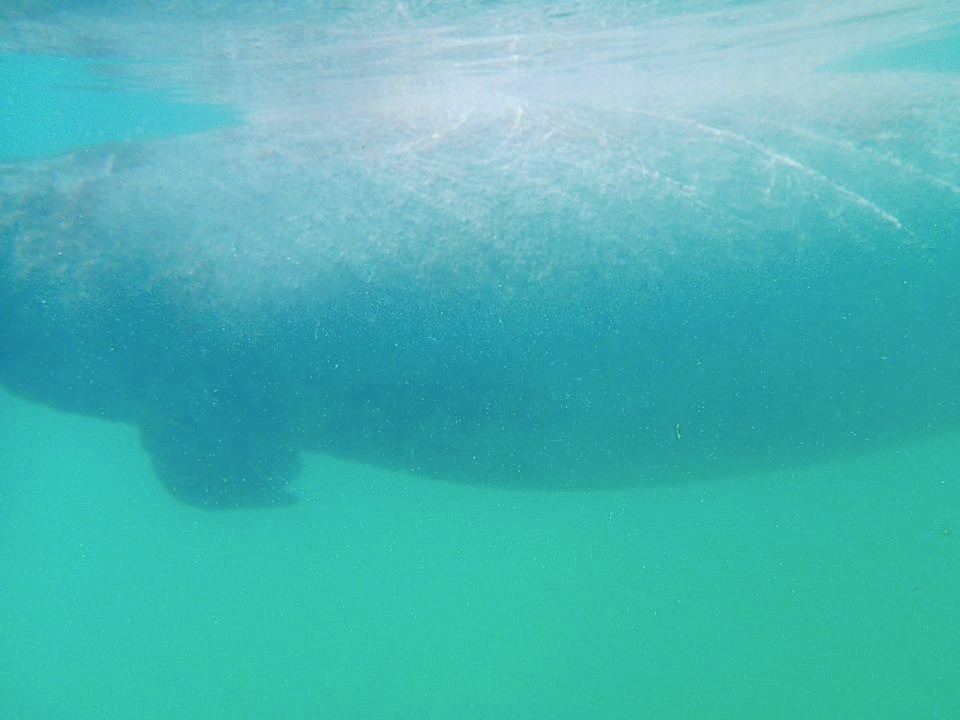
But manatees do breed elsewhere in the Bahamas, in particular the Berry Is. They also seem to favour the north end of Eleuthera, and have been seen on Andros and NP. True, the absence of significant freshwater sources in the Bahamas – an essential part of their diet – doesn’t make for an ideal habitat, but manatees do pair off and Bahamas calves are born. In summer 2012, there were four resident West Indian Manatees (Trichechus manatus) living in Great Harbour Cay, Berry Is. The adult female, Gina, had been there for 3 years – she originated from Florida. She had reportedly had 3 or 4 calves and was caring for her latest, a female calf called JJ, born in the late winter of 2011.
Adult female manatees are sexually mature at 6-10 years of age and have a gestation period of up to 13 months. The first two years of a calf’s life is spent with its mother. During this time they are taught where to find food, fresh water, warmth and shelter. Generally, after two years the calf is weaned and separates from its mother (see header image of Gina and JJ during that process)
Nursing a growing JJ
Now there is more good news for Gina, who has been under regular observation by the BMMRO. At the turn of the year, Gina was re-tagged in Harbour Island, Eleuthera. As reported, “she looks well, was very calm and is very pregnant… If the tag comes off and is found, please call the number on the tag to let us know – we are now monitoring her movements via the internet”.
Gina’s shows her best side
Coming atcher…
Tell-tale signs (to experts, anyway) of advanced pregnancy
I will post any further news about Gina as it arises. Meanwhile, for more information about West Indian manatees, you can visit the MANATEE PAGE. There are several links there to specific manatee stories, especially about Rita and her adventurous daughter GEORGIE, Abaco’s current favourite (indeed, only) resident manatee… Both Links need an update, I notice – they don’t cover Georgie’s subsequent return to Abaco and her contented settling down again in Cherokee where she seems happy as a… sirenian.
Credits: All photos and primary fount of Bahamas manatee knowledge: BMMRO; Magpie Pickings
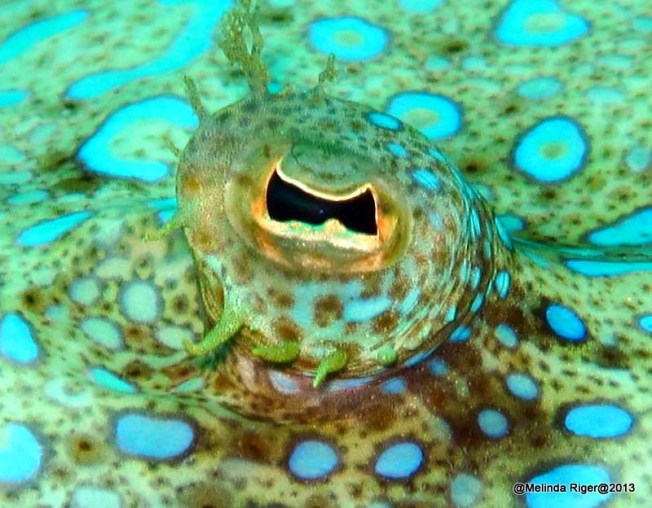
I have briefly featured this fish before in the context of its extraordinary camouflage abilities; and also its interesting ocular arrangements. Time to give it another swim around, I think, with some additional photos that I have collected.
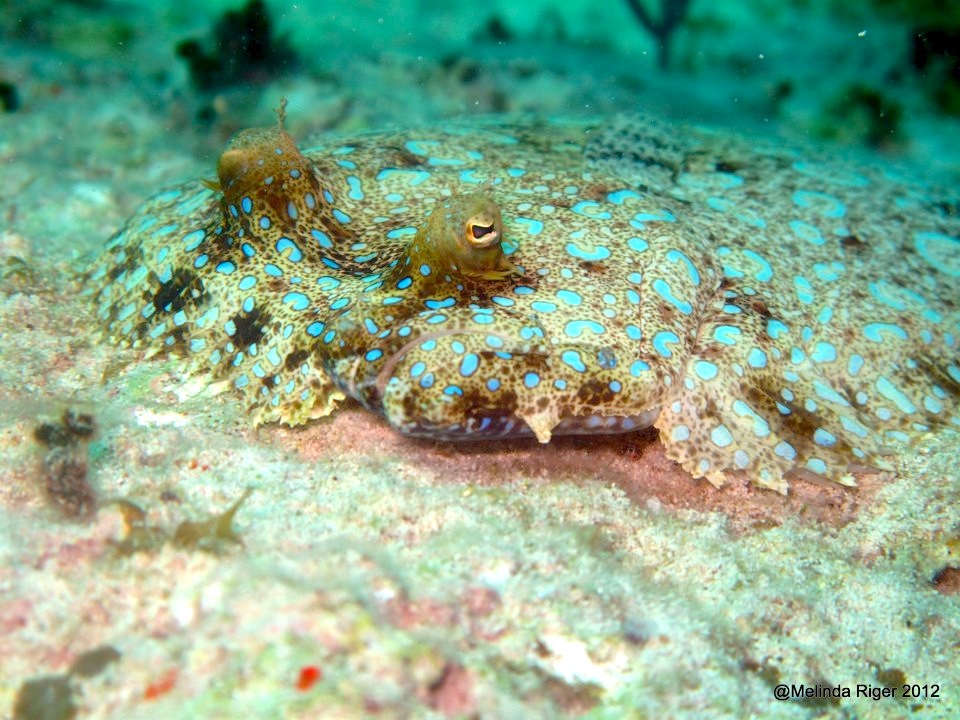
Bothus lunatus is the Atlantic / Caribbean version of a species also found in the Pacific and Indian oceans. Adults may grow up to 18 inches long. The species is a ‘lefteye’ flounder, with both eyes on its left (top) side & its right side underneath. However a baby flounder looks & swims like normal fish, with bilateral eyes. As it grows, the right eye gradually ‘moves’ round to the topside, and it becomes a flatfish.
A flounder’s eyes can move independently of each other. One may look forwards, the other backwards
‘NOW YOU SEE IT…’ CAMO-FISH
The Peacock Flounder has extraordinary colour-changing powers, and can rapidly vary its background colour to make it closely resemble that of its surroundings. This enables it camouflage itself as it lies on the seabed.It can change coloration completely in between two to eight seconds.
Four frames of the same fish taken a few minutes apart showing the ability of flounders to change colors to match the surroundings (Wiki)
Check out these imitative patterns in Bahamas waters…
There are two advantages to the ability to camouflage (‘cryptic coloration‘). One is obviously to avoid detection by predators. The other is to enable the flounder to ambush its meals. They feed primarily on small fishes, crabs and shrimps, lying concealed on the seabed and grabbing any unwary prey that ventures too close. They will even partially bury themselves in the sand, leaving just their eye-stalks keeping watch…
HOW CAN THEY POSSIBLY CHANGE COLOUR SO QUICKLY?
Scientists are still puzzling this out. In a conch shell, it seems the flounder can coordinate its amazing all-round vision with its hormones, instantly releasing certain pigments to its skin cells and suppressing other pigments to make the colour match. Not convinced? Then watch this short video and prepare to be impressed.
Fred Riger of Grand Bahama Scuba, who kindly keeps a benign eye on my reef fish posts (he’s the expert), adds a third excellent reason for coloration changes: sex… “the male peacock flounder can, and does greatly intensify his colors, presumably to declare territory and attract females to his person. When doing this the males will also signal with the left pectoral fin, sticking it straight up and waving it around.” Maybe that is what is going on in the photo below – intensified, non-camouflage colours, and a raised fin…
Peacock Flounder on a plate – Kim Rody Art
Credits: Melinda Riger of Grand Bahama Scuba for almost all photos; wiki for 2 illustrative images







































































 ROLLING HARBOUR ABACO
You must be logged in to post a comment.