PRECIOUS EMERALDS ON ABACO: GREEN HUMMINGBIRD JEWELS
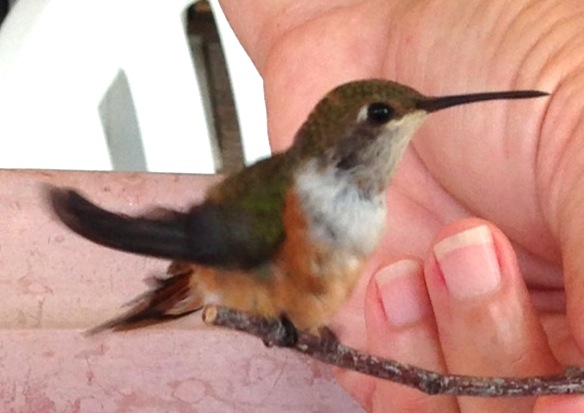
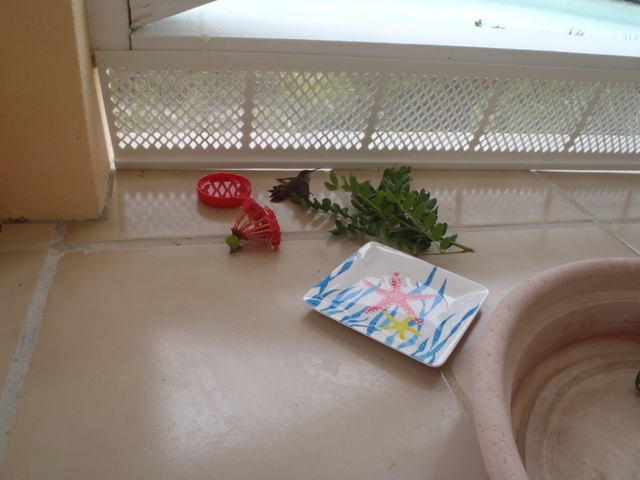
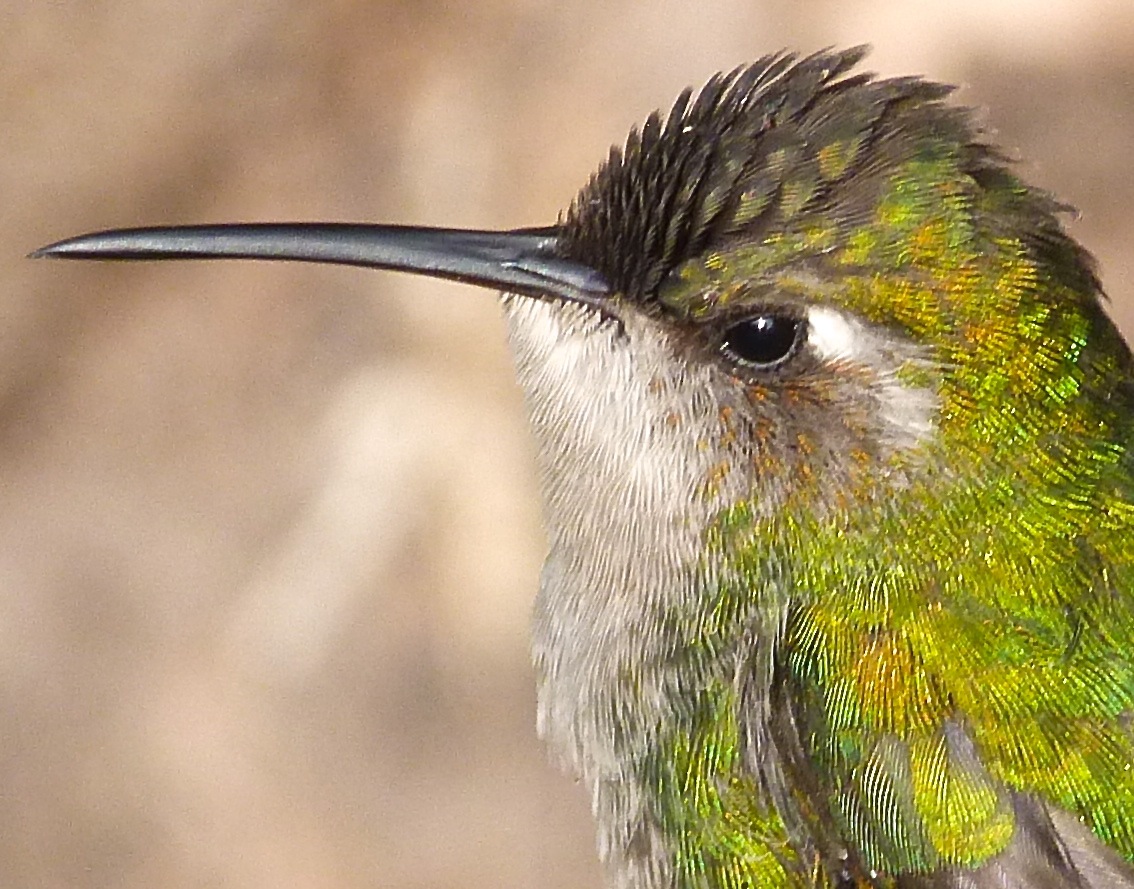
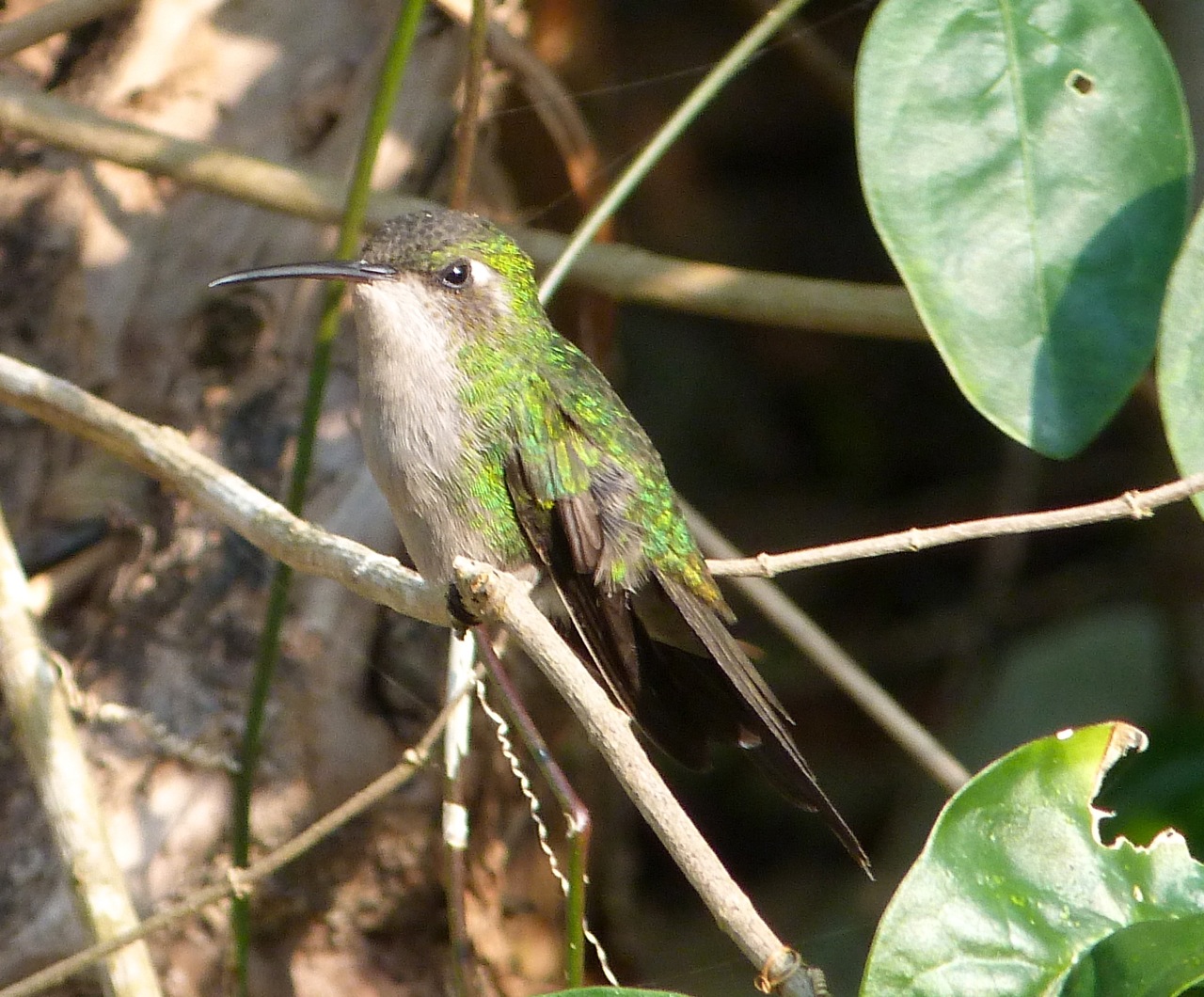
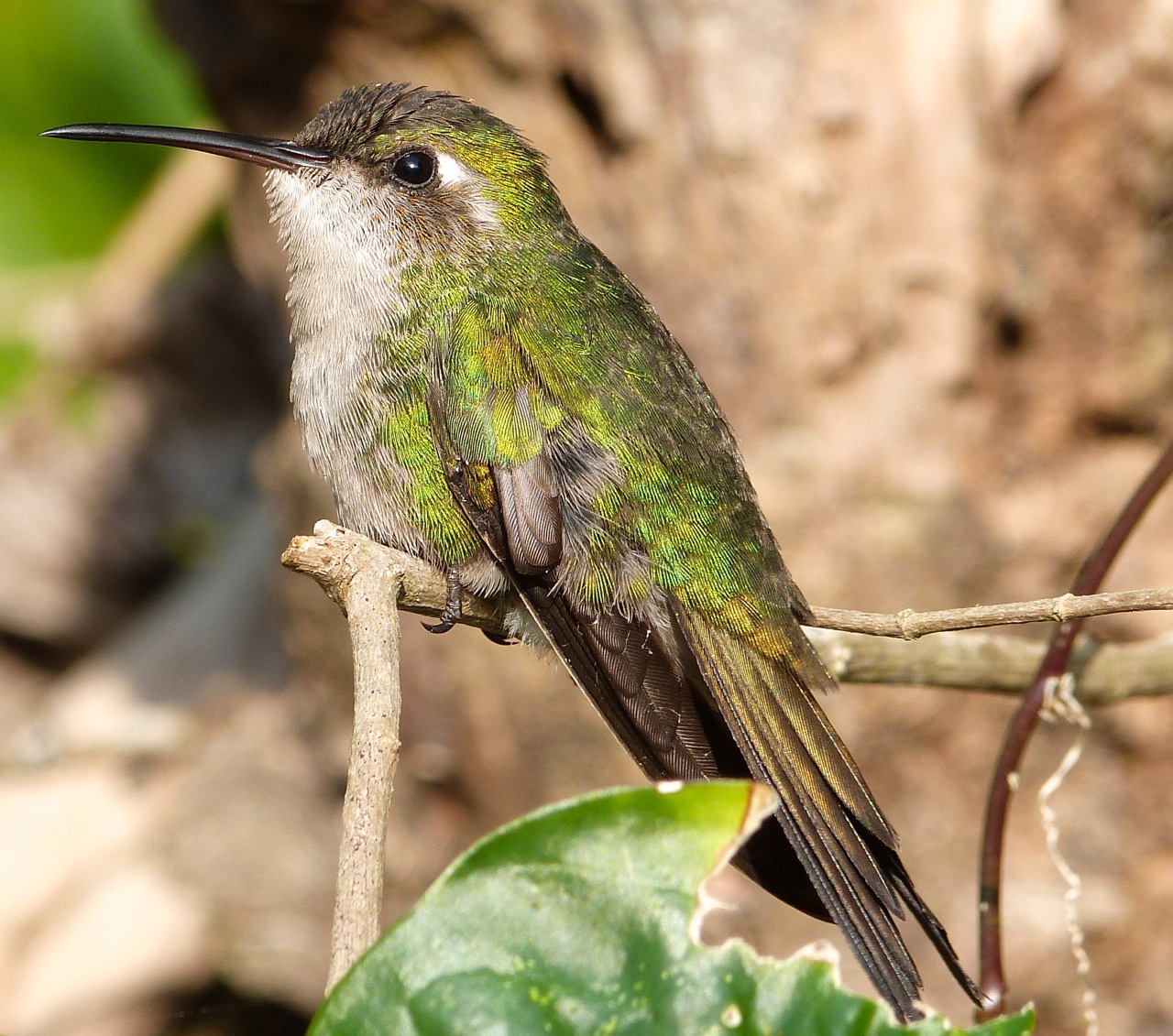
There are two resident hummingbird species on Abaco: the beautiful endemic Bahama Woodstar; and the lovely non-native Cuban Emerald. The species don’t get on, and tend to keep to separate territories. At Delphi the Emeralds predominate, though luckily there are Woodstars as well. Both species of these tiny birds have featured in previous posts, but this little hummer was a special one.
There’s a small patch of cleared coppice at Delphi, the ‘Farm’. This is where plants are ‘grown on’ for the gardens. In particular, there are coconuts planted in soil to germinate, to provide replacements for any palms that are trashed in the hurricane season. Since both Irene (in 2011) and Sandy (2012) passed directly over Delphi, you can see the sense in having an on-site garden centre. It can be a good place for birds, having both sun and shade. It’s where I suddenly spotted this Emerald, a few feet away from me.
It seemed quite relaxed, so I decided to see how close I could get. My attempt at stealth was slightly spoiled by my inexplicable need to make totally unnecessary “soothing” clicking and chooking noises as I crept forward. But the bird just watched peacefully, assuming me to be insane and probably harmless.
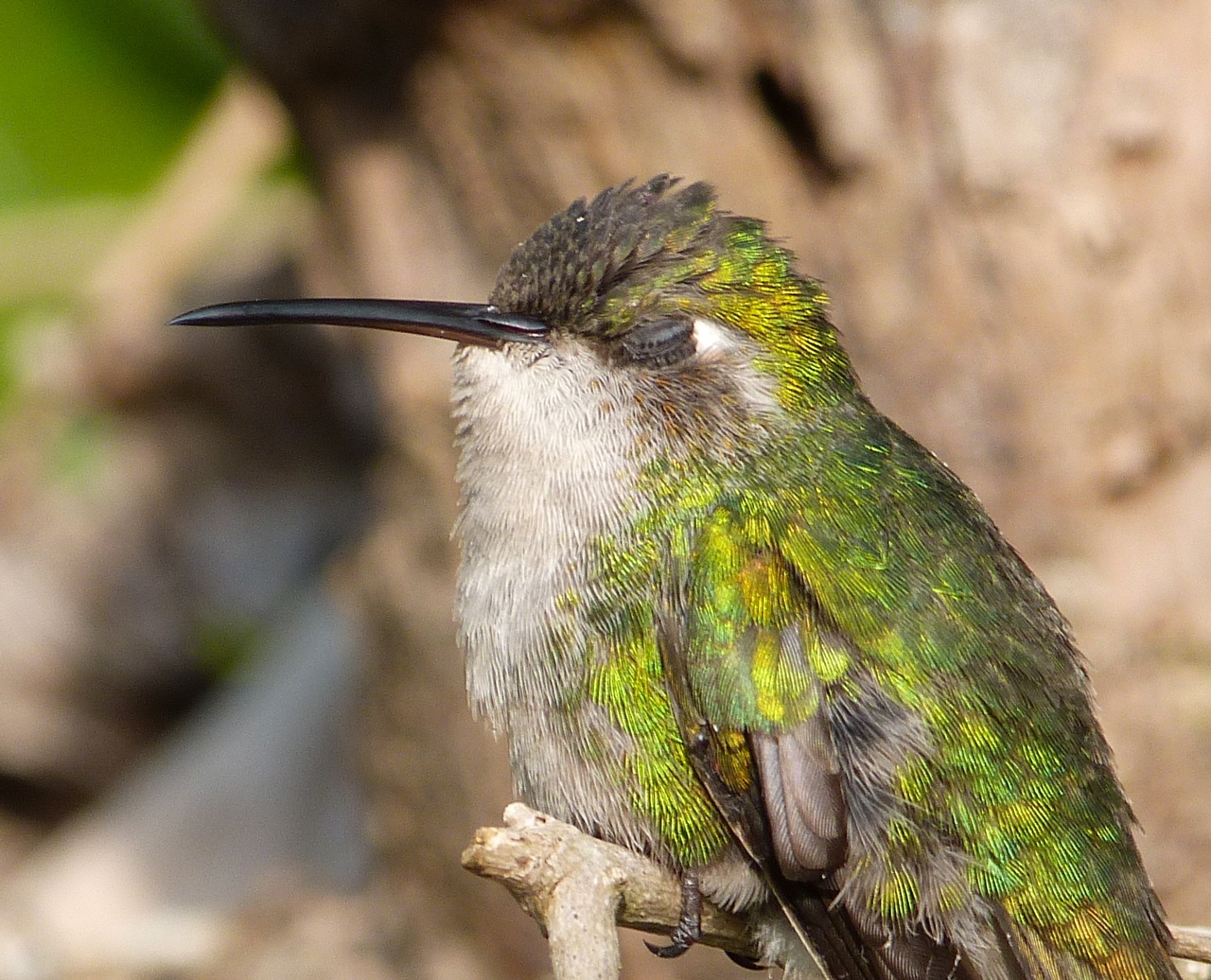
I shuffled forwards, expecting the bird to fly off at any moment. Instead, it seemed to go to sleep… By now I was a couple of feet away, and felt it was time to stop the ridiculous noises. The bird could not have been more at ease if I had sung it a lullaby. [Apart from the fact that I can’t sing, that is]
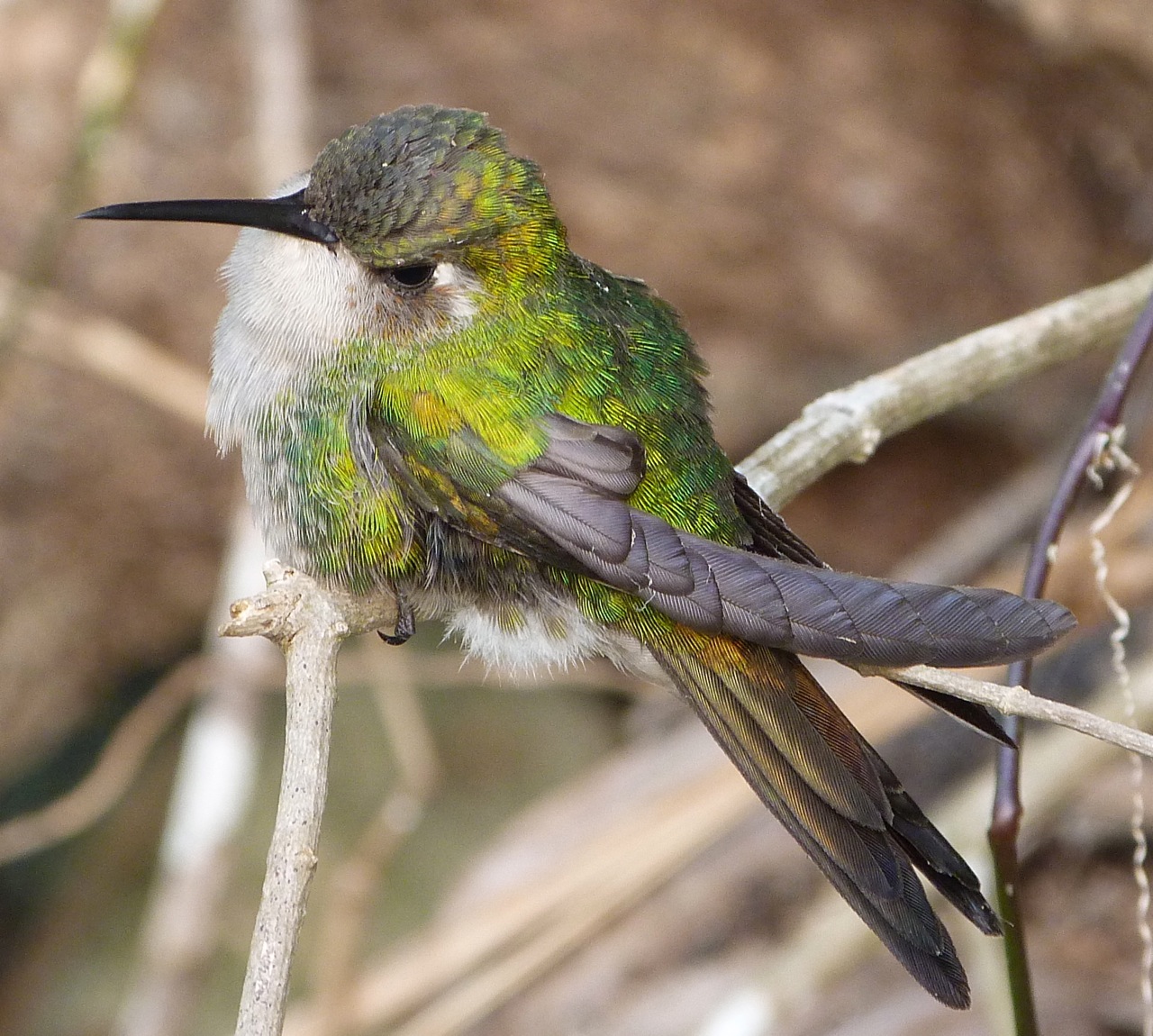
By now the metallic glint of the feathers in the sun was extraordinary, with colours other than green clearly visible, especially on the tail. Does this bird look nervous? I was a foot away from it.
In the end I actually reached the bird. I stood over it and could easily have touched it. I quite see that it had probably been using the sugar water feeders, and was used to seeing people. But still. It was mini and I am… not. Here is my last shot, an aerial view. Then I crept away again, leaving the bird in peace and doubtless wondering what on earth that had all been about. I have a general rule against anthropomorphic ‘special moments’ but if I did not, then this was one…All photos RH armed with a Panasonic Lumix. If you want to use a photo – surprisingly, people occasionally do – please ask first and it will probably be fine. One or more of my images may be published shortly, and I don’t want a wrangle on my hands. Or anywhere else…
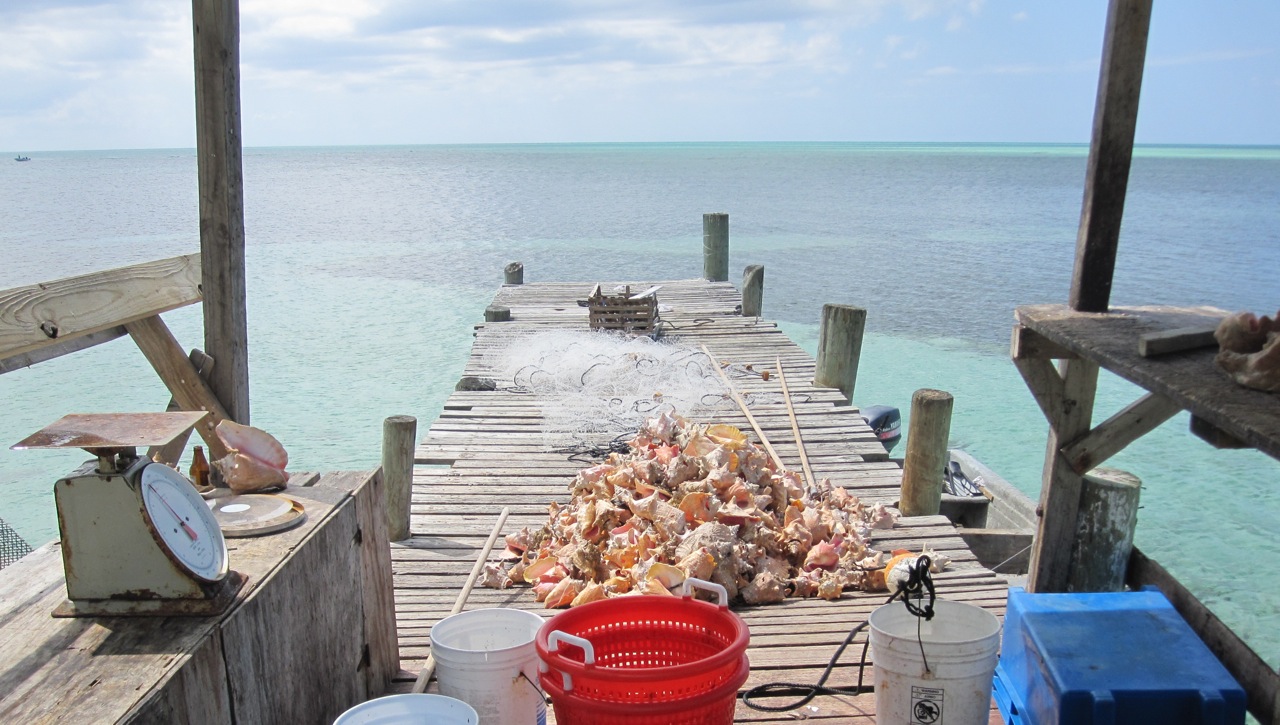
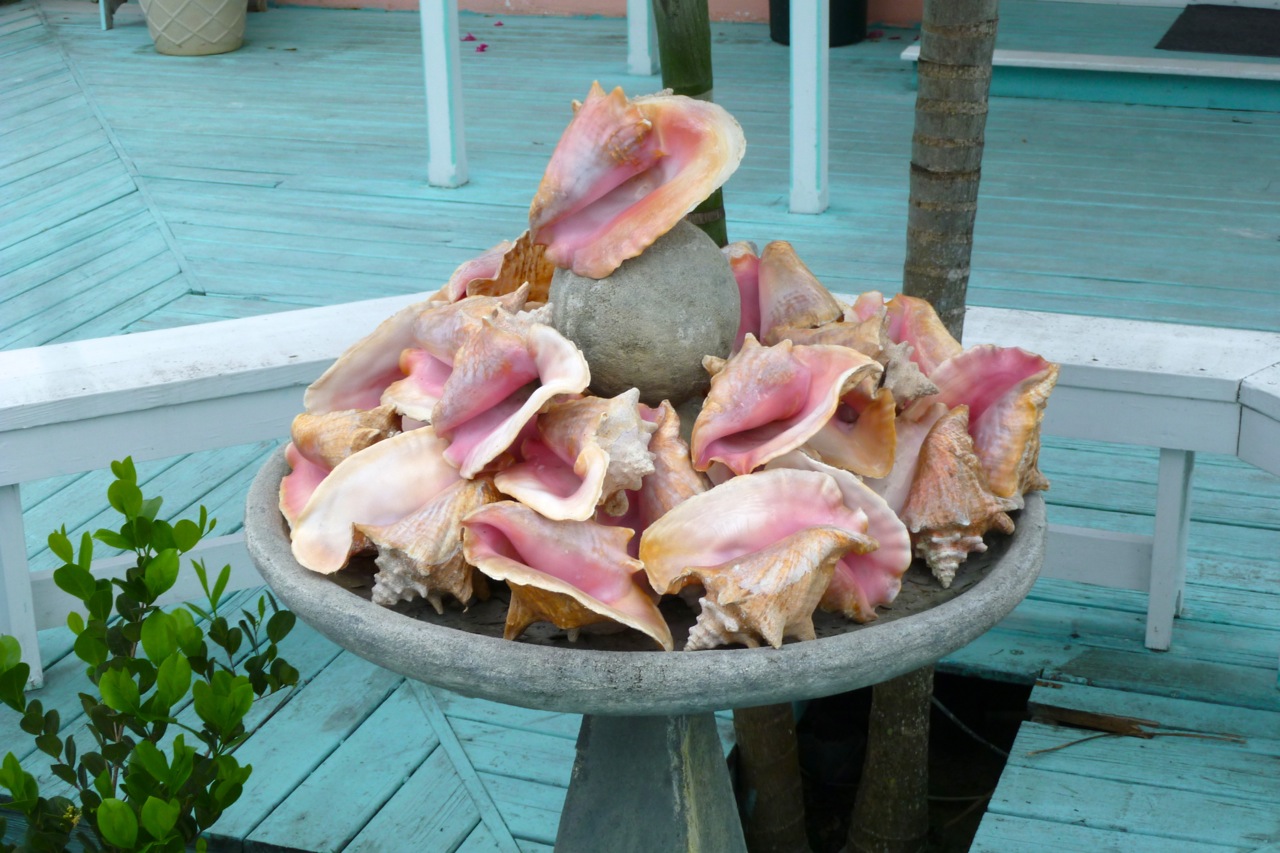
Most conchs encountered in daily life are lying peacefully on the beach; or are artfully displayed; or are found in conch heaps (often in the vicinity of restaurants) like the ones below at Sandy Point.
These shells at Sandy Point are so plentiful that they form a small spit of ‘land’ into the sea
An attractive display of conch shells in Marsh Harbour
A less formal arrangement along the jetty at Man o’ War Cay (after a storm)
It’s easy to forget that these shells are more than just a garden adornment, or pretty containers for a ubiquitous Caribbean food. Under the sea, and not very far at that, are living creatures going about their daily lives.
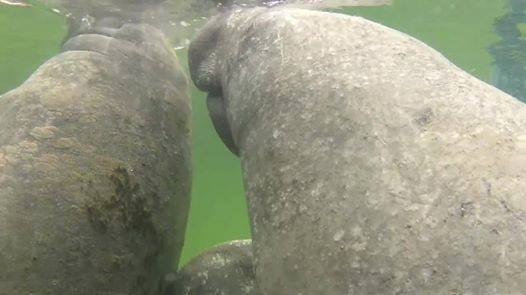
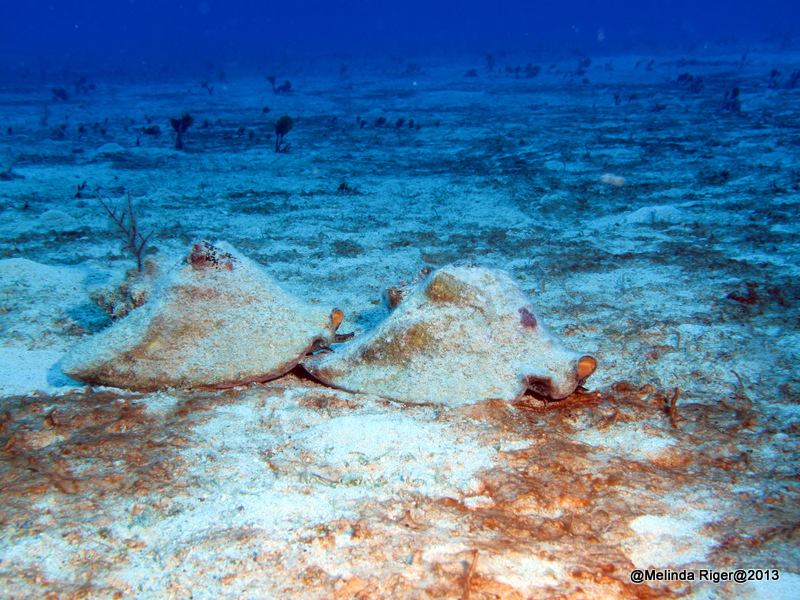
And that includes reproducing. This sounds as if it might be a cumbersome process, but (like porcupines) they seem to manage. Here is a pair preparing to mate. The male behind is presumably about to… well never mind. I’ve never seen the process, so it’s a case of using imagination. Or just accepting that, whatever it is that they do, it works. [I haven’t located a video online – I’ll post one if I do]
You’ll find some more about Conchs in a previous post HERE, including 12 Unputdownable Conch Facts, notes on conservation matters and… a photo of Honeychile Rider, arguably the most famous conch-carrier ever. Oh, she was fictional, you say? But I always though she… How verydisappointing.
And if you want to know how to clean a conch, a dude will show you in a video on this pageHERE
Finally, check out the very informative websiteCOMMUNITY CONCH, a charitable conservation organisation
‘FAMILIAR FECES’: CETACEAN POOP-SCOOPING BY SPECIES
UPDATE I name-checked BMMRO intern Oscar Ward’s blog below. Now he’s been out on the ocean on ‘poop patrol’. You can read Oscar’s account of his experiences HERE
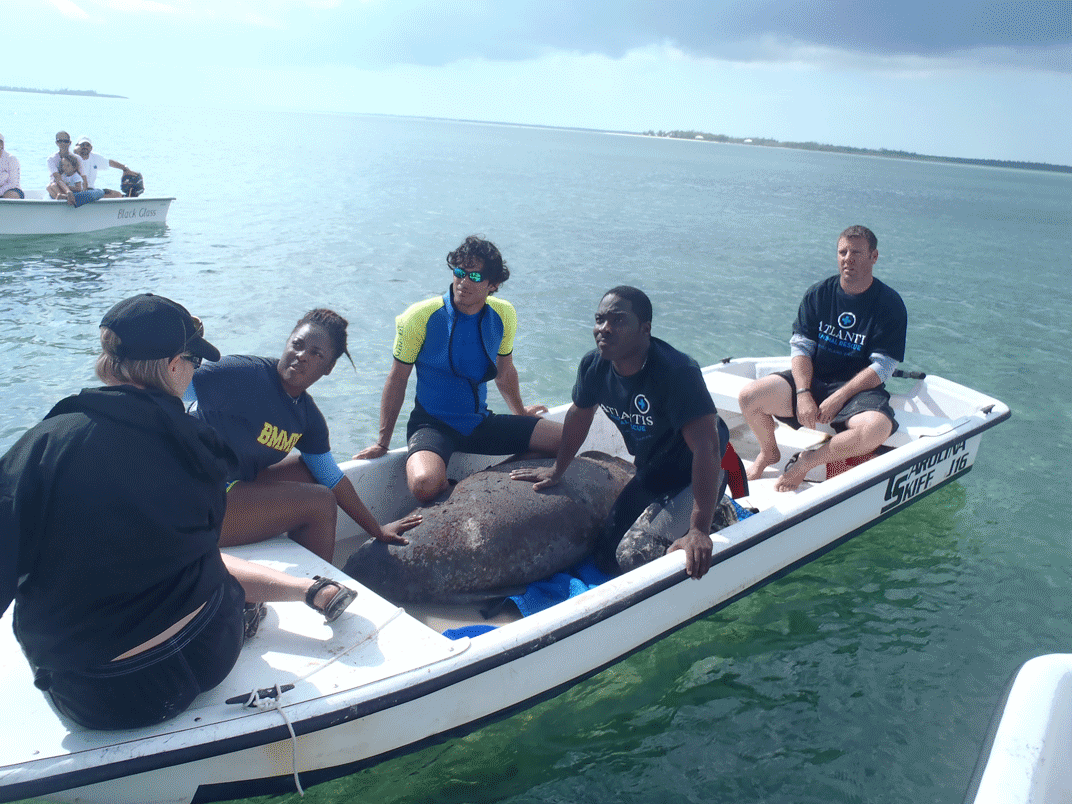
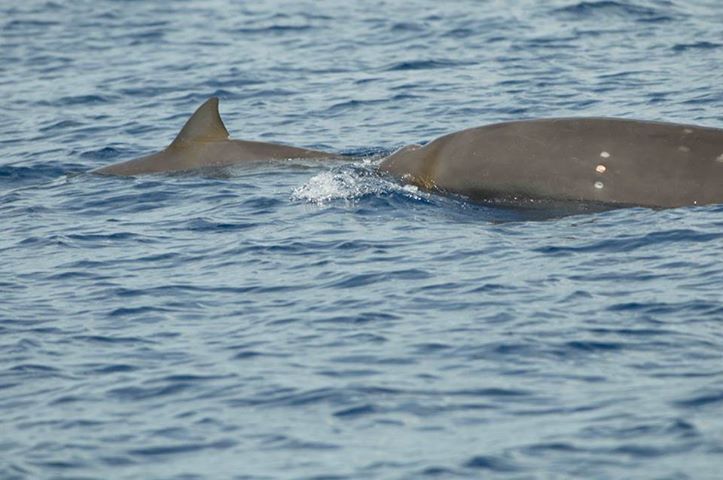
Among the many pleasures for cetacean research scientists must be the joy of whale poop collection. Followed by close inspection and analysis. The Bahamas Marine Mammal Research OrganisationBMMROconducts research expeditions, in conjunction with such organisations as the New England Aquarium NEAQand Friends of the EnvironmentFOTE, in Abaco waters and further afield in the Bahamas. The attention this year has been on beaked whale feces, though available sperm whale feces are not to be sniffed at. Images and info below are courtesy of the organisations mentioned above, with thanks for use permission
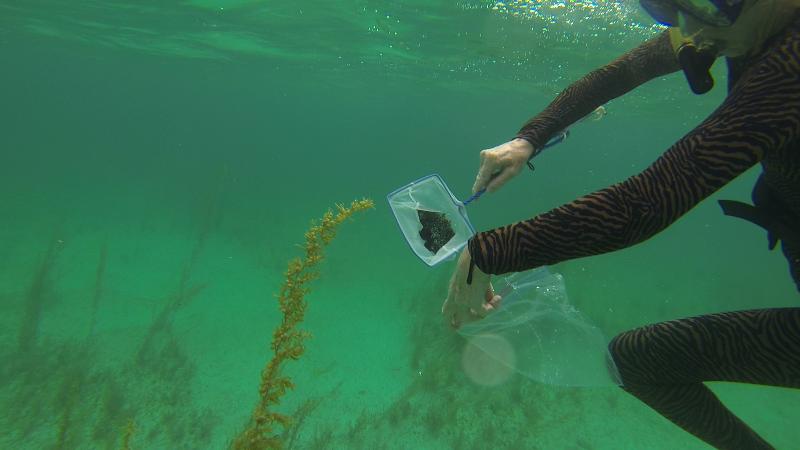
A researcher working with BMMRO demonstrates feces collection using coffee grounds. She collects the coffee granules in her net and places the entire sample into a ziplock bag, ready to hand to the boat for processing
The purpose of feces collection is to look at the stress and reproductive hormones of the whales and to gather a baseline for these animals with which to compare other populations that are under threat
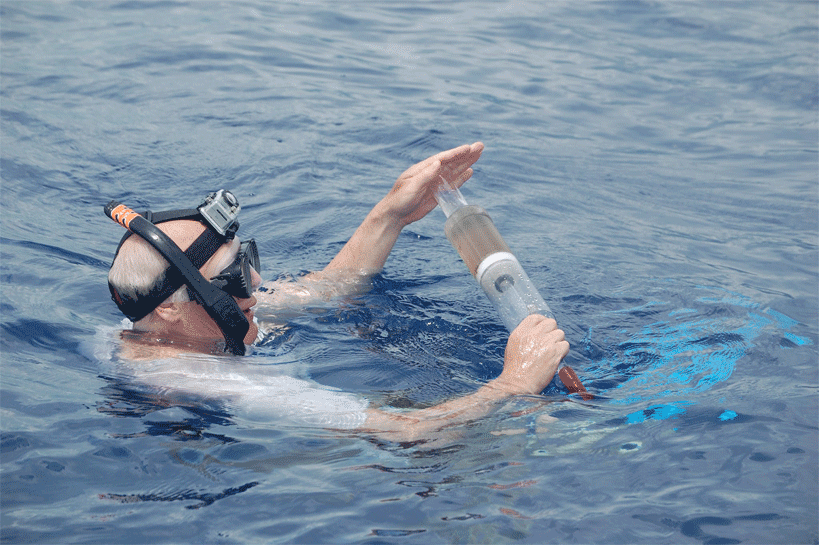
An alternative method of collection
Blainville’s Beaked Whales (suppliers of raw research material)
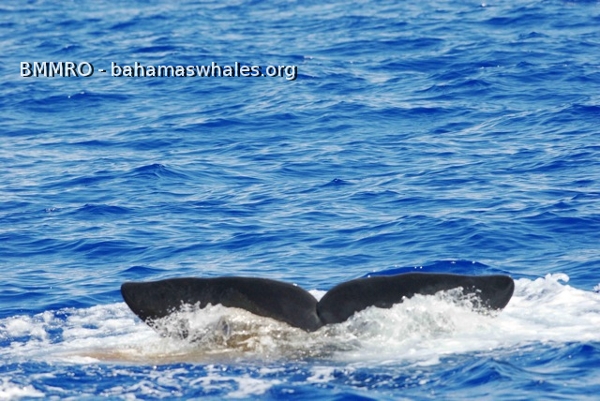
There are some conditions – dare I say windy ones – when Blainville’s beaked whales may be hard to locate. At such times, collection of pieces of other species feces rarely ceases… Here is a sperm whale in the act of producing laboratory samples
Weather of the sort that makes the day’s collection more complicated. Indeed, it looks and uphill task…
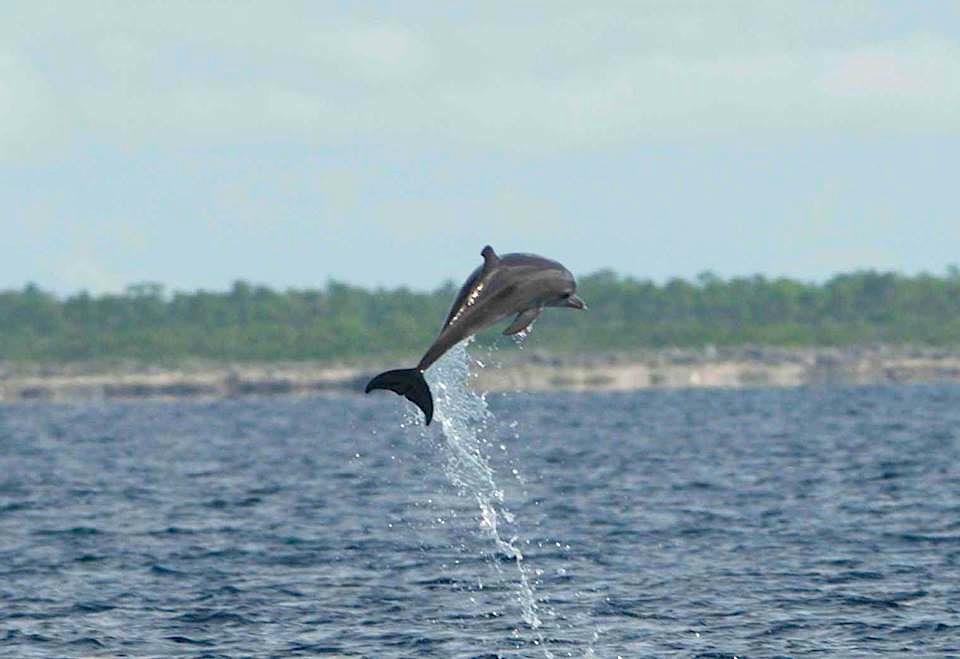
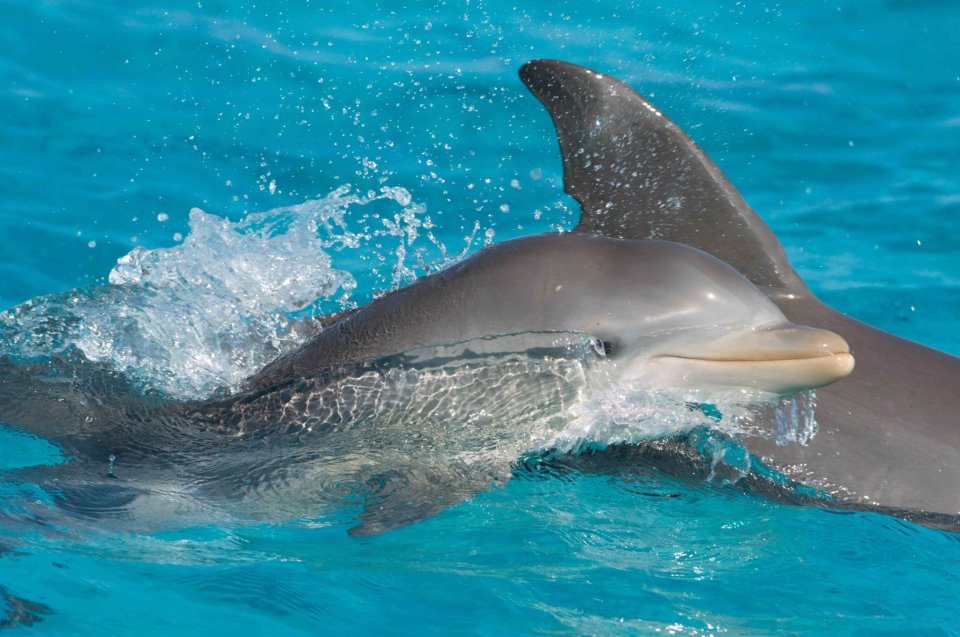
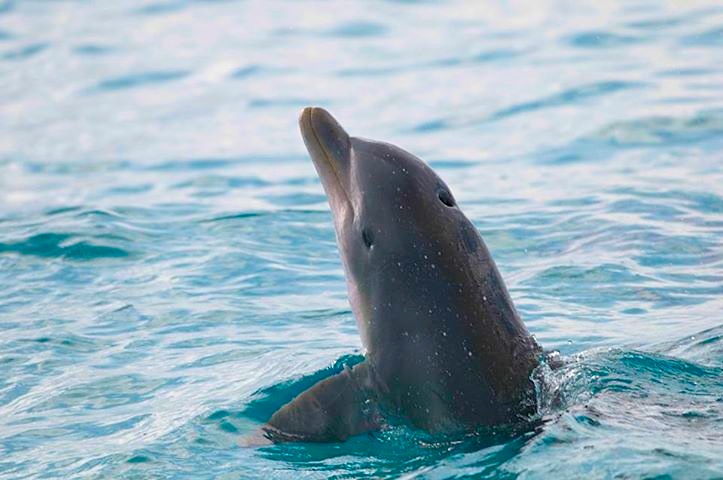
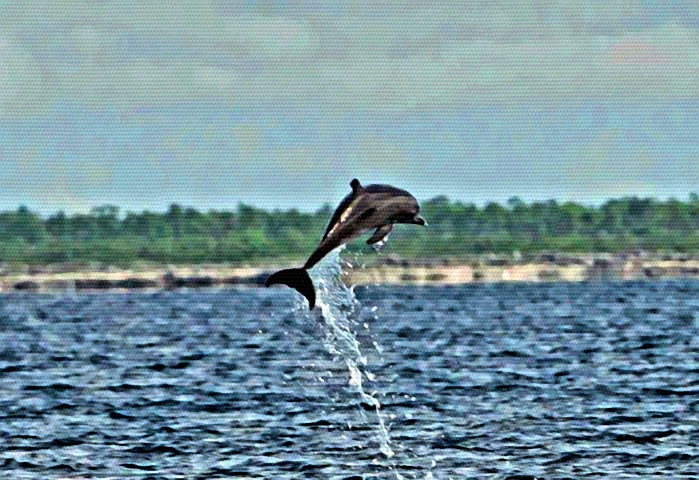
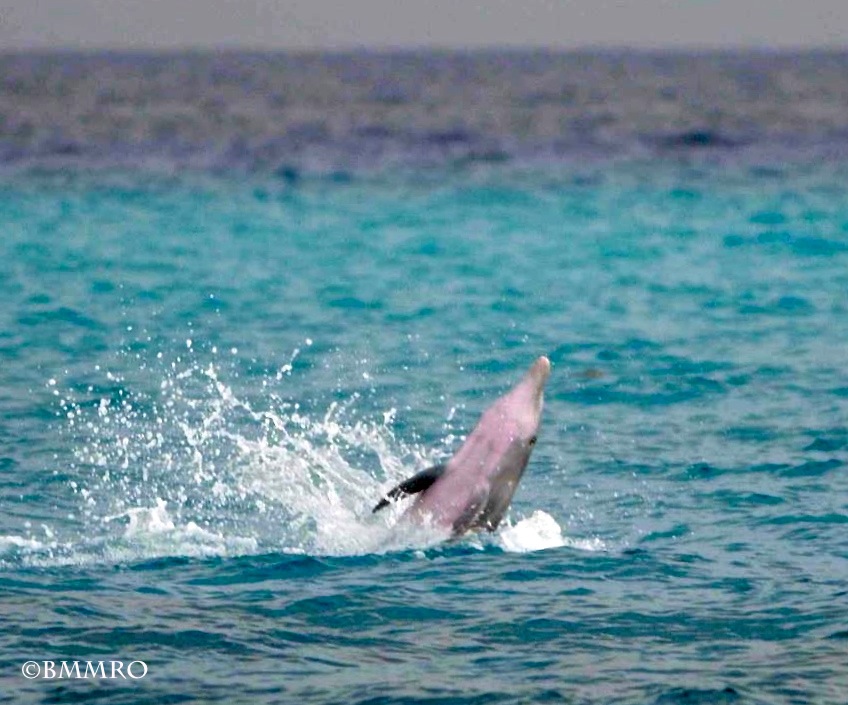
That’s enough on the topic for now. Later in the month there will be some great dolphin pictures to enjoy. Below is the BMMRO sightings chart for July, which I forgot to publish sooner.
Finally, a young UK friend of ours, Oscar Ward, has recently won his place to study marine biology at university next Autumn. He has just arrived on Abaco to start an internship with the BMMRO at Sandy Point. He will then be moving to Friends of the Environment in MH. He has set up an excellent blog to record his experiences, with his first Abaco post going up today, I notice. You can follow Oscar at SEVENTYPERCENT.COMAnd if you see him around, do say hi! to him.
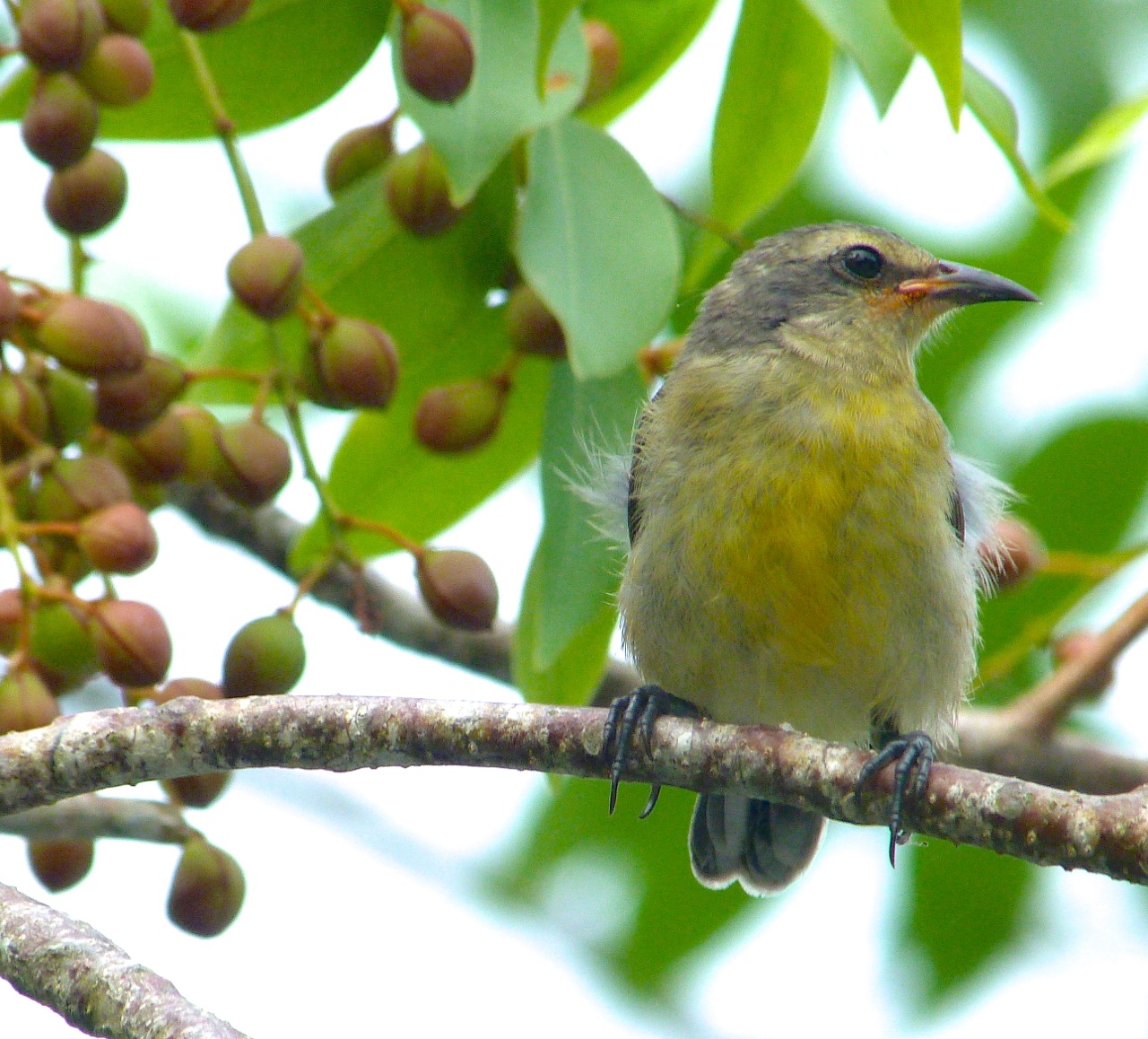
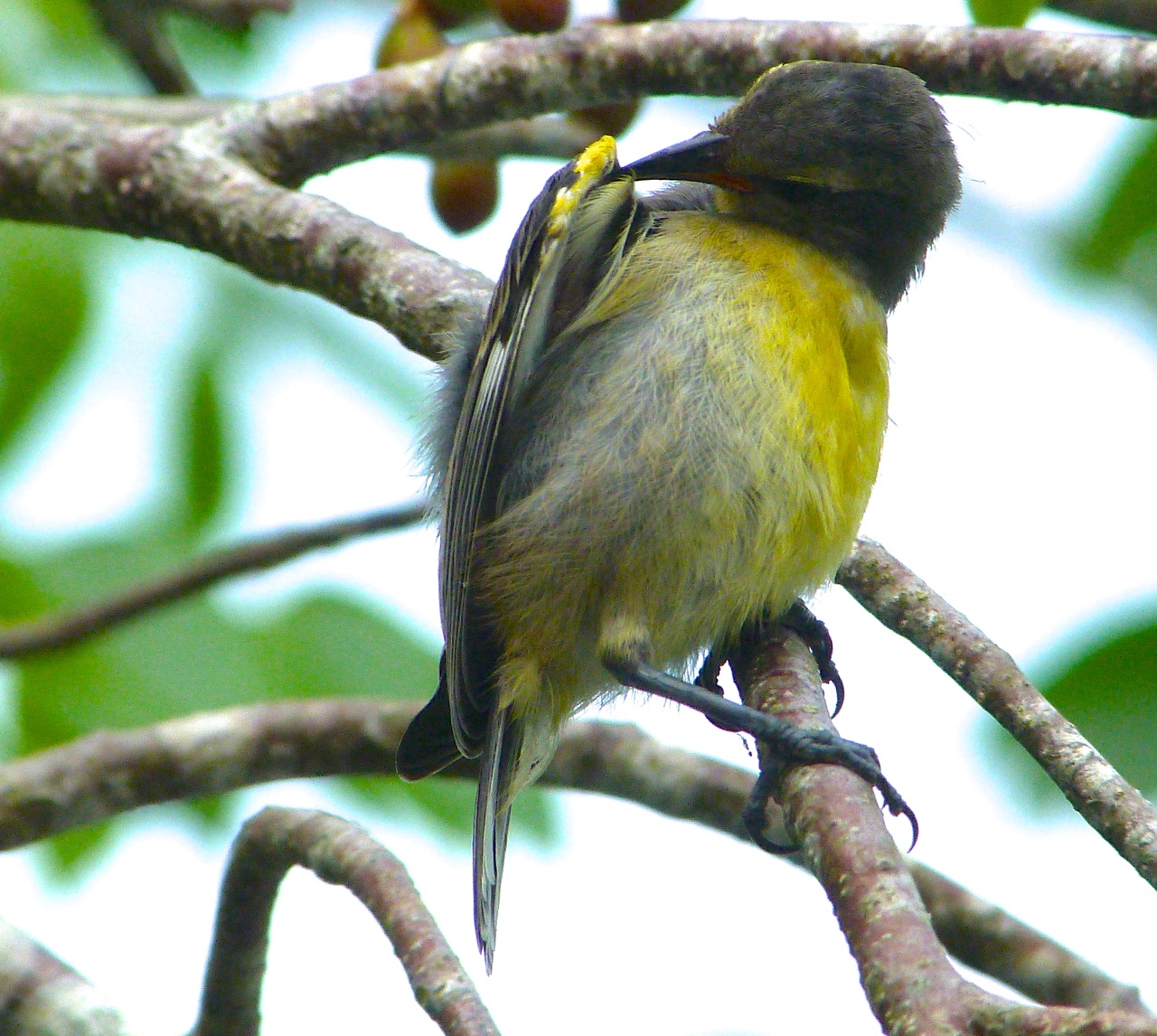
I’m not generally into whimsy and such stuff BUT… I can’t get enough of small bananaquits (Coereba flaveola). I’ve featured them beforeHEREandHERE AGAIN, but then I see another one, take some photos, and awwwwww – look at its little fluffy feathers… and its tiny sharp claws! The two shown below are summer babies. They aren’t really babies, though, are they? Teenagers, more like. Like many Abaco birds – especially the parrots – they are keen on the fruit of the Gumbo Limbo tree Bursera simaruba shown here. They also love flowers, piecing the base with their beaks to get at the nectar. They are quite as happy on a feeder – or indeed sipping sugar water from a hummingbird feeder, living up to their nickname ‘sugar bird’.
“Watching you watching me…”
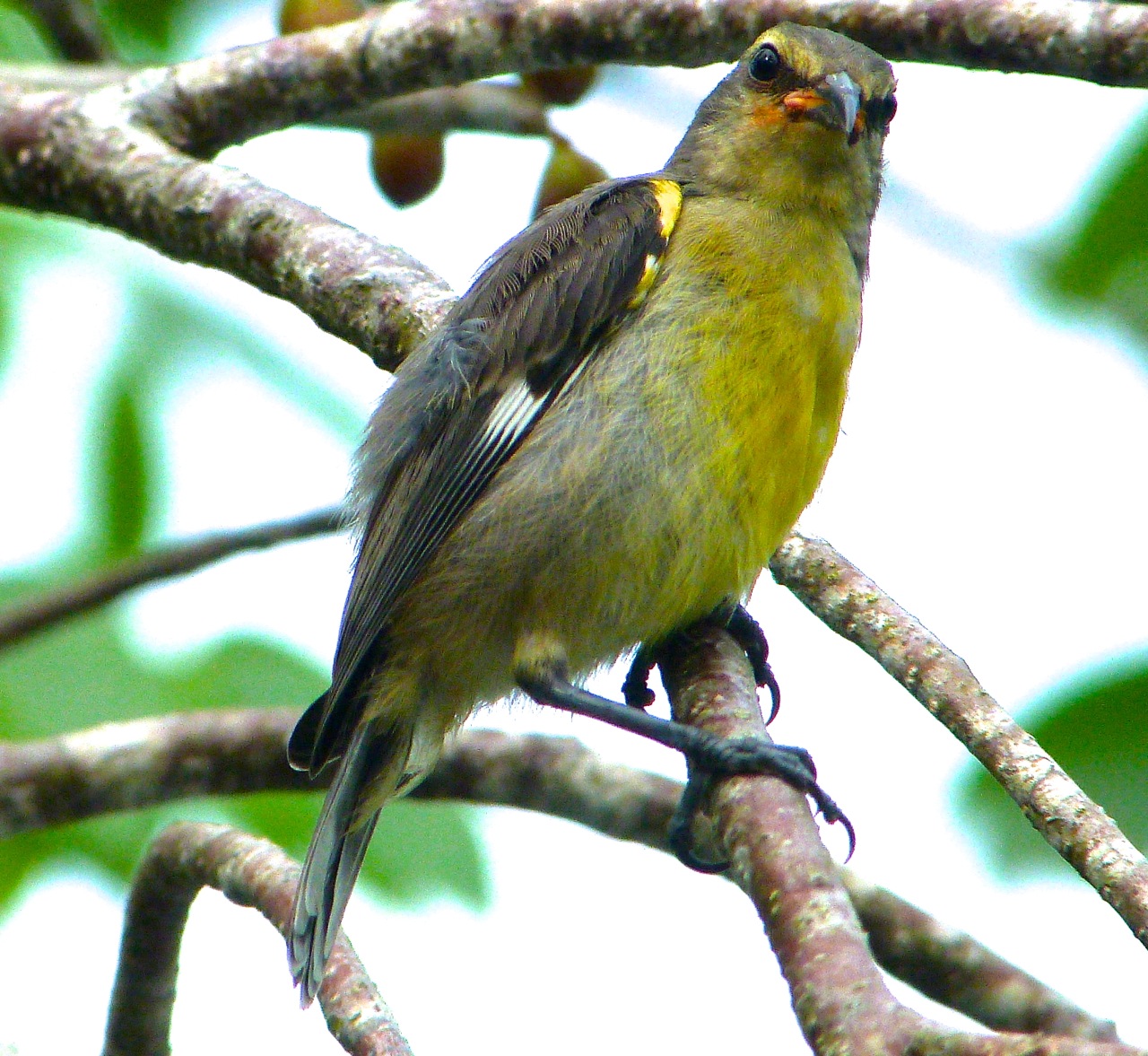
This second bird is a bit older, and has developed some smart citrus lemon shoulder flashes. Bananaquits have many regional variations throughout the caribbean and beyond. These birds are, or were, generally lumped in with the tanager species. They have an official classification of ‘uncertain placement’ in the taxonomic scheme for now, while their exact status is debated. Not that anyone watching them worries about that sort of technicality.
Here is what a Bahamas bananaquit sounds like, recorded on Andros (Credit: Paul Driver at Xeno-Canto)
MAKING A GOOD IMPRESSION: BAHAMA MOCKINGBIRDS ON ABACO
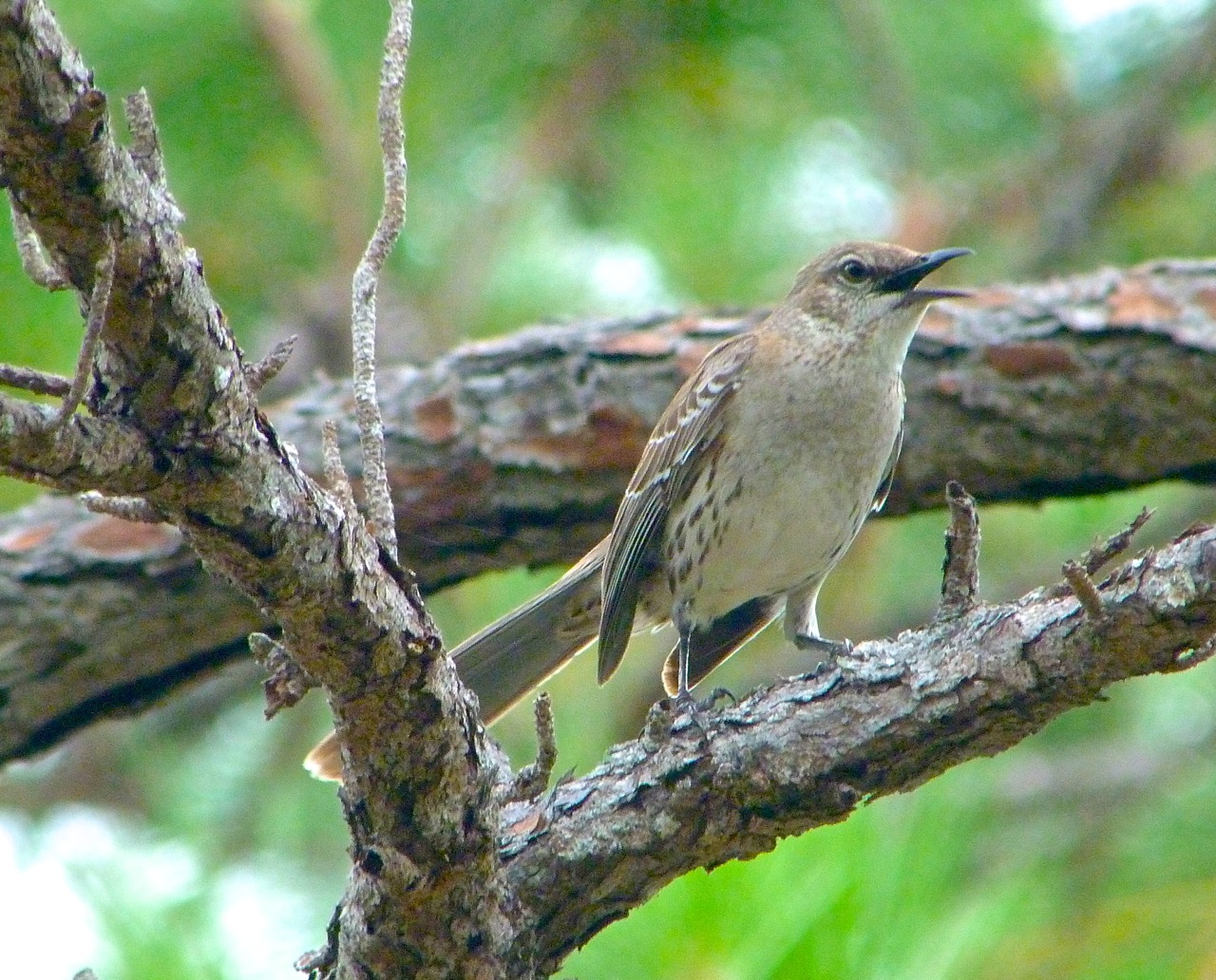
The Bahama Mockingbird Mimus gundlachii is similar to its slightly smaller cousin, the widespread Northern Mockingbird Mimus polyglottis. The range of Bahama Mockingbirds is slightly wider than the Bahamas themselves, and includes areas of Cuba, Jamaica and TCI. It is also a vagrant to the United States, especially southeastern Florida.
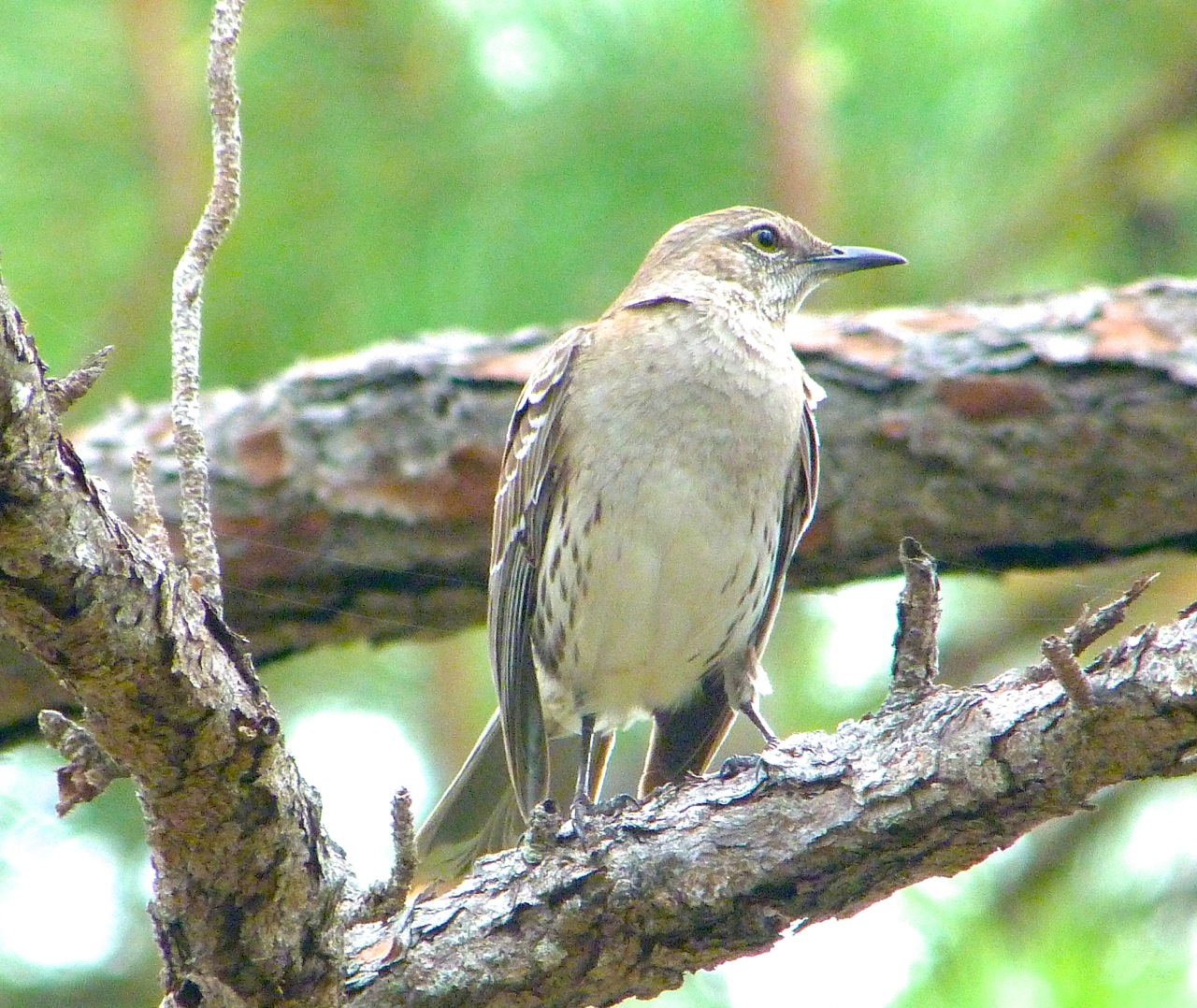
The Bahama Mockingbird is browner than the Northern Mockingbird, and has distinctive streaking and spotting to its breast and undercarriage.
Both species are found on Abaco. The NMs are ubiquitous in towns, settlements, gardens, coppice and pine forest, whereas BMs are shyer and tend to be found in the pine forest and well away from humans and their operations.We took a truck into the pine forest south of Delphi with well-known Abaco birder Woody Bracey and Ohio bird photographer Tom Sheley. They were quick to locate a bird, in part because one was sitting prettily on a branch singing lustily. It was well within range of Tom’s massive lens; more of a struggle for my modest Lumix (as you may detect). I was astounded by the beauty and variety of the song. It consisted of very varied notes and phrases, each repeated 3 or 4 times before moving on to the next sounds in the repertoire. Here is a short 18 second example I recorded, using my unpatented iPhone method, for which seeHERE.
For those with interest in birdsong, here is a longer 1:13 minute song from the same bird, with largely different sounds from the first recording made minutes earlier. There’s even a decent stab at imitation of a 1960s Trimphone™. Had we not had to move on to Sandy Point for an appointment with some cattle egrets and American kestrels, I could have stayed listening for far longer.
Finally, the Northern Mockingbird below was photographed in a garden at Casuarina – far tamer and clearly very different from its cousin. The range map shows the stark contrast with the very limited range of the Bahama Mockingbird.
UNDERWATER REEF GARDENS IN THE BAHAMAS (2): CORALS
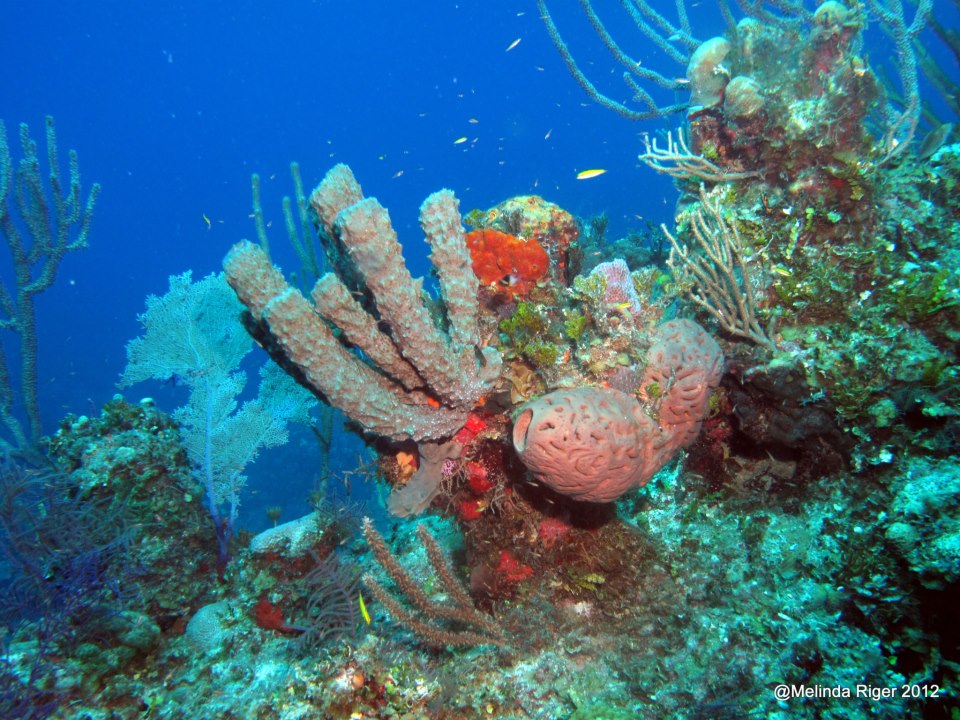
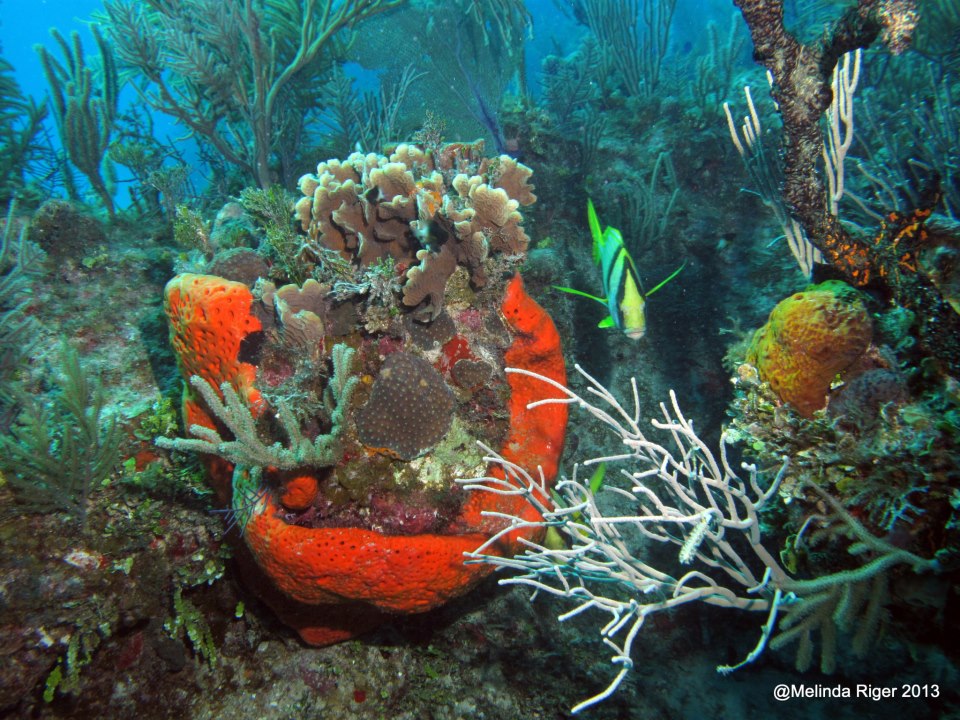
This is part 2 of a series that started out HEREwith a selection of anemones, basket stars and Christmas tree worms. The images below show a wide variety of corals. In among them are also sponges and anemones. These photos are evidence of a healthy reef environment in the waters of the northern Bahamas. Abaco’s coral reef is the third largest barrier reef in the world (yes, I hear you – the Great Barrier… And the second is???), providing wonderful and accessible diving / snorkelling opportunities. However, monitoring shows that the incidence of coral bleaching and disease is increasing in the Bahamas, as elsewhere in the world. It’s a sobering thought that your grandchildren may never swim in an environment with any of the living corals shown below…
ABACO’S RAREST VISITOR: MEET ALBERT ROSS… THE ALBATROSS
I can find no record for the sighting of an albatross in the waters around Abaco. Nor for anywhere else in the Bahamas for that matter. It must have come as some surprise to the BMMRO team out at sea on their research vessel off Sandy Point to see a large and unusual seabird bobbing tranquilly on the water. A black-browed albatross Thalassarche melanophrys. Diane Claridge managed to get a great shot of it and I’m really pleased to be able to use it here.
Black-browed albatross off Sandy Point, Abaco, Bahamas. Photographed by Diane Claridge.
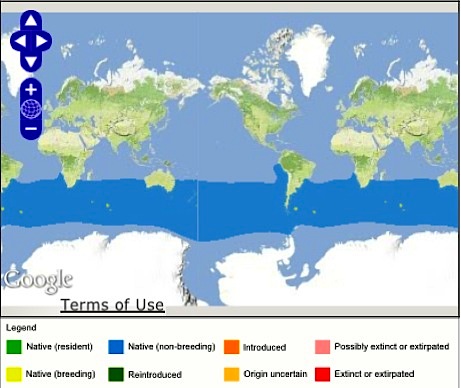
This bird was way out of the normal range for the species. They are birds of the southern oceans, breeding in colonies on such islands as the Falklands, South Georgia and Macquarie Island. As far as I can make out, they have no business to be north of the equator at all.
SIGHTING A BLACK-BROWED ALBATROSS: A REPORT
During a three-hour survey for whales off Sandy Point, Abaco on Sunday, July 21st scientists from the Bahamas Marine Mammal Research Organisation had an exceptional sighting. Dr Diane Claridge, the group’s Executive Director recalls details of the sighting:
“We were drifting waiting for a beaked whale to resurface when our intern Tristan Albury pointed towards a white object floating in the distance and asked what it was. We decided that it was a piece of trash, unfortunately a common sighting, and continued to focus our search for the whale. A half hour later, we still had not re-sighted the whale and believed that it may have gone down on one of its one-hour long feeding dives. So with time to kill and the “trash” still in sight, we had another look with binoculars. We realised immediately that it was a very large bird and slowly motored towards it for a closer look. I began taking photographs of it because we already knew it was unusual and we wanted to be sure to identify the species. As we got closer, Roxy Corbett, a visiting scientist and avid birder exclaimed that it was an albatross! I couldn’t believe it. We were able to approach within 100 feet at which point it swam towards us providing an opportunity for us to document its body condition; it appeared healthy with no obvious signs of distress.
Later when back ashore, we compared our photographs with those available online and learned that it was a juvenile Black-browed albatross, an endangered bird with a 7-foot wing span known from subtropical to polar regions of the southern hemisphere! As far as I know this species has never been recorded previously in the tropical North Atlantic. I have seen albatross during whale surveys in Alaska but never dreamed that I’d ever see one in The Bahamas. Although we are thrilled by the rarity of this sighting, the outcome for a bird so far out of its normal range is not usually good. However, there are two Black-browed albatross that strayed into the North Atlantic previously that have taken up long-term residence in Scotland and the Faroe Islands so who knows where this one may end up. Sunday afternoon was indeed exceptional: in addition to this remarkable sighting, we also saw 4 different species of whales and dolphins, all within 5 miles of Sandy Point.”
These are huge strong birds, with a massive wingspan. I wondered what they might sound like – it’s like this… (Credit: Xeno-Canto & recordist Sofia Wasylyk)
For more information on the normal range and status of the Black-browed albatross, the BMMRO recommended links are:
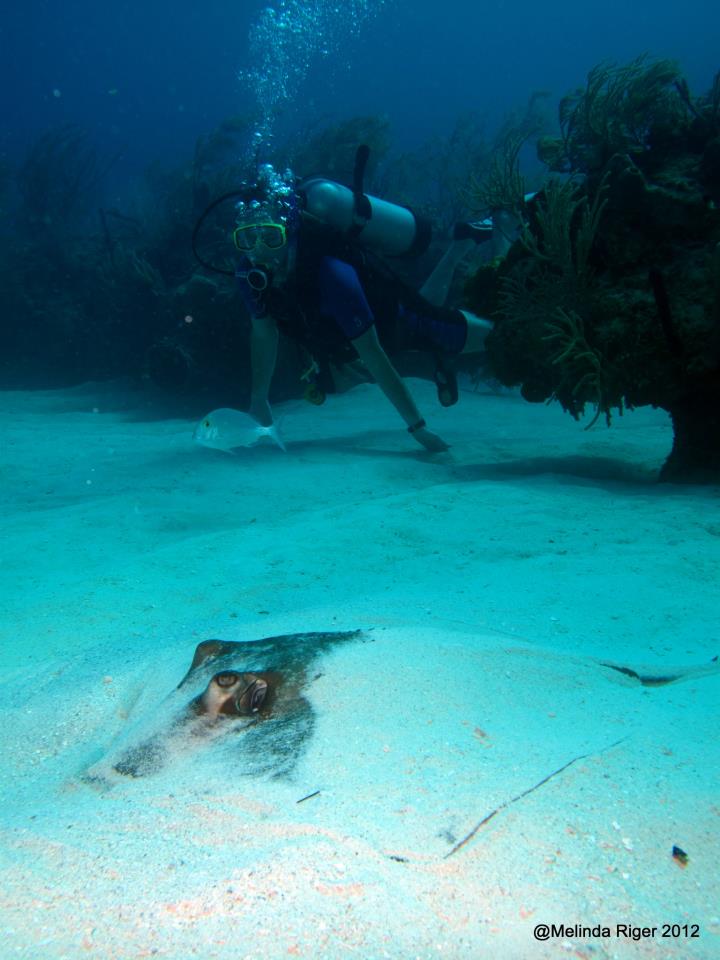
The SOUTHERN STINGRAYDasyatis americana is a ‘whiptail stingray’ found in the Western Atlantic Ocean. Their habitat and personal habits – feeding and mating – are similar to those of the YELLOW STINGRAY. They live on the seabed, where they feed on small crustaceans, molluscs and fish. They expose their prey by flapping their ‘wings’ (= pectoral fins) to disturb the sand
You want to avoid treading on one of these if possible. Their tails have a serrated barb covered in venomous mucous, used for self-defence. These spines are not fatal to humans, but if you step on one it may be an experience in extreme pain to tell your grandchildren about.
Luckily they are likely to see you long before you notice them, and to swim away from your approach
IUCN LISTING: ‘DATA DEFICIENT’
Surprisingly, the ‘at risk’ status of the Southern Stingray is not known. However, as with other marine species that humans like to befriend in the wild for the perceived benefit of both parties, there are parts of the Caribbean where stingray swims involve rather more than merely swimming with and enjoying the rays in their own environment. There is organised hand-feeding with cut-up fish, even general fondling and cuddling, that can make these wild creatures seem ‘tame’. There is growing concern that such close dependent interactions with humans is not a good thing, at least for the stingrays.
A diver admiring a ray while keeping a respectful distance
If you watch out for them… they’ll keep an eye out for you
Credits: Melinda Riger of Grand Bahama Scuba; Wiki for thumbs / material; selected online trawlings
My incompetent first ever underwater video at Fowl Cay Marine Preserve, Abaco. I hadn’t snorkelled for X decades, and frankly had some breathing-and-swimming-simultaneously issues, let alone trying to hold a tiny camera steady. Still, here it is (with a proper diver’s video below)
Music credit on my vid to the fairly litigious Joe Satriani – see JS v Coldplay ‘If I could Fly’ / ‘Viva La Vida’ plagiarism case (settled, to no one’s great advantage). Hey, Joe, what you doin’ with that writ in your hand? For anyone the slightest bit interested in the alleged similarities, here is a mash-up reward for reading about stingrays. Or penalty.
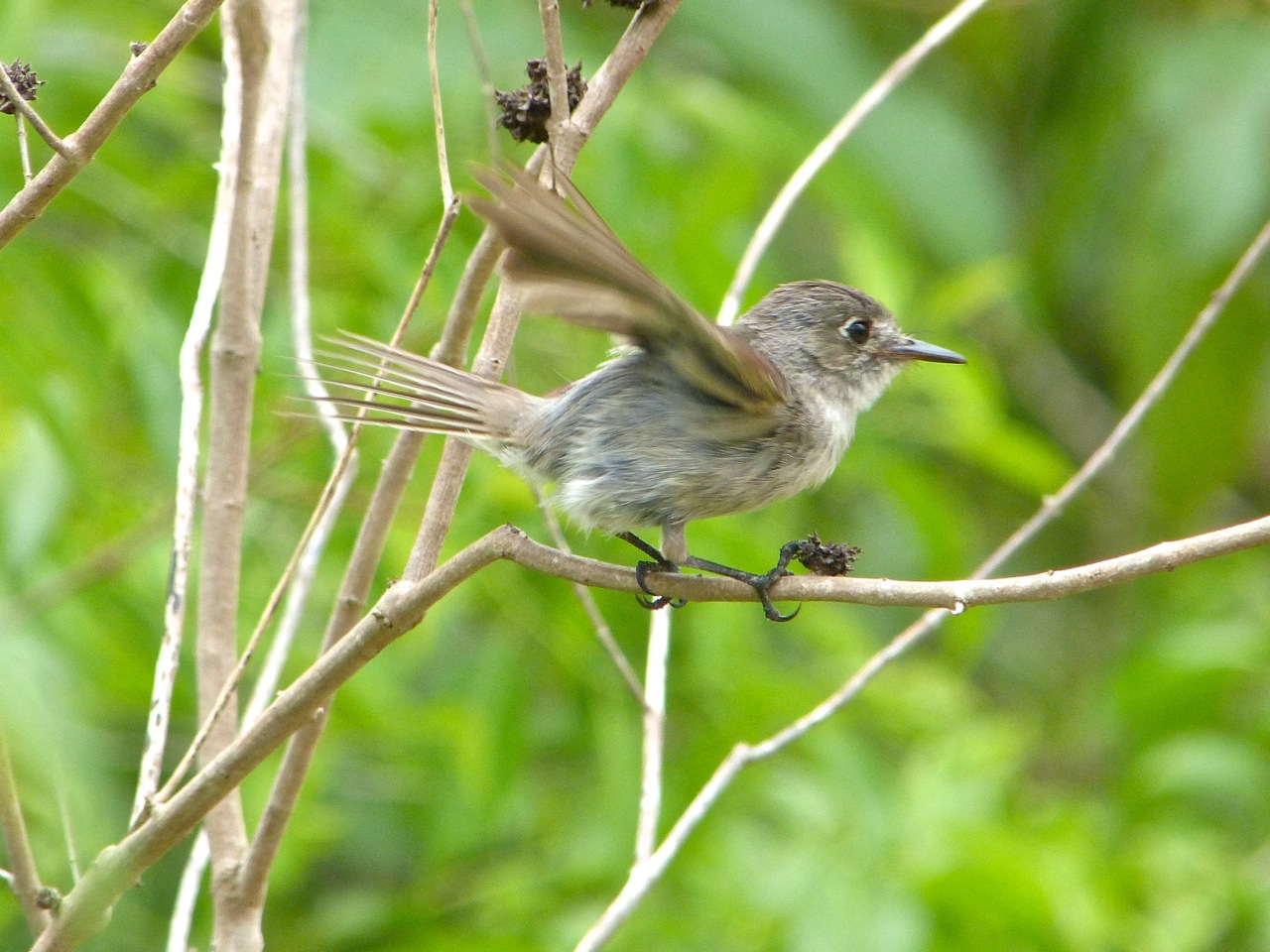
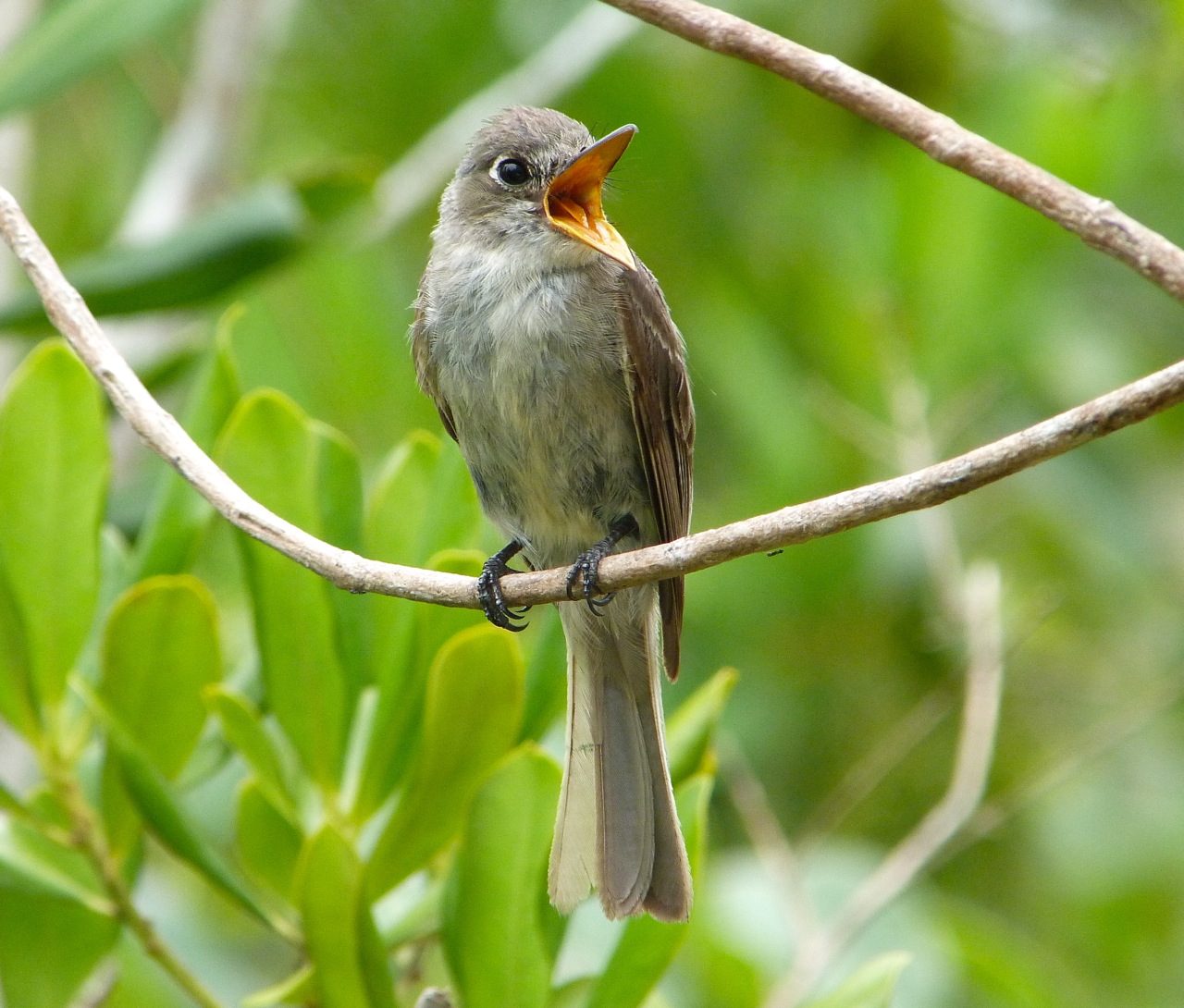
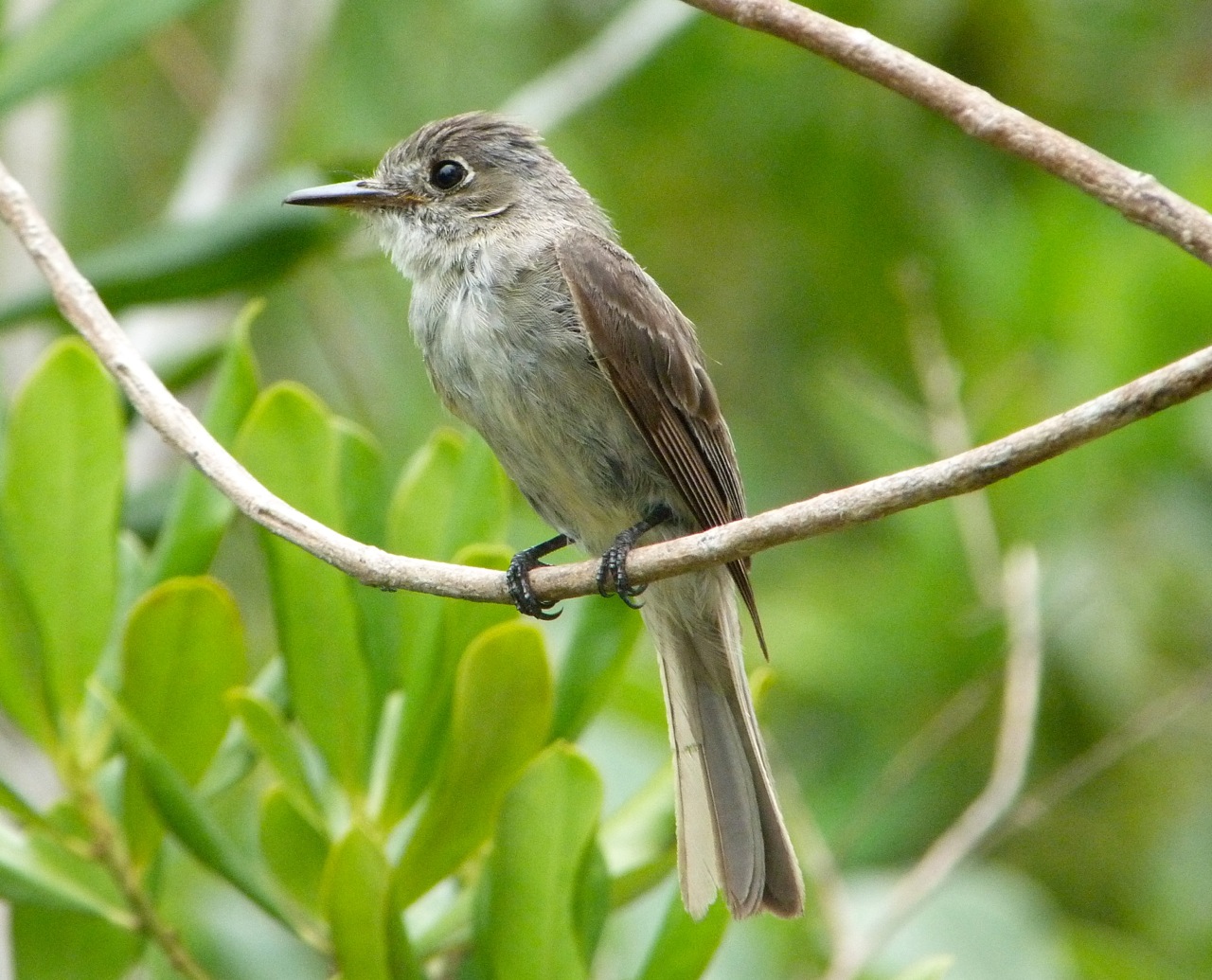
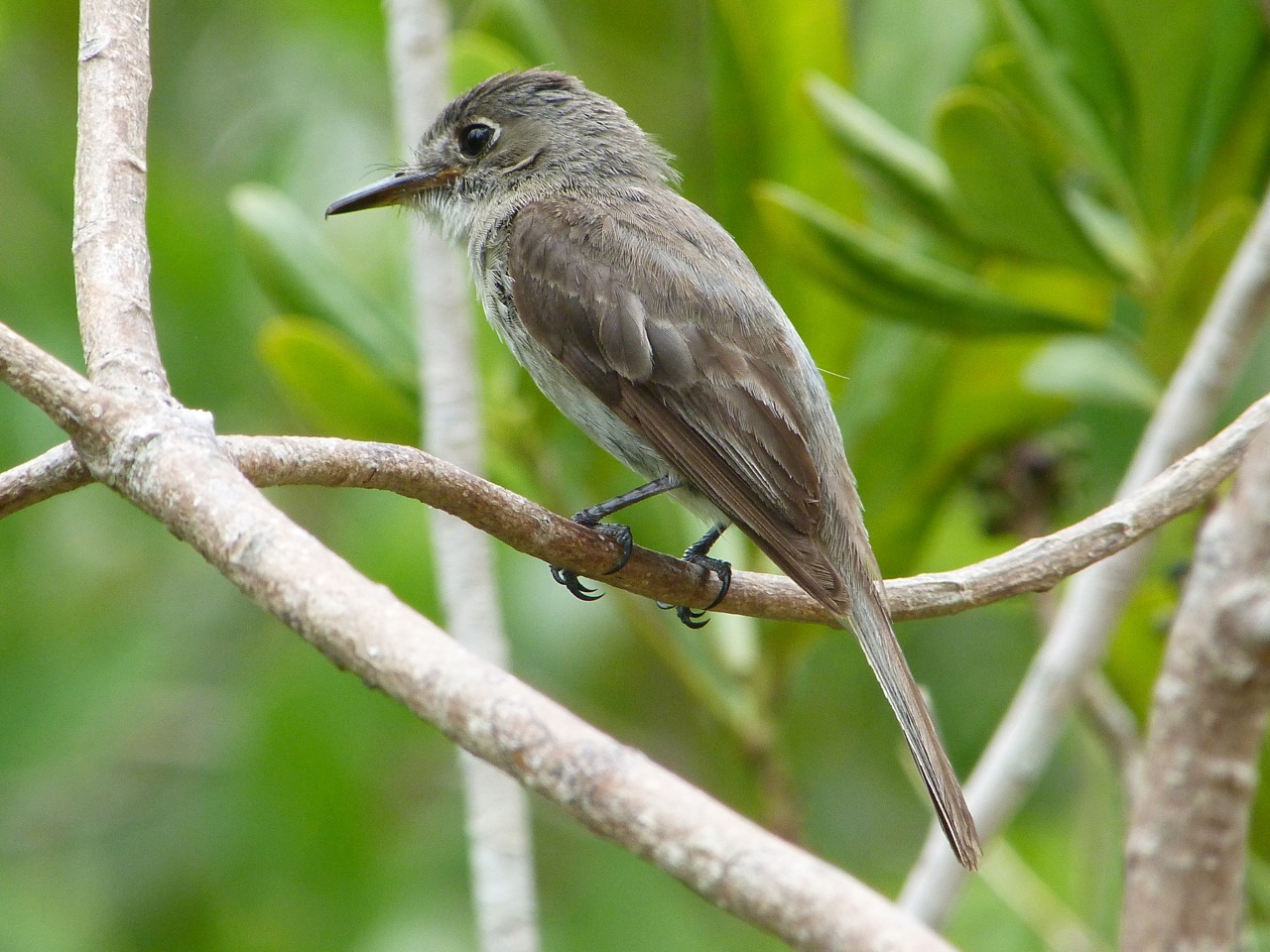
One of the prettiest small birds to photograph on Abaco is the Crescent-eyed, or Cuban, Pewee Contopus caribaeus. These small flycatchers are as interested in your struggles with your camera settings and your ‘stealthy’ (yet clumsy) approach, as you are in their cute poses. It’s a symbiotic relationship – you may get nice pictures, they have a benign laugh at your efforts.
This bird was one of a pair we found at a magical corner of scrubland at a crossroad of tracks between the edge of the pine forest and a backcountry of derelict and overgrown sugar cane fields – the perfect habitat for a wide variety of species. The pewees had a nest hidden deep in the undergrowth, but were tame enough to be untroubled by our presence. They kept calm and carried on as usual.
These little birds are resident in Cuba and the Northern Bahamas. I have previously posted photos of them, taken by the beach at Casuarina, HERE. They are the smallest flycatchers – tyrannidae – on Abaco, a family that includes LA SAGRA’S FLYCATCHER, and the larger Loggerhead & Gray Kingbirds. Here’s a recording of cuban pewees made on Abaco (credit: Jesse Fagan / Xeno-Canto)
They often have a charmingly quizzical or watchful expression
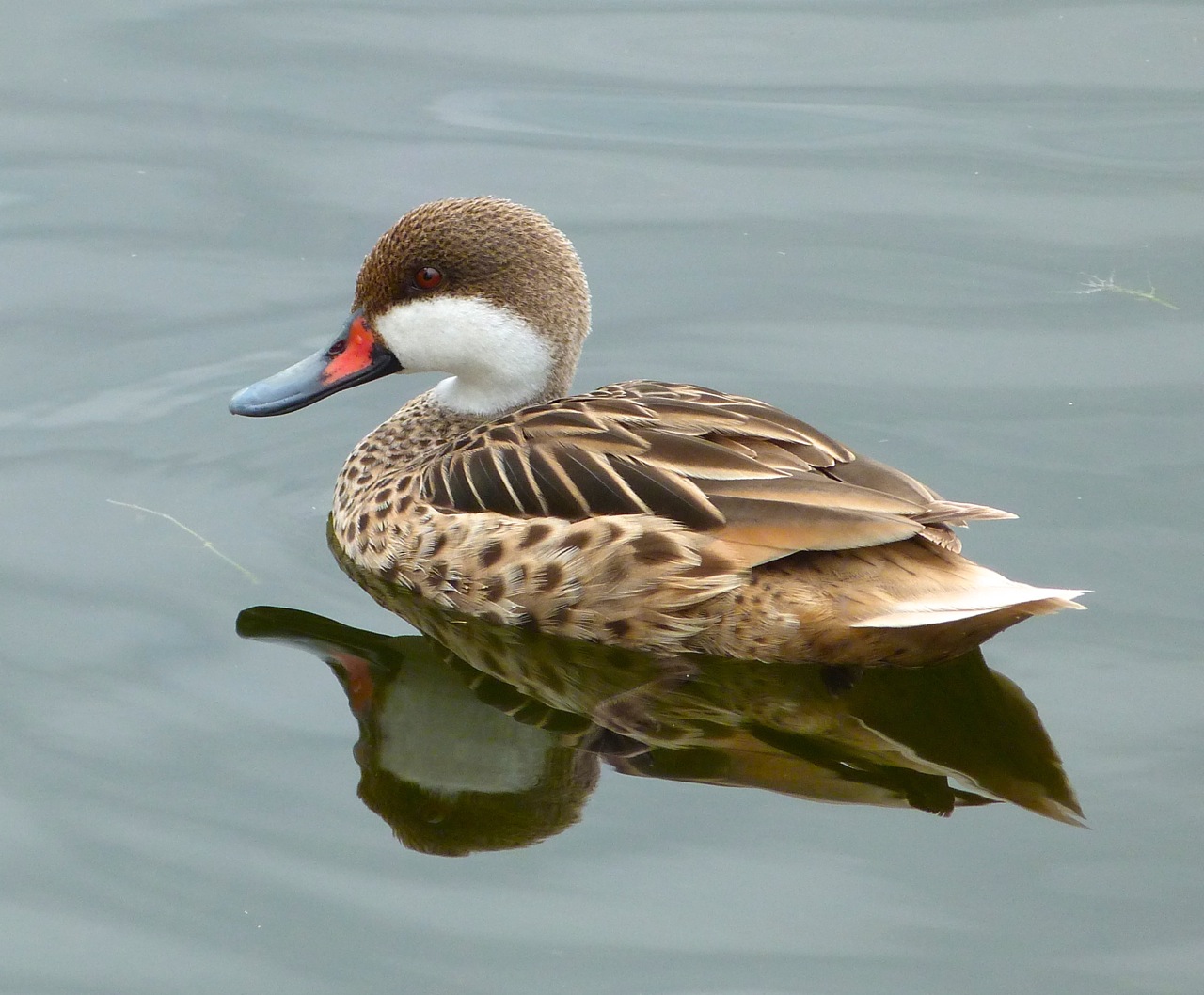
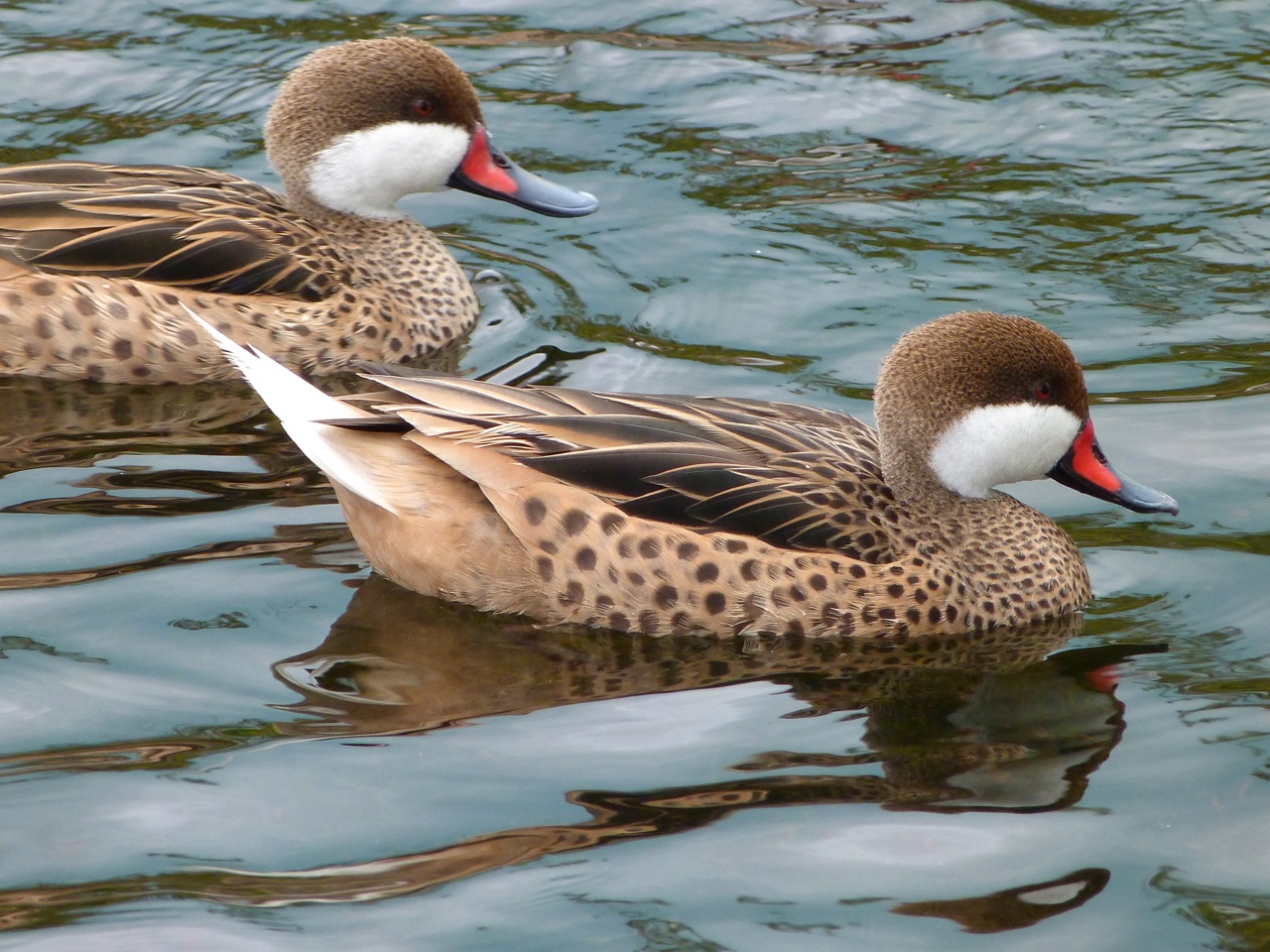
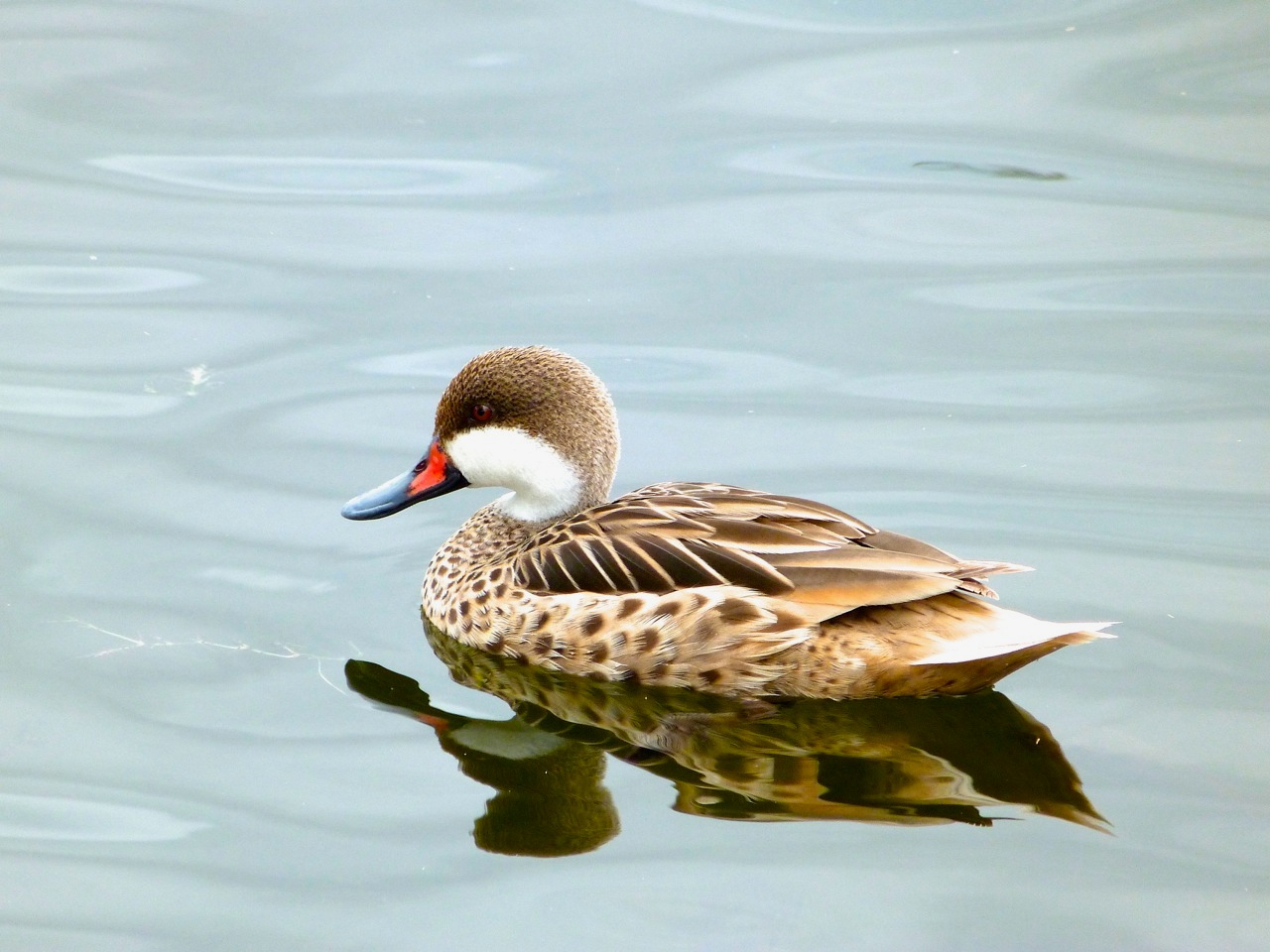
OUT FOR A DUCK: FINDING WHITE-CHEEKED (BAHAMA) PINTAILS ON ABACO
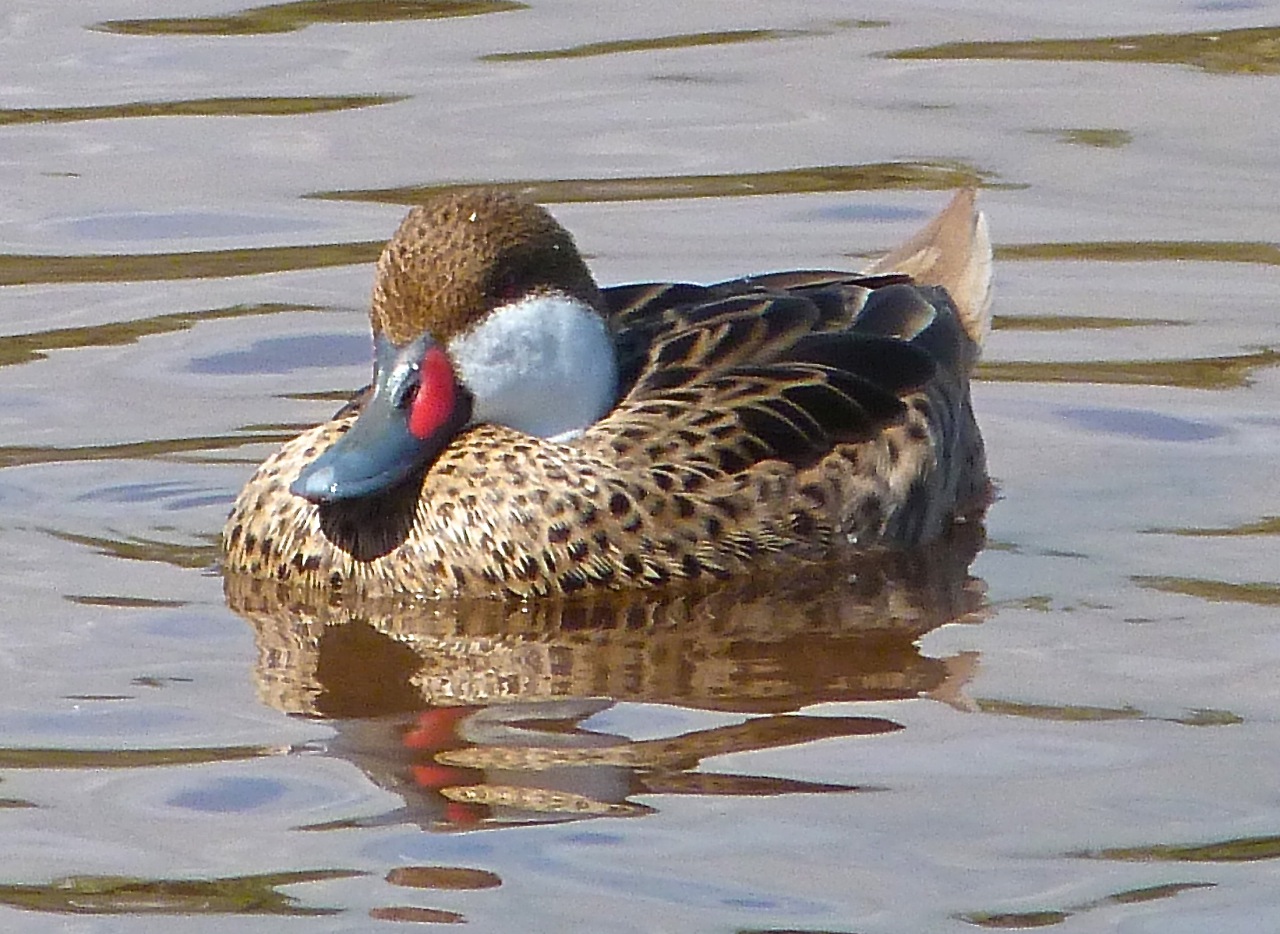
Hunt them. Then when you have found them, shoot them. But only with a camera, obviously… These attractive dabbling ducks are far too pretty for anything more controversial than watching and enjoying. Many moons ago I posted about them HERE, but I’m a bit cannier since then, and even have my own photos now…
NOTEWithin hours of posting this, I was alerted (thanks, Tony W) to the inadvisability of (a) using the word ‘hunting’ in the title; and (b) the opening 2 sentences. (a) has been changed to the neutrally vanilla ‘finding’. (b) remain but with this warning: “It is illegal to shoot white-cheeked pintail in the Bahamas“. While I don’t imagine the readers of a blog like this will already have rushed to the gun cabinet, packed up a cartridge bag, added a couple of Kaliks and headed off with extreme pintail population decrease in mind, I expect a g**gle search for ‘hunting & shooting sweet small ducks’ could indeed provoke the odd (to very odd) person to assume it is open season for pintails.It isn’t. It never is.
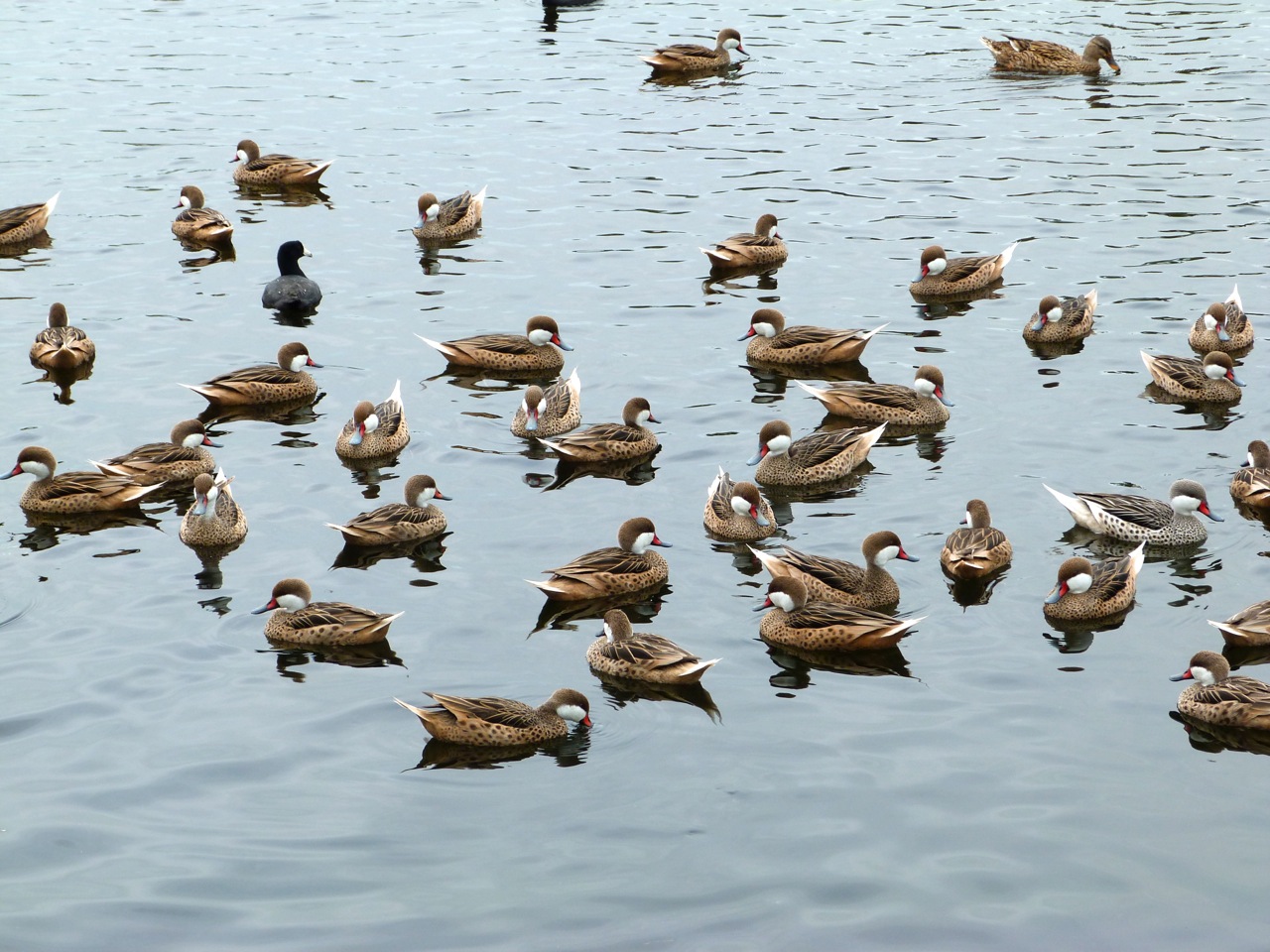
The white-cheeked pintail Anas Bahamensis is also known as the Bahama Pintail. It is a gregarious species, often found in large numbers on lakes and ponds. An excellent place to see them on Abaco is at the pond by Hole 11 at Treasure Cay golf course. Don’t all rush at once – and if you do follow up the hint, check in at the Clubhouse to get permission – there may be a competition in progress… You’ll see many other waterbird species there, and I will do a follow-up post about them. Do mind your head – if someone yells ‘fore’ they will probably not be counting duck species.
The male and female of the species are very similar. However, in the image below there’s one bird that stands out from the others… and I don’t mean the American Coot. Near the bottom right is aLEUCISTICvariant of the Bahama Duck, a genetic condition similar to albinism.
Here is a close-up of the same duck on dry land. These variants are known as Silver Bahama Pintails. They are worth more than the standard version. You can see some good comparative pictures and find out more atMALLARD LANE FARMS
Here is a more extreme wiki-example of a silver bahama pintail
Another excellent place for pintails is in the Crossing Rocks area of South Abaco. Strictly, it is on private land. And legally too, for that matter. So I won’t pinpoint these pintails publicly. There is a wonderful variety of waterbird life there. I have seen great egrets, little blue herons, yellow-crowned night herons, belted kingfishers and elegantBLACK-NECKED STILTSthere, besides several duck species. I have also seen a sora there (twice), a small, furtive rail that skulks in the reeds and foliage at the edge of the water, profoundly hoping that you won’t notice it… If you are birding on Abaco from Delphi, ask Peter or Sandy for the location. Or else contact me.
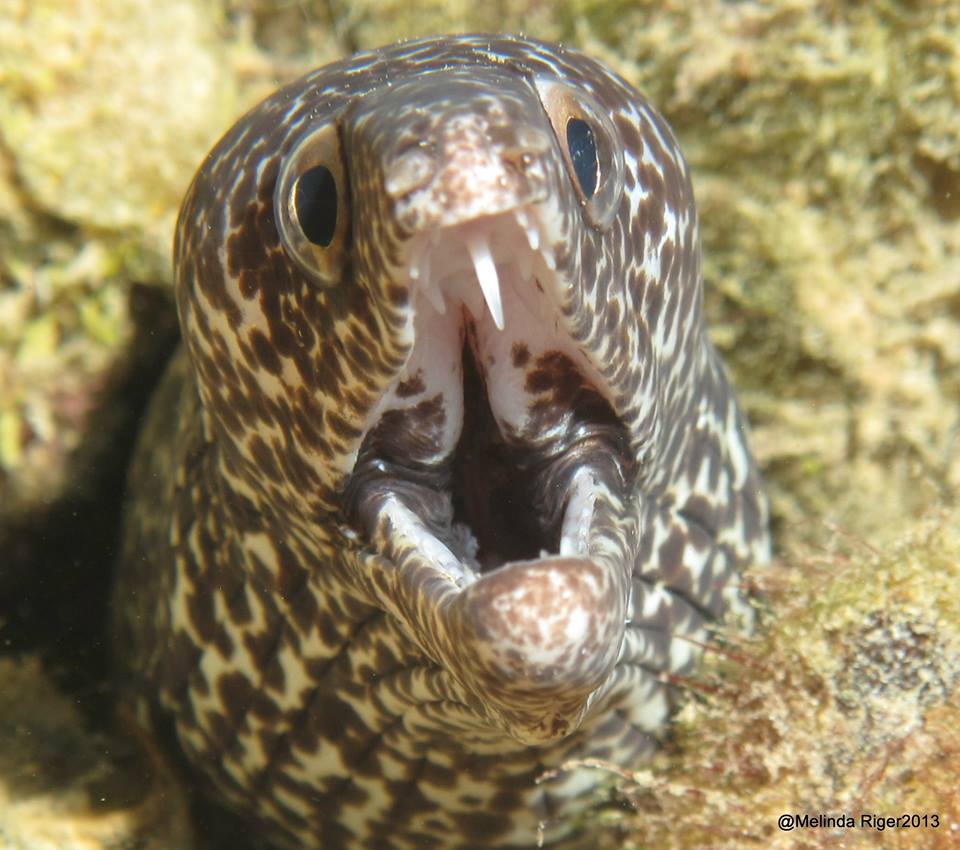
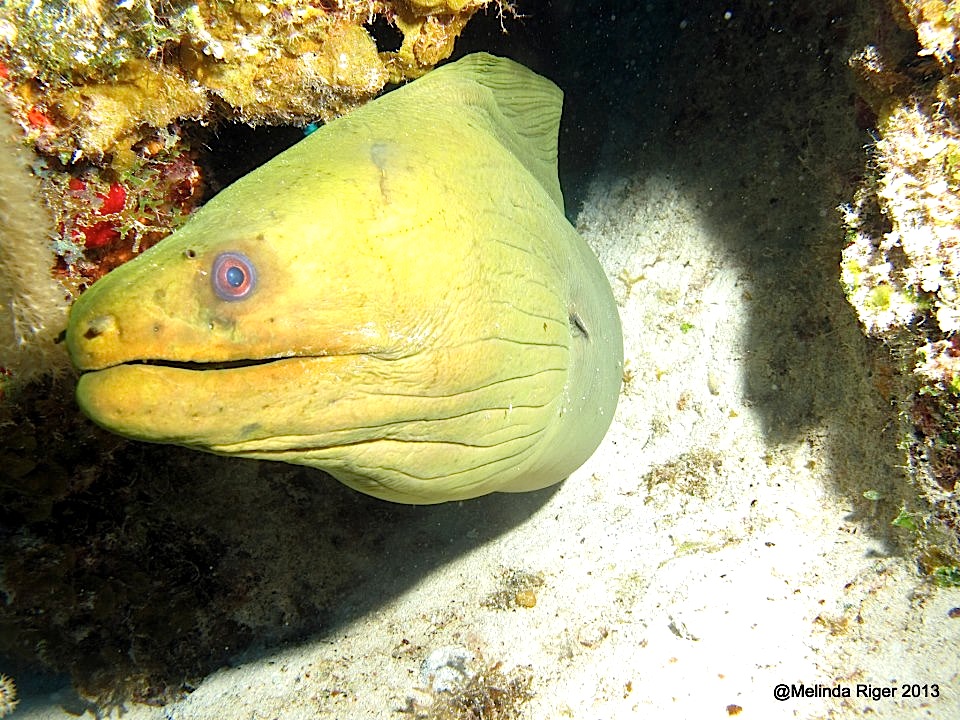
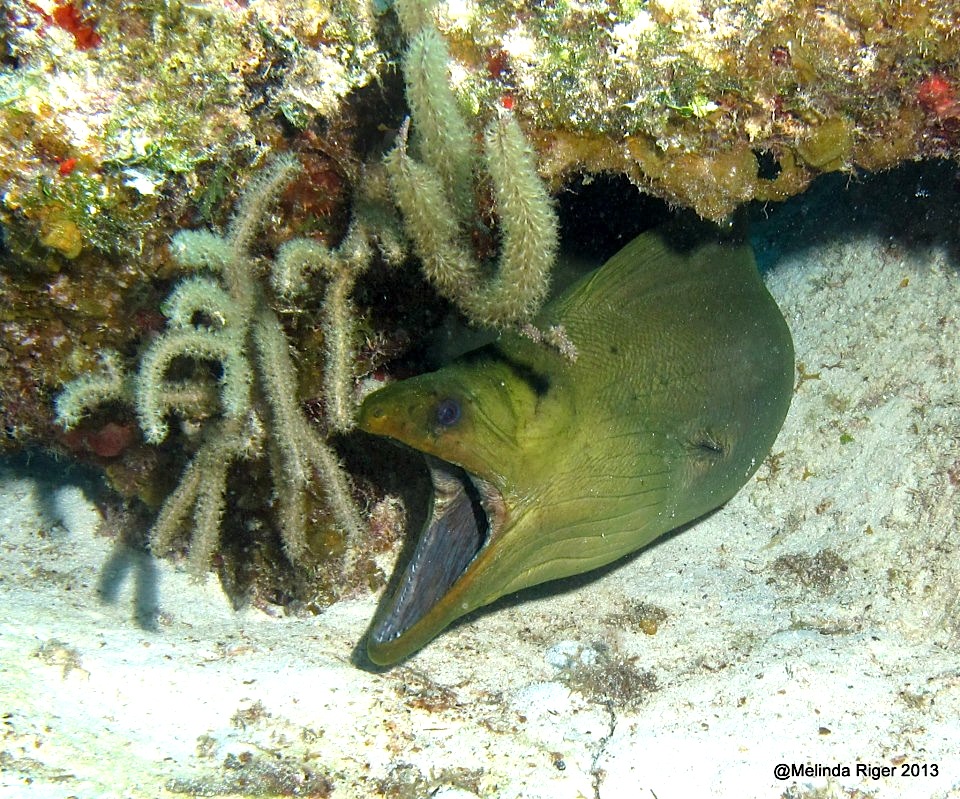
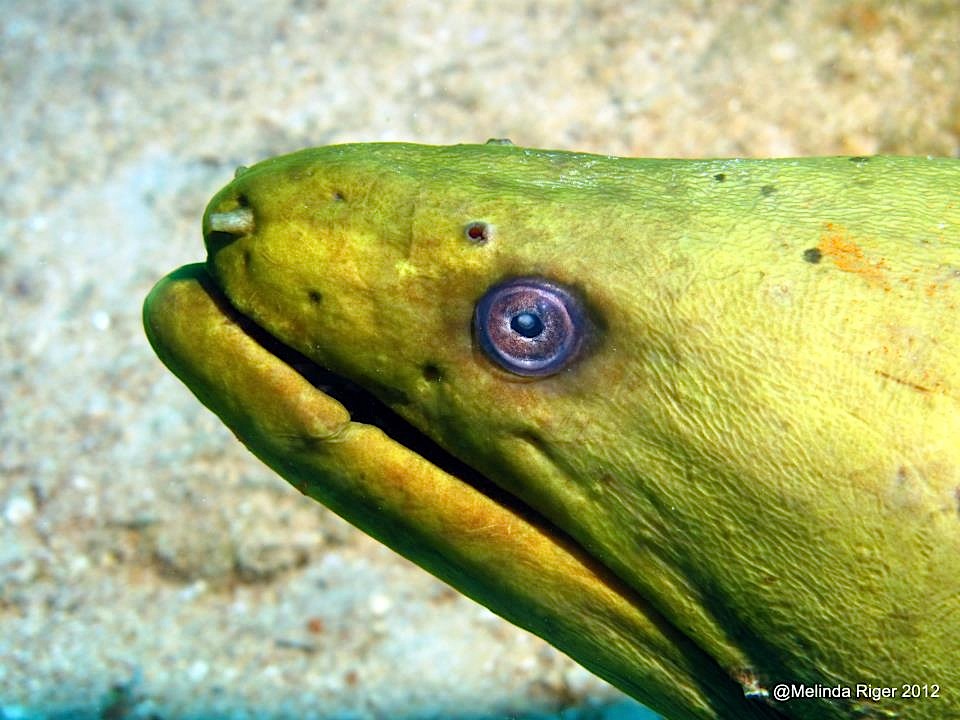
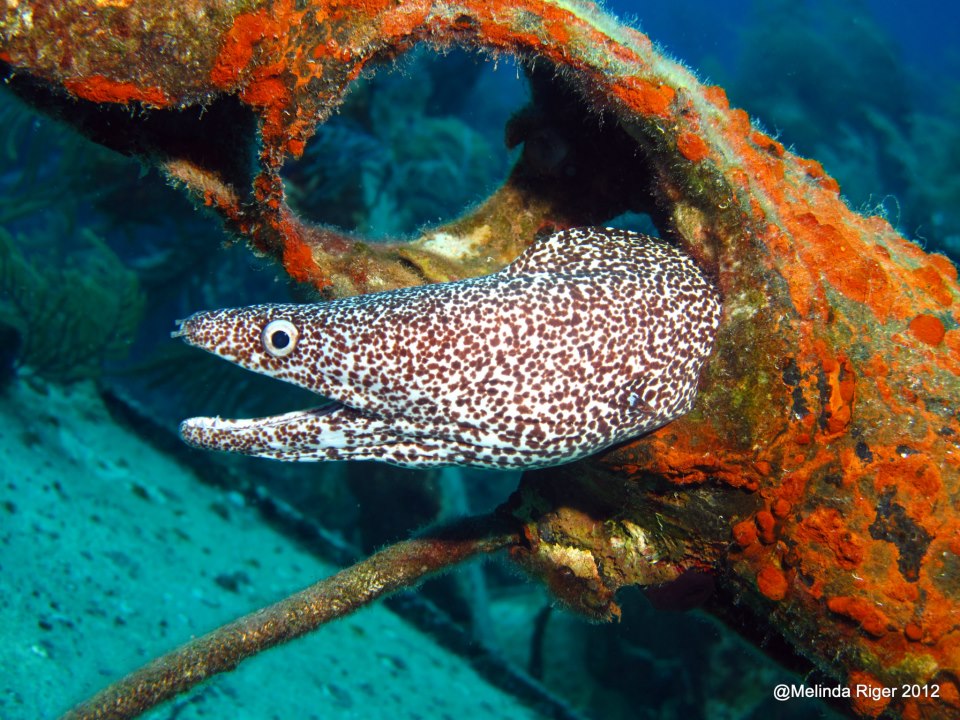
MORAY EELS are found in most oceans, with around 200 species worldwide. In Bahamian waters, the 3 most common are the green, yellow and spotted morays, all featured below. These ones have been given affectionate names by the divers who encounter them regularly in their home surroundings – Rico, Judy, Wasabi and Earl.
Morays have something of a reputation for aggression, though (like many creatures with teeth) they much prefer to swim away or hide rather than attack. They will defend themselves resolutely, however, so it might be a mistake the get too close.
Hand-feeding morays has become a popular dive activity. However there can be drawbacks. They have poor vision, and may find it difficult to distinguish between food, finger-food and fingers. There are many cases of divers who have lost a finger while hand-feeding moray eels; in some places it has been banned.
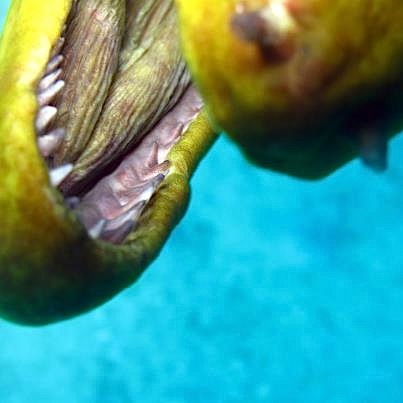
The moray eel has strong clamping jaws, and its sharp teeth point backwards
This has two effects. A finger will be held as if by a fish-hook barb; and the eel will not release the grip of its powerful jaws without them being prised apart.
Moray eels have a strong sense of smell, and curious nostrils
Finally, here are two images of a fine spotted moray eel known as ‘Earl’, and a video of a different one
“ELEGANT COOT CABARETS” (6,6,2,5 anag.): CATTLE EGRETS ON ABACO
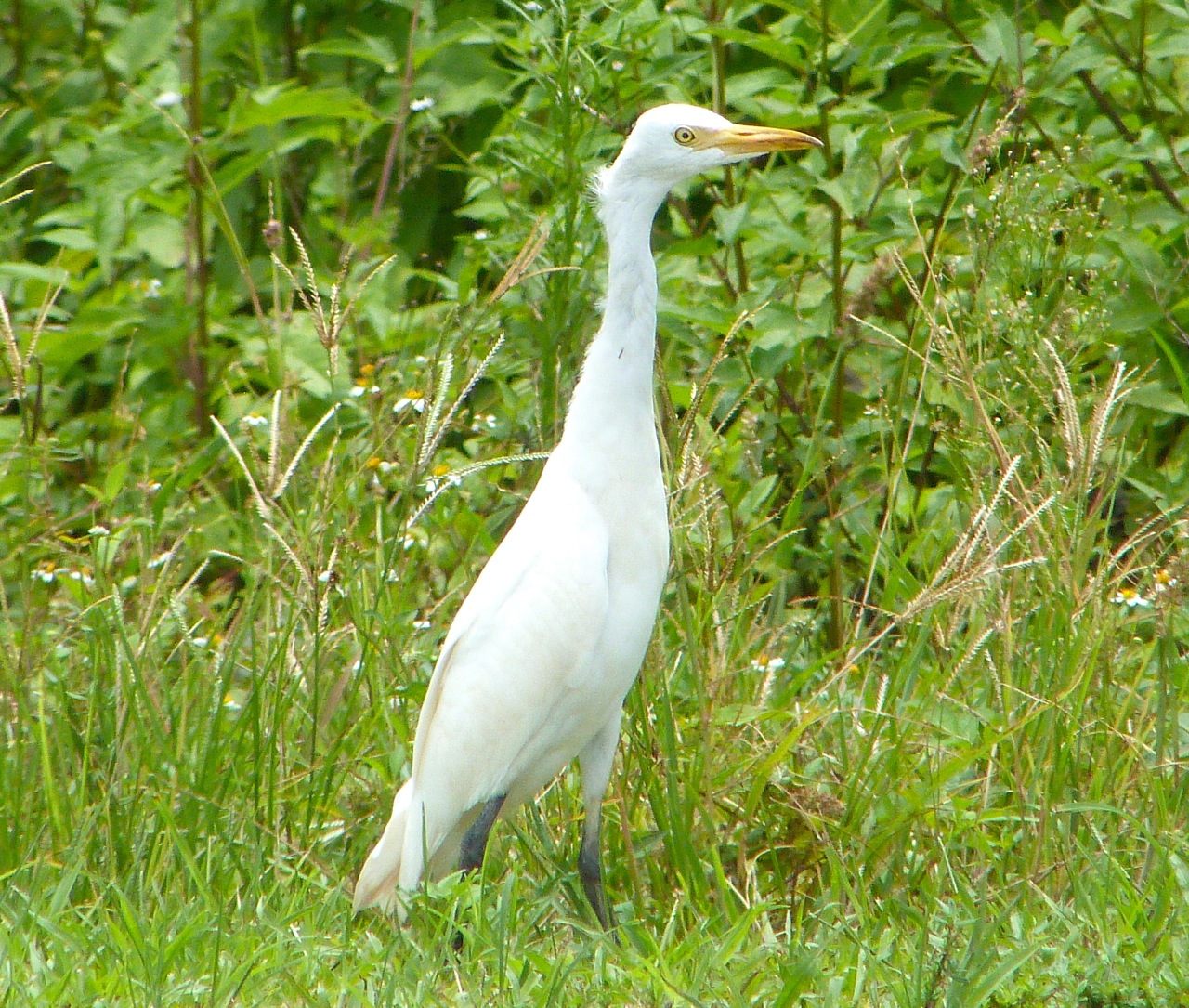
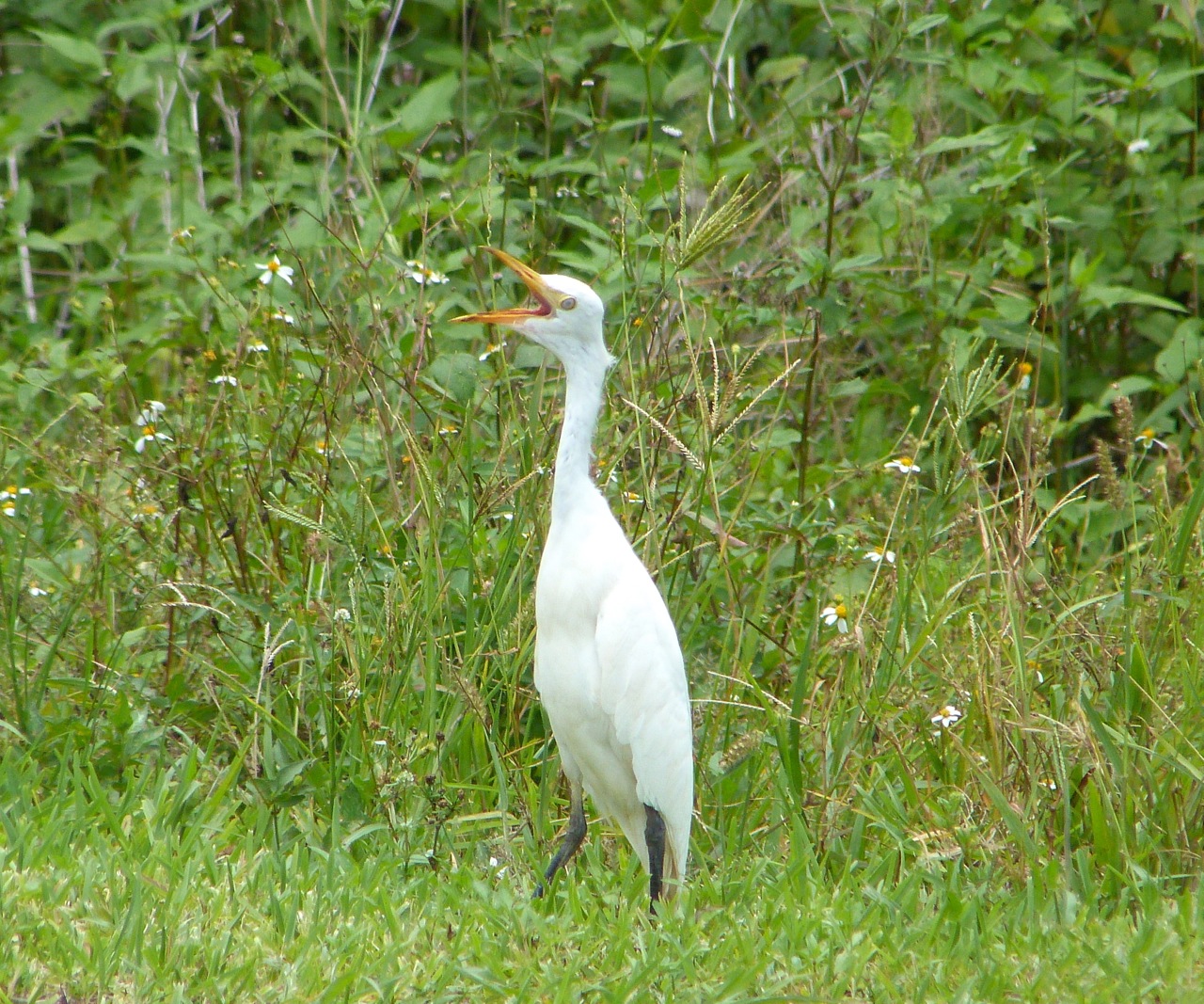
The CATTLE EGRET Bubulcus ibis is a species of heron with an affinity with cattle and other grazing animals. It’s a two-way thing – they relieve a cow of its ticks and flies, and get a ready meal return. Their name is the latin for ‘herdsman’.
Originating in Africa, these birds have proved to be one of the most successful and resilient bird species at expanding their breeding populations around the globe.
The first sightings in North America were in 1941, then assumed to be escapees. Far from it. They flew in and multiplied. By 1953 they were breeding in Florida; in Canada in 1962; and in the Bahamas in the 1960s. Now they are everywhere – though (depending, like, how old you are) your grandparents might never have seen one… Here’s a helpful wiki-graphic
Range expansion in the Americas
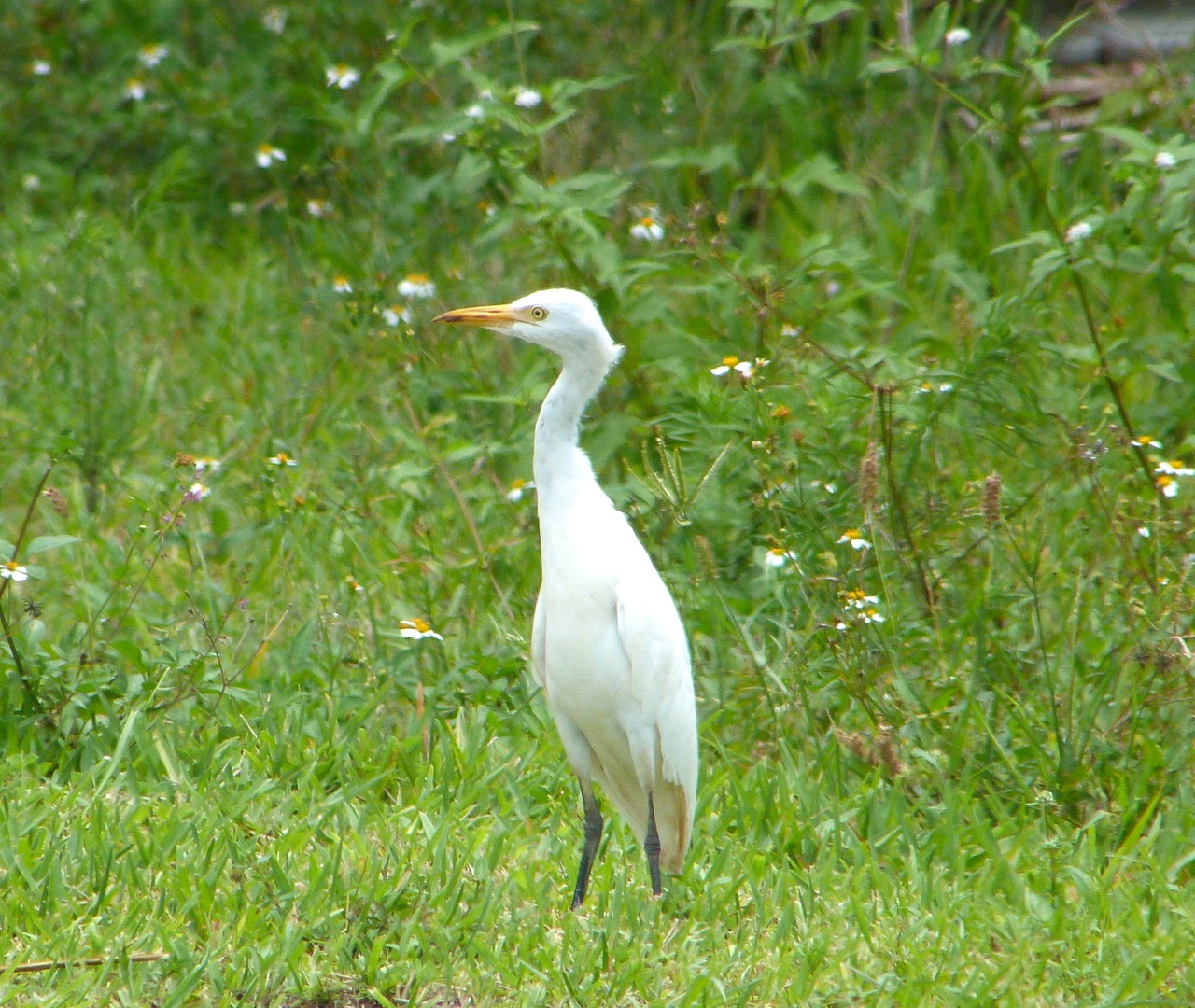
In the breeding season, cattle egrets develop pinkish-buff patches on their front, back and crown, and grow matching head-plumes
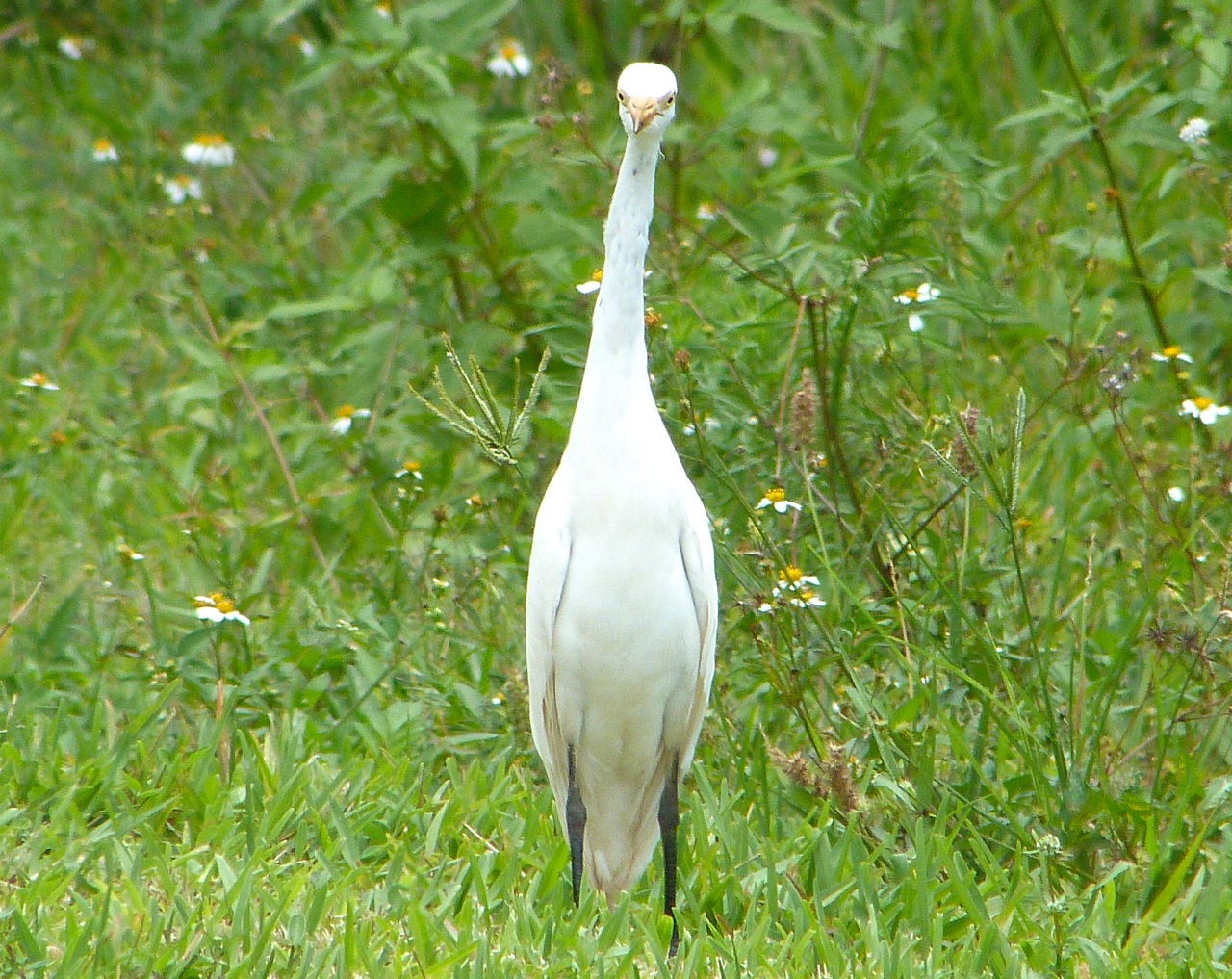
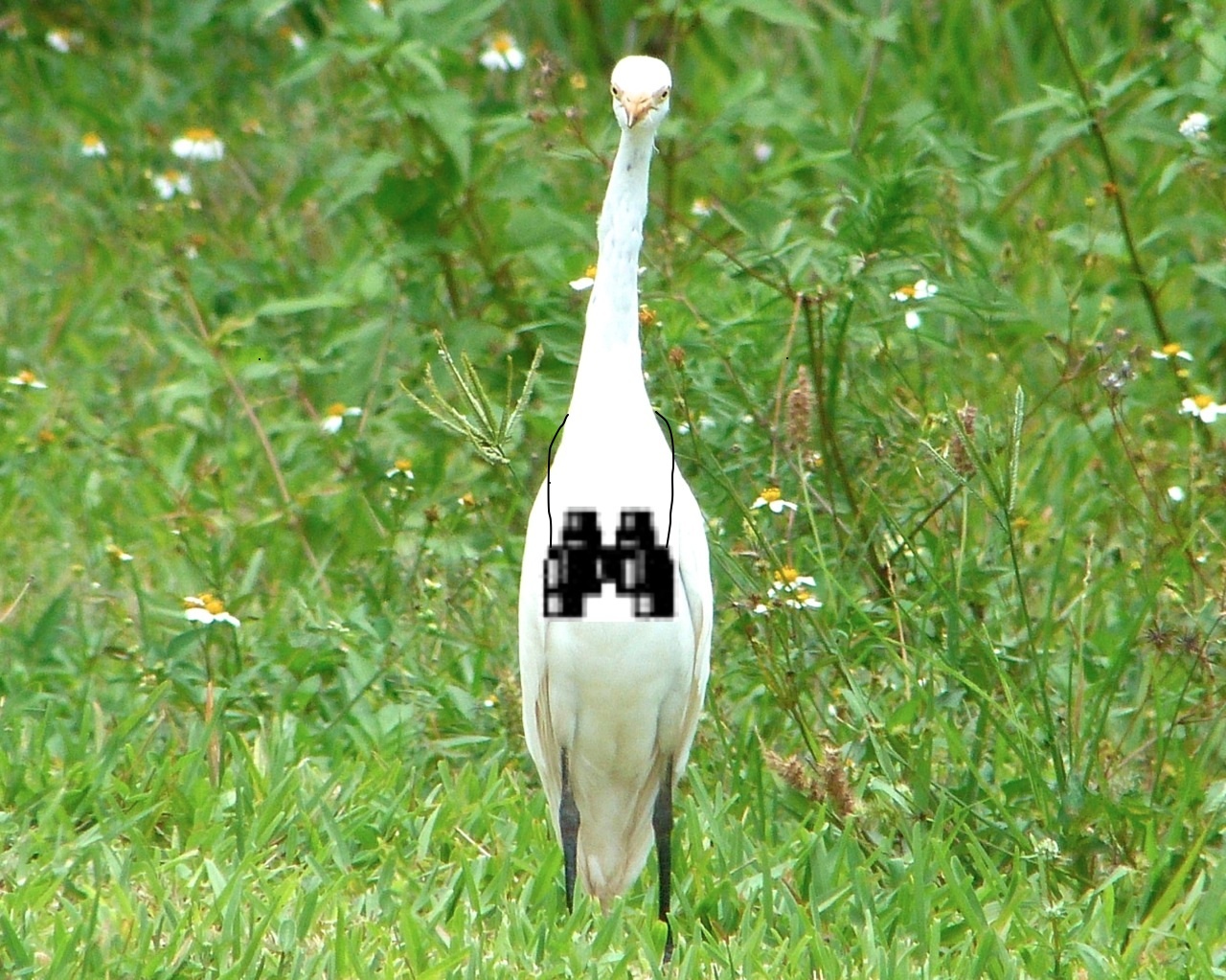
Recently we saw one at Sandy Point when photographing kestrels. It’s no longer in full breeding plumage, but traces of a pinkish tinge can still be seen.The cattle egret’s eyes are positioned so that while they are feeding they have binocular vision. I’m not quite sure why that would be advantageous; you might think they’d prefer one eye on their food, and one on the look out for predators
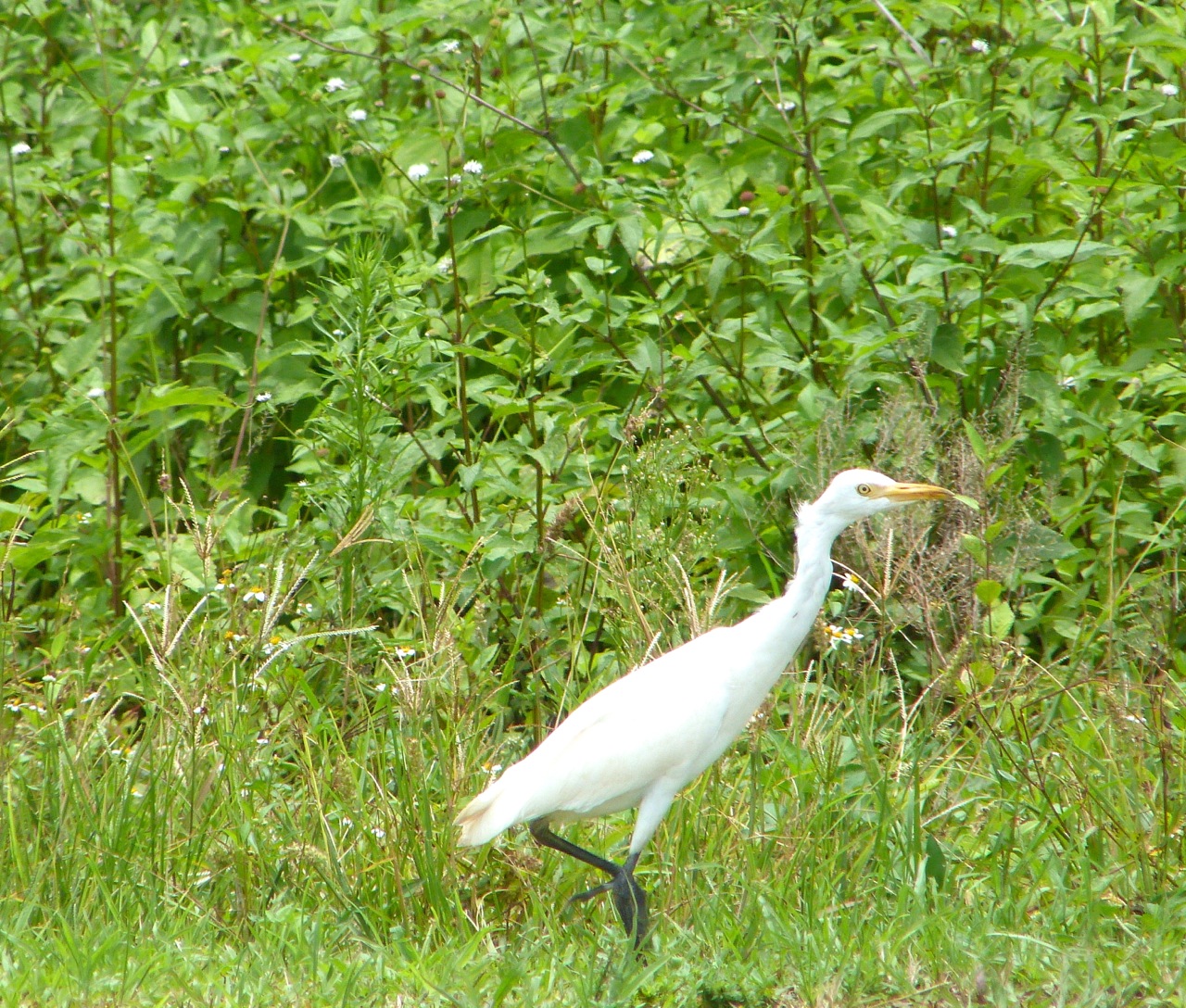
When on the move the egrets may adopt a stooping, creeping stance
These birds have capacious mouths, which enable them to vary their diet from small maggoty things to larger insects, then through snails to small frogs and the like
Although the neck generally looks slim, they appear to have an expandable gullet which no doubt helps with larger food items
ADDENDUM The redoubtable dou dou, creator of tiny and cute handmade bird models, has been inspired by these fine creatures to make a handsome pair. Check out her site with the link above… and you can even buy your very own cattle egrets there
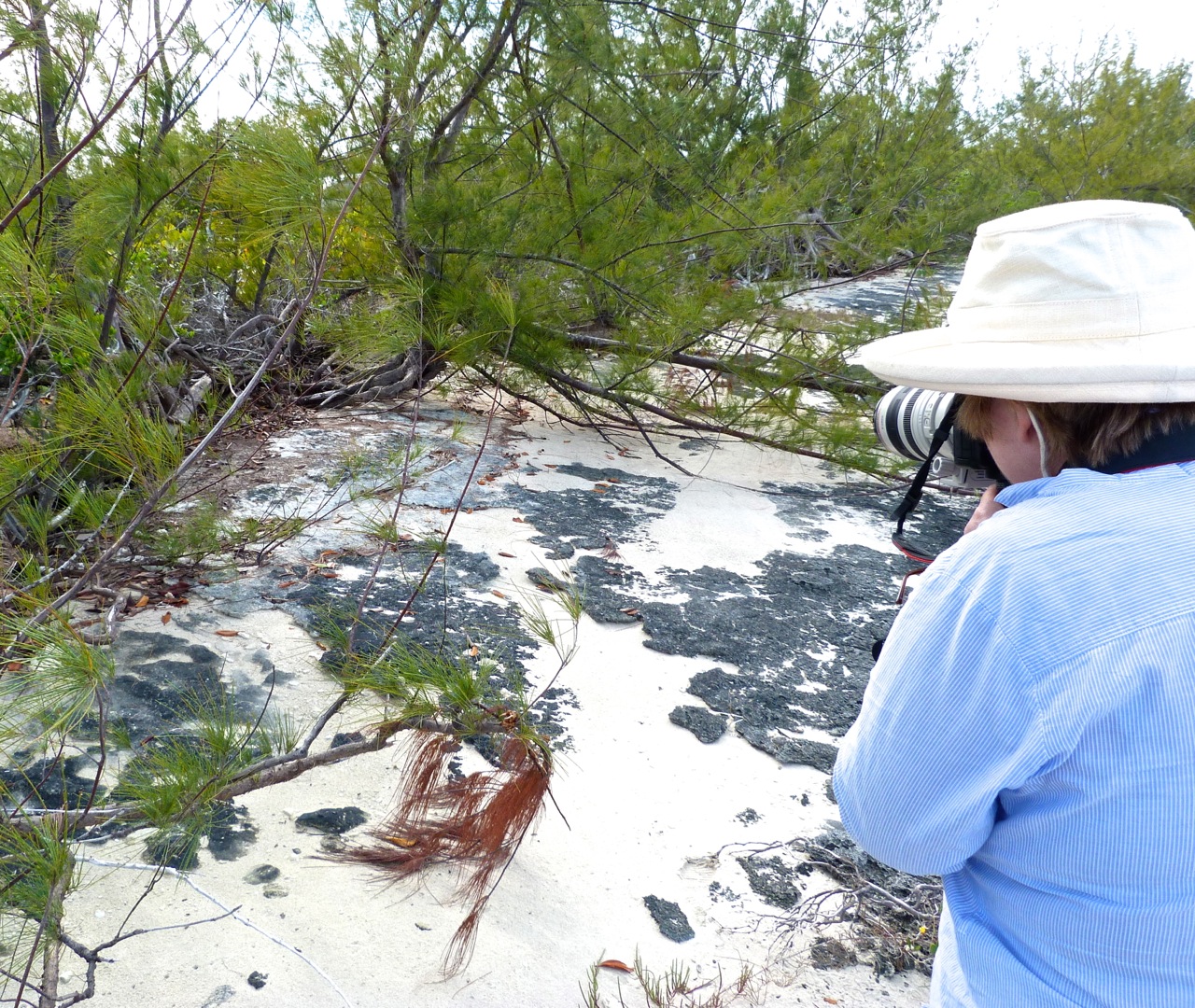
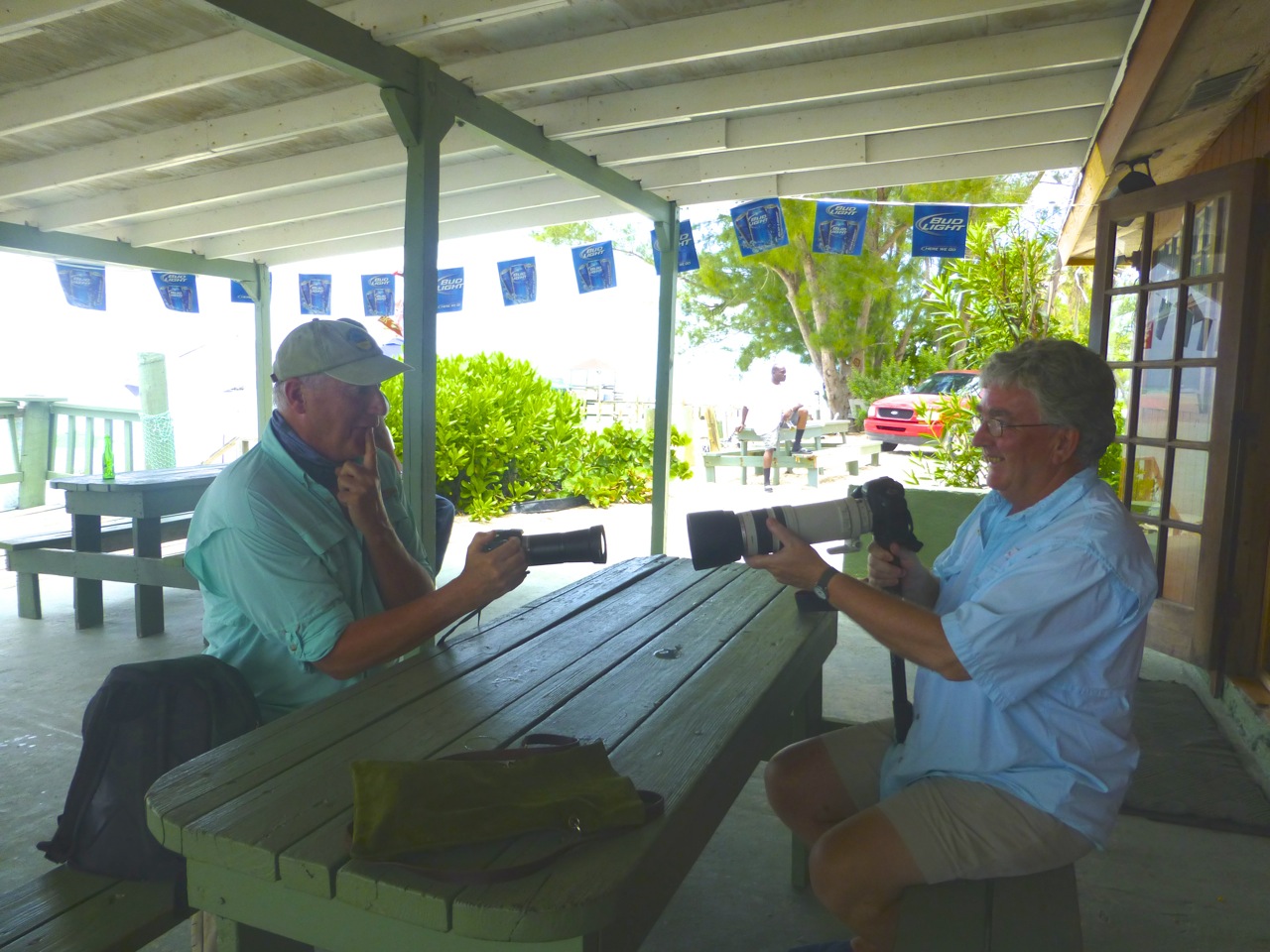
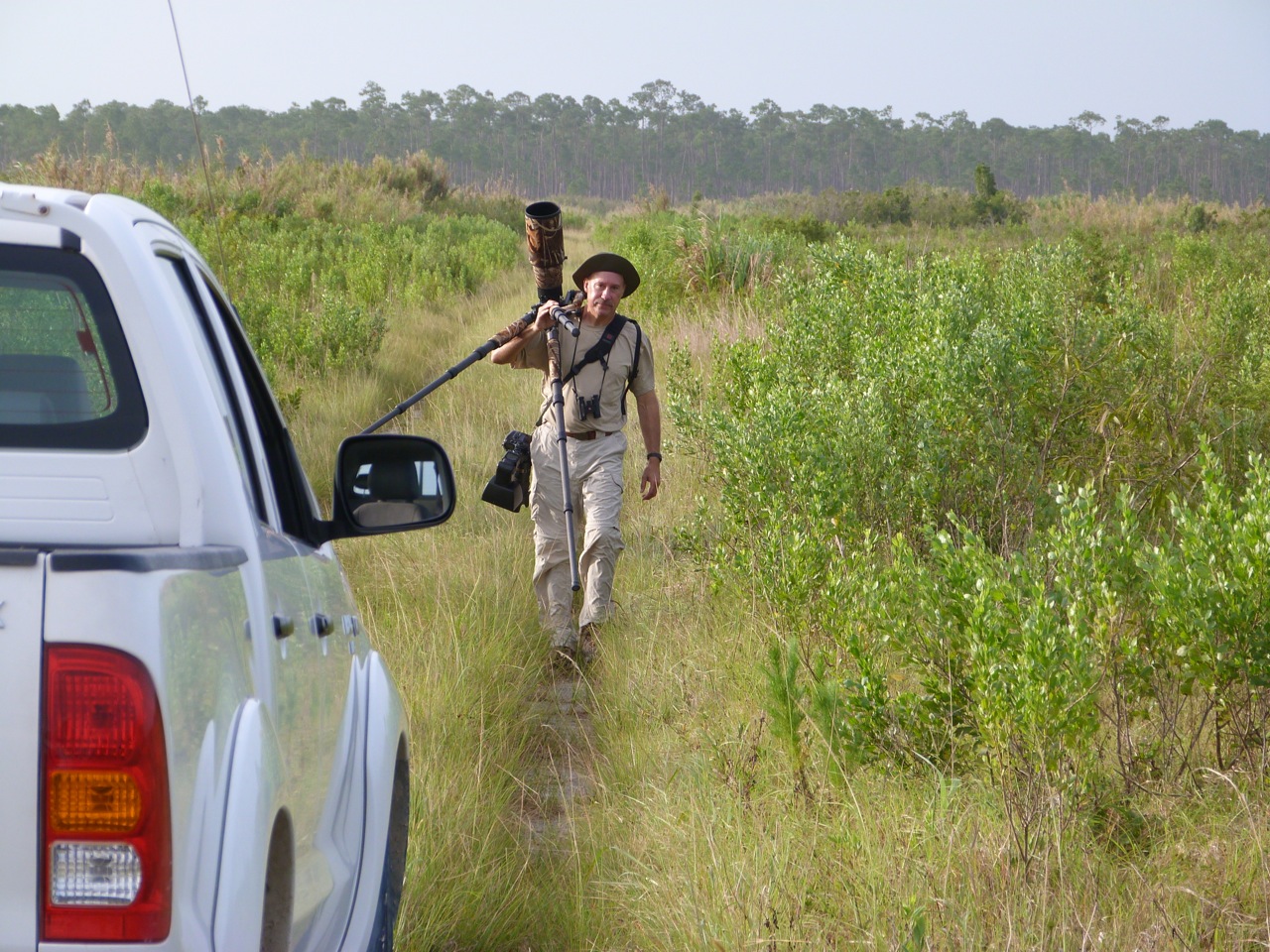
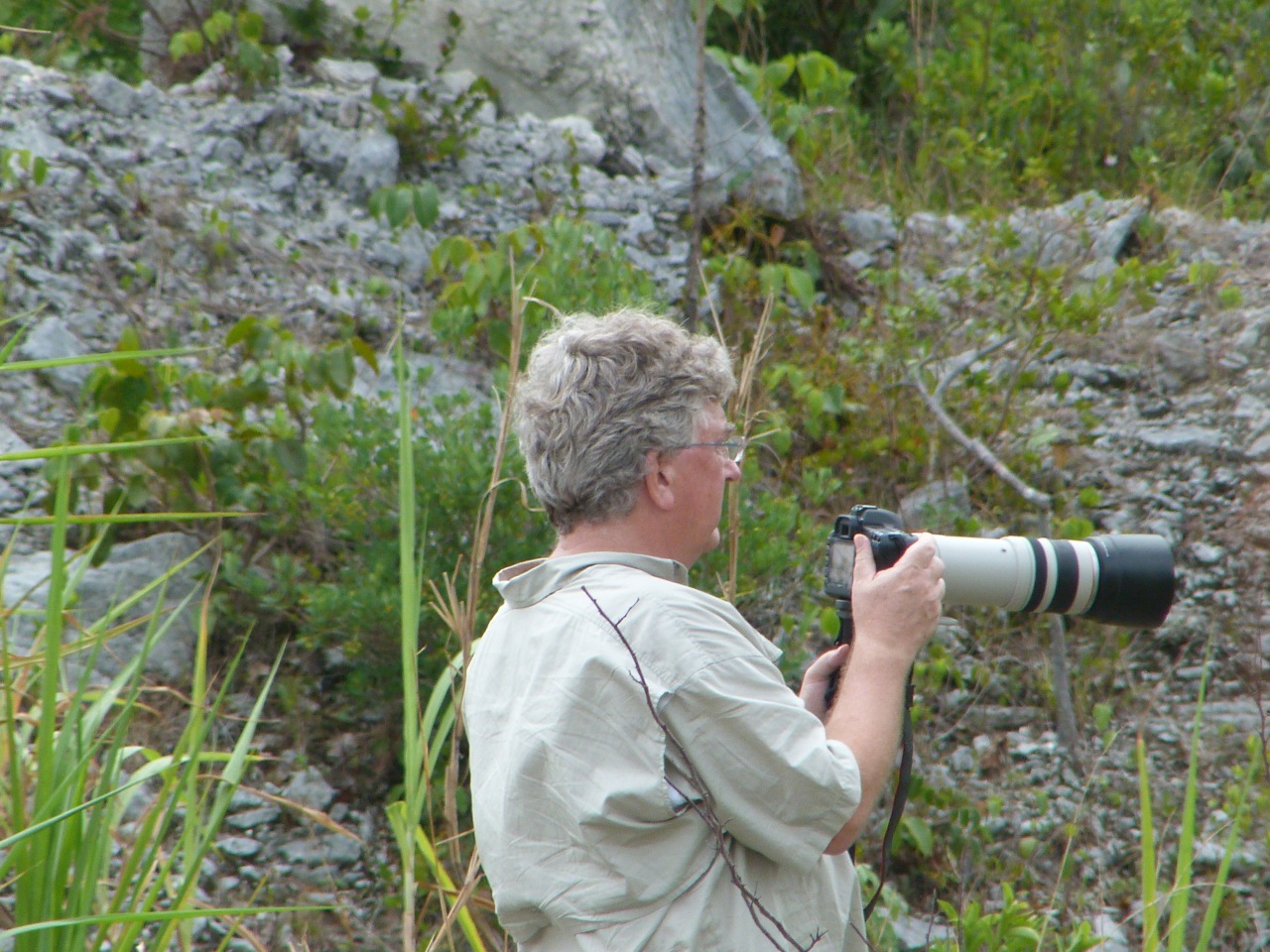
Who indeed does photograph the people who take the photographs? Here is a small gallery of photographers on Abaco caught in the act of shooting wildlife, so to speak. And if anyone has ever seen – or been – a photographer photographing photographers photographing other photographers, trust me, that is one stage beyond weird.
RH on a nature trek with Ricky Johnson
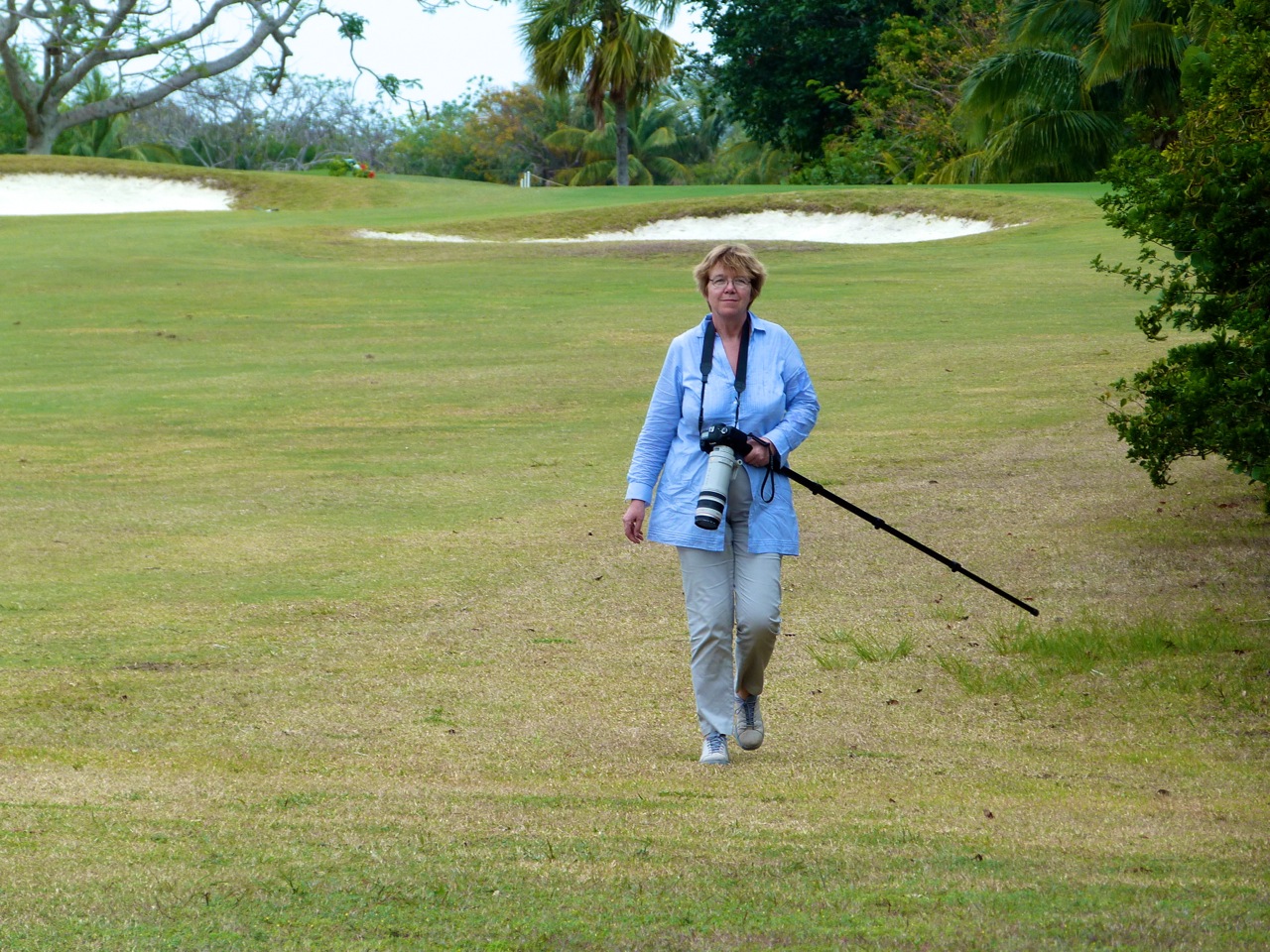
Mrs RH goes right off-piste & ends up on the golf course at TC [good birding there in fact]
RH (who uses a stick – or ‘cane’, if that isn’t too ’50 shades’) takes a collapsible wading stick on these occasions. Since he, too, is collapsible it is sometimes helpful to have a seat while photographing. Not elegant, though, and not especially comfortable. Cheers, Clare, for capturing the indignity…
Mrs RH zooms in on a possibly rare bird… as it turned out, a female grassquit!
RH sort of looks the part but the backpack is crammed full of food & drink, not equipment, and he is looking for shade for a picnic at Casuarina
PM challenges RH to a ‘camera-off’ duel at Nancy’s, Sandy Point, and proves that his is the biggest…
Ace birder and photographer from Ohio, Tom, arrives at Delphi and puts PM’s puny equipment to shame – and with Camo for extra cool. Even the tripod legs.
Sandy Walker, General Manager of Delphi and man of many parts, turns out to own a snappy Nikon
PM & RH engaged in a ridiculous challenge to photograph various items on the beach. Both lost, even though they had devised the rules…
The professionals Tom and Woody (‘Birdman of Abaco’) Bracey get serious with Bahama Mockingbirds in the pine forest. The red bandana is to attract the endemic Bahama Woodstar hummingbirds.
However at Sandy Point they seem to have forgotten their cameras…
Tom returning to the truck after filming an evening festival of dozens of nighthawks on the wing
Out in the field… or scrubland – with 2 cameras
PM takes aim…
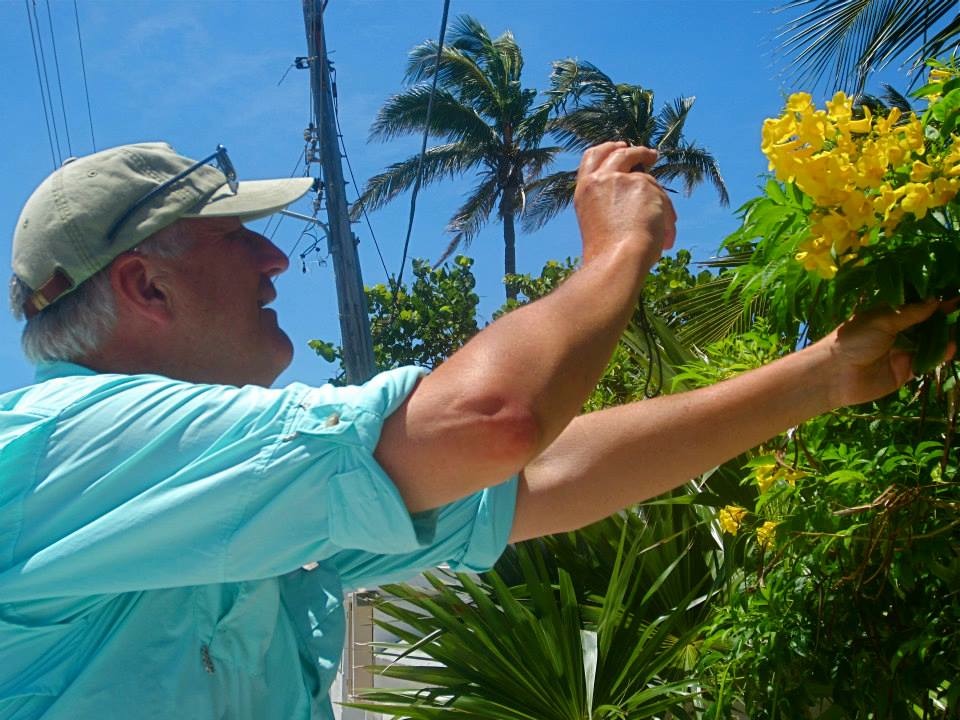
RH subdues an unruly Yellow Elder (Bahamas national flower) for a close-up
*This titular nod to the phrase ‘quis custodiet ipsos custodes’ (‘who is guarding the guardians’) is open to objection on the ground of illogicality. It’s a Latin tag with a greek-derived verb and noun forms jocularly inserted. A ‘photograph’ is, literally, ‘light writing’ in Greek. So ‘quis lux-scribit ipsos lucis-scriptores’ is the best solution I can offer… Let’s have that Elder flower to end on a light note
DRAMATIS PERSONAE
Photographees: Peter Mantle, Sandy Walker, Tom Sheley, Woody Bracey, Mrs RH, RH
I posted briefly about ROYAL TERNS (Thalasseus maximus) on the Abaco Marls earlier this year HERE. Yesterday’s news from the Lindo Wing (anti-Monarchists look away now) surely justifies a few more photos of these fine and noble seabirds. Everyone else is using the event to sell newspapers / magazines / products (‘Royal’ Baby Lotion – so gentle, so soft – fit for a future King’s delicate…’ etc etc). If there’s a cheerful bandwagon passing, why not just hop on? I’ll skip the info about the range and nesting arrangements of these birds and show some them in all their glory, posing in the sunshine on a dead tree way out in the Abaco Marls.
PS No terns were hurt trying to get the yellow crown to fit one of them. In fact, they rather enjoyed it…
The LEAST TERN (Sternula antillarum, as it is now designated) is a small tern of the Americas and Caribbean, a very pretty, delicate little bird. It is a rare a vagrant to Europe, with a single example recorded in Great Britain. It is quick and manoeuvrable in flight, slightly hunched and ready to assume the position shown below after hovering over a likely spot for small fish. This image shows the bird coming out of its hover, and at the very start of its rapid plunge to the water. It’s here for illustrative purposes only – I realise it is somewhat inept as a photograph, but frankly you can never be sure when the dive is going to happen. Unless you have lightning reactions, a refrangible apex lens and a zircon-encrusted focal-zone flange, you’ll be lucky to do much better. Oh, and steady hands.
I had a lucky break on the Delphi beach one day, when I was taking photos of Wilson’s plovers and their new chicks (soon to feature here). A least tern appeared from nowhere and landed at the water’s edge within a few yards of me. I had no time to rethink my settings – a perennial problem at the best of times – and I simply aimed the camera and managed to squeeze off 3 shots before the bird took off again. One was a blurry fail, one is the header picture… and the 3rd captured the bird as it turned its head. You can see that, even though this is a small and light bird, its feet have sunk right into the soft, damp white sand.
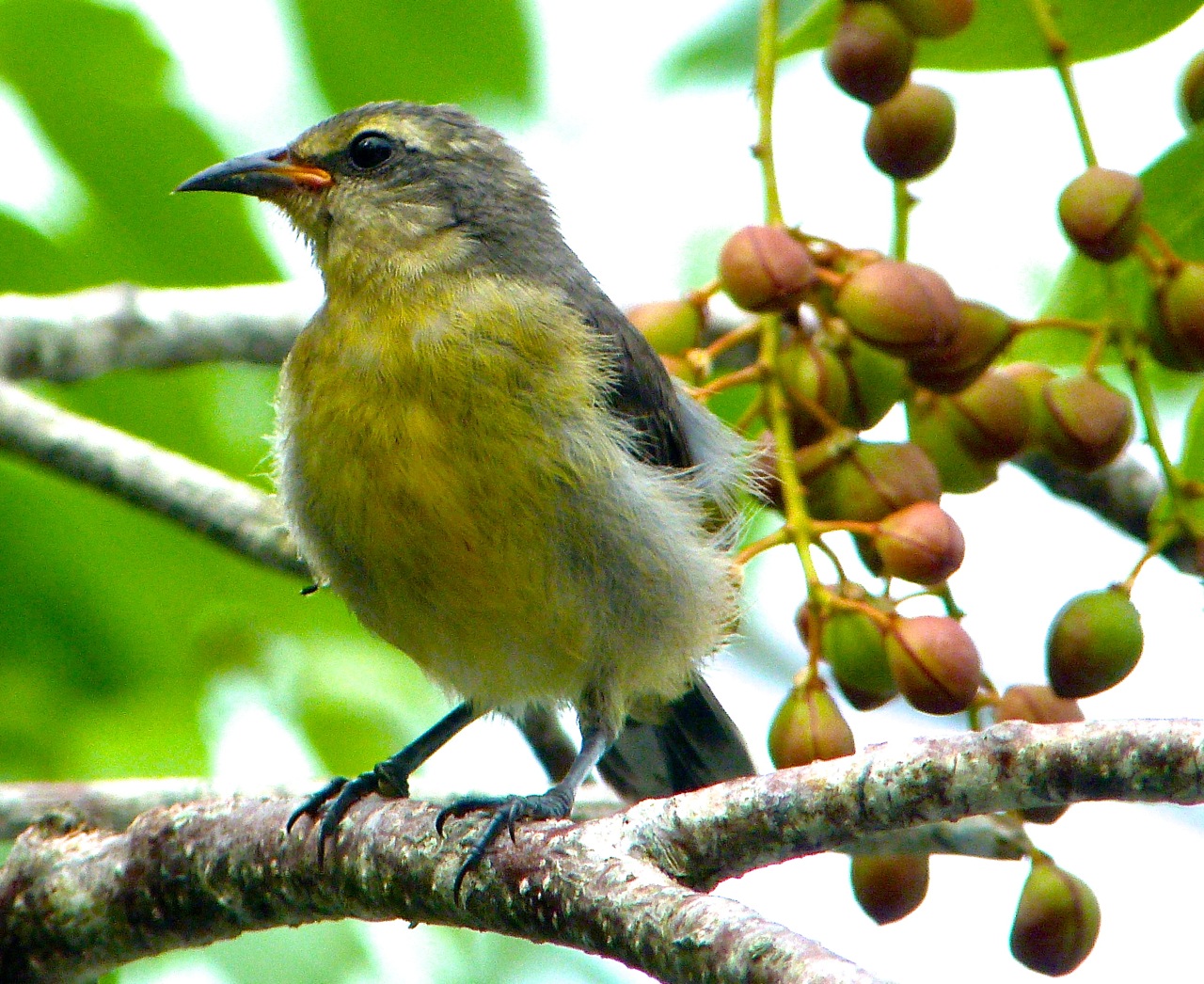
Another day on the beach produced a more measured opportunity. A least tern landed quite close to me, and was so preoccupied with its preening routine that it let me creep closer, all the while keeping a beady black eye on me. In the top shot, it has just become aware of me behind it. I was lucky it chose to stay and let me watch.
TURKEY VULTURES (Cathartes aura) are a familiar sight, wheeling effortlessly overhead on thermals or gliding with the wind in singles, pairs or flocks. Statistically, 83% of all photographs of turkey vultures are taken from below and look like this
Of those, 57% are taken in unhelpful light, and look like the one below. On the positive side, this picture show the extreme delicacy of the wing-tip feathering that enables these birds to adjust their direction and speed (this is not the bird above; it was taken by someone else at a different time. But 100% of TV in-flight photos are indistinguishable).
TVs have a wide range in the Americas and the Caribbean, and can prosper in almost any type of habitat. This is probably because these large birds are almost exclusively carrion feeders, and carrion is everywhere. They spend their days scavenging, or thinking about scavenging. They do not kill live creatures.
The word ‘vulture’ derives from the latin word ‘vulturus’ meaning ‘ripper’, ‘shredder’, or ‘very loud Metallica song’. TVs have very good eyesight, and an acute sense of smell that enables them to detect the scent of decay from some distance. A breeding pair will raise two chicks which revoltingly are fed by the regurgitation of all the rank… excuse me a moment while I… I feel a little bit…
When they are not flying, feeding, breeding or feeding young, TVs like best to perch on a vantage point – a utility post is ideal. But unusually for a bird, you won’t ever hear them sing or call. They lack aSYRINX(the avian equivalent of a larynx), and their vocalisation is confined to grunting or hissing sounds. Here’s a hiss (at 10 / 15 secs).
These vultures are often seen in a spread-winged stance, which is believed to serve multiple functions: drying the wings, warming the body, and baking bacteria.
They are equally happy to spread their wings on the ground, the shoreline being ideal
10 SCAVENGED TURKEY VULTURE FACTS FOR YOU TO PICK OVER
One local name for TVs is ‘John Crow’
An adult has a wingspan of up to 6 feet
Sexes are identical in appearance, although the female is slightly larger
The eye has a single row of eyelashes on the upper lid and two on the lower lid
TVs live about 20 years. One named Nero had a confirmed age of 37
LEUCISTIC (pale, often mistakenly called “albino”) variants are sometimes seen
The Turkey Vulture is gregarious and roosts in large community groups
The Turkey Vulture has few natural predators
Though elegant in flight, they are ungainly on the ground and in take-off
The nostrils are not divided by a septum, but are perforated; from the side one can see through the beak [some humans also suffer from MSS (missing septum syndrome). They tend to sniff a lot]
REVOLTING CORNER / TOO MUCH INFORMATION
SQUEAMISH? LOOK AWAY NOW
UNATTRACTIVE HABITS The Turkey Vulture“often defecates on its own legs, using the evaporation of the water in the feces and/or urine to cool itself, a process known asUROHIDROSIS.This cools the blood vessels in the unfeathered tarsi and feet, and causes white uric acid to streak the legs”. The droppings produced by Turkey Vultures can harm or kill trees and other vegetation.
HORRIBLE DEFENCES The main form of defence is“regurgitating semi-digested meat, a foul-smelling substance which deters most creatures intent on raiding a vulture nest. It will also sting if the predator is close enough to get the vomit in its face or eyes. In some cases, the vulture must rid its crop of a heavy, undigested meal in order to take flight to flee from a potential predator”
DIETARY NOTESTVs tend to prefer recently dead creatures, avoiding carcasses that have reached the point of putrefaction. They will occasionally resort to vegetable matter – plants and fruit (you could view this as their salad). They rarely, if ever, kill prey – vehicles do this for them, and you’ll see them on roadsides feeding on roadkill. They also hang around water, feeding on dead fish or fish stranded in shallow water.
ECO-USES If you did not have birds like this, your world would be a smellier and less pleasant place, with higher chance of diseases from polluted water and bacterial spread.
FORAGING TVs forage by smell, which is uncommon in birds. They fly low to the ground to pick up the scent of ethyl mercaptan, a gas produced by the beginnings of decay in dead animals. Their olfactory lobe in the brain is particularly large compared to that of other animals.
SEX TIPS Courtship rituals of the Turkey Vulture involve several individuals gathering in a circle, where they perform hopping movements around the perimeter of the circle with wings partially spread. In humans, similar occasions are called ‘Dances’. In the air, one bird closely follows another while flapping & diving.
For more about Turkey Vultures, including cool videos, visitDEAR KITTY
It’s possible you may enjoy a visit to max-out-cute Birdorable. Click TV below for link
And if you’d prefer something TV but less cute, depressingnature.com has the thing for you…
Credits: Photos mainly RH, 2 by Clare L, small ones Wiki; Info – cheers Wiki & random pickings
Oh. Ok. Here’s the Metallica thing referenced above. Sweaty. Not my taste these days.
The photos below show a sample of the types of crab that may be found in and around the island of Abaco, both in the sea and on land. The wonderful underwater images were taken in adjacent waters by Melina Riger of Grand Bahama Scuba. The rest were taken by landlubbers at Rolling Harbour on the Delphi beach and rather closer to the building than one might expect. The last crab (and the header image) was a crab hooshed out of the coppice by Ricky Johnson to demonstrate its fighting prowess. I have put links to 2 posts featuring this fine specimen (including a video) at the end.
ARROW CRAB
HERMIT CRAB
HORSESHOE CRAB (LIMULUS)
COMMON GHOST CRAB (Ocypode quadrata), DELPHI BEACH
PET CRABS PROTECTING MY ROD OUTSIDE OUR ROOM (note second crab behind it) AND ADVERTISING HARDY PRODUCTS. Rick Guest has pointed out that the crab is not protecting my rod at all. As if! “The crab in the foreground is the male guarding “his” female, distinguished by the small, abdominal triangle. The wide margins of the female’s abdomen are evident.”So that’s how to tell the sex of a land crab.
The red-winged blackbird (Agelaius phoeniceus) has previously hopped around these pages in the context of a (my!) simple way to RECORD BIRDS using a smart-phone, trim the result and convert it into an mp3 (or even a ring-tone – I have a great Abaco parrot one to startle friends, family and indeed complete strangers). Now we move on to a more important topic, namely courtship and so forth. And boy, don’t male RWBs fancy themselves when trying to impress the laydeez…We had taken a truck into backcountry between the pine forest and the Marls, with Tom and his impressive camo-camera with its 10 foot lens.
We found formerly cultivated fields – evidence of the defunct sugar cane industry – and then we came unexpectedly to a large expanse of open scrubland, with the track straggling through the middle.
And there, on carefully chosen vantage points, was an array of RWBs.
This bird was within range of my comparatively puny camera, and I watched as it arranged itself into various elegant poses in the late afternoon sun. All around were their ‘rusty door hinge’ calls, of which this is an example (in fact a female, recorded at Casaurina, hence the background sound of lapping waves).
These acres of open land were not far inland, and there was a slight breeze to ease the heat. This caused the occasional ruffling of feathers, and the need to spruce up…
The purpose of all this was of course to impress the opposite sex (behaviour not confined to bird species). There were plenty of females around, also similarly perching on vantage points for similar display-with-view-to-dating-maybe-more reasons.
I didn’t see the phase in which the males may get quite worked-up, but luckily Y**T*b* has perfect example of a male RWB in full song. Credits as shown on the video.
EX-CHANTAL ACTIVE AFTER-EFFECTS FOR BAHAMAS JULY 12
… AND DISSIPATES AS AT 17.00 EDT July 10
UPDATE NOAA 11.00 EDT July 10
The storm path seems to be drifting gradually westwards. Abaco is now clear of the currently predicted path, rather than slap bang in the middle…
UPDATE NOAA 6.00 EDT July 10
UPDATE INTELLICAST 17.00 July 9
ORIGINAL POST
The 9th July, the season of storms starts to loom, and Chantal is first off the meteorological starting blocks. The reason I am posting this now is because the present 5-day predictions (see NOAA charts below) has Chantal heading directly for the Bahamas in general, and Abaco in particular. So this may be one to keep a weather eye on over the next few days…
You must be logged in to post a comment.