“ON STILTS”: THE BLACK-NECKED STILTS OF ABACO


The Bahamas weather has been uncharacteristically dire. Rain and cloud for the past week, and a poor forecast for the next week (see above). I arrived on Abaco yesterday, with the short internal flight from Nassau last night nearly cancelled due to a humungous downpour. Instead, people were boarded in bare feet, having had to wade through 3 inches of water to get to the small plane floating on the undrained concrete. Yet today, there was sunshine at Delphi this morning (though cloud to both north and south). A stiff breeze was keeping the clouds off-shore. The weather is fickle and very local.
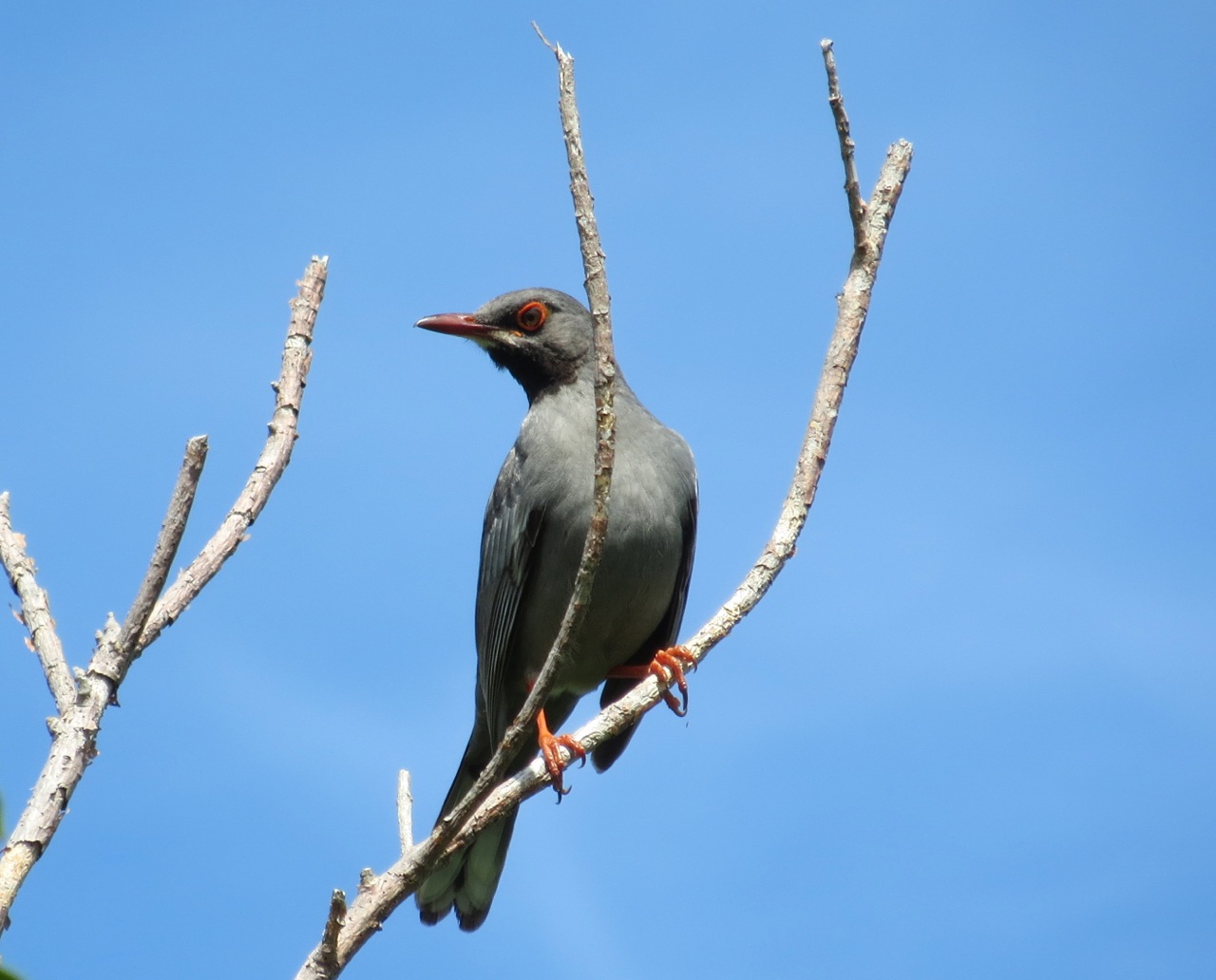
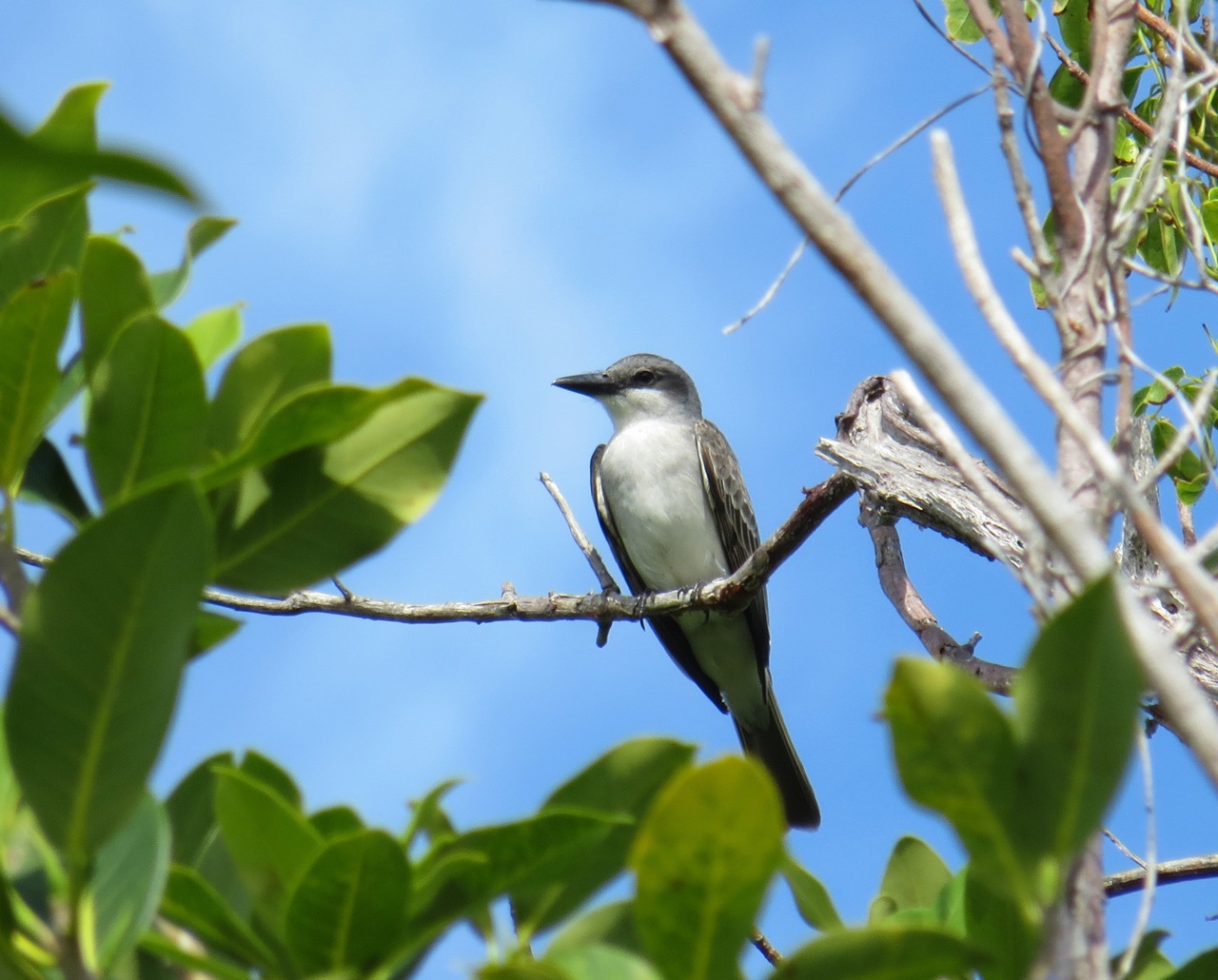
I took a small camera and strolled for half and hour for about 200 yards along the Delphi drive and back (for those that know it, to the first corner of the guest drive) to see what the first of June had to offer in the way of wildlife. The birds were clearly enjoying some unaccustomed sunshine, and I have listed those I saw below. Not all were photogenically posed, and many were flicking around the coppice too quickly to capture.
The smaller birds were unusually responsive to ‘pishing’, the unattractive but effective noise that can bring a bird to the front of woodland or scrub to investigate. A black-whiskered vireo was interested, but flew off just as I pressed the button. He was immediately replaced on the branch by a
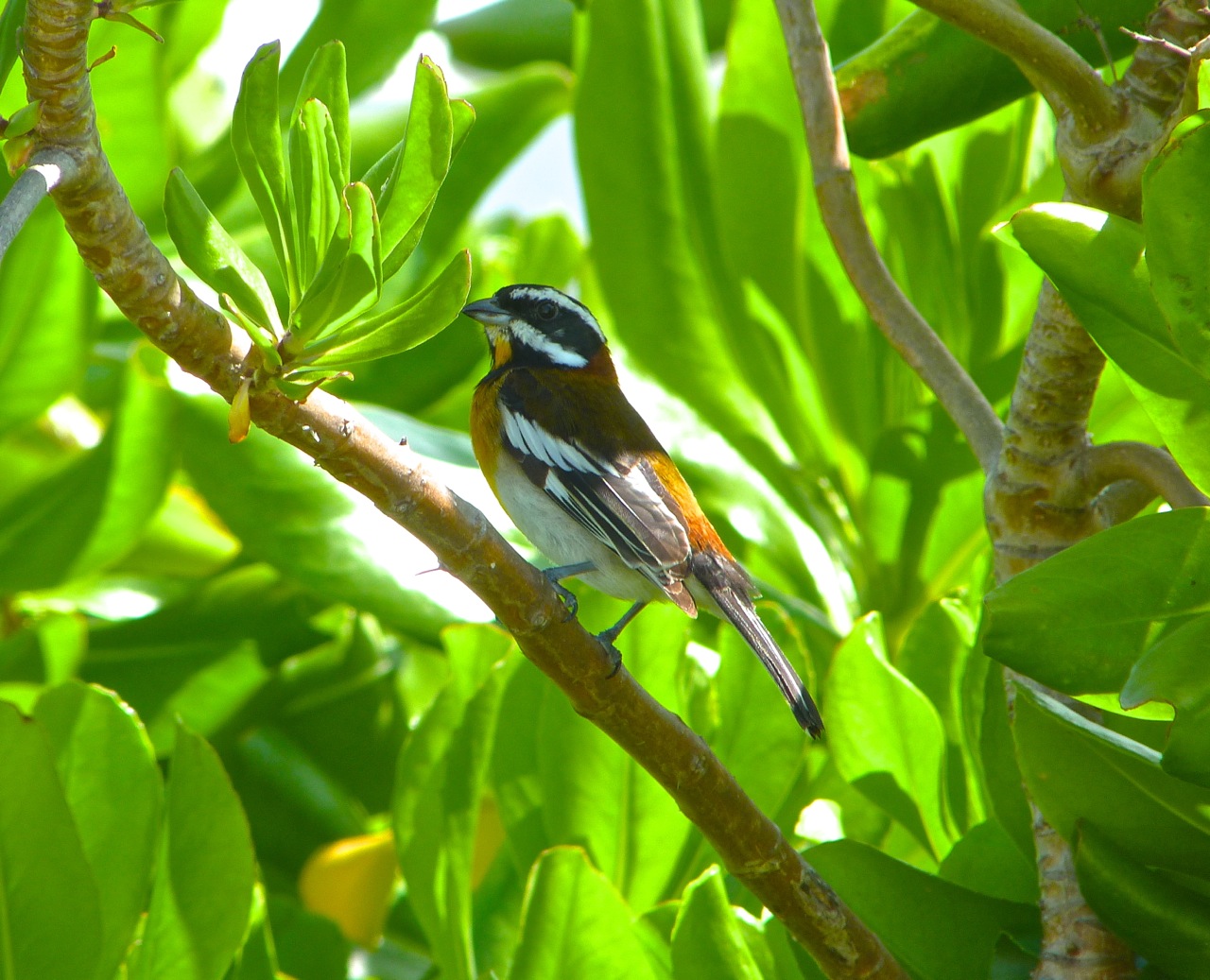
A pair of Western Spindalises (see recent post HERE) joined it in the adjacent tree
DELPHI 30 MINUTE STROLL BIRD LIST 1.06.13
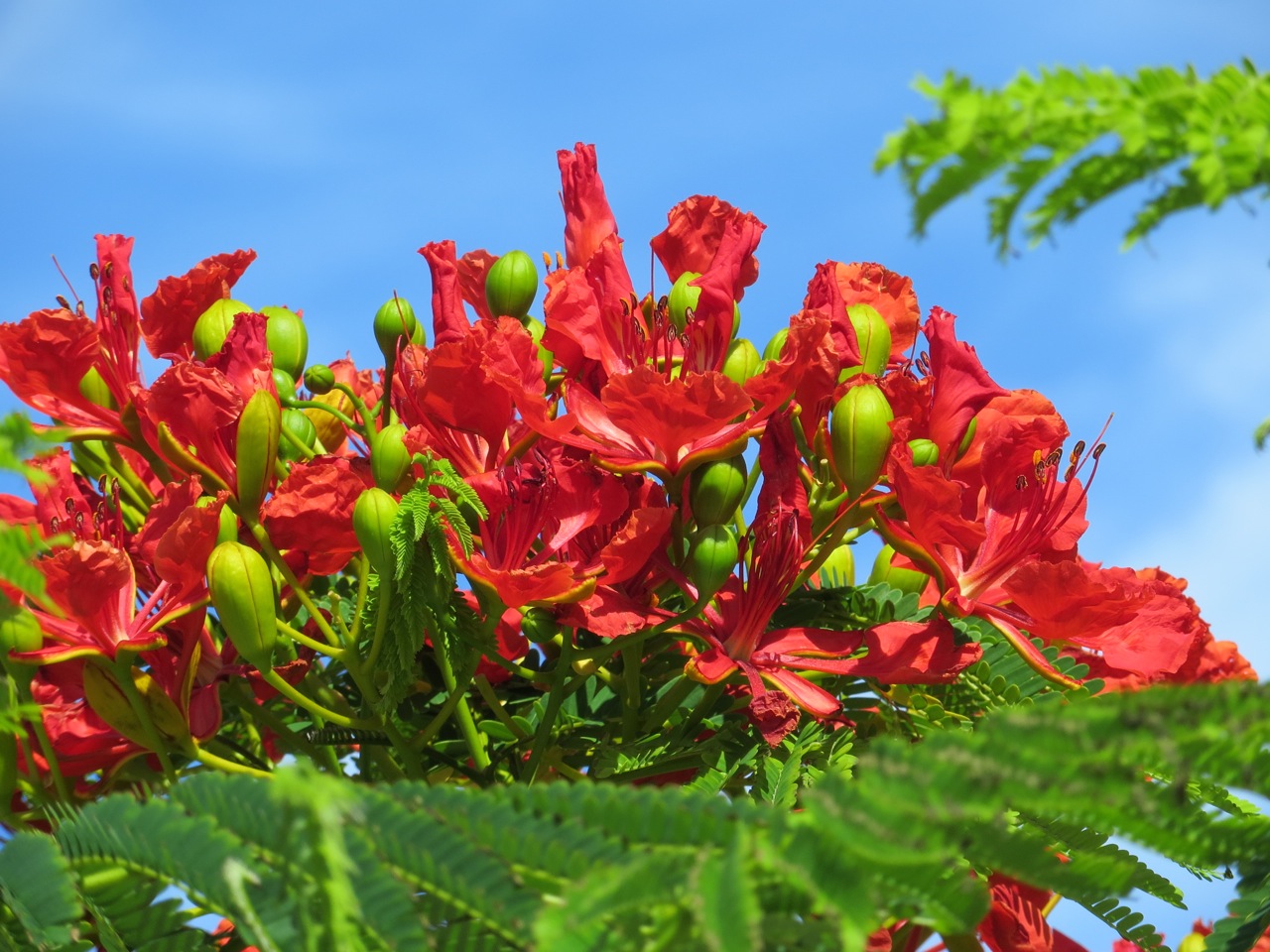
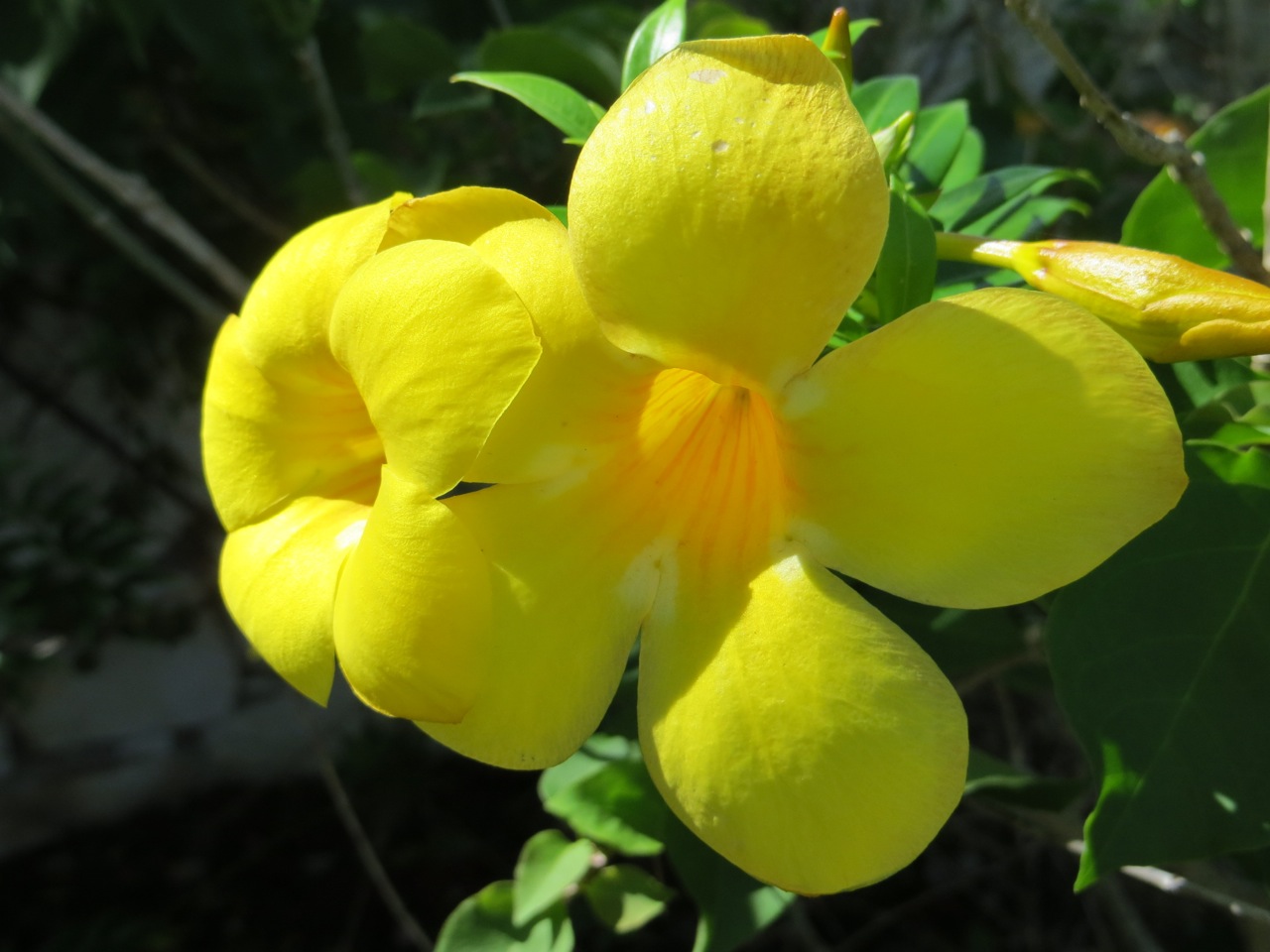
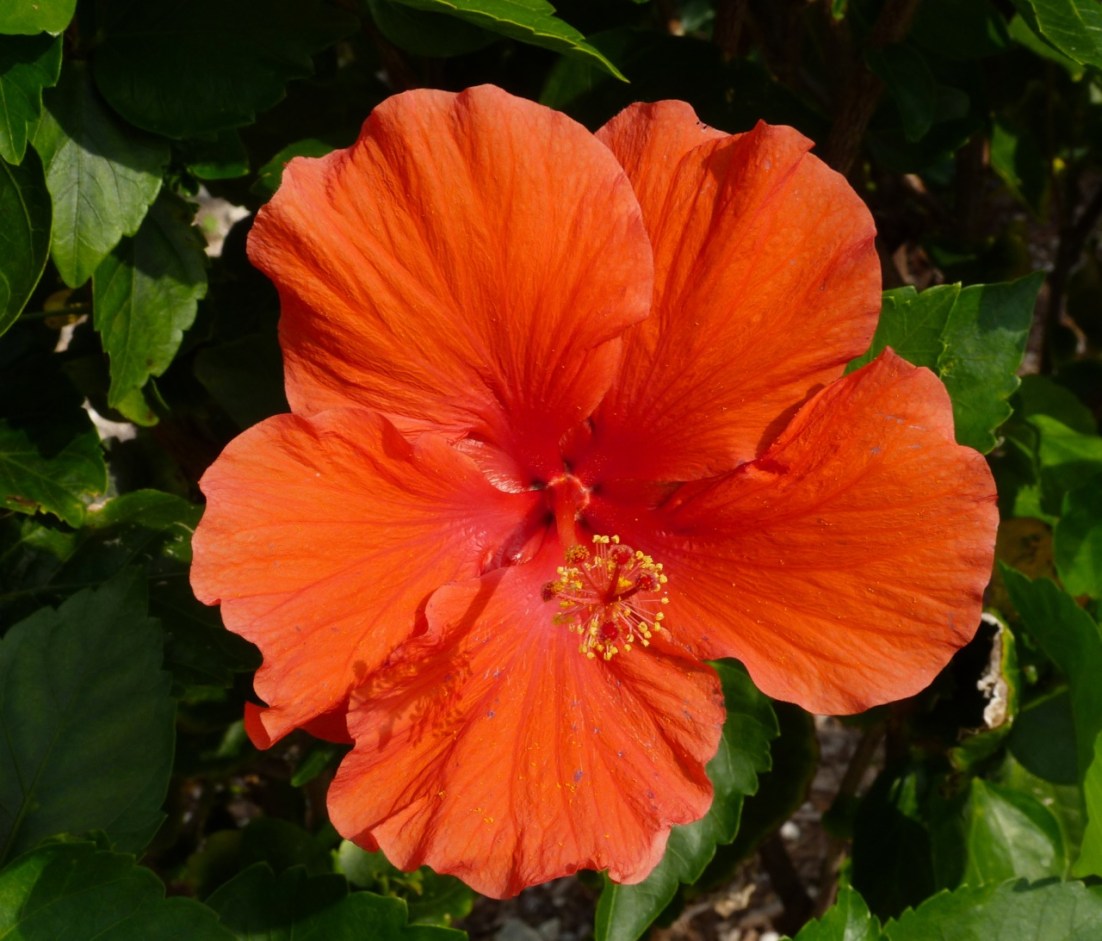
The flowers were also enjoying some sunshine after the rain


A couple of other things caught my eye, including a cute baby lizard, before I headed for some rest


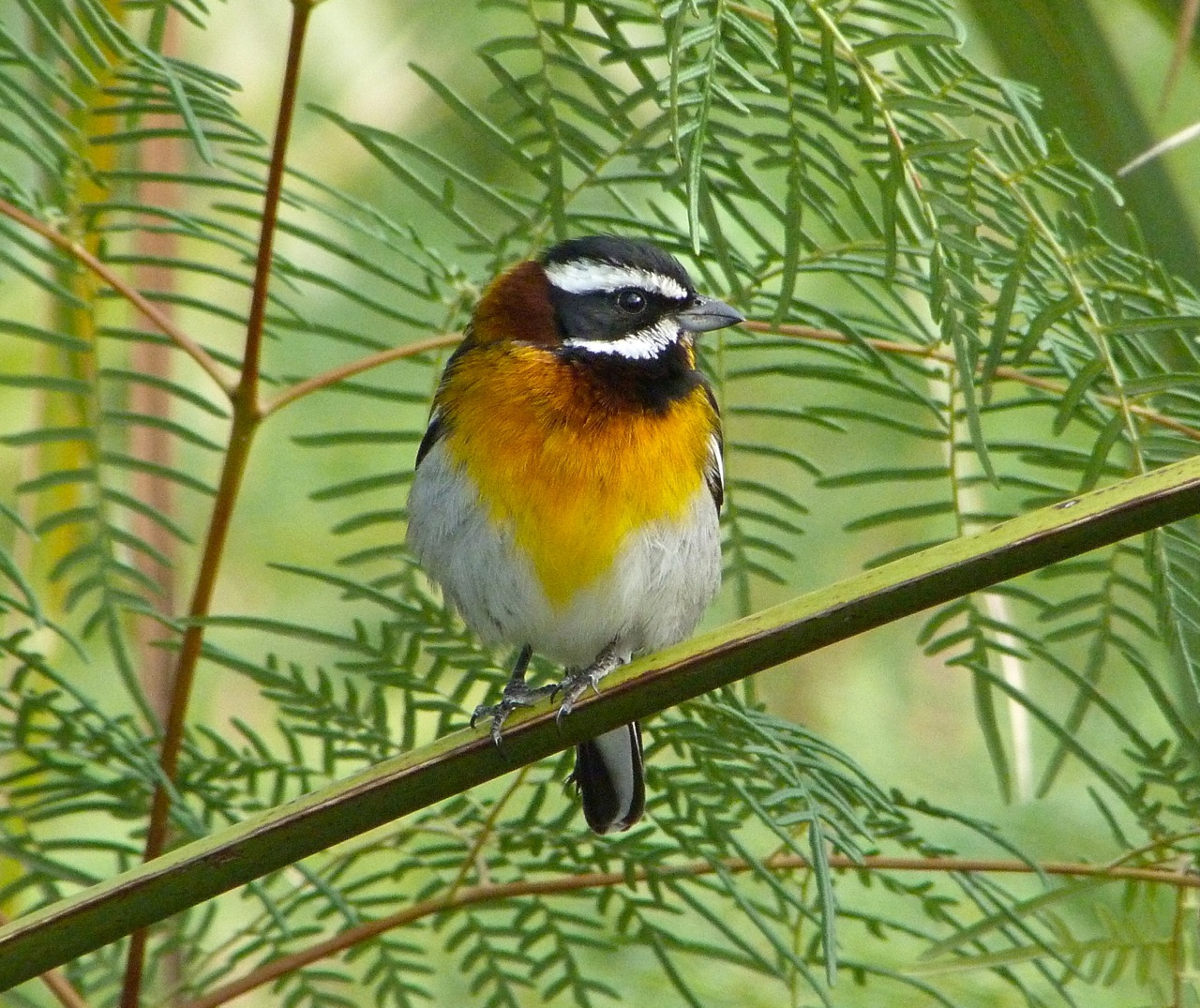
Nearly two years ago, when this blog was still in its mewling infancy, I posted about one of my favourite small birds on Abaco, the WESTERN SPINDALIS (Spindalis zena, formerly known as the Stripe-headed Tanager). It is a strikingly handsome creature by any standards, often seen posing ‘tall’ on a branch looking splendid in its orange, black and white livery.
Perching proudly…
… or dining elegantly…
The spindalis is one of the birds to look out for if you are walking along one of the drives at Delphi, or (*recommended 1/2 hour stroll*) walking the drive circuit. You’ll see them in the coppice or in the undergrowth alongside the drives in the pine forest area, almost certainly a little way in from the front. We spotted one quite close to the Highway, looking most decorative in the greenery. This one had an uncharacteristic hunched look about him, and we soon discovered why – he was courting. Not the black-faced grassquit near the bottom of the photo, but a female spindalis well-hidden low down and further back in the undergrowth to the left. So we edged nearer to get a better look.
You’ll see that this male bird’s hunched posture has produced a rather impressive neck ruff, an adornment presumably irresistible to female spindalises. Both birds were ‘chucking’ softly to each other, and the male turned his head regularly to show off his glories from all angles. 
I can’t unfortunately reveal the outcome of this encounter. We never saw the female, and we had probably got too close for her to feel comfortable about breaking cover. The male, however, was too absorbed refining his pulling techniques to be greatly bothered by our presence, though he did keep a beady black eye on us. Is this male preoccupation when courting found in other animal species, I wonder? Reader, we made our excuses and left…
RECORDING BIRDS: A LAYMAN’S GUIDE
YOU WILL NEED: an iPh@ne or similar smartphone with a voice memo facility; patience; minimal non-natural background noises (traffic, yelling people, barking dogs, heavy machinery); a steady-ish hand; one or more birds nearby
RECORDING
CONVERTING RECORDINGS TO MP3
Apologies if this is all blindingly obvious and written in the elementary computer language ‘eggy-peggy’. It took me a while to get it sorted out, and I hope the details above will help the lo-tek computer user to record birds and use the results painlessly.
FIELD NOTES
Here are two practice recordings I made in March. The first is the female red-winged blackbird above (and header) at Casuarina beach. The distinctive call is rather like a rusty hinge on a swinging gate, often heard far out in the mangrove swamps of the Marls. You’ll hear background noises from collared doves and also the sea lapping on the shore.
The second is thick-billed vireo in the coppice at Delphi. You’ll hear an answering vireo – and also some wind noise. I find these little birds frustratingly hard to see – they always seem to be lurking further back in the bushes than I think. I’ve never managed to take a good photo of one, so I’ll upload an illustrative poor one to be going on with. I am back on Abaco in a week, and a better TBV photo is on my avian hit list.
Finally, you’ll find a longer recording I made of Abaco parrots squabbling noisily at Bahama Palm Shores near the end of a recent post HERE. I made an mp3 using the method described above, and uploaded it to the excellent Xeno-Canto bird sounds website, which is well worth exploring. You can find my recordings of the parrots and the birds in this post, plus sonograms, on my XC page, such as it is, HERE
But if you just want to hear the parrots, here they are. Like schoolkids, only louder.
Why do I do that annoying ‘iPh@ne’ thing? It’s a statistical fact that I have just made up that 373,597 people a minute world-wide g@@gle the correct word. Imagine the meta-crawlers and spam-splurgers that lock onto that word. I don’t want to cyber-meet them. I also use the form Am@z@n but for different reasons relating to their ingenious tax arrangements (alleged, obviously). Thus with G@@gle as well (again, merely alleged – as Dusty Springfield memorable sang, “Nothing is proved…)
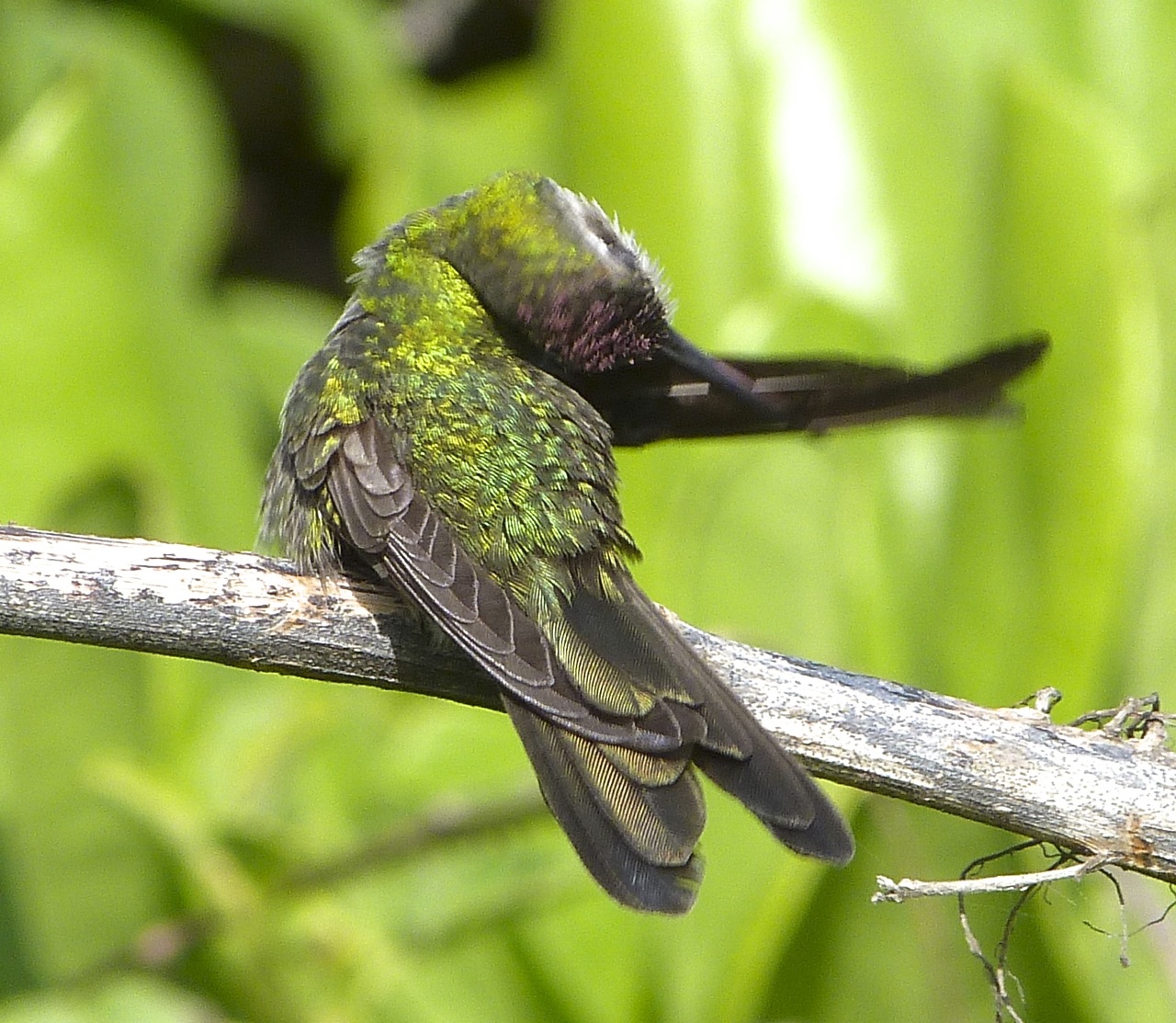
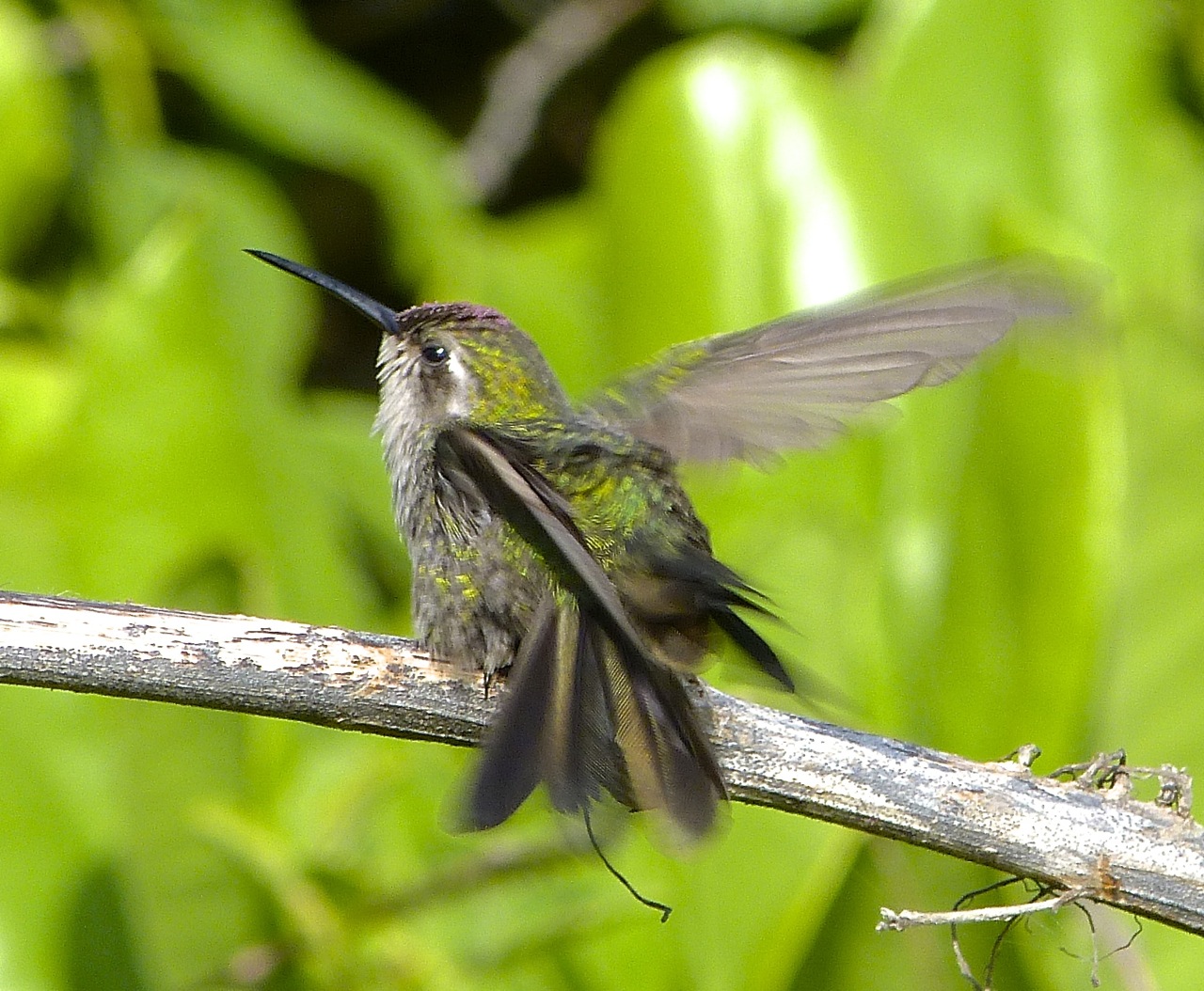
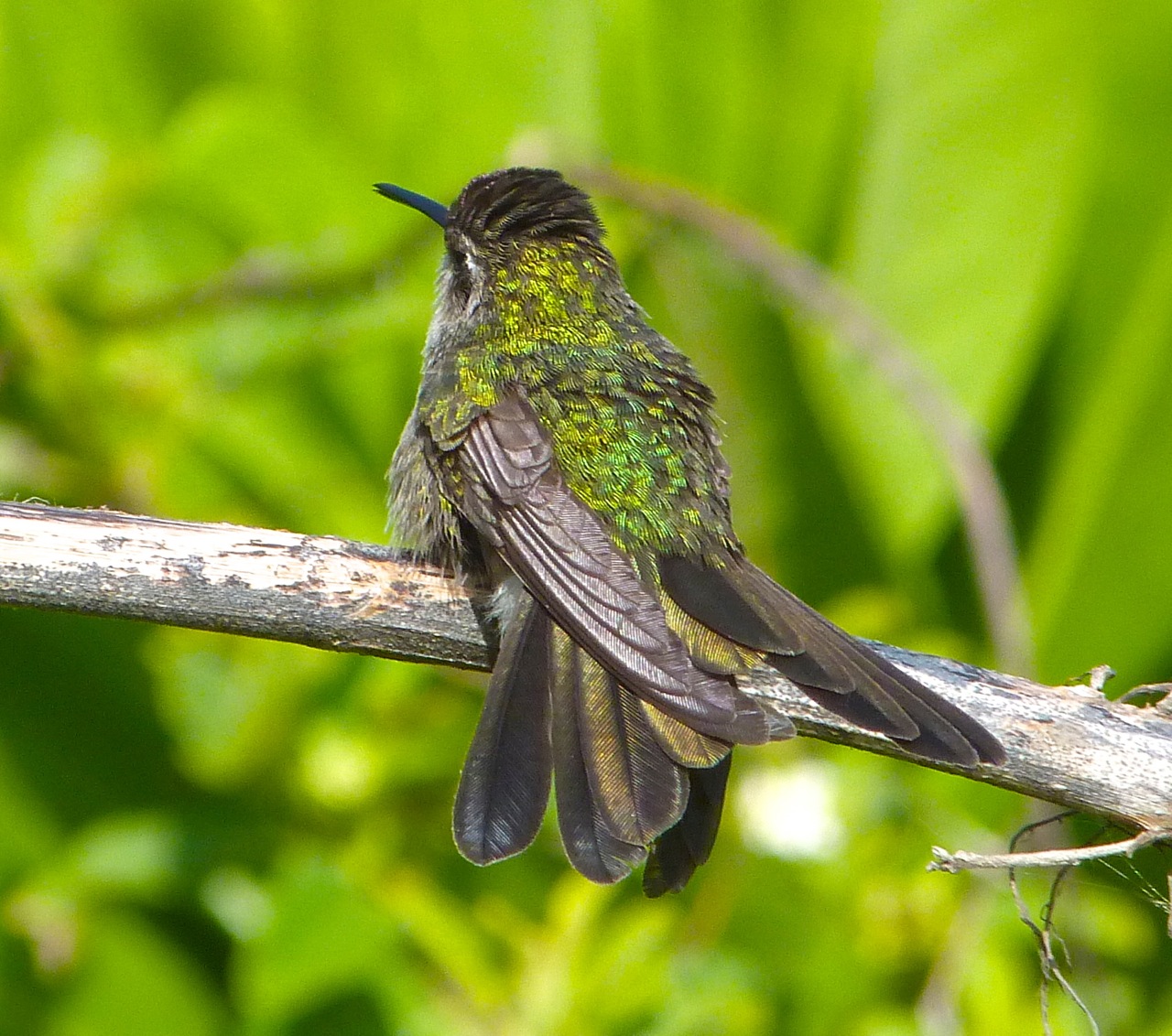
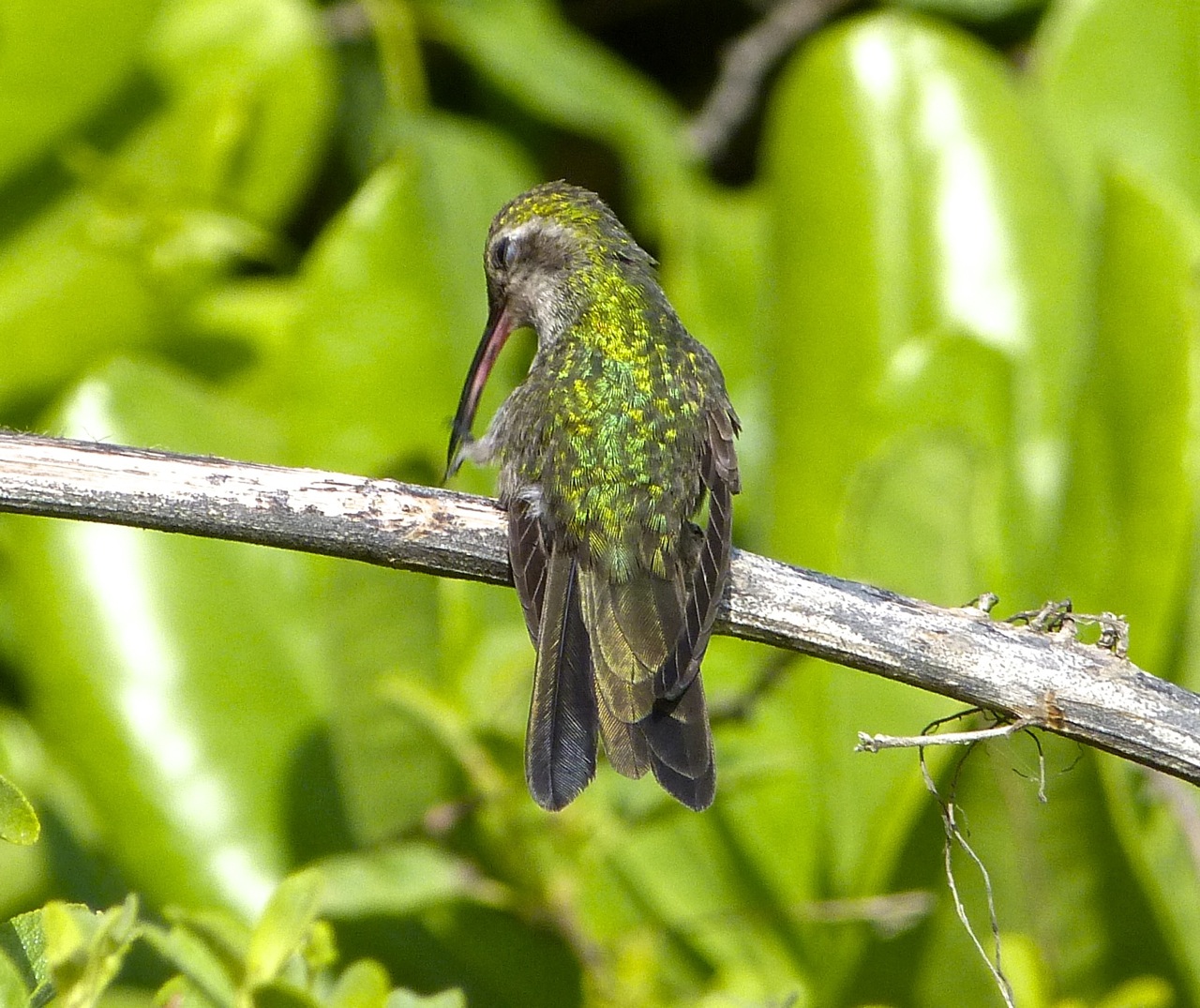
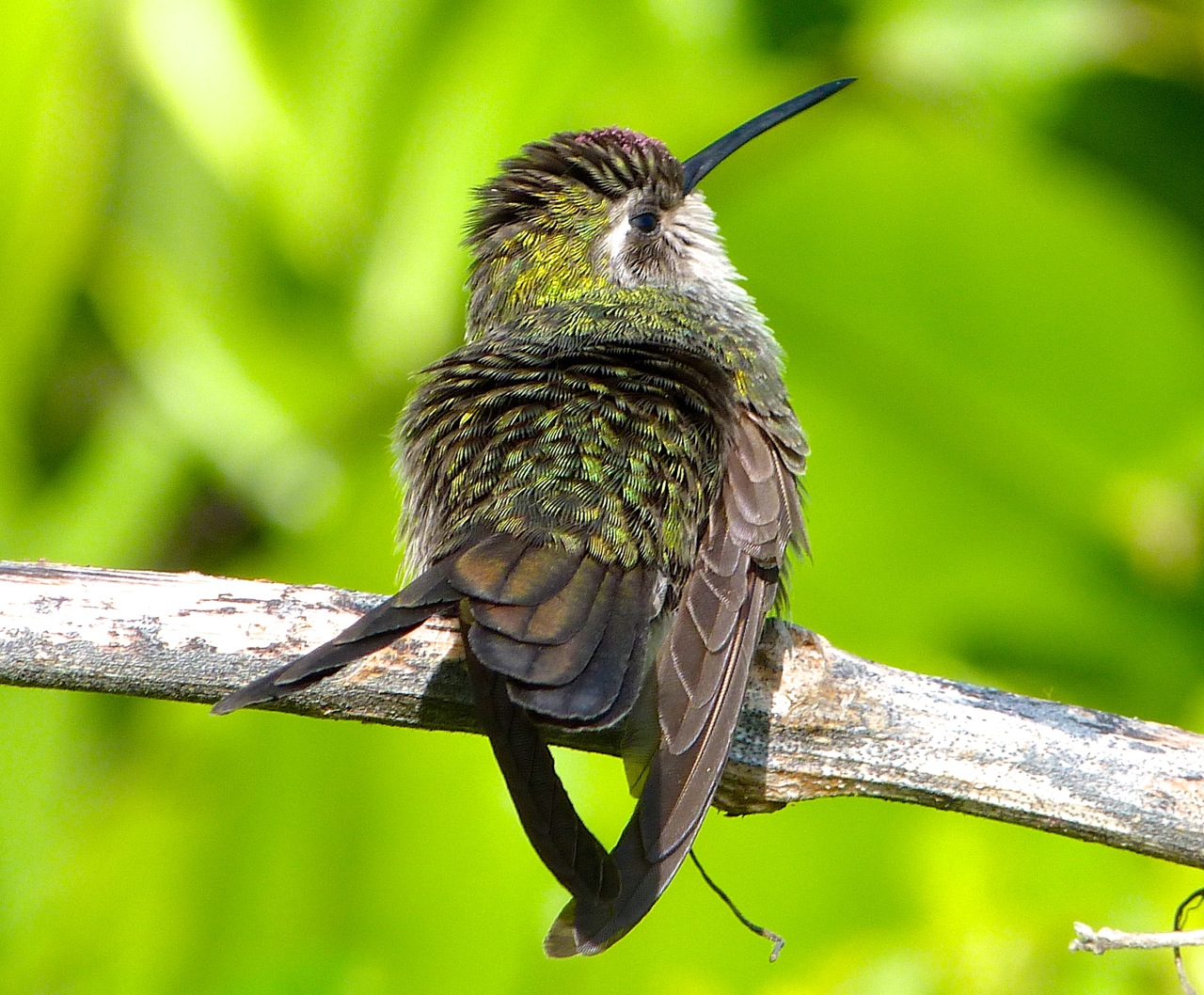
GREEN PREEN: CUBAN EMERALD HUMMINGBIRD, ABACO
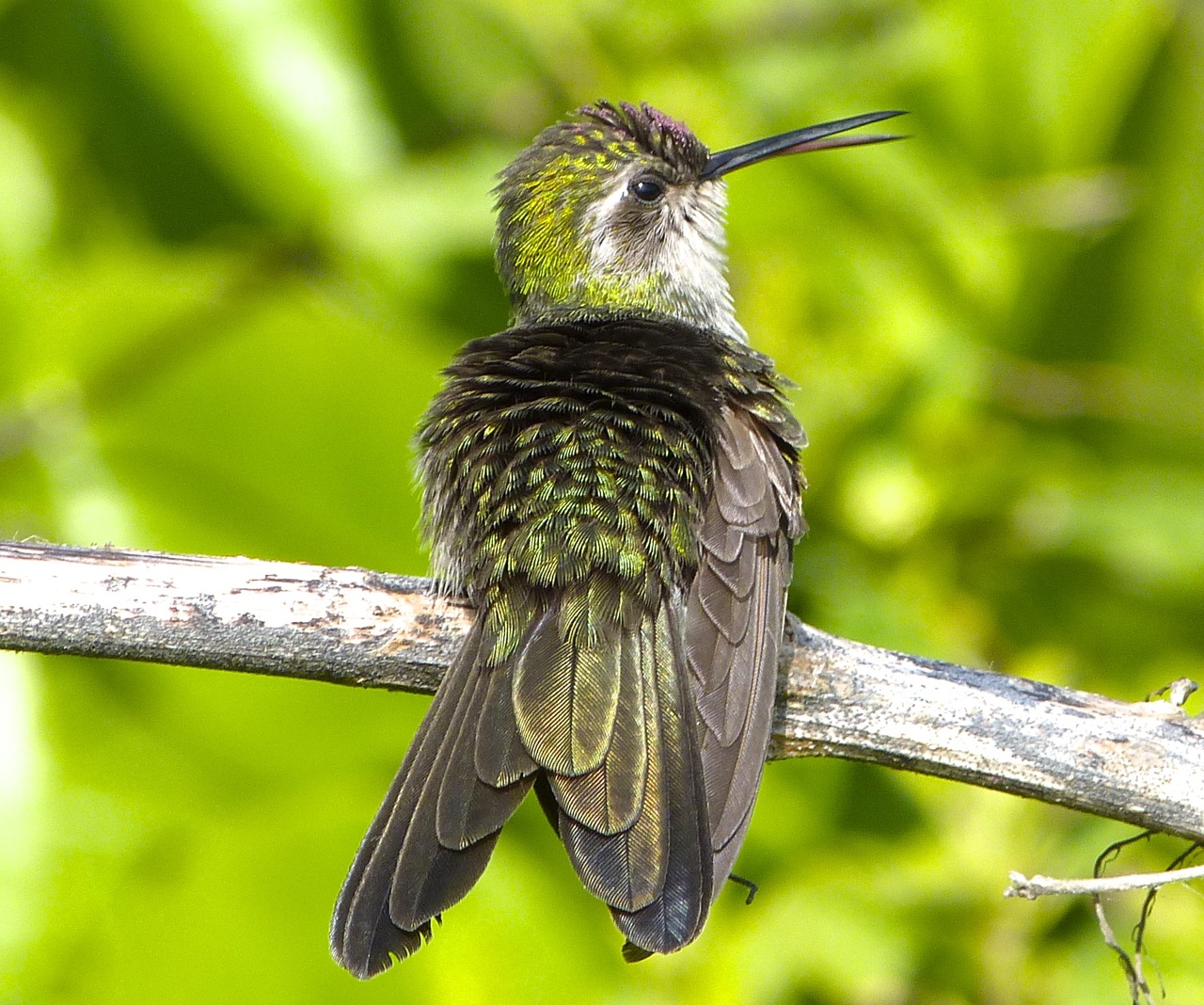
This tiny bird was in the Abaco coppice, well off the beaten track. Nearly two miles down a notably unbeaten track, in fact, that later was to lead to a puncture-and-@$%^&*-I-forgot-my-cellphone drama. Trauma, even. The hummer knew perfectly well that I had crept up behind it, but it had presumably seen few bipeds. It would not have known of their urge to bulldoze wild habitat and turn it into massive unsold developments, as has happened a short way up the coast… So it just carried on with what a bird has to do to keep itself looking presentable, while I, feeling rather rude and intrusive, took some quick pictures before leaving it in peace. Rather than sell these intimate studies to Hello!, OK!, Chirpy! or Tweet!, I am displaying them free for your enjoyment.


In addition to the Cuban Emerald, the Bahamas has its own endemic hummingbird, the Bahama Woodstar. In the faltering early days of this blog, I posted about them both at BAHAMA WOODSTARS & CUBAN EMERALDS: THE HUMMINGBIRDS OF ABACO At that time, I was not really a ‘birder’ at all, and had only a very basic camera, so my own pictures were… very basic. But you may be interested in some of the info in the post about these two species, so I mention it in passing.

I haven’t posted Abaco whale, dolphin & manatee news for a while. Time for a catch-up. Georgie the young manatee that left her mother Rita and came to Abaco from the Berry Is. alone, is no longer here. She survived a very long journey, and investigated various coastal areas of Abaco – all the while being tracked. In the end she settled down in the Cherokee area. There were anxious times during Hurricane Sandy when she went missing (having by now shed her tracking device) but she eventually reappeared at Cherokee having found a safe haven from the storm. Sadly, however, her condition deteriorated and in the New Year she was relocated to Atlantis Dolphin Cay Marine Mammal Rescue Center. Some weeks ago a healthy Georgie was moved to a sea-pen to acclimatise her for release back into the wild.
Read more about Georgie the Manatee’s epic trip HERE and about the operation to relocate her HERE
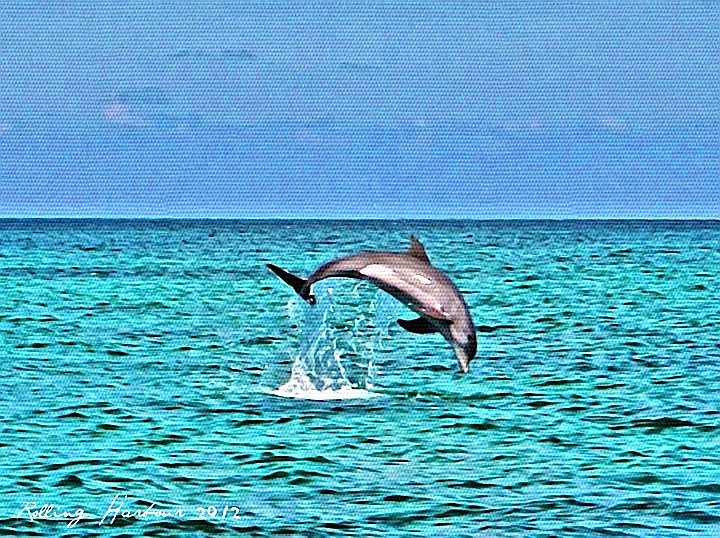
ABACO DOLPHINS – A MOTHER & HER CALF 
The Bahamas Marines Mammal Research Organisation (BMMRO) is based at Sandy Point, Abaco. A number of research projects are underway, and recently these have involved work on Andros. The team are now back, and encountering Abaco’s own dolphins and whales. The main photos on the page have all been taken in the last week or so. [The header is by Norwegian artist Roll Inge Haaver]
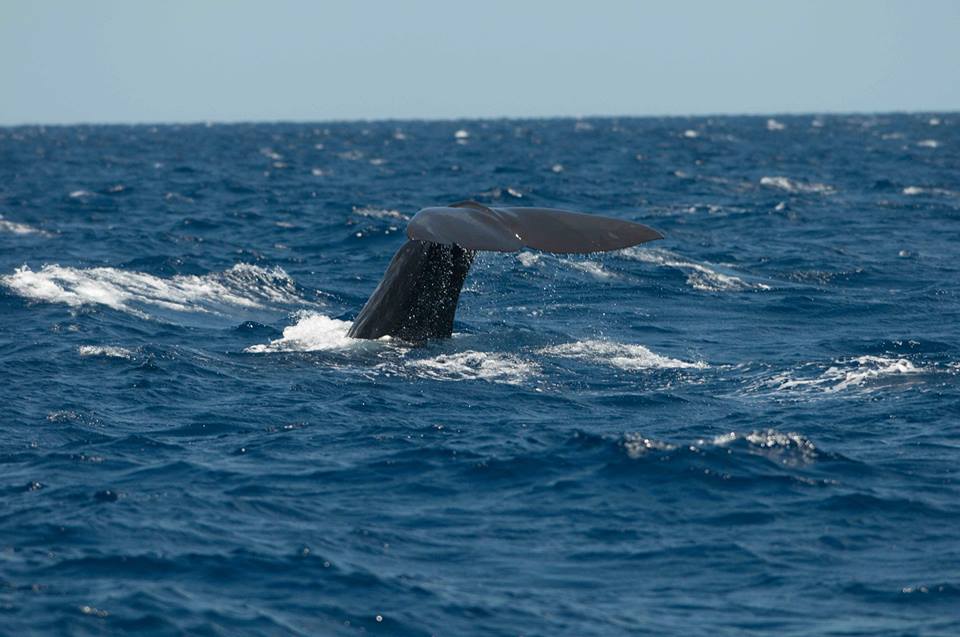
SPERM WHALE ‘TAILING’, ABACO (1 of 3 found yesterday using acoustic tracking)

BMMRO CHART OF CETACEAN SIGHTINGS FOR MARCH 2013
Of special note are the big whales – 3 sperm whales, and a humpback whale reported close to Cherokee.

Sperm whales. Humpbacks. How big are they? This useful chart shows the average lengths of various whales. I grabbed it off the internet a while ago, but regrettably forgot to mark the source. So, apologies to the originator for using it uncredited, a cyber-sin I try to avoid.
Finally, the BMMRO’s latest 4-page Newsletter contains a wealth of information about their current activities, some great pictures, and even a quiz – check out BMMRO NEWSLETTER_Apr13
BLOOMING MARVELLOUS: FLOWERS OF ABACO
The flowers and plants below were mostly photographed in the grounds of The Delphi Club, Abaco or nearby. I expect most or many are already securely on the SD chips or hard drives of every visitor to an agreeably floral place like the Bahamas. Who can resist a pretty flower? I have confessed in earlier plant-based posts (links below) to a certain lack of aptitude around flowers. They just… are. Let’s see how this pans out – corrections and (for the last two) IDs welcome.
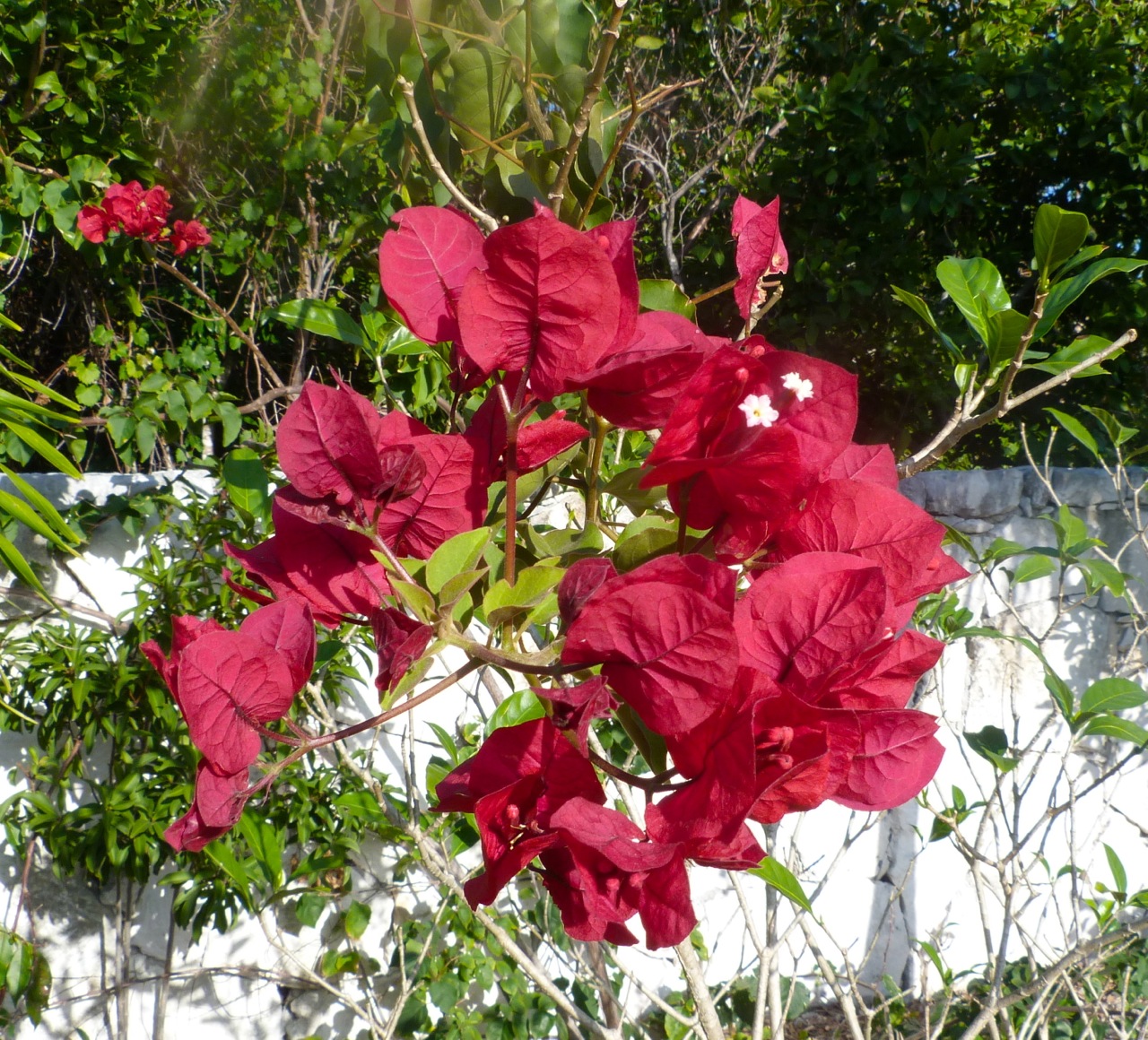
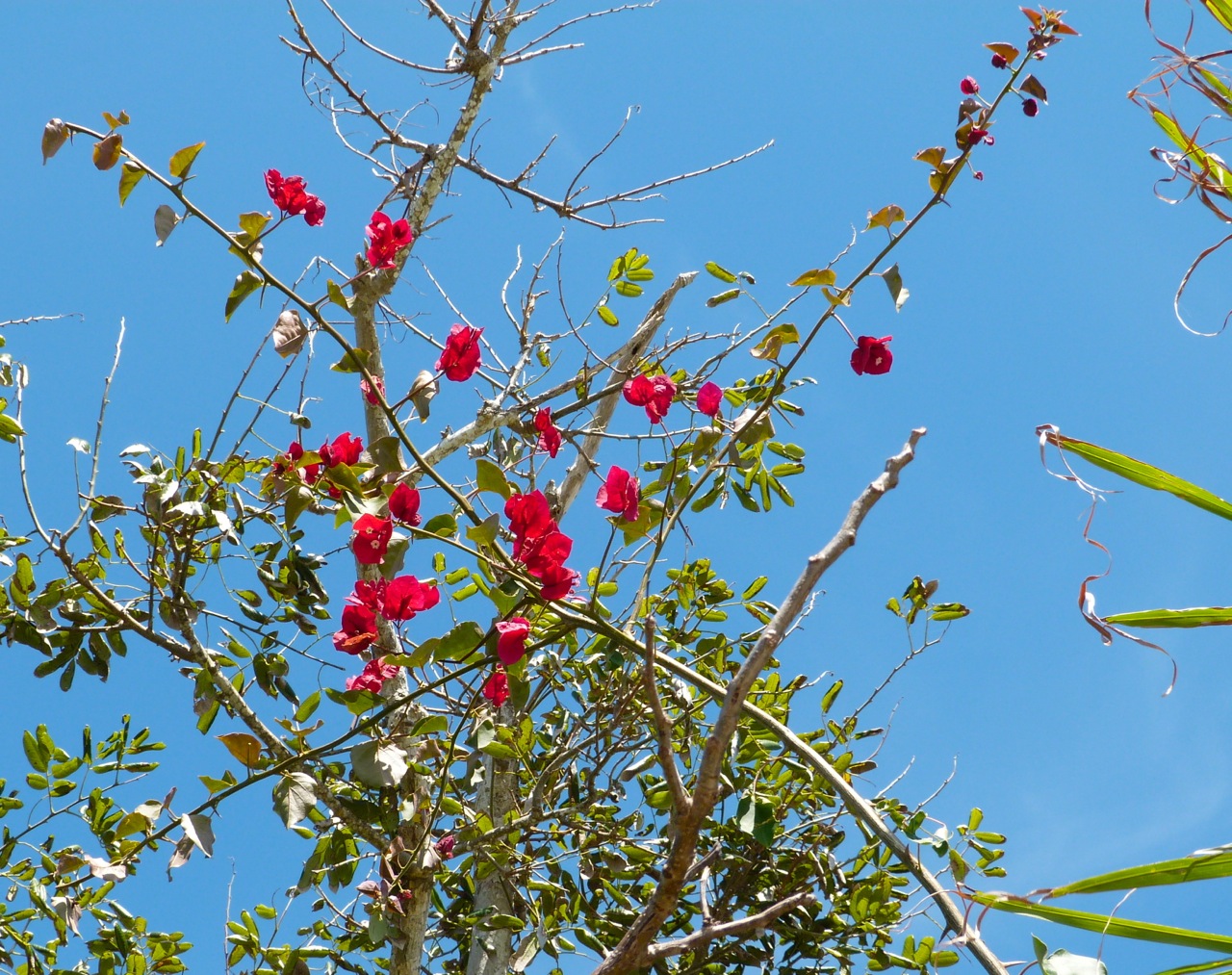
BOUGAINVILLEA


The butterfly is a Polydamus Swallowtail (also in the header image)
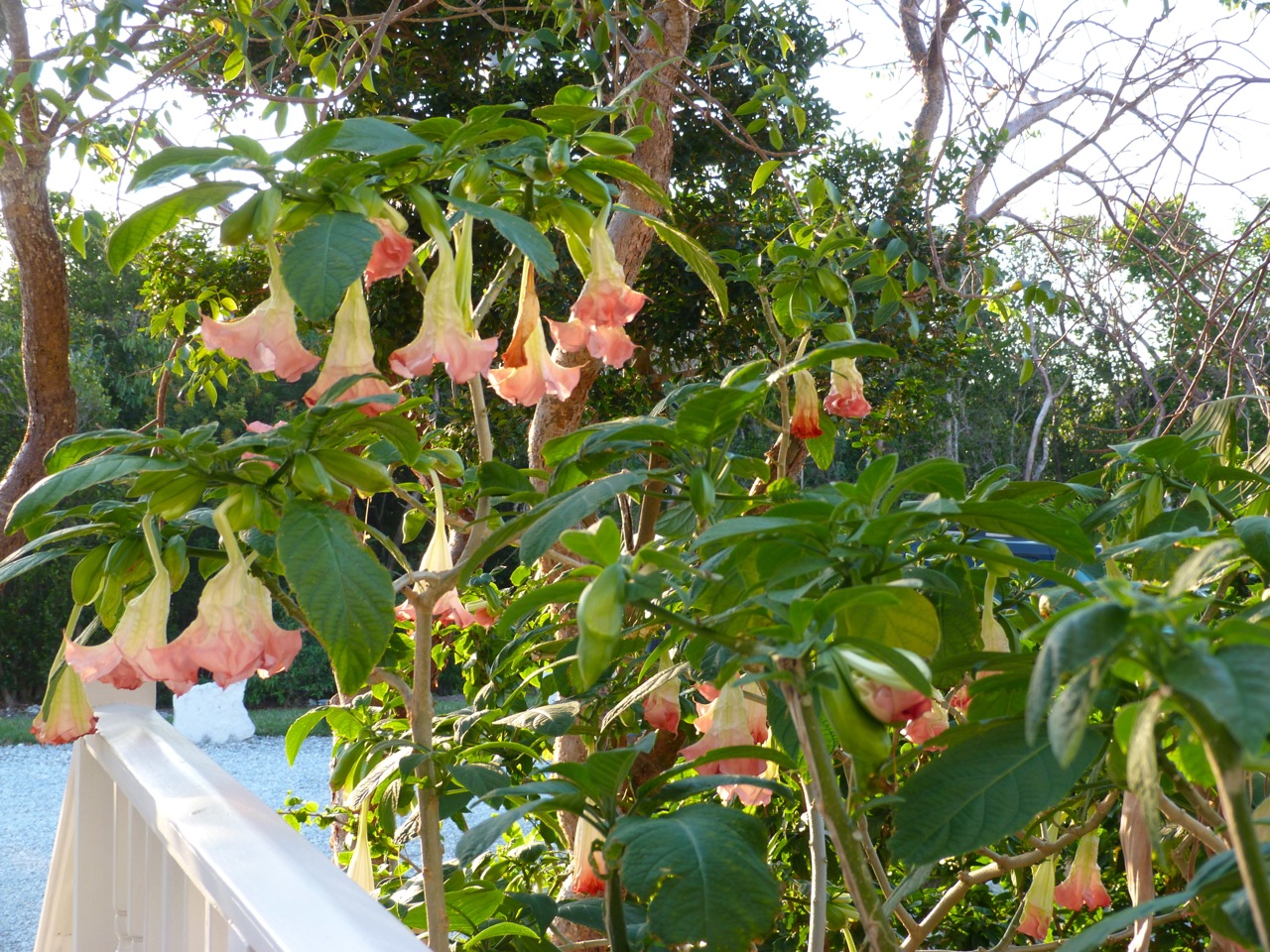
DATURA (ANGEL’S TRUMPET)
This one has a cuban emerald hummingbird feeding from it – a lucky, but frankly not very good, shot
FIRECRACKER PLANT Russelia
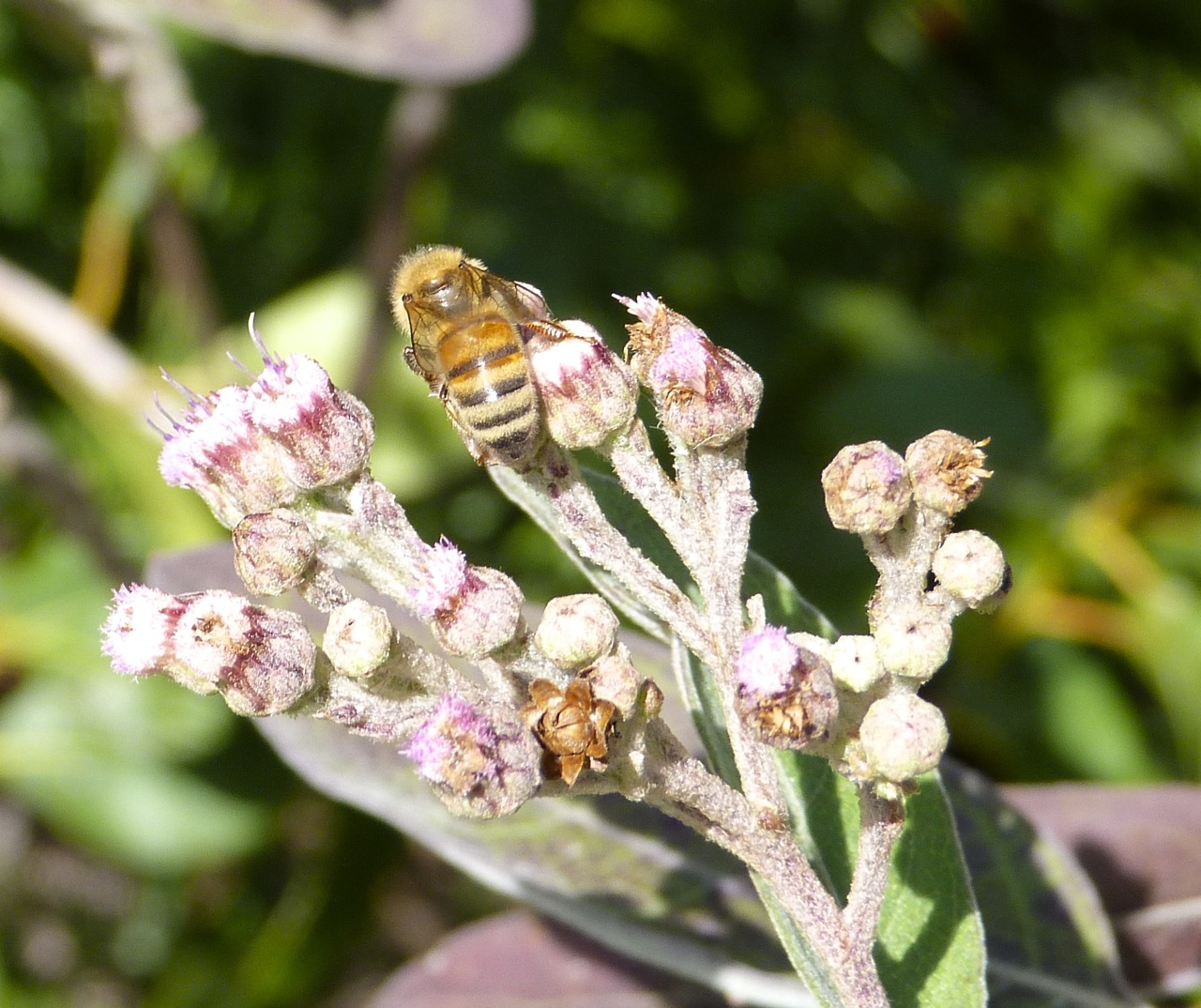
MARSH FLEABANE (WITH HONEY BEE) Pluchea
HORSERADISH TREE (WITH CUBAN EMERALD HUMMINGBIRD) Moringa oleifera
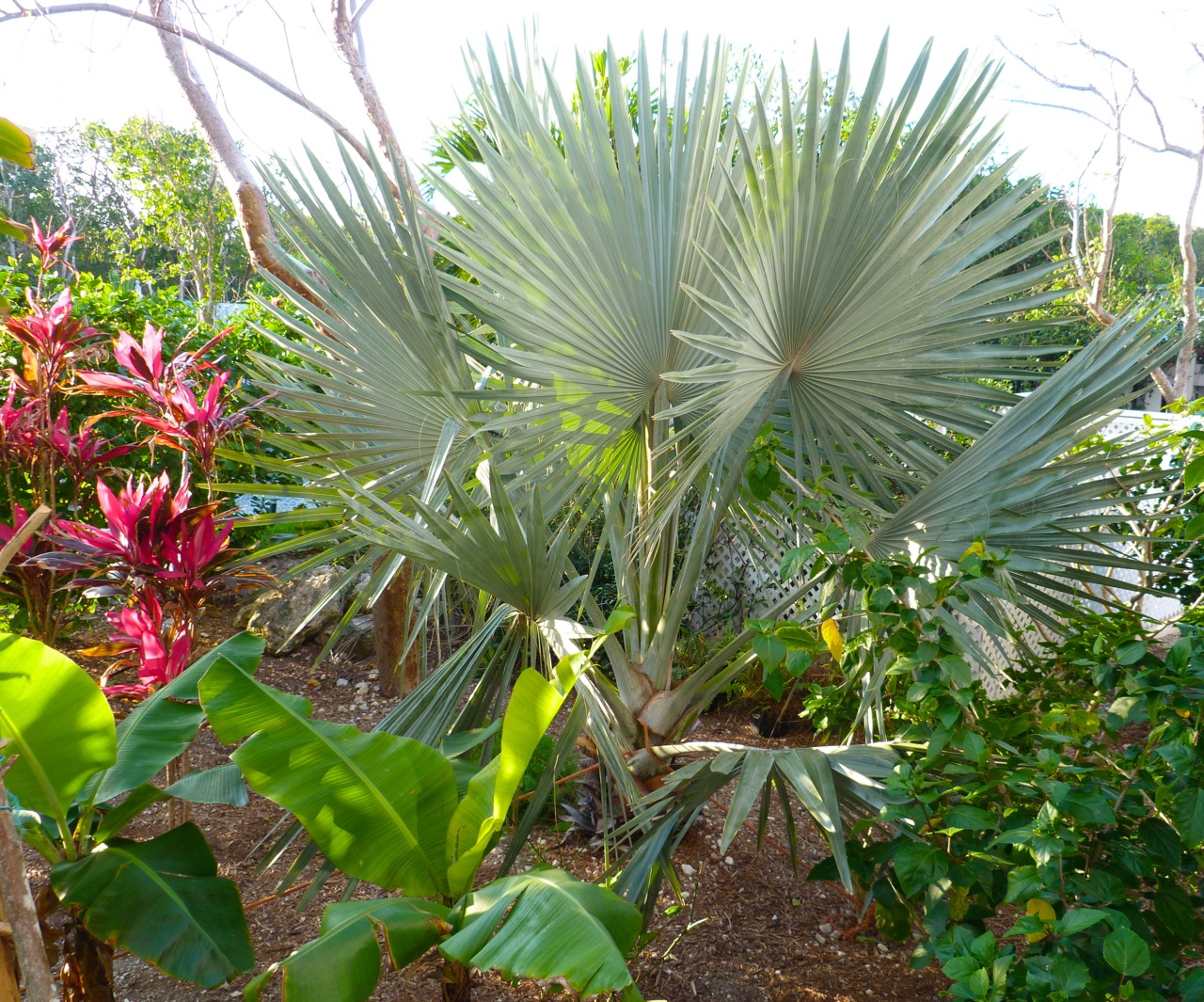
BISMARCK PALM
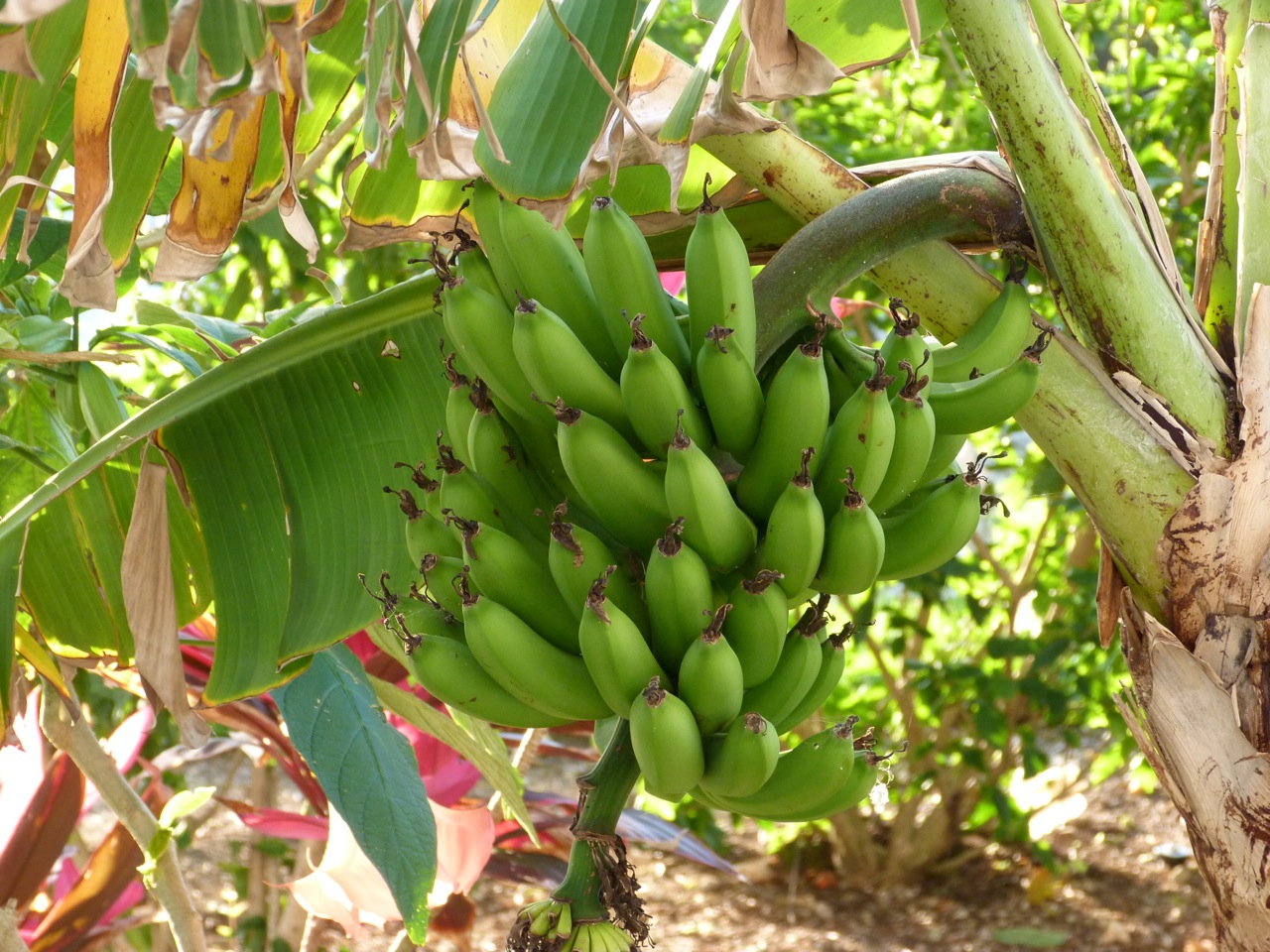
BANANAS
These were growing just outside our bedroom. Pity they weren’t quite ripe…
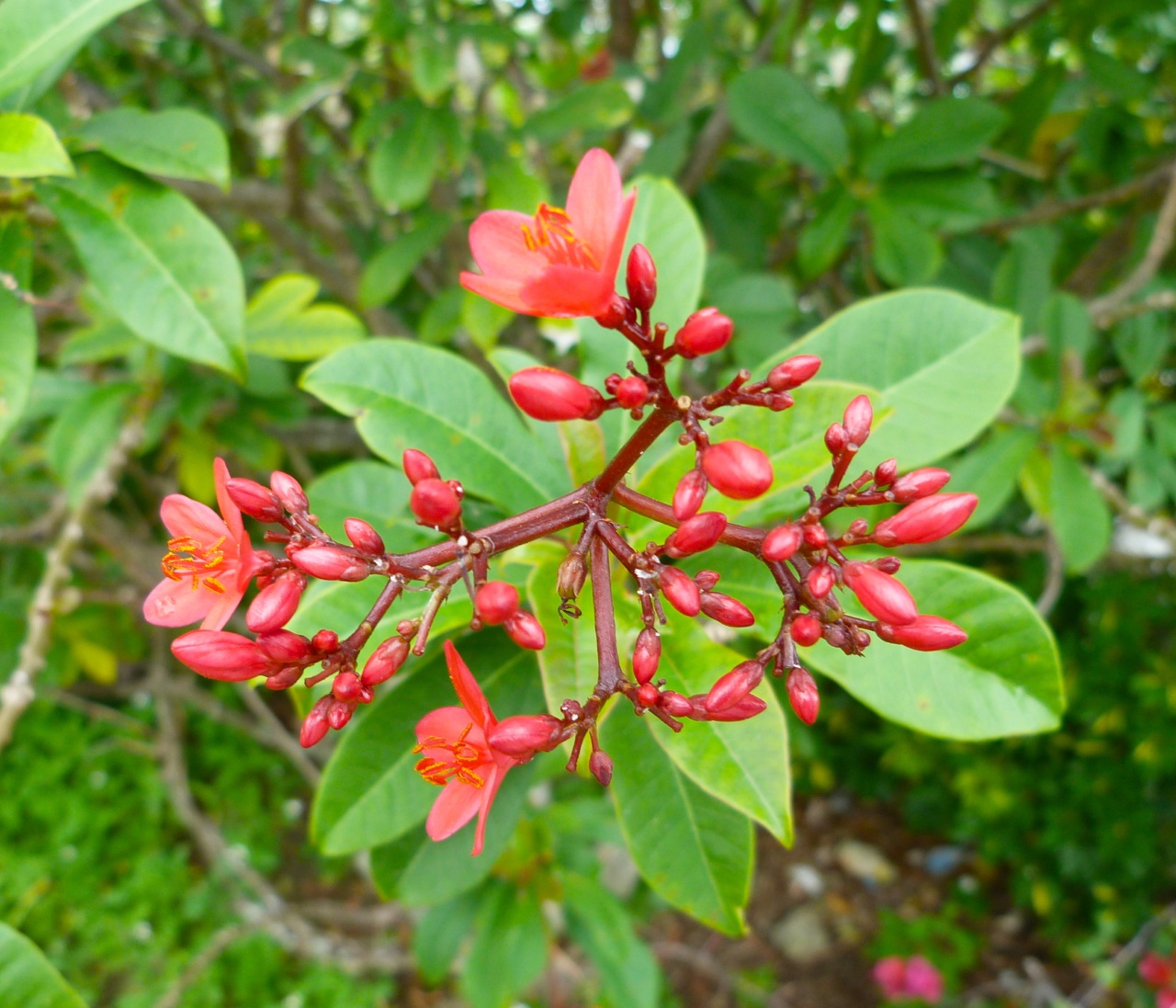
I’m beginning to struggle now. The next two plants are probably completely obvious, but I am losing my floral grip. Suggestions welcome via the comment box or email (Bridget on Tilloo, that means you…)
STOP PRESS ID within 24 hours, thanks to Nick Kenworthy who says via the comment box that this bright pink one “is loosely referred to as the Orchid tree (or Hong Kong Orchid Tree) as the blooms are very like an orchid but it comes on a tree rather than a plant”. I’ve checked my cheat books, where it is named Bauhinia pupurea, aka Orchid Tree, Butterfly Tree or (from the leaf shape) Bull Hoof Tree. The tree originates from India and Southeast Asia. Nick has undoubtedly nailed it, for which many thanks. One more to go…
STOP PRESS 2 Nick has solved the second ID as well. His interesting information about this striking waxy plant can be seen in detail in the comments below. The answer, in a word, is ‘Jatropha’, of which there are a great many varieties – and quite a number of informal names, most of which (‘Firecracker’; ‘Star of Bethlehem’) are confusingly assigned to other plant species as well. It doesn’t feature in either of my Caribbean plant /tree reference books, so my amateur eyes didn’t actually let me down this time… This plant (there was were two of three) was in a small park area by the beach at Treasure Cay. I haven’t seen it elsewhere on Abaco.
Here are the links to a couple of my previous Abaco flower / plant posts:
A BUNCH OF FLOWERS (the most recent)
FLOWERING ON ABACO (an expedition with Ricky Johnson)
There’s a larger collection on the dedicated FLORA page, including some of the above, but also featuring articles on LIGNUM VITAE, YELLOW ELDER, Bird of Paradise flowers STRELITZIA and more

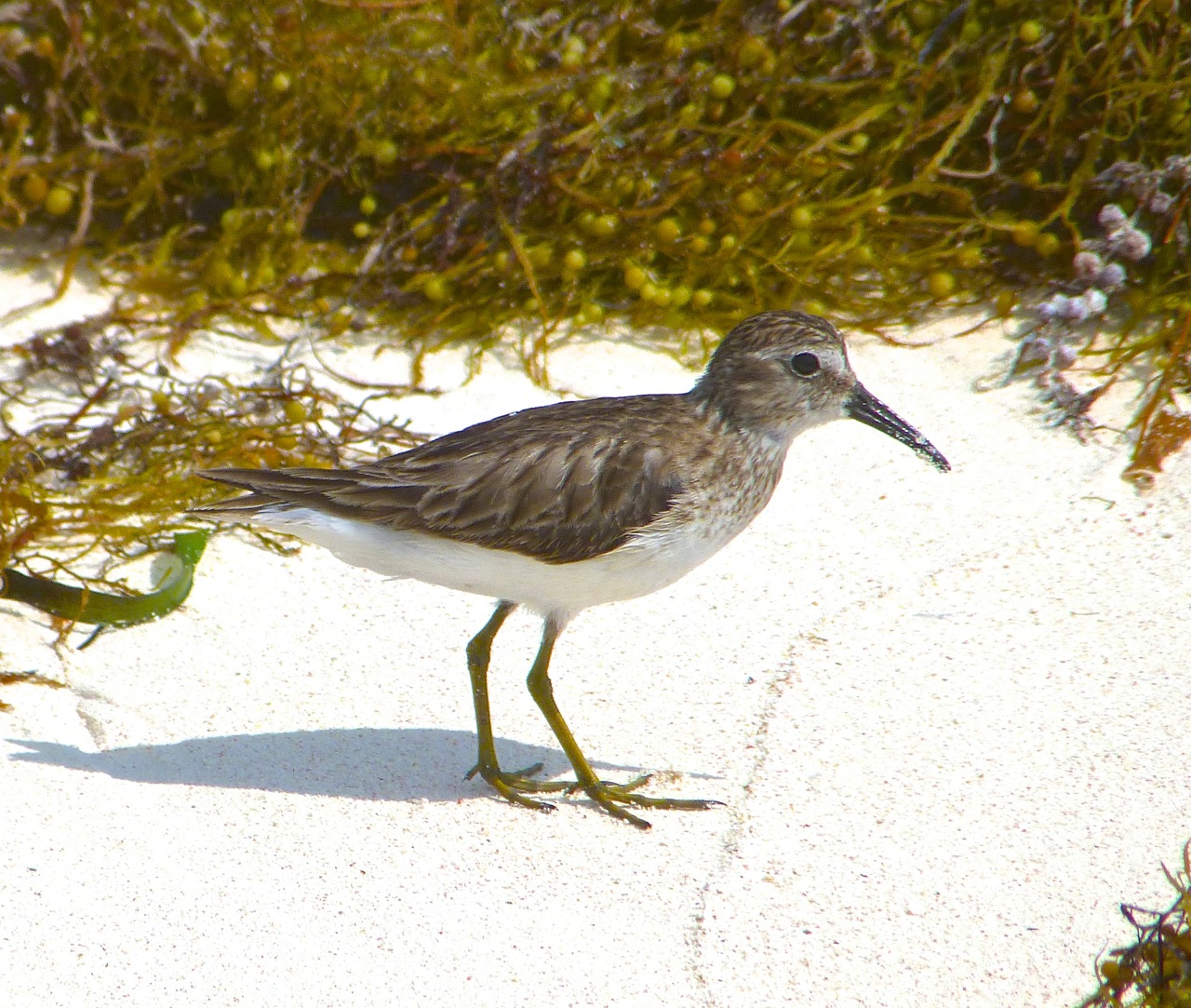
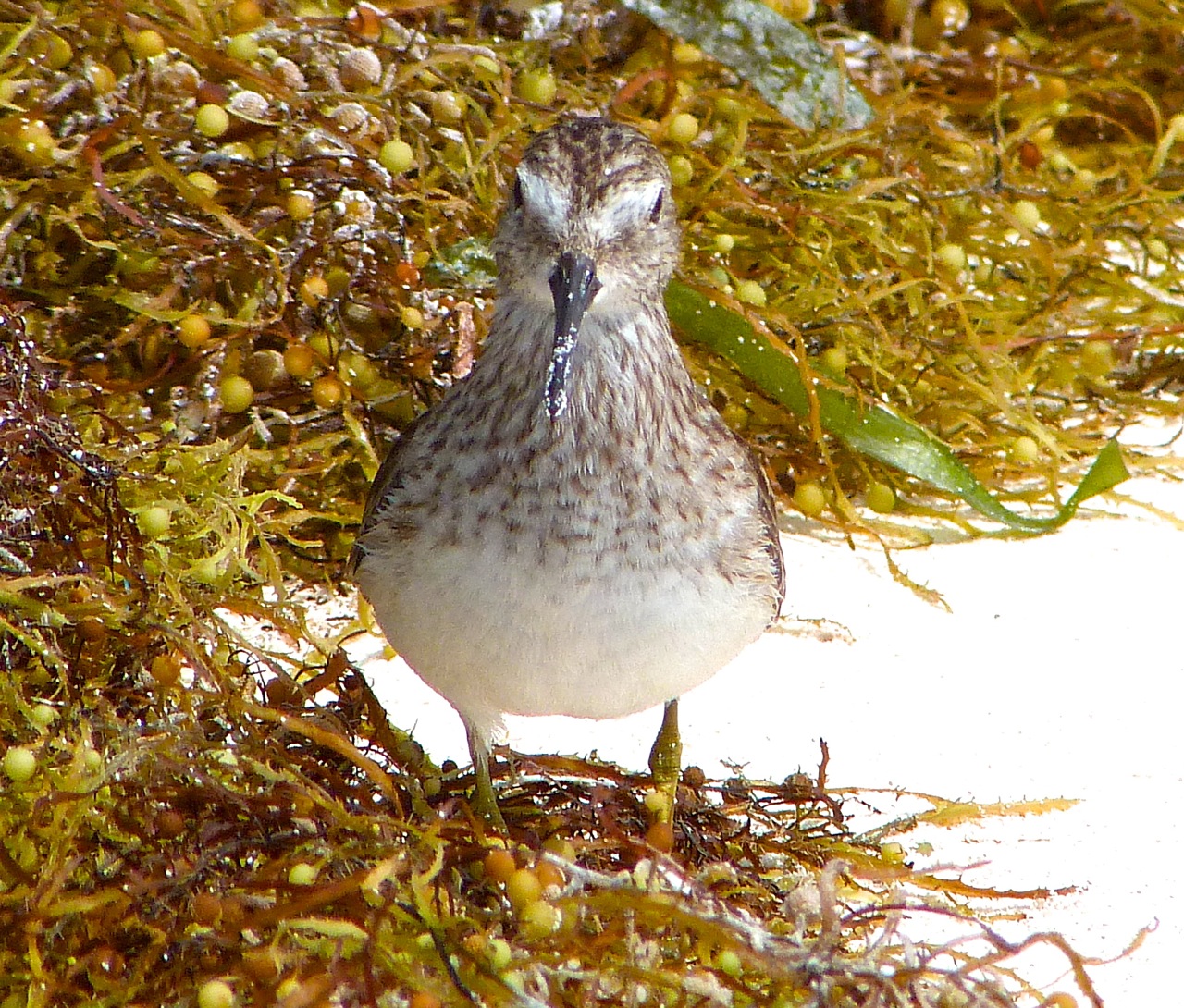
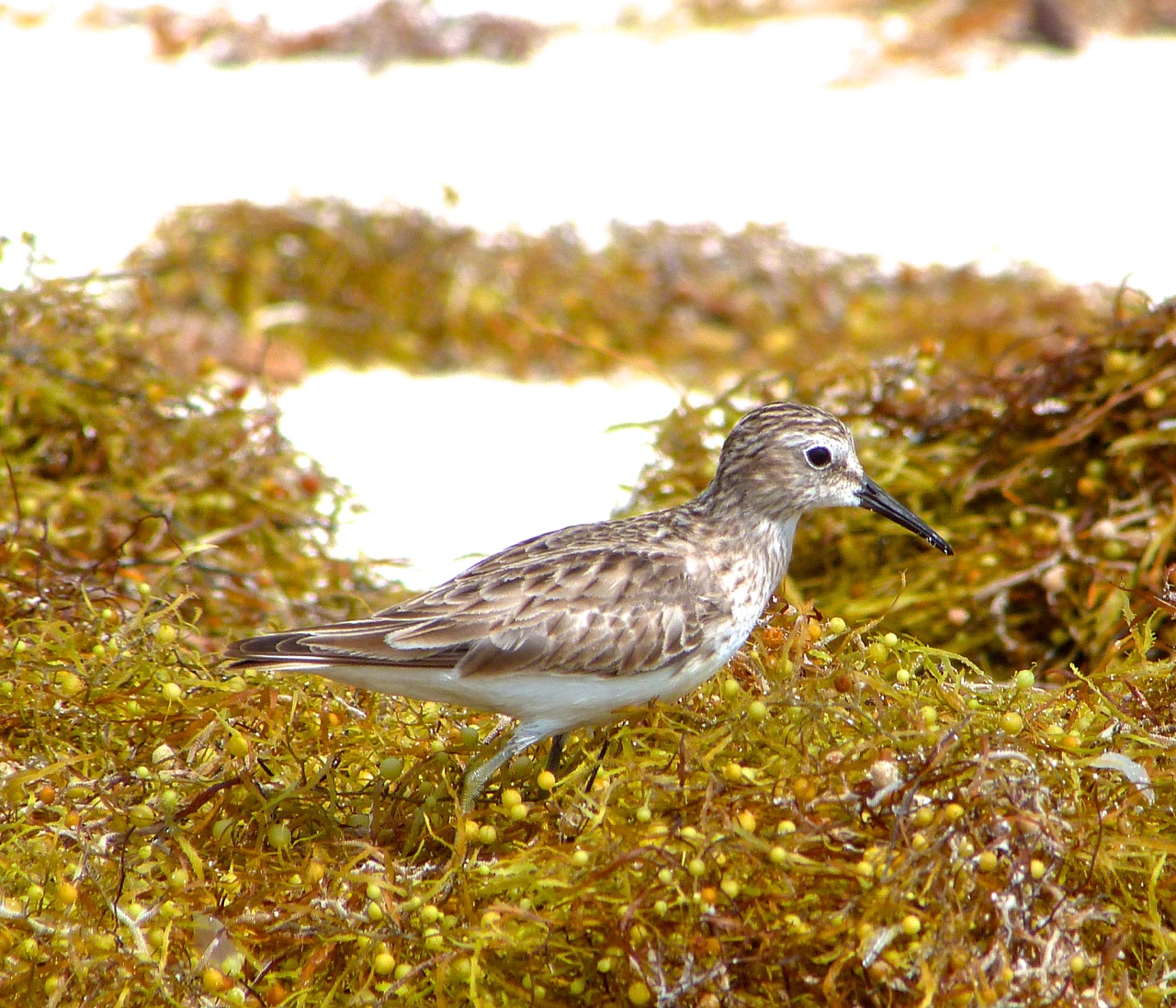
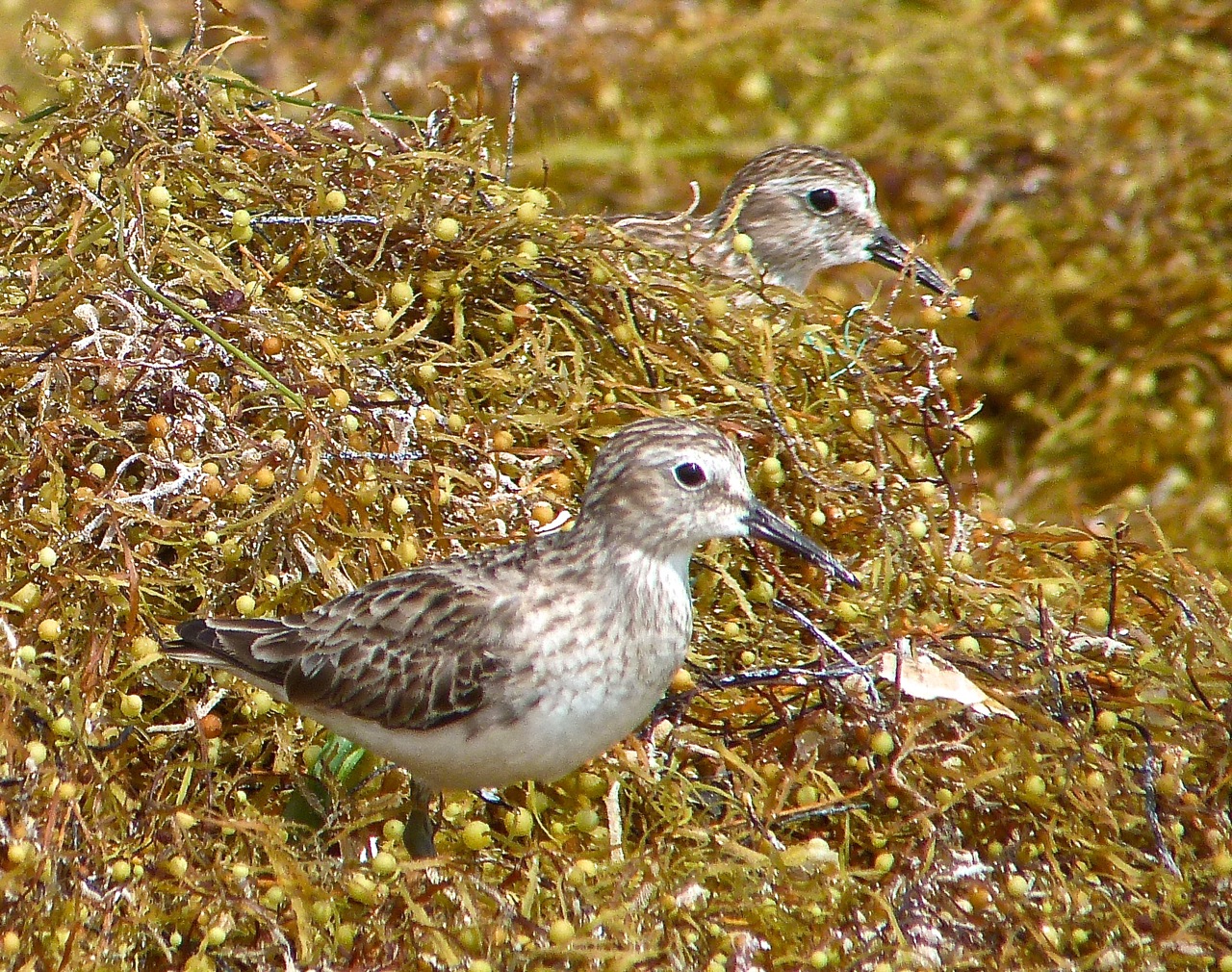
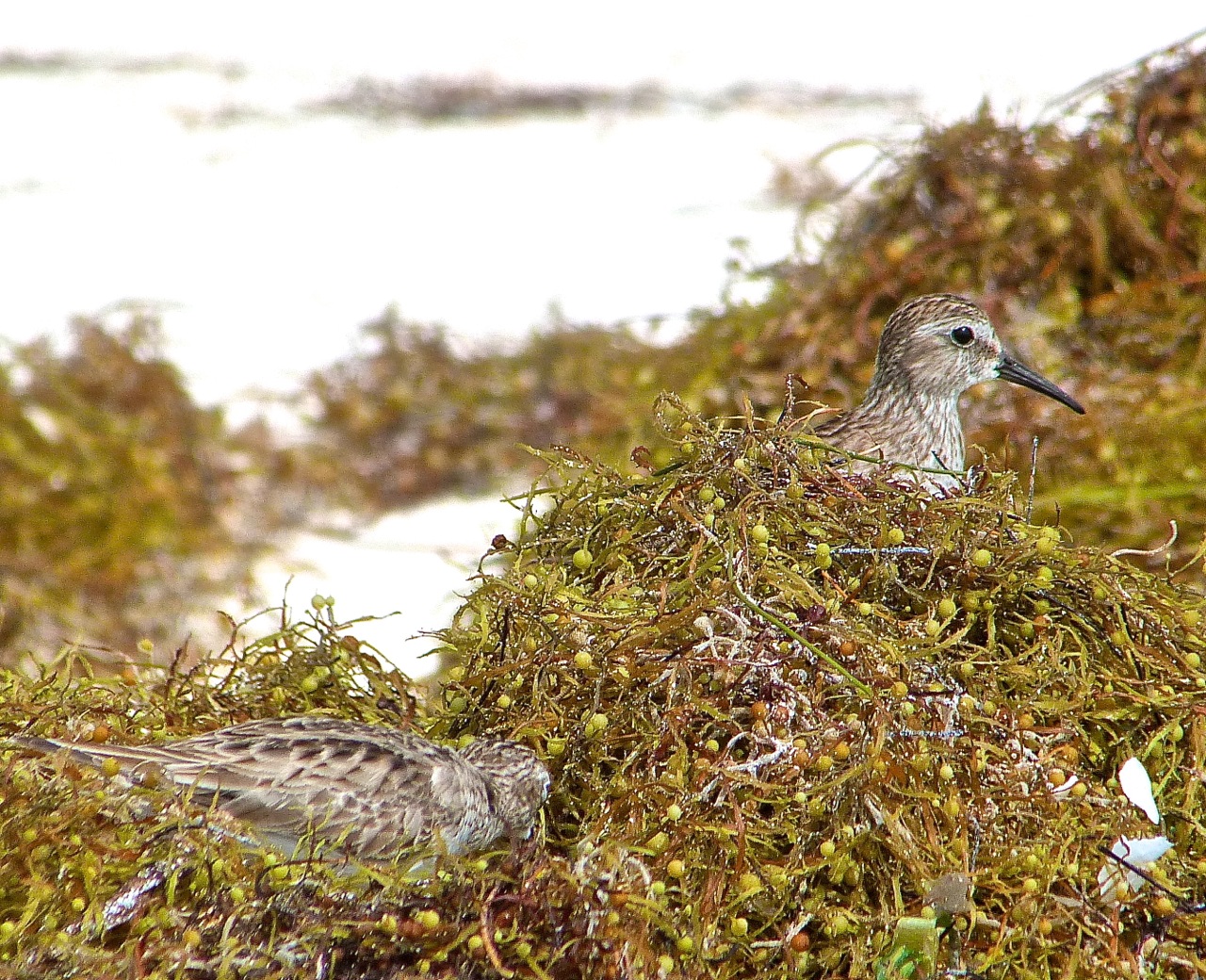
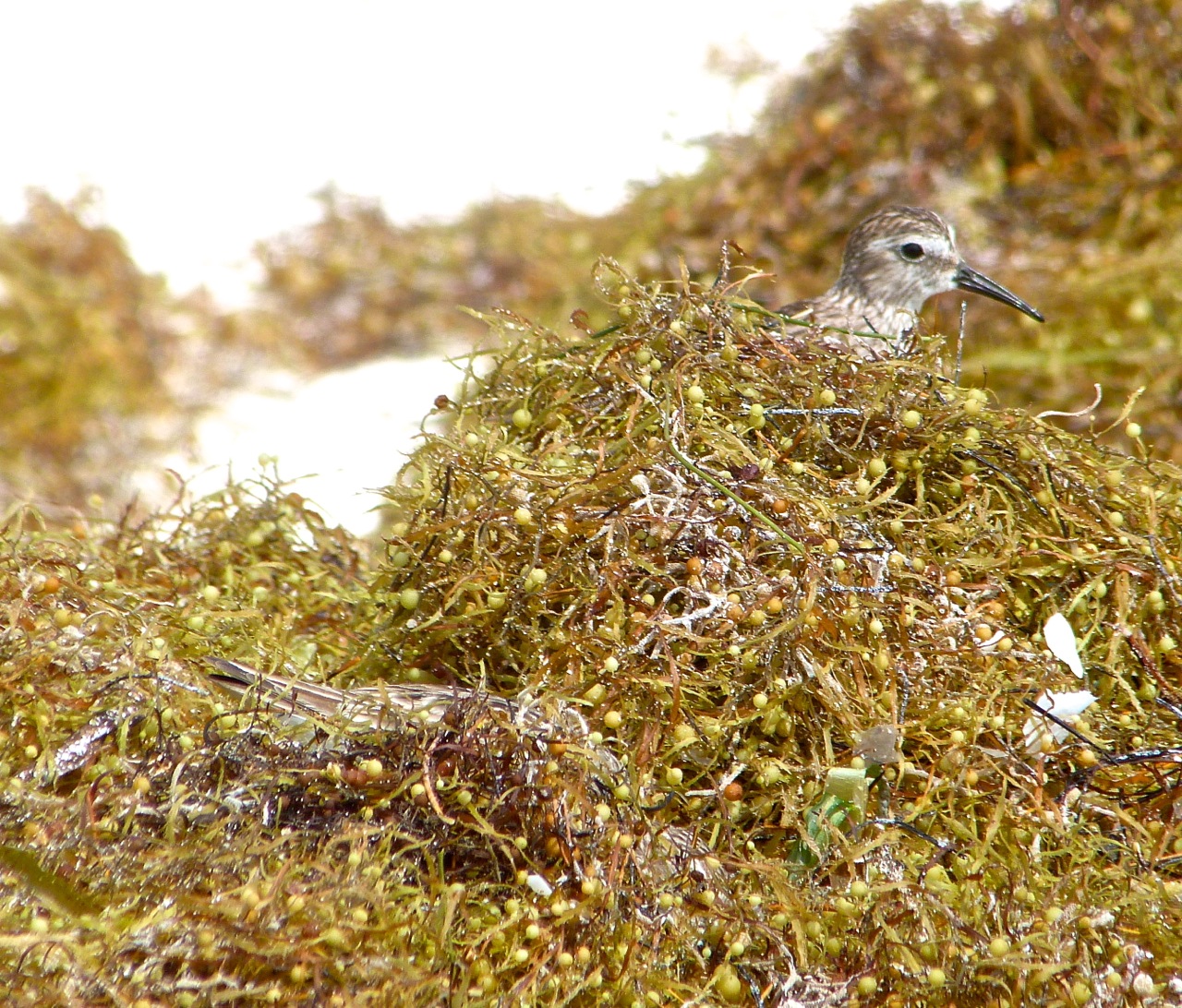
The LEAST SANDPIPER (Calidris minutilla) is the smallest shorebird, the definitive “peep”. An adult is only about 6″ long. They are to be found in pairs or groups, busily foraging in the sand and seaweed. Often they will mix in with other shorebirds. These birds nest in scrapes close to the water, with both parents involved in incubating the eggs. The female will usually leave the nest before the young birds fledge – perhaps (bizarrely?) sometimes even before the eggs hatch. Deal with it, male Least Sandpipers. Fortunately the hatchlings can feed themselves very soon, and are able to fly within two weeks of birth.
The “peep” call will no doubt be instantly familiar, although how to differentiate between the various types of sandpiper may be more of a problem… Here’s a short recording via Xeno-Canto (credit: Mike Nelson)
[audio http://www.xeno-canto.org/sounds/uploaded/PWDLINYMKL/LeastSandpiper7.mp3]
They may burrow deep into the seaweed near the shoreline to reach an especially good feeding patch

Photos: Keith Salvesen, Delphi Beach, Abaco

![]()
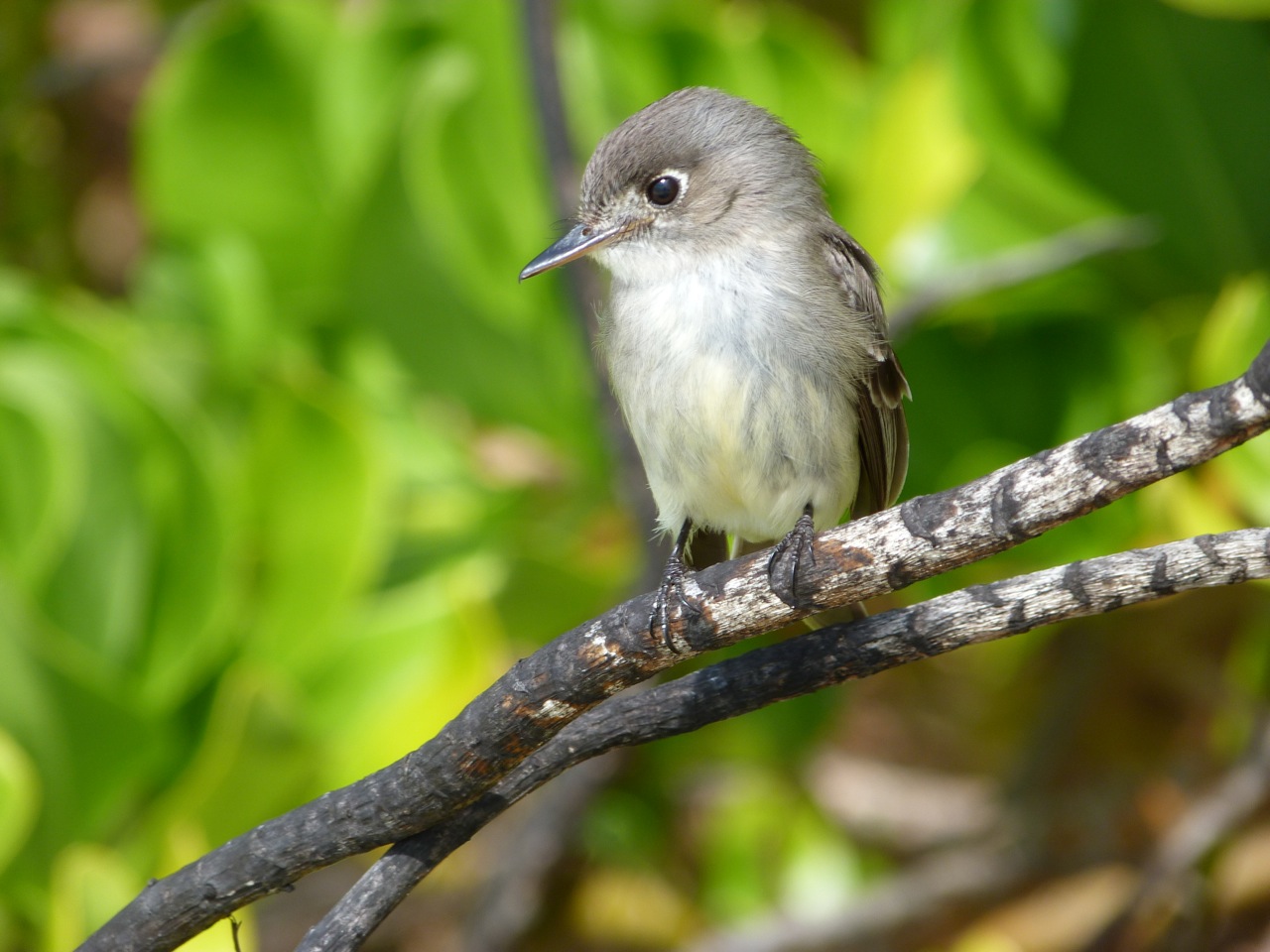
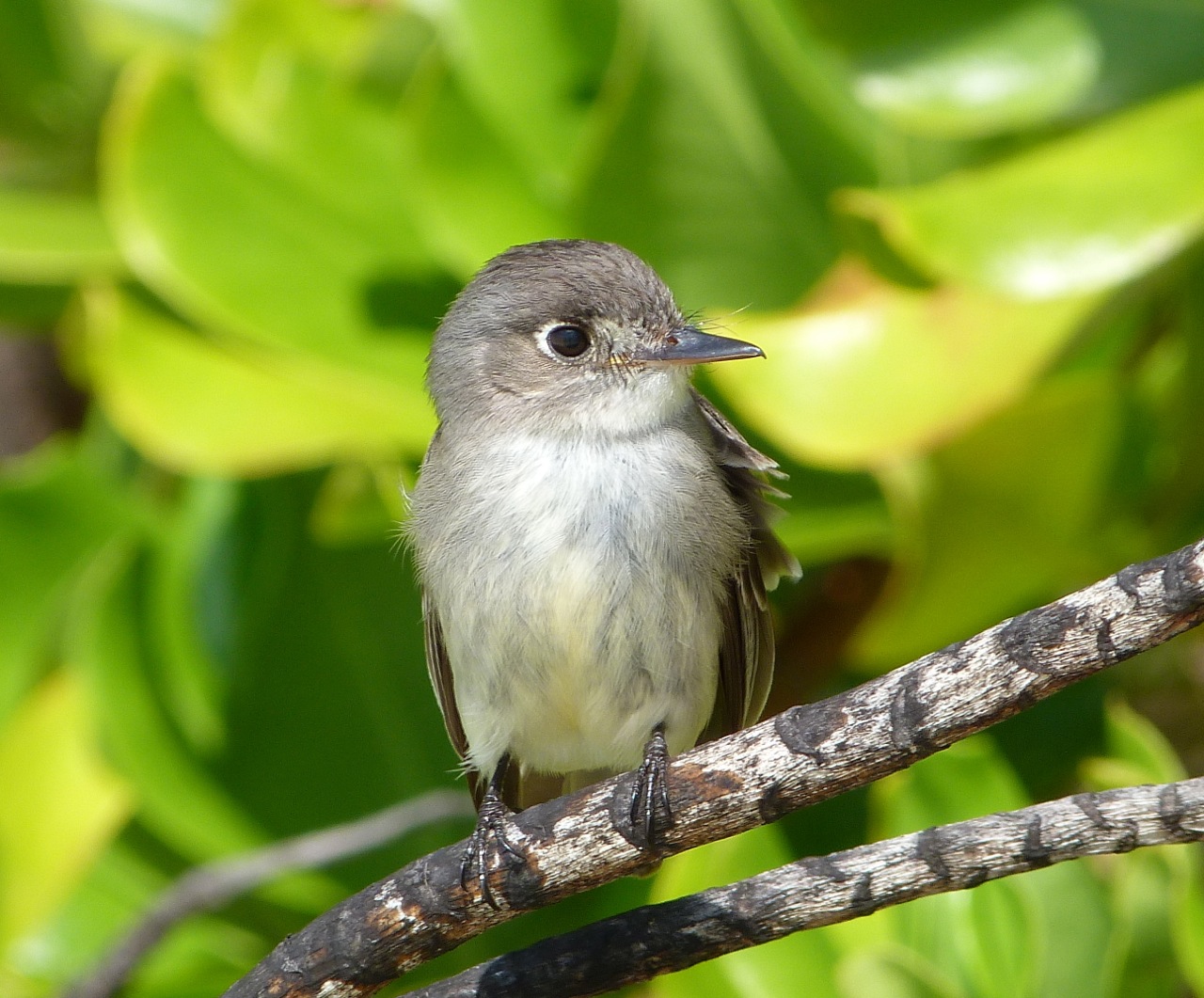
The CUBAN PEWEE Contopus caribaeus bahamensis, also known as the Crescent-eyed Pewee (see photos for details), is a tyrant. At 6″ long , the smallest tyrant you are likely to encounter in the Bahamas, but undoubtedly a member of the family Tyrranidae. These are the flycatchers, and include the larger LA SAGRA’S FLYCATCHER and the still larger Loggerhead and Gray Kingbirds. The Cuban Pewee is permanently resident on Abaco, and can be found in both pine woods and coppice. When returning to its perch after a flycatching sortie, this bird gives a characteristic flick of the tail.
The little bird below was in the edge of the coppice bordering the long sandy beach at Casuarina. Bruce Hallett, in his essential book ‘Birds of the West Indies…’ notes that Cuban Pewees are ‘usually approachable’, so I decided to test this out. I was about 20 feet from the bird when I first saw it. By sliding one foot forward in the sand and pausing before moving the other foot, I got to within 5 feet of the bird, while it watched my approach with apparent indifference. Unlike some creatures, it did not seem discomfited by eye-contact. It responded when I made a faint clicking sound by rather sweetly putting its head on one side. Then it began to fidget slightly – possibly feeling camera-shy. So I shuffled slowly back so as not to disturb it in its own territory.
The close-ups at the end clearly show the tiny hooked tip at the end of the upper beak – I imagine this somehow relates to the business of catching flies. Like other flycatchers, the Cuban Pewee has very distinctive whiskers around the base of the beak – again I presume this assists with feeding in some way, perhaps helping to sense the approach of an insect. Any expert views welcome via the comment box.


It’s occasionally tempting to anthropomorphise such close encounters in terms of imputed human / creature empathy. Much best to resist that. But as I withdrew, leaving this little bird undisturbed on its branch, I did experience a strange feeling of… [I must interrupt myself here. I’m a lawyer, so that’s quite enough of that sort of nonsense]
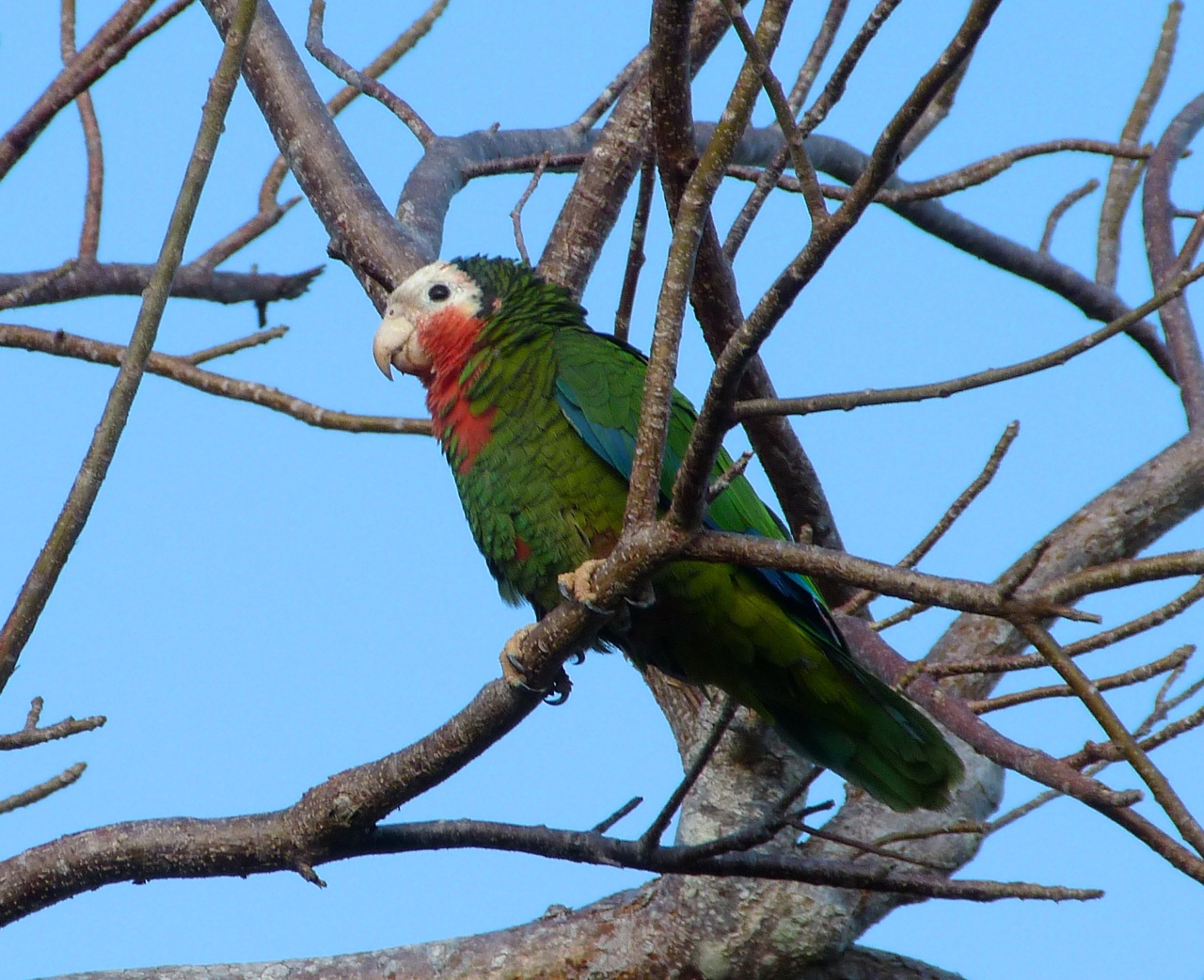
Abaco parrots. The only ground-nesting parrot species in the Bahamas. In the world, in fact. I’ve posted quite often about them – indeed they have their own page HERE – because, frankly, they are special and their story is one of encouraging success for intensive research and conservation programs. In 1492, Christopher Columbus was amazed by the vast number of parrots he saw in the Bahamas (not that the islands were called that then). In his journal he noted: “flocks of parrots darken the sun…” Not many years ago, parrot numbers on Abaco had dwindled to fewer than 1000 – below the critical point for sustaining a viable population. Extinction of the Abaco parrot loomed, accelerated by increasing habitat change, predation, and (*euphemistically*) ‘human intervention’. Thanks to the campaign of conservation, habitat preservation, anti-predation measures and vigilance, numbers have been restored to a sustainable level, perhaps as many as 4000. They are now a fairly common sight – and sound – in South Abaco. But not everyone who looks for them finds them, or even hears them. Especially not if they take pot luck in the vast areas of pine forest in the National Park, where they breed…
I’ve covered much of this ground before, but there is a slightly wider audience these days, so a few newcomers may be interested to learn about these lovely birds. The best thing is to have a look. All photos were taken by me during two early evenings in March.
The parrots are extremely agile, and have very strong feet and claws that enable them to move around in the tree-tops – or to hang upside down if they choose to. The next photo is a close-up a foot; below that is short video showing a parrot manoeuvring itself in a tree. You’ll also see how the birds use their beaks as an extra limb, so to speak. The uninspiring title shown is only because I forgot to label it ‘Abaco Parrot’ in the first place, and can’t find how to edit it…
In this image you can clearly see how their ‘opposable’ claws wrap round a branch
If you suspect that this one has had some ‘work’ done, you’d be right. I normally leave my photos largely alone, apart from cropping and maybe basic light balancing where needed. Sometimes an image is nearly there, but needs a bit of extra cosmetic business – but one can usually tell. The left wing? Hmmmmm (users of ‘noise reduction’ will know what I am talking about!).

The flocks of parrots are incredibly noisy. Sometimes they split into two or three groups, close together, and seem to compete in raucousness. Around 5.00 pm seemed to be the noisiest time. I took recordings of the racket, using the voice memo app on an iPh*ne, simply holding the phone with the speaker / mike end towards the parrots. Some come out pretty well – good enough to post on the excellent XENO-CANTO bird sound site. Here is a recording, with the first few seconds transcribed into a sonogram. I made a ring tone from this recording for Caroline Stahala, the scientist who, with her team, looks after the birds. She’s been too polite to say whether she uses it or (more likely) not!


I find the parrots very hard to nail in flight (see above), possibly because of a shutter-speed issue (mine, not the camera’s). I nearly junked the picture below, but I liked the clash of the parrot colours with the purple bougainvillea, so I spared it.
If anyone is interested in making a small contribution towards the continuing research into and protection of these birds, please have a look at my ABACO WILDLIFE CHARITIES page, where the relevant link to Parrots International can be found. Or visit doudoubirds, where you will find endearing Abaco Parrot prints by dou dou herself for sale in aid of the parrots. Or contact me at rollingharbour.delphi@gmail.com
If anyone had a problem with the Xeno-Canto sound file above, here is a simplified version of the recording

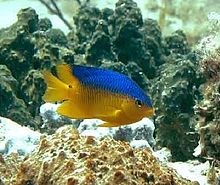
YELLOWTAIL DAMSELFISH
BICOLOR DAMSELFISH
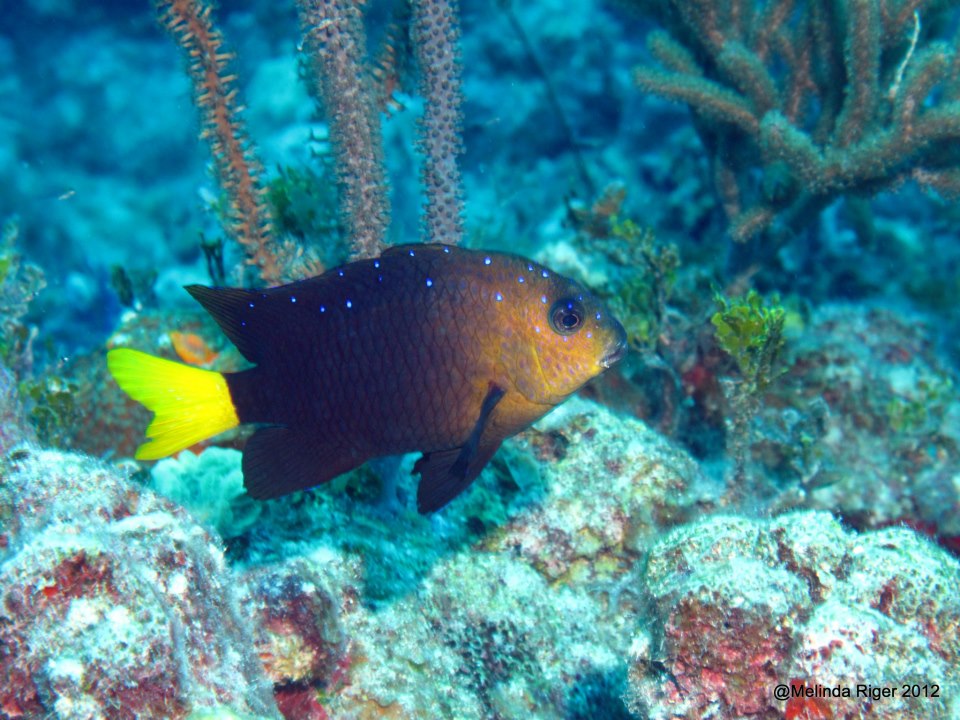
COCOA DAMSELFISH
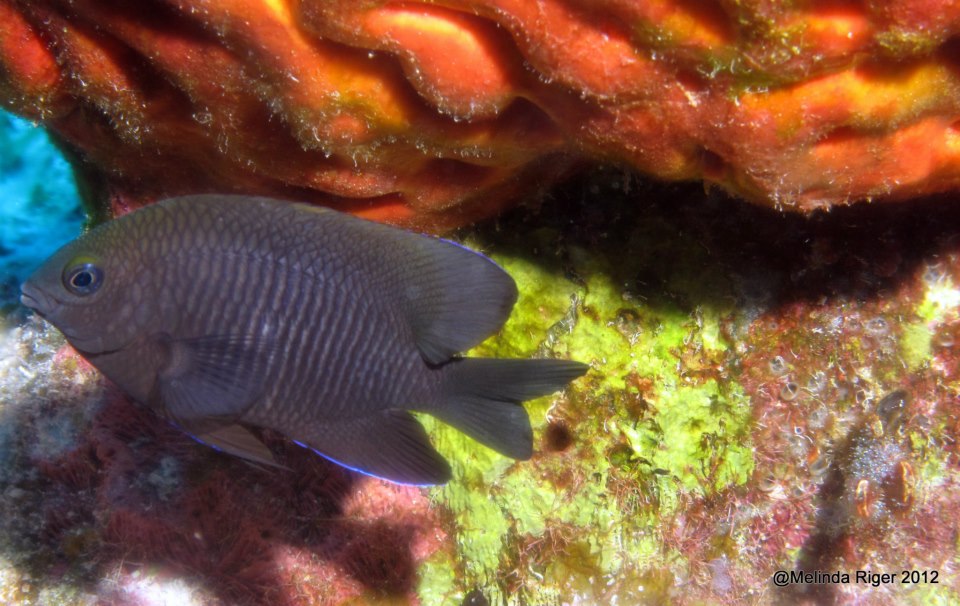
THREE-SPOT DAMSELFISH (JUV)
THREE-SPOT DAMSELFISH
Photo credits: Melinda Riger @ Grand Bahama Scuba (except header image – Wiki-cheers)
My last post was about SAWMILL SINK – not the famous Blue Hole itself, but the detritus of past logging activity in that part of the Abaco pine forests revealed by last month’s forest fires. I mentioned that this destructive burning of the shrubby understorey is (allegedly) the work of hunters making it easier for their dogs to pursue the hog denizens of the forest. The evidence suggests that nature alone could not cause so many separate seats of fire to appear in a matter of days over such a wide area – and in springtime at that.
This year, the fires came uncomfortably close to several small communities and outlying residences – and to the Delphi Club itself. Many people spent nights hosing down undergrowth and building on the edge of settlements, with neighbours all joining in. Electricity poles are vulnerable, with obvious consequences for the supply should they burn through at the bottom, as often happens. One pole a short way south of Delphi on the highway has the burnt remains of 3 utility posts beside the current (ha!) one. At Delphi itself, the vegetation from around all the poles along the mile of drive had to be cleared.
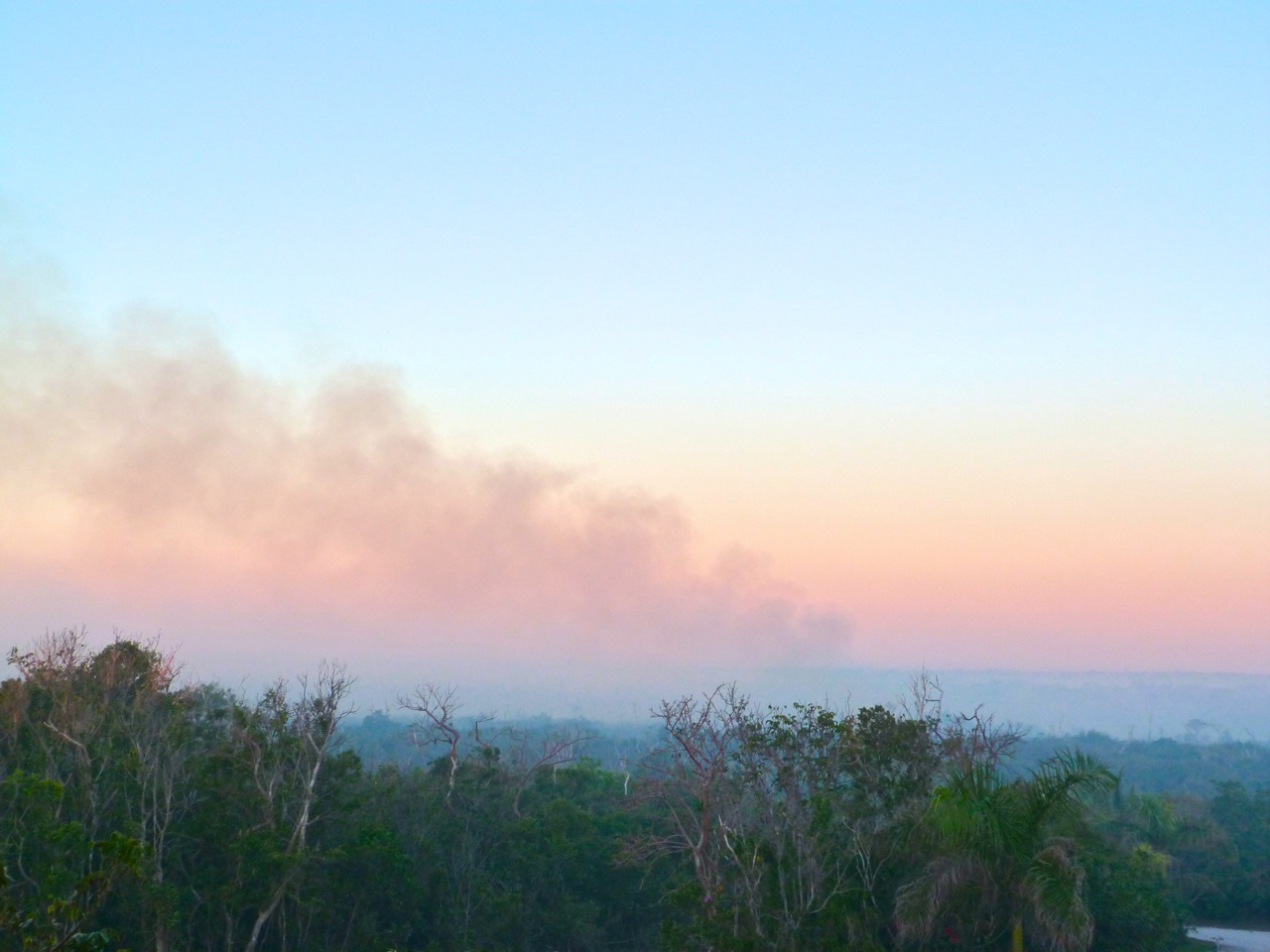
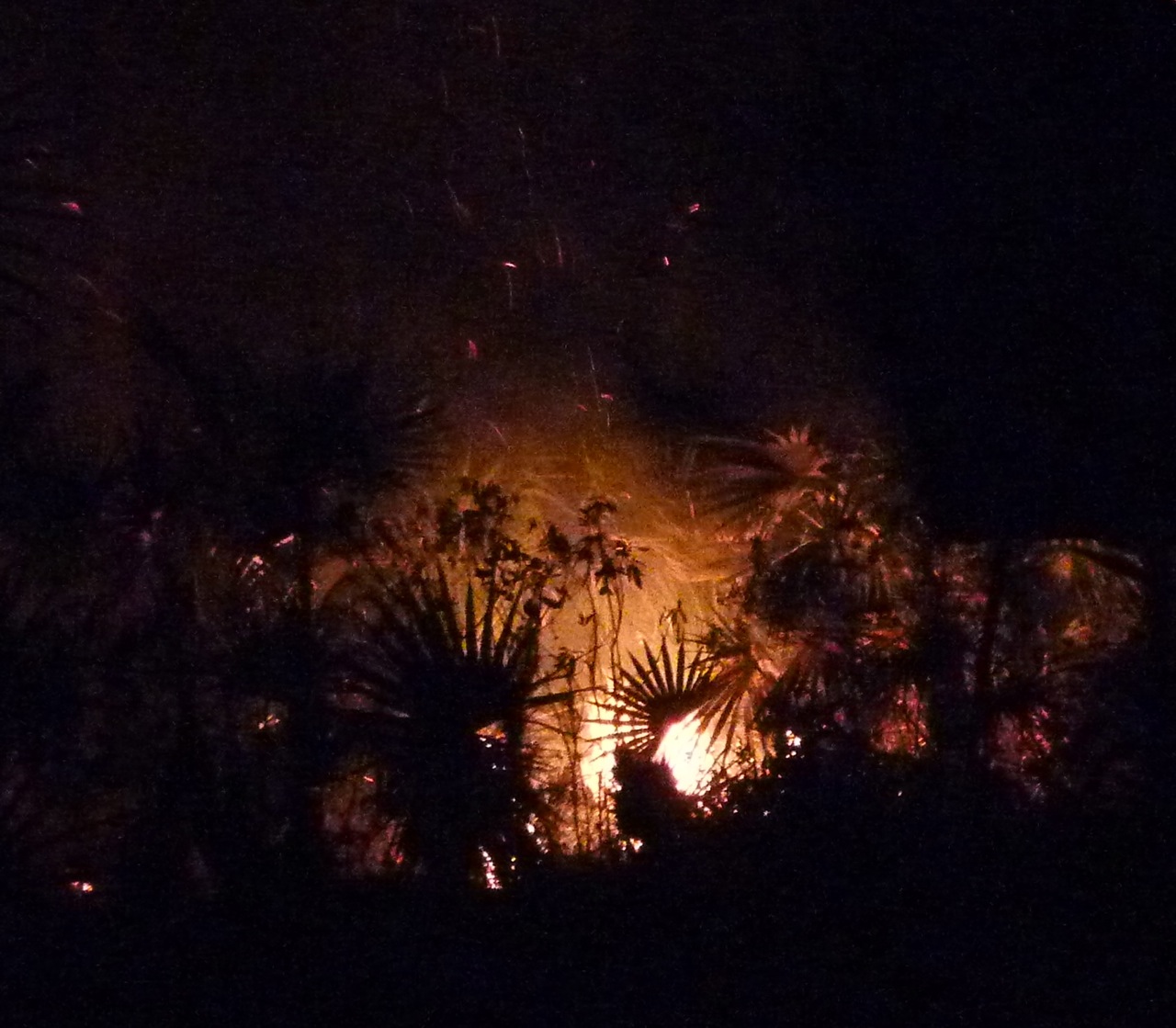
This iPhone photo was taken from the Delphi balcony. The fire is in fact on the far side of the highway, with the pall of smoke – and therefore the fire’s direction – heading south. The question is, when and where will it jump the highway, and what will be the wind direction then…
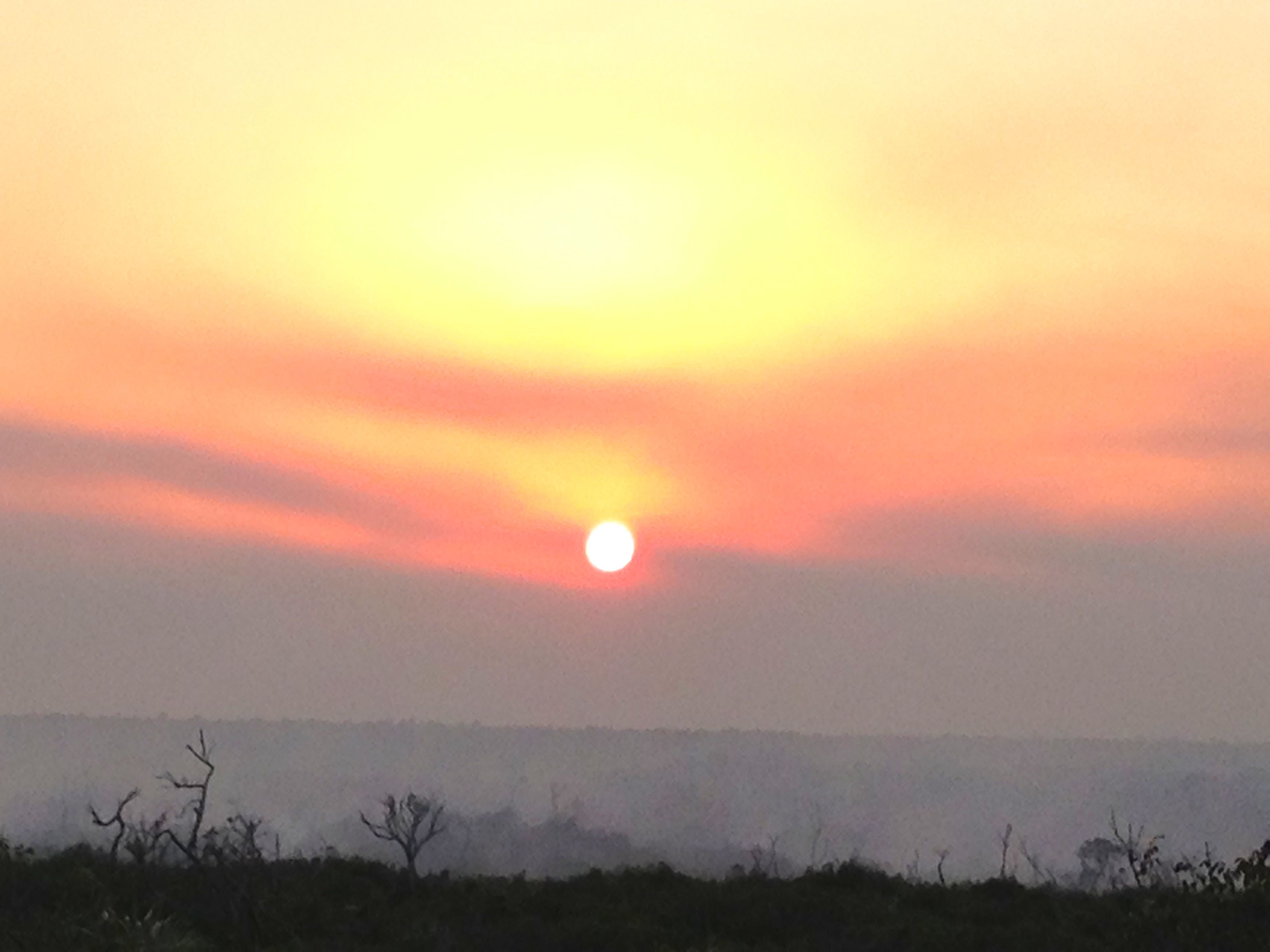
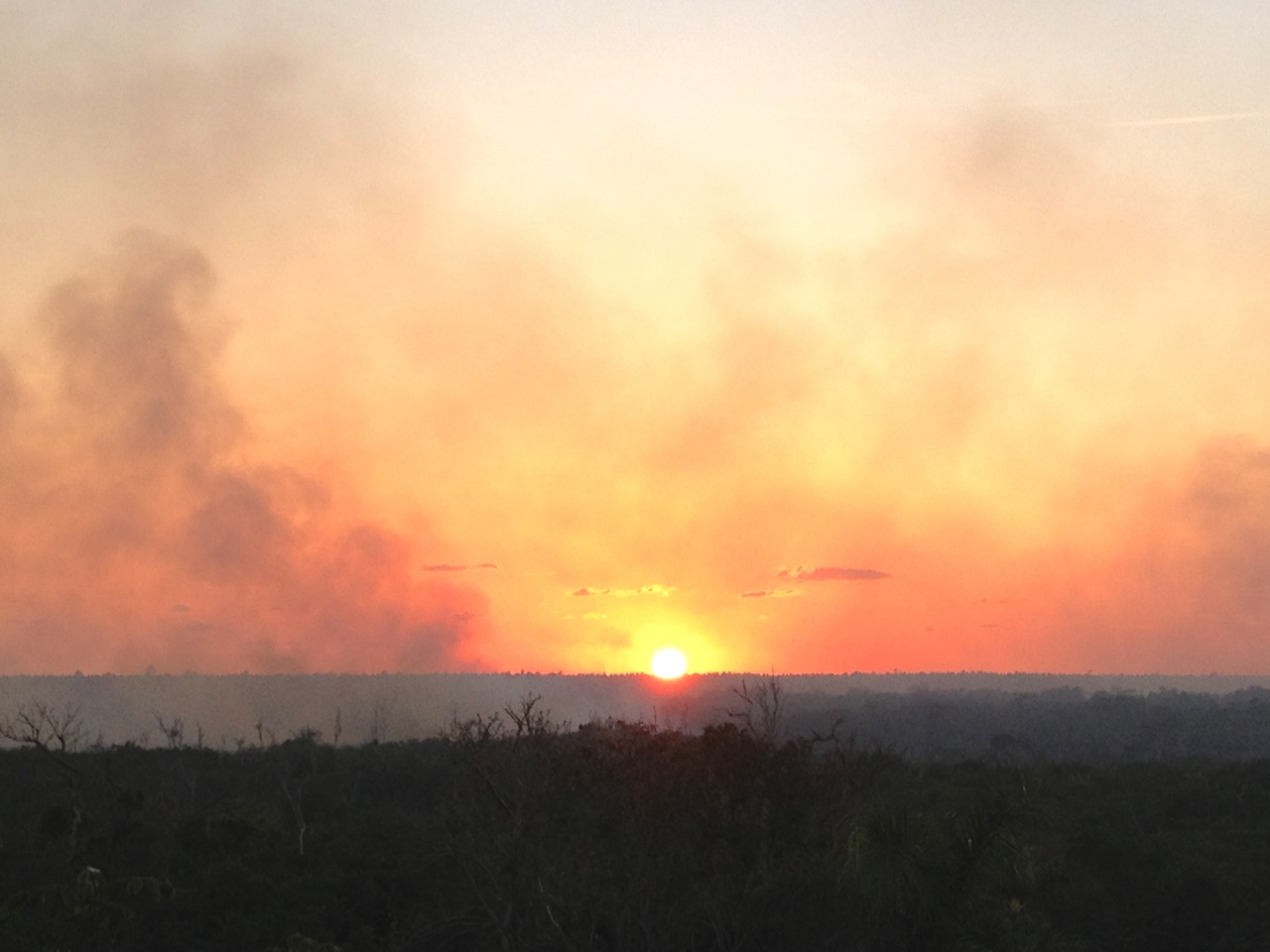
This picture shows the extraordinary effect of the smoke-laden atmosphere on the sunset. The header picture is another example. The fire is now into the pine woods between the Club and the highway, and the theory that the damp coppice nearer the Club will act as a barrier to prevent its spread is about to be put to the test overnight…
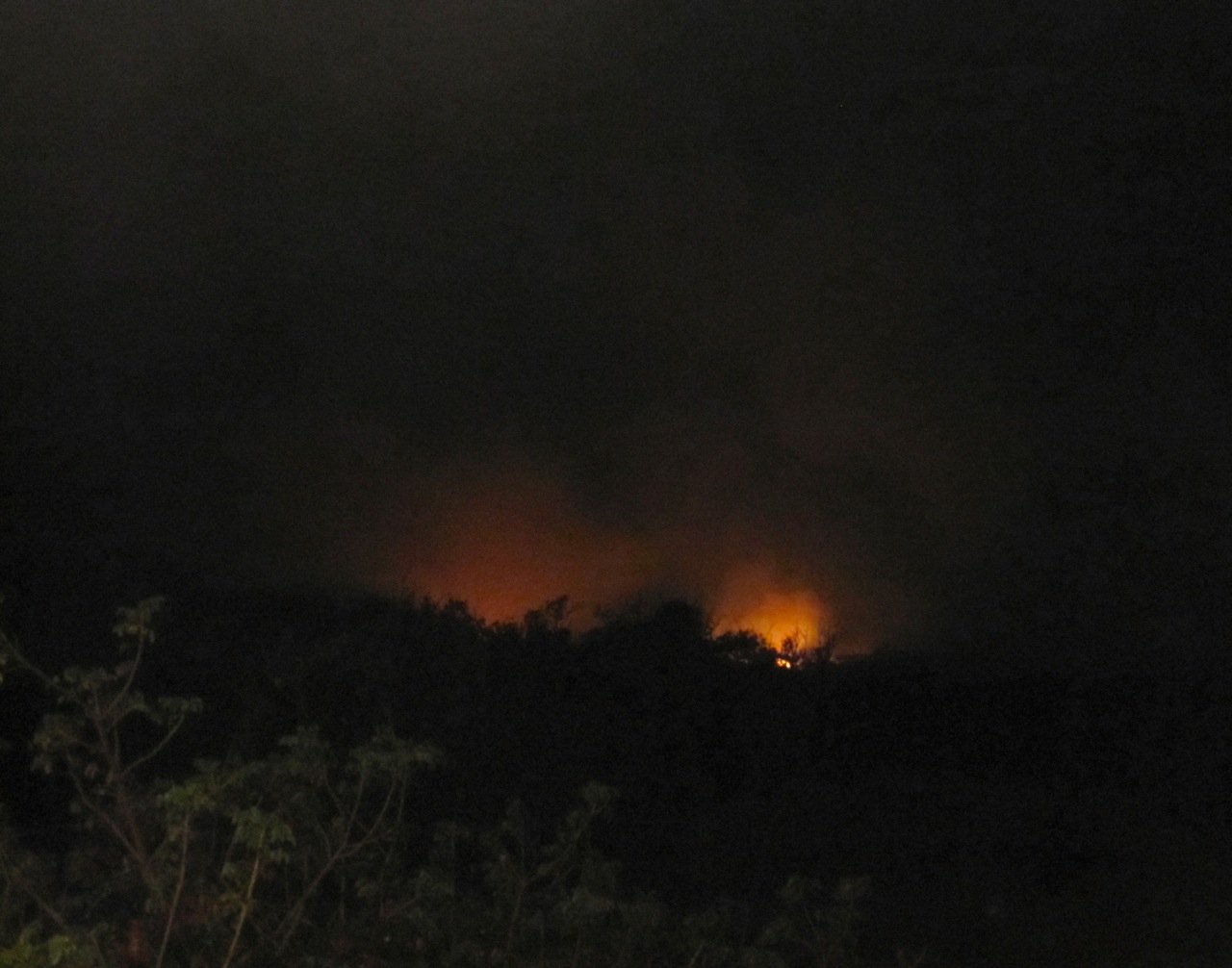
It soon became clear that the fires were not going to be discouraged by the coppice. Sandy is always eager to find volunteers to go out in a truck to feel the heat, so to speak. He is apt to dismiss concerns that one is sitting on top of a large tank of inflammable liquid by pointing out that diesel is less combustible than petrol. This is invariably comforting to all occupants of the vehicle. So with the fire burning bright, and with tree-tops suddenly bursting into flame like torches, off we go…


In the morning, a smokey mist lies over the trees and the bay to the north
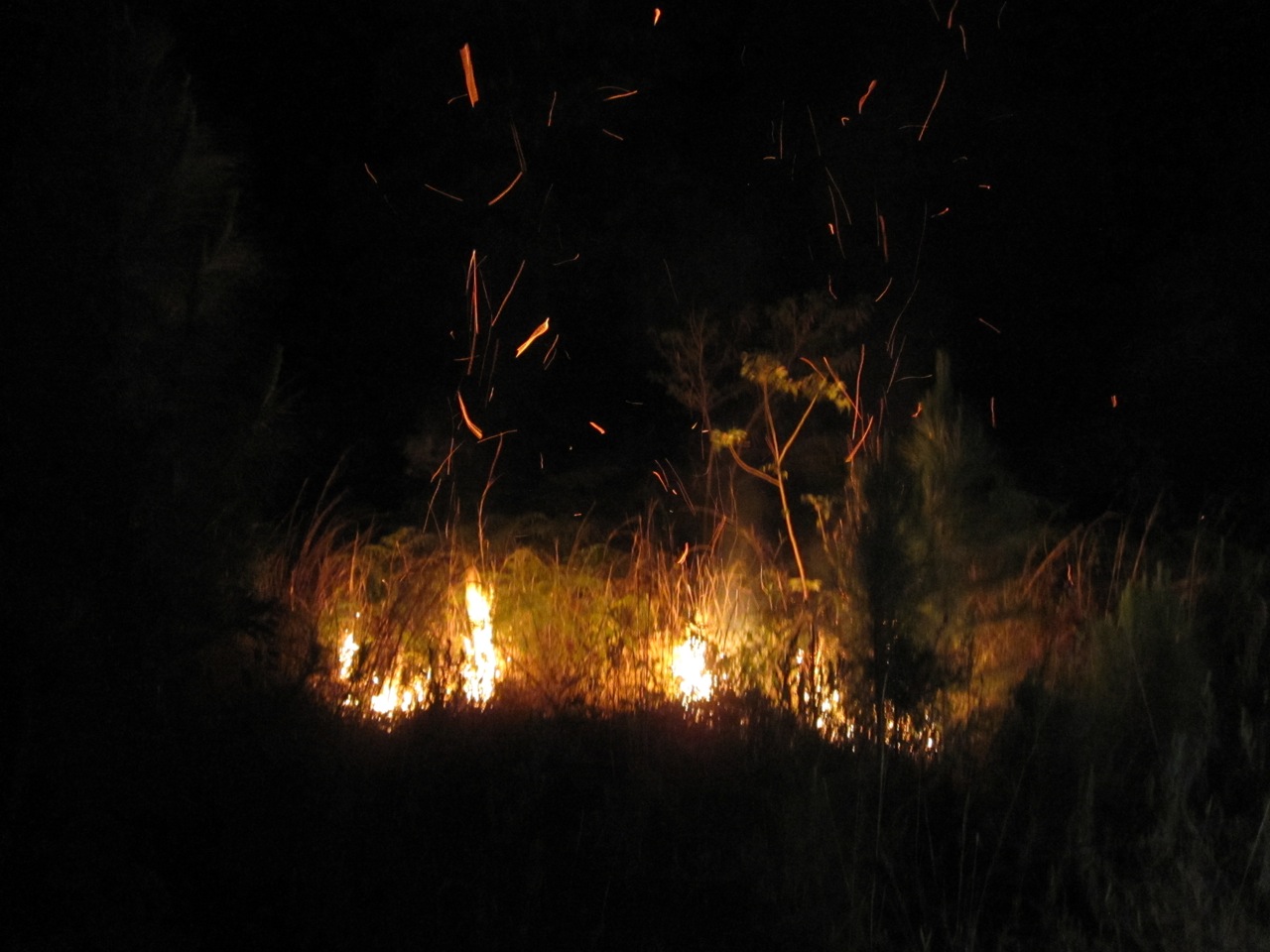
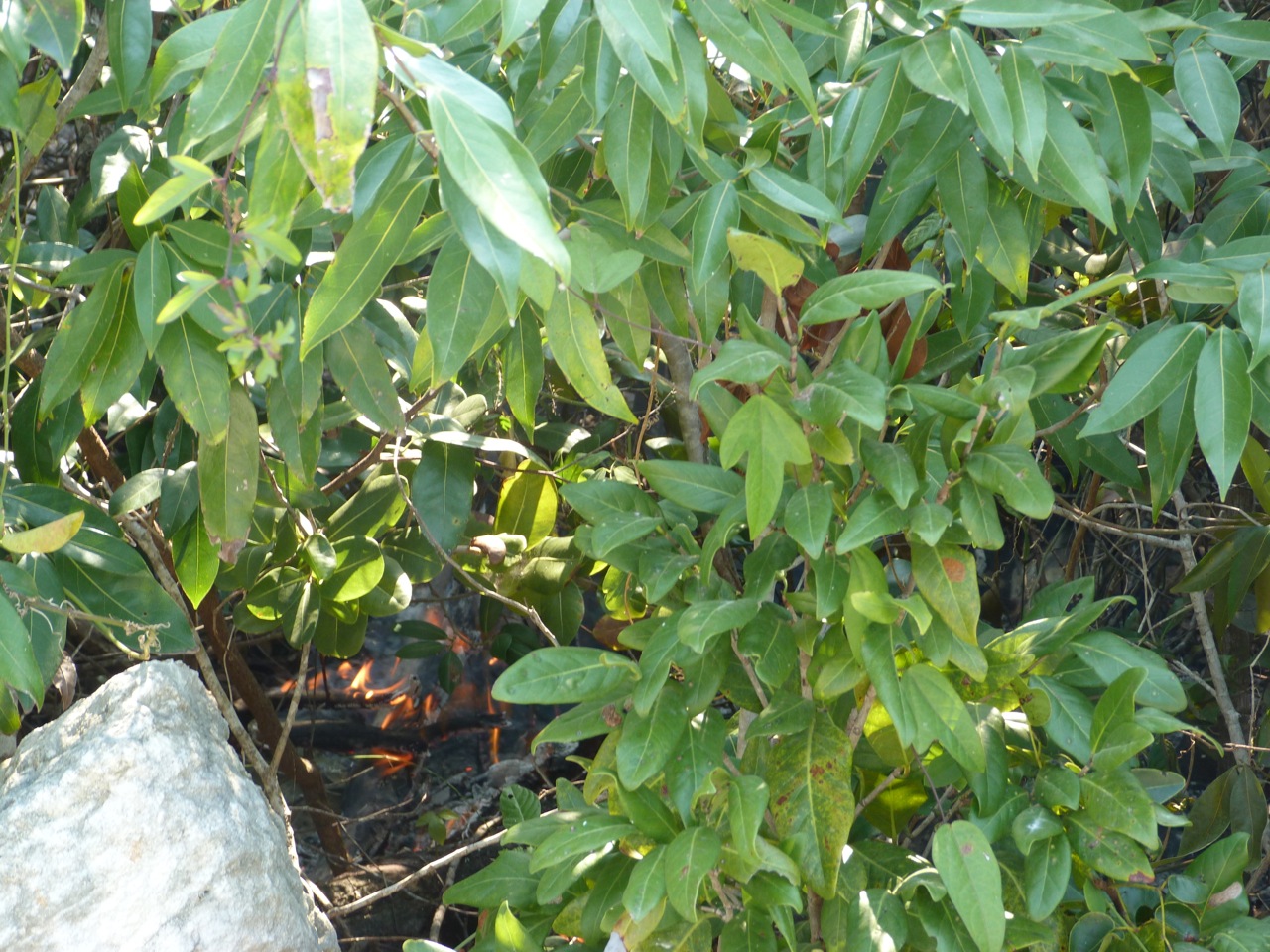
An uncomfortably short distance along the guest drive, it is clear that the coppice has burnt quite easily, though not devastatingly. In fact there are still flames to be seen…

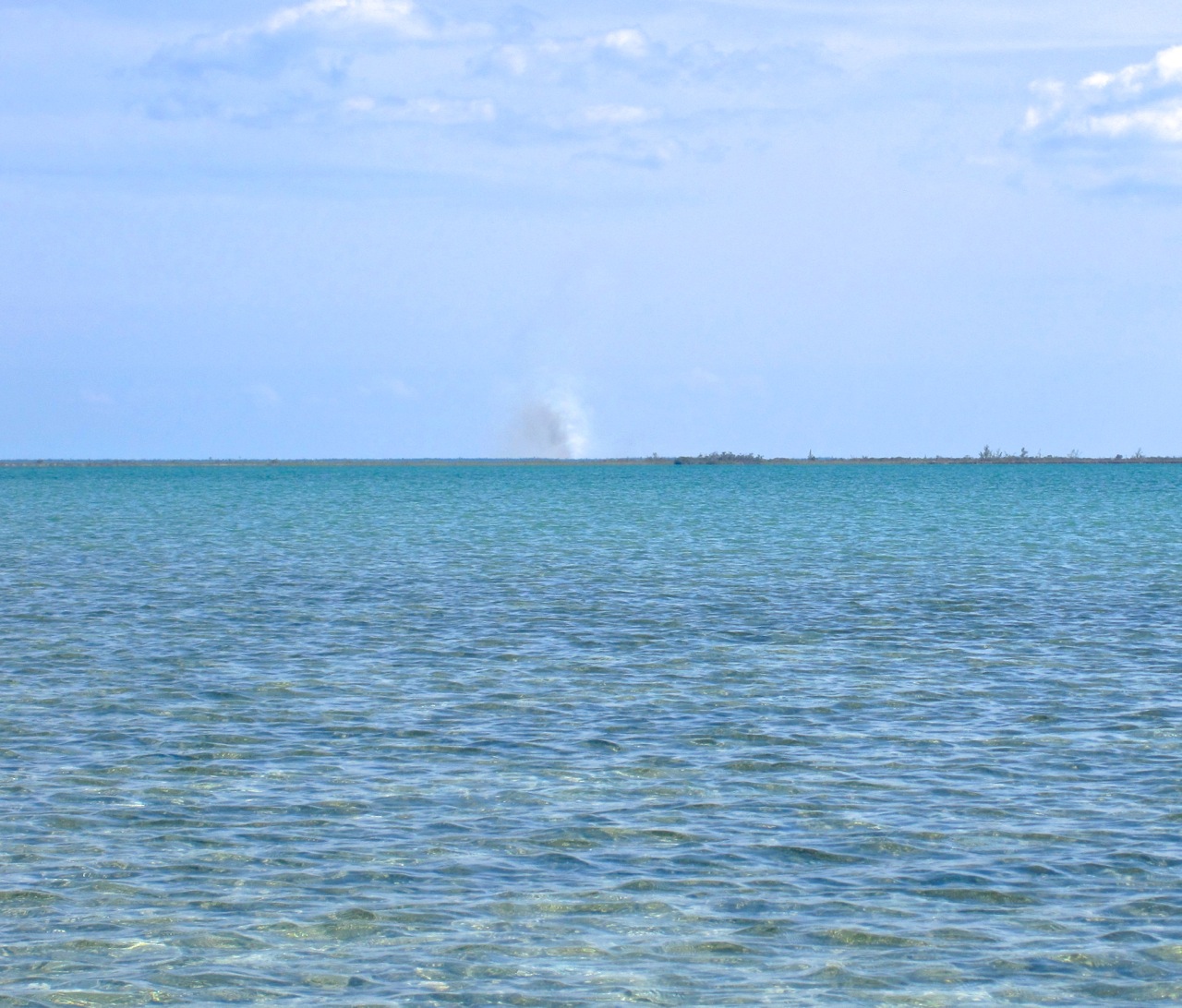
Later, out on the Marls, a plume of smoke is visible, with several more in either direction
Despite the widespread damage caused by the fires, the capacity for regeneration is amazing. New growth is visible very quickly, and within the year the burnt-out areas are mostly back to normal. I’ll end on that optimistic note, and with another dramatic sunset above the haze of smoke over the tree canopy.

1. BLUE HOLES
The Blue Holes of Abaco are geological wonders about which much has been written – much of it in the NATIONAL GEOGRAPHIC MAGAZINE. Sawmill Sink is one of the best-known inland ones; and there are other holes in the shallow seas on both sides of the island. They are deep chasms in the limestone rock, many leading to extensive and complex cave systems under the island. Divers exploring Sawmill Sink have found many prehistoric fossils, including those of an extinct giant tortoise, and land crocodiles. Most conveniently, this fascinating blue hole is close to Delphi, hidden deep in the pine forest and accessible only by historic logging tracks.
AERIAL VIEW OF SAWMILL SINK DEEP IN THE PINE FOREST
This article is not about Blues Holes in general, nor Sawmill Sink specifically. I have such a post planned, but for the moment I’ll put some relevant links at the end of this one. Feel free to scroll straight there if the cumbersome heading has already put you off… but in an effort to hold your interest, here’s an image of the Sink to give you an idea of what it looks like. There are wooden steps down and a platform to enable you to swim in it (there are no crocodiles these days. So they say…).
2. A LOGGING HISTORY
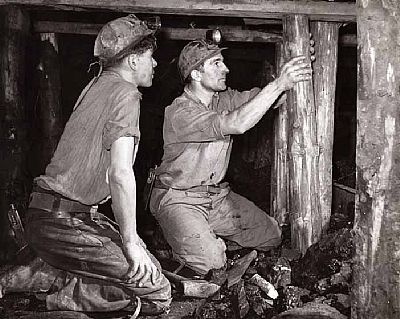
South Abaco – defined loosely as the area south of Marsh Harbour – is dominated by pine forest. There are a few settlements and individual residences, all by the coast. The forested swathes are criss-crossed by an extensive system of logging tracks, many now all but impassable. They are reminders of Abaco’s historic importance as a source of wood deriving from the ubiquitous tall, slim pines. One use to which they were put was as mine pit props in the collieries of Wales.
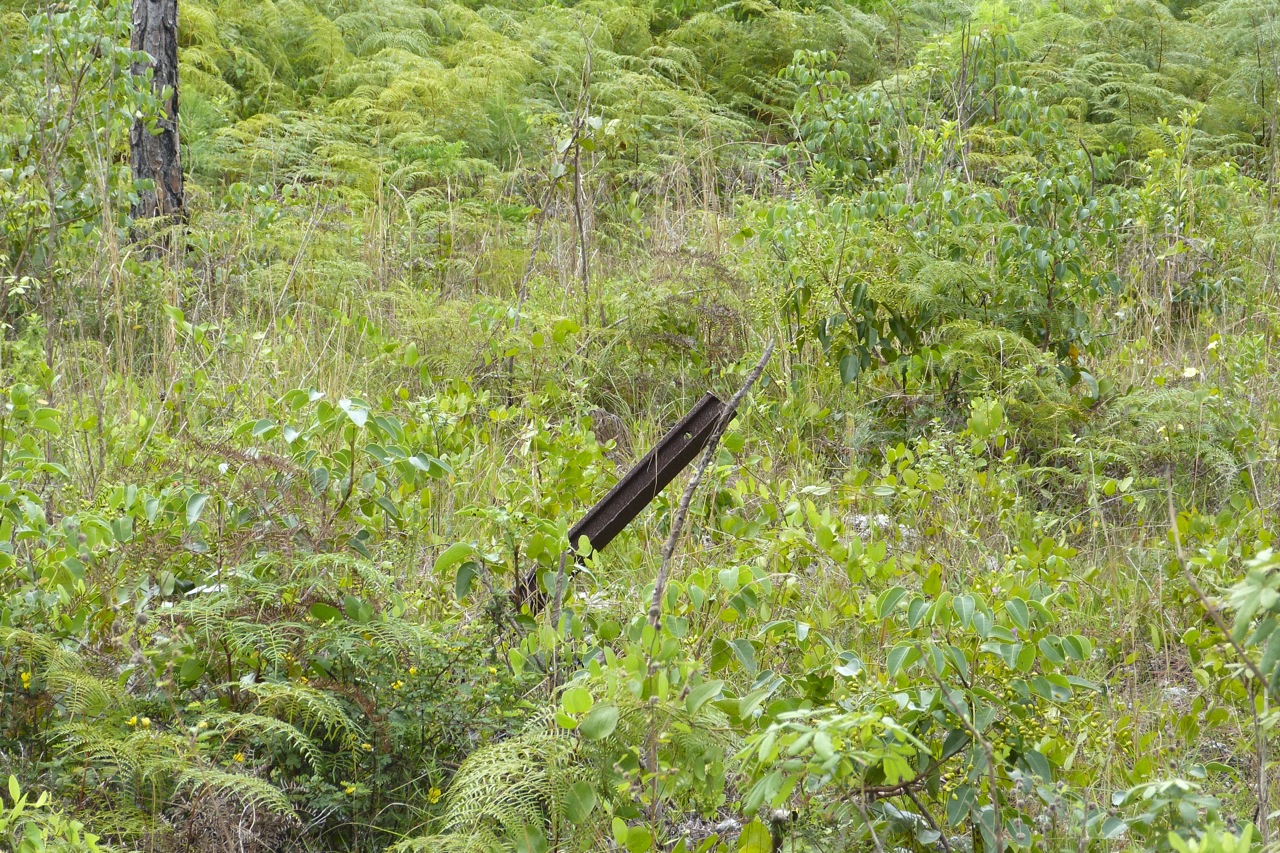
Last June when we went to Sawmill Sink, we saw a rusty rail sticking up from the undergrowth. We were with Ricky Johnson, the man who could invariably answer any question about Abaco; he explained that there had at one time been a light railway through the forest to carry the felled timber to the highway, where it was transported to the coast for loading onto ships.
Last month we returned to Sawmill Sink. The south part of the island was enduring the annual outbreak of forest fires, most (if not all) believed to be set by hunters wanting to clear to undergrowth to make hog-hunting easier. While the occasional natural fire is actually good for the forest (cf burning moorland), the set fires do great damage over a vast area. On some days there were 6 or more separate seats of fire appearing in one day – highly unlikely to be the work of nature. Thick palls of smoke drifted across the island, and out to sea. Even far out on the Marls, the fires were visible, with the smell of burning carried on the wind. This year, the fires came uncomfortably close to some of the settlements. Night-long community action was needed in some places to protect property. At Delphi, the fires came within 300 feet or so before finally fizzling out in the coppice… Two years ago, they came nearly as close. For a post-fire wander round the Delphi drive circuit click FOREST FIRES (it was one of the first, tentative posts on this blog – and boy, does it show… it needs a rethink)
DELPHI GUEST DRIVE: A WARM WELCOME
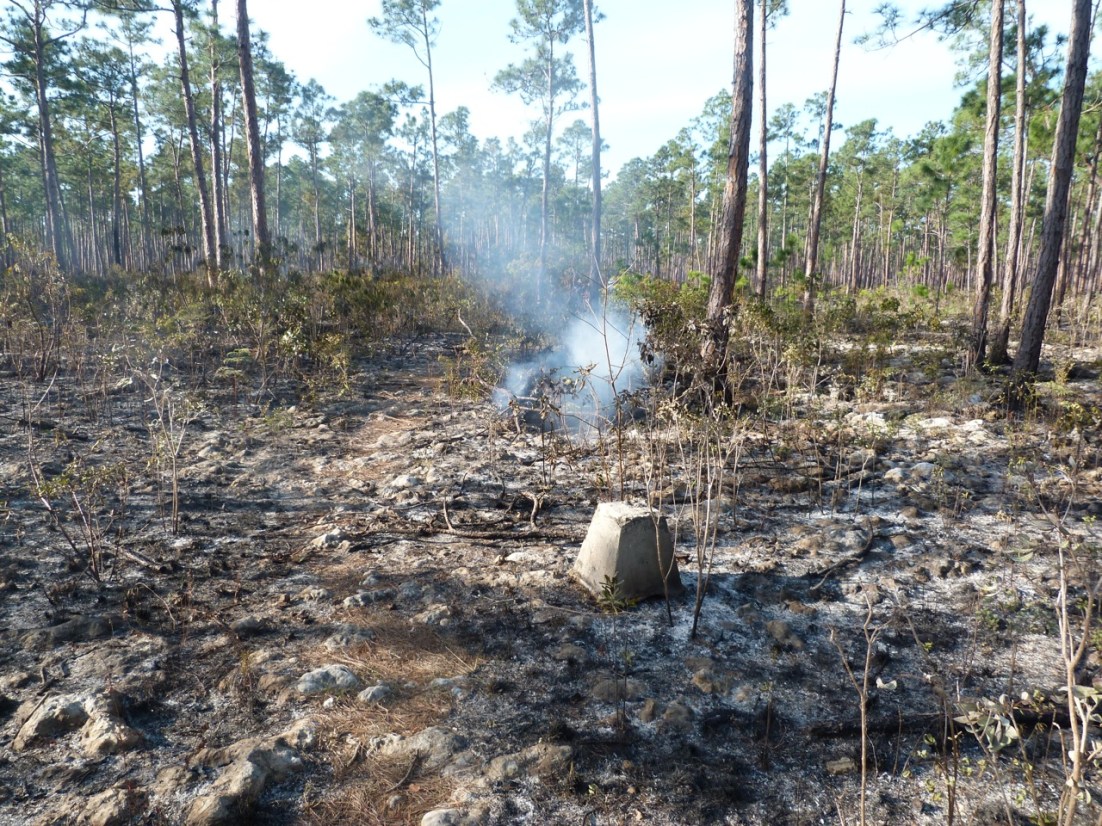
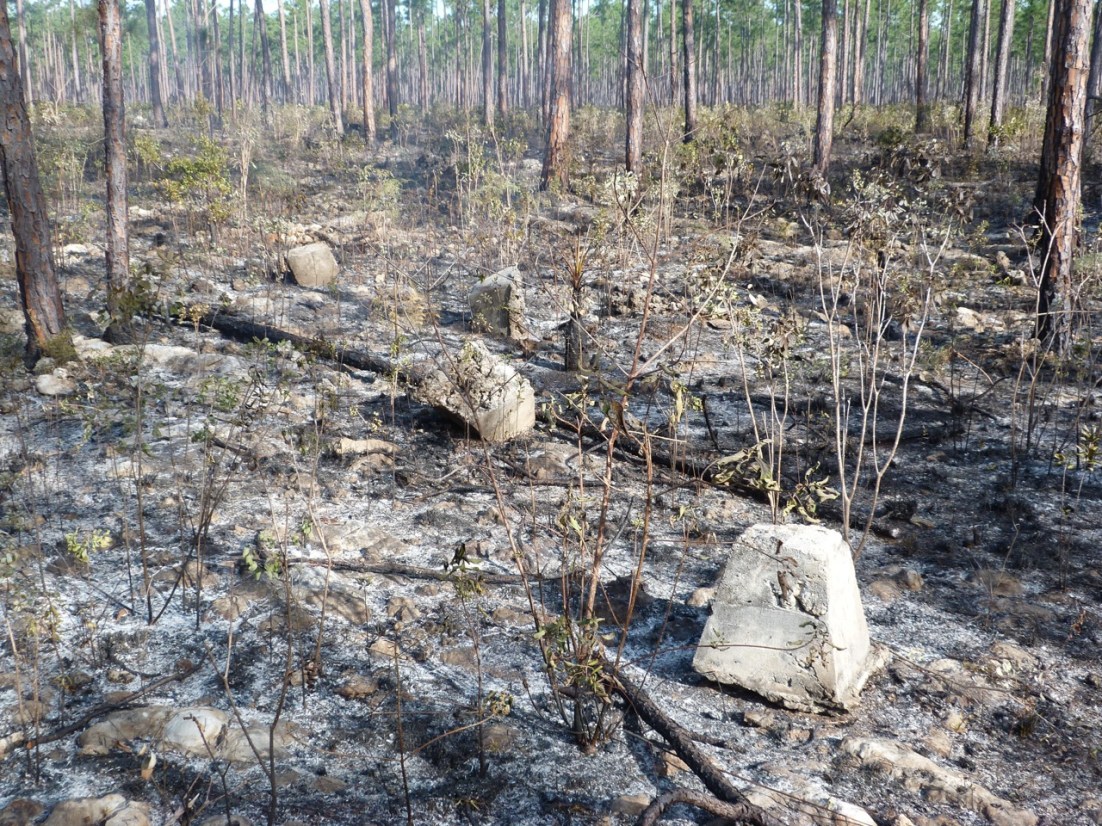
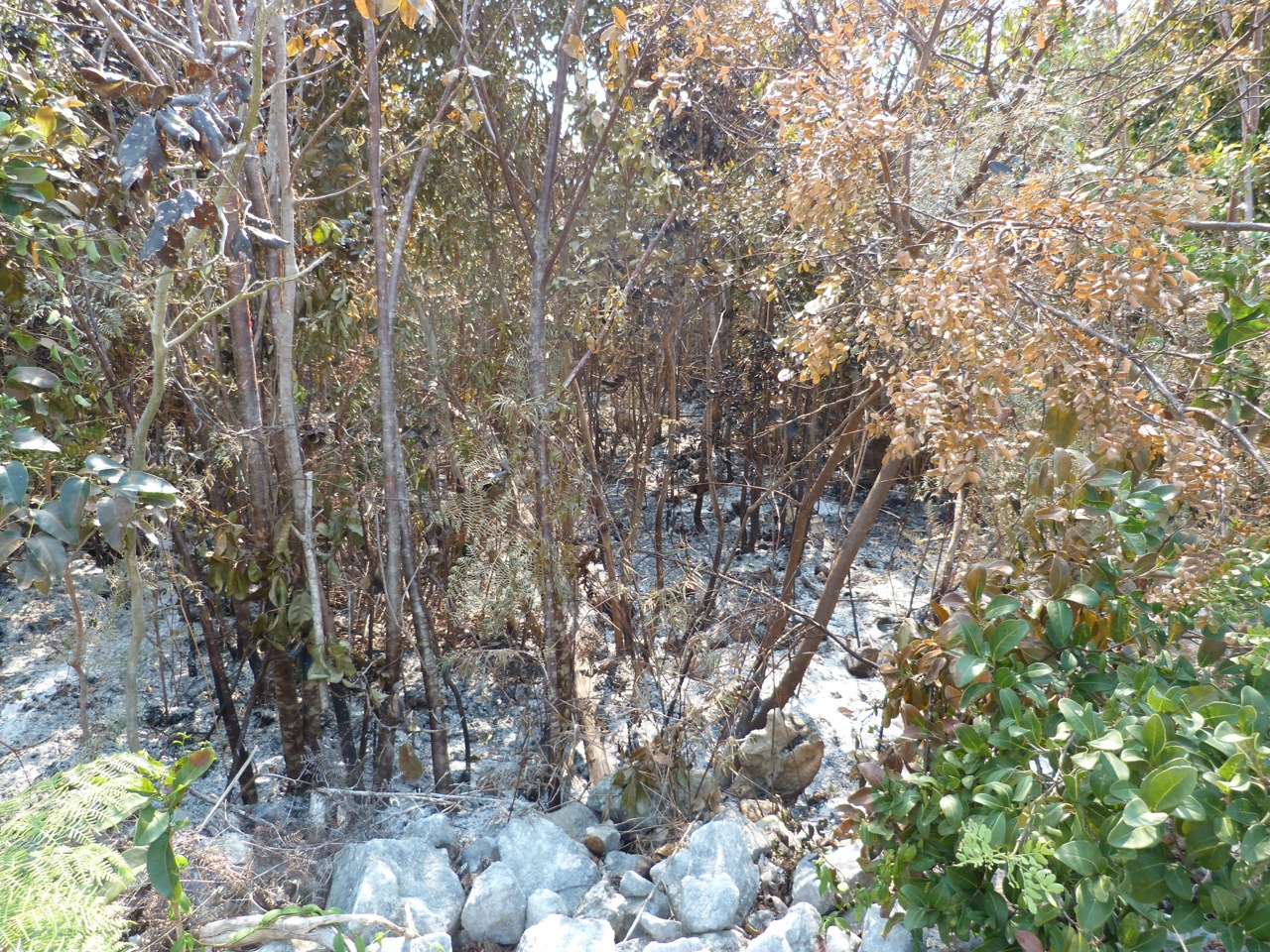
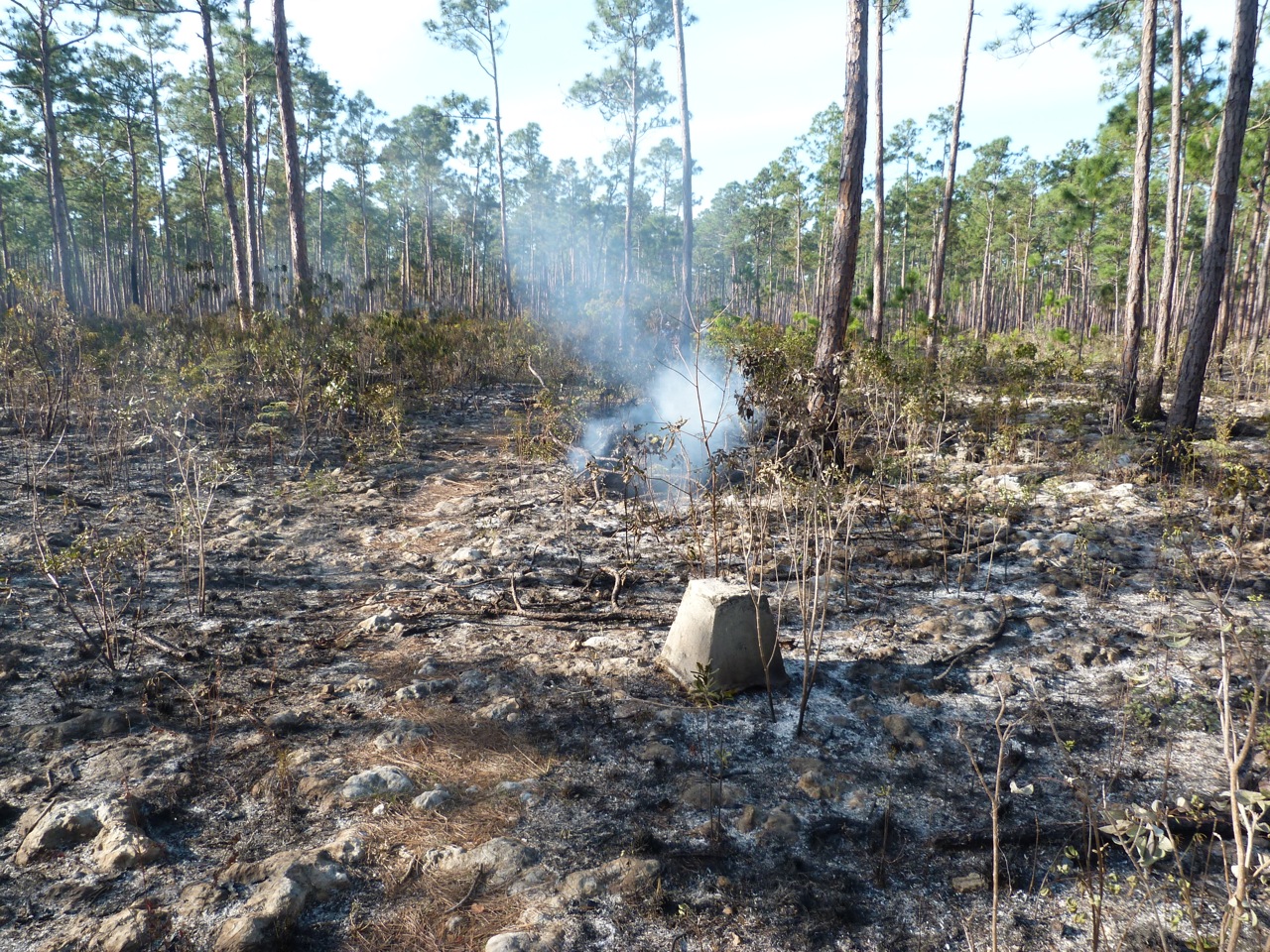
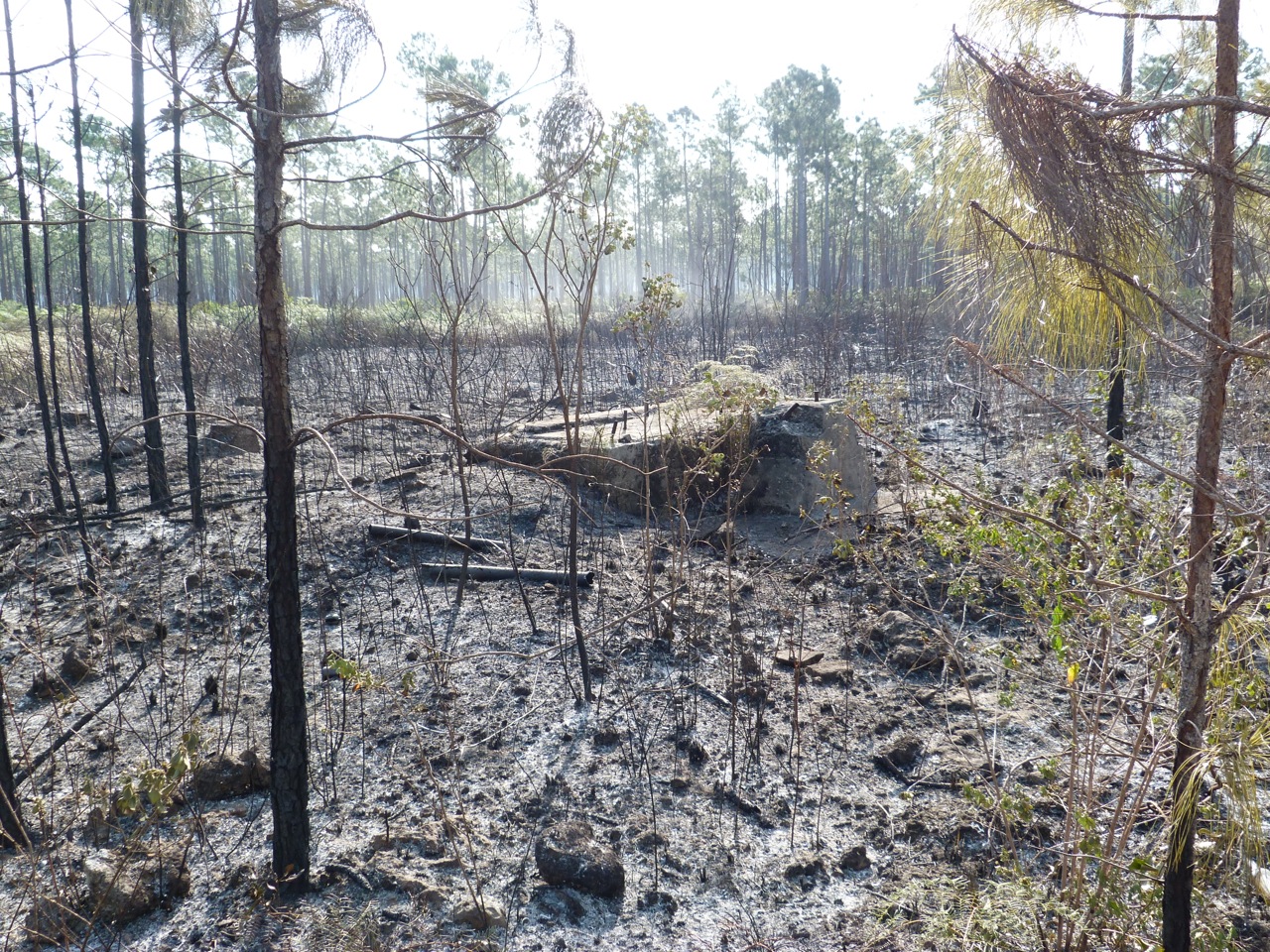
The photos that follow show the track to Sawmill Sink immediately after a fire had swept through the area. Trees were still smouldering and in places the ground was still hot to the touch. Along the way the evidence of the former usage had been laid bare. Some images show the paved path that leads from the logging track to the Sink. I have no idea if these are the first images of so many visible remains of the logging trade, revealed by the burnt-off undergrowth. I haven’t tracked down any others at all so far. I write as a non-resident of the island, so if anyone can add any information, please do so via the COMMENT box.

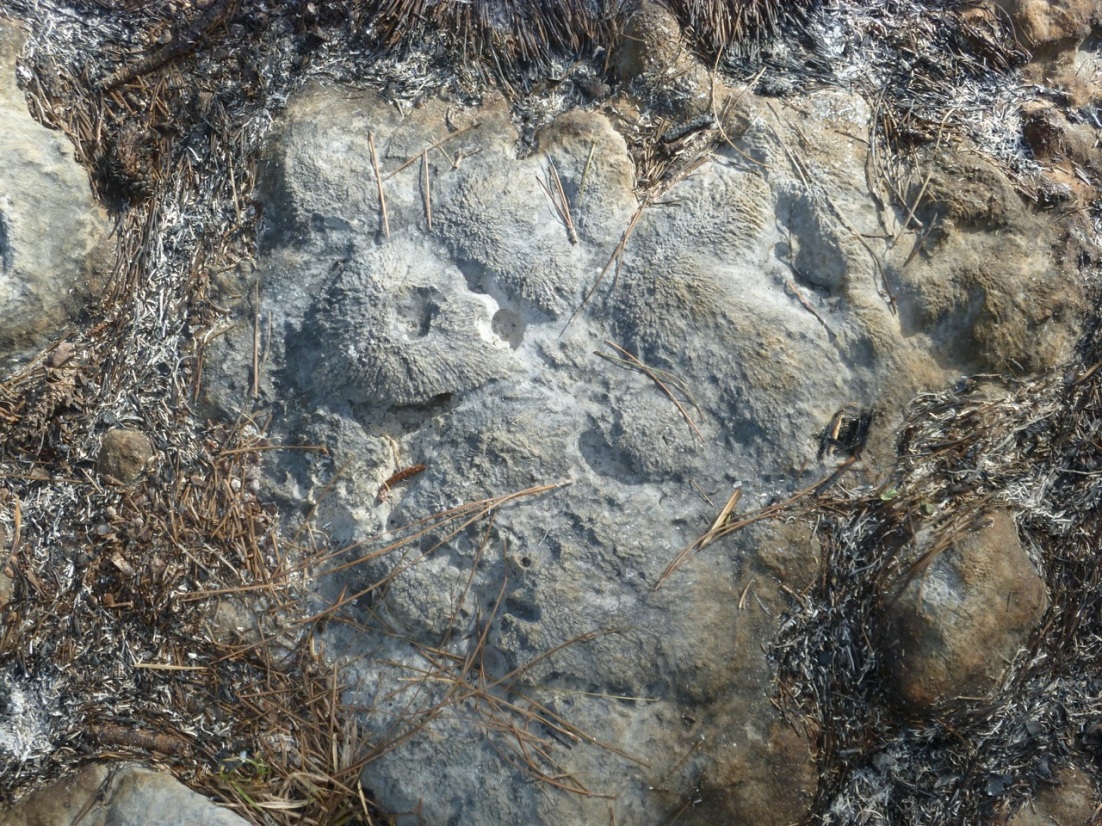
Finally, we found this rock close to the Sink. Are those plant fossils? Bearing in mind that sea probably covered this area entirely (the highest point on Abaco is a mere 134 feet ASL), might these be anemones or sponge fossils of some sort? Comments from fossilologists welcome.
STOP PRESS thanks to FOSSIL LADY (aka Kathi) for the following: “Those don’t look like plant fossils to me, they remind me of stromatolites, a sponge like creature that first dominated the earth billions of years ago. Some varieties still survive today. It would be worth it to have a geologist have a look see. ps the sinkhole is awesome!”
SOME BLUE HOLE LINKS TO EXPLORE
BAHAMAS CAVES RESEARCH FOUNDATION
FRIENDS OF THE ENVIRONMENT, ABACO
ADVANCED DIVER MAGAZINE ARTICLE
As a reward for having waded through the smoke and ash above, here’s a short video of what you can see if you dive in a blue hole. It’s worth saying (1) that you need to check you are allowed dive – some holes are subject to ongoing research and (2) blue hole diving and caving is an inherently unsafe activity unless you have the right equipment and know exactly (by which I don’t mean “hey, I can wing it”) what you are doing…
[vimeo http://vimeo.com/37838009]
Photo credits: all RH except header (adventureactivist, youTube); pit props (Scottish Mining Museum); aerial view (Gmaps)
BFGs. Birds of the coppice, garden, feeder… and beach (see below). I posted some images last year HERE and now I have a few more, taken recently. Although their name is promising at first glance, the Title pun-value of these little birds is low, so I’ve left it… While the males are indeed black-faced, and often -chested too, the females are a drab brown. Until you look closely. Then you’ll see the olive shades, and the pretty yellow streaks on the wings.

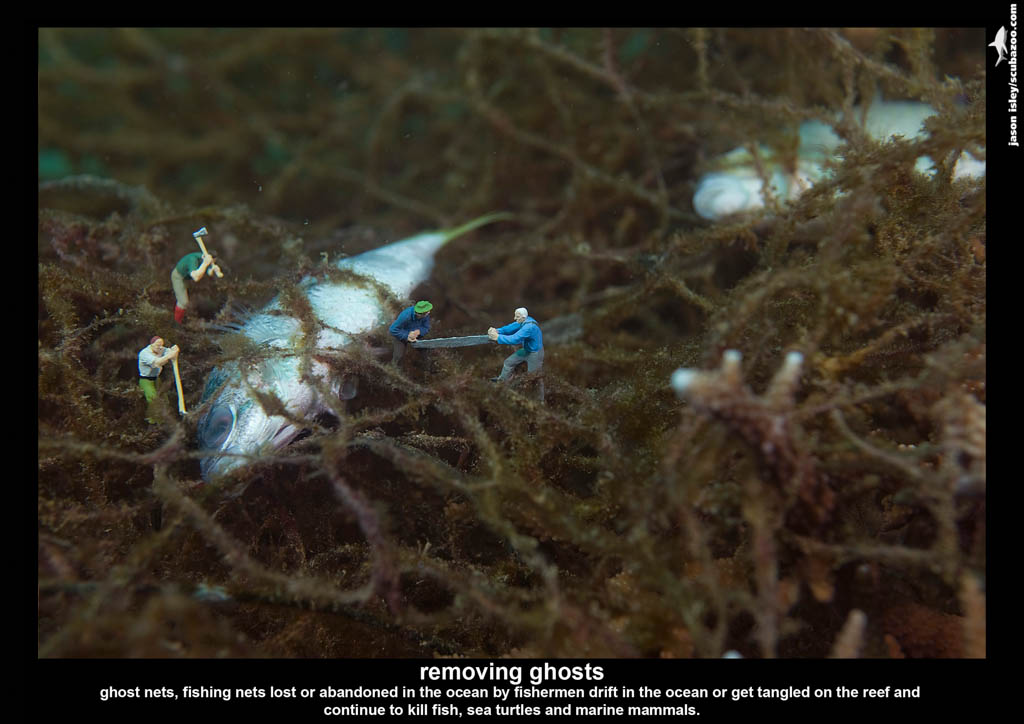
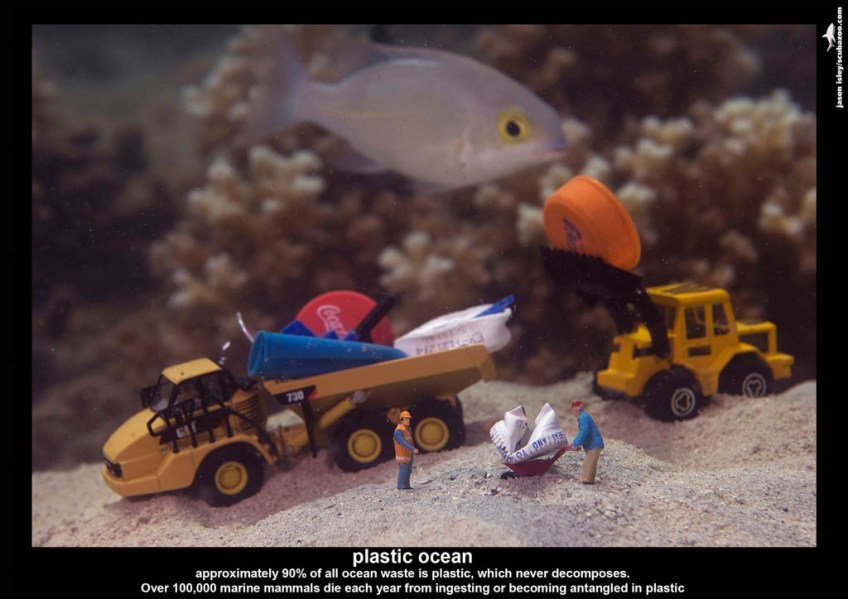
I keep an eye on the website SCUBAZOO. As ever, the alert ABACO SCIENTIST (highly recommended to follow) has beaten me to this latest post from Jason Isley, diver / photographer and creative thinker. He demonstrates the wonders and (human) blunders of the deep with wit and style. In the gallery below, he tackles the issue of man’s pollution of pristine waters. In a simple way, he manages to use humour to get across a message that can easily become obscured by lengthy sermonising. See what you think.
There are a number of insects on Abaco that demand human attention. The smallest and most persistent nuisances are the ‘no-see-ums’, tiny sandflies whose near-invisible size belies the effects of their bite. They seem impervious to many standard types of insect repellent. Different things work for different people. My method is to eat marmite (cf vegemite) on plain biscuits daily for 2 weeks before a visit to Abaco, and that does the trick. This year, I had a single bite (of course, if you hate marmite you’ll need another plan). See RECOMMENDED LINKS in the SIDEBAR under SAND FLY for more on this topic.
There’s a form of yellowish horsefly that can give you a bit of a nip. At the top end of the pain and discomfort scale is the PEPSIS WASP (Tarantula Hawk). I’ve only ever seen one, and if you do come across one be sure not to disrespect it (click link to see why…).
Until recently, I can’t say I’d ever noticed bees on Abaco. There are plenty of wonderful flowers that are visited for their nectar by the many species of butterfly and various kinds of bird (hummingbirds, bananaquits). Then, last month, I heard a distinct buzzing in a bush. Bees. Lots of them. I took a few photos, some of which are shown below. Then I began to notice them elsewhere. Everywhere. Compared to the european bees that I am familiar with (check out my BEE GALLERY), Abaco bees are much smaller – see how they look on the individual flower heads in the first few photos. These little creatures were constantly on the move. No sooner had one settled on a flower, than it moved on to the next one…
I kept an eye out for bumble bees, but saw none – indeed, I’m not certain there are any bumble species in the (northern) Bahamas, and I have found no references to their existence. Enlightenment on this topic welcome via the comment box.

There was plenty of pollen for the bees, though not all of it went into their what’s-the-correct-word-for-their-pouches (EST the Beekeper please can you help here?)
However most were managing to harvest impressive quantities to take back to the hive. It’s worth saying that these are all wild bees. I know of only one honey-producer in South Abaco (south of Marsh Harbour).
A successful foraging expedition… somewhat surprisingly this bee was still able to take off…
This is my favourite photo: there’s something about the expression on that little face that says “Ooooo. More good stuff in this one….”
Wild bees find a novel use for a woodpecker nesting box 

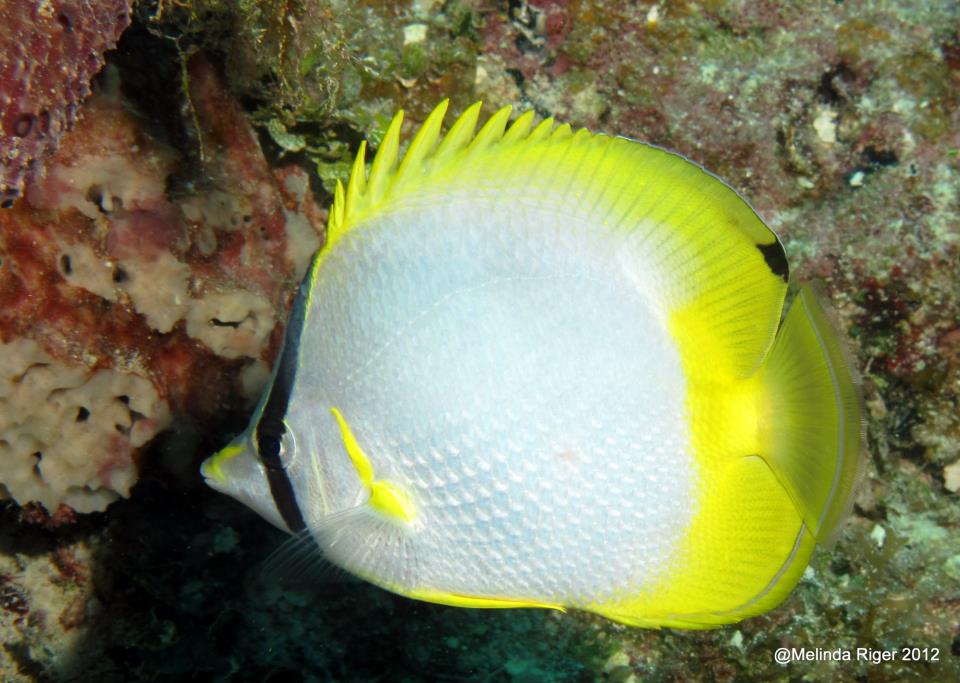
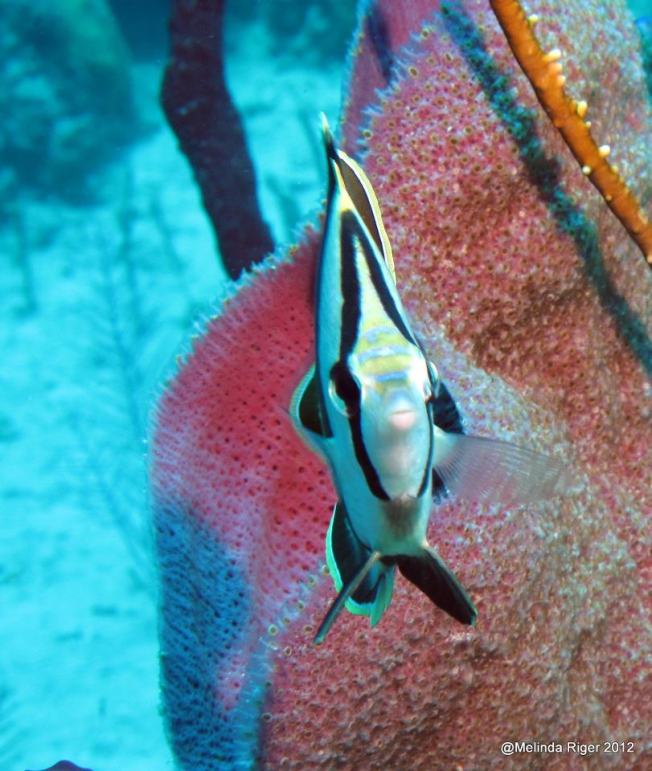
Butterflyfishes (Chaetodontidae) belong to a large worldwide family of small, colourful reef fishes. There are several sorts to be found in the Bahamas, of which 4 are shown below. These creatures resemble small angel fishes, and are invariably vividly coloured, strikingly patterned, or in many cases, both. Apart from that, the most interesting fact about them is that their species name Chaetodontidae derives from a Greek compound noun meaning ‘hair tooth’. This unsettling description relates to the rows of tiny, fine filament-like teeth inside their protuberant mouths. If I ever get a photo of a butterflyfish showing its teeth while feeding or yawning, I will add it here…
REEF BUTTERFLYFISH
BANDED BUTTERFLYFISH

Photo Credit: Melinda Riger, Grand Bahama Scuba
NOT THAT JAMES BOND. THE OTHER JAMES BOND. AND THE OTHER TYPE OF BIRD…
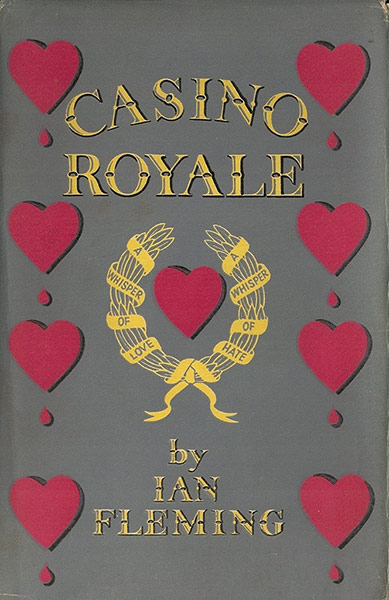
I usually try to avoid regurgitating previous posts, but today I feel it is justified. I posted the article below nearly a year ago. As it happens, tomorrow is the 60th Anniversary of the publication by Jonathan Cape of Ian Fleming’s first book in the extensive Bond franchise, ‘Casino Royale’. So it makes some sense to revisit the background to the naming of literature’s iconic special agent. I promise not to repeat this annually for ‘Live and Let Die’, ‘Moonraker’, ‘Diamonds are Forever’ and all the rest of them.
First, a quick plot reminder: “James Bond is sent to play against and bankrupt Le Chiffre, the paymaster for a SMERSH-controlled trade union, in a high-stakes baccarat game in France. With help from CIA agent Felix Leiter, Bond wins the game, but is betrayed by Vesper Lynd, a double agent (Ursula Andress in the 1967 caper; Eva Green in the 2006 remake). Lynd falls in love with Bond and, instead of betraying him, commits suicide.” (Source: I can’t reveal it, obviously. You can’t catch me out that way…)
First, mix a cool Vesper Cocktail (“shaken, not stirred”) HERE. Now read on…
JAMES BOND – THE ORNITHOLOGIST WHO LENT HIS NAME TO A FICTION LEGEND
Jamaica, 1952. The night was hot, too hot. Fleming cursed as he made his way up the steps to his neighbour’s verandah. He heard the clink of ice from within the house, and guessed that the rum punch was being mixed just the way he liked it. Stirred, not shaken. As he passed a low table on the verandah his eyes were drawn to a small book lying on it. Fleming paused, taking in the information, his senses suddenly alive. Bond. James Bond. A bird book about the avian species of the West Indies. Suddenly, it all made sense. Fleming knew now the direction he had to take, and with a thin smile he flicked back the insolent comma of dark hair that had fallen across his face and strode into the house towards the sound of the ice…
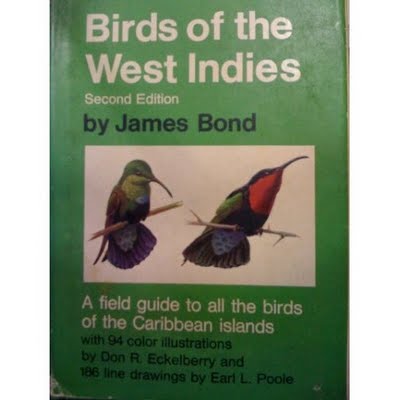
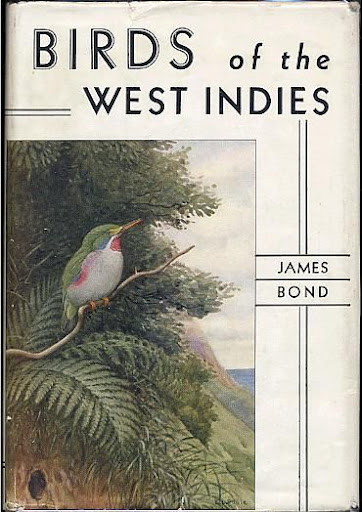
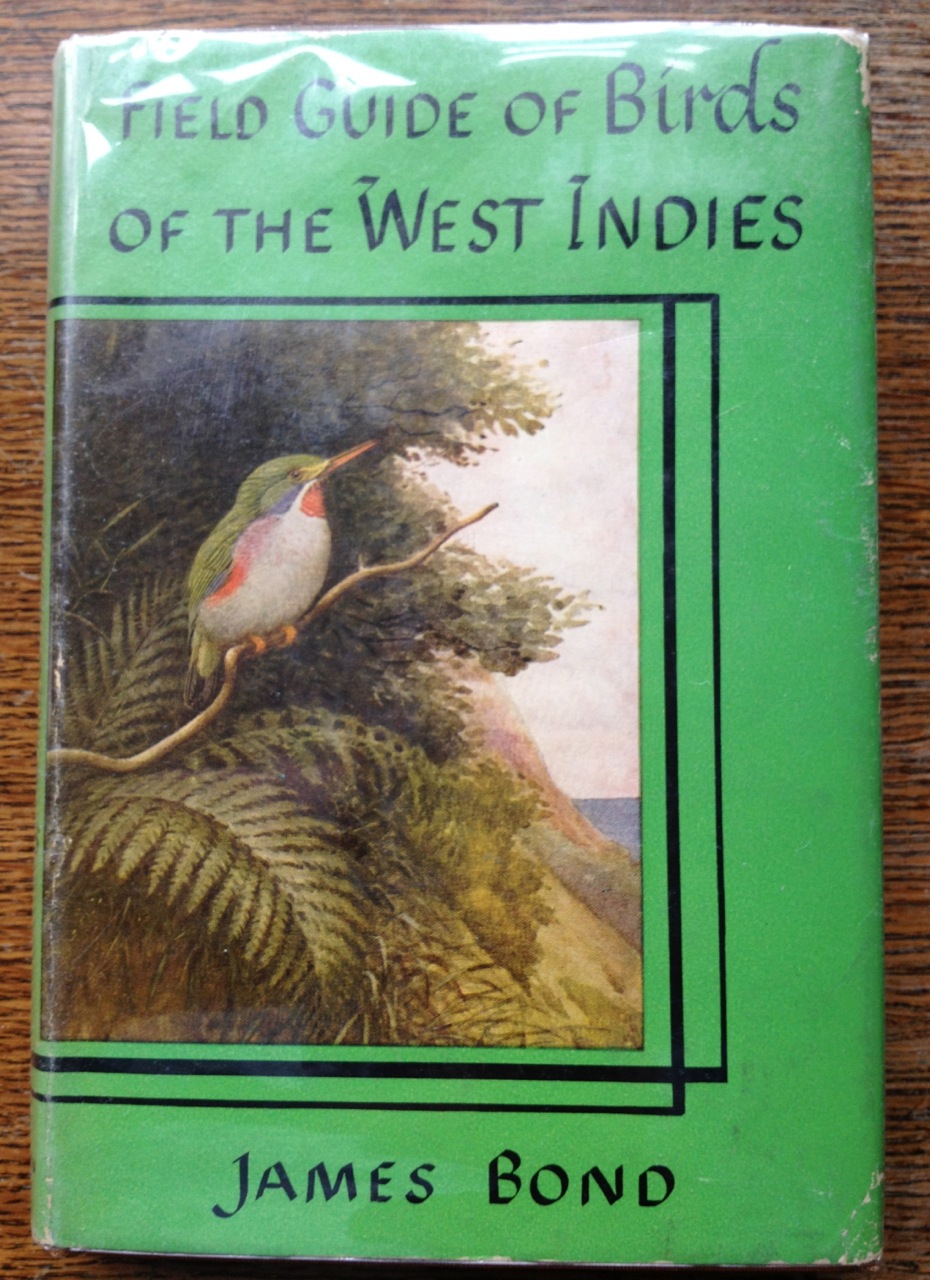
James Bond, ornithologist (1900 – 1989) was an expert on the birdlife of the Caribbean and wrote the seminal Birds of the West Indies, first published in 1936 and republished in varying formats ever since.
Ian Fleming lived in Jamaica and was a keen birdwatcher. The story goes that one evening, visiting friends, he saw ornithologist James Bond’s Birds of the West Indies on a table, and borrowed that short, punchy name for his fictional hero 007 for Casino Royale, published in 1953. He later said he wanted a name that sounded ‘as ordinary as possible’. In an interview, Fleming said “I wanted the simplest, dullest, plainest-sounding name I could find, and ‘James Bond’ was much better than something more interesting, like ‘Peregrine Carruthers.’ Exotic things would happen to and around him, but he would be a neutral figure — an anonymous, blunt instrument wielded by a government department.” Fleming wrote to the real James Bond’s wife “It struck me that this brief, unromantic, Anglo-Saxon and yet very masculine name was just what I needed, and so a second James Bond was born.” He also contacted the real James Bond about using his name in the books and Bond replied that he was “fine with it.” At some point during one of Fleming’s visits to Jamaica he met the real Bond and his wife. The meeting was recorded for a documentary.

FACT, FICTION & IN-JOKES
In Dr No Fleming referenced Bond’s work by basing a large Ornithological Sanctuary on Dr No’s island in the Bahamas. In 1964, Fleming gave Bond a first edition copy of You Only Live Twice signed “To the real James Bond, from the thief of his identity”. In the 2002 Bond film Die Another Day the fictional Bond can be seen examining Birds of the West Indies in an early scene that takes place in Havana. However the author’s name (James Bond) on the front cover is obscured. In the same film, when Bond first meets Jinx, he introduces himself as an ornithologist.
Ian Fleming Lived Here in Jamaica **
Needless to say, the name James Bond has a familiarity beyond just the birding world. Several myths and slight distortions have grown related to how this name has been transmogrified from ornithologist to international spy.
In 1966, Mrs James (Mary Wickham) Bond wrote a 62-page book How 007 Got His Name that outlined the circumstances which led to the use of Mr Bond’s name in the series of books written by Ian Fleming.
As noted on pp. 16-17, Dr. Bond first became aware of his new recognition in 1961. This was after seven spy thrillers had already been published and were just becoming popular in the US.
Mrs Bond wrote a light-hearted letter to Mr Fleming on February 01, 1961 to make note that he had “…brazenly taken the name of a real human being for your rascal!” (p.18). A return letter by Mr Fleming was most gracious and apologetic.
In this reply, (contained in full in Mrs Bond’s book), Mr Fleming wrote, “I will confess at once that your husband has every reason to sue me in every possible position and for practically every kind of libel in the book, for I will now confess the damnable truth.” (p.21).
He then provided an explanation of how he selected his character’s name for the first book in 1953: “…I was determined that my secret agent should be as anonymous a personality as possible…At this time one of my bibles was, and still is, Birds of the West Indies by James Bond, and it struck me that this name, brief, unromantic and yet very masculine, was just what I needed and so James Bond II was born…”
Mimicking Mrs Bond’s light-hearted approach, Mr Fleming continued his reply with this unique offer: “In return I can only offer your James Bond unlimited use of the name Ian Fleming for any purpose he may think fit. Perhaps one day he will discover some particularly horrible species of bird which he would like to christen in an insulting fashion.” (p.22).
Mr Fleming also offered the Bonds an open invitation to visit his residence in Jamaica and to visit the birthplace of the second James Bond.
Iam Fleming and the real James Bond met only once, which was February 5th, 1964. This was in Jamaica, six months before the death of Mr. Fleming.
This short book by Mrs Bond is a nice, quick read. I appreciate it for the first-hand accounts of the historical beginnings of Bond vs Bond as opposed to the hearsay and myths created over time. The book also offers entertaining stories of how James Bond dealt with his new popularity and the avid “fans” upon their discovery of his name. (RH note: copies occasionally appear on eBay, Am@z@n, & ABE)
(Source credits: The Quarterly, Wiki & kin; Feeble Intro Pastiche: RH)

I took photos of this tiny bird at BPS last month. They were ‘chance’ pics taken when we were photographing parrots in the tree tops. The hummer suddenly appeared some way ahead of me, so I swivelled the camera at it without changing any settings. Frankly, I didn’t expect the results to show more than a small green blur, but they have turned out slightly better than anticipated. I put these images on my subsidiary ‘Gallery’ site and people seem to like them so I’ve decided to add them here too. After all, it’s their true home, I suppose, with the other Abaco wildlife. Apologies to those who have seen these already on the other site. The images are exactly as taken – no colour tweaking, no sharpening, no photoshop – and may not stand enlargement or close scrutiny, because I was several yards away. On the other hand they give a good idea of how this bird feeds. The body postures are very characteristic, and besides, the plants are pretty… 


And to end with, not a shell but a somewhat unattractive head shot…
BEAUTY PARADE
UGLY BUG BALL…
Can anyone ID this? It’s not what I thought… *later* yes they can! See comments for the debate
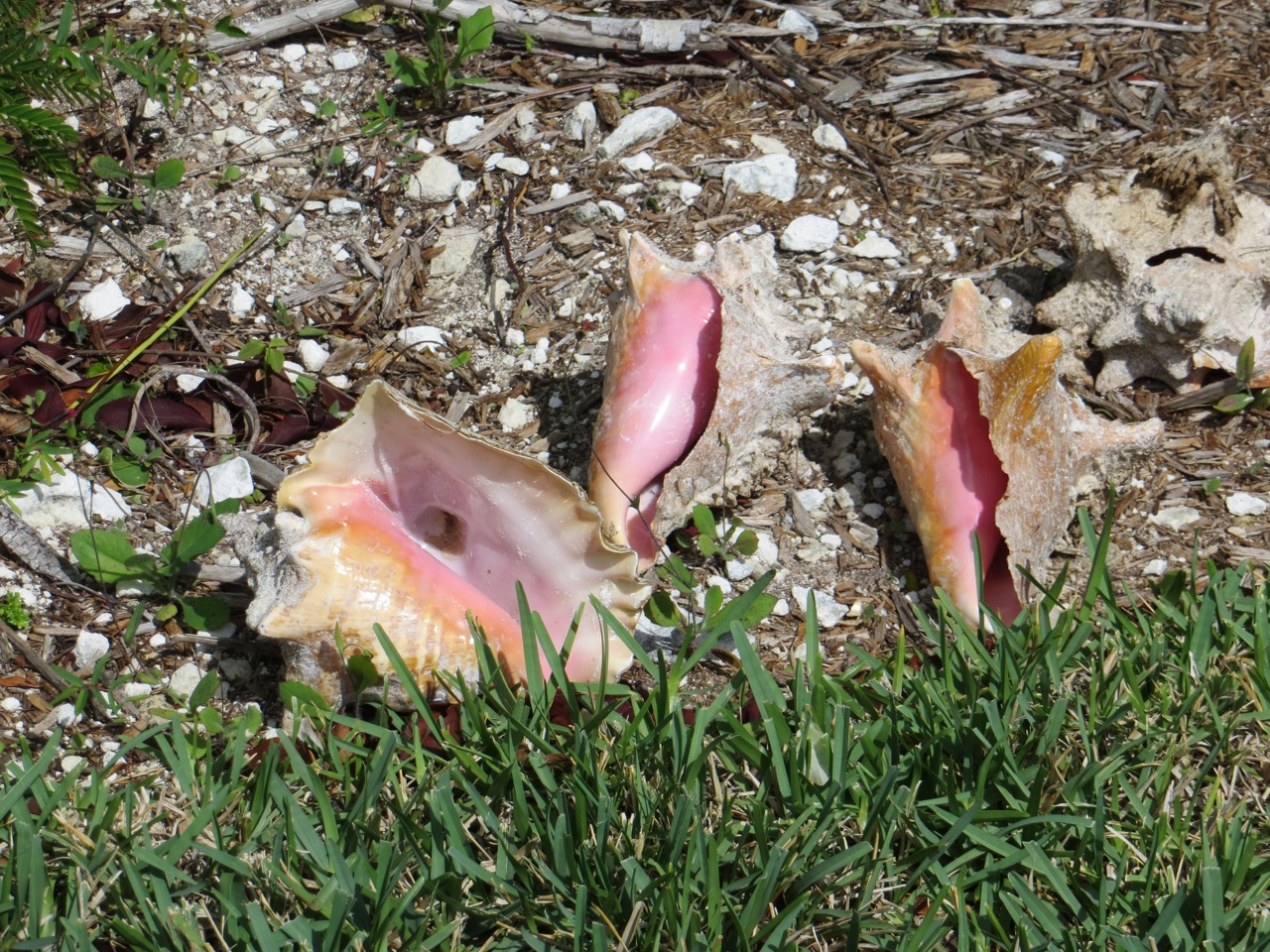
All shells – & the spider crab carapace – collected from the beach at Casuarina
You must be logged in to post a comment.