Unknown's avatar

WATCHING NURSE SHARKS: BE PATIENT…


nurse-shark-8-16-melinda-riger-gb-scuba

WATCHING NURSE SHARKS: BE PATIENT…

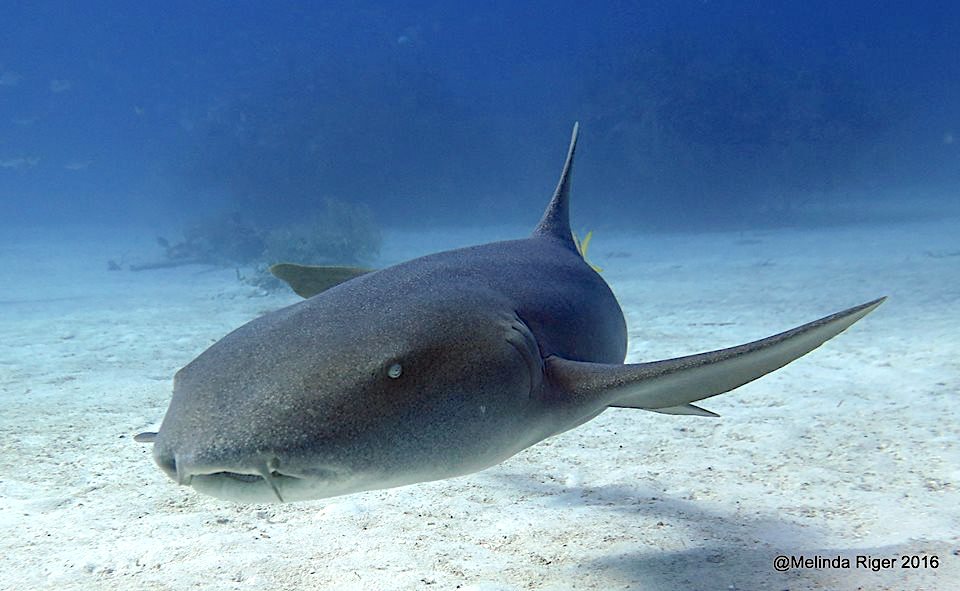
I last took a look at nurse sharks nearly 3 years ago HERE. Time to revisit these creatures. Indeed, time for a close-up look. If you want to know more about this fascinating species, just click the link above.
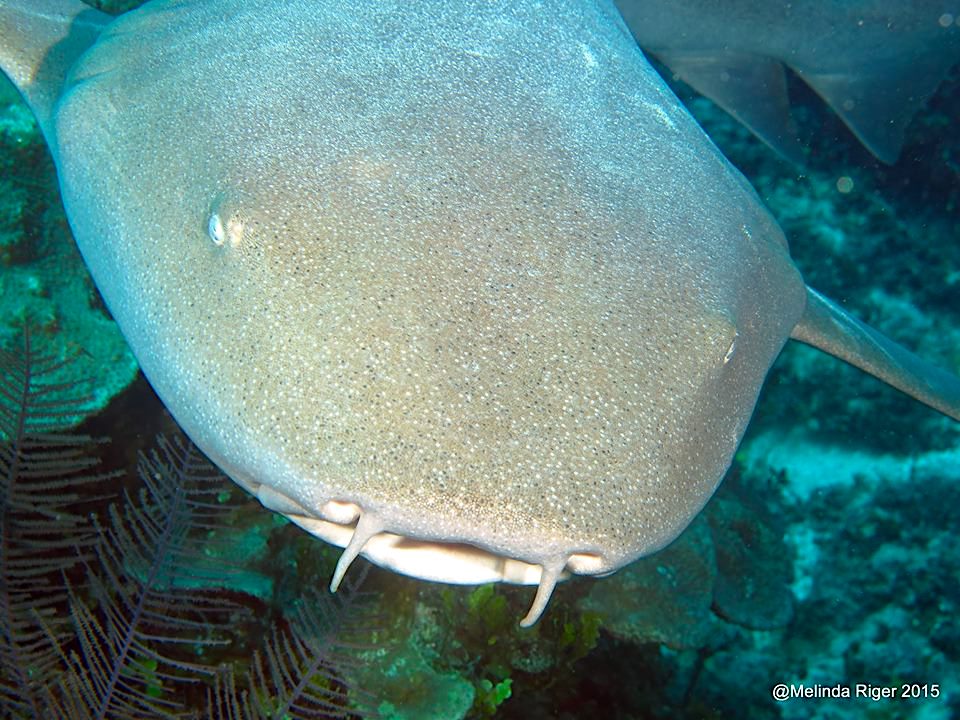
The two strange items hanging down from the upper lip are sensory barbels
nurse-shark-melinda-riger-g-b-scuba

This side-view shows the shark’s relatively small mouth (for a shark anyway)nurse-shark-a-melinda-riger-gb-scuba

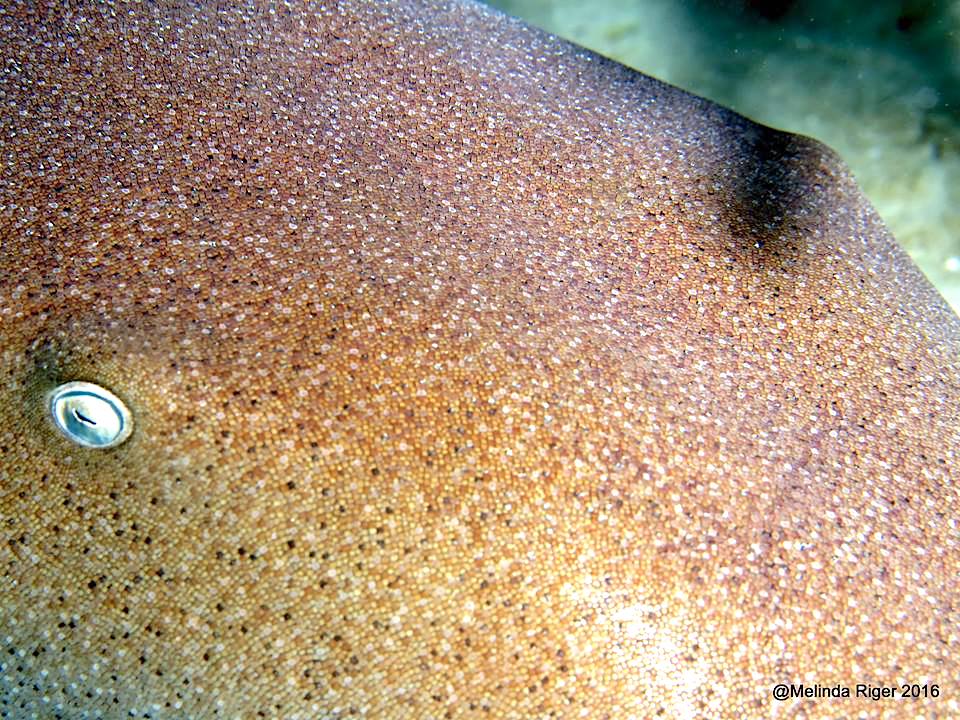
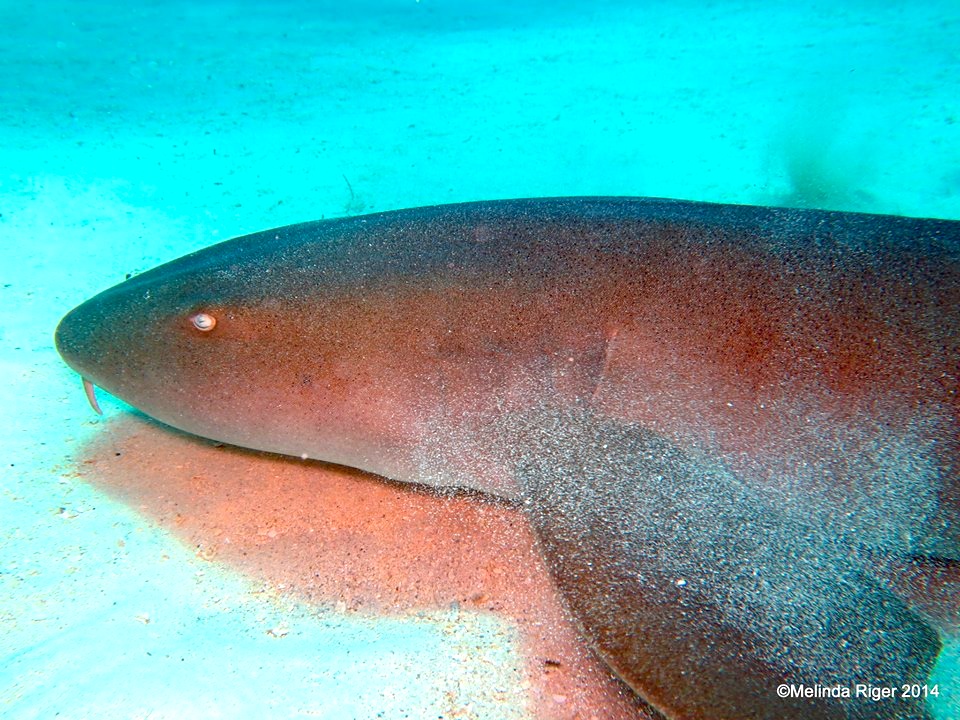
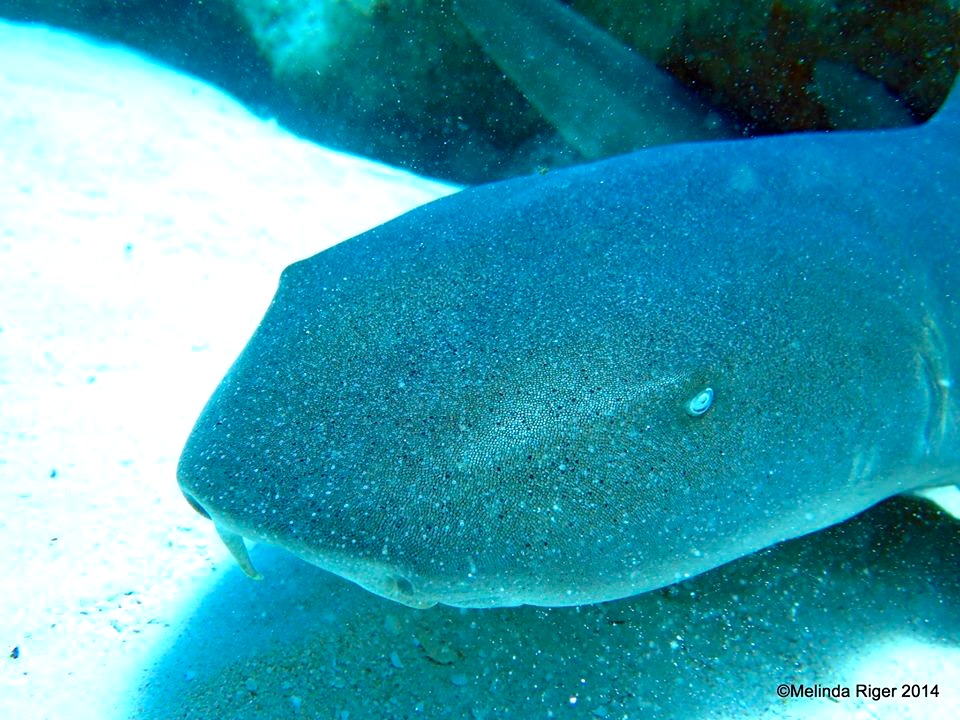
Admire the extraordinary texture of the the skin; and the tiny evil eye. Click or – better – double click on the image and you will see that the skin is in fact tessellated, made up of a mosaic of tiny squares and near-squares**nurse-shark-close-up-melinda-riger-g-b-scuba

This one is a baby nurse sharknurse-shark-baby-melinda-riger-gb-scuba

A juvenile nurse shark with a couple of grunts. Note the youngster’s paddle-like finnurse-shark-juv-melinda-riger-g-b-scuba

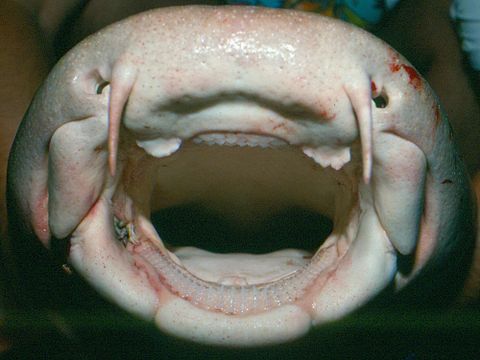
Head, mouth, jaws and teeth

 ginglymostoma_cirratum_head  

nurse-sharks-x2-plus-reef-sharks-melinda-riger-g-b-scuba

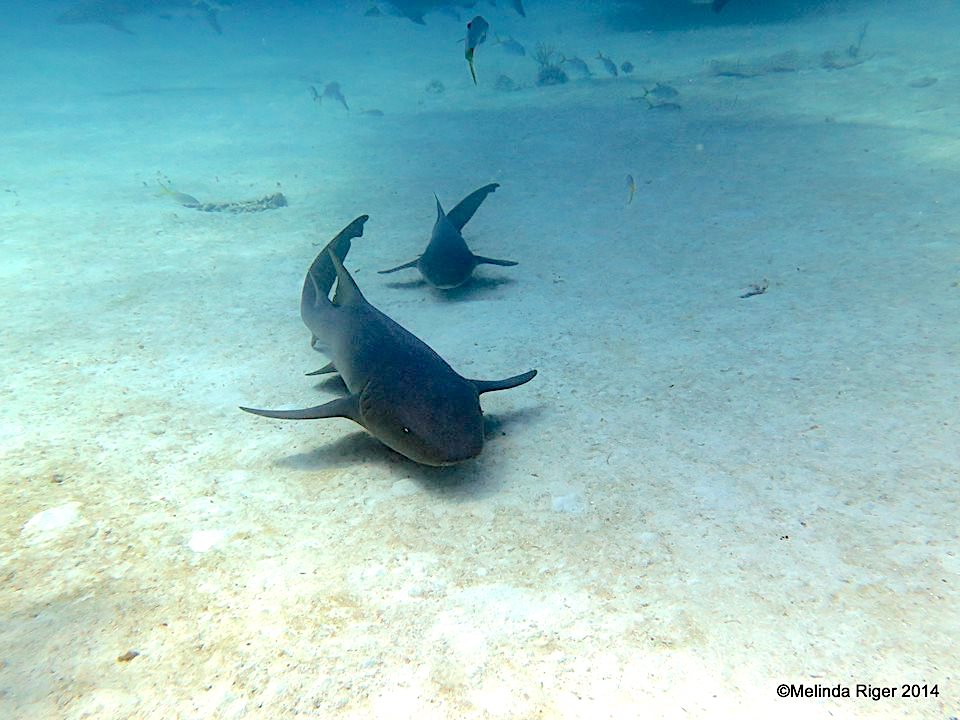
SO, THEY ARE SHARKS – ARE THESE GUYS DANGEROUS?

Not really, no. They aren’t looking to pick a fight; and they are not as territorially aggressive as the ‘bitey’ sharks are (or can be).  These slow-moving bottom-dwellers are generally harmless to humans. However, they can be huge—up to 4 metres —and have very strong jaws filled with thousands of tiny, serrated teeth. They will bite defensively if stepped on or bothered by divers who assume they’re docile. [As I said previously, “there are recorded instances of injuries caused to divers who have tried to pull nurse sharks by the tail. And serve them right, I say. Treat them with patience and respect!”] 

Nurse Shark ©Melinda Riger @ G B Scuba copy

**FUN FACT

M.C. ESCHER (the inspiration for Mr Hammer) was the master of tessellation in art. Click the link to explore the dedicated website. Maybe, sensationally, one day a shark will be found with skin like this… (Alert reader: “Actually, I think it most unlikely…”)

Escher fish

Credits: field photos by Melinda Riger, Grand Bahama Scuba; Wiki for the 4 mouth images & the Escher 

Nurse Shark ©Melinda Riger @ Grand Bahama Scuba

Unknown's avatar

CHRISTMAS TREE WORMS: FABULOUSLY FESTIVE


christmas-tree-worms-adam-rees-scuba-works-copy

CHRISTMAS TREE WORMS: FABULOUSLY FESTIVE

music-notes-clip-art-png-music“Deck the Reefs with Worms Like Christmas Trees… Fal-La-La-etc-etc ” is a traditional Carol familiar to all. Well, most. Ok, some, then. Oh right – maybe with different words. Anyway, now is as good time as any to take a look at these remarkable plants creatures and subsurface symbols of good cheer.

christmas-tree-worm-melinda-riger-g-b-scuba

10 CHRISTMAS TREE WORM FACTS TO PONDER

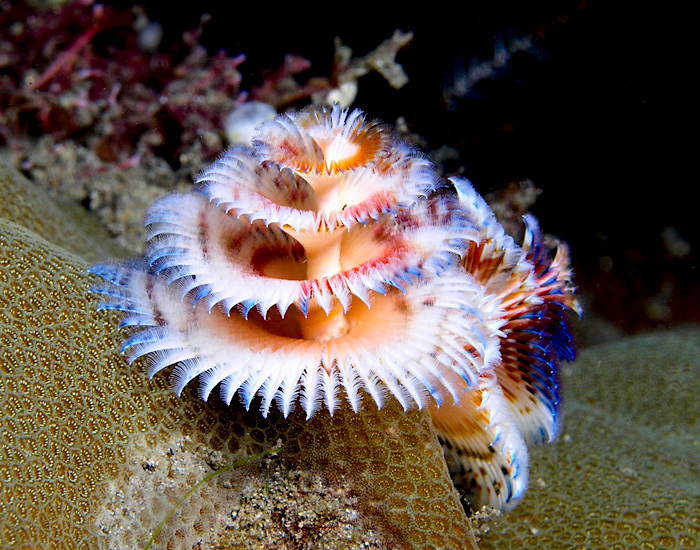
  • The 2 colourful spirals are not the worm, but complex structures for feeding & respiration
  • The spirals act as specialised mouth extensions for ‘filter-feeding’
  • Prey is trapped by the feathery tentacles & guided by cilia (microscopic hairs) to the mouth
  • The tentacle things are radioles and act as gills for breathing as well as prey traps
  • It is not believed that prey slide down the spiral to their doom, like on a helter-skelter

christmas-tree-worms-melinda-riger-g-b-scuba

  • The actual worm lives in a sort of segmented tube, with extremely limited mobility skills
  • It contains digestive, circulatory & nervous systems – and a brain in the middle of it all
  • The worm also has a tiny drainage tube (I think I have this right) for excretion etc
  • They embed themselves into heads of coral such as brain coral. And stay there
  • And yes, the Christmas trees are retractable…

spirobranchus_giganteus_orange_christmas_tree_worm-nick-hobgood-wiki

HOW DO THE WORMS… YOU KNOW…  ER… REPRODUCE?

This is a delicate area. They don’t tend to talk about it much, but as far as I can make out they eject gametes from their what-I-said-above. There are mummy and daddy CTWs, and their respective gametes (eggs and spermatozoa) drift in the current and presumably into each other to complete the union. The fertilised eggs develop into larvae, which settle onto coral and burrow into it, build their protective tubes and the process begins again.

christmas_tree_worm-nick-hobgood-wiki

LOOK, YOU DON’T REALLY UNDERSTAND THESE CREATURES, DO YOU?

I won’t lie. I found it hard to work out how the CTWs function in practice. There are plenty of resources showing them in their full glory, but that only takes one so far. Then I came across a short video that shows it all brilliantly simply (except for the reproduction part). So maybe I should have just posted this first and saved you (and me) some trouble…

The worm, invisible in its coral burrow, hoists its pair of trees. You can easily see small particles – possibly zooplankton – drifting in the water, and the radioles swaying to catch potential food. Bingo. It all makes sense! Next: the New Year Worm

Credits: Melinda Riger (G B Scuba); Adam Rees (Scuba Works); Nick Hobgood; Betty Wills; Absolutely Wild Visuals; MarineBio; Wikibits & Magpie Pickings

blue_christmas_tree_worm-betty-wills-wiki

Unknown's avatar

WTF? (WHAT’S THAT FISH?) 12: THE TRUMPETFISH


trumpetfishmelinda-riger-gb-scuba

WTF? (WHAT’S THAT FISH?) 12: THE TRUMPETFISH

It’s been a while since the previous post in the WTF? series, dedicated to the unusual or downright weird marine creatures that, when you see them swim into in the frame of your mask, prompt the involuntary exclamation “WTF?” (What’s That Fish?). Now, in all its glory meet… The Trumpetfish. These long piscine pipes are in no way related to the President-Elect and his tank of pet fish, but perhaps more explicably to seahorses and seadragons.

trumpetfish-melinda-riger-g-b-scuba

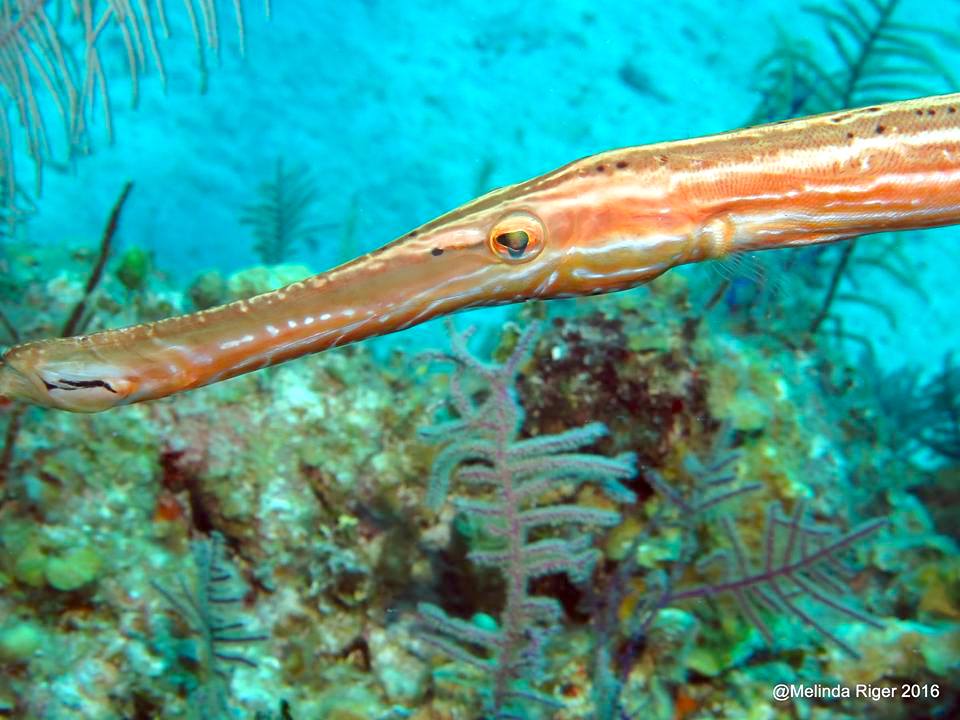
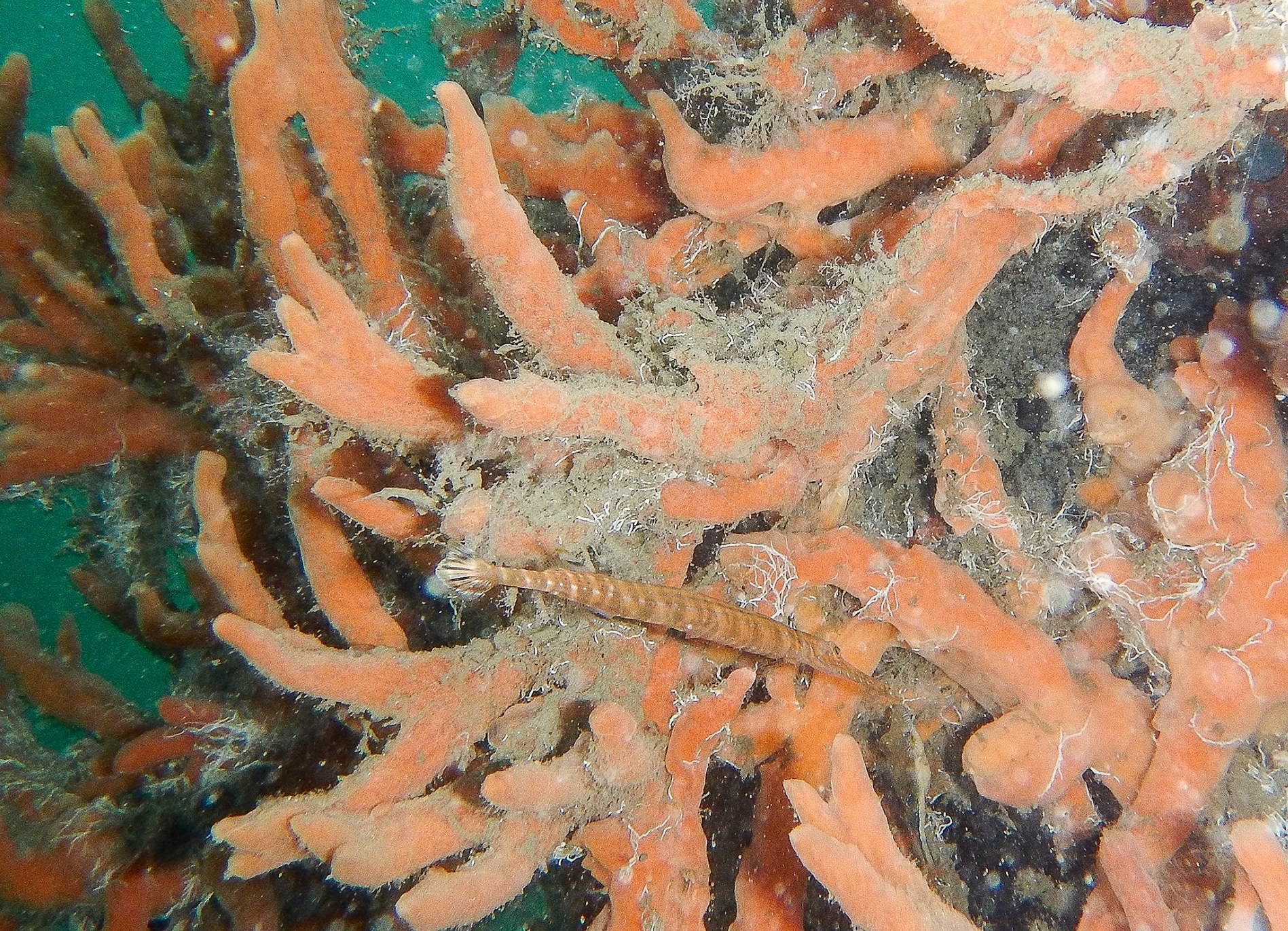
Trumpetfishes Aulostomus maculatus are as happy to swim upright as more conventionally, which helps them to blend in with vertical corals and sponges on the reefs in the tropical waters of the western Atlantic. Adults may grow to 3 foot long or more. These creatures come in a variety of colours – shades of red, orange, brown, green and yellow.

trumpetfish-adam-rees-scuba-works_

At the end of the fish’s long snout – see how far back the eyes are set – is a small mouth. Here’s how a trumpetfish goes about catching its prey (mostly small fishes):

  • Slowly swimming or drifting to a target from behind, and sucking it into its mouth
  • Staying suspended in the water, motionless, and waiting like a malevolent stick for a passing wrasse or similar to get too close
  • Swimming alongside larger fishes, which camouflages its presence and enables it to ambush small fish as they pass 
  • More generally, the trumpetfish has some ability to change its colour to blend with its surroundings – both a defensive as well as an attacking advantage

Trumpetfish (Adam Rees / Scuba Works)

The very excellent Peppermint Narwhal recently produced a series of posters in appreciation of particular species – and trumpetfishes and their kin in the Order syngnathidae were honoured. The PN’s cheerful website is well worth checking out for the sheer diversity of their ideas.

14991470_1159096584183417_5198894741175308852_o

MUSICAL NOTES

We are beginning to collect the makings of a decent orchestra here. The trumpetfish has a relative, the cornetfish, elsewhere in the world. The remarkable GUITARFISH has already featured in the WTF? series, as has a species of BASS, the Harlequin. And – hey! – what about the spotted DRUMFISH to lay down the beat? Maybe I need to compose a little jingle featuring these one day…

Credits: Melinda Riger (Grand Bahama Scuba); Adam Rees (Scuba Works)

Unknown's avatar

FAIRY BASSLET (‘MIND YOUR GRAMMA’): BAHAMAS REEF FISH (33)


fairy-basslet-melinda-riger-g-b-scuba-copy-2

FAIRY BASSLET (‘MIND YOUR GRAMMA’): BAHAMAS REEF FISH (33)

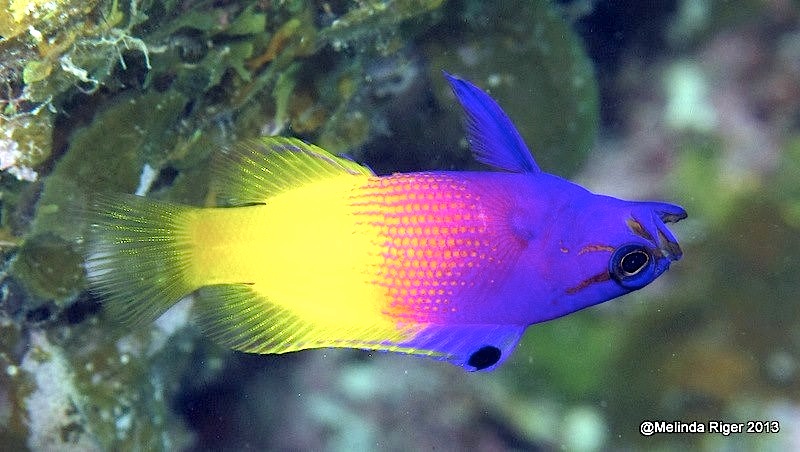
The Fairy Basslet is a tiny brightly-coloured fish with a pretentious alternative name. It is otherwise known as the Royal Gramma (Gramma loreto). These fish are found  in the coral reefs of the (sub)tropical western Atlantic. They are also found in aquariums anywhere you like, being small, bright, placid and generally good-natured.

fairy-basslet-melinda-riger-gb-scuba

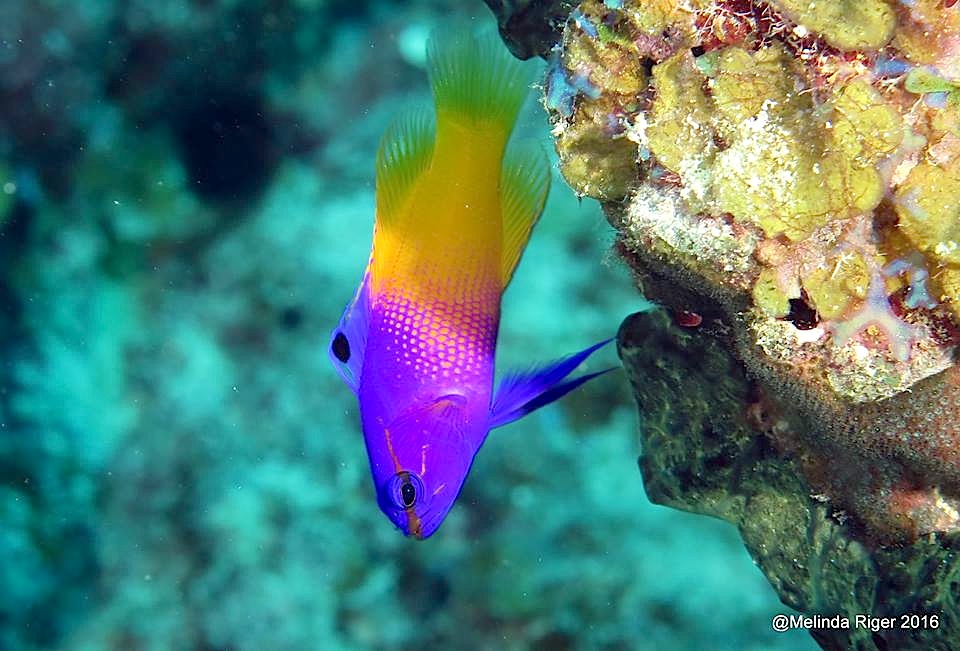
Conveniently, the basslet is unlikely to be confused with any other species. Its striking two-tone colour scheme of purple and yellow is hard to miss. The purple front half (which is presumably where the ‘royal’ comes from, being a regal or imperial colour) may also be violet or even blue in some fish and / or in some light conditions. Another identification pointer is a black spot on the dorsal fin. 

fairy-basslet-melinda-riger-grand-bahama-scuba

You’ll notice that the basslet above appears to be upside down. Which is because it is – this isn’t an inadvertent photo-flip. These little fish tend to orientate themselves to be parallel with the closest surface. This leads to them happily swimming upside down, or aligning vertically. As one article I read says severely, “this behaviour is not to be mistaken for illness”.

fairy-basslet-melinda-riger-g-b-scuba

Fairy basslets / royal grammas are also CLEANER FISH. They pick parasites and dead skin off larger fish that visit so-called cleaning stations to be attended to by tiny fish and cleaner shrimps, and in some instances to have their gills and even their teeth cleaned. The deal is that, in return, the large fish do not eat the cleaners. Even snack-sized ones rootling around inside their mouths.

fairy-basslet-melinda-riger-gb-scuba

 WHAT ABOUT BREEDING?
I really can’t improve on this rather touching description from Wiki: “The male will build the nest among rocks using pieces of algae. The male will then lead the female to the nest, where she will deposit 20-100 eggs in the nest. During the breeding period, this behaviour is repeated almost every day for a month or longer (my italics). The eggs are equipped with small protuberances over the surface with tiny threads extending from them which hold onto the algae of the nest and keep the eggs in place. The eggs will hatch in five to seven days, normally in the evening…”

fairy-basslet-melinda-riger-gb-scuba

HOW COME THE NAME ‘GRAMMA LORETO’?

This official name became a brainworm with me after I started this post. I had to check it out. The ‘Gramma’ part is unrelated to the fond name for a grandmother; rather, it simple denotes a member of the genus of fishes in the family Grammatidae.

The Loreto part is more mysterious. It is an an ancient town in Italy; and the name of several British schools, including – almost too good to be true – a school called Loreto Grammar. In a nutshell, the link between the town and places of education is that the Sisters of Loreto, founded in the c17 and named for a shrine in the Italian village, are dedicated to education in their Ministry.

How that ties in with a tiny Caribbean reef fish, I have yet to find out. I probably never will… Here’s a short video to alleviate the disappointment.

I failed to be able to resist finding out whether any country of the world has a purple and yellow flag. The answer is, no. However I am delighted to be able to report that the flag of the Independent Party of Uruguay is basslet-coloured.

inependent-party-uruguay-flag

fairy-basslet-melinda-riger-g-b-scuba-copy

Credits: all fantastic photos by Melinda Riger of Grand Bahama Scuba; magpie pickings of an unacademic sort for facts and speculation

Unknown's avatar

SILVERSIDES: BAHAMAS REEF FISH (32)


silversides-school-melinda-riger-g-b-scuba

SILVERSIDES: BAHAMAS REEF FISH (32)

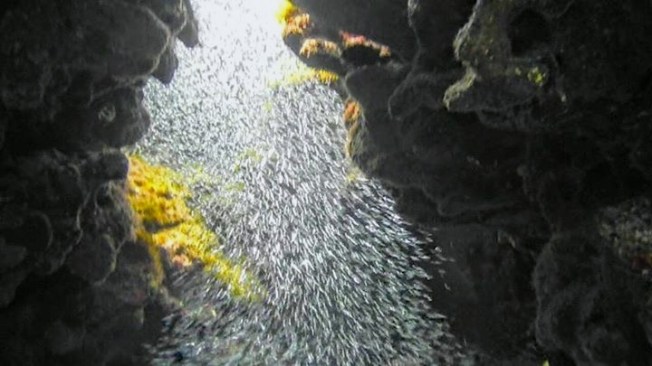
I have no idea if there is a collective noun for a large group of silversides. ‘Frenzy’ would cover it, but that is reminiscent of ‘feeding freezing’ which has a specialist meaning – and anyway, silversides are crazy even when they aren’t feeding. 24/7/12/365 as far as I can make out. I think ‘a panic of silversides’ might be the answer. They are just… all over the place at high speed. Sometimes swirling around pointlessly, other times moving in unison and suddenly all changing direction simultaneously, like a single creature made of tiny shards of silver.

silversides-school-melinda-riger-g-b-scuba-copyfish-frenzy-melinda-riger-gbs

There are quite a few silverside species around the world. The ones in the Bahamas are Atlantic silversides (Menidia menidia), also known in the north east of the United States as ‘spearing’. They seem to exist for two purposes. The main one is to be breakfast, lunch or dinner for larger fish, sea birds and shore birds. The other is for their usefulness in scientific research because of their sensitivity to environmental changes. 

silversides-melinda-riger-g-b-scuba-copy-2silversides-school-melinda-riger-gb-scuba

In one sense they are easy prey for predators. A determined fish will always manage a snack by swimming into the middle of a panic and (probably) simply by opening its mouth wide. On the other hand, their sheer numbers coupled with the speed and randomness of movement mean that a single may find a degree of safety in numbers. It’s hard for a predator to target any individual fish in the general melee and confusion. Silversides also favour seagrass beds, which give some shelter and protection – and a reasonably safe place to spawn. Or, as some of these photos show, they will hang around wrecks or squeeze into rocky spaces in the reef.

silversides-melinda-riger-g-b-scuba-copysilversides-melinda-riger-g-b-scuba

A panic of silversides apparently pouring like a waterfall down through a gap in the reefsilversides-waterfall-abaco-kay-politano

WHAT DOES A STATIONARY ATLANTIC SILVERSIDE LOOK LIKE?

meber_u0

Some time ago we used to go to the reef at Fowl Cay Marine Preserve with Kay Politano, and I would snorkel with a small and very basic lo-res underwater camera. I was hampered by being a disgracefully feeble swimmer; by not having snorkelled for a length of time calculable in decades; and by being a complete novice at underwater photography.  Despite these not inconsiderable disadvantages I managed to cobble together a few short movies on my computer (I was new to that too). Here’s one that nearly works, in that it gives an idea of what happens if you ‘swim with silversides’. I know you scuba guys all swim with sharks, but cut me some slack here please…

Photo Credits: Main photos Melinda Riger of Grand Bahama Scuba; Silverside Waterfall by Kay Politano; motionless silversides by FISHBASE.ORGMusic: Goldon Giltrap, ‘Fast Approaching’

Unknown's avatar

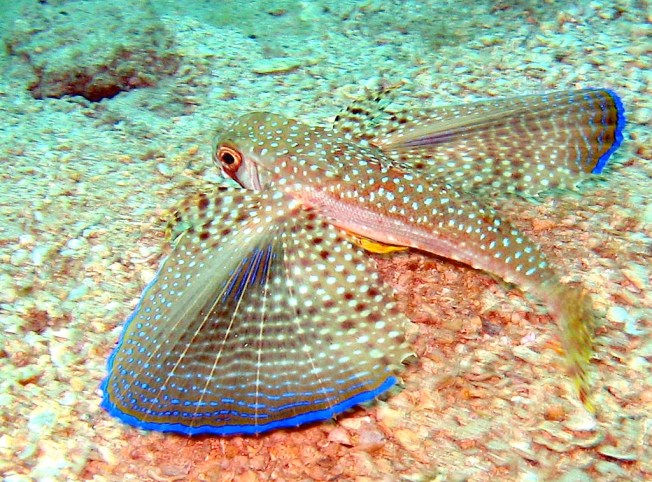
WTF? (WHAT’S THAT FISH) (10): FLYING GURNARD


Flying Gurnard (Adam Rees / Scuba Works)

WTF? (WHAT’S THAT FISH) 10: FLYING GURNARD

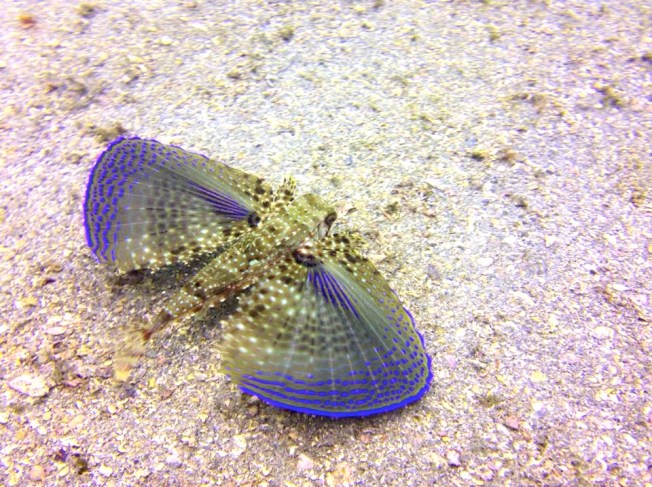
Imagine that you are swimming along resplendent in your snorkelling gear (me) – or in scuba gear for the advanced swimmer (you). There, below you, camouflaged against the sea bottom is a fish. A strange-shaped brown sort of creature with odd side fins. As it progresses over the gravelly sand, your immediate reaction is ‘what the…?’ Its fins seem to be turning into… wings. Like this:

Flying Gurnard (Adam Rees / Scuba Works)Flying Gurnard (Adam Rees / Scuba Works)Flying Gurnard (Adam Rees / Scuba Works)

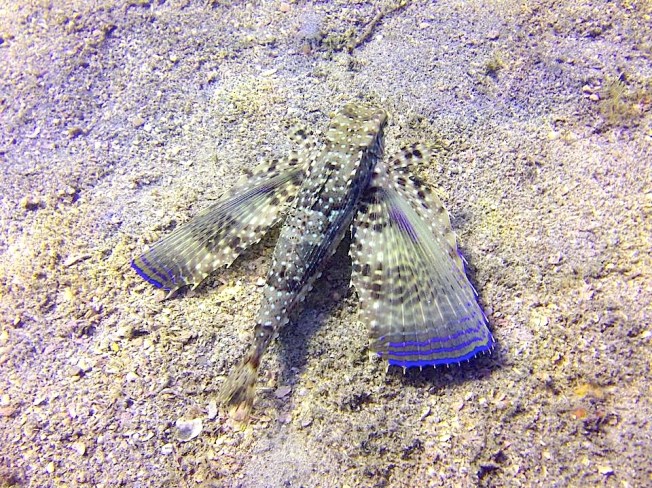
Yes, it’s a flying gurnard. Unlike flying fish, it can’t actually fly through the air. But once its wings are fully spread, it certainly looks as though it could.

Flying Gurnard (Adam Rees / Scuba Works)Flying Gurnard (Adam Rees / Scuba Works)

WHAT’S THE POINT OF THE WINGS IF THE THING CAN’T FLY?

This gurnard species usually gets around using its ventral fins as ‘legs’, with the pectoral fins (‘wings’) close to the body. There seem to be several possible reasons for possessing the ‘sudden-deployment-of-flashy-wings’ superpower. 

  • It surprises and deters predators by movement, turning prospective prey into an apparently different creature
  • Bright or lurid colouring may be a deterrent warning of a foul-tasting or poisonous species  (APOSEMATISM)
  • A creature may actually be harmless and even tasty (as here) but may appear to be unpalateable or poisonous (BATESIAN MIMICRY)
  • In any event, the wings enable the fish to take off from the sea bottom and travel faster by ‘flying’ thought the water to escape a predator

Dactylopterus_volitans Flying Gurnard (cralize wiki)

I had a quick look to see how  scientists in history had depicted this extraordinary fish. The earliest illustration I could find was taken from “Allgemeine Naturgeschichte der Fische (General natural history of fishes),” a 12-volume encyclopedia by author/illustrator Marcus Elieser Bloch (1723-1799), which described all fish species then known to science (and 267 previously unknown) (© AMNH\D. Finnin) sourced from ‘Hyperallergic’
Flying Gurnard

Here’s a short video of a flying gurnard on the move, from ‘Sia Big Fish’

Credits: All main images Adam Rees / Scuba Works with many thanks, except final one ‘cralize wiki’; Hyperallergic for the historic image; Sia Big Fish for the video

Unknown's avatar

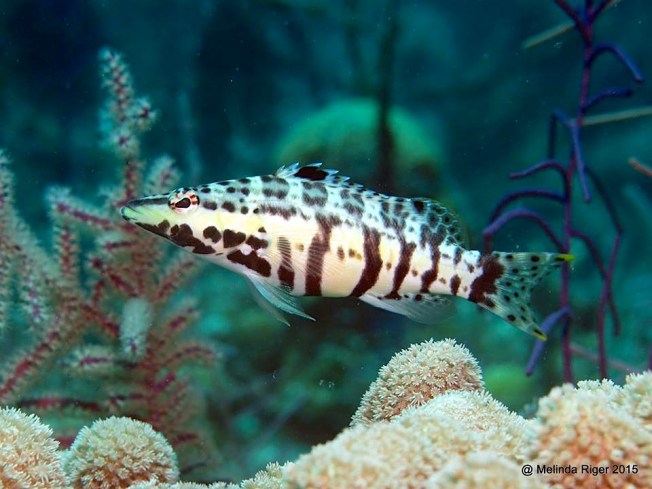
WTF? (WHAT’S THAT FISH) (9): THE HARLEQUIN BASS


Harlequin Bass ©Melinda Riger @ G B Scuba copy

WTF? (WHAT’S THAT FISH) (9): THE HARLEQUIN BASS

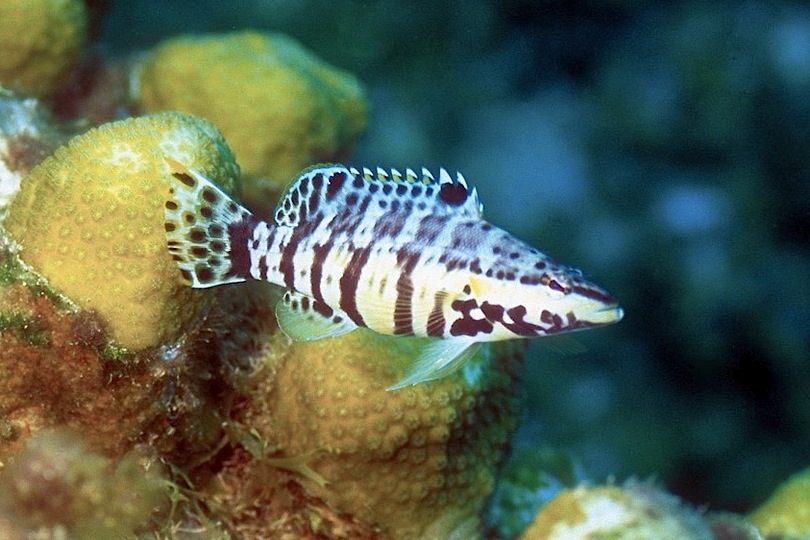
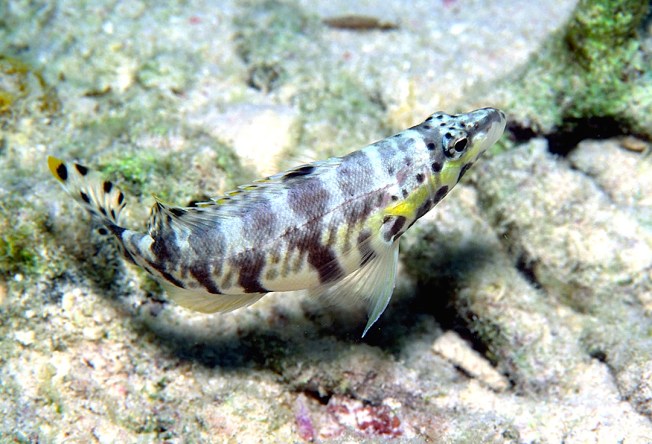
I’m conscious of being rather unfair on this pretty dwarf bass species by including it in the WTF? series. The usual denizen of the series is a fish so strange that one’s immediate instinct is to yell into one’s facemask, “WTF?”. BATFISH or FROGFISH or GUITARFISH and their bizarre ilk. So with apologies to this species for its somewhat harsh classification, here are some quite flattering photos of it to make up for any hurt feelings.

Harlequin Bass Fish ©Melinda Riger @ G B Scuba copyHarlequin Bass (jpc what'sthatfish)

The Harlequin Bass Serranus tigrinus has unusually striking body markings and a rather endearing spotty tailfin. They are hardy creatures and I note that they are recommended aquarium fish “and make a great candidate for beginners”, though there are warnings that they are “semi-aggressive”. NB they are only a few inches long, so no need to panic.

Harlequin_Bass_Serranus_tigrinus wikiHarlequin_Bass_(Serranus_tigrinus) wiki

If you are still not confident that you can ID one in the wild, here is a short video… Actually I’m really including it to show how these fish swim around. And next time, I promise a truly eye-watering WTF? fish from Bahamian waters, though its camouflage is so good that you may never notice it…

Credits: Melinda Riger / Grand Bahama Scuba (1, 2); jpc/ what’s that fish; wiki

Unknown's avatar

WTF? (WHAT’S THAT FISH) (7): THE SOAPFISH


Soapfish ©Melinda Riger @ GB Scuba

WTF? (WHAT’S THAT FISH) (7): THE SOAPFISH 

The WTF? series features some of the stranger fish that inhabit the waters of the Bahamas. Ones that, were you to encounter one on the reef, might make you exclaim “WTF?”. The soapfish Rypticus belongs in the same family as grouper and sea bass. Within the soapfish genus there are quite a few varieties in different shapes, sizes and colours that include several mottled, freckled, spotted and generally blotchy fish.  This post features one (or two) of them! Sorry to be lame here and lacking in authority, but having looked carefully online at images of several types of soapfish, I reckon there are 3 candidates. Freckled, I think these are. Enlightenment would be welcome!

Soapfish ©Melinda Riger @ G B Scuba

Rypticus tend to inhabit shallower tropical and sub-tropical waters. They are mainly nocturnal in their habits, feeding at night on small fish, crustaceans and molluscs. The WTF? factor arises from the creature’s oddly truncated shape. If you cover the back end of the fish in the image below with your hand, you might expect the fish to be about the same length again. But no, there’s just the tail to come. It looks a bit cut in half.

Soapfish © Melinda Riger @GB Scuba

DOES THE SOAPFISH HAVE ANY AWESOME POWERS?

I’m glad you asked because in fact it has two. First, these fish respond to threats by secreting large amounts of toxic mucus from their skins. This acts as a defensive barrier to repel predators. Secondly, female soapfish are able to change sex to male. This is not uncommon among fish, and in some (e.g. Clownfish) the change works the other way, male to female. I read a lot about chemicals and gonads in this connection, then decided to spare you the details. So basically, it’s toxic slimy coats and female gender realignment.

Soapfish ©Melinda Riger @ Grand Bahama Scuba

Credits: all photos, Melinda Riger of Grand Bahama Scuba


Unknown's avatar

“CLEANING UP”: HOW TINY REEF FISH HELP LARGE FISH


Black Grouper - Arnold - Cleaning Station - Neon Gobies ©Melinda Riger @ G B Scuba copy

“CLEANING UP”: HOW TINY REEF FISH HELP LARGE FISH

A while ago now, I wrote a detailed post about so-called fish ‘cleaning stations’ – the special spots on the reef where large fish can go to have small fish buff up their scales and floss their teeth. You can read all about it HERE.

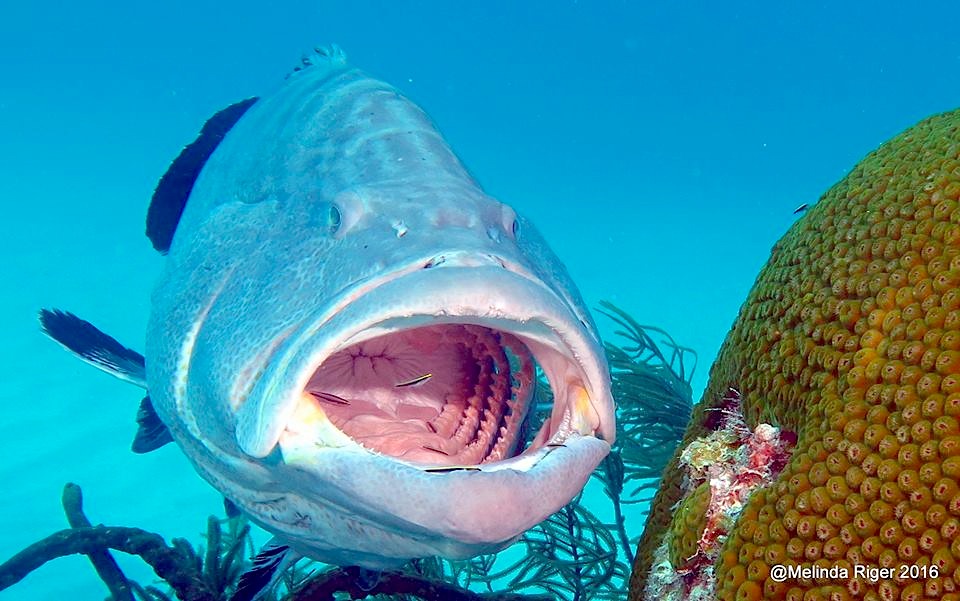
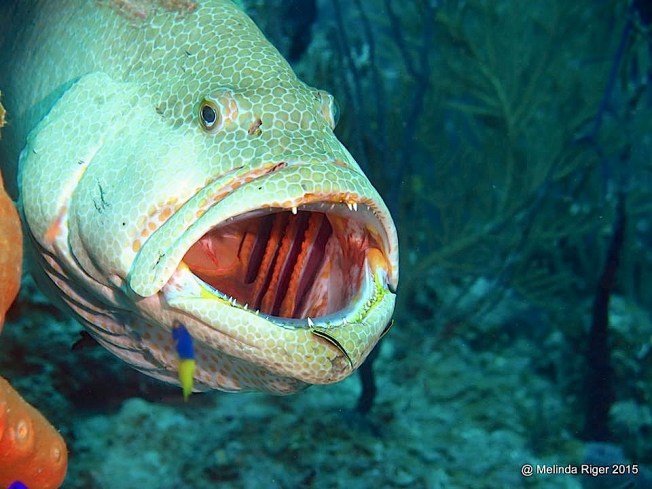
I have accumulated a number of new photos from expert scuba diver and underwater photographer Melinda Riger that demonstrate this phenomenon. A big fish with a normally voracious appetite will patiently wait while gobies and other small fry go about their work. This often involves actually entering the mouth of the (as it must seem to them) monster to pick the insides and the teeth clean. There is an extraordinary understanding and trust between the species that means during the operation, the little fish are perfectly safe. Here are some examples, of which the very recent header image of a grouper named Arnold is quite outstanding.

Tiger Grouper + cleaner goby ©Melinda Riger @ G B Scuba copyGrouper, Black at cleaning station ©Melinda Riger @G B Scuba copy Tiger Grouper at cleaning station ©Melinda Riger @ G B Scuba copy Tiger Grouper being cleaned ©Melinda Riger @G B Scuba copy

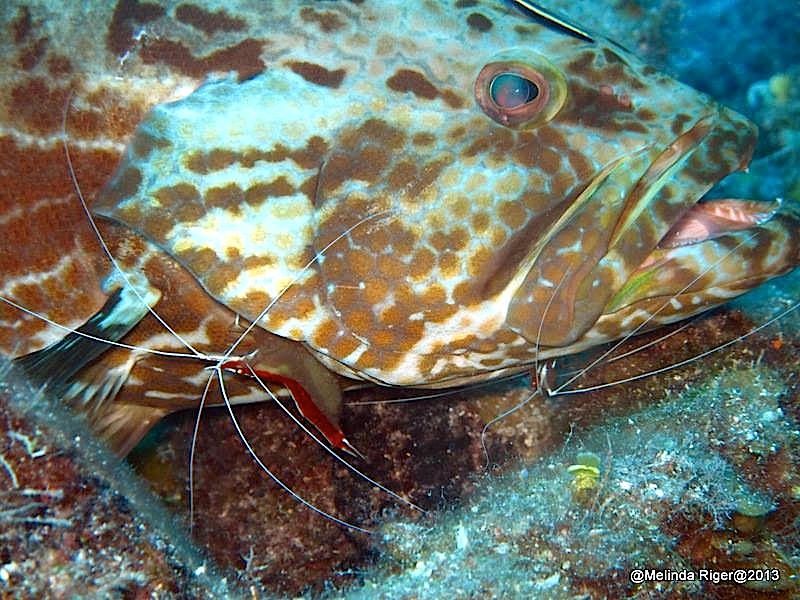
It is not just gobies that attend the fish. Various species of shrimp also volunteer for the job.

Tiger Grouper with cleaning shrimps and goby ©Melinda Riger @ G B Scuba copy Grouper being cleaned ©Melinda Riger @ GB Scuba copy

Groupers are not the only species to make use of cleaning stations. Here is a dog snapper at the same cleaning station as the grouper in the header image. Below is a stingray being attended to.

Dog Snapper at cleaning station ©Melinda Riger @ G B Scuba copy

Southern Stingray with cleaning gobiesStingray, Southern with cleaning gobies ©Melinda Riger @ G B Scuba copy

GRAMMATICAL DIGRESSION There is this ‘thing’ about the correct use of the words ‘fish’ and ‘fishes’ in the plural form. The basic principle is simple: ‘fish’ where you are referring to several of the same species; ‘fishes’ where more than one species is involved. I don’t care. My policy is to use ‘fish’ as the plural on all occasions, so I don’t have to think about it. Pedants, look away now.

RELATED POSTS

TAKEN TO THE CLEANERS

BANDED CORAL (‘CLEANER’) SHRIMP

TIGER GROUPER

BLACK GROUPER

All photos: Melinda Riger, Grand Bahama Scuba

Unknown's avatar

BLUE CHROMIS: BAHAMAS REEF FISH (29)


Blue Chromis & Coral ©Melinda Riger @ GB Scuba

BLUE CHROMIS: BAHAMAS REEF FISH (29)

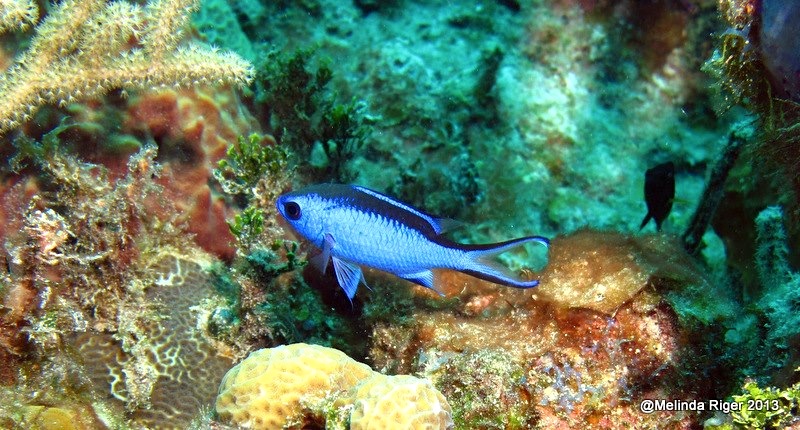
The little blue chromis Chromis cyanea will be instantly familiar to any snorkeler or scuba diver on the coral reefs of the Bahamas. These ever-present small fish – 6 inches long at most – are remarkable for their iridescent deep blue colour that flashes as they dart in and out of the coral and anemones of the reef.

Blue Chromis ©Melinda Riger @ G B Scuba

Although at first sight  this chromis species – one of many – looks blue all over, adults have a black dorsal stripe and black edging to their fins. They make colourful additions to aquariums, though to my mind they look far more attractive nosing about the reefs foraging for the zooplankton upon which they feed (see header image for details…)

Blue Chromis ©Melinda Riger @ GB Scuba

The blue chromis was the second fish species I encountered on my first ever reef dive, at Fowl Cay Marine Preserve with Kay Politano. The first fish was the endearingly inquisitive sergeant major with its smart black and yellow stripes which came right up to my googles to eyeball me. I loved that, even though my pitiful swimming technique meant that I had plenty of other distractions, not least remembering to breathe. Air, that is, rather than water.

Blue Chromis ©Melinda Riger @ GB Scuba

Chromis_cyanea_(blue_chromis)_(San_Salvador_Island,_Bahamas)

SO JUST HOW BIG ARE THESE FISH, COMPARED, SAY, TO A BLUE TANG?

Blue Tang with blue chromis in its wakeBlue Tang with Blue Chromis © Melinda Riger @GB Scuba copy

All photos Melinda Riger of Grand Bahama Scube, except the penultimate by James St John, taken in San Salvador


Unknown's avatar

WTF? (WHAT’S THAT FISH) (6): THE SAND DIVER


Sand Divers Bahamas ©Melinda Riger @ G B Scuba

WTF? (WHAT’S THAT FISH) (6): THE SAND DIVER

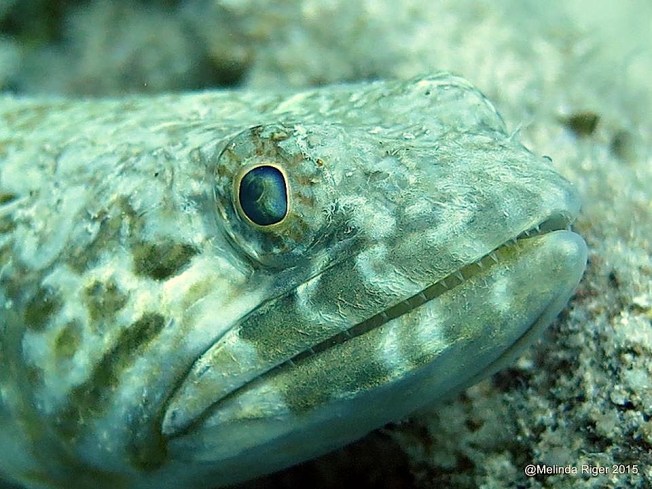
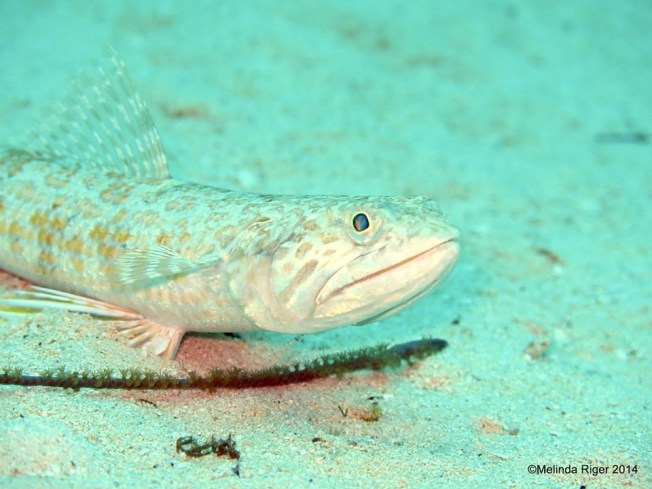
Time for another in the WTF? series, featuring weird (begging their pardons) or not very fish-like fish. The Sand Diver Synodus intermedius is a type of lizardfish found in subtropical waters and often around coral reefs. They can grow up to about 18 inches long and a prime specimen might weigh a couple of pounds. The markings are quite variable but one common characteristic seems to be a tendency to look somewhat down in the mouth; and to possess jaws full of tiny sharp teeth.

Sand Diver - ©Melinda Riger @ GB Scuba

Sand divers have two rows of teeth on their upper jaw and three rows on their lower jaw. Not content with that, they also have rows of teeth on the palate and tongue. Were they 50 times the size, they would be truly awesome.

Sand Diver ©Melinda Riger @ G B Scuba

The rather primitive appearance of the sand diver is explicable from fossils, which show that their forbears  were active in the Jurassic / Cretacean periods.

Sand Diver ©Melinda Riger @ GB Scuba

HOW DO THEY GET THEIR NAME?

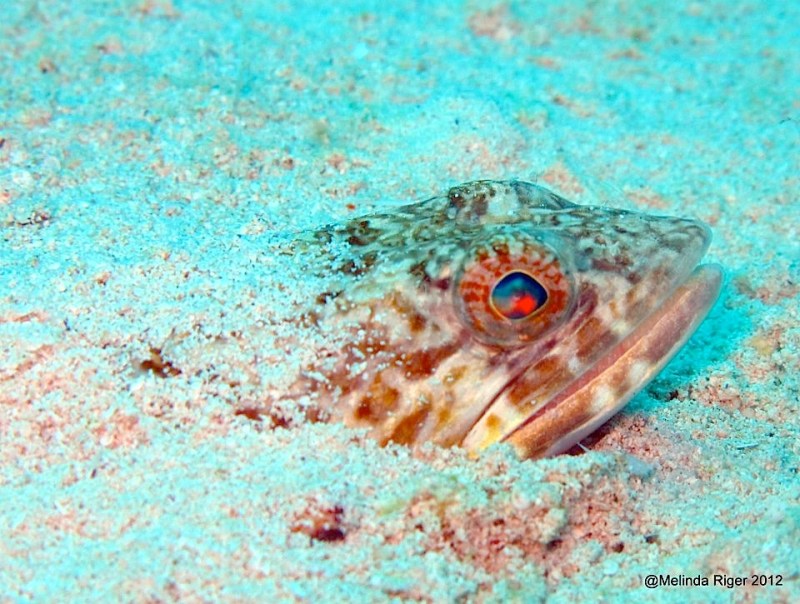
Sand divers often bury themselves in the sand with only their head showing. They are so-called ‘ambush predators’, and burial is one method they use. Another is simply to lie on the sandy bottom, or on reef surfaces and wait for passing prey. Their colouring provides very good camouflage.Sand Diver Fish

WHAT’S ON A SAND DIVER MENU?

A good mix of small reef fishes. Bar jacks, blue chromis, wrasses, fairy basslets, small grunts and so forth. At their own level they are quite fearsome predators.

Sand Diver © Melinda Riger @ Grand Bahama Scuba

ARE THEY ON THE HUMAN MENU?

Well, I knew someone would ask that, so I carried out a search. The answer seems to be no. I have found nothing to suggest that they are edible, or that anyone has tried (or if they have, survived to tell the tale). Incidentally, the best way to find out if something is edible by humans is to search for a recipe. There are no sand diver recipes.

STOP PRESS Jason Knight has drawn my attention to a comment in WhatsThatFish.com (no relation) by one ‘Jenny’, who commends Sand Divers as food (“they cook up just as good as hogfish!”). So yes, they are edible and there is one recipe… 

Sand Diver ©Fred Riger @ G B Scuba

All photos: Melinda Riger of Grand Bahama Scuba

Unknown's avatar

FORAYS WITH MORAYS (2): SPOTTED IN THE BAHAMAS…


Spotted Moray Eel, Bahamas (Melinda Riger Grand Bahama Scuba)

FORAYS WITH MORAYS (2): SPOTTED IN THE BAHAMAS…

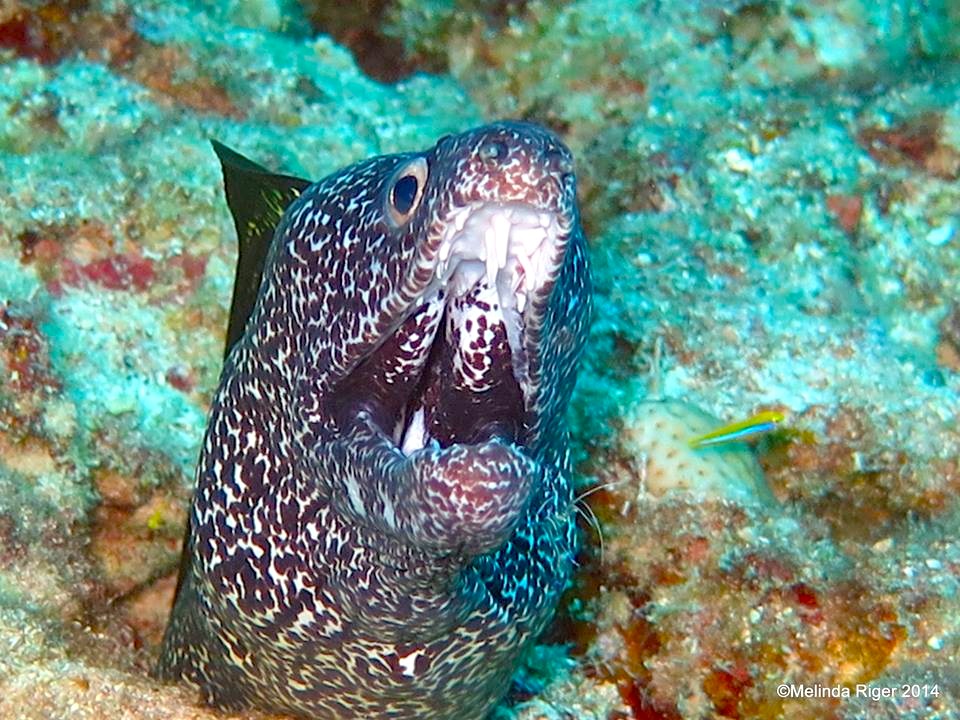
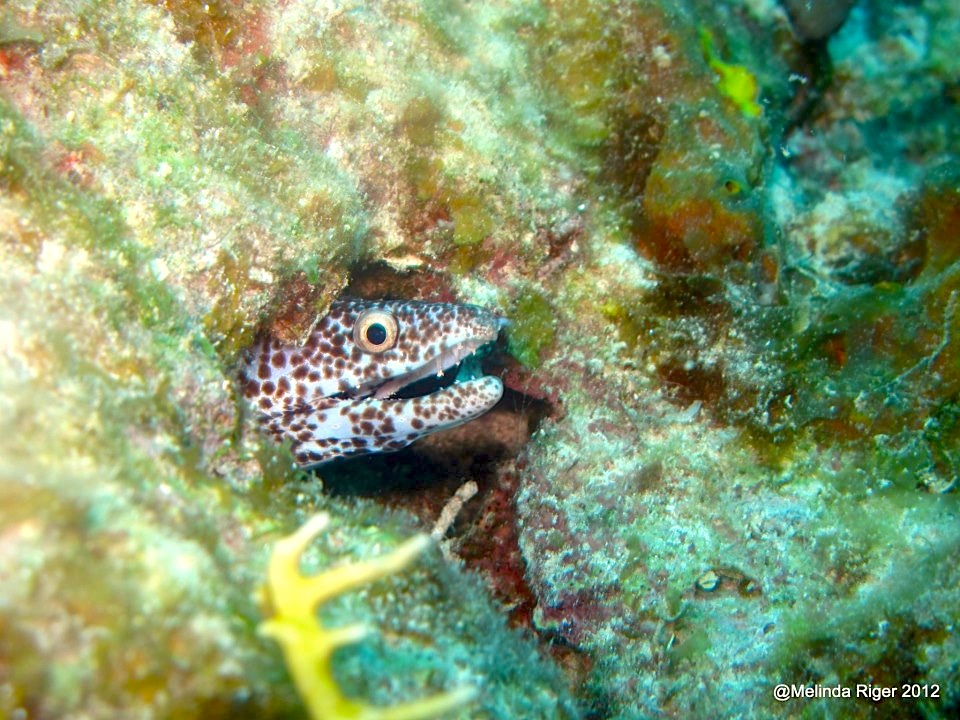
I’ve been neglecting the moray eels. It’s ages since I did a post about them, and it’s time to put that right. Specifically, time to take a look at Spotted Morays Gymnothorax moringa. These eels can grow up to 2 meters, and live mainly in the sub-tropical waters of the Atlantic. They are solitary creatures, most often seen with just their heads protruding from holes and fissures reefs and r0cks. They have interesting dental arrangements (see below) and their bite is one that, all things being equal, is probably best avoided… Here’s what to look for.

ADULT SPOTTED MORAYSSpotted Moray Eel, Bahamas (Melinda Riger Grand Bahama Scuba) Spotted Moray Eel, Bahamas (Melinda Riger Grand Bahama Scuba) Spotted Moray Eel, Bahamas (Melinda Riger Grand Bahama Scuba) Spotted Moray Eel, Bahamas (Melinda Riger Grand Bahama Scuba)

TOOTHSOME CRITTERS (FANGS FOR THE MEMORY…)Spotted Moray Eel, Bahamas (Melinda Riger Grand Bahama Scuba) Spotted Moray Eel, Bahamas (Melinda Riger Grand Bahama Scuba) Spotted Moray Eel, Bahamas (Melinda Riger Grand Bahama Scuba)

WICKLE BABY MORAY. MORAYKIN?BABY Spotted Moray Eel, Bahamas (Melinda Riger Grand Bahama Scuba)

Photo credits: all amazing photos courtesy of Melinda Riger of Grand Bahama Scuba; Props to ‘Earl the Eel’ who appears in some of them!

Unknown's avatar

PEACOCK FLOUNDER: BAHAMAS REEF FISH (21)


  Peacock Flounder ©Melinda Riger @ GB Scuba

PEACOCK FLOUNDER: BAHAMAS REEF FISH (21)

PEACOCK FLOUNDER or PLATE FISH Bothus lunatus

I have briefly featured this fish before in the context of its extraordinary camouflage abilities; and also its interesting ocular arrangements. Time to give it another swim around, I think, with some additional photos that I have collected.

Peacock Flounder

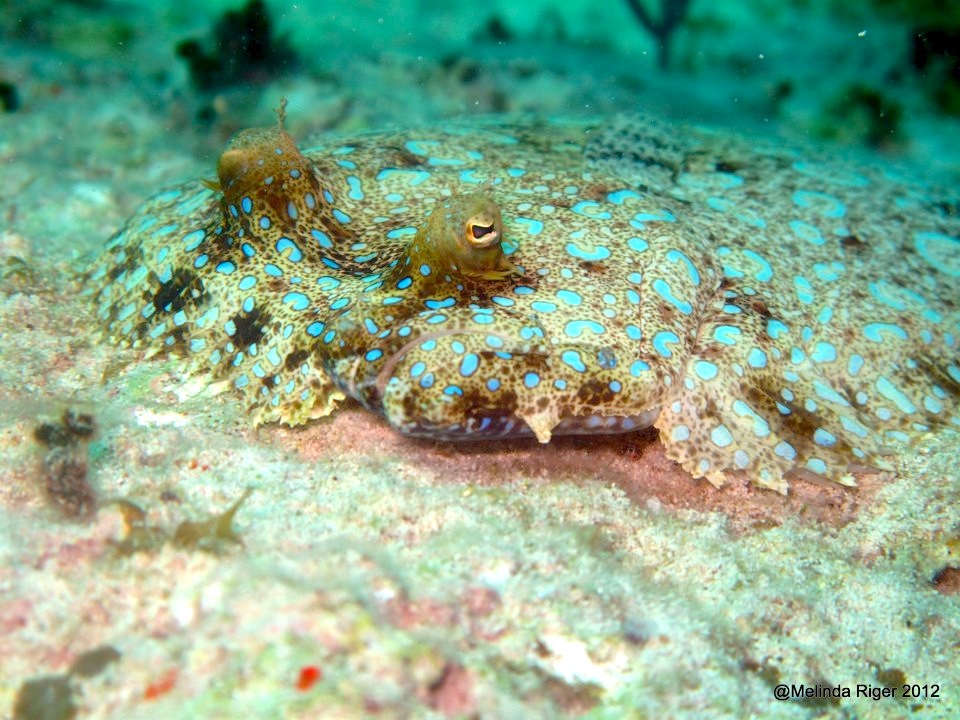
Bothus lunatus is the Atlantic / Caribbean version of a species also found in the Pacific and Indian oceans. Adults may grow up to 18 inches long. The species is a ‘lefteye’ flounder, with both eyes on its left (top) side & its right side underneath.  However a baby flounder looks & swims like normal fish, with bilateral eyes. As it grows, the right eye gradually ‘moves’ round to the topside, and it becomes a flatfish.

Peacock Flounder

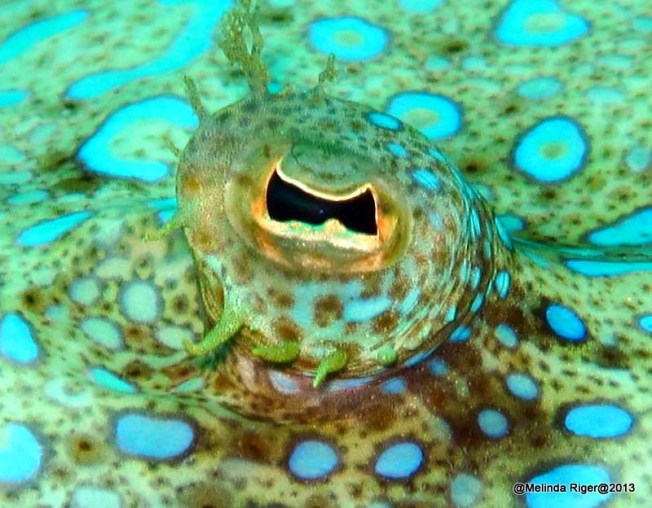
A flounder’s eyes can move independently of each other. One may look forwards, the other backwardsPeacock Flounder Eye ©Melinda Riger @ G B Scuba

‘NOW YOU SEE IT…’ CAMO-FISH

The Peacock Flounder has extraordinary  colour-changing powers, and can rapidly vary its background colour to make it closely resemble that of its surroundings. This enables it camouflage itself as it lies on the seabed. It can change coloration completely in between two to eight seconds.  

Four frames of the same fish taken a few minutes apart showing the ability of flounders to change colors to match the surroundings (Wiki)Peacock Flounder Brocken Inaglory

Check out these imitative patterns in Bahamas waters…Peacock Flounder (f) ©Melinda Riger @ Grand Bahama Scuba

Flower_flounder_in_Kona_wiki

There are two advantages to the ability to camouflage (‘cryptic coloration). One is obviously to avoid detection by predators. The other is to enable the flounder to ambush its meals. They feed primarily on small fishes, crabs and shrimps, lying concealed on the seabed and grabbing any unwary prey that ventures too close. They will even partially bury themselves in the sand, leaving just their eye-stalks keeping watch…Peacock Flounder ©Melinda Riger @ Grand Bahama Scuba

HOW CAN THEY POSSIBLY CHANGE COLOUR SO QUICKLY?

Scientists are still puzzling this out. In a conch shell, it seems the flounder can coordinate its amazing all-round vision with its hormones, instantly releasing certain pigments to its skin cells and suppressing other pigments to make the colour match. Not convinced? Then watch this short video and prepare to be impressed. 

Fred Riger of Grand Bahama Scuba, who kindly keeps a benign eye on my reef fish posts (he’s the expert), adds a third excellent reason for coloration changes: sex… “the male peacock flounder can, and does greatly intensify his colors, presumably to declare territory and attract females to his person. When doing this the males will also signal with the left pectoral fin, sticking it straight up and waving it around.” Maybe that is what is going on in the photo below – intensified, non-camouflage colours, and a raised fin…Peacock Flounder ©Melinda Riger@ G B Scuba

Peacock Flounder on a plate – Kim Rody Art983829_10154948988290716_6633206689277673329_n

Credits: Melinda Riger of Grand Bahama Scuba for almost all photos; wiki for 2 illustrative images

Unknown's avatar

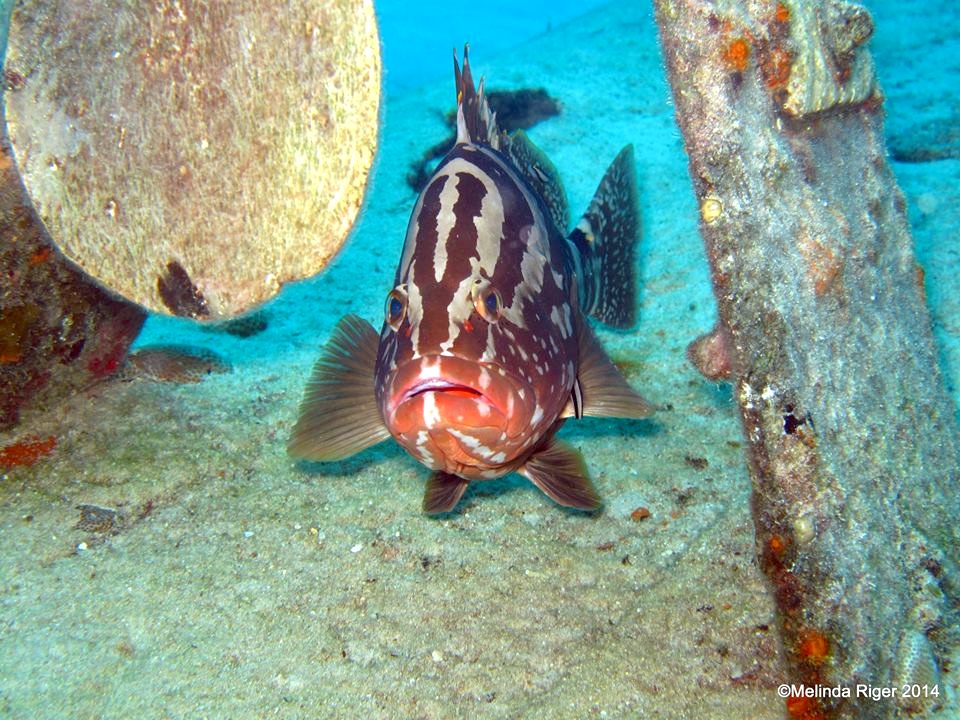
NASSAU GROUPER: VULNERABLE, ENDANGERED… & NOW PROTECTED


Nassau Grouper ©Melinda Riger @ GB Scuba copy

NASSAU GROUPER: VULNERABLE, ENDANGERED… & NOW PROTECTED

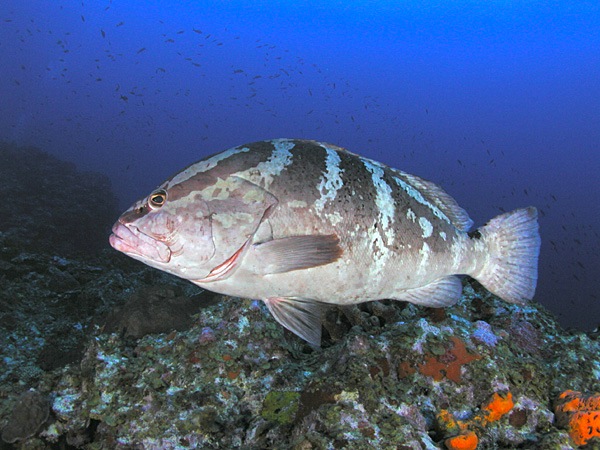
The Nassau grouper Epinephelus striatus is one of a number of Caribbean grouper species found generally in the Northern Bahamas and specifically in Abaco waters. Others include the Black, Tiger, and Yellowfin groupers, the Red Hind,and the Graysby. The Nassau grouper is special, however, not least because (unlike the others) it is on the IUCN Red List as an Endangered Species and is also a US National Marine Fisheries Service Species of Concern. It is considered the most important of the groupers for commercial fishing in the Caribbean, and the IUCN listing data suggests that a population decline of 60% occurred over the last three generations (27-30 years), a startling rate. The current population size is estimated at >10,000 mature individuals.

Nassau Grouper ©Melinda Riger @ G B Scuba copy 2

The Nassau Grouper is a creature of the coral reefs in the Caribbean and adjacent seas, though it can also be found in deep water. It feeds in the daytime on small fish and small crustaceans such as shrimps, crabs and lobsters. It lurks in caves and recesses in the reef, sucking in the prey that passes unsuspecting by. The coloration of an individual fish may vary considerably with conditions, and it can adapt its colour to its surroundings as camouflage.  

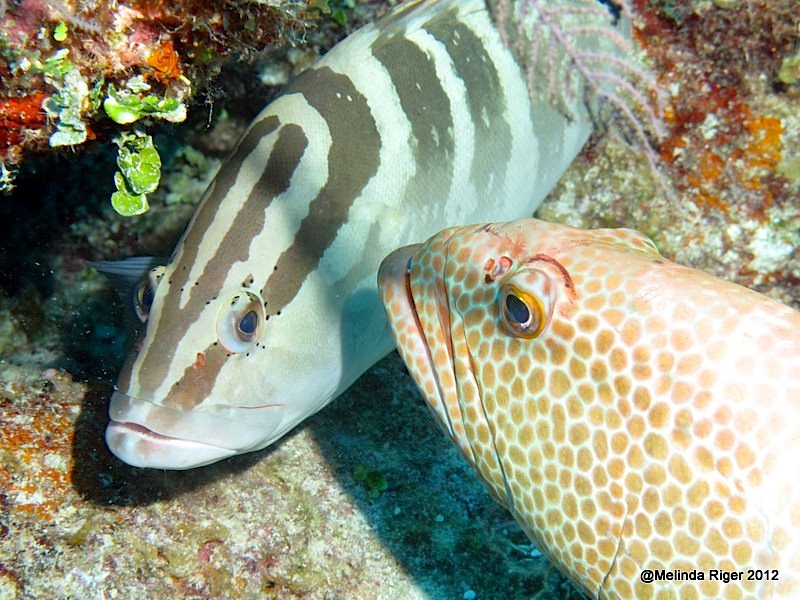
Tiger grouper meets Nassau grouperNassau & Tiger Grouper ©Melinda Riger @ Grand Bahama Scuba  copy

Spawning takes place in December and January as the seawater cools, always at full moon, and always in the same place. In the moonlight, huge numbers of the grouper gather together to mate in a mass spawning aggregation. This may continue for several days. However, the species is slow breeder, which is why overfishing is particularly damaging to the population as the depleted stock cannot readily be replaced.

3846_aquaimages Wiki

CONSERVATION ISSUES

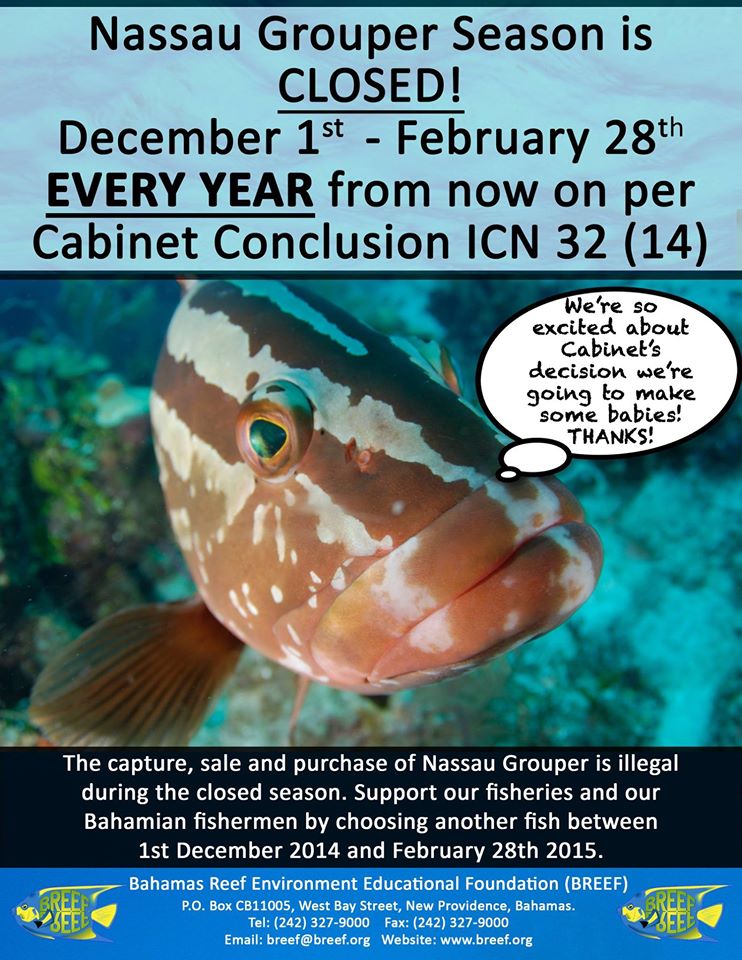
There are other besides factors commercial overfishing that make the Nassau grouper so vulnerable, including fishing during the breeding season; taking undersized fish; pollution and reef decline; habitat loss; and invasive species. The spawning areas are especially vulnerable to exploitation. In the Bahamas, as elsewhere,  the government has now instituted a closed fishing season for the Nassau grouper. Here is the BREEF  flyer, just circulated – and in fact the reason for this post, which reminded me that I had planned to write about this fish! 10382222_10152869346685953_7443797899832698038_o

THREATS

The Bahamas National Trust sums up the multiple threats in this uncompromising way:

Nassau grouper is eaten by barracudas, lizard fish, dolphins, sharks and other large predators of the reef community. But the predators that have the biggest impact on the grouper population are humansPeople are fishing groupers before they can grow to maturity and reproduce. Sex change may also cause a problem. In undisturbed areas there are usually equal numbers of male and females. In heavily fished areas there are often three or more times more females than males. This means many eggs will not be fertilized during spawning. Other threats include, habitat destruction, coral breakage from divers, siltation from construction, runoff from logging and agriculture, dredging, sewage, oil spills and other contaminants that harm coral reefs where Nassau Groupers live.

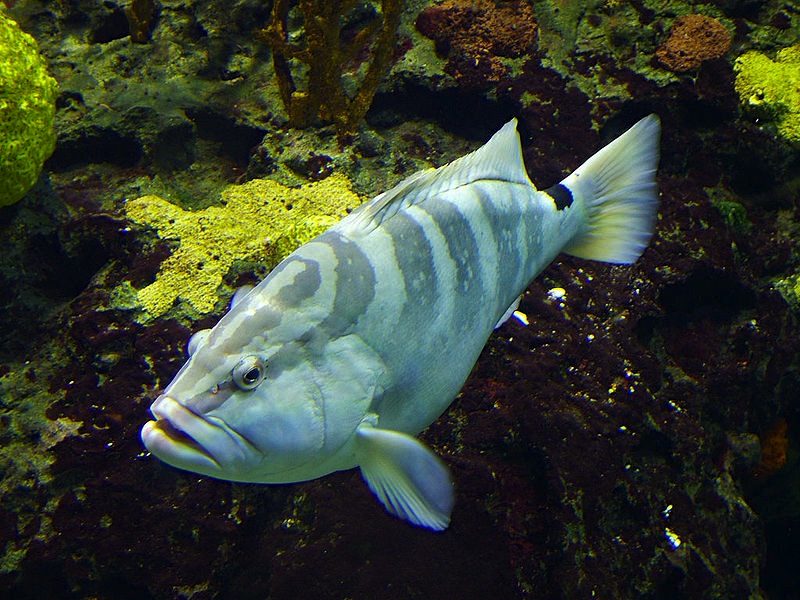
grouperEpinephelus_striatus_2

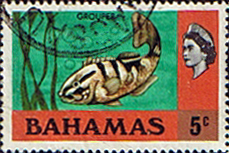
There’s an extent to which a country can be judged on its attitude to wildlife from the stamps it chooses to issue. It’s something to do with appreciation and promotion of the country’s natural resources. For example, North Korea rates nil in this respect, with stamps involving scary weaponry, flags, marching and eerily glowing leaders – not a single sparrow to be seen.  By fortunate contrast the Bahamas and its Postal Service score very highly in celebrating the diversity of the wildlife of the islands. The Nassau Grouper was first featured on Bahamas stamps as long ago as 1971, some 25 years before the IUCN Red Listing, and probably before the sharp decline in population numbers had even begun.

bahamas-1971-nassau-grouper-sg-363-fine-used-19448-p

In 2012 the Bahamas Postal Service released ‘a new definitive 16 stamp series’ depicting the marine life of The Bahamas. The Nassau has been promoted from 5c in 1971 to 70c in 2012. That’s inflation for you.

bahamas-marine-life-stamps2

Finally in 2013 BREEF’s 20 years of marine conservation was commemorated with a distinguished and colourful set of 8 stamps, noting in their release: ‘Two of the new stamps feature the Nassau Grouper, a now endangered species that has experienced severe population decline throughout the region… BREEF is well known as an advocate for an annual closed season for the iconic Nassau Grouper during its winter breeding period. The push for the closed season was based on scientific evidence of population collapses throughout the region due to overfishing. BREEF is calling on the government to implement a fixed closed season for the Nassau Grouper in order to protect the species and the fishing industry. The closed season traditionally runs during the spawning season from December 1st until February 28th, to allow the fish to reproduce.  BREEF is calling urgently for the announcement of this year’s Nassau Grouper closed season….’ And so it came to pass… Not only is the Nassau grouper now worth 2 x 65c; it is strictly protected for 3 months during its breeding season. Maybe philately even had a hand in getting somewhere…

BREEF_Comemorative_stamps_PastedGraphic-3

Nassau Grouper (Rick Smit wiki)

Credits: Melinda Riger, Rick Smit, Open Source, BNT, BREEF, Wikimedia, Bahamas Postal Service

Unknown's avatar

WTF? (WHAT’S THAT FISH?) 2: STRANGE BAHAMAS REEF FISH


Scorpionfish Close-up ©Melinda Riger @GBS copy

WTF? (WHAT’S THAT FISH?) 2: STRANGE BAHAMAS REEF FISH

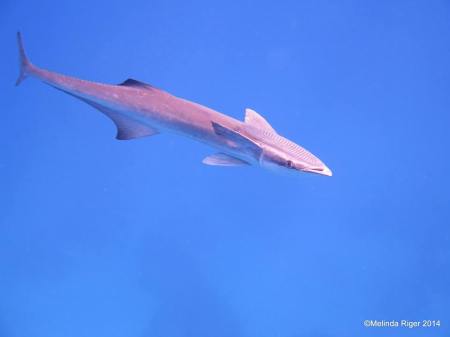
WTF 1 concerned the REMORA, the upside-down looking fish with the trainer-sole sucker on its head with which it attaches itself to sharks and other large undersea creatures. If you’ve ever seen a picture of a shark with one or more grey passengers hitching a ride, those are these.

Remora ©Melinda Riger @ GB Scuba

WTF 2 features some creatures found in the reef waters of the Bahamas that make you wonder just how and why they are as they are. They look unnecessarily complicated, and the design is somewhat outlandish. See what you think of these…

BURRFISH

Burrfish ©Melinda Riger @ G B Scuba

SLIPPER LOBSTER

Slipper Lobster ©Melinda Riger @ GB Scub.

SCORPIONFISH (& header image) camouflaged against coralScorpionfish camouflaged against coral ©Melinda Riger copy

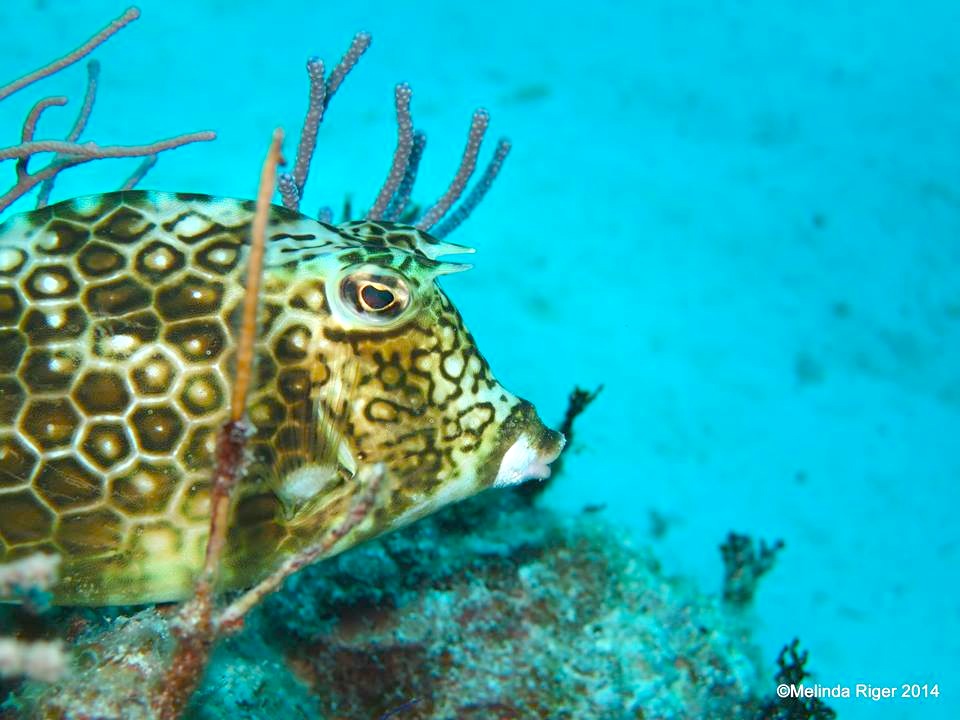
COWFISH

Cowfish ©Melinda Riger @ GB Scuba   Cowfish 2 ©Melinda Riger @ Grand Bahama Scuba copy

TRUNKFISH

Trunkfish ©Melinda Riger @GBS copy 3

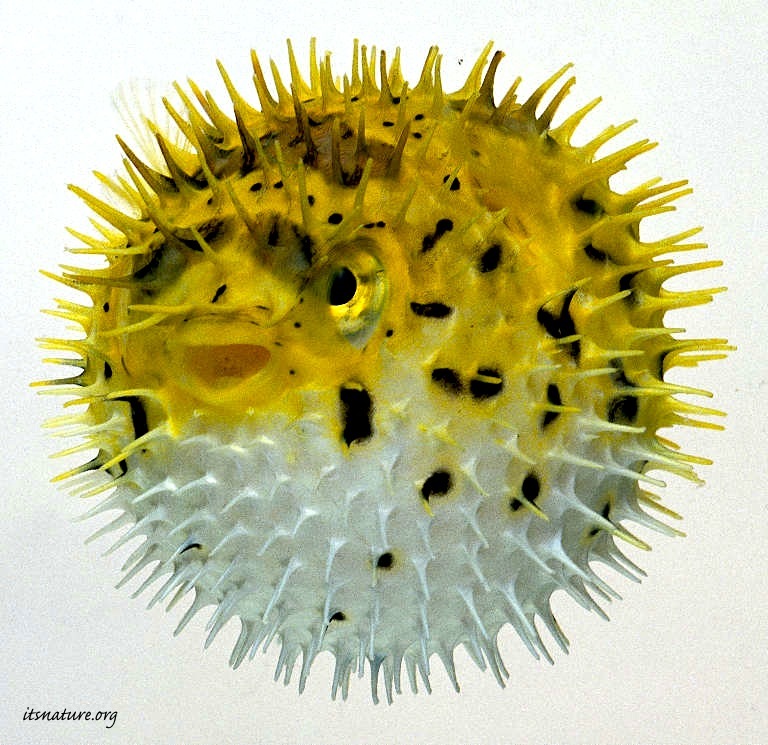
PORCUPINE FISH 

“Watch this…”Porcupine Fish (Virginia Cooper via G B Suba)

“Ta Daaaaaa”porcupine-fish

 AIRPLANEFISH*

Airplane remains ©Melinda Riger @ GB Scuba

*Well, it’s really airplane wreckage. Besides a few other planes and a variety of ships that can be explored underwater, there are also two locomotives in Abaco waters that “fell off” a ship while being transported. Now recreate in your mind the subsequent conversation with an insurance company…

APOLOGIES Header image repeated to sort out FB visuals problem that’s driving me nutsScorpionfish Close-up ©Melinda Riger @GBS copy

Credits: Melinda Riger, Grand Bahama Scuba;Virginia Cooper;  itsnature.org

Unknown's avatar

‘TREAT WITH PATIENCE…’ – NURSE SHARKS IN THE BAHAMAS


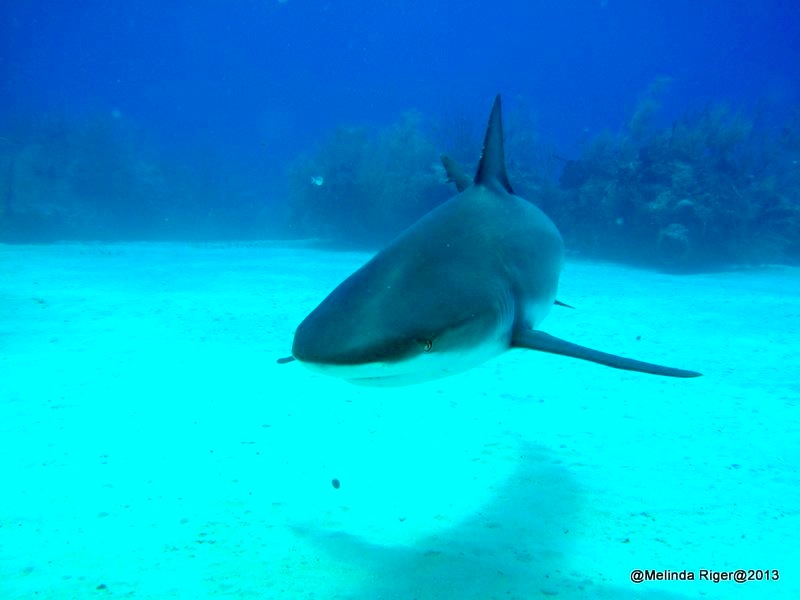
Nurse Shark ©Melinda Riger @ GB Scuba

‘TREAT WITH PATIENCE…’ – NURSE SHARKS IN THE BAHAMAS

The scientific name for the nurse shark sounds like something Bilbo Baggins might have said to summon elves to his rescue: Ginglymostoma cirratum. Actually the name is a mix of Greek and Latin and means “curled, hinged mouth” to describe this shark’s somewhat puckered appearance. The origin of the name “nurse shark” is unclear. It may come from the sucking sound they make when hunting for prey in the sand, which vaguely resembles that of a nursing baby. Or it may derive from an archaic word, nusse, meaning cat shark. The most likely theory though is that the name comes from the Old English word for sea-floor shark: hurse.

Shark ©Melinda Riger @ GB Scuba

Nurse sharks are slow-moving bottom-dwellers and are, for the most part, harmless to humans. However, they can be huge—up to 14 feet (4.3 meters)—and have very strong jaws filled with thousands of tiny, serrated teeth, and will bite defensively if stepped on or bothered by divers who assume they’re docile. [There are recorded instances of injuries caused to divers who have tried to pull nurse sharks by the tail. And serve them right, I say. Treat them with patience – and respect!] 

Nurse_shark_with_remoras Duncan Wright (Sabine's Sunbird)

Notice that the nurse shark in the above photo, and in the header image, is being attended by REMORAS. Click the link to find out more about the strange relationship these ‘weird suckers’ have with larger marine creatures.

Nurse Shark ©Melinda Riger @ G B Scuba

They use their strong jaws to crush and eat shellfish and even coral, but prefer to dine on fish, shrimp, and squid. [And also stingrays, apparently. They have been observed resting on the bottom with their bodies supported on their fins, possibly providing a false shelter for crustaceans which they then ambush and eat.] They are gray-brown and have distinctive tail fins that can be up to one-fourth their total length. Unlike most other sharks, nurses are smooth to the touch. 

Nurse Shark ©Melinda Riger @ Grand Bahama Scuba

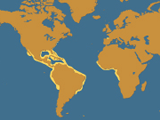
Nurse sharks are found in the warm, shallow waters of the western Atlantic and eastern Pacific oceans. They are abundant throughout their range and have no special conservation status, although the closeness of their habit to human activities is putting pressure on the species.

map-nurse-shark-160-20135-cb1321035858

Nurse sharks are nocturnal and will often rest on the sea floor during the day in groups of up to 40 sharks, sometimes piled on top of each other.

Shark, Nurse (young) ©Melinda Riger @ GB Scuba

FAST FACTS

  • Type: Fish 
  • Diet:  Carnivore
  • Size: 7.5 to 9.75 ft (2.2 to 3 m)
  • Weight: 200 to 330 lbs (90 to 150 kg)
  • Size relative to a 6-ft (2-m) man:
Illustration: Shark compared with adult manNurse Shark ©Melinda Riger @ G B Scuba copy

Credits: All photos Melinda Riger, Grand Bahama Scuba; range map and text mostly  NATIONAL GEOGRAPHIC  filled out with other pickings

Unknown's avatar

‘ELEGANTLY WEIRD’ – SPOTTED DRUMFISH JUVENILES: BAHAMAS REEF FISH (20)


‘ELEGANTLY WEIRD’ – SPOTTED DRUMFISH JUVENILES: BAHAMAS REEF FISH 20

I’ve posted before about the rather extraordinary SPOTTED DRUMFISH, one of those reef fish which in juvenile form is very different from the adult. This species was first up in the Bahamas Reef Fish series – click above link. Here are a few recent images, courtesy of Melinda Riger. The first three show the juvenile form (note the piscine photobomb in the first one). The last shows a group of adults hanging out on the reef with (I think) some soldierfish. You can see how the juvenile drumfish becomes the adult, but those little stripy bullet-heads with their two long elegantly trailing appendages differ considerably from the rather solid-looking spotty / stripy adults with their dramatic punko-rockabilly quiffs.

Drumfish (juv) 3 ©Melinda Riger @ Grand Bahama Scuba Drumfish (juv) 4 ©Melinda Riger @ Grand Bahama ScubaDrumfish (juv) 2 ©Melinda Riger @ Grand Bahama Scuba Drumfish ©Melinda Riger @ Grand Bahama Scuba

Unknown's avatar

RED REEF RESIDENTS: A RUFOUS ROUND-UP IN THE BAHAMAS


Squirrelfish (Elvis) ©Melinda Riger @ Grand Bahama Scuba copy

Elvis the Squirrelfish

RED REEF RESIDENTS: A RUFOUS ROUND-UP IN THE BAHAMAS

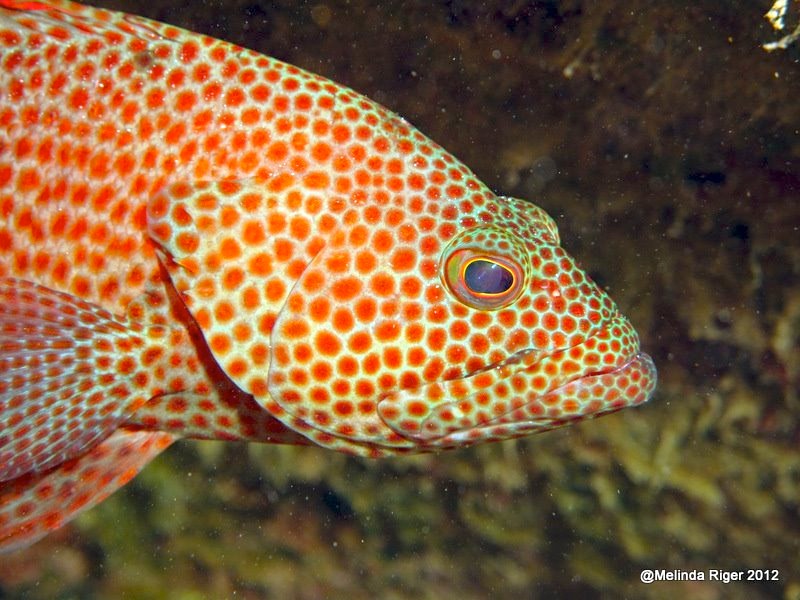
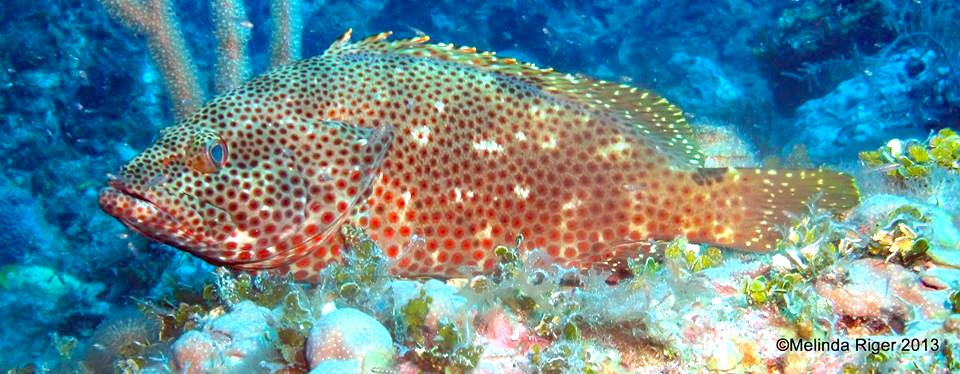
It’s sunny and very hot. Time to take another dive with Melinda to see what is going on under water around the reefs. Here are some residents, a somewhat loose description since some of the denizens featured are not especially active. But they are alive, so they qualify by my wide rules. And please may we not get into a discussion about where precisely red and orange overlap. It’s a grey area. And it’s too hot to argue about it… Let’s start with three types of GROUPER that may be spotted in the northern Bahamas. In fact, they are always spotted. One of my favourite pictures is the Graysby – it’s such a great expression, and he really rocks the spots!

GRAYSBY
Graysby © Melinda Riger @ Grand Bahama Scuba copy

TIGER GROUPER AT A CLEANING STATION with Peterson Cleaning Shrimps & a GobyGrouper, Tiger with cleaning shrimps and goby ©Melinda Riger @ G B Scuba copyRED HINDRed Hind Grouper Melinda Riger @ G B Scuba copy

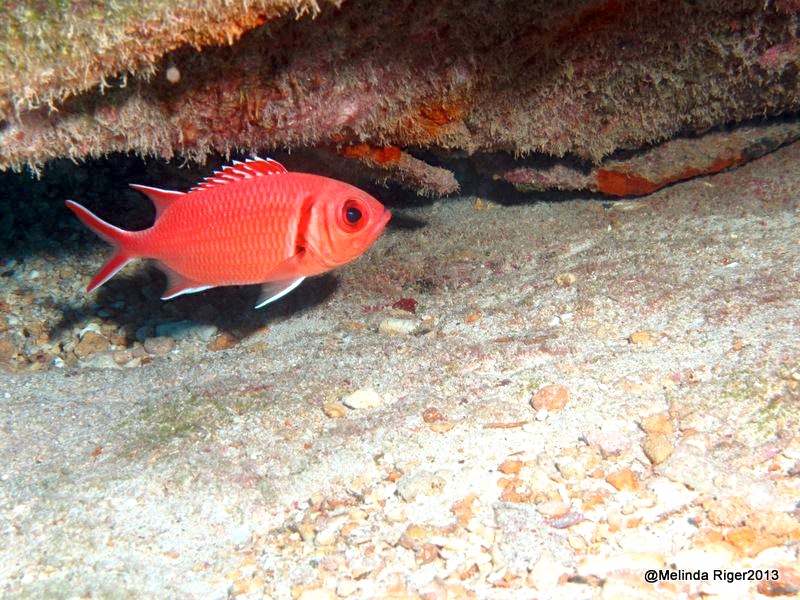
BLACKBAR SOLDIERFISHBlackbar Soldierfish ©Melinda Riger @ G B Scuba copy

HOGFISHHogfish ©Melinda Riger @ GB Scuba copy 2

SQUIRRELFISHSquirrelfish 2 copy

But red fish are not the only red reef residents. Here are some  that won’t swim away from you as you swim towards them to admire them…

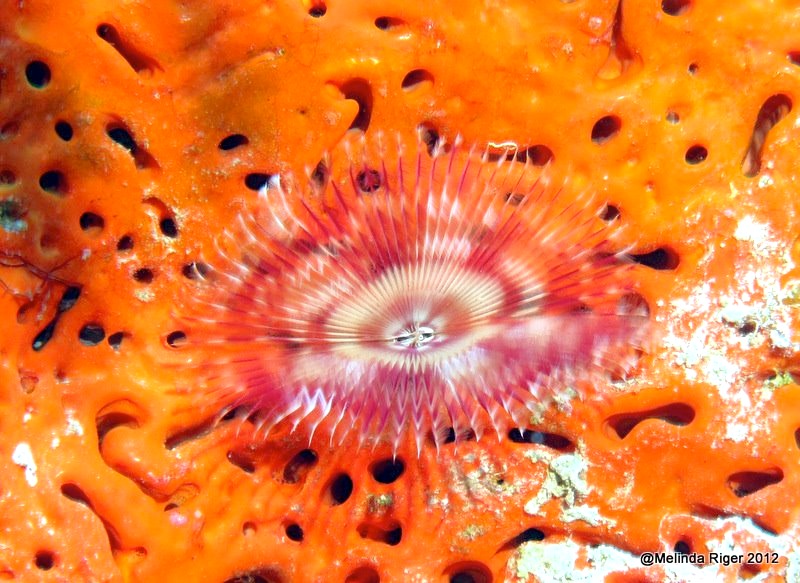
A FEATHER DUSTER ON A SPONGEFeather Duster in a Sponge ©Melinda Riger @ Grand Bahama Scuba copy

RED SPONGERed Sponge ©Melinda Riger @ GB Scuba copyUNDERWATER GARDEN GROWING IN A RED CONTAINERCoral ©Melinda Riger @ G B Scuba 2 copy

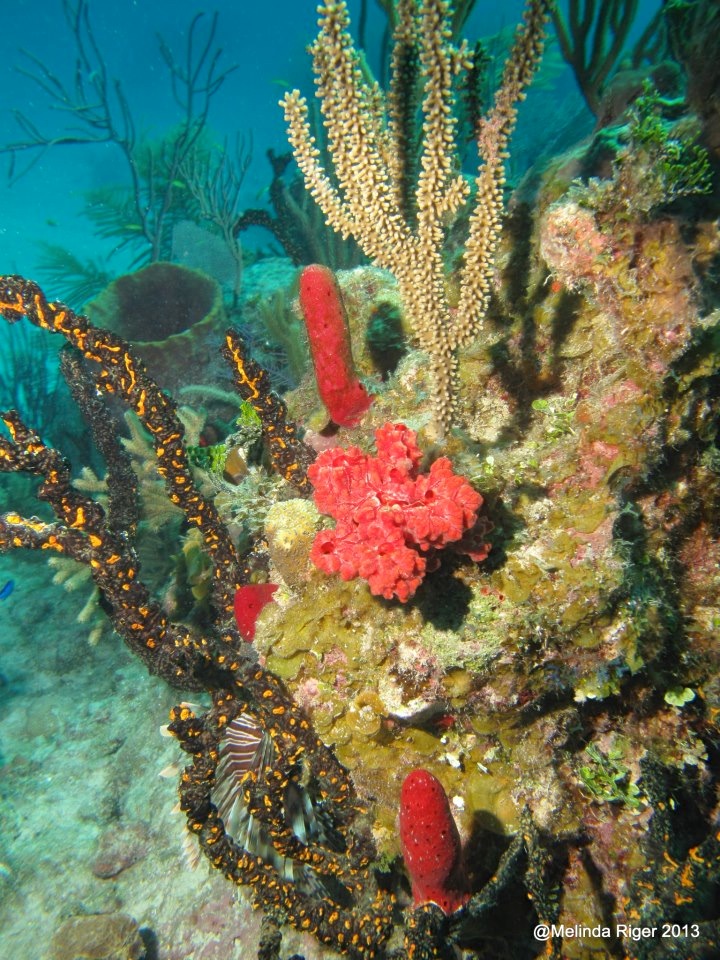
ANOTHER VARIED REEF GARDENReef Garden ©Melinda Riger@ G B Scuba copy

CORALS WITH (I have just noticed) A LURKING LIONFISH Coral ©Melinda Riger @ G B Scuba 1 copy

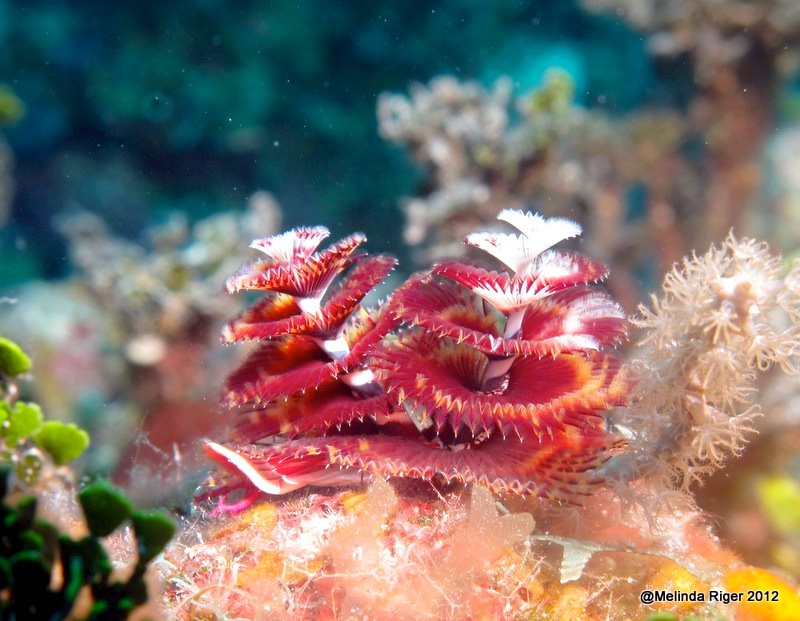
CHRISTMAS TREE WORMS (see more of these amazing creatures HERE)Christmas Tree Worms ©Melinda Riger @ G B Scuba copy

All photos: Melinda Riger @ Grand Bahama Scuba

Unknown's avatar

GRAY ANGELFISH – BAHAMAS REEF FISH (18)


Gray Angelfish f

GRAY ANGELFISH: BAHAMAS REEF FISH (18)

Some time ago I posted about GRAY ANGELFISH Pomocanthus arcuatus. They are the more dowdy cousins of the flashy QUEEN ANGELFISH. They are not without their own beauty, though, and I have collected a few more photos of this species taken by Melinda Riger of Grand Bahama Scuba. I’m always pleased to feature her amazing reef photos, with their vivid colours and clear detail, so I hope you enjoy these. The last one – with the stripes – is a juvenile.Gray Angelfish a © Melinda Riger @GB ScubaGray Angelfish d ©Melinda Riger @ GB ScubaGray Angelfish e ©Melinda Riger @ Grand Bahama ScubaGray Angelfisg juv b ©Melinda Riger @ G B ScubaGray Angelfish c ©Melinda Riger @ G B Scuba


Unknown's avatar

“REEF ENCOUNTER”: TEN CHEERFUL BAHAMAS REEF FISH


Queen Triggerfish  ©Melinda Riger G B Scuba

QUEEN TRIGGERFISH

“REEF ENCOUNTER”: TEN CHEERFUL BAHAMAS REEF FISH

LAURA JESSON “Do you know, I believe we should all behave quite differently if we lived in a warm, sunny climate all the time. We shouldn’t be so withdrawn and shy and difficult…” (Brief Encounter 1945) 

The quote is there both because it is particularly apposite for any withdrawn etc Brit with a toehold in Abaco, and because it explains or excuses the somewhat clumsy title pun… March has been dominated by (a) a trip to Abaco and (b) publication of “The Birds of Abaco”. Time for some cheerful finny  fotos to end the month with, courtesy of diving belle Melinda Riger of Grand Bahama Scuba and her top-class camera work.

Cherub Fish © Melinda Riger @ G B Scuba copy

CHERUB FISH

Rock Beauty ©Melinda Riger @ GB Scuba copy

ROCK BEAUTY

Fairy Basslet © Melinda Riger @ GB Scuba copy

FAIRY BASSLET

Blackbar Soldierfish ©Melinda Riger @ G B Scuba copy

BLACKBAR SOLDIERFISH

Hamlet (Shy) ©Melinda Riger @ Grand Bahama Scuba copy

SHY HAMLET

Three-spot Damselfish  ©Melinda Riger @ G B Scuba  copy

THREE-SPOT DAMSELFISH

Blue Tang with Blue Chromis © Melinda Riger @GB Scuba copy

BLUE TANG with BLUE CHROMIS

Banded Butterflyfish ©Melinda Riger @ GB Scuba copy

BANDED BUTTERFLYFISH