Unknown's avatar

FLAMINGO TONGUE SNAILS: DECORATIVE CORAL-DWELLERS


Flamingo Tongue Snails (Melinda Rogers, Dive Abaco, Bahamas)

FLAMINGO TONGUE SNAILS: DECORATIVE CORAL-DWELLERS

FLAMINGO TONGUE SNAILS Cyphoma gibbous are small marine gastropod molluscs related to cowries. The living animal is brightly coloured and strikingly patterned, but that colour only exists in the ‘live’ parts – the so-called ‘mantle’. The shell itself is usually pale, and characterised by a thick ridge round the middle. These snails live in the tropical waters of the Caribbean and the wider western Atlantic. Whether alive or dead, they are gratifyingly easy to identify.

Flamingo Tongue Snails (Melinda Rogers, Dive Abaco, Bahamas)

THE IMPORTANCE OF CORAL

Flamingo tongue snails feed by browsing on soft corals. Often, they will leave tracks behind them on the coral stems as they forage (see image below). But corals are not only food – they provide the ideal sites for the creature’s breeding cycle.

Flamingo Tongue Snails (Dive Abaco, Bahamas)Flamingo Tongue Snails (Melinda Rogers, Dive Abaco, Bahamas)

Adult females attach eggs to coral which they have recently fed upon. About 10 days later, the larvae hatch. They eventually settle onto other gorgonian corals such as Sea Fans. Juveniles tend to live on the underside of coral branches, while adults are far more visible and mobile. Where the snail leaves a feeding scar, the corals can regrow the polyps, and therefore the snail’s feeding preference is generally not harmful to the coral.

The principal purpose of the patterned mantle of tissue over the shell is to act as the creature’s breathing apparatus. The tissue absorbs oxygen and releases carbon dioxide. As it has been (unkindly?) described, the mantle is “basically their lungs, stretched out over their rather boring-looking shell”

Flamingo Tongue Snails (Melinda Rogers, Dive Abaco, Bahamas)

THREATS AND DEFENCE

The species, once common, is becoming rarer. The natural predators include hogfish, pufferfish and spiny lobsters, though the spotted mantle provides some defence by being rather unpalatable. Gorgonian corals contain natural toxins, and instead of secreting these after feeding, the snail stores them. This supplements the defence provided by its APOSEMATIC COLORATION, the vivid colour and /or pattern warning sign to predators found in many animal species.

Flamingo Tongue Snails (Melinda Rogers, Dive Abaco, Bahamas)

MANKIND’S CONTRIBUTION

It comes as little surprise to learn that man is now considered to be the greatest menace to these little creatures, and the reason for their significant decline in numbers. The threat comes from snorkelers and divers who mistakenly / ignorantly think that the colour of the mantle is the actual shell of the animal, collect up a whole bunch from the reef, and in due course are left with… dead snails and “boring-looking shells” (see photos below). Don’t be a collector; be a protector…

Flamingo Tongue Snails (Melinda Rogers, Dive Abaco, Bahamas)

The photos below are of nude flamingo tongue shells from the Delphi Club Collection. Until I read the ‘boring-looking shell’ comment, I believed everyone thought they were rather lovely… I did, anyway. You decide!

Flamingo Tongue Snail Shell, Keith Salvesen AbacoFlamingo Tongue Snail Shell, Keith Salvesen Abaco

Image Credits:  Melinda Rogers / Dive Abaco; Keith Salvesen / Rolling Harbour

Flamingo Tongue Snails (Melinda Rogers, Dive Abaco, Bahamas)

Unknown's avatar

PILOT WHALES: “DIVIDED BY A COMMON SEA”


Pilot Whales, Abaco Bahamas (BMMRO / Rolling Harbour)

PILOT WHALES: “DIVIDED BY A COMMON SEA”

You know the thing about Britain and the US being ‘two Nations divided by a common language’? Among the many august people credited with first coming up with this remark, the leading contenders are Oscar Wilde, George Bernard Shaw and Winston Churchill. Generally, Wilde seems to be considered the winning author**. Whichever, the saying is intended to be lightly and amusingly rude, probably to both nations.

Pilot Whales, Abaco Bahamas (BMMRO / Rolling Harbour)

Well, pilot whales are in a similar position. They are found on both sides of the Atlantic (and many other places of course). As acoustic analysis of the sounds made by marine mammals becomes increasingly sophisticated, the evidence suggests that a pilot whale in The Canary Islands saying “Hey guys, meal approaching 11.00 o’clock, moving right, 30 feet” will use different sounds from its counterpart in the Bahamas.

A pilot whale with a recent injury to its jaw. Chief suspect: a COOKIECUTTER SHARK?Pilot Whales, Abaco Bahamas (BMMRO / Rolling Harbour)

Short-finned pilot whales (Globicephala macrorynchus) are also known as blackfish or potheads (though some may reserve this last term for – ahem – higher species). As with MELON-HEADED WHALES, they are in fact a species of large dolphin. They can grow to nearly 20′ long and weigh accordingly.

Pilot whales live in large pods of 50 or more. These are so-called ‘matrilineal’ groups, meaning that they consist of 2 or even 3 generations of related females. When the sea is calm, they sometimes adopt a behaviour known as ‘logging’, in which they will spend a long time – maybe hours – lying on the surface in tight groups.

Pilot Whales, Abaco Bahamas (BMMRO / Rolling Harbour)

In The Bahamas, pilot whales are seen year-round but are more common during the spring and summer months. Some are resident, but Bahama pilot whales appear to have large ranging patterns. Pilot whales tagged in The Bahamas have travelled as far north as North Carolina suggesting they are part of a population located in the US southeast .

HOW DO RESEARCHERS RECOGNISE EACH ANIMAL?

The first place to look is the dorsal fin. There are (at least) two reasons for this. First, it’s the part of the dolphin / whale that is most visible through binoculars; secondly, it is the part that tends to acquire nicks, ragged edges, and scar patterns that are unique to that animal. When a new cetacean is sighted, it is logged and assigned an ID. This will usually be kept simple and scientific: “look, there’s AL16 again” and so on; how unlike birds, where banders assign names such as Felicia Fancybottom, Bahama Mama and Harry Potter.  

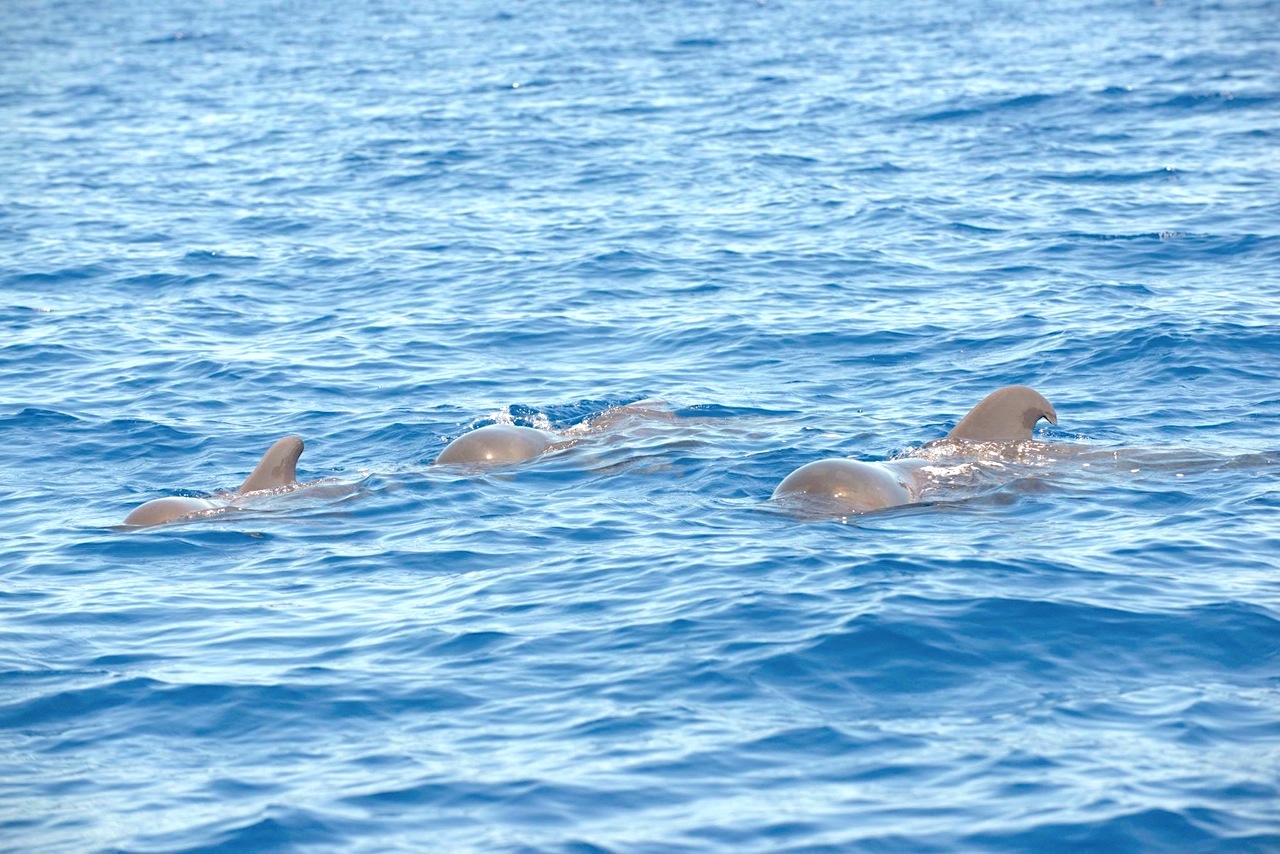
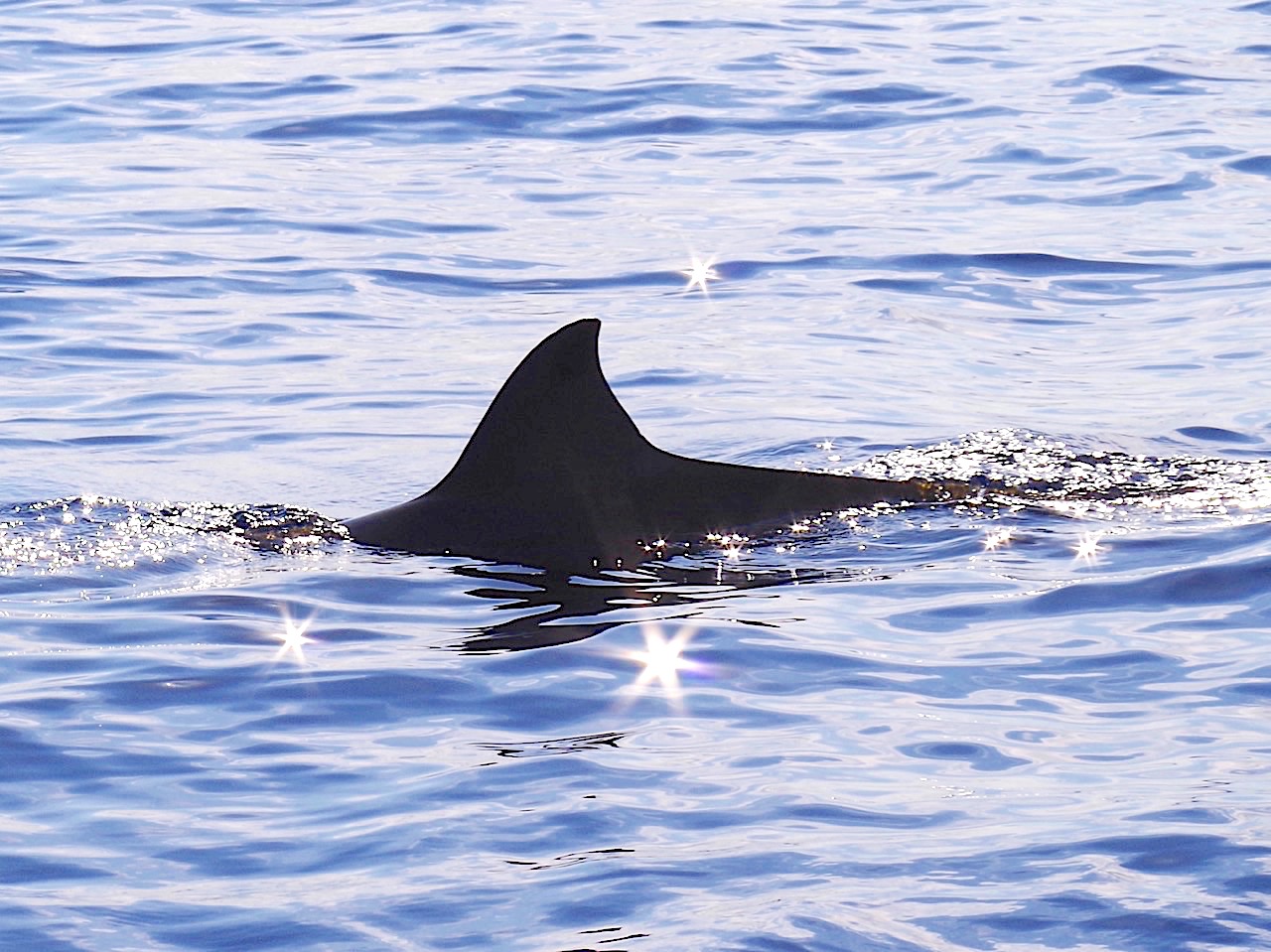
If you look at #2 above, notice the distinctive hooked dorsal fin of the right-hand pilot of the trio. An easy ID for future sightings. And see below for nicks and scarring.

Pilot Whales - dorsal fin ID, Abaco Bahamas (BMMRO / Rolling Harbour)

MEANWHILE, 3643 MILES EAST ACROSS THE ATLANTIC

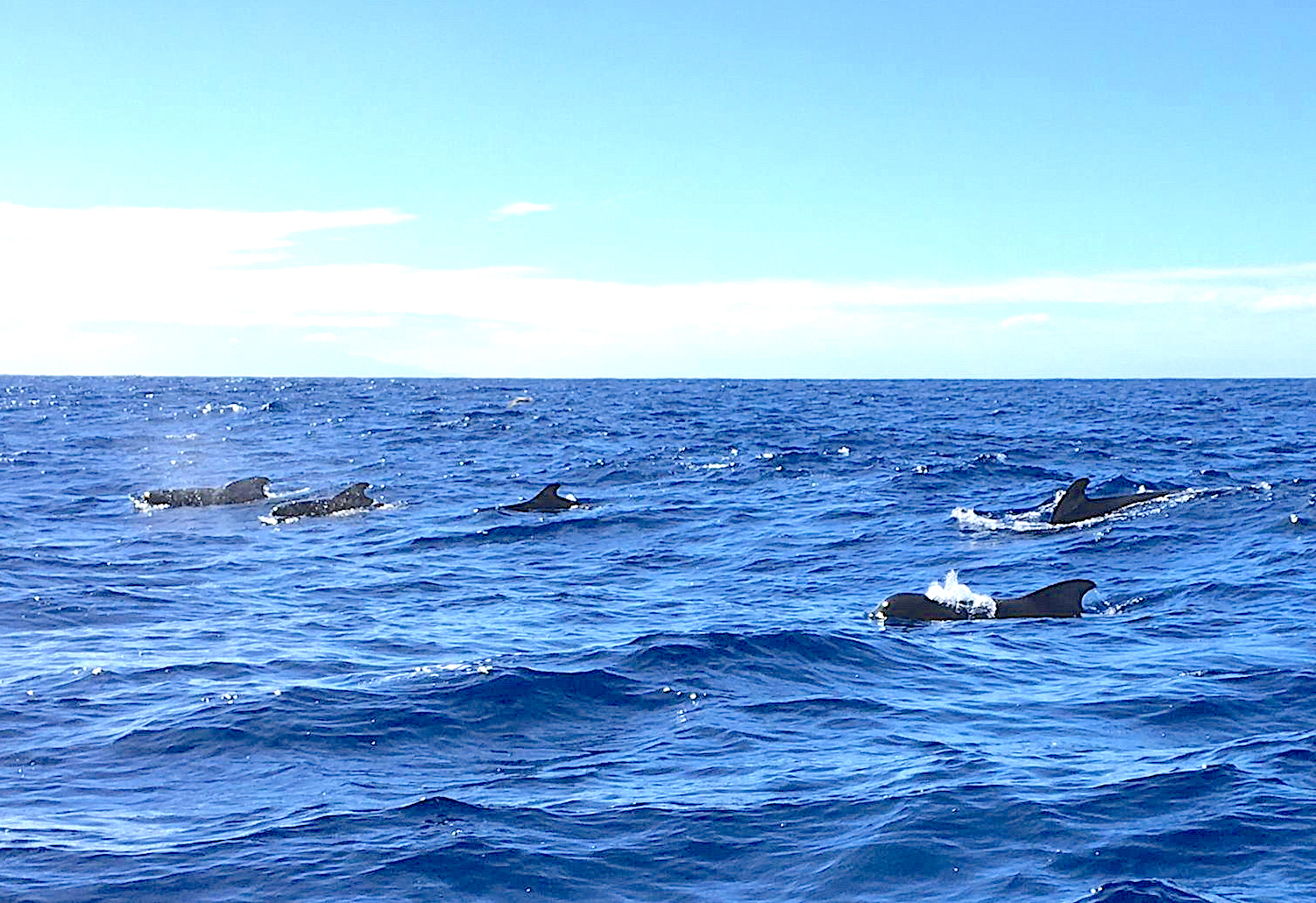
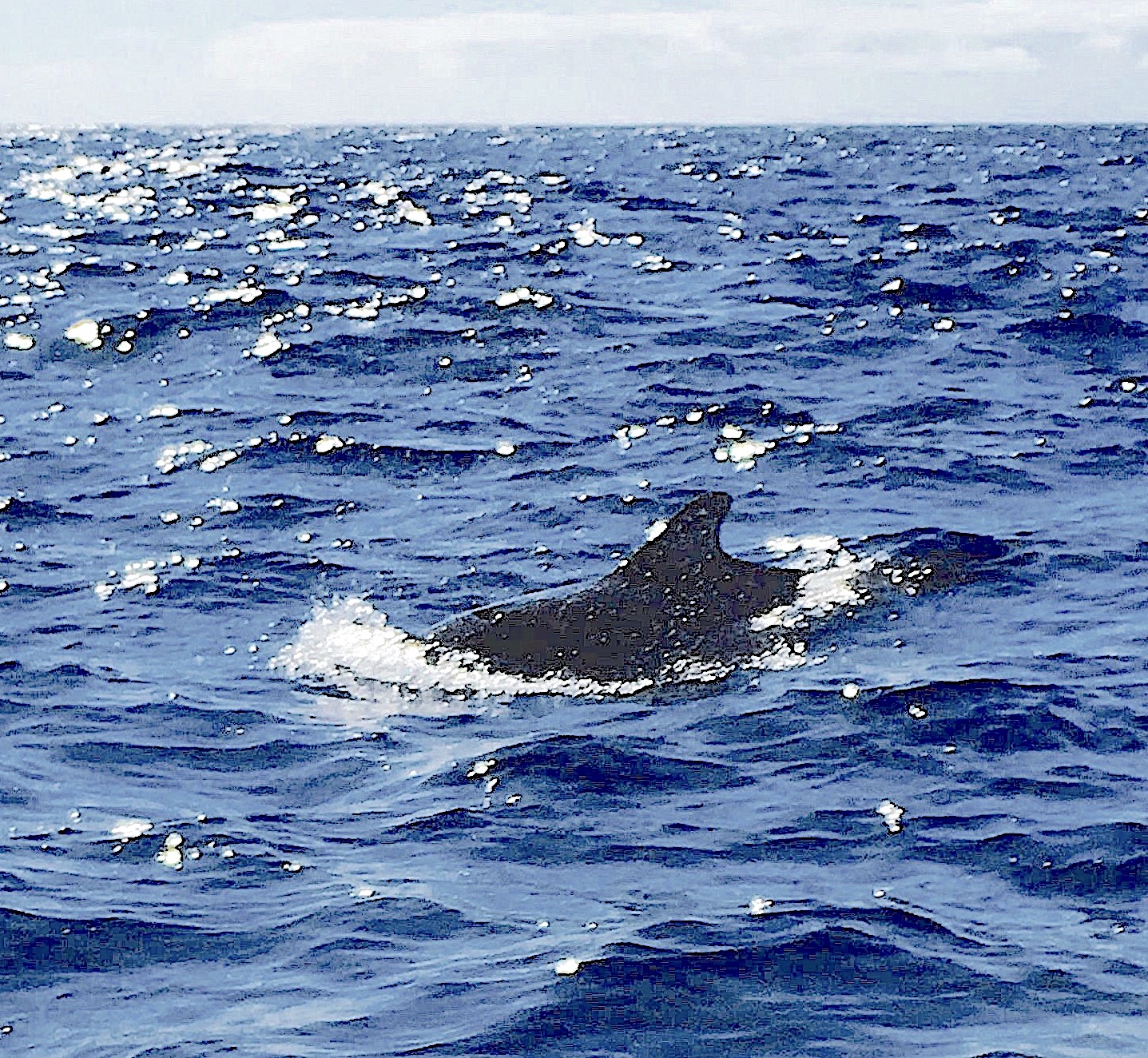
Last Autumn my niece and her family went to La Gomera, a small volcanic island in the Canaries. They all went on a whale / dolphin watching trip and were delighted to encounter a group of pilot whales. My great nephew, not yet a teenager, had an iphone with him and in the circumstances of standing on a moving platform photographing creatures swimming fast through the water, he did a very good job. A couple of them even have a bonus shearwater.

Pilot Whales, La Gomera, Canary Isles (Rolling Harbour / YN) Pilot Whales, La Gomera, Canary Isles (Rolling Harbour / YN) Pilot Whales, La Gomera, Canary Isles (Rolling Harbour / YN) Pilot Whales, La Gomera, Canary Isles (Rolling Harbour / YN) Pilot Whales, La Gomera, Canary Isles (Rolling Harbour / YN)

The west and east Atlantic pilot whales shown here are almost exactly on the same latitude

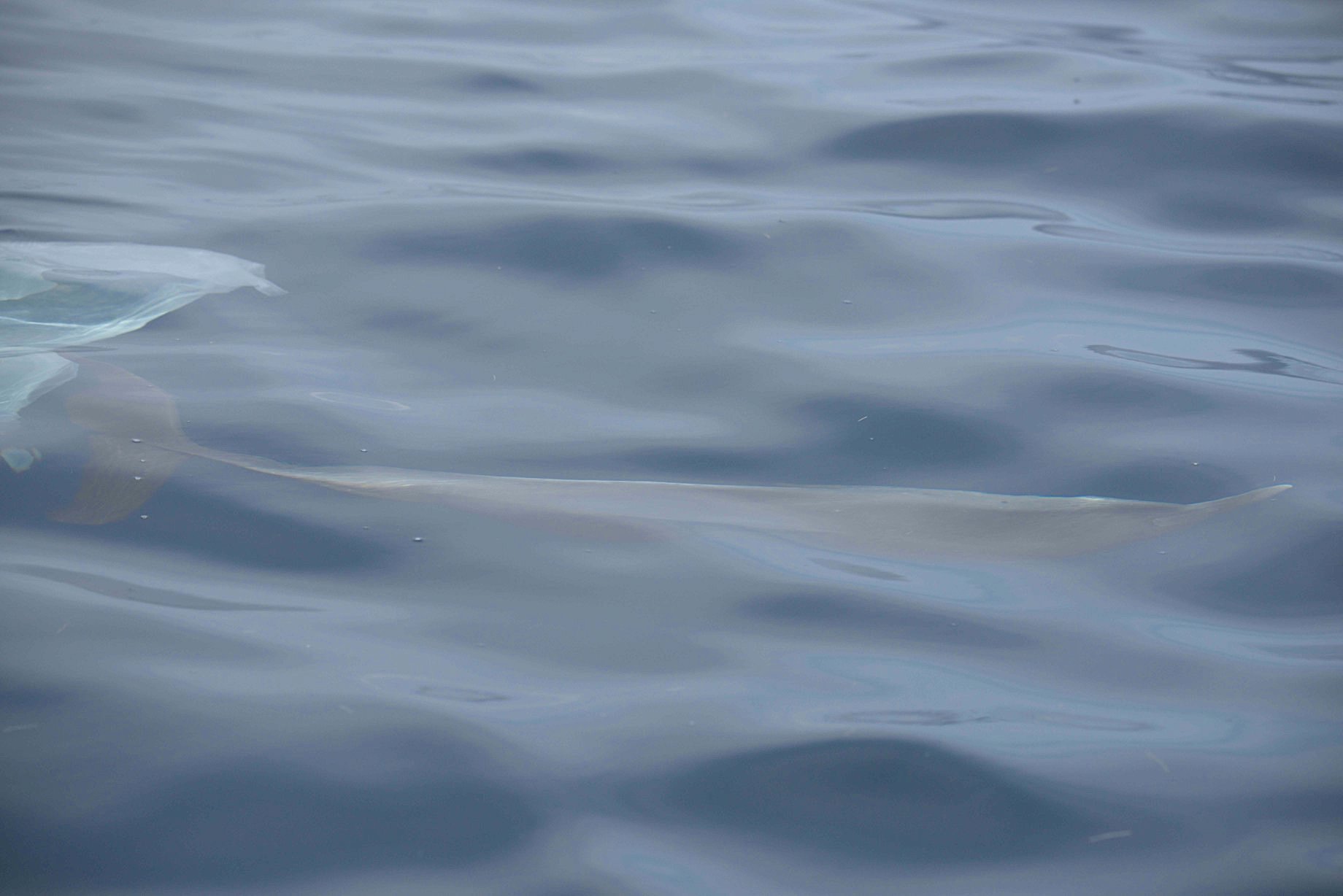
I’m not particularly bothered by my lack of photographic eptitude, but even I feel that my own shot of a pilot whale  in the Sea of Abaco rates high in the list of epic fails

The identity of the photographer is protected under the Official Secrets Act 1989

** ‘We have really everything in common with America nowadays except, of course, language’ Oscar Wilde The Canterville Ghost (1887)

Photo Credits: 1 – 5, BMMRO / Rolling Harbour; 6 – 10, my naturalist nephew Yarin; 11, name withheld by order of the management; 12, Marina Nolte / Wiki. General thanks: Diane, Charlotte, BMMRO

Pilot Whale (Marina Nolte / Wiki)

Unknown's avatar

FORAYS WITH MORAYS (6): WELL SPOTTED…


Spotted Moray Eel (©Melinda Riger / Grand Bahama Scuba)

FORAYS WITH MORAYS (6): WELL SPOTTED…

I was always taught ‘keep your mind open and your mouth closed’. Bad advice. Such bad advice. The worst. So many reasons to be exactly the opposite in these troubled times…

Spotted Moray Eel (©Melinda Riger / Grand Bahama Scuba)

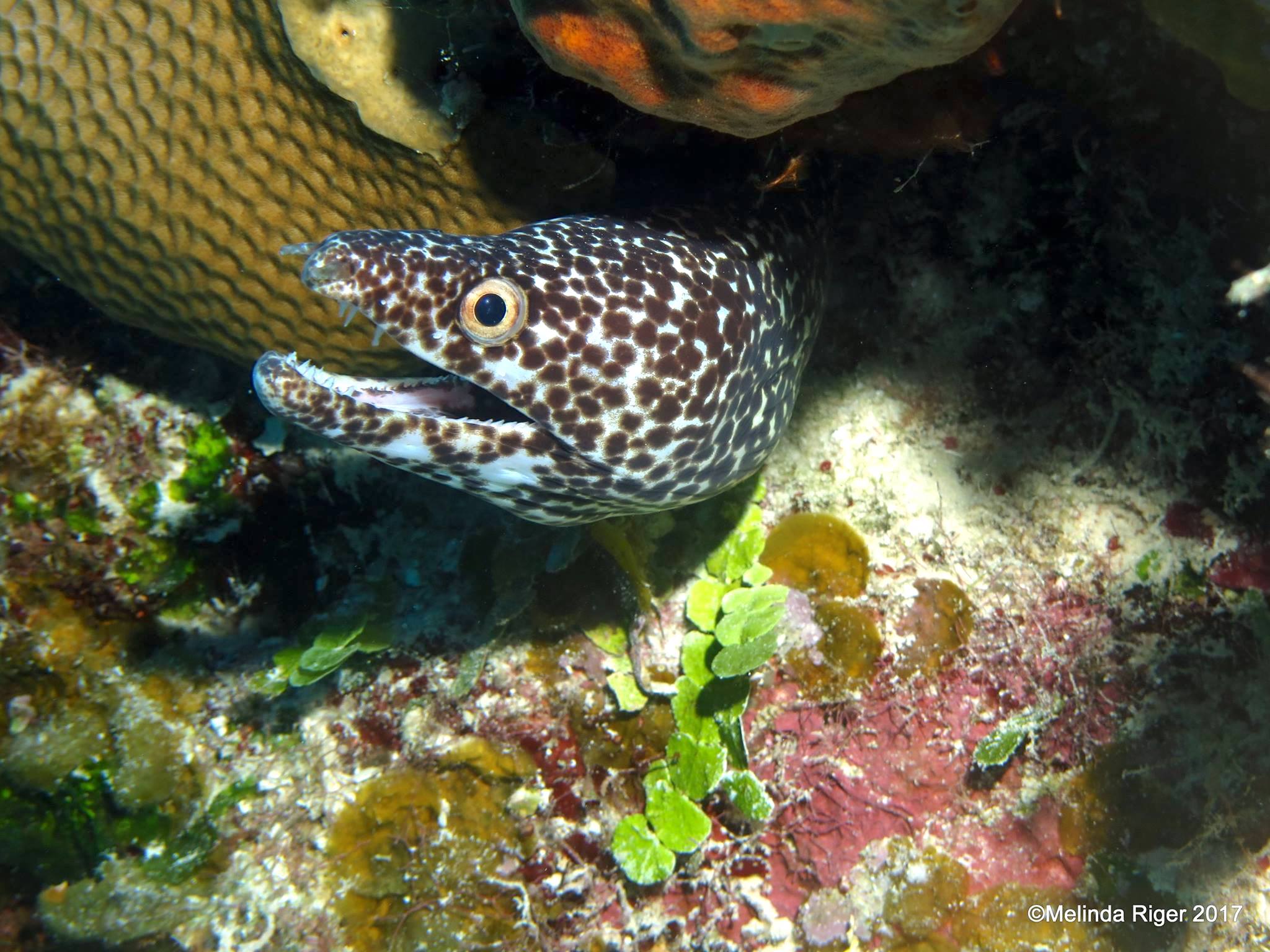
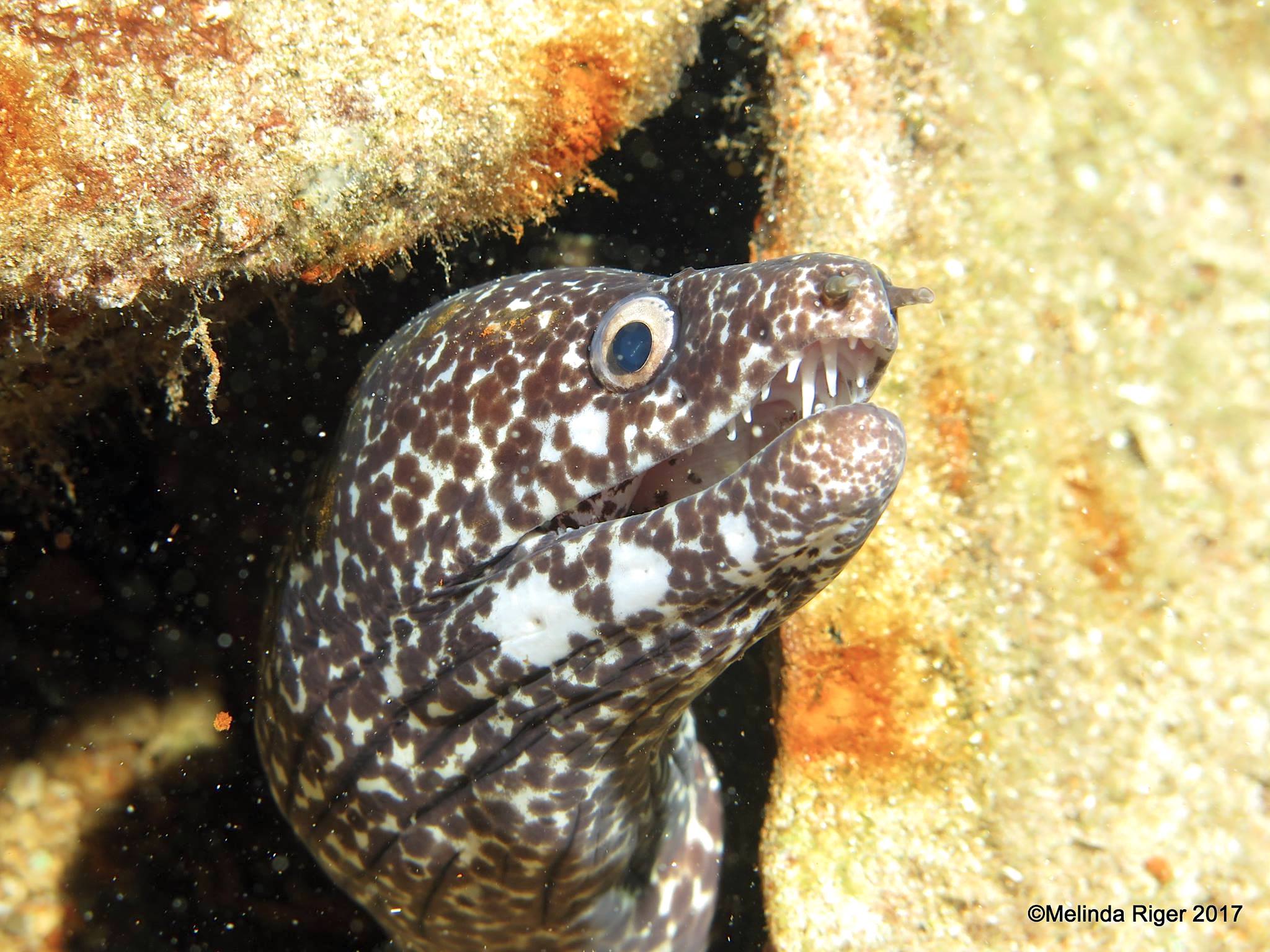
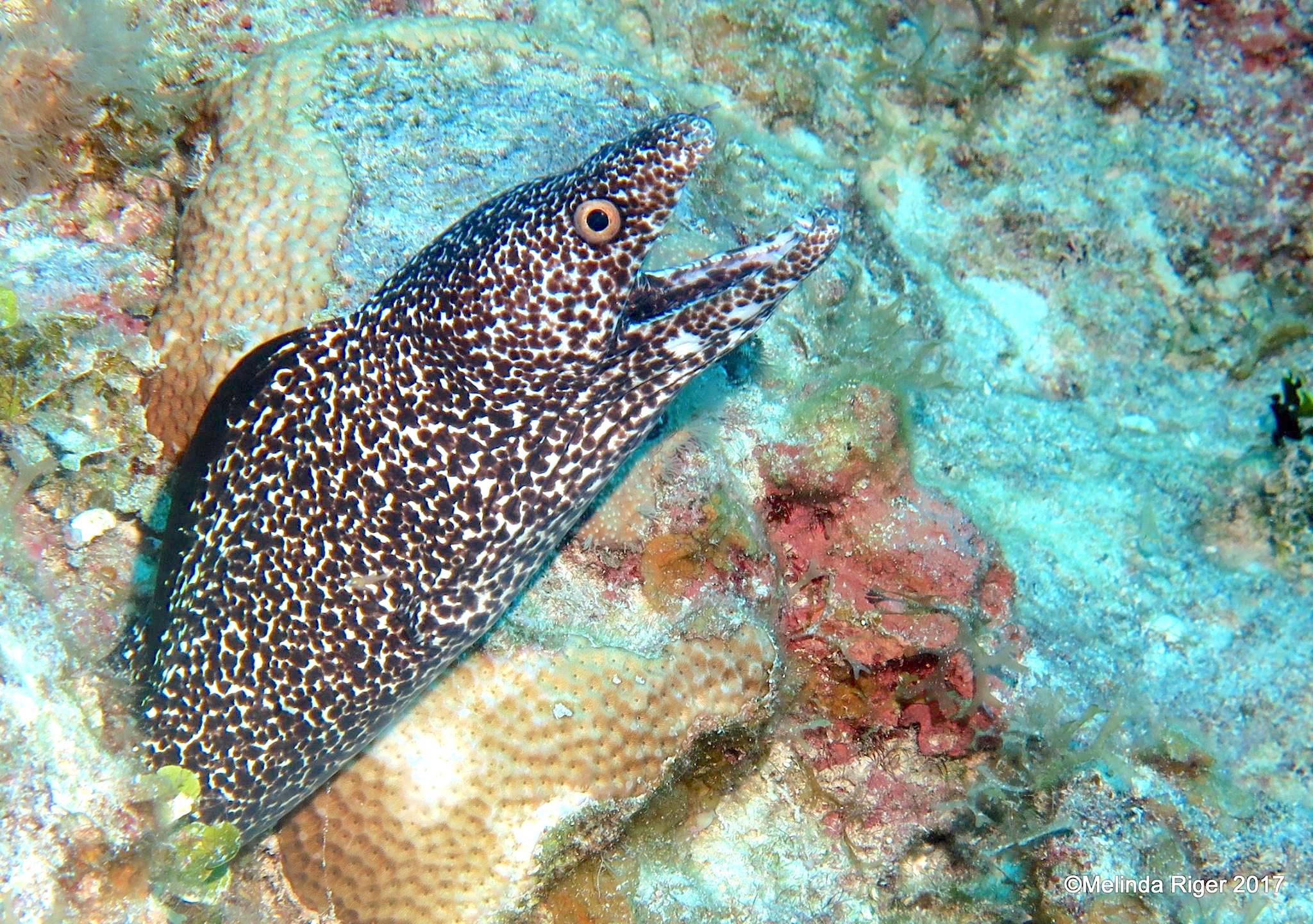
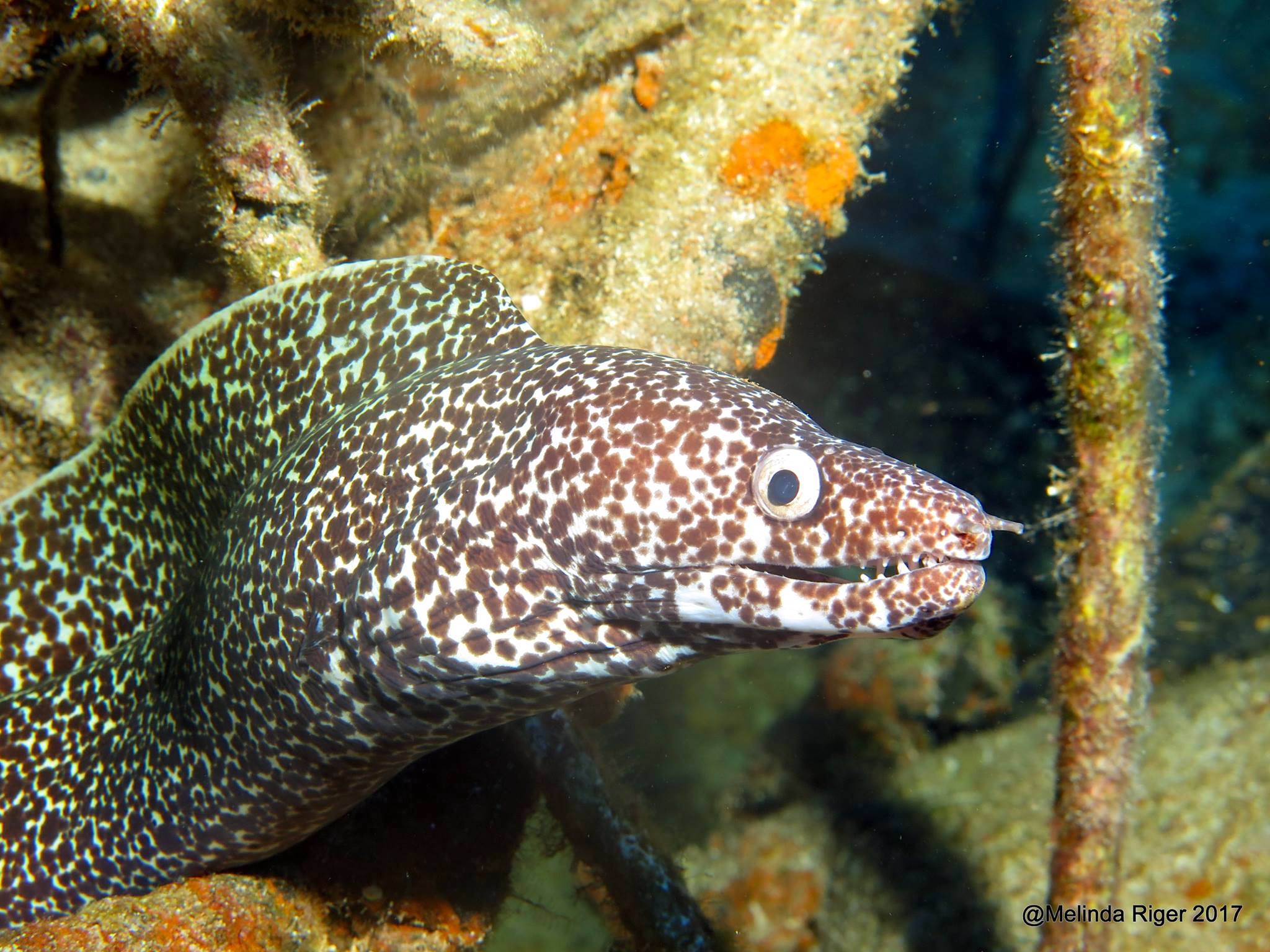
Spotted Moray eels Gymnothorax moringa, however, seem to have their own rules to live by. They appear to be open-minded and fairly sensible creatures around the reef. They tend to keep themselves to themselves, hanging out unassumingly in holes and crevices in the coral.

Spotted Moray Eel (©Melinda Riger / Grand Bahama Scuba)

They do tend to stick their necks out a bit, but unless provoked (see below) they seem to be reasonably amiable (except maybe to the small fish and crustaceans that make up their diet).

Spotted Moray Eel (©Melinda Riger / Grand Bahama Scuba)

They do keep their mouths open a lot, though. And as you can see, they have sharp-looking teeth that you mightn’t want too near to you. I say that because their bite can be dangerous and should be avoided. To start with, the teeth are slightly backward-facing, so that when they bite there is a ‘pull-back’ effect when you react (not unlike a barb on a fish hook). They are not aggressive as such, but they know how to deal with unwanted interference in their lives…

Spotted Moray Eel (©Melinda Riger / Grand Bahama Scuba)

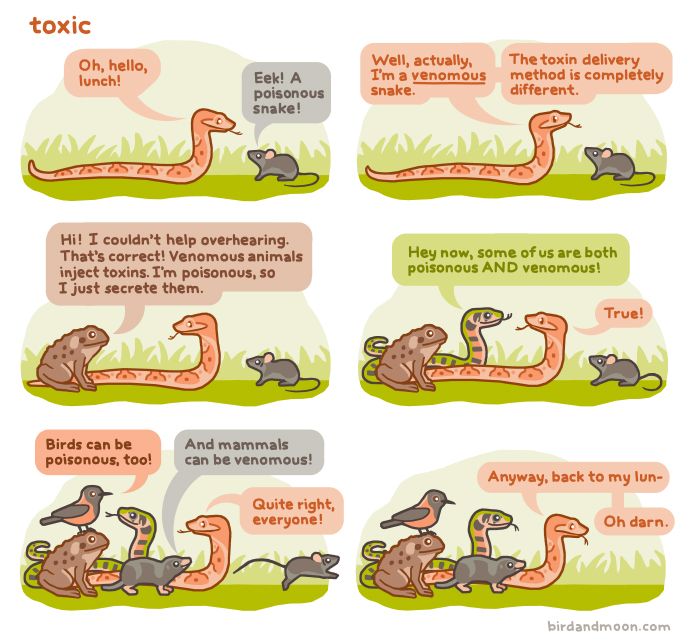
Apart from the unpleasant bite and associated pain that moray eels can inflict in defence, they are also poisonous (as opposed to venomous). Specifically they can release toxins into the wound; and in some species their skin contains toxins as well**. Serious infection may result.

Spotted Moray Eel (©Melinda Riger / Grand Bahama Scuba)

CAN YOU GIVE THE POISONOUS / VENOMOUS DISTINCTION AGAIN

I could, but ace natural history cartoonist Rosemary Mosco makes a better job than I can:Toxic: poison v venom cartoon (Rosemary Mosco)

**Before I leave the topic, maybe I ought to mention one bit of research I have just come across at Dove Med, from which I take away the message that you definitely don’t want to annoy a moray eel or get bitten by one. Ever. They are fine and interesting denizens of the reef, to be admired from a respectful distance…

Spotted Moray Eel (©Melinda Riger / Grand Bahama Scuba)

Photo credits: all amazing photos courtesy of Melinda Riger, Grand Bahama Scuba; cute yet educative cartoon by Rosemary Mosco. Check out her website HERE – and birders, she v good on your specialist subject…

Spotted Moray Eel (©Melinda Riger / Grand Bahama Scuba)

Unknown's avatar

HAWKSBILL TURTLES: ENJOY THEM WHILE YOU CAN


Hawksbill Turtle Bahamas (Melinda Riger / G B Scuba)

HAWKSBILL TURTLES: ENJOY THEM WHILE YOU CAN

Pliny the Elder (CE 23–79) was one of the earliest naturalists, besides being a philosopher, author and military commander. He wrote Naturalis Historia (Natural History), a wide-ranging work that became a model for later scholarly works, including forms of Encyclopedia. And, as he so nearly wrote, ‘si non amas testudines, vacua anima tua est’ (he that loves not sea turtles, has an empty mind)*

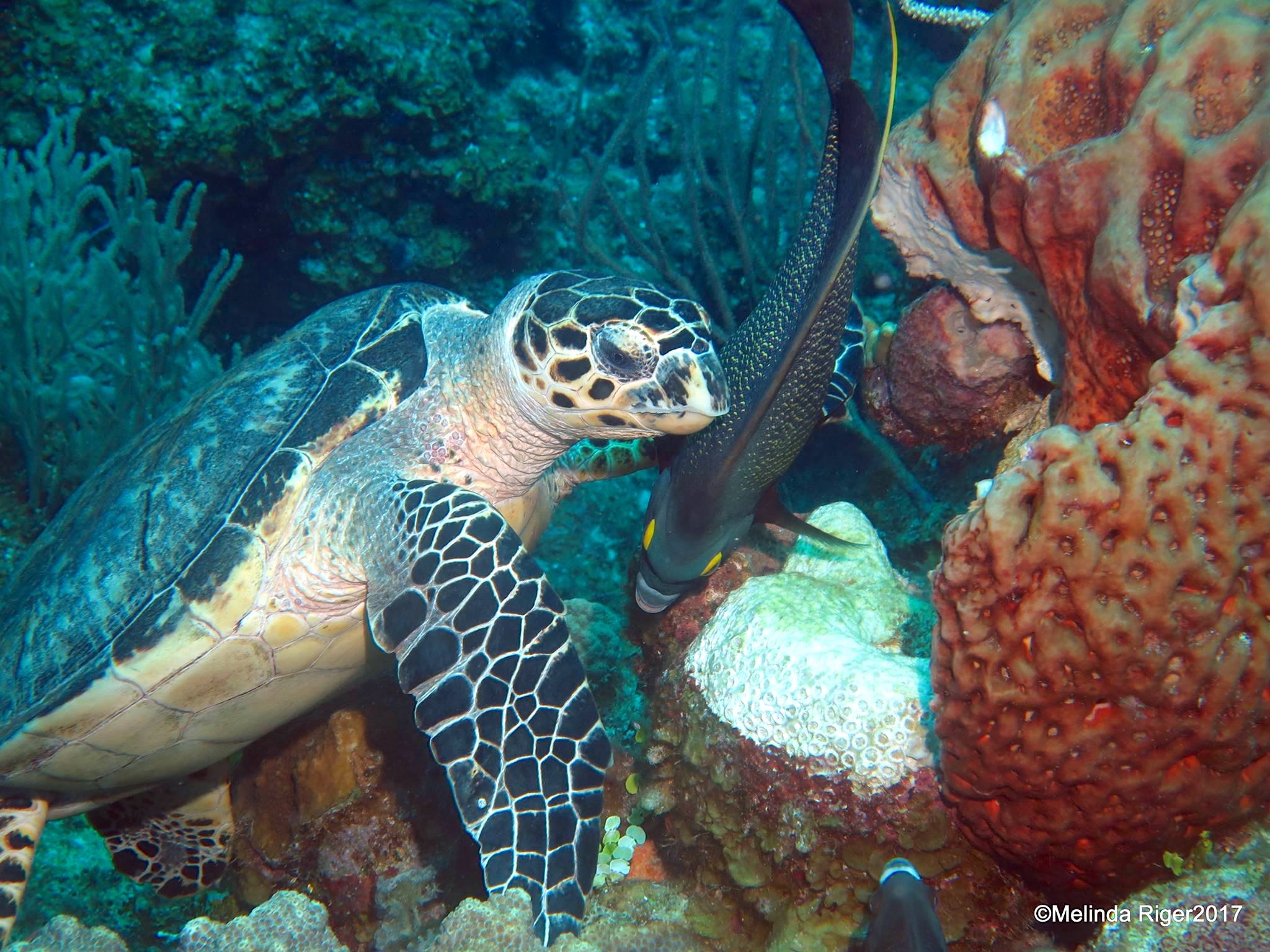
Hawksbill turtle grazing while a French angelfish looks onHawksbill Turtle with French Angelfish, Bahamas (Melinda Riger / G B Scuba)

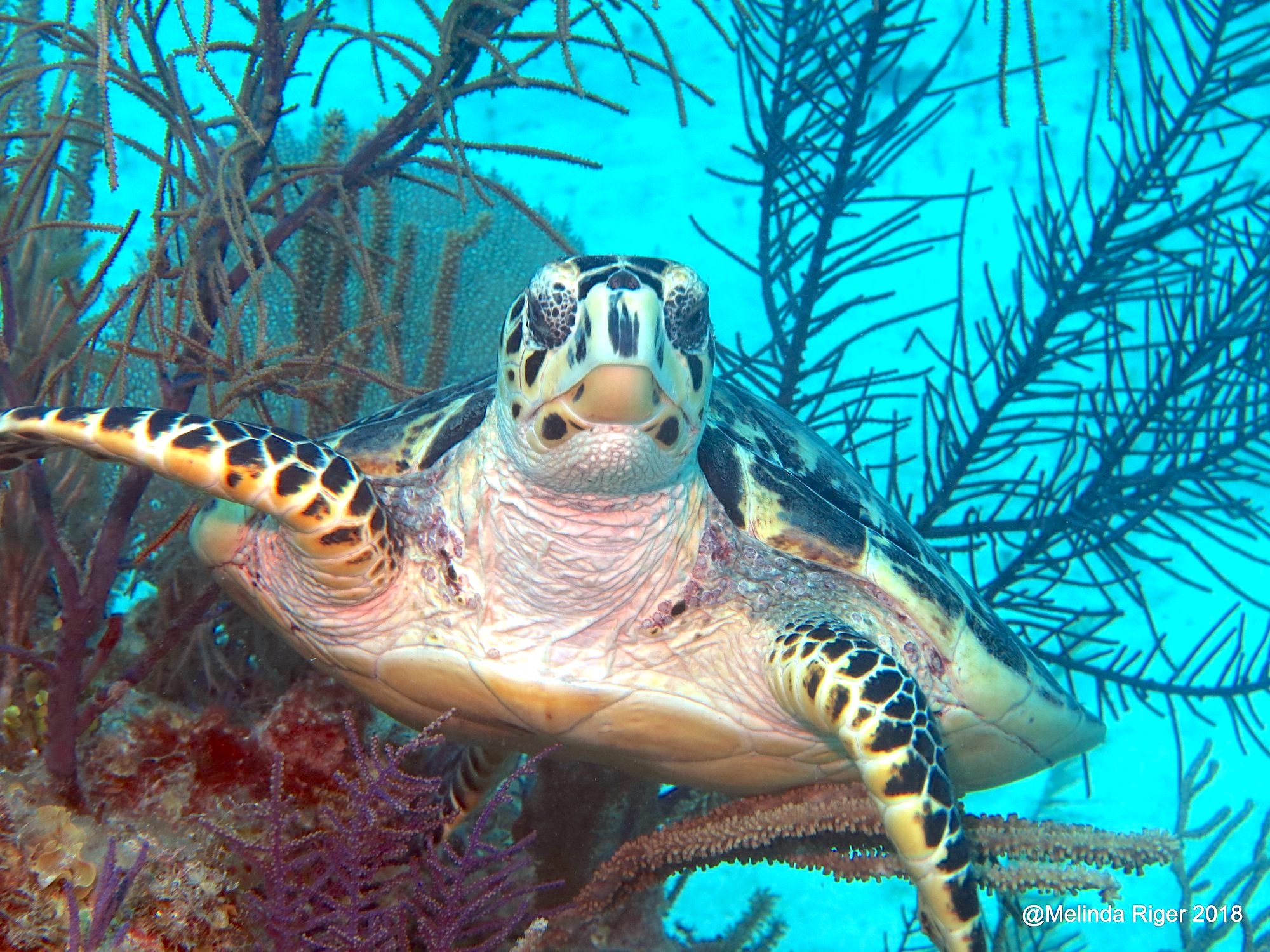
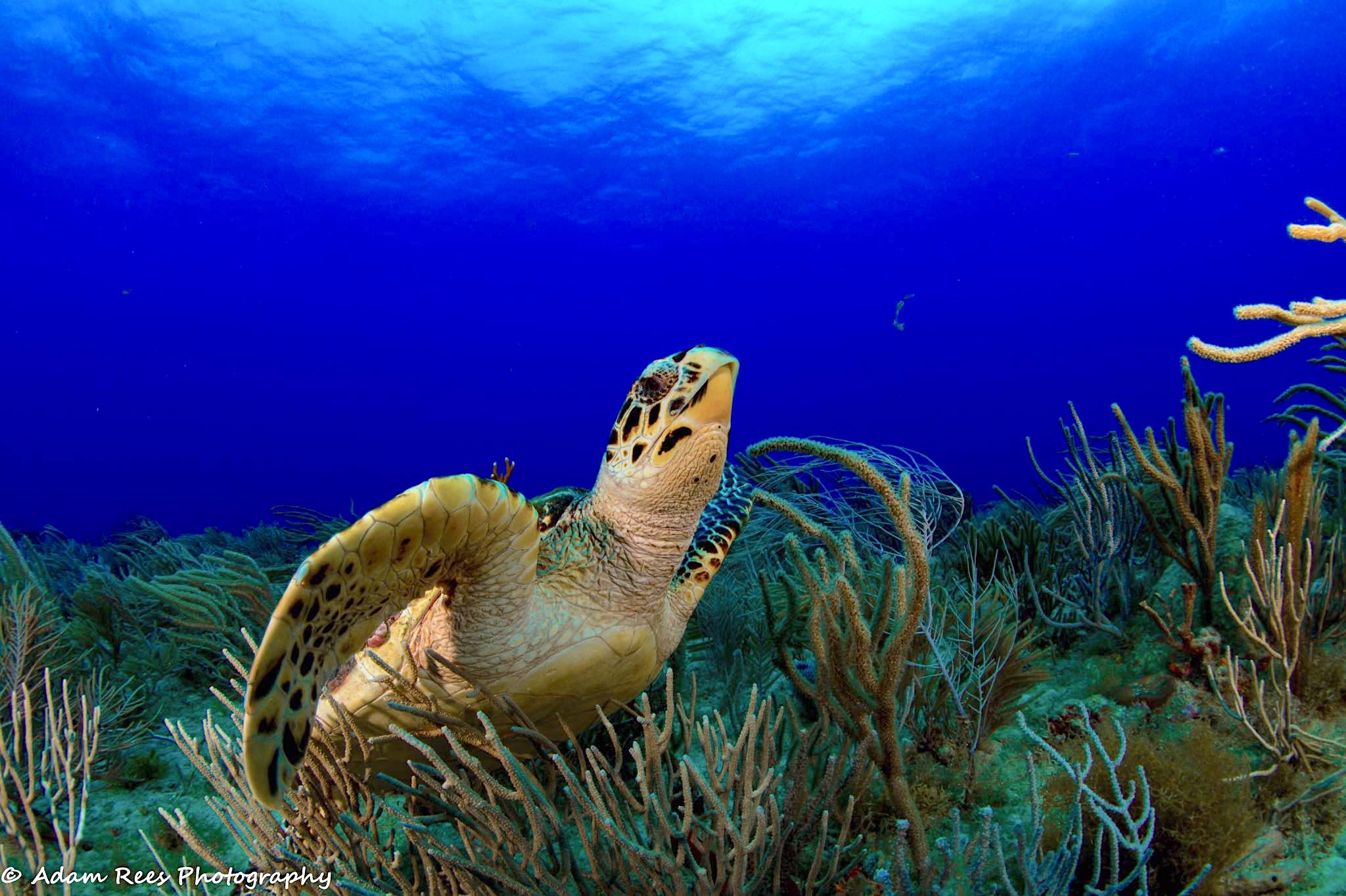
There can be few better ways to start the New Year than with some gorgeous Hawksbill Turtles  Eretmochelys imbricata, plus a sprinkling of turtle facts to give 2019 a good push into orbit. Fortunately still available in Bahamas waters, the continued existence of Hawksbills is under serious threat. Make the most of your opportunities.

Hawksbill Turtle Bahamas (Adam Rees / Scuba Works)

  • Guesstimates of the world Hawksbill Turtle population suggest that there are 5 main groups in the oceans, with few enough individuals – especially breeding females – to warrant an IUCN listing of the species as critically endangered
  • I doubt that many will forget that the next IUCN category is… extinct (≠ ‘fun fact’)
  • The largest Hawksbill colony in the world nests on an island in Queensland Australia
  • Turtles leave the sea to lay eggs in a hole dug on the beach, before returning to the sea.
  • The eggs hatch after c60 days… the turtlings emerge and are then on their own
  • Hawksbills are omnivorous, mainly eating sponges (& immune from sponge toxins)
  • They also eat sea anemones, mollusks, and jellyfish
  • Their grazing lifestyle is an important component of a healthy coral reef ecosystem

Hawksbill Turtle Bahamas (Adam Rees / Scuba Works)

  • Though their shells are hard, Hawksbills are prey for sharks, crocodiles, octopuses and the biggest predator of all, humans“.
  • Despite international Hawkbill protection and conservation measures, they continue to be illegally hunted – including, in some places, for food.
  • Their lovely shells – tortoiseshell – are illegally traded for use for ornaments and jewellery
  • Japan makes its own rules (as with whales) for traditional & no doubt research purposes
  • ‘Tortoiseshell’ is the illegal item most frequently confiscated by custom officials
  • Reef and beach degradation, development, light pollution (confuses the baby turtles trying to paddle to the sea), ocean pollution / marine debris, and illegal practices are among the greatest dangers to the survival of the species. All are caused, directly or indirectly, by you and indeed me

Hawksbill T ©Melinda Riger + G B Scuba copy.jpg

Credits: wonderful photos by Melinda Riger / Grand Bahama Scuba (1, 2, 5) & Adam Rees / Scuba Works (3, 4, 6); Widecast; Nature Conservancy; OneKind Planet

Hawksbill Turtle Bahamas (Adam Rees / Scuba Works)

* Do not believe this – I invented it. The pretentious quote that props up the other stuff, that is – all the rest is true…

Unknown's avatar

PURPLE VASE SPONGES: BAHAMAS REEF ORNAMENTS


Purple Vase Sponge, Bahamas (Melinda Riger / G B Scuba)

PURPLE VASE SPONGES: BAHAMAS REEF ORNAMENTS

The Purple Vase is an unmistakeable sponge, a colourful reef creature (for they are animals, of course) that stands even out amongst the bright corals that surround it. And like corals, sponges are vulnerable to all the usual threats (mainly human-generated).

Purple Vase Sponge, Bahamas (Melinda Riger / G B Scuba)

Catch them while you can in the clear waters of the Bahamas while stocks last. I say this because as study after study concludes, the prospects of reef-mageddon get closer each year. When the corals die off, so in all probability will the sponges and anemones…

Purple Vase Sponge, Bahamas (Melinda Riger / G B Scuba)

After such a depressing intro, let’s move on to take a positive look at the purple vase sponge. As with all sponges, once a newborn sponge is wafted by the current to a place on the reef, it takes root there throughout its life. There, these attractive sponges exist by filtering the water that surrounds them, separating out plankton to feed on. Static filter-feeders, if you will.

Purple Vase Sponge, Bahamas (Melinda Riger / G B Scuba)

You’ll notice that in some of the photographs, the sponges have guests. These are BRITTLE STARS, and they are often found on – and indeed in – purple vases. This is a form of symbiotic relationship known as commensalism, in which one species benefits and the other is neither benefitted nor harmed. The brittle star gains a shelter and a safe base for feeding; the vase gets a harmless companion. Small fishes benefit from the vases in a similar way.

Purple Vase Sponge, Bahamas (Melinda Riger / G B Scuba)

Besides the impact of damaging human interventions (which may be permanent), extreme weather events also affect reef life and the static inhabitants adversely. Storms and hurricanes can cause localised havoc, but the damage is not necessarily permanent. The reef can in time repopulate naturally and flourish again. Humans can even promote this recovery. The photograph above shows a purple vase sponge that was detached from the reef by Hurricane Matthew in October 2016. Melinda Riger in effect replanted it on the reef and it reattached itself and grew. In due course it even acquired its brittle star occupant. 

Purple Vase Sponge, Bahamas (Melinda Riger / G B Scuba)

*JIMI AND ‘PURPLE VASE’ – A VOLUNTARY MUSICAL DIGRESSION

In an interview with NME Hendrix is reported to have said that Purple Haze “was about a dream I had that I was walking under the sea.” Originally the song was intended to be ‘Purple Vase’, and reflect the psychedelic experience of life on a coral reef. Realising he was getting bogged down by sub-aquatic imagery (he was a non-swimmer), he toked for a while and then ‘Purple Haze’ emerged almost fully formed. He was always far happier kissing the sky than wandering about under the waves. Most covers of the song are pale imitations of the original, but here’s a rather unusual take that succeeds by trying a different approach…

Credits: Melinda Riger / Grand Bahama Scuba for all great photos; magpie pickings for bits and pieces, with a shout-out to ‘Critter Squad’ for its informative site aimed at kids. And amateur grown-ups can benefit too… commensalism in humans; Friend ‘n’ Fellow audio

Purple Vase Sponge, Bahamas (Melinda Riger / G B Scuba)

Unknown's avatar

BAHAMAS SEA TURTLES: IN THEIR ELEMENT


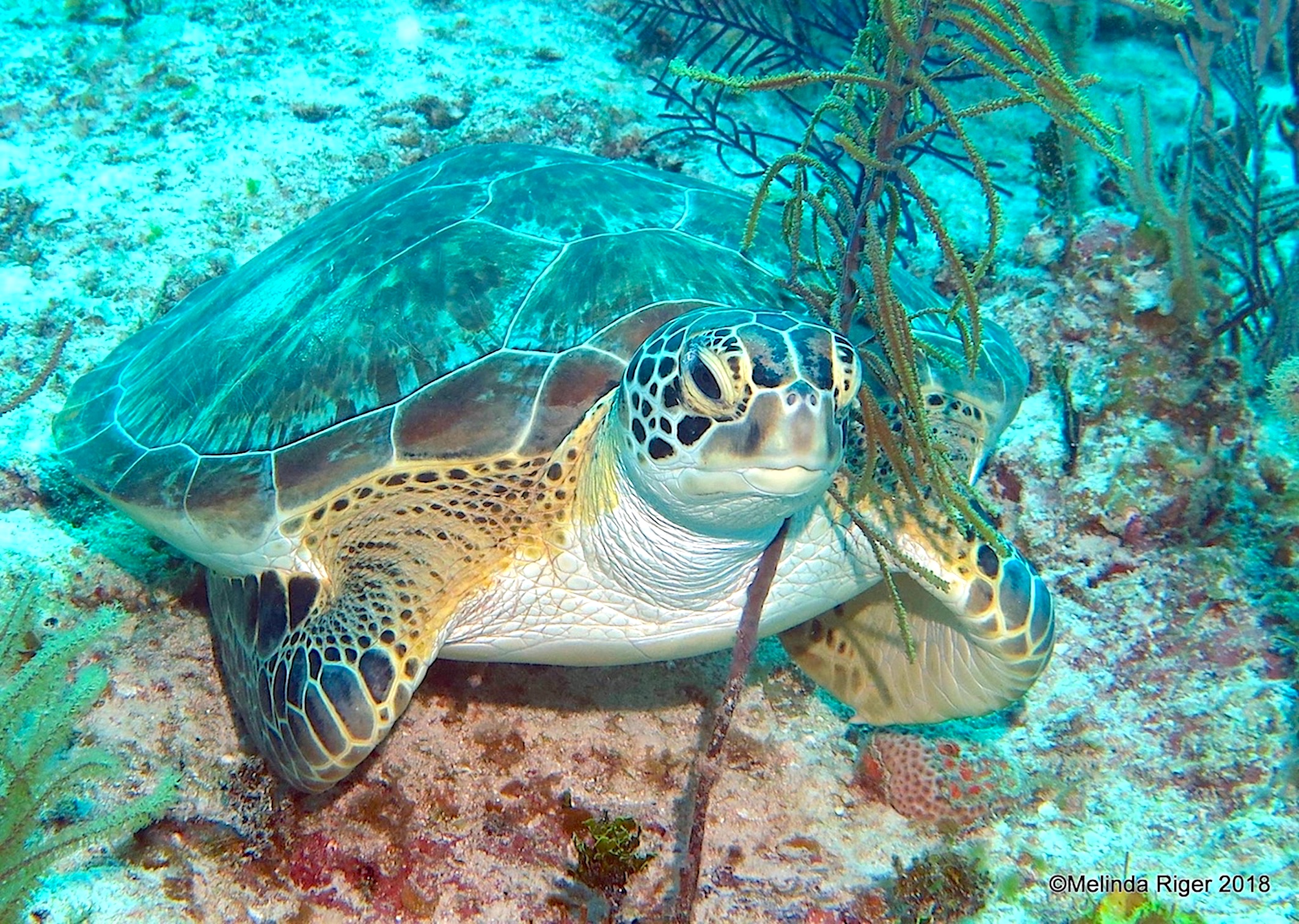
Green Turtle, Bahamas (Melinda Riger / Grand Bahama Scuba)

Green Turtle

BAHAMAS SEA TURTLES: IN THEIR ELEMENT

Of all the sea creatures in the limpid waters of the Bahamas, turtles are rightly among the most loved. These days, what with habitat degradation below the waves and the destruction of nesting sites on land, turtles have a hard time simply fighting for survival. And that’s before they have ingested the plastic garbage that mankind pours into their living quarters, by now probably beyond effective remedial action forever. So here are some gorgeous turtles to admire, while stocks last…

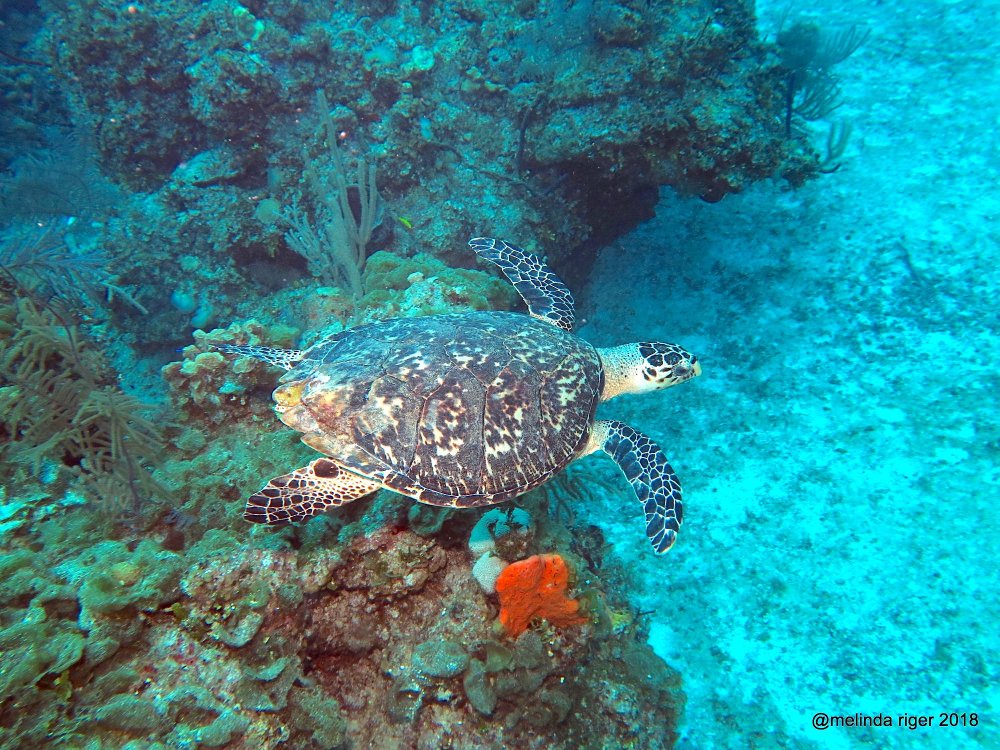
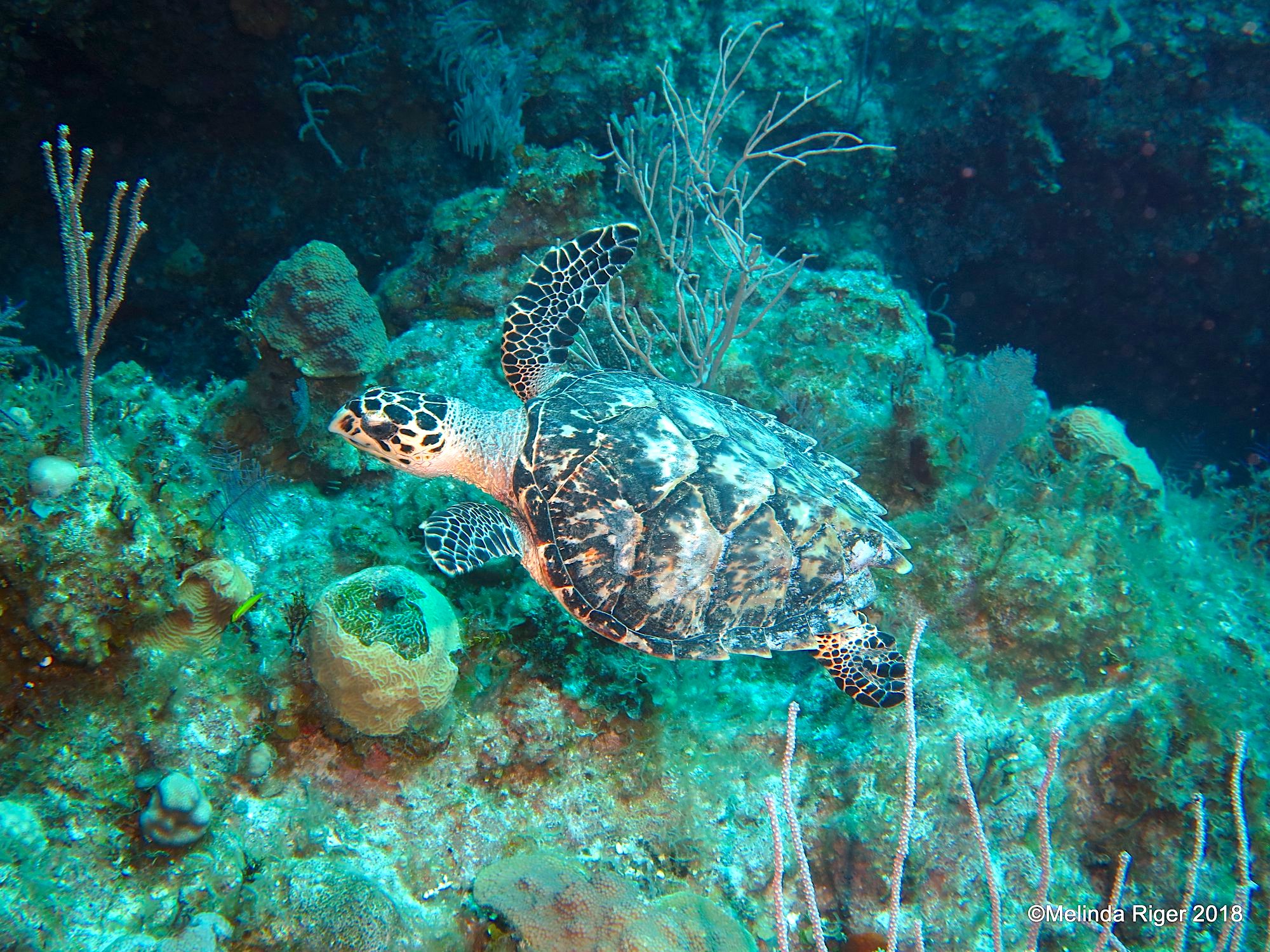
Hawksbill Turtles enjoying life around a still-healthy reefHawksbill Turtle, Bahamas (Melinda Riger / Grand Bahama Scuba) Hawksbill Turtle, Bahamas (Melinda Riger / Grand Bahama Scuba)

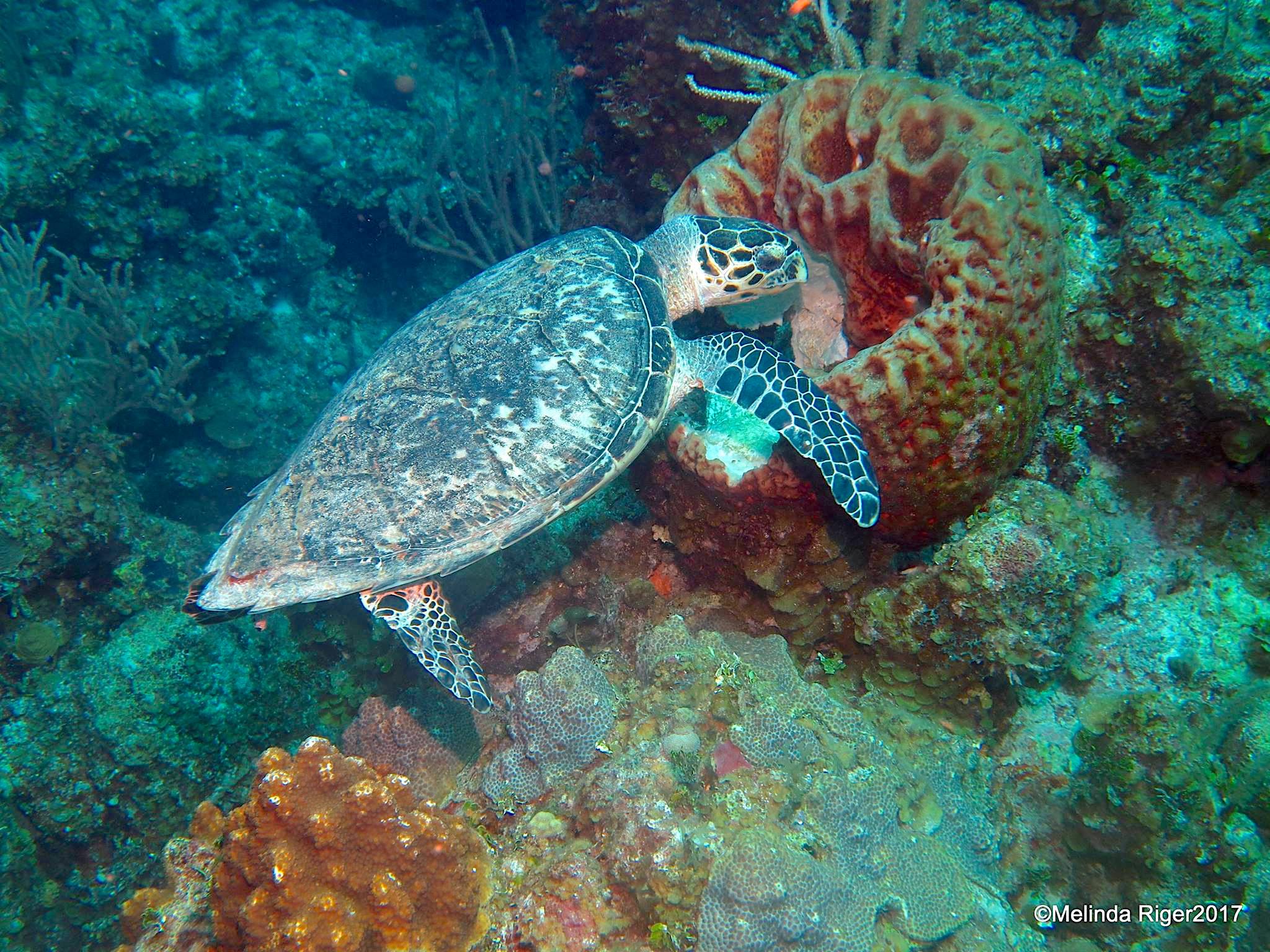
A hawksbill snacking on a spongeHawksbill Turtle, Bahamas (Melinda Riger / Grand Bahama Scuba)

Interaction with other underwater species: gray angelfish and a rock beautyHawksbill Turtle, Bahamas (Melinda Riger / Grand Bahama Scuba) Hawksbill Turtle, Bahamas (Melinda Riger / Grand Bahama Scuba)

If you are concerned about the plight of turtles and indeed other denizens of the thickening plastic soup we still call ‘ocean’, you could investigate the work some of the organisations that tackle the problem in the Bahamas and beyond. To name but a few, our own FRIENDS OF THE ENVIRONMENT; the BAHAMAS NATIONAL TRUST; the Bahamas Reef Environmental, Educational Foundation BREEF; the CAPE ELEUTHERA FOUNDATION; and the SEA TURTLE CONSERVANCY

Photo credits: all great photos by Melinda Riger / Grand Bahama Scuba

Unknown's avatar

REAL THREATS, ALARMING PHOTOS: OSPREYS IN PERIL


THE THREATS ARE REAL AND THESE PHOTOS SHOULD ALARM YOU!

I rarely – in fact almost never – lift an entire article from elsewhere and plant it wholesale here. I make an exception today. Ben’s article is so relevant, so well put together, so compelling and so scary in its implications that it can’t be ignored. No individual is to blame. We all are. Mankind generally – and pretty much all of it in my lifetime. Walk any beach in Abaco, however secluded. There it all is, under your feet. Find a dead seabird? Chances are it will have significant amounts of plastic inside it. Seen those wretched images of turtles with plastic bags hanging out of their mouths? It’s going to get worse…

Now see how things are with our bird partners in New Jersey and their beautiful ospreys.

DOCUMENTING THE PRESENCE OF PLASTICS IN OSPREY NESTS

by Ben Wurst, Habitat Program Manager http://www.conservewildlifenj.org

U.S. Coast Guard assists NJ Fish & Wildlife with recovering an entangled osprey on a channel marker in Cape May Harbor, Summer 2018. photo by Kathy Clark/ENSP

BEN WURST WRITES As I work to finalise data from this summer’s osprey surveys, I wanted to look back and highlight an important observation: more plastic is being found and recovered from active osprey nests. I guess it’s no surprise when you hear that “18 billion pounds of plastic waste flows into the oceans every year from coastal regions.

The alarming trend is also becoming more deadly for ospreys, and other marine life who ingest it. While it might not seem like a lot, this year a total of four young ospreys were found dead from being entangled in plastic. In my books, one dead osprey is too many! This is not a natural cause of death! Luckily, there were several other entanglements that were prevented, but this trend is likely to get worse. We hope that these photos will help you to do all that you can to help prevent it from becoming a growing threat to ospreys and other marine wildlife, who might ingest plastics.

Ospreys are an indicator species. We can’t stress that enough. The health of their population can be directly linked to their surrounding environment. When we poisoned the land with persistent pesticides, the ospreys told us. When we overfished menhaden, the primary prey item of ospreys during the nestling period, the ospreys told us. When we use and discard plastics with no care, the ospreys will tell us…

From the land, where they collect nesting material, to the water, where they forage for prey. The growing presence of plastics on land and in water, highlights need to restrict single use plastics, balloon releases, and for any single use plastic fee to directly fund cleanups of plastic waste. It’s no surprise that ospreys use plastic items in their nests. It’s now become a common resource for them which looks similar to natural nesting material and collects in the same areas where they gather nest material. The more plastics in the world means more plastics in osprey nests!

When out on the marsh or on the beach, if you look around you’ll find plastic. According to the Clean Ocean Action 2017 Beach Sweep report (for the first time since the sweeps began in 1985) 84.45% of items collected on the beach were plastic (including foam). Another alarming trend is the growth in balloons found on the beach. In 2017, a total of 4,137 were found. Next time your down the shore, try to determine the difference between a white single use plastic bag and bleached sea lettuce, or white balloon ribbon and bleached eelgrass… Please don’t ever release balloons!

The most deadly piece of plastic litter for ospreys this year was monofilament or fishing line. The four ospreys that were found dead died from being entangled in monofilament. Fishing line is typically brought into a nest while attached to a stick or branch. It then becomes part of the nest and can easily get wrapped around a nestlings leg, foot or wing. This is not an isolated event. It happens throughout the range of ospreys (here are just a few that made the news). Please dispose of your fishing line appropriately! Single strand monofilament can even be collected and mailed to Berkley (a manufacturer of fishing line) for recycling/reuse!

Sadly, this is only the beginning. Plastics don’t biodegrade and this is becoming a chronic issue. Almost all osprey nests in New Jersey contain some type of plastic (next year we are planning to add data fields to our nest survey datasheets to keep better track of how many nests contain plastic). It’s still too early to see the effects of plastics as as they bioaccumulate in the food chain of predatory animals, like the osprey, but we hope that we can prevent this. We can all help by reducing our use of single use plastics. Here are some simple ways that you can help:

  1. Never release balloons! Talk to your friends/family about where balloons actually wind up.
  2. Reduce your dependence/consumption of single use plastics: bring your own reusable bag, water bottle, and coffee cups. Buy beverages in glass or aluminum containers. When eating out or getting take out, ask for no single use plastic items and/or bring your own container for leftovers. Support a Surfrider Foundation Ocean Friendly Restaurant!
  3. Reuse or repurpose things that can’t be recycled. Opt into free recycling programs for hard to recycle items through Terracycle, a NJ based waste reduction company.
  4. Pick up plastic litter. Participate in coastal cleanups (the next COA Beach Sweep is on 10/20!). Dispose of trash responsibly.

Thank you to all of our volunteers, especially our Osprey Project Banders, and those who’ve helped to reduce plastic debris in our environment!

CREDIT: Ben Wurst and his team at http://www.conservewildlifenj.org for the article. Photos as credited in the text. We are Bahamas partners of this organisation in Piping Plover research on the shores of Abaco and our annual Abaco Piping Watch

https://www.facebook.com/Abaco.Piping.Plovers

Unknown's avatar

LETTUCE SEA SLUGS: SOLAR POWERED ‘CRISPY BLISSFUL HEAVEN’


Lettuce Sea Slug, Bahamas (Melinda Riger / G B Scuba)

LETTUCE SEA SLUGS: SOLAR POWERED ‘CRISPY BLISSFUL HEAVEN’

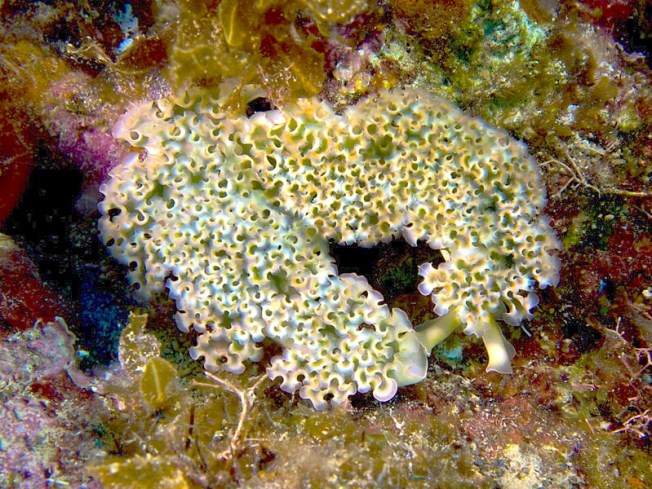
The Lettuce Sea Slug Elysia crispata (transl. ‘Crispy Blissful Heaven’) was No.3 in the ‘WTF’ ‘What’s That Fish’ series (despite not actually being a fish at all). It is not by any means the weirdest creature featured so far but it is nonetheless an animal whose appearance excites curiosity. Unless you see one moving, it could easily be mistaken for a plant. Maybe even lettuce. It is in fact a SACOGLOSSAN.

Lettuce Sea Slug, Bahamas (Melinda Riger / G B Scuba)

The name ‘sacoglossan’ literally means ‘sap-sucker’. This group (or ‘clade’) comprises small gastropod mollusks that ingest the cellular content of algae (which isn’t really sap).

WHY WOULD THEY DO THAT?

Because they are… SOLAR POWERED slugs

Lettuce Sea Slug, Bahamas (Melinda Riger / G B Scuba)

WHAAAAA…..?

As I mentioned when I last visited these remarkable creatures, this isn’t a technical forum and too much science hurts my head. This species primarily lives off algae. May I give you the word KLEPTOPLASTY to drop lightly into your conversation? In a couple of sentences, algae / algal content is eaten but only partially digested. Certain elements are stored to produce photosynthesis by which light is converted to energy (cf plants) and the slug can in effect live and move around without food. You could entertain your neighbour at dinner (or maybe on public transport, why not?) by summarising the process as “chloroplast symbiosis”. Meanwhile, I’m fetching a beer. Two beers.

Lettuce Sea Slug, Bahamas (Melinda Riger / G B Scuba)

HOW DO THEY REPRODUCE?

This topic doesn’t seem to have excited much investigative interest, and there’s not much specific information about it. What there is sounds unnecessarily complicated, so I am just going to say authoritatively ‘they do it like many other slug species’ and hope that covers it. The pair shown below may be exploring the possibilities, or at least trying to work out which end is which. One is easy to tell, but the other? Time to make our excuses and leave…

Elysia_crispata_(Lettuce_Sea_Slug_pair) Nick Hobgood

HOW FAST, EXACTLY, DOES A LETTUCE SEA SLUG MOVE?

This rather beautiful video from ‘CORAL MORPHOLOGIC STUDIO’ will reveal all. You’ll soon see that progress is very slow. I recommend watching the first 30 seconds and you’ll get the idea. If you choose to persist, you will see the slug sort of turn and move off to the left.

DO SAY:        What an intriguing creature. It’s a true wonder of marine nature.

DON’T SAY:  Any good in a mixed salad?

Lettuce Sea Slug, Bahamas (Melinda Riger / G B Scuba)

Credits: Melinda @ Grand Bahama Scuba, Nick Hobgood, Coral Morphologic Studio, Laszlo Ilyes wiki

Lettuce Sea Slug (Laszlo Ilyes)

Unknown's avatar

‘WELL SPOTTED’ (2): ATLANTIC SPOTTED DOLPHINS IN ABACO


Atlantic Spotted Dolphins in Abaco Waters (BMMRO)

‘WELL SPOTTED’ (2): ATLANTIC SPOTTED DOLPHINS IN ABACO

No sooner have I posted about PANTROPICAL SPOTTED DOLPHINS sighted during the current BMMRO whale research program, than the other Bahamas spotted dolphin species shows up as well. These are the more numerous Atlantic Spotteds Stenella frontalis, more confined in range (as the names suggest) than the Pantropicals. 

Atlantic Spotted Dolphins in Abaco Waters (BMMRO)

The BMMRO caption reads “Atlantic spotted dolphins today! Small social group playing with sargassum – they swam past what looked like a plastic mattress cover – one dolphin whacked it with its tail as it swam by…”

Atlantic Spotted Dolphins in Abaco Waters (BMMRO)

Just because it can…Atlantic Spotted Dolphin leaping in Abaco Waters (BMMRO)

RUBBISHING RUBBISH: A RANT

Behold a large plastic bag, made by humans and dumped by humans into a place that is not theirs to use as a trash repository. It will take some 500 years to break down completely. But when people say that they don’t really mean it will have harmlessly disappeared over that period and become salt water. Far rom it. It will just break down into smaller and smaller pieces, to bite-sized bits for turtle, fish and seabirds who will idiotically mistake them for food (duh!), then to micro-plastic that will become part of the evolving plastic soup that will be ingested by tiny sea creatures and coat the reefs in polyethylene gunk. [End of rant. Ed.]

Atlantic Spotted Dolphins in Abaco Waters - marine trash (BMMRO)

Behold an Atlantic Spotted Dolphin giving the bag a passing whack with its tail. It won’t do anything to help with marine pollution, but is shows a robust disdain for a piece of man-made rubbish that has made it into the creature’s home environment.

Atlantic Spotted Dolphins in Abaco Waters - marine trash (BMMRO)

Below is a short GoPro shoot of a pair of ASDs, that I took from the BMMRO research boat last year. Marvel at the grace and elegance of these beautiful animals as they swim just below the surface (wonder, too, at the incompetence of the cameraperson who, to be fair, was leaning over the side of the RHIB with the camera on a stick…)

All photos BMMRO; video from the Rolling Harbour achives, intemperate rant all my own

Unknown's avatar

QUEEN ANGELFISH: BAHAMAS REEF FISH (46)


Queen Angelfish, Bahamas (Melinda Riger / Grand Bahama Scuba)

QUEEN ANGELFISH: BAHAMAS REEF FISH (46)

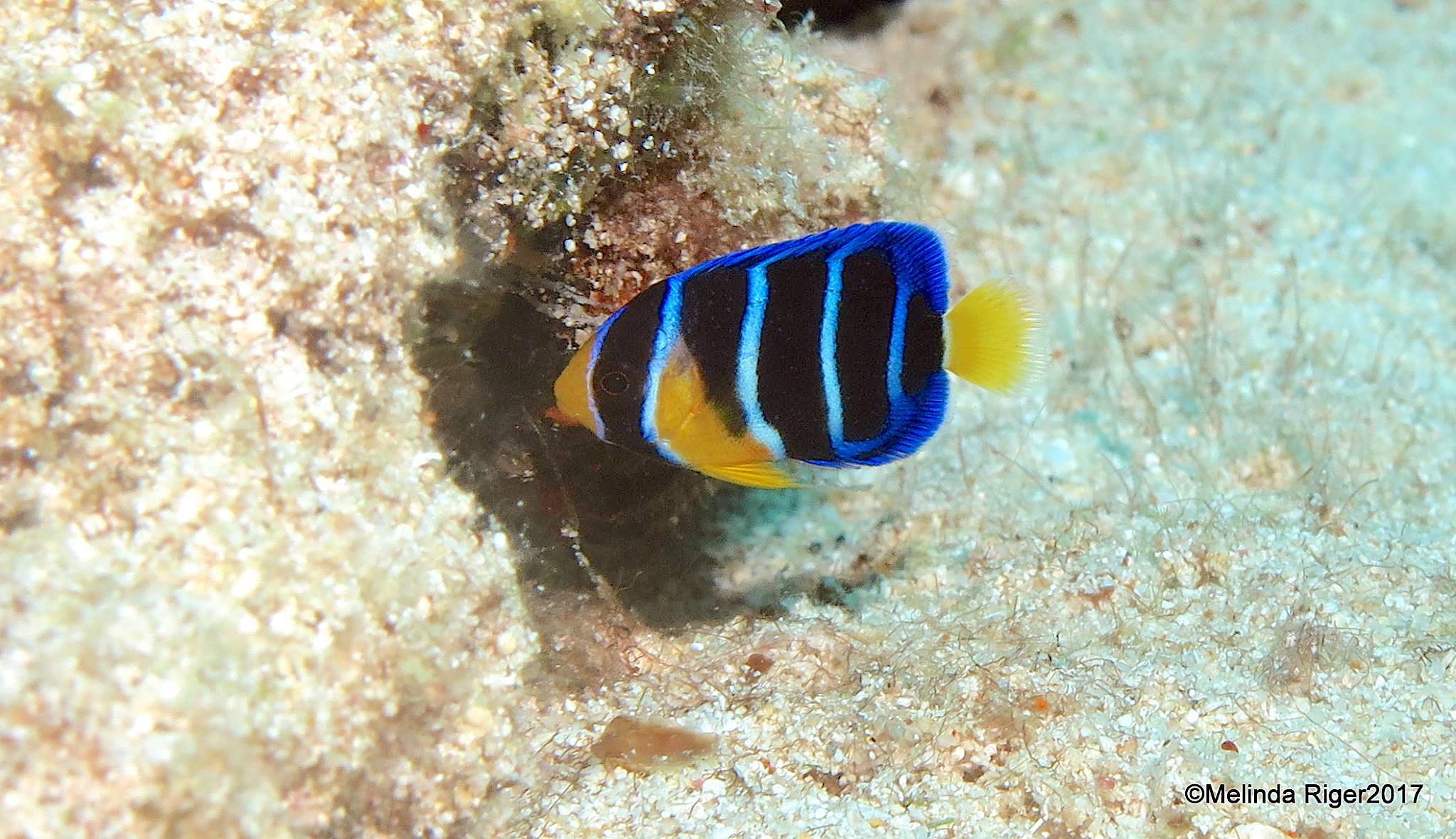
The Queen Angelfish Holacanthus ciliarisis is without doubt one of the most beautiful of all reef fishes in the Bahamas – and the competition is very strong. I have posted about them before, but to my surprise not for nearly 5 years. Too long: here are some much more recent photographs of adults and cute juveniles.

Queen Angelfish, Bahamas (Melinda Riger / Grand Bahama Scuba)Queen Angelfish, Bahamas (Melinda Riger / Grand Bahama Scuba)

The bright colours, the pouty expressions, the appealing poses – these fish are true Beauty Queens. And helpfully, they are unlikely to be mistaken for any other fish species.

Queen Angelfish, Bahamas (Melinda Riger / Grand Bahama Scuba)

TEENAGE QUEEN ANGELFISHQueen Angelfish (Juv), Bahamas (Melinda Riger / Grand Bahama Scuba)

JUVENILE QUEEN ANGELFISHQueen Angelfish (Juvenile), Bahamas (Melinda Riger / Grand Bahama Scuba) Queen Angelfish (Juvenile), Bahamas (Melinda Riger / Grand Bahama Scuba)

Photo Credit: ©Melinda Riger (Grand Bahama Scuba), with thanks as ever

Unknown's avatar

MARINE POSTER COMPETITION FOR ABACO KIDS


BMMRO children's poster competition winners

MARINE POSTER COMPETITION FOR ABACO KIDS

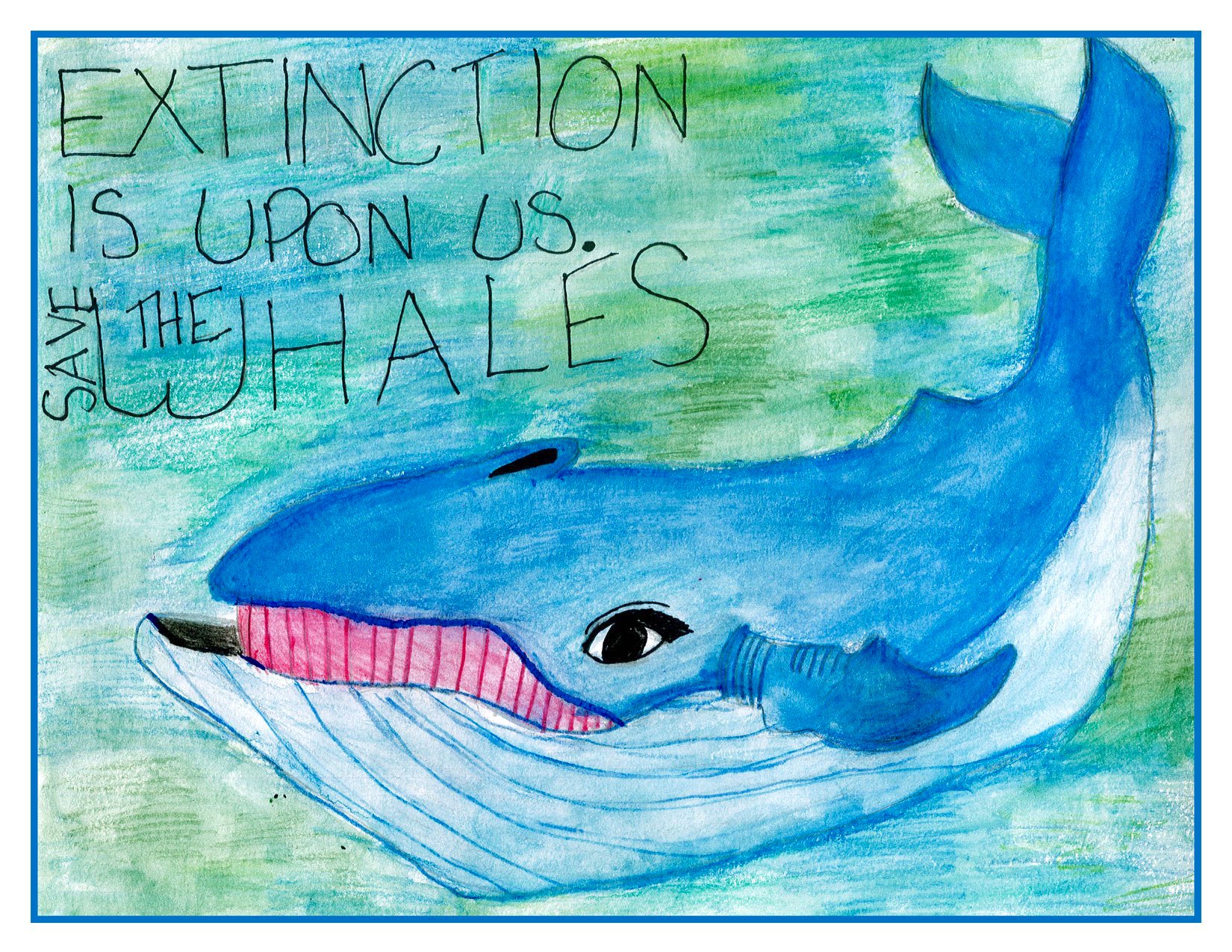
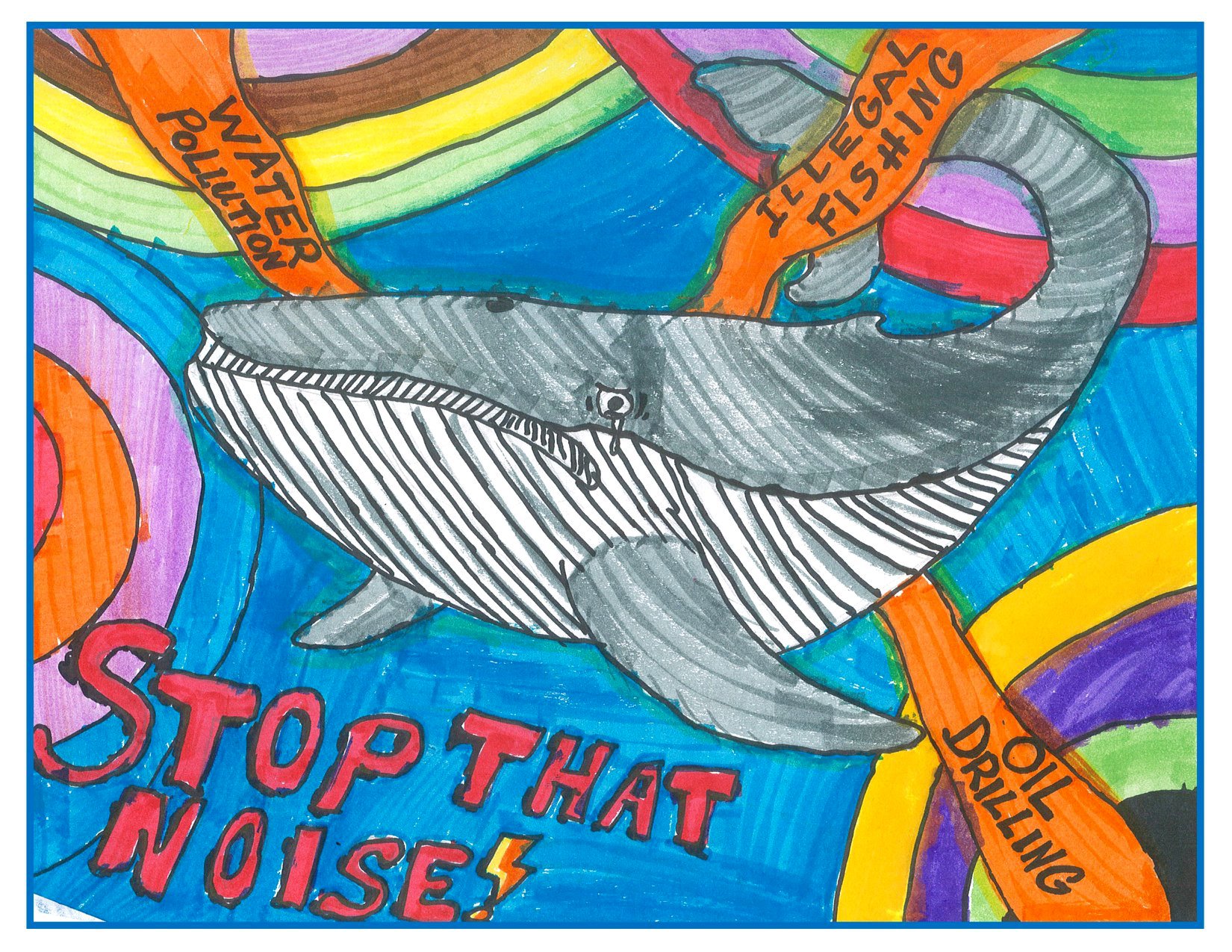
BMMRO recently collaborated with Dolphin Encounters Marine Education Poster Contest in a competition for schoolchildren on Abaco. There were 3 age groups, 3 -5, 6 – 8, and 9 – 12. The young participants received the excellent BMMRO marine educational poster as a prize, though I suspect they were motivated not so much by a prize but by the fun possibilities of the challenges set for them. 

BMMRO children's poster competition winners

And how well they met them. I am featuring a selection of the prizewinners as posted by BMMRO on FB and Insta. Bearing in mind the ages of the artists, the results are astounding. As someone for whom the task of drawing a stickman presents insurmountable difficulties of perspective, proportion, form and accuracy, I am in awe of the inventiveness of these young minds and their artistic skills. They’ve done a fantastic job in highlighting the critical conservation issues facing all marine creatures large and small, with an awareness that I hope will help stay with them into adulthood.

BMMRO children's poster competition winnersBMMRO children's poster competition winnersBMMRO children's poster competition winnersBMMRO children's poster competition winnersBMMRO children's poster competition winnersBMMRO children's poster competition winnersBMMRO children's poster competition winnersBMMRO children's poster competition winnersBMMRO children's poster competition winnersBMMRO children's poster competition winners

Do I have a favourite, I asked myself. Actually, no – I’d just be proud to have any of these on my wall. And I bet the teachers and the families involved all feel the same.

HUGE CONGRATULATIONS TO ALL THE WORTHY WINNERS

BMMRO children's poster competition winnersBMMRO children's poster competition winners


Unknown's avatar

SPERM WHALES GATHERING IN ABACO WATERS


Sperm Whales, Abaco Bahamas (BMMRO / Keith Salvesen)

SPERM WHALES GATHERING IN ABACO WATERS

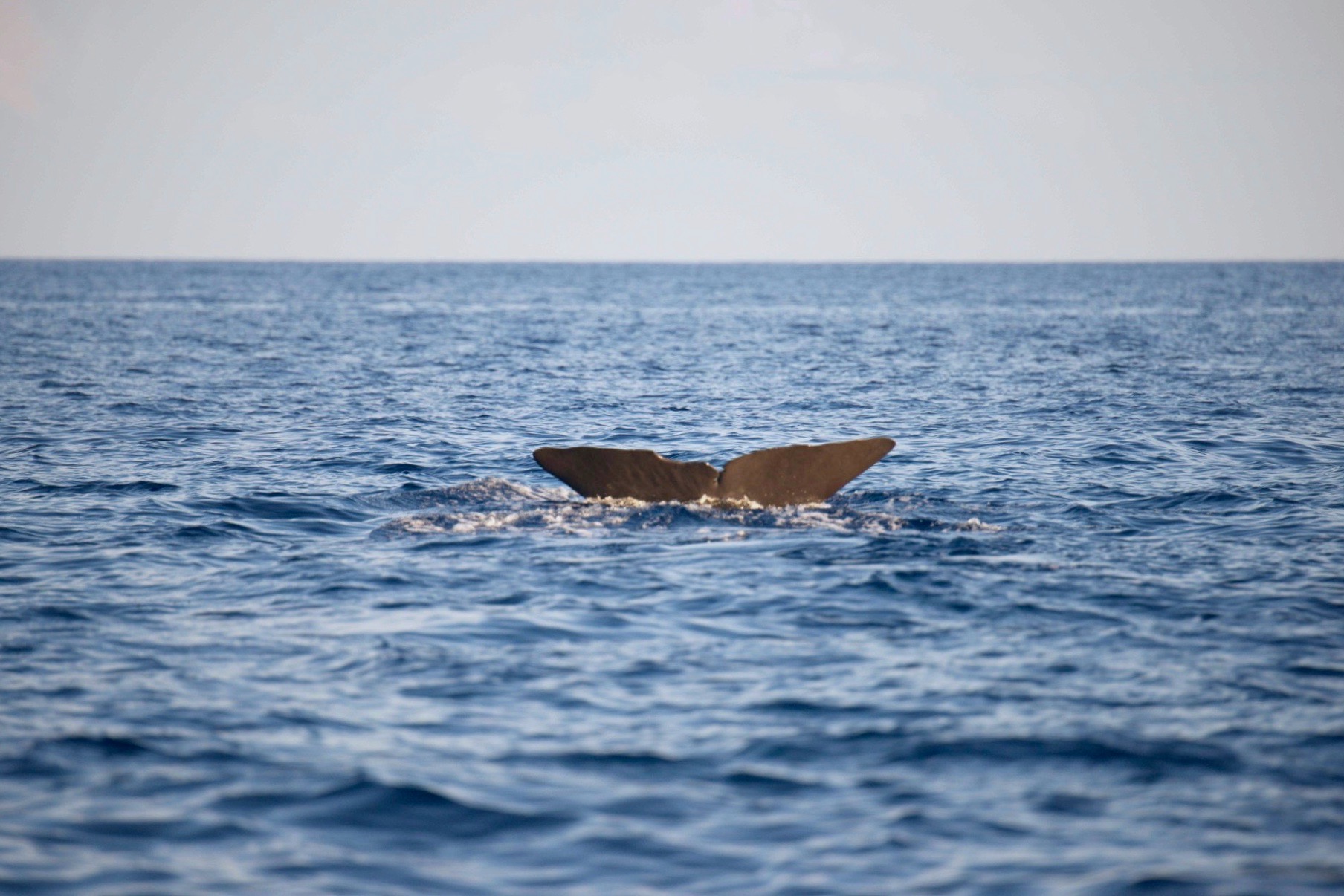
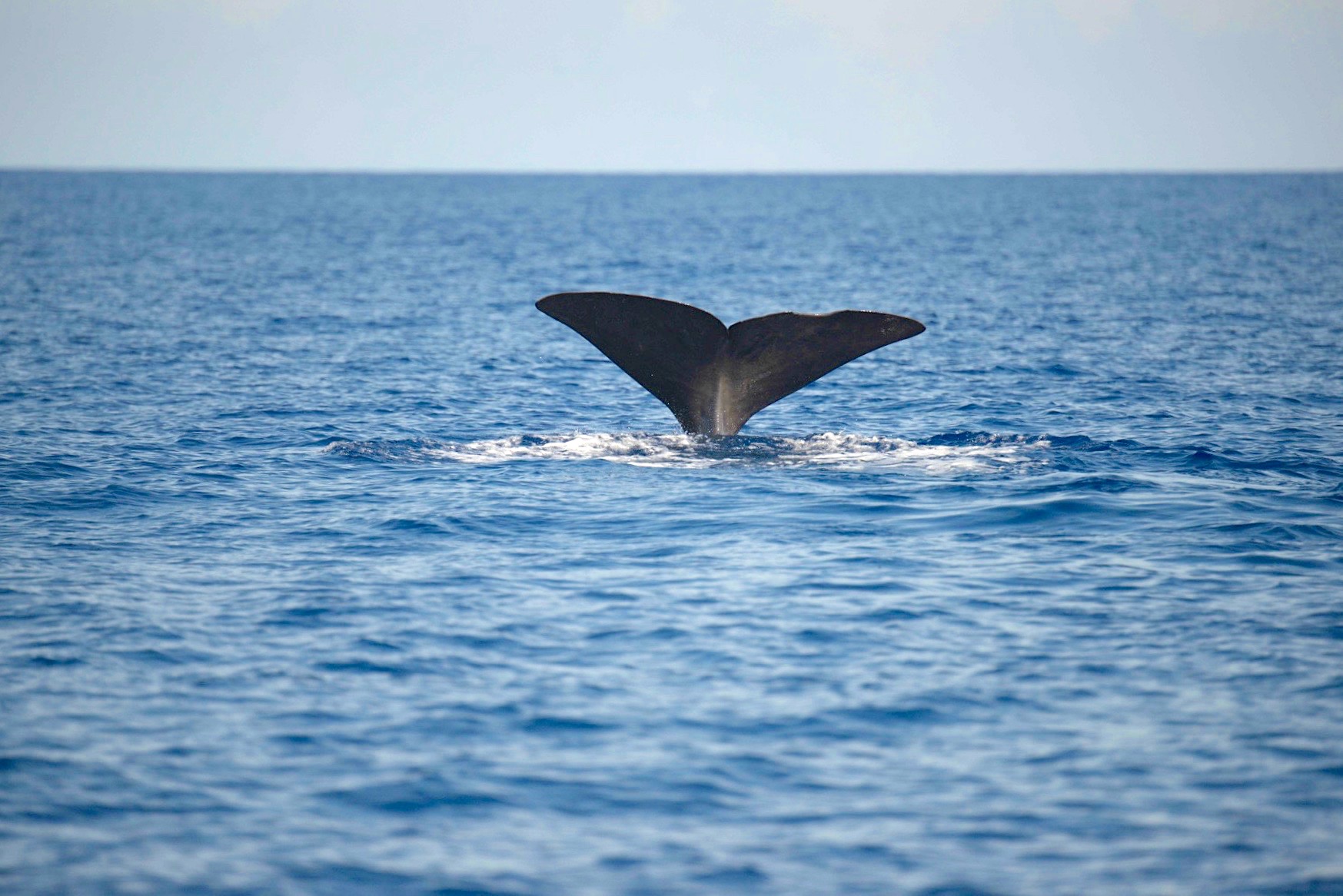
During the past week, the BMMRO research boat has been tracking sperm whales off the south coast of Abaco. These huge creatures are the largest marine mammals found in Bahamian waters, and the area between Rocky Point around the south coast to Hole-in-the Wall is a great place to find them. 

Sperm Whales, Abaco Bahamas (BMMRO / Keith Salvesen)Sperm Whales, Abaco Bahamas (BMMRO / Keith Salvesen)

One reason they are found in this particular area is the existence of the Great Bahama Canyon, one of the deepest submarine canyons in the world. The depth of the canyon ensures that the waters are nutrient-rich, with food being drawn up from the depths towards the surface. In season it’s the perfect place for female sperm whales and their calves.

Sperm Whales, Abaco Bahamas (BMMRO / Keith Salvesen)Sperm Whales, Abaco Bahamas (BMMRO / Keith Salvesen)

The BMMRO research trip encountered more than a dozen sperm whales, mostly females with their calves. And the amazing thing is that the sightings are often made within sight of land. In these photos, the are two landmarks visible. One is the huge Disney vessel parked at Gorda Cay aka Castaway Cay (header image); the other is HOLE-IN-THE-WALL LIGHTHOUSE (above)

Sperm Whales, Abaco Bahamas (BMMRO / Keith Salvesen) Sperm Whales, Abaco Bahamas (BMMRO / Keith Salvesen)

Credits: All photos BMMRO 2018, with thanks to Diane & Charlotte as ever

Sperm Whales, Abaco Bahamas (BMMRO / Keith Salvesen)

Unknown's avatar

GREEN TURTLES & TURTLE AWARENESS ON ABACO


Green Turtle, Bahamas (Adam Rees)

GREEN TURTLES & TURTLE AWARENESS ON ABACO

There’s something slightly unsettling about the perspective of the header image, with foreshortening suggesting that the turtle is actually a gigantic creature with a tiny diver swimming close to it…

I don’t seem to have given green turtles much space in the past, the most frequently photographed (and therefore featured) species being the hawksbill. This post is both to right the wrong, and to provide some information about the species.

Green Turtle, Bahamas (Adam Rees)

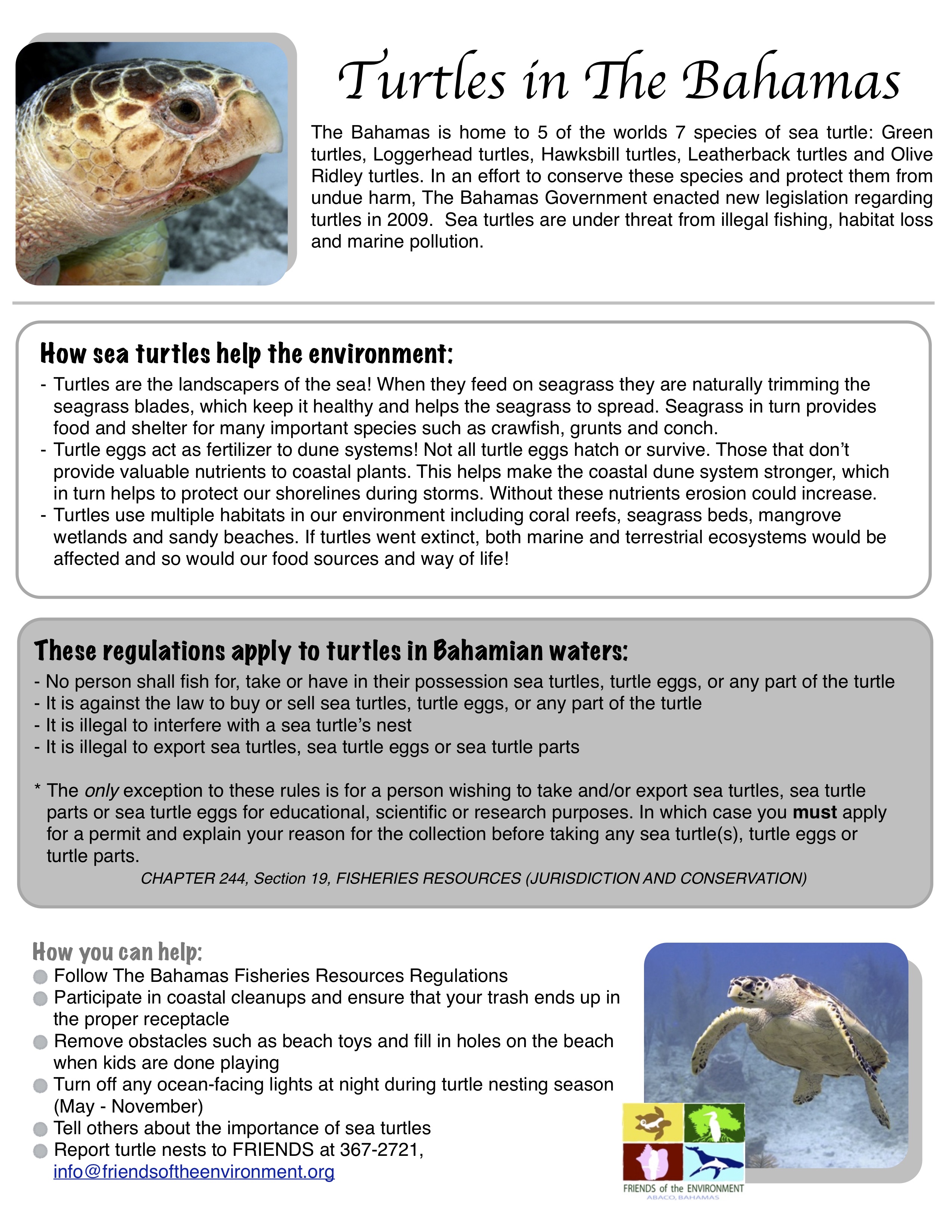
Friends of the Environment has produced an interesting short guide to the sea turtles of the Bahamas. One of the many facts included is that 5 of the 7 sea turtle species in the world can be found in Bahamian waters. The turtle protection law is also given – also the way to report turtle nests so they can be watched and protected.

Green Turtle, Bahamas (Adam Rees)

The 4 main species are the hawksbill, green, loggerhead and leatherback. The 5th and lesser known one is the Olive Ridley turtle. The differences between most of these is considerable, as can be seen from this IUCN-produced Identification Chart (credits as shown).

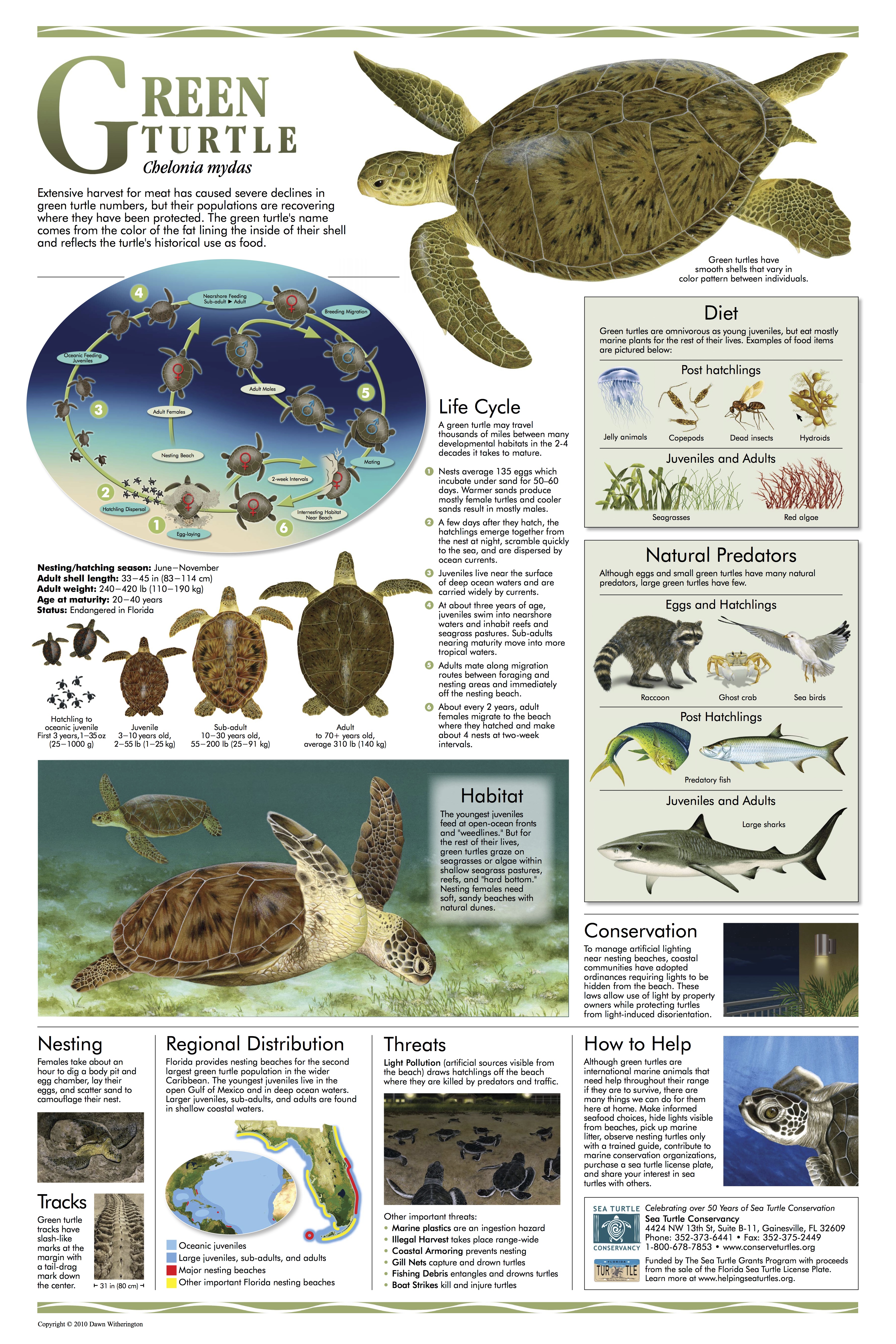
Another useful source of information for green turtles is this extremely well produced poster illustrated by the excellent Dawn Witherington, who has somewhat (and deservedly) cornered the market with this kind of large-scale infographic. The sea turtle series is so helpful that I have dedicated a whole page to them HERE. Dawn also created the LOXAHATCHEE poster series covering such topics as Lionfish, Sea Grasses, Land Crabs, Bonefish, Coral Reefs and more

Green Turtle, Bahamas (Adam Rees)

All photos: Adam Rees Photography, with thanks for use permission here and elsewhere

Unknown's avatar

‘SOCIABLE DOLPHINS’: MELON-HEADED WHALES


Melon-headed whales, Bahamas (BMMRO / Field School)

‘SOCIABLE DOLPHINS’: MELON-HEADED WHALES

Last month, BMMRO undertook a joint expedition with FIELD SCHOOL to carry out research on sperm whales. This took them out into deep water, where another, quite different, cetacean species was also encountered on the final day – a huge pod of more than 100 melon-headed whales Peponocephala electra.

Melon-headed whales, Bahamas (BMMRO / Field School)

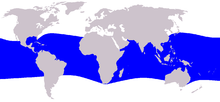
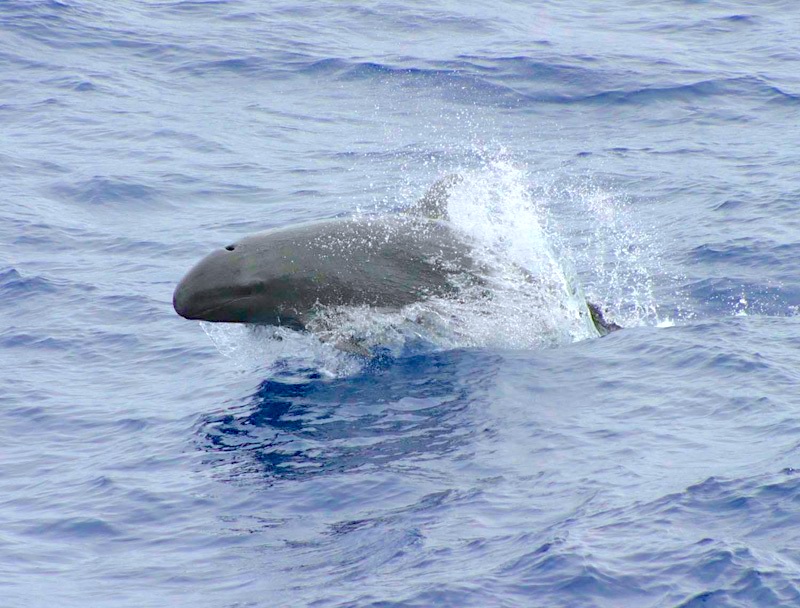
The melon-headed whale is in fact – like the FALSE KILLER WHALE I recently wrote about – a species of dolphin. It is sometimes more accurately called the melon-headed dolphin, which removes any confusion. These creatures are oceanic, preferring deeper waters. For that reason they are not often encountered, despite being quite common in tropical and sub-tropical waters around the world.

Cetacea range map Melon-headed Whale.PNG

Melon-headed whales, Bahamas (BMMRO / Field School)

The MHW belongs to a dolphin species commonly known as blackfish. Other dolphins in this group included, for the Bahamas, the pygmy killer whale and the more frequently encountered pilot whale, a species than can be seen in the Sea of Abaco.

In some of these photos you can see the distinctive white lips of the MHW Melon-headed whales, Bahamas (BMMRO / Field School)

Melon-headed whales are notably social animals. They live in large groups – often more than 100-strong (as the expedition found), up to as many as 1000 individuals. Within these large groups, smaller groups of a dozen or so form and stay close as they swim.

Note the ‘Rainbow Blow’ caught in this photoMelon-headed whales, Bahamas (BMMRO / Field School)

MHWs appear to communicate or perhaps to bond by touching flippers. MHWs also associate with other dolphin species, and they have even been recorded with large whales such as humpbacks.

Melon-headed whales, Bahamas (BMMRO / Field School)

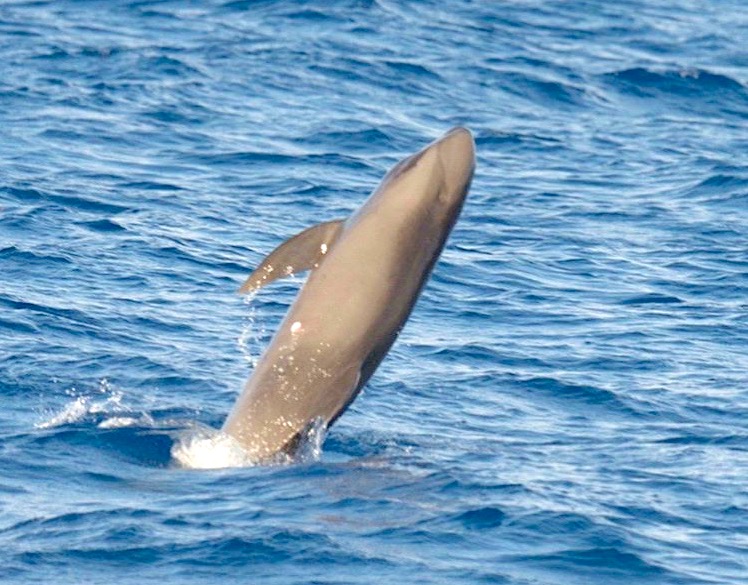
Other observed behaviour includes sub-surface resting in numbers, boat-wave riding, and so-called ‘spy hopping’ (above). This last activity may be carried out by several resting animals,  which jump vertically out of the water and splash back again into the ocean (see also the Header image).

Melon-headed whales, Bahamas (BMMRO / Field School)

This video was recorded during the expedition. You’ll get a very good idea of the size of the group from the drone shots as they pull out. I doubt that many people would expect to see such large sea creatures in such numbers – it must be an awesome** sight.

10 MELON-HEADED FACTS WITH WHICH TO ASTOUND YOUR LOVED ONES
  • The MHW’s head is rounded, lacking the obvious beak of more familiar dolphins
  • The darker grey face is sometimes called a ‘mask’
  • Their distinctive white lips are a good identifying feature
  • They are capable of swimming at very fast speeds
  • Like other dolphins, they make series of low jumps out of the water as they swim
  • Their groups often contain 100 individuals, up to as many as 1000
  • An adult grows to around 3m / 10′ long
  • They live for at least 20 years, and females may live as long as 30 years
  • As with many certaceans, their favourite food is squid
  • Oh, did I mention that they are really dolphins and not whales at all?

CREDITS: all fantastic photos & the original of the video clip – © BMMRO /  Field School

** In its true and original meaning of ‘inspiring wonder and awe’ (historically, in a religious sense), rather than the diluted modern usage as in ‘awesome pizza’ or ‘awesome selfie’

Unknown's avatar

THE ARTICULATE WHALE (2): MARINE SCIENCE ON DISPLAY


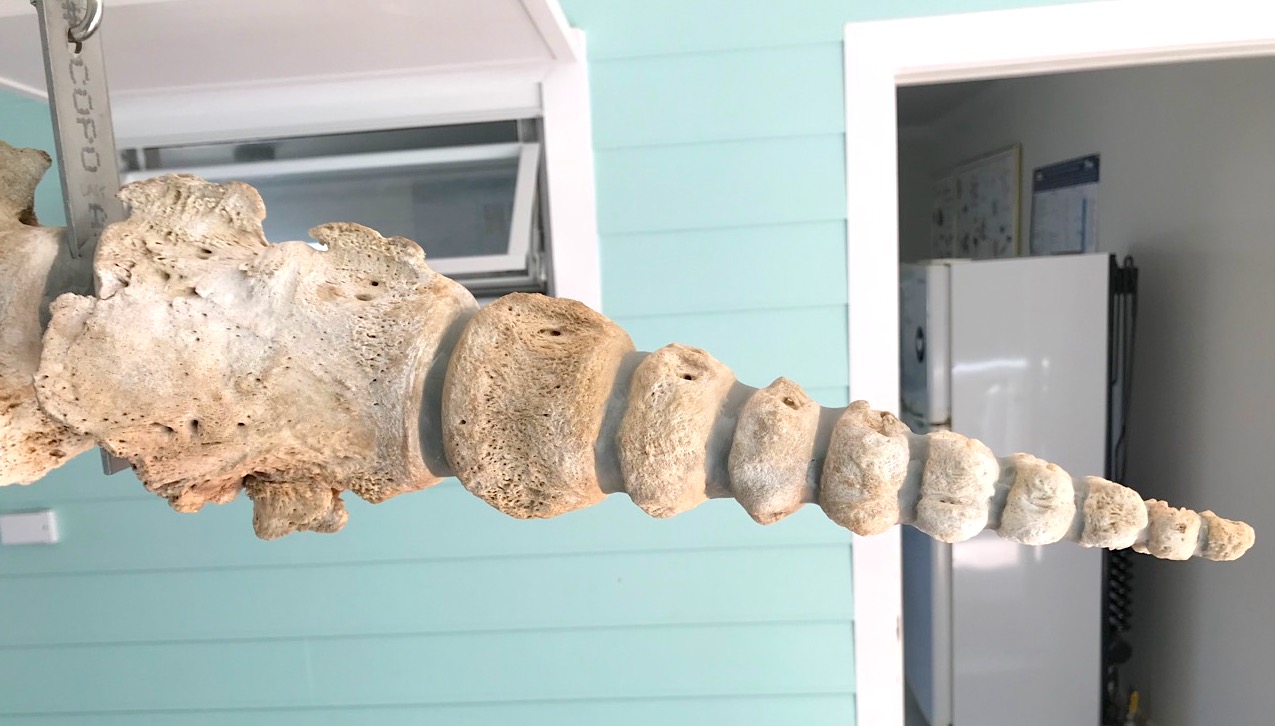
False Killer Whale Skeleton, Abaco Bahamas (Keith Salvesen / BMMRO)

THE ARTICULATE WHALE (2): MARINE SCIENCE ON DISPLAY

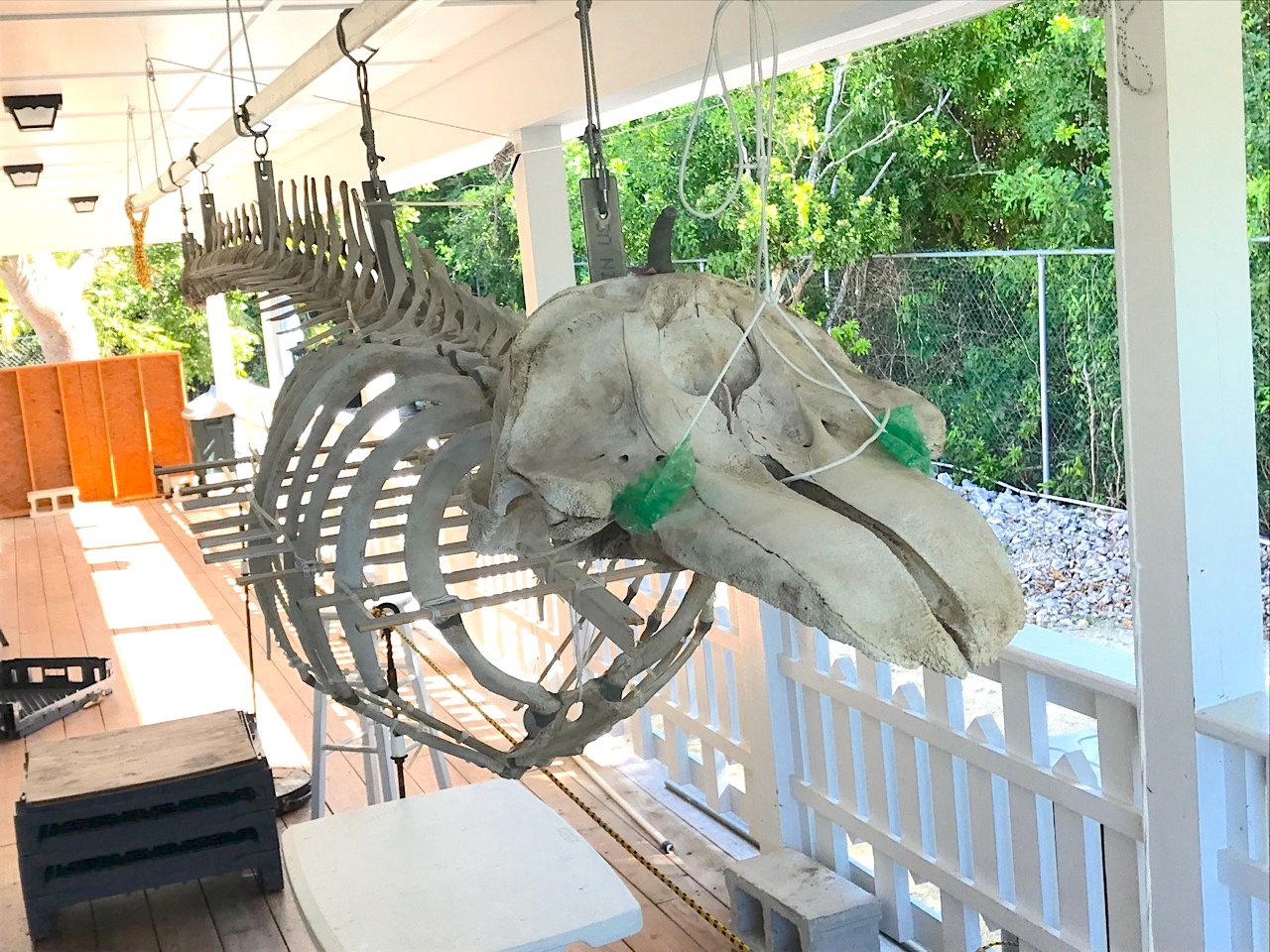
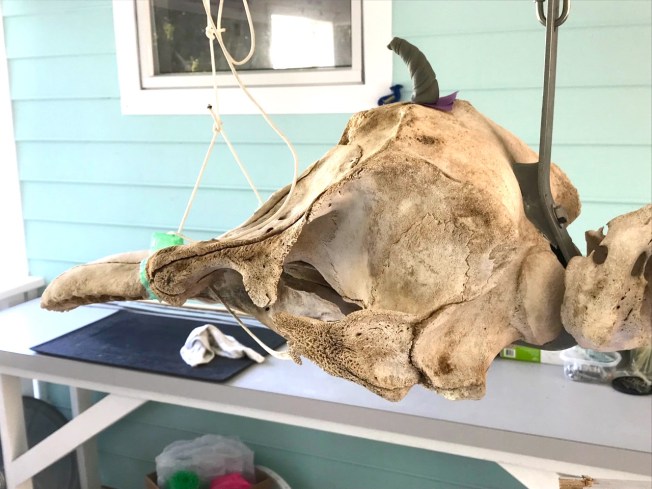
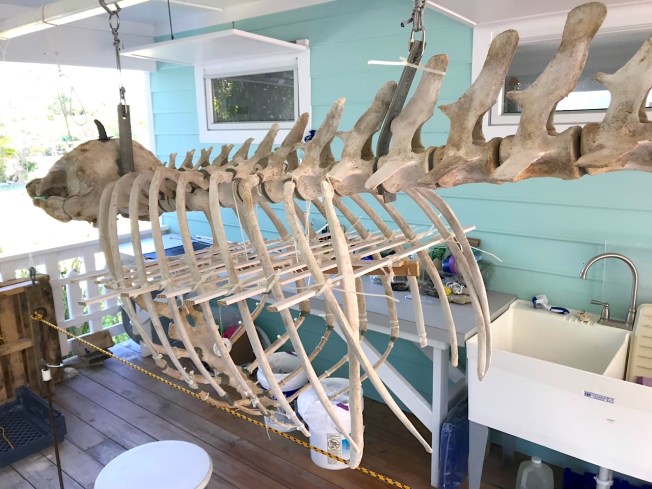
A couple of months back I wrote about the fate of the false killer whale Pseudorca crassidens (in fact a species of dolphin) that was stranded on Duck Cay. After its discovery, it was cut up, buried for many months before being disinterred, cleaned… and made ready to be reconstructed for display at Friends of the Environment, Marsh Harbour for research and educational purposes. The poor dead creature was destined to have a future ‘life’ (in a sense) as an exhibit. You can read the details and see the various stages of the preparatory processes (including some gory images) HERE.

False Killer Whale Skeleton, Abaco Bahamas (Keith Salvesen / BMMRO)

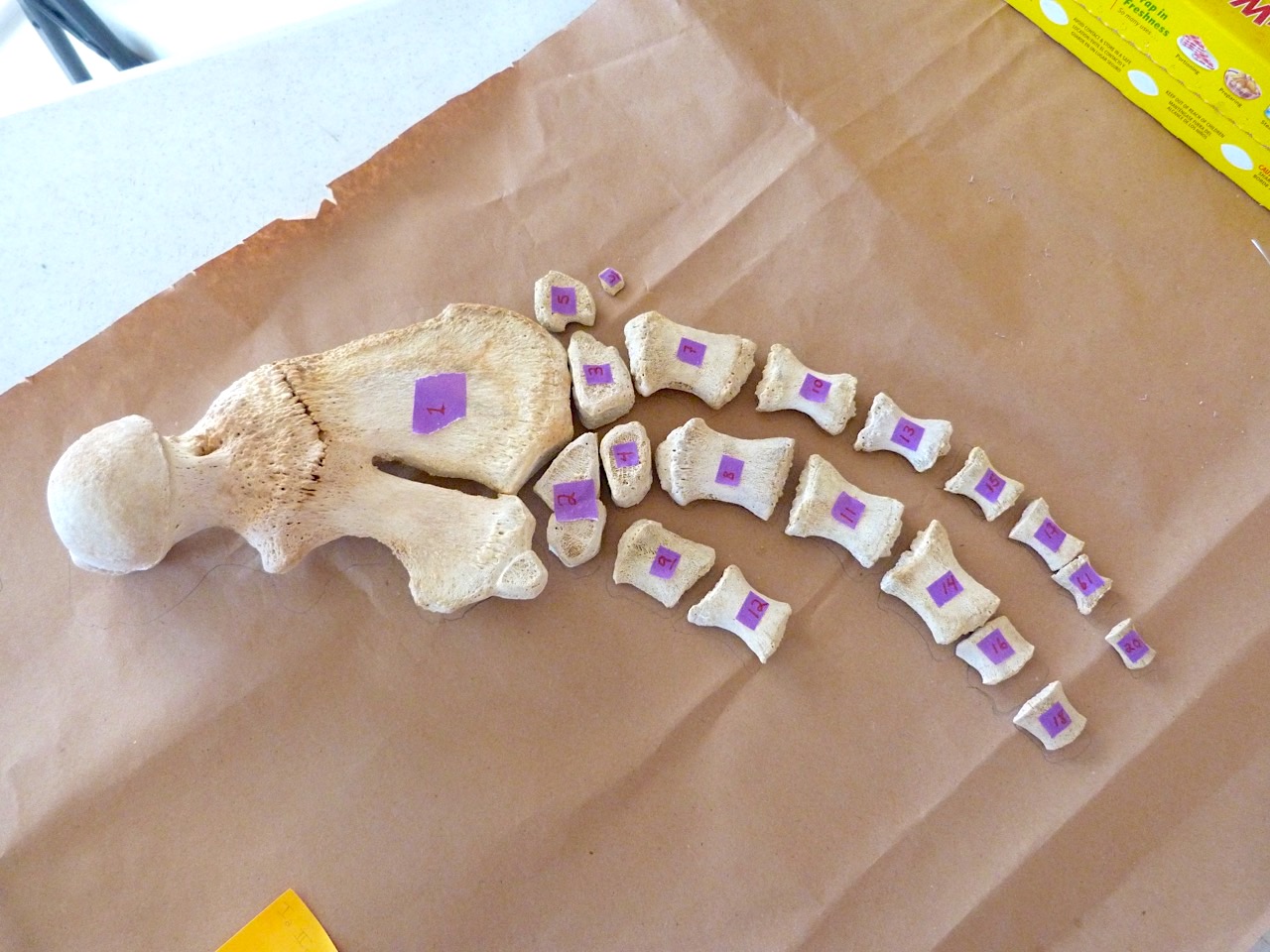
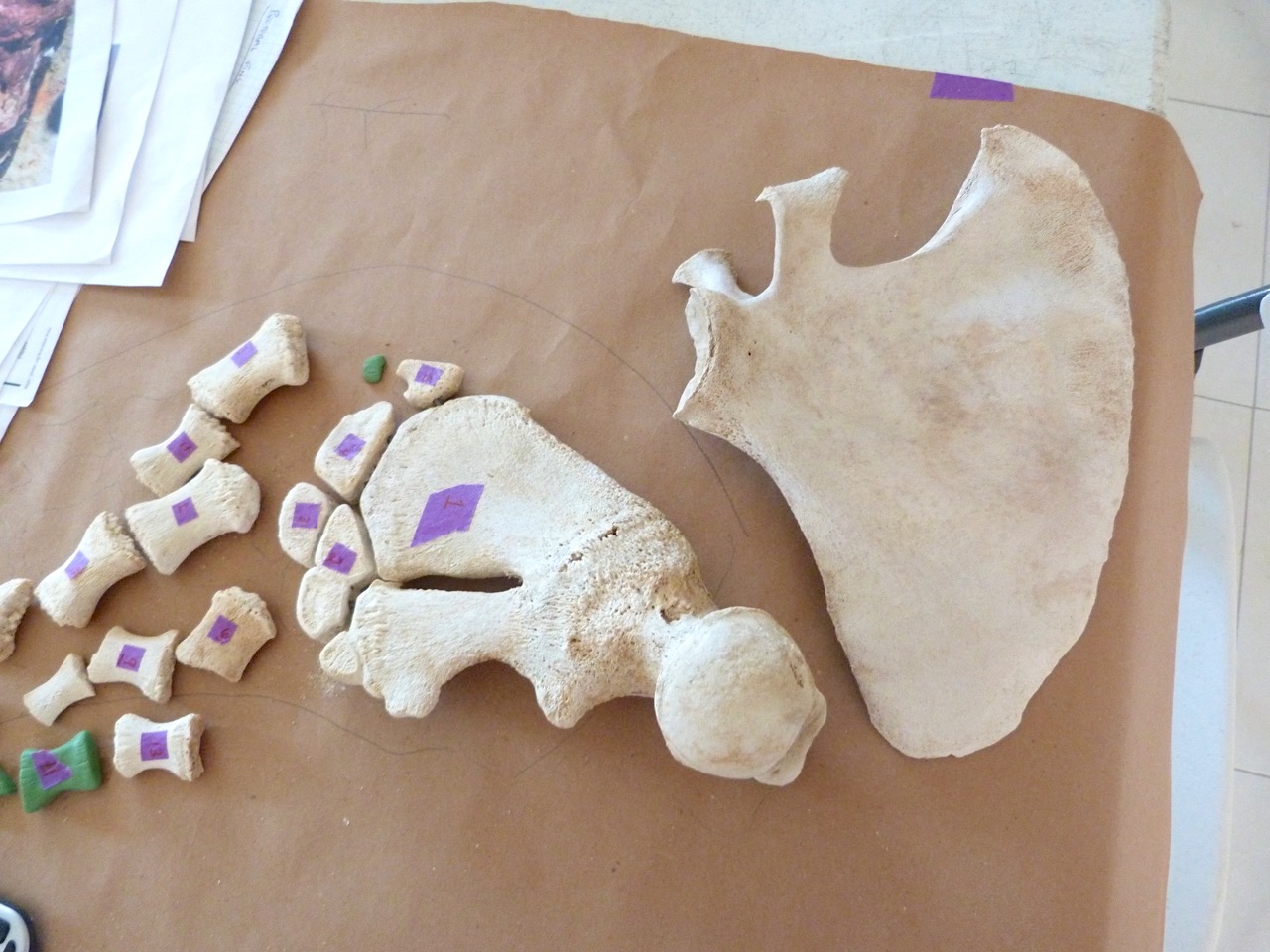
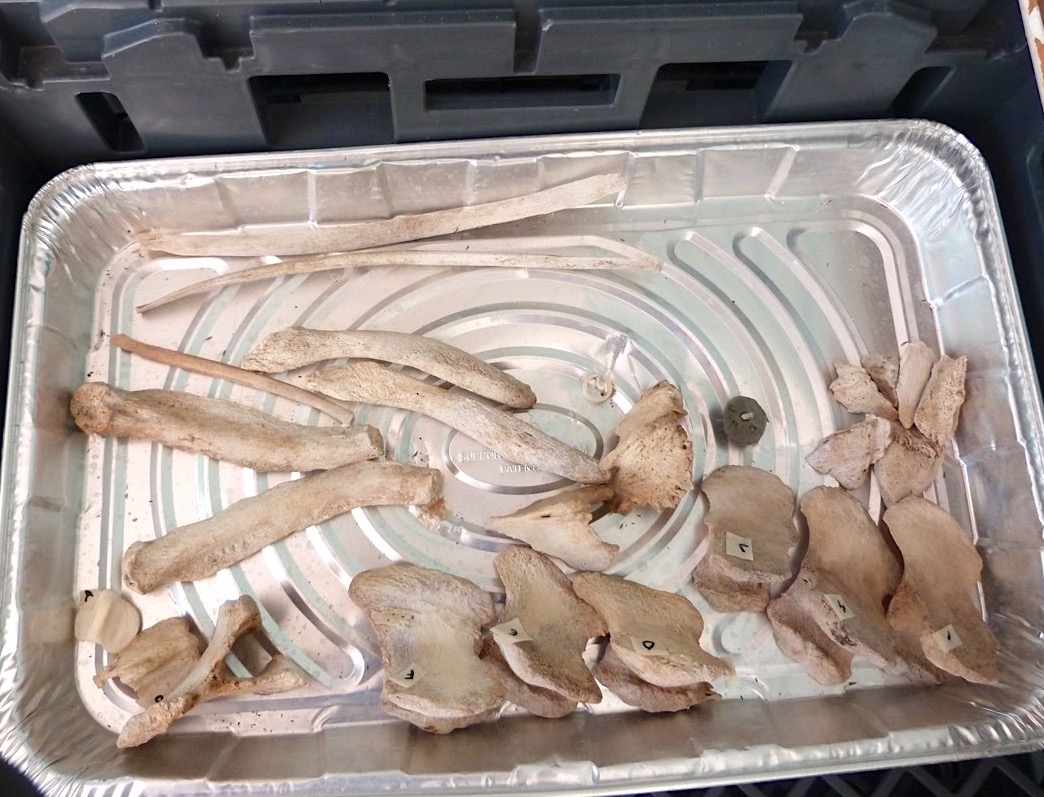
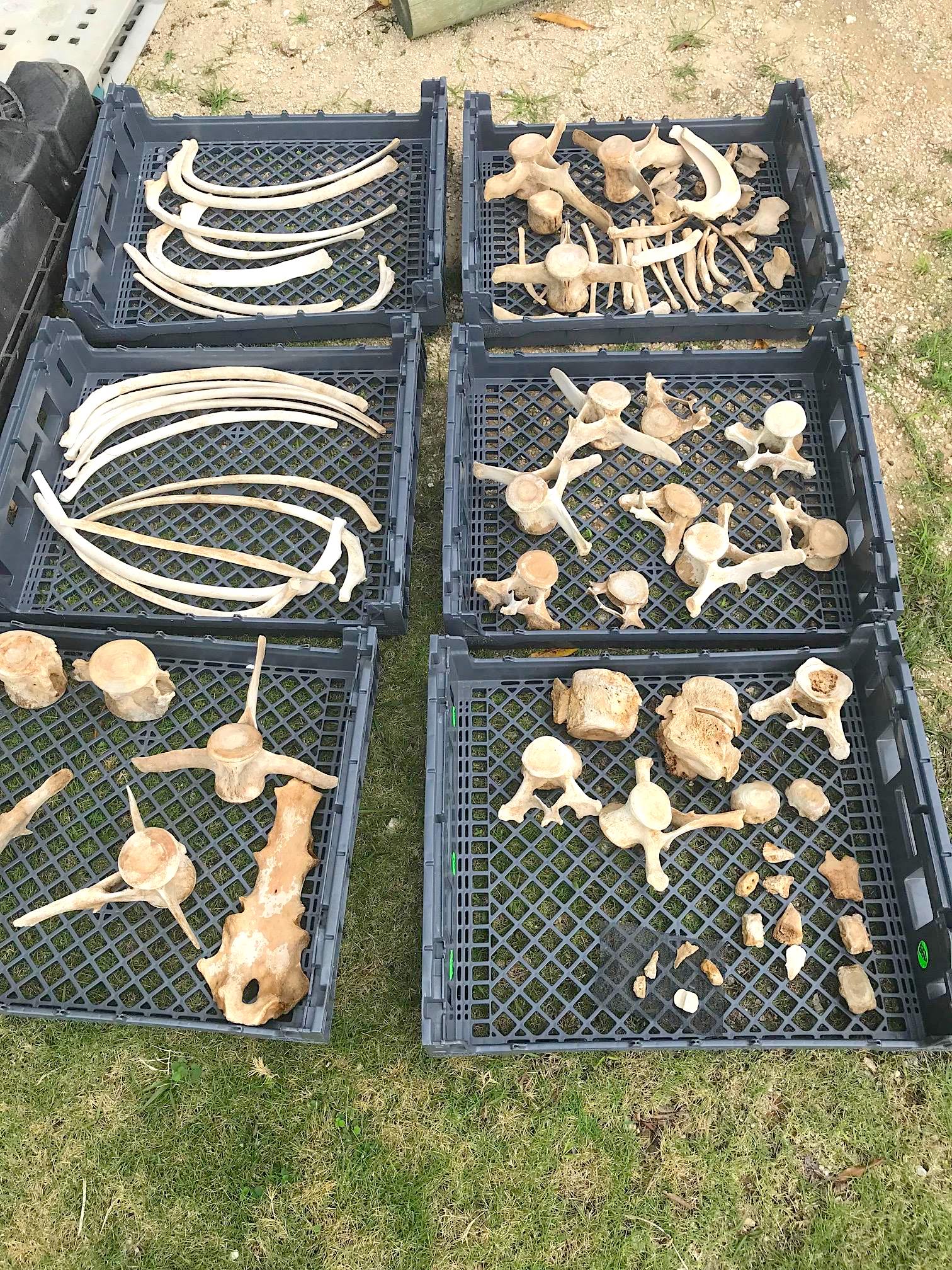
The FKW joint project (see below for participants) has taken more than a year. The final stage has been similar to doing a jigsaw puzzle, with the added complication that it isn’t entirely clear where or even whether all the pieces fit – there may even be one or two leftover small bones when the reconstruction is finished.

HEADFalse Killer Whale Skeleton, Abaco Bahamas (Keith Salvesen / BMMRO)False Killer Whale Skeleton, Abaco Bahamas (Keith Salvesen / BMMRO)

Since I last wrote about the ‘rearticulation’ project, I have spent some time on Abaco. A highlight was our visit to FotE to meet the jocundly-named ‘Ducky’ of Duck Cay [I’d have gone for ‘Killer’ as a name – there’s no such thing as bad publicity]. Incidentally the strange item on the whale’s skull is in fact nothing to do with the creature’s real structure – it’s a natural historian’s unicorn-related jest…

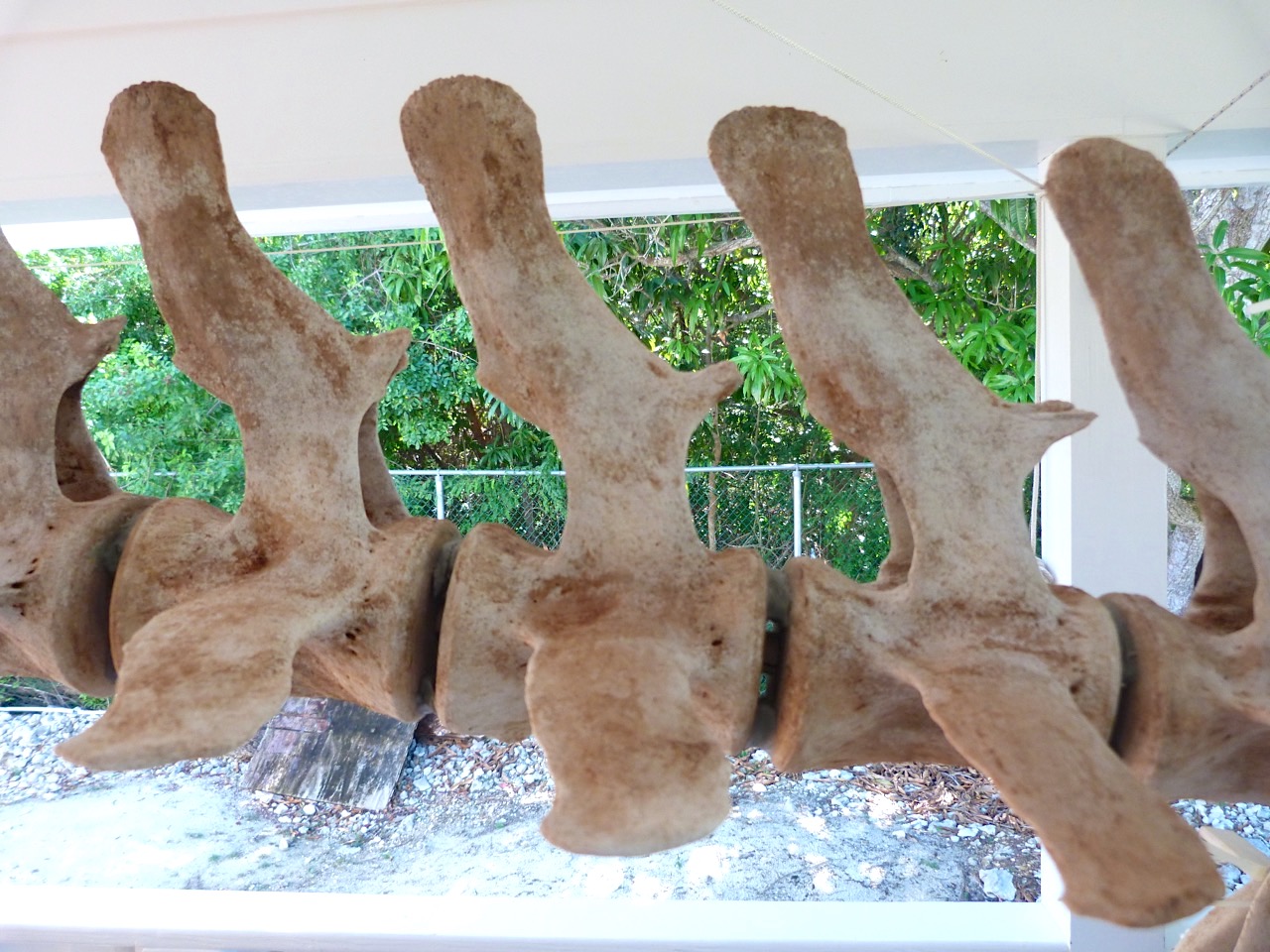
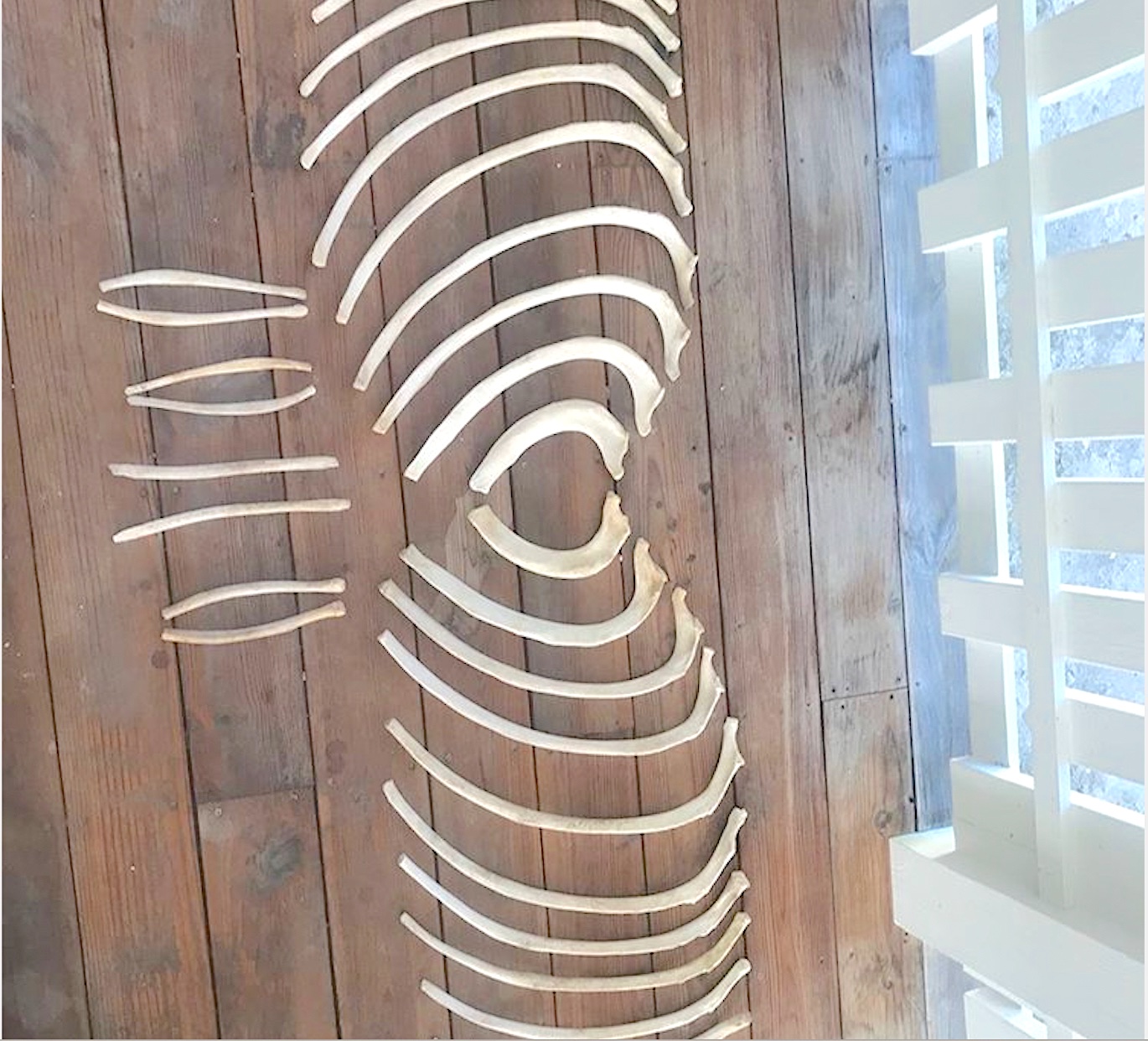
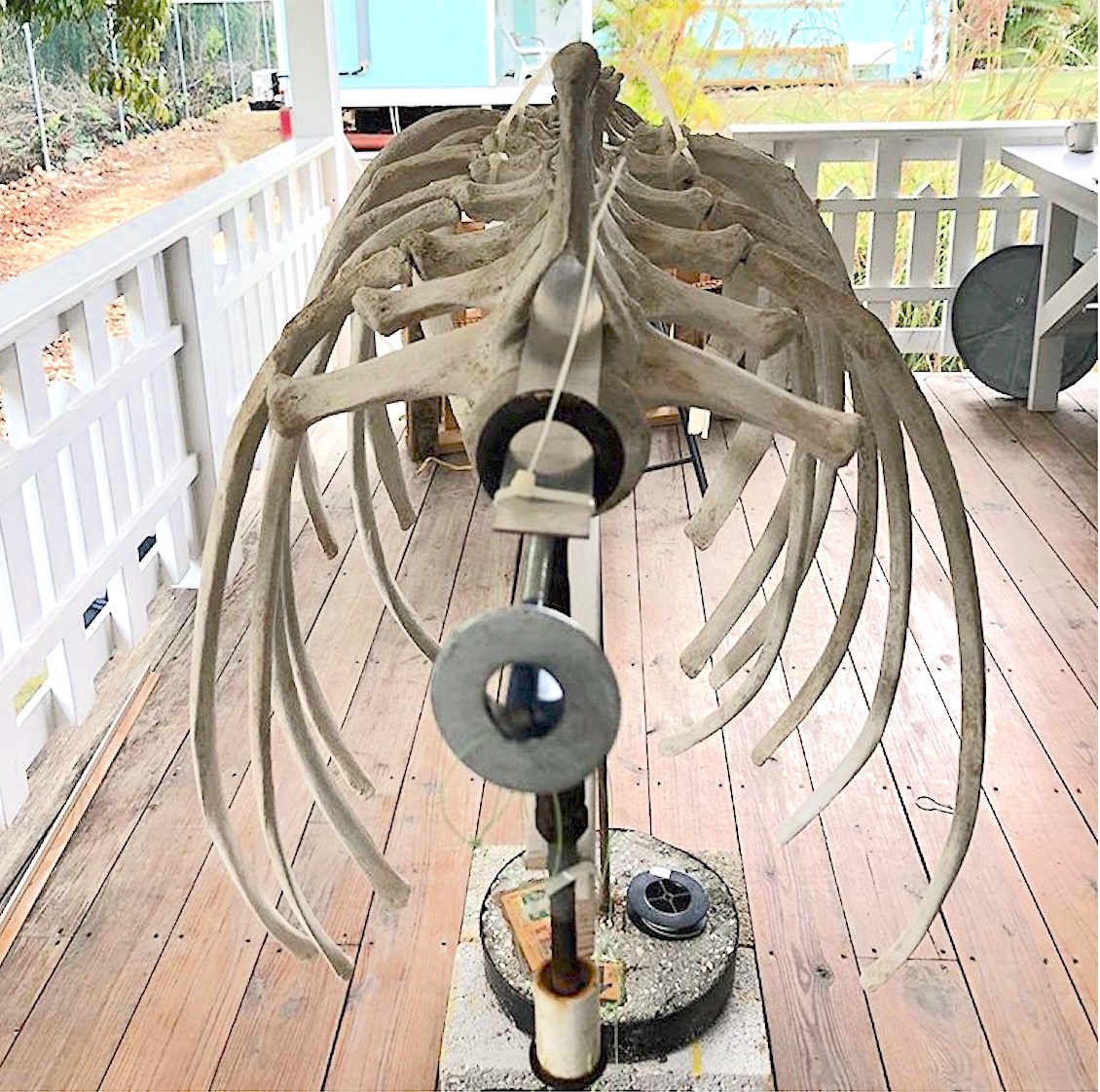
RIBCAGE & SPINEFalse Killer Whale Skeleton, Abaco Bahamas (Keith Salvesen / BMMRO)False Killer Whale Skeleton, Abaco Bahamas (Keith Salvesen / BMMRO) False Killer Whale Skeleton, Abaco Bahamas (Keith Salvesen / BMMRO)

Besides identifying all the bones and numbering them, those working on this project have had to devise ingenious methods for display to make the reconstruction as accurate as possible – not an easy task with a creature nearly 20 feet long.

SPINEFalse Killer Whale Skeleton, Abaco Bahamas (Keith Salvesen / BMMRO)False Killer Whale Skeleton, Abaco Bahamas (Keith Salvesen / BMMRO)         

FLIPPER 1 – COMPLETEFalse Killer Whale Skeleton, Abaco Bahamas (Keith Salvesen / BMMRO)

FLIPPER 2 – WORK IN PROGRESSFalse Killer Whale Skeleton, Abaco Bahamas (Keith Salvesen / BMMRO)

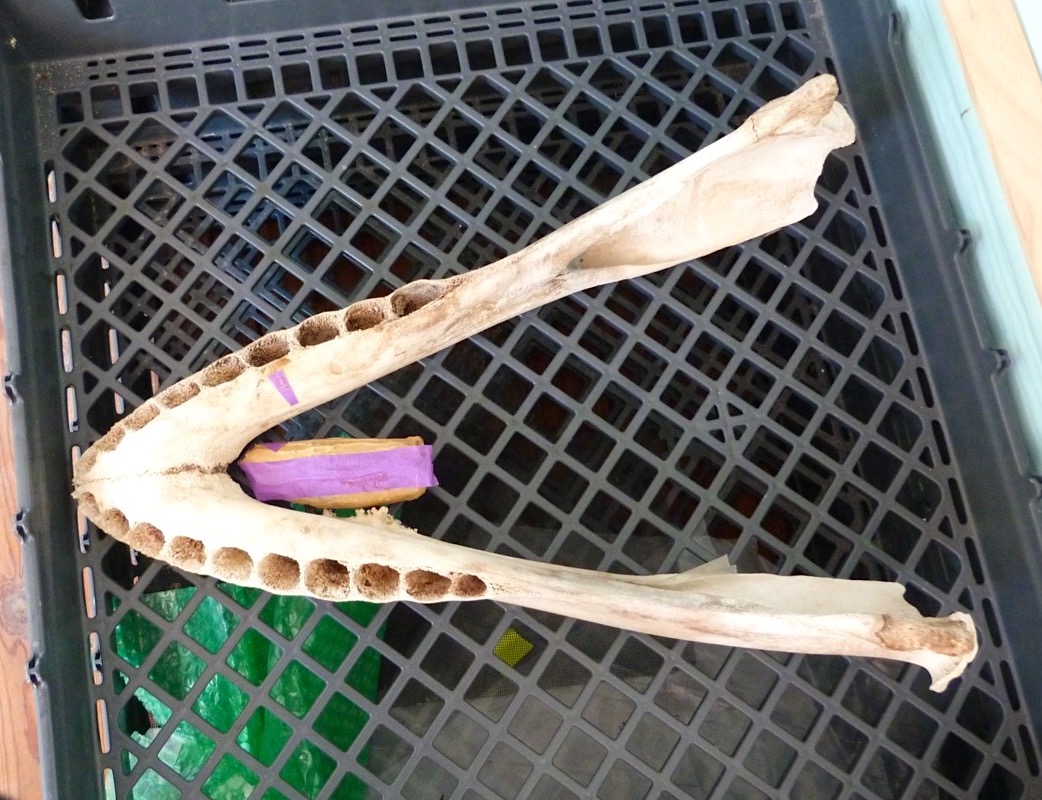
JAW & A TRAY OF SUNDRIES…False Killer Whale Skeleton, Abaco Bahamas (Keith Salvesen / BMMRO) False Killer Whale Skeleton, Abaco Bahamas (Keith Salvesen / BMMRO)

It would be against the principles of this blog to miss out on an obvious open goal of an opportunity for an apposite final caption…

A WHALE TALE THAT ENDS WITH THE WHALE TAILFalse Killer Whale Skeleton, Abaco Bahamas (Keith Salvesen / BMMRO)False Killer Whale Skeleton, Abaco Bahamas (Keith Salvesen / BMMRO)

This ambitious year-long project has involved BMMRO, FOTE, BEP (Bahamas Environment Protection Foundation), interns, and volunteers. A number of children from local schools have already been to visit Ducky and been completely fascinated. A dead stranded whale now has a new incarnation, and a new story to tell.

ARE STRANDINGS FREQUENT – AND WHY REPORT THEM?

Each year there may be half-a-dozen reports of cetacean strandings in Abaco waters, both whales and dolphins. As far as I can make out, the animals are almost invariably dead. If still alive, reporting is clearly urgent to ensure a quick response and to maximise the creature’s chances of survival. If dead, a carcass can provide scientists with valuable data on the biology and health of marine mammals and, in turn, the health of our marine ecosystems. This includes basic information, such as an animal’s age, its size, the types of prey it consumes, and the occurrence of diseases. Necropsies can provide more detailed information to add to the growing knowledge-base of marine mammal populations.

And a project like this one, with its great educational potential, can in effect enable a stranded marine mammal to tell its story even after death.

STRANDING NETWORK HOTLINE NUMBER +1 242 366 4155
(or +1 242 357 6666 / +1 242 577 0655)
Credits: all photos by Keith Salvesen / BMMRO. Special thanks to Olivia Patterson and all at Friends of the Environment for a fascinating time visiting Ducky Killer; and to Nancy Albury for showing us around the excellent Museum. If you haven’t been, go!
Unknown's avatar

WTF? (WHAT’S THAT FISH?) 15 PORCUPINEFISH


Porcupinefish, Bahamas (©Melinda Riger / Grand Bahama Scuba)

WTF? (WHAT’S THAT FISH?) 15 PORCUPINEFISH

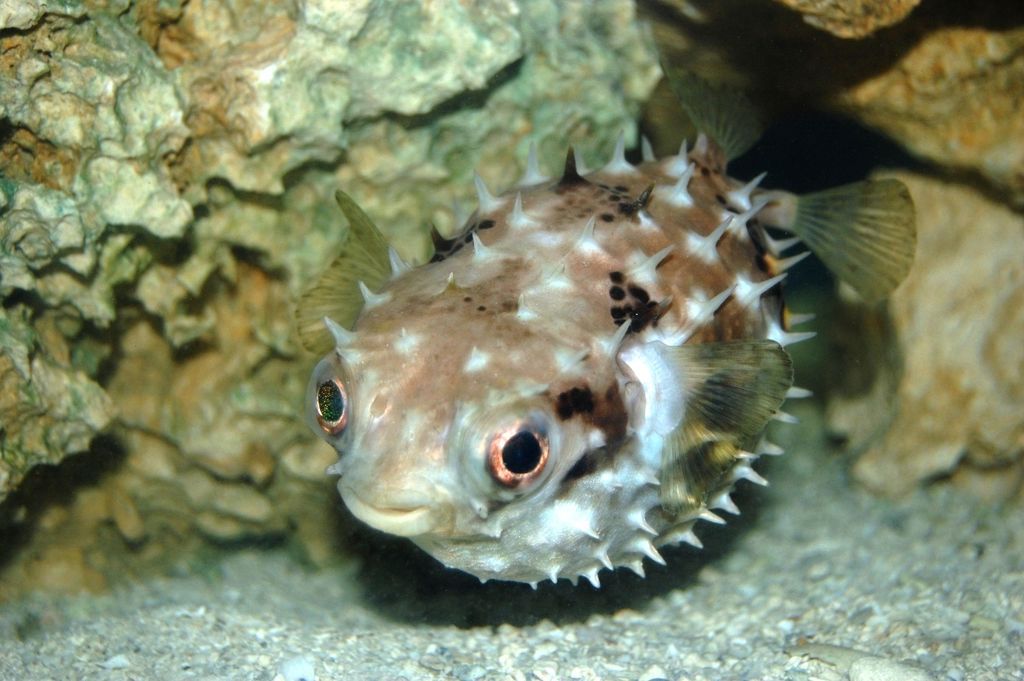
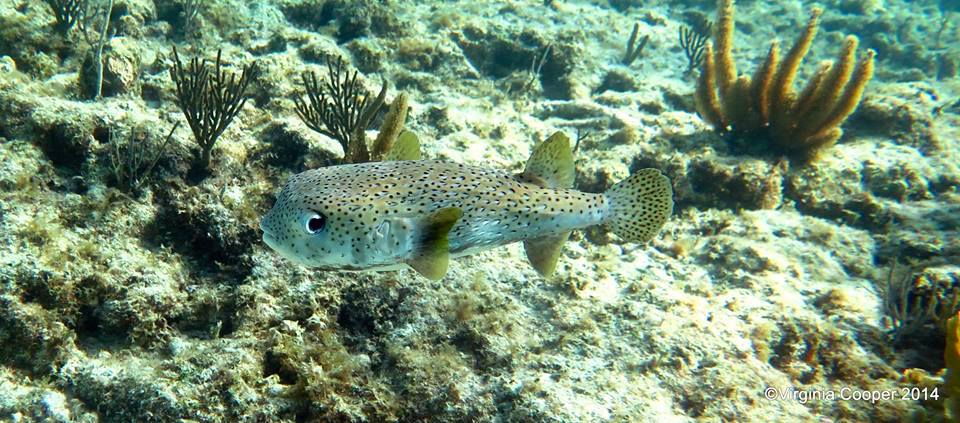
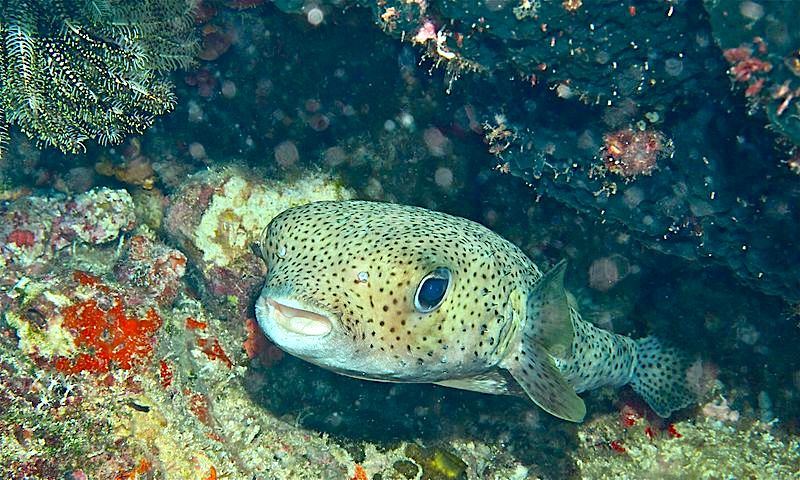
The porcupinefish Diodon hystrix falls into the general category ‘pufferfish’, though the particular species named PUFFERFISH are distinct in their own right. There are other similar species – e.g. balloonfish, blowfish and burrfish – with which there is scope for confusion. The relationship is something like this: all porcupinefish are pufferfish (in a broad sense); but not all pufferfish (in its species sense)  are porcupinefish. 

Porcupinefish, Bahamas (©Melinda Riger / Grand Bahama Scuba)

Porcupinefish are slow-moving reef dwellers and like their puffer cousins, they can inflate themselves by ingesting water, turning them into spiny balloons. This defence mechanism is a response to threat and works in two way: only predators with large mouths would consider them a meal; and even then they have to deal with the spines that become prominent when the fish is bloated.

Porcupinefish, Bahamas (George Parilla wiki)

I’VE HEARD PUFFERFISH ARE POISONOUS? WHAT ABOUT THIS GUY?

Good question. Checking it out, I’ve found some contrary statements about this. The truth seems to be that unlike pufferfish, they do not produce toxic secretions from their skins, so are not poisonous to touch (if you must**).

Porcupinefish, Bahamas (©Virginia Cooper / Grand Bahama Scuba)

However porcupinefish do contain powerful (neuro)toxins in their internal organs and are best not eaten – though in some parts of the world they are considered a minor delicacy. They may also suffer the ignominy of being dried in their inflated state and sold to tourists as novelties –  with lightbulbs inside for added amusement value. 

Porcupinefish, Bahamas (Bernard Dupont wiki)

ARE PORCUPINEFISH FAMOUS IN ANY RESPECT?

Indeed they are. They had the honour of being recorded by Charles Darwin. He gives a surprisingly long account of this creature, encountered during his renowned voyage on the Beagle. It clearly fascinated him. I’ve ‘ripped’ the relevant passage (open source – it’s ok) and turned it into an eezi-reed pdf if you want to check out Darwin’s careful observations in more detail:

THE VOYAGE OF THE BEAGLE – CHARLES DARWIN

Porcupinefish, Bahamas (Adam Rees / Scuba Works)

WAIT! ISN’T THERE A MORE RECENT CLAIM TO FAME?

Yes! In ‘Finding Nemo’, Bloat the Porcupinefish was part of the ‘Tank Gang’ in a dentist’s office. He had an encore in the closing credits of ‘Finding Dory’. Enough of fame already. Here’s a 50 second video demonstrating the puffer / porcupine distinction.

Porcupinefish, Bahamas (Adam Rees / Scuba Works)

RELATED POSTS
Photo Credits: Melinda Riger (1, 2); George Parilla (3); Virgini Cooper (4); Bernard Dupont (5); Adam Rees (6, 7); Video, ‘AquariumKids’ (I do high-powered research, see?)

**Incidentally, it’s apparently not considered an act of animal kindness to catch them / scare them so you can have the pleasure of watching them blow up

Unknown's avatar

THE PRINCE OF WHALES: BLAINVILLE’S BEAKED WHALES IN ABACO


Blainville's Beaked Whale, Abaco Bahamas (Keith Salvesen / BMMRO)

THE PRINCE OF WHALES: BLAINVILLE’S BEAKED WHALES IN ABACO

There’s a strange affinity between humans and whales. Humans seem to think so, anyway – and whales seem to tolerate them amiably, perhaps now that the decimation of their populations by humans is (largely) a thing of the past. The Bahamas in general and Abaco in particular are in the mainstream of progressive cetacean research, led by the BMMRO at Sandy Point.

Blainville's Beaked Whale, Abaco Bahamas (Keith Salvesen / BMMRO)

One of the speciality research species is the Blainville’s Beaked Whale. These magnificent creatures are deep divers, and although they are found in many parts of the world, the Bahamas is one of only 3 locations with a significant population for study. Most of the whales here were photographed within sight of land (and a few with the Castaway Island Disney Cruise Ship visible on the horizon!).

Blainville's Beaked Whale, Abaco Bahamas (Keith Salvesen / BMMRO)

I’ve been lucky enough to be on the BMMRO research vessel on a beaked whale outing – and luckier still that we were able to spend plenty of time with a group of them, including some males. The header image is of a mature male with his huge teeth that protrude upwards from the lower jaw, and in time become encrusted with barnacles.

Blainville's Beaked Whale, Abaco Bahamas (Keith Salvesen / BMMRO)

The whales were quite undisturbed by our presence – indeed they behaved much like dolphins, circling the boat and swimming under it; moving away and returning. This was an opportunity to count the whales, to identify those that had already been recorded, and to document any new ones. Each whale has its own unique pattern of marks, striations and in some cases healed wounds. The pair below are a good example.

Blainville's Beaked Whale, Abaco Bahamas (Keith Salvesen / BMMRO)

Also, the whales have individually distinctive dorsal fins, with nicks and tears that also act as a means of identification. These can often be made out from a distance with powerful binoculars or photographed with a long lens for later analysis (this ID method also works reliably for dolphins).

Blainville's Beaked Whale, Abaco Bahamas (Keith Salvesen / BMMRO)

Beaked whales often bear the healed scars from the gouging bites of COOKIE-CUTTER SHARKS, a vicious little species that I recently featured. The distinctive circular scars on the back of the whale below result from encounters with these unpleasant creatures.

Blainville's Beaked Whale, Abaco Bahamas (Keith Salvesen / BMMRO)

Finally, the photo below. It has no merit, photographically speaking, but I love the way that sometimes a ‘risk’ shot – into the sun, perhaps – produces rather magical effects. The unexpected ‘sea stars’ were a bonus!

Blainville's Beaked Whale, Abaco Bahamas (Keith Salvesen / BMMRO)

All photos: Keith Salvesen / BMMRO

Unknown's avatar

THE ARTICULATE WHALE (1): TELLING A TALE AFTER DEATH


False Killer Whale (Endless Ocean-wiki)

THE ARTICULATE WHALE (1): TELLING A TALE AFTER DEATH

The ‘false killer whale’ Pseudorca crassidens has a somewhat misleading name: first (as implied), it is not a killer whale; second, it’s not actually a whale at all, but a large species of dolphin. However, it does have some killer whale tendencies – attacking and killing smaller marine mammals for example – and perhaps a passing resemblance, so the species has been given something of an upgrade, name-wise.

False Killer Whale (NOAA-wiki)

Although these fine creatures are distributed widely around the globe, the overall numbers are thought to be small, and relatively little is known about them in the wild. They are, of course, used as aquarium exhibits but the knowledge gleaned in captivity cannot provide much of an overview of their oceanic behaviour, which remains relatively unstudied.

False Killer Whale range map - wiki

However, there is one source of valuable data – the scientific study of stranded animals. And as it happens, Abaconians will very soon be able to obtain at least a skeleton knowledge of the FKW, the end-product of a long and complicated research project by the BMMRO in conjunction with Friends of the Environment. Just a quick word of warning before you read further – some images below are not especially pleasant to look at, so be prepared for them… They are illustrative and not intended for close inspection (unless you want).

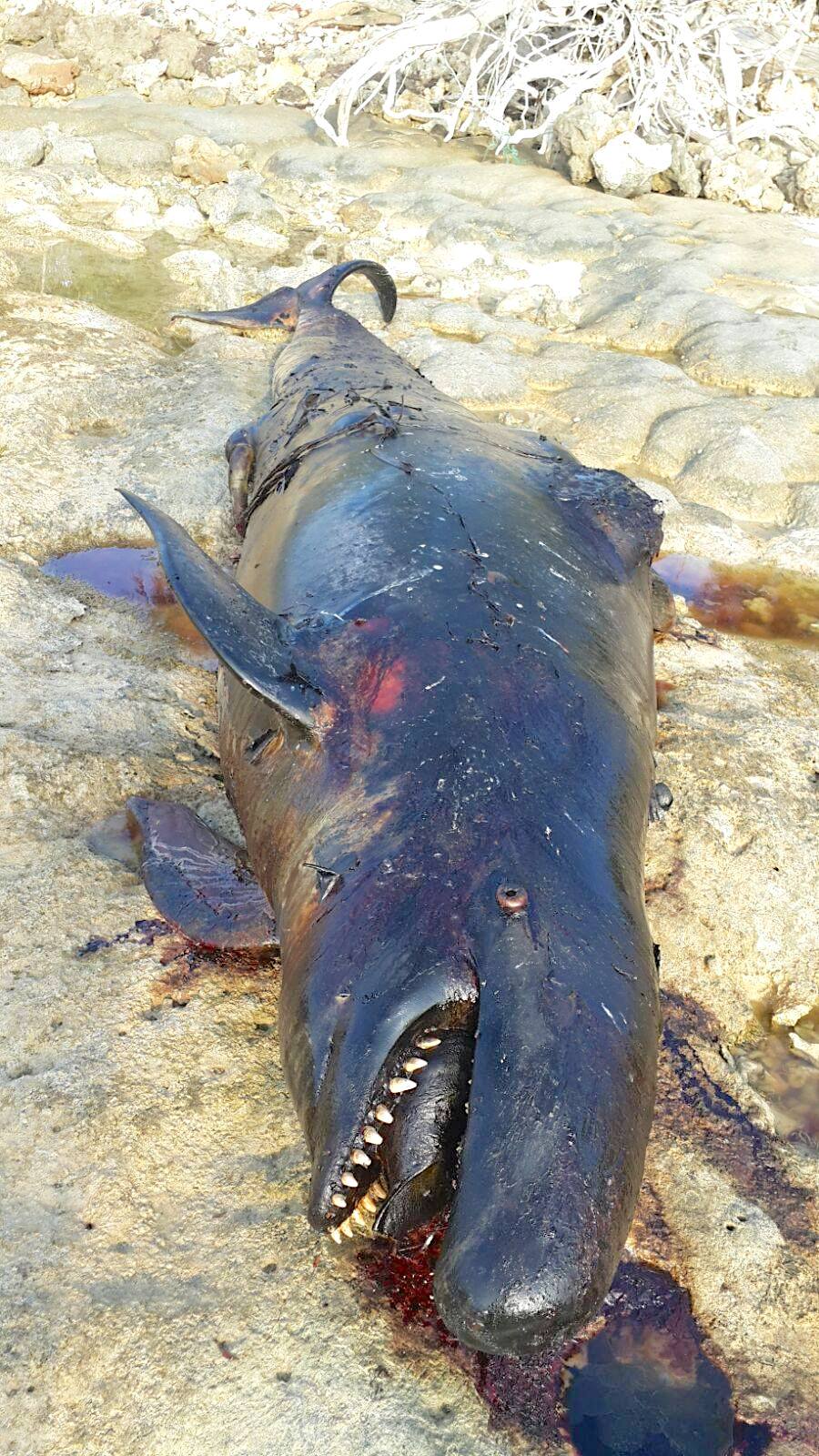
Exactly a year ago an FKW was reported to have stranded on Duck Cay, off Cherokee Sound. BMMRO were quickly on the scene, and hoping to undertake the usual procedure of a necropsy, in which post-mortem samples are taken for analysis. However the poor creature was in an advancing state of decomposition, so only skin samples and photographs could be taken.
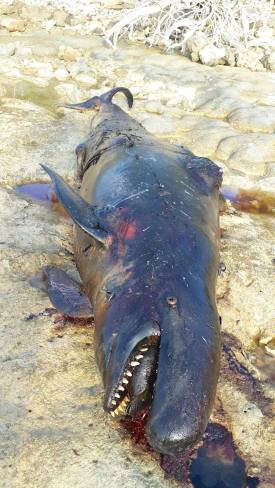
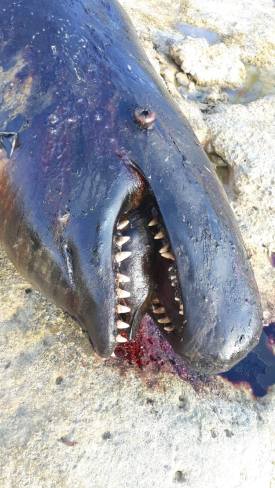
False Killer Whale, Abaco Bahamas (BMMRO)         False Killer Whale, Abaco Bahamas (BMMRO)

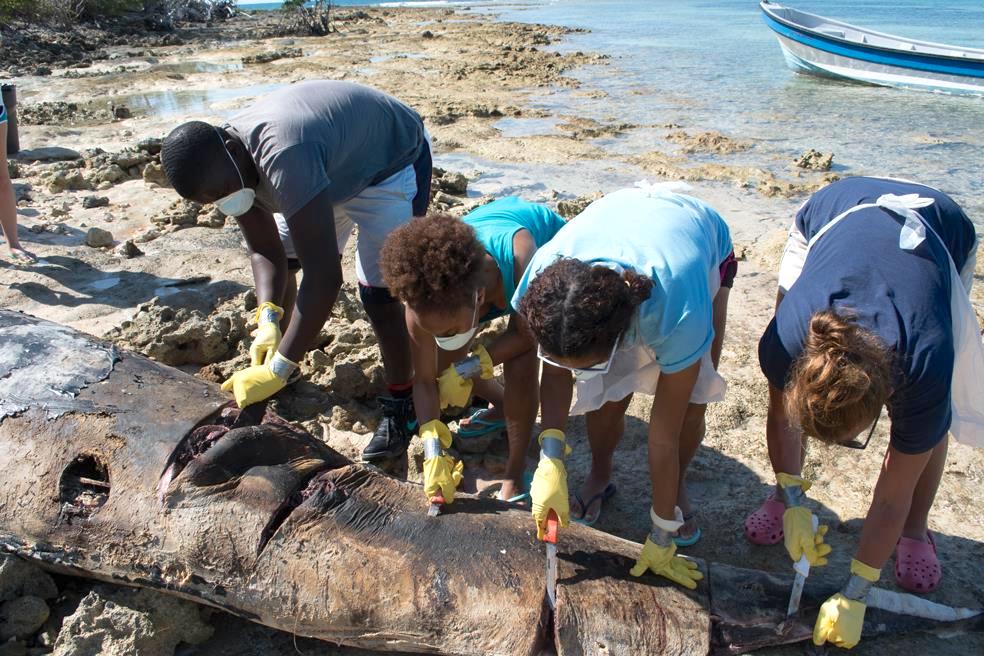
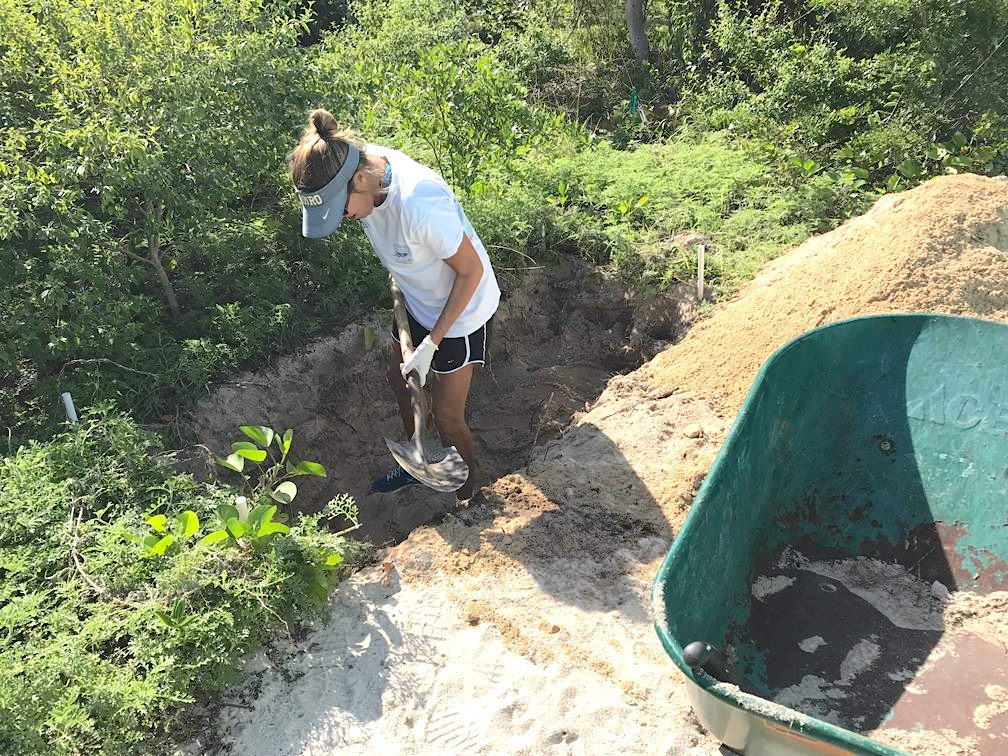
Telescoping the intervening months for the sake of brevity, the decision was made to cut up the carcass (note the face-masks) and bury it where it was, so that its integrity would be preserved for later retrieval, cleaning, reconstruction (‘re-articulation’) and exhibition for educational purposes.

False Killer Whale, Abaco Bahamas (BMMRO) False Killer Whale, Abaco Bahamas (BMMRO) False Killer Whale, Abaco Bahamas (BMMRO)

False Killer Whale, Abaco Bahamas (BMMRO)

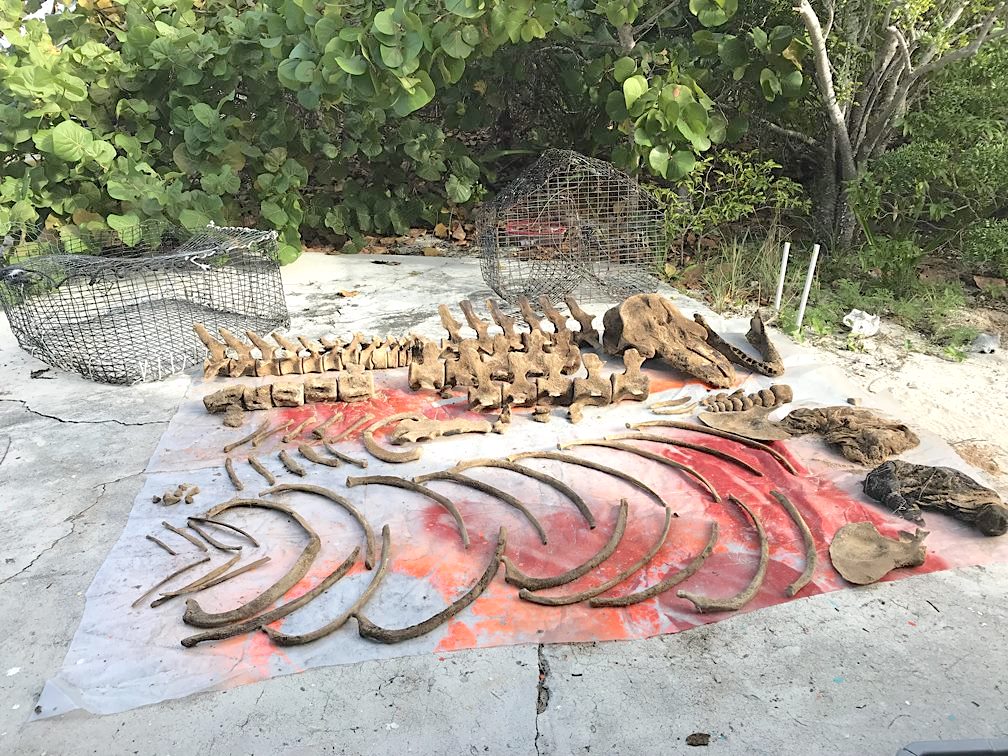
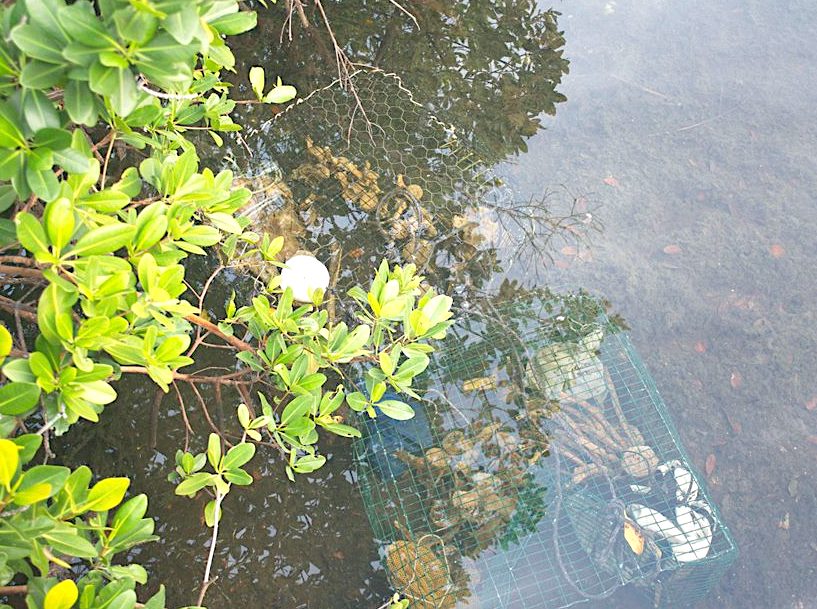
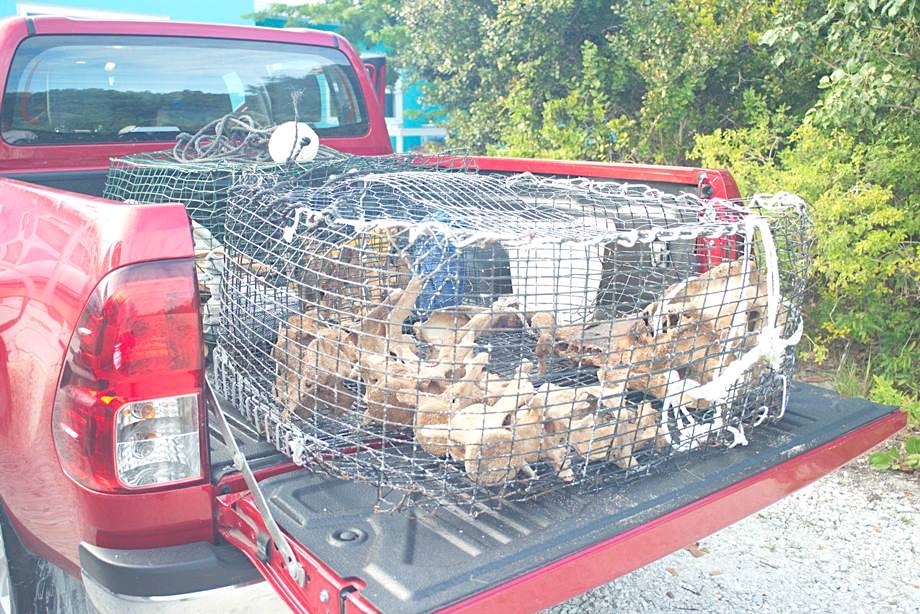
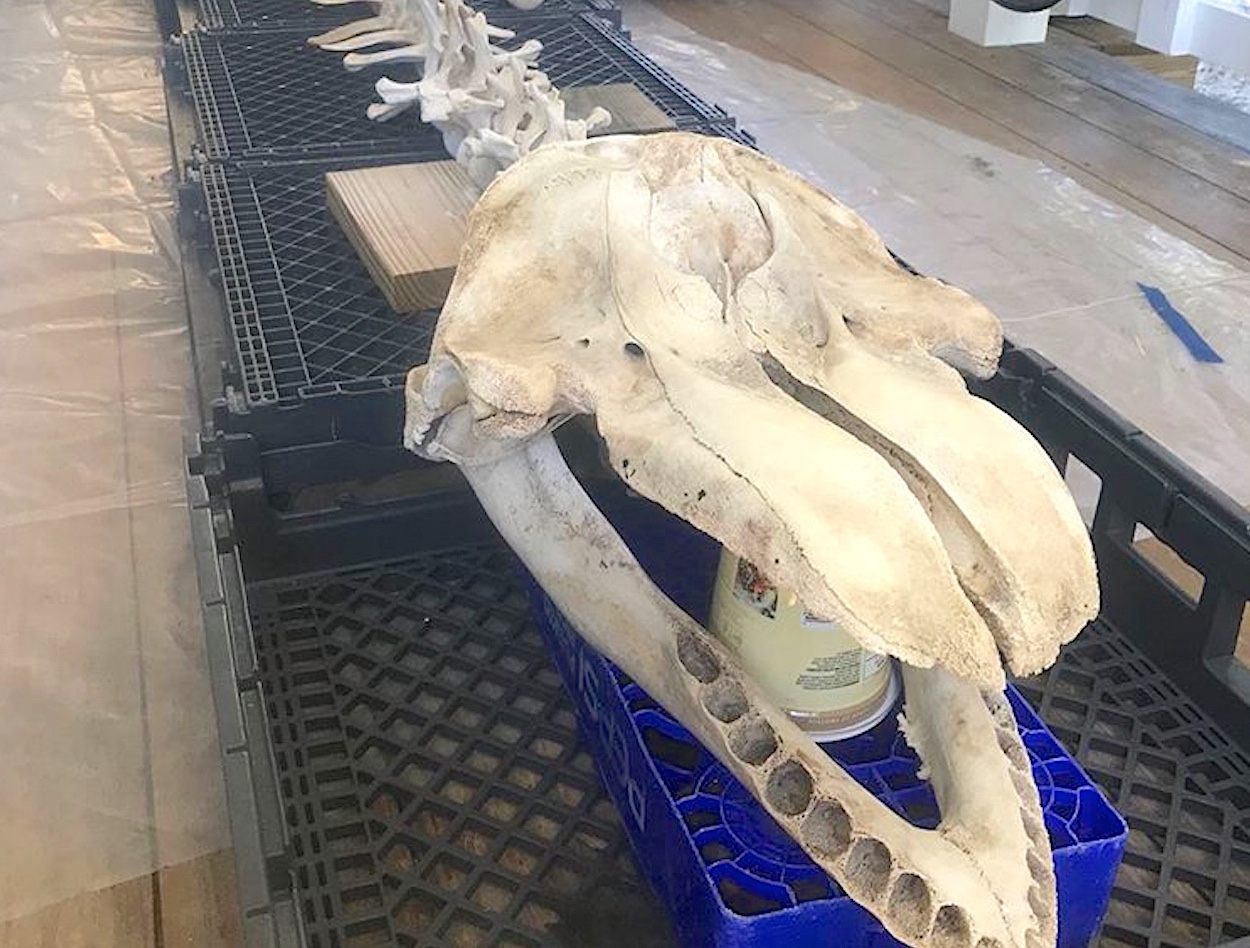
In December, the remains were exhumed for the next phase of the animal’s decomposition – submersion in cages in the mangroves – before the final cleaning of the bones in readiness for its re-articulation and display.

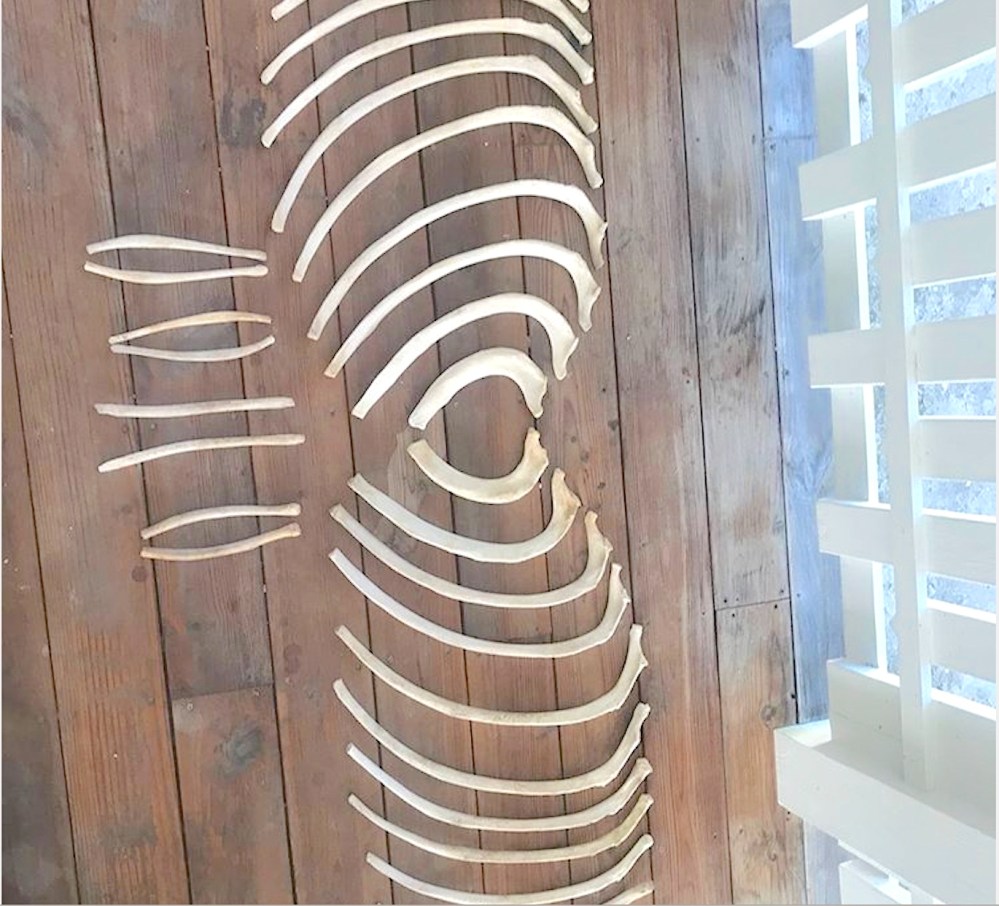
False Killer Whale bones, Abaco Bahamas (BMMRO)False Killer Whale, Abaco Bahamas (BMMRO)False Killer Whale bones, Abaco Bahamas (BMMRO)

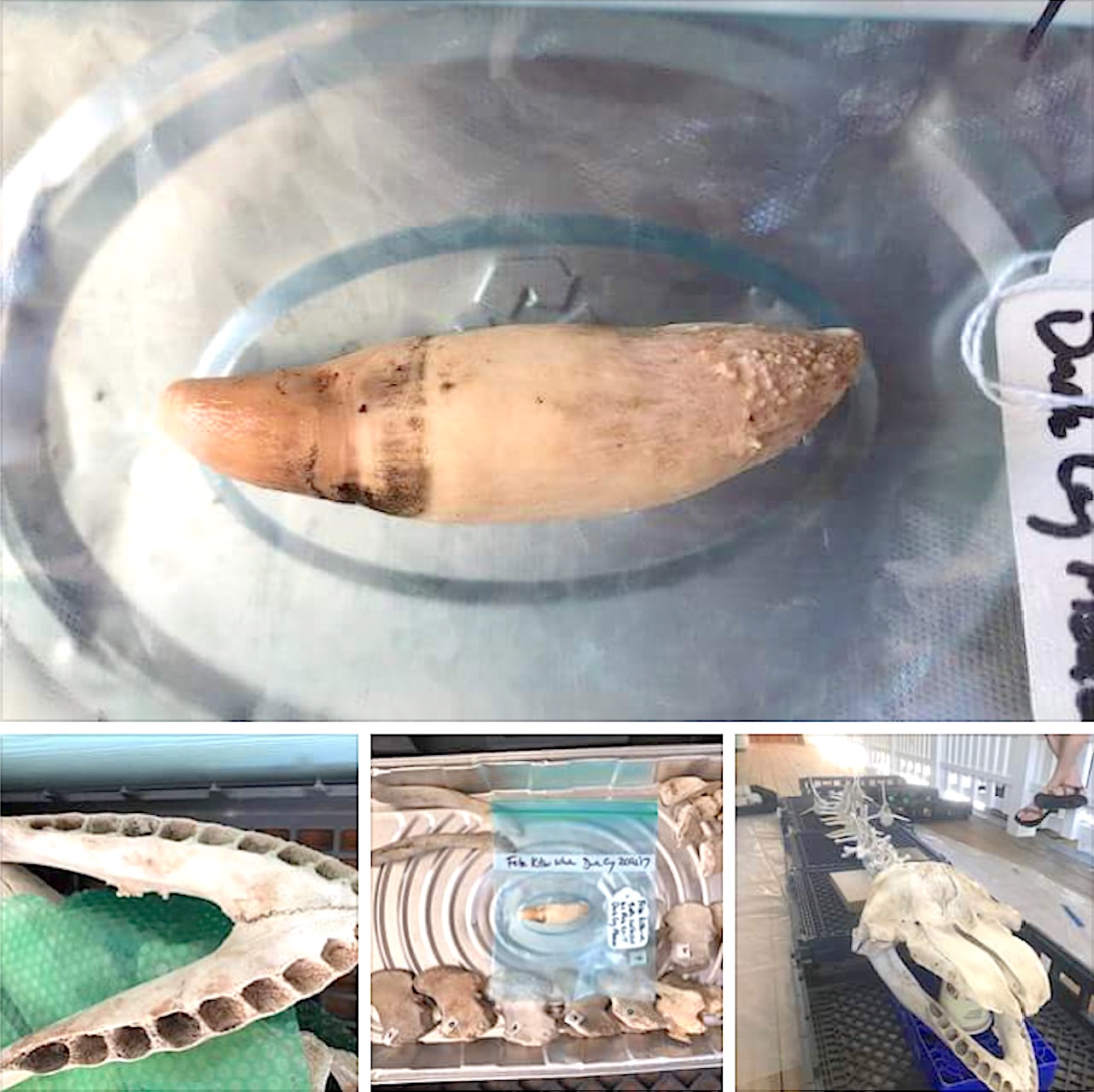
Cleaning the bones has been a meticulous process, leaving the resulting skeleton ready to reconstruct in situ at Friends of the Environment’s Kenyon Research Centre in Marsh Harbour. Adult FKWs can grow up to 6 metres long, so there are a great many bones from large to very small to place correctly – and plenty of teeth (see below). The re-articulation is nearly finished, and it is hoped that the completed skeleton will be on display in the very near future. I am planning to see it in about 2 weeks time, and – this sounds quite strange, I know – I’m very excited about it.
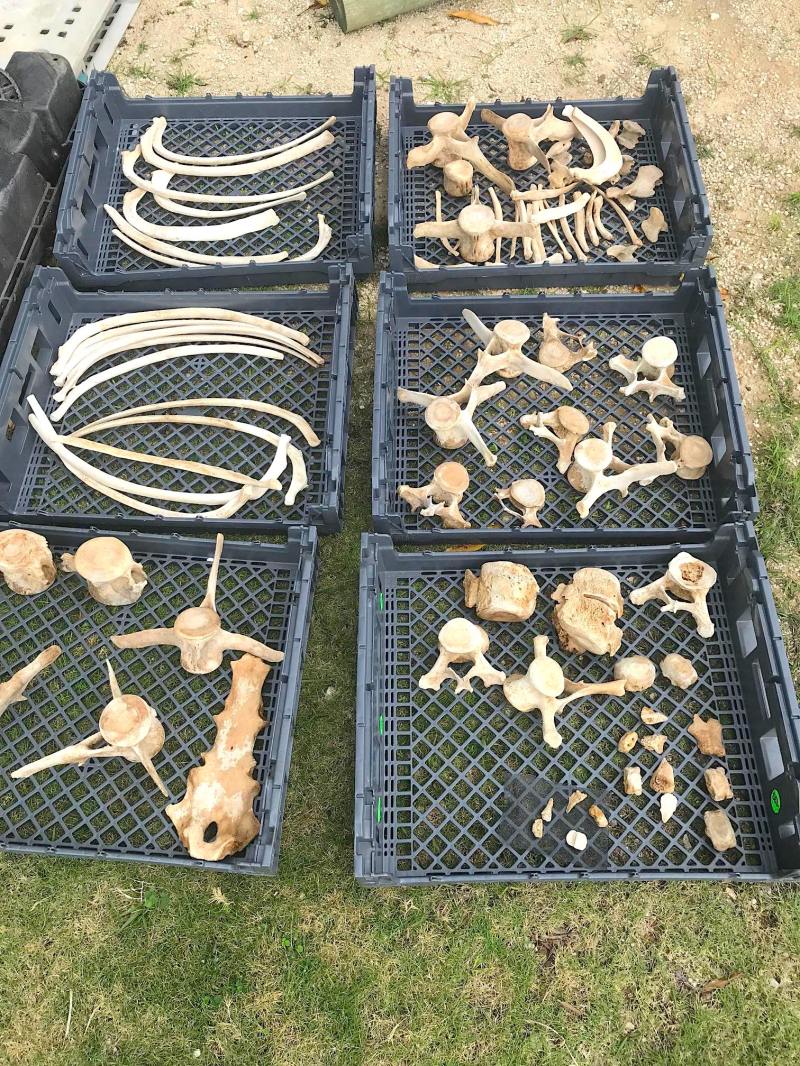
False Killer Whale bones, Abaco Bahamas (BMMRO)False Killer Whale bones, Abaco Bahamas (BMMRO)False Killer Whale tooth & bones, Abaco Bahamas (BMMRO)False Killer Whale skeleton, Abaco Bahamas (BMMRO)

This ambitious year-long project has involved BMMRO, FOTE, BEP (Bahamas Environment Protection Foundation), interns, and volunteers. I am keen to know whether, in the modern way, an affectionate name has been chosen for the skeleton. ‘Duck Cay’ doesn’t provide a very promising start. Well, maybe Donald is in vogue…? 

ARE STRANDINGS FREQUENT – AND WHY REPORT THEM?

Each year there may be half-a-dozen reports of cetacean strandings in Abaco waters, both whales and dolphins. As far as I can make out, the animals are almost invariably dead. If still alive, reporting is clearly urgent to ensure a quick response and to maximise the creature’s chances of survival. If dead, a carcass can provide scientists with valuable data on the biology and health of marine mammals and, in turn, the health of our marine ecosystems. This includes basic information, such as an animal’s age, its size, the types of prey it consumes, and the occurrence of diseases. Necropsies can provide more detailed information to add to the growing knowledge-base of marine mammal populations.

And a project like this one, with its great educational potential, can in effect enable a stranded marine mammal to tell its story even after death.

STRANDING NETWORK HOTLINE NUMBER +1 242 366 4155
(or +1 242 357 6666 / +1 242 577 0655)
False Killer Whale skull, Abaco Bahamas (BMMRO)

Credits: header image, Endless Ocean / wiki; #1 NOAA; all other photos BMMRO or FOTE, with thanks; range map wiki 
Unknown's avatar

MANATEES IN THE BAHAMAS? WE GOTTEM!


MANATEES IN THE BAHAMAS? WE GOTTEM!

Not so long ago, most people had no idea that the waters of the Bahamas in general – and Abaco in particular – contained a small population of these curious, gentle, trusting creatures. When I first wrote about them and their adventures, there was surprise – maybe disbelief. A few years later, all that has changed thanks to the BMMRO and an outreach program that raised awareness – and consequently the sighting and reporting – of manatees. They are now widely recognised as they nose their way round harbours, docks and landing stages – and quite rightly they still excite delight and a degree of wonderment. 

You can find out more – lots more – about Bahamas manatees on my page HERE. I have a post in progress about recent manatee developments with a rescue one but alas I have found I have already run out of week through some kind of bizarre time / space continuum dislocation (specifically, flagrant time-mismanagement). So I am posting a few adorable images to be going on with. 

And remember, if you happen to see one, please do report it to the BMMRO or let me know. Useful data includes date, location and a description if possible of any damage – notches and nicks – to the paddle (= tail). It’s a good method for ID. Photos a bonus.  Every sighting adds to the database of knowledge about these strangest of creatures of the Bahamian seas. And you’ll be pleased to know that they are undoubtedly managing to breed in the Bahamas: there are baby manatees to prove it…

All photos: BMMRO

Unknown's avatar

BAHAMAS REEF FISH (43): CUBERA SNAPPER


BAHAMAS REEF FISH (43): CUBERA SNAPPER

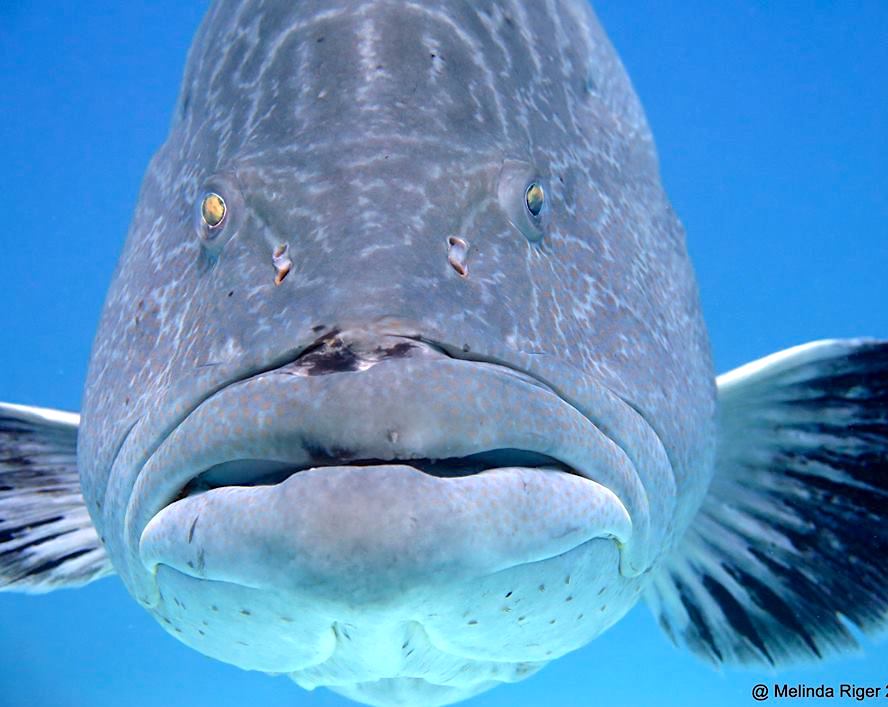
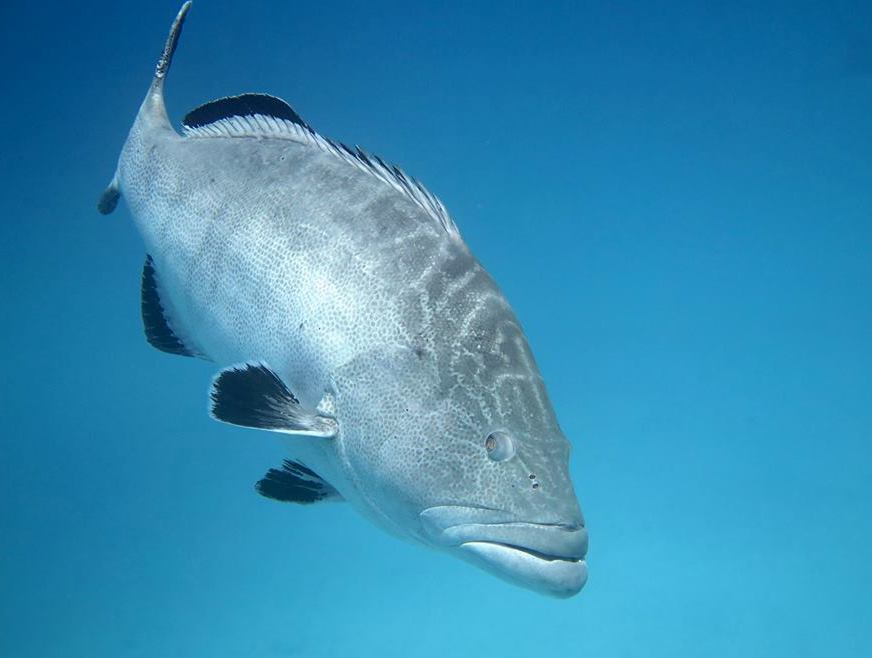
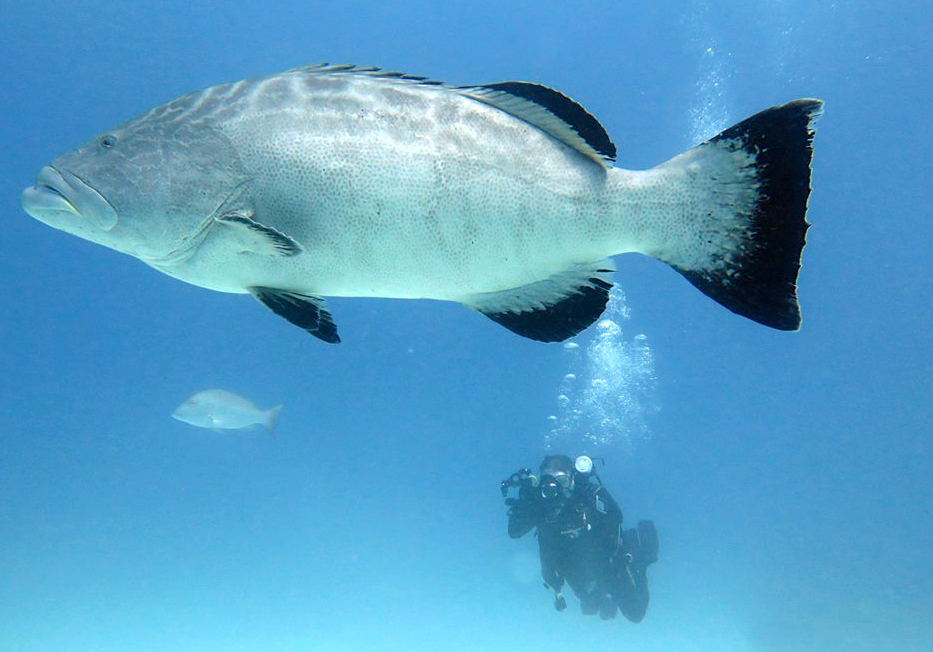
The cubera snapper (Lutjanus cyanopterus) is the largest snapper species. Adults may grow to 5′ long but they average around 3′ long and weigh 40 lbs or so (the record apparently stands at a massive 126 lbs). These are game fish, and they are a commercially important species. They are also IUCN listed as vulnerable, perhaps for that very reason. 

10 CUBERA SNAPPER SNAPPY  FACTS

  • The largest of a large number of snapper species in the western Atlantic
  • Feed on fish, shrimps & crabs, with large strong teeth (see pics) and jaws
  • Among their (few) predators are sharks, barracuda, and moray eels
  • Edible, but beware of the danger of CIGUATERA poisoning
  • In summer months, spawning is governed by lunar cycles
  • Cuberas form huge spawning masses (to 10k) in offshore shallows
  • Sadly the resulting eggs and larvae are rich pickings for predators…
  • Youngsters live in sea grass or mangroves for protection
  • Cuberas are game fish with commercial importance
  • IUCN listed as vulnerable – largely courtesy of mankind (see »)

RANGE FINDER

Cubera Snapper Range Map (wiki)

CONSERVATION MATTERS

Overfishing is one of the greatest threats to the species. Those young fish that are not predated naturally and grow to adulthood are targets for fishermen. There’s no prissy ‘catch & release’, as with bonefish. At spawning time, as the fish instinctively (and predictably) mass as the moon dictates, so do the human predators. The spawning sites are where the best protection can be given, to ensure the annual reproductive cycle is uninterrupted. If not, ‘vulnerable’ will soon give way to ‘endangered’…

I’d been going to pull apart a long recipe for the “wonderfully sweet white meat ” of this fish for the tastiest morsels of info, then (not being a cook) I quickly tired of the idea. Sorry to disappoint. 

Credits: Melinda Riger for the wonderful photos; range map from wiki; magpie research pickings, including (but not limited to ) Nat Geo