Unknown's avatar

FAIRY BASSLET (‘MIND YOUR GRAMMA’): BAHAMAS REEF FISH (33)


fairy-basslet-melinda-riger-g-b-scuba-copy-2

FAIRY BASSLET (‘MIND YOUR GRAMMA’): BAHAMAS REEF FISH (33)

The Fairy Basslet is a tiny brightly-coloured fish with a pretentious alternative name. It is otherwise known as the Royal Gramma (Gramma loreto). These fish are found  in the coral reefs of the (sub)tropical western Atlantic. They are also found in aquariums anywhere you like, being small, bright, placid and generally good-natured.

fairy-basslet-melinda-riger-gb-scuba

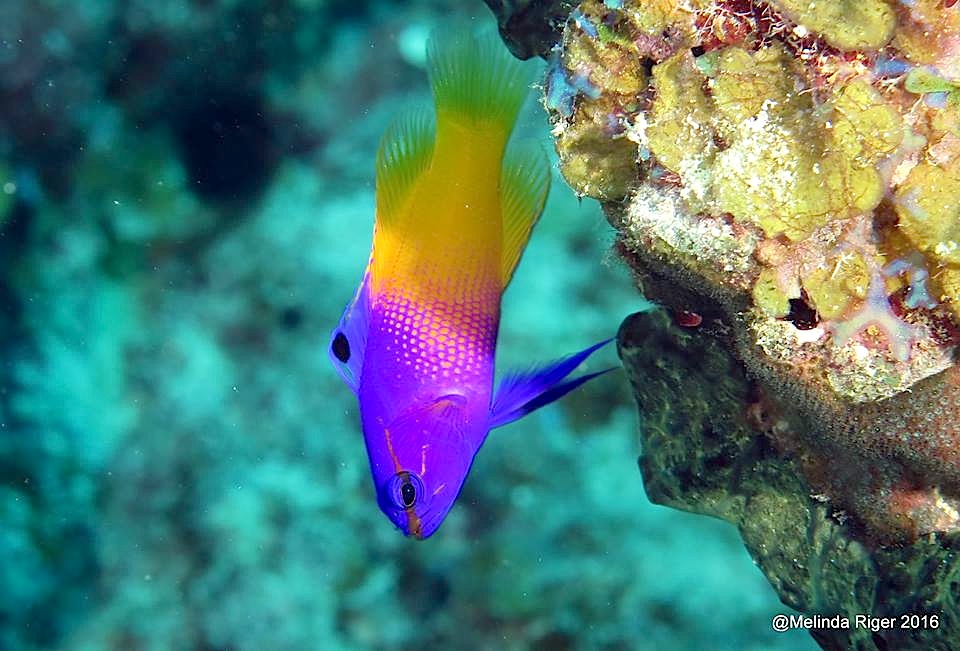
Conveniently, the basslet is unlikely to be confused with any other species. Its striking two-tone colour scheme of purple and yellow is hard to miss. The purple front half (which is presumably where the ‘royal’ comes from, being a regal or imperial colour) may also be violet or even blue in some fish and / or in some light conditions. Another identification pointer is a black spot on the dorsal fin. 

fairy-basslet-melinda-riger-grand-bahama-scuba

You’ll notice that the basslet above appears to be upside down. Which is because it is – this isn’t an inadvertent photo-flip. These little fish tend to orientate themselves to be parallel with the closest surface. This leads to them happily swimming upside down, or aligning vertically. As one article I read says severely, “this behaviour is not to be mistaken for illness”.
fairy-basslet-melinda-riger-g-b-scuba

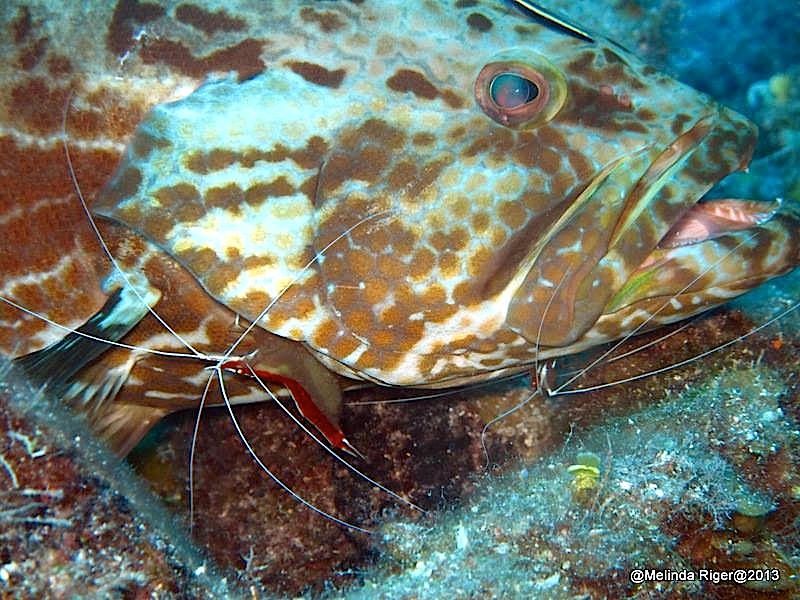
Fairy basslets / royal grammas are also CLEANER FISH. They pick parasites and dead skin off larger fish that visit so-called cleaning stations to be attended to by tiny fish and cleaner shrimps, and in some instances to have their gills and even their teeth cleaned. The deal is that, in return, the large fish do not eat the cleaners. Even snack-sized ones rootling around inside their mouths.

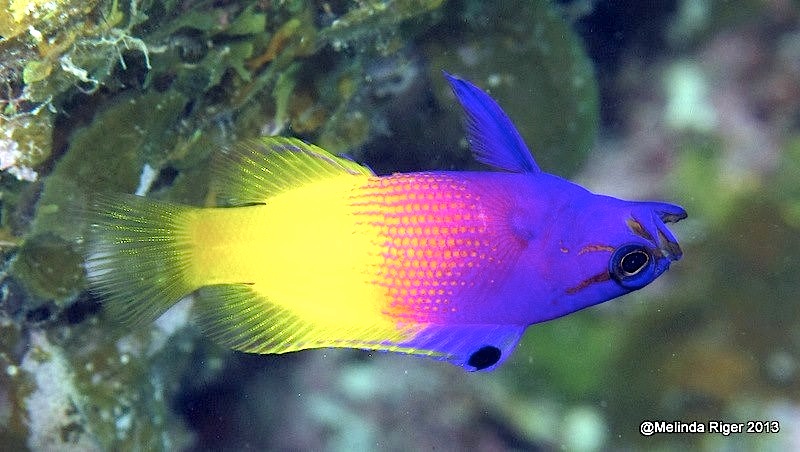
fairy-basslet-melinda-riger-gb-scuba

 WHAT ABOUT BREEDING?
I really can’t improve on this rather touching description from Wiki: “The male will build the nest among rocks using pieces of algae. The male will then lead the female to the nest, where she will deposit 20-100 eggs in the nest. During the breeding period, this behaviour is repeated almost every day for a month or longer (my italics). The eggs are equipped with small protuberances over the surface with tiny threads extending from them which hold onto the algae of the nest and keep the eggs in place. The eggs will hatch in five to seven days, normally in the evening…”

fairy-basslet-melinda-riger-gb-scuba

HOW COME THE NAME ‘GRAMMA LORETO’?

This official name became a brainworm with me after I started this post. I had to check it out. The ‘Gramma’ part is unrelated to the fond name for a grandmother; rather, it simple denotes a member of the genus of fishes in the family Grammatidae.

The Loreto part is more mysterious. It is an an ancient town in Italy; and the name of several British schools, including – almost too good to be true – a school called Loreto Grammar. In a nutshell, the link between the town and places of education is that the Sisters of Loreto, founded in the c17 and named for a shrine in the Italian village, are dedicated to education in their Ministry.

How that ties in with a tiny Caribbean reef fish, I have yet to find out. I probably never will… Here’s a short video to alleviate the disappointment.

I failed to be able to resist finding out whether any country of the world has a purple and yellow flag. The answer is, no. However I am delighted to be able to report that the flag of the Independent Party of Uruguay is basslet-coloured.

inependent-party-uruguay-flag

fairy-basslet-melinda-riger-g-b-scuba-copy

Credits: all fantastic photos by Melinda Riger of Grand Bahama Scuba; magpie pickings of an unacademic sort for facts and speculation

Unknown's avatar

SILVERSIDES: BAHAMAS REEF FISH (32)


silversides-school-melinda-riger-g-b-scuba

SILVERSIDES: BAHAMAS REEF FISH (32)

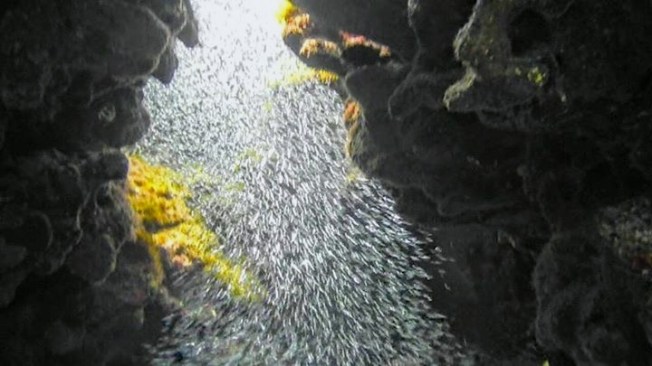
I have no idea if there is a collective noun for a large group of silversides. ‘Frenzy’ would cover it, but that is reminiscent of ‘feeding freezing’ which has a specialist meaning – and anyway, silversides are crazy even when they aren’t feeding. 24/7/12/365 as far as I can make out. I think ‘a panic of silversides’ might be the answer. They are just… all over the place at high speed. Sometimes swirling around pointlessly, other times moving in unison and suddenly all changing direction simultaneously, like a single creature made of tiny shards of silver.

silversides-school-melinda-riger-g-b-scuba-copyfish-frenzy-melinda-riger-gbs

There are quite a few silverside species around the world. The ones in the Bahamas are Atlantic silversides (Menidia menidia), also known in the north east of the United States as ‘spearing’. They seem to exist for two purposes. The main one is to be breakfast, lunch or dinner for larger fish, sea birds and shore birds. The other is for their usefulness in scientific research because of their sensitivity to environmental changes. 

silversides-melinda-riger-g-b-scuba-copy-2silversides-school-melinda-riger-gb-scuba

In one sense they are easy prey for predators. A determined fish will always manage a snack by swimming into the middle of a panic and (probably) simply by opening its mouth wide. On the other hand, their sheer numbers coupled with the speed and randomness of movement mean that a single may find a degree of safety in numbers. It’s hard for a predator to target any individual fish in the general melee and confusion. Silversides also favour seagrass beds, which give some shelter and protection – and a reasonably safe place to spawn. Or, as some of these photos show, they will hang around wrecks or squeeze into rocky spaces in the reef.

silversides-melinda-riger-g-b-scuba-copysilversides-melinda-riger-g-b-scuba

A panic of silversides apparently pouring like a waterfall down through a gap in the reefsilversides-waterfall-abaco-kay-politano

WHAT DOES A STATIONARY ATLANTIC SILVERSIDE LOOK LIKE?

meber_u0

Some time ago we used to go to the reef at Fowl Cay Marine Preserve with Kay Politano, and I would snorkel with a small and very basic lo-res underwater camera. I was hampered by being a disgracefully feeble swimmer; by not having snorkelled for a length of time calculable in decades; and by being a complete novice at underwater photography.  Despite these not inconsiderable disadvantages I managed to cobble together a few short movies on my computer (I was new to that too). Here’s one that nearly works, in that it gives an idea of what happens if you ‘swim with silversides’. I know you scuba guys all swim with sharks, but cut me some slack here please…

Photo Credits: Main photos Melinda Riger of Grand Bahama Scuba; Silverside Waterfall by Kay Politano; motionless silversides by FISHBASE.ORGMusic: Goldon Giltrap, ‘Fast Approaching’

Unknown's avatar

HAMMERHEAD SHARKS: UP CLOSE AND PERSONAL…


Great Hammerhead Shark, Bimini (Grant Johnson / 60 Pound Bullet)

HAMMERHEAD SHARKS: UP CLOSE AND PERSONAL…

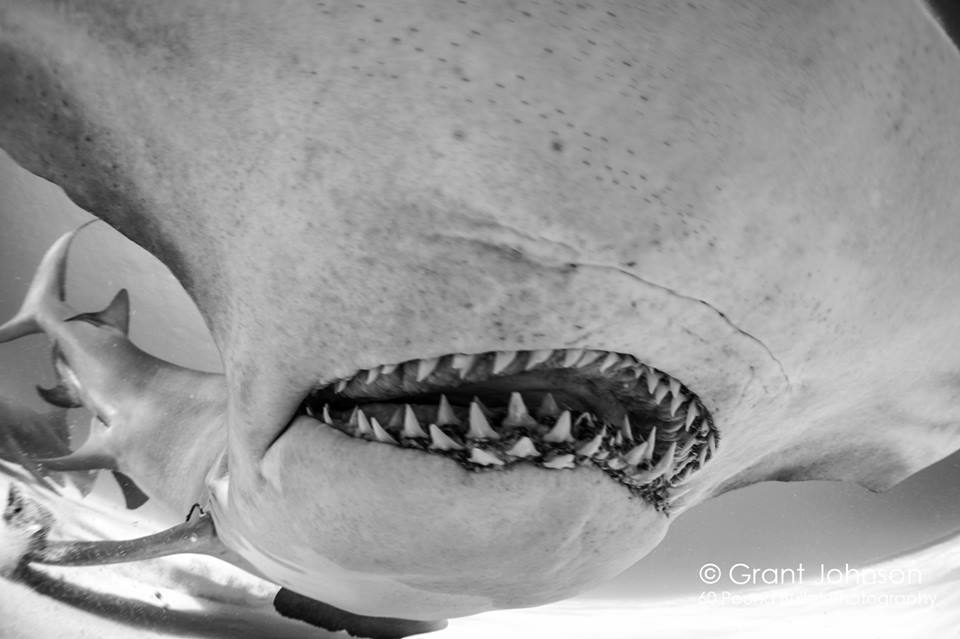
Of all the words that have been devalued and diminished by overuse over the last decade, ‘AWESOME!!!’ must rank high in the top 10. Maybe it’s even made it to number 1. Awesome! Even in the wildest reaches of hyperbole, the offer of a Kalik can never truly be awesome. Nor can a kind and delightful gift. There’s no need to add more examples, because the photos that follow show something that really is awesome in it’s true meaning: the giant hammerhead shark at close – and very close – quarters. Grant Johnson takes astounding wildlife photos in Bimini and far beyond. Take the time to have a look at his page ’60 POUND BULLET’. Now let’s move on to ‘awesomely awesome…’

Great Hammerhead Shark, Bimini (Grant Johnson / 60 Pound Bullet)Great Hammerhead Shark, Bimini (Grant Johnson / 60 Pound Bullet)Great Hammerhead Shark, Bimini (Grant Johnson / 60 Pound Bullet)Great Hammerhead Shark, Bimini (Grant Johnson / 60 Pound Bullet)Great Hammerhead Shark, Bimini (Grant Johnson / 60 Pound Bullet)Great Hammerhead Shark, Bimini (Grant Johnson / 60 Pound Bullet)Hammerhead Shark 1 Bimini's Marine Protected Area Campaign

And yes, there are Hammerheads in Abaco waters. I have occasionally seen small- to medium-sized ones while fishing out on the Marls. In several of the images above, you can see those strange creatures, Remoras, that attach themselves to sharks by suction and hitch a ride. You can read more about them and learn why they do such a foolish thing HERE

Credits: All photos, Grant Johnson / 60 Pound Bullet, with many thanks for use permission

Unknown's avatar

WTF? (WHAT’S THAT FISH?) 11: STARGAZER FISH


Star Gazer fish (Adam Rees : Scuba Works)

WTF? (WHAT’S THAT FISH?): STARGAZER FISH

It’s a real shocker! This fish is a serious contender. An A-list horror-fish. The WTF? series has featured some extraordinary, bizarre and frankly unbelievable fish species. Here’s one that might just blow them all out of the water. So to speak. Not only is this fish weird in a number of respects, but it is also dangerous. Behind its eyes it has a special ‘electric organ’ (a “Hammond”?**) that produces a shock when touched. Oh for a superpower like that, even if only to be used defensively. 

“They’re the meanest things in creation,” fish scientist William Leo Smith, who owns a stargazer, told the New York Times. “I was so excited to get it. It’s the worst pet on earth.”

‘Fish out of water’. Note (but do not touch) the area behind its eyes…Northern_Stargazer (Canvasman21 wiki)

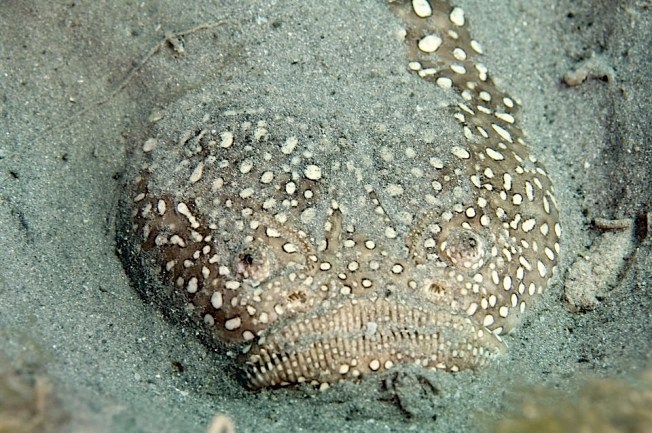
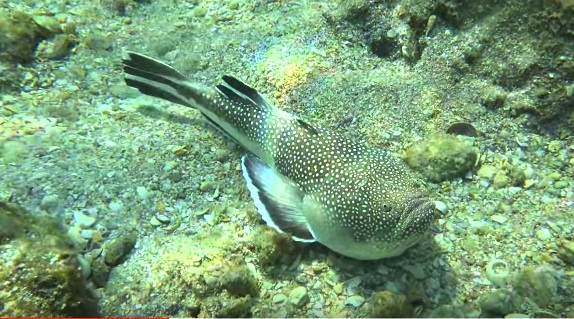
The Northern Stargazer Astroscopus guttatus whiles away the long lazy days lying mostly buried by sand, the stargazy eyes on top of its head picking out prey – mostly small fish – to ambush and stuff into its bizarre YKK zip-mouth. It can bury itself in seconds. An adult stargazer may grow to nearly 2-foot of concealed eating machine. They will stay put unless disturbed, confident that a false move by a creature – it could be you in your flippers – will mean it will be in for a shock. 

201408040721421059060930

10 STARGAZER ATTRIBUTES TO ADMIRE (BESIDES THE ELECTRIC SHOCKS)

  • The strange mouth looks as it does because it is fringed to keep out sand
  • The head-top eyes can be made to protrude to allow a wider field of vision 
  • It ambushes small fish and swallows them whole (see video below)
  • To lure prey, stargazers discharge seawater through their gills… (Alert Reader: why?)
  • It stirs up sand – possible lunch is waiting for a fish further up the food chain to enjoy
  • They are born with their eyes on side of the head (Alert Reader: why?)
  • Their eyes move to the top of the head as they grow from the larval stage
  • They are content to be solitary, except in the Spring (for the usual reasons)
  • Apparently little is known about the mating behaviours of these creatures. A pity, I feel.
  • They have no scales, but they make up for that with an impressive 13 anal spines
  • Unimpressed? Well they also have venomous spines near their gills & above their pectoral fins

stargazer-fish.jpg.653x0_q80_crop-smart

WEIRD FISH – AND WHAT’S WITH THE WEIRD NAME?

I wondered that too. The Astroscopus part derives from the Greek, ‘astro’ (star) and Latin ‘scopus’, a conceptual noun combining watching and targeting – think ‘telescope’, or ‘far-target-watching’. The guttatus (L) part simply means spotted or speckled. A Homo guttatus may need mild medical attention.

Stargazer clip (Wideangl)

THOSE ELECTRIC SHOCKS – HOW BAD ARE THEY?

Well. I kinda knew you’d ask so I looked into it. According to the exceptionally cool ‘Monsters of the Deep’ (see credits), the stargazer shock is approximately 50 volts. The British Health and Safety Executive, whose job is normally to interfere with almost every aspect of daily life in the UK (“you are strongly advised not to drink from bottles marked ‘Rat Poison’ portraying a Skull & Crossbones motif, lest disappointment should result”) has assisted: 

A voltage as low as 50 volts applied between two parts of the human body causes a current to flow that can block the electrical signals between the brain and the muscles. This may have a number of effects including: stopping the heart beating properly; preventing the person from breathing; causing muscle spasms.

The exact effect is dependent upon a large number of things including the size of the voltage, which parts of the body are involved, how damp the person is, and the length of time the current flows.

Sadly, you are quite unlikely to find a stargazer in Abaco waters, which lie slightly beyond their fairly limited western Atlantic range. But hop over to Floridian waters, move a bit north, and you might meet one.

**A musical instrument allusion

Credits: Adam Rees / Scuba Works; Canvasmas21 wiki; Nat Geo Kids;  MONSTERS OF THE DEEP (cool underwater site to check out!); Casey Patton / FMNH; Mother Nature Network (inc for video); Wideangl (clip)

Unknown's avatar

HOGFISH: BAHAMAS REEF FISH (31)


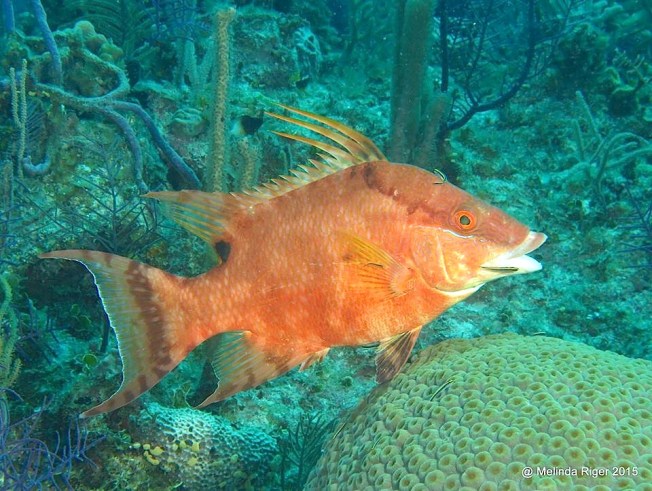
Hogfish at cleaning station ©Melinda Riger @GB Scuba

HOGFISH: BAHAMAS REEF FISH (31)

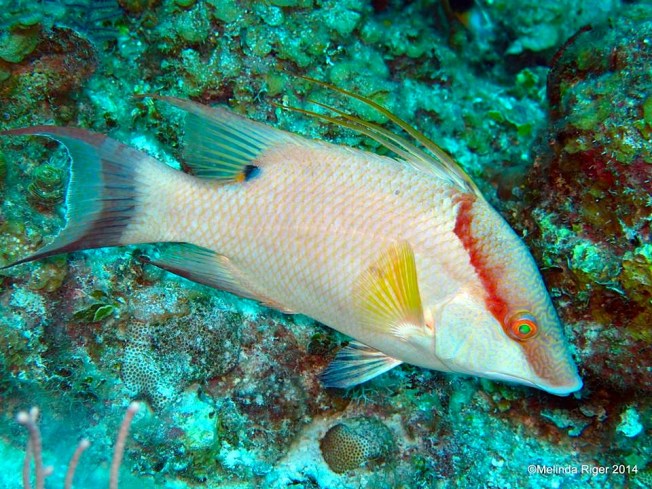
Hogfish. Fisherman’s delight… getting ‘high on the hog’. This wrasse species Lachnolaimus maximus is a reef denizen, especially where gorgonians are found. It has the distinction of being the only known member of its genus, and because it is IUCN listed as vulnerable, there are strict regulations governing bag, size, and gear limits to protect the species from overfishing.

Hogfish ©Melinda Riger @ G B Scuba

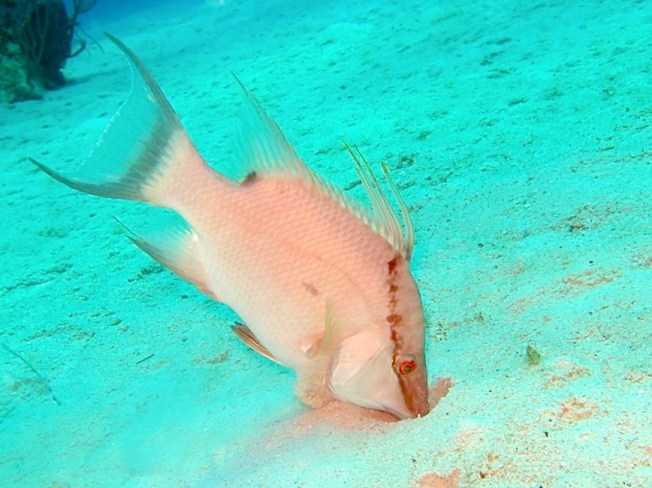
The hogfish gets its name from its long ‘pig-like’ snout, coupled with its rootling behaviour on the sea floor for crustacean prey.

Hogfish ©Melinda Riger @ GB Scuba copy ed Hogfish foraging ©Melinda Riger @ GB Scuba

GENDER STUDIES: IT’S COMPLICATED

The hogfish is a sequential hermaphrodite, meaning it changes sex during different life stages. Juvenile hogfish are female, but mature into males at around 3 years old.

Hogfish ©Melinda Riger @ G B ScubaHogfish ©Melinda Riger @ G B Scuba copy

Hogfish social groups are organized into harems, where one male will protect a group of females in his territory and mate with them.

Hogfish ©Melinda Riger @ GB Scuba Hogfish with isopods ©Melinda Riger @ GB Scuba

CAUTIONARY NOTE Capt. Rick, a loyal follower, has made another of his pertinent comments: “A bit of caution is necessary here! There is some history in the Bahamas of mild to severe Ciguatera poisoning from Hogs. Our M.O. was to only eat Hogs no larger than 5 or 6 lbs. Temporary or permanent blindness, paralysis, and even death is possible with bigger Hogs”. Ciguatera is also a problem with, for example, ‘cuda on Abaco. Those caught on the Marls (west) side are ok to eat; those from the east side have to be treated with circumspection…

Hogfish (with isopod above eye) ©Melinda Riger @ GB Scuba

Credits: all fantastic fish fotos – Melinda Riger at Grand Bahama Scuba

Unknown's avatar

SEAHORSES: PREHENSILE TALES FROM THE REEF


Seahorse (Adam Rees / Scuba Works)

SEAHORSES: PREHENSILE TALES FROM THE REEF

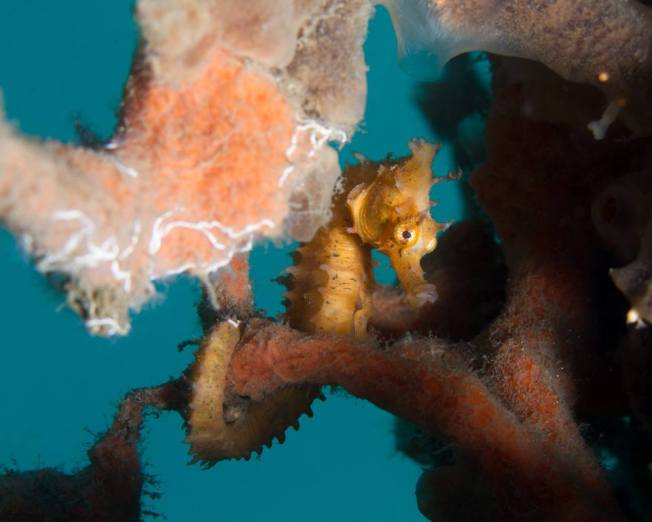
It’s a year since I last posted about these amazing little creatures, seahorses. I featured a number of photos by Melinda Riger, a couple of videos, some useful facts about them, and for some reason some useless facts that I came across in researching the post. You can chase it down here: SEAHORSES 1

Adam Rees of SCUBA WORKS is another diver, like Melinda, who combines great underwater experience with wonderful photographic skills. This posts showcases some of Adam’s seahorse photography, and if it doesn’t want to make you explore the reefs, I can’t think what will…

Seahorse (Adam Rees / Scuba Works)Seahorse (Adam Rees / Scuba Works)

Seahorse Range MapMap: Seahorse range (Nat Geo)

Seahorse (Adam Rees / Scuba Works)Seahorse (Adam Rees / Scuba Works)

shlifecycle-e1313548153493

Seahorse (Adam Rees / Scuba Works)Seahorse (Adam Rees / Scuba Works)Seahorse (Adam Rees / Scuba Works)
Seahorse (Adam Rees / Scuba Works)

Seahorse by Alex Konahin

All phantastic photos: Adam Rees / Scuba Works; Range Map, Nat Geo; Lifecycle diagram, Seahorserun; Seahorse GIF, Alex Konahin

Unknown's avatar

BAHAMAS SHARKS: THE MATING GAME & LITTLE BUDDIES


Shark! Melinda Riger copy

BAHAMAS SHARKS: THE MATING GAME & LITTLE BUDDIES

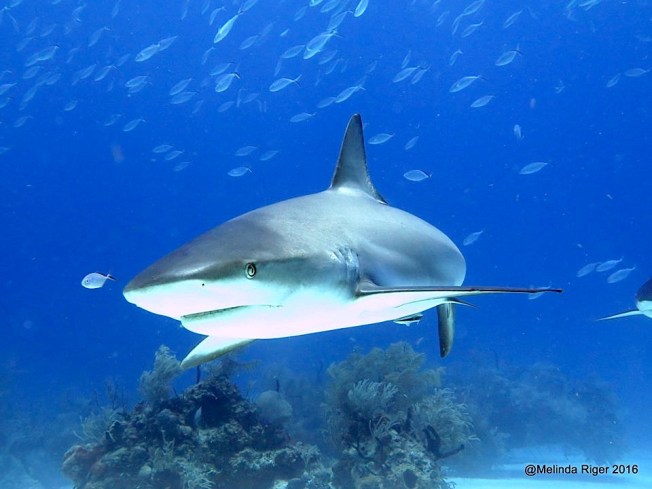
Sharks: apex predators of the deep. Also, kind to the suckers who hang out with them – REMORAS. In the header image you can see a remora hitching a ride on the shark’s back.

Sharks also seem to enjoy, or at least tolerate, the company of tiny fish – tiddlers so small they don’t even count as a snack or even a canapé. Shark & wee fish ©Melinda Riger @ G B ScubaShark & Tiddler ©Melinda Riger @ GB ScubaShark & buddy ©Melinda Riger @ GB Scuba

Check out the shark-jaw shaped wound on the shark just above. And the rather more dramatic ones on the two sharks below. Shark sex can be a rough old game, and sometimes results in moderate or even severe injury to one participant – or perhaps to both.

Shark with mating marks ©Melinda Riger @ G B ScubaShark mating wounds ©Melinda Riger @ GB Scuba

Credits: all great shark photos recently taken by Melinda Riger, Grand Bahama Scuba

Unknown's avatar

SPONGES ON THE REEF: A COLOURFUL MISCELLANY


Brown Tube Sponge ©Melinda Riger @ G B Scuba

SPONGES ON THE REEF: A COLOURFUL MISCELLANY

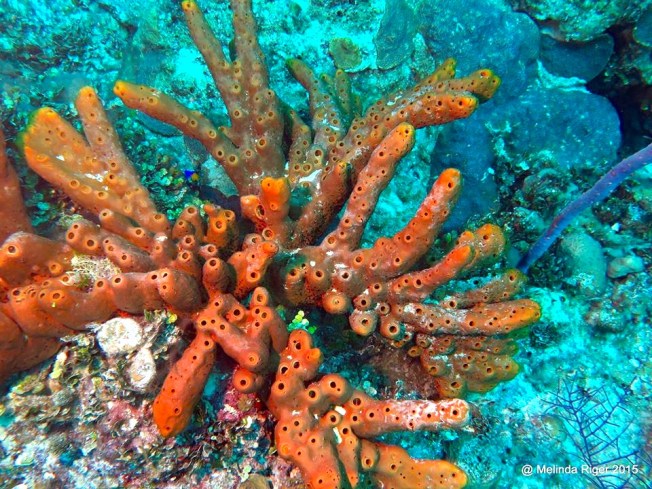
It’s time to take an up-close look at some of the sponges you may find as you snorkel or scuba round the reefs of the Bahamas. I am always amazed by how bright and colourful they are, and by their many different shapes and sizes. Even the unpromising sounding (slightly medical, even?) BROWN TUBE SPONGE turns out to be fascinating to examine closely. Here are some more sponge species. 

CANDELABRA SPONGECandelabra Sponge ©Melinda Riger @ G B Scuba copy

STOVE PIPE SPONGEStove Pipe Sponge ©Melinda Riger @ G B Scuba

PURPLE VASE SPONGEVase Sponge, purple ©Melinda Riger @ G B Scuba

BRANCHING TUBE SPONGE WITH ROPE SPONGESponges - Branching Tube Sponge with rope sponge ©Melinda Riger @ GB Scuba

PURPLE TUBE SPONGEPurple Tube Sponge ©Melinda Riger @ GB Scuba

PURPLE SPONGE WITH GIANT ANEMONEPurple Sponge : Giant Anemone ©Melinda Riger @ G B Scuba

VASE SPONGEVase Sponge ©Melinda Riger @ G B Scuba

The above sponges represent a fraction of the sponge varieties found on Bahamas reefs. I’ll post some more quite soon. All this has made me want to go for a snorkel. But right now I am 30 miles from the sea. And I have no gear…

HANG ON A MOMENT! WHAT IS A SPONGE WHEN IT’S AT HOME?

It’s really very simple: if you are ever asked the question, just reply “a sponge is a primitive sedentary aquatic invertebrate with a soft porous body that is typically supported by a framework of fibres or calcareous or glassy spicules. Sponges draw in a current of water to extract nutrients and oxygen”.

AND WHAT, PRAY, IS A SPICULE?

You’re having a laugh… if you seriously want to know, read the abbreviated version about them HERE. And admire this microscopic collage of ‘demospongiae spicule diversity’ made available by the wonders of Wiki and the research of about 20 credited scientists.

Demospongiae_spicule_diversity

All photos: Melinda Riger, Grand Bahama Scuba. Tip of the hat to Wiki and scientists

Unknown's avatar

JACKKNIFE FISH: BAHAMAS REEF FISH (30)


Jackknife Fish ©Melinda Riger @ GB Scuba

JACKKNIFE FISH: BAHAMAS REEF FISH 30

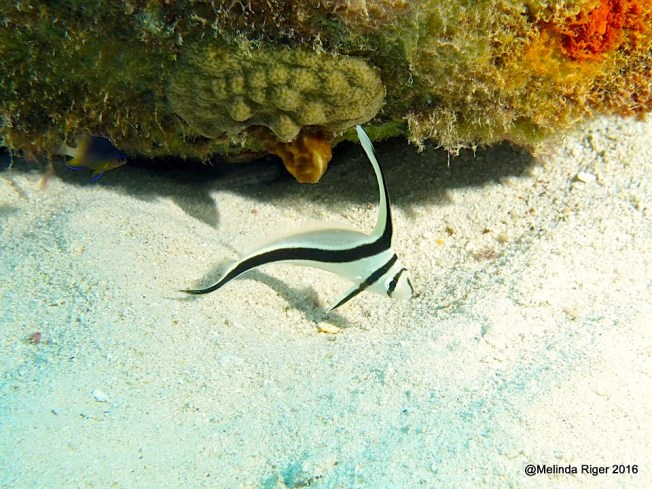
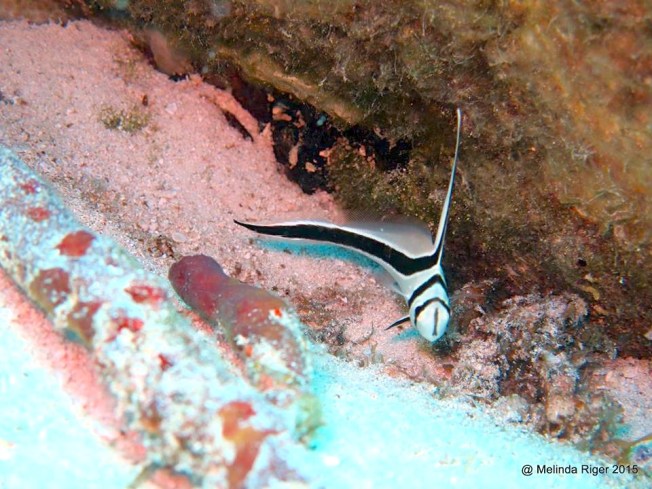
The rather uncomfortably ‘double-k’  Jackknife fish is one of 3 types of similar drumfish subspecies of Equetus found in Bahamas waters. The others are the High Hat and the SPOTTED DRUMFISH – the first fish featured in this series. Each of these drumfish species has juveniles that are elegant and delicate, becoming more conventionally fishlike as they grow to adulthood, as the final image shows.

Jackknife fish (juv) ©Melinda Riger @ G B Scuba copy

I always want to stick a hyphen in to separate each k: jack-knife fish. I think it’s an English thing. I have seen, at the other extreme, ‘jack-knifefish’, which looks most weird of all. Checking online, jackknife fish wins by a distance as the correct spelling. 

Jackknife Fish (juv) ©Melinda Riger @GB Scuba

These little fish, typically between 6 and 9 inches, inhabit the coral reefs of the Caribbean, the Gulf of Mexico, Florida and the Bahamas. Juveniles eat plankton and similar organism, graduating to small crabs and shrimps as adults.

Jackknife Fish ©Melinda Riger @ G B Scuba

A FULLY GROWN JACKKNIFE FISH (NOAA)Jackknife fish adult_NOAA_Photo_Library

Like other drumfishes, the jackknife can produce ‘croaking’ or ‘drumming sounds. This involves the fish beating its abdominal muscles against its swim bladder. There’s a lot more to it than my rather simplistic summary, but it’s probably as much as anyone needs or wants to know… The primary reason is believed to relate to mating. Other reasons include ‘low-level aggression’, and keeping in touch with each other in turbid waters.  I prefer the unscientific theory that sheer happiness makes them croak. Here’s a short video of a happy juvenile Jack knife fish (that’s yet another spelling variant…)

RELATED POSTS

Credits: Melinda Riger / GrandBahama Scuba; NOAA

Unknown's avatar

WTF? (WHAT’S THAT FISH) (10): FLYING GURNARD


Flying Gurnard (Adam Rees / Scuba Works)

WTF? (WHAT’S THAT FISH) 10: FLYING GURNARD

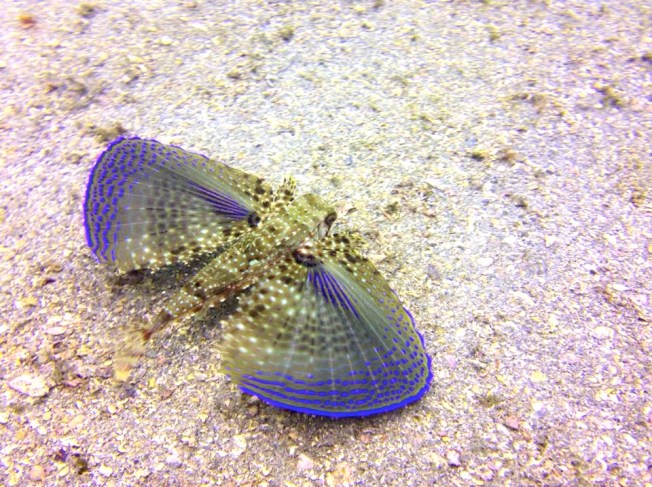
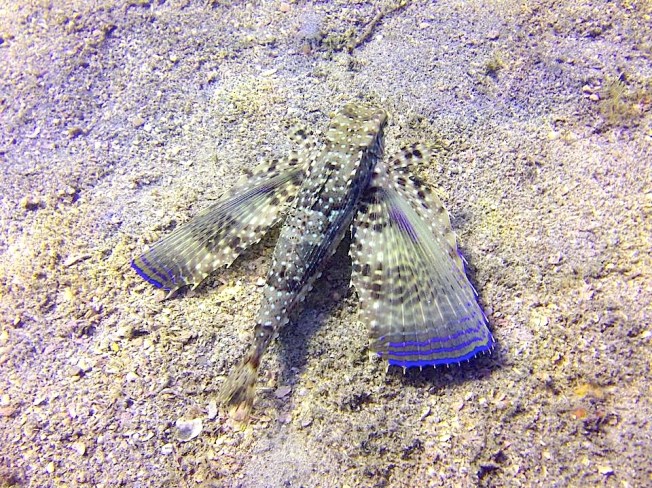
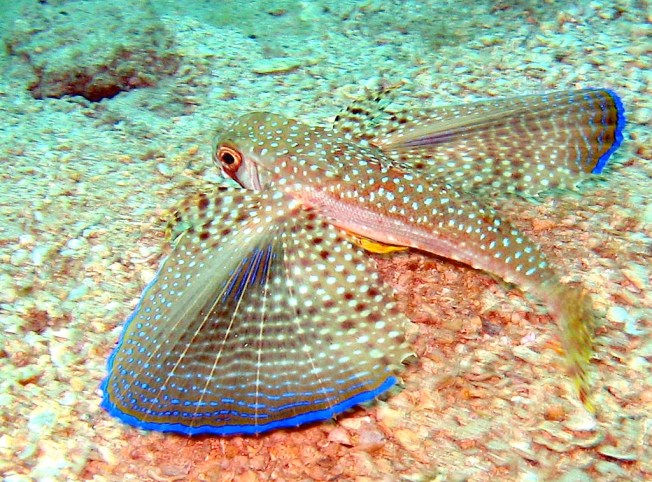
Imagine that you are swimming along resplendent in your snorkelling gear (me) – or in scuba gear for the advanced swimmer (you). There, below you, camouflaged against the sea bottom is a fish. A strange-shaped brown sort of creature with odd side fins. As it progresses over the gravelly sand, your immediate reaction is ‘what the…?’ Its fins seem to be turning into… wings. Like this:

Flying Gurnard (Adam Rees / Scuba Works)Flying Gurnard (Adam Rees / Scuba Works)Flying Gurnard (Adam Rees / Scuba Works)

Yes, it’s a flying gurnard. Unlike flying fish, it can’t actually fly through the air. But once its wings are fully spread, it certainly looks as though it could.

Flying Gurnard (Adam Rees / Scuba Works)Flying Gurnard (Adam Rees / Scuba Works)

WHAT’S THE POINT OF THE WINGS IF THE THING CAN’T FLY?

This gurnard species usually gets around using its ventral fins as ‘legs’, with the pectoral fins (‘wings’) close to the body. There seem to be several possible reasons for possessing the ‘sudden-deployment-of-flashy-wings’ superpower. 

  • It surprises and deters predators by movement, turning prospective prey into an apparently different creature
  • Bright or lurid colouring may be a deterrent warning of a foul-tasting or poisonous species  (APOSEMATISM)
  • A creature may actually be harmless and even tasty (as here) but may appear to be unpalateable or poisonous (BATESIAN MIMICRY)
  • In any event, the wings enable the fish to take off from the sea bottom and travel faster by ‘flying’ thought the water to escape a predator

Dactylopterus_volitans Flying Gurnard (cralize wiki)

I had a quick look to see how  scientists in history had depicted this extraordinary fish. The earliest illustration I could find was taken from “Allgemeine Naturgeschichte der Fische (General natural history of fishes),” a 12-volume encyclopedia by author/illustrator Marcus Elieser Bloch (1723-1799), which described all fish species then known to science (and 267 previously unknown) (© AMNH\D. Finnin) sourced from ‘Hyperallergic’
Flying Gurnard

Here’s a short video of a flying gurnard on the move, from ‘Sia Big Fish’

Credits: All main images Adam Rees / Scuba Works with many thanks, except final one ‘cralize wiki’; Hyperallergic for the historic image; Sia Big Fish for the video

Unknown's avatar

CONCH QUEST: ABACO’S MOST VERSATILE GASTROPOD


Conch Shells, Sandy Point, Abaco

CONCH QUEST: ABACO’S MOST VERSATILE GASTROPOD

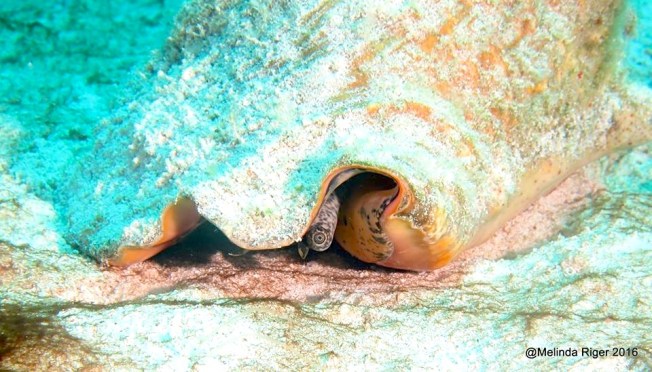
The conch. Such a fascinating gastropod, and with so many uses both culinary and decorative. In certain cultures, religiously significant. A rudimentary musical instrument for a shell.  And did I mention delicious? 

Live conchs enjoy motoring around uninhibitedly on the sea floor, keeping an eye out…Conch on the move ©Melinda Riger @ G B Scuba copy Conch Man-o-War Cay, Abaco (Charmaine Albury) copy Conch in shell ©Melinda Riger @ G B Scuba copy

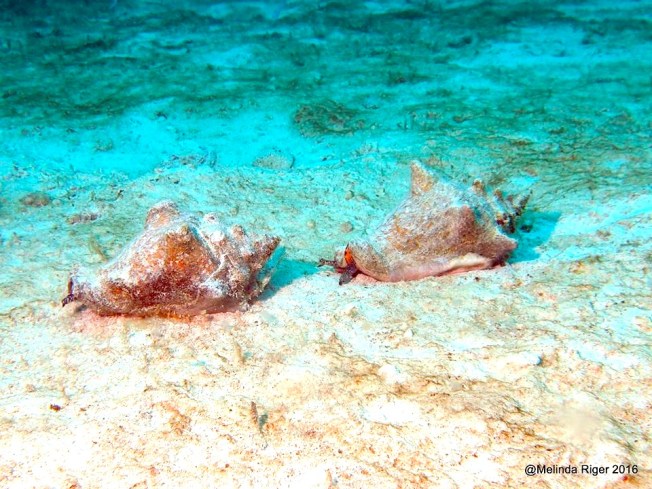
Conchs also enjoy racing each other…Conch race ©Melinda Riger @ G B Scuba copy

“Eat my dust…”Conch Trail ©Melinda Riger @ G B Scuba copy

Conch Pearl – one of the rarest natural pearls in the worldConch Pearl (Ambergris Caye Beize)

A conch spiral close-up

Conch close-up, Abaco (Rhonda Pearce)

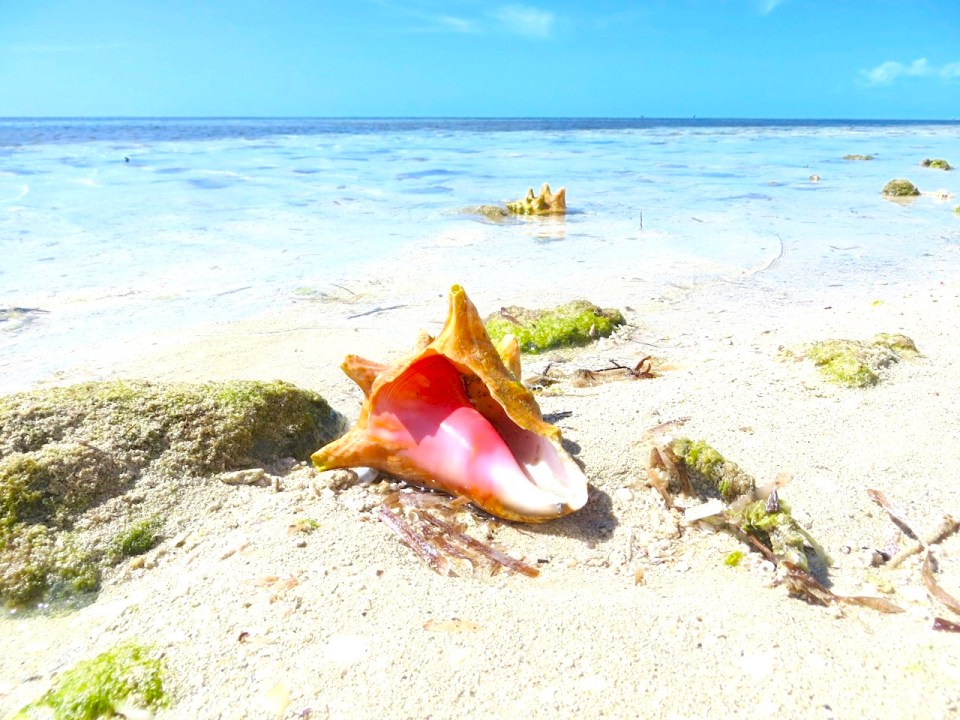
Conch shells just lie around the place at Sandy PointConch Shells, Sandy Point, Abaco (Keith Salvesen) 2Conch Shells, Sandy Point, Abaco (Keith Salvesen) 3

Conchs are widely used for serving cocktails or as ashtrays in the best beach bars*Conch Shells, Abaco (Keith Salvesen) 1

*This is a lie. Sorry about that. I meant to say “make prefect table decorations”

Image credits: Keith Salvesen / RH (1, 9, 10 ,11); Melinda Riger / GB Scuba (2, 4, 5, 6); Charmaine Albury (3); AmbergrisCaye.com (7); Rhonda Pearce (8) 

Unknown's avatar

WHALE-WATCHING: THE APPLIANCE OF SCIENCE


Blainville's Beaked Whale, Sandy Point, Abaco 14 (Keith Salvesen

WHALE-WATCHING: THE APPLIANCE OF SCIENCE

The Bahamas Marine Mammal Research Organisation has just celebrated its 25th year of existence. It was formed in 1991. The omnivorous leviathan Amazonus giganticus emerged in 1994 and the invasive species Megacorpus googleii not until 1998. A full 10 years later the first garbled recordings of Sarahpalinus illogicus were made. And all the while, a watchful eye was being kept on the cetaceans of the Bahamas – researching, counting, measuring, identifying, recording, poop-scooping, analysing samples, tagging, comparing, protecting and conserving. 
Blainville's Beaked Whale, Sandy Point, Abaco 20 (Keith Salvesen
As the years passed, so the science and technology evolved and became more sophisticated. Researching became at the same time easier, yet more complex as the organisation’s remit expanded to accommodate the vast increase in data collection now made possible by refined techniques. Here are two very recent examples – 25th anniversary projects, in fact – with thanks to Charlotte, Diane, their team and their colleagues in linked organisations.

TAGGING BLAINVILLE’S BEAKED WHALES

Last month, a tagging project started, involving suction cups being attached to the backs of BLAINVILLE’S BEAKED WHALES. The purpose of the research is to compare the foraging efficiency of the whales in Abaco waters with those of Andros, the second part of the project. I imagine this will provide valuable insights into the whale movements and behaviours in each location as well as such issues as the comparative availability of the food supply, and other factors that may affect expected foraging patterns. 

The tag is moved towards an adult male. Note the aerial (antenna?) at the back of itTagging a Blainville's beaked whale with a suction cup 1

Planting the tag on the whale’s backTagging a Blainville's beaked whale with a suction cup 2

Successful suction!Tagging a Blainville's beaked whale with a suction cup 3

The tag in placeTagging a Blainville's beaked whale with a suction cup 4

The tag is tracked for 18 hours, after which it is retrieved and the recordings can then be analysed back at BMMRO HQ in Sandy Point. So far, an adult male, a young male and two adult females have been tagged. Each female had a calf, but these were not tagged.

Female beaked whale with her calfBlainville's beaked whale female and calf

AERIAL PHOTOGRAMMETRY USING A HEXACOPTER

Drone technology is rapidly expanding as new uses for them are devised. BMMRO in conjunction with NOAA have used a sophisticated HEXACOPTER to take the first  PHOTOGRAMMETRY images of Blainville’s beaked whales. These aerial photographs were taken from approximately 100ft altitude. But note: not just anyone with a $50 drone can do this: the project required flight clearance from the Bahamas Department of Civil Aviation and a permit for research on marine mammals granted by the Bahamas Department of Marine Resources.

 Blainville’s beaked whale photogrammetry image – adult male (note ‘erupted’ teeth) Blainville's beaked whale photogrammetry image - adult male (note 'erupted' teeth) BMMRO

 Blainville’s beaked whale photogrammetry image – female and calf Blainville's beaked whale photogrammetry image - female and calf BMMRO

STOP PRESS Two additional images from the latest batch Blainville's beaked whales photogrammetry image - BMMRO  Blainville's beaked whales photogrammetry image - BMMRO

Photogrammetry: the science of making measurements from photographs. Applications include satellite tracking of the relative positioning and alterations in all Earth environments (e.g. tectonic motions etc), research on the swimming of fish, of bird or insect flight, and other relative motion processes. The results are used to guide and match the results of computational models of the natural systems. They help to invalidate or confirm new theories, to design novel vehicles or new methods for predicting or/and controlling the consequences of earthquakes, tsunamis etc, or to understand the flow of fluids next to solid structures, and many other processes. (Wiki-précis)

Hexacopter (6 rotors)Hexacopter_Multicopter_DJI-S800_on-air_credit_Alexander_Glinz

Tag Team: BMMRO, University of St Andrews (Scotland), Woods Hole Oceanographic Institution

Hexacopter: BMMRO, NOAA

Photo Credits: top two, moi (from BMMRO research vessel); remainder except for last, BMMRO; last, Wiki

Unknown's avatar

MAKE FRIENDS WITH ANEMONE (2): SPECTACULAR REEF LIFE


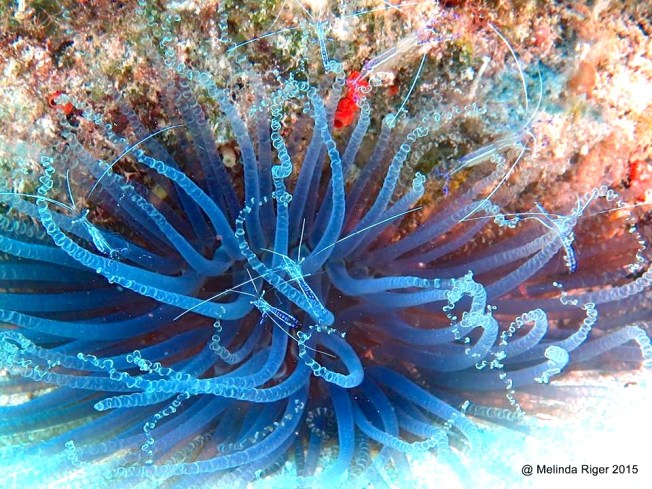
Corkscrew Anenome = Peterson Cleaner Shrimps ©Melinda Riger @G B Scuba copy

Corkscrew Anemone with Peterson Cleaner Shrimps

MAKE FRIENDS WITH ANEMONE (2):  SPECTACULAR REEF LIFE

Going snorkelling? Planning a scuba day on the reef? You’ll see wonderful fish and amazing coral for sure. But sometimes the beauty of other life on the reef can be overlooked. Check out the anemone in the header image, with the camouflaged cleaner shrimps playing around it. You wouldn’t want to miss a sight like that. The many and varied forms and colours of anemone on the reefs of the Bahamas make up a vital component of a spectacular underwater world.

Giant Anenome ©Melinda Riger @ G B Scuba copyGiant Anemone ©Melinda Riger @ G B Scuba copy 4Anemone Melinda Riger @ G B ScubaAnemone on Rope ©Melinda Riger @ G B ScubaAnemone ©Melinda Riger @ Grand Bahama ScubaAnemone (Giant) ©Melinda Riger @GBS copyAnemone ©Melinda Riger @ GB Scuba

ADDED NOV 2016 Capt. Rick Guest adds this interesting material (& thanks for correcting my erroneous reference to anemones as ‘plants’. My bad. They are of course animals!):

“Anemones are living animals of the invertebrate type. Basically living corals without skeletons. All have stinging cells of several varieties to sting or entangle their prey such as small fish, or various invertebrates. A few can even, painfully, penetrate human dermal layers. Most host varieties of cleaner shrimps,and snapping shrimps that can stun their own prey. Some Dromidia crabs even pull some species of anemone off the reef, and attach them to their carapace (their back) apparently for camouflage, and perhaps protection”.

All photos: Melinda Riger of Grand Bahama Scuba, with thanks

Unknown's avatar

WTF? (WHAT’S THAT FISH) (9): THE HARLEQUIN BASS


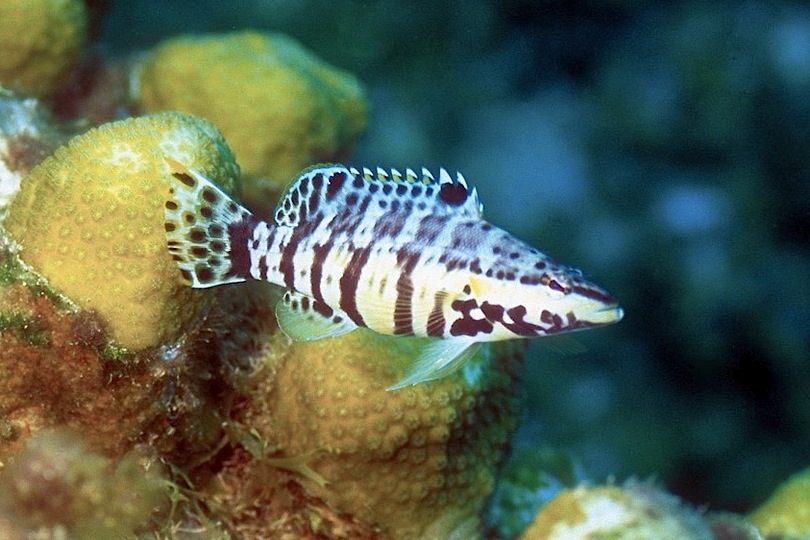
Harlequin Bass ©Melinda Riger @ G B Scuba copy

WTF? (WHAT’S THAT FISH) (9): THE HARLEQUIN BASS

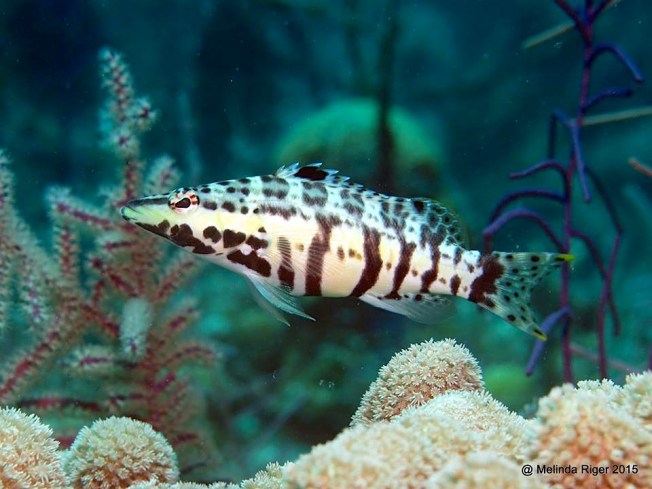
I’m conscious of being rather unfair on this pretty dwarf bass species by including it in the WTF? series. The usual denizen of the series is a fish so strange that one’s immediate instinct is to yell into one’s facemask, “WTF?”. BATFISH or FROGFISH or GUITARFISH and their bizarre ilk. So with apologies to this species for its somewhat harsh classification, here are some quite flattering photos of it to make up for any hurt feelings.

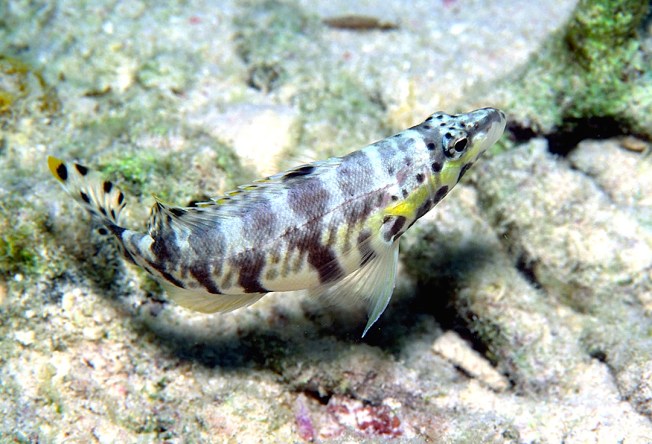
Harlequin Bass Fish ©Melinda Riger @ G B Scuba copyHarlequin Bass (jpc what'sthatfish)

The Harlequin Bass Serranus tigrinus has unusually striking body markings and a rather endearing spotty tailfin. They are hardy creatures and I note that they are recommended aquarium fish “and make a great candidate for beginners”, though there are warnings that they are “semi-aggressive”. NB they are only a few inches long, so no need to panic.

Harlequin_Bass_Serranus_tigrinus wikiHarlequin_Bass_(Serranus_tigrinus) wiki

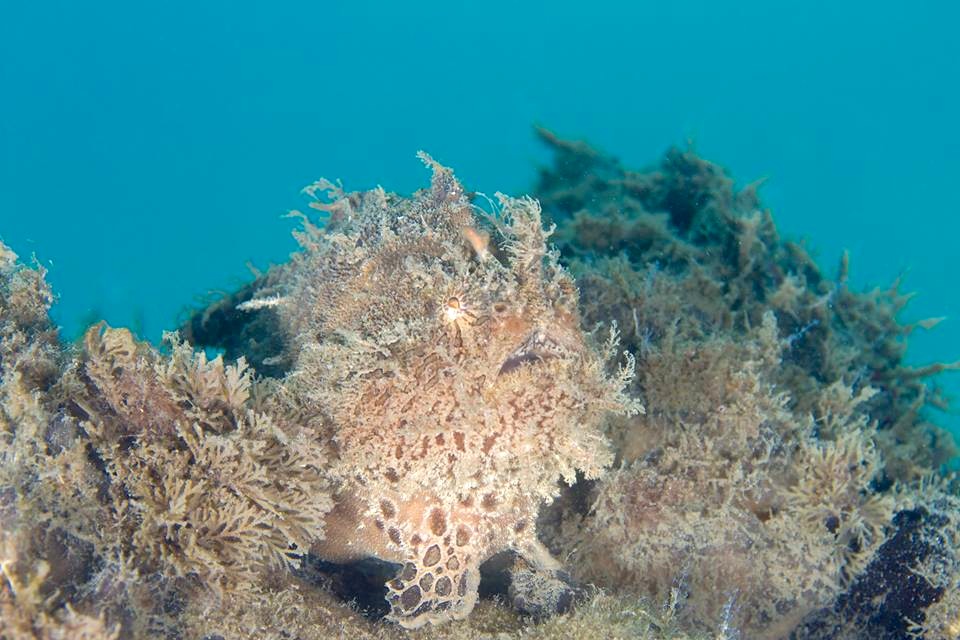
If you are still not confident that you can ID one in the wild, here is a short video… Actually I’m really including it to show how these fish swim around. And next time, I promise a truly eye-watering WTF? fish from Bahamian waters, though its camouflage is so good that you may never notice it…

Credits: Melinda Riger / Grand Bahama Scuba (1, 2); jpc/ what’s that fish; wiki

Unknown's avatar

REMARKABLE REEF CREATURES TO ADMIRE


Octopus (Adam Rees : Scuba Works)

REMARKABLE REEF CREATURES TO ADMIRE

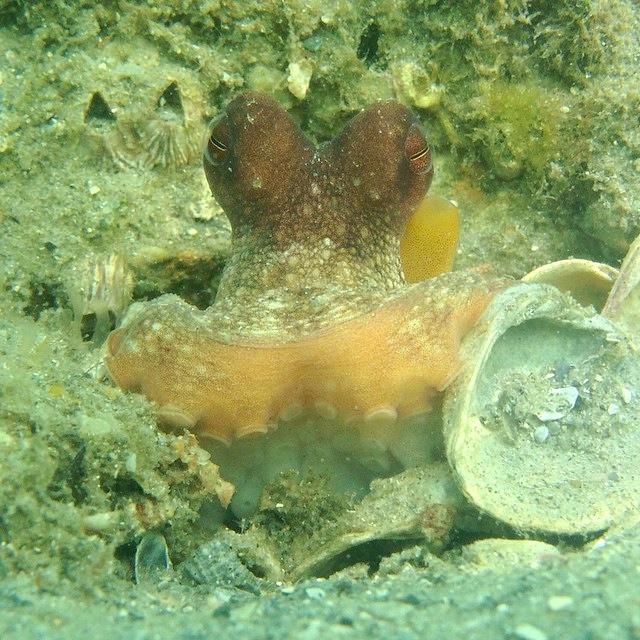
Here is a small collection of recent photographs from Adam Rees of Scuba Works. Three OCTOPUSES, an astounding FROGFISH,  a SEAHORSE, a MANTIS SHRIMP at close quarters, and a wonderful HAWKSBILL TURTLE. Clicking on a link will take you to a post with more photos and information about each creature. If these images don’t make you want to scuba then… what will?

Frogfish Hunting (Adam Rees : Scuba Works)Seahorse (Adam Rees : Scuba Works)Mantis Shrimp (Adam Rees : Scuba Works)Octopus 3 (Adam Rees : Scuba Works)Hawksbill Turtle (Adam Rees : Scuba Works)Octopus 2 (Adam Rees : Scuba Works)

All photos Adam Rees / Scuba Works, with thanks for use permission

Unknown's avatar

“HAPPY EARTH DAY TO YOU”: DO SOMETHING GREEN!


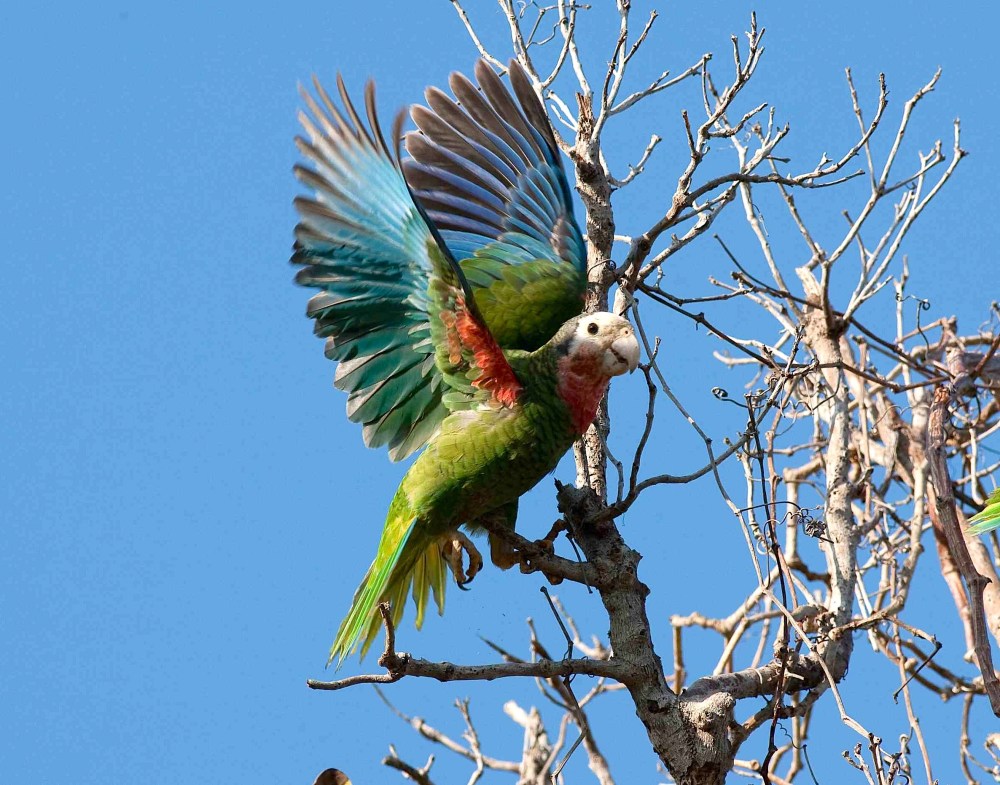
Abaco (Cuban) Parrot, Delphi, Abaco (Craig Nash)

“HAPPY EARTH DAY TO YOU”: DO SOMETHING GREEN!

Today is the 46th Earth Day, a global event to encourage ecology and conservation, and to discourage the spoiling of the planet by mankind. What becomes lost now may never be retrieved. Plant a tree. Grow some bee- or butterfly-friendly flowers. Clear a patch of beach of plastic trash. Recycle stuff. That sort of thing. 

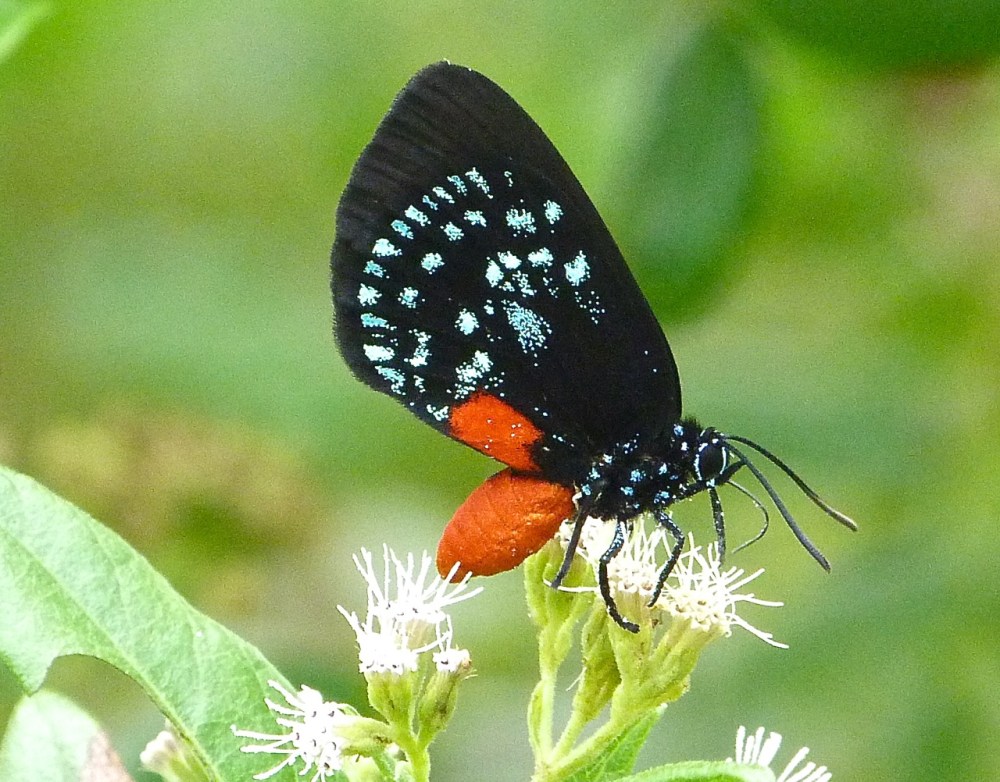
Atala Hairstreak Eumaeus atala – DelphiAtala Hairstreak Butterfly, Abaco (Keith Salvesen)

Gulf Fritillary Agraulis vanillae – Neem FarmGulf Fritillary, Neem Farm, Abaco (Keith Salvesen)

I’d lined up some horror-images of plastic-filled birds, entangled turtles, damaged reefs and so forth, of which I have a depressingly large archive. Then, in a spirit of *vogue word alert* positivity I scrapped that miserable idea and decided instead to celebrate some of the natural wonders that can be found on Abaco. 

BAHAMA YELLOWTHROAT – one of Abaco’s 5 ENDEMIC BIRDSBahamas-Great Abaco_Bahama Yellowthroat_Gerlinde Taurer

CUBAN EMERALD HUMMINGBIRD (f) preening – Gilpin PointCuban Emerald Hummingbird preening, Abaco (Keith Salvesen)

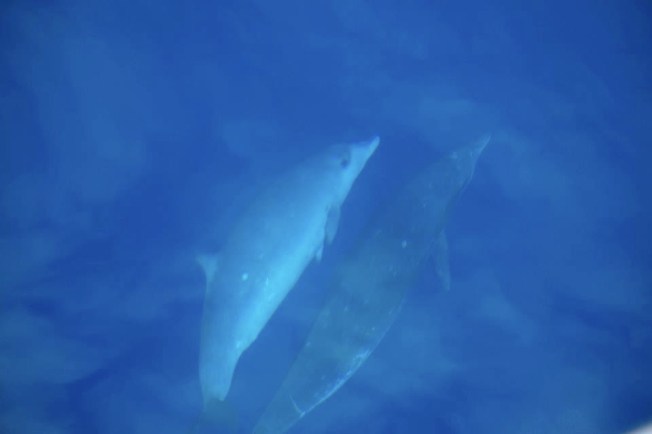
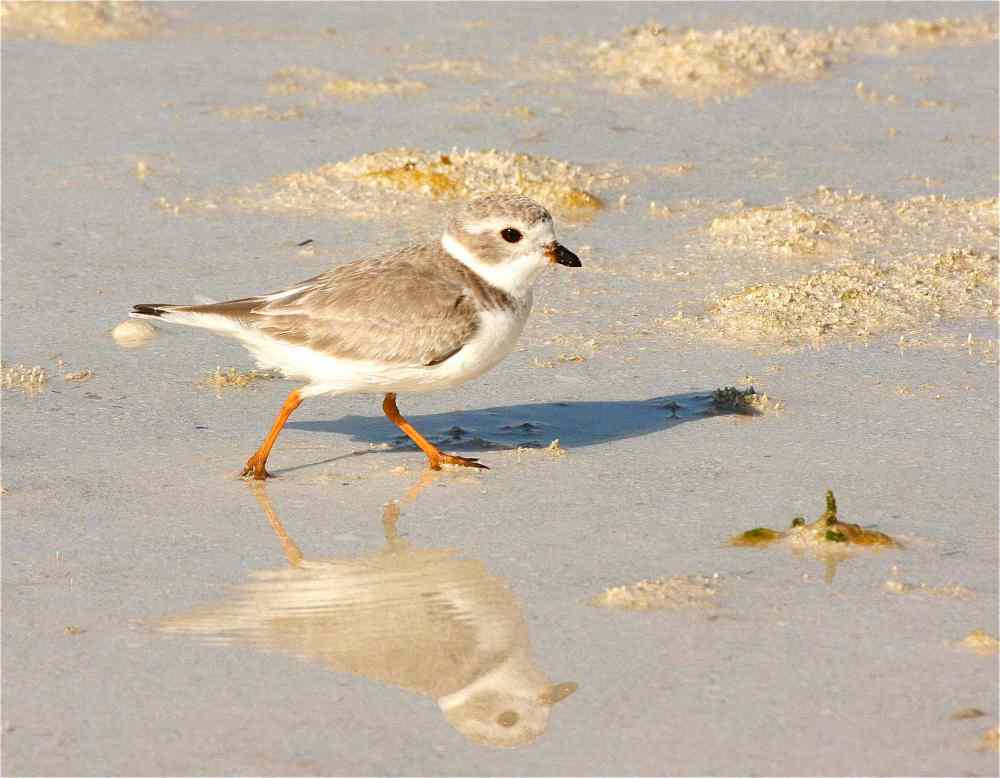
Some signal species serve as a continuing tribute to those who work to conserve them. The gorgeous ABACO PARROTS, now saved from the brink of extinction – and currently establishing a new colony on New Providence. The rare PIPING PLOVERS that find a safe home to spend their winters on Abaco’s beaches. The 5 ENDEMIC BIRD species. The WHALES & DOLPHINS that populate the waters. The west-indian MANATEES, until very recently almost unknown for Abaco yet now providing a curious addition to the scene as they visit their favourite haunts.

BLAINVILLE’S BEAKED WHALE (m) approaching the BMMRO research vesselBlainville's Beaked Whale, Sandy Point, Abaco 14 (Keith Salvesen

BOTTLENOSE DOLHIN, Sandy Point (about to dive under the boat)Bottlenose Dolphins, Rocky Point, Abaco (Keith Salvesen : BMMRO) 7

Habitat protection has been provided over substantial areas on both land and sea by the creation of natural parks and preserves. These have very recently been extended by the establishment of 4 large PROTECTED AREAS for East Abaco Creeks, Cross Harbour, the Marls and the South Abaco Blue Holes, a wonderful reward for a great deal of hard lobbying by conservation organisations and by many concerned individuals. 

QUEEN ANGELFISHQueen Angelfish ©Melinda Stevens Riger / G B Scuba

BANDED CORAL SHRIMPBanded Coral Shrimp ©Melinda Riger @ G B Scuba copy 2

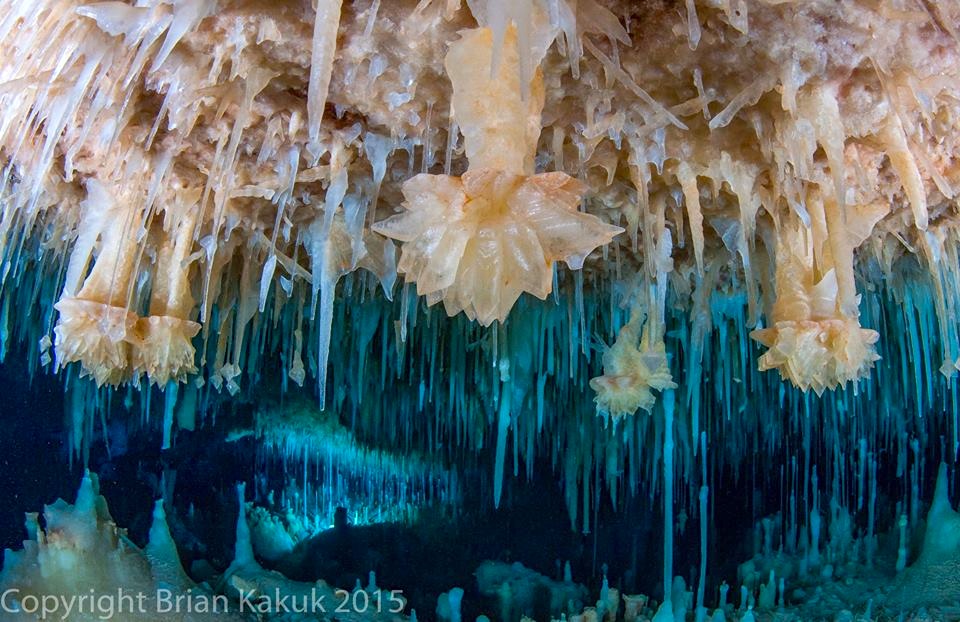
Scientific research and conservation work is continuously carried out in Abaco waters. The CORAL REEFS that form the 3rd largest barrier reef in the world; the BLUE HOLES that lead to wonderful caves and cathedral caverns of crystal; the vast area of the MARLS and the species that rely on the mangrove swamps; the MANGROVES themselves: all these are watched over and monitored for ways to protect them best for future generations. 

PIPING PLOVER pair, Delphi (taken last month)Piping Plover pair, Delphi Beach, Abaco (Keith Salvesen)

PIPING PLOVER on AbacoPiping Plover, Abaco - Bruce Hallett

I’ve mentioned trees and plants. There are a variety of well-known sources for both on Abaco – on the mainland, anyway, and maybe some cays. Any will advise on bee and butterfly attractants. Thinking of which, bird seed feeders and hummer sugar water feeders are cheap and guarantee the interest of garden and coppice birds, and during the winter months some brightly coloured migrants such as buntings and grosbeaks. 

HIBISCUS – DelphiHibiscus, Delphi, Abaco (Keith Salvesen)

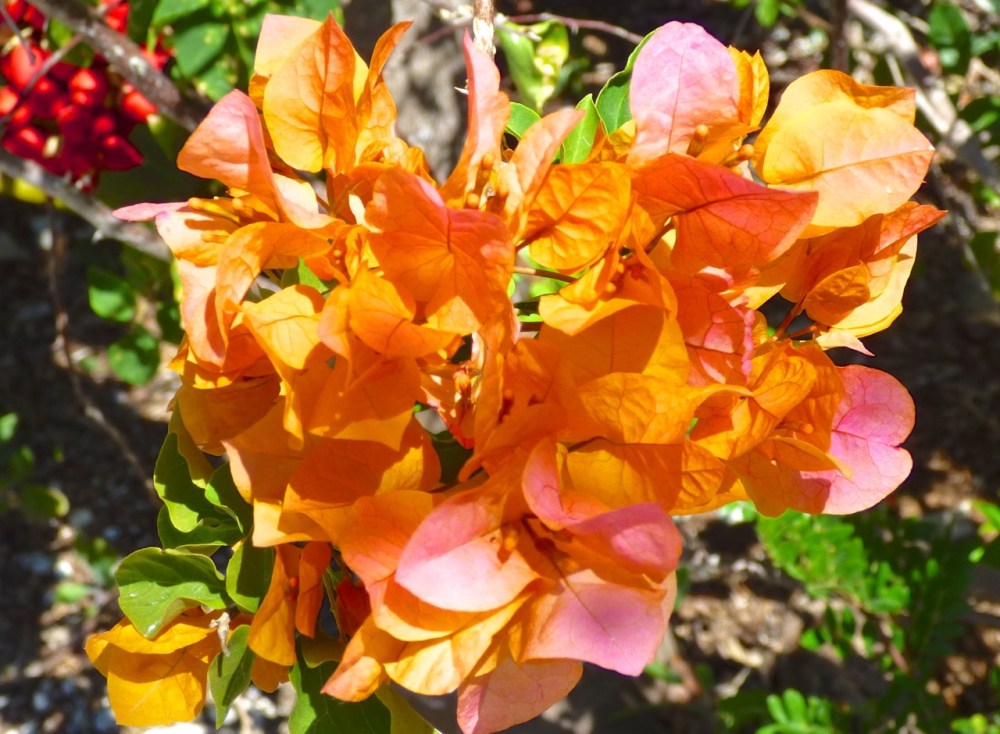
 BOUGAINVILLEA  – DelphiBougainvillea, Delphi, Abaco Bahamas (Keith Salvesen)

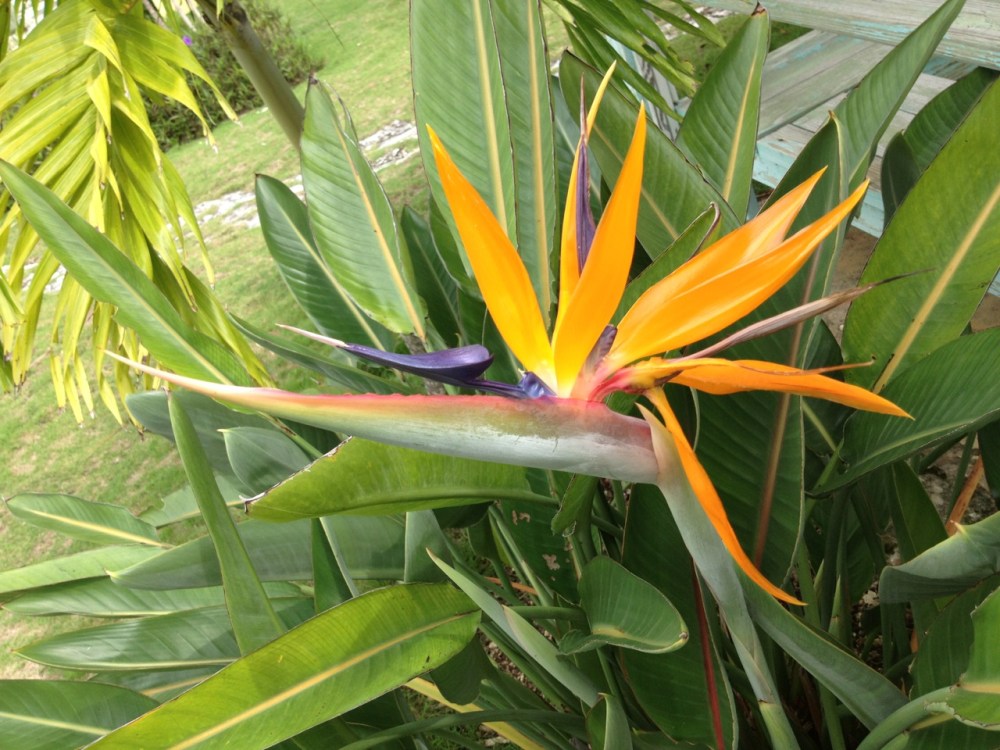
Bird of Paradise flower STRELITZIA – Marsh Harbour (seemingly on a steep slope!)Bird of Paradise Flower (Strelitzia) Abaco (Keith Salvesen)

HAPPY EARTH DAY TO YOU!

RALPH’S CAVE South AbacoRalph's Cave, Abaco (Brian Kakuk)

Credits: all images RH except: Abaco parrot, Craig Nash; Bahama yellowthroat, Gerlinde Taurer; Angelfish & Shrimp, Melinda Riger; single piping plover, Bruce Hallett; Ralph’s Cave, Brian Kakuk

Unknown's avatar

PELICAN BRIEF (2): SANDY POINT, ABACO


Pelican Dive, Sandy Point Abaco (Keith Salvesen) 04

PELICAN BRIEF (2): SANDY POINT, ABACO

The small settlement of Sandy Point is literally at the end of the road. Beyond the limit of the tarmac lies the shallow sea. The Highway – Abaco’s only main road – extends the length of the skinny island, 120 miles roughly north to south with occasional side roads to settlements, dirt roads, forestry tracks, and something a bit more significant for Marsh Harbour – a roundabout, a single set of working traffic lights, the only ones on the island. There’s a second set but I have never seen them working. I don’t think anyone ever has. Maybe they were never even wired up.

Brown Pelicans, Sandy Point, Abaco 7

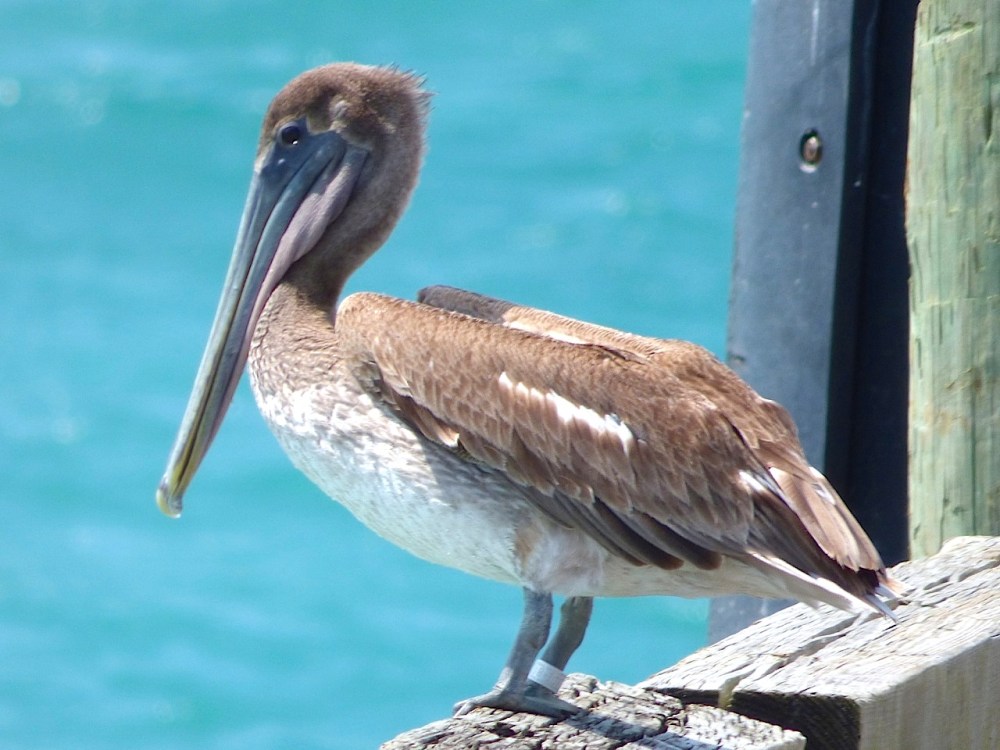
We went to Sandy Point for lunch with friends at the famous (though not yet world-famous) Nancy’s, with its reliably comforting menu of a choice of the same 3 dishes permanently on offer (fresh fish, conch, or chicken), plus Kalik or Sands beer. Simple yet satisfying. Sandy Point is a great place for birding, both sea / shore / wading birds, and land birds. Ospreys are often around. And brown pelicans. At high tide they dive off the dock (see HERE). At low tide, when the long sand bars are just visible above the water level, the pelicans use them as base for their fishing operations, often some 200 yards from the shoreline.

Brown Pelicans, Sandy Point, Abaco 11

We were watching 5 pelicans doing just that – lazily flapping aloft from the water in their clumsy way, then turning swiftly and diving with some elegance before smashing into the water for fish, returning in triumph or sorrow to the sand bar to eat… or plan the next foray. Then one detached itself from the group and flew closer to us for a single dive in deeper water, before flapping heavily back to the sand bar.

I took a sequence of photos with ‘Hated Camera’ (having drowned ‘Loved Camera’ in a minor marine mishap). As I have since discovered, ‘HC’ was on the wrong setting the whole time – by which I mean several days (some small but important side switch I’d neglected to remember). Hence the pelican images are in small format because I am slightly ashamed of the quality… There’s a theory about cartoons that there are two possible reasons for pairing them together on a magazine page: (1) they are each doubly funny and therefore only need half the space; or (2) they are only half as funny and so two are needed to double the overall chuckle quotient…

So here is the pelican dive sequence – unsuccessful in terms of fish – with the bird then flying back past us to the sand bar to rejoin his 4 buddies. I’ve put 2 images per line – either because (on the cartoon principle above) they are so good they only need half the allotted space or (hint: this is the truth) they are of such indifferent image quality that I am too embarrassed to enlarge them…

Pelican Dive, Sandy Point Abaco (Keith Salvesen) 01 Pelican Dive, Sandy Point Abaco (Keith Salvesen) 02 Pelican Dive, Sandy Point Abaco (Keith Salvesen) 03 Pelican Dive, Sandy Point Abaco (Keith Salvesen) 04 Pelican Dive, Sandy Point Abaco (Keith Salvesen) 05 Pelican Dive, Sandy Point Abaco (Keith Salvesen) 06 Pelican Dive, Sandy Point Abaco (Keith Salvesen) 07 Pelican Dive, Sandy Point Abaco (Keith Salvesen) 08 Pelican Dive, Sandy Point Abaco (Keith Salvesen) 10 Pelican Dive, Sandy Point Abaco (Keith Salvesen) 11 Pelican Dive, Sandy Point Abaco (Keith Salvesen) 12 Pelican Dive, Sandy Point Abaco (Keith Salvesen) 13

In the final image you can just make out a spooky ghost ship on the horizon. This is the huge vessel moored at the ‘Disney’ island, historically named Gorda Cay but now ‘pirated up’ to Castaway Cay. Arrrrrrrr!

Credits: all images RH & ‘Hated Camera’; Mrs RH kindly being encouraging about the results

Unknown's avatar

WTF? (WHAT’S THAT FISH) (7): THE SOAPFISH


Soapfish ©Melinda Riger @ GB Scuba

WTF? (WHAT’S THAT FISH) (7): THE SOAPFISH 

The WTF? series features some of the stranger fish that inhabit the waters of the Bahamas. Ones that, were you to encounter one on the reef, might make you exclaim “WTF?”. The soapfish Rypticus belongs in the same family as grouper and sea bass. Within the soapfish genus there are quite a few varieties in different shapes, sizes and colours that include several mottled, freckled, spotted and generally blotchy fish.  This post features one (or two) of them! Sorry to be lame here and lacking in authority, but having looked carefully online at images of several types of soapfish, I reckon there are 3 candidates. Freckled, I think these are. Enlightenment would be welcome!

Soapfish ©Melinda Riger @ G B Scuba

Rypticus tend to inhabit shallower tropical and sub-tropical waters. They are mainly nocturnal in their habits, feeding at night on small fish, crustaceans and molluscs. The WTF? factor arises from the creature’s oddly truncated shape. If you cover the back end of the fish in the image below with your hand, you might expect the fish to be about the same length again. But no, there’s just the tail to come. It looks a bit cut in half.

Soapfish © Melinda Riger @GB Scuba

DOES THE SOAPFISH HAVE ANY AWESOME POWERS?

I’m glad you asked because in fact it has two. First, these fish respond to threats by secreting large amounts of toxic mucus from their skins. This acts as a defensive barrier to repel predators. Secondly, female soapfish are able to change sex to male. This is not uncommon among fish, and in some (e.g. Clownfish) the change works the other way, male to female. I read a lot about chemicals and gonads in this connection, then decided to spare you the details. So basically, it’s toxic slimy coats and female gender realignment.

Soapfish ©Melinda Riger @ Grand Bahama Scuba

Credits: all photos, Melinda Riger of Grand Bahama Scuba


Unknown's avatar

“CLEANING UP”: HOW TINY REEF FISH HELP LARGE FISH


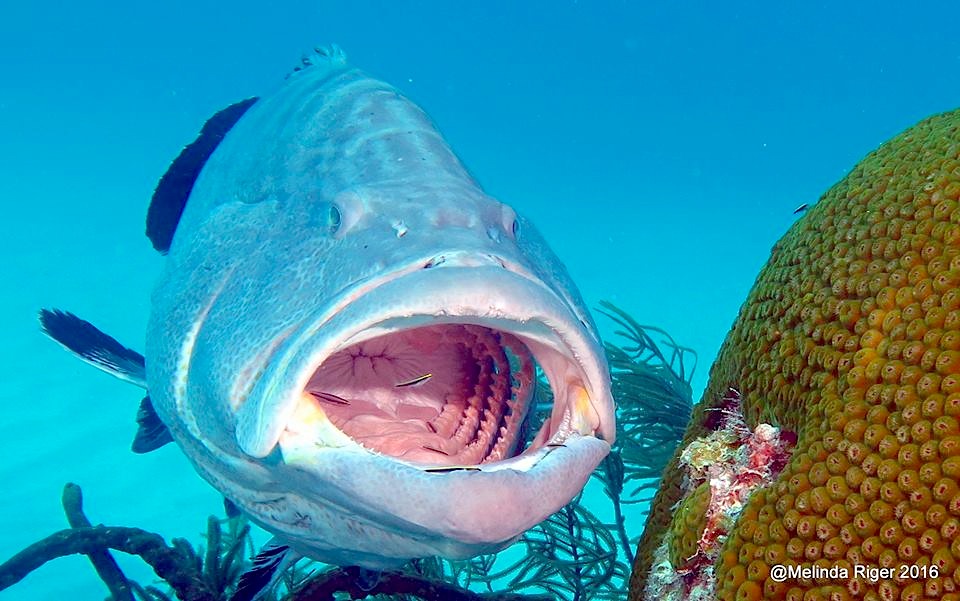
Black Grouper - Arnold - Cleaning Station - Neon Gobies ©Melinda Riger @ G B Scuba copy

“CLEANING UP”: HOW TINY REEF FISH HELP LARGE FISH

A while ago now, I wrote a detailed post about so-called fish ‘cleaning stations’ – the special spots on the reef where large fish can go to have small fish buff up their scales and floss their teeth. You can read all about it HERE.

I have accumulated a number of new photos from expert scuba diver and underwater photographer Melinda Riger that demonstrate this phenomenon. A big fish with a normally voracious appetite will patiently wait while gobies and other small fry go about their work. This often involves actually entering the mouth of the (as it must seem to them) monster to pick the insides and the teeth clean. There is an extraordinary understanding and trust between the species that means during the operation, the little fish are perfectly safe. Here are some examples, of which the very recent header image of a grouper named Arnold is quite outstanding.

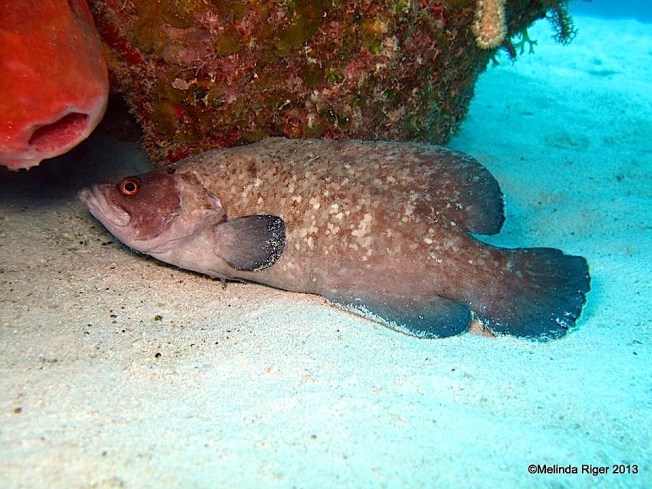
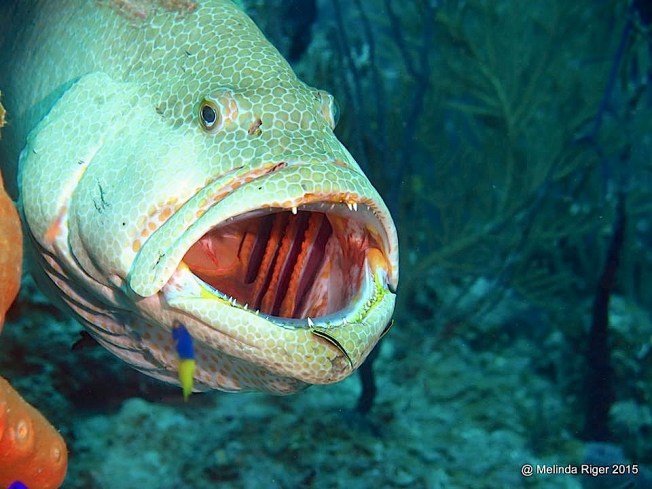
Tiger Grouper + cleaner goby ©Melinda Riger @ G B Scuba copyGrouper, Black at cleaning station ©Melinda Riger @G B Scuba copy Tiger Grouper at cleaning station ©Melinda Riger @ G B Scuba copy Tiger Grouper being cleaned ©Melinda Riger @G B Scuba copy

It is not just gobies that attend the fish. Various species of shrimp also volunteer for the job.

Tiger Grouper with cleaning shrimps and goby ©Melinda Riger @ G B Scuba copy Grouper being cleaned ©Melinda Riger @ GB Scuba copy

Groupers are not the only species to make use of cleaning stations. Here is a dog snapper at the same cleaning station as the grouper in the header image. Below is a stingray being attended to.

Dog Snapper at cleaning station ©Melinda Riger @ G B Scuba copy

Southern Stingray with cleaning gobiesStingray, Southern with cleaning gobies ©Melinda Riger @ G B Scuba copy

GRAMMATICAL DIGRESSION There is this ‘thing’ about the correct use of the words ‘fish’ and ‘fishes’ in the plural form. The basic principle is simple: ‘fish’ where you are referring to several of the same species; ‘fishes’ where more than one species is involved. I don’t care. My policy is to use ‘fish’ as the plural on all occasions, so I don’t have to think about it. Pedants, look away now.

RELATED POSTS

TAKEN TO THE CLEANERS

BANDED CORAL (‘CLEANER’) SHRIMP

TIGER GROUPER

BLACK GROUPER

All photos: Melinda Riger, Grand Bahama Scuba

Unknown's avatar

“CALLING ELVIS” (THE SQUIRRELFISH, NOT THE MAN)


Squirrelfish Elvis ©Melinda Riger @ G B Scuba

“CALLING ELVIS” (THE SQUIRRELFISH, NOT THE MAN)

How proud The King would be to know that his name lives on in the form of an attractive though sadly unmusical Bahamian squirrelfish. This little guy is at least 5 years old. What is more, he has lived at the same address all that time, defending it against usurpers and protecting himself from predators in its safe depths. Here is the loveable little Elvis photographed at home between 2012 and 2016 (header image), the master of his own underwater Graceland…

Squirrelfish (%22Elvis%22) ©Melinda Riger GB ScubaElvis the Squirrelfish ©Melinda Riger GB Scuba Squirrelfish ©Melinda Riger @ GB Scuba Squirrelfish ©Melinda Riger @ G B Scuba

The reason that Elvis has such large eyes is that these fish are mostly nocturnal, and (apart from when Melinda is out with her camera), he and his friends spend most of the day either at home, or in crevices, small rock caves, or under ledges. However, here are a couple of shots of Elvis out and about, enjoying some quality time among the corals.

Squirrelfish (Elvis) ©Melinda Riger @ Grand Bahama ScubaSquirrel Fish ©Melinda Riger @ G B Scuba

ROLLING HARBOUR MUSICAL DIGRESSION

I so wanted to add a specific Elvis catalogue ‘Musical Digression’, but try as I might, there is no title in The King’s discography that has any potential for finny nuance or piscine pun value. However, here’s a track from the now tragically unhip Dire Straits on their follow-up album to the phenomenal ‘Brothers-in-Arms’, the much under-rated ‘On Every Street’. I give you… Calling Elvis, a song that cunningly contains as many titles of Presley hits as anyone could ever wish for.

All images: Melinda Riger at Grand Bahama Scuba; cartoon from a sequence on the excellent BCCR Defenses page – learn about camouflage and other fishy self-protection techniques

Nocturnal squirrelfish checks out a parrotfish’s sleeping arrangementscamoSquirrWparrot01