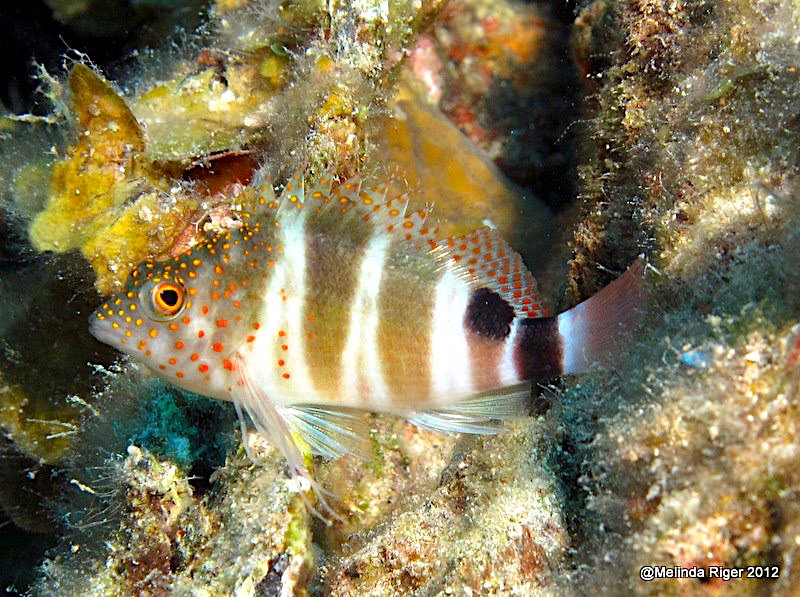
The redspotted hawkfish (Amblycirrhitus pinos) is one of a number of species of hawkfishes found worldwide. This one is found on the sub-tropical and tropical reefs of the Western Atlantic, and is therefore a fish you might see when out snorkelling or (more likely) scuba-ing in the Bahamas. These are small creatures – adults are unlikely to exceed 4 inches in length.
There’s not a whole lot else to report about them. They have no medicinal superpowers, for example, nor wickedly toxic spines. A quick scroll through the highways and byways of the interweb reveals that redspotted hawkfish are considered (rightly, I think) to be attractive, tend to be shy, enjoy perching on coral ledges, and are generally benign, except to smaller fishes to which they may show aggression or – worse – an appetite.
As you might predict, these pretty little fish are popular in the aquarium trade, where on any view they should be kept safe from predators. But maybe captivity is a little limited in opportunities for travel and exploration. They can be bought for (I just checked) $29.99. Or else left alone on a reef to take their chances.
Photo Credits: Melinda Riger / Grand Bahama Scuba, with thanks as per…
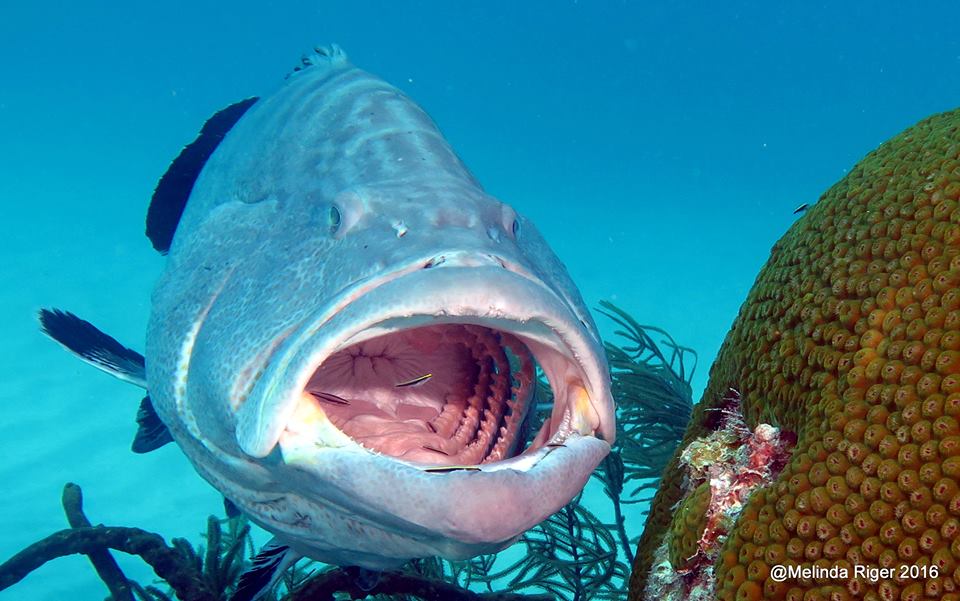
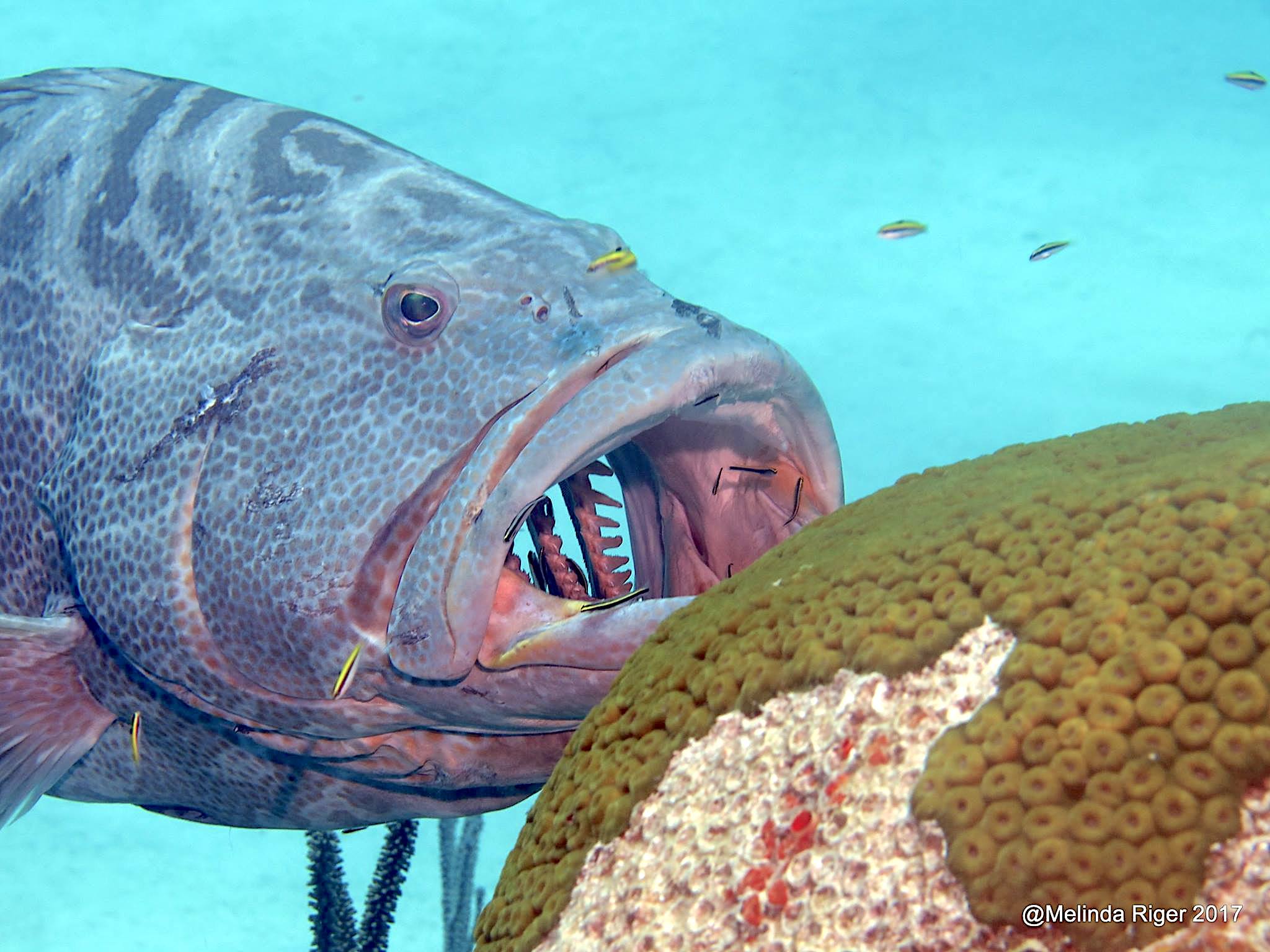
In some of these photos you’ll notice tiny fish attending to the grouper. These areCLEANERS and they are an essential part of the bodily and oral hygiene routine for larger fish species. The big fish call in at so-calledCLEANING STATIONS, where the tiddlers remove parasites and dead skin, and polish up the gills. They will even enter the fish’s mouth to pick bits from between its teeth – the deal being that they will not be eaten. This mutually beneficial arrangement is called ‘cleaning symbiosis’ and is carried out by (for example) gobies, wrasses and cleaner shrimps.
Pederson’s cleaner shrimps and cleaner wrasse
Some of these photos show groupers with open gills as well as open mouths, an invitation to the cleaners to do their work. I’d intended to write about how and why gills work but I’ve thought better of it. There’s a lot of detail about chemical exchange involved that, when I looked more closely, seemed rather dull… and therefore outside the remit of this blog, which includes trying to avoid ‘dull’. If you really want to know more, Wiki has a good articleHERE. Good luck with that….
Credits: All photos Melinda Riger, Grand Bahama Scuba
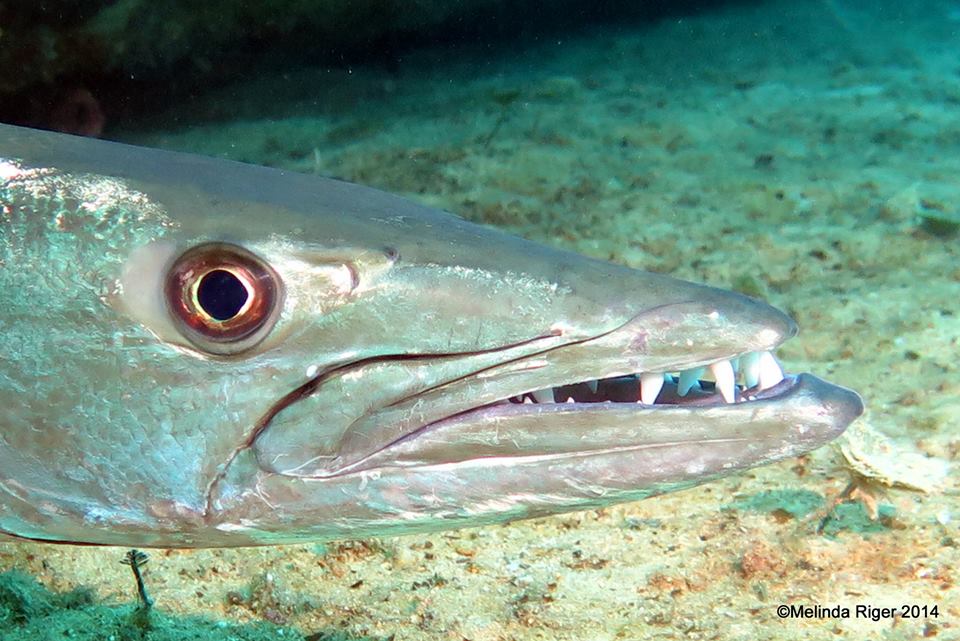
Or, if not exactly big then lethally lacerating. Their sharp fangs are all different sizes, which gives more of a mincing effect than a clean bite. Then there’s the underbite, involving more mincing. And the fact that the teeth are set at different angles. That’s a third mincing effect. Prey in those strong jaws? No chance.
Three -way mincing machine. Avoid.
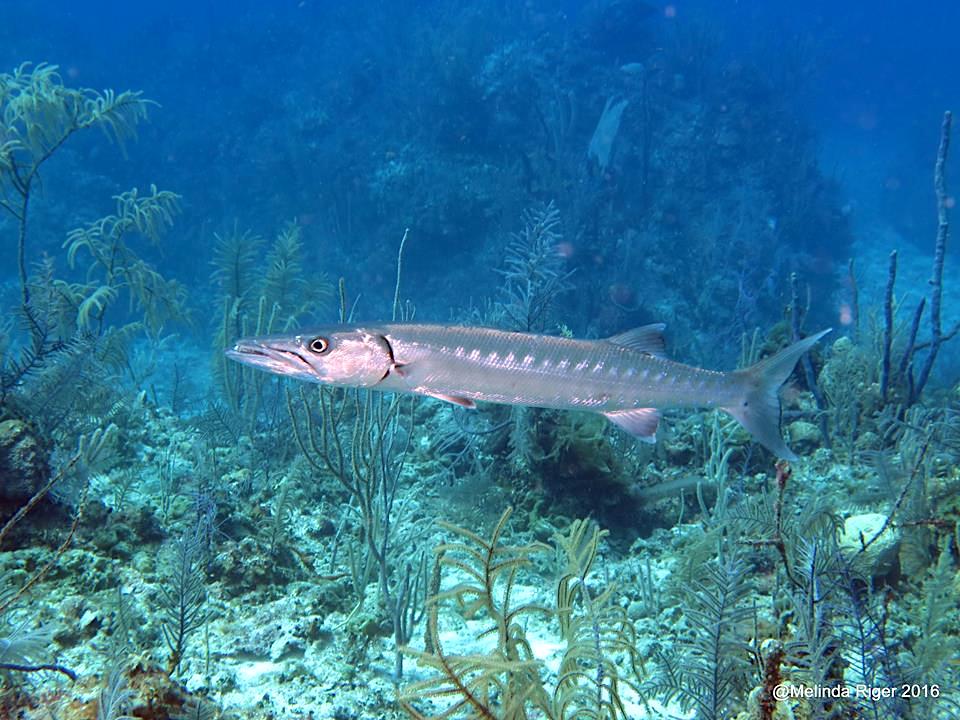
Teeth? Enough dentition already. It’s impossible not to admire these lean, mean eating machines as they glide around in their natural environment. The photos below are designed to redress the balance a bit. Sinister, yes. But mighty fine fish, without a doubt.
All photos: Melinda Riger, Grand Bahama Scuba, with thanks as ever for her terrific photos
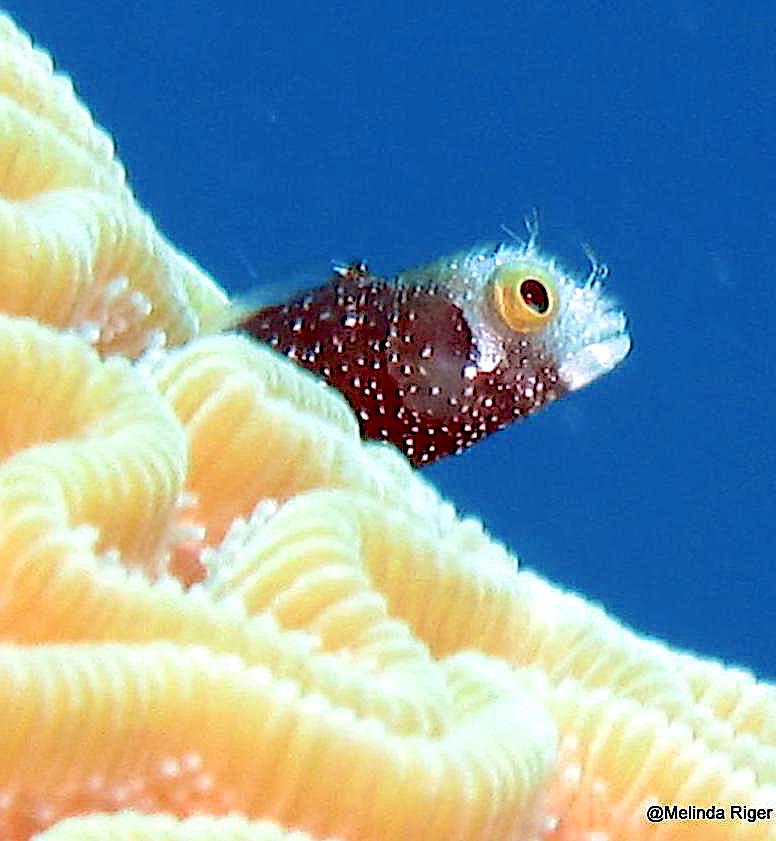
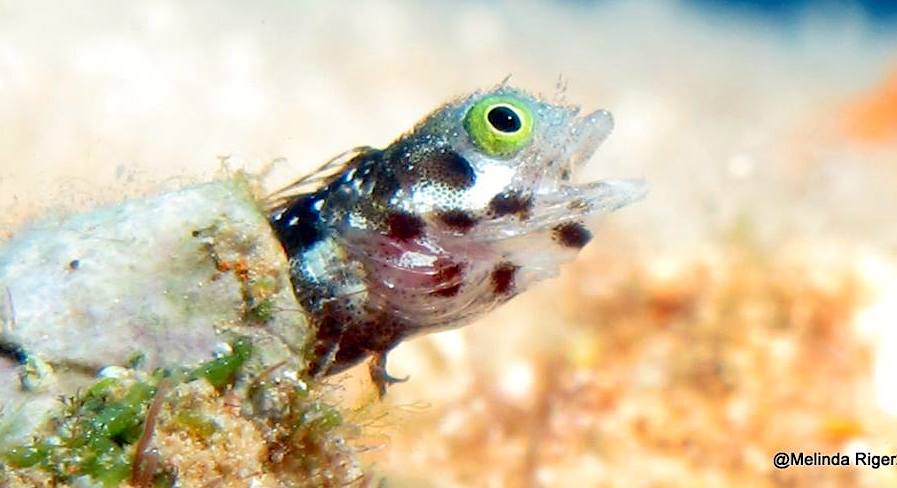
The WTF? series has looked at a number of bizarre reef denizens, and this little fish is certainly that. For a start, its ‘correct’ name is Acanthemblemaria aspera, an excellent challenge for saying 10 times very quickly **. And the name blenny comes from the Greek word for ‘slime’, quite enough to make the poor creature a laughing-stock in the reef community.
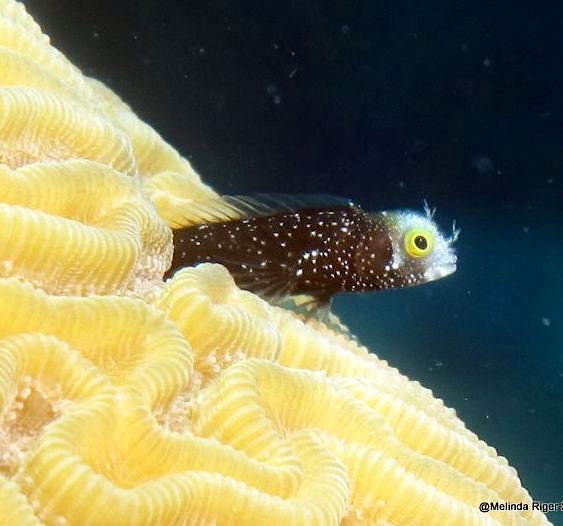
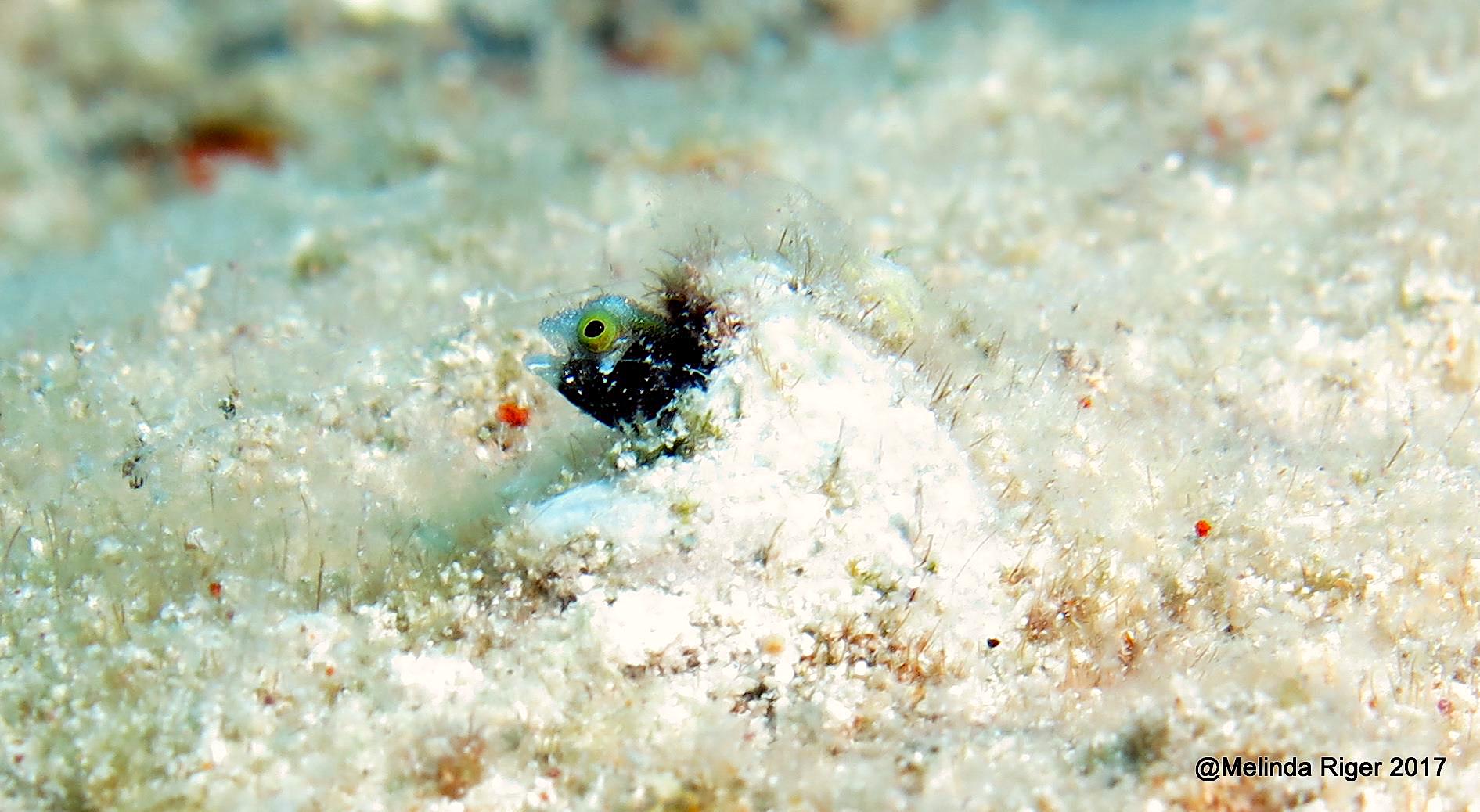
There are in fact several hundred blenny species and subspecies around the world. The roughhead is one of the most commonly found in western Atlantic subtropical and tropical waters. These are burrowing creatures, and they find holes in the nooks and crannies of coral reefs – and indeed in the coral itself. Brain coral seems to be a preferred location. Mollusc shells are another. Or they may just bury themselves in the sea floor.
The ‘roughness’ of head refers to the whiskery appendages (cirri) on a blenny’s blunt bonce – slender tendril or hair-like filaments. The word cirri is the plural version of the wispy high altitude cirrus clouds that streak the sky. These tendrils are shown clearly in some of the photos here, despite the tiny size of the fish (± 1 inch).
THESE GUYS LOOK A BIT PRIMITIVE, AM I RIGHT?
To be precise – as far as is possible – blennies can be dated back to the Paleocene Era (or is it an Epoch?). This spanned a period 66 to 56 million years ago – around the time of the formation of the Rolling Stones.
You can find out more about roughheads in this excellent eHow video I came across after I’d written this post, to which I should now add that there is considerable colour variation in this subspecies, as you may already have noticed…
** You can also try this with ‘Red Lorry Yellow Lorry’. Yes I know. Maddening, isn’t it. You can’t stop now you’ve started. Sorry…
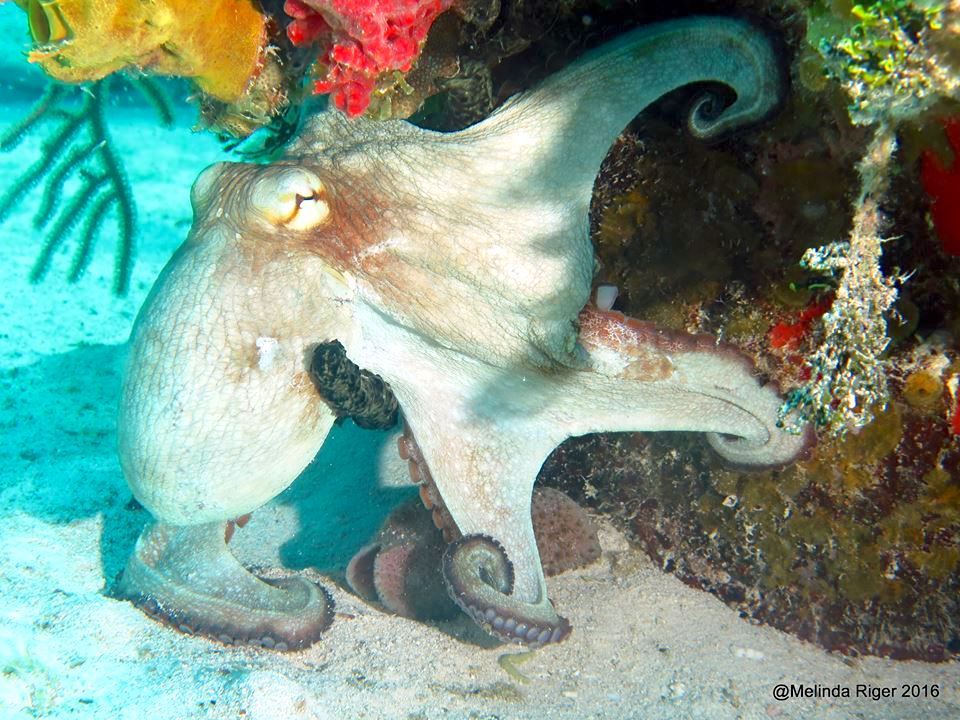
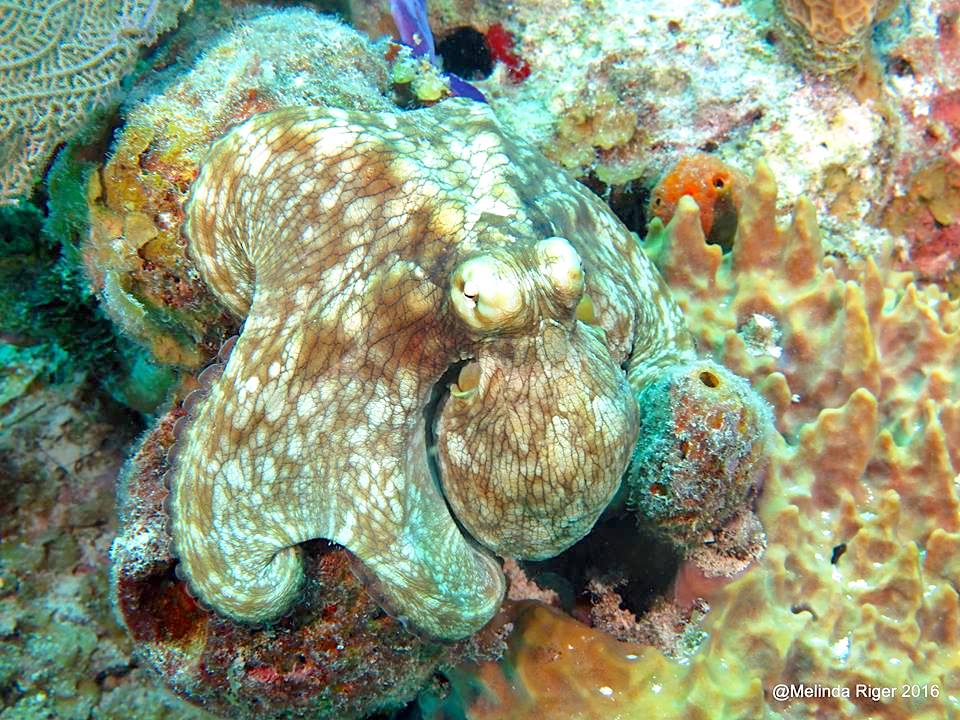
If I had to give a single reason for learning to scuba, watching an octopus would be very near the top of a long list. It’s never going to happen for me, of course – I have about 17 excuses lined up just in case anyone should ask me to try it. But still. One can dream…
Meanwhile, I can luckily rely on an experienced professional to get the shots. Here are a few great octopus photos taken by Melinda Riger of Grand Bahama Scuba – perfect examples of an excellent reason for chucking aside the snorkel and doing something a bit more adventurous. Maybe…
RELATED OCTOPUS POST
THE CORRECT PLURAL Learn 12 essential octopus facts plus the definitively correct plural of the word ‘octopus’ (out of 3 rival options). Please note that the possibilities do not include ‘octopodices’, which would be latin for ‘eight rumps’ (or ‘asses’, as you might say), if such weird creatures existed.
Last summer, the big motion picture sensation for the bird world was, of course, Pixar’s ineffably adorable creation, Piper – the ultimate ‘Chick Flick’. This little ball of cartoon fluff was not, as some thought, based on a piping plover but on a sanderling – a type of sandpiper (clue in name). This 6 minute ‘short’ preceded the main event, the hugely popular Finding Dory. You can read all about the film Piper and the birding aspects of the film HERE.
Finding Dory is not about a fish of the dory species, of course. Voiced by Ellen DeGeneres, Dory is in fact a species of surgeonfish Paracanthurus, the familiar blue tang found on the reefs of the Bahamas. To see these fish in Abaco waters, Fowl Cays National Park is always a good bet.
Dory can be identified as a maturing juvenile: blue, with a yellow tail. In due course – in time for the sequel film – she will become blue all over, with perhaps the odd flash of yellow (see photos above).
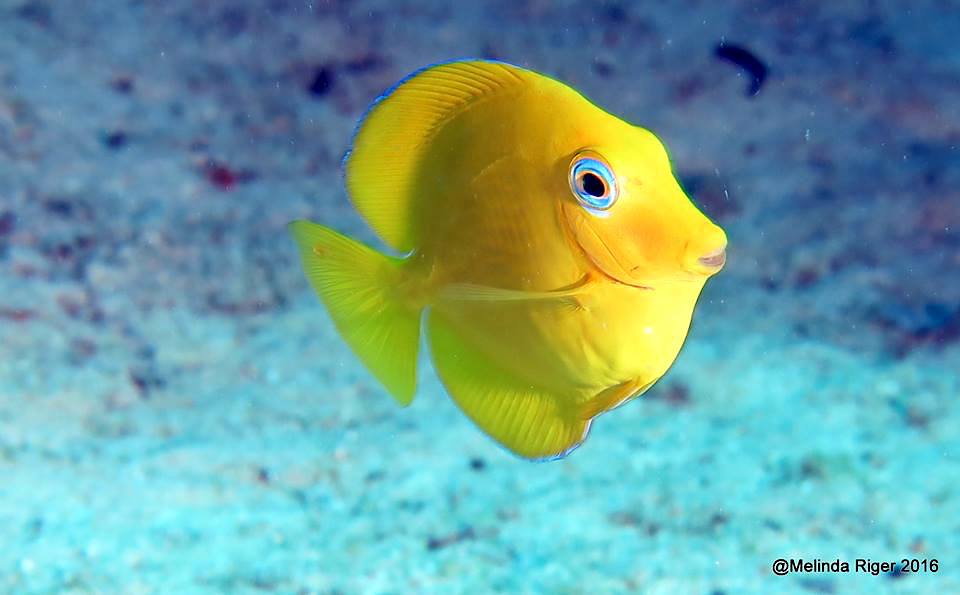
In real life, a baby blue tang is in fact entirely yellow, except for blue rings around the eyes. In Pixarland, however, Dory is just an adorbs miniature version of her youthful self.
Blue Tang are lovely to watch as they cruise round the reefs, sometimes in large groups. Their colouring ranges from pale to dark blue. However, these are fish that are best looked at and not touched – their caudal spines are very sharp. When the fish feels in threatened, the spine is raised and can cause deep cuts, with a risk of infection.
Still from a crummy video taken at Fowl Cays some years back to illustrate a group of blue tang
Blue tangs are inedible, they apparently smell unpleasant, and they can cause ciguatera. However they are popular in the aquarium trade. This is a distinct downside of highly successful films such as Finding Nemo and Finding Dory. In defiance of the well-meant and broadly ecological message of both films, the trade in clown fish and to a lesser extent blue tang was boosted by their on-screen portrayal as adorbs creatures desirable for the entertainment of mankind… ‘Nuff said.
Credits: All excellent photos by Melinda Riger / Grand Bahama Scuba; one pathetically bad still from a low res video, me; cartoons purloined from an online aquarium somewhere or other
The dusky damselfish Stegastes fuscus is one of a number of damselfish species found in Bahamian waters. These small reef fish, in adult form, are dark coloured as their name suggests. Their appearance is brightened by having distinctive blue edges to their fins.
These fish feed mainly on algae, with a preference for red. They top up their diet with small invertebrates. Their value to the reef is that their feeding patterns help to prevent coarser seaweeds from becoming dominant in areas where these are prevalent.
Like many damselfish, the dusky is a territorial species, guarding its chosen area of seabed and the food sources within it by repelling intruders – often seeing off far larger algae-grazing fishes such as parrotfish and wrasse. Yet besides their aggressive traits, they are also rather cute, as photo #2 shows!
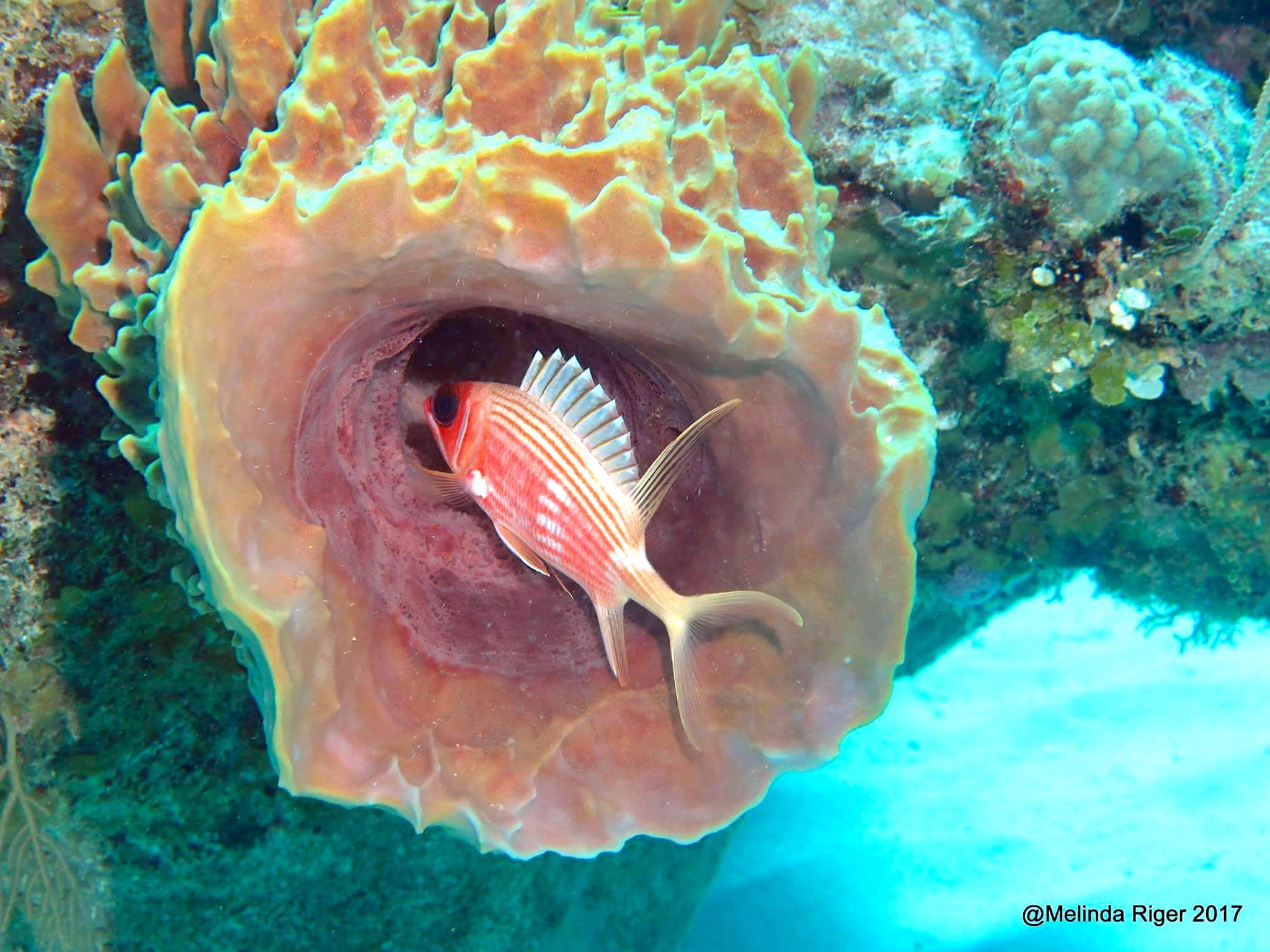
Being ‘on-island’ right now, I don’t get so much time to write stuff. To everyone’s relief, I guess (including mine). So for a while I’ll post some individual pics that particularly appeal to me. Elvis the squirrelfish (featured in a previous post) has now upgraded to a more spacious and frankly rather posher address. And in he goes…
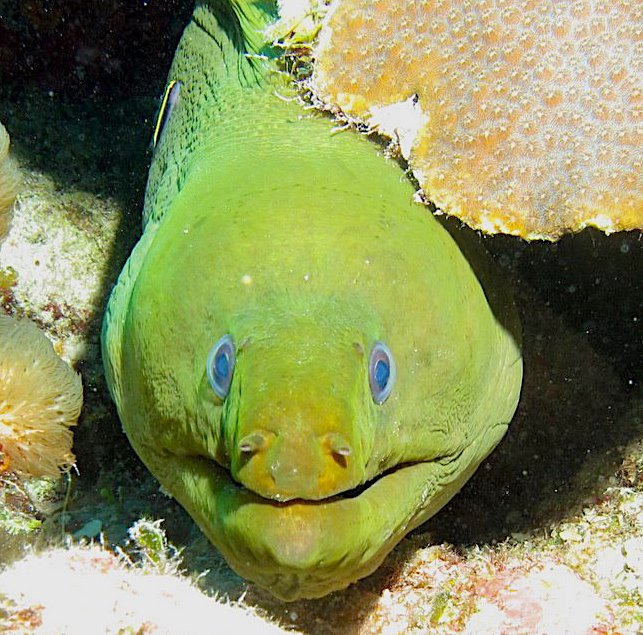
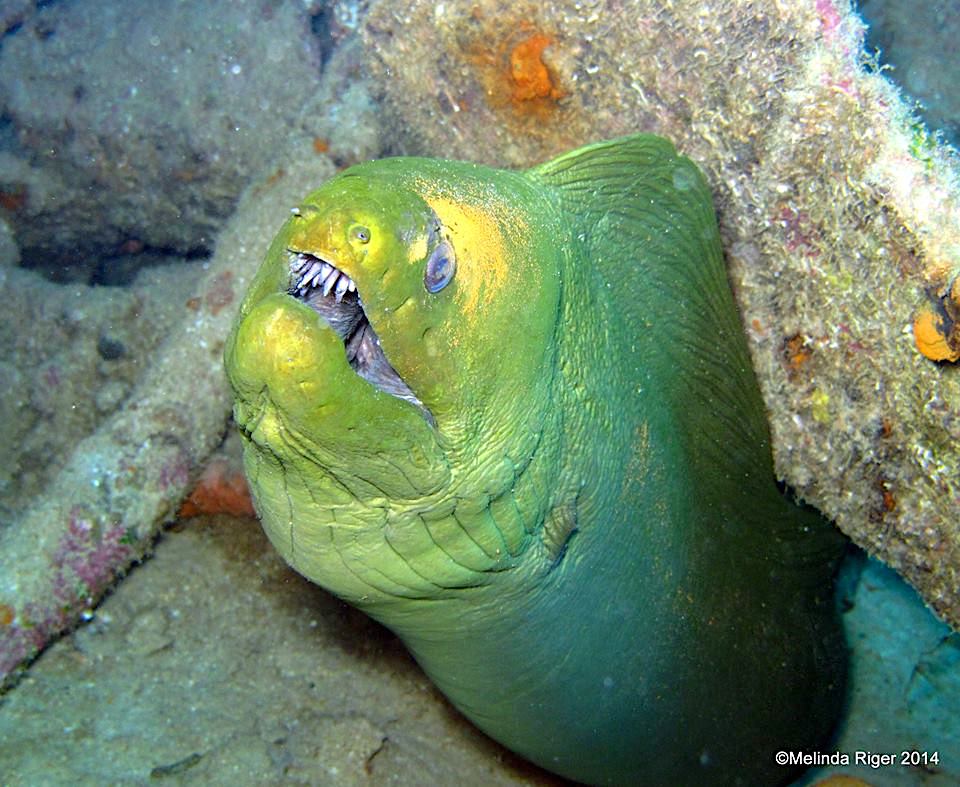
Time to return to those extremely expressive characters of the coral reefs, moray eels. Specifically, some green morays. One hesitates to anthropomorphise or ‘project’ human emotions onto creatures but with some species it’s hard not to do so. Following Mr Grumpy (or perhaps Mr Sad) in the header image, here are some close-ups of morays appearing to express their emotions, from happy to downright furious… Eels featured here include Judy and Wasabi, and I remind myself that the human habit of naming familiar wild creatures is itself a (perfectly harmless) form of benign animism. Exactly as with the regular banded piping plovers featured elsewhere in this blog that overwinter on Abaco’s beaches, such as Harry Potter, Bahama Mama and the delightfully-named Felicia Fancybottom…
Happy and contented?
Something on my mind…
Slightly amused?
Pretty funny, actually
Ha ha…! Hilair!
Watch it. You are beginning to bug us, Mr Harbour, with your stupid captions
ANGRY. BACK OFF… NOW!!!
THE NEXT POST WILL BE FROM ABACO HQ NEXT WEEK
Credits: All morayvellous photos, Melinda Riger / Grand Bahama Scuba except 6, Virginia Cooper / Grand Bahama Scuba
Sandy Point is the absolute end. Literally. Abaco’s only highway runs 120 miles from north to south. Towards the end, it hooks around to the west, then back north a short distance to the small community. You can drive on right through the settlement, with its criss-crossing side streets. Best stop driving when you see the ocean: you’ve run out of road.
Sandy Point is home to the renowned Nancy’s culinary establishment, maybe a half-hour drive from the previous place you could get a meal along the highway. It’s that remote. The menu is elementary, the Kaliks are cold, the view from the verandah is out to the wide sea and the pelicans smashing down into the water off the sand bars. And sooner or later you will find a dog’s head in your lap. This is not part of an unordered Abaconian special menu with a Godfather theme; it’s a potcake looking for chicken. Or fish. Or chips. Or anything edible really.
The origins of these ‘community dogs’ – no one’s and everyone’s – are many and various, just like their assorted shapes, sizes and colours. You can read about their history, the reason for their name, and about ‘Amigo’, the most famous potcake of all, HERE. There are many of these semi-feral dogs on the island, slinking around the settlements and even the main town. They have a tough life. They are generally ignored or shooed away. But in Sandy Point at least, they seem healthy and well-fed. Nancy’s may have something to do with it…
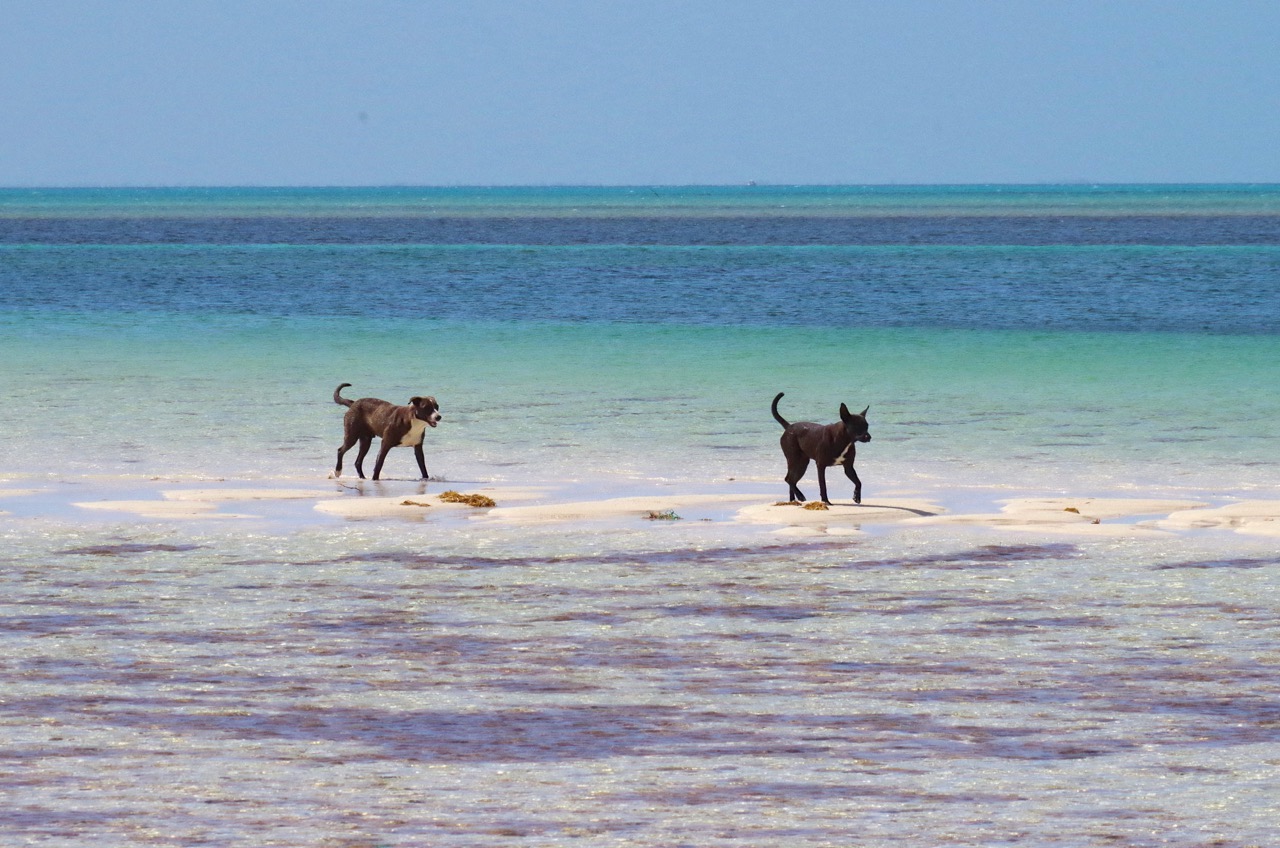
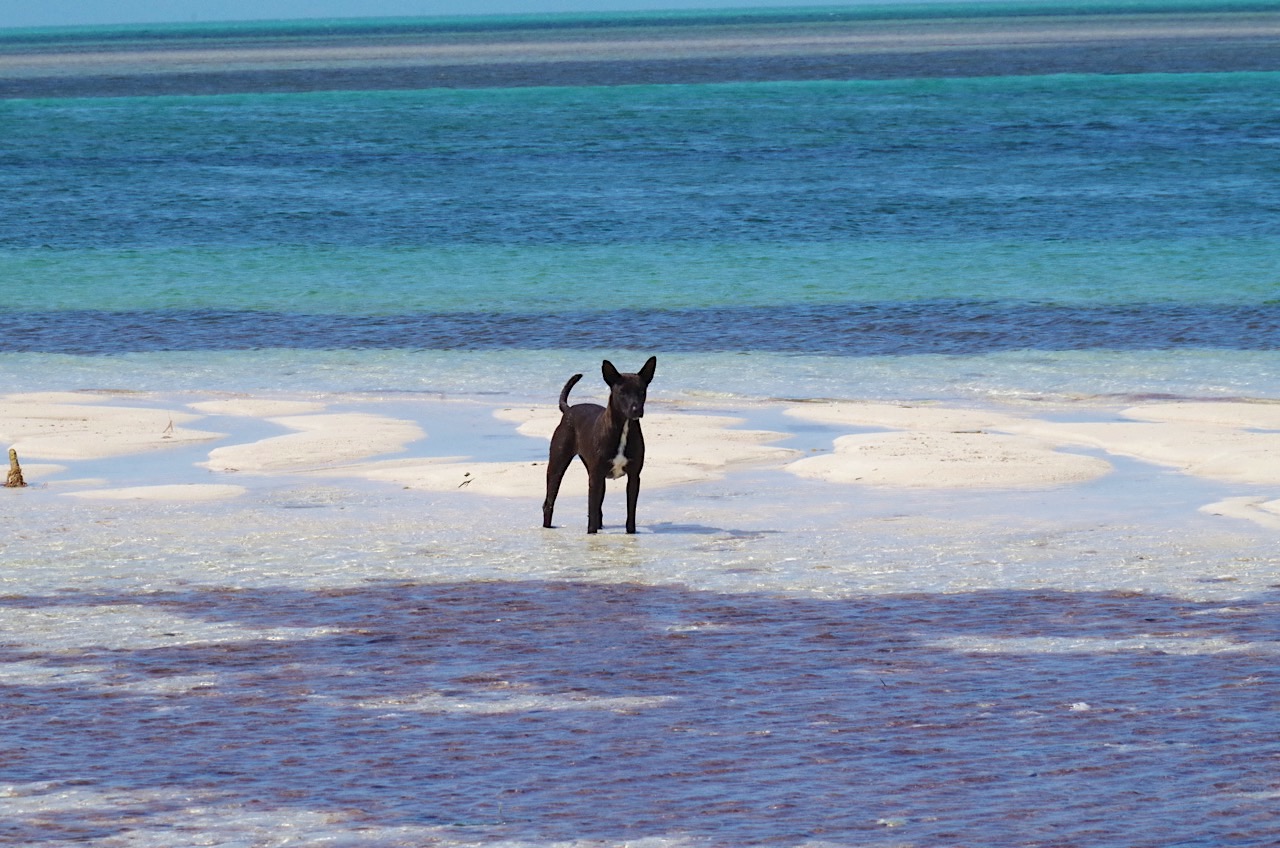
The potcakes of Sandy Point make the beach and the sea their playground. If you walk along the strand and round the point, they may tag along for a while. Then they get bored and rush off. When the tide is low, they will trot along the exposed sandbars right out into the sea. Or chase each other into the sea. Or maybe just relax and watch an endemic Bahama swallow flit past.
There are active potcake rescue schemes aimed at rehoming strays. Spay and neuter clinics are regularly held. The aim seems to be to keep the numbers down with benign control rather than anything more radical. And rehomed animals make excellent pets, being “intelligent, loyal, calm, and resilient”. I’m guessing the potcakes of Sandy Point reckon they have a pretty good life as it is.
AND FINALLY… here is a video with a difference: Salty Dog the potcake goes mad on a beach – wearing a GoPro! Great idea…
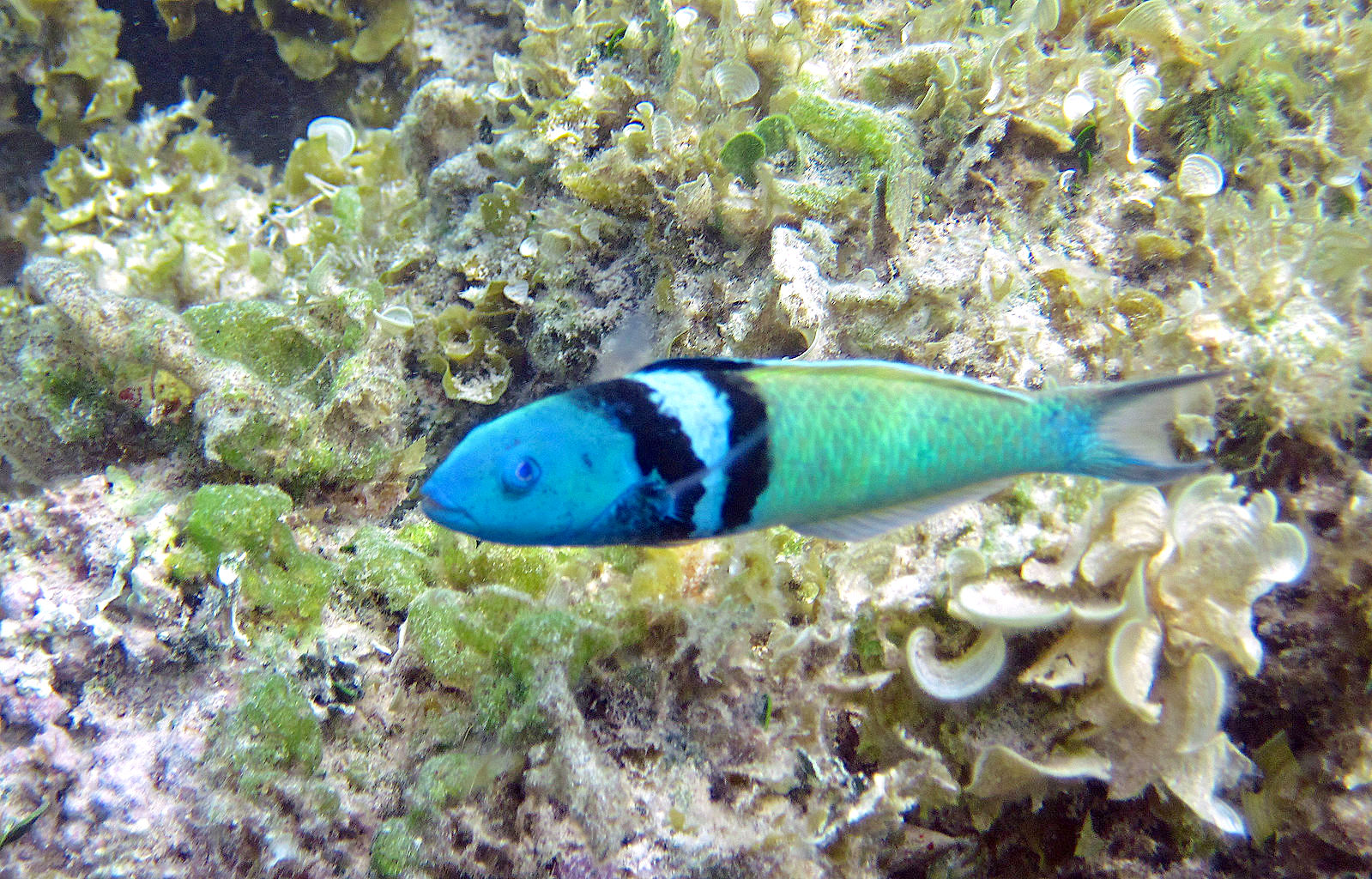
The bluehead wrasse (or blue-headed wrasse) Thalassoma bifasciatum is a denizen of the coral reefs of the tropical waters of the western Atlantic Ocean. This bright little 4-inch fish is… a wrasse with a blue head. No more and no less. Unless it’s a juvenile. Then it is mainly bright yellow. It’s similar to BLUE TANG (aka ‘the Disney Dory’), which starts life bright yellow and grows up to be blue.
The species may be found singly, in pairs or small groups, or in schools. They have an important role to play in the life of the reef. They are CLEANER FISH, vital to the health and wellbeing of the larger species they attend to, and thus of the reef itself. This is ‘cleaning symbiosis’, a relationship of mutual benefit. The big fish get cleaned; the little fish have a useful function and – importantly for them – therefore don’t get eaten.
Having said that, blueheads are of course fair game as a snack for species that aren’t in the market for their cleaning services. And, unfairly, some species that are content to let cleaner gobies runtle around their gills and mouths are not so considerate of the wrasse. Some types of grouper and moray eel, for example.
TELL US EXACTLY SEVEN BLUEHEAD WRASSE FACTS
Juveniles can alter the intensity of their colour, stripes & bars
The bluehead wrasse is a ‘protogynous sequential hermaphrodite’
All are born female**. Some change sex to male during maturation (see below)
Food includes zooplankton, small molluscs and small crustaceans…
…and parasites / other juicy bits (fungal growths, anyone?) from bigger fish
The main threat to the species is coral reef degradation or destruction
The bright colours invite aquarium use, but the trade is not a significant one
** Some sources suggest some are born male and remain male. I’m not sure which is right
A juvenile bluehead (with feather-duster worms) – mostly yellow, with a pale underside
THE REMARKABLE SEX LIFE OF THE BLUEHEAD WRASSE
This is an unavoidable topic, I’m afraid. The bluehead’s sex life is the most interesting thing about them, and this is no time to be prudish. It is the subject of extensive scientific research, not all of which I have read since I decided to write about the species last night. Like many human relationships, “it’s complicated”, but in a conch shell it boils down to this:
To recap, BWs are born female and as they mature, some become male.
Males reach an ‘initial phase’ when they can breed in groups with females
Some males grow even larger & reach full colouration. This is the ‘terminal phase’
These large males aggressively chase away smaller ones & seek females to pair with
Their state of readiness (as it were) is signalled by colour changes
This behaviour is similar to that seen in many city centres in a Saturday night
The smaller fish have one bonus – their sperm count is higher than a dominant male
Prozac tests have shown that the drug reduces a dominant male’s aggression
As the excellent organisation OCEANA puts it: Bluehead Wrasses may reproduce in four different ways throughout their lifetime: 1) as a female in a group spawning event; 2) as a female in a pair spawning event within the territory of a large male; 3) as a small male in a group spawning event; and 4) as a dominant, terminal male in a pair spawning event within its own territory.
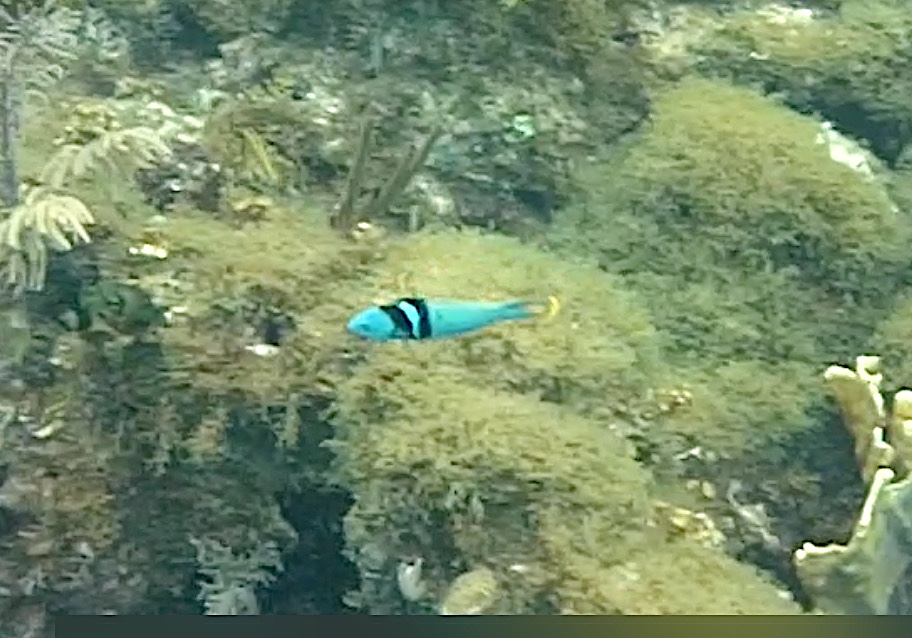
A cropped still from a video I took at Fowl Cay marine reserve. I’ve looked at dozens of images online and not found one that was all blue with a yellow end to its tail fin. Maybe it’s not a BW at all. Or it’s a different type of fish completely. Or perhaps it is just an all-blue alpha male.
Credits & Sources: Melinda Riger; Adam Rees; James St John; Oregon State edu / Pinterest; Wiki images; self; Oceana; IUCN; magpie pickings
A bluehead wrasse passes the time of day with a grunt
WONDERS OF THE DEEP: FROM SUBLIME TO… THE OTHER THING
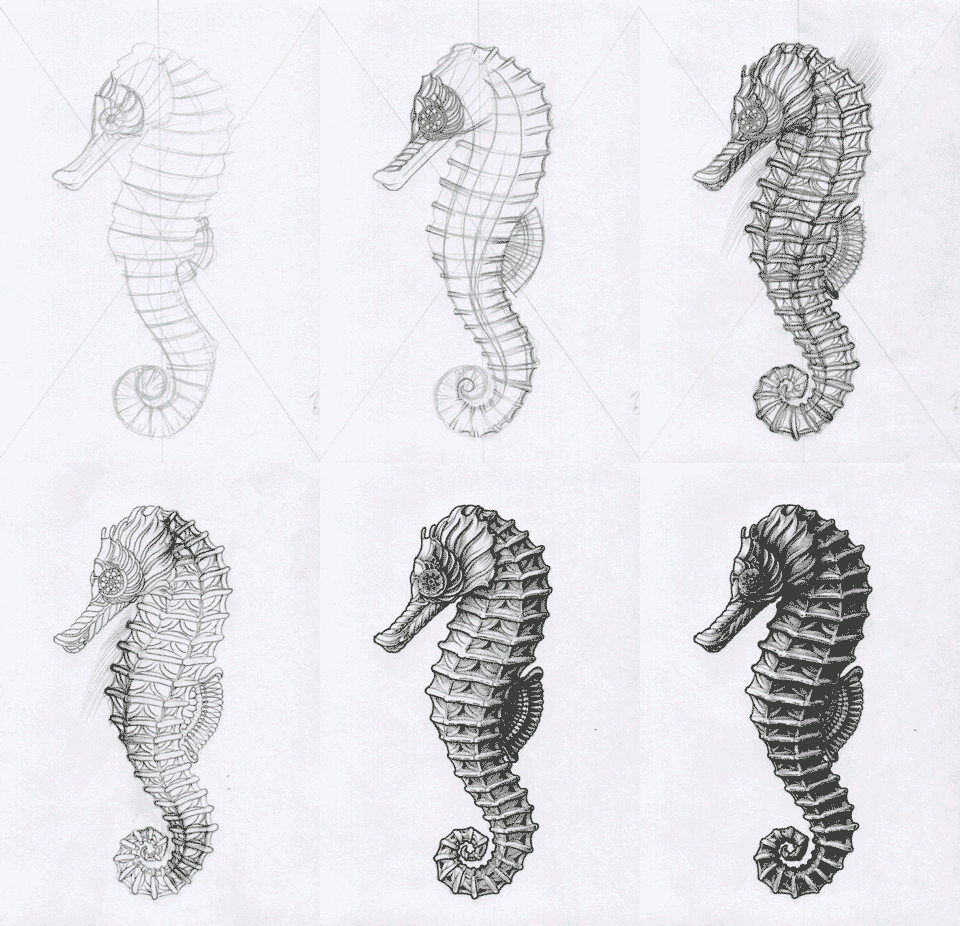
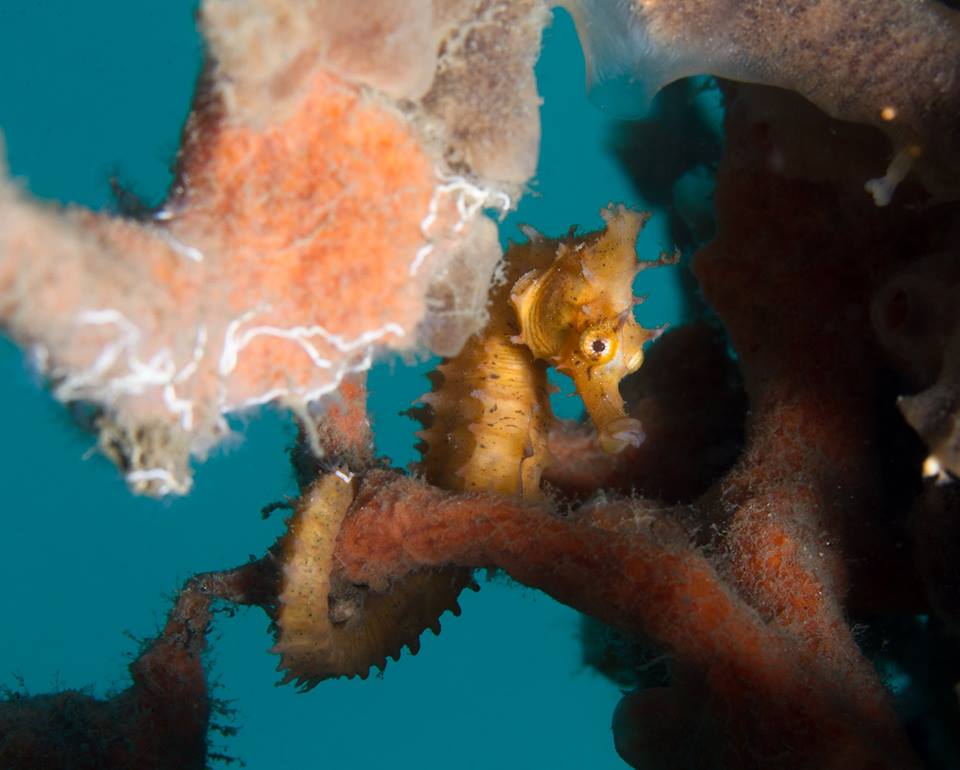
It’s a statistically proven fact (and not, in any way, a ‘post-truth’ proposition) that no one has ever had a bad thing to say about seahorses. Indeed, some love them too much and consume them – see HEREfor threats to seahorse populations in some areas of the world.
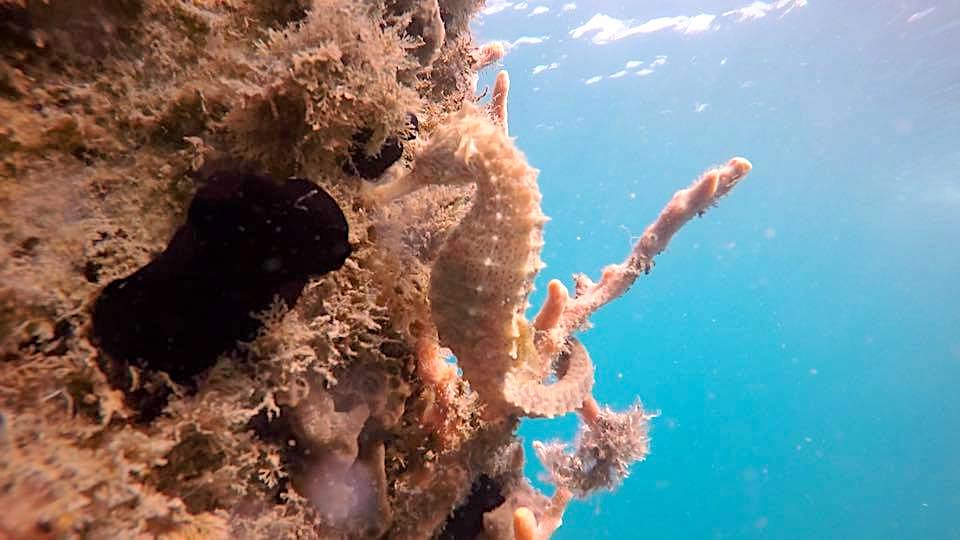
Sometimes they are easy to see. The header image shows an orange seahorse curling its tail round green weed on pink coral – hard to miss. Yet sometimes it may be quite difficult to see the little creatures against their chosen background.
These guys are, I think, for their size among the most sublime of all underwater creatures. I use the word in the strict historical sense “of very great excellence or beauty, exalted, awe-inspiring, majestic, magnificent, glorious.” Not just to mean “nice”.
In contrast, there are some undersea creatures that inspire… not awe exactly, but maybe an amused respect that so wonderful and bizarre a creature can exist in our oceans, in some cases only a few feet below the surface. Here are two examples of what I mean.
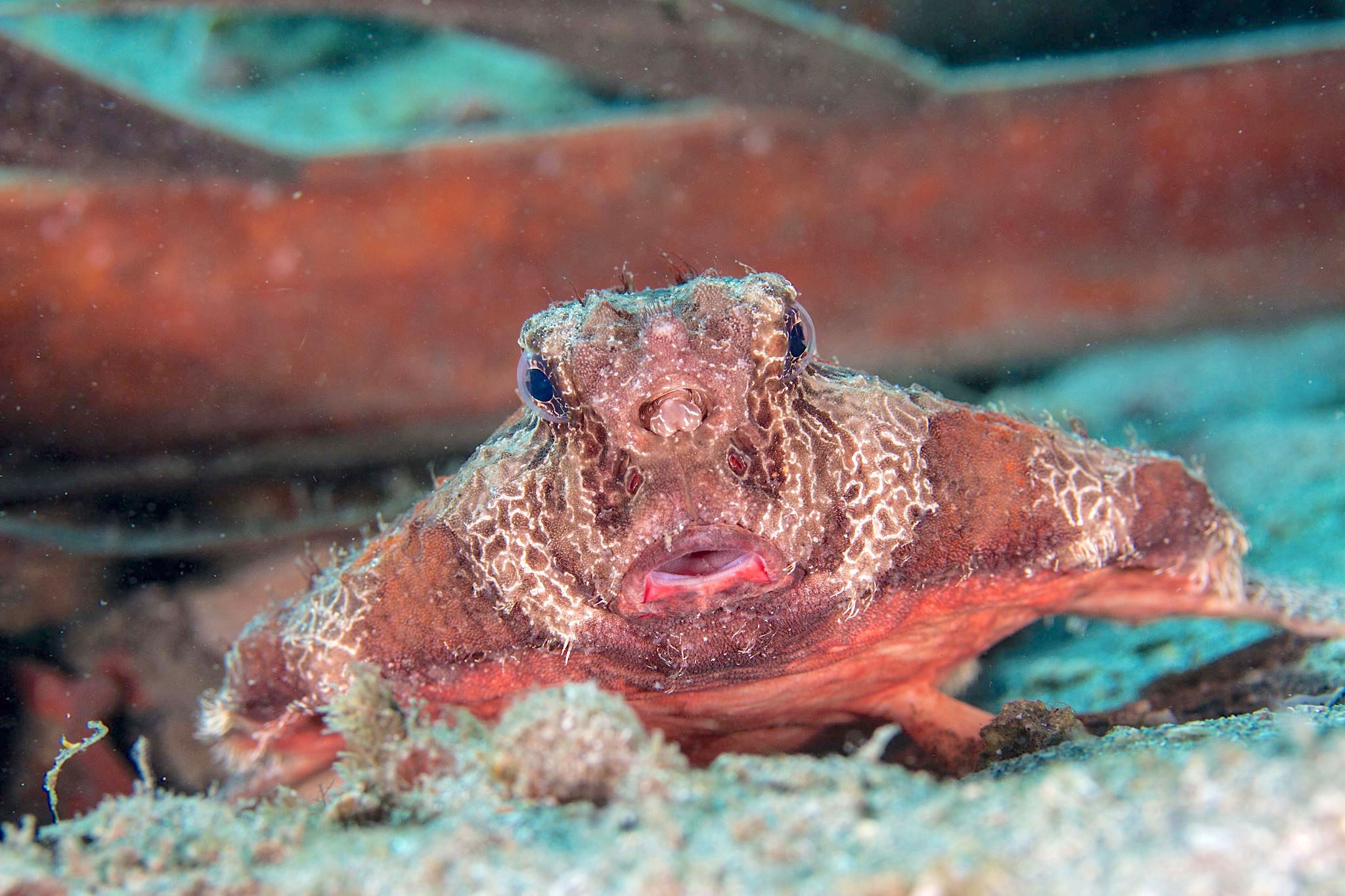
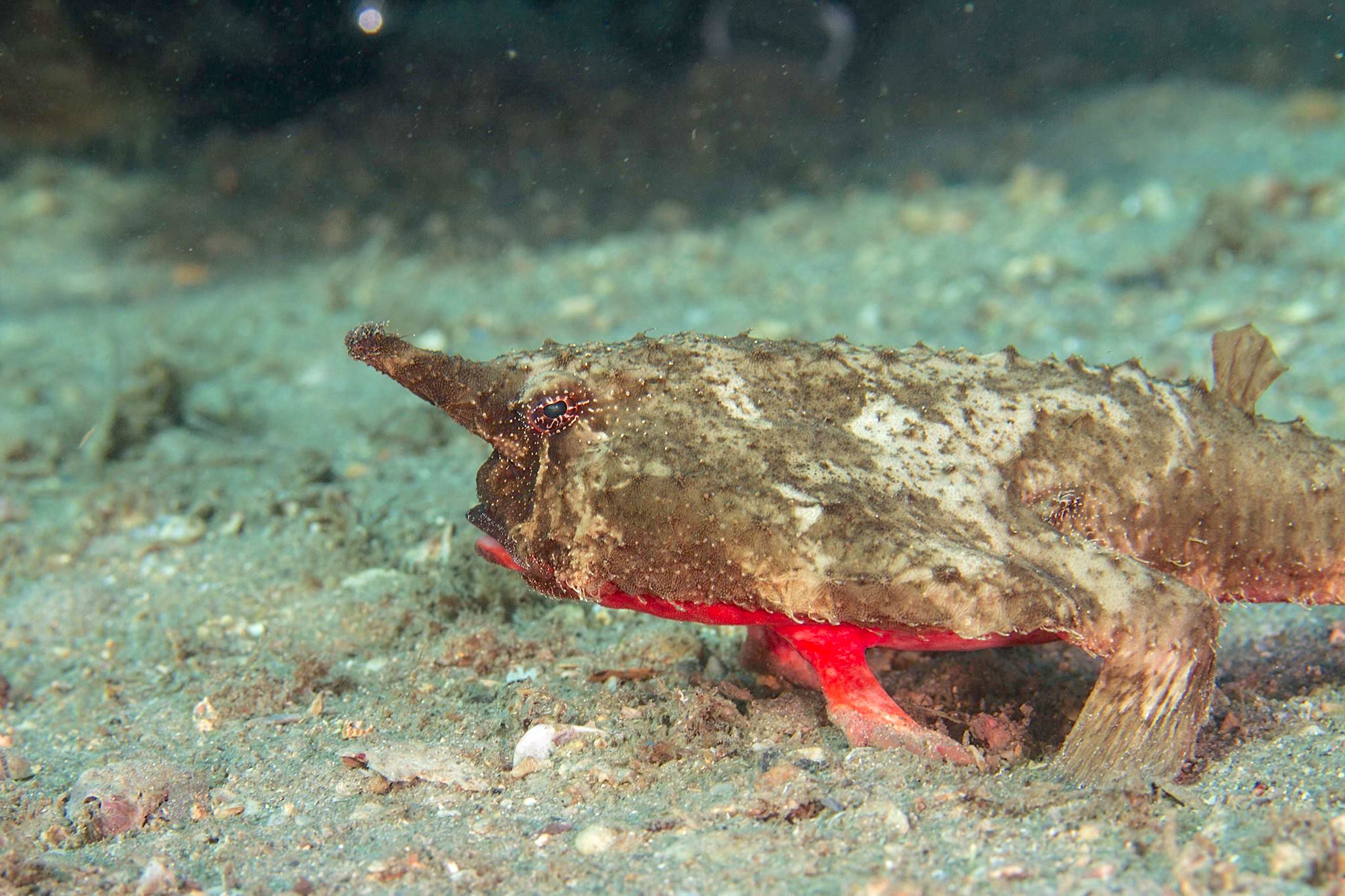
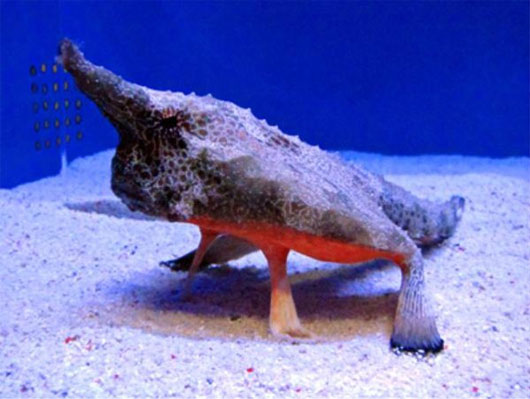
This is a BATFISH. It was an early shoo-in for my “WTF? (What’s that Fish?)” series, and you can read all about them and their ways HERE. Of all the creatures I have featured on this blog, this is by some distance the oddest…
…except for its companion in oddness, theFROGFISH. This was next in the WTF?series, and the creature is, if anything, even stranger. You can read all about these critters HERE, where you will learn inter alia about their superpowers – any one of which you might like to have yourself. There are plenty of photos, and videos too.
FROGFISH SUPERPOWERS
Invisibility Cloak
Irresistible (and, to their prey, Fatal) Attraction
Buoyancy Control
Shapeshifting
I do not court controversy, recognising that people following this site, or maybe stumbling across it by mistake and lingering, reach their views on natural history from different directions. But these strange and fascinating species exist and thrive in their own particular and ingenious ways – it doesn’t really matter how or why they are as they are. The bats and the frogs are high in the list of the least conventional of undersea creatures, and if they are not exactly sublime in a seahorse sense, can we just agree that they are awesome?
Photo Credits: Adam Rees / Scuba Works; Melinda Riger; Alex Konahin (seahorse gif)
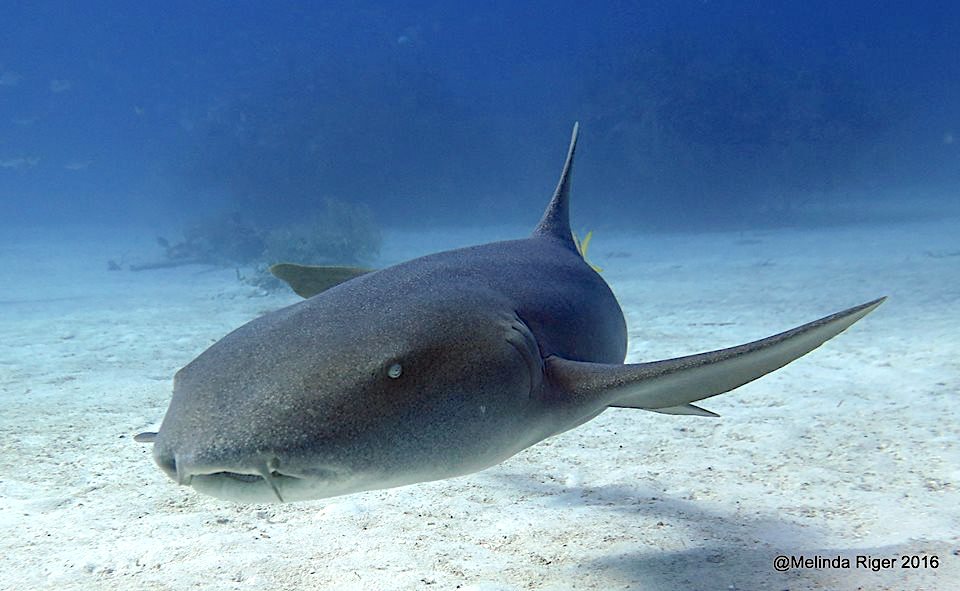
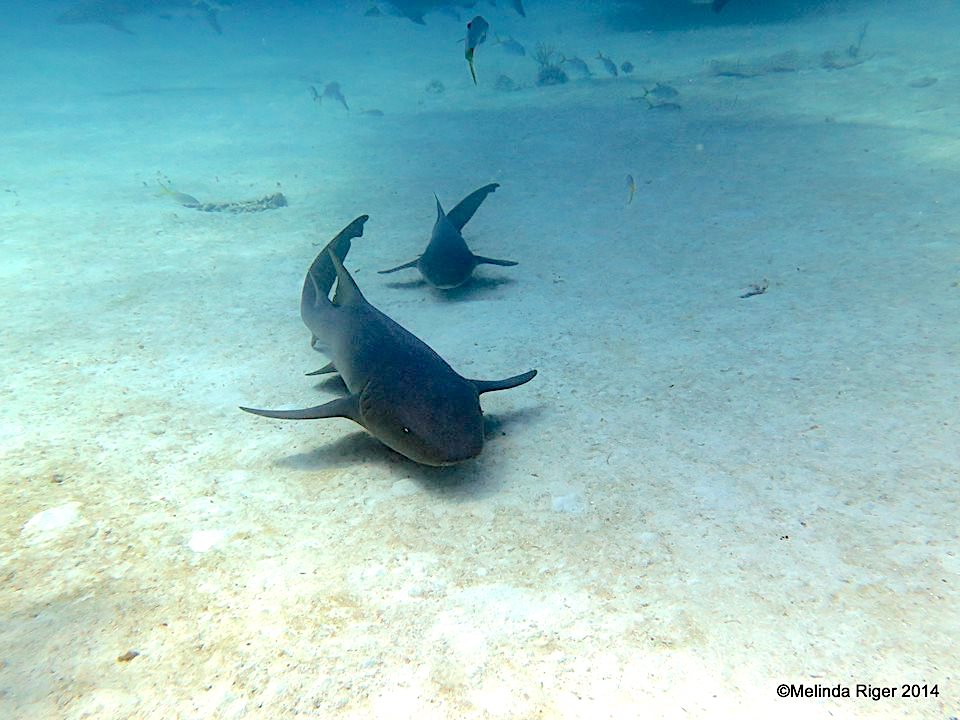
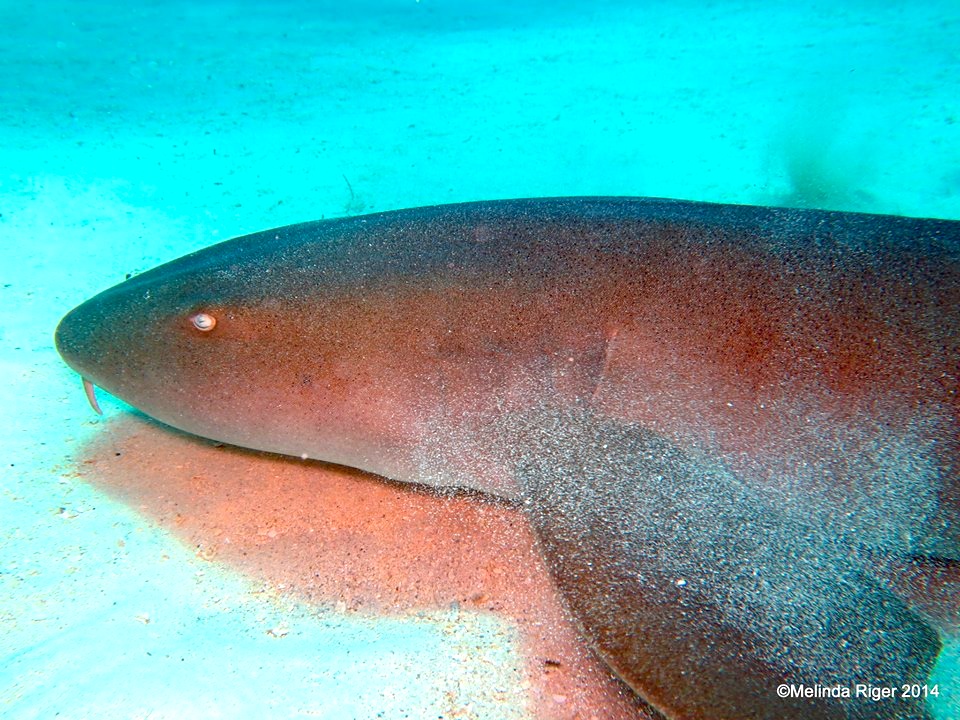
I last took a look at nurse sharks nearly 3 years ago HERE. Time to revisit these creatures. Indeed, time for a close-up look. If you want to know more about this fascinating species, just click the link above.
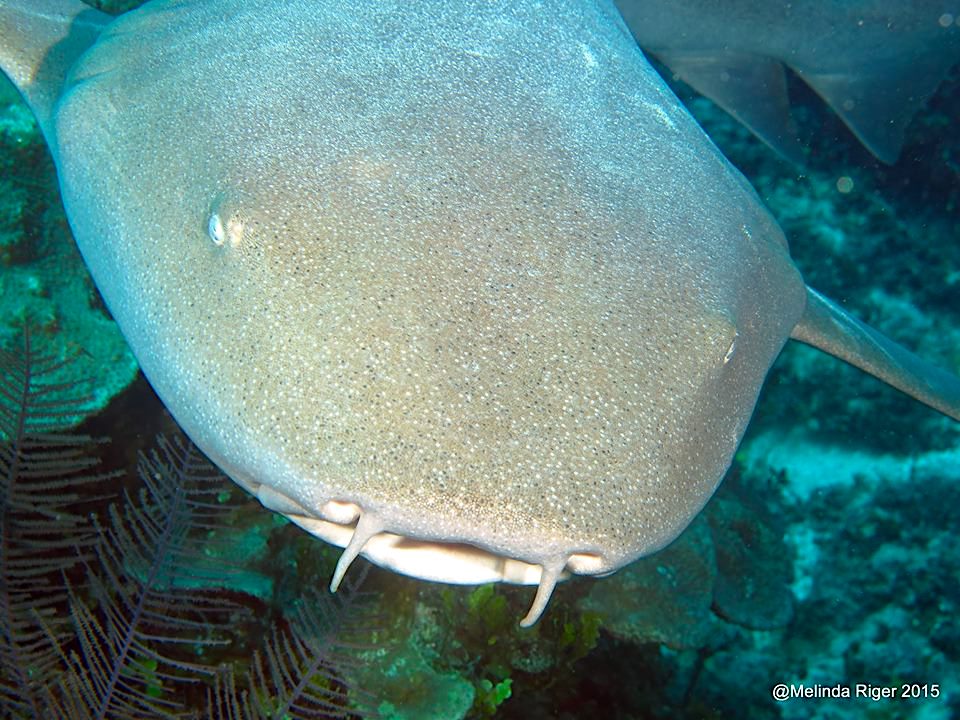
The two strange items hanging down from the upper lip are sensory barbels
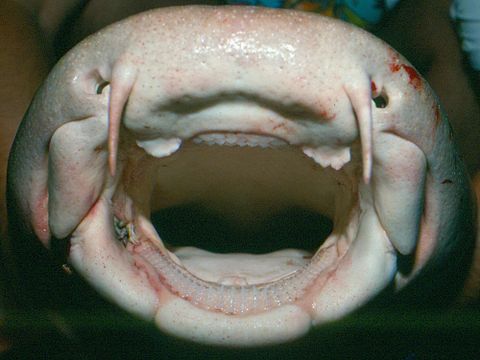
This side-view shows the shark’s relatively small mouth (for a shark anyway)
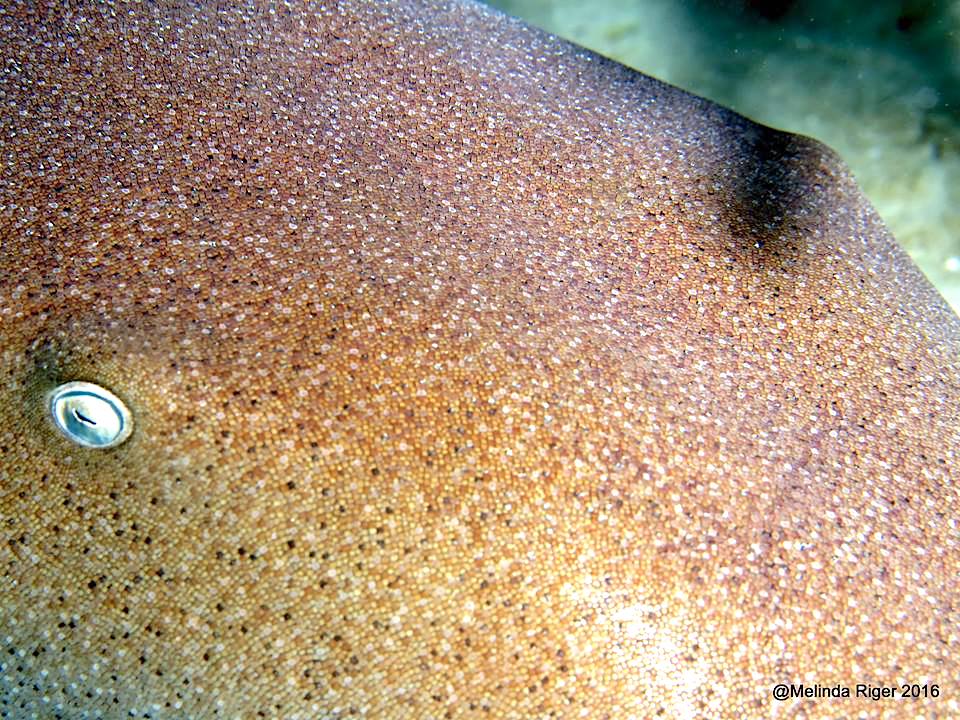
Admire the extraordinary texture of the the skin; and the tiny evil eye. Click or – better – double click on the image and you will see that the skin is in fact tessellated, made up of a mosaic of tiny squares and near-squares**
This one is a baby nurse shark
A juvenile nurse shark with a couple of grunts. Note the youngster’s paddle-like fin
Head, mouth, jaws and teeth
SO, THEY ARE SHARKS – ARE THESE GUYS DANGEROUS?
Not really, no. They aren’t looking to pick a fight; and they are not as territorially aggressive as the ‘bitey’ sharks are (or can be). These slow-moving bottom-dwellers are generally harmless to humans. However, they can be huge—up to 4 metres —and have very strong jaws filled with thousands of tiny, serrated teeth. They will bite defensively if stepped on or bothered by divers who assume they’re docile.[As I said previously, “there are recorded instances of injuries caused to divers who have tried to pull nurse sharks by the tail. And serve them right, I say. Treat them with patience and respect!”]
**FUN FACT
M.C. ESCHER (the inspiration for Mr Hammer) was the master of tessellation in art. Click the link to explore the dedicated website. Maybe, sensationally, one day a shark will be found with skin like this… (Alert reader: “Actually, I think it most unlikely…”)
Credits: field photos by Melinda Riger, Grand Bahama Scuba; Wiki for the 4 mouth images & the Escher
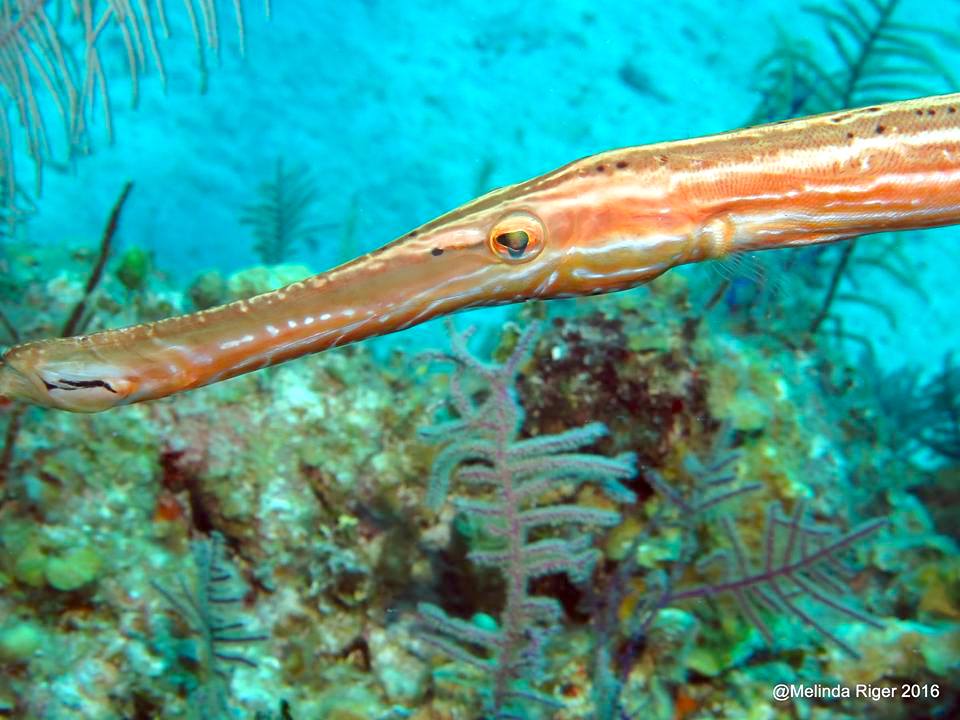
It’s been a while since the previous post in the WTF? series, dedicated to the unusual or downright weird marine creatures that, when you see them swim into in the frame of your mask, prompt the involuntary exclamation “WTF?” (What’s That Fish?). Now, in all its glory meet… The Trumpetfish. These long piscine pipes are in no way related to the President-Elect and his tank of pet fish, but perhaps more explicably to seahorses and seadragons.
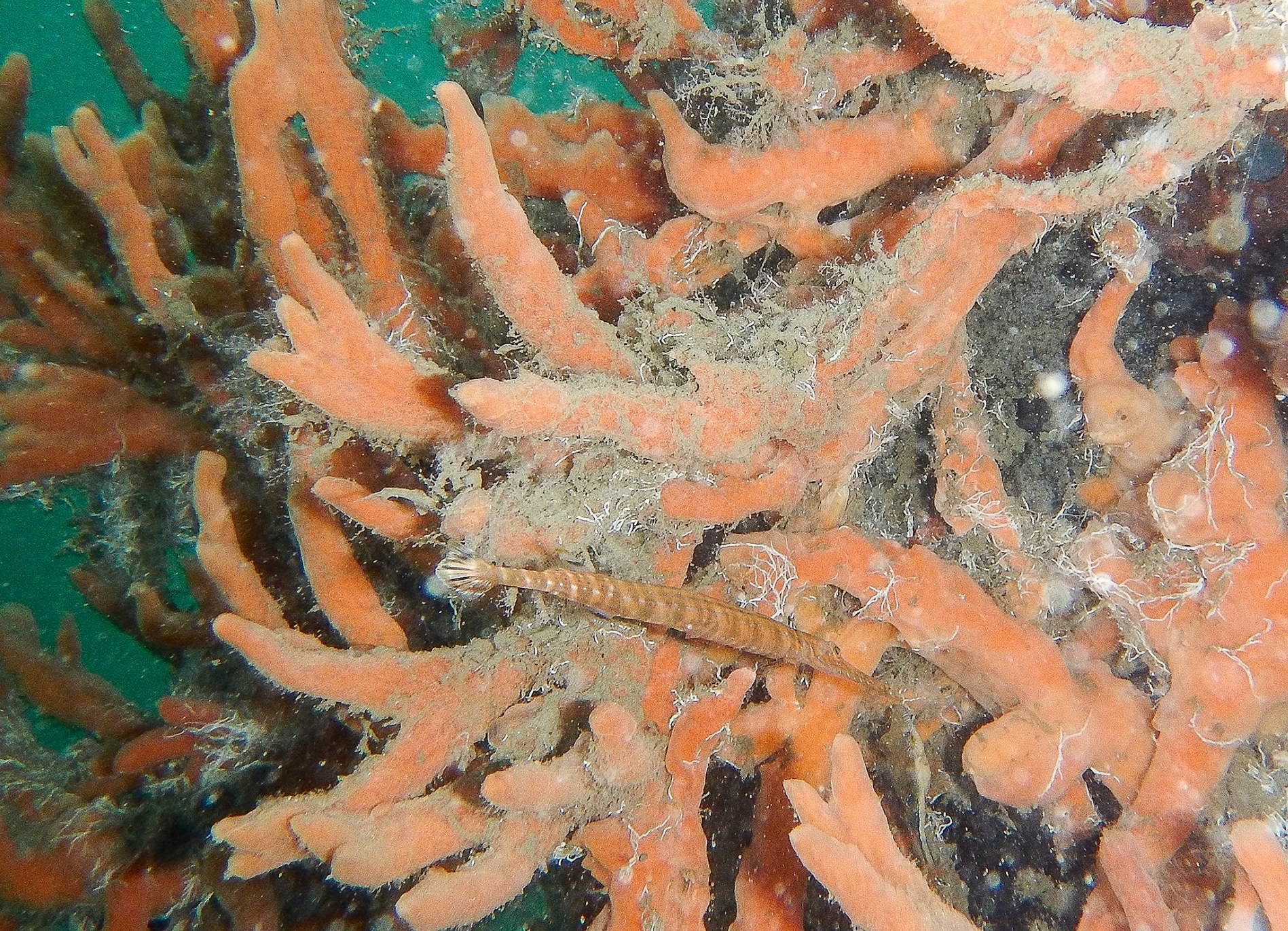
Trumpetfishes Aulostomus maculatus are as happy to swim upright as more conventionally, which helps them to blend in with vertical corals and sponges on the reefs in the tropical waters of the western Atlantic. Adults may grow to 3 foot long or more. These creatures come in a variety of colours – shades of red, orange, brown, green and yellow.
At the end of the fish’s long snout – see how far back the eyes are set – is a small mouth. Here’s how a trumpetfish goes about catching its prey (mostly small fishes):
Slowly swimming or drifting to a target from behind, and sucking it into its mouth
Staying suspended in the water, motionless, and waiting like a malevolent stick for a passing wrasse or similar to get too close
Swimming alongside larger fishes, which camouflages its presence and enables it to ambush small fish as they pass
More generally, the trumpetfish has some ability to change its colour to blend with its surroundings – both a defensive as well as an attacking advantage
The very excellent Peppermint Narwhal recently produced a series of posters in appreciation of particular species – and trumpetfishes and their kin in the Order syngnathidae were honoured. The PN’s cheerful website is well worth checking out for the sheer diversity of their ideas.
MUSICAL NOTES
We are beginning to collect the makings of a decent orchestra here. The trumpetfish has a relative, the cornetfish, elsewhere in the world. The remarkable GUITARFISH has already featured in the WTF? series, as has a species of BASS, the Harlequin. And – hey! – what about the spotted DRUMFISHto lay down the beat? Maybe I need to compose a little jingle featuring these one day…
Credits: Melinda Riger (Grand Bahama Scuba); Adam Rees (Scuba Works)
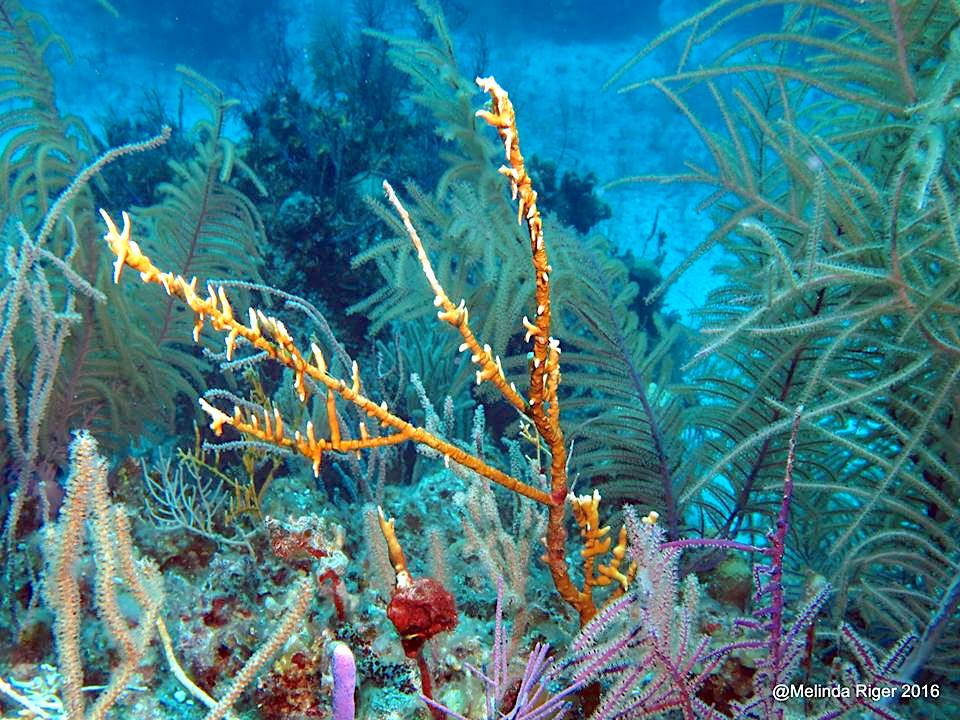
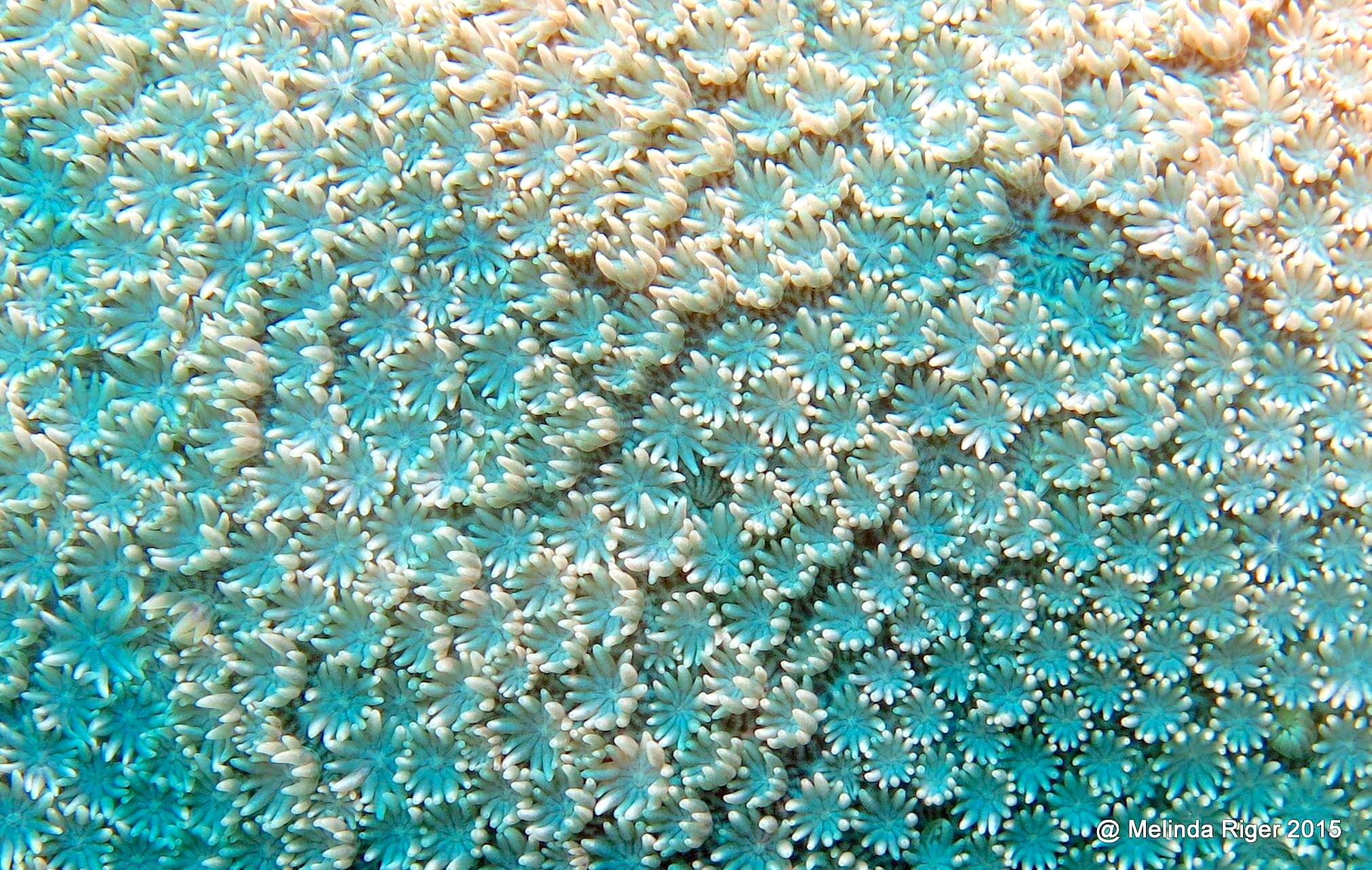
This post needs no commentary from me, nor my larky intrusions. These wonderful images from Melinda Riger speak for themselves. You’ll see a wide variety of soft and hard corals in the images below (prize** for the full list). If these superb photos don’t want to make you want to grab a snorkel, mask and flippers, then… well, that would be a very great shame.
**the prize is the usual legendary bottle of Kalik. Or do I mean mythical?
All wonderful photos by Melinda Riger, Grand Bahama Scuba. All corals also available in a wide range of colours in Abaco waters. See them there on the third largest barrier reef in the world (and in rather better nick that the greatest, by all accounts).
FAIRY BASSLET (‘MIND YOUR GRAMMA’): BAHAMAS REEF FISH (33)
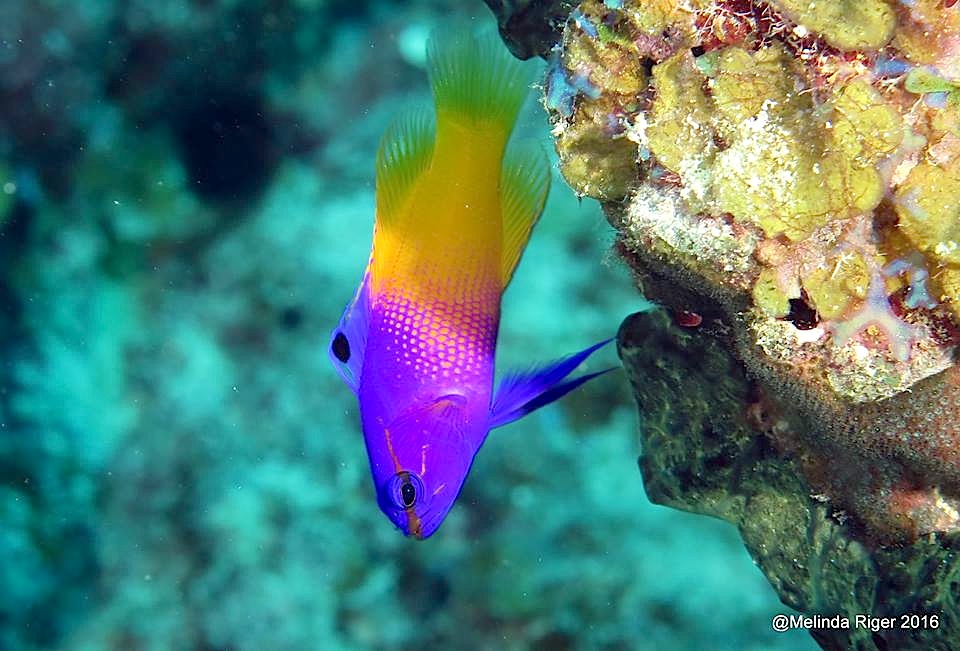
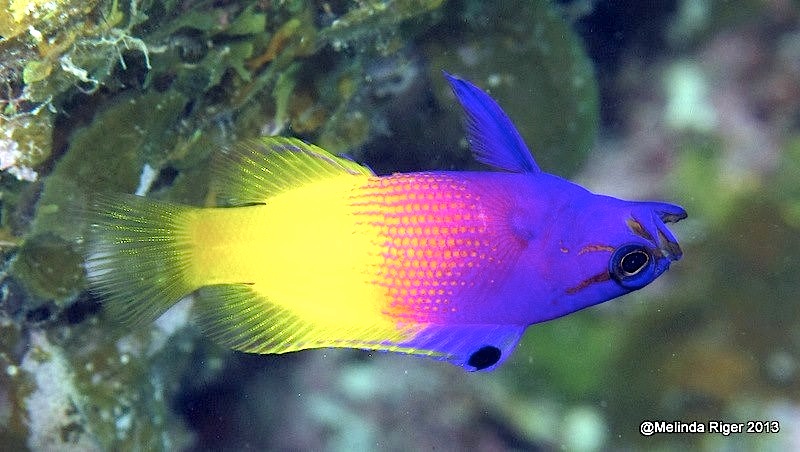
The Fairy Basslet is a tiny brightly-coloured fish with a pretentious alternative name. It is otherwise known as the Royal Gramma (Gramma loreto). These fish are found in the coral reefs of the (sub)tropical western Atlantic. They are also found in aquariums anywhere you like, being small, bright, placid and generally good-natured.
Conveniently, the basslet is unlikely to be confused with any other species. Its striking two-tone colour scheme of purple and yellow is hard to miss. The purple front half (which is presumably where the ‘royal’ comes from, being a regal or imperial colour) may also be violet or even blue in some fish and / or in some light conditions. Another identification pointer is a black spot on the dorsal fin.
You’ll notice that the basslet above appears to be upside down. Which is because it is – this isn’t an inadvertent photo-flip. These little fish tend to orientate themselves to be parallel with the closest surface. This leads to them happily swimming upside down, or aligning vertically. As one article I read says severely, “this behaviour is not to be mistaken for illness”.
Fairy basslets / royal grammas are also CLEANER FISH. They pick parasites and dead skin off larger fish that visit so-called cleaning stations to be attended to by tiny fish and cleaner shrimps, and in some instances to have their gills and even their teeth cleaned. The deal is that, in return, the large fish do not eat the cleaners. Even snack-sized ones rootling around inside their mouths.
WHAT ABOUT BREEDING?
I really can’t improve on this rather touching description from Wiki: “The male will build the nest among rocks using pieces of algae.The male will then lead the female to the nest, where she will deposit 20-100 eggs in the nest. During the breeding period, this behaviour is repeated almost every day for a month or longer (my italics). The eggs are equipped with small protuberances over the surface with tiny threads extending from them which hold onto the algae of the nest and keep the eggs in place. The eggs will hatch in five to seven days, normally in the evening…”
HOW COME THE NAME ‘GRAMMA LORETO’?
This official name became a brainworm with me after I started this post. I had to check it out. The ‘Gramma’ part is unrelated to the fond name for a grandmother; rather, it simple denotes a member of the genus of fishes in the family Grammatidae.
The Loreto part is more mysterious. It is an an ancient town in Italy; and the name of several British schools, including – almost too good to be true – a school called Loreto Grammar. In a nutshell, the link between the town and places of education is that the Sisters of Loreto, founded in the c17 and named for a shrine in the Italian village, are dedicated to education in their Ministry.
How that ties in with a tiny Caribbean reef fish, I have yet to find out. I probably never will… Here’s a short video to alleviate the disappointment.
I failed to be able to resist finding out whether any country of the world has a purple and yellow flag. The answer is, no. However I am delighted to be able to report that the flag of the Independent Party of Uruguay is basslet-coloured.
Credits: all fantastic photos by Melinda Riger of Grand Bahama Scuba; magpie pickings of an unacademic sort for facts and speculation
We are away for a few days, so I have planned a few posts that won’t fall apart courtesy of being done on a phone. Hopefully.
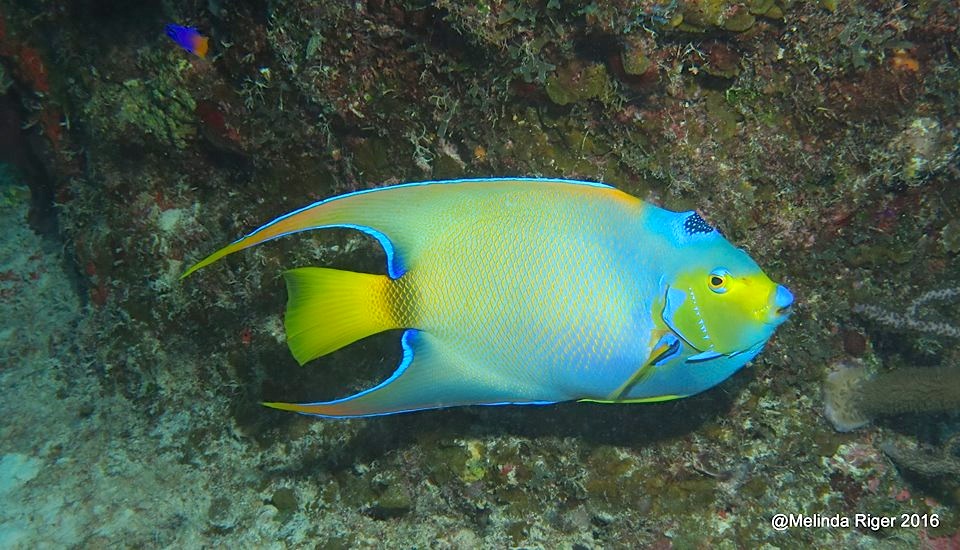
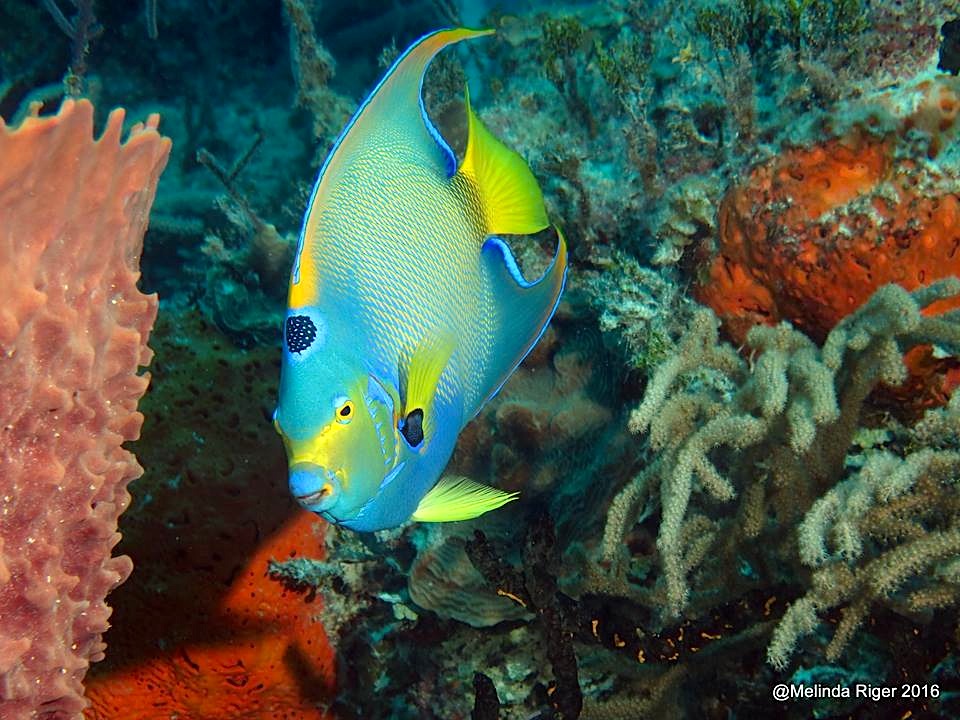
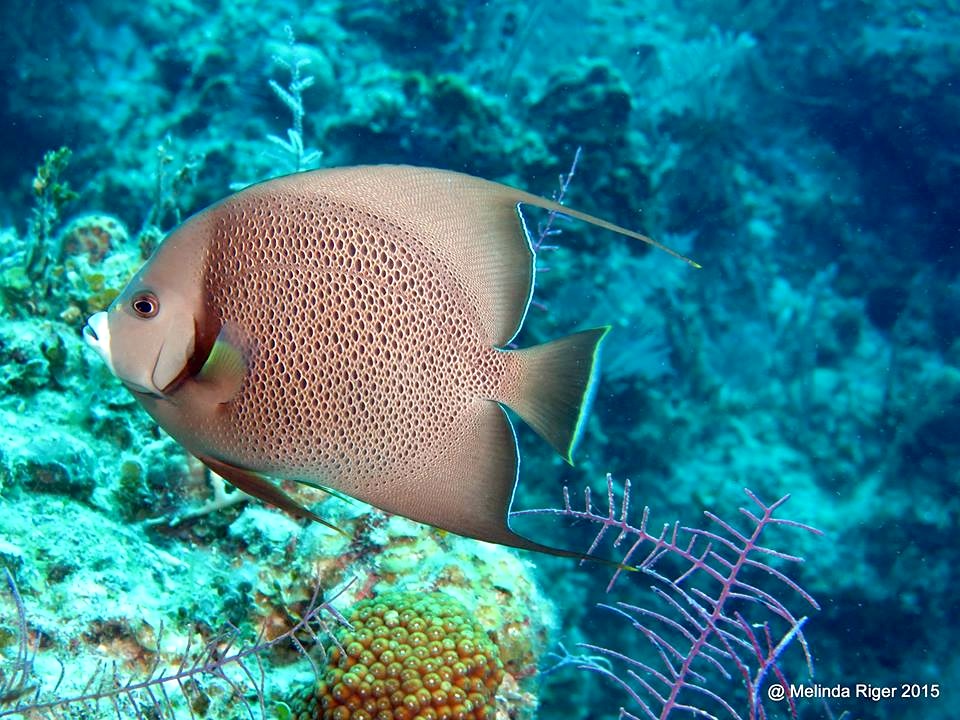
Angelfish are fabulous and come in various ‘colorways’, as designers say. Queens are my favourite, with grays not far behind. The third type here, the French, is in bronze medal position on my piscine podium but this could change were I ever to meet one in real life…
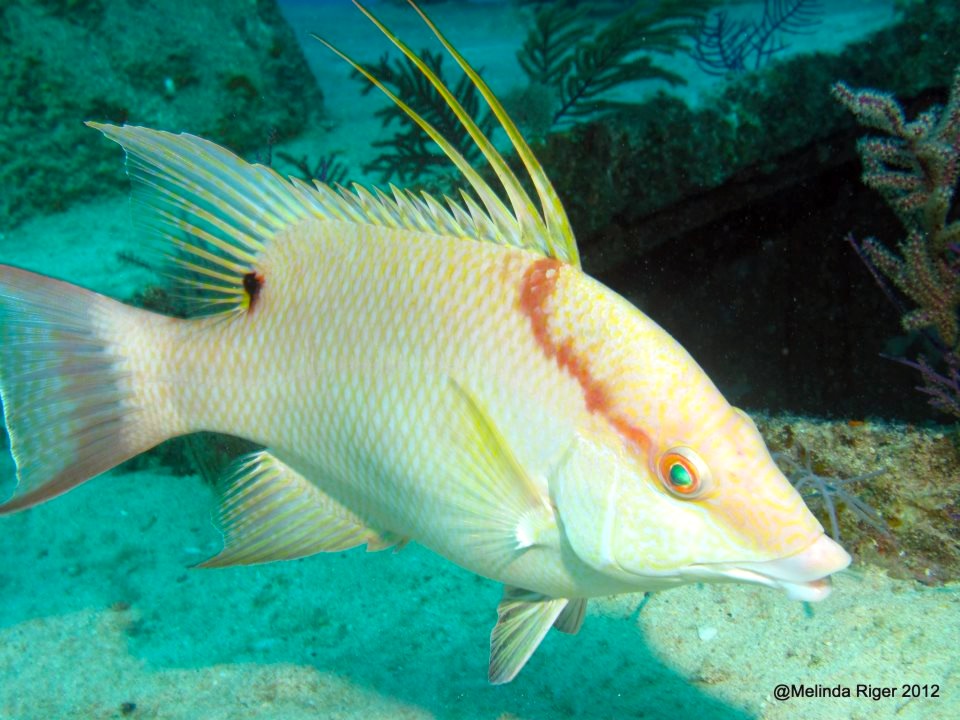
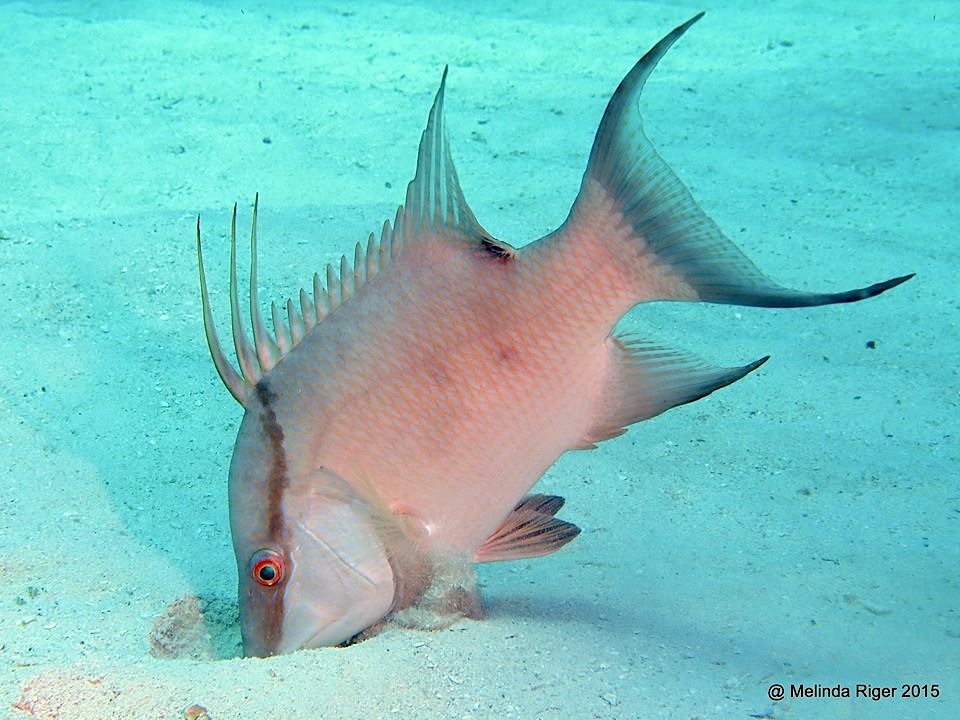
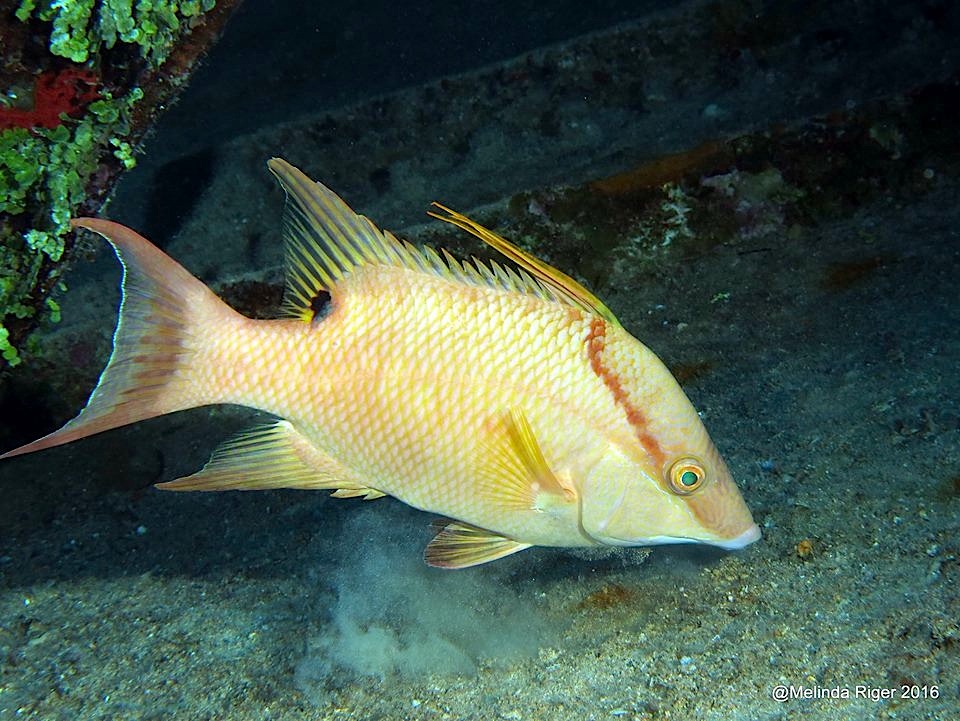
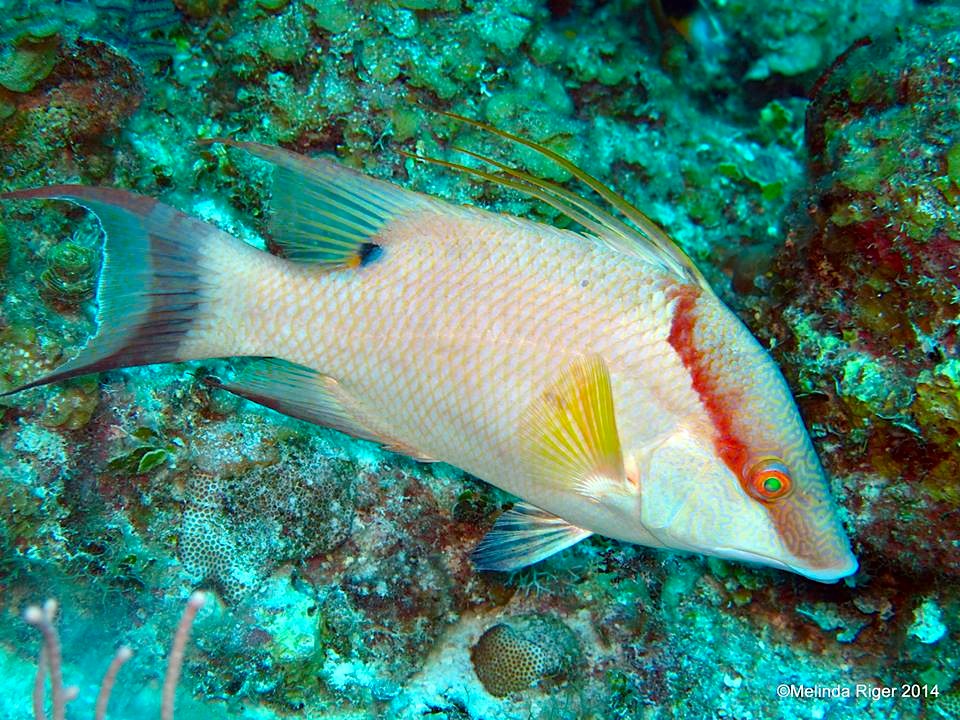
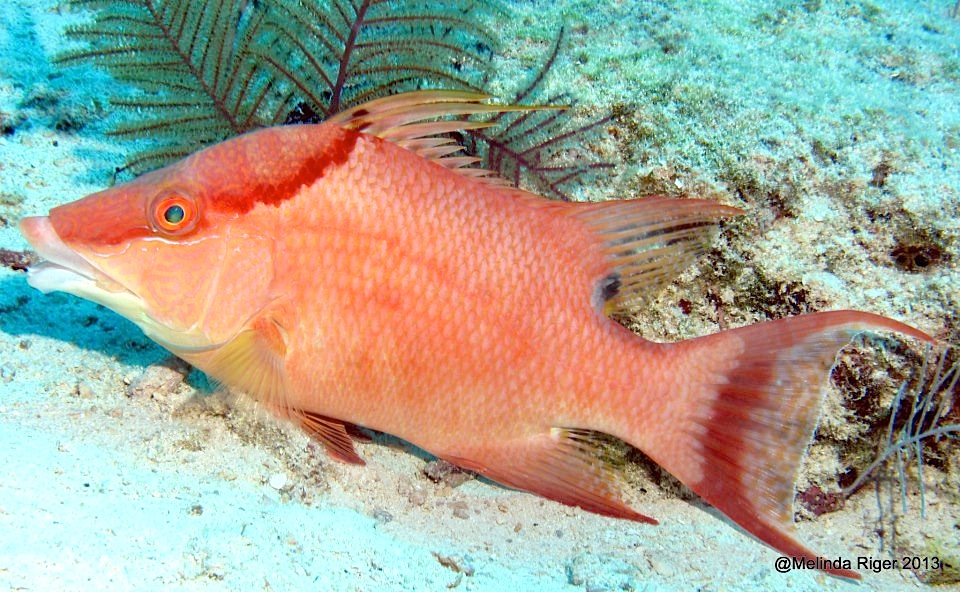
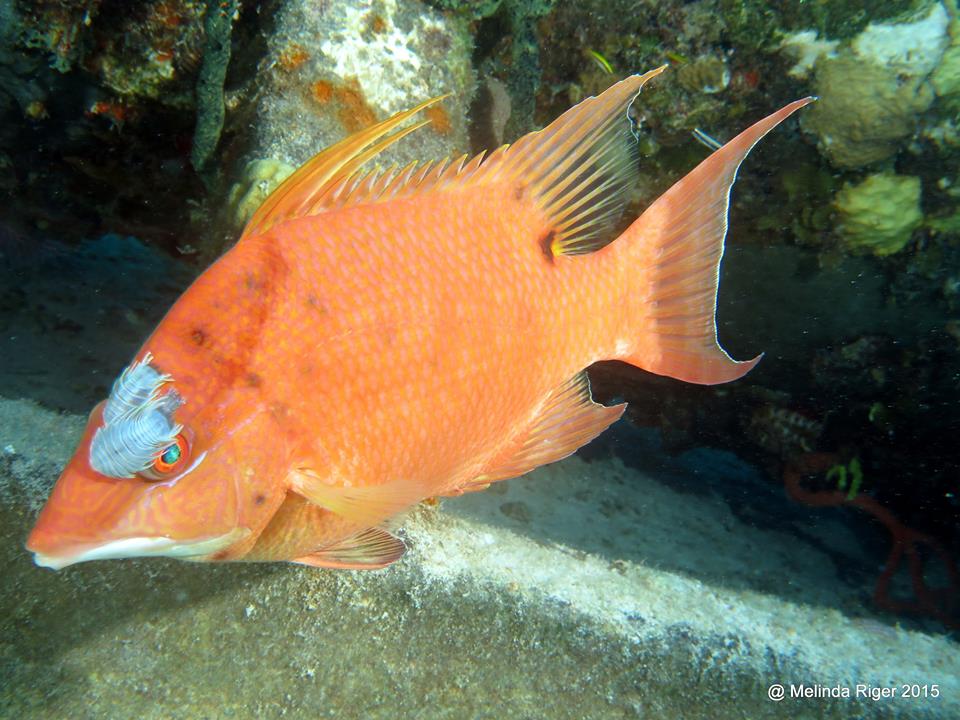
Hogfish. Fisherman’s delight… getting ‘high on the hog’. This wrasse species Lachnolaimus maximus is a reef denizen, especially wheregorgoniansare found. It has the distinction of being the only known member of its genus, and because it is IUCN listed as vulnerable, there are strict regulations governing bag, size, and gear limits to protect the species from overfishing.
The hogfish gets its name from its long ‘pig-like’ snout, coupled with its rootling behaviour on the sea floor for crustacean prey.
GENDER STUDIES: IT’S COMPLICATED
The hogfish is a sequential hermaphrodite, meaning it changes sex during different life stages. Juvenile hogfish are female, but mature into males at around 3 years old.
Hogfish social groups are organized into harems, where one male will protect a group of females in his territory and mate with them.
CAUTIONARY NOTECapt. Rick, a loyal follower, has made another of his pertinent comments: “A bit of caution is necessary here! There is some history in the Bahamas of mild to severe Ciguatera poisoning from Hogs. Our M.O. was to only eat Hogs no larger than 5 or 6 lbs. Temporary or permanent blindness, paralysis, and even death is possible with bigger Hogs”. Ciguatera is also a problem with, for example, ‘cuda on Abaco. Those caught on the Marls (west) side are ok to eat; those from the east side have to be treated with circumspection…
Credits: all fantastic fish fotos – Melinda Riger at Grand Bahama Scuba
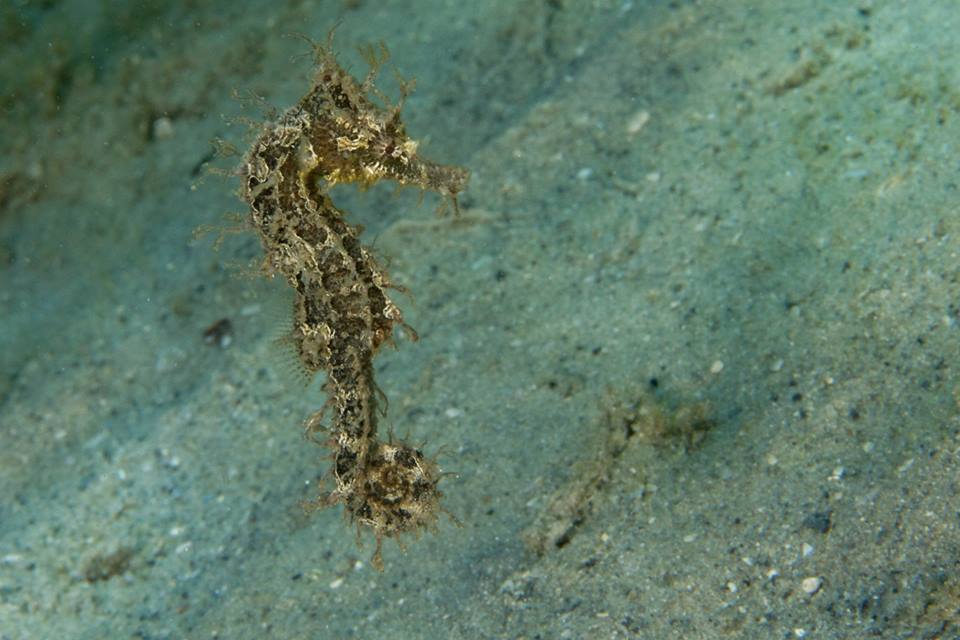
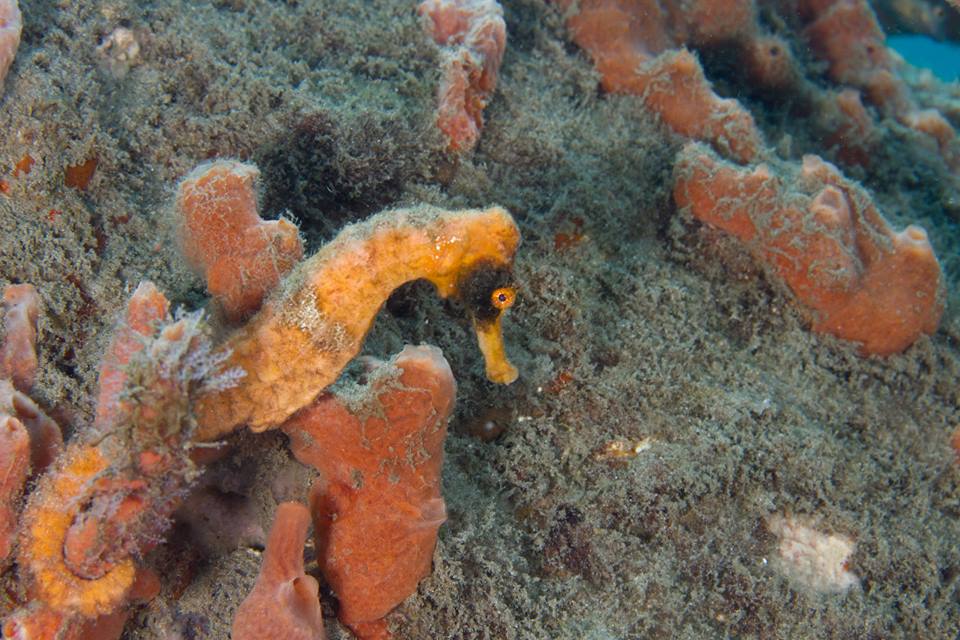
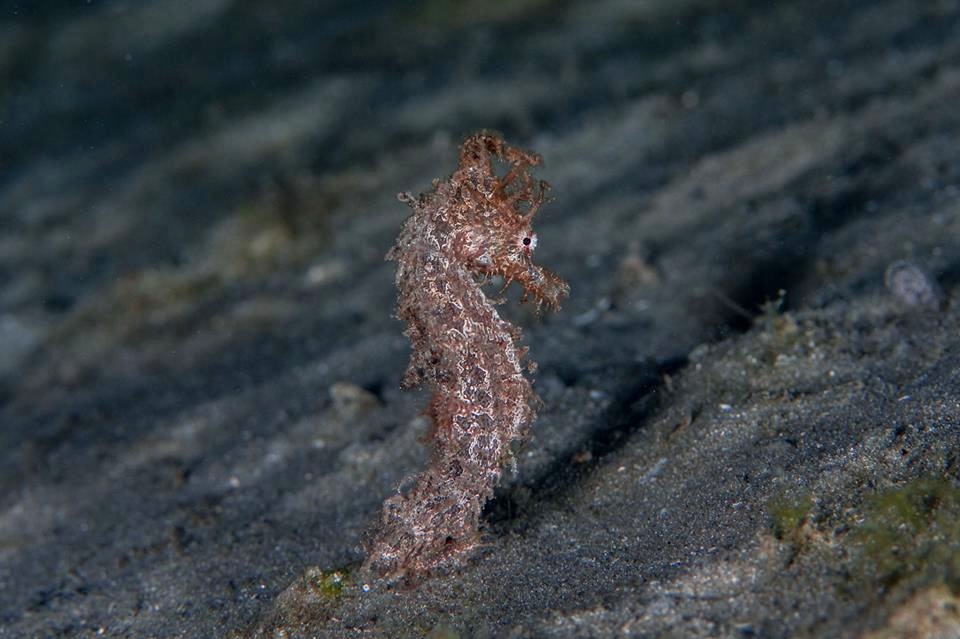
It’s a year since I last posted about these amazing little creatures, seahorses. I featured a number of photos by Melinda Riger, a couple of videos, some useful facts about them, and for some reason some useless facts that I came across in researching the post. You can chase it down here: SEAHORSES 1
Adam Rees of SCUBA WORKS is another diver, like Melinda, who combines great underwater experience with wonderful photographic skills. This posts showcases some of Adam’s seahorse photography, and if it doesn’t want to make you explore the reefs, I can’t think what will…
Seahorse Range Map
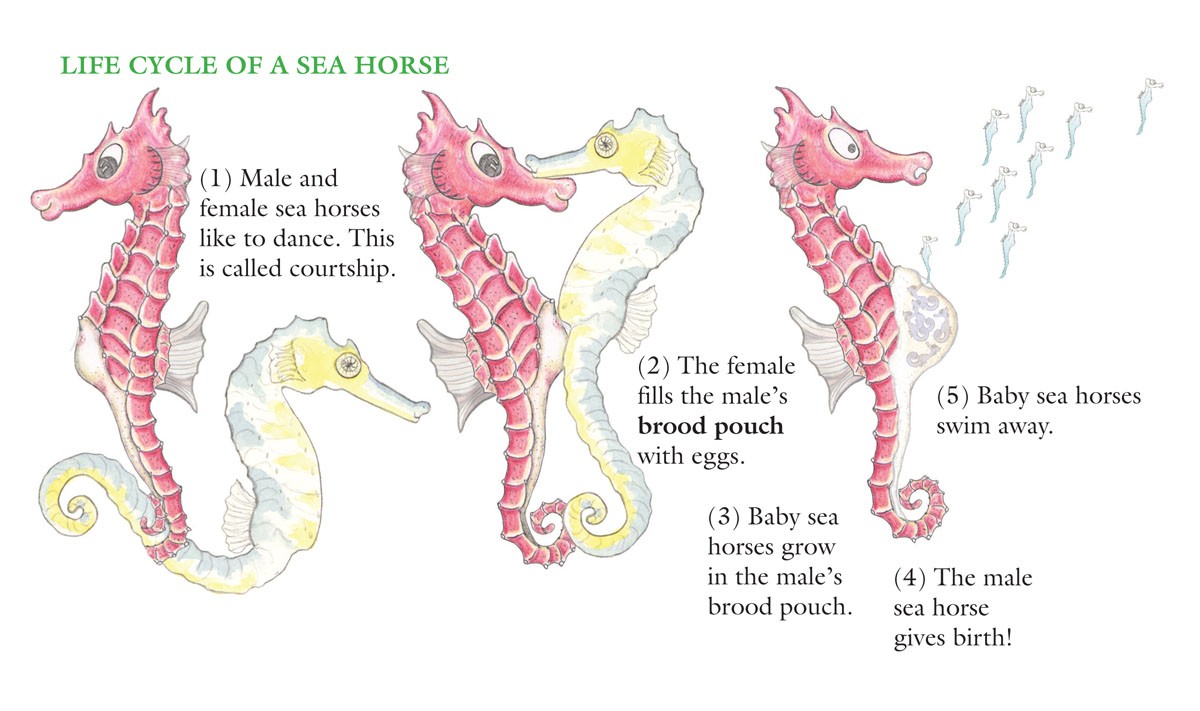
All phantastic photos: Adam Rees / Scuba Works; Range Map, Nat Geo; Lifecycle diagram, Seahorserun; Seahorse GIF, Alex Konahin
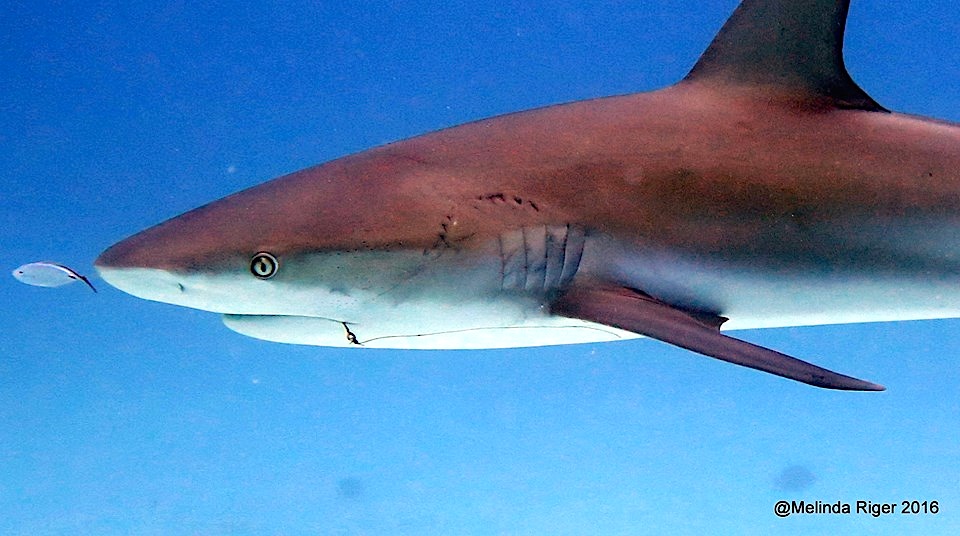
Sharks: apex predators of the deep. Also, kind to the suckers who hang out with them – REMORAS. In the header image you can see a remora hitching a ride on the shark’s back.
Sharks also seem to enjoy, or at least tolerate, the company of tiny fish – tiddlers so small they don’t even count as a snack or even a canapé.
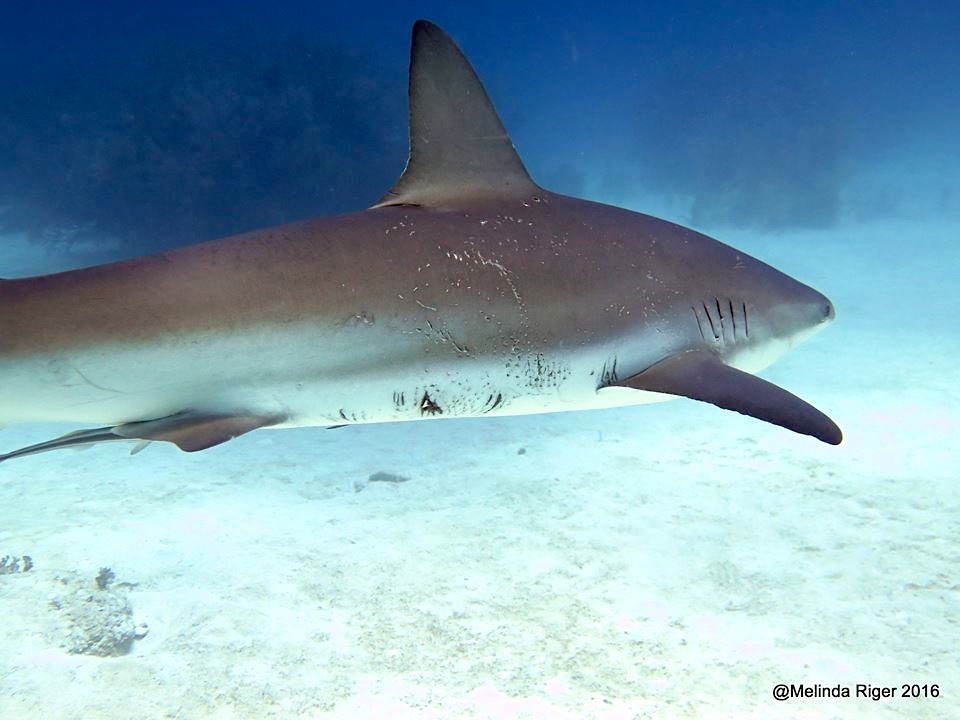
Check out the shark-jaw shaped wound on the shark just above. And the rather more dramatic ones on the two sharks below. Shark sex can be a rough old game, and sometimes results in moderate or even severe injury to one participant – or perhaps to both.
Credits: all great shark photos recently taken by Melinda Riger, Grand Bahama Scuba












 MBER – KEEP AN EYE OUT…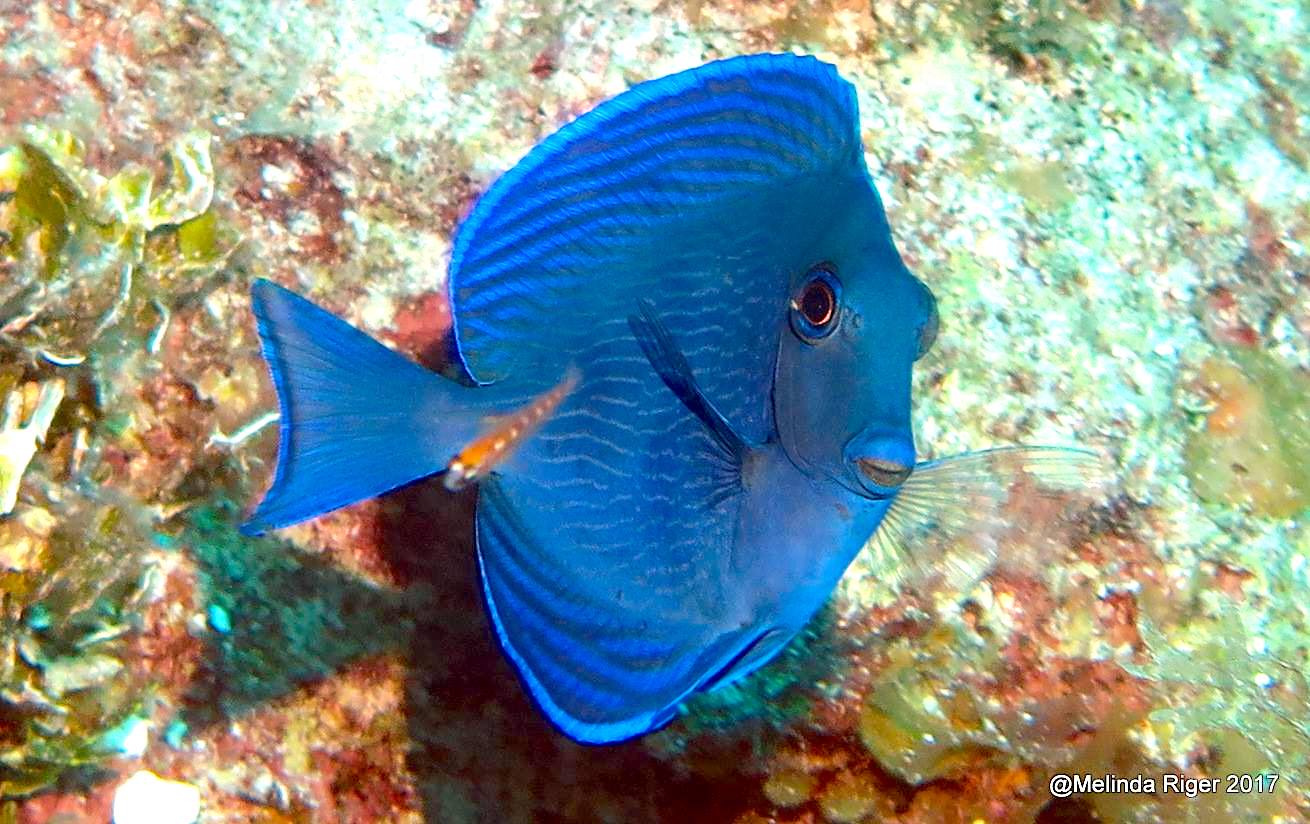




















































 ROLLING HARBOUR ABACO
You must be logged in to post a comment.