Unknown's avatar

HELP SAVE ABACO PARROTS – DOU DOU’S ART INITIATIVE


WELCOME BACK! Normal service is resumed after the family festivities of Christmas, with only the precious gift of a fractured wrist for rh to spoil an otherwise lovely few days. Immediately, I can report excellent parrot news…               DOU DOU, an avid birder and sculptor of most engaging miniature birds, has taken up the cause of the Abaco Parrot. We have been corresponding for a while about this, and I now reproduce her latest post, with the link to her site below

BIRD SCULPTURE – ABACO PARROT

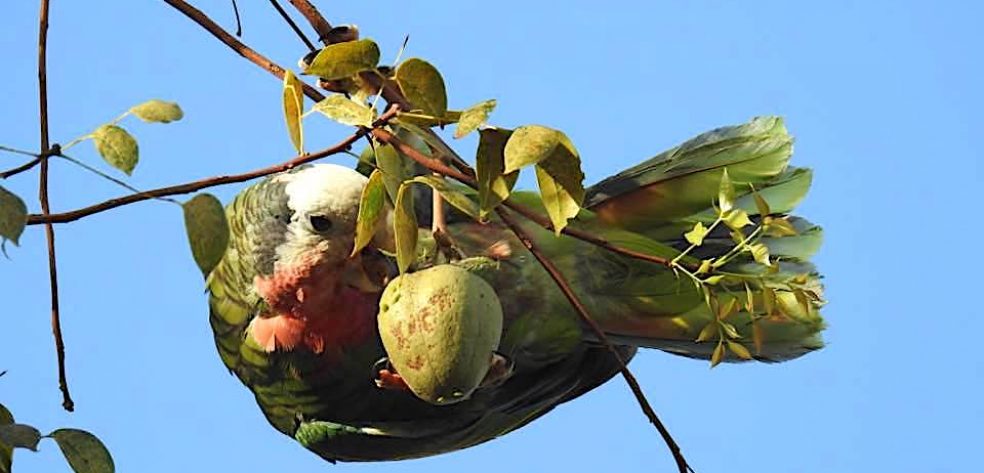
“Help, the cats are eating my babies!” said the parrot. And it’s true. These parrots are endangered – only 1000 of them left. A woman named Caroline is trying to save them from the feral cats that have invaded their island in the Bahamas. Let’s help her out! All proceeds from the sale of this parrot are going to Parrots International, which supports Caroline’s work. 

This little parrot measures 3.5 x 1.5 x 1.5 inches. You can buy it HERE from me and I will send the money to Parrots International or you can use “Other” to check out, send me proof you donated at least $30 to Parrot’s International, and I will send you a code that gives you $30 discount on this parrot so you will just pay for shipping – I will verify that a donation was made.

We can save these parrots! Let’s do it!!!!!

Read about Caroline’s work to save the parrots: ABACO PARROT RESCUE

doudou      CLICK LOGO to visit website ===>>>      

More about this exciting development in due course – other ideas are afoot… Abaco Parrot conservation is strongly supported by the Delphi Club, Abaco; and the research scientist heading the project, Caroline Stahala, is delighted with dou dou’s initiative in helping to raise the profile of her conservation work and in contributing to the funding received through PARROTS INTERNATIONAL

This organisation allocates funding for the research into the Abaco Parrots and their conservation. You can now pay direct by Paypal or Credit Card (with gift tax benefits depending where you live). Please remember use the “Note to Seller” box to specify ‘ABACO PARROTS / CAROLINE STAHALA’

Membership and Donation page   CLICK LOGO===>>>       Parrots International

Unknown's avatar

SOUTH ABACO CHRISTMAS BIRD COUNT 2011


Here is a clip taken from the excellent website THE ABACO SCIENTIST, with the kind permission of Dr Craig Layman of FIU. The brief summary of the South Abaco Bird Count 2011 by Elwood D. Bracey is of great interest, not least for the Delphi Club, from where guided Nature Tours take place and where there is a lot of enthusiasm for the birdlife of the island. 75 separate species were recorded this year, including all the known Abaconian endemics.

It is also a very fine photo of a male Bahama Woodstar courtesy of BIRD FORUM

Unknown's avatar

“ABACO CHRISTMAS & A DELPHI NEW YEAR”


HAVE YOURSELVES A MERRY ABACO CHRISTMAS

As Reality Show contestants say, it’s been a roller-coaster of emotions. An incredible journey. Living the dream. Nine months ago I knew little about blogs; less about computer techniques and problem-solving; and nothing whatsoever about hutias, murex shells, tecoma stans, or hurricane technicalities. Thanks for the many contributions, advice, helpful criticism**, encouragement and general enthusiasm for the project. Thanks to Peter Mantle for permitting & promoting this rather ill-disciplined sibling of Delphi. And thanks to everyone who has contributed to an accumulation of nearly 25,000 site hits – or perhaps to the one strange person somewhere out there with repetitive strain injury from 24,588 repeat visits. **Mrs rh scores highly here for her kind but firm restraints: “No! You can’t put that!”

FOR THE RH CHRISTMAS MESSAGE CLICK DELPHI     

Special thanks to Sandy Estabrook of the estimable ABACO ESCAPE  and PETER GEHRIG  (for the snow) for permission to use the above festive link

Unknown's avatar

KASIA’S MYSTERY ABACO SHELL: A PUZZLE FOR XMAS


KASIA’S MYSTERY ABACO SHELL: A PUZZLE FOR XMAS

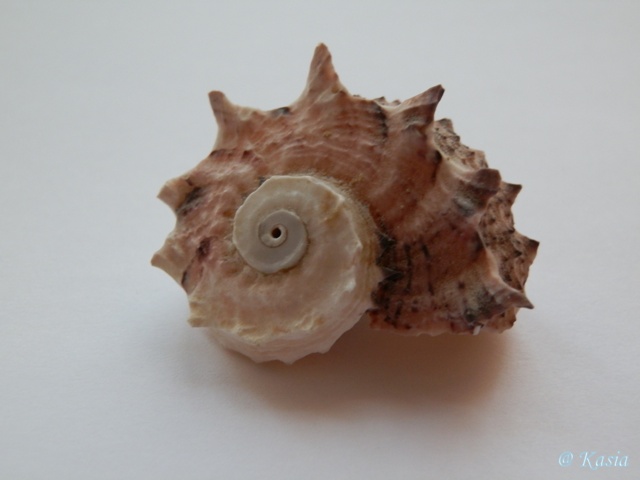
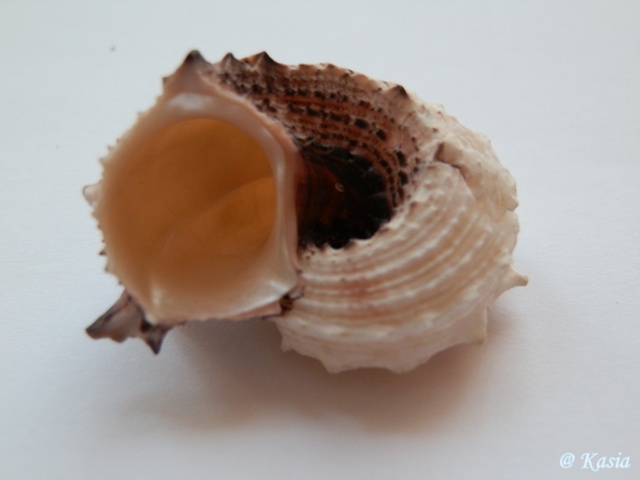
Kasia’s beachcombing exploits have produced some lovely seashells that have already featured here. Precise identification has sometimes been difficult for an amateur, because of the many varieties of a particular type of shell or close resemblance to other shell families. This one has got me stumped. I have trawled the  internet. I have studied field guides. I’m still baffled. It hasn’t quite matched any other shell…

XMAS PRIZE the first person to ID this shell correctly will enjoy a bottle of ice-cold Kalik being drunk on the Delphi balcony swing in February 2012. By me. Suggestions to rollingharbour.delphi@gmail.com welcome

STOP PRESS: NOW SOLVED – SEE UNDER IMAGES

Helpful thoughts: I’ve considered a  form of King’s Crown (but I’ve not found a close enough match) or a Ram’s Horn Snail (but they don’t seem to have spines)

First entry by Kasia (potentially disqualified as the shell’s owner): Angaria, a form of Turban shell. However these seem to be confined to Pacific areas…

The Solution:  And the winner (within 24 hours) is… Kasia!

I sent the link to the post to Bahamian seashell expert Colin Redfern at http://www.bahamianseashells.com, author of ‘Bahamian Seashells: 1000 Species from Abaco, Bahamas’. He confirms Kasia’s ID as an ANGARIA SHELL , one of a large number of species of turban shells TURBINIDAE found throughout the world. It is indeed a Pacific shell, probably from the Philippines. So what on earth was it doing on a beach on the east coast of Abaco? Colin has encountered this sort of anomaly before, and gives various possible explanations:

1. Homeowners’ shell collections come from areas other than the Bahamas & are sometimes thrown out onto a beach. They may be washed up along the coast

2. Shops sell packets of shells, including Pacific shells, which may become dispersed

3. In Fl. it is not unknown for resorts to “seed the beach” with Pacific shells, which are cheaper & more easily bulk-bought than Atlantic shells

4. Rare Pacific & Indian Ocean shells washed up on a beach were once traced to the owner, whose beach house had been lost in a hurricane some years before

Many thanks, Colin, for your help with this puzzle; and congratulations Kasia – I’ll claim my Kalik in February please. Oh I see, I’ve got to buy you one, have I?

Unknown's avatar

BLUE TANG: THE MOVIE (REEF SNORKELLING, FOWL CAY, ABACO)


BLUE TANG: THE MOVIE

RECIPE: Take one incompetent swimmer who hasn’t snorkelled in, oh, nearly 40 years. Place him over a coral reef for his first time ever. Add a small underwater camera totally alien to him. Immerse for 30 minutes in warm briny water.

Lessons have been learnt for next time. Mainly, don’t keep waving the camera about; let the fish move round you rather than vice versa; and most important of all, remember to keep breathing or else…

Here for the first time on public release is BLUE TANG: THE MOVIE (music by Adrian Legg), 45 secs of advanced camera-shake with some beautiful fish more or less in shot for most of the time. If you are prone to sea-sickness, do not enlarge the video. If you are allergic to poor photography… well, thanks for visiting.

[vimeo https://vimeo.com/44794952]
Unknown's avatar

PETERSON CONCISE GUIDE TO SHELLS OF NORTH AMERICA: REVIEW


PETERSON CONCISE GUIDE TO THE SHELLS OF NORTH AMERICA

This pocket guide is part of the well-known Peterson series of natural history guides. It’s called a ‘First Guide’ to denote its ‘beginner’ / condensed status, and to distinguish it from the serious business of the excellent and comprehensive Peterson Field Guides (I shall review 2 of these in due course. When I have read them. In 2012).                                  rh rating **

SUMMARY: this 128pp ‘concise field guide to 224 common shells of North America’ is a simple pocket guide, with quite basic descriptions, and colour drawings rather than photos. All the main gastropod and bivalve species are represented, each with a few variants. The vast majority of these will be found on Abaco and more generally in the northern Bahamas. For the used price I paid for a 1989 edition with a creased front cover (1 pence + P&P on Amazon UK!) I have actually found it quite useful for comparing or confirming IDs, or for snippets of additional information. However, it’s not the one to rely on entirely to identify your beachcombing finds or to get species details. Apart from anything else the illustration colouring is often somewhat approximate. At best, I’d say it’s a useful preliminary tool for ID on the beach if you don’t want to lug a much larger field guide around with you. Don’t use it for your doctoral thesis. Overall, some use, but not a great deal. There are better books: see FISH & SHELL BOOKS

Unknown's avatar

CORNELL LAB OF ORNITHOLOGY: ANNUAL REPORT 2011


CORNELL LABORATORY OF ORNITHOLOGY                    ANNUAL REPORT 2011

The Annual Report 2011 contains a huge variety of reports, project news, images, and references. The direct link to the specific Bahamas Birding page can be found under BLOGROLL links on the SIDEBARThe Report is far wider-ranging. I post it in pdf form because anyone with an interest in birdlife is bound to find something worth following up, and  you should be able to download it (if you try & it doesn’t work, can you let me know – comment box or email – and I’ll change the format)

CLICK CORNELL LABORATORY OF ORNITHOLOGY ANNUAL REPORT 2011

Unknown's avatar

MANGROVE FLATS & BONEFISHING: CAST IN THE RIGHT PLACE [VIDEO]


BONEFISHING ON MANGROVE FLATS

The rollingharbour wildlife enterprise doesn’t normally mix with the technical side the bonefishing on Abaco in general or at the Delphi Club in particular. rh is personally adept at failing to boat fish even where he is lucky enough to hook up; and in turning genial, amiable guides into scowling cursing wrecks in a day.

This is an exception: an excellent 4.5 minute video from Dr Aaron Adams (marine biologist and Bonefish & Tarpon Trust Operations Director) on how to maximise your chances on the mangrove flats by not spending hours flogging the water pointlessly in obviously unproductive areas. Clearly if you have a guide, this is unlikely to happen – but what if you are wading or otherwise going solo? 

The reason to post this informative video here is for the insight into the structure of mangrove swamps, with clear underwater photography and commentary as a skiff glides the flats over ‘dead’, & productive, areas. What is a mangrove swamp? Where do the fish favour? Why? This video will help your understanding.

Unknown's avatar

DELPHI CLUB ABACO & ARIST RICHARD BRAMBLE: BONEFISH, CRAWFISH & PERMIT ART


Well-known artist Richard Bramble already features in his own page here under the CONTRIBUTIONS drop-down menu. For the previous post of RB hard at work on new designs at the Delphi Club CLICK EXAMPLE PHOTO BELOW

RB and Crawfish model posing (both)

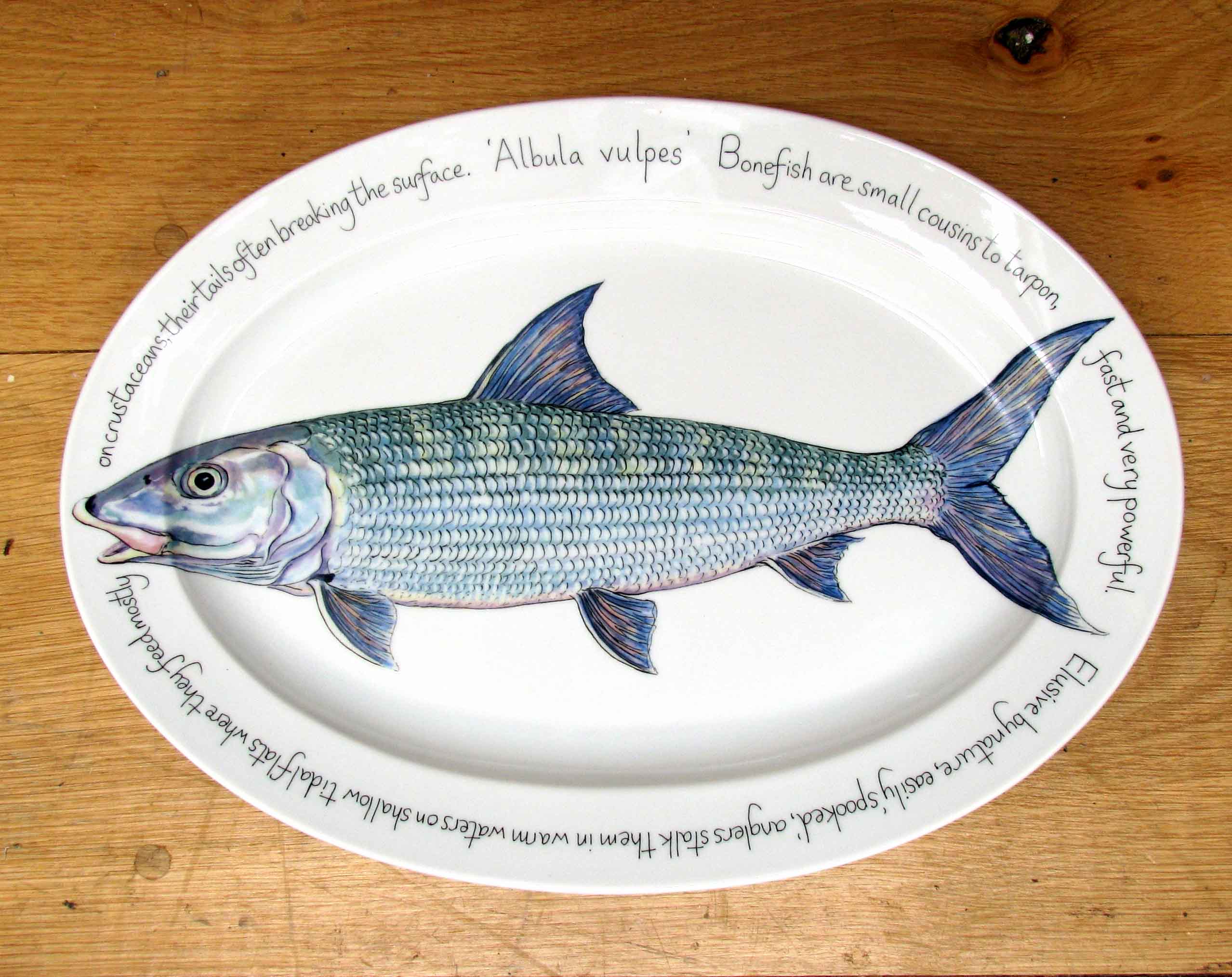
Richard has broadened his already considerable range of paintings and ceramics to include the Abaco marine life he painted while at Delphi. In addition to his very elegant Bonefish, there are now Permit and Crawfish plates (with the original ‘life model’ pictured above). Some weeks later I was at Richard’s studio in Dorset as he prepared to transfer these designs to ceramics, with crawfish cut-outs artfully strewn around the floor. Here are his new items, with his characteristic captions:

 (I have an oval bonefish plate to remind me of the ones I… I…’let go’ by mistake)

Richard’s comprehensive website featuring his entire oeuvre is to be found at the sign of the Crawfish   together with an elementary purchase method to take advantage  of the excellent online shopping opportunities (he might be too modest to say). I write this with Christmas-tide a mere 2 weeks away. You’ll find sea water and fresh water fish / creatures, shells, all manner of game birds and farmyards animals, on every conceivable type of ceramic platter, utensil and kitchen gizmo. 

(With apologies that this site seems t0 be turning into a cross between an online Mall and an advertising agency… Nature Tours. Boat Expeditions. Arts & Crafts. Kitchenware. Books. Cameras. Yup, ticked them all. But there’s plenty of other stuff to look at in these pages)

Unknown's avatar

ABACO: BMMRO WHALE & DOLPHIN SIGHTINGS NOV 2011 & A ‘FALSE KILLER WHALE’ STRANDING


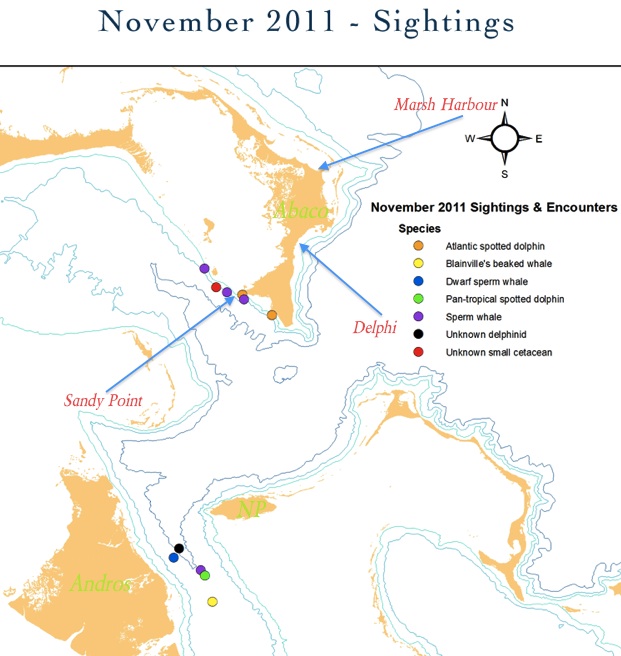
ABACO DOLPHIN & WHALE SIGHTINGS NOVEMBER 2011              ‘VERY DIFFERENT FROM OCTOBER’

October was a good month for bottlenose dolphins, with sightings both north and south of Marsh harbour –  however, no reported whales off Abaco at all. In complete contrast, in November no bottlenose dolphins were reported, nor any other cetaceans on the east side of Abaco. Instead, the observed activity was all around Sandy Point, with sperm whales in particular returning to the area. Increased sightings off Andros were also reported

                  STRANDED FALSE KILLER WHALE

Charlotte Dunn also reports that on December 2nd 2011, BMMRO was alerted that a whale had live-stranded on Guana Cay. After attempts to re-float it, it was seen heading north past Dolphin Beach. The animal had numerous lacerations and fresh scars, and appeared “very weak with labored breathing”The whale was later found beached at No Name Cay (north of Green Turtle Cay). At that time it was reportedly “still alive but just barely”. Unsuccessful attempts were made to get the animal back in the water.  Sadly, by evening it was dead. Photo ID confirmed it to be a FALSE KILLER WHALE Pseudorca 


For the full report on the BMMRO Facebook page CLICK STRANDED WHALE 

Click logo!

Unknown's avatar

ABACO NATURE TOURS WITH RICKY JOHNSON


ABACO NATURE TOURS with Ricky Johnson

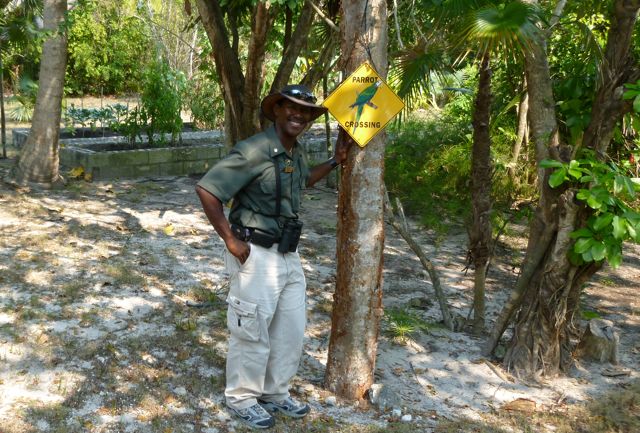
Reluctant as I am to give Ricky even more publicity that he gets already – including passim in this blog – his Nature Tours are seriously good, and his  knowledge and enthusiasm for the flora, fauna, geology and history of Abaco are unrivalled. If you want to see a parrot close-up, understand a blue hole or learn which trees and shrubs are poisonous  (and which are the antidotes) he is undoubtedly your man. He will even show you birds where you have completely failed to see any & believe there are none  

To reach Ricky’s A N T website CLICK LOGO===>>> 

Advert ends (that will be $50 please Ricky)


Unknown's avatar

ABACO & HURRICANE IRENE: A SCIENTIFIC RETROSPECTIVE


                    ABACO, BAHAMAS & HURRICANE IRENE                         A SCIENTIFIC RETROSPECTIVE

The contents of this post must be credited at the outset to the excellent website UNIVERSE TODAY and NASA where you can easily get Lost in Space for an eon or two. 

For 1o days at the end of August / in early September, the rh wildlife focus was supplanted by intensive weather blogging about Hurricane Irene from an Abaco perspective – the approach, direct journey north over the island, real-time reports and images of the storm and its aftermath, communication links and so forth. All from a safe distance of 4250 miles. On 26 August alone, this small blog – average daily hits 20 – had over 5000 hits…

3 months on, I have decided to revisit Hurricane Irene and the Bahamas because there is still a great deal of interest out there – I still get plenty of hits for the ‘storm posts’ – and much more available information. Some of these UNIVERSE TODAY / NASA images & videos are truly spectacular. The focus is on the 3 days August 24 – 26: before, during and after Abaco was struck by the storm

HURRICANE IRENE – ABACO / BAHAMAS SPACE PHOTOGRAPHS        (VIDEOS BELOW)

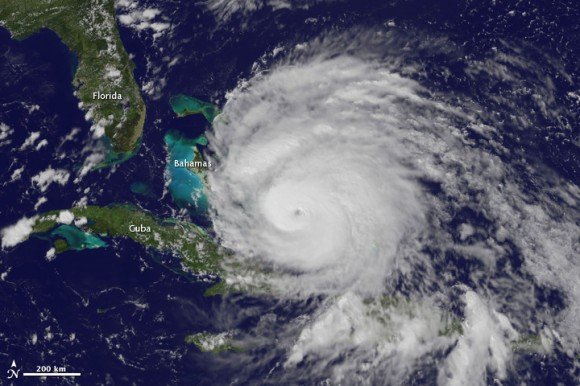
August 24, 2011 14.55 EDT Irene (taken by the GOES satellite) approaching the Bahamas. It now has a distinct eye and the clouds spiraling around the center are becoming more compact. The image also shows how large Irene has become, measuring several hundred kilometers across 

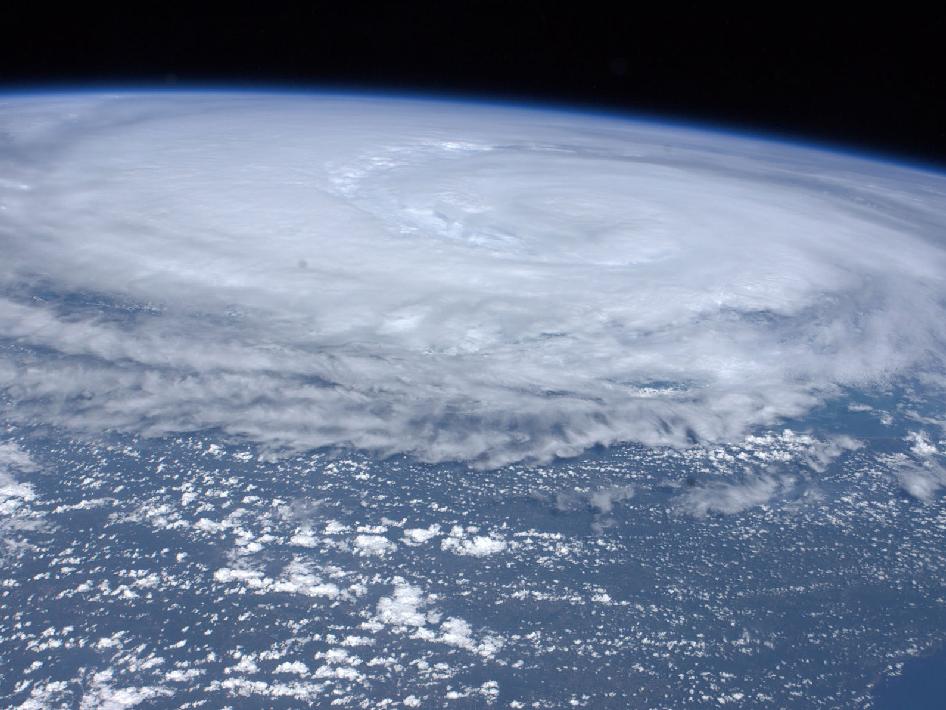
August 24, 2011 15:10 p.m. EDT View of Hurricane Irene from the International Space Station 230 miles above the Bahamas, moving northwest as a Category 3 hurricane with winds of 120 mph, expected to strengthen to a Category 4 storm imminently

August 25 2011  8.00 EDT Hurricane Irene 65 miles east-southeast of Nassau, Bahamas. Irene’s top sustained winds remain at 115 mph, moving to the northwest at 13 mph

August 25 2011 16.30 EDT Hurricane Irene from the International Space Station, clearing the Bahamas and heading north towards the US coast

HURRICANE IRENE VIDEOS – BAHAMAS REGION

1. HOW DOES A HURRICANE FORM? Insight into the process can be gleaned by watching a rapid time lapse movie of the formation of Hurricane Irene as it sweeps northwards across the Caribbean region

2. HURRICANE IRENE FROM CARIBBEAN TO CANADA This astounding NASA video tracks the path of Hurricane Irene from August 23 to August 29, showing the formation in the Caribbean region, the path over Puerto Rico, Hispaniola, the Bahamas and the US East Coast northwards to Canada 

3. HURRICANE IRENE IN 20 SECONDS (NOAA/ GOES) A psychedelic trip

CREDITS for images, videos and text (as adapted) go to the websites of UNIVERSE TODAY,  NASA and GOES PROJECT (NASA)

Unknown's avatar

BOOK REVIEW – ABACO: HISTORY OF AN OUT ISLAND & ITS CAYS


STEVE DODGE, illus. Laurie Jones – White Sound Press

• Original Edition 1983 (170pp), reprinted                     rollingharbour rating ****     • Revised and expanded edition 2005 (270pp)                    [I don’t have it!]

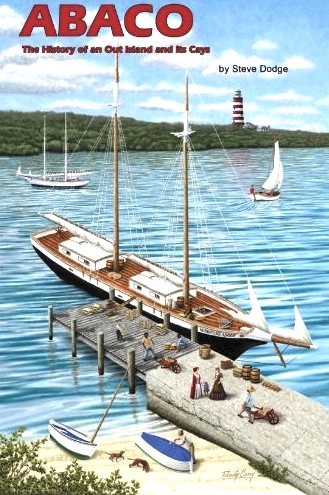
These are the 2 covers, to help distinguish them if you search online. Beware, the covers are often used interchangeably… so check the edition date


The cover image, colourfully made over for the new century, shows the Albertine ‘Adoue’ – the last Abaconian sailing mailboat (giving way to diesel power in 1923)

1st EDITION REVIEW: The first 5 chapters cover the more distant history of the Bahamas in general & Abaco in particular. Starting promisingly “Two hundred million year ago…”, the early chapters briefly cover the formation & geology of the islands and the demographic & social history, with plenty to interest and not too much detail – very informative for a non-Abaconian like me. I personally am uninterested in the boatbuilding chapter (I like the illustrations) but it will surely appeal to people who feel comfortable out of their depth. The history of gradual expansion, increased trading importance, & the less attractive sides – e.g. wrecking – are well-covered. 

The final 3 chapters form the second half of the book – the 20th Century when Abaco moved from relative isolation to greater significance. Here the detail becomes denser as Abaco rapidly develops. There are parts that I skimmed, but there’s much of interest and many factual nuggets about the political developments in the later 20th century. Overall the book is an excellent primer for an Abaco novice for an overview up to the 1980s. I guess residents will also get plenty from it as well.

I haven’t seen the new edition, but I am sure it is the one to get. The Am*z*n blurb for it, which I recklessly copy, says “This expanded and updated second edition has completely new sections on Lucayan Indians, Wilson City, and contemporary Abaco, and many revisions. This is the only general, comprehensive history of Abaco, Bahamas available; it covers from the geologic formation of the Bahama Banks to the middle 1990s. Cover painting by Phil Capen,; illustrations by Laurie Jones. 112 illustrations, photographs, and maps. Appendix on boat building in Abaco”  There are plainly many more illustrations and photos than in my copy; and I notice boatbuilding has been moved to an Appendix…

CURRENT COST: Unlike most of the books I have reviewed, this book is not cheap at the moment. The new edition can be bought for $25 on Amazon.com /  £33 on Amazon.co.uk – none on Abe. The original edition is a mere $4 on Amazon.com, unfeasibly expensive on Amazon.co.uk, but reasonable on Abe