Unknown's avatar

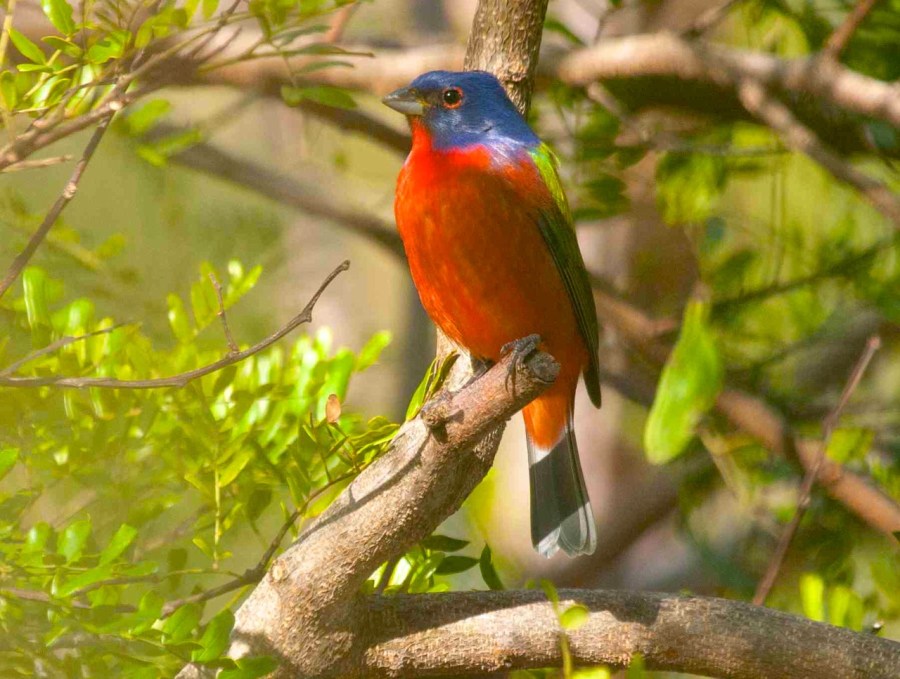
BRIGHT & BEAUTIFUL BUNTING FOR AN ABACO CHRISTMAS

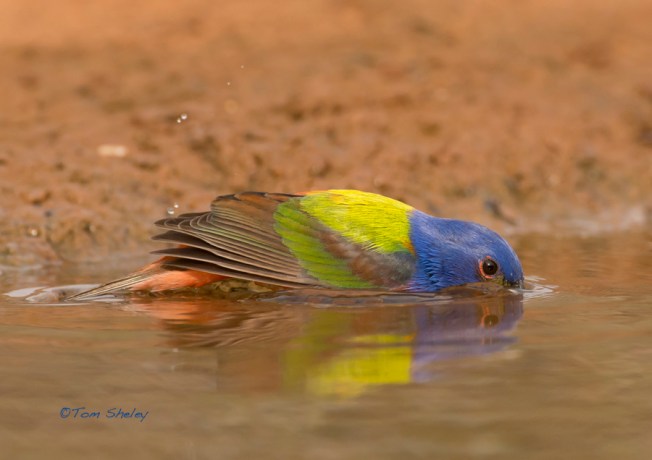
Painted Bunting.Bahama Palm Shores.Abaco Bahamas.Tom Sheleyimagesimagesimagesimages

BRIGHT & BEAUTIFUL BUNTING FOR AN ABACO CHRISTMAS

BUNTING  /ˈbʌntɪŋ/  (Noun)

[Yay! A Christmas gift of a puntastic avian / festive double-meaning]
  1. A small New World songbird of the cardinal subfamily
  2. Flags and other colourful festive decorations

imagesimagesimages

PAINTED BUNTINGPainted Bunting, Abaco (Erik Gauger)
Painted Bunting, Abaco (Tara Lavallee)Painted Bunting, Abaco (Tara Lavallee)

It’s hard to imagine a more Christmasy little bird than the Painted Bunting. Bright blue, red, green primary colours make for a spectacular small bird to grace any garden or feeder. There are other bunting species and close relations – e.g. grosbeaks – on Abaco. A common factor is the little fat beak and voracious seed greed…

                                                           painted-buntingimagespainted-bunting copy

Feeders at the Delphi Club. The first is of a female & a male PABU feeding together (RH). The second is a male PABU with a pair of black-faced grassquits (Sandy Walker)Painted Buntings (M & F), Delphi, Abaco (Keith Salvesen)Painted Bunting, Delphi, Abaco (Sandy Walker)

                                                        painted-buntingimagespainted-bunting copy

The next two wonderful photos are by Tom Sheley, a major photographic contributor to THE BIRDS OF ABACO. They were taken in Texas, not on Abaco, but I include them because of Tom’s strong connection with the birdlife of Abaco; and because on any view they are fantastic shots…
Painted Bunting reflection LR.Laguna Seca.South TX. 4.16.13.Tom SheleyPainted Bunting dip reflection LR.Laguna Seca.South TX. 4.16.13.Tom Sheley

Credits: Tom Sheley (1, 7, 8), Erik Gauger (2), Tara Lavallee (3, 4), Keith Salvesen (5) Sandy Walker (6); Birdorable Cartoons

imagesimagesimagesimages

Unknown's avatar

TRI-COLORED HERON HUFFS SNOWY EGRET: GILPIN POND, ABACO

Snowy Egret, Gilpin Pond Abaco 10 (Keith Salvesen)

TRI-COLORED HERON HUFFS SNOWY EGRET: GILPIN POND, ABACO

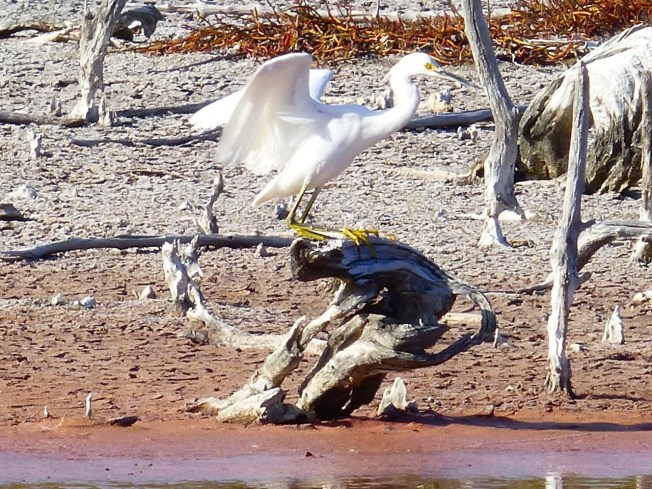
We were at Gilpin Pond to watch for Herons and Egrets. Bahama Pintails were a given, Black-necked Stilts were likely – but one never quite knows what Ardeidae will turn up. There was a snowy egret fishing peacefully at the north end of the pond. We were a little way off, on a small wooden jetty. Slowly and rather deliberately a tri-colored wandered right through the Egret’s hunting area. It wasn’t looking for food, and it certainly wasn’t in a hurry. 

Heron wading through my fishing spot? Like I care? [Yes. You really do]Snowy Egret with Tri-colored Heron, Gilpin Pond Abaco 1 (Keith Salvesen)

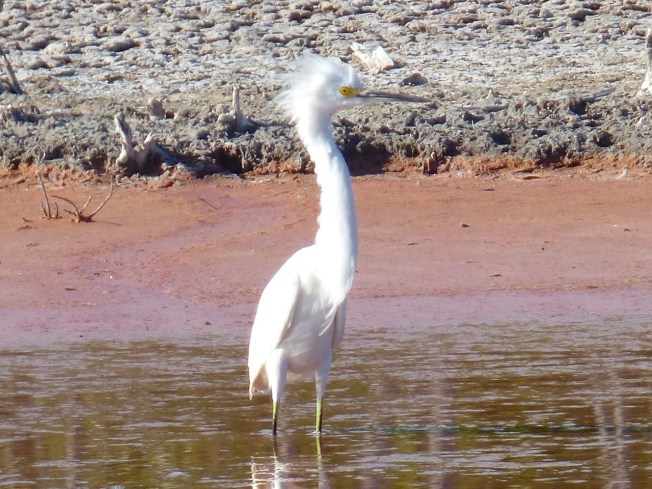
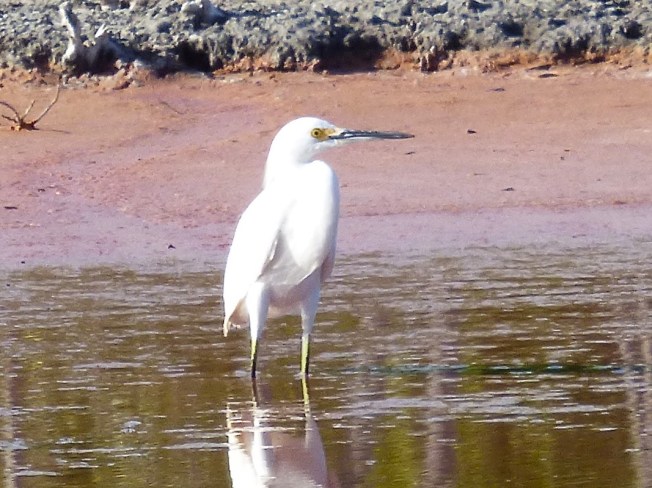
I regret to say that Snowy threw a bit of a strop. Having been hunched and intent on his hunting, he became distracted and palpably upset. It was just… the heron’s meander right past his beak was a bit to much for any self-respecting egret to tolerate. This is how it went, as the heron moved very slowly forwards…

A bad hair day – but gradually regaining composure…Snowy Egret, Gilpin Pond Abaco 1 (Keith Salvesen)Snowy Egret, Gilpin Pond Abaco 2 (Keith Salvesen)Snowy Egret, Gilpin Pond Abaco 3 (Keith Salvesen)Snowy Egret, Gilpin Pond Abaco 4 (Keith Salvesen)

Then the heron got out of the water… out of the way. You’d think.Tri-colored Heron, Gilpin Pond Abaco 2 (Keith Salvesen)

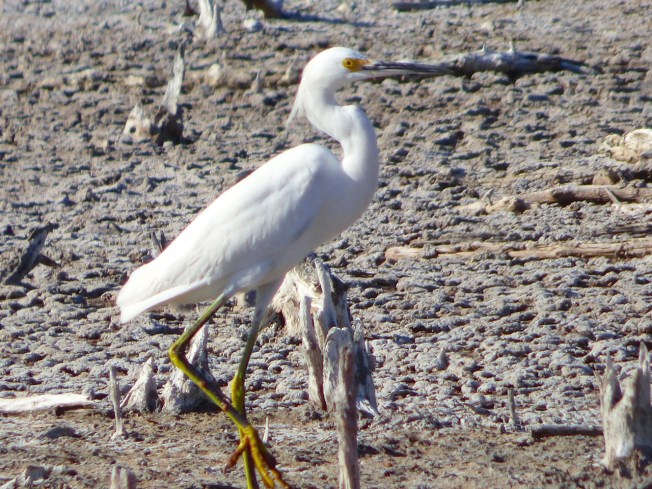
Not to be outdone, the egret followed behind, no doubt muttering crossly…Snowy Egret, Gilpin Pond Abaco 6 (Keith Salvesen)

…and hopped up onto a dead tree stump, where it stood rather forlornlySnowy Egret, Gilpin Pond Abaco 8 (Keith Salvesen)Snowy Egret, Gilpin Pond Abaco 9 (Keith Salvesen)

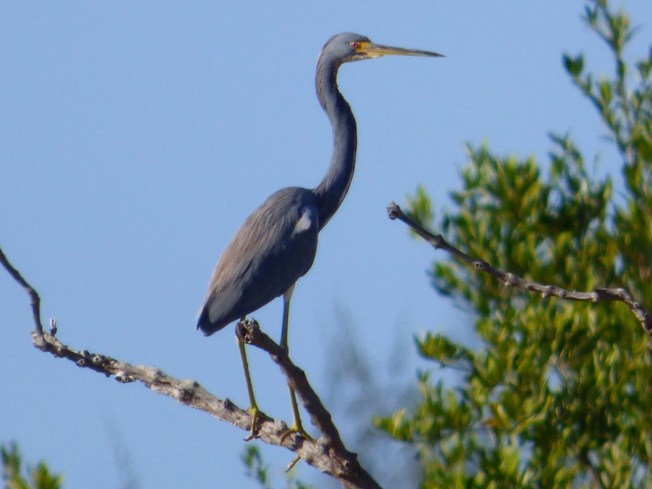
At which point the heron flew off and perched high up on a dead branch. I swear I heard it laugh.Tri-colored Heron, Gilpin Pond Abaco 4 (Keith Salvesen)

All photos RH. All anthropomorphic interpretations, too.

Unknown's avatar

BAHAMAS REEF CORAL: A COLOURFUL GALLERY

Orange Cup Coral ©Melinda Riger @ G B Scuba copy

BAHAMAS REEF CORAL:  A COLOURFUL GALLERY

The reefs of the northern Bahamas, as elsewhere in the world, are affected by two significant factors: climate change and pollution. Stepping carefully over the sharp pointy rocks of controversy, I’ve avoided the term ‘global warming’ and any associated implication that humans (oh, and methane from cows) are largely to blame for the first factor; but on any view, ocean pollution is the responsibility of mankind (and not even the cows). 

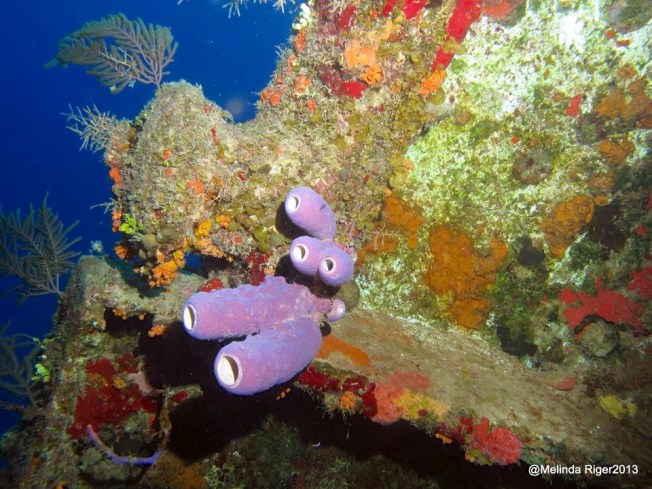
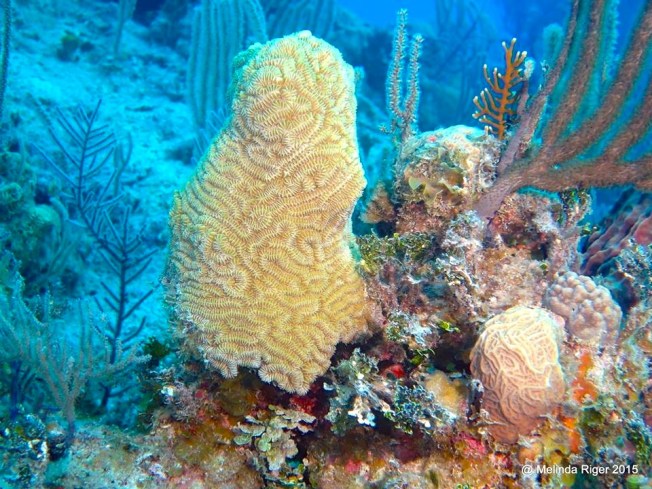
That said, an exploration of the reefs of Abaco or Grand Bahama will reveal not just the astounding variety of mobile marine life but also the plentiful and colourful static marine life – for example the beautiful and Christmassy orange cup coral in the header image. Here are some more corals from the reefs, with a mix of sponges added in. 

Giant Star Coral & Rope Sponge ©Melinda Riger @ GB Scuba copyCorals ©Melinda Riger @ G B Scuba copy 2Corals ©Melinda Riger @ GB Scuba copySea Fans & other corals ©Melinda Riger @ Grand Bahama Scuba copy

This rather intriguing photo shows a hermit crab’s conch home that presumably the occupant grew out of and left behind in the delicate coral branches as it went search of a more spacious shell dwelling.Coral & conch ex crab home 1380179_645156602172399_300806994_n copy

Credits: All these wonderful photos are by Melinda Riger of Grand Bahama Scuba; tendentious reef health observations are mine own…

Unknown's avatar

“HARRY POTTER & THE MAGIC BAND” (A PIPING PLOVER STORY)

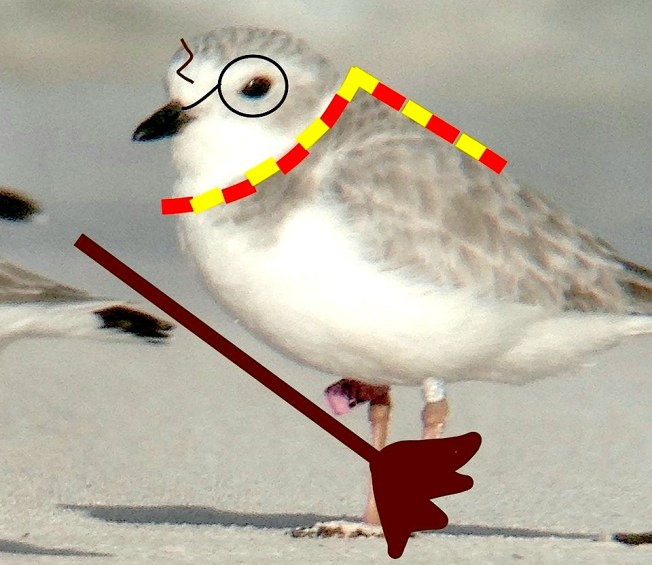
PIPL PINK22 Harry Potter π Stehanie Egger copy

“HARRY POTTER & THE MAGIC BAND” (A PIPING PLOVER STORY)

by ROWLING HARBOUR

It was a bright sunny morning and the sand on the beach was warm under Harry Potter’s bare feet. Although by now a very experienced flyer, his recent adventures during his epic 1000-mile journey had left him very tired. All his friends that had undertaken the same long flight were tired too. Now they were enjoying a quiet, peaceful time away from all the dangers they had somehow survived during their scary expedition (see Harry Potter and the Migration of Fear). It would be a long time, Harry said to himself – maybe as long as 6 months – before he wanted to have another experience like that. He wondered when Ron Piper and Hermione Plover would arrive. He hadn’t even found them yet… 

_Piping_Plover_on_the_Fly (USFWS Mountain-Prairie wiki)

But the little group on a remote shoreline on Abaco were not as safe as they thought. Unknown to the happy, sleepy plovers on the beach, they were already being stalked by two creatures. This determined pair had one sole aim – to find plovers, to catch them and to carry out scientific experiments on them. That’s three aims, in fact. The editor would surely fix that error later (No – ed.). Would Harry and his friends soon find themselves in mortal peril from these formidable adversaries, these beasts with huge brains, armed with the latest technology? What magical powers would be needed to combat the imminent danger creeping stealthily towards them? The male definitely had a spine-chilling look about him; the female appeared less daunting – but might therefore be all the more dangerous…

TOPO & STEG PIC JPG   piping-plover

Suddenly, Harry felt a sense of danger. Fear ruffled his neck feathers and his little left foot started drumming impatiently on the sand. He’d felt like this several times before, like that time the Dark Lord had driven a SUV straight at him on that nesting beach many miles away, the one where he cracked out (see Harry Potter and the Vehicle of Dread). And when the massive dog came and sniffed round the nest when he was a tiny chick (see Harry Potter and the Hound of Horror). Instinctively, he grabbed a magic meat-string from the damp sand, ate it, and took to the air… only to be caught up in some sort of fearsome spider’s web (a mist net – ed.). He was trapped. He struggled bravely, peeping out his anger at this cruel trick. But it was no good – he was caught fast, and wriggling only seemed to make it even worse. The massive creatures were running towards him fast, shouting in triumph – they had got Harry exactly where they wanted him – at their mercy…

A Mist Net (if unsuccessful, A Missed Net)Mist Net jpg

Just as Harry had started to believe that his last moment had arrived, an amazing thing happened. Instead of dispatching him with a swift blow to head, as the Dark Lord might have done, he was gently removed from the net and softly held in the female’s hands. His instant fear that she might crush him to a horrible mangled pulp rapidly lessened. Why, she was even talking to him. And those voices. They sounded not so much fearsome as friendly. But were they lulling him into  false sense of security, only to wreak an evil vengeance upon him? (*Spoiler Alert* No – ed.).

The Steph of Egger with captive Harry Potter, & wearing the cap of the mysterious ‘Delphi Club’1484646_10205144305680789_2528266936610237451_n

Then suddenly things got worse. Much worse. Harry was slowly wrapped in a large white blanket and laid on something that wasn’t sand. Something hard. What were they planning to do with him now. He heard the male – Harry had now concluded that he must be dealing with the Avian Overlord himself, the infamous Todd of Pover, first cousin of Severus Snipe – mutter an incantation: “54 grams. Pretty good. 54 grams. Have you got that”. Yes, they’d taken his dignity and his weight but there had been no pain. Yet. Harry began to relax a little.

10957577_10205144275960046_8670418050291183808_n

Meanwhile, Steph the Egger was making a strange rattling sound. As Harry was unwound from his shroud he suddenly saw a box filled to the brim with exotic jewels of the most opulent colours glistening in the sunlight. At once, he knew he had to have one of them. A beautiful pink one. One to wear on his leg. One that he could keep for ever. One that would always mean ‘Harry Potter’. That very one on the top. Just there. With the magic number 22 on it in black writing. And Harry started to breathe a special silent Piping Spell: ‘Please pick me up… in your hand… and fit the Magic Two-Two Band…’ 

10953155_10205138160647167_6364662204306663309_n

And, miraculously, the spell began to work. First, Harry was gently held as the Magic Band was put round his right leg. At the top, just where he wanted it. Harry shut one eye and repeated the spell.18265_10205144276640063_342488571243728001_n

Then despite an awful wound from an earlier battle, the Todd of Pover made sure the band was secure and would never come off. It would be there forever – the Harry Potter ID band. By this time Harry didn’t even mind the indignity of being turned upside down.1688061_10205144276200052_1782966976770605282_n

Finally, it was done. Really, the jewel was more like a flag than a band. But Harry knew instinctively that it would take a massive effort for his story to be rewritten to make this clear from the start, so he decided to let it pass. Band. Flag. What did it matter. It was his prize, gloriously his. 

And then he was passed to Steph the Egger. Harry presumed she got her name for her ability to find nesting birds in that other place he had flown South from. And now, here she was, holding him tenderly, talking to him and telling him how cool he looked. Even her bright red claws did not seem so frightening now. Except… WHAT WOULD HAPPEN TO HIM NOW?

10169303_10205144274240003_5908333687210042239_n

Suddenly, Steph the Egger stood up and Harry found himself several feet above the safe warm sand. Steph held him out in front of her and then, in an instant, he was free… Free to fly away with his beautiful pink jewel band, his special number, and an intuition that wherever he might be, and whoever saw him, they would always know that he was Harry Potter for as long as he lived. Against all odds he had gained… THE MAGIC BAND.

10931116_10205144276720065_5757419875474692020_n

piping-plover

POSTSCRIPT

No one knows when Harry Potter left Abaco last spring, nor where he spent his Summer. All that can be said with certainty is that 12 months later he was found again on the same beach, Long Beach Abaco, in the same place. 5 other PIPL were pink-banded with him last year by the National Audubon, Virginia Tech, BNT, and CWFNJ team (pink being the colour used for Bahamas birds). Of those 6, 5 have been resighted on the same beach in the last few days. They migrated north last Spring, spent the Summer probably in different locations yet found their way back to the same place on Abaco to overwinter together again.

GENDER NOTE In fact it isn’t clear if HP is male or female (see below). He might be Harriet Potter. But I have played safe and stuck with the gender implied by his given name…

Harry Potter Pink 22 UR on Long Beach Abaco, 3 Dec 2015, a year after he was banded therePIPL PINK22 Dec 3 2015 Long Beach Abaco 1 (Stephanie Egger) copy PIPL PINK22 Dec 3 2015 Long Beach Abaco 2 (Stephanie Egger) copy

STEPH THE EGGER EXPLAINS THE NAME, NUMBER & QUIDDITCH PIC

“I helped band this piping plover last winter, and called him “Harry Potter.” I know 22 isn’t Harry’s quidditch number (07), but 22 is for my birthday when I mostly seem to be down in Abaco. We don’t know where Harry Potter bred this year as no reports came in for him (or her). Maybe next season!

DISCLAIMER RE HEADER IMAGE I don’t suggest making silly photos of all “named” birds as this is an endangered species that we should certainly take very seriously. That said, I do think that names help people connect to the species and it also aids the researchers in id’ing (my personal opinion)”.

piping-plover

Credits: Stephanie Egger, Todd Pover, Conserve Wildlife Foundation of New Jersey & co-banding teams, USFWS Mountain-Prairie (PIPL in flight), Birdorable, Rowling Harbour, and star of the show Harry Potter Pink 22 UR. Apologies to JKR for feeble pastiche.
Unknown's avatar

“CATCHING THE EYE”: OYSTERCATCHERS (+ BONUS ID TIPS)

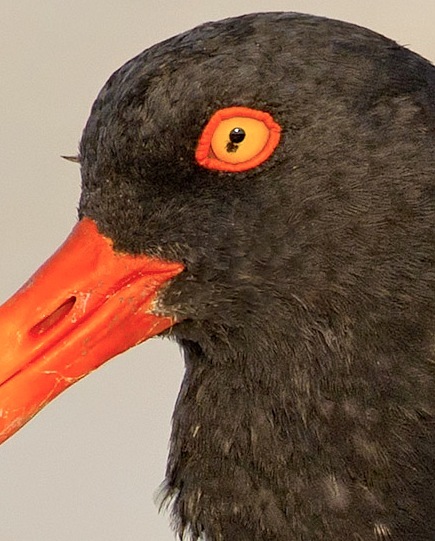
American Oystercatcher AMOY eye close-up (Todd Pover / CWFNJ)

 “CATCHING THE EYE”: OYSTERCATCHERS (+ BONUS ID TIP)

I’m focusing (ha!) on oystercatcher eyes today. Like the extraordinary one in the header image. Notice the bright orangey-red ‘orbital ring’, the egg-yolk-reminiscent eye and the pitch black iris. An eye-catching and unmistakeable feature of this handsome black and white shorebird, the American Oystercatcher.

Here’s another AMOY eye, with a different smudge of black by the iris. I don’t know for sure, but I suspect that AMOY specialists are able to ID individual birds at least in part by their different eye markings. And you can see that the eye-ring smartly matches the beak into the bargain.

American Oystercatcher AMOY eye close-up (Todd Pover / CWFNJ)

This wonderful photograph of a loving AMOY pair with their precious egg safely encircled by a rocky nest was taken on LBI, NJ by Northside Jim, whose amazing photos I sometimes include. See how brightly the eyes of each bird stand out, like tiny archery targets.american-oystercatcher-t2-eggs (Northside Jim : Exit 63)

“The World is Mine Oyster”

The AMOY shot below was generously put on Wiki by Dan Pancamo. He captioned it perfectly.The world's mine oyster - American Oystercatcher AMOY (Dan Pancamo Wiki)

OYSTERCATCHER ID TIPS

A while ago, when I was choosing AMOY photographs for publication, I idly wondered what was the difference between them and Eurasian Oystercatchers (yes, yes, I hear you – apart from geographical, I mean…). At a first comparative glance, to me they looked remarkably similar in coloration and size. Assuming both species were to be discovered on the same shoreline, how best might one distinguish them? The main differences seemed to be:

  • Leg colouring differs, AMOY legs being generally pale pink as opposed to the stronger coloured legs of the EUROY (if they can be called that). However there are considerable EUROY variations (see below), from pink to orange to reddish, that are presumably seasonal. The leg colour, assuming they are visible to the watcher, is not quite a definitive identifier.
  • Both species have black heads and necks, but the AMOY’s back plumage shades to dark brown. But how distinctive would that be in low light or indifferent weather?
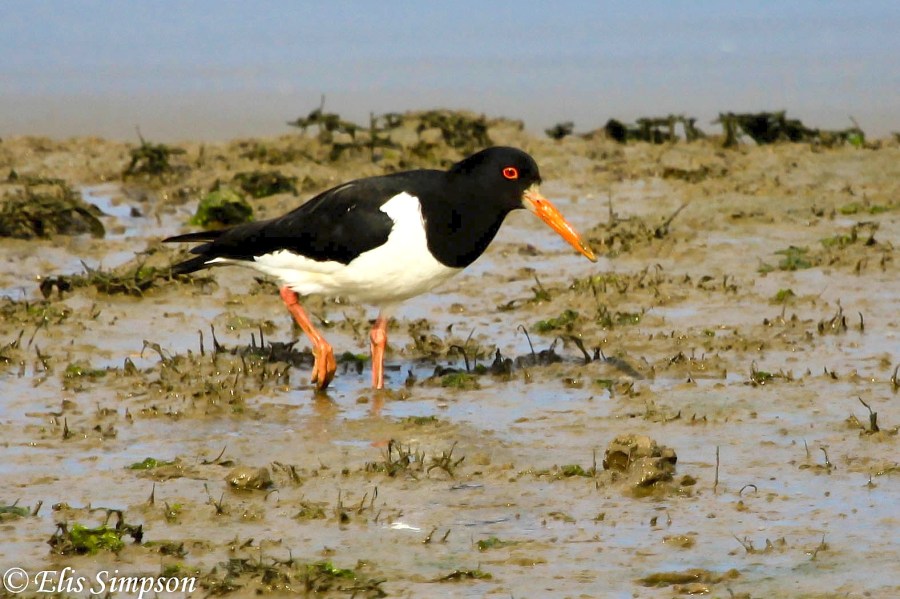
  • Mrs RH, looking over my shoulder, saw it at once: the eyes. If you can see the eyes, you can tell instantly what make of OY you are looking at*. Here are a some Eurasian Oystercatchers showing their own distinctively red eyes and orbital rings.

Eurasian Oystercatcher (Elis Simpson)Eurasian Oystercatcher - Haematopus ostralegus (Elis Simpson)Haematopus_ostralegus_-Scotland_(Snowmanradio / wiki)

As so often, I have since found that the excellent Birdorable site has nailed the differences clearly and simply. Eye colour, leg colour and – less obviously – the AMOY’s brownish back as opposed to the EUROY’s entirely black and white body. Sorted.

american-oystercatcher (Birdorable) eurasian-oystercatcher (Birdorable)

RECOMMENDED SHOREBIRD SITE WADER QUEST

*I realise there are a number of other oystercatcher species around the world, but for obvious reasons they don’t really come into consideration for present purposes…

Credits: Todd Pover / CWFNJ (1, 2); Northside Jim EXIT63 (3); Dan Pancamo (4); Elis Simpson / Wader Quest (5, 6); snowmanradio / wiki (7); Wader Quest, Birdorable, magpie pickings and Mrs RH for sharp… er… eyes

Unknown's avatar

WTF? (WHAT’S THAT FISH) (5): THE FILEFISH

Scrawled Filefish ©Melinda Riger @ GBS

WTF? (WHAT’S THAT FISH) 5: THE FILEFISH

The jocularly-named WTF? series is designed to shed an underwater spotlight on some of the odder denizens of the coral reefs and surrounding waters. I don’t want to earn a reputation for being ‘lookist’, but frankly the appearance of some of these creatures – I give you BATFISH or FROGFISH or REMORAS as examples – is baffling. The filefish group is not as extreme as some in the downright weird category, but if you see one you might just find yourself muttering into your facemask “wtf?”

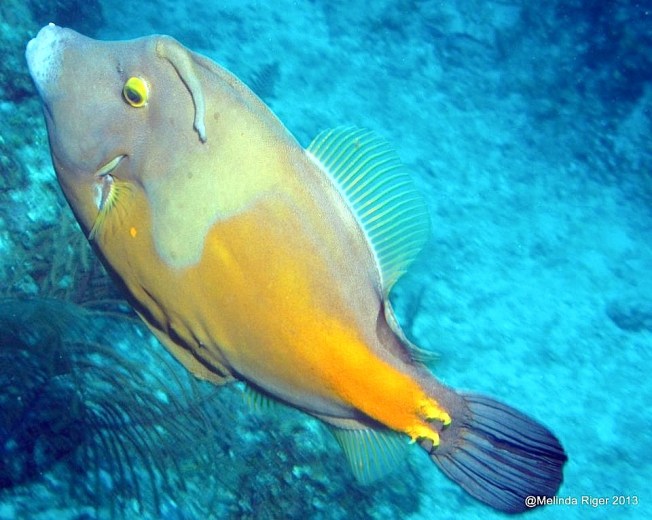
Scrawled Filefish ©Melinda Riger @ G B Scuba

Filefish (Monacanthidae) are found in tropical and subtropical oceans worldwide. They are related to triggerfish, trunkfish and pufferfish, and have regional names that include leatherjacket, foolfish, and shingle. There are more than 100 species of filefish, of which only a few are found in Bahamian waters. The species featured here are a mix of scrawled, white-spotted and orange-spotted filefish.

Filefish White-spotted ©Melinda Riger @G B Scuba

HOW DID THEY GET THE NAME?

In the image above, you can just see a flattened spine on top, above the eye and pointing backwards. This is the ‘retracted’ state. There is a small secondary spine that serves to prop up the main spine when it is in the upright position. This is it seems, the file – although the Greek-derived family name Monacanthidae literally means ‘one thorn’. So why isn’t it a thornfish, you may well ask. And I may well not respond.

This filefish’s ‘spine’ seems to have flopped over to one sideWhite Spotted File fish

These fish have snouts with small mouths and specialized teeth with an inner and outer set on each jaw. They are to an extent shapeshifters, and can quickly make themselves appear larger for defensive purposes. In some individual species, there are marked differences in body shape and coloration.

An orange-spotted filefish with its spine erect, making for a cave – a place of safetyFilefish, Orange Spotted ©Melinda Riger @ GB Scuba

The fins of a filefish are small, and they are rather sedate swimmers. Sometimes they simply like to drift with their heads pointed downwards, eyeing patches of seagrass or seaweed for prey. Some species are largely vegetarian. Others eat small invertebrates. Some even feed on corals. Their predators – especially  the juveniles –  include tuna and dolphins (mahi-mahi).
ADDITION Capt Rick Guest has helpfully expanded on juvenile filefish: “The juveniles hang under sea weed and flotsam eating small shrimps and crabs there. They, in turn become food for Mahi and other pelagic fish. The main thing with these guys is that the bigger they are, the more likely they are to be Ciguateric”.
220px-Coryphaena_hippurus
At his suggestion I will write a post about the  problem of the Ciguatera disease when I have had some time to do the research.

Scrawled File Fish

ARE THEY EDIBLE?

Good question. The answer, broadly is yes, though I don’t know if that applies to all species of filefish. They are certainly eaten in large quantities in the Far East. I don’t know about the Bahamas or the wider Caribbean. If anyone does, could you very kindly add a comment to this post. Recipes welcome!

Scrawled Filefish

All photos: Melinda Riger of Grand Bahama Scuba

Unknown's avatar

WE INTERRUPT THIS BLOG… WITH A COUPLE OF HERRING GULLS

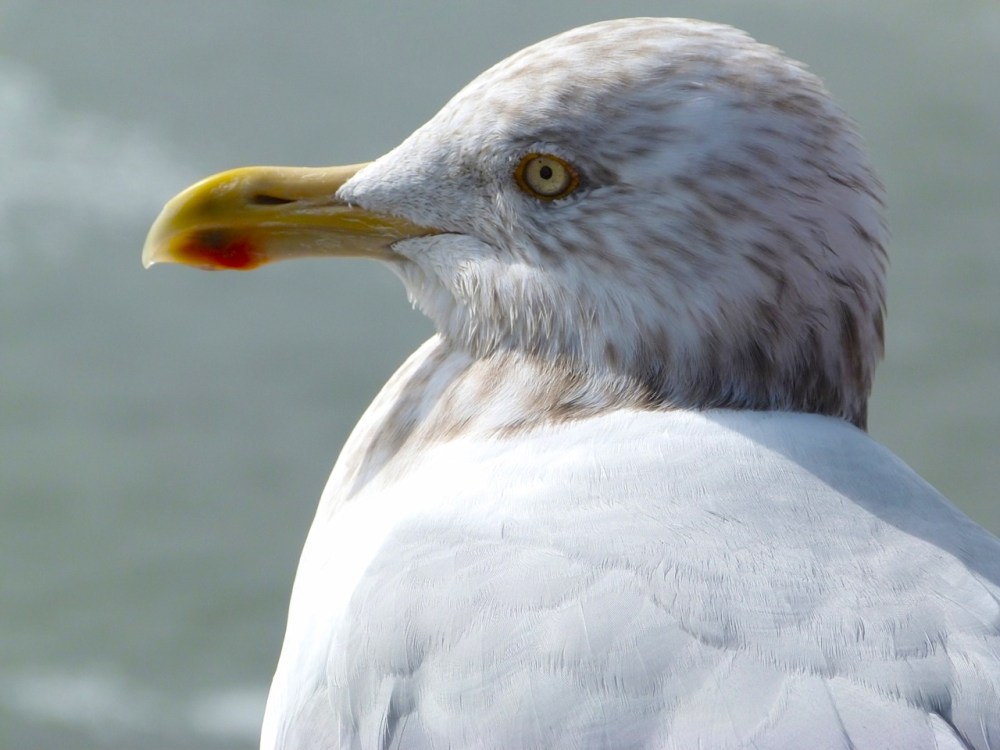
Herring Gull (Keith Salvesen)

WE INTERRUPT THIS BLOG… WITH A COUPLE OF HERRING GULLS

Well this is most annoying. What we have here can only only be called a wifi crisis… Since Sunday, I have described the situation in a healthy variety of colourful ways, some of them down the telephone line. Now I know that Abaconians are inured to the inconveniences of outages on a regular basis. But where I am right now, the wifi is usually dependable. Except when it’s not. Then things get complicated – blogging, buying stuff on @m@z@n etc, soshul meeja and so on. There’s the iphone, but they can be fiddly for all that sort of thing, and anyway I can’t upload images that I want to use.

So, having at last found an ethernet cable at the back of a drawer, I have a degree of connectivity. And a whole mass of stuff to catch up with. Wednesday is a usual day for a me to post – it has a nice mid-week-ish feel to it (even if one doesn’t refer to it as ‘hump day’). So I am deploying a couple of herring gulls just because, with my inconveniently short length of yellow cable, I can.

See you with something from my post queue once the signal thing on my desktop has turned from grey to black…

Herring Gull 1 (Keith Salvesen)

Images: moi

Unknown's avatar

HAWKSBILL TURTLES: WONDERFUL… & CRITICALLY ENDANGERED

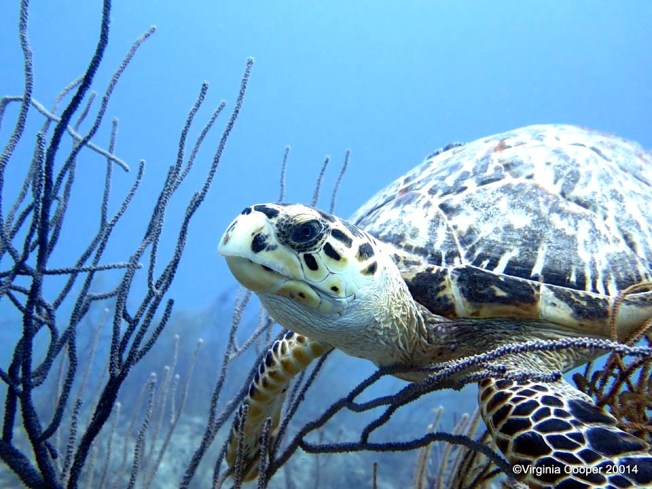
Hawksbill Turtle ©Virginia Cooper @ G B Scuba

HAWKSBILL TURTLES: WONDERFUL… & CRITICALLY ENDANGERED

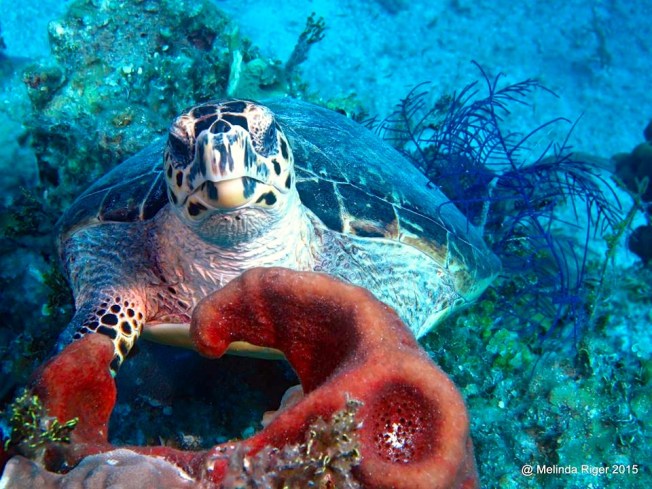
Hawksbill Turtle ©Melinda Riger @ G B Scuba copy 3

Hawksbill turtles are found throughout the tropical waters of the Atlantic, Pacific, and Indian Oceans. They avoid deep waters, preferring coastlines where sponges are abundant and sandy nesting sites are within reach. They are normally found near reefs rich in the sponges they like to feed on. Hawksbills are omnivorous and will also eat molluscs, marine algae, crustaceans, sea urchins, fish, and jellyfish. 

Hawksbill Turtle Range (Nat Geo)map-hawksbill-turtle-160-cb1447865323

Turtle with Gray Angelfish ©Melinda Riger @ G B Scuba

WHY ARE HAWKSBILLS CRITICALLY ENDANGERED?

  1. Despite the protection of their shells, turtles are predated on by large fish, sharks, octopuses, and (unlawfully) humans.
  2. Hawksbills are slow breeders, mating only every 2 or 3 years, which is the first drawback to species survival.
  3. Having laid the resulting eggs on a beach, the female returns to the sea. The eggs hatch after a couple of months. Unless, of course, some creature – and that includes humans – has got to them first…
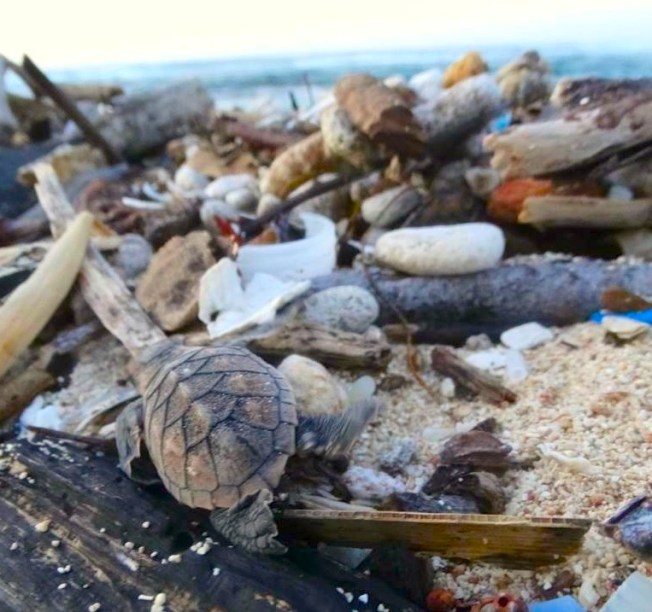
  4. Hatchlings are hugely vulnerable as they make their way from the nest site to the sea. However fast they scurry along, crabs and in particular flocks of gulls are faster. Also, they may have to negotiate impossible obstacles washed up onto the beach  (see below). The attrition rate of  tiny turtles at this stage is very considerable.

Hawksbill Turtle ©Melinda Riger @ GB Scuba copy

SO, HUMANS ARE BASICALLY IN THE CLEAR, RIGHT?

Humans can take most of the credit for the turtles plight leading to their IUCN ‘critically endangered’ listing, in these mostly illegal ways:

  • Killing adult turtles for food or…
  • …for their beautiful shells
  • Digging up turtle nesting sites to take the eggs as food
  • Catching turtles in fishing nets as unintended but often inevitable BYCATCH
  • Providing a rich stew of plastic, styrofoam & other dietary or physical hazards in the ocean
  • Degrading or destroying the nesting sites, & indeed the reefs on which turtles depend

A hatchling tries to clamber over beach rubbish to get to the seaTurtle traps - Melissa Maura copy

A straw is extracted from a turtle’s nostril (small pics on purpose – I spared you the long video)Turtle & straw 1 (Nathan Robinson : Chris Figgener) Turtle & straw 2 (Nathan Robinson : Chris Figgener) Turtle & straw 3 (Nathan Robinson : Chris Figgener)

This poor creature was found just in timeHawkbill Turtle Plastic breathecostarica copy

Assorted plastic effects (the turtle trapped in the beach chair was off Man-o-War Cay) Sea Turtle tied up in balloon string (Blair Witherington : NOAA) copyphoto copy 7 This turtle, which was found floating in North Man-O-War Channel, died as a direct result of being entangled in human trash(in this case, a lawn chair) copy IMG_1346 copy

PLEASE CAN WE GO BACK TO HAPPY PICTURES?

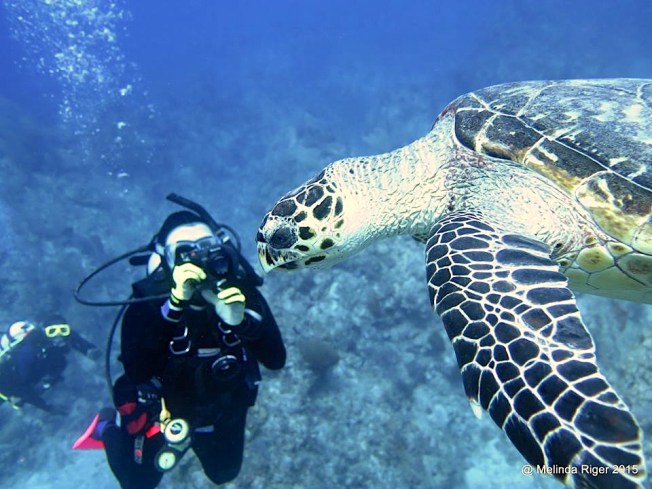
Healthy hawksbills happily living the northern Bahamas reef lifeHawksbill Turtle (m) (Melinda Riger @ G B Scuba) Hawksbill Turtle (flipper damage) ©Melinda Riger @ GB Scuba

RELATED POSTS

TURTLEY AMAZING

SEA TURTLE THREATS

BABY TURTLES WITH PHIL LANOUE

Hawksbill Turtle & photo ©Melinda Riger @ G B Scuba

Credits: Melinda Riger & Virginia Cooper of Grand Bahama Scuba for the main photos; Melissa Maura, Nathan Robinson, Friends of the Environment and other FB sharers for the small images; National Geographic for range chart and information

Unknown's avatar

SAYING NO TO BEAUTIFUL BAHAMAS BIRDS…

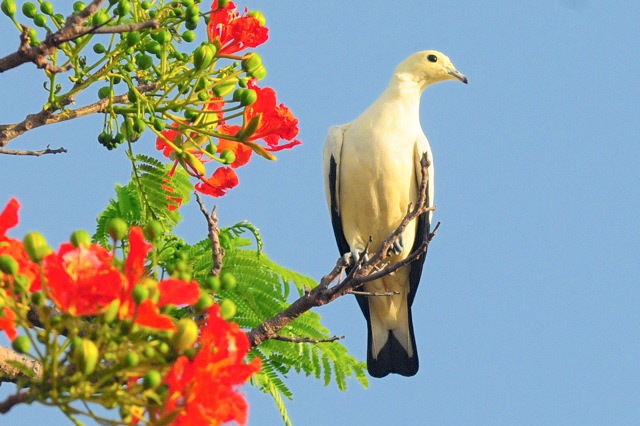
Pied Imperial Pigeon 1, Nassau (Woody Bracey)

Pied Imperial Pigeon, Nassau

SAYING NO TO BEAUTIFUL BAHAMAS BIRDS…

Flamingos & Chicks, Inagua (Melissa Maura)

Flamingos & Chicks, Inagua

Writing a bird book involves defining parameters at an early stage. Best to avoid working them out 6 months into the project; or (worse) letting them evolve gradually as each obstacle along the stony track to the printers is encountered. Far better to decide the general rules of engagement at the outset, and be able to tweak them later if need be. 

Brown Booby + egg, San Salvador (Woody Bracey)

Brown Booby on its nest, San Salvador

And so it was that we stayed for a convivial weekend with Peter and Jane Mantle to discuss the pros and the cons, the whys and the wherefores, the format and the style of a book to showcase the birds of Abaco. And how on earth to get started on the project…

Pied Imperial Pigeon 2, Nassau (Woody Bracey).JPG

Pied Imperial Pigeon, Nassau

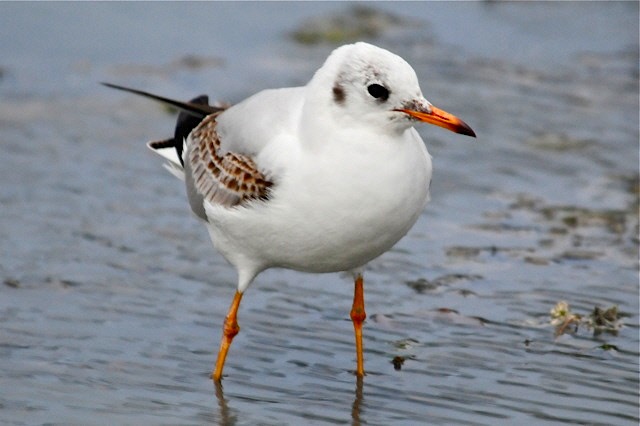
Black-headed Gull imm, New Providence (Bruce Hallett)

Black-headed Gull (immature), New Providence

One thing was clear at the outset. It was essential that every photograph in the book would have to be taken on Abaco. It wasn’t to be ‘The Birds of Abaco including Birds from Grand Bahama, New Providence, Eleuthera and Inagua that You Might also Find on Abaco’. Or ‘The Birds of Abaco, Mostly’. And there was to be no cheating.

burrowing-owl-great-inagua-woody-braceyjpg

Burrowing owl, Great Inagua

The project involved the work of some 30 photographers in all, from the prolific to a couple of people who offered a single excellent photo. I amassed a large archive, though only a percentage could be used. For example many fine photos fell by the wayside because resolution was inadequate for high-quality print purposes.  

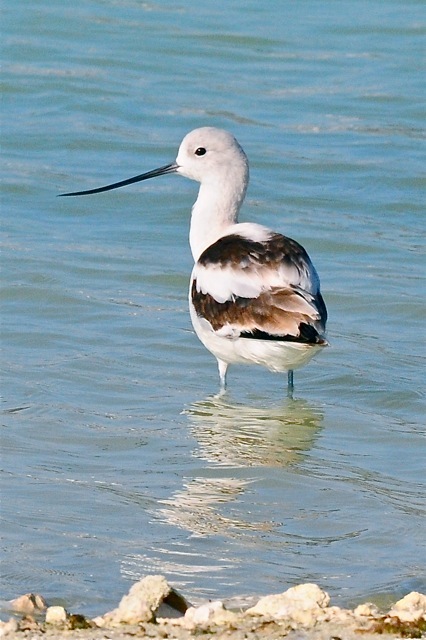
American Avocet, Bahamas 1 (Tony Hepburn)

American Avocet, Nassau

I also collected plenty of folders containing images of birds we desperately wanted to include, that were not all taken on Abaco but were part of a wider field trip. These were ruthlessly (but painfully) excluded from consideration. In fact, to stick within the (self-imposed) guidelines, I set aside all photos that I was not certain had been taken on Abaco. Where there was doubt, they were out.

Key West Quail-Dove, Nassau, Woody Bracey

Key West Quail-Dove, Nassau

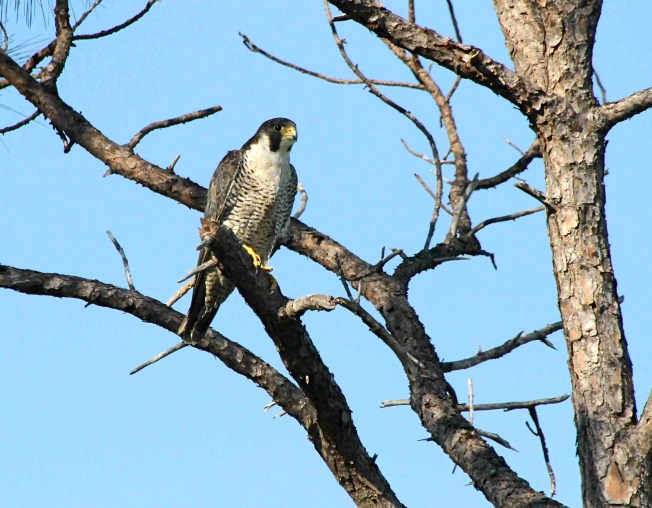
This post contains a selection of photos from the Aviary des Refusés. We would have loved to have included the peregrine falcon and burrowing owl, for example, but had no Abaco images to use then. Other bird species were in any event disqualified for being unknown on Abaco. A Pearly-eyed Thrasher recently found its way to Treasure Cay, this first recorded for Abaco; yet could be found elsewhere in the Bahamas two years ago.

Peregrine Falcon (Woody Bracey) sm

Peregrine Falcon, New Providence

Pearly-eyed Thrasher, San Salvador (Woody Bracey) jpg

Pearly-eyed Thrasher, San Salvador

Horned Lark, Nassau (Woody Bracey)

Horned Lark, Nassau

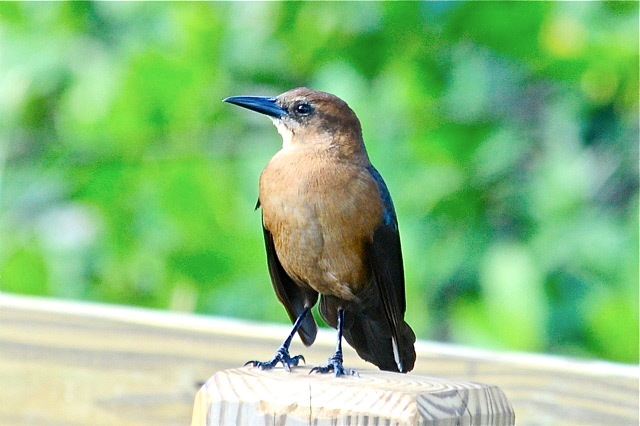
Boat-tailed Grackle (f), Nassau (Woody Bracey)

Boat-tailed Grackle (f), Nassau

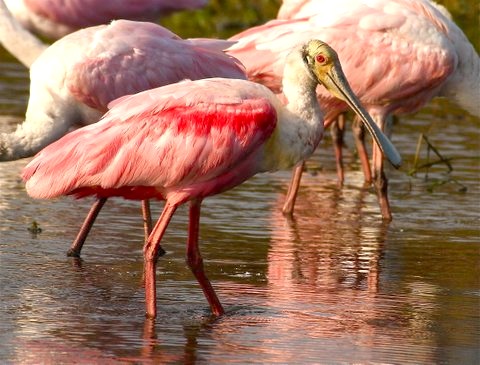
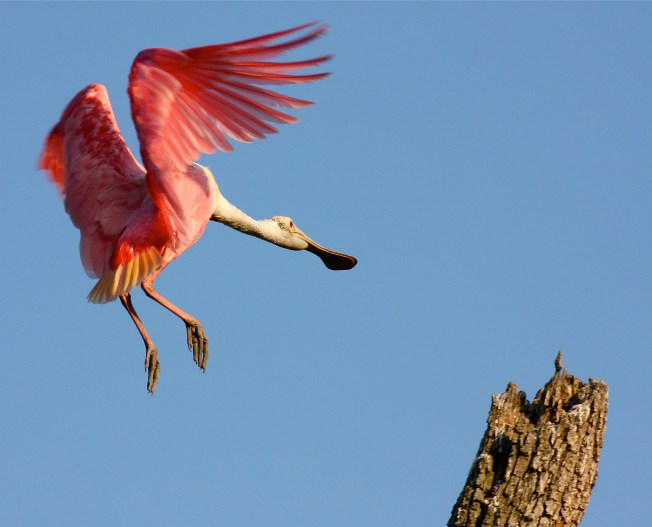
Roseate Spoonbill WB 59_IMG_6302 copy 3

Roseate Spoonbill WB 58_IMG_6230 copy 3
Roseate Spoonbill, Great Inagua

Cuban Grassquit, Nassau (Woody Bracey)

Cuban Grassquit, Nassau

Brown-headed Nuthatch, Grand Bahama (Woody Bracey) cr sm copy

Brown-headed Nuthatch, Grand Bahama

American Avocet, San Salvador (Woody Bracey)

American Avocet, San Salvador

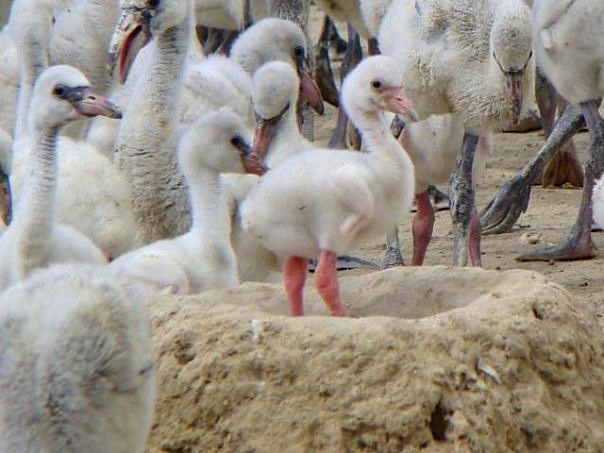
Flamingos & Chicks, Inagua (Melissa Maura)

Flamingo Chicks, Inagua

Credits: Woody Bracey for taking / supplying a most of these great images, with Tony Hepburn, Bruce Hallett, Melissa Maura (the wonderful Flamingos) and all those involved in the joint field trips from which some of these photos originate. And Peter Mantle for having the idea for the book and for being wholeheartedly supportive through thick and thin…


Unknown's avatar

GILPIN POINT, ABACO: A ‘2 HOURS, 40 SPECIES’ BIRDING HOTSPOT

Black-necked Stilt, Abaco (Alex Hughes) copy

GILPIN POINT, ABACO: A ‘2 HOURS, 40 SPECIES’ BIRDING HOTSPOT

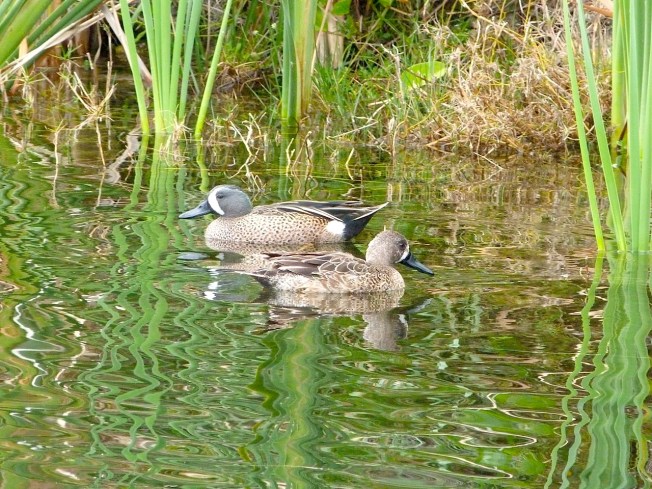
Got  a spare couple of hours? Reluctant to go birding on the bird-reliable yet ambience-lite town dumps, where careful cropping will be needed to avoid including post-apocalyptic scenery in your hard-won photos of a Little Mulligatawny Owl? Then read on. I have mentioned Gilpin Point before as a great place for birding, and listed many of the species to be found there. It benefits from a large pond, a pristine shoreline, and a coppice environment with some pine forest thrown in. All the makings of an excellent birding location, with suitable habitat for a wide variety of species. Blue-winged Teal, Abaco (Keith Salvesen)

On November 21st Reg Patterson, well-known Abaco birder and guide, was up early, and by 07.00 he was at Gilpin Pond where  he spent a couple of hours . He recorded 40 species in that time, from very large to very small. His checklist reveals a great cross-section of the birdlife to be found on Abaco. There might easily have been parrots there too, since Gilpin has become one of their daily chattering spots for a frank exchange of news and views. Sadly it seems that the beautiful and (now) rare SPOONBILL recorded there in early October has moved on.

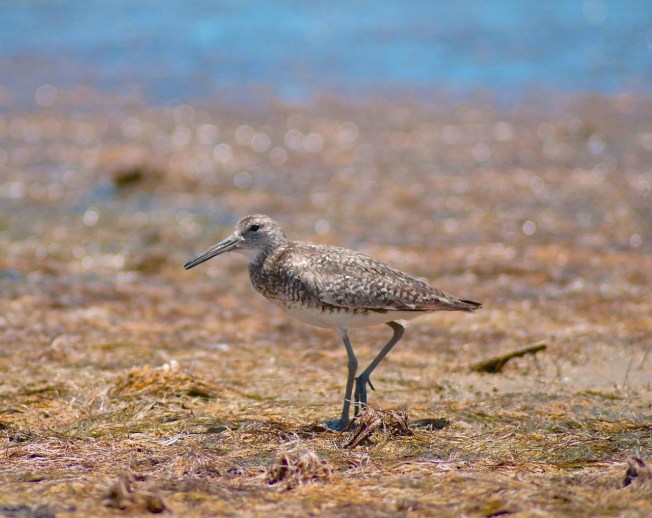
Willet, Abaco

Here is Reg’s checklist, which I have illustrated with a variety of photos of the species he found, all taken on Abaco and many actually taken at Gilpin Point. There are plenty of other species that might easily have been seen there then – or perhaps later in the day (e.g. snowy egret, yellowlegs, kestrel, turkey vulture, red-legged thrush, cuban emerald, not to mention shorebirds and seabirds if some time was spent on the shore).

CHECKLIST

Blue-winged Teal (16) (see above)

White-cheeked Pintail (20)

White-cheeked Pintail, Abaco 1 (Keith Salvesen)

Green-winged Teal (1)

Great Blue Heron (1)Great_Blue_Heron_Wading_2

Great Egret (1)

Little Blue Heron (2) 

Tricolored Heron (2)

Green Heron (2)Green Heron, Gilpin Point, Abaco (Keith Salvesen)05

Yellow-crowned Night-Heron (1)

Turkey Vulture (7)

Common Gallinule (1)

Black-necked Stilt (1) (and header)

Black-necked Stilt, Gilpin Point, Abaco (Keith Salvesen)

Spotted Sandpiper (1)

Willett (1) (see above)

Common Ground-Dove (1)

Smooth-billed Ani (8)

Bahama Woodstar (1)Bahama Woodstar (m), Abaco (Bruce Hallett)

Belted Kingfisher (1)

West Indian Woodpecker (7)

Hairy Woodpecker (1)Hairy Woodpecker, Abaco (Tony Hepburn)

Peregrine Falcon (1)

Loggerhead Kingbird (4)Loggerhead Kingbird, Abaco - Tom Reed

Thick-billed Vireo (7)

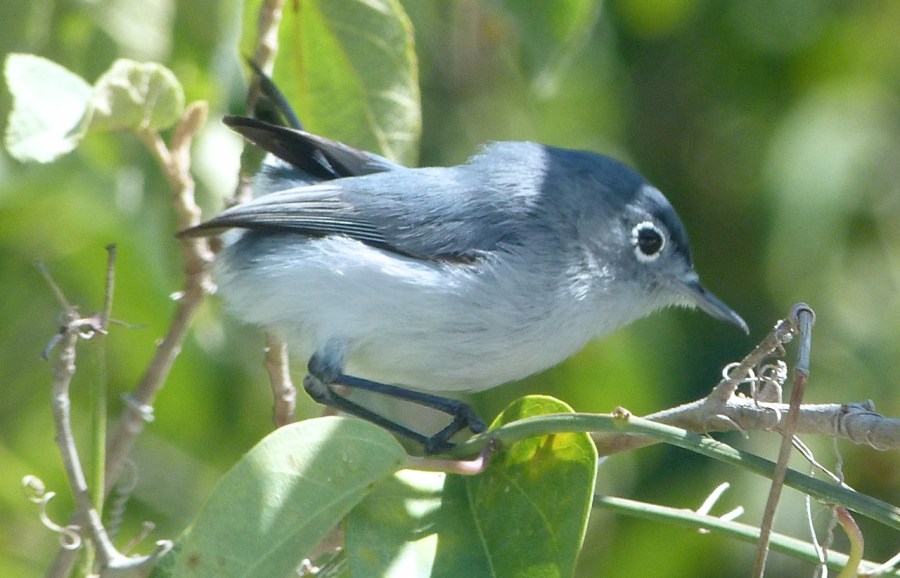
Blue-gray Gnatcatcher (1)Blue-gray Gnatcatcher, Abaco, Bahamas (Keith Salvesen)

Red-legged Thrush (1)

Gray Catbird (4)

Northern Mockingbird (2)Northern Mockingbird, Abaco (Keith Salvesen)

Ovenbird (1)

Northern Waterthrush (6)

Bahama Yellowthroat (1)

Bahama Yellowthroat, Abaco (Charles Skinner)

Common Yellowthroat (1)

Cape May Warbler (3)

Black-throated Blue Warbler (1)Black-throated Blue Warbler (m), Abaco (Bruce Hallett)

Palm Warbler (2)

Prairie Warbler (2)

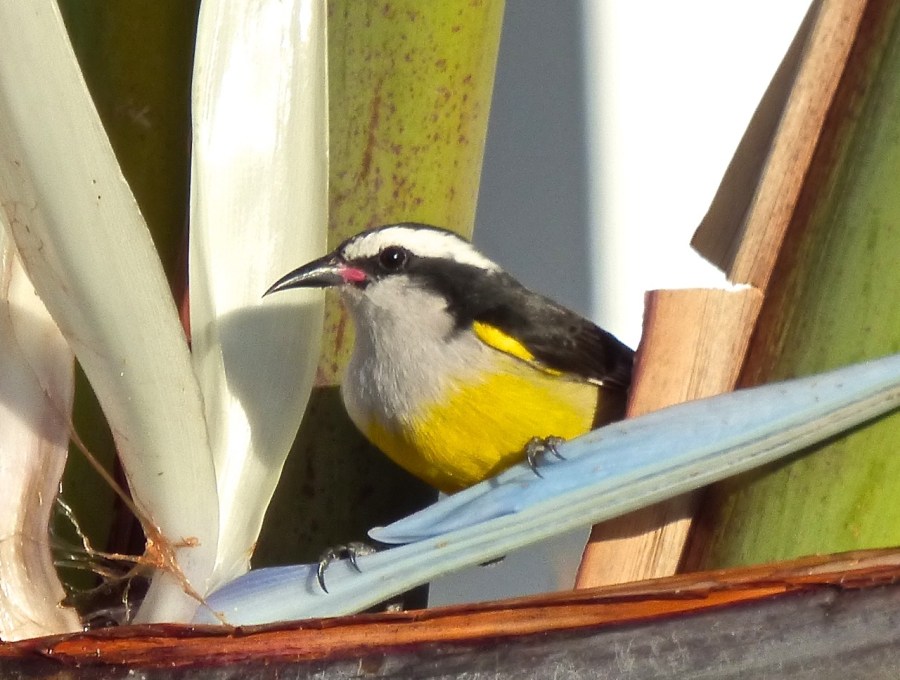
 Bananaquit (1)Bananaquit & palm, Delphi, Abaco, Bahamas (Keith Salvesen)

 Black-faced Grassquit (6)

 Greater Antillean Bullfinch (4)

 Western Spindalis (7)

 Red-winged Blackbird (X)Red-winged Blackbird Abaco Bahamas (Keith Salvesen)

Gilpin Map 1 Gilpin Map 2 Gilpin Map 3

Credits: Alex Hughes (1 / header); Keith Salvesen (2, 4, 6, 7, 11, 12, 15 , 16); TBC (3, 5); Bruce Hallett (8, 14); Tony Hepburn (9); Tom Reed (10); Charles Skinner (13)


Unknown's avatar

BAHAMAS MANATEES: GINA’S CALF NEEDS A NAME!

Gina the Bahamas Manatee (pregnant) Eleuthera (BMMRO)

Gina the Manatee, Eleuthera – expectant mother (BMMRO)

BAHAMAS MANATEES: GINA’S CALF NEEDS A NAME!

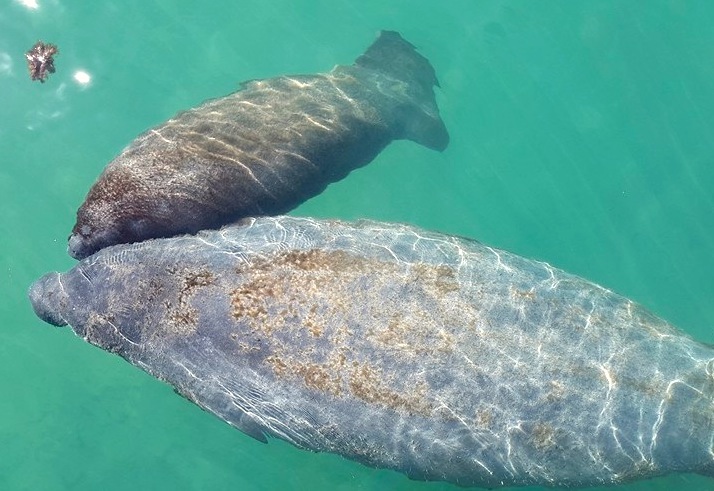
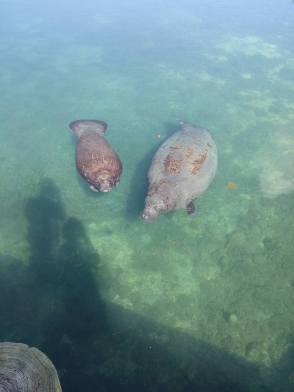
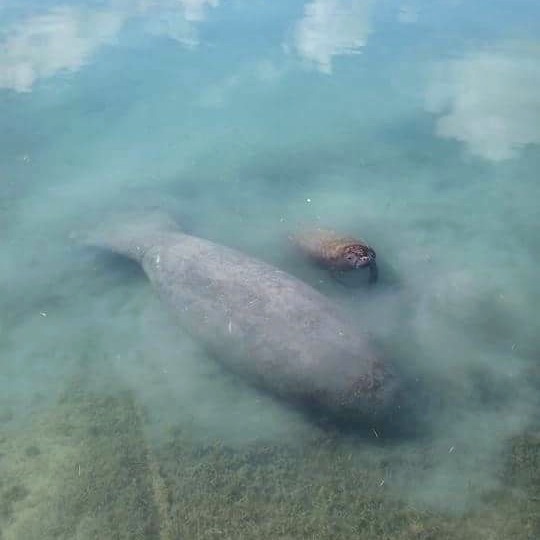
Earlier this year I posted the welcome news that Bahamas manatee Gina was beyond any doubt pregnant. You can read about it HERE. Gina has been living for some time in Eleutheran waters, under regular observation by the BMMRO. At the turn of the year, she was re-tagged in Harbour Island, Eleuthera, when her pregnancy was discovered. I promised to give an update and this is a perfect moment. Gina’s calf was safely born and is growing fast. The pair have spent a lot of time in and around Spanish Wells, Eleuthera. Recently they have begun to move further afield, and there have been several sightings with some great photos shared on FB and in particular on Felice Leanne Knowles’s terrific BAHAMAS MANATEE CLUB page, some of which are included here duly credited.

Gina the Bahamas Manatee (pregnant) Eleuthera (BMMRO)

Gina’s calf is currently just called “Gina’s calf”. Its gender is unknown, and it will take a close inspection from below to ascertain from its… I don’t have to go on with this, do I? The point being that the chosen name will need to be unisex because it may take a while until there is sufficient development of the… I don’t have to go on with this either, do I? Let’s see the nameless calf at once! Details of the competition at the end of this post…

Gina with her newborn calf, July 27 (BMMRO) (note apparent prop scars on Gina)11209341_1012183408800885_310154952620912454_n

Spanish Wells, October 26 (π Junea Pinder / BMMRO) Gina the Bahamas manatee and her calf (Junea Pinder / BMMRO) Gina the Bahamas manatee and her calf (Junea Pinder / BMMRO)

Gregory Town, November 5 (Lynne Hirzel / BMMRO)12188935_10156306821645195_3509772562942760375_n 12219637_10156306821330195_1471887362053804519_n

Hatchet Bay, November 13    (π Jeffrey Louis / BMMRO)  10425501_1042928762405755_7163144254688618862_n 12108239_1042928735739091_6064773734031487371_n

November 18: Now you see it… (π Norma Roberts / BMMRO)Gina & Calf Norma Roberts 1 copy

…and now you don’t…Gina & Calf Norma Roberts 2 copy

THE COMPETITION

ATTENTION TEAM MANATEES!!! Due to a consistent influx of sighting information and photos, we would like to add Gina’s calf to our catalogue. It would be nice for it to have a NAME!! We cannot monitor these manatees without your help and it is only fitting that  YOU name the manatee. The deadline for name suggestions is November 29th, 2015 and the winning name will be revealed on November 30th, 2015. The member with the winning name suggestion will receive an official manatee club T-Shirt!!

RULES

1. The name must be submitted on the Club Page Bahamas Manatee Club as an individual post – DO NOT comment your suggestion.
2. The name must be unisex – we do not know the sex of the calf yet.
3. A meaning or description must be submitted along with the name.
4. Please do not submit any derogatory or explicit “names.”
5. If you are submitting on behalf of a child who is not on Facebook, please add their name to the post as well.

Spread the word! Tell your friends and families to join the club and help us with a name!! The name will be selected on it’s meaning or description as it relates to marine mammals OR The Bahamas. The amount of “likes” per post will also go into consideration during the selection process.

Regretful Note: I made the stupid mistake of being amongst the very first to post my suggestion, meaning that after a day or two I’d get no likes at all, as more people got involved and my offering sank slowly. But there’ve been plenty of much better ones since, so probably just as well!

Bahamas Marine Mammal Research Organization

Bahamas Manatee Club

For more information about West Indian manatees, you can visit the MANATEE PAGE. There are several links there to specific manatee stories.

Finally, here is a great manatee map that Felice has recently made, showing which of the increasing number of manatees is where at the moment. Just think, only 4 or 5 were known about four years back. Now look!

12241226_298174587019969_1571890190333376929_n

Credits: primary founts of Bahamas manatee knowledge Felice & BMMRO; Photos BMMRO, Junea Pinder, Lynne Hirzel, Jeffrey Louis, Norma Roberts

mantsw~1

Unknown's avatar

A WILD-GOOSE CHASE: IN PURSUIT OF FOUR SPECIES ON ABACO

Canada Goose, Abaco (Peter Mantle)

A WILD-GOOSE CHASE: IN PURSUIT OF FOUR SPECIES ON ABACO

In normal parlance a ‘wild-goose chase’ is of course a futile search or a useless pursuit**. However, I bring you news of a successful chase after wild geese on Abaco – indeed the bagging of all four of the goose species recorded for Abaco. All are classed as winter residents, with rarity rated from ‘uncommon’ to ‘good grief, that’s a first’.  So I present them in the order of relative excitingness…

GREATER WHITE-FRONTED GOOSE

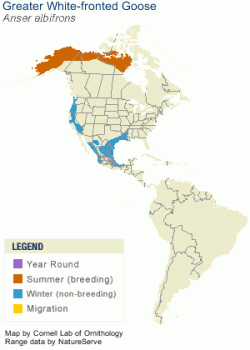
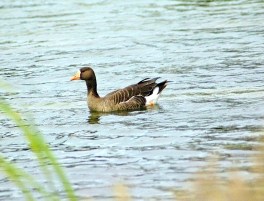
Greater White-fronted goose Abaco (Erik Gauger) smThis fine bird caused a bit of a stir. Not only was it a first for Abaco, the species had never before been recorded in the Bahamas. In February 2012, the goose was found at the pond at hole #11 on the Treasure Cay golf course, presumably having been blown off its normal migration route. This range map shows just how far. 

anse_albi_AllAm_map

Erik Gauger managed to get the close shot above; Uli Nowlan got a few from further away, including a swimming view. I know of no other photographers of the bird (though Woody Bracey published a report about it). If there are any, I’d be pleased to hear about their photos – indeed to add them!

   White-fronted Goose, Abaco 2 (Uli Nowlan  White-fronted Goose, Abaco 1 (Uli Nowlan)

ROSS’S GOOSE

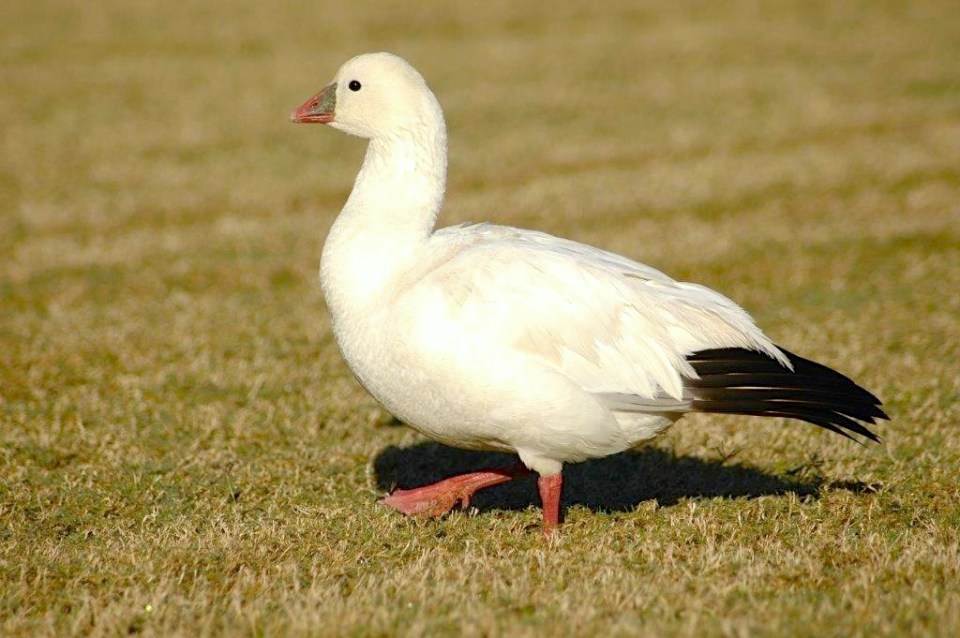
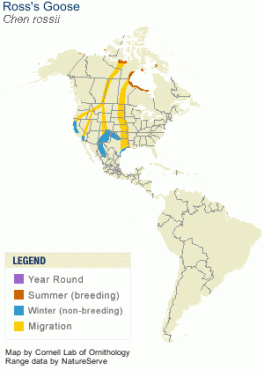
Equally rare on Abaco is the Ross’s Goose. Far to the east of its normal migration route,  one found its way to the Goose Magnet of Treasure Cay. The range map shows the very clear routes this species chooses for its migration.Ross's Goose, Abaco 1 (Uli Nowlan) Ross's Goose, Abaco 4 (Uli Nowlan)ross_goose_migration_map Ross's Goose, Abaco 2 (Uli Nowlan)

CANADA GOOSE

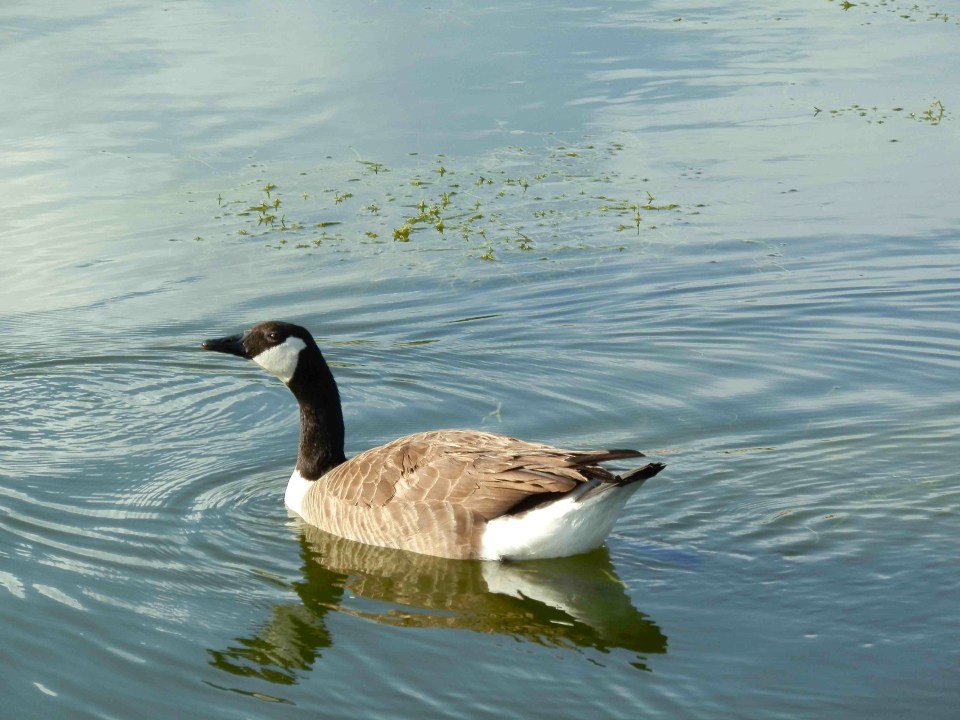
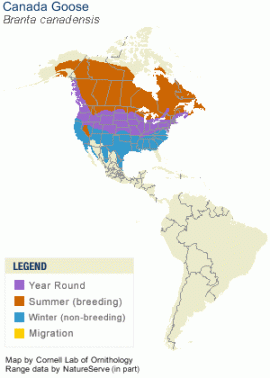
Another anserine visitor to Abaco – slightly more frequent than the two species above – is the Canada Goose. Again, Treasure Cay golf course exerted its powerful pull to drag this one from its usual route, where it happily took up residence. As you can see from the range map below, these geese have a widespread habitat and spend at least some of the year not that far from northern Bahamas, so it is less surprising that they turn up on Abaco from time to time.

CANADA GOOSE, Abaco (Kasia Reid)

Canada Goose, Abaco (Bruce Hallett)bran_cana_AllAm_map_new

SNOW GOOSE 

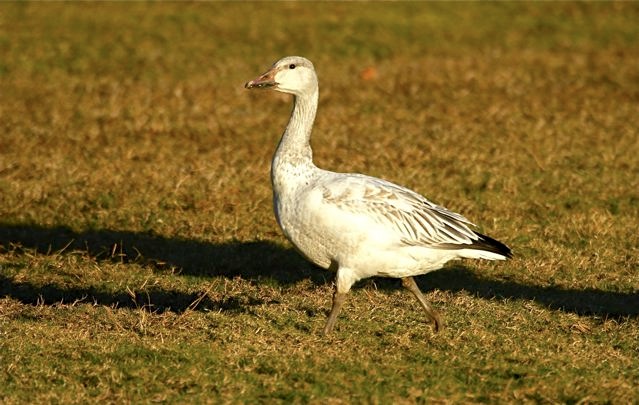
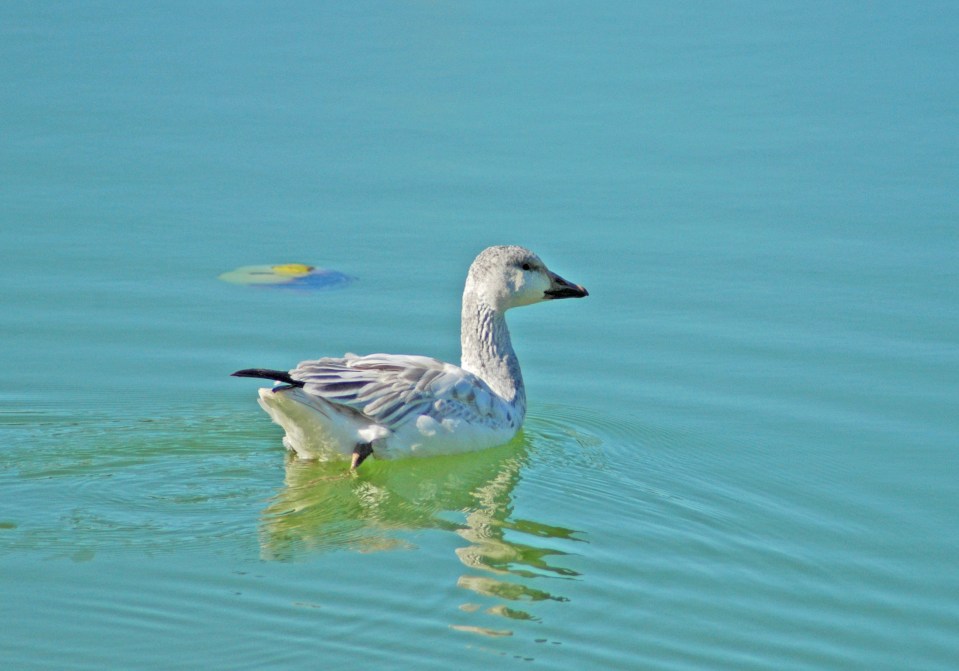
Although a relatively unusual winter visitor to Abaco, and a good ‘get’ for any birder’s checklist, I was surprised to find that the snow goose is classed as more common than the Canada goose. Its usual habitat is further away; and its summer breeding territory is very far north. Again, when a snow goose drifts eastwards, Treasure Cay is its spiritual home… 

Snow Goose (imm), Abaco (Bruce Hallett) Snow Goose, Abaco (Tony Hepburn) sm2 Snow Goose, Treasure Cay, Abaco (Uli Nowlan)chen_caer_AllAm_map

Why geese are not found elsewhere on Abaco other than Treasure Cay is a mystery. The TC golf course water is presumably fresh, whereas other locations – Gilpin Pond on South Abaco for example, or the neglected ponds of the defunct ‘Different of Abaco’ – are distinctly brackish. Perhaps that makes all the difference.

Abaco’s Four Geese SpeciesAbaco's 4 goose species jpg

**WILD-GOOSE CHASE The etymology of the phrase is medieval, referring to a horse race in which pursuers try to follow an erratic ‘wild goose’ leader. Shakespeare used the term in Romeo and Juliet, with Mercutio saying “Nay, if our wits run the wild-goose chase, I am done; for thou hast more of the wild goose in one of thy wits than, I am sure, I have in my whole five.” Which was quite a good, if cumbersome, insult.

Credits: Photos – Peter Mantle, Erik Gauger, Uli Nowlan, Kasia Reid, Bruce Hallett, Tony Hepburn; Range maps – Cornell Lab for Ornithology

Unknown's avatar

ATLANTIC SPADEFISH: BAHAMAS REEF FISH (28)

Atlantic Spadefish ©Melinda Riger @ G B Scuba copy 2

ATLANTIC SPADEFISH: BAHAMAS REEF FISH (28)

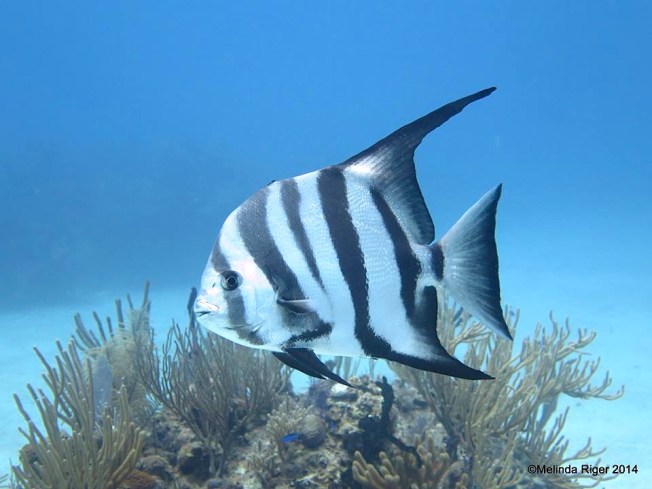
The Atlantic spadefish looks very much like an angelfish, and indeed it is called that – or ‘white angelfish’ – in some places. Actually, it has quite a collection of colloquial names of which ‘moonfish’ is the most attractive sounding. It is not a true angelfish, however, and despite appearances it has a kinship with the weird and wonderful BATFISH.

Atlantic Spadefish ©Melinda Riger @GBS

Unlike the batfish, the spadefish is demonstrably fishlike AND edible. They can grow up to 3 foot long and have become a popular gamefish for three good reasons: they are abundant; they fight hard; and they are dinner. The perfect combination.

Atlantic Spadefish ©Melinda Riger @ G B Scuba copy

All photos: Melinda Riger of Grand Bahama Scuba, with thanks

Atlantic Spadefish ©Melinda Riger @ G B Scuba

Unknown's avatar

WELCOME, JONESY: A NEW PIPING PLOVER ID ON ABACO

 Sandy Point R.I. to CS

WELCOME, JONESY: A NEW PIPING PLOVER ID ON ABACO

All piping plovers on Abaco are welcome winter visitors. Or I should say, winter residents. They are little different from the many Abaco second-homers who live in North America during the summer. As the chill of autumn and early winter takes hold in their northern habitat, they too fly south to their winter destination in the hope of warm sun, unspoilt sandy beaches and good food bahamian-style. Not worms, though. The humans draw a line at those, though they do pull things out of the sea that plovers would disdain as acceptable sustenance.

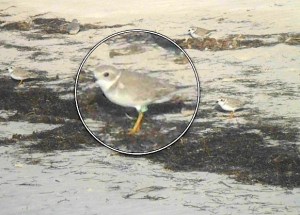
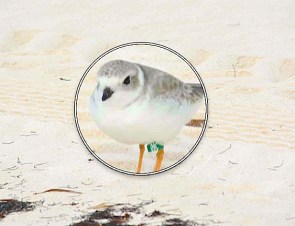
Jonesy was first sighted more than month ago on the beach at Winding Bay. This beach, and its neighbours on Cherokee Sound, have proved to be this season’s PIPL hotspot so far. Ali Ball originally reported having seen one bird with a green flag in a group of birds. Eventually, on October 29, she was able to get close enough to get a photo of Green Flag with its friends.SAM_2228 sm copy SAM_2211 sm copy

Tantalisingly, however, no amount of enhancement could reveal the code on the flag. Never mind, there was already enough information to start the process of identification. It was not a returning Bahamas-banded bird, which have bright pink coded flags. ‘Green Flag Upper Left’ indicated a bird banded by, or in conjunction with, the Virginia Tech program. This in turn pointed to the shorelines of Connecticut or Rhode Island. But it was vital to get a clear sight of the expected 3-character alphanumeric code on the flag. PIPL maestro Todd Pover was quickly on the case. 

SAM MAG 1  SAM MAG 2

ID COMPLICATIONS

There are several obstacles for the local ‘civilian’ bird monitor, who may well not be equipped with a powerful camera and tripod, or a digiscope. The birds are very small. They scuttle. They can be nervous and quite difficult to get close to. They may hang out in much larger groups of shorebirds such as sandpipers and turnstones. The light might be poor or the weather unhelpful. Counting the birds is one matter. Seeing bands or flags – let alone reading codes – may be quite another.

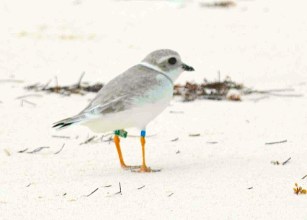
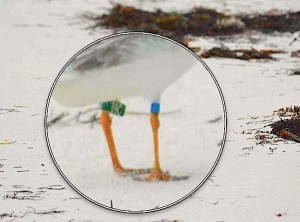
Luckily, within a couple of days, Keith Kemp was able to visit the beach, and managed to get a couple of definitive shots of the bird. As you can see below, it turned out to have a blue band upper right as well as the flag, a fact that would narrow down the search for its summer habitat. The first task was to check out the code on the flag, a process of cropping, enhancing and magnifying… to get, finally, to Bird 09C

PiPl 09C (L leg - Blue R leg) 2 WB 30.10 (1) min copyPiPl 09C (L leg - Blue R leg) 2 WB 30.10 (2) min copy

09C 1 crop copy 09C Mag2 copy 09C 2 crop copy  09C mag1 copy

I posted Ali’s Oct 29 sighting as a provisional ID. Within a very short time of Keith’s nailing of the alphanumeric code, Todd Pover had located the bird’s origin and obtained some information which I then posted to my page ABACO PIPING PLOVER WATCH:

#44 OCT 30. 08.30. **NEW ID** Winding Bay. Mid-tide. 17 foraging PIPL inc. ‘JONESY’ (see #43) at the cabanas end. 2 photos. Green Flag code 09C. π Ali Ball (original spotter & monitor); Keith Kemp (follow-up). ID CONFIRMED: SY male, unsuccessful nester this summer at Sandy Point, Rhode Island. Last sighted there July 16. COMMENT Jonesy gets an upgrade from green to red marker. Most of these birds will have been counted already, but 17 suggests a handful of new arrivals. on that end of the beach. More details about Jonesy soon.

JONESY’S SUMMER HOMESandy Point R I

To give an idea of how accurate the professional conservation teams are, the red flag on the map above marks the exact location of the last sighting of Jonesy, on July 16th. Sandy Point is a narrow sand spit on the boundary of Rhode Island and Connecticut; and of the Ninigret National Wildlife Refuge and the Rhode Island National Wildlife Refuge Complex. Jonesy seems to have spent the breeding season there scuttling backwards and forwards between RI and CT. He apparently paired off, but the reason for being ‘an unsuccessful nester’ is unknown at the moment. I haven’t yet been able to obtain any further information; I am hoping to be able to identify the bander, as with TUNA

NAME THAT BIRD!

Originally Jonesy was called ‘Mrs Jones’. On Ali’s visits to the beach at Winding Bay, this little plover was regularly in “the same place, the same time”, as in the Billy Paul song “Me and Mrs Jones”. The only drawback being that it then emerged that Mrs Jones was a male. To change his name to Mr Jones seemed rather formal, and the suggestion that ‘Jonesy’ would cover the awkward situation was approved…

data=RfCSdfNZ0LFPrHSm0ublXdzhdrDFhtmHhN1u-gM,_GfjV1yT5r7eX-gpoIgR1I3kg8BAvwCIFxVwtjVh-Tj6Ecy26gi5cxmQIHr1lj-iTRJyed_7P5WbWIOEhHW5HstH4qIkcG2EEMfGqSc_WOiwKus_aXAjVfIQb6_adEHu2Wm-MhyJHapuSHaeMFo5EOyBe_b-OpNI7ihaZI-KQt1KU9ugQNTx9eiAkzglLgApqGocYESVB-Wyf
Credits: Ali Ball, Keith Kemp, Todd Pover, mapping things, Jonesy for choosing Abaco
Unknown's avatar

BIRDS OF THE WILD WEST END: GRAND BAHAMA GUEST POST

Osprey, West End Grand Bahama (Linda Barry-Cooper)

BIRDS OF THE WILD WEST END: GRAND BAHAMA GUEST POST

As the result of my keeping an eye on eBird reports for piping plover sightings for ABACO PIPL WATCH, I have strayed from Abaco from time to time to check out the bird life elsewhere in the Northern Bahamas. Healthy, seems to be the answer, with a busy migration season in progress and some unusual and exciting visitors.

WHIMBRELWhimbrel, West End Grand Bahama (Linda Barry-Cooper)

On Grand Bahama, Linda Barry-Cooper, Director West End Ecology and Linda Bird Tours, has been kept busy, in particular at West End, the nearest point of the Bahamas to Florida (a mere 66 miles to West Palm Beach). So I asked if she would kindly write a guest post, to be illustrated with some of her recent photographs. To which, I’m pleased to say, she said ‘yes’.  The first thing I learned from her is that West End is in fact the capital of Grand Bahama and the oldest settlement, and not Freeport as I, and I suspect many other people, have always assumed.

MERLINMerlin, West End Grand Bahama (Linda Barry-Cooper)

RESTORING BIRDS IN THE CAPITAL: WEST END, GRAND BAHAMA

Fall is captivating for Birders and Bird enthusiasts that visit West End, Grand Bahama Island this time of year. West End (also referred to as “Settlement Point” is the oldest town and westernmost settlement on the Bahamian island of Grand Bahama. It is the current capital of Grand Bahama and is also the third largest settlement in the Bahamas. There is one airport in West End, West End Airport, which serves mostly private aircraft. Since the 1950s, the settlement of West End has fluctuated with the rise and fall of the adjacent resort developments.

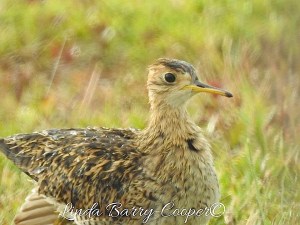
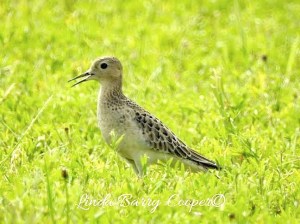
                                                        UPLAND & BUFF-BREASTED SANDPIPERS                                                          Upland Sandpiper, West End Grand Bahama (Linda Barry-Cooper) Buff-breasted Sandpiper, West End Grand Bahama (Linda Barry-Cooper)

Birds just like people have to adapt to new and existing change in their environment. Unfortunately with the rise and fall of the Jack Tar Resort & Hotel and now the former Bobby Ginn land development project, the habitat for birds had been gravely impacted with the loss of many prominent trees that birds rely on as a primary food source. 

                  CATTLE EGRETS & BLACK-BELLIED PLOVER                     Cattle Egrets, West End Grand Bahama (Linda Barry-Cooper) Black-bellied Plover, West End Grand Bahama (Linda Barry-Cooper)

The way to restore settlements that have lost many of their native trees & palms due to developments is to plant new fruit-bearing trees and shrubs that birds love i.e. (seagrape, Cocoplum, fig trees, cherry, oleander, pink and gold poui, frangipani, coral trees, etc.) Hummingbirds especially love the Firecracker plant and are primarily attracted to red and yellow. 

                             BLACK SKIMMER & BROWN NODDY                                   Black Skimmer, West End Grand Bahama (Linda Barry-Cooper)  Brown Noddy, West End Grand Bahama (Linda Barry-Cooper)

Within the local community and in backyards residents can aid birds this fall during migration with setting out bird feeders now filled with wild bird food supplied by Crosstown or Dolly Madison/Kelly’s. Residents can do well to attract birds right in their backyards by planting tropical flowers, bougainvillea, desert rose, Ixora flame of the woods, Hibiscus, Peregrina a.k.a. Star of Bethlehem.

              PIED-BILLED GREBE & LESSER YELLOWLEGS             Pied-billed Grebe, West End Grand Bahama (Linda Barry-Cooper) Greater Yellowlegs, West End Grand Bahama (Linda Barry-Cooper)

In 2015, West End is now considered the top birding Hot Spot in The Bahamas according to E-Bird Caribbean.   Linda Barry-Cooper attributes this to her and her many peers and birding supporters to include her mentor and friend Erika Gates, Bruce Purdy, Bruce Hallett, Dr. Elwood Bracey as well as international birders recorded observations and field work in West End.

               AMERICAN OYSTERCATCHER & EASTERN WOOD-PEWEE        American Oystercatcher, West End Grand Bahama (Linda Barry-Cooper) Eastern Wood-Pewee, West End Grand Bahama (Linda Barry-Cooper)

         VESPER SPARROW & BELTED KINGFISHER                   Vesper Sparrow, Grand Bahama (Linda Barry-Cooper)- Belted Kingfisher 1Upland Sandpiper, West End Grand Bahama (Linda Barry-Cooper)

This fall, rare birds such as the Whimbrel, Buff-breasted Sandpiper, Upland Sandpiper, Fish Crow, American Oystercatcher, and Eastern Wood Pewee have made landfall in West End. Keep Watching West End! There are more rarities to come. Our main goal however in the future is to increase the presence of our own endemic Bahamian species. These in particular are the birds that the world would want to see. Together, the future developers and community at large can take part in restoring the bird habitat that West End once embraced.

PIPING PLOVERPiping Plover 1, West End Grand Bahama (Linda Barry-Cooper)

                                        FISH CROW & BROWN PELICAN                Fish Crow, West End Grand Bahama (Linda Barry-Cooper)    Brown Pelican, West End Grand Bahama (Linda Barry-Cooper)

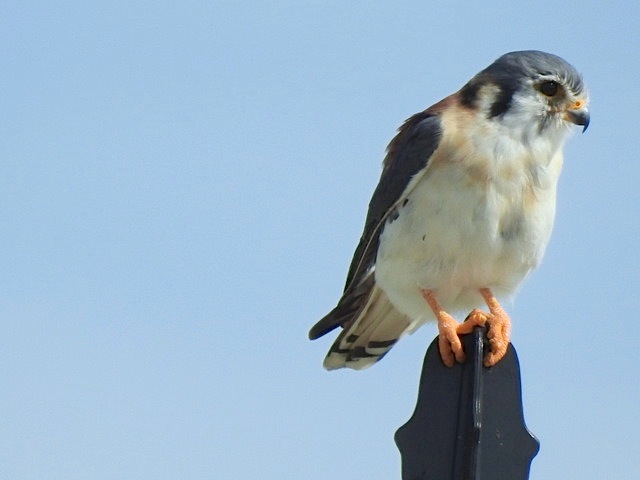
AMERICAN KESTRELAmerican Kestrel, West End Grand Bahama (Linda Barry-Cooper)

11401006_10206870807314866_6842602513908864802_n copy

Many thanks to Linda for her glimpse of the avian life on the western tip of Grand Bahama. It’s worth noting that some of these birds e.g. the fish crow, wood-pewee, and the 2 sandpipers are extremely rare on Abaco; and one, the vesper sparrow, is unrecorded for Abaco. Whimbrels are a good find on both islands – luckily this seems to be the year of the whimbrel.


Linda is welcoming visitors to West End who would love up close encounters with Birds, as well as photographing birds in their natural habitat. Photographers grab their super zoom lens and head on down to West End to explore the Cays and the vast eco-systems West End has to offer. Her website and tour pricing can be found at www.westendecologytours.com and on Facebook under Linda Bird Tours.

If you swam due west from West End you’d arrive in West Palm Beach…West End Map

Unknown's avatar

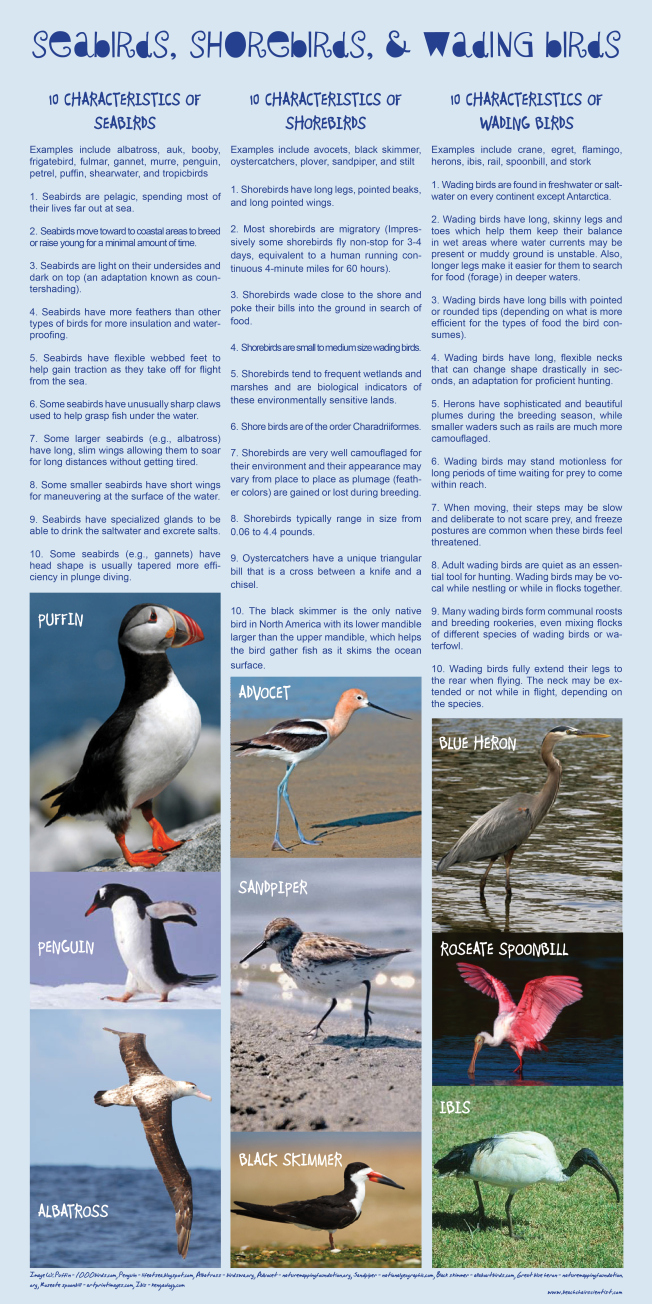
SEABIRDS, SHOREBIRDS & WADERS: 30 WAYS TO TELL THEM APART

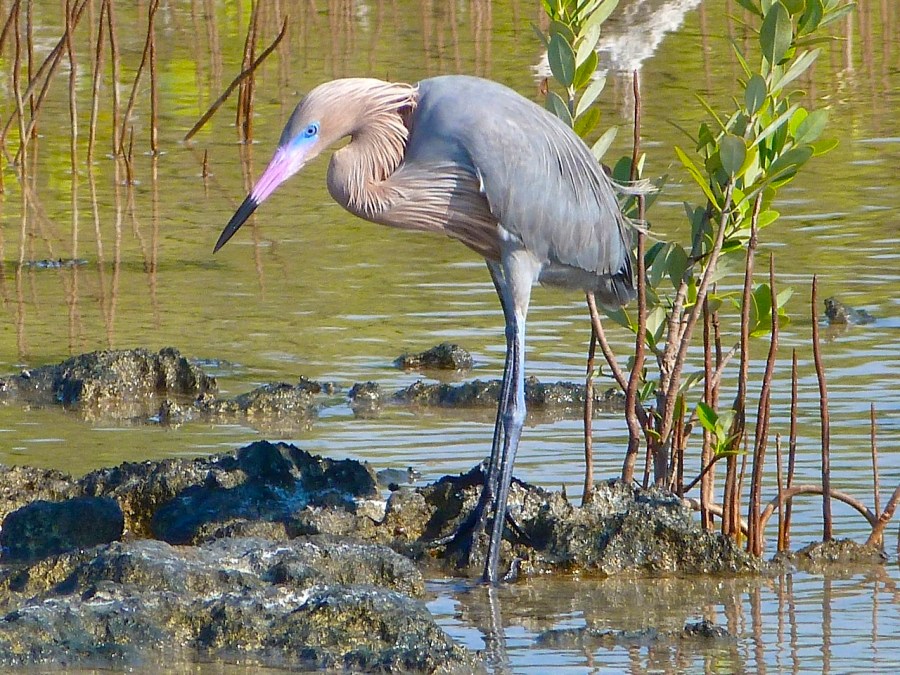
Reddish Egret, Crossing Rocks, Abaco (Keith Salvesen)12

Reddish Egret male in breeding plumage, Crossing Rocks, Abaco

SEABIRDS, SHOREBIRDS & WADERS: 30 WAYS TO TELL THEM APART

This weekend is Wader Conservation World Watch weekend, promoted by WADER QUEST. This is the perfect moment to help with the vexed question: “See that bird? Over there. No, THERE! Is it a seabird, shorebird or a wader?” 

Publication1

There is plenty of scope for confusion, since in practice there is a degree of informal category overlap and even some variation between the various bird guides. And after all, shorebirds may wade. And wading birds may be found on the shore*. Here is a reminder of 30 infallible rules to sort out which is which, courtesy of the estimable BEACH CHAIR SCIENTIST blog. 

*STOP PRESS Rick Simpson of Wader Quest has kindly added a comment pointing out the marked difference in the categorisation on either side of the Atlantic: “What you in the USA call shorebirds we here in the UK call waders (peeps, sandpipers, plovers oystercatchers etc – but not skimmers). Shorebirds to us can be any bird that lives on a shore, ie egret, herons, gulls. To add more confusion some seabirds such as Gulls, Skuas (Jaegers) Terns and Auks are also all in the group called Charadriiformes, not just the waders… er I mean shorebirds, or do I? [So] should any of you decide to participate in our world watch it is your shorebirds (but not skimmers) that we are interested in and we call them waders. Anyone want to know the rules of cricket? It is easier to explain!”

magnificent-frigatebird

10 CHARACTERISTICS OF SEABIRDS 

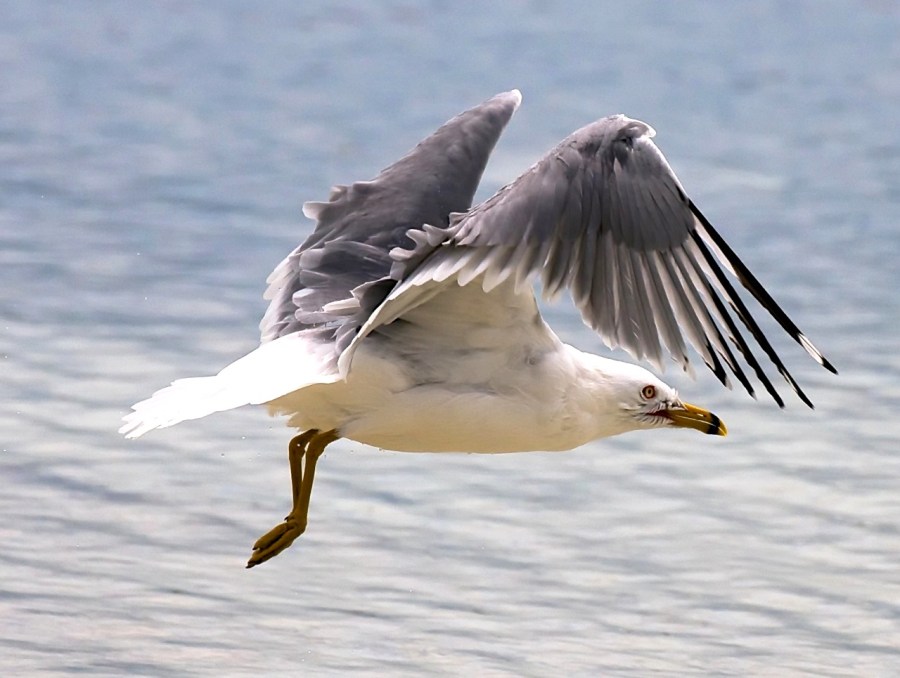
Ring-billed gull, AbacoRing-billed Gull (Nina Henry : DCB)

Examples include frigatebirds, petrels, shearwaters, gulls, terns and tropicbirds

1. Seabirds are pelagic, spending most of their lives far out at sea.
2. Seabirds move toward to coastal areas to breed or raise young for a minimal amount of time.
3. Seabirds are light on their undersides and dark on top (an adaptation known as countershading).
4. Seabirds have more feathers than other types of birds for more insulation and waterproofing.
5. Seabirds have flexible webbed feet to help gain traction as they take off for flight from the sea.
6. Some seabirds have unusually sharp claws used to help grasp fish under the water.
7. Some larger seabirds (e.g. albatross) have long, slim wings allowing them to soar for long distances without getting tired.
8. Some smaller seabirds have short wings for manoeuvering at the surface of the water.
9. Seabirds have specialized glands to be able to drink the saltwater and excrete salts.
10. Some seabirds (e.g. gannets) have a head shape that is usually tapered for more efficiency in plunge diving.

piping-plover

10 CHARACTERISTICS OF SHOREBIRDS 

Ruddy Turnstone, AbacoRuddy Turnstone Abaco Bahamas. 2.12.Tom Sheley copy 2

Examples include oystercatchers, turnstones, knots, plovers and sandpipers

1. Shorebirds have long legs, pointed beaks, and long pointed wings.
2. Most shorebirds are migratory (impressively some shorebirds fly non-stop for 3-4 days, equivalent to a human running continuous 4-minute miles for 60 hours).
3. Shorebirds wade close to the shore and poke their bills into the ground in search of food.
4. Shorebirds are small to medium size wading birds.
5. Shorebirds tend to frequent wetlands and marshes and are biological indicators of these environmentally sensitive lands.
6. Shore birds are of the order Charadriiformes.
7. Shorebirds are very well camouflaged for their environment and their appearance may vary from place to place as plumage (feather colors) are gained or lost during breeding.
8. Shorebirds typically range in size from 0.06 to 4.4 pounds.
9. Oystercatchers have a unique triangular bill that is a cross between a knife and a chisel.
10. The black skimmer is the only native bird in North America with its lower mandible larger than the upper mandible, which helps the bird gather fish as it skims the ocean surface.

roseate-spoonbill

10 CHARACTERISTICS OF WADING BIRDS 

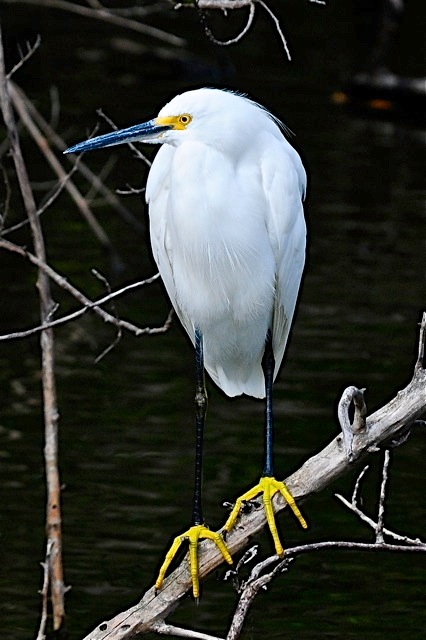
Snowy Egret, Abaco
Snowy Egret ?NP_ACH1409 copy

Examples include egrets, herons, flamingos, ibis, rails, and spoonbills

1. Wading birds are found in freshwater or saltwater on every continent except Antarctica.
2. Wading birds have long, skinny legs and toes which help them keep their balance in wet areas where water currents may be present or muddy ground is unstable. Also, longer legs make it easier for them to search for food (forage) in deeper waters.
3. Wading birds have long bills with pointed or rounded tips (depending on what is more efficient for the types of food the bird consumes).
4. Wading birds have long, flexible necks that can change shape drastically in seconds, an adaptation for proficient hunting.
5. Herons have sophisticated and beautiful plumes (‘bridal plumage’) during the breeding season, while smaller waders such as rails are much more camouflaged.
6. Wading birds may stand motionless for long periods of time waiting for prey to come within reach.
7. When moving, their steps may be slow and deliberate to not scare prey, and freeze postures are common when these birds feel threatened.
8. Adult wading birds are quiet as an essential tool for hunting. Wading birds may be vocal while nestling or while in flocks together.
9. Many wading birds form communal roosts and breeding rookeries, even mixing flocks of different species of wading birds or waterfowl.
10. Wading birds fully extend their legs to the rear when flying. The neck may be extended or not while in flight, depending on the species.

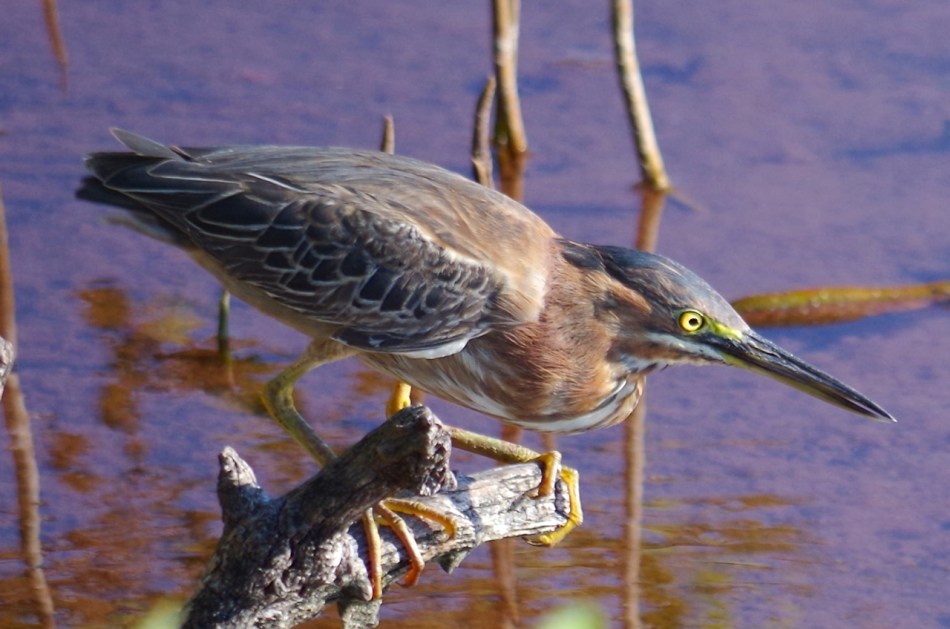
Green Heron, AbacoGreen Heron, Gilpin Point, Abaco (Keith Salvesen)11

These lists were handily put together in useful chart formseabird shorebird wading bird chart ©beachchairscientist

Credits: Table – ©Beach Chair Scientist; Pics – Nina Henry (RBG), Tom Sheley (RUTU), Tony Hepburn (SNEG), Keith Salvesen (REEG & GRHE) ; Cartoons – Birdorable

Unknown's avatar

A WHITER SHADE OF TAIL? LEUCISM IN BIRDS

Leucistic Turkey Vulture, Florida Keys 2 (Amy at PoweredbyBirds

Leucistic Turkey Vulture (Amy Evenstad, PoweredByBirds.com)

A WHITER SHADE OF TAIL? LEUCISM IN BIRDS

And not just the tail*. Other parts of a bird. Sometimes most of a bird. More rarely, an entire bird. Whichever, a bird affected by leucism stands out from the crowd – out of the ordinary and therefore startling to the eye. I’d be very surprised if the fine turkey vulture in the header image didn’t make you look twice – maybe even to check if some devious Rolling Harbour P/shop trickery had been at work. Yet it’s just a TV / TUVU in the Florida Keys, living a normal vulturine life.

kcac TUVU JPG

ABACO’S LATEST LEUCISTIC DISCOVERY

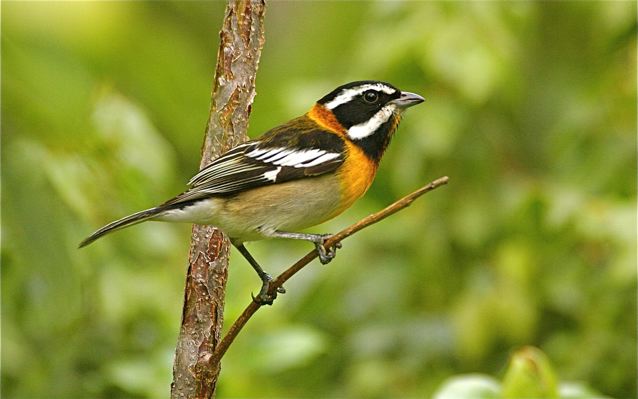
A leucistic Western Spindalis found within the past week on Abaco by Keith KempWestern Spindalis (leucistic) Abaco 2 (Keith Kemp)Western Spindalis (leucistic) Abaco 1 (Keith Kemp)

For comparison – the real dealWestern Spindalis BH IMG_1711 copy

LEUCISM? EXCUSE ME, AND THAT IS?

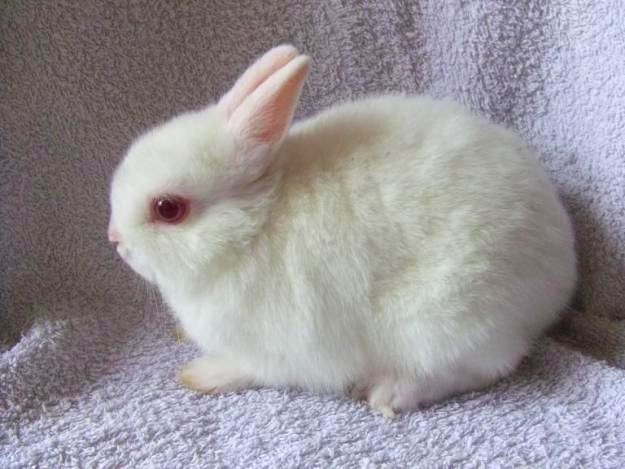
First, what it is not. It is not albinism, which results from diminished or lost melanin production that affects pigmentation. One characteristic of the condition is the tendency to pink eyes, which of course is seen in humans as well as animals and birds. Here’s an obvious yet totes adorbs illustration:

Albino Rabbit (pinterest)

Albino Fwuffy Bwunny Wabbit

WELL, WHAT IS IT THEN?

Put simply, melanin is only one of many ingredients of pigmentation. Leucism is caused through pigment loss involving many types of pigment, not just melanin. In birds this results in unnaturally light or white colouring of feathers that may be partial or entire. The eyes of a bird with leucism are unaffected. At one extreme, if all pigment cells fail, a white bird will result; at the other extreme, pigment defects cause patches and blotches of pale or white on the bird, often called a ‘pied’ effect. The condition can be inherited.

A mallard on Abaco. The species is known for its wide colour variations in both sexes. Sometimes the variations go beyond the usual range. This is a leucistic bird – though not, as it appears, one-legged.Leucistic Mallard, Abaco (Nina Henry)

A leucistic common gallinule (moorhen) on AbacoLeucistic Common Gallinule (Moorhen) Abaco (Tony Hepburn)

Leucistic rock pigeon800px-Leucistic_Rock_Pigeon

BAHAMA (WHITE-CHEEKED) PINTAIL: A PIGMENT PUZZLE

I have found more examples of leucism in the ‘Bahama Duck’ than any other local species. But there is also scope for confusion. First, here’s a pintail that is undoubtedly leucistic – note that the eyes and beak are unaffected by pigmentation deficiency:

Leucistic Bahama Pintail (Jim Edmonson)

But not all pale variants can be so confidently labelled. Here are two photos I took at the well-known birding pond on the Treasure Cay golf course [ask for permission at the club house first – it may, for example, be a match day]. In the first, bottom right, there is plainly an ‘odd’ pintail, silvery rather than ruddy brown (yes, I do see the coot in the pack as well). The second photo shows the same bird on dry land.

White-cheeked (Bahama) Pintail, Abaco 1 (Keith Salvesen) White-cheeked (Bahama) Pintail, Abaco 2 (Keith Salvesen)

This is known as a ‘silver pintail’. These are said to be a leuchistic variant, and they are stocked by poultry dealers as ornamental ducks at a higher price than the standard brown (and much-loved) version. However this bird clearly retains the essential markings of a normal pintail that you might expect to be absent (at least in patches) in the ‘true’ leucistic bird. I’ve seen it describes as a ‘gray morph’. I wonder where the line is drawn between a marked colour variant or morph in a bird; and an obviously pigment-abnormal, leucistic bird where incidence and extent of the condition seems to be random.

A fine example of a ‘pied’ American Robin, an occasional visiting species on Abaco

Leucistic American Robin (Amy @ PoweredbyBirds)

Leucistic American Robin (Amy Evenstad, PoweredByBirds.com)

PIPING PLOVERS CAN BE LEUCISTIC TOO

PIPL are my current bird preoccupation, but until I checked them out, I hadn’t imagined what a leucistic one would look like. I now have the answer… Leucistic Piping Plover (Audubon Alliance)leucistic plover 2leucistic plover 3

These photos of a leucistic female were featured by Audubon Alliance for Coastal Waterbirds, Audubon Connecticut. They were taken by Jim Panaccione, a Biological Science Technician at Parker River National Wildlife Refuge, Newburyport, Massachusetts in 2012. I hope he won’t mind their illustrative use here… Despite the theory that leucistic birds may find it hard to find a mate – and might even be attacked by its own species – this pair successfully nested in 2012.

I’d be interested to hear about other leucistic birds found on Abaco. Please add a comment or email me. Or upload a photo to the Rolling Harbour FB page if you like.

OPTIONAL MUSICAL & CULTURAL DIGRESSION

A WHITER SHADE OF PALE

*Obviously, it had to be ‘tail’ in the title to justify one of my clunky ‘jokes’ and an accompanying musical diversion. That’s just the way it is, I’m afraid. Bach’s well-known descending chord sequence of was of course shamelessly ripped off by ingeniously adapted by Procol Harum for ‘A Whiter Shade of Pale’, their first single in 1967. Relive a Summer of Love right here and now. Or for a change try a different version by Annie Lennox

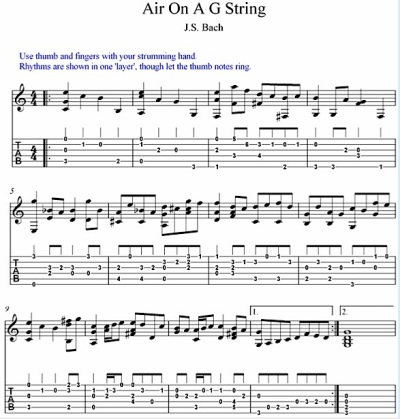
Any fret-tweakers might like to see the sheet music of Bach’s Air for guitar – you could even play it on Air Guitar – which is relatively easy, being in C major. 

Air on a G String - J S Bach - Guitar Tab JPG

The best known commercial use of the tune was in the famed series of adverts that  equated a mild cigar called Hamlet with happiness, accompanied by an excerpt from a jazzy version of Bach’s ‘Air on the G String’. Here is one of the best – and possibly the only advert to my knowledge to feature not one, but two excellent Sir Walter Raleigh jokes. But the music never gets past the first familiar chord…

Credits: thanks to Amy Evenstad (PoweredByBirds.com) for use permission for her wonderful TUVU & AMRO photos; other photos by Keith Kemp & Bruce Hallett (Spindalis); Pinterest (rabbit); Nina Henry (mallard); Tony Hepburn (moorhen); Wiki (pigeon); Jim Edmonson (leucistic pintail); RH (silver pintail); Jim Panaccione / Audubon (piping plovers); Tip o’ the Hat to Birdorable (TV inset in my ‘keep calm’ mock-up): Procol Harum, esp. Robin Trower for building a great career ‘reminiscent’ of Hendrix; J.S. Bach for a nagging tune; Hamlet cigars for ingenuity & making me laugh

Unknown's avatar

GREATER YELLOWLEGS: LARGER THAN THE LESSER. PROBABLY.

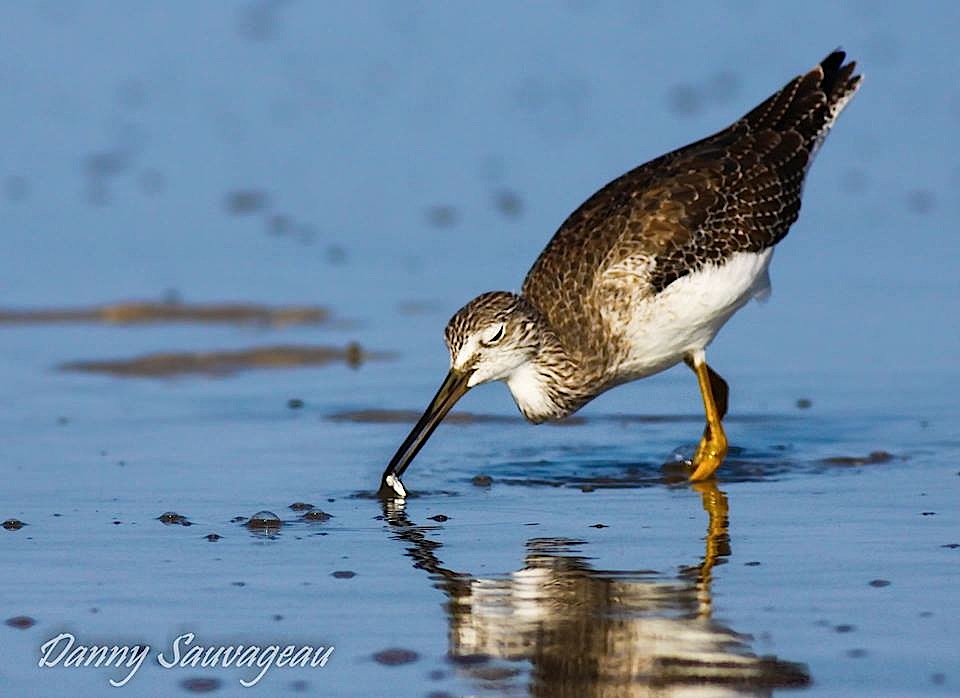
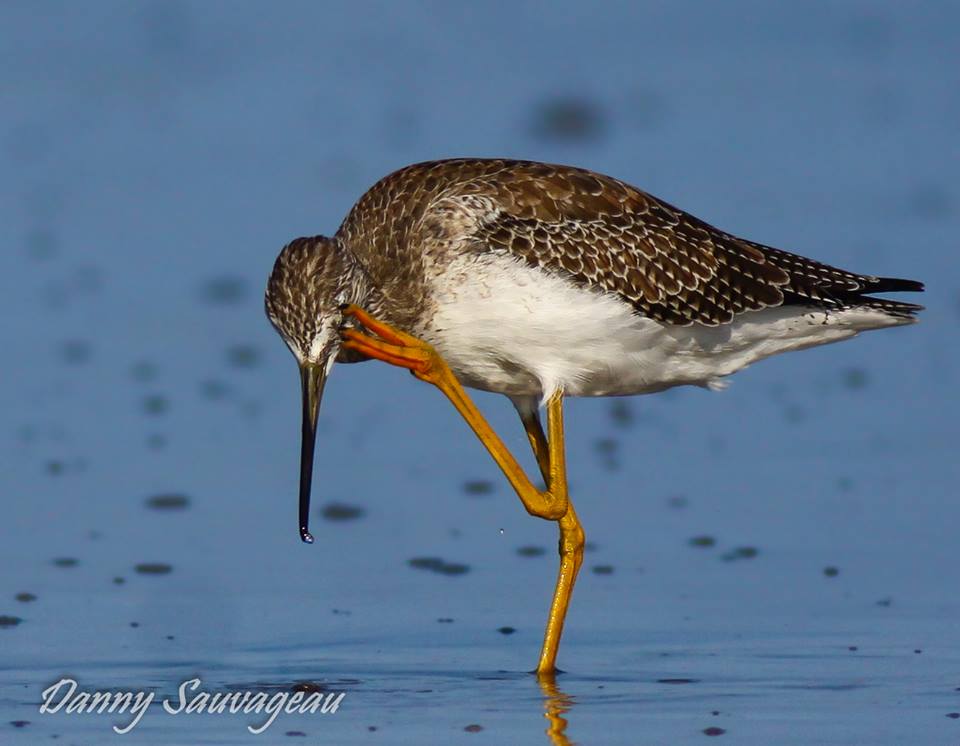
Greater Yellowlegs, FL (©Danny Sauvageau)

GREATER YELLOWLEGS: LARGER THAN THE LESSER. PROBABLY.

I’ve shied away from the whole ‘yellowlegs dimension question’ for long enough. Now that I have some brilliant photos for you, I feel I am obliged to address the issue. I was last forced into this slightly uncomfortable position while writing the captions for THE BIRD OF ABACO. We had GY photos. We had LY photos. We had none of the 2 species together, or at comparable distances from the camera. Frankly unless you are very knowledgeable and / or a regular birder where both species hang out, they are very hard to tell apart. 

Both yellowlegs species are winter residents on Abaco, and neither is particularly common (though Gilpin Pond is always a good place to check for LYs). Both are very similar in almost all respects. The broad principle is that the GY is the larger, heavier bird, while the LY is more delicate and with a shorter bill in proportion to its head size.

In a more refined version, Cornell suggests: “GY’s bill appears slightly upturned and blunt-tipped, while LY’s bill is straight and sharp-pointed. LY’s bill is always dark, while GY’s bill is grayish at the base in non-breeding season. Voice is best distinguishing character: GY gives three or four piercing notes, LY two rapid, softer short whistles (sometimes three)”. But even this help depends on (a) light conditions (b) season and (c) whether the bird you are looking at is ‘vocalising’ or not…

TWO TYPES OF YELLOWLEGS ON ABACO – BUT WHICH IS WHICH?Greater Yellowlegs LR. Abaco Bahamas.Tom Sheley.2.12 copy 2Lesser Yellowlegs.Marls.Abaco Bahamas.2.13.Tom Sheley small 3

If you saw the two birds above on separate days in different places at different distances, could you say with confidence which is which? Or maybe they are the same? Experts will probably know at once that the top bird is a GY in a ‘slimline’ stance; and the other is a LY in a ‘plump’ stance. But going simply on the ‘larger heavier bird’ and ‘bill-length principle’, I’d have said the opposite. And I’d be wrong. As usual. I suspect that the only way an amateur (e.g. me) can hope to be confident in distinguishing the two species is by seeing them frequently and preferably together.

Which takes us from Abaco, where the above birds were photographed by Tom Sheley, to Pinellas County, FL and the wonderful photos of Danny Sauvageau, an expert with the birds and also the camera. Here are some of his recent Greater Yellowlegs photographs that show the bird at its absolute best. They also demonstrate the ‘plump’ and the ‘slim’ looks of the same bird.

If anyone has any other reliable method for telling the species apart, please post a comment and I will gladly incorporate it as a STOP PRESS…

Greater Yellowlegs, FL (©Danny Sauvageau)Greater Yellowlegs, FL (©Danny Sauvageau) Greater Yellowlegs, FL (©Danny Sauvageau) Greater Yellowlegs, FL (©Danny Sauvageau) Greater Yellowlegs, FL (©Danny Sauvageau) Greater Yellowlegs, FL (©Danny Sauvageau) Greater Yellowlegs, FL (©Danny Sauvageau)

STOP PRESS 1 My thanks to blogging friend DEAR KITTY for reminding me of a video she posted that very conveniently shows a GY and a LY together, in circumstances where it is impossible not to notice that one bird is larger than the other. It’s an all-round helpful video, so thanks for this, DK.

[youtube https://youtu.be/1BFMAYUDnmg]

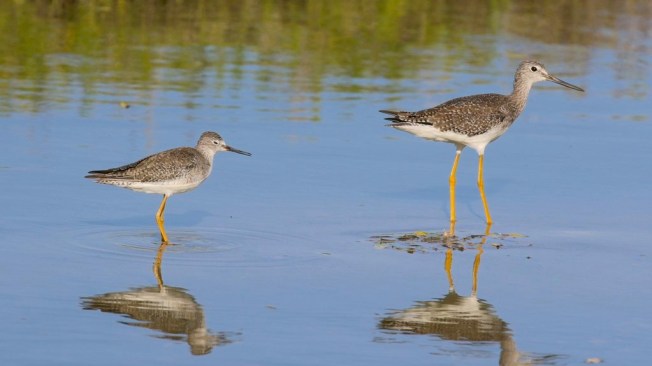
STOP PRESS 2 Thanks again to DK for drawing my attention to a great photo by Matt Scott posted on twitter. Here are both types of yellowlegs together, in similar poses and the same distance from the camera – and the behold the difference. The very illustrative image I had been looking for, handed to me on a plate…Yellowlegs G & L, Aruba - Matt Scott @matttockington

Credits: GY and LY on Abaco, Tom Sheley; all other photos Danny Sauvageau. Thanks to both for use permission. Also, Cornell Lab of Ornithology… And Matt Scott

Unknown's avatar

BUTTERFLIES ON ABACO (6): FOCUS ON SWALLOWTAILS

Bahama Swallowtail, Treasure Cay, Abaco (Uli Nowlan) copy

BUTTERFLIES ON ABACO (6): FOCUS ON SWALLOWTAILS

I’ve mentioned the swallowtail butterflies of Abaco before, but I have never shown the 3 main species together. They are such handsome creatures that’s it time to give them a place in the sun. These are my favourite butterflies. Ah yes – equally with the wonderful ATALA HAIRSTREAK

Bahama Swallowtail, Abaco (Rhonda Pearce) 2 copy

BAHAMA (BAHAMIAN) SWALLOWTAIL

This fine swallowtail Papilio andraemon has a range beyond the islands of the Bahamas. It is also found on Cuba and Jamaica. Occasionally they are found as strays on the Florida Keys or on the mainland in the Miami region. 

Bahama Swallowtail, Abaco (Rhonda Pearce) 1 copyBahama Swallowtail, Abaco (Uli Nowlan)

POLYDAMUS (‘GOLD-RIM’) SWALLOWTAIL

This is the species you are most likely to encounter as they cruise rapidly from flower to flower, constantly on the move, with wings fluttering even as they feed. Hard to get good photos of them, therefore. But some (though sadly not me) manage it somehow… Polydamus Swallowtail, Abaco (Nina Henry)Polydamus Swallowtail, Abaco (Char Albury) Polydamus Swallowtail, Abaco (Rhonda Pearce) copy

TIGER SWALLOWTAIL

I suspect this species – common in the eastern USA – is quite rare on Abaco. I have never seen one, and these ones photographed by Uli Nowlan at Treasure Cay are the only pictures I have seen. And what lovely creatures they are. Tiger Swallowtail, Abaco (Uli Nowlan) Tiger Swallowtail, Abaco (Uli Nowlan)2

DISQUALIFIED ENTRIES

RIGHT SPECIES, WRONG CONTINENT – EUROPEAN SWALLOWTAILSwallowtail Butterfly (France)

RIGHT COUNTRY, WRONG CREATURE – BAHAMA SWALLOW TAIL, ABACO BS BH IMG_8038

WRONG CREATURE, WRONG CONTINENT – EUROPEAN SWALLOW TAILSwallow Dorset

RIGHT EVERYTHING, HOPELESS PHOTO (how they usually behave for me…)Polydamus (Gold Rim) Swallowtail Butterfly, Abaco (but6)

RELATED POSTS

COMMON BUCKEYE

ZEBRA HELICONIAN

GULF FRITILLARY

DRYAS JULIA

MARTIAL SCRUB-HAIRSTREAK

Polydamus Swallowtail abaco (Char Albury)

Credits: Uli Nowlan, Rhonda Pearce, Nina Henry, Charmaine Albury, plus disappointments for RH

Unknown's avatar

“THE DELPHI CLUB GUIDE TO THE BIRDS OF ABACO”

Abaco Parrot, Abaco Bahamas (Peter Mantle)

“THE DELPHI CLUB GUIDE TO THE BIRDS OF ABACO”

A new season – the seventh – of the Delphi Club is now underway. There are fish to be caught, poolside inactivities to relish, chef-prepared meals to eat and a capacious wine cellar to be explored. To which, add birds to be spotted. Delphi has turned out to be a superb place for birding – not a feature given prominence in the original prospectus… The Club’s remoteness and its rich mix of pine forest, coppice, gardens and a pristine one-mile beach ensure the prefect protected habitat for a vast number of bird species common, uncommon and rare.

Blue-gray Gnatcatcher vocalizing.Abaco Bahamas.6.13.Tom Sheley a

Eighteen months ago, “The Delphi Club Guide to THE BIRDS OF ABACOwas published. The originator of the idea – as with the entire Delphi project – was of course Peter Mantle, the publisher. The book took 16 months from conception to the arrival of three pallets of printed books on the dockside in Marsh Harbour, having travelled by a tortuous route from specialist printers in Italy. Cuban Emerald Hummingbird, Delphi, Abaco (Keith Salvesen)

The book was launched at the Delphi Club in March 2014, to generous enthusiasm and support both on Abaco and beyond. 75% of the edition has been sold already. In addition, Abaco schools, libraries and wildlife organisations have been given copies for educational purposes. A percentage of profits is to be given to local wildlife causes. We couldn’t be more pleased with the response to this lavish book, a unique publication in the Bahamas. 

Delphi Club Guide to the Birds of Abaco (Jacket)

The incremental growth of social media is rapid. Blogs gain readers. Facebook and Twitter pages gain new friends and followers. The start of this new Delphi season is therefore a good moment to post a reminder about the book, illustrated with a few of the wonderful bird species featured. And… ahem… there are only 57 more ‘sleeps’ until Christmas. 

Short-billed Dowitcher, Abaco (Bruce Hallett)

The Guide showcases the rich and varied bird life of Abaco, Bahamas and features both resident and migratory species including rarities and unusual sightings. The main features are as follows:

  • 272 pages with more than 350 photographs
  • 163 species shown in vivid colour – nearly two-thirds of all the bird species ever recorded for Abaco
  • Every single photograph was taken on Abaco or in Abaco waters
  • All birds are shown in their natural surroundings – no feeders or trails of seed were used
  • Several birds featured are the first ones ever recorded for Abaco or even for the entire Bahamas

Clapper Rail Abaco Bahamas Tom Sheley

  • A total of 30 photographers, both experienced and amateur, contributed to the project
  • The book has had the generous support of many well-known names of Abaco and Bahamas birding
  • A complete checklist of every bird recorded for Abaco since 1950 up to the date of publication was compiled specially for the book.
  • A neat code was devised to show at a glance when you may see a particular bird, and the likelihood of doing so. Birds found at Delphi are also marked.
  • Specially commissioned cartographer’s Map of Abaco showing places named in the book

Least Tern_ACH3672 copy

  • Informative captions intentionally depart from the standard field guide approach…
  • …as does the listing of the birds in alphabetical rather than scientific order
  • Say goodbye to ’37 warbler species on consecutive pages’ misery
  • Say hello to astonishing and unexpected juxtapositions of species

Abaco_Bahama Yellowthroat_Gerlinde Taurer copy

  • The book was printed in Florence, Italy by specialist printers on Grade-1 quality paper
  • Printing took pairs of printers working in 6 hour shifts 33 hours over 3 days to complete
  • The project manager and the author personally oversaw the printing

Smooth-billed Ani pair GT

  • The book is dedicated to the wildlife organisations of Abaco
  • A percentage of the proceeds of sale will be donated for the support of local wildlife organisations
  • A copy of the book has been presented to every school and library on Abaco

Piping Plover BH IMG_1919

The book is published by the Delphi Club (contact details below). The project was managed by a publishing specialist in art books. The author is the wildlife blogger more widely known on Abaco and (possibly) beyond as ‘Rolling Harbour’. Oh! So that would in fact be Mrs Harbour and myself. Well well! What are the chances? Painted Bunting male.Abaco Bahamas.Tom Sheley

The Delphi Club at Rolling Harbour
PO Box AB-20006, Marsh Harbour, Abaco, Bahamas
Tel: +1-242-366-2222
General Manager – Max Woolnough: +1-242-577-1698
delphi.bahamas@gmail.com

Or email rollingharbour.delphi@gmail.com with any queries or commentsAmerican Oystercatchers BH IMG_2000 copy 2

Images by Tom Sheley,  Bruce Hallett, Gerlinde Taurer, Tony Hepburn, Peter Mantle, RH

Cuban (Crescent-eyed) Pewee, Delphi, Abaco (Keith Salvesen)"Birds of Abaco" flyer