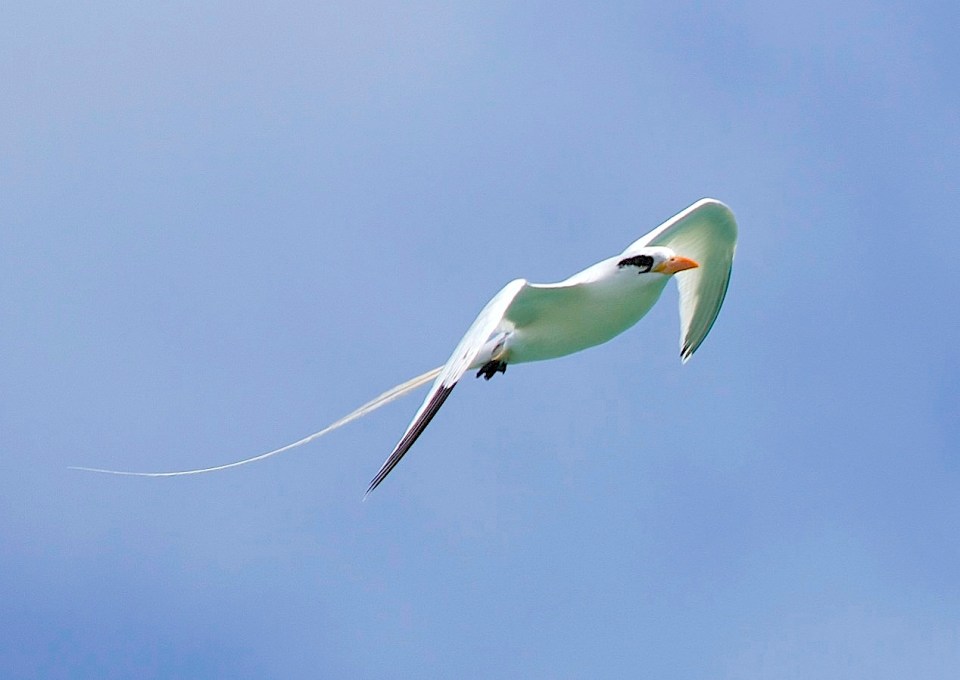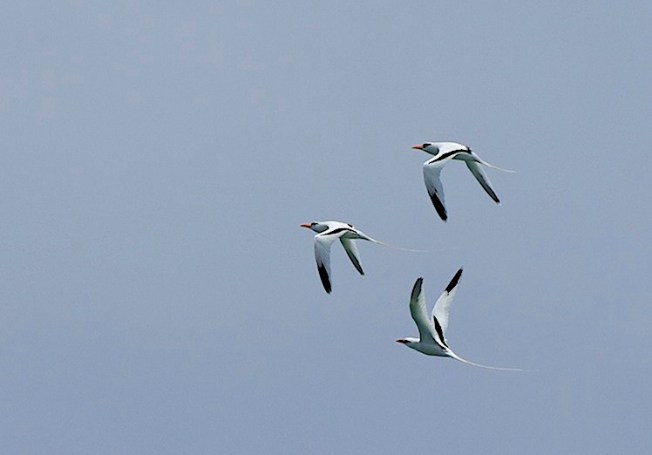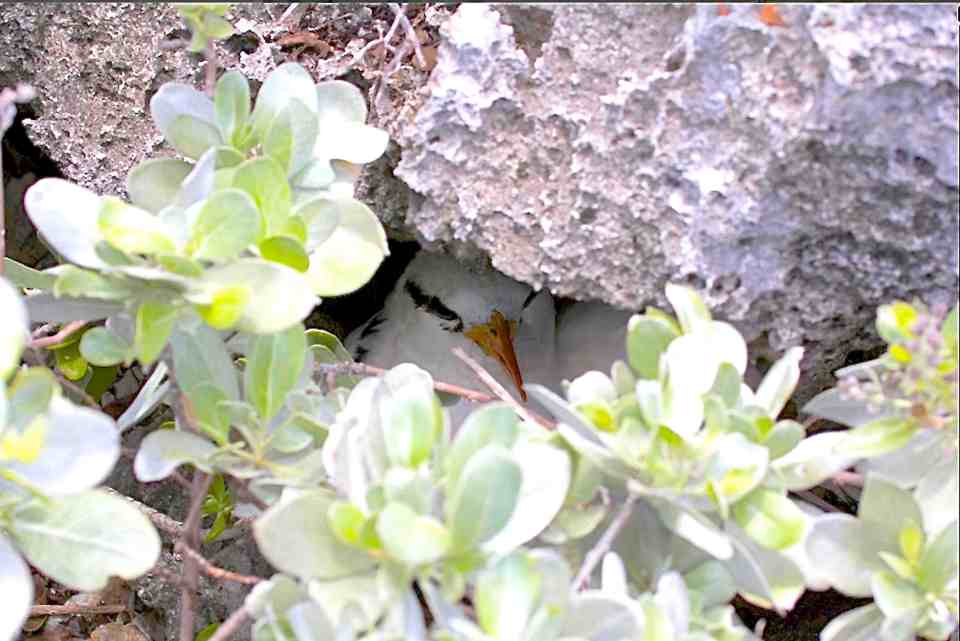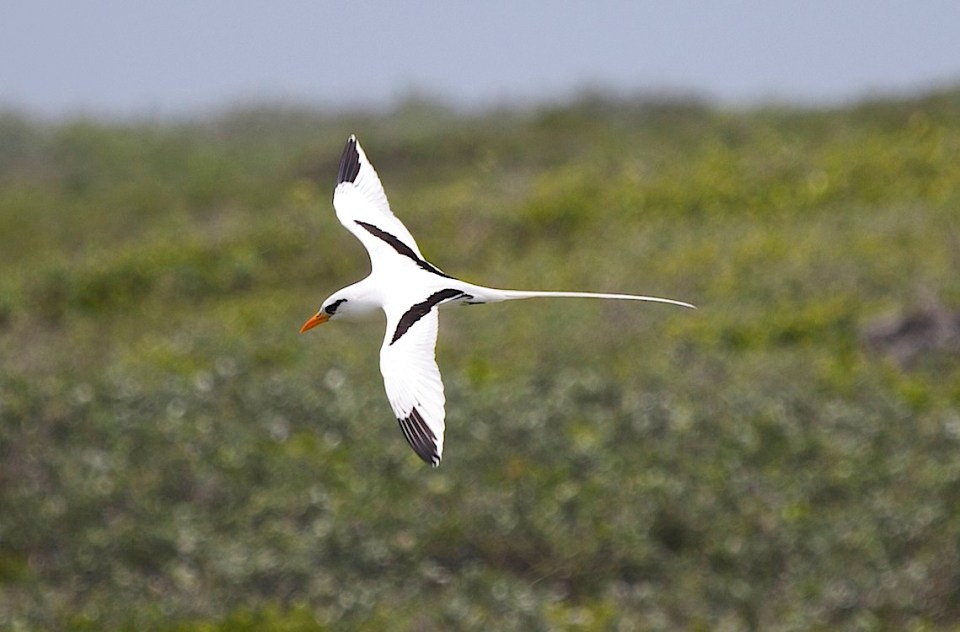
Unknown's avatar

“A PELICAN GOES INTO A LOW DIVE AND…”

Brown Pelican 1 (Phil Lanoue)

“A PELICAN GOES INTO A LOW DIVE AND…”

… is a promising start to a pelican-based variant on the “Man walks into a Bar…” joke. But in fact there’s a serious point to all this, illustrated with a set of Phil Lanoue’s wonderful ‘bird sequence’ photos. The Brown Pelican is a permanent breeding resident on Abaco, not exactly common but locally quite easy to find. For example, certain docks are often used by them as diving platforms as they feed. Sandy Point is a good place for this. At Delphi we see them passing over the bay, flying high with slow, heavy wing-beats, but sadly I have yet to see one fishing off the rocks there.

Brown pelicans feed by diving for fish. By contrast, White Pelicans (a rarity on Abaco) feed in a quite different way. They forage communally and cooperatively by coralling fish and picking them off from the surface or just below it. A quick online search shows very little evidence of white pelicans diving for food or indeed just for the hell of it. But have a look now at a Brown Pelican landing and going straight into a low dive… to catch a meal.**
Brown Pelican 2 (Phil Lanoue)Brown Pelican 3 (Phil Lanoue)Brown Pelican 4 (Phil Lanoue)

I unreservedly recommend Phil’s website HERE for the consistently excellence of his photography, especially his action sequences; and for the way he captures the mood with apposite commentary.

**I completely realise that this is totally lame as the punchline for a bar-room joke

Unknown's avatar

WHITE-TAILED TROPICBIRD: ABACO’S MOST ELEGANT BIRD

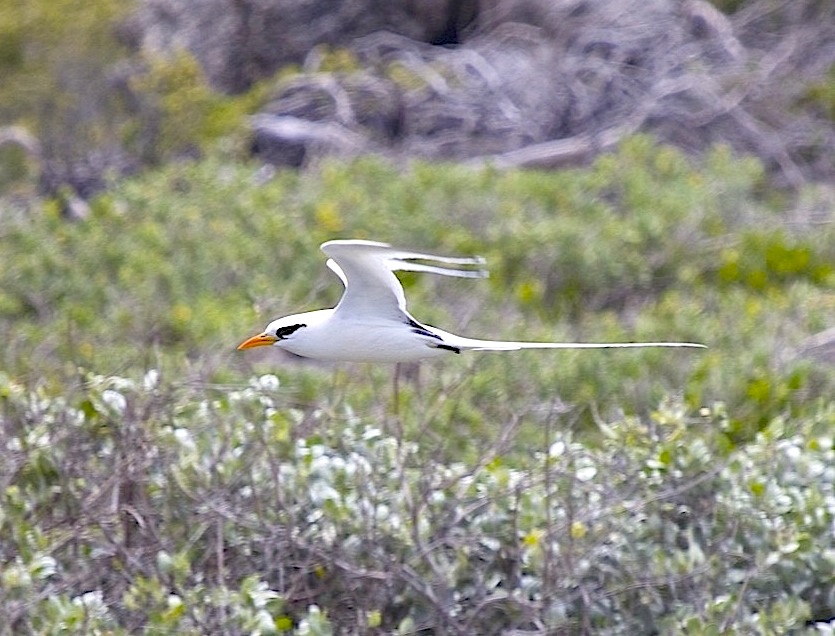
White-tailed Tropicbird, Abaco (Alex Hughes)

WHITE-TAILED TROPICBIRD: ABACO’S MOST ELEGANT BIRD

A competition to decide the most elegant bird found on Abaco (of 350+ recorded species) is a simpler task than it sounds. Colourfulness doesn’t come into (sorry, painted bunting, Abaco parrot & co). Nor cuteness, rarity, popularity and so on. Some birds don’t make the starting line at all (but we love you, ungainly limpkins and raucous clumsy-flying Anis). Best to judge from a different viewpoint: is there one bird that in flight is invariably beautiful to watch, in a way that can make you catch your breath…?

White-tailed Tropicbird, Abaco (Alex Hughes)White-tailed Tropicbird, Abaco (Alex Hughes)

The caribbean white-tailed tropicbird (Phaethon lepturus catesbyi) is one of six types of tropicbird found worldwide. It is named after pioneering naturalist MARK CATESBY, who predated John James Audubon. Click the link to find out more about him. Catesby’s depiction (below) of a ‘Phaeton’ must be one of the earliest.

Catesby’s TropicbirdTropicbird - Mark Catesby jpg

IMG_0413

In the Bahamas, tropicbirds are summer resident only and breed on the islands. Abaco is fortunate to have several breeding colonies, not all in remote or inaccessible places. Female tropicbirds lay a single egg directly onto the ground or on rocky ledges and in rocky holes. One might suppose that such limited egg production with a somewhat high-risk nesting policy, coupled with modern problems such as habitat destruction, might affect numbers. However, these fine birds seem to be doing well, and are IUCN-listed ‘Least Concern’.

This tropicbird on Abaco has found a safe place to nest in a rocky holeWhite-tailed Tropicbird on nest, Abaco (Alex Hughes)

Tropicbirds have a variety of local names in the Caribbean, for example ‘longtail’ and ‘bosun bird’ (after their screeching call). They plunge-dive for fish, but are inexpert swimmers. This is a factor I am prepared to overlook in the elegance contest. They were born to fly high, not to paddle about.

White-tailed Tropicbird, Abaco (Alex Hughes)White-tailed Tropicbird, Abaco (Alex Hughes)

THE STORY OF TB THE TROPICBIRD

A couple of years ago, a tropicbird chick was rescued by a dive boat and given to Melissa Maura, well-known for her animal magic, to care for. She nurtured ‘TB’, giving him a soft bed and providing him with a swimming pool. To begin with, it looked as though he might not be able to fly at all, but as he became stronger he started to flap his wings.

White-tailed Tropicbird, Bahamas (Melissa Maura)White-tailed Tropicbird, Bahamas (Melissa Maura)

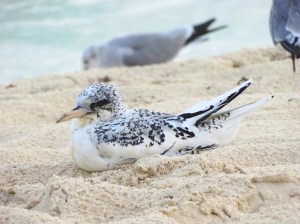
Then it was time to go to the beach, get acquainted with sand and sea, and practise flying. I have some pathetic photos of an exhausted TB lying flat out on the sand after his initial attempts to fly. But Melissa and TB persevered with the flying practice and in due course TB began to get the hang of it. Finally, the great day arrived. Melissa and a friend took TB down to the beach and launched him into the air. He took off, flying strongly away, never to return. A moment of triumph mixed with poignance.

  White-tailed Tropicbird, Bahamas (Melissa Maura) White-tailed Tropicbird, Bahamas (Melissa Maura)White-tailed Tropicbird, Bahamas (Melissa Maura)

You are very welcome to propose a rival in the elegance stakes in the comment box!

Credits: Main photos Alex Hughes; TB images Melissa Maura

White-tailed Tropicbird, Abaco (Alex Hughes)

Unknown's avatar

ECHINODERMS, DOLLAR DOVES & PETRIFIED BISCUITS

Sand Dollar Doves (Keith Salvesen) 6

Sand Dollar from Abaco containing 5 miniature white doves…

ECHINODERMS, DOLLAR DOVES & PETRIFIED BISCUITS

Echinoderms (Gr. ‘Hedgehog Skin’) comprise a large variety of sea creatures characterised (mostly) by radial symmetry, often five-way. For Abaconians, the most frequently encountered are starfish, sea urchins, sand dollars and sea biscuits. I am going to look at two particular aspects of dollars and biscuits, conscious that my illustrative photos of white objects were stupidly taken against a white background.

DOLLAR DOVES

I’m sure all Bahamians know or are aware of at least one version of the famous ‘Sand Dollar’ poem, in which the various characteristics of the test (the skeleton of the creature) are given religious significance. One verse of the poem may be puzzling: “Now break the centre open And here you will release The five white doves awaiting To spread good will and peace”.

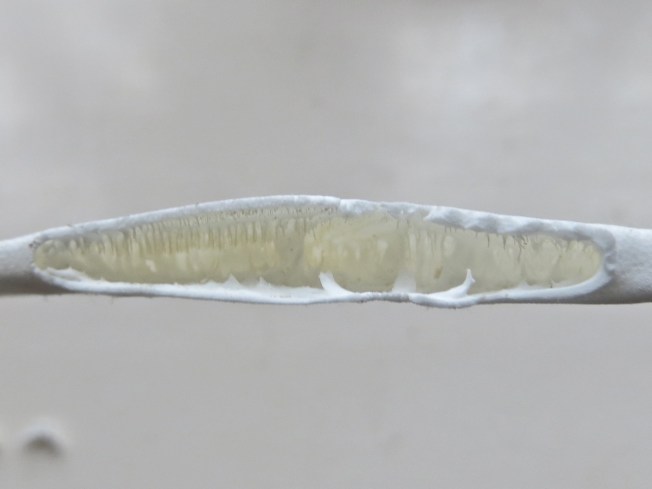
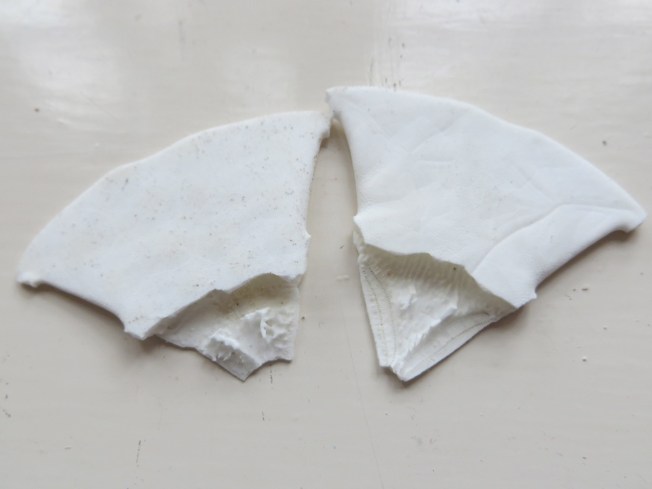
Recently, Senior Granddaughter (10 this week) was looking at some Abaco sand dollars in her unfeasibly huge collection of shells. She picked one up, shook it and it rattled. She said a friend at school had told her that a rattling sand dollar has ‘doves’ inside it, and asked if we could break it open and see. I’ve learnt that it is useless to argue with her – she has the tenacity of a trial lawyer – so we did. This is what we found.

Sand Dollar with a spiky interior like a white cave with stalagmites and stalagtitesSand Dollar Doves (Keith Salvesen) 4

Five white doves (in fact, the separated parts of the creature’s feeding apparatus)Sand Dollar Doves (Keith Salvesen) 1

Two broken pieces showing where the doves are centrally locatedSand Dollar Doves (Keith Salvesen) 5

A single dove (best viewed the other way up for full-on doveliness)Sand Dollar Doves (Keith Salvesen) 3

The photo below, from Pinterest, shows the ‘mouth’ with its 5 dove-parts intact, an arrangement called ‘Aristotle’s Lantern’.

Sand Dollar : Aristotle's Lantern : Doves (Pinterest)

PETRIFIED BISCUITS

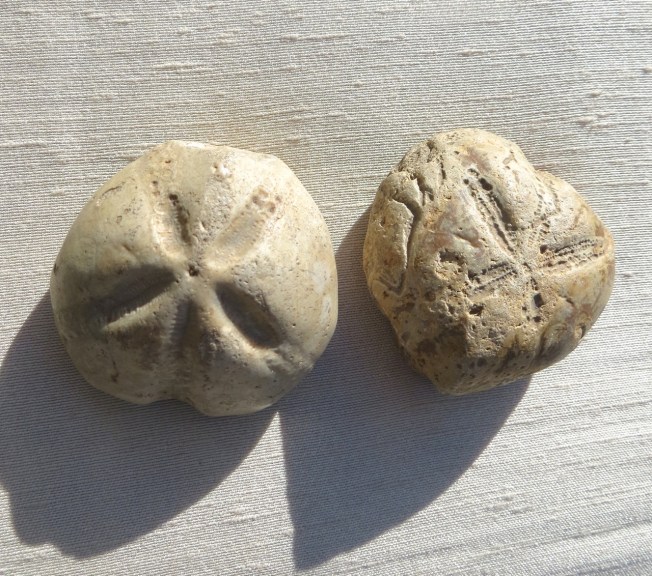
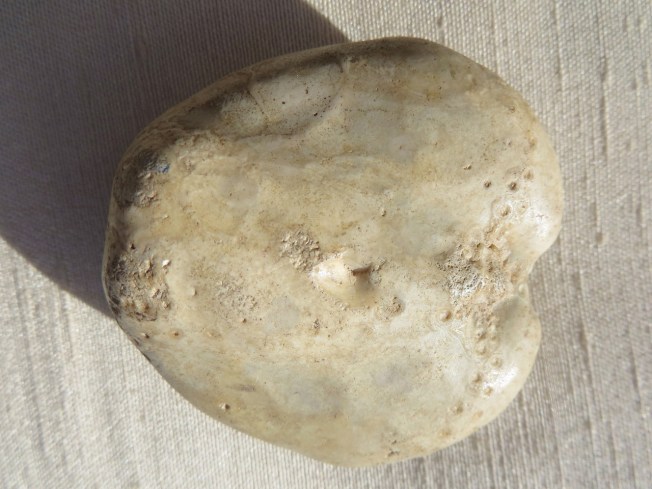
In common parlance ‘petrified’ is an extreme version of ‘terrified’. Literally, it means ‘turned to stone’ (L. Petrus, a rock). It is descriptive of a state of fossilisation, where an animal skeleton or dead wood or plant matter turns over aeons into stone. Undaunted by her Doves discovery, SG (a most inquisitive girl) also discovered a box containing random stones and fossils. She found these two items:

Fossilised sea biscuitsPetrified Sea Biscuit (Keith Salvesen) 1

A closer look at the pair of rocksPetrified Sea Biscuit (Keith Salvesen) 5 Petrified Sea Biscuit (Keith Salvesen) 4

The undersides of the fossils above – looking like stones but with some tell-tale small holesPetrified Sea Biscuit (Keith Salvesen) 2 Petrified Sea Biscuit (Keith Salvesen) 3

A close-up of the pale biscuitPetrified Sea Biscuit (Keith Salvesen) 6

Sea biscuits as everyone knows them, on the beach at Delphi – skeletons but not yet fossilsSea Biscuits, Delphi, Abaco (Clare Latimer) copy

A ‘modern’ sea biscuit in close-upSea Biscuit, Abaco (Rhonda Pearce) copy

FUN FACT

Florida has an unofficial but proposed State Fossil, the ‘Sea Biscuit (Eocene Age)’. I didn’t know it before, but it turns out that around 40 States have State Fossils. Whatever next? State Bacteria?

SO HOW OLD MIGHT A PETRIFIED BISCUIT BE?

The fossil biscuits I have looked at, from Florida to Madagascar, are said to come from three specific historic epochs – from the oldest, Jurassic (145m – 201m years ago),  to Eocene (34m – 56m) and Pleistocene (0.01m – 2.6m). 

HOW DOES THAT HELP ANYBODY? BE MORE PRECISE

By all means. Here is an excellent Geochart that gives an idea of the time span. A Jurassic sea biscuit would be more than 145m years old. So maybe the next plan should be to take the 2 petrified sea biscuits plus SG to a museum to see if we can get an idea of their age…geotimescale

All photos ‘in-house’ except the Delphi biscuits, Clare Latimer & the single biscuit Rhonda Pearce; Geochart to be credited asap, mislaid the source…

Unknown's avatar

“CLEANING UP”: HOW TINY REEF FISH HELP LARGE FISH

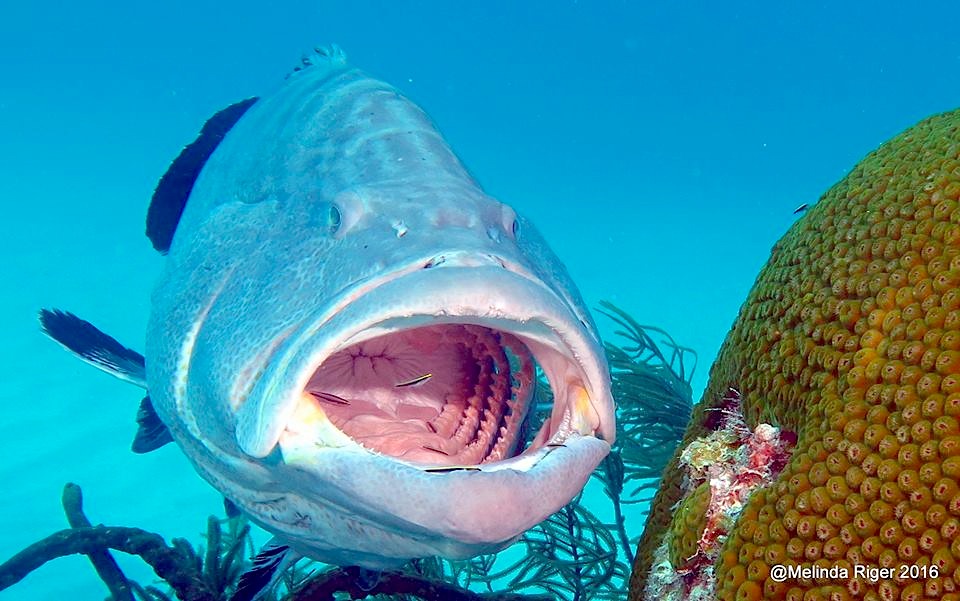
Black Grouper - Arnold - Cleaning Station - Neon Gobies ©Melinda Riger @ G B Scuba copy

“CLEANING UP”: HOW TINY REEF FISH HELP LARGE FISH

A while ago now, I wrote a detailed post about so-called fish ‘cleaning stations’ – the special spots on the reef where large fish can go to have small fish buff up their scales and floss their teeth. You can read all about it HERE.

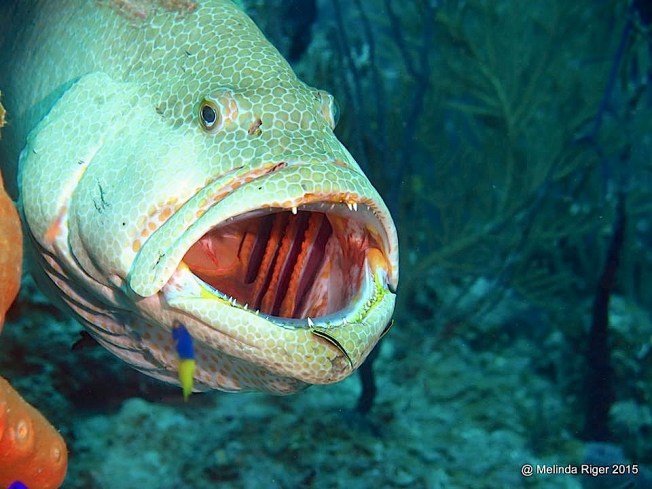
I have accumulated a number of new photos from expert scuba diver and underwater photographer Melinda Riger that demonstrate this phenomenon. A big fish with a normally voracious appetite will patiently wait while gobies and other small fry go about their work. This often involves actually entering the mouth of the (as it must seem to them) monster to pick the insides and the teeth clean. There is an extraordinary understanding and trust between the species that means during the operation, the little fish are perfectly safe. Here are some examples, of which the very recent header image of a grouper named Arnold is quite outstanding.

Tiger Grouper + cleaner goby ©Melinda Riger @ G B Scuba copyGrouper, Black at cleaning station ©Melinda Riger @G B Scuba copy Tiger Grouper at cleaning station ©Melinda Riger @ G B Scuba copy Tiger Grouper being cleaned ©Melinda Riger @G B Scuba copy

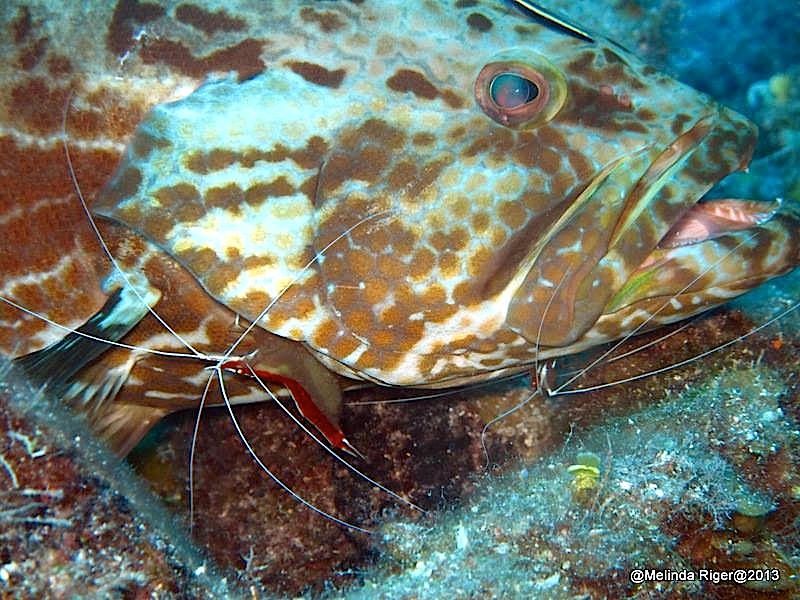
It is not just gobies that attend the fish. Various species of shrimp also volunteer for the job.

Tiger Grouper with cleaning shrimps and goby ©Melinda Riger @ G B Scuba copy Grouper being cleaned ©Melinda Riger @ GB Scuba copy

Groupers are not the only species to make use of cleaning stations. Here is a dog snapper at the same cleaning station as the grouper in the header image. Below is a stingray being attended to.

Dog Snapper at cleaning station ©Melinda Riger @ G B Scuba copy

Southern Stingray with cleaning gobiesStingray, Southern with cleaning gobies ©Melinda Riger @ G B Scuba copy

GRAMMATICAL DIGRESSION There is this ‘thing’ about the correct use of the words ‘fish’ and ‘fishes’ in the plural form. The basic principle is simple: ‘fish’ where you are referring to several of the same species; ‘fishes’ where more than one species is involved. I don’t care. My policy is to use ‘fish’ as the plural on all occasions, so I don’t have to think about it. Pedants, look away now.

RELATED POSTS

TAKEN TO THE CLEANERS

BANDED CORAL (‘CLEANER’) SHRIMP

TIGER GROUPER

BLACK GROUPER

All photos: Melinda Riger, Grand Bahama Scuba

Unknown's avatar

THE ‘THRUSH’ THAT ISN’T: NORTHERN WATERTHRUSH ON ABACO

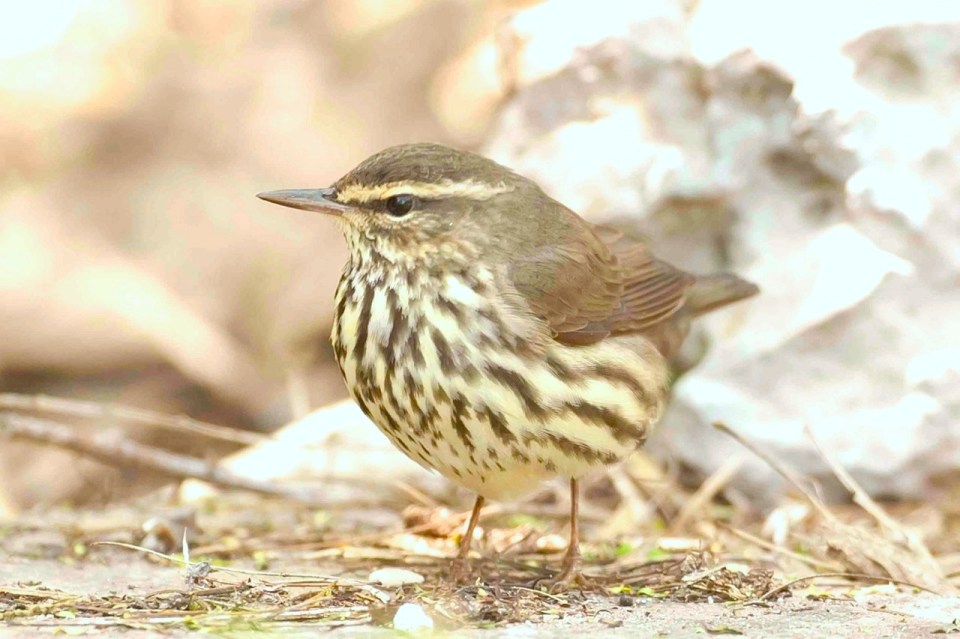
Northern Waterthrush.Bahama Palm Shores.Abaco.3.Tom Sheley

THE ‘THRUSH’ THAT ISN’T: NORTHERN WATERTHRUSH ON ABACO

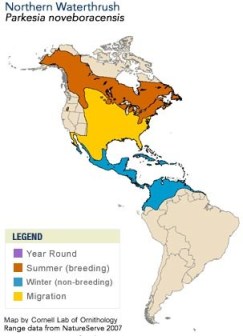
The pretty thrush-like warbler Northern Waterthrush Parkesia noveboracensis is a common winter resident on Abaco. Despite the name it’s not a real thrush, but it is larger than most of the compact winter warblers that heed the the migratory instinct that “It’s Better in the Bahamas” and make Abaco their overwintering habitat.

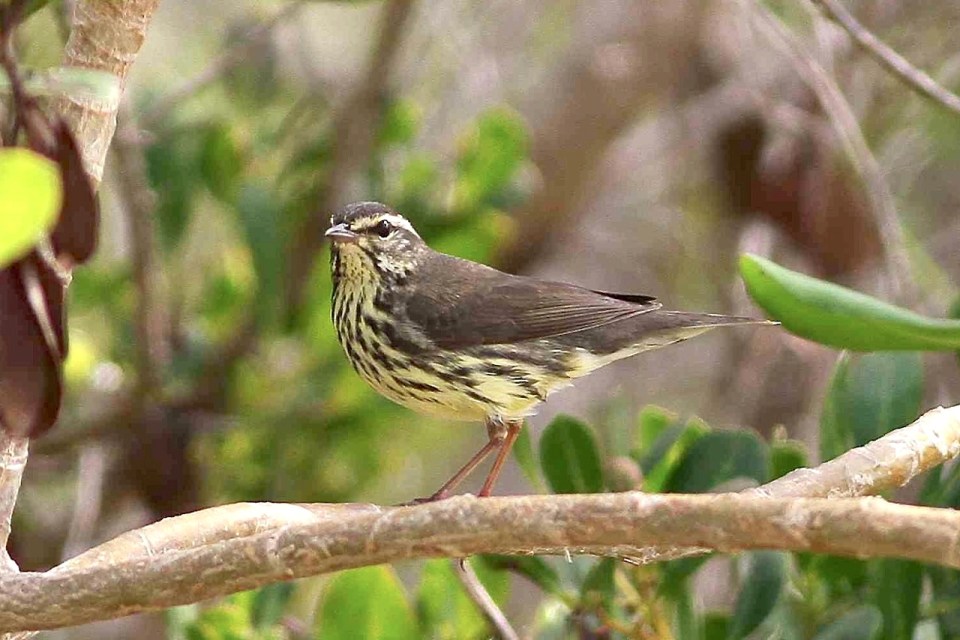
Northern Waterthrush.Bahama Palm Shores.Abaco.1.Tom Sheley

HOW CAN YOU TELL SIMILAR PLUMAGED THRUSHES FROM THESE GUYS?

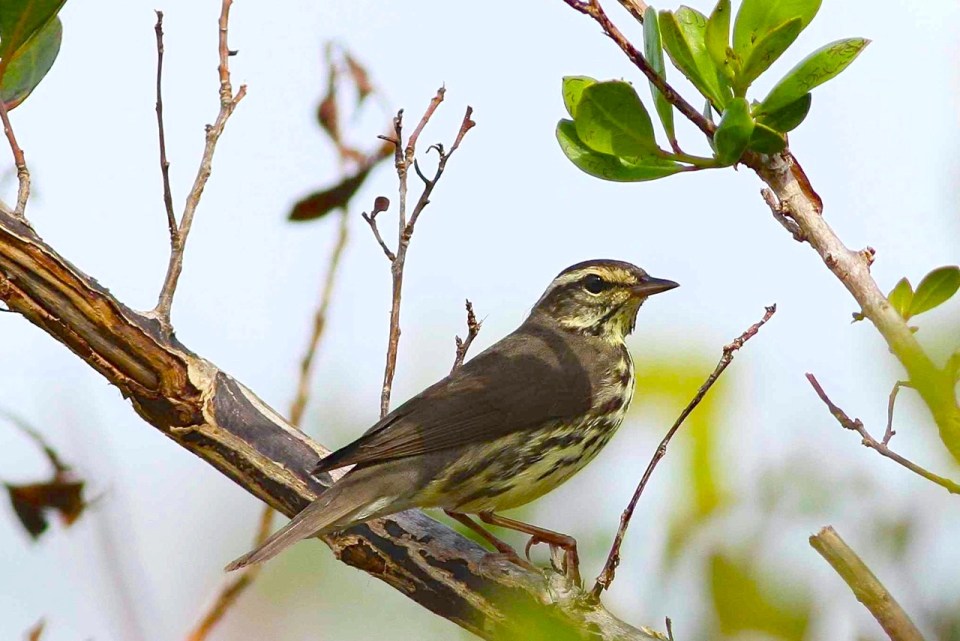
The simplest rule of thumb is that true thrushes have spotted or speckled chests; whereas waterthrushes have streaked chests. That, and the fact that similar thrush species are generally larger. A number of true thrushes are recorded for Abaco, many quite similar to the waterthrush; but the speckled vs spotted distinction should be your guide. If a sighting is momentary or in bad light, it’s anyone’s guess…

Northern Waterthrush, Abaco (Becky Marvil)

northern_waterthrush_rangemap(1)

APART FROM THRUSHES, ANY OTHER BIRDS I MIGHT CONFUSE IT WITH?

There’s another far less commonly found waterthrush that also overwinters on Abaco – the closely-related Louisiana waterthrush Parkesia motacilla. I have no Abaco photos of one – it really is quite rare – so I’ve had to borrow an open source one. The Cornell Lab explains the differences between the two waterthrushes thus: “Northern usually has stripes on throat, a slightly smaller bill, a thinner and off-white or cream eyestripe that does not extend as far onto the nape, less pink legs, and a more yellowish wash on the underparts”. Maybe one can generalise that the northern is overall a yellower bird, and its legs are more brown than pink.

Lousiana waterthrush – rarer on Abaco than the northern but a potential source of confusionLouisiana_Waterthrush_(Parkesia_motacilla) Magnus Manske : Wiki

WHAT’S THAT POSH TAXONOMIC NAME ALL ABOUT, THEN?

The Mr Parkes in question was Kenneth Carroll Parkes (1922 – 2007), an American ornithologist and Chief Curator at the Carnegie Museum of Natural History, Pittsburgh. The noveboracencis part simply means ‘from New York’ in Latin (novum – new; Eboracum – York); and the -ensis is a common suffix meaning ‘from’. Mr Parkes’s bird from New York.

Kenneth Carrol ParkesMr Parkes

Northern Waterthrush, Abaco (Bruce Hallett)
Both species have similar habits. For example, on the ground, they tend to walk rather than hop, ‘bobbing’ their butts (technical term) as they go. They forage on the ground for insects, snails and small mollusks etc.
  
Northern Waterthrush, Abaco 1 (Gerlinde Taurer)
I’m not a huge fan of attempts at phonetic renditions of bird calls – the ‘Did you have a nice day today dear?’ and the ‘I’d like a very big Kalik please’ and so on. But for what it is worth, the song of the northern waterthrush has been interpreted as “a loud swee swee chit chit weedleoo”.  This is what is sounds like in real life. Go figure.
Northern Waterthrush, Abaco 2 (Gerlinde Taurer).jpg

Credits: Tom Sheley (1, 2, 8); Becky Marvil (3); Magnus Manske (4); Bruce Hallett (5); Gerlinde Taurer (6, 7); Richard E Webster at Xeno-Canto for the song clip

Northern Waterthrush.Bahama Palm Shores.Abaco.2.Tom Sheley

Unknown's avatar

“CALLING ELVIS” (THE SQUIRRELFISH, NOT THE MAN)

Squirrelfish Elvis ©Melinda Riger @ G B Scuba

“CALLING ELVIS” (THE SQUIRRELFISH, NOT THE MAN)

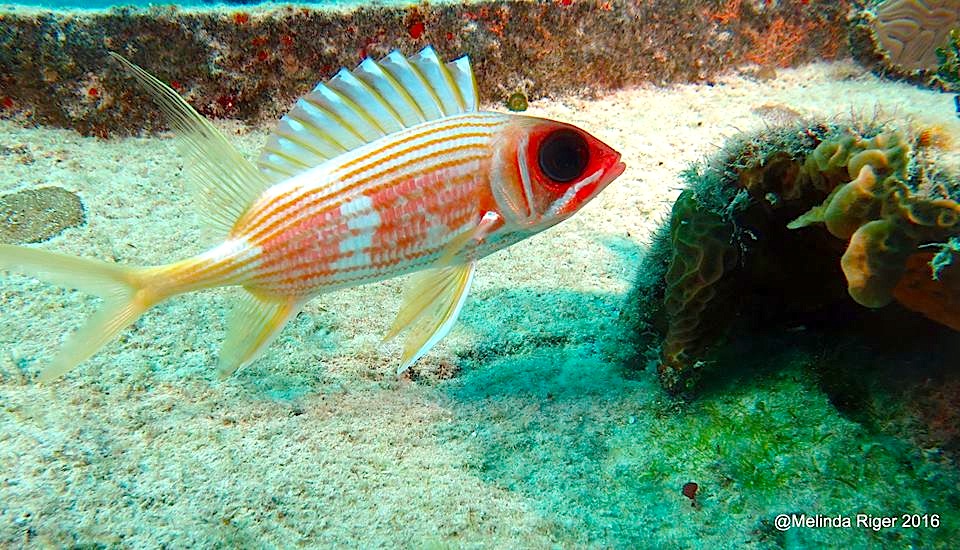
How proud The King would be to know that his name lives on in the form of an attractive though sadly unmusical Bahamian squirrelfish. This little guy is at least 5 years old. What is more, he has lived at the same address all that time, defending it against usurpers and protecting himself from predators in its safe depths. Here is the loveable little Elvis photographed at home between 2012 and 2016 (header image), the master of his own underwater Graceland…

Squirrelfish (%22Elvis%22) ©Melinda Riger GB ScubaElvis the Squirrelfish ©Melinda Riger GB Scuba Squirrelfish ©Melinda Riger @ GB Scuba Squirrelfish ©Melinda Riger @ G B Scuba

The reason that Elvis has such large eyes is that these fish are mostly nocturnal, and (apart from when Melinda is out with her camera), he and his friends spend most of the day either at home, or in crevices, small rock caves, or under ledges. However, here are a couple of shots of Elvis out and about, enjoying some quality time among the corals.

Squirrelfish (Elvis) ©Melinda Riger @ Grand Bahama ScubaSquirrel Fish ©Melinda Riger @ G B Scuba

ROLLING HARBOUR MUSICAL DIGRESSION

I so wanted to add a specific Elvis catalogue ‘Musical Digression’, but try as I might, there is no title in The King’s discography that has any potential for finny nuance or piscine pun value. However, here’s a track from the now tragically unhip Dire Straits on their follow-up album to the phenomenal ‘Brothers-in-Arms’, the much under-rated ‘On Every Street’. I give you… Calling Elvis, a song that cunningly contains as many titles of Presley hits as anyone could ever wish for.

All images: Melinda Riger at Grand Bahama Scuba; cartoon from a sequence on the excellent BCCR Defenses page – learn about camouflage and other fishy self-protection techniques

Nocturnal squirrelfish checks out a parrotfish’s sleeping arrangementscamoSquirrWparrot01

Unknown's avatar

SMALL ABACO BIRDS TO MAKE THINGS BETTER

Blue-gray Gnatcatcher, Abaco 1 (Keith Salvesen)

SMALL ABACO BIRDS TO MAKE THINGS BETTER

Bad day. I know about random outage outrage and so on, but really… The router died, unmourned. Bought another. Wasted 2 hours trying to make it work. Turns out to be ‘defective’, which is to say broken. Or another B word. Bought another. Almost lost the will to live. I have the briefest window in which to check emails etc before it, too, checks out of the Mac Hotel. The ONLY SOLUTION (apart from Kalik in copious quantities, sadly not available where I am right now), is to look at some pretty birds taken in the gardens round the Delphi Club. Mmmmm. Feeling better now. Deep breaths… and… relax…

Bananaquit, Abaco 1 (Keith Salvesen)La Sagra flycatcher, Abaco 1 (RH)Cuban Emerald, Abaco (Keith Salvesen)Yellow-throated Warbler, Abaco (RH)

All pics by a rather stroppy RH

STOP PRESS Exactly 24 hours after excitedly unwrapping the (second) new router, after a convoluted and Kafkaesque series of phone calls to various techie centres, headily mixed with wine, beer, tears and tantrums, I combined some of the info from each and miraculously the recalcitrant beast sprang to life. For how long, though? Router advice given: $100 ph + exes

Unknown's avatar

GULL-BILLED TERNS ON ABACO

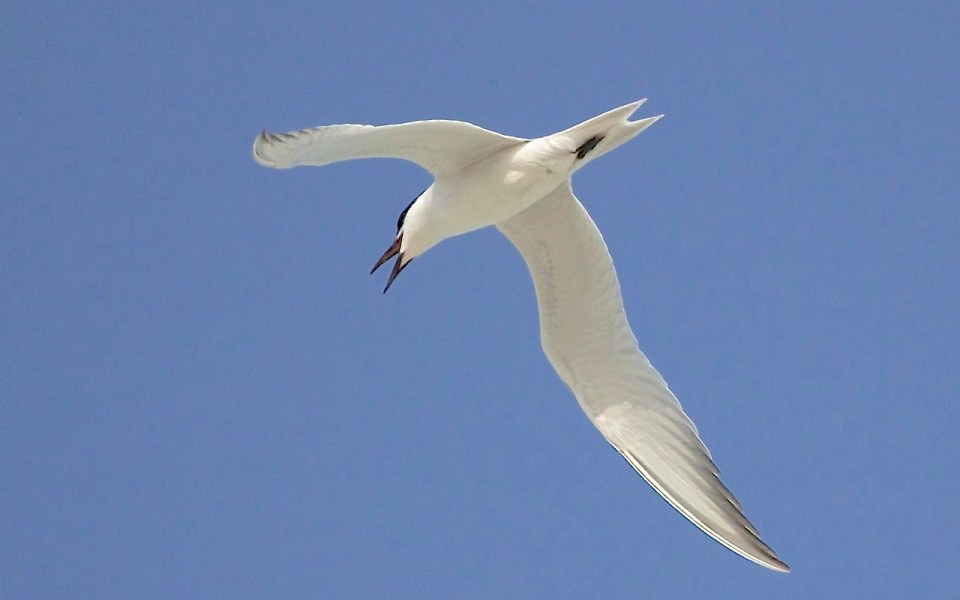
Gull-billed Tern, Abaco (Alex Hughes) 01

GULL-BILLED TERNS ON ABACO

The gull-billed tern Gelochelidon nilotica had a name upgrade from Sterna nilotica some years ago, and was awarded the honour of its own genus. Let’s be clear at the outset: there’s no such thing as a tern-billed gull. Which slightly lessens the scope for species confusion. 

Gull-billed Tern, Abaco (Alex Hughes) 04

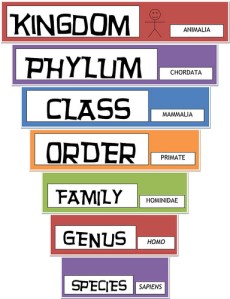
For those (me) who need a reminder about the whole family / genus / species taxonomic maze, here is a reminder. The example used is man. Or stickman, anyway.3958555126_4f85d9fa5b

Gull-billed Tern, Abaco (Alex Hughes) 05

There are 12 species of tern recorded for Abaco. Only one, the royal tern, is a permanent resident. There is one winter resident, the Forster’s tern and there a 6 summer resident terns of varying degrees of commonness. The other four are transient or vagrant, and probably not worth making a special trip to Abaco to find. The GBT is designated SB3, a summer breeding resident that is generally uncommon, though might be more common in particular areas.

TERN TABLE**Tern Species Abaco**I know! Too tempting…

gull-billed-tern

Gull-billed Tern, Abaco (Alex Hughes) 11

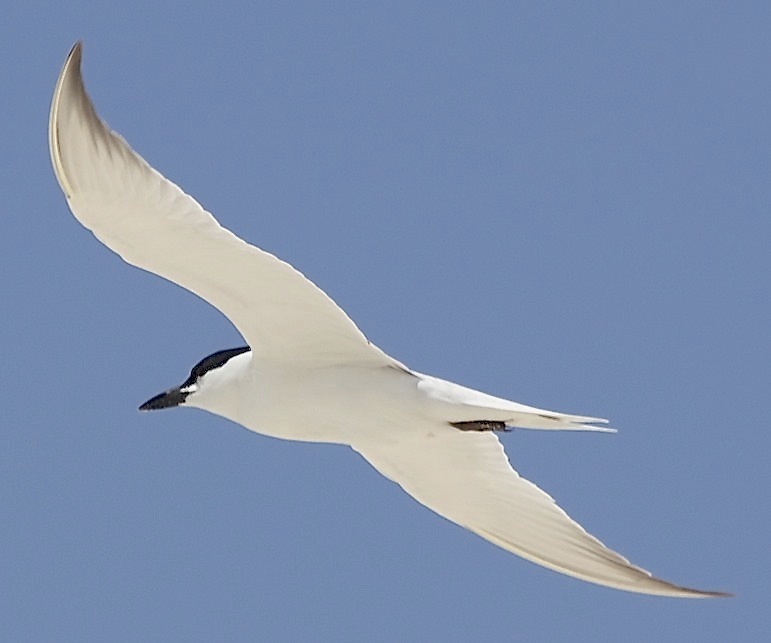
The bird gets its name from it short, thick gull-like bill. It’s quite large in tern terms, with a wingspan that may reach 3 foot. They lose their smart black caps in winter.

Gull-billed Tern, Abaco (Alex Hughes) 03

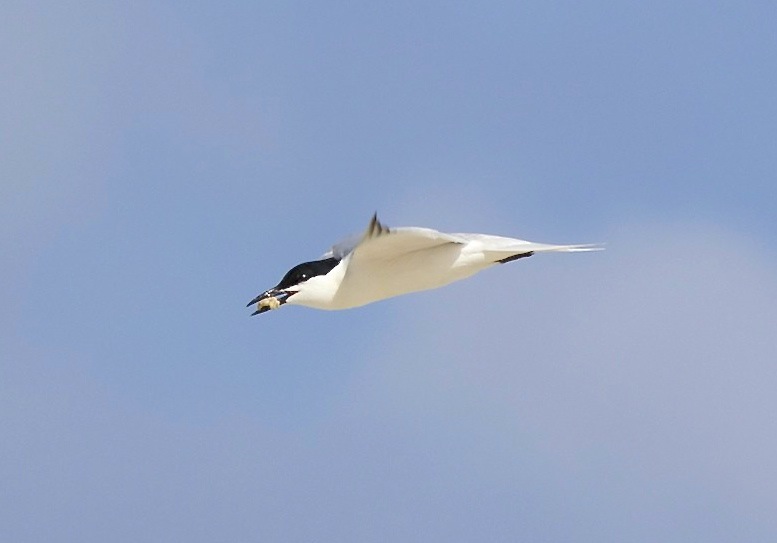
There are 6 species of GBT worldwide, and it is found in every continent. While many terns plunge-dive for fish, the GBT mostly feeds on insects in flight, and will also go after birds eggs and chicks. Small mammals and amphibians are also on the menu. The header image shows a GBT with a small crab. I imagine they must eat fish. Surely they do? But I have looked at dozens of images online to find one noshing on a fish, with no success. Does anyone have a ‘caught-in-the-act’ photo?

Gull-billed Tern, Abaco (Alex Hughes) 06Gull-billed Tern, Abaco (Alex Hughes) 02

All photos were taken by Alex Hughes, a contributor to “THE BIRDS OF ABACO”, when he spent some time on Abaco a while back in connection with the conservation of the Abaco Parrot and the preservation of the habitat integrity of their nesting area in the Abaco National Park

Gull-billed Tern, Abaco (Alex Hughes) 12


Unknown's avatar

CHEROKEE LONG DOCK: ABACO LANDMARKS (1)

Cherokee Long Dock Aerial (David Rees)

CHEROKEE LONG DOCK: ABACO LANDMARKS (1)

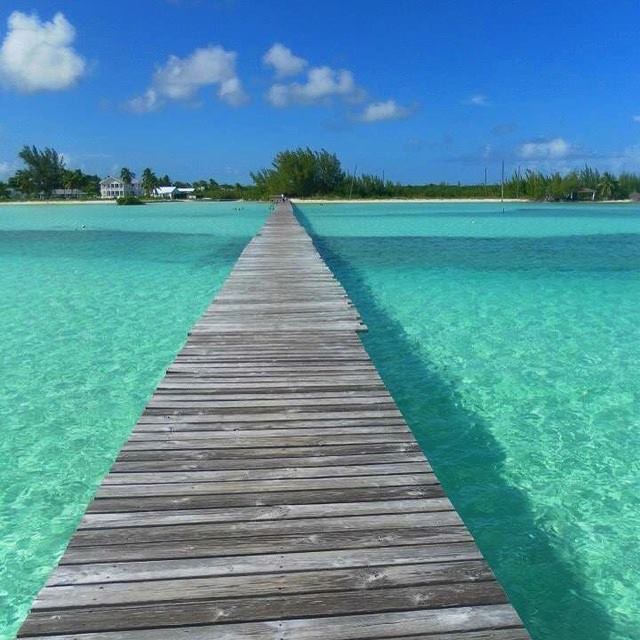
Cherokee Long Dock has a significant claim to prominence on an Island that has, with its Cays, a good few docks to admire. The impressive 770 foot wooden dock is the longest wooden dock in the Commonwealth of the Bahamas, as its plaque proudly proclaims. The waters of Cherokee Sound are very shallow in places, and as the tides retreat, so sandbanks appear and the rest is barely covered by the sea. Hence the need arose for a very long dock to serve the very small community of Cherokee.

Cherokee Long Dock, Abaco, Bahamas (Larry Towning 1)Cherokee Long Dock, Abaco, Bahamas (Larry Towning 2)

Before the roads were built – in relatively recent memory – Cherokee was an isolated settlement. There was a shortcut connection by boat to a now-abandoned dock at the nearest community, Casuarina, across the Sound. However, non-tide-dependent access from the open sea was vital for supply boats and mail boats. Access to the sea was needed by the fishermen.

Cherokee Long Dock 4 (Amanda Diedrick) Cherokee Long Dock 2a (Amanda Diedrick) Cherokee Long Dock 1 (Amanda Diedrieck) jpg

The plaque documents the history of the dock, the damage inflicted by hurricanes, and the ‘countless hours of labour’ by local people- ‘men, women and children’ – to preserve the dock.Cherokee Long Dock: the plaque (Amanda Diedrick)

Royal terns and other seabirds use the dock to rest; and as a safe place from which to fishCherokee Long Dock (Velma Knowles)

long-dock-cherokee-abaco-karen-eldonCherokee Long Dock 3 (Amanda Diedrieck)IMG_3013

Photo credits: David Rees and his wonderful drone (header); Larry Towning (2, 3); Amanda Diedrick (4, 5, 6, 7, 9); Karen Eldon, Velma Knowles (8); last image from a FB friend with thanks and many apologies – I’ve lost my note of who took it…  to be added if possible; short vid from Youtube.

Unknown's avatar

BLUE CHROMIS: BAHAMAS REEF FISH (29)

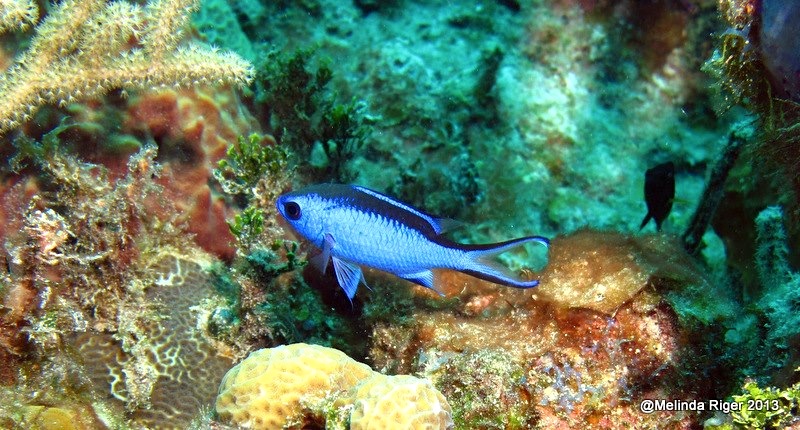
Blue Chromis & Coral ©Melinda Riger @ GB Scuba

BLUE CHROMIS: BAHAMAS REEF FISH (29)

The little blue chromis Chromis cyanea will be instantly familiar to any snorkeler or scuba diver on the coral reefs of the Bahamas. These ever-present small fish – 6 inches long at most – are remarkable for their iridescent deep blue colour that flashes as they dart in and out of the coral and anemones of the reef.

Blue Chromis ©Melinda Riger @ G B Scuba

Although at first sight  this chromis species – one of many – looks blue all over, adults have a black dorsal stripe and black edging to their fins. They make colourful additions to aquariums, though to my mind they look far more attractive nosing about the reefs foraging for the zooplankton upon which they feed (see header image for details…)

Blue Chromis ©Melinda Riger @ GB Scuba

The blue chromis was the second fish species I encountered on my first ever reef dive, at Fowl Cay Marine Preserve with Kay Politano. The first fish was the endearingly inquisitive sergeant major with its smart black and yellow stripes which came right up to my googles to eyeball me. I loved that, even though my pitiful swimming technique meant that I had plenty of other distractions, not least remembering to breathe. Air, that is, rather than water.

Blue Chromis ©Melinda Riger @ GB Scuba

Chromis_cyanea_(blue_chromis)_(San_Salvador_Island,_Bahamas)

SO JUST HOW BIG ARE THESE FISH, COMPARED, SAY, TO A BLUE TANG?

Blue Tang with blue chromis in its wakeBlue Tang with Blue Chromis © Melinda Riger @GB Scuba copy

All photos Melinda Riger of Grand Bahama Scube, except the penultimate by James St John, taken in San Salvador


Unknown's avatar

CRYSTAL CATHEDRALS: ABACO’S ASTOUNDING UNDERGROUND CAVES (6)

Abaco's Underground Caves (Hitoshi Miho, with Brian Kakuk)

CRYSTAL CATHEDRALS: ABACO’S ASTOUNDING UNDERGROUND CAVES (6)

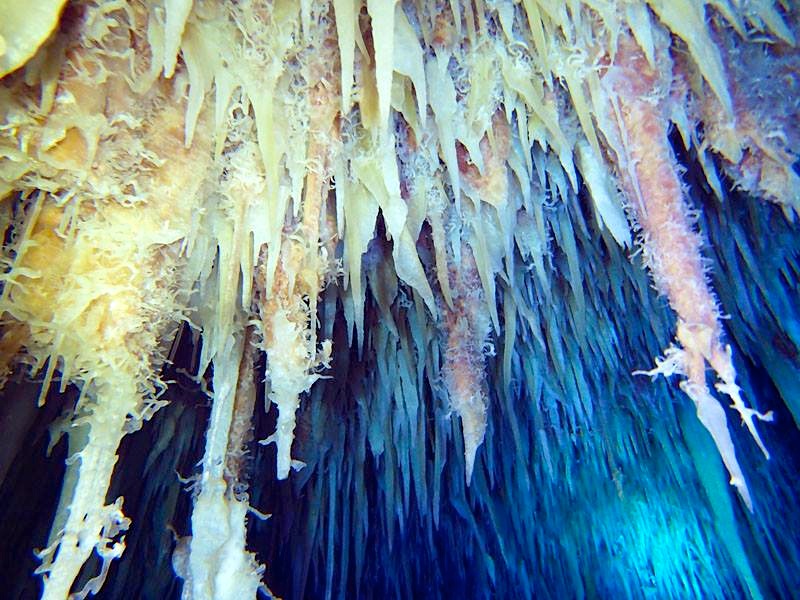
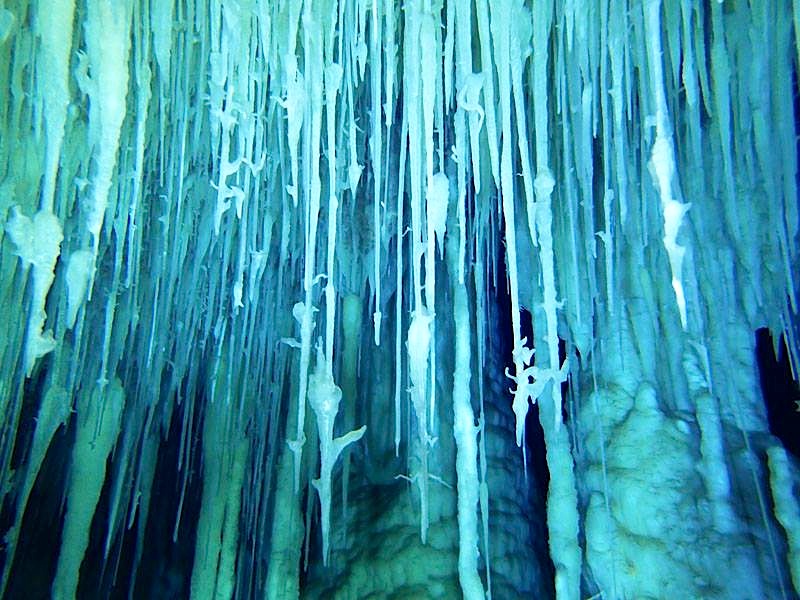
The photos you see in this post were all taken by Hitoshi Miho during an amazing 3 days of diving with Brian Kakuk deep in the pine forests of South Abaco. It’s not the first time they have explored together the wonders that lie beneath those hundreds of acres of pines and scrub; I’m sure it won’t be the last.

Abaco's Underground Caves (Hitoshi Miho, with Brian Kakuk)Abaco's Underground Caves (Hitoshi Miho, with Brian Kakuk)Abaco's Underground Caves (Hitoshi Miho, with Brian Kakuk)

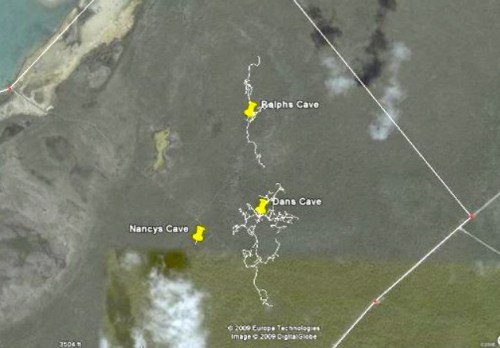
The most spectacular cave systems are the adjacent Ralph’s and Dan’s Caves. These systems are believed to be linked, and I know Brian has been trying to find where they meet – a difficult and dangerous task carried out underwater many metres below the forest floor, and requiring sophisticated diving equipment and great expertise. 

Abaco's Underground Caves (Hitoshi Miho, with Brian Kakuk)Abaco's Underground Caves (Hitoshi Miho, with Brian Kakuk)Abaco's Underground Caves (Hitoshi Miho, with Brian Kakuk)

The latest 3-day exploration involved 12 dives and nearly 30 hours underwater in Ralph’s Cave. Narrow passages open out into massive caverns filled with wonderful and complex crystal stalagtites and stalagmites formed over eons. I hope you enjoy examples from the ‘Rooms’ and passages, many with exotic names (Glass Factory, Ninja Passage, Erabor); some more prosaic (Fred’s Room). Then try to imagine that you are actually swimming there.

Abaco's Underground Caves (Hitoshi Miho, with Brian Kakuk)Abaco's Underground Caves (Hitoshi Miho, with Brian Kakuk)Abaco's Underground Caves (Hitoshi Miho, with Brian Kakuk)

I shall be posting some more photos in due course showing some of the details of the cave formations – intricate patterns, delicate tracery, irridescent colouring, pencil-thin rods, ‘rock’ folds that look like the finest linen. As always I am immensely grateful to both intrepid divers for use permission. I won’t pretend that these thrilling caves are easily accessible – this is emphatically not an adventure to try unguided with a snorkel and flippers. But as you drive along the highway past miles of forest, it’s worth reflecting that far below you are some of the most magnificent cave systems anywhere in the world – right there, on your very own island… 

Abaco's Underground Caves (Hitoshi Miho, with Brian Kakuk) Abaco's Underground Caves (Hitoshi Miho, with Brian Kakuk) Abaco's Underground Caves (Hitoshi Miho, with Brian Kakuk)

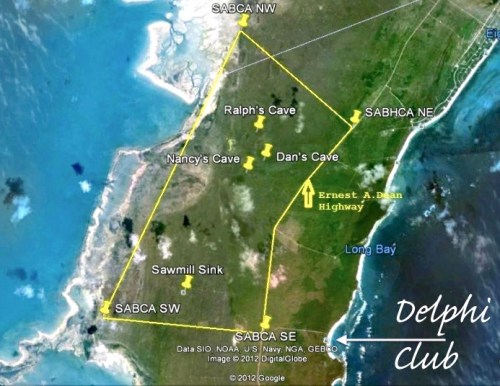
As it happens, the Delphi Club is very close to these caves, which lie within the boundaries of the newly created ‘South Abaco Blue Holes Conservation Area (see map). This is one of several such conservation areas on Abaco and in the wider Bahamas that are designed to protect the natural resources of the islands from development and exploitation. The second map shows how tantalisingly close Dan’s and Ralph’s caves are… and suggests that further exploration may lead to the missing link.

abaco-caves-map-jpgAbaco Caves Ralph & Dan jpg

Finally, here is a 4-minute video of one small part of the exploration, which gives a very good idea of what is entailed in investigating the narrow passages and huge cathedral-like caverns. Welcome to the Fangon Forest…

Hitoshi Miho, Ralph's Cave, Abaco

Unknown's avatar

STIRRING TALES OF NORTHERN SHOVELERS

Northern Shoveler male. Abaco Bahamas. 2.12.Tom Sheley copy 2

STIRRING TALES OF NORTHERN SHOVELERS

I’m broadly in favour of self-identifying bird names. You know where you are with a Spoonbill. If its bill is spoon-shaped, it is one. Conversely if it isn’t, it isn’t. True, you might waste a lot of time looking for a brownish duck gadding about near a wall, but the general principle of WYCIIWYG (what you call it is what you get) is a useful one.

Northern Shoveler 2.Abaco Bahamas.2.12.Tom Sheley

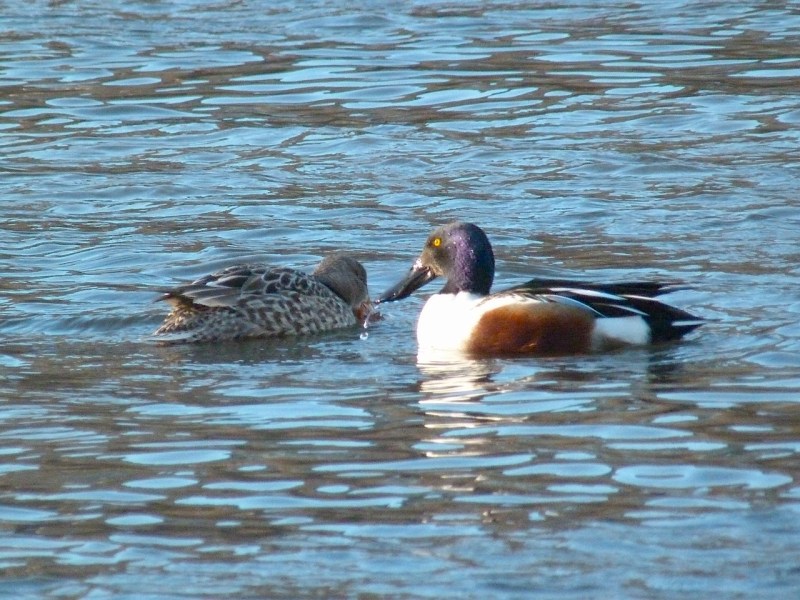
Thus with shovelers. Their beaks are shovel-shaped. They shovel about in the water to feed. It’s that simple. Being dabbling ducks, they are dab hands (wings?) at upending themselves to get that sturdy beak down in the water. These are highly specialist gadgets too, edged with ‘combs’ (lamellae) that strain out the water from a diet that includes aquatic vegetation and invertebrates.  You can see this arrangement in the male shoveler in the header image.

Northern Shoveler.Abaco Bahamas.2.12.Tom Sheley

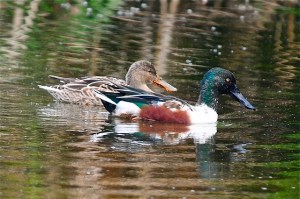
The male shoveler has striking plumage, with one of those ‘mallard drake’-coloured heads that is green except when the light catches it and it looks blue. I say ‘looks’, because the blue shades apparent in bird plumage do not result from pigments (which absorb most colours but reflect the visible colours) but from so-called ‘structural colouration’ resulting from scattered light, with the blue wavelength dominant. So even the bluest of blue birds – a bluebird, say, or an indigo bunting – is not blue but appears blue. But the bright red pigmentation of a male Northern cardinal is ‘real’ colour. 

This male shoveler does not have a blue head…Northen Shovelers Foraging (Keith Salvesen) 5

Northern Shoveler (m & f) Abaco (Tony Hepburn) Northern Shoveler, Abaco (Woody Bracey)

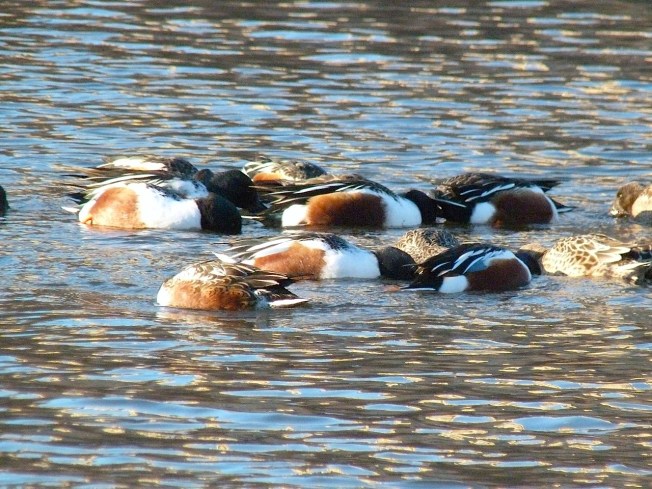
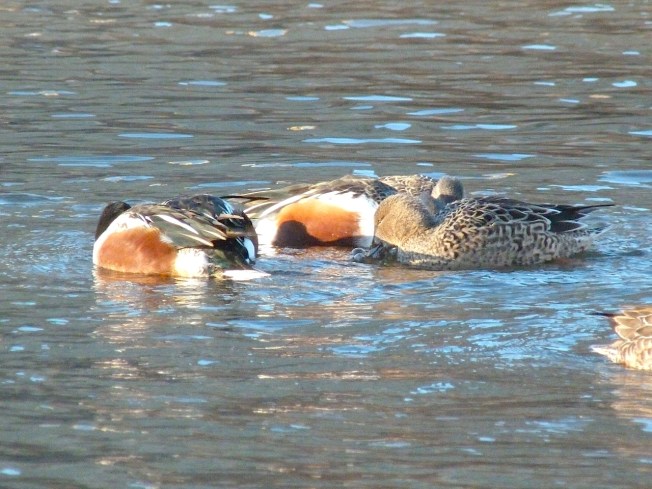
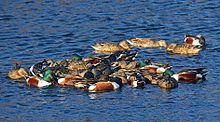
The shovelers shown above (except for the ‘blue’-headed one which comes from the set below) were all photographed on Abaco. I mentioned the familiar dabbling method of feeding earlier. However a few days ago in Central Park NYC on The Lake near Bow Bridge, I witnessed shoveler feeding behaviour that was new to me. It’s probably perfectly well-known and documented, but that’s amateurs for you**. A flock of about 30 male and female shovelers had split into smaller groups of between 2 and 10. They formed circles – sometimes very tight – and swam round each other with their heads underwater, stirring up the water as they paddled round, so that their bills were always immersed in freshly disturbed food possibilities. The effect was hypnotic, as you can see from the 15 sec video I took. Although in the clip it looks as though the birds are rapidly progressing to the right, they in fact stayed in much the same place. They were not very close to me, so these are illustrative images rather than ‘Audubon shots’.

Northen Shovelers Foraging (Keith Salvesen) 7Northen Shovelers Foraging (Keith Salvesen) 1Northen Shovelers Foraging (Keith Salvesen) 3

** Of course as soon as I looked I discovered that “Large groups of northern shovelers swim rapidly in circles to collect food from the surface by creating a funnel effect” (cheers to Wiki)Spinus-northern-shoveler-2015-01-n025006-w

Credits: Tom Sheley (1, 2, 3); Tony Hepburn (4); Woody Bracey (5); Keith Salvesen (the rest)

Unknown's avatar

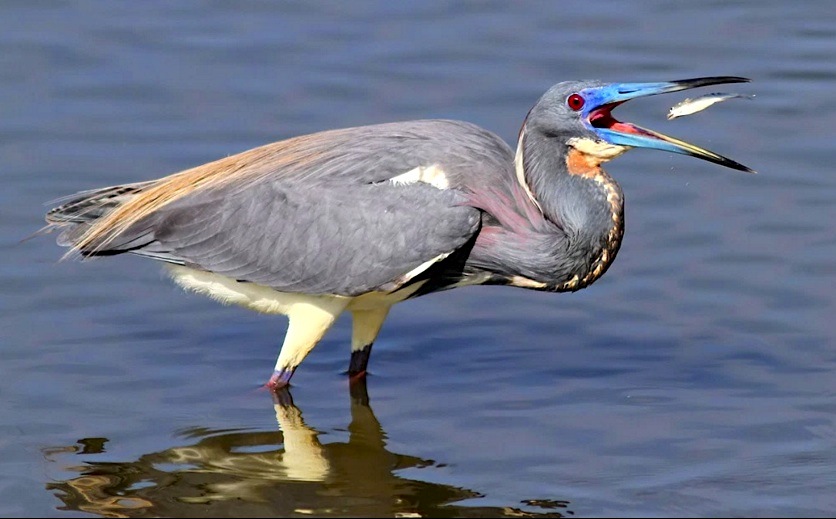
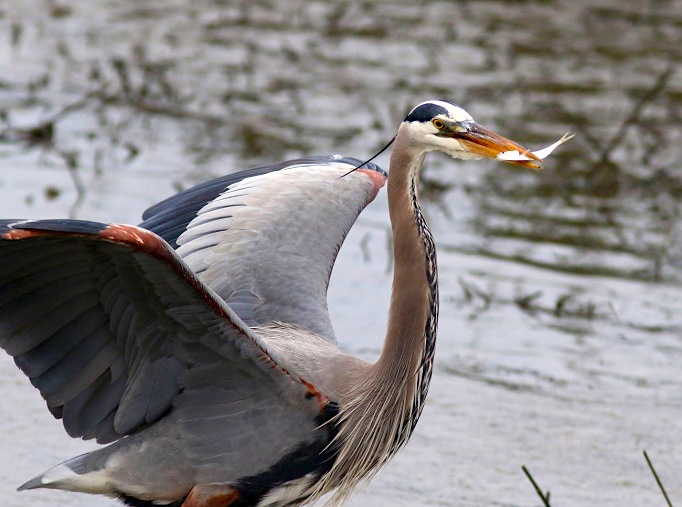
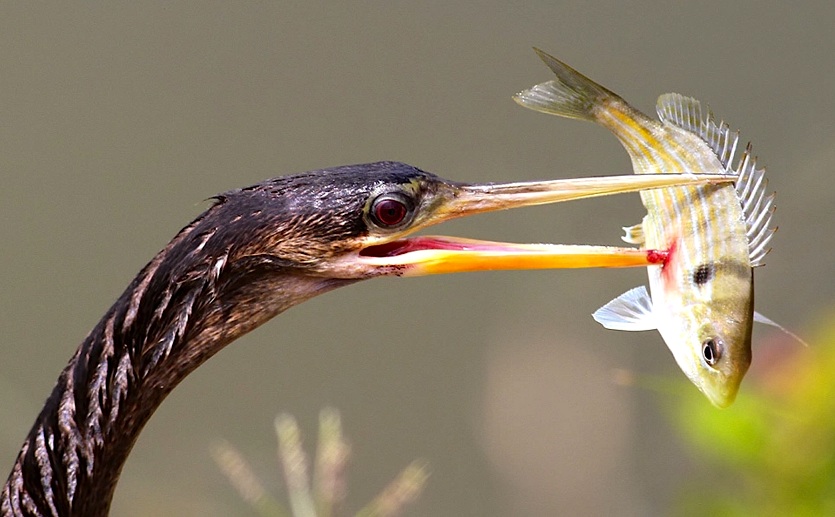
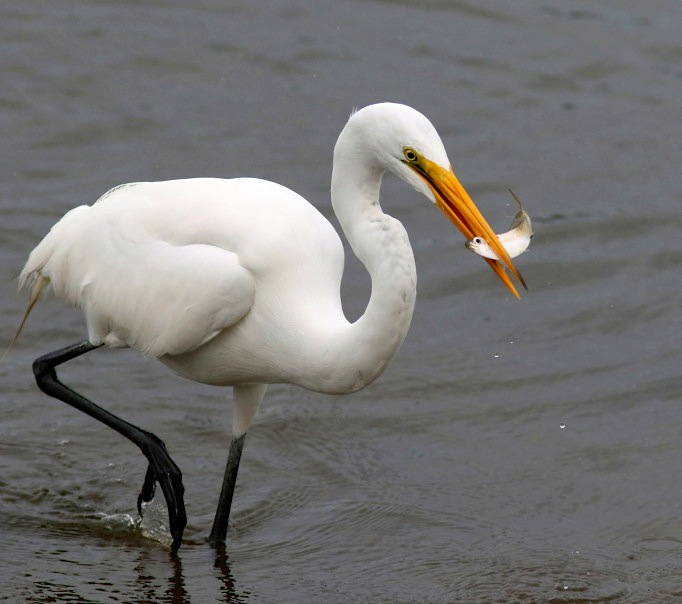
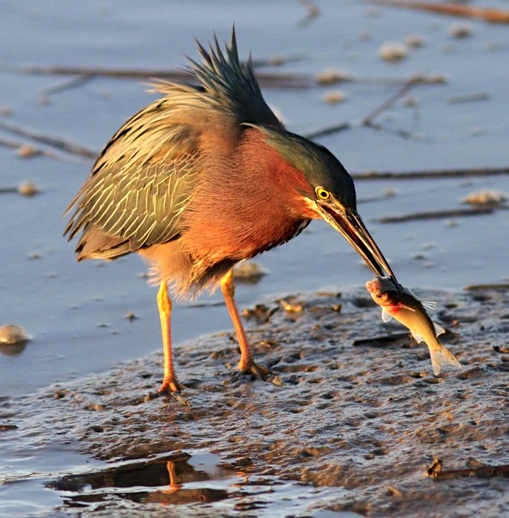
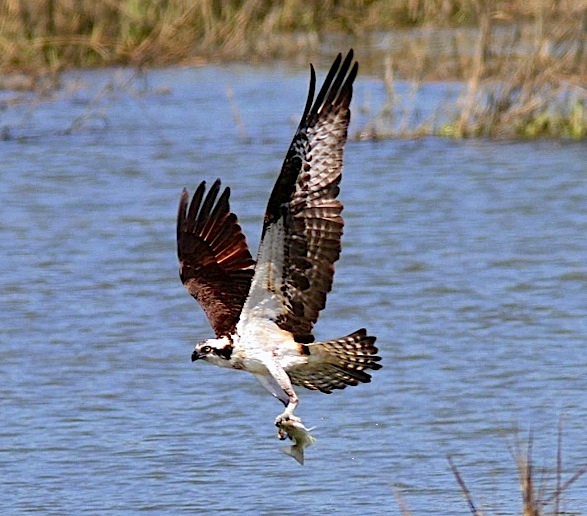
AVIAN PISCAVORES CAUGHT IN THE ACT…


Tri-colored Heron with fish (Phil Lanoue)

AVIAN PISCAVORES CAUGHT IN THE ACT…

There’s something enjoyable about watching a wild creature having a good meal, even if the meal consists of an item that, all things considered, you personally would prefer not to eat. While I am temporarily parted from my computer for a few days, I am able to publish blog posts from my phone. I could write one too, but that’s a bothersome and fiddly process, best avoided. So I thought you might enjoy a gallery of gorgeous birds doing what they like to do best – eat fish. Many thanks as ever to Phil Lanoue and Danny Sauvageau for use permission for their truly exceptional photos.

Great Blue Heron & Fish (Phil Lanoue)Cormorant with fish (Phil Lanoue)Anhingha with fish (Phil Lanoue)White Egret with fish (Phil Lanoue)Green Heron with fish (Phil Lanoue)Osprey with fish (Phil Lanoue)Tern with fishReddish Egret (white morph) with fish (Phil Lanoue)green-heron-gilpin-point-abaco-keith-salvesenOsprey, Florida (Danny Sauvageau)

Birds featured are tri-colored heron in breeding plumage, great blue heron, cormorant, anhinga, white egret, green heron, osprey, tern and reddish egret (white morph).

All photos by Phil Lanoue except penultimate (Keith Salvesen) and last (Danny Sauvageau)

Unknown's avatar

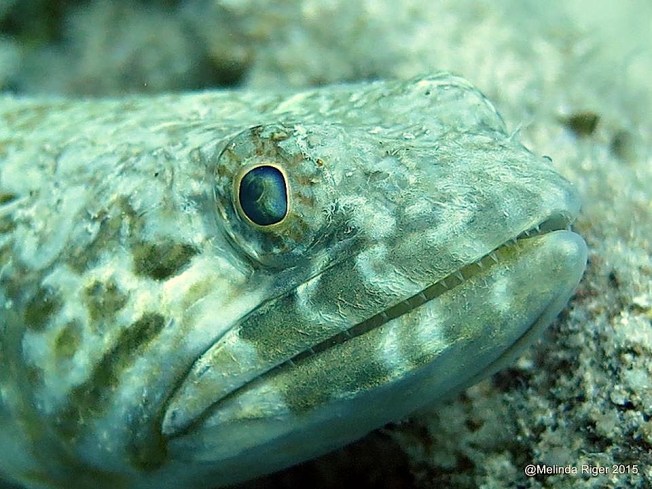
WTF? (WHAT’S THAT FISH) (6): THE SAND DIVER

Sand Divers Bahamas ©Melinda Riger @ G B Scuba

WTF? (WHAT’S THAT FISH) (6): THE SAND DIVER

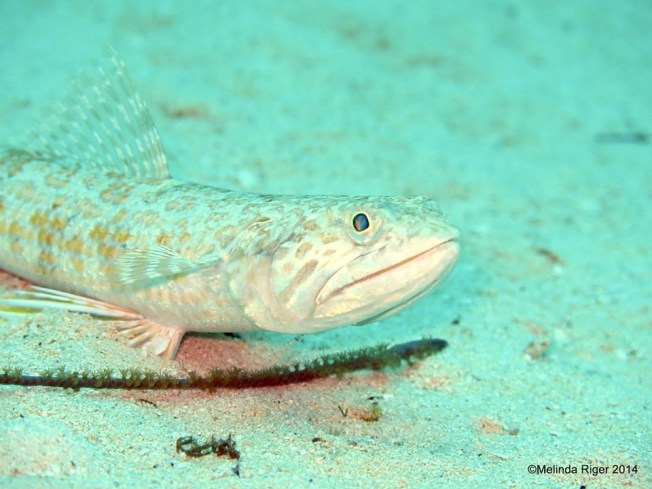
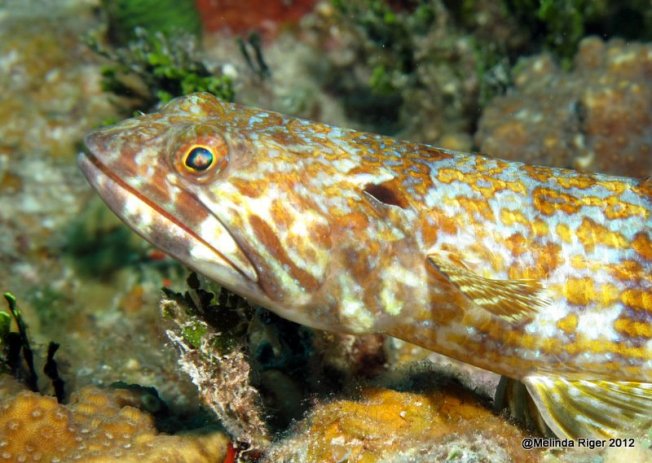
Time for another in the WTF? series, featuring weird (begging their pardons) or not very fish-like fish. The Sand Diver Synodus intermedius is a type of lizardfish found in subtropical waters and often around coral reefs. They can grow up to about 18 inches long and a prime specimen might weigh a couple of pounds. The markings are quite variable but one common characteristic seems to be a tendency to look somewhat down in the mouth; and to possess jaws full of tiny sharp teeth.

Sand Diver - ©Melinda Riger @ GB Scuba

Sand divers have two rows of teeth on their upper jaw and three rows on their lower jaw. Not content with that, they also have rows of teeth on the palate and tongue. Were they 50 times the size, they would be truly awesome.

Sand Diver ©Melinda Riger @ G B Scuba

The rather primitive appearance of the sand diver is explicable from fossils, which show that their forbears  were active in the Jurassic / Cretacean periods.

Sand Diver ©Melinda Riger @ GB Scuba

HOW DO THEY GET THEIR NAME?

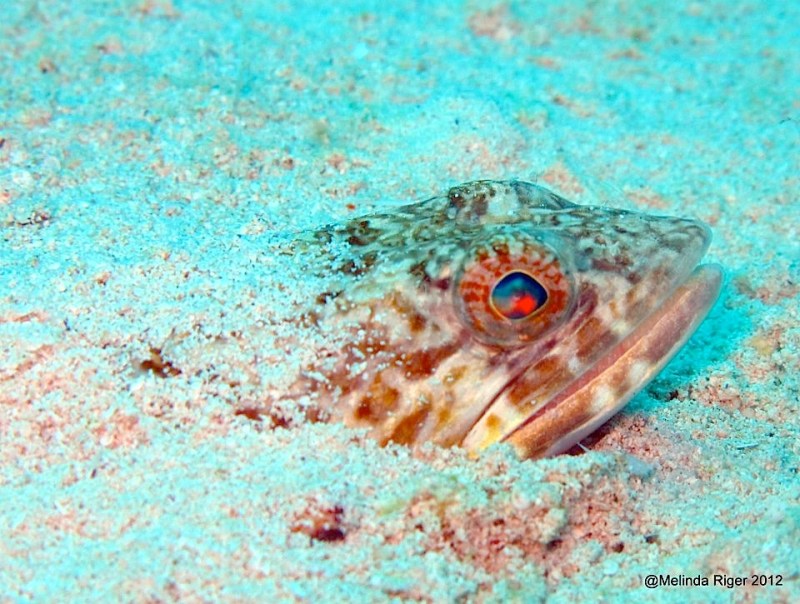
Sand divers often bury themselves in the sand with only their head showing. They are so-called ‘ambush predators’, and burial is one method they use. Another is simply to lie on the sandy bottom, or on reef surfaces and wait for passing prey. Their colouring provides very good camouflage.Sand Diver Fish

WHAT’S ON A SAND DIVER MENU?

A good mix of small reef fishes. Bar jacks, blue chromis, wrasses, fairy basslets, small grunts and so forth. At their own level they are quite fearsome predators.

Sand Diver © Melinda Riger @ Grand Bahama Scuba

ARE THEY ON THE HUMAN MENU?

Well, I knew someone would ask that, so I carried out a search. The answer seems to be no. I have found nothing to suggest that they are edible, or that anyone has tried (or if they have, survived to tell the tale). Incidentally, the best way to find out if something is edible by humans is to search for a recipe. There are no sand diver recipes.

STOP PRESS Jason Knight has drawn my attention to a comment in WhatsThatFish.com (no relation) by one ‘Jenny’, who commends Sand Divers as food (“they cook up just as good as hogfish!”). So yes, they are edible and there is one recipe… 

Sand Diver ©Fred Riger @ G B Scuba

All photos: Melinda Riger of Grand Bahama Scuba

Unknown's avatar

BIG APPLE BIRDS YOU CAN’T SEE ON ABACO…

Red Cardinal 2 NYC

BIG APPLE BIRDS YOU CAN’T SEE ON ABACO…

This post is the converse of my LAST POST, as we prepare to visit the City of the Trump Tower for a few days. There are some birds found in NYC that have never been recorded for Abaco – some not even for the Bahamas at all. A few of these are surprising absences.

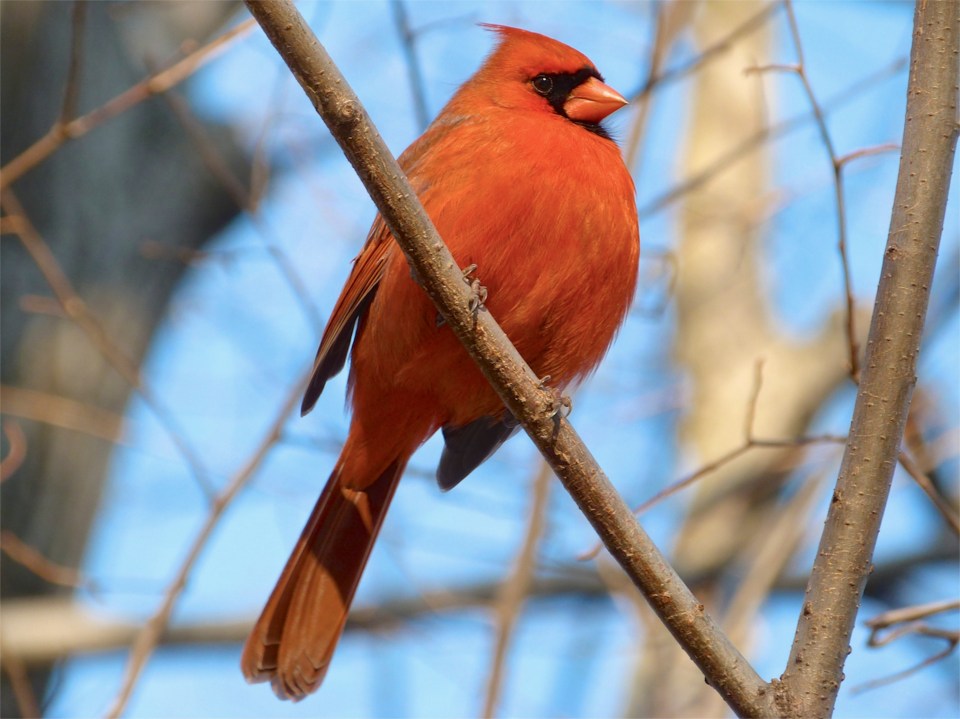
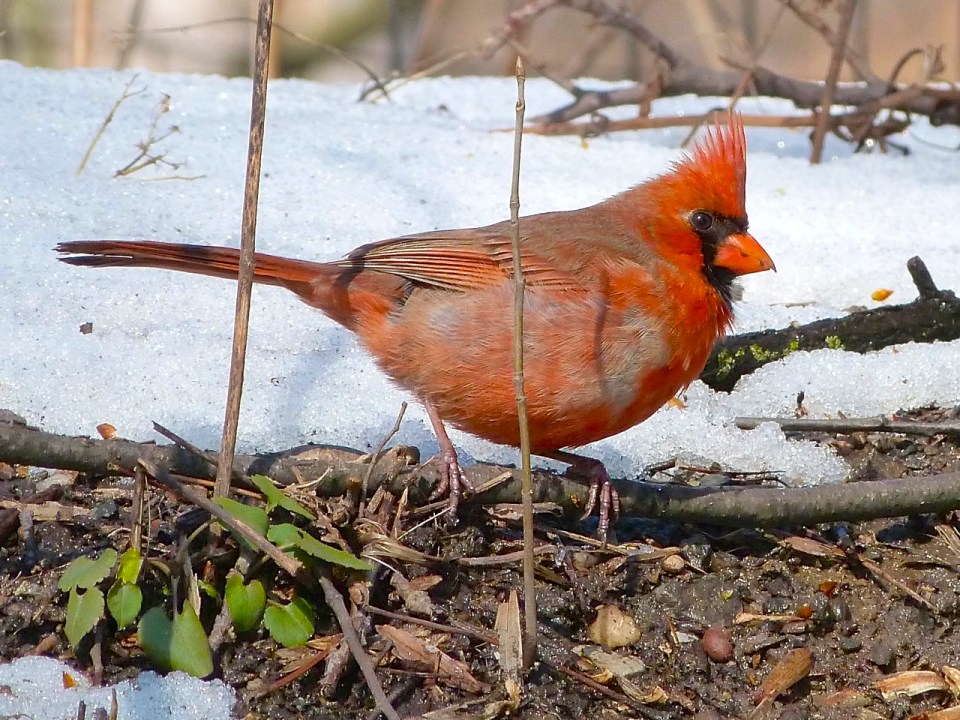
Northern Cardinal, Central Park NYCNorthern Cardinal NYC

The Northern Cardinal, to take one example, is a common and widespread bird in many States. It is the emblem of many sporting teams and *FUN FACT ALERT* it is the state bird of more states than any other species – 7 in all! Sorry, what did you say? Oh, OK, they are Illinois, Indiana, Kentucky, North Carolina, Ohio, Virginia, and West Virginia. [It is said, rather bathetically  that “it was also a candidate to become the state bird of Delaware, but lost to the Delaware Blue Hen.“]

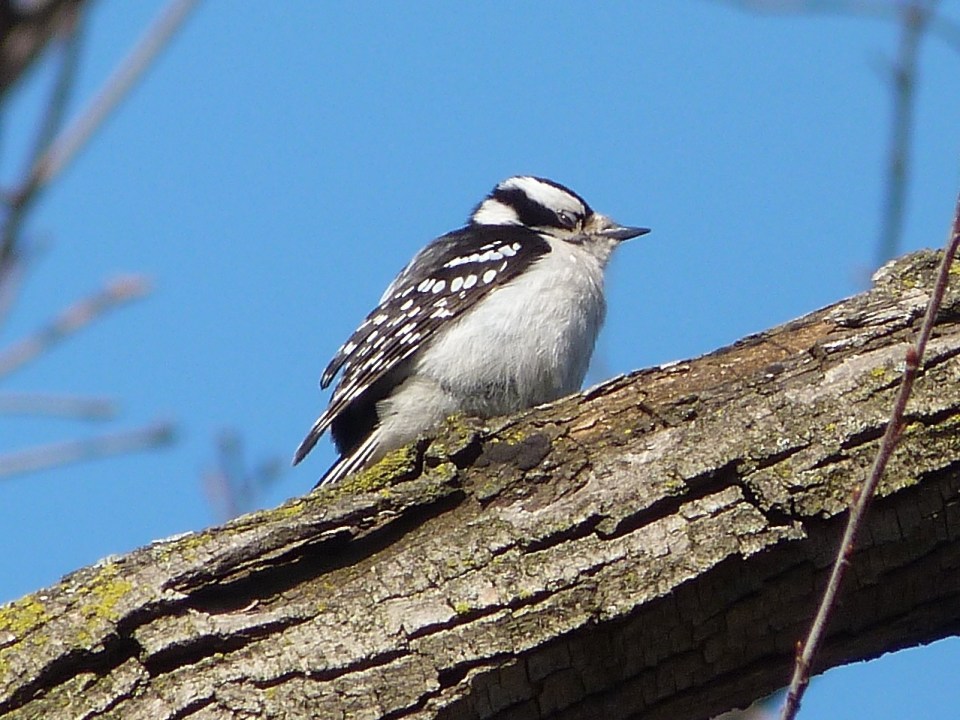
Downy Woodpecker, Prospect Park BrooklynDowny Woodpecker 2 NYC

On eBird the east coast of Florida is positively flaming with Cardinal hotspots. The birds smother the state that is just across the water from the Bahamas. Yet the only recorded sighting for the entire Bahamas is a single bird on South Cat Cay, Bimini. Anyway, here are some nice birds to look at, mostly from Central Park NYC and Prospect Park Brooklyn. If anyone sees the last bird in the series on Abaco or indeed anywhere else, can you kindly let me know?

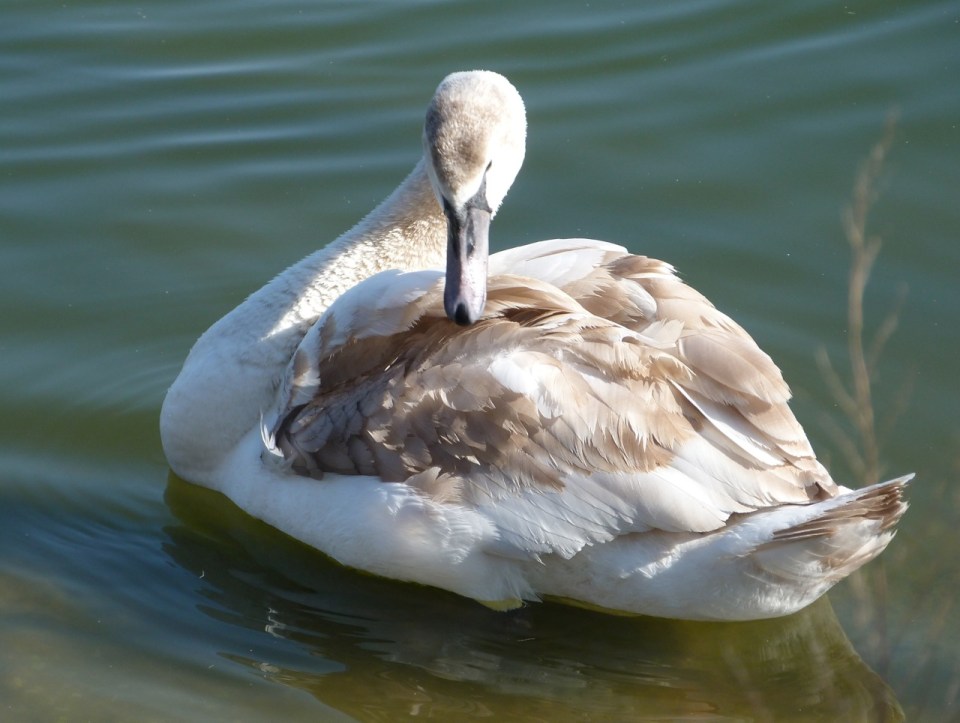
Cygnet, Prospect Park BrooklynCygnet NYC

Brown Creeper, The Ramble, Central Park NYCBrown Creeper NYC

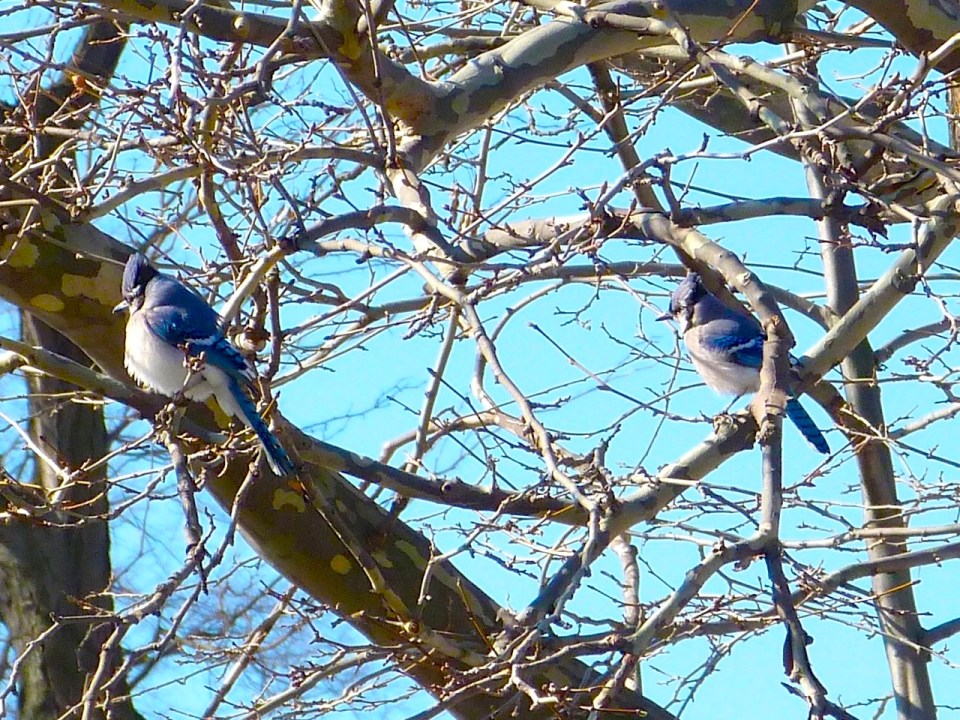
Blue Jays, Central Park NYCBlue Jays NYC

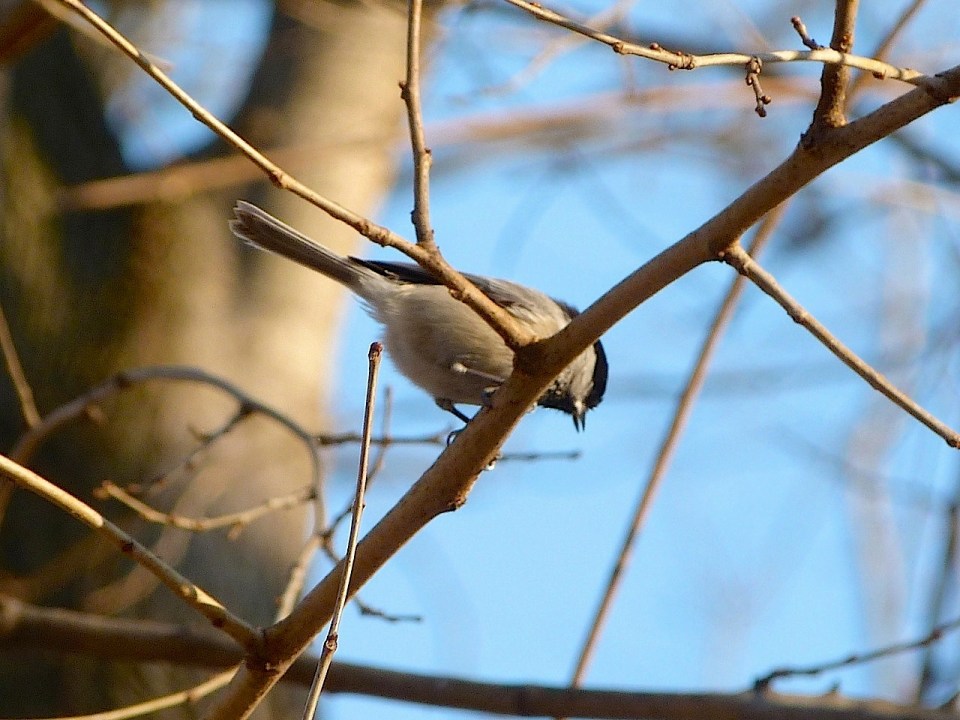
Black-capped Chickadee, The Ramble, Central ParkBlack-capped Chickadee NYCApologetic note: I find these little flickery birds very hard to photograph. They are specially trained to move at all times and to get behind twigs & branches the minute they see a camera

Tufted Titmouse Central Park NYCTufted Titmouse 3 NYC

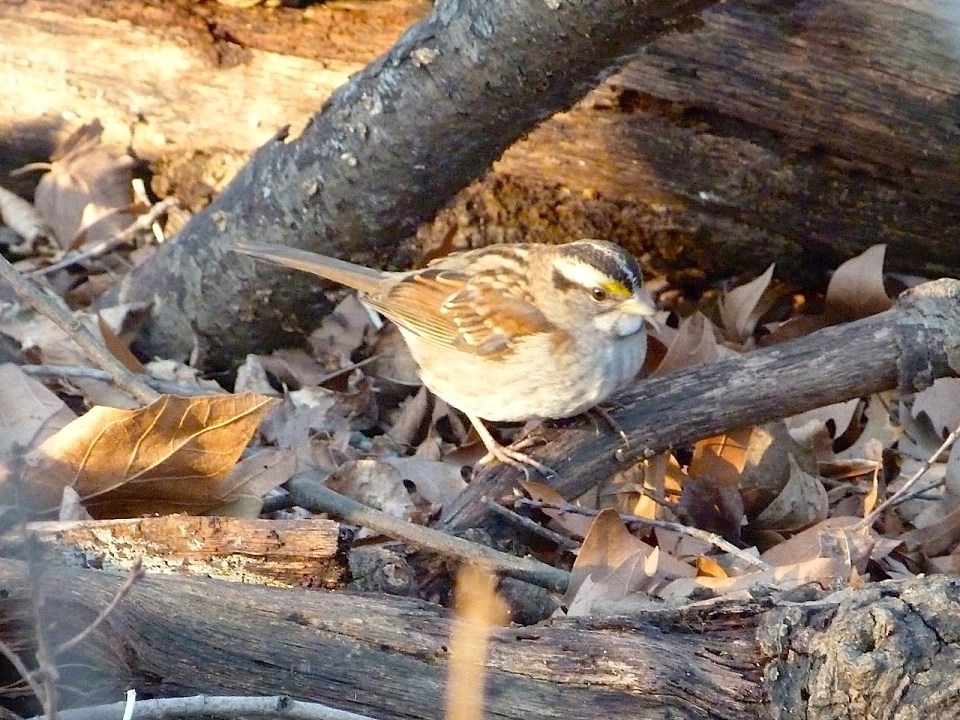
White-throated Sparrow, Prospect Park BrooklynWhite-throated Sparrow NYC

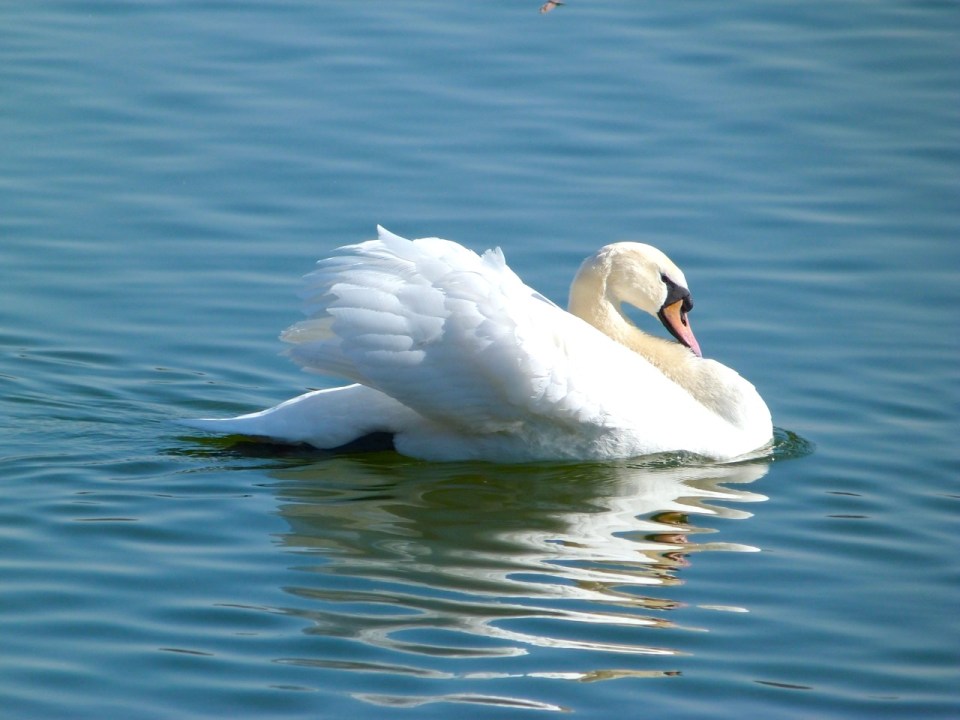
Mute Swan, Prospect Park BrooklynSwan 2 NYC

Raphus cucullatus (Dodo), American Museum of Natural HistoryDodo NYC

There’s one of these in the Natural History Museum in London; also in the Oxford University Museum of Natural History (parts of one, anyway). Where else in the world, I wonder?

 Normal Abaco Service will be restored in a few days… RH

Unknown's avatar

ABACO BIRDS YOU CAN SEE IN THE BIG APPLE…

Red-tailed Hawk Central Park NYC

ABACO BIRDS YOU CAN SEE IN THE BIG APPLE…

Big Apple, here we come! Mrs RH has business there next week. Sometimes, if I have behaved particularly well for an extended period – 2 years on average – I am invited to go along on her US trips. Providing I can grab a cheap fare as well. Well, sorted! NYC is my absolutely favourite capital city. Along with Marsh Harbour, obvs. And maybe Paris. Not London, we live there. Too close to home. 

Northern Mockingbird, High Line, NYCNorthern Mockingbird NYC High Line

I never go shopping, but I have specific must-dos. Route 66 on 9th for the best breakfast ever. Walking the wonderful new High Line park, extended since we were last there. The Staten Island Ferry out and straight back for the best free ‘Manhattan view plus water ride’ experience. The Tramway cable car to Roosevelt Island to visit the beautifully restored Blackwell Farmhouse which dates from 1796 and is arguably NYC’s oldest surviving residential building (not many people know this). Then a brisk walk to Lighthouse Point for a winter picnic. This is where, one day, I plan to catch a fish – any fish – on the fly in the East River. I’ve debated packing a small travel rod & reel this time but it is not an ideal time of year, frankly, and I don’t want to set myself up for failure in what will anyway be a hard task…

A Herring Gull provides irrefutable proof that there is piscine life in the East River even in winter
Life in the East River NY

Mallards in Central park: a male and a LEUCISTIC femaleMallard (m) NYC Central Park Mallard (f) - leucistic NYC Central Park

And to people’s complete bemusement (sample comment: “Are you quite mad?”) I go birding. NYC is a great place for it, being on a major migration flyway. Central Park is fantastic, especially the Ramble, the Reservoir, and the lesser known wild areas at the top end – the Loch, the Ravine, Harlem Meer. Prospect Park Brooklyn is another great place, with wild woodland and lakes for many water bird species. There’s a wildlife refuge at Jamaica Bay which looks worth exploring too, though it’s a bit of a trek. Anyway, here are a few Big Apple birds that are found on – or at least recorded for – Abaco (some very rarely, it has to be said).

Ring-billed and Herring Gulls on the Staten Island FerryRing-billed Gull NYC Staten Island Ferry Ring-billed Gull NYC 2 Staten Island FerryHerring Gull NYC 2 Staten Island FerryHerring Gull NYC Staten Island Ferry

Male & female Hooded Mergansers on the JKO Reservoir, Central ParkHooded Merganser (m) NYC JKO Reservoir Hooded Merganser (f) 2 NYC JKO Reservoir

Male House Sparrow (Central Park) & female (Prospect Park, Brooklyn)House Sparrow NYC Central Park House Sparrow (f) NYC Prospect Park

Rock Pigeon, Central ParkRock Pigeon NYC

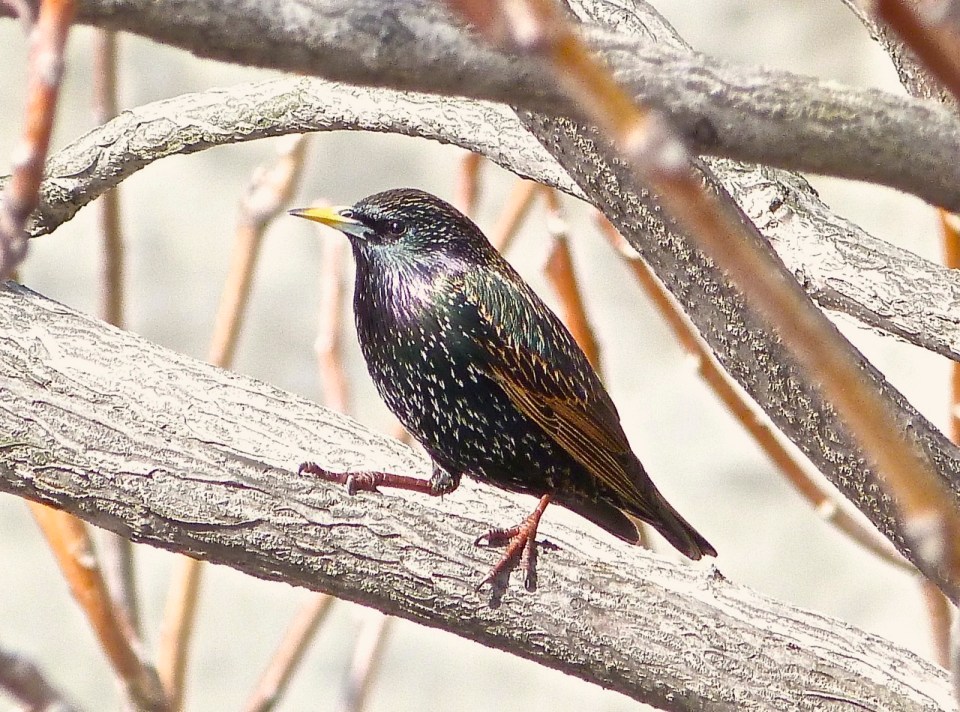
Eurasian Starling (High Line Park)Starling NYC High Line Park

Canada Goose on ice (Prospect Park, Brooklyn)Canada Goose NYC Prospect Park

American Robin (Prospect Park, Brooklyn)American Robin NYC Prospect Park

Poor photo of a Coot (Harlem Meer, Central park)Coot NYC Central Park Harlem Meer

Ultra-shy Red-winged Blackbird (Prospect Park, Brooklyn)Red-winged Blackbird NYC Prospect ParkI can only get away with crap photos like this because it’s my blog & your decision to put up with it
Bufflehead, JKO Reservoir Central ParkBufflehead NYC JKO Reservoir Central ParkA bird recorded once or perhaps twice for Abaco in the last 60 years. I have better photos than this, but this one best illustrates your chance of seeing one on Abaco – vanishing…

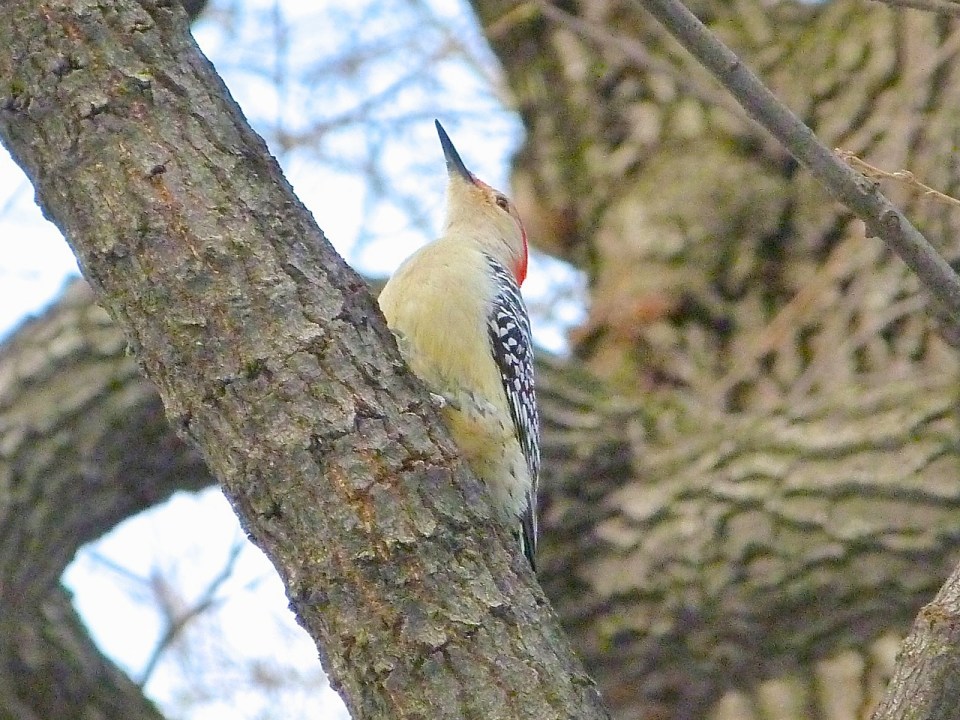
Hairy** Red-bellied Woodpecker (The Ramble, Central Park)Hairy Woodpecker NYC The Ramble Central Park

Red-tailed Hawk NYC (Prospect Park Brooklyn)Red-tailed Hawk NYC Prospect Park BrooklynThe RTH header image was taken in the Ramble, Central Park

** As Woody Bracey has been quick to point out, this is in fact a Red-bellied Woodpecker, not a Hairy Woodpecker. Unlike the HWP, the RBW is not recorded for Abaco. HOWEVER I do have a HWP photo from Central Park somewhere, and if I can find it I’ll substitute it and make it right!

All photos, good, bad and indifferent: The Author

Unknown's avatar

THE BAHAMA WOODSTAR NEST: A CHRISTMAS STORY FOR A NEW YEAR

Bahama Woodstar (f), Abaco (Charmaine Albury)THE BAHAMA WOODSTAR NEST: A CHRISTMAS STORY FOR THE NEW YEAR
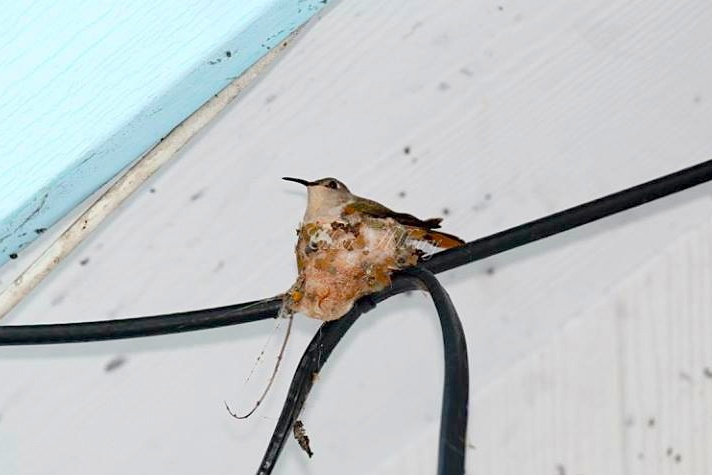
And it came to pass that on the first day of December in the Year of Our Lord 2015, the time came upon a mother hummingbird; and she laid her tiny egg in a small nest in the place that is called Man-o-war, which is to say ‘The Island of Pretty Birds”. And on the next day, she laid a second tiny egg in that nest also. For this was in the time of the first Woodstar nesting of the season.

Bahama Woodstar nest with eggs, Abaco (Charmaine Albury)

And the days passed, even as the mother hummingbird sat upon the nest whereat she had laid her eggs. And verily was she patient, for it was known to her that the eggs would not hatch until certain days were past

Bahama Woodstar nest with eggs, Abaco (Charmaine Albury)

Yet still the eggs hatched not, though their colour became paler…Bahama Woodstar nest with eggs, Abaco (Charmaine Albury)

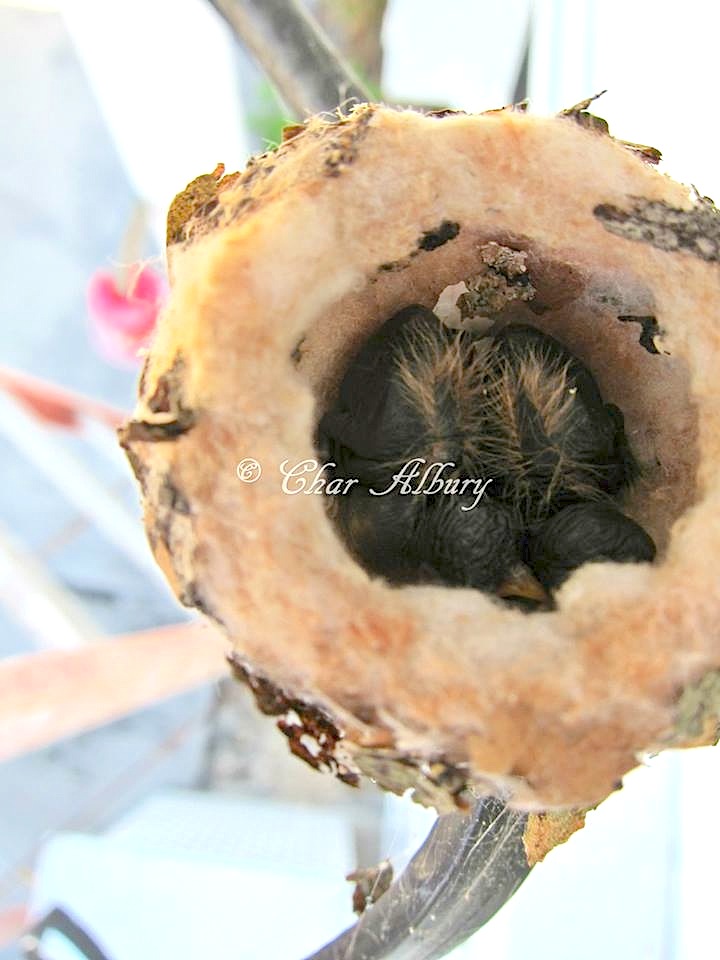
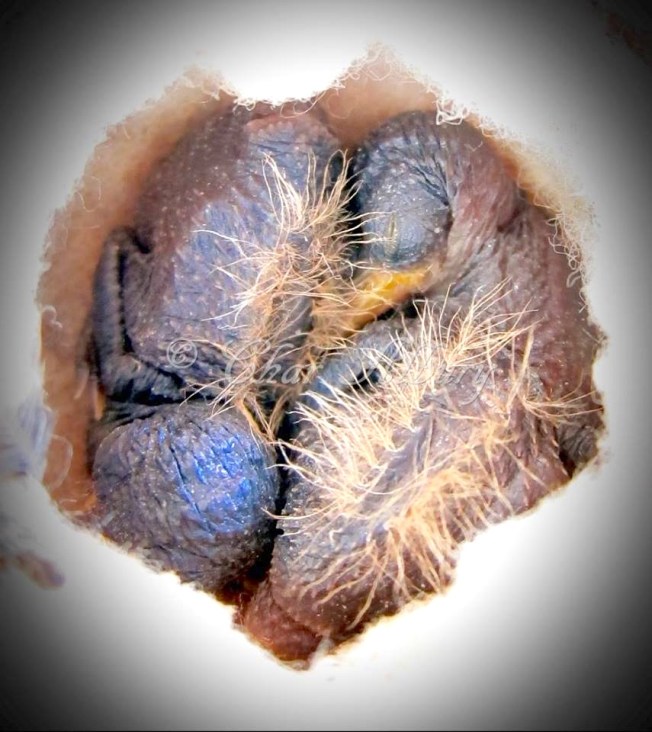
But on the 19th day hatched the first egg; and likewise the second egg upon the 21st day. And two (mostly) naked hatchlings were made visible.Bahama Woodstar nest with hatchlings, Abaco (Charmaine Albury)

On the 25th day, which is to say the day of Christ’s Mass, the hatchlings had grown; and their raiment of feathers was coming upon them to clothe their nakednessBahama Woodstar nest with hatchlings, Abaco (Charmaine Albury)

And as they grew the chicks (for thus were they named) were snug and safe in their small nest, even as their mother and their father, who did build it together and furnish it with soft materials, had ordained

1170953_10207164189916859_1353675663828625458_n

By the 31st and final day of the old year, which is to say the day before Earth’s renewal in another year, the chicks had greatly grown; and feathers were about their persons. And their appearance was of small birds which would soon fly from that place and live happily in a New Year at Man-o-warBahama Woodstar nest with chicks, Abaco (Charmaine Albury)-1

Thanks for all fabulous photos to Charmaine Albury, who is lucky enough to be a Woodstar magnet on Man-o-War Cay. With her family, she watches these events unfold every year at her house, and manages to record them without ever disturbing these wonderful little birds

Unknown's avatar

YELLOW BIRDS ON ABACO: A ‘TWIXTMAS’ COLOUR SCHEME

Bahamas-Great Abaco_4846_Bahama Yellowthroat_Gerlinde Taurer copy

YELLOW BIRDS ON ABACO: A ‘TWIXTMAS’ COLOUR SCHEME

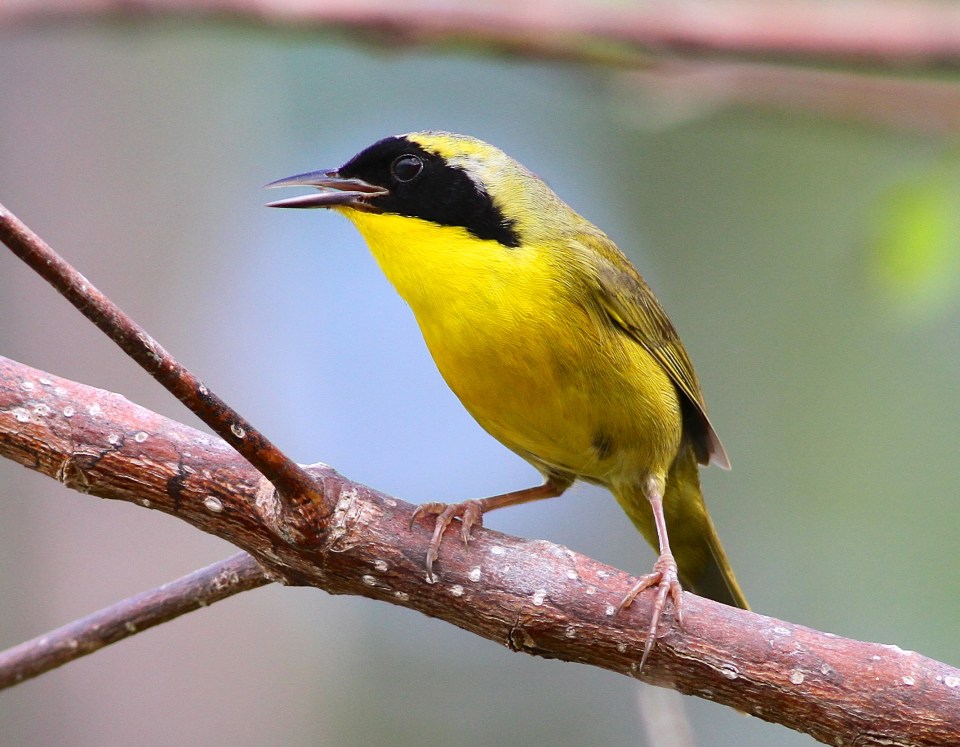
Red. Green. A splash of blue. The shimmer of gold and silver. Those Christmas colours are so passé. OVAH! So ‘last year’ (or very nearly). In the hope and expectation that people are not too bilious from Xmas Xcess, or too jaundiced by seasonal overload, I feel it’s time to change the colour scheme. Let’s go for bright yellow. Specifically, a mix of endemic Bahama Yellowthroats and Common Yellowthroats. I love these cheerful little birds, and the challenge of trying to lure them into the open with my rather unconvincing approximations of their ‘wichity’ call. Such sunny little creatures, and always such a joy to watch.

Bahamas-Great Abaco_5267_Bahama Yellowthroat_Gerlinde Taurer copyBahama Yellowthroat (M) Bruce Hallett Bahama Yellowthroat 3 Tom Reed

ALL ABOVE – BAHAMA YELLOWTHROATS; ALL BELOW – COMMON YELLOWTHROATS

Common Yellowthroat.Gilpin Pond.Abaco Bahamas.Tom Sheley copyCommon Yellowthroat (m) Bruce Hallett IMG_4232Common Yellowthroat, Gilpin Pond, Abaco Bahamas (Tom Sheley)Common-yellowthroat, Abaco (Erik Gauger)

Credits: Gerlinde Taurer (1,2); Bruce Hallett (3, 6); Tom Reed (4); Tom Sheley (5, 7); Erik Gauger (8)

Unknown's avatar

“FOUR CALLING BIRDS…” CAN YOU FIND ONE ON ABACO?

Red-winged Blackbird Abaco Bahamas (Keith Salvesen)

“FOUR CALLING BIRDS…” CAN YOU FIND ONE ON ABACO?

The Winter Solstice arrives today. The shortest day followed by the longest night of the year… then the serious business of Christmas. And some quality frivolity with it. So this will probably be my last post before then and possibly until next year, depending on available time, relative sobriety and other seasonal variables too numerous to mention…

Red-winged Blackbird.Abaco Bahamas.6.13.Tom SheleyCALLING BIRDS? WHAT ARE THEY, EXACTLY?

“The Twelve Days of Christmas “is an old, old song, supposedly written in 1780, and popular ever since. Over time, the words have altered somewhat from the original. The ‘Calling Birds’ were originally ‘Colly (or Collie) Birds’, meaning, black birds. The word derives from the word ‘coal’. The change to ‘calling birds’ wasn’t noted until the early c20. One version I learnt as a child a few years decades later used ‘colly birds’. However the quaint usage quickly died out during the pernicious excesses of the 1960s which I obviously don’t remember because I wasn’t there…

European BlackbirdEuropean Blackbird (wiki)

Colly birds were – are – European blackbirds, song birds that bring joy. There are other black birds of course, but crows, ravens and the like have from medieval times been viewed as birds of ill-omen (lots of examples in Shakespeare). Hardly a Christmassy gesture to give one of them to your True Love, far less four. 

WHAT ABACO BIRD SHOULD I GIVE MY TRUE LOVE AFTER 5 GOLD RINGS?

Undoubtedly red-winged blackbirds. They are undeniably black birds. They have festively flashy markings. True, their ‘metal-gate-with-very-rusty-hinges’ grating call is not exactly melodious (and 4 red-legged thrushes on vocals would suit the occasion much better). But what a handsome present to give someone already trying to cope with the burden and general commotion of sundry Lords a’Leaping, Maids a’Milking, Drummers Drumming and so on. Much easier to deal with.

Red-winged Blackbird male 2 .Abaco Bahamas.6.13.Tom Sheley

HOW MANY GIFTS WILL MY TRUE LOVE EXPECT FROM ME?

I’m afraid it will be 364 in total, with some items on the list becoming increasingly difficult to source. The breakdown (note in passing the mathematical symmetry of the increasing and correspondingly diminishing numbers) is as follows:

  • 12 partridges in pear trees
  • 22 turtle doves
  • 30 french hens
  • 36 calling birds
  • 40 golden rings
  • 42 geese a laying
  • 42 swans a swimming
  • 40 maids a milking
  • 36 ladies dancing
  • 30 lords a leaping
  • 22 pipers piping
  • 12 drummers drumming

But with any luck your TL would be happy to share a Kalik in the sunset instead of having all that palaver…

Red-winged Blackbird Abaco Bahamas (Keith Salvesen)

Happy Christmas** to all people kind enough to follow this blog or read it from time to time, and – why not – all the people who don’t and / or have no idea of its existence… Time to let Kermit & Elmo to take over. 

Photo credits, Tom Sheley (2, 3), Keith Salvesen / RH (1, 4), Wiki for the Eurasian blackbird

**The term ‘Christmas’ is used as a broad term to cover the midwinter holiday period – or indeed non-holidays for many – and is intended to include in a benign way those of any faith or none. I don’t ‘do’ Winterval, sorry…

Unknown's avatar

ABACO PARROTS: BRIGHT GREEN, RED & BLUE = HAPPY CHRISTMAS TO YOU

Abaco (Cuban) Parrot Pair (Melissa Maura)

ABACO PARROTS: BRIGHT GREEN, RED & BLUE = HAPPY CHRISTMAS TO YOU

Painted buntings in the last post. And now some Abaco parrots. To adopt the joyous strangled yell of Noddy Holder (Slade, 1973, “Merry Christmas Everybody”)** “It’s….. CHRISTMASSSSSSS“. Abaco’s famous and unique ground-nesting parrots are about as seasonally festive as you could wish for. Bright, colourful, noisy and impossible to ignore. The run-up to Christmas is the perfect moment for a gallery of these fine birds that are making a very promising recovery from near-extinction thanks to intensive conservation measures over the last few years. There’s a caption competition at the end, too. Post your idea as a comment and there even may be something it it for the winner…

Abaco (Cuban) Parrot Pair (Melissa Maura)Abaco Parrots (Peter Mantle)Abaco Parrot (Keith Salvesen)Abaco (Cuban) Parrot (Craig Nash)

INTERMISSION

Abaco / Cuban Parrot (Bruce Hallett)Abaco Parrot eating Gumbo Limbo fruit. Abaco Bahamas (Tom Sheley)Abaco (Cuban) Parrot (Keith Salvesen)

CAPTION COMPETITION

It’s Christmas. Season of Good Will. But what on earth is going on here…?Abaco (Cuban) Parrot Pair (Melissa Maura)

Credits: Melissa Maura (1, 2, 9), Peter Mantle (3), Keith Salvesen / RH (4, 8), Craig Nash (5), Bruce Hallett (6), Tom Sheley (7); Audio recorded by RH & Mrs RH at Bahamas Palm Shores

**  FESTIVE MUSICAL DIGRESSION (OPTIONAL)

[youtube https://youtu.be/0A8KT365wlA]