Unknown's avatar

3 MONTHS ON ABACO WITH THE BMMRO: AN INTERN’S STORY


BMMRO whale pic

The Bahamas Marine Mammal Research Organisation LogoClick logo for website

BMMRO Bahamas Marine Mammal Research Organisation Banner

3 MONTHS ON ABACO WITH THE BMMRO: AN INTERN’S STORY

My name is Jack Lucas and I am Marine Biology Student at Plymouth University in the UK. I came to the Bahamas Marine Mammal Research Organisation on Abaco in July 2013 for a 3 month internship, which has been an amazing experience from start to finish. Heres a summary of my summer spent at BMMRO.

Sperm Whale Fluking

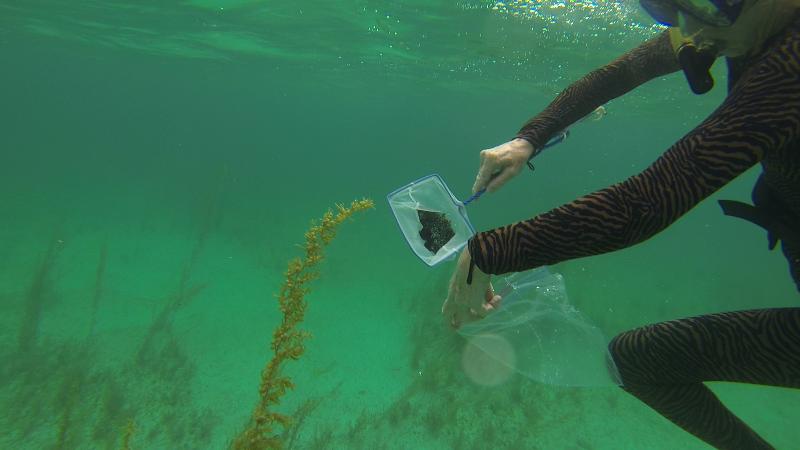
I arrived at the start of July and was fortunate enough with my timing to be part of an assembled crew of scientists from all over the world coming together to start work on what was to be this summers main project; collecting faecal samples from Blainville’s beaked whales to assess stress hormones produced. This team included Dr Roz Rolland and Dr Scott Kraus from New England Aquarium, who are collaborating with BMMRO for the work, and the samples will be analysed back at their lab in the US. Also along for the ride was Roxy Corbett; a whale observer and field researcher from the US, and Dr Stephanie King; a acoustician from the Sea Mammal Research Unit in Scotland. The first day after arriving it was straight out on the boat to search for these elusive creatures and the beginning of a crash course in how to collect and store the faecal samples when we found them. For the first week the work was a mix of boat work when the weather permitted and practicing poop collection using custom-made fine-mesh nets and coffee grounds (as close to the real thing as we were willing to try!), as well as clearing out BMMRO’s garage and, under the direction of foreman Scott, the construction from scratch of a lab to prepare samples for storage.

An example of the use of coffee grounds to practise whale poop-scoop technique269RH note: NOT Jack’s arms / snappy diving suit…

Unfortunately, despite days of poop collection practice and endless hours searching for the whales at sea, the original poop team never got a chance to employ these by now highly developed skills or to see the lab being used, as the weather was so windy we barely encountered the animals let alone spent long enough with them to collect any samples. 

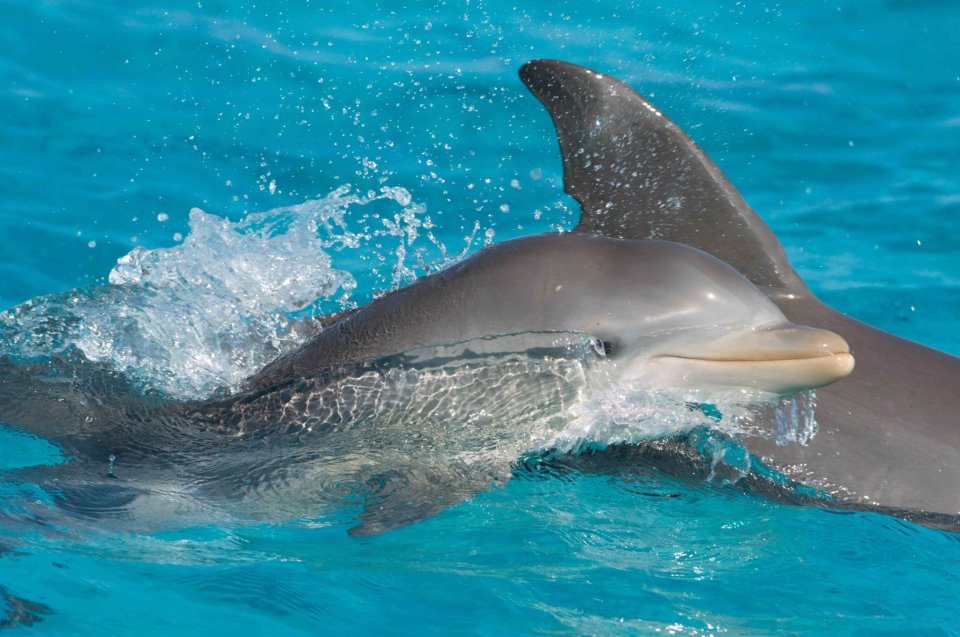
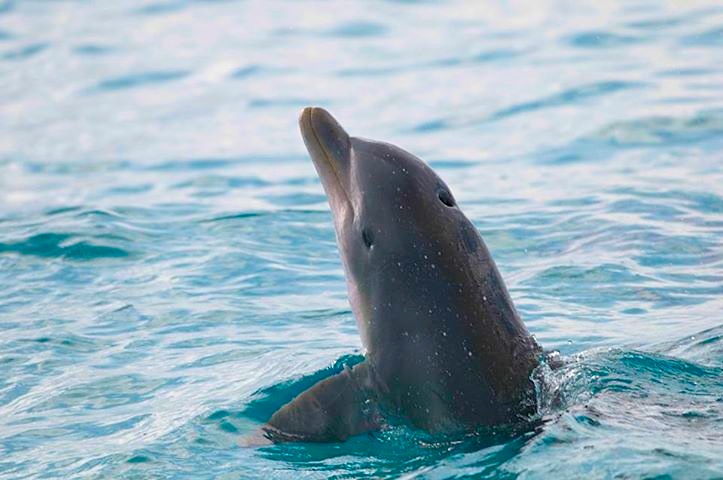
Despite the lack of beaked whales, we did encounter loads of marine mammals in the first few weeks, from sperm whales to three different species of dolphin; including the little-seen and even less-studied rough-toothed dolphin.

Rough-toothed Dolphin

After discussion with Charlotte and Di about a possible project for me to complete during my stay, it was to be this species that I would focus on and in between the usual office jobs it was my task to sort through the photos from 20 rough toothed encounters in the Bahamas since 1995 and create a catalogue of individuals. This initial task consisted of careful inspection, comparison and sorting of what turned out to be over 5000 photos, into an organised catalogue of 167 separate and distinctive individuals. Despite the hours of endless staring at fins, it was very rewarding as there were 13 resighted individuals found (we were not necessarily expecting any!) which suggests long-term site fidelity and association of these animals, in addition to year round use of the Grand Bahama Canyon. Even more rewarding; the results of this work have recently been submitted for a poster display at an Odontocete workshop in New Zealand this December and I am also writing up the results in a formal scientific paper, with the hopeful goal of publishing a note in a peer-review journal. 

 Scott, Jack, Stephanie and Di in the new lab at Sandy Point

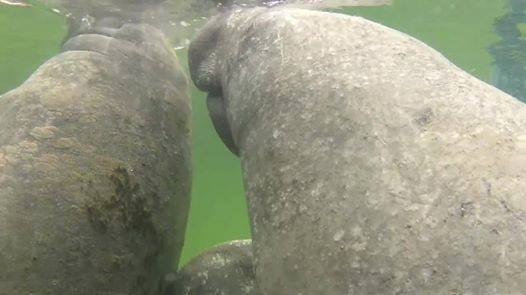
Around a month in I was lucky enough to be sent by Di and Charlotte to Great Harbour Cay on the nearby Berry Islands to work with the manatees there, in particular Georgie; a recently released juvenile whose status is being carefully monitored after her rehabilitation at Atlantis’ Dolphin Cay following health problems. The work here for a week under the guidance of Kendria; a Bahamian contracted by BMMRO to monitor the manatees on the Berry Islands, consisted of tracking Georgie using a satellite tag attached to a belt around her tail. Once located, we logged her position and made any notes on her health and behaviour aswell as the other manatees that were often found with her (there are currently 6 located on Great Harbour Cay). Two days in her tag was found unattached at a locals dock (it has a weak-link incase of entanglement) and we had to locate her using underwater hydrophones to detect her belt. Once found, I had the rare opportunity of entering the water with her in order to re-attach a new tag to her belt; it was amazing and one of the best encounters I have had with any animal! It is impossible not to love these amiable and gentle creatures, especially when you observe their infamous ‘hugs’ in person! 

Georgie the Manatee

For more about Georgie’s re-release in the Berry Is. after her earlier shenanigans on Abaco, see HERE

After returning from the Berry Islands (and incidentally missing the first two poop collections of the season made by Charlotte!) it was back to hunting for the elusive beaked whales around South Abaco. During my time I had the chance to work with several interns coming to BMMRO including local marine-enthusiasts Tristan and AJ, and Courtney Cox from Florida. Oscar Ward from the UK also joined the team as Charlotte left for Scotland to complete her PhD, and was on hand during the poop-collection and other little excursions. In wasn’t until the last month of my time here that we managed to get close enough to the whales for me to get in the water and be towed alongside in the hope of seeing one defecate. One amazing morning two whales surfaced right off the bow of the boat and what resulted was again, one of the most amazing moments; swimming just a couple of feet away from an animal only a handful of people in the world have seen underwater. After nearly two months with no samples, the two weeks that followed were a flurry of boat days, poop-collection and whale watching; with a total of 7 samples collecting from beaked whales (5 in one day!!) and another 3 from sperm whales. This was the best possible end to my time here and I finally got a chance to use the much-practiced poop collection techniques. The samples included a number of squid beaks, and in one very deep dive collection a mass of parasitic worms and a weird cephalopod-type animal! We also got a chance in the last few weeks to test-run a new addition to the fleet, that included a dive compressor.

Ready to collect some poop…

Finally my time in the Bahamas had to come to an end, and I had to return home. The last 3 months has flown by and has been one of the most enjoyable and most importantly educational periods of my life and I cannot thank Di and Charlotte enough for making it all possible. The day-to-day boat runs, office work, equipment maintenance and station chores has given me a good insight into all aspects of field research. It was my first taste of life as a marine mammal scientist, and it has made me even more determined to pursue a career in this field; a perfect stepping stone from which to move forward. In addition my work with BMMRO (and what must of been a brilliant reference from the girls!) made it possible to secure a highly competitive internship in the Farallon Islands this winter tagging elephant seals amongst other work! I cannot wait to continue working in this field and finish writing up the results of my project here, and hope I have the chance to come to Abaco again to work with these amazing people and animals!Sperm Whale supplier of poop BMMRO

BMMRO would like to thank Jack for all his help during the summer, and all our interns for their assistance! To our sponsors, Friends of the Environment, Disney Animal Programs and Environmental Initiatives and Rotary of Abaco, we thank you for your continued support.

To read more about the work of Interns on Abaco with the BMMRO at Sandy Point and Friends of the Environment in Marsh Harbour, check out Oscar Ward’s excellent blog SEVENTYPERCENTBLUE. There are articles on Life in the Mangroves, the Bahamas Climate, Whale Poop Collection, and most intriguing how he and co-intern Jack both came very close to being Black Tip  Fodder… real live Chums!

The Author researching underwater creatures

Unknown's avatar

Q: WHAT IS CUTER THAN A BAHAMA WOODSTAR HUMMINGBIRD ON ABACO?


2319_1090169168209_1705_n

Q: WHAT IS CUTER THAN A BAHAMA WOODSTAR HUMMINGBIRD ON ABACO?2129_1086920126985_4106_n

A: A BABY BAHAMA WOODSTAR HUMMINGBIRD ON ABACO1377387_10201470915708562_1875646596_n

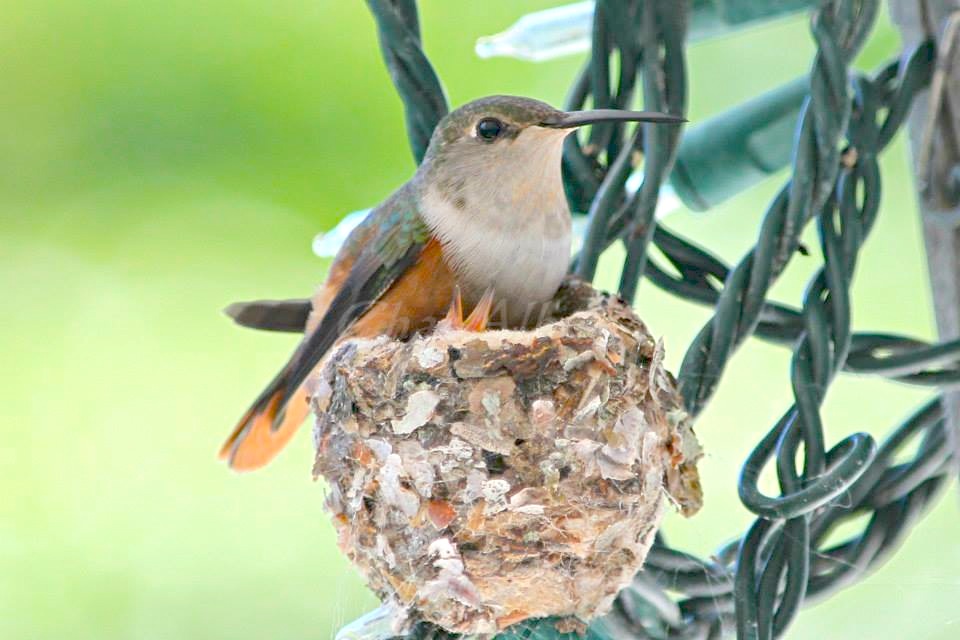
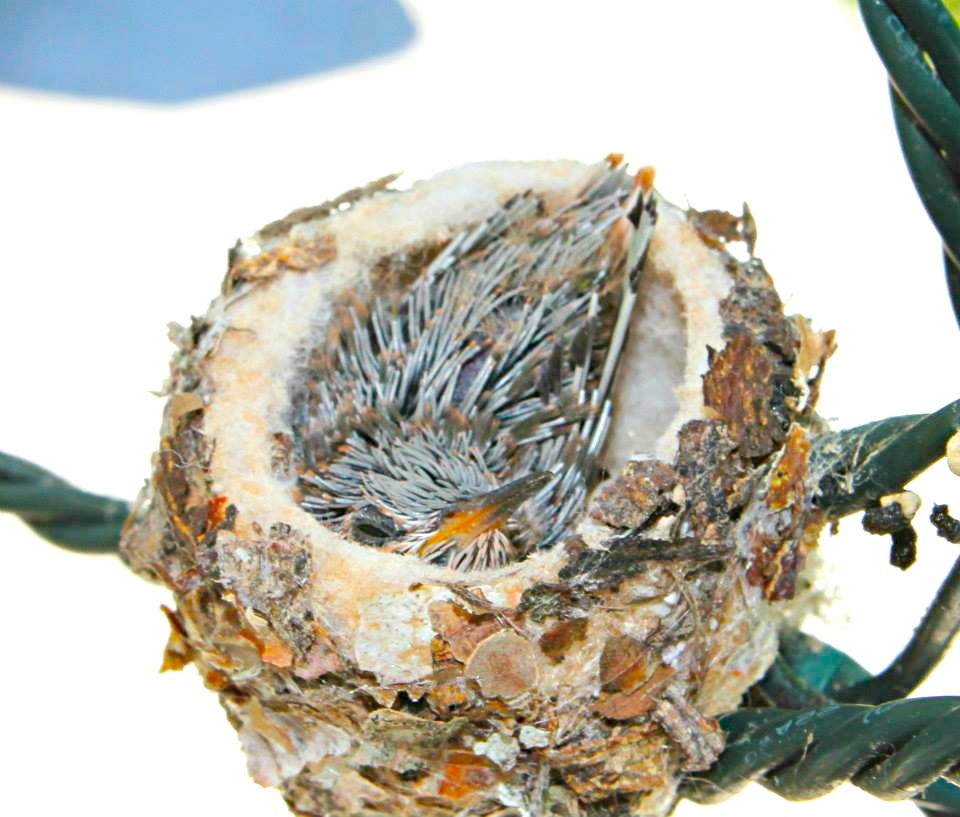
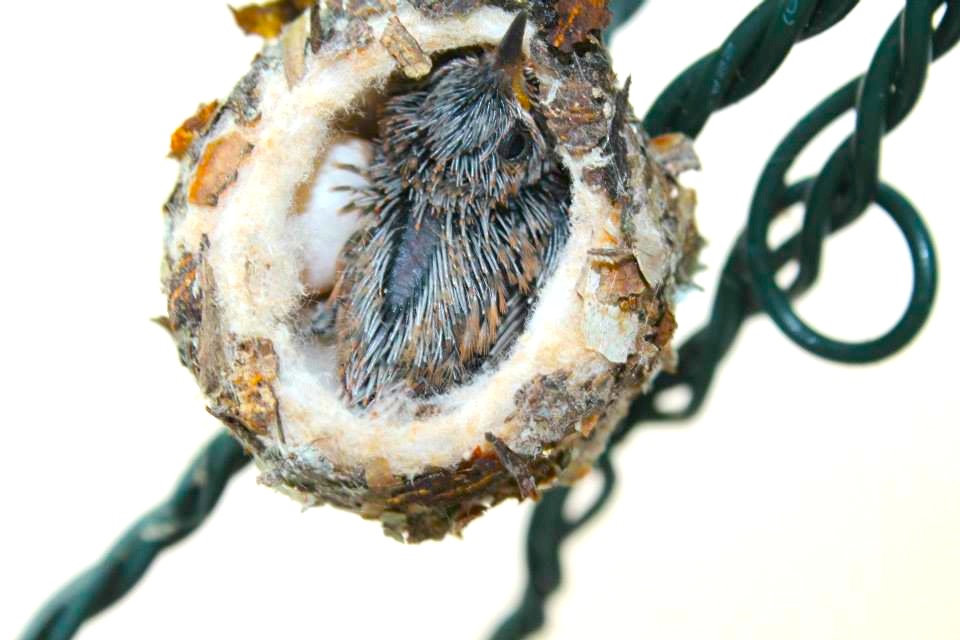
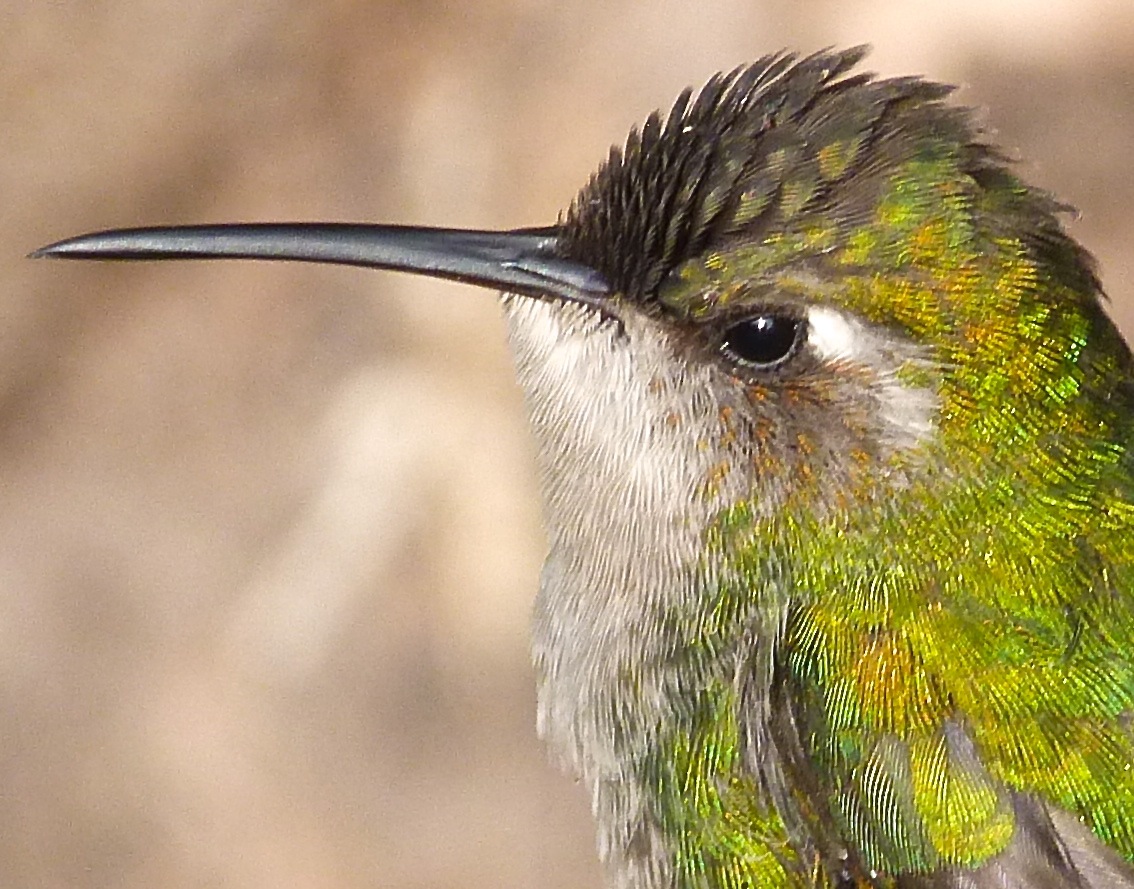
Charmaine Albury from Man-o-War Cay, Abaco, has taken some fabulous photographs of a nesting Bahama Woodstar Hummingbird at her home. With her kind permission, I am delighted to display a selection of them below. The adult is a female, and lacks the striking purple gorget of the male. The baby’s plumage is… spiky!  The cup nest is beautifully constructed, made from plant down, bark and cobwebs, balanced in a string of lights.  The size of the bulbs give a very clear idea how tiny these sweet little birds are. These are photos to be viewed in wonderment and awwwwwwwwww….

1157556_10201484511728454_263738206_n1009896_10201430116528608_457141162_n

This hummingbird species nests all year round. The female lays 2 elliptical white eggs, which she incubates for 15–18 days.  Not only is the baby in these pictures in a very small nest, it is sharing it with an unhatched and presumably sterile egg. Then again, two babies would be even more of a squash… 1381404_10201471034351528_1693570080_n541844_10201470918508632_1470337409_n 1376617_10201470928108872_1146646017_n 1377385_10201470917748613_443444189_n 1382262_10201470921668711_411658918_n

The Bahama Woodstar Calliphlox evelynae is endemic to the Bahamas, found only on there and as an occasional vagrant in south east Florida. On Abaco, it is one of four endemic species found on the island – the others are the Bahama Swallow, the Bahama Warbler and the Bahama Yellowthroat. Together with the unique ground-nesting ABACO PARROT, these are among the most special birds of Abaco.

Photo Credits: All images © Charmaine Albury

Unknown's avatar

TIGER GROUPER Mycteroperca tigris – BAHAMAS REEF FISH (12)
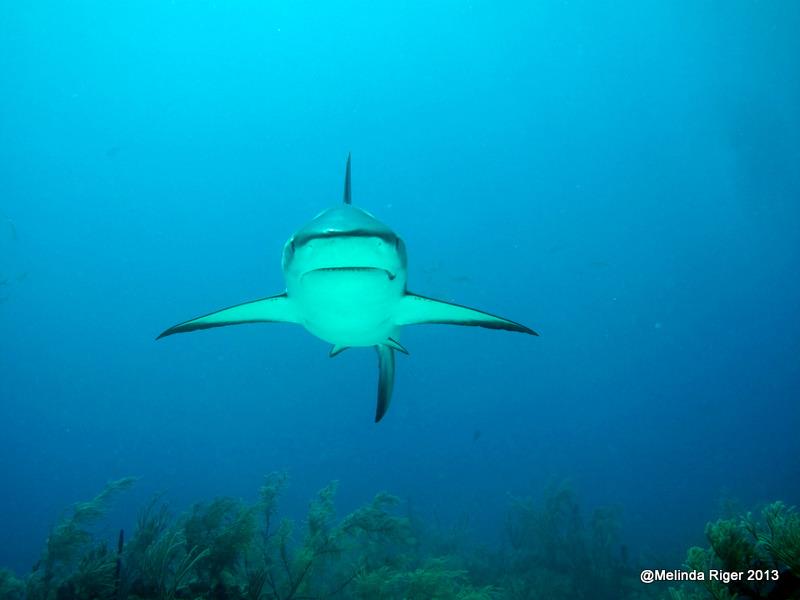

TIGER GROUPER Mycteroperca tigris – BAHAMAS REEF FISH (12)

Tiger Grouper ©Melinda Riger @ GB Scuba

The grouper family is a large one, and a number of varieties of the species inhabit Bahamas waters. Like most groupers, these are denizens of coral reefs. An adult grouper may grow to 3 ft long and weigh in the region of 10 lbs. 

Tiger Grouper ©Melinda Riger @ GB Scuba

Groupers are effective predators, with strong gills that enable them to suck their prey into their large mouths from a short distance away. They will eat smaller fish, crustaceans, and even OCTOPUSES (click to discover the correct plural form for this creature).

Tiger Grouper 2Tiger Grouper copy

Many divers become familiar with the groupers of the reefs they explore, and some of the fish are given pet names. They are often distinguished from each other by distinctive markings or injury scars. More varieties of grouper will be on show soon; though it has to be said that this series will be no beauty parade… (see above and below for further details)

Tiger GrouperAll photos: Melinda Riger @ Grand Bahama Scuba

UPDATE I’ve found a video of a tiger grouper off Nassau sizing up the photographer, before swimming away

Unknown's avatar

‘TAKING OFF’ ON ABACO: NORTHERN MOCKINGBIRDS & MIMICRY


‘TAKING OFF’ ON ABACO: NORTHERN MOCKINGBIRDS & MIMICRY

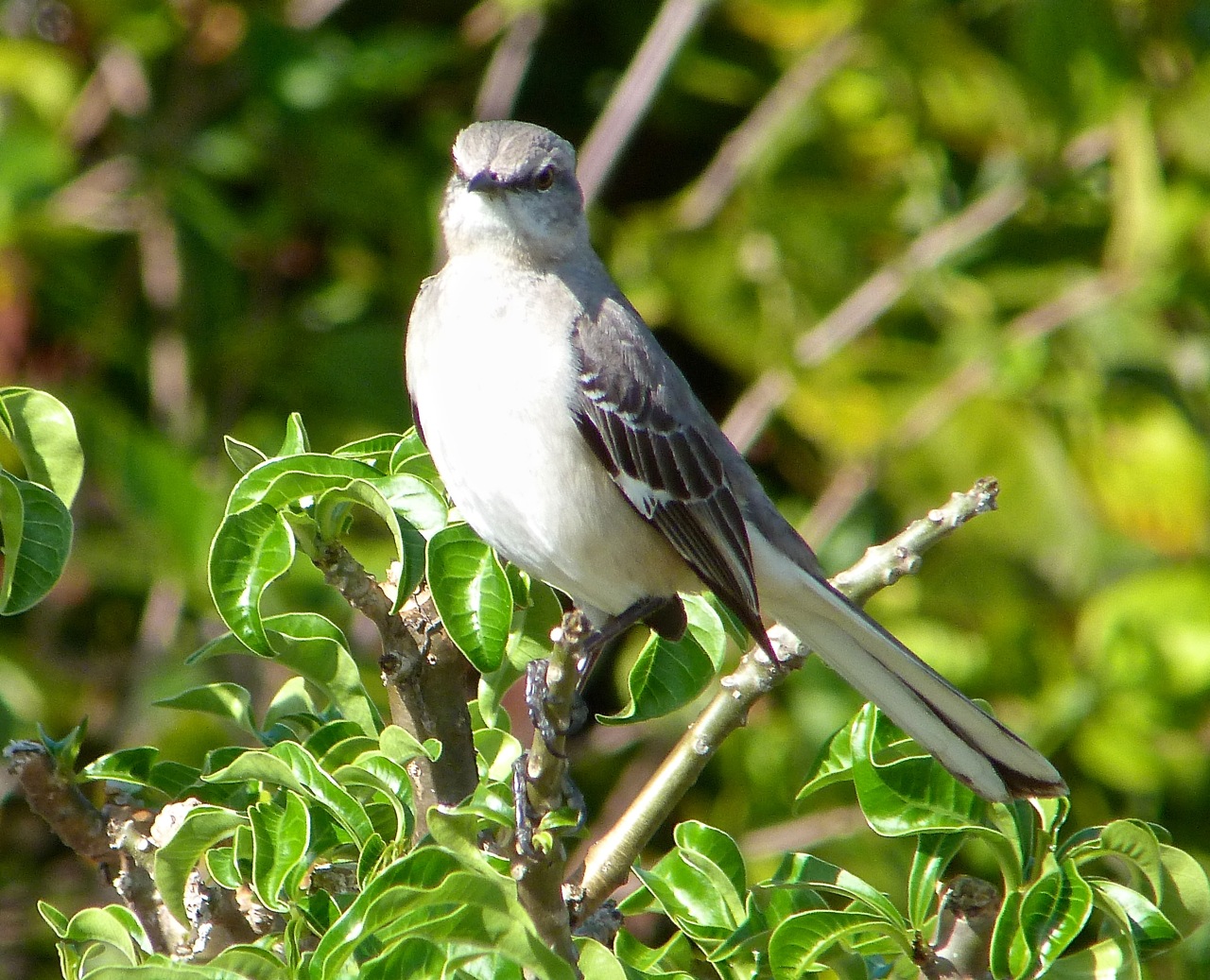
The Northern Mockingbird (Mimus polyglottos) is commonly found in North America, but also has a wide range further afield. The species is plentiful on Abaco and in the northern Bahamas generally. I recently posted about Abaco’s other mocker, the local Bahama Mockingbird, HERE.

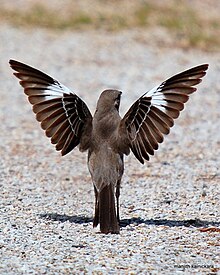
Northern Mockingbird 1

A DOZEN MEMORABLE MOCKINGBIRD FACTS TO ENLIVEN YOUR CONVERSATION

  • Only male mockingbirds sing
  • The Latin name means ‘many-tongued mimic’
  • They are omniverous and eat fruits, seeds, insects and even small lizards
  • They been shown in experiments to be capable of recognising individual humans
  • They are the State Bird of Florida, Arkansas, Mississippi, South Carolina, Tennessee, & Texas
  • Thomas Jefferson had a pet mockingbird named “Dick” [wish I’d invented this one…]
  • Courting males fly around females to impress them with their splendid wing patterns
  • Mockingbirds are monogamous & mate for life (though known to play away on occasion…)
  • Both the male and female are involved in the nest building
  • Cowbirds are inclined to lay their eggs in mockingbird nests
  • Both male and female feed their chicks, in the modern way
  • Mockers will confront larger birds including hawks; also cats and dogs; & even humans

Northern Mockingbird 2

 IMITATIONAL SKILLS
Besides having a particularly wide song repertoire, the mockingbird will mimic other birds, other natural sounds (including dogs) and even man-made / mechanical sounds – car alarms, sirens and a whole lot more besides. Good old Wiki has this to say:
“There are four recognized calls for the Mockingbird: the nest relief call, hew call, chat or chatburst, and the begging call. The Hew call is mainly used by both sexes for potential nest predators, conspecific chasing, and various interactions between mates. The differences between chats and chatbursts are frequency of use, as chats are year-round, and chatbursts occur in the fall. Another difference is that chatbursts appear to be used in territorial defense in the fall, and the chats are used by either sex when disturbed. The nest relief and begging calls are only used by the males.” Northern Mockingbird 4
IMITATIVE MEMORY?
Remarkably, it seems that Northern Mockingbirds can inherit and store the imitations of their ancestors. We listened to a young one in the Abaco National Park with Caroline Stahala, the scientist i/c Abaco Parrot conservation. The bird was accurately mimicking a tufted titmouse, a bird it will never have heard and so cannot have learned from directly (and no other bird on Abaco sounds like the titmouse). 
NEW! Another remarkable nugget, gleaned from Bahamas bird authority and author Tony White, is that in early Spring you may hear the calls of Grey Kingbirds starting to arrive for their summer vacations. Do not be fooled; Northern Mockingbirds begin imitate the calls of this species about 2 weeks before they begin to arrive…
By way of comparison, here is a Northern Mockingbird I photographed at the beginning of the year in New York while walking the High Line (if you get the opportunity to do this, take it. The perfect solution for a defunct high-level railway track is to turn it into a walkway-cum-park-cum-viewing platform).  There are detectable differences, not least the brown frontal flecking.Northern Mockingbird NYC

THE INFLUENCE OF MOCKINGBIRDS ON THE ARTS

“To Kill a Mockingbird”, Harper Lee, (1960); Film version (1962) starring, by amazing coincidence, Gregory Peck

“Listen to the Mocking Bird” (1855) An American folk song popular in the mid-19th century

“Mockingbird” (1974) Carly Simon duets with James Taylor, her (then) husband, one of several (though not simultaneous)

“Mockin’ Bird Hill” (1951) Les Paul & Mary Ford, later massacred in 1964 by ‘The Migill 5’

Star of the Lullaby that starts “Hush, little baby, don’t say a word, Mama’s gonna buy you a mockingbird…” That’s quite enough of that to be going on with

It turns out Mr Eminem has rapped up a ‘parental advisory’ and ‘explicit warning’ “Mockingbird” for our delectation. I was going to post the mp3 in a vaguely satirical way, but it is so numbingly dire that even his mum Mrs Mathers can’t bear to listen to it. So just enjoy the cover, then move on quickly to the birdsong video below…

51rcGGGsb3L._AA200_

Audubon’s Mockingbirds
[youtube http://www.youtube.com/watch?v=CMpe34Aign4]

Northern Mockingbird Eggs

Unknown's avatar

WILLIAM SWAINSON, ORNITHOLOGIST: 224 YEARS OLD TODAY


Swainson William 1789-1855.jpg

WILLIAM SWAINSON, ORNITHOLOGIST: 224 YEARS OLD TODAY

Happy Birthday, William Swainson, 224 years old today, honoured with a Google emblem, and… oh, sorry, we’ve run out of tiny candles for your cake… 

william-john-swainsons-224th-birthday-5655612935372800-hp

Swainson (1789 – 1855) was an English ornithologist, entomologist, conchologist, natural historian, and a gifted illustrator of the natural world. He was a pioneer of the new lithographic technology, which enabled quicker reproduction of his work than engraving.

Moluccan King Parrot from Zoological Illustrations
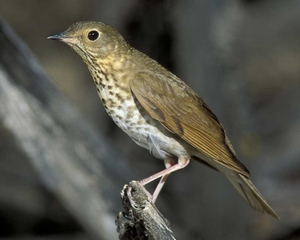
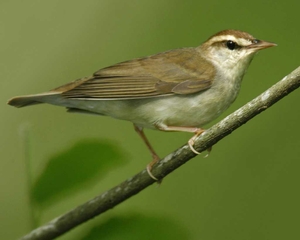
Swainson lent his name to a number of avian species, three of which may be found on Abaco. These are the Swainson’s Hawk, Thrush and Warbler. The hawk is a rare visitor; the thrush is a transient, passing through the Bahamas during migration; and the warbler is a hard-to-find winter resident. Here are the three species, courtesy of AUDUBON.ORG and for each, an illustrative video.
∞  ∞  ∞  ∞  ∞  ∞
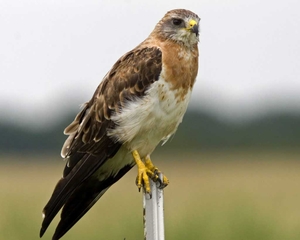
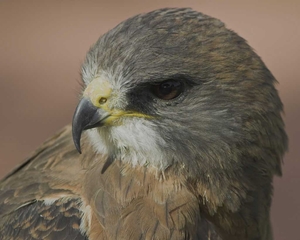
SWAINSON’S HAWK Buteo swainsoni
Swainson's Hawk Swainson's Hawk

Swainson's_Hawk_b57-1-276_l

[youtube http://www.youtube.com/watch?v=gyUf8ls10QY]

SWAINSON’S THRUSH Catharus ustulatus

 Swainson's Thrush Swainson's Thrush

Swainson's Thrush

[youtube http://www.youtube.com/watch?v=lpLnRUnoJNQ]

SWAINSON’S WARBLER Limnothlypis swainsonii

Swainson's Warbler Swainson's Warbler

SwainsonsWarbler_Scott_Somershoe

[youtube http://www.youtube.com/watch?v=cU8-FcUhGVE]
Unknown's avatar

WHITE SOUND, ABACO: MANGROVES, MUD & (REALLY) GREAT EGRETS


Great Egret Abaco 7

WHITE SOUND, ABACO: MANGROVES, MUD & (REALLY) GREAT EGRETS

The piratically named Treasure Cay (aaarrrrrr…) is north of Marsh Harbour, and home to one of the larger communities on Abaco. It has a wonderfully long white sand beach, a golf course, condos and villas, a marina and a cheerful atmosphere. It is also one of the best areas in North Abaco for birding. There are the shorebirds, of course, and all the usual ‘settlement’ species. In addition, the golf course has freshwater ponds where you will find a wide variety of duck and other water species. NB Check in at the Club House and get permission first – amiably given if politely requested (see map below).

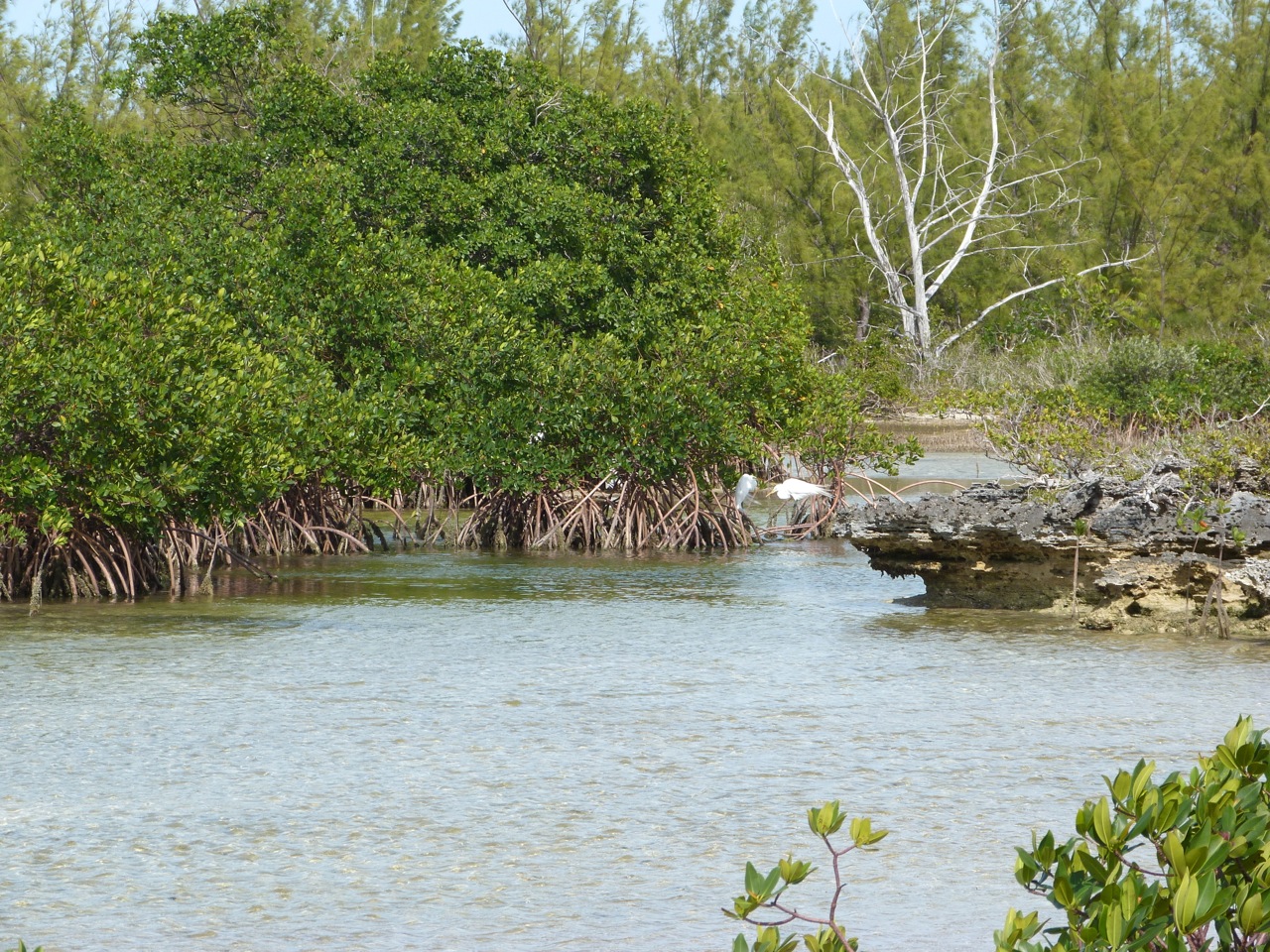
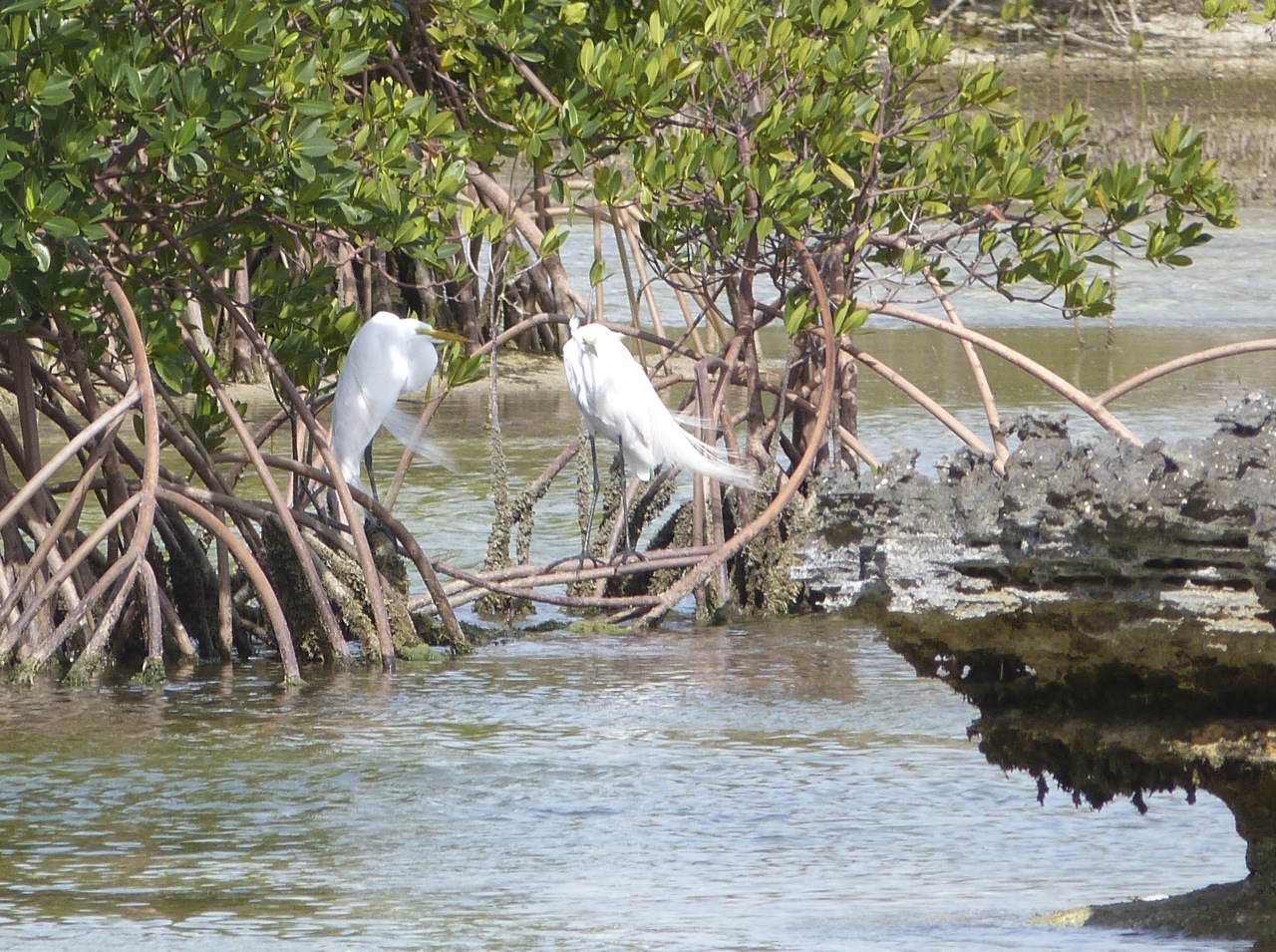
Treasure Cay also has a large area of bays, brackish inlets and lagoons, including – to continue the pirate theme – Galleon Bay, Brigantine Bay, Cannon Bay and Gun Powder Creek. And also White Sound. This can be reached by luck (which may run out) or good management (ask for directions; wait for me to get back the map I have lent to someone and post a grab from it). Drive (with care) along the uneven track beside the lagoon and there is a good chance you will see Great Egrets in the mangrove islands dotted around the middle of the water. This is what to look out for…Great Egret, White Sound, Abaco

Zoom in a bit, and you’ll see two more egrets on the far side of the clump of mangroves. It’s a colony… in the end we were able to count 9 birds on this one mangrove island.Great Egret Abaco 1

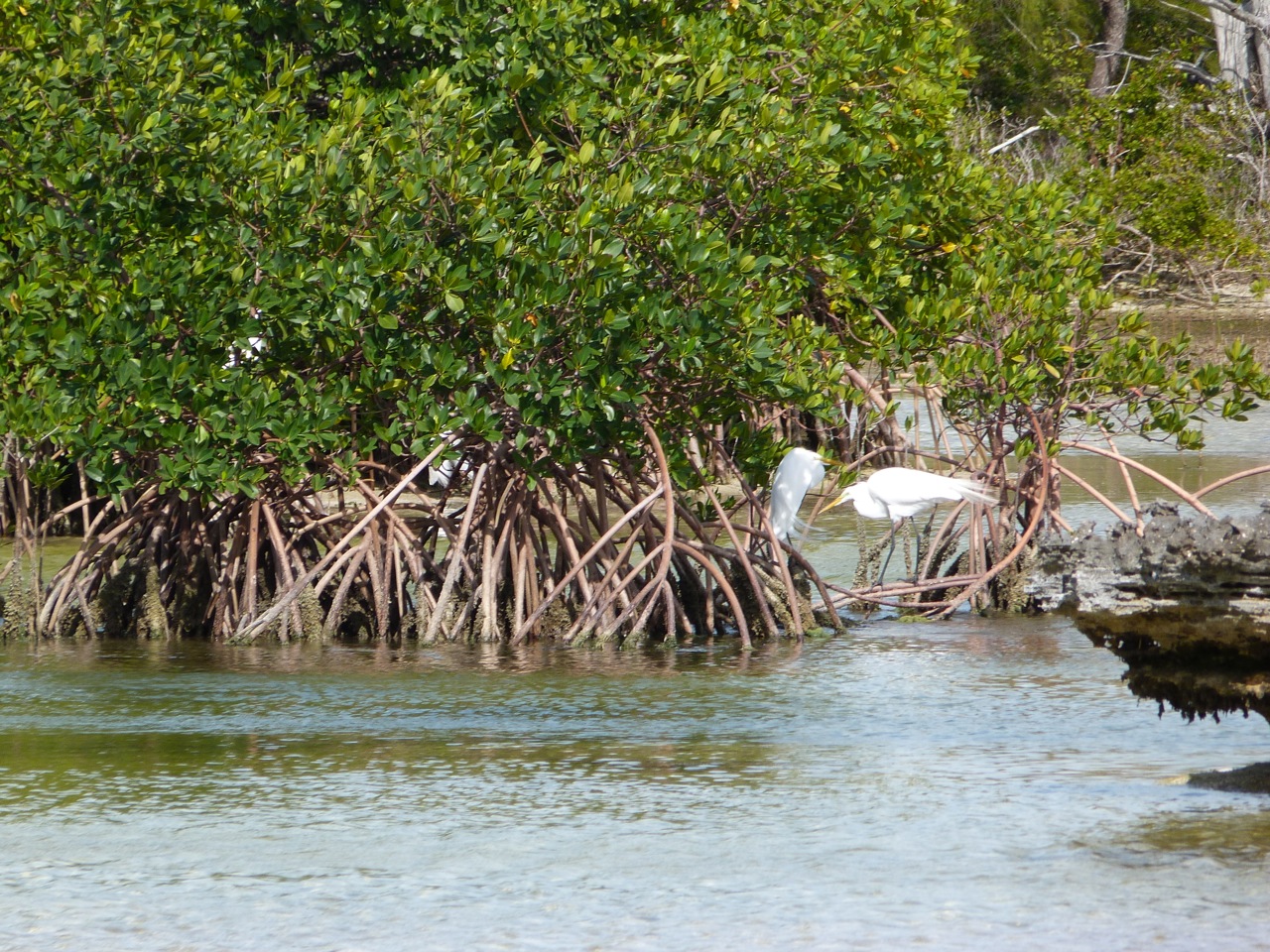
One of the loveliest features of these fine birds in breeding season is the way that even a slight breeze will blow their long plumes away from their bodies like streamersGreat Egret Abaco 2Great Egret Abaco 3

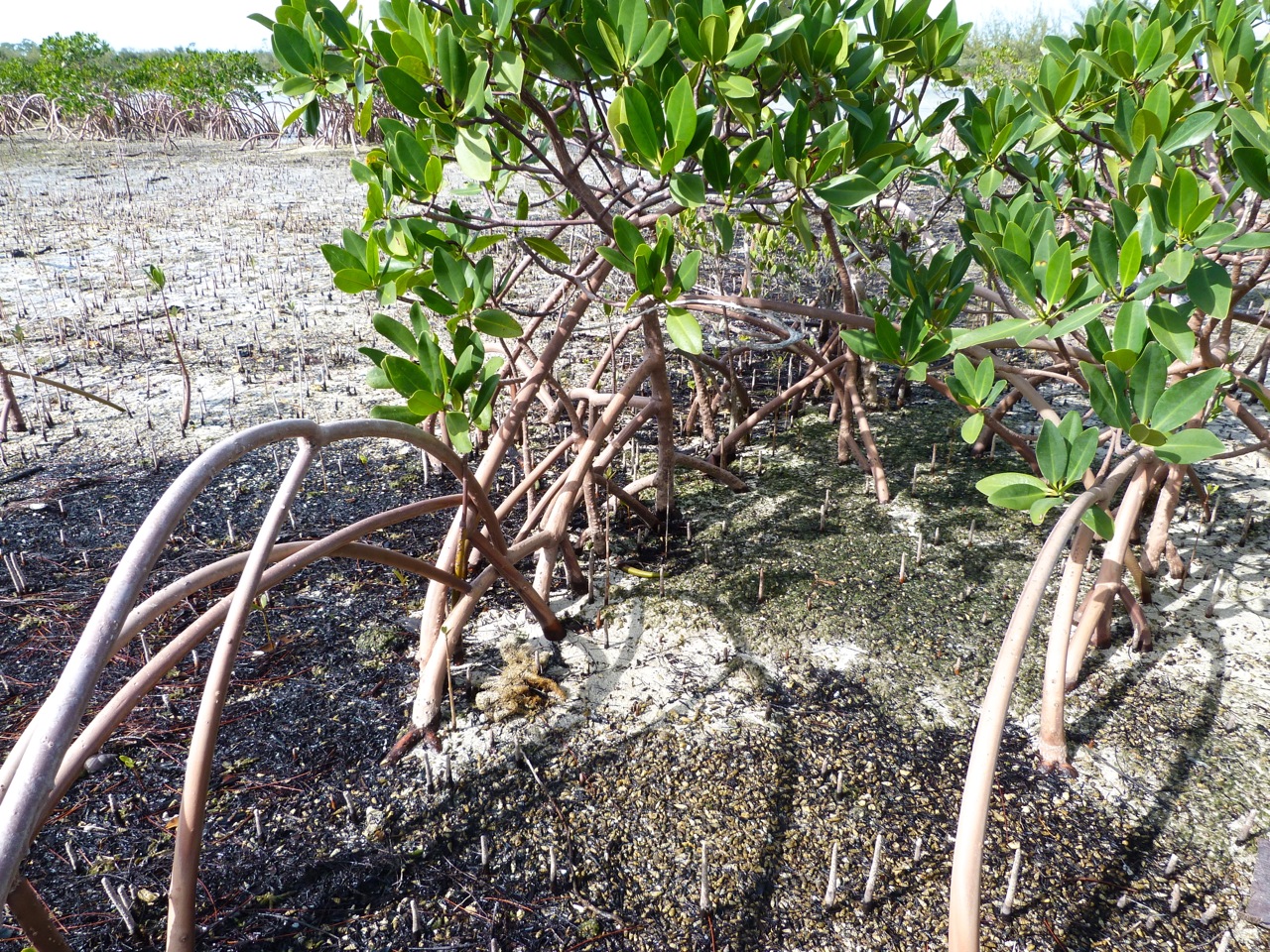
We were some way from the birds, as these rather indifferent photos suggest, so we decided to try and get closer. The water was fairly low, leaving expanses of firm-looking marly mud around the edge. There was an apparent causeway to an overgrown rocky outcrop that would enable us to get closer to a vantage point without being spotted. As it turned out, the mud was only… ankle deep. It could have been messier. And we had a chance to see at close quarters the remarkable way in which mangrove entanglements develop.

Great Egret Abaco 4 Great Egret Abaco 5

We reached the outcrop muddier and slightly wiser, and clambered up through the scrubby and scratchy bushes to the top, nothing if not intrepid. My wading stick came in handy for beating a rough path. And by adopting strange stances in the manner of someone trying to pick up a faint cellphone signal, we could peer through the foliage to establish whether we were indeed a bit closer to the egrets.Great Egret Abaco 6

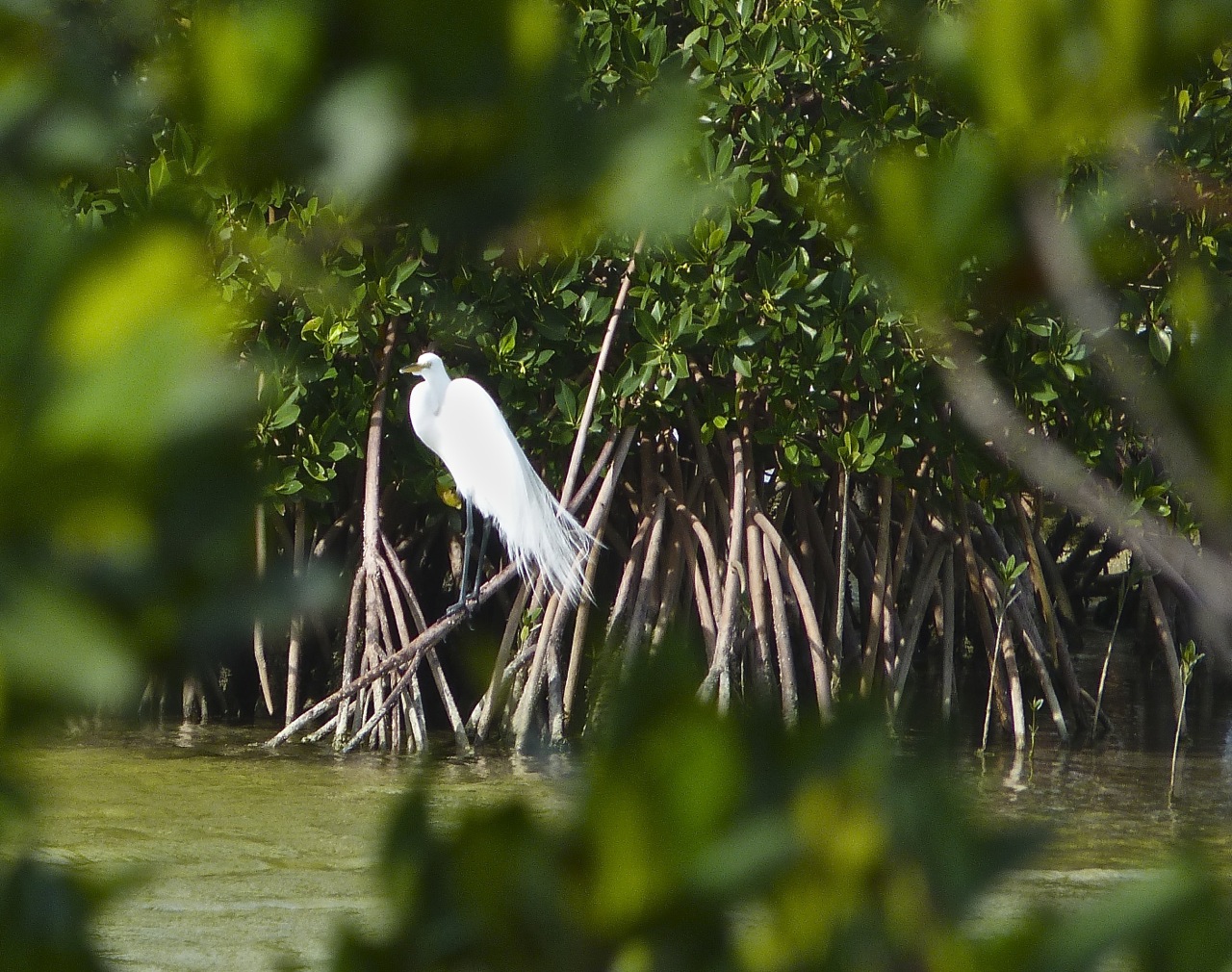
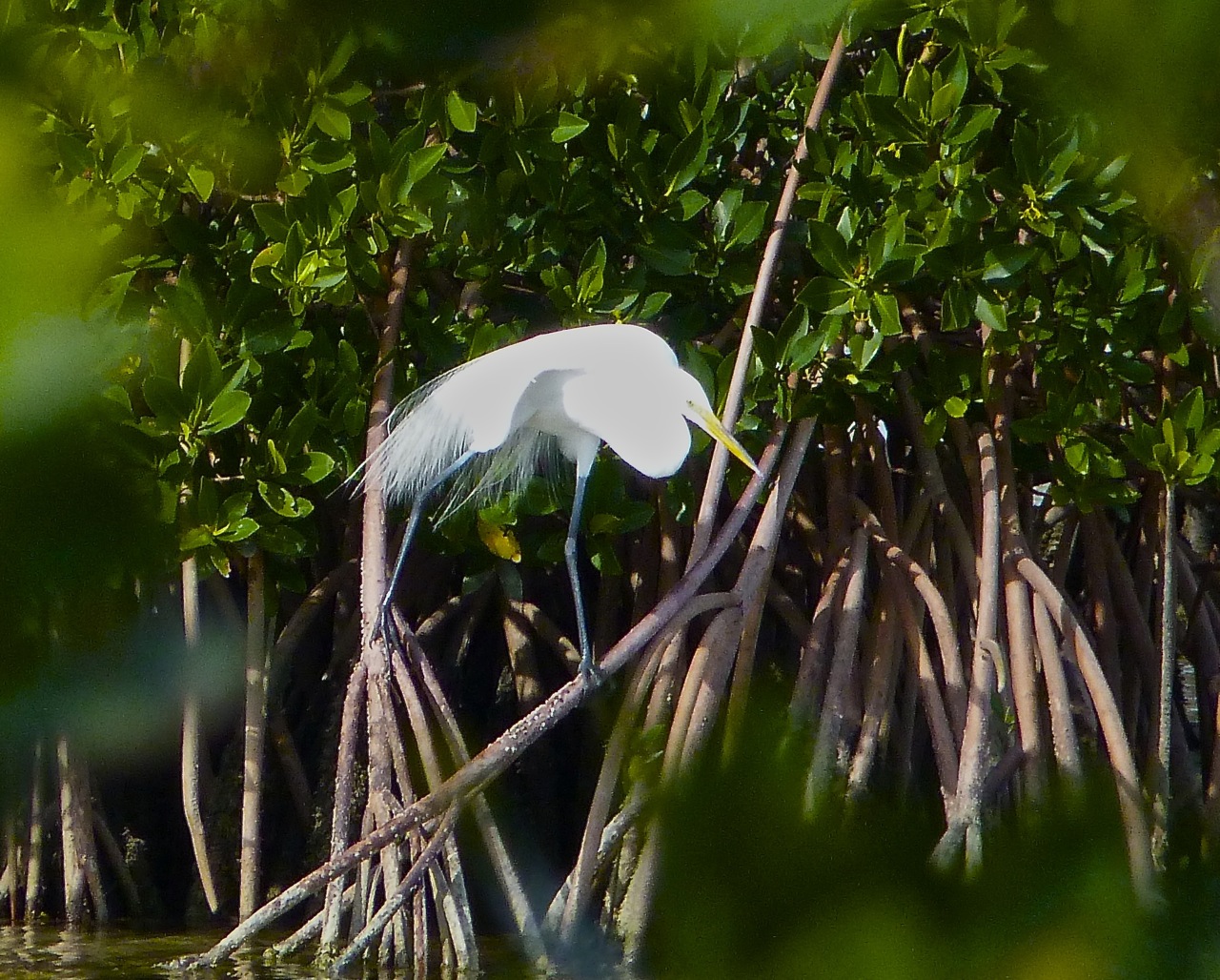
The answer was yes. But there was another obstacle, familiar to all fellow ‘focus fail’ offenders. Shooting a bird through a hole in a bush straight in front of you is complicated. You get a vivid detailed  frame of greenery, with a blurry centre of unintentional and unwanted BOKEH instead of the intended subject. A lens entension (the poor man’s zoom that I use) tends to make it worse. So you’ll have to make do with these pictures for now, until you can visit White Sound and get your own with your natty Nikon. Great Egret Abaco 11Great Egret Abaco 9Great Egret Abaco 8

My favourite ‘stance’ shotGreat Egret Abaco 10

That wasn’t the end of the adventure. After we had squidged our way back through the slightly smelly mud, we moved further along the sound, to find a further egret colony on the far shore just in time to watch them from afar as they took flight.Great Egret Abaco 12 Great Egret Abaco 13 Great Egret Abaco 14

TREASURE CAY, LOCATIONS OF WHITE SOUND & THE GOLF CLUB, &  SOME PIRATICAL NAMESTreasure Cay Map

TREASURE CAY IN RELATION TO OTHER ABACO PLACESAbaco Egret Map 1 jpg

When leaving Treasure Cay, visitors receive a friendly reminder to return, in terms reminiscent of, yet far nicer than, a Scottish Tourist Board brochure. Maybe this reflects the historic significance of the Scots in the history of the Bahamas, to the extent that there is even a Bahamas tartan. 

Bahamas TartanHaste Ye Back...

TC Map credit: Abaco Estate Services. They send me emails, so I guess they won’t mind publicity here

Unknown's avatar

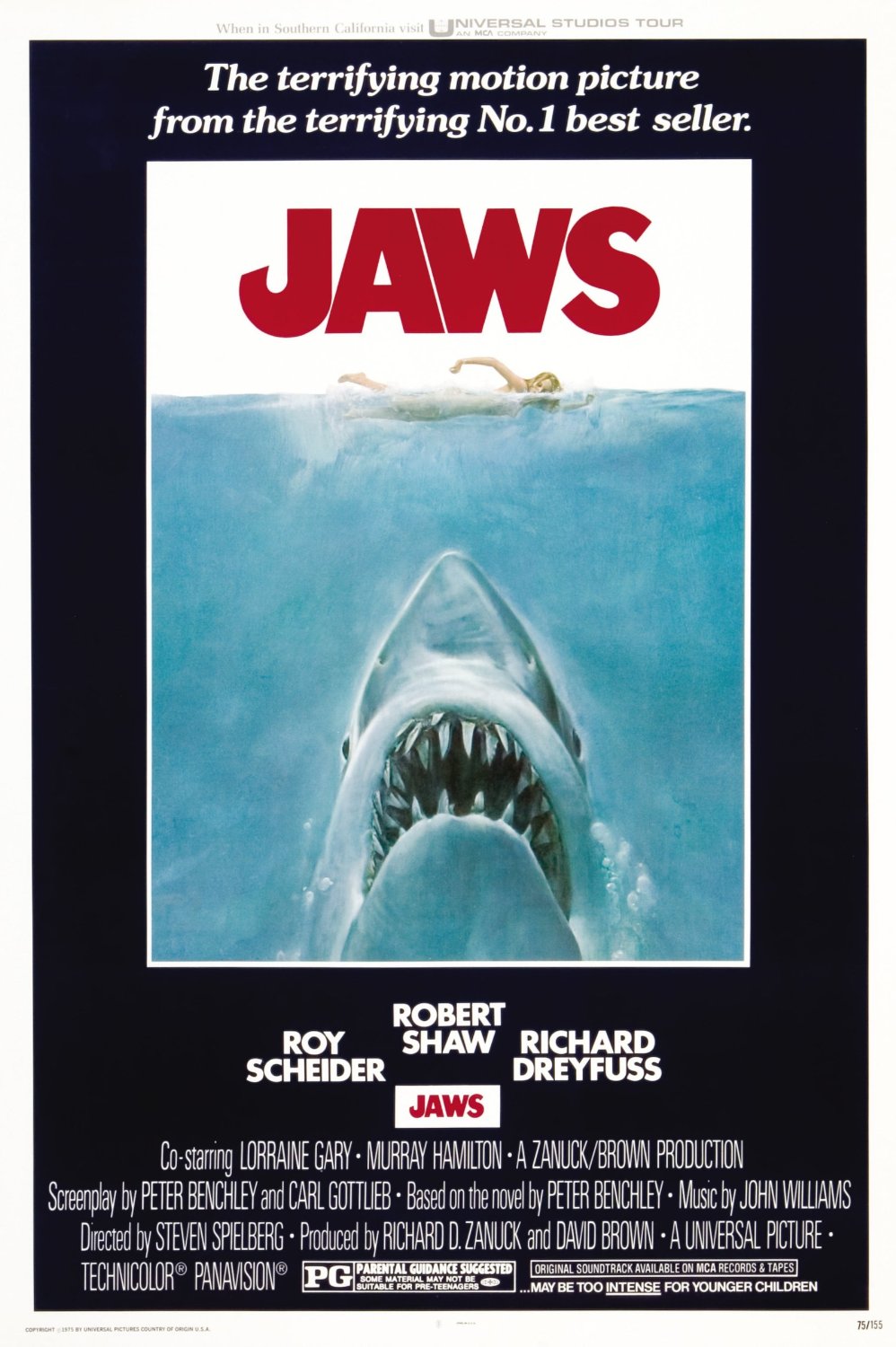
JUST WHEN YOU THOUGHT IT WAS SAFE… DER DE DER DE…


81aD9363voL._SL1500_

…TO GO BACK IN THE WATER… DER DE DER DE…

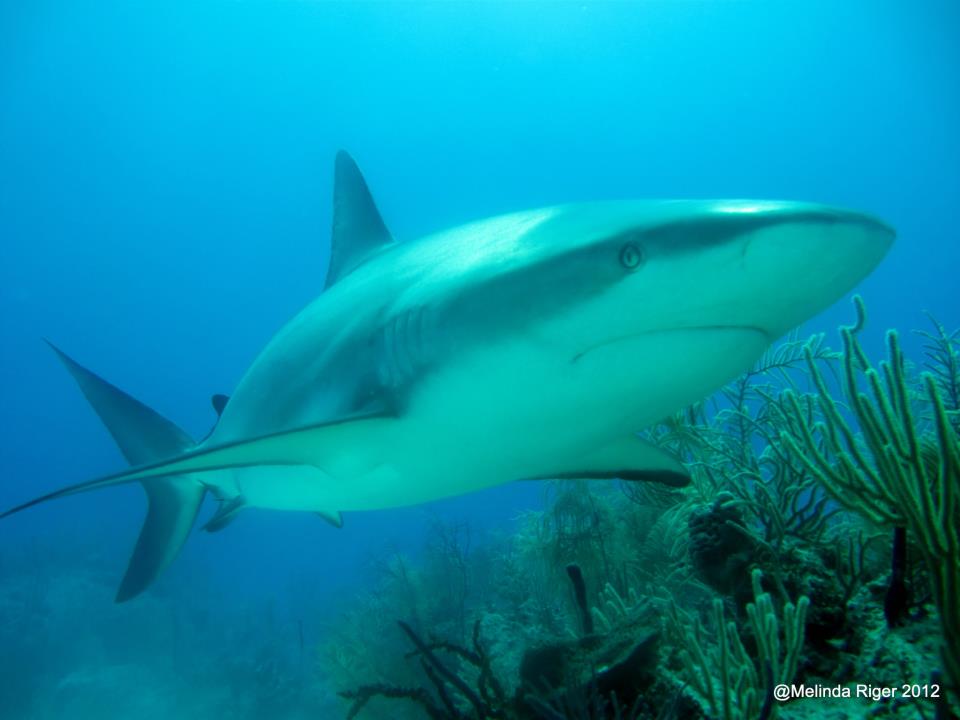
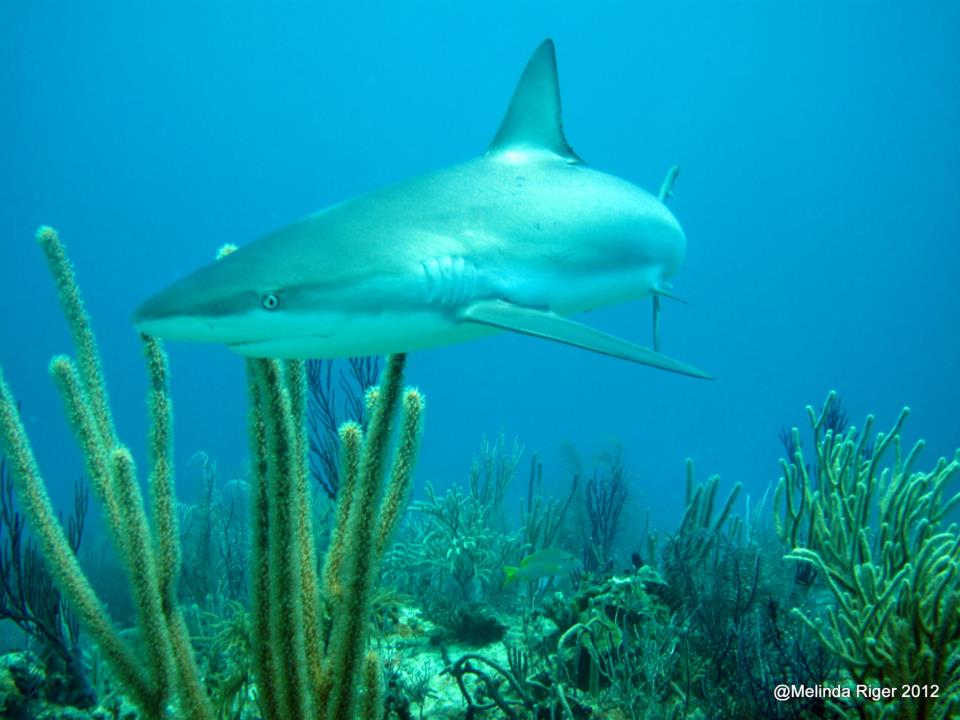
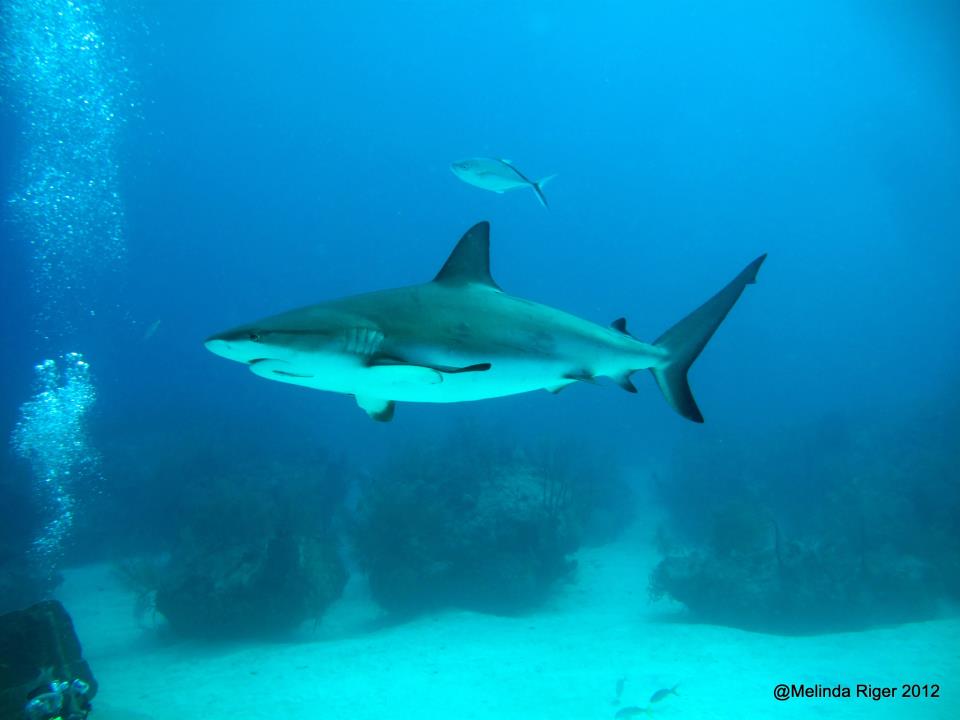
Shark! ©Melinda Riger @ GB Scuba

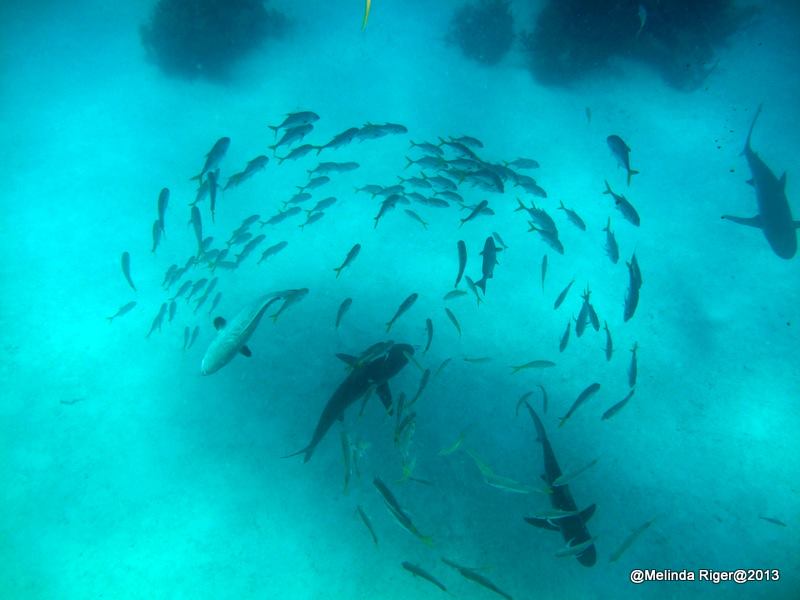
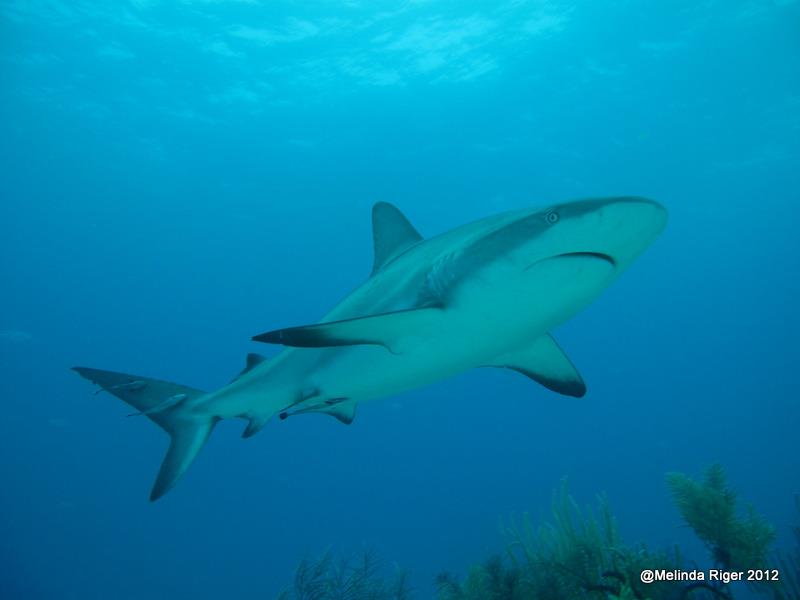
…along came some friendly sharks to swim with… and to photographShark May 2 ©Melinda Riger @ G B Scuba538989_462771037077624_1266061052_n

There’s no escaping… the fact that there are sharks in the BahamasShark Swirl ©Melinda Riger @ GB ScubaShark ©Melinda Riger @ GB Scuba

Take comfort from the fact that no fatalities and only half a dozen injuries from shark attacks have been recorded in Abaco waters for over 250 years (since 1749). Risk assessors and the nervous, take note.562948_451267911561270_623113740_n555792_536784029676324_391849202_n

By way of comparison, in the last 150 years there have been 36 recorded shark attacks in the Mediterranean, of which 18 have been fatal…427529_456773757677352_433374920_n

Since 1845 there have been a number of shark attacks in British waters, with one fatality.  There were two more fatalities in an incident in 1956 , but this was an ‘own-goal’ arising from an attempt to blow up a shark with dynamite. It can hardly be blamed on the shark.392552_465306553490739_673110738_n

WEIRD NON-SHARK RELATED STATISTIC: Amazingly, in the 3 years 2007 – 09 in England and Wales, 42 people died from being bitten by animals, only a few of which were dogs.

CONCLUSION You are statistically far safer to spend 250 years swimming off Abaco than spending 3 years stroking a cat in Manchester. Or Swansea.

383586_510314062323321_1002533913_n

LEAVE SHARKS ALONE AND THEY’LL LEAVE YOU ALONE306092_500604003294327_1470960886_n

All fantastic images by Melinda Riger of Grand Bahama Scuba who swims with sharks all the time!

Unknown's avatar

TAKING A CLOSER LOOK: ROCK POOLS ON ABACO


Rock Pool, Abaco 2

TAKING A CLOSER LOOK: ROCK POOLS ON ABACO

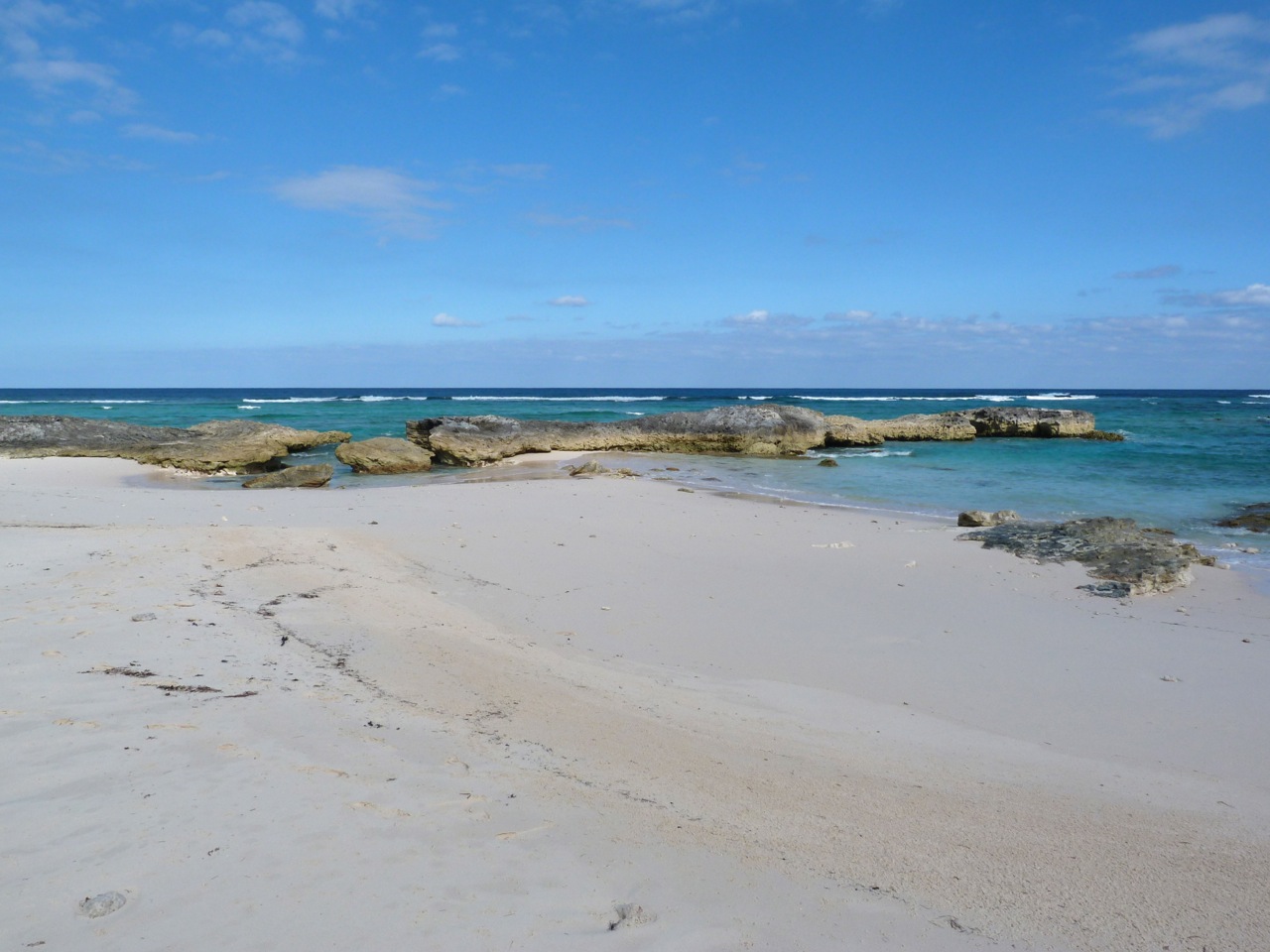
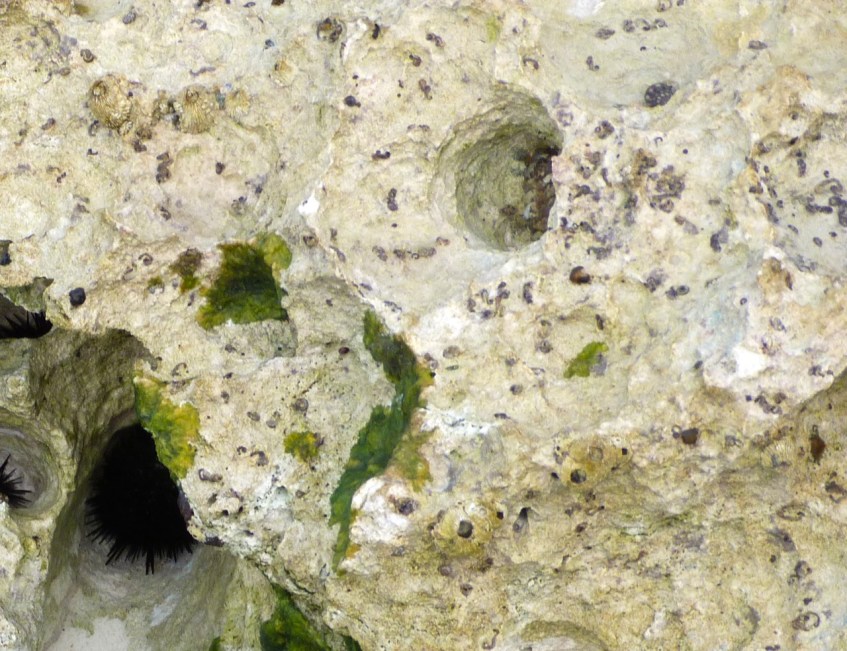
Here’s a promising-looking rocky outcrop a short distance south of Crossing Rocks. The action of the sea over centuries has eroded and pitted it – ideal for the formation of pools in which marine life can thrive.Rock Pool, Abaco 1

Time to clamber up to see if the theory holds good… the prospects are encouraging. There are certainly plenty of sea urchins here.Rock Pool, Abaco 4

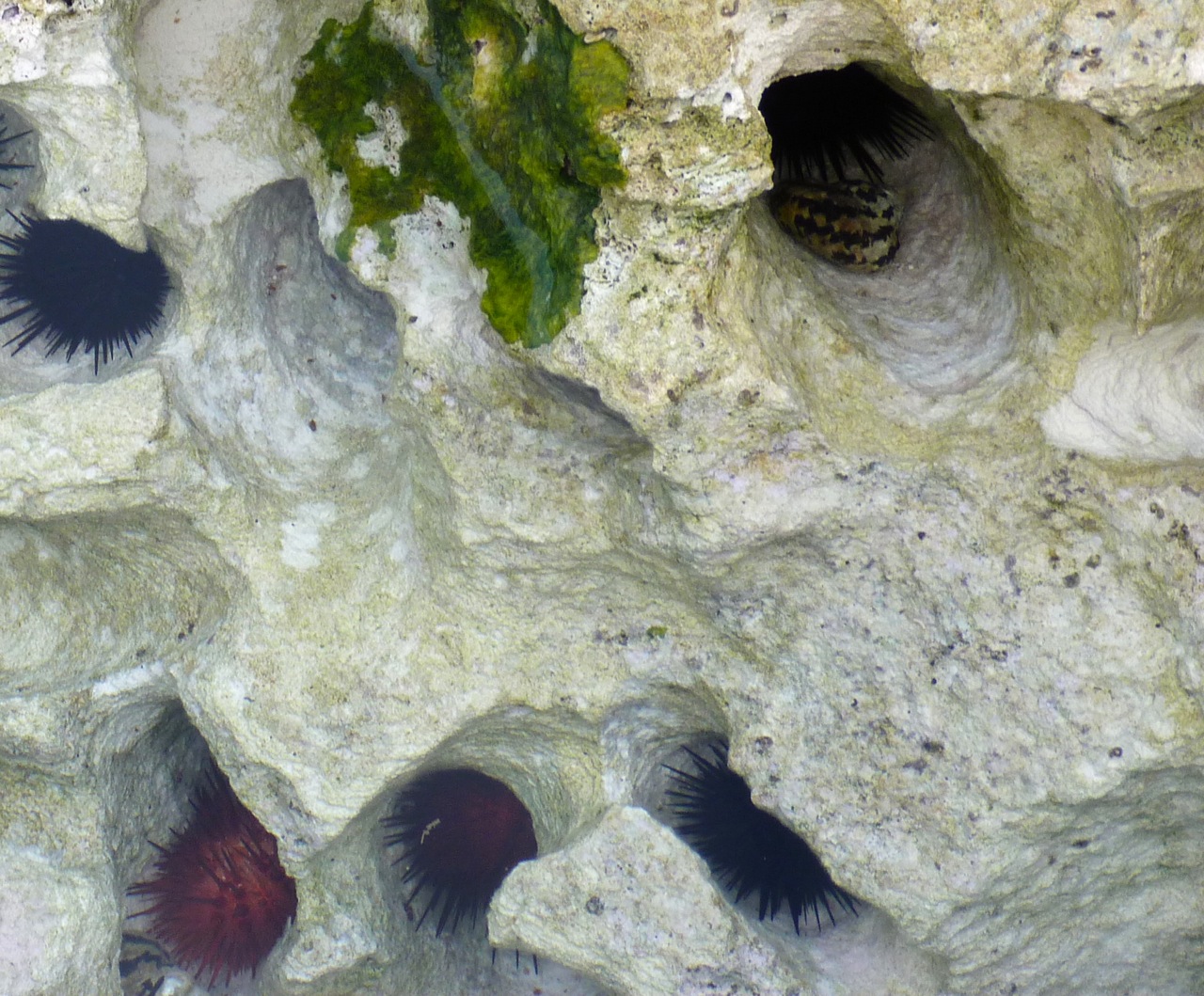
Let’s zoom in on the nearest pool. There are clearly 2 different-coloured sea urchins here, but I’m not sure if that’s an age thing or a species thing. Rock Pool, Abaco 6

Apart from the sea urchins, there are some shells and other things that need a closer look…Rock Pool, Abaco 5

At the bottom of these photos, you can see that a zebra-marked nerite is quite happy to share a hole with an urchin. There are two brownish accretions on or in the rock. My tentative suggestion is that these are the shells of some sort of worm, perhaps petaloconchus.

UPDATE Rick Guest helpfully comments “Yes, it’s quite the invertebrate hotel mostly due to the urchin’s talent for scouring out protective “rooms”. Of interest is the Magpie shell (Livona pica) in frames 4 and 5. The rather ubiquitous Livona’s very thick shell, (Up to 5″ diameter) and ability to withstand most attempts at removal by predators, including Homo sapiens, assures their continued presence on littoral shore lines. They are edible, but not particular tasty to my palet. All these “Condo” residents “party” at night and will even leave the rock in search of food and perhaps romance, so a flash pic of the condo at night would be an interesting contrast to a daylight shot”.ROCK POOLS, ABACO 11

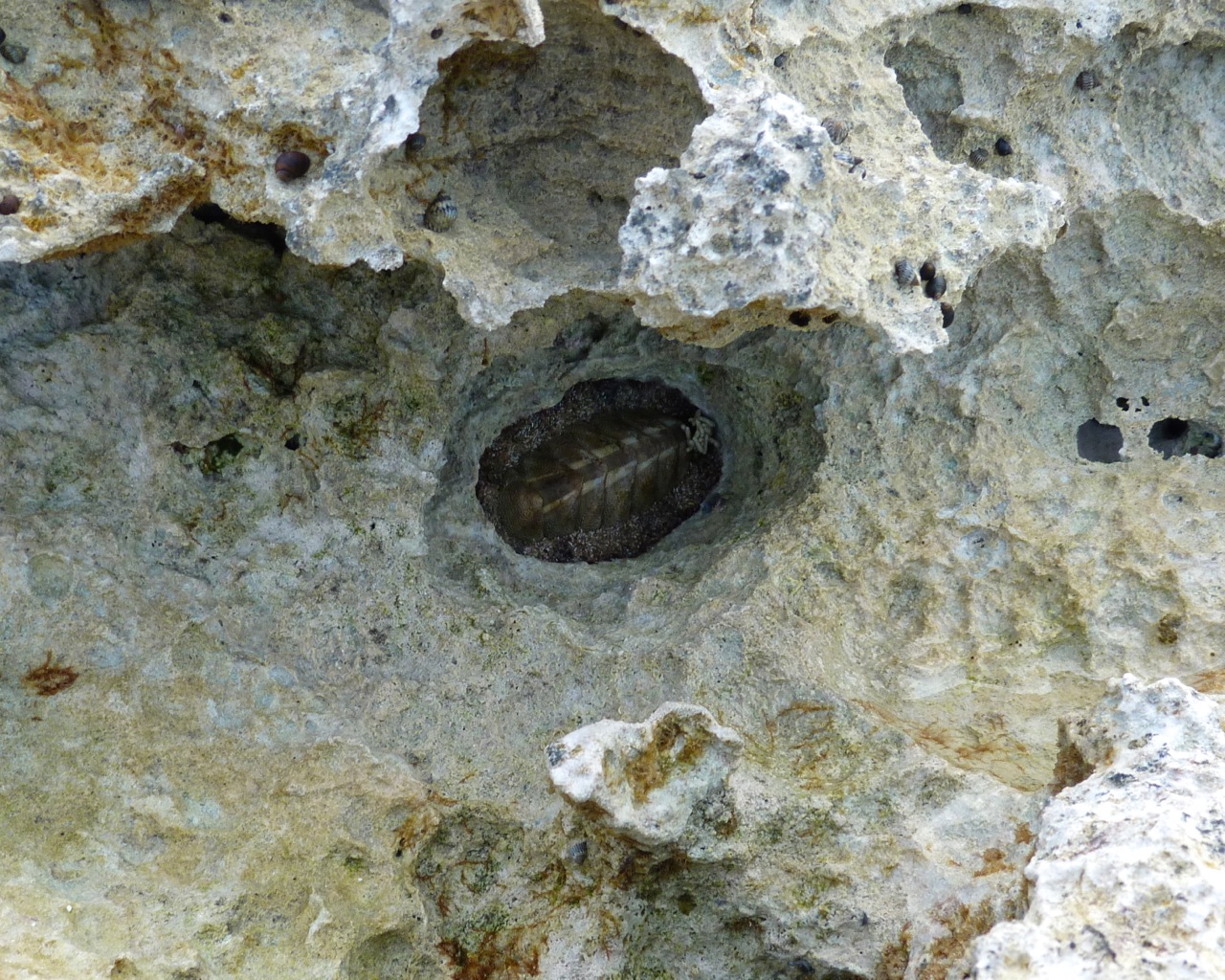
In a snug little cave (top right) just above the water-level of the pool is a primitive-looking chiton, a species that has been around for millions of years. Below, there’s a clearer image of one from a different pool. These creatures always remind me of school projects on prehistoric trilobites.Rock Pool, Abaco 7Rock Pool, Abaco 10

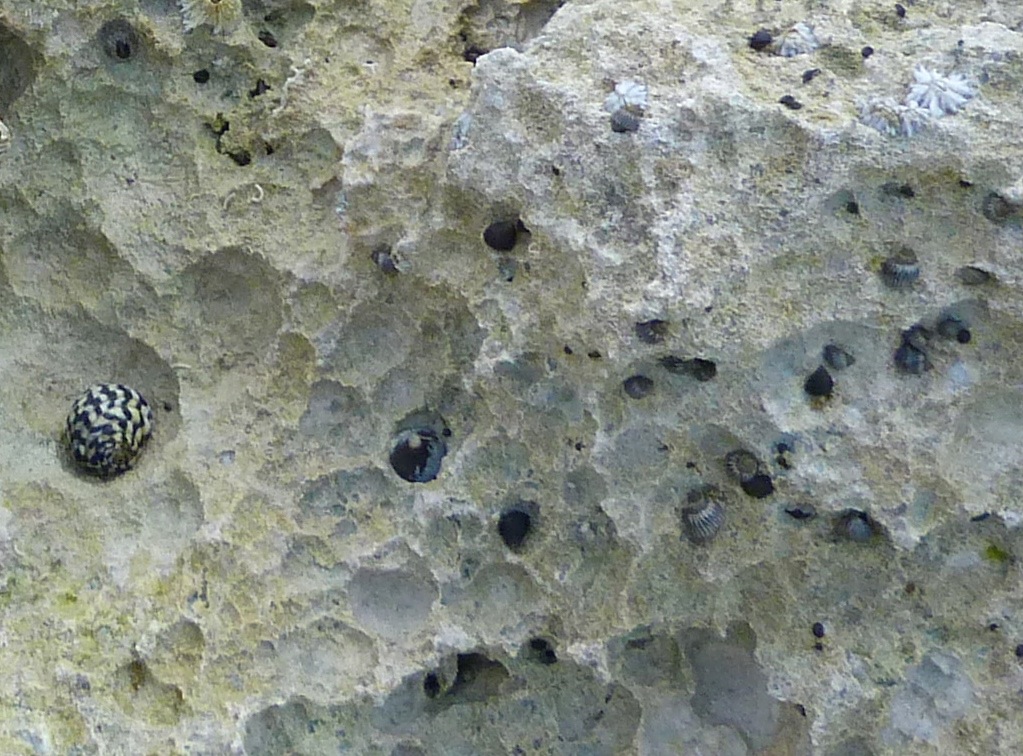
The rough rocky surfaces close to the pool are covered in shells. The stripey nerites are small, the grey shells really are miniature.  They are mostly littorines/ periwinkles and perhaps ceriths, I think.Rock Pool, Abaco 9Rock Pool, Abaco 12

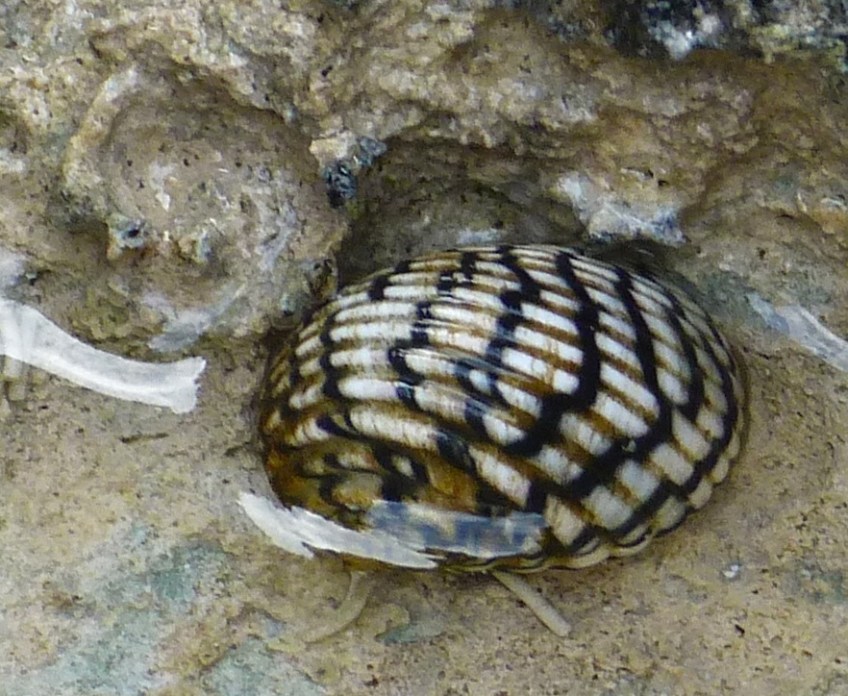
Close-up views of nerites showing their distinctive markings and spiralsRock Pool, Abaco 13Rock Pool, Abaco 14

Unknown's avatar

ABACO PARROTS TO CELEBRATE A MODEST LANDMARK


Abaco Parrot

Abaco Parrot

ABACO PARROTS TO CELEBRATE A MODEST LANDMARK

‘Rolling Harbour: The Blog’ had humble beginnings – a dodgy structure built on foundations formed of an unpromising mix of ignorance and incompetence. Gradually it has come together, to the extent that it has just passed the 125,000 visits mark. Abaco is a small and uncrowded island, so the audience demographic [to use biz-speak] isn’t large. However the wildlife, scenery and lifestyle have turned out to have a wider appeal. 1/8 of a million people (or perhaps 1 crazy punter with repetitive strain injury from checking in unhealthily often) deserve a few of Abaco’s unique parrots in return.

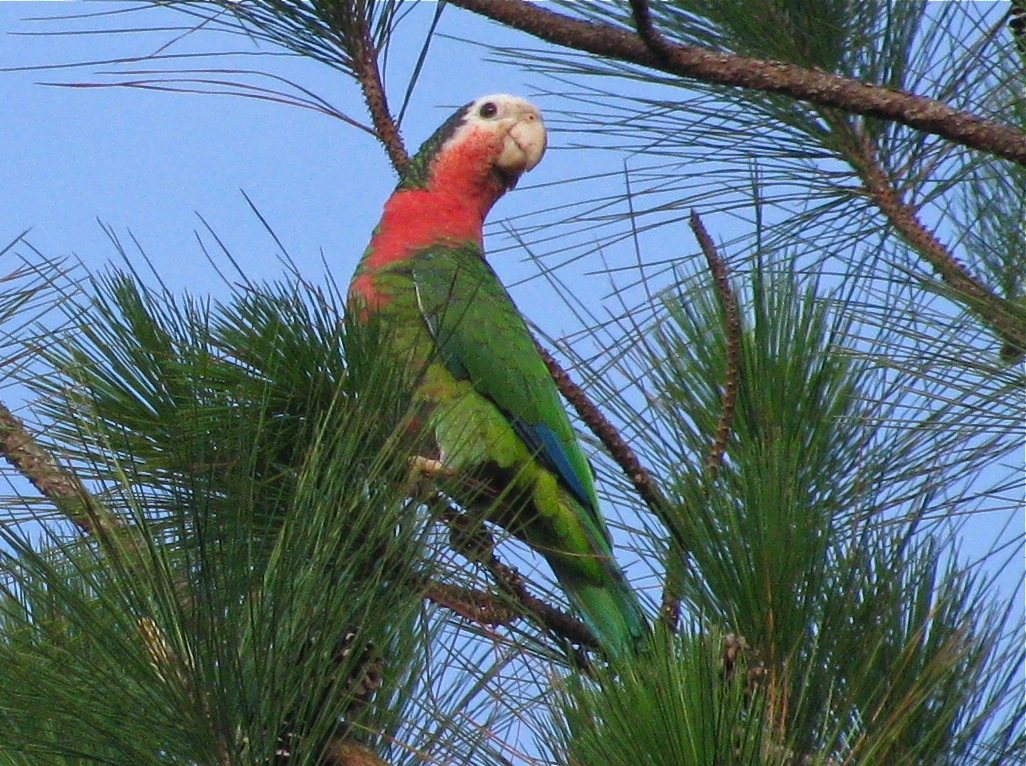
I THANK YOU ALLAbaco (Cuban) Parrot 2013 4a

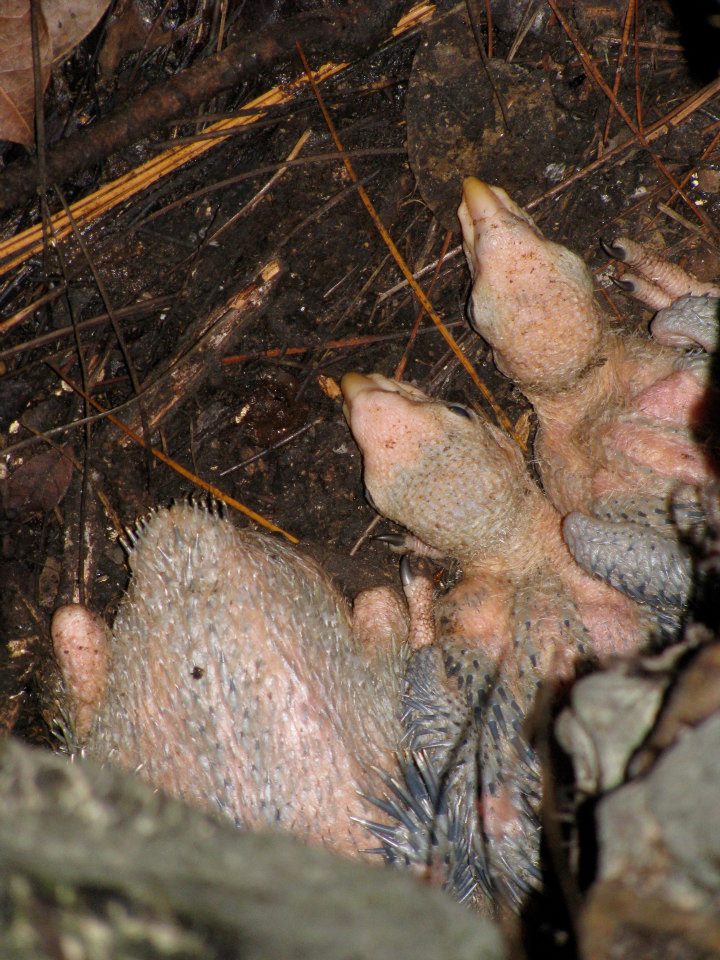
WHERE IT ALL BEGINS – AN UNDERGROUND NEST DEEP IN THE NATIONAL FORESTAbaco Parrot Nest 2

EVENTUALLY THE CHICKS HATCH…Abaco Parrot Nest 4

…AND GROWAbaco Parrot Nest 5

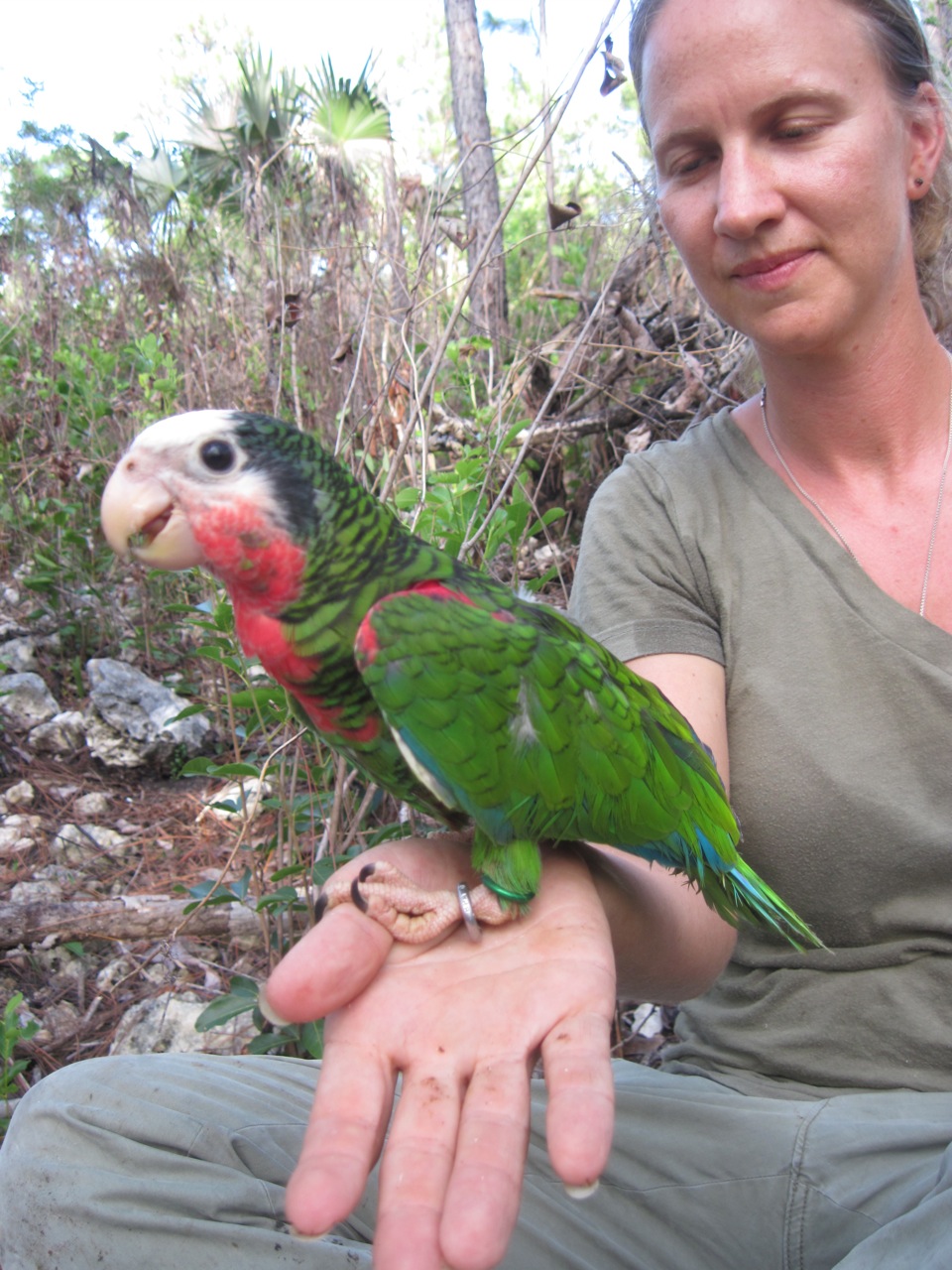
IN DUE COURSE THEY ARE READY TO BE CHECKED OVER AND RINGEDAbaco Parrot Chick Ringing 1

THEY HAVE NO FEAR OF THE ‘PARROT LADY’, SCIENTIST CAROLINECS with Abaco parrot chick

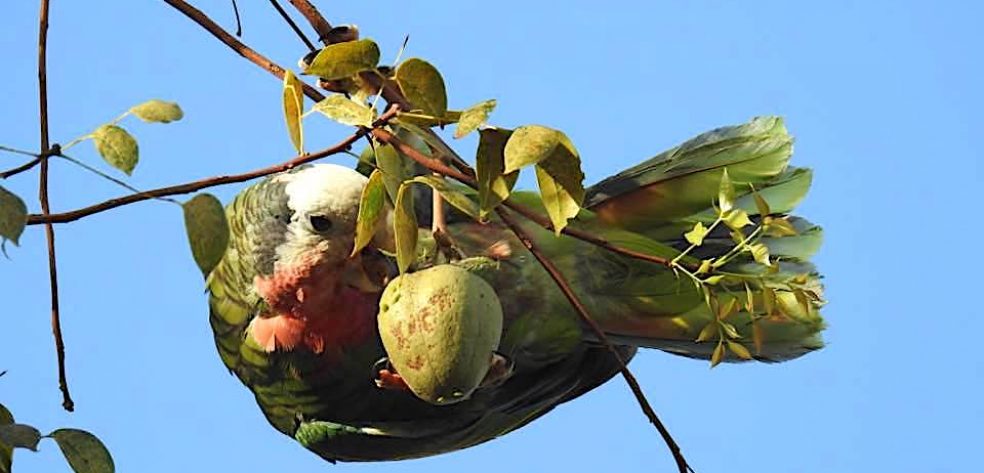
SOON THEY ARE INDEPENDENT AND DISCOVERING THE JOYS OF GUMBO LIMBO BERRIESABACO PARROT ©CS 2012 3

KEEPING A BEADY EYE OUT…ABACO PARROT ©CS 2012 7

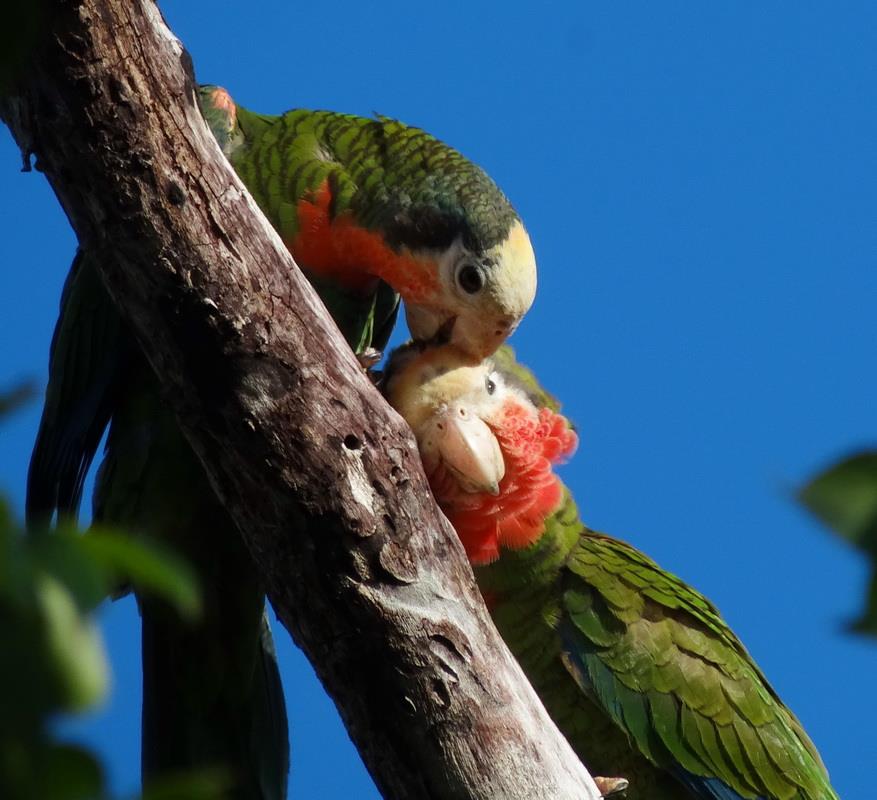
DOMESTIC HARMONY…ABACO PARROTS MM 3ABACO PARROTS MM 8

…BUT NOT ALL THE TIMEAbaco Parrots MM 10

‘HOW DO I LOOK AGAINST A BRIGHT BLUE SKY?’Abaco (Cuban) Parrot 2013 13

PARROTS HAVING AN EARLY EVENING GET-TOGETHER AT BAHAMA PALM SHORES

‘GOODNESS ME, IS THAT THE TIME? I MUST FLY…’

parrot crossingCredits: Caroline Stahala, Melissa Maura, RH; recording and video RH

Unknown's avatar

IT’S ALL WHITE – IT’S A REDDISH EGRET ON ABACO


Reddish Egret (White Morph) Abaco 5

IT’S ALL WHITE – IT’S A REDDISH EGRET ON ABACO

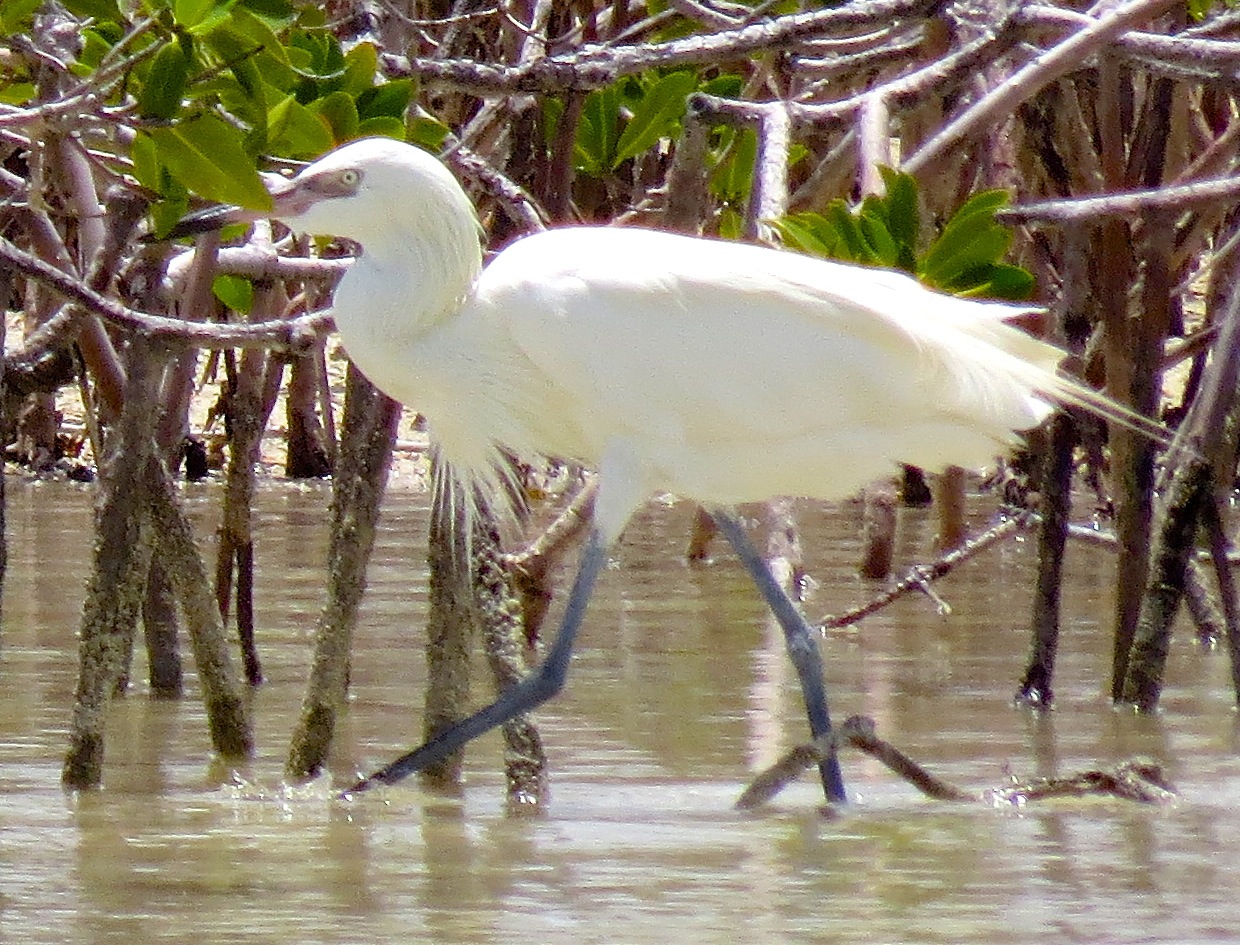
Contrary to appearances from the header image and the one below, Reddish Egrets (Egretta rufescens) do not yet use cellphones to communicate. Nevertheless, the trick of having a good ear-scratch while standing in water on one leg is a good posey accomplishment.Reddish Egret (White Morph) Abaco 4

All these photos were taken while we were bonefishing from a skiff far out on the Marls in the mangroves. Ishi poled us closer so that boat-partner Tom – a real photographer – could get some shots. Meanwhile, I did my best with my little camera that I take out on the boat – the one that won’t matter too much when it slips from my hand or pocket into the drink. These things happen: I lost a good pair of Costas that a gust of wind unkindly whisked away when I took them off to change a fly.Reddish Egret (White Morph) Abaco 3Reddish Egret (White Morph) Abaco 2

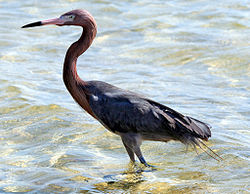
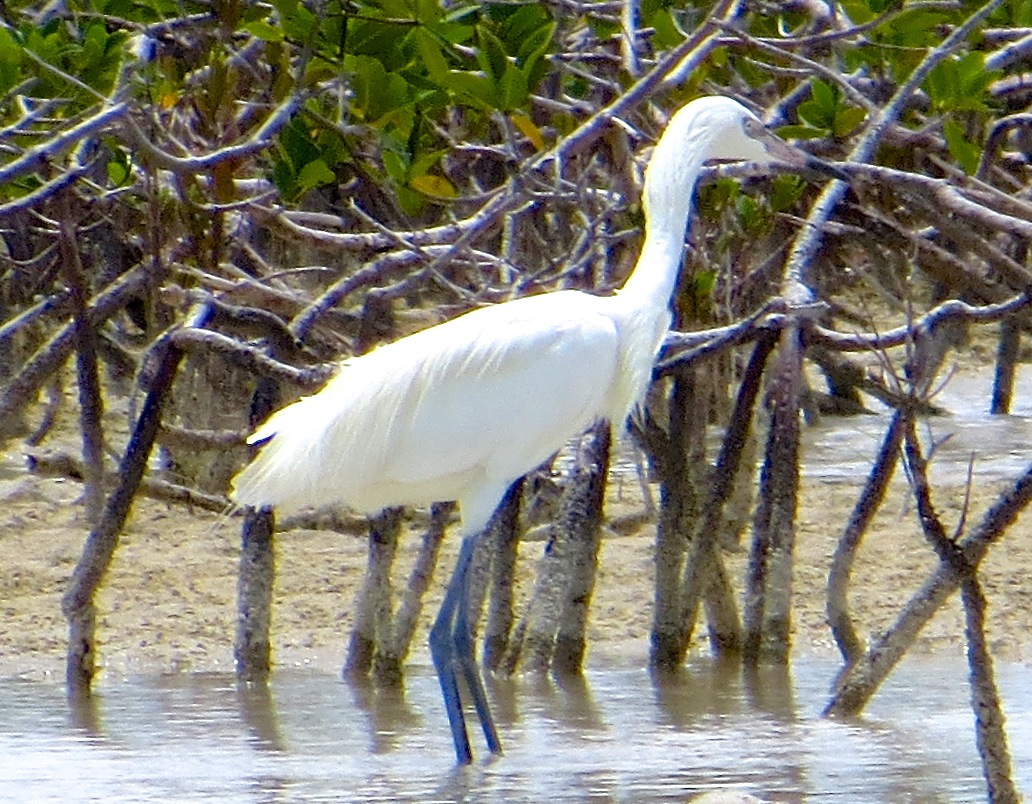
This egret comes in two very different ‘colourways’. The classic version has a slatey-blue body and a reddish head and plumes. The white morph is pure white. The only similarities between the two are the two-tone bills with the black tip; and the blue-grey legs and feet.

True Reddish Egret, as you might expect it to lookReddish_Egret Wiki

The white morphReddish Egret (White Morph) Abaco 9

I’m not certain of the proportions of each type on Abaco, but I have certainly seen twice as many white ones as true reddish ones. There seem to be quite a few around – there are plenty of fish for them and dozens of square miles of human-free space in which to stalk them. However as with many (most?) of the bird species, there is a declining population for all the usual man-related reasons, and these fine birds have now had to be put on the IUCN ‘near-threatened’ list.220px-Status_iucn3.1_NT.svg

The bird kept an eye on us as we drifted closer, but was unperturbed. It continued to poke around in the mud, and occasionally it moved delicately but quite quickly to a different patch.Reddish Egret (White Morph) Abaco 8 Reddish Egret (White Morph) Abaco 7 Reddish Egret (White Morph) Abaco 6

We watched the bird for about 10 minutes. Then we returned to what we were really there for – Tom to catch bones with practised skill, and me to wave the rod incompetently around until some passing fish took pity on me and grabbed my fly, knowing it would soon be released once all the fuss was over…Reddish Egret (White Morph) Abaco 1

Unknown's avatar

STICKING THEIR NECKS OUT: BAHAMAS REEF FISH (11)


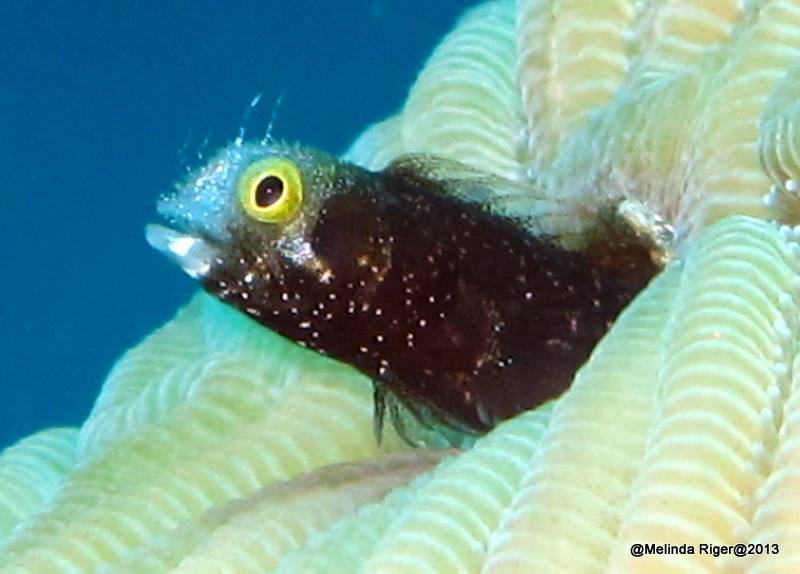
Spinyhead Blenny

STICKING THEIR NECKS OUT: BAHAMAS REEF FISH (11)

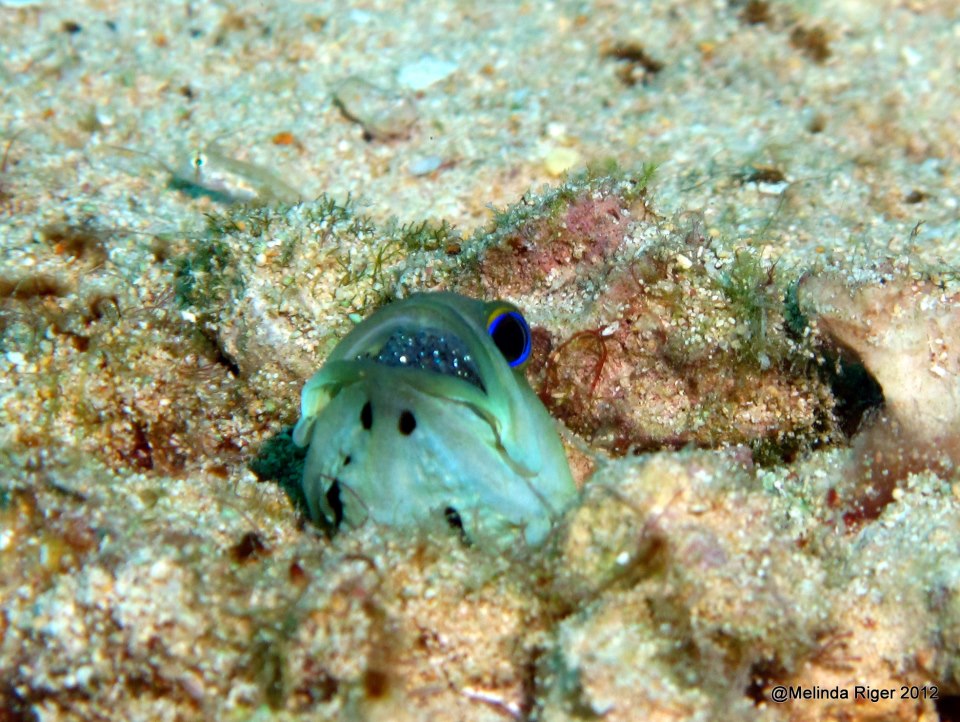
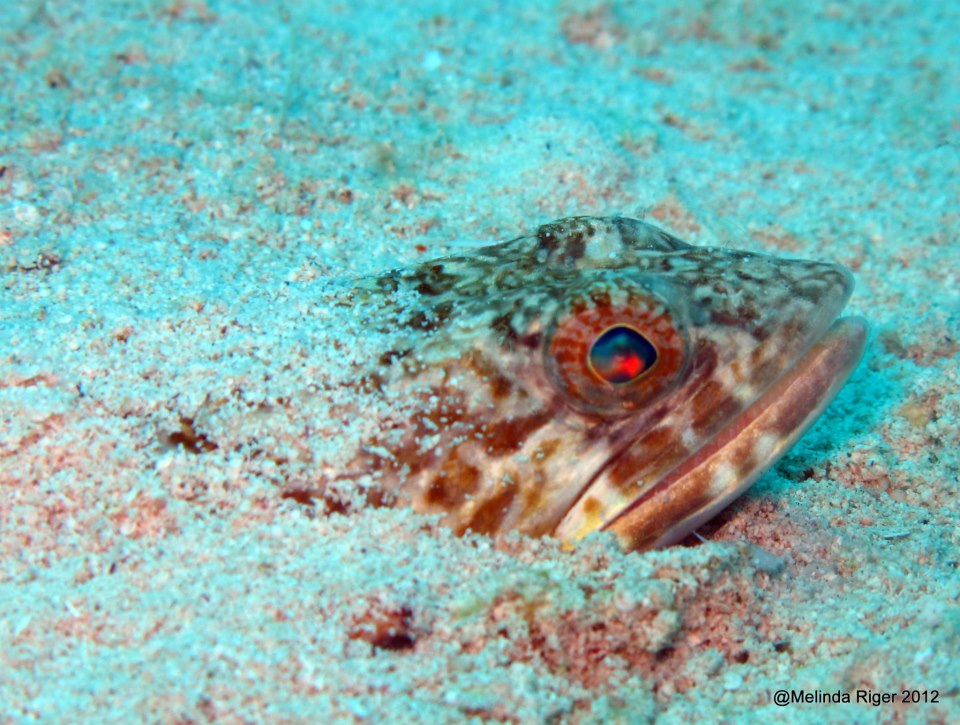
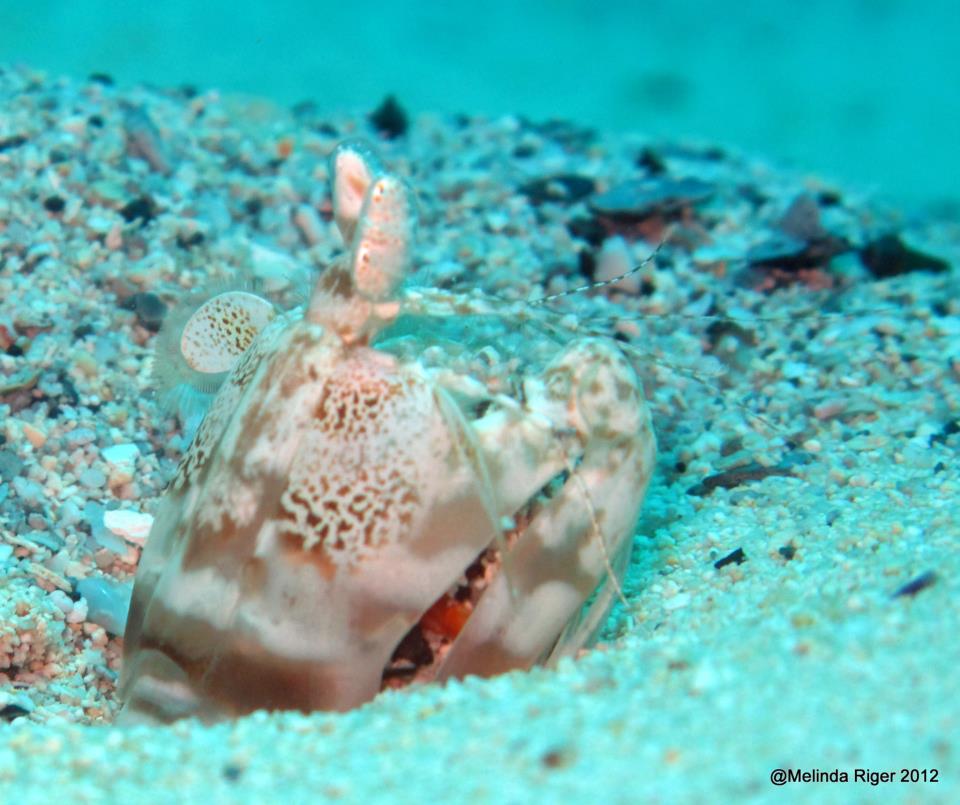
The coral reefs of the Bahamas provide a home for a myriad of subaquatic creatures and plants. Not necessarily a safe one, though. Some species prefer to remain largely hidden to reduce the chances of becoming part of the lengthy reef food chain. Rocks, of course, can offer some security, but also the sandy bottom. Even brain coral can provide some protection…

JAWFISHJawfish ©Melinda Riger @GBS

This Yellowhead Jawfish has its eggs safely stored in its mouthYellowhead Jawfish with eggs in mouth ©Melinda Riger GB Scuba

SAND DIVER FISHSand Diver Fish Sand Diver ©Melinda Riger @ G B Scuba

ROUGHHEAD BLENNY IN BRAIN CORAL (and header)Roughhead Blenny ©Melinda Riger @ G B Scuba Blenny ©Melinda Riger @GBS

…and in a different homeRoughhead Blenny © Melinda Riger @ G B Scuba

MANTIS SHRIMPMantis Shrimp ©Melinda Riger @GBSMantis Shrimp 2 ©Melinda Riger @GBS

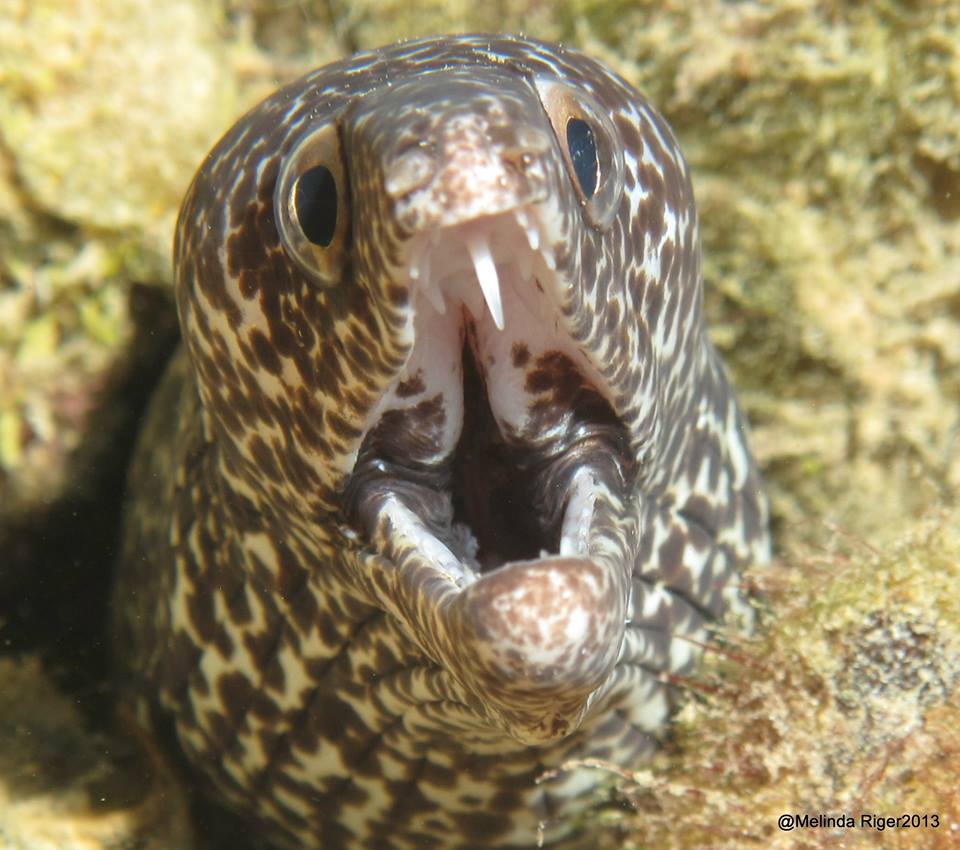
…AND A VERY GOOD AFTERNOON TO YOU TOO, MR SPOTTED MORAY EELSpotted Moray Eel ©Melinda Riger @ G B ScubaAll Images: thanks to Melinda Riger of Grand Bahama Scuba

Unknown's avatar

PINEAPPLES: SYMBOLS OF WELCOME & WEALTH (ALSO, DELICIOUS)


PINEAPPLES – A SHORT BUT FRUITY HISTORY (Mk 2)

NOTE The original post more than a year ago was intended in part as a celebration of passing the 50,000 hits mark. As I said then, “…so much interest in the wildlife of one small island? Thanks to all those who have visited during the last year or so”. Now we are speeding towards 125,000. In that time, the readership has increased somewhat (I thank you both…). So I am rolling this one out again with a few revisions, because it went down quite well before, at least with Pinaphiles…

🍍  🍍  🍍  🍍  🍍

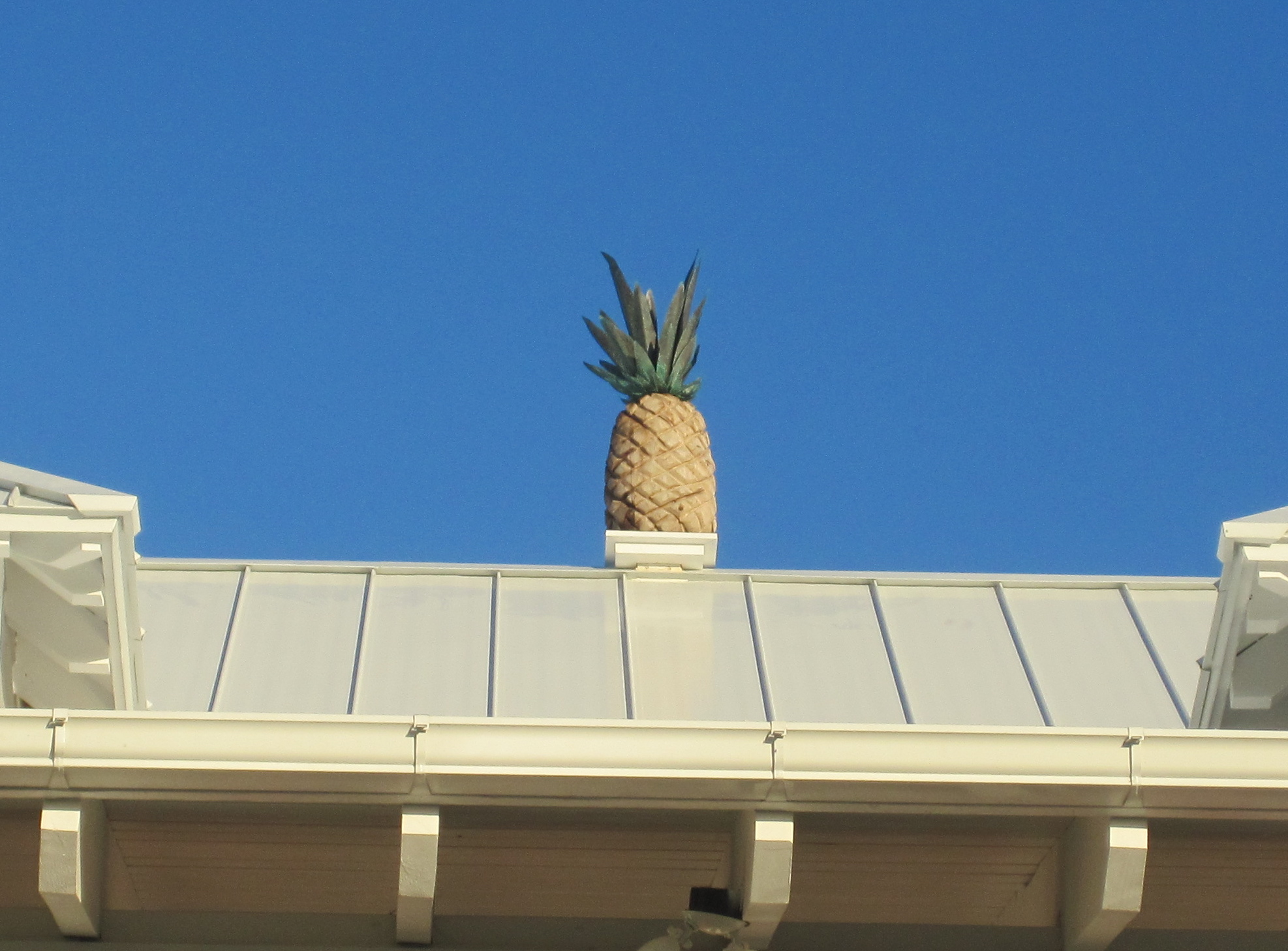
The first image below is of the handsome locally hand-carved pineapple that surmounts the roof of the DELPHI CLUB Abaco. The fruit lost a few leaves in Hurricane Irene, which scored a direct hit on the Club. As posted on the ABACO FACTS page (under RANDOM main menu) “the precise Longitude & Latitude coordinates of the Pineapple [on] the Delphi Club roof are respectively 77.1787834167480  &  26.20450323936187 “. But why is it there? Time for a Short Voyage around the Pineapple…

PINEAPPLE FACTS TO ENLIVEN YOUR CONVERSATION

HISTORICAL & SOCIAL CONTEXT

  • Brought back to Europe by Christopher Columbus in 1493 on his return from his second voyage
  • Taken on long voyages as a protection against scurvy and because of its long life
  • By the c17 royalty & aristocracy grew them in hot-houses (or rather, their gardeners did). King Charles II tried one, an event so important it was recorded by the Court painter Hendrik Danckerts 
  • By c18 considered a great delicacy and a status symbol of wealth, often the centre-piece of a feast.
  • If you couldn’t afford to buy one, you could rent one and return it afterwards. Someone richer than you would then buy it.
  • Pineapples were grown in pits of fermenting manure. In England Queen Victoria was not amused and soon put an end to that unpleasant nonsense
  • In the c19 pineapples were one of the most significant exports from Abaco
  • The Earl of Dunmore built a huge pineapple folly in Scotland in 1761, which you can stay in (We have. It’s a lot of fun)


  • On ‘Unter den Linden’ in Berlin,  the cast iron posts round the huge equestrian statue of Frederick the Great are topped by pineapples.

Berlin, Unter den Linden, Reiterstandbild Friedrich II                 Reiterstandbild_-_Friedrich_der_Große Berlin Wikimedia

CULTURAL SYMBOLISM

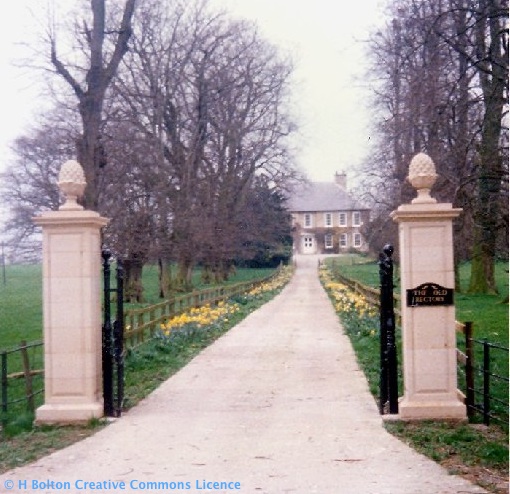
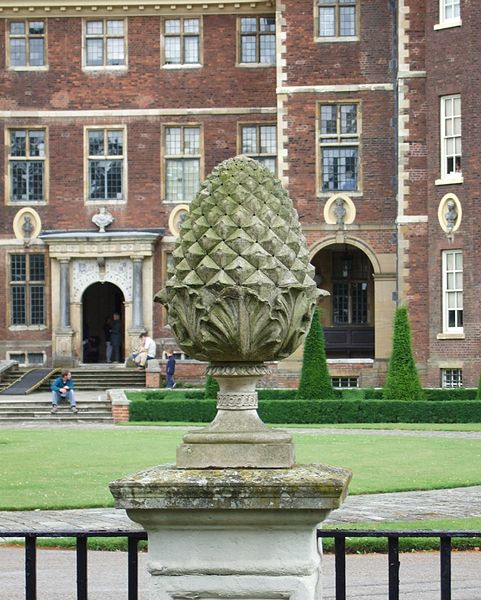
  • Pineapples symbolise welcome and hospitality, placed at the entrance to villages or plantations. The tradition spread to Europe where they were carved as gateposts; staircase finials; and incorporated into wooden furniture (including bedposts at the Delphi Club)

  • Seafarers put pineapples outside their homes on their return to show that they were back from their travels and ‘at home’ to visitors
  • An expensive fruit to grow & to transport; remained a luxury until the arrival of steamships
  • Their costliness made them status symbols / indicators of wealth and rank. Displaying or serving pineapple showed that guests were honoured. And, coincidentally, that the hosts were loaded.
  • In the 1920s the grandest dinners apparently needed both “a pineapple and Lady Curzon” (I have been asked whether this is Interwar Period code for some sort of disreputable activity… let’s hope the answer is ‘yes’)

           Ornamental Pineapple at Ham House - James Long @ Wikimedia

  • The future Queen Elizabeth was sent 500 cases of canned pineapple as a wedding present from Australia. She asked them “Hev you come far?” Prince Phillip’s reaction was – apart from the word ‘pineapple’ – unprintable
  • In the play Abigail’s Party (Mike Leigh) pineapple chunks on cocktail sticks were used as a plot device to highlight the desperate social ambitions of a hellish hostess trying to impress & outclass her guests
  • A 1930s ad promised that by baking a pineapple pie a wife would make her man “smack his lips in real he-man enjoyment” (NB This may not work so well in the 2010s) 

By Appointment to HM the Queen

ARTS & CRAFTS

  • Used on Wedgwood pottery designs as early as the 1760s; others soon followed suit
  • Became widely used decoratively as a motif for gateposts, weather vanes, door lintels, wallpaper, table linen & curtains, and incorporated into furniture
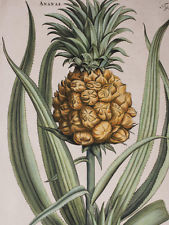
  • Depicted as curiosities in early botanical engravings (Commelin 1697 Hortus Botanicus)

Commelin - Engraving - Ananas - Hortus Botanicus 1697

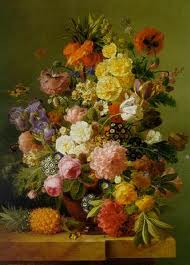
  • Featured in still life paintings as a crowning example of opulence (e.g. De Heem, Jan van Os)

                                  Josef Schuster

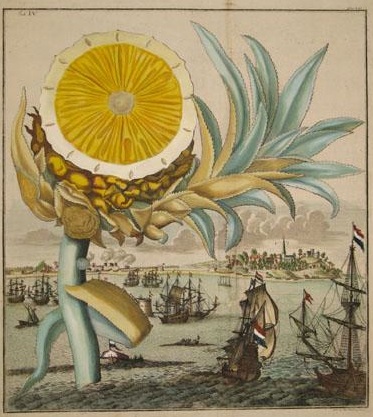
  • Depicted in plant and fruit studies, for example these by Johann Christoph Volckamer, very early c18        
  • Occasionally found in Church stained glass windows (e.g. St Lawrence’s, Jersey)

Églyise_Pârouaîssiale_dé_Saint_Louothains_Jèrri Man Vyi * Wikimedia

  • Featured in music e.g. Pineapple Rag (Scott Joplin); Pineapple Head (Crowded House); Escape – The Piña Colada Song (Rupert Holmes); Pineapple Express (Huey Lewis); Pineapple (Sparks) 

  • Used as a motif on shutters in Marsh Harbour 

SPORT

  • The Men’s Singles Trophy at  Wimbledon is a silver gilt cup with a gilded pineapple on top of the lid. It used to mean “Welcome back, Roger!” Now it stands for the first British male singles win since 1937 (‘Go, Andy!’). [British women have fared rather better in the singles in that time (‘Go, Angela, Ann & Virginia!’)]

MOTORING

  • Vauxhall produced the Vauxhall Astra Sport in ‘tasteful’ Pineapple yellow. For the history of the use of the far more glamorous Bahama Yellow  in motoring, click HERE

10 TASTY PINEAPPLE CHUNKS

  • The cocktail Afterglow is 1 part grenadine, 4 parts orange juice & 4 parts pineapple juice on ice
  • Piña Colada is rum, coconut milk & crushed pineapple. Omit the rum for a Virgin Colada
  • It is impossible, for chemical reasons, to make jelly with fresh pineapple
  • “Pineapple heat” was once a standard marking on thermometers
  • A pineapple grows as two interlocking helixes (8 one way, 13 the other – each being a Fibonacci number)
  • A pineapple will never become any riper than it was when harvested
  • Workers who cut up pineapples eventually have no fingerprints – a gift fact for crime writers
  • Pineapple stems are being tested for anti-cancer properties
  • Pine Apple, a small Alabama town full of pineapple symbols, was originally named “Friendship” but there turned out to be another town called that, so they changed it
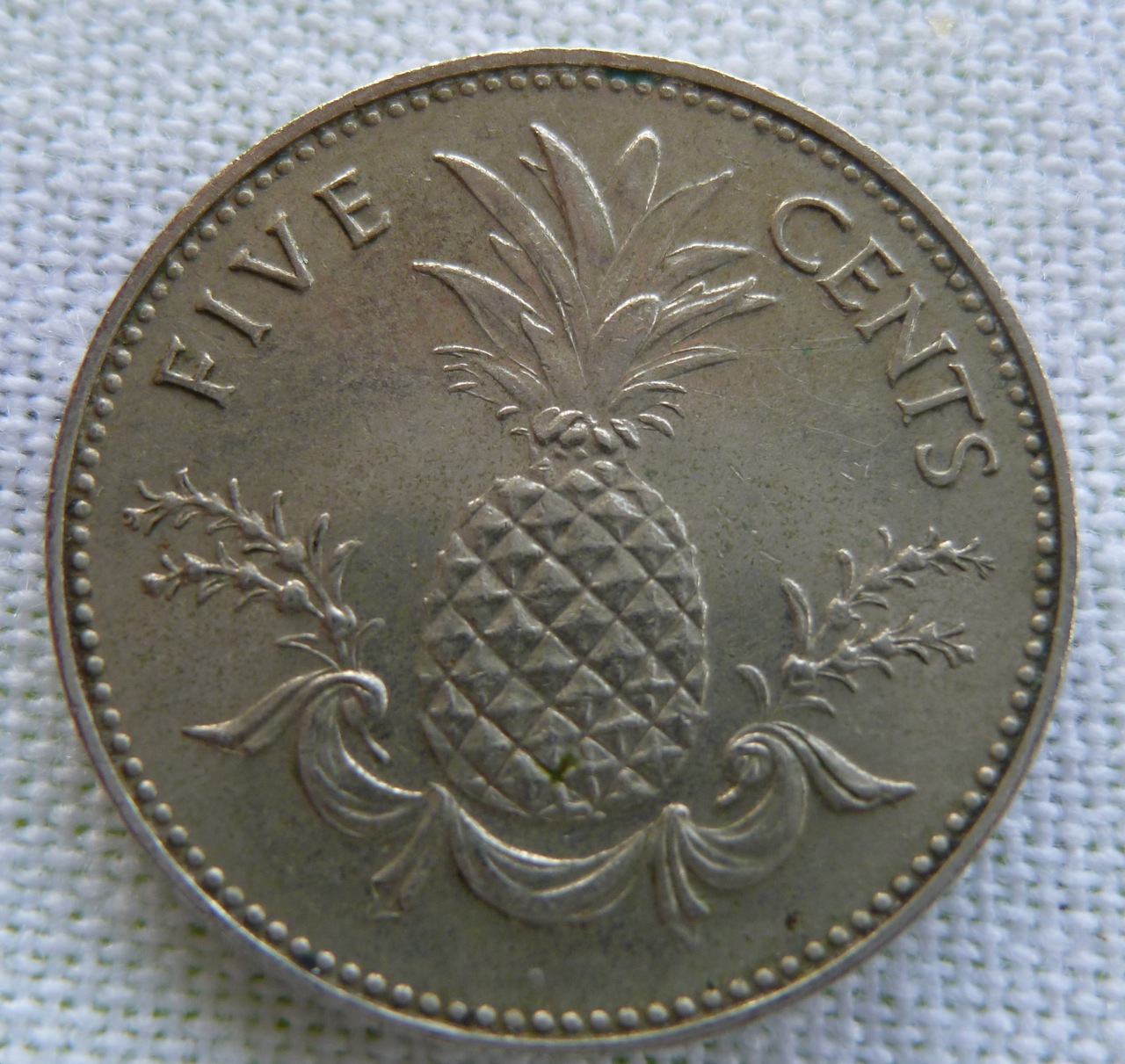
  • Features on the Bahamian 5 cents coin…

  • …and  a $1 stamp

BAHAMAS PINEAPPLE STAMP

Read Jim Kerr’s interesting article in ABACO LIFE on Abaco’s pineapple past HERE

FRANCESCA BEAUMAN 2006

THE PINEAPPLE – KING OF FRUITS

If you want to find out more about pineapples, their  history and social significance, you should be able to pick up a copy of this book on Am@z%n, Abe or ALibris for a few dollars

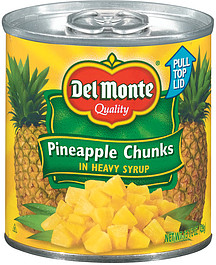
“What?” I hear you cry, “you’ve managed a whole page about pineapples without mentioning modern advertising”. Shall I do so now? The man from Del Monte, he says YES

[youtube http://www.youtube.com/watch?v=YqmpVWzH4FM]

Sources: Own ideas + some magpie-thieving-borrowing from a variety of sources, many of which contain identical info and / or quote from the above book. Hope everyone is comfortable with that…

NB Not every fact above is strictly 100% true, so expect to be challenged if you try one out. In particular Prince Phillip is of course naturally docile and gentle-mouthed…

POST SCRIPT The first 21 Fibonacci numbers (just add 2 successive numbers to produce the next) are

F0 F1 F2 F3 F4 F5 F6 F7 F8 F9 F10 F11 F12 F13 F14 F15 F16 F17 F18 F19 F20
0 1 1 2 3 5 8 13 21 34 55 89 144 233 377 610 987 1597 2584 4181 6765

🍍  🍍  🍍  🍍  🍍


Unknown's avatar

SMALL SHELLS FROM CASUARINA, ABACO


Abaco Shell 3b

SMALL SHELLS FROM CASUARINA, ABACO

Abaco Shell 1Abaco Shell 4Abaco Shell 2Abaco Shell 5Abaco Shell 6

The shell species below (also in the header picture) is an olive. It turns out to have potential to star in a small maritime horror movie. Capt Rick Guest, who kindly keeps an eye on my shell and other sea-related posts, writes “Interestingly, the previous occupant of the first and last shell pictured here is a major predator of the other Bivalve shells shown. The Olive shell hides under the sand by day, then emerges at night to feast upon small Bivalves, and any other available prey. One can often trace the nocturnal trails of this Olive shell in sand on calm mornings with mask and snorkel, and thrust a hand under a trails end for this fellow. When kept in an aquarium, they will consume any meat offered.” “Olive and Let Die”, maybe?Abaco Shell 3aAbaco Shell 7

Unknown's avatar

GEORGIE THE (FORMER) ABACO MANATEE RETURNS TO THE BERRY IS.


Georgie the Manatee, Hope Town, Abaco (© Stafford Patterson) 1

GEORGIE THE (FORMER) ABACO MANATEE RETURNS TO THE BERRY IS.

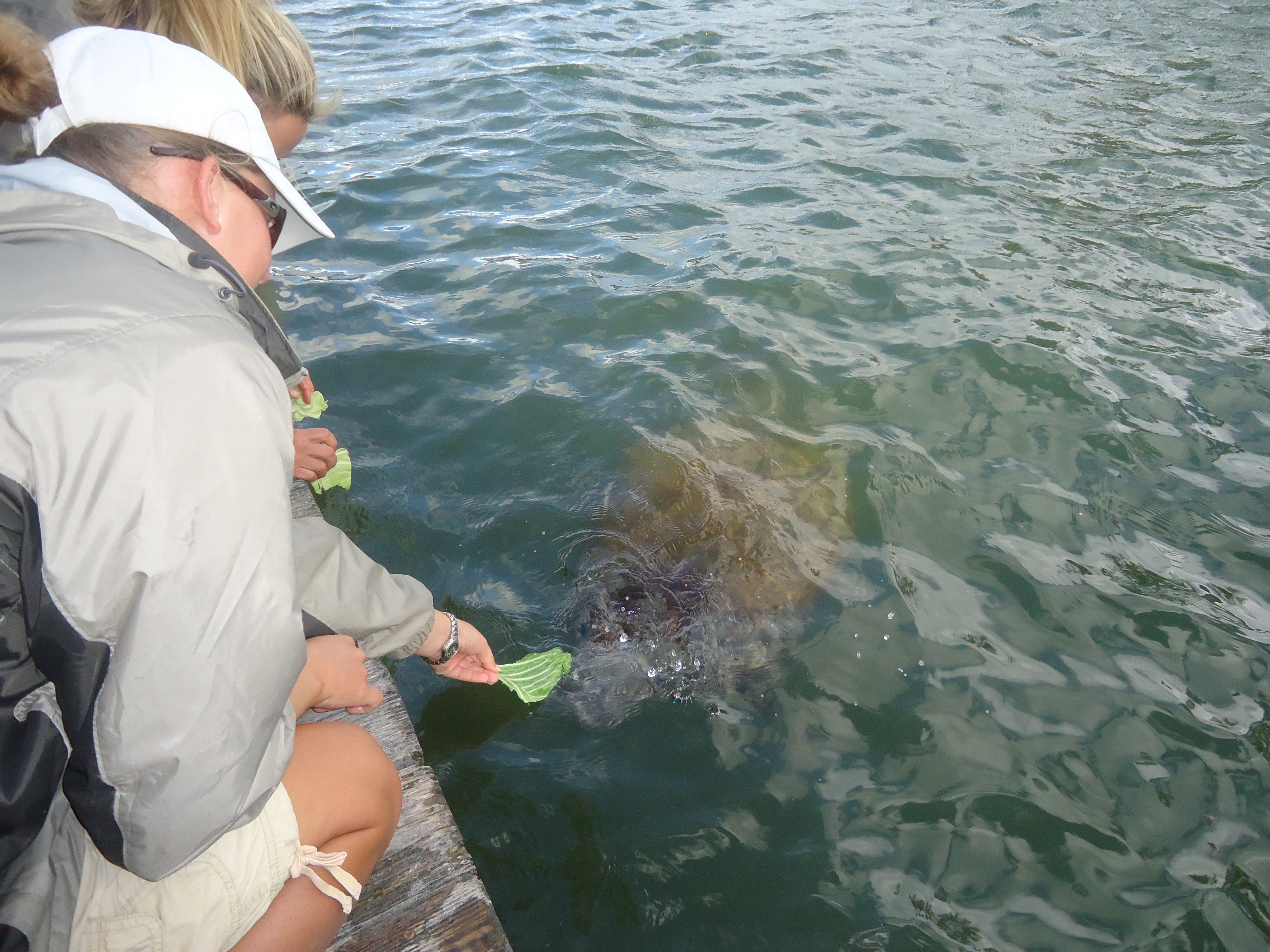
Last year I posted about Georgie, the young manatee that made Abaco her home for several months. Georgie was born in Spanish Wells. She and her mother Rita travelled to Nassau Harbour, where in April 2012 they were rescued from the multiple shipping hazards and  released in Great Harbour Cay, Berry Is. Both were equipped with tags to monitor their movements. In June, the newly-weaned Georgie embarked on a big solo adventure by swimming to Abaco. Her tracking device showed that she called in at the Marls, before continuing right round the top of Abaco and down the east side, calling in at various Cays on the way. In all, her journey was some 200 miles long. She eventually settled down in the Cherokee and Casuarina area, and in a modest way became a lettuce-chomping celebrity.  DANA & TRISH FEEDING GEORGIE (2)

Georgie-related posts include these:

WEST INDIAN MANATEES AND THE BAHAMAS: THE FACTS

GEORGIE THE ABACO MANATEE – CHEROKEE’S SIRENIAN VISITOR STAYS ON…

GEORGIE THE ABACO MANATEE: FAREWELL CHEROKEE, HELLO ATLANTIS

The BMMRO has recently updated Georgie’s story: “Georgie remained in Cherokee Sound throughout the fall, including during hurricane Sandy but in January she was beginning to look slightly underweight. Concern was raised about her general appearance and the decision was made… to conduct a field health assessment and relocate her to the Atlantis Marine Mammal Rescue Center. “recap1

“Georgie underwent a series of general health evaluations and was fed approximately 75 pounds of lettuce each day. She gained more than 200 pounds during the course of her care and weighed 569 pounds upon her recent release”. recap4

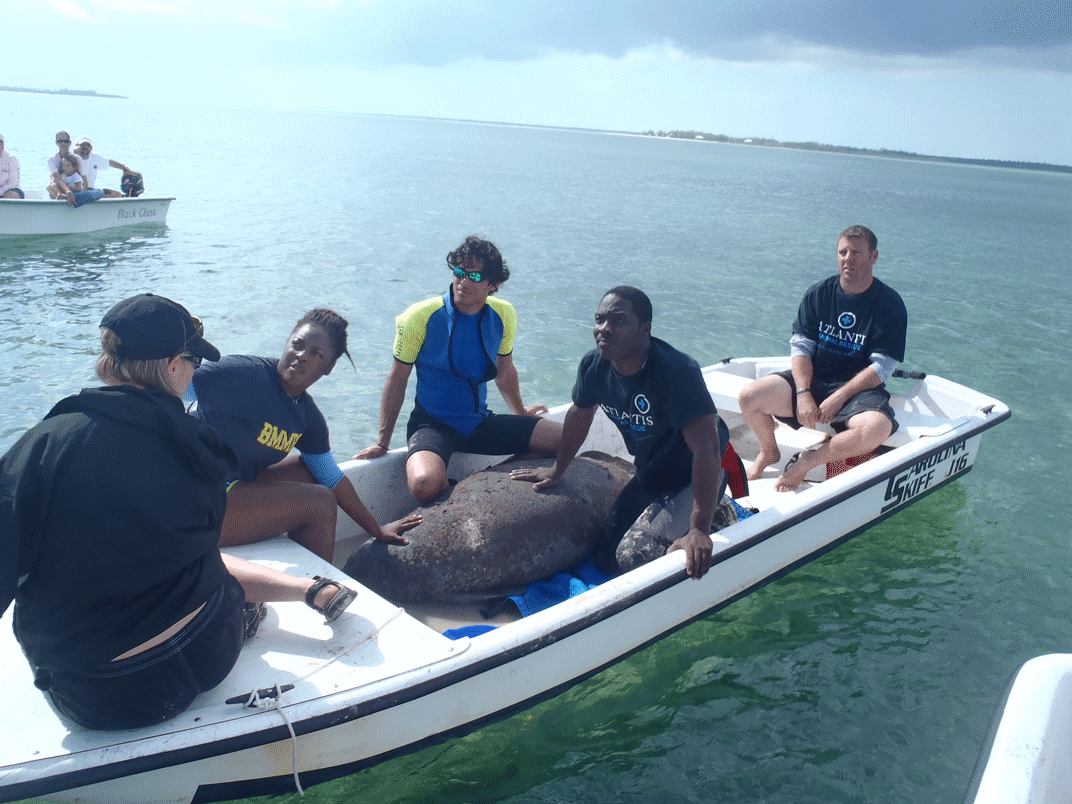
“We are pleased to announce that Georgie has now been released once more to Great Harbour Cay in the Berry Islands after a successful rehabilitation at Atlantis’ Dolphin Cay. She was successfully released on Wednesday 14th August by the Atlantis Animal Rescue Team from the Atlantis Dolphin Cay Marine Mammal Rescue Center, with the help of the Bahamas Marine Mammal Research Organisation (BMMRO). She has a satellite tag attached to her which will help post-release monitoring, currently being conducted by representatives from BMMRO and Dolphin Cay.”

Georgie being let down from the boat, back into Great Harbour Cay (K. Ferguson)
Georgie with her tag shortly after release (K. Ferguson)

Georgie socialising with a young male manatee in Great Harbour Cay a few days later (K. Ferguson)

safe_image.php

“The first 3 weeks of Georgie’s release  showed her venturing on longer and longer journeys, with the blue circles showing her first weeks’ movements, the red her second, and finally the yellow circles her locations up to Saturday. She is doing very well and often seen with the other manatees in the area.”

1240329_651667491519147_1896477103_n

GEORGIE: THE MOVIE OF THE MOVIE

Apologies for using an iPh*ne to capture the movie – I wasn’t able to embed it directly. Updates on Georgie will be posted on BMMRO’s FACEBOOK PAGE

Credits and thanks to BMMRO and Kendria Ferguson for use of photos and the maroon text…

Unknown's avatar

THE HUMMER’S TALE: A BAHAMA WOODSTAR’S RESCUE ON EXUMA


photo copy

THE HUMMER’S TALE: A BAHAMA WOODSTAR’S RESCUE ON EXUMA

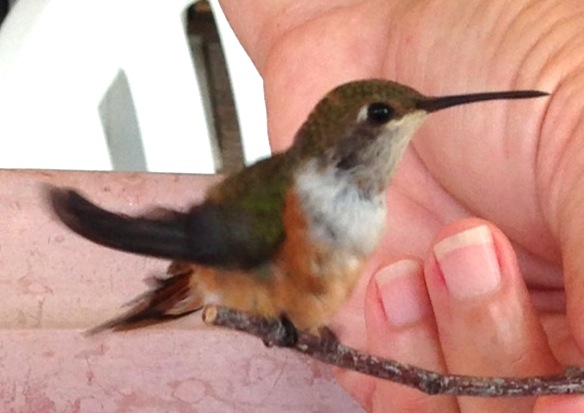
This blog usually stays pretty close to base on Abaco, with occasional forays to other parts of the Bahamas. Inagua for example, for amazing photos of the annual FLAMINGO banding. Now it’s time for a visit to Exuma. In July, a resident of Stocking Island emailed me asking for advice about a rescued hummingbird that had arrived on her porch and could not – or would not – fly. Caroyln had nursed her – a female Bahama Woodstar – for 5 days and was worried about her (lack of) progress.

0

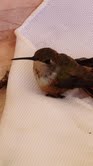
Being an amateur in these matters, and some 4000 miles away, I wondered how much I could usefully contribute. However for the next few days Carolyn and I kept in touch and exchanged ideas. The bird was apparently uninjured, was able to feed a bit and to drink sugar water from a syringe. However without being able to fly, her chances of survival were minimal.OLYMPUS DIGITAL CAMERA

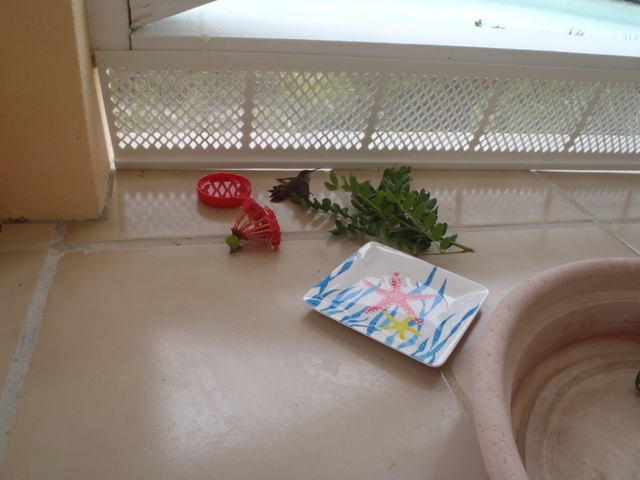
Eventually the hummer start to practise some fluttering, which was a good sign. That’s her above, in the widow behind the greenery. We worked on various ideas to encourage a flying instinct. I suggested putting her on a low box to see what happened… If the fluttering worked to any extent, a gradual increase in take-off height might do the trick.OLYMPUS DIGITAL CAMERA

This seemed promising, except that the bird’s left wing fluttered twice as fast as her right wing. This suggested some sort of lack of co-ordination that might explain why the natural instinct to fly was somehow surpressed. However by Day 10 we had progress, if not actual lift-off.

By now the bird was starting to look less bedraggled and a lot stronger. My suggested names (‘Hummy’; ‘Humela’) didn’t find favour; Carolyn simply called her ‘Baby’. A potential fruit-fly factory on a banana was constructed.photo

At times, Baby was somewhat passive, but it’s possible that Carolyn’s tuneful mockingbird was a confusing element… You can see she was well catered for, with sustenance, fresh air and a nice view.

The next stage was to devise an outdoor flight plan. There had been strong winds, but by Day 12 they had abated.  It was time to see what Baby could do in the fresh air, with tempting flowers all around. She had had some indoor twig perching practice. Her fluttering was stronger: maybe launching from a low branch outside would be the answer. Or the ground?

Mmmmm. 3 failed attempts. Not encouraging. And Carolyn needed to leave Exuma imminently. Luckily, a new life for Baby was at hand with a family in Georgetown who were able to supply a happy ending, having cared for hummingbirds and being perfectly set up with a screened porch with shrubs, flowers, feeders… and fruit flies. Hummer heaven. I am waiting to hear the very end of the story… did Baby ever fly, or is she so pampered in her new home that there is no need for her to budge? And when I get some news, I will post it here.

Bahamas Map  Exuma

Unknown's avatar

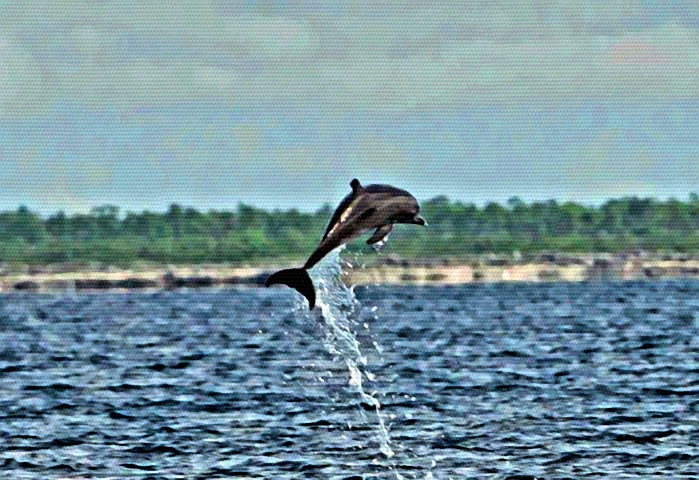
‘JUMPING FOR JOY’: CHEERFUL DOLPHINS IN ABACO WATERS


Dolphin, one of a pod of 50

‘JUMPING FOR JOY’: CHEERFUL DOLPHINS IN ABACO WATERS 

To be totally accurate, one or two of these photographs may have be take from the BMMRO research vessel at some point during an expedition to Andros. But since the boat set off from and returned to Abaco, with an Abaconian team on board, I have stretched a point  with the title… 

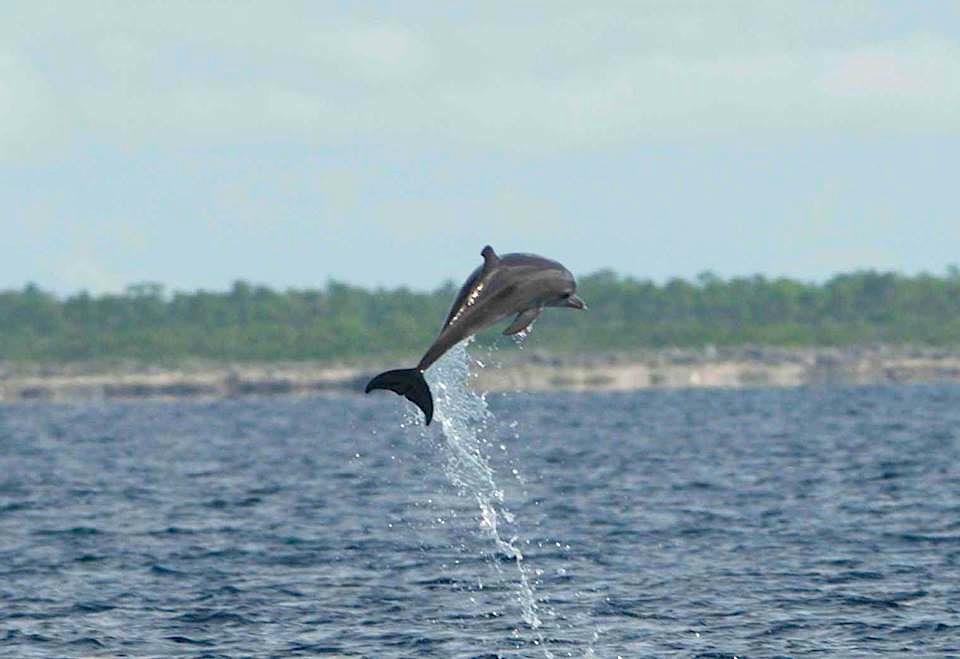
It would be hard to view a dolphin leap as high as this (top photo) as anything other than an expression of pure enjoyment. Difficult to tell the exact height, but it’s fairly spectacular. Dolphins always seem to be looking, or acting, happy. Here are a few more, a mix of bottlenose and spotted dolphins,  to spread some cheer… 

Dolphin Leap Abaco ©BMMROSpotted Dolphin, Abaco ©BMMROSpotted Dolphin Abaco ©BMMROHappy Dolphin Abaco ©BMMRO

This dolphin was one of a large pod of 28 seen on a recent BMMRO research tripOne of a large pod of 28 dolphins

Time to get my… erm… paintbox outLeaping DolphinPhoto credits: Bahamas  Marine Mammal Research Organisation BMMRO

In an earlier post I name-checked BMMRO intern Oscar Ward’s blog SeventyPercentBlue.  You can read Oscar’s account of his continuing adventures HERE

Unknown's avatar

PRECIOUS EMERALDS ON ABACO: GREEN HUMMINGBIRD JEWELS


Cuban Emerald Hummingbird, Delphi, Abaco10PRECIOUS EMERALDS ON ABACO: GREEN HUMMINGBIRD JEWELS

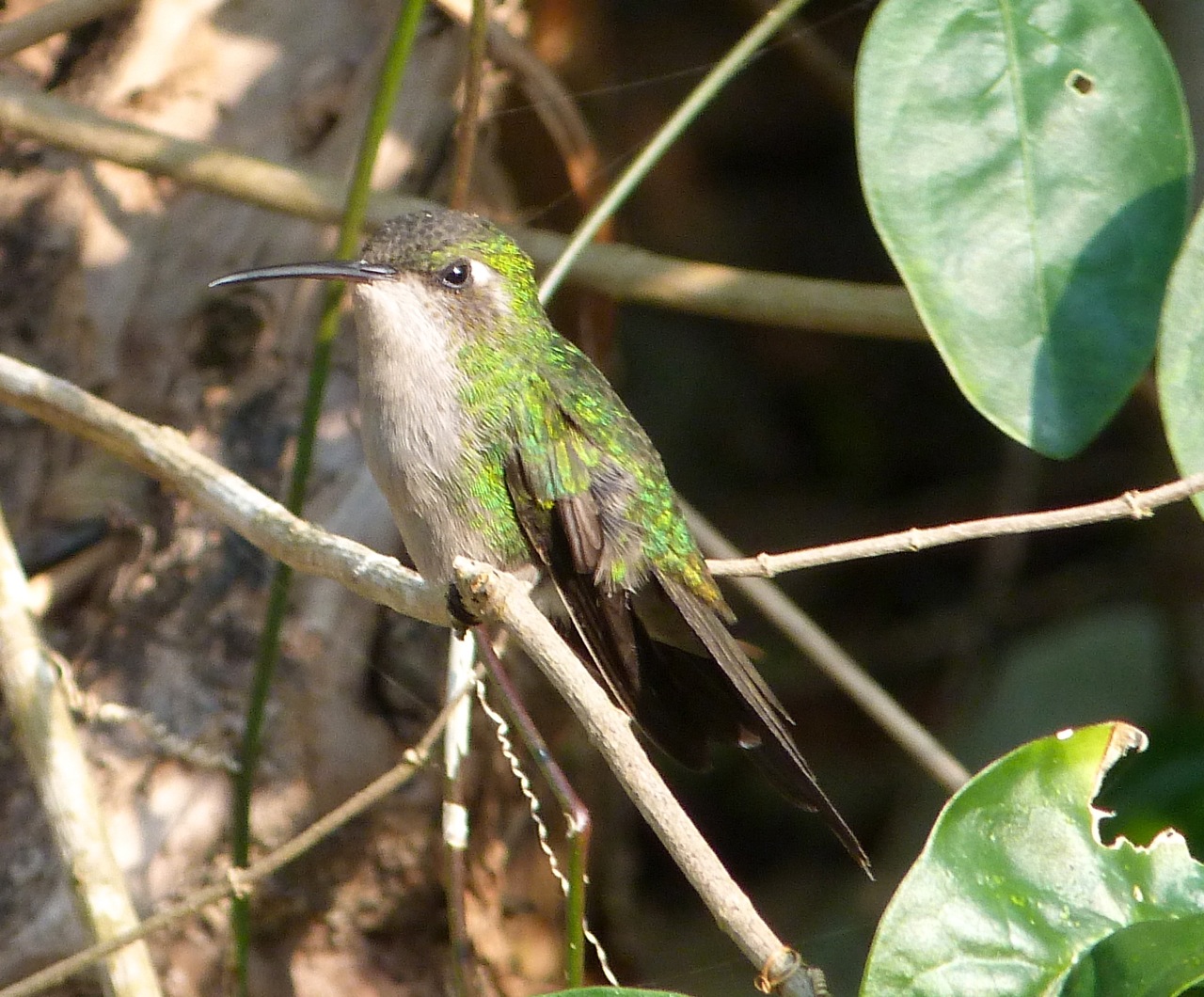
There are two resident hummingbird species on Abaco: the beautiful endemic Bahama Woodstar; and the lovely non-native Cuban Emerald. The species don’t get on, and tend to keep to separate territories. At Delphi the Emeralds predominate, though luckily there are Woodstars as well. Both species of these tiny birds have featured in previous posts, but this little hummer was a special one. Cuban Emerald Hummingbird, Delphi, Abaco 1

There’s a small patch of cleared coppice at Delphi, the ‘Farm’. This is where plants are ‘grown on’ for the gardens. In particular, there are coconuts planted in soil to germinate, to provide replacements for any palms that are trashed in the hurricane season. Since both Irene (in 2011) and Sandy (2012) passed directly over Delphi, you can see the sense in having an on-site garden centre. It can be a good place for birds, having both sun and shade. It’s where I suddenly spotted this Emerald, a few feet away from me. Cuban Emerald Hummingbird, Delphi, Abaco 2

It seemed quite relaxed, so I decided to see how close I could get. My attempt at stealth was slightly spoiled by my inexplicable need to make totally unnecessary “soothing” clicking and chooking noises as I crept forward. But the bird just watched peacefully, assuming me to be insane and probably harmless. Cuban Emerald Hummingbird, Delphi, Abaco 3

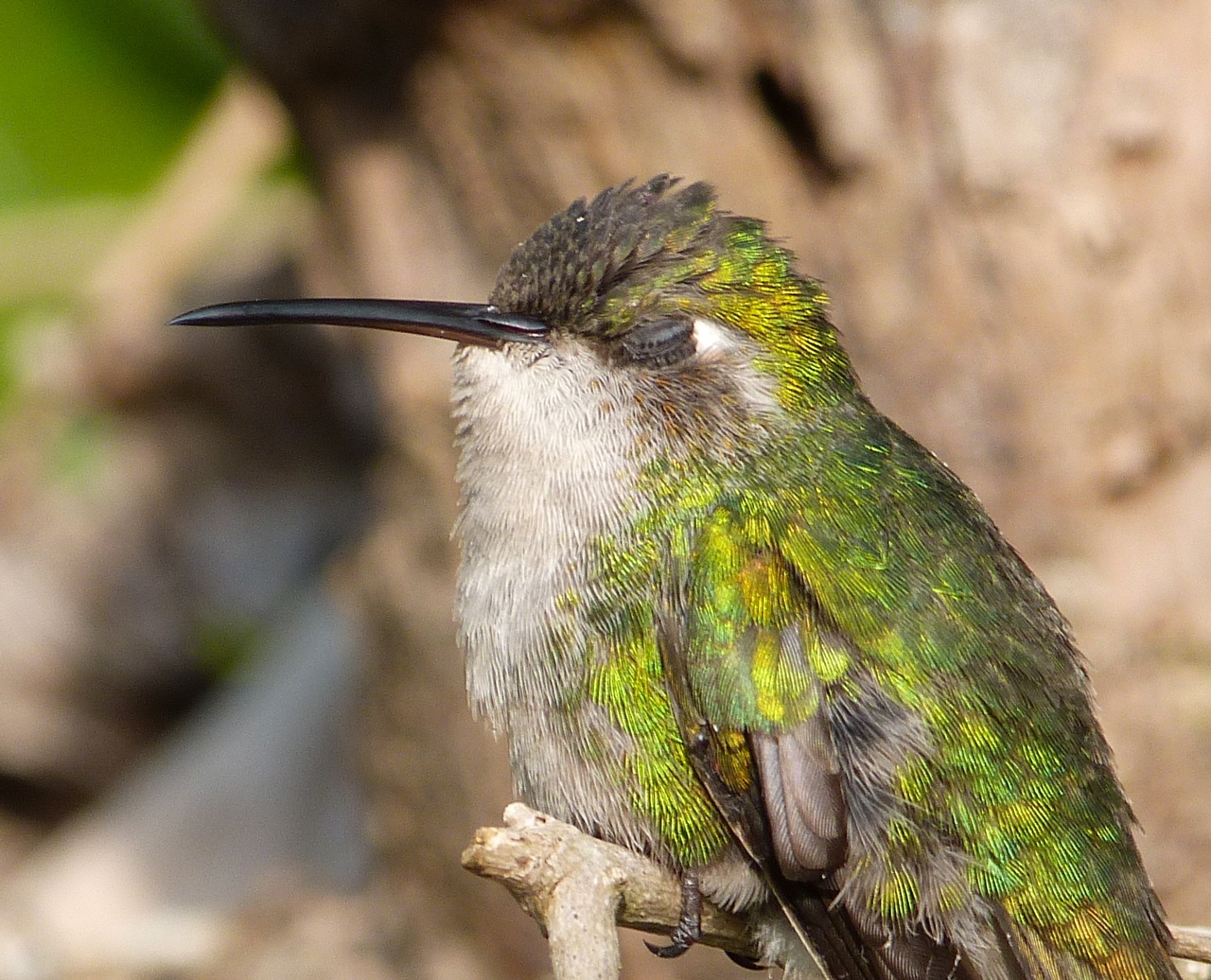
I shuffled forwards, expecting the bird to fly off at any moment. Instead, it seemed to go to sleep…  By now I was a couple of feet away, and felt it was time to stop the ridiculous noises. The bird could not have been more at ease if I had sung it a lullaby.  [Apart from the fact that I can’t sing, that is]Cuban Emerald Hummingbird, Delphi, Abaco 6

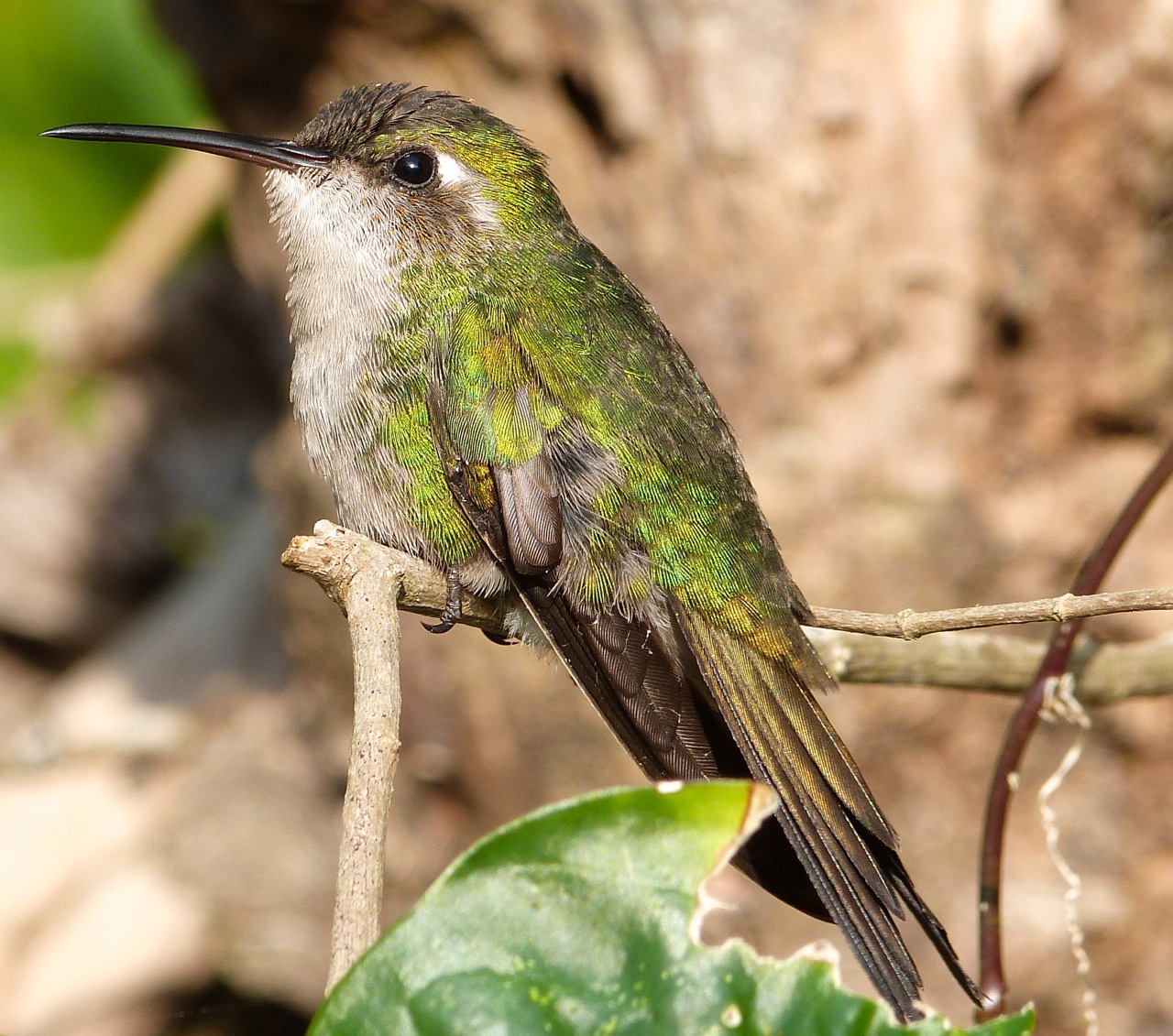
By now the metallic glint of the feathers in the sun was extraordinary, with colours other than green clearly visible, especially on the tail. Does this bird look nervous? I was a foot away from it.Cuban Emerald Hummingbird, Delphi, Abaco 7

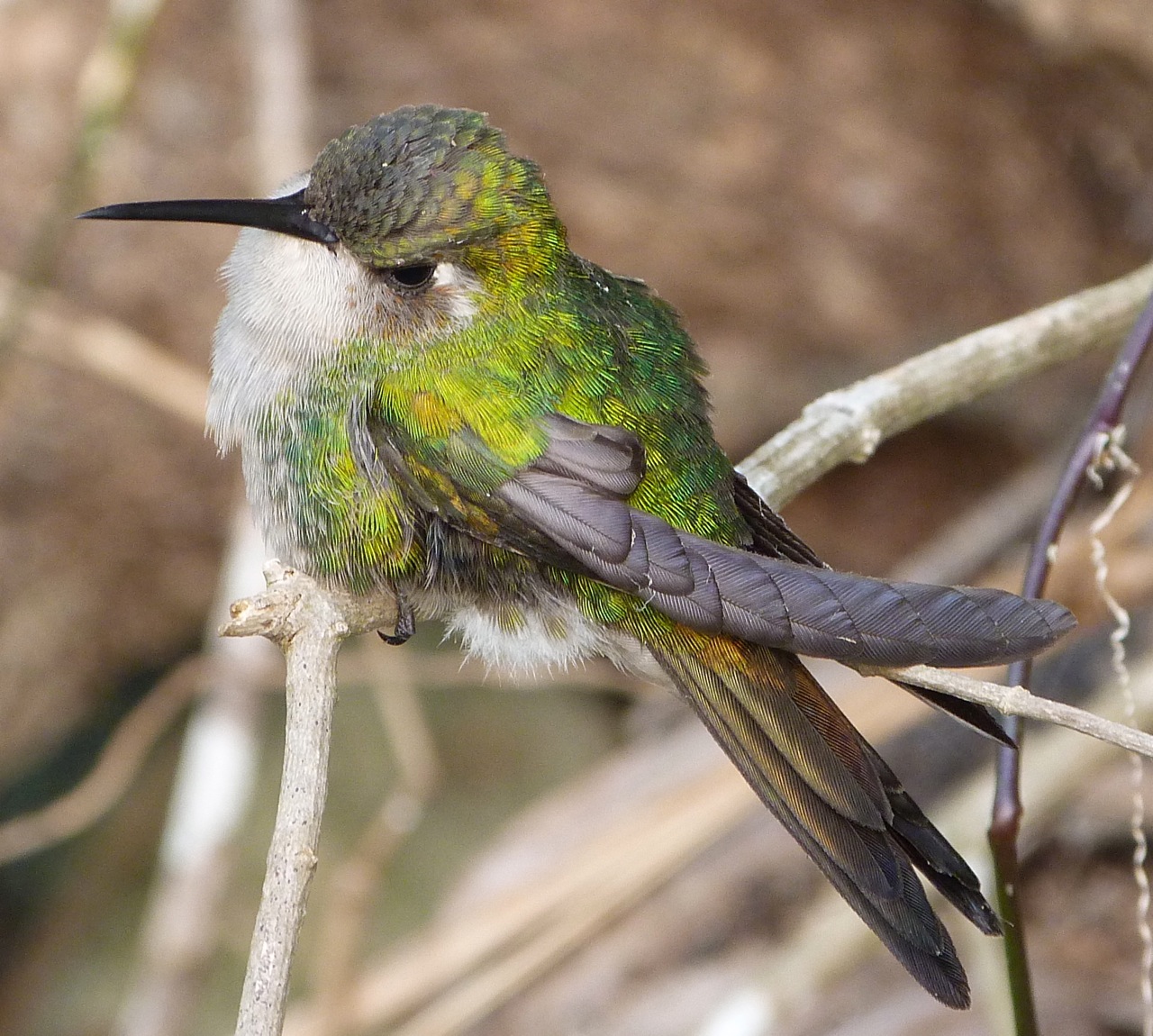
In the end I actually reached the bird. I stood over it and could easily have touched it. I quite see that it had probably been using the sugar water feeders, and was used to seeing people. But still. It was mini and I am… not. Here is my last shot, an aerial view. Then I crept away again, leaving the bird in peace and doubtless wondering what on earth that had all been about. I have a general rule against anthropomorphic ‘special moments’ but if I did not, then this was one…Cuban Emerald Hummingbird, Delphi, Abaco 8All photos RH armed with a Panasonic Lumix. If you want to use a photo – surprisingly, people occasionally do – please ask first and it will probably be fine. One or more of my images may be published shortly, and I don’t want a wrangle on my hands. Or anywhere else…

Unknown's avatar

CONCH SHELLS & CONCHUPISCENCE ON ABACO


Conchs at Sandy Point a1

CONCH SHELLS & CONCHUPISCENCE ON ABACO

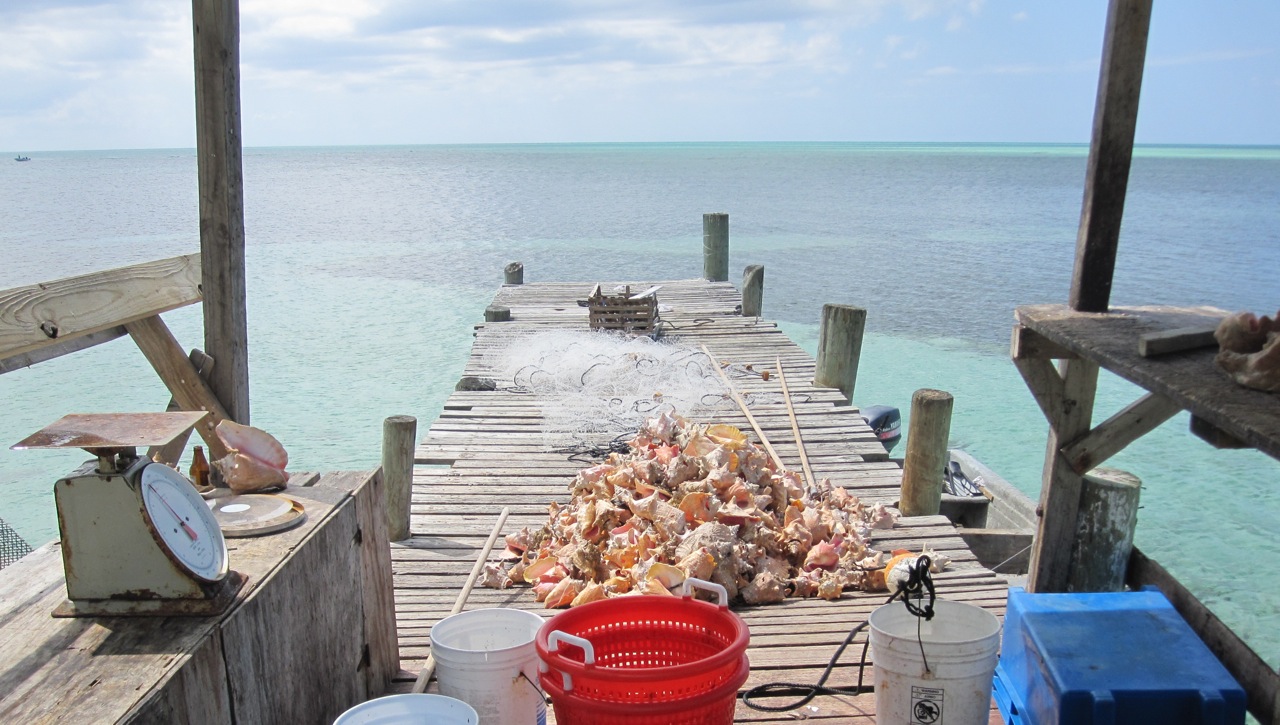
Most conchs encountered in daily life are lying peacefully on the beach; or are artfully displayed; or are found in conch heaps (often in the vicinity of restaurants) like the ones below at Sandy Point. Conchs at Sandy Point Abaco 2Conchs at Sandy Point Abaco 4

These shells at Sandy Point are so plentiful that they form a small spit of ‘land’ into the seaConch at Sandy Point (Clare)

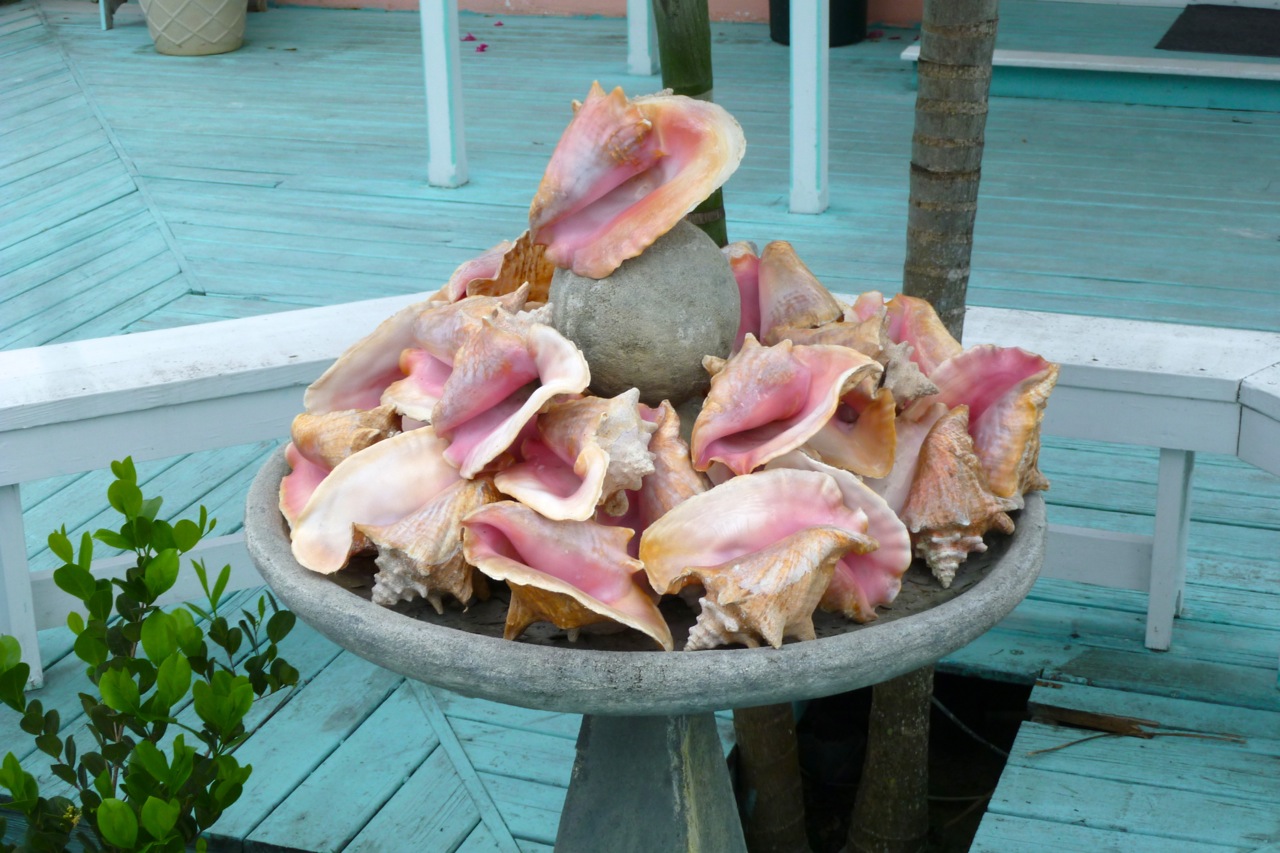
An attractive display of conch shells in Marsh HarbourConchs Marsh Harbour Abaco

A less formal arrangement along the jetty at Man o’ War Cay (after a storm)Conch Man 'o War Cay jetty Abaco

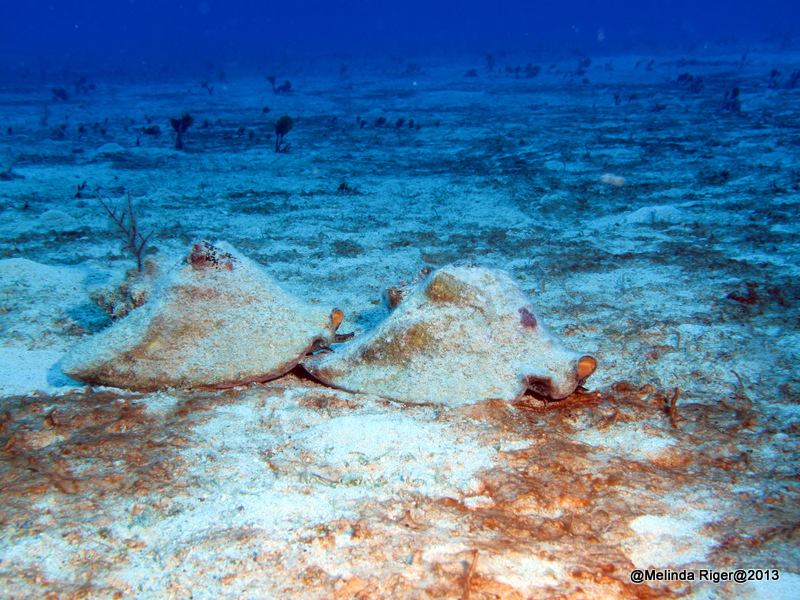
It’s easy to forget that these shells are more than just a garden adornment, or pretty containers for a ubiquitous Caribbean food. Under the sea, and not very far at that, are living creatures going about their daily lives.Conch ©Melinda Riger @G B ScubaConch ©Melinda Riger @ GB Scuba

And that includes reproducing. This sounds as if it might be a cumbersome process, but (like porcupines) they seem to manage. Here is a pair preparing to mate. The male behind is presumably about to… well never mind. I’ve never seen the process, so it’s a case of using imagination. Or just accepting that, whatever it is that they do, it works. [I haven’t located a video online – I’ll post one if I do]Conch preparing to mate ©Melinda Riger @ GB Scuba

You’ll find some more about Conchs in a previous post HERE, including 12 Unputdownable Conch Facts, notes on conservation matters and… a photo of Honeychile Rider, arguably the most famous conch-carrier ever. Oh, she was fictional, you say? But I always though she… How very disappointing.

And if you want to know how to clean a conch, a dude will  show you in a video on this page HERE 

Finally, check out the very informative website COMMUNITY CONCH, a charitable conservation organisation community conch logo

Photo credits: Melinda, Clare, RH

Unknown's avatar

‘FAMILIAR FECES’: CETACEAN POOP-SCOOPING BY SPECIES


1238860_644550912230805_1918179367_n

‘FAMILIAR FECES’: CETACEAN POOP-SCOOPING BY SPECIES

UPDATE I name-checked BMMRO intern Oscar Ward’s blog below. Now he’s been out on the ocean on ‘poop patrol’. You can read Oscar’s account of his experiences HERE

Among the many pleasures for cetacean research scientists must be the joy of whale poop collection. Followed by close inspection and analysis. The Bahamas  Marine Mammal Research Organisation BMMRO conducts research expeditions, in conjunction with such organisations as the New England Aquarium NEAQ and Friends of the Environment FOTE, in Abaco waters and further afield in the Bahamas. The attention this year has been on beaked whale feces, though available sperm whale feces are not to be sniffed at. Images and info below are courtesy of the organisations mentioned above, with thanks for use permission

TopHead_070815o_01_Md_DEC_035

A researcher working with BMMRO demonstrates feces collection using coffee grounds. She collects the coffee granules in her net and places the entire sample into a ziplock bag, ready to hand to the boat for processing 269

The purpose of feces collection is to look at the stress and reproductive hormones of the whales and to gather a baseline for these animals with which to compare other populations that are under threat3

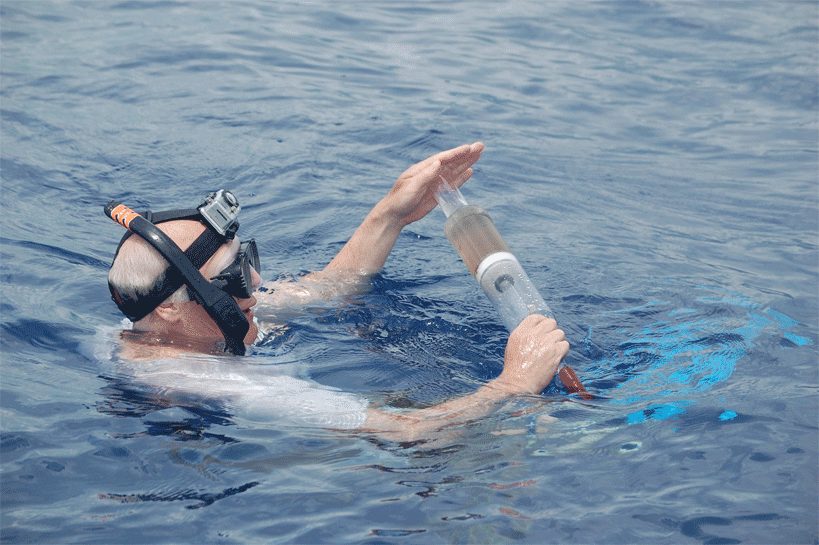
An alternative method of collectionpoop15

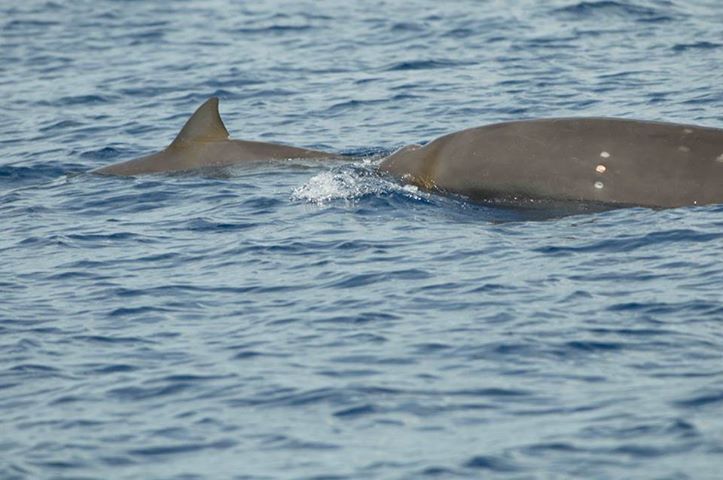
Blainville’s Beaked Whales (suppliers of raw research material)Blainville's Beaked Whale AbacoBeaked whale - supplier of poop BMMRO

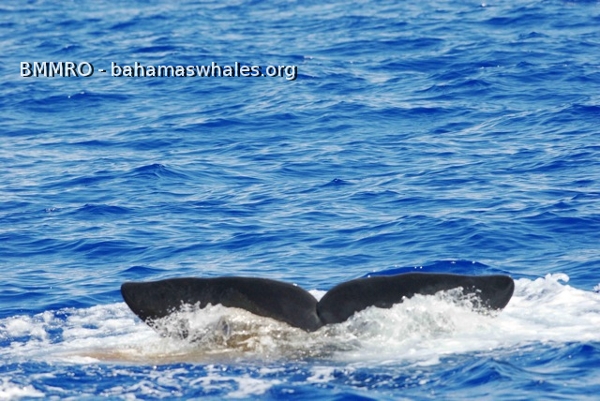
There are some conditions – dare I say windy ones – when Blainville’s beaked whales may be hard to locate. At such times, collection of pieces of other species feces rarely ceases… Here is a sperm whale in the act of producing laboratory samplesTail_18Jun10_01_Pm_CAD_123

Weather of the sort that makes the day’s collection more complicated. Indeed, it looks and uphill task…GOPR0109

That’s enough on the topic for now. Later in the month there will be some great dolphin pictures to enjoy. Below is the BMMRO sightings chart for July, which I forgot to publish sooner.

Finally, a young UK friend of ours, Oscar Ward, has recently won his place to study marine biology at university next Autumn. He has just arrived on Abaco to start an internship with the BMMRO at Sandy Point. He will then be moving to Friends of the Environment in MH. He has set up an excellent blog to record his experiences, with his first Abaco post going up today, I notice. You can follow Oscar at SEVENTYPERCENT.COM And if you see him around, do say hi! to him.

BMMRO SIGHTINGS JULY 2013

Unknown's avatar

BANANAQUIT BABIES ON ABACO: AWWWWWW…SOME BIRDS


Bananaquit (juv) Abaco, Bahamas 4

BANANAQUIT BABIES ON ABACO: AWWWWWW…SOME BIRDS

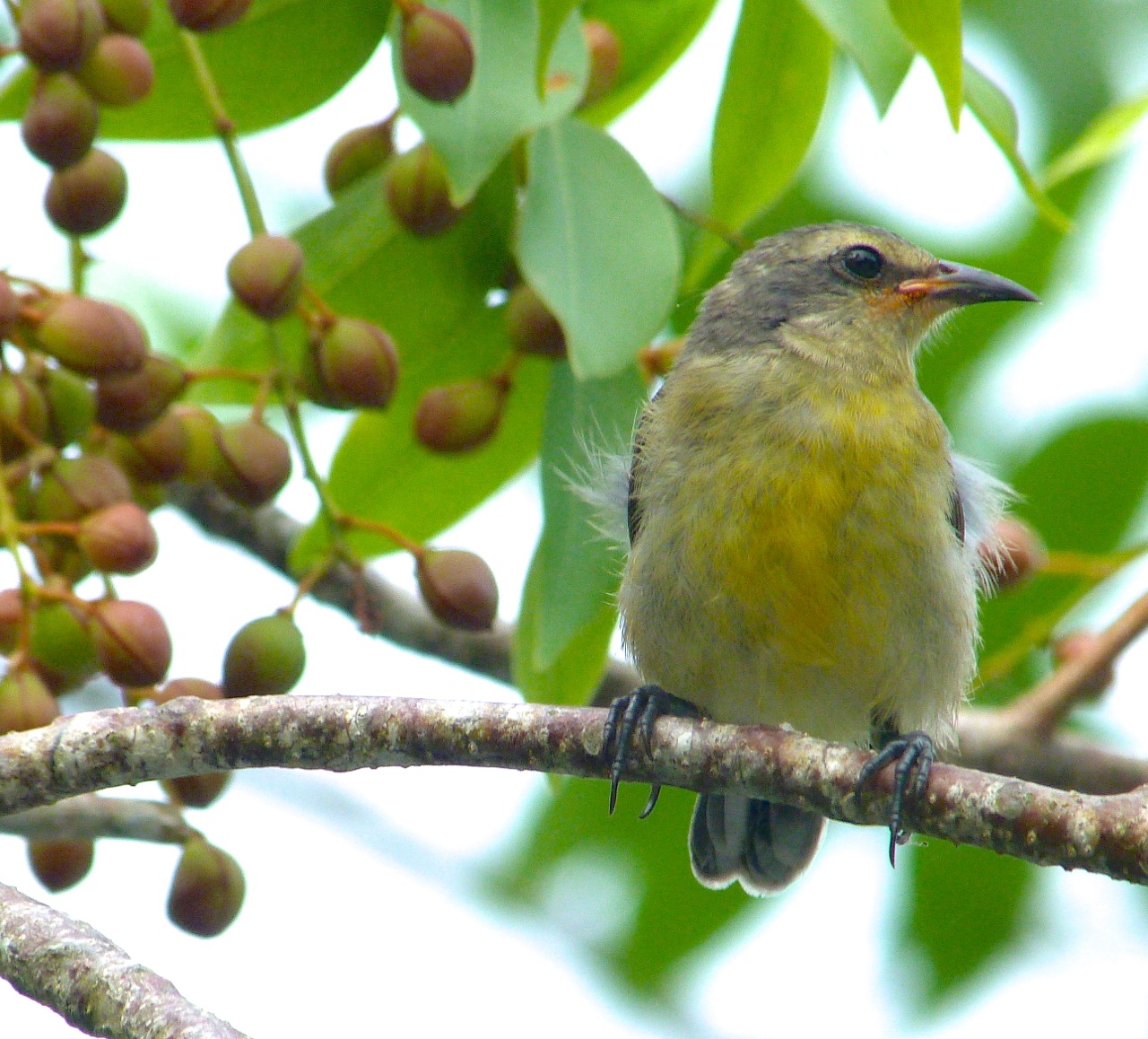
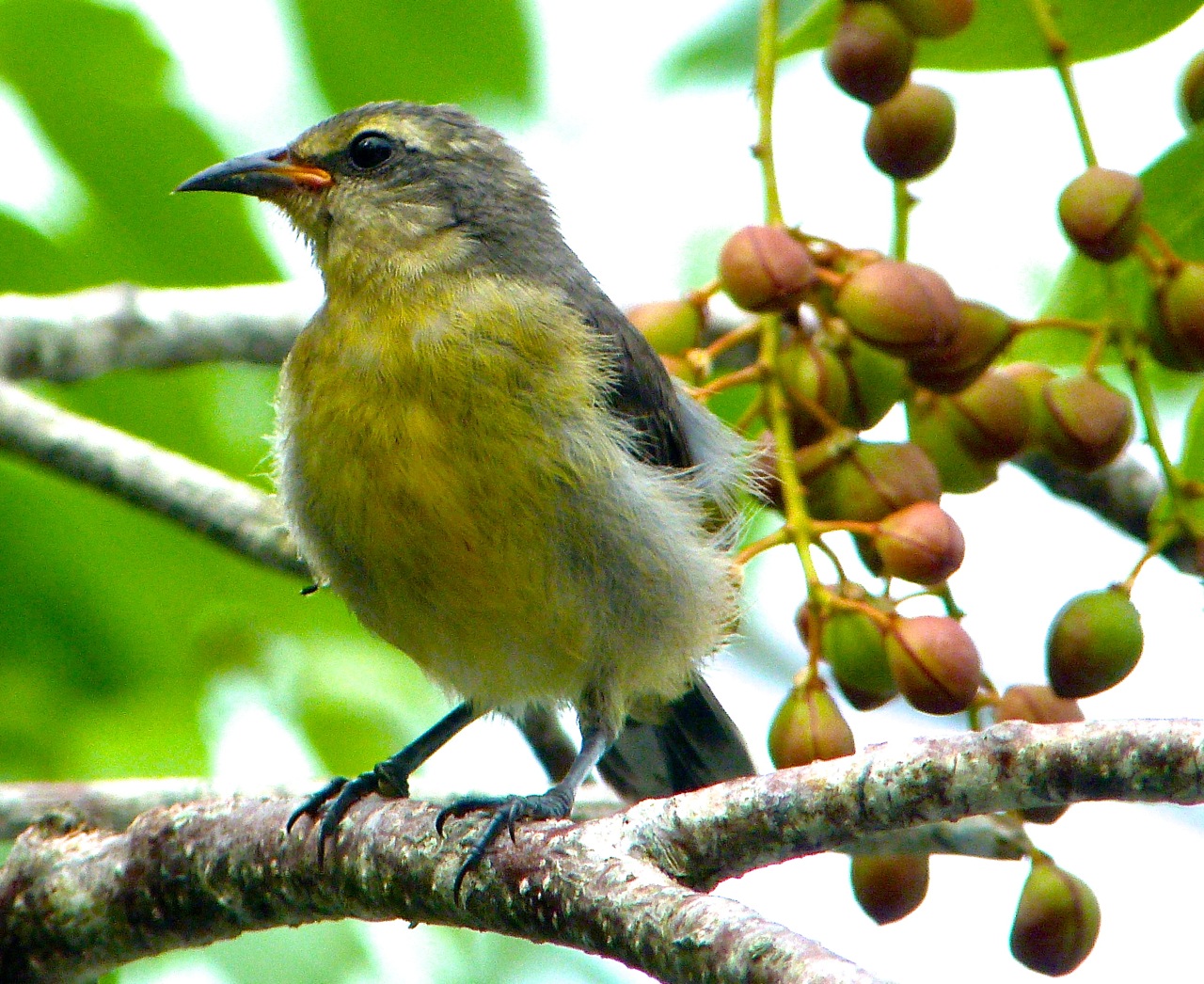
I’m not generally into whimsy and such stuff BUT… I can’t get enough of small bananaquits (Coereba flaveola). I’ve featured them before HERE and HERE AGAIN, but then I see another one, take some photos, and awwwwww – look at its little fluffy feathers… and its tiny sharp claws! The two shown below are summer babies. They aren’t really babies, though, are they? Teenagers, more like. Like many Abaco birds – especially the parrots – they are keen on the fruit of the Gumbo Limbo tree Bursera simaruba shown here. They also love flowers, piecing the base with their beaks to get at the nectar. They are quite as happy on a feeder – or indeed sipping sugar water from a hummingbird feeder, living up to their nickname ‘sugar bird’. 

Bananaquit (juv) Abaco, Bahamas 1Bananaquit (juv) Abaco, Bahamas 7“Watching you watching me…”Bananaquit (juv) Abaco, Bahamas 3

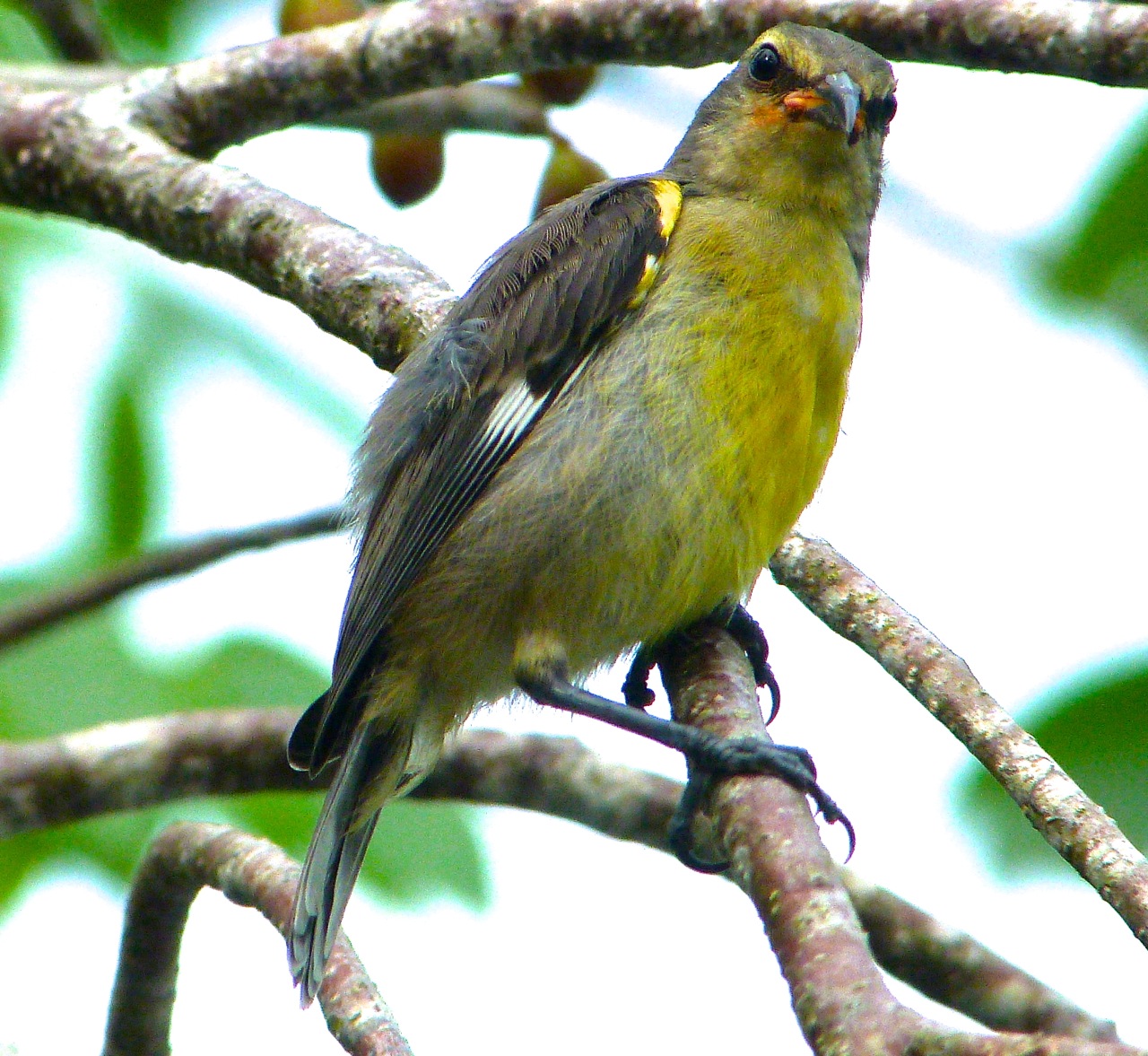
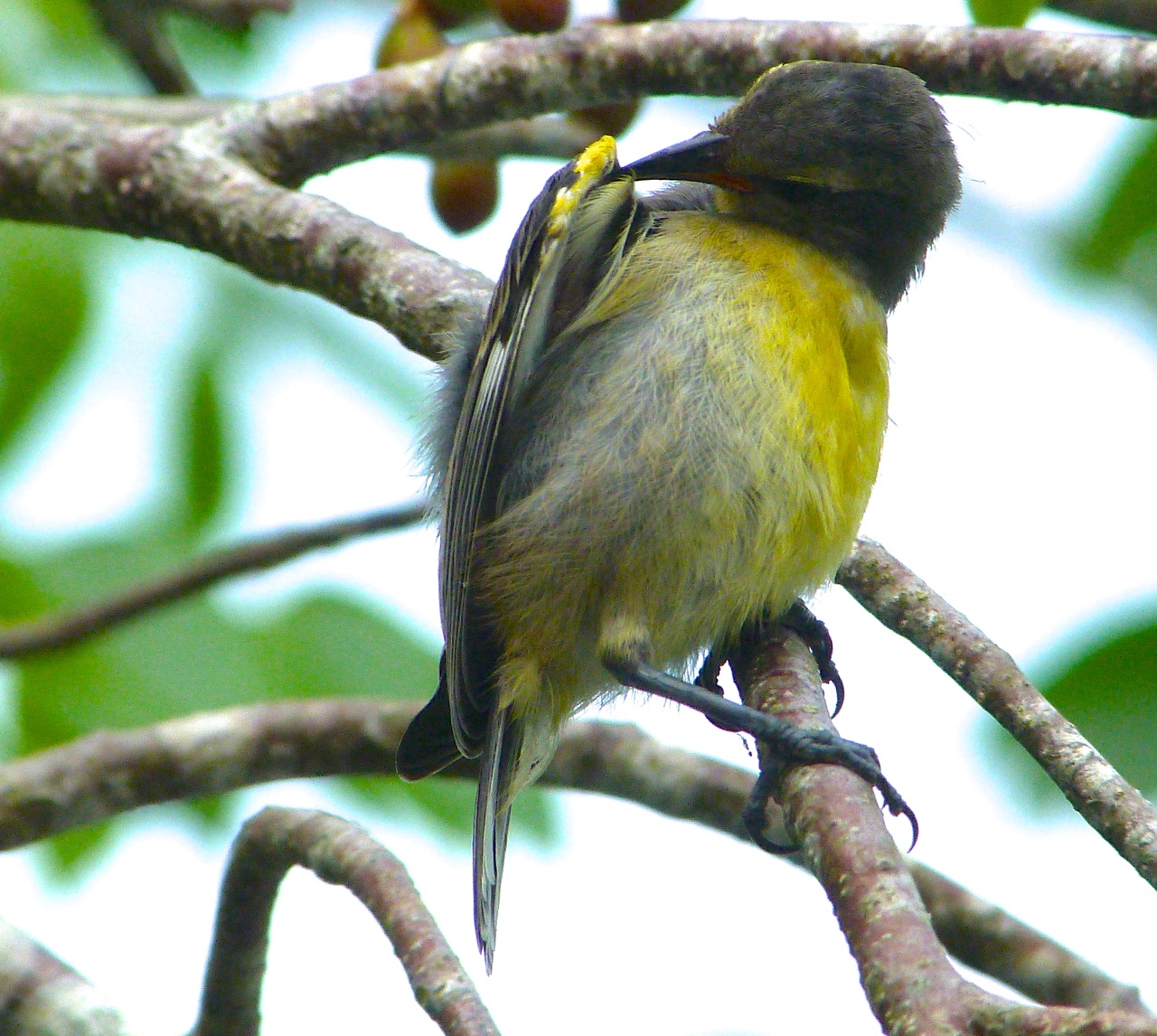
This second bird is a bit older, and has developed some smart citrus lemon shoulder flashes. Bananaquits have many regional variations throughout the caribbean and beyond. These birds are, or were, generally lumped in with the tanager species. They have an official classification of ‘uncertain placement’ in the taxonomic scheme for now, while their exact status is debated. Not that anyone watching them worries about that sort of technicality.Bananaquit (juv) Abaco, Bahamas 6Bananaquit (juv) Abaco, Bahamas 5

Here is what a Bahamas bananaquit sounds like, recorded on Andros (Credit: Paul Driver at Xeno-Canto)

A pair of adult bananaquits