Scotch bonnets (or ‘ridged bonnets’)Semicassis granulata or Phalium granulatum are a medium-sized species of sea snail found in the tropical and subtropical western Atlantic from North Carolina to Uruguay. They are predators, foraging on sandy stretches of the ocean floor for echinoderms such as sand dollars, sea biscuits, and other sea urchins (Caution: ‘Oxford comma’)
SCOTCH BONNET FACTS
It takes approximately six years for a Scotch bonnet to mature
The shells grows 2 – 4 ins long (5 – 10 cm), showing distinct growth stages
Scotch bonnets live on sand, usually in fairly shallow water (but see below)
The more a Scotch bonnet eats the more elaborate its shell, the glossier its sheen & the brighter its colours (research suggests this doesn’t work for humans)
Divers frequently find Scotch bonnets at depths of 50 – 150 feet (15 to 46 m). Specimens have been found in depths up to 308 ft (94 m)
Shipwrecks provide a good habitat for this species
Crabs are its main predators, crushing the shell to get at the occupant. Since the snails’ main defence mechanism is to withdraw into their shells, they urgently need to evolve a new tactic
The empty shell of this sea species is often used by hermit crabs
In 1965 the state of North Carolina made the Scotch bonnet its official state shell, in honor of the Scottish settlers who founded the state
The ridge on my shell, below, may be somewhat unusual. I haven’t found any images showing such a very distinct dorsal growth, though many show a sort of fault line there. STOP PRESS shell expert Colin Redfern explains: “The dorsal ridge on your shell is a varix, indicating a previous position of the outer lip during the growth process. Varices on Scotch Bonnets are usually thicker (as in the image above).”
dear wiki: how kind to help
CASSIS RUFA (Cypraecassis rufa)
There are many different sorts of Phalium worldwide. By way of comparison, here is another type, Cassis Rufa, from the Pacific (commonly, east Africa to New Guinea). It’s colloquially known as a Bullmouth, Red Mouth or Grinning Mouth Helmet – and also as a ‘Cameo Shell’, because it is often used for making cameos (see eBay for examples)
[rh provenance / historical note: it’s not an area I’ve ever been to, nor am I likely to go. This shell was collected by my late father-in-law when he oversaw the building of the original Gan airstrip on Addu Atoll (Maldives) in… in…. many years ago, as a naval project. It is now ‘Gan International Airport’ and sells giant Toblerone & ‘Parfum de Jordan’ from the Katie Price ‘Scentsless’ range]
BAHAMAS MARINE MAMMAL RESEARCH ORGANISATION NEWSLETTER OCTOBER 2011
The BMMRO’s fully illustrated Fall Newsletter has just been published. The newletter is as always an eclectic mix of cetacean-centric material, with a headline article about the summer whale poop project. I have lived my life and had a professional career of sorts without once giving the remotest thought to whale poop, yet here I am immersed in the stuff yet again… But there’s plenty more besides that. The newsletter gives you an overview of the current work of the BMMRO and articles including the following:
A stranded Fin whale on the Berry Islands
News of the Irene effect at Whale HQ in Sandy Point
An Orca sighted off Eleuthera
Education program update
A quarterly chart of the summer whale and dolphin sightings – 82 reports for 10 species.
Thanks as ever to Charlotte Dunn for permission to link to BMMRO material. To see the newsletterCLICK LINK===>>>BMMRO newsletter Oct 2011
To visit the informative BMMRO websiteCLICK LOGO===>>>Supplementary info: without going into details of the consistency of the output etc, I’ve just found the suggestion online that whales can excrete 3% of their body weight in a day. And a large whale weighs..? Mind where you swim
It’s 7.15 and breakfast time at Delphi. At 8.00 the trucks, skiffs, guides and fishers will set off to the fishing grounds for the day, leaving you with an empty beach, shells, warm sea, the pool, the hammock and your book. For the moment, the talk is of the excellent ‘Full Abaco’ breakfast, the weather, ‘Delphi daddies’ & ‘crazy charlies’ and someone’s mislaid reel. Sandy enters to announce that there’s a place free on your partner’s skiff… and offers it to you. So what should you, a non-angler, expect of a day out on the flats?
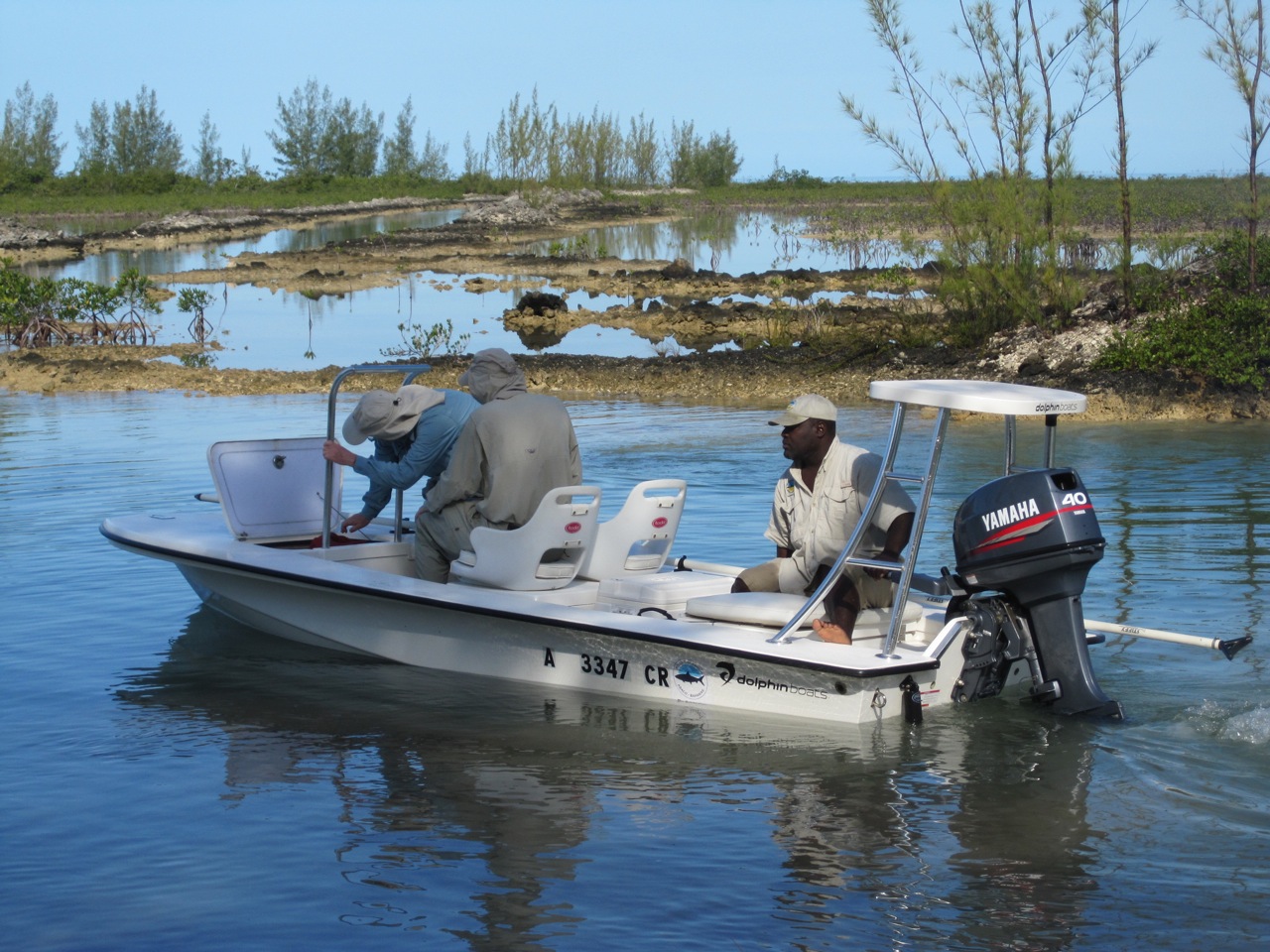
THE SKIFFS These are top-of-the range boats, capable of considerable speed getting out to the fishing grounds. The ride can be bumpy, splashy and even chilly in the early morning, so bring a fleece and a waterproof top. Camera? Essential. Here is a Delphi skiff on a sand bar in Cherokee Sound, parked for lunch and some quality conch and sand-dollar hunting. So for a start, the day isn’t ALL about fishing…
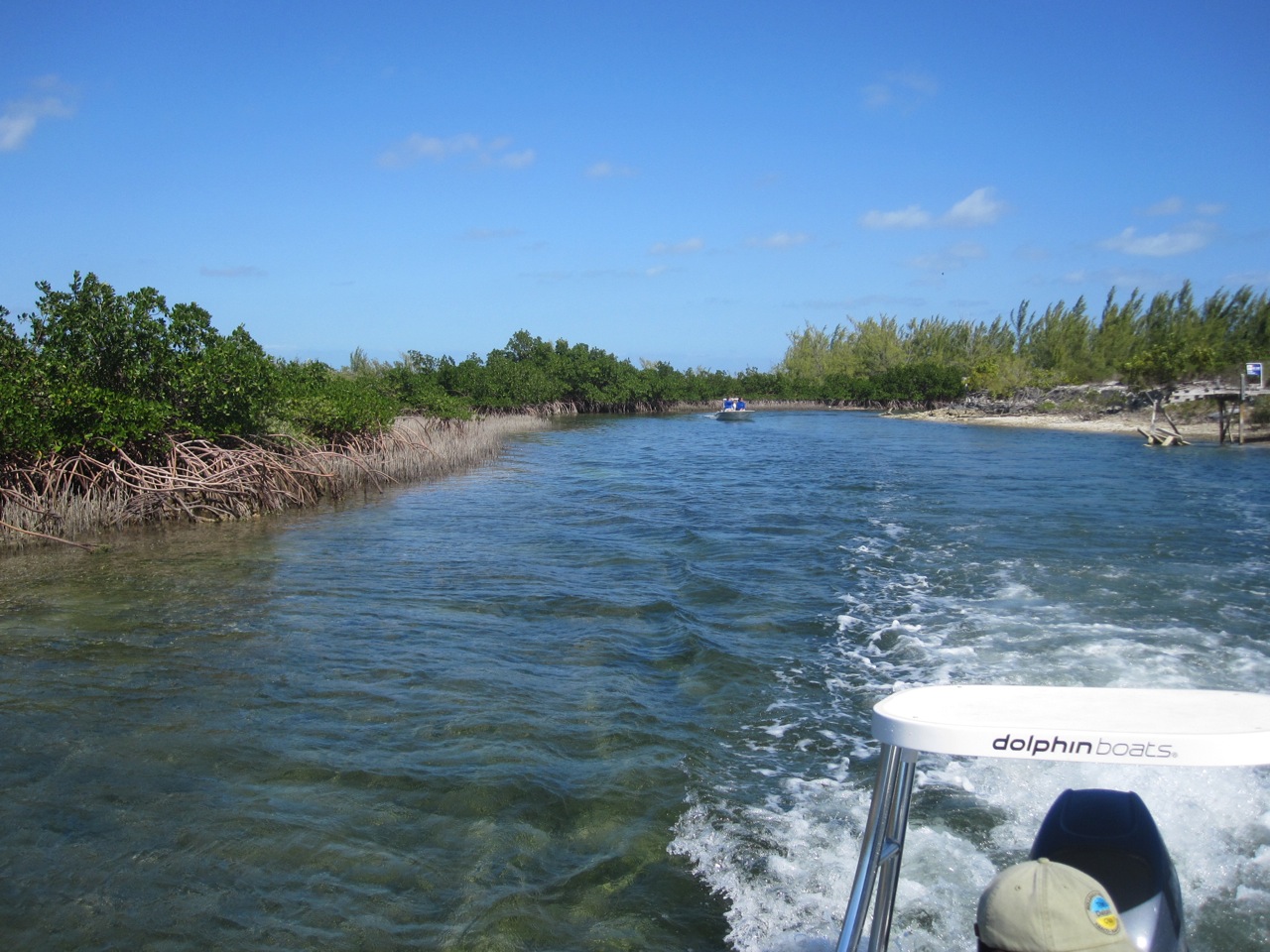
THE FISHING GROUNDS You will leave from one of three launch points and speed across the water to the bonefishing areas. The main one is “Nettie’s”, with access via a narrow man-made channel to the Marls…
… more than two hundred square miles of mangrove swamp, islets, channels and fish. The journey to Nettie’s may seem quite a long way as you bump along through the pine forest on a network of logging tracks. Watch out for small birds flickering all around as you pass.
———————————
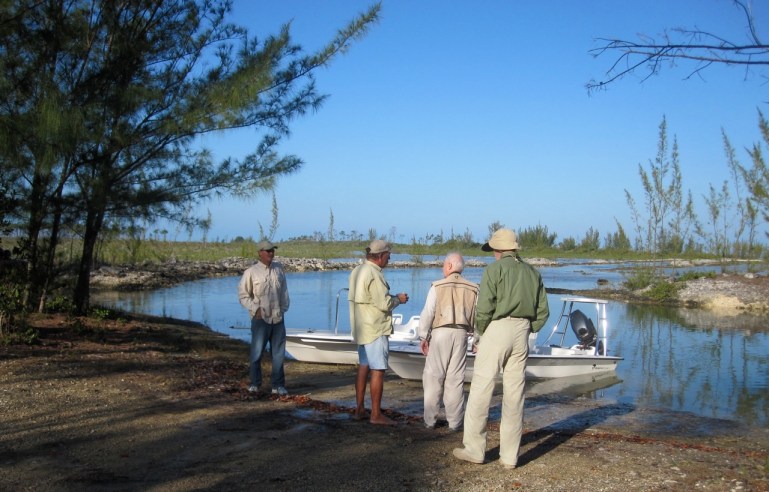
Launching a skiff at Nettie’s
Plans are hatchedGood to go…
Stowing gear in the front (forrard?) locker. There’s also one behind the seats for the lunch cool boxes. And the fuel…
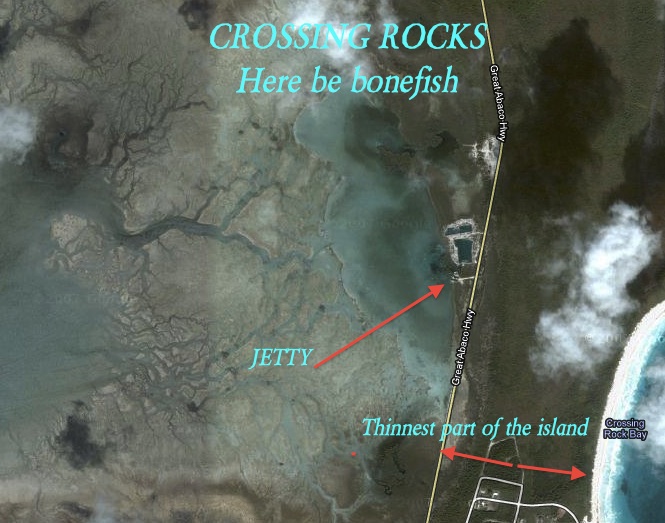
The other two launch areas are Crossing Rocks (a short drive south of DCB) or Casuarina Point for Cherokee Sound (a slightly longer drive north of DCB)
The jetty at Crossing Rocks – skiffs being prepared
The launch point at Casuarina. A channel leads out to Cherokee Sound
Two boats in the channel – the authentic James Bond chase experience
WHAT’S THE POINT? Bonefishing! You’ve heard all the Club talk, you’ve seen your partner fussing over all those bits and pieces in your room: now see it in action. Once you get out to a fishing area, the guide cuts the engine… and suddenly you are being poled very slowly and almost noiselessly across the shallow flats
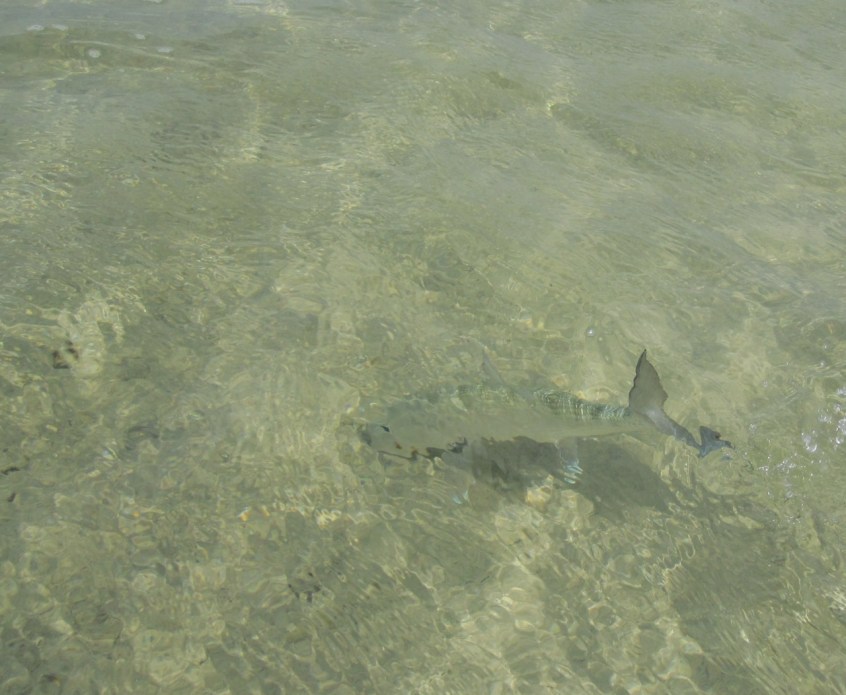
The guide stands on the platform at the back of the skiff, using the advantage of height to scan the shallow water; the fisher stands at the front looking tensely for grey shadows underwater, waiting for the magic words…
“…hey, bonefish, 10 o’clock, 4 of them moving right, 30 feet… see them?”
And it’s ‘game on’. This isn’t the place for a discourse about casting technique and style – I have neither (Sandy, of me: “Muppet”) – but I promise that you will get completely caught up in the excitement when a fish takes the fly and takes off towards the horizon, stripping the line and backing from the reel… (I realise the image above may suggest… well he’s just fishing, OK?)
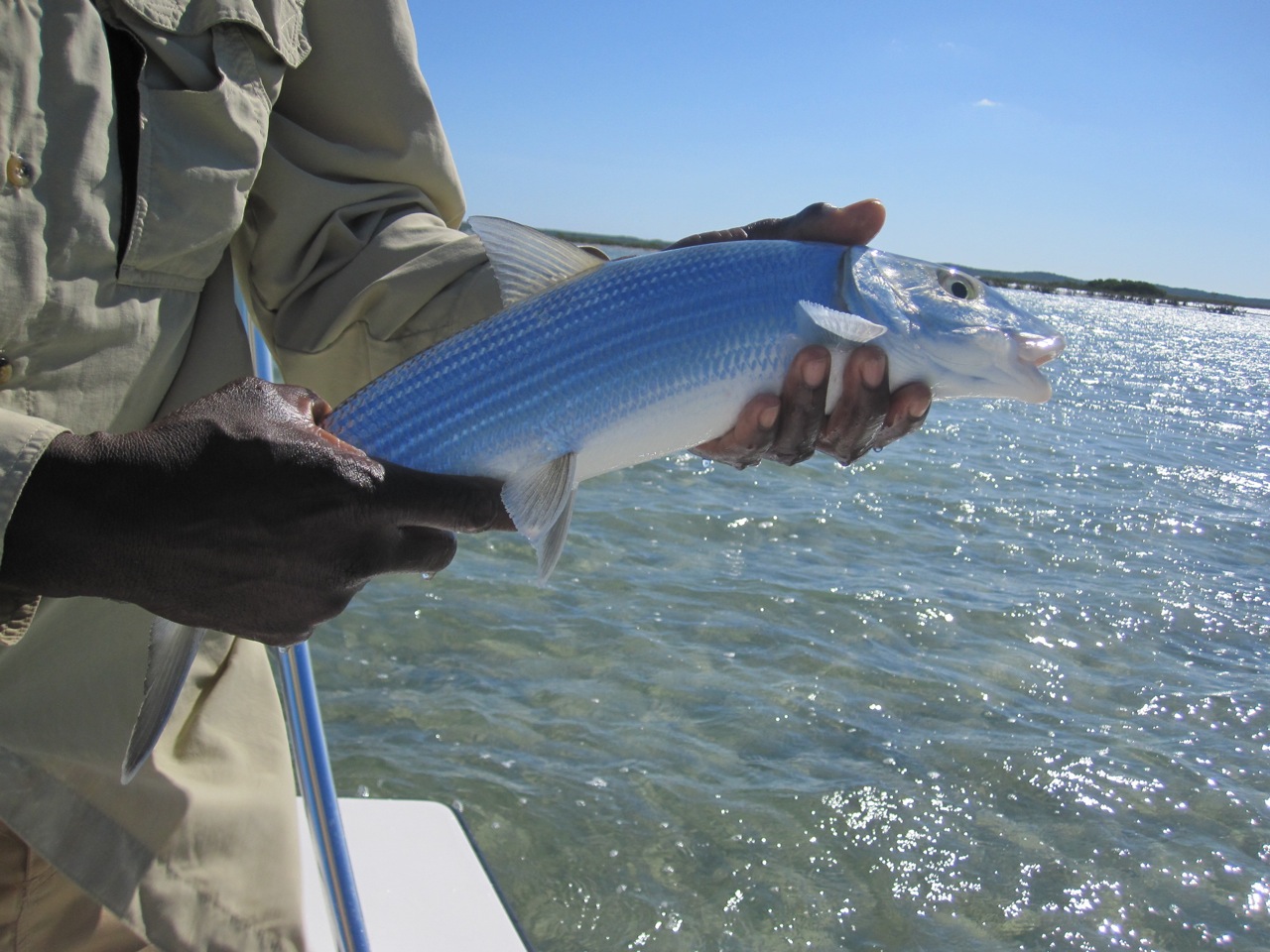
THE QUARRY – grey ghosts below water, bars of silver above. Caught on the ‘fly’ which are in fact shrimp or crab imitations, with barbless hooks to make the chance of losing a fish that much greater… This ensures that a boated fish can be returned to the water as easily and quickly as possible. It’s all ‘catch and release’, though some (me) find that mostly the fish very sensibly self-release long before they ever reach the boat…
Abaco bonefish off Crossing Rocks (just caught and released)Guide Ishi with Abaco bonefish caught on the MarlsGuide Robin Albury removes the barbless hook before returning the fishA good specimen‘Ishi’s Fishy’, as he would say
There is even the possibility that at some stage you may unexpectedly be handed a rod (even if you have never held one before, or wanted to) with ‘fish on’… Here, Robin has hooked a 2.5 lb fish and handed the rod to Mrs RH (then engrossed in eating a cheese roll) who successfully played and brought in her first ever fish…
PART 2 will deal with what else goes on during the day: the scenery, birdlife, sharks, turtles, blue holes and so forth. For now, here is a short clip of the skiff ride out to the Marls, to give you an idea. NB this was a very calm day – things can get a little bumpier and wetter at times. The seats are padded, but not very…
[Ultra-cautious music credit to Joe Satriani who sued Coldplay for alleged tune ‘borrowing’ saying “I felt like a dagger went right through my heart. It hurt so much”. Case dismissed + unspecified settlement… Way to go, Joe! Want to check? Cut ‘n’ paste this: http://www.youtube.com/watch?v=zjB024bZoB4&feature=fvwrel Then by way of counterbalance try John Lennon’s Imagine vs Coldplay’s ‘Fix you’ at (cut ‘n’ paste) http://www.youtube.com/watch?v=DksjpsAe3vk&feature=endscreen&NR=1]
[Note: this post replaces the preliminary, typo-ridden and imageless draft that subscribers may have received, for which I stupidly pressed the ‘publish’ button rather than ‘save draft’… Not the 1st time, either… Sorry]
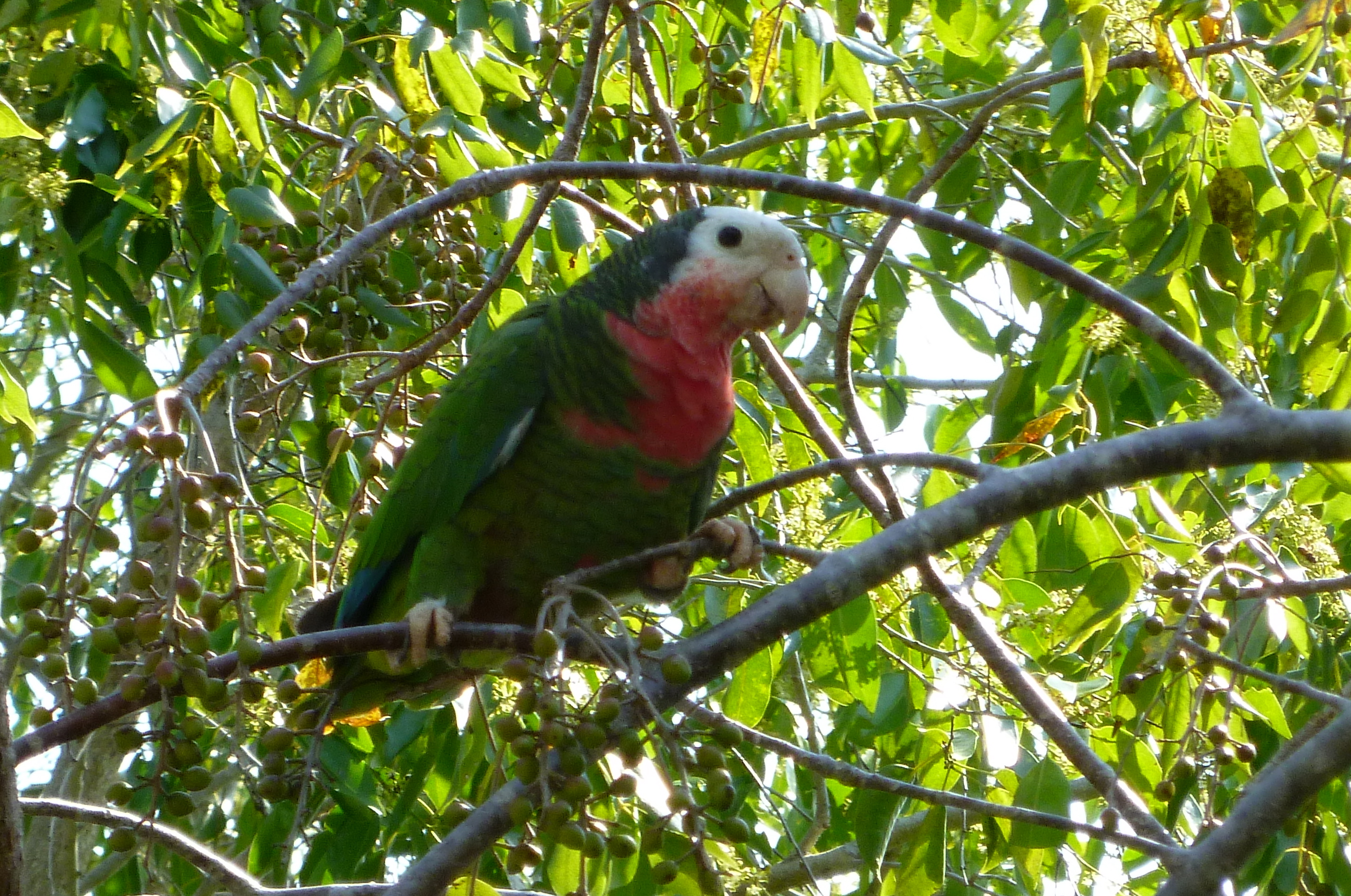
Scientist Caroline Stahala has spent 10 years researching the Abaco population of the Bahama parrot. Her aim is to develop understanding of their behaviour so that conservation and management strategies for this rare sub-species can be optimised. Particular protection problems arise because Abaco parrots, uniquely, nest underground. Their main vulnerability is to predation by feral cats, racoons and rodents which kill adults, chicks and fledglings in the nest
Predator monitoring and control programs have been in place for several years, removing surprising numbers of feral cats prior to and during the breeding season. Prevention techniques have been refined as predation data has accumulated. In 2011 for the first time motion-sensitive cameras were used, positioned near the openings of vulnerable active nests (shallow or with large openings), monitored 24/7 with infra-red night-time flash. Constant technical adjustments were needed to determine optimum filming distance and memory card size, and to avoid ‘false triggers’ (eg wind)
A great deal of vital data was collected, particularly at night when predation can’t otherwise be effectively monitored. Feral cats were the most frequent visitors, followed by rodents. No racoons were recorded, so these may be less of a threat than expected. One northern mockingbird (above) was caught on film up to no good. It it seems that the camera flash itself may act as a deterrent, something that bears further study. There is also new evidence that some predators approach a nest and ‘case the joint’ for later use. All this data will make it possible to target predator control preventatively, rather than in the sad aftermath of predation – a great step forward.
Overall, during the 2011 breeding season none of 55 nests monitored was lost due to predation. In previous years, the attrition rates have been around 25%. The use of cameras avoids any disturbance of the parrots and chicks and provides round-the-clock monitoring. If the cameras / flash are in themselves deterrents, that is a simple method of predation control. The new banding project means that it is now possible to be certain whether same parrot (or pair) is using the same nest cavity each year – and of course individuals can more readily be identified
Finally, Caroline confirms that the parrots weathered Hurricane Irene well. She was still monitoring the breeding territory then, and when she returned to check active nests after the storm, she found the chicks and fledglings safe in their nest cavities
Abaco Parrot chick safe and sound - the first post-Irene image
Peter Mantle reports that a recent ferocious 4-day storm caused further havoc in the gardens, which had just about recovered from the depredations of Hurricane Irene. Even fishing was impossible. Yes, it really was that bad. However, the birds seem remarkably resilient to everything the weather gods throw at them. Parrots are plentiful around the club and are seen and / or heard almost daily. Peter also says“We had a spectacular exhibition yesterday of a peregrine repeatedly dive-bombing (for fun, we think) several turkey vultures in high wind, with another peregrine cruising nearby.”
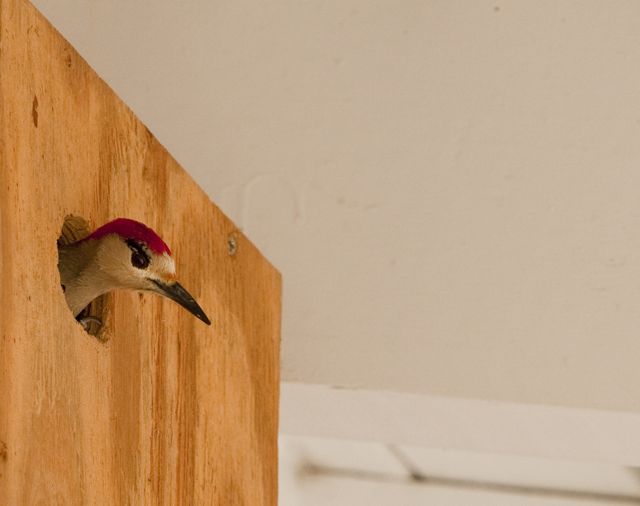
Caroline Stahala has given me a West Indian Woodpecker update. These charming if noisy birds have been a bit of a leitmotif of this blog. We met their early reluctance to use the perfectly nice nesting box provided for them; their eventual moving in; their use of the club vehicles’ wing-mirrors for vanity purposes; their attempts to raise 2 broods of chicks with varied success (that’s a deliberate euphemism); and stoutly resisting the force of Irene. The male woodpecker is still using the nesting box for roosting. The breeding season is long over, but perhaps next season his home in the eaves of the verandah will be tempting for a mate… And finally, the hummingbirds are plentiful – so as Caroline says, “now is a good time to be birdwatching…”
A while ago, I posted stills from a reef-snorkelling video – my first ever underwater video attempt, and indeed my first snorkel for about 40 yearsCLICK===>>>REEF FISH I started with a stingray, producing some rather… ok, very… modest results, but it was at least identifiable if you looked carefully and felt benign.
I’ve learned a few tricks since then. Here is the whole clip, still hopeless in most respects but there’s something quite cute about the creature. Mercifully it is only 37 seconds long. I reserve the right to delete this post when I realise no one has actually watched it! [LATER: Oh! I find a few hardy souls have done so. It’s a democratic vote for the ray to stay, as I see it]
[Belated credit to the fairly litigious Joe Satriani (see JS v Coldplay 2009) for borrowing the intro to one of his songs. It’s a non-commercial tribute, Joe]
Michelle, a resident of Green Turtle Cay who contacted me just after Irene had hit, has emailed this update of the situation there. I’m still getting searches from people asking for news on GTC, so I’m posting this now – there may be some images to add in due course. I have a feeling that many people outside Abaco / Bahamas have no idea that the comms are still down over many areas 6 weeks later, and that the great repair and clean up continues
“Thankfully everyone is fine except for the continuous cleaning up and trying to restore the phone service. I hear BATELNET has been sold by the gov. So there is now one hapless phone line repairman scampering around trying to get all the lines drained of water and serviceable… Irene came in on both sides and on high tide (as usual… remember Floyd?). It would have been good to have been able to receive news in the US while Irene was approaching the chain, but typical that unless it directly concerns [the US], you have to have other news sources. The patience of Bahamians is simply amazing!”
Although I have stood down from temporary hurricane-watch commentary, I will continue to post with news from individual areas for as long as I am getting online queries. All credit to WordPress for the detailed daily stats breakdowns…
NATIONAL TREE OF THE BAHAMAS & THE WOOD OF CRICKET BAILS
LIGNUM VITAE The “tree of life” (Guaiacum sanctum) is a very heavy wood with clusters of small blue flowers at the branch tips. Its strength, density and durability made it a valuable trade wood historically. It easily sinks in water and is the densest of all trade woods. As alternative materials and compounds have been discovered, the demand for LV has fallen… which is fortunate, since Lignum Vitae (also commonly known as Greenheart and Ironwood) is now considered a potentially endangered tree species.
LIGNUM VITAE TREE IN HOPE TOWN, ELBOW CAY, ABACO
The wood had – and still has – many important uses. All cricketers know that bails of lignum vitae are used in windy conditions to forestall any “…and the bowler charges in… reaches his delivery stride and… oh my goodness the bails have blown off…” dramas. The wood is also used in other sports: for bowls and skittle balls, and croquet mallets Flower Image Credit Grooko
LIGNUM VITAE TREE ON MAN-O-WAR CAY, ABACO
Photo credit: Eric Forsyth of the Yacht Fiona
10 MEMORABLE FACTS ABOUT LIGNUM VITAE
Traditionally, it was used for making British Police Truncheons (now made of soft fluffy pink fabric to reflect new caring policing methods)
Its physical qualities made it widely used in shipbuilding (though presumably not the whole ship, which would sink instantly)
Cabinet-makers, stone-carvers and gem-cutters all use the wood in their crafts
LV has many engineering uses. The wood is self-lubricating and is ideal for bearings. The 1st nuclear submarine had some of these
The world-renowned UK fishing rod maker Hardy’s made a famous ‘Greenheart’ rod
LV has medical uses, including for arthritis; and its bark / shavings allegedly make a nice cup of “tea”… (Any evidence of this?)
A 1920’s calypso song “LignumVitae” was sensationally saucy for its allusions to the bark tea’s prophylactic quality in addition to exploiting the phallic connotations
Gabriel Garcia Márquez incorporates uses for the wood in two of his novels (neither of which I have read. Oh dear. The guilt)
Pete Seeger, singer / songwriter, made the neck of his banjo from LV
The wood is also connected to mauve tiling, vitamin glue, anti-evil gum and the ‘vigilant emu’ by anagrammatic chance
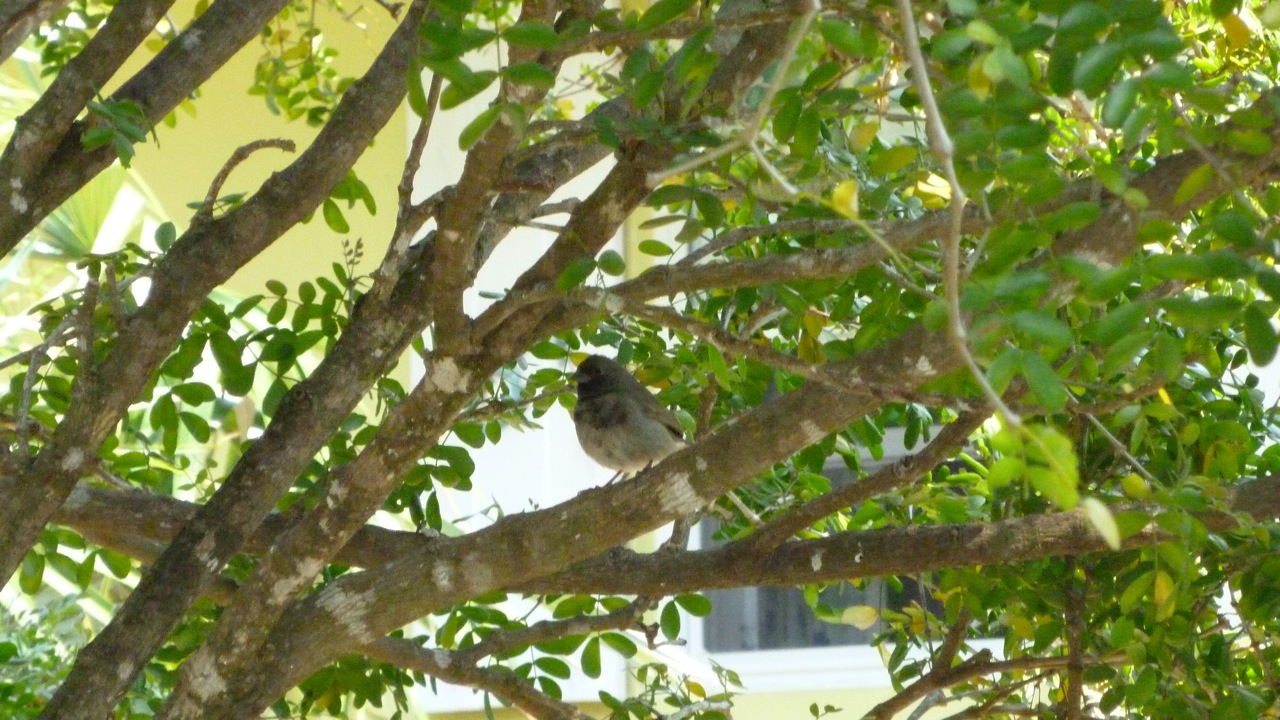
A Lignum Vitae tree at Bahama Palm Shores, Abaco, with a camera-shy juvenile black-faced grassquit
JANKA HARDNESS TEST
The Janka Hardness Test is an international test of the hardness of a given wood by measuring the force needed to embed a steel ball to half its diameter. The size of the ball is internationally standardised, though the reading may be given in ‘local’ units. The hardest wood (using pounds/force units) is the Australian Buloke (5060); Lignum Vitae is the second hardest (4500). Other examples are Ebony (3220); Satinwood (1820); Zebrawood (1575); Caribbean Pine (1280); Teak (1000); Mahogany (800) Balsa (100).
A single lignum vitae flower
Some examples of items traditionally made from lignum vitae: gavels (auctioneers, TV Judiciary eg in Perry Mason); bowls; pestle & mortar; and (for dudes) a seriously cool guitar pick (less than $5 too)
PS 2012: I now have 2 hardwood plectrums (plectra?) to try out. The Lignum is nearly 3 times as hard as the Zebra wood. This does not imply that I am a dude (or even a superannuated one), but merely that I haven’t had the heart to dispose of my guitars. Mrs RH has a view about that… a strong one, I think
Info Card by Scott Johnson of the Bahamas National Trust
The above is cobbled together from Wiki and other snippets. Ta to all. An interesting site for a look at LV’s practical uses and some helpful information is Lignum-Vitae.com CLICK LOGO===>>>
The mention of cricket has made me nostalgic for the season just ended… UK – indeed any – cricket nuts will know exactly where I am coming from with this…
I have been in touch with Brigitte Bower Carey from Tilloo Cay, whose cheerful painting of a Sergeant Major graces the usual rh Logo space above. She has kindly sent an update on the post-Irene situation on Tilloo, and a couple of images showing the effects of the storm on foliage. Luckily, it sounds as though the birdlife is ok in the aftermath. But no phone, a month after…
“Everything is good here – the house and we weathered the storm just fine. The dock is a mess, but is repairable. Nothing at all like most of the south facing docks on our island and our neighbouring island, Lubber’s Quarters – only the poles survived there. So we are grateful. Still cleaning up, the yard was in bad shape, but it is coming along… Communications are a weak point here after the storms – we still don’t have our phone back.
Abaco is starting to look like in spring time now, because a lot of the foliage got burned in the 140 mph gusts of Irene. So now all of the surviving trees are pushing out new leaves, plus all the rain has helped revive things. But nothing at all like after Floyd – when we came home in November ’99 there was not a leaf on any tree, and no birds at all. So we are considering ourselves very lucky now”.
BAHAMIAN MAHOGANY REGENERATING AFTER IRENE
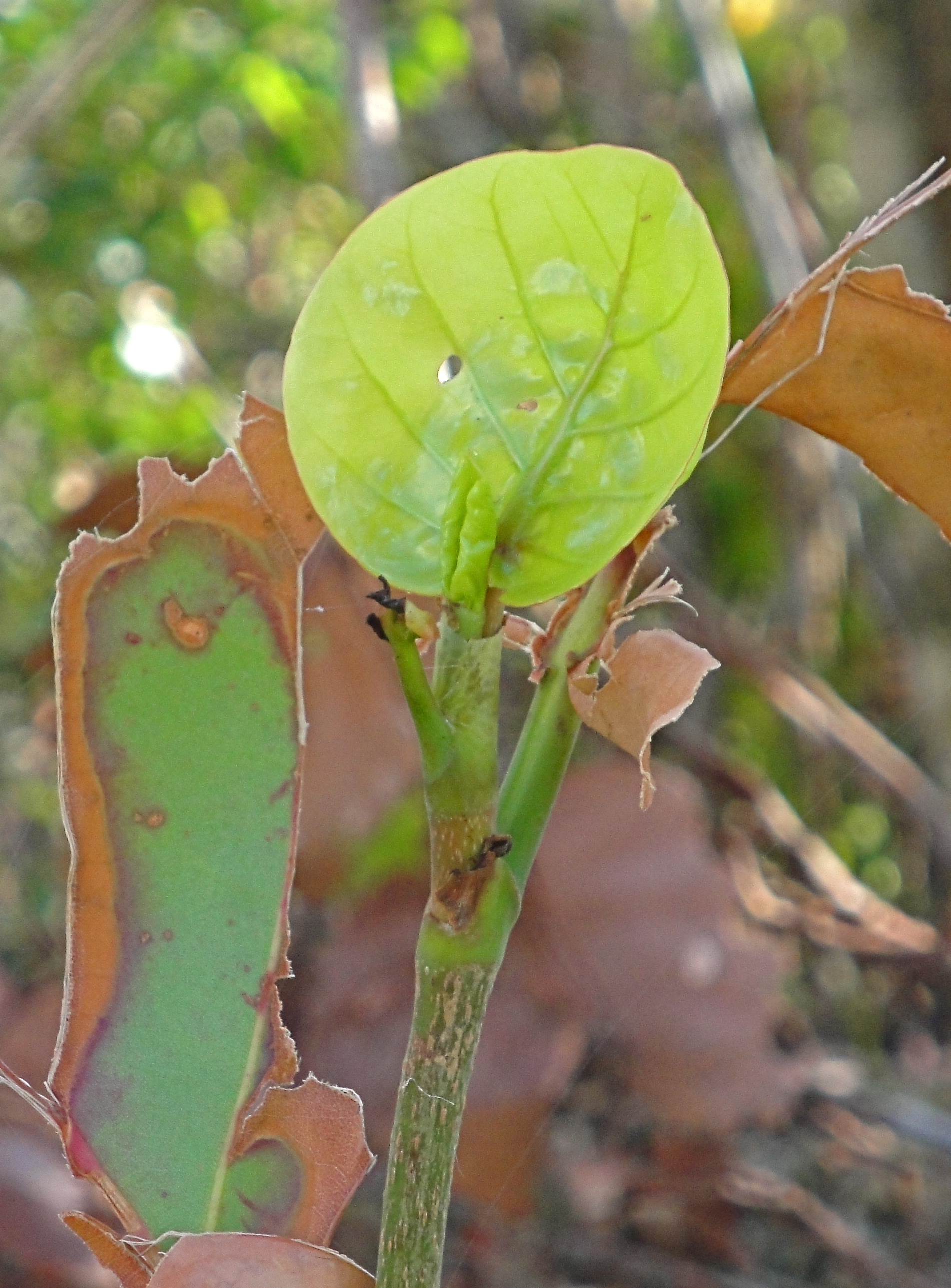
A WIND-BURNED SEA GRAPE PLANT PRODUCING NEW LEAVES
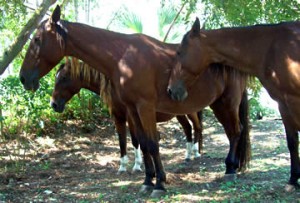
Normal(-ish) service is resumed after a break… Before I went away I posted about the Abaco Barbs and the precariousness of their continued existence as a species. I have just heard from Milanne Rehor of ARKWILD with a completely up-to-date report on the current situation. From her account it is clear that these rare wild horses really are on the brink of extinction
“Currently, we have the three mares in a reduced area of the Preserve. We have had limited sightings of one stallion outside the Preserve. The second outside stallion hasn’t been seen in over a year so we don’t know if he still is alive.
The mares’ physical condition is “OK” but because of the smaller size of the Preserve (due to financial cut backs) they are in need of a blacksmith’s attention, veterinary attention to their dental condition and veterinary investigation of their reproductive capabilities.
We are in immediate need of funding to provide grain for the horses, (to supplement the smaller forage area), wages for our men (currently reduced to part time) in their work of feeding the horses, providing security for them and maintaining the electric fence and other chores.
The Bahamian Government has been helpful to a point with an expressed interest and indirect support of the horses , for example the President of our Board of Directors is also the Chief Warden for the Northern Bahamas for the Bahamas National Trust. A number of other board members are equally well placed, but the government has not yet directly contributed financially.
I hope this information helps, I’ll be happy to answer any other questions you may have. Your patience is deeply appreciated and thank you for following our story on your site. Best regards, Mim”
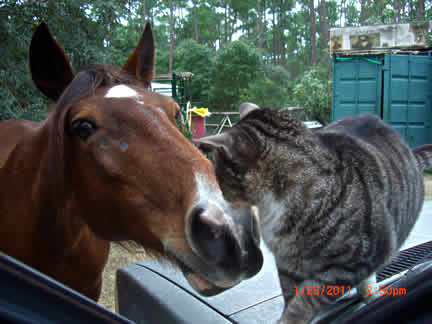
I have been in touch with Mim at ARKWILD to find out the latest news on the Abaco Barbs, and in particular how things are after Hurricane Irene. She has kindly sent a brief update which speaks for itself – not very optimistic-sounding, I’m afraid:
“Horses did fine, but we are down to the three mares inside, and one, possibly still two, stallions outside, we’re still fighting but it’s hard to paint this picture in pretty colors right now . . .”
Mim has also sent the link to a dramatic 4 minute video which includes vivid footage of Hurricane Irene’s power as it passes over on August 25; and the aftermath on August 26 with graphic footage of damage, debris and flooding. Luckily the mares in the compound and her dogs were ok. Her boat home, well secured before Irene struck, still had various parts including its solar panels blown off, which she was fortunately able to recover by diving for them!
BAHAMAS MARINE MAMMAL RESEARCH ORGANISATION NEWSLETTER JULY 2011
The BMMRO, based at Sandy Point, Abaco, has published its latest newsletter: 4 pages of lavishly illustrated news and info about recent research and other cetacean-related matters. Thanks as ever to Charlotte Dunn for permission to link to / use material from the BMMRO website. To see the newsletterCLICK LINK===>>>BMMRO Newsletter_Jul11
If you want to immerse yourself in the extremely interesting details of past and ongoing research, with wonderful whale and dolphin photos and past sightings and stranding details, go to the main BMMRO websiteCLICK LOGO===>>>
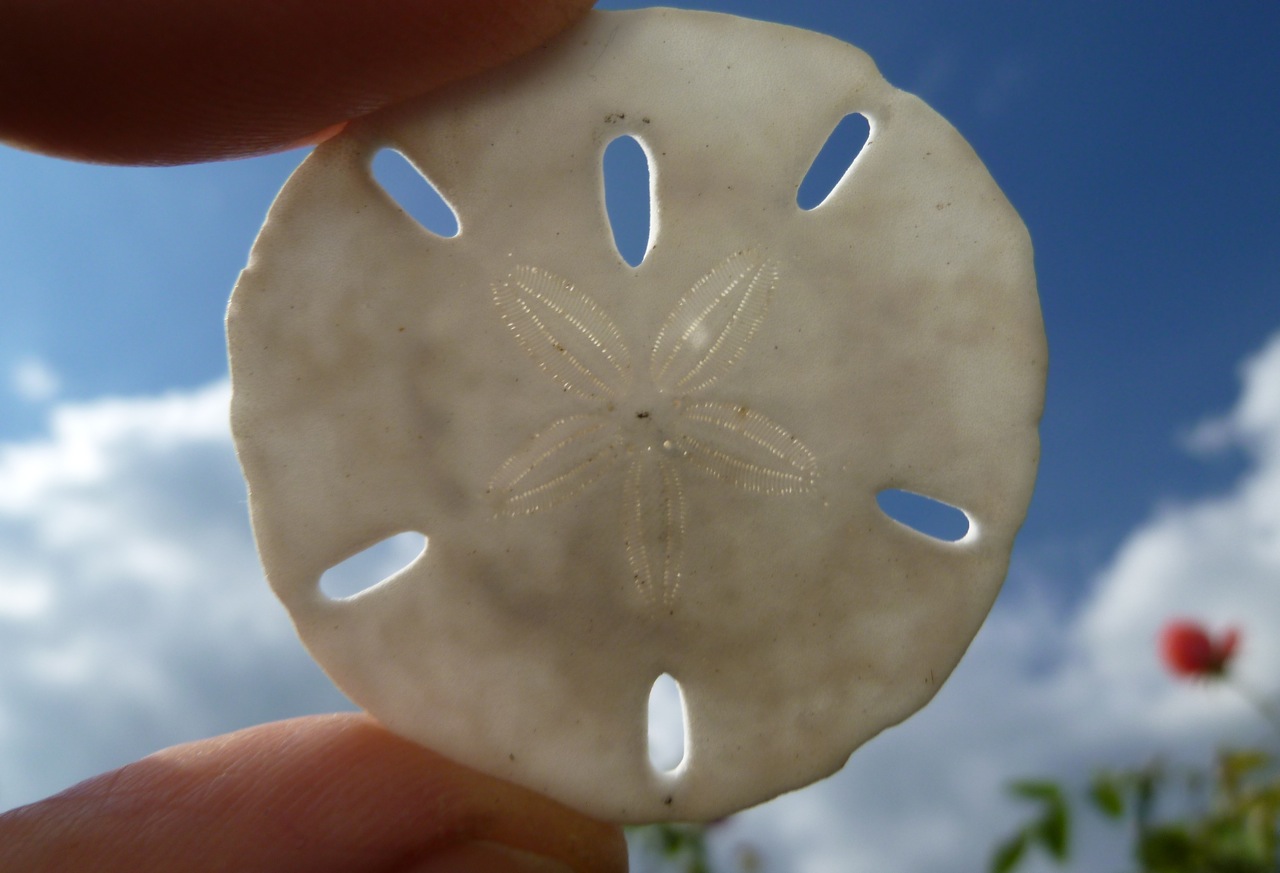
This video shows how the sand dollar is able to get around and to bury itself in the sand by using the hairs on its underside:
SAND DOLLAR IN A SPIN – TIME-LAPSE VIDEO
Another short time-lapse video of Sand Dollar manoeuvres lasting 15 – 25 minutes in real time, this time moving in circles before suddenly ‘zooming off’ into the distance…
SAND DOLLARS FROM THE RH COLLECTION
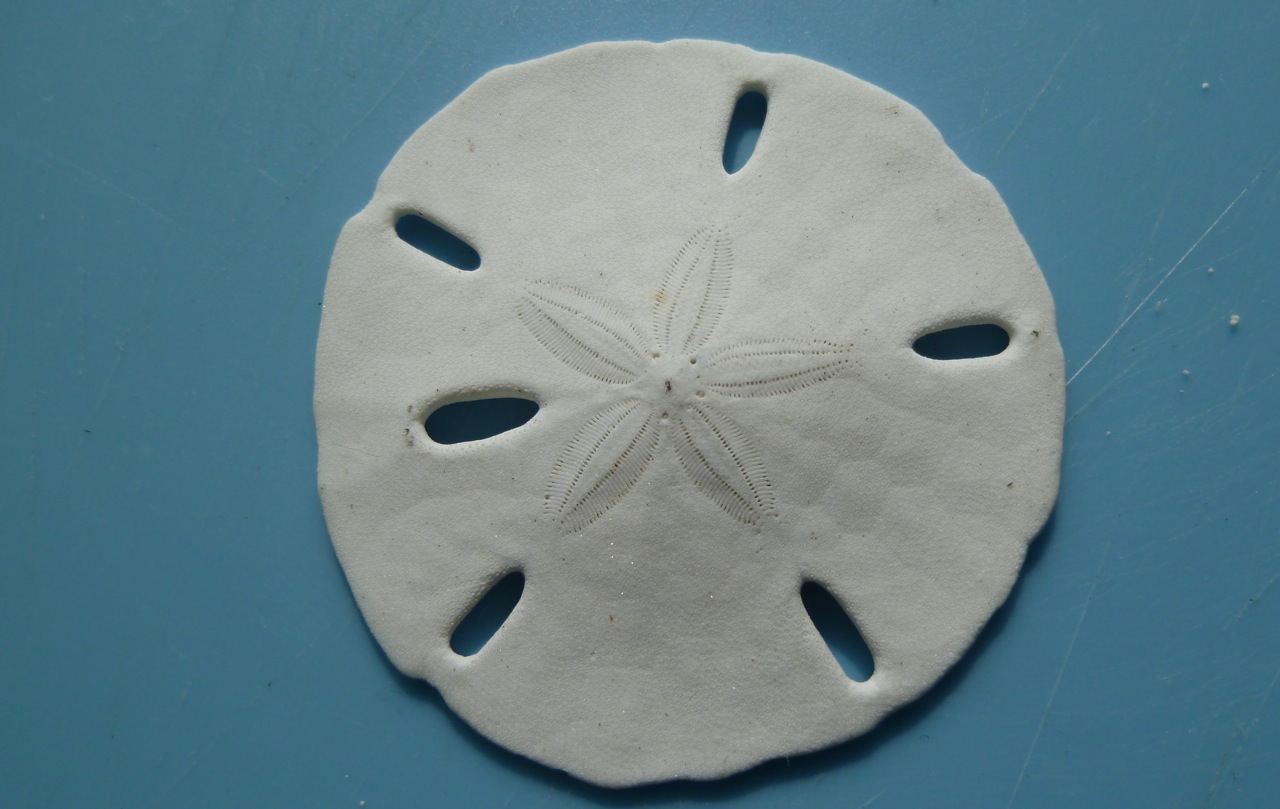
A small Sand Dollar test from Rocky Point beach near Sandy Point (top side, underside and see-through)
Large Sand Dollar tests from a sand bar in Cherokee Sound
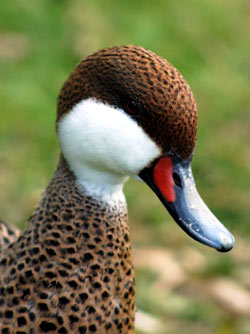
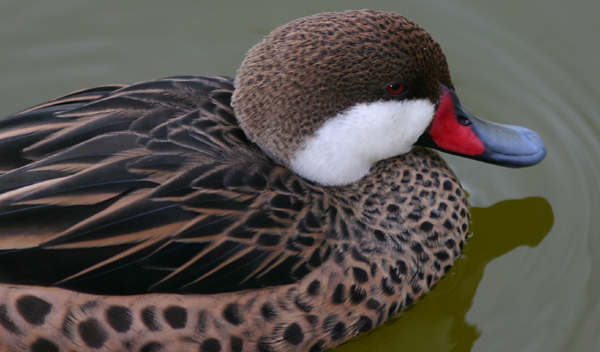
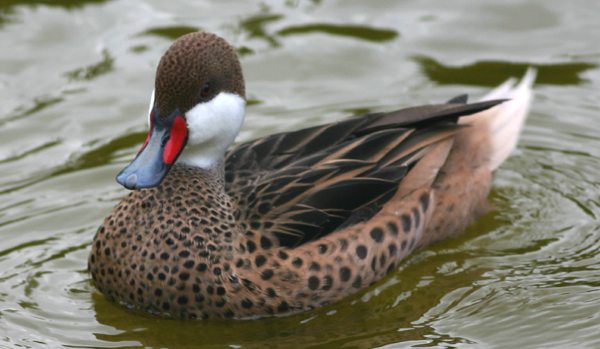
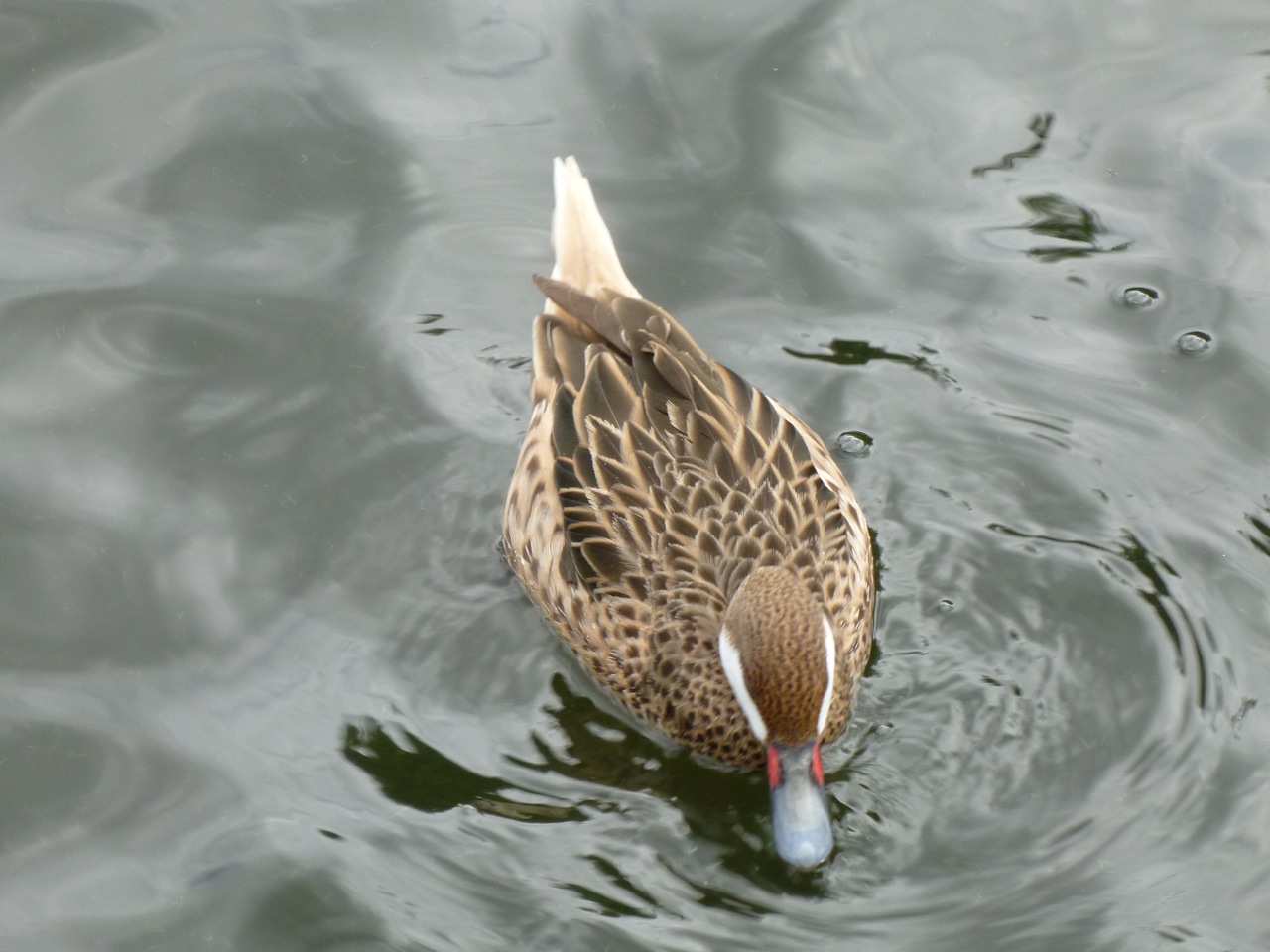
THE BAHAMA(S) PINTAIL aka WHITE-CHEEKED PINTAIL Anas Bahamensis
This very pretty duck species is getting a mention not because I have ever seen one on Abaco, but because I have seen them at WWT Barnes in London. [Later note: see end of post – turns out it was at Pensthorpe Nature ReserveNorfolk]. We went there last weekend to photograph one for your (plural, not single reader I hope) exclusive pleasure, but sadly they haven’t got any at the moment – they have been moved to WWT Slimbridge. I’ve decided to post about them anyway. As ever, thanks to wiki for its handy conservation and classification label, plus basic species details which always get things off to a scientific-looking start before the nose-dive into amateurism…
The White cheeked Pintail or Bahama Pintail (Anas bahamensis) is a dabbling duck first listed by LINNAEUSin his Systema naturae in 1758, under its current scientific name.
There are three subspecies: A. b. bahamensis in the Caribbean (and vagrant in south Florida); A. b. galapagensis on the Galapagos; and the slightly larger A. b. rubirostris in South America. The sexes are similar. It is mainly brown with white cheeks and a red-based grey bill (young birds lack the pink). Conveniently for amateurs, it “cannot be confused with any other duck in its range” – though I’ll believe that when I have first-hand experience of personal non-muddle.
These ducks are found on saline waters such as brackish lakes, estuaries and mangrove swamps. They feed on aquatic plants and small creatures rootled out by dabbling. The nest is on the ground under vegetation and near water.
Mike Bergin, a naturalist, has very kindly let me use 2 of his wonderful images for this post. There are others to be found at CLICK==>>http://10000birds.com/white-cheeked-pintails.htmIndeed the whole site is well worth a good rummage around
Photo Credits Mike Bergin 1000 Birds
Here’s what they sound like (credit Xeno-Canto / George Armistead)
SPECIES LISTING (Jan 2012): This duck is on the threatened species list – not actually endangered but experiencing “moderate decline or facing imminent threats which warrant specific conservation measures”. Sadly, there are 3 separate causes of decline, each of which may be difficult to combat: habitat loss; hunting; and predation by introduced species.
Finally, here are links to more material about and images of these pretty ducks:
OISEAUX-BIRDS(an excellent resource for many other birds – merci Nicole for link approval)
STOP PRESS To my complete surprise, I now discover that I have got my very own quite respectable picture of a Bahama Pintail, taken in July 2010 at the Pensthorpe Nature Reserve, Norfolk. So here it is…
STOP PRESS Feb 2012Ricky Johnson, Abaco’s renowned bird expedition leader, has posted a fine example of a Bahama Pintail on his Facebook page, taken near his home. And, with permission (thanks, Ricky) here it is
COMMON NAMES: Abaco Island boa, Northern Bahamas boa
EPICRATES CHILABOTHRUS EXSUL is a non-venomous species of boa, the only one of its species and genus. These snakes are grey with a reddish sheen. They grow to a maximum of 80 cm / 2ft 6″ in length [now see end of post] and feed on small mammals, birds and lizards. They are found throughout the Abacos, including Elbow Cay; and on Grand Bahama; but not elsewhere in the Bahamas (wiki-aided inc. image)
And if you can’t get to Abaco, there’s one in Oklahoma City Zoo: OKCZ ABACO ISLAND BOA
LATEST NEWS DEC 2011 a surprising visitor to the Friends of the Environment offices on 7 Dec 2011, posted on their Facebook page
A visitor at the FRIENDS office this afternoon, a Bahama Boa! This snake flattened itself pretty thin to try sneak out under the door frame! The door is open now so it can leave easily
STOP PRESS:a convincing refutation of the general consensus that the maximum length of these snakes is around 2′ 6″, with thanks to Brigitte Bowyer Carey. This specimen was photographed on Tilloo Cay in 2008, held at arms length by Don Allen
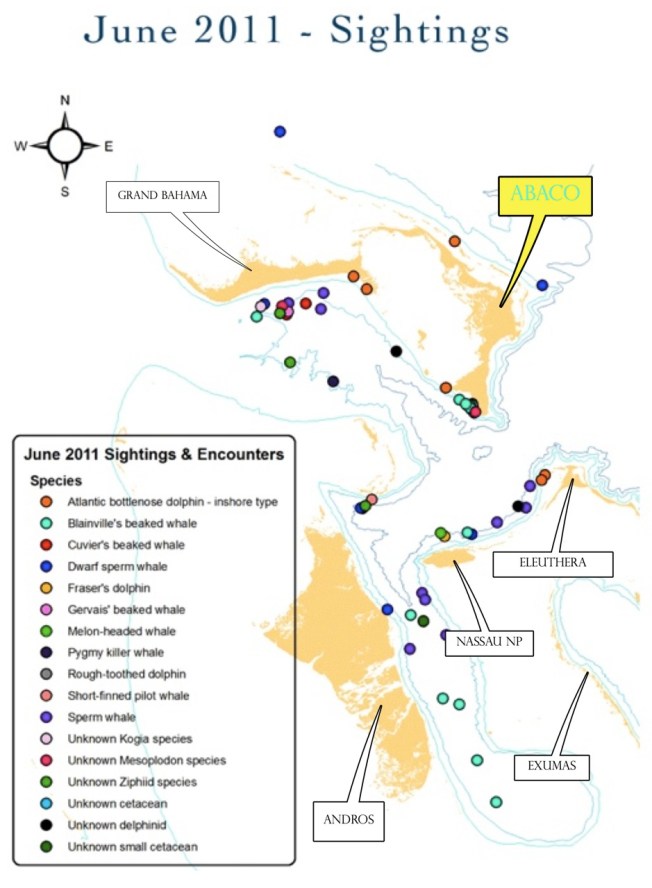
It’s worth commenting on the cluster of sightings on the south-west coast of Abaco between Sandy Point and Hole-in-the-Wall. This is the site of the Great Bahama Canyon, one of several extremely deep rifts that divide the generally shallow sea-floor of the Bahamas Islands. This deep trough provides a habitat and feeding ground for a huge variety of inshore and oceanic species, with an abundant supply of food. How convenient that the BMMRO HQ should be so close to this area…
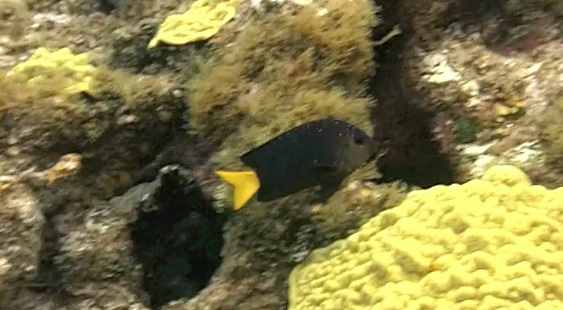
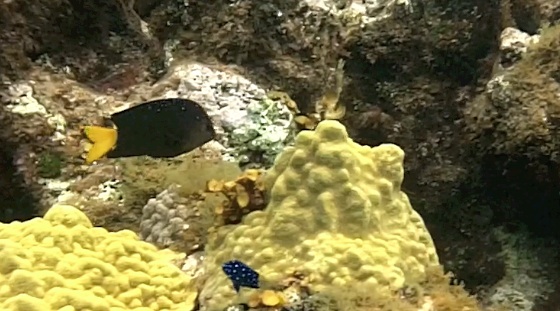
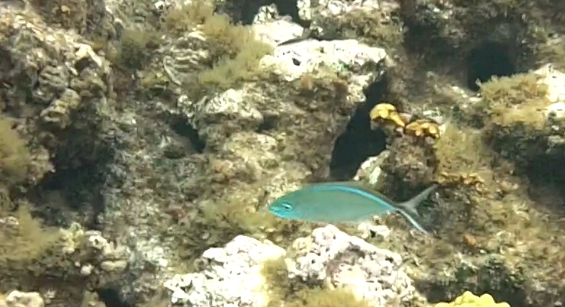
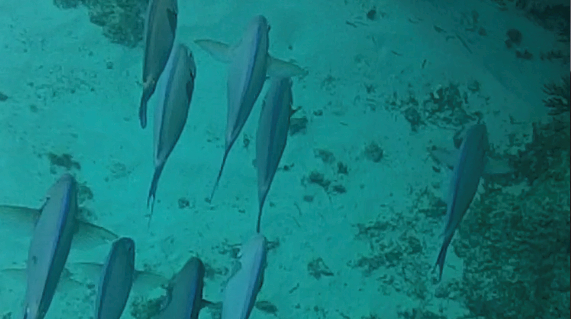
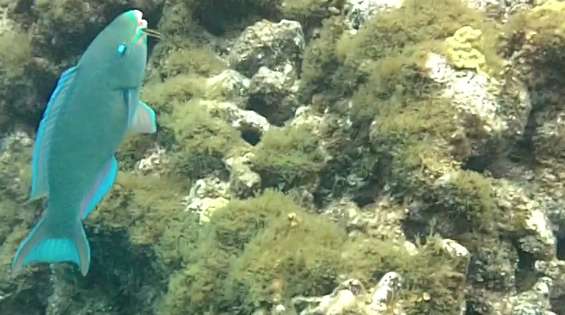
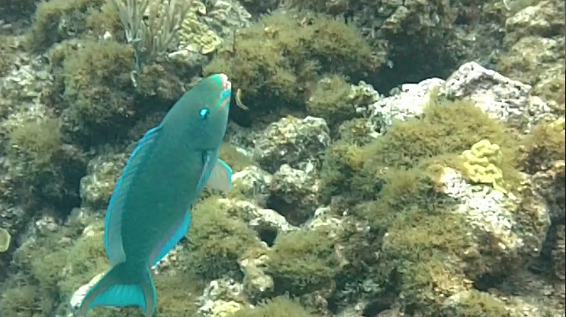
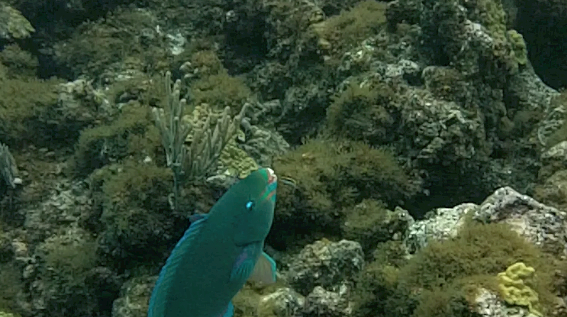
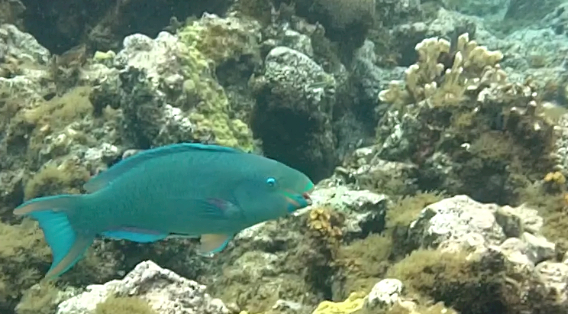
Here are some more stills of reef fish taken from the video of our reef-snorkelling trip to Fowl Key with Abaco Above and Below. I’ll add the fish IDs gradually. The first batch are images of individual fish; the second batch is a sequence showing a queen parrot fish feeding on small fish (?gobies) – images that I’d expect David Attenborough to describe in his quiet and breathy way as “really quite extraordinary”, especially if he has seen the general standard of pics in this blog…
BLUEHEAD WRASSE (Thalassoma bifasciatum)
YELLOWTAIL DAMSELFISH (Microspathodon chrysurus)
YELLOWTAIL DAMSELFISH & Juvenile (I hadn’t noticed the baby yellowtail until I examined the video)
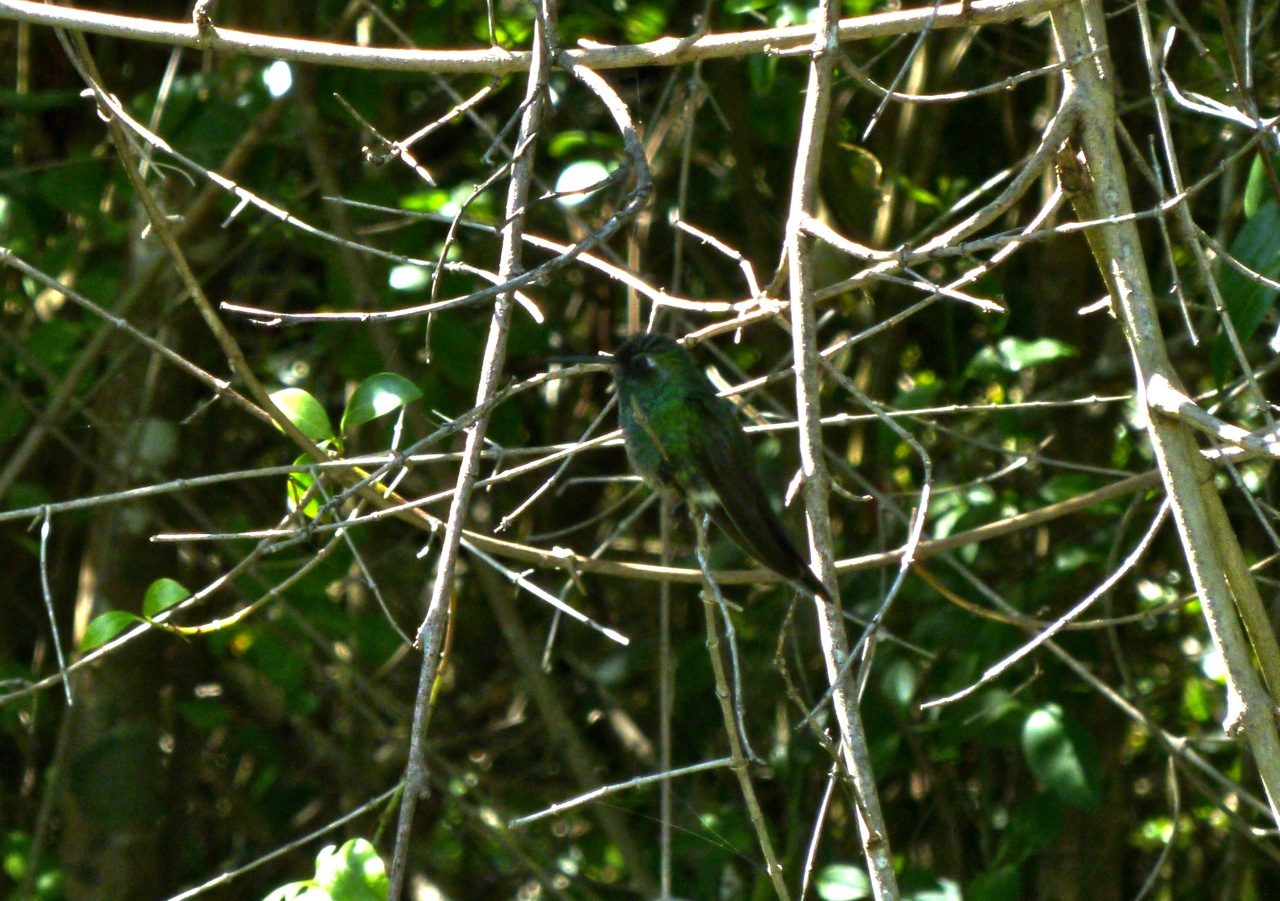
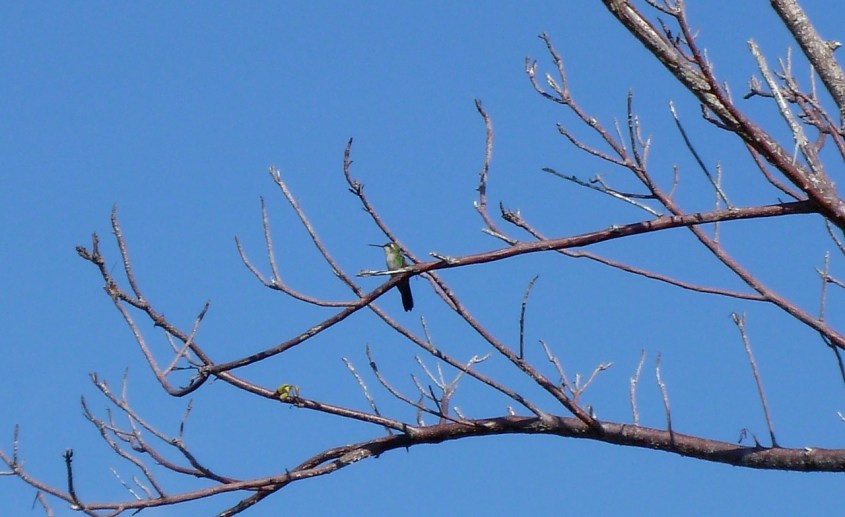
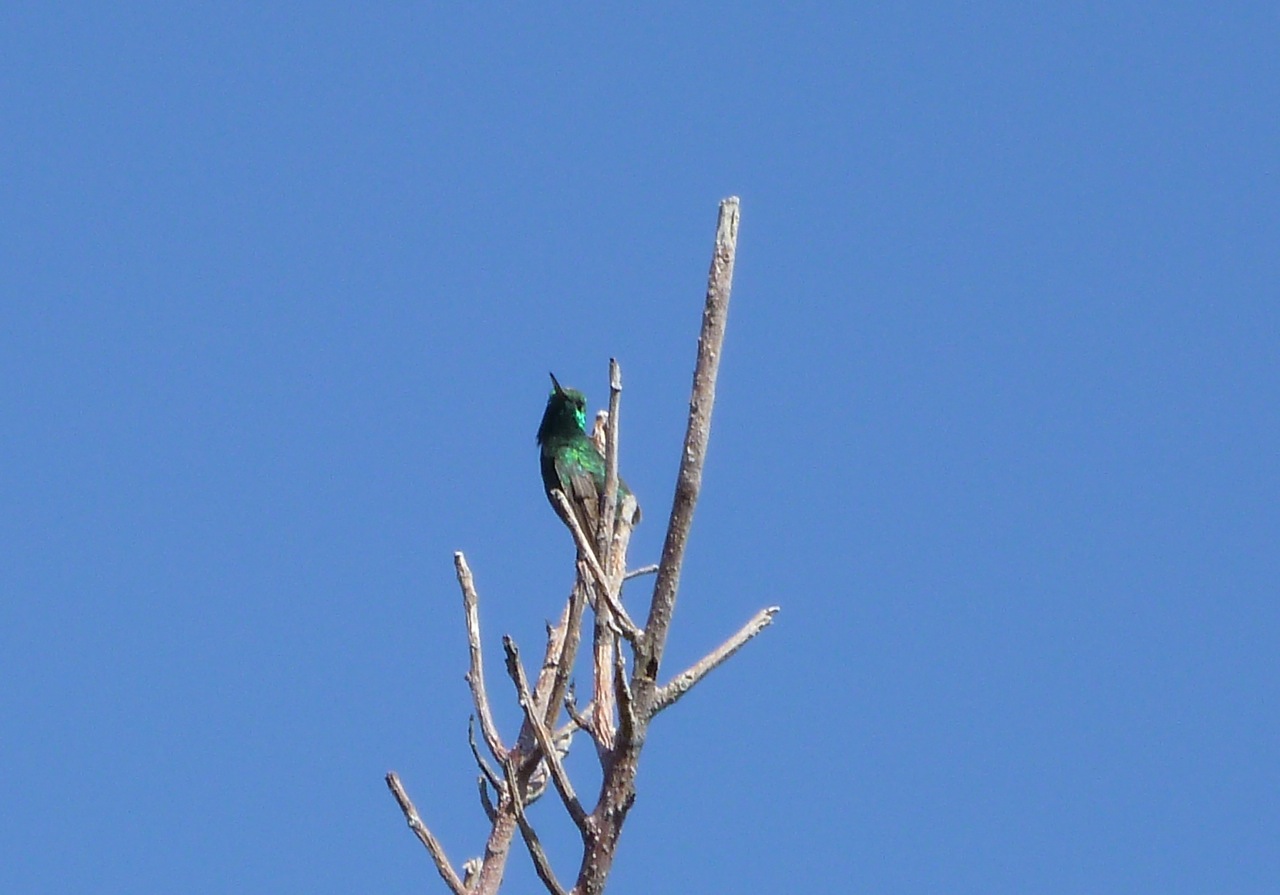
At last I have got round to the hummingbirds. It’s quite simple. There are only two species of hummingbird on Abaco. The endemic variety is the Bahama Woodstar, one of only 3 endemic bird species on Abaco (the others are the Bahama Yellowthroat and the Bahama Swallow). The settled migrant is the Cuban Emerald.
BAHAMA WOODSTAR
Calliphlox evelynae
Male and female Bahama Woodstars (Photo Credit: Phil Brown – and VG too)
These hummingbirds are found throughout the Bahamas. They do not migrate, although are occasional vagrants in SE Florida. They breed all year round, the main season being in April. The female lays 2 elliptical white eggs, which she incubates for 15-18 days. As with humans, the female is mainly responsible for childcare while males go drinking at the nectar bar and hang out with their mates.
This BW was one of a small group at Hole-in-the-Wall. They were completely unconcerned by our presence, and we could get within arm’s length of them. Woodstars, though tame in human terms, can be aggressive and territorial. They are plentiful throughout the Bahamas except on Grand Bahama, Abaco and Andros. Significantly those are the only islands where the Cuban Emerald is found in any numbers. As with the native red and import grey squirrel problem in the UK, the migrant emerald is aggressive towards the woodstar, which is consequently rare where emeralds are abundant.
Here is their call (credit Jesse Fagan Xeno-canto)
Addition April 2012Here is a seriously cute female Woodstar photographed by Ann Capling at Bahama Palm Shores, close to Ocean Drive – a really pretty little bird
At Delphi, you’ll frequently see emeralds, especially now that feeders with sugar water have been hung up for them. The pool area is a very good place to watch them. But there are occasional woodstars to be seen as well – in the coppice on the drives for example, and even on the feeders. The vague blur to the left of the feeder below is a woodstar in the millisecond between me pointing the camera and it flying away… Don’t bother to click to enlarge it – it’s a useless photo, I know, but it is evidence even at the lowest level
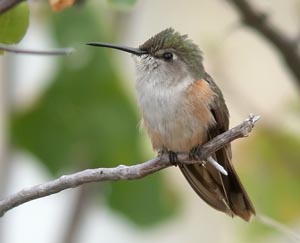
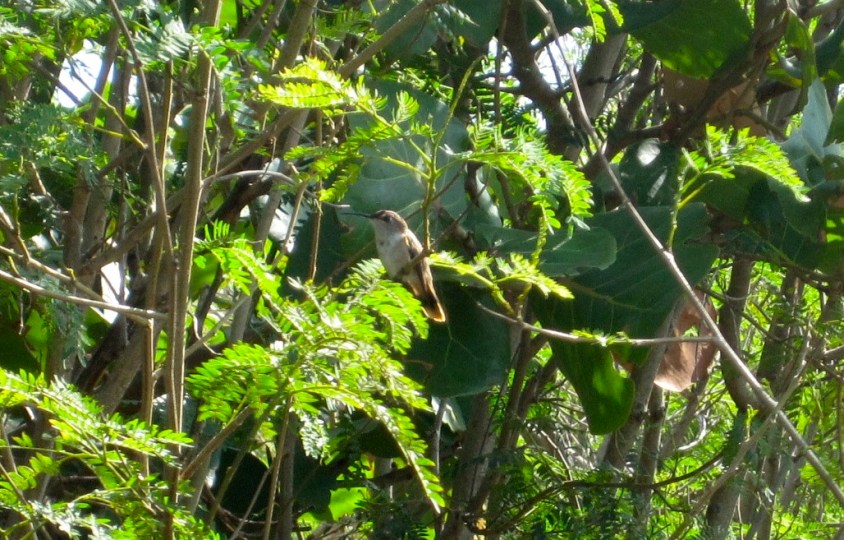
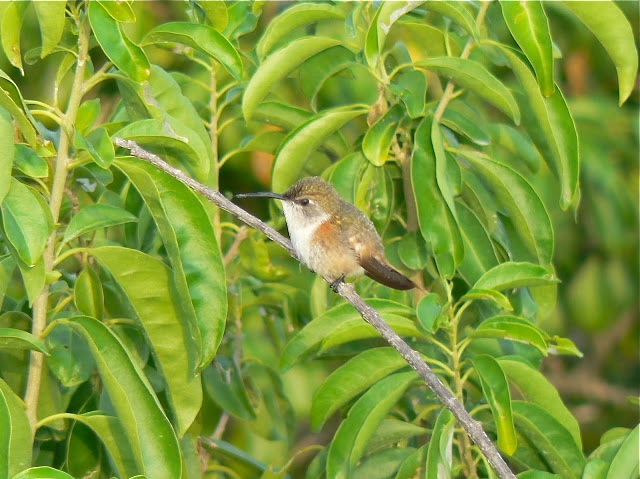
CUBAN EMERALDChlorostilbon ricordii
There’s probably a great deal to be written about the emeralds, but not by me. Or not now, anyway. The little you need to know from me is already covered above, and I haven’t yet discovered whether their childcare arrangements differ significantly from the woodstars. Probably not. So I’ll put in a selection of photos, and remark that it is strange how quickly they can change from sleek and slender birds to small rather cold and dispirited looking bundles of feathers. Both states are depicted below. Here’s what to listen for (credit Xeno-canto.org)
Delphi – pool feeder
Delphi – pool feeder
Delphi – pool feeder
Delphi – far side of pool
Delphi – near pool
Delphi – front drive
Delphi – front drive
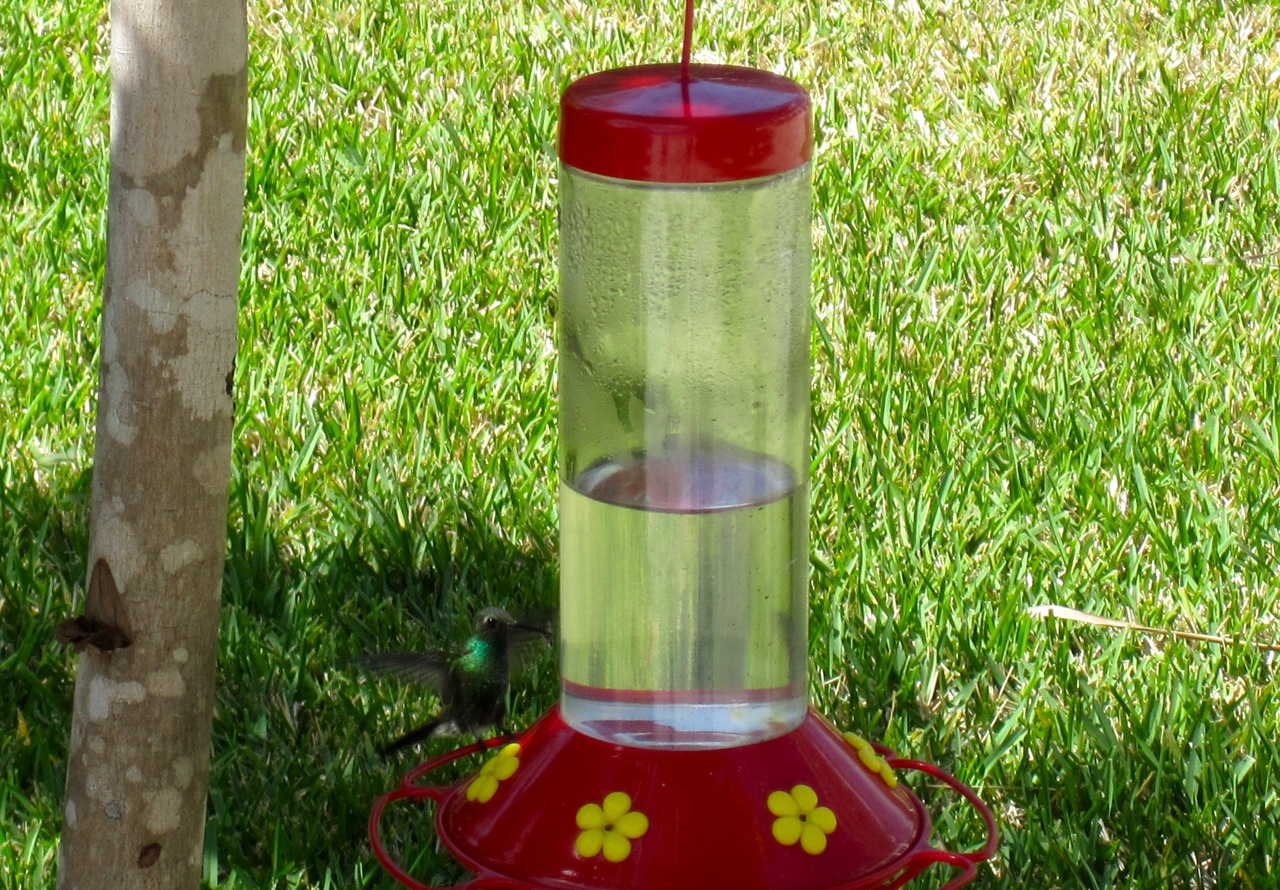
All the above birds were photographed at Delphi. We saw emeralds elsewhere, of course – in the pine forest, flicking across the logging tracks; on other Cays. The best sighting was during our day trip reef-snorkelling and island-hopping with Kay Politano, when we had an excellent lunch for 14 at Cracker P’s on Lubbers Cay (see future post about this and the island-hops). There was a bird feeder by our table, to which emeralds came and went throughout the meal. Here are some photos – I wanted to get them hovering, and kind of succeeded. More or less.
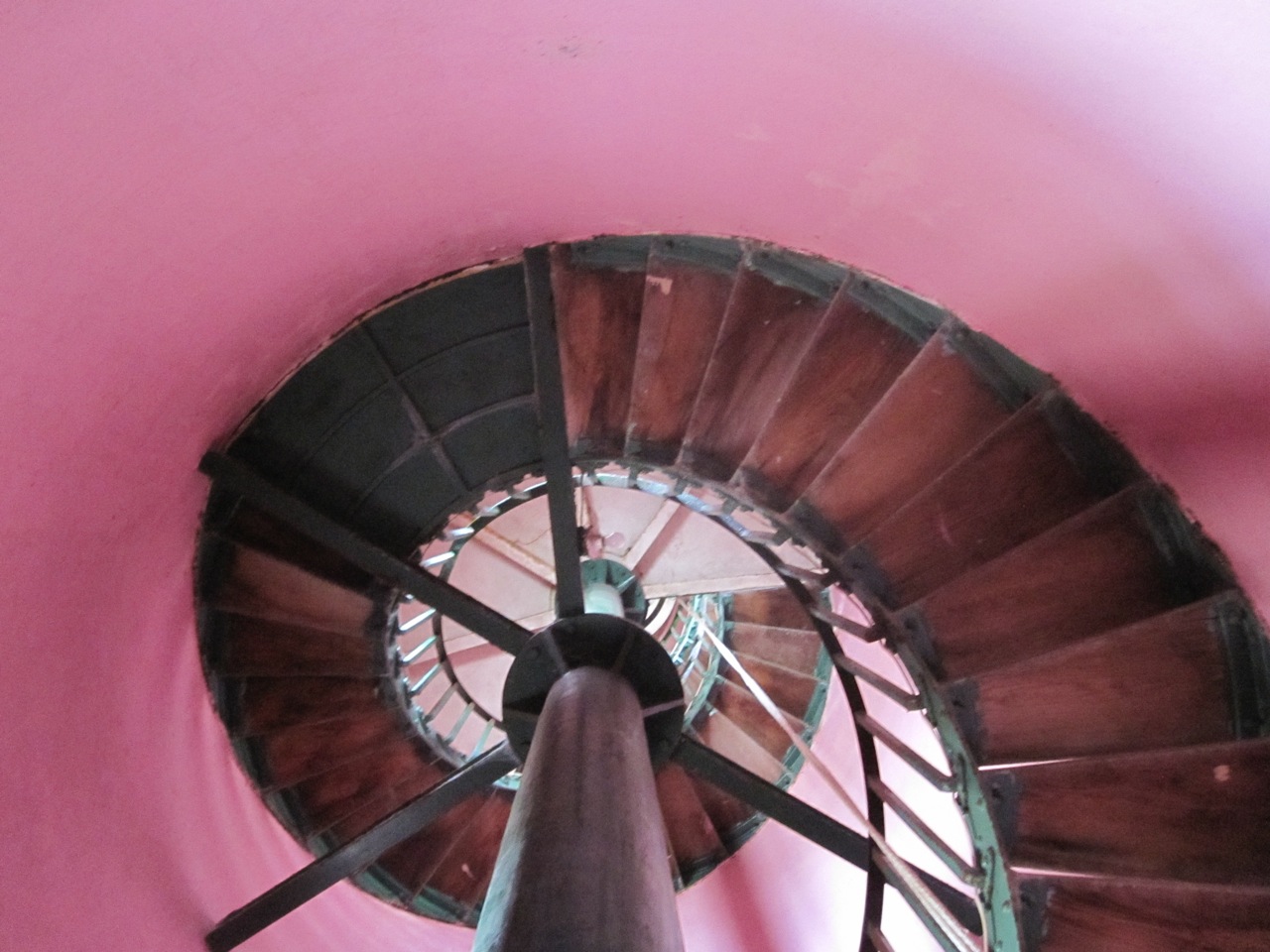
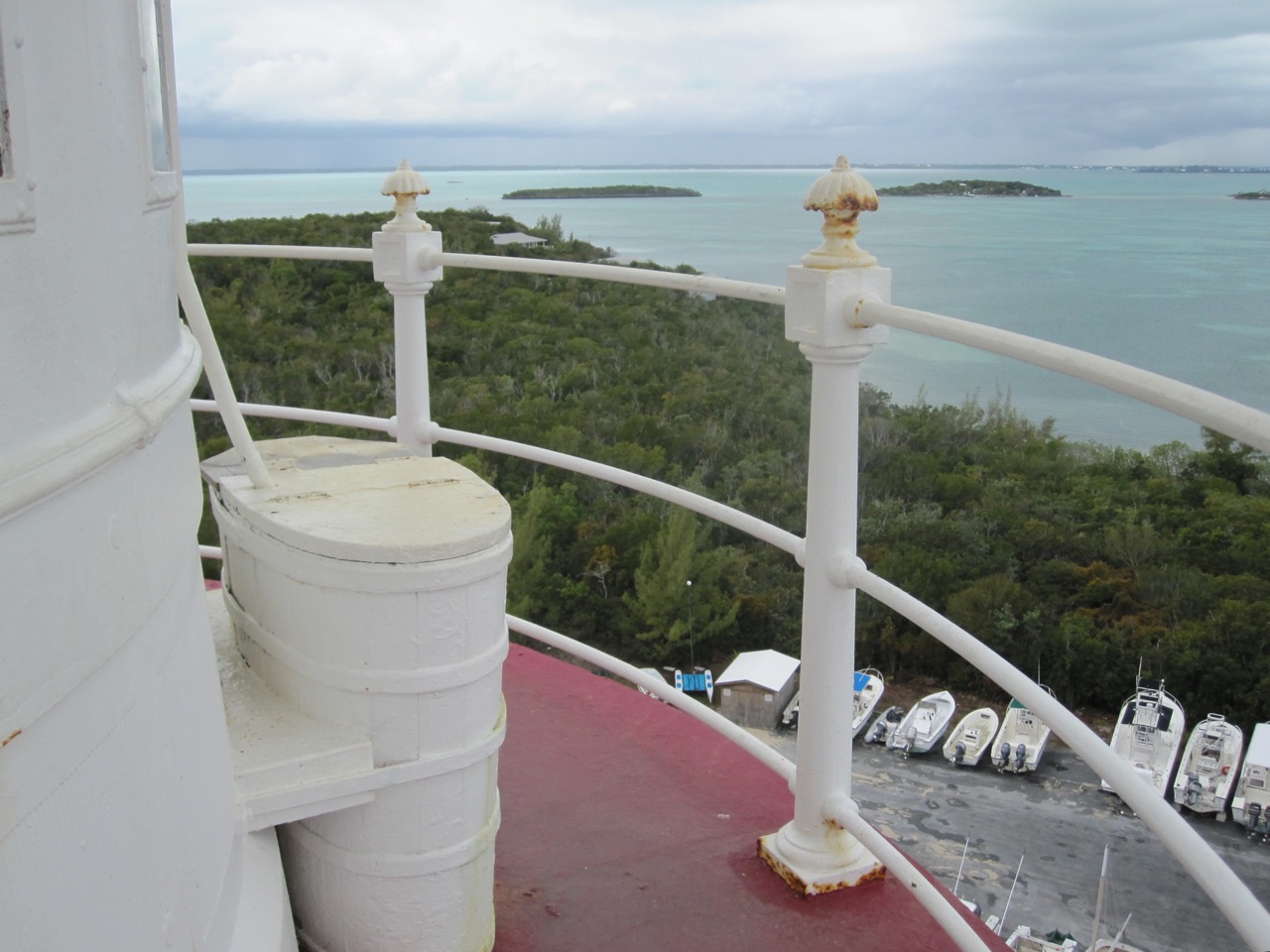
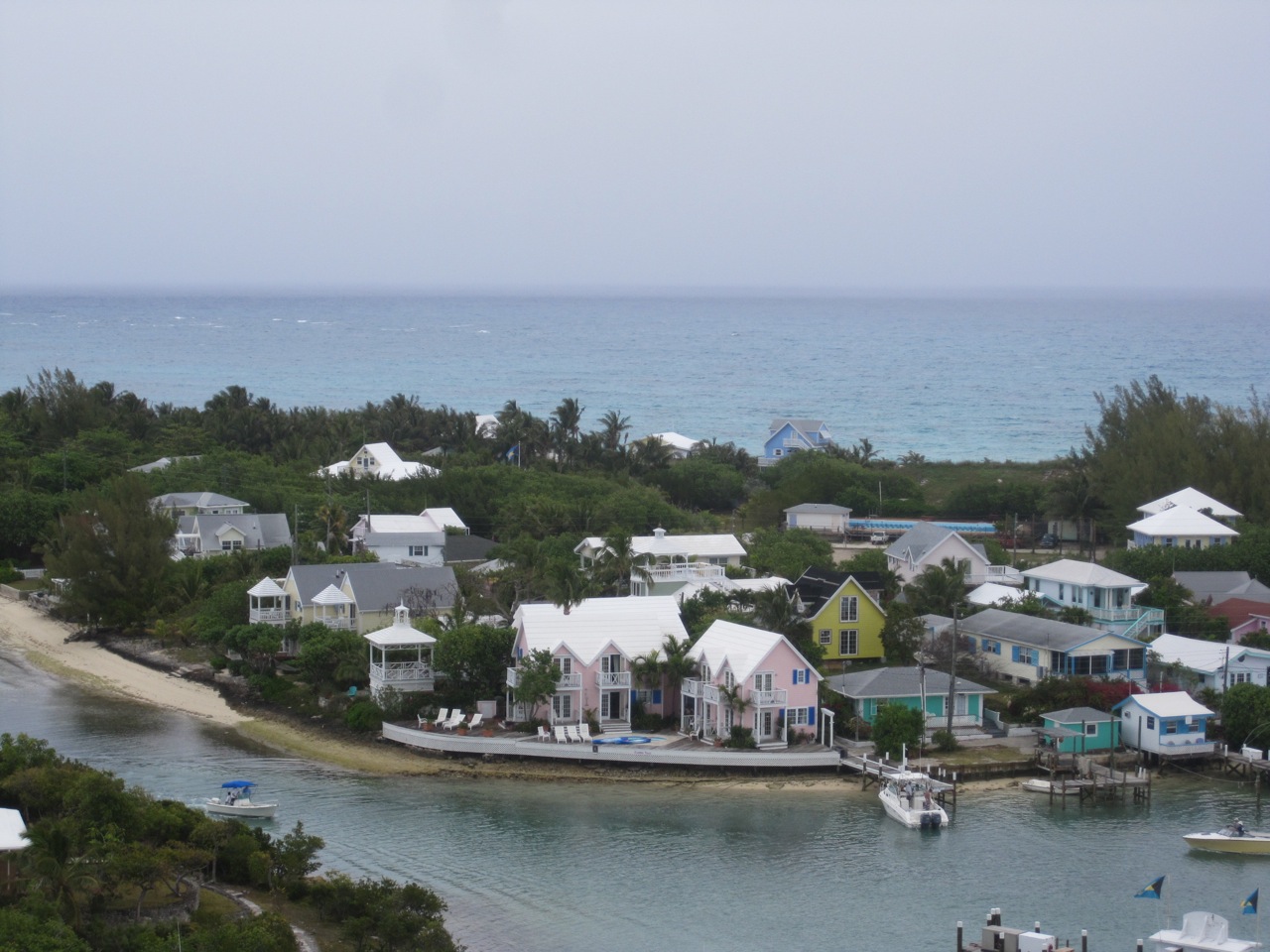
Our visit to Elbow Cay was one part of our day’s Island Hopping / Reef Snorkelling expedition with Kay Politano. In Hope Town, while most of the party wandered round the streets (and shops…)Mrs Rolling Harbour took the boat across the harbour to the Hope Town Lighthouse. This must be the best known landmark of Abaco – ‘iconic’, perhaps, in the modern sense of the word. The weather on the day was pretty poor, with thick cloud and intermittent rain and drizzle. Which is a pity, because the photos would have looked even better with sunshine and blue sky…
All Photos: Mrs Rolling Harbour
HOPE TOWN LIGHTHOUSE FACTS
(click on Coordinates below for position and Hope Town info)
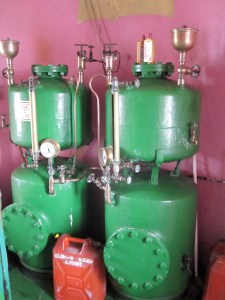
The Hope Town Lighthouseis one of only three Manual Lighthouses left in the World. It has a spring mechanism that has to be hand cranked every few hours to maintain the sequence of five white flashes every 15 seconds. The lamp burns kerosene with a wick and mantle. The light is then focused as it passes through the optics of a first order (largest size) Fresnel lens which floats on a bed of mercury.
A Fresnel lens(pron. ‘Fray-nel’) is a type of lens originally developed by a French physicist Augustin-Jean Fresnel specifically for lighthouses.Compared to conventional bulky lenses, the Fresnel lens is much thinner, larger, and flatter, and captures more oblique light from a light source, thus allowing lighthouses to be visible over much greater distances. Fresnel’s lighthouse lenses ordinarily fell into six orders based on their focal length, first order being the largest (wiki-assist)
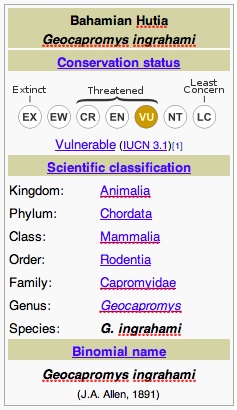
HUTIAS are cavy-like rodents of the Caribbean Islands. They range in size from 20 to 60 cm (8 to 24 in), and can weigh up to 7 kg (15 lb). Twenty species of hutia have been identified, of which half may now be extinct. Their tails vary from vestigial to prehensile. They have stout bodies and large heads. Most species are herbivorous, though some eat small animals. Instead of burrowing underground, they nest in trees or rock crevices. Of extant species, only a few are common; most have become vulnerable or endangered. In Cuba they are hunted for food, and are often cooked in a large pot with wild nuts and honey. One of the recipes is hutia stew: sauté with green peppers, onions, tomato sauce and lots of garlic. (Source: Wiki)
Photo WWF/ G. Clough
The Bahamian species of Hutia is endemic to the Bahamas. It is listed as a vulnerable species. Its natural habitats are moist forests, dry shrubland and rocky areas. Hutias are a nocturnal species, remaining underground during the day. Two subspecies became extinct in modern times. The Crooked Island Hutia (G. i. irrectus) and the Great Abaco Hutia (G. i. abaconis) were mentioned by early European voyagers, and are believed to have become extinct by 1600. This is thought to be due to land clearance rather than direct hunting. However, they are found elsewhere in the Bahamas – the Exumas, for example.

 SCOTCH BONNET FACTS


 dear wiki: how kind to help


 Good to go…










 I have been in touch with Mim at























 CUBAN EMERALD













 ROLLING HARBOUR ABACO


You must be logged in to post a comment.