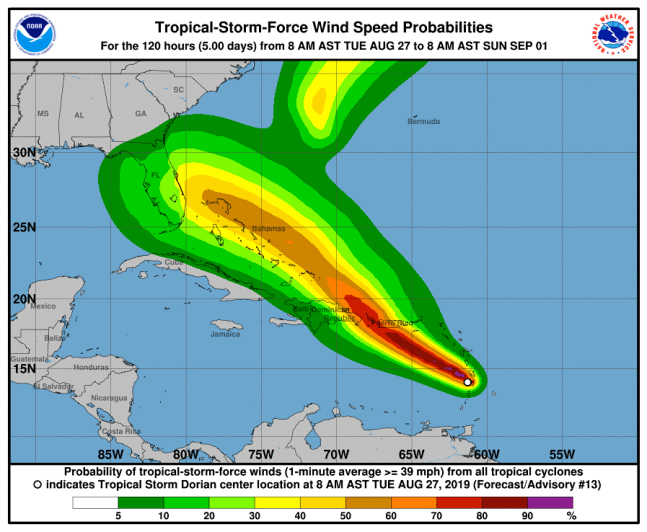
Hurricane Dorian makes landfall on Abaco later today. The island has been in an unwavering direct line for several days, gaining force to Cat. 4** while slowing down as it approaches. The skies have darkened, the seas are turbulent, danger to humans, wildlife, property, landscape is imminent.
**UPDATE just before landfall today, Dorian strengthened to a rare and very dangerous Cat. 5 hurricane. This is when not just property and land is threatened, but life itself. Early reports are of flooding and structural damage. Now is not the moment to pick through the information filtering through. Better to assess the impact after the storm has passed on to the north-west, where it is currently headed via Grand Bahama.
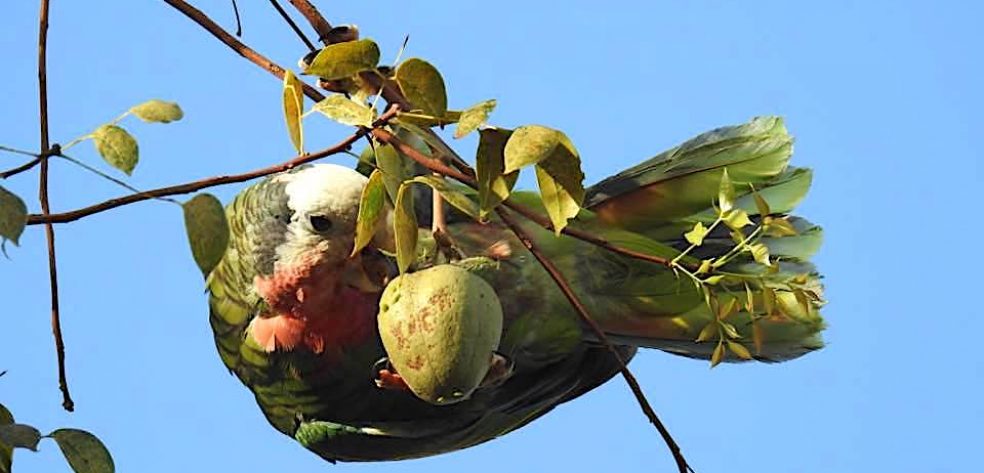
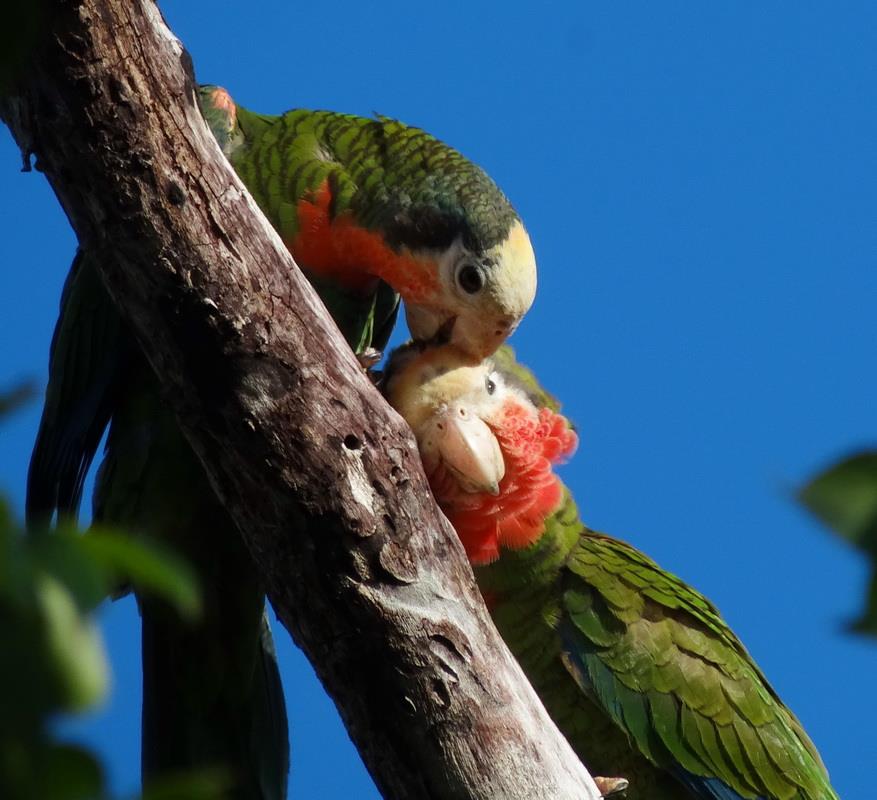
When we first became involved with Abaco, the parrot numbers were believed to be fewer than 1000, a barely sustainable population. An intensive, continuing conservation program over several years has seen the numbers treble or more. This recovery is as much due to the resilience of the species as to human intervention.
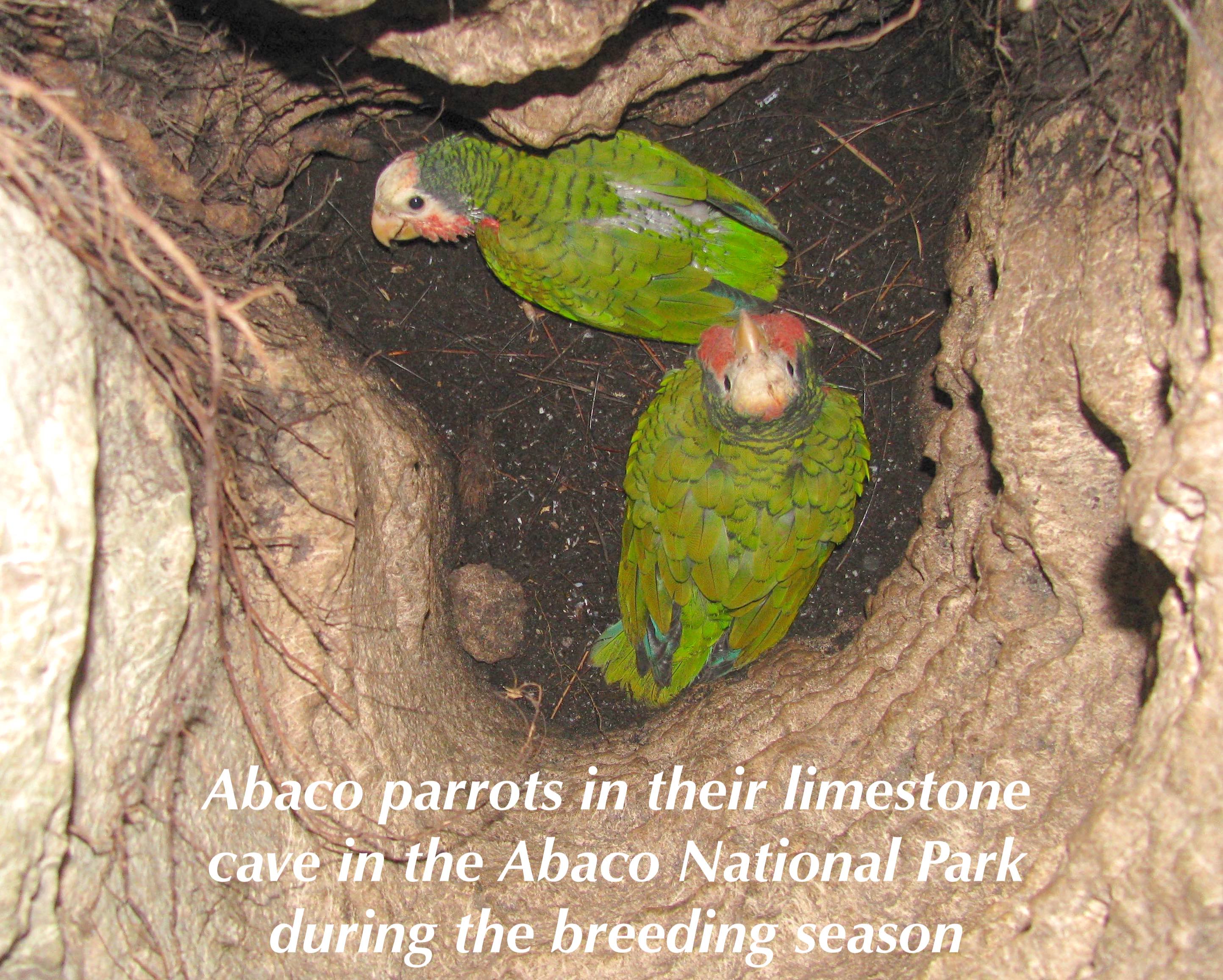
The parrots will be lying low in the National Park, some in the limestone caves they nest in during the breeding season. As humans take equivalent protective measures we are watching from a thankfully safe distance. We wish the very best of luck to our friends, and to all on the island and its cays during the next 48 hours.
As Hurricane Dorian sweeps directly and inexorably towards Abaco this weekend, from my safe distance of 4000 miles I wish all the very best to my friends, and to all the people and the precious island they inhabit.
Credits: Melissa Maura for her wonderful parrot photos; NASA / GOES
+ TROPICAL DEPRESSION SIX – SPACE VIEW AND LIGHT POLLUTION
TS Dorian is the 4th tropical storm of the Atlantic season, and the first one to have the northern Bahamas & Abaco in its sights. Right now it is way down south in the area round Barbados, heading for Puerto Rico. I just checked out the NOAA, NHC, NWC & NASA sites to find out the present predictions. Although the direction and force of the storm may be changeable as it moves north, it’s as well to know the currently predicted path. As of this morning, Abaco is directly in it. And TD Six is lurking to the north-west as well.
WIND SPEED
PROGRESS / ETA
Subject to the usual variables, this coming weekend looks potentially the time for some kind of murky weather over Abaco. Maybe it won’t happen like that, but this looks like one to keep a weather eye on.
STORM CONE
Tropical depression Six, described as ‘poorly organised’, is already making its present felt. This dramatic image of ‘6’ from NOAA has a strange beauty, and interesting not least because of its startling highlighting of light pollution (and check out Freeport and Nassau).
TD SIX LAST NIGHT
TD SIX – VIEW FROM SPACE
CREDITS: the combined resources of NOAA, NHC, NWS & NASA & associates
ABACO’S 38 WARBLERS: AN ILLUSTRATED ID GUIDE (Pt 1)
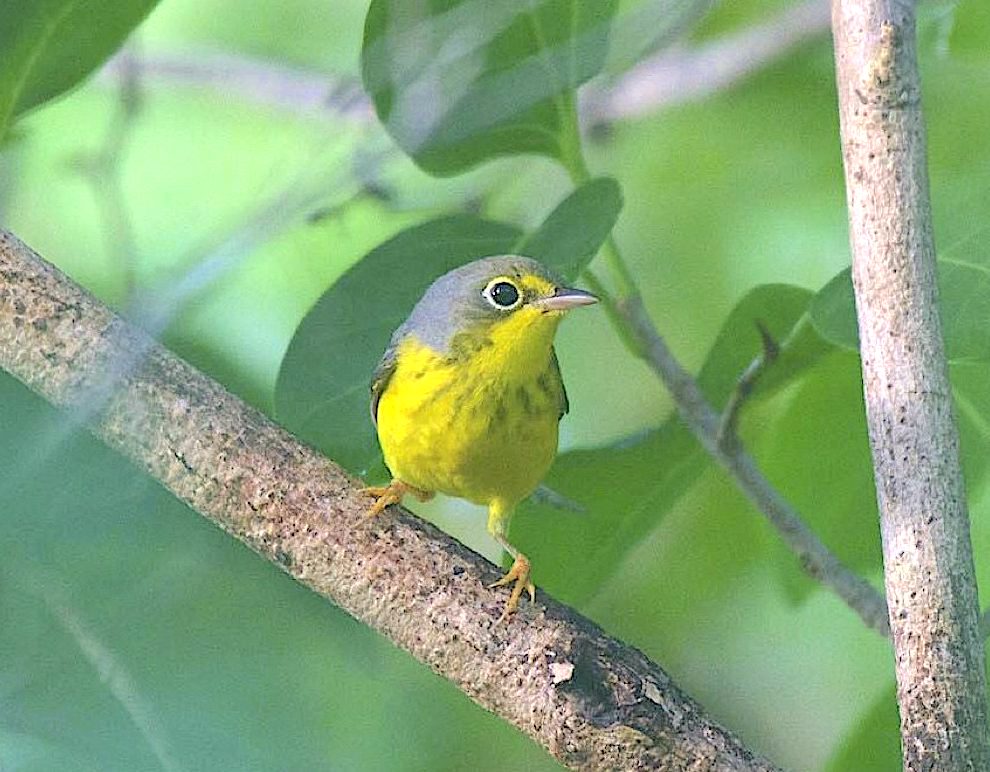
IT’S STARTED The great winter migration of warblers and their imminent arrival in The Bahamas is underway. Any day now – if not already – the ‘winter’ / ‘Fall’ (late summer & early spring as well) warblers will be arriving on Abaco. There are 38 warbler species recorded for the main island and the cays. For years, it was just 37. Exactly a year ago, a CANADA WARBLER was seen and photographed by well-known birder Chris Johnson. It was a first for Abaco – and the first-ever report for the Bahamas as well. You’ll find the story HERE.
First-ever Canada Warbler for Abaco & the entire Bahamas: Aug 2018 (Chris Johnson)
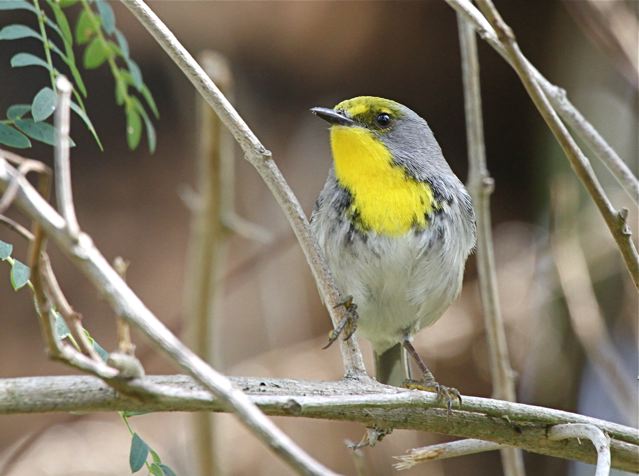
This post is the first of 3 warbler posts for the Fall. A while back I compiled a basic (in retrospect) guide to Abaco’s warbler species. I’ll give a link and pdf in due course once I have rechecked (improved? rewritten?) it. [Note: of no value on eBay, @m@z@n or anywhere else]. Many of the warblers are far from easy to distinguish from each other. For example, many males have yellow or yellow-and-black plumage. The females are invariably less colourful – often brownish or olive – than the males (as are juveniles), and that can lead to confusion – and not only by me, I think.
Hooded Warbler, Abaco Bahamas (Chris Johnson)
The guide divides the original 37 species into categories, with a code for each bird to show. You’ll see below the codes relating to each of the 5 resident species:
Resident status – permanent / breeding, migratory or transient
Frequency – likelihood of seeing each species in its season, rated from 1 (very likely) to 5 (extreme rarities, maybe recorded once or twice since c1950
Numerically, the division of the 38 breaks down into 3 categories:
5 permanent residents (PR) that breed on Abaco (B), of which two are ENDEMIC
21 winter residents (WR) ranging from ‘everyday’ species to rarities like the rare, vulnerable Kirtland’s Warbler (now under threat from proposed development)
12 transients, most of which you will be very lucky to encounter
Palm Warbler, Abaco Bahamas (Nina Henry)
The photos used in this series were almost all taken on Abaco / the Cays. There’ll be examples of the male of each warbler species, with some females for contrast. Where I have no Abaco / Baha images – especially with the transients – I have used other mainstream birding resources and Wiki. All due credits will be given at the foot of each post.
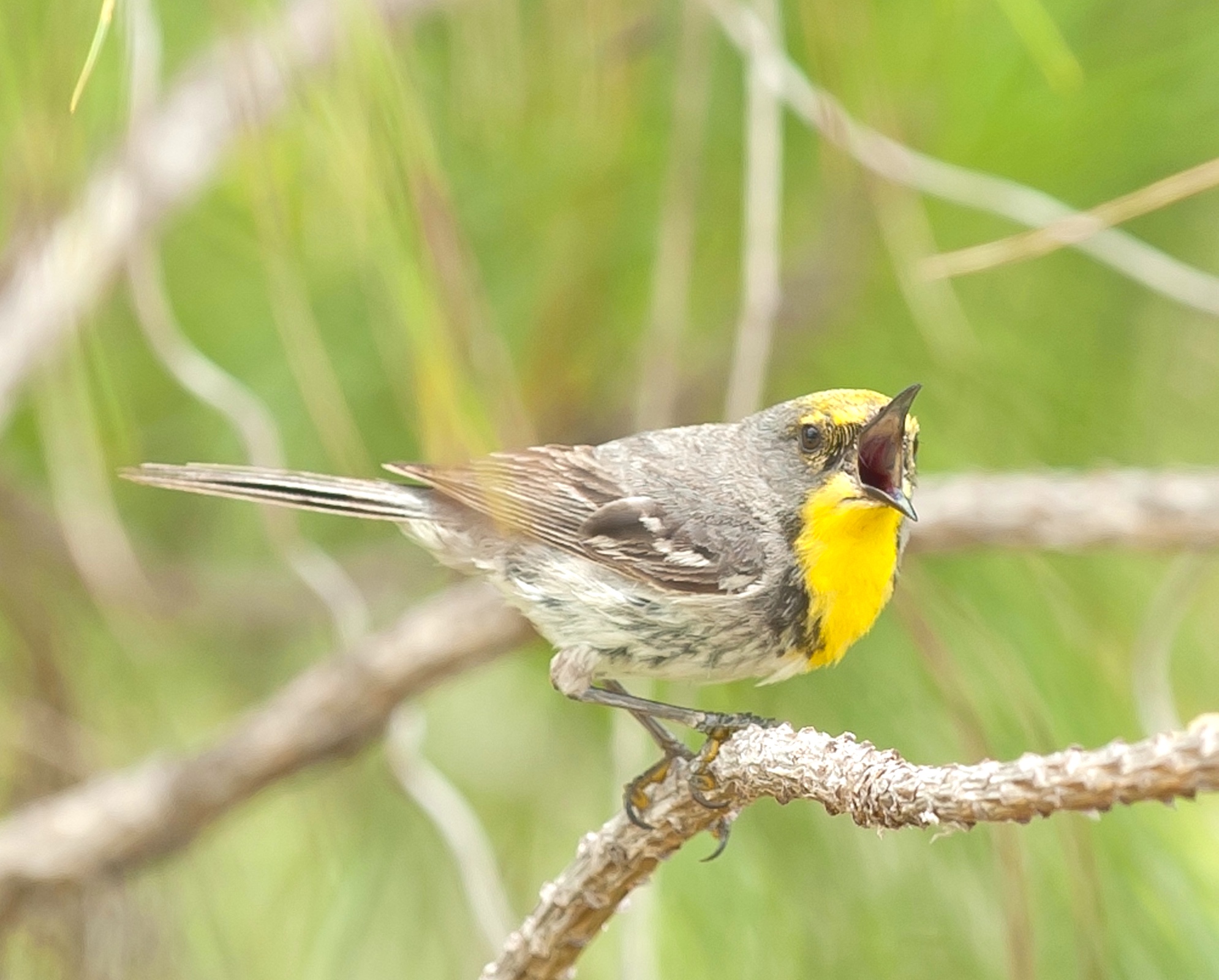
The warblers shown above are a mix of warbler species on Abaco: resident / endemic, winter migrants, and transient / vagrant. Time to take a look at the first category, the Bahamas-loving resident species that live and breed on Abaco
5 PERMANENT RESIDENTS
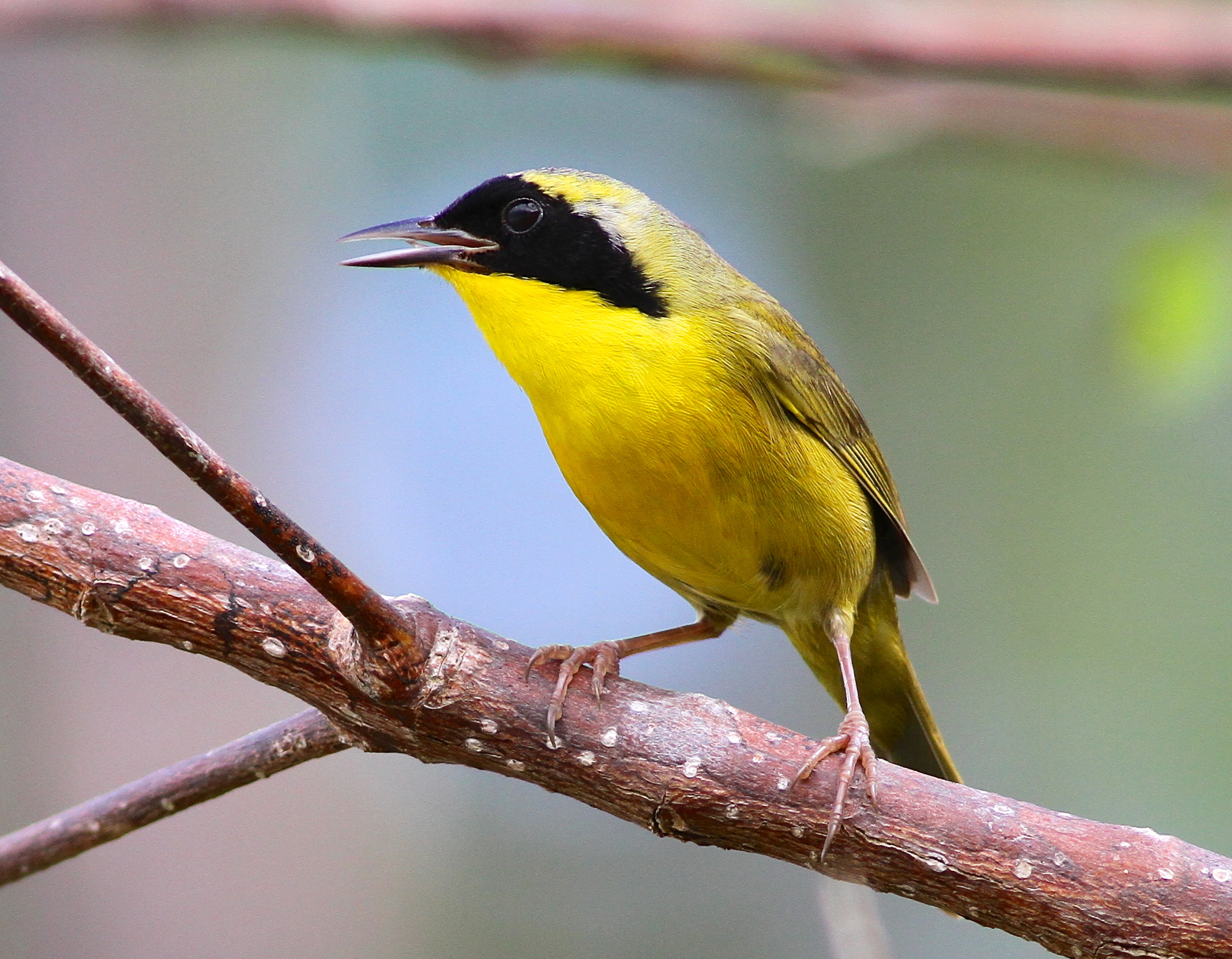
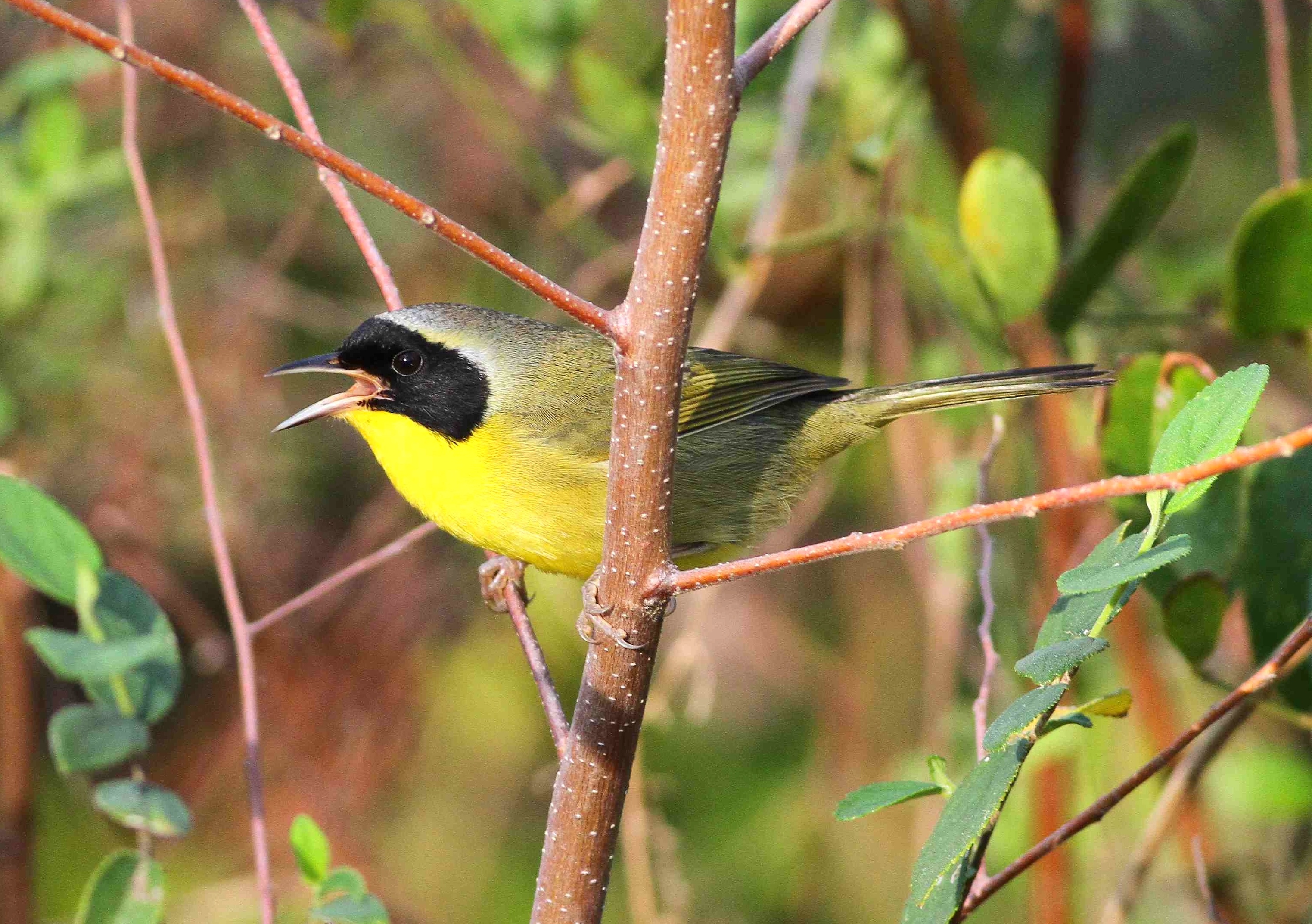
BAHAMA YELLOWTHROAT Geothlypis rostrata PR B 1 ENDEMIC
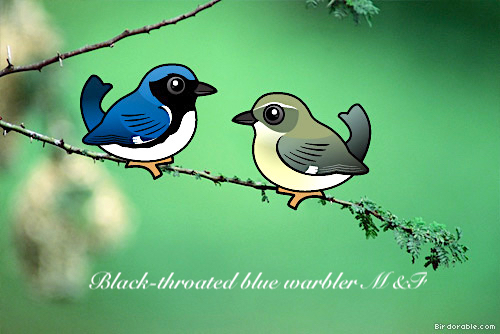
PHOTO CREDITS Tom Sheley (1, 9, 11); Chris Johnson (2, 3); Alex Hughes (4); Nina Henry (5); Gerlinde Taurer (6, 7); Bruce Hallett (8, 10); Photos mainly from the archive collected for“THE DELPHI CLUB GUIDE TO THE BIRDS OF ABACO”by Keith Salvesen
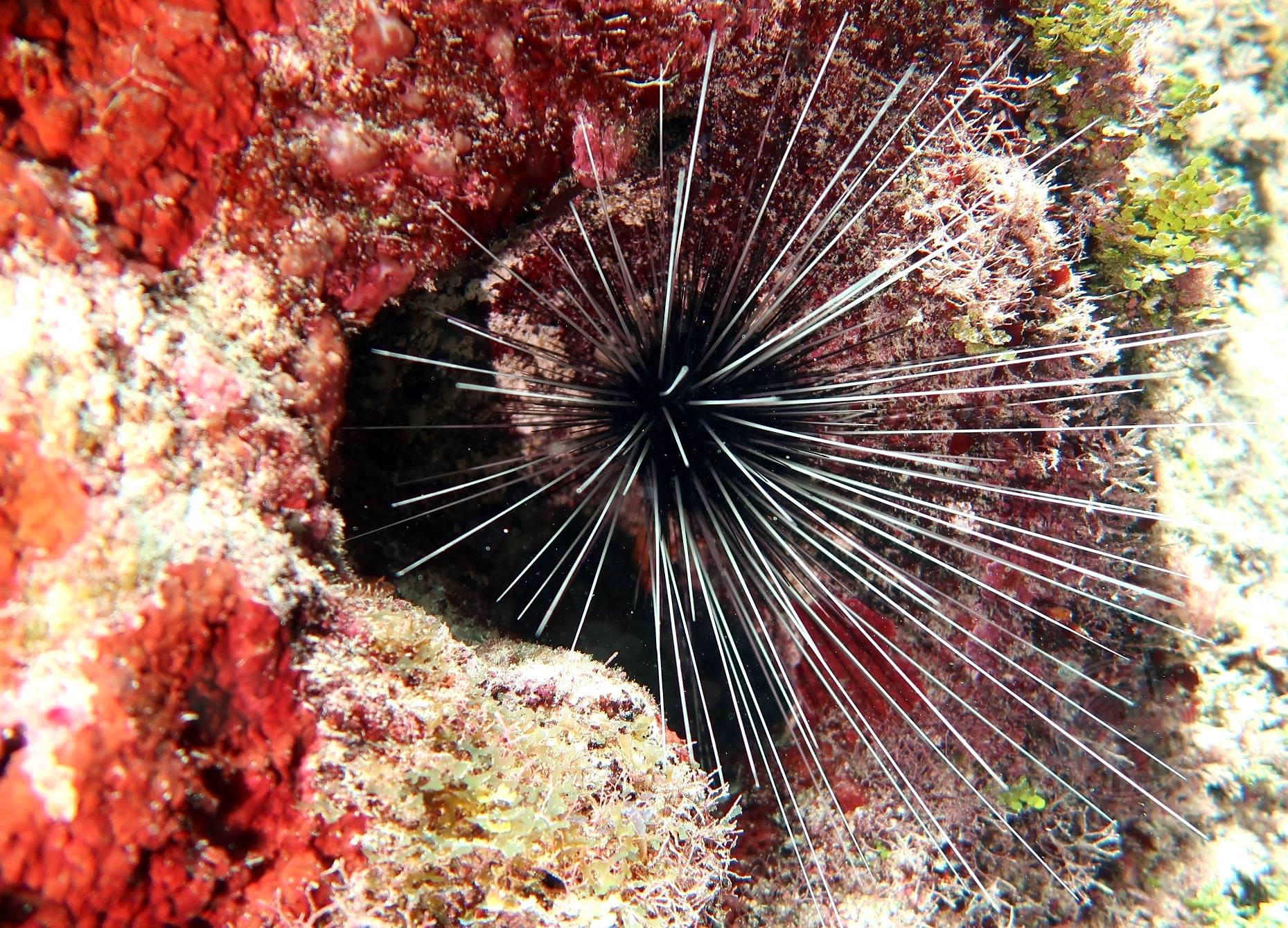
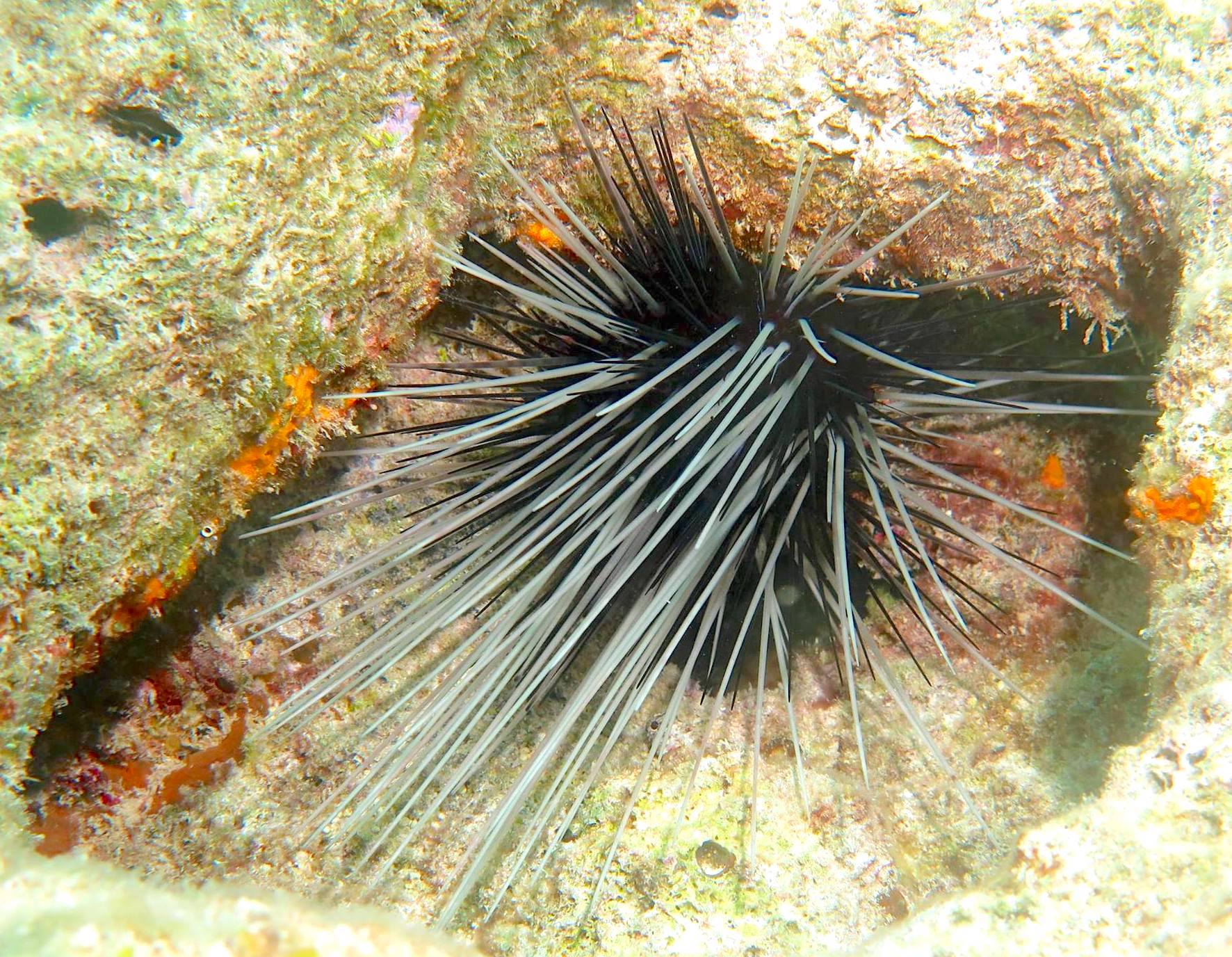
The long-spined sea urchin Diadema antillarum featured in this post is one of those creatures that handily offers its USP in its name, so you know what you are dealing with. Something prickly, for a start. These are creatures of the reef, and many places in the Caribbean and in the western Atlantic generally sustain healthy populations.
These animals are essentially herbivores, and their value to vulnerable coral reefs cannot be overstated. Where there is a healthy population of these urchins, the reef will be kept clean from smothering algae by their methodical grazing. They also eat sea grass.
HOW DO THE SPINES OF DIFFERENT KINDS OF URCHIN COMPARE?
Small sea urchins species have spines a few cms long at most. The long-spine variety exceed 10 cms, and the largest may have spines up to 30 cms (= 1 foot) long. The length, as shown here, means that when the creatures are safely lodged in crevices near their algae supply, their spines remain very visible.
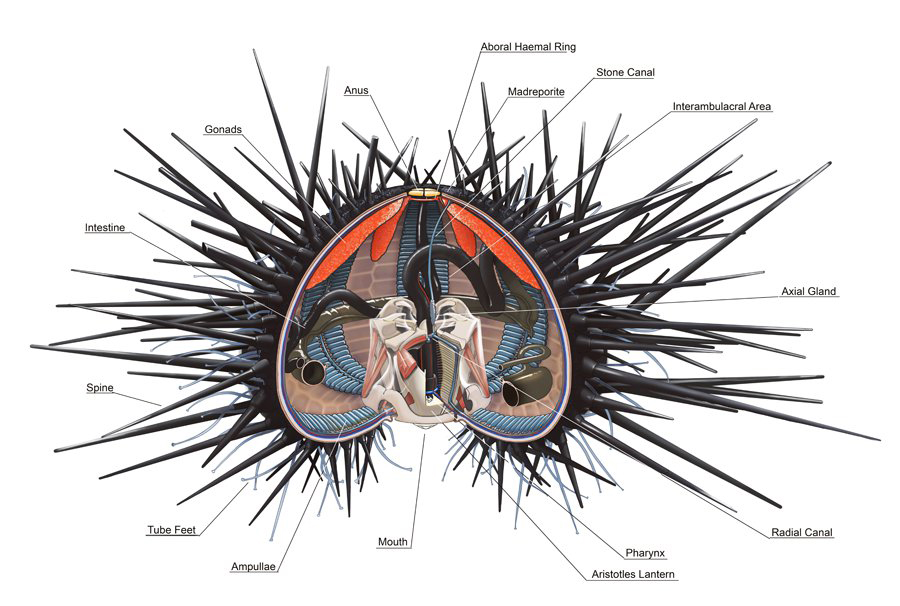
Anatomy of a long-spined sea urchin. You may possess a few of these organs yourself…
CAN YOU GIVE US A TEST, PLEASE?
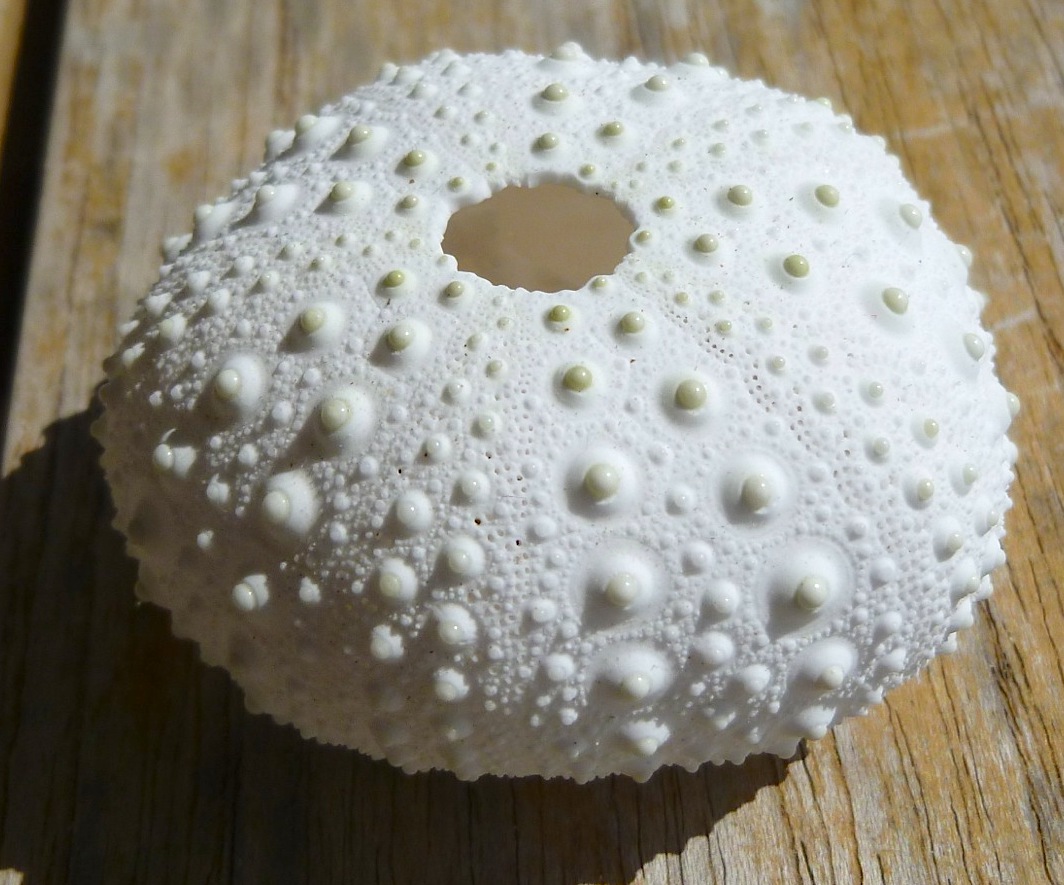
As withSAND DOLLARSand similar creatures, the skeleton of a sea urchin is known as a ‘test’. Urchin tests are remarkably beautiful, especially seen in sunlight. Here are 2 examples I photographed a while ago. You’ll immediately notice the delicate colours and the amazing complexity of the pattern and symmetry. The top one is (or is most like) a long-spined urchin test.
A BIT ABOUT SYMMETRY
Sea urchins are born with bilateral symmetry – in effect, you could fold one in half. As they grow to adulthood, they retain symmetry but develop so-called ‘fivefold symmetry’, rather as if an orange contained 5 equal-sized segments. The graphic above gives a good idea of how the interior is arranged inside the segments.
A FEW FACTS TO HAND DOWN TO YOUR CHILDREN
Urchin fossil records date the species back to the Ordivician period, c 40m years ago
In the ’90s the population was decimated and still has not recovered fully
Urchins feel stress: a bad sign that the spines here are white rather than black
Urchins are not only warm water creatures: some kinds live in polar regions
Urchins are of particular use in scientific research, including genome studies
Some urchins end up in aquariums / aquaria, where I doubt the algae is so tasty
Kindest not to prod or tread on them
Their nearest relative (surprisingly) is said to be the Sea Cucumber
ARE THEY EDIBLE?
Apparently they are eaten in some parts of the world; their gonads and roe are considered a delicacy. As far as I know, they are not generally on the menu in the Bahamas. Correction invited. Personally, I could leave them or leave them.
CREDITS: Melinda Rodgers / Dive Abaco (1, 2, 3, 6, 9) taken Abaco; Melinda Riger / G B Scuba (4, 10, 11) taken Grand Bahama; Keith Salvesen / Rolling Harbour (7, 8) taken Abaco; Wiki graphic (5) taken from internet. RESEARCH Fred Riger for detailed information; otherwise the usual magpie pickings…
I’ve gone pictorial for today because I have only got my phone with me while we are away. Composition is slow, close to decomposition – and the comms connection is close to disconnection
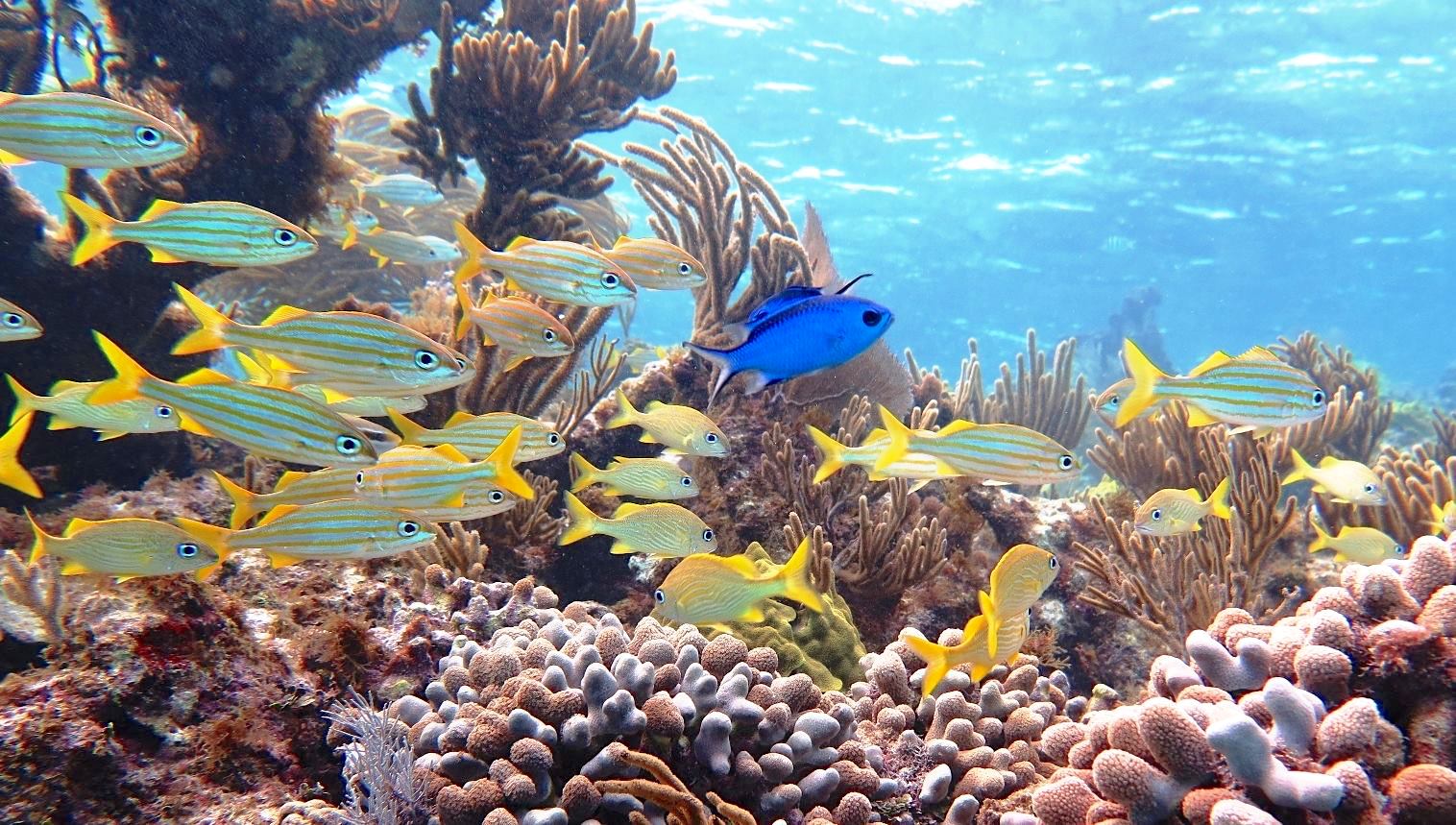
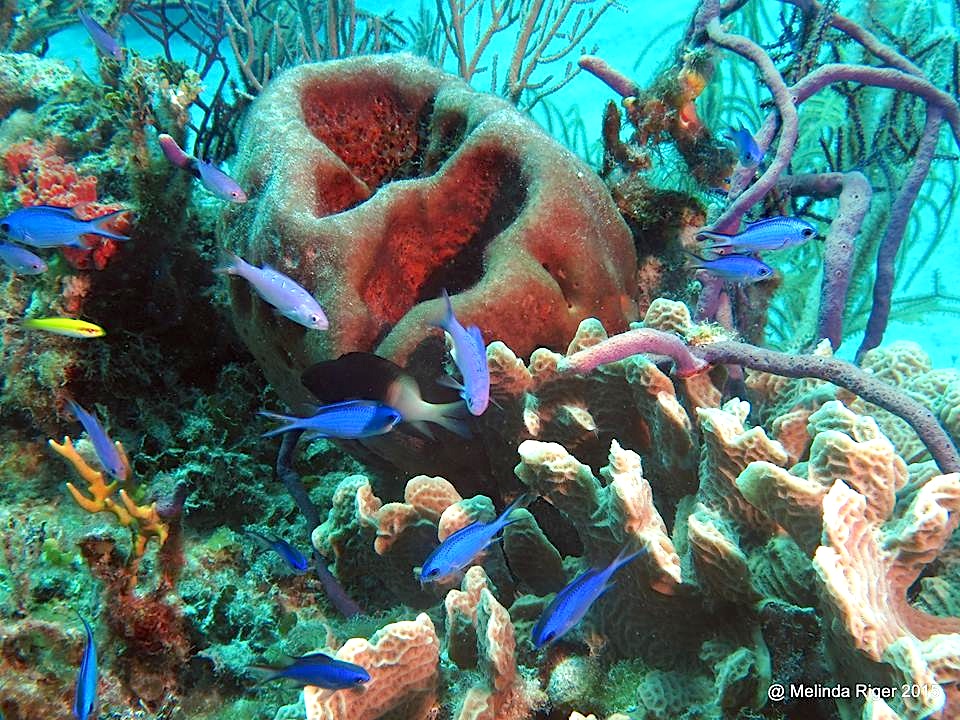
Blue chromis (Chromis cyaneus) belong to the same group of fishes as damselfishes. These unmistakeable, bright reef denizens are very visible despite their tiny size. These fish are shoalers, so out on the reef you can enjoy them flickering around you as you swim along or hang in the water to admire the corals.
Like many a pretty and easily captured small fish that can be monetised once removed from its natural home environment, the blue chromis is popular for aquariums, and for humans to keep in their own home environments, unselfishly feeding them concocted food.
Blue chromis are adaptable and sociable, and will happily swim with other small reef fishes (as above). My own favourite combo is chromis mixed in with sergeant majors. But a shoal of them (mostly) alone is pretty special too….
I cynically mentioned ‘concocted’ food earlier. Here is one online care instruction for looking after them: “They are omnivores, meaning that they eat both meaty and plant based foods. They are not difficult to feed and will eat a variety of regular aquarium fare, frozen, live, and sometimes even dry food. Feeding them a variety of foods will help them retain their color in captivity. They sometimes feed on the algae in the tank”.
If you are tempted to rescue some from their reef habitat, rest assured that: They have been known to spawn in captivity. Blue chromis can usually be obtained for about $10-15. And don’t hold back on the frozen food (though maybe warm it up a bit before feeding time).
Credits: Melinda Rodgers / Dive Abaco; Melinda Riger / G B Scuba
GOATFISHES belong to the mullet family, a large group of species with a flexible membership. In other words, there is disagreement as to whether certain fish are mullet or not. For present purposes, it’s not our problem – no one doubts that the goatfish is a mullet.
SO WHY ARE THESE CALLED GOATFISH? WAS SOMEONE KIDDING?
These fish get their name for the pair of so-called ‘barbels’ below their mouths (see image below), thought to be reminiscent of a goatee beard. The name has Latin origin, ‘barbula‘, meaning a small beard. Linnaeus may have had a hand in this choice of description.
WHAT IS THE FUNCTION OF THE BARBELS?
The barbels are sensory organs which, depending on the creature, may be located on either side of the mouth, on the chin, or even extending from the nostrils. In broad terms, the barbels are where the taste buds are located. They help a fish to find food even when the water is stirred up or murky or at night, and are used to probe into sand or into holes in the reef for prey.
WHY ARE THEY OFTEN SEEN WITH YELLOWTAIL SNAPPERS, GRUNTS & PORKFISH?
Goatfish have limited means of self-protection. They are not poisonous or venomous, they have no spines or razor-sharp teeth, nor ink to squirt. They do have an ability to change colour rapidly to blend into their surroundings – e.g. over pale sand – to make them less conspicuous to predators. Overall, however, they are docile and probably delicious to many other species. Their bright hues may have some function as aposematic colouring to warn, scare or repel potential predators, but this is possibly of limited use among the familiar reef denizens. So instead the goatfish goes in for so-called protective mimicry, as shown in the image above.
PROTECTIVE MIMICRY?
Goatfish and yellowtail snappers (in particular) are similar in size, appearance, coloration and behaviours, though the feeding patterns differ. The reason they are often found in mixed groups on the reef is for the individual protection they gain in a larger mixed school. This really amounts to taking advantage of safety in numbers (especially for the fishes in the middle). Here’s a very recent photo that shows exactly this scenario – a large mixed shoal of two almost indistinguishable fish species.
IS THIS A ‘SPOT THE DIFFERENCE’ TEST?
If you’d like to make it so! (click on the image to enlarge it). Look out for the fish with the barbels (Goatfish); and the fish with the larger, more deeply forked tails (Snappers). A predator won’t take a great deal of notice of the finer points of difference of course, but overall this large mixed shoal gives a degree of protection to individual fish in the unit as a whole
ARE GOATFISH EDIBLE?
Goatfish are eaten in many ares of the world, though I can’t recall seeing it on a Bahamian menu. The Romans ate the local mullet / goatfish species, but then they ate many things that we do not now consider as permissible food – dormice in honey for example. Rather revoltingly, the goatfish were served live so that guests could watch them die and see the amazing change of colours in the process. Barbaric? But don’t we cook live… well, never mind that.
Photos: all great photos from Melinda Riger / Grand Bahama Scuba; magpie research pickings inc. the abstract of a scientific paper with about 23 authors; tip ‘o the hat to Wiki, no seriously
It’s often a hard decision whether to include a short piece of video footage in a post. By short, I mean less than a minute. On the one hand, there is usually a good reason for inclusion, even if only aesthetic. On the other, it simply takes up more time for busy people who may prefer to flick through an article and enjoy some nice images along the way. Today, you can have the best of both worlds.
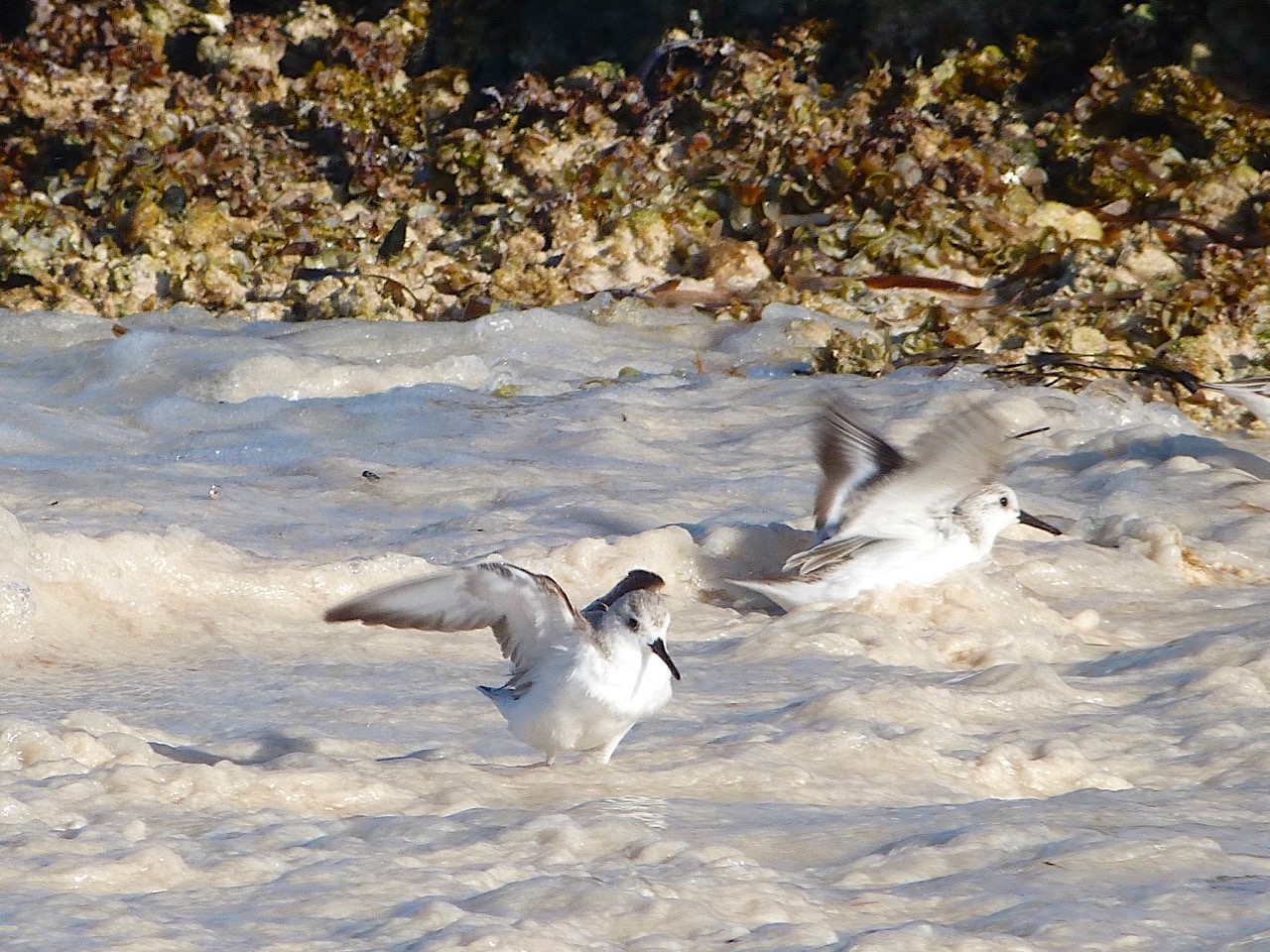
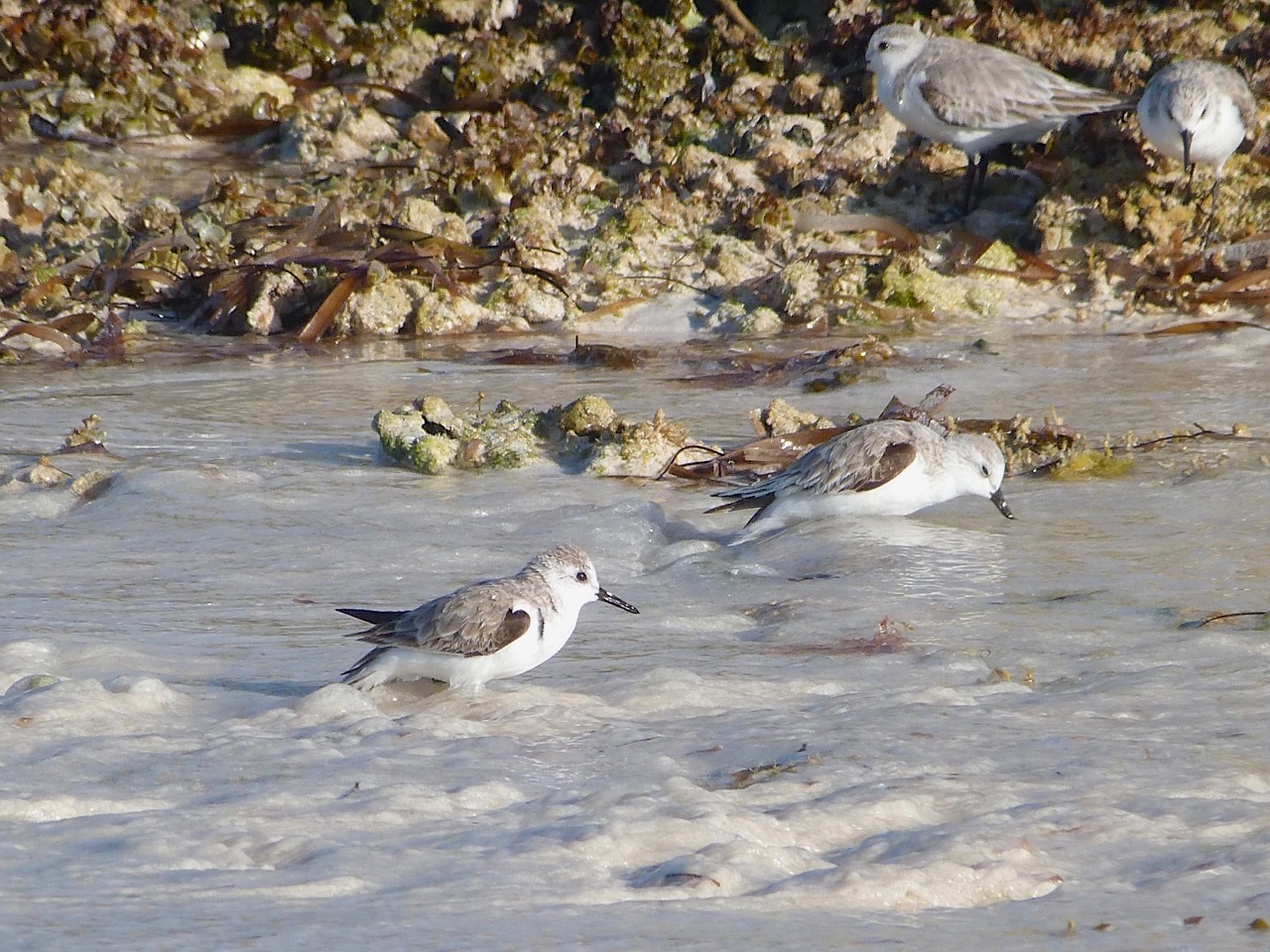
Sanderlings are definitively ‘peeps’, a group name that embraces the smallest and squeakiest sandpiper species. They are the wave chasers, the tiny birds that scuttle along the beach, into the retreating tide for a snack from the sand, and back to the beach again as the waves creep in. Their little legs and feet move in a blur, and many people immediately think of wind-up clockwork toys as they watch the birds in action.
One of the joys of being a sanderling is that rock pools fill and empty diurnally. At some time during daylight, there’s the certainty of a quick dip. I was lying on the beach when I took this short video, so that I didn’t spook the birds. I was equipped with a smallish camera (I drowned it the following day. By mistake I mean) but I kept my distance rather than try to get closer and spoil their joyful bathing.
I caught these little birds at a critical moment. You can tell that the tide is coming in fast. The peeps are becoming edgy, and weighing up the joys of immersion in a pool with the less enjoyable prospect of being washed out of the pool by the next wave. Within a minute or so, they had all flocked down the shoreline for a foraging session.
Waves and incoming tide getting a little too close for comfort on the edge of the pool…
Next to the migratory PIPING PLOVERS that favour Abaco as their winter home, the wave chasers are my favourite shorebirds. My keenness on them killed my camera. I went out into the incoming waves to get shots back at the beach with the sun behind me. Great idea until I lost my balance with, as they say, hilarious consequences. Lesson learnt – never turn your back on waves.
I’ve recently had a flood of online hits for a creature I wrote about several years ago. It’s an aggressive-looking insectthat I found in the coppice on South Abaco. I have revisited and revised the original article, with some better images than my own original ones. I could only get a partial shot of the insect, and I wondered whether to try to reach it and get a more complete shot. Perhaps I could have, but very fortunately for for me (as it later turned out) I didn’t touch it.
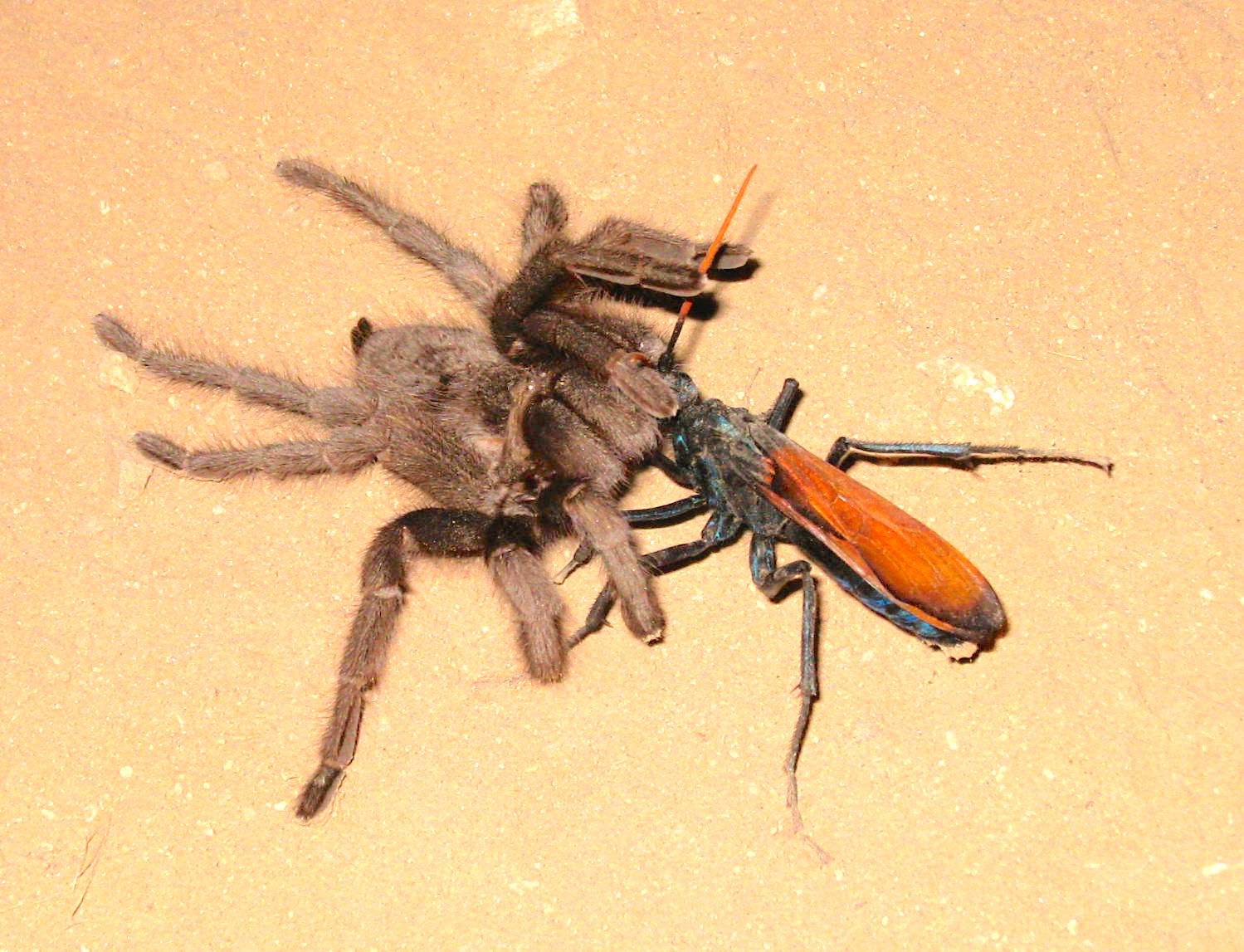
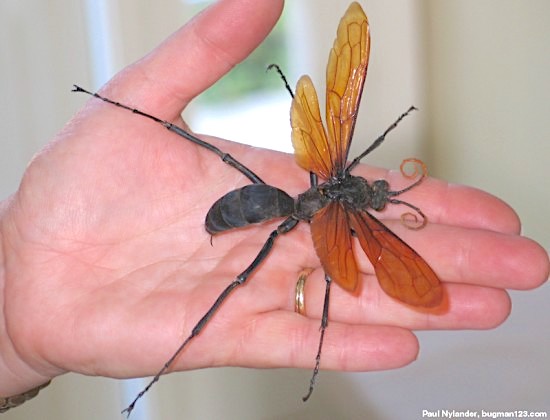
This creature turned out to be a Spider Wasp (aka Pepsis Wasp), of the Pompilidae family. The insect is familiarly known as a Tarantula Hawk, for reasons give in unsparing detail below. For it turns out that this creature would be the hardest bastard insect on Planet Bastard in the Galaxy Bastardium.
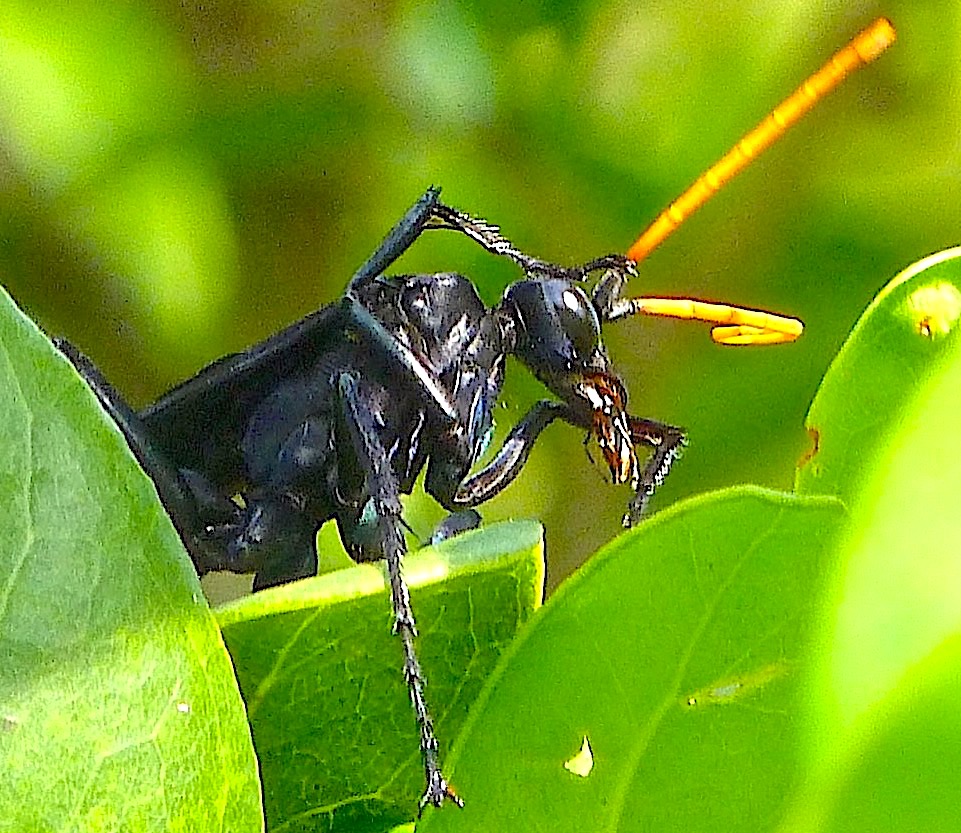
It’s lucky that I didn’t try to try to collect it to keep it in a matchbox (if those even exist now). Note, for start, the scary eating apparatus… and it’s not for nibbling leaves as I had thought, but chopping up small insects. The leg claws and barbs are for pinning down its prey. You would not believe how unpleasant these little buddies are – and that’s before we even mention the sting…
SPIDER WASPS IN ACTION
These wasps are known in some countries as “horse-killers”. There are many species around the world, with 6 subspecies, one of which being the Tarantula Hawk or Pepsis Wasp – so-called because it hunts tarantulas and uses them in a most ingenious and cruel way… NB theBNT have rightly pointed out that these insects are unaggressive to humans. If you leave them alone, they will spare you. I’ve also read that“The tarantula hawk is relatively docile and rarely stings without provocation”Now read on to see if it might be sensible to provoke one or not.
SCARY CRITTERS & LIVING LARDERS
(Trigger Warning: this is really rather gross)
SPIDER WASPS are ‘solitary’ insects that feed on ground spiders/ tarantulas by stinging them to paralyse them, then eating them. In the most sinister way, the females also make use of spiders for breeding purposes. Hear this! They build a nest in a burrow, find a spider (a tarantula for choice), paralyse it with their sting, drag it to the nest and lay a single egg on its abdomen. Then they seal up the burrow.
When the egg hatches, the larva chews a hole on the spider’s abdomen and enters a living larder. It gradually eat its host as it grows. The spider’s vital organs are left till last, so that the spider stays alive as long as possible until the larva has reached full-size. After several weeks, the larva spins a cocoon and pupates (often over winter). Finally, the wasp becomes an adult, bursts Alien-like from the spider’s abdomen (deftly evading Ripley), and tunnels out of the burrow…
Do NOT try this at home or more than 10 yards from a medical centre
SPIDER WASPS: MORE FEARFUL FACTS
Their hunting improves with experience – the more spiders they eat, the quicker they find, attack & kill them
Males use ‘perch territories’ to scan for receptive females from a tall plant or other vantage point, a behaviour known as HILL-TOPPING
Adult wasps also feed on a variety of plants for nectar & pollen. They may become intoxicated on fermented fruit, which affects their ability to get around (I think we’ve all been there at some time…)
The female Pepsis gets her spider in two main ways: approaching a tarantula causing it to rear up defensively on its legs, thus exposing its abdomen to the sting or
She locates a tarantula’s burrow, using her sense of smell. She tricks the spider into emerging by tweaking the web at the burrow’s entrance or ‘intruding’ (see video below)
The wasp uses her long stinger to stab her prey. The poison rapidly paralyses the spider. She then drags it to her burrow, lays her egg onto the tarantula’s abdomen, seals the burrow and leaves. Job done
The hooked claws and barbs on the wasps’ long legs are weapons for grappling with victims
The stinger of a female tarantula hawk can be up to 7 mm (1/3 inch) long – and the sting is among the most painful insect stings in the world (see below)
Only the females sting (males may pretend to) because the stinger is linked to the ovipositor (egg-laying organ)
You can distinguish females from males by the curled antennae of the female. Mine was therefore female
The Pepsis wasp has (unsurprisingly) very few predators, though apparently roadrunners and bullfrogs may tackle them
Here is a hypnotically fascinating 3-minute video of the life-or-death struggle
SPIDER WASP –v- TARANTULA
THE STING
The sting of these wasps is among the most painful of any insect, though the most intense pain lasts on a few minutes. Entomologist Justin Schmidt bravely submitted himself to the stings of various insects and described this pain as“…immediate, excruciating pain that simply shuts down one’s ability to do anything, except, perhaps, scream. Mental discipline simply does not work in these situations.”
Schmidt produced his SCHMIDT STING PAIN INDEXThe pain scale, based on 78 species, runs from 0 to 4, with 4 awarded for the most intense pain. Spider Wasps of the species Pepsis – i.e. Tarantula Hawks – have a sting rating of 4.0, described as“blinding, fierce, shockingly electric. A running hair drier has been dropped into your bubble bath”Only the bite of the Bullet Ant – and the sting of the Warrior Wasp – is ranked higher, with a 4.0+ rating, vividly described as“pure, intense, brilliant pain. Like fire-walking over flaming charcoal with a 3-inch rusty nail in your heel”
LIGHT RELIEF AFTER THE PAIN
1. In 1989, New Mexico chose the Tarantula hawk wasp as the official state insect. The choice seems to have been left to schoolchildren and I’m guessing here (or gender-stereotyping) but I suspect it was the boys’ choice that won…
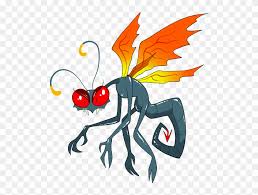
2. Tarantula Hawk is a “psychedelic progressive metal band” from San Diego, Ca. Their short discography includes their debut Tarantula Hawk (CD/LP, 1998); Burrow (Live CD, 2000, self-released); and Untitled. The cover of their debut provides the perfect ending for this post, vividly depicting the colour and texture of the swirling fiery pain you could experience (and I don’t really mean from listening to the music…)
I featured the extraordinary, colour-transforming PEACOCK FLOUNDER Bothus lunatus about 3 years ago in the Bahamas Reef Fish series (No. 21 I think). These really are remarkable creatures, and I am pleased to be able to show some more wonderful illustrative photos.
ROVING EYES
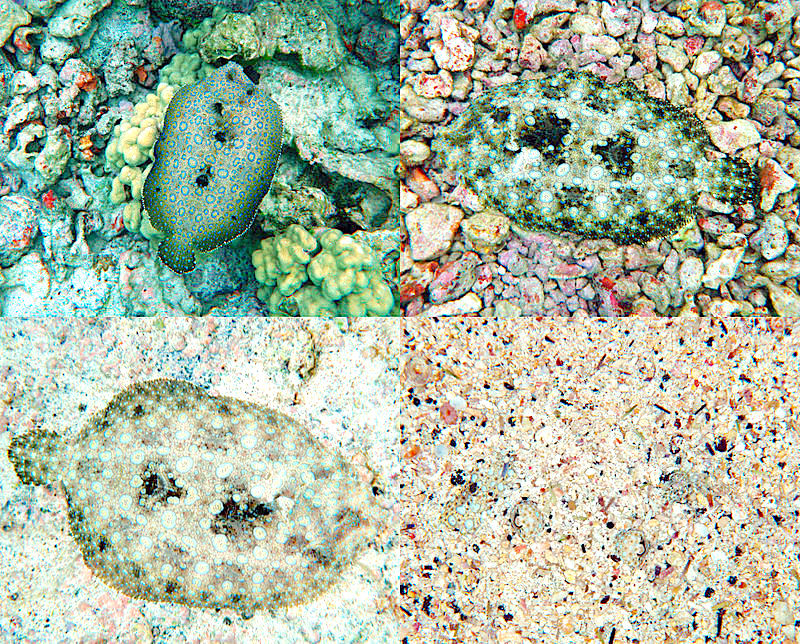
In the fish shown here, you’ll see that – surprisingly – both eyes are on the upperside of the fish, above the rather grumpy mouth, whereas the head is horizontal to the ocean floor. Oddest of all, juveniles are constructed conventionally with bilateral eyes, and look like ‘normal’ fish rather than flatfish.
As the fish matures, in some magic way the mechanics of which I can only guess at**, the right eye grows round to the topside and the flounder transforms from a ‘vertical’ fish to a flatfish. For this reason, the PF is known as a ‘lefteye’ flounder. Maybe in other flounder species in the world – the southern hemisphere maybe? – the eye that moves round to the upperside is the left eye.
The eyes of this fish have another special trick up their sleeves (so to speak). They operate completely independently. Thus the creature can look left and right, or forwards and backwards, simultaneously. It’s an excellent system for detecting predators coming from any angle. It’s a superpower we might all benefit from.
DO THEY HAVE ANY OTHER TRICKS WE SHOULD KNOW ABOUT?
Yes they do indeed. If you have been admiring the fish shown so far, you’ll have noticed that the colour of each one differs from the others. In addition to the predator-protection that the eyes provide, the peacock flounder can make itself (near) invisible. They can rapidly change colour to match their surroundings. There are 3 reasons for this: to avoid / confuse predators; to conceal themselves on the sea-floor to catch passing prey; and, as dive expert Fred Riger has pointed out, “the male peacock flounder can, and does greatly intensify his colours to declare territory and attract females. When doing this the males will also signal with the left pectoral fin, sticking it straight up and waving it around.”
The same fish, photographed over several minutes as it moves over the ocean floor
Matching the background happens as the fish swims, and in a few seconds. When they rest on the sea-floor, the camouflage may even become total. In #4 above you can just about make out the eyes. The whole effect is known as ‘cryptic coloration’ or CRYPSIS. In contrast, the image below shows just how adaptable the transformation can be. Note how the fish can even mimic the pinkish tinge of the sand perfectly. If threatened, the fish will bury itself in the sand, with just its eyes showing.
HOW DO THEY MANAGE TO CHANGE COLOUR IN SECONDS?
It’s complicated! A simple answer is: a mix of hormones, pigment-cells and vision, all coordinating rapidly. The colour change works in two ways: pigments are selectively released to the skin cells; and other pignments can be selectively suppressed. An analogy might be image manipulation using variations in brightness, saturation etc. Not convinced? Then watch this short video and prepare to be impressed. Astonished, even.
WHAT IF A FLOUNDER CAN’T SEE CLEARLY FOR SOME REASON?
As with many (all?) superpowers, there is usually some kryptonite-style flaw. A flounder with a damaged eye, or one temporarily covered (by sand, for example) will have difficulty in changing colour – possibly at all, or at any rate with the swiftness it needs to have.
THESE SIDEWAYS FISH – HOW DO THEY… YOU KNOW…?
Take a look at the fish above with its top fin raised. It’s a ‘ready’ signal in a harem. Male flounders have a defined and defended territory within which live up to 6 females – a so-called ‘harem.’ I can do no better than borrow the description of the rituals from an article derived from scientific papers byKonstantinou, 1994; Miller, et al., 1991in the websiteanimaldiversity.org/…ounts/Bothus_lunatusTo which I can only add, ’15 seconds, eh?’
“Mating activities usually begin just before dusk. At this time, a male and a female approach each other with the ocular pectoral fin erect. The two fish arch their backs and touch snouts. After this interaction the female swims away, and the male sometimes follows, approaching the female again from the left side. At this point the male pectoral fin is erect and the female pectoral fin moves up and down, possibly signalling willingness to mate. The male then positions himself underneath the female and mating begins. This process consists of a mating rise, during which the female and male rise in the water column together. On average, these rises last about 15 seconds. At the highest point of this rise, usually around 2 m above the substrate, gametes from both fish are simultaneously released, producing a cloud of sperm and eggs. Once the couple returns from the rise, the male “checks” to make sure mating was successful, and the pair separates quickly, swimming away from each other in opposite directions. Not all mating rises are successful, and the process of “checking” is thus important. The exact purpose of the mating rise in these flounders unknown; possible reasons for rising include better dispersal of gametes and predator avoidance.”
Peacock Flounder – Kim Rody Art
**This may in fact be through sheer laziness
Credits: Melinda Riger & Virginia Cooper / Grand Bahama Scuba; Melinda Rogers / Dive Abaco; Adam Rees / Scuba Works; Kim Rody; animaldiversity.org; magpie pickings and other credits in the text
BABY SPERM WHALE IN BAHAMAS WATERS: AMAZING FOOTAGE
Over several years I have had the privilege of being able to feature wonderful photographs and video footage in this blog. Birds, course, and also reef fish, sharks, seahorses, coral and anemones and a whole lot more. I have also been involved throughout with the wonderful work of the Bahamas Marine Mammal Research Organisation (BMMRO),and have been a part of team since 2017. Abaco is lucky enough to have the HQ at Sandy Point, but we must keep in mind that the organisation’s remit extends throughout the entire Bahamas archipelago, and has firm links with research and conservation organisations on the other islands.
The clear turquoise waters around the islands and their cays are well-known to, and appreciated by, all. This is the playground of the smaller marine mammals – the dolphins, smaller whales and the (now a significant presence) manatees.
Less well known are the denizens of the deeper waters and the immense depths of the GREAT BAHAMA CANYONof the northern Bahamas. This is the realm of the large marine animals, from the mysterious speciality beaked whales right up to massive sperm whales.
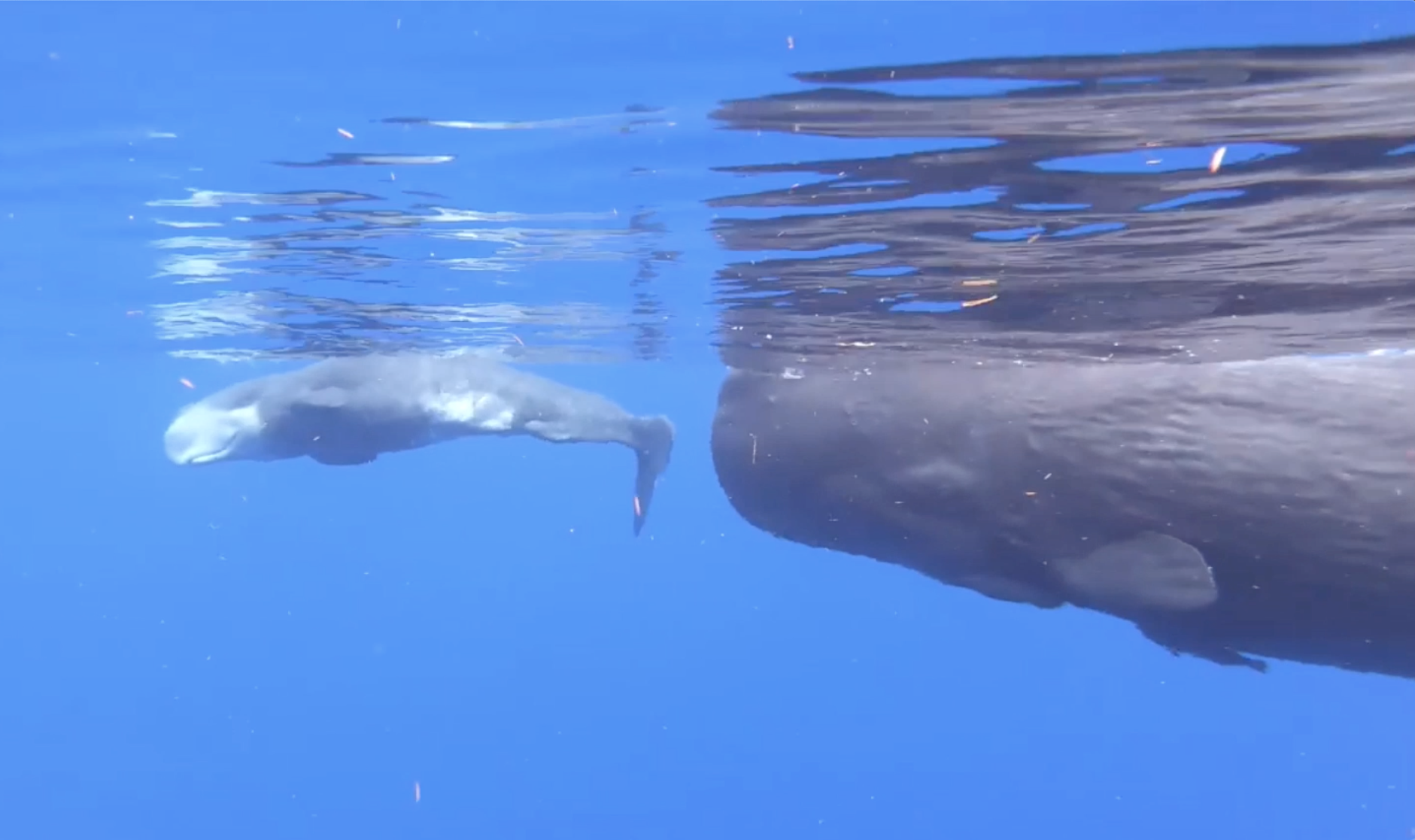
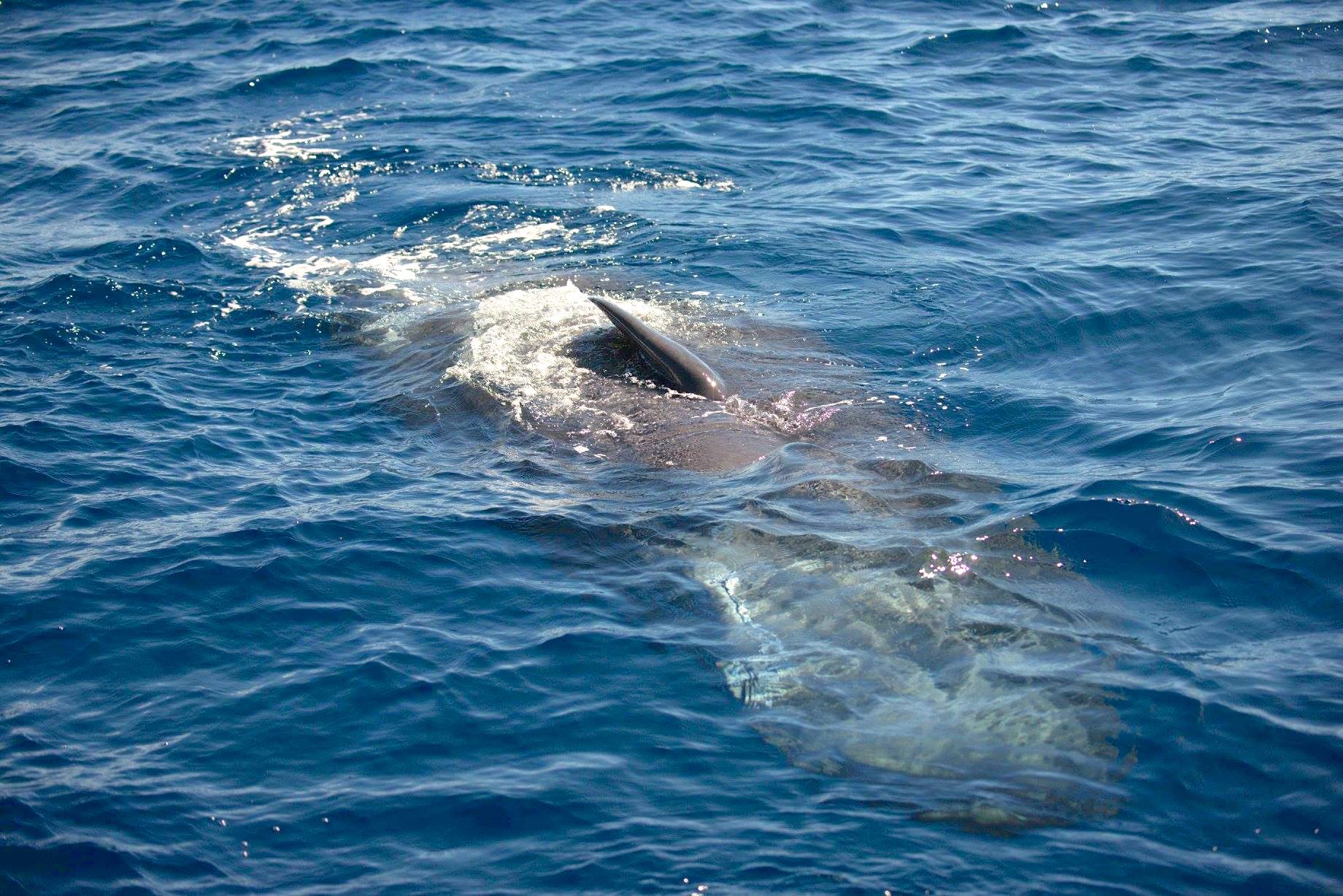
About 3 weeks ago, the BMMRO research team encountered something truly wondrous off the south Abaco coastline – something to quicken the pulse and gladden the heart – a newborn sperm whale investigating the underwater world it has just been born into. Hopefully it will flourish and live for decades. The hope is sadly tempered by the overwhelming – and increasing – evidence of the terrible effect that humans have caused in just one generation by the pollution of air, land and sea.
Charlotte Dunn posted the footage of 2 separate sightings. Her first caption reads:
“Close encounter with a curious newborn (‘neonate’) sperm whale yesterday – reminding us of the importance of our Shared Waters project about the effects of ship traffic on resident sperm whales, http://www.bahamaswhales.org/research.aspx. The young individuals like this one will be the most impacted if we don’t make serious conservation changes. As this young whale matures, the policy changes we make in the Bahamas now will affect its survival”.
“While their mothers are feeding at depth (knocking sound in the background) this newborn is being cared for by a slightly older calf until the adults return.”
After the second encounter, Charlotte wrote: “Here’s another amazing short clip of the neonate sperm whale we videoed off south Abaco two weeks ago – thank you to the BEP Foundation and the Devereux Ocean Foundation for funding some of our important work with sperm whales in the Bahamas”.
On Charlotte’s conservation points above, over the last 3 months or so I have been checking daily for posts and articles specifically related to stranded, dead, and killed whales, and their stomach contents as revealed by necropsies. I have collected images from around the world. I won’t wreck this marvellous find in Abaco waters by including any of these. This casual research reveals a horrifying attrition rate for marine mammals. Most animals were full of plastics, from micro through flip-flops all the way up to very large chunks. Some of this junk clearly was the actual cause of death rather than a contributing factor. A whale may take several weeks to die in this way. All of it is entirely the responsibility of mankind – and pretty much caused in the last 50 years.
So let’s enjoy this little sperm whale, and hope it grows to an adulthood that will have seen a radical change for the better in its birth environment – the one that should never have been considered ours to destroy.
CREDITS: Brilliant close-up footage plus the clips I have taken from it – Charlotte Dunn / Diane Claridge / BMMRO.
DONATE: If you are touched by the magic of this little Bahamas sperm whale, may I invite you to consider making a donation to BMMRO for its research and conservation work – a scientific commitment that reaches far beyond the waters of the Bahamas. The system is set up to process donations from just $10 upwards, and every cent is used to further the work of BMMRO. Please click the logo below to reach the right page directly.
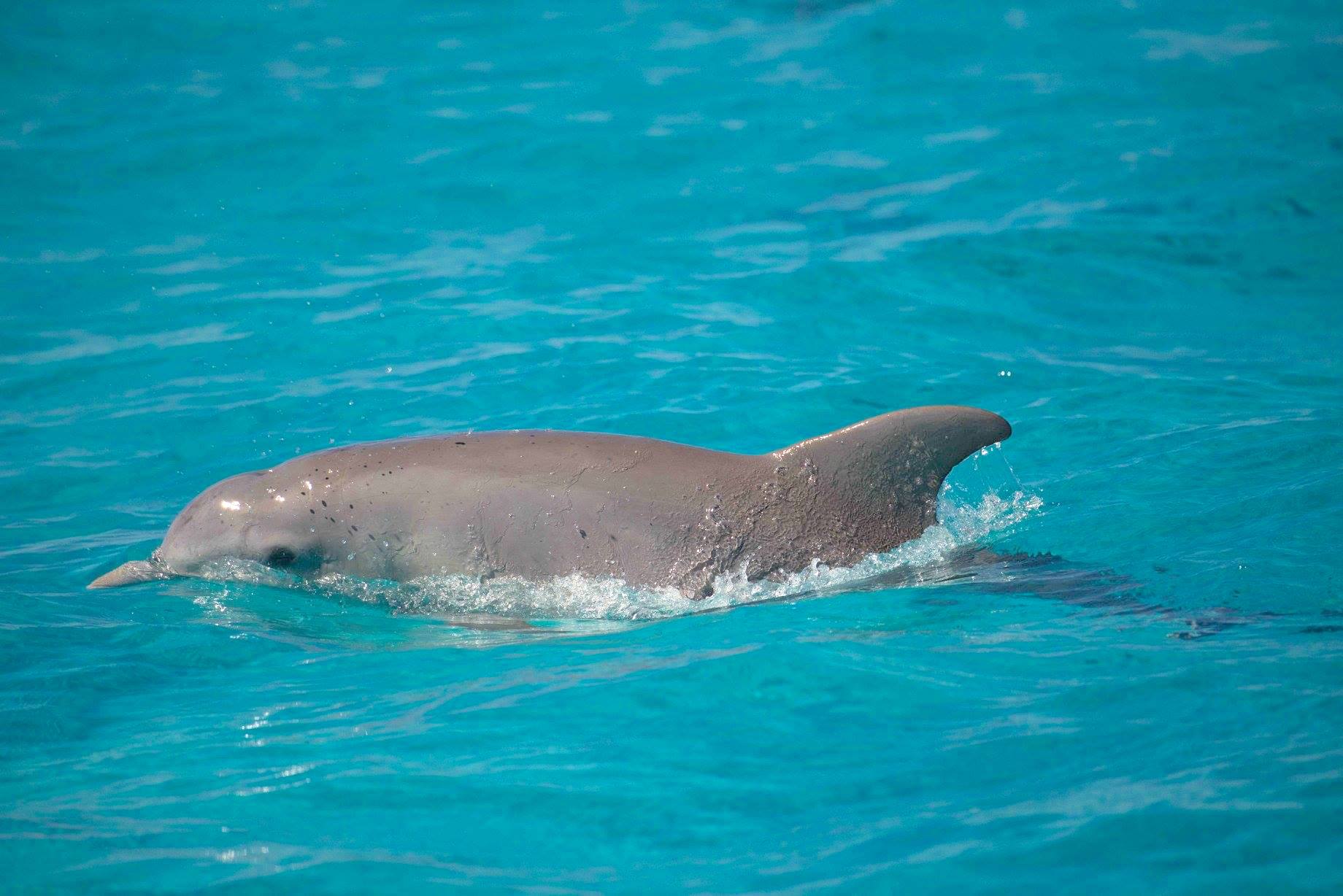
Earlier this year, the team at Friends of the Environment in Marsh Harbour Abaco, in conjunction with BMMRO (Bahamas Marine Mammal Research Organisation), arranged a fundraising trip to look for whales and dolphins. On both counts, the guests’ hopes and expectations were amply fulfilled – in fact, almost certainly exceeded.
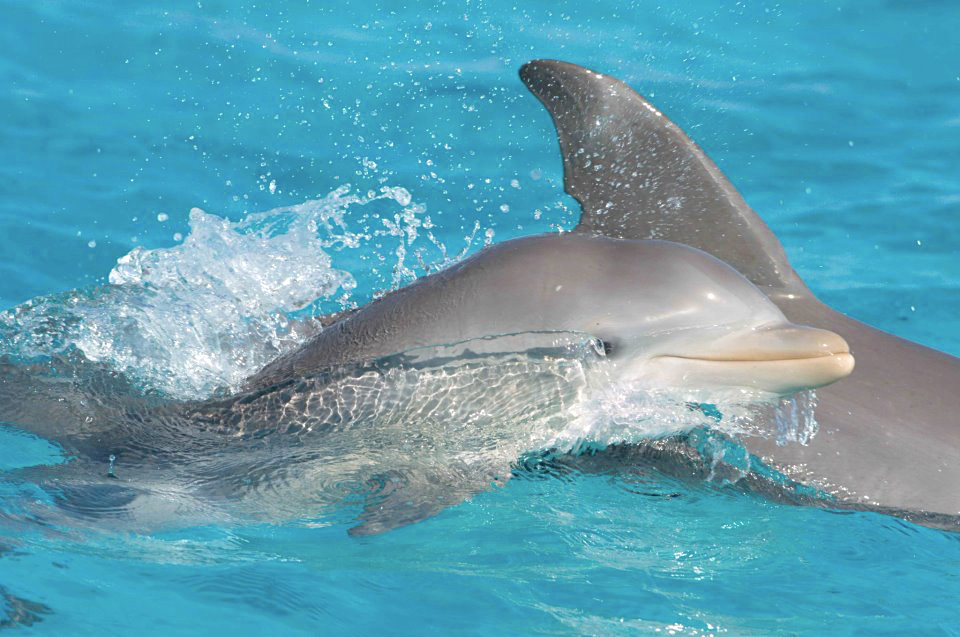
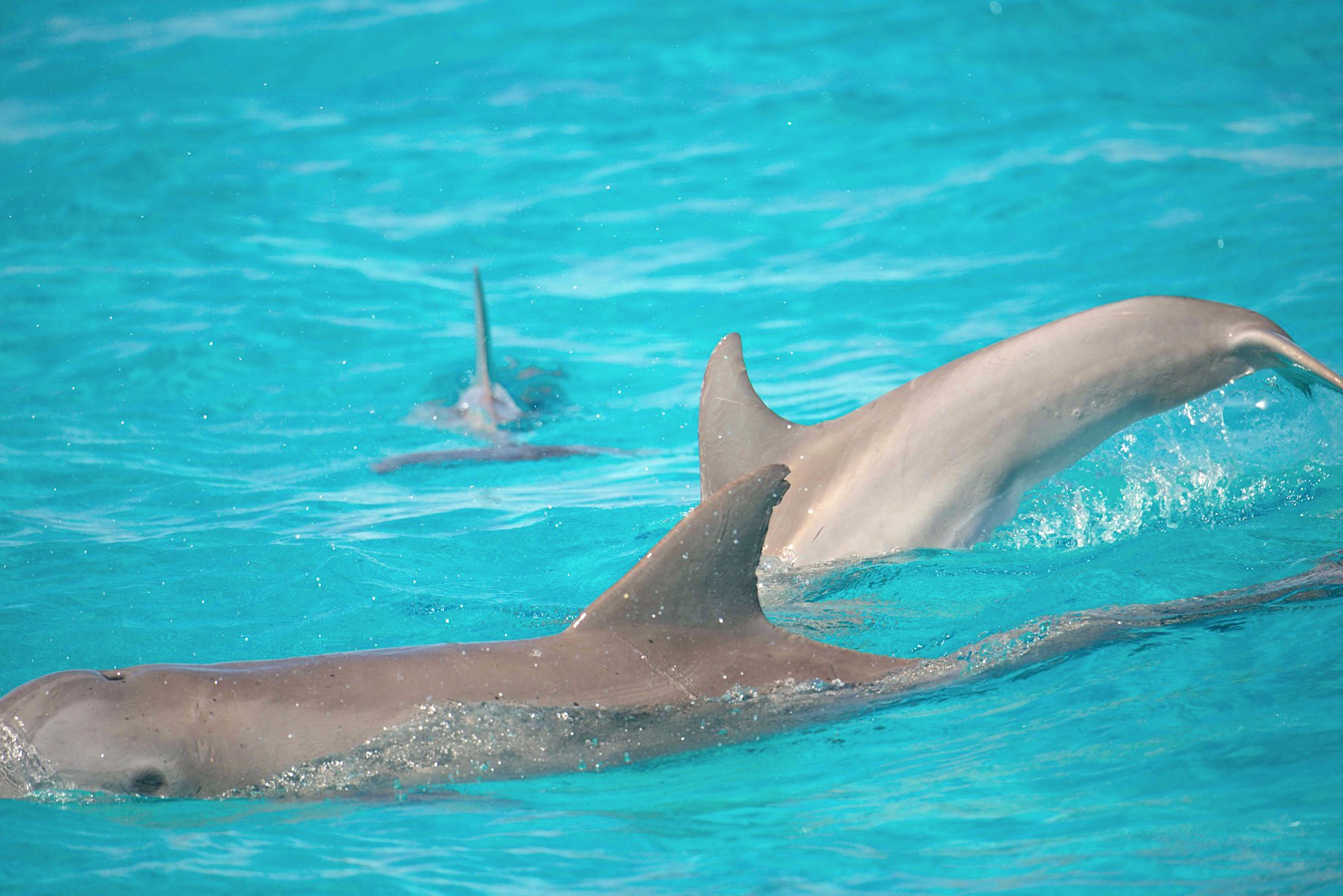
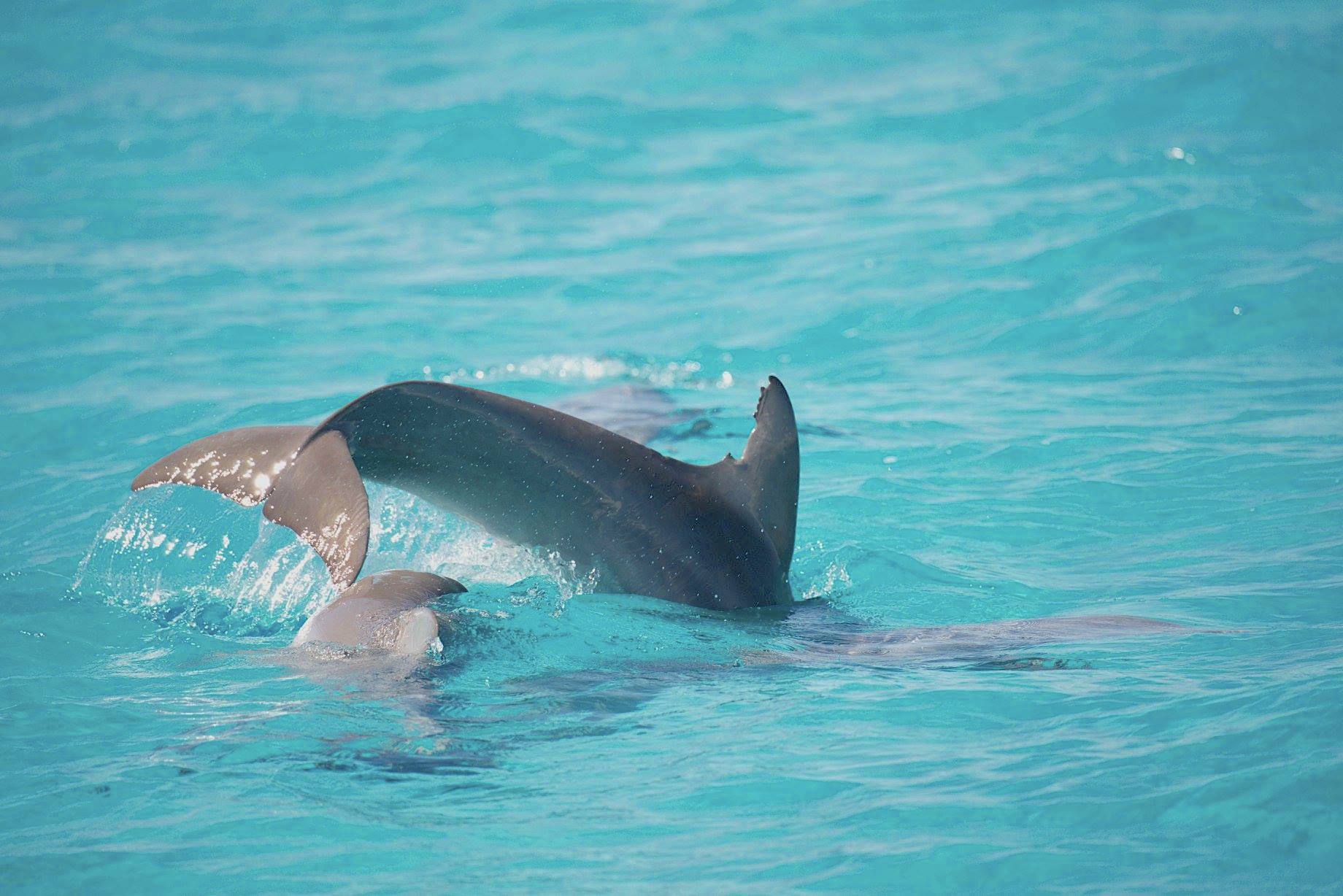
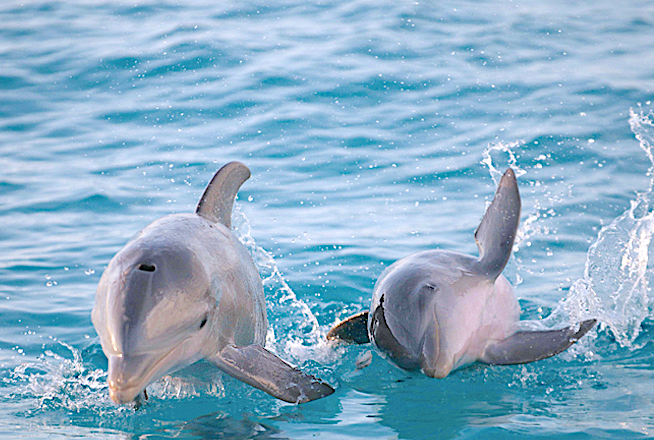
Where there is a single dolphin, there will almost invariably be others – and so it proved. The group of bottlenose dolphins turned out to be in a very playful mode, living up to their reputation as delightful, inquisitive, entertainers.
One of the dolphins turned out to be a young 3rd generation animal from the same family, recently weaned. The BMMRO has a large photographic library of dolphins and whales, collected over many years. In the photo above, you’ll see that the dorsal fin of the nearest one is ragged, especially near the top. This is the primary method by which individual animals are recorded to assist with subsequent identification in the field (= water) or back at base in Sandy Point by means of the photo archive.
The trip was perfected when a young female sperm whale came close to the boat… and then rolled onto her side, flipper up, to get a good look at the boat and its human contents. A wonderful experience for all those on board.
Credits: BMMRO / Charlotte Dunn; Friends of the Environment
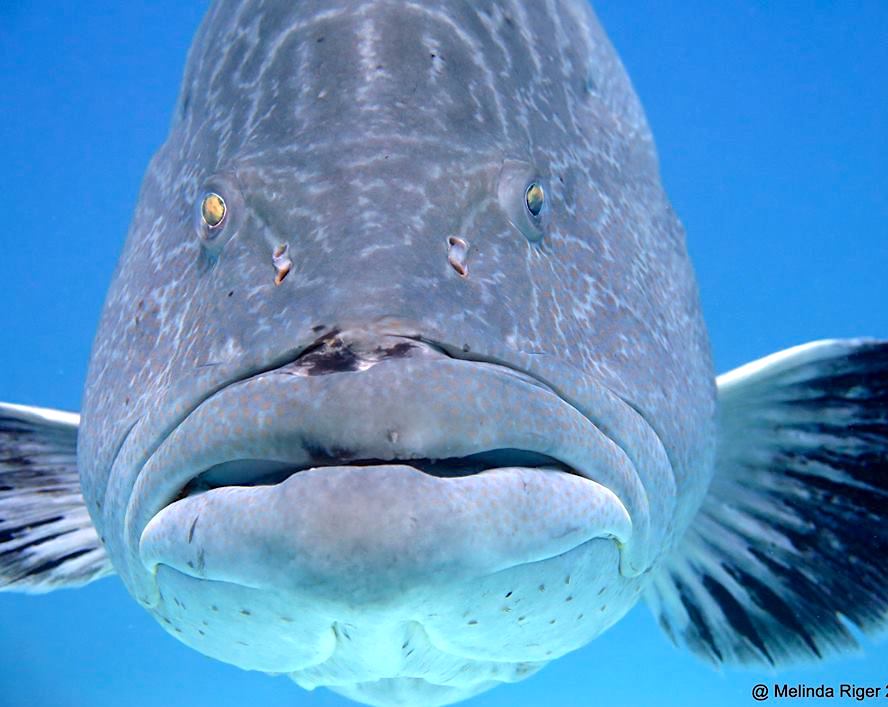
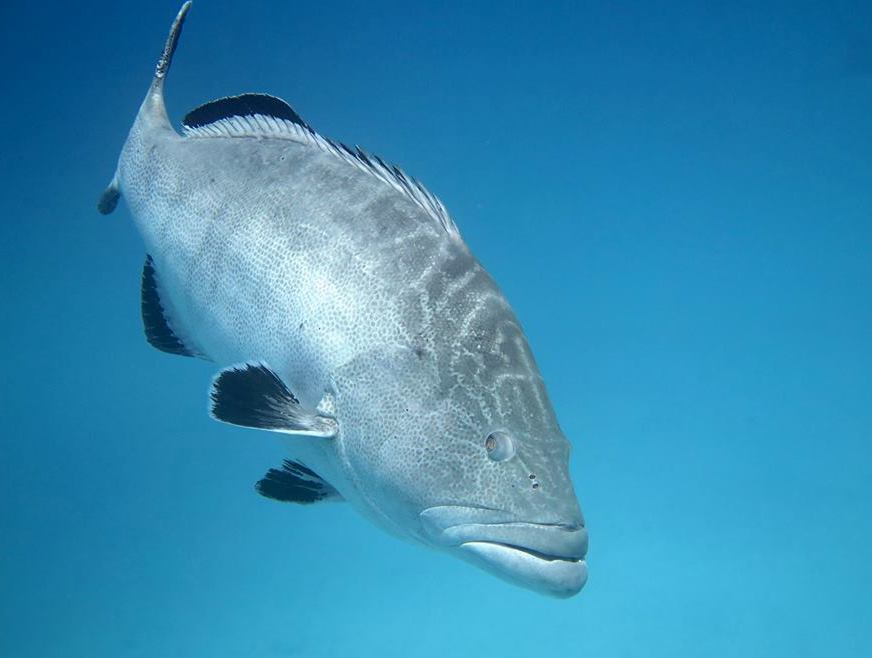
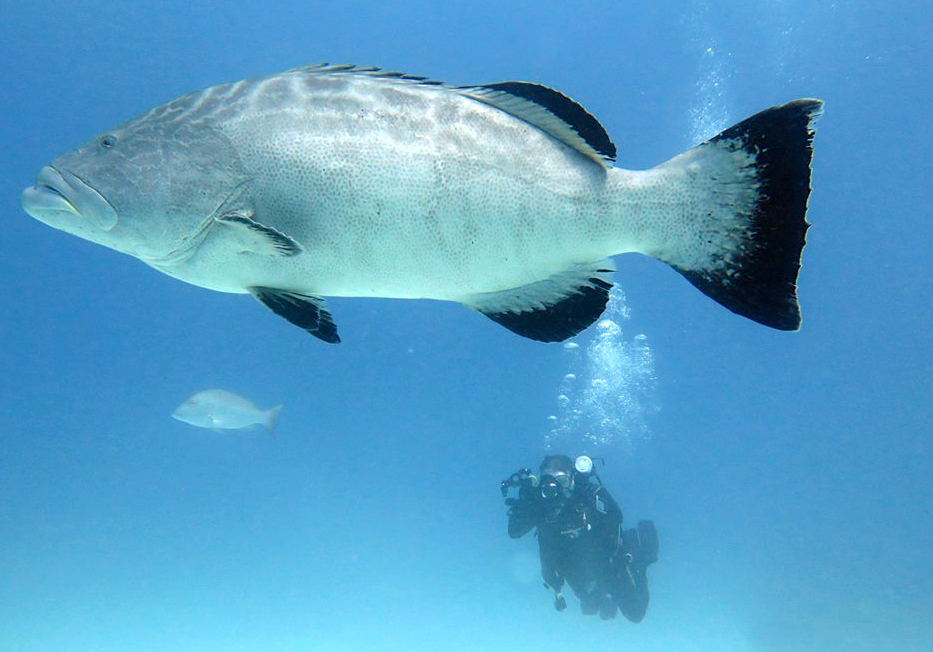
The Black Grouper, like all its cousins, has the twin disadvantages of being fished for sport and fished for food. As demand for grouper on the menu rises, so does its vulnerability. The species is described as a ‘slow breeder’, so a depleting population has less chance of sustaining numbers. The consequence is an exponentially diminishing stock of the species. The equation is simple: fewer fish means less and less stock replenishment.
Formerly plentiful, these groupers (like other grouper species) have moved from an IUCN listing of ‘Least Concern’ to ‘Near-Threatened’. Whatever effect climate change may be having on the oceans, stock depletion of this noble species also has more direct human causes.
An adult black grouper’s diet consists of small fish and squid. Juveniles feed primarily on crustaceans. However, certain tiny reef fish – blennies and gobies for example – are important to the species as ‘cleaners’. You can read about their significance by clicking CLEANING STATIONS.
The service performed by tiny fish on large ones (not only groupers) is an example of a symbiotic relationship known as ‘mutualism’**, in which both parties benefit (the little fishes get gacky bits of grouper to eat). The cleaners are able to do their work inside the gills and even the mouth of the host without being at risk.
The NASSAU GROUPER has a defined and enforced closed season to help maintain numbers. It will be interesting to see if the same protection is eventually extended to the black grouper and indeed to other grouper species.
** The other two types of symbiotic relationship are commensalism, in which only one species benefits while the other is neither helped nor harmed; and parasitism, where one creature (the parasite) gains, while the other (the host) suffers.
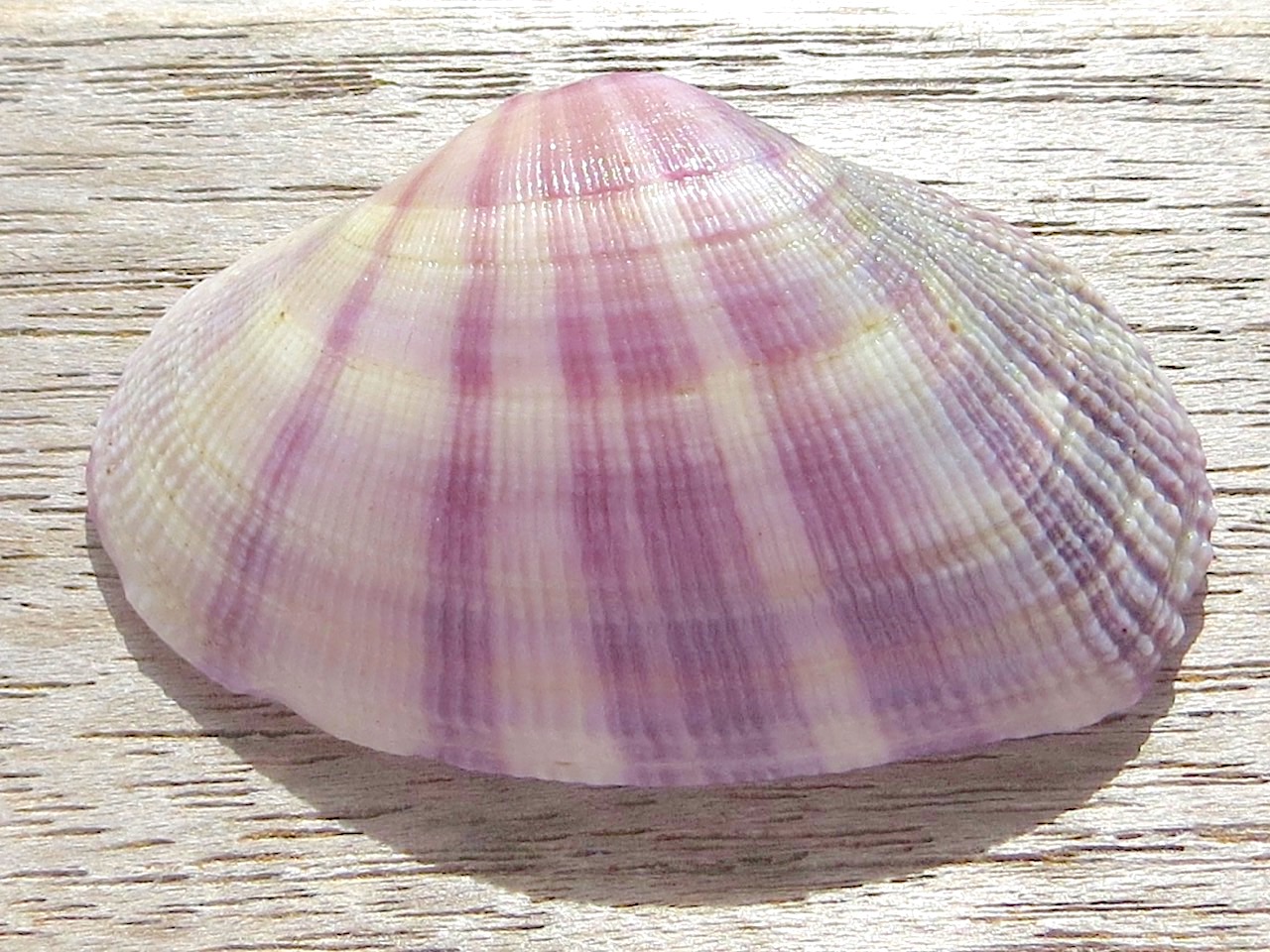
I included these pretty shells, with their striking pink radials, in a much earlier post BEACHCOMBING BIVALVESThe ones shown here are larger specimens. Some call them ‘rose-petal shells’. The hinges (muscles) are very delicate, and for many of these shells that wash up on the beach, the two halves have separated naturally.
STs are not uncommon, and I recently found some beauties at Sandy Point. They can grow up to about 7 cms / 2.75 inches, and some of these ones were that length, or very nearly so. I realised after I had taken the photos that I should have used a coin for comparison.
TELLIN: THE TRUTH
The occupant of each of these pretty shells is a type of very small clam. I have completely failed to find a photo of a nude one with its shell removed, but maybe these are never seen at all. The clams live on the sea-floor, often buried in the sand, and with the lid (mostly) shut. Then they die (or their shells are bored into by a predator and they are eaten) and the shells eventually wash up empty on the beach. There’s not much to say about them – they perform no tricks (some shell creatures do, such as backflips) and are believed to have vanilla sex lives (some shell creatures are quite inventive in this department).
Inside Story… not much to tell except (a) still very pretty & (b) possible predator bore-hole top right
WELL, WHAT ELSE IS THERE TO THEM, APART FROM BEING PRETTY & BEACHCOMB-ABLE?
The clams have 5 tiny teeth to chew up their staple diet, which is mainly plant material
These include one ‘strong’ tooth, and one ‘weak’ one, though how someone found it out remains a mystery
Tellins are native to the Caribbean and north as far as Florida.
They live mainly in quite shallow water, but can be found as deep as 60 foot
They have no particular rarity value, and are used for marine-based crafts
PLEASE TRY HARDER TO HOLD MY ATTENTION
You know those lovely tellins you collected during your holiday on Abaco to take home to your loved ones? You may have committed a crime! You did take them, didn’t you? However the general rule – law, even – seems to be “in most countries it is illegal to bring back these shells from holidays”. However, you have been fortunate; the Bahamas has no specific prohibition on the removal of tellin shells, certainly not for personal use.
READER COMMENT: WHOOPS! ALSO, PHEW!
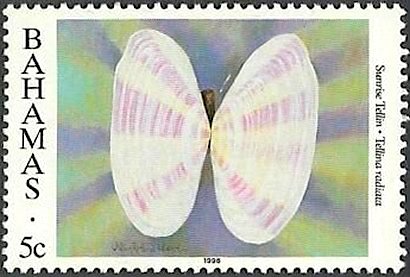
As ever, the very excellent Bahamas Philatelic Bureau has covered seashells along with all the other wildlife / natural history stamp sets they have produced regularly over the years. The sunrise tellin was featured in 1995. You can find more – much more – on myPHILATELYpage.
All photos Keith Salvesen / Rolling Harbour; Rhonda Pearce Collection plus Seashells.Org, O/S Linnean Poster, O/S BPB stamp
One of the pleasures of watching birds (as opposed toBIRDWATCHING, a more committed-sounding enterprise with its own Wiki entry, that may require equipment, books & mag subs…) is to spend some time observing them enjoying themselves. Perhaps you have a feeder, and like to watch the birds getting stuck into the seeds, carelessly flicking the husks around and throwing their ‘feeder shapes’ on the perches. Maybe you like to see the hummers, beaks deep into the little red plastic flowers on the rim of the sugar-water feeder, tiny bodies motionless and upright, wings a glistening blur of rapid movement in the sun.
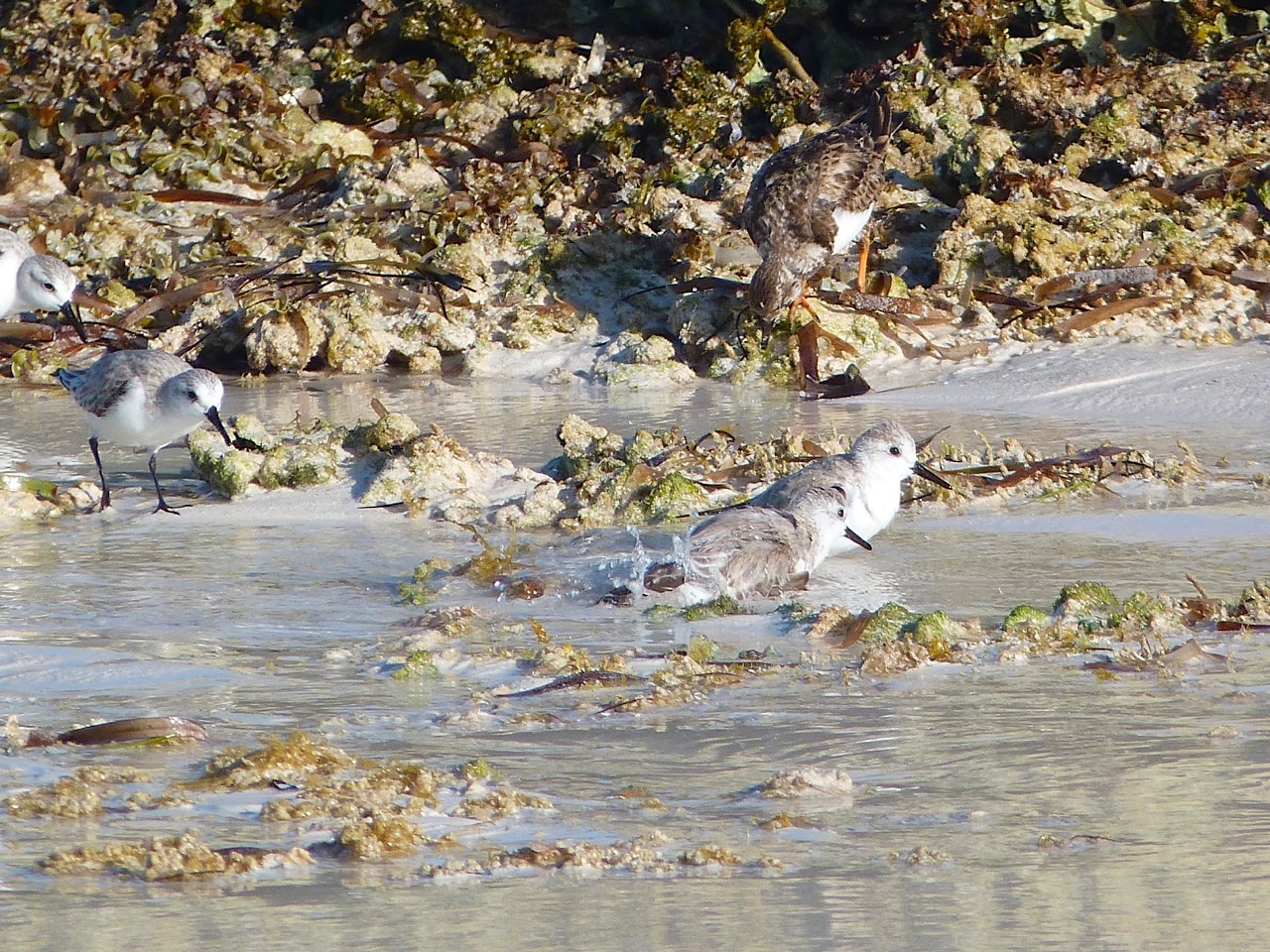
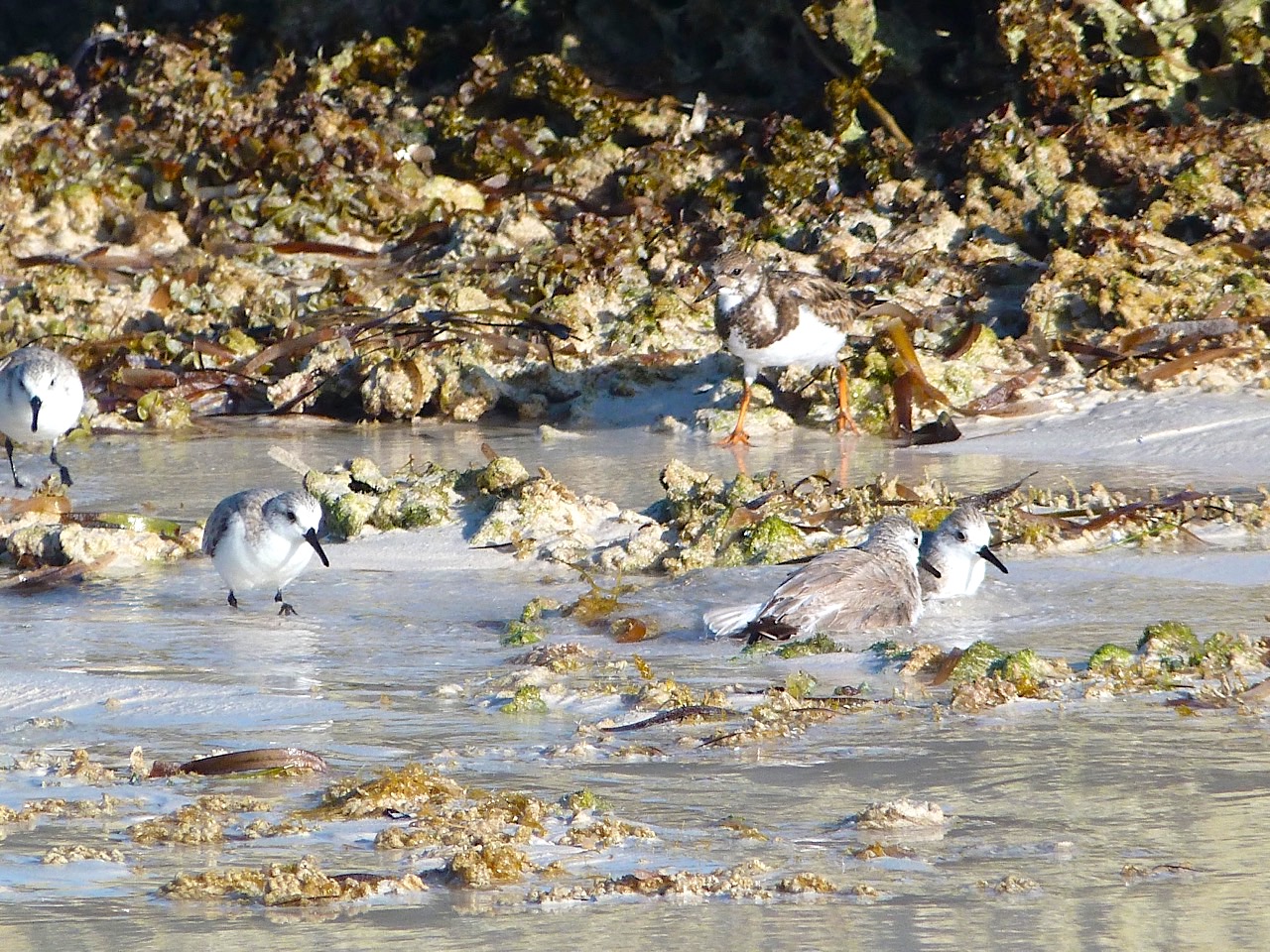
It is 5.30 pm. The sun is sinking in the early evening sky. The tide is on the rise at the north end of the Delphi beach where the reef joins the land. There is a small spit of sand that will be covered quite soon, but meanwhile two dozen sanderlings mixed in with assorted ruddy turnstones are doing their idiot feeding thing, rushing around on their tiny legs, stabbing in the sand, and generally behaving like clockwork toys on speed. Meanwhile a handful have found the fun to be had in the swirling tide as it pours round the head of the reef onto the sand spit. Yes, it’s sandpiper bath-time!
Towards mid-tide on the rise, the water begins to creep round the rocks and encroach onto the sandbar. At high tide, it is well under water and fish are back in residence. Small sharks sometimes hang in the waves just behind their breaking point over the shallow sand. And so the tidal process repeats.
For the sanderlings, the best part of the day is when the tide is rising. At ± mid-tide is the time for the shore birds to bathe in the tidal pools that form – and as the water pours in around the end of the rocks, it froths like an overenthusiastic bubblebath. Right then is an excellent time to sit peacefully on the beach and watch the entertainment…
Substantial immersion is not out of the question…
These moments don’t last long. Soon the increasing force and height of the water spoils the fun, and the flock will suddenly take flight and move south a little way along the beach, away from the rocks. There’s the incoming tideline to play with – and more importantly, food to be uncovered with each incoming and retreating wave…
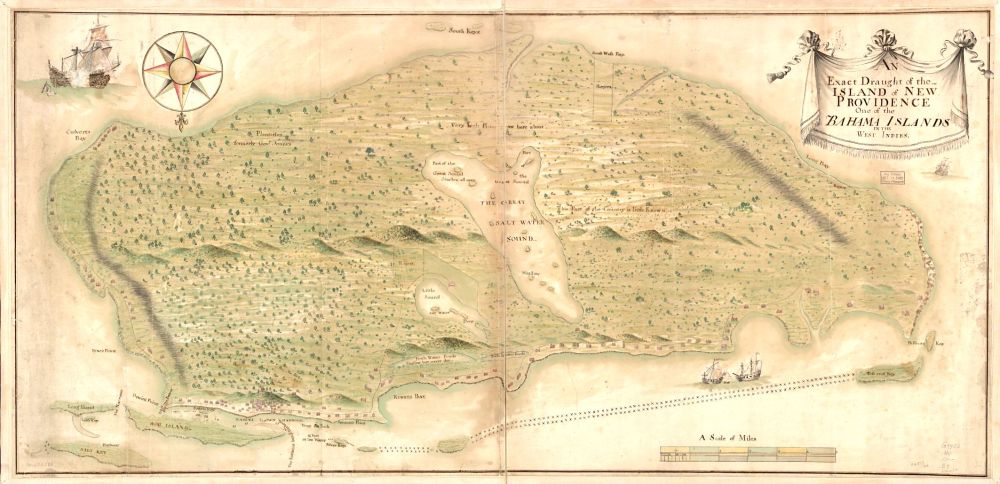
WHEN NEW PROVIDENCE WAS OLD: MAPPING BAHAMAS HISTORY
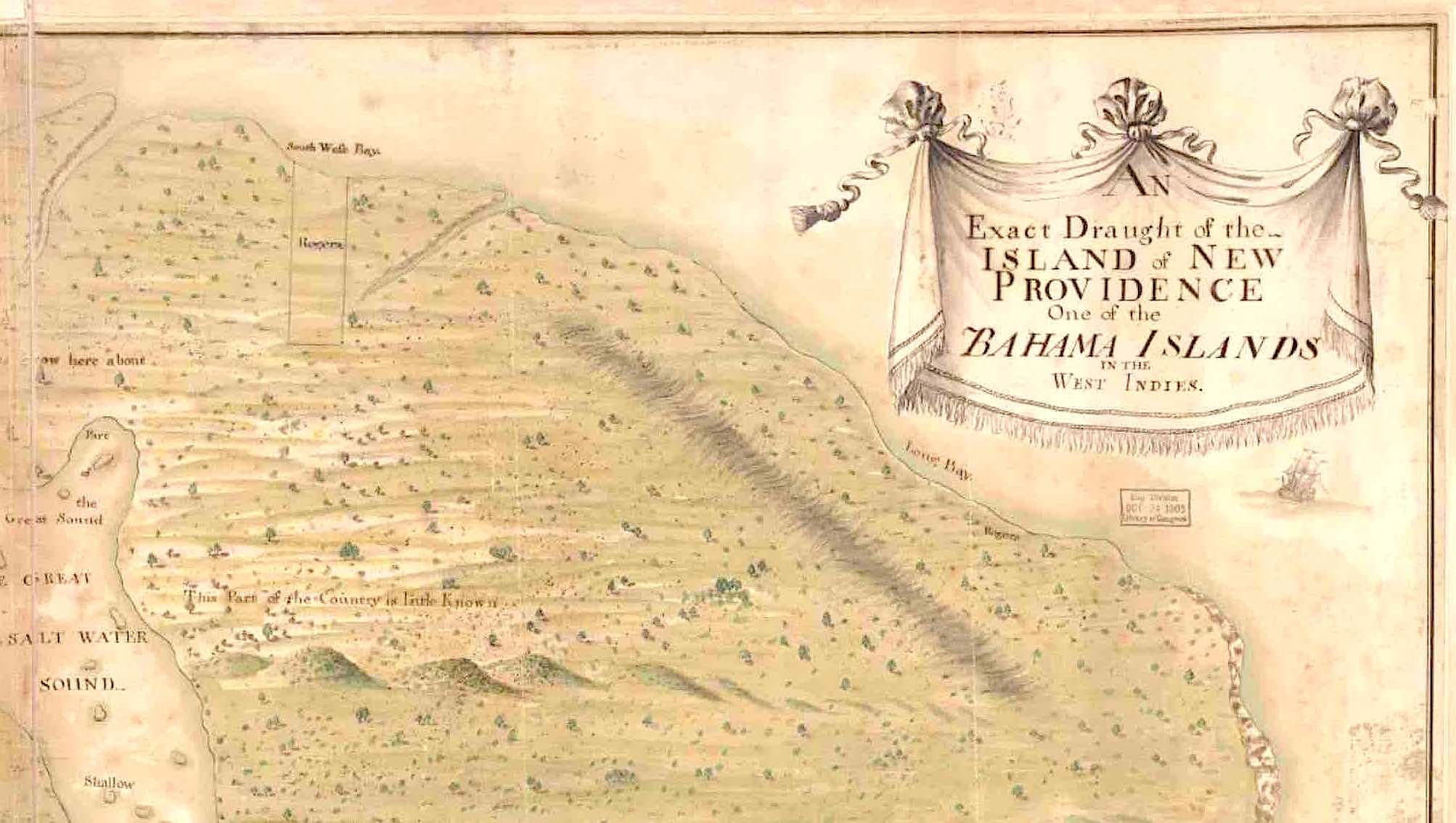
“Exact Draught of the Island of New Providence, One of the Bahama Islands in the West Indies”
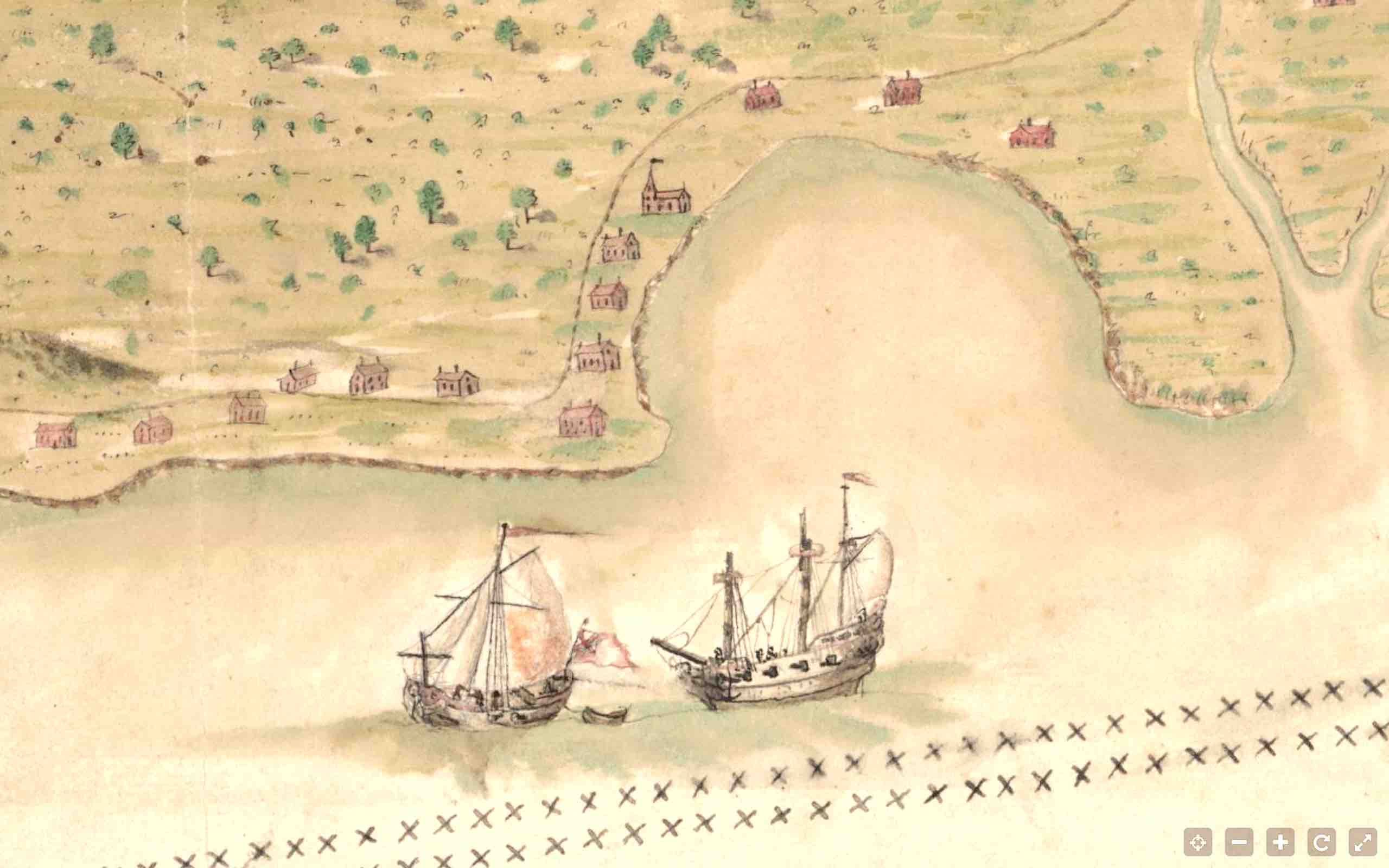
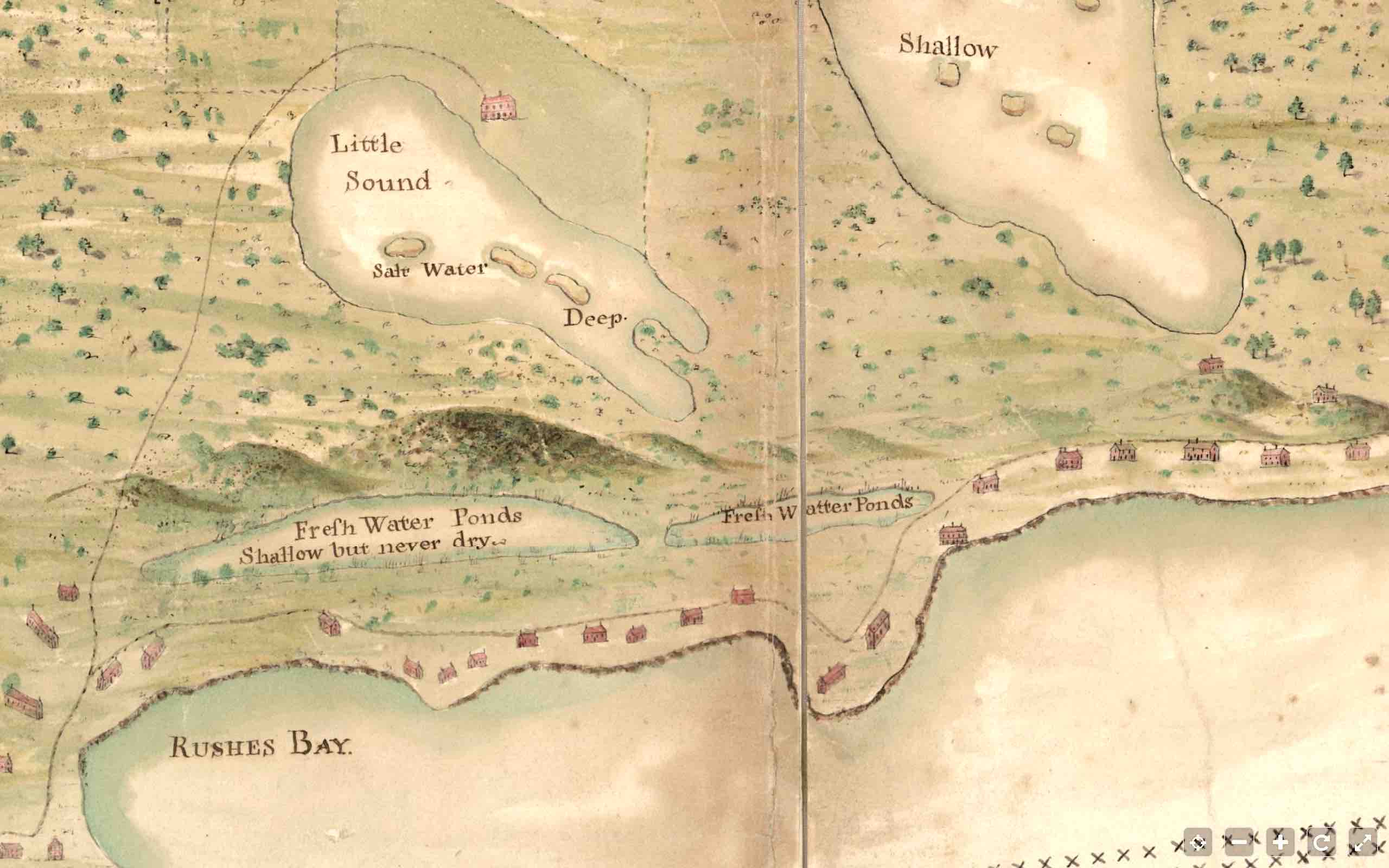
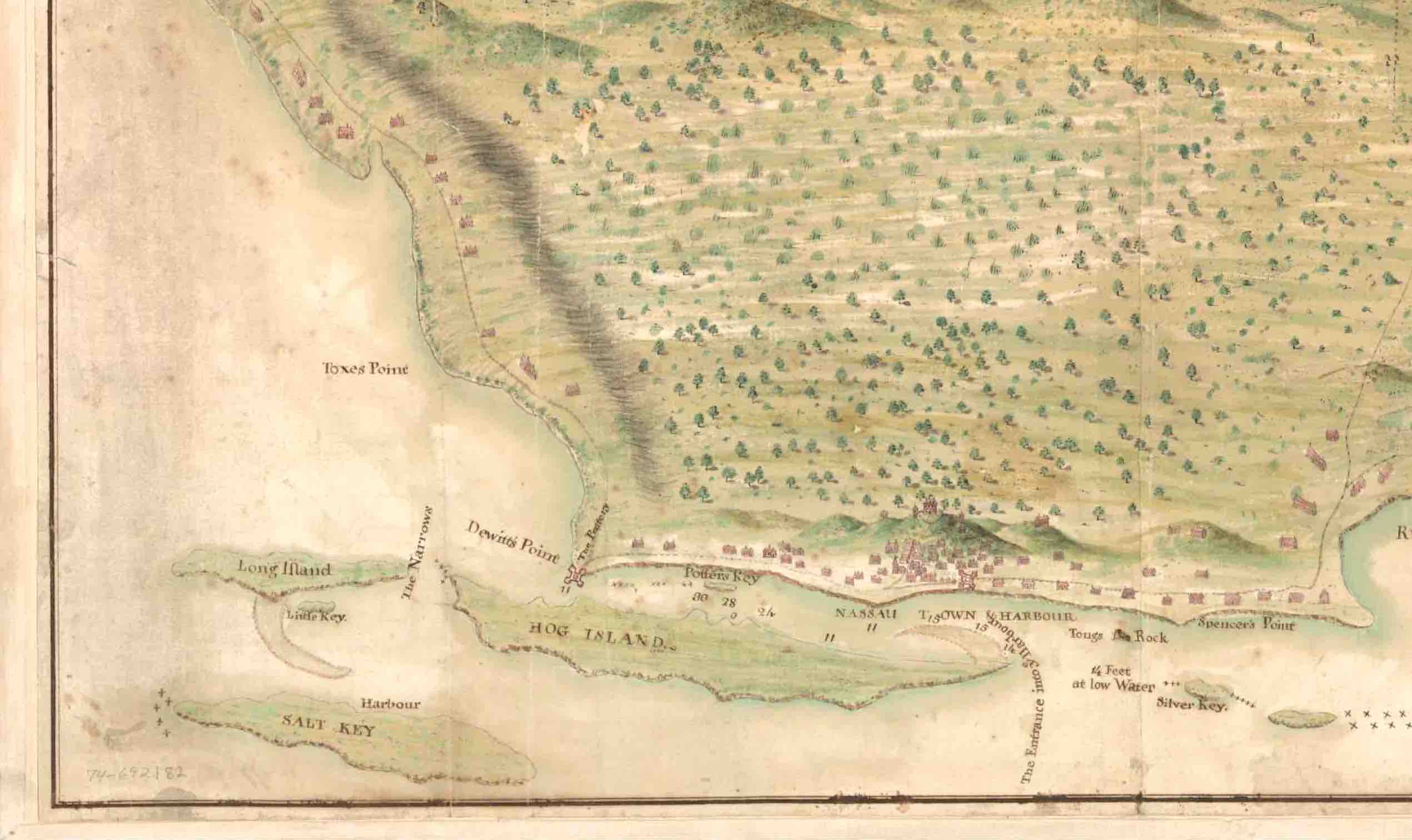
Lateral thinking is one thing; topsy-turvy thinking is in another league. The map that graces the top of this page is of New Providence and Nassau in the the early c18. By today’s exacting mapping conventions, which historically were less rigorously observed, it is upside-down, with Nassau on what we would call the south-west corner. The map is undated on the face of it, and I have found attributed dates of both 1700 and 1750. It could be anywhere in-between. At the time this map was made, New Providence was sparsely populated except for Nassau itself; and little was known about the island’s interior. Contemporary accounts describe a haven for pirates operating around the coastline. Not for nothing was Nassau protected by a battery and a fort. I’ve divided to map into sections to make it easier to take a closer look at each area. You can click each to enlarge.
TOP LEFT CORNER (the south-east of NP in actuality), with the compass pointing downwards to the north. A smattering of houses dot the ‘west’ coast. There is one significant property above Little Sound, standing in what looks like a cleared or even cultivated area. I’ll look at that in more detail below. Note the words above The Great Salt Water Sound: “Very High Pines Grow Here Aboue (sic)”, evidence that forests of tall pines familiar even today on Abaco were found on NP 300 years ago. The island is otherwise mostly marked as if the landscape was fairly open.
2. TOP RIGHT CORNER (south-west & west), with the confident title in a cartouche proclaiming exactness. This was not uncommon in historic map-making – the cartographical equivalent of today’s boastful product slogans – ‘simply the best’ and so on**. The caption next to the Great Sound, This Part of the Country is little Known, suggests an unexplored and perhaps hostile environment – possibly one of marshes and bogs. This sector of the island appears to have been uninhabited, or at least to having no population centres worth recording.
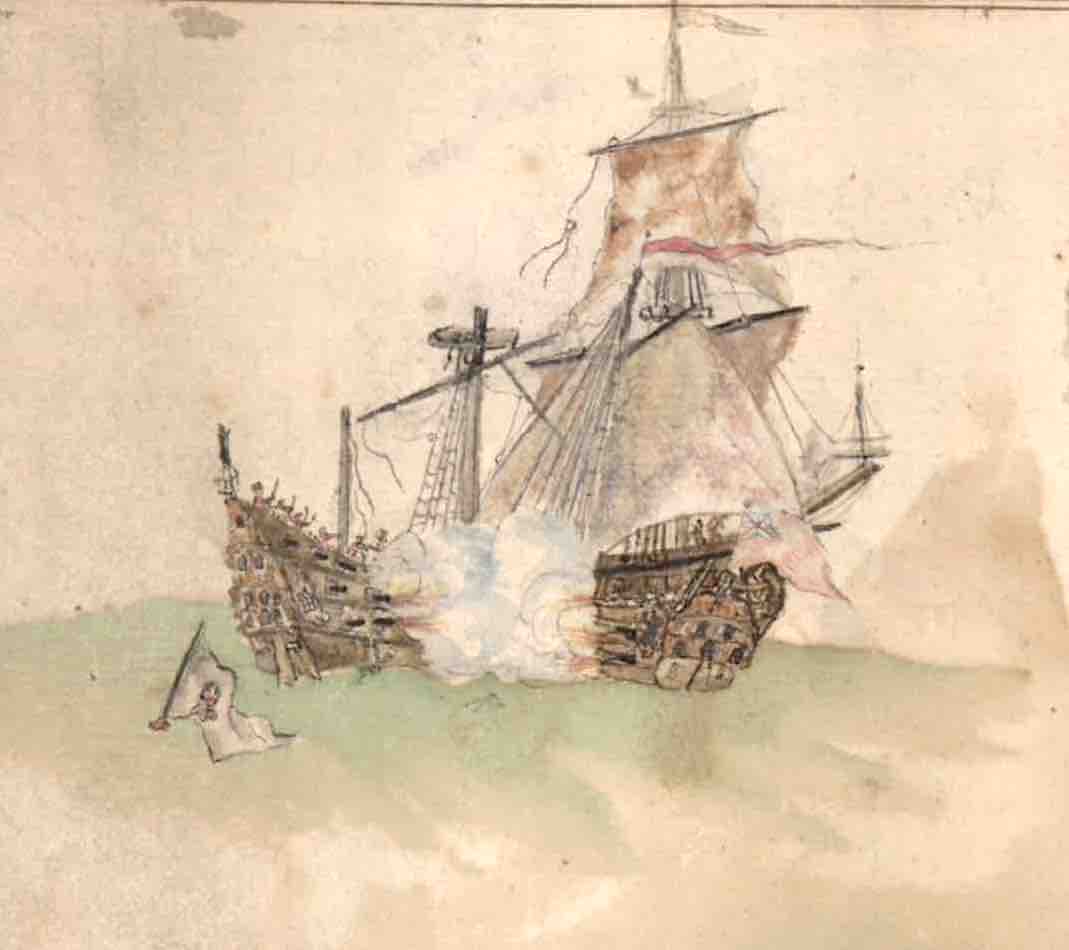
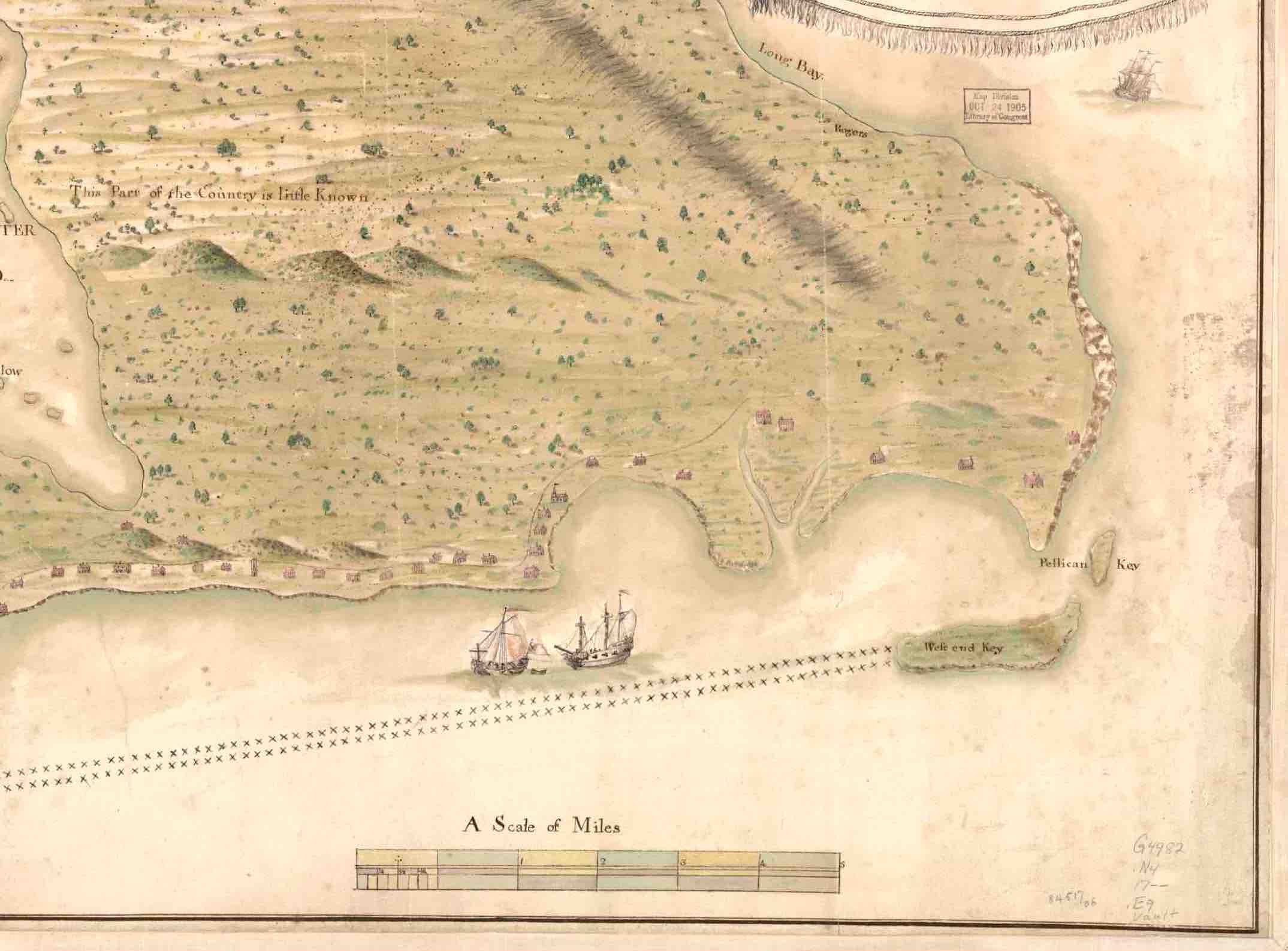
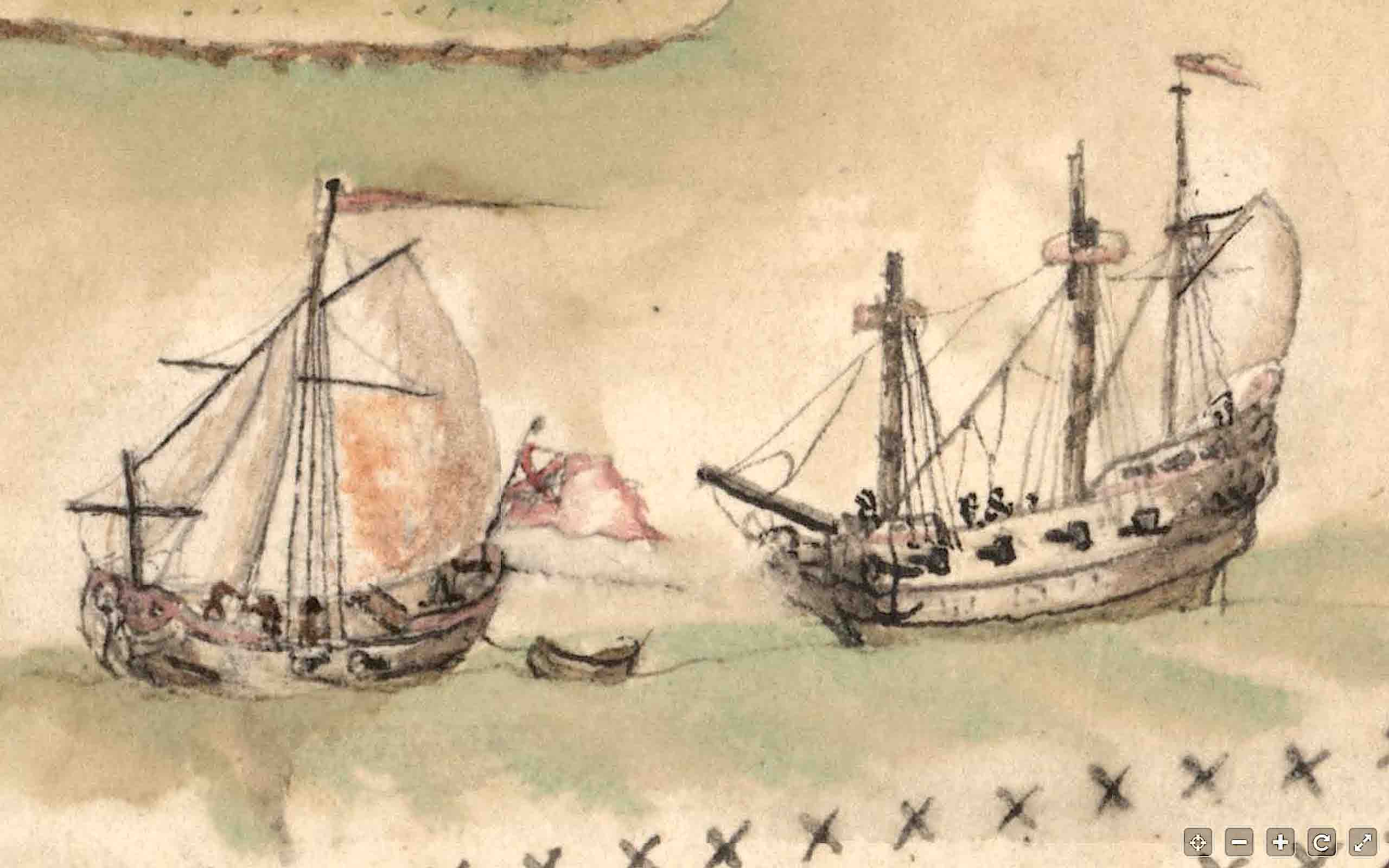
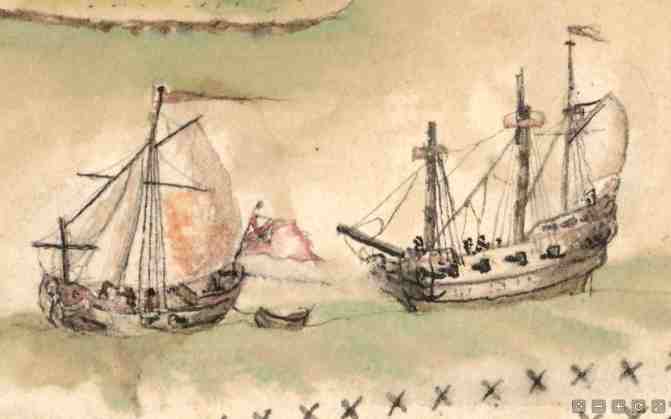
3. BOTTOM RIGHT CORNER (north-west). At last there is more evidence habitation, with a string of dwellings along the coastline. The 2 cays shown have names, West End and ‘Pellican’. And it looks as though the two ships have set out from port. On the left side of the bay above them, a church can be seen. Initially I thought the double row of crosses might indicate an area close to the shoreline that might be safe – or at least safer – from pirate attack. The leading ship – as the detailed crop shows clearly – is a warship. No harm in romantically speculating that it is escorting a trading vessel… More recently an online friend Klausbernd told me that the double crosses on map are in fact a navigational aid indicating cross bearings.
4. BOTTOM MIDDLE SECTION As we move towards the main – indeed only – town on the island, it is clear that the northern coast was the most desirable place to live. The scattering of houses along the coast continues; and the captions for the ponds show a possible reason why: fresh water, on an island where other areas of water are actually marked as ‘salt’ or which might have been unpleasantly brackish. And now we can see more of the posh establishment I referred to above. Not only did it lie in open (or perhaps cultivated) country, but it was plainly of some importance. It is notably larger that other buildings depicted, for a start; and it has its own very long track that forks off the coastal track.
5. BOTTOM LEFT CORNER: NASSAU We have reached the big city, the centre of the population, and the port – with the harbour entrance handily marked. It bore the same name then as now; though the other names marked (as far as I can make out) have mostly if not all changed over 3 centuries. The Baha Mar development and its attendant travails seem light years away from this map. The double line of crosses ends here (bottom right at the first cay). If they marked a safe zone for vessels passing back and forth into Nassau harbour, they did not need to extend further because of the town fortifications (see detailed crop). There is a fort right on the shore; and at the far end of the harbour sound is a battery at Drewitt’s Point. The town is watched over by a substantial building – presumably a Governor’s residence – that is surrounded by a stockade . In the early c18 Nassau put on a show of strength to deter invaders and pirates.
DO WE KNOW THE EXACT DRAUGHT’S EXACT DATE?
The map itself is undated. The Library of Congress, whose map I have chopped up for this post, simply dates it as 17– and notes:
Manuscript, pen-and-ink and watercolor; Has watermark; Oriented with north to the bottom; Relief shown pictorially and by shading; Depths shown by soundings.
The excellent David Rumsey Historical Map Collection chooses the year 1750, the maker unknown. Another source puts the date at 1700.
Whichever, a clue to establish the map in the first half of the c18 is that the publisher is believed to be ‘William Innys [et al.]’, London. Innys and his brother John (the ‘et al’ presumably) were active at that time. In 1726, for example, they published an edition of Newton’s Philosophiae naturalis principia mathematica (first published in 1687), indicating that they must already have been well-established.
WHAT ABOUT THE PIRATES?
The “Deposition of Capt. Matthew Musson” made on 5 Jul 1717 in London, contains some excellent contemporary pirate-based material. The middle passage in particular gives an indication how well organised and extremely well-armed the pirates were. And it is clear that piracy was actually driving inhabitants away from New Providence.
“On March last he was cast away on the Bahamas. At Harbour Island he found about 30 families, with severall pirates, which frequently are comeing and goeing to purchase provissons for the piratts vessells at Providence. There were there two ships of 90 tons which sold provissons to the said pirates, the sailors of which said they belong’d to Boston”.
“At Habakoe one of the Bahamas he found Capt. Thomas Walker and others who had left Providence by reason of the rudeness of the pirates and settled there. They advis’d him that five pirates made ye harbour of Providence their place of rendevous vizt. [Benjamin] Horngold, a sloop with 10 guns and about 80 men; [Henry] Jennings, a sloop with 10 guns and 100 men; [Josiah(s)] Burgiss, a sloop with 8 guns and about 80 men; [Henry?] White, in a small vessell with 30 men and small armes; [Edward] Thatch, a sloop 6 gunns and about 70 men. All took and destroyd ships of all nations except Jennings who took no English; they had taken a Spanish ship of 32 gunns, which they kept in the harbour for a guardship”.
“Ye greatest part of the inhabitants of Providence are. already gone into other adjacent islands to secure themselves from ye pirates, who frequently plunder them. Most of the ships and vessells taken by them they burn and destroy when brought into the harbour and oblidge the menn to take on with them. The inhabitants of those Isles are in a miserable condition at present, but were in great hopes that H.M. would be graciously pleas’d to take such measures, which would speedily enable them to return to Providence their former settlement, there are severall more pirates than he can now give an accot. of that are both to windward and to leward of Providence that may ere this be expected to rendevous there he being apprehensive that unless the Governmt. fortify this place the pirates will to protect themselves”. Signed, Mathew Musson. Endorsed, Read 5th July, 1717. 1½ pp. [C.O. 5, 1265. No. 73.]
CAN I BUY THIS MAP FOR MY WALL?
You certainly can. Well, not an original obviously. But you can find prints of it on eBay and elsewhere – just google the map title. You can get a modern copy for around $20 + shipping
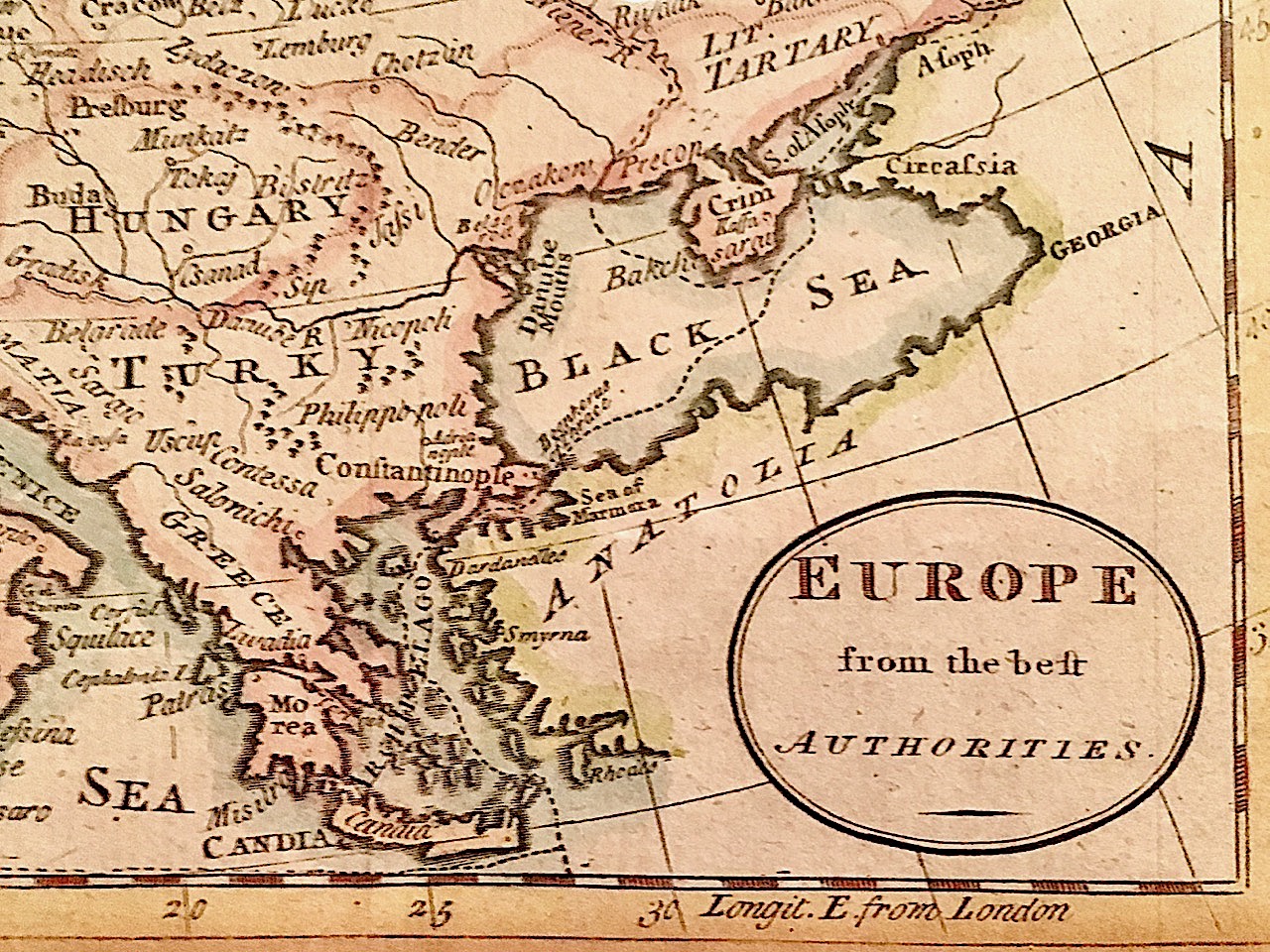
**I have an enjoyable example of this tendency on a William Guthrie map of Europe dated c1800 that I own. A map from “the beft authorities” could surely have no serious rival!
Credits: Library of Congress Online Catalog (Geography and Map Division); David Rumsey Historical Map Collection; Baylus C Brooks, Professional Research & Maritime Historian, Author, & Conservator / “America and West Indies: July 1717, 1-15,” in Calendar of State Papers Colonial, America and West Indies: Volume 29, 1716-1717, ed. Cecil Headlam (London: His Majesty’s Stationery Office, 1930), 336-344; Bonhams (Auctioneers)
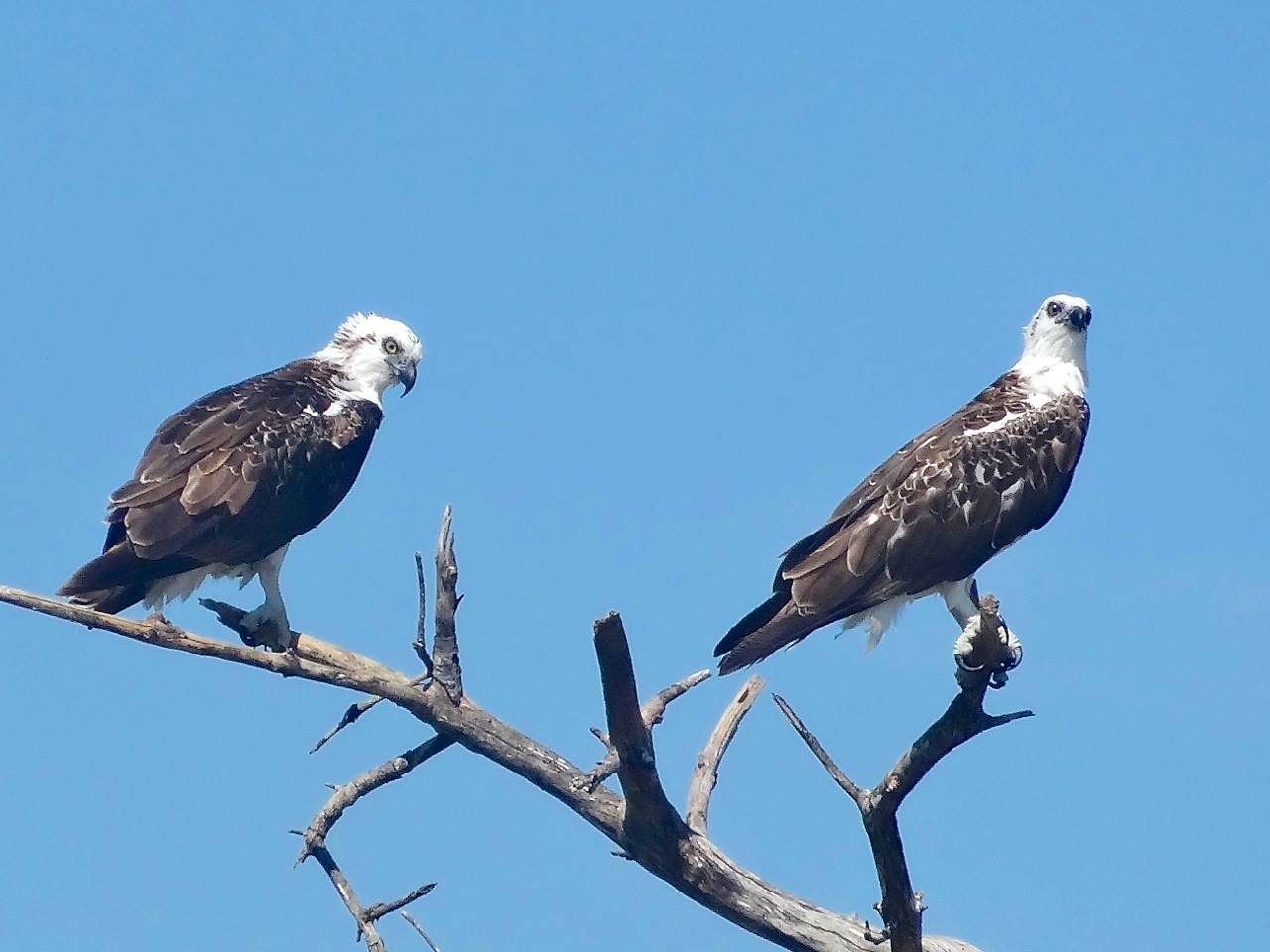
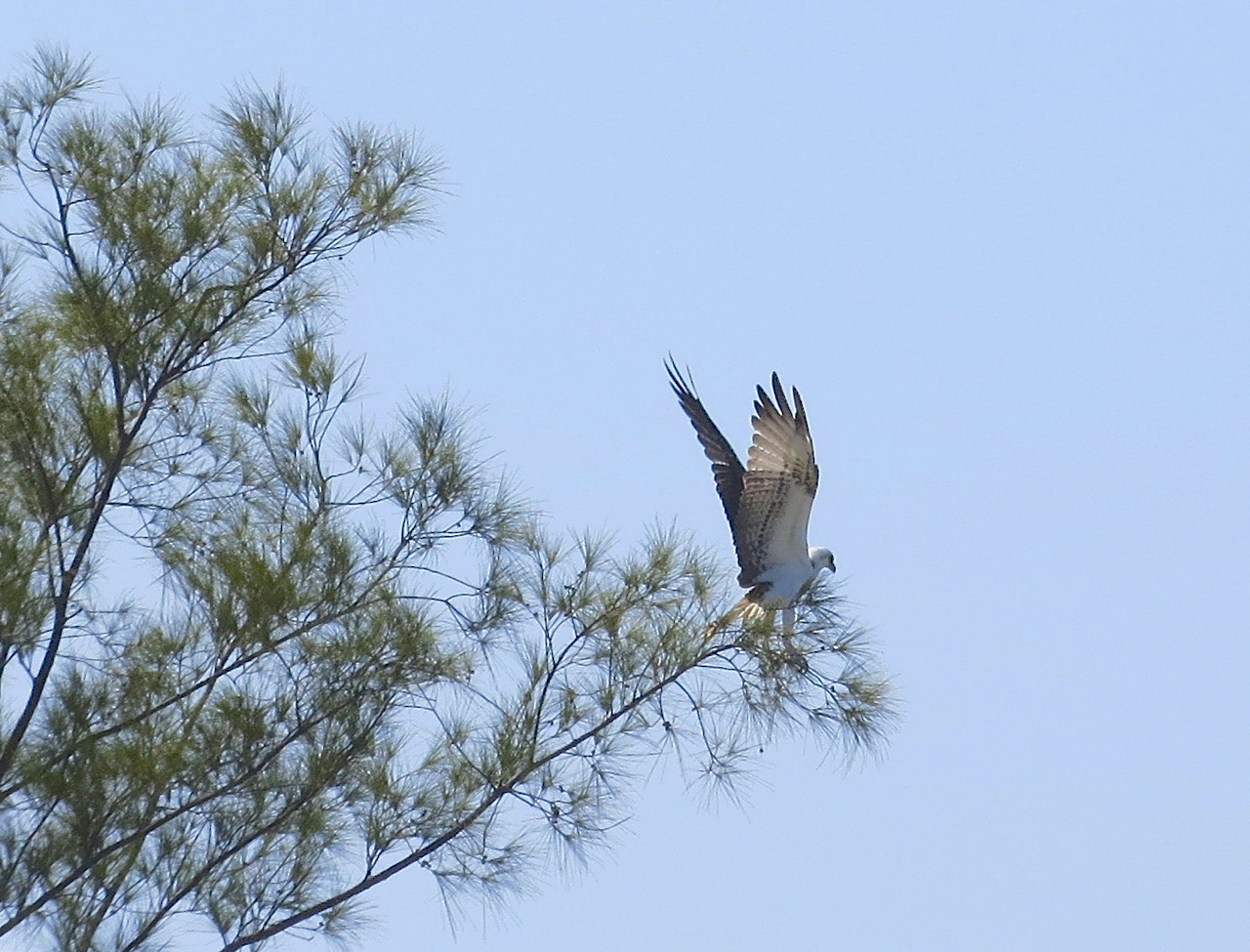
Iam reposting this article in the wake of a recent Bird Club of New Providence bird of prey ID query featuring distant but still helpful photos that enabled the ID as an osprey. As far as I can tell from the visible evidence (the images pixellate when enlarged) this is the ‘local’ Bahamian subspecies that differs in subtle ways from the standard North American version. Both types are found in the northern Bahamas; it would definitely be a great ‘get’ to locate one of each on the same day…
I sometimes feature bird comparatives, not least because there is so much scope for confusion that I have to keep checking for myself. Tyrant flycatchers; a number of superficially similar warbler species (all with yellow bits); those vireos; all those heron-y / egret-y types and their disconcerting morphs (hello, white reddish egret).
And so to the magnificent osprey Pandion haliaetus. This time, the comparison is between two subspecies, broadly the North American P. h. carolinensis and the Caribbean P.h. ridgwayi. There is some overlap in Florida, and some evidence of interbreeding. In the northern Bahamas in particular there is also an overlap, so an osprey seen on Abaco could be either variety. You’ll probably be too excited watching it to care much which type it is, but this article will help you if you do…
The two ospreys shown below were recently photographed at Spanish Wells, Eleuthera by Barbara Crouchley. This is a ‘bingo’ photographic scoop, because each type of bird was found in the same region; now we can check out the differences between the two birds.
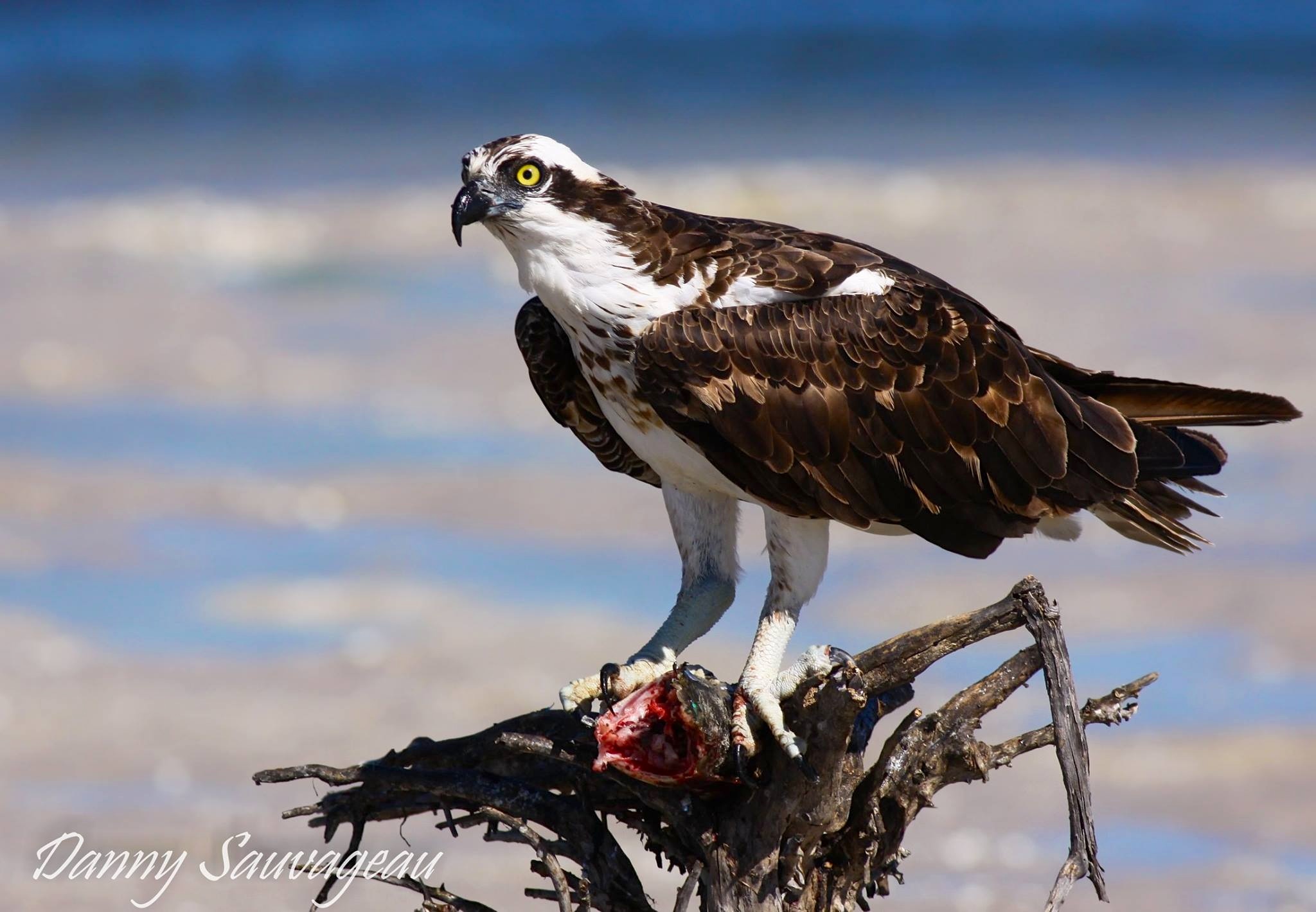
The first is a North American bird. Note in particular its distinctive eye mask, and the clearly marked upper breast, more so in the female than the male (which may even be white). The overall impression of the upper-parts is dark brown. They are slightly larger than their cousins in the south.
Osprey P.h. carolinensis
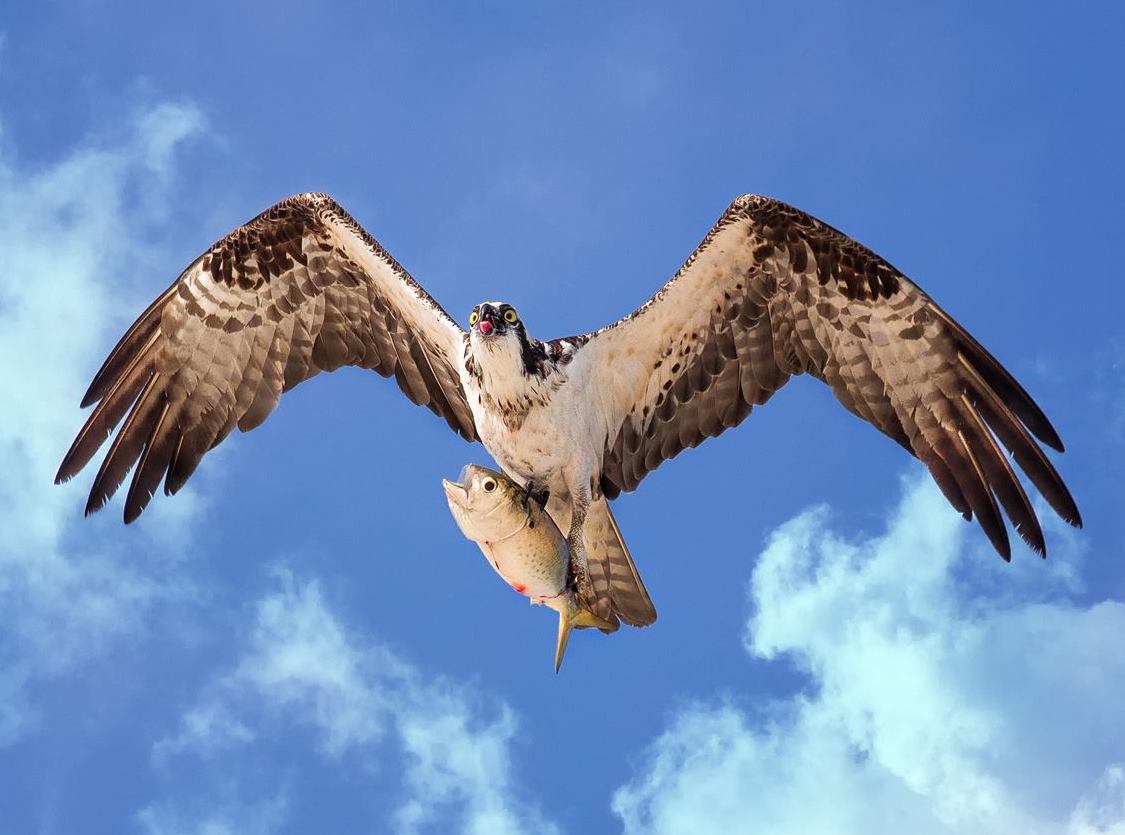
In this Caribbean bird with its trophy fish, the eye-mask is absent, and the facial / nape markings are less pronounced. Furthermore, the breast and under-parts are white in both sexes (though slight marking may be apparent in some birds). And the impression is of lighter upper-parts, even allowing for variable lighting and distance when the photos were taken. Conveniently, there’s not much detectable difference between male and females in the respective populations.
Osprey P.h. ridgwayi
EXAMPLES OF P. h. carolinensis
EXAMPLES OF P. h. ridgwayi
I’m going to stick my neck out here – I’ve not seen this mentioned anywhere, and I need to do some more comparative research. When I saw Barbara’s pair of photos, I immediately noticed that the eyes of the P.h.r were paler than the bright orangey-yellow of P.h.c. This distinction carries on through the comparative photos above: the P.h.cs were photographed in Florida and further north and have strikingly vivid eyes. The P.h.rs were photographed on Abaco and Grand Bahama at different times by different people. All have noticeably paler irises, more a light greeny-yellow.
I’d welcome any views on this rash amateur theory. Preferably supportive ones…
UNDERWING DIFFERENCES
There’s a further comparison that can be made with the two subspecies in flight. Without going into technical and linguistic detail, the underwings of the P.h.cs are much darker than the Bahamas birds, whereas P.h.rs are notably paler and in some cases mostly white. As an example, below is a distance shot I took when bonefishing out on the Abaco Marls, using a pocket camera. This is definitely a local bird! Compare with the dramatic image below it, where the strong darker markings are all too evident. It’s a great shot with which to bring the lesson to an end.
Photo credits: Tom Sheley (1); CWFNJ (2); Barbara Crouchley (3, 4); Danny Sauvageau (5, 6, 7); Jim Todd (8); Linda Barry Cooper (9); Woody Bracey (10); Keith Salvesen (11); the inimitable Northside Jim (12); Cute-toon, Birdorable. Thanks for all use permissions – also to Steve Connett for the idea!
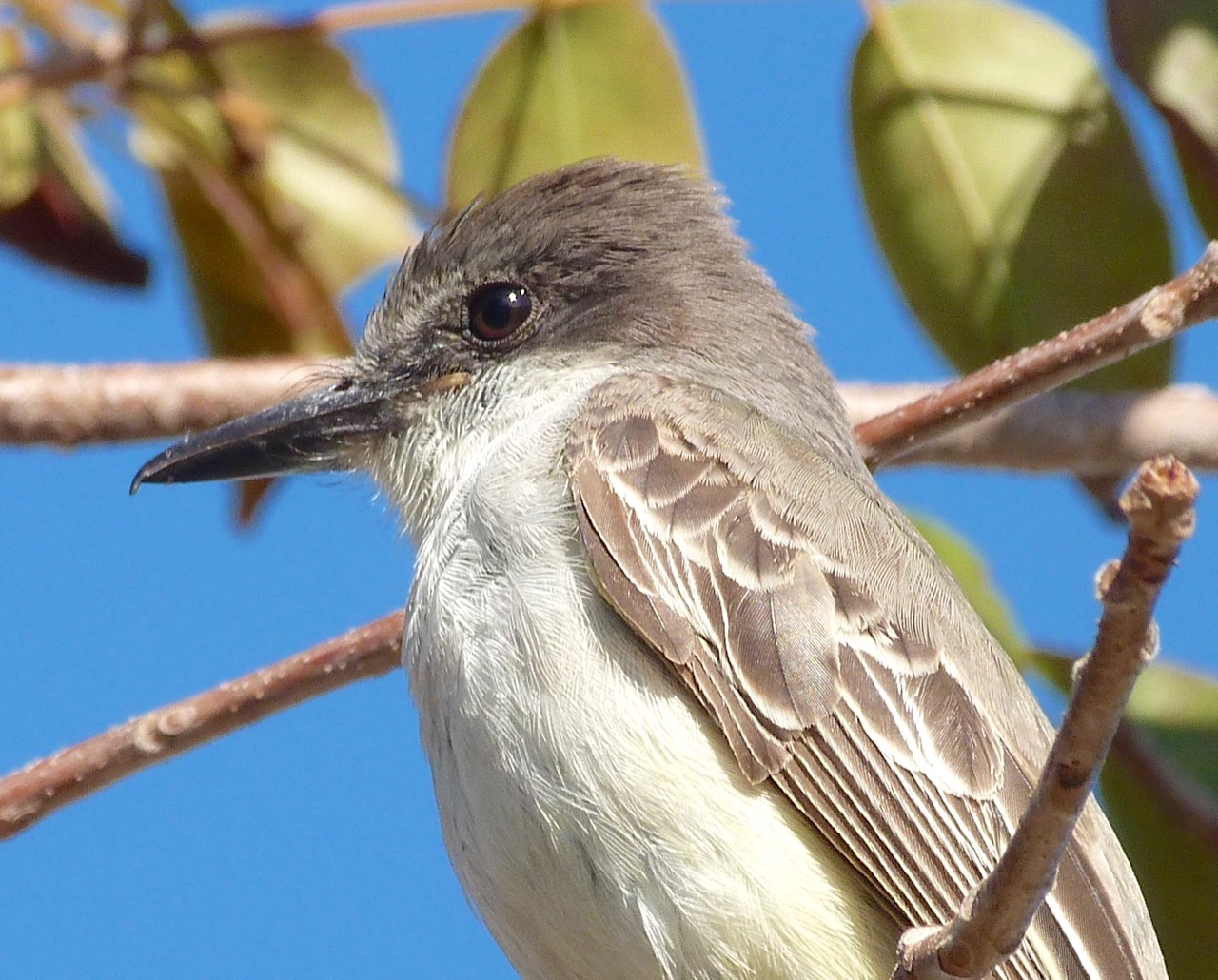
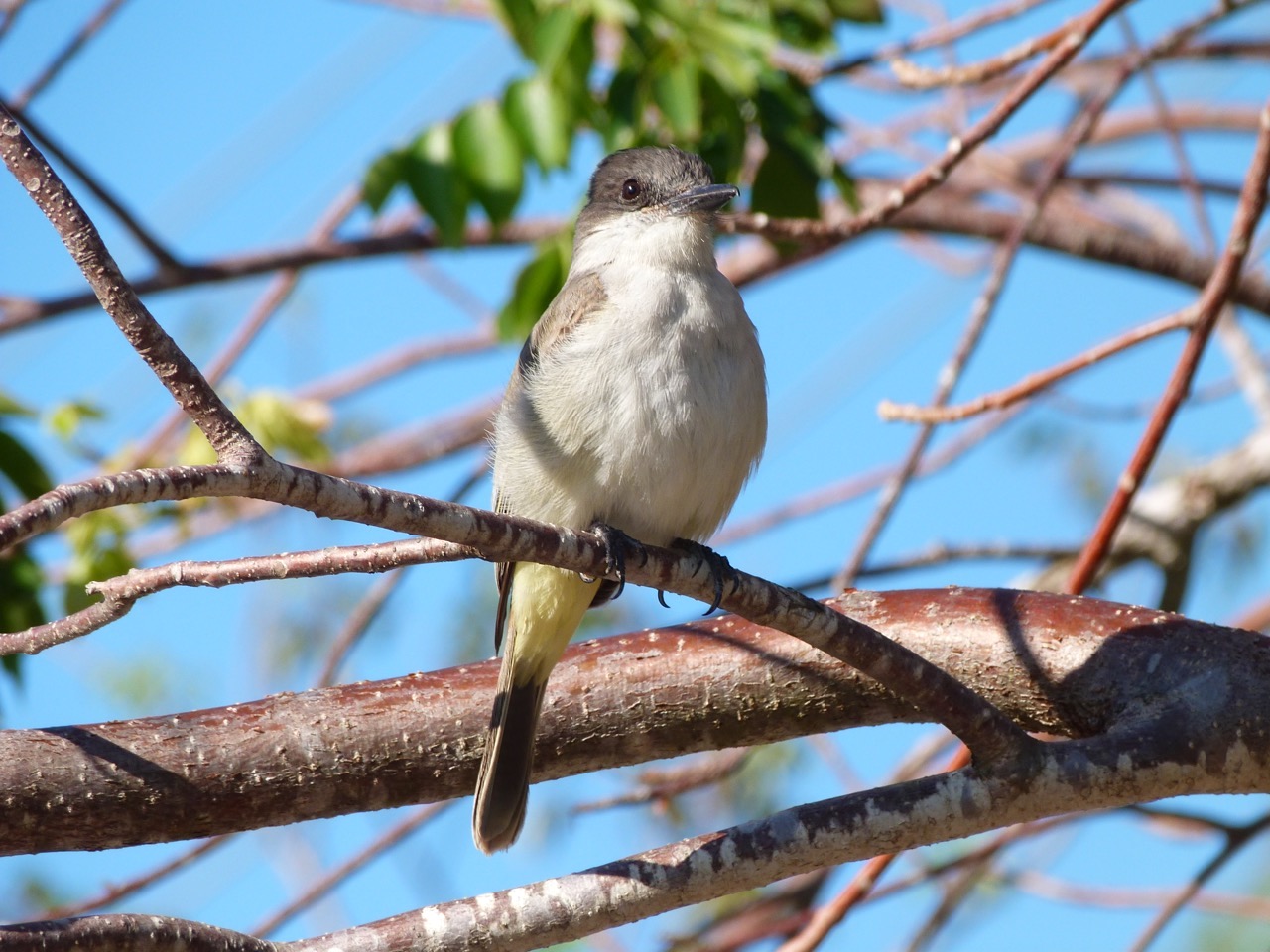
Four principal so-called ‘tyrant flycatchers’ (Tyrannidae) are found on Abaco: the loggerhead kingbird, the gray kingbird, theLa Sagra’s flycatcher and the Cuban pewee. These are common permanent residents, except for the gray kingbird which is a summer resident only. Several other flycatcher species are found on Abaco, but they are very uncommon winter residents, rare transients, or vagrants.
The loggerhead featured here became quite a good companion when I was staying in Sandy Point recently. Like other flycatchers – and indeed the cute little blue-gray gnatcatchers – loggerheads are curious and inquisitive.
Loggerheads seem to have two methods of observing humans and their mysteries. One is by perching on a branch or in a shrub, watching intently. They stay quite still… until suddenly launching into the air to intercept some passing insect with their hooked beaks (so-called ‘hawking’), before returning to their perch. And staring at you again. The other method is to follow you round, either flying slightly ahead as you progress; or fluttering in the coppice alongside you; or playing catch-up from behind.
A typical quizzical loggerhead sideways look… all flycatchers do this
Loggerhead and gray kingbirds are similar in size, and can be quite easy to confuse. Top seasonal tip: because the grays are summer visitors only, it’s a fairly safe bet that any kingbirds seen between, say, October and April will be the resident loggerheads.
MEMORABLE FACT TO DEPLOY IN CONVERSATION
The collective names for a group of kingbirds are: a Court, a Coronation, or a Tyranny
Photo Credits: Keith Salvesen at Sandy Point, Abaco Bahamas; ‘Lordy’ the Loggerhead
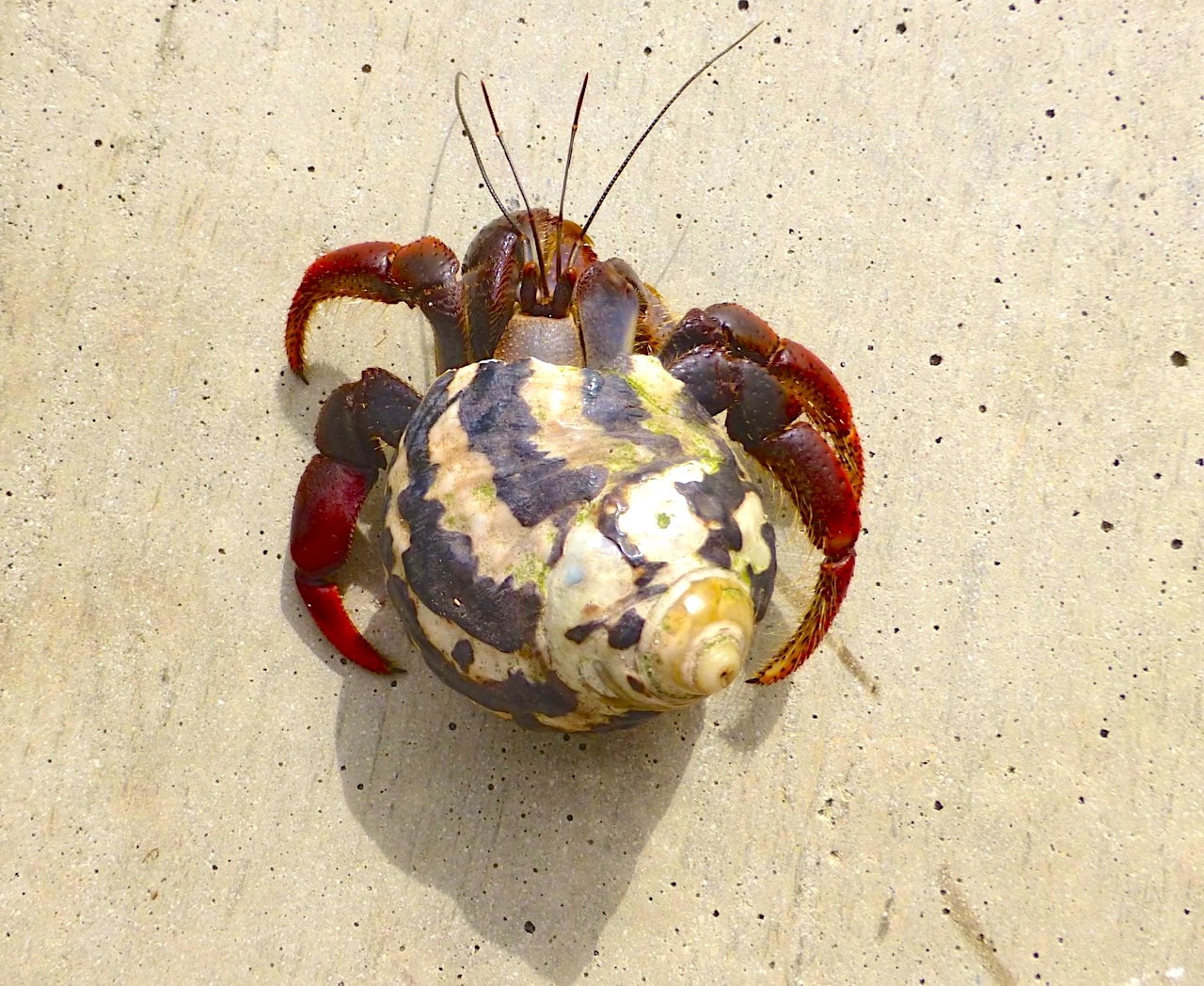
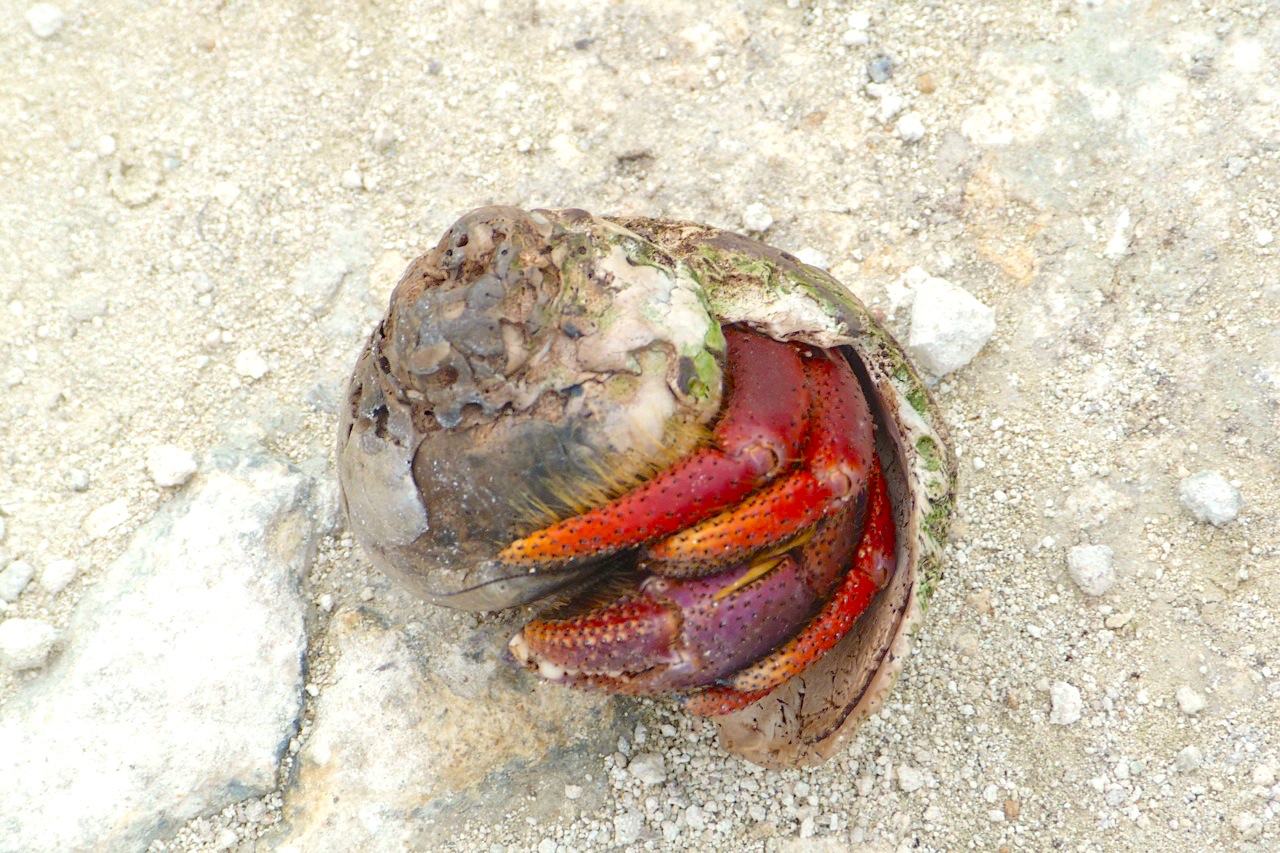
As everyone knows, Hermit Crabs get their name from the fact that from an early age they borrow empty seashells to live in. As they grow they trade up to a bigger one, leaving their previous home for a smaller crab to move into. It’s a benign** chain of recycling that the original gastropod occupant would no doubt approve of, were it still alive… The crabs are able to adapt their flexible bodies to their chosen shell. Mostly they are to be found in weathered (‘heritage’) rather than newly-empty shells for their home. [**except for fighting over shells]
HERMIT CRAB FACTS TO ENLIVEN YOUR CONVERSATION
The crabs are mainly terrestrial, and make their homes in empty gastropod shells
Their bodies are soft, making them vulnerable to predation and heat.
They are basically naked – the shells protect their bodies & conceal them from predators
In that way they differ from other crab species that have hard ‘calcified’ shells / carapaces
Ideally the shell should be the right size to retract into completely, with no bits on display
As they grow larger, they have to move into larger and larger shells to hide in
As the video below shows wonderfully, they may form queues and upsize in turns
Occasionally they make a housing mistake and chose a different home, eg a small tin
The crabs may congregate in large groups which scatter rapidly when they sense danger
The demand for suitable shells can be competitive and the cause of inter-crab battles
Sometimes two or more will gang up on a rival to prevent its move to a particular shell
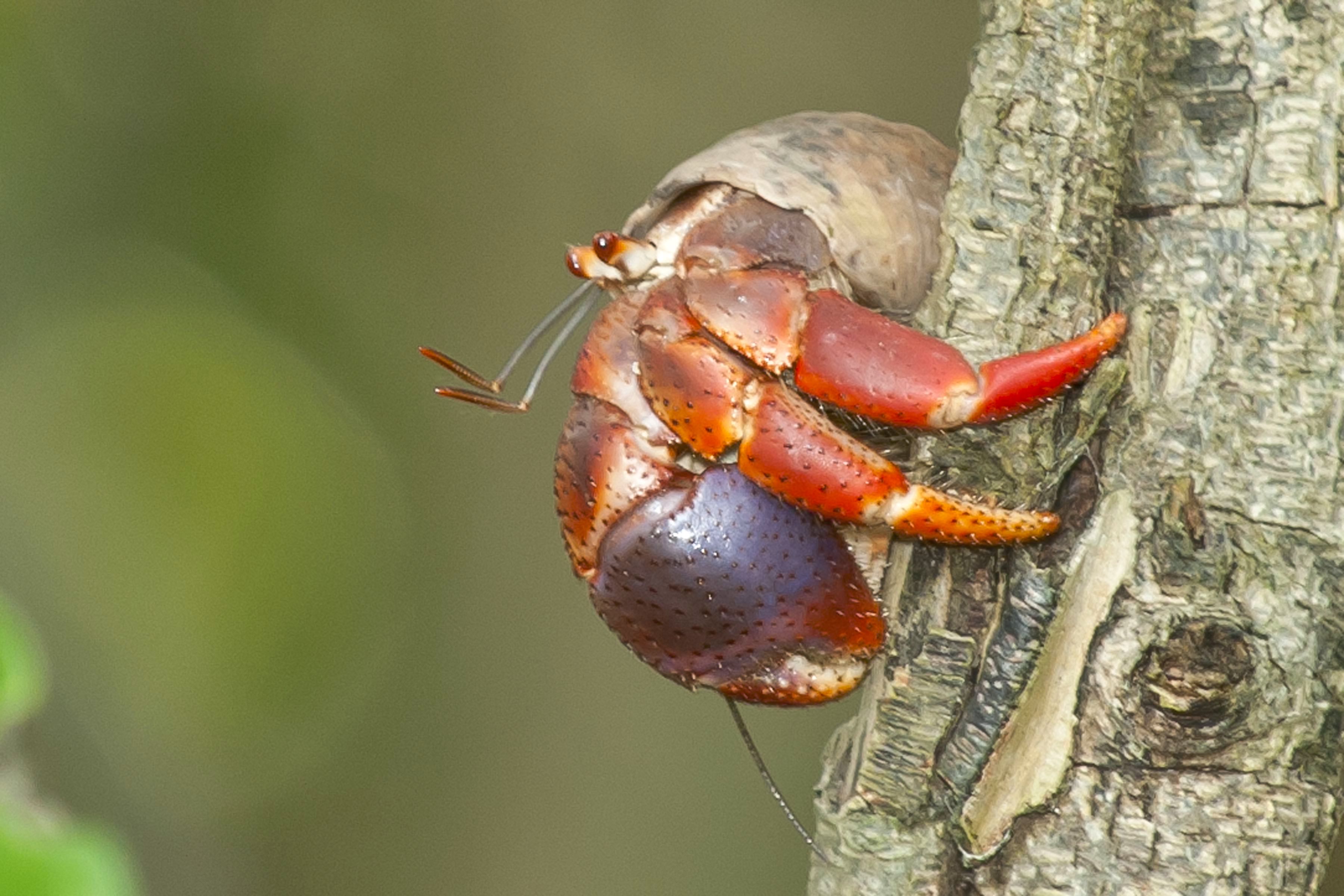
HERMIT CRABS CAN EVEN CLIMB TREES – WITH THEIR SHELLS ON TOO
HERMIT CRABS EXCHANGING HOMES with DAVID ATTENBOROUGH
This is a short (c 4 mins) extract from BBC Earth, with David Attenborough explaining about the lives and habits of these little crabs with his usual authoritative care and precision . If you have the time I highly recommend taking a look.
Credits: All photos taken on Abaco by Keith Salvesen except for the tree-climber crab photographed by Tom Sheley; video from BBC Earth
























































 ROLLING HARBOUR ABACO
You must be logged in to post a comment.