Unknown's avatar

“HAPPY EARTH DAY TO YOU”: DO SOMETHING GREEN!


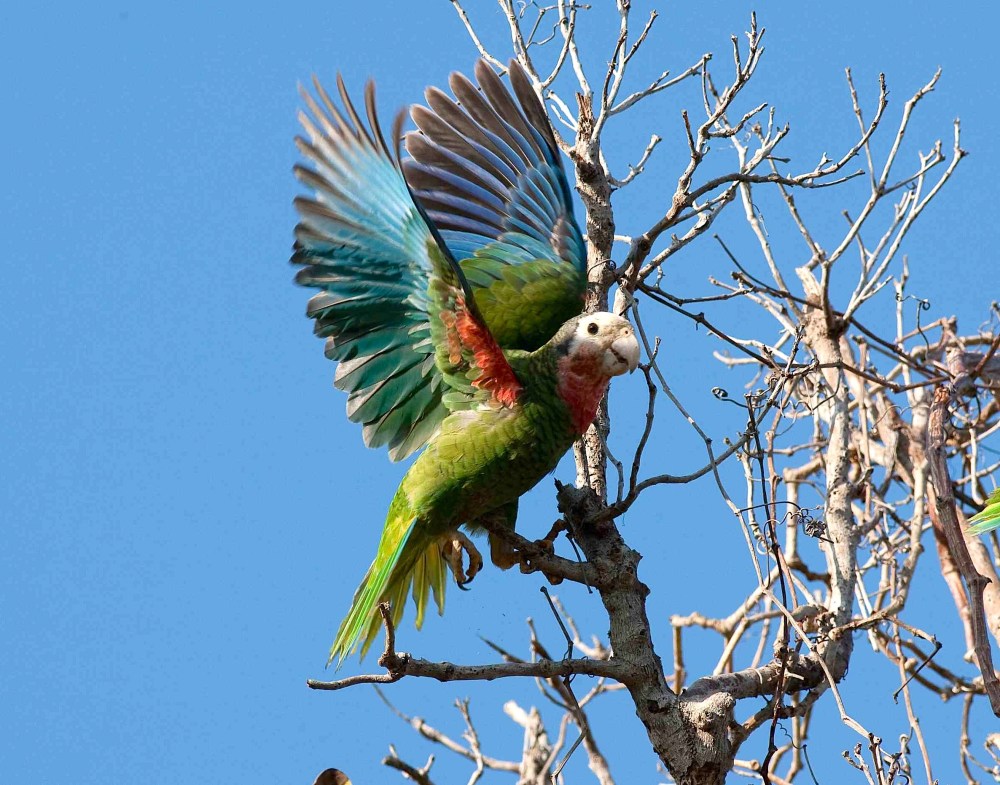
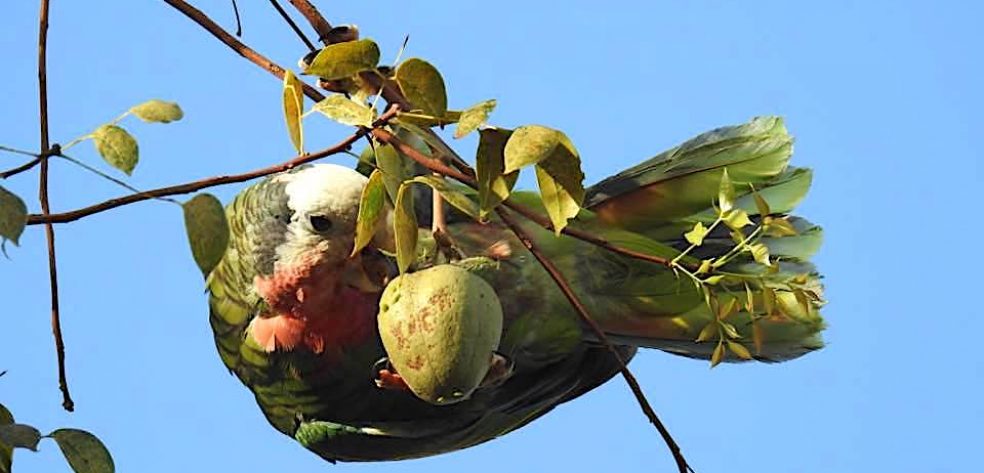
Abaco (Cuban) Parrot, Delphi, Abaco (Craig Nash)

“HAPPY EARTH DAY TO YOU”: DO SOMETHING GREEN!

Today is the 46th Earth Day, a global event to encourage ecology and conservation, and to discourage the spoiling of the planet by mankind. What becomes lost now may never be retrieved. Plant a tree. Grow some bee- or butterfly-friendly flowers. Clear a patch of beach of plastic trash. Recycle stuff. That sort of thing. 

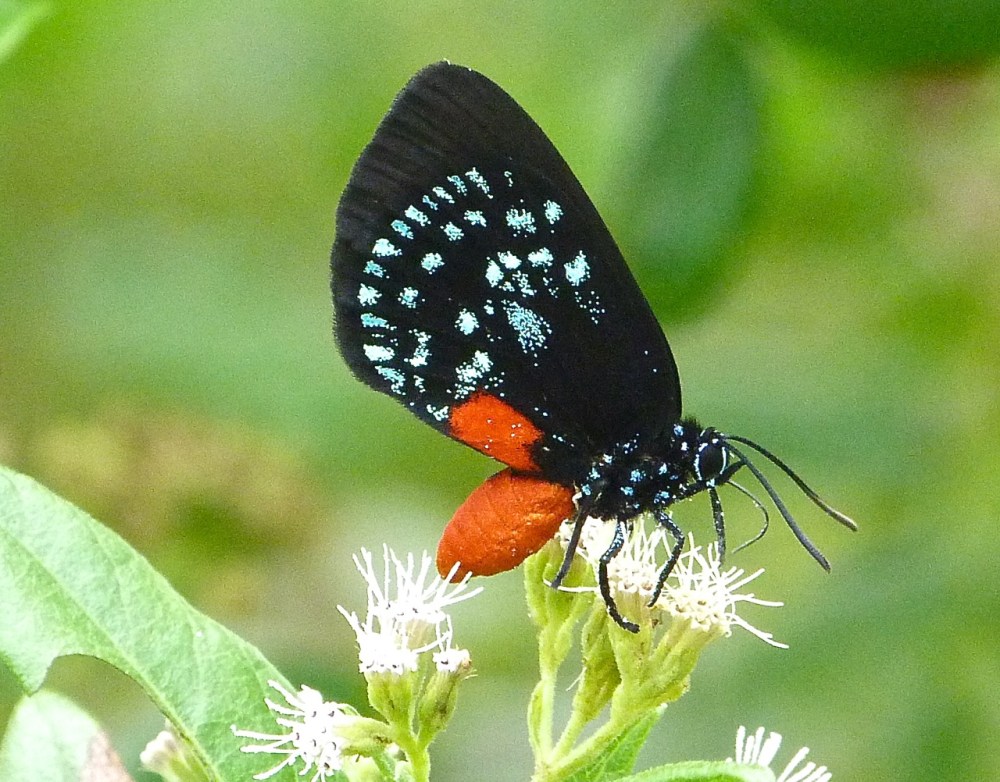
Atala Hairstreak Eumaeus atala – DelphiAtala Hairstreak Butterfly, Abaco (Keith Salvesen)

Gulf Fritillary Agraulis vanillae – Neem FarmGulf Fritillary, Neem Farm, Abaco (Keith Salvesen)

I’d lined up some horror-images of plastic-filled birds, entangled turtles, damaged reefs and so forth, of which I have a depressingly large archive. Then, in a spirit of *vogue word alert* positivity I scrapped that miserable idea and decided instead to celebrate some of the natural wonders that can be found on Abaco. 

BAHAMA YELLOWTHROAT – one of Abaco’s 5 ENDEMIC BIRDSBahamas-Great Abaco_Bahama Yellowthroat_Gerlinde Taurer

CUBAN EMERALD HUMMINGBIRD (f) preening – Gilpin PointCuban Emerald Hummingbird preening, Abaco (Keith Salvesen)

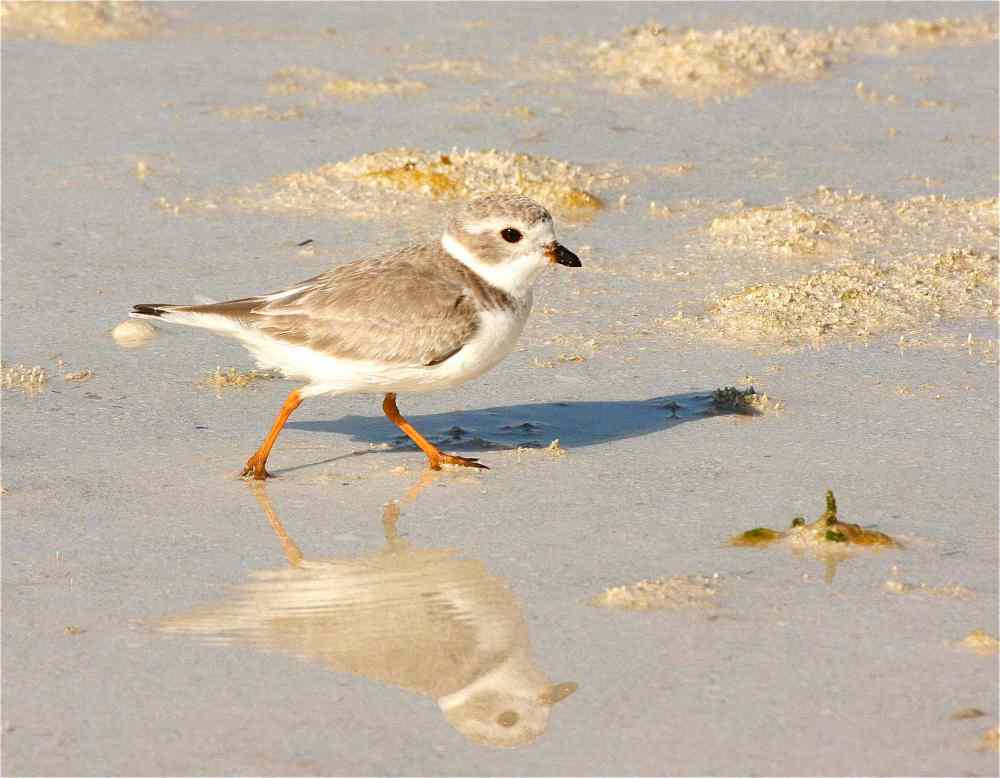
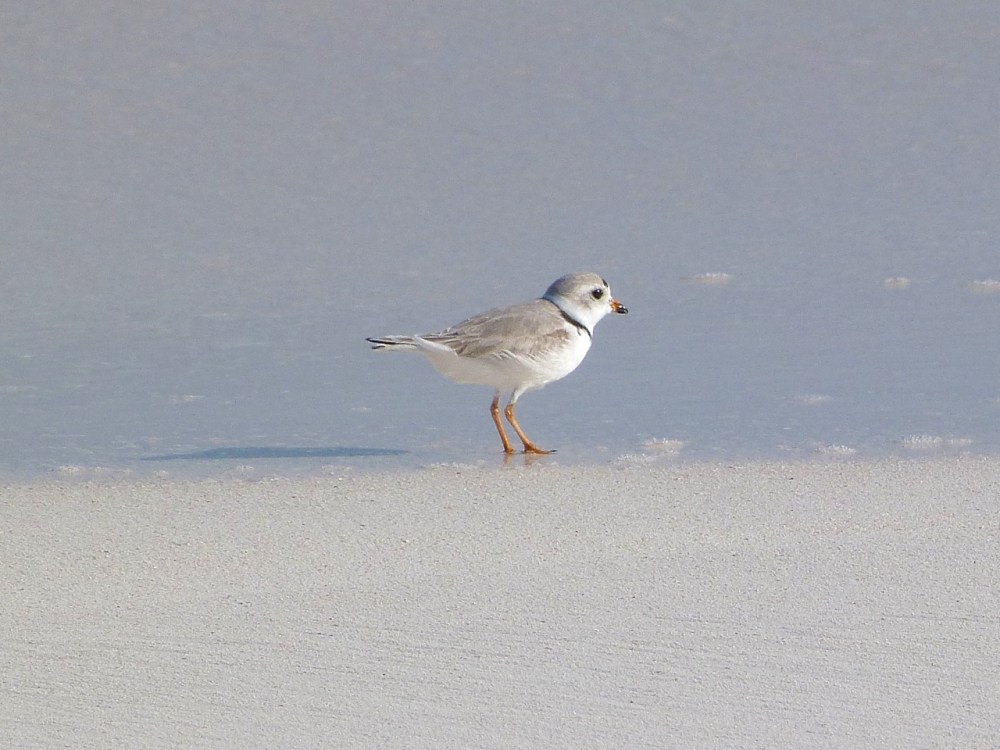
Some signal species serve as a continuing tribute to those who work to conserve them. The gorgeous ABACO PARROTS, now saved from the brink of extinction – and currently establishing a new colony on New Providence. The rare PIPING PLOVERS that find a safe home to spend their winters on Abaco’s beaches. The 5 ENDEMIC BIRD species. The WHALES & DOLPHINS that populate the waters. The west-indian MANATEES, until very recently almost unknown for Abaco yet now providing a curious addition to the scene as they visit their favourite haunts.

BLAINVILLE’S BEAKED WHALE (m) approaching the BMMRO research vesselBlainville's Beaked Whale, Sandy Point, Abaco 14 (Keith Salvesen

BOTTLENOSE DOLHIN, Sandy Point (about to dive under the boat)Bottlenose Dolphins, Rocky Point, Abaco (Keith Salvesen : BMMRO) 7

Habitat protection has been provided over substantial areas on both land and sea by the creation of natural parks and preserves. These have very recently been extended by the establishment of 4 large PROTECTED AREAS for East Abaco Creeks, Cross Harbour, the Marls and the South Abaco Blue Holes, a wonderful reward for a great deal of hard lobbying by conservation organisations and by many concerned individuals. 

QUEEN ANGELFISHQueen Angelfish ©Melinda Stevens Riger / G B Scuba

BANDED CORAL SHRIMPBanded Coral Shrimp ©Melinda Riger @ G B Scuba copy 2

Scientific research and conservation work is continuously carried out in Abaco waters. The CORAL REEFS that form the 3rd largest barrier reef in the world; the BLUE HOLES that lead to wonderful caves and cathedral caverns of crystal; the vast area of the MARLS and the species that rely on the mangrove swamps; the MANGROVES themselves: all these are watched over and monitored for ways to protect them best for future generations. 

PIPING PLOVER pair, Delphi (taken last month)Piping Plover pair, Delphi Beach, Abaco (Keith Salvesen)

PIPING PLOVER on AbacoPiping Plover, Abaco - Bruce Hallett

I’ve mentioned trees and plants. There are a variety of well-known sources for both on Abaco – on the mainland, anyway, and maybe some cays. Any will advise on bee and butterfly attractants. Thinking of which, bird seed feeders and hummer sugar water feeders are cheap and guarantee the interest of garden and coppice birds, and during the winter months some brightly coloured migrants such as buntings and grosbeaks. 

HIBISCUS – DelphiHibiscus, Delphi, Abaco (Keith Salvesen)

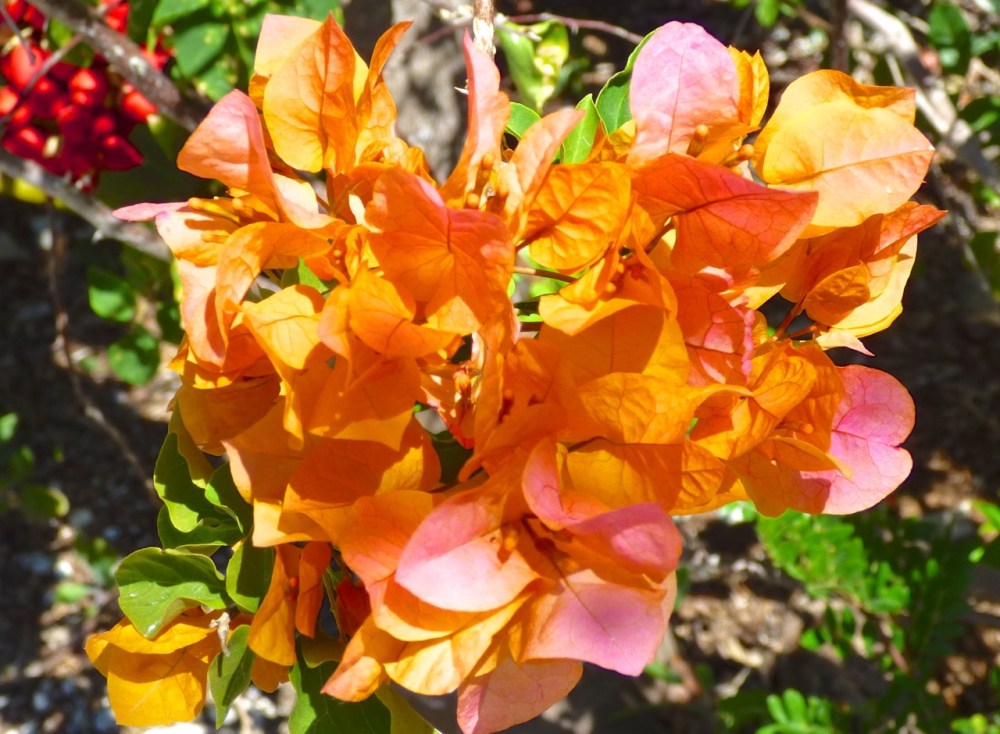
 BOUGAINVILLEA  – DelphiBougainvillea, Delphi, Abaco Bahamas (Keith Salvesen)

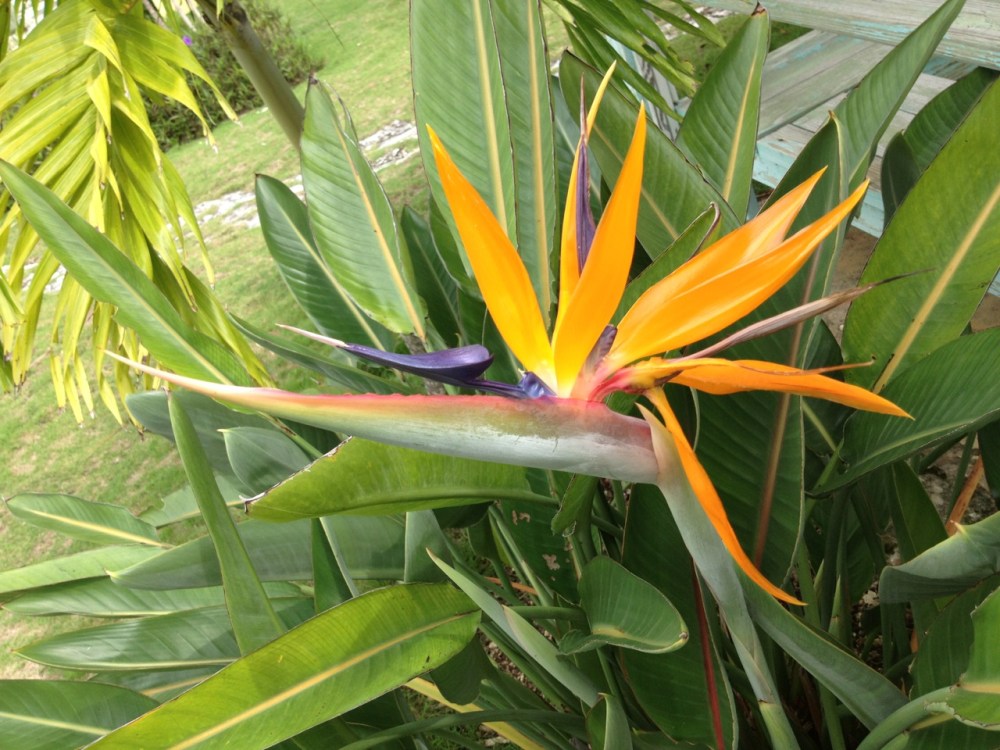
Bird of Paradise flower STRELITZIA – Marsh Harbour (seemingly on a steep slope!)Bird of Paradise Flower (Strelitzia) Abaco (Keith Salvesen)

HAPPY EARTH DAY TO YOU!

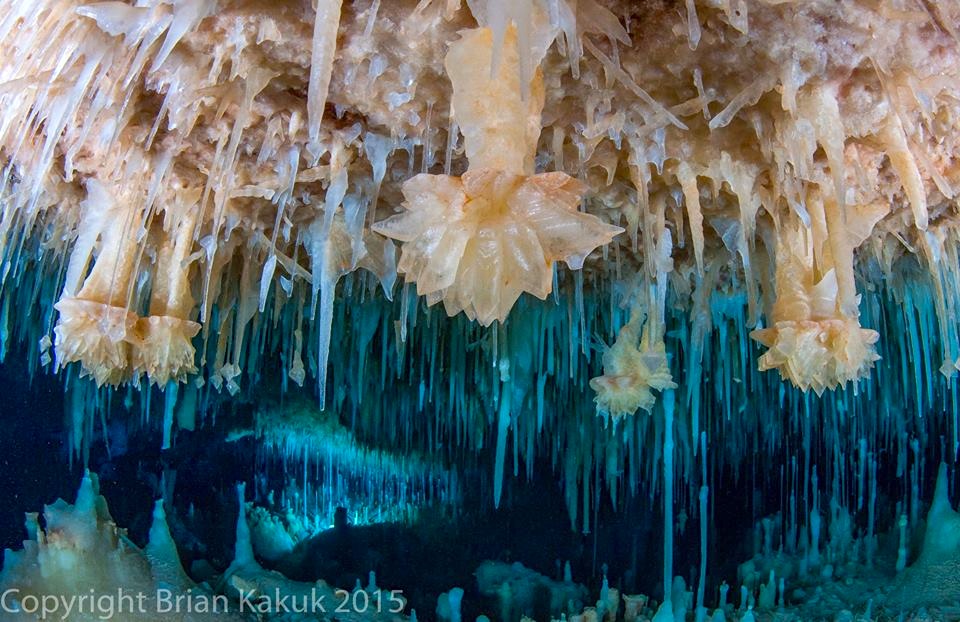
RALPH’S CAVE South AbacoRalph's Cave, Abaco (Brian Kakuk)

Credits: all images RH except: Abaco parrot, Craig Nash; Bahama yellowthroat, Gerlinde Taurer; Angelfish & Shrimp, Melinda Riger; single piping plover, Bruce Hallett; Ralph’s Cave, Brian Kakuk

Unknown's avatar

LAUGHING GULLS ON ABACO: NOT SHARING THE JOKE?


Laughing Gulls, Sandy Point, Abaco (Keith Salvesen)

LAUGHING GULLS ON ABACO: NOT SHARING THE JOKE?

Sandy Point always promises well for birding. There are plenty of ‘good’ birds to see there, depending on the time of year: tropicbirds, frigatebirds, ospreys, brown pelicans, white ibis, cattle egrets, other egrets and herons, kestrels, and a variety of shorebirds. And gulls. We encountered a pair of Laughing Gulls perched on a piling. 

To begin with they were laughing merrily. Then they quietened down. Maybe one of them told a somewhat off-colour joke. In the sequence of photos below, you can see the left hand gull tensing and preparing to fly. Then it does – leaving his buddy all alone to contemplate the consequences of causing a sense of humour failure…

Laughing Gulls, Sandy Point, Abaco (Keith Salvesen)Laughing Gulls, Sandy Point, Abaco (Keith Salvesen)Laughing Gulls, Sandy Point, Abaco (Keith Salvesen)

This is the sound of a pair of laughing gulls on the Marls objecting as we slowly poled through the mangroves towards them. Not laughing, but complaining…

Photos and movie clip: RH

Unknown's avatar

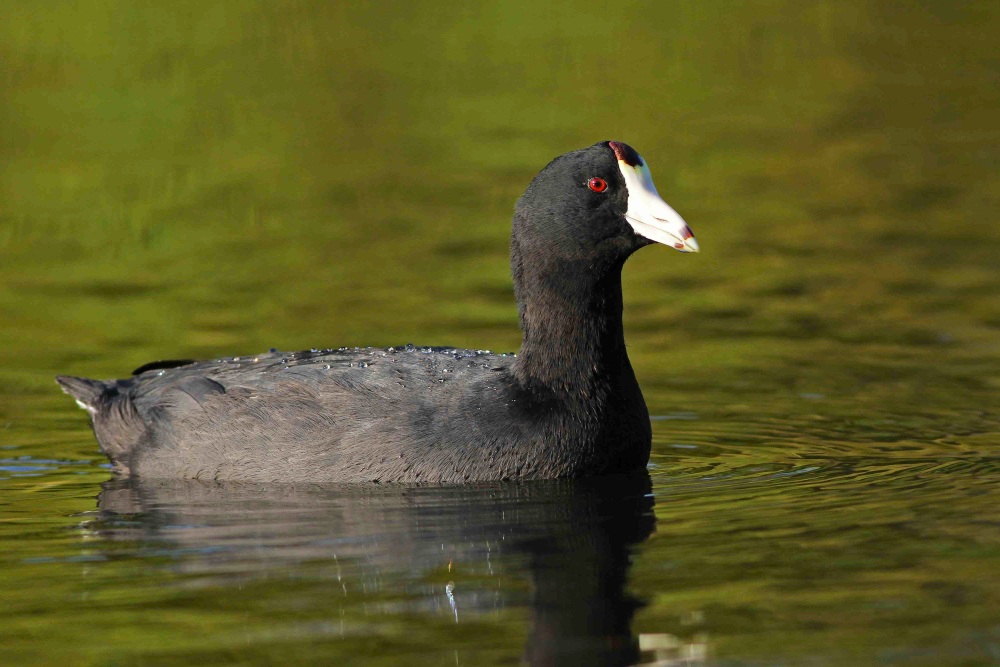
AMERICAN COOTS feat. “WHAT’S AFOOT?”


American Coot - Bahamas - Great Abaco - Gerlinde Taurer

AMERICAN COOTS feat. “WHAT’S AFOOT?”

The American Coot Fulica americana is similar in many respects to the COMMON GALLINULE (MOORHEN). Except for the beak colour, of course. And as you will see below, the feet.

American Coot.Abaco Bahamas (Tom Sheley)

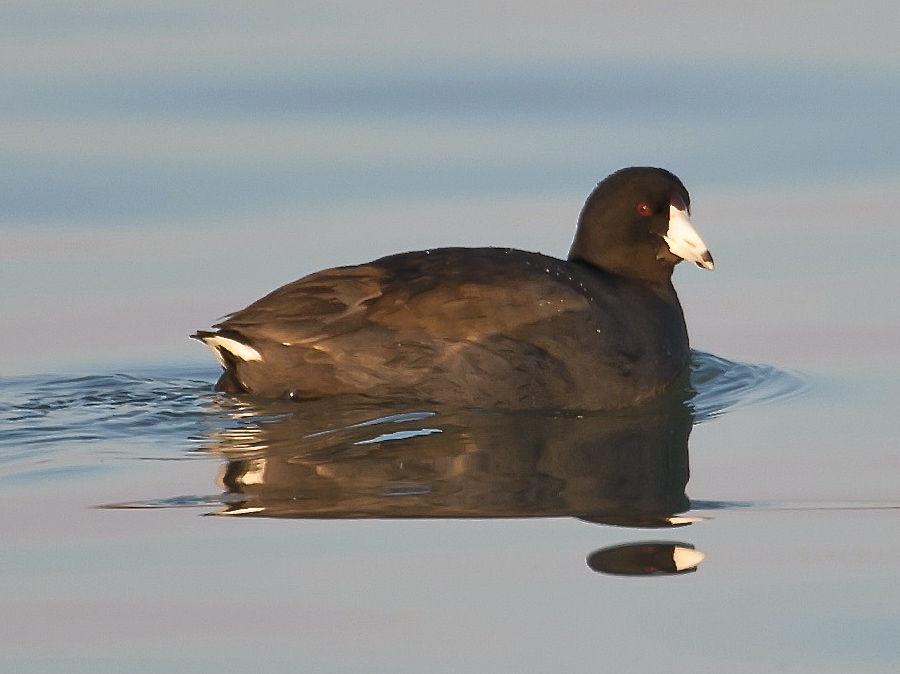
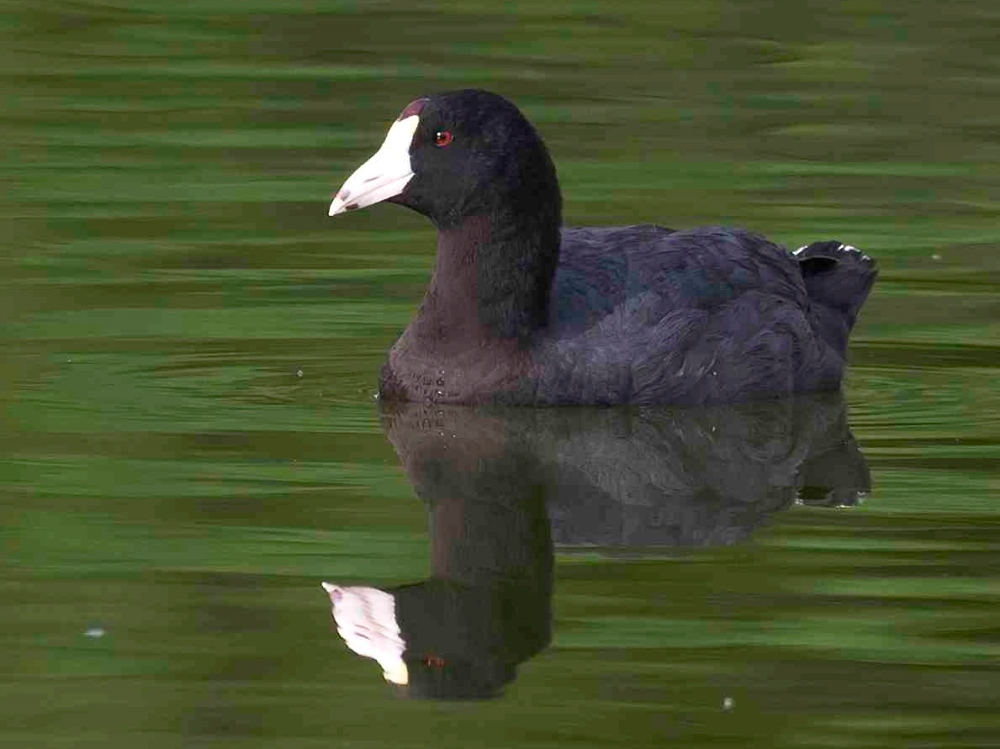
Most people would give an off-the-cuff description of a coot as ‘a black duck with a white beak’. They might add ‘…and a red eye’. Or ‘…and a dark band at the tip of the beak’. Or even ‘…I think there’s a white bit at the back end’. The header image pretty much sums up the classic coot.

American Coot 2 (Keith Salvesen)

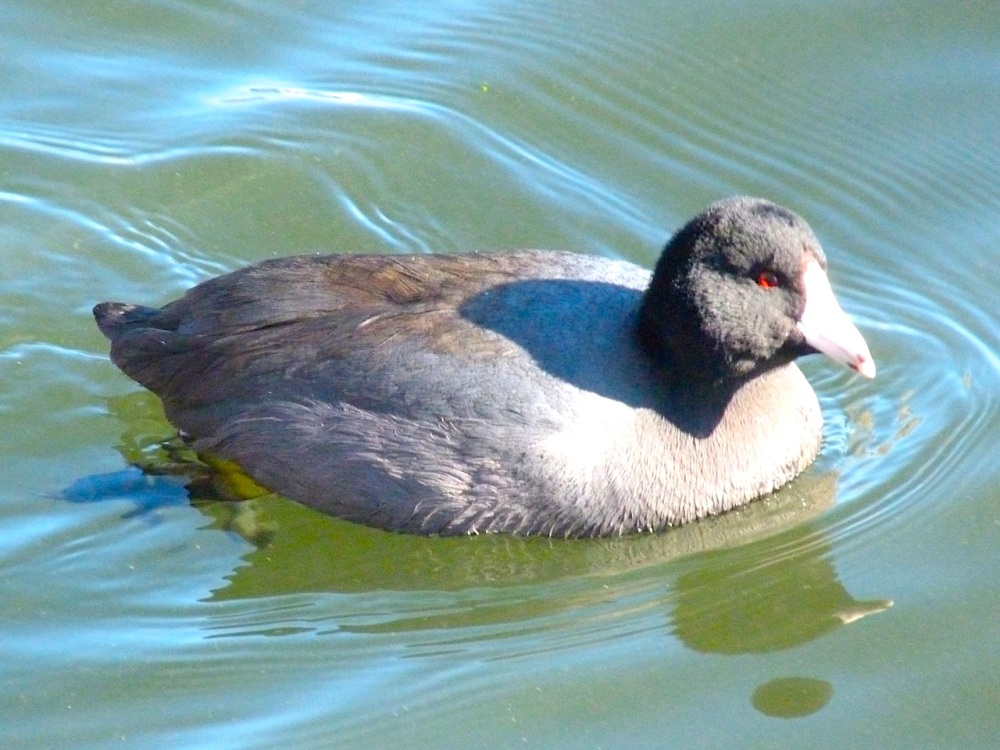
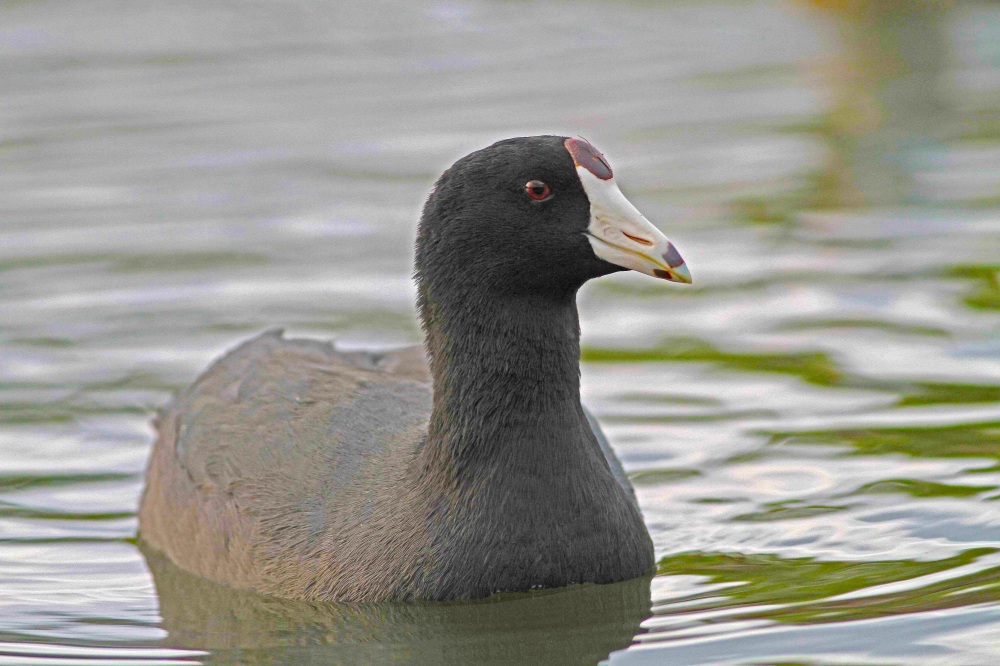
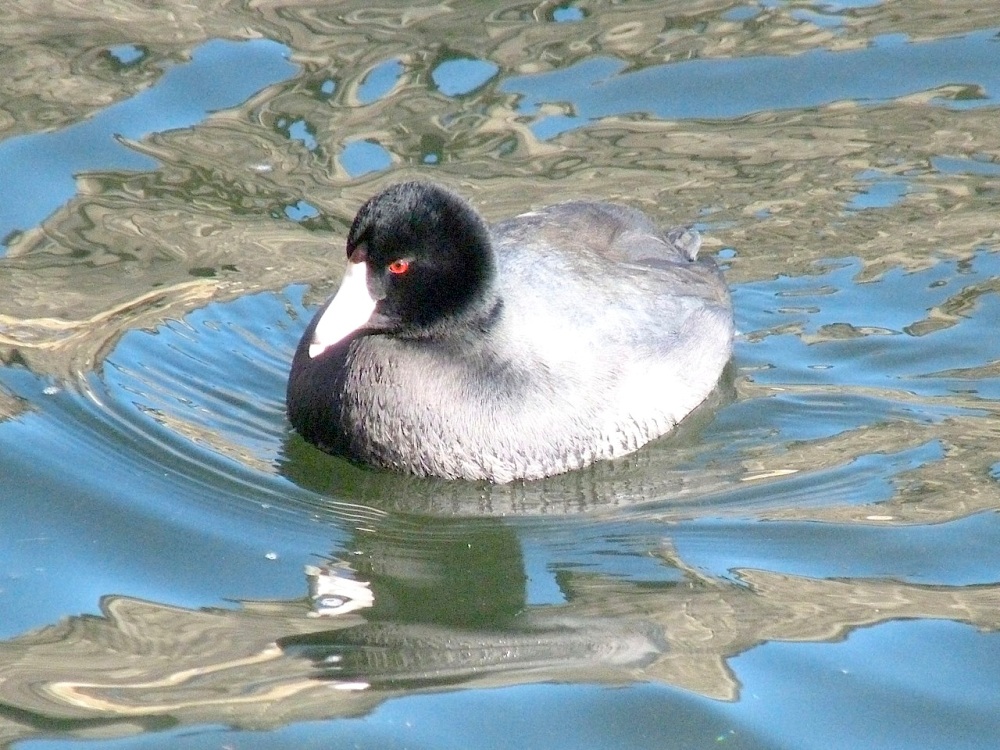
However, coots seem to take up or reflect other colours at times. The eyes remain a piercing red and the beak is white, but the body can range from black through slate-grey to pale grey, depending on the light. There may even be a tinge of brown or even orange.

American Coot - Bahamas - Great Abaco - Gerlinde Taurer

I always enjoy seeing coots and moorhens somewhere where the water ‘works’ with them and creates a dramatic image. I took the first photo below recently on the JKO reservoir in Central Park, New York, where the water looked weirdly like molten metal and some trick of the light made the bird seem as if is was in a shallow depression in the water.

American Coot (Keith Salvesen)

Tom Sheley took the photo below on a ‘green water’ day at the pond on Treasure Cay Golf Course. I have recommended it before as an excellent birding site for waterbirds – coots, moorhens, Bahama pintails, northern pintails, neotropic cormorants, blue-winged teal, least grebes, pied-billed grebes, green herons – I’ve even seen a reclusive least bittern there. There are plenty of ‘land’ birds on the course too.

American Coot.Treasure Cay, Abaco Bahamas.6.13.Tom Sheley copy 2

If you go to TCGC for the birding, you just need to clock in at the clubhouse in case it’s a match day; and so they know who is out and about on the course. And, as I wrote elsewhere, if you hear a loud yell of “Fore”, it probably won’t be someone counting the coots. Time to… er… duck.

Q: “WHAT’S AFOOT?” *

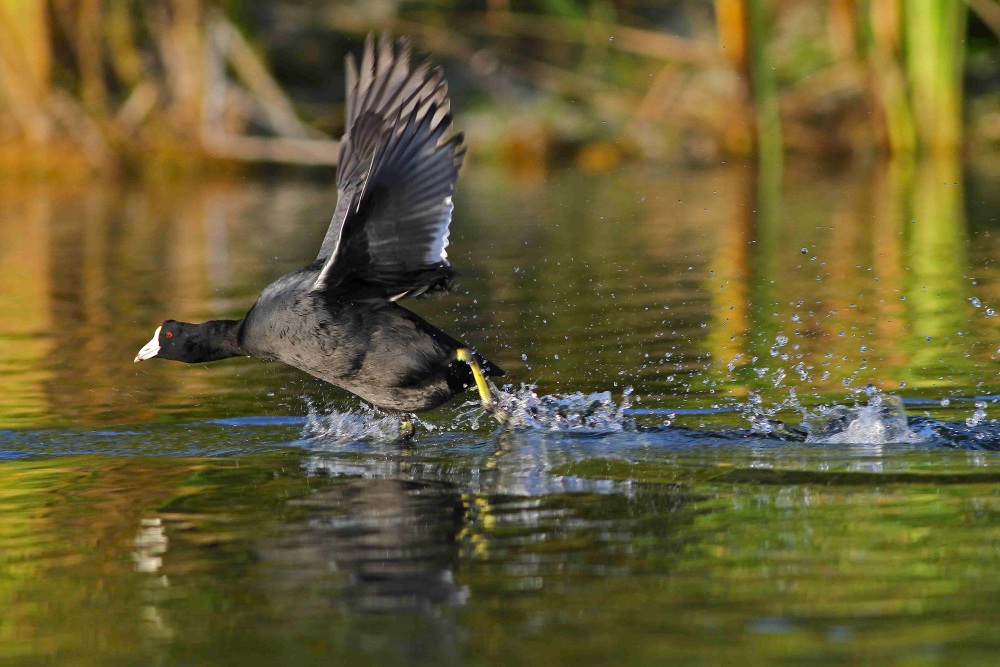
I mentioned that one of the differences between coots and moorhens is their feet. Gerlinde Taurer’s photo of a coot taking off suggests that something powerful is happening below the water to assist the wings to propel the bird into flight.American Coot - Bahamas - Great Abaco - Gerlinde Taurer

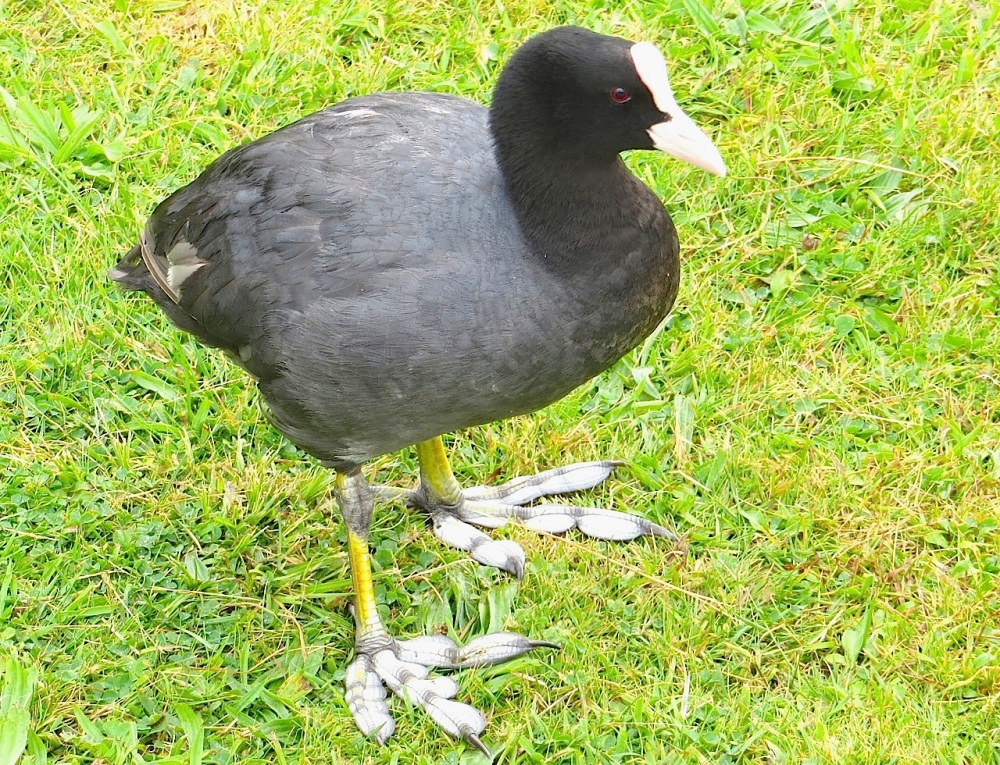
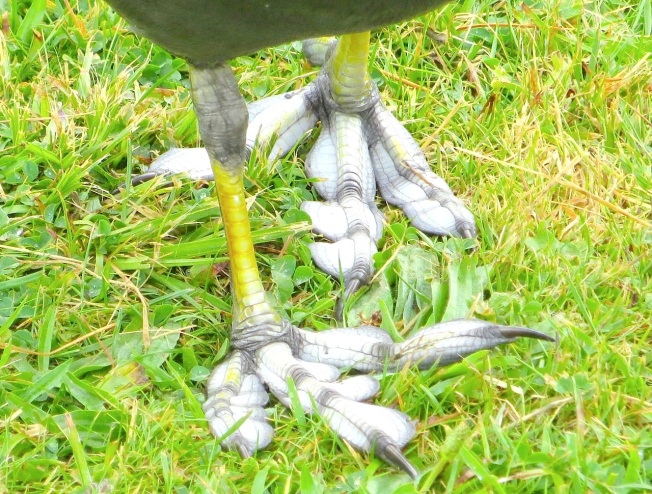
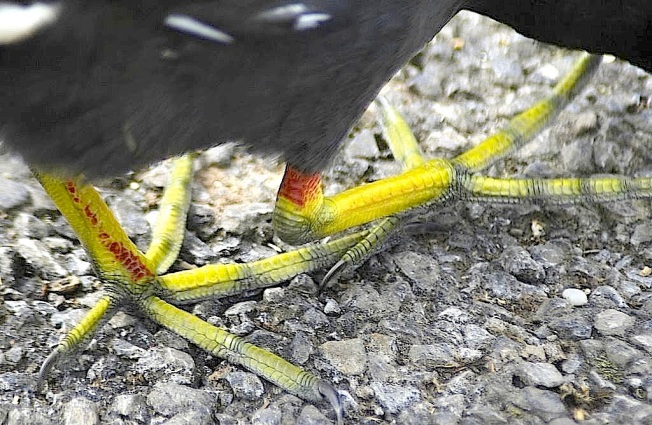
A coot’s feet are quite unlike the pedal extremities of any other birdCoot, showing feet (Keith Salvesen)Coot Feet Close-up Keith Salvesen copy

Moorhen’s feet for comparison – completely different structurallymoorhen_feet-mehmet-kartuk-wikijpg-copy* A: “A funny-shaped thing on the end of your leg”. How we laughed (aged 7)

Credits: Gerlinde Taurer (1, 4, 7); Tom Sheley (2, 6); Keith Salvesen (3, 5, 8, 9); Mehemet Kartuk (wiki) 10

Unknown's avatar

“TEACH YOUR CHILDREN WELL”: WHERE CONSERVATION BEGINS


Young conservationist on Abaco, Bahamas

“TEACH YOUR CHILDREN WELL”: WHERE CONSERVATION BEGINS

“Catch ’em young”. The perfect plan with children. On Abaco, wonderful work is continually being done with young children on the mainland and on each cay to teach them how precious their environment is, how fragile, and how important it is to take good care of it. The huge enthusiasm of the youngsters casts a beam of light onto the rather dark global picture of habitat destruction, pollution and ecological neglect that we have become depressingly accustomed too.

Young conservationists on Abaco

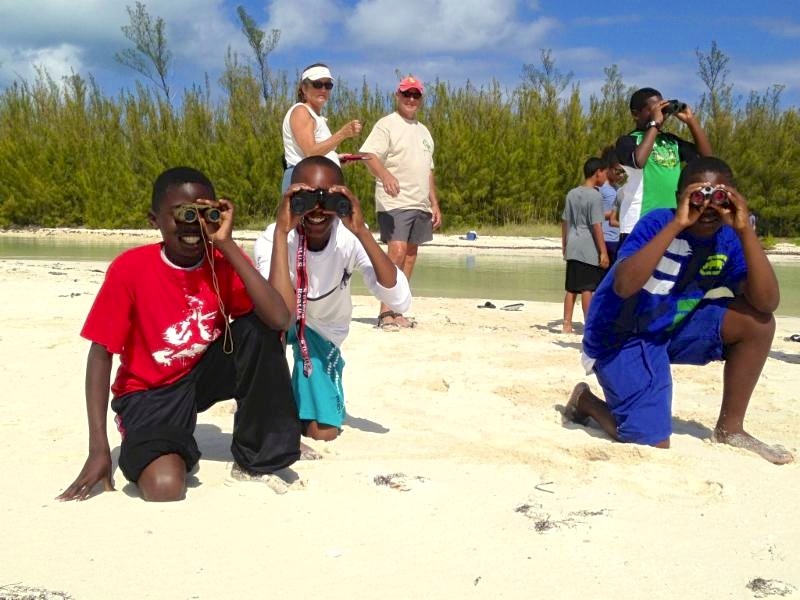
Education and training is carried out in schools; field work is done involving children of all ages; and camps are organised. FRIENDS OF THE ENVIRONMENT carries out this invaluable and rewarding task on an almost daily basis, offering students an astounding range of environment-based activities. Even the very youngest are catered for: the “Sea Beans Club”  is an after-school club for ages 3-5, which introduces young minds to their environment through educational activities and outdoor play.

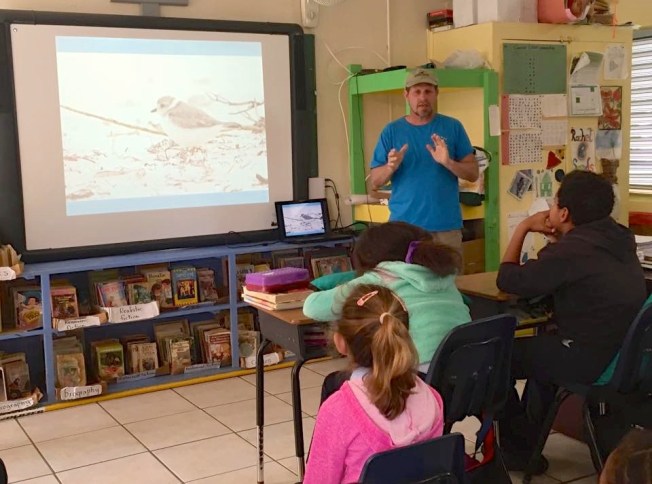
Students and researchers from CWFNJ survey the beach to make sure that their activities will not disturb any plovers feeding in the areaYoung conservationists on Abaco

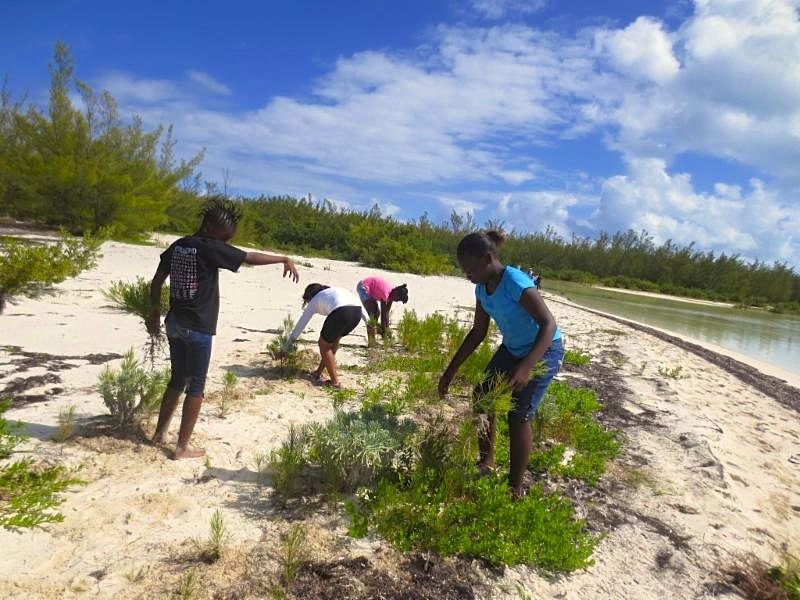
Students and volunteers selectively remove small invasive Casuarinas, which were encroaching on plover roosting habitat. By removing the invasive plants, native plants will be able to flourish and help stabilize the beach.Young conservationists on Abaco

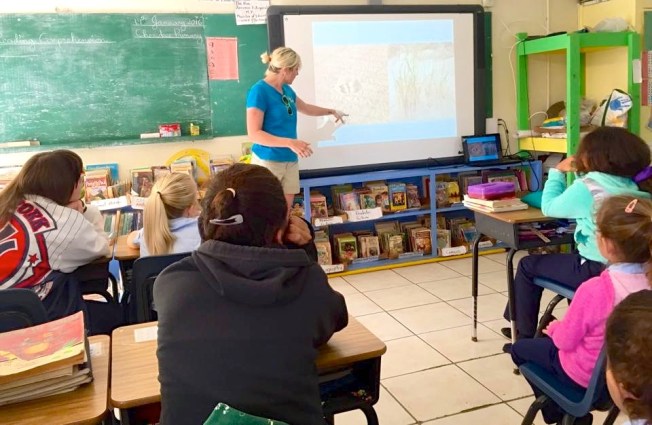
The BAHAMAS NATIONAL TRUST, too, plays its part in educating children about the fascinating yet frail world around them. For example, Scott Johnson’s snake protection work, in which he demonstrates to small kids that Bahamas snakes are completely harmless and to be respected not feared, is a wonder to behold.

BNT’s Scott Johnson visits a school with his non-scary snakesScott Johnson - BNT - Bahamas Snakes - Children's Education

In addition there are strong partnerships with organisations many miles away from the Bahamas, of which the CONSERVE WILDLIFE FOUNDATION OF NJ is the prime example. Todd Pover, Stephanie Egger and the team take their remit beyond their well-known piping plover conservation work by engaging with the pupils of Abaco’s schools each year and inspiring them.

Amy Roberts Primary School CWFNJYoung conservationists on AbacoYoung conservationists on AbacoYoung conservationists on Abaco

Much of the work is done in the field, getting the children interested in birds, the shoreline, the vital ecological role of mangroves, and the problems of marine debris. Other important work can be done in the classroom.

Young conservationists on Abaco Young conservationists on Abaco(A quick shout-out to Tom Reed, who I know took the piping plover photo!)

The clear message being sent out to the schoolchildren on Abaco is this: you are never too young to learn how to appreciate, respect and look after your environment. And they are responding with intelligence and enthusiasm. We are lucky that these kids are the future.

IMG_7390

Stephanie Egger of CWFNJ writes: “This year, we’ve reached over 120 students through the Shorebird Sister School Network Program, both from the Bahamas and in the United States. We hope to foster a greater appreciation for wildlife, especially for the Piping Plover and its habitat, and inspire students to help now — and later on in their lives as adults — ensuring the recovery and survival of the bird for years to come”.

VOLUNTARY MUSICAL DIGRESSION

“Teach your Children” is the second track of Déja Vu, the 1970 CSNY album. Nash wrote it much earlier, when still with the Hollies, then stored it in his musical lumber room. Just as well: it fits perfectly with the rather fey hippy vibe of the rest of Déja Vu.

Young conservationist on Abaco

Credits: huge thanks for general use permission for material to FotE, BNT and CWFNJ; and to all the individual photographers concerned

Unknown's avatar

“WE WANT THE SAME THING”: SANDERLINGS À GO-GO


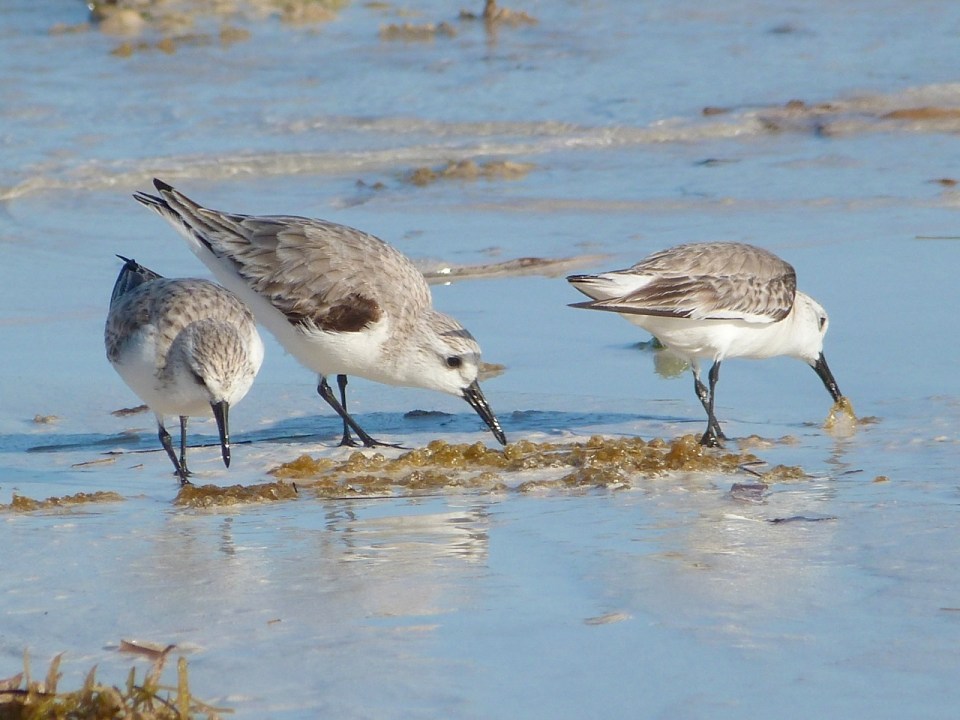
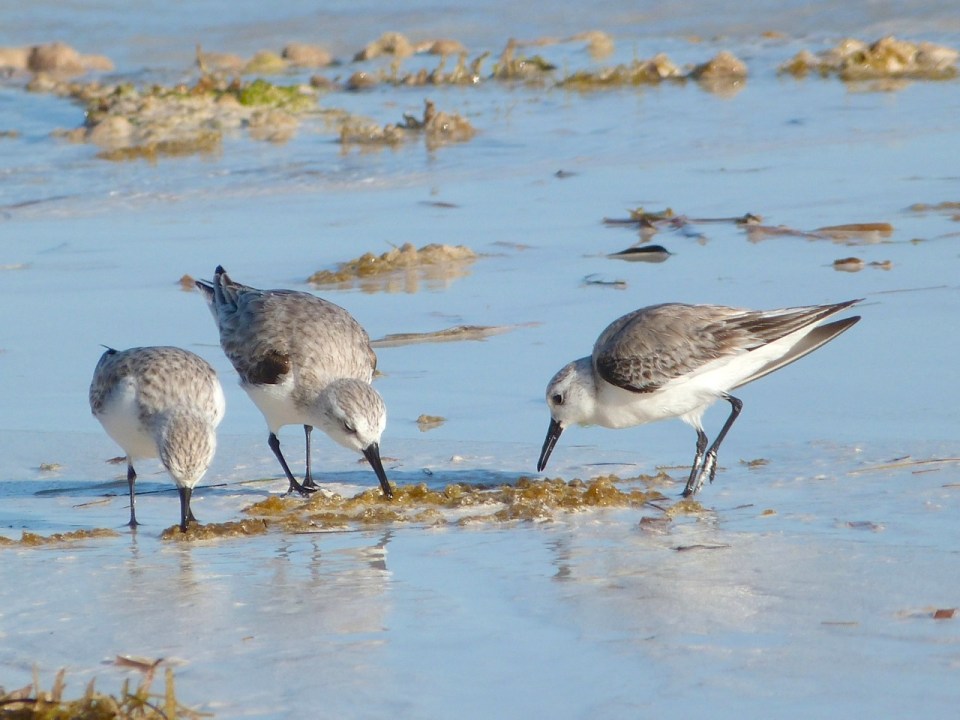
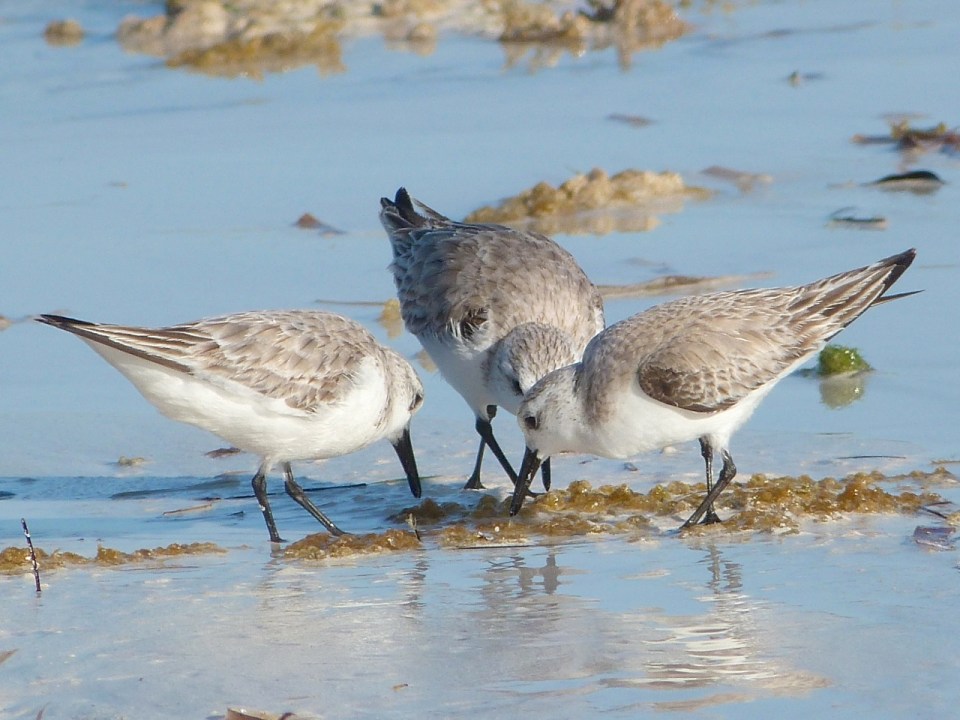
Sanderling Trio, Delphi Beach, Abaco (Keith Salvesen) 2

“WE WANT THE SAME THING”: SANDERLINGS À GO-GO

Good grief, this is awful. Suddenly I’m channelling Belinda Carlisle, raucous chanteuse and former lead vokes with the Go-Gos. She has not impinged on my cerebral cortex for, oh, 20 years. And even then, not of my own volition. Yet as soon as I downloaded and checked on-screen this sequence of sanderling photos taken as they foraged greedily on the Delphi beach, a spooky thing happened. The dread words and tune of ‘We Want The Same Thing’ crackled round my synapses. Listen! Can you hear it too?

It should of course have been “We Want The Same Crustaceans, Mollusks and Worms”, but no one has written that song. Yet. And I am now left with Belinda’s ear-worm… and other ones from that exhausting back catalogue are crowding in to join it, not least “Circle in the Sand” and “Heaven is that Delphi Place on Earth”…

“We Want the Same Thing”, though we have an entire beach to forage on…Sanderling Trio, Delphi Beach, Abaco (Keith Salvesen) 3 Sanderling Trio, Delphi Beach, Abaco (Keith Salvesen) 4 Sanderling Trio, Delphi Beach, Abaco (Keith Salvesen) 5 Sanderling Trio, Delphi Beach, Abaco (Keith Salvesen) 6

OPTIONAL MUSICAL DIVERSION (YOU WERE WARNED)

All photos RH on the Delphi Beach, Abaco; musical stuff inspired by Ms Carlisle. Weird.

Unknown's avatar

“FIVE YEARS HARD LABOUR” (NOT!) & A PARROT TO PROVE IT…


Abaco Parrot 12:15

“FIVE YEARS HARD LABOUR” (NOT!) AND A PARROT TO PROVE IT

I was reading about sea cucumbers online when a small golden Trophy flashed up on my screen, top right. It was mine genial host ‘WordPress’ to remind me that today is the fifth anniversary of this blog. Good grief! Time flies when you are having fun. 

So I packed in the sea cucumbers and decided to post a single image that stands for much of what this blog has been about over the five years – the promotion of Abaco’s wildlife, ecology and conservation in particular; and of the attractions of main island and its cays in general. The excellent contemporary bluesman Seasick Steve (such a great name) has an album called “I started with nothing and I’ve still got most of it left”. This blog was started on a whim from nothing, with a near-zero knowledge base and me blundering about in the darkest blogosphere. It’s still pretty dark out there, but I seem to have got the hang of a few things along the way. My thanks to the 1100+ followers and the 300,000+ people who have hit the site over the five years. Without you guys and the encouragement I have received, the whole exercise would have ground pointlessly to a halt at an early stage… Instead, Rolling Harbour will keep on erratically rolling along.

Let the parrots have their say…

(Photo & sound recording from Bahama Palm Shores, RH)

Unknown's avatar

PELICAN BRIEF (2): SANDY POINT, ABACO


Pelican Dive, Sandy Point Abaco (Keith Salvesen) 04

PELICAN BRIEF (2): SANDY POINT, ABACO

The small settlement of Sandy Point is literally at the end of the road. Beyond the limit of the tarmac lies the shallow sea. The Highway – Abaco’s only main road – extends the length of the skinny island, 120 miles roughly north to south with occasional side roads to settlements, dirt roads, forestry tracks, and something a bit more significant for Marsh Harbour – a roundabout, a single set of working traffic lights, the only ones on the island. There’s a second set but I have never seen them working. I don’t think anyone ever has. Maybe they were never even wired up.

Brown Pelicans, Sandy Point, Abaco 7

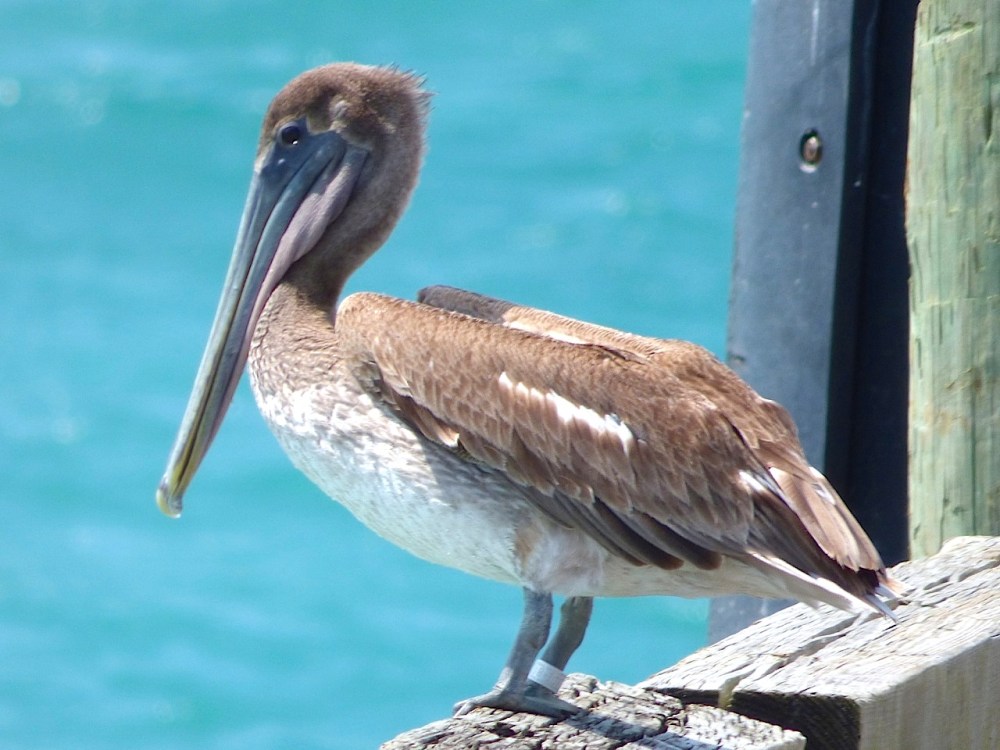
We went to Sandy Point for lunch with friends at the famous (though not yet world-famous) Nancy’s, with its reliably comforting menu of a choice of the same 3 dishes permanently on offer (fresh fish, conch, or chicken), plus Kalik or Sands beer. Simple yet satisfying. Sandy Point is a great place for birding, both sea / shore / wading birds, and land birds. Ospreys are often around. And brown pelicans. At high tide they dive off the dock (see HERE). At low tide, when the long sand bars are just visible above the water level, the pelicans use them as base for their fishing operations, often some 200 yards from the shoreline.

Brown Pelicans, Sandy Point, Abaco 11

We were watching 5 pelicans doing just that – lazily flapping aloft from the water in their clumsy way, then turning swiftly and diving with some elegance before smashing into the water for fish, returning in triumph or sorrow to the sand bar to eat… or plan the next foray. Then one detached itself from the group and flew closer to us for a single dive in deeper water, before flapping heavily back to the sand bar.

I took a sequence of photos with ‘Hated Camera’ (having drowned ‘Loved Camera’ in a minor marine mishap). As I have since discovered, ‘HC’ was on the wrong setting the whole time – by which I mean several days (some small but important side switch I’d neglected to remember). Hence the pelican images are in small format because I am slightly ashamed of the quality… There’s a theory about cartoons that there are two possible reasons for pairing them together on a magazine page: (1) they are each doubly funny and therefore only need half the space; or (2) they are only half as funny and so two are needed to double the overall chuckle quotient…

So here is the pelican dive sequence – unsuccessful in terms of fish – with the bird then flying back past us to the sand bar to rejoin his 4 buddies. I’ve put 2 images per line – either because (on the cartoon principle above) they are so good they only need half the allotted space or (hint: this is the truth) they are of such indifferent image quality that I am too embarrassed to enlarge them…

Pelican Dive, Sandy Point Abaco (Keith Salvesen) 01 Pelican Dive, Sandy Point Abaco (Keith Salvesen) 02 Pelican Dive, Sandy Point Abaco (Keith Salvesen) 03 Pelican Dive, Sandy Point Abaco (Keith Salvesen) 04 Pelican Dive, Sandy Point Abaco (Keith Salvesen) 05 Pelican Dive, Sandy Point Abaco (Keith Salvesen) 06 Pelican Dive, Sandy Point Abaco (Keith Salvesen) 07 Pelican Dive, Sandy Point Abaco (Keith Salvesen) 08 Pelican Dive, Sandy Point Abaco (Keith Salvesen) 10 Pelican Dive, Sandy Point Abaco (Keith Salvesen) 11 Pelican Dive, Sandy Point Abaco (Keith Salvesen) 12 Pelican Dive, Sandy Point Abaco (Keith Salvesen) 13

In the final image you can just make out a spooky ghost ship on the horizon. This is the huge vessel moored at the ‘Disney’ island, historically named Gorda Cay but now ‘pirated up’ to Castaway Cay. Arrrrrrrr!

Credits: all images RH & ‘Hated Camera’; Mrs RH kindly being encouraging about the results

Unknown's avatar

SITTING ON THE DOCK OF THE BAY… TAKING TERNS ON ABACO


Royal Terns Cherokee Abaco (Keith Salvesen) 1

SITTING ON THE DOCK OF THE BAY… TAKING TERNS ON ABACO

During a day of deep-sea fishing we put into Cherokee for a short time at the famous LONG DOCK, the longest wooden dock in the Bahamas. There were three royal terns at various plumage stages watching and waiting for fish, or maybe just ‘watchin’ the tide roll away’. Not that there is very noticeable tide at Cherokee, hence the need for the Long Dock to get out to deeper water from the shallows. So this was a good time to take a few photos from the boat with a point ‘n’ shoot, having dumped my proper camera in the sea (by mistake, I should add).

One bird has been banded with a metal ring LR. Does this signify anything to anyone?Royal Terns Cherokee Abaco (Keith Salvesen) 3Royal Terns Cherokee Abaco (Keith Salvesen) 2Royal Terns Cherokee Abaco (Keith Salvesen) 4 Long Dock, Cherokee

RELATED POSTS

CHEROKEE LONG DOCK

ABACO ROAD TRIP: CHEROKEE SOUND

All photos RH, short Musical Digression to be added when I am reunited with my computer next week…

THE PROMISED MUSICAL DIGRESSION

“(Sittin’ On) The Dock of the Bay” was co-written by Otis Redding and Stax guitarist Steve Cropper. The song was recorded in 1967, but shortly before its release in 1968, Redding died in a plane crash. The song became the first posthumous single to top the charts in the US (it reached number 3 in the UK), and won two Grammys. It has been covered around 7387 times (or so it seems), most surprisingly (or alarmingly) by T Rex, Pearl Jam, and Sammy Hagar. And Michael Bolton. Grrrrrrr. And not one single cover version – I challenge you to deny it – is half as good as the original…

Unknown's avatar

THE PECKING ORDER: WEST INDIAN WOODPECKERS AT DELPHI ABACO


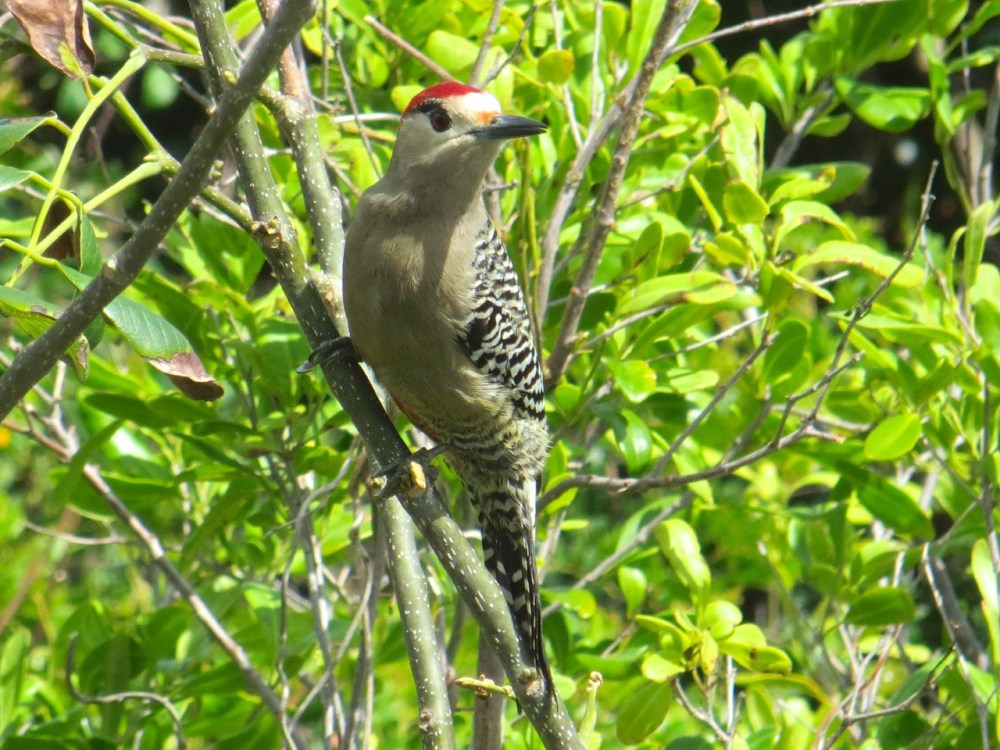
West Indian Woodpecker, Delphi, Abaco (Keith Salvesen)1

THE PECKING ORDER: WEST INDIAN WOODPECKERS AT DELPHI ABACO

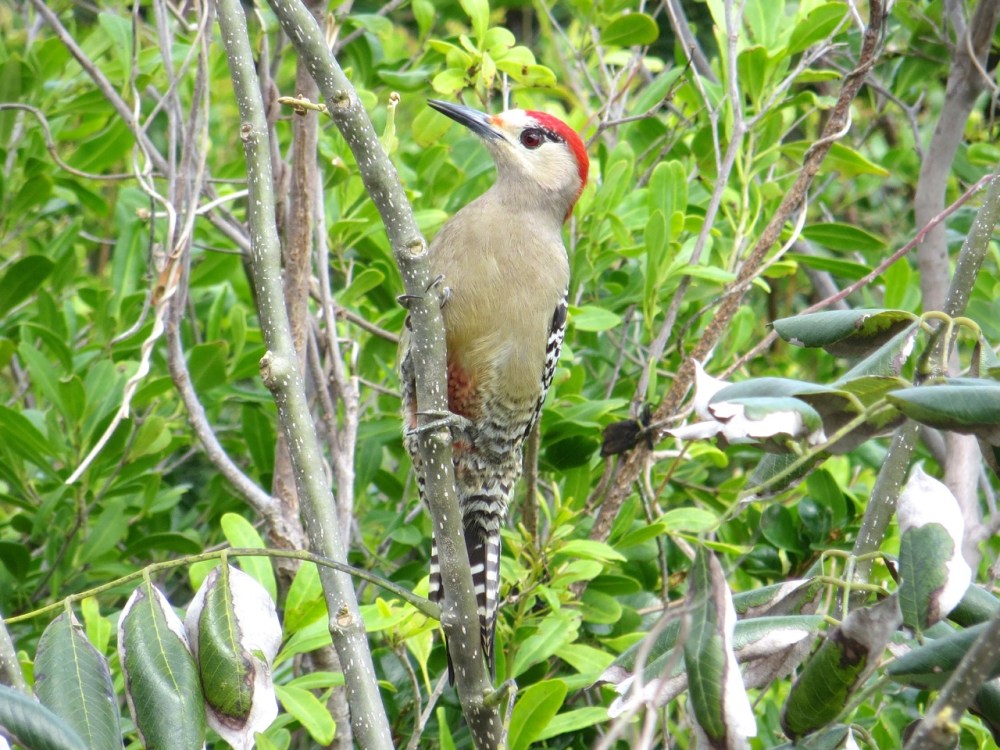
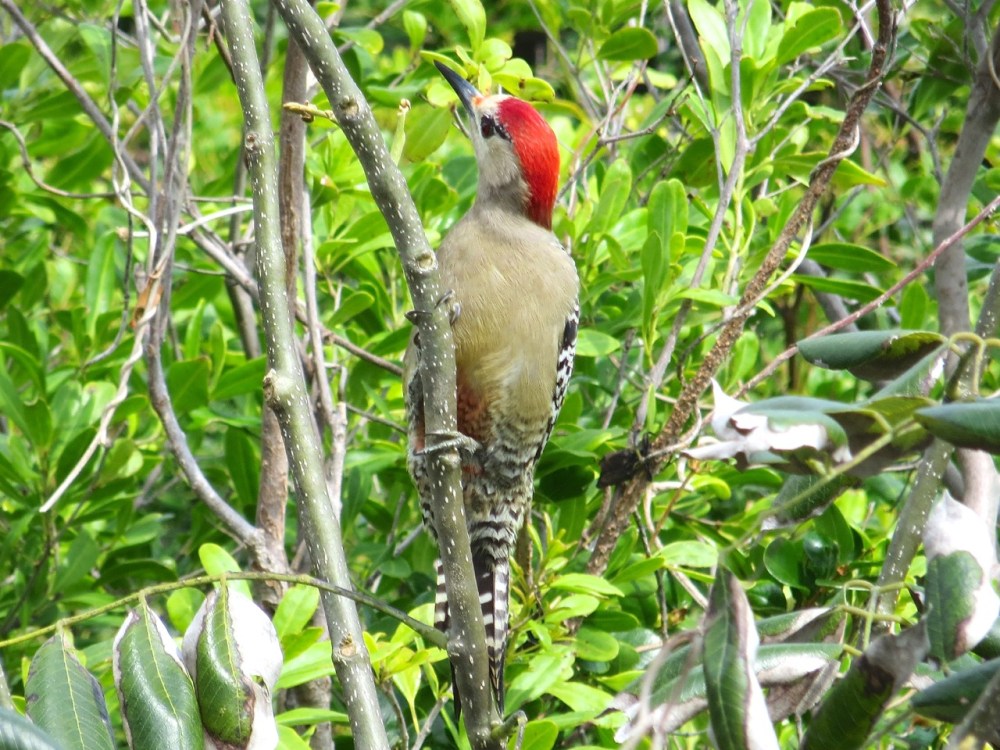
The Delphi West-Indian Woodpeckers are at it again. In all senses of the phrase. When they first became infatuated with the wooden slats on the underside of the verandah roof, it was necessary – for the sake of the building – to divert them. This was quickly done by the simple expedient of building and installing two nesting boxes under the eaves.

West Indian Woodpecker, Delphi, Abaco (Keith Salvesen)3

An annual routine has been established. In March, the pair discuss quite loudly and at length which of the two boxes they prefer (usually the right-hand one). There follows enthusiastic housework, shelf-building, nursery decoration and so forth; after which they go ‘at it’… and move in. Continuing internal improvements take place, and they fly in and out busily. This year a yellow-throated warbler had the insolence to trespass into the box and we saw him abruptly ejected.

West Indian Woodpecker, Delphi, Abaco (Keith Salvesen)2

In due course the pair produce up to 6 chicks in their first brood. The nestlings start by making a small buzzing noise, but within days – hours? – they are calling loudly and demandingly for food. The parents take it in turns to fly off and bring back assorted insects of increasing size, at which stage the noise of the chicks is deafening.

West Indian Woodpecker, Delphi, Abaco (Keith Salvesen)5

By late May or early June the chicks are ready to fledge. Meanwhile, their parents take a break from feeding duties to renovate the second nest box, preparing it for their second brood. I have seen, even with eyes averted, the adults shamelessly mating on top of the second nest box while their chicks are jostling at the entrance to the first box, working out how to fly.

West Indian Woodpecker, Delphi, Abaco (Keith Salvesen)4

The fledglings fly off  eventually into the coppice and pine forest (they stay around for a few days until they get the hang of finding their own food). And the adults repeat the same family-raising routine in the second nest box. The last time I saw the second brood fly, 4 left the box quite quickly – within about 5 minutes of each other. A fifth took one look at the world and disappeared into the depths of the box. A sixth teetered on the edge of the box for nearly half an hour – with both parents shouting encouragement at it – before finally launching into space. His timid sibling then shot out of the box into the great unknown. The breeding season was accomplished.

A SPECIALITY SPECIES FOR ABACO

West-Indian Woodpeckers are one of Abaco’s speciality species. In the Bahamas they are found only on Abaco and – a long way off – San Salvador. They are unknown on other islands. Until quite recently these birds were also found on Grand Bahama, but are sadly now extirpated, presumably for the familiar reasons…

West Indian Woodpecker, Delphi, Abaco (Keith Salvesen)7

All photos: RH (the last one is from 2014)

Unknown's avatar

JUST HANGING AROUND: PIPING PLOVERS ON THE DELPHI BEACH, ABACO


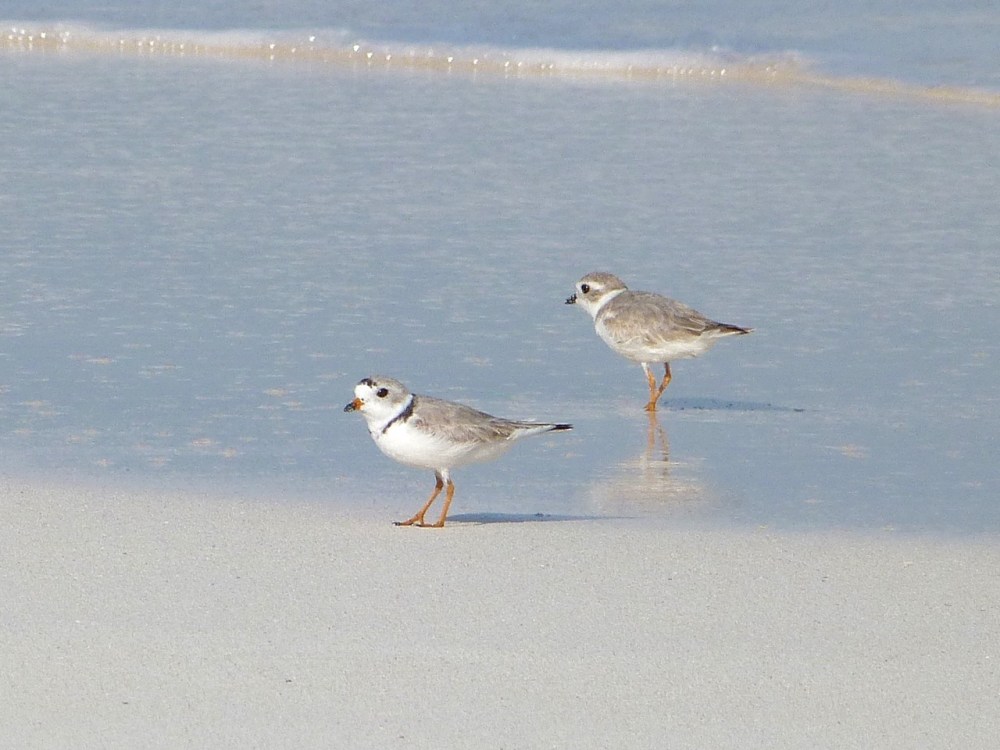
Piping Plovers, Delphi, Abaco A (Keith Salvesen)7

JUST HANGING AROUND: PIPING PLOVERS ON THE DELPHI BEACH, ABACO

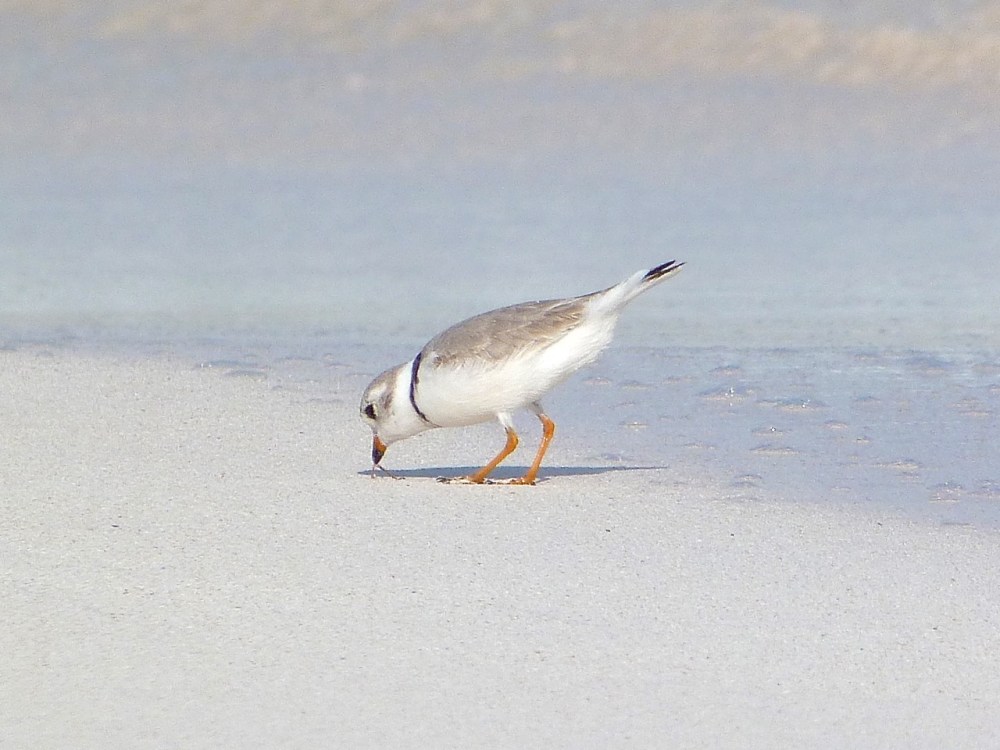
I’ve posted quite a few times about PIPING PLOVERS (PIPL) on Abaco, not least because of the five-month Rolling Harbour ABACO PIPING PLOVER WATCH that preceded the 4-year census in January 2016. These little guys are tiny, rare and threatened – by predators, humans, domestic animals, beach vehicles, habitat loss and the other usual factors.

Ha! I’ve found meat-string!Piping Plovers, Delphi, Abaco A (Keith Salvesen)5

In many of their summer breeding grounds, these are the hazards they face annually as they struggle to increase the world population from a precarious 8000 to a more sustainable number. The signs are promising. Intensive conservation projects by organisation such at CONSERVE WILDLIFE FOUNDATION, NEW JERSEY have ensured protection in the breeding grounds, resulting in a (probable) increased population estimate once the census stats are analysed.

My left leg is moving too fast…Piping Plovers, Delphi, Abaco A (Keith Salvesen)6

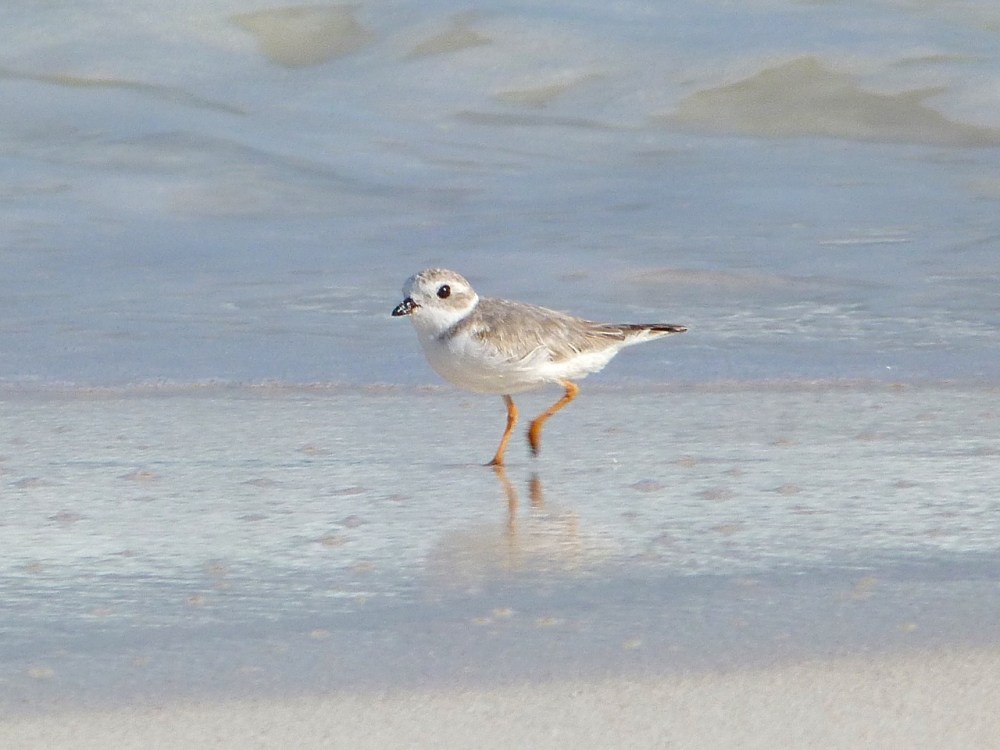
In the places the pipers overwinter such as the northern Bahamas, they find relatively safe havens. Abaco is one favoured place; and the beach at Delphi is home to a number of these little birds annually. Usually by the time we are here in March, they have set off on their 1000+ mile flights north to the breeding areas on the Atlantic Coast, the Great Lakes and the Great Plains. However this year, there is a pair right here, right now – hanging out on the beach, hanging around when most other PIPL are all already gone.

Check out my breeding plumage, get ready for me on the NJ shorelinePiping Plovers, Delphi, Abaco A (Keith Salvesen)2

These pictures were taken a couple of evenings ago as the plovers poddled and paddled back and forth along the tidal margin. I didn’t try to get too close – I didn’t want to risk disturbing their happy evening stroll. You’ll see that the male is already in his breeding plumage, with smart black chinstrap, monobrow and orange ‘n’ black beak. I take the other bird to be a female though maybe it’s a first-winter male (comment invited).

Piping Plovers, Delphi, Abaco A (Keith Salvesen)8 Piping Plovers, Delphi, Abaco A (Keith Salvesen)1 Piping Plovers, Delphi, Abaco A (Keith Salvesen)4 Piping Plovers, Delphi, Abaco A (Keith Salvesen)3

All photos: RH, with the camera he has since dropped in the sea (by falling in. Don’t ask)

Unknown's avatar

“KNOCK ON WOOD”: HAIRY WOODPECKERS FOR GOOD LUCK


Bahamas-Great Abaco_6568_Hairy Woodpecker_Gerlinde Taurer copy

“KNOCK ON WOOD”: HAIRY WOODPECKERS FOR GOOD LUCK

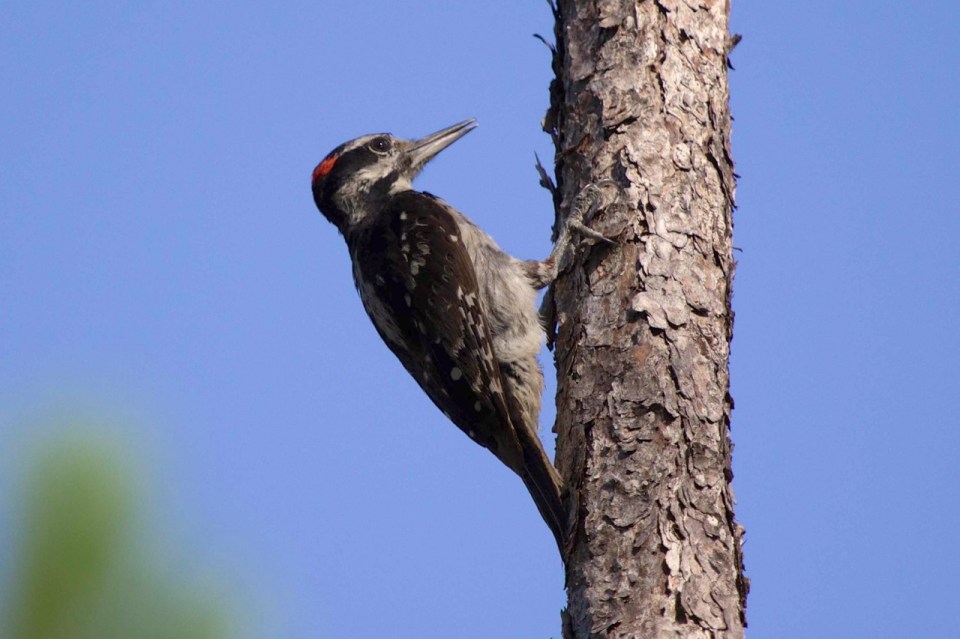
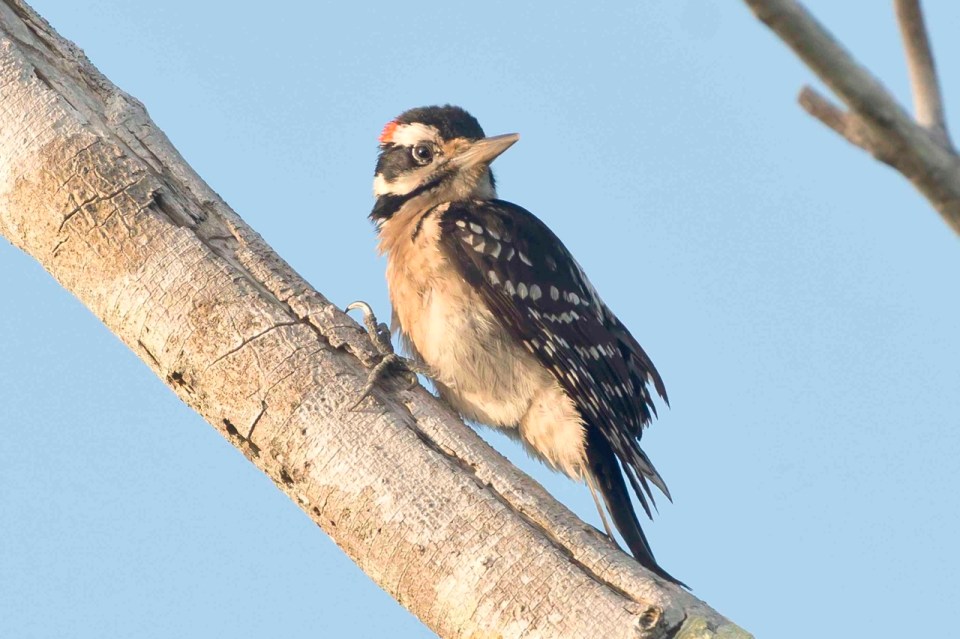
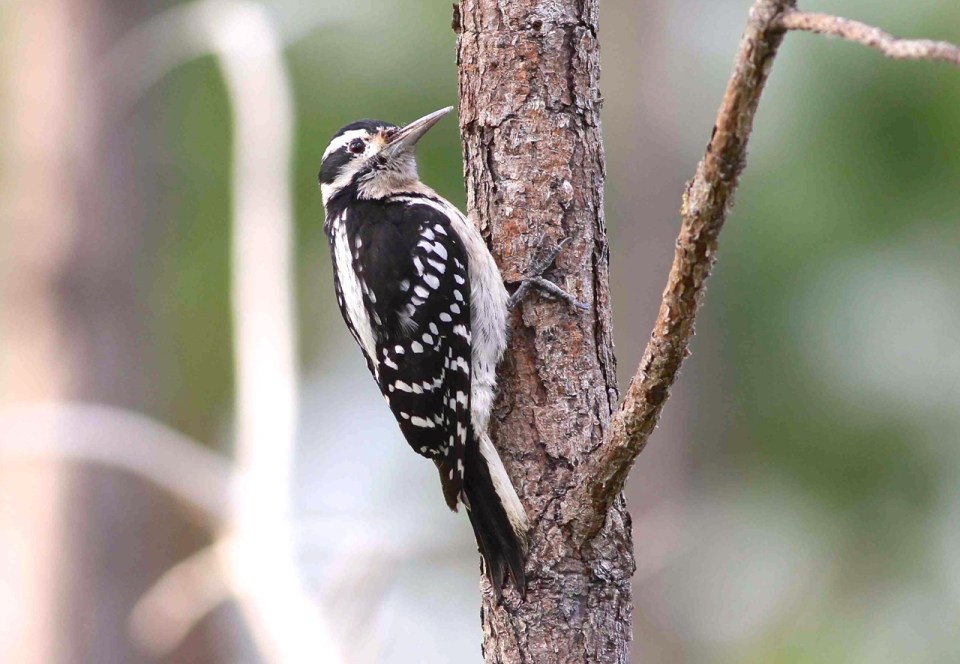
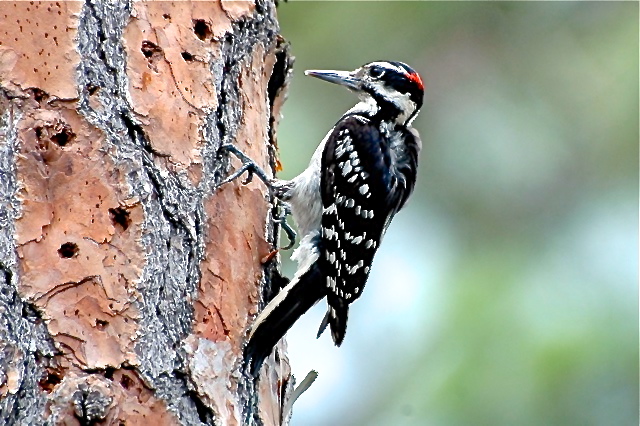
Delphi is an excellent place for woodpeckers. The Lodge itself has its own resident WEST INDIAN WOODPECKERS, who generally raise two broods a year in the nest boxes under the eaves. The coppice and pinewoods along the one-mile drives are home to the smaller Hairy Woodpeckers Picoides villosus, where they too nest annually. There’s a particular tall dead tree on the guest drive that is used every year, and from early March it is the first place I check for signs of occupation. If evident, I take it as a sign of good luck (and hope it extends to my fishing).

Hairy Woodpecker, Abaco (Alex Hughes) Hairy Woodpecker, Abaco (Bruce Hallett) Hairy Woodpecker, Delphi, Abaco (Peter Mantle)I can’t believe I haven’t featured a hairy woodpecker for more than 2 years. As we prepare for our forthcoming trip to Abaco HQ and the consequent plethora of photos (95% of which will be deleted), here is a small gallery of males (red caps) and females, some of them taken at Delphi. Check out those huge claws of the one below at her nest on the dead tree mentioned above.

Hairy Woodpecker female. Delphi Club.Abaco Bahamas.6.13.Tom Sheley copyHairy Woodpecker male. Delphi Club.Abaco Bahamas.6.13.Tom Sheley copyBahamas-Great Abaco_5247_Hairy Woodpecker_Gerlinde Taurer copyHairy Woodpecker, Abaco (Tony Hepburn)

I photographed this female last year in a tree near the swimming pool. I watched it for some time, but it must have been camera shy, because although quite unconcerned by my presence, it never came right out into the open. Hairy Woodpecker, Delphi, Abaco (Keith Salvesen)

MUSICAL DIGRESSION (OPTIONAL)
“Knock on Wood”, the 1966 hit for Eddie Floyd, was co-written with the amazing Steve Cropper (‘house guitarist’ for Stax). It has been much-covered over the years, none more unexpectedly than by David Bowie on his 1974 Live album (also released as a single). Here is the originator, in a live performance. 
Credits: Gerlinde Taurer (1, 7), Alex Hughes, Bruce Hallett, Peter Mantle, Tom Sheley (5, 6), Tony Hepburn, Keith Salvesen
Unknown's avatar

BURROWING OWLS ON ELBOW CAY, ABACO


Burrowing Owl, Elbow Cay, Abaco a (Milton Harris)BURROWING OWLS ON ELBOW CAY, ABACO

I hadn’t planned to revisit the birds of Elbow Cay so soon (2 days!) after the Key West Quail-Dove post, in which I alluded to another rare and special species there, the Burrowing Owl Athene cunicularia. However, Milton Harris – resident and birder – has already sent me some photos of his recent sighting at the north end of the cay, and they are so great that I am going to get them ‘out there’ (the interweb-cloud-ether-space-thing) right away. Carpe diem.**

“I’m watching you watching me. Don’t think I haven’t seen you…”Burrowing Owl, Elbow Cay, Abaco c (Milton Harris)

When I previously featured the BURROWING OWL, I used my own photos (not taken on Abaco). Click on the link to see them and to get some facts about these cute little birds. I also added reports of two sightings on the mainland in the Cherokee / Little Harbour area late last year. As I wrote then, “on Abaco, this little owl is a rare vagrant, presumably visiting from Florida which has the nearest resident population. There have been few reported sightings; and for ‘The Birds of Abaco’ we were unable to locate a photo taken on Abaco.”

Burrowing Owl, Elbow Cay, Abaco e (Milton Harris)

Here’s a wonderful shot of the bird’s legs and feet. Despite their small size overall, the claws (talons?) mark out this owl as a fearsome predator of small creatures. One with hairy toes, too.Burrowing Owl, Elbow Cay, Abaco b (Milton Harris)

HOW LIKELY AM I TO SEE ONE WHEN STROLLING AROUND ELBOW CAY?

Very unlikely indeed I’m afraid (unless you have been shown roughly where to look), and for 2 reasons. Firstly, the burrowing owl is rated as an uncommon to rare vagrant on Abaco. There aren’t even reported sightings every year. So it’s a question of ‘right place, right time’, with a bit of local knowledge, a lot of luck, and excellent eyesight (see below) – the one positive being that, unlike most owl species, these birds are active during the day as well as nocturnally.

Secondly, even were you to be given the exact location of a recently-sighted owl, it’s still a long shot that you would actually spot it, unless you happened to see it in flight. Otherwise, it will be most likely be sitting completely still on a branch in the coppice, quite well camouflaged, watching you stealthily walk by…

Would you notice this bird in the coppice from 75 feet away?Burrowing Owl, Elbow Cay, Abaco f (Milton Harris)

On the other hand, you could be in luck. Milton got a quick shot at this owl as it flew up onto a shed roof in the sunshine. But the bird knows he’s been seen, and he didn’t stay long… I reckon the one-legged pose is particularly neat!Burrowing Owl Elbow Cay, Abaco (Milton Harris) 2 sm

Burrowing Owl, Elbow Cay, Abaco d (Milton Harris)

RELATED POSTS

BURROWING OWLS ON ABACO

BARN OWLS ON ABACO

** or, as Horace fully wrote, “carpe diem, quam minimum credula postero“; seize the day, don’t place too much belief in the future…

Credits: All photos taken on Elbow Cay (north end), Abaco by Milton Harris – with many thanks for use permission

Unknown's avatar

KEY WEST QUAIL-DOVES ON ELBOW CAY, ABACO


Key West Quail-Dove, Elbow Cay, Abaco (Milton Harris) 1a

KEY WEST QUAIL-DOVES ON ELBOW CAY, ABACO

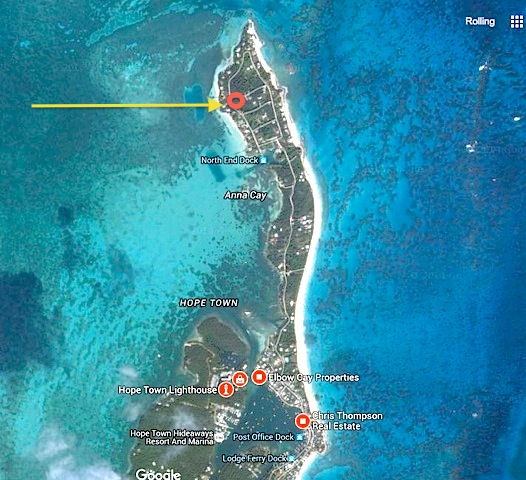
Elbow Cay has many reasons to be admired: the historic iconic striped lighthouse, Hope Town’s pretty harbour and surroundings, wonderful beaches, some great places to eat and stay, no cars, the general impression of being a happy and most congenial place to be. To which, may I add, a good place for birding in general and for pinning down a couple of hard-to-find species in particular. Resident and birder Milton Harris has sent me a few photos from his recent outings. There is at least one burrowing owl at the north end of Elbow Cay. These owls are reputedly very rare vagrants on Abaco but recent sightings suggest numbers may be increasing. More of which another time.

The Key West Quail-Dove Geotrygon chrysia is a permanent breeding resident on Abaco, but relatively uncommon. These birds are difficult to find, flighty, and fly fast. They are hard to get a clear photo shot at, and reluctant to pose attractively in the open in good light while keeping still. Sadly, we never got a good clear shot of one to use for THE BIRDS OF ABACO‘. A great one from Nassau, yes, but disqualified from inclusion by location. 

Key West Quail-Dove, Elbow Cay, Abaco (Milton Harris) 6a

Milton says he has been seeing KWQBs “at the north end of Elbow Cay off and on for the past year. Normally they flush and fly though the trees at great speed, so I have not been able to get a photo.  Today I was creeping through the coppice and one walked out in a clear spot and posed!” 

Approximate KWQD locationElbow Cay (north) map jpg

WHAT’S IN A NAME?

Disappointingly little these days. The KWQD originally bred in the Florida Keys and was actually discovered on Key West (incidentally a James Bond location used in ‘Licence to Kill’). Sadly the species no longer breeds in Florida (reasons unknown – all shot, maybe?) and these doves are now found only as vagrants there. I have checked the Bahamas National Trust’s very helpful BNT HUNTERS GUIDE – in the Bahamas, the quail-dove is completely protected and may not be shot or taken at any time [but I have a sneaking suspicion that they would be delicious…]

Elbow Cay: Abaco’s KWQD hotspot (eBird)KWQD hotspot map abaco

SO SHOULD IT BE RENAMED THE ELBOW CAY QUAIL-DOVE?

A nice idea, Elbow Cay being the sole Abaco hotspot for the species over the last 10 years, as recorded on eBird. But in fact the birds are found throughout much of the Caribbean so there will be other contenders for the honour. Probably best left as it is to avoid contention.

Key West Quail-Dove, Elbow Cay, Abaco (Milton Harris) 5a

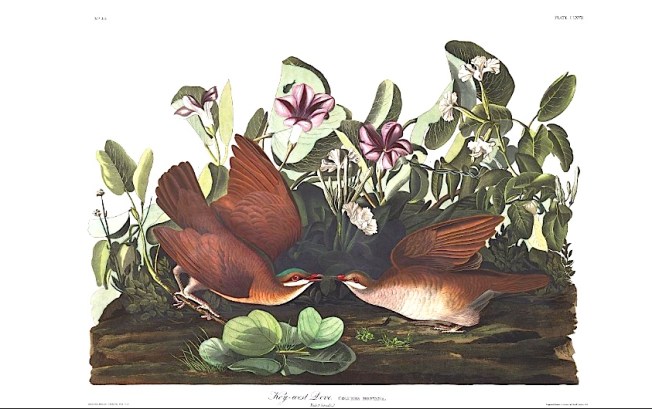
I always enjoy comparing the ‘real thing’ as you might see a bird in the coppice near you, with the depictions of the bird made by one of the pioneers, Audubon prime among them. Here’s his very charming take on the species. But I agree, it’s not very like the bird you are looking out for…

Key-west Dove (J J Audubon)

Credits: many thanks to Milton Harris for his excellent photos of this tricky bird; hotspot clip from eBird

Unknown's avatar

AMERICAN REDSTARTS ON ABACO: THE DISTAFF SIDE


American Redstart (f), Abaco 6 (Charles Skinner)

AMERICAN REDSTARTS ON ABACO: THE DISTAFF SIDE

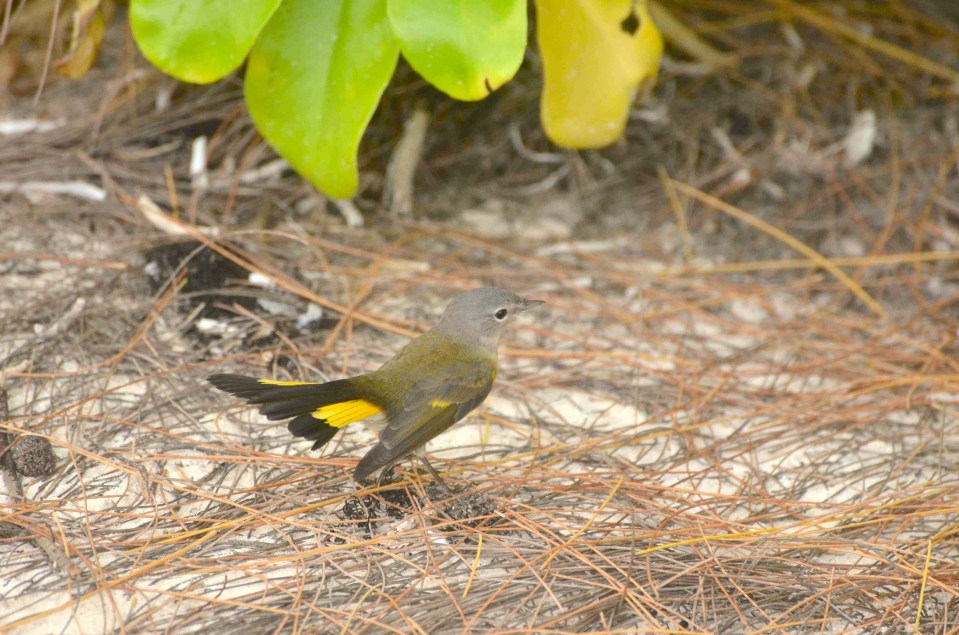
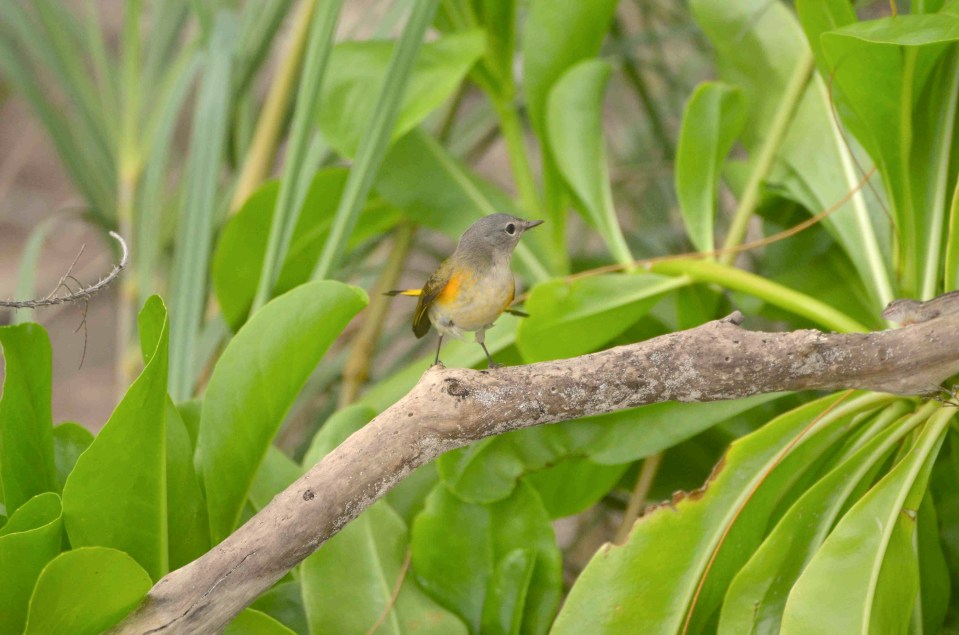
I have a feeling that people are more familiar with the male American redstart than the female. The male’s striking near-black and orange livery is memorable. The female’s equivalent brown and yellow colour scheme is a little more subtle (or ‘drab’, which is a go-to bird book description where the male of a species is flamboyant; I prefer ‘subtle’ as a politer description). Charlie Skinner managed to get some lovely shots of females in the pines and scrub at the back of the Delphi beach. 

American Redstart (f), Abaco 1 (Charles Skinner)American Redstart (f), Abaco 2 (Charles Skinner)

These birds are one of the 37 warbler species recorded for Abaco, where they are common winter residents. Generally they start to arrive in October, and some are usually still around in March. It is believed that the flashing tail-spreading of both sexes, shown in some of these images, acts either to attract insects; or to confuse them in some way. I can’t think how or why. I imagine the tail-fanning also forms part of the redstart courtship rituals. Incidentally (*fun fact alert*) male redstarts are known to raise two families simultaneously, the nests being a convenient distance apart so that his deceit remains his secret.

American Redstart (f), Abaco 5 (Charles Skinner)American Redstart (f), Abaco 3 (Charles Skinner)

This pretty juvenile is impossible to sex at this age. Could go either way. (Photo: Becky Marvil)American Redstart (juv), Abaco (Becky Marvil)

For comparison, the more familiar male (and more brash – typical). (Photo: Gerlinde Taurer)Bahamas-Great Abaco_6374a_American Redstart_Gerlinde Taurer copy

Photo credits: Charlie Skinner, Becky Marvil, Gerlinde Taurer 

Unknown's avatar

FRIGATEBIRDS aka MAN-O-WAR BIRDS: TRULY MAGNIFICENT


Magnificent Frigatebird (m) with inflated 'gular sac' (neck pouch) - Athena Alexander / Jet Eliot

FRIGATEBIRDS aka MAN-O-WAR BIRDS: TRULY MAGNIFICENT

I have a feeling that today’s header image may be one of the best I have been fortunate enough to be able to use. Certainly in the top ten. This is a male frigatebird (Fregata magnificens) in the breeding season, with his extraordinary inflatable GULAR POUCH fully blown up. He is at his most chest-burstingly dashing, at least to female frigatebirds, and this great capture by photographer Athena Alexander from the excellent blog of JET ELIOT, shows one of the wonders of the bird world. A glimpse of his mate can be seen just behind his head, but frankly he has made the story his own! And just look at the size of his wings. If a bird can steal limelight, he has effortlessly done so.

COURTSHIP DISPLAY

The image below shows the male enacting his courtship display. Jet Eliot describes it thus: “During courtship display this balloon-like sac takes about 20 minutes to fully inflate.  It is featherless, scarlet red, and tight as a drum.  It’s so big it distorts him. When he’s ready and has a suitable audience of females flying overhead, he points his face skyward and rapidly beats his wings against the balloon, creating a low, booming sound”. The male’s pouch is not entirely inflated. A female is nestled under the his protective wing. Presumably she has been won over and mating will soon occur once the performance ends. Or maybe she’s bored with the whole routine – she looks rather as though she has seen it all before…frigatebird-displaying

magnificent-frigatebird

NESTING

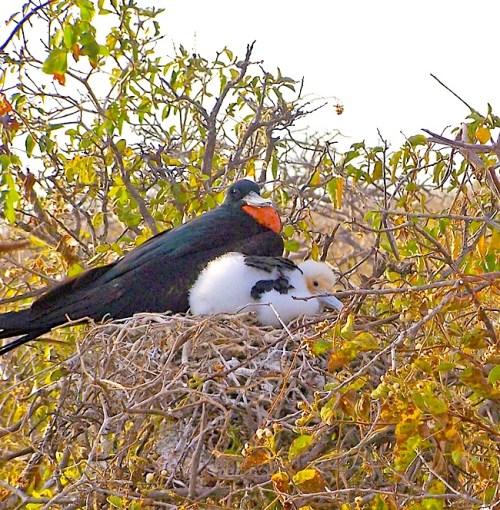
Even on the nest, males are keen to be in the picture. Not for them the ‘absentee father’ role, out fishing the entire day. Instead, they share chick-care duties, looking after the single enormous, fluffy chick. An adult pair stays together for the year, forsaking all other. Chick care takes a long time from egg to fledging and beyond – so much so that frigatebirds only breed every other year, and always produce a single egg. For this reason, habitat destruction of breeding grounds has a far greater effect on population numbers than for birds that breed annually.Magnificent Frigatebird (m) and chick on nest - Athena Alexander / Jet Eliot

magnificent-frigatebird

10 MAGNIFICENT FACTS ABOUT FRIGATEBIRDS

  • Magnificent Frigatebirds are the largest of several frigatebird species around the world
  •  They are found in tropical and subtropical watersimgres
  • Females have white fronts that make them easily distinguishable in flight
  • An adult’s wingspan is 7+ feet, with the largest wing-area / bodyweight ratio of any bird
  • Frigatebirds can remain in flight and far out to sea for many days
  • They are KLEPTOPARASITES and will rob other seabirds of their food
  • Their diet is mainly fish & squid snatched from the water’s surface; also seabird chicks
  • They nest in colonies, producing a single egg every other season
  • They don’t actually land on water, as they don’t float; and they are feeble at walking on land
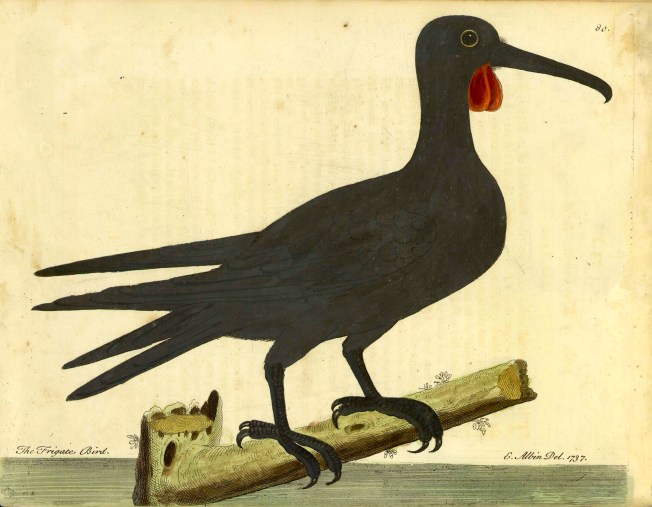
  • One of the earliest depictions of a frigatebird is by Eleazar Albin in 1737. He was a naturalist contemporary of MARK CATESBY and pre-dated AUDUBON

Frigatebird_Eleazar_Albin_1737

magnificent-frigatebird

NAMING THE FRIGATEBIRD: A POTTED HISTORY

  • Columbus encountered them on his first voyage in 1492, but knew them by their Spanish name rabiforçado or ‘fork-tail’.
  • The use of the name ‘frigatebird’ was first recorded in 1667 and referenced the frigate warship, a powerful sea-vessel
  • ‘Man-o-War Bird’ was the name given to the bird by English mariners in the Caribbean, being the colloquial name given by sailors to a frigate.

magnificent-frigatebird

A MAN-O-WAR GALLERY

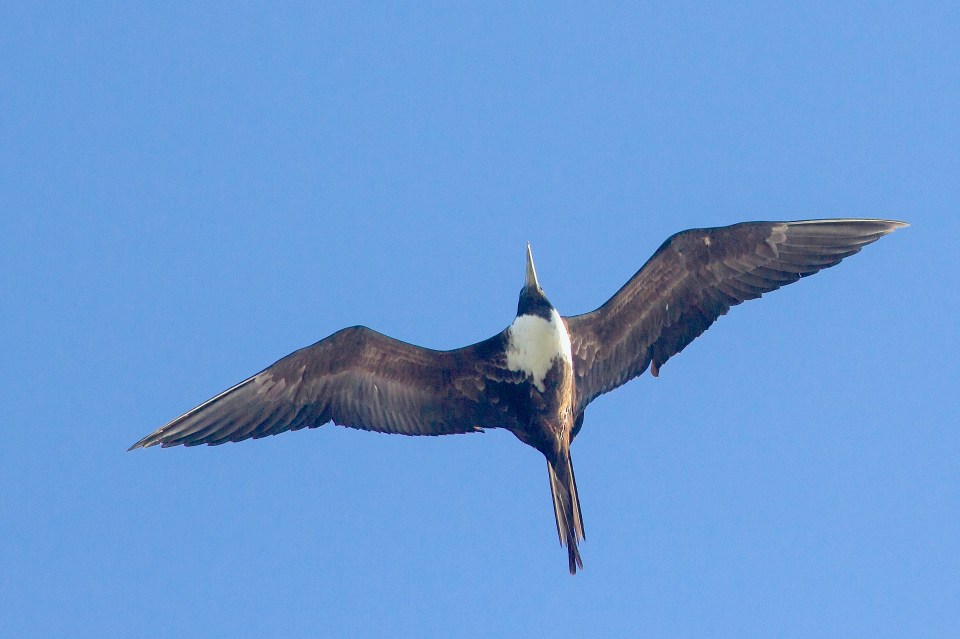
A female frigatebird hunts for food among the mangroves on AbacoMagnificent Frigatebird.Abaco Bahamas.2.12.Tom Sheley 2

A female frigatebird soars high over Marsh HarbourMagnificent Frigatebird, Marsh Harbour, Abaco - Tom Reed

This male has taken off before his gular pouch has had time to deflate fullyFrigatebirds (m) 2 Michael Vaughn

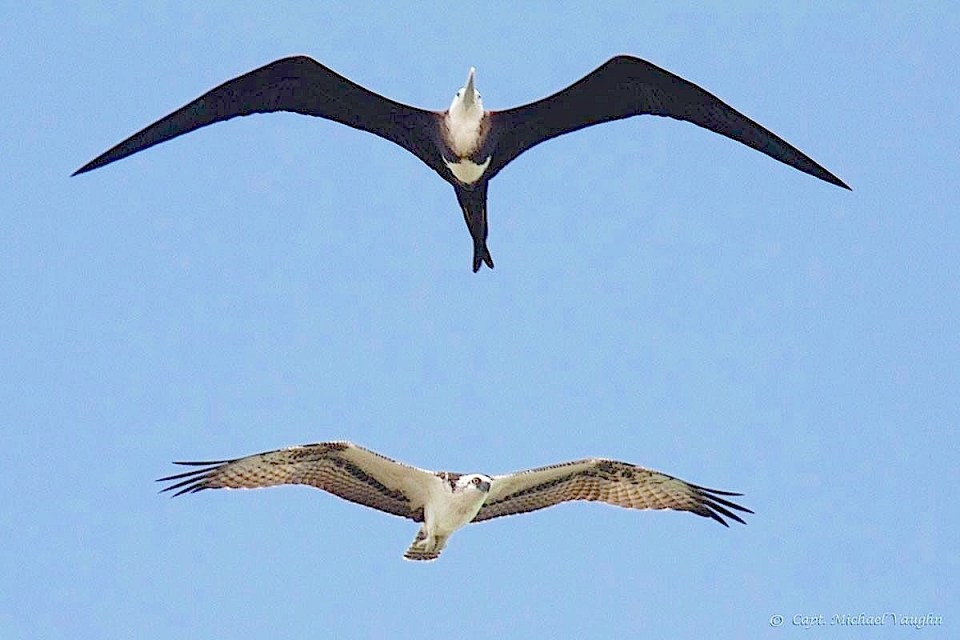
An osprey escorts a female frigatebird from his territory to a different bit of sky…Frigatebird & Osprey Michael Vaughn

Juvenile frigatebirdFrigatebird (juv) Michael Vaughn

A fully-inflated male with a droopy one who needs to get started quick if he’s going to get a mateFrigatebirds (m) 1 Michael Vaughn

ARE FRIGATEBIRDS ANY USE TO MAN OR BEAST?

Yes, emphatically so, to man anyway. Mariners through the ages have used frigatebirds as indicators of nearby land – not necessarily visible, but within sailing distance. And fishermen through the ditto have used them as reliable indicators of where fish are to be found. As an example from personal experience on Abaco, going fishing out of Casuarina into the deep waters of the open sea, the sight of high-flying frigatebirds signals ‘get ready to fish’. They are scouting around for fish, and so are you. But they know where the fish are. Follow them and you will may be rewarded. Because where there are fish for seabird predators, there are fish for the large fish predators – mahi mahi, tuna and wahoo, for example. This is not my main type of fishing, but each time we have been out in those waters – with the Delphi Club often a still-visible speck on the horizon – the frigatebirds have led us to good catches of mahi mahi (= dorado or ‘dolphin’). Last year, under the watchful gaze of the frigatebirds, in a heart-stopping moment I jumped a wahoo. If that sounds slightly rude, it isn’t – and I didn’t catch it anyway. It just leapt vertically right out of the water without taking the goodies…

STOP PRESS Cheryl Wile Ferguson sent me a great photo of a female MF being sociable with humans in the Galapagos. She hitched a ride for 2 hours during a sea crossing…Magnificent Frigatebird (f) hitching a boat ride (Cheryl Wile Ferguson)

Audubon’s Magnificent FrigatebirdAudubon Frigatebird

Credits: first and foremost to Athena Alexander and Jet Eliot for use permission for images 1 – 3 (taken on Galapagos) and much invaluable info; as ever to Tom Sheley (4), Tom Reed (5) and Michael Vaughn (6,7,8,9) for their photos; Cartoon from Birdorable; other images open source; magpie pickings for facts and figures; and some limited personal experience (regrettably but unsurprisingly all my photos of frigatebirds flying, diving, triumphantly catching fish etc are too crap to use)

Unknown's avatar

“A PELICAN GOES INTO A LOW DIVE AND…”


Brown Pelican 1 (Phil Lanoue)

“A PELICAN GOES INTO A LOW DIVE AND…”

… is a promising start to a pelican-based variant on the “Man walks into a Bar…” joke. But in fact there’s a serious point to all this, illustrated with a set of Phil Lanoue’s wonderful ‘bird sequence’ photos. The Brown Pelican is a permanent breeding resident on Abaco, not exactly common but locally quite easy to find. For example, certain docks are often used by them as diving platforms as they feed. Sandy Point is a good place for this. At Delphi we see them passing over the bay, flying high with slow, heavy wing-beats, but sadly I have yet to see one fishing off the rocks there.

Brown pelicans feed by diving for fish. By contrast, White Pelicans (a rarity on Abaco) feed in a quite different way. They forage communally and cooperatively by coralling fish and picking them off from the surface or just below it. A quick online search shows very little evidence of white pelicans diving for food or indeed just for the hell of it. But have a look now at a Brown Pelican landing and going straight into a low dive… to catch a meal.**

Brown Pelican 2 (Phil Lanoue)Brown Pelican 3 (Phil Lanoue)Brown Pelican 4 (Phil Lanoue)

I unreservedly recommend Phil’s website HERE for the consistently excellence of his photography, especially his action sequences; and for the way he captures the mood with apposite commentary.

**I completely realise that this is totally lame as the punchline for a bar-room joke

Unknown's avatar

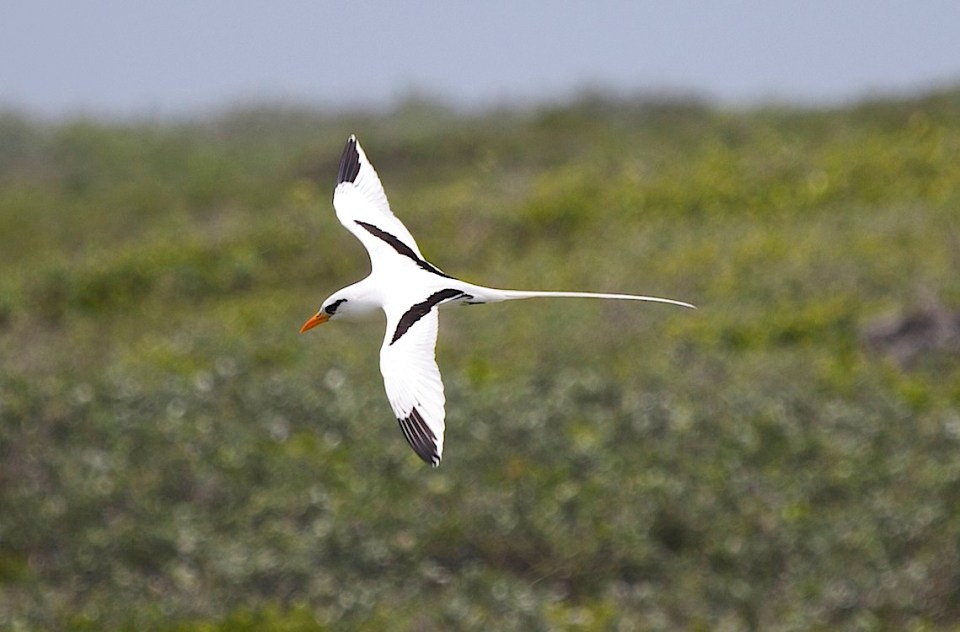
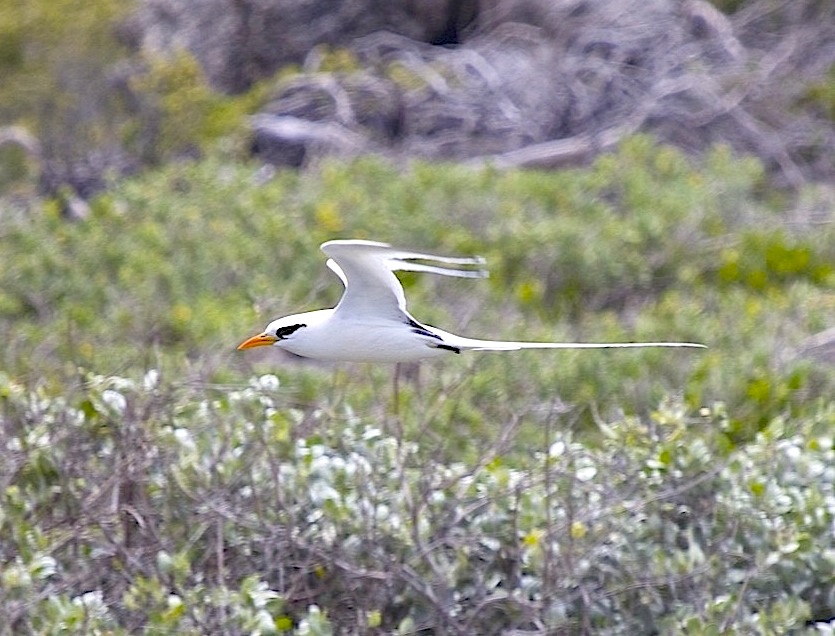
WHITE-TAILED TROPICBIRD: ABACO’S MOST ELEGANT BIRD


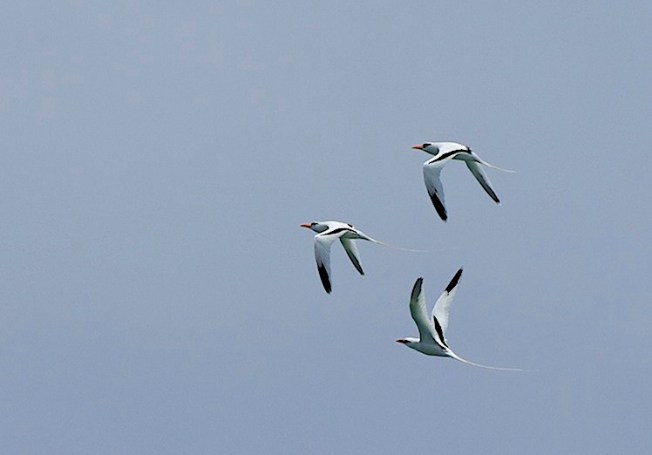
White-tailed Tropicbird, Abaco (Alex Hughes)

WHITE-TAILED TROPICBIRD: ABACO’S MOST ELEGANT BIRD

A competition to decide the most elegant bird found on Abaco (of 350+ recorded species) is a simpler task than it sounds. Colourfulness doesn’t come into (sorry, painted bunting, Abaco parrot & co). Nor cuteness, rarity, popularity and so on. Some birds don’t make the starting line at all (but we love you, ungainly limpkins and raucous clumsy-flying Anis). Best to judge from a different viewpoint: is there one bird that in flight is invariably beautiful to watch, in a way that can make you catch your breath…?

White-tailed Tropicbird, Abaco (Alex Hughes)White-tailed Tropicbird, Abaco (Alex Hughes)

The caribbean white-tailed tropicbird (Phaethon lepturus catesbyi) is one of six types of tropicbird found worldwide. It is named after pioneering naturalist MARK CATESBY, who predated John James Audubon. Click the link to find out more about him. Catesby’s depiction (below) of a ‘Phaeton’ must be one of the earliest.

Catesby’s TropicbirdTropicbird - Mark Catesby jpg

IMG_0413

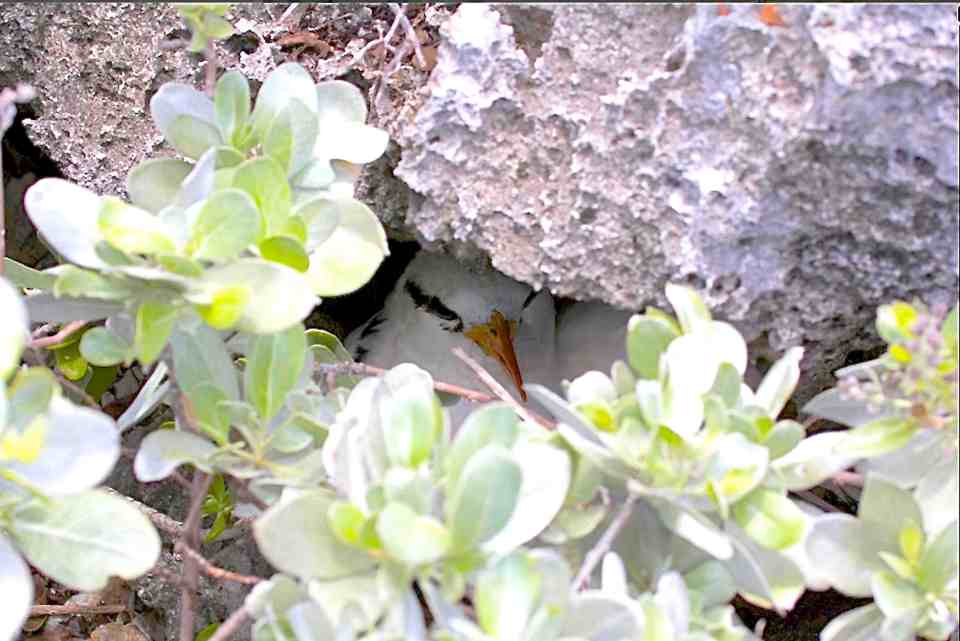
In the Bahamas, tropicbirds are summer resident only and breed on the islands. Abaco is fortunate to have several breeding colonies, not all in remote or inaccessible places. Female tropicbirds lay a single egg directly onto the ground or on rocky ledges and in rocky holes. One might suppose that such limited egg production with a somewhat high-risk nesting policy, coupled with modern problems such as habitat destruction, might affect numbers. However, these fine birds seem to be doing well, and are IUCN-listed ‘Least Concern’.

This tropicbird on Abaco has found a safe place to nest in a rocky holeWhite-tailed Tropicbird on nest, Abaco (Alex Hughes)

Tropicbirds have a variety of local names in the Caribbean, for example ‘longtail’ and ‘bosun bird’ (after their screeching call). They plunge-dive for fish, but are inexpert swimmers. This is a factor I am prepared to overlook in the elegance contest. They were born to fly high, not to paddle about.

White-tailed Tropicbird, Abaco (Alex Hughes)White-tailed Tropicbird, Abaco (Alex Hughes)

THE STORY OF TB THE TROPICBIRD

A couple of years ago, a tropicbird chick was rescued by a dive boat and given to Melissa Maura, well-known for her animal magic, to care for. She nurtured ‘TB’, giving him a soft bed and providing him with a swimming pool. To begin with, it looked as though he might not be able to fly at all, but as he became stronger he started to flap his wings.

White-tailed Tropicbird, Bahamas (Melissa Maura)White-tailed Tropicbird, Bahamas (Melissa Maura)

Then it was time to go to the beach, get acquainted with sand and sea, and practise flying. I have some pathetic photos of an exhausted TB lying flat out on the sand after his initial attempts to fly. But Melissa and TB persevered with the flying practice and in due course TB began to get the hang of it. Finally, the great day arrived. Melissa and a friend took TB down to the beach and launched him into the air. He took off, flying strongly away, never to return. A moment of triumph mixed with poignance.

  White-tailed Tropicbird, Bahamas (Melissa Maura) White-tailed Tropicbird, Bahamas (Melissa Maura)White-tailed Tropicbird, Bahamas (Melissa Maura)

You are very welcome to propose a rival in the elegance stakes in the comment box!

Credits: Main photos Alex Hughes; TB images Melissa Maura

White-tailed Tropicbird, Abaco (Alex Hughes)

Unknown's avatar

THE ‘THRUSH’ THAT ISN’T: NORTHERN WATERTHRUSH ON ABACO


Northern Waterthrush.Bahama Palm Shores.Abaco.3.Tom Sheley

THE ‘THRUSH’ THAT ISN’T: NORTHERN WATERTHRUSH ON ABACO

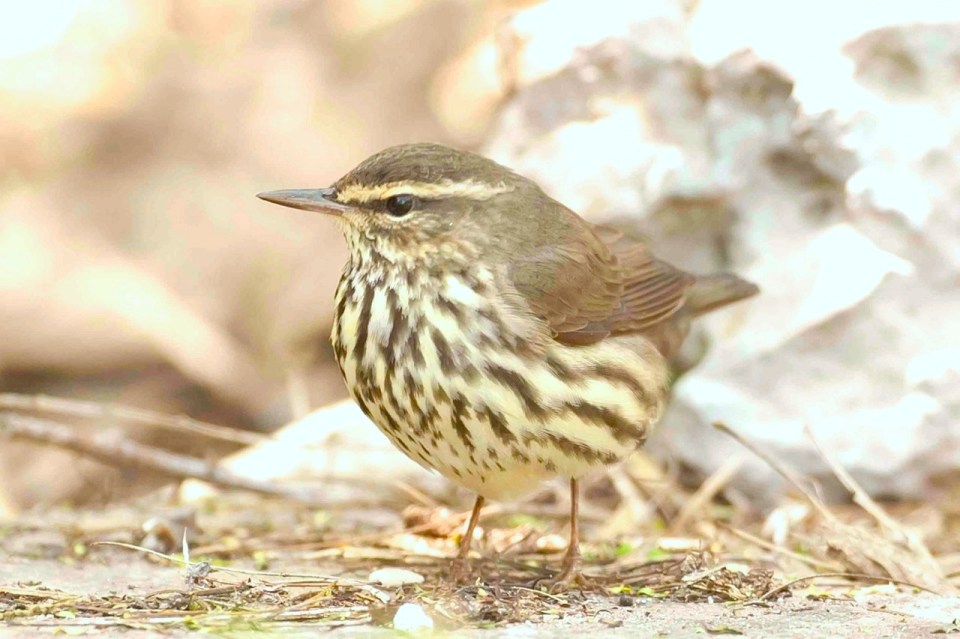
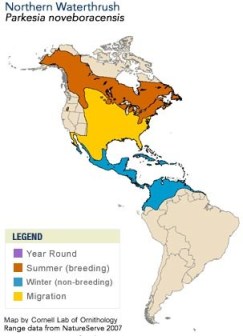
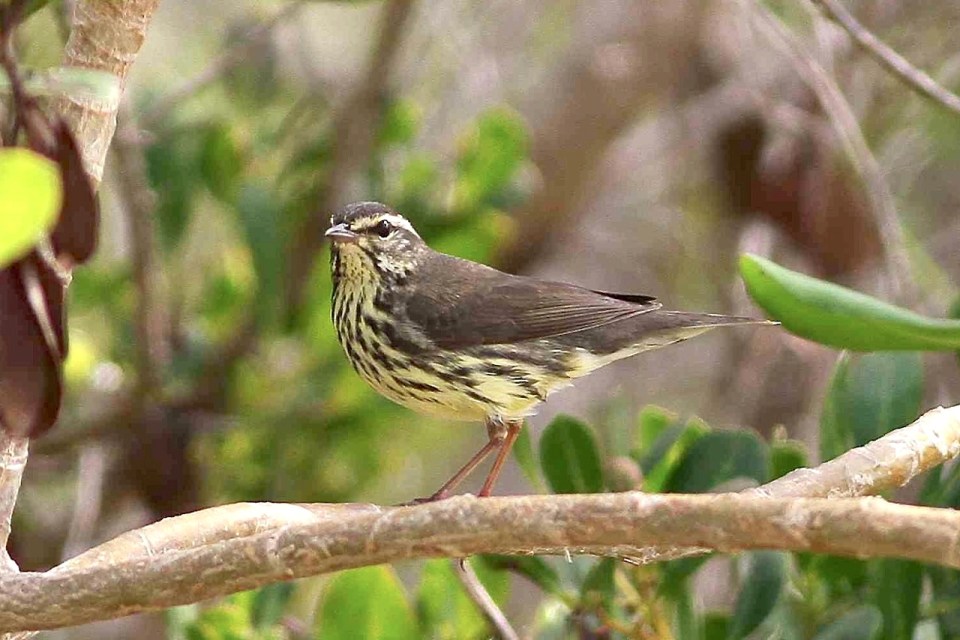
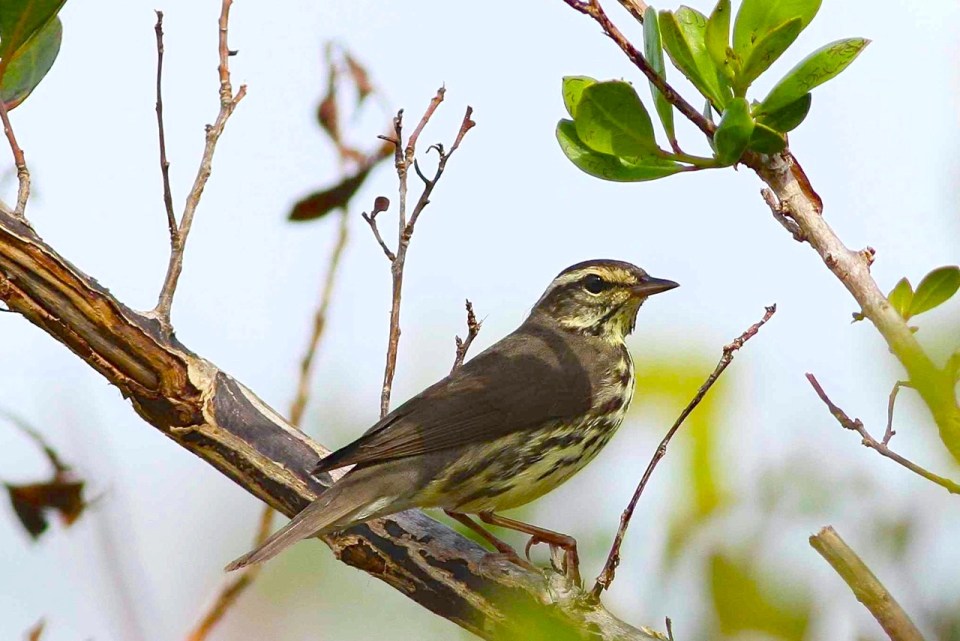
The pretty thrush-like warbler Northern Waterthrush Parkesia noveboracensis is a common winter resident on Abaco. Despite the name it’s not a real thrush, but it is larger than most of the compact winter warblers that heed the the migratory instinct that “It’s Better in the Bahamas” and make Abaco their overwintering habitat.

Northern Waterthrush.Bahama Palm Shores.Abaco.1.Tom Sheley

HOW CAN YOU TELL SIMILAR PLUMAGED THRUSHES FROM THESE GUYS?

The simplest rule of thumb is that true thrushes have spotted or speckled chests; whereas waterthrushes have streaked chests. That, and the fact that similar thrush species are generally larger. A number of true thrushes are recorded for Abaco, many quite similar to the waterthrush; but the speckled vs spotted distinction should be your guide. If a sighting is momentary or in bad light, it’s anyone’s guess…

Northern Waterthrush, Abaco (Becky Marvil)

northern_waterthrush_rangemap(1)

APART FROM THRUSHES, ANY OTHER BIRDS I MIGHT CONFUSE IT WITH?

There’s another far less commonly found waterthrush that also overwinters on Abaco – the closely-related Louisiana waterthrush Parkesia motacilla. I have no Abaco photos of one – it really is quite rare – so I’ve had to borrow an open source one. The Cornell Lab explains the differences between the two waterthrushes thus: “Northern usually has stripes on throat, a slightly smaller bill, a thinner and off-white or cream eyestripe that does not extend as far onto the nape, less pink legs, and a more yellowish wash on the underparts”. Maybe one can generalise that the northern is overall a yellower bird, and its legs are more brown than pink.

Lousiana waterthrush – rarer on Abaco than the northern but a potential source of confusionLouisiana_Waterthrush_(Parkesia_motacilla) Magnus Manske : Wiki

WHAT’S THAT POSH TAXONOMIC NAME ALL ABOUT, THEN?

The Mr Parkes in question was Kenneth Carroll Parkes (1922 – 2007), an American ornithologist and Chief Curator at the Carnegie Museum of Natural History, Pittsburgh. The noveboracencis part simply means ‘from New York’ in Latin (novum – new; Eboracum – York); and the -ensis is a common suffix meaning ‘from’. Mr Parkes’s bird from New York.

Kenneth Carrol ParkesMr Parkes

Northern Waterthrush, Abaco (Bruce Hallett)
Both species have similar habits. For example, on the ground, they tend to walk rather than hop, ‘bobbing’ their butts (technical term) as they go. They forage on the ground for insects, snails and small mollusks etc.
  
Northern Waterthrush, Abaco 1 (Gerlinde Taurer)
I’m not a huge fan of attempts at phonetic renditions of bird calls – the ‘Did you have a nice day today dear?’ and the ‘I’d like a very big Kalik please’ and so on. But for what it is worth, the song of the northern waterthrush has been interpreted as “a loud swee swee chit chit weedleoo”.  This is what is sounds like in real life. Go figure.
Northern Waterthrush, Abaco 2 (Gerlinde Taurer).jpg

Credits: Tom Sheley (1, 2, 8); Becky Marvil (3); Magnus Manske (4); Bruce Hallett (5); Gerlinde Taurer (6, 7); Richard E Webster at Xeno-Canto for the song clip

Northern Waterthrush.Bahama Palm Shores.Abaco.2.Tom Sheley

Unknown's avatar

SMALL ABACO BIRDS TO MAKE THINGS BETTER


Blue-gray Gnatcatcher, Abaco 1 (Keith Salvesen)

SMALL ABACO BIRDS TO MAKE THINGS BETTER
Bad day. I know about random outage outrage and so on, but really… The router died, unmourned. Bought another. Wasted 2 hours trying to make it work. Turns out to be ‘defective’, which is to say broken. Or another B word. Bought another. Almost lost the will to live. I have the briefest window in which to check emails etc before it, too, checks out of the Mac Hotel. The ONLY SOLUTION (apart from Kalik in copious quantities, sadly not available where I am right now), is to look at some pretty birds taken in the gardens round the Delphi Club. Mmmmm. Feeling better now. Deep breaths… and… relax…

Bananaquit, Abaco 1 (Keith Salvesen)La Sagra flycatcher, Abaco 1 (RH)Cuban Emerald, Abaco (Keith Salvesen)Yellow-throated Warbler, Abaco (RH)

All pics by a rather stroppy RH

STOP PRESS Exactly 24 hours after excitedly unwrapping the (second) new router, after a convoluted and Kafkaesque series of phone calls to various techie centres, headily mixed with wine, beer, tears and tantrums, I combined some of the info from each and miraculously the recalcitrant beast sprang to life. For how long, though? Router advice given: $100 ph + exes

Unknown's avatar

GULL-BILLED TERNS ON ABACO


Gull-billed Tern, Abaco (Alex Hughes) 01

GULL-BILLED TERNS ON ABACO

The gull-billed tern Gelochelidon nilotica had a name upgrade from Sterna nilotica some years ago, and was awarded the honour of its own genus. Let’s be clear at the outset: there’s no such thing as a tern-billed gull. Which slightly lessens the scope for species confusion. 

Gull-billed Tern, Abaco (Alex Hughes) 04

For those (me) who need a reminder about the whole family / genus / species taxonomic maze, here is a reminder. The example used is man. Or stickman, anyway.3958555126_4f85d9fa5b

Gull-billed Tern, Abaco (Alex Hughes) 05

There are 12 species of tern recorded for Abaco. Only one, the royal tern, is a permanent resident. There is one winter resident, the Forster’s tern and there a 6 summer resident terns of varying degrees of commonness. The other four are transient or vagrant, and probably not worth making a special trip to Abaco to find. The GBT is designated SB3, a summer breeding resident that is generally uncommon, though might be more common in particular areas.

TERN TABLE**Tern Species Abaco**I know! Too tempting…

gull-billed-tern

Gull-billed Tern, Abaco (Alex Hughes) 11

The bird gets its name from it short, thick gull-like bill. It’s quite large in tern terms, with a wingspan that may reach 3 foot. They lose their smart black caps in winter.

Gull-billed Tern, Abaco (Alex Hughes) 03

There are 6 species of GBT worldwide, and it is found in every continent. While many terns plunge-dive for fish, the GBT mostly feeds on insects in flight, and will also go after birds eggs and chicks. Small mammals and amphibians are also on the menu. The header image shows a GBT with a small crab. I imagine they must eat fish. Surely they do? But I have looked at dozens of images online to find one noshing on a fish, with no success. Does anyone have a ‘caught-in-the-act’ photo?

Gull-billed Tern, Abaco (Alex Hughes) 06Gull-billed Tern, Abaco (Alex Hughes) 02

All photos were taken by Alex Hughes, a contributor to “THE BIRDS OF ABACO”, when he spent some time on Abaco a while back in connection with the conservation of the Abaco Parrot and the preservation of the habitat integrity of their nesting area in the Abaco National Park

Gull-billed Tern, Abaco (Alex Hughes) 12