Unknown's avatar

ABACO’S 38 WARBLERS: AN ILLUSTRATED ID GUIDE (Pt 1)


Olive-capped Warbler, Abaco Bahamas (©Tom Sheley)

Olive-capped Warbler (resident species), Abaco Bahamas (©Tom Sheley)

ABACO’S 38 WARBLERS: AN ILLUSTRATED ID GUIDE (Pt 1)

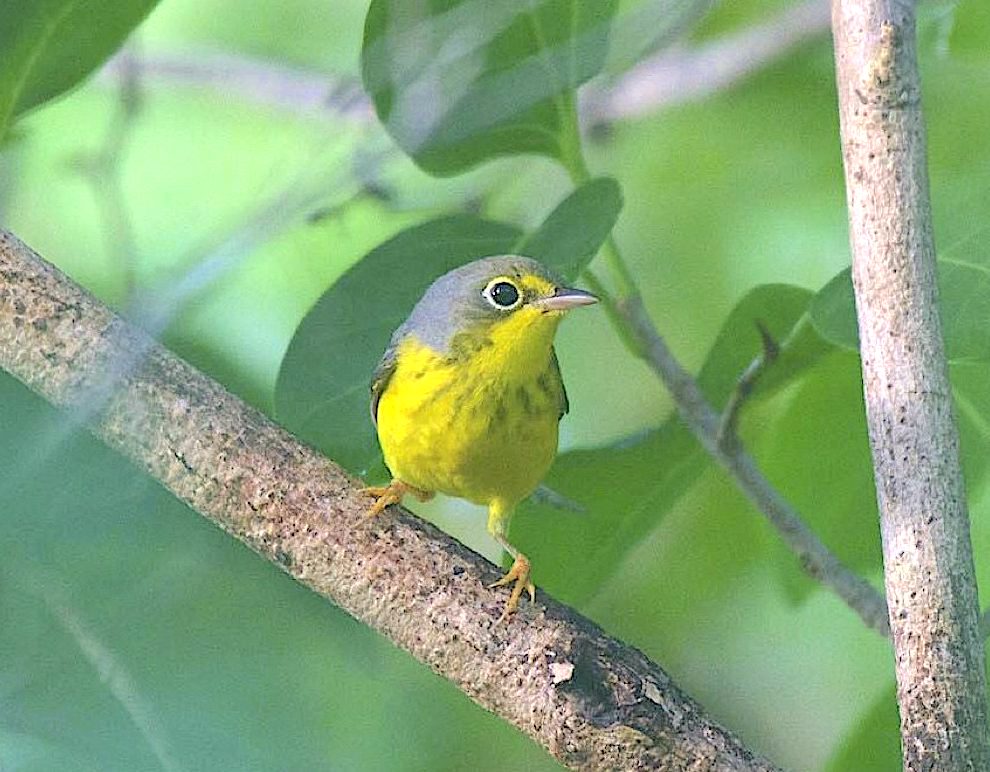
IT’S STARTED The great winter migration of warblers and their imminent arrival in The Bahamas is underway. Any day now – if not already – the ‘winter’ / ‘Fall’ (late summer & early spring as well) warblers will be arriving on Abaco. There are 38 warbler species recorded for the main island and the cays. For years, it was just 37. Exactly a year ago, a CANADA WARBLER was seen and photographed by well-known birder Chris Johnson. It was a first for Abaco – and the first-ever report for the Bahamas as well. You’ll find the story HERE.

First-ever Canada Warbler for Abaco & the entire Bahamas: Aug 2018 (Chris Johnson)

Canada Warbler, Abaco Bahamas (1st record) (Chris Johnson)

Canada Warbler, Abaco Bahamas (1st record) (Chris Johnson)

This post is the first of 3 warbler posts for the Fall. A while back I compiled a basic (in retrospect) guide to Abaco’s warbler species. I’ll give a link and pdf in due course once I have rechecked (improved? rewritten?) it. [Note: of no value on eBay, @m@z@n or anywhere else]. Many of the warblers are far from easy to distinguish from each other. For example, many males have yellow or yellow-and-black plumage. The females are invariably less colourful – often brownish or olive – than the males (as are juveniles), and that can lead to confusion – and not only by me, I think.

Hooded Warbler, Abaco Bahamas (Chris Johnson)

Hooded Warbler, Abaco Bahamas (Chris Johnson)

The guide divides the original 37 species into categories, with a code for each bird to show. You’ll see below the codes relating to each of the 5 resident species:

  • Resident status – permanent / breeding, migratory or transient
  • Frequency – likelihood of seeing each species in its season, rated from 1 (very likely) to 5 (extreme rarities, maybe recorded once or twice since c1950
Bahama Warbler (endemic), Abaco Bahamas (Alex Hughes)

Bahama Warbler (endemic), Abaco Bahamas (Alex Hughes)

Numerically, the division of the 38 breaks down into 3 categories:

  • 5 permanent residents (PR) that breed on Abaco (B), of which two are ENDEMIC
  • 21 winter residents (WR) ranging from ‘everyday’ species to rarities like the rare, vulnerable Kirtland’s Warbler (now under threat from proposed development)
  • 12 transients, most of which you will be very lucky to encounter
Palm Warbler, Abaco Bahamas (Nina Henry)

Palm Warbler, Abaco Bahamas (Nina Henry)

The photos used in this series were almost all taken on Abaco / the Cays. There’ll be examples of the male of each warbler species, with some females for contrast. Where I have no Abaco / Baha images – especially with the transients – I have used other mainstream birding resources and Wiki. All due credits will be given at the foot of each post.

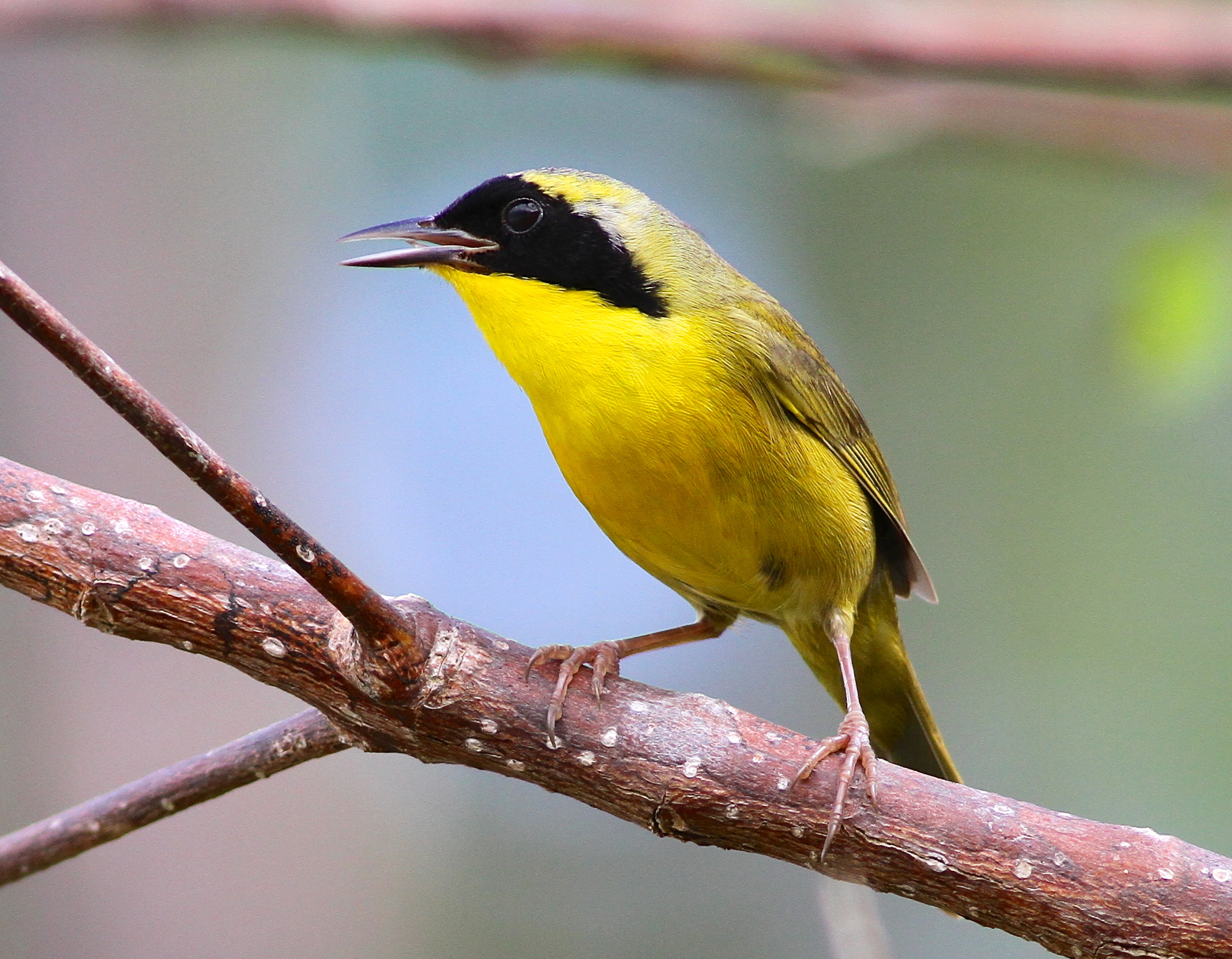
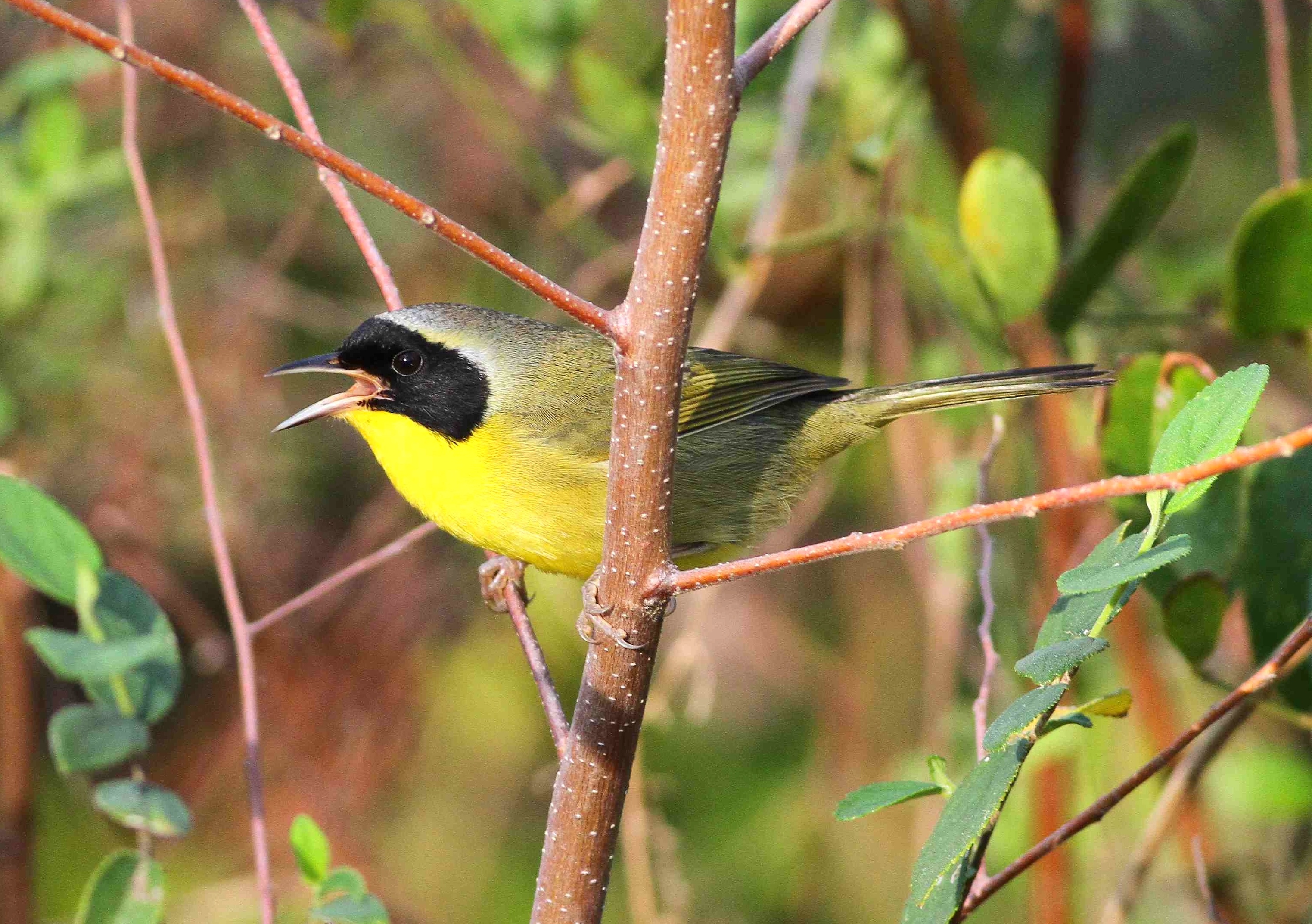
Bahama Yellowthroat, Abaco Bahamas (Gerlinde Taurer)

Bahama Yellowthroat, Abaco Bahamas (Gerlinde Taurer)

The warblers shown above are a mix of warbler species on Abaco: resident / endemic, winter migrants, and transient / vagrant. Time to take a look at the first category, the Bahamas-loving resident species that live and breed on Abaco

5 PERMANENT RESIDENTS

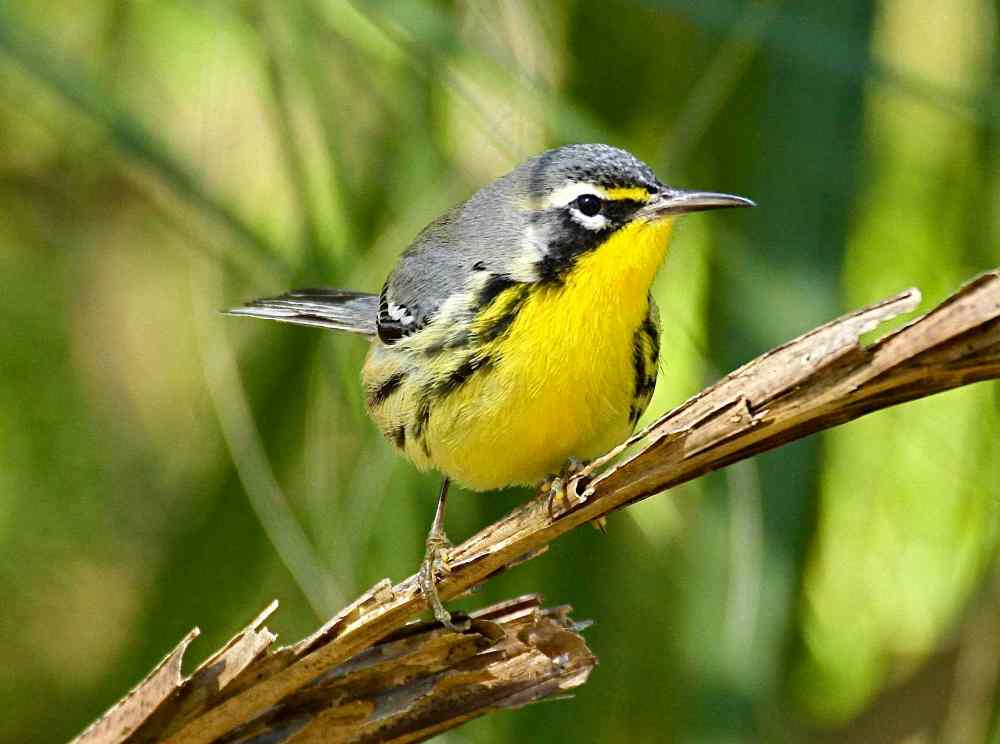
BAHAMA YELLOWTHROAT Geothlypis rostrata PR B 1  ENDEMIC

Bahama Yellowthroat (endemic), Abaco Bahamas (Gerlinde Taurer)

Bahama Yellowthroat (endemic), Abaco Bahamas (Gerlinde Taurer)

BAHAMA WARBLER Setophaga flavescens PR B 1 ENDEMIC

Bahama Warbler (endemic), Abaco Bahamas (Bruce Hallett)

Bahama Warbler (endemic), Abaco Bahamas (Bruce Hallett)

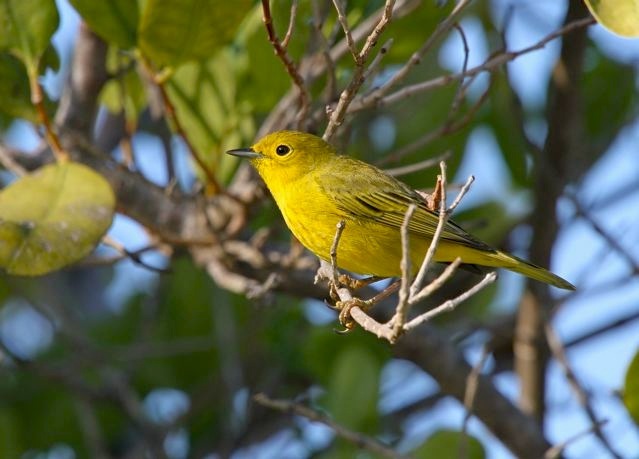
YELLOW WARBLER Setophaga petechia PR B 1 

Yellow Warbler, sunrise, Abaco Bahamas (Tom Sheley)

Yellow Warbler, sunrise, Abaco Bahamas (Tom Sheley)

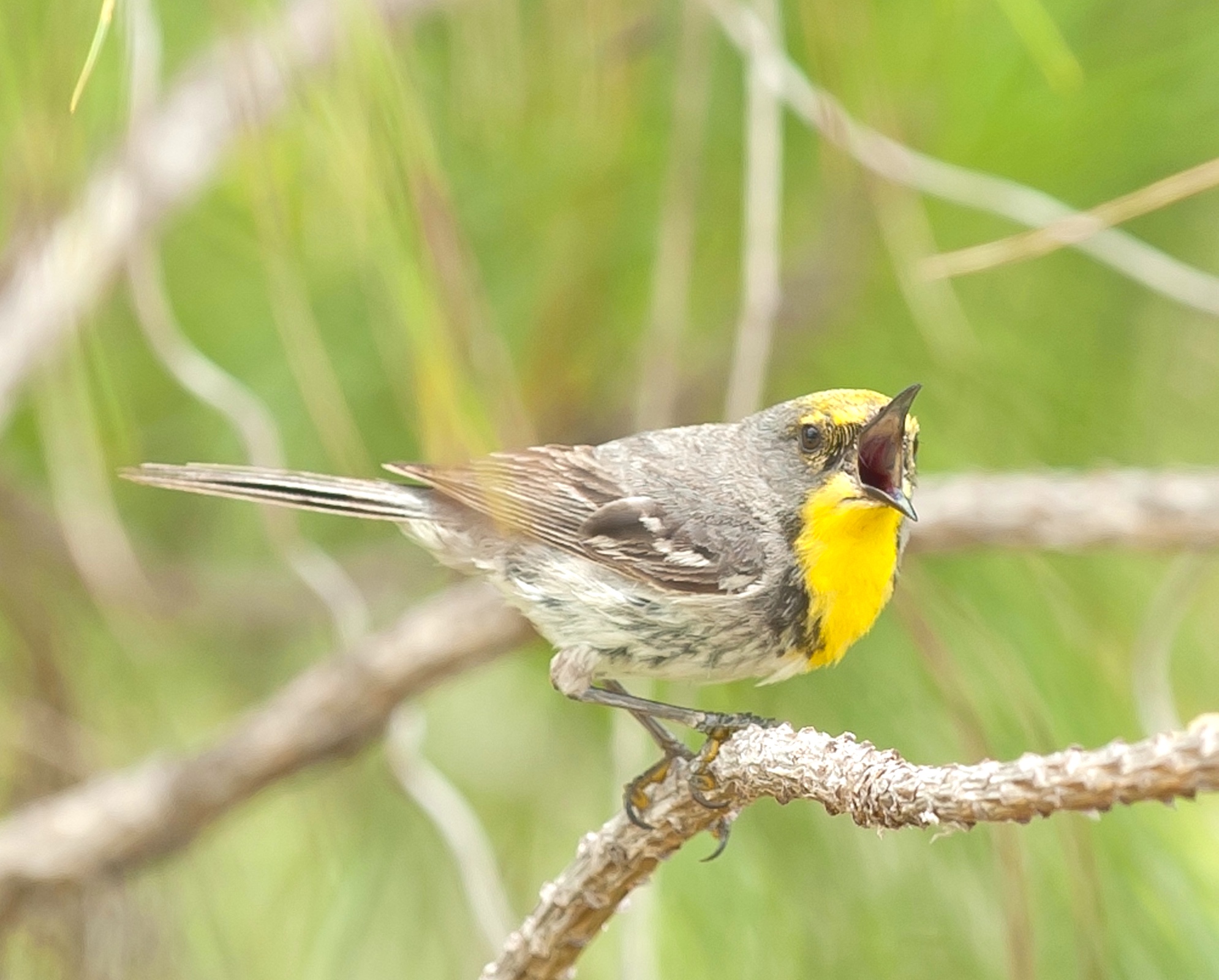
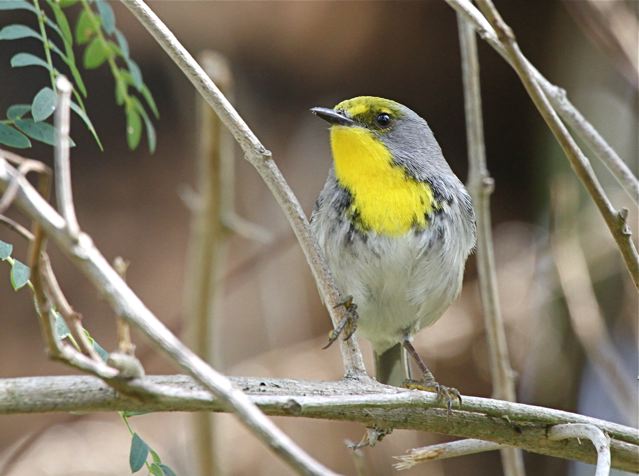
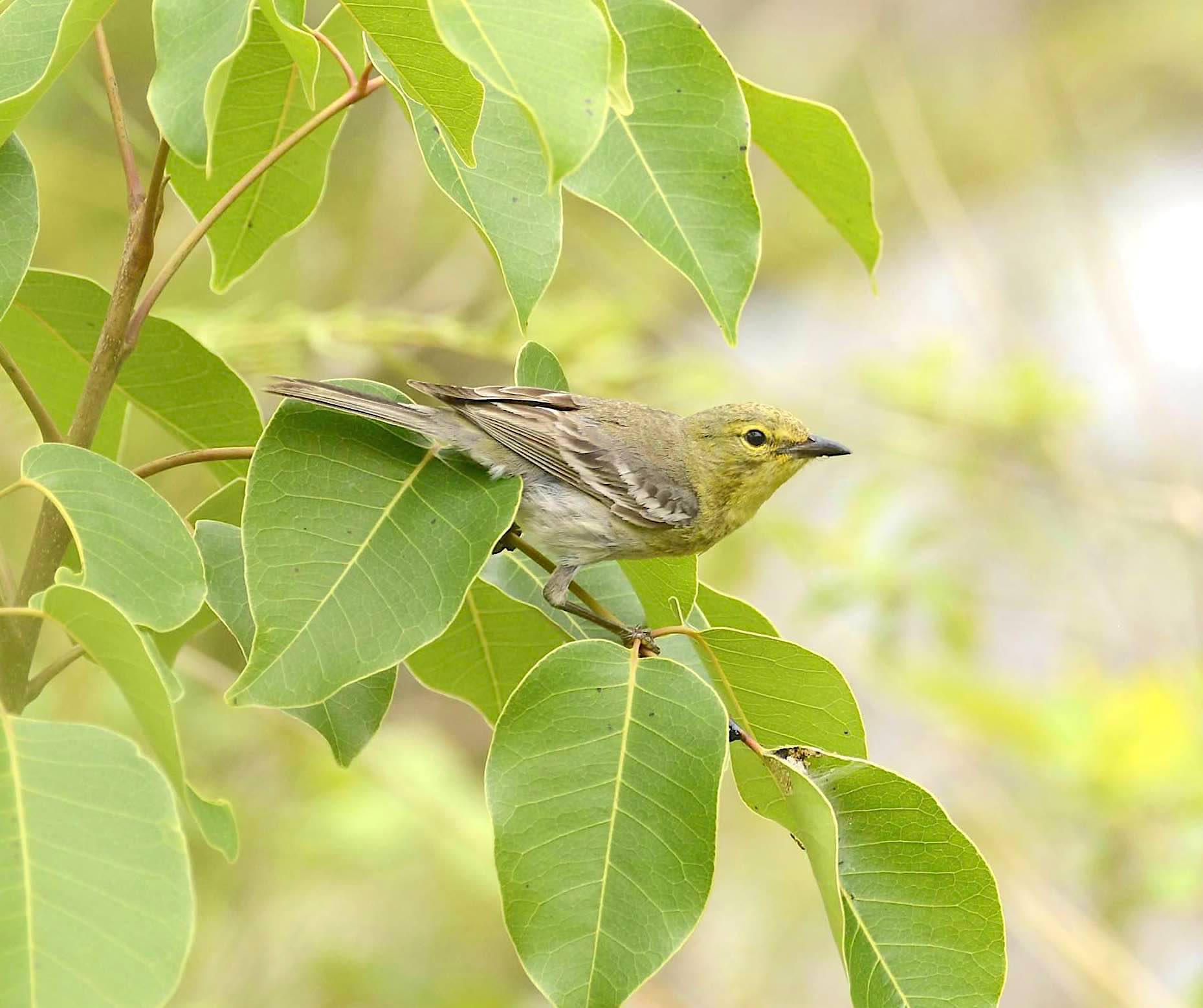
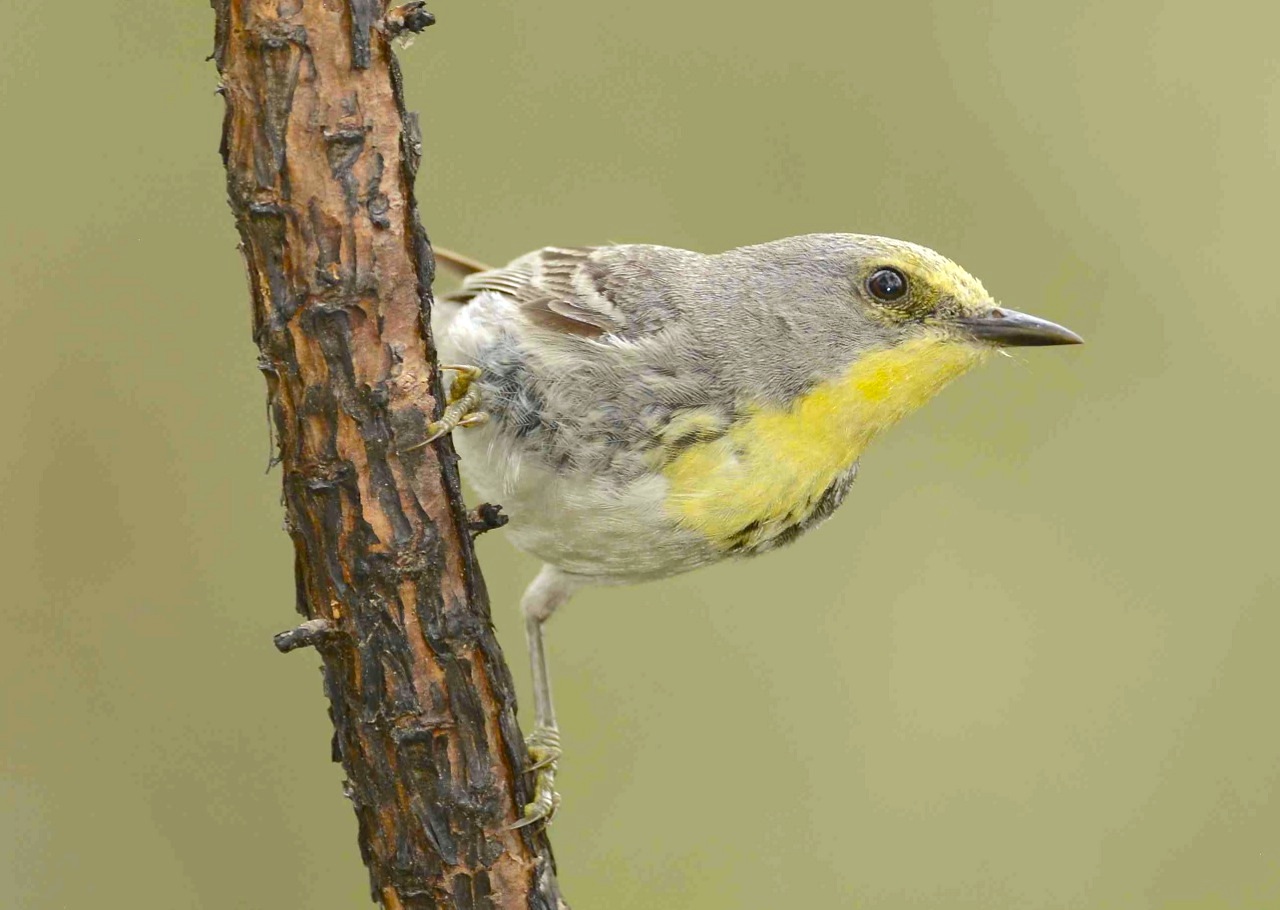
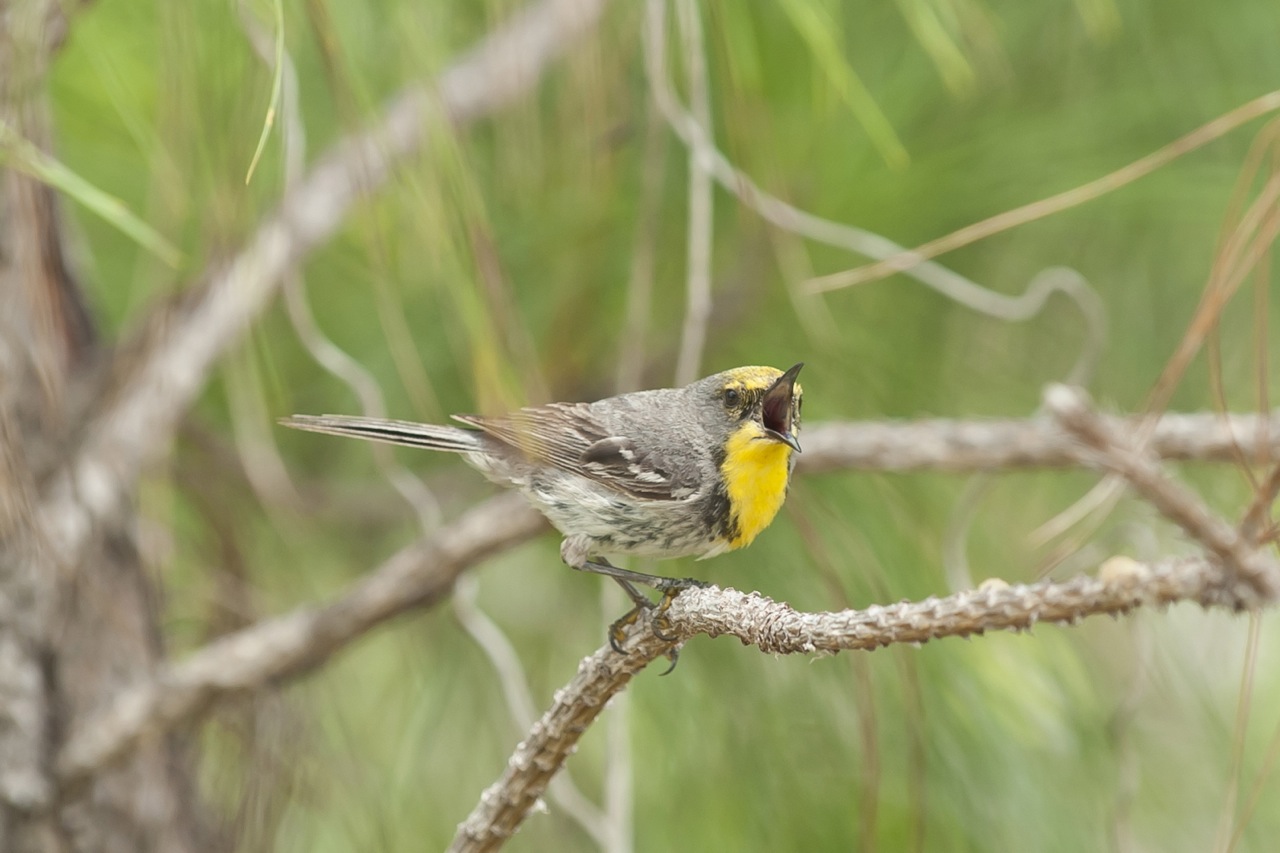
OLIVE-CAPPED WARBLER Setophaga pityophila PR B 1 

Olive-capped Warbler, Abaco Bahamas (Bruce Hallett)

Olive-capped Warbler, Abaco Bahamas (Bruce Hallett)

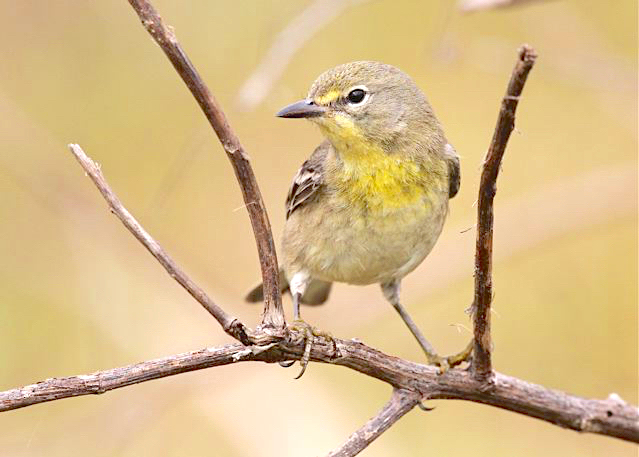
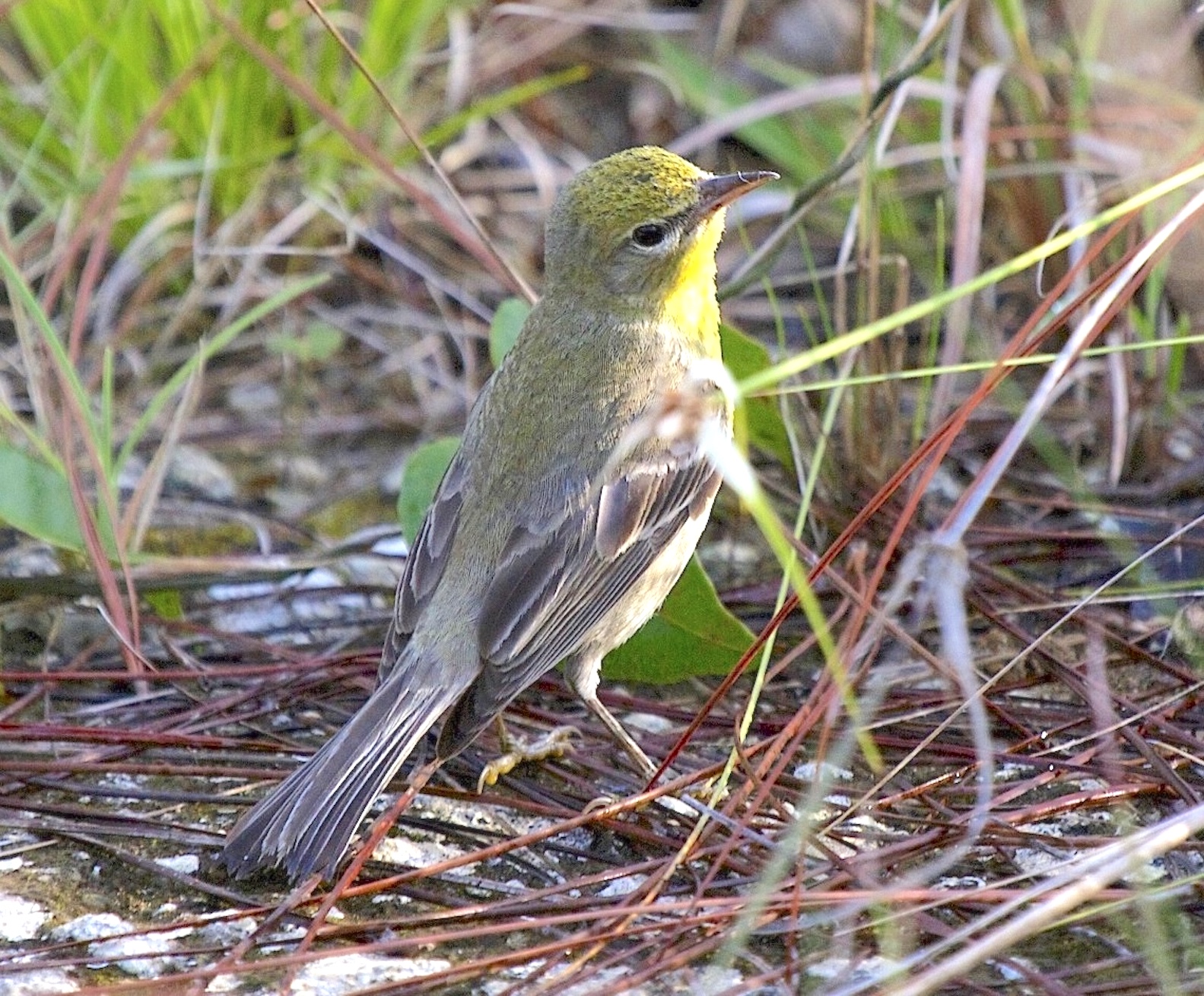
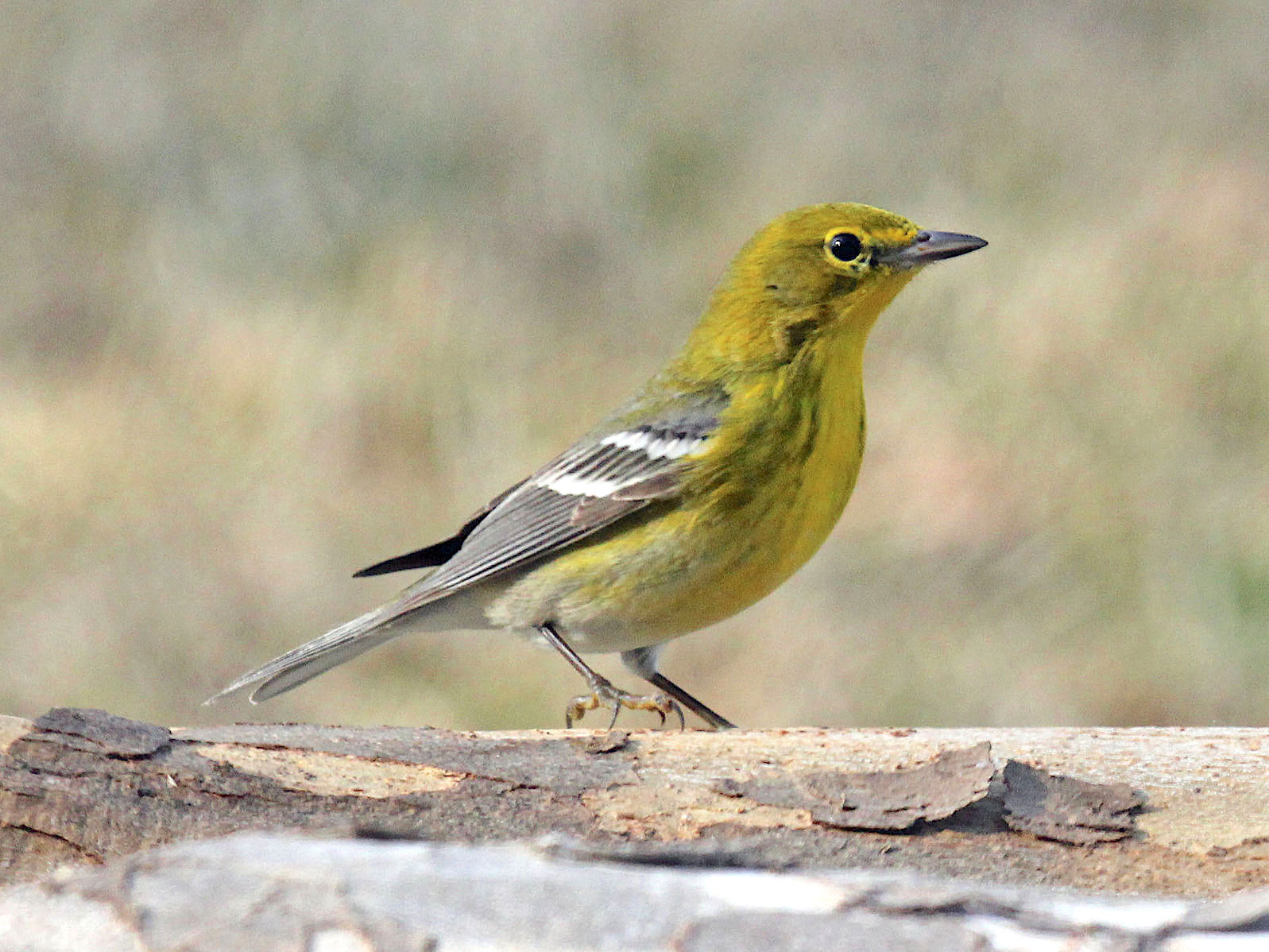
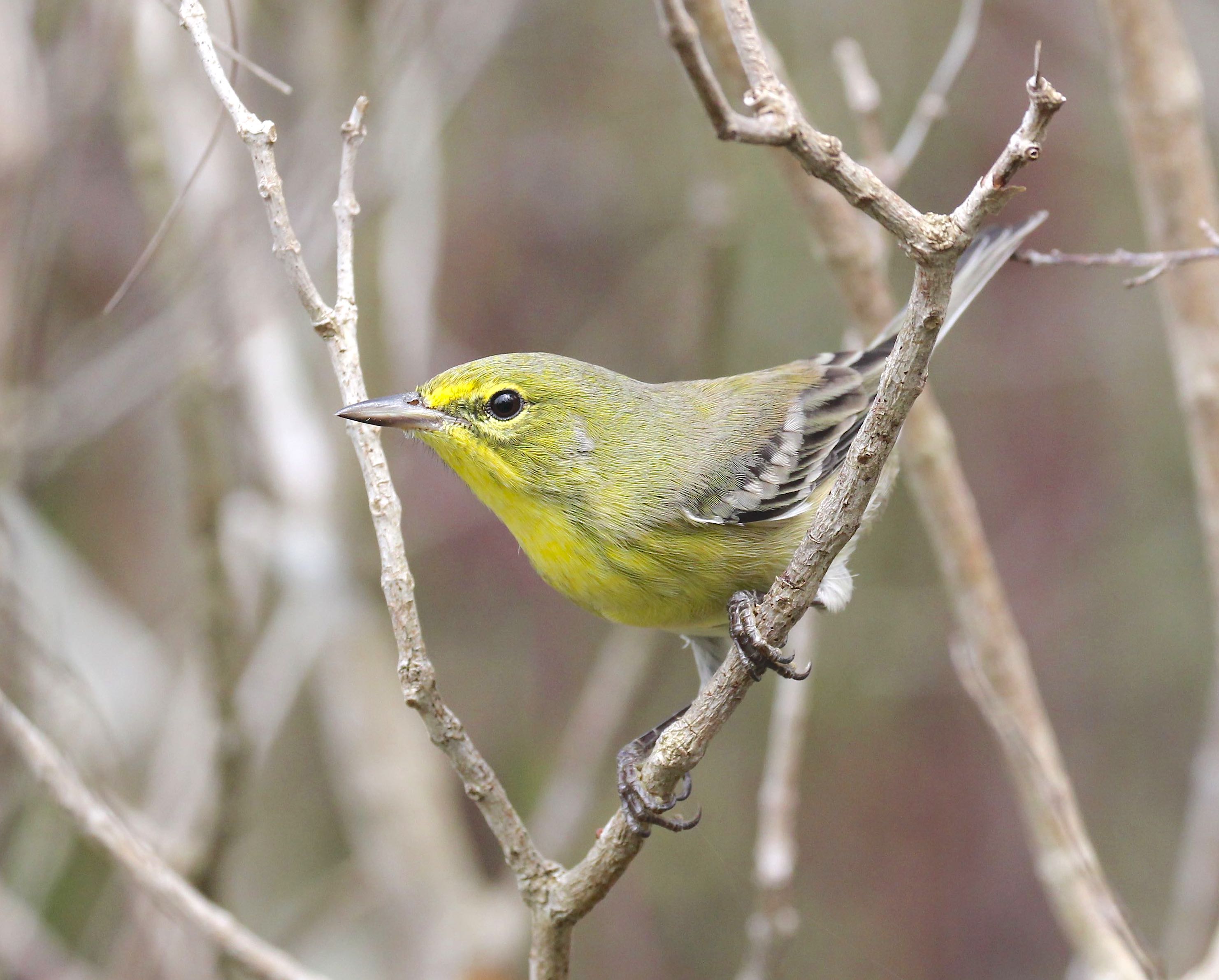
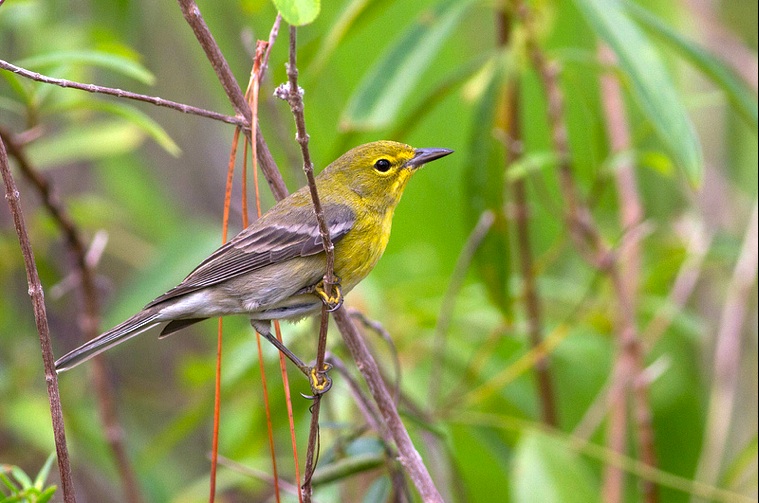
PINE WARBLER Setophaga pinus PR B 1 

Pine Warbler, Abaco Bahamas (Tom Sheley)

Pine Warbler, Abaco Bahamas (Tom Sheley)

In Part 2: Winter migrants from common to rare

PHOTO CREDITS Tom Sheley (1, 9, 11); Chris Johnson (2, 3); Alex Hughes (4); Nina Henry (5); Gerlinde Taurer (6, 7); Bruce Hallett (8, 10); Photos mainly from the archive collected for“THE DELPHI CLUB GUIDE TO THE BIRDS OF ABACO” by Keith Salvesen

Unknown's avatar

HERRING GULL STUDIES: EYE CONTACT


Herring Gull Studies (Ireland) - Keith Salvesen / Rolling Harbour

HERRING GULL STUDIES: EYE CONTACT

Getting close to a herring gull is not a particularly heroic act, and yet… they look quite intimidating. The glint in the eye is somewhat evil. And they can be fairly aggressive when the mood takes them. I once had my scalp raked by a herring gull when I got too near a breeding area on a small island in Scotland. It got me from behind. There was blood. Plenty of it. It was my own stupid fault, and a lesson learned.

 Herring Gull Studies (Ireland) - Keith Salvesen / Rolling Harbour

Behold a fine herring gull stepping ashore with its beady eye fixed on me. Behold it starting to advance towards me in a purposeful way… Then it noticed the camera and decided to pose instead of attack.

Herring Gull Studies (Ireland) - Keith Salvesen / Rolling Harbour

One complication for amateur birders is that these (and other) gulls take 4 years to reach maturity and the full adult plumage shown here . We’ve all seen those huge browny-gray-speckled babies crying pitifully to be fed, when they are nearly the same size as the food-providing parent. Over those few first years the plumage goes through several stages, and other colour changes – eyes and feet, for example – take place. Eventually they get to look as handsome as this one.

Herring Gull Studies (Ireland) - Keith Salvesen / Rolling Harbour

I photographed the bird featured here only last week, on the south coast of Ireland, which is a bit of a cheat. Strictly, you are looking at a European herring gull, although the differences from the American ‘Smithsonian’ herring gull is relatively small. I’ll say ‘negligible’ for present purposes.

Herring Gull Studies (Ireland) - Keith Salvesen / Rolling Harbour

WHAT’S THE PURPOSE OF THE RED BLOB ON THE UNDER-BEAK?

Good question, and one that historically was the subject of hot debate in ornithological circles. The short answer is that scientific investigation and experimentation led to the conclusion that the red blob is a kind of feeding cue for chicks, a target area for them to aim for food or to peck to say they are hungry. Some other gull species also have this clever beak feature.

Herring Gull Studies (Ireland) - Keith Salvesen / Rolling Harbour

“HAPPY FEET”

As we all know, there are gull species with yellow legs (not least the apty-named yellow-legged gull in Europe). Herring gulls have decidedly pink legs and feet, and interestingly constructed ones at that. This isn’t the moment for a lot of technical blurb about it – just take a look at these 2 images. Extraordinary, huh?

Herring Gull FEET Studies (Ireland) - Keith Salvesen / Rolling HarbourHerring Gull FEET Studies (Ireland) - Keith Salvesen / Rolling Harbour

RELATED POSTS

LAUGHING GULL 

BONAPARTE’S GULL

RING-BILLED GULL

All photos: Keith Salvesen / Rolling Harbour

Herring Gull Studies (Ireland) - Keith Salvesen / Rolling Harbour


Unknown's avatar

GULAR SACS: SCRATCHING THE SURFACE OF AN IN-DEPTH VIEW…


Brown Pelican, Gular Pouch / Sac (Phil Lanoue)

Large mouth, tiny snack…

GULAR SACS: SCRATCHING THE SURFACE OF AN IN-DEPTH VIEW…

A half-way intelligent microbe would make a better job of getting the internet into our home than the current ISP that nominally serves, at some expense, Maison Harbour. So I am restricted to posting 2 fantastic photos of gular pouches as a tempter for things to come when the dimwits in charge of the ‘provision’ of ‘service’ of ‘internix’ locate the act that they need to get together.

Spoiler Alert: ‘Gular Sacs’ has nothing to do with modern jazz. You need to go somewhere else for that…

Photo credits (if they load in the next fortnight or so): Phil Lanoue; Franz Delcroix – with thanks for use permission

Frigate bird male, gular pouch /sac (Frantz Delcroix)

Unknown's avatar

WAVE CHASERS: SANDERLING POOL TIME ON ABACO


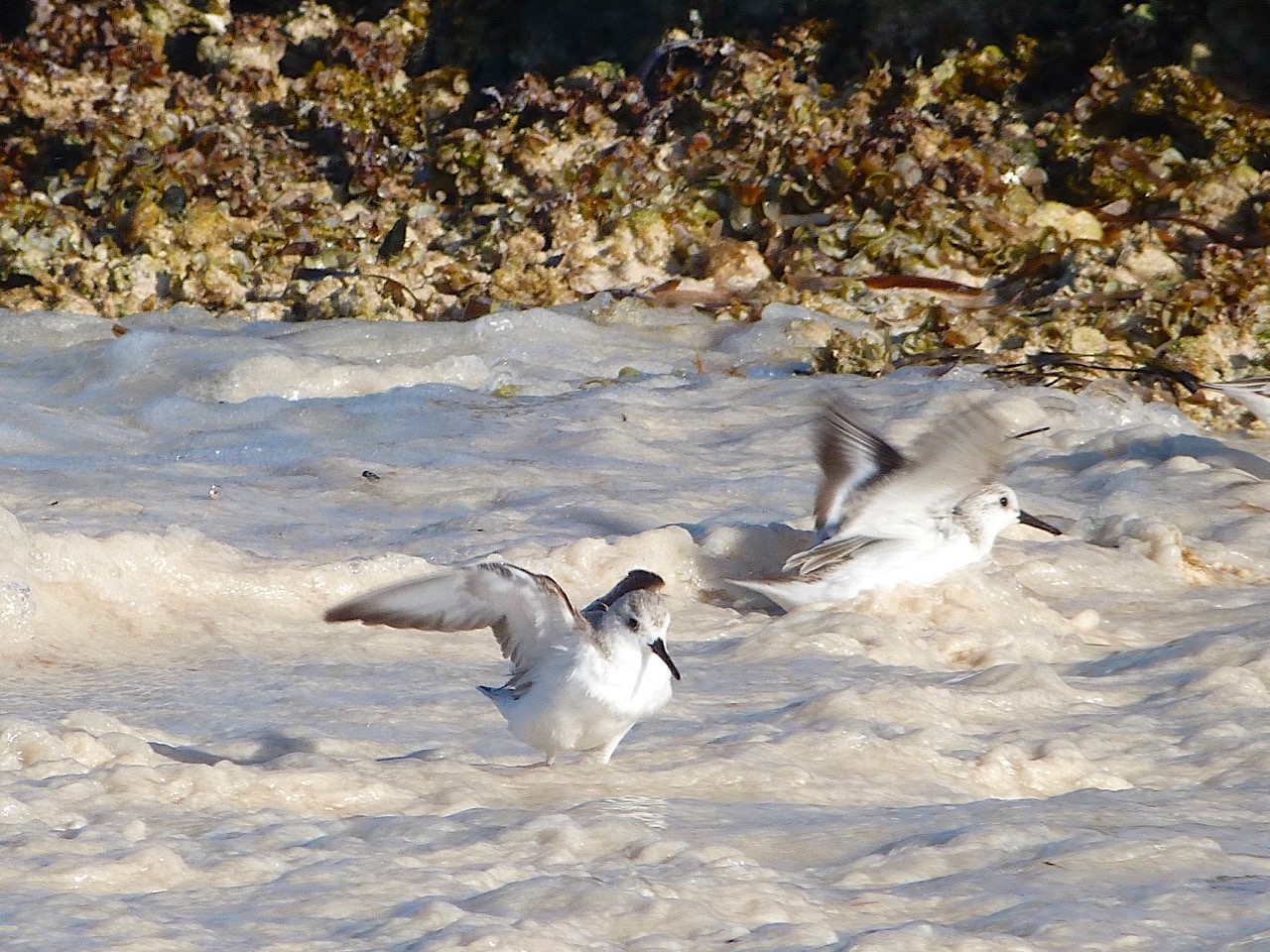
Sanderling, Delphi Beach Abaco Bahamas (Keith Salvesen / Rolling Harbour)

WAVE CHASERS: SANDERLING POOL TIME ON ABACO

It’s often a hard decision whether to include a short piece of video footage in a post. By short, I mean less than a minute. On the one hand, there is usually a good reason for inclusion, even if only aesthetic. On the other, it simply takes up more time for busy people who may prefer to flick through an article and enjoy some nice images along the way. Today, you can have the best of both worlds.

Sanderling, Delphi Beach Abaco Bahamas (Keith Salvesen / Rolling Harbour)

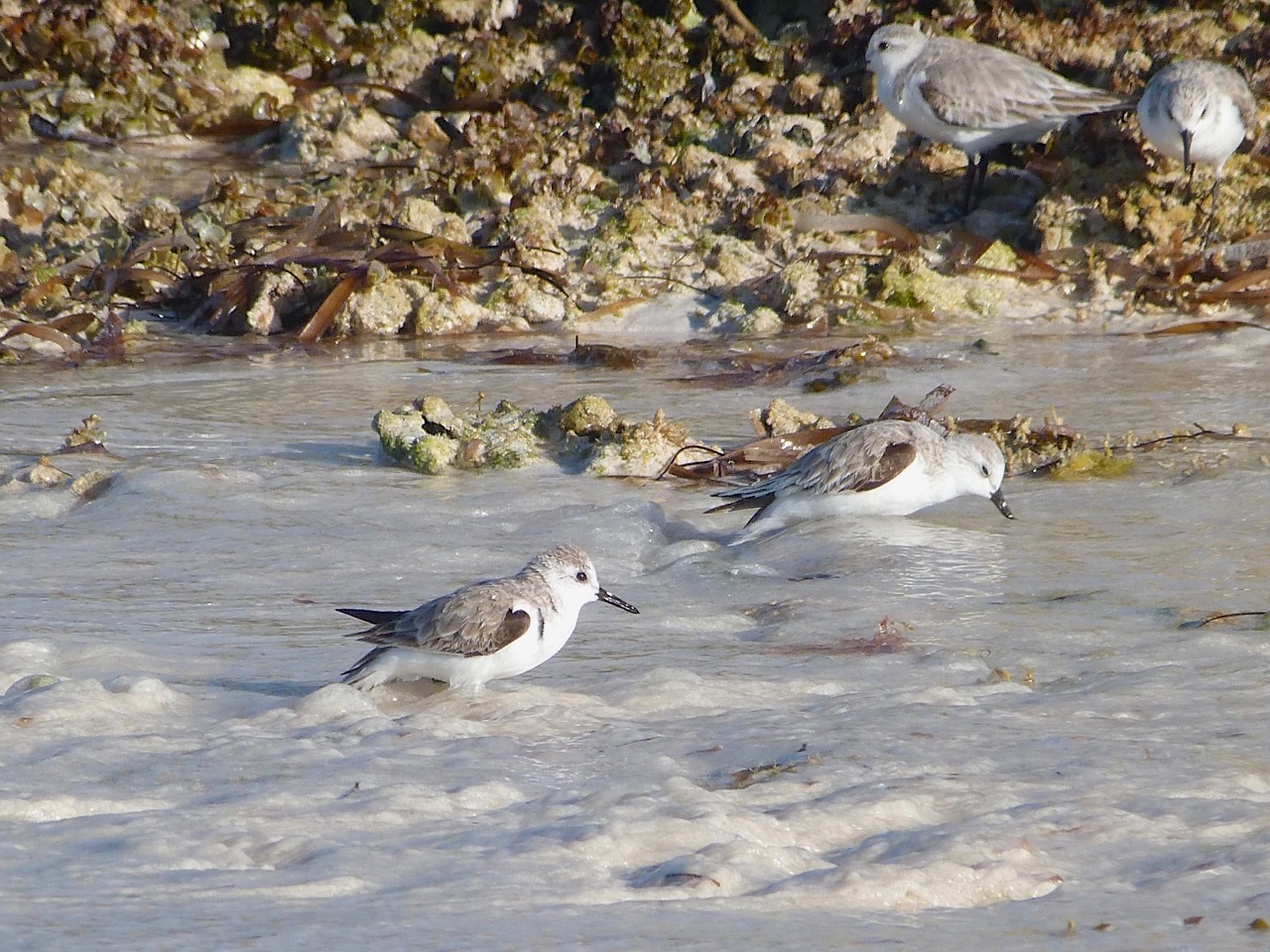
Sanderlings are definitively ‘peeps’, a group name that embraces the smallest and squeakiest sandpiper species. They are the wave chasers, the tiny birds that scuttle along the beach, into the retreating tide for a snack from the sand, and back to the beach again as the waves creep in. Their little legs and feet move in a blur, and many people immediately think of wind-up clockwork toys as they watch the birds in action.

Sanderling, Delphi Beach Abaco Bahamas (Keith Salvesen / Rolling Harbour)

One of the joys of being a sanderling is that rock pools fill and empty diurnally. At some time during daylight, there’s the certainty of a quick dip. I was lying on the beach when I took this short video, so that I didn’t spook the birds. I was equipped with a smallish camera (I drowned it the following day. By mistake I mean) but I kept my distance rather than try to get closer and spoil their joyful bathing.

I caught these little birds at a critical moment. You can tell that the tide is coming in fast. The peeps are becoming edgy, and weighing up the joys of immersion in a pool with the less enjoyable prospect of being washed out of the pool by the next wave. Within a minute or so, they had all flocked down the shoreline for a foraging session.

Waves and incoming tide getting a little too close for comfort on the edge of the pool…Sanderling, Delphi Beach Abaco Bahamas (Keith Salvesen / Rolling Harbour)

Next to the migratory PIPING PLOVERS that favour Abaco as their winter home, the wave chasers are my favourite shorebirds. My keenness on them killed my camera. I went out into the incoming waves to get shots back at the beach with the sun behind me. Great idea until I lost my balance with, as they say, hilarious consequences. Lesson learnt – never turn your back on waves.

Sanderling, Delphi Beach Abaco Bahamas (Keith Salvesen / Rolling Harbour)

All photos © Keith Salvesen / Rolling Harbour taken on the beach at Delphi, Abaco, Bahamas

Sanderling, Delphi Beach Abaco Bahamas (Keith Salvesen / Rolling Harbour)

Unknown's avatar

ABACO’S RARE PIPING PLOVERS: CITIZEN SCIENTISTS WANTED FOR YEAR 5


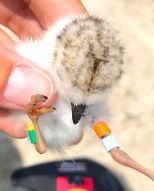
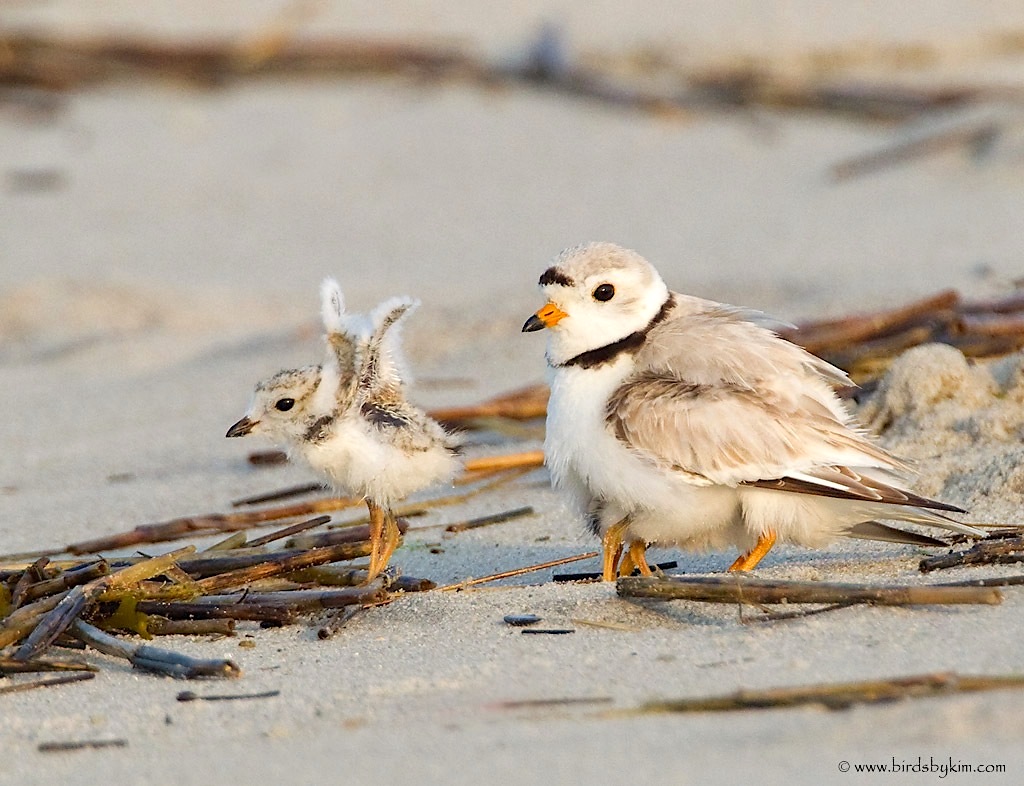
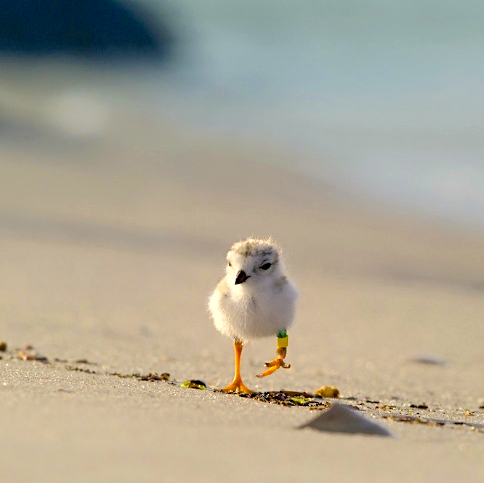
Piping plover adult & chick (Conserve Wildlife Foundation NJ / birdsbyKim)

ABACO’S RARE PIPING PLOVERS: CITIZEN SCIENTISTS WANTED FOR YEAR 5

  • BE A BEACH MONITOR IN THE CAUSE OF RESEARCH AND CONSERVATION OF A TINY RARE BIRD THAT CHOOSES ABACO FOR ITS WINTER HOME
  • NO EXPERIENCE NECESSARY; MINIMAL EQUIPMENT (pen, paper, binox & a ‘normal’ camera)
  • ABILITY TO COUNT TINY BIRDS IN (USUALLY) SMALL NUMBERS AN ADVANTAGE
  • SIMPLE AS TAKING A NATURE WALK ON YOUR FAVOURITE BEACH (but sorry, not with a dog)
  • COMMITMENT UP TO YOU – ONCE A WEEK, ONCE A MONTH, JUST THE ONCE
  • EVERY SIGHTING IS LOGGED – BANDED BIRDS ARE TRACKED BACK TO THEIR ORIGINS
  • EVERY BIRD IS A STAT THAT ADDS TO THE OVERALL PICTURE FOR RESEARCHERS
  • THE BIRDS MAY BE FOUND ON THE MAINLAND AND THE CAYS – EVEN THE MARLS
  • WE WORK IN PARTNERSHIP WITH THE SCIENTISTS  IN THE BREEDING GROUNDS
  • ABACO IS THE ONLY BAHAMAS ISLAND WITH AN ANNUAL WINTER-LONG WATCH

At the end of July – my guess is the 28th, on past form – the first piping plover of the winter season will be resighted on Abaco. It will weigh less than 2oz, and will have travelled at least 1000 miles (direct route). In practice it will be much further, because the journey will be broken by coastal stopovers en route.

‘SQUID’ from the Holgate Unit of the Edwin B Forsythe NWR, NJ, overwintering on Abaco (year 2)Piping Plover Squid from NJ - on Abaco Bahamas (Keith Kemp)

My bet is that the first bird will touch down in the Cherokee Sound area. There’s a fair chance it will be called ‘Squid’  from New Jersey (for the 3rd year) or ‘Black Flag 2J’ from Prince Edward Island, Canada (for the 2nd year). At once, ABACO PIPING PLOVER WATCH will switch from summer indolence to red alert and piping hot… for the next 7 months. The last winter visitor will leave on ± March 15 2020 to return to its breeding grounds in the North (specific parts of northern US / Canada).

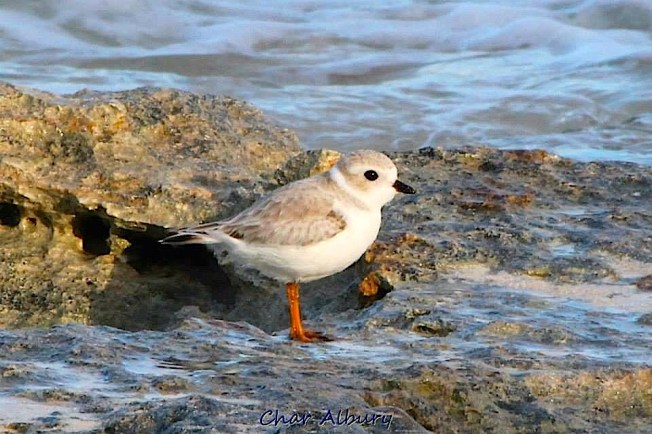
Piping Plover on Man-o-War Cay, Abaco Bahamas (Charmaine Albury)Piping Plover on Abaco Bahamas (Charmaine Albury)
HOW ON EARTH CAN YOU PREDICT THIS?

Since the 2015-16 season, we have been monitoring Abaco’s beaches, shorelines, and flats (there are specific locations that are preferred by the birds) throughout the winter season. Each year adds to the data from previous years and as the annual information is analysed, the knowledge of the behaviours of this little plover significantly increases.

‘TUNA’ – a legendary regular from past years (Rhonda Pearce)Piping Plover on Abaco Bahamas (Rhonda Pearce)
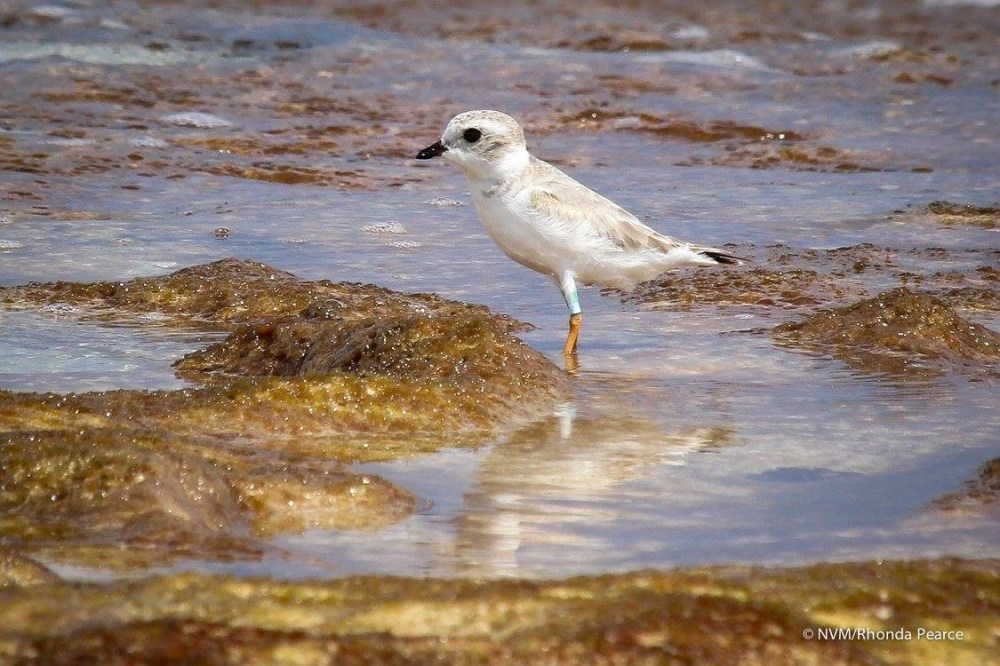
Over 4 years, distinctive patterns have emerged.

  1. Firstly, the plover numbers each season are fairly constant.
  2. Next, we have found that a number of birds return the following winter. Some are repeat returners – the current record is held by Bahama Mama from Lake Michigan, with 5 annual visits to the very same beach.
  3. Then, we have established that many of the banded birds are (a) resighted along the US coastline where they take a stopover during migration and (b) return to exactly the same beach where they were born.
  4. Often, we can find out when they hatched, fledged and left the beach – and even the person who did the banding.
  5. Finally, the number of banded birds – especially Canadian ones – is on the rise. This in part reflects an increase in summer chicks banding – but the fact is, we can show that they are turning up on Abaco, and returners usually turn up either on the same shoreline (or very close to it) as the previous year.
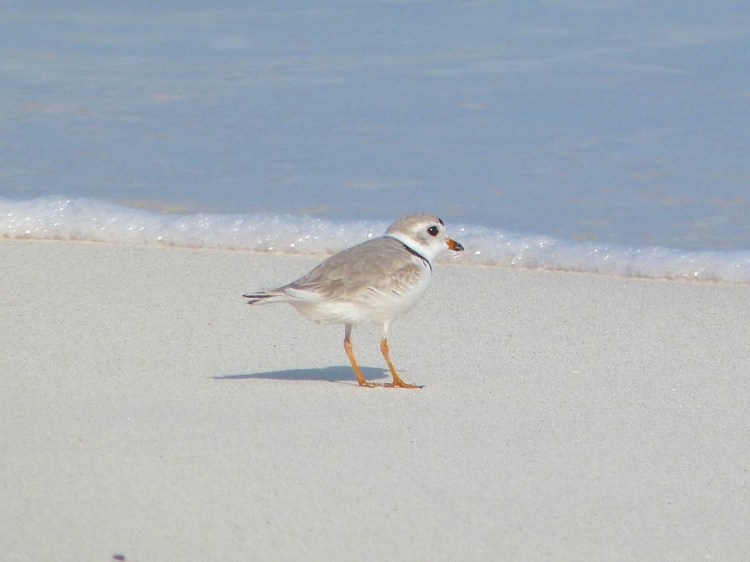
Piping Plover on Abaco Bahamas (Keith Salvesen)

WOULD IT MATTER IF APPW DIDN’T EXIST?

In one sense no, because the birds would still undertake their Fall and Spring migrations, even if no one took any notice. But then, of course, no one would have any idea where the plovers might be for 6 – 8 months of the year. What the Watch can do, in conjunction with our partners in the breeding grounds, is to complete the annual migration circle and provide the specific details that help research and conservation of this rare little bird (world population around 8000). Furthermore, the Watch results provide continuing evidence that Abaco and its Cays provide a safe and suitable overwintering habitat for the birds. 

SQUIDS KIDS – THE MIGRATION CIRCLE COMPLETED

KEITH, CHEROKEE & ABACOPiping Plover 'Keith' - CWFNJ    Piping Plover 'Cherokee' - CWFNJ Piping Plover 'Abaco' CWFNJ
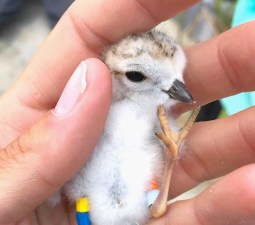
These 3 little chicks are this summer’s hatchlings (in June) of parents Squid (see above) and ‘Sophia’. This is on the very same beach where Squid was born and banded in July 2017. Sometime this Fall, we hope that Squid will return for a 3rd year in Cherokee Sound. And we hope just as much that one or maybe all his chicks will arrive on Abaco too. We’ll certainly know if they do – we already know their band combinations! They each have an Abaco-related name – maybe that will encourage them too.

Piping plover on the beach at Delphi (Peter Mantle)Piping Plover on Abaco Bahamas (Peter Mantle)
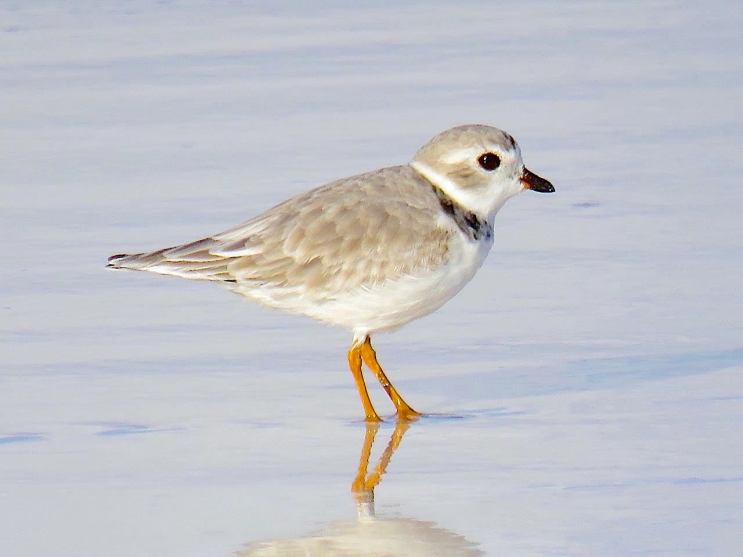
WHAT SORT OF PEOPLE CAN BE BEACH MONITORS?

Anyone at all. No experience is needed. You’ll be given all the info you need about the birds you’ll be looking for, and it may be possible to go out with a monitor to see what it’s like. Even a blank report is useful to have, to indicate where the plovers are not… And there’s no such thing as a mistake – the system allows for occasional miscounts, for example. Below is a summary of the last season, from which you can see the kind of data that is accumulated. 
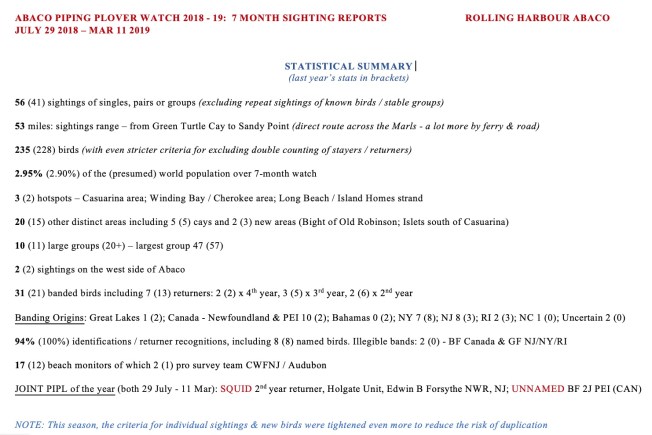
You’ll see that there were 17 beach monitors of whom most were local Abaconians or regular second-homers. You probably know some or all of them! A few were visitors from US and UK. The 2 pro monitors were from our partners Conserve Wildlife Foundation NJ, and Audubon Caribbean. Keith Kemp is the wonderful and hard-working lead monitor and very regularly visits the hotspot shorelines. Other people made quite frequent reports, some about once a month, and several made fewer than 5. Each one added to the overall picture.

Piping Plover chick on LBI (Northside Jim Verhagen)


If you would like to become involved, even on the most casual basis, please do get in touch. Ditto if you’d like to know a bit more about it. If you decide not to go ahead – or once started, to stop – that’s all fine. It’s basically up to you whether you want to turn a beach walk into a bit of research (though as I mentioned above, it’s not a thing that can be done with a dog, for obvious reasons). Take a friend – or even a spouse. A single sighting might reveal a hitherto unknown location or a new banded bird – it happens every year. It’s Citizen Science in action!

Please email me at rolllingharbour.delphi [@] gmail.com or contact me via FB. Or just comment on this post!

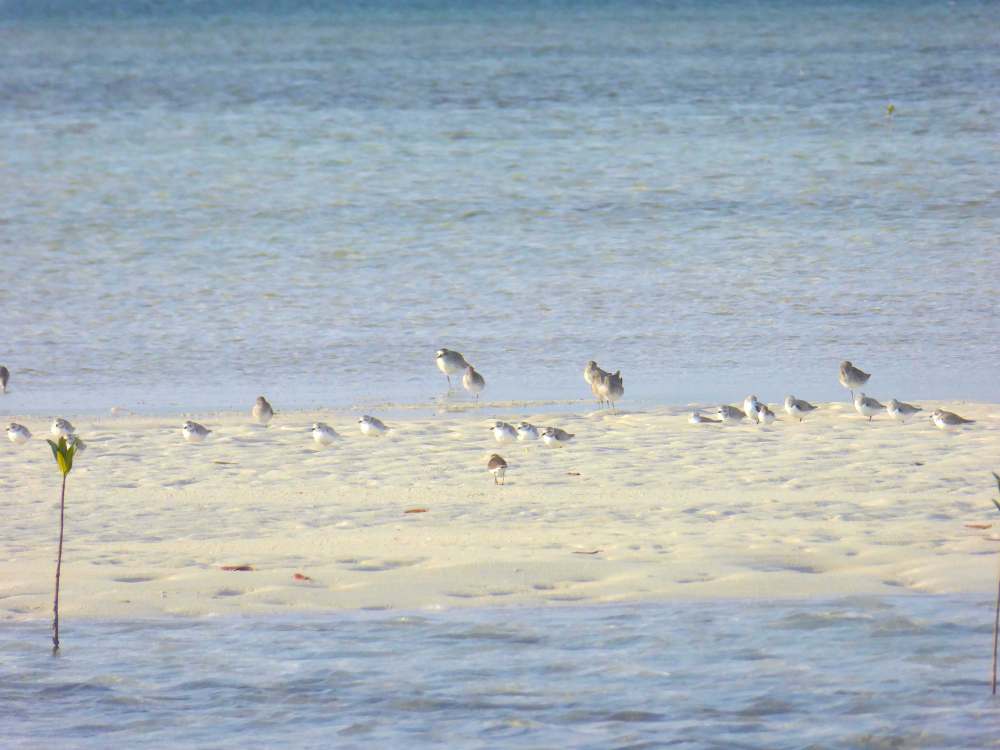
A flock of piping plovers (with a few birds that aren’t), Cherokee Flats (Lucy & mark Davies)Piping Plover Flock, Cherokee Sound, Abaco Bahamas (Lucy & Mark Davies)
Credits: CWFNJ / Kim; Keith Kemp; Charmaine Albury; Rhonda Pearce; Keith Salvesen; CWFNJ / Michelle Stantial x 3; Peter Mantle; ‘Northside’ Jim Verhagen x 2, LBI; Lucy & Mark Davies

I’m on Long Beach Island right now – hope to meet you on Abaco in the Fall (Northside Jim)
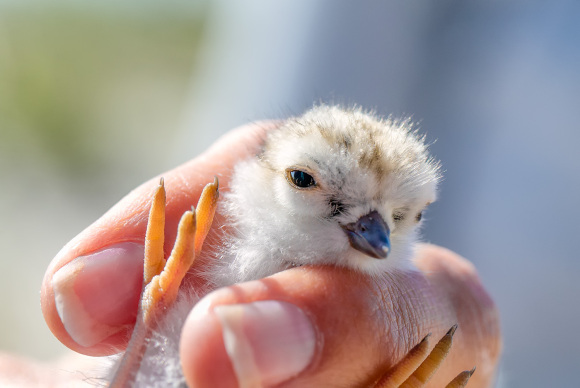
Piping Plover chick on LBI (Northside Jim Verhagen)

Unknown's avatar

TINY PIPING PLOVER CHICKS CAN SWIM! WHO KNEW?


TINY PIPING PLOVER CHICKS CAN SWIM! WHO KNEW?

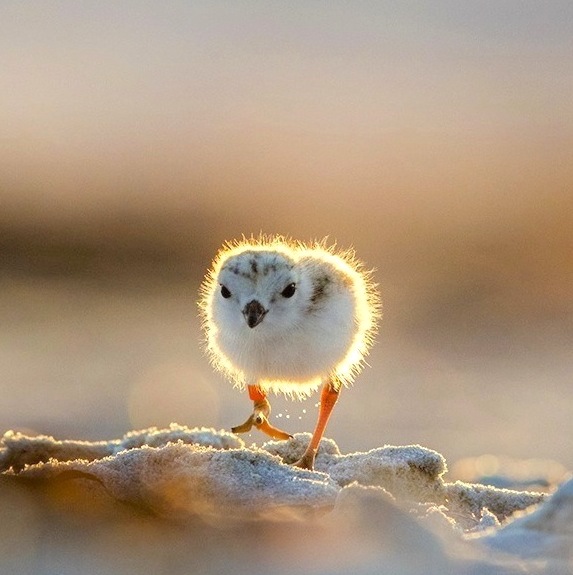
Birds never cease to astonish and delight. Baby birds contain additional magic ingredients such as adorbium and cuteite. Ten days ago, a whole new level of spectator infatuation was effortlessly induced in the piping plover conservation team at Good Harbor Beach in Gloucester, Massachusetts.

The episode took a grand total of 35 seconds… For that is the time it took for three tiny piping plover chicks to get from one side of a small stretch of water to the other. By swimming! They had been spotted doing this the previous day, so the team were prepared. This was no one-off water-based miracle.

WATCH THIS CLIP AND BE UTTERLY ASTOUNDED AND ENCHANTED…

WHY DID THE PLOVER CHICKS CROSS THE WATER?

Alicia Pensarosa, amazed conservationist and photographer, later posted her video captioned “Mom and Dad plover fly to the other side first and then pipe at them to swim over. I think they do this to get to a better foraging area and to be less disturbed from beach crowds. They have been making their trek over in the morning and then come back in the afternoon (both on busy and quiet beach days)“.

WHY THE BIG SURPRISE ABOUT SWIMMING SHORE BIRDS?

Because as it turns out, very very few people have seen this behaviour before with the tiniest shorebirds. Alicia’s post on FB unsurprisingly has racked up loads of Likes, Loves, WOWs, OMGs and other enthusiastic emoticons. Plus plenty of shares. Plus a whole lot of comments and replies. In the interests of research I have examined these. One person once saw snowy plover chicks take a dip. Only two people had seen PIPL chicks do so. I’m pretty sure Michelle Stantial, pre-eminent PIPL scientist, has seen this phenomenon too. But overwhelmingly the responses can be summarised by the words ‘Who Knew?’ 

And now, assuming you watched the video (and if not, why not? and please scroll back and do so forthwith), you know it too. Here’s my current favourite chick to end with.

Keith, son of Squid and Sophie, sibling of Abaco and Cherokee (for which, see HERE)

CREDITS: Alicia Pensarosa for the report, the great video and her work with PIPL; Illustrative chicks courtesy of ace PIPL photographer Northside Jim Verhagen of LBI; and Todd Pover / Conserve Wildlife Foundation New Jersey

Unknown's avatar

‘A SADNESS OF SHEARWATERS’ ON ABACO: UNWELCOME NEWS


Audobon's_Shearwater - Dominic Sherony wiki

‘A SADNESS OF SHEARWATERS’ ON ABACO

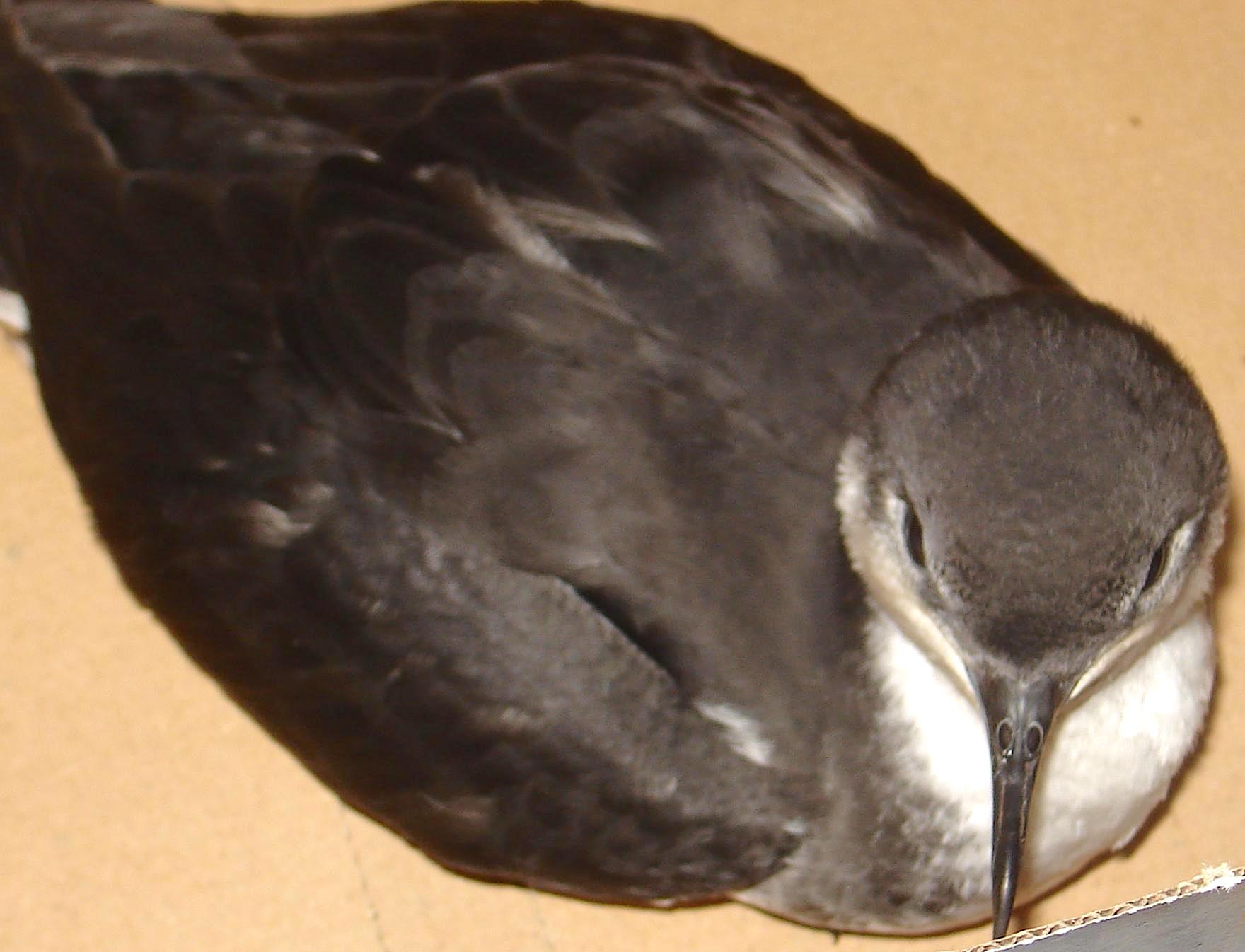
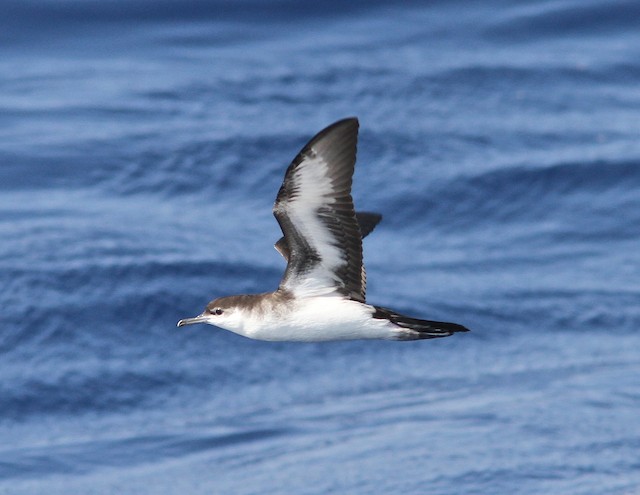
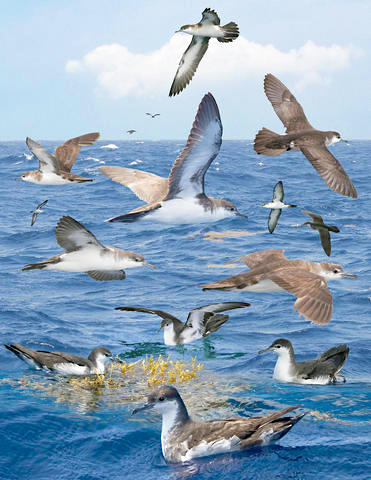
If you are walking your favourite beach on Abaco right now, it’s quite possible you may see – or may already have seen – a very poorly seabird. Or one that is dead, I’m afraid. These are Audubon’s Shearwaters, also known as Dusky Petrels. They are the only permanent resident shearwater species on Abaco. Three others (Cory’s, Great and Sooty) are rare transients; and the last – the Manx – is a very rare off-course vagrant.

Each sad bird is part of a tragic and recurrent phenomenon, a so-called die-off event. As in previous years, a few of the birds that succumb may be Great Shearwaters mixed in with the Audubon’s. I first became aware of this problem in June 2015 and wrote two detailed posts about the situation. This bleak time lasted for about a week, and many reports came in from the mainland and the cays from Green Turtle Cay right down to Crossing Rocks, all duly mapped to get the overall picture. 

audubons-shearwater-abaco-keith-kemp

There was thankfully no such problem in 2016, but in 2017 – also in June – there was another die-back event involving a large number of Audubon’s shearwaters (Puffinus lherminieri) appearing in the tideline and on beaches. Many were already dead. Some are still alive, but in a very poor state. The prospects for recovery for birds that were captured and cared for were not good.

Audubon's shearwater - Kinlarak / wiki

Two years on, and the melancholy cycle is repeating itself. A few days ago, Melissa Maura, an expert in the care and recovery of creatures of all kinds, posted an alert and some sound advice:

A heads-up to all Island folk that it appears to be a summer when exhausted Shearwaters (pelagic seabirds) are washing up on our beaches in Eleuthera and Abaco. I have had two calls in 24 hours. Should you find one, understand that it will be in a severe state of exhaustion and stress and that excessive handling will kill it. Please put in a safe pen on a sandy surface, with shallow pan of fresh water and try locate either fresh fish (important) or squid from a bait shop. This may have to be administered by gently opening the beak and inserting one inch long piece of fish every couple of hours until stable. Ideally they need tube feeding, but very few folk can do this. Please contact me on private message if you find any…

An exhausted Audubon’s Shearwater, now being cared for by Melissa Maura

WHY DOES THIS SHEARWATER DIE-OFF HAPPEN?
This is a periodic phenomenon that looks to be settling into a 2-year cycle in the Northern Bahamas (Eleuthera is also affected). The cause is probably a combination of factors, very likely stemming from prevailing mid-summer climate conditions and/or the effect of climate change. This can lead to a shortage of food far out in the ocean where the birds spend their days. This in turn leads to weakness and exhaustion as the birds try to find food. The birds may then land (or fall) in the sea, to be washed ashore in a very bad state, or dead. In 2017, well-known bird expert Woody Bracey noted a correlation between poor fishing conditions out at sea, and an unusual absence of the frigatebirds that are a sure sign of a healthy fish population.
Shearwater washed up on the beach at Winding Bay a couple of days ago
ARE PLASTICS A CONTRIBUTORY FACTOR?
As we must all accept by now, most if not all these birds will unavoidably have ingested some of our discarded plastic.  However, that in itself would not explain the simultaneous deaths of many birds of one type in a specific area, at exactly the same time of year, and for a few days only. 
Audubon's Shearwater (Neotropical Birds / Cornell / Brian Sullivan)
WHAT ELSE CAN BE DONE?
The dead birds will be quickly removed by the turkey vultures. If you do find one, you might want to bury it. The prognosis for sick birds is not that good. They may have been carried a long way from open sea and they will be exhausted and starved. Those that are strong enough may recover naturally; but most will sadly die, being too weak and emaciated to survive. There is no available facility able to deal with a large number of very poorly or dying birds.
The most practical advice I can give is:
(1) move the bird gently into the shade if in the sun
(2) provide clean water in a shallow dish
(3) offer finely chopped fish BUT no bread (it’s very bad for birds)
(4) if this seems to be working, then carry on until the bird is strong enough to fly (this may be quite a commitment)
(5) do not reproach yourself if a bird you try to help dies. Many will be in such bad shape by the time they are washed up that they are unlikely to survive whatever steps you take
(6) remember that this a part – a sad part – of the life-cycle of these birds, and (as with other species), a degree attrition is an inevitable aspect of natural life
I’d be interested to hear any other accounts of this year’s dieback, especially of any recovery stories. By all means do this as a comment, or email me, DM, or FB.
Credits: thanks to those  on Abaco who have been reporting this event over the last few days; Dominic Sherony (1); Melissa Maura (2, 5); Keith Kemp (3); Kinlarak / wiki (4); Rhonda Pearce (6); Brian Sullivan / Neotropical Birds / Cornell  (7); )Richard Crossley / Crossley Guides for the composite picture
Unknown's avatar

‘TERN, TERN, TERN’: THE UN-NOTORIOUS BYRD COUSINS


Royal Tern, Abaco Bahamas (Keith Salvesen)

‘TERN, TERN, TERN’: THE UN-NOTORIOUS BYRD COUSINS

There are twelve (12!) species of tern – ‘swallows of the sea’ – that to a greater or lesser extent may be found on Abaco. Whether they will actually  be visible at any given time is less certain, though. For a start, the only resident species is the lovely Royal Tern, available at many locations on Abaco and the cays throughout the year.

ROYAL TERNS Thalasseus maximus PR1

Royal Tern, Abaco Bahamas (Keith Salvesen)Royal Tern, Abaco Bahamas (Keith Salvesen)

In the slightly less commonly-found category are the summer migrant terns that, by definition, are only in residence for around half the year. Four of these are fairly common in certain areas, and actually breed on Abaco; these include arguably the prettiest of all, the bridled tern. The other two tern species (gull-billed and sandwich) are more rare and as far as I can make out do not breed locally; or perhaps only rarely. 

LEAST TERN Sternula antillarum SR B 1

LeastTern, Abaco Bahamas (Tony Hepburn)

BRIDLED TERN Onychoprion anaethetus SR B 2

BridledTern, Abaco Bahamas (Bruce Hallett)BridledTern, Abaco Bahamas (Bruce Hallett)

ROSEATE TERN Sterna Dougallii SR B 2

Roseate Tern, Abaco Bahamas (Woody Bracey)

SOOTY TERN Onychoprion anaethetus SR B 2

Sooty Tern, Duncan Wright wiki

GULL-BILLED TERN Gelochelidon nilotica SR 3 

Gull-billed Tern, Abaco Bahamas (Alex Hughes)Gull-billed Tern, Abaco Bahamas (Alex Hughes)

SANDWICH TERN Thalasseus sandvicensis SR 4

Sandwich Tern, Abaco Bahamas (Bruce Hallett)Sandwich Tern, Abaco Bahamas (Woody Bracey)

There is one rare winter resident migratory tern species. I had to check when the last one was recorded for Abaco. It was of course only in January this year, when ace birder-photographer Sally Chisholm saw one at Treasure Cay and managed to photograph it for posterity.

FORSTER’S TERN Sterna forsteri  WR 4

Forster's Tern (Dick Daniels)Forster's Tern, Abaco Bahamas (Sally Chisholm)

The final four ‘Abaco’ terns are very much the occasional visitors. Three of them pass over the Bahamas on their longer migration, but may make a pit-stop around Abaco to take on fuel. Likelihood of sighting one? Slender but not impossible… The fourth, the Arctic Tern, is a very rare vagrant, a bird well away from its usual home or migration route as the result of storms or faulty satnav or sheer happenstance. Don’t travel to the Bahamas intent on seeing one.

CASPIAN TERN Hydroprogne caspia TR 4

Caspian Tern Abaco Bahamas (Woody Bracey)Caspian Tern Abaco Bahamas (Keith Kemp)

As for the remaining three species, they are the transient black tern and common tern; and the vanishingly rare vagrant  Arctic tern (the clue is in the name). No photos of any of these I’m afraid, so here’s a handy checklist instead. 

     ELECTIVE MUSICAL DIGRESSION

Written by Peter Seeger a few years earlier, Turn x 3 was released in 1965, the title track on the second album from the Byrds. At a rather febrile time in US history (Vietnam, draft riots, black civil rightists v cops and so on), this unusually palliative and thoughtful song with its religious connotations to some extent stood for peace and hope in a time of turmoil.

PS the somewhat laboured title of this post shoehorns in the name of another Byrds album, ‘The Notorious Byrd Brothers’

Photo credits: Keith Salvesen (1, 2, 3, 5, 18); Tony Hepburn (4); Alex Hughes (10, 11); Bruce Hallett (6, 7, 12); Woody Bracey (8, 13, 16); Duncan Wright (9); Dick Daniels (14); Sally Chisholm (15); Keith Kemp (17)

Royal Tern, Abaco Bahamas (Keith Salvesen)

Unknown's avatar

SANDERLINGS: A POOL PARTY ON ABACO


Sanderling Bath Time, Delphi Beach Abaco Bahamas - Keith Salvesen

SANDERLINGS: A POOL PARTY ON ABACO

One of the pleasures of watching birds (as opposed to BIRDWATCHING, a more committed-sounding enterprise with its own Wiki entry, that may require equipment, books & mag subs…) is to spend some time observing them enjoying themselves. Perhaps you have a feeder, and like to watch the birds getting stuck into the seeds, carelessly flicking the husks around and throwing their ‘feeder shapes’ on the perches. Maybe you like to see the hummers, beaks deep into the little red plastic flowers on the rim of the sugar-water feeder, tiny bodies motionless and upright, wings a glistening blur of rapid movement in the sun. 

Sanderling Bath Time, Delphi Beach Abaco Bahamas - Keith Salvesen

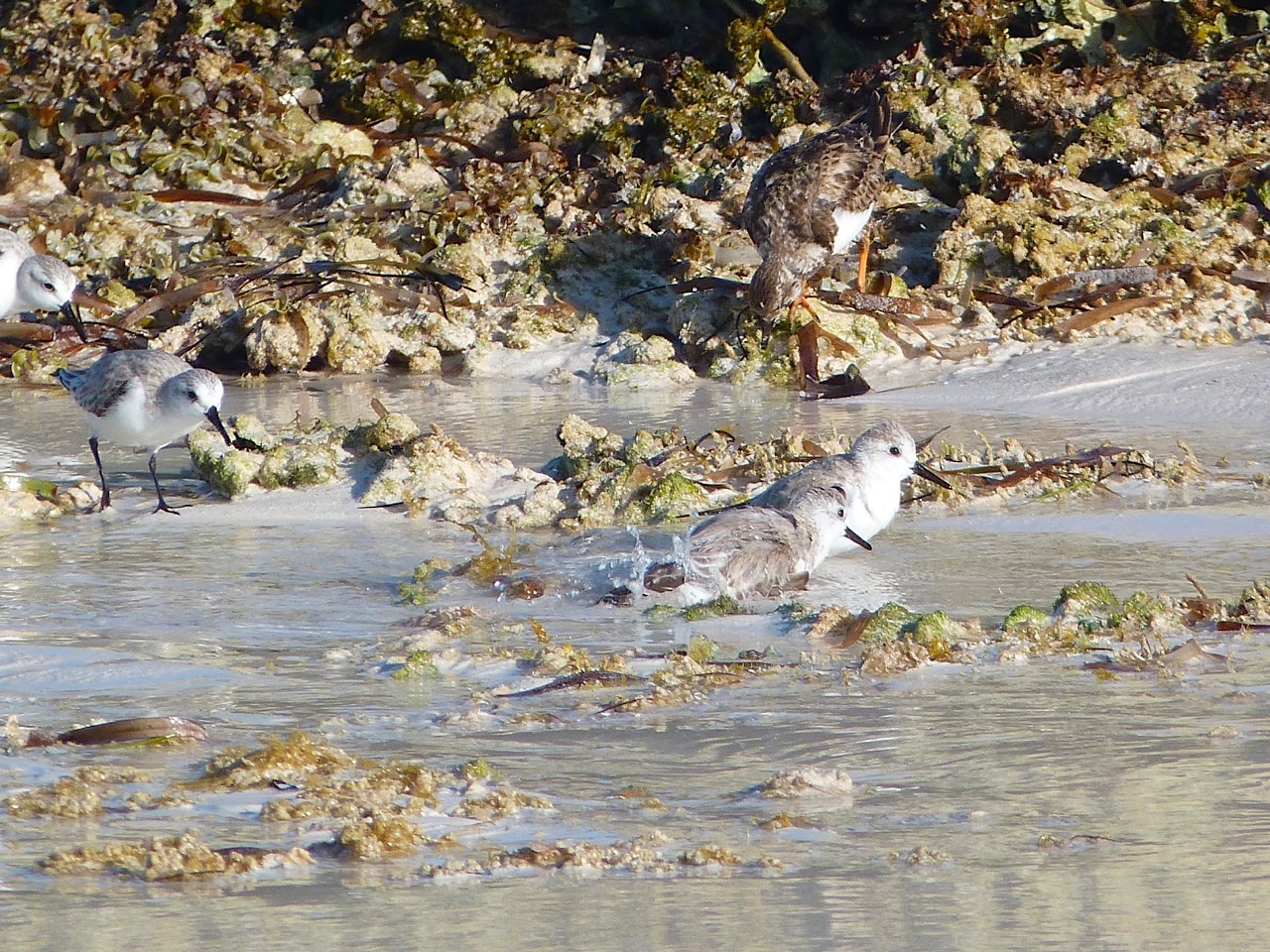
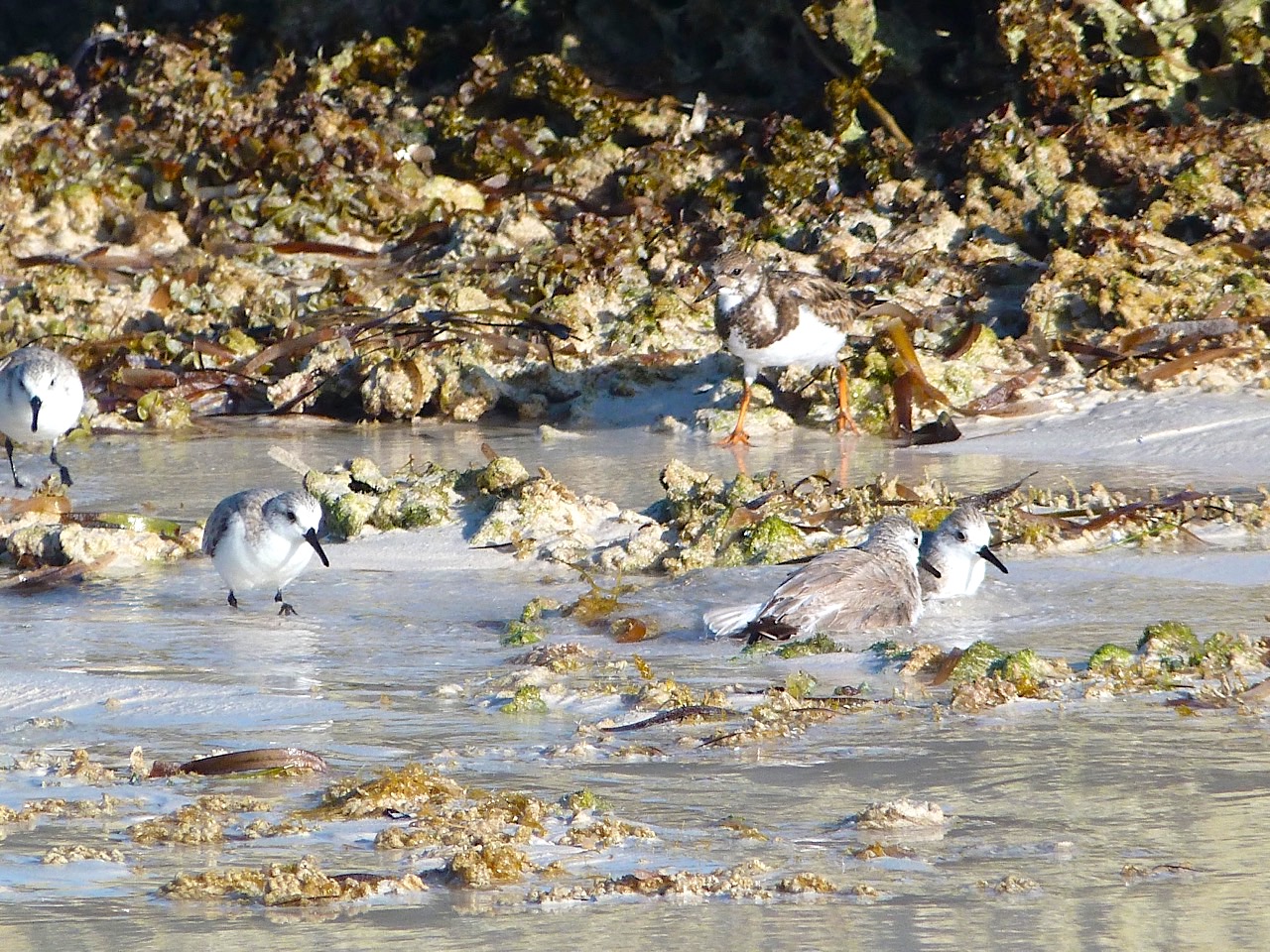
It is 5.30 pm. The sun is sinking in the early evening sky. The tide is on the rise at the north end of the Delphi beach where the reef joins the land. There is a small spit of sand that will be covered quite soon, but meanwhile two dozen sanderlings mixed in with assorted ruddy turnstones are doing their idiot feeding thing, rushing around on their tiny legs, stabbing in the sand, and generally behaving like clockwork toys on speed. Meanwhile a handful have found the fun to be had in the swirling tide as it pours round the head of the reef onto the sand spit. Yes, it’s sandpiper bath-time!

Sanderling Bath Time, Delphi Beach Abaco Bahamas - Keith Salvesen

Towards mid-tide on the rise, the water begins to creep round the rocks and encroach onto the sandbar. At high tide, it is well under water and fish are back in residence. Small sharks sometimes hang in the waves just behind their breaking point over the shallow sand.  And so the tidal process repeats.

Sanderling Bath Time, Delphi Beach Abaco Bahamas - Keith Salvesen

For the sanderlings, the best part of the day is when the tide is rising. At ± mid-tide is the time for the shore birds to bathe in the tidal pools that form – and as the water pours in around the end of the rocks, it froths like an overenthusiastic bubblebath. Right then is an excellent time to sit peacefully on the beach and watch the entertainment…

Sanderling Bath Time, Delphi Beach Abaco Bahamas - Keith Salvesen

Substantial immersion is not out of the question…Sanderling Bath Time, Delphi Beach Abaco Bahamas - Keith SalvesenSanderling Bath Time, Delphi Beach Abaco Bahamas - Keith SalvesenSanderling Bath Time, Delphi Beach Abaco Bahamas - Keith Salvesen

These moments don’t last long. Soon the increasing force and height of the water spoils the fun, and the flock will suddenly take flight and move south a little way along the beach, away from the rocks. There’s the incoming tideline to play with – and more importantly, food to be uncovered with each incoming and retreating wave…

Sanderling Bath Time, Delphi Beach Abaco Bahamas - Keith Salvesen

All photos © Keith Salvesen / Rolling Harbour

Unknown's avatar

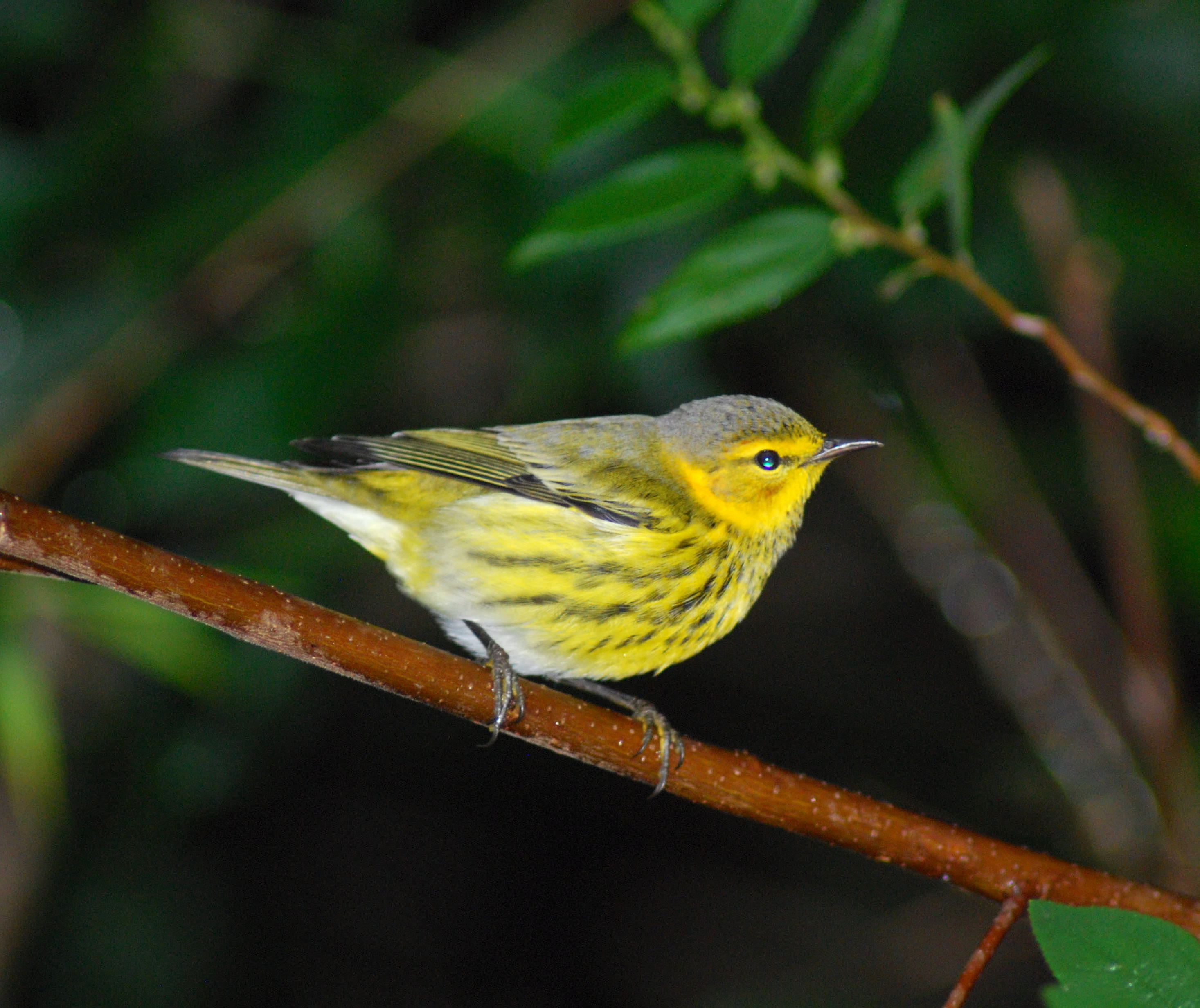
CAPE MAY WARBLER FOR MAY: WHAT’S IN A NAME?


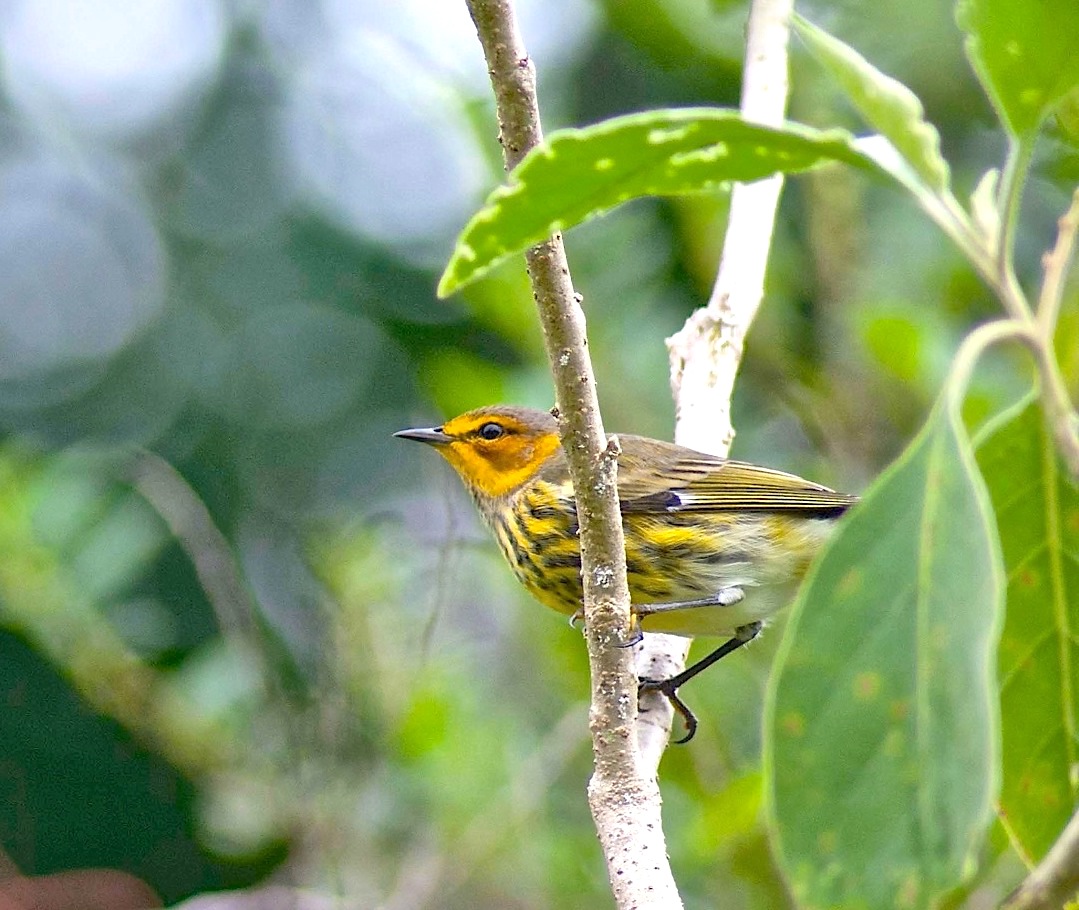
Cape May Warbler, Abaco Bahamas (Charmaine Albury)

CAPE MAY WARBLER FOR MAY: WHAT’S IN A NAME?

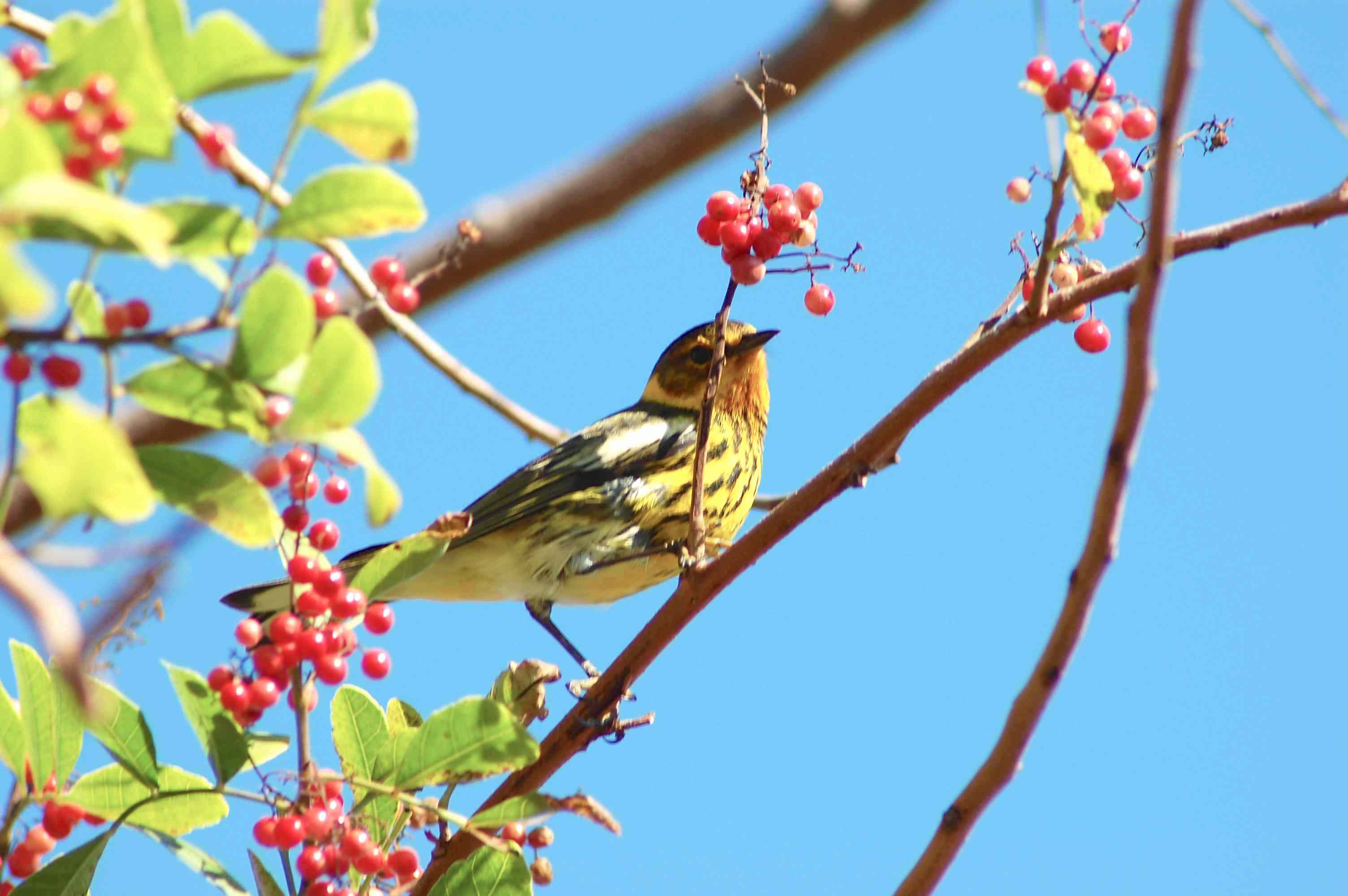
The history of ornithological classification and nomenclature is littered with peculiarities, of which the attractive Cape May Warbler Setophaga tigrina provides a good example. And May is obviously the perfect month to feature this little bird.

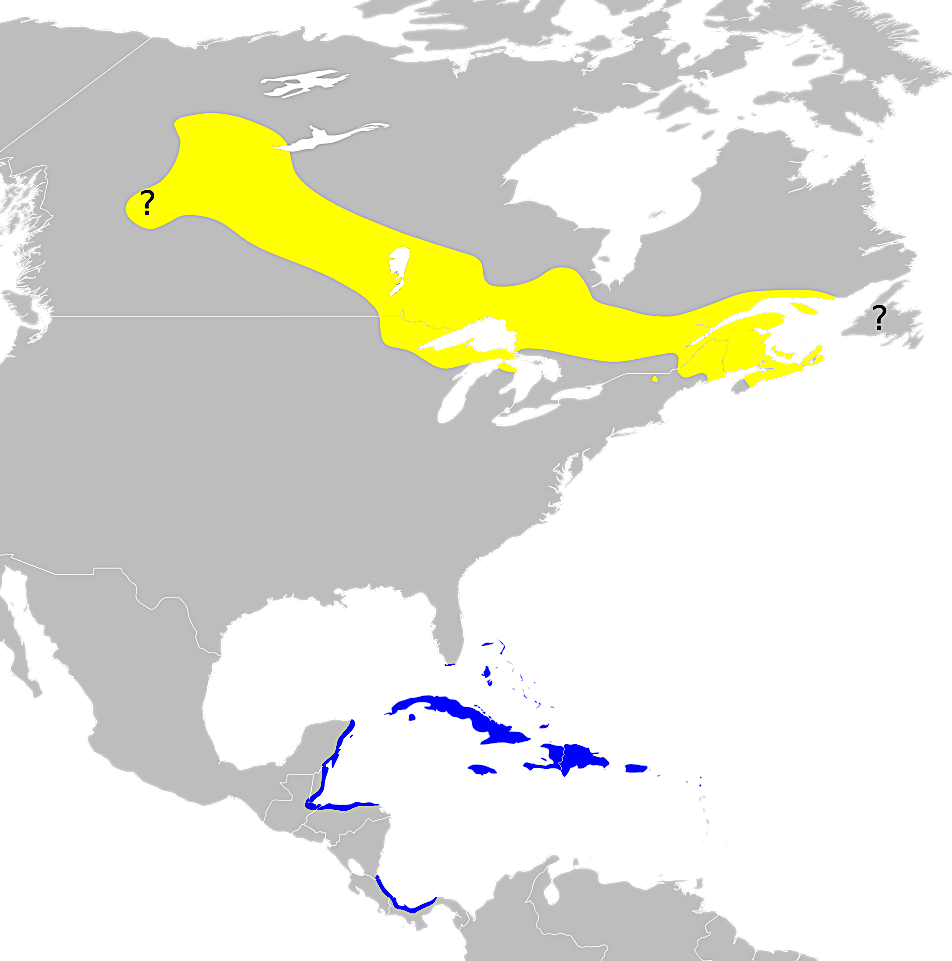
The range of the species is well defined. In the summer the birds live within a broad band that straddles northern USA and Canada. In the winter they head south with all their migratory warbler cousins. Again, the target area is in a quite specific range.

As with all migratory species, some birds each year will wander or be blown off-course; or will take a rest stop en route and decide to stick around. And so it was that in May 1812, a month before the Battle of Waterloo, the first specimen of the species was collected on Cape May by George Ord during a trip with naturalist ALEXANDER WILSON (he of plover & snipe fame). To be specific, they had gone to shoot the birds they wanted to collect; the little bodies were after all the only irrefutable evidence of a new ‘find’ at that time.

Cape May Warbler, Abaco Bahamas (Bruce Hallett)

As Wilson later wrote (and note his use of the words ‘shooting excursion’ and ‘ransacked’)

THIS new and beautiful little species was discovered in a maple swamp, in Cape May county, not far from the coast, by Mr. George Ord of this city, who accompanied me on a shooting excursion to that quarter in the month of May last…The same swamp that furnished us with this elegant little stranger, and indeed several miles around it, were ransacked by us both for another specimen of the same; but without success. Fortunately it proved to be a male, and being in excellent plumage, enabled me to preserve a faithful portrait of the original.

Cape May Warbler, Abaco Bahamas (Sandy Walker)

The odd (indeed ‘Ord’) thing was that the specimen was a complete one-off at that time. With the benefit of hindsight, I think we can say it came in the category of ‘rare vagrant’: no other specimen of this species (named Sylvia maritima by Wilson) was seen on Cape May for more than a century… Then in 1920, another example was found. Over the succeeding years sightings have gradually increased, and the CMW is no longer regarded as unusual in the location that gave it its name. It has become an uncommon migrant instead.

Cape May Warbler, Abaco Bahamas (Sandy Walker)

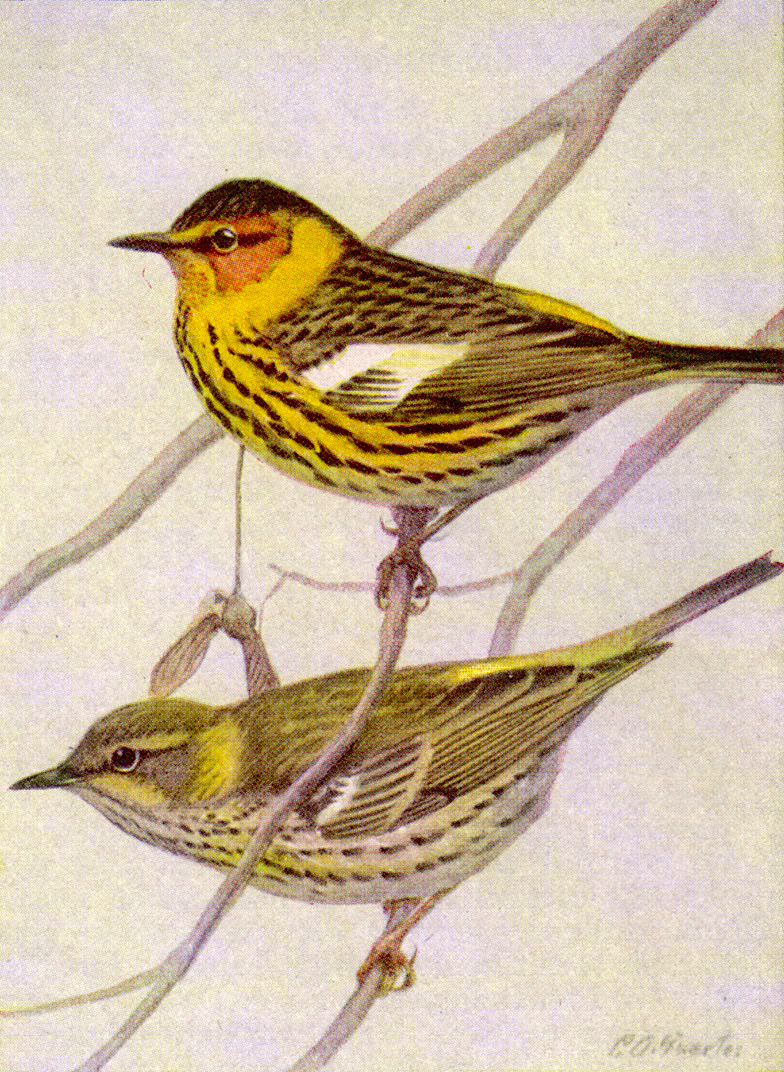
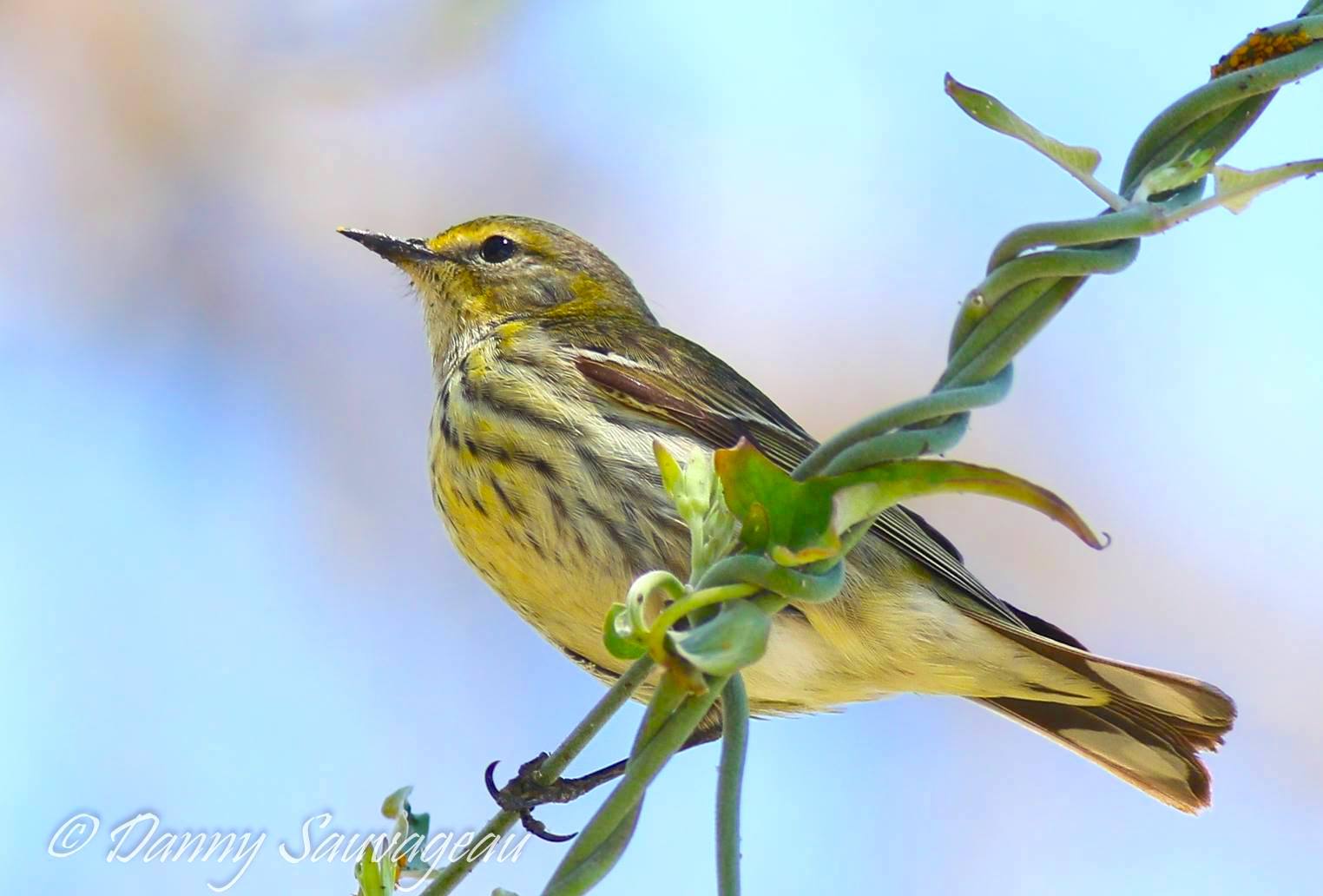
On Abaco, CMWs are classified as WR1, which is to say common winter residents. Males have striking chestnut cheeks in the breeding season, with strong streaking on the underside. Note also the black eyestripe. Females and juveniles are paler and the marking is less prominent. These warblers are insectivorous; in winter they may also feed on nectar and fruit. Behaviour-wise, they have aggressive tendencies in defence of their territory and of their food sources. 

Cape May Warbler, Abaco Bahamas (Becky Marvil)

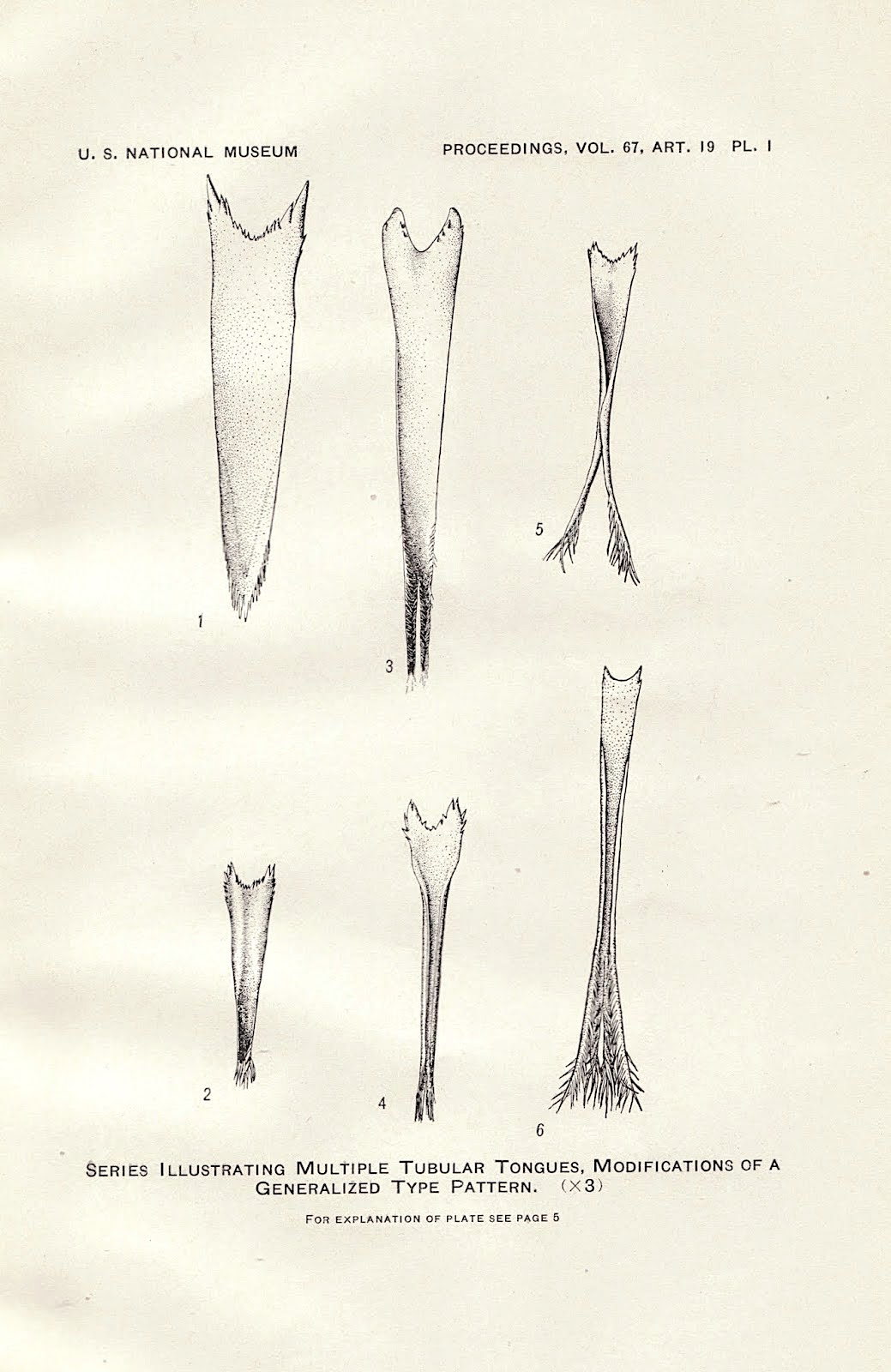
In researching this post, I discovered a strange (but slightly dull) fact. The CMW is unique among warblers in having a tubular tongue to enable nectar feeding (as with hummingbirds). This random fact hardly has the makings of a chat-up line, I do realise, but considering the multitude of warbler species in existence, the CMW has the benefit of a rather special adaptation. It’s one that Darwin himself might rightly be proud to have observed.

Tongue 2 (bottom left) is the CMW; No.5 is a bananaquit’s feathery tongue

Cape May Warbler, Abaco Bahamas (Bruce Hallett)

WHAT SHOULD I LISTEN OUT FOR?

Unhelpfully, even the authorities have a tough time describing the song and call of a CMW. As with so many song-birds, variations on the theme “the song is a simple repetition of high tsi notes; the call is a thin sip” are the best you can hope for. However, it’s worth noting that the species generally prefers to sing from high perches. But then so do many others I’m afraid. Here’s something more practical  – the tsi and the sip:

Cape May Warbler, Abaco Bahamas (Sandy Walker)

ALL BIRDS, EXCEPT THE LAST, PHOTOGRAPHED ON ABACO, BAHAMAS

  • Photo Credits: Charmaine Albury [from The Birds of Abaco] (1); Bruce Hallett (2, 6); Sandy Walker (3, 4, 7); Becky Marvil (5); Danny Sauvageau (8).
  • Drawing, Nat Geo
  • Range map, Wiki.
  • Audio clips Martin St-Michel / Xeno-Canto;
  • Research refs include, with thanks, American Ornithological Society / Bob Montgomerie (Queen’s University); Camino Travel Costa Rica / OS

Cape May Warbler (Danny Sauvageau)

Unknown's avatar

OSPREY ID GUIDE: THE BAHAMAS SUBSPECIES REVISITED


Osprey, Abaco Bahamas (Tom Sheley)

OSPREY ID GUIDE: THE BAHAMAS SUBSPECIES REVISITED

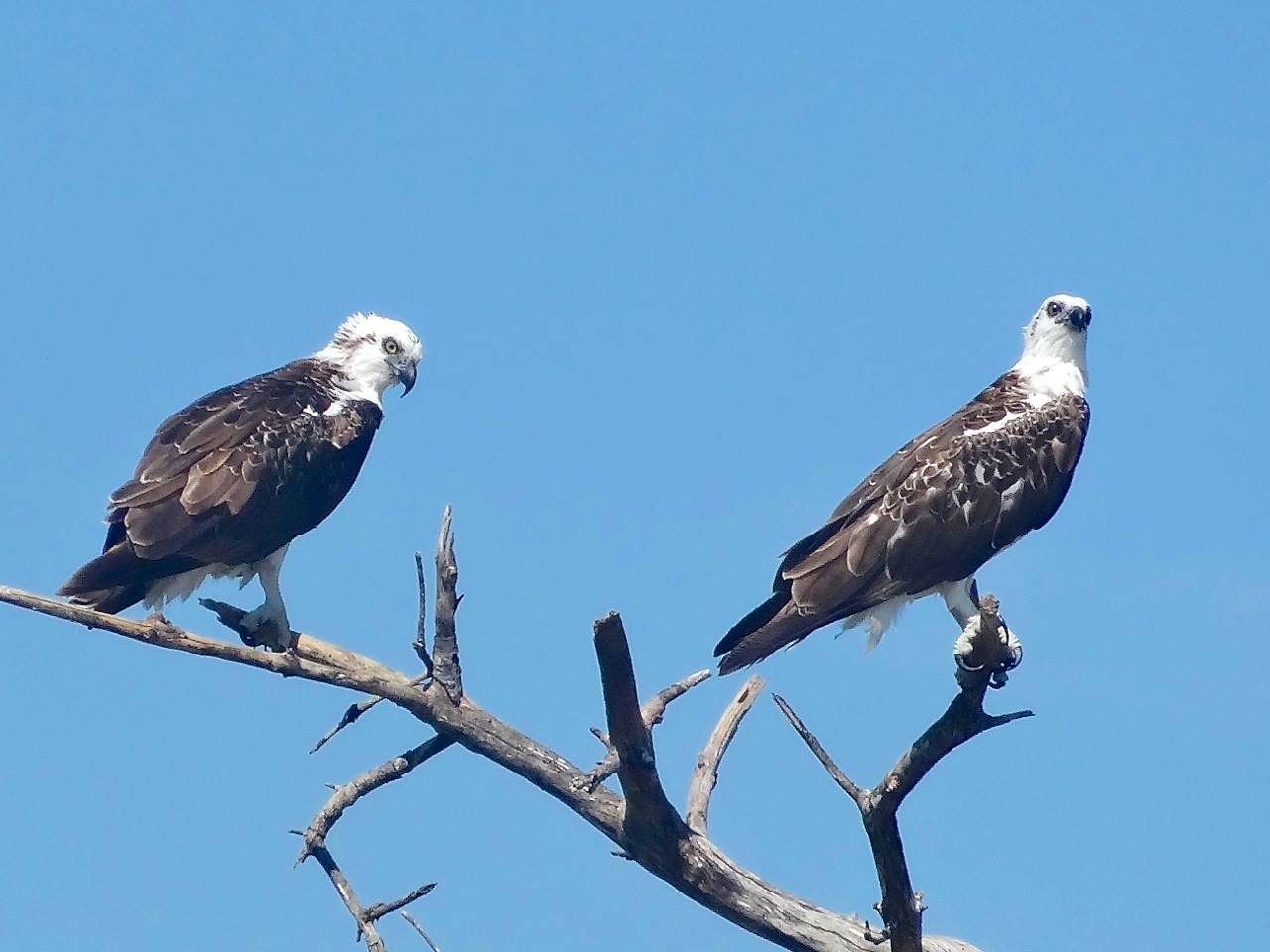
I am reposting this article in the wake of a recent Bird Club of New Providence bird of prey ID query featuring distant but still helpful photos that enabled the ID as an osprey. As far as I can tell from the visible evidence (the images pixellate when enlarged) this is the ‘local’ Bahamian subspecies that differs in subtle ways from the standard North American version. Both types are found in the northern Bahamas; it would definitely be a great ‘get’ to locate one of each on the same day…

I sometimes feature bird comparatives, not least because there is so much scope for confusion that I have to keep checking for myself. Tyrant flycatchers; a number of superficially similar warbler species (all with yellow bits); those vireos; all those heron-y / egret-y types and their disconcerting morphs (hello, white reddish egret).

Osprey P.h.carolinensis (CWFNJ)

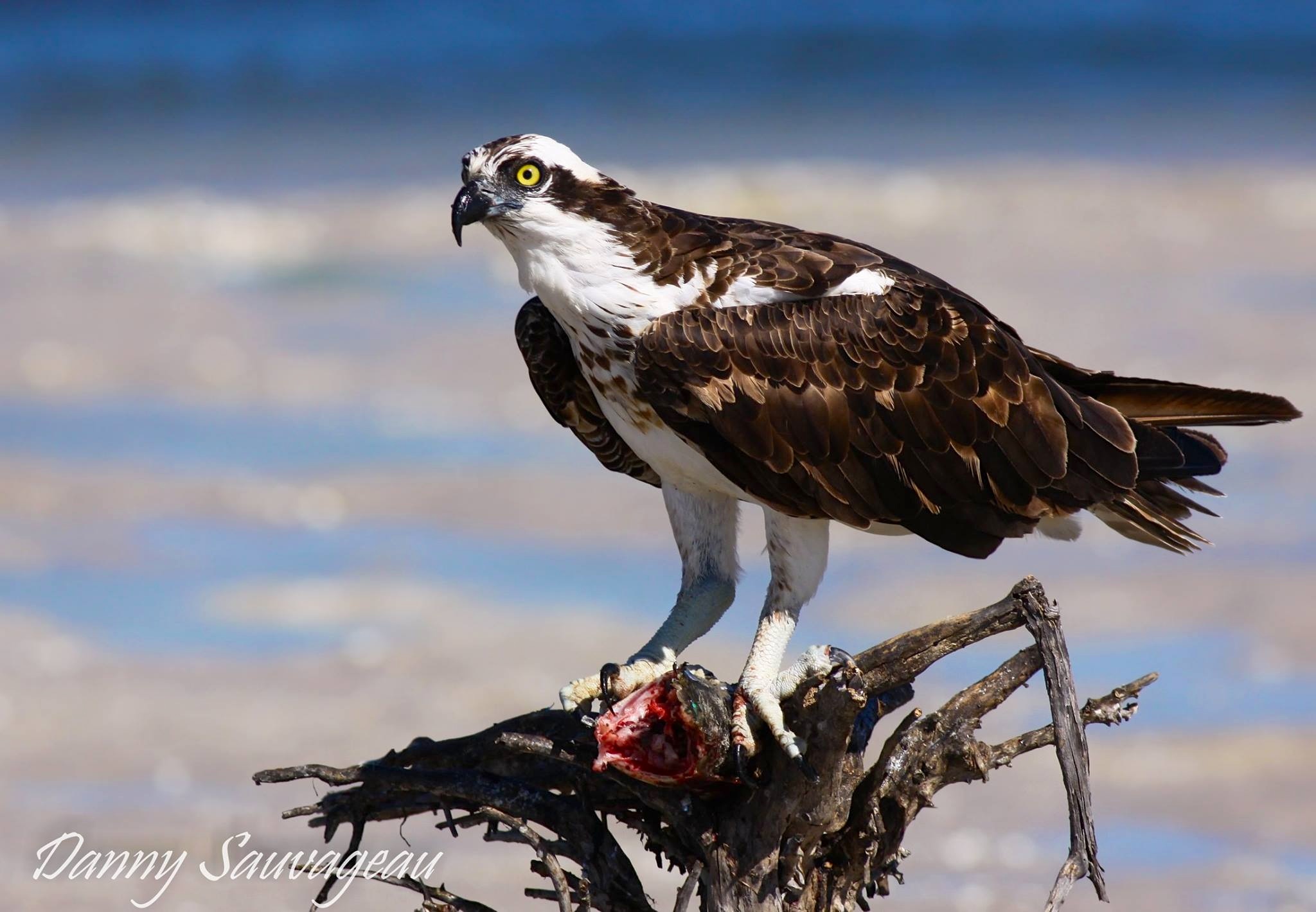
And so to the magnificent osprey Pandion haliaetus. This time, the comparison is between two subspecies, broadly the North American P. h. carolinensis and the Caribbean P.h. ridgwayi. There is some overlap in Florida, and some evidence of interbreeding. In the northern Bahamas in particular there is also an overlap, so an osprey seen on Abaco could be either variety. You’ll probably be too excited watching it to care much which type it is, but this article will help you if you do…

The two ospreys shown below were recently photographed at Spanish Wells, Eleuthera by Barbara Crouchley. This is a ‘bingo’ photographic scoop, because each type of bird was found in the same region; now we can check out the differences between the two birds. 

The first is a North American bird. Note in particular its distinctive eye mask, and the clearly marked upper breast, more so in the female than the male (which may even be white). The overall impression of the upper-parts is dark brown. They are slightly larger than their cousins in the south.

Osprey P.h. Carolinensis, Eleuthera Bahama (Barbara Crouchley)

Osprey P.h. carolinensis

In this Caribbean bird with its trophy fish, the eye-mask is absent, and the facial / nape markings are less pronounced. Furthermore, the breast and under-parts are white in both sexes (though slight marking may be apparent in some birds). And  the impression is of lighter upper-parts, even allowing for variable lighting and distance when the photos were taken. Conveniently, there’s not much detectable difference between male and females in the respective populations.

Osprey P.h. Ridgwayi, Eleuthera Bahama (Barbara Crouchley)

Osprey P.h. ridgwayi

EXAMPLES OF P. h. carolinensis

Osprey P.h. Carolinensis, Florida (Danny Sauvageau)Osprey P.h. Carolinensis, Florida (Danny Sauvageau)Osprey P.h. Carolinensis, Florida (Danny Sauvageau)

EXAMPLES OF P. h. ridgwayi

Osprey P.h. ridgwayi, Grand Bahama (Linda Barry Cooper)Osprey P.h. ridgwayi, Abaco (Jim Todd)Osprey P.h. ridgwayi, Abaco (Woody Bracey)

I’m going to stick my neck out here – I’ve not seen this mentioned anywhere, and I need to do some more comparative research. When I saw Barbara’s pair of photos, I immediately noticed that the eyes of the P.h.r were paler than the bright orangey-yellow of P.h.c. This distinction carries on through the comparative photos above: the P.h.cs were photographed in Florida and further north and have strikingly vivid eyes. The P.h.rs were photographed on Abaco and Grand Bahama at different times by different people. All have noticeably paler irises, more a light greeny-yellow. 

I’d welcome any views on this rash amateur theory. Preferably supportive ones…

UNDERWING DIFFERENCES

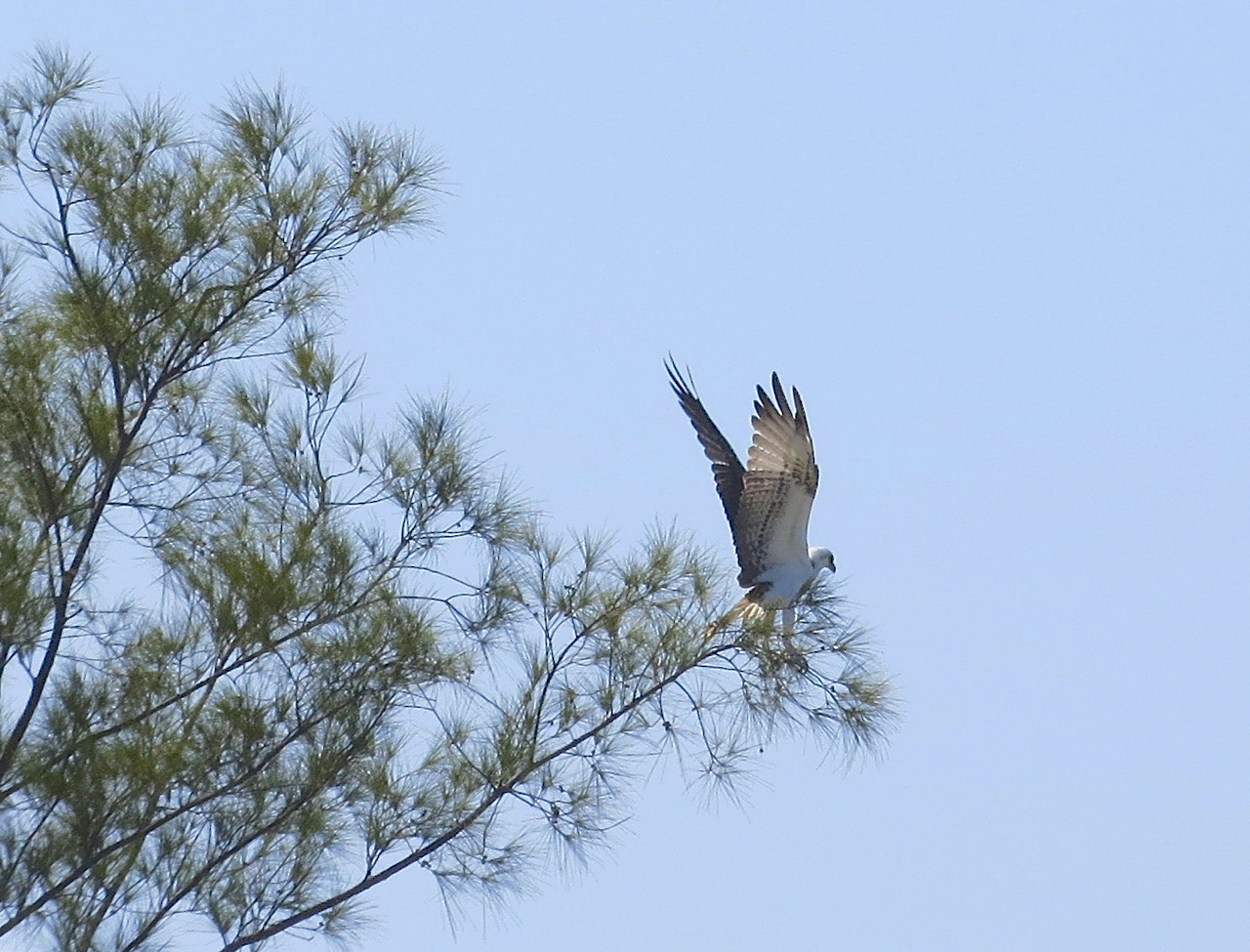
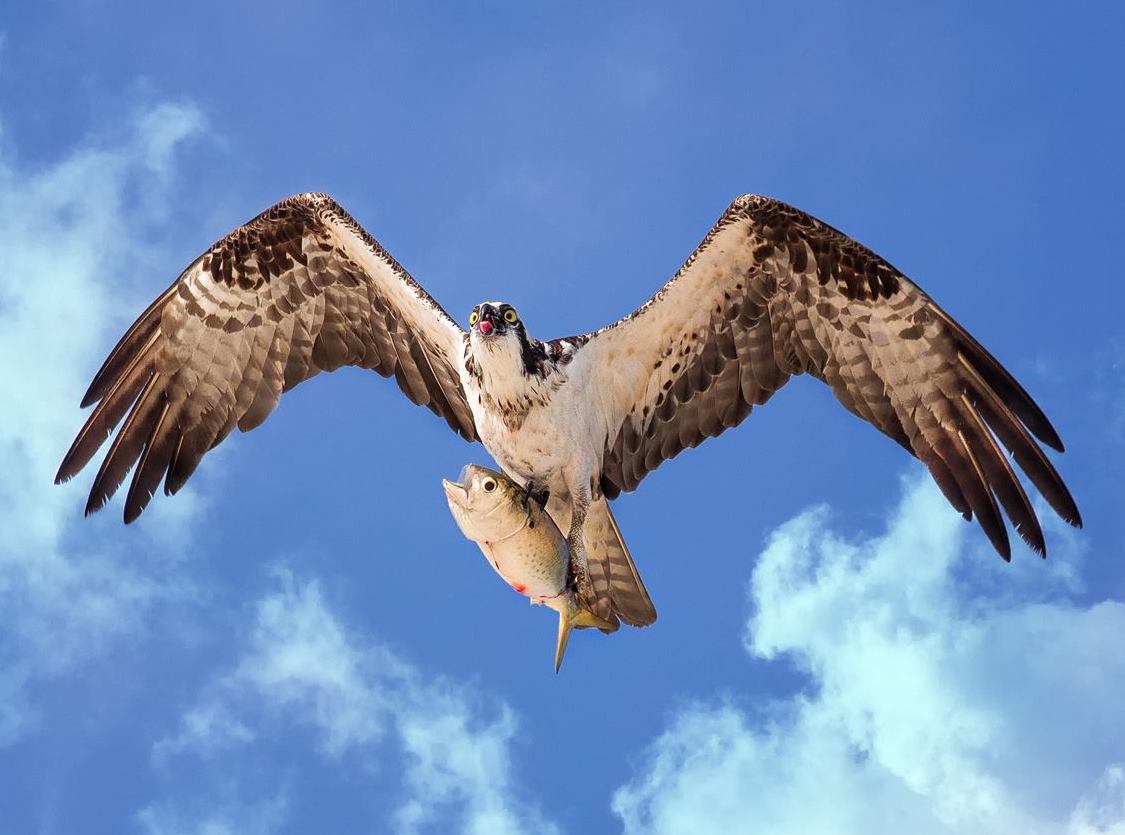
There’s a further comparison that can be made with the two subspecies in flight. Without going into technical and linguistic detail, the underwings of the P.h.cs are much darker than the Bahamas birds, whereas P.h.rs are notably paler and in some cases mostly white.  As an example, below is a distance shot I took when bonefishing out on the Abaco Marls, using a pocket camera. This is definitely a local bird! Compare with the dramatic image below it, where the strong darker markings are all too evident. It’s a great shot with which to bring the lesson to an end.

Osprey P.h. ridgwayi, Abaco Marls (Keith Salvesen)

Osprey in flight with fish (Northside Jim)

Photo credits: Tom Sheley (1); CWFNJ (2); Barbara Crouchley (3, 4); Danny Sauvageau (5, 6, 7); Jim Todd (8); Linda Barry Cooper (9); Woody Bracey (10); Keith Salvesen (11); the inimitable Northside Jim (12); Cute-toon, Birdorable. Thanks for all use permissions – also to Steve Connett for the idea!

Unknown's avatar

LOGGERHEAD KINGBIRD: LORD OF THE FLIES


Loggerhead Kingbird, Sandy Point, Abaco Bahamas (Keith Salvesen)

LOGGERHEAD KINGBIRD: LORD OF THE FLIES

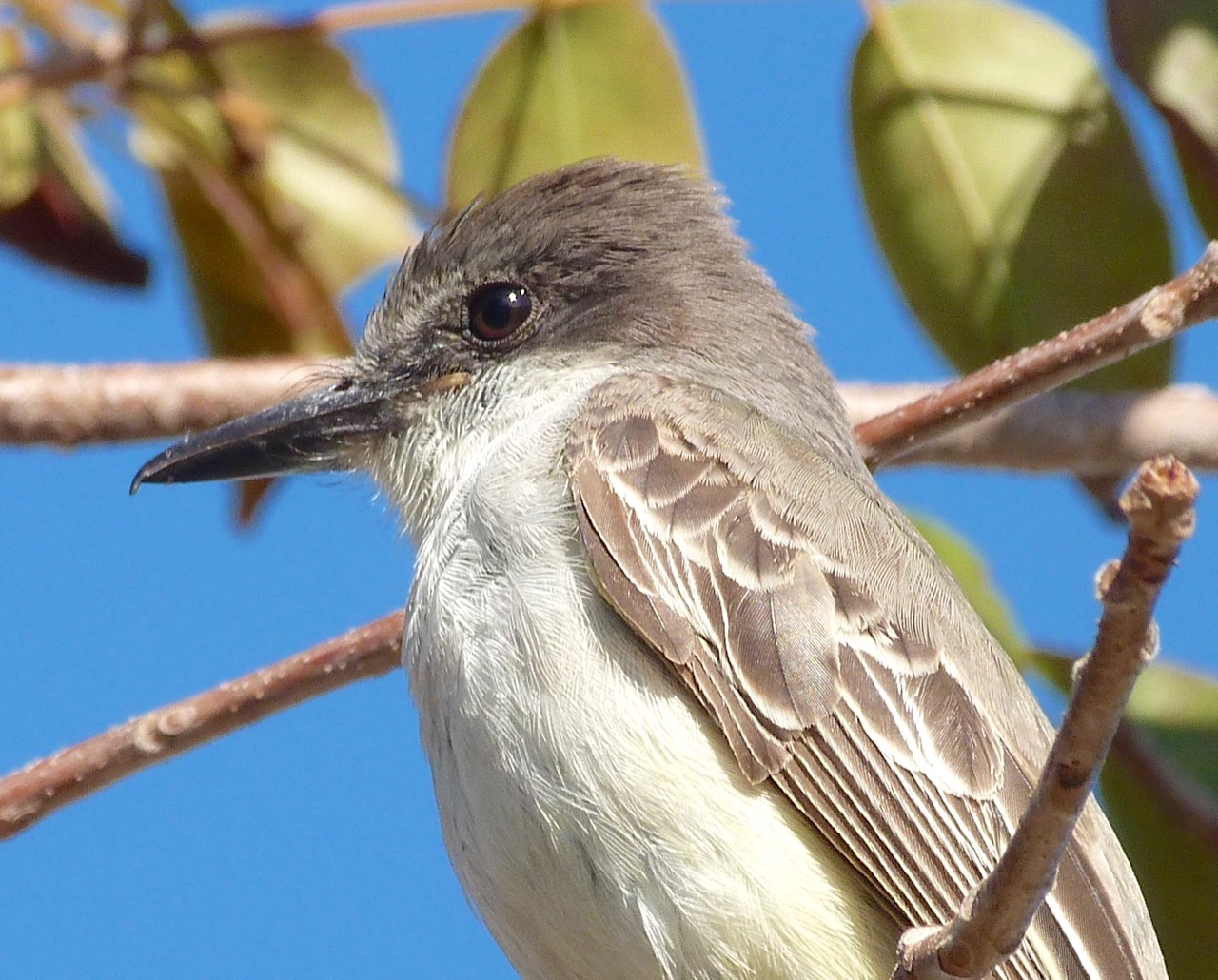
Four principal so-called ‘tyrant flycatchers’ (Tyrannidae) are found on Abaco: the loggerhead kingbird, the gray kingbird, the La Sagra’s flycatcher and the Cuban pewee. These are common permanent residents, except for the gray kingbird which is a summer resident only. Several other flycatcher species are found on Abaco, but they are very uncommon winter residents, rare transients, or vagrants. 

Loggerhead Kingbird, Sandy Point, Abaco Bahamas (Keith Salvesen)

The loggerhead featured here became quite a good companion when I was staying in Sandy Point recently. Like other flycatchers – and indeed the cute little blue-gray gnatcatchers – loggerheads are curious and inquisitive.

Loggerhead Kingbird, Sandy Point, Abaco Bahamas (Keith Salvesen)

Loggerheads seem to have two methods of observing humans and their mysteries. One is by perching on a branch or in a shrub, watching intently. They stay quite still… until suddenly launching into the air to intercept some passing insect with their hooked beaks (so-called ‘hawking’), before returning to their perch. And staring at you again. The other method is to follow you round, either flying slightly ahead as you progress; or fluttering in the coppice alongside you; or playing catch-up from behind. 

Loggerhead Kingbird, Sandy Point, Abaco Bahamas (Keith Salvesen)

A typical quizzical loggerhead sideways look… all flycatchers do this

Loggerhead and gray kingbirds are similar in size, and can be quite easy to confuse. Top seasonal tip: because the grays are summer visitors only, it’s a fairly safe bet that any kingbirds seen between, say, October and April will be the resident loggerheads.

Loggerhead Kingbird, Sandy Point, Abaco Bahamas (Keith Salvesen)

MEMORABLE FACT TO DEPLOY IN CONVERSATION

The collective names for a group of kingbirds are: a Court, a Coronation, or a Tyranny

Loggerhead Kingbird, Sandy Point, Abaco Bahamas (Keith Salvesen)

Photo Credits: Keith Salvesen at Sandy Point, Abaco Bahamas; ‘Lordy’ the Loggerhead

Unknown's avatar

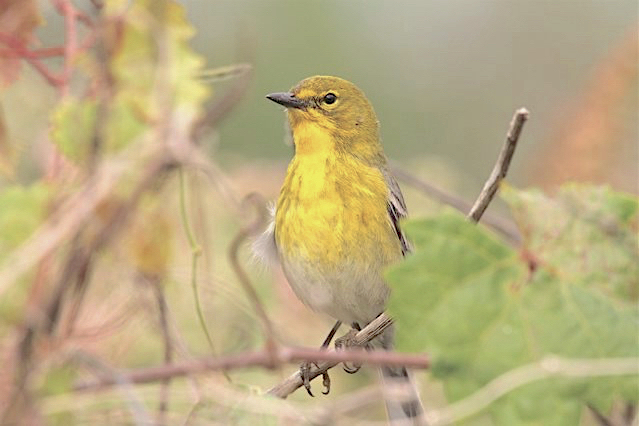
PINE WARBLERS ON ABACO and PINUS ENVY


Pine Warbler, Abaco Bahamas (Bruce Hallett)

PINE WARBLERS ON ABACO and PINUS ENVY

The Pine Warbler Setophaga pinus is one of 5 year-round resident warblers on Abaco. The other 33 warbler species (including the recently recorded CANADA WARBLER) are migratory and at this time of year they will be in their summer breeding grounds. The co-resident warblers are the 2 endemics – Bahama warbler and Bahama Yellowthroat – plus the olive-capped warbler and the yellow warbler. You can see all 5 HERE. In fact, all are to be envied and admired. First, they are all bright, attractive birds. Secondly, they live in the Bahamas all year round, without needing to undertake a long exhausting flight twice a year, unlike the rest of their warbler compadres. And indeed, unlike many of the human inhabitants of Abaco.

Pine Warbler, Abaco Bahamas (Alex Hughes)

As the name strongly hints, the pine warbler is primarily a bird of the pine forests, of which Abaco has an abundance. The tall, straight trees were a vital local source of timber (cf SAWMILL SINK). As a historical note, felled pines were also exported to the UK to be made into the strong pit-props needed for coal-mines. 

Pine Warbler (immature), Abaco Bahamas (Bruce Hallett)

Q. WHAT IS THE NORMAL RANGE OF THIS BIRD? A. THIS IS!

Pine Warbler, Abaco Bahamas (Tom Reed)

Pine warblers have a broad diet and forage methodically. Pine cones are a fertile source for food,  and those robust, stabby, slightly down-curved beaks are ideal for getting the seeds out of the cones. Equally, these warblers use their beaks to prise out insects from the rough pine trunks and branches.

Pine Warbler, Abaco Bahamas (Tom Sheley)

WHAT OF THEIR NIDIFICATION?

The pine forest is obviously the preferred nesting habitat for these birds. On Abaco there are vast acres of forest for them, but the warblers also nest in the smaller groups of pines found (for example) in or near some of the settlements; or around the edges of former sugar cane fields and the like. One nesting habit is slightly unusual – pine warblers tend to build their nests near the end of branches rather than near the trunk, a position that seems far less secure. Milton Harris has helpfully pointed out: “One theory on pine warbler nest location is that they are safer from predators by building at the end of a small branch.  Some other birds do the same.”

Pine Warbler (immature), Abaco Bahamas (Bruce Hallett)

DO YOU HAVE ANY ‘FUN FACTS’?

  • One source states that “The song of this bird is a musical trill. Their calls are slurred chips. I think we’ve all been there at some time, possibly when lunching at Pete’s Pub.

MUSICAL TRILL Paul Driver / Xeno Canto

SLURRED CHIP Don Jones / Xeno-Canto

  • The longest pine in the world is the Benzodiazepine (14 letters)

Photo Credits: Bruce Hallett (1, 3, 6); Alex Hughes (2); Tom Reed (4); Tom Sheley (5); Dick Daniels (7); Wiki (range map); Nat Geo (species drawings); Paul Driver / Xeno Canto – call; Don Jones / Xeno Canto – chips

Pine Warbler (Dick Daniels wiki)

Unknown's avatar

ABACO WARBLERS: THE FAMOUS 5 (PERMANENT RESIDENTS)


Bahama Warbler, Abaco Bahamas (Bruce Hallett)

Bahama Warbler, Abaco Bahamas (Bruce Hallett)

ABACO WARBLERS: THE FAMOUS 5 (PERMANENT RESIDENTS)

There are 37 warbler species recorded for Abaco. They fall into three distinct categories. Surprisingly perhaps, only 5 species are permanently resident on Abaco, ie non-migratory. Then there are warblers that commute from the breeding grounds of North America to warmer climes in the Fall, returning in the Spring to breed. Some will be familiar – PALM WARBLER, AMERICAN REDSTART, BLACK-AND -WHITE WARBLER. Others, like the HOODED WARBLER, are less common. One or two are very rare indeed, such as the KIRTLAND’S WARBLERS that choose Abaco as a winter destination. Finally there are the so-called transients, warbler species that use the northern Bahamas as a stopover during their longer migratory flights, such as the BLACKPOLL WARBLER.

The 5  permanent residents obviously don’t migrate, so there is a chance to find them throughout the year. The pine forests would generally be the best place to start the quest. Importantly, 2 of the 5 species are endemic birds to the Bahamas and can be found nowhere else: BAHAMA YELLOWTHROAT and BAHAMA WARBLER. The latter and the OLIVE-CAPPED WARBLER, are very range-restricted, and only found on Abaco and Grand Bahama.

Yellow Warbler at sunrise.Abaco Bahamas.6.13.Tom Sheley copy copy

THE 5 PERMANENT RESIDENTS

BAHAMA YELLOWTHROAT Geothlypis rostrata PR B 1  ENDEMIC

Bahama Yellowthroat, Abaco Bahamas (Gerlinde Taurer)Bahama Yellowthroat, Abaco Bahamas (Bruce Hallett)

Yellow Warbler at sunrise.Abaco Bahamas.6.13.Tom Sheley copy copy

YELLOW WARBLER Setophaga petechia PR B 1 

Yellow Warbler, Abaco Bahamas (Tom Sheley)Yellow Warbler (f), Abaco Bahamas (Bruce Hallett)

Yellow Warbler at sunrise.Abaco Bahamas.6.13.Tom Sheley copy copy

OLIVE-CAPPED WARBLER Setophaga pityophila PR B 1 

Olive-capped Warbler, Abaco Bahamas (Tom Sheley)Olive-capped Warbler, Abaco Bahamas (Tom Sheley)

Yellow Warbler at sunrise.Abaco Bahamas.6.13.Tom Sheley copy copy

PINE WARBLER Setophaga pinus PR B 1 

Pine warbler (m) Abaco Bahamas (Bruce Hallett)
Pine warbler (m) Abaco Bahamas (Tom Reed)
Yellow Warbler at sunrise.Abaco Bahamas.6.13.Tom Sheley copy copy

BAHAMA WARBLER Setophaga flavescens PR B 1 ENDEMIC

Bahama Warbler, Abaco Bahamas - Alex HughesBahama Warbler, Abaco Bahamas - Alex Hughes

Yellow Warbler at sunrise.Abaco Bahamas.6.13.Tom Sheley copy copy

PHOTO CREDITS Bruce Hallett (1, 3, 5, 8, 11); Gerlinde Taurer (2); Tom Sheley (4, 6, 7); Tom Reed (9); Alex Hughes (10, 11)

CHECKLIST CODES based on the complete checklist and codes for Abaco devised by Tony White with Woody Bracey for “THE DELPHI CLUB GUIDE TO THE BIRDS OF ABACO” by Keith Salvesen

Unknown's avatar

BAHAMA ORIOLE: HABITAT FIND FOR A RARE GEM


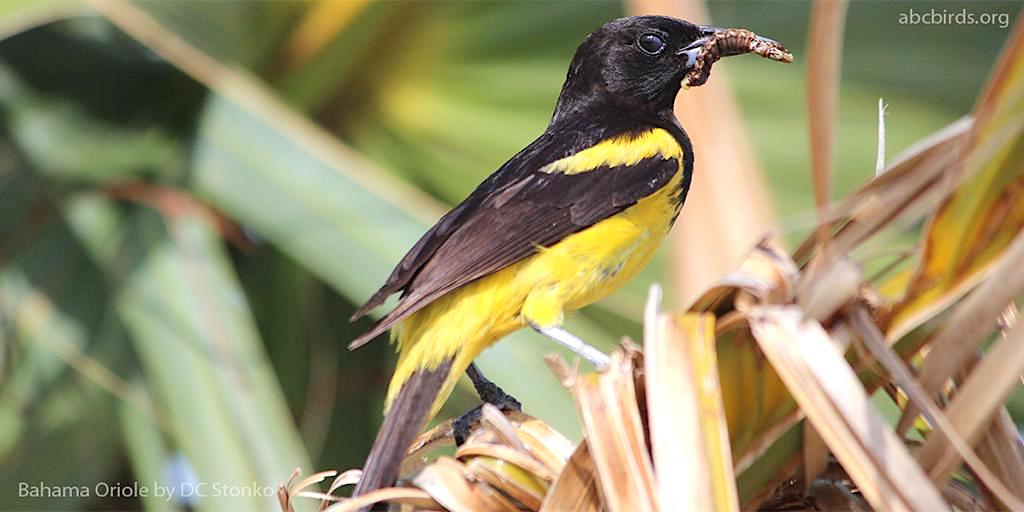
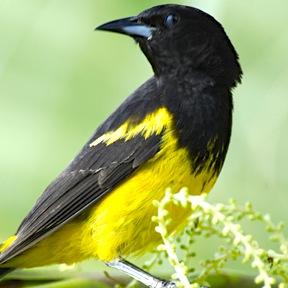
Bahama Oriole, Andros (Dan Stonko / abcbirds.org)

BAHAMA ORIOLE: HABITAT FIND FOR A RARE GEM

RARE, PRECIOUS – AND FOUND ONLY ON ANDROS, BAHAMAS

The future of the gorgeous endemic Bahama Oriole (Icterus northropi) hangs in the balance. IUCN Red Listed as ‘Critically Endangered’, the Oriole once lived on both Abaco and Andros. As recently as the 1990s, the species became extirpated on Abaco, leaving a small and fragile population in  fairly specific areas of Andros. These are places where the habitat is conducive to the orioles’ well-being, and in particular where they can safely breed and (with luck) replenish their depleted population.

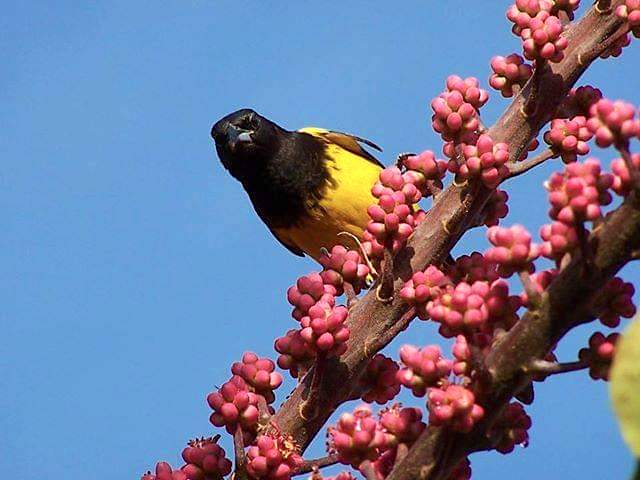
Bahama Oriole, Andros (Michael Baltz / Bahama Oriole Project)

We hear a lot about habitat loss as a grave worldwide problem for an increasing number of species. Narrow that down to one species, one island, a few defined areas, then add mankind and his needs to the mix. The wrong mix of habitat degradation, clearances, predation or disease could cause the Andros population to disappear as well.

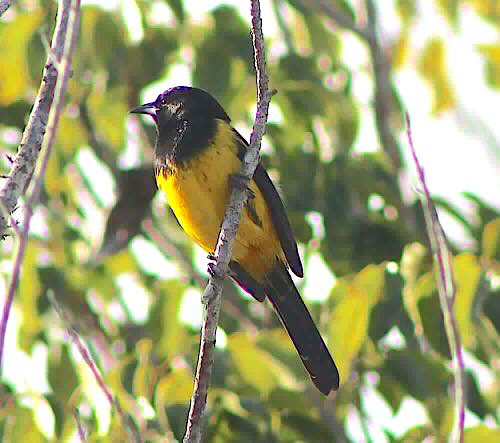
Bahama Oriole, Andros (Mary Kay Beach Dec 2018)

Which is where conservation and science come into play. The Bahamas archipelago benefits from an astonishing number of (broadly-speaking) environmental organisations that are involved in species and habitat protection, both terrestrial and marine. They range from international to Bahamas-wide and Governmental, to NFP organisations on the main islands, and on through local communities via citizen scientists to dedicated individuals. All are fighting a specific battle with a single aim; all face an increasing array of metaphorical weapons being deployed against them.

Bahama Oriole, Andros (Bahama Oriole Project FB header)

SO, ANY GOOD NEWS THEN?

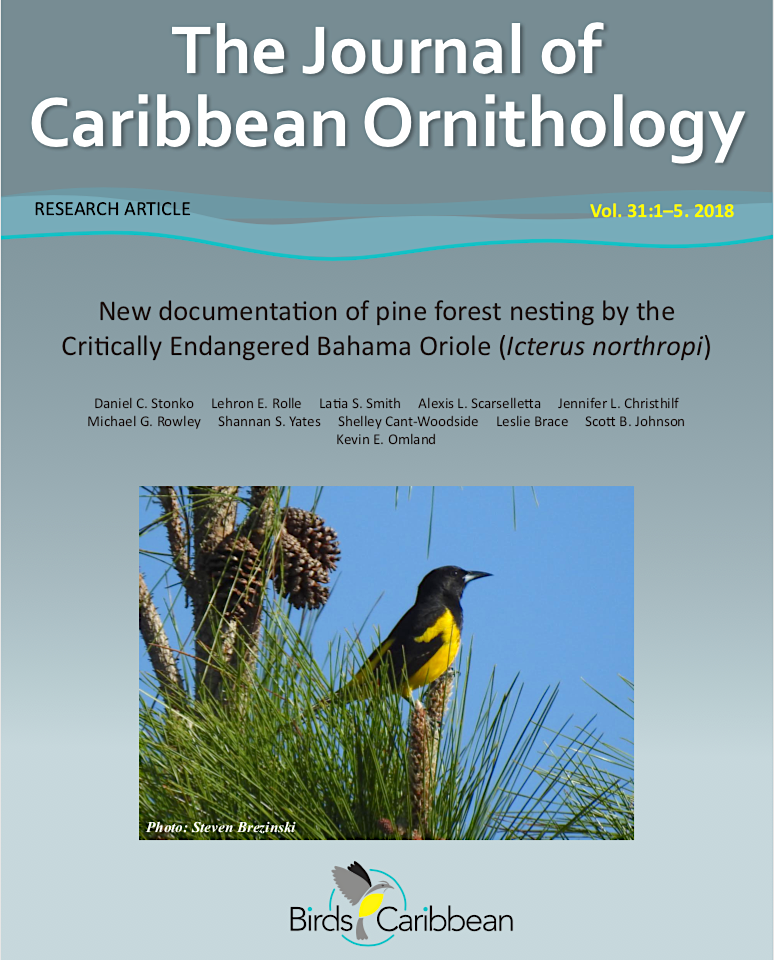
Returning to the orioles – in many ways a perfect indicator bird species – recent research has led to an encouraging discovery.  A new study in The Journal of Caribbean Ornithology published by researchers from the University of Maryland, Baltimore County and Bahamas National Trust collaborating on the Bahama Oriole Project (@BahamaOrioleProject) reveals new evidence about the nesting habits and habitats of the orioles that will have “…major implications for future conservation” (this work was funded in part by the American Bird Conservancy and Birds Caribbean).

The study is the outcome of the work of a dozen conservation specialists. In a coconut-shell, the orioles were thought to nest only in the coconut palms found near the coast. However the recent intensive research program reveals that ‘multiple pairs’ breed in the pines and the thatch palms of the forests, away from the coast. Indeed, these may prove to be the primary nesting locations. The implications of these new findings are significant, not least for a possible uplift in numbers and the way in which conservation measures can be adapted to the new discovery. For those wanting something more authoritative, the short Abstract of the study is given at the end. And if you’d like to read the whole article, click on the link below.

472-Article Text-1543-1-10-20180828

Bahama Oriole Andros (C Ward BNT)

THE MAIN CAUSES OF THE CRITICAL DECLINE ON ANDROS

  • Lethal Yellowing Disease of the coastal coconut palms, until very recently (see above) believed to be the prime nesting habitat for the oriole. In some areas the palms have been all but wiped out. The recent findings in the forests have clearly reduced the impact of this specific problem
  • The arrival in the 1990s and spread of the Shiny Cowbird Molothrus bonariensis, a brood parasite that lays its eggs in the nests of other bird species*
  • Habitat loss / development
  • Forestry work / forest fires
  • Feral cats and rodents
  • Disease within the population is also cited as a contributory cause 

*The date of this arrival seems to correspond to when the orioles were extirpated from Abaco. However, see next para.

Bahama Oriole, Andros (Thomas Nierle / Bahama Oriole Project)

WHEN & WHY DID THE ORIOLES VANISH FROM ABACO?

This is a classic ‘riddle wrapped in a mystery inside an enigma’. Various sources I have looked at use a formula such as “…became extirpated from Abaco in the 1990s”, or “disappeared for unknown reasons in the 1990s”. However, Abaco birding expert Elwood ‘Woody’ Bracey comments (see below) that Bahama Orioles were last formally recorded on Abaco in 1973 by researcher Duncan Everette and his partner who were banding warblers in Southern Abaco in what is now the Abaco National Park. At that time, the Shiny Cowbird was only rarely found on Abaco, if at all.

I’ve found no clear clue as to the cause – nor even when the last evidences sighting of an oriole on Abaco was made. I haven’t found a single photo of one taken on Abaco at any time in history. To be fair the option of snapping everything with wings multiple times using a digital camera with a huge chip didn’t exist then. As to past history, Kevin Omland of @BahamaOrioleProject says that there are at least 9 specimens in museums around the world collected from Abaco in the 1800s and early 1900s.

eBird map showing Bahama Oriole sightings distribution in c21

ABSTRACT

The Bahama Oriole (Icterus northropi) is a Critically Endangered species endemic to The Bahamas and currently found only on the Andros island complex. With the elevation of the Bahama Oriole to full species status in 2011, research suggested that there were fewer than 300 individuals remaining in the global population. The Bahama Oriole was also termed a “synanthropic species” based on data suggesting that the species nested almost exclusively within anthropogenic residential and agricultural habitats in introduced coconut palms (Cocos nucifera). These conclusions were based on population surveys primarily confined to settled areas near the coasts. However, we documented multiple pairs of orioles with breeding territories deep in pine forests, and we present the first records of Bahama Orioles nesting in pine forests—in both a Caribbean pine (Pinus caribaea) and native understory Key thatch palms (Leucothrinax morrisii). Given the predominance of the pine forests on Andros, this newly documented breeding habitat has important implications for developing population estimates and future conservation plans for the Bahama Oriole.

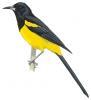
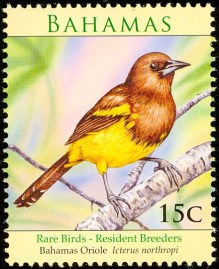
640px-Picture_of_John_Isaiah_NorthropBahama Oriole Stamp birdtheme.orgCredits: Dan Stonko / American Bird Conservancy, Michael Baltz / Bahama Oriole Project / Kevin Omland; Mary Kay Beach; Bahama Oriole Project FB header; C Ward / BNT; Thomas Nierle / Bahama Oriole Project; Bahamas Postal Service; BNT; D Belasco / American Bird Conservancy; Handbook of World Birds (drawing)

          ↑ Mr Northrop with his Bird

Bahama Oriole, Andros (D Belasco / abcbirds.org)

Unknown's avatar

GREEN HERON FISHING: GILPIN POND, ABACO, BAHAMAS


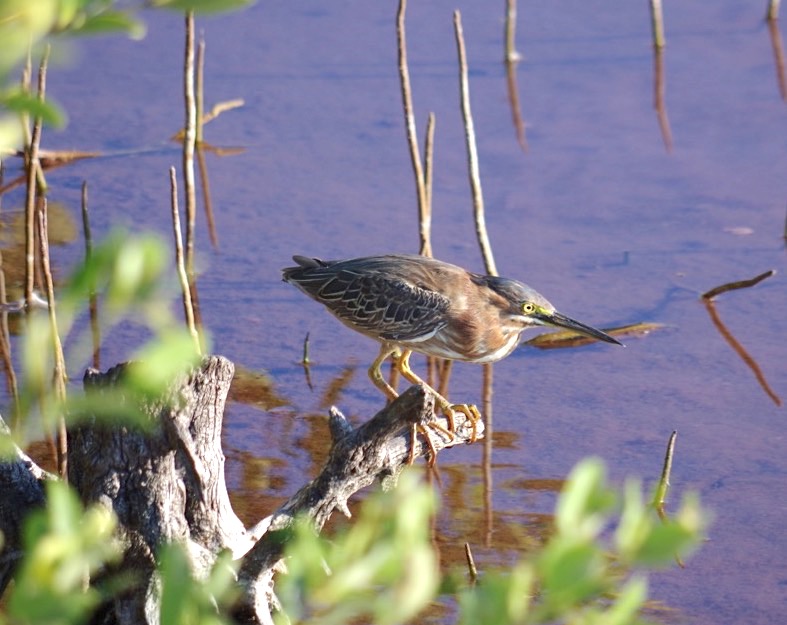
GREEN HERON FISHING, GILPIN POND, ABACO, BAHAMAS (Keith Salvesen Photography)

GREEN HERON FISHING

GILPIN POND, ABACO, BAHAMAS

The brackish pond at Gilpin Point near Crossing Rocks is generally a reliable place to find waterbirds. For those birding on South Abaco (in many respects, one big hotspot) Gilpin is definitely worth a visit at almost any time. Bear in mind it is (a) a longish private road (we got a puncture down there once…**) and (b) it is private land. However, the owner Perry Maillis is always welcoming to tidy birders who bring only enthusiasm and take only pictures. Plus he very kindly changed our wheel!

We found this small Green Heron quite easily. We’d watched it fly onto a stump in the pond near the jetty, then fly closer to the shoreline. By tiptoeing onto the jetty, we could see the bird perched close to the water, inspecting it with a fierce and predatory eye. Both eyes, in fact. 

GREEN HERON FISHING, GILPIN POND, ABACO, BAHAMAS (Keith Salvesen Photography)

The hunting technique is deceptively simple. Note the long sharp stabbing beak. Note the large feet and claws for gripping securely Here’s how it is done. As a fish is sighted, so the heron leans gradually forwards, beak dipping closer to the water, the body more streamlined to look at. The procedure is beginning in the image above.

The stance means ‘small fish – 5 feet off – moving left and closing – prepare to strike‘. As the prey unwittingly approaches, the bird slowly tilts further forward unless its beak almost touches the water, the quicker and closer to strike.

GREEN HERON FISHING, GILPIN POND, ABACO, BAHAMAS (Keith Salvesen Photography)

The actual strike is so rapid that it is barely possible to see with the naked eye, let alone to photograph it clearly (not on my type of camera anyway). But the end result is rarely in doubt, with a small fish struggling but securely held in that long, clamping beak. It will be down the heron’s gullet in a matter of seconds.

GREEN HERON FISHING, GILPIN POND, ABACO, BAHAMAS (Keith Salvesen Photography)

I left the heron as it settled slowly back into ‘scanning the water mode’ while I went to watch some lesser yellowlegs nearby. Some minutes later, the heron was still contentedly fishing from its vantage point. 

GREEN HERON FISHING, GILPIN POND, ABACO, BAHAMAS (Keith Salvesen Photography)

ROUGH GILPIN CHECKLIST

Species we have found on and around the pond include black-necked stilts, little blue heron, great blue heron, tricolored heron, snowy egret, reddish egret, yellow-crowned night heron, the relatively rare and very shy sora, hordes of white-cheeked pintails, northern pintails, lesser yellowlegs, belted kingfisher, turkey vulture, smooth-billed ani, American kestrel, Bahama woodstar, Cuban emerald, Mucovy duck (Perry’ pet!) – and the green heron of course.

As a bonus, Gilpin has become an increasingly regular stop for raucous flocks of Abaco parrots. Rarer species found there include American flamingo (rare vagrant), brown pelican, double-crested cormorants, and limpkins. On the beach 5 minutes walk away, there are usually shorebirds including rare piping plovers, Wilson’s plovers, turnstones; gull and tern species; and passing tropicbirds & magnificent frigatebirds flying high over the water.

FOR MORE ABOUT GREEN HERONS: SHARP-EYED SHARP BILLED

** I realise that strictly I should be saying ‘flat’ here, but that might be confusing for Euro-readers, who would understand that to mean that we had rented (or purchased) an apartment in a larger dwelling house containing similar accommodation. 

All photos, Keith Salvesen except the cute chick, Charlie Skinner; and the cute cartoon GH, Birdorable…

GREEN HERON FISHING, GILPIN POND, ABACO, BAHAMAS (Charles Skinner)

Unknown's avatar

WHITE-TAILED TROPICBIRDS: EFFORTLESS ELEGANCE


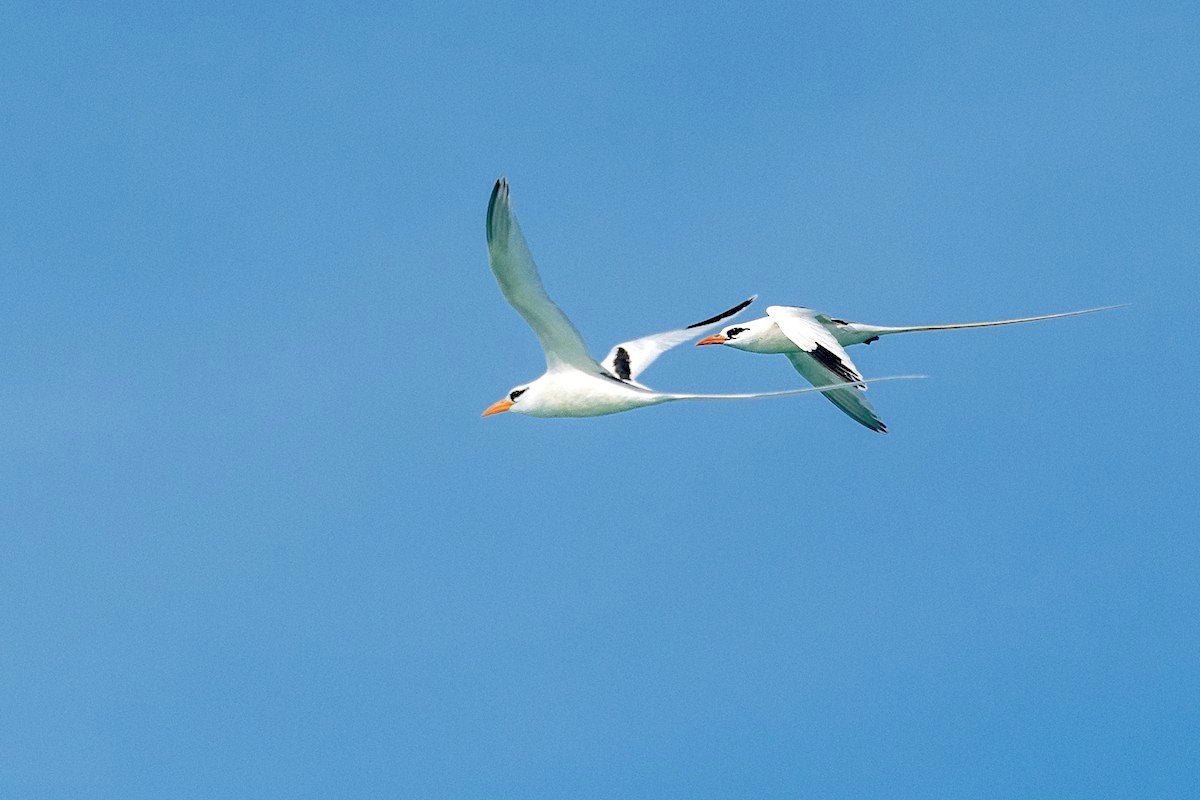
White-tailed Tropicbird Phaethon lepturus catesbyi, Abaco Bahamas (Sally Chisholm)

WHITE-TAILED TROPICBIRDS: EFFORTLESS ELEGANCE

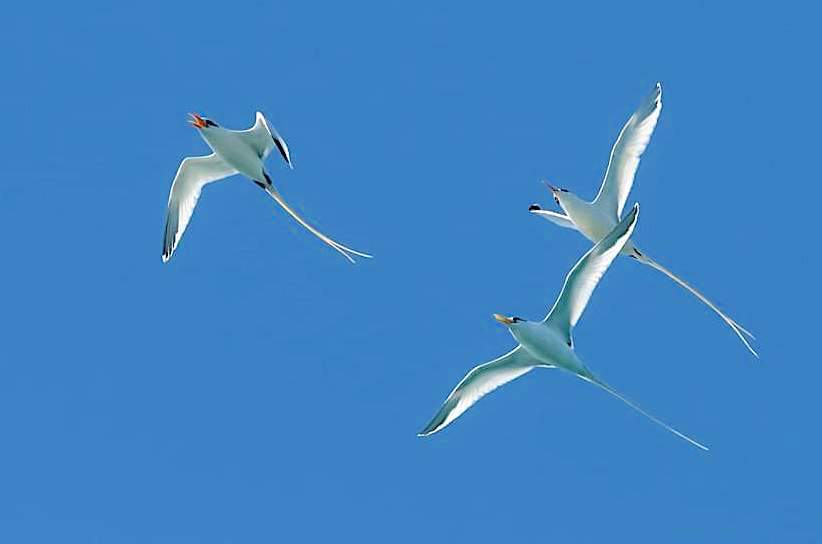
I am interrupting my intended sequence of posts (I try to plan ahead a bit…) to bring you some gorgeous white-tailed tropicbirds (Phaethon lepturus catesbyi) seen within the last week near the Low Place on Man-o-War Cay. There were 6 in the group, flying high, flying low, circling, dipping down, flirting  – all of this taking place just offshore.

White-tailed Tropicbird Phaethon lepturus catesbyi, Abaco Bahamas (Sally Chisholm)

Sally Chisholm, Abaco birder and photographer, was with Todd Pover of CWFNJ, engaged in the final piping plover count of the season before the birds return to their summer breeding grounds [check out ABACO PIPING PLOVER WATCH if you are interested]. Sally and Todd were distracted from the matter in hand as the group of tropicbirds glided and swooped through the air. It was a free demonstration of beautiful flying skills that can be matched by few other species.

White-tailed Tropicbird Phaethon lepturus catesbyi, Abaco Bahamas (Sally Chisholm)

It became obvious that courtship was involved. As Sally vividly describes it, “The birds were observed for more than 15 minutes making wide circles, at times flying out of sight across towards Great Abaco and coming back flying low over the same area on MOW. Two birds would interact with a lot of “keck-keck-keck”, and then one of the pair flew down to land several times in the same crevice of the iron shore. It first appeared that the bird was landing for food but none of the photos showed anything carried. The display looked to be one of courtship and was amazing to watch”.

White-tailed Tropicbird Phaethon lepturus catesbyi, Abaco Bahamas (Sally Chisholm)

TROPICAL TOPICS

  • WTTR plunge-dive for fish and squid, sometimes submerging completely
  • Or they swoop and skim their prey from the surface
  • Another technique to take flying fish in the air (I’d love to see that…)
  • WTTR have no fixed breeding season, and may nest year-round
  • Nesting is colonial or in pairs in a particular area, or even in isolation
  • Pre-mating behaviour involves courtship displays (as here)
  • A pair will fly together, one above the other then…
  • …the higher bird bends its tail down to touch tail of lower bird and [veil drawn]
  • They nest in crevices, holes in rock, on ledges, on the ground under vegetation
  • Chicks are fed by both parents using regurgitation
  • The same site may be re-used for several years by the same pair

White-tailed Tropicbird Phaethon lepturus catesbyi, Abaco Bahamas (Sally Chisholm)

Credits: All photos, Sally Chisholm except the fantastic nest shot, Melissa Maura (many thanks to both for use permission – I’ve never got a decent photo of one); Audubon NA

White-tailed Tropicbird Phaethon lepturus catesbyi, Abaco Bahamas (Melissa Maura)

Unknown's avatar

CUBAN PEWEE: ‘NATURE’S LEAST SCARY TYRANT’


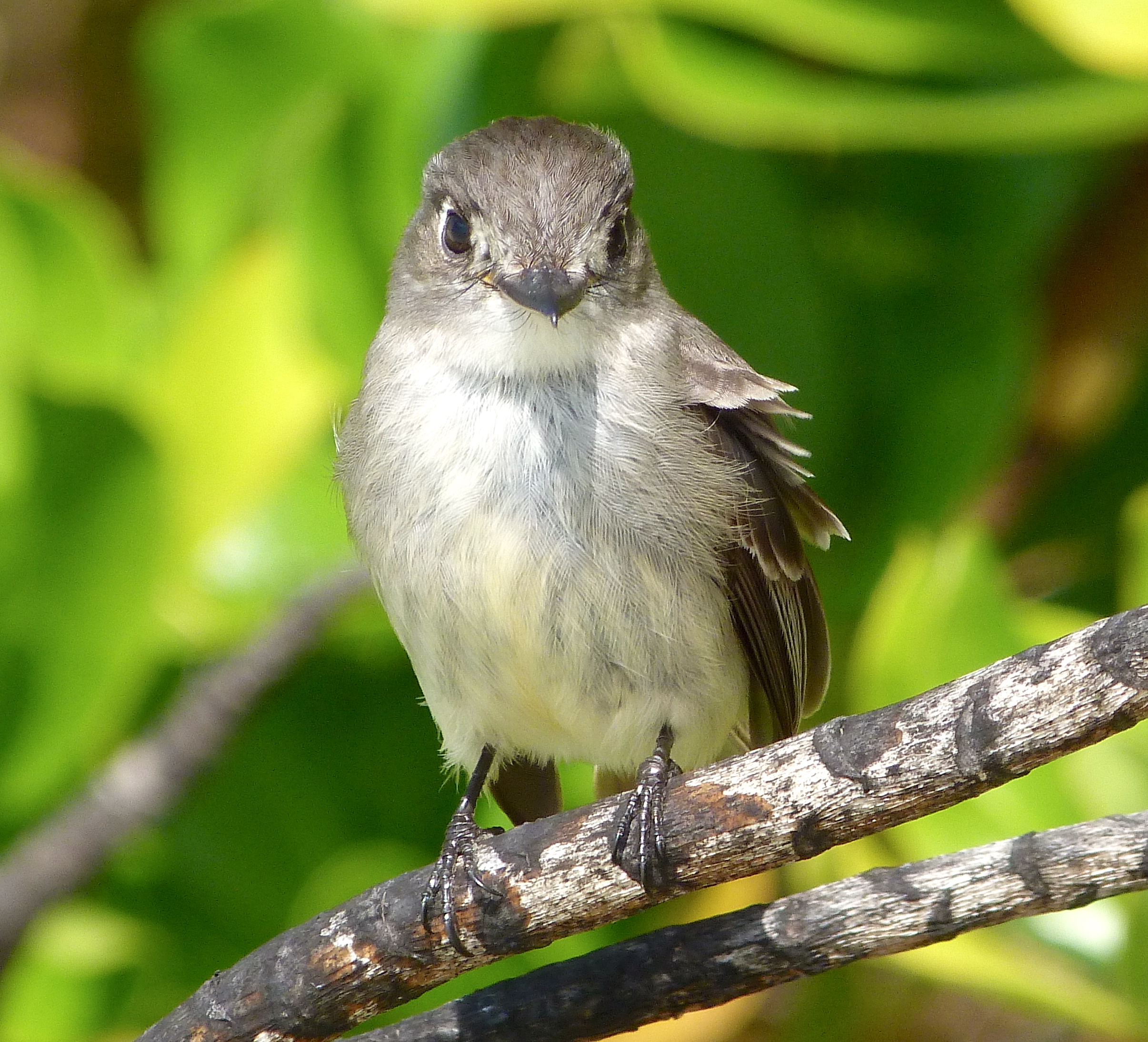
Cuban Pewee, Contopus caribaeus bahamensis, Casuarina Abaco Bahamas (Keith Salvesen Photography)

CUBAN PEWEE: ‘NATURE’S LEAST SCARY TYRANT’

The small bird featured here is a CUBAN PEWEE Contopus caribaeus bahamensis (sometimes called the Crescent-eyed Pewee – see image for why this is so). It is without a doubt a tyrant. At barely 6″ long, it is the smallest tyrant you are likely to encounter in the Bahamas or indeed anywhere else. However it does happen to be a member of the family Tyranidae. These are the flycatchers, and on Abaco they include the larger LA SAGRA’S FLYCATCHERthe still larger LOGGERHEAD KINGBIRD and (a summer visitor only) the GRAY KINGBIRD (this last link explains the difference between the two kingbirds).

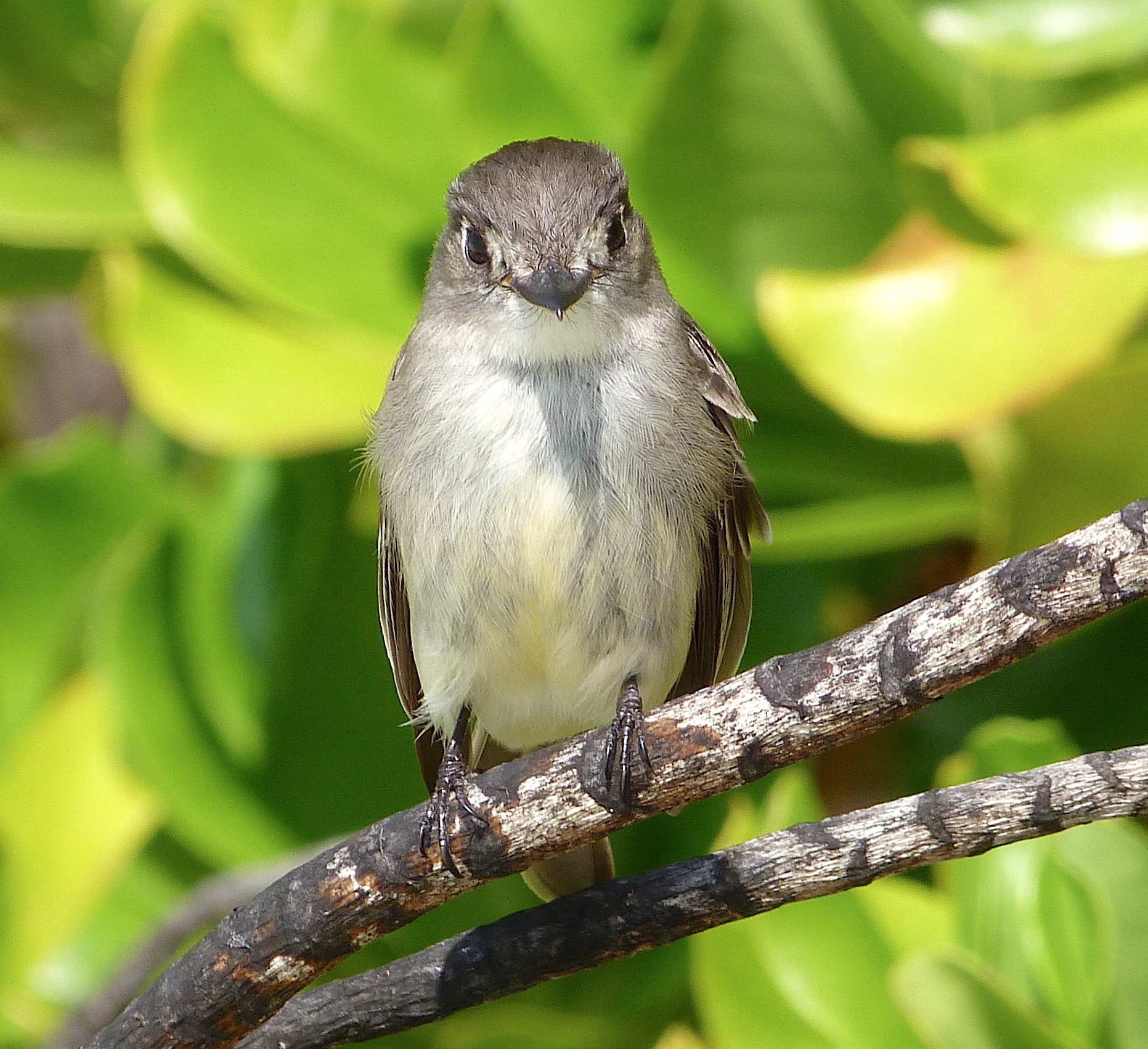
Cuban Pewee, Contopus caribaeus bahamensis, Casuarina Abaco Bahamas (Keith Salvesen Photography)

The Cuban Pewee is permanently resident on Abaco, and can be found in both pine woods and coppice. When returning to its perch after a fly-catching sortie – ‘hawking’ on the wing – this wee bird gives a characteristic flick of the tail. The bird featured here was in the rough scrub behind the beach of the beautiful bay at Casuarina. It became a favourite of mine simply by being completely unafraid of me, and accepting my extremely slow approach (3 inches at a time) with apparent interest mixed in with an endearing willingness to pose, even when I could almost have reached out and touched it.

Cuban Pewee, Contopus caribaeus bahamensis, Casuarina Abaco Bahamas (Keith Salvesen Photography)

Unlike many creatures, it did not seem concerned by eye-contact. It responded when I made a faint clicking sound by rather sweetly putting its head on one side. However, as I got as close to it as I dared, it began to fidget slightly (possibly feeling camera-shy). So I shuffled slowly back, so as not to disturb it in its own territory, where it was the resident and I was the intruder.

Cuban Pewee, Contopus caribaeus bahamensis, Casuarina Abaco Bahamas (Keith Salvesen Photography)

These close-ups clearly show the tiny hooked tip at the end of the upper beak, which (as in other tyrant species) relates to the business of catching flies. Also like other flycatchers, the Cuban Pewee has very distinctive whiskers around the base of the beak. In fact, these are not whiskers as such – not hairs so much as feathers that have modified into bristles. These act as ‘tactile sensors’ to assist the detection and targeting of aerial insects as the bird darts from a perch to intercept some passing tasty winged morsel. 

Cuban Pewee, Contopus caribaeus bahamensis, Casuarina Abaco Bahamas (Keith Salvesen Photography)

The range of the Cuban Pewee is limited almost entirely to Cuba and the Bahamas, so it is very region specific. And how lucky we are to have these cute little specimens on Abaco. I note that the Audubon site calls them drab, which I think is a little unfair. Merely because a bird is not decked out like a PAINTED BUNTING or startlingly marked like a male RED-WINGED BLACKBIRD does not make it drab. I prefer the word ‘subtle’.  I like GRASSQUITS too, for the same reason: too often maligned as ‘dull’.

Cuban Pewee, Contopus caribaeus bahamensis, Casuarina Abaco Bahamas (Keith Salvesen Photography)

It is sometimes tempting to anthropomorphise such close encounters in terms of imputed human / creature empathy. It is probably best to try to resist that attitude (‘inter-species condescension’, as you might term it). But as I withdrew, leaving this little bird undisturbed on its branch, I did experience a strange feeling of mutual understanding and… [I must interrupt myself here. I’m a lawyer, so that’s quite enough of that sort of emotive nonsense]

All photos: Keith Salvesen; Range Map, Cornell

Cuban Pewee, Contopus caribaeus bahamensis, Casuarina Abaco Bahamas (Keith Salvesen Photography)

Unknown's avatar

KIRTLAND’S WARBLERS: DESERVING PHILATLEY…


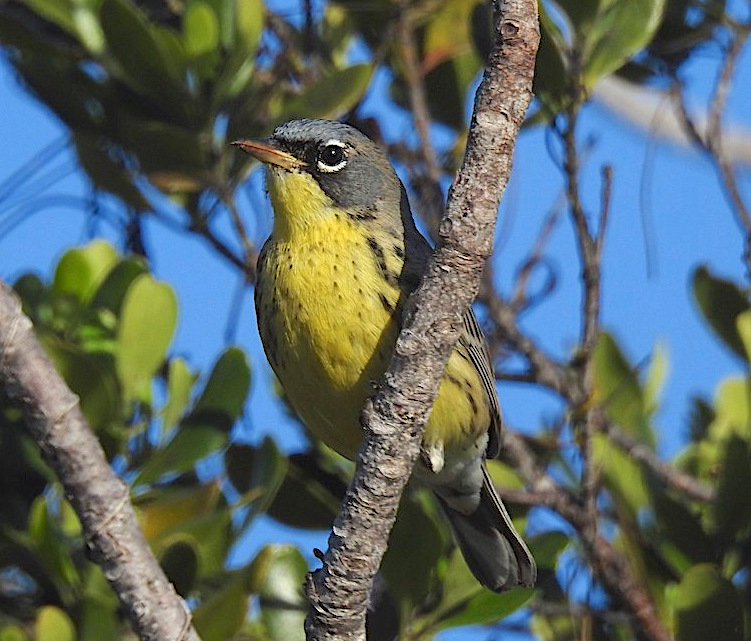
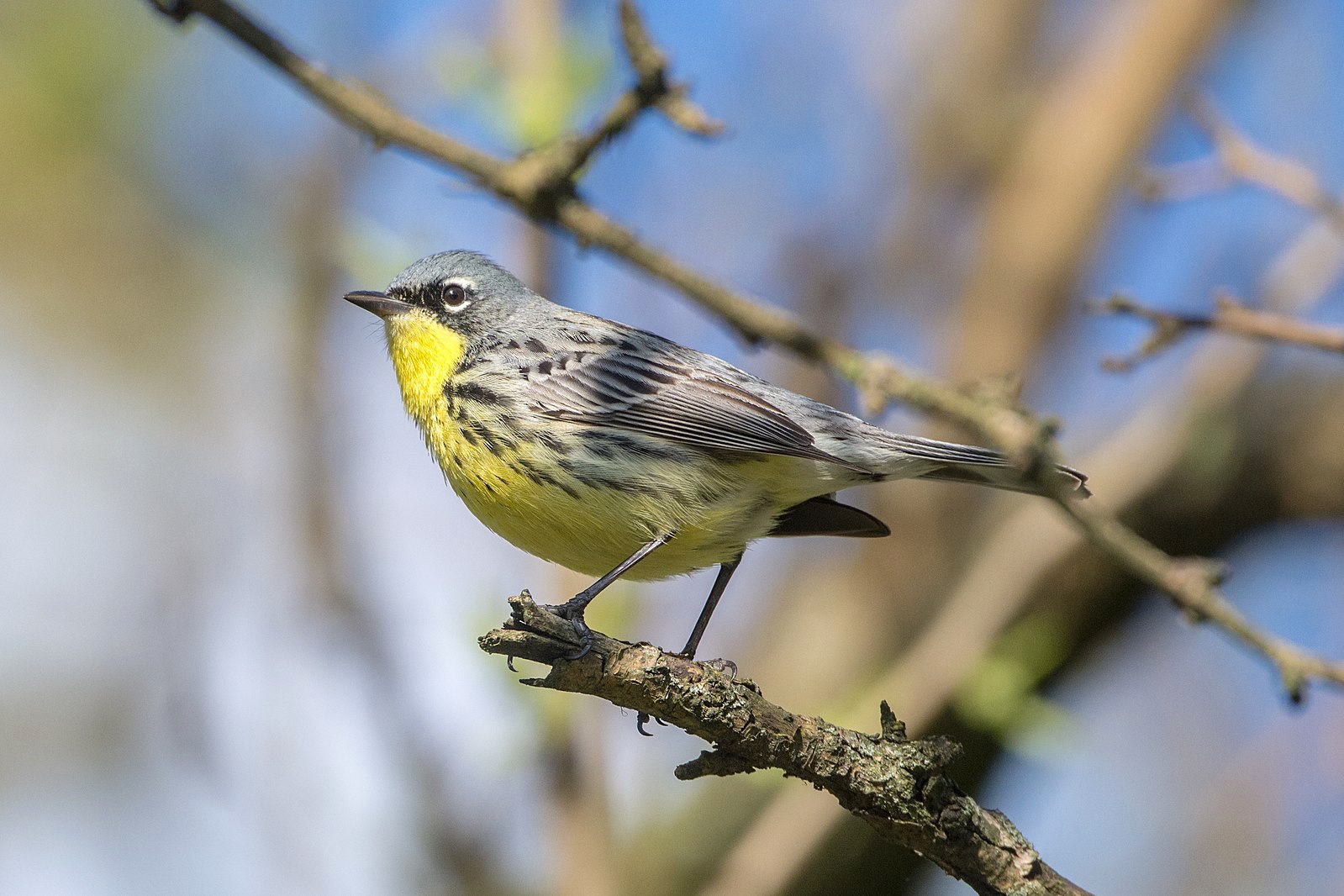
Kirtland's Warbler, Abaco, Bahamas (Woody Bracey)

KIRTLAND’S WARBLERS: DESERVING PHILATLEY…

As I have mentioned before, the BAHAMAS POSTAL SERVICE has an exceptionally good record for producing wonderful, colourful stamps showcasing the abundant wealth of natural history in the archipelago. Birds, reef fish, turtles, marine mammals, butterflies, plants and flowers – all these and more have featured on the stamps of the Bahamas for many years. There’s quite a collection of them on a display page of their own HERE.

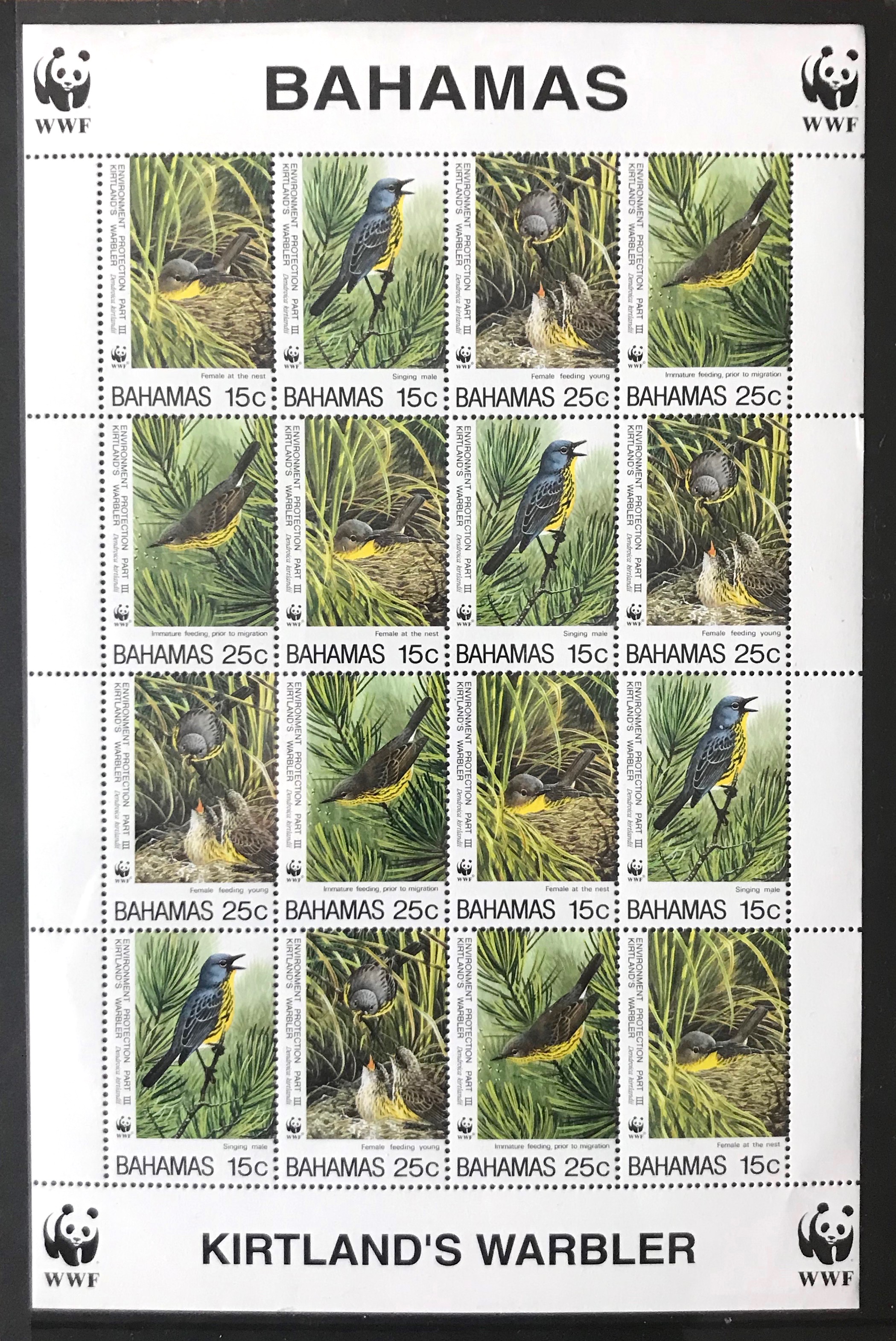
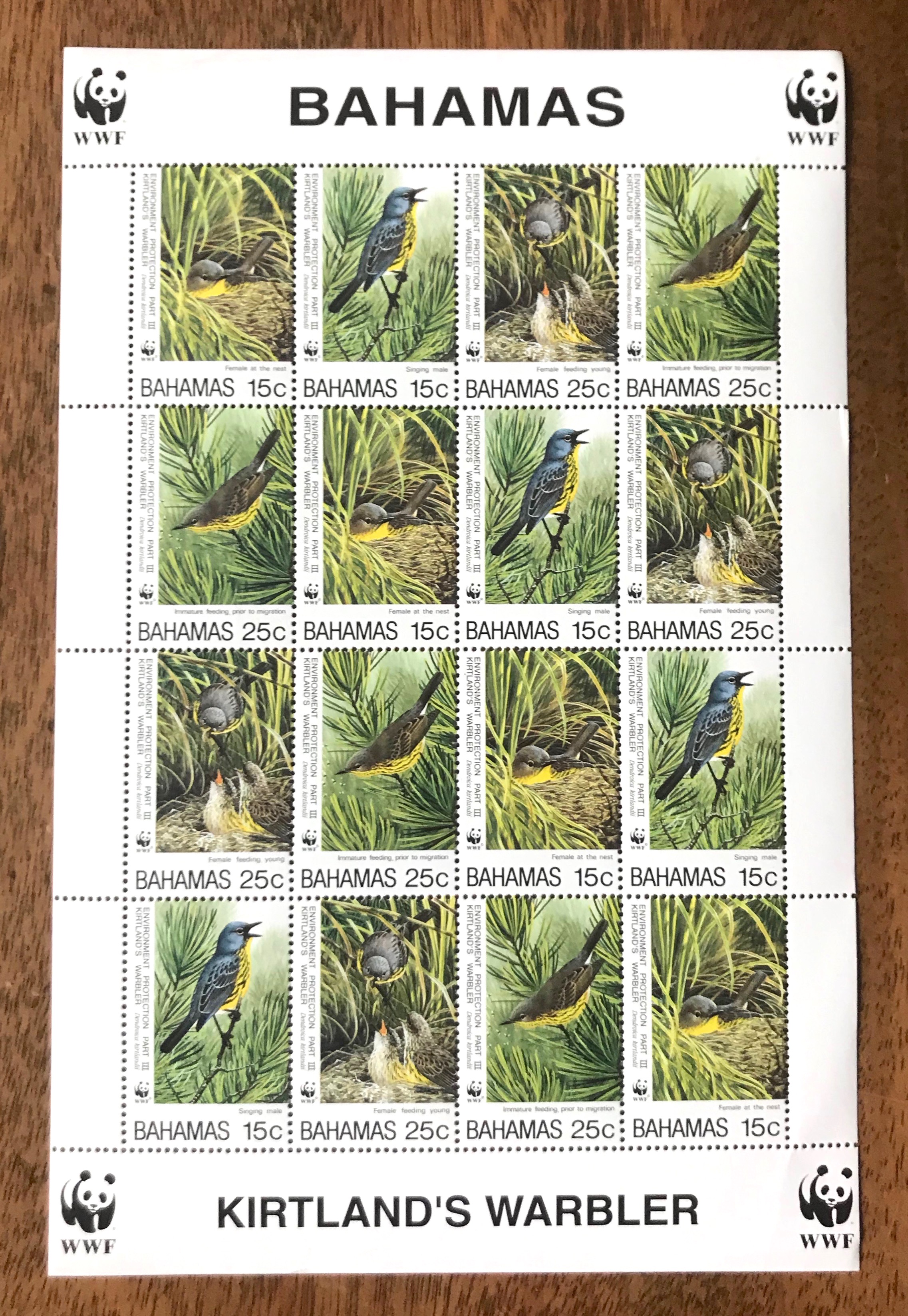
Quite by chance I recently came across a significant philatelic tribute to one of the rarest Bahamas winter visitors, the Kirtland’s Warbler (Setophaga kirtlandii): a complete commemorative sheet of stamps. Reader I bought it (= ‘won’ it on eBay – $2.75!). Produced in conjunction with the WWF, it is a model of conservationist sensitivity.

The sheet of 16 stamps depicts 4 x 4 KIWA variations: a female at the nest; a singing male; a female feeding young; and a juvenile feeding in the Jack pines of its summer habitat, prior to its long Fall migration to Abaco and the Bahamas.

Kirtland’s Warbler in the Abaco National Park: you need to know where to look to find oneKirtland's Warbler, Abaco, Bahamas (Woody Bracey)

I am not a stamp collector, but I do appreciate it when countries take the trouble to showcase their flora and fauna among the notable people, sporting heroes, modes of transport and Harry Potter characters. As I say, the Bahamas is very good in this respect.

A Kirtland’s Warbler on Green Turtle Cay: the first recorded sighting on one of the CaysKirtland's Warbler, Elbow Cay Abaco Bahamas (Sally Chisholm)

You can find out more about these rare and vulnerable little warblers, including the first ever recorded on a Cay in Abaco, using these links:

KIRTLAND’S WARBLERS: ALL YOU NEED TO KNOW

KIWA ON GREEN TURTLE CAY: A FIRST FOR ABACO

In the breeding grounds in very limited areas of Michigan and Ohio, the KIWAs are carefully monitored. Vince Cavalieri is a bird expert in those parts, and his bird below was photographed in the heartland of their preferred summer habitat. Vince wrote the following caption:

In 1987 the Kirtland’s Warbler was a hair’s breadth from extinction. A century of fire suppression and encroachment into their habitat by the brown-headed cowbird had reduced its already small population to a tiny number of birds in just a few Michigan counties. A prescribed fire that got out of control may have saved them, creating enough habitat that it gave conservationists enough time to figure out how to save them (highly prescriptive habitat creation and cowbird control). Today their comeback has been so successful that they have been proposed for removal from the endangered species list. They still remain the stuff of birding legend. A tiny range mostly restricted to north central Michigan, a big beautiful warbler with a loud and cheerful song, easy to see and confiding once found. A bird worthy of long travel to check off your list.

Kirtland's Warbler, Michigan (Vince Cavalieri)

Here are a couple more ‘summer birds’ to admire

Kirtland's Warbler (kiwa-jeol-trick-fwsh-snowmanradio-wiki) Kirtland's Warbler (Andrew C, Ohio wiki)

Credits: Woody Bracey (1, 2); Sally Chisholm (3); Vince Cavalieri (4); Joel Trick FWSH (5); Andrew C (Wiki) (6);  Birdorable (cartoon); BPS and eBay (KIWA stamps)  

Unknown's avatar

SANDHILL CRANE: ABACO’S NOVELTY BIRD (2)


Sandhill Crane Antigone canadensis Abaco, Bahamas (Christopher Johnson) SANDHILL CRANE: ABACO’S NOVELTY BIRD (2)

In mid-December, Kaderin Mills of the Bahamas National Trust saw Abaco’s first-ever reported Sandhill Crane (Antigone canadensis) in the Fox Town area of North Abaco. Woody Bracey was quickly onto the news and in the afternoon he took photos of the bird. I posted about this exciting (because a new species is always exciting) event, with details about its significance plus facts, maps etc HERE

Sandhill Crane Antigone canadensis Abaco, Bahamas (Erika Gates / Martha Cartwright)

Six weeks later, the crane is still in residence. In the meantime a number of birders have been to see the new novelty bird for Abaco in what has become a small but significant birding hotspot right at the top end of the island, in area round the Church, the Primary School, and the Clinic. The crane is now firmly on the eBird map for the Bahamas.


Sandhill Crane Antigone canadensis Abaco, Bahamas (Woody Bracey)

This elegant visitor seems to be quite tame and unfazed by its new fame. People watch while it forages for invertebrates in the grass, pausing to check on bystanders before resuming its feeding. It tolerates the presence of humans without showing fear, let alone flying away.

Sandhill Crane Antigone canadensis Abaco, Bahamas (Erika Gates / Martha Cartwright)

The call of the Sandhill Crane sounds like this:

To test its reaction, a recording was played and immediately the crane responded and called out to the (apparent) co-crane. The bird has also (rather sadly?) been seen by locals by the door of the Church, looking at its reflection and even making pecking motions at it. A lonely crane, maybe.

.Sandhill Crane Antigone canadensis Abaco, Bahamas (Woody Bracey)

This bird is likely to remain disappointed by any expectation or hope of company. With any luck in the Spring, the instinctive call to the north (Canada and nearby US) will persuade it to migrate back to sandhill habitat to join a flock in the summer breeding grounds.

Sandhill Crane Antigone canadensis Abaco, Bahamas (Woody Bracey)

It is always a somewhat melancholy occurrence when a fine bird like this – or like last season’s lone BALD EAGLE – takes a wrong turn on their migration or perhaps get blown off course and finds itself on its own, species-wise. This bird seems to be taking it in its (longish) stride, however, and it has become something of a celebrity avian for the local folk. It will be interesting to find out when the migration urge finally encourages its flight away from its unusual overwintering habitat.

Credits: Chris Johnson (1); Erika Gates / Martha Cartwright (2, 4); Elwood ‘Woody’ Bracey (3, 5, 6); Audubon (7); Ian Cruickshank / Xeno Canto (audio); Birdorable (cartoon); and a tip of the hat to the School Principal, to Kadie Mills, and to Uli Nowlan who uploaded her sighting to eBird.

Sandhill Crane Antigone canadensis (Audubon Birds)