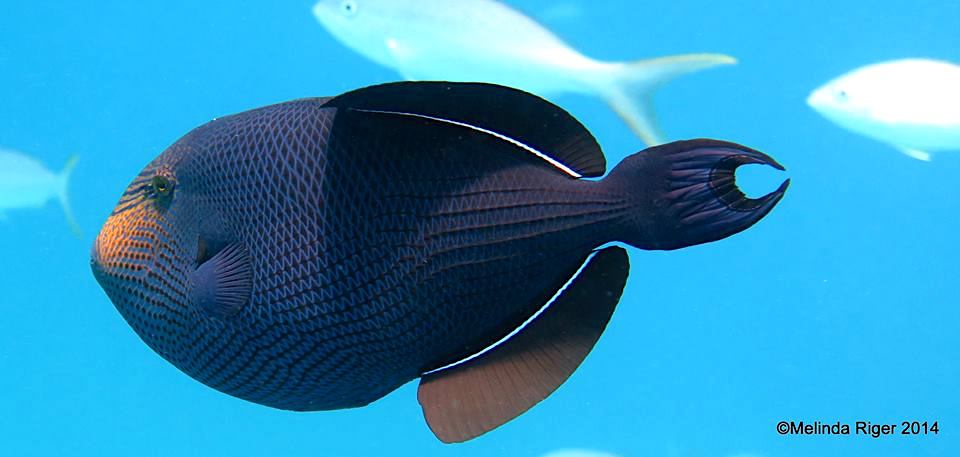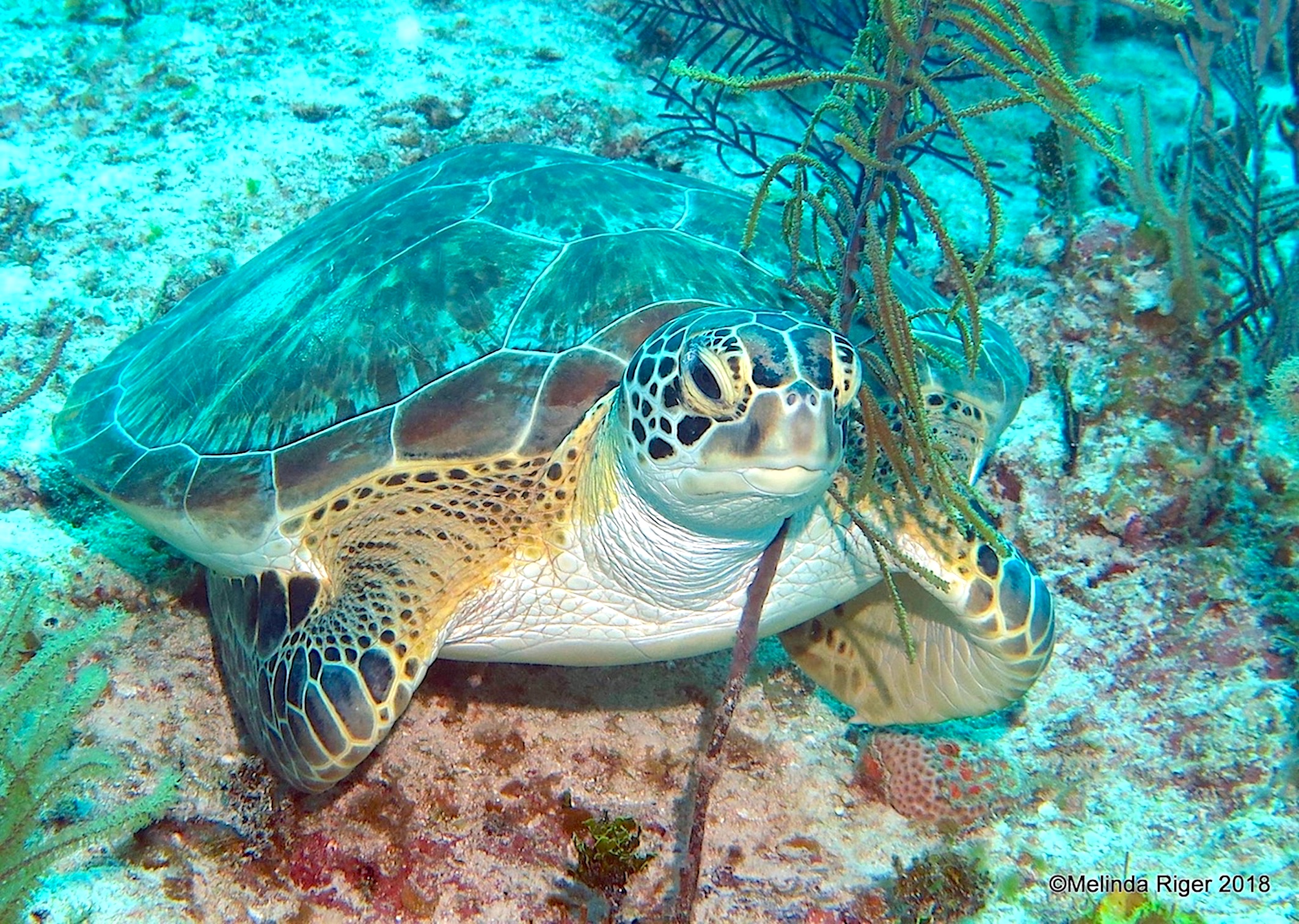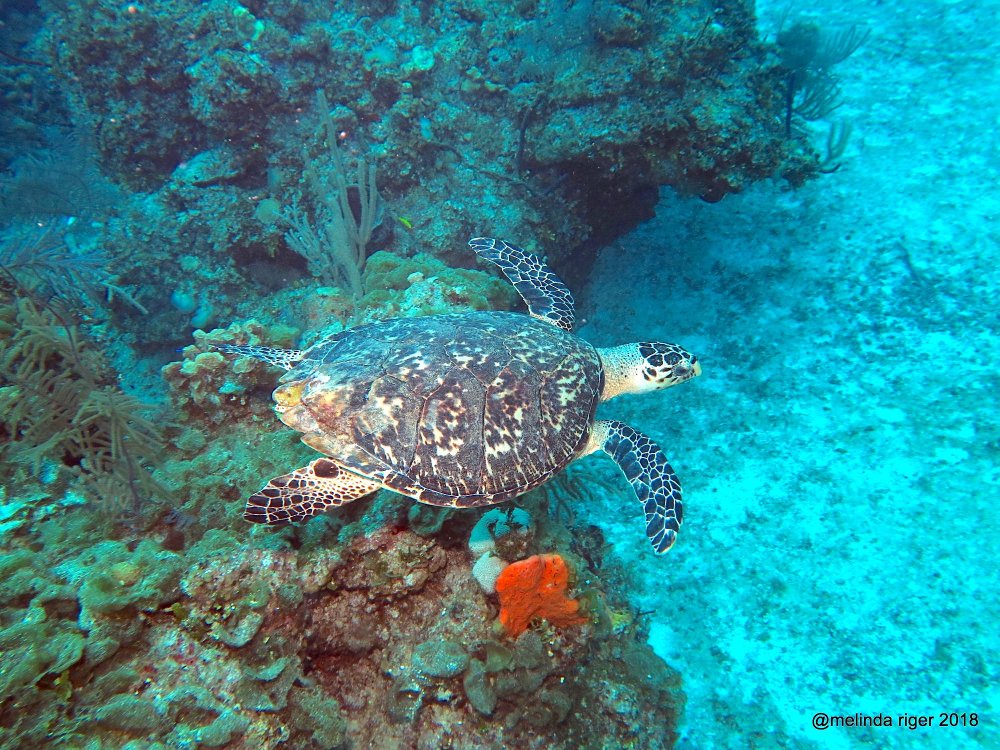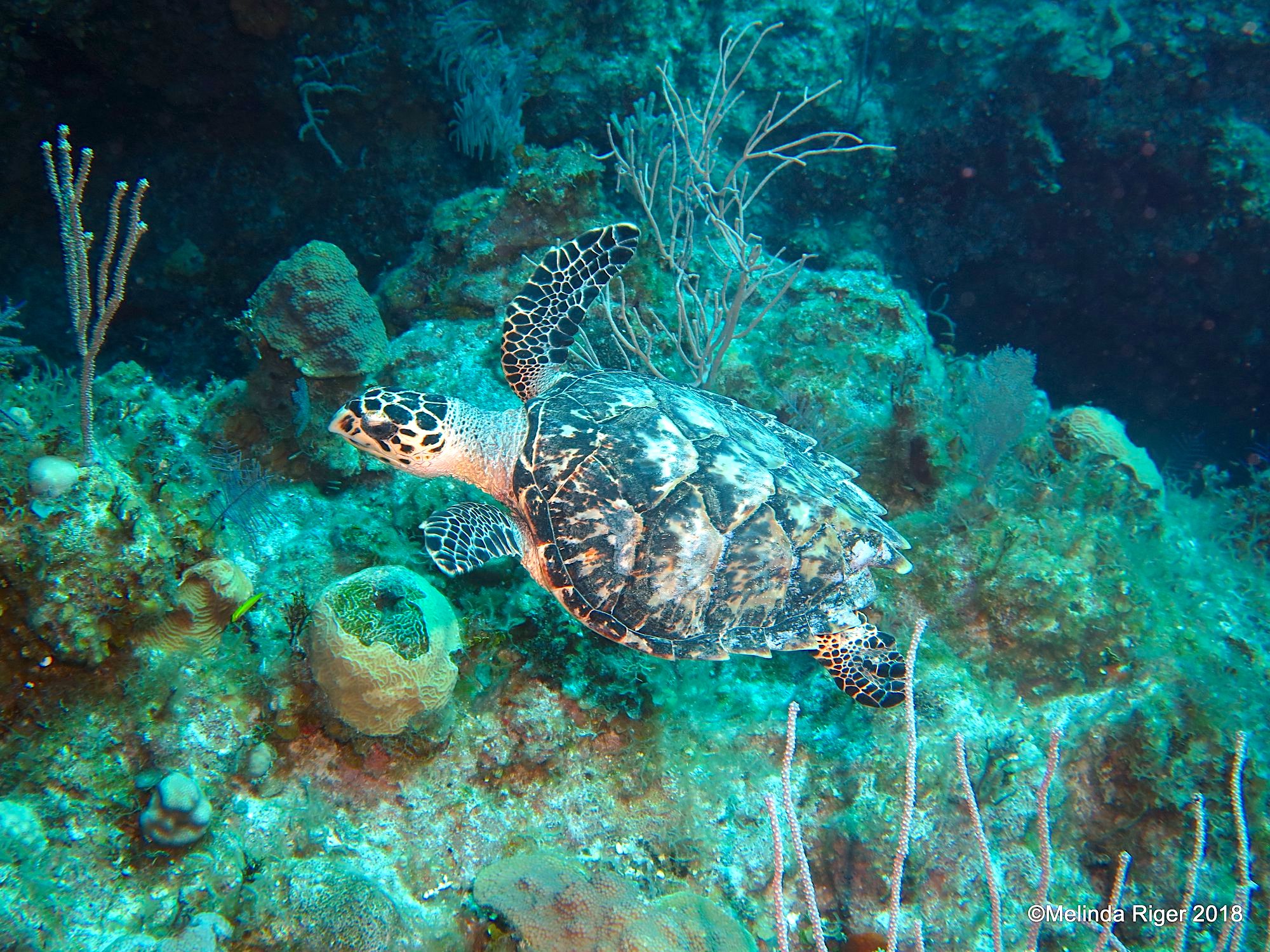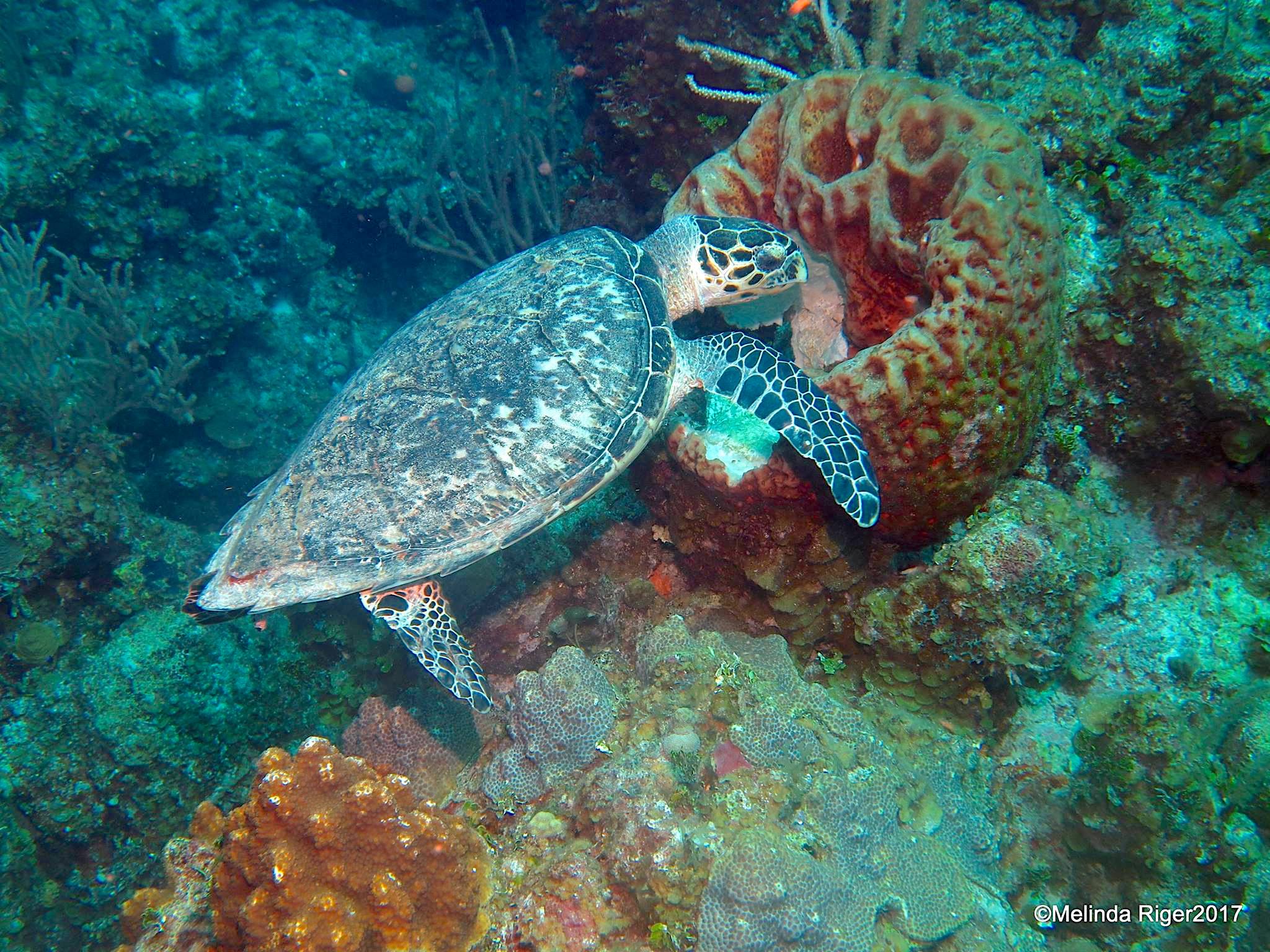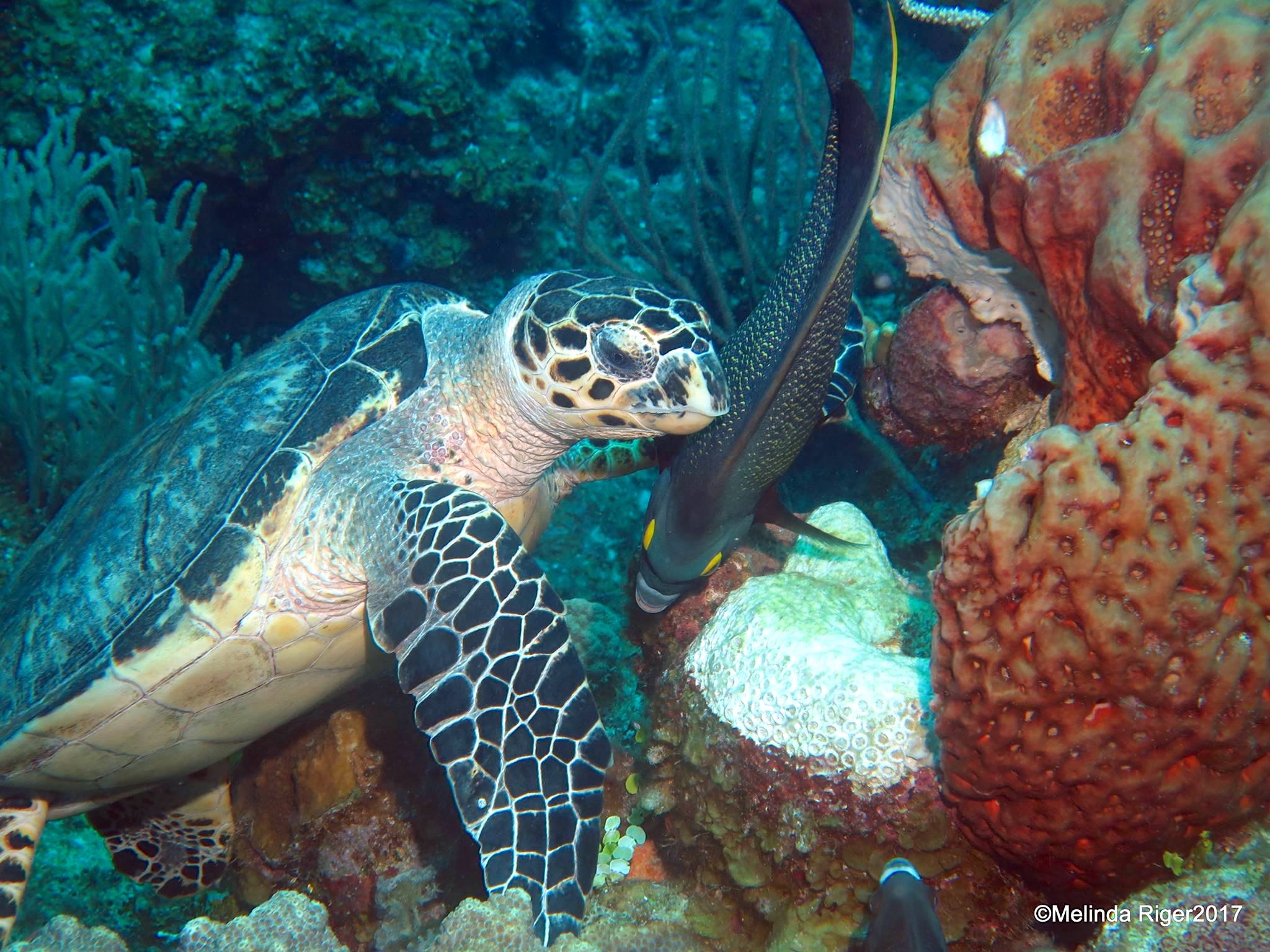
Of all the sea creatures in the limpid waters of the Bahamas, turtles are rightly among the most loved. These days, what with habitat degradation below the waves and the destruction of nesting sites on land, turtles have a hard time simply fighting for survival. And that’s before they have ingested the plastic garbage that mankind pours into their living quarters, by now probably beyond effective remedial action forever. So here are some gorgeous turtles to admire, while stocks last…
Hawksbill Turtles enjoying life around a still-healthy reef
A hawksbill snacking on a sponge
Interaction with other underwater species: gray angelfish and a rock beauty
If you are concerned about the plight of turtles and indeed other denizens of the thickening plastic soup we still call ‘ocean’, you could investigate the work some of the organisations that tackle the problem in the Bahamas and beyond. To name but a few, our own FRIENDS OF THE ENVIRONMENT; the BAHAMAS NATIONAL TRUST; the Bahamas Reef Environmental, Educational Foundation BREEF; the CAPE ELEUTHERA FOUNDATION; and the SEA TURTLE CONSERVANCY.
Photo credits: all great photos by Melinda Riger / Grand Bahama Scuba
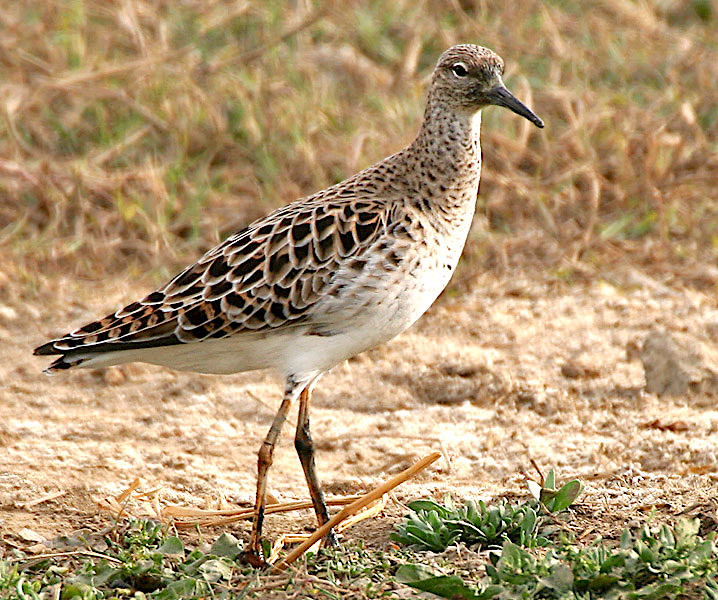
The list of new bird species recorded for the Bahamas in general and Abaco in particular continues to grow longer. At the end of August it was aCANADA WARBLER(now also recently seen on Grand Bahama and possibly New Providence). Now, a mere 4 weeks later, it’s a Ruff (Calidris pugnax), a mid-sized Eurasian shorebird that, it seems, has a tendency to ‘vagrate’ across the Atlantic from time to time.
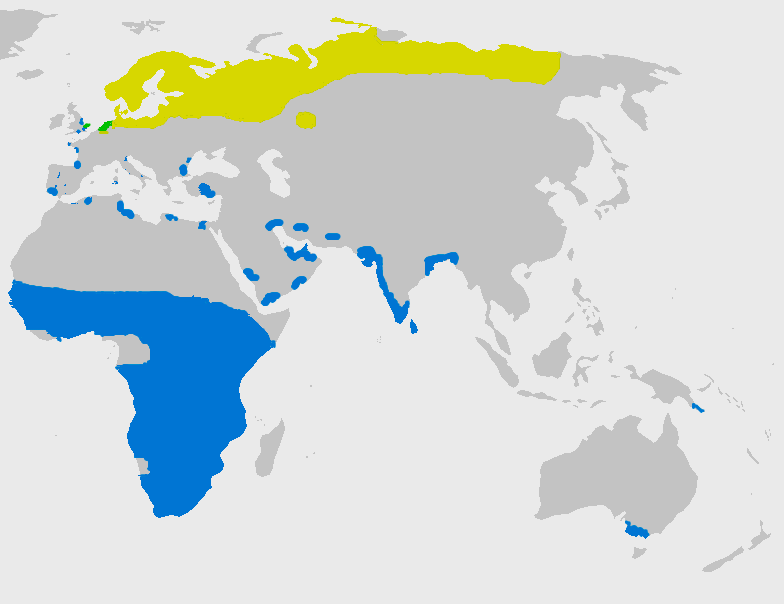
Ruffs: the normal range
You have to take new birds as you find them, of course. First, you may not have a camera with you to record the sighting for posterity. Secondly, the bird may not be perched prettily on a twig or a small rock. In this instance the legendary Woody Bracey found his Ruff in the prosaic and arguably unattractive setting of the Treasure Cay dump. He didn’t have a camera, and when he next went back with a camera to check for the bird the ruff had gone…
Woody’s bird, a female (known as a Reeve), was standing next to a Lesser Yellowlegs. They are much the same height, but there the similarity ends – Ruffs are unmistakably plumper and with a shorter bill. Woody has good reason to recognise these rare and occasional transatlantic visitors, having often seen Ruffs both during his time living in the UK, and also in Africa. I’ve seen the appearance described as “like a gravy-boat”, which is well up there with the least useful descriptions of a bird’s appearance I have come across. Looked at another way, we have a couple of gravy boats that have an occasional outing. Neither looks remotely like a ruff.
IS THE ABACO RUFF A NEW SPECIES FOR THE WHOLE BAHAMAS?
Very nearly… but not quite. Only two previous Ruff sightings are recorded, in 2015 and 2018, and both in the same area on Grand Bahama, towards West End. And the only photo is from birder Duncan Mullis, who in 2015 took the first and maybe only one of a Reeve with a bunch of much smaller sanderlings (see also header image close-up).
The first ruff in the Bahamas
WHAT SHOULD WE KNOW ABOUT RUFFS?
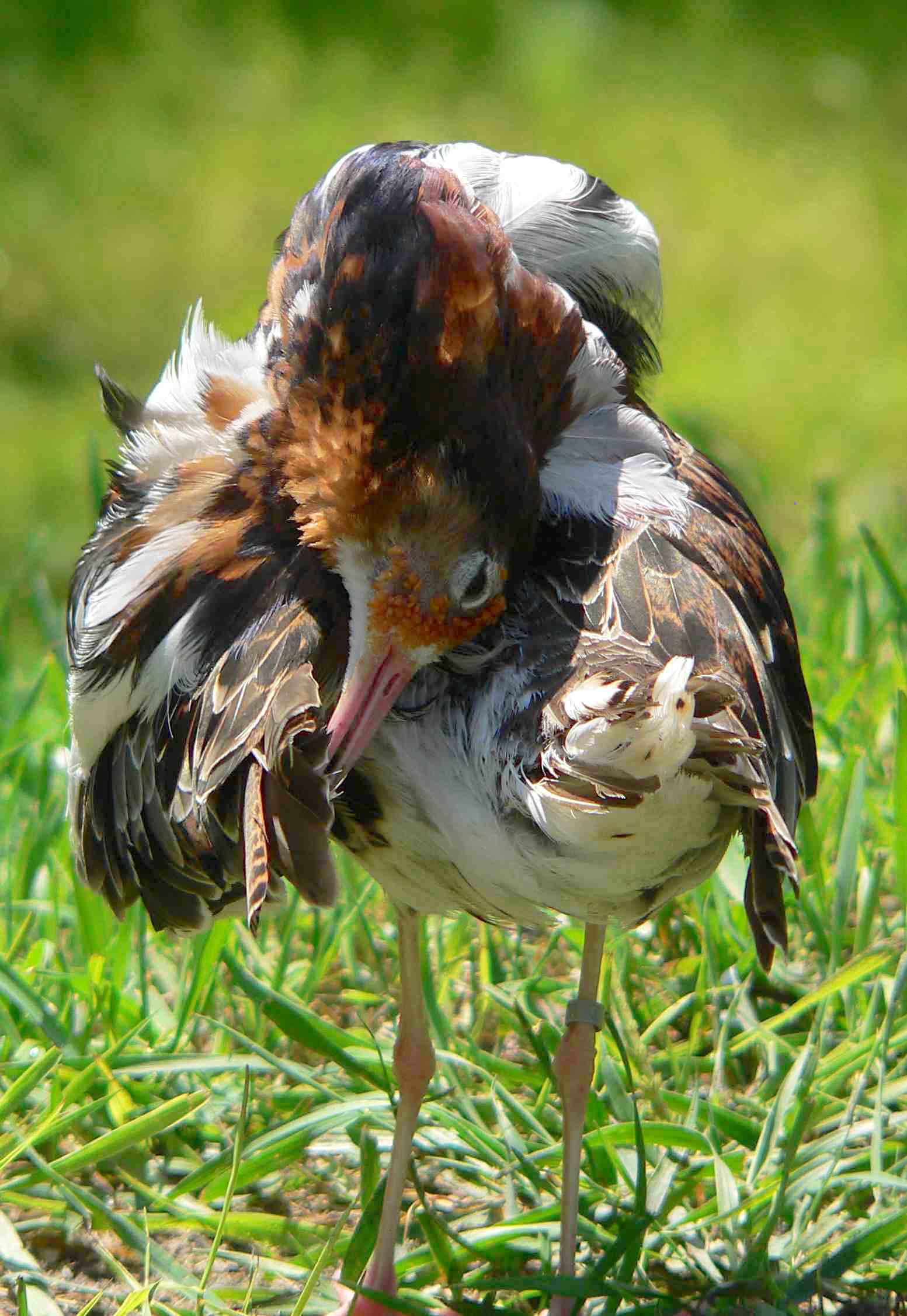
In the breeding season in particular, male ruffs are very different from the smaller reeves. They acquire a spectacular colourful plumage that includes a sort of ornamental collar (hence the name). They enhance their courtship rituals with elaborate displays designed to impress the reeves. These occur in chosen areas known as leks, places where strutting, preening and general competitive showing off occur to attract a mate. Such arenas are also created by a few other bird species – grouse, blackcock and peafowl, for example. The ruff’s lekking behaviour has some complex variations – including same-sex ‘copulation’ and polyandry – but sadly this isn’t the place to explore them in detail.
WHAT DOES A LEK LOOK LIKE?
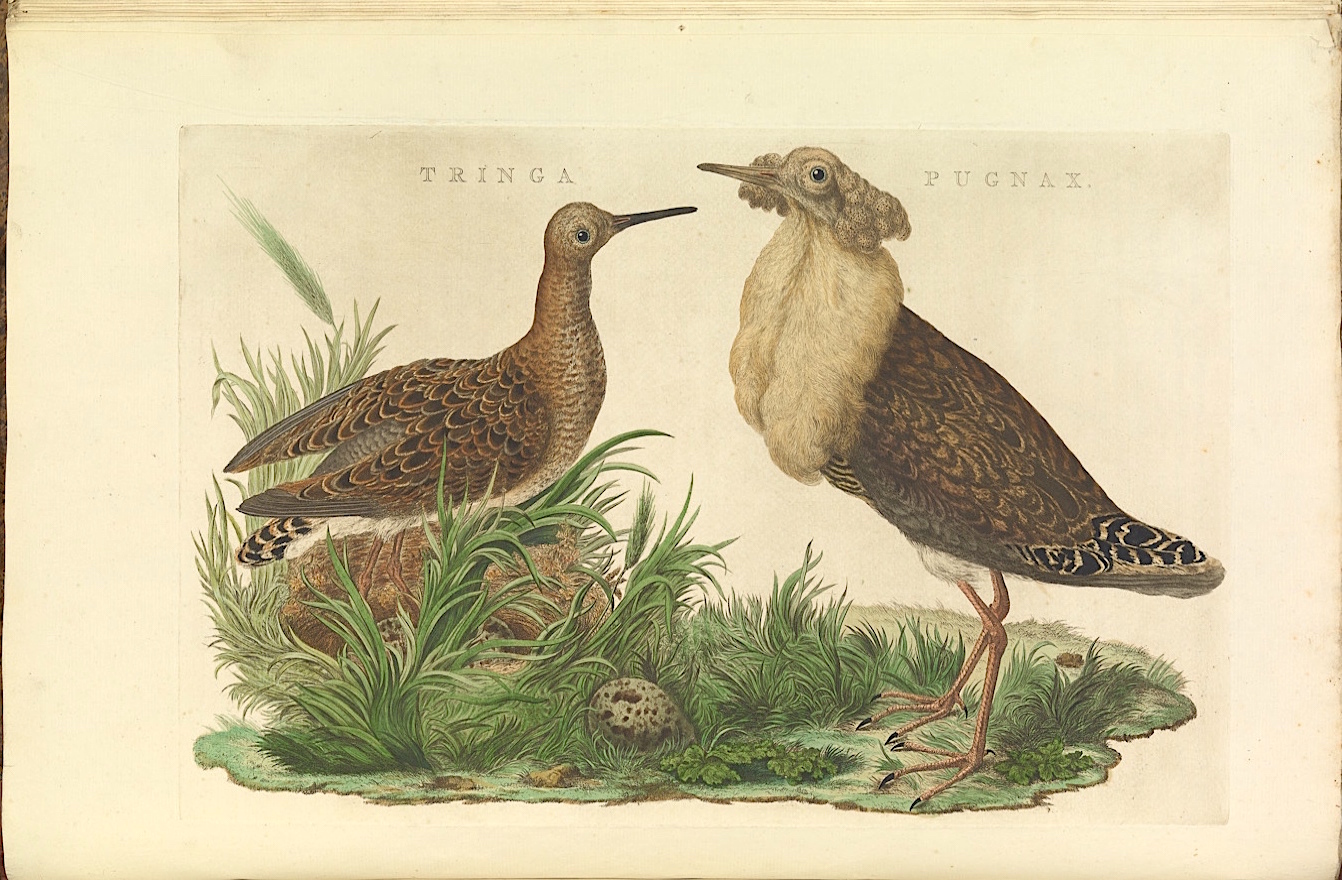
Here are two males with very different breeding plumages, giving it their all at the lek… When Carl Linnaeus described the ruff in his Systema Naturae, he gave it the binomial name Tringa pugnax, the latter word meaning ‘aggressive’ – the lek can also become a combat zone between competing males.
This male has decided to vogue it and ‘strike the pose’ as it preens
Writing inThe Spruce, a new multi-interest resource I discovered in researching this article, Melissa Mayntz describes succinctly some of the common behaviour seen at leks. This includes some (or all) of the following (baby-boomers and dad-dancers may recognise some of these moves):
Bowing, dipping, or bending
Head bobbing or quick turns and nods
Strutting, stomping, kicks, or similar footwork
Exaggerated wing postures, such as fluttering, drooping, or spreading wings
Tails fanned, flared, cocked, or spread
Chests puffed out, often to reveal air sacs or distinct plumage
Calling, songs, drumming, or booming sounds
Dance-like sequences with multiple movements, possibly coordinated between partners after a female shows an interest in a specific mate
To which I’d add aggressive male territorial rivalry within the lek, leading to physical attacks with beak, claws and wings. Meanwhile the females watch from the edge to assess their chosen mates. The illustration below shows this rather charmingly.
Illustration of a lek by Johann Friedrich Naumann (1780–1857)
There’s a lot to be described about how ruff’s moult, but it’s not especially interesting for anyone but a moult specialist, so instead you can have a reminder of Ogden Nash’s last word on the topic: ‘The song of canaries / Never varies / And when they are moulting / They are pretty revolting…’ And we’ll leave migration as well, since basically that factor is N/A for our particular part of the world.
♦ ♦ ♦ ♦ ♦
JUST OUT OF CURIOSITY, CAN YOU EAT RUFFS / REEVES?
In former times ruffs were considered a delicacy and were eaten in large numbers. Often they would be fattened in pens in preparation for the table. I’ll finish with an old description:
…if expedition is required, sugar is added, which will make them in a fortnight’s time a lump of fat: they then sell for two shillings or half-a-crown a piece… The method of killing them is by cutting off their head with a pair of ‘scissars’, the quantity of blood that issues is very great, considering the size of the bird. They are dressed like the Woodcock, with their intestines; and, when killed at the critical time, say the Epicures, are reckoned the most delicious of all morsels. Not a 21st century culinary trend I hope…
Credits: Woody Bracey (sighting smarts); Duncan Mullis (1, 5); Dick Daniels (2); J.M.Garg (3, 9); Open Source / Wiki, prints (4, 8); Arjan Haverkamp (6); B.S.Thurner-hof (7); Melissa Mayntz / The Spruce re Leks; debt to Wiki (and other O/S) for source material, photos, range map etc
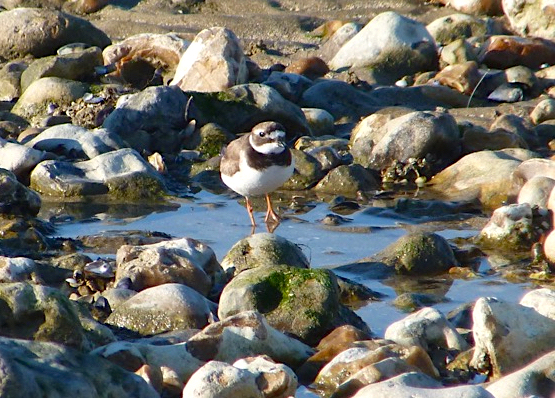
Still in France, il still fait beau etc, “le wee-fee” still a crockful of merde so picture posts not really possible. But there is a good ‘spot’ to report. Annoyingly (only slightly), not my own sighting but thanks to Mrs RH’s increasingly astute bird smarts on a stretch of the Seine estuary. Somewhere amidst the stones, sand, and puddles she noticed a tiny movement. And then expertly pointed out the mover by reference to a small pool and a larger pale rock. It was at least 100 feet away, a distance that I’d normally need an energetic egret to get my attention. But through the viewfinder I could just make out a tiny bird of ploverish appearance. Having downloaded my speculative distance shots taken for ID purposes, the bird turns out to be a Little Ringed Plover. Here is my sighting ID photo of the header crop showing more of the available view. Good ‘spot’ indeed!
Normal service resumes next week – unless we decide to stay here, which would be delightful though not exactly convenient or practical…
Just like the Beach Boys who like to ‘Get Around…’, so do birds. It gives them excitations. Me too. We have ended up in France, not so much migratory as ‘occasional rare visitors’ and anyway not as vagrants. The habitat is wonderful, the foraging is excellent, but the wi-fi is a crockful of merde.
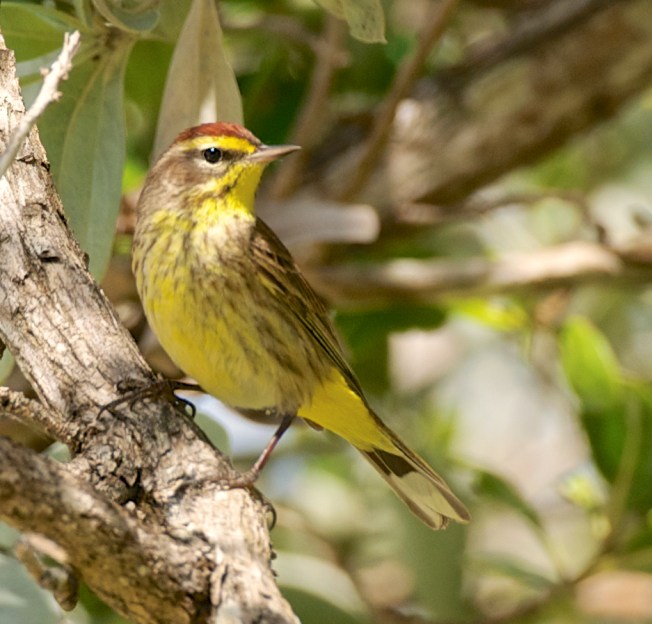
PALM WARBLER
Images take an age to upload so I am taking emergency measures. Today, it’s going to be a quick look at 4 common winter warblers you can easily find on Abaco. Then I’m back to the vin.
BLACK-AND-WHITE WARBLER
If you’d like to know more about Abaco’s 37 warbler species (not including the very recent discovery of a Canada Warbler) click on this PDF and all shall be revealed.
THE THREATS ARE REAL AND THESE PHOTOS SHOULD ALARM YOU!
I rarely – in fact almost never – lift an entire article from elsewhere and plant it wholesale here. I make an exception today. Ben’s article is so relevant, so well put together, so compelling and so scary in its implications that it can’t be ignored. No individual is to blame. We all are. Mankind generally – and pretty much all of it in my lifetime. Walk any beach in Abaco, however secluded. There it all is, under your feet. Find a dead seabird? Chances are it will have significant amounts of plastic inside it. Seen those wretched images of turtles with plastic bags hanging out of their mouths? It’s going to get worse…
Now see how things are with our bird partners in New Jersey and their beautiful ospreys.
DOCUMENTING THE PRESENCE OF PLASTICS IN OSPREY NESTS
U.S. Coast Guard assists NJ Fish & Wildlife with recovering an entangled osprey on a channel marker in Cape May Harbor, Summer 2018. photo by Kathy Clark/ENSP
The alarming trend is also becoming more deadly for ospreys, and other marine life who ingest it. While it might not seem like a lot, this year a total of four young ospreys were found dead from being entangled in plastic. In my books, one dead osprey is too many! This is not a natural cause of death! Luckily, there were several other entanglements that were prevented, but this trend is likely to get worse. We hope that these photos will help you to do all that you can to help prevent it from becoming a growing threat to ospreys and other marine wildlife, who might ingest plastics.
Ospreys are an indicator species. We can’t stress that enough. The health of their population can be directly linked to their surrounding environment. When we poisoned the land with persistent pesticides, the ospreys told us. When we overfished menhaden, the primary prey item of ospreys during the nestling period, the ospreys told us. When we use and discard plastics with no care, the ospreys will tell us…
From the land, where they collect nesting material, to the water, where they forage for prey. The growing presence of plastics on land and in water, highlights need to restrict single use plastics, balloon releases, and for any single use plastic fee to directly fund cleanups of plastic waste. It’s no surprise that ospreys use plastic items in their nests. It’s now become a common resource for them which looks similar to natural nesting material and collects in the same areas where they gather nest material. The more plastics in the world means more plastics in osprey nests!
Sadly, this is only the beginning. Plastics don’t biodegrade and this is becoming a chronic issue. Almost all osprey nests in New Jersey contain some type of plastic (next year we are planning to add data fields to our nest survey datasheets to keep better track of how many nests contain plastic). It’s still too early to see the effects of plastics as as they bioaccumulate in the food chain of predatory animals, like the osprey, but we hope that we can prevent this. We can all help by reducing our use of single use plastics. Here are some simple ways that you can help:
Never release balloons! Talk to your friends/family about where balloons actually wind up.
Reduce your dependence/consumption of single use plastics: bring your own reusable bag, water bottle, and coffee cups. Buy beverages in glass or aluminum containers. When eating out or getting take out, ask for no single use plastic items and/or bring your own container for leftovers. Support a Surfrider Foundation Ocean Friendly Restaurant!
CREDIT: Ben Wurst and his team at http://www.conservewildlifenj.org for the article. Photos as credited in the text. We are Bahamas partners of this organisation in Piping Plover research on the shores of Abaco and our annual Abaco Piping Watch
LETTUCE SEA SLUGS: SOLAR POWERED ‘CRISPY BLISSFUL HEAVEN’
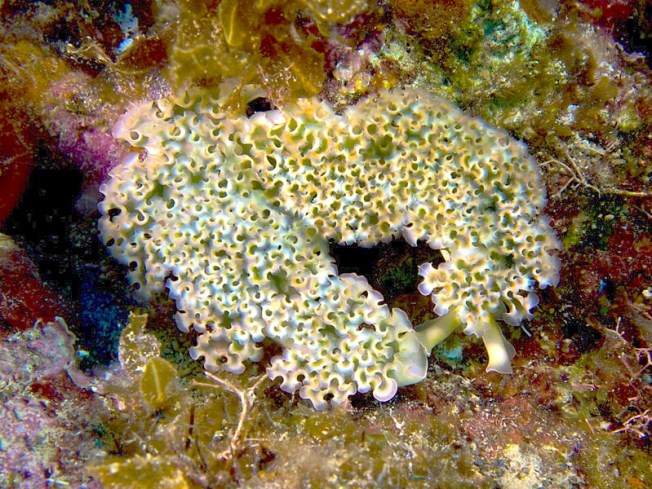
The Lettuce Sea Slug Elysia crispata (transl. ‘Crispy Blissful Heaven’) was No.3 in the‘WTF’‘What’s That Fish’ series (despite not actually being a fish at all). It is not by any means the weirdest creature featured so far but it is nonetheless an animal whose appearance excites curiosity. Unless you see one moving, it could easily be mistaken for a plant. Maybe even lettuce. It is in fact a SACOGLOSSAN.
The name ‘sacoglossan’ literally means ‘sap-sucker’. This group (or ‘clade’) comprises small gastropod mollusks that ingest the cellular content of algae (which isn’t really sap).
WHY WOULD THEY DO THAT?
Because they are… SOLAR POWEREDslugs
WHAAAAA…..?
As I mentioned when I last visited these remarkable creatures, this isn’t a technical forum and too much science hurts my head. This species primarily lives off algae. May I give you the word KLEPTOPLASTY to drop lightly into your conversation? In a couple of sentences, algae / algal content is eaten but only partially digested. Certain elements are stored to produce photosynthesis by which light is converted to energy (cf plants) and the slug can in effect live and move around without food. You could entertain your neighbour at dinner (or maybe on public transport, why not?) by summarising the process as “chloroplast symbiosis”. Meanwhile, I’m fetching a beer. Two beers.
HOW DO THEY REPRODUCE?
This topic doesn’t seem to have excited much investigative interest, and there’s not much specific information about it. What there is sounds unnecessarily complicated, so I am just going to say authoritatively ‘they do it like many other slug species’ and hope that covers it. The pair shown below may be exploring the possibilities, or at least trying to work out which end is which. One is easy to tell, but the other? Time to make our excuses and leave…
HOW FAST, EXACTLY, DOES A LETTUCE SEA SLUG MOVE?
This rather beautiful video from ‘CORAL MORPHOLOGIC STUDIO’ will reveal all. You’ll soon see that progress is very slow. I recommend watching the first 30 seconds and you’ll get the idea. If you choose to persist, you will see the slug sort of turn and move off to the left.
DO SAY: What an intriguing creature. It’s a true wonder of marine nature.
DON’T SAY: Any good in a mixed salad?
Credits: Melinda @ Grand Bahama Scuba, Nick Hobgood, Coral Morphologic Studio, Laszlo Ilyes wiki
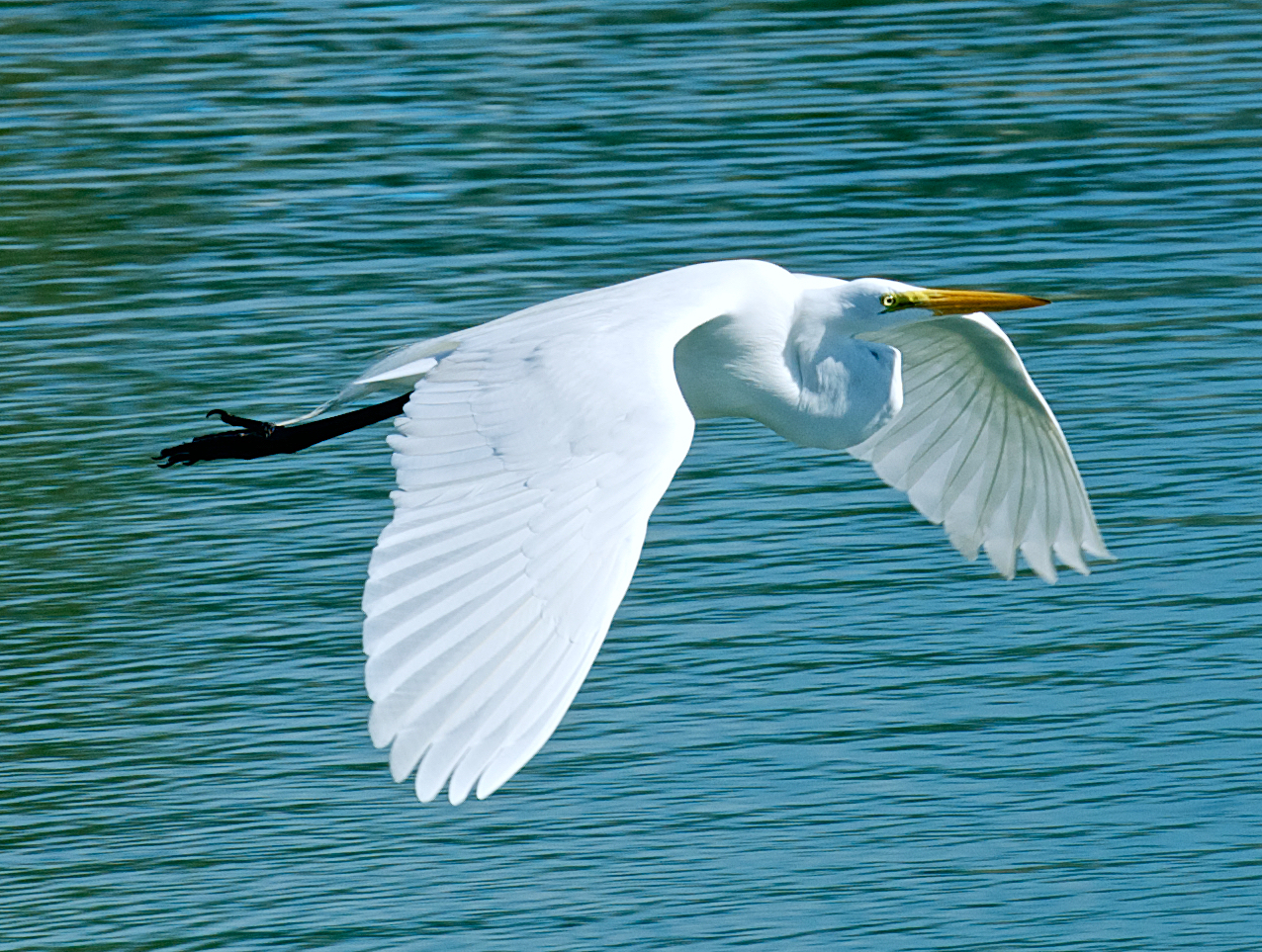
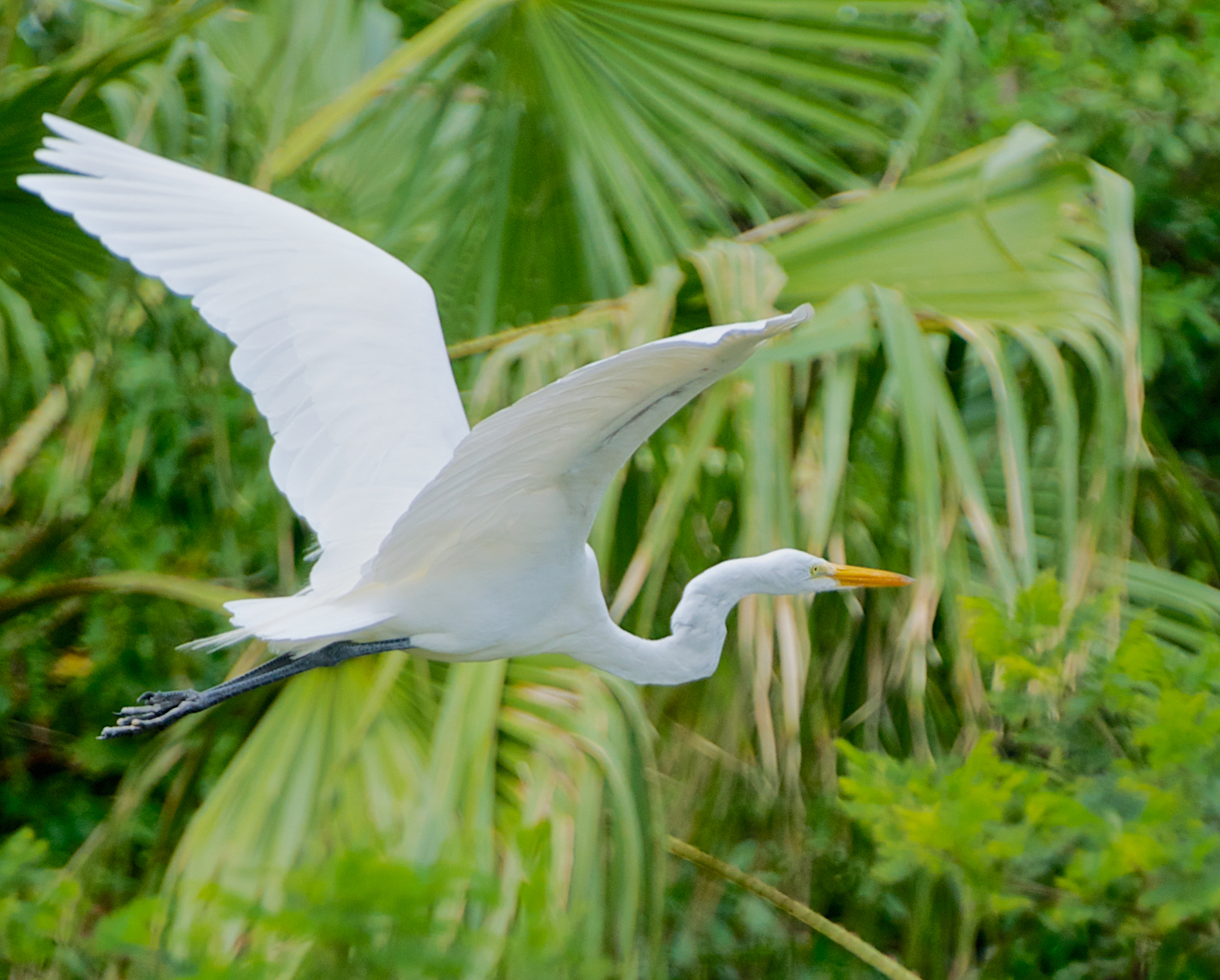
The Great Egret is actually a heron rather than an egret. It’s a Great Heron. All egrets are members of the heron family Ardeidae, but the converse is not true. As long ago as 1758,Linnaeus awarded the bird the binomial name Ardea alba i.e. ‘Heron white‘. Why it should have been so hard to stick to that authoritative nomenclature, I can’t imagine. Perhaps in time all heron and egret species became so hopelessly confusing for people that it ceased to matter much what they were called.
Maybe it was that type of carelessness that led to people from the mid-c19 onwards eyeing up GREGs as a source of hat feathers and other decorative necessities. As with flamingos and many other beautiful avian species, mankind’s millinery and other fashion needs were satisfied at the expense of gorgeous plumage. Actually, at the cost of the birds’ lives: they were simply shot in huge numbers.
Healthy populations were decimated; for some species they never recovered. For others, the great egret among them, the passage of time and the passing of fashions – backed in many cases with conservation programs – have successfully restored the populations. In 1953 theNational Audubon Society, which was formed at least in part to discourage the killing of birds for their feathers, took a decisive step in the cause of the great egret by making the bird the emblem of the organisation.
Photo Credit: Nina Henry photographed all the egrets in this post. Her wonderful images made a significant contribution to the “BIRDS OF ABACO” project.
Every day of the year, or so it seems, at least one worthy creature has been awarded an ‘Appreciation Day’, a special day when a particular species has its profile raised and awareness spread around. It certainly seems to be the case with birds; I’m going to assume that it applies to all the other classes of animal – mammals, fish, reptiles, amphibians and invertebrates, each with their own worthy candidates for recognition. Except for no-see-ums, obviously. And fire ants, I hope. You’d think standing on a nest while taking photos just once in a lifetime would be a lesson. I’ve done it twice… Anyway, yesterday was Plover Appreciation Day 2018.
PLOVERS ON ABACO
Until recently Abaco had 33 recorded shorebird species but since the first-ever sightings of a BUFF-BREASTED SANDPIPER in 2016, the number has risen to 34. Of these, a mere 6 are plovers:
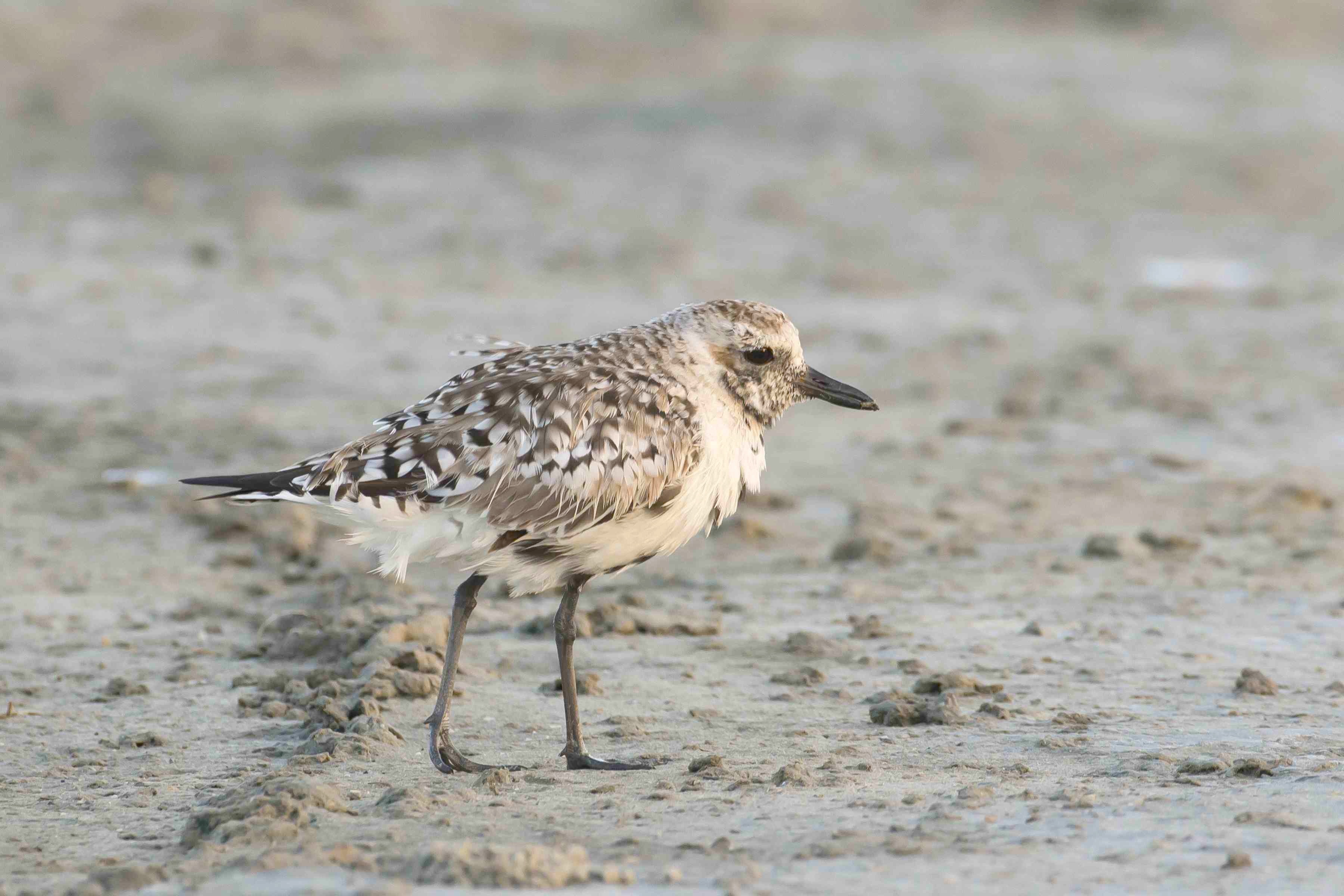
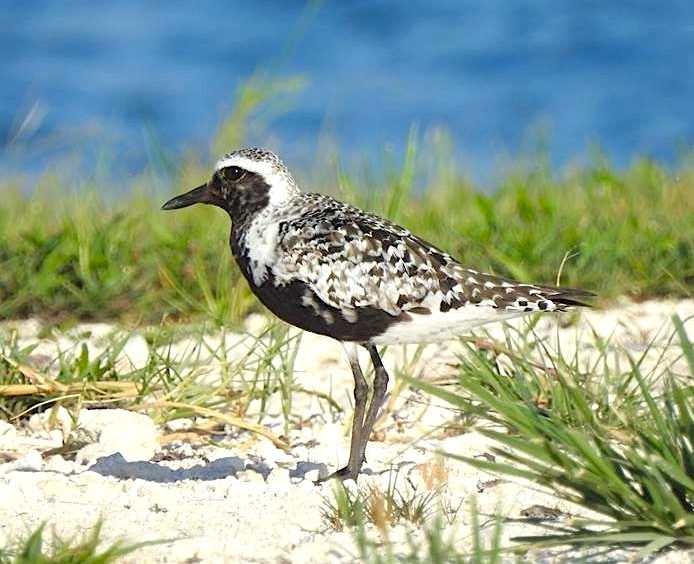
Black-bellied Plover Pluvialis squatarola WR 1
American Golden Plover Pluvialis dominica TR 4
Wilson’s Plover Ochthodromus wilsonia PR B 2
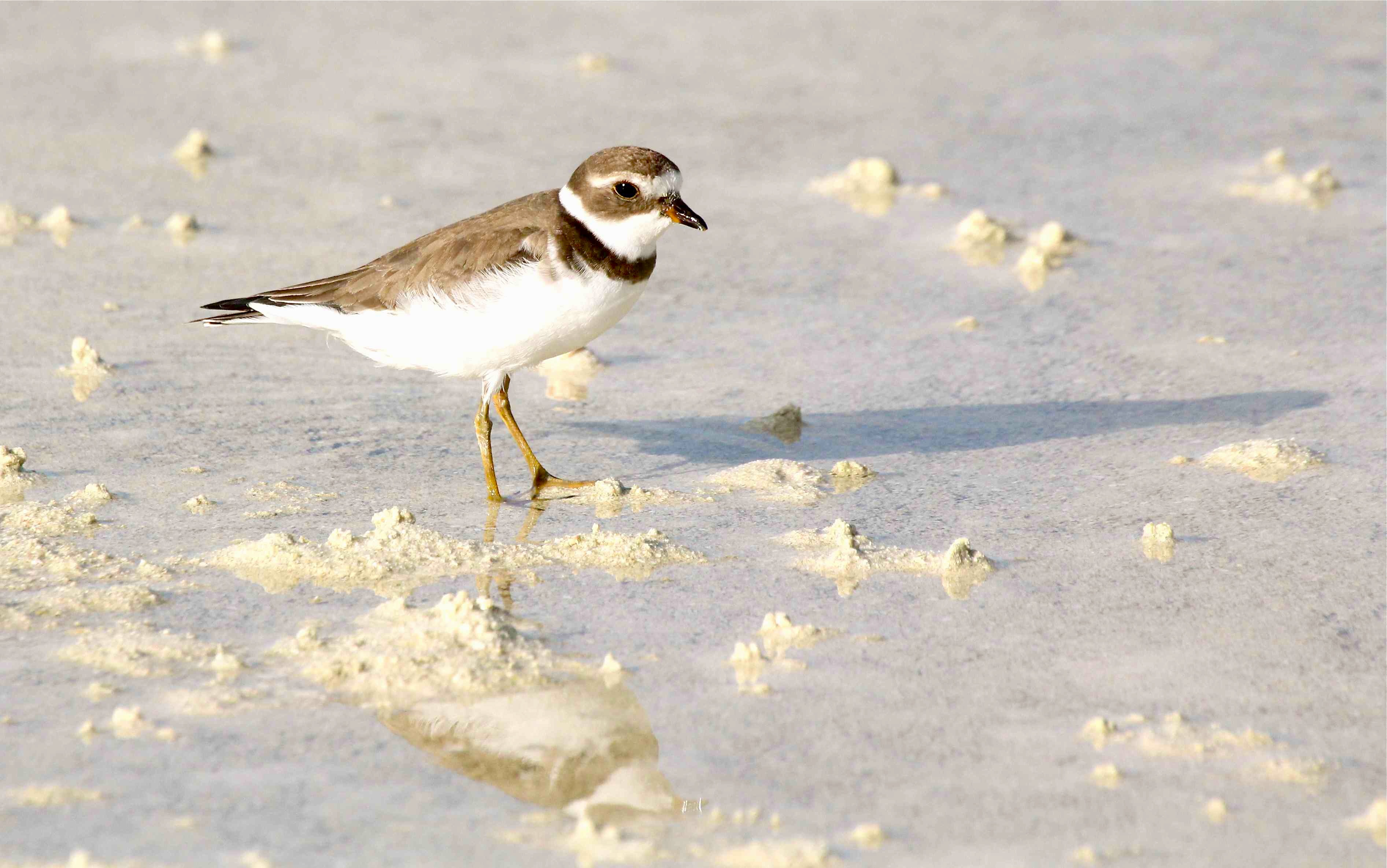
Semipalmated Plover Charadrius semipalmatus WR 2
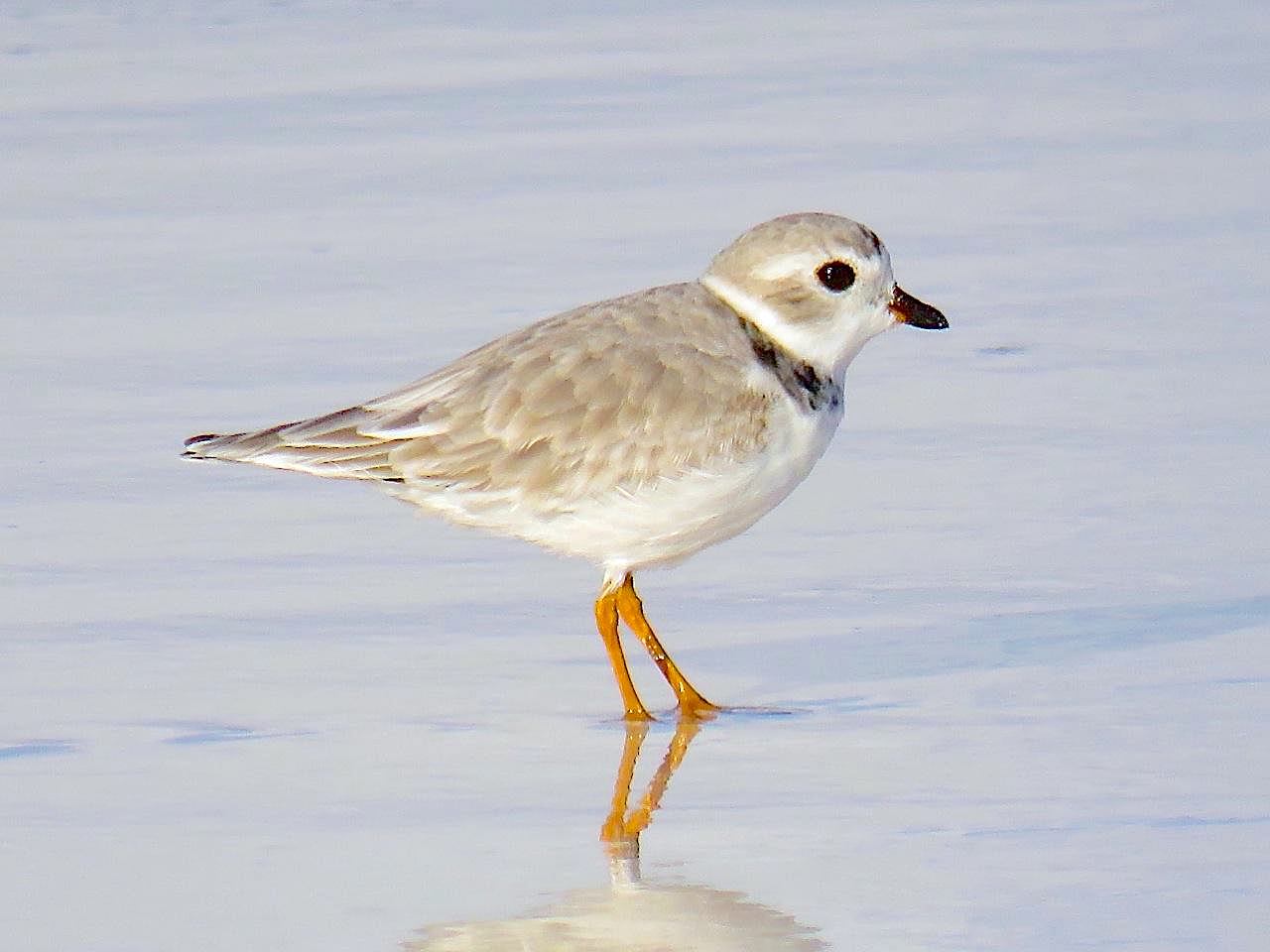
Piping Plover Charadrius melodus WR 3
Killdeer Charadrius vociferus WR 2
The codes tell you, for any particular bird, when you may see it (P = permanent, WR = winter resident, TR = transient); whether it breeds (B) on Abaco; and your chance of seeing it, graded from easy (1) to vanishingly unlikely (5)
The best-known of the 6 Abaco plover species is the Wilson’s Plover, because it is the only permanent resident. The American Golden Plover is a rare transient, but we luckily have a photo of one (below) taken on Abaco. All the others are winter residents and easy to middling hard to find.
The Piping Plover is the most interesting species, with a mere 8000 left in the world. There is a vigorous conservation program to protect them and their habitat, both in their breeding grounds in the North and their southern overwintering grounds. Their summer breeding range is in Canada and the Great Lakes, north-central US, and the eastern seaboard. In winter they migrate south, many to the Bahamas – and Abaco is one of their preferred homes. We count as many as we can between August and February, report the banded ones, and find out their origins and histories
BLACK-BELLIED PLOVER Pluvialis squatarola WR 1
Non-breeding plumage (as you would see normally it on Abaco, without the black belly)
Breeding plumage – and the reason for the name
AMERICAN GOLDEN PLOVER Pluvialis dominica TR 4
SEMIPALMATED PLOVER Charadrius semipalmatus WR 2
KILLDEER Charadrius vociferus WR 2
PIPING PLOVER Charadrius melodus WR 3
WILSON’S PLOVER Ochthodromus wilsonia PR B 2
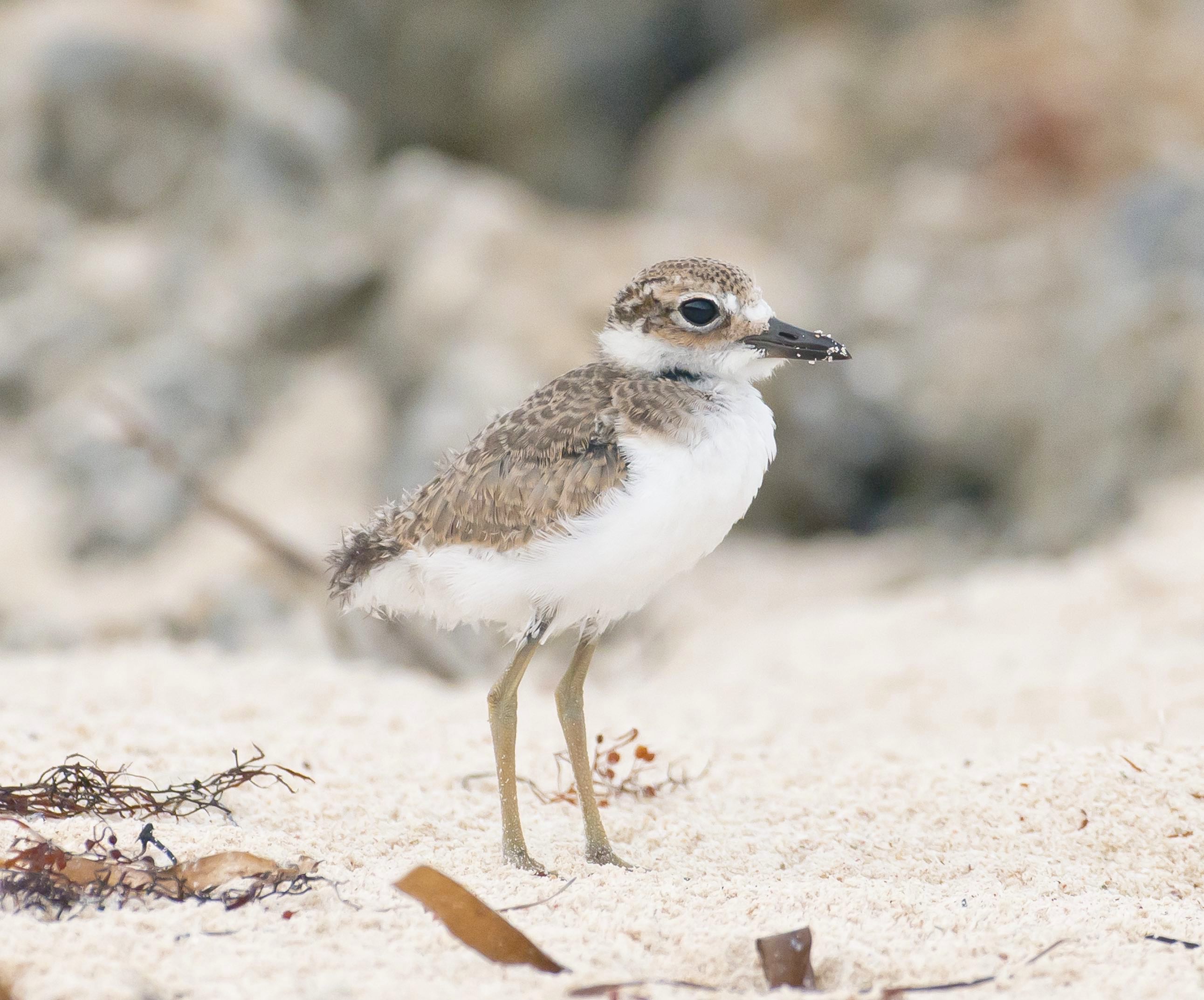
This permanent resident plover is a year-round presence on the Delphi Club beach, where in summer they nest and raise their tiny fluffball chicks. They are especially significant on Abaco as the only breeding plover species – it’s the only chance we get to see plover nests and chicks… (see header image and below).
The WTF? series is aimed at shedding light on fishes that are unusual. Or very unusual. Or puzzling, dangerous and maybe less than elegant in appearance. The scorpionfish is one such. It belongs to a large family, the Scorpaenidae, and many types are found throughout the world, especially in the Pacific and Indian oceans. LIONFISH, the newcomers to the western Atlantic, are a species of scorpionfish.
Just another rock on the seabed…
WHY ‘SCORPIONFISH’? THEY LOOK SCARY. ARE THEY DANGEROUS?
One feature common to many scorpionfish species is that they are highly venomous. As the name suggests, a sting is involved. Or several stings. These come from the creature’s sharp spines, which are coated with mucus, and are to be avoided. If you want to pet one, the dorsal, anal and pelvic fins are the ones to steer clear of – these all have venom glands at the base. The spines act like injection needles. Scorpionfish aren’t naturally aggressive (except to prey), but they know how to defend themselves if need be. If you get ‘got’, you are in for “extreme pain and burning sensation”.
DO THEY HAVE ANY OTHER TRICKS TO WATCH OUT FOR?
As many have written, scorpionfish are ‘Masters of Camouflage’. They are able to disguise themselves very effectively. Their appearance is a remarkably adapted to their surroundings, as if covered in a raggle-taggle of colourful algae. They can change colour to aid concealment. They can flick sand over themselves as they settle on the seabed. These ploys enable them to lie motionless on a coral reef or on the seabed, ready to ambush their prey. This consists mainly of small fishes and crustaceans, but really anything edible that will fit in their mouths is fair game.
Concealed against coral
HOW DO THEY FEED?
The large mouth of scorpionfishes has a particular function. They don’t have teeth because they have no need. A scorpionfish can open its mouth and its gills simultaneously, thereby creating an instant vacuum that will suck in its prey in a flash. I have seen this described as “a nearly imperceptible split-second movement (15 milliseconds)”…
THESE SCARY MONSTERS MUST BE HUGE, RIGHT? I’M KEEPING OUT OF THE WATER
Not so fast. When all is said and done – and in my view, most disappointingly – adult Caribbean Scorpionfish grow in the range of… erm… 7 – 14 inches. So now you are reassured, here’s a great short video from Ocean Frontiers Dive Shop, who kindly shared it on YT. I’ve used a couple of illustrative stills from it too.
ANYTHING ELSE WE NEED TO KNOW?
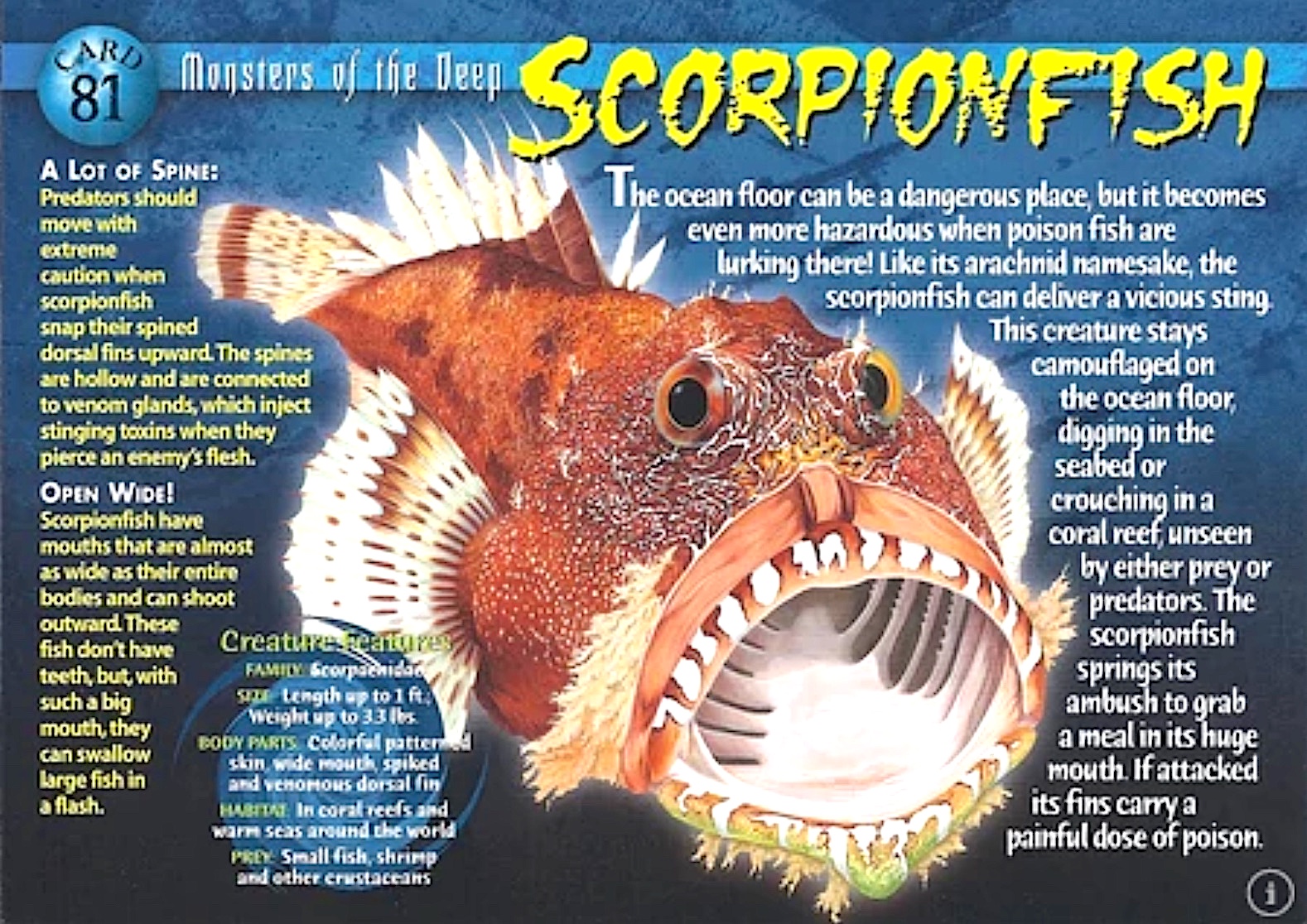
I can do no better than to turn to Card 81 to the excellent ‘Monsters of the Deep‘ series of trading cards (the link is to my MotD page). I do realise that this is a rather unscientific approach. On the other hand these guys pack memorable information into a very short space, and do it well. Note that you can get a reflex sting from a scorpionfish for up to a week after it has died. Eat dust, earthbound scorpions.
Credits: Melinda Riger / Grand Bahama Scuba (1, 2, 3, 4,); Ocean Frontiers Dive Shop (video from YT, 2 stills); Wierd (sic) Creatures / Monsters of the Deep (O/S)
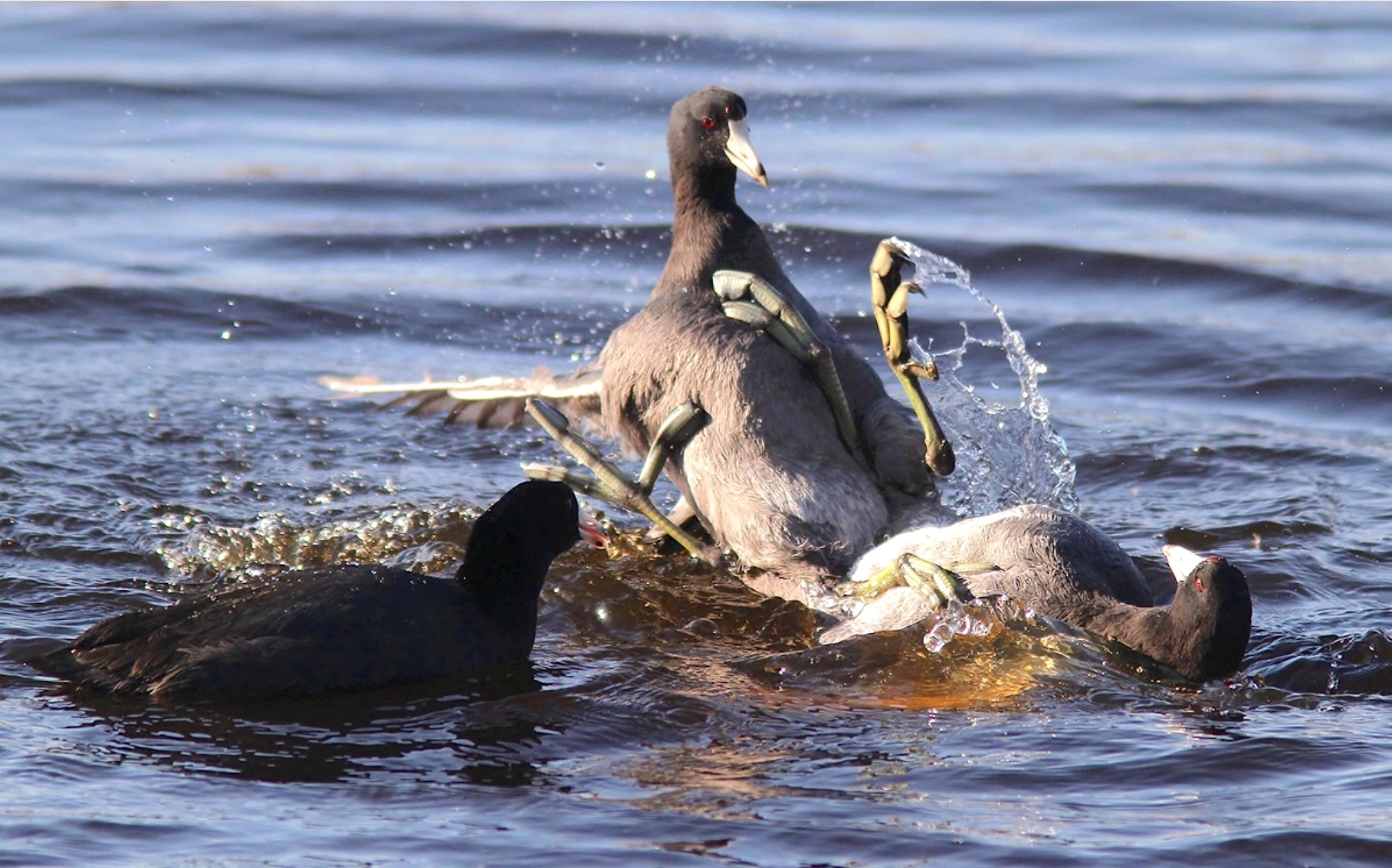
These coot fight images are from Phil Lanoue, whom I have featured before. He is a master of bird sequences, magicking a whole avian story or drama in a few clear, sharp photos. These types of image are well beyond my skills and my camera limitations. Here are 2 males battling over a female which, by the final aggressive image in which dominance is asserted, has disappeared for the picture…
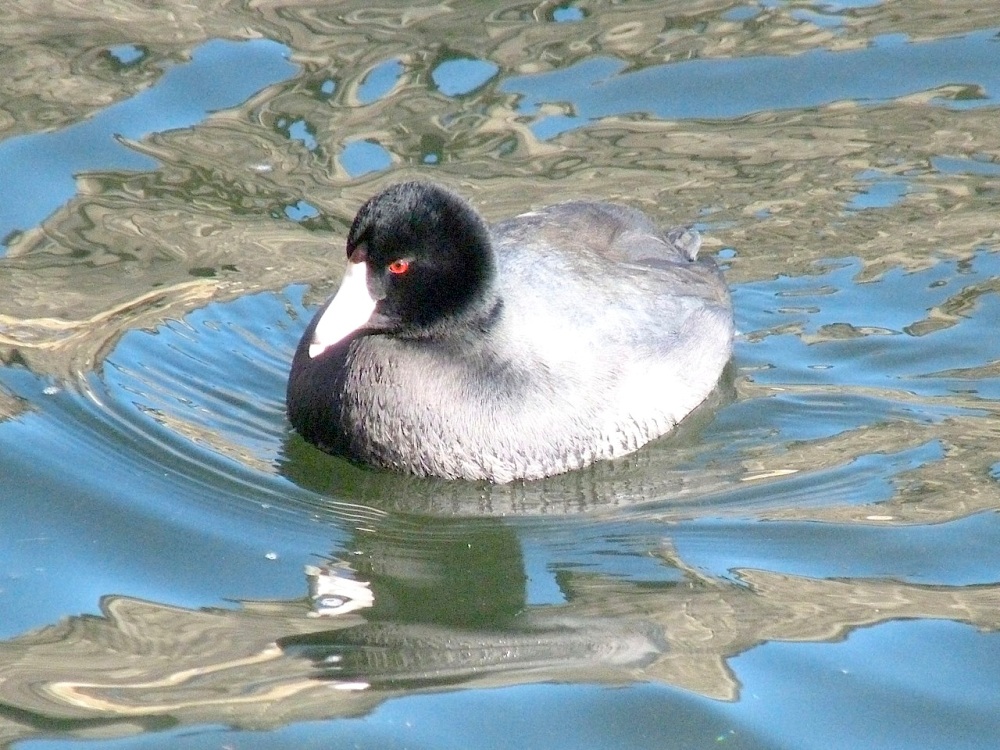
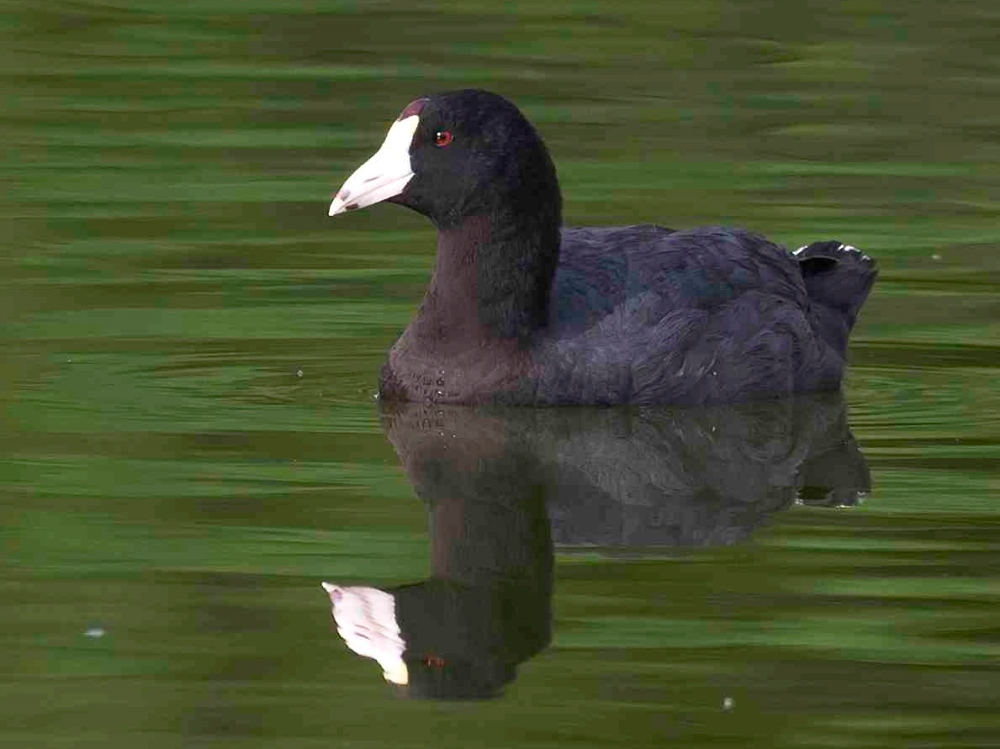
The other battle in Coot World occurred in 2016 when the endemic Caribbean Coot (formerly Fulica caribaea) was defeated by the combined forces of the American Coot (Fulica americana) and the all-powerful AOU, official arbiter of bird categorisation. They are now joined as a single species, the differences between the two types being considered insufficient to warrant separate species status. The familiar American version looks like this (note the red area on the shield above the beak):
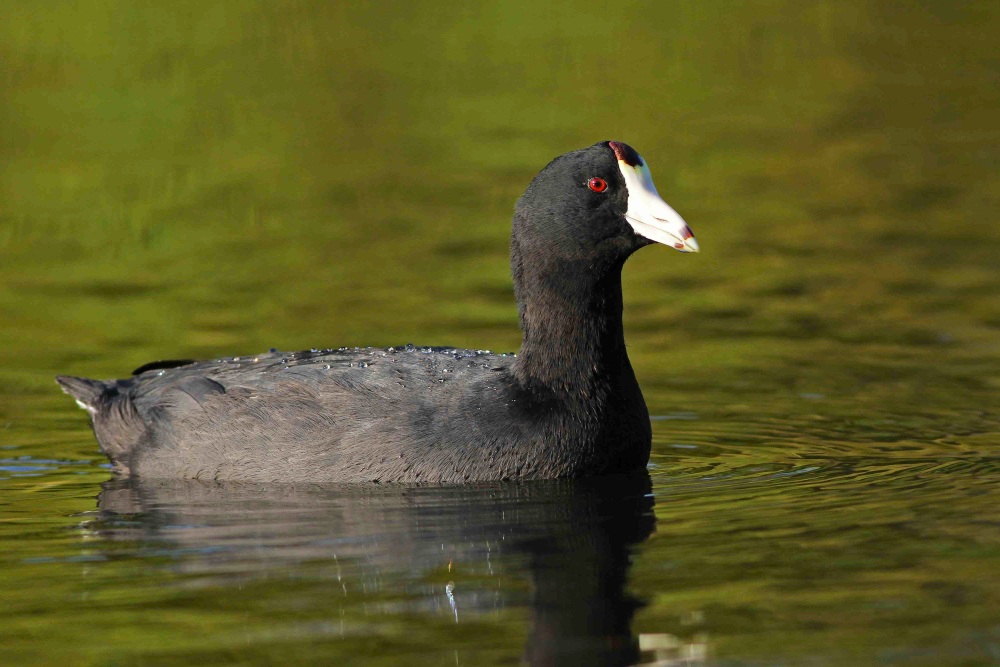
The ex-Caribbean Coot, has white frontal shield that extends to the top of the head. When I was compiling ‘Birds of Abaco‘ in 2013, there was already a question mark over the separate species status, with many regarding it as a sub-species of the American Coot. I wrote: “There is an intriguing debate, a small book in itself, about the existence as a distinct species of the Caribbean Coot, with its white frontal shield. Many field guides include it separately, some with the rider that it is ‘unrecorded in the Bahamas’. The Bahamas Bird Records Committee does not recognise it, and Hallett, among other experts, views it simply as an American Coot variant. The image below of the two coots together is included to illustrate the visible difference between the birds. The genetic debate is fortunately outside the scope of this book”.That said, I pigheadedly went ahead and included it as a separate species anyway…
An ex-Caribbean coot, with its white frontal shield. Since 2016, just another coot
The research that led to the reclassification was based on the fact that breeding biology suggests that different species favour their own species for breeding. Research by Douglas McNair and Carol Cramer-Burke indicated that there is little or no ‘reproductive isolation’ of the sort to be expected in different species. The coots had no particular preference in their choice of mate. Also, they sound alike.
Credits: Phil Lanoue (1 – 4); Gerlinde Taurer (5); Woody Bracey (6); Keith Salvesen (7); Tom Sheley (8). Research inc. eBird Caribbean – an excellent resource to check out
Today, September 6th, is World Shorebirds Day. Every year, a Shorebird of the Yearis selected by the organisers of this global event, and this year they have gone ‘large’. Perhaps in response to the declining populations of curlew species, they have chosen a fine representative – the whimbrel. Inconveniently – and although the whimbrel is a worldwide species – it is extremely rare on Abaco. In the definitive Abaco Checklist (see below), it is coded a TR4, i.e. a very uncommon transient with a handful of sporadic reports. Until last year, sightings were very few and far between. Then suddenly last autumn, they made a small migratory comeback. You can read about it HERE.
BLACK-NECKED STILT Himantopus mexicanus PR B 3
Abaco is home to 33 shorebird species. Like the human residents of the main island and cays, some are permanent; some are winter residents arriving from the north to enjoy a warmer climate; and some are transients – visitors that pass through a couple of times a year on their way from and to their nesting habitats.
CHECKLIST OF ALL 33 SHOREBIRDS
The definitive checklist of Abaco’s birds was compiled especially for the BIRDS OF ABACO by Bahamas Birding author and authority, the late and much missed Tony White, with Abaco’s bird expert Elwood Bracey. Below is the shorebird list, with a photographic selection of the larger and/or longer-billed shorebirds in checklist order. Yes, including an Abaco whimbrel.
The codes will tell you, for any particular bird, when you may see it (P = permanent, WR = winter resident, TR = transient, V = vagrant); whether it breeds (B) on Abaco; and your chance of seeing it, graded from easy (1) to vanishingly unlikely (5).
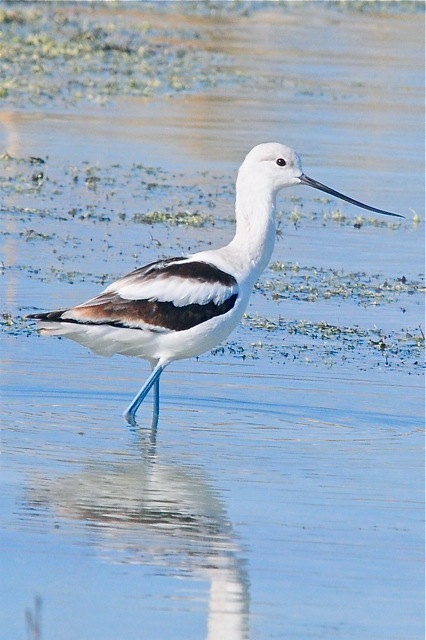
AMERICAN AVOCET Recurvirostra americana WR 4
AMERICAN OYSTERCATCHER Haematopus palliatus PR B 2
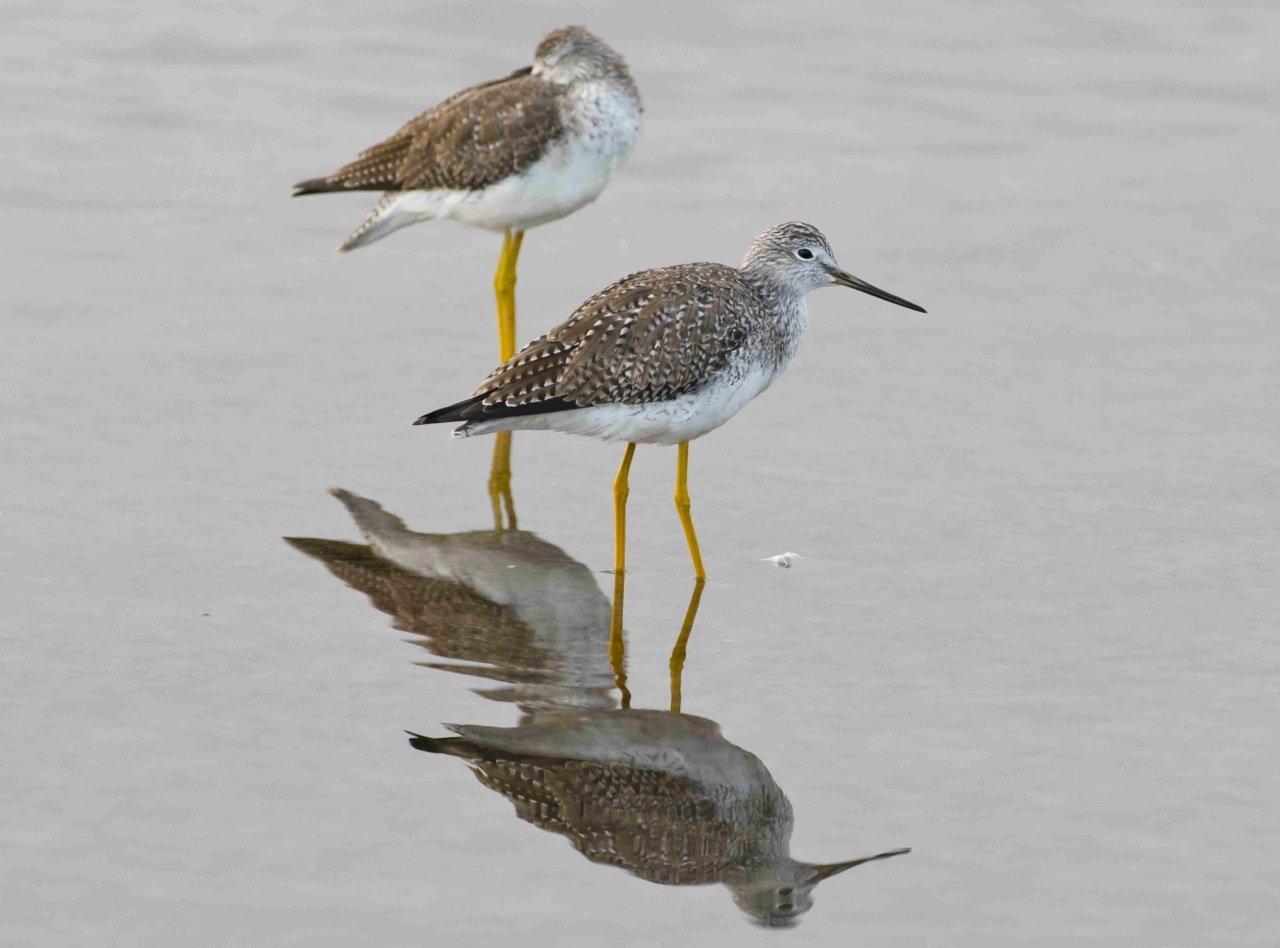
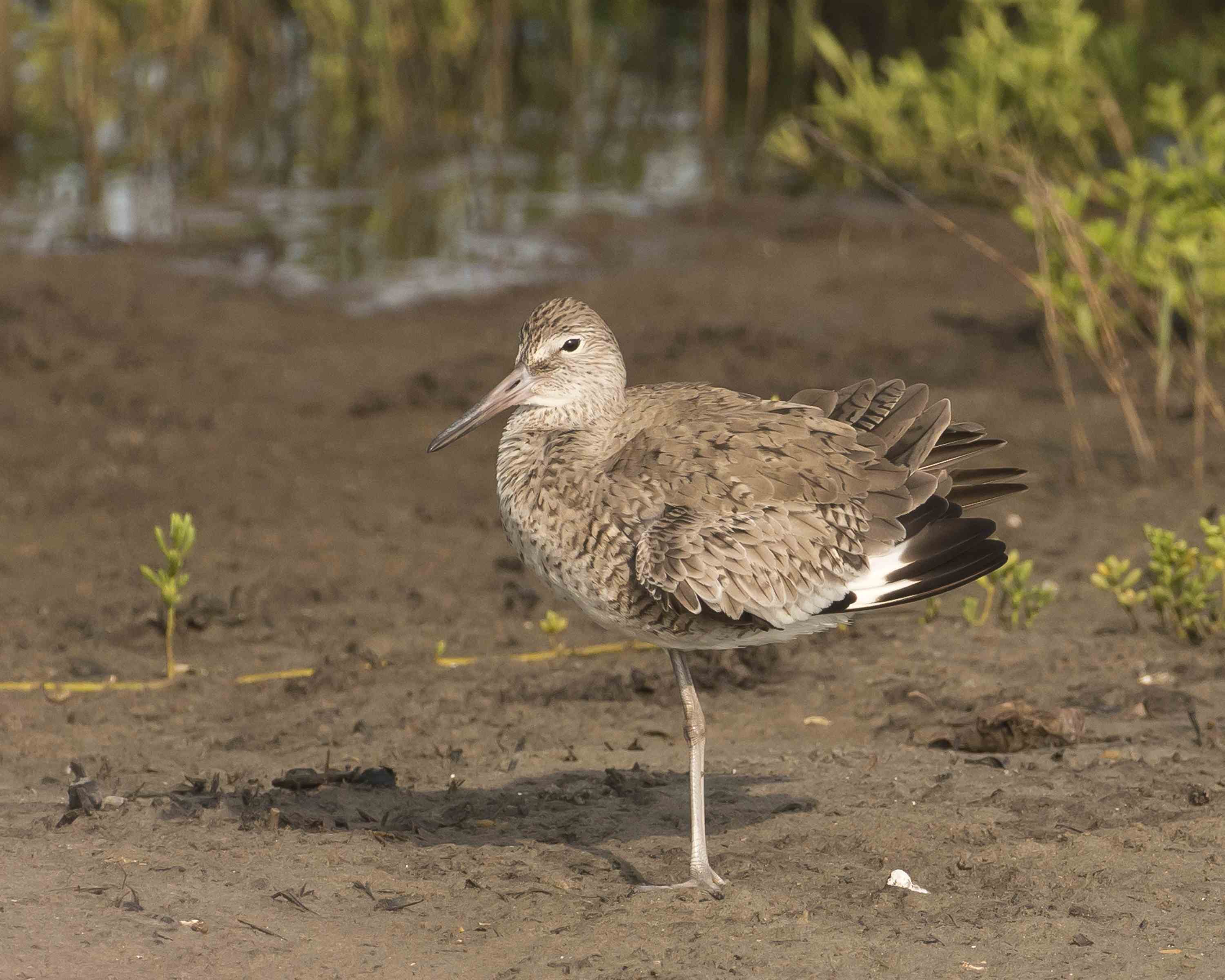
GREATER YELLOWLEGS Tringa melanoleuca WR 2
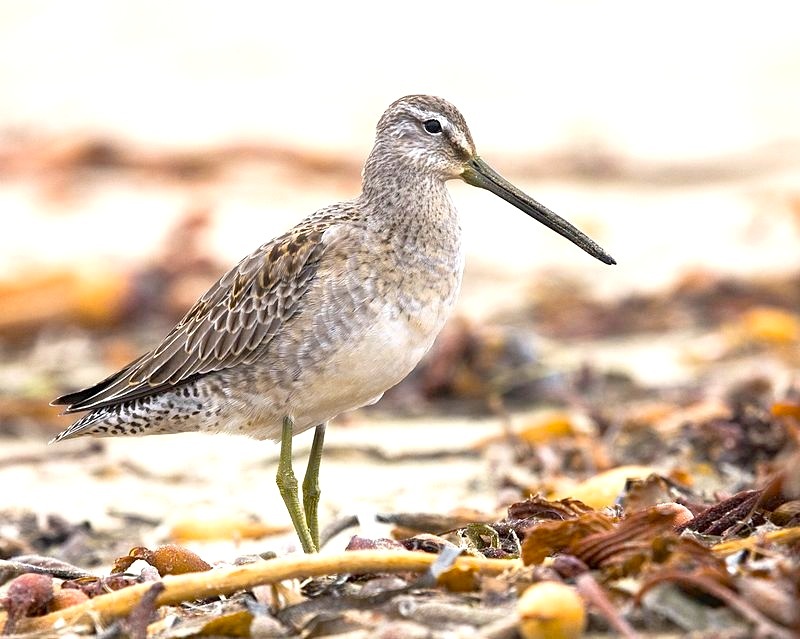
LESSER YELLOWLEGS Tringa flavipes WR 3
WHIMBREL Numenius phaeopus TR4 (an Abaco one)
HUDSONIAN GODWIT Limosa haemastica [V5]
Like the whimbrel, this bird is another special bird to be able to include. Until last October, it was categorised as a V5, meaning that one or perhaps 2 vagrants had ever been seen on Abaco. Then one appeared on a pond and was spotted by Woody Bracey and, a few days later, by Keith Kemp – who even took confirmatory photos. You can read the storyHERE.
Photo Credits: Andreas Trepte / Wiki (1);Tom Sheley (2, 5, 6, 7, 13); Alex Hughes (3);Tony Hepburn (4); Charmaine Albury (8, 9); Stewart Neilson / Wiki (10); Bruce Hallett (11); Mike Baird / Wiki (12); Woody Bracey (14)
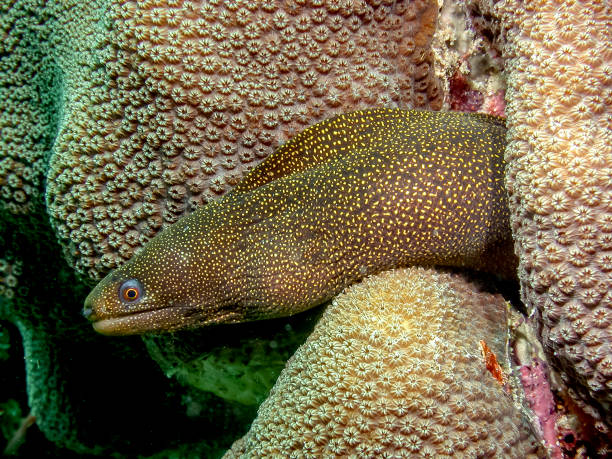
The Goldentail Moray Eel Gymnothorax miliaris is one of the half-dozen moray species found in Bahamas waters. Adults range in length from about 1.5 to 2.5 feet, and they are creatures of the reefs and rocks of the western Atlantic. As far as I can make out, the goldentails are rather less common than green or spotted morays, the two main eel species of the Bahamas.
Like their moray cousins, goldentails likes to keep themselves to themselves, and lead largely solitary lives. That said, sometimes they have been observed hunting in a group. They live in holes, clefts, and caverns which they leave both during the day and at night to hunt for prey along the reefs, aided by an acute sense of smell. Their diet is mainly of crustaceans, mollusks, and small fishes.
ARE GOLDENTAILS DANGEROUS?
Like many other eels, goldentails secrete a protective mucus that contains a toxin, making them unattractive prey for large predators such a groupers and barracudas. They are also associated with ciguatera poisoning, the active ingredients of which are found in the mucus coating. They are sometimes found in aquariums – the associated sites give a warning of painful bites, because they have backwards-pointing teeth (aka prey traps) – see header image for a clear view of this.
CAN YOU EAT THESE FISH?
Well I wondered that too, so I checked. The answer seems to be yes, if you real really want to. Comments on forums include:
“Yes they are edible, I just ate one few weeks ago. Some parts are little bony and skinning it is a bitch. But the meat is very soft and white, delicious. Deep fry works”.
“After eating our moray eel something changed. The next morning, we were decidedly feeling ill. I won’t get into the details, but let’s just say that “gastrointestinal effects”
“…symptoms (of ciguatera) include gastronomic effects, and neurological effects which include headaches, numbness, paresthesia, muscle ache, and even hallucinations”.
“Before you can eat one you have to kill it. They are amazingly hard to kill. I would skip it.”
“I would rather eat a shoe”
So I’ll be moving straight on to the next course, please. Or just a Kalik would do, thanks.
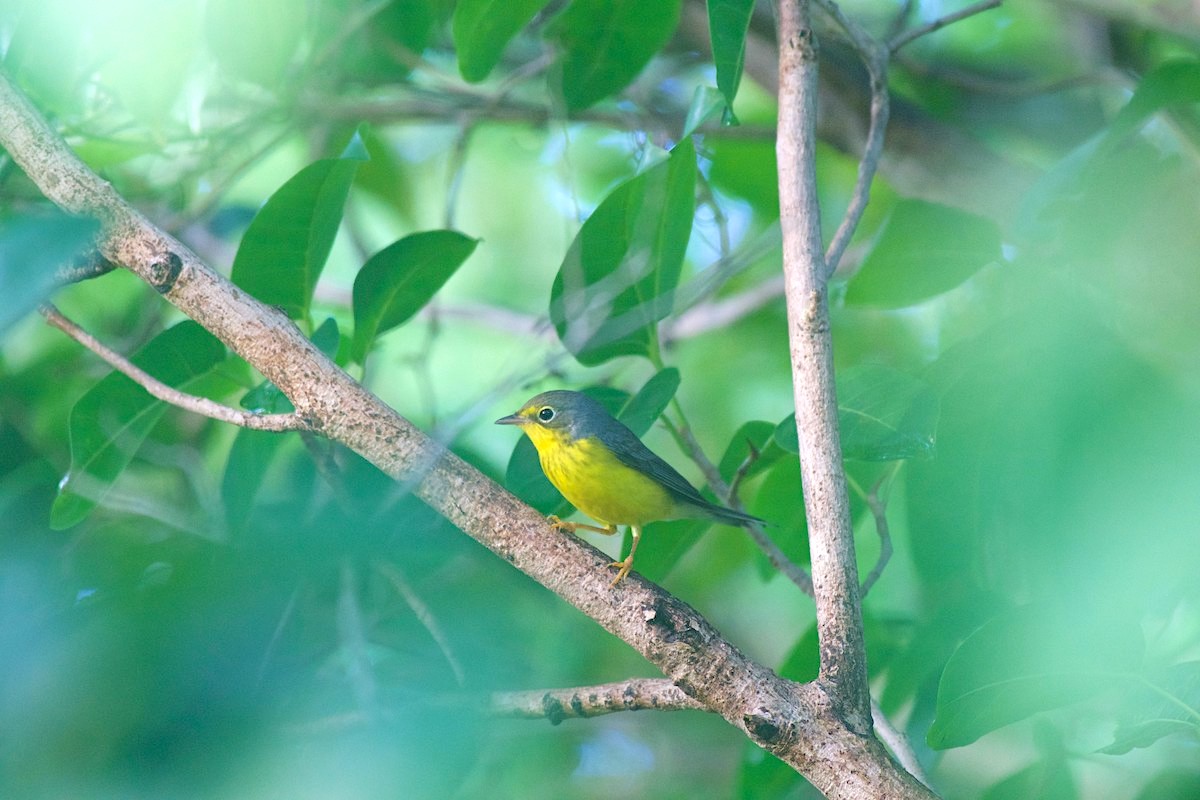
The first Canada Warbler recorded for Abaco AND Bahamas (Christopher Johnson)
CANADA WARBLER: A NEW BIRD FOR ABACO & BAHAMAS
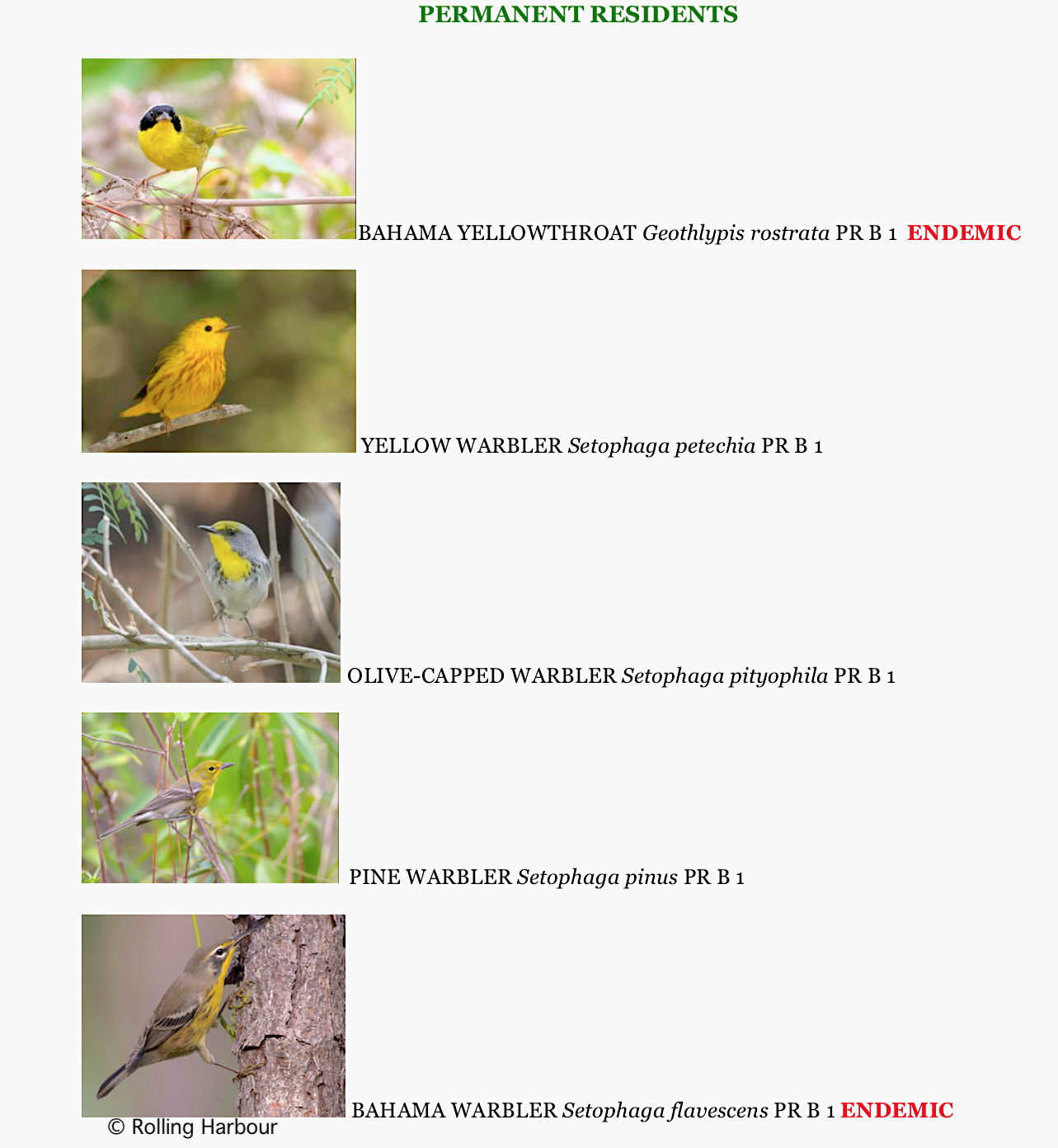
As reliable as seasonal clockwork, the migratory warblers are swarming south from their summer breeding grounds to warmer climes for the winter. In the case of Abaco, this amounts to 32 warbler species to add to the 5 resident breeding species (Bahama Yellowthroat, Yellow Warbler, Olive-capped Warbler, Pine Warbler & Bahama Warbler. 37 warblers in total.
Well, now make that 38. On August 28th, young birder Christopher Johnson was out with well-known birding sage Woody Bracey when he saw something small and yellow hopping about in the coppice. On closer examination – and he took the photos to prove it – it was not just one of the many familiar yellowy winter warblers, but a completely new species recorded for Abaco and (more significantly) the entire Bahamas. It was a Canada Warbler, Cardellina canadensis (Linn. 1766) aka Wilsonia canadensis.
The photo above is one of 3 that Christopher managed to take. In many respects it is typical of a field photograph: a small bird, at a distance, zero’d into focus through a small gap in the leaves and branches of thick coppice. Sharp bird, blurry surroundings. The trick is not to end up with a wonderful clear shot of a green leaf on its twig, with a small yellow blur in the background. (I perfected this ill-advised technique with my only photo of a Kirtland’s warbler).
WHERE WAS THIS BIRD DISCOVERED?
One of the features of the excellent birding to be found on Abaco is that some of it can be carried out in unexpected places. Town dumps are a classic example, though photos have to be taken with care to avoid unsightly rubbish-based settings. The Abaco Big Bird Poultry Farm area is another. This little bird was found there.
SO WHERE WOULD IT NORMALLY BE FOUND?
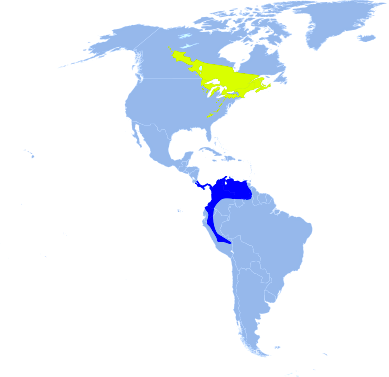
In summer, roughly 80% of CAWAs live and breed in Canada; 20% in the northern US. They spend a relatively short summer there. In the early Fall they fly down to South America. From the range map below, it looks as though their flight path would naturally take them right over the Bahamas to get to their destination. In fact, their journey is quite different. Following the central ‘bend’ of the Americas, they fly at night along a southwesterly route to the Texas coast, then on to southern Mexico and beyond.
I suspect that, as with many migratory birds, the occasional specimen takes a wrong turn on its route south, or is blown off-course by a storm. Maybe a few such vagrants pass through further east – even over the Bahamas perhaps – each year, as ‘vagrants’. But in reality their tiny size in the dense foliage of the land masses means that only a fluke sighting could result. So Christopher’s sighting will be recorded as a V5 – a vanishingly rare vagrant with only a single sighting (cf Abaco’s BLACK-BROWED ALBATROSS).
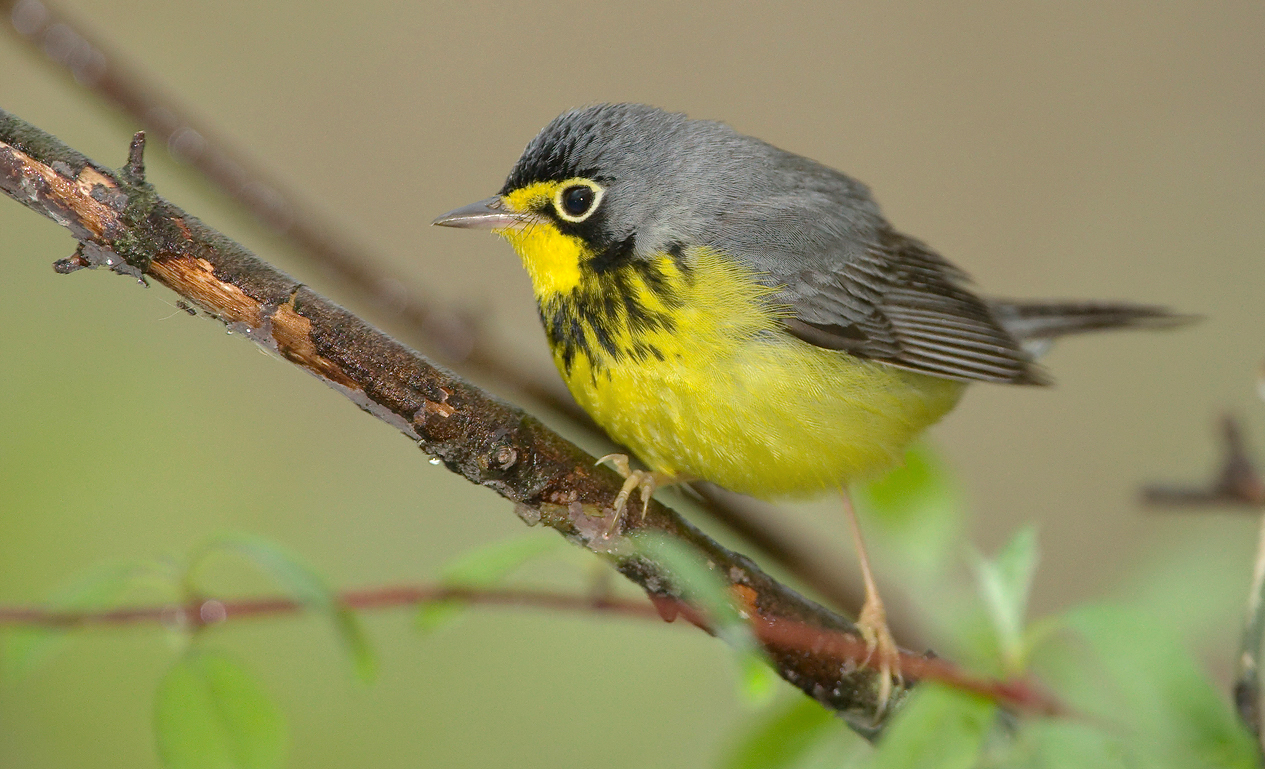
Q. DO MALES & FEMALES LOOK MUCH THE SAME? A. NO
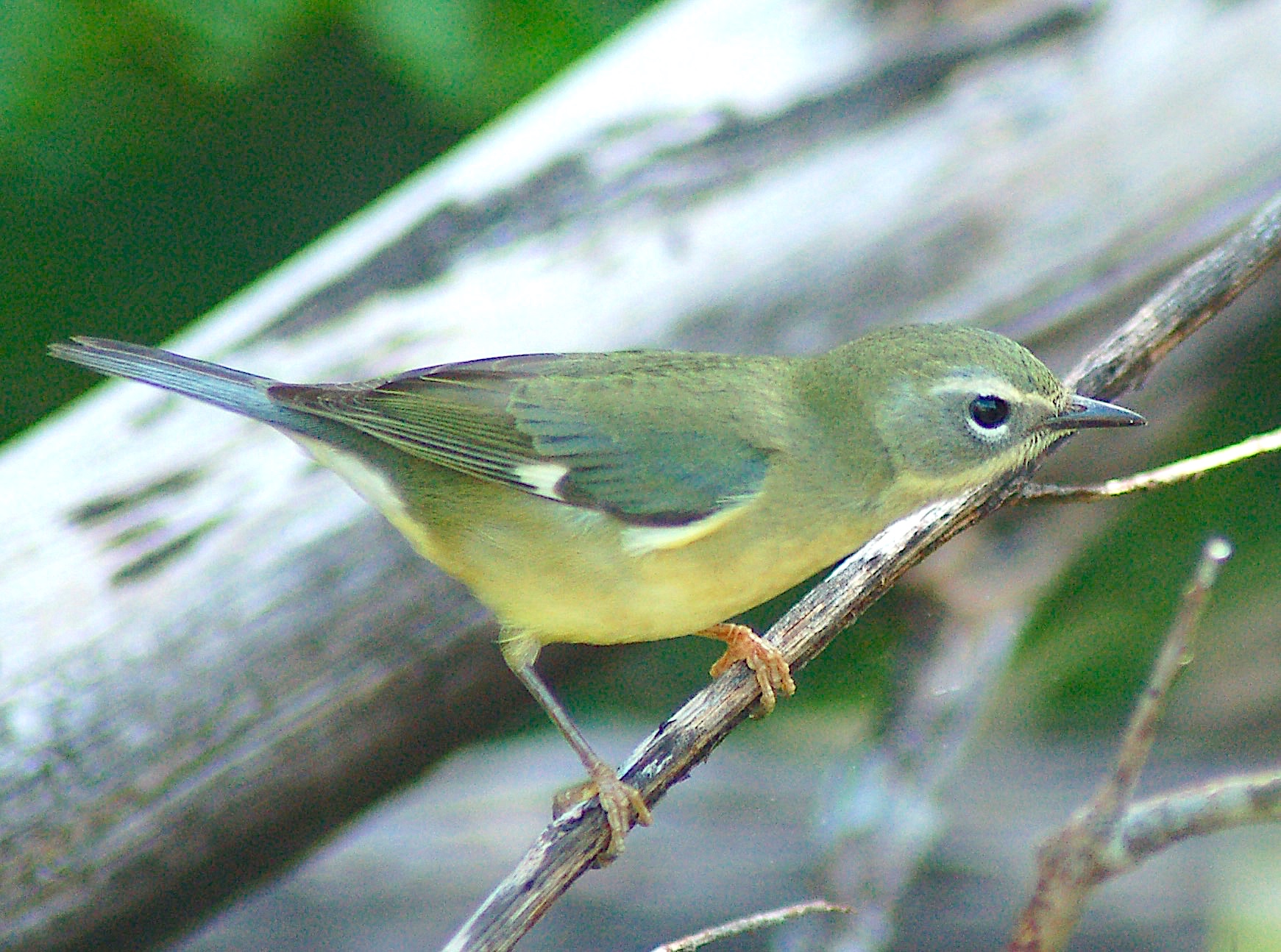
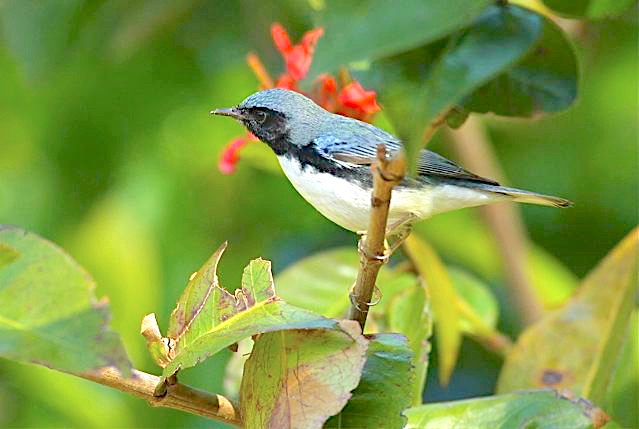
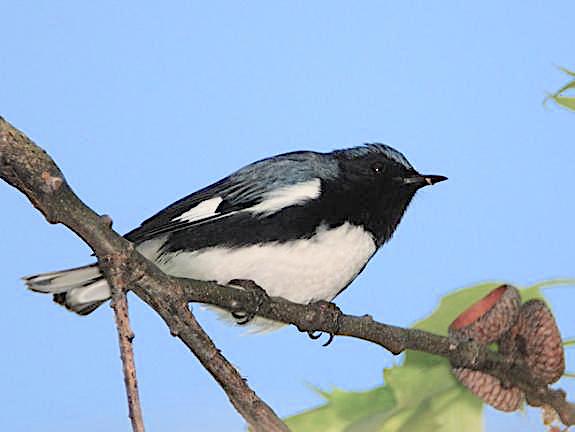
Based on the Macaulay Library pictures below, the Abaco CAWA must be a female or an immature male. In comparing photos of this species (which I had never come across before) I have noticed one thing. The yellow lore (the area between the base of the beak and the eye) extends to include the top of the bird’s otherwise white eye-ring. This is found in both the male and the female. Now I need to check other eye-ringed species to see if this feature is a unique identifier or not…
WHAT DO I LISTEN FOR (JUST IN CASE…)?
The two sounds to listen for are the chirpy scrap of song and the ‘chip’ call.
WHAT IS THE CAWA’S CONSERVATION STATUS?
The CAWA is IUCN-listed as being of ‘least concern’. That of course is very far from saying it is of no concern at all. Surveys are already showing a gradual population decline in the breeding grounds. The Committee on the Status of Endangered Wildlife in Canada has assessed the CAWA as ‘threatened’. Dull as it is to keep repeating the point, this species like most others faces all the usual threats to its existence, mostly man-made and during my lifetime…
Deforestation, habitat destruction and intrusion, development etc etc
Problems arising from acid rain and pollution
The uncontrolled spread of the tree-destroying woolly adelgid, an import from Asia
Oh, and all those damn deer browsing the understory a bit. Blame them!
ARE THERE ANY FUN FACTS ABOUT THIS BIRD?
Well, confusion about its name, maybe, though that’s more ‘interesting’ than ‘fun’, I think. In 1760, a French zoologist named Brisson gave a name to a warbler specimen from Canada. It was “Le gobe-mouche cendré de Canada”, ie ‘The Canadian Ash-gray Flycatcher’. Because he needed a conventional Latin name for the bird, he put together the name Muscicapa Canadensis Cinerea. This did not fit in with the binomial system of taxonomy (nor was it a very good description of the bird), and the name was accordingly rejected by the wonderfully named International Commission on Zoological Nomenclature. Linnaeus (to cut a longer story short) sorted it all out in his next edition of Systema Naturae in 1766, with the binomial name Muscicapa canadensis. In due course the genus Muscicapa was changed to Cardellina.
THAT WASN’T A WHOLE LOT OF FUN. IS THERE MORE?
Well, there were more naming shenanigans when John James Audubon illustrated a female Canada warbler in Birds of America nearly a century later. Plate 73 (below) was entitled “Bonaparte’s Flycatching-Warbler—Muscicapa bonapartii.” He’d slipped in the name of ornithologist (and nephew of the more famous Emperor) CHARLES BONAPARTE,he of the BONAPARTE’S GULL. This version did not stick. However the CAWA acquired another ‘tribute’ name, an alternative that is still in use: Wilsonia canadensis. This tip of the hat is to another ornithologist ALEXANDER WILSON, of Wilson’s Plover fame.
Photo Credits: Christopher Johnson (1, 2, 3); Emmet Hume / Wiki (4); Male / Female CAWAs, David Turgeon & Bob Edelen, Macaulay Library; Audubon Plate 73, OS; William H Majoros / Wiki. Sound Files, Ian Davies & Andrew Spencer / Xeno-Canto; Abaco Resident Warbler Chart, Keith Salvesen;, Cartoon by Birdorable; Range Map, Cornell U.
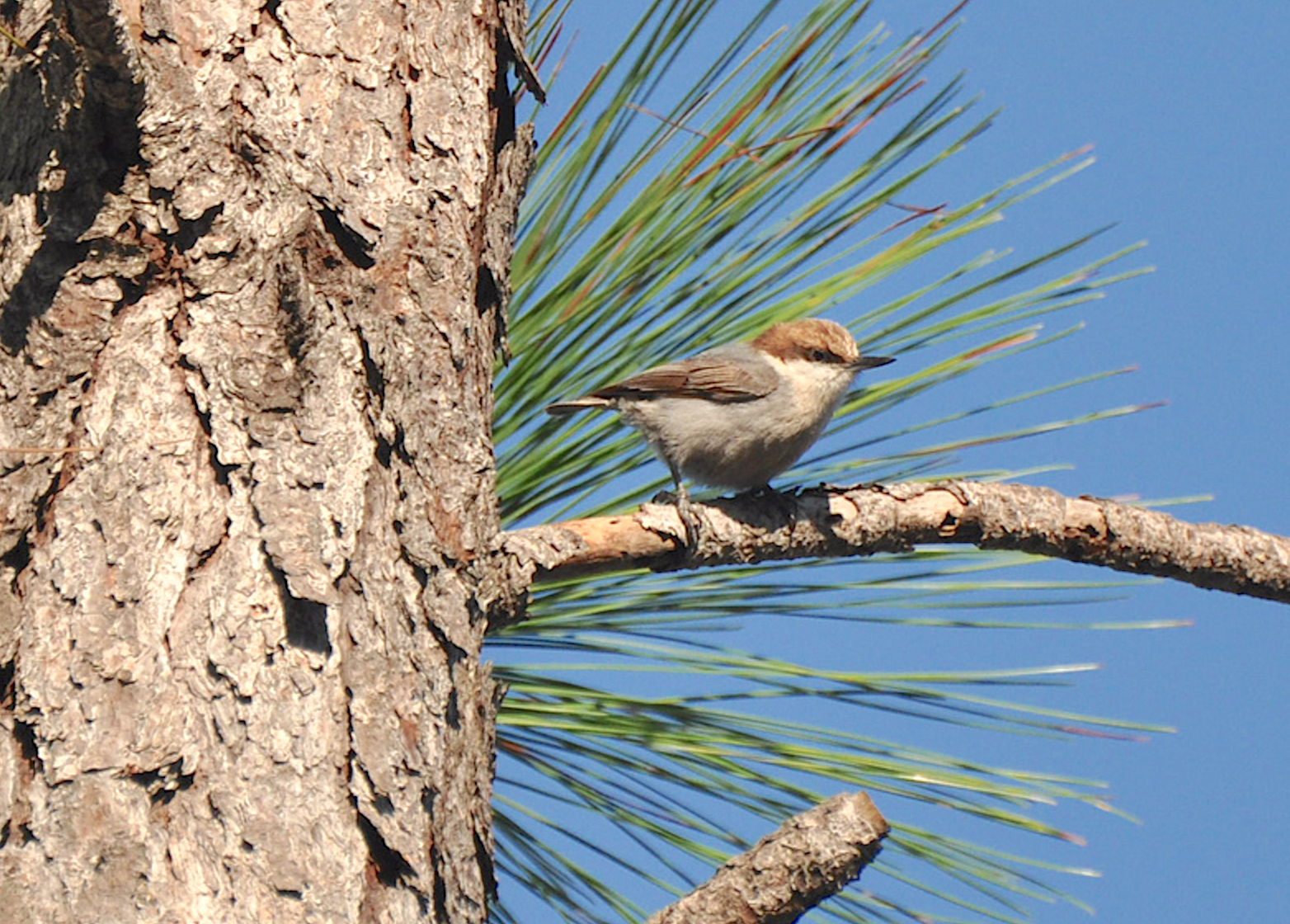
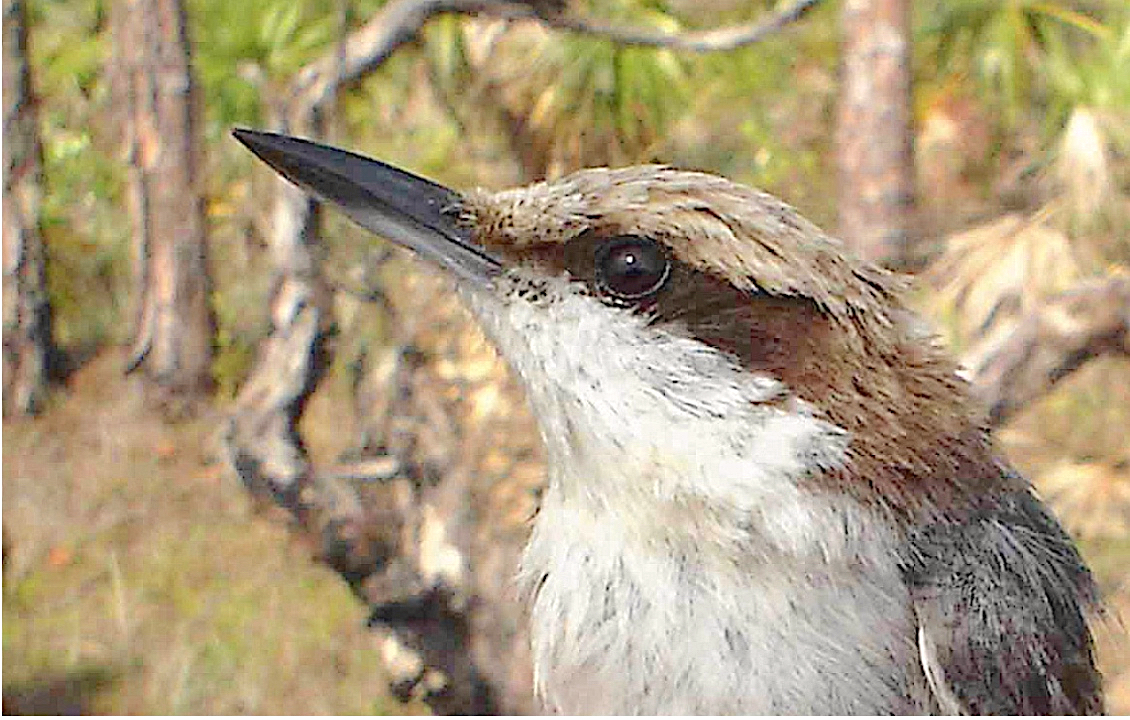
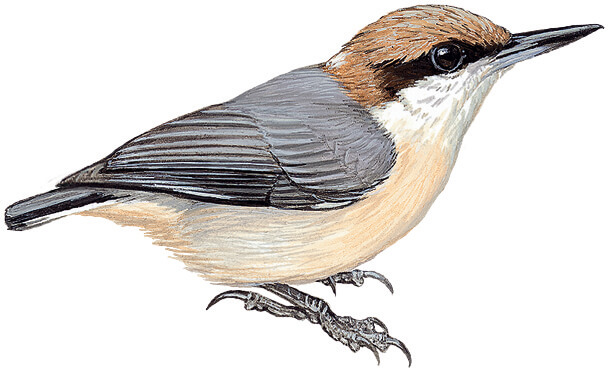
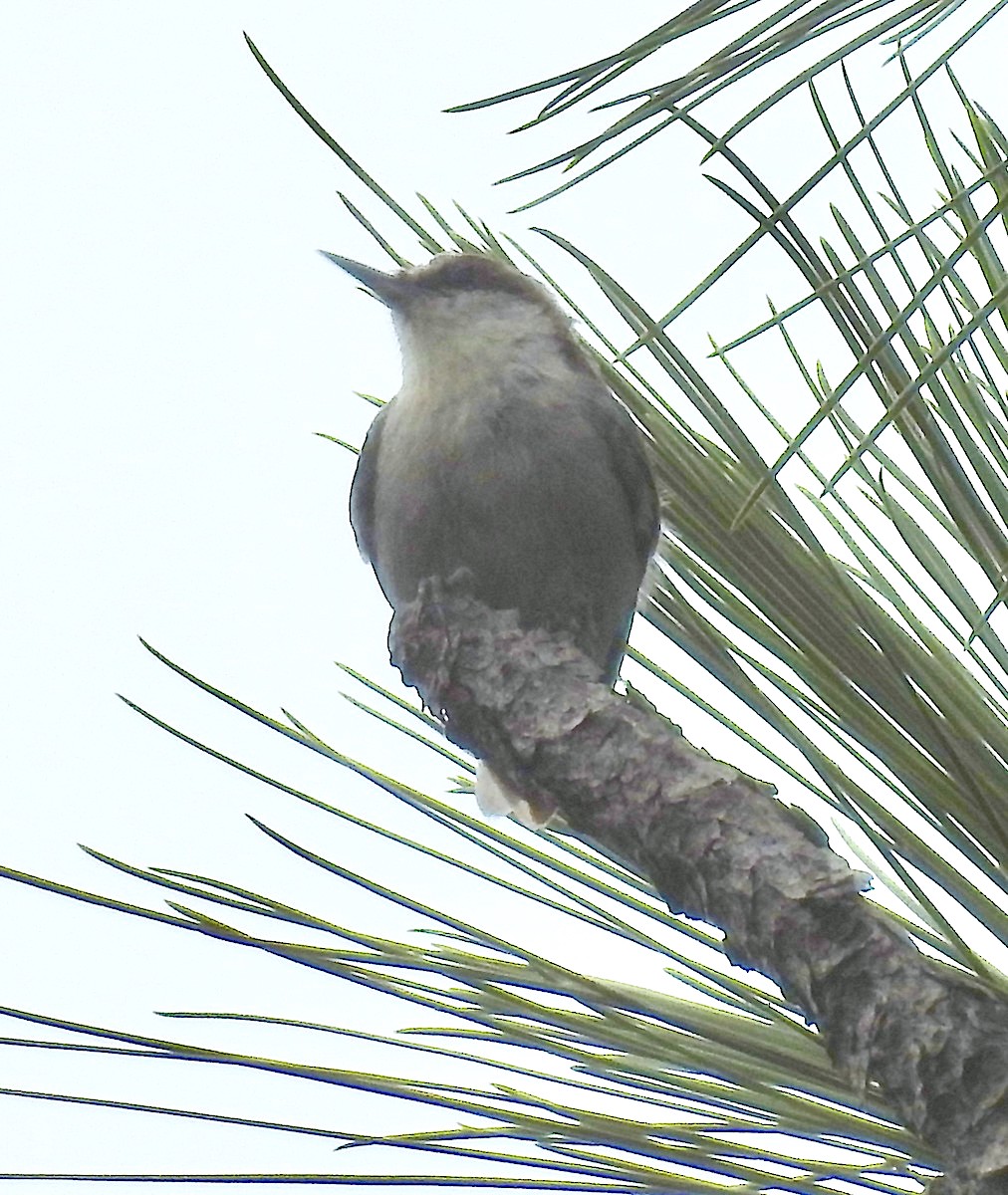
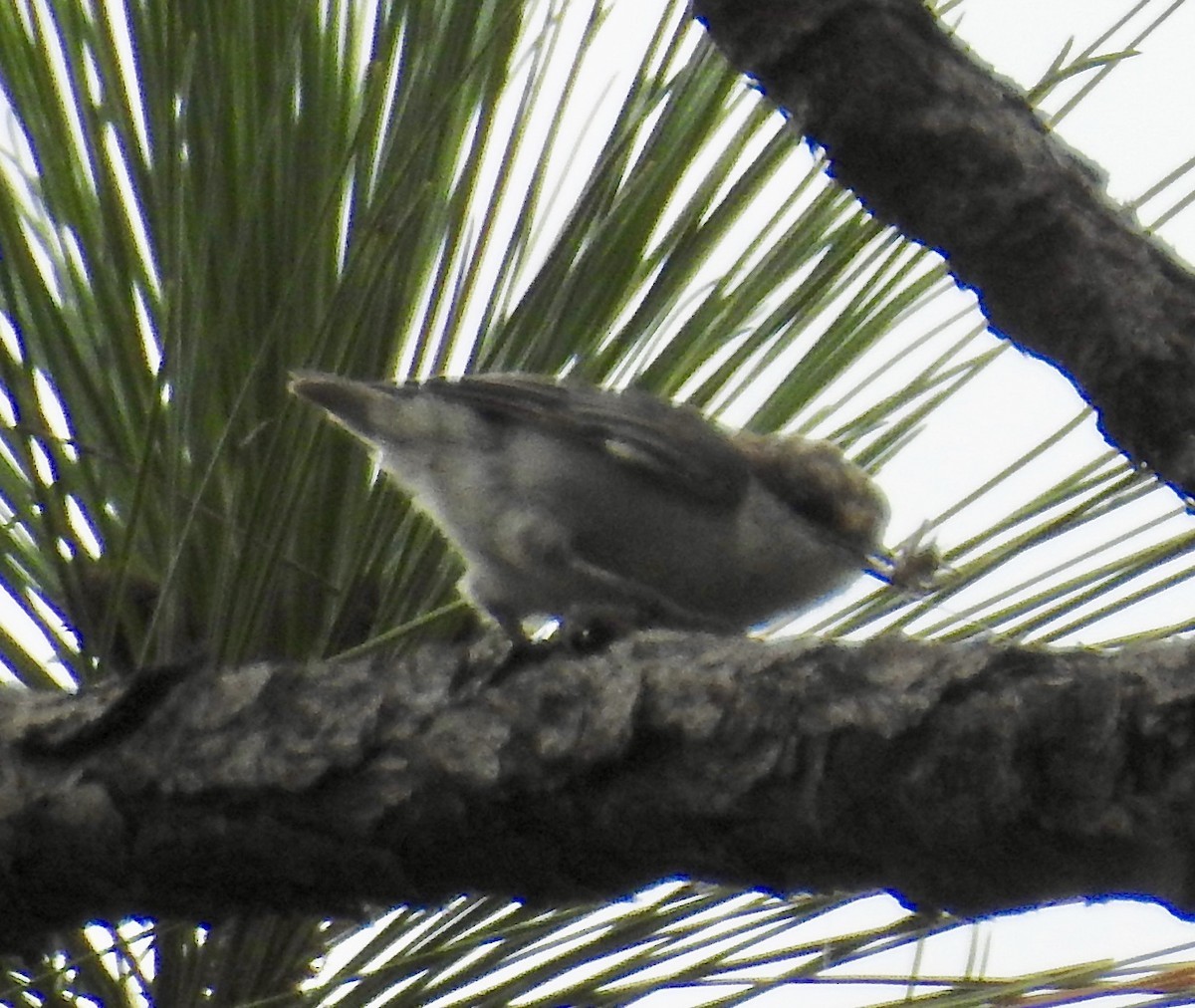
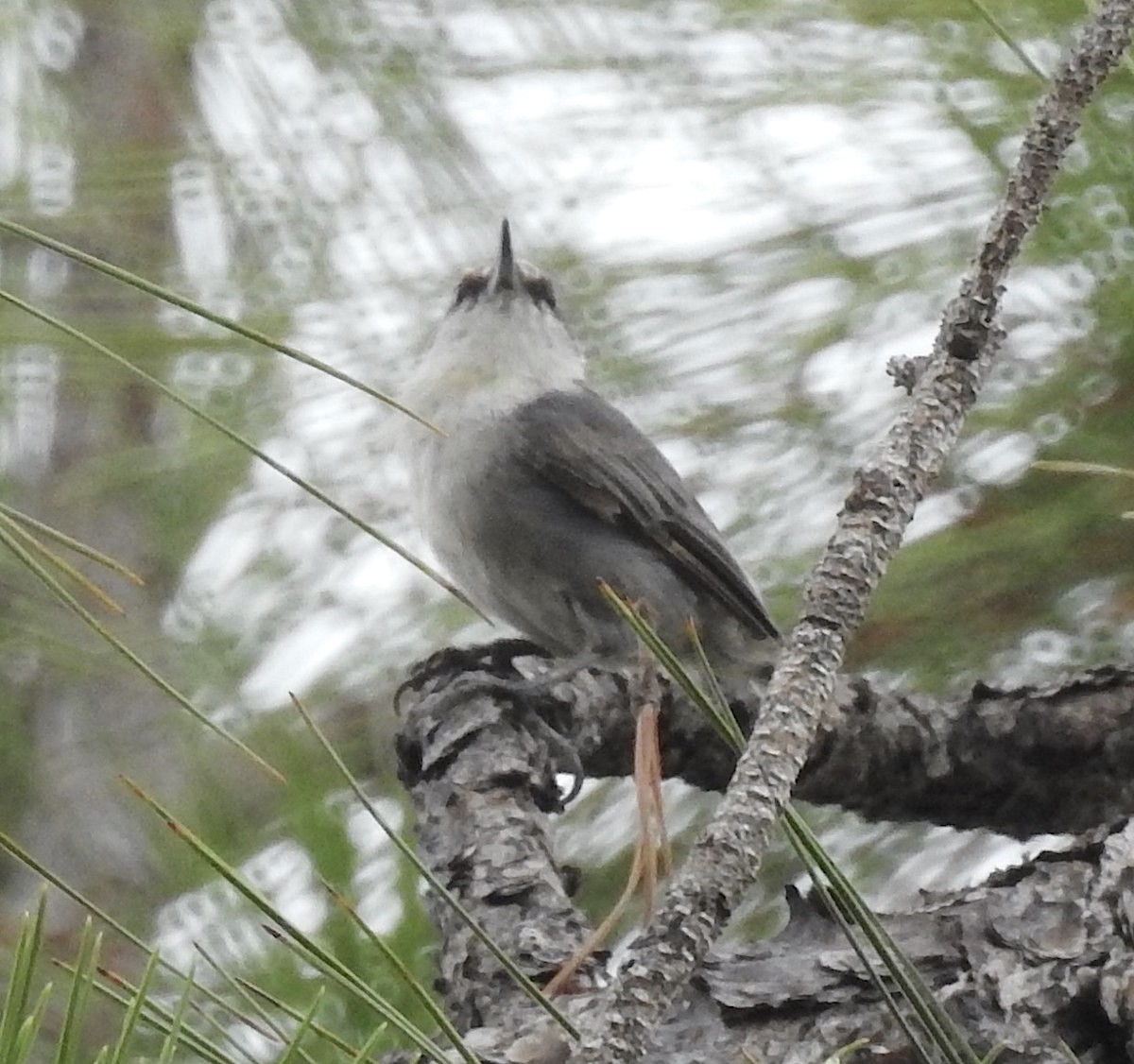
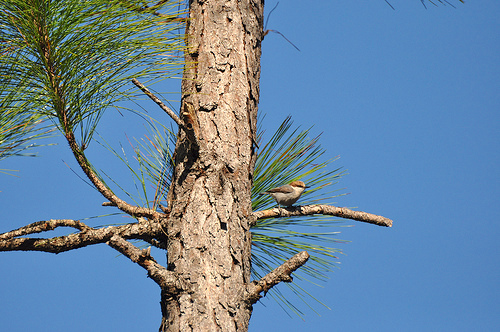
It’s quite a while since I posted about the Bahama Nuthatch (Sitta pusilla insularis) and the separation of its status from its cousin the Brown-headed Nuthatch HERE. I started by saying that it was one of the rarest birds in the Bahamas (or indeed anywhere), with a tiny population living only on Grand Bahama. It’s extraordinary to think that until the 1960s, these birds were common on the island. Then, for all the usual reasons, the population began to decline “precipitously” (Tony White). By the 2000s, the most optimistic estimates suggested that about 1000 – 1200 mature birds might inhabit the pine forests. Other surveys showed far lower numbers. By now, the species had become highly vulnerable. Reports dwindled annually, and in some years only a handful sightings were recorded.
Then in October 2016, Grand Bahama received a direct hit from Hurricane Matthew. It was as destructive as you might expect a violent Cat 5 storm could be. Without in any way seeking to diminish the far-reaching and devastating impact of the hurricane on the island (and elsewhere), I have to stick to the matter in hand here. The fact is that for nearly 2 years after Matthew and its trashing of the habitat, not a single BANU was sighted – this, despite many efforts to track one down in the known hotspot areas. It began to seem likely that the little bird had simply been wiped out of existence. Since it is known nowhere else – not even on nearby Abaco – the Bahama Nuthatch had very probably become extinct.
Fast forward nearly two years and suddenly there is the first hint of a glimmer on the horizon for these little birds. Finding one is already a needle-in-a-haystack quest. The target is shy and tiny – about 4 ins long and 10 grams; and the search area is vast – more than 30,000 hectares. Yet this summer, amazingly, some Bahama Nuthatches have been found and photographed, a most happy – and perhaps optimistic – outcome, and a deserved return for some serious survey work. Excited publicity has spread well beyond the usual online birding resources and into the mainstream press.
THE KEY SIGHTINGS
JUNE 2016
The last recorded sighting of the Bahama Nuthatch (2 birds) before Hurricane Matthew was made in June 2016 by well-known Grand Bahama bird expert and guide, Erika Gates.
The first team eventually made a sighting in May 2018, and the elusive bird was captured by Matthew Garner of UEA on camera. They also obtained brief and tantalising video footage (below). In all, the UEA team made six nuthatch sightings, and Bahamian team independently made five sightings (including seeing what appeared to be two together).
JULY 2018
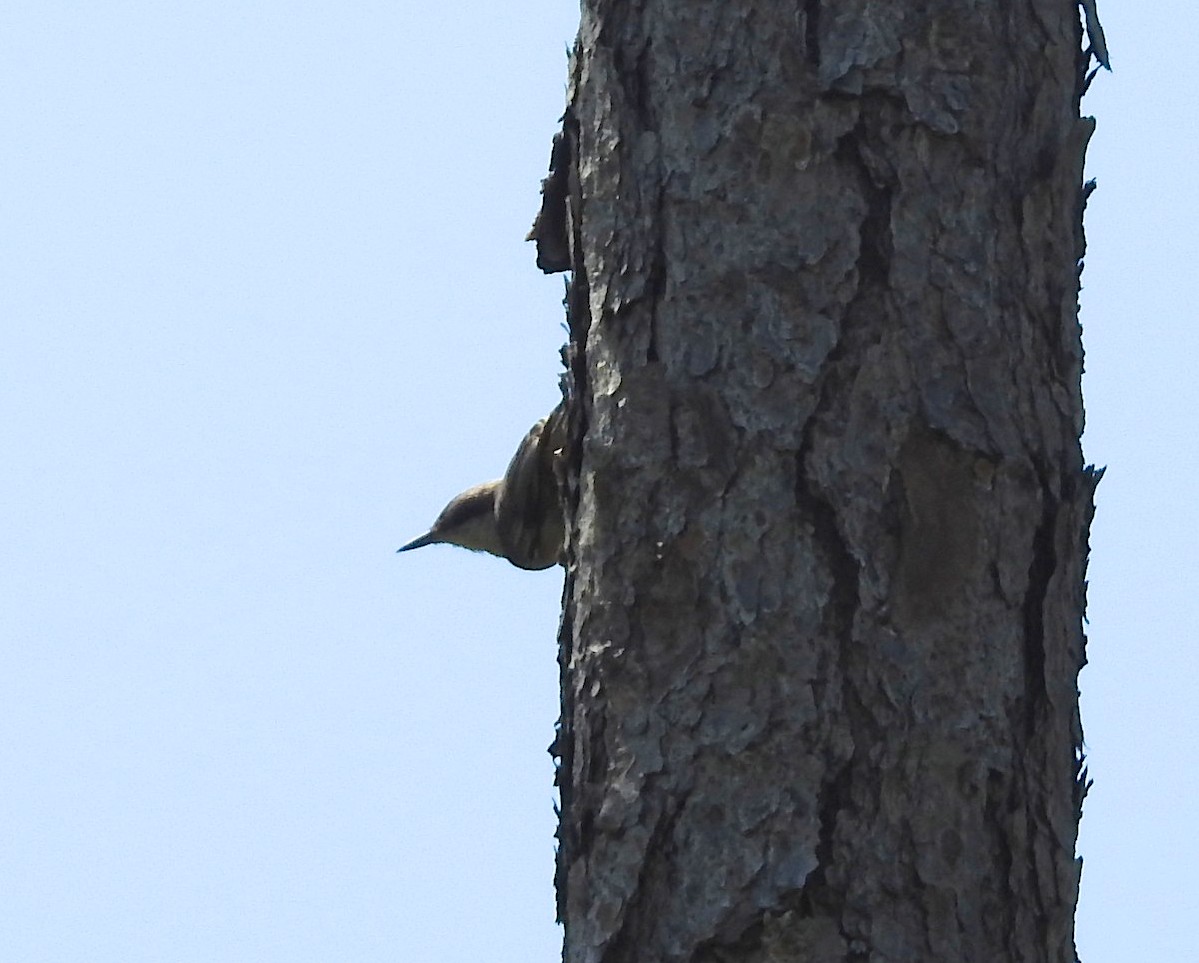
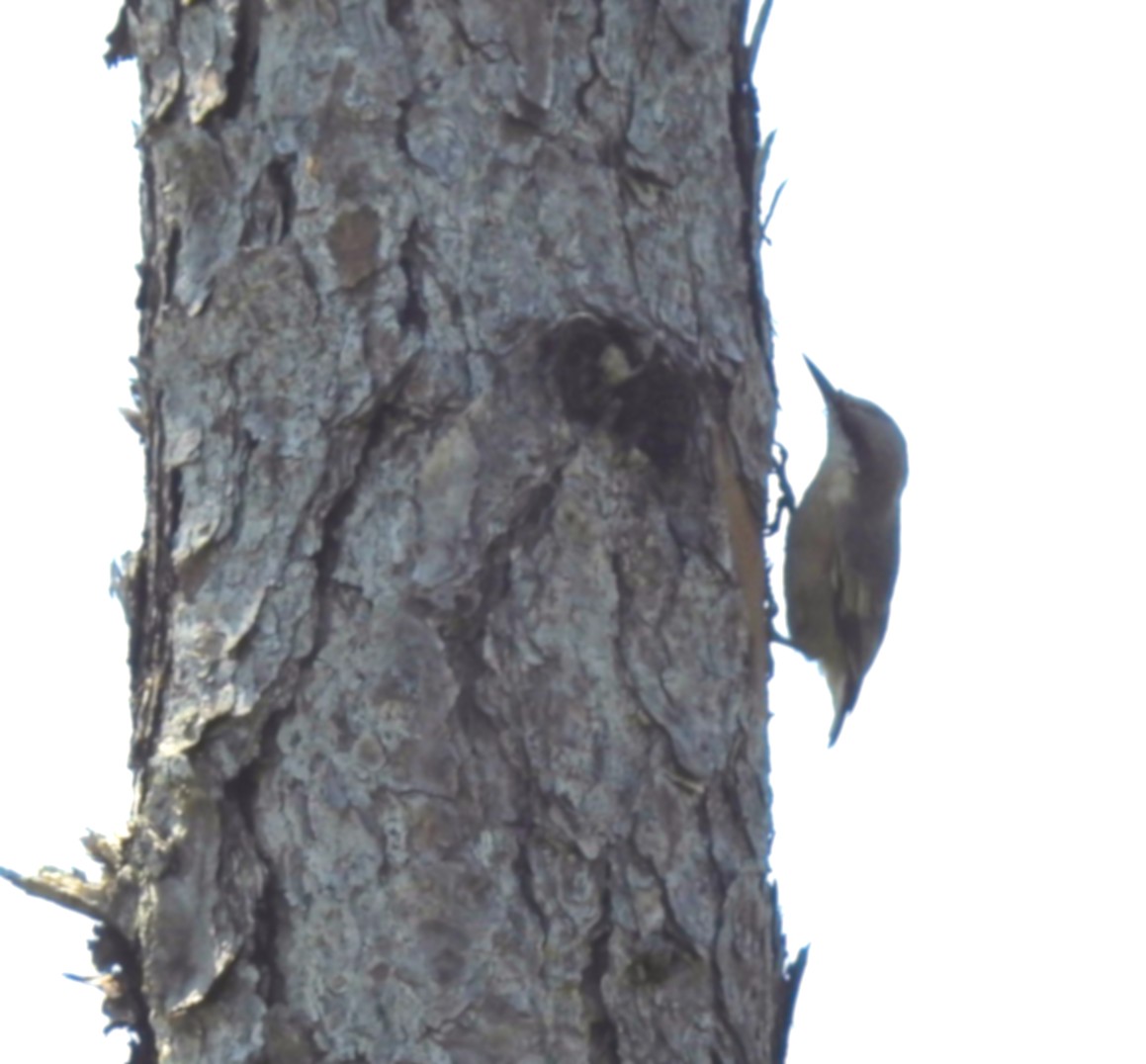
Erika Gates, with Martha Cartwright and Zeko McKenzie, again managed to locate a single nuthatch to add to the earlier 2018 sightings. She too managed to get some photos of the bird.
WHAT OF THE FUTURE?
Among the May birds – however many there were in total – one was a juvenile. Combined with 2 adults seen at one time, that makes 3 birds. The extent of the period of study and search area of the May sightings (11 in all) make it likely that more than 3 birds were seen overall. Erika’s July bird, in a slightly different location, suggests another. Perhaps no more can be said than that there may be half-a-dozen Bahama Nuthatches extant in the world. It’s some comfort.
However, as the May operation noted, ‘We also don’t know the sex of the birds. In many cases when birds dwindle to such small numbers, any remaining birds are usually male.’The consensus of the articles I have read is that the handful of birds seen this summer, while a thrilling discovery, should not be seen as any guarantee against extinction. Further habitat degradation, more development, another hurricane, any one of these could be fatal to the species. The recent sightings are cause for some optimism but these little, highly vulnerable birds remain on the very brink of extinction. Those few people who have seen one in the wild have had a precious experience.
THREATS TO THE SPECIES
Habitat loss / degradation from development, logging, forest fires & hurricanes
Invasive / introduced / feral species such as corn snakes, raccoons & cats
Competition from other more prolific species in a limited habitat
The Bahamas National Trust has produced an excellent video account of the whole story from Shelley Cant-Woodside HERE
Photo credits: Bruce Purdy (1, 11); Gary Slater / Birdlife.org (2); Erika Gates / Bahamas Weekly (3); Erika Gates (4, 5, 7, 8, 9, 10); Matthew Gardner (6); Birdlife International (drawing); UEA & team (video)
Research credits include: Birdlife International / Birdlife.org; Lisa Sorenson; Tony White; Research Gate; IUCN; Bahamas National Trust; The Bahamas Weekly / Erika Gates; eBird; Loma Linda U; Science News; Sundry online publications; American Birding Association (and a bonus point for its brown-headed nuthatch behaviour article wittily entitled “Sex in the Sitta”)
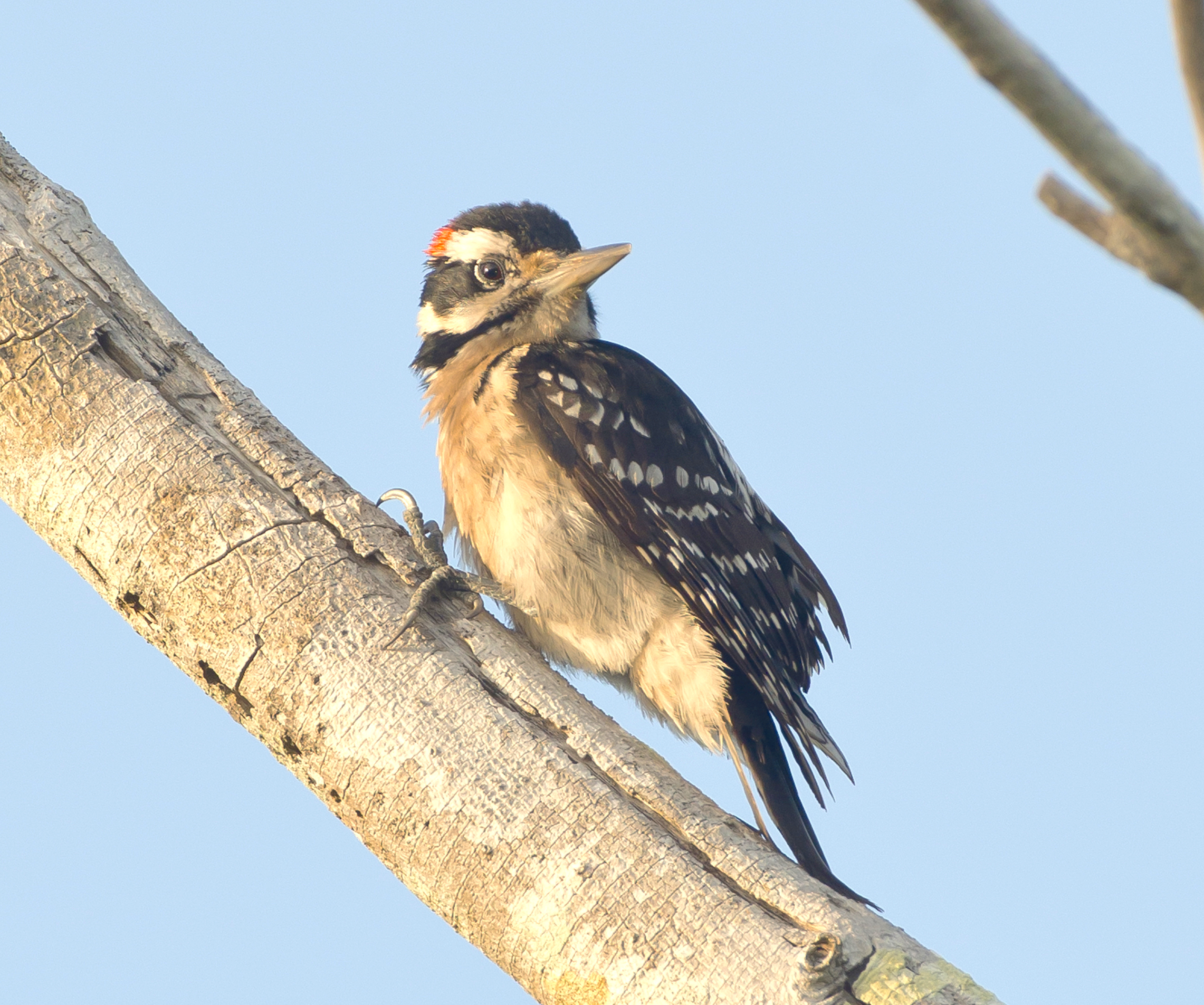
It’s Friday. I’ve just nixed for wild brown trout on the River Frome in the rain. I need a beer and I’ve run out of week. You can read more about the attractive little Hairy Woodpecker – Abaco’s small counterpart to the larger and noisier West-Indian Woodpecker –HERE. Have a good weekend!
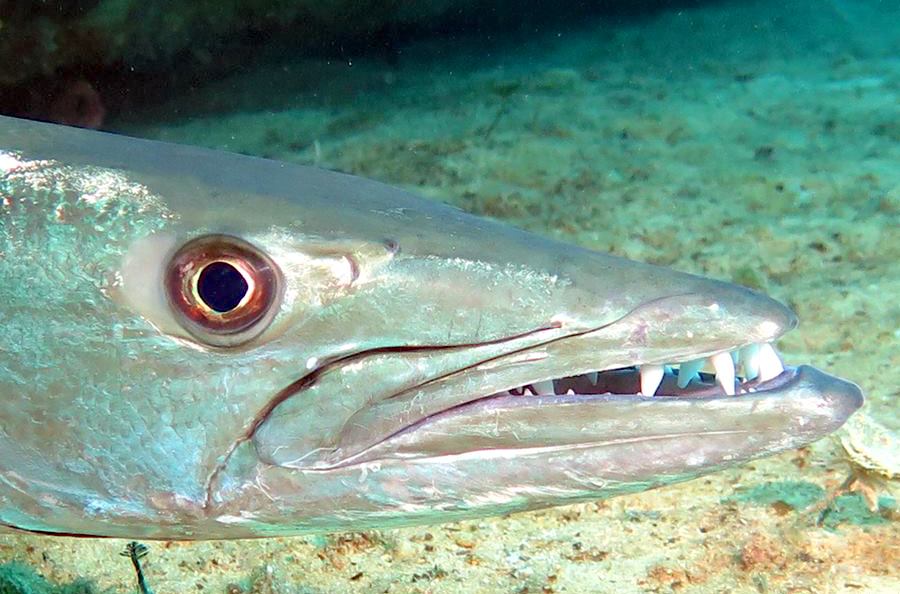
It’s probably fair to say that barracudas are among the less kindly-disposed of the denizens of the flats and reefs of the Bahamas. They certainly rank high on the Rolling Harbour Tooth Avoidance Scale. The seemingly random nature of the razor sharp dental arrangements – different sizes, different angles, different directions – does not inspire confidence.
The worst fishing injury I have picked up so far – aside from multiple terrible injuries to pride from botched casts, mistakes, missed takes and lost fish – has come from a large ling. What I didn’t know until I had been cut when my finger went into its mouth was that the teeth are coated in anticoagulant. I bled all over the boat and spent the rest of the day getting through a large roll of paper towel and several improvised bandages (J-cloths). That wiped the smug smile off my face – pride in the catch came before a notable fall in my standard-issue blood quota.
When bonefishing in the shallow waters around the coast of Abaco, there are always ‘cudas to be seen. They are not the main target fish, but the boats always have a spinning rod in them, just in case… At some stage in the day, some people find it hard to resist the urge to chuck out a lure when ‘cudas are about. It’s not something I generally do, though occasionally my fly gets intercepted by a practice-sized ‘cuda.
A learner ‘cuda that took a bonefish fly
Earlier this year I was in a boat fishing with the legendary Robin Albury, a guide who generally doubles my usual modest catch rate. My boat partner and I were taking a lunch break, with an open cool box of snacks between us and a Kalik in our hands. Robin went to the sharp end with the spinning rod on the off-chance. In a flash he had seen a big ‘cuda, chucked out the lure onto the creature’s nose and caught it, almost in one movement. I put down my beer to watch the entertainment. Robin decided otherwise, and simply handed me the rod to play the thing. And boy, was that fun. I didn’t get the kudos of making the hook-up, but I had plenty of work to do… It took an excitingly long time to bring the strong and vigorous fish to the boat. Robin got to hold the fish, of course – after my ling experience, I was happy enough to let him mess with the dental arrangements.
Credits: Melinda Riger / Grand Bahama Scuba (1, 2, 4, 6, 7); Keith Salvesen / Rolling Harbour (3, 5, 6)
The Smooth-billed Ani (Crotophaga ani) is the third member of the cuckoo family found on Abaco, the others being theMANGROVE CUCKOOand theYELLOW-BILLED CUCKOO. Anis range from Florida and the Bahamas in the north, down through the Caribbean to South America, where they are widespread.
Unlike their shy and retiring cuckoo cousins, anis are extrovert shouty birds that like to hang out in noisy gangs and family groups. They can often be found in low scrub, bickering and squawking, and fluttering around. You’ll probably hear them from some way off, sounding like this:
Anis have advanced social, parenting and chick-rearing skills. They build a communal nest for the group, and all share in egg incubation and chick-feeding duties They may raise up to three broods in a season, which keeps the numbers up. Rather touchingly, the young of earlier broods help to feed more recent chicks.
It follows from this that unlike many other cuckoo species, the ani is not a brood parasite. So the species does not lay its eggs in the nests of other, smaller birds which then unwittingly rear the interloper(s), who in turn push the legitimate hatchlings out of the nest and get all the food and attention.
I have tried to discover why an ani’s beak is as it is, without much success. Very often beak shape relates directly to the feeding habits and preferences of a species, but it is hard to see how a diet consisting mainly of insects and small reptiles such as lizards would account for such a prominently protuberant proboscis. Here is a close-up of the item in question.
On Abaco (and indeed elsewhere) Anis are sometimes known as ‘Cemetery Birds’, no doubt because of their all-black appearance (though their raucous tendencies would be quite inappropriate for a graveyard). However although at a distance these birds may look completely black, catch one in the sun at the right angle, and you’ll find that the plumage is far more varied, and with some intricate patterning.
Look for Anis in low scrubland and coppice, cultivated areas, perched in unsteady noisy rows on utility lines, or foraging on the ground.
The appearance and flying abilities of Anis are wonders to behold. As I wrote in The Birds of Abaco, “Their curious heavy beaks, their clumsy flight and their untidy take-off and landing routines suggest a design fault”.
“One… is the loneliest number…” Oh, hang on a moment…
…”two of us…standing solo in the sun…”
The Philatelic Bureau of the Bahamas Postal Service is commendably committed to featuring the natural history of the Bahamas. Although probably not in the top-ten of anyone’s bird list, the ani nevertheless got its own stamp in a 1991 bird issue.
As far as I know, there is not yet a collective noun for a group of anis. There should be. Any suggestions welcome. Meanwhile I put forward “A Commotion of Anis”
Credits (all photos taken on Abaco): Becky Marvil, Nina Henry, Tony Hepburn, Gerlinde Taurer, Roselyn Pierce, Tom Sheley, Bruce Hallett, Keith Salvesen; sound files from Xeno Canto and FMNH; range map from IUCN; hat tip to the always excellent Aimee Mann.
This post is a revised, corrected and expanded version of one I wrote nearly 4 years ago.
The Northern Parula is one of 37 warbler species recorded for Abaco. The vast majority of these species are migratory, arriving in the Fall and leaving in the Spring to fly north to the breeding grounds. When I’m back at HQ from my computer-free break, I’ll be writing more about these little birds. Meanwhile, this post is a reminder that the influx will begin very soon. The Northern Parula, with the distinctive green patch on its back, is sure to be among them.
This little chick ‘cracked out’ on the Delphi beach. As it grew, its plump little beak was already showing one of the features that distinguish the Wilson’s from other plover species. I’ll not go into further details here – I’m still in Ireland and iPhone-reliant. Tomorrow, we’ll be looking for whales and dolphins off the coast south of Kinsale. Target species: the Minke whale. Here’s hoping…
I’m away for a few days on the Emerald Isle, leaving my trusty computer many miles away (on purpose, I mean). I’ve just got my iPhone, but writing posts and inserting images on such a small screen / keyboard is a fool’s errand. So I’ve pre-loaded a couple of beautiful bird images to post this week. Here is a wonderful red-winged blackbird male taken by photographer Tom Sheley while we were getting together some images forThe Birds of Abacodeep in Abaco backcountry.
You must be logged in to post a comment.