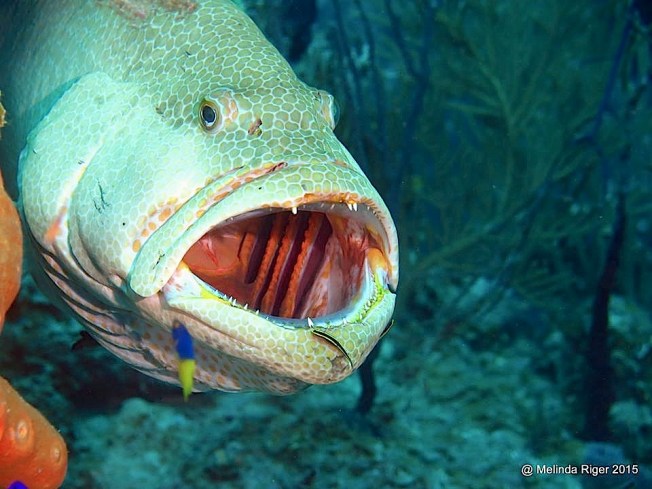
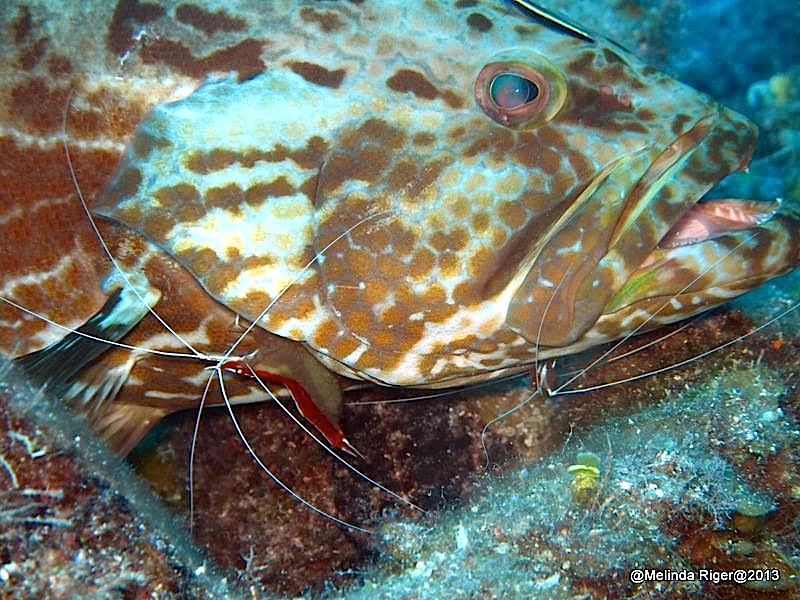
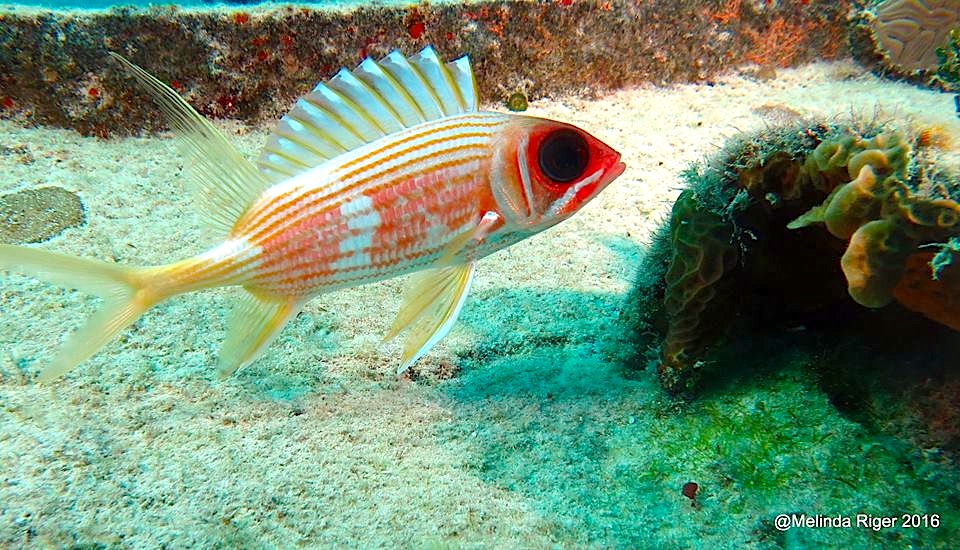
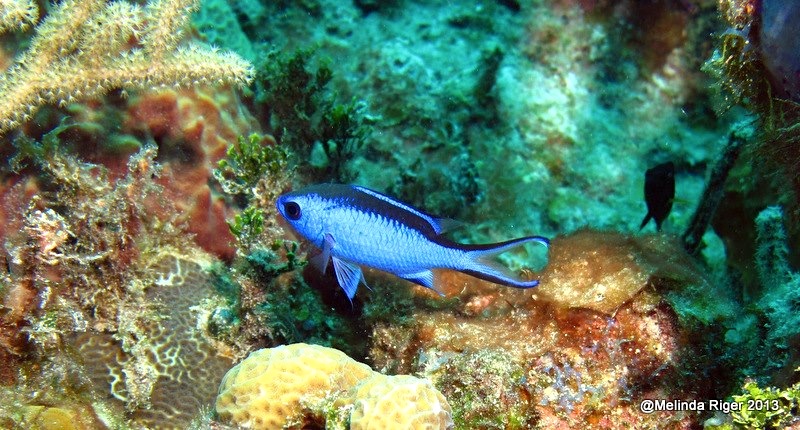
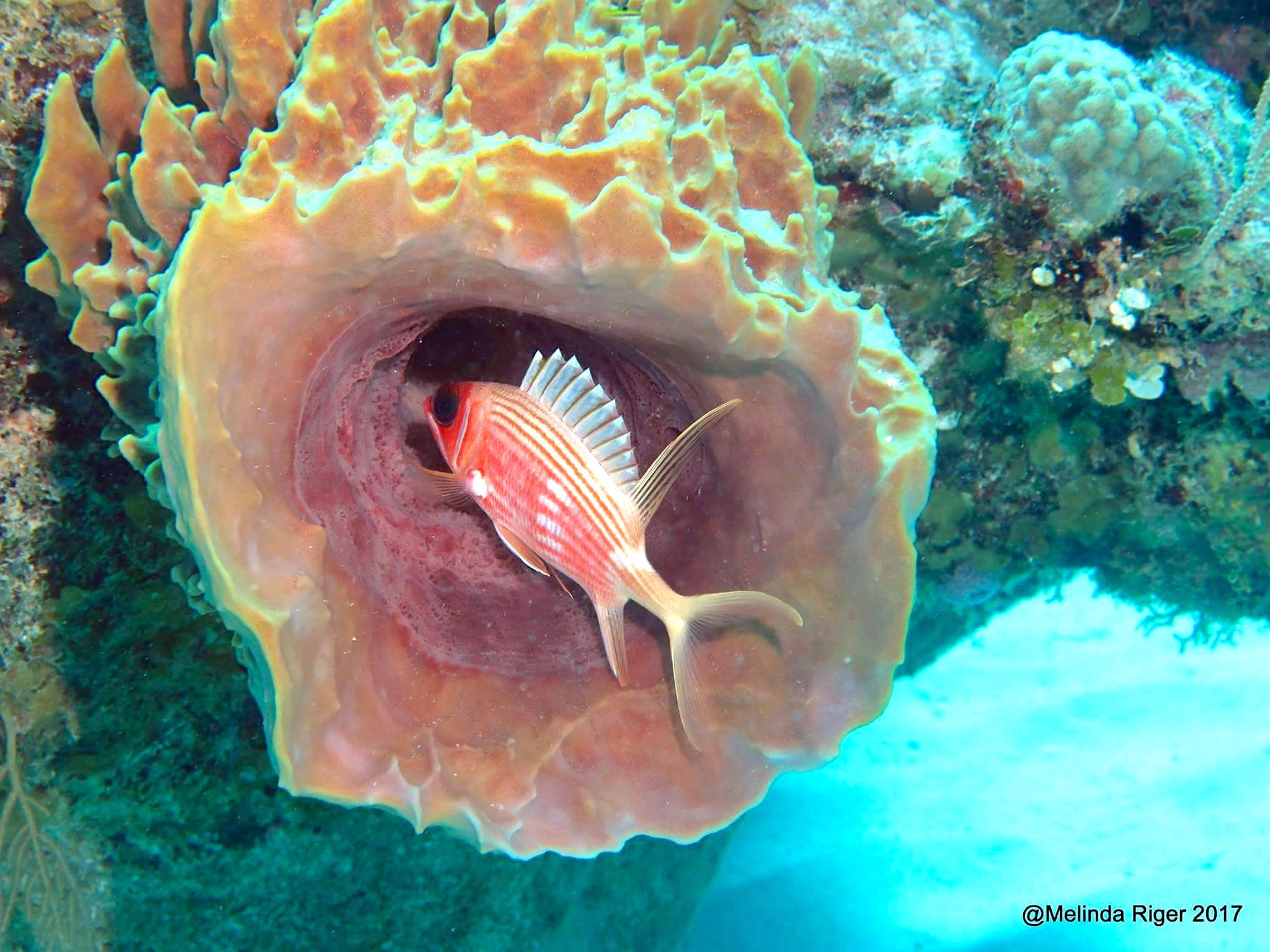
Being ‘on-island’ right now, I don’t get so much time to write stuff. To everyone’s relief, I guess (including mine). So for a while I’ll post some individual pics that particularly appeal to me. Elvis the squirrelfish (featured in a previous post) has now upgraded to a more spacious and frankly rather posher address. And in he goes…
Tag Archives: Bahamas Reef Fish
FORAYS WITH MORAYS (4): EXPRESSIVE FEATURES
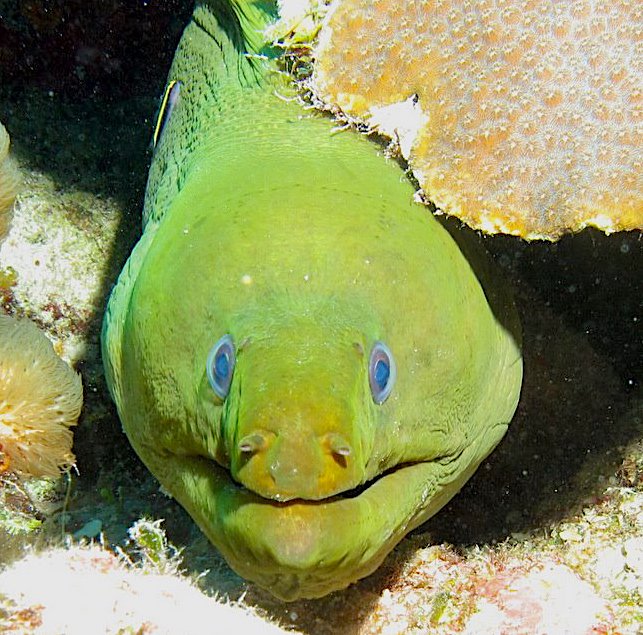
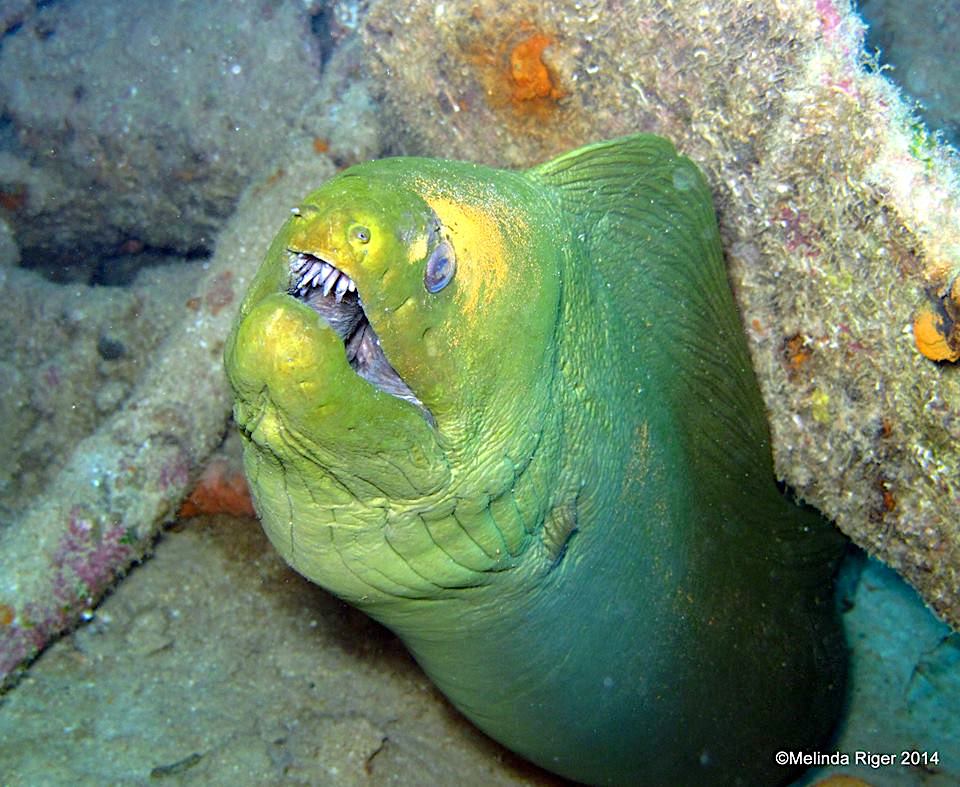
Time to return to those extremely expressive characters of the coral reefs, moray eels. Specifically, some green morays. One hesitates to anthropomorphise or ‘project’ human emotions onto creatures but with some species it’s hard not to do so. Following Mr Grumpy (or perhaps Mr Sad) in the header image, here are some close-ups of morays appearing to express their emotions, from happy to downright furious… Eels featured here include Judy and Wasabi, and I remind myself that the human habit of naming familiar wild creatures is itself a (perfectly harmless) form of benign animism. Exactly as with the regular banded piping plovers featured elsewhere in this blog that overwinter on Abaco’s beaches, such as Harry Potter, Bahama Mama and the delightfully-named Felicia Fancybottom…
Watch it. You are beginning to bug us, Mr Harbour, with your stupid captions
THE NEXT POST WILL BE FROM ABACO HQ NEXT WEEK
Credits: All morayvellous photos, Melinda Riger / Grand Bahama Scuba except 6, Virginia Cooper / Grand Bahama Scuba
BLUEHEAD WRASSE: PRIVATE LIFE LAID BARE
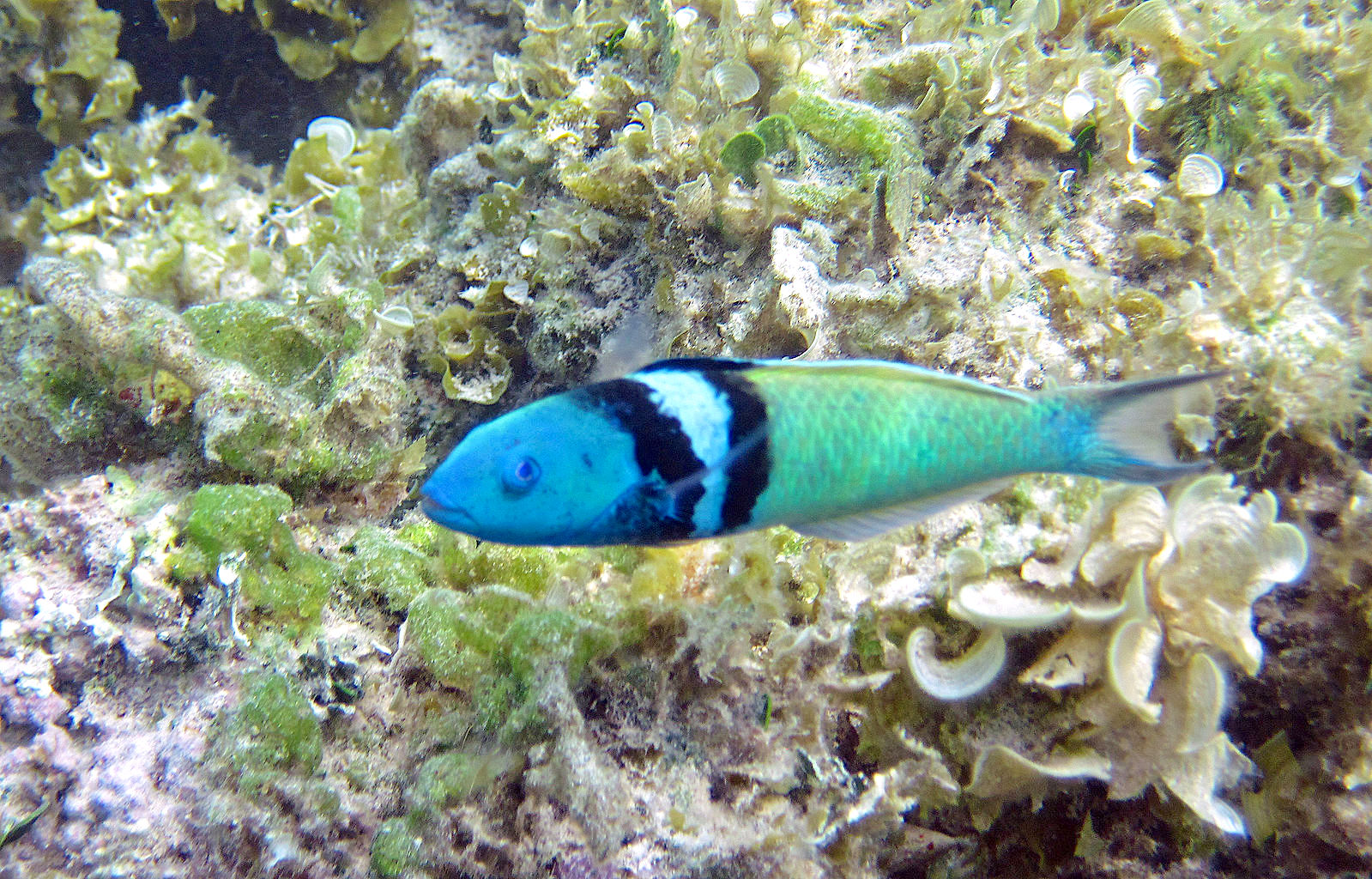
The bluehead wrasse (or blue-headed wrasse) Thalassoma bifasciatum is a denizen of the coral reefs of the tropical waters of the western Atlantic Ocean. This bright little 4-inch fish is… a wrasse with a blue head. No more and no less. Unless it’s a juvenile. Then it is mainly bright yellow. It’s similar to BLUE TANG (aka ‘the Disney Dory’), which starts life bright yellow and grows up to be blue.
The species may be found singly, in pairs or small groups, or in schools. They have an important role to play in the life of the reef. They are CLEANER FISH, vital to the health and wellbeing of the larger species they attend to, and thus of the reef itself. This is ‘cleaning symbiosis’, a relationship of mutual benefit. The big fish get cleaned; the little fish have a useful function and – importantly for them – therefore don’t get eaten.
Having said that, blueheads are of course fair game as a snack for species that aren’t in the market for their cleaning services. And, unfairly, some species that are content to let cleaner gobies runtle around their gills and mouths are not so considerate of the wrasse. Some types of grouper and moray eel, for example.
TELL US EXACTLY SEVEN BLUEHEAD WRASSE FACTS
- Juveniles can alter the intensity of their colour, stripes & bars
- The bluehead wrasse is a ‘protogynous sequential hermaphrodite’
- All are born female**. Some change sex to male during maturation (see below)
- Food includes zooplankton, small molluscs and small crustaceans…
- …and parasites / other juicy bits (fungal growths, anyone?) from bigger fish
- The main threat to the species is coral reef degradation or destruction
- The bright colours invite aquarium use, but the trade is not a significant one
** Some sources suggest some are born male and remain male. I’m not sure which is right
A juvenile bluehead (with feather-duster worms) – mostly yellow, with a pale underside

THE REMARKABLE SEX LIFE OF THE BLUEHEAD WRASSE
This is an unavoidable topic, I’m afraid. The bluehead’s sex life is the most interesting thing about them, and this is no time to be prudish. It is the subject of extensive scientific research, not all of which I have read since I decided to write about the species last night. Like many human relationships, “it’s complicated”, but in a conch shell it boils down to this:
- To recap, BWs are born female and as they mature, some become male.
- Males reach an ‘initial phase’ when they can breed in groups with females
- Some males grow even larger & reach full colouration. This is the ‘terminal phase’
- These large males aggressively chase away smaller ones & seek females to pair with
- Their state of readiness (as it were) is signalled by colour changes
- This behaviour is similar to that seen in many city centres in a Saturday night
- The smaller fish have one bonus – their sperm count is higher than a dominant male
- Prozac tests have shown that the drug reduces a dominant male’s aggression
As the excellent organisation OCEANA puts it: Bluehead Wrasses may reproduce in four different ways throughout their lifetime: 1) as a female in a group spawning event; 2) as a female in a pair spawning event within the territory of a large male; 3) as a small male in a group spawning event; and 4) as a dominant, terminal male in a pair spawning event within its own territory.
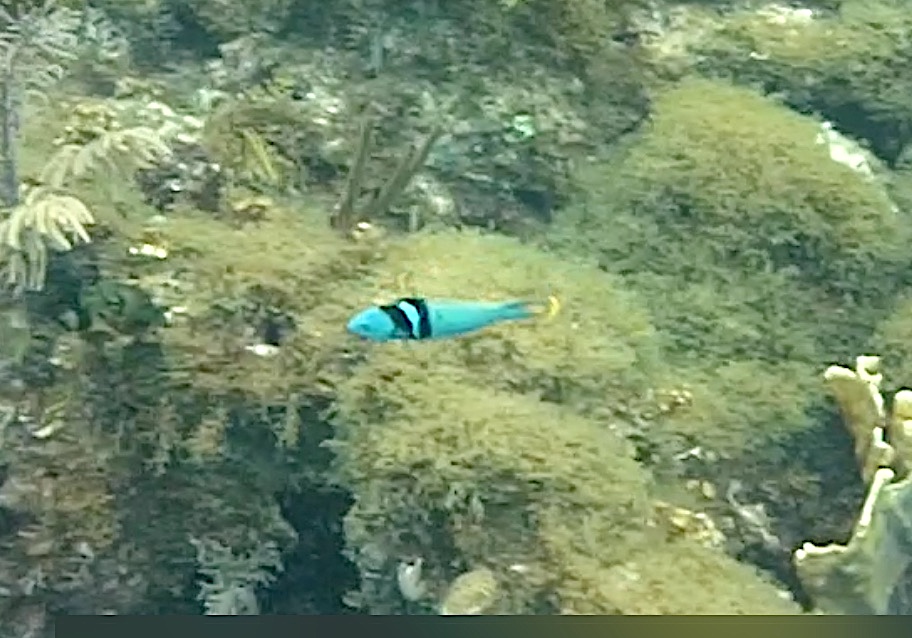
A cropped still from a video I took at Fowl Cay marine reserve. I’ve looked at dozens of images online and not found one that was all blue with a yellow end to its tail fin. Maybe it’s not a BW at all. Or it’s a different type of fish completely. Or perhaps it is just an all-blue alpha male.
Credits & Sources: Melinda Riger; Adam Rees; James St John; Oregon State edu / Pinterest; Wiki images; self; Oceana; IUCN; magpie pickings
WONDERS OF THE DEEP: FROM SUBLIME TO… THE OTHER THING
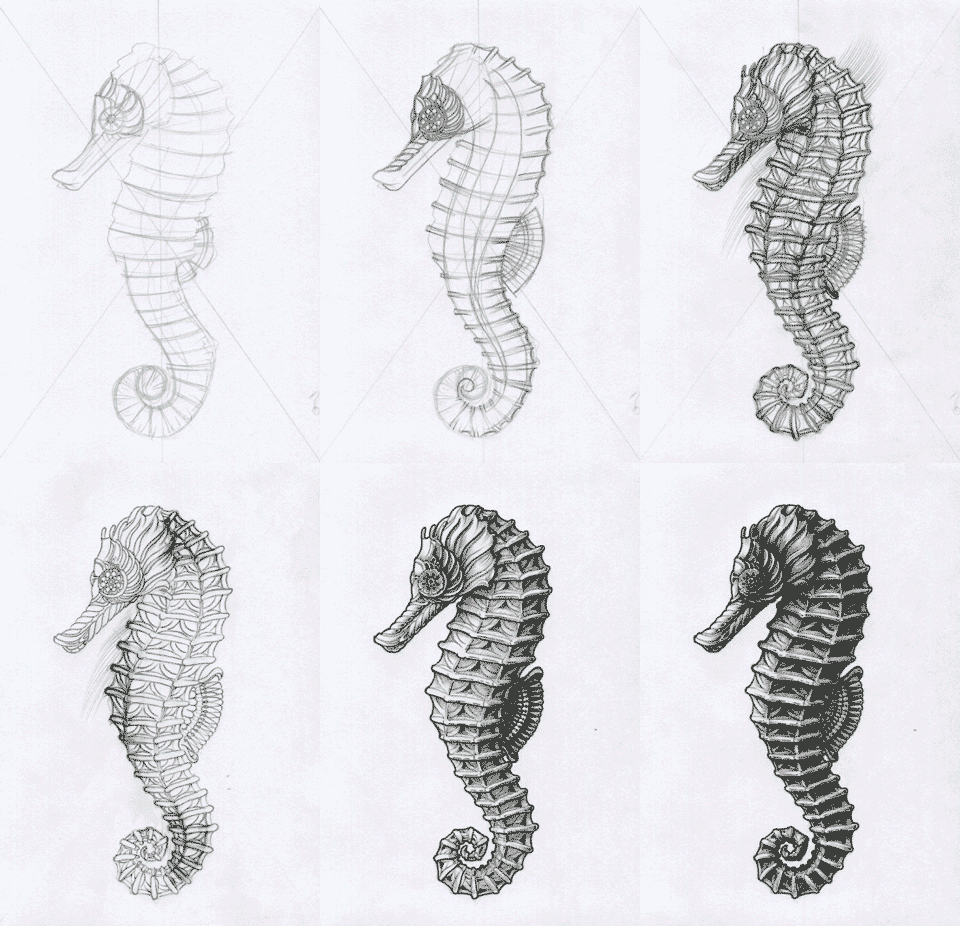
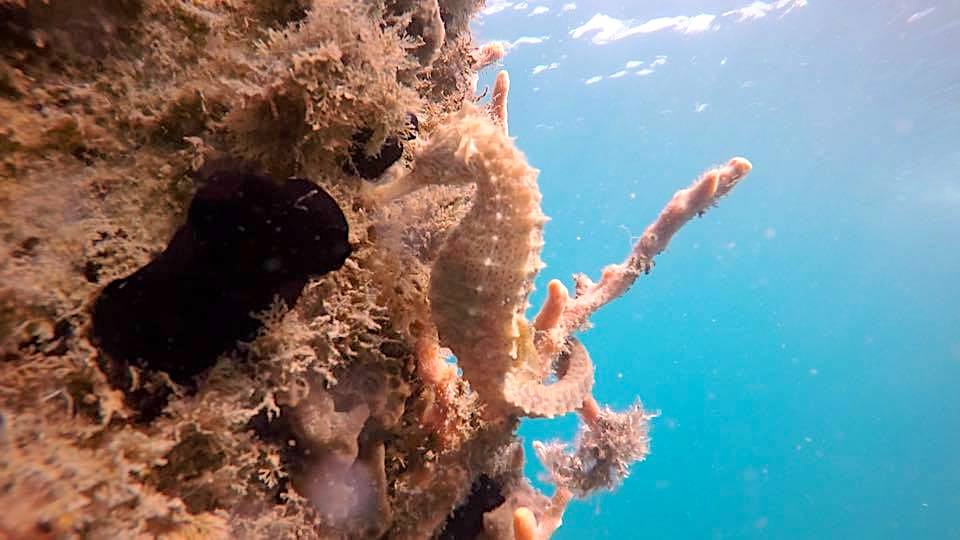
It’s a statistically proven fact (and not, in any way, a ‘post-truth’ proposition) that no one has ever had a bad thing to say about seahorses. Indeed, some love them too much and consume them – see HERE for threats to seahorse populations in some areas of the world.
Sometimes they are easy to see. The header image shows an orange seahorse curling its tail round green weed on pink coral – hard to miss. Yet sometimes it may be quite difficult to see the little creatures against their chosen background.
These guys are, I think, for their size among the most sublime of all underwater creatures. I use the word in the strict historical sense “of very great excellence or beauty, exalted, awe-inspiring, majestic, magnificent, glorious.” Not just to mean “nice”.
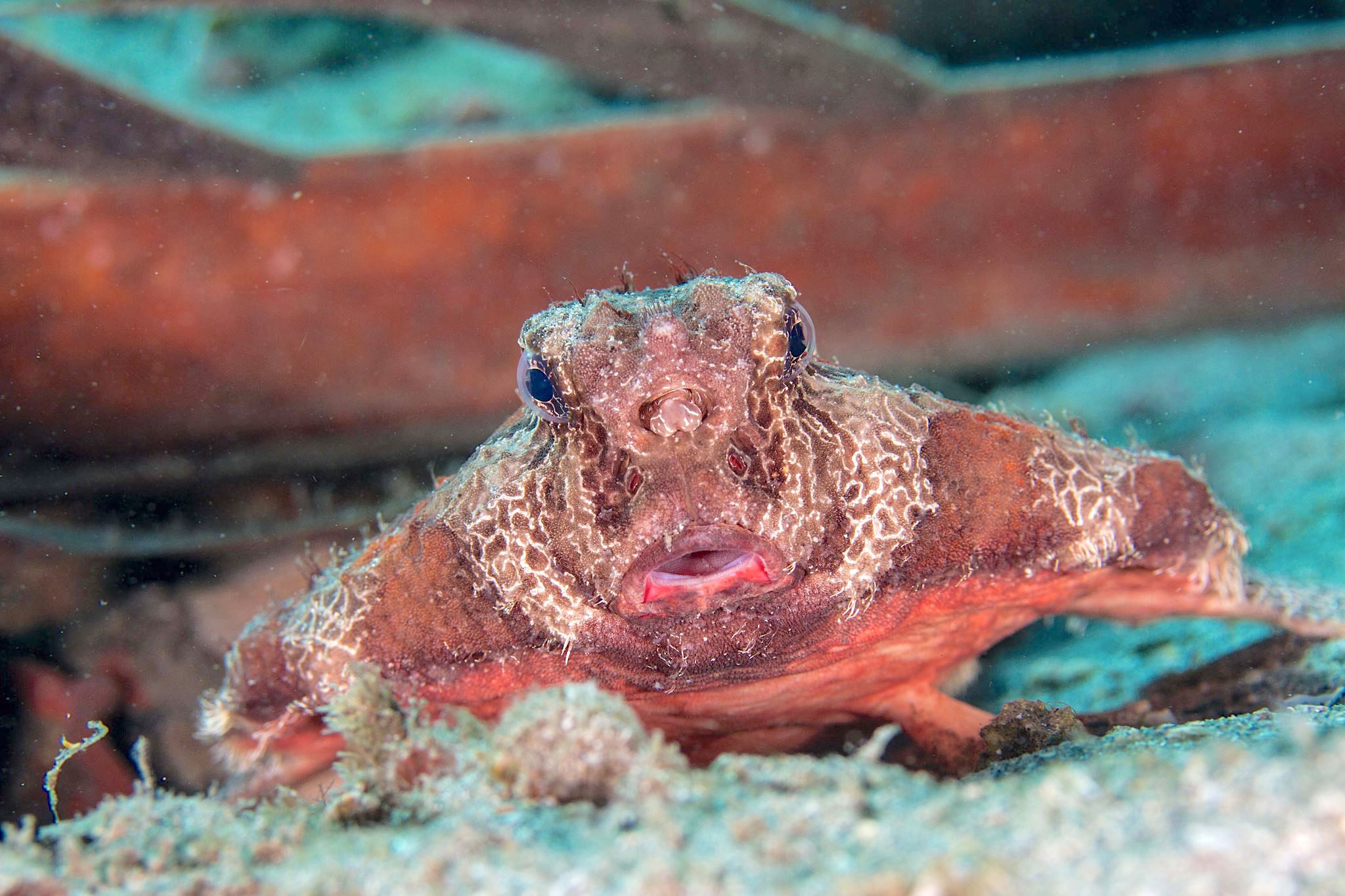
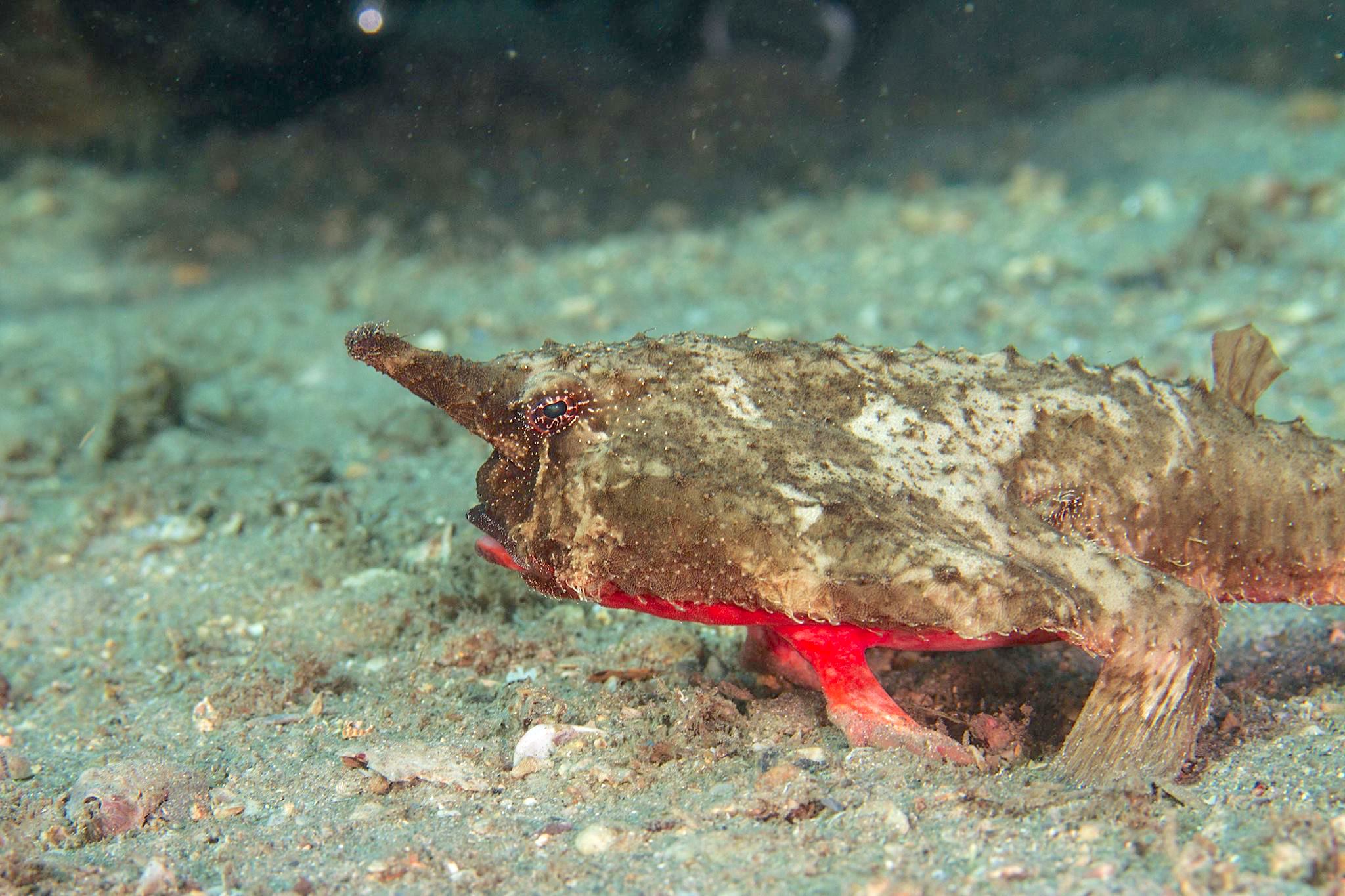
In contrast, there are some undersea creatures that inspire… not awe exactly, but maybe an amused respect that so wonderful and bizarre a creature can exist in our oceans, in some cases only a few feet below the surface. Here are two examples of what I mean.
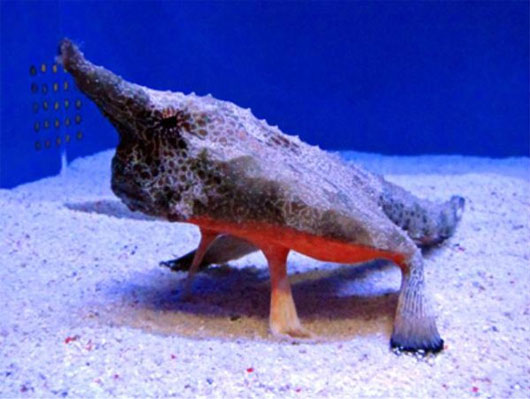
This is a BATFISH. It was an early shoo-in for my “WTF? (What’s that Fish?)” series, and you can read all about them and their ways HERE. Of all the creatures I have featured on this blog, this is by some distance the oddest…

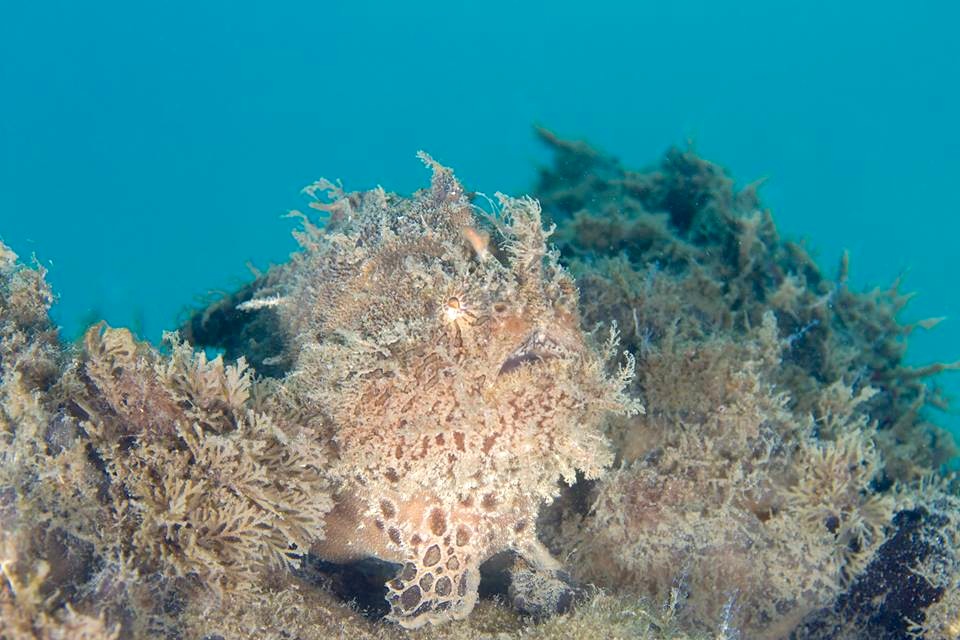
…except for its companion in oddness, the FROGFISH. This was next in the WTF? series, and the creature is, if anything, even stranger. You can read all about these critters HERE, where you will learn inter alia about their superpowers – any one of which you might like to have yourself. There are plenty of photos, and videos too.
FROGFISH SUPERPOWERS
- Invisibility Cloak
- Irresistible (and, to their prey, Fatal) Attraction
- Buoyancy Control
- Shapeshifting
I do not court controversy, recognising that people following this site, or maybe stumbling across it by mistake and lingering, reach their views on natural history from different directions. But these strange and fascinating species exist and thrive in their own particular and ingenious ways – it doesn’t really matter how or why they are as they are. The bats and the frogs are high in the list of the least conventional of undersea creatures, and if they are not exactly sublime in a seahorse sense, can we just agree that they are awesome?
WATCHING NURSE SHARKS: BE PATIENT…
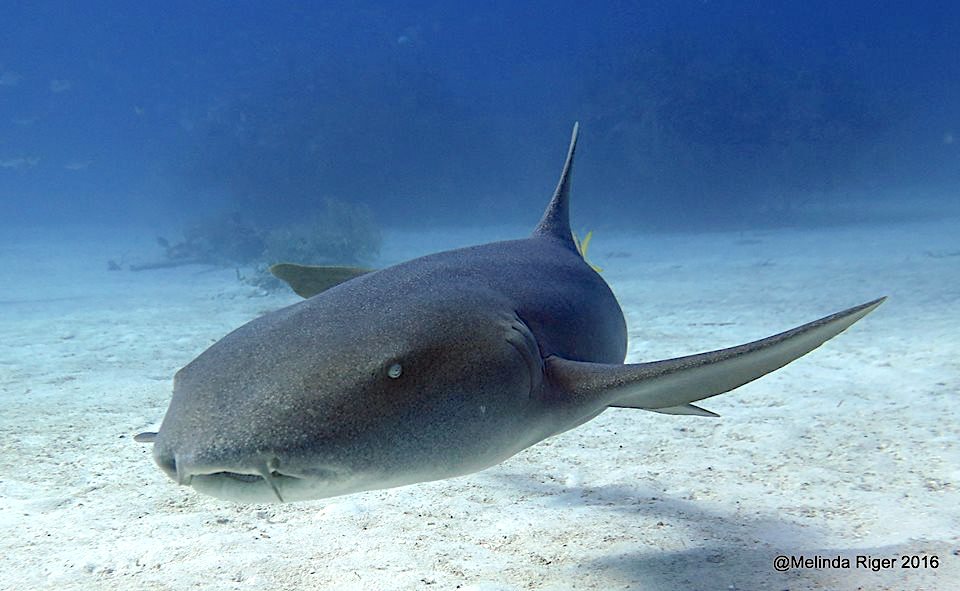
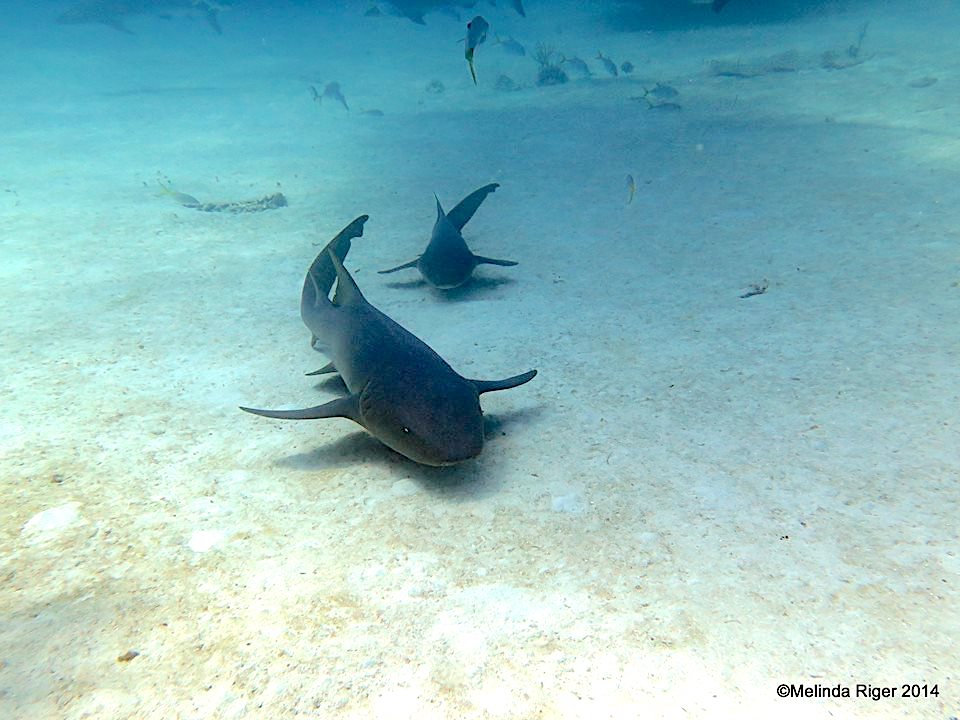
I last took a look at nurse sharks nearly 3 years ago HERE. Time to revisit these creatures. Indeed, time for a close-up look. If you want to know more about this fascinating species, just click the link above.
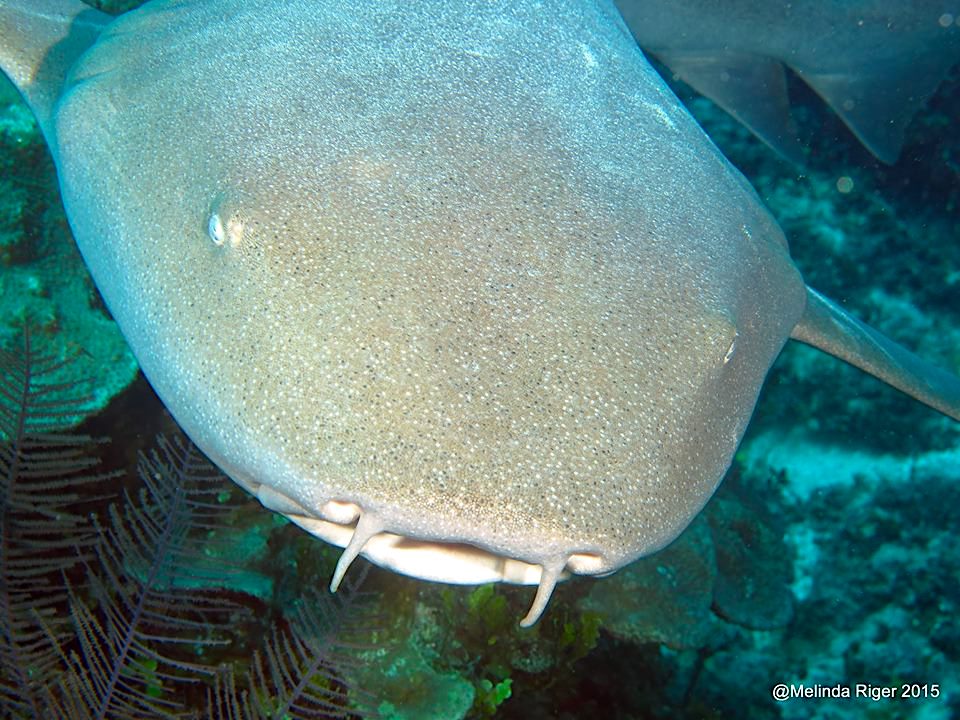
The two strange items hanging down from the upper lip are sensory barbels

This side-view shows the shark’s relatively small mouth (for a shark anyway)
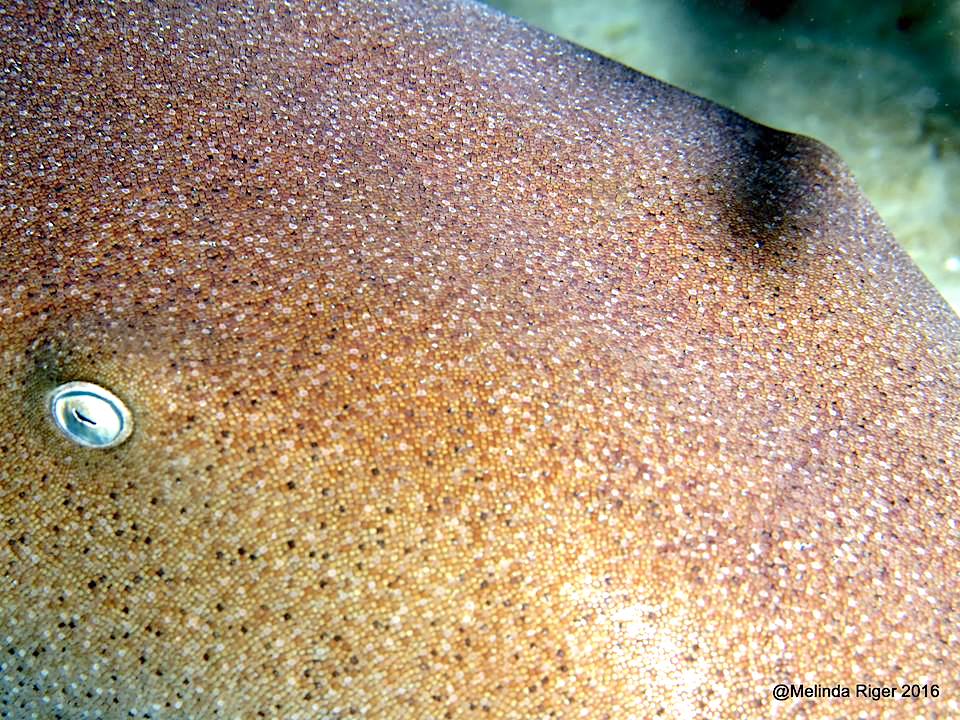
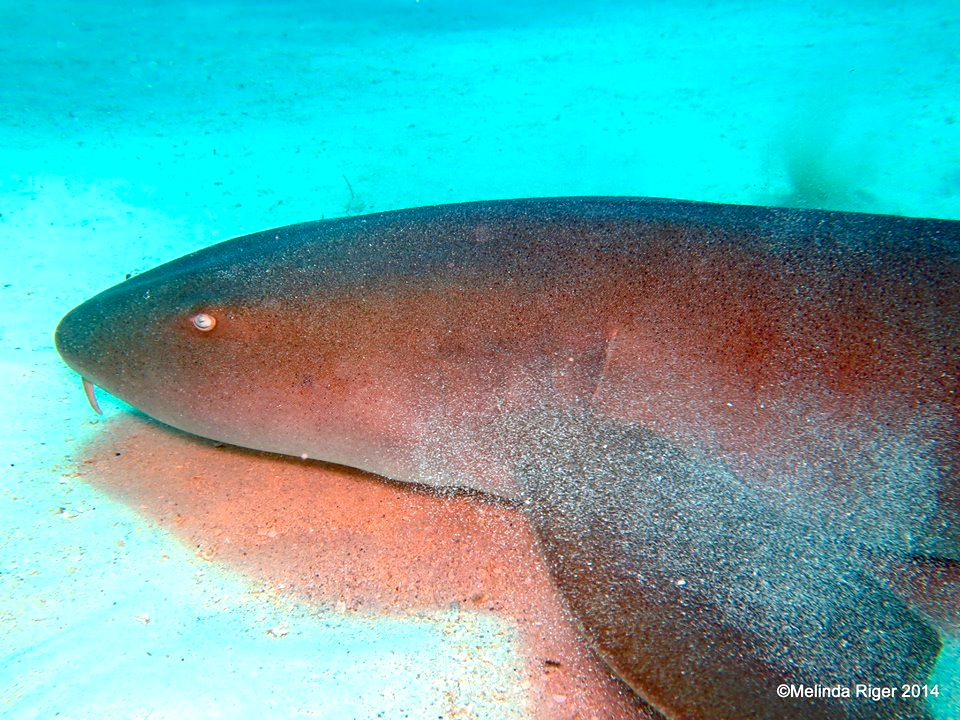
Admire the extraordinary texture of the the skin; and the tiny evil eye. Click or – better – double click on the image and you will see that the skin is in fact tessellated, made up of a mosaic of tiny squares and near-squares**
This one is a baby nurse shark
A juvenile nurse shark with a couple of grunts. Note the youngster’s paddle-like fin
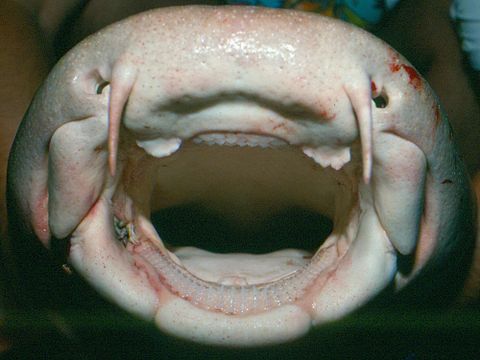
Head, mouth, jaws and teeth
SO, THEY ARE SHARKS – ARE THESE GUYS DANGEROUS?
Not really, no. They aren’t looking to pick a fight; and they are not as territorially aggressive as the ‘bitey’ sharks are (or can be). These slow-moving bottom-dwellers are generally harmless to humans. However, they can be huge—up to 4 metres —and have very strong jaws filled with thousands of tiny, serrated teeth. They will bite defensively if stepped on or bothered by divers who assume they’re docile. [As I said previously, “there are recorded instances of injuries caused to divers who have tried to pull nurse sharks by the tail. And serve them right, I say. Treat them with patience and respect!”]
**FUN FACT
M.C. ESCHER (the inspiration for Mr Hammer) was the master of tessellation in art. Click the link to explore the dedicated website. Maybe, sensationally, one day a shark will be found with skin like this… (Alert reader: “Actually, I think it most unlikely…”)
Credits: field photos by Melinda Riger, Grand Bahama Scuba; Wiki for the 4 mouth images & the Escher
WTF? (WHAT’S THAT FISH?) 12: THE TRUMPETFISH
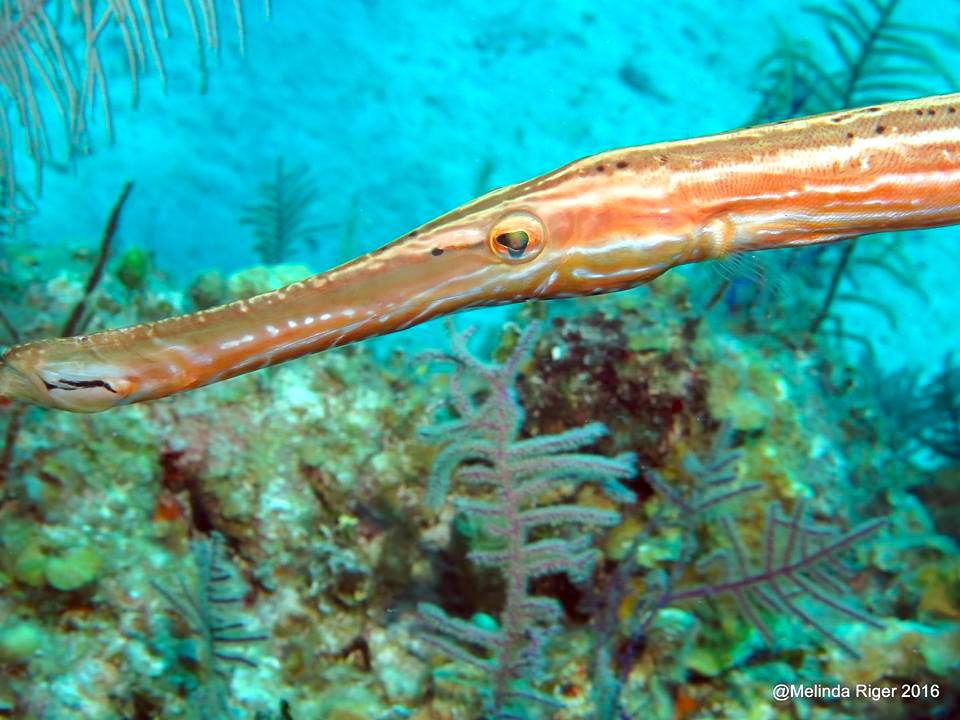
It’s been a while since the previous post in the WTF? series, dedicated to the unusual or downright weird marine creatures that, when you see them swim into in the frame of your mask, prompt the involuntary exclamation “WTF?” (What’s That Fish?). Now, in all its glory meet… The Trumpetfish. These long piscine pipes are in no way related to the President-Elect and his tank of pet fish, but perhaps more explicably to seahorses and seadragons.
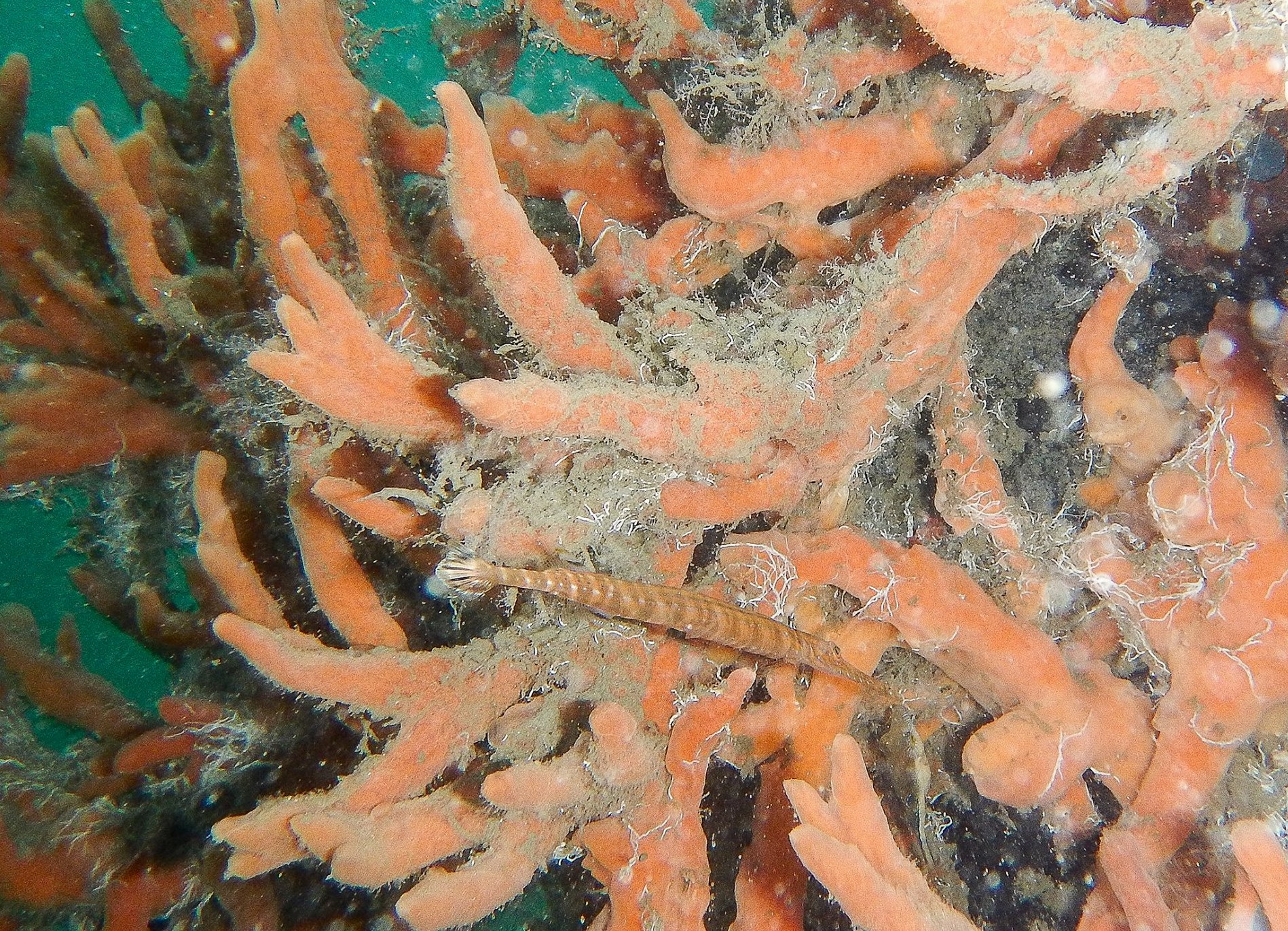
Trumpetfishes Aulostomus maculatus are as happy to swim upright as more conventionally, which helps them to blend in with vertical corals and sponges on the reefs in the tropical waters of the western Atlantic. Adults may grow to 3 foot long or more. These creatures come in a variety of colours – shades of red, orange, brown, green and yellow.
At the end of the fish’s long snout – see how far back the eyes are set – is a small mouth. Here’s how a trumpetfish goes about catching its prey (mostly small fishes):
- Slowly swimming or drifting to a target from behind, and sucking it into its mouth
- Staying suspended in the water, motionless, and waiting like a malevolent stick for a passing wrasse or similar to get too close
- Swimming alongside larger fishes, which camouflages its presence and enables it to ambush small fish as they pass
- More generally, the trumpetfish has some ability to change its colour to blend with its surroundings – both a defensive as well as an attacking advantage
The very excellent Peppermint Narwhal recently produced a series of posters in appreciation of particular species – and trumpetfishes and their kin in the Order syngnathidae were honoured. The PN’s cheerful website is well worth checking out for the sheer diversity of their ideas.
MUSICAL NOTES
We are beginning to collect the makings of a decent orchestra here. The trumpetfish has a relative, the cornetfish, elsewhere in the world. The remarkable GUITARFISH has already featured in the WTF? series, as has a species of BASS, the Harlequin. And – hey! – what about the spotted DRUMFISH to lay down the beat? Maybe I need to compose a little jingle featuring these one day…
Credits: Melinda Riger (Grand Bahama Scuba); Adam Rees (Scuba Works)
FAIRY BASSLET (‘MIND YOUR GRAMMA’): BAHAMAS REEF FISH (33)
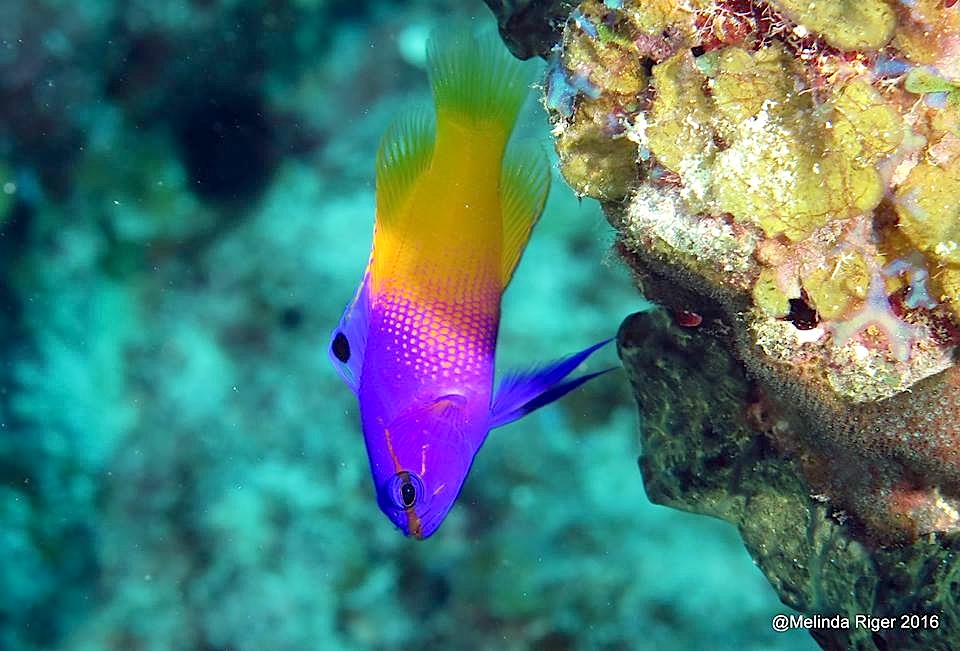
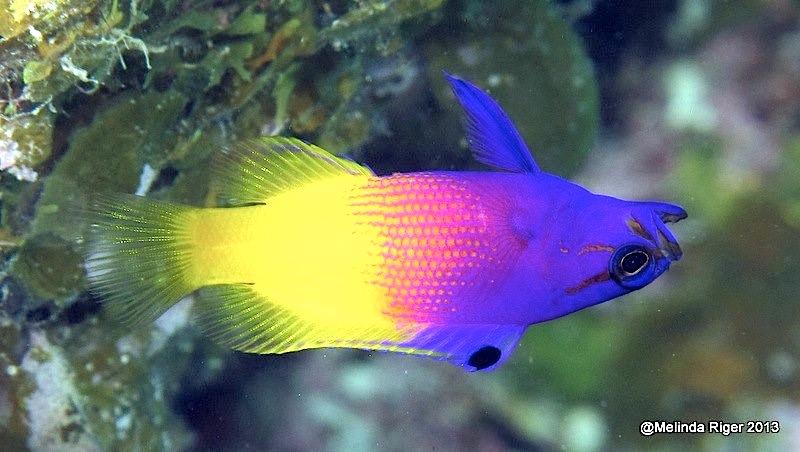
The Fairy Basslet is a tiny brightly-coloured fish with a pretentious alternative name. It is otherwise known as the Royal Gramma (Gramma loreto). These fish are found in the coral reefs of the (sub)tropical western Atlantic. They are also found in aquariums anywhere you like, being small, bright, placid and generally good-natured.
Conveniently, the basslet is unlikely to be confused with any other species. Its striking two-tone colour scheme of purple and yellow is hard to miss. The purple front half (which is presumably where the ‘royal’ comes from, being a regal or imperial colour) may also be violet or even blue in some fish and / or in some light conditions. Another identification pointer is a black spot on the dorsal fin.
You’ll notice that the basslet above appears to be upside down. Which is because it is – this isn’t an inadvertent photo-flip. These little fish tend to orientate themselves to be parallel with the closest surface. This leads to them happily swimming upside down, or aligning vertically. As one article I read says severely, “this behaviour is not to be mistaken for illness”.
Fairy basslets / royal grammas are also CLEANER FISH. They pick parasites and dead skin off larger fish that visit so-called cleaning stations to be attended to by tiny fish and cleaner shrimps, and in some instances to have their gills and even their teeth cleaned. The deal is that, in return, the large fish do not eat the cleaners. Even snack-sized ones rootling around inside their mouths.
HOW COME THE NAME ‘GRAMMA LORETO’?
This official name became a brainworm with me after I started this post. I had to check it out. The ‘Gramma’ part is unrelated to the fond name for a grandmother; rather, it simple denotes a member of the genus of fishes in the family Grammatidae.
The Loreto part is more mysterious. It is an an ancient town in Italy; and the name of several British schools, including – almost too good to be true – a school called Loreto Grammar. In a nutshell, the link between the town and places of education is that the Sisters of Loreto, founded in the c17 and named for a shrine in the Italian village, are dedicated to education in their Ministry.
How that ties in with a tiny Caribbean reef fish, I have yet to find out. I probably never will… Here’s a short video to alleviate the disappointment.
I failed to be able to resist finding out whether any country of the world has a purple and yellow flag. The answer is, no. However I am delighted to be able to report that the flag of the Independent Party of Uruguay is basslet-coloured.

Credits: all fantastic photos by Melinda Riger of Grand Bahama Scuba; magpie pickings of an unacademic sort for facts and speculation
SILVERSIDES: BAHAMAS REEF FISH (32)
I have no idea if there is a collective noun for a large group of silversides. ‘Frenzy’ would cover it, but that is reminiscent of ‘feeding freezing’ which has a specialist meaning – and anyway, silversides are crazy even when they aren’t feeding. 24/7/12/365 as far as I can make out. I think ‘a panic of silversides’ might be the answer. They are just… all over the place at high speed. Sometimes swirling around pointlessly, other times moving in unison and suddenly all changing direction simultaneously, like a single creature made of tiny shards of silver.
There are quite a few silverside species around the world. The ones in the Bahamas are Atlantic silversides (Menidia menidia), also known in the north east of the United States as ‘spearing’. They seem to exist for two purposes. The main one is to be breakfast, lunch or dinner for larger fish, sea birds and shore birds. The other is for their usefulness in scientific research because of their sensitivity to environmental changes.
In one sense they are easy prey for predators. A determined fish will always manage a snack by swimming into the middle of a panic and (probably) simply by opening its mouth wide. On the other hand, their sheer numbers coupled with the speed and randomness of movement mean that a single may find a degree of safety in numbers. It’s hard for a predator to target any individual fish in the general melee and confusion. Silversides also favour seagrass beds, which give some shelter and protection – and a reasonably safe place to spawn. Or, as some of these photos show, they will hang around wrecks or squeeze into rocky spaces in the reef.
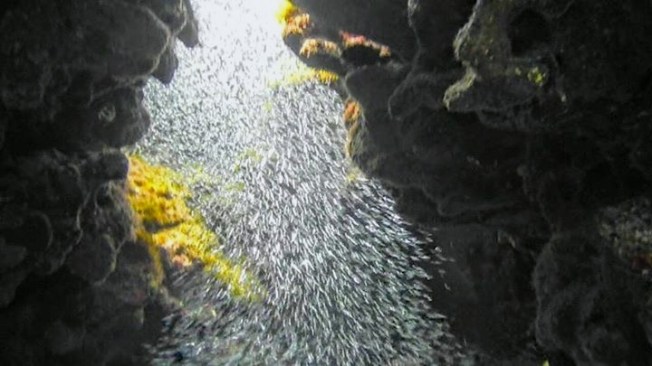
A panic of silversides apparently pouring like a waterfall down through a gap in the reef
WHAT DOES A STATIONARY ATLANTIC SILVERSIDE LOOK LIKE?

Some time ago we used to go to the reef at Fowl Cay Marine Preserve with Kay Politano, and I would snorkel with a small and very basic lo-res underwater camera. I was hampered by being a disgracefully feeble swimmer; by not having snorkelled for a length of time calculable in decades; and by being a complete novice at underwater photography. Despite these not inconsiderable disadvantages I managed to cobble together a few short movies on my computer (I was new to that too). Here’s one that nearly works, in that it gives an idea of what happens if you ‘swim with silversides’. I know you scuba guys all swim with sharks, but cut me some slack here please…
Photo Credits: Main photos Melinda Riger of Grand Bahama Scuba; Silverside Waterfall by Kay Politano; motionless silversides by FISHBASE.ORG. Music: Goldon Giltrap, ‘Fast Approaching’
UNDERWATER ANGELS: ANGELFISH

UNDERWATER ANGELS: ANGELFISH
We are away for a few days, so I have planned a few posts that won’t fall apart courtesy of being done on a phone. Hopefully.
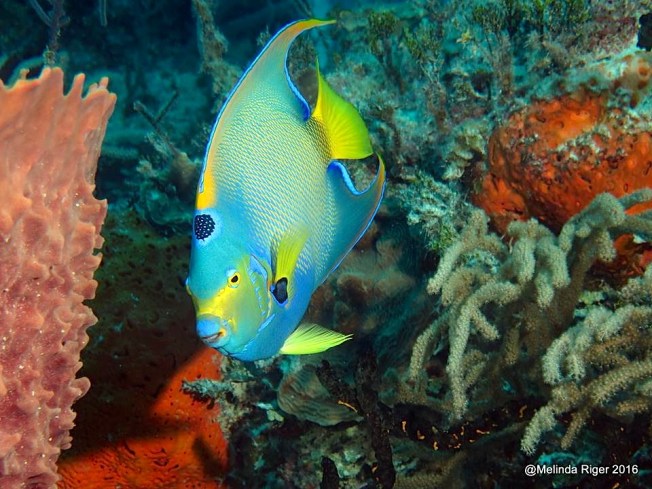
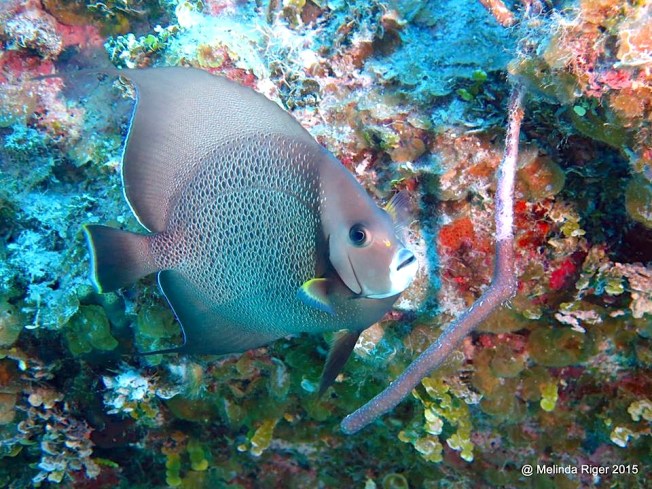
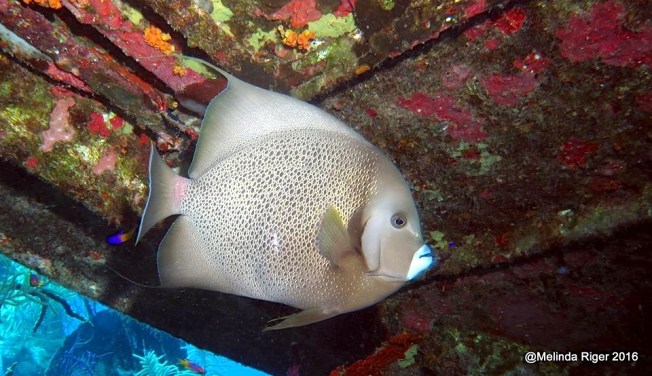
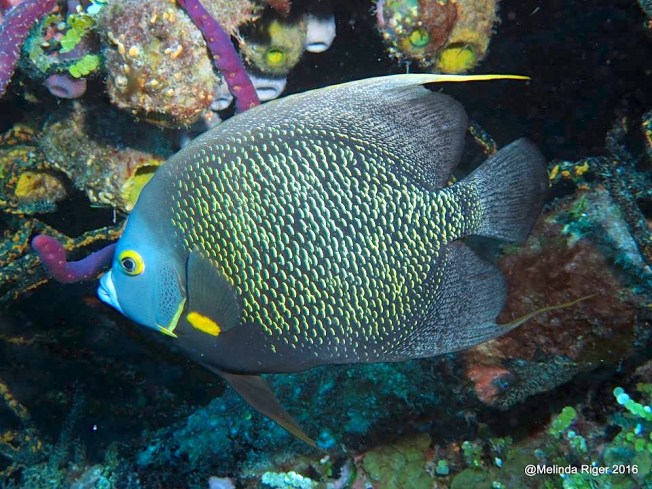
Angelfish are fabulous and come in various ‘colorways’, as designers say. Queens are my favourite, with grays not far behind. The third type here, the French, is in bronze medal position on my piscine podium but this could change were I ever to meet one in real life…
QUEEN ANGELFISH


GRAY ANGELFISH


FRENCH ANGELFISH
The middle fish is a juvenile


Credits: Melinda Riger / Grand Bahama Scuba
HOGFISH: BAHAMAS REEF FISH (31)
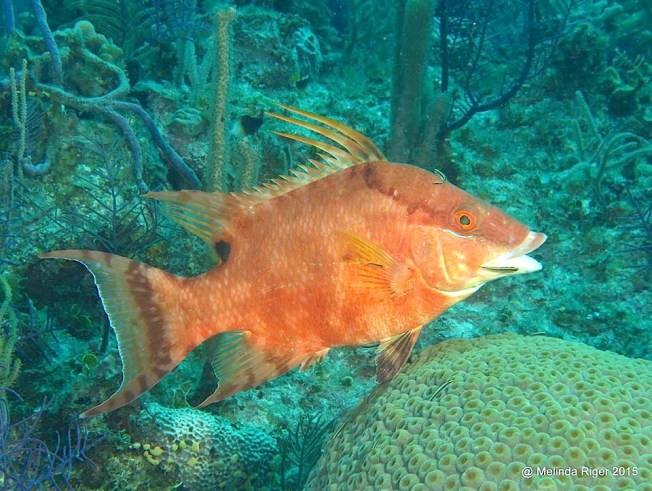
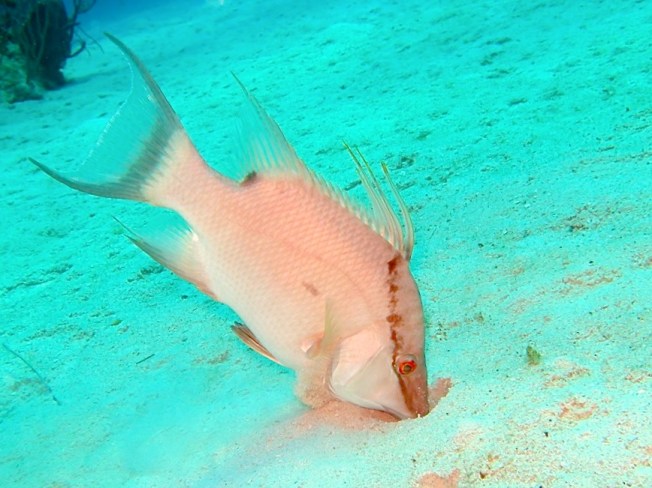
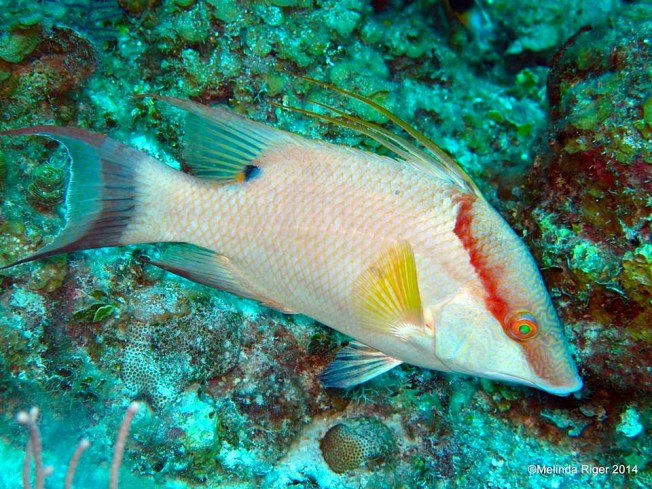
Hogfish. Fisherman’s delight… getting ‘high on the hog’. This wrasse species Lachnolaimus maximus is a reef denizen, especially where gorgonians are found. It has the distinction of being the only known member of its genus, and because it is IUCN listed as vulnerable, there are strict regulations governing bag, size, and gear limits to protect the species from overfishing.

The hogfish gets its name from its long ‘pig-like’ snout, coupled with its rootling behaviour on the sea floor for crustacean prey.

GENDER STUDIES: IT’S COMPLICATED
The hogfish is a sequential hermaphrodite, meaning it changes sex during different life stages. Juvenile hogfish are female, but mature into males at around 3 years old.


Hogfish social groups are organized into harems, where one male will protect a group of females in his territory and mate with them.

CAUTIONARY NOTE Capt. Rick, a loyal follower, has made another of his pertinent comments: “A bit of caution is necessary here! There is some history in the Bahamas of mild to severe Ciguatera poisoning from Hogs. Our M.O. was to only eat Hogs no larger than 5 or 6 lbs. Temporary or permanent blindness, paralysis, and even death is possible with bigger Hogs”. Ciguatera is also a problem with, for example, ‘cuda on Abaco. Those caught on the Marls (west) side are ok to eat; those from the east side have to be treated with circumspection…

Credits: all fantastic fish fotos – Melinda Riger at Grand Bahama Scuba
JACKKNIFE FISH: BAHAMAS REEF FISH (30)
JACKKNIFE FISH: BAHAMAS REEF FISH 30
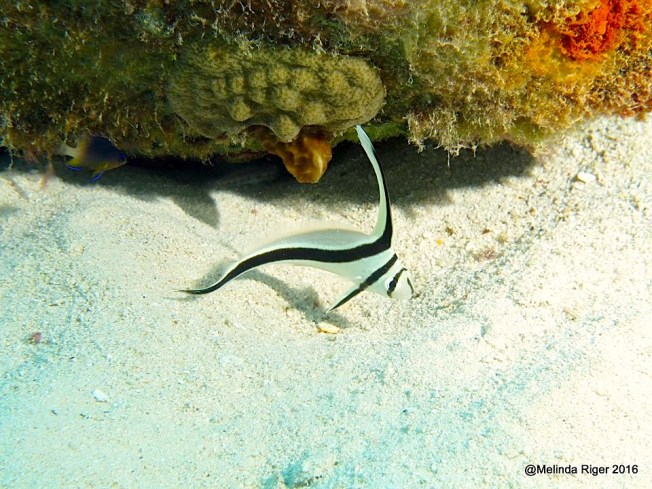
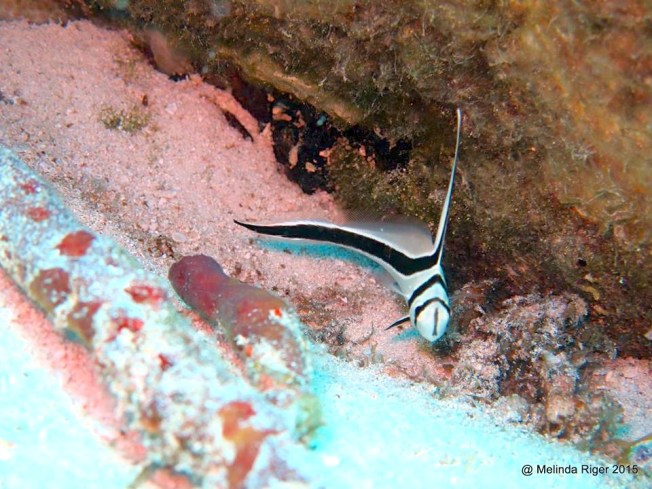
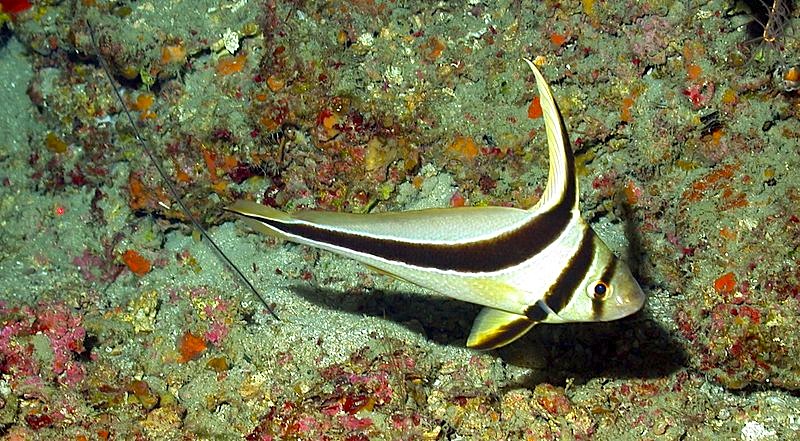
The rather uncomfortably ‘double-k’ Jackknife fish is one of 3 types of similar drumfish subspecies of Equetus found in Bahamas waters. The others are the High Hat and the SPOTTED DRUMFISH – the first fish featured in this series. Each of these drumfish species has juveniles that are elegant and delicate, becoming more conventionally fishlike as they grow to adulthood, as the final image shows.

I always want to stick a hyphen in to separate each k: jack-knife fish. I think it’s an English thing. I have seen, at the other extreme, ‘jack-knifefish’, which looks most weird of all. Checking online, jackknife fish wins by a distance as the correct spelling.

These little fish, typically between 6 and 9 inches, inhabit the coral reefs of the Caribbean, the Gulf of Mexico, Florida and the Bahamas. Juveniles eat plankton and similar organism, graduating to small crabs and shrimps as adults.

A FULLY GROWN JACKKNIFE FISH (NOAA)
Like other drumfishes, the jackknife can produce ‘croaking’ or ‘drumming sounds. This involves the fish beating its abdominal muscles against its swim bladder. There’s a lot more to it than my rather simplistic summary, but it’s probably as much as anyone needs or wants to know… The primary reason is believed to relate to mating. Other reasons include ‘low-level aggression’, and keeping in touch with each other in turbid waters. I prefer the unscientific theory that sheer happiness makes them croak. Here’s a short video of a happy juvenile Jack knife fish (that’s yet another spelling variant…)
RELATED POSTS
WTF? (WHAT’S THAT FISH) (10): FLYING GURNARD
WTF? (WHAT’S THAT FISH) 10: FLYING GURNARD
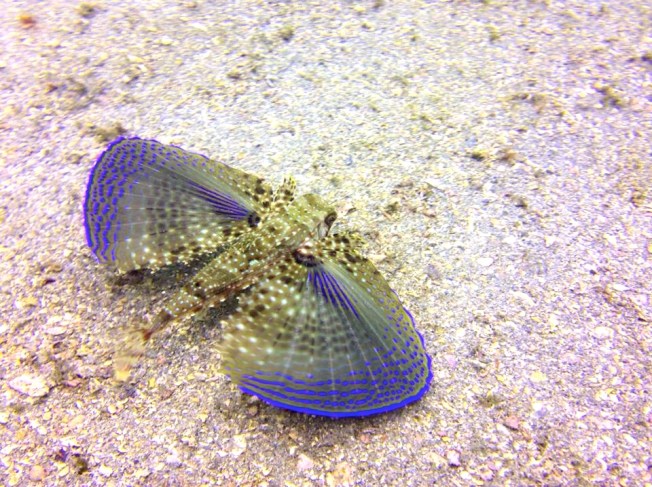
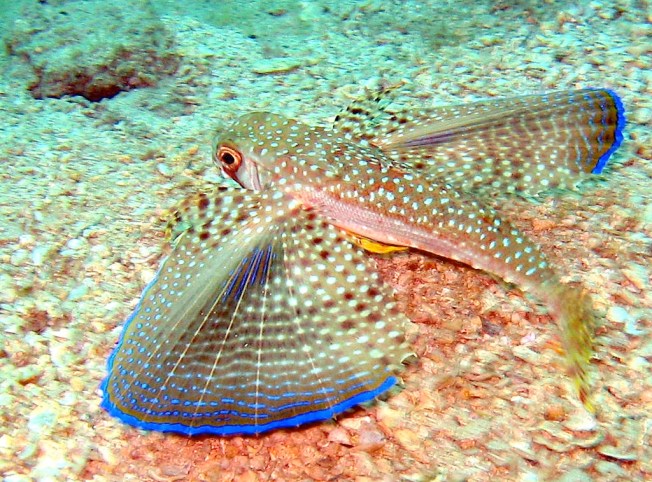
Imagine that you are swimming along resplendent in your snorkelling gear (me) – or in scuba gear for the advanced swimmer (you). There, below you, camouflaged against the sea bottom is a fish. A strange-shaped brown sort of creature with odd side fins. As it progresses over the gravelly sand, your immediate reaction is ‘what the…?’ Its fins seem to be turning into… wings. Like this:


Yes, it’s a flying gurnard. Unlike flying fish, it can’t actually fly through the air. But once its wings are fully spread, it certainly looks as though it could.


WHAT’S THE POINT OF THE WINGS IF THE THING CAN’T FLY?
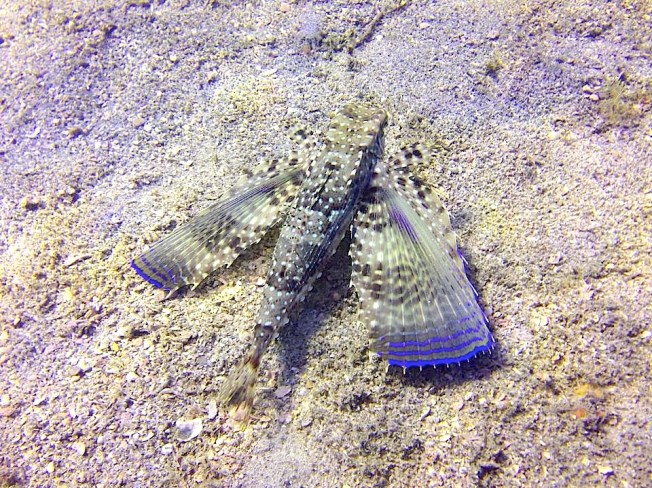
This gurnard species usually gets around using its ventral fins as ‘legs’, with the pectoral fins (‘wings’) close to the body. There seem to be several possible reasons for possessing the ‘sudden-deployment-of-flashy-wings’ superpower.
- It surprises and deters predators by movement, turning prospective prey into an apparently different creature
- Bright or lurid colouring may be a deterrent warning of a foul-tasting or poisonous species (APOSEMATISM)
- A creature may actually be harmless and even tasty (as here) but may appear to be unpalateable or poisonous (BATESIAN MIMICRY)
- In any event, the wings enable the fish to take off from the sea bottom and travel faster by ‘flying’ thought the water to escape a predator

I had a quick look to see how scientists in history had depicted this extraordinary fish. The earliest illustration I could find was taken from “Allgemeine Naturgeschichte der Fische (General natural history of fishes),” a 12-volume encyclopedia by author/illustrator Marcus Elieser Bloch (1723-1799), which described all fish species then known to science (and 267 previously unknown) (© AMNH\D. Finnin) sourced from ‘Hyperallergic’

Here’s a short video of a flying gurnard on the move, from ‘Sia Big Fish’
Credits: All main images Adam Rees / Scuba Works with many thanks, except final one ‘cralize wiki’; Hyperallergic for the historic image; Sia Big Fish for the video
WTF? (WHAT’S THAT FISH) (9): THE HARLEQUIN BASS
I’m conscious of being rather unfair on this pretty dwarf bass species by including it in the WTF? series. The usual denizen of the series is a fish so strange that one’s immediate instinct is to yell into one’s facemask, “WTF?”. BATFISH or FROGFISH or GUITARFISH and their bizarre ilk. So with apologies to this species for its somewhat harsh classification, here are some quite flattering photos of it to make up for any hurt feelings.


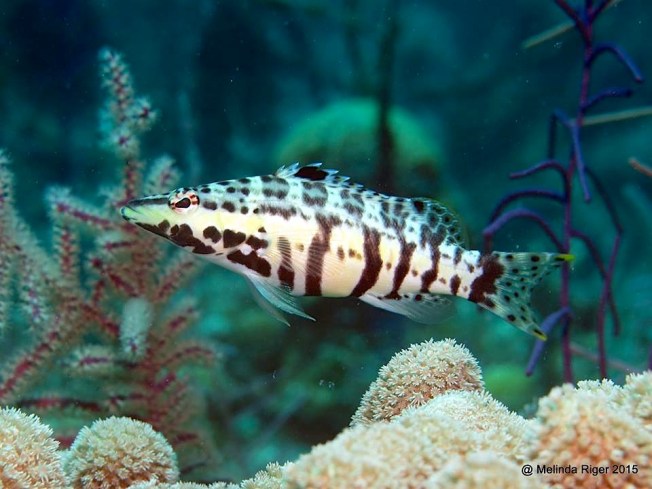
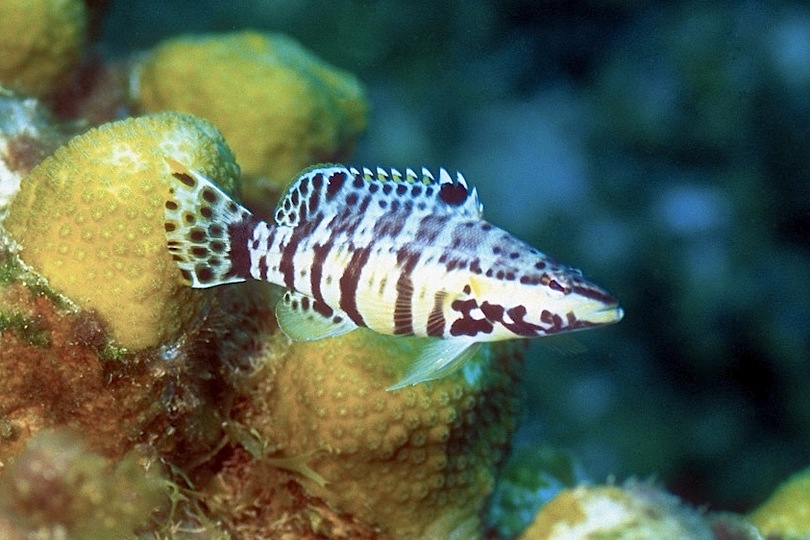
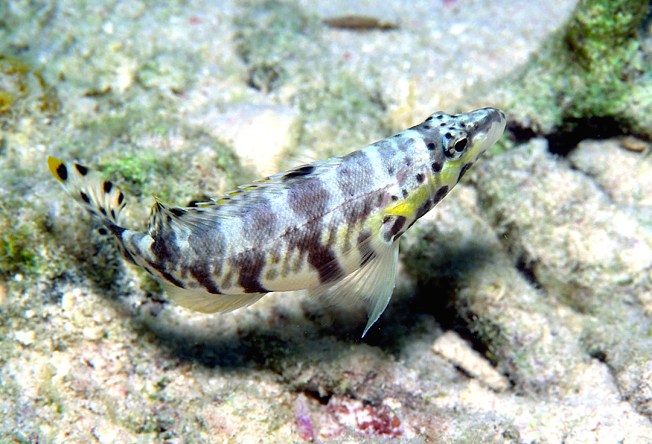
The Harlequin Bass Serranus tigrinus has unusually striking body markings and a rather endearing spotty tailfin. They are hardy creatures and I note that they are recommended aquarium fish “and make a great candidate for beginners”, though there are warnings that they are “semi-aggressive”. NB they are only a few inches long, so no need to panic.


If you are still not confident that you can ID one in the wild, here is a short video… Actually I’m really including it to show how these fish swim around. And next time, I promise a truly eye-watering WTF? fish from Bahamian waters, though its camouflage is so good that you may never notice it…
Credits: Melinda Riger / Grand Bahama Scuba (1, 2); jpc/ what’s that fish; wiki
REMARKABLE REEF CREATURES TO ADMIRE
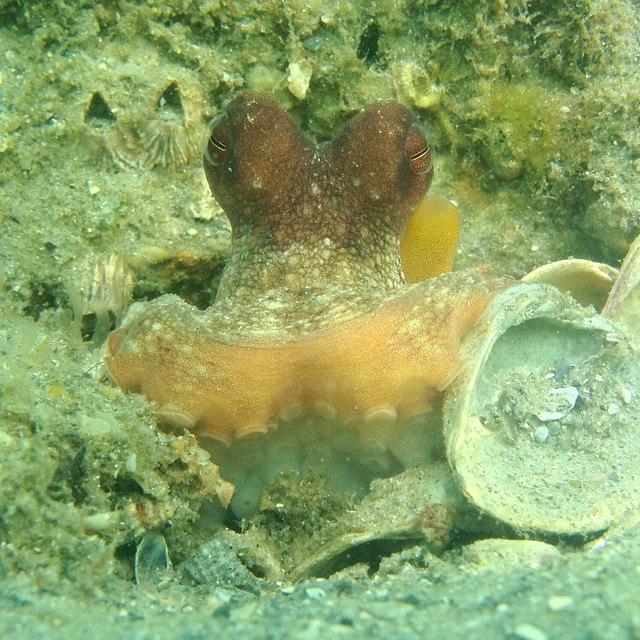
Here is a small collection of recent photographs from Adam Rees of Scuba Works. Three OCTOPUSES, an astounding FROGFISH, a SEAHORSE, a MANTIS SHRIMP at close quarters, and a wonderful HAWKSBILL TURTLE. Clicking on a link will take you to a post with more photos and information about each creature. If these images don’t make you want to scuba then… what will?


All photos Adam Rees / Scuba Works, with thanks for use permission
WTF? (WHAT’S THAT FISH) (7): THE SOAPFISH
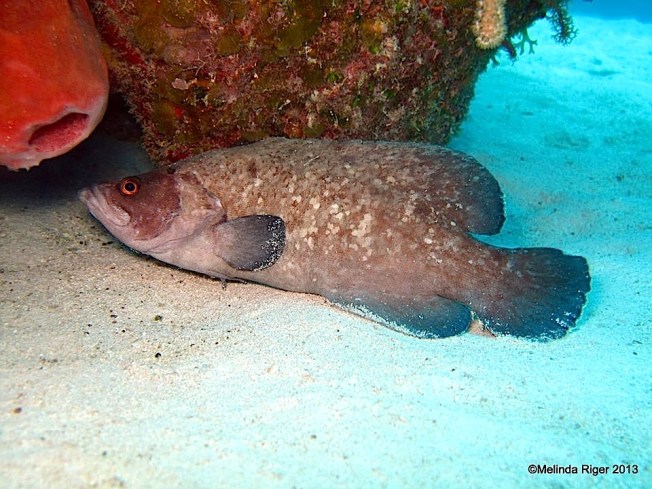
The WTF? series features some of the stranger fish that inhabit the waters of the Bahamas. Ones that, were you to encounter one on the reef, might make you exclaim “WTF?”. The soapfish Rypticus belongs in the same family as grouper and sea bass. Within the soapfish genus there are quite a few varieties in different shapes, sizes and colours that include several mottled, freckled, spotted and generally blotchy fish. This post features one (or two) of them! Sorry to be lame here and lacking in authority, but having looked carefully online at images of several types of soapfish, I reckon there are 3 candidates. Freckled, I think these are. Enlightenment would be welcome!

Rypticus tend to inhabit shallower tropical and sub-tropical waters. They are mainly nocturnal in their habits, feeding at night on small fish, crustaceans and molluscs. The WTF? factor arises from the creature’s oddly truncated shape. If you cover the back end of the fish in the image below with your hand, you might expect the fish to be about the same length again. But no, there’s just the tail to come. It looks a bit cut in half.

DOES THE SOAPFISH HAVE ANY AWESOME POWERS?
I’m glad you asked because in fact it has two. First, these fish respond to threats by secreting large amounts of toxic mucus from their skins. This acts as a defensive barrier to repel predators. Secondly, female soapfish are able to change sex to male. This is not uncommon among fish, and in some (e.g. Clownfish) the change works the other way, male to female. I read a lot about chemicals and gonads in this connection, then decided to spare you the details. So basically, it’s toxic slimy coats and female gender realignment.

Credits: all photos, Melinda Riger of Grand Bahama Scuba
“CLEANING UP”: HOW TINY REEF FISH HELP LARGE FISH
A while ago now, I wrote a detailed post about so-called fish ‘cleaning stations’ – the special spots on the reef where large fish can go to have small fish buff up their scales and floss their teeth. You can read all about it HERE.
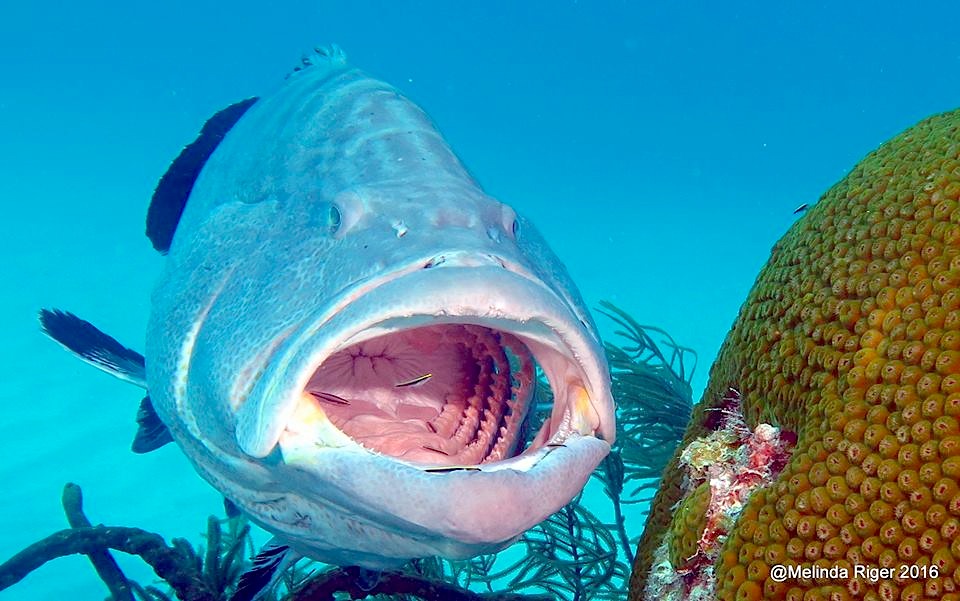
I have accumulated a number of new photos from expert scuba diver and underwater photographer Melinda Riger that demonstrate this phenomenon. A big fish with a normally voracious appetite will patiently wait while gobies and other small fry go about their work. This often involves actually entering the mouth of the (as it must seem to them) monster to pick the insides and the teeth clean. There is an extraordinary understanding and trust between the species that means during the operation, the little fish are perfectly safe. Here are some examples, of which the very recent header image of a grouper named Arnold is quite outstanding.


It is not just gobies that attend the fish. Various species of shrimp also volunteer for the job.

Groupers are not the only species to make use of cleaning stations. Here is a dog snapper at the same cleaning station as the grouper in the header image. Below is a stingray being attended to.

Southern Stingray with cleaning gobies
GRAMMATICAL DIGRESSION There is this ‘thing’ about the correct use of the words ‘fish’ and ‘fishes’ in the plural form. The basic principle is simple: ‘fish’ where you are referring to several of the same species; ‘fishes’ where more than one species is involved. I don’t care. My policy is to use ‘fish’ as the plural on all occasions, so I don’t have to think about it. Pedants, look away now.
RELATED POSTS
BANDED CORAL (‘CLEANER’) SHRIMP
All photos: Melinda Riger, Grand Bahama Scuba
“CALLING ELVIS” (THE SQUIRRELFISH, NOT THE MAN)
How proud The King would be to know that his name lives on in the form of an attractive though sadly unmusical Bahamian squirrelfish. This little guy is at least 5 years old. What is more, he has lived at the same address all that time, defending it against usurpers and protecting himself from predators in its safe depths. Here is the loveable little Elvis photographed at home between 2012 and 2016 (header image), the master of his own underwater Graceland…


The reason that Elvis has such large eyes is that these fish are mostly nocturnal, and (apart from when Melinda is out with her camera), he and his friends spend most of the day either at home, or in crevices, small rock caves, or under ledges. However, here are a couple of shots of Elvis out and about, enjoying some quality time among the corals.


ROLLING HARBOUR MUSICAL DIGRESSION
I so wanted to add a specific Elvis catalogue ‘Musical Digression’, but try as I might, there is no title in The King’s discography that has any potential for finny nuance or piscine pun value. However, here’s a track from the now tragically unhip Dire Straits on their follow-up album to the phenomenal ‘Brothers-in-Arms’, the much under-rated ‘On Every Street’. I give you… Calling Elvis, a song that cunningly contains as many titles of Presley hits as anyone could ever wish for.
All images: Melinda Riger at Grand Bahama Scuba; cartoon from a sequence on the excellent BCCR Defenses page – learn about camouflage and other fishy self-protection techniques
Nocturnal squirrelfish checks out a parrotfish’s sleeping arrangements
BLUE CHROMIS: BAHAMAS REEF FISH (29)
The little blue chromis Chromis cyanea will be instantly familiar to any snorkeler or scuba diver on the coral reefs of the Bahamas. These ever-present small fish – 6 inches long at most – are remarkable for their iridescent deep blue colour that flashes as they dart in and out of the coral and anemones of the reef.

Although at first sight this chromis species – one of many – looks blue all over, adults have a black dorsal stripe and black edging to their fins. They make colourful additions to aquariums, though to my mind they look far more attractive nosing about the reefs foraging for the zooplankton upon which they feed (see header image for details…)

The blue chromis was the second fish species I encountered on my first ever reef dive, at Fowl Cay Marine Preserve with Kay Politano. The first fish was the endearingly inquisitive sergeant major with its smart black and yellow stripes which came right up to my googles to eyeball me. I loved that, even though my pitiful swimming technique meant that I had plenty of other distractions, not least remembering to breathe. Air, that is, rather than water.


SO JUST HOW BIG ARE THESE FISH, COMPARED, SAY, TO A BLUE TANG?
Blue Tang with blue chromis in its wake
All photos Melinda Riger of Grand Bahama Scube, except the penultimate by James St John, taken in San Salvador
WTF? (WHAT’S THAT FISH) (6): THE SAND DIVER
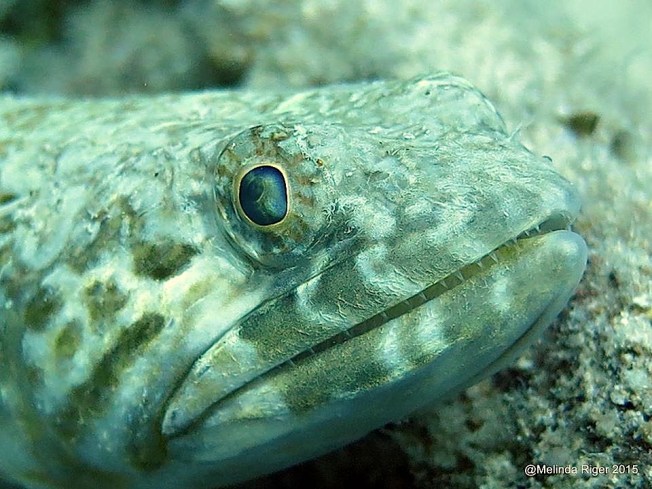
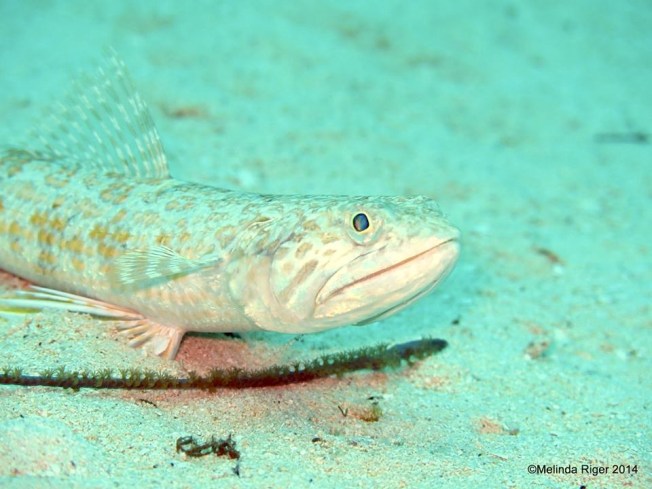
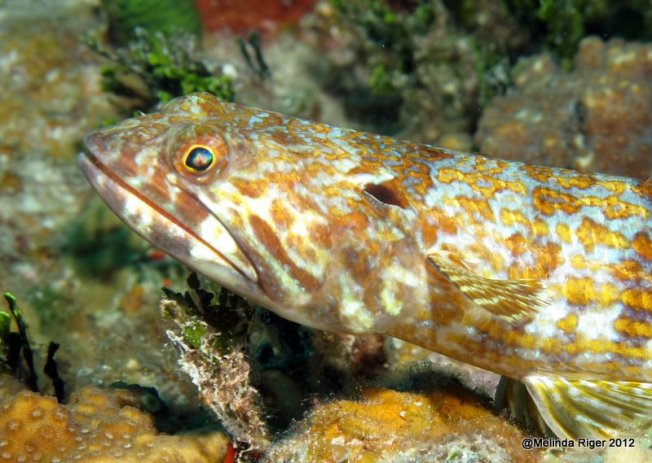
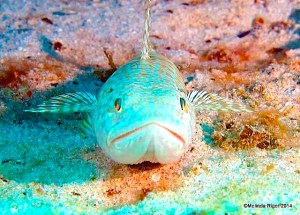
Time for another in the WTF? series, featuring weird (begging their pardons) or not very fish-like fish. The Sand Diver Synodus intermedius is a type of lizardfish found in subtropical waters and often around coral reefs. They can grow up to about 18 inches long and a prime specimen might weigh a couple of pounds. The markings are quite variable but one common characteristic seems to be a tendency to look somewhat down in the mouth; and to possess jaws full of tiny sharp teeth.

Sand divers have two rows of teeth on their upper jaw and three rows on their lower jaw. Not content with that, they also have rows of teeth on the palate and tongue. Were they 50 times the size, they would be truly awesome.

The rather primitive appearance of the sand diver is explicable from fossils, which show that their forbears were active in the Jurassic / Cretacean periods.

HOW DO THEY GET THEIR NAME?
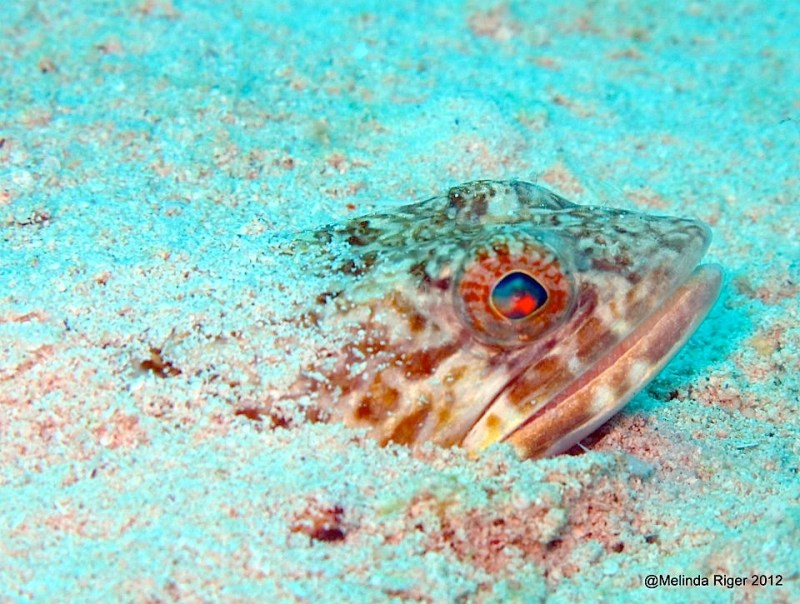
Sand divers often bury themselves in the sand with only their head showing. They are so-called ‘ambush predators’, and burial is one method they use. Another is simply to lie on the sandy bottom, or on reef surfaces and wait for passing prey. Their colouring provides very good camouflage.
WHAT’S ON A SAND DIVER MENU?
A good mix of small reef fishes. Bar jacks, blue chromis, wrasses, fairy basslets, small grunts and so forth. At their own level they are quite fearsome predators.

ARE THEY ON THE HUMAN MENU?
Well, I knew someone would ask that, so I carried out a search. The answer seems to be no. I have found nothing to suggest that they are edible, or that anyone has tried (or if they have, survived to tell the tale). Incidentally, the best way to find out if something is edible by humans is to search for a recipe. There are no sand diver recipes.
STOP PRESS Jason Knight has drawn my attention to a comment in WhatsThatFish.com (no relation) by one ‘Jenny’, who commends Sand Divers as food (“they cook up just as good as hogfish!”). So yes, they are edible and there is one recipe…

All photos: Melinda Riger of Grand Bahama Scuba
WTF? (WHAT’S THAT FISH) (5): THE FILEFISH
WTF? (WHAT’S THAT FISH) 5: THE FILEFISH
The jocularly-named WTF? series is designed to shed an underwater spotlight on some of the odder denizens of the coral reefs and surrounding waters. I don’t want to earn a reputation for being ‘lookist’, but frankly the appearance of some of these creatures – I give you BATFISH or FROGFISH or REMORAS as examples – is baffling. The filefish group is not as extreme as some in the downright weird category, but if you see one you might just find yourself muttering into your facemask “wtf?”

Filefish (Monacanthidae) are found in tropical and subtropical oceans worldwide. They are related to triggerfish, trunkfish and pufferfish, and have regional names that include leatherjacket, foolfish, and shingle. There are more than 100 species of filefish, of which only a few are found in Bahamian waters. The species featured here are a mix of scrawled, white-spotted and orange-spotted filefish.

HOW DID THEY GET THE NAME?
In the image above, you can just see a flattened spine on top, above the eye and pointing backwards. This is the ‘retracted’ state. There is a small secondary spine that serves to prop up the main spine when it is in the upright position. This is it seems, the file – although the Greek-derived family name Monacanthidae literally means ‘one thorn’. So why isn’t it a thornfish, you may well ask. And I may well not respond.
This filefish’s ‘spine’ seems to have flopped over to one side
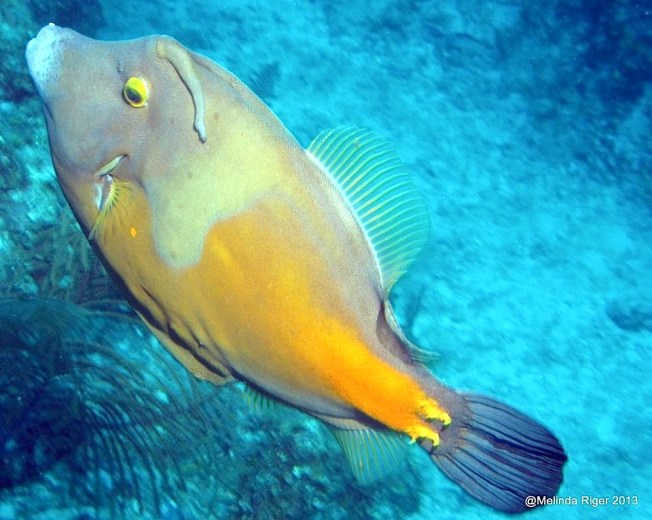
These fish have snouts with small mouths and specialized teeth with an inner and outer set on each jaw. They are to an extent shapeshifters, and can quickly make themselves appear larger for defensive purposes. In some individual species, there are marked differences in body shape and coloration.
An orange-spotted filefish with its spine erect, making for a cave – a place of safety


ARE THEY EDIBLE?
Good question. The answer, broadly is yes, though I don’t know if that applies to all species of filefish. They are certainly eaten in large quantities in the Far East. I don’t know about the Bahamas or the wider Caribbean. If anyone does, could you very kindly add a comment to this post. Recipes welcome!

All photos: Melinda Riger of Grand Bahama Scuba


You must be logged in to post a comment.