Unknown's avatar

PRETTY PALMS: CHEERY WARBLERS ON SUNNY ABACO


220px-Palm_Warbler,_Indiatlatlantic

PRETTY PALMS: CHEERY WARBLERS ON SUNNY ABACO

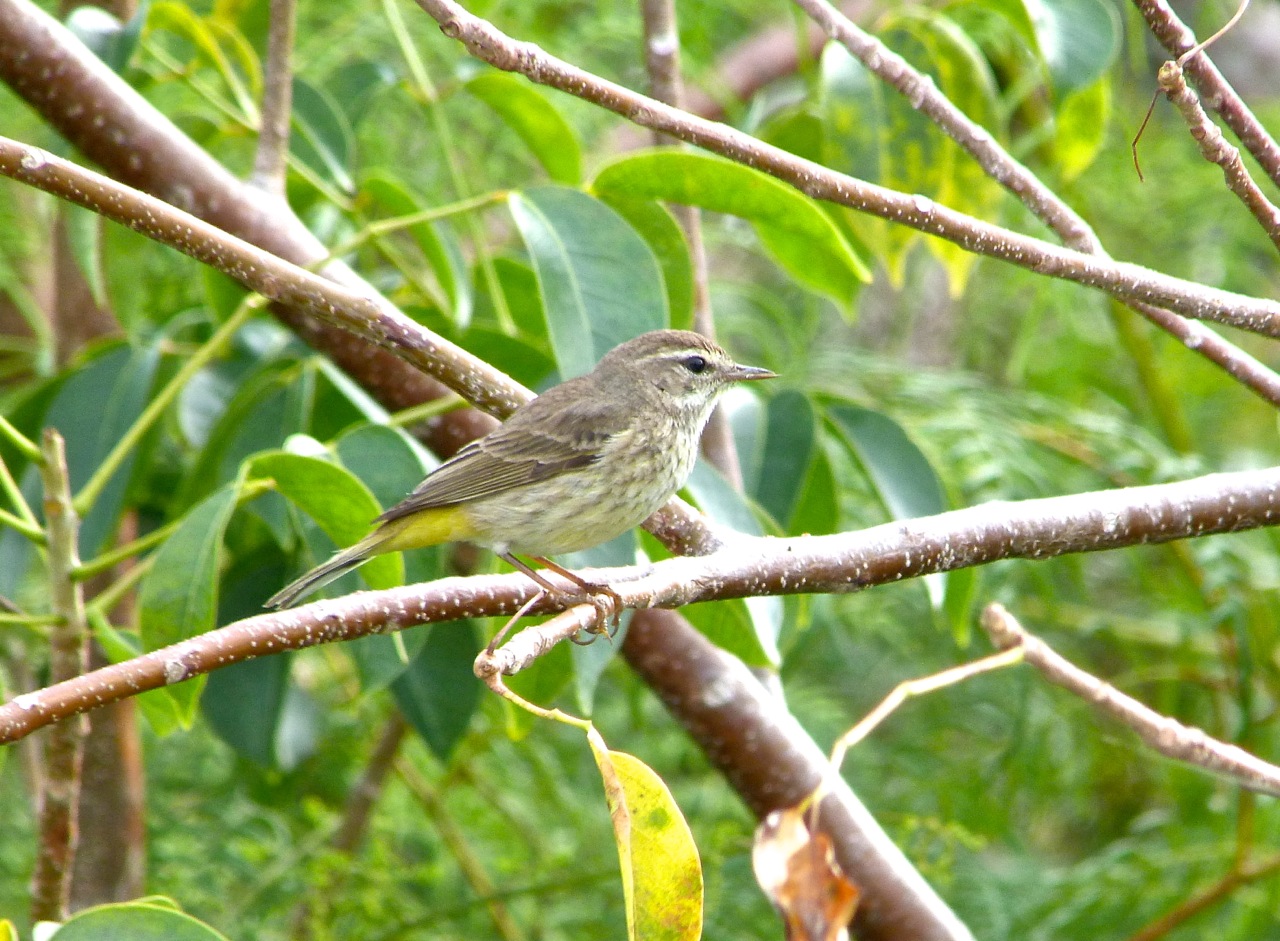
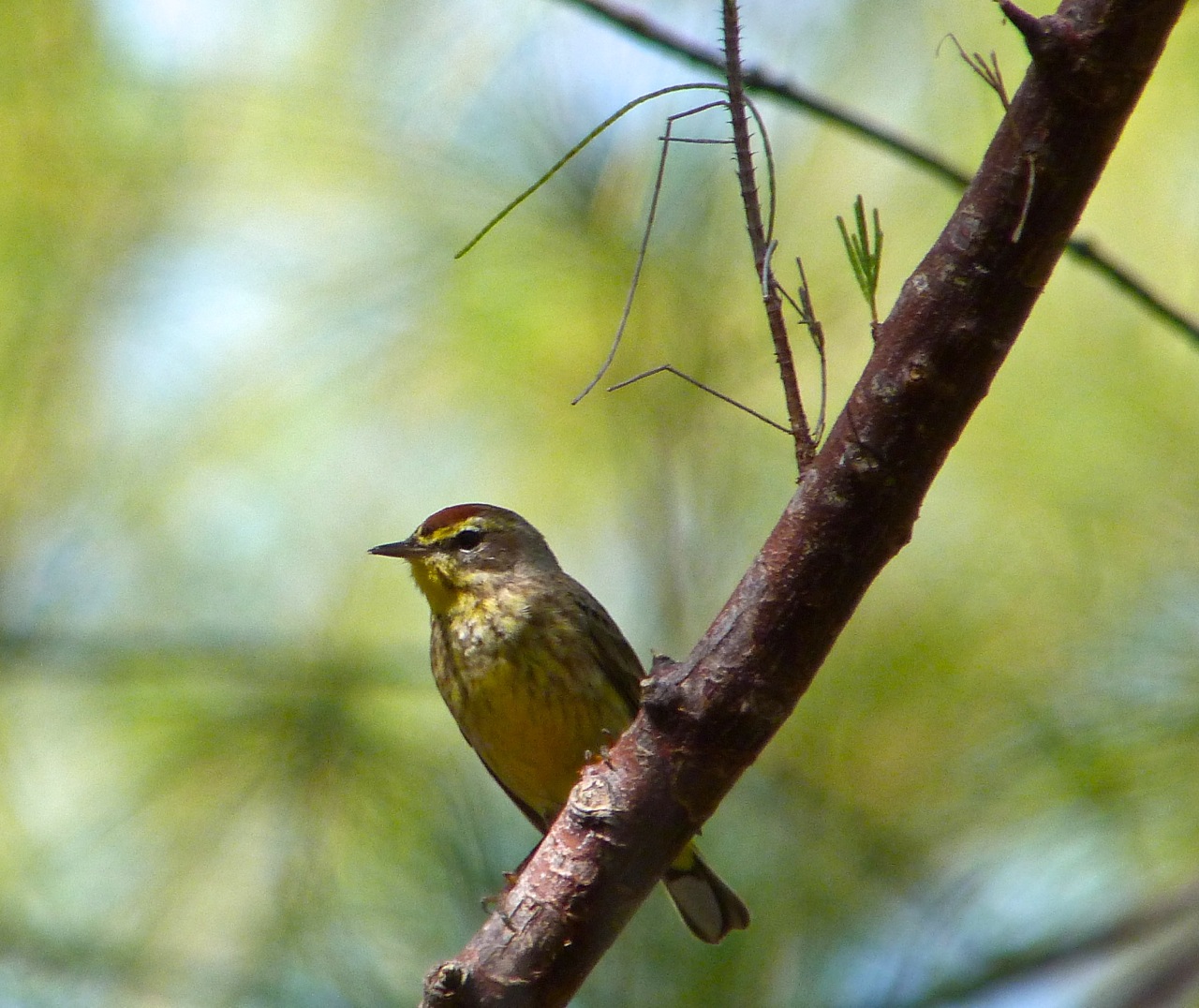
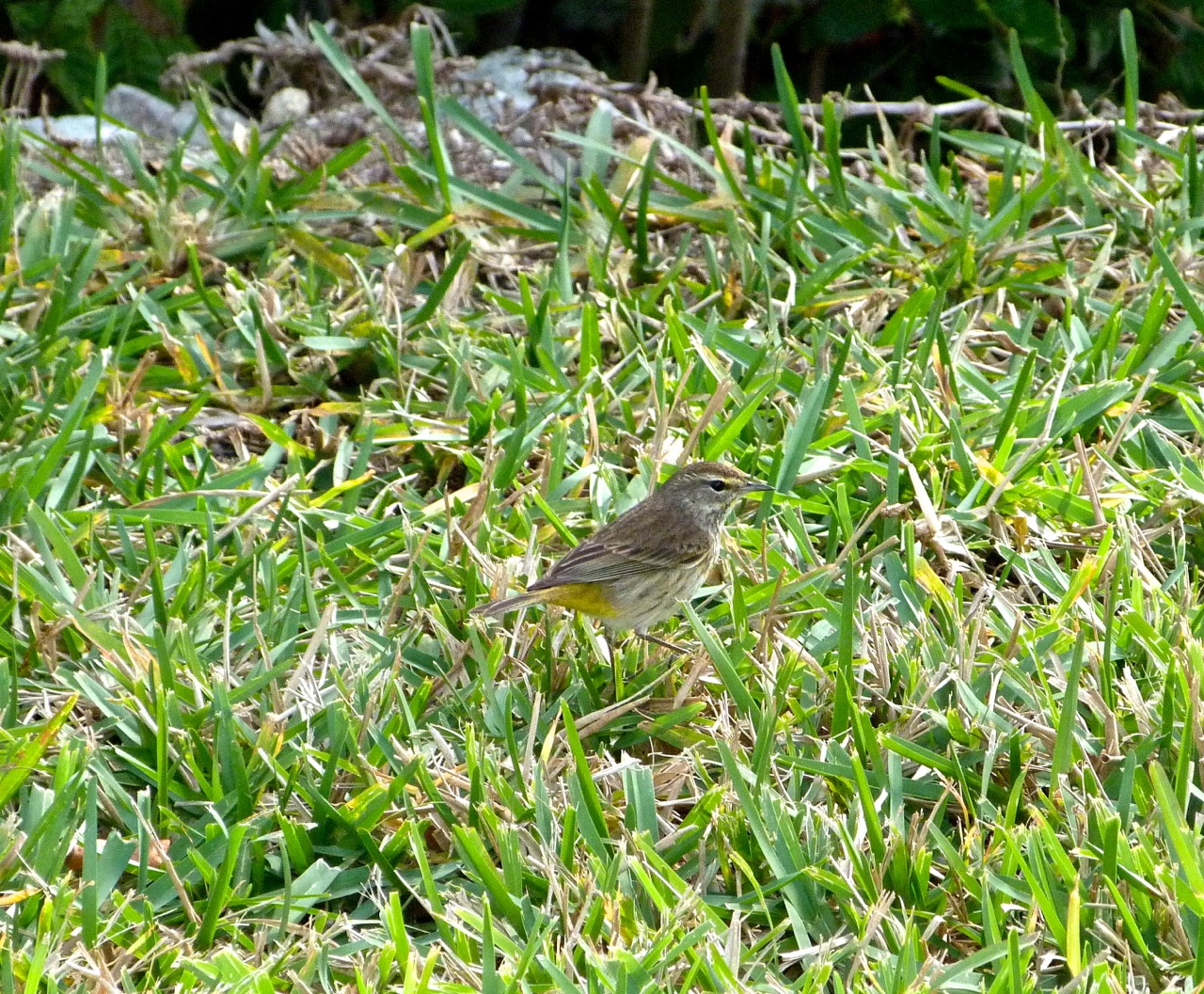
Palm Warblers Setophaga palmarum are cheerful little birds. Keen feeders, foraging around on the ground, in the coppice, or where there are pines. They are one of only 3 warbler species that bobs its tail, not just when it’s happy but much of the time. Maybe it is happy much of the time. The other 2 species are the relatively familiar Prairie Warbler; and the vanishingly rare – on Abaco, at least – Kirtland’s Warbler, the avian Holy Grail for birdwatchers on the island. 

The male palm warbler in breeding plumage has a smart chestnut cap and what might be described as a ‘buttery’ BTM, to use a polite text-abbrev. The females are paler and have less yellow on them. The photos below were taken in March this year, mostly by Mrs RH (I can’t now recall who took what so I’ll give a general credit until she claims her ones). You’ll see the wide variety of types of place you might encounter one of these little birds. The last picture isn’t great as a photograph… but it’s a classic bit of acrobatic personal grooming.

CALL [audio http://www.xeno-canto.org/sounds/uploaded/HNJLXSFHYB/palm_warbler_callnotes_xc.mp3]

Palm Warbler, Abaco 7 Palm Warbler, Abaco 6 Palm Warbler, Abaco 5 Palm Warbler, Abaco 4 Palm Warbler, Abaco 3 Palm Warbler Abaco 2 Palm Warbler Abaco 1Thank you for admiring me…Palm Warbler, Abaco 9…now please excuse me if I scratch my ear for a moment…Palm Warbler, Abaco 8Header thumbnail image credit: Wiki

Unknown's avatar

OL’ RED EYES IS BACK: A RED-LEGGED THRUSH SINGS THE… REDS?


Red-legged Thrush, Abaco 2

OL’ RED EYES IS BACK: A RED-LEGGED THRUSH SINGS THE… REDS?

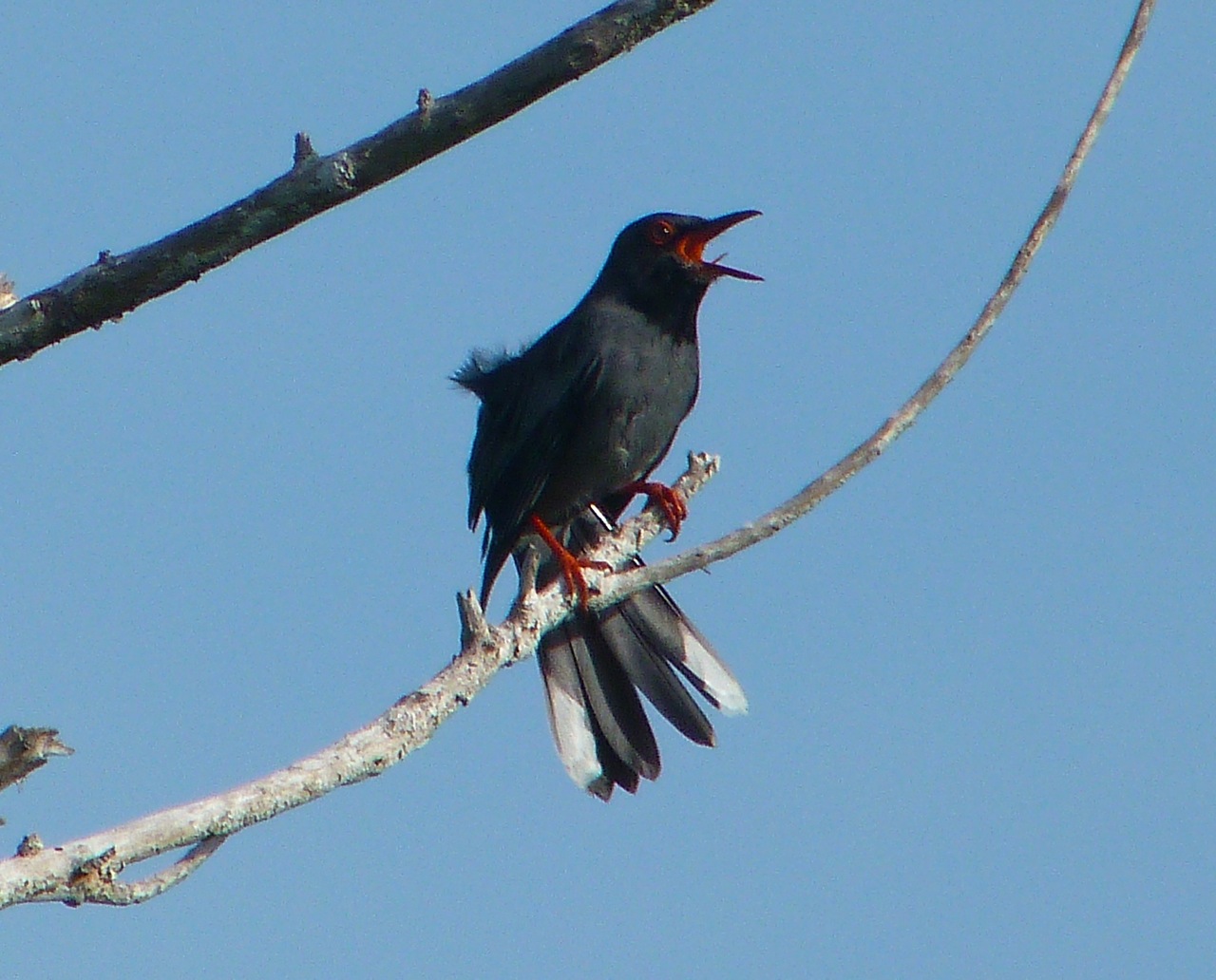
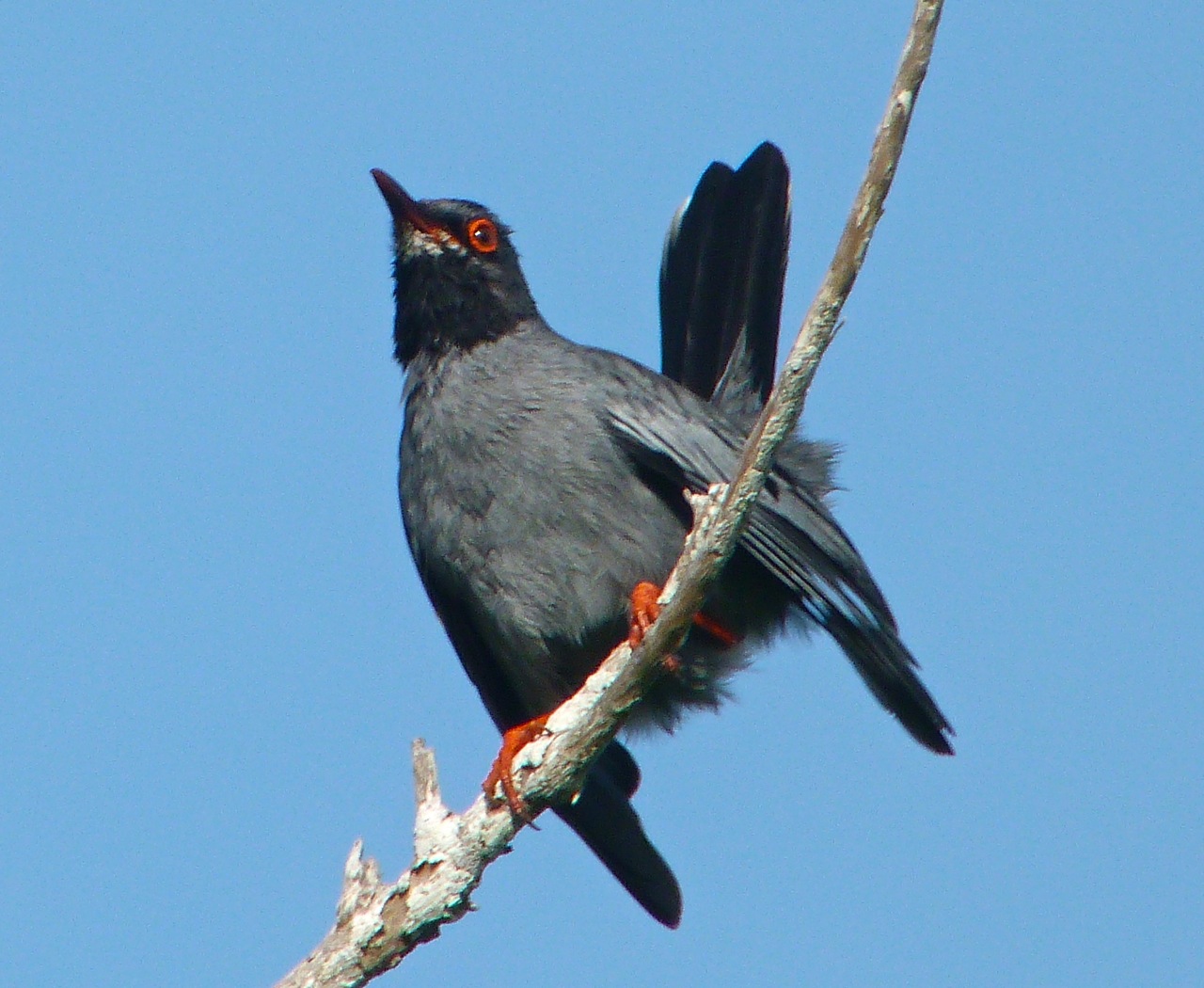
The Red-legged Thrush (Turdus plumbeus) is often said to be the Caribbean equivalent of the American Robin. Its main range is from the northern Bahamas down to the Caymans, Hispaniola, Dominica and Cuba. Although Abaco is less than 200 miles from the Florida coast, reports of RLTs in Florida are rare. Similarly, the robin rarely crosses over to Abaco – and most reported sightings are on the Cays rather than the main island.RTL Range Map birdlife.org

Red-legged Thrush, Abaco 10

I’ve always been slightly surprised by the RLT’s name. You don’t get birds called ‘the brown-feathered tobaccoquit’ and so on. Brown-feathers are not a particular signifier. Thus, there are plenty of bird species with red legs. But few with eyes that glow with the startling intensity of an angry ember*. 

RTL eye

The RLT on Abaco is ubiquitous – familiar in gardens, coppice and pine forest. They have a broad diet, eating mainly fruits and insects of all types. They will also eat snails, lizards and even birds’ eggs. Because of this range of diet, you’ll often see these birds foraging on the ground, as well as in the understorey and higher up in the bushes and trees of the coppice.Red-legged Thrush Abaco 7

In the mornings and evenings, RLTs like to sing. They will fly up to a high perch, often the topmost dead branch of a tree, and perform loudly and elegantly. They have a variety of characteristic poses that they like to strike. These photos were taken with a small camera from ground to tree top in the coppice, so they aren’t as sharp as I’d like. But you can still see the bird’s tiny ululating tongueRed-legged Thrush, Abaco 1Red-legged Thrush, Abaco 5

This bird was in the Delphi drive at around 6.00 pm. I recorded it for about 30 seconds as a video, but the camera-shake is so… well, I’m sparing you the movie, ok? Instead I’ve converted the song to an mp3 file, which has worked quite well. Turn your volume up a bit – the bird was not very close. Note the smart matching red inside of the mouth – hence, singing the reds…

Red-legged Thrush, Abaco 4Red-legged Thrush, Abaco 9Red-legged Thrush, Abaco 3

One disadvantage of posing on a high perch is the risk of ruffled feathers & dignity

MAKIN’ COOL MUSICRed-legged Thrush, Abaco 8

YET SECONDS LATER… WARDROBE MALFUNCTIONRed-legged Thrush, Abaco 6

Finally, another (and more professional) example of an RLT’s song from Xeno-Canto, also recorded in the Bahamas

Credits: All photos RH except the greyer one on the ground, Mrs RH. Range map birdlife.org

AFTERWORD

1. John Bethell has commented “In Long Island they call them Rain Crows, because they were always seen right after a rain storm!”. So I checked my James Bond (1947), the best resource for historic local names. Generically, ‘Blue Thrasher’, and specifically for the Bahamas, ‘Blue Jane’ are given.

NEW (JUNE 2014) ‘John’ comments “Rain bird or rain crow refer to both the mangrove cuckoo and the lizard cuckoo in the Bahamas”.

2. *To the friend who rightly points out that, strictly speaking, embers cannot be ‘angry’, I point to my right to use PATHETIC FALLACY if I choose, the imputation of human emotions to objects or, [perhaps] creatures. Or to employ, like, creative simile. Now beg to go back on my Xmas card list, buddy.

Unknown's avatar

SHORE THINGS: BEACHCOMBING ON A PRISTINE ABACO BEACH


Shore Things 16

SHORE THINGS: BEACHCOMBING ON A PRISTINE ABACO BEACH

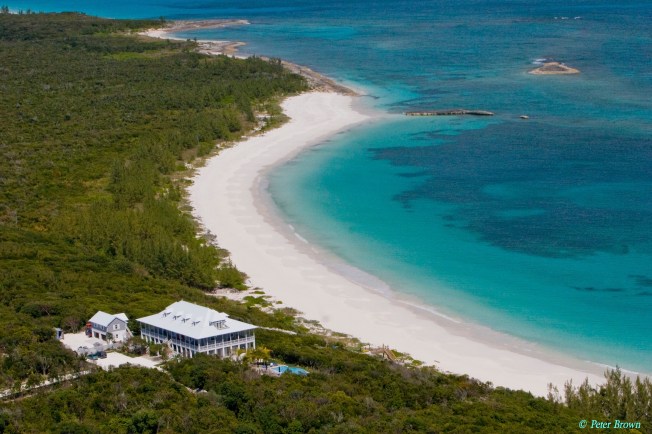
The Abaco bay known as Rolling Harbour is a 3/4 mile curve of white sand beach, protected by an off-shore reef. The beach is pristine. Or it would be but for two factors. One is the seaweed that arrives when the wind is from the east – natural and biodegradable detritus. It provides food and camouflage for many species of shorebird – plover and sandpipers of all varieties from large to least. The second – far less easily dealt with – is the inevitable plastic junk washed up on every tide. This has to be collected up and ‘binned’, a never-ending cycle of plastic trash disposal. Except for the ATLAS V SPACE-ROCKET FAIRING found on the beach, that came from the Mars ‘Curiosity’ launch. Sandy's Mystery Object

We kept is as a… curiosity, until it was eventually removed by the men in black…

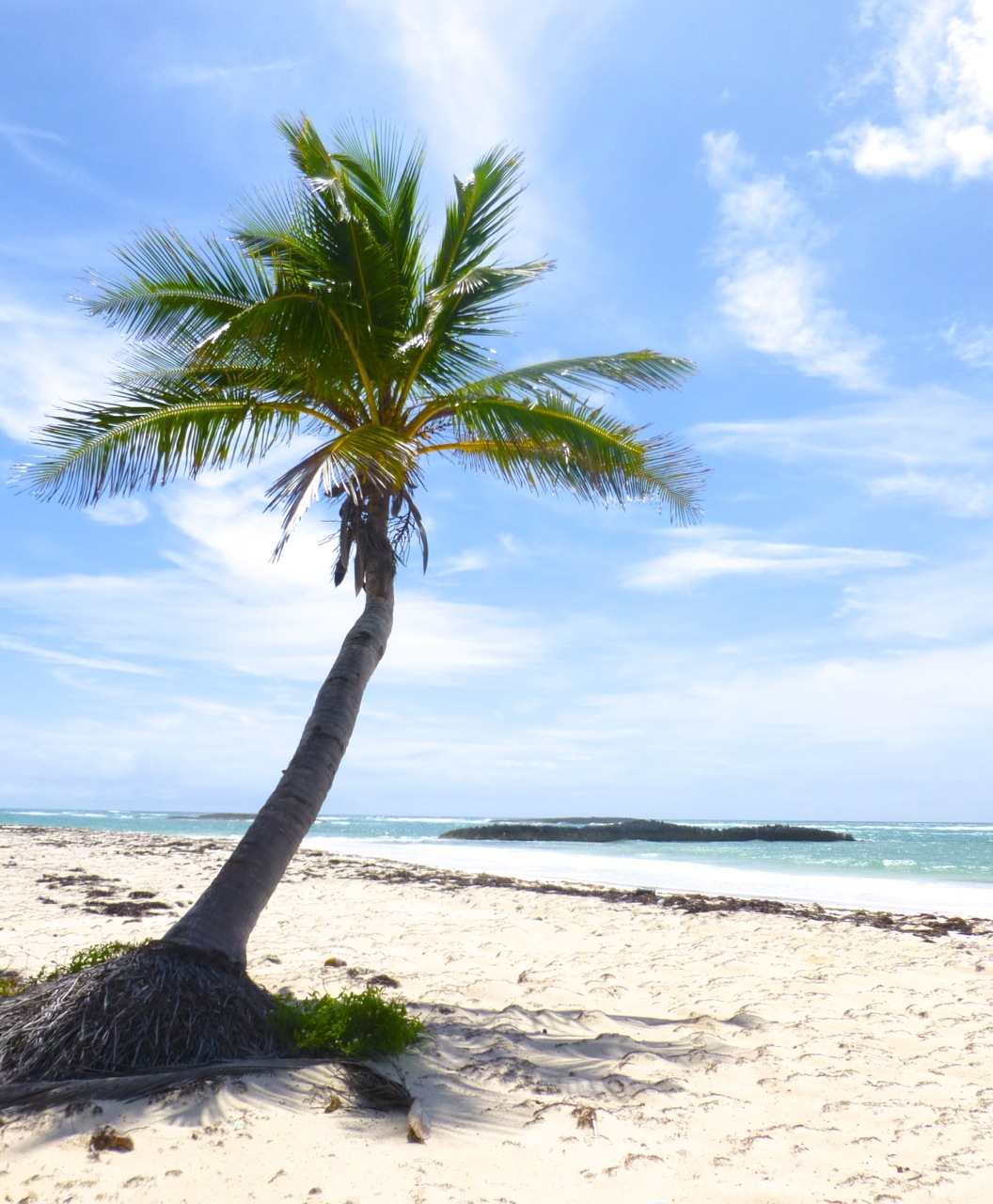
Shore Things 14I’d intended to have a ‘plastic beach trash’, Atlantic-gyre-rage rant, with angry / sad photos to match. Instead, I decided to illustrate a more positive side to beach life – things you may discover when you take a closer look at the sand under your feet. Like the coconut above. Many of these photos were taken by our friend Clare Latimer (to whom thanks for use permission); some by me.

Shore Things 13A LONE FLOWERShore Things 17SEA STAR (DEFUNCT), WITH CRAB TRACKSShore Things 21SEA FAN (GORGONIAN)Shore Things 15WASHED-UP BOTTLE (PROBABLY NOT RUM)Shore Things 12

SEA BISCUITSShore Things 9

Thanks to Capt Rick Guest, who has contributed an interesting comment regarding the sea biscuit with a hole in it. He writes “the (Meoma) Sea Biscuit w/ the hole in it was dined upon by a Helmet Conch. The Cassis madagascariensis, or C.tuberosa drills the hole w/ its conveyer-belt-like radula teeth w/ some help from its acidic, saliva. Probably 98% of all symetrical holes in marine invertebrates are of this nature. Murex, Naticas, Helmets, and many Cephalapods (via a Stylet), are the usual B&E suspects. The Cone shells utilize a modified radula in the form of a harpoon which is attached to a venom tube.” For more on the vicious cone shell, and other creatures to avoid, click HERE

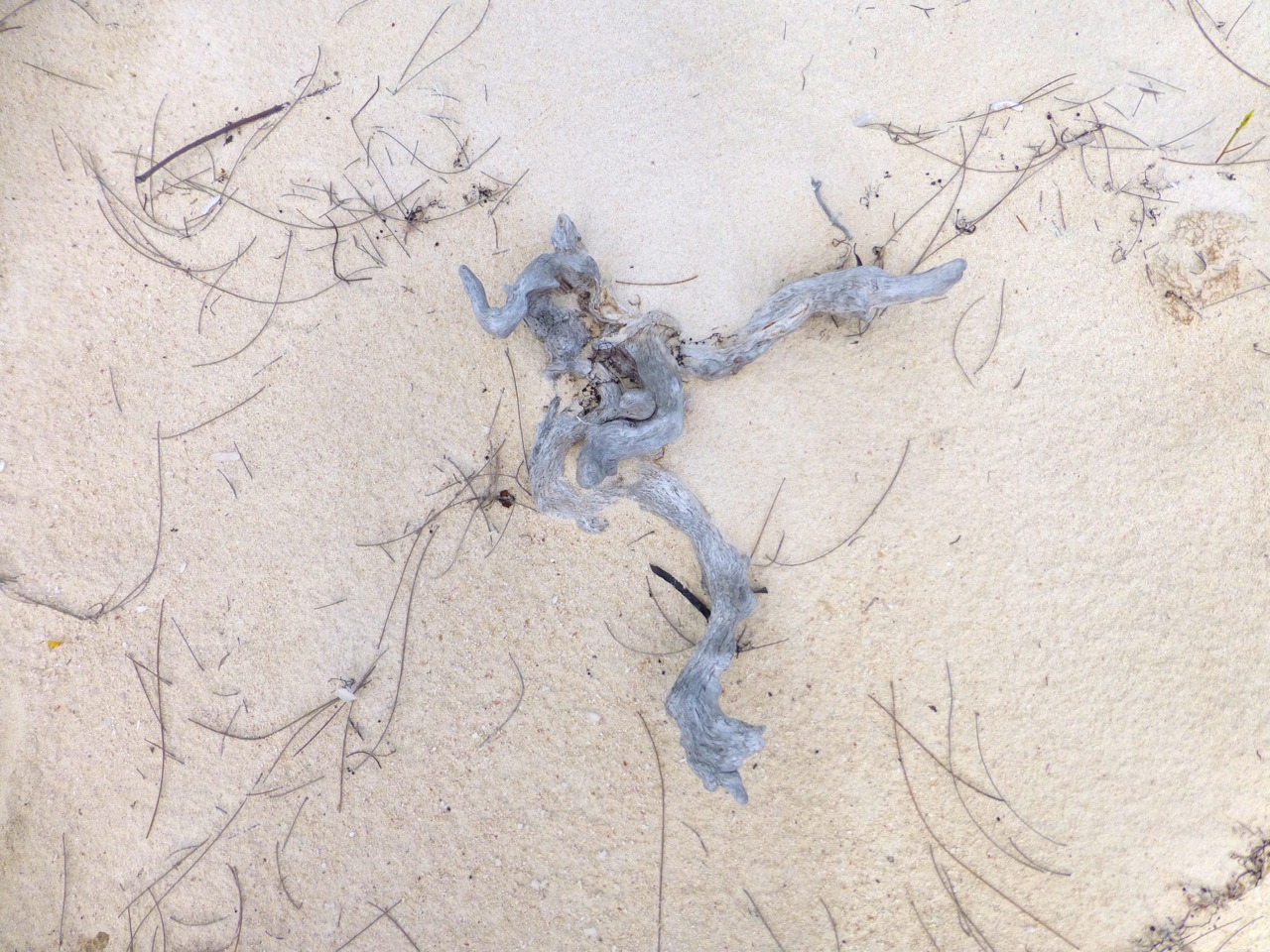
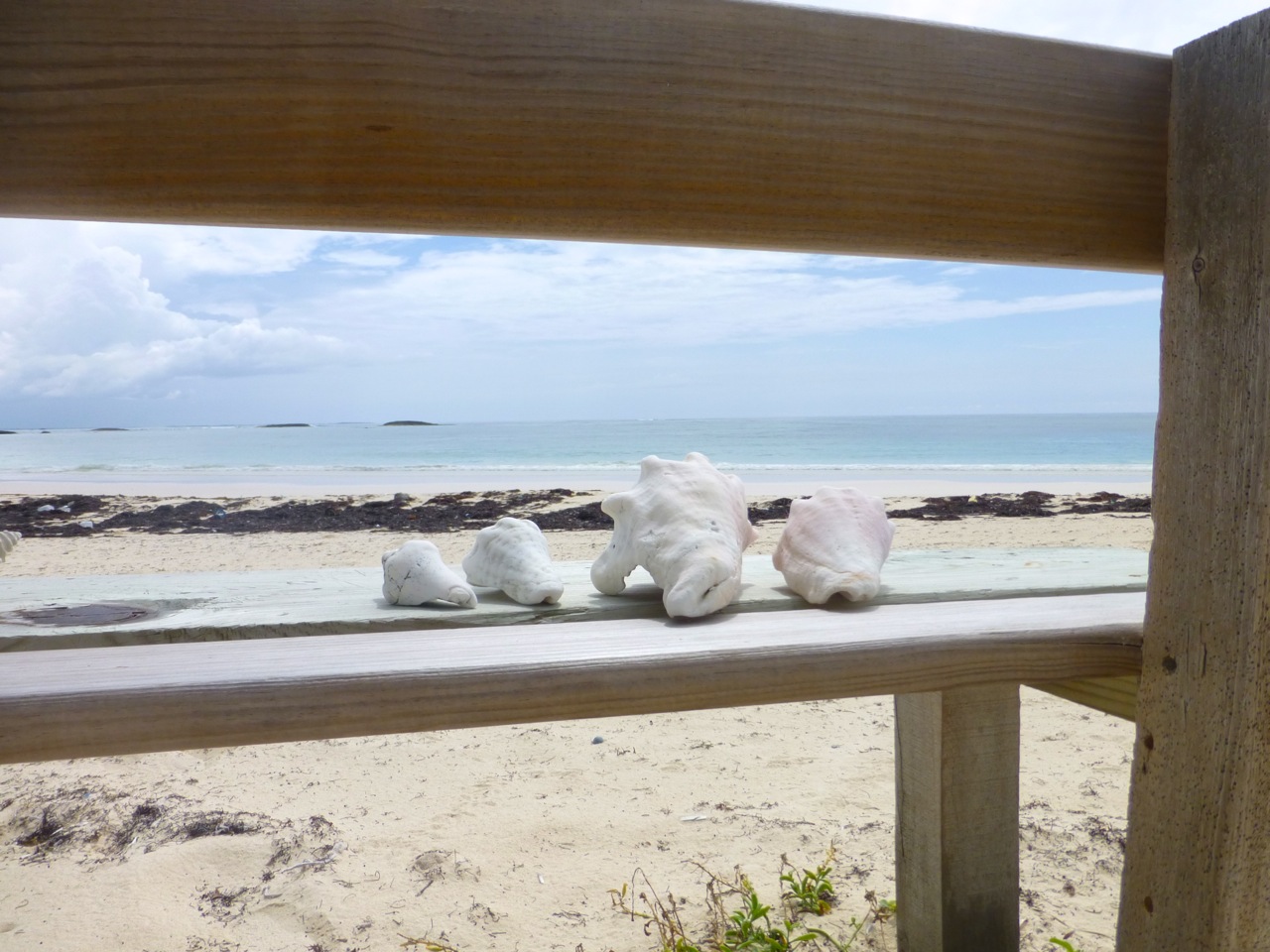
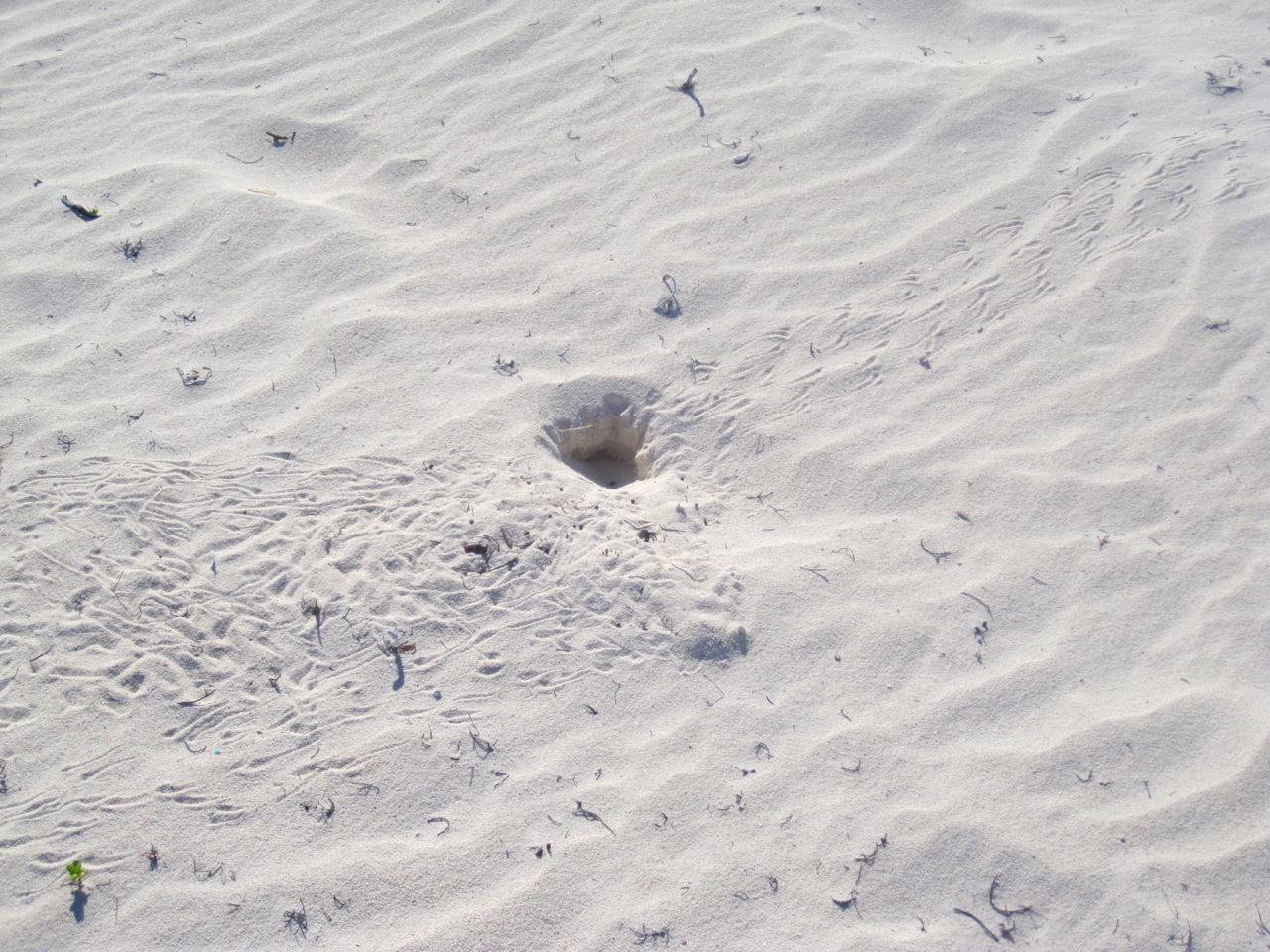
DRIFTWOOD. IT’S LIKE… OH, USE YOUR IMAGINATIONShore Things 5A WILSON’S PLOVER NESTShore Things 11HORSESHOE CRAB (LIMULUS)Shore Things 4SCULPTURE? AN EMBRYONIC SHELTER? Shore Things 3LARGE BIRD FOOTPRINTSShore Things 18MORE BIRD PRINTS AND CRAB TRACKSShore Things 19 CRABUS CUTICUSShore Things 6CONCH SHELLS & OTHER BEACH TREASURESShore Things 8Shore Things 20CRAB HOLE & TRACKSShore Things 22SOME IDIOT’S LEFT HIS… OH! IT’S MINEShore Things 7

Unknown's avatar

“PISHING IN THE WIND”: BIRDING IN A BREEZE AT DELPHI


Abaco Cloud Map 5:29

“PISHING IN THE WIND”: BIRDING IN A BREEZE AT DELPHI

The Bahamas weather has been uncharacteristically dire. Rain and cloud for the past week, and a poor forecast for the next week (see above). I arrived on Abaco yesterday, with the short internal flight from Nassau last night nearly cancelled due to a humungous downpour. Instead, people were boarded in bare feet, having had to wade through 3 inches of water to get to the small plane floating on the undrained concrete. Yet today, there was sunshine at Delphi this morning (though cloud to both north and south). A stiff breeze was keeping the clouds off-shore. The weather is fickle and very local.

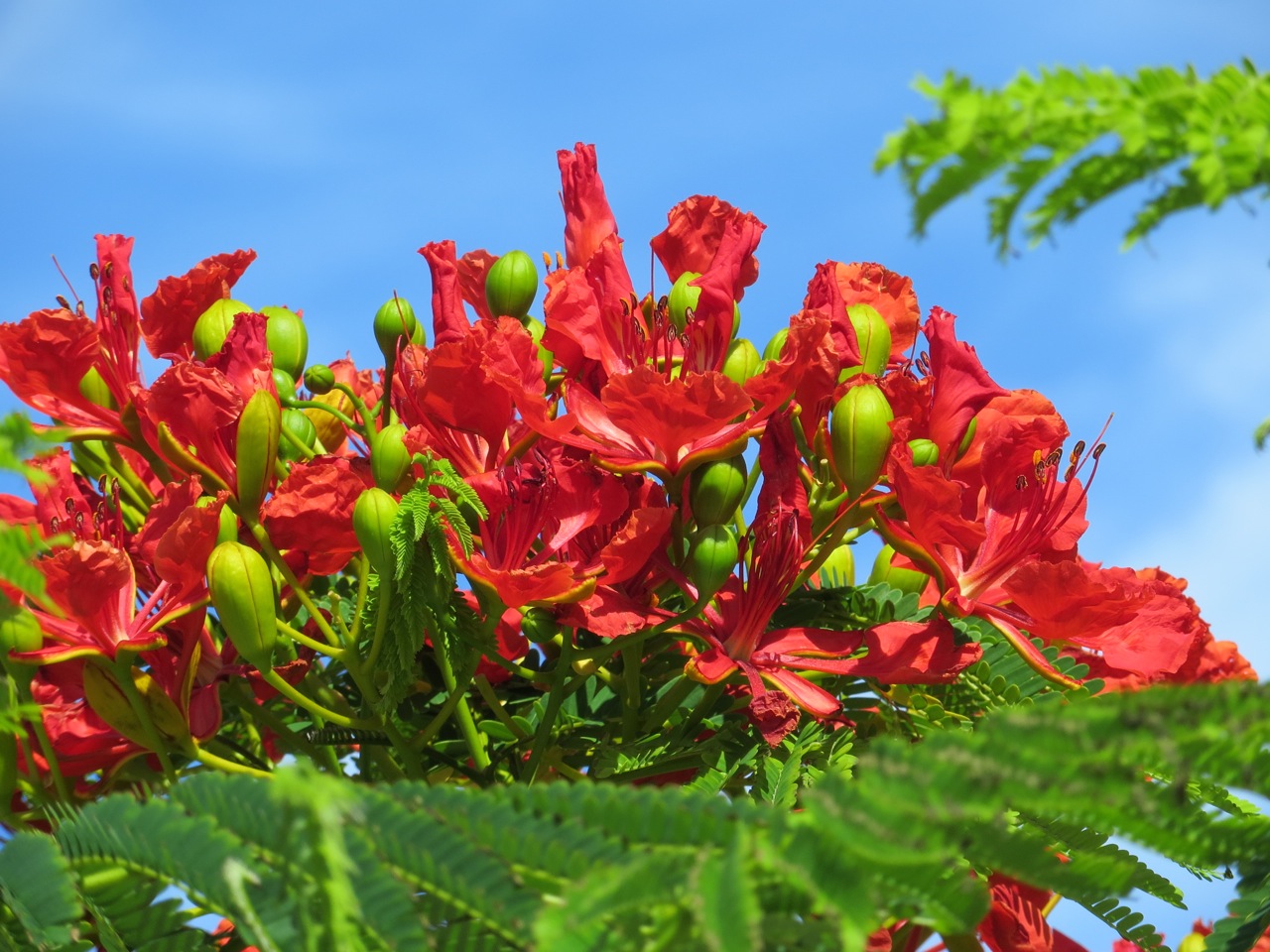
ROYAL POINCIANADCB 1.10

I took a small camera and strolled for half and hour for about 200 yards along the Delphi drive and back (for those that know it, to the first corner of the guest drive) to see what the first of June had to offer in the way of wildlife. The birds were clearly enjoying some unaccustomed sunshine, and I have listed those I saw below. Not all were photogenically posed, and many were flicking around the coppice too quickly to capture.

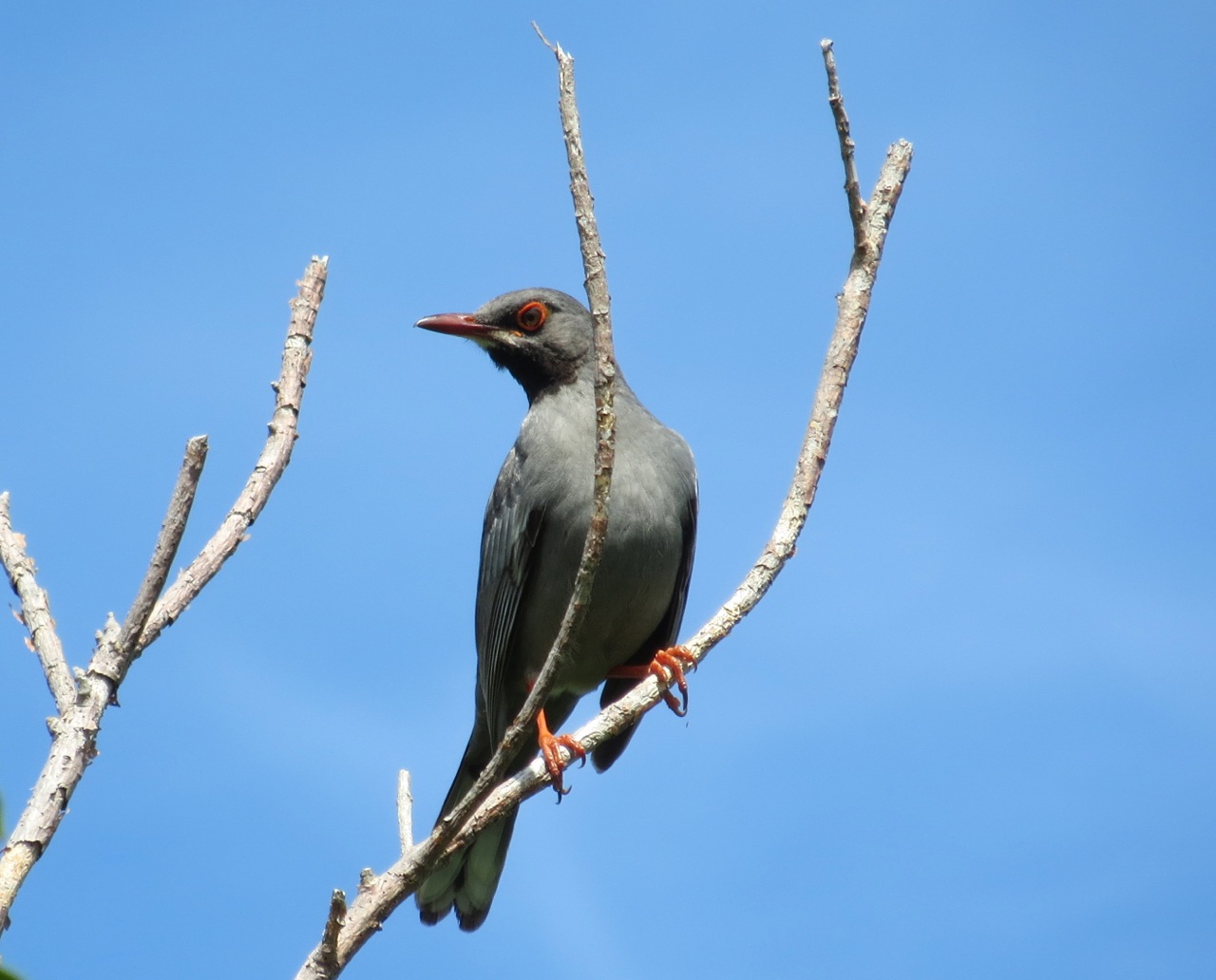
RED-LEGGED THRUSHDCB 1.2

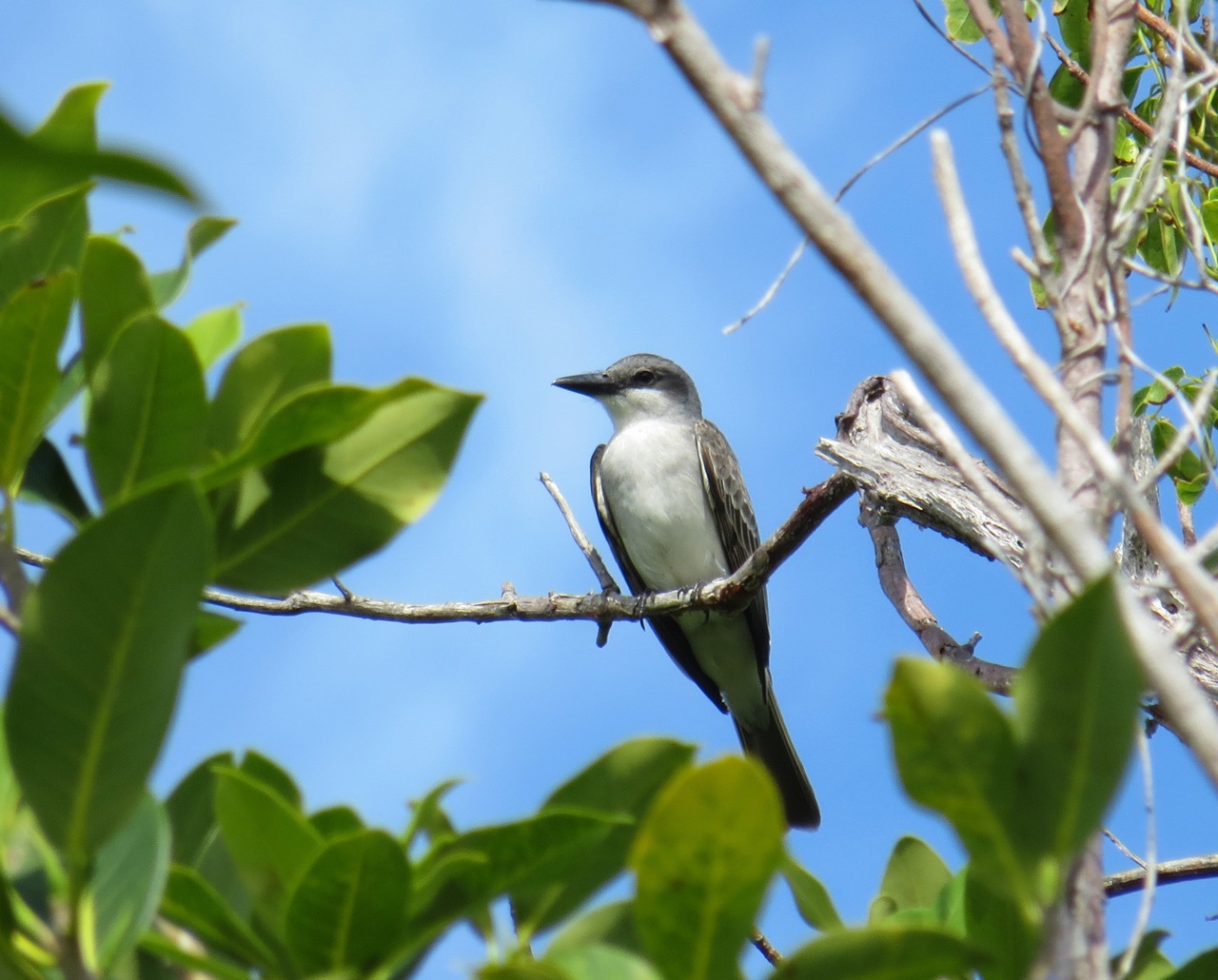
GRAY KINGBIRDDCB 1 3

The smaller birds were unusually responsive to ‘pishing’, the unattractive but effective noise that can bring a bird to the front of woodland or scrub to investigate. A black-whiskered vireo was interested, but flew off just as I pressed the button. He was immediately replaced on the branch by a

BLUE-GRAY GNATCATCHERDCB 1 5

A pair of Western Spindalises (see recent post HERE) joined it in the adjacent treeDCB 1.4

DELPHI 30 MINUTE STROLL BIRD LIST 1.06.13

  • Red-legged Thrush 3
  • Western Spindalis  3
  • West Indian Woodpecker 2
  • Black-whiskered Vireo 2
  • Cuban Emerald 2
  • Turkey Vulture 2
  • Bahama Swallow 1
  • Gray Kingbird 1
  • Loggerhead Kingbird 1
  • Greater Antillean Bullfinch 1
  • Blue-gray Gnatcatcher 1
  • Bananaquit 1
  • {Heard only} Abaco Parrots 2

The flowers were also enjoying some sunshine after the rainDCB 1.8DCB 1.9DCB 1.12DCB 1.11A couple of other things caught my eye, including a cute baby lizard, before I headed for some restDCB 1.7DCB 1.6DCB 1.1

Unknown's avatar

HELLO, HANDSOME! WESTERN SPINDALIS IN THE MOOD FOR LURVE…


Western Spindalis Abaco 4

HELLO, HANDSOME! WESTERN SPINDALIS IN THE MOOD FOR LURVE…

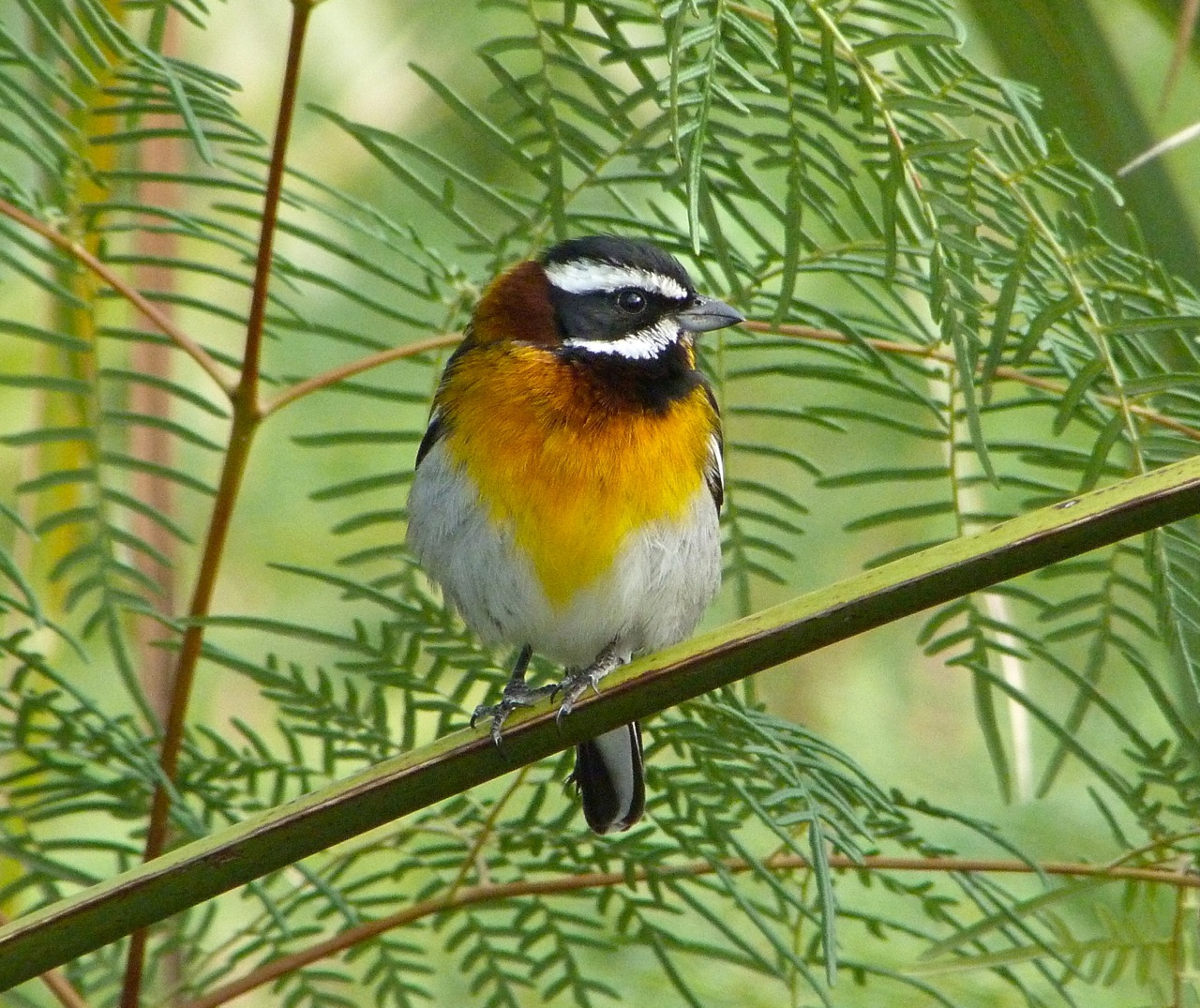
Nearly two years ago, when this blog was still in its mewling infancy, I posted about one of my favourite small birds on Abaco, the WESTERN SPINDALIS (Spindalis zena, formerly known as the Stripe-headed Tanager). It is a strikingly handsome creature by any standards, often seen posing ‘tall’ on a branch looking splendid in its orange, black and white livery.

Perching proudly…Western Spindalis Abaco 1… or dining elegantly…Western Spindalis Abaco 2

The  spindalis is one of the birds to look out for if you are walking along one of the drives at Delphi, or (*recommended 1/2 hour stroll*) walking the drive circuit. You’ll see them in the coppice or in the undergrowth alongside the drives in the pine forest area, almost certainly a little way in from the front. We spotted one quite close to the Highway, looking most decorative in the greenery. This one had an uncharacteristic hunched look about him, and we soon discovered why – he was courting. Not the black-faced grassquit near the bottom of the photo, but a female spindalis well-hidden low down and further back in the undergrowth to the left. So we edged nearer to get a better look.Western Spindalis Abaco 7

You’ll see that this male bird’s hunched posture has produced a rather impressive neck ruff, an adornment presumably irresistible to female spindalises. Both birds were ‘chucking’ softly to each other, and the male turned his head regularly to show off his glories from all angles. Western Spindalis Abaco 6Western Spindalis Abaco 8I can’t unfortunately reveal the outcome of this encounter. We never saw the female, and we had probably got too close for her to feel comfortable about breaking cover. The male, however, was too absorbed refining his pulling techniques to be greatly bothered by our presence, though he did keep a beady black eye on us. Is this male preoccupation when courting found in other animal species, I wonder? Reader, we made our excuses and left…

Unknown's avatar

HOW TO RECORD BIRDS EASILY ON ABACO (OR ANYWHERE ELSE…)


Red-winged Blackbird Abaco 3

RECORDING BIRDS: A LAYMAN’S GUIDE

YOU WILL NEED: an iPh@ne or similar  smartphone with a voice memo facility; patience; minimal non-natural background noises (traffic, yelling people, barking dogs, heavy machinery); a steady-ish hand; one or more birds nearby

RECORDING

  • Use the Voice Memo app on an iPh@ne (I presume most other smart phones have a similar app).
  • Once you have it onscreen, turn the phone round 180 deg and the image will swivel round too. Now you can point the microphone at the sound and have the controls the right way up facing you.
  • Turn the volume up to max before you record.
  • Handle the phone carefully so it doesn’t record you touching it as well. It probably won’t pick up pressing ‘record’, but it may when you press ‘stop’. But you can trim the end of the saved file on the file very simply.
  • The recording saves in m4p format, and you can email it to your computer direct from the app (or to anywhere or anyone else).
  • Drag / save the file onto your desktop from the email. When you open it, it will (a) play and (b) appear in your iTunes library (or whatever music storage system you use).

CONVERTING RECORDINGS TO MP3

  • Having opened the recording, to convert the file to an mp3 (generally the preferred version for uploading elsewhere) in iTunes, go to Songs in your iTunes library and search for Memo. There it is!
  • You can rename it at this stage if you wish.
  • Then go to File on the top bar, and in the drop-down menu, near the bottom, go to Create new version. It will offer you mp3.
  • Click mp3 and a second recording file will appear in your library. That’s your mp3.
  • Drag it onto your desktop and do what you want with it.

Apologies if this is all blindingly obvious and written in the elementary computer language ‘eggy-peggy’. It took me a while to get it sorted out, and I hope the details above will help the lo-tek computer user to record birds and use the results painlessly.

FIELD NOTES

  • I recommend recording for about 20 – 30 seconds max. The iPh@ne  allows easy trimming at the start and end of the saved file, but there’s no easy way to edit the middle to take out the barking dog.
  • Several short recordings of each bird will give a better choice of results than one or 2 long recordings.
  • The iPh@ne mic is surprisingly sensitive. It will pick up all nearby sounds – someone whispering at you “is it recording yet?”, for example. So ideally this is best done in the pine forest or coppice, away from the Highway. And maybe the loud whisperer.
  • Wind can be a problem. Not just for humans. The mic will pick up gusts of wind, or wind blowing across it if you change the direction you are pointing the phone as you record. So this is best done on a calm day.

Red-winged Blackbird Abaco 1

Here are two practice recordings I made in March. The first is the female red-winged blackbird above (and header) at Casuarina beach. The distinctive call is rather like a rusty hinge on a swinging gate, often heard far out in the mangrove swamps of the Marls. You’ll hear background noises from collared doves and also the sea lapping on the shore.

The second is thick-billed vireo in the coppice at Delphi. You’ll hear an answering vireo – and also some wind noise. I find these little birds frustratingly hard to see – they always seem to be lurking further back in the bushes than I think. I’ve never managed to take a good photo of one, so I’ll upload an illustrative poor one to be going on with. I am back on Abaco in a week, and a better TBV photo is on my avian hit list.

Thick-billed Vireo, AbacoFinally, you’ll find a longer recording I made of Abaco parrots squabbling noisily at Bahama Palm Shores near the end of a recent post HERE. I made an mp3 using the method described above, and uploaded it to the excellent Xeno-Canto bird sounds website, which is well worth exploring. You can find my recordings of the parrots and the birds in this post, plus sonograms, on my XC page, such as it is, HERE 

But if you just want to hear the parrots, here they are. Like schoolkids, only louder.

Abaco (Cuban) Parrot 2013 13Why do I do that annoying ‘iPh@ne’ thing? It’s a statistical fact that I have just made up that 373,597 people a minute world-wide g@@gle the correct word. Imagine the meta-crawlers and spam-splurgers that lock onto that word. I don’t want to cyber-meet them. I also use the form Am@z@n but for different reasons relating to their ingenious tax arrangements (alleged, obviously). Thus  with G@@gle as well (again, merely alleged – as Dusty Springfield memorable sang, “Nothing is proved…)

Unknown's avatar

BURNING SENSATIONS: FOREST FIRES ON ABACO


Forest Fires, Abaco 11

BURNING SENSATIONS: FOREST FIRES ON ABACO 

My last post was about SAWMILL SINK – not the famous Blue Hole itself, but the detritus of past logging activity in that part of the Abaco pine forests revealed by last month’s forest fires. I mentioned that this destructive burning of the shrubby understorey is (allegedly) the work of  hunters making it easier for their dogs to pursue the hog denizens of the forest. The evidence suggests that nature alone could not cause so many separate seats of fire to appear in a matter of days over such a wide area – and in springtime at that.

This year, the fires came uncomfortably close to several small communities and outlying residences – and to the Delphi Club itself. Many people spent nights hosing down undergrowth and building on the edge of settlements, with neighbours all joining in. Electricity poles are vulnerable, with obvious consequences for the supply should they burn through at the bottom, as often happens. One pole a short way south of Delphi on the highway has the burnt remains of 3 utility posts beside the current (ha!) one. At Delphi itself, the vegetation from around all the poles along the mile of drive had to be cleared.

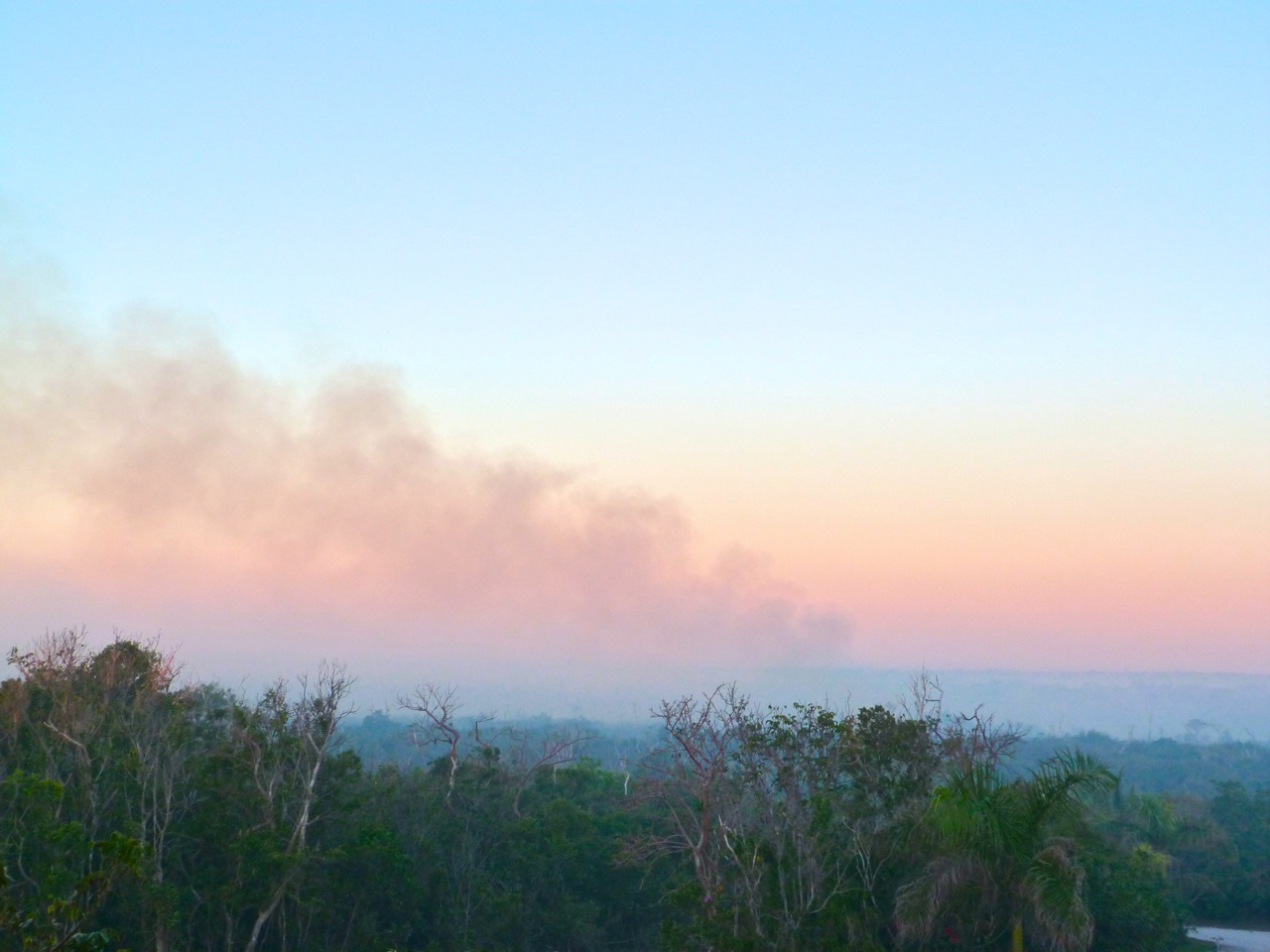
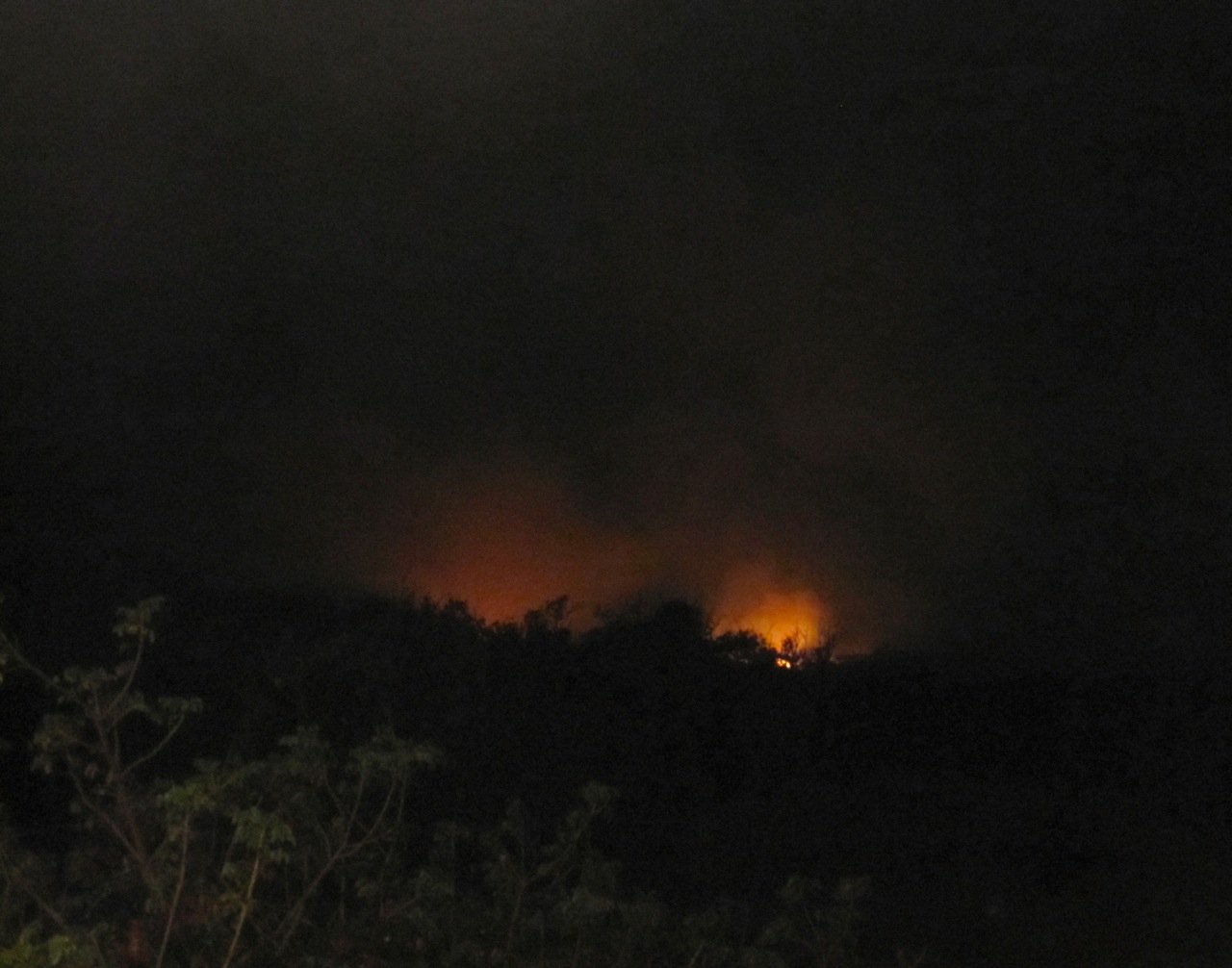
This iPhone photo was taken from the Delphi balcony. The fire is in fact on the far side of the highway, with the pall of smoke – and therefore the fire’s direction – heading south. The question is, when and where will it jump the highway, and what will be the wind direction then…Forest Fires, Abaco 12

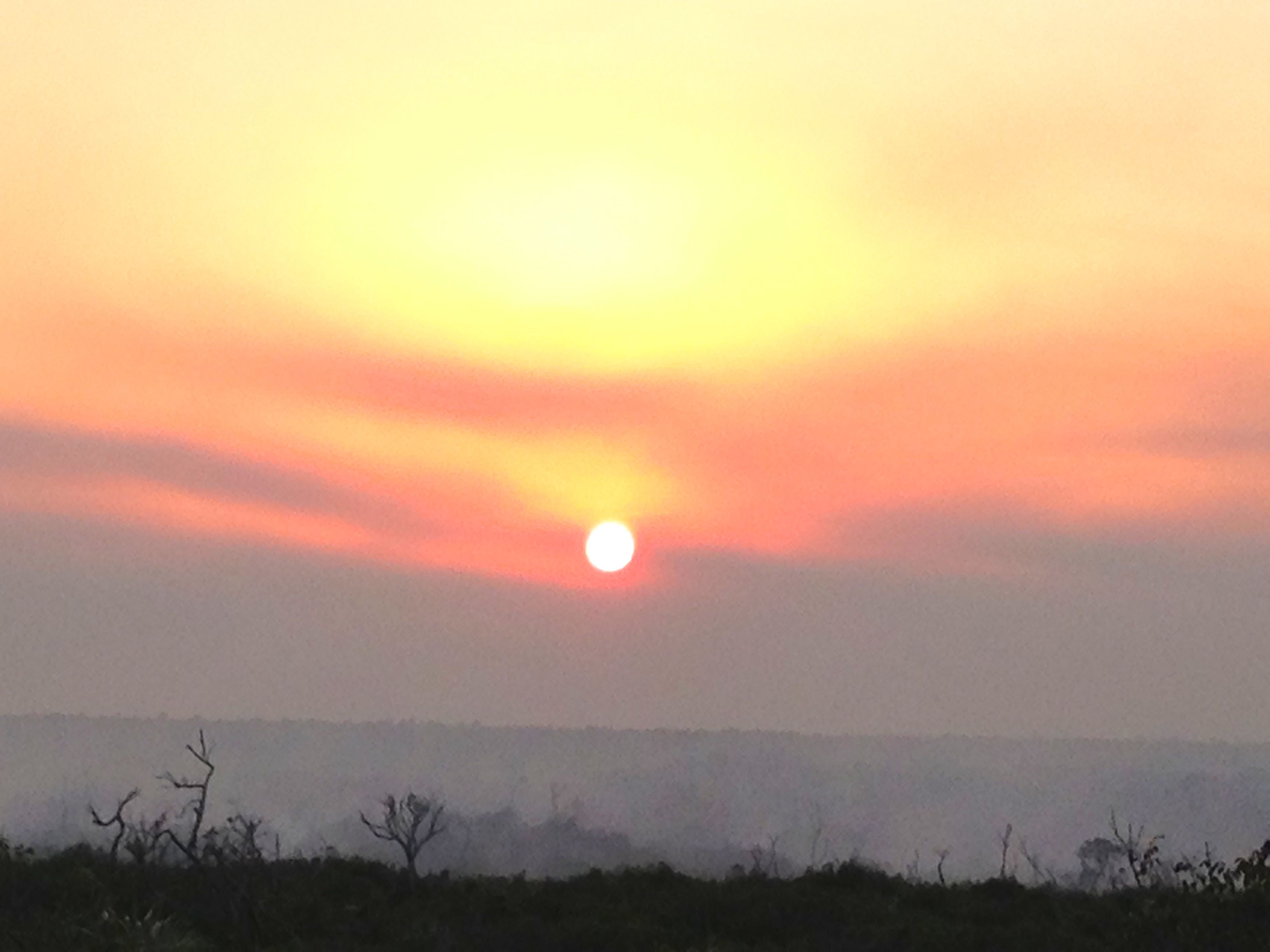
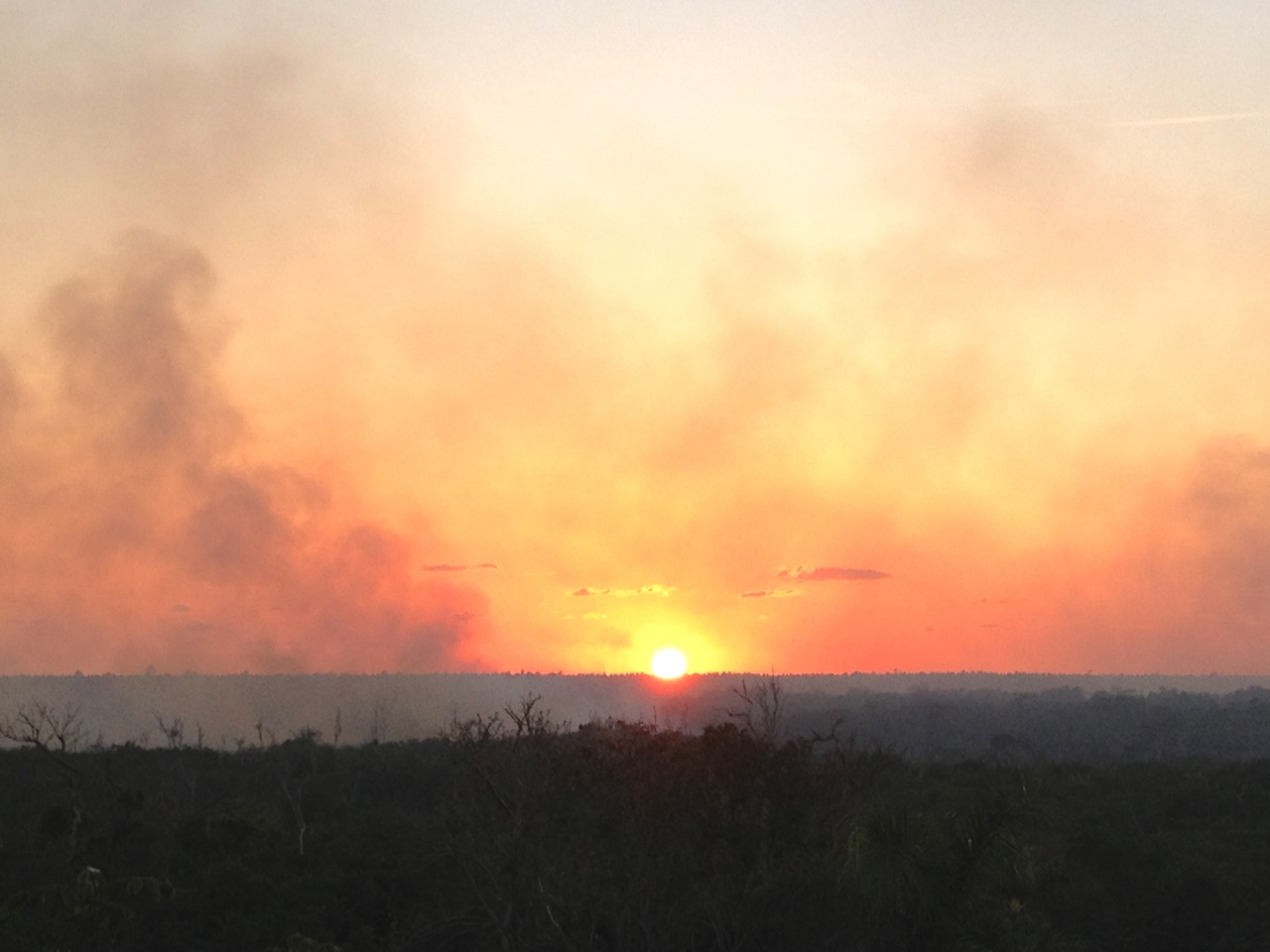
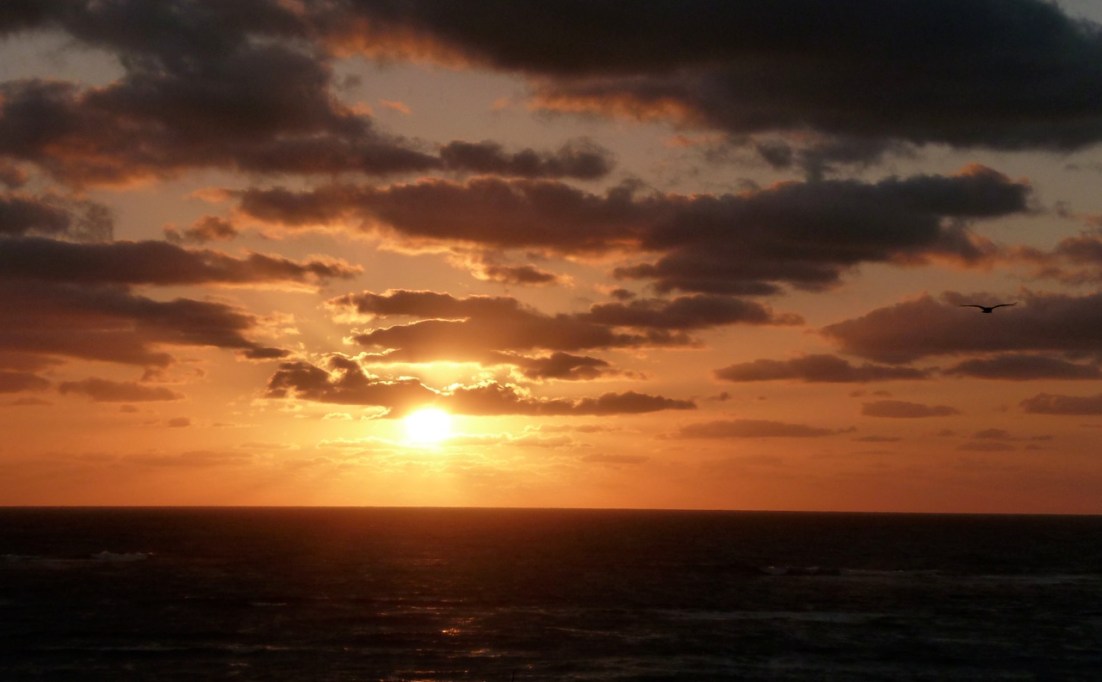
This picture shows the extraordinary effect of the smoke-laden atmosphere on the sunset. The header picture is another example. The fire is now into the pine woods between the Club and the highway, and the theory that the damp coppice nearer the Club will act as a barrier to prevent its spread is about to be put to the test overnight…Forest Fires, Abaco 9

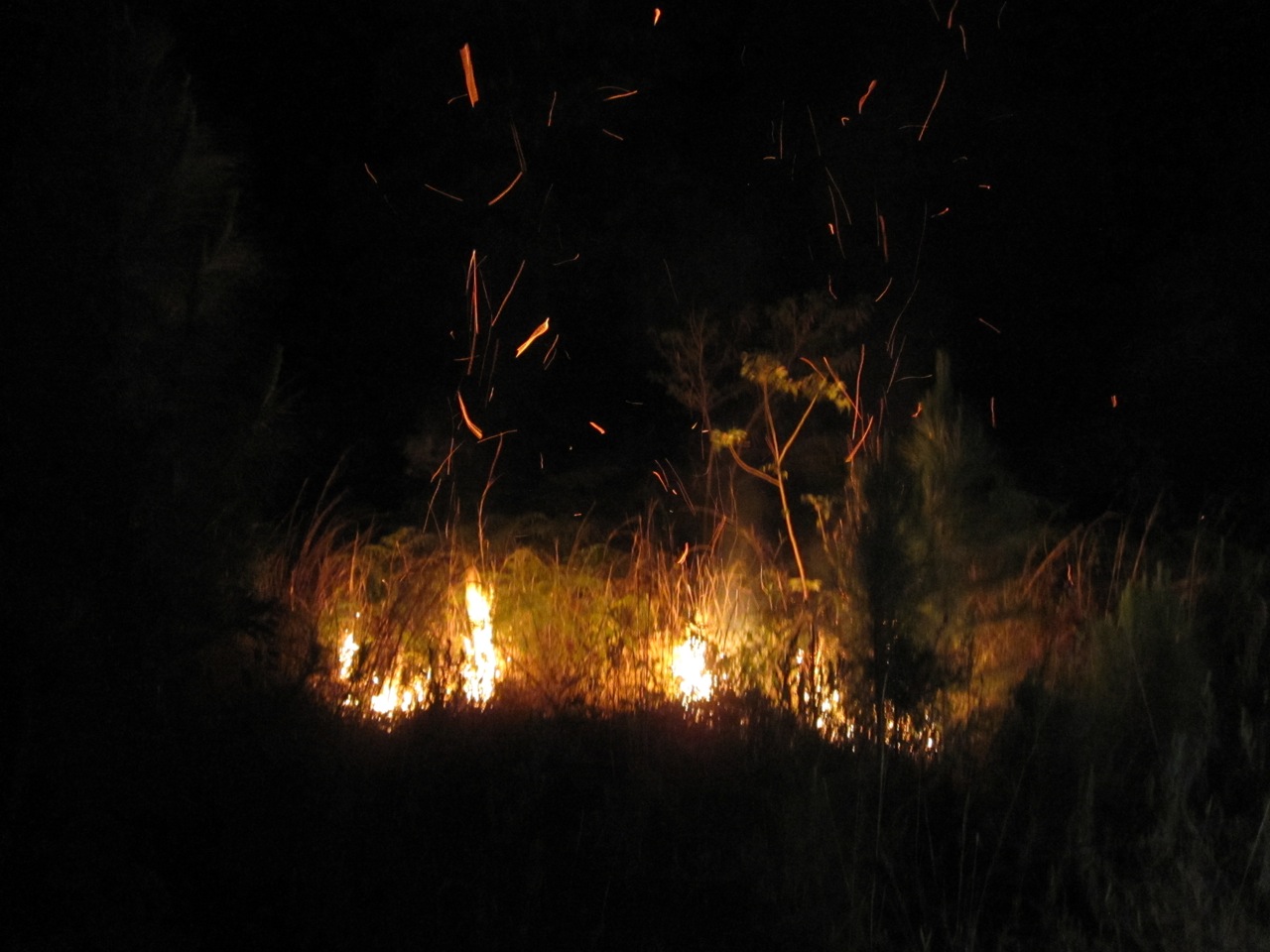
It soon became clear that the fires were not going to be discouraged by the coppice.  Sandy is always eager to find volunteers to go out in a truck to feel the heat, so to speak. He is apt to dismiss concerns that one is sitting on top of a large tank of inflammable liquid by pointing out that diesel is less combustible than petrol. This is invariably comforting to all occupants of the vehicle. So with the fire burning bright, and with tree-tops suddenly bursting into flame like torches, off we go…Forest Fires, Abaco 3Forest Fires, Abaco 5Forest Fires, Abaco 7Forest Fires, Abaco 1Forest Fires, Abaco 2

In the morning, a smokey mist lies over the trees and the bay to the northForest Fires, Abaco 14

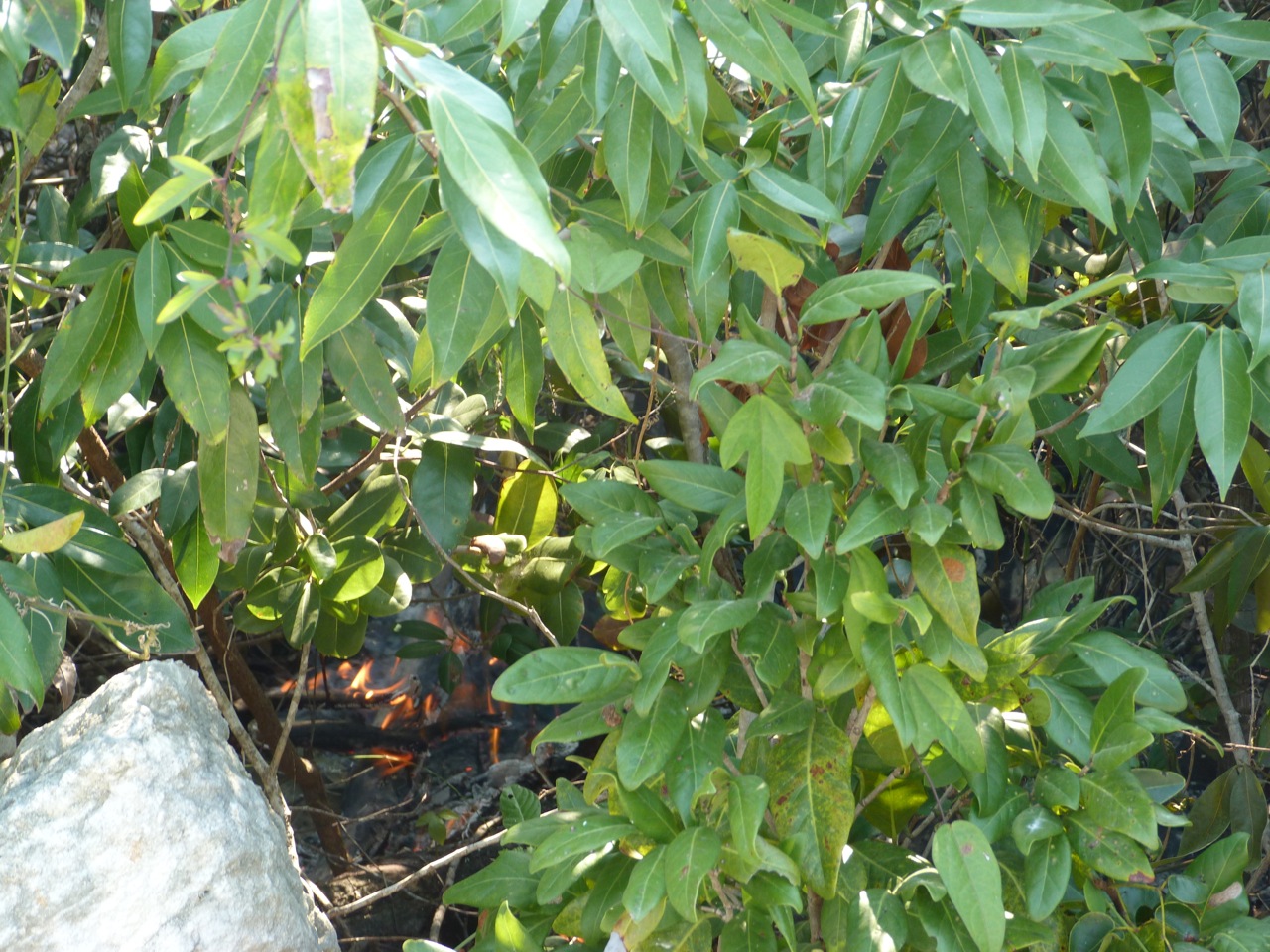
An uncomfortably short distance along the guest drive, it is clear that the coppice has burnt quite easily, though not devastatingly. In fact there are still flames to be seen…Forest Fires Abaco 19Forest Fires Abaco 18

Later, out on the Marls, a plume of smoke is visible, with several more in either directionForest Fires, Abaco 4

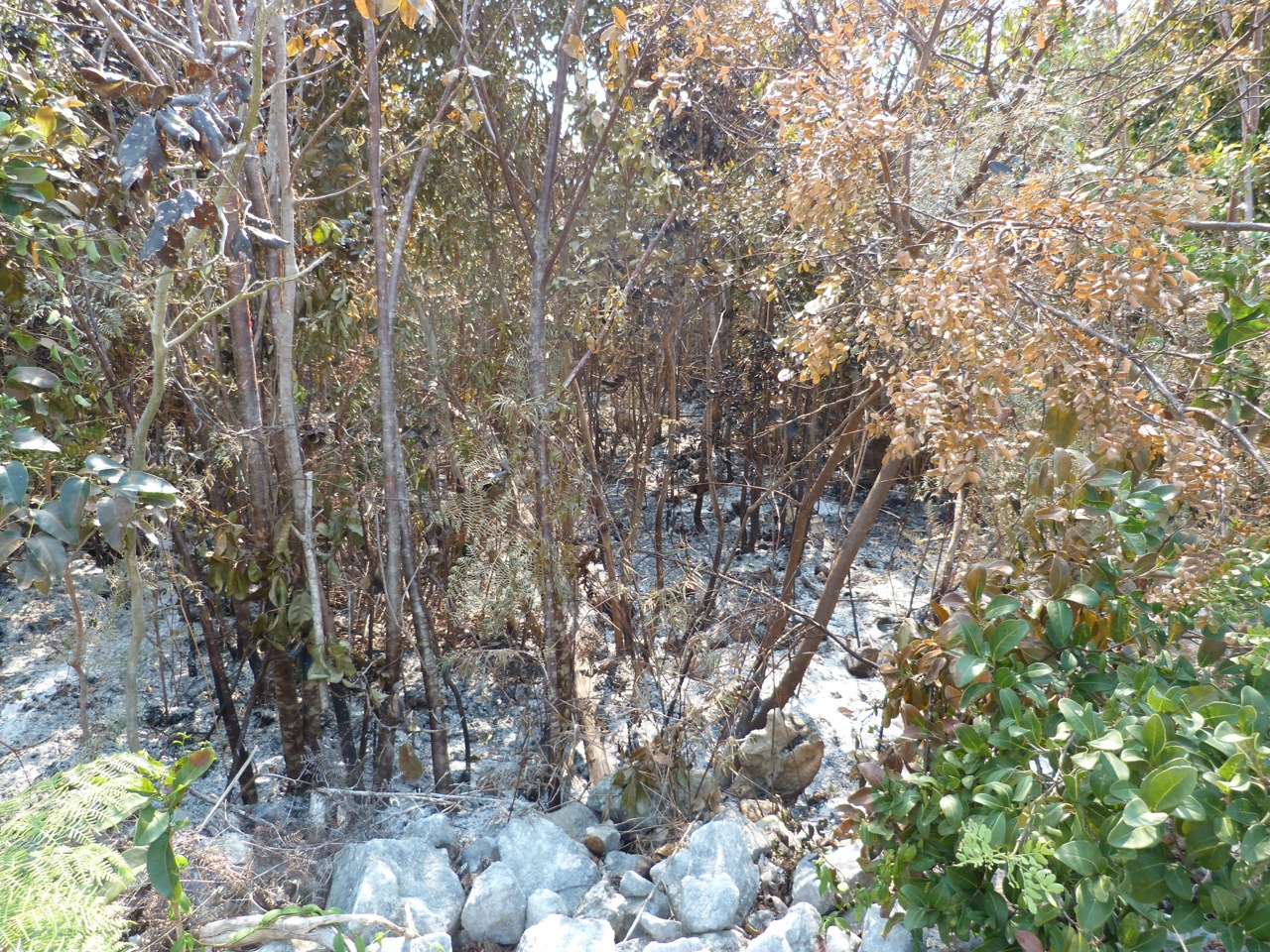
Despite the widespread damage caused by the fires, the capacity for regeneration is amazing. New growth is visible very quickly, and within the year the burnt-out areas are mostly back to normal. I’ll end on that optimistic note, and with another dramatic sunset above the haze of smoke over the tree canopy.Forest Fires, Abaco 8

Unknown's avatar

CRAB RUN – THE MOVIE (LOCATION: DELPHI CLUB BEACH, ABACO)


Crab, Delphi Club Beach, Abaco

CRAB RUN – THE MOVIE (LOCATION: DELPHI CLUB BEACH, ABACO)

‘ROLLING HARBOUR MOVIES’ PROUDLY PRESENTS

(Music: Chet Atkins ‘Yakkety Axe’, aka The Benny Hill Show Theme)

Unknown's avatar

FAREWELL 2012… WELL HELLO, 2013, HERE’S LOOKING AT YOU, KID!


DCB GBG Cover Logo dolphin

FAREWELL 2012… WELL HELLO, 2013, HERE’S LOOKING AT YOU, KID!

It’s sunset time for 2012, with all its ups, downs and vaguely sideways sways. Conveniently, by way of illustration, here is a not-untypical sunset taken from the balcony of the Delphi Club as the sun sinks down towards the horizon of coppice and pine forest. A moment of metaphorical magic… (& no Ph*t*sh*p)Sunset Delphi

However (Mayan calendar permitting), there is always a new day a few hours away. And with it, an extended (indeed, horribly overstretched) metaphor for the New Year. This photo was taken from our balcony on the other side of the building at around 6.30 a.m. The seagull on the right was not an intentional inclusion, though I may as well that pretend that it was… And yes, the sea on the east side of Abaco really does tilt slightly downhill to the south; the effect is caused by submarine reef vortices as the ocean floor deepens. Oh. Maybe not. It’s photographer error – I forgot to straighten the image.Sunrise DelphiDuring 2013 you will find much the same going on at Rolling Harbour as before. There’s some housework to be done on the blog, I notice. There will be the usual 10 or so posts a month on much the same themes – birds, fish, marine mammals, plants, shells, conservation and so forth, with photos to match. Maybe some more ill-conceived attempts at humour. The occasional ground-breaking scoop. 100,000 hits is now well within my sights (from being a distant dream)… so please don’t desert now!

For those with iPhones or iPads may I re-recommend the new app “Click242 Nature” (available FREE on iTunes), which is a Bahamas-based portal to all the types of thing this blog deals with, and the organisations that deal with them. For details click HERE (I shyly add that this blog features in the section ‘Science Blogs’).

So, Happy New Year, Good Luck in 2013, and see you around, I hope…

Unknown's avatar

BEACHCOMBING: AN INVASION OF BEADS AT ROLLING HARBOUR


DCB GBG Cover Logo dolphin

BEACHCOMBING: A BEAD INVASION AT ROLLING HARBOUR

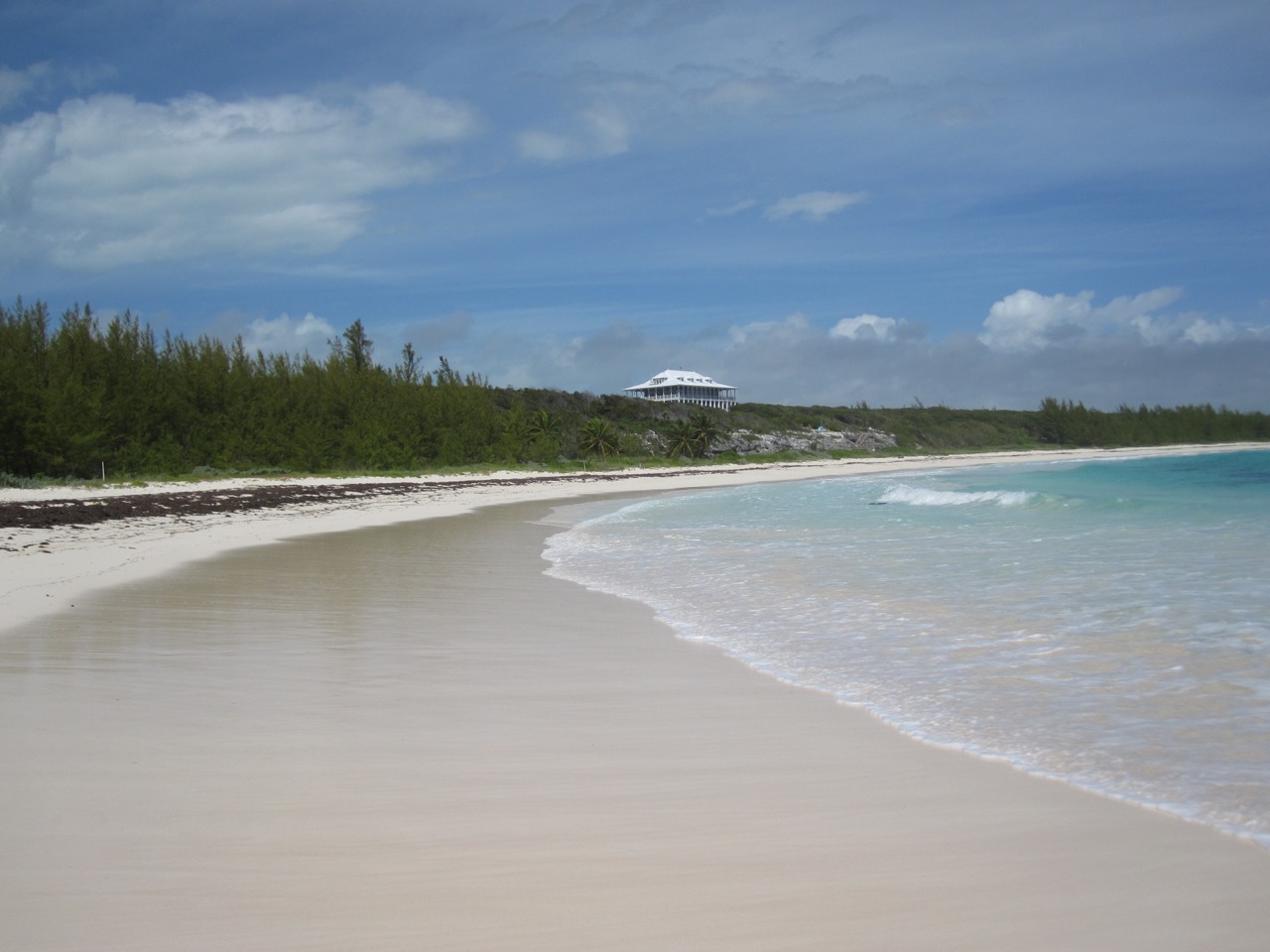
The Delphi Club beach at Rolling Harbour is an undeniably beautiful 3/4 mile curve of white-sand bay, shelving gently into pale blue water. Many interesting things get washed up on the shore, besides shells, sea glass, and vast quantities of seaweed (with a fair amount of junk) that must be regularly cleared. It’s a good place for desultory beachcombing, and some of the finds have featured in earlier posts, with the help of KASIA

Delphi Club, Rolling Harbour, Abaco

Of course that is not in the least unusual in these parts, though Delphi can claim the unique distinction of a 12 foot booster rocket fairing from the Mars ‘Curiosity’ launch, washed up early in 2012 (see short posts on the developing story at ONE & TWO & THREE)

Sandy's Mystery Object

There are large glass and wooden floats. Things that might be car parts. Wooden pallets. Not, as yet, any of the yellow plastic ducks so often written about (see book review of MOBY DUCK). Now, we have an invasion of coloured beads. 2012 has been a prime year for bead beachcombing, a specialist field. At times, guests have had a field day (if you can have one of those on a beach?) collecting these small beads. One large flagon has already been filled and, as Peter Mantle observes, “our cup runneth over”.

An important Christmas task – and not a difficult one, I envisage – will be to empty another suitably large vessel. Drinking is likely to be involved. Meanwhile, an explanation for this beach bead influx over many months would be good to find. A container of children’s toys sadly washed overboard? Evidence of some arcane fishing method? An explosion in a necklace factory? Beads deemed unsuitable for rosaries? Rejects from the World Marbles Convention? Has anyone else experienced finding these multicoloured beads on their local beaches? I know that a few beachcombers follow this blog (thanks!) from other parts of the world. Any beads? All contributions by way of the COMMENT link, or an email to rolling harbour.delphi[at]gmail.com, welcome.

Some of the beads collected during the year – another container needed urgently
Beachcombing Beads

Unknown's avatar

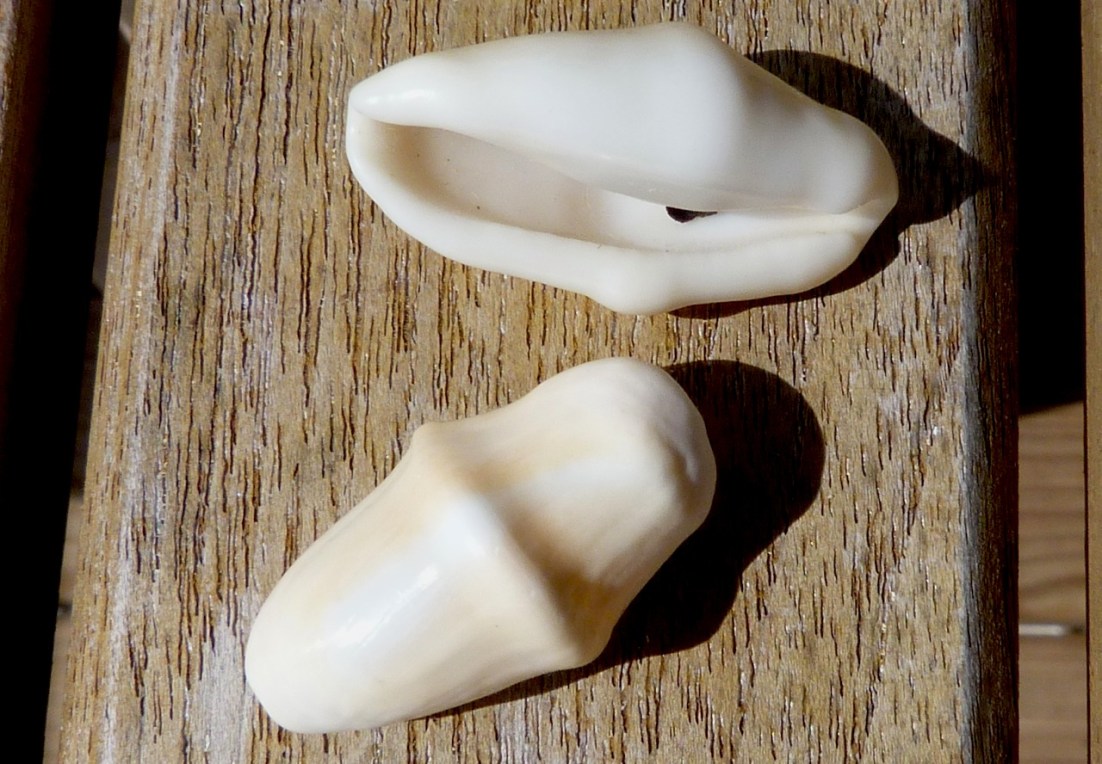
KING HELMET SHELLS (Cassis tuberosa) MORE DELPHI CLUB SHELLS


KING HELMET SHELLS (Cassis tuberosa) FROM THE DELPHI COLLECTION

It’s time to look at another shell from Delphi. The club has glass jars displaying small shells in the Great Room. Larger shells like the ones below are displayed on shelves. The King Helmet is the largest of the helmet shells of the family Cassidae. They are found in the Western Atlantic from North Carolina through the Caribbean and the gulf of Mexico down to Brazil. They tend to bury themselves during the day, becoming active and feeding at night. In humans this behaviour is found mainly in students and in those involved in the music business and similar louche occupations.

King Helmet Shell 1 King Helmet Shell 2

King Helmets prey mainly on sea urchins and other echinoderms, using their foot to grip their meal. The dining arrangements are somewhat protracted. The snail makes a hole in the urchin through the combined action of a glandular secretion which is rich in sulphuric acid, while using its RADULA to rasp and dig through the shell to get at the trapped occupant, which it gradually consumes… That’s enough about that.
King Helmet Shell 3
King Helmet Shell 4

Unknown's avatar

BLACK-FACED GRASSQUITS ON ABACO – PRETTY FAMILIAR BIRDS


BLACK-FACED GRASSQUITS ON ABACO – PRETTY FAMILIAR BIRDS

Both pretty and familiar, in fact. Birds of the pine-woods, coppice, garden… and feeder. They are an unremarkable species, they don’t have off-beat avian habits, they aren’t scarce… but if they weren’t there, you’d probably miss them. Males and females have notably different colouring, with the female having a bright eye-ring. They tend to hang out in pairs or small groups. These little birds are abundant in the north Bahamas, but like many species found there, they are only very rarely found in south Florida.

MALE BFG IN THE COPPICE NEAR THE DELPHI CLUB

A MALE BFG DEEP IN THE PINE FOREST NEAR THE SAWMILL SINK BLUE HOLE

No two books describe their call in the same way. I’m not venturing into the vexed field of avian phonetics of the ‘chip chip chip kerrrrr–ching’ variety… so here’s a very clear recording of the song of Tiaris bicolor from the excellent Xeno-Canto (Paul Driver)

FEMALE BFGs EAGERLY SNACKING ON THE FEEDERS AT THE DELPHI CLUBTHESE TWO PHOTOS SHOW THE DISTINCTIVE EYE RING OF THE FEMALE BFG

Unknown's avatar

FLAMINGO TONGUE SNAILS & SHELLS: COLOURFUL GASTROPODS OF THE CARIBBEAN


FLAMINGO TONGUE SNAILS & SHELLS: COLOURFUL GASTROPODS OF THE CARIBBEAN

AN UPDATED VERSION OF THIS POST WITH NEW IMAGES AND MATERIAL (AS WELL AS A RETREAD OF SOME OF THIS POST) WAS POSTED IN NOVEMBER 2014 AND CAN BE FOUND HERE

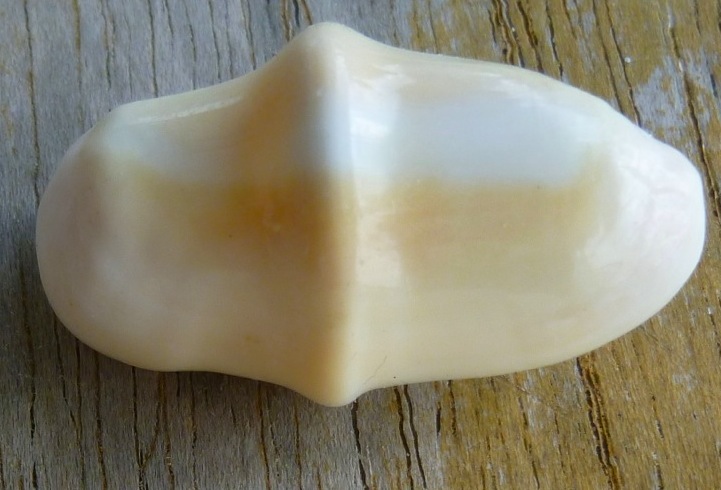
The FLAMINGO TONGUE SNAIL Cyphoma gibbosum is a small sea snail (marine gastropod mollusc), related to cowries. The live animal is brightly coloured and strikingly patterned, but that colour is only in the ‘live’ parts – the shell itself is pale and characterised by  a thick ridge round the middle. These snails live in the tropical waters of the Caribbean and wider western Atlantic. Whether alive or dead, they are easy to identify.

This snail on the left (thanks, Wiki) is snacking on a coral stem, leaving a feeding track behind it. The structural shell ridge is clearly visible beneath the distinctively marked live tissue.

The flamingo tongue feeds by browsing on soft corals. Adult females attach eggs to coral which they have recently fed upon. About 10 days later, the larvae hatch. They eventually settle onto other gorgonian corals such as Sea Fans. Juveniles tend to live on the underside of coral branches, while adults are far more visible and mobile. Where the snail leaves a feeding scar, the corals can regrow the polyps, and therefore predation by C. gibbosum is generally not harmful to the coral.

The principal purpose of the mantle of  tissue over the shell is as the creature’s breathing apparatus.  The tissue absorbs oxygen and releases carbon dioxide. As I have seen it described (unkindly?) “it’s basically their lungs, stretched out over their rather boring-looking shell”. 

This species was once common but is becoming rarer. One significant threat comes from snorkelers and divers who mistakenly think that the colour is the shell of the animal, collect up a whole bunch, and in due course are left with… (see photos below)

These photos are of flamingo tongue shells from the Delphi Club Collection. Until I read the ‘boring-looking shell’ comment, I thought everyone thought they were rather lovely… you decide!

Finally, a couple of videos. The first is rather charmingly titled ‘FLAMINGO TONGUES DOING…. SOMETHING’. Any (printable but amusing) suggestions via the Comment box are welcome (Hi Trish!). The second punchily summarises this post. Maybe that’s all that was needed!

Unknown's avatar

HURRICANE SANDY AFTERMATH: ABACO PICTURES, NEWS FROM DELPHI CLUB, BAHAMAS & MANATEE UPDATE


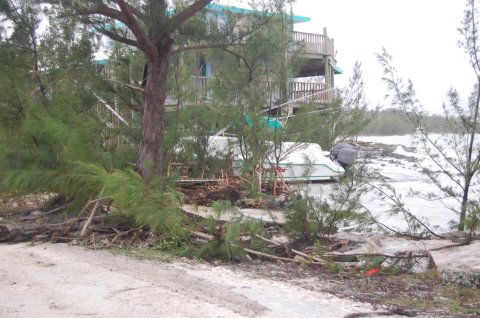
DAMAGE FROM HURRICANE SANDY AT THE DELPHI CLUB, ABACO

The storm has passed from the Bahamas and the clear-up is underway – but further north communities are bracing themselves for the onslaught. The news today  from contacts, from Facebook and the web generally, is of thankfully little lasting damage, with power and comms restored in many places. There’s been plenty of flooding – eg Sandy Point – and tree / plant mayhem.

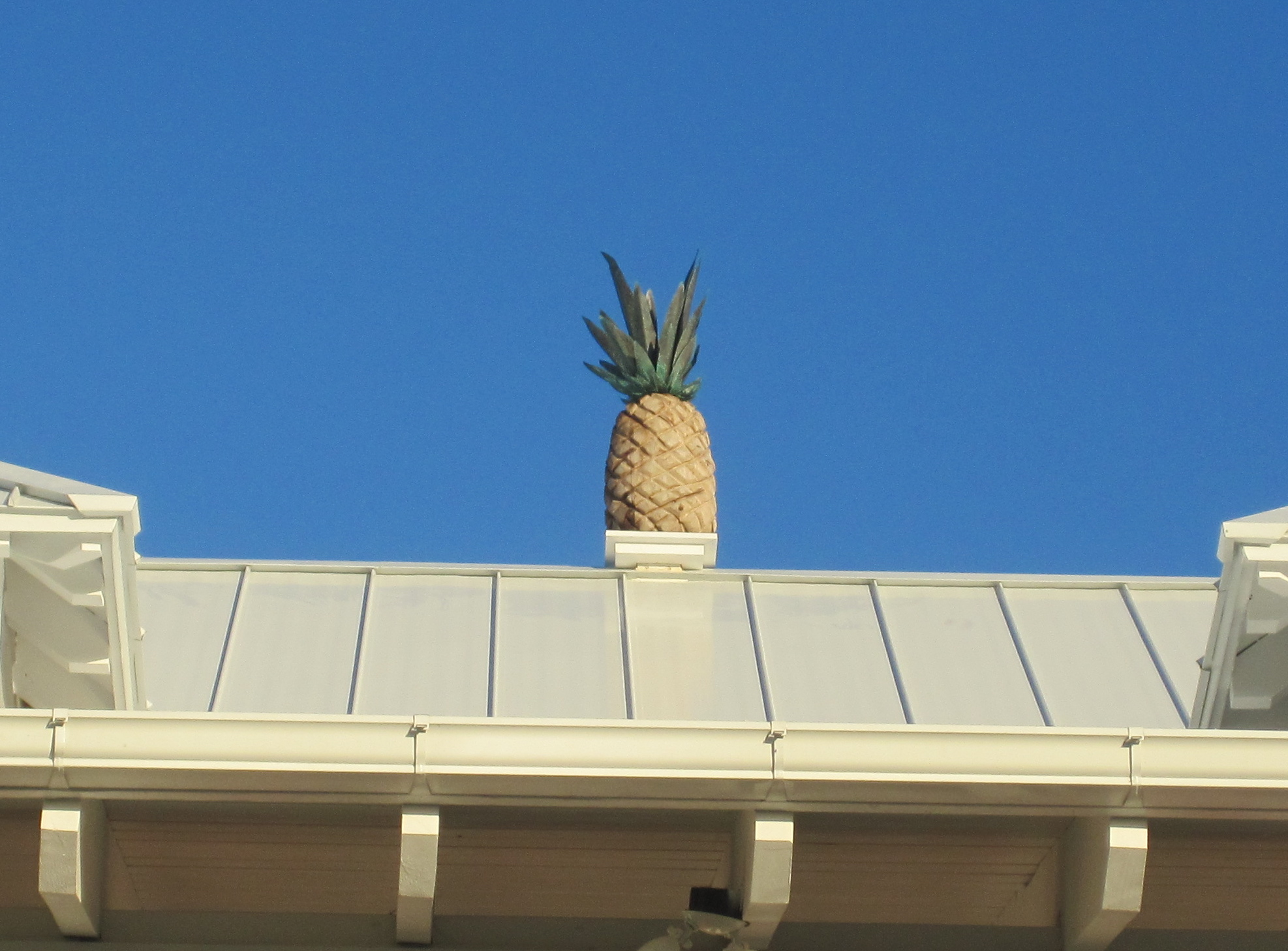
The Delphi Club was again, as with Irene last year, almost directly beneath the eye of the storm. Then, a couple of leaves were lost from the pineapple crown (above), a few fittings were smashed, and the gardens were unceremoniously rearranged. Peter Mantle, Delphi Club supremo, has posted his record of the last few days at the club – the approach of Sandy, the storm, and the aftermath. I am posting extracts below, to be read (chronologically) from the bottom entry to the top of the page. For those who haven’t experienced a storm of this violence, Peter’s account gives a vivid picture of the before, the during and the after…

Apologies for having posted about Sandy in detail with maps etc, and at the crucial time tailing off  while I was away and had only an iPhone™  and a sporadic connection…

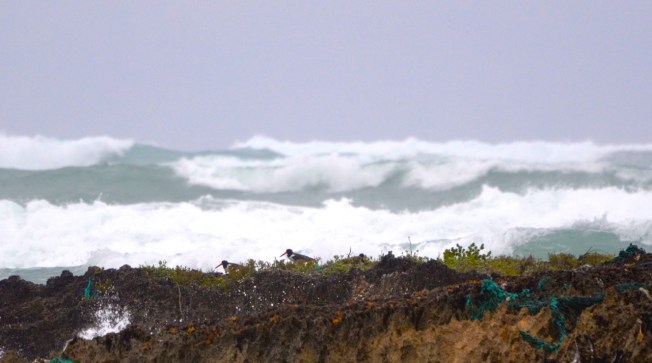
STOP PRESS: AMERICAN OYSTERCATCHERS – BRAVE OR FOOLISH? 29 October

Peter Mantle has just sent me a ‘Sandy’ photo from the Delphi Club beach, showing a group of oystercatchers on the rocks at one end of Rolling Harbour. Storm detritus already festoons the rocks. Have the birds seen what’s about to hit them? Are they waterproof? 
STOP PRESS: BMMRO MANATEE UPDATE 29 October

The BMMRO has posted news from Sandy Point and for those who have been asking after manatee Georgie’s welfare, an update:

“Hi Everyone, everything is ok here at the research center! We are working on getting information on Georgie’s whereabouts and we will happily update everyone as soon as we hear anything. There’s still a bit of damage here in Abaco that is preventing travel but hopefully we will be able to get up to Georgie soon”.

STOP PRESS: SOME ABACO IMAGES 28 October

(credits to Timothy Roberts & Cindy James Pinder and their facebook posts)

SANDY TAKES BONEFISH; DARK HUMOUR ON DARK DAYS

OCTOBER 27th Among the many bits of minor damage caused by Hurricane Sandy was the destruction of our bonefish weather vane. This had been hand-made by the other Sandy, our general manager, and stood atop his lodgings. Snapped off, the copper creation was found nearby, bruised and dented, rather like ourselves.

Yet again, we have been very fortunate – staff and guests are all well. And most of the damage caused by the 100mph winds was minor. The storm had its moments, but the worst bits were at nighttime when many people were huddled safe in bed. Lots of bumps and bangs provided a spooky soundtrack, but it was more of a B movie than a full-blown Hollywood epic. That said, I hate to think what a really big Category 3, 4 or 5 hurricane would be like.

We still have no mains electricity; thank God for the gennie. We have no phones or mobile connection, so we have little idea of what is going on elsewhere on the island. We hope for the best but fear not all will have escaped as lightly as we did. Some of the staff from Crossing Rocks are stranded here by flooding. But the wireless internet is back so all will soon be revealed.

Yet again, the gardens have been shredded. The banana trees have been snapped off mid-fruiting. My favorite banyan tree has broken in half again, having nearly bounced back from Irene. The big Bismark ferns are banjaxed, the bougainvillea is blasted leafless and the pool is a mess. But who cares. We are fine. Dunkirk spirit? Well, very black humour and spirits of a different kind have seen us through.

“I survived Sandy” T-shirts are now in preparation, but that’s a staff joke about their hyperactive and heroic boss…..

A BAD HAIR DAY…

OCTOBER 25th It is getting distinctly breezy here, with winds as bad as any Irish gale. But Hurricane Sandy, now upgraded to a Category 2 hurricane, is still some 18 hours away and currently features average winds of 105mph with higher gusts. It may get even worse, they say. So no fishing today. More guests have made it in. Bahamasair even ran a plane out of Nassau at first light this morning.

While we still have power and phones, the lines are buzzing and we are glued to the internet. It seems odd to see that Sandy is the lead news story on the BBC. Non-technical guests have adjourned to the library (where “A Perfect Storm” and “Winnie the Poo and the Blustery Day” are current favourites). The air of gloom is more attributable to the fact that Arsenal lost at home last night than to any fears for personal safety.

We may go quiet for a while.

NOTHING VERY FEMININE ABOUT THIS SANDY

OCTOBER 24th, noon Tropical storms are now given boys’ and girls’ names alternately; in the old days they were all girls. The one that currently threatens us is Sandy, a name that is more commonly applied to females in this part of the world. But there is nothing too feminine about this storm; as the forecast deteriorates and Sandy intensifies into a hurricane over Jamaica, we are becoming more and more concerned by its macho capabilities.

The National Hurricane Centre now predicts that Sandy will pass very close to Abaco – the predicted path having shifted overnight. As it now looks, the eye may pass just 25 miles from us, which would basically be a direct hit since damaging winds spread far out from the centre. We are going to have to keep a very close on on this little girl over the next 48 hours.

ALL EYES ON SANDY

OCTOBER 23rd No sooner has the Club reopened for the new season than a tropical storm appears on the horizon. And, in a twist of divine humour, it’s been christened after our general manager, Sandy.

Sandy (the mostly human version) is tracking Sandy (the swirling tempest) on an hourly basis. As it now stands, we are in the “cone” of the likely track of the storm over coming days. Currently south of Jamaica, TS Sandy is turning north and could yet morph into a hurricane. It’s expected to be over or near us by Friday night, with “average” winds of nearly 60mph and gusts of up to 90mph.

Hatches will therefore be battened, outdoor furniture put back indoors and supplies of grog reinforced. The lucky fishers in residence will have to take a breather, while the new chef, John, will receive a special form of baptism.

Tropical storms this late in the year are a great rarity. Somehow that is not very reassuring just now. But the forecast for the following week is rather better… 

Click image to visit the Delphi Club
Unknown's avatar

HAIRY WOODPECKERS IN THE ABACO COPPICE


HAIRY WOODPECKERS IN THE ABACO COPPICE

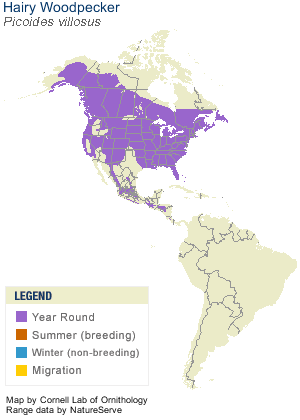
The hairy woodpecker (Picoides villosus) inhabits forest, woodland or coppice over a wide area of the North American continent and the islands to the east, including the Bahamas. They are mostly permanent residents, though there is a degree of migration within their territorial area.

They are a very familiar sight on Abaco, along with their larger cousins the West Indian Woodpecker. These birds forage on trees for insects, turning over bark or excavating deeper. They also feed on fruits, berries and nuts. It’s not unusual for them  to attack the woodwork on houses in a search for bugs…

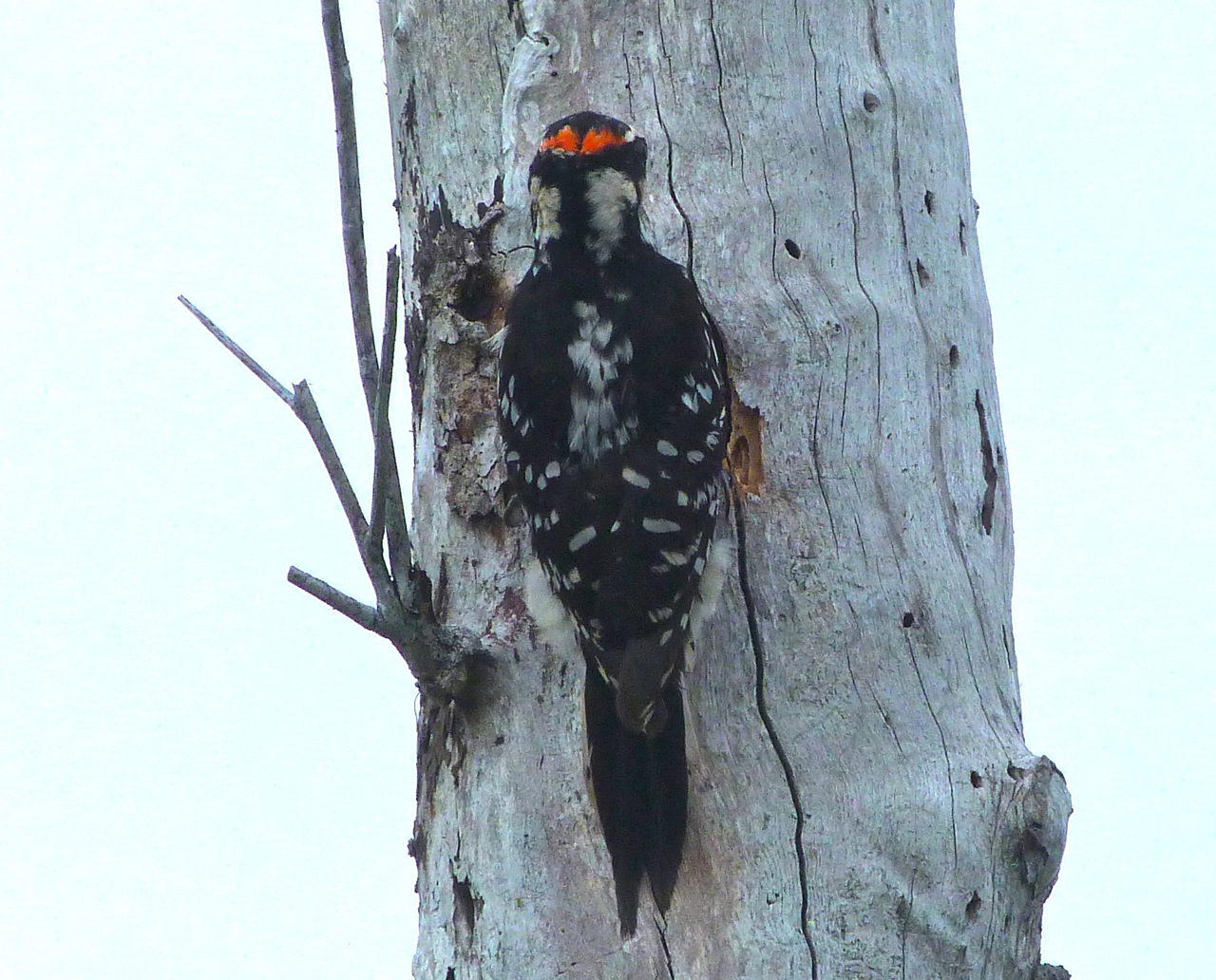
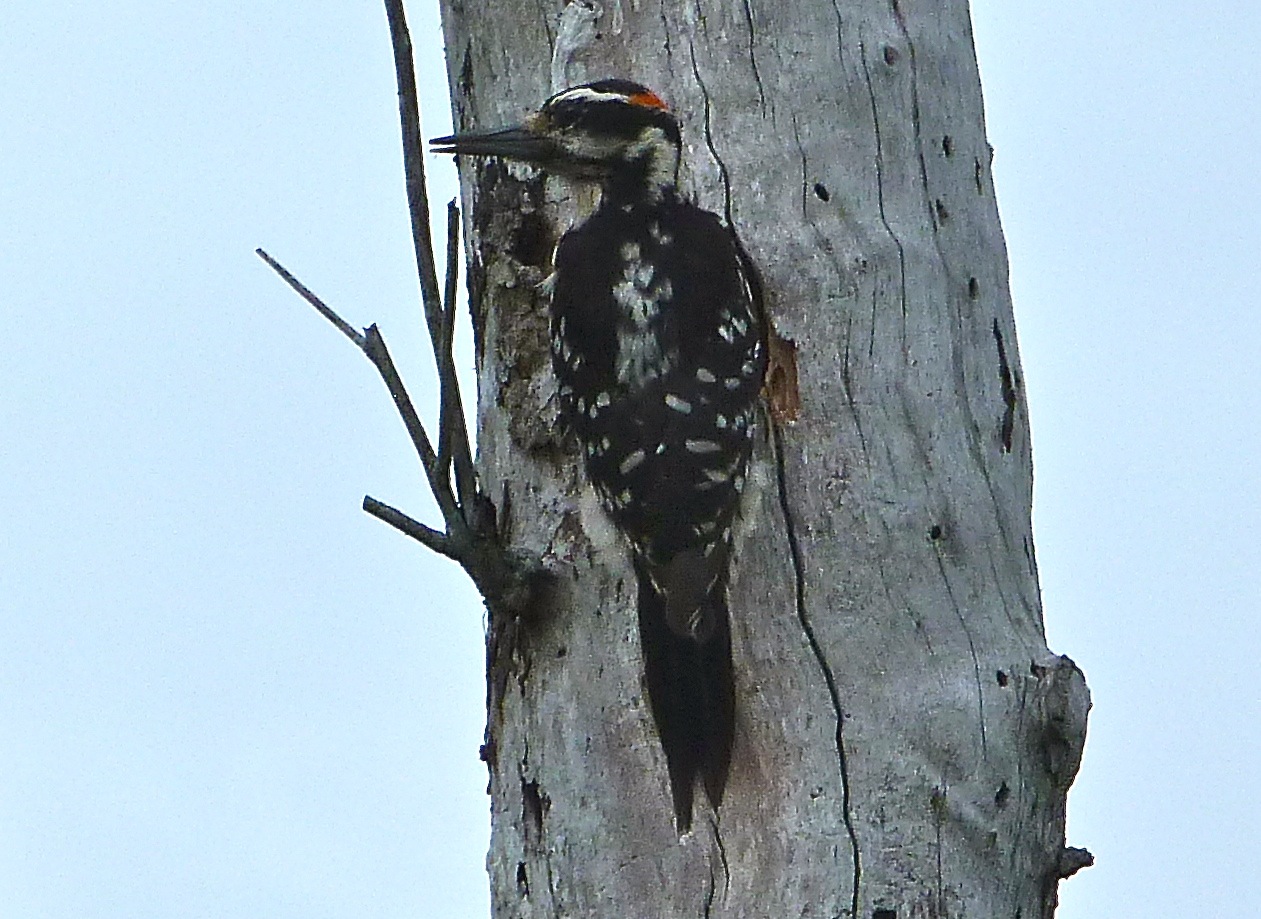
This male hairy woodpecker is prospecting a promising hole near the Delphi Club guest driveThe marks at the bottom of the hole suggest this may be a nesting hole – past, present or futureIt’s certainly deemed worth further investigation… if only he had someone to share it with

He may be in luck! This female hairy woodpecker was in the coppice not far away… A female HW is smaller than the male and lacks the male’s distinctive red head marking. They nest in a tree hole like the one above, where the female usually produces four white eggs. 

Unknown's avatar

CHILLIN’ ON ABACO VS CHILLY IN ENGLAND


CHILLIN’ ON ABACO VS CHILLY IN ENGLAND

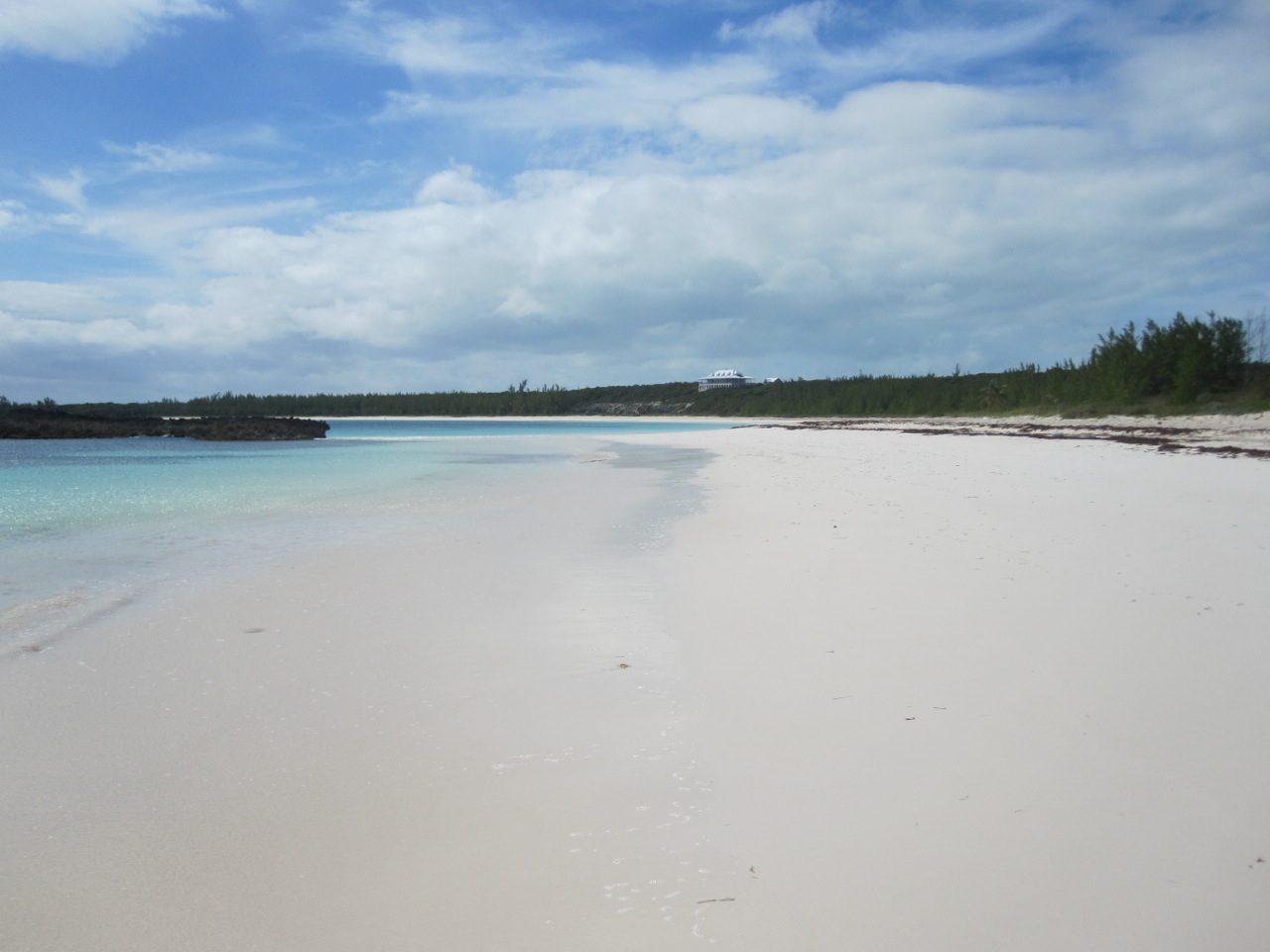
“Life’s a beach”, it is said. On Abaco, a new season is starting at the Delphi Club, and the first guests will be sorting out their fishing tackle, reaching for the sun cream and abandoning pre-Delphi diet boot-camp. If they have been eating Marmite™ sandwiches for a week before their arrival, they won’t need  to waste energy slapping no-see-ums. The day-dreaming becomes reality, perhaps involving his ‘n’ hers rods near the rocks at one end of the beach
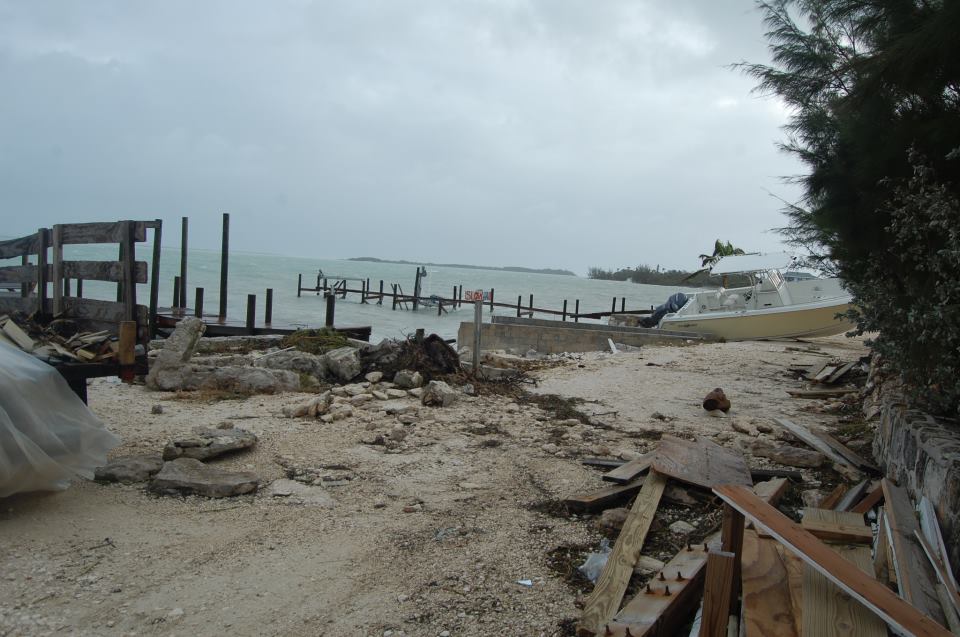
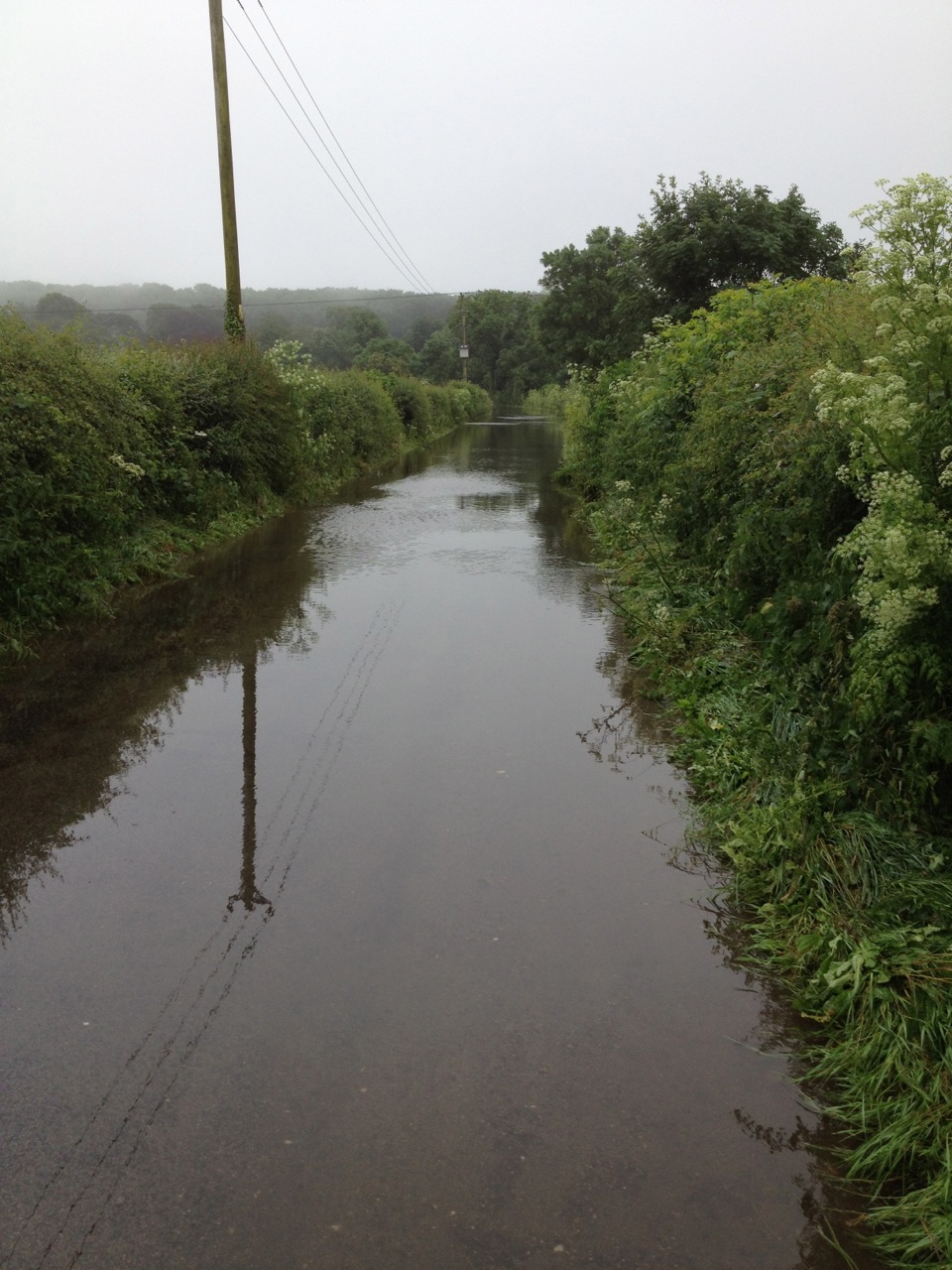
That’s all well and good. But in more northern latitudes the slide from summer via autumn to winter is accelerating. The trout fishing season has just ended, with my final efforts washed away by heavy rain and flooding – this photo is the road leading to one of the beats, a sure meteorological sign that a visit to the local pub would be sensible… 

A pint of beer in front of a log fire soon puts things into perspective, and the mind can wander to warmer climates, the bonefishing prospects for the season, and the calm beauty of Rolling Harbour…

Two days ago, the UK temperature dropped sharply, the skies began to clear and the sun came back. Ah! Autumn – season of tum-ti-tum and mellow wotsit… 

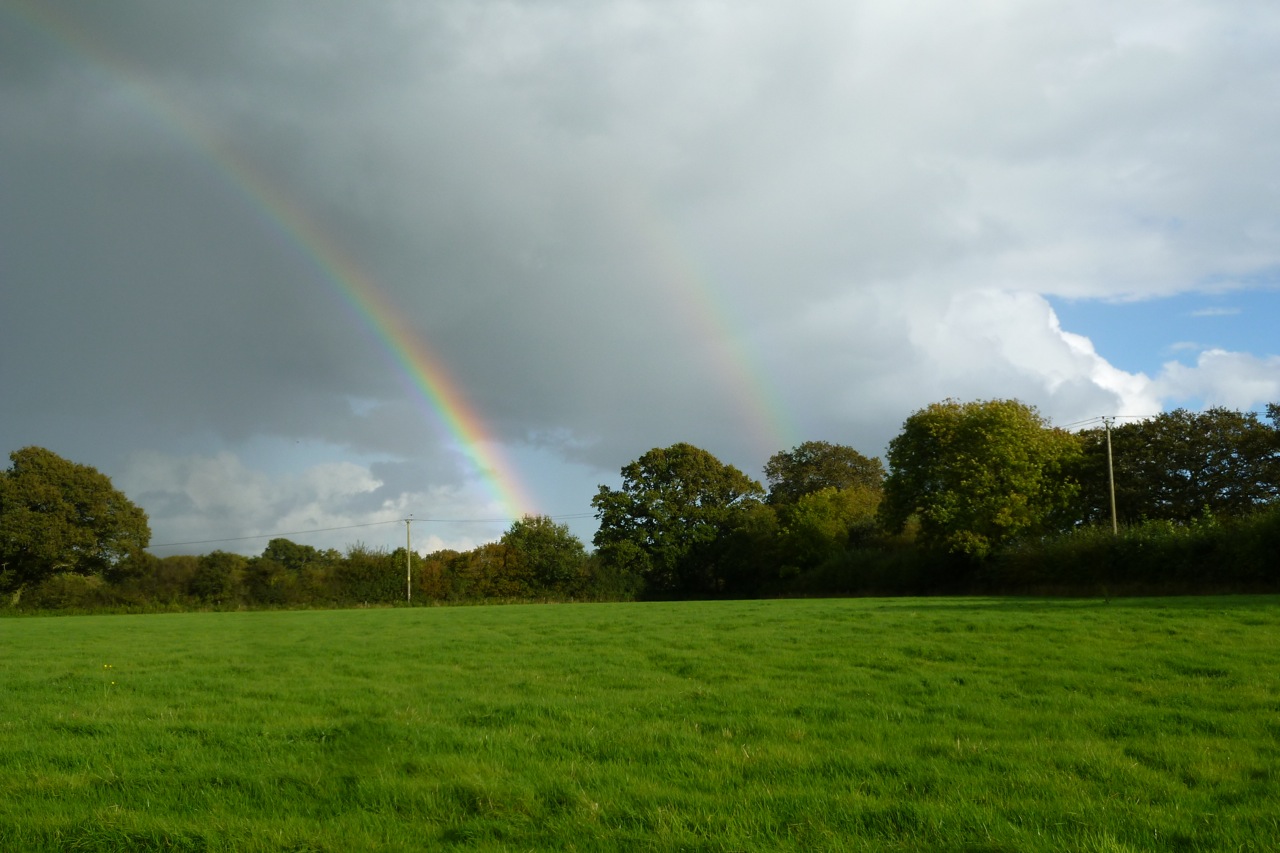
At one moment there was a wonderful double rainbow across the fields

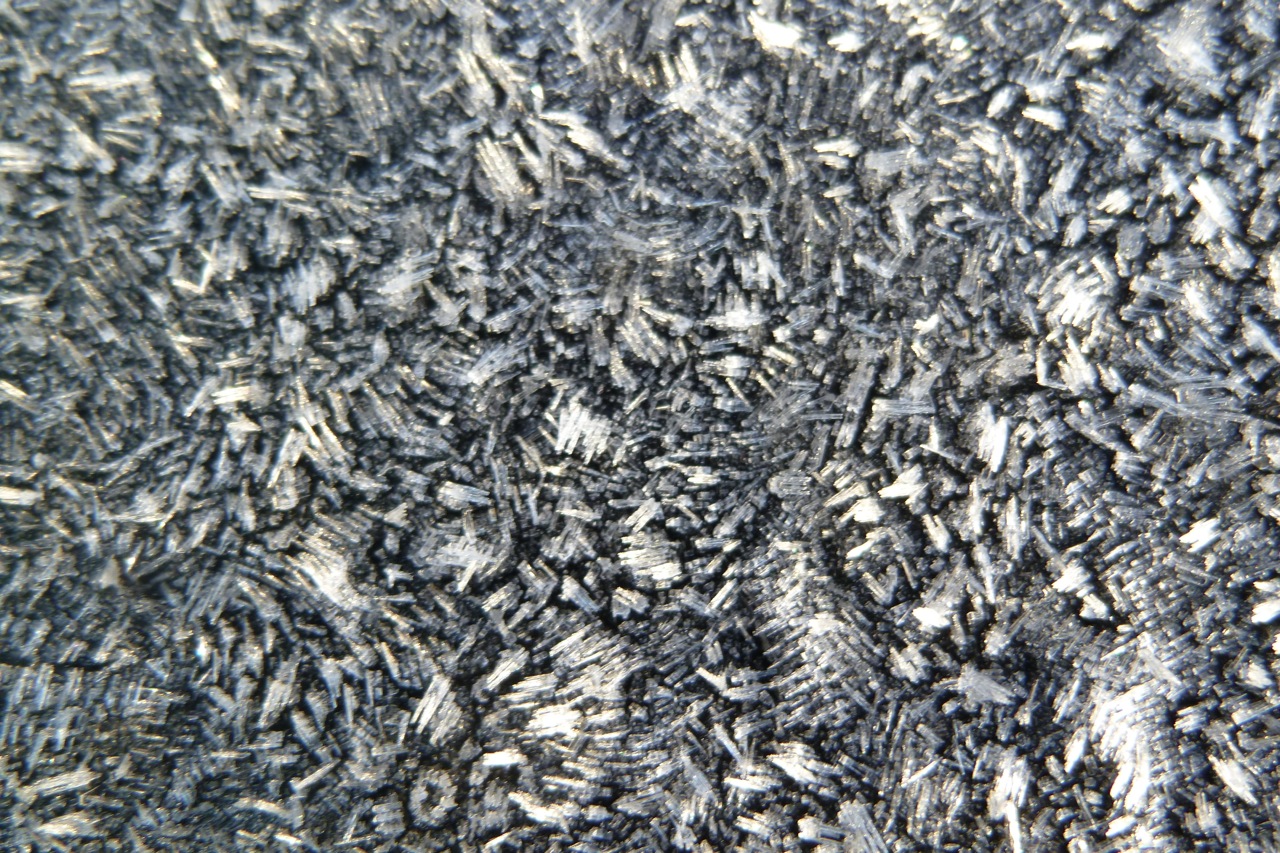
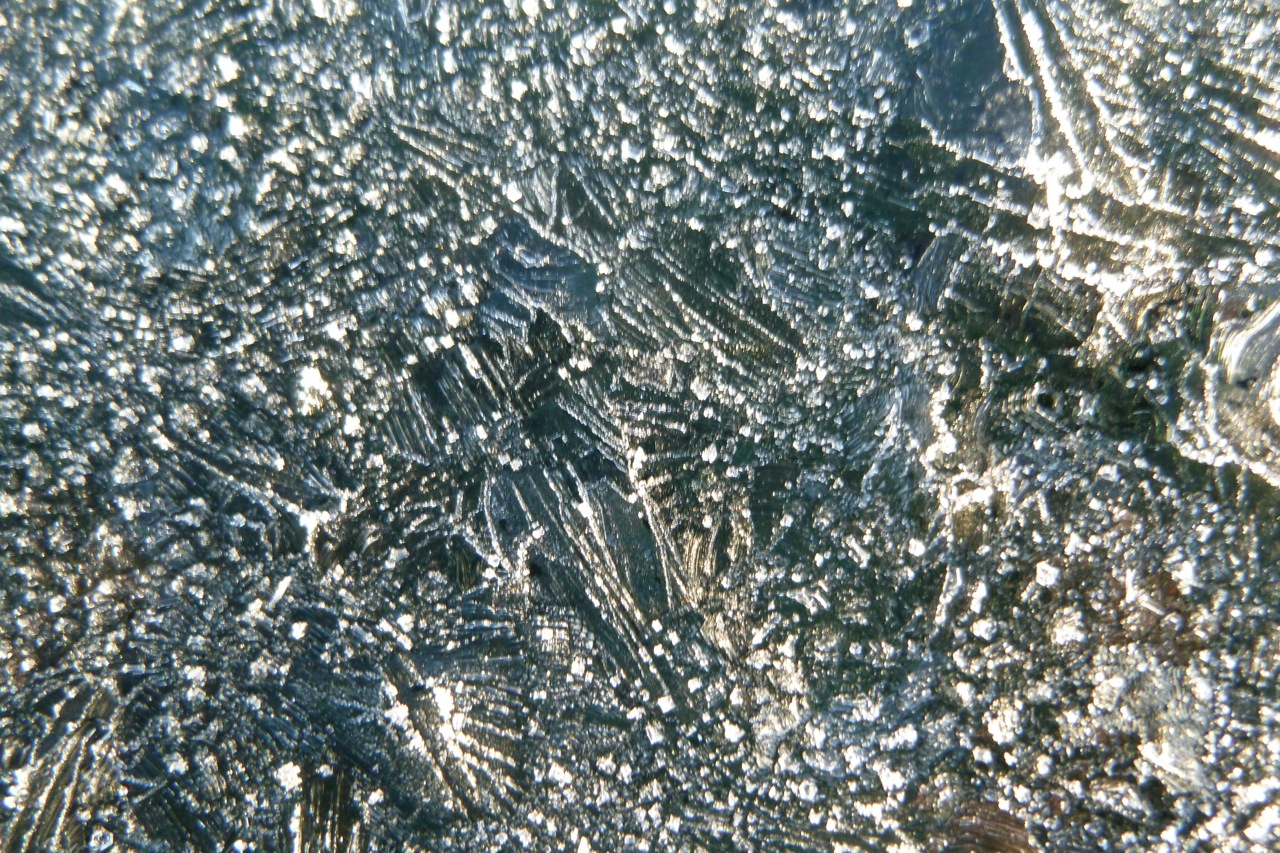
This was followed by a bright starry night & the thermometer dropping abruptly to -6˚F. And then this – the first frost of the year…

  These photos are of patterns on the car roof & windscreen, before the sun thawed the ice


Brrrrrrrrr. Best not to end on a freezing note. Back to Rolling Harbour for some warmth

Unknown's avatar

BEDRAGGLED ABACO PARROTS, & AN AMERICAN KESTREL TAKES OFF…


BEDRAGGLED ABACO PARROTS, & AN AMERICAN KESTREL TAKES OFF…

It’s a fine June day. Perfect for a morning out with Ricky Johnson, the omniscient leader of  ABACO NATURE TOURS. Want parrots? He’ll take you to them. Want a Bahama Woodstar ‘pished’ from its deep cover into the open? He’s your man. And as for wrassling land crabs – see LANDCRAB and LANDCRAB: THE SEQUEL We set off from the Delphi Club in sunshine and hope…

Sure enough, we found the parrots at Bahama Palm Shores, so often a good bet. This was (Ricky said) a non-breeding flock, the breeders all being otherwise detained in the National Park with their nests and eggs. Out of nowhere, a sudden short, sharp downpour arrived, and 5 minutes later, everything – everyone – was soaked. And so, of course, were the parrots. At first I discounted the resulting photos for use. These lovely, rare birds are made to be seen in their bright cheerful livery of green, red and blue. These wet ones looked… black. I usually try to avoid doing much (or any) ‘work’ on my photos, but for these I tried changing the contrast a bit and realised that they looked rather appealing with their dark, damp feathers and unkempt appearance. So I’ve decided to use a few images. Here they are, then: some sodden parrots!

While we were damply watching the parrots, Ricky spotted an American Kestrel near the top of a tree. Heads swivelled. It was some way away, but we could see it looking a bit dejected, huddled in the palm fronds. Then suddenly, just as I pressed the camera button, the kestrel stretched itself upright, raised its wings, and launched itself into the sky. The two photos below are frankly of marginal quality (on a high “blur setting”, as you might say) but the second one has caught the rain-drenched kestrel’s take-off about as well as a point ‘n’ shoot at that distance could… 

Unknown's avatar

ABACO BONEFISHING Pt 1: A NON-ANGLER’S SKIFF-VIEW – WHAT, HOW, WHERE & WHY?


             BE NATURAL (YET SHARP) ON THE FLATS – PART 1  

WHAT, HOW, WHERE AND WHY?

[I published the original of this post a year ago. I discovered that it had been put badly out of kilter by recent blog format change, so I have amended and to an extent updated it, with larger photos (NB the video was my first feeble foray).  So yes, it’s a retread, which I rarely do; but I wasn’t tooled up with Facebook & Twitter then, and thankfully a couple more people now read this thing, so it possibly deserves a fresh outing. No? Well I’m doing it, regardless]

It’s 7.15 and breakfast time at Delphi. At 8.00 the trucks, skiffs, guides and fishers will set off to the fishing grounds for the day, leaving you with an empty beach, shells, warm sea, the pool, the hammock and your book. For the moment, the talk is of the excellent ‘Full Abaco’ breakfast, the weather, ‘Delphi daddies’ & ‘crazy charlies’ and someone’s mislaid reel. Sandy enters to announce that there’s a place free on your partner’s skiff… and offers it to you. So what should you, a non-angler, expect of a day out on the flats?

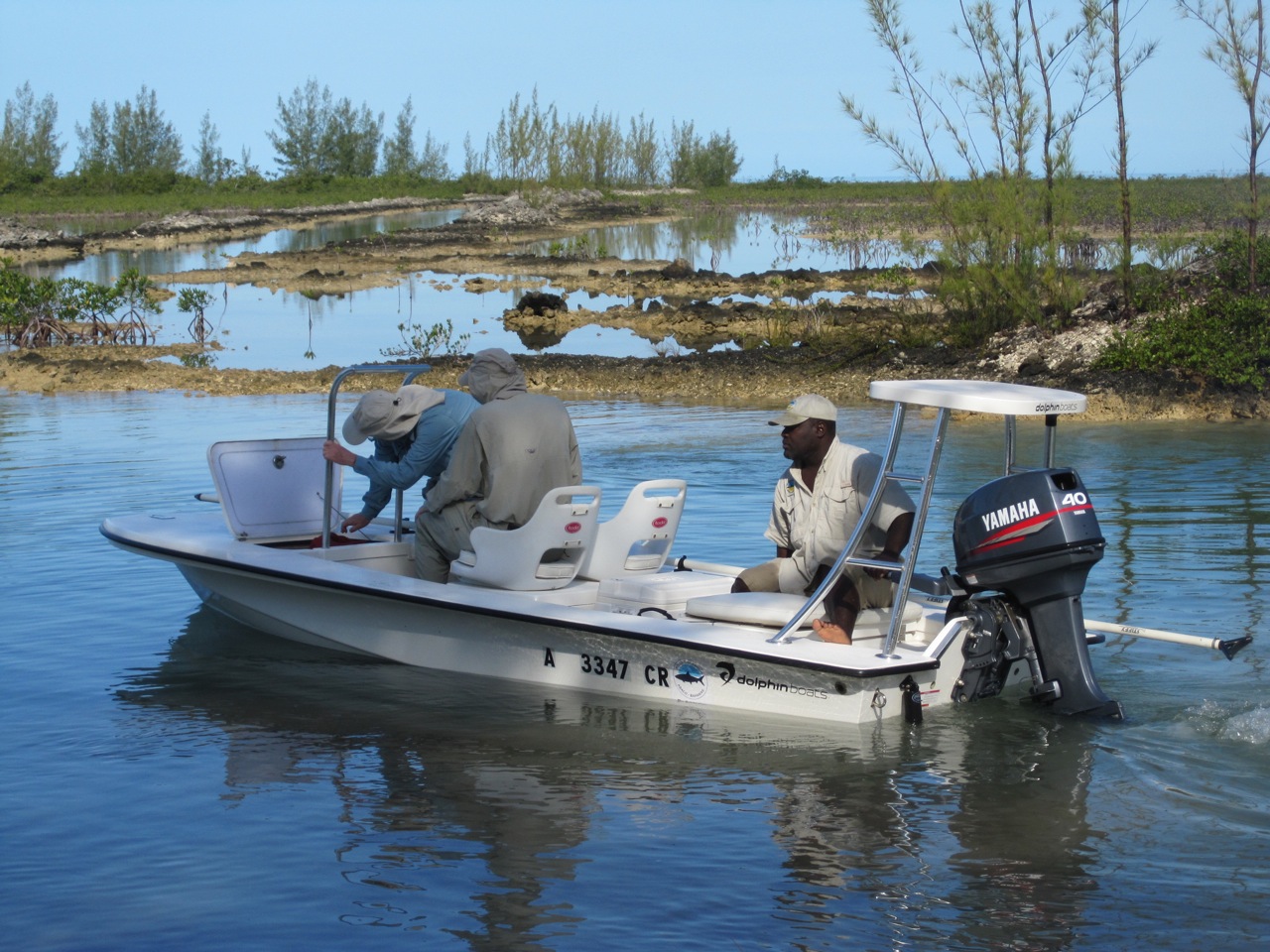
THE SKIFFS These are top-of-the range boats, capable of considerable speed getting out to the fishing grounds. The ride can be bumpy, splashy and even chilly in the early morning, so bring a fleece and a waterproof top. Camera? Essential. Here is a Delphi skiff on a sand bar in Cherokee Sound, parked for lunch and some quality conch and sand-dollar hunting. So for a start, the day isn’t ALL about fishing…

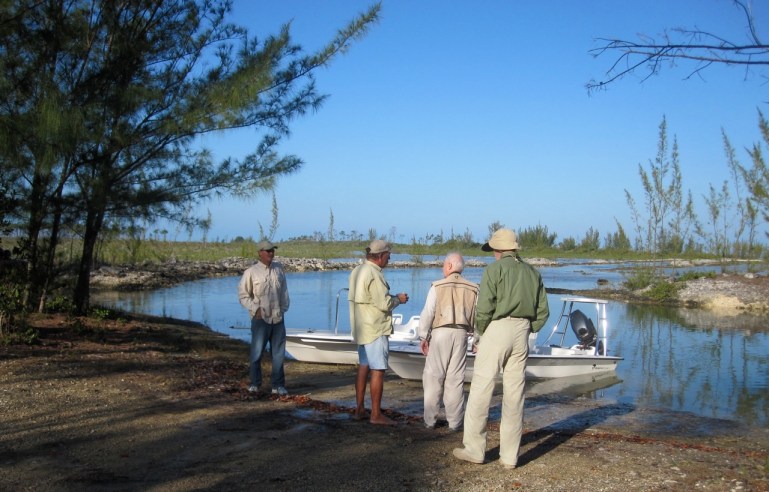
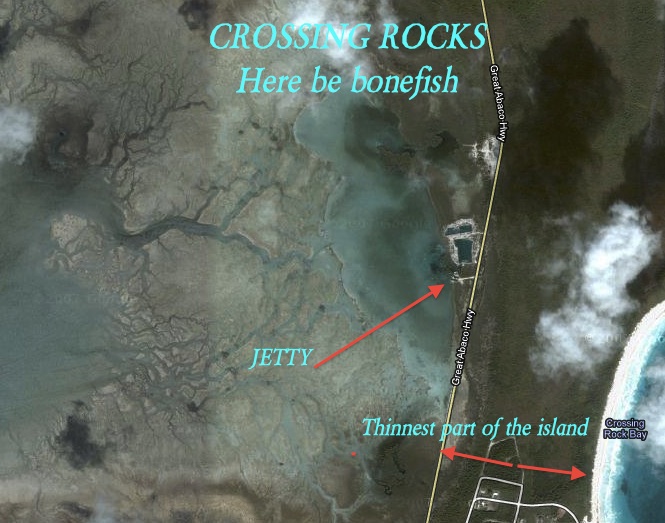
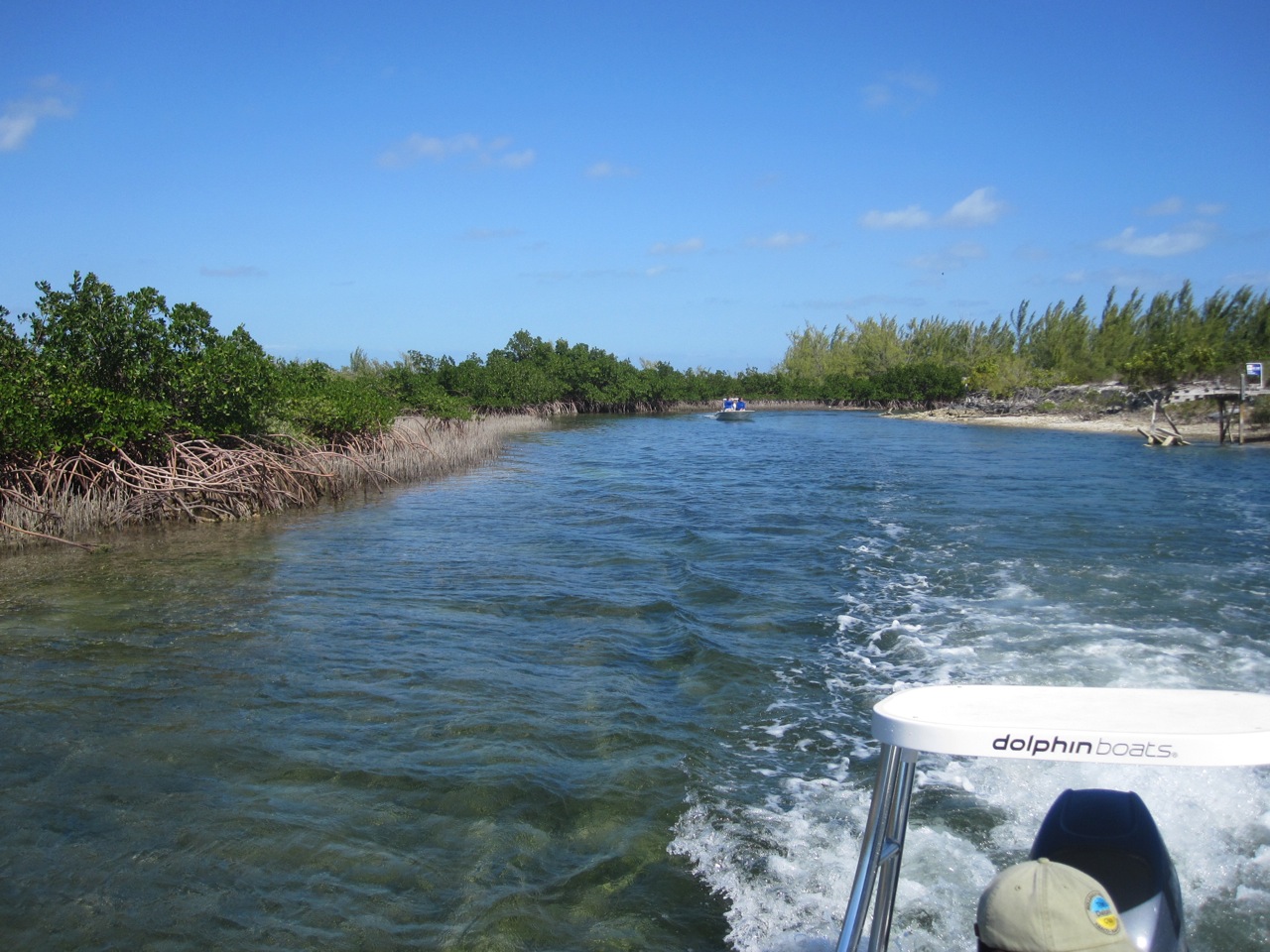
THE FISHING GROUNDS You will leave from one of three launch points and speed across the water to the bonefishing areas. The main one is “Nettie’s”, with access via a narrow man-made channel to the Marls…

… more than two hundred square miles of mangrove swamp, islets, channels and fish. The journey to Nettie’s may seem quite a long way as you bump along through the pine forest on a network of logging tracks. Watch out for small birds flickering all around as you pass.


———————————

Launching a skiff at Nettie’s

Plans are hatchedGood to go…

Stowing gear in the front (forrard?) locker. There’s also one behind the seats for the lunch cool boxes. And the fuel…

The other two launch areas are Crossing Rocks (a short drive south of DCB) or Casuarina Point for Cherokee Sound (a slightly longer drive north of DCB)

The jetty at Crossing Rocks – skiffs being prepared

The launch point at Casuarina. A channel leads out to Cherokee Sound

Two boats in the channel – the authentic James Bond chase experience

WHAT’S THE POINT? Bonefishing! You’ve heard all the Club talk, you’ve seen your partner fussing over all those bits and pieces in your room: now see it in action. Once you get out to a fishing area, the guide cuts the engine… and suddenly you are being poled very slowly and almost noiselessly across the shallow flats

The guide stands on the platform at the back of the skiff, using the advantage of height to scan the shallow water; the fisher stands at the front looking tensely for grey shadows underwater, waiting for the magic words…

 “…hey, bonefish, 10 o’clock, 4 of them moving right, 30 feet… see them?” 

And it’s ‘game on’. This isn’t the place for a discourse about casting technique and style – I have neither (Sandy, of me: “Muppet”) – but I promise that you will get completely caught up in the excitement when a fish takes the fly and takes off towards the horizon, stripping the line and backing from the reel… (I realise the image above may suggest… well he’s just fishing, OK?)

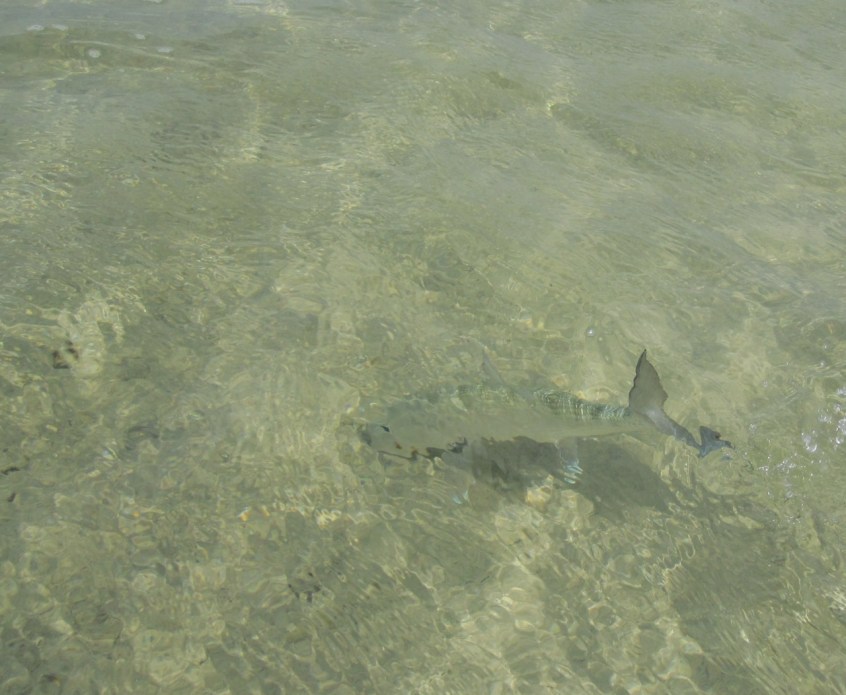
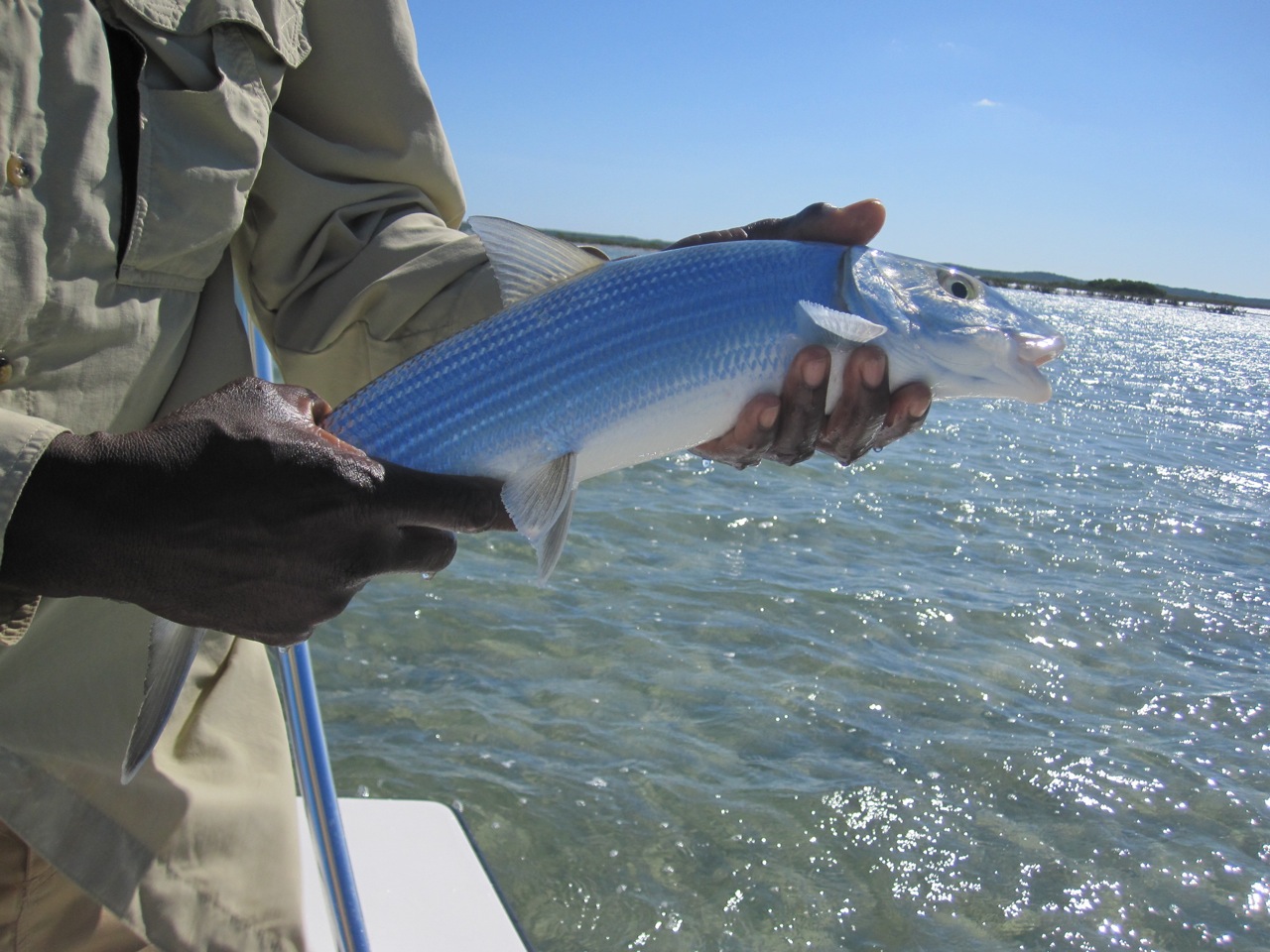
THE QUARRY – grey ghosts below water, bars of silver above. Caught on the ‘fly’ which are in fact shrimp or crab imitations, with barbless hooks to make the chance of losing a fish that much greater… This ensures that a boated fish can be returned to the water as easily and quickly as possible. It’s all ‘catch and release’, though some (me) find that mostly the fish very sensibly self-release long before they ever reach the boat…

Abaco bonefish off Crossing Rocks (just caught and released)Guide Ishi with Abaco bonefish caught on the MarlsGuide Robin Albury removes the barbless hook before returning the fishgood specimen‘Ishi’s Fishy’, as he would say

All images, and indeed fish, ©RH

There is even the possibility that at some stage you may unexpectedly be handed a rod (even if you have never held one before, or wanted to) with ‘fish on’… Here, Robin has hooked a 2.5 lb fish and handed the rod to Mrs RH (then engrossed in eating a cheese roll) who successfully played and brought in her first ever fish…

PART 2 will deal with what else goes on during the day: the scenery, birdlife, sharks, turtles, blue holes and so forth. For now, here is a short clip of the skiff ride out to the Marls, to give you an idea. NB this was a very calm day – things can get a little bumpier and wetter at times. The seats are padded, but not very… 

 [Ultra-cautious music credit to Joe Satriani who sued Coldplay for alleged tune ‘borrowing’ saying “I felt like a dagger went right through my heart. It hurt so much”. Case dismissed + unspecified settlement…  Way to go, Joe! Want to check? Cut ‘n’ paste this: http://www.youtube.com/watch?v=zjB024bZoB4&feature=fvwrel Then by way of counterbalance try John Lennon’s Imagine vs Coldplay’s ‘Fix you’ at (cut ‘n’ paste)  http://www.youtube.com/watch?v=DksjpsAe3vk&feature=endscreen&NR=1]                

CLICK LOGO for the Bonefish & Tarpon Trust


Unknown's avatar

ABACO SHELLS: 3 MORE FROM THE DELPHI CLUB COLLECTION


ABACO SHELLS: 3 MORE FROM THE DELPHI CLUB COLLECTION

I have recently featured some of the shells from the collection amassed at Delphi –  see SHELLS 1 and SHELLS 2. They are kept in vases or bowls for display and examination. They may not all come from the immediate vicinity, but they are all, for sure, from South Abaco. It’s time for some more.

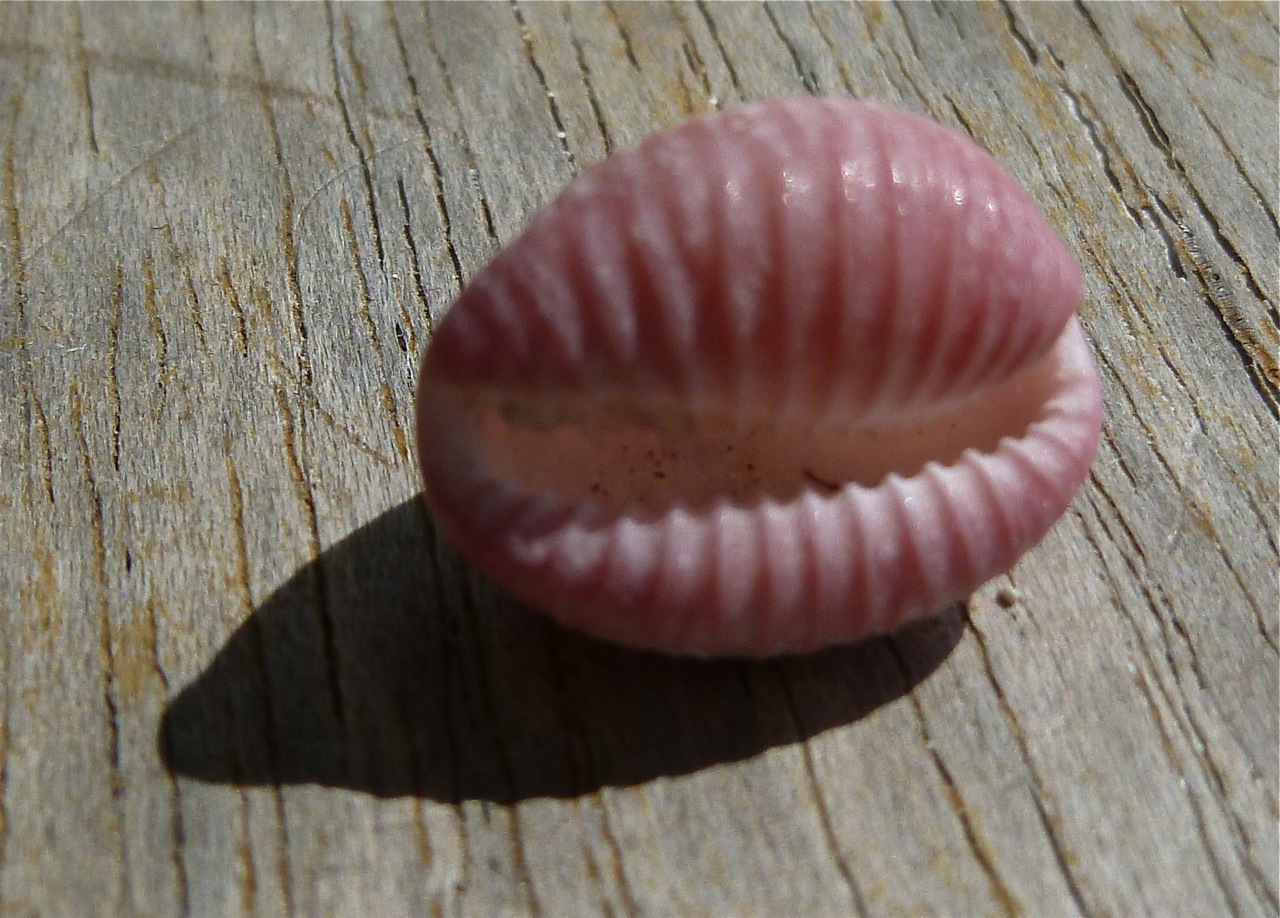
PINK TRIVIA SHELL


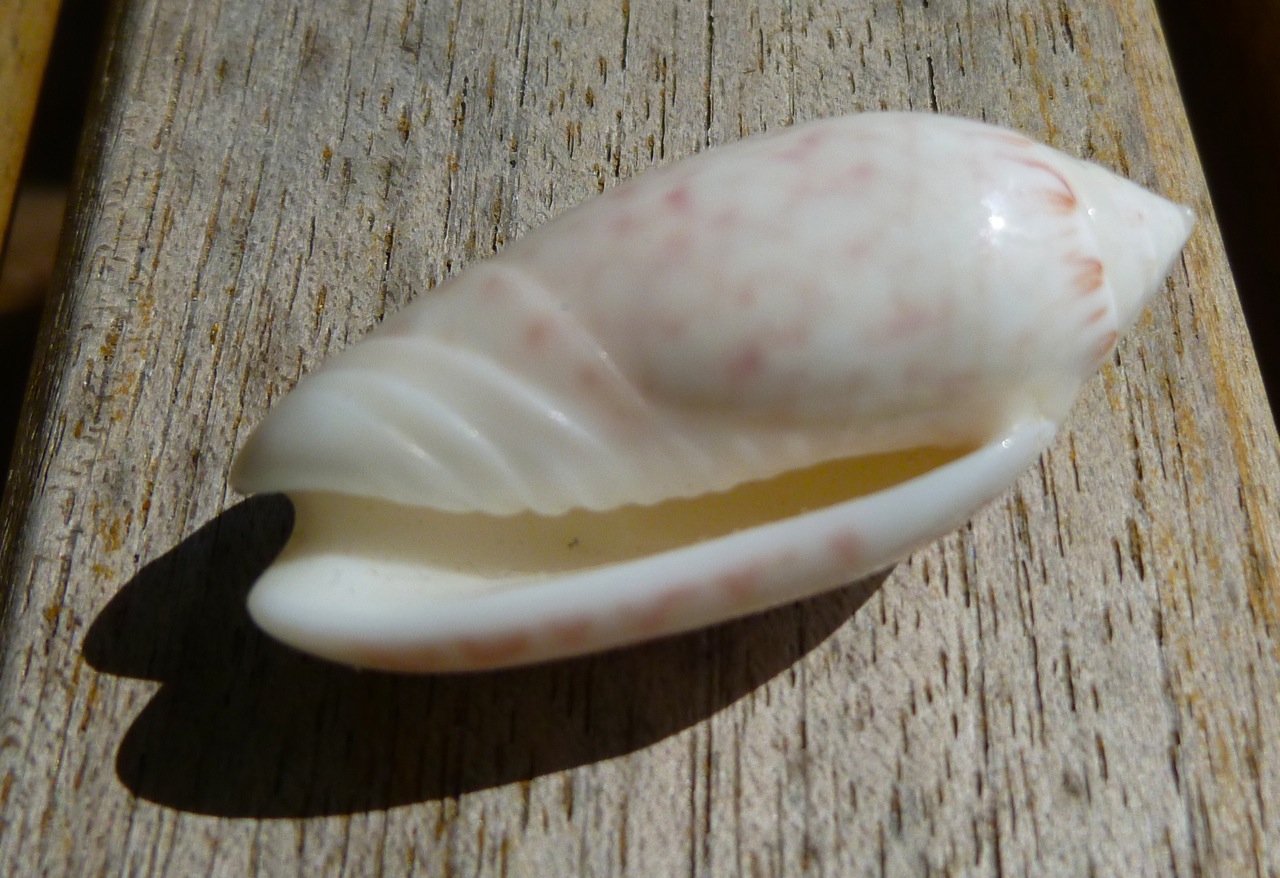
LETTERED OLIVE  SHELL


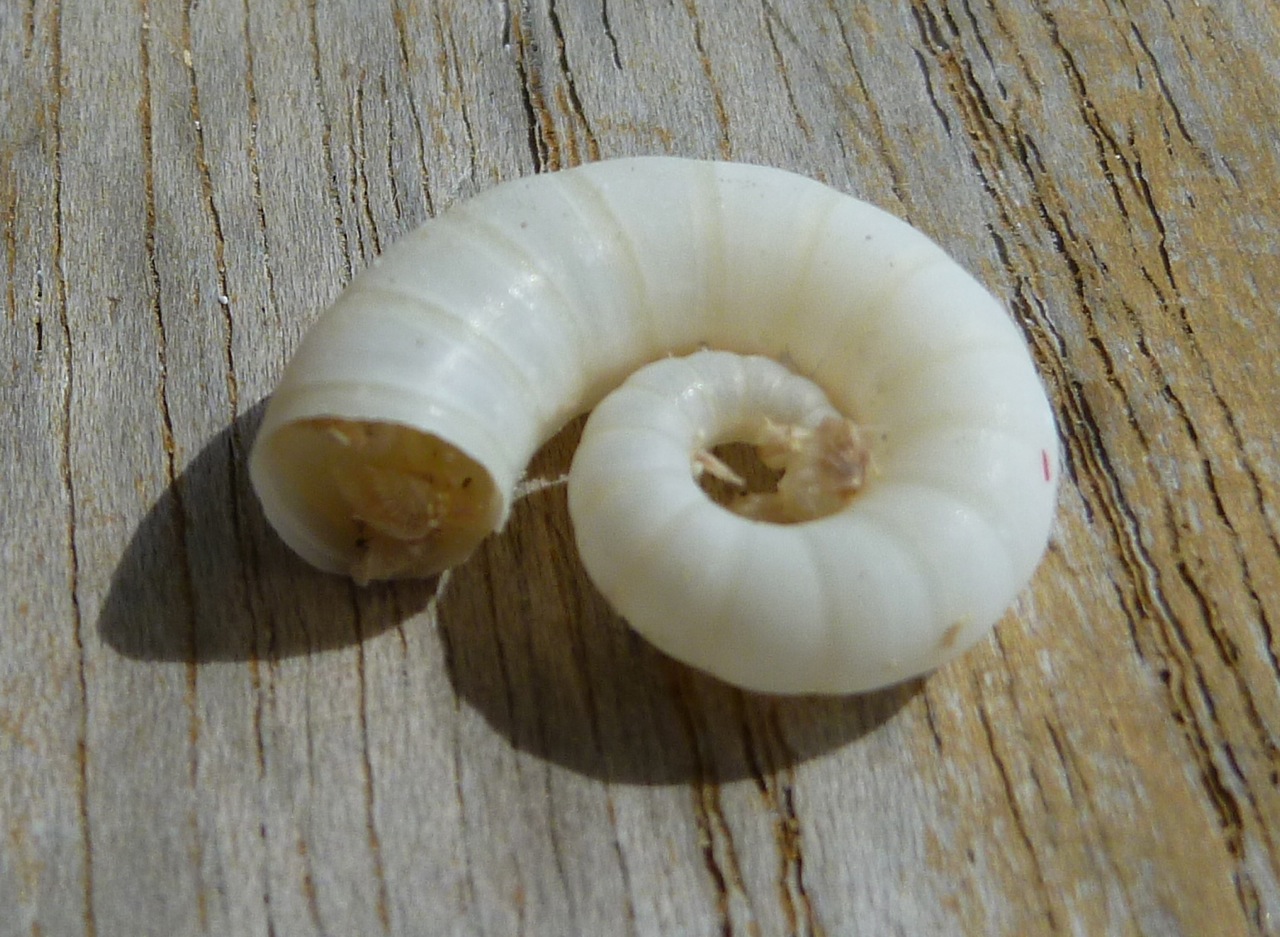
COMMON SPIRULA  

For further details about Spirula(e), please see the comment box where Capt Rick Guest gives a lot of fascinating info about them and related marine cast-offs. You’ll also find out which are the real prize ones to look out for…

  A vignette of RH examining shells on the balcony at Delphi 


Unknown's avatar

A PRAYING MANTIS – AT LAST, MY VERY OWN MANTODEA PHOTOS…


About a year ago, Sandy Walker encountered a praying mantis at the Delphi Club. For technical reasons his photo(s) of it didn’t work out. Undaunted (and because I’d never seen one outside an insectarium) I turned an essentially non-event into a short post SANDY’S PRAYING MANTIS, in the course of which I learnt a bit about these strange creatures. There isn’t a great deal of compelling information to pass on, to be honest. And I still don’t buy their supposed resemblance (for the sober observer) to Eleuthera.

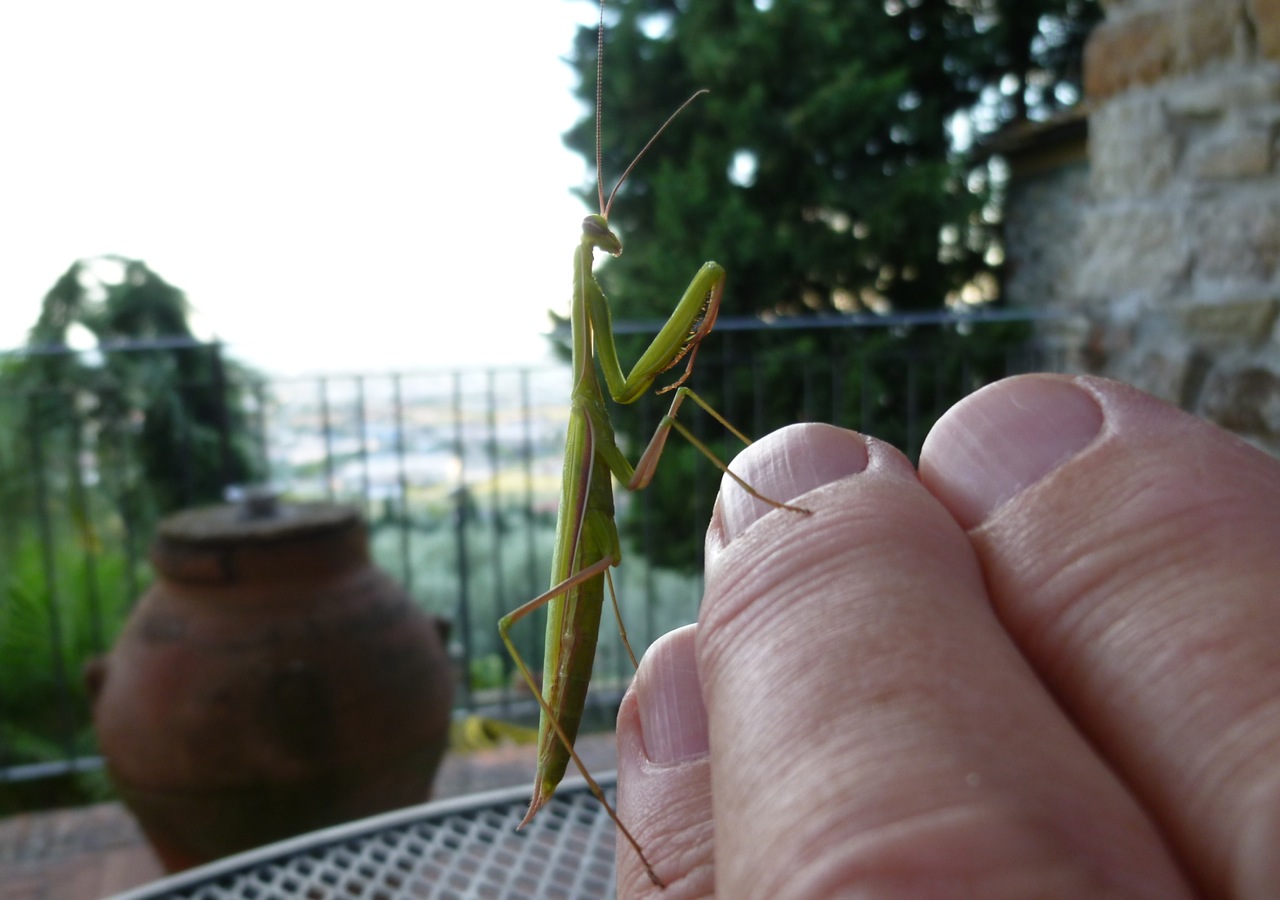
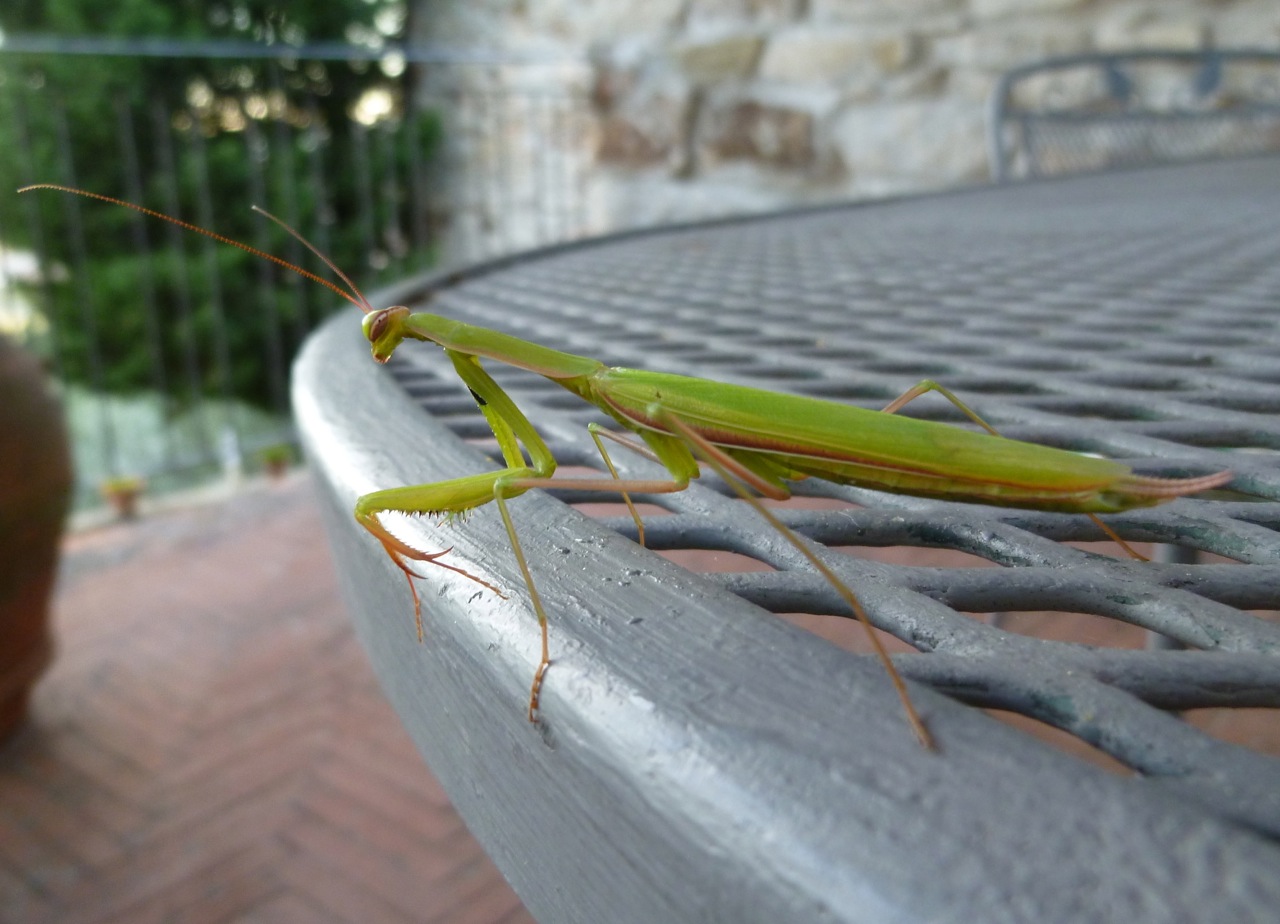
We saw no mantises this summer on Abaco, and I forgot about them completely until a week ago… And there, nonchalantly strolling across an outdoor table where we were staying for a few days in Italy, was the very creature. It obligingly posed for some prayerful snaps, then I put it gently on a balcony railing where it clung upside down and apparently content overnight. It was still there at breakfast, gone by lunchtime, and we never saw it again. But the images live on…*

Please note that the fingerprints in photo 1 are copyright…