Tag Archives: Delphi Club Abaco
WOODPECKER COUSINS FROM ABACO & ACROSS THE POND
WEST INDIAN AND GREAT SPOTTED – WOODPECKER COUSINS
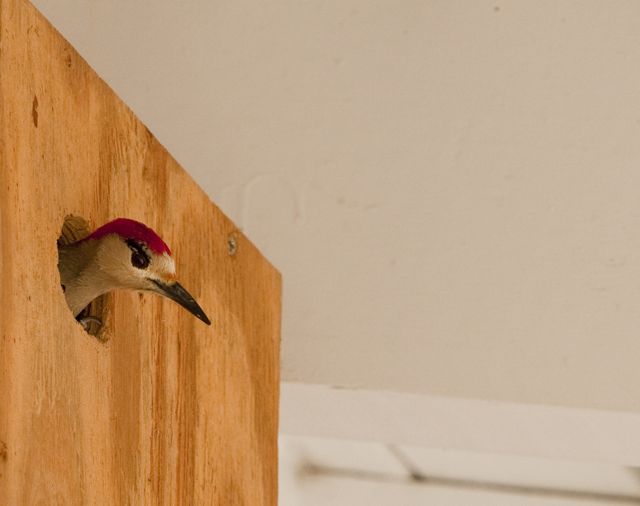
The starting point / excuse for this post is the nest box for West Indian woodpeckers under the eaves of the Delphi Club verandah. Put ‘woodpecker’ into the home page SEARCH box and you will find various posts about last season’s epic: the reluctance to use the box; the gradual acceptance; the summer nesting and breeding; the heroic stand of the male woodpecker who guarded the box throughout the rampage of Hurricane Irene
Happy to roost here – deeply suspicious of the new wooden structure over there
(Later) No place like Home
(©Peter Wesley Brown)
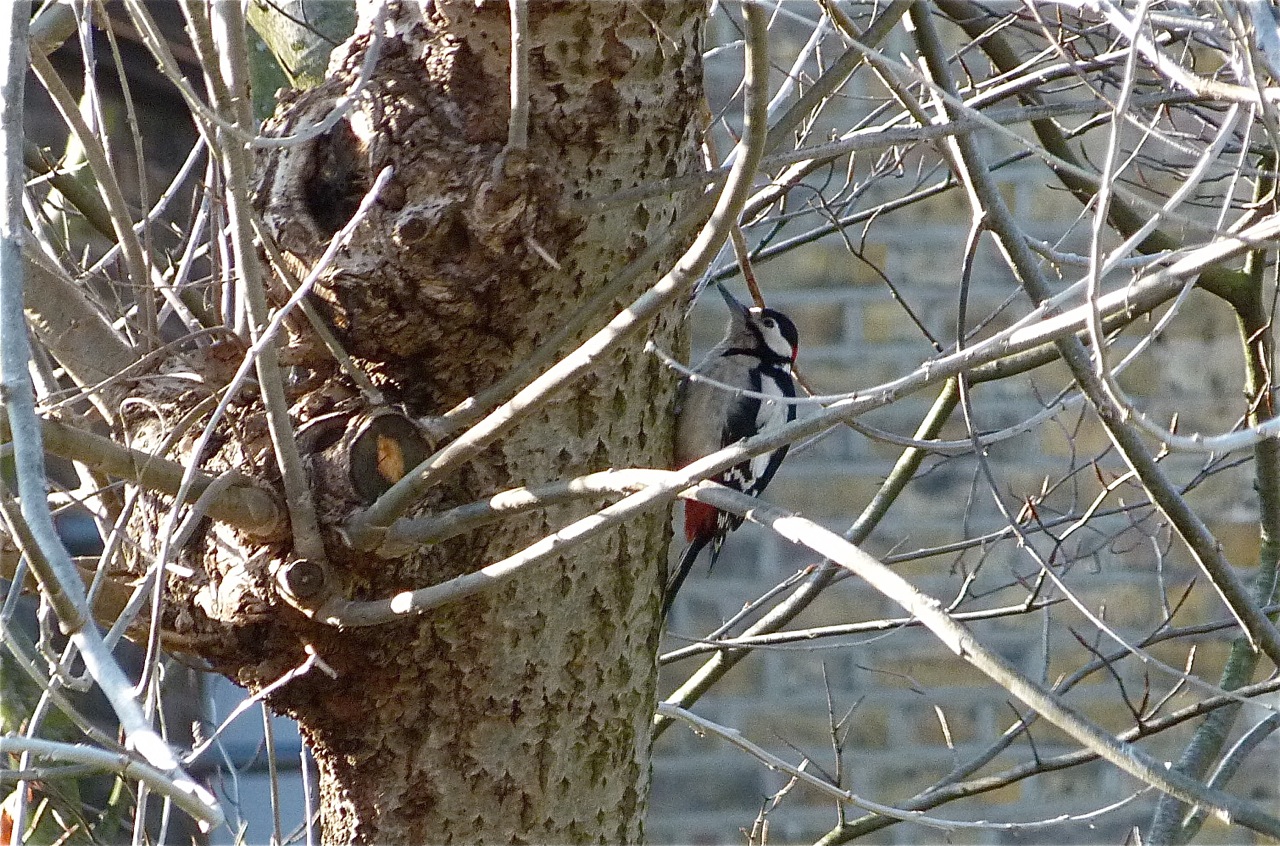
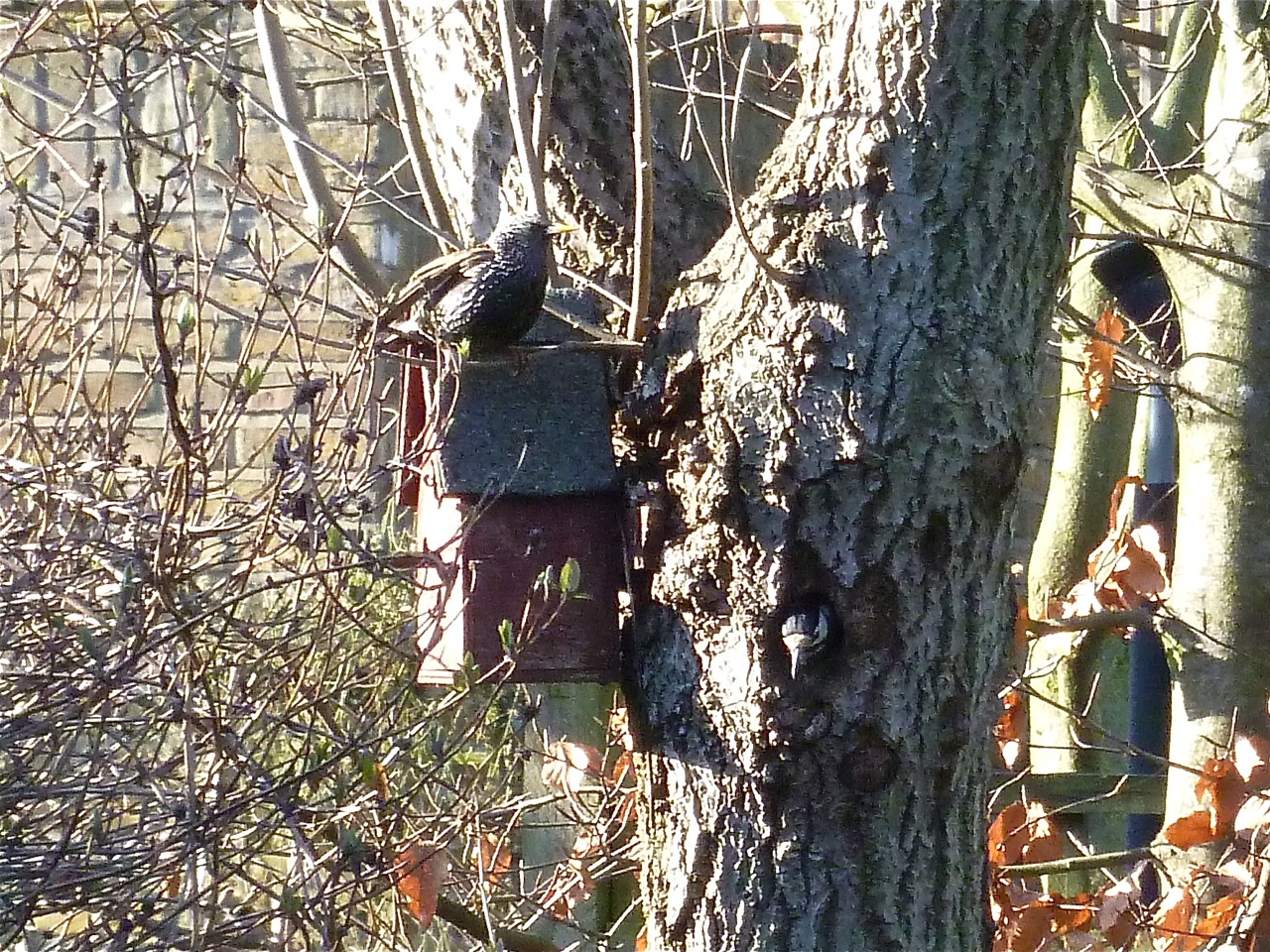
For some years, great spotted woodpeckers have drilled away at the grey poplar tree at the end of our small London garden. A male gouged out a number of exploratory holes near the top, strewing a carpet of wood chips onto the grass below. One year he attracted a mate, eggs were laid and hatched, a huge amount of chattering and scolding ensued – quite annoying at times in persistence and volume. One weekend we were away and returned to… silence. The fledgling woodpeckers had had their flying lessons and left for good. We missed them.
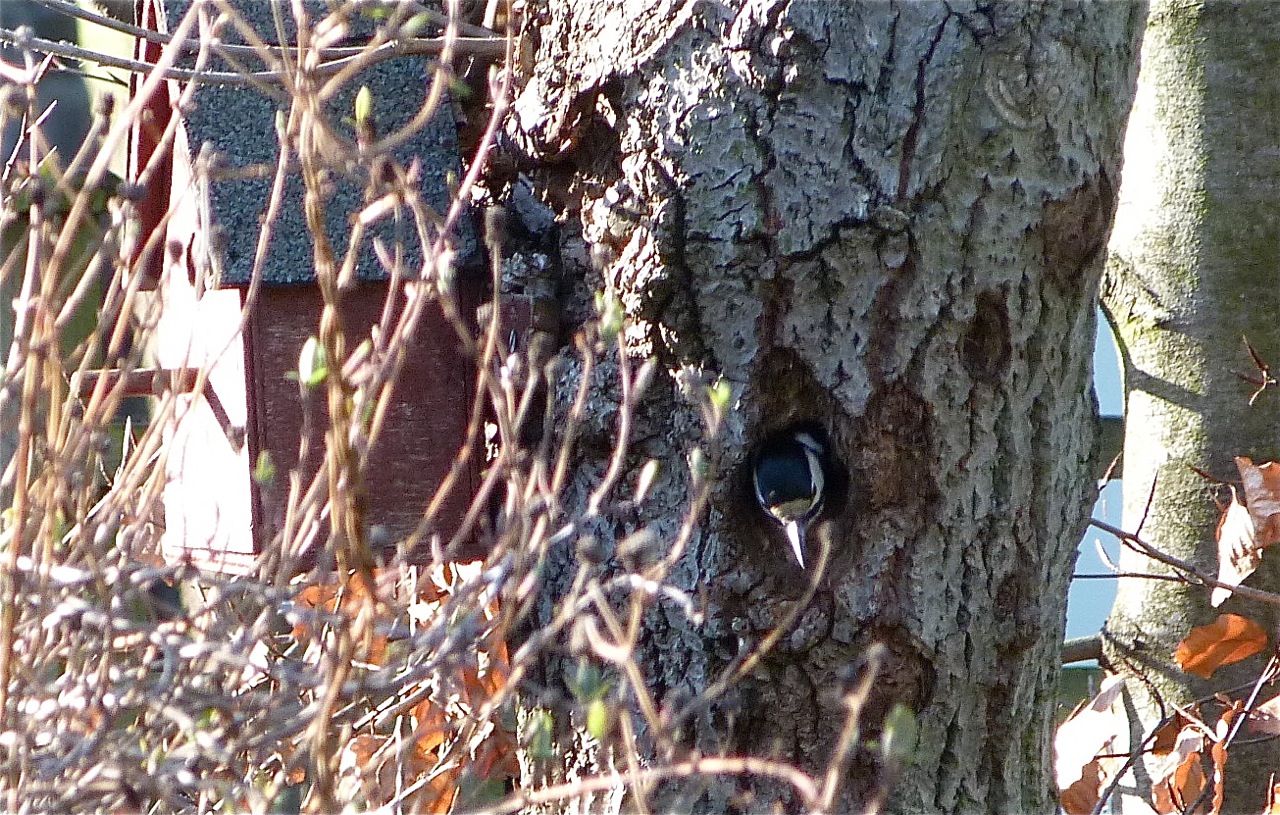
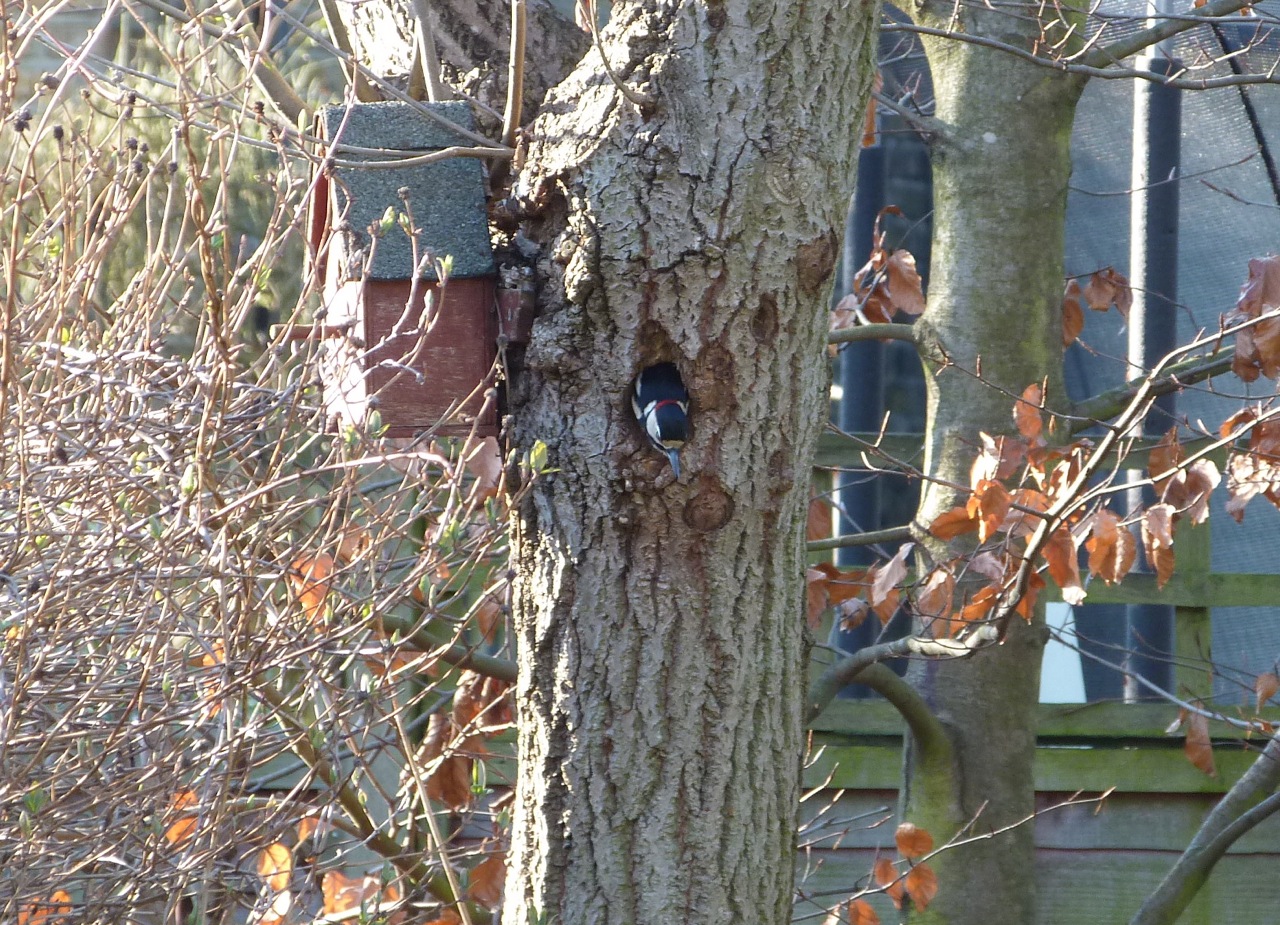
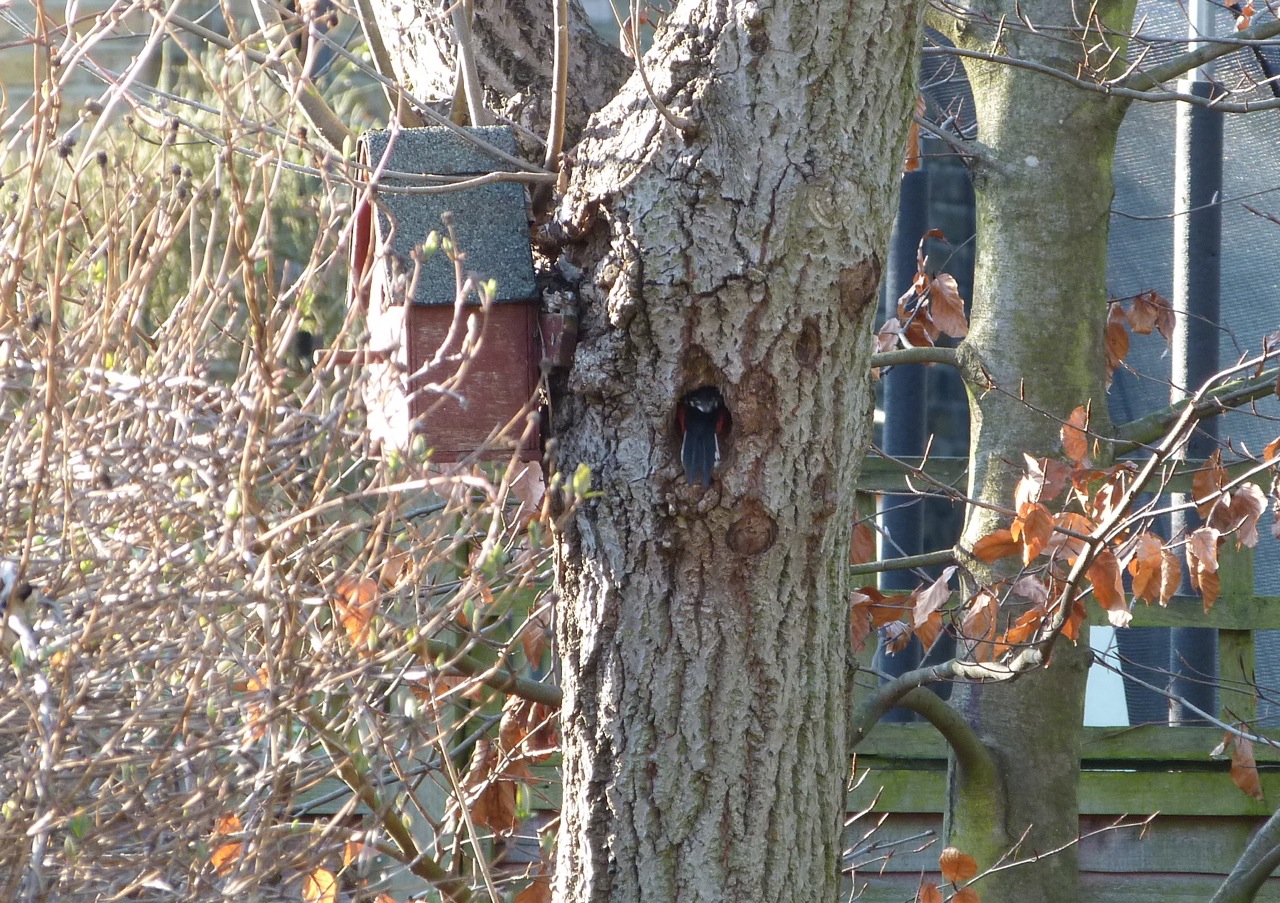
Since then, the male cleaned out the hole each Spring and drilled a few spare holes for practice, but despite his impressive real estate portfolio, he didn’t attract a mate. He made another, lower hole. No luck. Until this year. In January he brought a new bird home and together they mucked out the hole and settled in – about 2 months early, and with snow on the way. In the absence of current news of the West Indian woodpeckers and their nest at the Delphi Club, here are a few pictures of domestic bliss 4250 miles away… Click images to enlarge
A cosy home – hope the neighbours are nice 
Time to go and get a take-out…
…and bring it home for the wife
An act of gross provocation by a starling. I predict trouble. News update soon
I can’t make out if the photo below is just a horrendously bad photo taken with a cheap camera, a fixed shutter speed, and cold shaking hands; or a powerful image of a beautiful bird artistically captured in full flight, the type of action shot that bird photographers strive for years to achieve (Mrs RH has a view on this). If the former, apologies. If the latter (highly unlikely), my professional tip is to use a tiny point ‘n’ shoot into the sun while moving around quite a bit. Whichever, I’ve awarded it a ‘cameo’ format to emphasise the essential artistry of the shot
PINE FOREST REGENERATION AFTER FIRES ON ABACO IN 2011
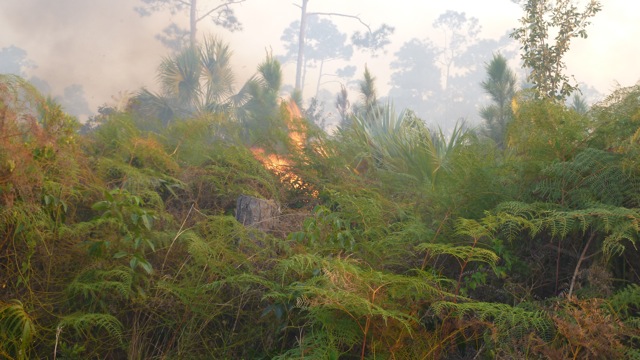
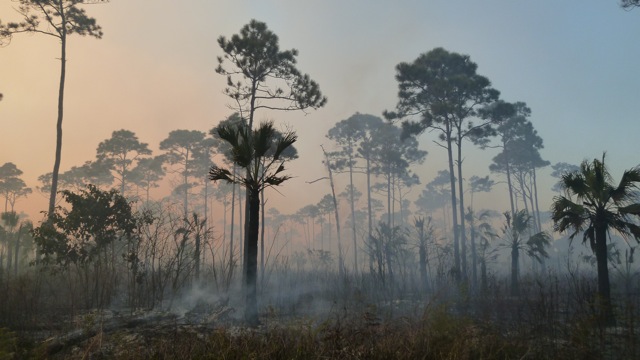
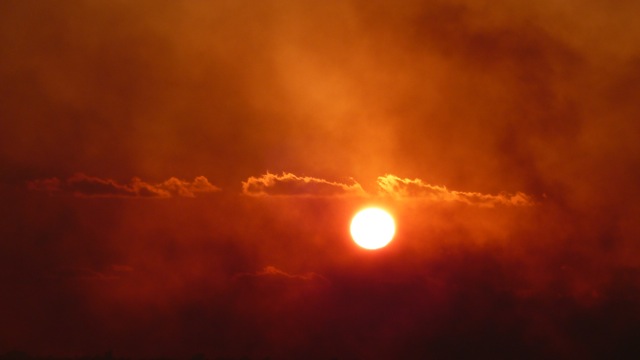
MARCH 2011 Fires swept through large areas of South Abaco, spreading rapidly and jumping the firebreak of the Highway in several places. At any one time, there were several ‘non-natural’ seats of fire. For 3 days the flames were uncomfortably close to the Delphi Club, halted only by the natural boundary between the flammable pine forest and the damper less combustible coppice. The smoke caused some amazing visual effects, especially at sunset. The first image was taken looking east from the Club verandah one evening as the fire got nearer
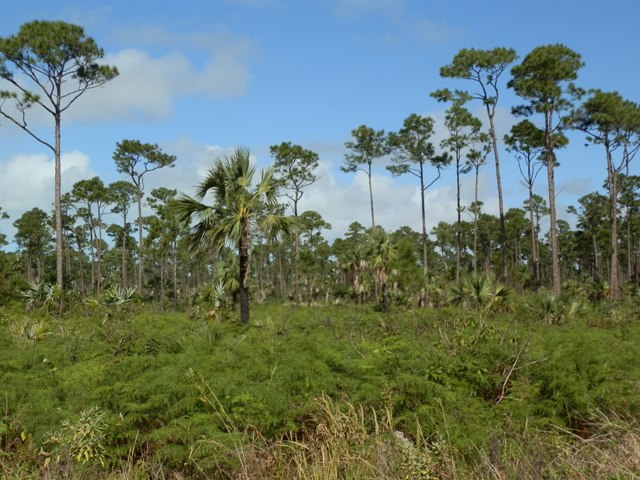
The vegetation alongside and between the drives was dense and lushly green before the fires. Here is a photo as fire began to take hold near the top of the drives towards the road, having jumped the Highway in the night… 
As the fire rapidly spreads, this tall dead tree is actually flaming from the top

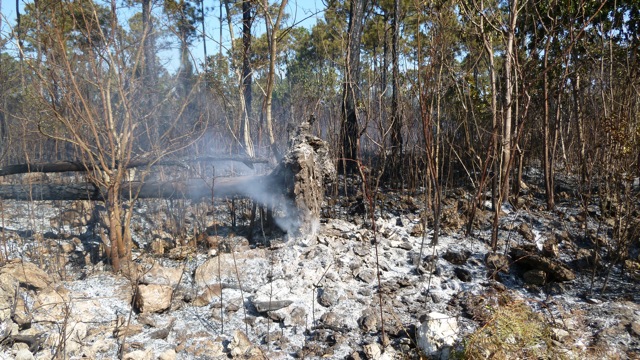
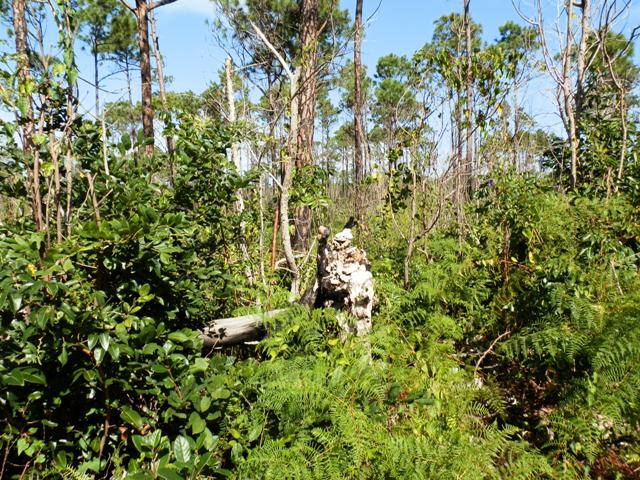
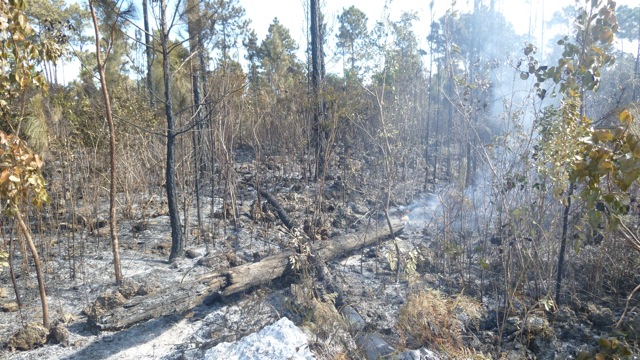
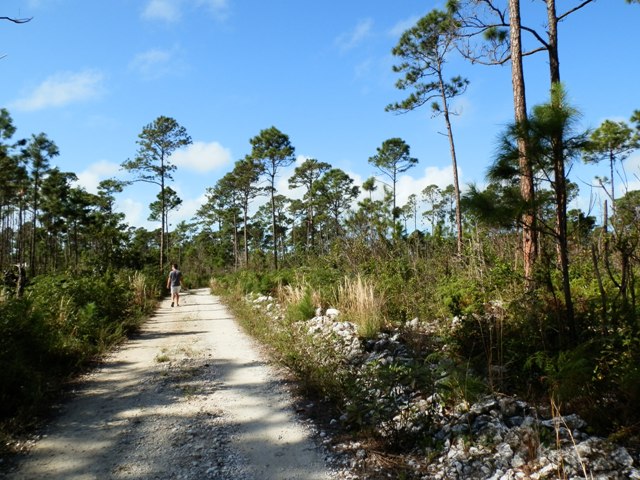
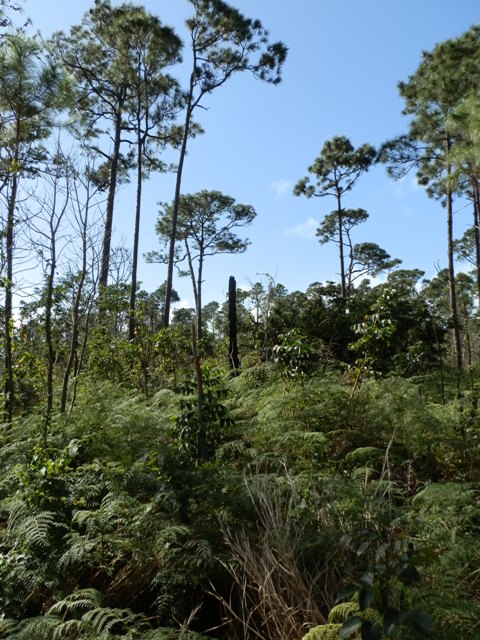
During the next couple of days, we took photographs along the drives of the apocalyptic scenes where there had so recently been impenetrable vegetation. Nearly a year later, indispensable beachcomber and photographer Kasia has taken some pictures of the drives as they are now. First, two ‘then and now’ views of the same scenes to illustrate the extent of forest regeneration
2011
2012
2011
2012
2011 The burnt-out forest between the drives
2012 A wander round the drive circuit
In some places the undergrowth has returned but trees have not recovered
Elsewhere, blackened stumps are visible in amongst the vigorous regrowth
KING VENUS CLAMS & CRAB SHELLS (NO SPACE DEBRIS): ABACO BEACHCOMBING WITH KASIA
ANOTHER STROLL ALONG THE SHORE WITH KASIA
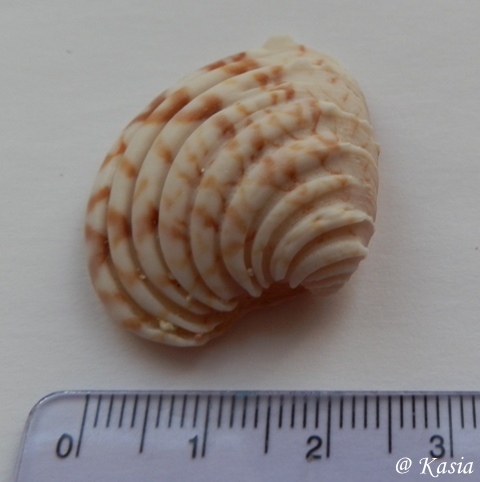
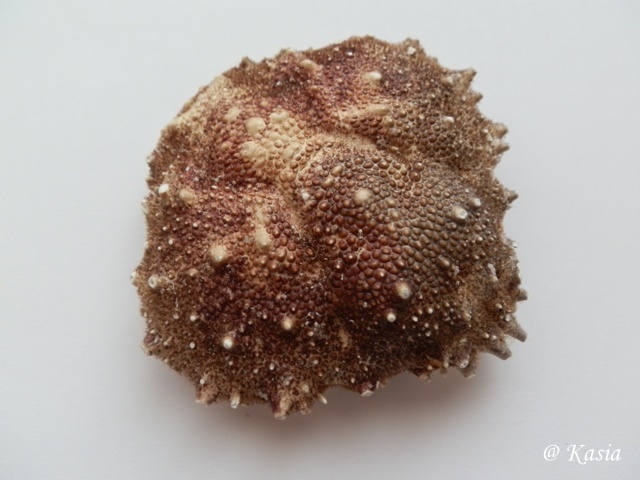
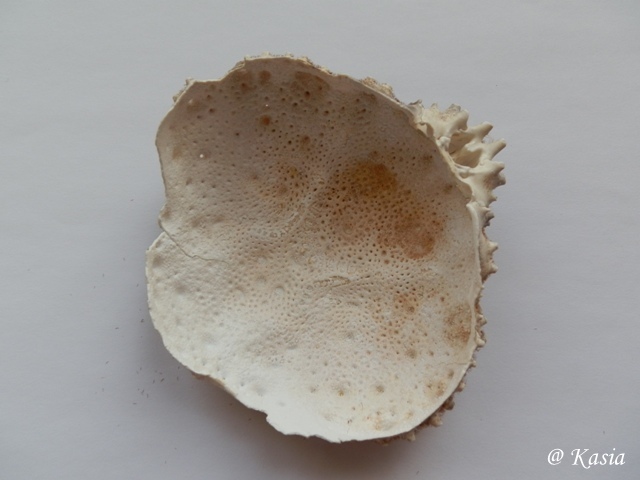
After all the recent excitement – well I was excited, anyway – involving Mars Mission space rocket debris washed up on the Delphi Club Beach CLICK MARS ROVER it’s a gentle touchdown back onto a sandy beach for some more of Kasia’s finds. First, a shell which I believe (tempting fate) I have correctly ID’d for once. Then a half crab shell, at a guess a spider crab’s roof.
KING VENUS CLAM Verenidae – Chione Paphia
These bivalve molluscs seem to be inoffensive, and to lead rather dull lives: so far all I have discovered is that “they live buried in sand at depths of 1 – 20 fathoms” I shall investigate further & report back – there must be some small creature they molest or upset in some way…
BEACHCOMBING ‘CURIOSITY’ ON ABACO: OUT OF THIS WORLD TO THE RED PLANET
More news about the the space rocket debris washed up on the Delphi Club beach, Abaco. The booster rocket fairing found by Sandy fortunately had a serial number on it. Various inquiries have been made and a definitive explanation of the item has now been given by the NTSB. It turns out that the fairing was not, after all, from the Ariane 5 launch in French Guyana. More exciting than that – it comes from a Mars Program launch to put the Space Rover Curiosity on Mars. There’s an excellent Wikipedia article on the mission to be found at WIKIMARS
Bob Swaim at the NTSB has emailed Sandy to say “The serial number of the fairing fragment is from a part that was on a Delta V [sic – it was in fact an Atlas V, see comments] rocket launch of November 26, 2011. In August, a new car-sized rover will touch down on Mars and you’ll have something from the mission!” He has kindly provided a link to the launch – see image below and direct link HERE He has also given a direct link to the NASA MARS PROGRAM site from which I have taken the screen clip below. You will see an image of the Mars Rover Curiosity, and the time countdown until touch-down at the exact moment I took the shot…

I contacted Bill Ailor, Principal Scientist/Engineer, Center for Orbital and Reentry Debris Studies, The Aerospace Corporation AERO CORP thinking a booster fairing might be of interest for their rocket debris database. He writes
Thanks for the notification (and for your excellent web page – looks like a wonderful spot). On the website, we catalog debris that has reentered from orbit and don’t include payload fairings, solid and first stage rocket boosters, and other “range” debris, since these are suborbital and the launch is designed so that the debris impacts is in known safe areas. That debris can sometimes float outside of the safe area and wash ashore.I should mention that we recently reentered a small device that might one day float to your beach. I’ve attached a description. Let us know if you see that one
Although the device he mentions may have in fact have landed a long distance away (the South Pacific even), best keep an eye out for this…REBR Fact Sheet By a strange coincidence in a huge world, the Aerospace Database shows that in 1965 reentry debris was recovered from a beach on Abaco:
| In early 1965 an object having the appearance of a space fragment was reported washed ashore on Abaco Island in the Bahamas | Possibly from the Atlas-Mariner I booster which was destroyed by the range safety officer shortly after launch on 22 July 1962, and landed in the designated ocean impact area |
Apologies if I have got sidetracked from normal beachcombing duties – shells and stuff – but wildlife blogging doesn’t get more exciting than this – well, unless they find a colony of Abaco parrots on Mars…
ABACO BEACHCOMBING: MYSTERY OBJECT from the DELPHI CLUB BEACH
STOP PRESS Rocket part now positively ID’d by serial number – and it’s not from Ariane 5. More exciting – it’s from the Mars Program launch of the the Mars Rover ‘Curioisty’. See latest post at CLICK IMAGE 
My contenders, from most to least exciting (1) Rocket nose-cone. But no re-entry scorch marks – maybe it never got that far (2) Light aeroplane engine cowling or whatever the term is (3) Front end of a canoe-type vessel, with a standard Avery 5-slot for’ard rowlock stanchion clip (or maybe a bit of storm-tossed catamaran – Mrs rh)
STOP PRESS Jan 28 Peter Mantle’s latest bulletin from the Delphi Club… and I get to award myself the first prize of a Kalik beer for wild guess (1) above!
Fly me to the moon….
January 28th: Beachcombing at Rolling Harbour produces a great miscellany of shells, corals, beads, fishing floats and the occasional baseball. But a recent find by Sandy had everyone in a panic – a 12-foot chunk of superstructure that looked for all the world like a large piece of aeroplane. Sandy immediately contacted the US National Transportation Safety Board, who initially confirmed a strong resemblance to the tail section of an Airbus A320 passenger jet but wanted to run further investigations of the part numbers. All rather alarming.
But Sandy has just heard again from the NTSB, who now believe it may be part of the Ariane V space rocket, launched from French Guyana. Airbus say it’s not from one of their planes and suggest that it’s probably the nose fairing off an Ariane V booster. Looking at photos and drawings of the booster, this may be right and this would also fit for the eastern exposure of the beach where the part was found. You can see the booster here: http://esamultimedia.esa.int/docs/ATV/infokit/english/05_ATVLauncher.pdf
Ariane Space have been contacted and we will let you know what they say. We will also post a pic of the part. In the meantime, Sandy looks a bit, er, spaced out.
Comment: Since it appears to be made of cardboard, no wonder it fell off…
ABACO BEACHCOMBING: KASIA IS BACK… WITH ANOTHER MYSTERY OBJECT
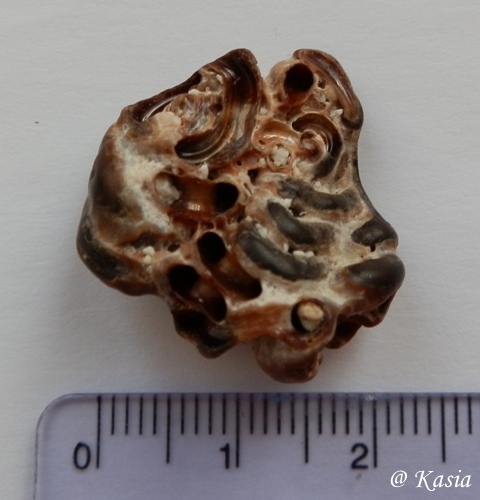
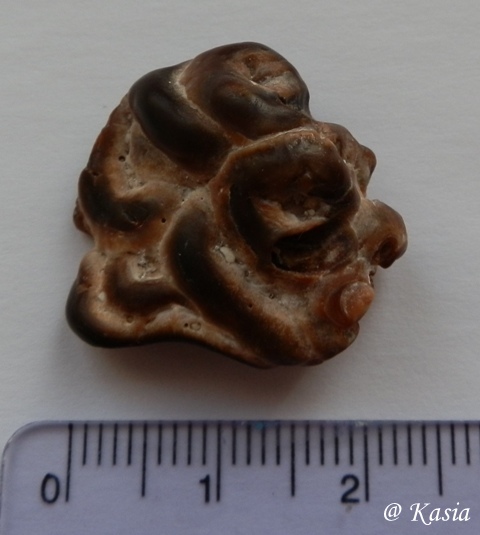
Kasia has returned to grace the blog with treasures from her Abaco beach-combing from the Delphi Club and further afield. Expect more shells, more sea glass… and more mystery objects. We have already had part of a RAY’S PALATE and a PACIFIC ANGARIA SHELL that had somehow arrived on the shores of Abaco. There’s a long thin WHITE BONE, as yet unidentified (no suggestions yet). And now this extraordinary item…
To which my answer is “not the faintest idea”. My guesses are (1) a fossilised vertebra of some medium-sized creature (2) a fossilised ‘soft’ rock that worms have been at (but why only on one side?) (3) a bread roll that went disastrously wrong in the baking…
All suggestions welcome, preferably via the COMMENT box (so others can view them); or to rollingharbour.delphiATgmail.com (spam guard: convert AT to @)
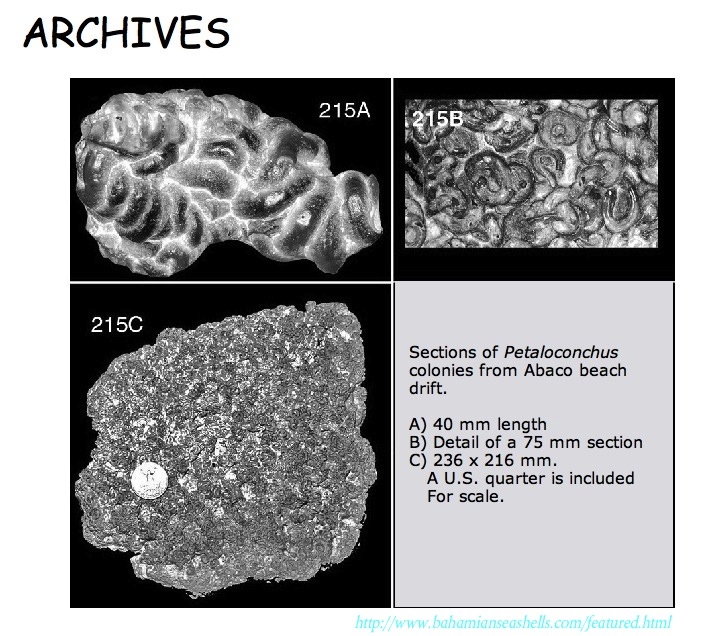
STOP PRESS Mystery quickly solved, thanks to Colin Redfern who says “This is part of the remains of a colony of Petaloconchus worm-shells (molluscs). They attach to rock or coral, and the colonies can be quite large.” Colin’s website includes some examples from his archive, one chunk being very similar to Kasia’s 
BAHAMAS CURLY TAILS ON ABACO: ENCHANTING LIZARDS
CURLY TAILS – ENCHANTING LIZARDS
This is an expanded and rejigged post based on bits and pieces originally scattered around the MISC WILDLIFE page, written now partly because of various search queries recently – diet and so forth – which had not been covered.
First, the very dull scientific classification bit (wiki-debt): Kingdom – Animalia; Phylum – Chordata; Class – Sauropsida; Suborder – Iguania; Family – Leiocephalidae; Genus – Leiocephalus [Subspecies Carinatus?]
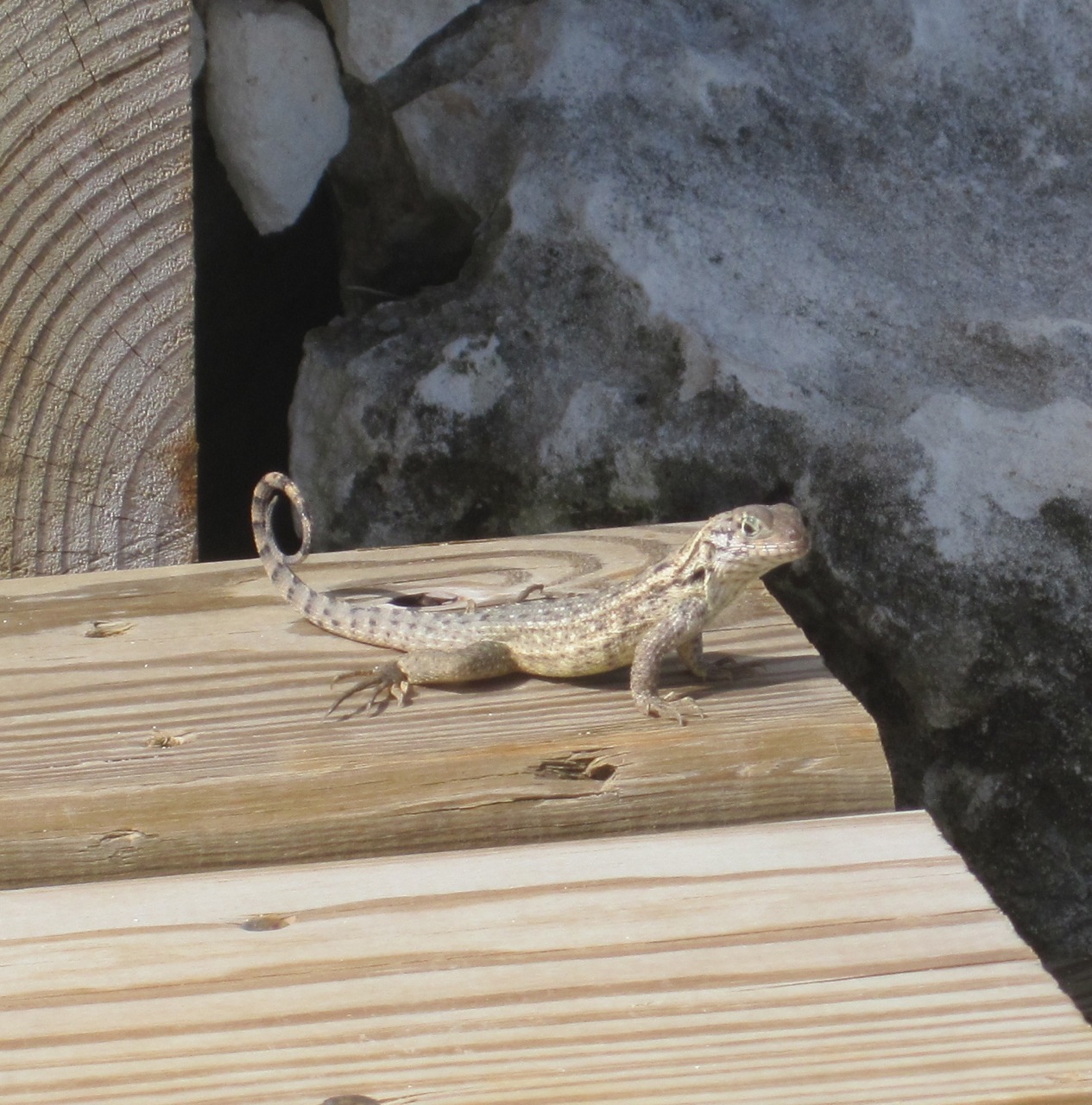
The ‘curly-tailed lizard’ family is widely found throughout the Caribbean but is apparently relatively unstudied (but why on earth not?). There are nearly 30 distinct varieties, many specific to individual islands. My completely uneducated guess is that the Abaco ones may be one of the several subspecies of ‘Cuban or Northern Curly-tailed Lizard’ carinatus, the ones found generally in the Bahamas. But who cares? By any standards they are totally cute! This photo was taken at the bottom of the steps down to the Delphi Club beach.
NEW ADDITION April 2012 A fine Curly Tail from Brigitte Carey of Tilloo Cay 
DEPLHI CLUB: ‘OFF-DUTY’ CURLY TAIL, OR A DIFFERENT TYPE OF LIZARD?
The CT is described as an active, robust lizard that is mostly terrestrial and will retreat into a burrow or cavity when frightened. It prefers sunny areas with loose rubble and rock. Bahamas curly tails were apparently released intentionally in Palm Beach, Florida, in the 1940s in an attempt to control sugar cane pests.
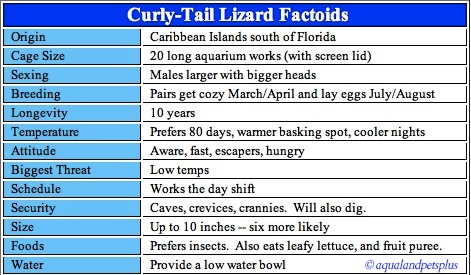
Jan 2012 update: Having had a number of hits over the last few months for ‘what do Curly Tails eat’ and other CT-related information, I checked out aqualandpetsplus.com of Des Moines, Iowa (the first Google hit, in fact). With kind permission (many thanks, Larry) here’s some more about these little lizards 
THE CURLY TAIL DIET: “Considered insectivores, curly-tails scamper right after crickets. They’ll also learn to eat mealworms and superworms from your fingers. You can give them other insects like wax worms which they love but tend to over-eat. Roaches, houseflies, or any arthropods / bugs that accumulate around your porch light make a nice change of pace…OR…take a stroll down the baby food aisle. Think twice about the bananas. Bananas are not good for some lizards. Skip the bananas. Anyway, apple sauce works great. The best thing about baby food? You can add a Calcium/Vitamin D supplement to it. Much easier than dusting crickets (which start cleaning it off the second it gets on them). Curly-tails will also eat bits of leafy lettuce. Uneaten crickets in their cage will also eat the fruits and vegetables you offer your lizards” Larry Arnold
So I can’t answer someone’s specific query ‘do they eat tomatoes?’, save to say ‘why not try tomato sauce’ (and I don’t mean a well-known proprietary brand, one of 57 varieties). Maybe have a few crickets handy in case it is politely declined
For further info on curly tails from theBahamas National Trust website CLICK LINK ===>>> http://www.bnt.bs/curlytaillizardinfo.php?catid=&subid= where there is also a downloadable PDF version
Finally, an excellent CT photo from Gareth Reid, the Master Chef of Delphi
BIBLIOGRAPHY: “101 Uses for a Curly Tail” Rolling Harbour Press (2011)
(1) The gate latch (2) The window latch

(NB No Curly Tails were harmed in the creation of these images)

ESSENTIAL SOUTH ABACO BIRD CHECKLIST FROM AVIBASE
The superb AVIBASE is a massive world-wide bird database – an essential reference point for birders, even the occasional enthusiast. Checklists, range maps, bird links, photos, bird sounds, and even the facility to make your own contribution, all in one place. AVIBASE has been a work in progress for 20 years and now contains over 5 million records of about 10,000 species and 22,000 subspecies of birds, including distribution information, taxonomy, synonyms in several languages, and much more
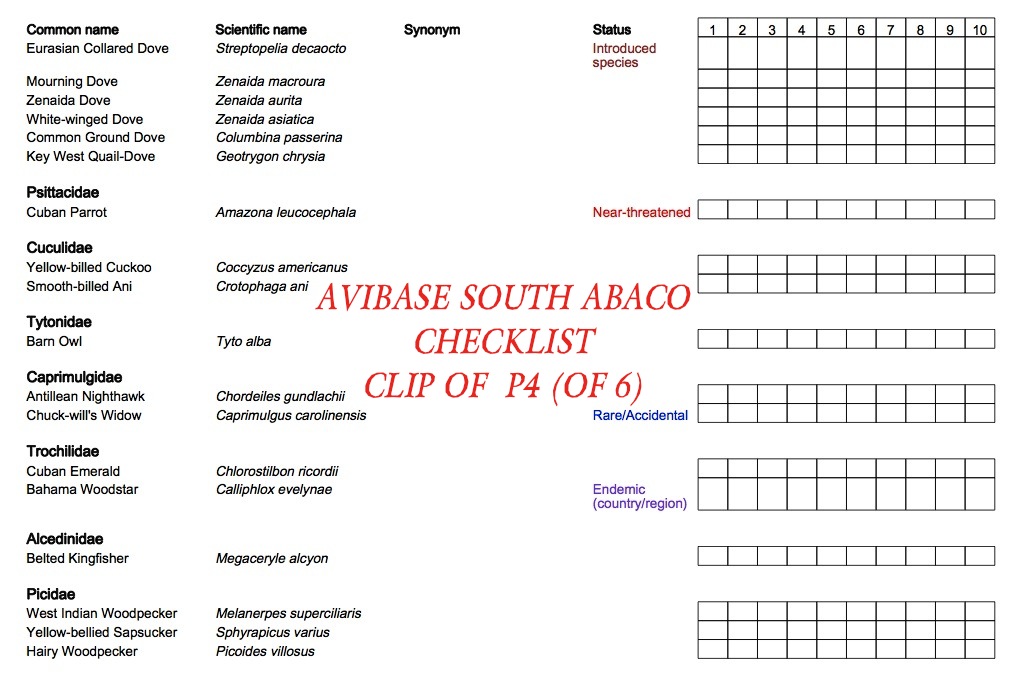
Here is the CHECKLIST FOR SOUTH ABACO, the area that I am most familiar with. It probably holds good for the whole of Abaco and the Cays. If you are staying at the Delphi Club, Rolling Harbour, you need this – and especially if you are planning a birding adventure with Ricky Johnson… Be prepared! The plan is that you can download it or print it out from here
SOUTH ABACO BIRD CHECKLIST click to open!
Here is an illustrative clip of one of the 6 pages 
If you have a problem printing it from here – or for access to photos of a great many of the birds listed, with clips of their calls and songs – use this direct link CLICK LOGO===>>>![]()
FAREWELL 2011, WELCOME 2012 & A NEW YEAR FOR ABACO WILDLIFE
Out with the Old, in with the New with the fine collection of logos craftily adapted by Mrs rh during the year from the official Delphi Club bonefish logo. By a strange coincidence the 5 logos almost make up an Olympic rings design, especially fitting for 2012… The rh household failed to get a single ticket for any of the events we applied for in the so-called ballot. But as long as all the mid-ranking management from struggling midlands football clubs, and all subordinate temporary assistant under-secretaries in obscure non-participant consulates got their quotas, that’s the main thing. I am not a bitter person. That left a very generous 783 tickets for the entire Great British Public to share. And there’s even one left still for the men’s freestyle subaquatic triathlon (javelin, 100 metre hurdles and graeco-roman wrestling).
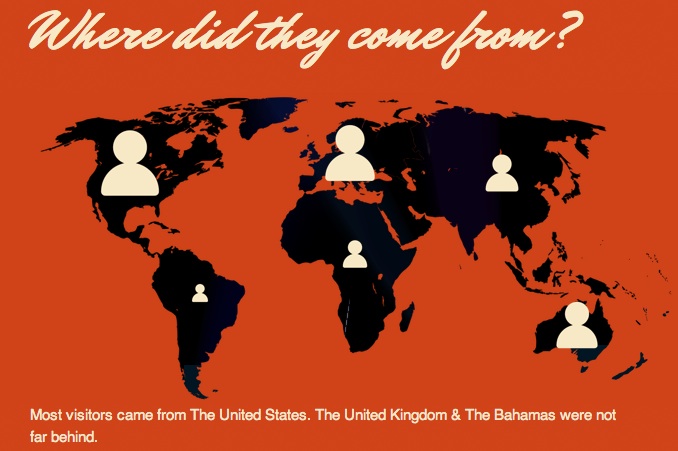
A very Happy New Year to all you kind followers since the first tentative blog-steps last April – and equally to those who got here through a Google input error… Here’s where you all came from (with a special mention of the surprising number from Tunisia, Japan and Fiji) 
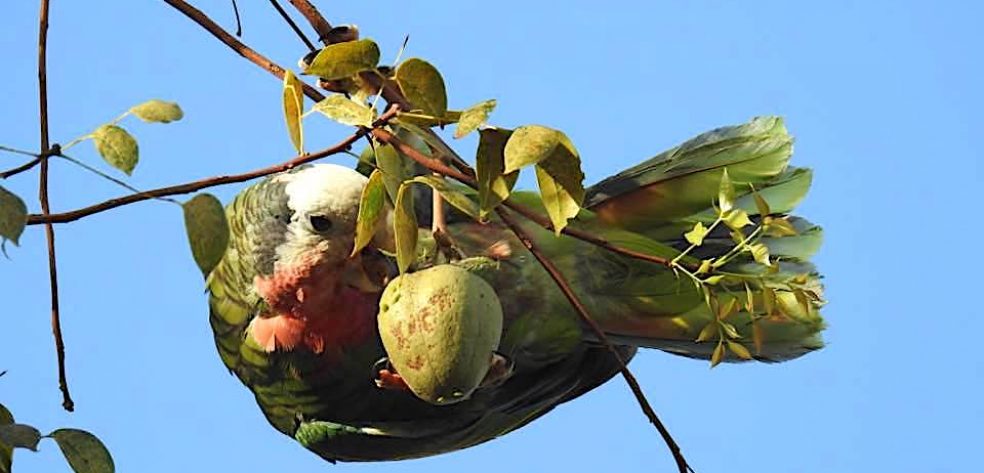
HELP SAVE ABACO PARROTS – DOU DOU’S ART INITIATIVE
WELCOME BACK! Normal service is resumed after the family festivities of Christmas, with only the precious gift of a fractured wrist for rh to spoil an otherwise lovely few days. Immediately, I can report excellent parrot news…
DOU DOU, an avid birder and sculptor of most engaging miniature birds, has taken up the cause of the Abaco Parrot. We have been corresponding for a while about this, and I now reproduce her latest post, with the link to her site below
BIRD SCULPTURE – ABACO PARROT

This little parrot measures 3.5 x 1.5 x 1.5 inches. You can buy it HERE from me and I will send the money to Parrots International or you can use “Other” to check out, send me proof you donated at least $30 to Parrot’s International, and I will send you a code that gives you $30 discount on this parrot so you will just pay for shipping – I will verify that a donation was made.
We can save these parrots! Let’s do it!!!!!
Read about Caroline’s work to save the parrots: ABACO PARROT RESCUE
dou♥dou CLICK LOGO to visit website ===>>> 
More about this exciting development in due course – other ideas are afoot… Abaco Parrot conservation is strongly supported by the Delphi Club, Abaco; and the research scientist heading the project, Caroline Stahala, is delighted with dou dou’s initiative in helping to raise the profile of her conservation work and in contributing to the funding received through PARROTS INTERNATIONAL
This organisation allocates funding for the research into the Abaco Parrots and their conservation. You can now pay direct by Paypal or Credit Card (with gift tax benefits depending where you live). Please remember use the “Note to Seller” box to specify ‘ABACO PARROTS / CAROLINE STAHALA’
SOUTH ABACO CHRISTMAS BIRD COUNT 2011
Here is a clip taken from the excellent website THE ABACO SCIENTIST, with the kind permission of Dr Craig Layman of FIU. The brief summary of the South Abaco Bird Count 2011 by Elwood D. Bracey is of great interest, not least for the Delphi Club, from where guided Nature Tours take place and where there is a lot of enthusiasm for the birdlife of the island. 75 separate species were recorded this year, including all the known Abaconian endemics.
It is also a very fine photo of a male Bahama Woodstar courtesy of BIRD FORUM
“ABACO CHRISTMAS & A DELPHI NEW YEAR”
HAVE YOURSELVES A MERRY ABACO CHRISTMAS
As Reality Show contestants say, it’s been a roller-coaster of emotions. An incredible journey. Living the dream. Nine months ago I knew little about blogs; less about computer techniques and problem-solving; and nothing whatsoever about hutias, murex shells, tecoma stans, or hurricane technicalities. Thanks for the many contributions, advice, helpful criticism**, encouragement and general enthusiasm for the project. Thanks to Peter Mantle for permitting & promoting this rather ill-disciplined sibling of Delphi. And thanks to everyone who has contributed to an accumulation of nearly 25,000 site hits – or perhaps to the one strange person somewhere out there with repetitive strain injury from 24,588 repeat visits. **Mrs rh scores highly here for her kind but firm restraints: “No! You can’t put that!”
FOR THE RH CHRISTMAS MESSAGE CLICK DELPHI 
Special thanks to Sandy Estabrook of the estimable ABACO ESCAPE
and PETER GEHRIG (for the snow) for permission to use the above festive link
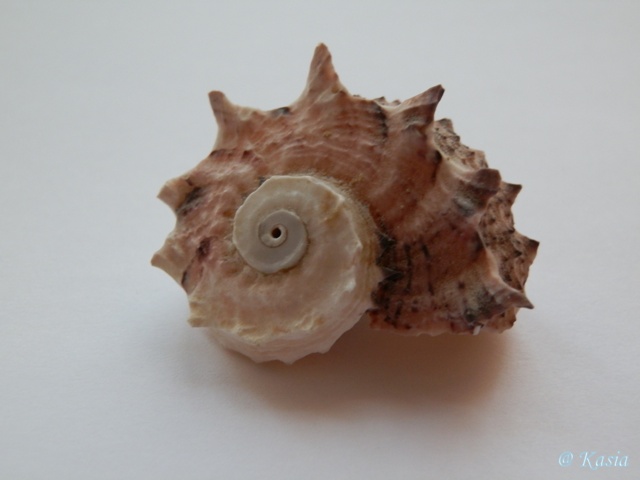
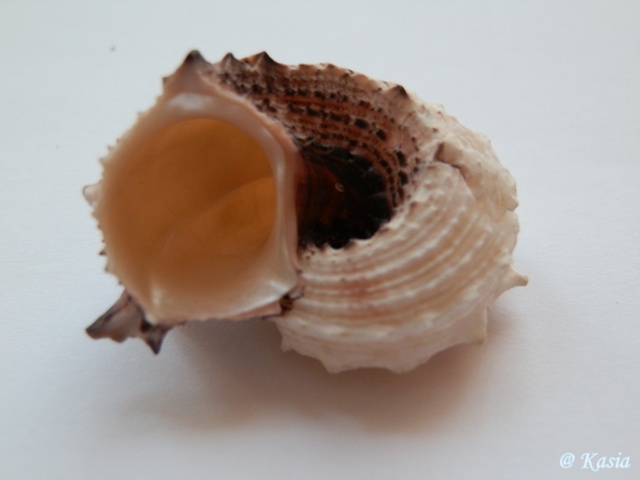
KASIA’S MYSTERY ABACO SHELL: A PUZZLE FOR XMAS
Kasia’s beachcombing exploits have produced some lovely seashells that have already featured here. Precise identification has sometimes been difficult for an amateur, because of the many varieties of a particular type of shell or close resemblance to other shell families. This one has got me stumped. I have trawled the internet. I have studied field guides. I’m still baffled. It hasn’t quite matched any other shell…
XMAS PRIZE the first person to ID this shell correctly will enjoy a bottle of ice-cold Kalik being drunk on the Delphi balcony swing in February 2012. By me. Suggestions to rollingharbour.delphi@gmail.com welcome
STOP PRESS: NOW SOLVED – SEE UNDER IMAGES

Helpful thoughts: I’ve considered a form of King’s Crown (but I’ve not found a close enough match) or a Ram’s Horn Snail (but they don’t seem to have spines)
First entry by Kasia (potentially disqualified as the shell’s owner): Angaria, a form of Turban shell. However these seem to be confined to Pacific areas…
The Solution: And the winner (within 24 hours) is… Kasia!
I sent the link to the post to Bahamian seashell expert Colin Redfern at http://www.bahamianseashells.com, author of ‘Bahamian Seashells: 1000 Species from Abaco, Bahamas’. He confirms Kasia’s ID as an ANGARIA SHELL , one of a large number of species of turban shells TURBINIDAE found throughout the world. It is indeed a Pacific shell, probably from the Philippines. So what on earth was it doing on a beach on the east coast of Abaco? Colin has encountered this sort of anomaly before, and gives various possible explanations:
1. Homeowners’ shell collections come from areas other than the Bahamas & are sometimes thrown out onto a beach. They may be washed up along the coast
2. Shops sell packets of shells, including Pacific shells, which may become dispersed
3. In Fl. it is not unknown for resorts to “seed the beach” with Pacific shells, which are cheaper & more easily bulk-bought than Atlantic shells
4. Rare Pacific & Indian Ocean shells washed up on a beach were once traced to the owner, whose beach house had been lost in a hurricane some years before
Many thanks, Colin, for your help with this puzzle; and congratulations Kasia – I’ll claim my Kalik in February please. Oh I see, I’ve got to buy you one, have I?
MANGROVE FLATS & BONEFISHING: CAST IN THE RIGHT PLACE [VIDEO]
BONEFISHING ON MANGROVE FLATS
The rollingharbour wildlife enterprise doesn’t normally mix with the technical side the bonefishing on Abaco in general or at the Delphi Club in particular. rh is personally adept at failing to boat fish even where he is lucky enough to hook up; and in turning genial, amiable guides into scowling cursing wrecks in a day.
This is an exception: an excellent 4.5 minute video from Dr Aaron Adams (marine biologist and Bonefish & Tarpon Trust Operations Director) on how to maximise your chances on the mangrove flats by not spending hours flogging the water pointlessly in obviously unproductive areas. Clearly if you have a guide, this is unlikely to happen – but what if you are wading or otherwise going solo?
The reason to post this informative video here is for the insight into the structure of mangrove swamps, with clear underwater photography and commentary as a skiff glides the flats over ‘dead’, & productive, areas. What is a mangrove swamp? Where do the fish favour? Why? This video will help your understanding.
DELPHI CLUB ABACO & ARIST RICHARD BRAMBLE: BONEFISH, CRAWFISH & PERMIT ART
Well-known artist Richard Bramble already features in his own page here under the CONTRIBUTIONS drop-down menu. For the previous post of RB hard at work on new designs at the Delphi Club CLICK EXAMPLE PHOTO BELOW
RB and Crawfish model posing (both)

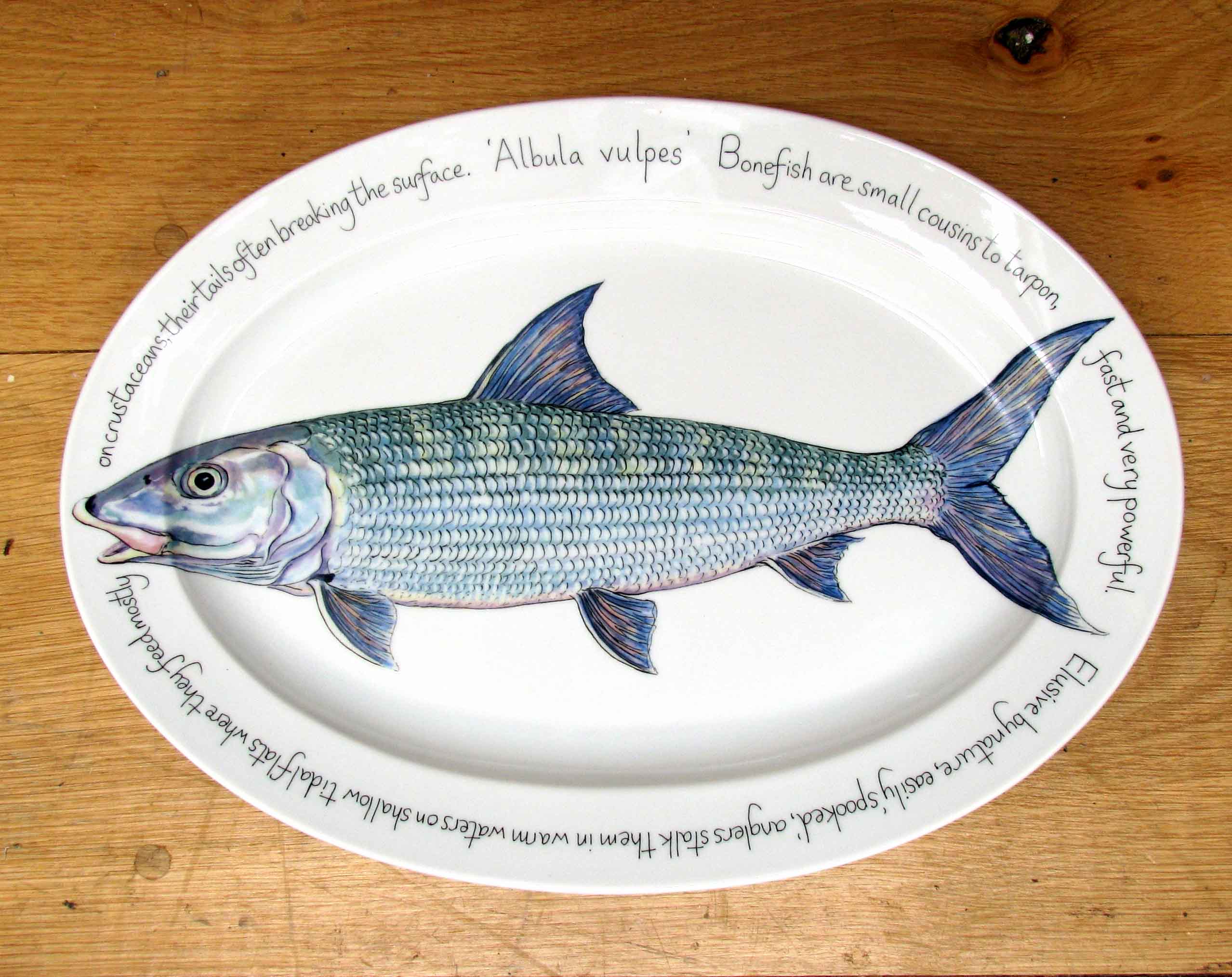
Richard has broadened his already considerable range of paintings and ceramics to include the Abaco marine life he painted while at Delphi. In addition to his very elegant Bonefish, there are now Permit and Crawfish plates (with the original ‘life model’ pictured above). Some weeks later I was at Richard’s studio in Dorset as he prepared to transfer these designs to ceramics, with crawfish cut-outs artfully strewn around the floor. Here are his new items, with his characteristic captions:
(I have an oval bonefish plate to remind me of the ones I… I…’let go’ by mistake)
Richard’s comprehensive website featuring his entire oeuvre is to be found at the sign of the Crawfish
together with an elementary purchase method to take advantage of the excellent online shopping opportunities (he might be too modest to say). I write this with Christmas-tide a mere 2 weeks away. You’ll find sea water and fresh water fish / creatures, shells, all manner of game birds and farmyards animals, on every conceivable type of ceramic platter, utensil and kitchen gizmo.
(With apologies that this site seems t0 be turning into a cross between an online Mall and an advertising agency… Nature Tours. Boat Expeditions. Arts & Crafts. Kitchenware. Books. Cameras. Yup, ticked them all. But there’s plenty of other stuff to look at in these pages)
ABACO & HURRICANE IRENE: A SCIENTIFIC RETROSPECTIVE
ABACO, BAHAMAS & HURRICANE IRENE A SCIENTIFIC RETROSPECTIVE
The contents of this post must be credited at the outset to the excellent website UNIVERSE TODAY and NASA where you can easily get Lost in Space for an eon or two.
For 1o days at the end of August / in early September, the rh wildlife focus was supplanted by intensive weather blogging about Hurricane Irene from an Abaco perspective – the approach, direct journey north over the island, real-time reports and images of the storm and its aftermath, communication links and so forth. All from a safe distance of 4250 miles. On 26 August alone, this small blog – average daily hits 20 – had over 5000 hits…
3 months on, I have decided to revisit Hurricane Irene and the Bahamas because there is still a great deal of interest out there – I still get plenty of hits for the ‘storm posts’ – and much more available information. Some of these UNIVERSE TODAY / NASA images & videos are truly spectacular. The focus is on the 3 days August 24 – 26: before, during and after Abaco was struck by the storm
HURRICANE IRENE – ABACO / BAHAMAS SPACE PHOTOGRAPHS (VIDEOS BELOW)
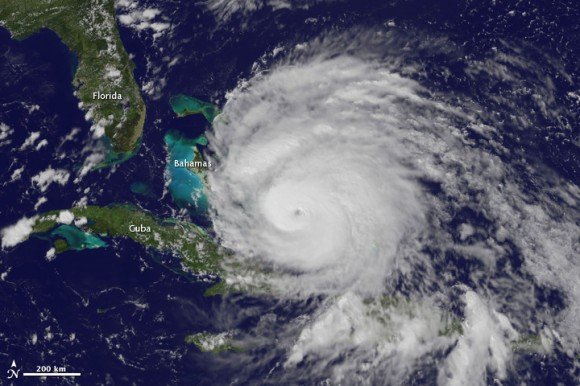
August 24, 2011 14.55 EDT Irene (taken by the GOES satellite) approaching the Bahamas. It now has a distinct eye and the clouds spiraling around the center are becoming more compact. The image also shows how large Irene has become, measuring several hundred kilometers across 
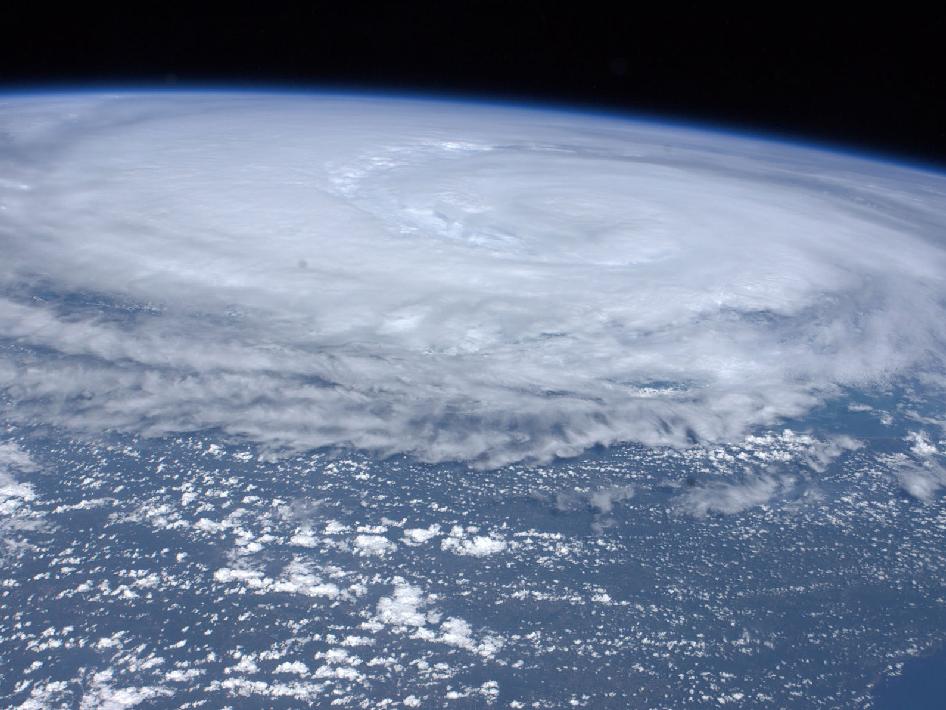
August 24, 2011 15:10 p.m. EDT View of Hurricane Irene from the International Space Station 230 miles above the Bahamas, moving northwest as a Category 3 hurricane with winds of 120 mph, expected to strengthen to a Category 4 storm imminently
August 25 2011 8.00 EDT Hurricane Irene 65 miles east-southeast of Nassau, Bahamas. Irene’s top sustained winds remain at 115 mph, moving to the northwest at 13 mph
August 25 2011 16.30 EDT Hurricane Irene from the International Space Station, clearing the Bahamas and heading north towards the US coast
HURRICANE IRENE VIDEOS – BAHAMAS REGION
1. HOW DOES A HURRICANE FORM? Insight into the process can be gleaned by watching a rapid time lapse movie of the formation of Hurricane Irene as it sweeps northwards across the Caribbean region
2. HURRICANE IRENE FROM CARIBBEAN TO CANADA This astounding NASA video tracks the path of Hurricane Irene from August 23 to August 29, showing the formation in the Caribbean region, the path over Puerto Rico, Hispaniola, the Bahamas and the US East Coast northwards to Canada
3. HURRICANE IRENE IN 20 SECONDS (NOAA/ GOES) A psychedelic trip
CREDITS for images, videos and text (as adapted) go to the websites of UNIVERSE TODAY, NASA and GOES PROJECT (NASA)
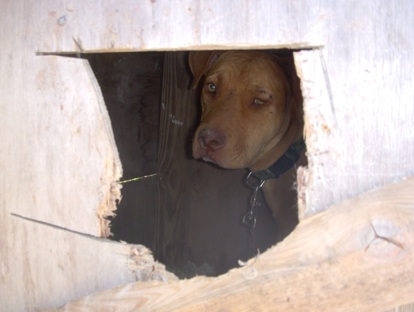
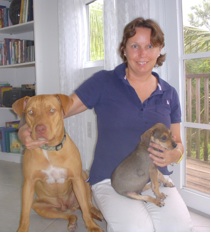
DELPHI CLUB ABACO & DELPHI THE RESCUE POTCAKE
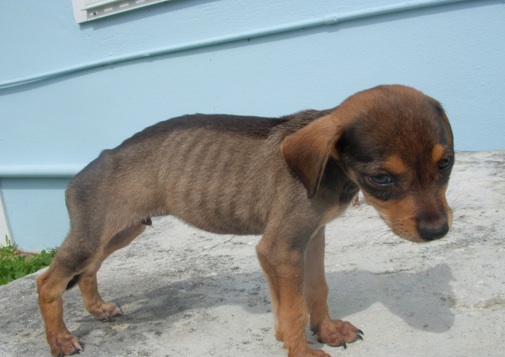
RESCUING RESCUE DOGS ON ABACO
- To see Jane’s flyer CLICK=>POTCAKES: RESCUE DOG APPEAL
- To contact Abaco Animal Rescue contact Jennie Zehler at thezehlers1@yahoo.com
- Abaco Animal Rescue FACEBOOK PAGE
ABACO BEACHCOMBING FOR SEA GLASS WITH KASIA
BEACHCOMBING FOR SEA GLASS
Kasia is an avid beachcomber on the sandy beaches of Abaco. Her collections include not only shells but also other marine debris such as sea glass. She has sent me some images with the comment “You can find a lot of sea glass in many different colours and shapes, from the most common green, brown and white through fairly hard to find colours like jadeite (one of the 2 forms of jade), citron, light blue, light green, honey and amber colored browns, to quite rare colors like cobalt, teal, periwinkle, aqua, amethyst & black” Here are some examples of Abaco sea glass from her collection. Shells and other items will follow as and when…
SEA GLASS COLOURS: THE VITREOUS STATISTICS
Sea glass sources are many and varied. In general, these include old clear plates, glasses, windows etc; coloured drinks bottles – wine, spirits, beer, fruit, cola etc; soda bottles; medicine bottles (e.g. milk of magnesia / Vick’s blue); fruit jars; ink bottles; household goods (bleach, soda). The rarest colours (see below) come from very specific origins: teal / Mateus Rose bottles; red / car or nautical lights or Schlitz bottles; black / c18 gin, beer and wine bottles
GENERAL CLASSIFICATION OF SEA GLASS COLOUR OCCURRENCE
Most common (1 in every 1 – 25 pieces found): clear, Kelly (‘Irish’) green, brown, blue, purple
Less common (1 in every 25 – 100 pieces found): jade, amber, lime green, forest green, ice / soft blue
Uncommon (1 in every 50 – 100 pieces found): other green shades
Very uncommon 1 in every 200 – 1000 pieces found): citron, opaque white, cobalt, cornflower blue and aqua
Extremely rare (1 in every 1000 – 10,000 pieces found): grey, pink, teal, black, yellow, turquoise, red
Rarest of all (1 in every 10,000+ pieces found): orange
Info credit: Magpies, for collection of bright shiny glass data. Omni-thanks
You’ll find a great deal of other useful info on sea glass on Mary Beth’s linked blog at http:// seaglassblog.blogspot.com/
There’s also a worthwhile Abaco Life article (2006) on sea glass at http://www.abacolife.com/2008/07/14/sea-gass-reveals-muted-tales-in-red-green-blue-white/
JAN 2012 I’ve noticed that there are several easily obtainable (eg from *M*Z*N) books on sea glass. I won’t be buying any to test-drive for you (as with birds, shells etc) – sorry – but they seem to be divided into the ‘pretty but uninformative and fairly cheap’ to the more instructive, more detailed and therefore more expensive books. It’s worth browsing online to find one that meets your interest level, whether passing or something more serious. The reviews are very useful here. The best – and it’s quite pricey – seems to be 
ABACO BIRD I.D: A SMALL GALLERY
At an early stage of this blog I set out one of its aims – to help answer the question “What the heck is that small yellow bird over there…?” Since then, images have been posted. Lists and links have been given. Bird books have been reviewed. Every little prompt with ID helps the interested amateur (e.g. rh) and not just with the little yellow birds… I have seen all these birds at or very close to Delphi except the common yellowthroat (which I may well have seen but not “seen” as in recognised); and the red-tailed hawk, which we have spotted in the National Park (see TO THE LIGHTHOUSE , a rugged (ha!) account of the frankly unnerving trip through the National Park to Hole-in-the-Wall Lighthouse)
Here is a small gallery posted with permission of Friends of the Environment, Abaco (thanks Olivia), taken from their website, where you will find these images and a great deal more excellent material besides. Click anywhere on the gallery to get a better view. All images © A.C. Hepburn 


You must be logged in to post a comment.