Unknown's avatar

SAWMILL SINK, ABACO: INDUSTRIAL ARCHAEOLOGY IN A POST-APOCALYPTIC LANDSCAPE


Sawmill Sink Abaco 8

SAWMILL SINK, ABACO

INDUSTRIAL ARCHAEOLOGY IN A POST-APOCALYPTIC LANDSCAPE

This article was written quite some time ago but I reckoned that, several years on, it might still be of interest. I haven’t changed much because it is what it was, so please ignore the time-slip. This was by chance a fire-fuelled opportunity to uncover a relic of Abaco’s industrial past.

The Blue Holes of Abaco are geological wonders about which much has been written. Sawmill Sink is one of the best-known inland ones. These are deep chasms in the limestone rock, some leading to extensive and complex cave systems under the island. Divers exploring Sawmill Sink have found many prehistoric fossils, including those of an extinct giant tortoise, and land crocodiles. The sink area was also a location for such finds.

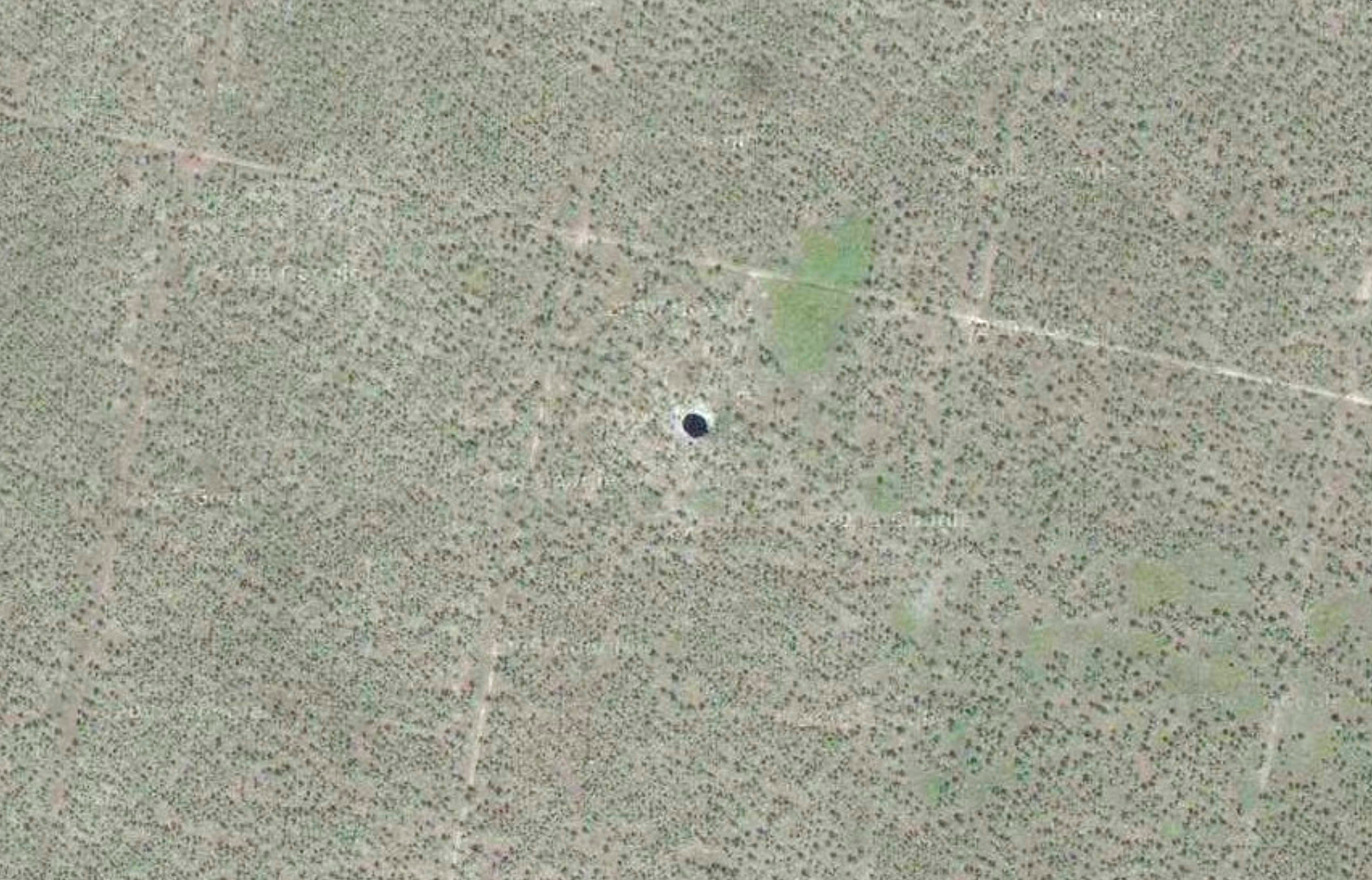
AERIAL VIEW OF SAWMILL SINK DEEP IN THE PINE FOREST
Screenshot 2024-11-16 at 17.15.58

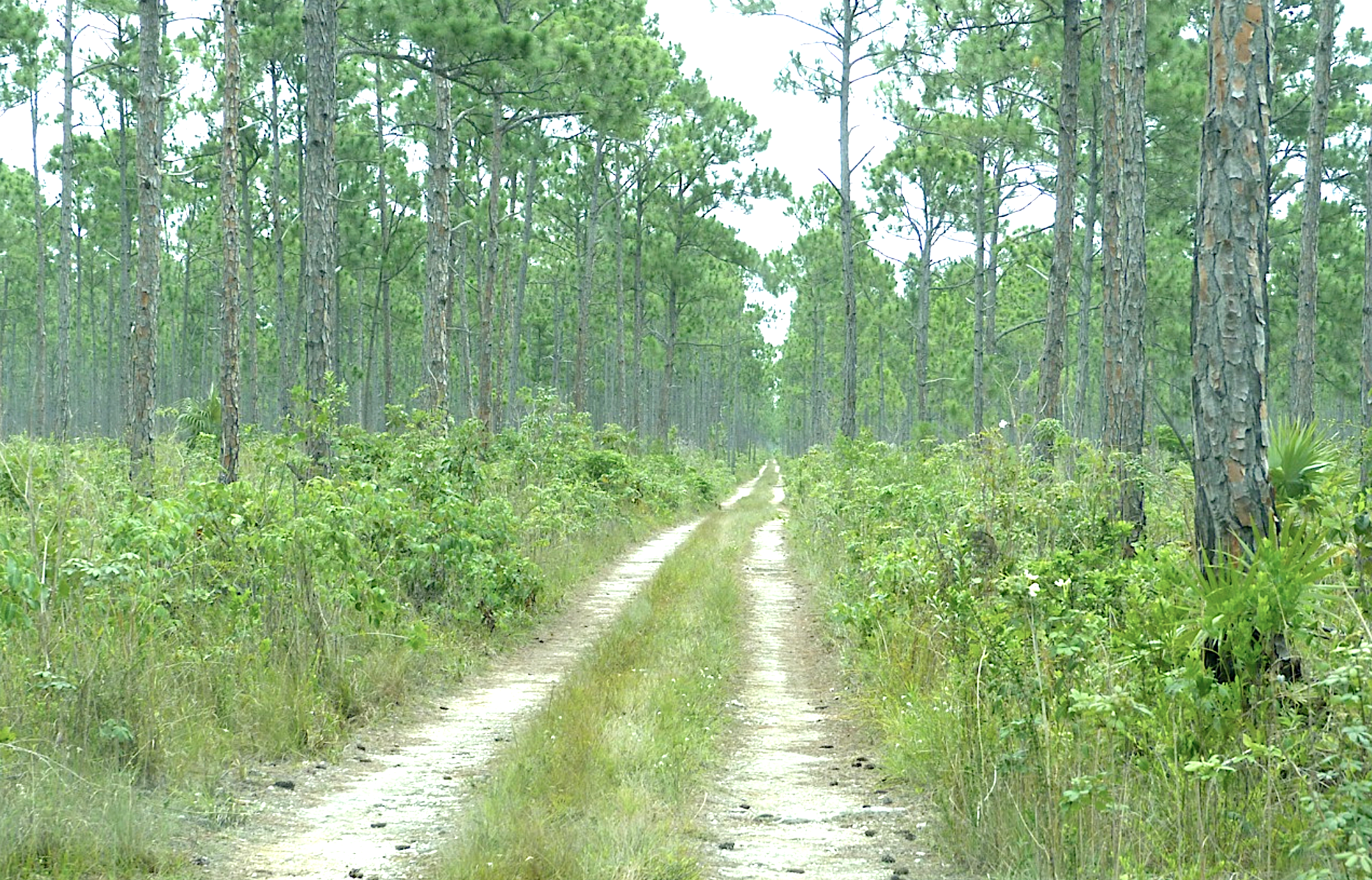
LOGGING TRACK TO SAWMILL SINK BLUE HOLE
Screenshot 2024-11-16 at 17.15.30

LOGGING HISTORY

South Abaco – defined loosely as the area south of Marsh Harbour – is dominated by pine forest. There are a few settlements and individual residences, all by the coast. The forested swathes are criss-crossed by an extensive system of logging tracks, many now all but impassable. They are reminders of Abaco’s historic importance as a source of wood deriving from the ubiquitous tall, slim pines. One use to which they were put was as mine pit props in the collieries of Wales.

 1996.2039.db

TRACKING RAILS

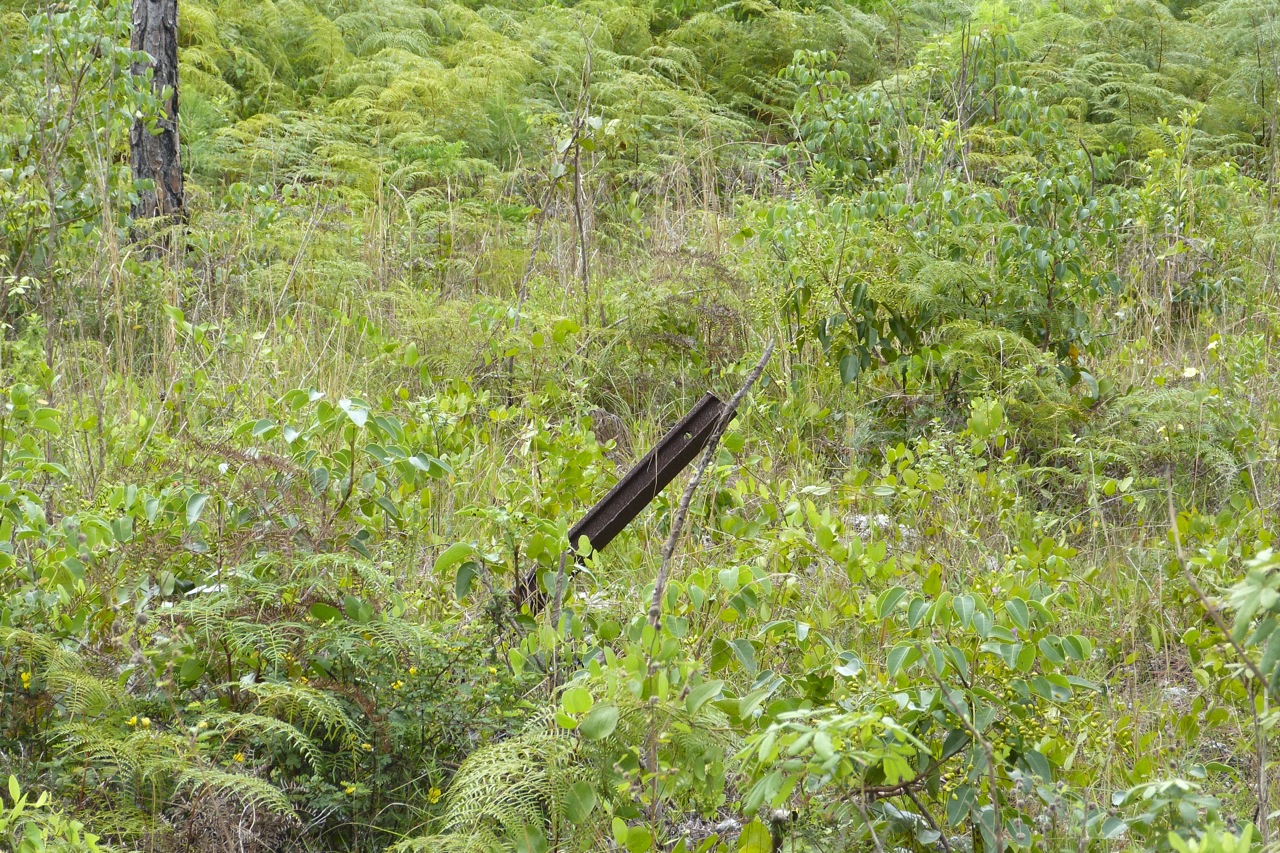
During a walk to Sawmill Sink, we noticed a rusty rail sticking up from the undergrowth. This was a remnant of the light railway tracks that had been laid through the forest to carry felled timber to the highway. From there it was transported to the coast to be loaded onto ships.
Sawmill Sink Abaco 17

Later, we went back to Sawmill Sink at a time when the south part of the island was enduring the annual outbreak of forest fires, some natural and some set to clear undergrowth. While the occasional natural fire is actually good for regeneration of a forest (cf burning moorland), a fire out of control and fuelled by wind can very quickly damage a vast area. Thick palls of smoke drift across the island and out to sea. Even while we were fishing far out on the Marls, flames were visible as tall pines burned, with the acrid smell of the blaze was carried on the wind.

REMEMBERED EMBERS

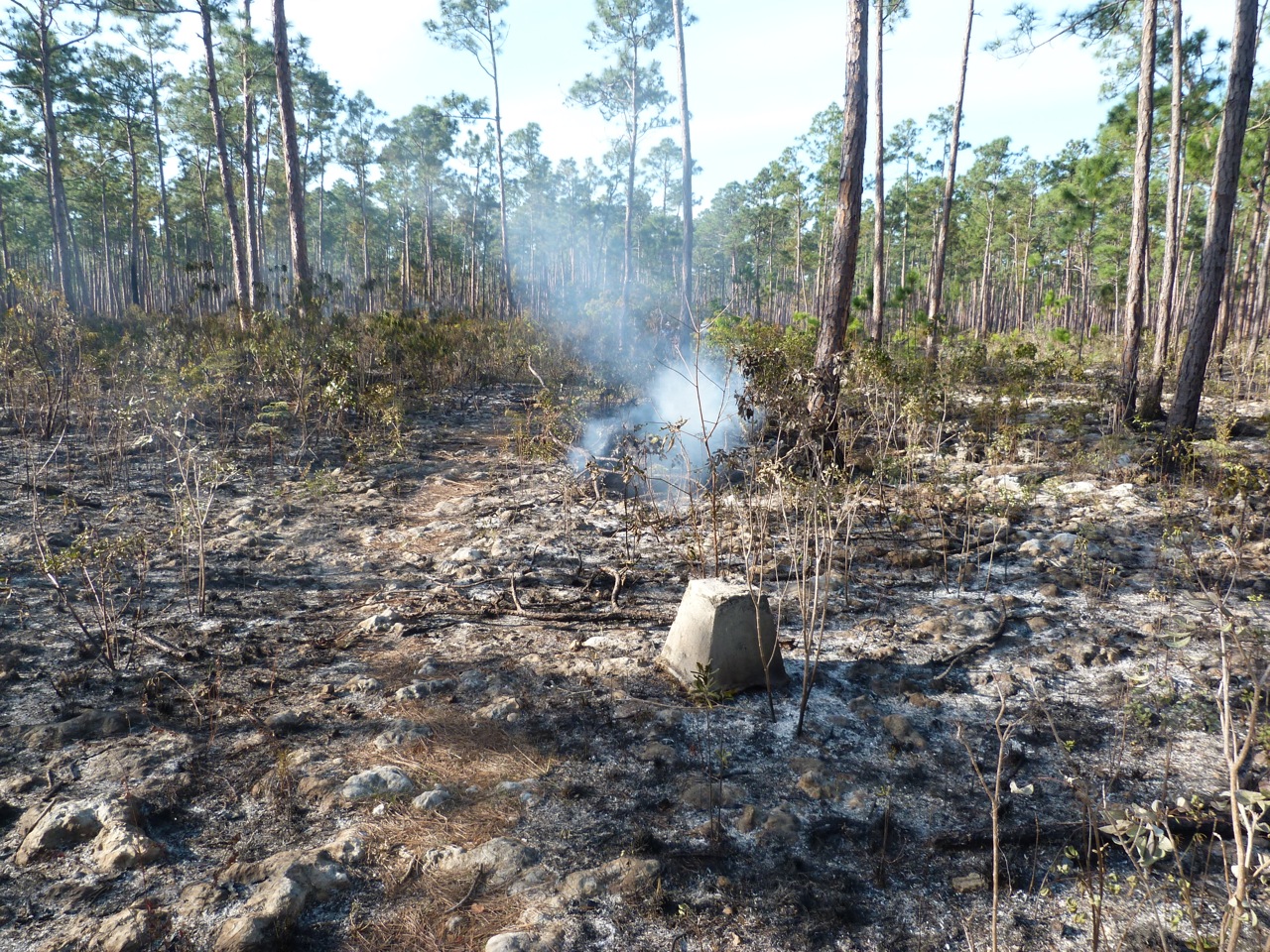
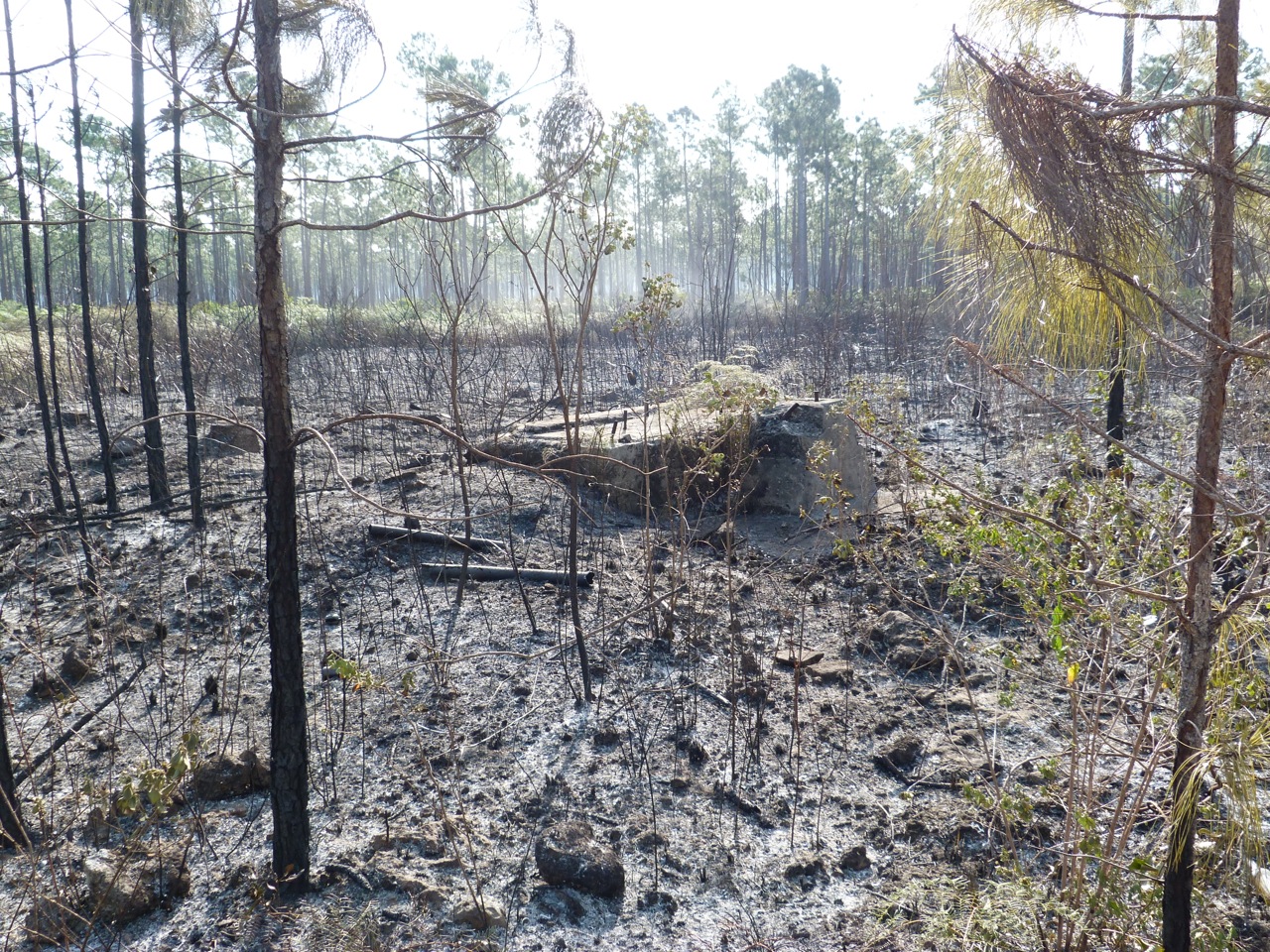
The photos that follow show the area round Sawmill Sink immediately after a fire had swept through the area, revealing the past. Trees were still smouldering and in places the ground was still hot to the touch. The evidence of the former usage had been laid bare. Some images below  show the paved path that leads from the logging track to the Sink. I never found out if these were the first detailed images of so many visible remains of the logging trade revealed by the burnt-off undergrowth. 

Sawmill Sink Abaco 1 Sawmill Sink Abaco 2 Sawmill Sink Abaco 3 Sawmill Sink Abaco 5 Sawmill Sink Abaco 6 Sawmill Sink Abaco 7 Sawmill Sink Abaco 9 Sawmill Sink Abaco 10 Sawmill Sink Abaco 11 Sawmill Sink Abaco 12 Sawmill Sink Abaco 13 Sawmill Sink Abaco 14

PREHISTORY

We found this rock close to the Sink. Are those plant fossils? Bearing in mind that in prehistory the ocean covered this area entirely (the highest point on Abaco is a mere 134 feet ASL), might these be anemones or sponge fossils of some sort? As I said then, ‘comments from fossilologists welcome’, and a kind follower FOSSIL LADY (aka Kathi) reponded:  Those don’t look like plant fossils to me, they remind me of stromatolites, a sponge like creature that first dominated the earth billions of years ago. Some varieties still survive today. It would be worth it to have a geologist have a look see. ps the sinkhole is awesome!

Sawmill Sink Abaco 15

Photo credits: all RH except pit props (Scottish Mining Museum); aerial view (Gmaps)

Unknown's avatar

BREADFRUIT: NATURE’S BOUNTY WITH ADDED MUTINY


Artocarpus altilis - breadfruit (Hans Hillewaert)


BREADFRUIT: NATURE’S BOUNTY WITH ADDED MUTINY

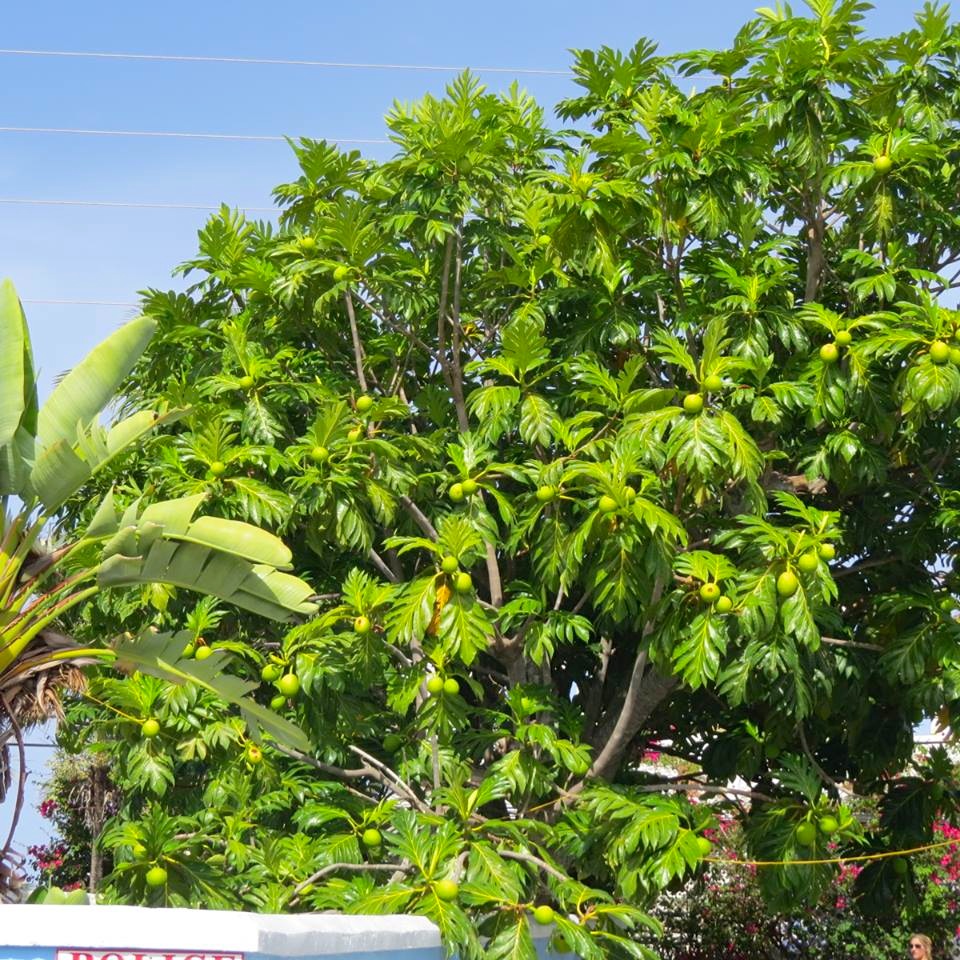
Capt. William Bligh achieved fame for all the wrong reasons. Despite a distinguished and wide-ranging seafaring career he is widely remembered for just two things: (1) The Bounty and (2) Mutiny On. In 1787, he was dispatched to Tahiti to collect specimens of BREADFRUIT (a fruit of the Pacific islands, in particular Polynesia) to help provide food for the British colonies in the West Indies. The breadfruit was intended to be a basic and cheap staple food not just for settlers but also for the indigenous population.

Breadfruit 2


‘BLIGH’S BLIGHT’ – MUTINY!

Capt. Bligh’s Bounty crew unfortunately mutinied – possibly to do with the amount of water the breadfruit required in transit, compared to their own meagre rations. So they threw overboard the hundreds of breadfruit plants that were in transit. Then they set adrift Bligh with his loyal officers and crew. He was later court-martialled but cleared of culpability for provoking a mutiny by his conduct (from a strictly legal viewpoint and on the bare facts, not a surprising ruling you might think).

Mutiny on the HMS Bounty (Robert Dodd)


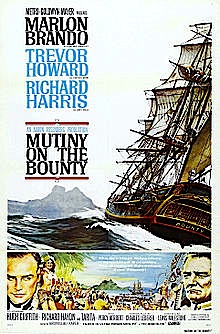
This isn’t the place for a disquisition on the Mutiny. You can read all about it HERE. Or better still, watch one of the rollicking all-star-cast films based loosely on the episode for a careful and accurate historical record of the events that will buckle your swash…


Mutiny_on_the_Bounty_Poster (1935) 220px-Poster_for_Mutiny_on_the_Bounty BLIGH’S SECOND CHANCE

Following that skirmish, and indeed blemish, on his record, in 1793 Capt. Bligh was yet again charged with the task of shipping breadfruit trees from their origin to the Caribbean. His heart must have sunk at the prospect, yet finally he succeeded. However, he completed his journey only for those on the consumption end to express considerable distaste for such a bland, starchy fruit. It took a long time to catch on, and even longer for its culinary versatility to become appreciated. 


Breadfruit image (Pacific site)


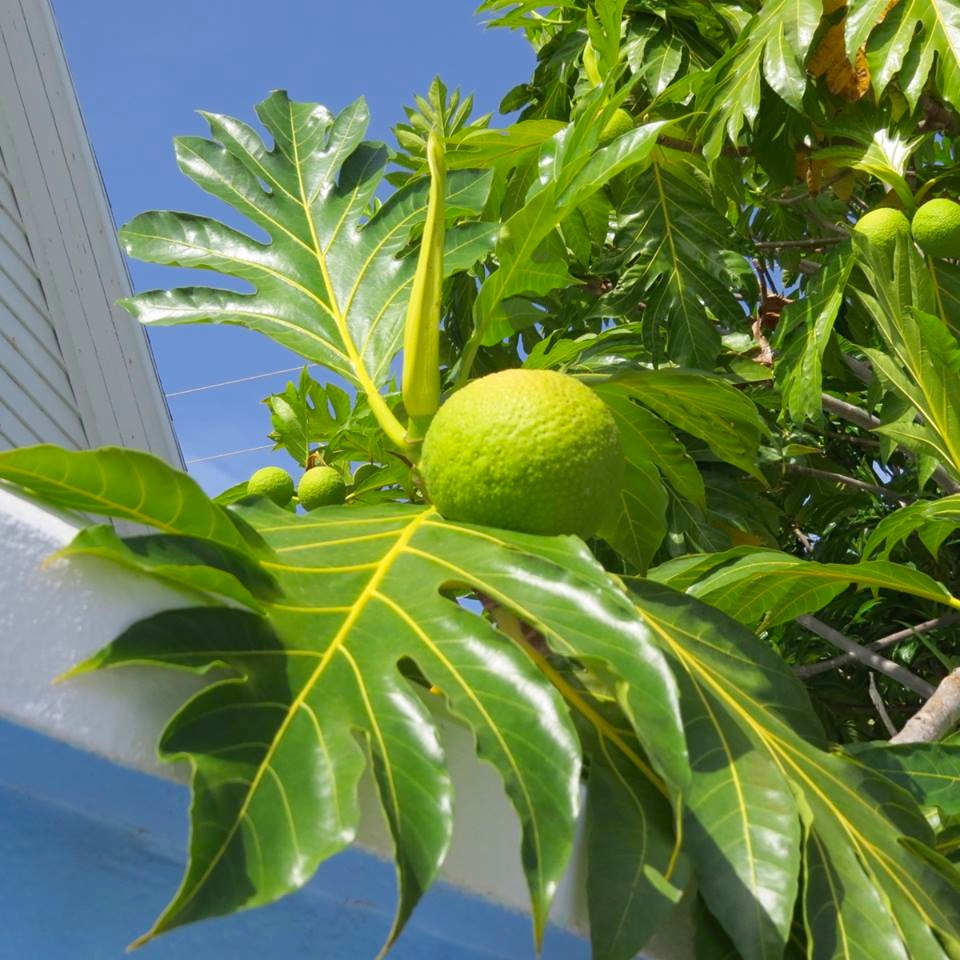
The most famous breadfruit tree in all Abaco is to be found in Hope Town, on Elbow Cay. I can do no better than display the notice that proudly proclaims the historic significance of the tree and its eponymous fruit.

Breadfruit Tree Notice, Hope Town Abaco (Dp PatersonBreadfruit Tree, Hope Town Abaco (Dp Paterson)


Unusually for a fruit plant, a true breadfruit Artocarpus altilis does not produce seeds. It is propagated by removing the suckers that grow at at the base of the tree.

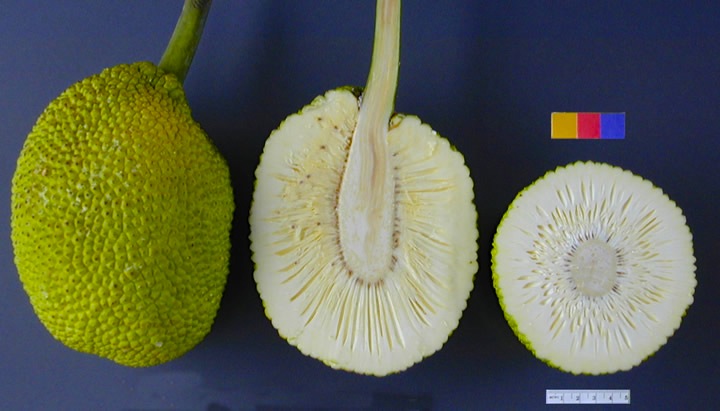
For those unfamiliar with the fruit and its interior, here it is in both slice and cross-sectionBreadfruit sliced (US Pacific Basin Agricultural Research Center)


BREADFRUIT IN ART

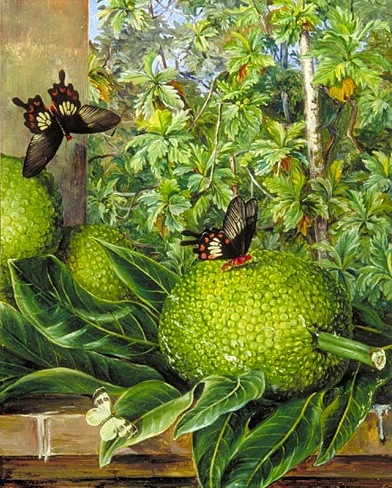
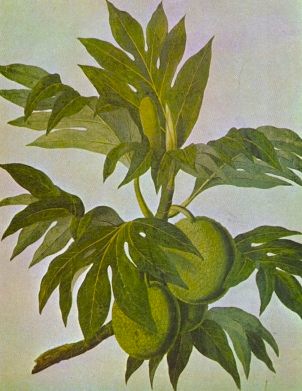
Breadfruit has (somewhat surprisingly?) received some artistic recognition over the years. Here are a few examples. The first, very jolly, includes early representations of the Polydamus Swallowtail butterfly; the second is quite dull; the third is instructional (oddly equating breadfruit with tea, coffee and chocolate); and the fourth is not at all appetising to look at… nor, in the days of adhesive stamps, to lick.

Breadfruit with butterflies (Royal Botanic Garden, Kew)Breadfruit (Royal Botanic Gardens, Kew)

                                 Breadfruit (John Frederick Miller)                                  Breadfruit drawing John Frederick Miller

      Breadfruit & related plants used as food (William Rhind (1841)     Breadfruit etc William Rhind (1841)

Breadfruit - Bahamas Stamp


SO WHERE DOES BREADFRUIT GROW NOW?

Breadfruit will flourish only within a certain latitude range where the rainfall and temperature suit it, as this map shows. I include this information in case you ever find yourself in the awkward position of being socially stranded with someone whose conversation has become soporific. Be armed with some useful worldwide breadfruit stats for just such an occasion – the fact that Madagascar is a suitable yet not a very good location, for example (not enough rainfall). You will soon find yourself alone…

Breadfruit - the world propagation range


A CULINARY TREAT

Breadfruit is sometimes thought to be a dull and un-tasty, at least compared with many other fruits. I thought I’d include a recipe or two that rather appealed to me – the second because even I could do that… it’s within my shamefully limited culinary skill-set.


Breadfruit Recipe (myrecipefriends.com)


BAKED BREADFRUIT

Large, ripe breadfruit 1 cup water Butter 1 lime or lemon

Heat oven to 350 degrees F. Put the water in a shallow pan and place the whole breadfruit in the water. Bake in oven for three hours. Remove from oven, allow to cool slightly, peel, removing the large core and stem. Cut the fruit into sections and place in a serving dish. Cover with butter and a squeeze of lime or lemon juice.

A PERFECT HOPE TOWN BREADFRUIT
Breadfruit, Hope Town Abaco (Dp Paterson)


BLIGH’S END

Capt. Bligh managed to put his breadfruit adventures and the mutiny behind him. He continued a distinguished naval career with successive command of an impressive number of ships. He ended up as a Vice-Admiral, and (on his death in 1817) in a grave in Lambeth, London.

V-A William Bligh (1814)

Grave of William Bligh, Lambeth, London (Geograph, Commons Media

This post was originally published a while back, inspired by an article on breadfruit and the Hope Town tree by local historian Deb ‘DP’ Patterson. I’m grateful to her for permission to use her idea and indeed some of her material, in particular her photos of the tree and its notice.

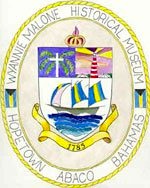
Wyannie Malone Museum Crest, Hope Town, Abaco

HMS BOUNTY II (Full Sails). A 1960 reconstruction (Dan Kasberger)HMS_BOUNTY_II_Full_Sails 1960 reconsrtuction (Dan Kasberger)

Credits: First and foremost, Deb Patterson; Magpie Pickings including Hans Hillewaert, US Pacific Basin Agricultural Research Center, Royal Botanic Garden Kew, myrecipefriends, M Kwek, whatsonbahamas, Wyannie Malone Historical Museum, ‘Geograph’, Dan Kasberger, Wiki; and anyone else I have omitted…

Unknown's avatar

A LIGHT EXTINGUISHED: LITTLE HARBOUR LIGHTHOUSE REVISITED


Little Harbour Lighthouse, Abaco Bahamas (Keith Salvesen)

A LIGHT EXTINGUISHED: LITTLE HARBOUR LIGHTHOUSE REVISITED

This article was written before Dorian and I don’t know the state of this lighthouse now. If some of it still exists, this is its previous state. If not, this is a record of what has been and is now gone.

The words ‘Abaco Lighthouse’ are near-synonymous with the splendid striped edifice in Hope Town, Elbow Cay. This beloved building is truly iconic, in the modern sense of the word (see HERE). But it would not do to forget the other principal lighthouse of Abaco at Hole-in-the-Wall, also with its original Fresnel lenses (see HERE for a post written ages ago).

Little Harbour Lighthouse, Abaco Bahamas (Keith Salvesen)

However, there’s a third lighthouse on Abaco. The small light at Little Harbour is, in contrast to the other two beacons, relatively unknown, unvisited, and unloved. Derelict, in fact, and a sad  relic on its lonely promontory. Recently we prised ourselves away from the delights of Pete’s Pub and found the start of the overgrown track to the light. There’s a wooden sign that helps to locate the path. 

Little Harbour Lighthouse, Abaco Bahamas (Keith Salvesen)

This small lighthouse station – “The Old Lighthouse” – was established in 1889 close to the entrance to Little Harbour. Originally, it was manned, with the first lighthouse keeper and his wife being the only inhabitants of that part of Little Harbour. The light presumably served to guide shipping to the channel leading to the secluded and safe harbour.

Little Harbour Lighthouse, Abaco Bahamas (Keith Salvesen)Little Harbour Lighthouse, Abaco Bahamas (Keith Salvesen)               Little Harbour Lighthouse, Abaco Bahamas (Keith Salvesen)

In due course the living quarters fell into dereliction and the existing beacon fixed on a small tower, later converted to a solar-powered light. This arrangement did not survive the devastation of Hurricane Floyd in 1999. The replacement was a modern steel framework tower that carried an active light until eventually it was blown over by Hurricane Sandy in October 2012. Sandy was also the hurricane that destroyed forever the rock ‘hole’ – an important navigation mark for centuries – that gave Hole-in-the-Wall its distinctive name (see HERE and links).

Little Harbour Lighthouse, Abaco Bahamas (Keith Salvesen)Little Harbour Lighthouse, Abaco Bahamas (Keith Salvesen) Little Harbour Lighthouse, Abaco Bahamas (Keith Salvesen)

The views from the elevated position of the ruin are spectacular, both from the outside and from inside. In good weather, anyway…  It remains to be seen whether the lonely light is now considered completely redundant, or whether another automatic light will in the end be positioned here when funds or willpower permit. I’m not aware of any groundswell of opinion suggesting that, in the absence of a beacon at Little Harbour, there is a potential safety issue. 

The view north from the light to the tip of the promontoryLittle Harbour Lighthouse, Abaco Bahamas (Keith Salvesen)

The view roughly south past the fallen tower towards CherokeeLittle Harbour Lighthouse, Abaco Bahamas (Keith Salvesen)

Over time, I have been contacted by people with family associations to previous keepers; and with personal experiences of life there. One or two Americans have wanted to track newly discovered family connections to the light, and even possible relatives. I have the makings of ‘Lighthouse Family’ tree. When I originally wrote about the light, Chuck Rickey contacted me with his story, which gives a wonderful insight into the history of the light and its hardy occupants: 

“My grandmother’s first cousin, Curtis Lowe, was lighthouse keeper here for many years and along with his wife, Bessie, raised children Hartley, Maitland, Lois and Robert, obtaining staples buy walking a tract road or sailing to Cherokee Sound. Later on, they were able to motor to Snake Cay, to get provisions from Owens Illinois’ company store aboard the “Robert Fulton”, an old side-wheel steamer, permanently moored there. I was fortunate to spend much fun time there during school vacations growing up”.

WHEREABOUTS IN LITTLE HARBOUR IS WAS THE LIGHTHOUSE

Little Harbour Lighthouse 1 jpg copyLittle Harbour Lighthouse 4 jpg

RELATED POSTS

ELBOW REEF LIGHTHOUSE: A BEACON ICON

HOLE-IN-THE-WALL LIGHTHOUSE

HOLE-IN-THE-WALL: HISTORY, SHIPS AND MAPS

Little Harbour Lighthouse, Abaco Bahamas (Darlene Chisholm)

Credits: all photos Keith Salvesen except the last, Darlene Chisholm. Also, with many thanks to Sandy Estabrook. 

Logo of the World Lighthouse Society

Logo of the World Lighthouse Society

Unknown's avatar

BREADFRUIT: NATURE’S BOUNTY (WITH ADDED MUTINY)


Artocarpus altilis - breadfruit (Hans Hillewaert)

BREADFRUIT: NATURE’S BOUNTY (WITH ADDED MUTINY)

Capt. William Bligh achieved fame for all the wrong reasons. Despite a distinguished and wide-ranging seafaring career he is widely remembered for just two things: (1) The Bounty and (2) Mutiny On. In 1787, he was dispatched to Tahiti to collect specimens of BREADFRUIT (a fruit of the Pacific islands, in particular Polynesia) to help provide food for the British colonies in the West Indies. To be clear, the breadfruit was intended to be a basic and cheap staple food not just for settlers but also for the indigenous population. I think we can all guess the status of the latter at that time.

Breadfruit 2

‘BLIGH’S BLIGHT’ – MUTINY!

Capt. Bligh’s Bounty crew unfortunately mutinied – possibly to do with the amount of water the breadfruit required in transit, compared to their own meagre rations. So they threw overboard the hundreds of breadfruit plants that were in transit. Then they set Bligh with his loyal officers and crew adrift… He was later court-martialled but cleared of culpability for provoking a mutiny by his conduct (from a strictly legal viewpoint and on the bare facts, not a surprising ruling you might think).

Mutiny on the HMS Bounty (Robert Dodd)

This isn’t the place for a disquisition on the Mutiny. You can read all about it HERE. Or better still, watch one of the rollicking all-star-cast films based loosely on the episode for a careful and accurate historical record of the events that will buckle your swash…

Mutiny_on_the_Bounty_Poster (1935) 220px-Poster_for_Mutiny_on_the_Bounty BLIGH’S SECOND CHANCE

Following that skirmish, and indeed blemish, on his record, in 1793 Capt. Bligh was yet again charged with the task of shipping breadfruit trees from their origin to the Caribbean. His heart must have sunk at the prospect, yet finally he succeeded. However, he completed his journey only for those on the consumption end to express considerable distaste for such a bland, starchy fruit. It took a long time to catch on, and even longer for its culinary versatility to become appreciated. Breadfruit image (Pacific site)

The most famous breadfruit tree in all Abaco is to be found in Hope Town, on Elbow Cay. I can do no better than display the notice that proudly proclaims the historic significance of the tree and its eponymous fruit.

Breadfruit Tree Notice, Hope Town Abaco (Dp PatersonBreadfruit Tree, Hope Town Abaco (Dp Paterson)

Unusually for a fruit plant, a true breadfruit Artocarpus altilis does not produce seeds. It is propagated by removing the suckers that grow at at the base of the tree.

For those unfamiliar with the fruit and its interior, here it is in both slice and cross-sectionBreadfruit sliced (US Pacific Basin Agricultural Research Center)

BREADFRUIT IN ART

Breadfruit has (somewhat surprisingly?) received some artistic recognition over the years. Here are a few examples. The first, very jolly, includes early representations of the Polydamus Swallowtail butterfly; the second is quite dull; the third is instructional (oddly equating breadfruit with tea, coffee and chocolate); and the fourth is not at all appetising to look at… nor, in the days of adhesive stamps, to lick.

Breadfruit with butterflies (Royal Botanic Garden, Kew)Breadfruit (Royal Botanic Gardens, Kew)

                                 Breadfruit (John Frederick Miller)                                  Breadfruit drawing John Frederick Miller

      Breadfruit & related plants used as food (William Rhind (1841)     Breadfruit etc William Rhind (1841)

Breadfruit - Bahamas Stamp

SO WHERE DOES BREADFRUIT GROW NOW?

Breadfruit will flourish only within a certain latitude range where the rainfall and temperature suit it, as this map shows. I include this information in case you ever find yourself in the awkward position of being socially stranded with someone whose conversation has become soporific. Be armed with some useful worldwide breadfruit stats for just such an occasion – the fact that Madagascar is a suitable yet not a very good location, for example (not enough rainfall). You will soon find yourself alone…

Breadfruit - the world propagation range

A CULINARY TREAT

Breadfruit is sometimes thought to be a dull and un-tasty, at least compared with many other fruits. I thought I’d include a recipe or two that rather appealed to me – the second because even I could do that… it’s within my shamefully limited culinary skill-set.

Breadfruit Recipe (myrecipefriends.com)

BAKED BREADFRUIT

Large, ripe breadfruit 1 cup water Butter 1 lime or lemon

Heat oven to 350 degrees F. Put the water in a shallow pan and place the whole breadfruit in the water. Bake in oven for three hours. Remove from oven, allow to cool slightly, peel, removing the large core and stem. Cut the fruit into sections and place in a serving dish. Cover with butter and a squeeze of lime or lemon juice.

A PERFECT HOPE TOWN BREADFRUIT
Breadfruit, Hope Town Abaco (Dp Paterson)

BLIGH’S END

Capt. Bligh managed to put his breadfruit adventures and the mutiny behind him. He continued a distinguished naval career with successive command of an impressive number of  ships. He ended up as a Vice-Admiral, and (on his death in 1817) in a grave in Lambeth, London.

V-A William Bligh (1814)

Grave of William Bligh, Lambeth, London (Geograph, Commons Media

This post was originally published a while back, inspired by an article on breadfruit and the Hope Town tree by local historian Deb ‘DP’ Patterson, known to many for her committed involvement with the Wyannie Malone Historical Museum in Hope Town. I’m grateful to her for permission to use her idea and indeed some of her material, in particular her photos of the tree and its notice.

Wyannie Malone Museum Crest, Hope Town, Abaco

HMS BOUNTY II (Full Sails). A 1960 reconstruction (Dan Kasberger)HMS_BOUNTY_II_Full_Sails 1960 reconsrtuction (Dan Kasberger)

Credits: First and foremost, Deb Patterson; Magpie Pickings including Hans Hillewaert, US Pacific Basin Agricultural Research Center, Royal Botanic Garden Kew, myrecipefriends, M Kwek, whatsonbahamas, Wyannie Malone Historical Museum, ‘Geograph’, Dan Kasberger, and Wiki; and anyone else I have omitted…

Unknown's avatar

IS THIS THE REAL LIFE? OR IS THIS JUST FANS AT SEA?


Purple sea fan, Bahamas (Melinda Riger / Grand Bahama Scuba)

IS THIS THE REAL LIFE? OR IS THIS JUST FANS AT SEA?

I wrote the original post on this theme, with its somewhat Bohemian and rhapsodic title, a while back. It was put together at a time of sunshine, normality and optimism. The 2019 hurricane season was far in the future, and the prospect of one – let alone two – of the finest islands in the Bahamas being virtually eradicated overnight was unthinkable.

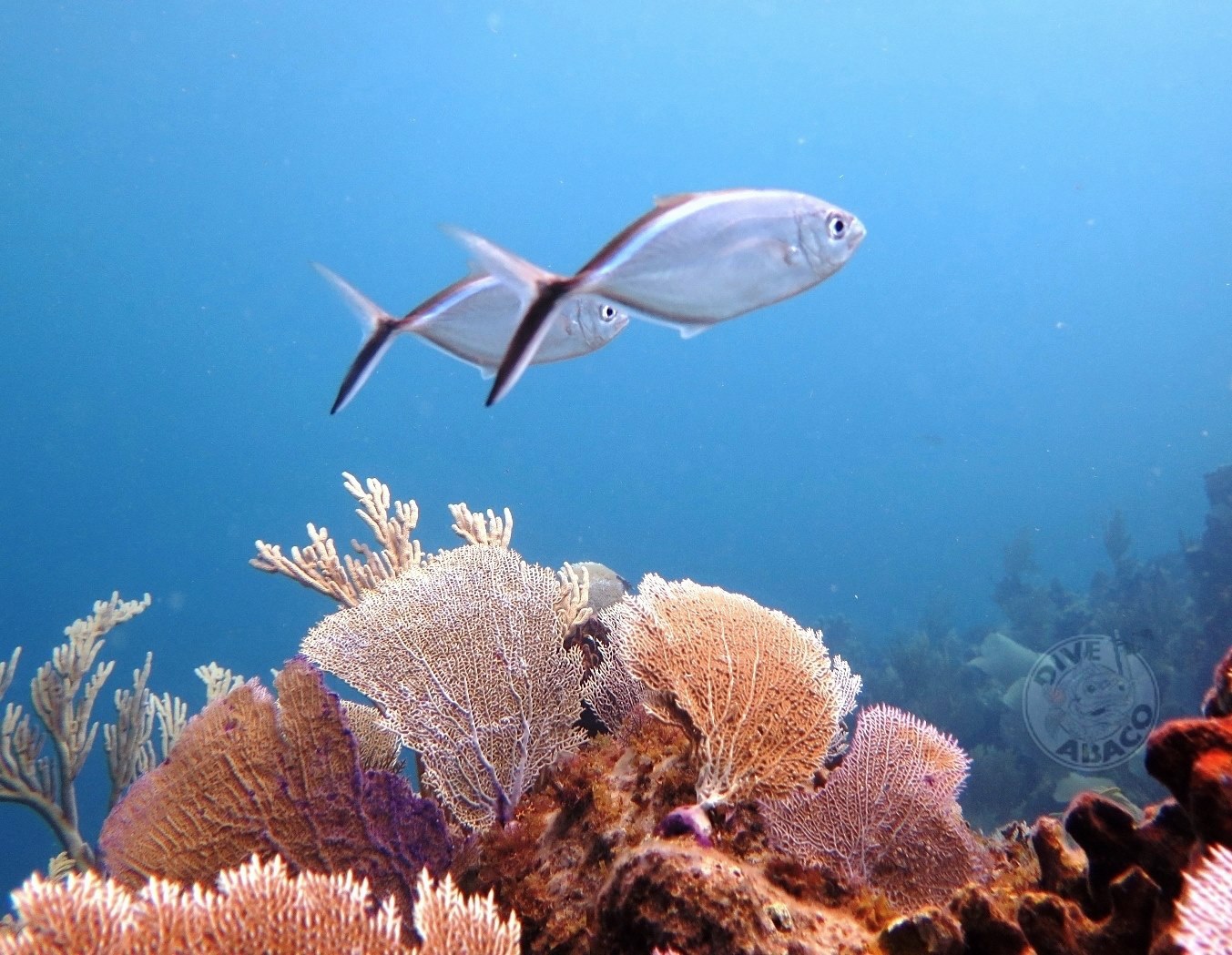
Purple Sea Fans, Abaco, Bahamas (Dive Abaco / Keith & Melinda Rogers)

Right now, in the aftermath of the devastation wrought by Hurricane Dorian, and as the communities gradually start on the long road to recovery, the priorities remain personal and community safety, food, fresh water, medical supplies and access to all the other necessities that the major relief operation has so effectively enabled. However, as gradual improvements to daily life are achieved, so a degree of interest in the natural world is returning.

Purple sea fan, Bahamas (Melinda Riger / Grand Bahama Scuba)

The despoliation of the land is there for all to see, visible even from space. As yet – as far as I know – no one has had the time or opportunity, or even a boat and the right equipment to investigate below the surface of the sea. What of the reefs: the bright darting reef fish; the larger denizens of the deep; the corals, sponges and anemones? The massive Cat 5 storm caused an unprecedented 23′ surge. It’s hard to see how the reefs can have remained unaffected, and there must be the possibility that the THIRD LARGEST BARRIER REEF in the world will have been altered irrevocably.

Purple sea fan, Bahamas (Melinda Riger / Grand Bahama Scuba)

Since Dorian, the related organisations have been unable to operate. Abaco’s ‘Dive Abaco’ was virtually annihilated along with the rest of Marsh Harbour. Grand Bahama Scuba has just reopened, although it may take a while before dive trips are anywhere back to normal. This post contains beautiful photos from both the Melindas concerned, taken in happier times before the dark cloud swept over the islands just one month ago.

Purple sea fan, Bahamas (Melinda Riger / Grand Bahama Scuba)

NOTES FROM THE PRE-DORIAN PAST

The waters of Abaco teem with myriads of fish that depend on the coral reefs for shelter and safety, for breeding, for growing up in, and for nourishment. Sea fans (or gorgonians, to use the technical name) are animals too. They may look like plants and stay rooted to the spot, but like anemones these ‘soft corals’ are creatures of the reef and essential indicators of its health.

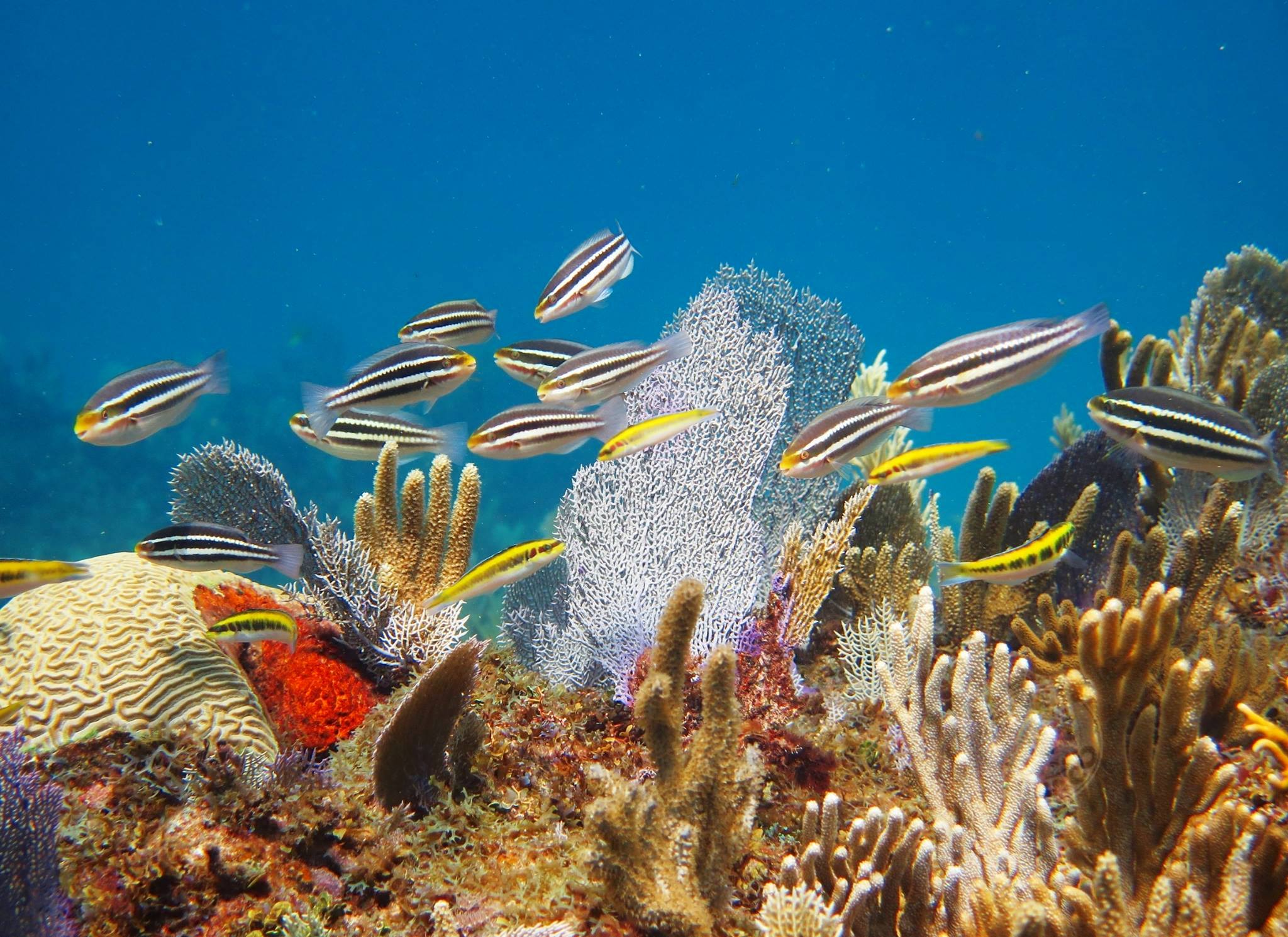
Purple Sea Fans, Abaco, Bahamas (Dive Abaco / Keith & Melinda Rogers)

At the moment it can still be said that the static (‘sessile’) members of the Abaco reef community are relatively unscathed by the impact of (and I don’t want to get into any arguments here) whatever causes mass bleaching and the death of reefs elsewhere in the world.

Purple Sea Fans, Abaco, Bahamas (Dive Abaco / Keith & Melinda Rogers)

Purple Sea Fans, Abaco, Bahamas (Dive Abaco / Keith & Melinda Rogers)  Purple Sea Fans, Abaco, Bahamas (Dive Abaco / Keith & Melinda Rogers)

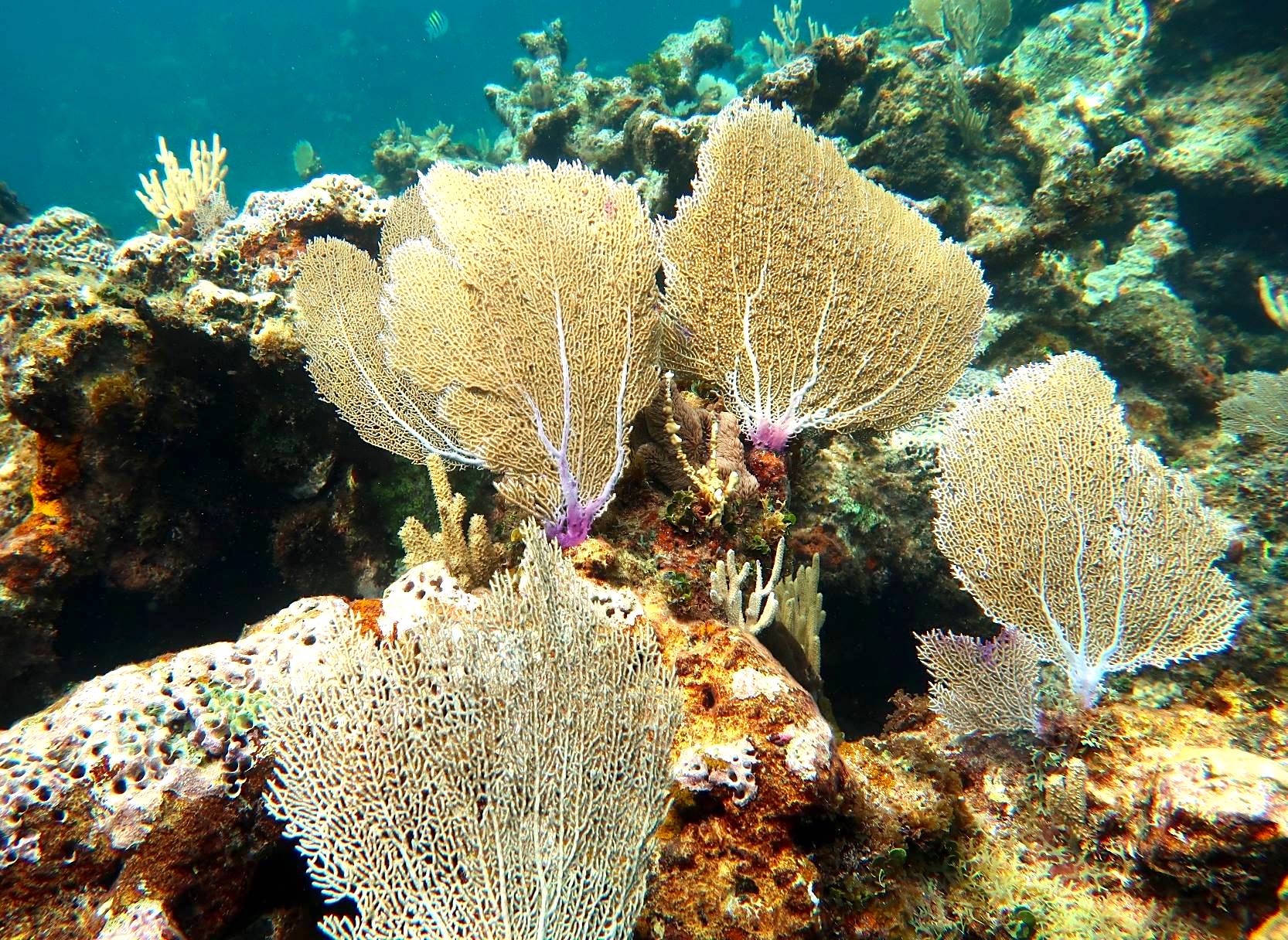
The purple sea fan Gorgonia ventalina (classified by Linnaeus in 1785) is one of the most common species of sea fan, and a spectacular one at that. The main branches are linked by a lattice of smaller branches. Below the ‘skin’ is a skeleton made of calcite compounded with a form of collagen. 

Purple Sea Fans, Abaco, Bahamas (Dive Abaco / Keith & Melinda Rogers)

Sea fans are filter-feeders, and have polyps with eight tiny tentacles that catch plankton as it drifts past. They develop so that their orientation is across the prevailing current. This maximises the water passing by and consequently the supply of food as the fans gently wave in the flow.

Purple Sea Fans, Abaco, Bahamas (Dive Abaco / Keith & Melinda Rogers)  Purple Sea Fans, Abaco, Bahamas (Dive Abaco / Keith & Melinda Rogers)

Gorgonians have a chemical defence mechanism that protects against potential troublemakers. The main effect is to make themselves unpleasant to nibble or uproot.

Purple Sea Fans, Abaco, Bahamas (Dive Abaco / Keith & Melinda Rogers)

One species impervious to this deterrent is the fascinating FLAMINGO TONGUE SNAIL (more of which quite soon). Other ‘safe’ species include the fireworm and BUTTERFLYFISHES.

Purple Sea Fans, Abaco, Bahamas (Dive Abaco / Keith & Melinda Rogers)

One benefit of sea fans to mankind is that their defensive chemicals have been discovered to provide the basis for drug research and development, specifically in the field of  anti-inflammatories. Another benefit, of course, is that they are very beautiful to look at. And in bad times, that can only be good .

Purple Sea Fans, Abaco, Bahamas (Dive Abaco / Keith & Melinda Rogers)

Purple Sea Fans, Abaco, Bahamas (Dive Abaco / Keith & Melinda Rogers)    Purple Sea Fans, Abaco, Bahamas (Dive Abaco / Keith & Melinda Rogers)

Most of the photos featured are by courtesy of Capt. Keith and Melinda Rogers of the well-known local scuba dive and snorkel centre DIVE ABACO, located in central Marsh Harbour. As prime enablers of reef exploration in Abaco waters, it can truly be said that they too have plenty of fans.

Purple Sea Fans, Abaco, Bahamas (Dive Abaco / Keith & Melinda Rogers)

Credits: Melinda and Keith Rodgers / Dive Abaco, Marsh Harbour; Melinda and Fred Riger / Grand Bahama Scuba (1, 3, 4, 5)

** The answer to the questions in the Title is… it’s both!

FINALLY, A SPECIAL FAN FOR ABACO AND GRAND BAHAMA

Purple Sea Fans, Abaco, Bahamas (Dive Abaco / Keith & Melinda Rogers)

Unknown's avatar

IS THIS THE REAL LIFE? OR IS THIS JUST FANS AT SEA?


Purple Sea Fans, Abaco, Bahamas (Dive Abaco / Keith & Melinda Rogers)

IS THIS THE REAL LIFE? OR IS THIS JUST FANS AT SEA?

The waters of Abaco teem with myriads of fish that depend on the coral reefs for shelter and safety, for breeding, for growing up in, and for nourishment. Sea fans (or gorgonians, to use the technical name) are animals too. They may look like plants and stay rooted to the spot, but like anemones these ‘soft corals’ are creatures of the reef and essential indicators of its health.

Purple Sea Fans, Abaco, Bahamas (Dive Abaco / Keith & Melinda Rogers)

At the moment it can still be said that the static (‘sessile’) members of the Abaco reef community are relatively unscathed by the impact of (and I don’t want to get into any arguments here) whatever causes mass bleaching and the death of reefs elsewhere in the world.

Purple Sea Fans, Abaco, Bahamas (Dive Abaco / Keith & Melinda Rogers)

Purple Sea Fans, Abaco, Bahamas (Dive Abaco / Keith & Melinda Rogers)  Purple Sea Fans, Abaco, Bahamas (Dive Abaco / Keith & Melinda Rogers)

The purple sea fan Gorgonia ventalina (classified by Linnaeus in 1785) is one of the most common species of sea fan, and a spectacular one at that. The main branches are linked by a lattice of smaller branches. Below the ‘skin’ is a skeleton made of calcite compounded with a form of collagen. 

Purple Sea Fans, Abaco, Bahamas (Dive Abaco / Keith & Melinda Rogers)

Sea fans are filter-feeders, and have polyps with eight tiny tentacles that catch plankton as it drifts past. They develop so that their orientation is across the prevailing current. This maximises the water passing by and consequently the supply of food as the fans gently wave in the flow.

Purple Sea Fans, Abaco, Bahamas (Dive Abaco / Keith & Melinda Rogers)  Purple Sea Fans, Abaco, Bahamas (Dive Abaco / Keith & Melinda Rogers)

Gorgonians have a chemical defense mechanism that protects against potential troublemakers. The main effect is to make themselves unpleasant to nibble or uproot.

Purple Sea Fans, Abaco, Bahamas (Dive Abaco / Keith & Melinda Rogers)

One species impervious to this deterrent is the fascinating FLAMINGO TONGUE SNAIL (more of which quite soon). Other ‘safe’ species include the fireworm and BUTTERFLYFISHES.

Purple Sea Fans, Abaco, Bahamas (Dive Abaco / Keith & Melinda Rogers)

One benefit of sea fans to mankind is that their defensive chemicals have been discovered to provide the basis for drug research and development. It’s tempting to say that by way of gratitude, we pollute the waters they need for their very existence. So, consider it said…

Purple Sea Fans, Abaco, Bahamas (Dive Abaco / Keith & Melinda Rogers)

Purple Sea Fans, Abaco, Bahamas (Dive Abaco / Keith & Melinda Rogers)    Purple Sea Fans, Abaco, Bahamas (Dive Abaco / Keith & Melinda Rogers)

All the photos featured are by courtesy of Capt. Keith and Melinda Rogers of the well-known local scuba dive and snorkel centre DIVE ABACO, located in central Marsh Harbour. As prime enablers of reef exploration in Abaco waters, it can truly be said that they too have plenty of fans.

Purple Sea Fans, Abaco, Bahamas (Dive Abaco / Keith & Melinda Rogers)

Credits: Keith and Melinda Rodgers; Dive Abaco @DiveAbaco, Marsh Harbour, The Bahamas ** The answer to the questions in the Title is… it’s both!

Purple Sea Fans, Abaco, Bahamas (Dive Abaco / Keith & Melinda Rogers)

Unknown's avatar

BREADFRUIT: NATURE’S BOUNTY (WITH ADDED MUTINY)


Artocarpus altilis - breadfruit (Hans Hillewaert)

BREADFRUIT: NATURE’S BOUNTY (WITH ADDED MUTINY)

Capt. William Bligh achieved fame for all the wrong reasons. Despite a distinguished and wide-ranging seafaring career he is widely remembered for just two things: (1) The Bounty and (2) Mutiny On. In 1787, he was dispatched to Tahiti to collect specimens of BREADFRUIT (a fruit of the Pacific islands, in particular Polynesia) to help provide food for the British colonies in the West Indies. To be clear, the breadfruit was intended to be a basic and cheap staple food not just for settlers but also for the indigenous population. I think we can all guess the status of the latter at that time.

Breadfruit 2

‘BLIGH’S BLIGHT’ – MUTINY!

Capt. Bligh’s Bounty crew unfortunately mutinied – possibly to do with the amount of water the breadfruit required in transit, compared to their own meagre rations. So they threw overboard the hundreds of breadfruit plants that were in transit. Then they set Bligh with his loyal officers and crew adrift… He was later court-martialled but cleared of culpability for provoking a mutiny by his conduct. 

Mutiny on the HMS Bounty (Robert Dodd)

This isn’t the place for a disquisition on the Mutiny. You can read all about it HERE. Or better still, watch one of the rollicking all-star-cast films based loosely on the episode for a careful and accurate historical record of the events that will buckle your swash…

Mutiny_on_the_Bounty_Poster (1935) 220px-Poster_for_Mutiny_on_the_Bounty

BLIGH’S SECOND CHANCE

Following that skirmish, and indeed blemish, on his record, in 1793 Capt. Bligh was yet again charged with the task of shipping breadfruit trees from their origin to the Caribbean. His heart must have sunk, yet finally he succeeded, only for those on the eating end to express considerable distaste for such a bland, starchy fruit. It took a long time to catch on, and its culinary versatility was only discovered many decades later. By which time slavery had thankfully been abolished anyway.

 Breadfruit image (Pacific site)

The most famous breadfruit tree in all Abaco is to be found in Hope Town, on Elbow Cay. I can do no better than display the notice that proudly proclaims the historic significance of the tree and its eponymous fruit.

Breadfruit Tree Notice, Hope Town Abaco (Dp PatersonBreadfruit Tree, Hope Town Abaco (Dp Paterson)

Unusually for a fruit plant, a true breadfruit Artocarpus altilis does not produce seeds. It is propagated by removing the suckers that grow at at the base of the tree.

For those unfamiliar with the fruit and its interior, here it is in both slice and cross-sectionBreadfruit sliced (US Pacific Basin Agricultural Research Center)

BREADFRUIT IN ART

Breadfruit has (somewhat surprisingly?) received some artistic recognition over the years. Here are a few examples. The first, very jolly, includes early representations of the Polydamus Swallowtail butterfly; the second is quite dull; the third is instructional (oddly equating breadfruit with tea, coffee and chocolate); and the fourth, frankly not at all appetising to look at…

Breadfruit with butterflies (Royal Botanic Garden, Kew)Breadfruit (Royal Botanic Gardens, Kew)

                                 Breadfruit (John Frederick Miller)                                  Breadfruit drawing John Frederick Miller

      Breadfruit & related plants used as food (William Rhind (1841)     Breadfruit etc William Rhind (1841)

Breadfruit - Bahamas Stamp

SO WHERE DOES BREADFRUIT GROW NOW?

Breadfruit will flourish only within a certain latitude range where the rainfall and temperature suit it, as this map shows. I include this information in case you ever find yourself in the awkward position of being socially stranded with someone whose conversation has become soporific. Be armed with some useful worldwide breadfruit stats for just such an occasion – the fact that Madagascar is a suitable yet not a very good location, for example (not enough rainfall). You will soon find yourself alone…

Breadfruit - the world propagation range

A CULINARY TREAT

Breadfruit is sometimes thought to be a dull and untasty, at least compared with many other fruits. I thought I’d include a recipe or two that rather appealed to me – the second because even I could do that… it’s within my shamefully limited culinary skill-set.

Breadfruit Recipe (myrecipefriends.com)

BAKED BREADFRUIT

Large, ripe breadfruit 1 cup water Butter 1 lime or lemon

Heat oven to 350 degrees F. Put the water in a shallow pan and place the whole breadfruit in the water. Bake in oven for three hours. Remove from oven, allow to cool slightly, peel, removing the large core and stem. Cut the fruit into sections and place in a serving dish. Cover with butter and a squeeze of lime or lemon juice.

A PERFECT HOPE TOWN BREADFRUIT
Breadfruit, Hope Town Abaco (Dp Paterson)

This post was inspired by an article on breadfruit and the Hope Town tree by local historian Deb ‘DP’ Patterson, who will be known to many for her committed involvement with the Wyannie Malone Historical Museum in Hope Town. I’m grateful to her for permission to use her idea and indeed some of her material, in particular her photos of the tree and its notice. I originally posted this about 4 years ago, and have dusted it off for the benefit of new (thank you!) followers who might also have breadfruitphilia.

If you do visit this delightful little town, the museum is a treasure house of Abaconian history that deserves a visit. You can check out its website HERE and the FB page HERE.

Wyannie Malone Museum Crest, Hope Town, Abaco

BLIGH’S END

Capt. Bligh managed to put his breadfruit adventures and the mutiny behind him. He continued a distinguished naval career with successive command of an impressive number of  ships. He ended up a Vice-Admiral, and (on his death in 1817) in a grave in Lambeth, London.

V-A William Bligh (1814)

Grave of William Bligh, Lambeth, London (Geograph, Commons Media

HMS BOUNTY II (Full Sails). A 1960 reconstruction (Dan Kasberger)HMS_BOUNTY_II_Full_Sails 1960 reconsrtuction (Dan Kasberger)

Credits: First and foremost, Deb Patterson; Magpie Pickings including Hans Hillewaert, US Pacific Basin Agricultural Research Center, Royal Botanic Garden Kew, myrecipefriends, M Kwek, whatsonbahamas, Wyannie Malone Historical Museum, ‘Geograph’, Dan Kasberger, and Wiki; and anyone else I have omitted…

Unknown's avatar

A LIGHT EXTINGUISHED: LITTLE HARBOUR LIGHTHOUSE REVISITED


Little Harbour Lighthouse, Abaco Bahamas (Keith Salvesen)

A LIGHT EXTINGUISHED: LITTLE HARBOUR LIGHTHOUSE REVISITED

The words ‘Abaco Lighthouse’ are near-synonymous with the splendid striped edifice in Hope Town, Elbow Cay. This beloved building is truly iconic, in the modern sense of the word (see HERE). But it would not do to forget the other principal lighthouse of Abaco at Hole-in-the-Wall, also with its original Fresnel lenses (see HERE for a post written ages ago).

Little Harbour Lighthouse, Abaco Bahamas (Keith Salvesen)

However, there’s a third lighthouse on Abaco. The small light at Little Harbour is, by contrast with the other two beacons, relatively unknown, unvisited, and unloved. Derelict, in fact, and a sad  relic on its lonely promontory. Recently we prised ourselves away from the delights of Pete’s Pub and found the start of the overgrown track to the light. There’s a wooden sign that helps to locate the path. 

Little Harbour Lighthouse, Abaco Bahamas (Keith Salvesen)

This small lighthouse station – “The Old Lighthouse” – was established in 1889 close to the entrance to Little Harbour. Originally, it was manned, with the first lighthouse keeper and his wife being the only inhabitants of that part of Little Harbour. The light presumably served to guide shipping to the channel leading to the secluded and safe harbour.

Little Harbour Lighthouse, Abaco Bahamas (Keith Salvesen)Little Harbour Lighthouse, Abaco Bahamas (Keith Salvesen) Little Harbour Lighthouse, Abaco Bahamas (Keith Salvesen)

In due course the living quarters fell into dereliction and the existing beacon (type unknown?) on a small tower was converted to a solar-powered light. This arrangement did not survive the devastation of Hurricane Floyd in 1999. The replacement was a modern steel framework tower that carried an active light until eventually it was blown over by Hurricane Sandy in October 2012. Sandy was also the hurricane that destroyed forever the rock ‘hole’ – an important navigation mark for centuries – that gave Hole-in-the-Wall its distinctive name (see HERE and links).

Little Harbour Lighthouse, Abaco Bahamas (Keith Salvesen)Little Harbour Lighthouse, Abaco Bahamas (Keith Salvesen) Little Harbour Lighthouse, Abaco Bahamas (Keith Salvesen)

The views from the elevated position of the ruin are spectacular, both from the outside and from inside. In good weather, anyway… It remains to be seen whether the lonely light is now considered completely redundant, or whether another automatic light will in the end be positioned here when funds or willpower permit. I’m not aware of any groundswell of opinion suggesting that, in the absence of a beacon at Little Harbour, there is a potential safety issue. 

The view north from the light to the tip of the promontoryLittle Harbour Lighthouse, Abaco Bahamas (Keith Salvesen)

The view roughly south past the fallen tower towards CherokeeLittle Harbour Lighthouse, Abaco Bahamas (Keith Salvesen)

Over time, I have been contacted by people with family associations to previous keepers; and with personal experiences of life there. One or two Americans have wanted to track newly discovered family connections to the light, and even possible relatives. I have the makings of ‘Lighthouse Family’ tree. When I last wrote about the light, Chuck Rickey contacted me with his story, which gives a wonderful insight into the history of the light and its hardy occupants: 

“My grandmother’s first cousin, Curtis Lowe, was lighthouse keeper here for many years and along with his wife, Bessie, raised children Hartley, Maitland, Lois and Robert, obtaining staples buy walking a tract road or sailing to Cherokee Sound. Later on, they were able to motor to Snake Cay, to get provisions from Owens Illinois’ company store aboard the “Robert Fulton”, an old side-wheel steamer, permanently moored there. I was fortunate to spend much fun time there during school vacations growing up”.

WHEREABOUTS IN LITTLE HARBOUR IS WAS THE LIGHTHOUSE

Little Harbour Lighthouse 1 jpg copyLittle Harbour Lighthouse 4 jpg

RELATED POSTS

ELBOW REEF LIGHTHOUSE: A BEACON ICON

HOLE-IN-THE-WALL LIGHTHOUSE

HOLE-IN-THE-WALL: HISTORY, SHIPS AND MAPS

Little Harbour Lighthouse, Abaco Bahamas (Darlene Chisholm)

Credits: all photos Keith Salvesen except the last, Darlene Chisholm. Also, with thanks to Sandy Estabrook. 

Logo of the World Lighthouse Society

Logo of the World Lighthouse Society

Unknown's avatar

LITTLE HARBOUR ABACO (1): JOHNSTON FOUNDRY & GALLERY


Pete's Pub & Gallery / The Johnston Foundry Little Harbour Abaco (Keith Salvesen)

LITTLE HARBOUR ABACO (1): JOHNSTON FOUNDRY & GALLERY

Pete’s Pub in Little Harbour needs no introduction. The place is an integral part of Abaco life, in much the same way as the Elbow Reef Lighthouse. Everyone knows that one runs effortlessly on beer and rum; the other on kerosene and a bed of mercury (just don’t mix up which is which, and best not to drink the mercury). Some visitors may happily while away an hour or three at Pete’s, not knowing of the amazing sculpture gallery almost next door, where works from the historic Johnston Foundry are displayed. Here is a taste of what you will find there.

Pete's Pub & Gallery / The Johnston Foundry Little Harbour Abaco (Keith Salvesen)

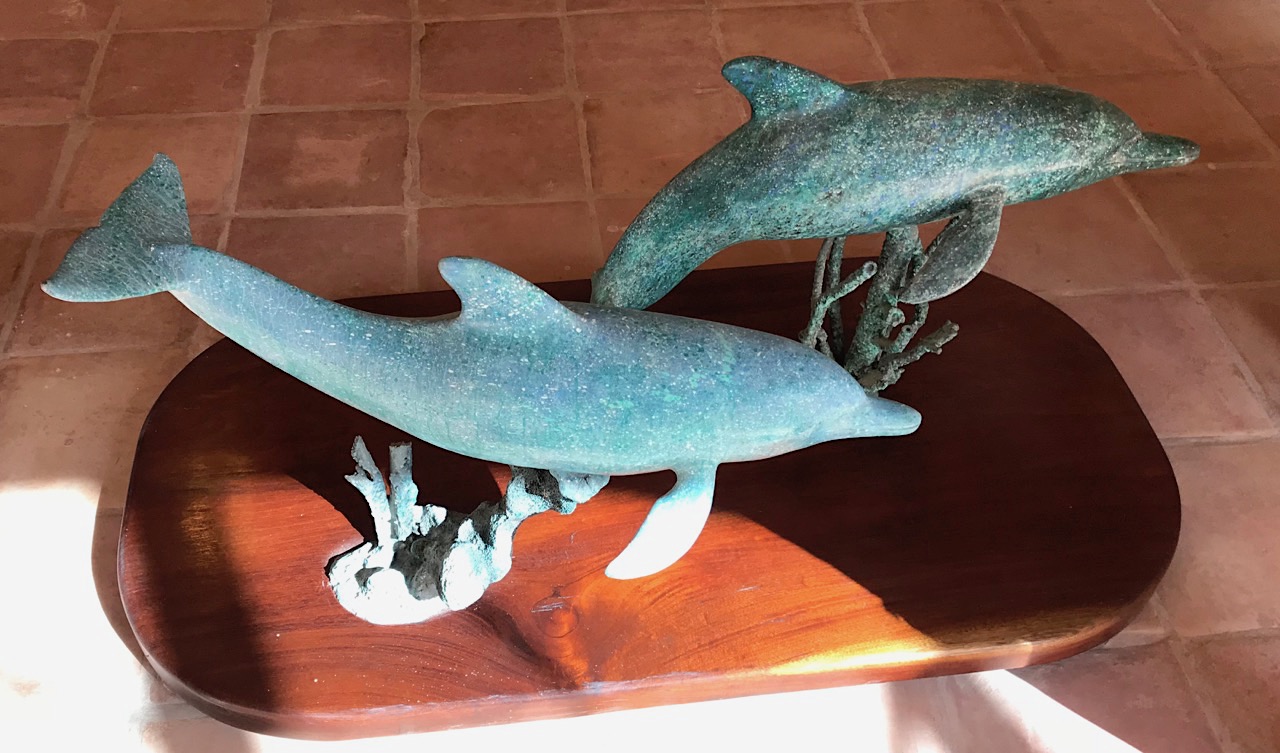
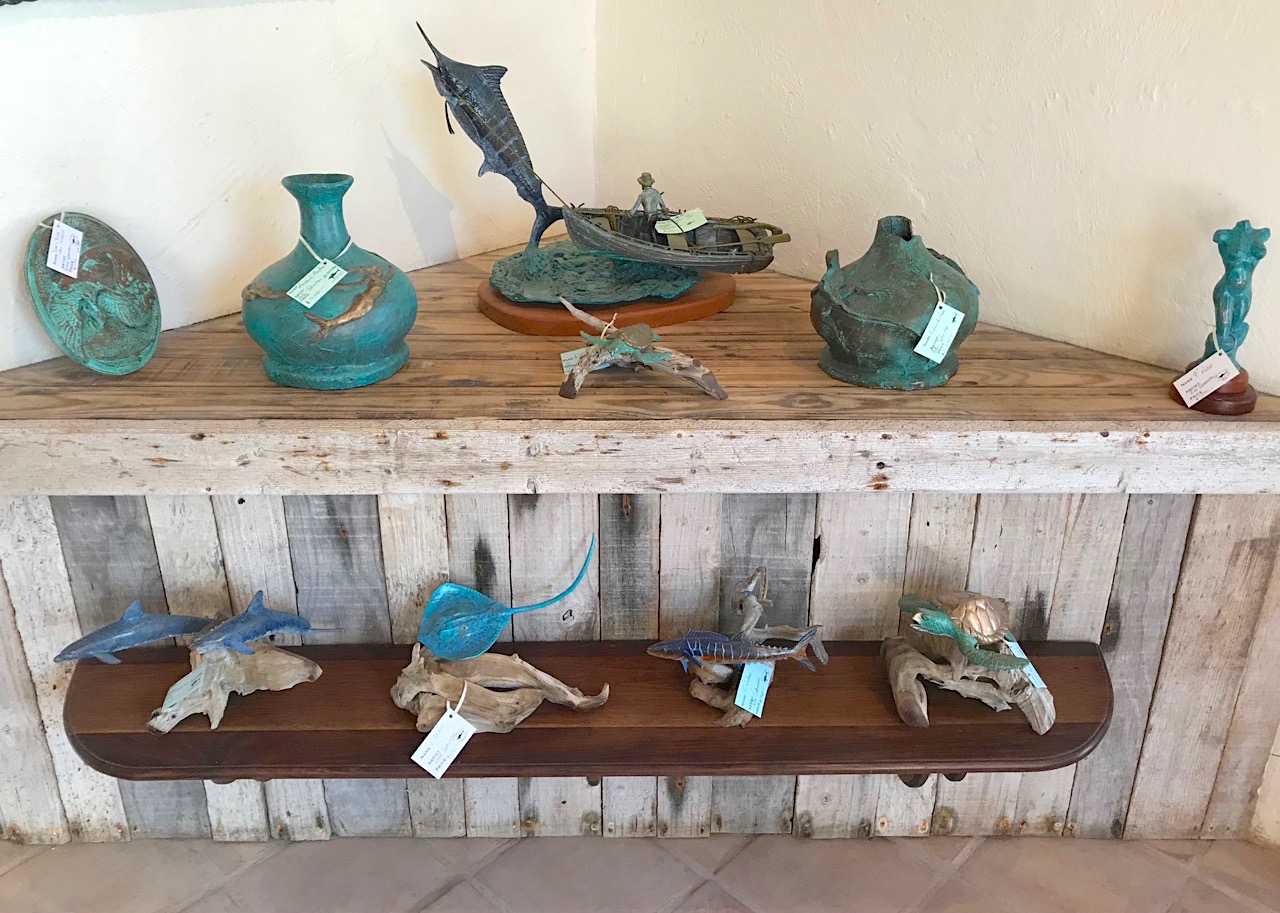
In the 1950s Randolph Johnston built a bronze casting foundry at Little Harbour that is still very much in use today. Much of the wonderful work produced by members of the Johnston family over 3 generations can be found on display in the Gallery. Here you will find genuinely locally produced sculptural works of art ranging from the simple to the incredibly complex. Some large outdoor pieces can also be found dotted around the settlement – here, a huge ray; over there, a pair of leaping dolphins.

Pete's Pub & Gallery / The Johnston Foundry Little Harbour Abaco (Keith Salvesen)Pete's Pub & Gallery / The Johnston Foundry Little Harbour Abaco (Keith Salvesen)Pete's Pub & Gallery / The Johnston Foundry Little Harbour Abaco (Keith Salvesen)Pete's Pub & Gallery / The Johnston Foundry Little Harbour Abaco (Keith Salvesen)

Unsurprisingly, the sculptures on display mostly relate to the sea, which laps the shoreline only a few yards in front of the gallery. These are works of art, and of skill refined over decades. They do not come cheap. There are however smaller and less expensive items to tempt the visitor who may have a baggage allowance to live down to. Here is a snapshot of some of these.

Pete's Pub & Gallery / The Johnston Foundry Little Harbour Abaco (Keith Salvesen)Pete's Pub & Gallery / The Johnston Foundry Little Harbour Abaco (Keith Salvesen)Pete's Pub & Gallery / The Johnston Foundry Little Harbour Abaco (Keith Salvesen) Pete's Pub & Gallery / The Johnston Foundry Little Harbour Abaco (Keith Salvesen)Pete's Pub & Gallery / The Johnston Foundry Little Harbour Abaco (Keith Salvesen)

You might be entertained by this short video, which will give you an idea of Pete’s set-up at this unique off-grid settlement. And if you do visit, coincide with a mealtime – the freshly caught fish is outstanding.

All photos: Keith Salvesen, with thanks for permission to photograph some of the artworks on display. Video by Pete’s! [PS I have not been paid for my writing, not even a beer…]

Unknown's avatar

MAPPING ABACO: BELLIN’S MAP 1764


Bellin Map 1764 - Carte des Isles Lucayes

MAPPING ABACO: BELLIN’S MAP 1764

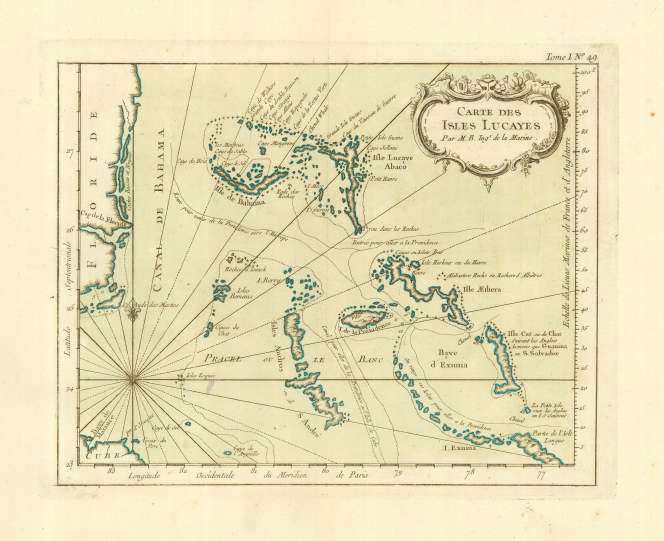
Jacques Nicolas Bellin (1703 – 1772) was a French naval hydrographer & geographer. He was a prolific mapmaker, especially of French territories, and was noted for his meticulous technique and attention to detail. He was elected to the Royal Society; and in due course was appointed Official Hydrographer of the French King.

Bellin Map 1764 - Carte des Isles Lucayes

In 1764, Bellin’s Petit Atlas Maritime was published. I am featuring one sheet from the atlas, the “Carte des Isles Lucayes”. The whole work came as a 5-volume set of map sheets, containing a total of 580 detailed charts. As you will see here, this copperplate engraving can be found in various forms: plain black & white; hand-washed or hand-coloured; or grandly multicoloured. These variations are the consequence of the distinction of Bellin’s work, which led to repeated re-publication in the c18 and beyond. Additionally, his work was admired and copied abroad.

Bellin Map 1764 - Carte des Isles Lucayes

Bellin’s map contains plenty of information – including depth markings and advised shipping routes – though some of the topography might be considered debatable by modern standards. As you look more closely, some of the details are startling. For example, on New Providence (see above) the only place-name is simply designated ‘Ville’, as though the settlement there lacked the significance to merit a name. And look at it now… Andros is completely name-free, with not even a Ville marked – as is Grand Bahama for that matter, though a few Cays are named. Let’s turn to Abaco.
Bellin Map 1764 - Carte des Isles Lucayes
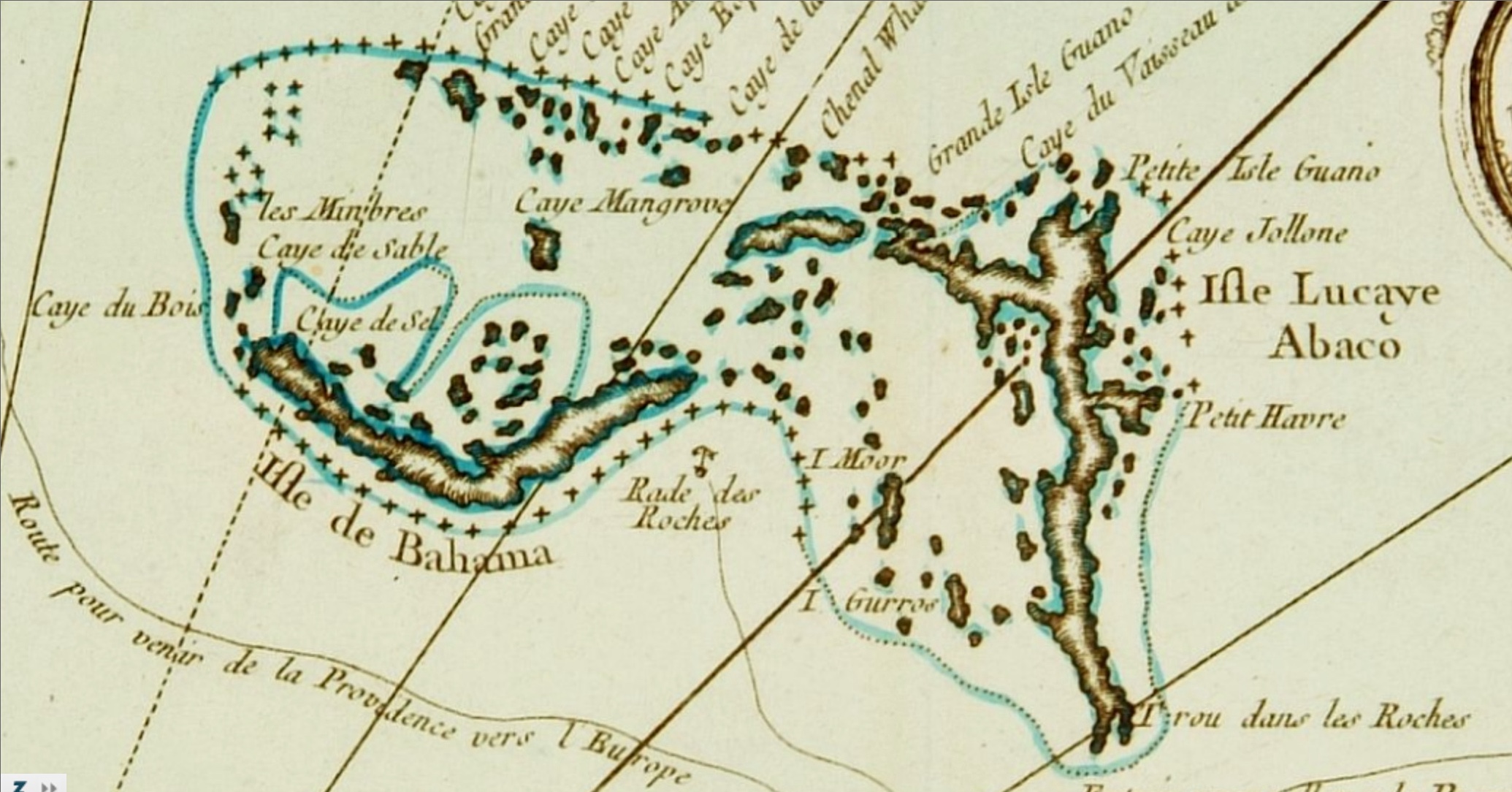
This section of the Bellin map also appears in my Abaco mapping article relating to HOLE-IN-THE-WALL. This geographical feature at the southern extremity of Abaco (now sadly blown apart by HURRICANE SANDY after millennia) was an important navigational landmark for shipping  by c17. The name, in French here, underwent a number of changes of the centuries, as you can see using the HITW link above.
Also of note is that at least Abaco was credited with a single named location – Little Harbour, the first settlement to feature on early maps, and the only one for a surprisingly long time. I imagine the position of this inlet and the safe anchorage it could provide for relatively large vessels became well-known. Like Hole-in-the-Wall, it was of seafaring significance.
A c18 mariner, looking at Bellin’s map in contemplation of a trip to the Isles Lucayes, might conclude that the seas around Abaco and Grand Bahama might be treacherous. The profusion of rocky areas and the indication of depth changes around the islands and cays suggest caution would be needed for a voyage. And as we know, throughout history ships have been wrecked in these seas – a situation somewhat improved (but not entirely eliminated) when the three ABACO LIGHTHOUSES were built.
Bellin Map 1764 - Carte des Isles Lucayes
RELATED POSTS
Credits: Library of Congress; Barry Ruderman Cat.; OS auctions inc eBay (!)
Unknown's avatar

BAHAMAS REEF FISH (39): YELLOWTAIL DAMSELFISH


Yellowtail Damselfish (©Melinda Riger / Grand Bahama Scuba)

BAHAMAS REEF FISH (39): YELLOWTAIL DAMSELFISH

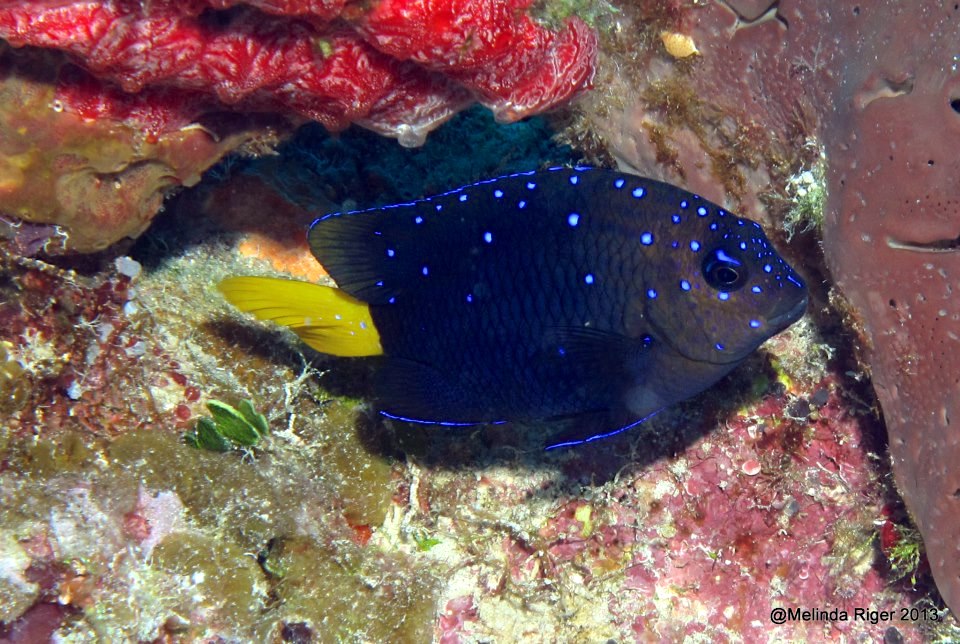
Yellowtails are just one of several damselfish species in Bahamas waters. These small fish are conspicuous not just for the bright tails that give them their name. More striking if anything – especially if seen underwater in sunlight against the coral – are the electric blue spots visible in both adults and juveniles.

Yellowtail Damselfish (©Melinda Riger / Grand Bahama Scuba)

The body of adults is dark blue to brownish to almost black 

The body of juveniles is blue

Yellowtails are a common and widespread variety of damselfish. They have a limited ability to change colour according to their surroundings, but with their bright tails and luminous blue flecks, it’s hard to see how they can look, to a predator, anything other than a tasty snack.

I have enjoyed seeing these little fish at Fowl Cay Marine Preserve, Abaco. The reef there makes for easy and rewarding snorkelling, with a wide variety of small and medium-size reef fishes to be seen. It’s an expedition I would definitely recommend to anyone wanting to see a healthy and active reef in a completely natural protected area.

I found that a video I took with a tiny camera was sadly of use only to myself. No one else would be able to make anything out due to the marked camera shake. Novices, huh? You are spared that: here’s a brief example of yellowtails swimming instead, showing the difference between juveniles and adults.

Credits: all photos, Melinda Riger / Grand Bahama Scuba; video from Desert Diving

Unknown's avatar

AN ‘EXHILARATION’ OF ABACO DOLPHINS


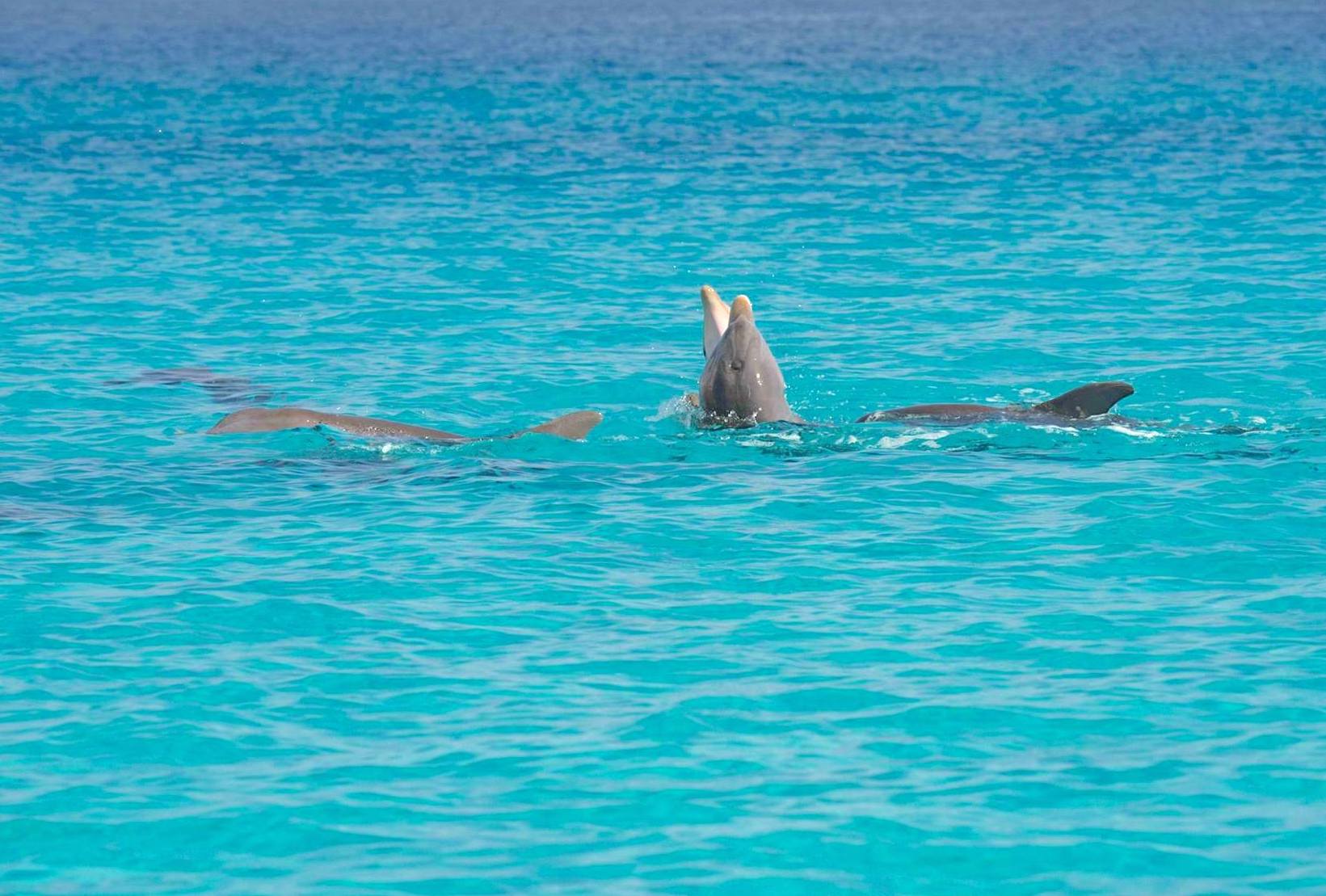
Bottlenose Dolphins, Abaco Bahamas (BMMRO)

AN ‘EXHILARATION’ OF ABACO DOLPHINS

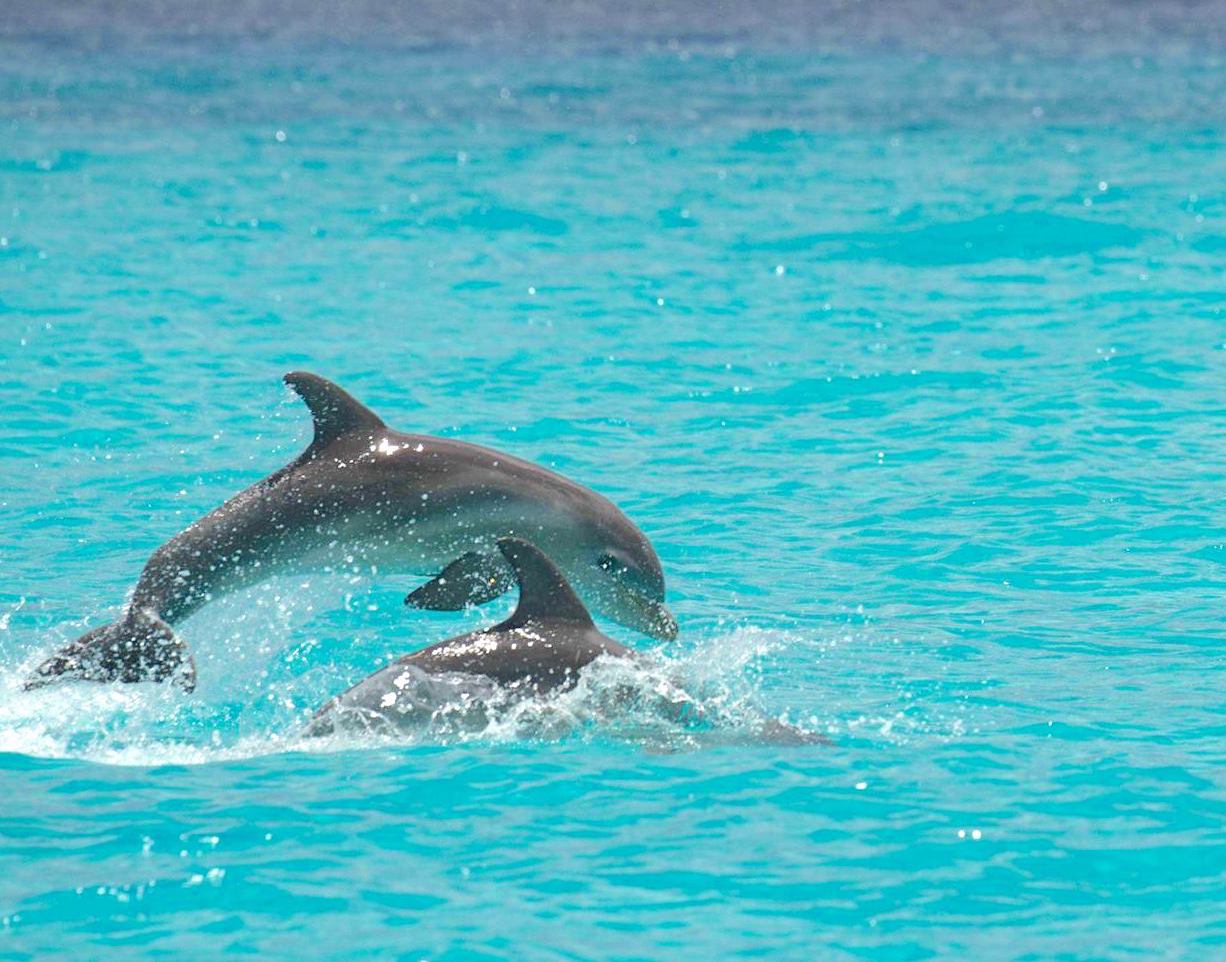
Bottlenose dolphins! Tursiops truncatus! These engagingly playful show-offs of the inshore waters round Abaco are 99.99% adorable**. It’s been a harrowing few weeks in the western Atlantic, and everyone is hoping that the 2017 hurricane season has had enough of causing death and destruction over vast swathes of vulnerable islands and on the US mainland. Some cheer is needed.

Bottlenose Dolphins, Abaco Bahamas (BMMRO)

Dolphins are good for the soul. And if you are out on a boat watching them – and especially tracking them for a whole day – every encounter reinforces the impression that all the leaping, bow-wave riding, boat under-swimming, and general sociability and interaction is often as much for sheer enjoyment as anything else. 

Bottlenose Dolphins, Abaco Bahamas (BMMRO)

Abaco is fortunate in having the HQ of the Bahamas Mammals Research Organisation (BMMRO) based at Sandy Point. That just happens to be an excellent area for bottlenose dolphin spotting in the turquoise shallows. Many sightings are made within clear sight of land. Further south, where the bright blue gives way to darker and deeper water, live the equally frolicsome Atlantic spotted dolphins. The 3 photos above were all taken on the margins of where the colour of the sea changes from light to dark.

Bottlenose Dolphins, Abaco Bahamas (BMMRO)

I’m a bit of a collector of collective nouns. For dolphins, apart from the matter-of-fact ‘group’ or ‘pod’, there is no exotic word to describe a number of them when they are having fun. No equivalent of ‘exaltation’ (larks), ‘charm’ (goldfinches) or ‘parliament’ (owls). So I’m nominating an ‘exhilaration’ as a candidate to fill the gap…

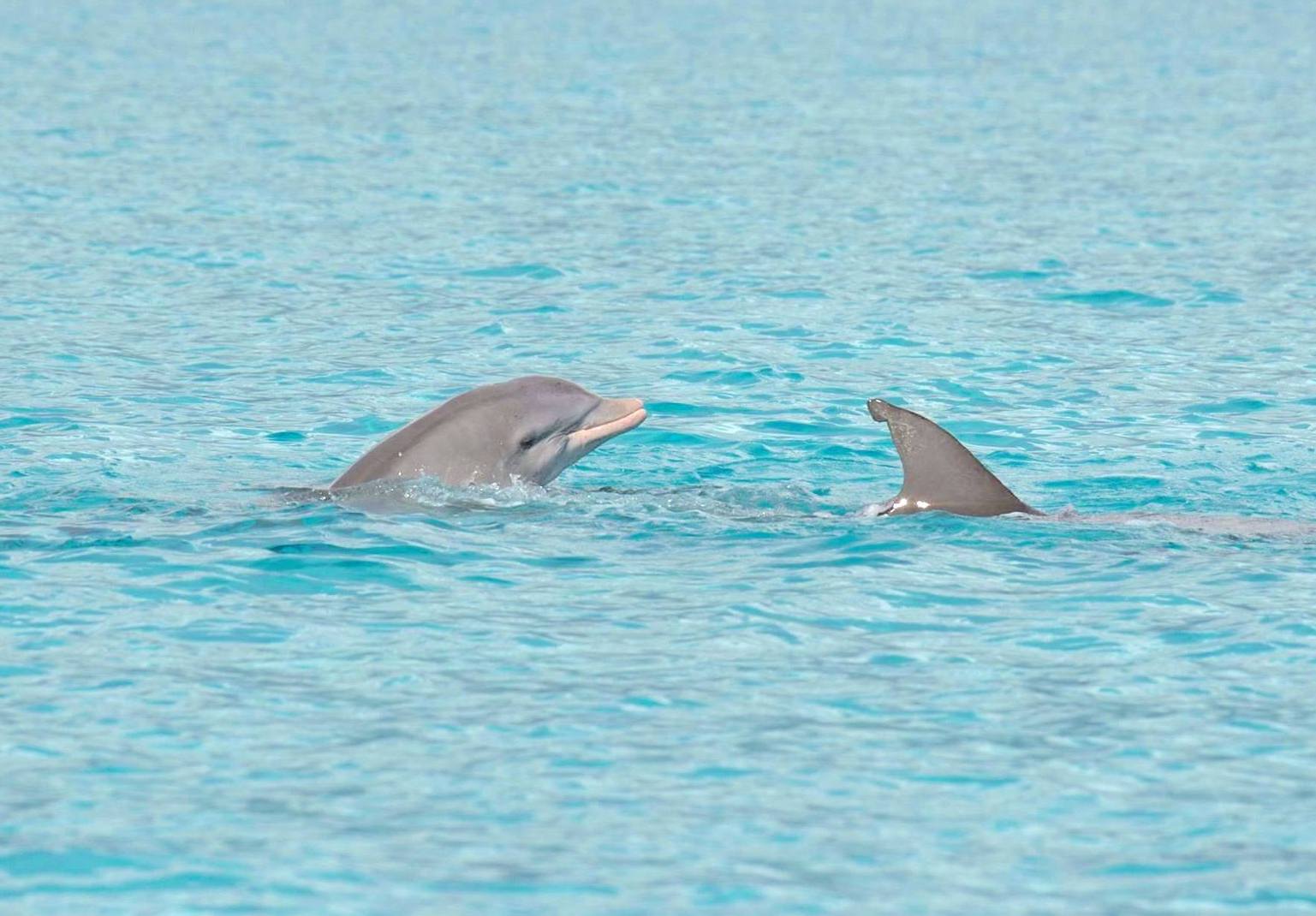
The photo above shows clearly how individual dolphins can be identified by researchers. All tend to have scars or tears to their dorsal fins that enable them to be distinguished. The closest has distinctive scars near the tip. The furthest has a W-shaped nick at the back. In fact, it could even be Rocky, a well-known dolphin on Abaco that has been sighted over many years. There are regular reports annually. I saw him myself once, in 2012, playing about in Hopetown harbour. 

STOP PRESS To demonstrate how the ID methods work, I’ve now cross-checked with the BMMRO photo ID archive. Here is Rocky’s original dorsal fin ID image (“Tt15”) from October 2010. There’s a W-shaped nick, sure, but my speculation above was wrong because overall the two fins are clearly different…

Rocky the Dolphin Tt15, from BMMRO ID photo archive

** The 0.01%? Dolphins may, rarely, be alarming for divers in circumstances I won’t repeat here (hint: to do with over-friendliness, ok? Yes, the thing that dogs do)

Credits: all photos BMMRO – and taken in the last 2 months

Unknown's avatar

АБАKО: SOVIET RUSSIAN MILITARY MAP OF ABACO


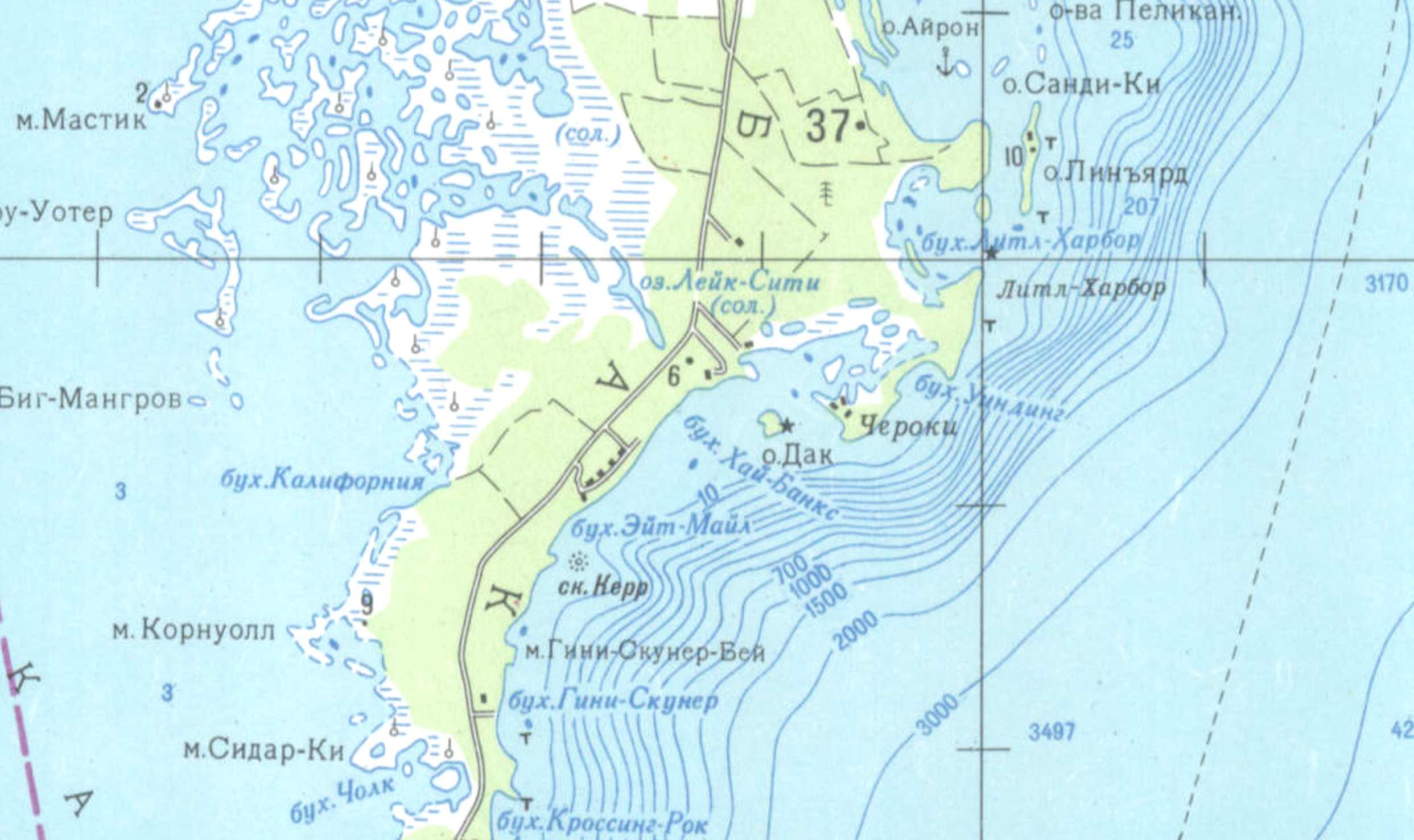
Soviet Russian Military Map of Abaco 1979

АБАKО: SOVIET RUSSIAN MILITARY MAP OF ABACO

I had been toying with a plan to write something fishy today. Lifting the lid on the secrets of the creole wrasse, maybe. Then something arrived in my inbox overnight that changed my course entirely. I was struck  by an idea  harder than a torrent of mixed metaphors speeding towards a bullseye in the motherlode. A map! A map of Abaco!! All in Russian!!! From the Soviet Russian Military Survey!!!! Irresistible. An occasion for multiple exclamation marks.509px-hammer_and_sickle_black_large_on_transparent-svg

‘Russian Soviet Military Topographic Maps’

Map sheet G-18-1 GREAT ABACO ISLAND ed. 1979 – scale 1:500 000, map size 66 cm x 55 cm

Soviet Russian Military Map of Abaco 1979

509px-hammer_and_sickle_black_large_on_transparent-svg

My blog is stuffed full of maps. They are scattered everywhere, like cartographical confetti. There’s even a page for some of them HERE. Want a map of Abaco’s HIGHEST POINT (134m, if you have the energy).  Need to see what Abaco looked like 300 years ago? Try HERE. Need a history of Hole-in-the-Wall in maps? Try THIS. And so on.
509px-hammer_and_sickle_black_large_on_transparent-svg

The header map is a merely the bottom-left corner of the much larger map immediately above. As a crop of the much larger area, it’s illegible. Which is next to useless, because the best thing about this map is that it is all in Russian. And I really wanted to see how they had mapped Marsh Harbour. Treasure Cay. Man-o-War. And the rest. I looked around online and reached this one. Even with some work on the image, you can only get a blurry glimpse – just a few tempting hints of Cyrillic. But it’s impossible to locate Марш Харьор, Трежер Ки, or Ман-оф-Уор Ки…

Soviet Russian Military Map of Abaco 1979

509px-hammer_and_sickle_black_large_on_transparent-svg

So, back to the interweb thing. And eventually, something usable turned up. Here, with props to Clicpic, is Abaco in the late Soviet era. Check out where you live – in Russian. Got friends on Грейт Гуапна Кй? Sadly, the northern end of Abaco and the whole southern end from Crossing Rocks down to Hole-in-the-Wall and right round to Sandy Point is absent. That area is of course the perfect place for missile silos**. Except now it’s a National Park, so that wouldn’t be possible… would it?

509px-hammer_and_sickle_black_large_on_transparent-svg

I’ve split the map into 3 sections to make it as big as possible. The maps overlap to keep the proportions equal on-screen. Double click to zoom in. Hope you enjoy travelling around it…

Soviet Russian Military Map of Abaco 1979 Detail 1 Soviet Russian Military Map of Abaco 1979 Detail 2 Soviet Russian Military Map of Abaco 1979 Detail 3

** Vladdy, mate, if you or your agents have picked up on this, (1) only joking, right? and (2) you’ve  anyway got better things to worry about these days…

Unknown's avatar

PIGGYVILLE: HOME OF THE SWIMMING PIGS OF ABACO


piggyville-adam-rees-scuba-works-copy

PIGGYVILLE: HOME OF THE SWIMMING PIGS OF ABACO

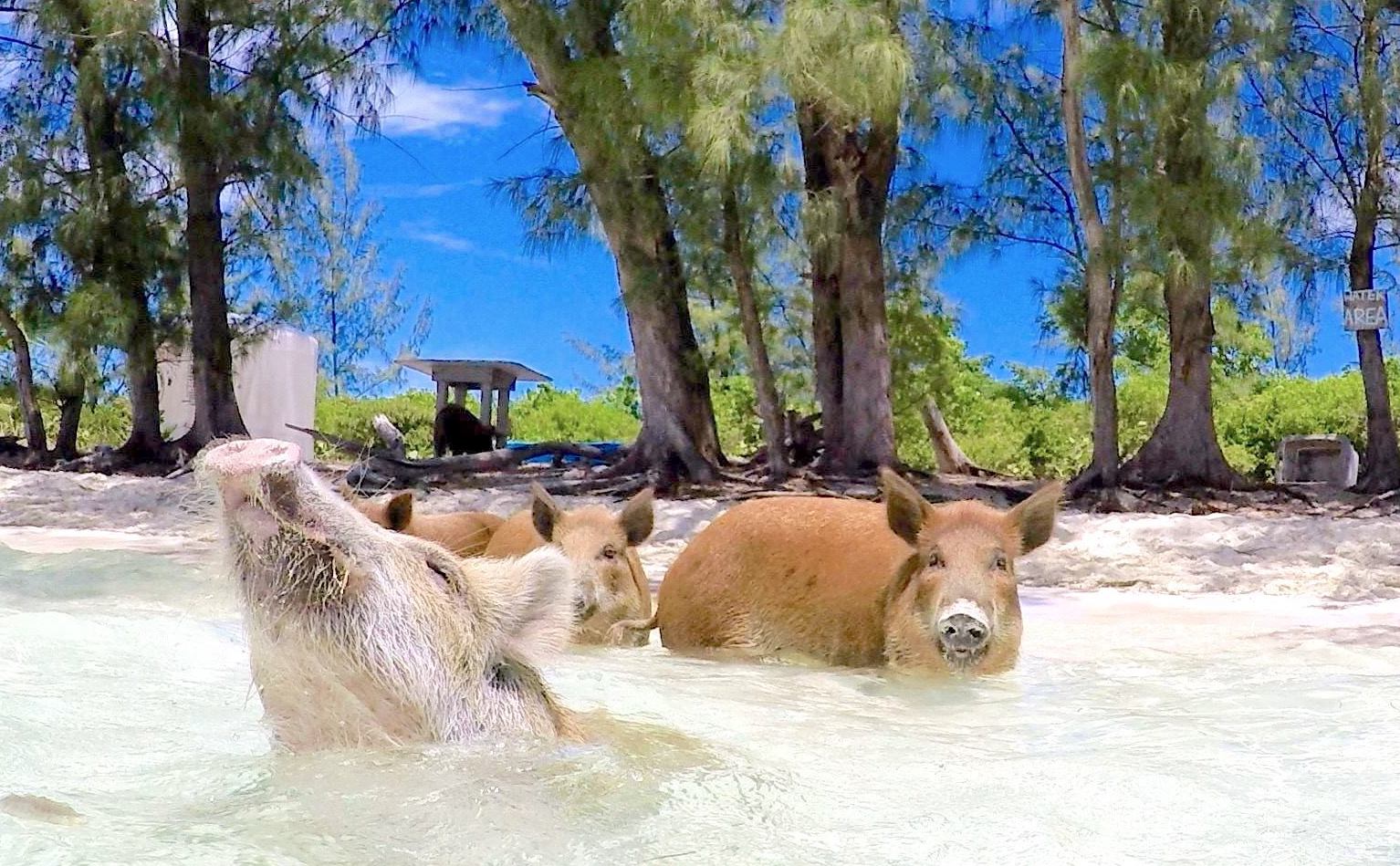
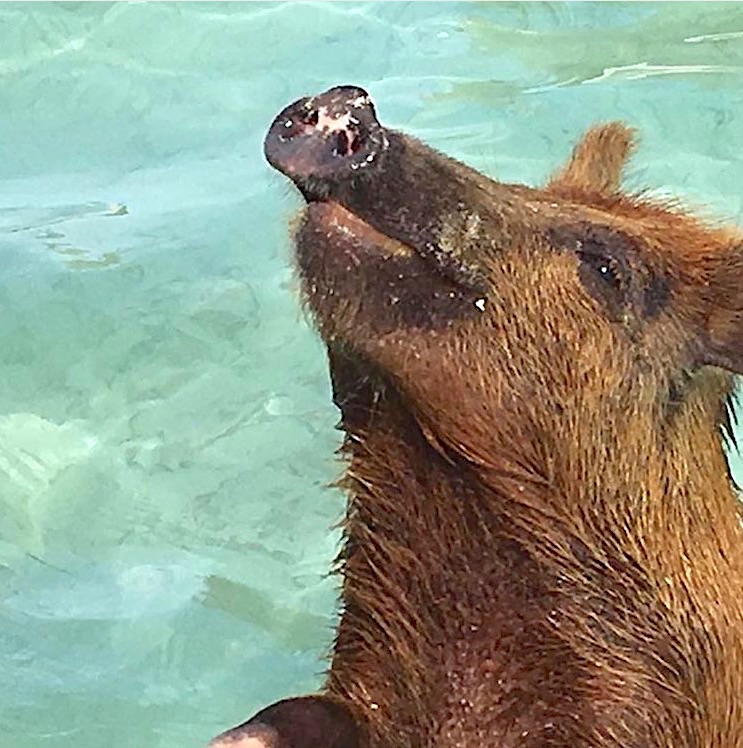
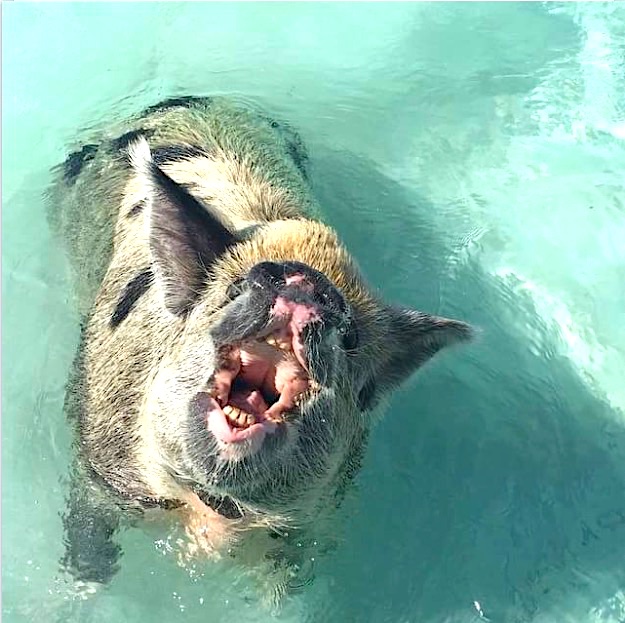
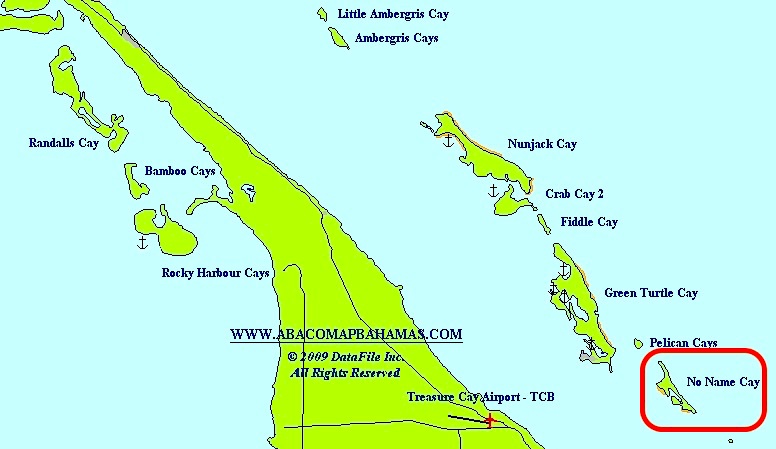
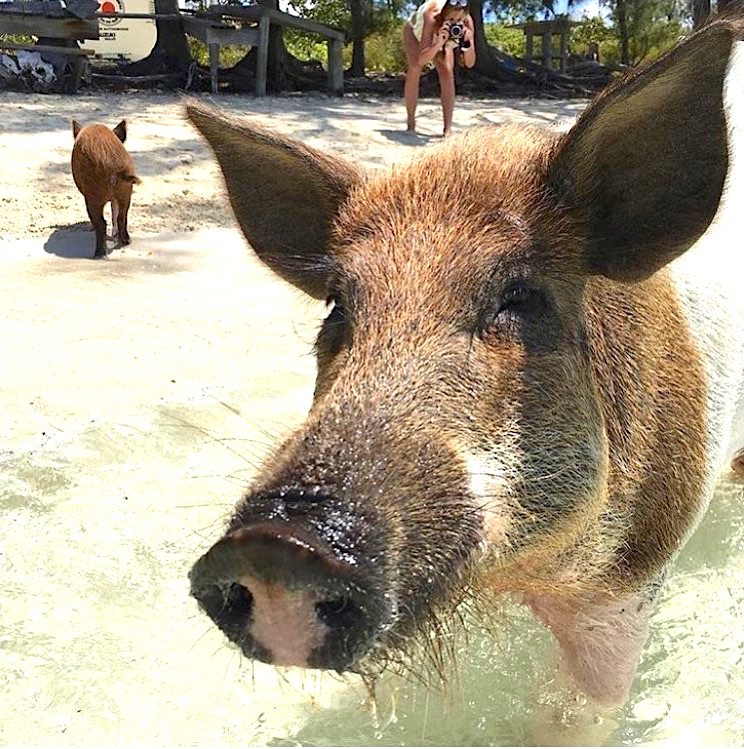
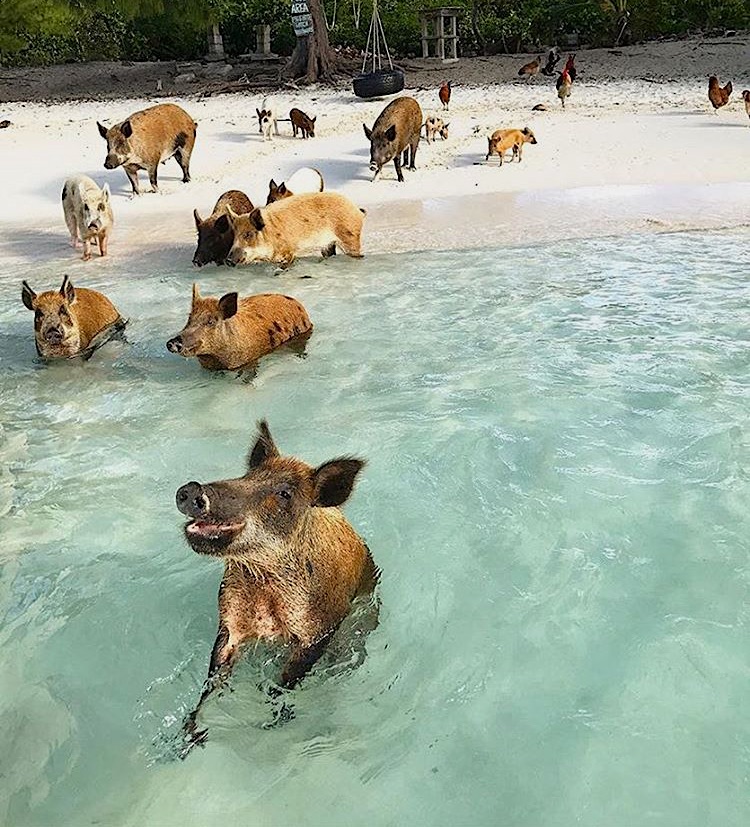
No Name Cay has a name. Which is ‘No Name’. Which is a logical paradox.  Since I last wrote about it, the Cay has acquired a new nickname in honour of its only permanent residents: Piggyville. You can find swimming pigs on Exuma, of course – they are a famous and well-promoted tourist attraction. Abaco’s own population of feral swimming pigs is much less well-known, even now.

swimming-pigs-of-no-name-cay-abaco

When I first posted about the pigs a couple of years ago, several people – including locals – contacted me in surprise and wonderment. And people still get in touch to ask (1) if there are really swimming pigs on Abaco and (2) “how do I get to see them?” (a short boat ride from Green Turtle Cay). Now the word is spreading, and indeed the piggies even have their own FB page HERE.

swimming-pigs-of-no-name-cay-abaco-tim-mantle

swimming-pigs-of-no-name-cay-abaco-patricia-labarta-douglas

swimming-pigs-of-no-name-cay-abaco-barefoot-sailor

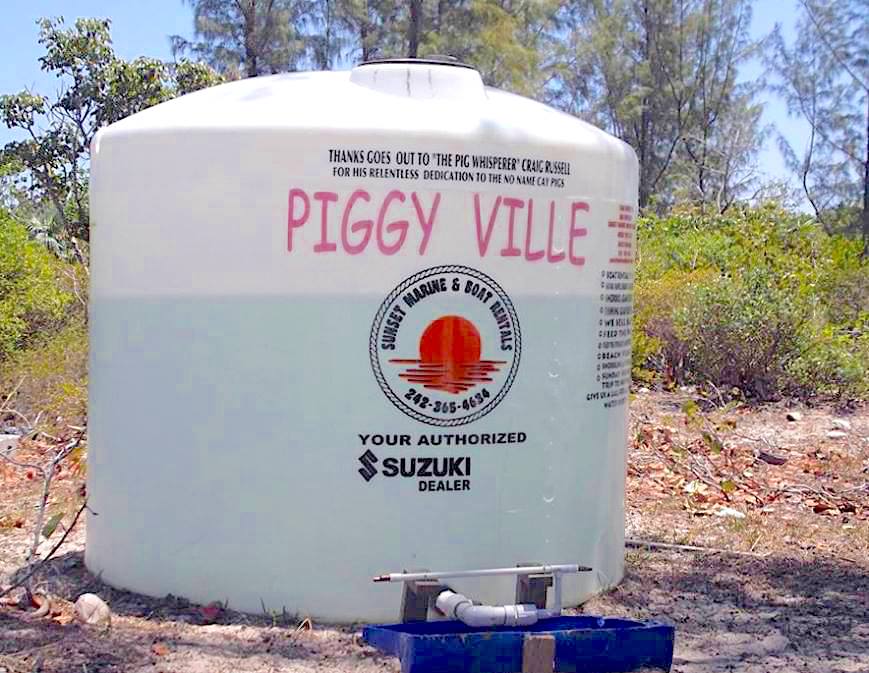
Recently, a reliable replenishable water supply system was introduced to No Name Cay to ensure enough fresh water for the denizens. You’ll find more about nutrition and other vital porcine matters in Amanda Diedrick’s excellent post on LITTLE HOUSE BY THE FERRY, a wonderfully informative blog for Abaco in general and Green Turtle Cay in particular.

swimming-pigs-of-no-name-cay-abaco-claire-towningSwimming Pigs, No Name Cay, Abaco (Craig Russell)

WHERE IS NO NAME CAY WHEN IT’S AT HOME?no-name-cay-copy

swimming-pigs-of-no-name-cay-abaco-copy swimming-pigs-no-name-cay-abaco-craig-russell

Craig Russell, Pig Guardian of No Name CayCraig Russell, Abaco Swimming Pig Whisperer on No Name Cay

swimming-pigs-of-no-name-cay-abaco-lynn-collinsswimming-pigs-no-name-cay-abaco-samantha-regan

Credits: Adam Rees / Scuba Works (1); Craig Russell / FB (2, 7, 8,9, 10); Tim Mantle (3); Patricia Labarta Douglas (4); Barefoot Sailor (5); Claire Towning (6); Lynn Collins (11); Samantha Regan (12); Ruth Albury / Destination Abaco for Piggy PDF [link removed]

Unknown's avatar

LITTLE HARBOUR LIGHTHOUSE: A DERELICT MARITIME LANDMARK


Little Harbour lighthouse Abaco - Darlene Chisholm

LITTLE HARBOUR LIGHTHOUSE: A DERELICT MARITIME LANDMARK

The words ‘Abaco Lighthouse’ are near-synonymous with the splendid striped edifice on Elbow Cay. This beloved building is truly iconic, in the modern sense of the word. But it would not do to forget the other principal lighthouse of Abaco at Hole-in-the-Wall, also with its original Fresnel lenses. The small light at Little Harbour is by contrast relatively unknown, unvisited and unloved. And derelict. Maybe that explains it. You can read in detail about this neglected relic of Abaco’s maritime history HERE

little-harbour-lighthouse-abaco-1-bob-rusby

Last Spring,  friends and fellow Delphi Club members Bob & Annie Rusby and their children stayed for a while in Little Harbour. Among their adventures was a walk to the lighthouse, which is situated quite remotely on a promontory, and a decent stagger from Pete’s Pub. They took some up-to-date photos (the ones shown are in fact video stills) which supersede the ones I have previously posted. 

little-harbour-lighthouse-abaco-3-bob-rusby

This small lighthouse station – “The Old Lighthouse” – was established in 1889 at the entrance to Little Harbour. Originally, it was manned, with the lighthouse keeper and his wife being (according to Sandy Estabrook) the only inhabitants of that part of Little Harbour. The light presumably served more to locate the channel to the secluded and safe harbour than to warn of reef dangers.

little-harbour-lighthouse-abaco-4-bob-rusby

In due course the living quarters fell into dereliction and the existing beacon (type unknown?) on a small tower was converted to a solar-powered light. This arrangement did not survive the devastation of Hurricane Floyd in 1999. The replacement was a modern steel framework tower that carried an active light until it was blown over by Hurricane Sandy in October 2012. The header image shows the tumbled structure, which has never been replaced. Even the steel tower seems now (4 years later) to have gone. 

little-harbour-lighthouse-abaco-2-bob-rusby

Little Harbour Lighthouse 1 jpg copyLittle Harbour Lighthouse 4 jpg

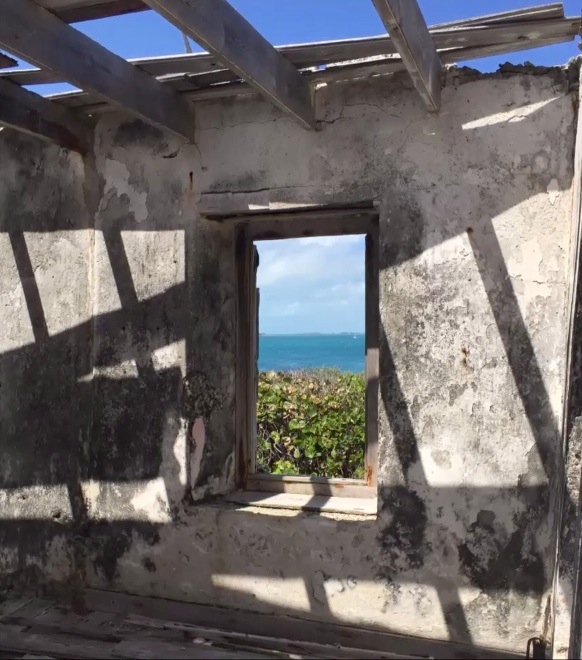
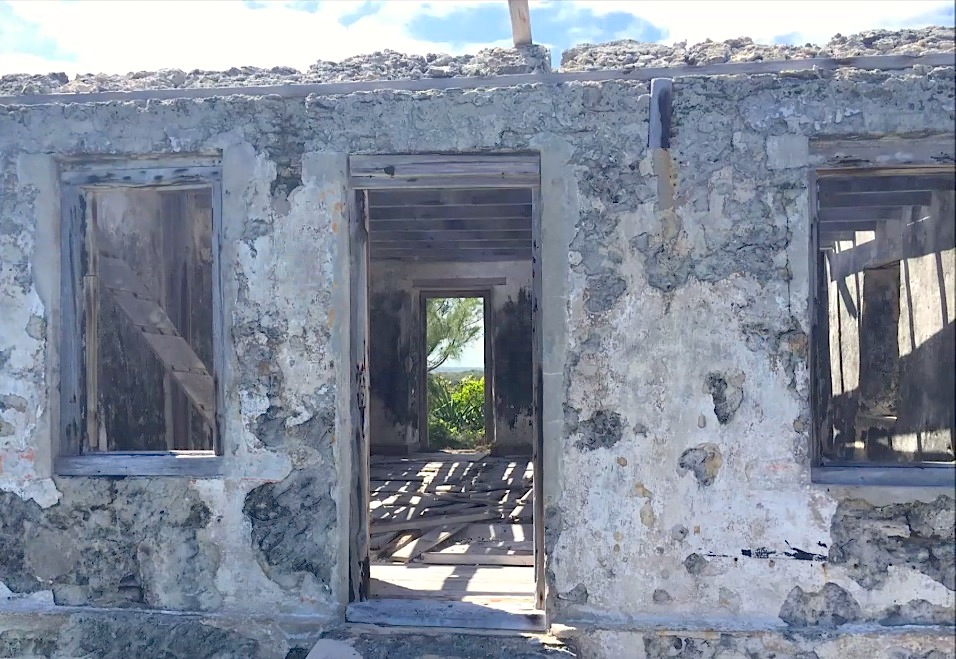
The views from the elevated position of the ruin are spectacular, both from inside the ruin (lucky keeper!) and from outside. In good weather, anyway… It remains to be seen whether light is now considered completely redundant, or whether another automatic light will in the end be positioned here when funds or willpower permit. I’m not aware of any groundswell of opinion suggesting that, in the absence of a beacon at Little Harbour, there is a potential safety issue. I’d be interested to hear any views.

little-harbour-lighthouse-abaco-6-bob-rusby

STOP PRESS Chuck Rickey has left a wonderful comment in response to this post, full of personal and historical interest. Any other reminiscences would be most welcome.

“My grandmother’s first cousin, Curtis Lowe, was lighthouse keeper here for many years and along with his wife, Bessie, raised children Hartley, Maitland, Lois and Robert, obtaining staples buy walking a tract road or sailing to Cherokee Sound. Later on, they were able to motor to Snake Cay, to get provisions from Owens Illinois’ company store aboard the “Robert Fulton”, an old side-wheel steamer, permanently moored there. I was fortunate to spend much fun time there during school vacations growing up”.

little-harbour-lighthouse-abaco-5-bob-rusby

RELATED POSTS

ELBOW REEF LIGHTHOUSE: A BEACON ICON

HOLE-IN-THE-WALL LIGHTHOUSE

LITTLE HARBOUR LIGHTHOUSE

Lighthouse ruins, Little Harbour Abaco - Patrick Shyu

Credits: Darlene Chisholm (header image); Bob Rusby (all main images); Patrick Shyu (last photo); Sandy Estabrook (special thanks for info re earlier post)

Logo of the World Lighthouse Society

Logo of the World Lighthouse Society

Unknown's avatar

ABACO’S WRECKS INVESTIGATED: SS HESLEYSIDE


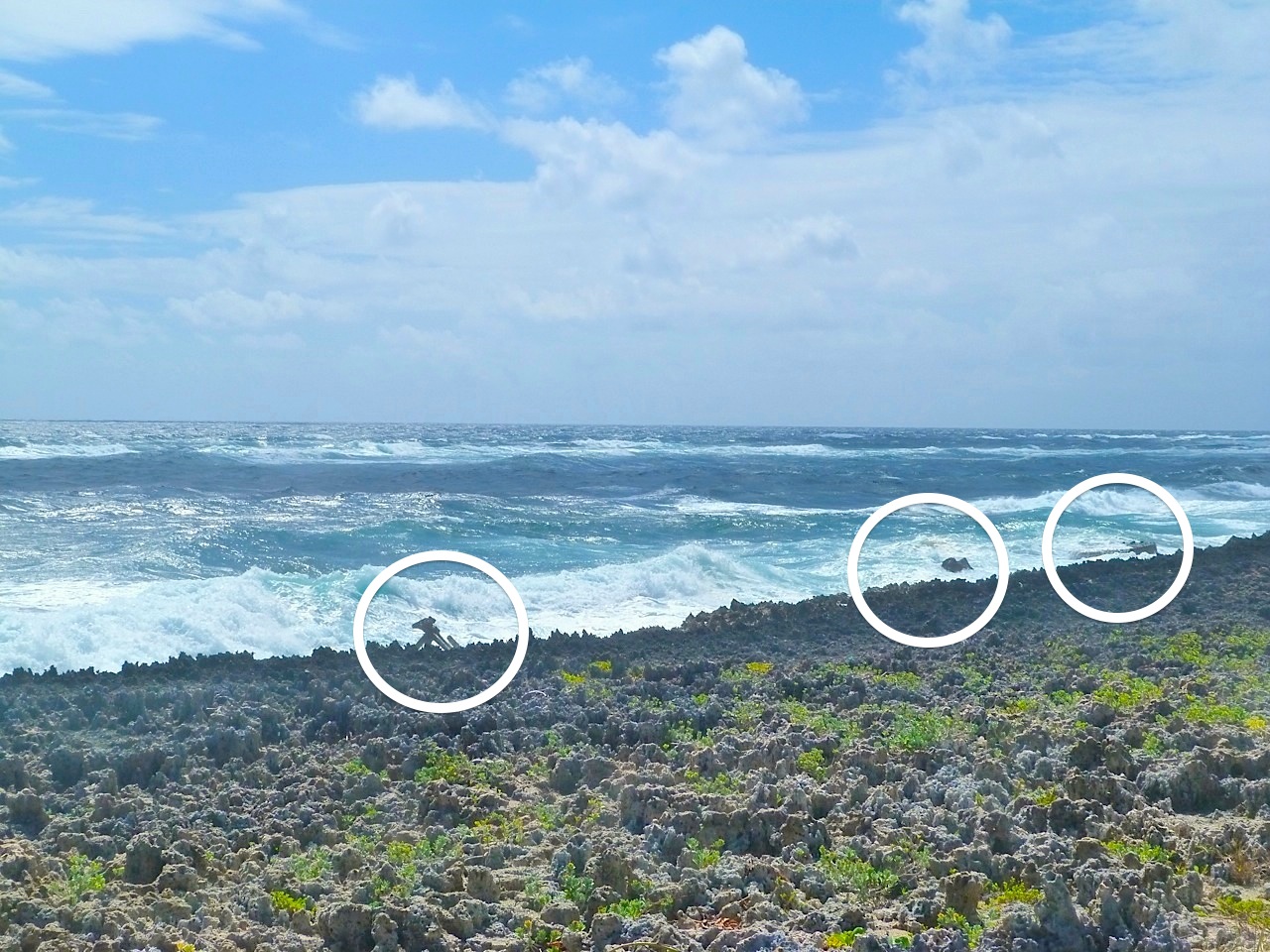
SS Hesleyside (wreck), Schooner Bay Abaco (Keith Salvesen) O4

ABACO’S WRECKS INVESTIGATED: SS HESLEYSIDE 

Abaco, like many of the islands of the Bahamas, has its fair share of wrecks around its shores – both ancient and modern. I reference some of these under my RANDOM menu, with some maps, links, and general information. One that I didn’t include is the SS Hesleyside, a wreck that lies broken and wave-tossed on the rocks at Schooner Bay. To reach it, you will have to arrange at the entrance for a golf-cart to take you down to the shore. The price for your transport may be an invitation to take a tour of the community there, an ambitious enterprise that was started about 10 years ago.

charlton_steamship_co_charlton_mcallum_co_ltd_charlton_w_cflag

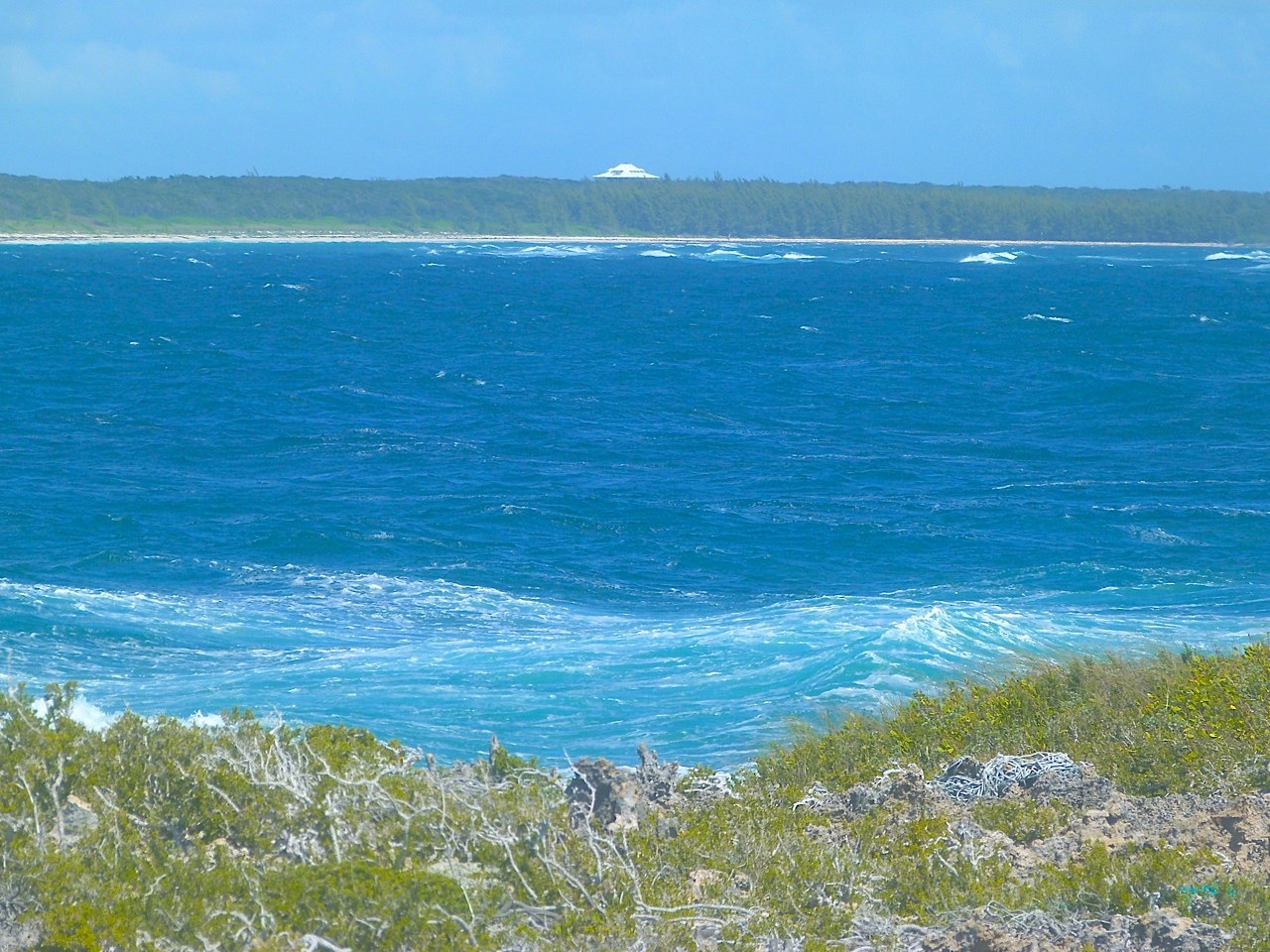
From where the Hesleyside lies, you get a long view across to Delphi, some 3 miles to the north. Delphi Club from Schooner Bay

For the energetic, you can walk the beach of Guinea Schooner Bay all the way to Delphi. However, the unpopulated strand is covered in seaweed (good for wildlife, though) and horrendous quantities of plastic, from micro off-cuts to macro bollards, oil containers and so forth. Frankly rather off-putting.

Guinea Schooner Bay, Abaco Beach Debris, Abaco

We visited Schooner Bay on a bright day with a strong wind that whipped up the waves all along the shoreline, with clouds of spray rather detracting from the photographic possibilities. The tide was high, and the remains of the wreck were at times barely visible. 

The bow, part of the central section towards the stern, and some sort of boiler (?) at the sternSS Hesleyside (wreck), Schooner Bay Abaco (Keith Salvesen) O1 copy

charlton_steamship_co_charlton_mcallum_co_ltd_charlton_w_cflag

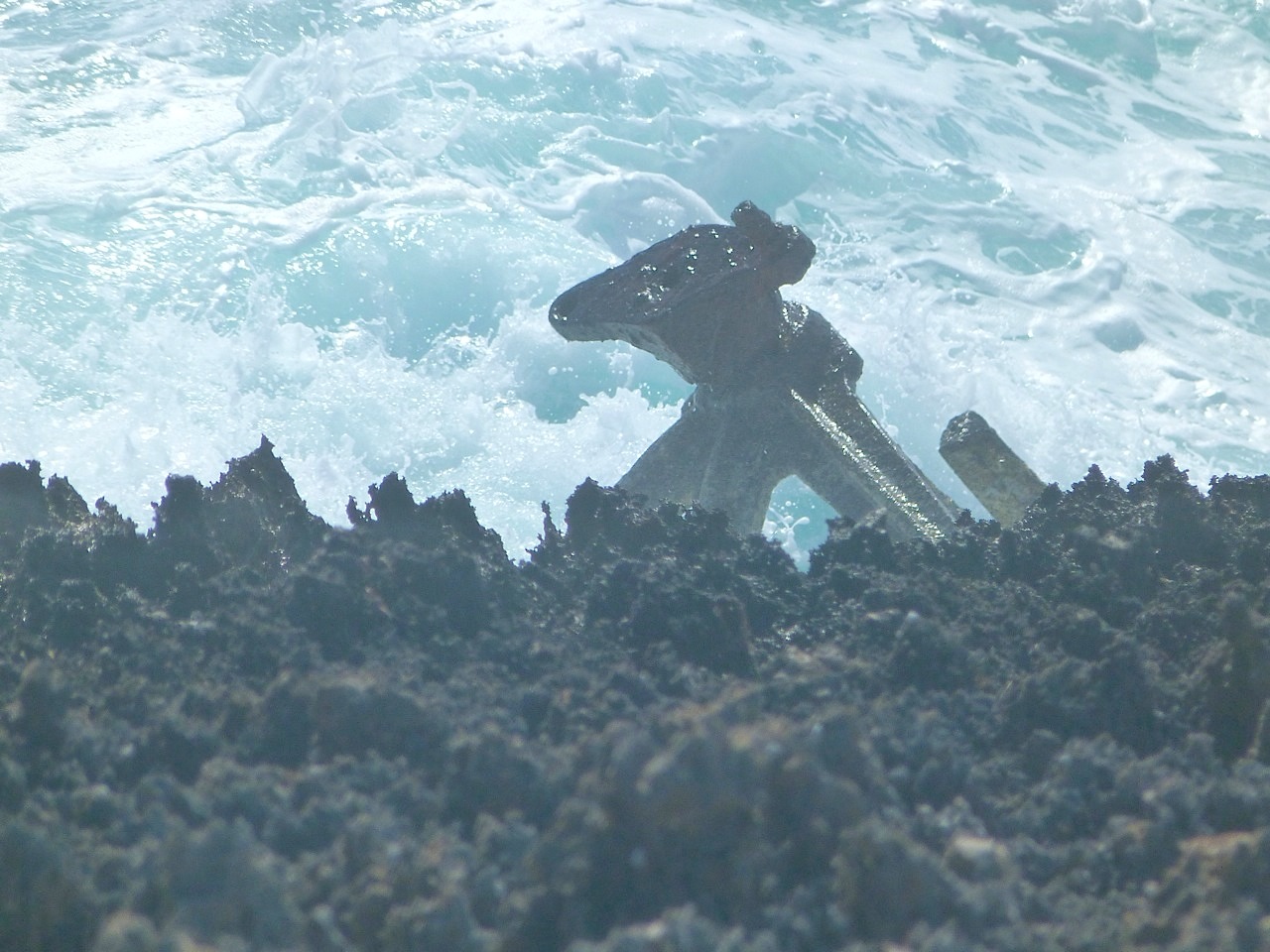
SS Hesleyside was a British cargo ship built in 1900 in Sunderland, England for the Charlton Steamship Co. (Charlton, McAllum). Steam-powered, the 2600 ton vessel was more than 300 foot long.  In 1908 she was was sailing from the Azores to Key West when bad weather struck, and on 1st October high winds – described in contemporary reports as a hurricane –  drove her aground where her remains now lie, a part of the coastline known as the ‘Iron Shore’. Fortunately the crew were able to escape, and there was no loss of life.

SS Hesleyside (wreck), Schooner Bay Abaco (Keith Salvesen) O7SS Hesleyside (wreck), Schooner Bay Abaco (Keith Salvesen) O3SS Hesleyside (wreck), Schooner Bay Abaco (Keith Salvesen) O5

A dramatic account of the shipwreck was published in the New York Times. The hero of the crisis was fireman Jack Thompson, who with notable courage volunteered to swim ashore with a line, by which the rest of the crew were able to make their way to safety.

Report from the New York TimesSS Hesleyside NYT report (Coconut Telegraph) jpg

charlton_steamship_co_charlton_mcallum_co_ltd_charlton_w_cflag

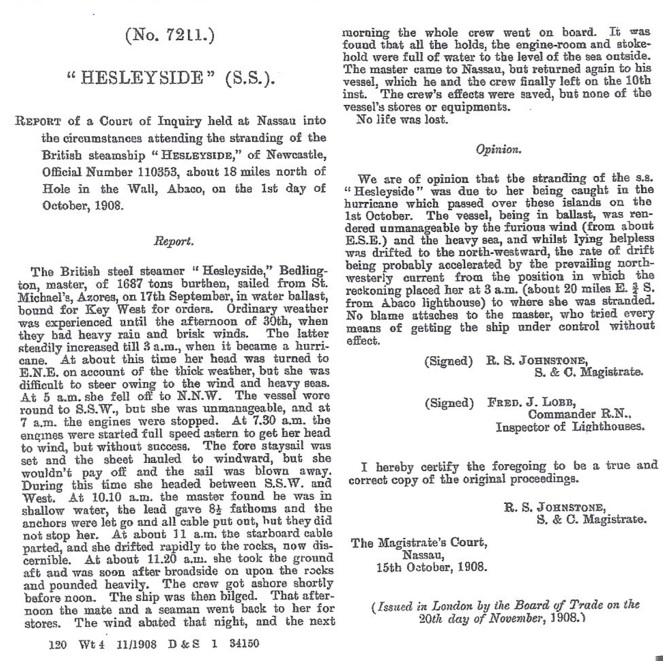
In accordance with standard practice, a Court of Inquiry was held in Nassau two weeks after the event to investigate the circumstances. The Master was exonerated of blame, having “tried every means of getting the ship under control without effect”.  SS Hesleyside 5 Report (Abaco Palms)

One interesting nautical and topographical note  is that the site of the wreck is described as “about 18 miles north of Hole in the Wall”. The navigational importance of HITW as a landmark was known from as early as the c17, and it was the first location to be named in the earliest maps of Abaco. For a detailed history of HITW in maps, click HERE

Nautical Map, 1856, showing the seas around ‘Le Trou dans le Mur’, and the lighthouseNautical Map 1857
Hesleyside details wrecksite.euSS Hesleyside details (wrecksite.eu / Tony Allen) [the date is wrong]

charlton_steamship_co_charlton_mcallum_co_ltd_charlton_w_cflag

WHO, WHAT OR WHERE IS HESLEYSIDE?

It’s a place in Northumberland, UK – inland, but not very from where the ship was built. Many of the Charlton ships began with an H and ended in …side. It was – and is – a common practice to have a naming theme for vessels. 

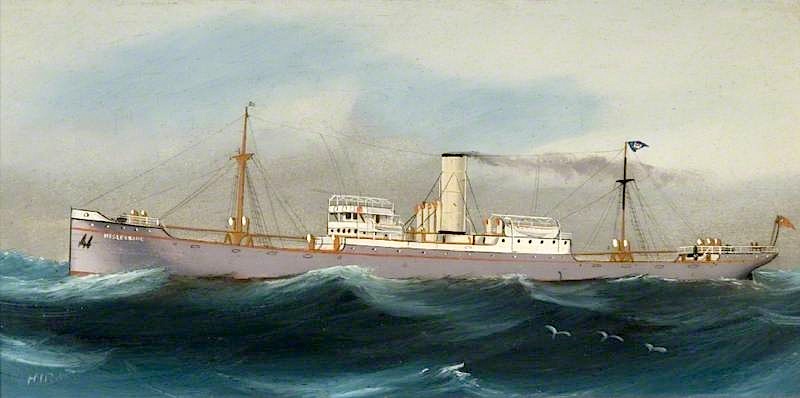
Hiram; SS 'Hesleyside'; Sunderland Museum & Winter Gardens; http://www.artuk.org/artworks/ss-hesleyside-35255

THE WRONG SORT OF HESLEYSIDE

I got quite excited when I thought I had tracked down a painting in the Sunderland Museum of the SS Hesleyside. After all, there could hardly be two steam ships with the same name, could there? Wrong. There were in fact 3 ‘Charlton’ Hesleysides in all. There is some coincidence (but not necessarily ‘irony’, Alanis Morissette) that all 3 were wrecked.

Hesleyside (1) 

86089 


1882 

688 

Ex-Turgenief, 1882 purchased from Baxter & Co, Sunderland r/n Hesleyside, 24.7.1893 wrecked at Sosnowetz.

Hesleyside (2) 

110353 


1900 

2631 

4.10.1908 wrecked at Abaco, Bahamas.

Hesleyside (3) 

133508 


1912 

3994 

1933 sold to P. Hadoulis, Andros, 1935 sold to M. Sitinas, Andros, 24.5.1940 torpedoed and sunk in 48.30N 09.30W by U.37

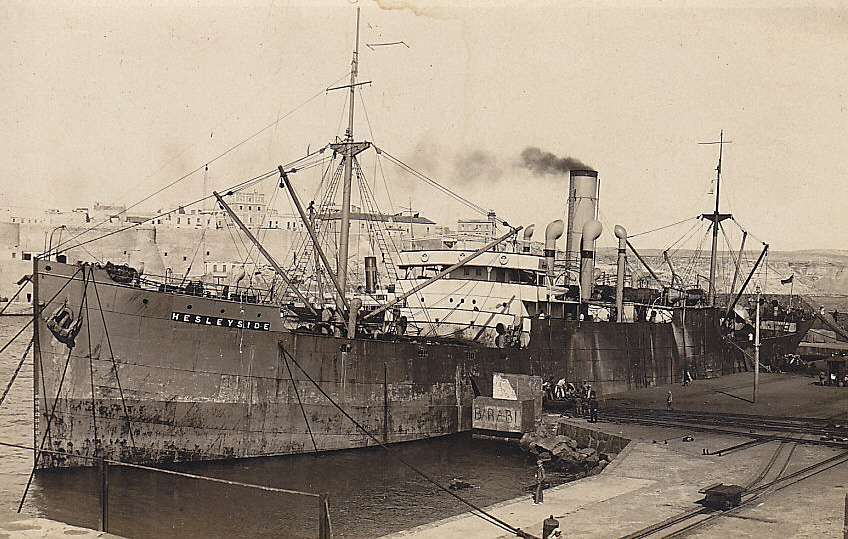
The rather glamourised painting shown above shows Hesleyside Mark 3 her glory days. She was built in 1912 but was sold in 1933 to a Greek company and renamed SS Kymas. Under that name she was torpedoed by a U-boat in May 1940, and 7 of her crew of 30 were killed.  The photo below (which took me a long time to decide was the same Helseyside) shows a much more steamery, freightery looking vessel… 

hesleyside_40

Sources of information: plimsoll.org; NY Times; http://wrecksite.eu / Tony Allen; coconuttelegraph.net; http://www.abacopalms.com; Wiki; Sunderland Museum http://www.artuk.org/artworks/ss-hesleyside-35255; magpie pickings from all over the place.

Unknown's avatar

CUBAN PEWEES AT THE NEEM FARM, ABACO


Cuban Pewee, Abbaco Neem Farm (Keith Salvesen) 5

CUBAN PEWEES AT THE NEEM FARM, ABACO

The Abaco Neem Farm just off the highway about 20 minutes south of The (one and only) Roundabout is about much more than the neem plants and the resultant products sold at the well-known shop in Marsh Harbour. The many varieties of fruit tree, the grasses and the wild flowers, the coppice, the pine forest, the open land and the pond that make up the extensive property provide a wonderful haven for birds, butterflies, moths and bees (there are hives too). It’s a great place for birding, and the owner Nick is rightly proud of the peaceful ambience of the farm. On a bright day, the place is alive with birdsong. 

Cuban Pewee, Abbaco Neem Farm (Keith Salvesen) 6

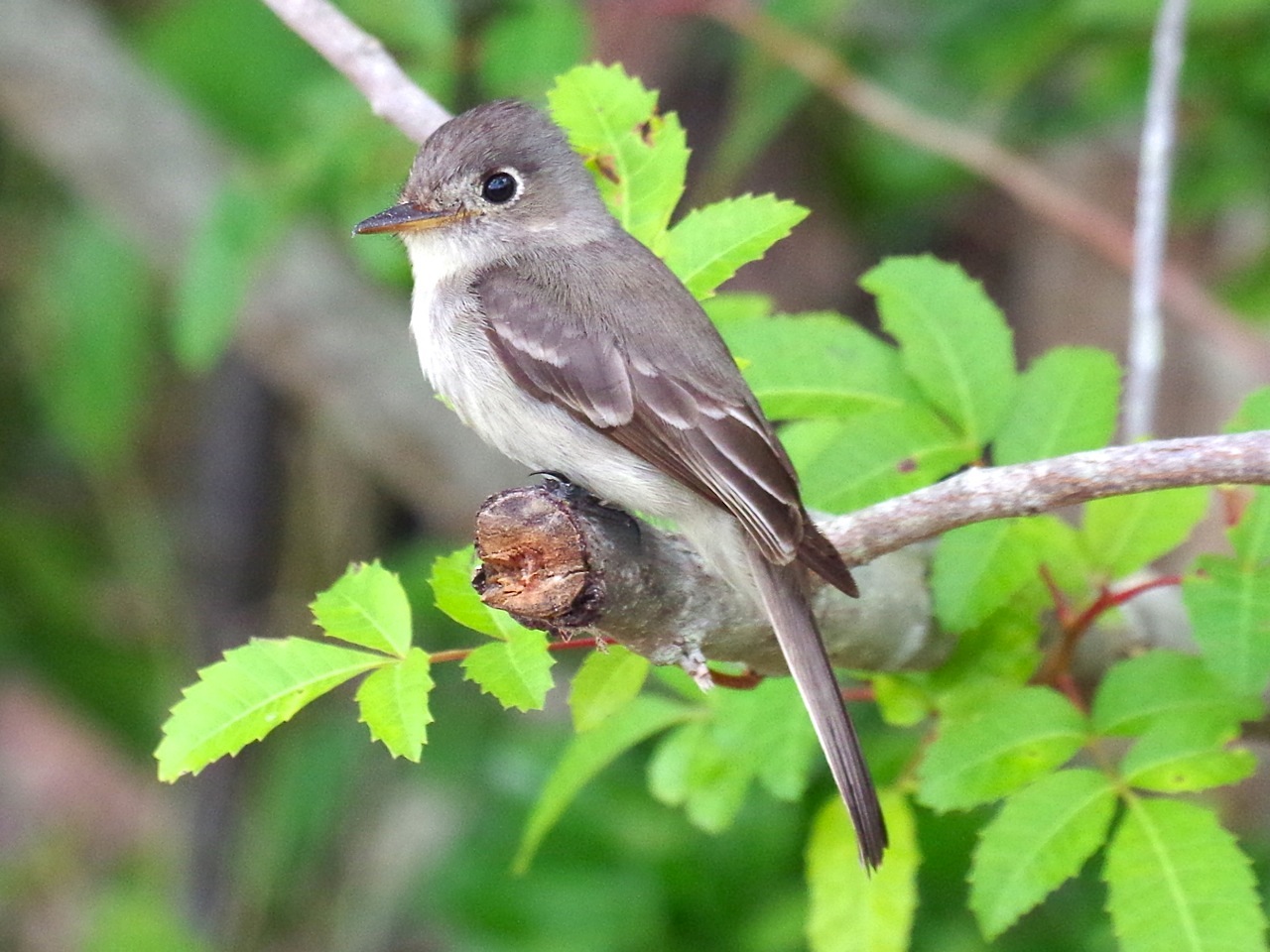
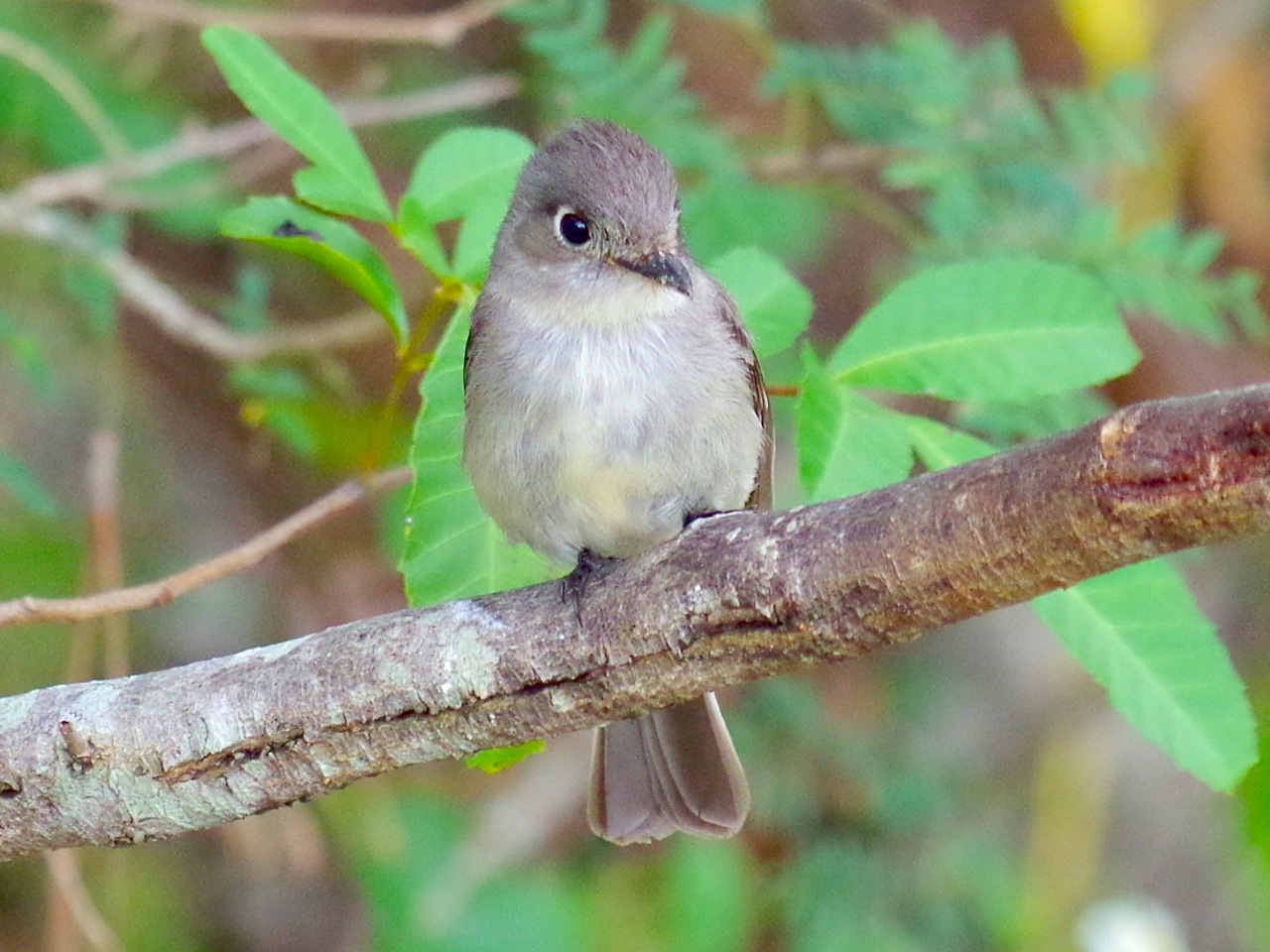
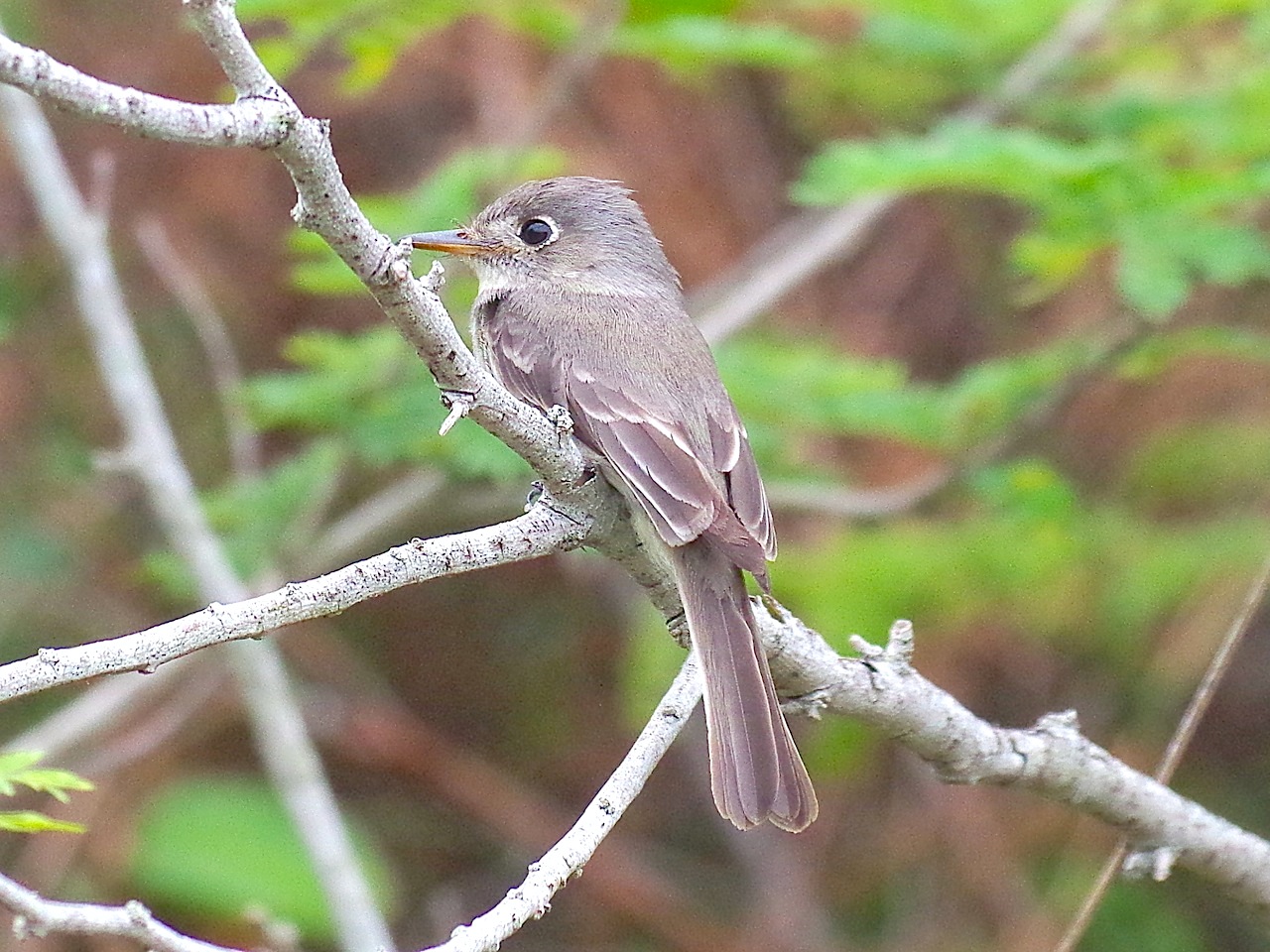
Among my favourite small birds found there are two species that are so tame and inquisitive that it is often possible to move slowly right up to them. The blue-gray gnatcatcher is one. The cuban pewee is another. This pewee was flitting about the edge of the coppice, hawking for insects and quite unconcerned by our presence. Sadly I only had ‘hated camera’ with me, having thrown ‘beloved camera’ into the sea a couple of days before, photographing shorebirds (and thence into the trash bin). So I’m not wholly pleased with the results, either for clarity or for colour. Needless to say, hated camera always has the last laugh…

Cuban Pewee, Abbaco Neem Farm (Keith Salvesen) 2

Identification of the various flycatcher species e.g. CUBAN PEWEE, LA SAGRA’S FLYCATCHER, LOGGERHEAD KINGBIRD and GRAY KINGBIRD can be tricky. The simplest way to distinguish the cuban pewee is to remember that it is a small bird (so, not a kingbird); and that its informal name is ‘crescent-eyed pewee’ due to the very noticeable white crescent behind the eye. And as Liann Key Kaighin reminds me in a comment, these little birds also answer to the name Tom Fool…

Cuban Pewee, Abbaco Neem Farm (Keith Salvesen)Cuban Pewee, Abbaco Neem Farm (Keith Salvesen) 3

A quick check of the sky for predators? Or maybe just for rain…Cuban Pewee, Abbaco Neem Farm (Keith Salvesen) 8

All photos: RH. Thanks to Nick Maoulis for his tolerance of people armed with cameras and binoculars.

PS I don’t go in much for beauty products (far far too late), but the Neem Salve is fantastic for minor injuries: cuts, grazes, bruises, small burns and so on. Well, it works for me.

Unknown's avatar

“AN OSTENTATION OF PEACOCKS”: FERAL BIRDS ON ABACO


Peahen, %22Different of Abaco%22 2 (Rhonda Pearce)

“AN OSTENTATION OF PEACOCKS”: FERAL BIRDS ON ABACO

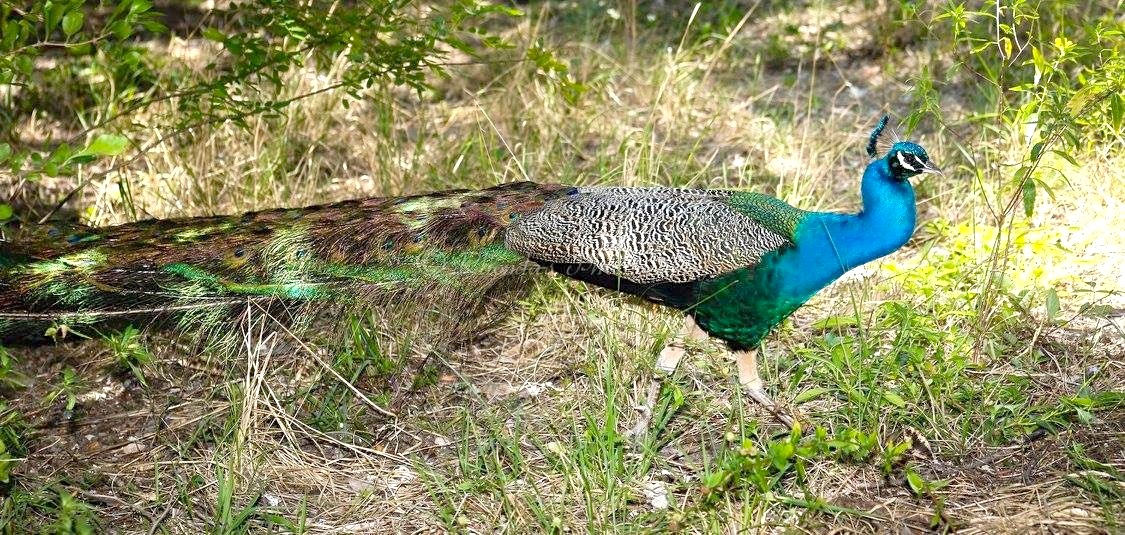
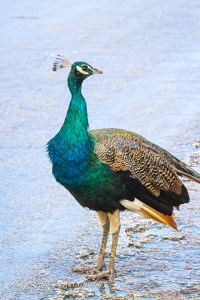
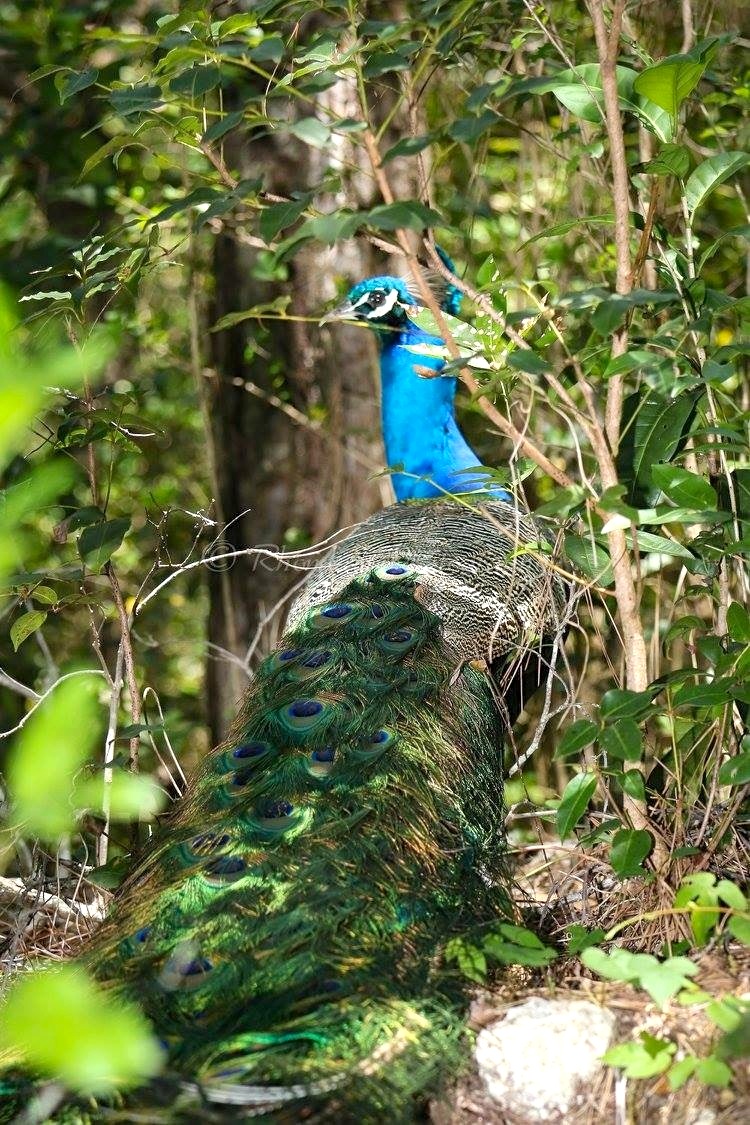
A year or so ago I wrote a post entitled SOMETHING COMPLETELY “DIFFERENT (OF ABACO)”, a nod to Monty Python and to Nettica Symonette’s long-defunct fishing lodge on the road to Casuarina that it still proudly signposted on the Highway. You can click the link to see the full post and plenty of peacocks. Or, as I mentioned then, peafowl (only the males are peacocks; the females are peahens; and the little ones are peachicks).

Peacock, %22Different of Abaco%22 1 (Rhonda Pearce)

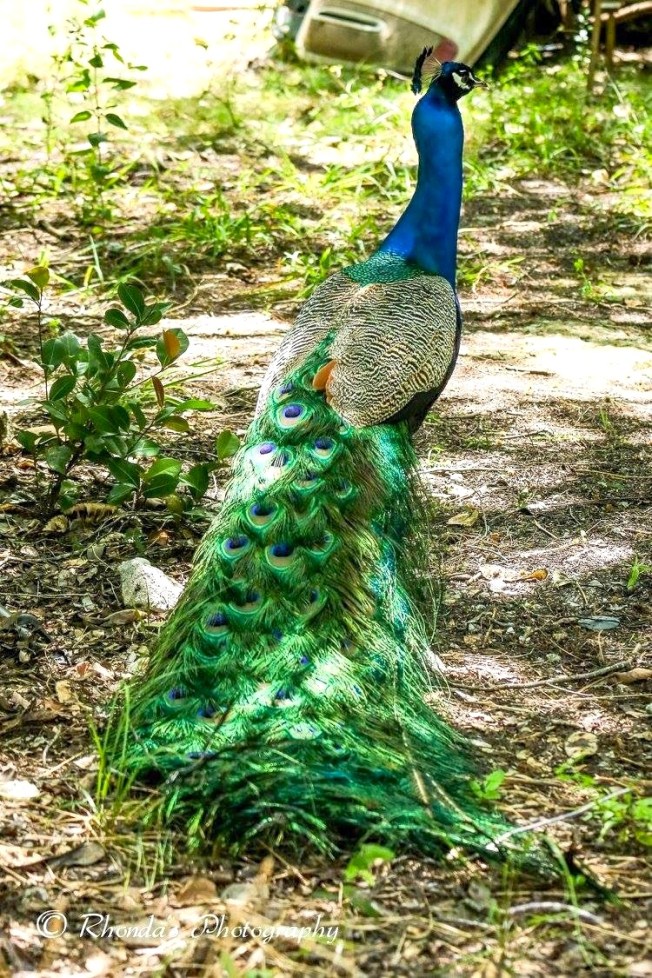
“Different of Abaco” is a great place for birding. An overgrown wilderness with brackish ponds and a *dangerous structure alert* dilapidated building, it was once home to Nettie’s flamingos, reintroduced by her in the hope of reinstating Abaco’s lost breeding population. The experiment did not come off, but another one did. The legacy of her introduction of a few peacocks is very evident today: they have bred very successfully and provide an exotic – and noisy – addition to the breeding bird species on Abaco.

Peacock, %22Different of Abaco%22 3 (Rhonda Pearce)

The evidence from reports suggests that the peafowl are spreading from their base at Different of Abaco and the local Casuarina area. Celia Rogers saw 2 males on the Cherokee road, some 3 or 4 miles to the north. And Rhonda Pearce has more recently found them at the entrance to Bahama Palm Shores, some way to the south (below).

 Peacock, Bahama Palm Shores Abaco 2 (Rhonda Pearce)    Peacock, Casuarina, Abaco 1 (Rhonda Pearce)

Extent of peafowl range from reported sightingsCasuarina, Abaco area map

As I wrote before, “In the wilderness that Different of Abaco has become for many years, the descendants of the original peacocks are breeding contentedly, expanding their population, and are wholly unreliant on human intervention. Verily feral, in fact”. If anyone has encountered peacocks elsewhere than in the DoA / Casuarina area, I’d love to hear about it. A photo would be a bonus!

Peacock, %22Different of Abaco%22 4 (Rhonda Pearce)

OPTIONAL FUN FACTS

The collective noun for peafowl is generally considered to be a “pride”, as with lions. But many bird species have been assigned more than one collective noun – and many of the more unusual ones are historic, dating back to medieval times, in particular The Boke of St Albans (1486) by a nun called Dame Juliana Berners, which included lists of collective nouns for ‘companys of beestys and fowlys’. These were known as ‘terms of venery’, and many related to falconry and hunting. She also wrote the presumed first fishing guide, A treatyse of fysshynge wyth an Angle (her catch records do not survive).

Anyway, apart from ‘pride’, peacocks are also collectively known as a ‘muster’; and far more descriptively as an ‘ostentation’.

D of A: the glory daysimg0049

Credits: All peafowl Rhonda Pearce; final image π “The Abacos” online

Unknown's avatar

PELICAN BRIEF (2): SANDY POINT, ABACO


Pelican Dive, Sandy Point Abaco (Keith Salvesen) 04

PELICAN BRIEF (2): SANDY POINT, ABACO

The small settlement of Sandy Point is literally at the end of the road. Beyond the limit of the tarmac lies the shallow sea. The Highway – Abaco’s only main road – extends the length of the skinny island, 120 miles roughly north to south with occasional side roads to settlements, dirt roads, forestry tracks, and something a bit more significant for Marsh Harbour – a roundabout, a single set of working traffic lights, the only ones on the island. There’s a second set but I have never seen them working. I don’t think anyone ever has. Maybe they were never even wired up.

Brown Pelicans, Sandy Point, Abaco 7

We went to Sandy Point for lunch with friends at the famous (though not yet world-famous) Nancy’s, with its reliably comforting menu of a choice of the same 3 dishes permanently on offer (fresh fish, conch, or chicken), plus Kalik or Sands beer. Simple yet satisfying. Sandy Point is a great place for birding, both sea / shore / wading birds, and land birds. Ospreys are often around. And brown pelicans. At high tide they dive off the dock (see HERE). At low tide, when the long sand bars are just visible above the water level, the pelicans use them as base for their fishing operations, often some 200 yards from the shoreline.

Brown Pelicans, Sandy Point, Abaco 11

We were watching 5 pelicans doing just that – lazily flapping aloft from the water in their clumsy way, then turning swiftly and diving with some elegance before smashing into the water for fish, returning in triumph or sorrow to the sand bar to eat… or plan the next foray. Then one detached itself from the group and flew closer to us for a single dive in deeper water, before flapping heavily back to the sand bar.

I took a sequence of photos with ‘Hated Camera’ (having drowned ‘Loved Camera’ in a minor marine mishap). As I have since discovered, ‘HC’ was on the wrong setting the whole time – by which I mean several days (some small but important side switch I’d neglected to remember). Hence the pelican images are in small format because I am slightly ashamed of the quality… There’s a theory about cartoons that there are two possible reasons for pairing them together on a magazine page: (1) they are each doubly funny and therefore only need half the space; or (2) they are only half as funny and so two are needed to double the overall chuckle quotient…

So here is the pelican dive sequence – unsuccessful in terms of fish – with the bird then flying back past us to the sand bar to rejoin his 4 buddies. I’ve put 2 images per line – either because (on the cartoon principle above) they are so good they only need half the allotted space or (hint: this is the truth) they are of such indifferent image quality that I am too embarrassed to enlarge them…

Pelican Dive, Sandy Point Abaco (Keith Salvesen) 01 Pelican Dive, Sandy Point Abaco (Keith Salvesen) 02 Pelican Dive, Sandy Point Abaco (Keith Salvesen) 03 Pelican Dive, Sandy Point Abaco (Keith Salvesen) 04 Pelican Dive, Sandy Point Abaco (Keith Salvesen) 05 Pelican Dive, Sandy Point Abaco (Keith Salvesen) 06 Pelican Dive, Sandy Point Abaco (Keith Salvesen) 07 Pelican Dive, Sandy Point Abaco (Keith Salvesen) 08 Pelican Dive, Sandy Point Abaco (Keith Salvesen) 10 Pelican Dive, Sandy Point Abaco (Keith Salvesen) 11 Pelican Dive, Sandy Point Abaco (Keith Salvesen) 12 Pelican Dive, Sandy Point Abaco (Keith Salvesen) 13

In the final image you can just make out a spooky ghost ship on the horizon. This is the huge vessel moored at the ‘Disney’ island, historically named Gorda Cay but now ‘pirated up’ to Castaway Cay. Arrrrrrrr!

Credits: all images RH & ‘Hated Camera’; Mrs RH kindly being encouraging about the results

Unknown's avatar

SITTING ON THE DOCK OF THE BAY… TAKING TERNS ON ABACO


Royal Terns Cherokee Abaco (Keith Salvesen) 1

SITTING ON THE DOCK OF THE BAY… TAKING TERNS ON ABACO

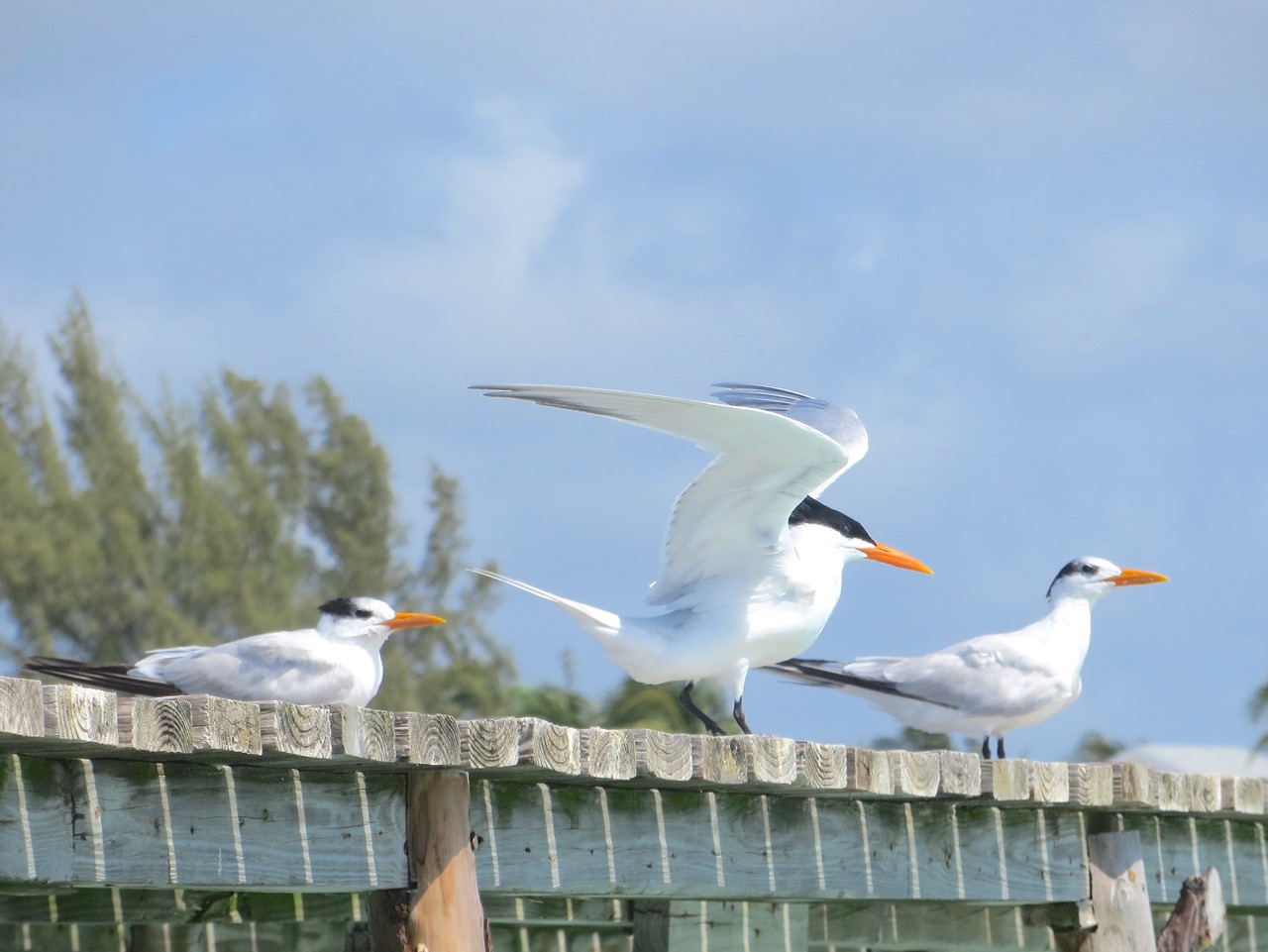
During a day of deep-sea fishing we put into Cherokee for a short time at the famous LONG DOCK, the longest wooden dock in the Bahamas. There were three royal terns at various plumage stages watching and waiting for fish, or maybe just ‘watchin’ the tide roll away’. Not that there is very noticeable tide at Cherokee, hence the need for the Long Dock to get out to deeper water from the shallows. So this was a good time to take a few photos from the boat with a point ‘n’ shoot, having dumped my proper camera in the sea (by mistake, I should add).

One bird has been banded with a metal ring LR. Does this signify anything to anyone?Royal Terns Cherokee Abaco (Keith Salvesen) 3Royal Terns Cherokee Abaco (Keith Salvesen) 2Royal Terns Cherokee Abaco (Keith Salvesen) 4 Long Dock, Cherokee

RELATED POSTS

CHEROKEE LONG DOCK

ABACO ROAD TRIP: CHEROKEE SOUND

All photos RH, short Musical Digression to be added when I am reunited with my computer next week…

THE PROMISED MUSICAL DIGRESSION

“(Sittin’ On) The Dock of the Bay” was co-written by Otis Redding and Stax guitarist Steve Cropper. The song was recorded in 1967, but shortly before its release in 1968, Redding died in a plane crash. The song became the first posthumous single to top the charts in the US (it reached number 3 in the UK), and won two Grammys. It has been covered around 7387 times (or so it seems), most surprisingly (or alarmingly) by T Rex, Pearl Jam, and Sammy Hagar. And Michael Bolton. Grrrrrrr. And not one single cover version – I challenge you to deny it – is half as good as the original…