THE ABACO PARROT: BEAUTIFUL, NOISY AND UNIQUE [Video]
I’ve posted quite often about Abaco’s unique ground-nesting parrots. They have their own page atABACO PARROTS; and there’s a link in the right sidebar to a small illustrated booklet about them wot I writ in conjunction with Caroline Stahala. I have just found a very short bit of video footage that’s ideal for anyone who is extremely busy and /or has a short attention span. Spend a happy 10 seconds to (a) admire the bright colours and (b) listen to the raucous cries of a flock of Abaco parrots.
Credits: Header photo & video RH; 2-parrot pic Melissa Maura with thanks
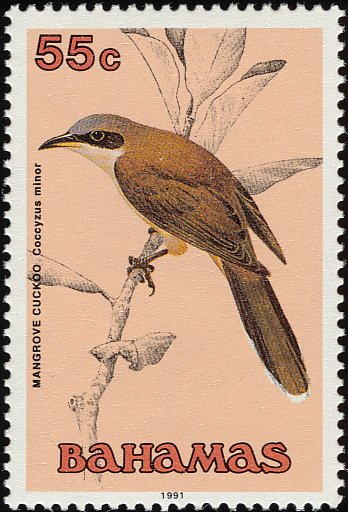
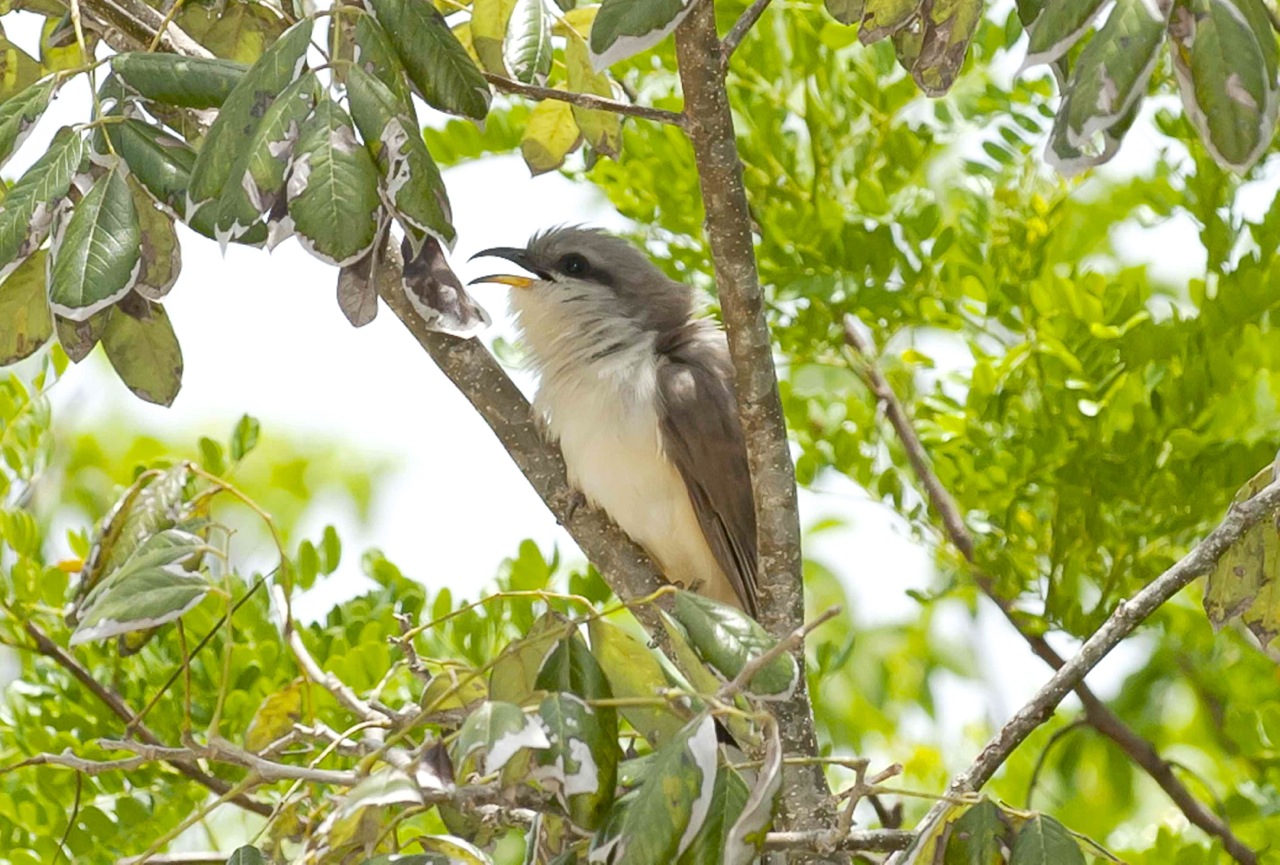
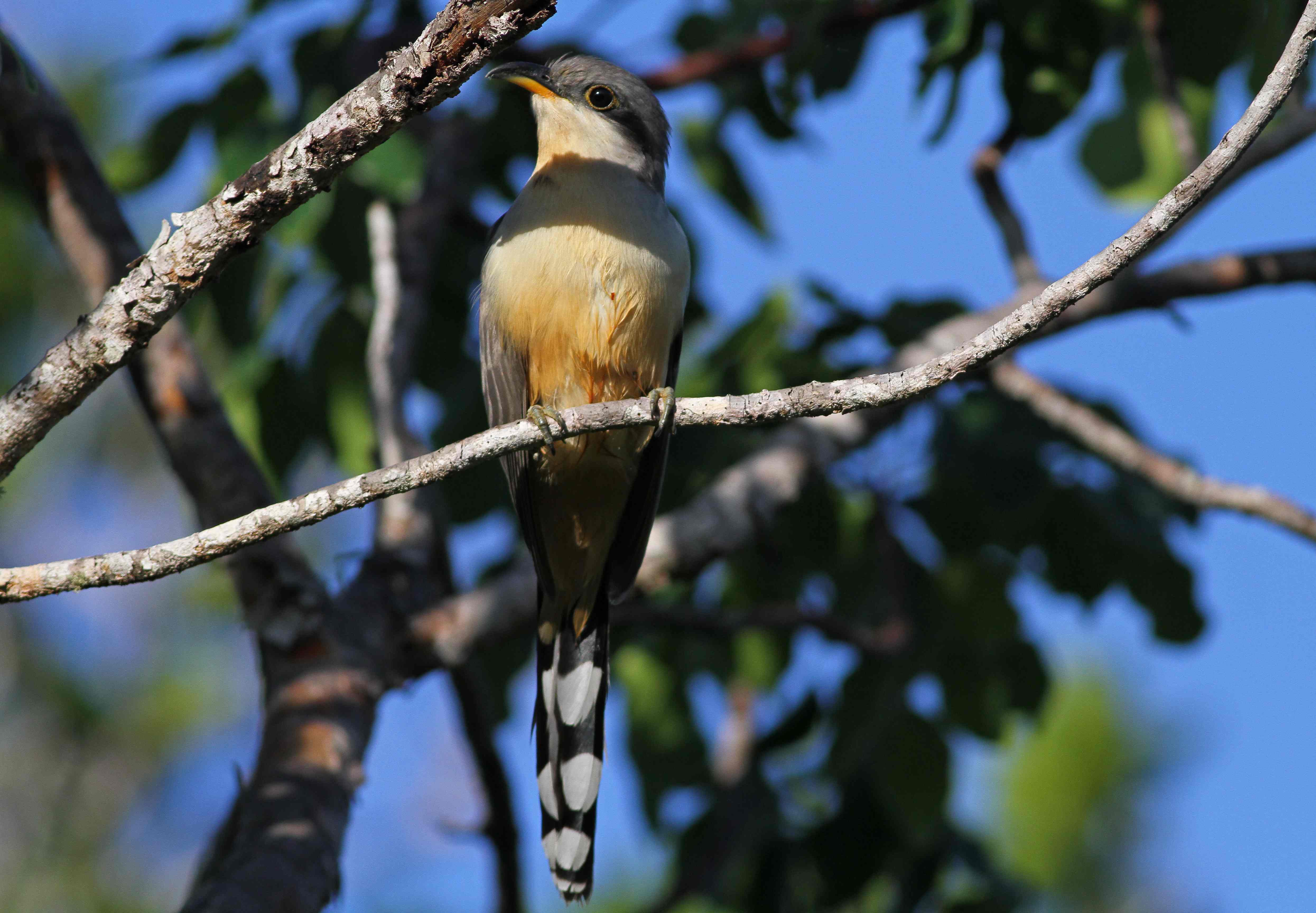
Summer is icumen in, that’s for sure. Has already cumen in, to be accurate. The approach of summer is the time when cuckoos tend to sing loudly (not lewdly, as the old lingo might suggest). The YELLOW-BILLED CUCKOO, recently featured, is one. The MANGROVE CUCKOO (Coccyzus minor) is another. Before I get on to some gorgeous pictures (none taken by me!), let’s have a sample of how this species sounds. The call has been described in various ways, for example as “gawk gawk gawk gawk gauk gauk”. I’m not so sure. And I can’t think of a sensible way to write it out phonetically. So I won’t. Please try, via the comment box…
You will notice that all three birds above have got fat insects in their beaks. A lot of photos in the archive show feeding mangrove cuckoos. Maybe that’s when they are most likely to break cover, for they are quite a shy species. Their preference is for caterpillars and grasshoppers, but they are happy to eat other insects, spiders, snails, lizards and (with a nod to an all-round healthy diet) fruit.
Delphi is lucky to have some of these handsome birds lurking in dense foliage along the drives – the guest drive in particular. Some of these photographs were taken there. Occasionally you may see one flying across a track ahead of a vehicle, flashing its distinctive tail. It’s significant that only the last of these photos shows the bird right out in the open – the rest are all deeper in the coppice.
Credits: Bruce Hallett, Alex Hughes, Tom Sheley, Gerlinde Taurer and the late Tony Hepburn; Audio – Xeno-Canto & Cornell Lab. All photos taken on Abaco!
BAHAMAS: POPULATION: 313,500, CAPITAL CITY: NASSAU
The name may have come from the Arawak people who lived here, or the Spanish words ‘baja mar’, which means shallow water or sea.
You’ll find frogs, lizards and snakes on the Bahamas. None are poisonous.
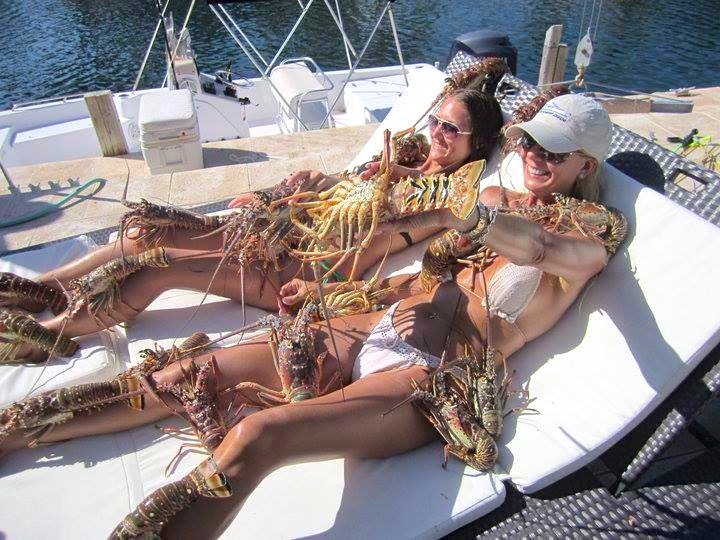
In the seas around the islands you can see many fish, including the crayfish. This isn’t actually a fish, but a spiny lobster.
Tourism is important to the economy. Columbus was the first visitor from Europe, when he landed in 1492 on the island that became known as San Salvador.
The Dean’s Blue Hole is one of the Bahamas’ claims to fame. Blue holes are inland caves or underwater sinkholes, and the Dean’s descends 220 m, making it the world’s deepest blue hole.
The Jankanoo is a traditional street parade in Nassau, taking place on Boxing Day and New Year’s Eve with lots of music and dancers.
The national sport is sloop sailing. Basketball and American football are popular too.
Schoolchildren on the Bahamas like softball, volleyball, baseball and track &field sports.
The Bahamas joined the Commonwealth in 1973.
It first attended the Vancouver 1954 British Empire and Commonwealth Games and has only missed the Games of 1974 and 1986. The islanders win the vast majority of their medals on the athletics track, and at Melbourne 2006 Tonique Williams won Bronze in the Women’s 400m and Laverne Eve won Bronze in the Women’s Javelin.
At the Delhi 2010 Commonwealth Games, The Bahamas won six medals. Four of them were in Athletics, with the remaining two in Boxing.
Fun fact: ‘Who Let The Dogs Out’ is a song by the Bahamian group Baha Men, who play music called Junkanoo. You may have heard this song in the The Hangover (2009), and it’s also sung at sport events.
Sport fact: Between 1948 and 1988, the Bahamian sailor Durward Knowles competed in eight Olympic Games, and in 1964 he won a Gold medal in the Star class. Previously he sailed for Britain, ending fourth in 1948.
OPENING CEREMONY
FLAG CARRIER
SWIMMER Arianna Vanderpool-Wallace adds another honour to her glittering career tonight when she carries the Bahamas flag at the Commonwealth Games opening ceremony in Glasgow.
The 24-year-old multiple national record holder will be the first female outside track and field to be her country’s flag bearer at the prestigious quadrennial event that stand just behind the Olympic Games in prominence.
“It’s a really big honour. I mean I feel like sometimes track and field get a lot of attention so it’s really nice that swimming is going to get the attention,” said Vanderpool-Wallace.
Although she was given the news before she arrived in Scotland, Vanderpool-Wallace said yesterday it is slowly sinking in that she will be leading in the Bahamas’ largest delegation ever to the Games. “I hope that one day I will also be the Olympic flag bearer,” she said. “But the Commonwealth Games is a very big event for the Bahamas and the world, so I am really honoured that I am carrying the flag.”
RED REEF RESIDENTS: A RUFOUS ROUND-UP IN THE BAHAMAS
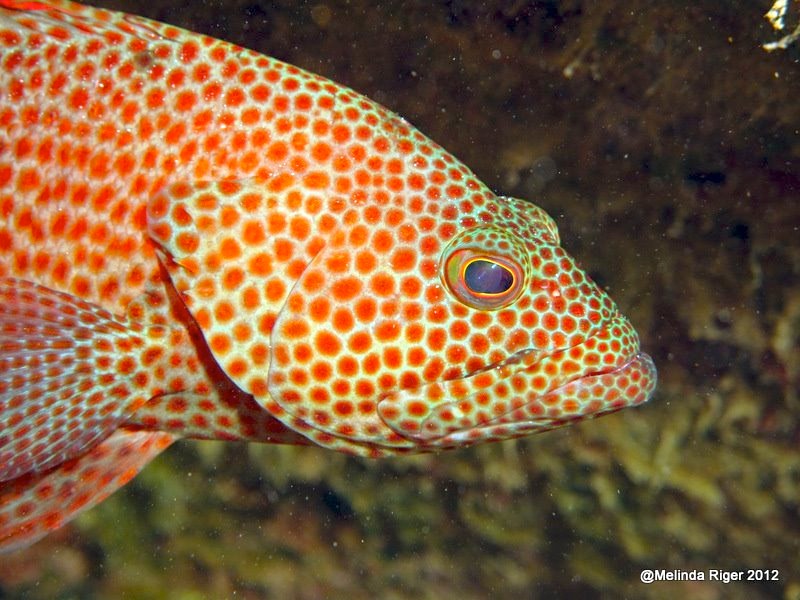
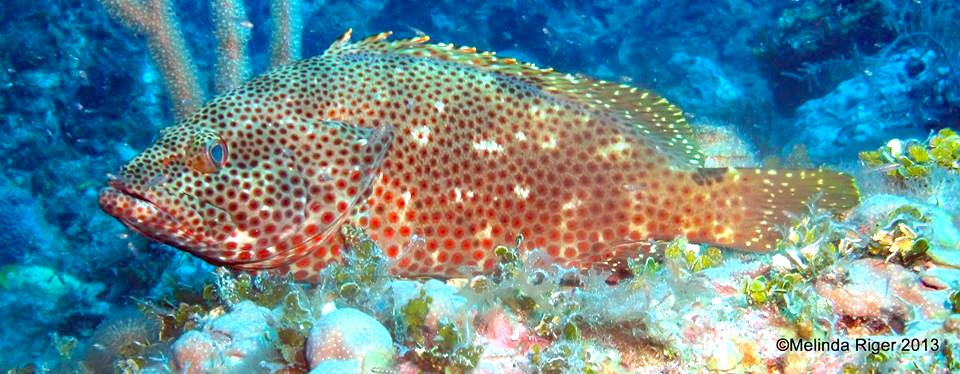
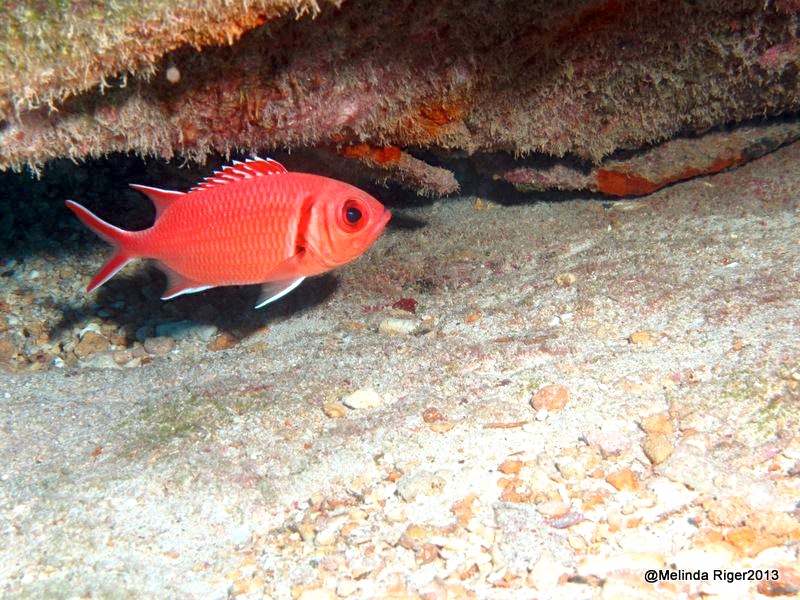
It’s sunny and very hot. Time to take another dive with Melinda to see what is going on under water around the reefs. Here are some residents, a somewhat loose description since some of the denizens featured are not especially active. But they are alive, so they qualify by my wide rules. And please may we not get into a discussion about where precisely red and orange overlap. It’s a grey area. And it’s too hot to argue about it… Let’s start with three types of GROUPER that may be spotted in the northern Bahamas. In fact, they are always spotted. One of my favourite pictures is the Graysby – it’s such a great expression, and he really rocks the spots!
GRAYSBY
TIGER GROUPER AT A CLEANING STATION with Peterson Cleaning Shrimps & a GobyRED HIND
BLACKBAR SOLDIERFISH
HOGFISH
SQUIRRELFISH
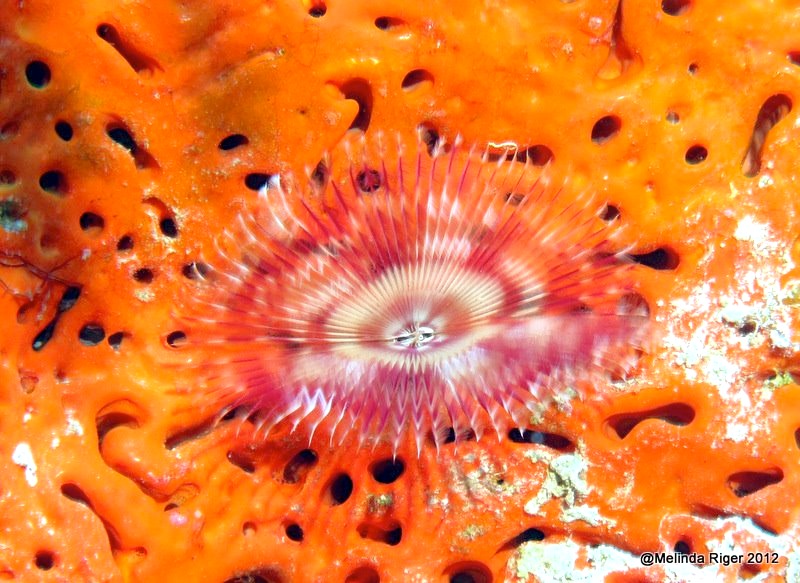
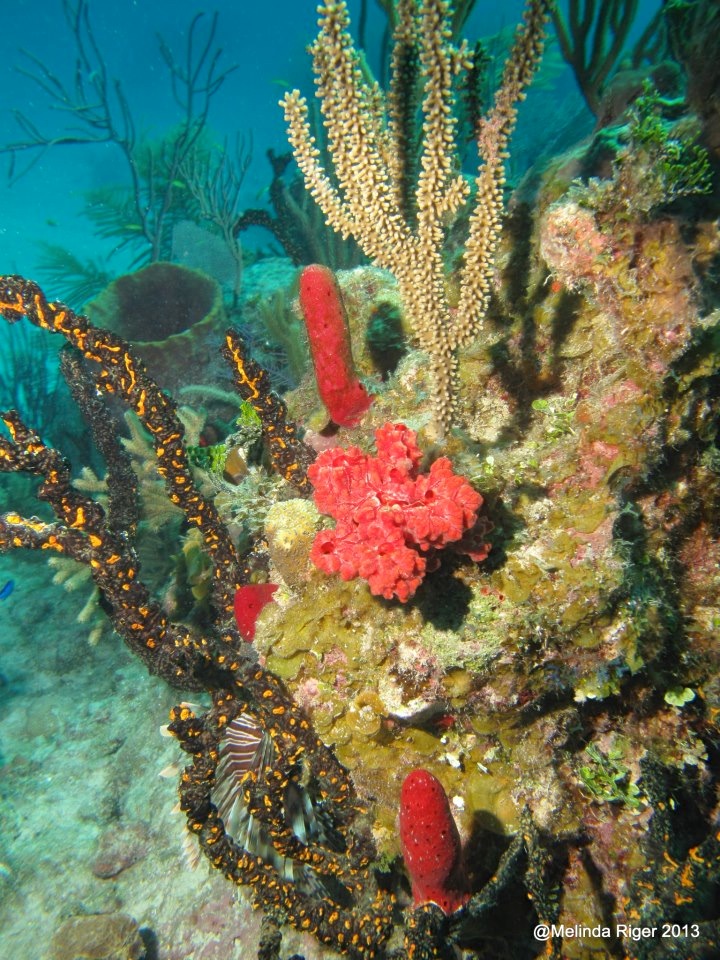
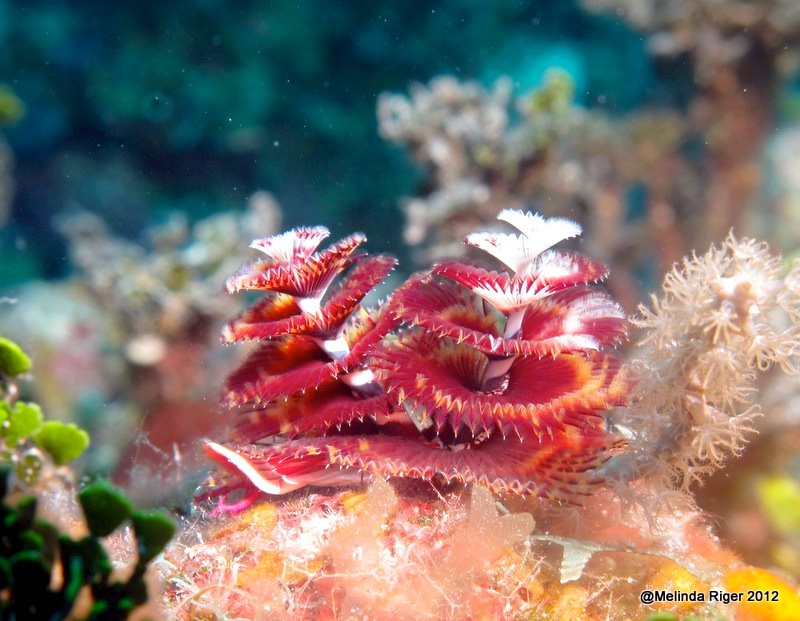
But red fish are not the only red reef residents. Here are some that won’t swim away from you as you swim towards them to admire them…
“I HEAR YOU KNOCKING”: THE YELLOW-BILLED CUCKOO ON ABACO
The Yellow-billed Cuckoo (Coccyzus americanus) is the least common of three cuckoo species found on Abaco. All are permanent residents. It is similar to the more frequently seen Mangrove Cuckoo. Both are avid consumers of insects in general and caterpillars in particular. The YBC is shy and you are quite unlikely to see one out in the open, though you may hear its distinctive ‘knocking’ call. The third species classified with the ‘cuculidae’ is the Smooth-billed Ani. Here’s what to listen out for:
Mike Nelson / Xeno-Canto
The YBC has, obviously, a yellow bill. It also has yellow eye-rings and pure white underparts. Photographer Tom Sheley, a major contributor t0“The Birds of Abaco”, is a very patient man. He managed to capture these two beautiful birds by knowing the right place to be at the right time… and waiting. The results for this little-seen species are spectacular.
For those whose memories are stirred by the reference to “I hear you knocking” (Rick from Nassau – you!), I include archive material of Dave Edmunds hamming it up. Get a load of the Clothes! The Dancing! The Moves of the guy in the top left corner / centre back, at once rhythmic yet disconcertingly bizarre.
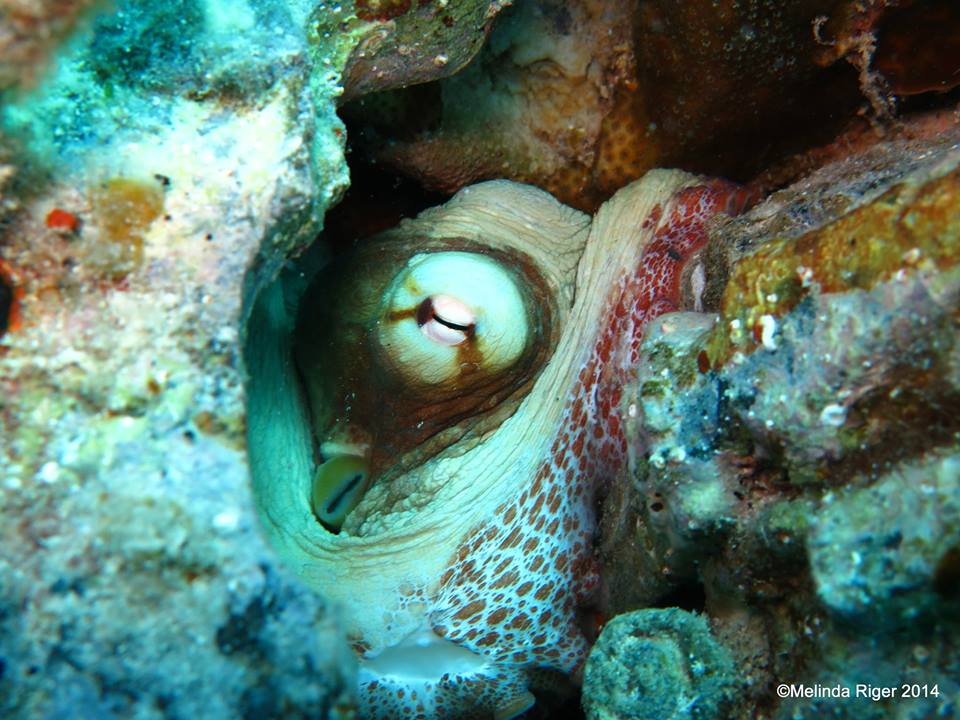
Few people know that, by international law, it is unlawful to fail to be fascinated by Octopuses… Octopi… Octopodes… Octopotomi… Whatever. For a learned dissertation on the correct plural form for these creatures – bear with me, there are strict rules that apply here – you’ll find out the right way atTHE PLURAL OF OCTOPUS. I won’t go into it all now, because it’s time to showcase some more wonderful underwater photography by Melinda Riger of Grand Bahama Scuba. Strictly, these are not Abacos Octos, but they share the same reef system and are therefore close cousins. Of such tenuous links are blog posts formed.
My favourite octopus photo
Settling down to a take-away
The all-seeing eye…
On the move… so long suckers!
Octopus InkAll photos: Melinda Riger
The Rare Scottish Tartan Octopus
SAD POST SCRIPT: As a Scot out of Norway (did you ever?) my father learnt to play the bagpipes. Indeed had a set. They lived in a cellar I wasn’t allowed into. The bag was allegedly preserved in treacle (don’t ask). I still have the ‘Chanter’ (a single pipe practice instrument), the sound of which is akin to trying to strangle one cat with another cat. I was fobbed off with that. Then one day as a treat the cellar was unlocked and a large wooden box was dragged out. The bagpipes! The lid was opened and… OMG! the bag had rotted away completely, the pipes looked pathetic and very disappointing, and the whole thing stank of nameless dead creatures… I can’t hear the sound of the pipes to this day without finding it (a) stirring yet (b) enough after a short time and (c ) a reminder of a broken dream… The end.
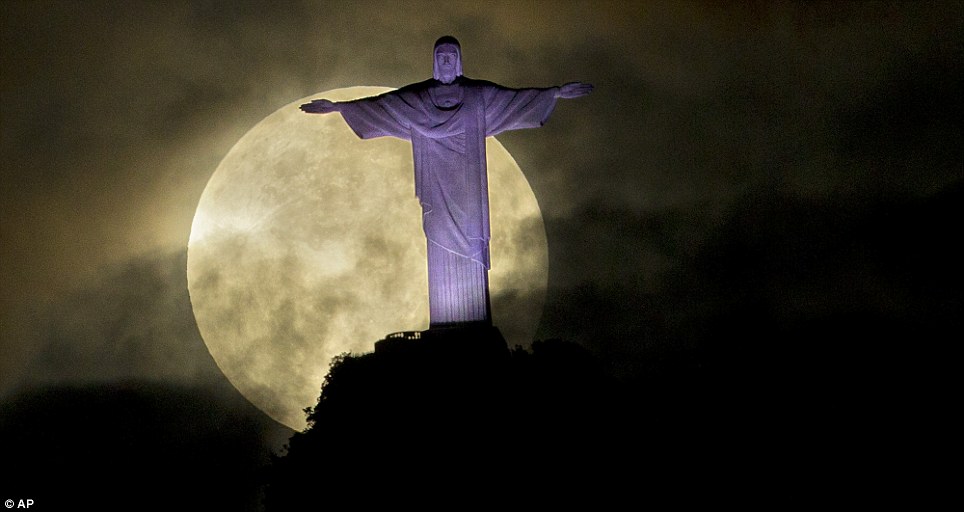
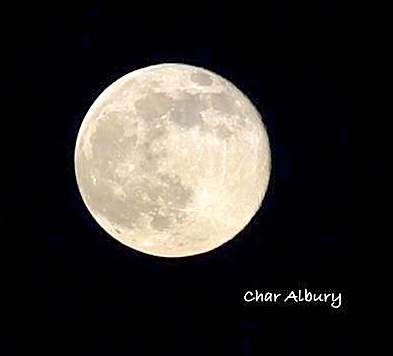
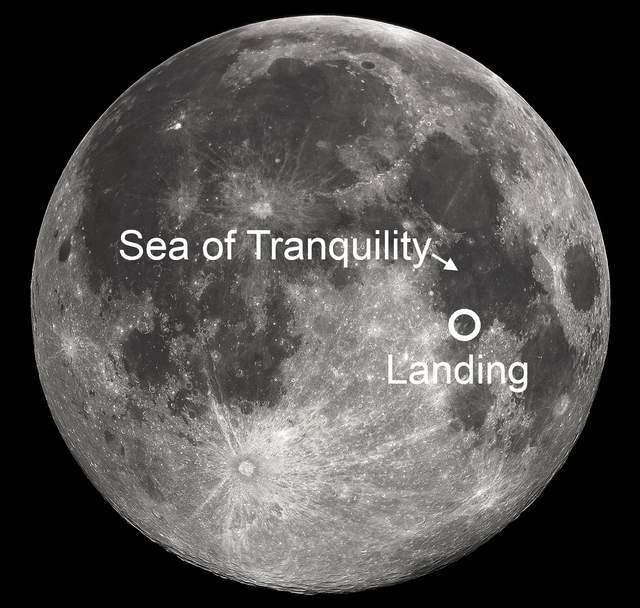
A supermoon is “the coincidence of a full moon or a new moon with the closest approach the Moon makes to the Earth on its elliptical orbit, resulting in the largest apparent size of the lunar disk as seen from Earth”. These huge, bright moons are not particularly rare, but they are undoubtedly spectacular. The most recent occurrence was on July 12, 2014 and generated many wonderful images around the world, such as the header image (AP / D Mail) which cannily shows a shot from World Cup Land. The moon also brought a flurry of good photos from Abaco, for example these from Char Albury and Rhonda Pearce that were posted on FB. The visible detail of the moon’s surface is amazing – craters, seas, mountain ranges, lines and all. The source of radiance oddly appears to be a large crater I’d never heard of, called Tycho.
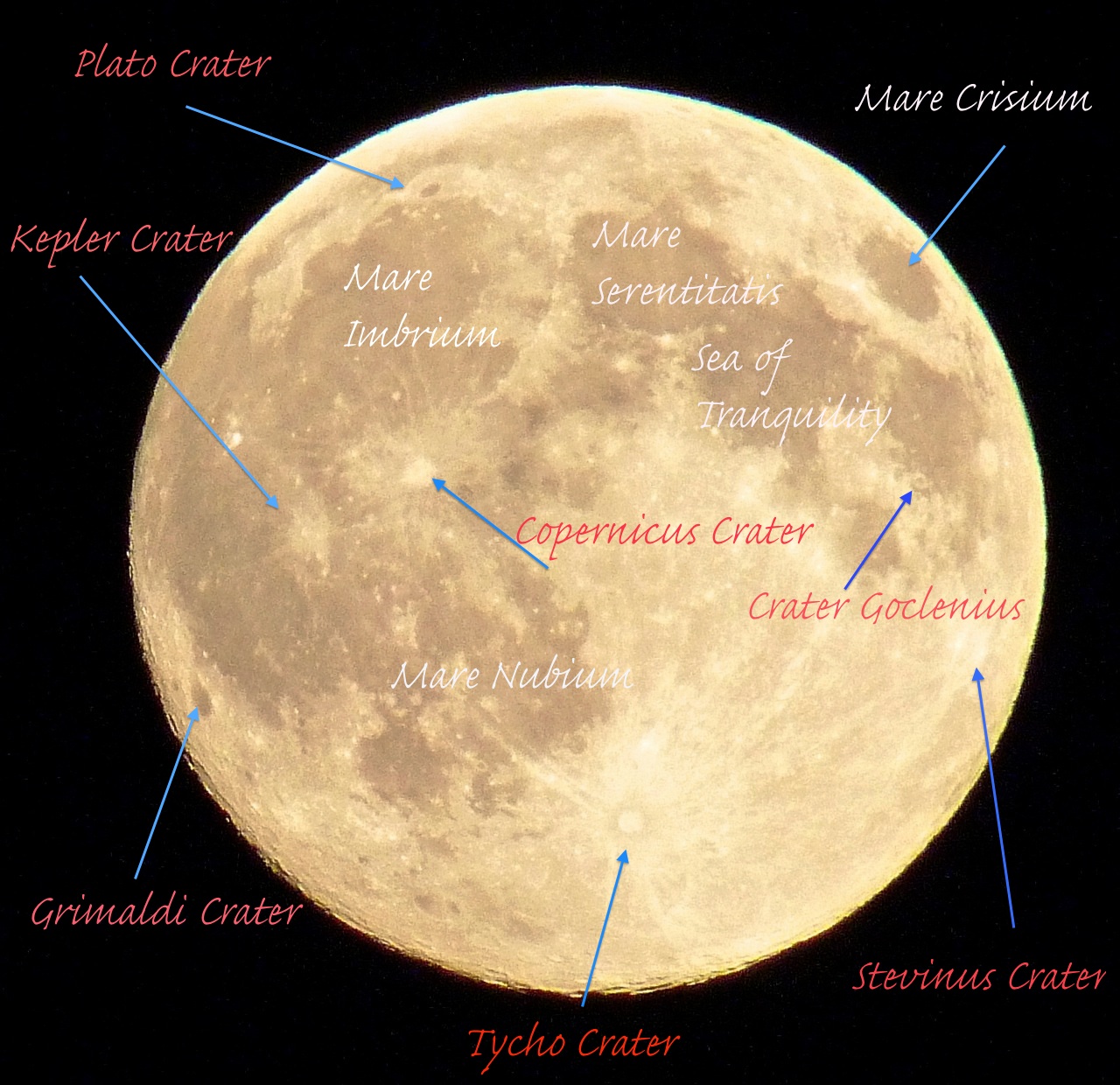
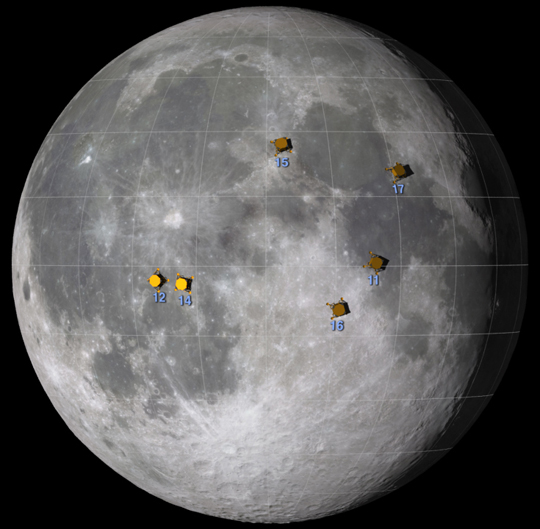
The event was a dream for selenologists (lunar scientists) and selenographists – those who study the surface and physical features of the Moon, and are involved in mapping and naming the lunar seas, craters, mountain ranges etc. A surprising amount of detail of the moon’s surface was visible even to the naked eye. Nowadays, orbiting spacecraft have made the scientific tasks much easier, and even the moon’s backside has been thoroughly charted (not to be confused with the frequent charting of The Dark Side of the Moon).In the UK we also noticed the phenomenon – a large, heavy moon hanging brightly in the sky. I took a few shots in the countryside where there is gratifyingly little light or air pollution, without thinking that the object I was focusing on was obviously much the same for everyone everywhere…Then I got to wondering what exactly I was looking at. I had a vague memory of some of the seas – Mare Imbrium for example – but I couldn’t remember any crater names at all. So I did a bit of research in an amateur serenographist kind of way and came up with this:This led me on to thoughts of the moon landings, and in particular Apollo 11. Wasn’t there something about touching down in the Sea of Tranquility? But whereabouts exactly on the supermoon? Here’s the answer. The moon below (from SOERFM) is at a different angle, but it can still be compared with the supermoons above.And what of all the other Apollo landings? Did they all aim for the same spot where Neil Armstrong staked his claim for mankind? Or were other landing areas tried by the Apollo moon missions? NASA has the answer:Then I wondered about the names given to the seas and craters. Are they all modern or are some historical? I came across a wonderful map that shows that many names were given and recorded centuries ago. The moon map below is confusing – it is upside down compared with all the ones above. However, it is clear that by the c17, the naming of lunar geographical features was already largely settled. Almost all the names I added to the moon above can be found on this map of 1647. Double-click on it to get an enlarged legible view. It’s worth noting that it was published only 5 years after Galileo’s death.
Map of the Moon by Johannes Hevelius (1647)
Photos: Charmaine Albury, Rhonda Pearce, RH, SOERFM, NASA; other credits as noted in text
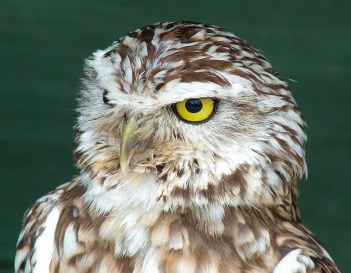
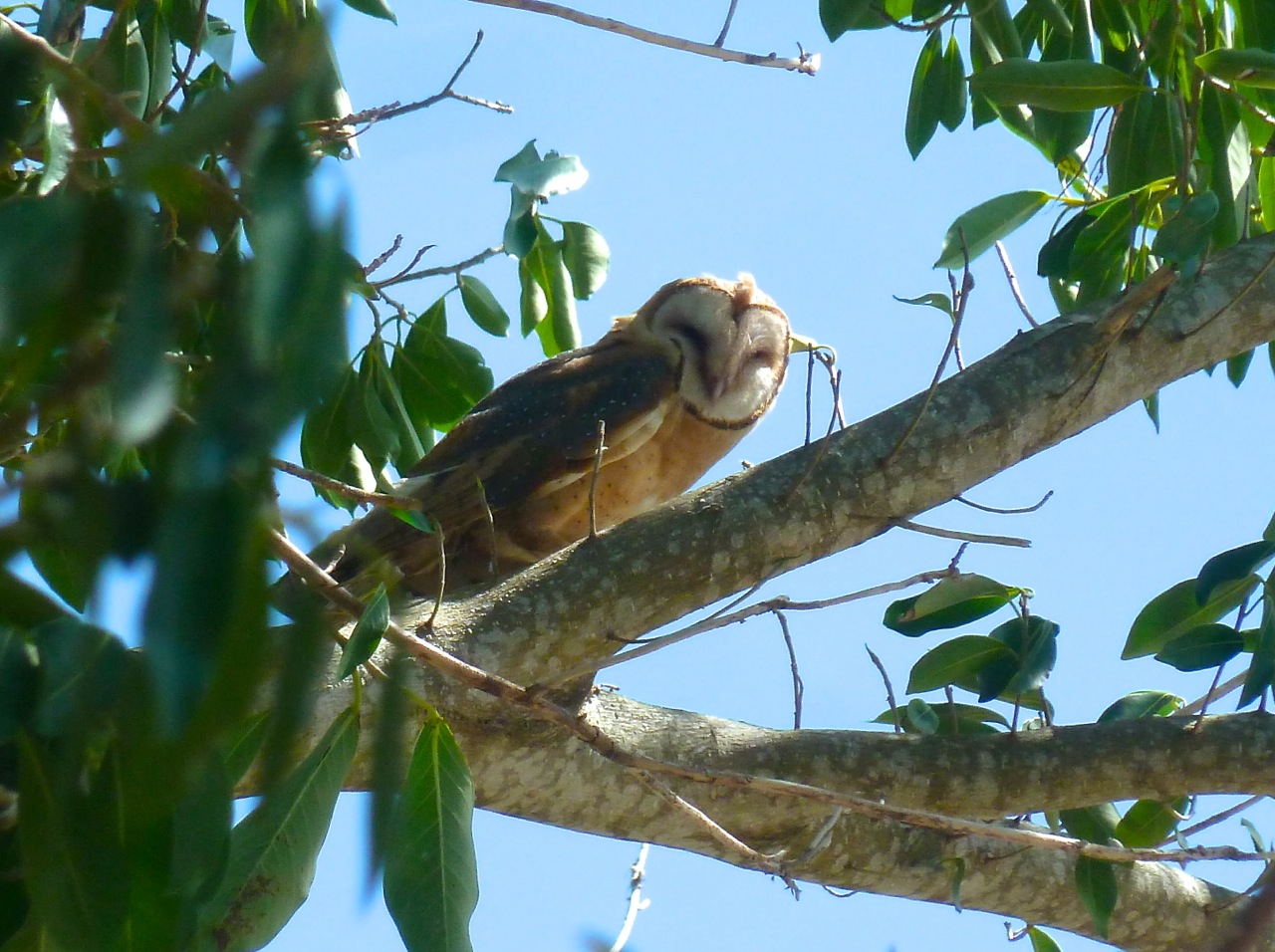
Realistically, the Barn Owl (Tyto alba) is the only owl you are likely to see – and hear – on Abaco. The species is permanently resident, which is a good start in that the opportunities for sighting one exist year-round. Although they are not at all common they can be found in particular locations, for example the Treasure Cay area. There are two other owl species recorded for Abaco: the Burrowing Owl, a rare vagrant (post coming soon); and the Northern Saw-whet Owl, a vanishingly rare vagrant recorded a handful of times that I don’t propose to feature unless and until it decides to visit Abaco more frequently…
Barn Owl, Treasure Cay, Abaco Bahamas (Becky Marvil)
The shrill banshee cry of the Barn Owl – known in many places as the ‘screech owl’ (which, strictly, is a different owl species) – is unmistakeable. Mainly nocturnal, they fly noiselessly like white ghosts in the night. If you are lucky enough to see one in daytime, you’ll be struck by the beautiful heart-shaped face and (if close enough) the delicate markings. We are lucky enough to live in barn owl country in the UK. In summer we often hear them at night as they hunt for rodents and other small mammals. Last night, for example, at 2.30 a.m. Barn owls also make an intimidating hissing noise.
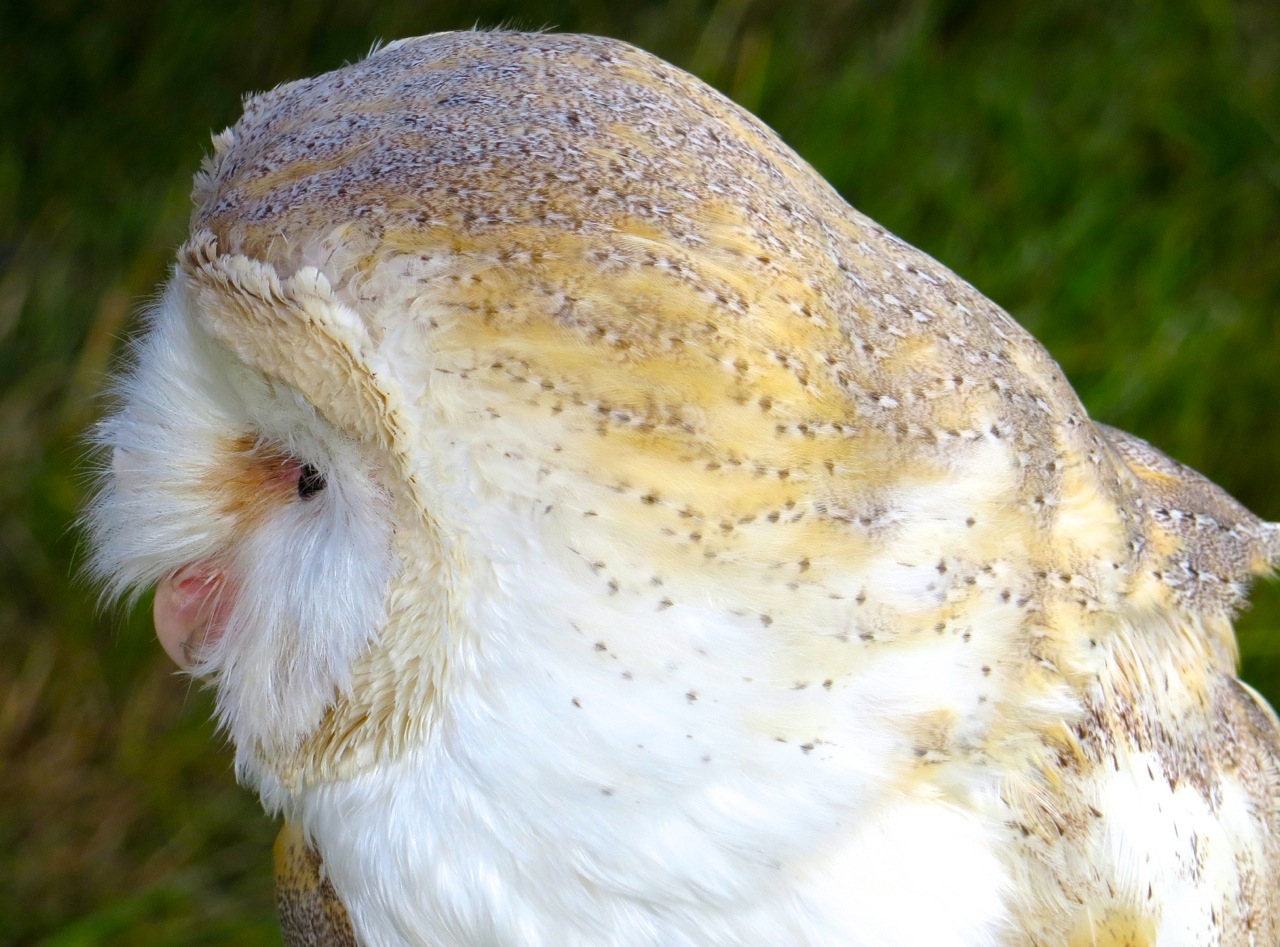
Both photos above were taken on Abaco. Woody Bracey’s header image is featured in “THE BIRDS OF ABACO“. Becky Marvil’s photo was taken near Treasure Cay. I’ve never seen a barn owl on Abaco, but I’ve been lucky enough to get close to a couple – last summer in Dorset, and last week in Cornwall. For those who have never seen one, here is a gallery of my own images that show what wonderful birds they are.
This close-up of a barn owl shows the typical speckling on its pure white front, and the wing patterns
This fluffy baby barn owl was recently rescued and is being cared for in a sanctuary before being returned to the wild. Whimsy is rarely permitted in this blog, but seriously, folks – cute overload!
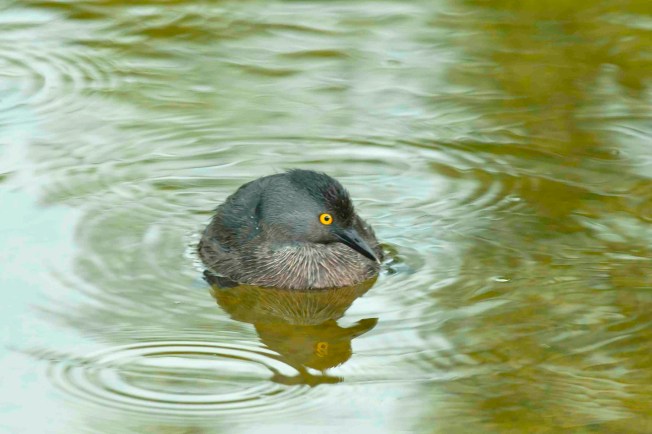
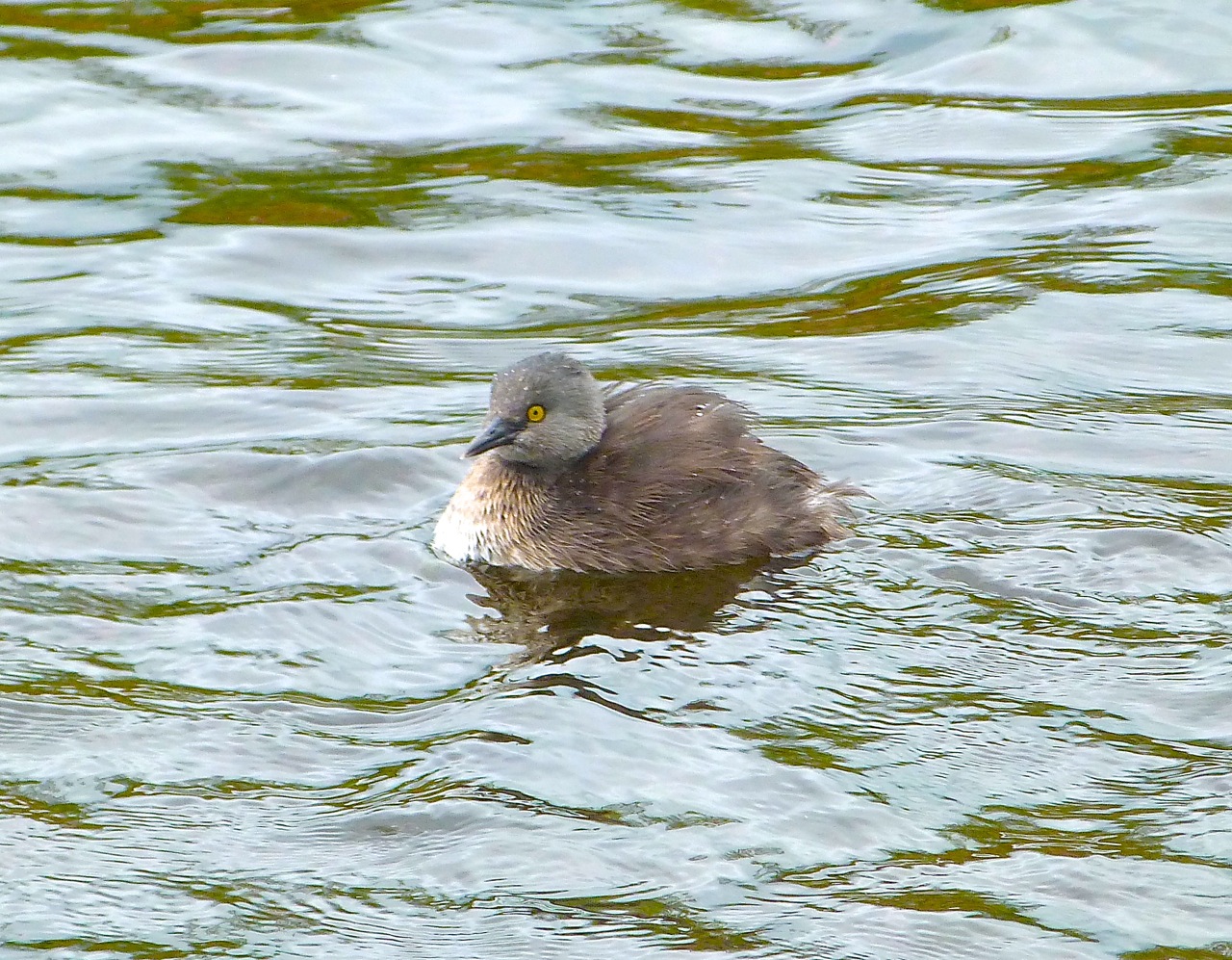
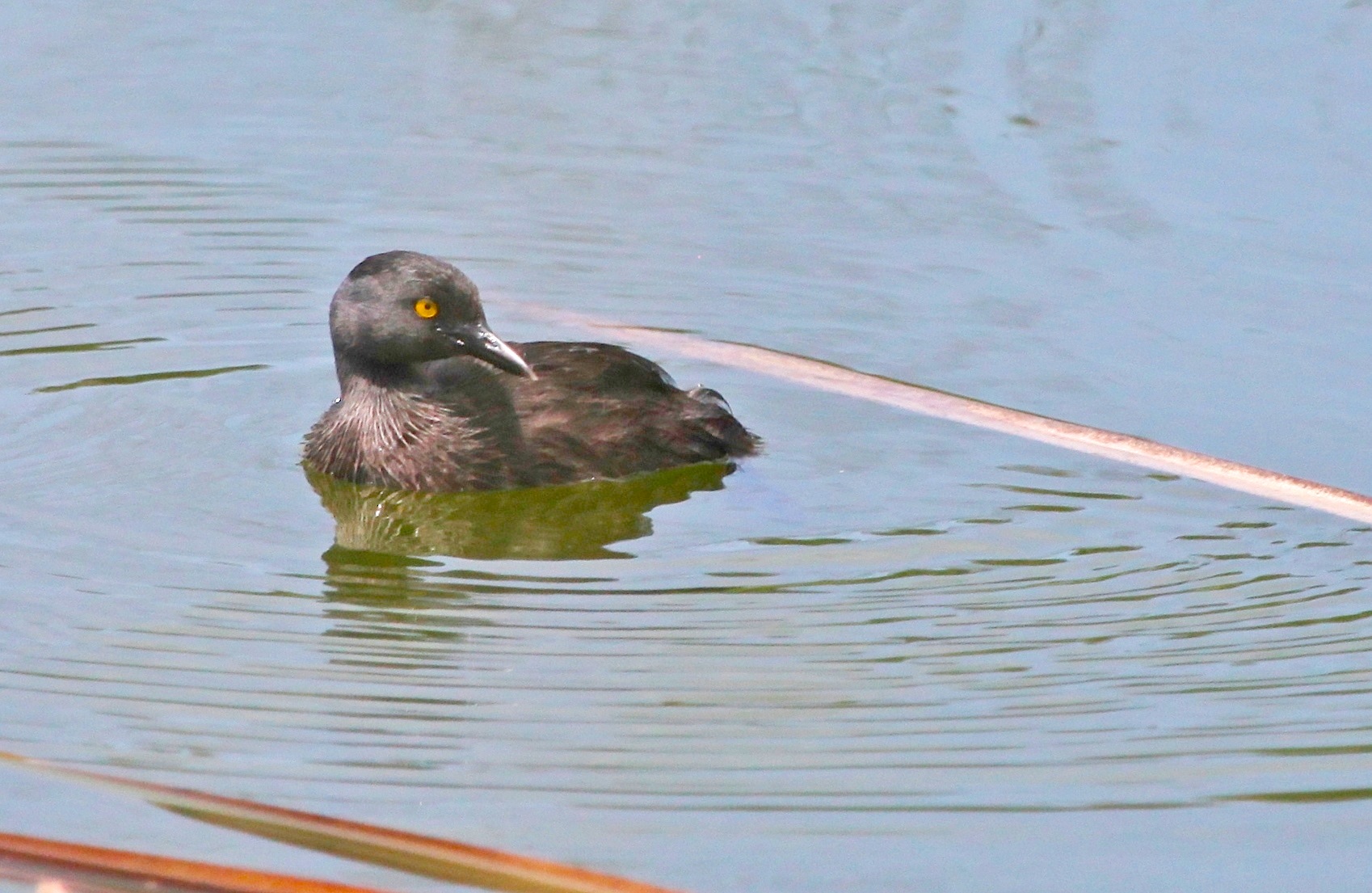
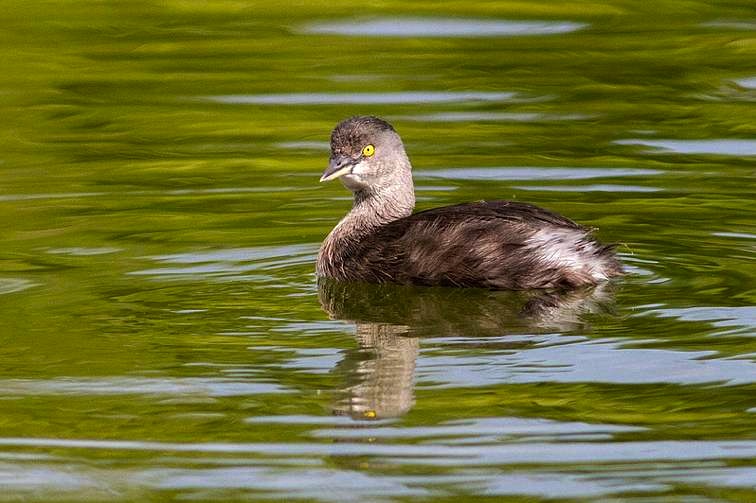
The Least Grebe Tachybaptus dominicus is an adorable little dabchick that can be very entertaining to watch. These small birds are able to stay underwater for long enough to ensure they always bob up further away from you than you expect. They can easily stay below the surface for 20 seconds, and may dive again only a few seconds after surfacing (their taxonomic name comes from a Greek compound meaning ‘fast diving’). While underwater, the grebe forages for tiny fish, crustaceans, frogs and aquatic insects. In the breeding season the striped chicks are sometimes carried on a parent’s back.
A GALLERY OF LEAST GREBES
For the sake of completeness, there is one other dabchick species found on Abaco, the closely related Pied-billed Grebe. Here’s how to tell them apart: the Least has a bright golden eye, while the Pied-billed is slightly the larger of the two species, and has a dark eye and a black beak-ring in the breeding season.
PIED-BILLED GREBE
Photo Credits: Tom Sheley (3); Peter Mantle (2); RH (2); Gelinde Taurer (1); Tom Reed (1); Wiki – PBG (1)
‘TAKEN TO THE CLEANERS’: REEF FISH & CLEANING STATIONS
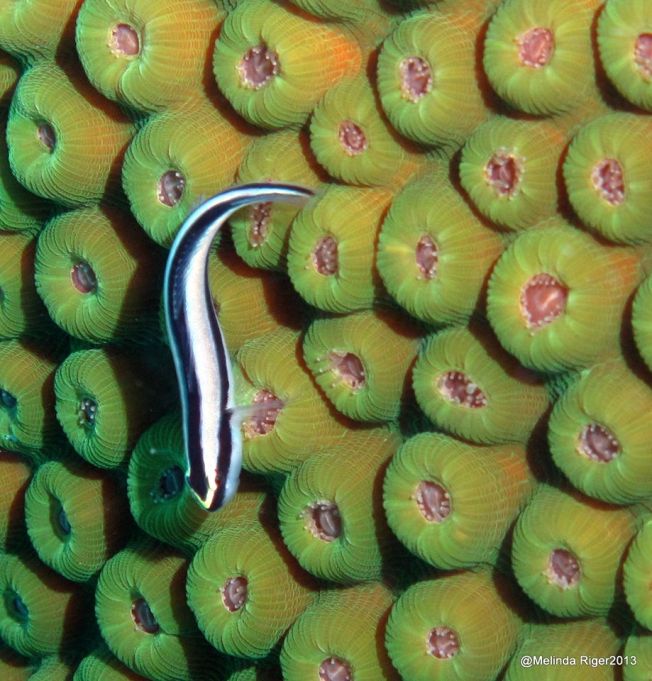
A cleaning station is a place where fish and and other aquatic life congregate to be cleaned. This involves the removal of parasites both externally and internally, and is be performed by various creatures including, on the coral reefs of the Bahamas, cleaner shrimps and various species of cleaning fish such as wrasses and gobies. The process conveniently benefits both the cleaned and the cleaner.
Tiger Grouper being cleaned by Cleaner Shrimps
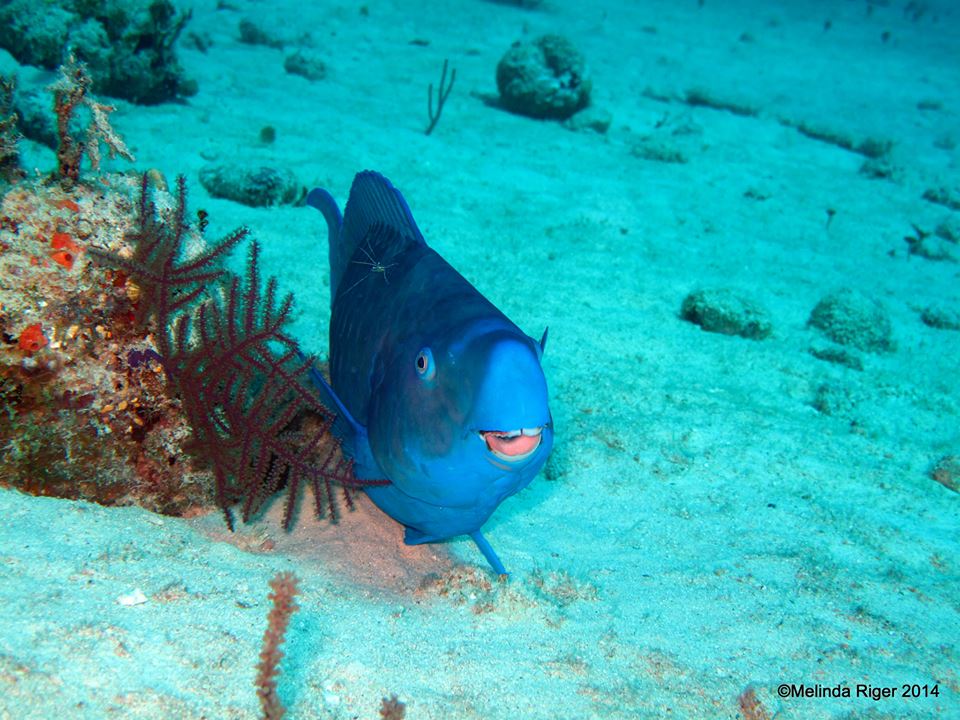
Blue Parrotfish being cleaned (or tickled, from its expression) by a Cleaner Shrimp
Black Grouper being cleaned by gobies – note the ones in its mouth
Black Grouper at a Cleaning Station with gobies. Note the hook and line…
Tiger Grouper being cleaned by Gobies
Gobies checking a hand for parasites….
When a fish approaches a cleaning station it will open its mouth wide or position its body in such a way as to signal that it needs cleaning. The cleaner fish will then remove and eat the parasites from the skin, even swimming into the mouth and gills of the fish being cleaned.
“Clean me!” An amazing view of a Tiger Grouper at a CleaningStation with its gills wide open
Grouper at a cleaning station over a sponge
Remora clinging to a shark. For more on this unusual symbiotic relationship, click HERE
All photos: Melinda Riger of Grand Bahama Scuba, with thanks as ever
GRAY CATBIRDS & BIRDBATHS ON ABACO: HANDY FOR A DRINK OR A DIP
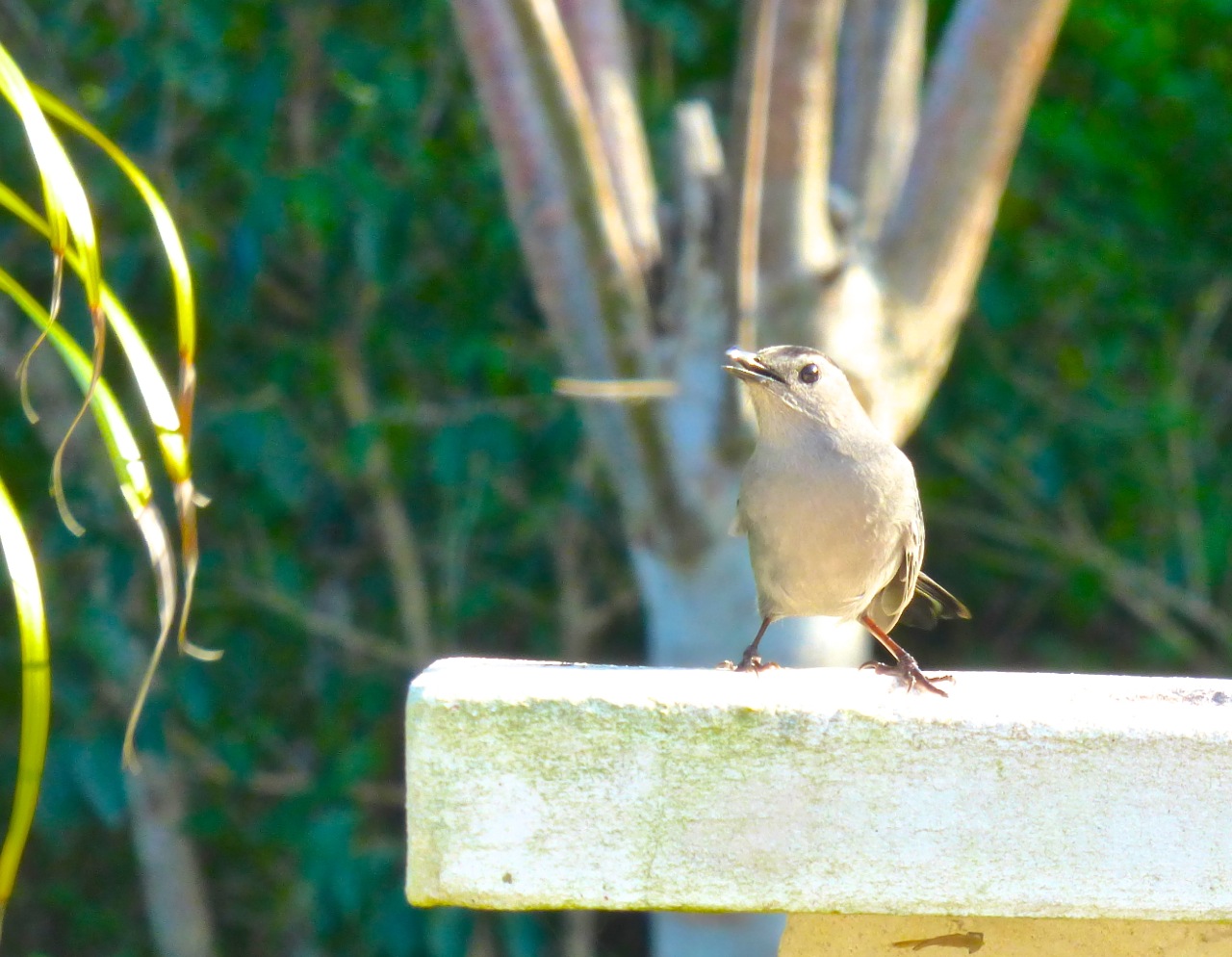
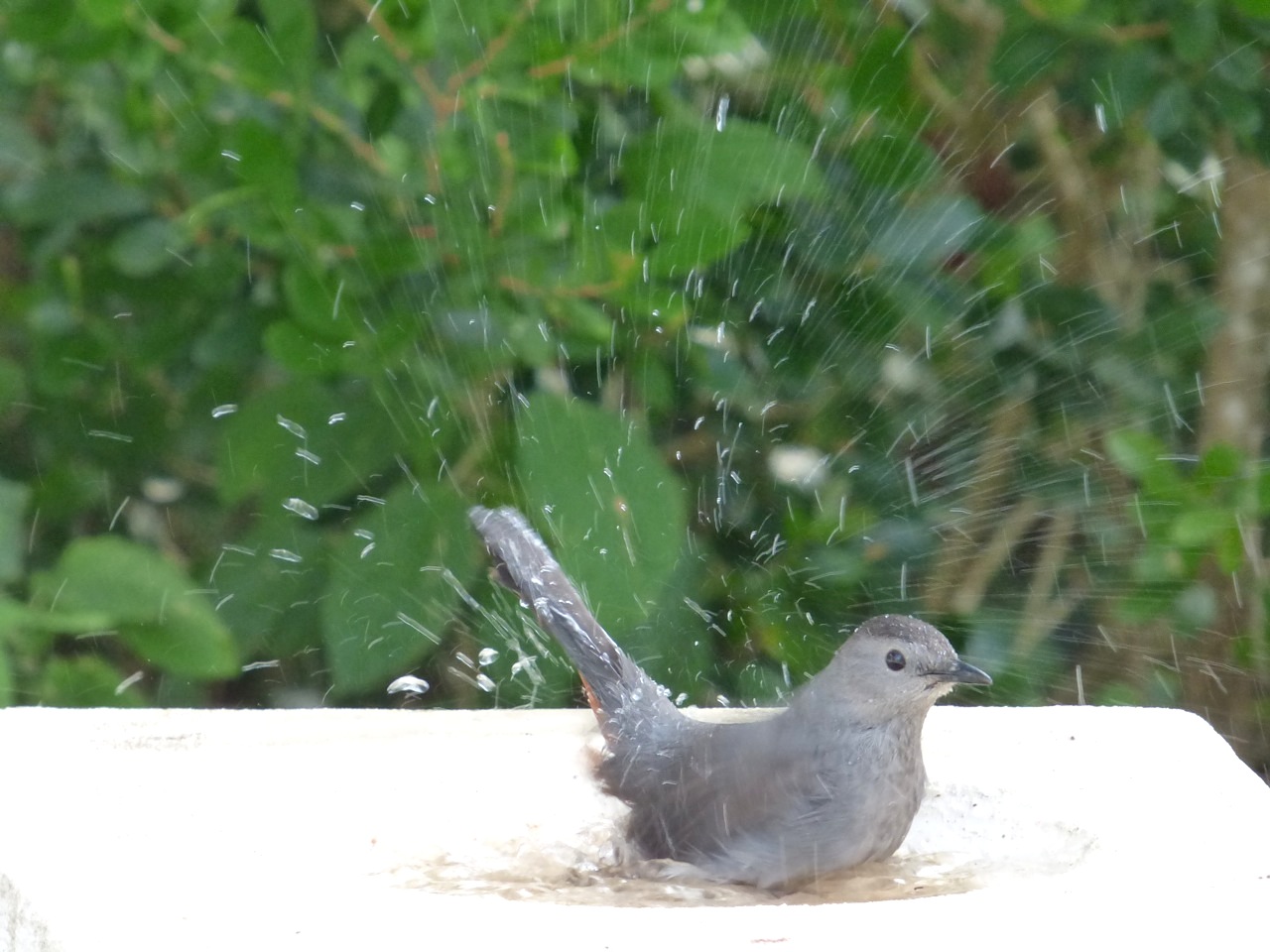
The birdbaths at Delphi are not as popular as the feeders, but certain species seem to make the most of them. Among the frequent users are Greater Antillean Bullfinches, Black-faced Grassquits and Gray Catbirds Dumetella carolinensis. The bird above and in the next 2 photos was one of several species using the poolside birdbath on a hot day. It seemed to pause after taking a drink, as if to enjoy the water trickling down their throats (or is that just me and Kalik?).
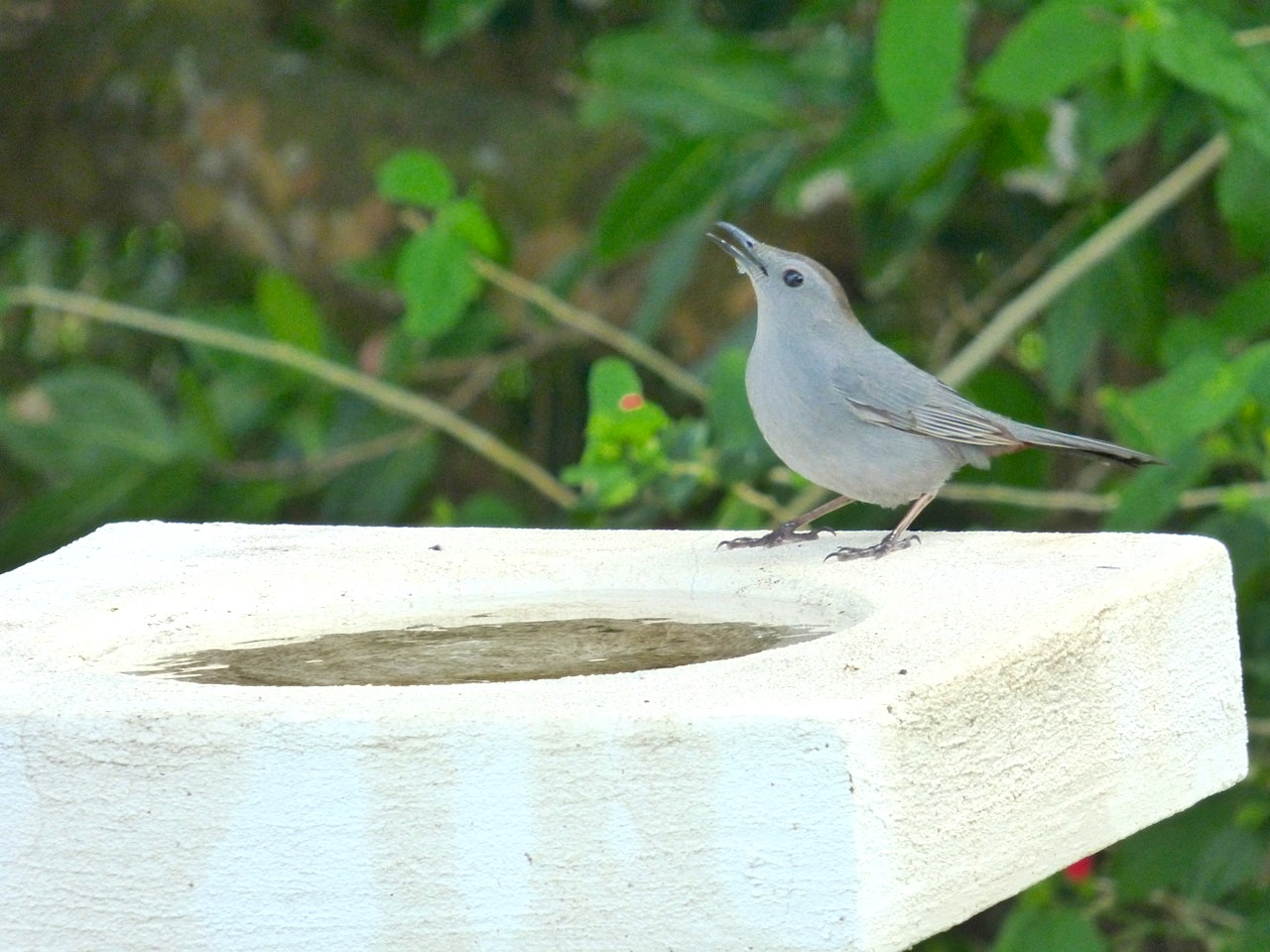
This Gray Catbird started the day with a good drink at the birdbath near The Shack. There seems to be a certain amount of gargling and dribbling going on, but clearly it is enjoying some fresh cool water.
This catbird was tempted to the birdbath at the far side of the pool on a very hot afternoon. Not just to drink from, but actually to get in for a dip. And then a major bout of splashing about… Note the characteristic russet undertail coverts of this bird, also visible on the header bird. And if you want to know how this species got its name and what it sounds like, this will explain all…
ABACO: COLOURFUL EVEN DURING TROPICAL STORM ARTHUR
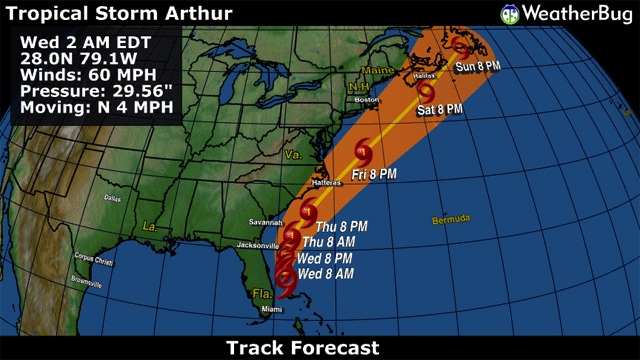
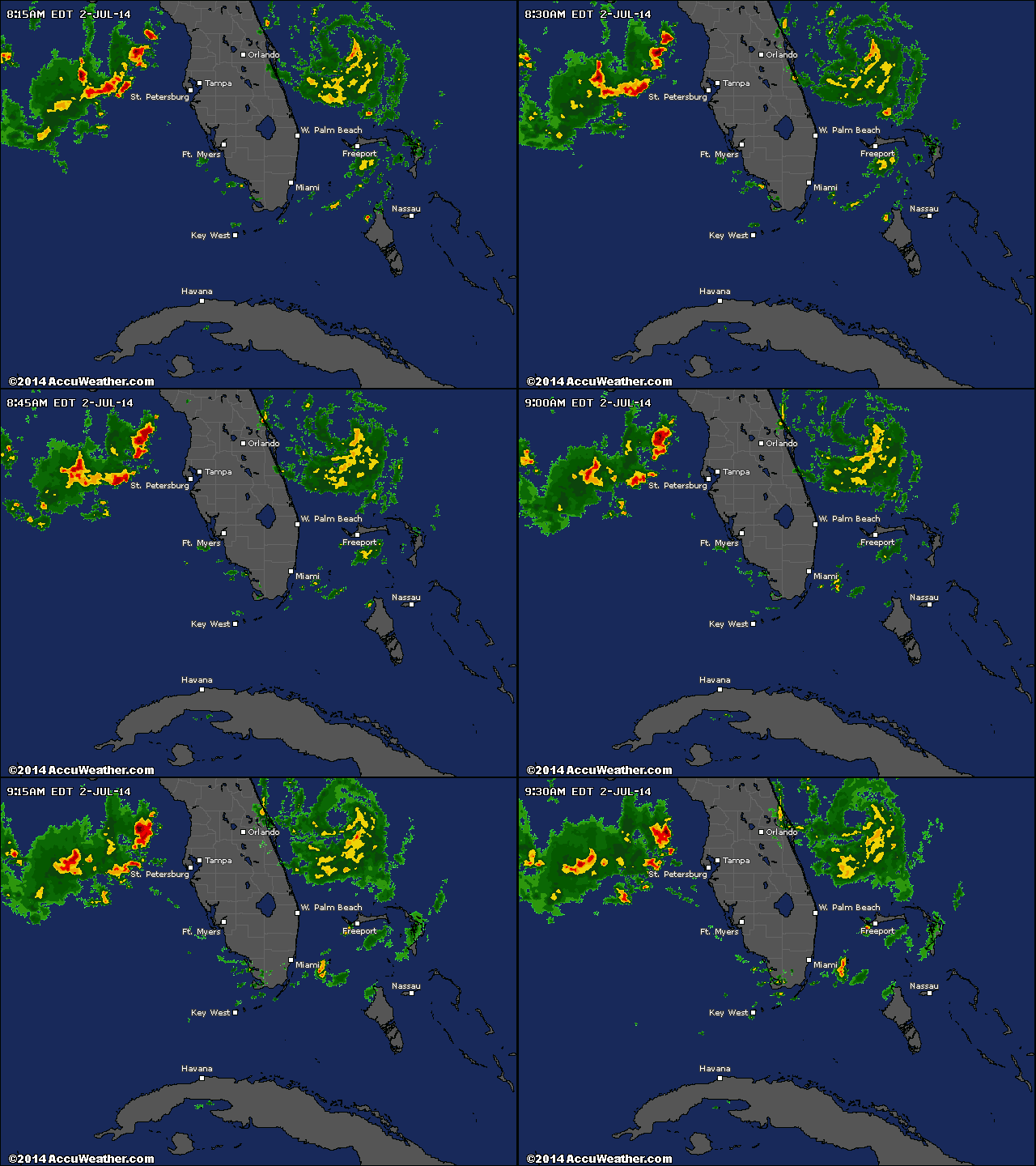
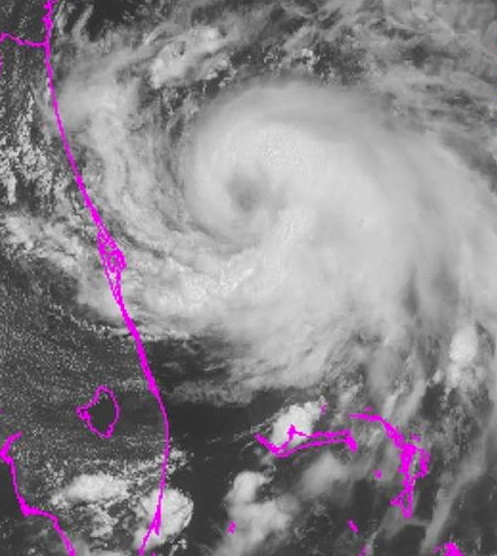
As Tropical Storm Arthur blows northwards increasing in strength, Abaco has begun to get its sunshine back. TS Arthur, then defined as a Tropical Depression, hung around over the Northern Bahamas for four days or so before finally clearing. In the past I wrote daily posts about Hurricane Irene and Hurricane Sandy at a time when information was surprisingly hard to come by. Now everyone is on Facebook and it’s easy to post (or find) cyclone reports, maps, path projections and so on. I’m always struck by the contrast between the bleak, dark-clouded snaps that people put up on their FB pages and the cheerfully coloured weather maps that mark the passage of the storm. Here are a few for Tropical Depression Arthur when over Abaco and moving north, taken from the most useful mainstream sites. My favourite is the National Hurricane CenterNOAAwhere the graphic information is presented in a number of formats. However MIKE’S WEATHER PAGEis a good first resort for information – ‘Like’ it and you’ll get the reports you need. For a plethora of graphics on every hurricane aspect, move on to his website http://www.spaghettimodels.com
Props to Man-o-War Museum which posted the image above on FB. The purple pin is Abaco
There’s nothing like a GIF to show which way the wind is blowing…
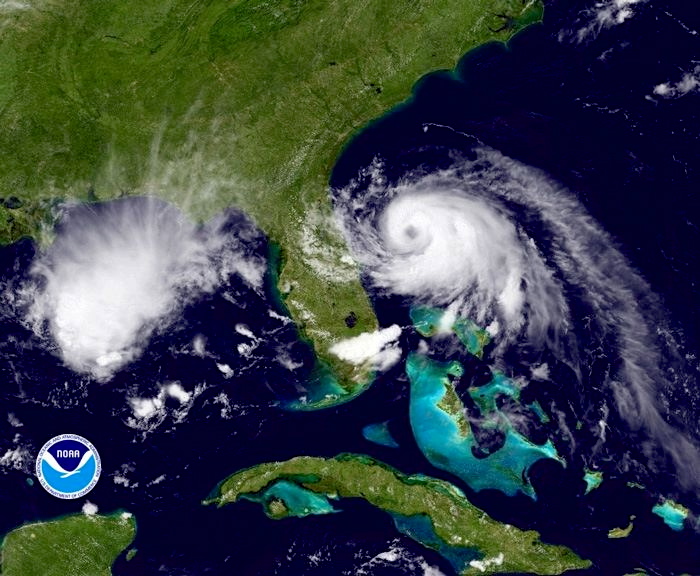
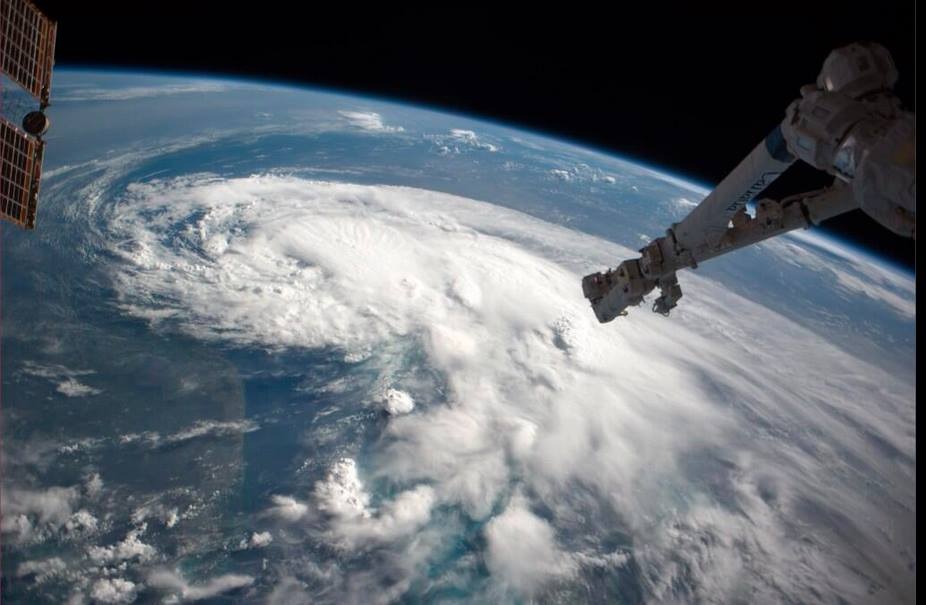
Whenever there’s a bad storm or a hurricane, it’s worth visiting the NASA ISS site for dramatic images from the Space Station. The following link will take you to a dramatic photo of Hurricane Irene in 2011HEREThere’s a search facility on the site. This is a fine image of TS Arthur, illustrating the characteristic swirl pattern of a tropical storm.
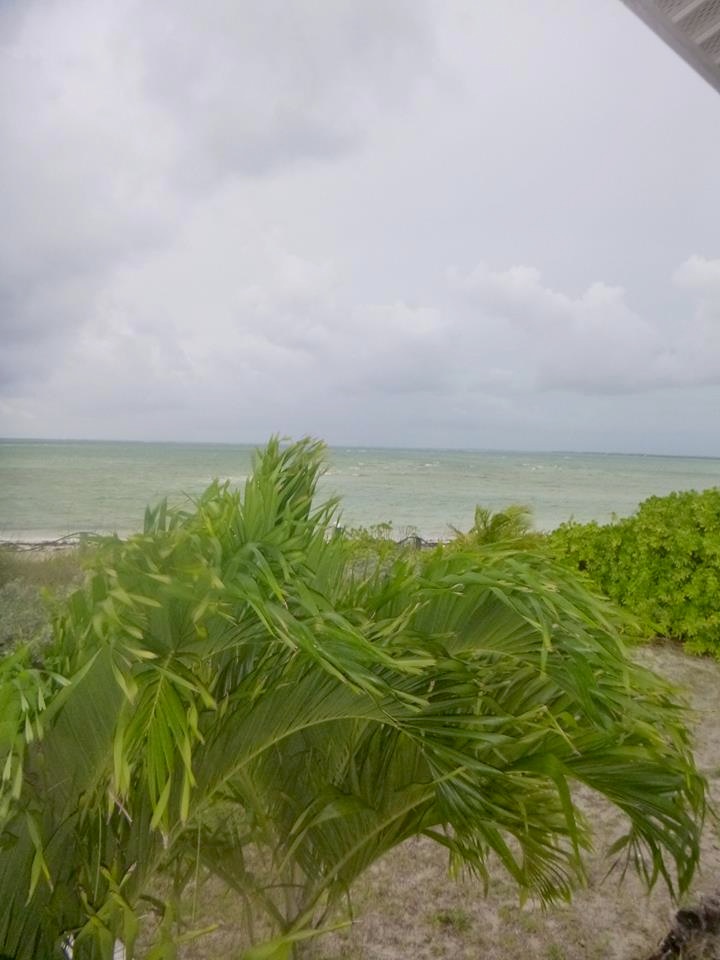
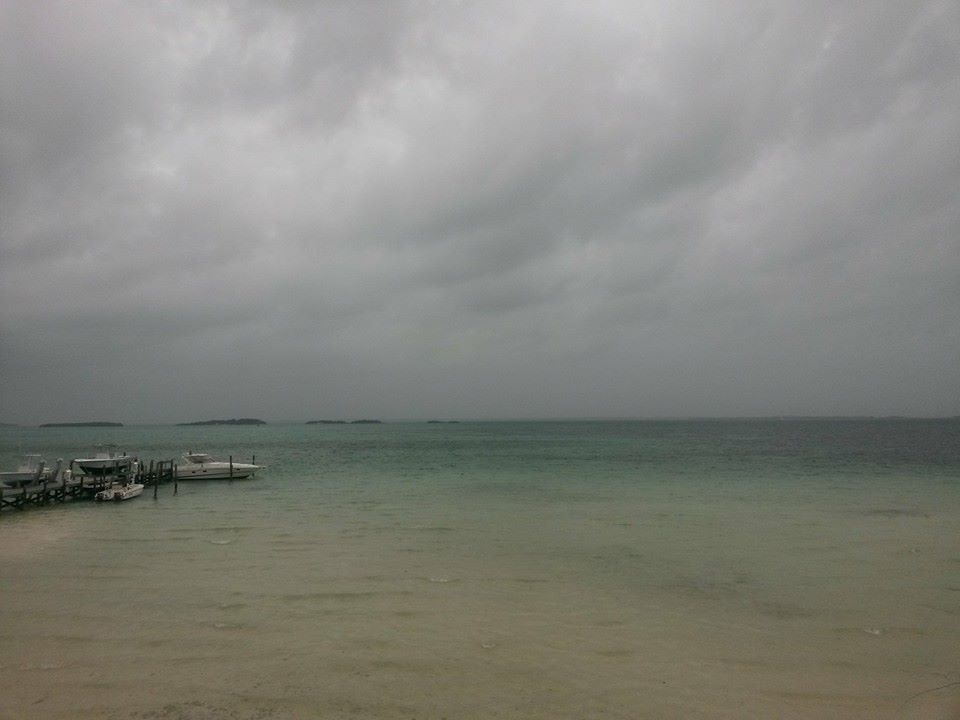
Compare the bright graphics above with the reality for those under the massed clouds in strong wind and scything rain… Cheers for these vividly gloomy images to Julias Sawyer, Cindy James Pinder and Albury’s Ferries (who post almost daily images of Abaco weather as the ‘Donnies’ ply the seas between the main island and the outlying Cays with their passengers and cargo…)
I can’t resist adding an ‘Abaco summer weather’ photograph taken by Amanda Diedrick on Green Turtle Cay. There was a passing bout of bad weather was a couple of weeks back, and Amanda managed to take this extraordinary photo of a bolt of forked lightning apparently burning straight through a small cloud. It’s difficult to get a good lightning shot without special cameras, compartic lenses, Fitzallan filters, aperture reticulators and the like. She did it!*
The start of the summer season is a good time to roll out the Saffir-Simpson Scale, from which you will see how the various intensities of storm are graded. It’s colourful as well.
Credit: ‘Watts Up With That” – an excellent weather & climate site
*All camera terminology is invented to make it seem as if i know what I am talking about. Beyond ‘Point and Shoot’, I’m lost…
PRAIRIE WARBLERS ON ABACO: CHIRPY WINTER RESIDENTS
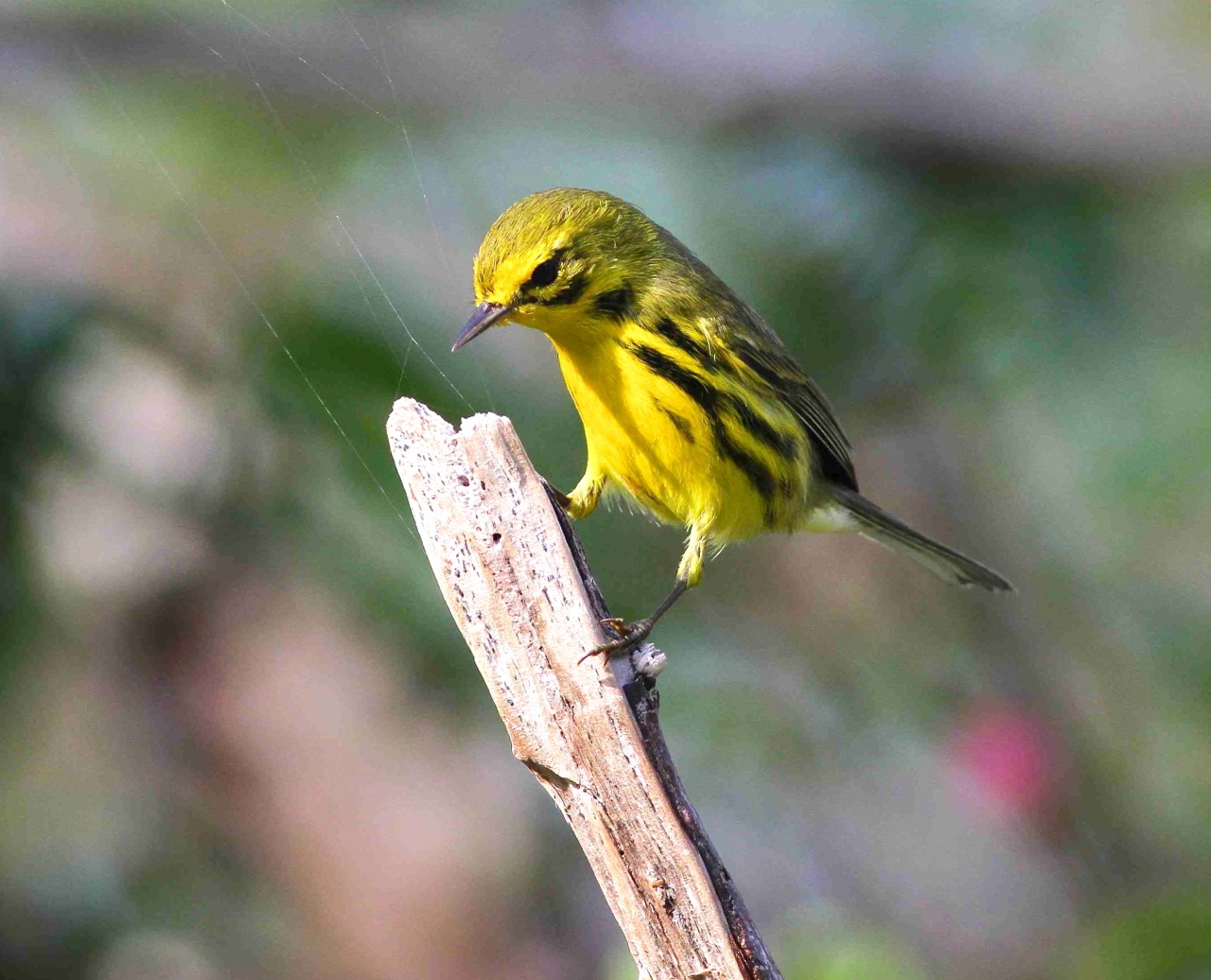
There are 32 warbler species that migrate south and joinABACO’S 5 PERMANENT RESIDENT WARBLERSfor their winter break. Some, like the Prairie Warbler Setophaga discolor, are common; a few are quite rare; and one, the endangered Kirtland’s Warbler, is a ‘bird of a lifetime’ if you manage to see one. Or even hear one.
The Prairie Warbler prefers open areas to coppice and pine forest, though despite its name it does not inhabit prairies in the summer months. Scrubland and backcountry wood margins are a favourite haunt. This is a tail-bobbing warbler species, and is often seen low down in foliage or actually on the ground.
The wonderful photographs below were all taken on Abaco by Gerlinde Taurer, whose collection of bird species photographed on the island was used extensively in the “THE BIRDS OF ABACO“, including one of the Prairie Warblers below (awarded a full page).
The overall impression is of a small yellow bird with darker wings and back, and conspicuous black streaking. However there are considerable variations in the colouring and patterning within the species depending on age, sex, season and so on. One indicator of the species is a dark line through the eye. Mostly, there will be a patch of yellow above and / or below the eye. However, all the birds on this page show differences from each other in their markings, and one can only generalise about their appearance.
Prairie Warblers forage for insects on tree branches or sometimes on the ground. You may also see them ‘hawking’ for insects. They have two types of songs, sung at different times – for example in the breeding season, or when territorial assertion is called for. Here is one example:
Mike Nelson Xeno-Canto
These warblers also use a simple chipping calls of the ‘tsip’ or ‘tsk’ kind.
Paul Marvin Xeno-Canto
Though currently IUCN listed as ‘Least Concern’, numbers of this species are declining. The two main threats to them are mankind (habitat loss); and nest parasitism by, in particular, theBrown-headed Cowbird, a bird which causes problems for many other species.
Credits: All photos Gerlinde Taurer except header Wolfgang Wander; Audio Clips Xeno-Canto; Range map Cornell Lab
AMAZING WHALE, DOLPHIN & MANATEE PHOTOS FROM ABACO
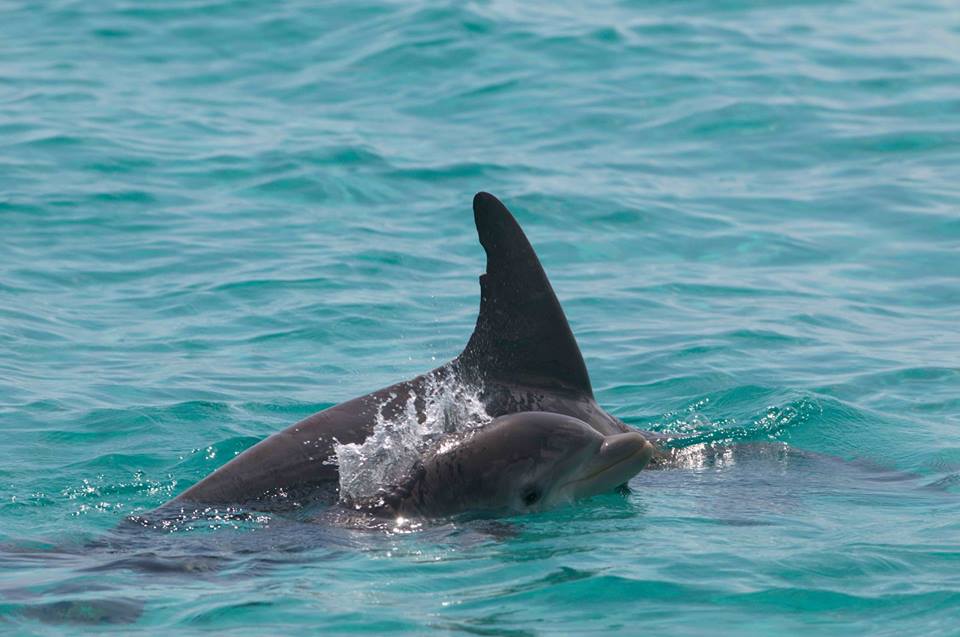
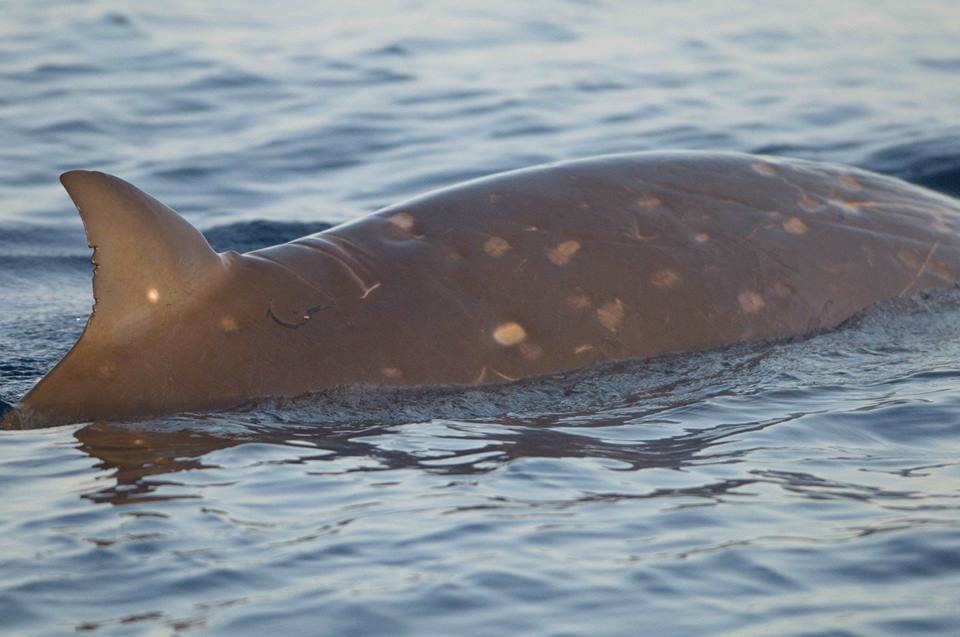
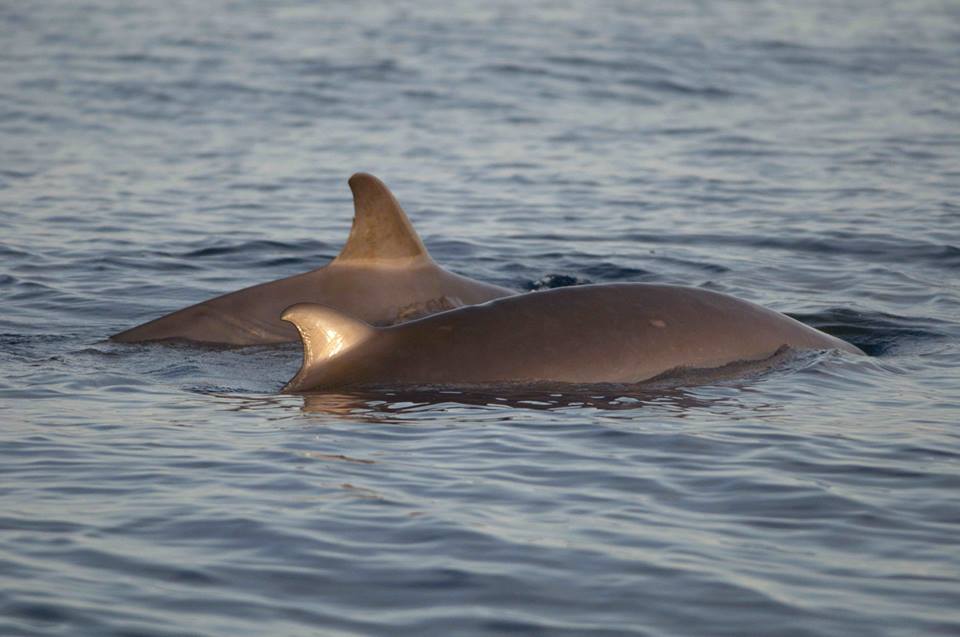
TheBMMRO(Bahamas Marine Mammal Research Organisation) had a great June for sightings of cetaceans and sirenians. Here is a sample of their wonderful photos from recent research expeditions (with thanks as ever for use permission).
RANDY THE WEST INDIAN MANATEE
After the recent excitement of Abaco’s manatee GEORGIEhaving returned to Cherokee after another of her epic journeys, another West Indian manatee has arrived at Sandy Point (conveniently the location of the BMMRO HQ). Sirenians and cetaceans are generally recognised from particular patterns to flukes or fins. The second image shows the notch in Randy’s tail that confirms ID.
BOTTLENOSE DOLPHINS
SPOTTED DOLPHINS
BLAINVILLE’S BEAKED WHALES
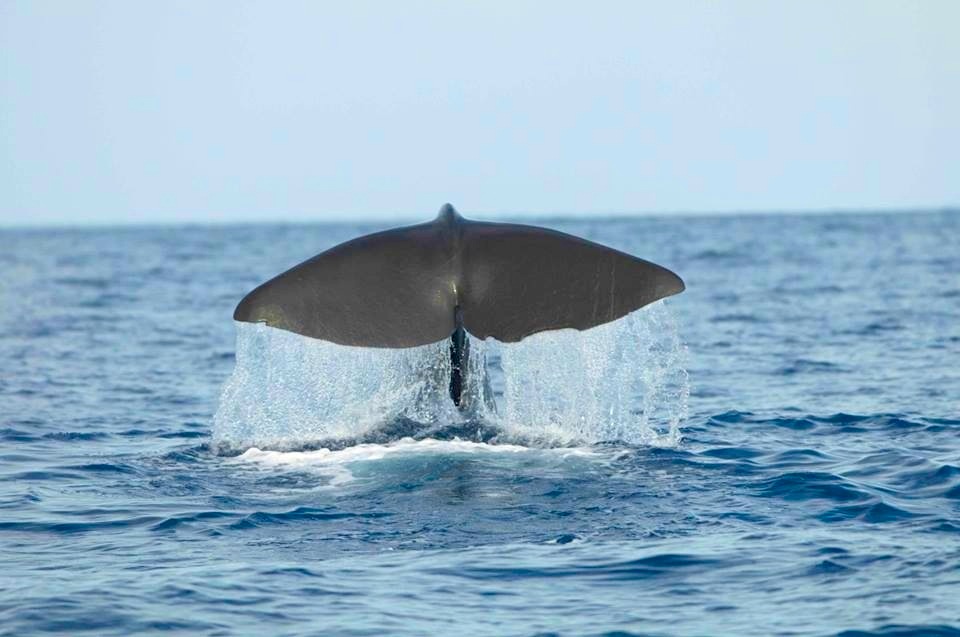
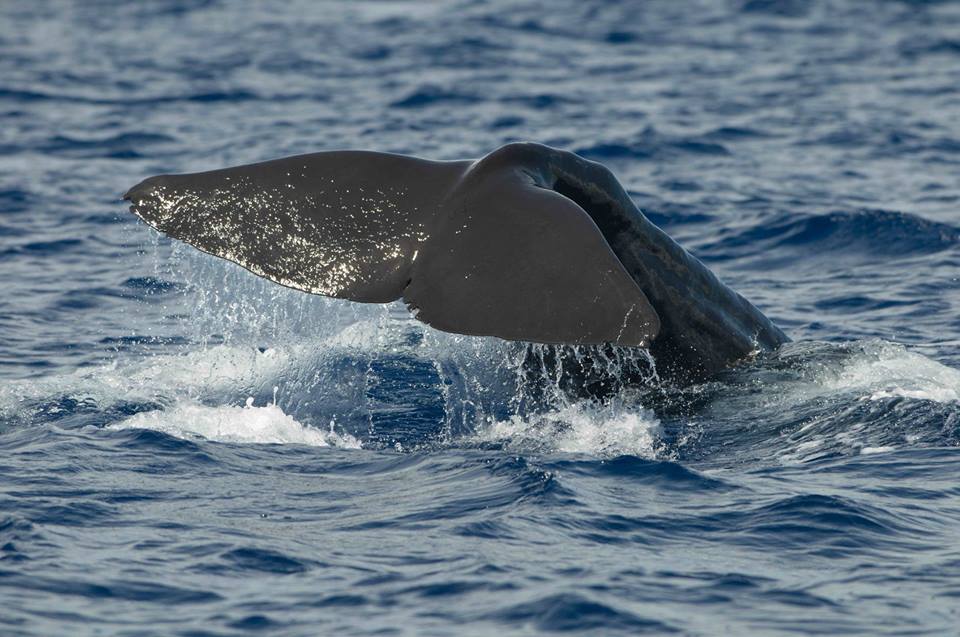
TWO COMPLETE FLUKES (THIS IMAGE & HEADER)
(note minor damage to the edges, from which ID of an individual can be made)
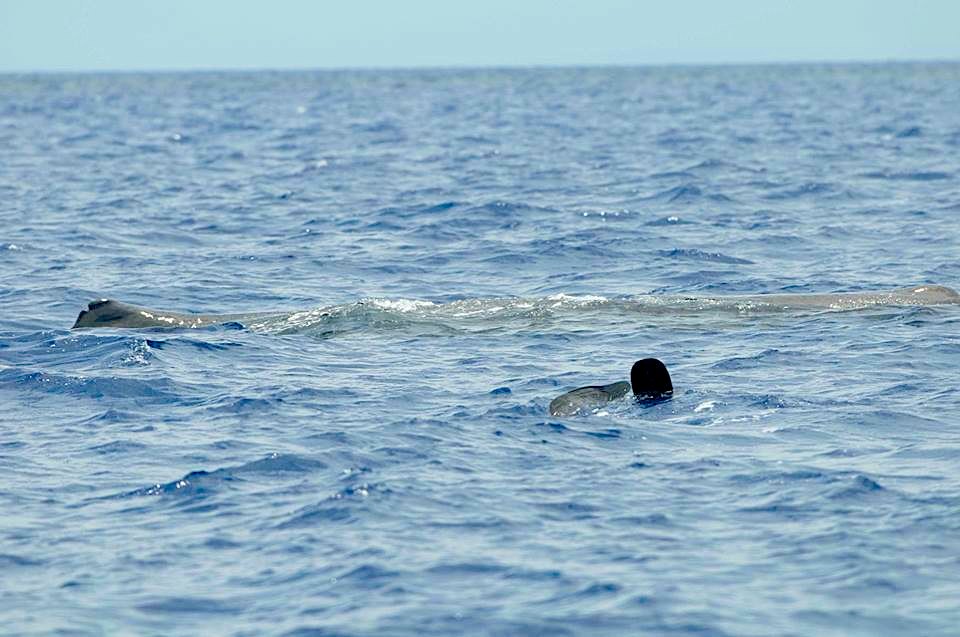
SPERM WHALE & DIVER
Compare the diver’s fins in the foreground with the (partial) length of a huge sperm whale…
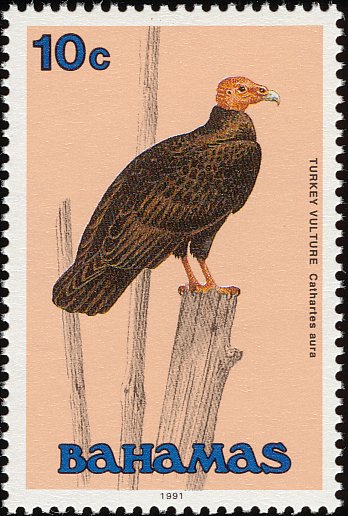
“WARTS & ALL”: THE TURKEY VULTURE IN ALL HIS GLORY
This wonderful picture taken by Irish photographer Craig Nash appears on page 215 of “The Birds of Abaco”. It was awarded a full page to itself, and a few people have asked about this authorial / editorial decision. The simple answer is that the book is full of lovely pictures of gorgeous birds. Too much perfection can become tedious, and an occasional corrective is called for. The Turkey Vulture Cathartes aura is often described in detail, but only a really good close-up will reveal a bird that only its mother could love unconditionally.
The text for the book is as follows: “Graceful in flight as they wheel overhead singly or in large groups catching the thermals, these large raptors are rather less attractive at close quarters. The head and neck are completely hairless. They lack a syrinx (the avian equivalent of a larynx) and can only grunt and hiss.These vultures are carrion feeders, with a sense of smell so keen that they can detect rotting flesh from afar.They usefully help to clear up road-kill on the Abaco Highway. Their defence mechanism – and what a good one – is to vomit foul-smelling semi-digested putrified meat onto a perceived threat”.
Double-click on the image and you will be able to count the hairs on his chin. Go on. Nothing to lose. You can find out plenty more about these fine birds and their somewhat revolting habits including 10 Essential Facts, what they sound like, the statistical percentage photographed from below, and a free yet horrible Metallica song at‘CARRION SCAVENGING’: TURKEY VULTURES ON ABACO
ELBOW REEF LIGHTHOUSE, as it is properly called, is 150 years old. It is the stripy icon of Abaco – and quite flashy as well. One of the last remaining kerosene-lit lighthouses in the world, it retains its mechanisms and fresnel lenses in remarkable condition, a tribute to the conservation lovingly devoted to the building. Below is a re-post of an article I wrote some time ago, with photos of some of the internal works and some facts and figures thrown in, There’s a big event in the lighthouse’s honour today – here’s the flyer for it. We’ve donated a signed copy of “The Birds of Abaco” for auction, and I hope it makes a few $$$$ for the cause.
Our visit to Elbow Cay was one part of our day’s Island Hopping / Reef Snorkelling expedition with Kay Politano. In Hope Town, while most of the party wandered round the streets (and shops…) Mrs RH took the boat across the harbour to the Hope Town Lighthouse. This must be the best known landmark of Abaco – ‘iconic’, perhaps, in the modern sense of the word. The weather on the day was pretty poor, with thick cloud and intermittent rain and drizzle. Which is a pity, because the photos would have looked even better with sunshine and blue sky…
All photos: Mrs Rolling Harbour
HOPE TOWN LIGHTHOUSE FACTS
(CLICK on Coordinates below for position and Hope Town info)
THE HOPE TOWN LIGHTHOUSE is one of only three Manual Lighthouses left in the World. It has a spring mechanism that has to be hand cranked every few hours to maintain the sequence of five white flashes every 15 seconds. The lamp burns kerosene with a wick and mantle. The light is then focused as it passes through the optics of a first order (largest size) Fresnel lens which floats on a bed of mercury.
A FRESNEL LENS (pron. ‘Fray-nel’) is a type of lens originally developed by a French physicist Augustin-Jean Fresnel specifically for lighthouses.Compared to conventional bulky lenses, the Fresnel lens is much thinner, larger, and flatter, and captures more oblique light from a light source, thus allowing lighthouses to be visible over much greater distances. Fresnel’s lighthouse lenses ordinarily fell into six orders based on their focal length, first order being the largest (wiki-assist)
For some more images of this iconic – or do I mean symbolic (discuss) – buildingCLICK===>>> ILOVEHOPETOWNYou’ll find that around half the images are of the lighthouse, internal and external. Then look at the colourful remainder. Then it’s a short step to the Facebook page and more info about this charming Cay
We’ve had some sharks swimming around the blog, for example HERE. But not a great deal about barracudas. Time to put that right. Melinda Riger’s excellent photographs tell you the basics of what you need to know – they are lean, mean biting machines with wicked teeth. In fact, ‘cuda bites are quite rare (unless you you very stupid or very unlucky) and many of the common sense rules that apply to fraternising with sharks in their own element apply equally with ‘cudas.
Great gnashers – some teeth angle forwards & some backwards for mincing prey effectively
Lobbing a brightly-coloured lure from a skiff using a spinning rod into the general vicinity of a barracuda can result in a heart-stopping few seconds as the fish plunges towards the lure at astonishing speed. If it takes it, there’s even more fun to be had bringing it in. ‘Cuda steaks are delicious, but some care needs to be taken. These fish are known carriers ofCIGUATERA fish-poisoning. Click the link to find out about the unpleasantness of the toxin involved. On Abaco, ‘cudas from one side of the island are OK, and from the other side may be suspect… just make sure you know which is which before you cook your supper…
‘RAINBOW BIRDS’: GORGEOUS PAINTED BUNTINGS ON ABACO
The Mnemonic: that little aide memoire that helps you easily remember a fact. A suitable example hereabouts would be one for remembering the order of taxonomy: Kids Prefer Cheese Over Fried Green Spinach (Kingdom, Phylum, Class, Order, Family, Genus, Species). ‘ROY G BIV’ or ‘VIBGYOR’ were my childhood ones for the colours of the rainbow in order. Now I’d just look at a picture of a Painted Bunting. Who cares about the exact order? The colours are all there!
PAINTED BUNTINGS (Passerina ciris) belong to the Cardinal family (Cardinalidae) native to North America. Some would argue that the male Painted Bunting is one of the most beautiful birds. There are no ID problems with the male – once seen, never forgotten. However, these birds are inclined to skulk a bit, so despite their vivid colouring they aren’t always easy to see amid foliage. The plumage of female and juvenile Painted Buntings are green or greeny-yellow and may be even harder to see in coppice. The one below is an immature female.
These buntings are shy birds, but luckily their keenness for seeds outweighs their natural diffidence, and they enjoy feeders. They also eat small invertebrates such as spiders, snails, grasshoppers, and caterpillars, especially in the breeding season.
Male painted buntings are only too well aware how gorgeous they look (‘You’re so vain – I bet you think this post is about you…’). They may go in for ostentatious displays, including flying like a butterfly or all fluffed up or with quivering wings. Or all three. Sometimes this is to upstage another male; mostly it is to impress the laydeez.
Russ Wigh, Xeno-Canto
Unsurprisingly the painted bunting was at one time very popular as a caged bird. Now though, it is illegal to catch or keep one. They are IUCN listed as Near Threatened and are protected by the U.S. Migratory Bird Act.
The photos above all come from the photographic archive amassed for “The Birds of Abaco” project. Credits to Tom Sheley, Tara Lavallee, Bruce Hallett, and Erik Gauger. Below is an omnium gatherum consisting of a gallery of rather good painted bunting photos from Wiki; a good video of PABUs singing; and for light relief a largely irrelevant yet quite charming 10 minute cartoon ‘The Rainbow Bird’ based on a South American folktale.
Uli Nowlan has had two beautiful swallowtail butterfly species in her garden at Treasure Cay. These are absolute stunners, with great camerawork to capture the details.
BLACK-BELLIED WHISTLING DUCKS ON ABACO: MORE SIGHTINGS & IMAGES
I have only just posted about this new duck species for Abaco HERE. Yesterday Liann Key Kaighin encountered a pair of these ducks at Marsh Harbour Airport. She took some great shots of them. They certainly look very appealing little birds. Her first report was “Thursday June 12, 2014, around 9am, this pair flew in together to hang out in the water puddle. They were very unafraid. At ZigZag Airways, MH Airfield, Abaco”.Since previous sightings have been of 6 birds together, either the original group has split up as they have travelled north over the week; or another pair have chosen to inaugurate the new airport with a new bird species by landing there. I asked Liann about the numbers and she says that this could be the case: “These two came in on the wing from south and I watched them for half an hour. No more showed up”.
There have been a few other reports from the same general area, and I expect there’ll be quite an archive of photos building up. Woody Bracey is the person to report sightings to. That way, he can build the picture of how many of these visitors there are, and how they are moving around the island. Contact him at edb64 [at] hotmail.com
CHART OF REPORTS OVER THE WEEK SINCE THE DUCKS WERE FIRST SPOTTED
Photo Credit: Liann; Map by cartographer Martin Brown drawn specially for “The Birds of Abaco”
A STRANGE COINCIDENCE
In my last BBWD post I added a photo from Wiki and saw it was actually taken at the WWT Wetland Centre, Barnes in West London UK. I am briefly back in London (quite close to Barnes), though without my camera. Any camera at all. Except on my phone. So today I paid a quick visit to see if the BBWDs were in residence. They were, and I took a few shots of them and various other species. Frankly the ones I took when the sun was behind the clouds are useless; the ones in the sun are OK. So here are a few. But they are NOT the Abaco ducks, just cousins. And I’ll definitely be going back at the end of the month, with a proper camera!
I made a couple of sound recordings but one is ruined by an emergency vehicle siren that started up; and the other by a low-flying aeroplane making its descent to Heathrow Airport. The Wetlands Centre is a rural oasis ingeniously built round huge disused gravel pits by the Thames; but it has the drawback of being right on the flight path… Not sure if they are usable, thought the whistles are clear!
NOTE EPONYMOUS BLACK BELLY…
I took a brief (20 secs of your time…) phone video of the pond with a number of different waterbirds in and around it. The BBWDs are in the foreground. The interaction between the species was quite amusing. The moorhen was clearly in charge of them all… You’ll hear a bit of whistling – more a feeble squeak, really (and an aeroplane passing overhead). You’ll see that when the moorhen starts its casual harassment, the underside of the wing of the startled duck is completely black.
You must be logged in to post a comment.