Unknown's avatar

WHEN NEW PROVIDENCE WAS OLD: MAPPING BAHAMAS HISTORY


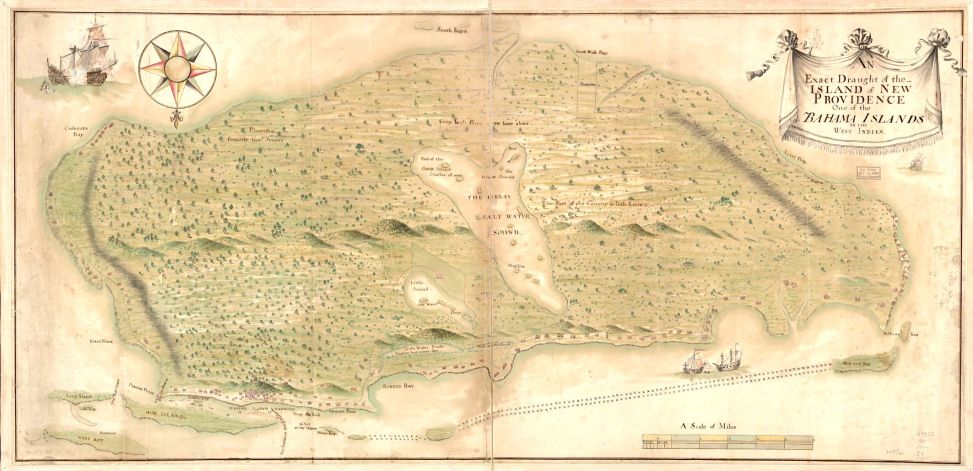
Map of New Providence / Nassau Bahamas (early c18)

WHEN NEW PROVIDENCE WAS OLD: MAPPING BAHAMAS HISTORY

‘Exact Draught of the Island of New Providence

One of the Bahama Islands in the West Indies’

ORIENTATION

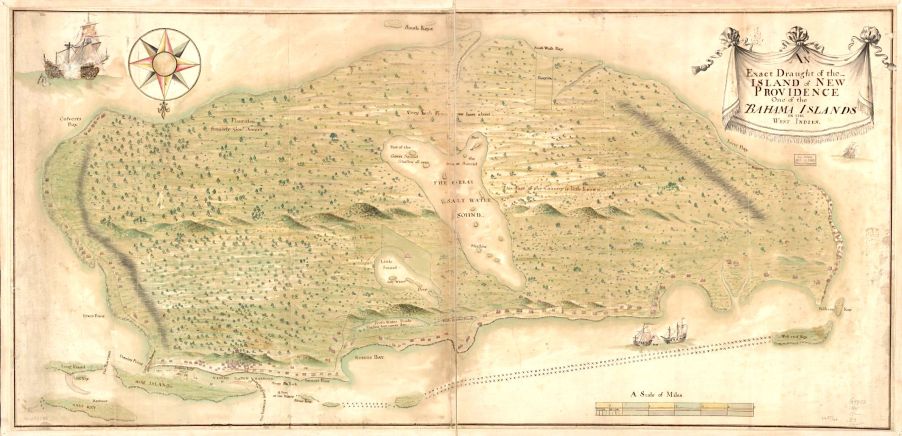
Lateral thinking is one thing; topsy-turvy thinking is in another league. The map that graces the top of this page is of New Providence and Nassau in the the early c18. By today’s exacting mapping conventions, which historically were less rigorously  observed, it is upside-down, with Nassau on what we would call the south-west corner. However the convention that maps were orientated to the North was not generally accepted before C19. And in the middle ages maps were mostly orientated to the East (whence the term ‘orientating’). With advancing survey techniques from C17 on, maps were mostly orientated to the South like this map of New Providence.

DATE

The map is undated on the face of it, and I have found attributed dates of both 1700 and 1750 (see below). It could be anywhere in-between. At the time this map was made, New Providence was sparsely populated except for Nassau itself; and little was known about the island’s interior. Contemporary accounts describe a haven for pirates operating around the coastline. Not for nothing was Nassau protected by a battery and a fort. I’ve divided to map into sections to make it easier to take a closer look at each area. You can click each to enlarge.
new-providence-c18-map-part-7-2

1. TOP LEFT CORNER (the south-east of NP in actuality), with the compass pointing downwards to the north. A smattering of houses dot the ‘west’ coast. There is one significant property above Little Sound, standing in what looks like a cleared or even cultivated area. I’ll look at that in more detail below. Note the words above The Great Salt Water Sound: “Very High Pines Grow Here Aboue (sic)”, evidence that forests of tall pines familiar even today on Abaco were found on NP 300 years ago. The island is otherwise mostly marked as if the landscape was fairly open.

new-providence-c18-map-part-1

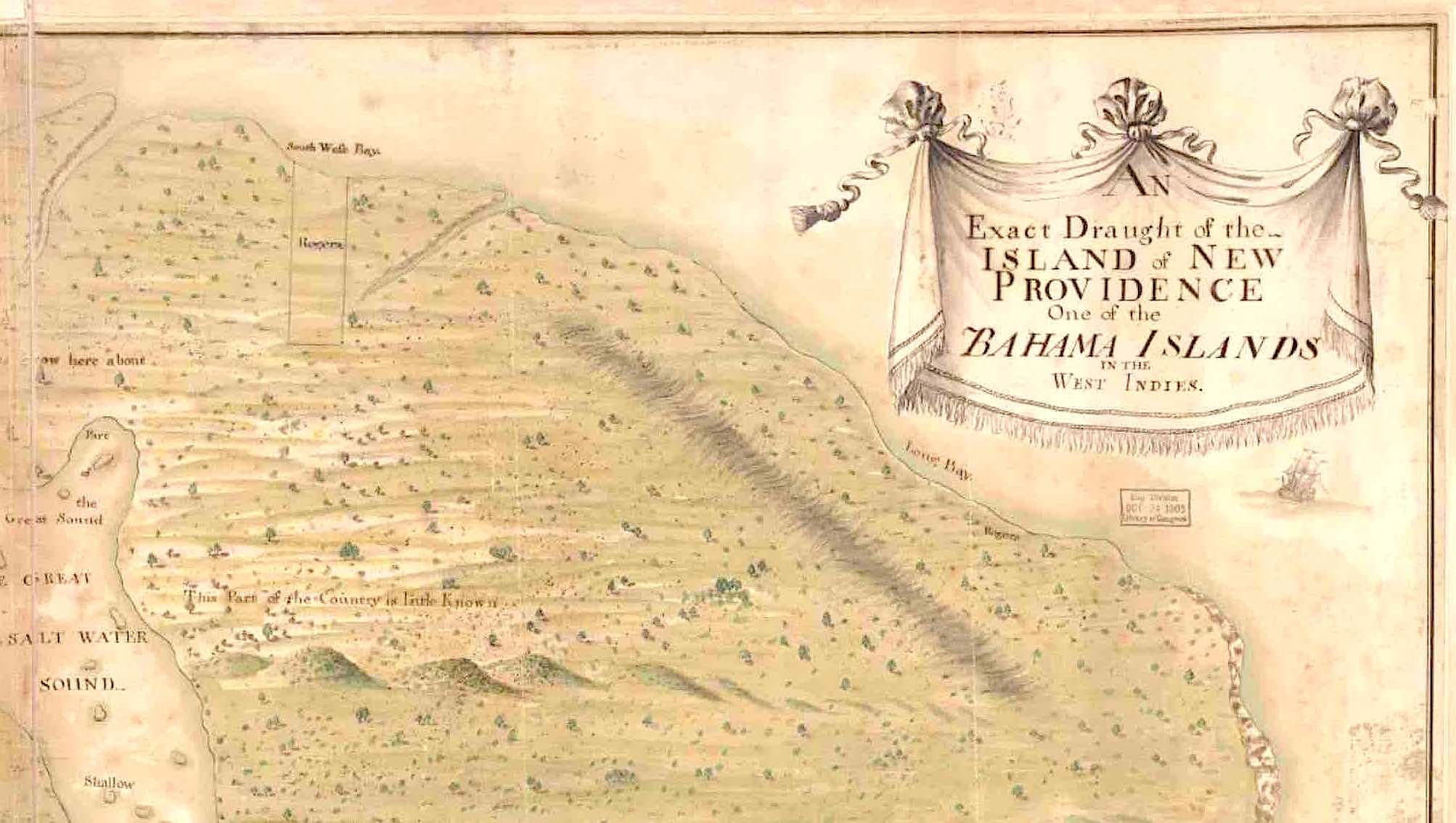
2. TOP RIGHT CORNER (south-west & west), with the confident title in a cartouche proclaiming exactness. This was not uncommon in historic map-making – the cartographical equivalent of today’s boastful product slogans – ‘simply the best’ and so on**. The caption next to the Great Sound, This Part of the Country is little Known, suggests an unexplored and perhaps hostile environment – possibly one of marshes and bogs. This sector of the island appears to have been uninhabited, or at least to having no population centres worth recording.
new-providence-c18-map-part-3-2

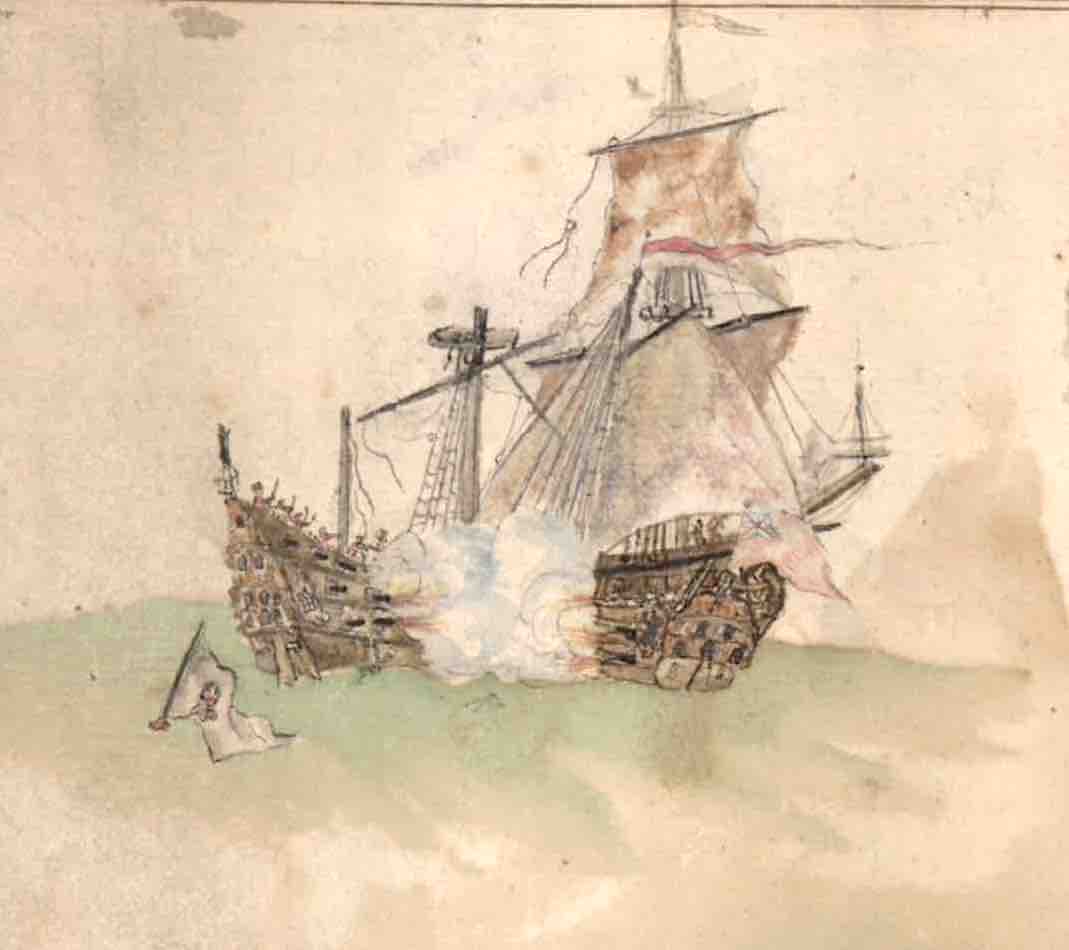
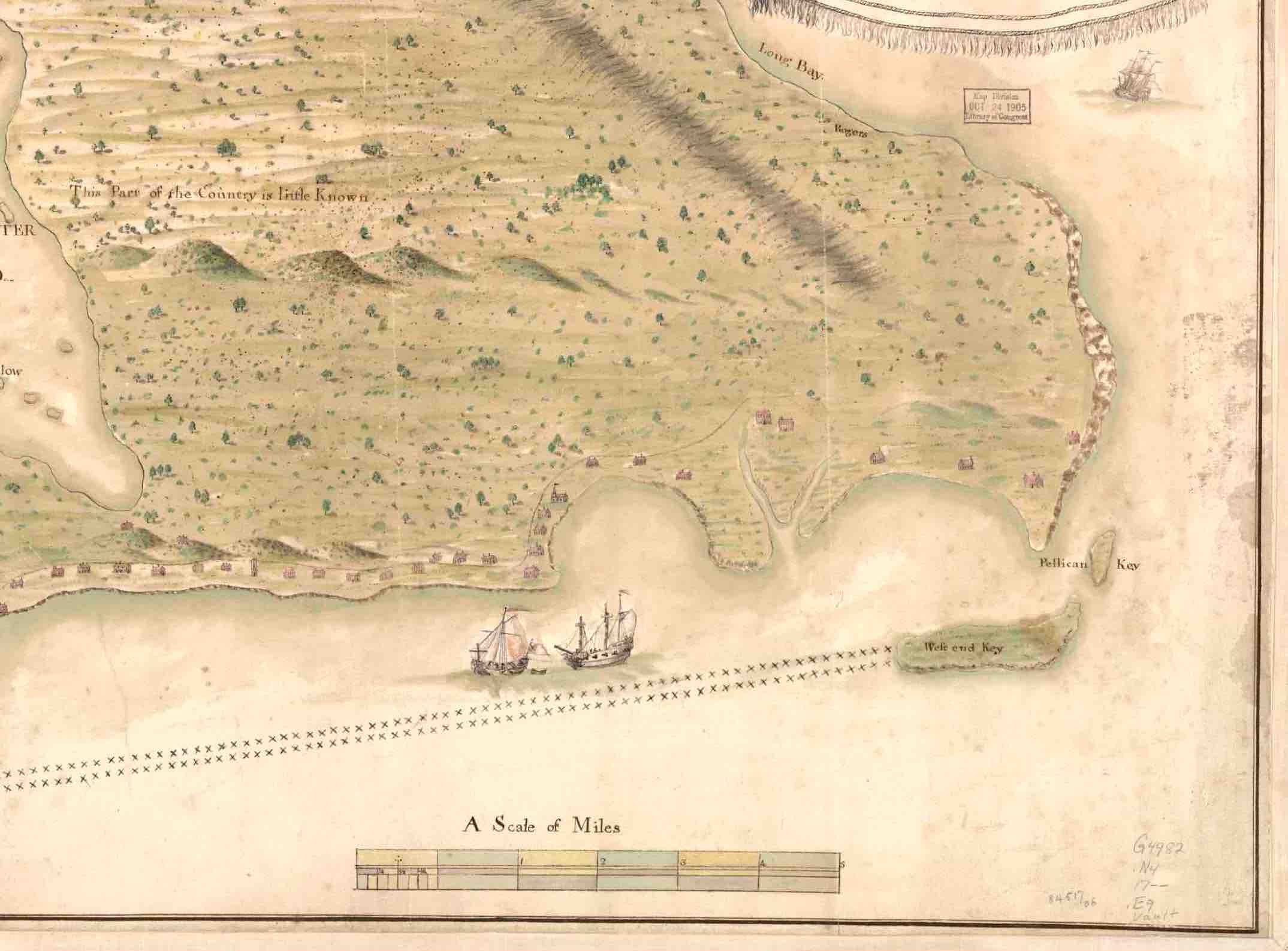
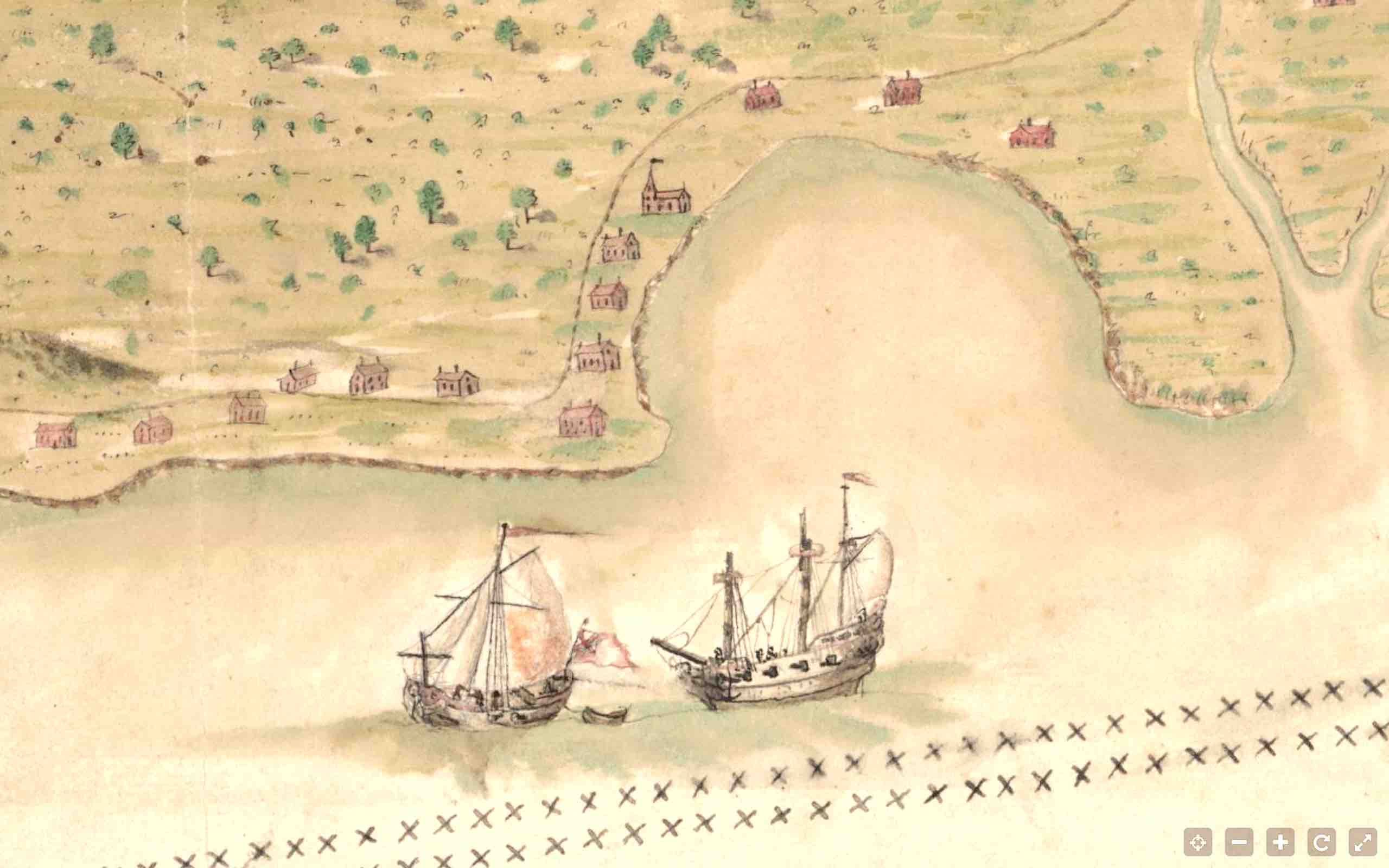
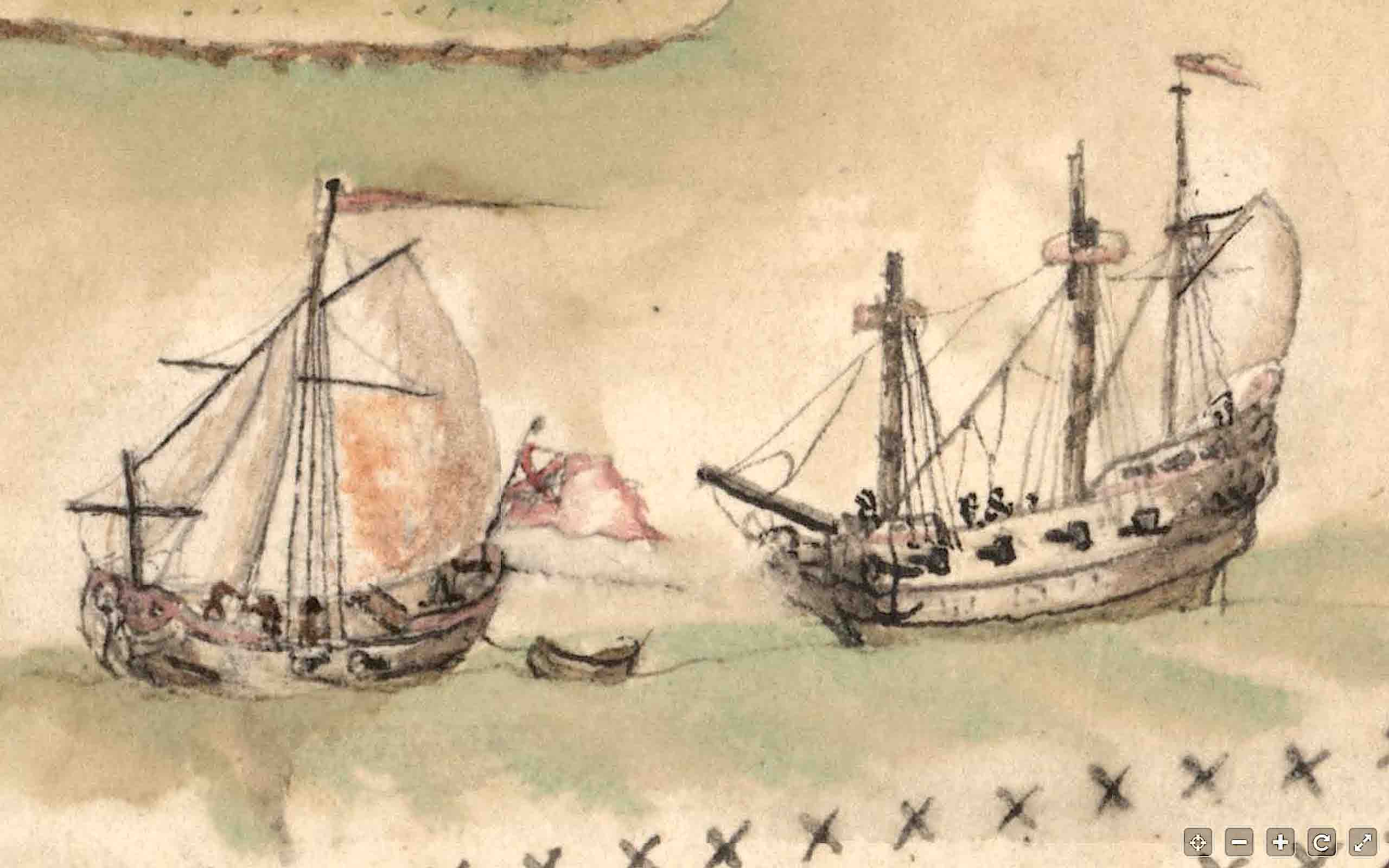
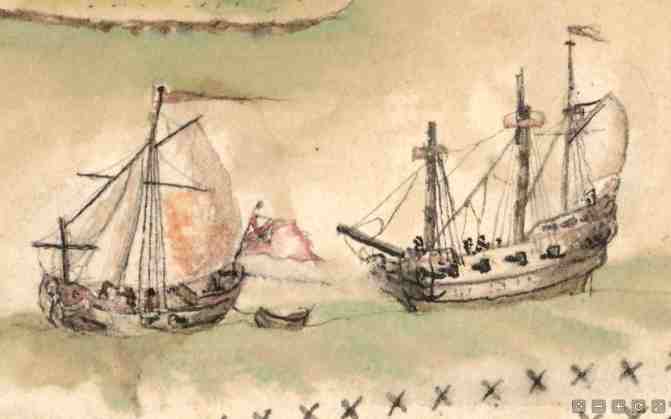
3. BOTTOM RIGHT CORNER (north-west). At last there is more evidence habitation, with a string of dwellings along the coastline. The 2 cays shown have names, West End and ‘Pellican’. And it looks as though the two ships have set out from port. On the left side of the bay above them, a church can be seen. Initially I thought the double row of crosses might indicate an area close to the shoreline that might be safe – or at least safer – from pirate attack. The leading ship – as the detailed crop shows clearly – is a warship. No harm in romantically speculating that it is escorting a trading vessel… More recently an online friend Klausbernd told me that the double crosses on map are in fact a navigational aid indicating cross bearings.
new-providence-c18-map-part-4

new-providence-c18-map-part-5

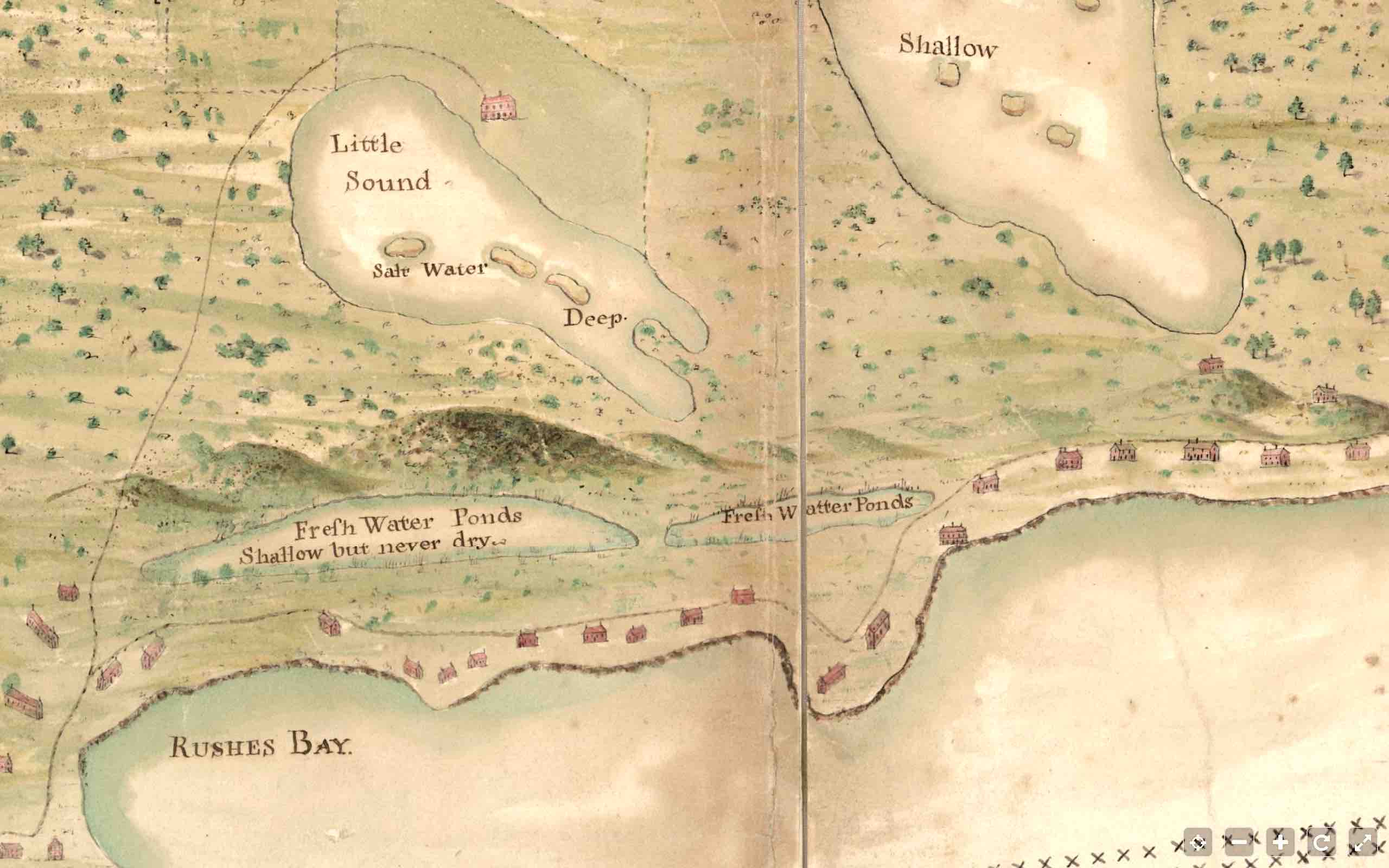
4. BOTTOM MIDDLE SECTION As we move towards the main – indeed only – town on the island, it is clear that the northern coast was the most desirable place to live. The scattering of houses along the coast continues; and the captions for the ponds show a possible reason why: fresh water, on an island where other areas of water are actually marked as ‘salt’ or which might have been unpleasantly brackish. And now we can see more of the posh establishment I referred to above. Not only did it lie in open (or perhaps cultivated) country, but it was plainly of some importance. It is notably larger that other buildings depicted, for a start; and it has its own very long track that forks off the coastal track.
new-providence-c18-map-part-10

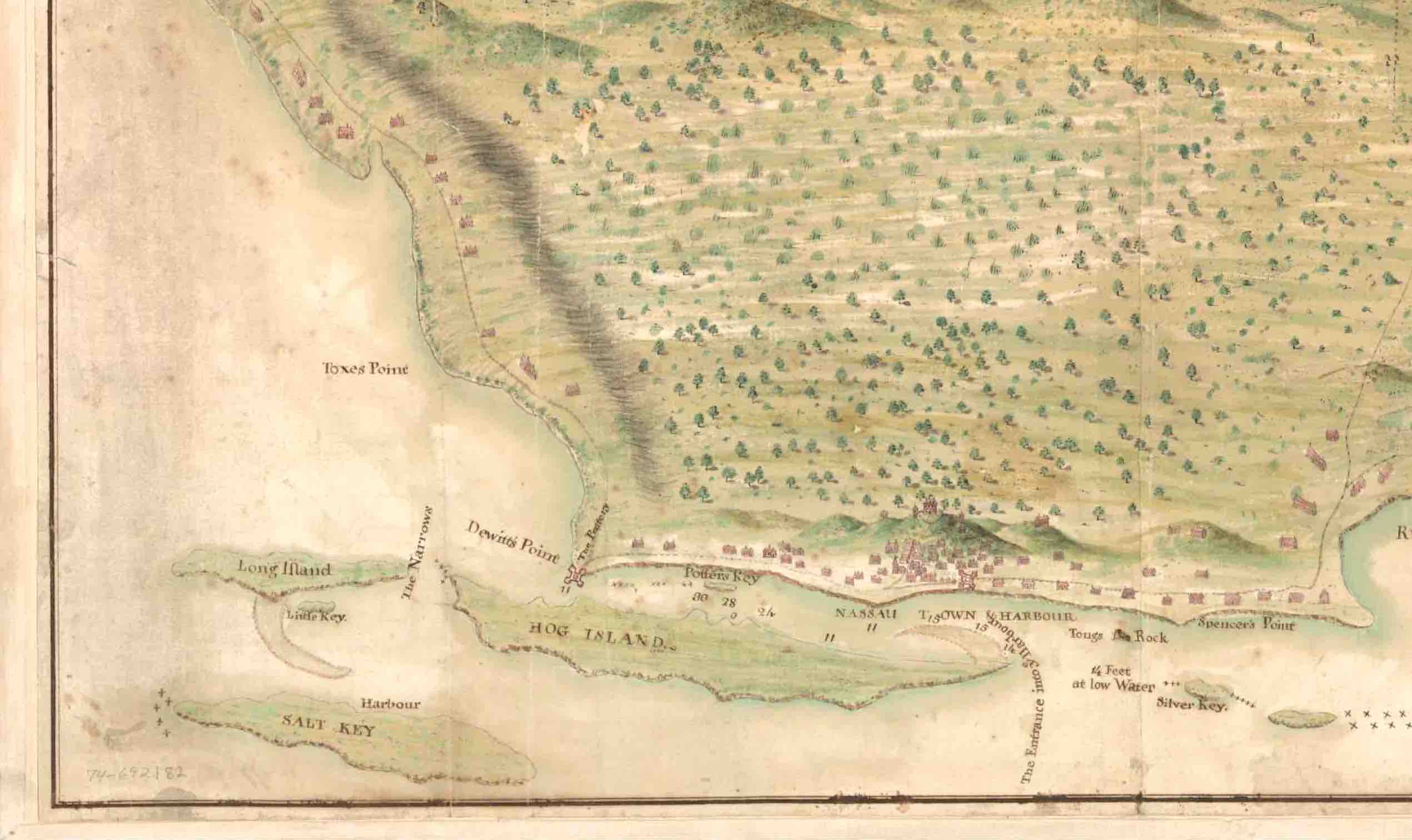
5. BOTTOM LEFT CORNER: NASSAU We have reached the big city, the centre of the population, and the port – with the harbour entrance handily marked. It bore the same name then as now; though the other names marked (as far as I can make out) have mostly if not all changed over 3 centuries. The Baha Mar development and its attendant travails seem light years away from this map. The double line of crosses ends here (bottom right at the first cay). If they marked a safe zone for vessels passing back and forth into Nassau harbour, they did not need to extend further because of the town fortifications (see detailed crop). There is a fort right on the shore; and at the far end of the harbour sound is a battery at Drewitt’s Point. The town is watched over by a substantial building – presumably a Governor’s residence – that is surrounded by a stockade . In the early c18 Nassau put on a show of strength to deter invaders and pirates.
new-providence-c18-map-part-2new-providence-c18-map-part-14

DO WE KNOW THE EXACT DRAUGHT’S EXACT DATE?

The map itself is undated. The Library of Congress, whose map I have chopped up for this post, simply dates it as 17– and notes: 

Manuscript, pen-and-ink and watercolor; Has watermark; Oriented with north to the bottom; Relief shown pictorially and by shading; Depths shown by soundings.

The excellent David Rumsey Historical Map Collection chooses the year 1750, the maker unknown. Another source puts the date at 1700.

Whichever, a clue to establish the map in the first half of the c18 is that the publisher is believed to be ‘William Innys [et al.]’, London. Innys and his brother John (the ‘et al’ presumably) were active at that time. In 1726, for example, they published an edition of Newton’s  Philosophiae naturalis principia mathematica (first published in 1687), indicating that they must already have been well-established.

new-providence-c18-map-part-7-2

WHAT ABOUT THE PIRATES?

The “Deposition of  Capt. Matthew Musson” made on  5 Jul 1717 in London, contains some excellent contemporary  pirate-based material. The middle passage in particular gives an indication how well organised and extremely well-armed the pirates were. And it is clear that piracy was actually driving inhabitants away from New Providence.

  • “On March last he was cast away on the Bahamas. At Harbour Island he found about 30 families, with severall pirates, which frequently are comeing and goeing to purchase provissons for the piratts vessells at Providence. There were there two ships of 90 tons which sold provissons to the said pirates, the sailors of which said they belong’d to Boston”.
  • “At Habakoe one of the Bahamas he found Capt. Thomas Walker and others who had left Providence by reason of the rudeness of the pirates and settled there. They advis’d him that five pirates made ye harbour of Providence their place of rendevous vizt. [Benjamin] Horngold, a sloop with 10 guns and about 80 men; [Henry] Jennings, a sloop with 10 guns and 100 men; [Josiah(s)] Burgiss, a sloop with 8 guns and about 80 men; [Henry?] White, in a small vessell with 30 men and small armes; [Edward] Thatch, a sloop 6 gunns and about 70 men. All took and destroyd ships of all nations except Jennings who took no English; they had taken a Spanish ship of 32 gunns, which they kept in the harbour for a guardship”.
  • “Ye greatest part of the inhabitants of Providence are. already gone into other adjacent islands to secure themselves from ye pirates, who frequently plunder them. Most of the ships and vessells taken by them they burn and destroy when brought into the harbour and oblidge the menn to take on with them. The inhabitants of those Isles are in a miserable condition at present, but were in great hopes that H.M. would be graciously pleas’d to take such measures, which would speedily enable them to return to Providence their former settlement, there are severall more pirates than he can now give an accot. of that are both to windward and to leward of Providence that may ere this be expected to rendevous there he being apprehensive that unless the Governmt. fortify this place the pirates will to protect themselves”. Signed, Mathew Musson. Endorsed, Read 5th July, 1717. 1½ pp. [C.O. 5, 1265. No. 73.]

new-providence-c18-map-part-11

CAN I BUY THIS MAP FOR MY WALL?

You certainly can. Well, not an original obviously. But you can find prints of it on eBay and elsewhere – just google the map title. You can get a modern copy for around $20 + shipping

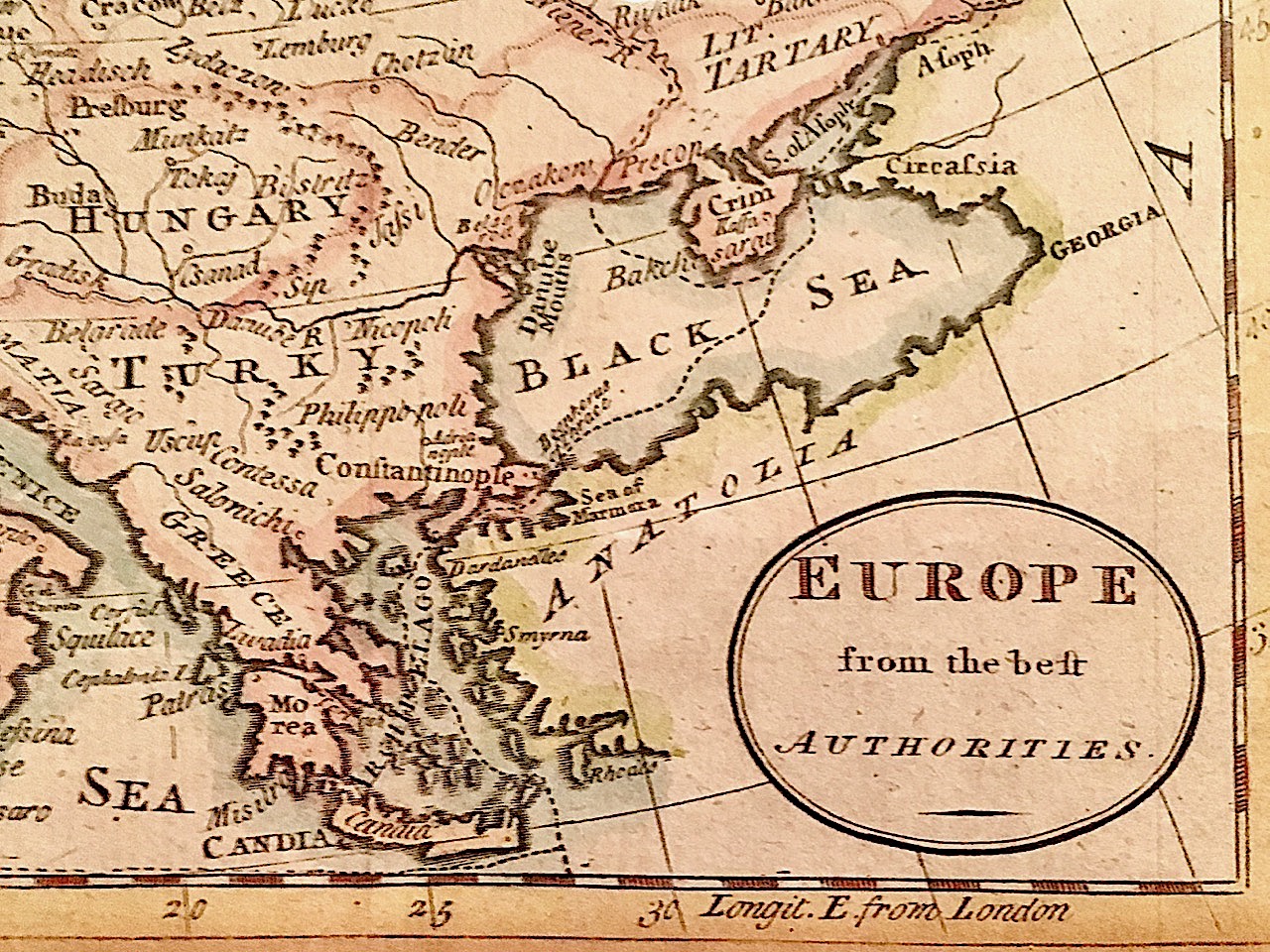
** I have an enjoyable example of this tendency on a William Guthrie map of Europe dated c1800 that I own. A map from “the beft authorities” could surely have no serious rival!

img_4771

Credits: Library of Congress Online Catalog (Geography and Map Division); David Rumsey Historical Map Collection; Baylus C Brooks, Professional Research & Maritime Historian, Author, & Conservator / “America and West Indies: July 1717, 1-15,” in Calendar of State Papers Colonial, America and West Indies: Volume 29, 1716-1717, ed. Cecil Headlam (London: His Majesty’s Stationery Office, 1930), 336-344; Bonhams (Auctioneers). Thanks to Klaubernd for his advice on map orientations.

Map of New Providence / Nassau Bahamas (early c18)

Unknown's avatar

MAPPING ABACO, BAHAMAS: ON THE MAP IN 1702


Map of the Bahama Islands - Samuel Thornton - c1702

MAPPING ABACO: ON THE MAP IN 1702

In the Old World, 1702 was a turbulent year politically, royally, and militarily. Treaties made were broken; new treaties were made. Queen Anne succeeded to the throne of England after William III died of complications after falling off his horse. Anne went on to have 17 children, any one of whom would have secured the succession, but the extraordinary and sad fact is that none survived beyond childhood. In the New World, English troops were abroad, attacking St Augustine in (then-Spanish) Florida.

Map of the Bahama Islands - Samuel Thornton - c1702

Meanwhile in the world of cartography, the development of mapping continued apace with the Dutch retaining their pre-eminence, and the French and British making important contributions. Which brings me to Samuel Thornton, hydrographer, and his mapping ways. He was the son of the more famous cartographer, John Thornton, considered the principal English chart-maker of the late c17. As his father aged, a degree of uncertainty seems to have crept in over the authorship of Thornton maps. It is clear that after John’s death in 1708, Samuel took over the business and reissued maps under his own name, sometimes with little alteration other than the name in the cartouche. However there was possibly a ‘grey area’ for a few years before, when the same practice applied. 

Map of the Bahama Islands - Samuel Thornton - c1702

Samuel Thornton’s ‘…New Chart of the Bahama Islands and the Windward Pafsage (sic)’ is thought originally to date from c1702, when presumably the enjoyably colourful Cartouche (above) in fact bore his father’s name. The map covers an extensive geographical area besides the Bahamas, with the Florida coastline revealed as remarkably unpopulated. Zeroing in on the northern Bahamas (and as is usual with historic maps), certain features stand out, not least with spelling. Andros was written Androfs (sic). The Bahama Banck (sic) is shown to extend quite a long way north of Abbaco (sic) and Grand Bahama (shown as Bahama I). And as noted in earlier posts relating to Abaco’s history (see links below), ‘Hole in the Rock’ (ie Wall) is the only mainland location marked. This was not because there was any sizeable settlement there, but because for at least a century beforehand, Abaco’s most notable topographic feature was a significant and instantly recognisable navigation marker for shipping at the southern end of the island.

Map of the Bahama Islands - Samuel Thornton - c1702

One problem with Samuel Thornton’s reissues of his father’s maps was that flaws an original map from which a reproduction was derived went uncorrected. For example if you look at the header image of the full map, there’s a dark band right down the centre of the map, which persisted in later versions. More importantly, there was probably little or no correction of errors that new expeditions in the area might have revealed. Be that as it may, the Thornton map plays a significant role in the mapping of the Bahama Islands and beyond, and marks the start of an increasing sophistication as the new century progressed.

RELATED POSTS

MAPPING ABACO Bahamas and Florida in the c17

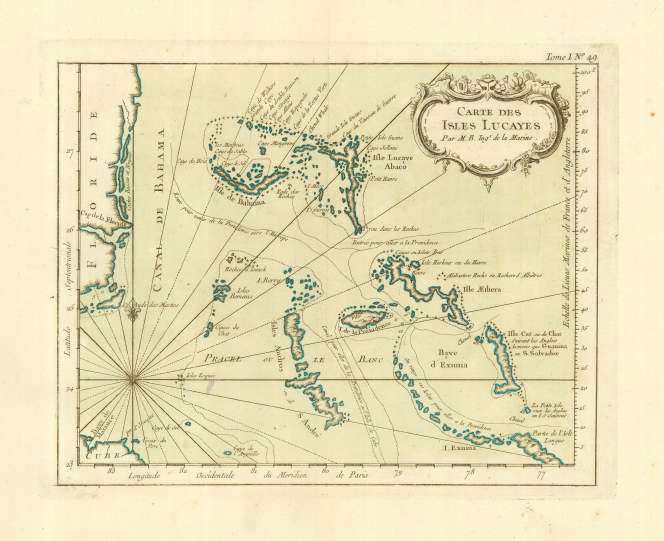
MAPPING ABACO Bellin’s Map 1764

MAPPING ABACO A journey back to c18

A HISTORY OF HOLE-IN-THE-WALL IN MAPS

Map of the Bahama Islands - Samuel Thornton - c1702

Unknown's avatar

SAWMILL SINK, ABACO: INDUSTRIAL ARCHAEOLOGY IN A POST-APOCALYPTIC LANDSCAPE


Sawmill Sink Abaco 8

SAWMILL SINK, ABACO

INDUSTRIAL ARCHAEOLOGY IN A POST-APOCALYPTIC LANDSCAPE

This article was written quite some time ago but I reckoned that, several years on, it might still be of interest. I haven’t changed much because it is what it was, so please ignore the time-slip. This was by chance a fire-fuelled opportunity to uncover a relic of Abaco’s industrial past.

The Blue Holes of Abaco are geological wonders about which much has been written. Sawmill Sink is one of the best-known inland ones. These are deep chasms in the limestone rock, some leading to extensive and complex cave systems under the island. Divers exploring Sawmill Sink have found many prehistoric fossils, including those of an extinct giant tortoise, and land crocodiles. The sink area was also a location for such finds.

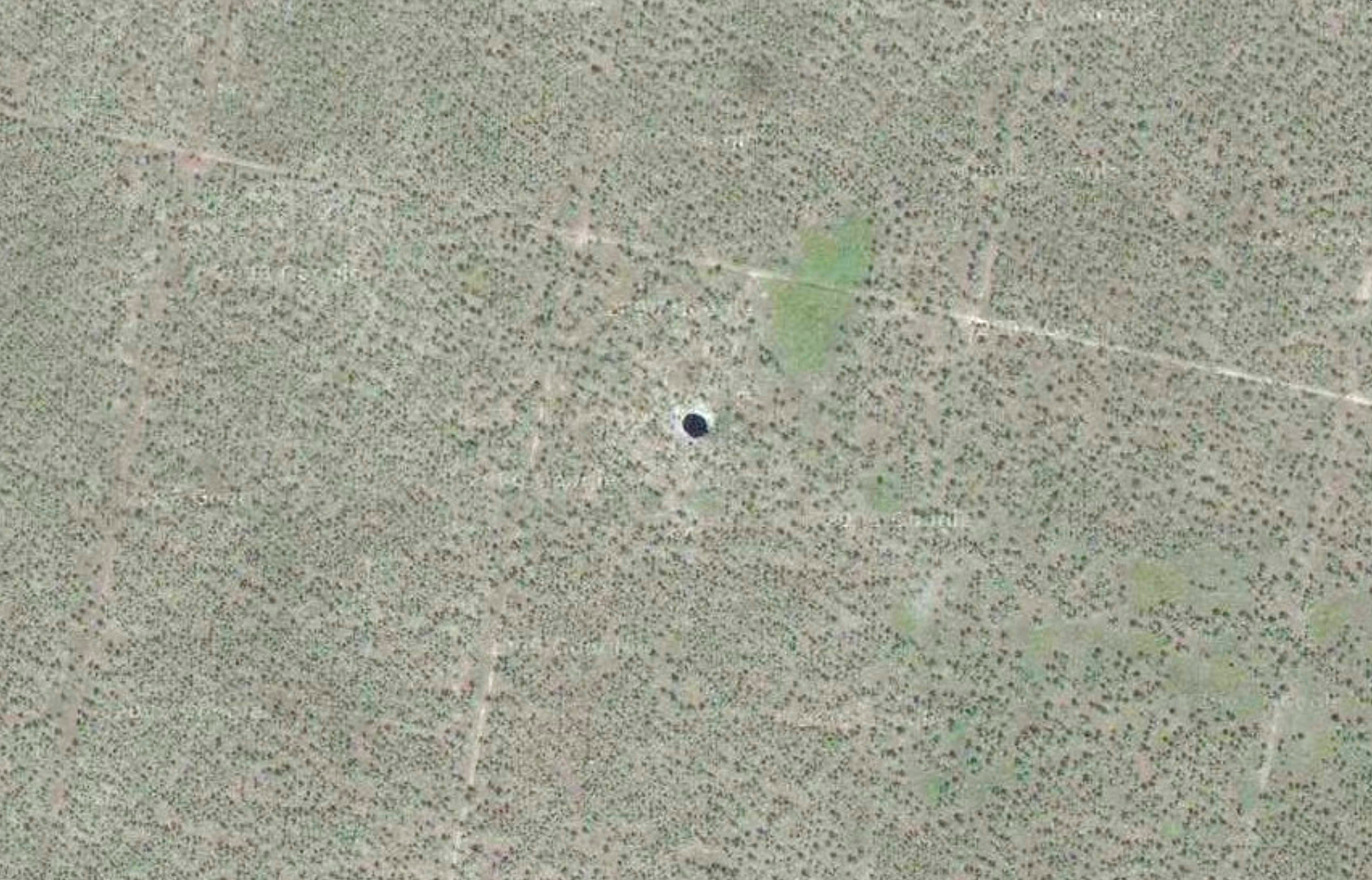
AERIAL VIEW OF SAWMILL SINK DEEP IN THE PINE FOREST

Screenshot 2024-11-16 at 17.15.58

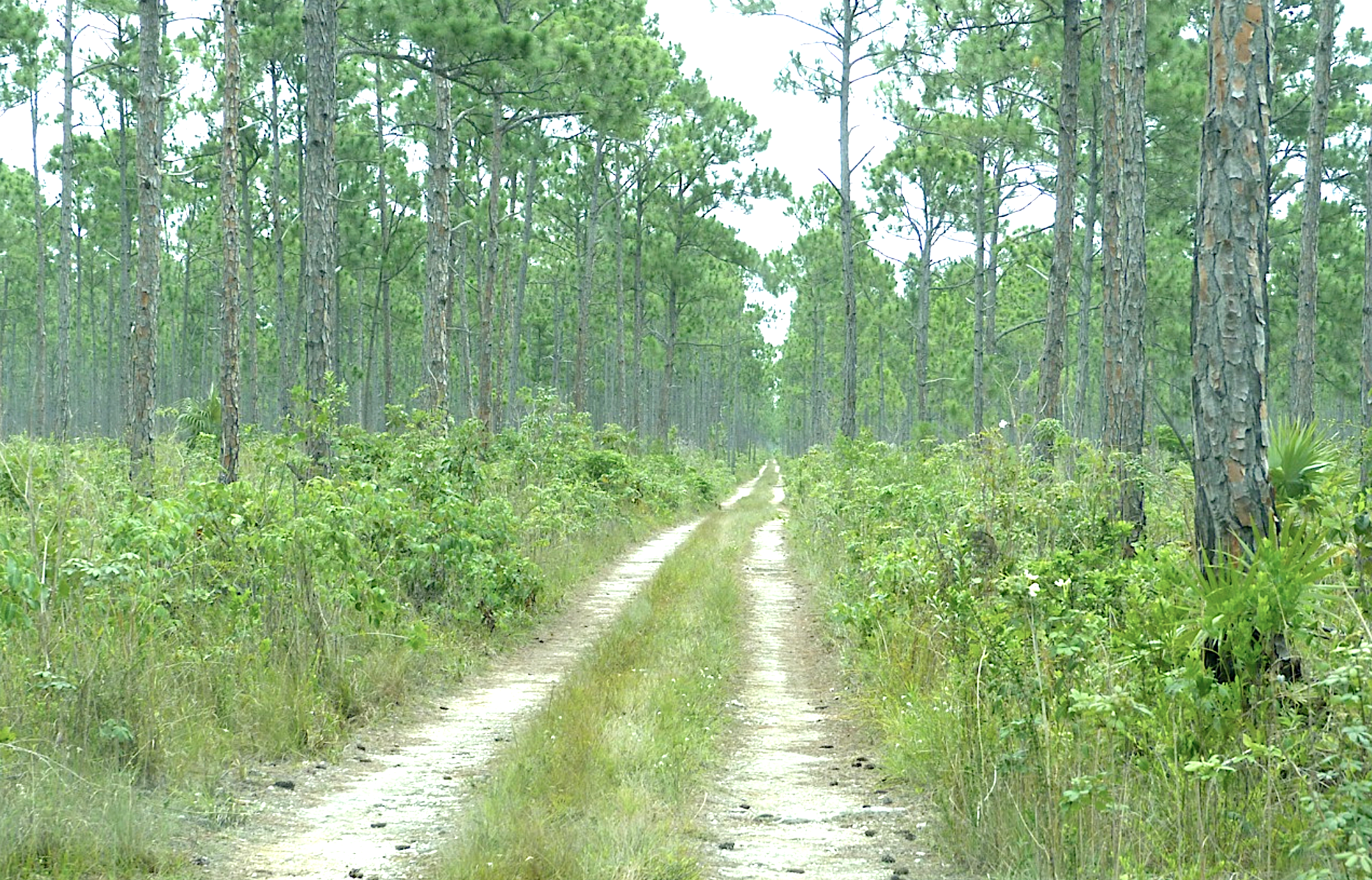
LOGGING TRACK TO SAWMILL SINK BLUE HOLE

Screenshot 2024-11-16 at 17.15.30

LOGGING HISTORY

South Abaco – defined loosely as the area south of Marsh Harbour – is dominated by pine forest. There are a few settlements and individual residences, all by the coast. The forested swathes are criss-crossed by an extensive system of logging tracks, many now all but impassable. They are reminders of Abaco’s historic importance as a source of wood deriving from the ubiquitous tall, slim pines. One use to which they were put was as mine pit props in the collieries of Wales.

 1996.2039.db

TRACKING RAILS

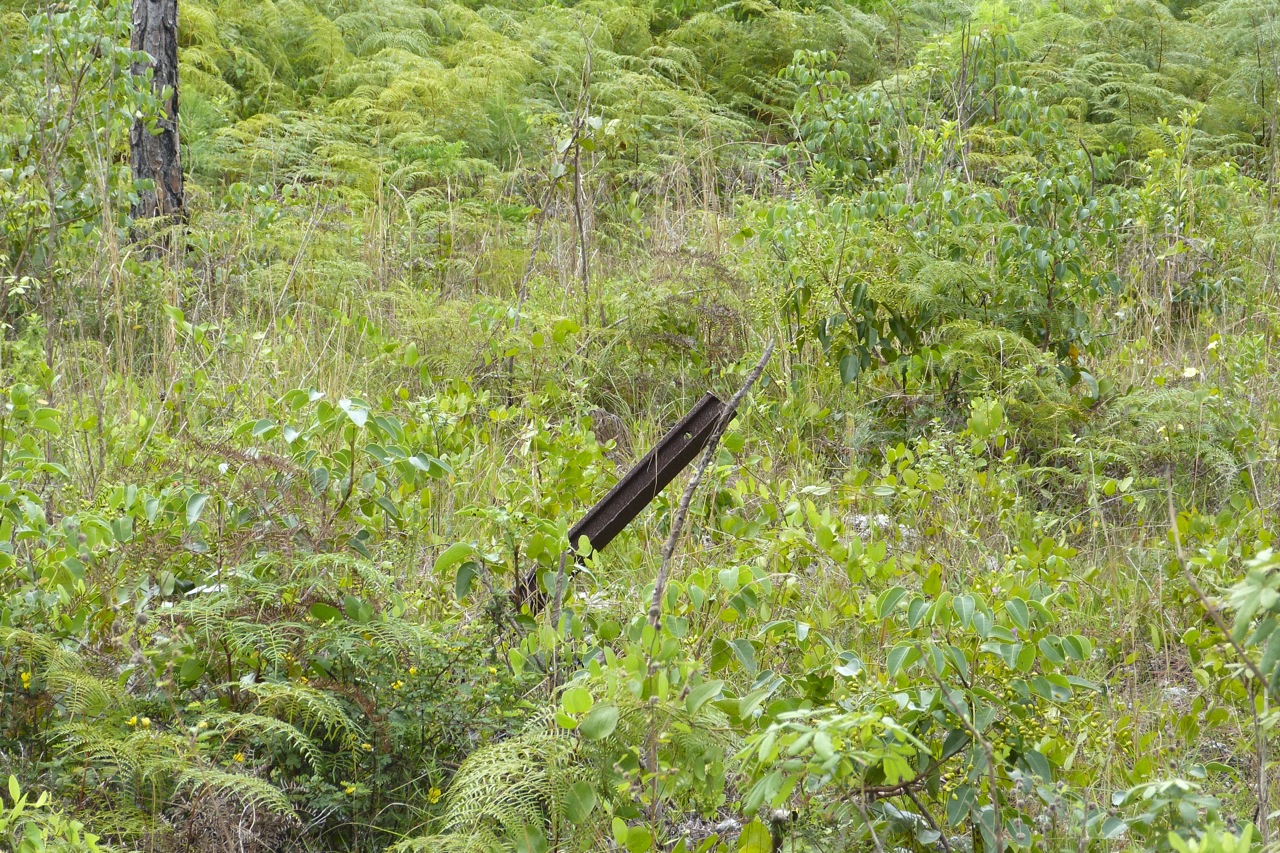
During a walk to Sawmill Sink, we noticed a rusty rail sticking up from the undergrowth. This was a remnant of the light railway tracks that had been laid through the forest to carry felled timber to the highway. From there it was transported to the coast to be loaded onto ships.

Sawmill Sink Abaco 17

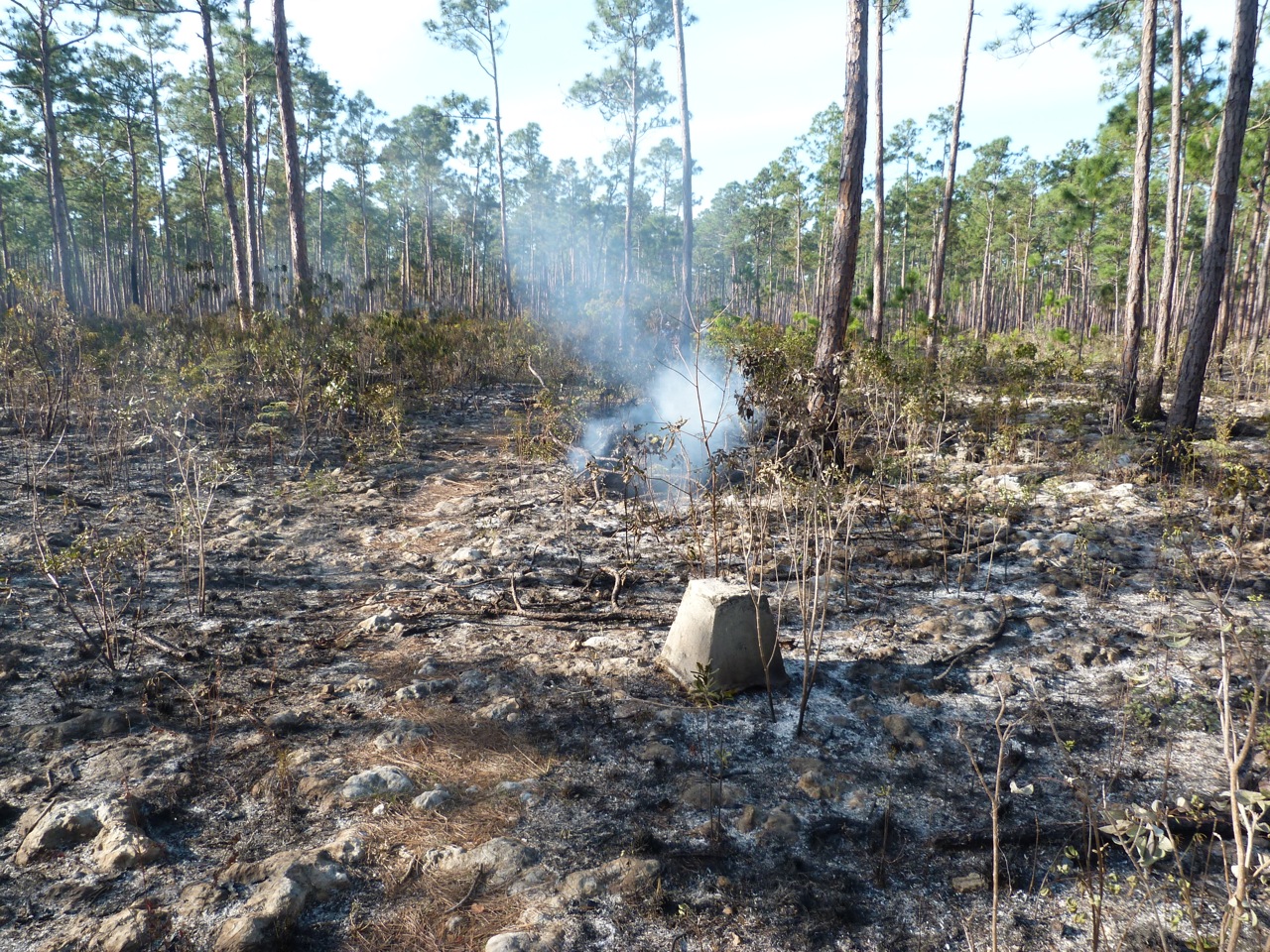
Later, we went back to Sawmill Sink at a time when the south part of the island was enduring the annual outbreak of forest fires, some natural and some set to clear undergrowth. While the occasional natural fire is actually good for regeneration of a forest (cf burning moorland), a fire out of control and fuelled by wind can very quickly damage a vast area. Thick palls of smoke drift across the island and out to sea. Even while we were fishing far out on the Marls, flames were visible as tall pines burned, with the acrid smell of the blaze was carried on the wind.

REMEMBERED EMBERS

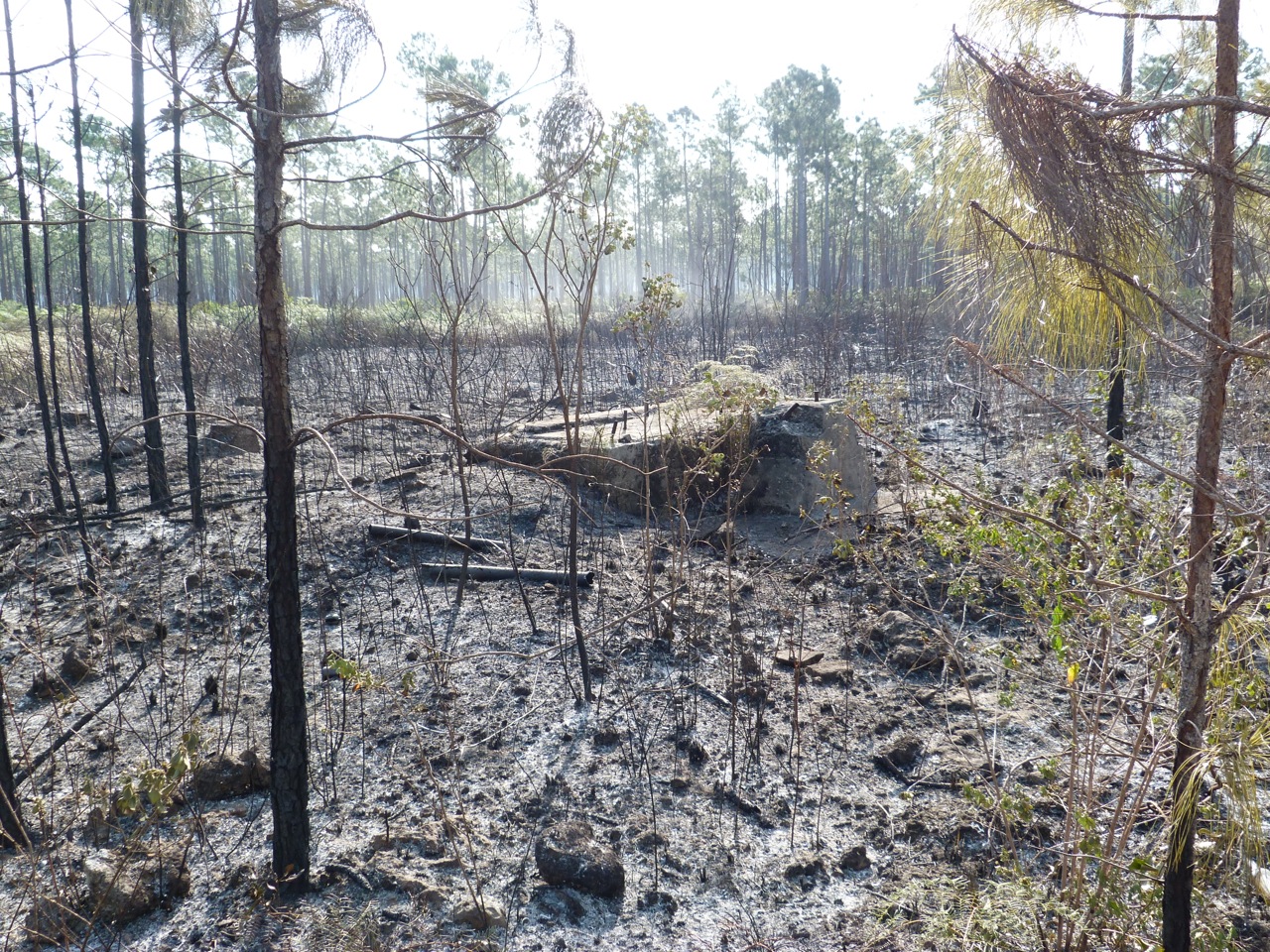
The photos that follow show the area round Sawmill Sink immediately after a fire had swept through the area, revealing the past. Trees were still smouldering and in places the ground was still hot to the touch. The evidence of the former usage had been laid bare. Some images below  show the paved path that leads from the logging track to the Sink. I never found out if these were the first detailed images of so many visible remains of the logging trade revealed by the burnt-off undergrowth. 

Sawmill Sink Abaco 1 Sawmill Sink Abaco 2 Sawmill Sink Abaco 3 Sawmill Sink Abaco 5 Sawmill Sink Abaco 6 Sawmill Sink Abaco 7 Sawmill Sink Abaco 9 Sawmill Sink Abaco 10 Sawmill Sink Abaco 11 Sawmill Sink Abaco 12 Sawmill Sink Abaco 13 Sawmill Sink Abaco 14

PREHISTORY

We found this rock close to the Sink. Are those plant fossils? Bearing in mind that in prehistory the ocean covered this area entirely (the highest point on Abaco is a mere 134 feet ASL), might these be anemones or sponge fossils of some sort? As I said then, ‘comments from fossilologists welcome’, and a kind follower FOSSIL LADY (aka Kathi) reponded:  Those don’t look like plant fossils to me, they remind me of stromatolites, a sponge like creature that first dominated the earth billions of years ago. Some varieties still survive today. It would be worth it to have a geologist have a look see. ps the sinkhole is awesome!

Sawmill Sink Abaco 15

Photo credits: all RH except pit props (Scottish Mining Museum); aerial view (Gmaps)

Unknown's avatar

BREADFRUIT: NATURE’S BOUNTY WITH ADDED MUTINY


Artocarpus altilis - breadfruit (Hans Hillewaert)


BREADFRUIT: NATURE’S BOUNTY WITH ADDED MUTINY

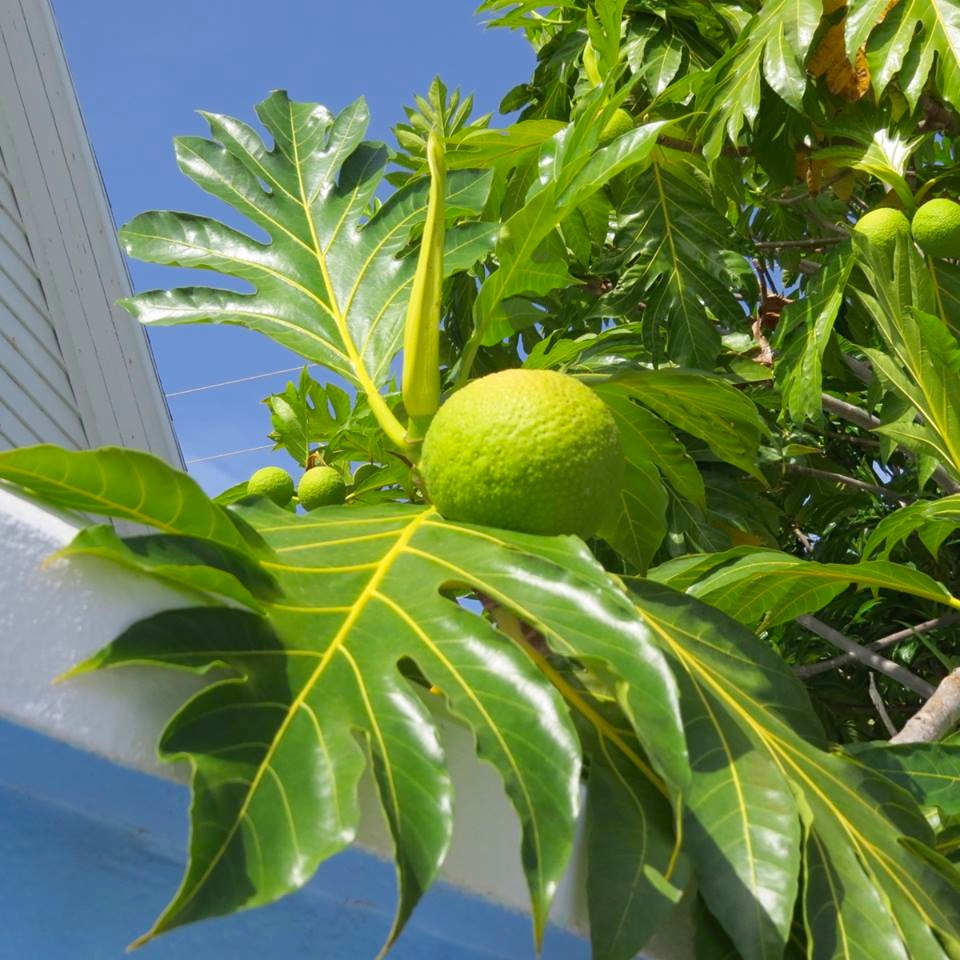
Capt. William Bligh achieved fame for all the wrong reasons. Despite a distinguished and wide-ranging seafaring career he is widely remembered for just two things: (1) The Bounty and (2) Mutiny On. In 1787, he was dispatched to Tahiti to collect specimens of BREADFRUIT (a fruit of the Pacific islands, in particular Polynesia) to help provide food for the British colonies in the West Indies. The breadfruit was intended to be a basic and cheap staple food not just for settlers but also for the indigenous population.

Breadfruit 2


‘BLIGH’S BLIGHT’ – MUTINY!

Capt. Bligh’s Bounty crew unfortunately mutinied – possibly to do with the amount of water the breadfruit required in transit, compared to their own meagre rations. So they threw overboard the hundreds of breadfruit plants that were in transit. Then they set adrift Bligh with his loyal officers and crew. He was later court-martialled but cleared of culpability for provoking a mutiny by his conduct (from a strictly legal viewpoint and on the bare facts, not a surprising ruling you might think).

Mutiny on the HMS Bounty (Robert Dodd)


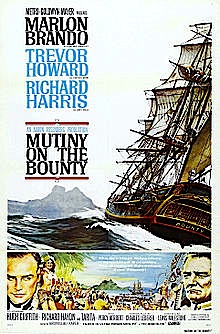
This isn’t the place for a disquisition on the Mutiny. You can read all about it HERE. Or better still, watch one of the rollicking all-star-cast films based loosely on the episode for a careful and accurate historical record of the events that will buckle your swash…


Mutiny_on_the_Bounty_Poster (1935) 220px-Poster_for_Mutiny_on_the_Bounty BLIGH’S SECOND CHANCE

Following that skirmish, and indeed blemish, on his record, in 1793 Capt. Bligh was yet again charged with the task of shipping breadfruit trees from their origin to the Caribbean. His heart must have sunk at the prospect, yet finally he succeeded. However, he completed his journey only for those on the consumption end to express considerable distaste for such a bland, starchy fruit. It took a long time to catch on, and even longer for its culinary versatility to become appreciated. 


Breadfruit image (Pacific site)


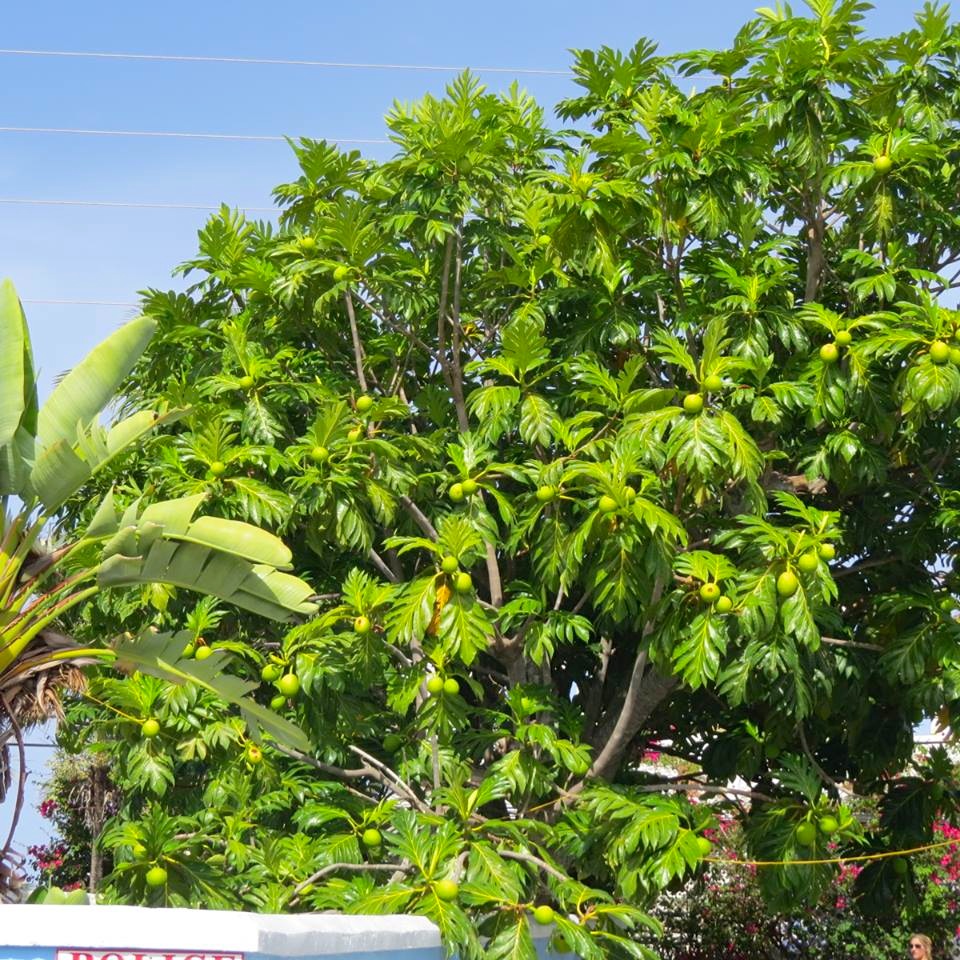
The most famous breadfruit tree in all Abaco is to be found in Hope Town, on Elbow Cay. I can do no better than display the notice that proudly proclaims the historic significance of the tree and its eponymous fruit.

Breadfruit Tree Notice, Hope Town Abaco (Dp PatersonBreadfruit Tree, Hope Town Abaco (Dp Paterson)


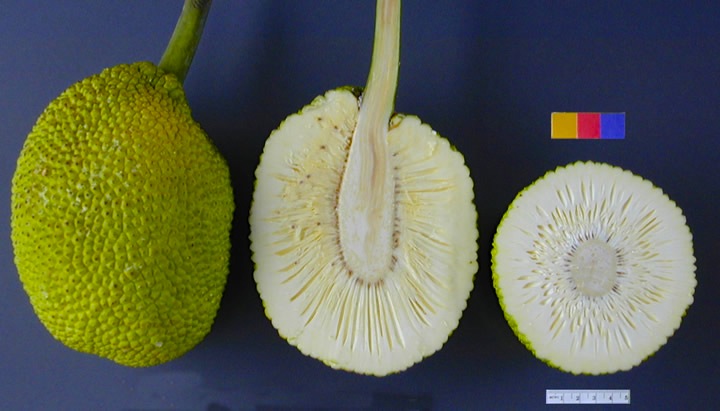
Unusually for a fruit plant, a true breadfruit Artocarpus altilis does not produce seeds. It is propagated by removing the suckers that grow at at the base of the tree.

For those unfamiliar with the fruit and its interior, here it is in both slice and cross-sectionBreadfruit sliced (US Pacific Basin Agricultural Research Center)


BREADFRUIT IN ART

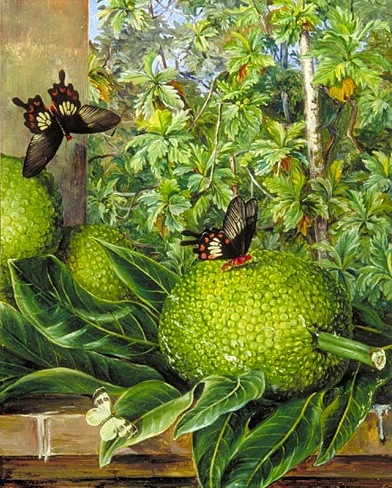
Breadfruit has (somewhat surprisingly?) received some artistic recognition over the years. Here are a few examples. The first, very jolly, includes early representations of the Polydamus Swallowtail butterfly; the second is quite dull; the third is instructional (oddly equating breadfruit with tea, coffee and chocolate); and the fourth is not at all appetising to look at… nor, in the days of adhesive stamps, to lick.

Breadfruit with butterflies (Royal Botanic Garden, Kew)Breadfruit (Royal Botanic Gardens, Kew)

                                 Breadfruit (John Frederick Miller)                                  Breadfruit drawing John Frederick Miller

      Breadfruit & related plants used as food (William Rhind (1841)     Breadfruit etc William Rhind (1841)

Breadfruit - Bahamas Stamp


SO WHERE DOES BREADFRUIT GROW NOW?

Breadfruit will flourish only within a certain latitude range where the rainfall and temperature suit it, as this map shows. I include this information in case you ever find yourself in the awkward position of being socially stranded with someone whose conversation has become soporific. Be armed with some useful worldwide breadfruit stats for just such an occasion – the fact that Madagascar is a suitable yet not a very good location, for example (not enough rainfall). You will soon find yourself alone…

Breadfruit - the world propagation range


A CULINARY TREAT

Breadfruit is sometimes thought to be a dull and un-tasty, at least compared with many other fruits. I thought I’d include a recipe or two that rather appealed to me – the second because even I could do that… it’s within my shamefully limited culinary skill-set.


Breadfruit Recipe (myrecipefriends.com)


BAKED BREADFRUIT

Large, ripe breadfruit 1 cup water Butter 1 lime or lemon

Heat oven to 350 degrees F. Put the water in a shallow pan and place the whole breadfruit in the water. Bake in oven for three hours. Remove from oven, allow to cool slightly, peel, removing the large core and stem. Cut the fruit into sections and place in a serving dish. Cover with butter and a squeeze of lime or lemon juice.

A PERFECT HOPE TOWN BREADFRUIT
Breadfruit, Hope Town Abaco (Dp Paterson)


BLIGH’S END

Capt. Bligh managed to put his breadfruit adventures and the mutiny behind him. He continued a distinguished naval career with successive command of an impressive number of ships. He ended up as a Vice-Admiral, and (on his death in 1817) in a grave in Lambeth, London.

V-A William Bligh (1814)

Grave of William Bligh, Lambeth, London (Geograph, Commons Media

This post was originally published a while back, inspired by an article on breadfruit and the Hope Town tree by local historian Deb ‘DP’ Patterson. I’m grateful to her for permission to use her idea and indeed some of her material, in particular her photos of the tree and its notice.

Wyannie Malone Museum Crest, Hope Town, Abaco

HMS BOUNTY II (Full Sails). A 1960 reconstruction (Dan Kasberger)HMS_BOUNTY_II_Full_Sails 1960 reconsrtuction (Dan Kasberger)

Credits: First and foremost, Deb Patterson; Magpie Pickings including Hans Hillewaert, US Pacific Basin Agricultural Research Center, Royal Botanic Garden Kew, myrecipefriends, M Kwek, whatsonbahamas, Wyannie Malone Historical Museum, ‘Geograph’, Dan Kasberger, Wiki; and anyone else I have omitted…

Unknown's avatar

A LIGHT EXTINGUISHED: LITTLE HARBOUR LIGHTHOUSE REVISITED


Little Harbour Lighthouse, Abaco Bahamas (Keith Salvesen)

A LIGHT EXTINGUISHED: LITTLE HARBOUR LIGHTHOUSE REVISITED

This article was written before Dorian and I don’t know the state of this lighthouse now. If some of it still exists, this is its previous state. If not, this is a record of what has been and is now gone.

The words ‘Abaco Lighthouse’ are near-synonymous with the splendid striped edifice in Hope Town, Elbow Cay. This beloved building is truly iconic, in the modern sense of the word (see HERE). But it would not do to forget the other principal lighthouse of Abaco at Hole-in-the-Wall, also with its original Fresnel lenses (see HERE for a post written ages ago).

Little Harbour Lighthouse, Abaco Bahamas (Keith Salvesen)

However, there’s a third lighthouse on Abaco. The small light at Little Harbour is, in contrast to the other two beacons, relatively unknown, unvisited, and unloved. Derelict, in fact, and a sad  relic on its lonely promontory. Recently we prised ourselves away from the delights of Pete’s Pub and found the start of the overgrown track to the light. There’s a wooden sign that helps to locate the path. 

Little Harbour Lighthouse, Abaco Bahamas (Keith Salvesen)

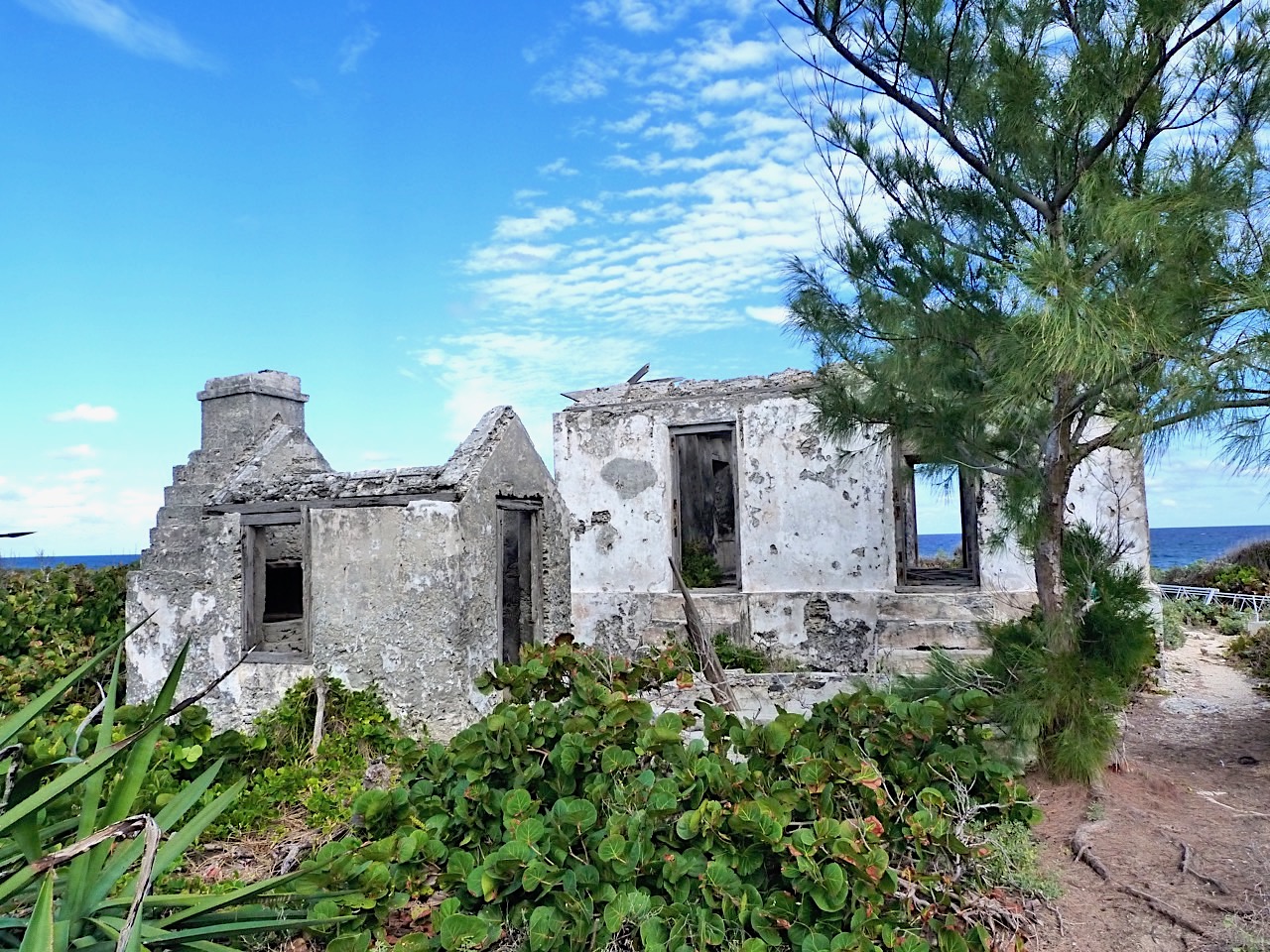
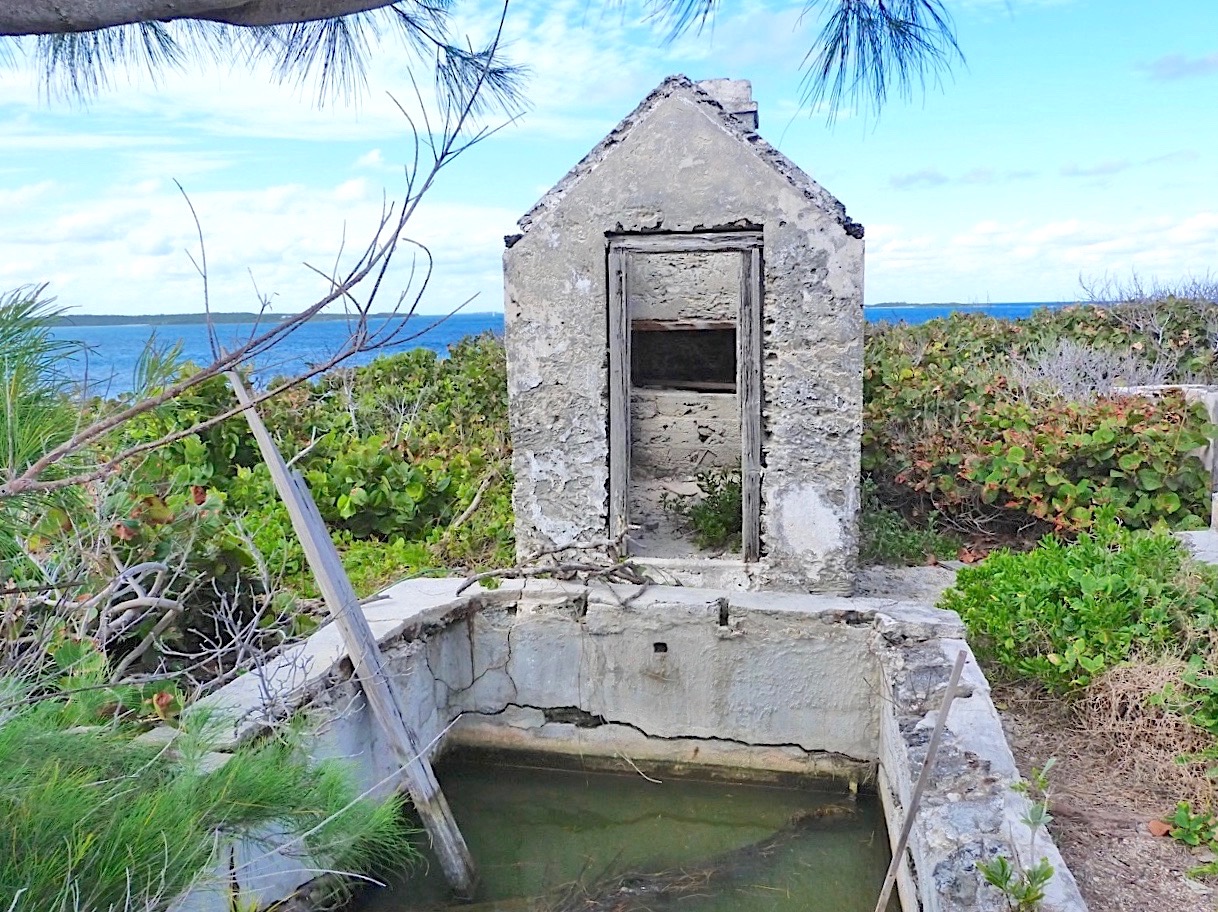
This small lighthouse station – “The Old Lighthouse” – was established in 1889 close to the entrance to Little Harbour. Originally, it was manned, with the first lighthouse keeper and his wife being the only inhabitants of that part of Little Harbour. The light presumably served to guide shipping to the channel leading to the secluded and safe harbour.

Little Harbour Lighthouse, Abaco Bahamas (Keith Salvesen)Little Harbour Lighthouse, Abaco Bahamas (Keith Salvesen)               Little Harbour Lighthouse, Abaco Bahamas (Keith Salvesen)

In due course the living quarters fell into dereliction and the existing beacon fixed on a small tower, later converted to a solar-powered light. This arrangement did not survive the devastation of Hurricane Floyd in 1999. The replacement was a modern steel framework tower that carried an active light until eventually it was blown over by Hurricane Sandy in October 2012. Sandy was also the hurricane that destroyed forever the rock ‘hole’ – an important navigation mark for centuries – that gave Hole-in-the-Wall its distinctive name (see HERE and links).

Little Harbour Lighthouse, Abaco Bahamas (Keith Salvesen)Little Harbour Lighthouse, Abaco Bahamas (Keith Salvesen) Little Harbour Lighthouse, Abaco Bahamas (Keith Salvesen)

The views from the elevated position of the ruin are spectacular, both from the outside and from inside. In good weather, anyway…  It remains to be seen whether the lonely light is now considered completely redundant, or whether another automatic light will in the end be positioned here when funds or willpower permit. I’m not aware of any groundswell of opinion suggesting that, in the absence of a beacon at Little Harbour, there is a potential safety issue. 

The view north from the light to the tip of the promontoryLittle Harbour Lighthouse, Abaco Bahamas (Keith Salvesen)

The view roughly south past the fallen tower towards CherokeeLittle Harbour Lighthouse, Abaco Bahamas (Keith Salvesen)

Over time, I have been contacted by people with family associations to previous keepers; and with personal experiences of life there. One or two Americans have wanted to track newly discovered family connections to the light, and even possible relatives. I have the makings of ‘Lighthouse Family’ tree. When I originally wrote about the light, Chuck Rickey contacted me with his story, which gives a wonderful insight into the history of the light and its hardy occupants: 

“My grandmother’s first cousin, Curtis Lowe, was lighthouse keeper here for many years and along with his wife, Bessie, raised children Hartley, Maitland, Lois and Robert, obtaining staples buy walking a tract road or sailing to Cherokee Sound. Later on, they were able to motor to Snake Cay, to get provisions from Owens Illinois’ company store aboard the “Robert Fulton”, an old side-wheel steamer, permanently moored there. I was fortunate to spend much fun time there during school vacations growing up”.

WHEREABOUTS IN LITTLE HARBOUR IS WAS THE LIGHTHOUSE

Little Harbour Lighthouse 1 jpg copyLittle Harbour Lighthouse 4 jpg

RELATED POSTS

ELBOW REEF LIGHTHOUSE: A BEACON ICON

HOLE-IN-THE-WALL LIGHTHOUSE

HOLE-IN-THE-WALL: HISTORY, SHIPS AND MAPS

Little Harbour Lighthouse, Abaco Bahamas (Darlene Chisholm)

Credits: all photos Keith Salvesen except the last, Darlene Chisholm. Also, with many thanks to Sandy Estabrook. 

Logo of the World Lighthouse Society

Logo of the World Lighthouse Society

Unknown's avatar

WHEN NEW PROVIDENCE WAS OLD: MAPPING BAHAMAS HISTORY


Map of New Providence / Nassau Bahamas (early c18)

WHEN NEW PROVIDENCE WAS OLD: MAPPING BAHAMAS HISTORY

‘Exact Draught of the Island of New Providence

One of the Bahama Islands in the West Indies’

ORIENTATION

Lateral thinking is one thing; topsy-turvy thinking is in another league. The map that graces the top of this page is of New Providence and Nassau in the the early c18. By today’s exacting mapping conventions, which historically were less rigorously  observed, it is upside-down, with Nassau on what we would call the south-west corner. However the convention that maps were orientated to the North was not generally accepted before C19. And in the middle ages maps were mostly orientated to the East (whence the term ‘orientating’). With advancing survey techniques from C17 on, maps were mostly orientated to the South like this map of New Providence.

DATE

The map is undated on the face of it, and I have found attributed dates of both 1700 and 1750 (see below). It could be anywhere in-between. At the time this map was made, New Providence was sparsely populated except for Nassau itself; and little was known about the island’s interior. Contemporary accounts describe a haven for pirates operating around the coastline. Not for nothing was Nassau protected by a battery and a fort. I’ve divided to map into sections to make it easier to take a closer look at each area. You can click each to enlarge.

new-providence-c18-map-part-7-2

1. TOP LEFT CORNER (the south-east of NP in actuality), with the compass pointing downwards to the north. A smattering of houses dot the ‘west’ coast. There is one significant property above Little Sound, standing in what looks like a cleared or even cultivated area. I’ll look at that in more detail below. Note the words above The Great Salt Water Sound: “Very High Pines Grow Here Aboue (sic)”, evidence that forests of tall pines familiar even today on Abaco were found on NP 300 years ago. The island is otherwise mostly marked as if the landscape was fairly open.

new-providence-c18-map-part-1

2. TOP RIGHT CORNER (south-west & west), with the confident title in a cartouche proclaiming exactness. This was not uncommon in historic map-making – the cartographical equivalent of today’s boastful product slogans – ‘simply the best’ and so on**. The caption next to the Great Sound, This Part of the Country is little Known, suggests an unexplored and perhaps hostile environment – possibly one of marshes and bogs. This sector of the island appears to have been uninhabited, or at least to having no population centres worth recording.

new-providence-c18-map-part-3-2

3. BOTTOM RIGHT CORNER (north-west). At last there is more evidence habitation, with a string of dwellings along the coastline. The 2 cays shown have names, West End and ‘Pellican’. And it looks as though the two ships have set out from port. On the left side of the bay above them, a church can be seen. Initially I thought the double row of crosses might indicate an area close to the shoreline that might be safe – or at least safer – from pirate attack. The leading ship – as the detailed crop shows clearly – is a warship. No harm in romantically speculating that it is escorting a trading vessel… More recently an online friend Klausbernd told me that the double crosses on map are in fact a navigational aid indicating cross bearings.

new-providence-c18-map-part-4

new-providence-c18-map-part-5

4. BOTTOM MIDDLE SECTION As we move towards the main – indeed only – town on the island, it is clear that the northern coast was the most desirable place to live. The scattering of houses along the coast continues; and the captions for the ponds show a possible reason why: fresh water, on an island where other areas of water are actually marked as ‘salt’ or which might have been unpleasantly brackish. And now we can see more of the posh establishment I referred to above. Not only did it lie in open (or perhaps cultivated) country, but it was plainly of some importance. It is notably larger that other buildings depicted, for a start; and it has its own very long track that forks off the coastal track.

new-providence-c18-map-part-10

5. BOTTOM LEFT CORNER: NASSAU We have reached the big city, the centre of the population, and the port – with the harbour entrance handily marked. It bore the same name then as now; though the other names marked (as far as I can make out) have mostly if not all changed over 3 centuries. The Baha Mar development and its attendant travails seem light years away from this map. The double line of crosses ends here (bottom right at the first cay). If they marked a safe zone for vessels passing back and forth into Nassau harbour, they did not need to extend further because of the town fortifications (see detailed crop). There is a fort right on the shore; and at the far end of the harbour sound is a battery at Drewitt’s Point. The town is watched over by a substantial building – presumably a Governor’s residence – that is surrounded by a stockade . In the early c18 Nassau put on a show of strength to deter invaders and pirates.

new-providence-c18-map-part-2new-providence-c18-map-part-14

DO WE KNOW THE EXACT DRAUGHT’S EXACT DATE?

The map itself is undated. The Library of Congress, whose map I have chopped up for this post, simply dates it as 17– and notes: 

Manuscript, pen-and-ink and watercolor; Has watermark; Oriented with north to the bottom; Relief shown pictorially and by shading; Depths shown by soundings.

The excellent David Rumsey Historical Map Collection chooses the year 1750, the maker unknown. Another source puts the date at 1700.

Whichever, a clue to establish the map in the first half of the c18 is that the publisher is believed to be ‘William Innys [et al.]’, London. Innys and his brother John (the ‘et al’ presumably) were active at that time. In 1726, for example, they published an edition of Newton’s  Philosophiae naturalis principia mathematica (first published in 1687), indicating that they must already have been well-established.
new-providence-c18-map-part-7-2

WHAT ABOUT THE PIRATES?

The “Deposition of  Capt. Matthew Musson” made on  5 Jul 1717 in London, contains some excellent contemporary  pirate-based material. The middle passage in particular gives an indication how well organised and extremely well-armed the pirates were. And it is clear that piracy was actually driving inhabitants away from New Providence.

  • “On March last he was cast away on the Bahamas. At Harbour Island he found about 30 families, with severall pirates, which frequently are comeing and goeing to purchase provissons for the piratts vessells at Providence. There were there two ships of 90 tons which sold provissons to the said pirates, the sailors of which said they belong’d to Boston”.
  • “At Habakoe one of the Bahamas he found Capt. Thomas Walker and others who had left Providence by reason of the rudeness of the pirates and settled there. They advis’d him that five pirates made ye harbour of Providence their place of rendevous vizt. [Benjamin] Horngold, a sloop with 10 guns and about 80 men; [Henry] Jennings, a sloop with 10 guns and 100 men; [Josiah(s)] Burgiss, a sloop with 8 guns and about 80 men; [Henry?] White, in a small vessell with 30 men and small armes; [Edward] Thatch, a sloop 6 gunns and about 70 men. All took and destroyd ships of all nations except Jennings who took no English; they had taken a Spanish ship of 32 gunns, which they kept in the harbour for a guardship”.
  • “Ye greatest part of the inhabitants of Providence are. already gone into other adjacent islands to secure themselves from ye pirates, who frequently plunder them. Most of the ships and vessells taken by them they burn and destroy when brought into the harbour and oblidge the menn to take on with them. The inhabitants of those Isles are in a miserable condition at present, but were in great hopes that H.M. would be graciously pleas’d to take such measures, which would speedily enable them to return to Providence their former settlement, there are severall more pirates than he can now give an accot. of that are both to windward and to leward of Providence that may ere this be expected to rendevous there he being apprehensive that unless the Governmt. fortify this place the pirates will to protect themselves”. Signed, Mathew Musson. Endorsed, Read 5th July, 1717. 1½ pp. [C.O. 5, 1265. No. 73.]
new-providence-c18-map-part-11

CAN I BUY THIS MAP FOR MY WALL?

You certainly can. Well, not an original obviously. But you can find prints of it on eBay and elsewhere – just google the map title. You can get a modern copy for around $20 + shipping

** I have an enjoyable example of this tendency on a William Guthrie map of Europe dated c1800 that I own. A map from “the beft authorities” could surely have no serious rival!
img_4771

Credits: Library of Congress Online Catalog (Geography and Map Division); David Rumsey Historical Map Collection; Baylus C Brooks, Professional Research & Maritime Historian, Author, & Conservator / “America and West Indies: July 1717, 1-15,” in Calendar of State Papers Colonial, America and West Indies: Volume 29, 1716-1717, ed. Cecil Headlam (London: His Majesty’s Stationery Office, 1930), 336-344; Bonhams (Auctioneers). Thanks to Klaubernd for his advice on map orientations.
Map of New Providence / Nassau Bahamas (early c18)

Unknown's avatar

ABACO PARROT FOR A CHEERFUL YULETIDE & OPTIMISM FOR 2023


Thanks to all followers, likers, commenters, regular visitors, one-offs, local wildlife organisations, and friends of Rolling Harbour in general. This year we passed 1 million hits over the ten years of this blog. Proving that people love Abaco, the Bahamas, birds, marine mammals, manatees, reef fish, sharks, turtles, shore-life, shells, insects, plant life, bonefishing, lighthouses, local history, maps, conservation and a whole lot more; and are prepared to tolerate bad puns, haphazard presentation, and a less than rigourous scientific approach to it all.

Weirdest search term ever: How to dispose of dead bodies?

Unknown's avatar

BREADFRUIT: NATURE’S BOUNTY (WITH ADDED MUTINY)


Artocarpus altilis - breadfruit (Hans Hillewaert)

BREADFRUIT: NATURE’S BOUNTY (WITH ADDED MUTINY)

Capt. William Bligh achieved fame for all the wrong reasons. Despite a distinguished and wide-ranging seafaring career he is widely remembered for just two things: (1) The Bounty and (2) Mutiny On. In 1787, he was dispatched to Tahiti to collect specimens of BREADFRUIT (a fruit of the Pacific islands, in particular Polynesia) to help provide food for the British colonies in the West Indies. To be clear, the breadfruit was intended to be a basic and cheap staple food not just for settlers but also for the indigenous population. I think we can all guess the status of the latter at that time.

Breadfruit 2

‘BLIGH’S BLIGHT’ – MUTINY!

Capt. Bligh’s Bounty crew unfortunately mutinied – possibly to do with the amount of water the breadfruit required in transit, compared to their own meagre rations. So they threw overboard the hundreds of breadfruit plants that were in transit. Then they set Bligh with his loyal officers and crew adrift… He was later court-martialled but cleared of culpability for provoking a mutiny by his conduct (from a strictly legal viewpoint and on the bare facts, not a surprising ruling you might think).
Mutiny on the HMS Bounty (Robert Dodd)

This isn’t the place for a disquisition on the Mutiny. You can read all about it HERE. Or better still, watch one of the rollicking all-star-cast films based loosely on the episode for a careful and accurate historical record of the events that will buckle your swash…

Mutiny_on_the_Bounty_Poster (1935) 220px-Poster_for_Mutiny_on_the_Bounty BLIGH’S SECOND CHANCE

Following that skirmish, and indeed blemish, on his record, in 1793 Capt. Bligh was yet again charged with the task of shipping breadfruit trees from their origin to the Caribbean. His heart must have sunk at the prospect, yet finally he succeeded. However, he completed his journey only for those on the consumption end to express considerable distaste for such a bland, starchy fruit. It took a long time to catch on, and even longer for its culinary versatility to become appreciated. Breadfruit image (Pacific site)

The most famous breadfruit tree in all Abaco is to be found in Hope Town, on Elbow Cay. I can do no better than display the notice that proudly proclaims the historic significance of the tree and its eponymous fruit.

Breadfruit Tree Notice, Hope Town Abaco (Dp PatersonBreadfruit Tree, Hope Town Abaco (Dp Paterson)

Unusually for a fruit plant, a true breadfruit Artocarpus altilis does not produce seeds. It is propagated by removing the suckers that grow at at the base of the tree.

For those unfamiliar with the fruit and its interior, here it is in both slice and cross-sectionBreadfruit sliced (US Pacific Basin Agricultural Research Center)

BREADFRUIT IN ART

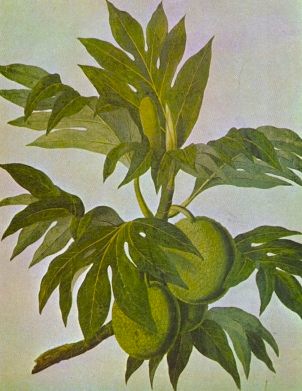
Breadfruit has (somewhat surprisingly?) received some artistic recognition over the years. Here are a few examples. The first, very jolly, includes early representations of the Polydamus Swallowtail butterfly; the second is quite dull; the third is instructional (oddly equating breadfruit with tea, coffee and chocolate); and the fourth is not at all appetising to look at… nor, in the days of adhesive stamps, to lick.

Breadfruit with butterflies (Royal Botanic Garden, Kew)Breadfruit (Royal Botanic Gardens, Kew)

                                 Breadfruit (John Frederick Miller)                                  Breadfruit drawing John Frederick Miller

      Breadfruit & related plants used as food (William Rhind (1841)     Breadfruit etc William Rhind (1841)

Breadfruit - Bahamas Stamp

SO WHERE DOES BREADFRUIT GROW NOW?

Breadfruit will flourish only within a certain latitude range where the rainfall and temperature suit it, as this map shows. I include this information in case you ever find yourself in the awkward position of being socially stranded with someone whose conversation has become soporific. Be armed with some useful worldwide breadfruit stats for just such an occasion – the fact that Madagascar is a suitable yet not a very good location, for example (not enough rainfall). You will soon find yourself alone…

Breadfruit - the world propagation range

A CULINARY TREAT

Breadfruit is sometimes thought to be a dull and un-tasty, at least compared with many other fruits. I thought I’d include a recipe or two that rather appealed to me – the second because even I could do that… it’s within my shamefully limited culinary skill-set.

Breadfruit Recipe (myrecipefriends.com)

BAKED BREADFRUIT

Large, ripe breadfruit 1 cup water Butter 1 lime or lemon

Heat oven to 350 degrees F. Put the water in a shallow pan and place the whole breadfruit in the water. Bake in oven for three hours. Remove from oven, allow to cool slightly, peel, removing the large core and stem. Cut the fruit into sections and place in a serving dish. Cover with butter and a squeeze of lime or lemon juice.

A PERFECT HOPE TOWN BREADFRUIT
Breadfruit, Hope Town Abaco (Dp Paterson)

BLIGH’S END

Capt. Bligh managed to put his breadfruit adventures and the mutiny behind him. He continued a distinguished naval career with successive command of an impressive number of  ships. He ended up as a Vice-Admiral, and (on his death in 1817) in a grave in Lambeth, London.

V-A William Bligh (1814)

Grave of William Bligh, Lambeth, London (Geograph, Commons Media

This post was originally published a while back, inspired by an article on breadfruit and the Hope Town tree by local historian Deb ‘DP’ Patterson, known to many for her committed involvement with the Wyannie Malone Historical Museum in Hope Town. I’m grateful to her for permission to use her idea and indeed some of her material, in particular her photos of the tree and its notice.

Wyannie Malone Museum Crest, Hope Town, Abaco

HMS BOUNTY II (Full Sails). A 1960 reconstruction (Dan Kasberger)HMS_BOUNTY_II_Full_Sails 1960 reconsrtuction (Dan Kasberger)

Credits: First and foremost, Deb Patterson; Magpie Pickings including Hans Hillewaert, US Pacific Basin Agricultural Research Center, Royal Botanic Garden Kew, myrecipefriends, M Kwek, whatsonbahamas, Wyannie Malone Historical Museum, ‘Geograph’, Dan Kasberger, and Wiki; and anyone else I have omitted…

Unknown's avatar

WHEN NEW PROVIDENCE WAS OLD: MAPPING BAHAMAS HISTORY


Map of New Providence / Nassau Bahamas (early c18)

WHEN NEW PROVIDENCE WAS OLD: MAPPING BAHAMAS HISTORY

“Exact Draught of the Island of New Providence, One of the Bahama Islands in the West Indies”

Lateral thinking is one thing; topsy-turvy thinking is in another league. The map that graces the top of this page is of New Providence and Nassau in the the early c18. By today’s exacting mapping conventions, which historically were less rigorously  observed, it is upside-down, with Nassau on what we would call the south-west corner. The map is undated on the face of it, and I have found attributed dates of both 1700 and 1750. It could be anywhere in-between. At the time this map was made, New Providence was sparsely populated except for Nassau itself; and little was known about the island’s interior. Contemporary accounts describe a haven for pirates operating around the coastline. Not for nothing was Nassau protected by a battery and a fort. I’ve divided to map into sections to make it easier to take a closer look at each area. You can click each to enlarge.

new-providence-c18-map-part-7-2

  1. TOP LEFT CORNER (the south-east of NP in actuality), with the compass pointing downwards to the north. A smattering of houses dot the ‘west’ coast. There is one significant property above Little Sound, standing in what looks like a cleared or even cultivated area. I’ll look at that in more detail below. Note the words above The Great Salt Water Sound: “Very High Pines Grow Here Aboue (sic)”, evidence that forests of tall pines familiar even today on Abaco were found on NP 300 years ago. The island is otherwise mostly marked as if the landscape was fairly open.

new-providence-c18-map-part-1

2. TOP RIGHT CORNER (south-west & west), with the confident title in a cartouche proclaiming exactness. This was not uncommon in historic map-making – the cartographical equivalent of today’s boastful product slogans – ‘simply the best’ and so on**. The caption next to the Great Sound, This Part of the Country is little Known, suggests an unexplored and perhaps hostile environment – possibly one of marshes and bogs. This sector of the island appears to have been uninhabited, or at least to having no population centres worth recording.

new-providence-c18-map-part-3-2

3. BOTTOM RIGHT CORNER (north-west). At last there is more evidence habitation, with a string of dwellings along the coastline. The 2 cays shown have names, West End and ‘Pellican’. And it looks as though the two ships have set out from port. On the left side of the bay above them, a church can be seen. Initially I thought the double row of crosses might indicate an area close to the shoreline that might be safe – or at least safer – from pirate attack. The leading ship – as the detailed crop shows clearly – is a warship. No harm in romantically speculating that it is escorting a trading vessel… More recently an online friend Klausbernd told me that the double crosses on map are in fact a navigational aid indicating cross bearings.

new-providence-c18-map-part-4

new-providence-c18-map-part-5

4. BOTTOM MIDDLE SECTION As we move towards the main – indeed only – town on the island, it is clear that the northern coast was the most desirable place to live. The scattering of houses along the coast continues; and the captions for the ponds show a possible reason why: fresh water, on an island where other areas of water are actually marked as ‘salt’ or which might have been unpleasantly brackish. And now we can see more of the posh establishment I referred to above. Not only did it lie in open (or perhaps cultivated) country, but it was plainly of some importance. It is notably larger that other buildings depicted, for a start; and it has its own very long track that forks off the coastal track.

new-providence-c18-map-part-10

5. BOTTOM LEFT CORNER: NASSAU We have reached the big city, the centre of the population, and the port – with the harbour entrance handily marked. It bore the same name then as now; though the other names marked (as far as I can make out) have mostly if not all changed over 3 centuries. The Baha Mar development and its attendant travails seem light years away from this map. The double line of crosses ends here (bottom right at the first cay). If they marked a safe zone for vessels passing back and forth into Nassau harbour, they did not need to extend further because of the town fortifications (see detailed crop). There is a fort right on the shore; and at the far end of the harbour sound is a battery at Drewitt’s Point. The town is watched over by a substantial building – presumably a Governor’s residence – that is surrounded by a stockade . In the early c18 Nassau put on a show of strength to deter invaders and pirates.

new-providence-c18-map-part-2new-providence-c18-map-part-14

DO WE KNOW THE EXACT DRAUGHT’S EXACT DATE?

The map itself is undated. The Library of Congress, whose map I have chopped up for this post, simply dates it as 17– and notes: 

Manuscript, pen-and-ink and watercolor; Has watermark; Oriented with north to the bottom; Relief shown pictorially and by shading; Depths shown by soundings.

The excellent David Rumsey Historical Map Collection chooses the year 1750, the maker unknown. Another source puts the date at 1700.

Whichever, a clue to establish the map in the first half of the c18 is that the publisher is believed to be ‘William Innys [et al.]’, London. Innys and his brother John (the ‘et al’ presumably) were active at that time. In 1726, for example, they published an edition of Newton’s  Philosophiae naturalis principia mathematica (first published in 1687), indicating that they must already have been well-established.

new-providence-c18-map-part-7-2

WHAT ABOUT THE PIRATES?

The “Deposition of  Capt. Matthew Musson” made on  5 Jul 1717 in London, contains some excellent contemporary  pirate-based material. The middle passage in particular gives an indication how well organised and extremely well-armed the pirates were. And it is clear that piracy was actually driving inhabitants away from New Providence.

  • “On March last he was cast away on the Bahamas. At Harbour Island he found about 30 families, with severall pirates, which frequently are comeing and goeing to purchase provissons for the piratts vessells at Providence. There were there two ships of 90 tons which sold provissons to the said pirates, the sailors of which said they belong’d to Boston”.
  • “At Habakoe one of the Bahamas he found Capt. Thomas Walker and others who had left Providence by reason of the rudeness of the pirates and settled there. They advis’d him that five pirates made ye harbour of Providence their place of rendevous vizt. [Benjamin] Horngold, a sloop with 10 guns and about 80 men; [Henry] Jennings, a sloop with 10 guns and 100 men; [Josiah(s)] Burgiss, a sloop with 8 guns and about 80 men; [Henry?] White, in a small vessell with 30 men and small armes; [Edward] Thatch, a sloop 6 gunns and about 70 men. All took and destroyd ships of all nations except Jennings who took no English; they had taken a Spanish ship of 32 gunns, which they kept in the harbour for a guardship”.
  • “Ye greatest part of the inhabitants of Providence are. already gone into other adjacent islands to secure themselves from ye pirates, who frequently plunder them. Most of the ships and vessells taken by them they burn and destroy when brought into the harbour and oblidge the menn to take on with them. The inhabitants of those Isles are in a miserable condition at present, but were in great hopes that H.M. would be graciously pleas’d to take such measures, which would speedily enable them to return to Providence their former settlement, there are severall more pirates than he can now give an accot. of that are both to windward and to leward of Providence that may ere this be expected to rendevous there he being apprehensive that unless the Governmt. fortify this place the pirates will to protect themselves”. Signed, Mathew Musson. Endorsed, Read 5th July, 1717. 1½ pp. [C.O. 5, 1265. No. 73.]

new-providence-c18-map-part-11

CAN I BUY THIS MAP FOR MY WALL?

You certainly can. Well, not an original obviously. But you can find prints of it on eBay and elsewhere – just google the map title. You can get a modern copy for around $20 + shipping

** I have an enjoyable example of this tendency on a William Guthrie map of Europe dated c1800 that I own. A map from “the beft authorities” could surely have no serious rival!img_4771

Credits: Library of Congress Online Catalog (Geography and Map Division); David Rumsey Historical Map Collection; Baylus C Brooks, Professional Research & Maritime Historian, Author, & Conservator / “America and West Indies: July 1717, 1-15,” in Calendar of State Papers Colonial, America and West Indies: Volume 29, 1716-1717, ed. Cecil Headlam (London: His Majesty’s Stationery Office, 1930), 336-344; Bonhams (Auctioneers)

Map of New Providence / Nassau Bahamas (early c18)

Unknown's avatar

BREADFRUIT: NATURE’S BOUNTY (WITH ADDED MUTINY)


Artocarpus altilis - breadfruit (Hans Hillewaert)

BREADFRUIT: NATURE’S BOUNTY (WITH ADDED MUTINY)

Capt. William Bligh achieved fame for all the wrong reasons. Despite a distinguished and wide-ranging seafaring career he is widely remembered for just two things: (1) The Bounty and (2) Mutiny On. In 1787, he was dispatched to Tahiti to collect specimens of BREADFRUIT (a fruit of the Pacific islands, in particular Polynesia) to help provide food for the British colonies in the West Indies. To be clear, the breadfruit was intended to be a basic and cheap staple food not just for settlers but also for the indigenous population. I think we can all guess the status of the latter at that time.

Breadfruit 2

‘BLIGH’S BLIGHT’ – MUTINY!

Capt. Bligh’s Bounty crew unfortunately mutinied – possibly to do with the amount of water the breadfruit required in transit, compared to their own meagre rations. So they threw overboard the hundreds of breadfruit plants that were in transit. Then they set Bligh with his loyal officers and crew adrift… He was later court-martialled but cleared of culpability for provoking a mutiny by his conduct. 

Mutiny on the HMS Bounty (Robert Dodd)

This isn’t the place for a disquisition on the Mutiny. You can read all about it HERE. Or better still, watch one of the rollicking all-star-cast films based loosely on the episode for a careful and accurate historical record of the events that will buckle your swash…

Mutiny_on_the_Bounty_Poster (1935) 220px-Poster_for_Mutiny_on_the_Bounty

BLIGH’S SECOND CHANCE

Following that skirmish, and indeed blemish, on his record, in 1793 Capt. Bligh was yet again charged with the task of shipping breadfruit trees from their origin to the Caribbean. His heart must have sunk, yet finally he succeeded, only for those on the eating end to express considerable distaste for such a bland, starchy fruit. It took a long time to catch on, and its culinary versatility was only discovered many decades later. By which time slavery had thankfully been abolished anyway.

 Breadfruit image (Pacific site)

The most famous breadfruit tree in all Abaco is to be found in Hope Town, on Elbow Cay. I can do no better than display the notice that proudly proclaims the historic significance of the tree and its eponymous fruit.

Breadfruit Tree Notice, Hope Town Abaco (Dp PatersonBreadfruit Tree, Hope Town Abaco (Dp Paterson)

Unusually for a fruit plant, a true breadfruit Artocarpus altilis does not produce seeds. It is propagated by removing the suckers that grow at at the base of the tree.

For those unfamiliar with the fruit and its interior, here it is in both slice and cross-sectionBreadfruit sliced (US Pacific Basin Agricultural Research Center)

BREADFRUIT IN ART

Breadfruit has (somewhat surprisingly?) received some artistic recognition over the years. Here are a few examples. The first, very jolly, includes early representations of the Polydamus Swallowtail butterfly; the second is quite dull; the third is instructional (oddly equating breadfruit with tea, coffee and chocolate); and the fourth, frankly not at all appetising to look at…

Breadfruit with butterflies (Royal Botanic Garden, Kew)Breadfruit (Royal Botanic Gardens, Kew)

                                 Breadfruit (John Frederick Miller)                                  Breadfruit drawing John Frederick Miller

      Breadfruit & related plants used as food (William Rhind (1841)     Breadfruit etc William Rhind (1841)

Breadfruit - Bahamas Stamp

SO WHERE DOES BREADFRUIT GROW NOW?

Breadfruit will flourish only within a certain latitude range where the rainfall and temperature suit it, as this map shows. I include this information in case you ever find yourself in the awkward position of being socially stranded with someone whose conversation has become soporific. Be armed with some useful worldwide breadfruit stats for just such an occasion – the fact that Madagascar is a suitable yet not a very good location, for example (not enough rainfall). You will soon find yourself alone…

Breadfruit - the world propagation range

A CULINARY TREAT

Breadfruit is sometimes thought to be a dull and untasty, at least compared with many other fruits. I thought I’d include a recipe or two that rather appealed to me – the second because even I could do that… it’s within my shamefully limited culinary skill-set.

Breadfruit Recipe (myrecipefriends.com)

BAKED BREADFRUIT

Large, ripe breadfruit 1 cup water Butter 1 lime or lemon

Heat oven to 350 degrees F. Put the water in a shallow pan and place the whole breadfruit in the water. Bake in oven for three hours. Remove from oven, allow to cool slightly, peel, removing the large core and stem. Cut the fruit into sections and place in a serving dish. Cover with butter and a squeeze of lime or lemon juice.

A PERFECT HOPE TOWN BREADFRUIT
Breadfruit, Hope Town Abaco (Dp Paterson)

This post was inspired by an article on breadfruit and the Hope Town tree by local historian Deb ‘DP’ Patterson, who will be known to many for her committed involvement with the Wyannie Malone Historical Museum in Hope Town. I’m grateful to her for permission to use her idea and indeed some of her material, in particular her photos of the tree and its notice. I originally posted this about 4 years ago, and have dusted it off for the benefit of new (thank you!) followers who might also have breadfruitphilia.

If you do visit this delightful little town, the museum is a treasure house of Abaconian history that deserves a visit. You can check out its website HERE and the FB page HERE.

Wyannie Malone Museum Crest, Hope Town, Abaco

BLIGH’S END

Capt. Bligh managed to put his breadfruit adventures and the mutiny behind him. He continued a distinguished naval career with successive command of an impressive number of  ships. He ended up a Vice-Admiral, and (on his death in 1817) in a grave in Lambeth, London.

V-A William Bligh (1814)

Grave of William Bligh, Lambeth, London (Geograph, Commons Media

HMS BOUNTY II (Full Sails). A 1960 reconstruction (Dan Kasberger)HMS_BOUNTY_II_Full_Sails 1960 reconsrtuction (Dan Kasberger)

Credits: First and foremost, Deb Patterson; Magpie Pickings including Hans Hillewaert, US Pacific Basin Agricultural Research Center, Royal Botanic Garden Kew, myrecipefriends, M Kwek, whatsonbahamas, Wyannie Malone Historical Museum, ‘Geograph’, Dan Kasberger, and Wiki; and anyone else I have omitted…

Unknown's avatar

MAPPING ABACO: ON THE MAP IN 1702


Map of the Bahama Islands - Samuel Thornton - c1702

MAPPING ABACO: ON THE MAP IN 1702

In the Old World, 1702 was a turbulent year politically, royally, and militarily. Treaties made were broken; new treaties were made. Queen Anne succeeded to the throne of England after William III died of complications after falling off his horse. Anne went on to have 17 children, any one of whom would have secured the succession, but the extraordinary and sad fact is that none survived beyond childhood. In the New World, English troops were abroad, attacking St Augustine in (then-Spanish) Florida.

Map of the Bahama Islands - Samuel Thornton - c1702

Meanwhile in the world of cartography, the development of mapping continued apace with the Dutch retaining their pre-eminence, and the French and British making important contributions. Which brings me to Samuel Thornton, hydrographer, and his mapping ways. He was the son of the more famous cartographer, John Thornton, considered the principal English chart-maker of the late c17. As his father aged, a degree of uncertainty seems to have crept in over the authorship of Thornton maps. It is clear that after John’s death in 1708, Samuel took over the business and reissued maps under his own name, sometimes with little alteration other than the name in the cartouche. However there was possibly a ‘grey area’ for a few years before, when the same practice applied. 

Map of the Bahama Islands - Samuel Thornton - c1702

Samuel Thornton’s ‘…New Chart of the Bahama Islands and the Windward Pafsage (sic)’ is thought originally to date from c1702, when presumably the enjoyably colourful Cartouche (above) in fact bore his father’s name. The map covers an extensive geographical area besides the Bahamas, with the Florida coastline revealed as remarkably unpopulated. Zeroing in on the northern Bahamas (and as is usual with historic maps), certain features stand out, not least with spelling. Andros was written Androfs (sic). The Bahama Banck (sic) is shown to extend quite a long way north of Abbaco (sic) and Grand Bahama (shown as Bahama I). And as noted in earlier posts relating to Abaco’s history (see links below), ‘Hole in the Rock’ (ie Wall) is the only mainland location marked. This was not because there was any sizeable settlement there, but because for at least a century beforehand, Abaco’s most notable topographic feature was a significant and instantly recognisable navigation marker for shipping at the southern end of the island.

Map of the Bahama Islands - Samuel Thornton - c1702

One problem with Samuel Thornton’s reissues of his father’s maps was that flaws an original map from which a reproduction was derived went uncorrected. For example if you look at the header image of the full map, there’s a dark band right down the centre of the map, which persisted in later versions. More importantly, there was probably little or no correction of errors that new expeditions in the area might have revealed. Be that as it may, the Thornton map plays a significant role in the mapping of the Bahama Islands and beyond, and marks the start of an increasing sophistication as the new century progressed.

RELATED POSTS

MAPPING ABACO Bahamas and Florida in the c17

MAPPING ABACO Bellin’s Map 1764

MAPPING ABACO A journey back to c18

A HISTORY OF HOLE-IN-THE-WALL IN MAPS

Map of the Bahama Islands - Samuel Thornton - c1702

Unknown's avatar

A LIGHT EXTINGUISHED: LITTLE HARBOUR LIGHTHOUSE REVISITED


Little Harbour Lighthouse, Abaco Bahamas (Keith Salvesen)

A LIGHT EXTINGUISHED: LITTLE HARBOUR LIGHTHOUSE REVISITED

The words ‘Abaco Lighthouse’ are near-synonymous with the splendid striped edifice in Hope Town, Elbow Cay. This beloved building is truly iconic, in the modern sense of the word (see HERE). But it would not do to forget the other principal lighthouse of Abaco at Hole-in-the-Wall, also with its original Fresnel lenses (see HERE for a post written ages ago).

Little Harbour Lighthouse, Abaco Bahamas (Keith Salvesen)

However, there’s a third lighthouse on Abaco. The small light at Little Harbour is, by contrast with the other two beacons, relatively unknown, unvisited, and unloved. Derelict, in fact, and a sad  relic on its lonely promontory. Recently we prised ourselves away from the delights of Pete’s Pub and found the start of the overgrown track to the light. There’s a wooden sign that helps to locate the path. 

Little Harbour Lighthouse, Abaco Bahamas (Keith Salvesen)

This small lighthouse station – “The Old Lighthouse” – was established in 1889 close to the entrance to Little Harbour. Originally, it was manned, with the first lighthouse keeper and his wife being the only inhabitants of that part of Little Harbour. The light presumably served to guide shipping to the channel leading to the secluded and safe harbour.

Little Harbour Lighthouse, Abaco Bahamas (Keith Salvesen)Little Harbour Lighthouse, Abaco Bahamas (Keith Salvesen) Little Harbour Lighthouse, Abaco Bahamas (Keith Salvesen)

In due course the living quarters fell into dereliction and the existing beacon (type unknown?) on a small tower was converted to a solar-powered light. This arrangement did not survive the devastation of Hurricane Floyd in 1999. The replacement was a modern steel framework tower that carried an active light until eventually it was blown over by Hurricane Sandy in October 2012. Sandy was also the hurricane that destroyed forever the rock ‘hole’ – an important navigation mark for centuries – that gave Hole-in-the-Wall its distinctive name (see HERE and links).

Little Harbour Lighthouse, Abaco Bahamas (Keith Salvesen)Little Harbour Lighthouse, Abaco Bahamas (Keith Salvesen) Little Harbour Lighthouse, Abaco Bahamas (Keith Salvesen)

The views from the elevated position of the ruin are spectacular, both from the outside and from inside. In good weather, anyway… It remains to be seen whether the lonely light is now considered completely redundant, or whether another automatic light will in the end be positioned here when funds or willpower permit. I’m not aware of any groundswell of opinion suggesting that, in the absence of a beacon at Little Harbour, there is a potential safety issue. 

The view north from the light to the tip of the promontoryLittle Harbour Lighthouse, Abaco Bahamas (Keith Salvesen)

The view roughly south past the fallen tower towards CherokeeLittle Harbour Lighthouse, Abaco Bahamas (Keith Salvesen)

Over time, I have been contacted by people with family associations to previous keepers; and with personal experiences of life there. One or two Americans have wanted to track newly discovered family connections to the light, and even possible relatives. I have the makings of ‘Lighthouse Family’ tree. When I last wrote about the light, Chuck Rickey contacted me with his story, which gives a wonderful insight into the history of the light and its hardy occupants: 

“My grandmother’s first cousin, Curtis Lowe, was lighthouse keeper here for many years and along with his wife, Bessie, raised children Hartley, Maitland, Lois and Robert, obtaining staples buy walking a tract road or sailing to Cherokee Sound. Later on, they were able to motor to Snake Cay, to get provisions from Owens Illinois’ company store aboard the “Robert Fulton”, an old side-wheel steamer, permanently moored there. I was fortunate to spend much fun time there during school vacations growing up”.

WHEREABOUTS IN LITTLE HARBOUR IS WAS THE LIGHTHOUSE

Little Harbour Lighthouse 1 jpg copyLittle Harbour Lighthouse 4 jpg

RELATED POSTS

ELBOW REEF LIGHTHOUSE: A BEACON ICON

HOLE-IN-THE-WALL LIGHTHOUSE

HOLE-IN-THE-WALL: HISTORY, SHIPS AND MAPS

Little Harbour Lighthouse, Abaco Bahamas (Darlene Chisholm)

Credits: all photos Keith Salvesen except the last, Darlene Chisholm. Also, with thanks to Sandy Estabrook. 

Logo of the World Lighthouse Society

Logo of the World Lighthouse Society

Unknown's avatar

A HISTORIC MONUMENT TO MARITIME HISTORY: CHEROKEE, ABACO


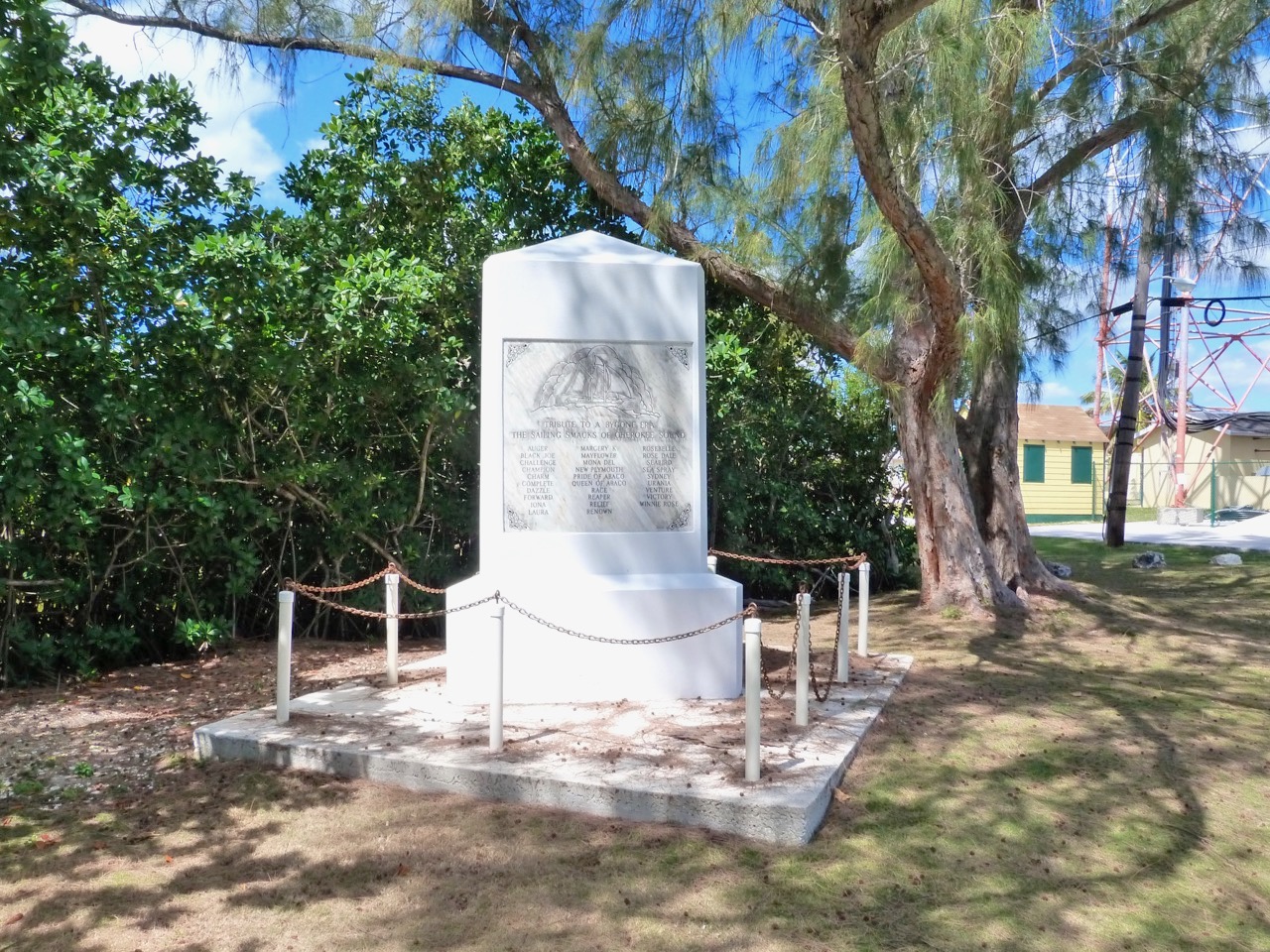
Tribute Monument to the Sailing Smacks of Cherokee Abaco (Keith Salvesen)

A HISTORIC MONUMENT TO MARITIME HISTORY: CHEROKEE, ABACO

The small and – until quite recently – remote settlement of Cherokee is said to have been founded by one Colonel Thomas Brown with his cohort of Loyalists from the Carolinas. The origin of the name has given rise to various theories, one of which stems from Col. Brown’s supposed link to Cherokee Indians.

The early settlers established themselves at this natural harbour, and life there was largely dependent on the sea. Fishing provided food, wrecking provided goods and presumably the wherewithal for trade or barter. In due course, boat building became an important part of the community, as with other places on Abaco (e.g. Man-o-War Cay). Later still, smack fishing with the locally made boats brought stability and no doubt a degree of prosperity to the community.

The monument, and in the background right, the comms tower & the new SHELL MUSEUMTribute Monument to the Sailing Smacks of Cherokee Abaco (Keith Salvesen)

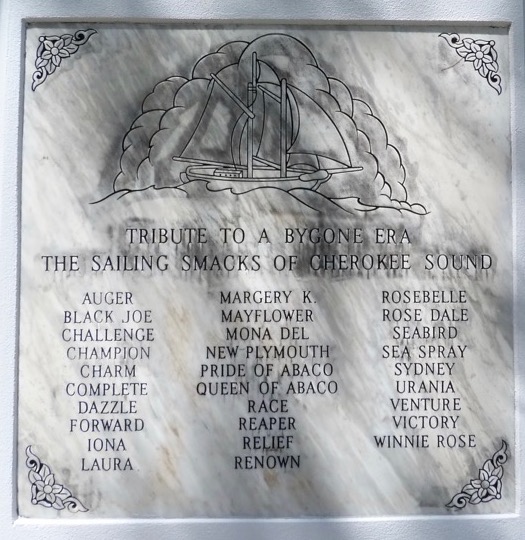
The fishing smacks of Cherokee were designed to carry 5 sails rather than the usual 7 sails. Not being a sailor, I can’t tell if this was just a local stylistic choice, or for simplicity, or perhaps for a specific sea-going reason in that particular area. As a tribute to this honourable industry, in October 1988 the community of Cherokee Sound erected a fine monument near the famous LONG DOCK dedicated to the Cherokee fishermen and their smacks, and naming many of the vessels involved over many decades.
Tribute Monument to the Sailing Smacks of Cherokee Abaco (Keith Salvesen)

The monument also sets out the long history of smack fishing dating from the early c19 until the 1960s, by which time the advent of the diesel engine had begun to make setting the sails for fishing redundant. The moving tribute speaks to the great pride of the community in its history and its forbears.

The short poem, with the authorship shown as Anon, is in fact based on a sea-song written by a non-seafaring Scotsman called Allan Cunningham (1784- 1842), A Wet sheet and a flowing sea – said to be his best known song. The full version is given at the end, and you’ll see that the second verse (with some minor changes) is the part chosen to form the shorter tribute.

Tribute Monument to the Sailing Smacks of Cherokee Abaco

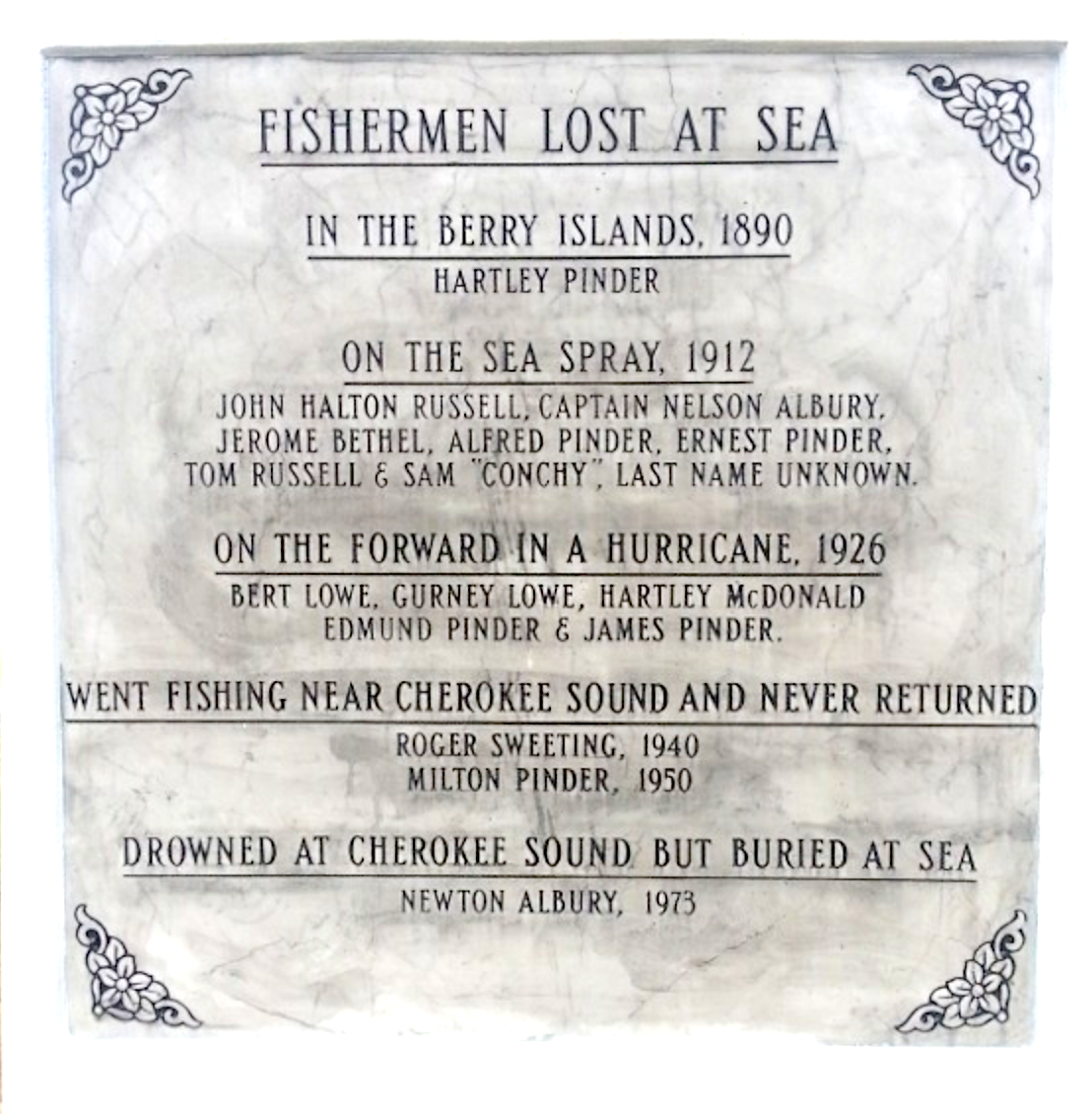
The monument also includes a panel dedicated to the fishermen of the community who lost their lives in plying their trade from 1890 onwards. It is notable that every one of them bears a family name familiar to this day on Abaco in the succeeding generations.
Tribute Monument to the Sailing Smacks of Cherokee Abaco

A Wet Sheet and a Flowing Sea by Alan Cunningham (1784- 1842)

A Wet sheet and a flowing sea, 
    A wind that follows fast 
And fills the white and rustling sail 
    And bends the gallant mast; 
And bends the gallant mast, my boys, 
    While like the eagle free – 
Away the good ship flies, and leaves 
    Old England on the lee.

“O for a soft and gentle wind!” 
    I heard a fair one cry: 
But give to me the snoring breeze 
    And white waves heaving high; 
And white waves heaving high, my lads, 
    The good ship tight and free – 
The world of waters is our home, 
    And merry men are we.

There’s tempest in yon hornèd moon, 
    And lightning in yon cloud: 
But hark the music, mariners! 
    The wind is piping loud; 
The wind is piping loud, my boys, 
    The lightning flashes free – 
While the hollow oak our palace is, 
    Our heritage the sea.

Credits & research: Keith Salvesen, Kaderin Mills / BNT, Bahamas.com, National Geographic, Bahamas Ministry of Tourism

Unknown's avatar

LITTLE HARBOUR ABACO (1): JOHNSTON FOUNDRY & GALLERY


Pete's Pub & Gallery / The Johnston Foundry Little Harbour Abaco (Keith Salvesen)

LITTLE HARBOUR ABACO (1): JOHNSTON FOUNDRY & GALLERY

Pete’s Pub in Little Harbour needs no introduction. The place is an integral part of Abaco life, in much the same way as the Elbow Reef Lighthouse. Everyone knows that one runs effortlessly on beer and rum; the other on kerosene and a bed of mercury (just don’t mix up which is which, and best not to drink the mercury). Some visitors may happily while away an hour or three at Pete’s, not knowing of the amazing sculpture gallery almost next door, where works from the historic Johnston Foundry are displayed. Here is a taste of what you will find there.

Pete's Pub & Gallery / The Johnston Foundry Little Harbour Abaco (Keith Salvesen)

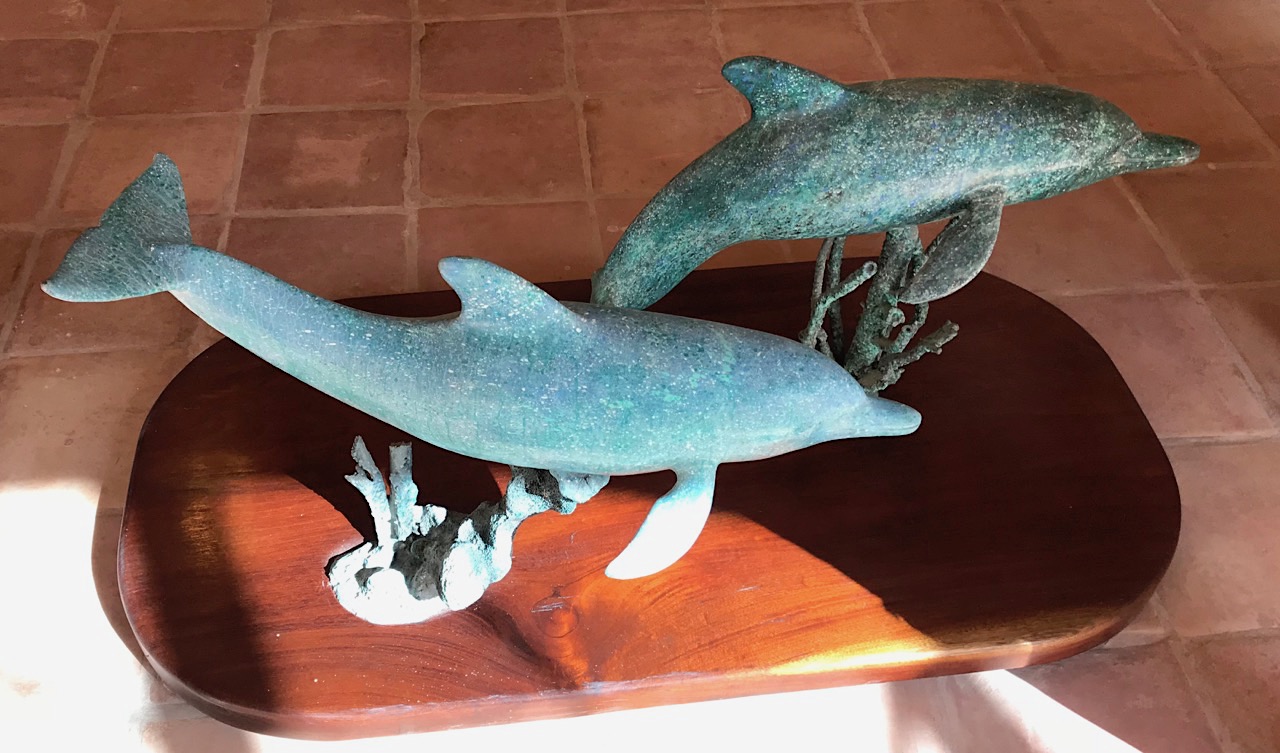
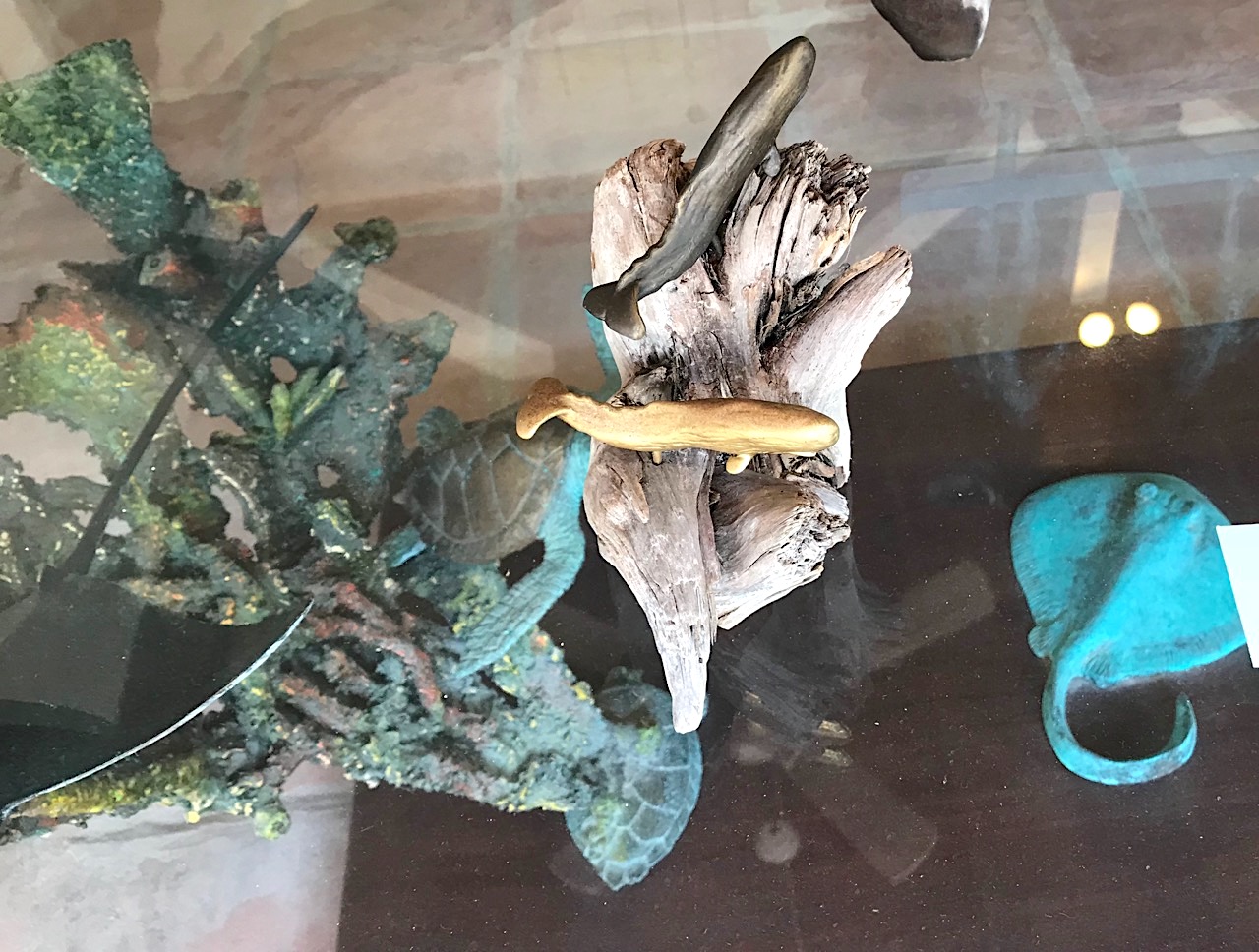
In the 1950s Randolph Johnston built a bronze casting foundry at Little Harbour that is still very much in use today. Much of the wonderful work produced by members of the Johnston family over 3 generations can be found on display in the Gallery. Here you will find genuinely locally produced sculptural works of art ranging from the simple to the incredibly complex. Some large outdoor pieces can also be found dotted around the settlement – here, a huge ray; over there, a pair of leaping dolphins.

Pete's Pub & Gallery / The Johnston Foundry Little Harbour Abaco (Keith Salvesen)Pete's Pub & Gallery / The Johnston Foundry Little Harbour Abaco (Keith Salvesen)Pete's Pub & Gallery / The Johnston Foundry Little Harbour Abaco (Keith Salvesen)Pete's Pub & Gallery / The Johnston Foundry Little Harbour Abaco (Keith Salvesen)

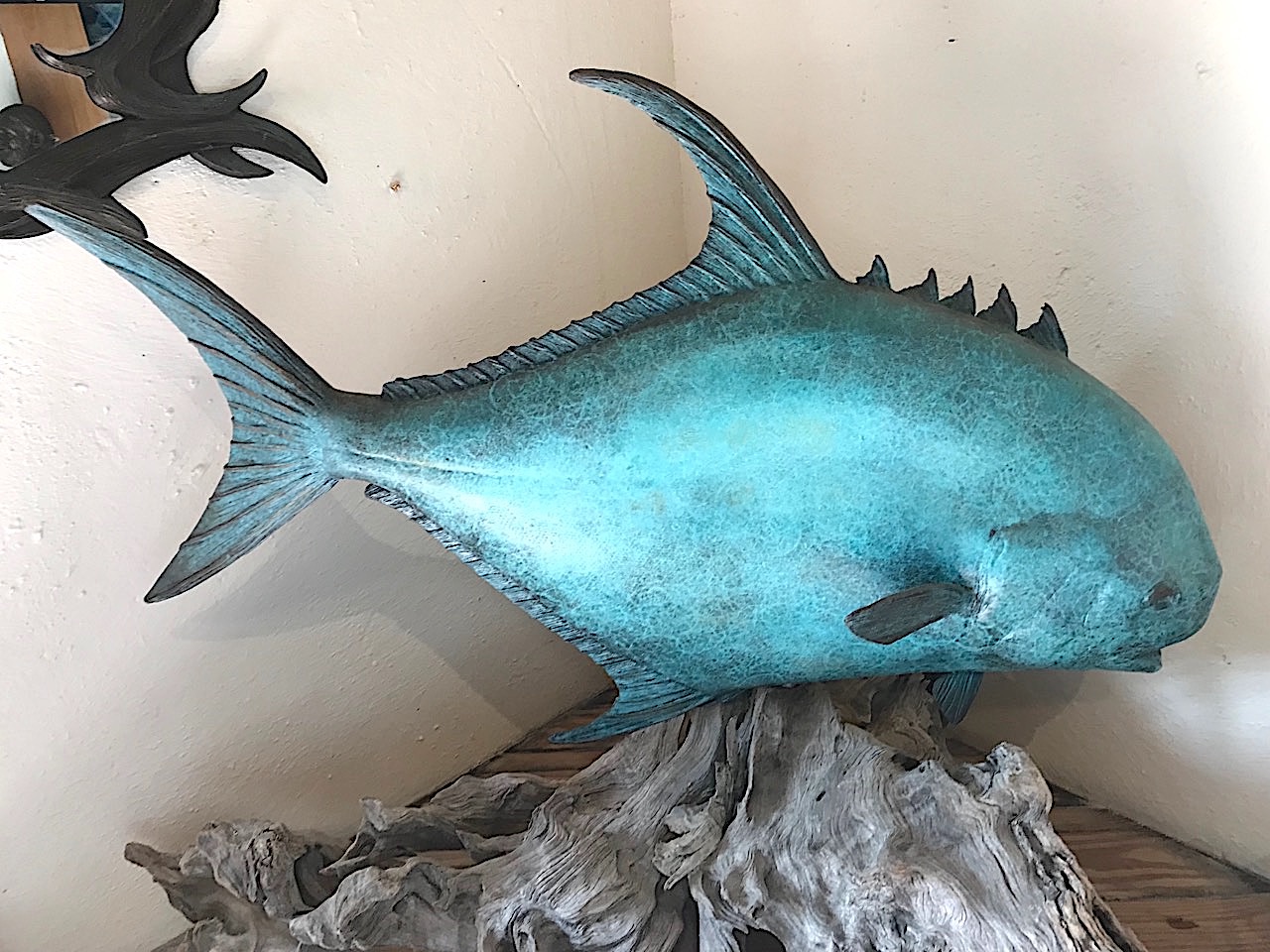
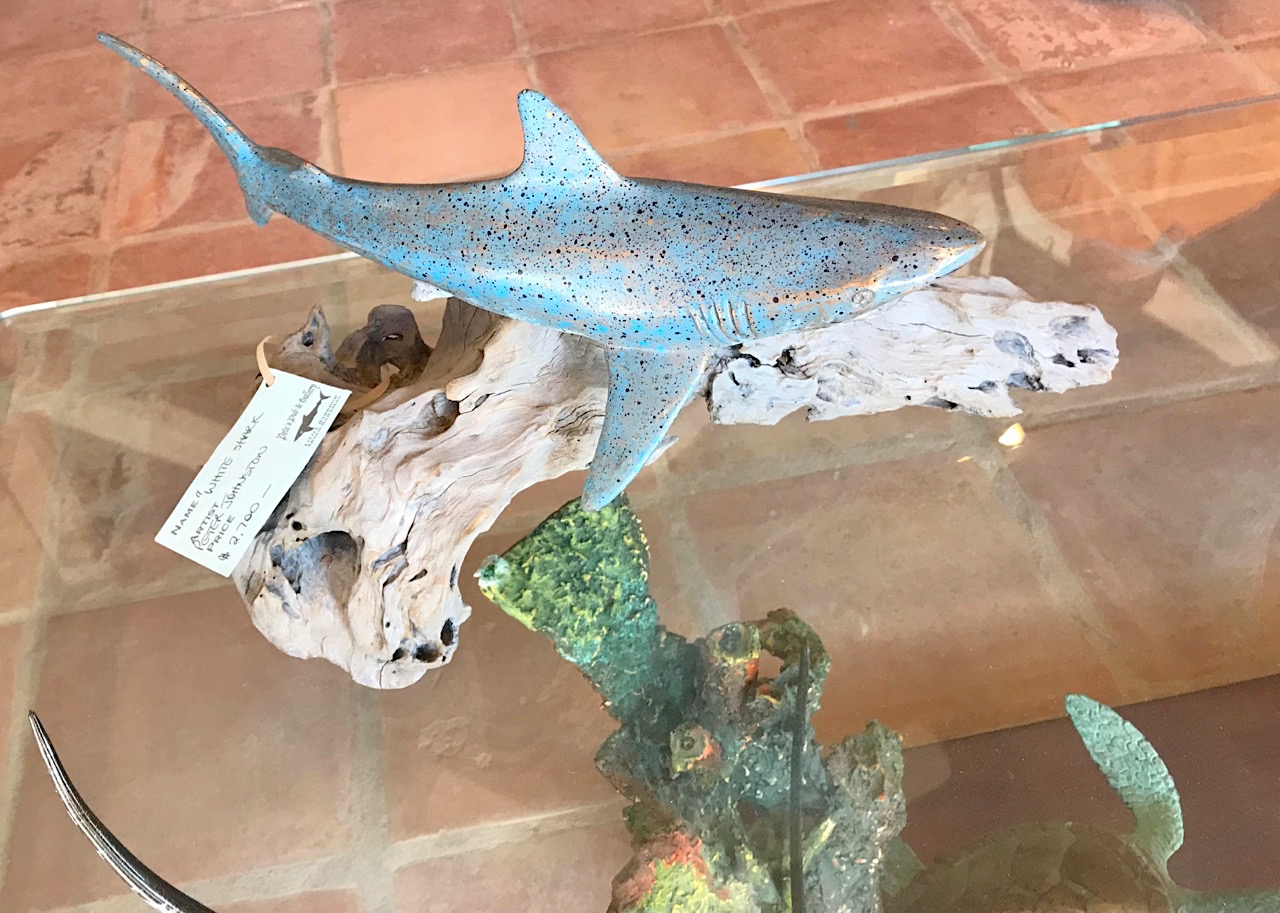
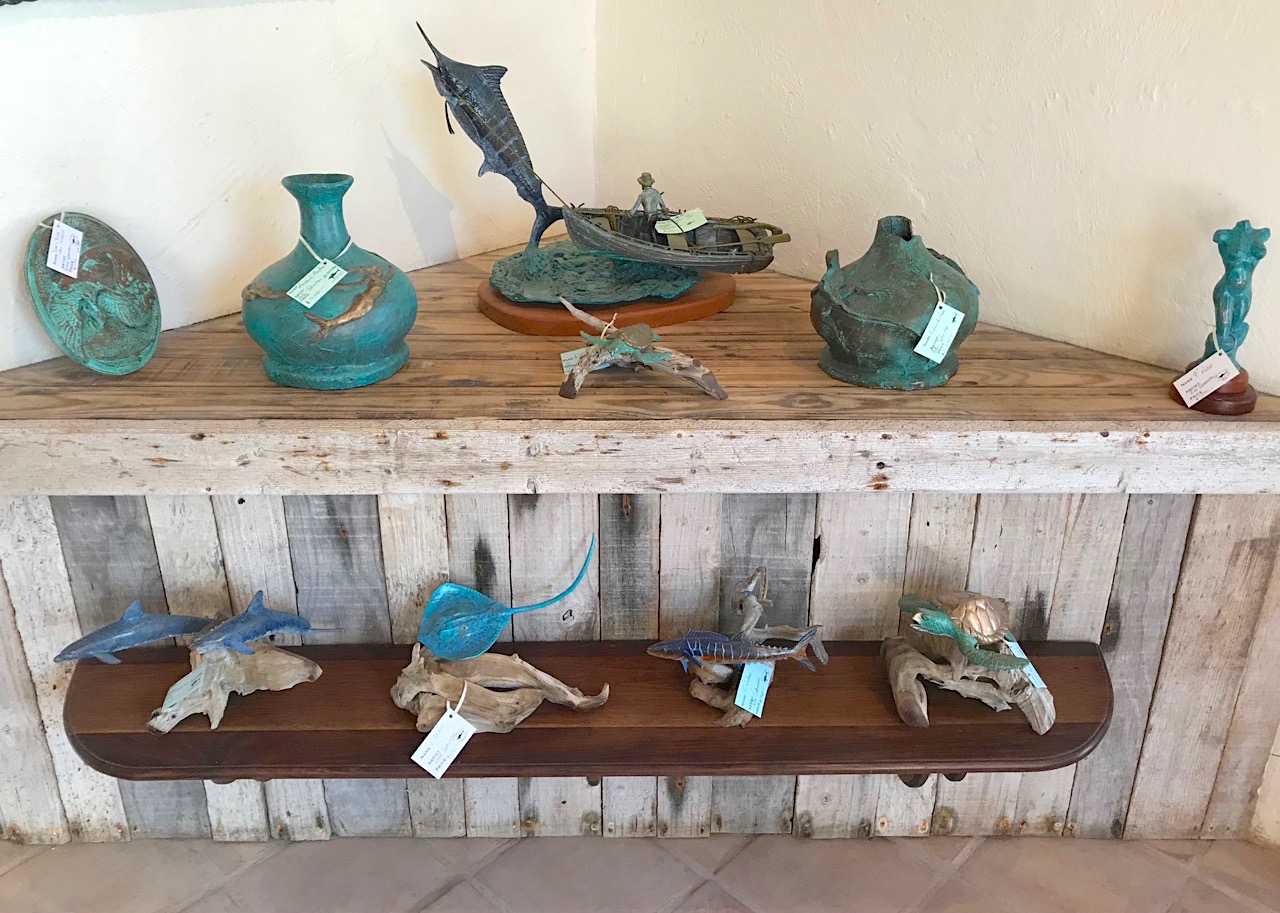
Unsurprisingly, the sculptures on display mostly relate to the sea, which laps the shoreline only a few yards in front of the gallery. These are works of art, and of skill refined over decades. They do not come cheap. There are however smaller and less expensive items to tempt the visitor who may have a baggage allowance to live down to. Here is a snapshot of some of these.

Pete's Pub & Gallery / The Johnston Foundry Little Harbour Abaco (Keith Salvesen)Pete's Pub & Gallery / The Johnston Foundry Little Harbour Abaco (Keith Salvesen)Pete's Pub & Gallery / The Johnston Foundry Little Harbour Abaco (Keith Salvesen) Pete's Pub & Gallery / The Johnston Foundry Little Harbour Abaco (Keith Salvesen)Pete's Pub & Gallery / The Johnston Foundry Little Harbour Abaco (Keith Salvesen)

You might be entertained by this short video, which will give you an idea of Pete’s set-up at this unique off-grid settlement. And if you do visit, coincide with a mealtime – the freshly caught fish is outstanding.

All photos: Keith Salvesen, with thanks for permission to photograph some of the artworks on display. Video by Pete’s! [PS I have not been paid for my writing, not even a beer…]

Unknown's avatar

“GIFTS FROM THE SEA”: THE CHEROKEE SHELL MUSEUM


Cherokee Shell Museum, Abaco Bahamas (Keith Salvesen)

“GIFTS FROM THE SEA”: THE CHEROKEE SHELL MUSEUM

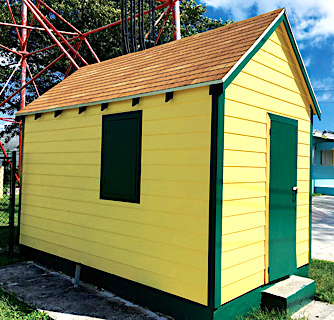
In the shadow of a tall pylon in the secluded settlement of Cherokee stands Abaco’s smallest museum. Make that one of the world’s smallest museums. As I mentioned after it opened last year, other contenders for the title include the MmuseumM in New York, housed in an elevator shaft (look through glass window + audio guide); a converted red telephone kiosk in Warley, Yorkshire UK dedicated to local history (one visitor at a time); and a tiny shed of 134 sq ft in Arizona featuring what might broadly be called ‘ephemera’, including a Beatles poster…

Cherokee Shell Museum, Abaco Bahamas (Keith Salvesen)

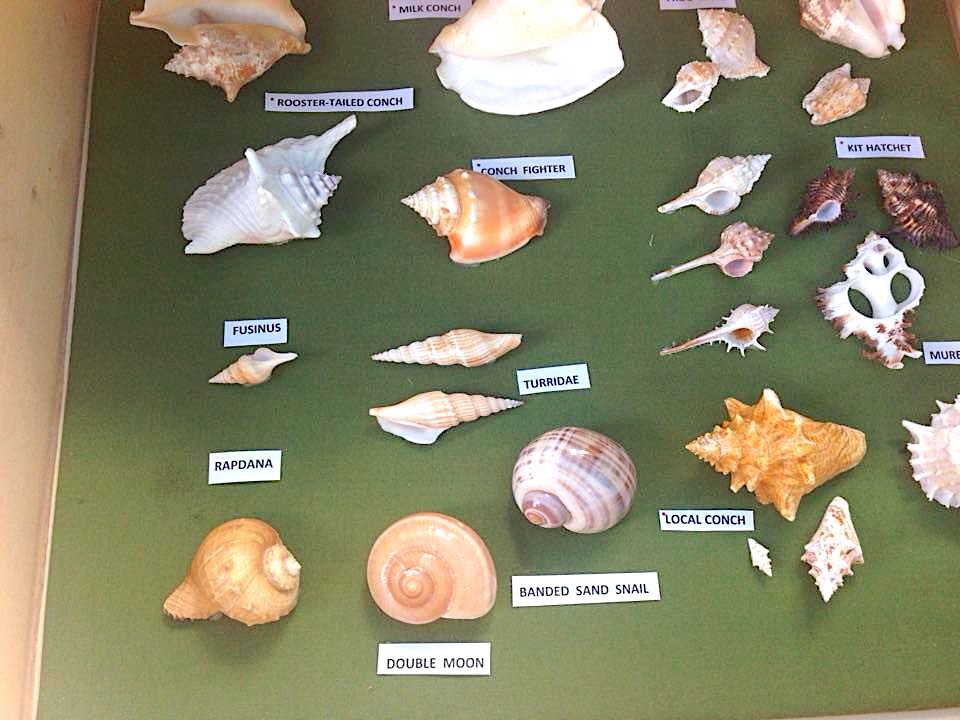
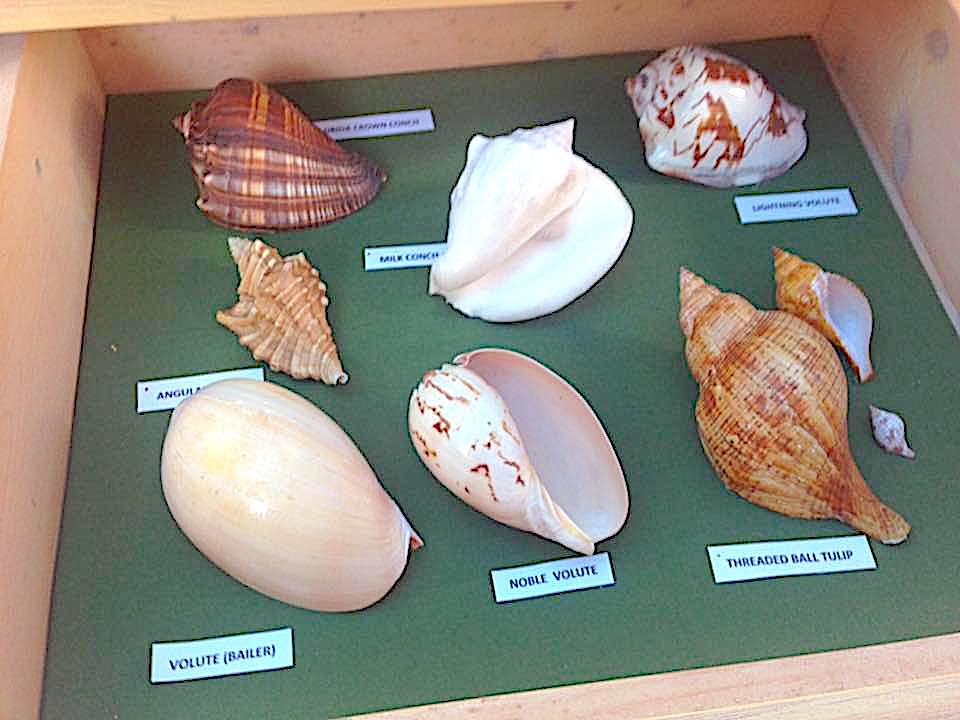
This tiny museum is dedicated to the shells of Abaco. It is almost certainly the smallest shell museum anywhere in the world (except maybe the one you kept in a small box under your bed when you were 10). 

Cherokee Shell Museum, Abaco Bahamas / Gifts from the Sea / Cinder Pinder

“Gifts from the Sea” is housed in the former 1950s telegraph office that ceased to operate in 1987 and had fallen into disrepair. Leased from BTC for a nominal rent, the little building was restored, and given a smart new roof and a complete makeover. It’s the perfect space for displaying a selection of the wonderful shells and corals to be found in Abaco waters.

Cherokee Shell Museum, Abaco Bahamas / Gifts from the Sea / Cinder Pinder

This community project is the vision and creation of Curator Lee Pinder. Derek Weatherford fitted cabinets for the exhibits, and artist Jo-Ann Bradley painted a interior Cherokee-themed mural as a fitting backdrop to the displays.

Cherokee Shell Museum, Abaco Bahamas / Gifts from the Sea / Cinder Pinder

The exhibition shows more than 200 shells, each catalogued with its Latin and common name, and clearly labelled in the display. Most were found locally; a few are from further afield. Some specimens are very rare. The collection will expand as people make shell donations to the museum. 

Cherokee Shell Museum, Abaco Bahamas / Gifts from the Sea / Abaconian

The building has a door at each end to give natural light and provide a ‘walk-through’ arrangement, which makes viewing in the confined space easier. Entry is free but there’s a glass jar for donations towards the upkeep of the museum. I’m guessing here, but I reckon donations made ‘outside the jar’ (so to speak) are very welcome too…

Museum Curator Lee PinderCherokee Shell Museum, Abaco Bahamas / Gifts from the Sea / Cinder Pinder

The opening ceremony took place on Easter Saturday 2017, when Cherokee resident Rev. Bateman Sands performed the official ribbon cutting ceremony preceded by a prayer at precisely 12 noon. As Jennifer Hudson in an Abaconian article pointed out, he was the ideal person for the task, having been “the first telegraph operator in Cherokee Sound, working in the little building using Morse code and in charge of the one and only telephone in the settlement until 1987 when the new BTC building was opened”.

Cherokee Shell Museum, Abaco Bahamas / Gifts from the Sea / Cinder Pinder

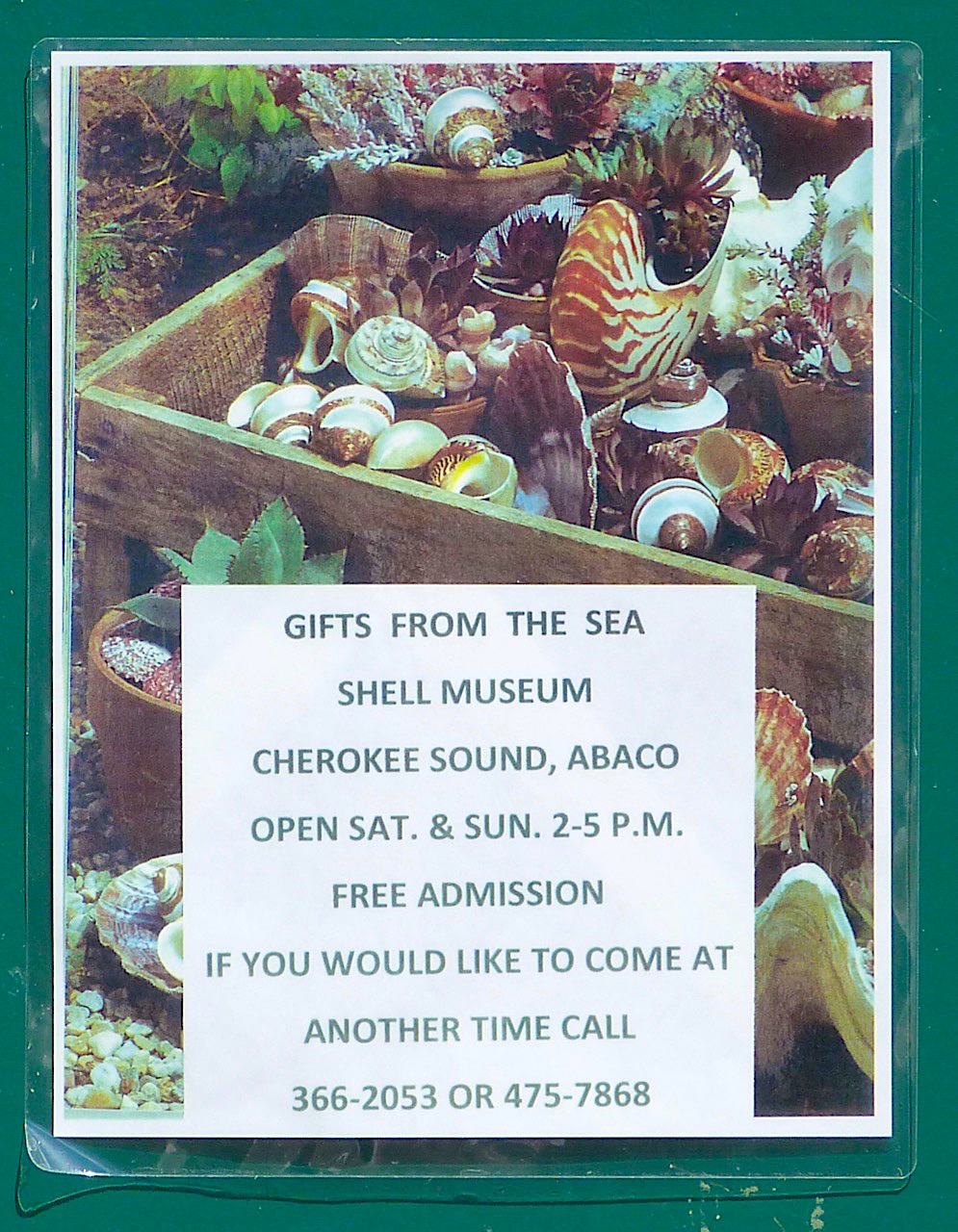
The shell museum is not left open all the time, but visitors are welcomed on weekend afternoons, and private tours can be arranged by calling either number shown below on the notice attached to the door.

Cherokee Shell Museum, Abaco Bahamas (Keith Salvesen)

To see a selection of the many types of Abaco shells, check out my shell page HERE

Sources and Photo Credits: Bradley Albury / Jennifer Hudson / Abaconian; Cindy James Pinder (shells, interior 2017); Keith Salvesen (exterior, 2018)

Cherokee Shell Museum, Abaco Bahamas (Keith Salvesen)

Unknown's avatar

MAPPING ABACO: BELLIN’S MAP 1764


Bellin Map 1764 - Carte des Isles Lucayes

MAPPING ABACO: BELLIN’S MAP 1764

Jacques Nicolas Bellin (1703 – 1772) was a French naval hydrographer & geographer. He was a prolific mapmaker, especially of French territories, and was noted for his meticulous technique and attention to detail. He was elected to the Royal Society; and in due course was appointed Official Hydrographer of the French King.

Bellin Map 1764 - Carte des Isles Lucayes

In 1764, Bellin’s Petit Atlas Maritime was published. I am featuring one sheet from the atlas, the “Carte des Isles Lucayes”. The whole work came as a 5-volume set of map sheets, containing a total of 580 detailed charts. As you will see here, this copperplate engraving can be found in various forms: plain black & white; hand-washed or hand-coloured; or grandly multicoloured. These variations are the consequence of the distinction of Bellin’s work, which led to repeated re-publication in the c18 and beyond. Additionally, his work was admired and copied abroad.

Bellin Map 1764 - Carte des Isles Lucayes

Bellin’s map contains plenty of information – including depth markings and advised shipping routes – though some of the topography might be considered debatable by modern standards. As you look more closely, some of the details are startling. For example, on New Providence (see above) the only place-name is simply designated ‘Ville’, as though the settlement there lacked the significance to merit a name. And look at it now… Andros is completely name-free, with not even a Ville marked – as is Grand Bahama for that matter, though a few Cays are named. Let’s turn to Abaco.
Bellin Map 1764 - Carte des Isles Lucayes
This section of the Bellin map also appears in my Abaco mapping article relating to HOLE-IN-THE-WALL. This geographical feature at the southern extremity of Abaco (now sadly blown apart by HURRICANE SANDY after millennia) was an important navigational landmark for shipping  by c17. The name, in French here, underwent a number of changes of the centuries, as you can see using the HITW link above.
Also of note is that at least Abaco was credited with a single named location – Little Harbour, the first settlement to feature on early maps, and the only one for a surprisingly long time. I imagine the position of this inlet and the safe anchorage it could provide for relatively large vessels became well-known. Like Hole-in-the-Wall, it was of seafaring significance.
A c18 mariner, looking at Bellin’s map in contemplation of a trip to the Isles Lucayes, might conclude that the seas around Abaco and Grand Bahama might be treacherous. The profusion of rocky areas and the indication of depth changes around the islands and cays suggest caution would be needed for a voyage. And as we know, throughout history ships have been wrecked in these seas – a situation somewhat improved (but not entirely eliminated) when the three ABACO LIGHTHOUSES were built.
Bellin Map 1764 - Carte des Isles Lucayes
RELATED POSTS
Credits: Library of Congress; Barry Ruderman Cat.; OS auctions inc eBay (!)
Unknown's avatar

MARK CATESBY, PIONEER NATURALIST: NEW BOOK


MARK CATESBY, PIONEER NATURALIST: NEW BOOK

Exactly two years ago, I wrote about the publication of a lavish limited edition facsimile of Mark Catesby’s renowned work The Natural History of Carolina, Florida and the Bahama Islands in 4 volumes to mark the 300th anniversary of Catesby’s arrival in the New World. Unsurprisingly, the cost of the set was prodigious (a rather nice car) – but only a fraction of the cost of a vanishingly rare original set (a rather nice house). Reader, I didn’t buy one.

Now the CATESBY MEMORIAL TRUST has produced an excellent and inexpensive illustrated introduction to Catesby’s great work that will transport you back through the centuries to the earliest days of natural historical research by Europeans abroad. It’s worth remembering that Catesby antedated the more famous John James Audubon (1785-1851) by a whole century.

Catesby’s signature

The new book has over 40 illustrations from Catesby’s The Natural History of Carolina, Florida and the Bahama Islands. These are paired with relevant extracts from the work, and there is additional commentary. Click on Catesby’s Tropicbird below for a sample of the book.

Click me for book sample!

To buy the book – it’s $25 – click HERE

Mark Catesby - 'Bahama Titmous' (Bananaquit)

Mark Catesby – ‘Bahama Titmous’ (Bananaquit)

MARK CATESBY? JUST REMIND ME…

Mark Catesby (1683 – 1749) was a pioneering English naturalist and artist who published his magnum opus based on a number of expeditions he undertook from 1712 onwards. His was the first ever published account of the flora and fauna of North America, and the 2 volumes (with a supplement) included some 220 colour plates of the creatures and plants of land and sea that he had come across. After his travels, Catesby spent some 20 years producing his masterwork and died soon after, perhaps from the sheer effort of it all.

Red-legged Thrush in Gumbo Limbo Tree (HM QE2)

Red-legged Thrush in Gumbo Limbo Tree

AND HIS RELEVANCE TO THE BAHAMAS IS…?

On behalf of the Royal Society Catesby undertook expeditions, first to Carolina and then more widely in America and eventually in the Bahamas. On these trips he drew and painted detailed pictures of birds, fish, turtles, flowers and corals, many of which are familiar in the Bahamas to this day – and a few of which are included here.

Mark Catesby - Angelfish

Mark Catesby – Angelfish

Flamingo Head + Gorgonian Coral (HM QE2)

Flamingo Head & Gorgonian Coral

Mark Catesby - plate 139 Hawksbill Turtle

Mark Catesby – Hawksbill Turtle

Mark Catesby (Black-faced Grassquit)

Mark Catesby (Black-faced Grassquit)

RELATED POSTS

CHARLES CORY & ABACO 1891

THE PIONEERS (Wilson, Audubon, et al)  

MR SWAINSON (on his 224th Birthday)

Bahama Finch (Western Spindalis)

RELATED BOOK

51C+Zz+7CSL._SX363_BO1,204,203,200_

Information about the Catesby Commemorative Trust and the book The Curious Mister Catesby can be found HERE. I have the book: it is wonderful, but as an amateur I find it quite a difficult read, and I have to take it in small chunks.

For anyone tempted to look further into the importance of this ground-breaking naturalist, the CCT produced a 50 minute film that is well worth watching if you are interested to know more.

Credits: HM QE2, Catesby Commemorative Trust, National Geographic, Mariners’ Museum Library, sundry open source info-&-pic-mines inc. Wiki, Addison Publs, 

“Illuminating natural history is so particularly essential to the perfect understanding of it”   (Mark Catesby)

Unknown's avatar

MAPPING ABACO, BAHAMAS & FLORIDA IN THE c17


MAPPING ABACO, BAHAMAS & FLORIDA IN THE c17

I once wrote a post tracking the history of Abaco in general, and Hole-in-the-Wall in particular, in historic maps spanning 4 centuries. You can read it HERE.

The post includes a map of the Bahama Islands (‘Isles Lucayes’) by the early French mapmaker Alain Manesson Mallet, published in Paris in 1683. The header shows a later hand-coloured version. The splendid original looks like this. Now that is a map (as Crocodile Dundee once said of a knife)

The recognisable shape of Abaco – I. Lucaioneque – lies weirdly on its side beneath the billowing sails of the vignette, with Grand Bahama (Bahama) between it and Floride. The confusingly named and sized I. Abacoa is Andros; I. Ciguateo is Eleuthera; and I. Curateo is Exuma. I. Guanahani was the landfall for Columbus, and was renamed by him San Salvador. New Providence may or may not be made from the two similar shapes shown west of Andros (at the time, the Lucayan name was Nema). And so on. There’s more to be said on the historic Lucayan names in the Bahamas – maybe one day I’ll get round to saying it…

For now, I want to move on to another map by Mallet that I have just come across. Published in c.1684 (sources vary), this map is of Florida (and beyond), titled rather strangely in German but otherwise in French. Here, the Isles Lucayes are very much a side-feature, reduced to the West End of Grand Bahama, and 4 unspecified small cays like the 4-dot on dice. There’s no embellishment besides the simple ‘draped’ title, the trees and mountains – no fleet of ships in full sail in the Gulf of Mexico. To be honest, though dated within a year or 2 of each, other the maps are so entirely different in style and even script that they could easily have been made by different people. In fact I had to double-check the authorship with various online sources.

Florida is named Tegesta, for the Native American tribe that lived in the region. The name still exists in the form Tequesta, in Palm Beach County Fl. You can read more about this fascinating tribe, their lives and cultural practices HERE. Just two settlements in Tegesta – St. Augustine and St. Mathieu – are shown. I’ve gone rather off-piste from my usual Bahamian territory, but this early map provides an enjoyably interesting cartographic overview of the known topography / geography of the day.

Approximate territory of the Tequesta in the 16th centuryFLMap-Tequesta-tribe2.PNG

If the earth had an uniform surface like a ping pong ball there would be nothing for a geographer to study. But it is not thusly uniform – the actual earth has numerous variations of every sort studied by geographers. Topography maps the physical surface, and geology explores the underground features. But the geography of the earth includes many other [factors] like economics, weather, climate, social distribution, trade, etc.  At the core of geography is cartography – which is the mapping of all these things. Rudolf G. Barton, BA in geography UCB (Commercial Pilot ret.)
Credits: the maps are open source – frequently passed around on the internet and impossible to locate the originator; Wiki for the diagram; Geography lesson, as shown above…
Unknown's avatar

CHEROKEE SHELL MUSEUM, ABACO: “GIFTS FROM THE SEA”


Cherokee Shell Museum, Abaco Bahamas / Gifts from the Sea / Cinder Pinder

CHEROKEE SHELL MUSEUM, ABACO: “GIFTS FROM THE SEA”

One of the smallest museums in the world has just opened on April 15 in the picturesque settlement of Cherokee on Abaco, Bahamas. Other contenders for the title include the MmuseumM in New York, housed in an elevator shaft (look through glass window + audio guide); a converted red telephone kiosk in Warley, Yorkshire UK dedicated to local history (one visitor at a time); and a tiny shed of 134 sq ft in Arizona featuring what might broadly be called ‘ephemera’, including a Beatles poster…

Cherokee Shell Museum, Abaco Bahamas / Gifts from the Sea / Abaconian

Whatever the size comparisons, the new shell museum is beyond doubt the very best one in the Bahamas, not least because it is the only one. “Gifts from the Sea” is housed in the former 1950s telegraph office that ceased to operate in 1987 and had fallen into disrepair. Leased from BTC for a nominal rent, the little building was restored, and given a smart new roof and a complete makeover. The new museum provides the perfect space for displaying a selection of the wonderful shells to be found in Abaco waters.

Cherokee Shell Museum, Abaco Bahamas / Gifts from the Sea / Cinder Pinder

The whole community has got behind this project, which is the vision and creation of Curator Lee Pinder. Derek Weatherford fitted cabinets for the exhibits, and artist Jo-Ann Bradley has painted a fabulous interior Cherokee-themed mural as a fitting backdrop to the displays.

Cherokee Shell Museum, Abaco Bahamas / Gifts from the Sea / Cinder Pinder

The exhibition shows more than 200 shells, each catalogued with its Latin and common name, and clearly labelled in the display. Most were found locally; a few are from further afield. Some specimens are very rare. It is hoped to expand the collection as people make shell donations to the museum. 

Cherokee Shell Museum, Abaco Bahamas / Gifts from the Sea / Abaconian

The building has a door at each end to give natural light and provide a ‘walk-through’ arrangement, which will make viewing in the confined space easier. Entry is free but there’s a glass jar for donations towards the upkeep of the museum. I’m guessing here, but I reckon donations that are made ‘outside the jar’ (so to speak) are very welcome too…

Museum Curator Lee PinderCherokee Shell Museum, Abaco Bahamas / Gifts from the Sea / Cinder Pinder

The opening ceremony took place on Easter Saturday, when Cherokee resident Rev. Bateman Sands performed the official ribbon cutting ceremony preceded by a prayer at precisely 12 noon. As Jennifer Hudson in an Abaconian article points out, he was the ideal person for the task, having been “the first telegraph operator in Cherokee Sound, working in the little building using Morse code and in charge of the one and only telephone in the settlement until 1987 when the new BTC building was opened”.

Cherokee Shell Museum, Abaco Bahamas / Gifts from the Sea / Cinder Pinder

The shell museum is not left open all the time, but visitors are welcomed and private tours can be arranged by calling 475-7868.

Cherokee Shell Museum, Abaco Bahamas / Gifts from the Sea / Cinder Pinder

To see a selection of the many types of Abaco shells, check out my shell page HERE

Sources and Credits: Bradley Albury / Jennifer Hudson / Abaconian; Cindy James Pinder for her great photos

Sand dollar, Abaco (Rolling Harbour)

Unknown's avatar

АБАKО: SOVIET RUSSIAN MILITARY MAP OF ABACO


Soviet Russian Military Map of Abaco 1979

АБАKО: SOVIET RUSSIAN MILITARY MAP OF ABACO

I had been toying with a plan to write something fishy today. Lifting the lid on the secrets of the creole wrasse, maybe. Then something arrived in my inbox overnight that changed my course entirely. I was struck  by an idea  harder than a torrent of mixed metaphors speeding towards a bullseye in the motherlode. A map! A map of Abaco!! All in Russian!!! From the Soviet Russian Military Survey!!!! Irresistible. An occasion for multiple exclamation marks.509px-hammer_and_sickle_black_large_on_transparent-svg

‘Russian Soviet Military Topographic Maps’

Map sheet G-18-1 GREAT ABACO ISLAND ed. 1979 – scale 1:500 000, map size 66 cm x 55 cm

Soviet Russian Military Map of Abaco 1979

509px-hammer_and_sickle_black_large_on_transparent-svg

My blog is stuffed full of maps. They are scattered everywhere, like cartographical confetti. There’s even a page for some of them HERE. Want a map of Abaco’s HIGHEST POINT (134m, if you have the energy).  Need to see what Abaco looked like 300 years ago? Try HERE. Need a history of Hole-in-the-Wall in maps? Try THIS. And so on.
509px-hammer_and_sickle_black_large_on_transparent-svg

The header map is a merely the bottom-left corner of the much larger map immediately above. As a crop of the much larger area, it’s illegible. Which is next to useless, because the best thing about this map is that it is all in Russian. And I really wanted to see how they had mapped Marsh Harbour. Treasure Cay. Man-o-War. And the rest. I looked around online and reached this one. Even with some work on the image, you can only get a blurry glimpse – just a few tempting hints of Cyrillic. But it’s impossible to locate Марш Харьор, Трежер Ки, or Ман-оф-Уор Ки…

Soviet Russian Military Map of Abaco 1979

509px-hammer_and_sickle_black_large_on_transparent-svg

So, back to the interweb thing. And eventually, something usable turned up. Here, with props to Clicpic, is Abaco in the late Soviet era. Check out where you live – in Russian. Got friends on Грейт Гуапна Кй? Sadly, the northern end of Abaco and the whole southern end from Crossing Rocks down to Hole-in-the-Wall and right round to Sandy Point is absent. That area is of course the perfect place for missile silos**. Except now it’s a National Park, so that wouldn’t be possible… would it?

509px-hammer_and_sickle_black_large_on_transparent-svg

I’ve split the map into 3 sections to make it as big as possible. The maps overlap to keep the proportions equal on-screen. Double click to zoom in. Hope you enjoy travelling around it…

Soviet Russian Military Map of Abaco 1979 Detail 1 Soviet Russian Military Map of Abaco 1979 Detail 2 Soviet Russian Military Map of Abaco 1979 Detail 3

** Vladdy, mate, if you or your agents have picked up on this, (1) only joking, right? and (2) you’ve  anyway got better things to worry about these days…