Abaco is home to 4 main so-called tyrant flycatchers (Tyrannidae): the loggerhead kingbird, the gray kingbird, the La Sagra’s flycatcher and the Cuban pewee. All are common permanent residents except the gray kingbird, which is a summer resident only. Several other flycatcher species are found on Abaco, but they are very uncommon winter residents, rare transients, or vagrants.
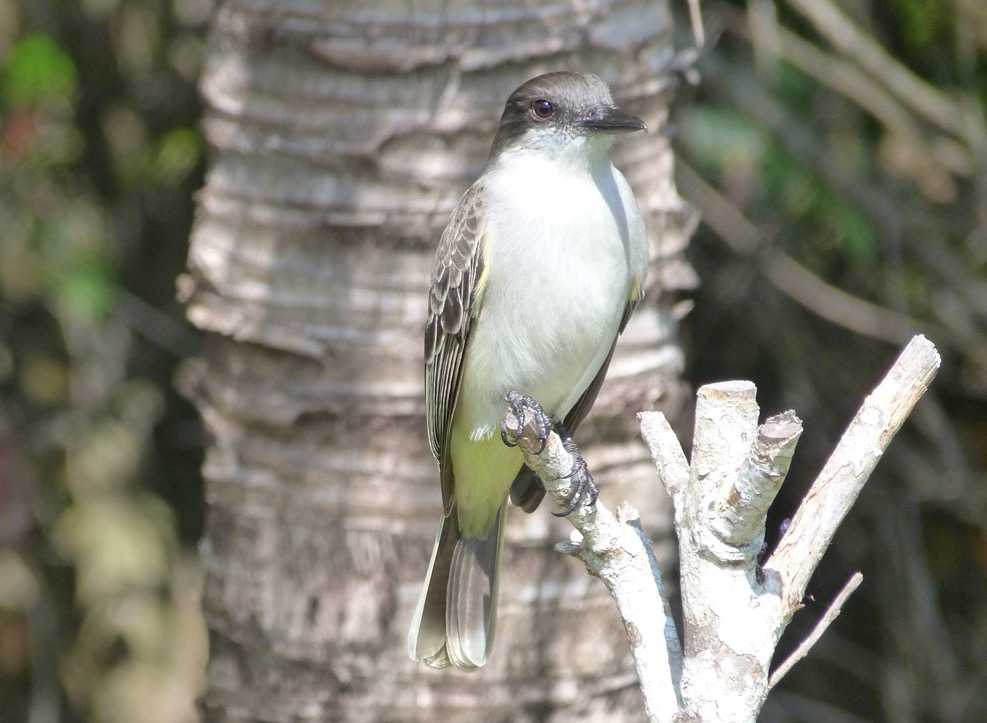
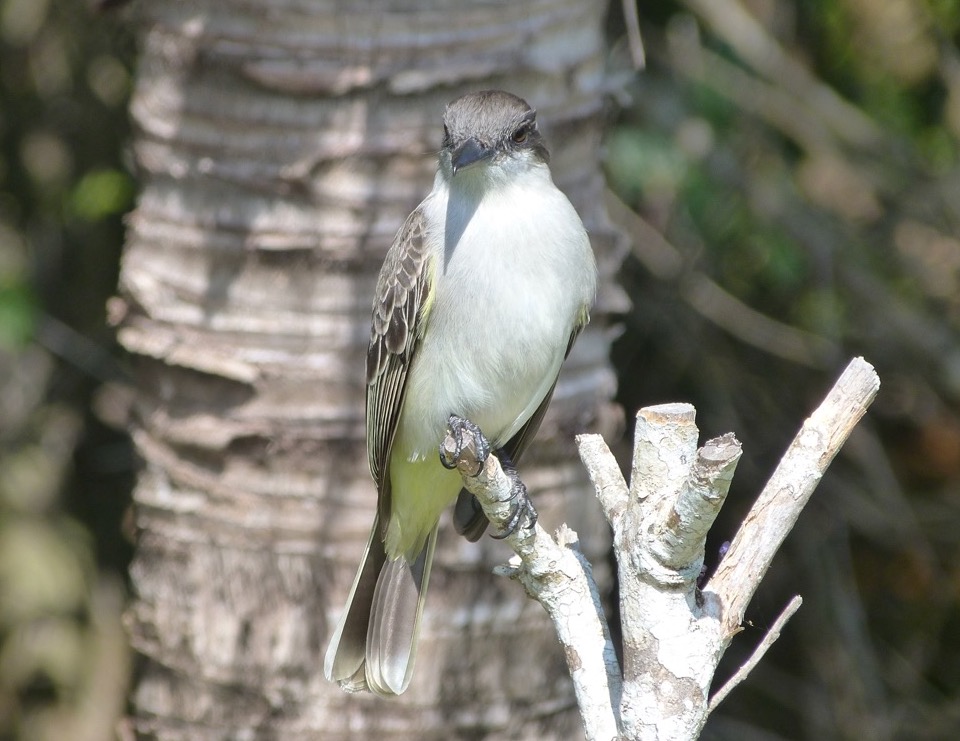
The loggerhead featured here in several poses is a watchful sentinel at Delphi. His preferred perches are in the edge of the coppice round the pool or at the edge of the main drive. From time to time he will leave his perch to catch a passing insect by ‘hawking’, returning to the same place to eat it.
Loggerhead and gray kingbirds can be quite easy to confuse. A couple of years ago I wrote about how to distinguish them, and with gray kingbirds in residence now this is probably a good time to set out the distinctions again.
LOGGERHEAD Tyrannus caudifasciatus vs GRAY Tyrannus dominicensis
DIFFERENCES and SIMILARITIES
TOP TIPANY KINGBIRD SEEN IN WINTER WILL BE A LOGGERHEAD
Kingbirds seen between (say) October & March are Loggerheads. Grays are strictly summer visitors
Both are medium size birds and roughly the same size as adults (around 23 cms)
Loggerheads have dark brown to near-black heads, grays have lighter, slate-coloured heads
Loggerheads have a ‘squared’ tip to the tail; grays have a notched tip
Loggerheads may have a whitish fringe at the tip of the tail; grays not so
Loggerheads have yellowish tinges to their white undersides & forewings; grays less so or not at all
Grays have a dark or black ‘mask’ through the eyes, often clear but not always easy to see
Loggerheads allegedly have inconspicuous orange head crests; grays are red. I’ve never seen either!
[*RH personal opinion alert*] Grays have larger, heavier beaks than loggerheads
Grays are territorially aggressive; when they turn up, the loggerheads tend to retreat to the forest
Here is how David Sibley shows the differences
Illustrations: David Allen Sibley
GRAY KINGBIRD FOR COMPARISON
MEMORABLE FACT TO DEPLOY IN CONVERSATION
The collective names for a group of kingbirds are: a Court, a Coronation, or a Tyranny
Photo Credits: All loggerheads, Keith Salvesen at Delphi; gray kingbird by Dick Daniels; Illustrations David Sibley
SEA BISCUITS: THEY REALLY DO CONTAIN DOVES – AND MORE!
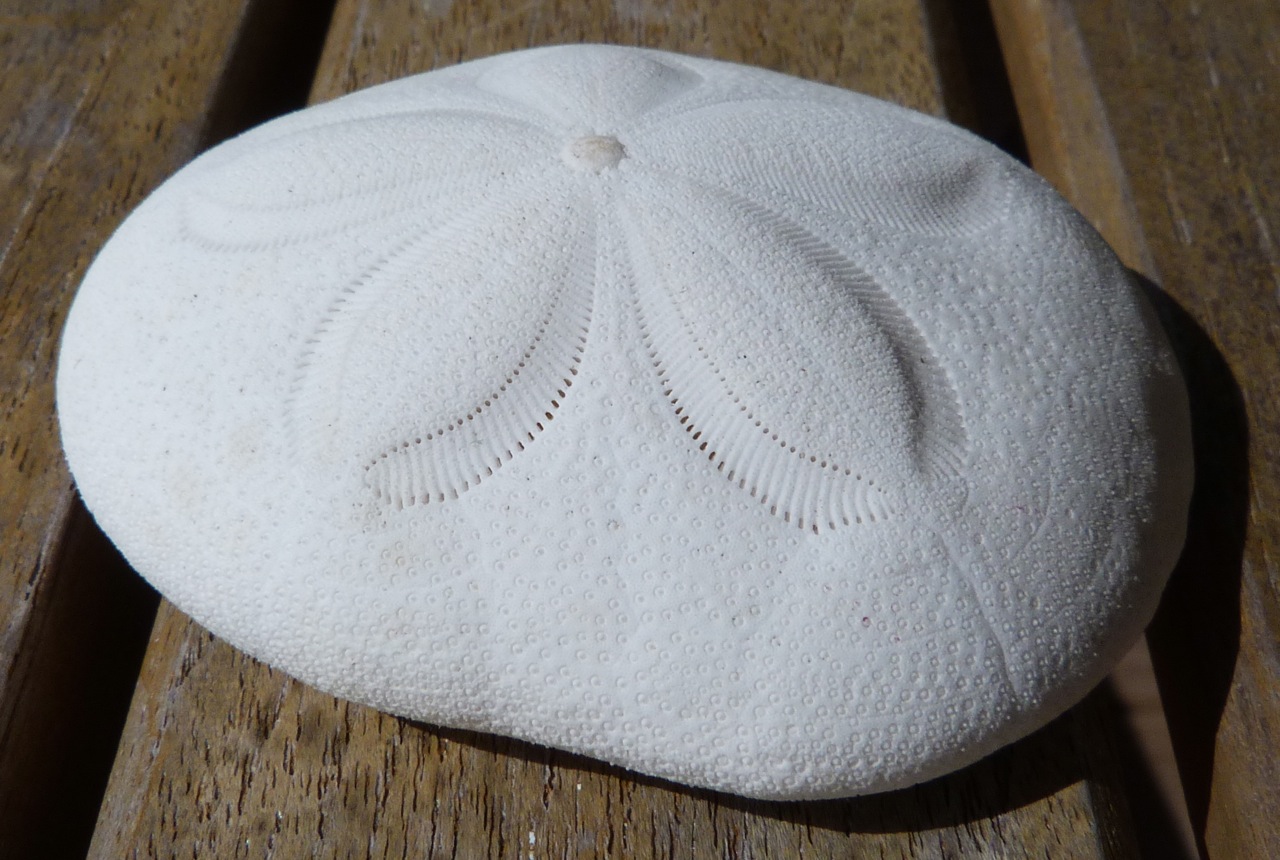
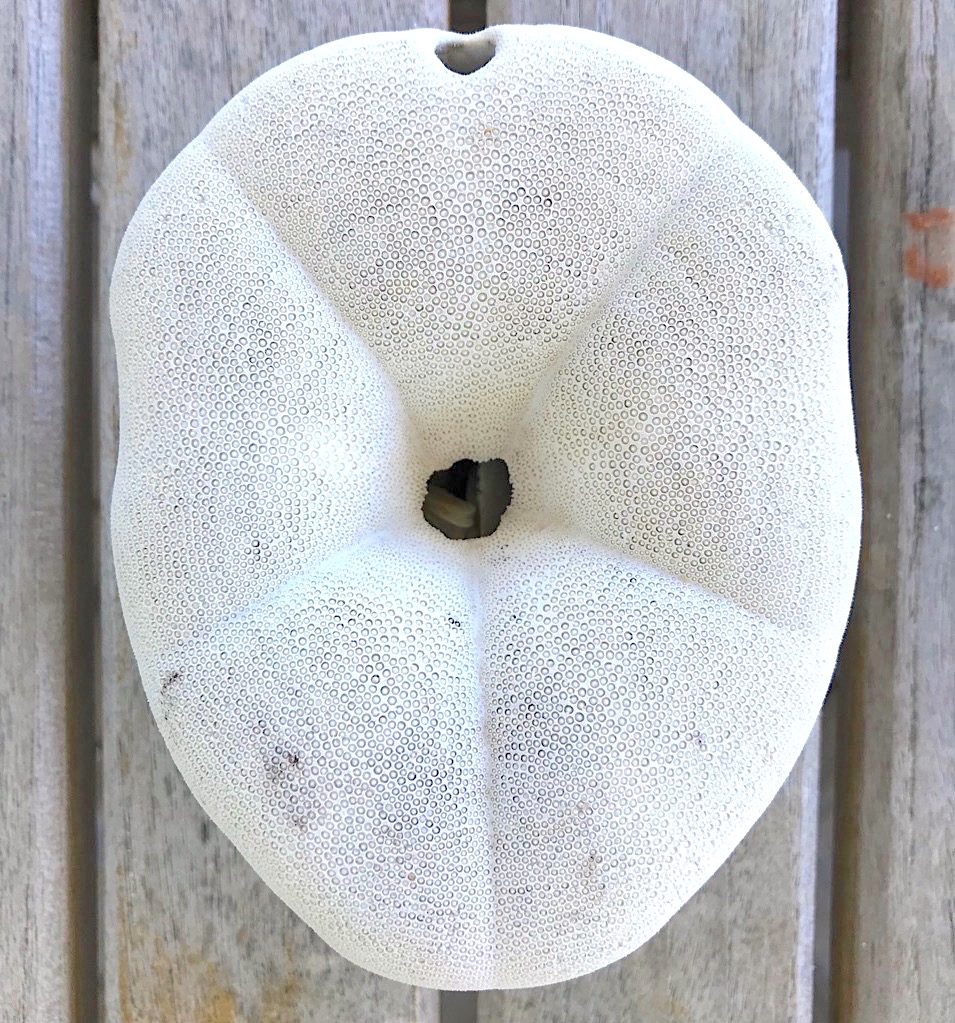
Recently I posed the question whether sea biscuits, like sand dollars contain ‘doves’. I had one in my hand, it rattled, I took a photograph through its ‘mouth hole’ and the question was answered. Biscuits do indeed contain doves – see HERE for details and comparisons with dollar doves.
However, I spinelessly* failed to break open the biscuit to check out the contents more closely. I theorised that, because of the 5-way symmetry of these creatures, there would be 5 doves (which are in fact segmented mouth parts) in a biscuit exactly as with a dollar, and amiably challenged anyone to disprove it. [* biscuits and dollars are types of sea urchin – see what I did there?]
Dollar dove in close-up – one of 5 segmented mouth parts inside the ‘test’ (skeleton)
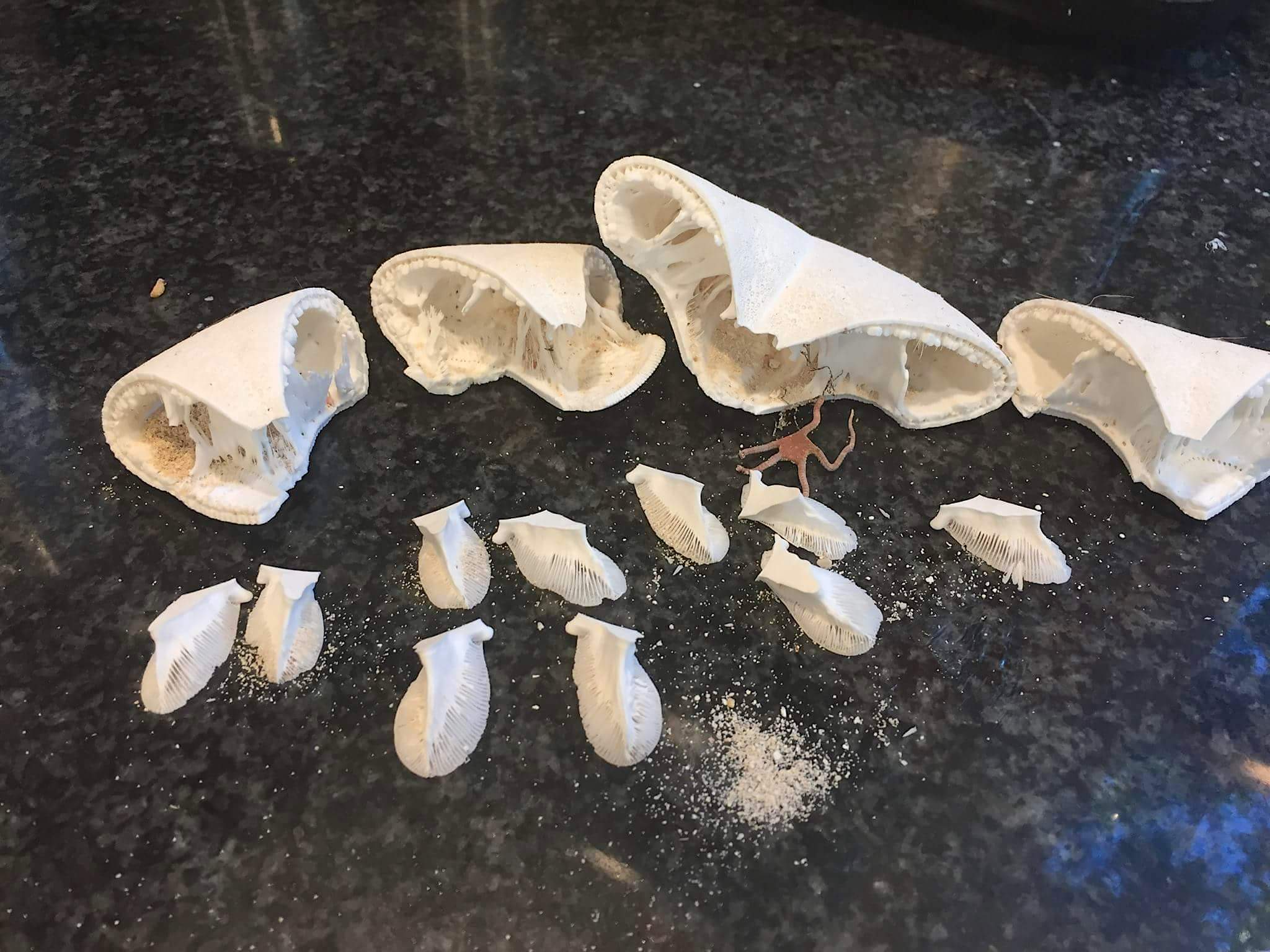
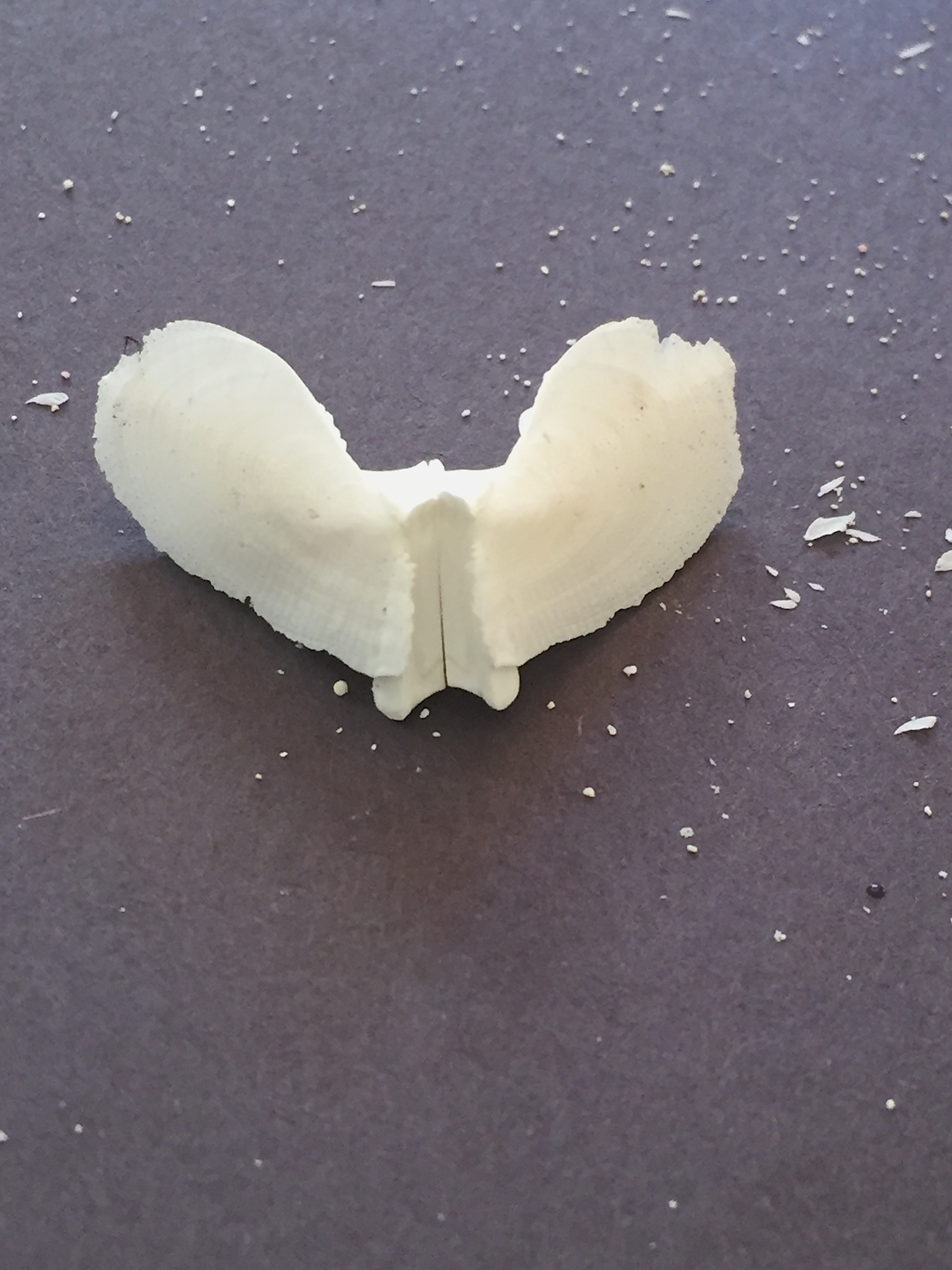
Melissa Ann Guinness from Hope Town has a far more robust attitude to these things and, taking up the challenge, she heartlessly smashed open a sea biscuit from her collection to investigate further. I said I’d publish a correction if my theory was wrong. This is it – though in one arguable sense the theory holds good. It just didn’t go far enough…
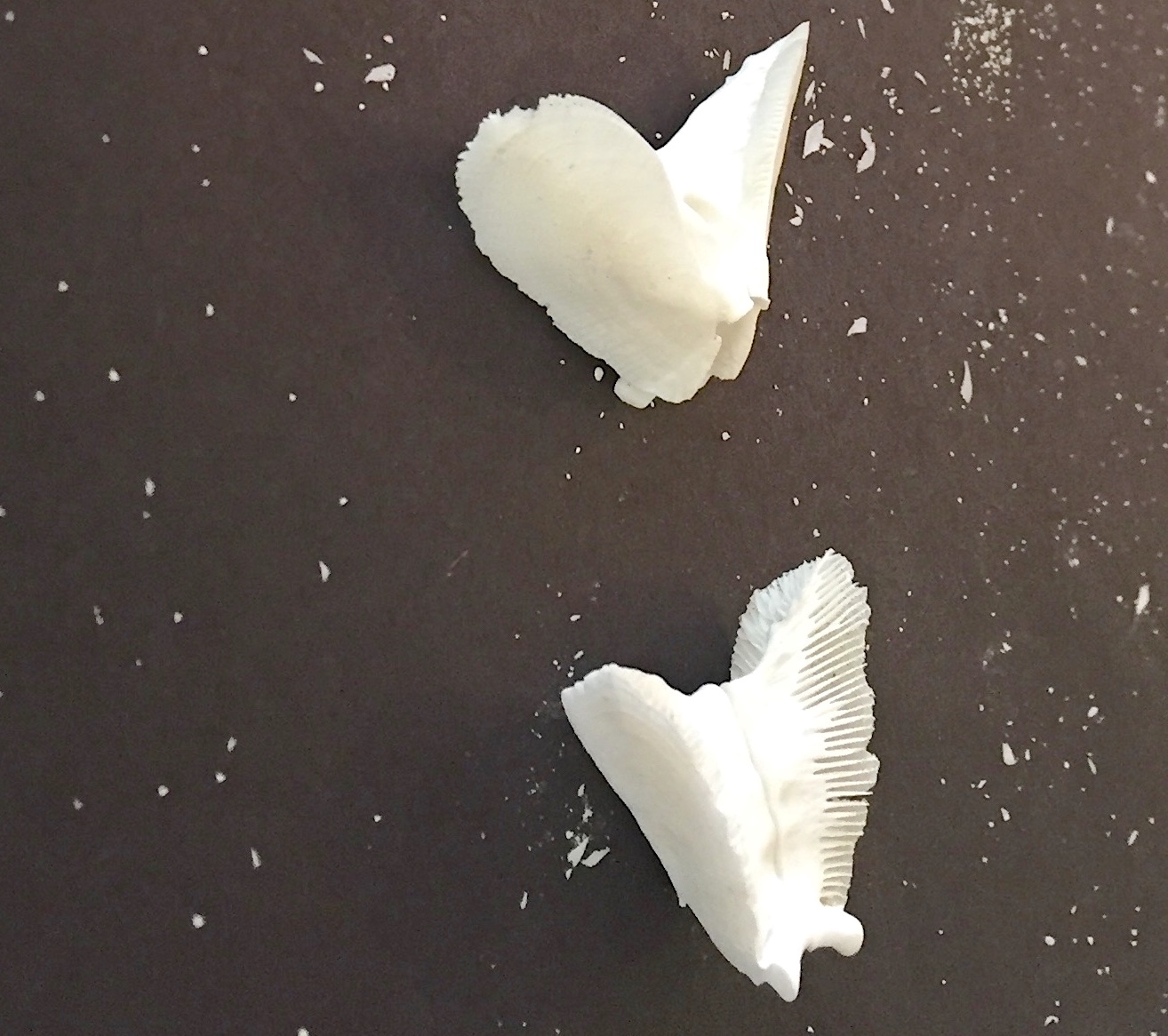
In the above picture you can see (a) 4 quarters of a sea biscuit skeleton (b) 10 demi-doves (rather than 5 whole doves) and (c) a small mummified 5-limbedbrittle star that was presumably in the creature’s digestive system when it died.
10 ‘demi-doves’ (or, when assembled, 5 doves that (unlike sand dollars) are in 2 parts
Complete doves
The final reconstruction – 5 doves and a bonus brittle star
Photo Credits: Keith Salvesen (1, 2, 3, 10); Melissa Ann Guinness (4, 5, 6, ,7 ,8 ,9)
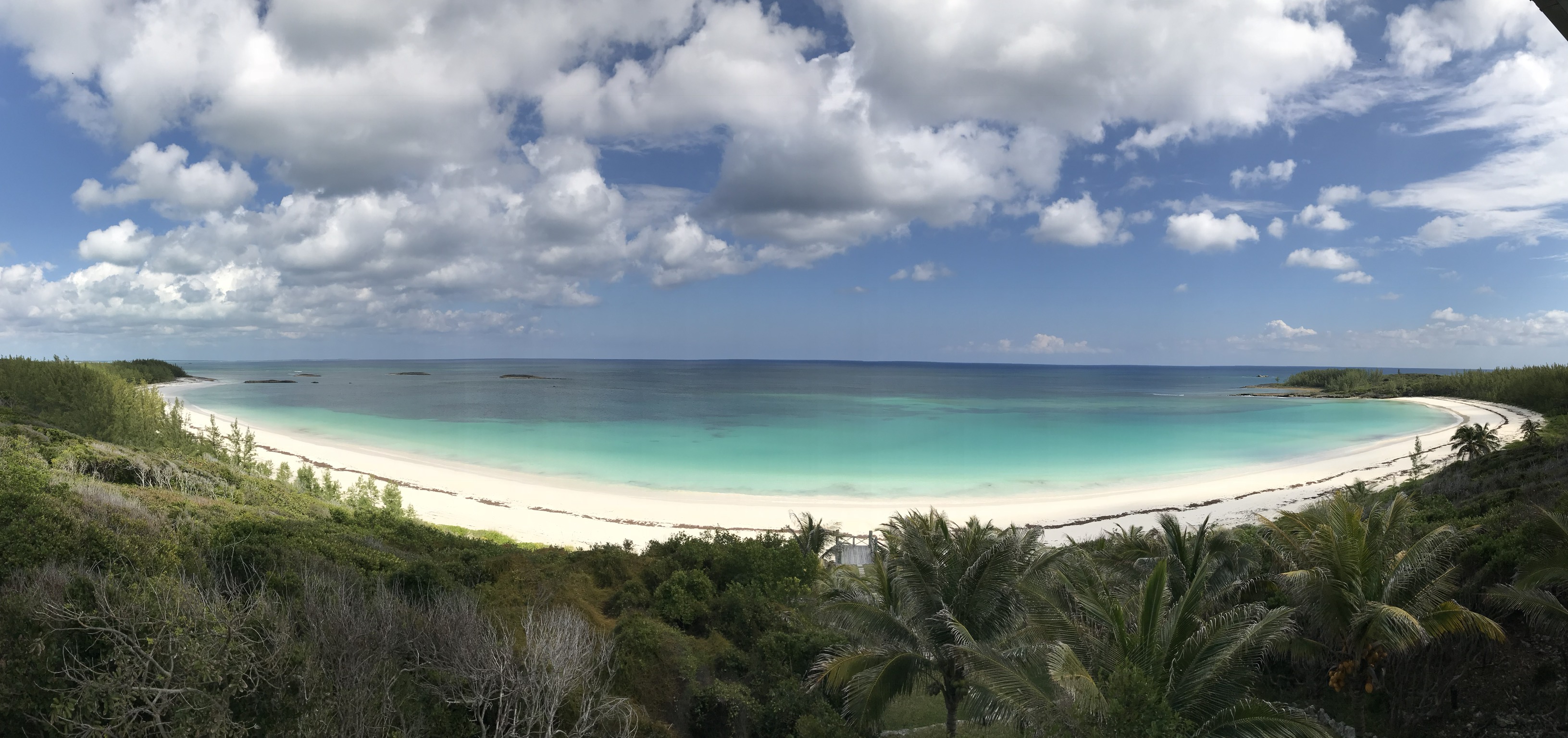
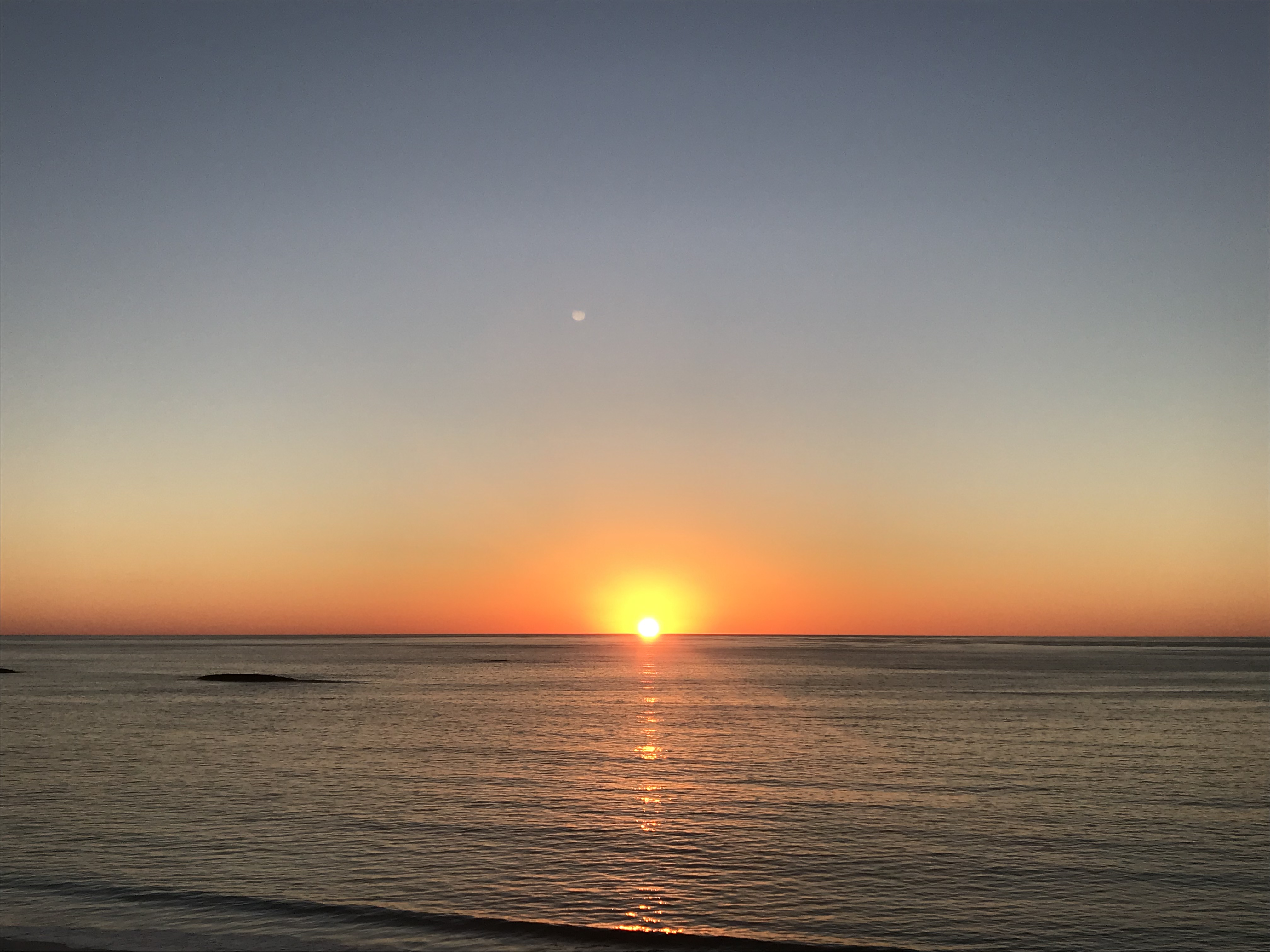
Behold the beach at ‘Delphi West’, Abaco, a fishing lodge of elegance and repute. It overlooks a bay, known by strange coincidence as Rolling Harbour – a mile-long secluded white-sand beach.
4000 mile away is ‘Delphi East’, the counterpart salmon fishery in the mountains of the west of Ireland, of equal elegance and repute.
Between these two equally beautiful yet very different fishing locations is the Atlantic. The wi-fi can be just as iffy in both. I’m posting this from DE on my phone using a phone link. Enjoy a sunrise from DW (note the moon going to bed) to end with. My thumb aches.
Like many of the blues musicians who covered Robert Johnson’s originals, we got ramblin’ on our minds. Specifically to ‘Delphi East’ in Ireland, thus stupidly exchanging 82F sunshine in southern UK for 46F rain in the Emerald Isle. Good for the fishing, if nothing else… So (always remembering that corals are actually creatures and not plants) here’s a bouquet of coral to be going on with until we next meet with wifi!
OPTIONAL MUSICAL RAMBLING
Robert Johnson’s output – a meagre 29 songs in all – formed the bedrock for later bluesmen and the blues / rock crossovers that followed. They mined Johnson’s talent and formed their own new material from it. Here’s the original – you’ve probably heard it or variations of it with different names, a thousand times – some good, some bad, most so-so.
Entire coral pot pourri by Melinda Riger / Grand Bahama Scuba
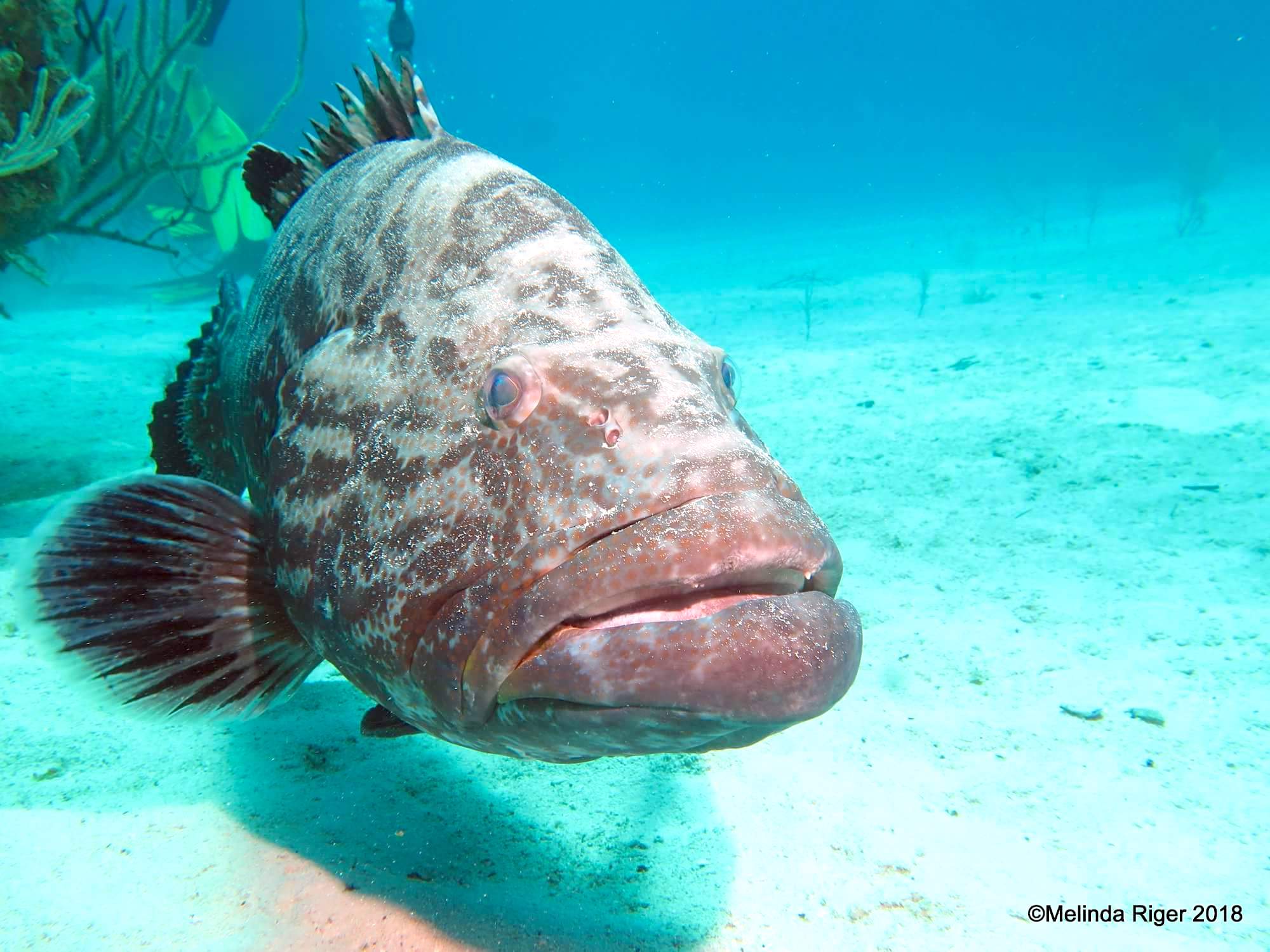
Fish, like humans, have a wide variety of temperaments, or so it seems. Resorting to anthropomorphic analysis of animal behaviour is a favourite pastime for humans. Who really knows if a creature is actually feeling shy or confident or playful or aggressive or indeed inquisitive. Often it just seems that way and we are happy to categorise dolphins as playful, sharks as vicious, angelfish as serene, small darting fish as timid and so on.
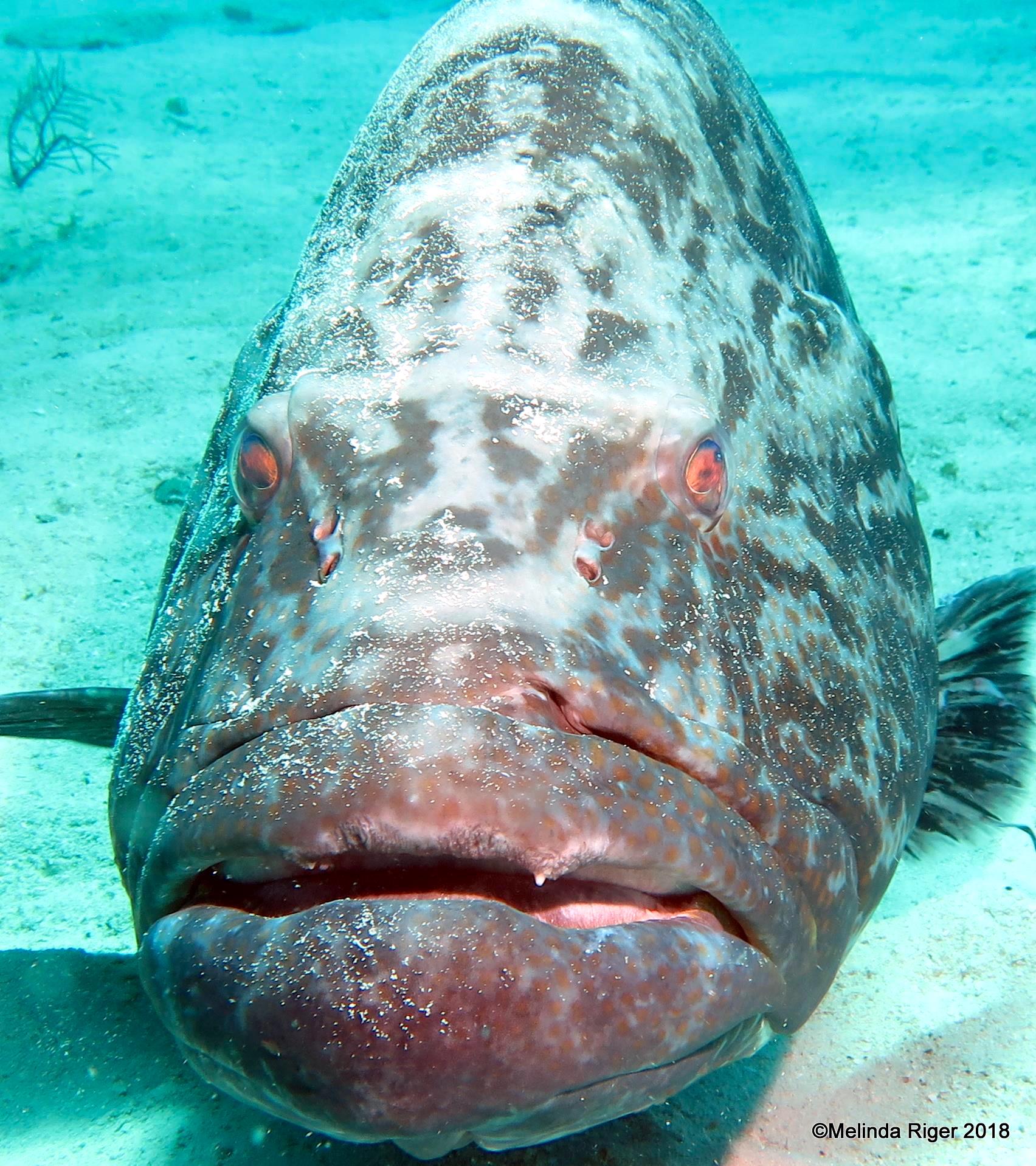
Occasionally a creature displays a ‘human’ characteristic that seems undeniable. One such is Curious George. He has become used to the divers around the reef where he lives, and greets them. He enjoys the photography sessions and the equipment, even though they may be for recording other fish. He demonstrates inquisitiveness for the strange-looking black-suited creatures that visit his patch. Like many groupers, he likes to be gently patted and stroked.
All this curiosity and friendliness evidences a benign interspecies relationship of symbiotic mutualism, through which both species (man and fish) benefit from the interaction. The mutually beneficial feeling might in broad terms be described as ‘pleasure’.
Or maybe I am just indulging in a bit of over-anthropomorphisation (if there is such a word)…
All photos by one half of the symbiotic mutualism here, Melinda Riger (Grand Bahama Scuba)
“Nidification” was one of the new words I learned from the wonderful book Birds of the West Indies by James Bond (a different one – for the full story behind the name click HERE). It means, essentially, the nesting process of a bird. It sounds pleasingly technical for a straightforward concept: nest-building.
Soft furnishings being added
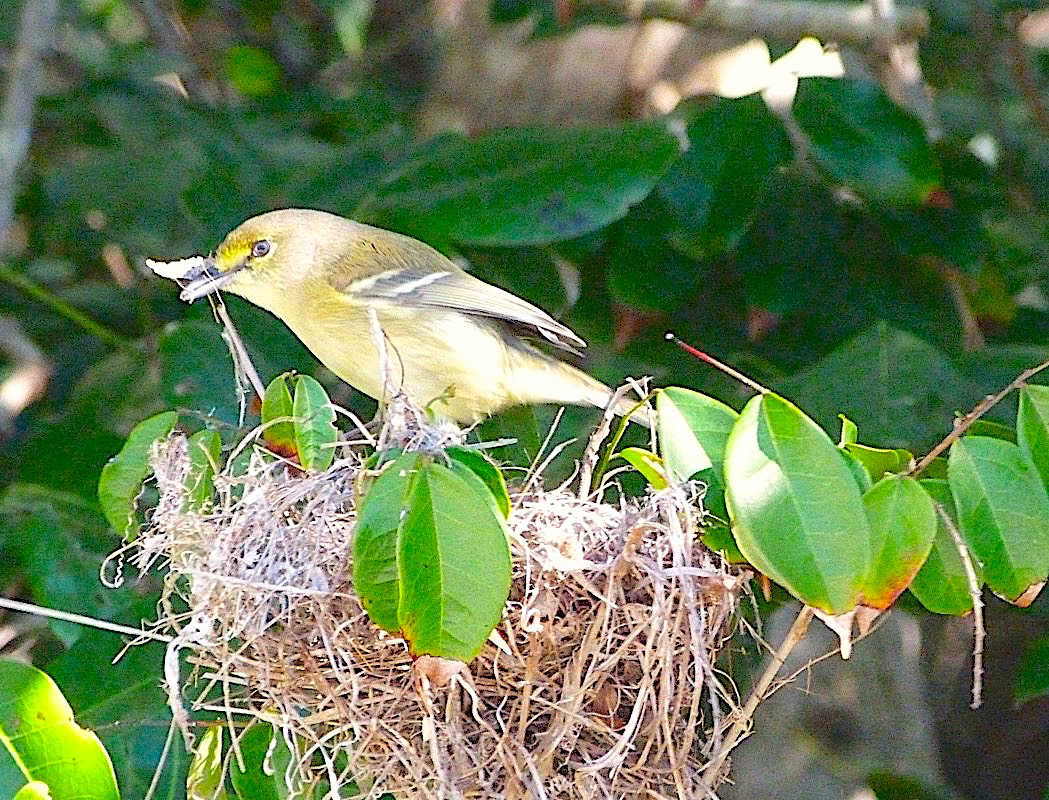
I spotted this TBV making its nest on the edge of the drive at Delphi. I usually think of these cheerful chirpy birds as ‘lurkers’, hanging back in the coppice and not making themselves easily visible. But this nest was right out in the open – possibly not the wisest place for nidification.
If you look up TBV’s in bird books, you may find a reference to nest building in the fork of shrubs or bushes – exactly what was going on here. It quite a messy nest, but then again it looks comfortable and firmly wedged in.
Although I only saw one of the pair actively engaged in the building, another TBV was ‘vocalising’ (there’s another technical term, = singing) nearby, presumably the mate. In a way that humans have been slow to adopt, both birds will be actively involved in raising their family, from incubating the eggs to chick care – feeding, cleaning out the nest and so on.
WHAT DO THEY SOUND LIKE WHEN THEY VOCALISE?
Let’s hope for a successful outcome to the nidification…
All photos Keith Salvesen, also the sound recording (made at Delphi)
A couple of years ago I wrote a post called ECHINODERMS, DOLLAR DOVES & PETRIFIED BISCUITS. It dealt with the… fact? rumour? old wive’s tale?… that within each sand dollar test (i.e. the white skeleton) are hidden 5 ‘doves’. You can hear them rattling inside if you shake the dollar…
Sand Dollar from Abaco containing 5 miniature white doves…
I investigated the theory with senior granddaughter, and we broke a sand dollar in half. And as you can see, the answer was undoubtedly yes – there were 5 tiny white doves, thus fulfilling the prediction of the famous ‘Sand Dollar’ poem that contains the lines “Now break the centre open And here you will release The five white doves awaiting To spread good will and peace”.
Five white doves (in fact, the separated parts of the creature’s feeding apparatus)
A single dove, a picture of doveliness
I never thought to extend the experiment to sea biscuits, another object prized by beachcombers. All that changed last month when I picked up a sea biscuit and found that it, too, rattled.
A rattling good sea biscuit
So I turned it over to take a closer look at the underside. And there, unmistakably, was the source of the rattle – some kind of internal arrangement inside the feeding hole (let us not pause overlong to consider the purpose of the other hole). But it wasn’t conclusively a dove.
So I shook it around a bit (sorry, doves) and zoomed in. And there was a small white columbine-type contraption remarkably similar to those found in the dollar dove. And no, I did not smash open the sea biscuit (it wasn’t actually mine). And no, I didn’t doubt any longer that sea biscuits also contain doves.
SO WILL THERE BE 5 DOVES, LIKE WITH THE DOLLARS?
I predict there will also be five. Both dollars and biscuits have ‘five-way symmetry’ (look on the topside of a biscuit or dollar to see how); and so the mouth (from which the ‘doves’ derive) will have a single part for each of the five sectors, all linked.
If anyone would like to smash up one of their precious beach finds and test the theory, please feel free. Prove me wrong… and I’ll publish a correction! [Photo please…]
All photos Keith Salvesen except Header, Clare Latimer at Delphi
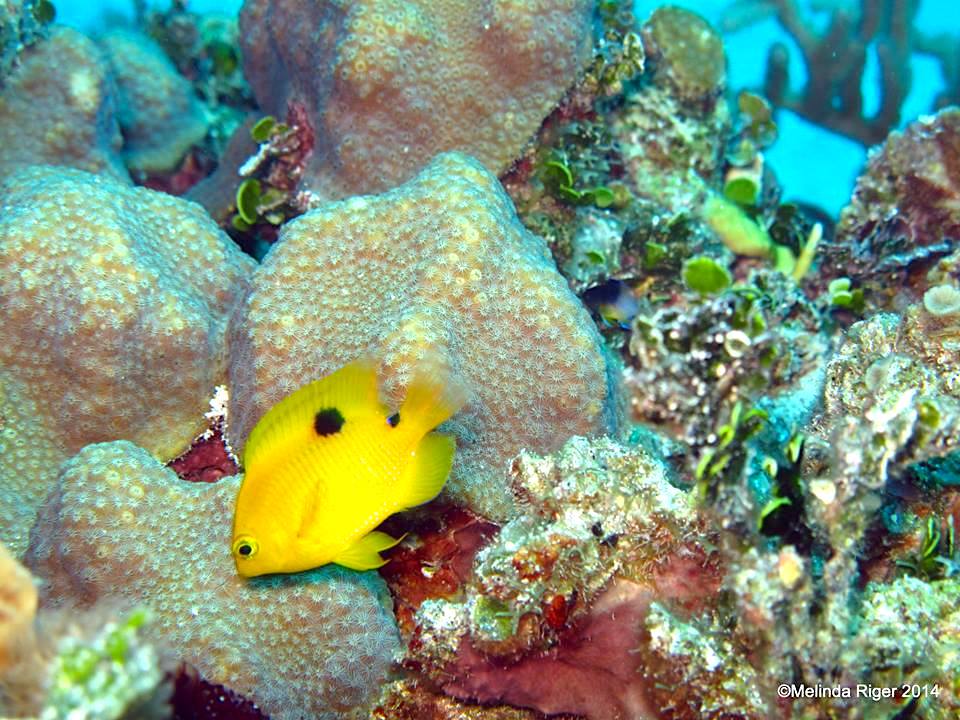
The threespot damselfish Stegastes planifrons is one of several damselfish types found in the Bahamas and more generally in the western Atlantic. As with so many reef species, there is a marked difference in coloration between juveniles (bright yellow) and darker-hued adults (above).
These are bony little creatures, equipped with both spines and ‘soft rays’ on some of their fins. This perhaps make them unappealing to potential predators; and maybe the very brightness and ‘hi-viz’ of the juveniles is aposematic, a coloration thats acts as a warning or repellent to potential predators.
On the reef it seems threespots favour staghorn coral as a daytime base. Their diet is mainly seaweed, with small molluscs, gastropods and worms for variety. At night they retire to crevices and caves.
Adults are, for such small fish, vigorously protective of their territories. They will chase and nip intruders into their domains, even far larger creatures (up to and including humans).
A breeding pair will both be involved in egg care. Once the female has laid her eggs, they adhere to the lower reef and seabed. The male guards them and rather sweetly fans them with his fins to keep them oxygenated. And then another generation hatches and the threespot life cycle repeats.
Credits: All fantastic photos by Melinda Riger / Grand Bahama Scuba
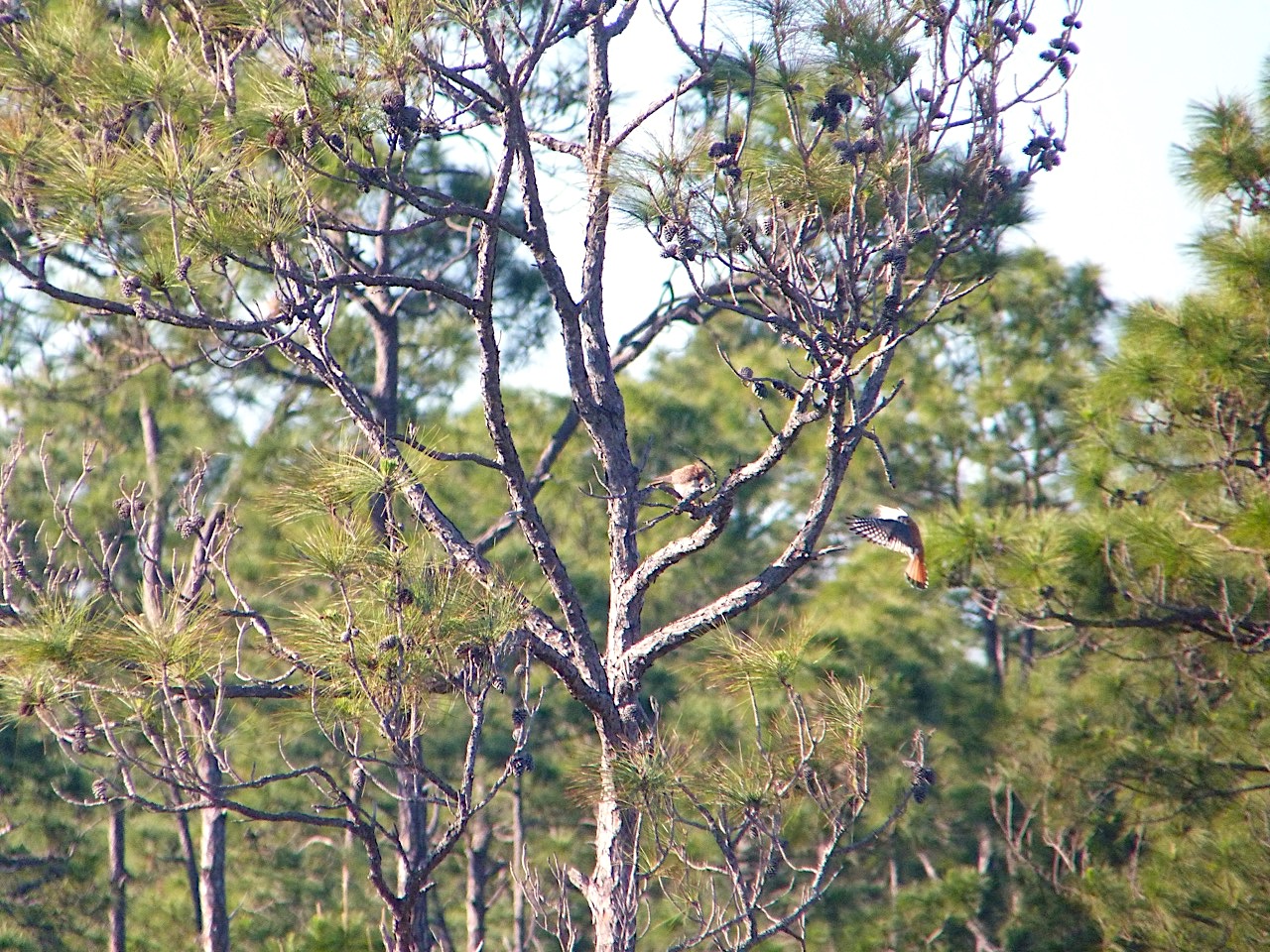
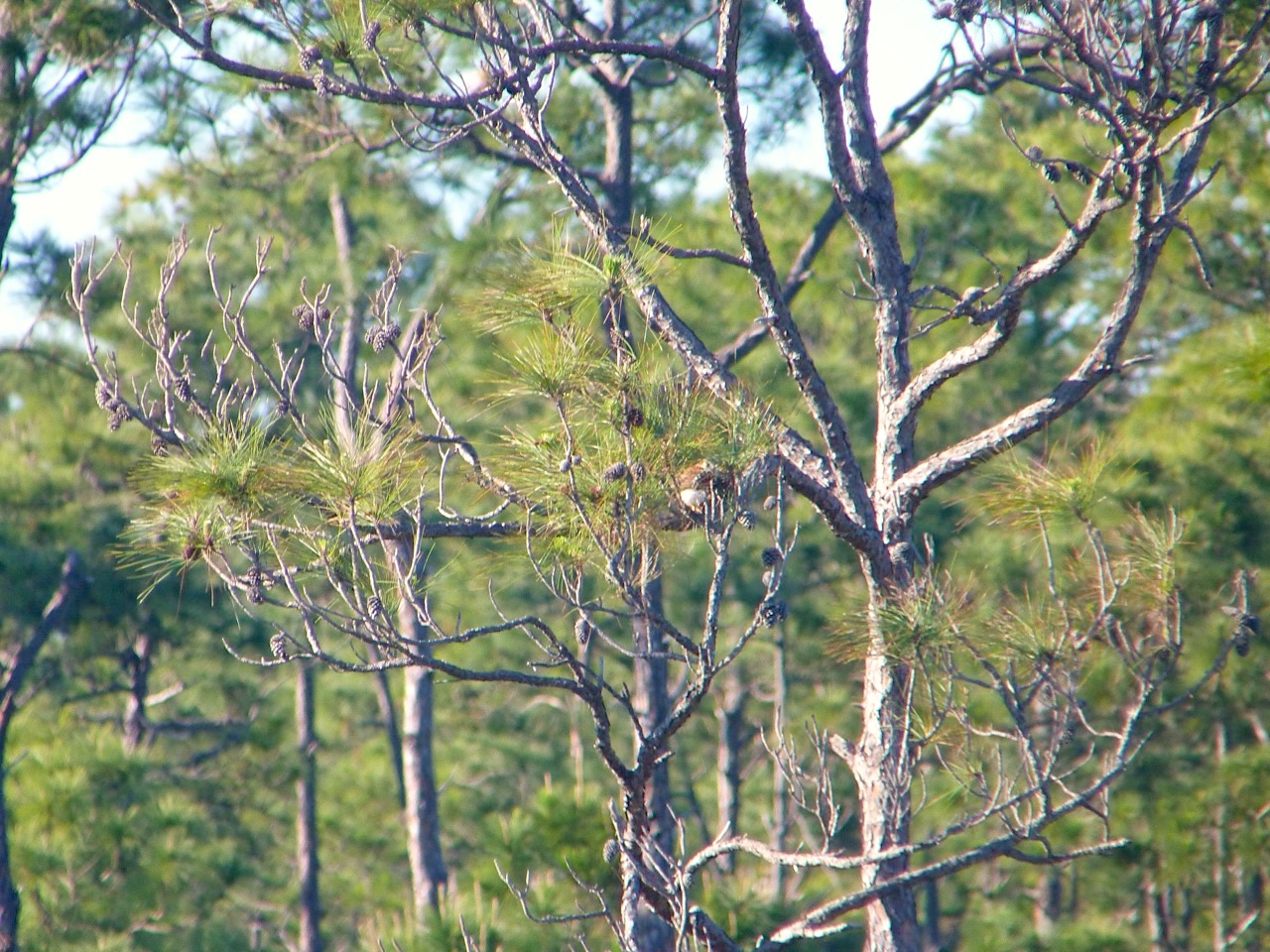
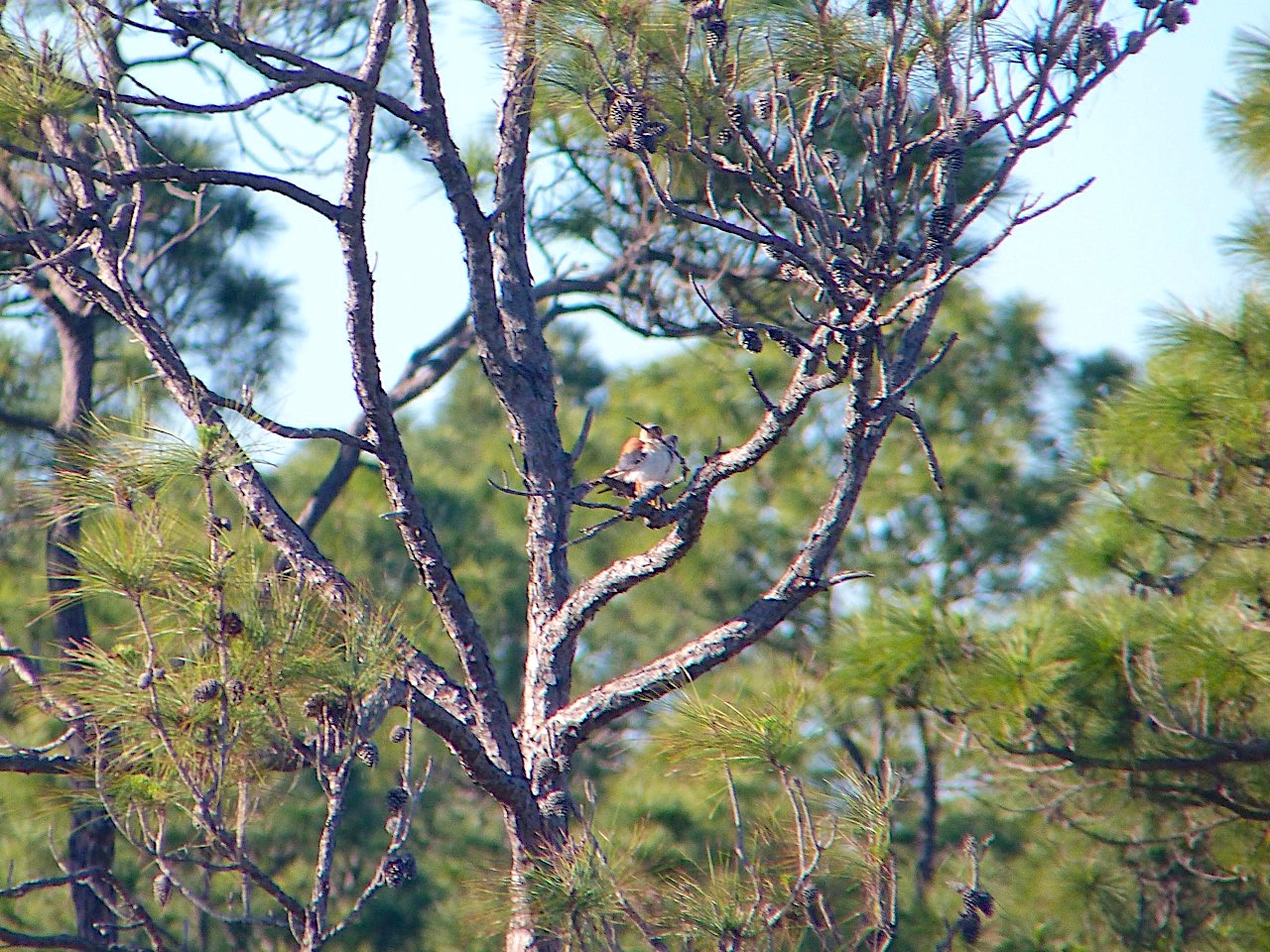
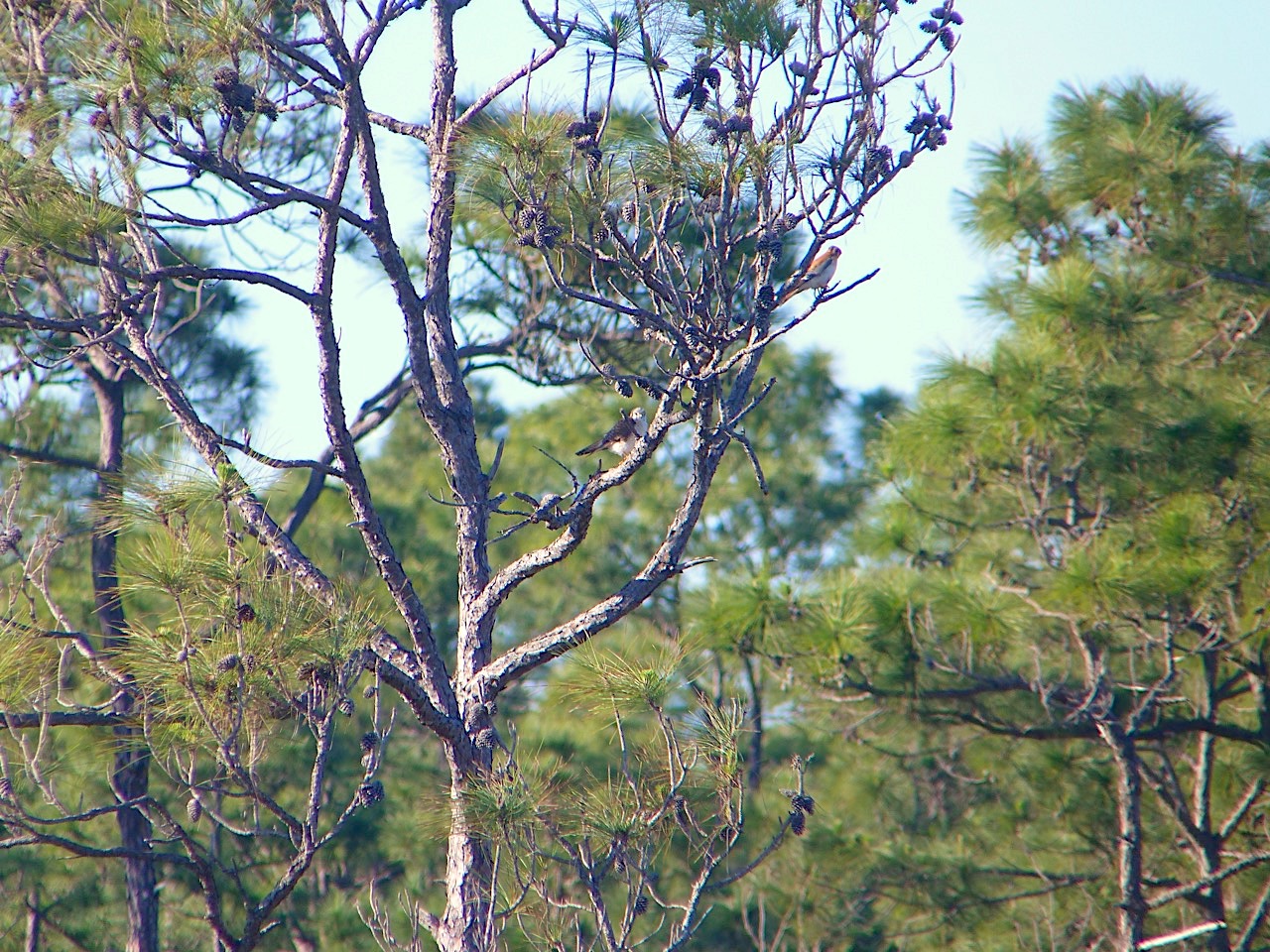
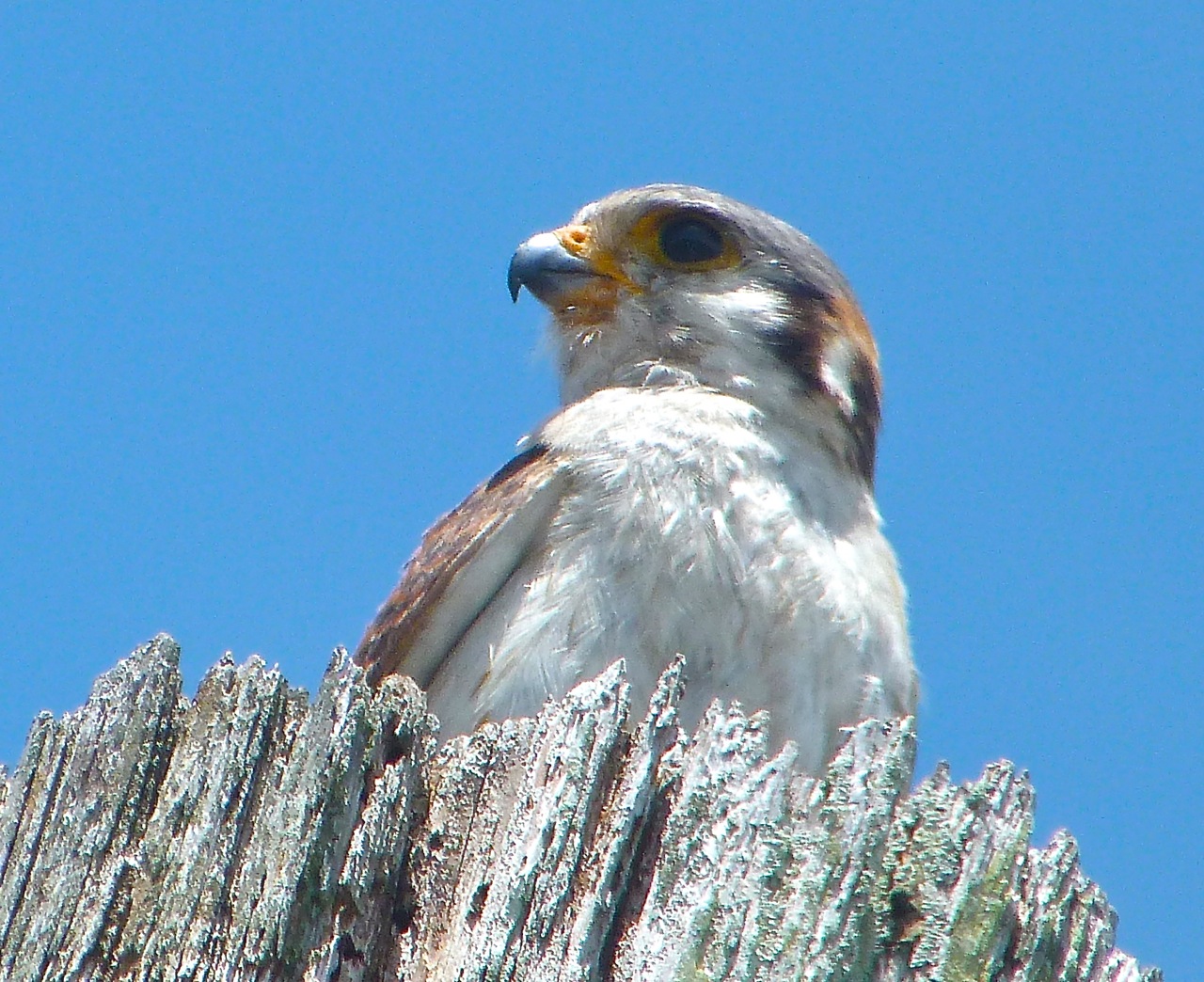
I don’t usually hold back from using (my) bad photos if there’s a reasonable excuse to do so. There’s a reason here. So here are a few bad photos. This sequence of mating kestrels was taken at a considerable distance, after I’d seen a bird fly into a pine tree out of the corner of my eye**. I couldn’t make out what species it was with the naked eye or through the viewfinder, so I took an ‘ID shot’ to enlarge later on. The image below is it – and a clear enough blur to say AMKE. Then I carried on taking pictures.
The header image came next as I realised there was another bird flying in from the right. Then the sequence below: the male mating with the female at once, dispensing with preliminaries; the male moving off along the branch; the female following a short way up the branch; then the male eventually flying away.
And that was that: all over in no time at all; all captured on camera; all finding its way onto the internet before you can say K@rd@shi@n tape. Let hope some good comes of it. Some baby kestrels would be good…
These photos were taken at Bahama Palm Shores, one of the go-to hotspots on Abaco for great birding including the gorgeous parrots. A new local initiative has seen the building of a tall platform overlooking a secluded lake that offers birders a great view of the birdlife there. But that’s a topic for another day.
All photos: Keith Salvesen
**This is badly written, I do realise – no, it didn’t literally fly out of the corner of my eye, that’s just how I happened to see it.
THE ARTICULATE WHALE (2): MARINE SCIENCE ON DISPLAY
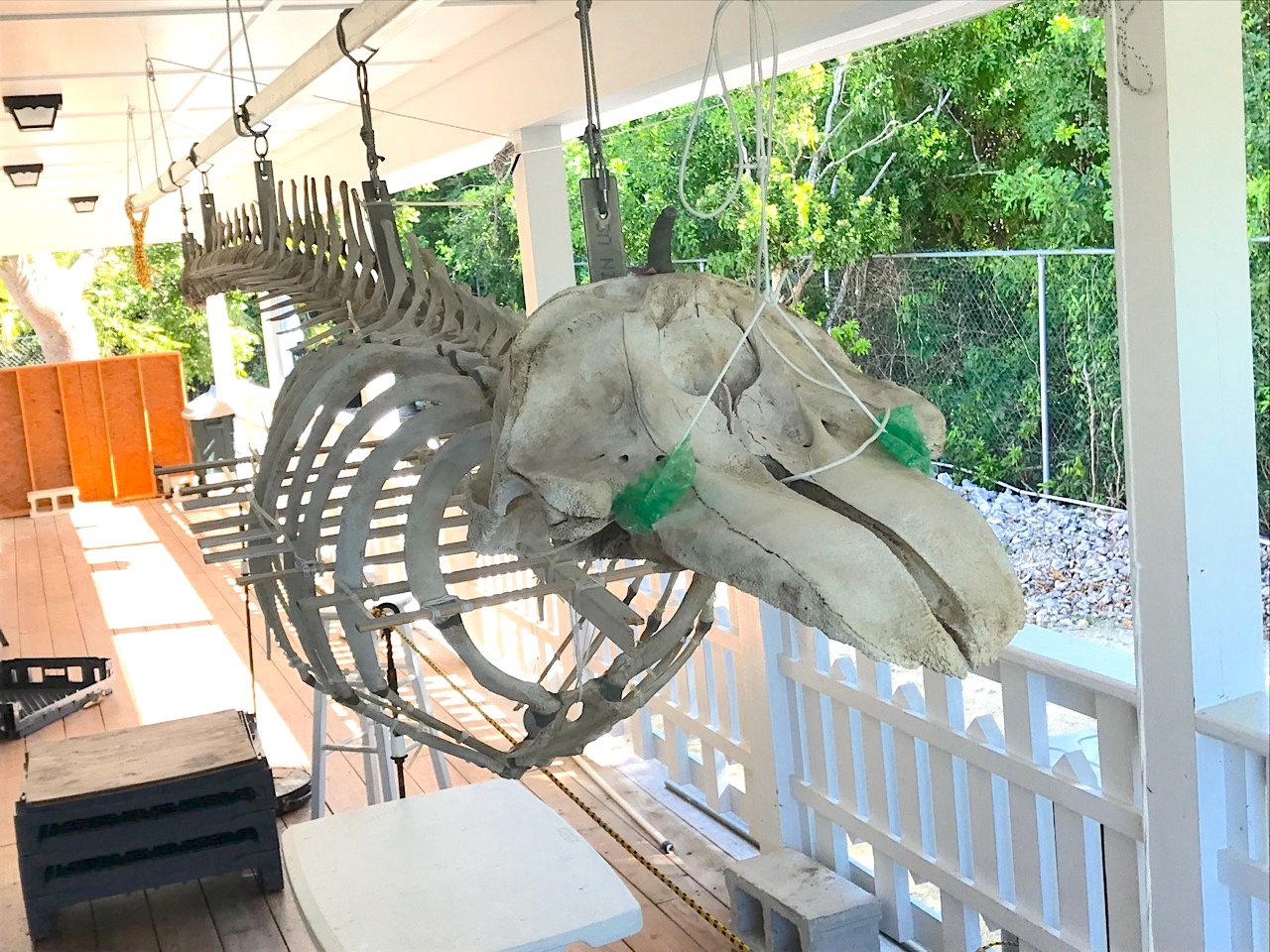
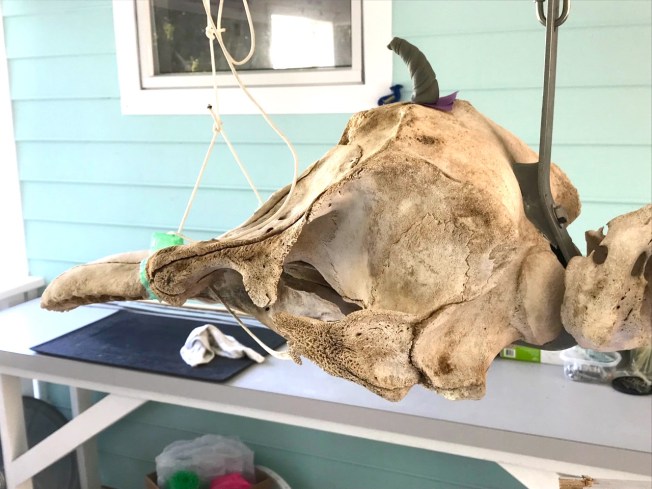
A couple of months back I wrote about the fate of the false killer whale Pseudorca crassidens (in fact a species of dolphin) that was stranded on Duck Cay. After its discovery, it was cut up, buried for many months before being disinterred, cleaned… and made ready to be reconstructed for display at Friends of the Environment, Marsh Harbour for research and educational purposes. The poor dead creature was destined to have a future ‘life’ (in a sense) as an exhibit. You can read the details and see the various stages of the preparatory processes (including some gory images) HERE.
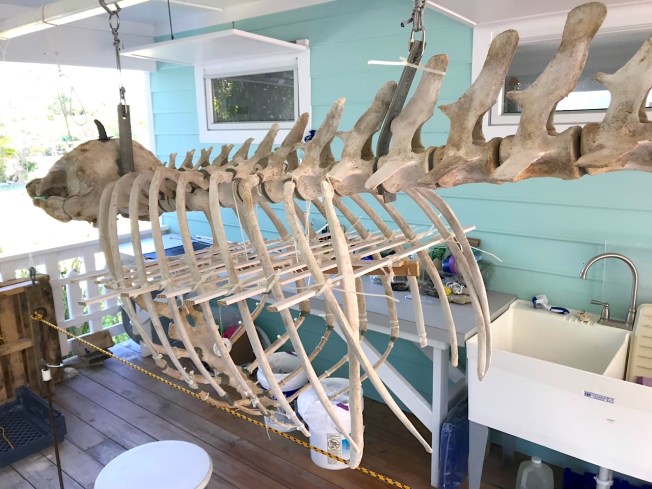
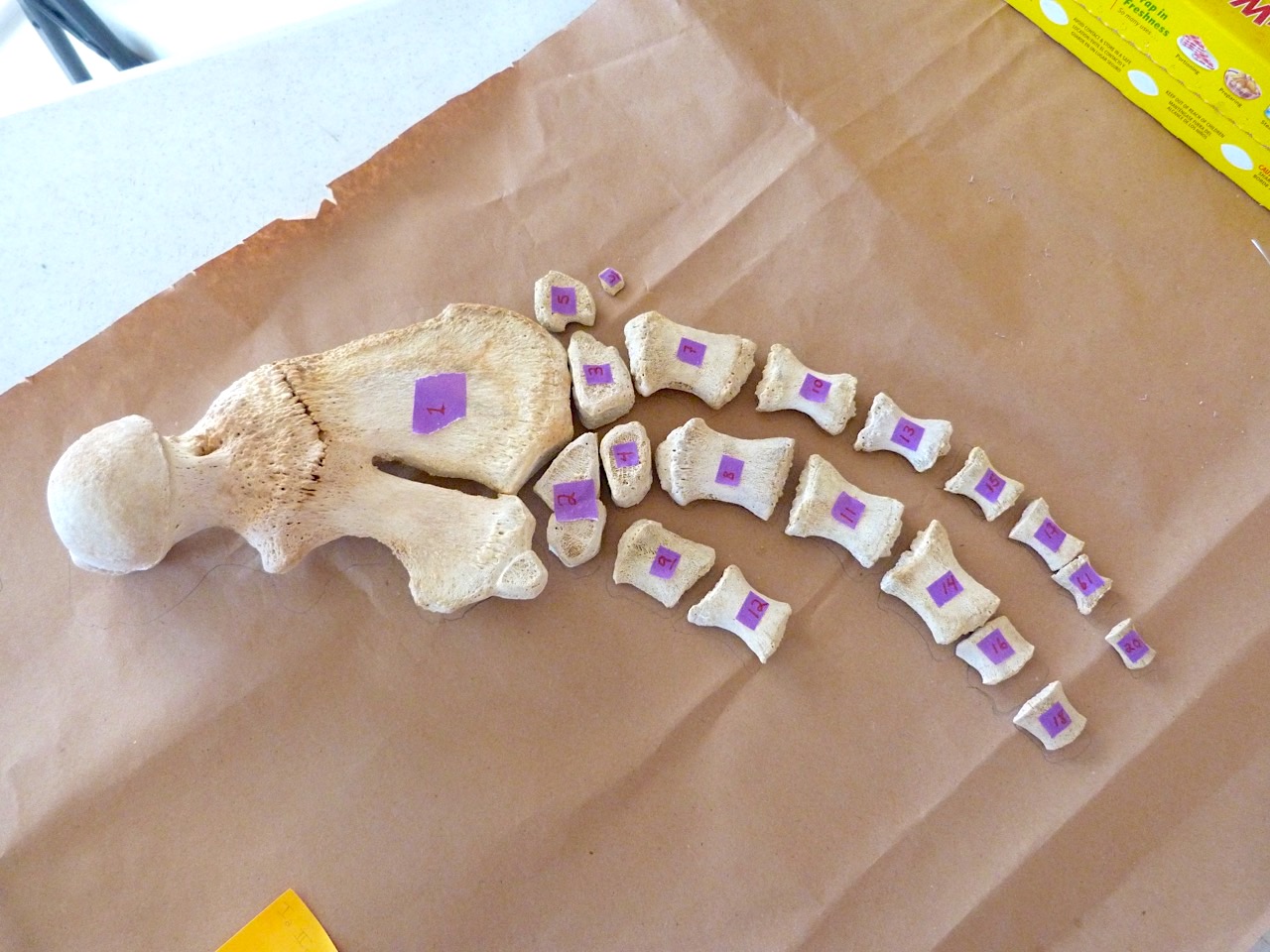
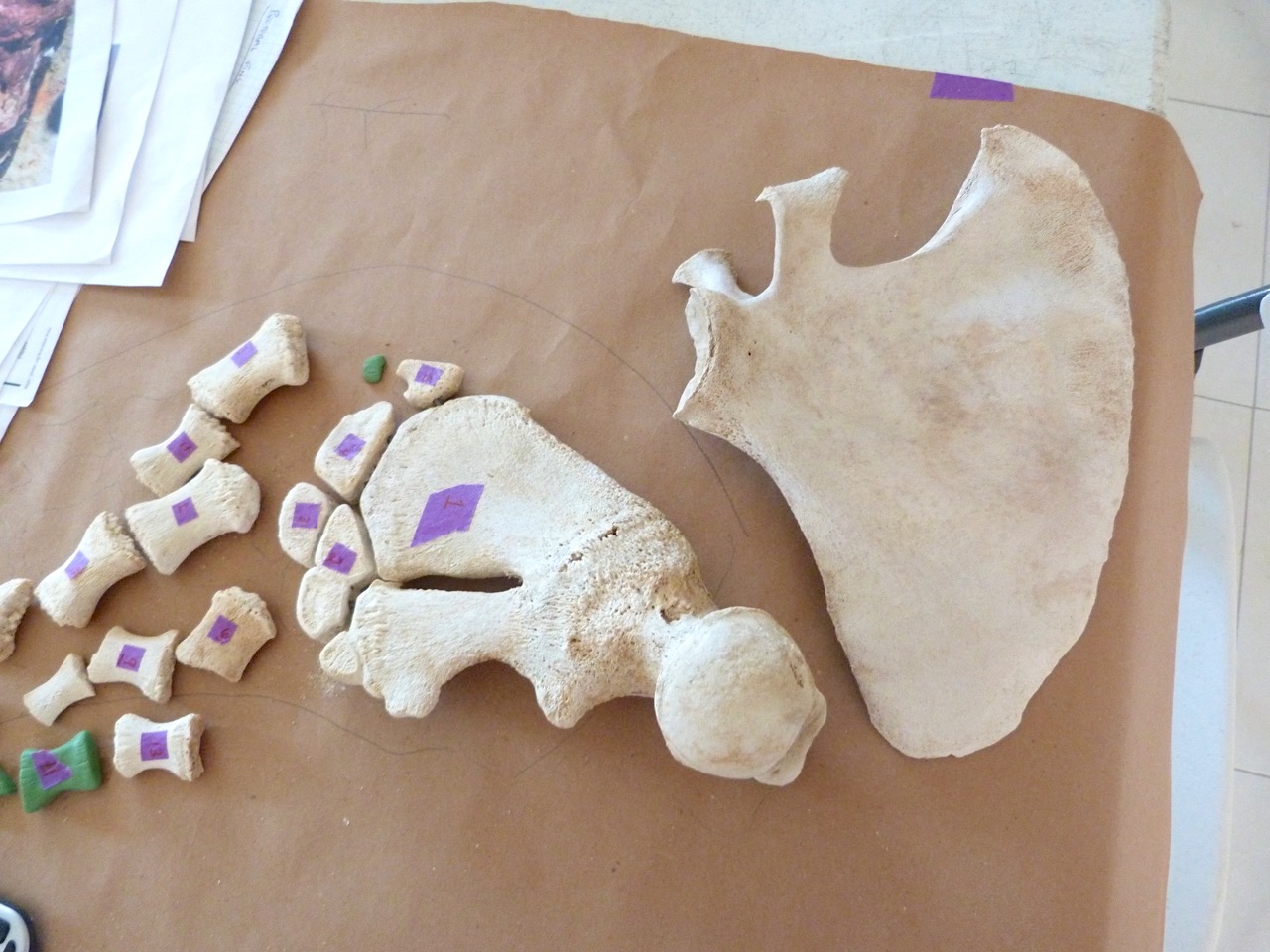
The FKW joint project (see below for participants) has taken more than a year. The final stage has been similar to doing a jigsaw puzzle, with the added complication that it isn’t entirely clear where or even whether all the pieces fit – there may even be one or two leftover small bones when the reconstruction is finished.
HEAD
Since I last wrote about the ‘rearticulation’ project, I have spent some time on Abaco. A highlight was our visit to FotE to meet the jocundly-named ‘Ducky’ of Duck Cay [I’d have gone for ‘Killer’ as a name – there’s no such thing as bad publicity]. Incidentally the strange item on the whale’s skull is in fact nothing to do with the creature’s real structure – it’s a natural historian’s unicorn-related jest…
RIBCAGE & SPINE
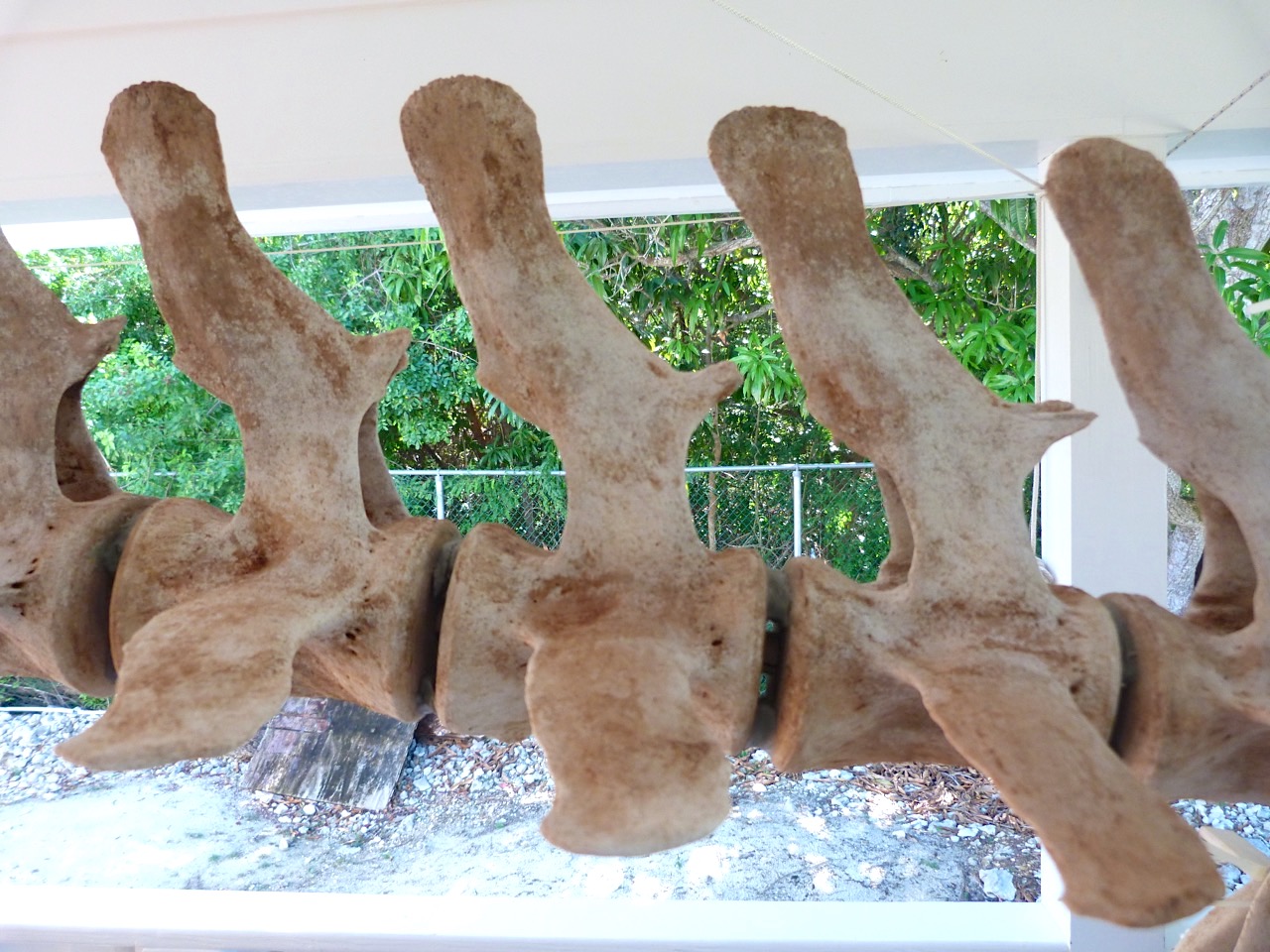
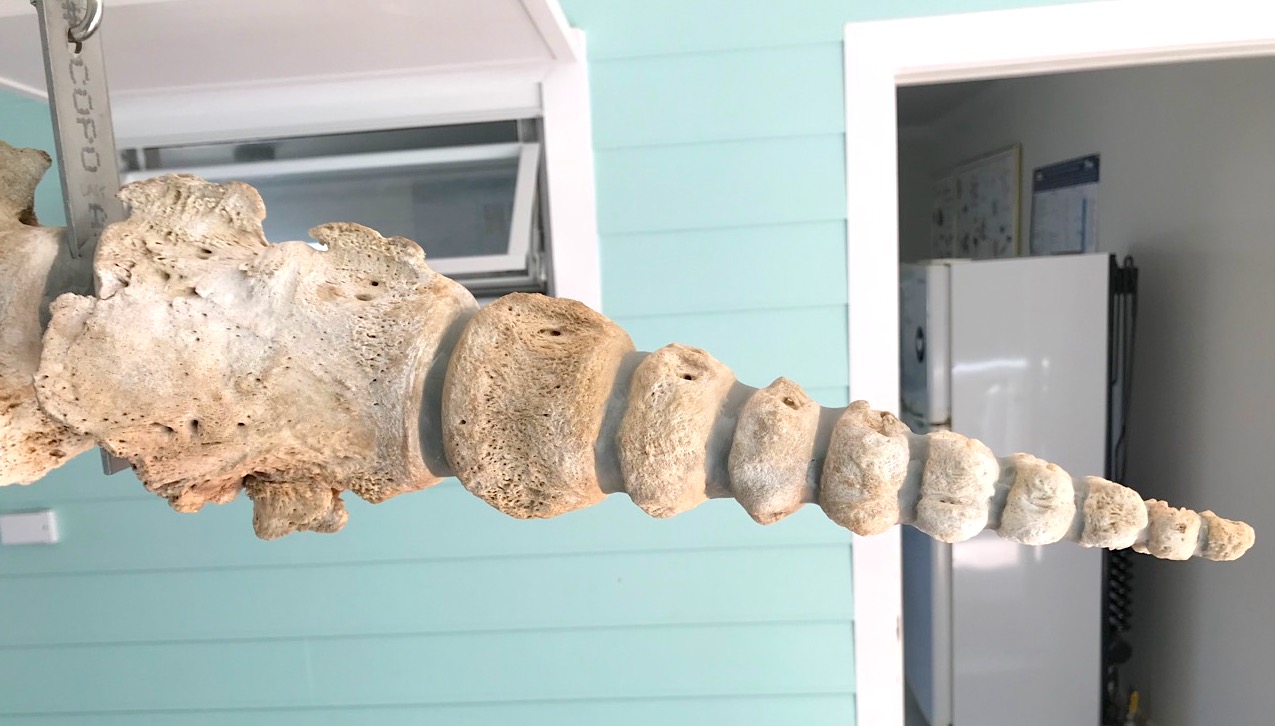
Besides identifying all the bones and numbering them, those working on this project have had to devise ingenious methods for display to make the reconstruction as accurate as possible – not an easy task with a creature nearly 20 feet long.
SPINE
FLIPPER 1 – COMPLETE
FLIPPER 2 – WORK IN PROGRESS
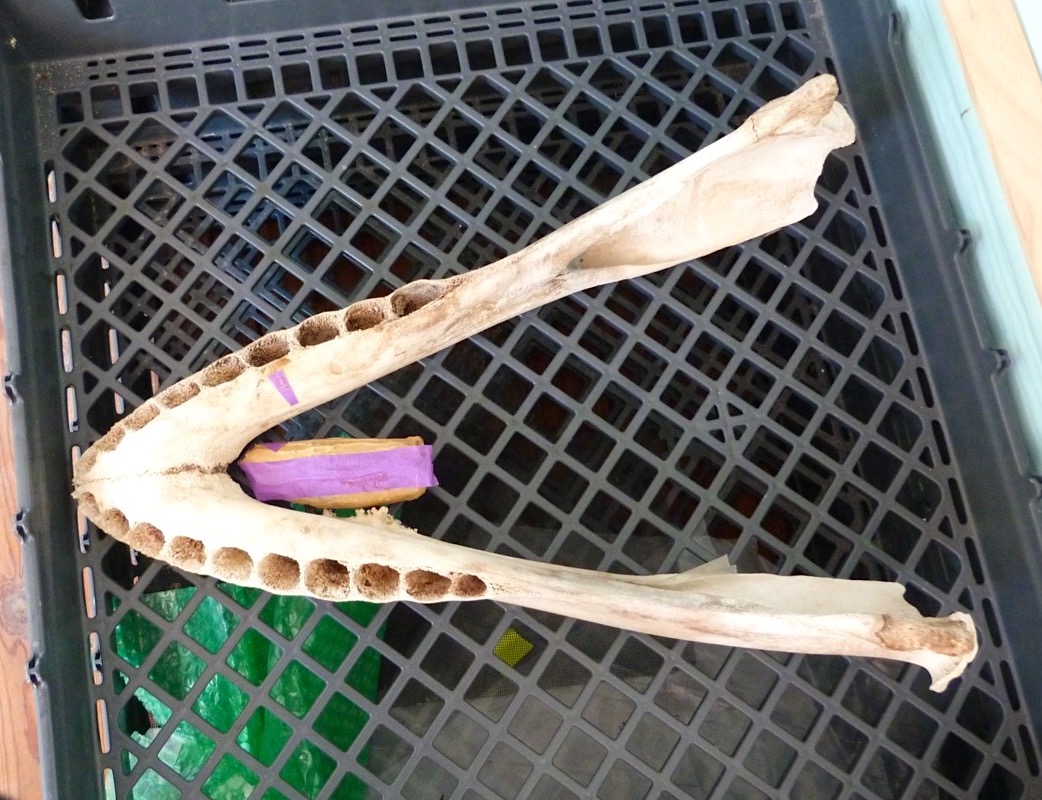
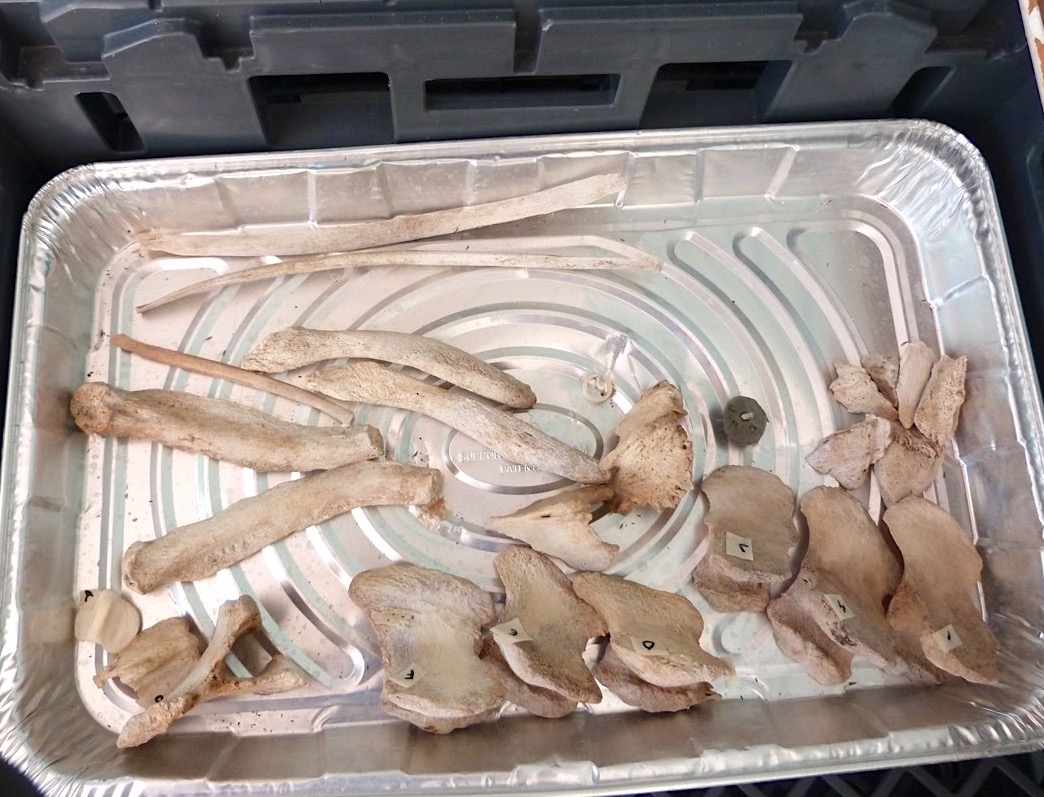
JAW & A TRAY OF SUNDRIES…
It would be against the principles of this blog to miss out on an obvious open goal of an opportunity for an apposite final caption…
A WHALE TALE THAT ENDS WITH THE WHALE TAIL
This ambitious year-long project has involvedBMMRO, FOTE, BEP (Bahamas Environment Protection Foundation), interns, and volunteers. A number of children from local schools have already been to visit Ducky and been completely fascinated. A dead stranded whale now has a new incarnation, and a new story to tell.
ARE STRANDINGS FREQUENT – AND WHY REPORT THEM?
Each year there may be half-a-dozen reports of cetacean strandings in Abaco waters, both whales and dolphins. As far as I can make out, the animals are almost invariably dead. If still alive, reporting is clearly urgent to ensure a quick response and to maximise the creature’s chances of survival. If dead, a carcass can provide scientists with valuable data on the biology and health of marine mammals and, in turn, the health of our marine ecosystems. This includes basic information, such as an animal’s age, its size, the types of prey it consumes, and the occurrence of diseases. Necropsies can provide more detailed information to add to the growing knowledge-base of marine mammal populations.
And a project like this one, with its great educational potential, can in effect enable a stranded marine mammal to tell its story even after death.
STRANDING NETWORK HOTLINE NUMBER +1 242 366 4155
(or +1 242 357 6666 / +1 242 577 0655)
Credits: all photos by Keith Salvesen / BMMRO. Special thanks to Olivia Patterson and all at Friends of the Environment for a fascinating time visiting Ducky Killer; and to Nancy Albury for showing us around the excellent Museum. If you haven’t been, go!
This is a challenging topic that I have been (shamefully) putting off. My task is a full-scale facing-up to an extremely rare, very small, and rather adorable adversary, the Kirtland’s Warbler (Setophaga kirtlandii). There are probably more dedicated KIWA experts out there than there are birds of this scarce species. Estimates of bird numbers vary wildly, but if I take a consensus of the mean of an approximate average of the median as ± 5000 individuals, I’d probably be in the ballpark named “Current Thinking“.
THAT SOUNDS QUITE RARE, RIGHT?
Around 50 years ago, the species was all but extinct – perhaps fewer than 500 birds in total, a barely sustainable population. In 1975, Brudenell-Bruce estimated 1000. I’ll mention some of the reasons later. In the 1970s, the Kirtland’s Warbler Recovery Plan was instituted with the twin objectives of protecting the vulnerable breeding habitat – basically large areas of jack pine; and of monitoring and management aimed at encouraging an increase in numbers. Around that time, they became IUCN listed as vulnerable, but more recently, population growth has resulted in a recategorisation to the more optimistic near-threatened category.
AND THEY LIVE WHERE, EXACTLY?
In spring and summer almost the entire KIWA population lives and breeds in very specific areas of Michigan and Ontario, where jack pines are found. There are signs that the range has expanded slightly in Michigan and more widely into Wisconsin and Ohio as the numbers have increased.
A Kirtland’s Warbler in the jack pines of Michigan (Vince Cavalieri)
In the fall and winter the population migrates to the Bahamas & TCI, where they tend to choose remote scrub and coppice areas to live until the spring when they return north in April. This range map shows the extremely specialist habitat choices of these migratory birds.
A Kirtland’s Warbler in Ohio
SO THEY ARE REALLY FOUND ON ABACO?
Yes – but they are notoriously hard to find. To give you an idea, I checked the eBird stats for Abaco sightings over the last 10 years: 9 successful trips reported, with 18 birds seen in all**. There were 3 groups comprising 6, 4, and 2 birds; and the rest were single birds. Abaco ornithologist and guide Woody Bracey is the go-to man for finding these little birds. Two years ago we were in his party that saw 4 in the space of a couple of hours. I was supposedly the photographer, but unaccountably found myself in completely the wrong place for the first 3. The 4th flew off a branch and straight at my head as I raised the camera… I felt the wind as it passed on its way deep into the coppice. I’m not proud of my effort; the fuzzy lemon item beyond the twigs and leaves is a KIWA (you’ll have to take my word for it…).
HAVE ANY BEEN SEEN ON ABACO THIS YEAR?
Last week, Woody took another party to the main hotspot in the Abaco National Park, a protected area at the southern end of the island. The park is huge, covering more than 20,000 acres of (mostly) pine forest. These birds are tiny, about 14 cms long and weighing 14 gms. Despite which they found a female and then a male KIWA in their favoured habitat beyond the pine forest. Those are the only 2 I’ve heard about this winter season.
Kirtland’s Warbler, Abaco Bahamas, 12 April 2018
WHAT DO I LOOK OUT FOR?
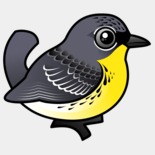
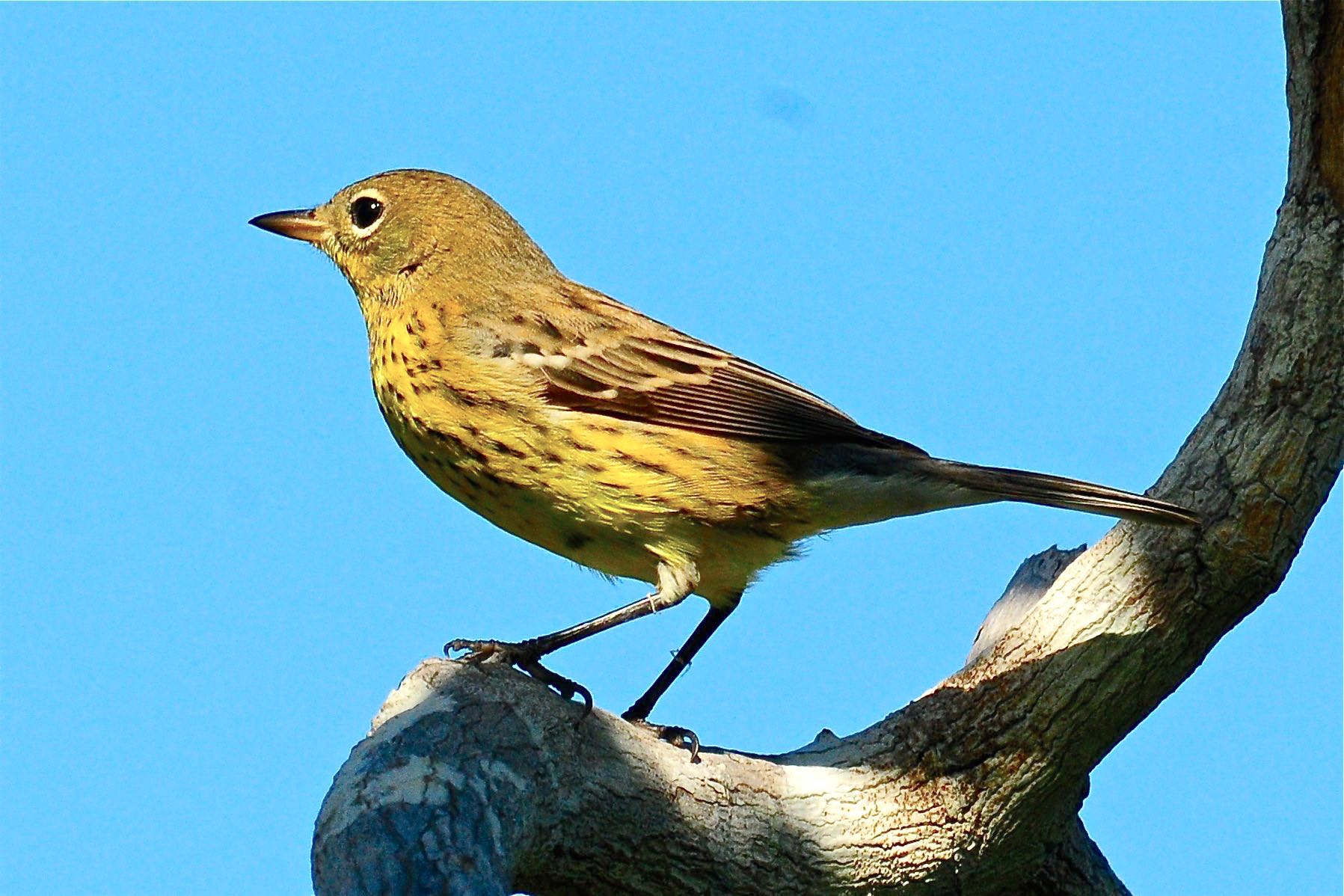
Gray head with a blueish tinge, gray-brown back
Yellow throat & underside, with some dark streaking
Females are paler and more streaked
Split eye rings – white crescents above and below eyes
Frequent tail pumping and bobbing (‘tail-wagging’ J. Bond)
WHAT DO THEY SOUND LIKE?
Some would say ‘chip-chip-chip-too-too-weet-weet’. Elsewhere I have found they produce ‘a loud tchip, song an emphatic flip lip lip-lip-lip-tip-tip CHIDIP‘ (Arnott). You be the judge!
Ross Gallardy / Xeno-Canto
WHAT ARE THE MAIN THREATS TO THE SPECIES?
Mankind is the primary threat. The breeding areas are particularly vulnerable from deforestation and clearance of the jack pines that are essential for successful nesting and breeding – and therefore the survival of the species.
Encroachment of development is another threat, as with so many species.
There is a further threat of nest parasitism by brown-headed cowbirds, to which KIWAs are especially vulnerable.
In the winter grounds where the habitat is mostly remote or in protected areas, there is rather less of a problem from these factors – for now at least.
Overall, habitat degradation at one end of the migration – in particular the breeding grounds – poses a serious risk; at both ends, extinction could loom again.
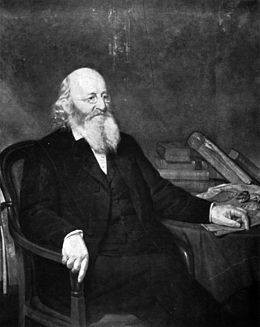
WHO WAS MR KIRTLAND?
Jared Potter Kirtland (1793-1877)
Jared P. Kirtland (1793 – 1877) was an Ohio scholar, doctor, judge, politician and amateur naturalist. He was a man of many and varied interests and talents, not-untypical of his time. In the field of natural history, Kirtland’s name lives on in his warbler; and also in a couple of snake species.
The Bahamas Postal Service is commendably active in producing wildlife stamps
**I realise eBird is not the be-all and end-all for sighting reports. It hasn’t been in existence for as long as 10 years, and not everyone uses it anyway. And awareness of the Bahamas as the winter home for KIWAs is a surprisingly recent development (as with piping plovers). As awareness increases, so do birder interest, habitat knowledge, and consequently reports of sightings.
Another example of the ‘twigs in the way’ problem for photographers
Credits: Bruce Hallett (1, 2, 3); Vince Cavalieri (4); Tom Sheley (5); Unattributable (me, in fact) 6; Woody Bracey (7, 9); Tony Hepburn (8); Lionel Levene (10); Birds of North America (range map); Ross Gallardy / Xeno-Canto (audio file); Birdorable (cartoon); BPS (KIWA stamp). Special thanks for all use permissions for images of this rare bird.
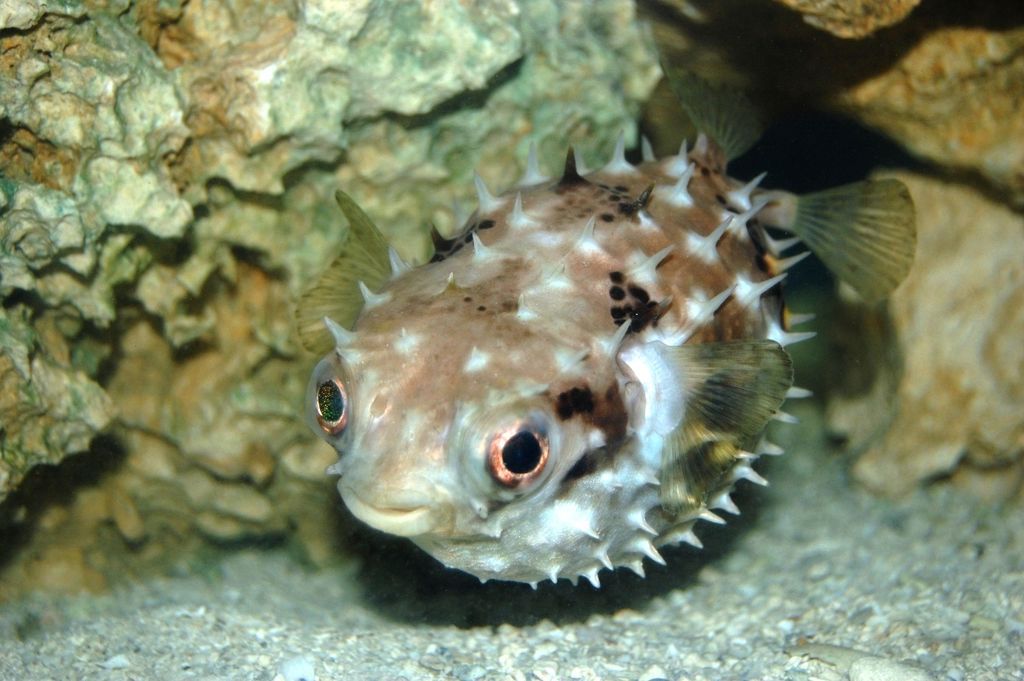
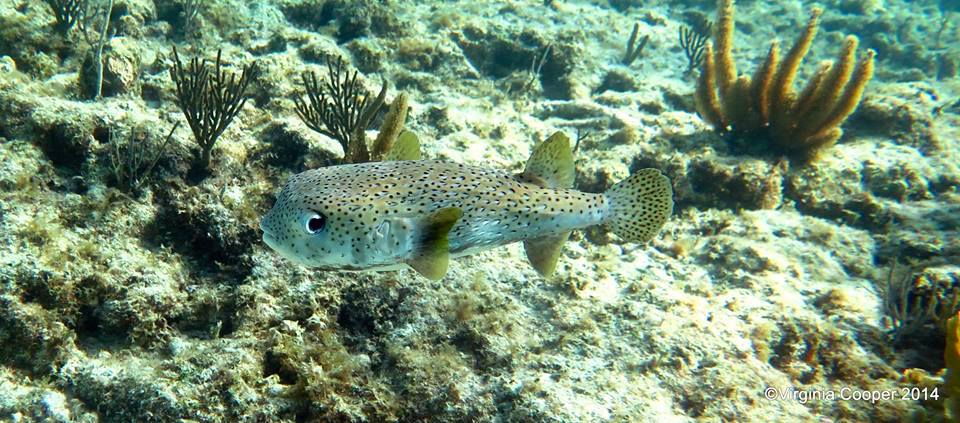
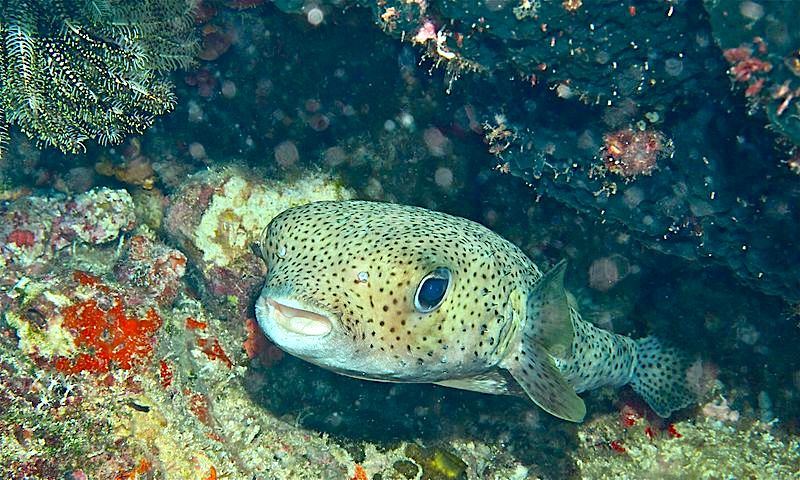
The porcupinefish Diodon hystrix falls into the general category ‘pufferfish’, though the particular species named PUFFERFISH are distinct in their own right. There are other similar species – e.g. balloonfish, blowfish and burrfish – with which there is scope for confusion. The relationship is something like this: all porcupinefish are pufferfish (in a broad sense); but not all pufferfish (in its species sense) are porcupinefish.
Porcupinefish are slow-moving reef dwellers and like their puffer cousins, they can inflate themselves by ingesting water, turning them into spiny balloons. This defence mechanism is a response to threat and works in two way: only predators with large mouths would consider them a meal; and even then they have to deal with the spines that become prominent when the fish is bloated.
I’VE HEARD PUFFERFISH ARE POISONOUS? WHAT ABOUT THIS GUY?
Good question. Checking it out, I’ve found some contrary statements about this. The truth seems to be that unlike pufferfish, they do not produce toxic secretions from their skins, so are not poisonous to touch (if you must**).
However porcupinefish do contain powerful (neuro)toxins in their internal organs and are best not eaten – though in some parts of the world they are considered a minor delicacy. They may also suffer the ignominy of being dried in their inflated state and sold to tourists as novelties – with lightbulbs inside for added amusement value.
ARE PORCUPINEFISH FAMOUS IN ANY RESPECT?
Indeed they are. They had the honour of being recorded by Charles Darwin. He gives a surprisingly long account of this creature, encountered during his renowned voyage on the Beagle. It clearly fascinated him. I’ve ‘ripped’ the relevant passage (open source – it’s ok) and turned it into an eezi-reed pdf if you want to check out Darwin’s careful observations in more detail:
Yes! In ‘Finding Nemo’, Bloat the Porcupinefish was part of the ‘Tank Gang’ in a dentist’s office. He had an encore in the closing credits of ‘Finding Dory’. Enough of fame already. Here’s a 50 second video demonstrating the puffer / porcupine distinction.
Photo Credits: Melinda Riger (1, 2); George Parilla (3); Virgini Cooper (4); Bernard Dupont (5); Adam Rees (6, 7); Video, ‘AquariumKids’ (I do high-powered research, see?)
**Incidentally, it’s apparently not considered an act of animal kindness to catch them / scare them so you can have the pleasure of watching them blow up
My favourite bird book, in a fairly large collection, is my treasured 1947 ‘first printing’ edition of James Bond’s Field Guide of Birds of the West Indies. It is not especially rare, and one can still be had for under $200. The price is rising – about 5 years ago mine cost $80, in excellent condition, with intact dust jacket and protective cover.
This renowned reference book has since had many subsequent incarnations – if you are interested, you can find the whole story including how Ian Fleming chose to name his Double-O hero after an ornithologist HERE. I have several later versions, including 1960 and 1985, where the source material forms the basis. However the latest book of the same name, by Norman Arlott published in 2010, is a completely new offering with a wealth of useful detail. It is good – but it isn’t Bond!
The 1947 Bond is commonly described as the First Edition, and sold as such. But as some will know, it is in truth the second edition of Bond’s famous book, which was originally published in 1936. This was made clear in the copyright info to the 1947 edition; but seems to be rather less prominent in later editions.
A true first edition – very rarely on the market – now comes in well north of $2000, unless in poor condition and without the all-important dust jacket (with rare books, the “DJ” seems to be almost as important as the book itself, especially if in “VGC”).
My edition of Bond’s book has a strange quirk in the title. It’s not exactly a misprint, more of a variation that was probably unintentional. The jacket proclaims it to be a field guide of birds of the West Indies, as does the book’s front cover and frontispiece. However the book’s spine and the page preceding the Introduction state that it is a field guide to birds of the West Indies.
One of the great charms of ‘Bond’, besides the elegance of his writing, is that he includes the Caribbean-wide local names for the birds he features. Thus the mangrove cuckoo is variously known as a rain bird, rain crow, four o’clock bird, and coffin bird. The black-faced grassquit might be a blue-black, a see-see, or a johnny-jump-up. And a flamingo could be a flamenco, a flamant – or a fillymingo.
These reflections on one of the great bird books of the 20th century were prompted by a request I received from someone wanting a good image of a Bahamas flamingo Phoenicopterus ruber (the National Bird)to illustrate what is effectively a research paper about Bahamas natural history. Often with such inquiries – I get quite a few – I can supply images from my own archive. Other times I am able to source images from generous people who give use permission (non-commercial) in return for a credit.
For the flamingos, I only had images of a single vagrant bird that turned up at Gilpin Pond, Abaco a few years ago (Birds of Abaco p25). It looks rather sad and lonesome in the photos; within a matter of weeks it was gone.
None has been reported on Abaco since, though once they were plentiful. Before this lone specimen, there was an attempt to reintroduce the species on the brackish ponds at the fishing lodge ‘Different of Abaco’, Casuarina. The lodge is long-since defunct, as are the flamingos (thePEACOCKSare flourishing however).
Luckily I knew who to turn to for flamingo pictures: Nassau resident Melissa Maura, a person deeply involved with the wildlife of the Bahamas and far beyond. Melissa has spent time with the flamingos of Inagua which has one of the world’s largest breeding colonies – well over 50,000 – of these gorgeous birds in its National Park, overseen by the Bahamas National Trust.
The flamingos of Inagua now thankfully receive the protection that was sadly lacking in c19 Bahamas, when their vast numbers were radically reduced by mankind, leading to extirpation on many islands where they had been plentiful. Hunted for meat and for ornamental feathers; taken for trading, for collections, for zoos: there were no limits. CHARLES CORYnoted at the end of c19 that masses of chicks were being killed before they even fledged; and that large numbers were sold to passing ships, on which they were simply left to die.
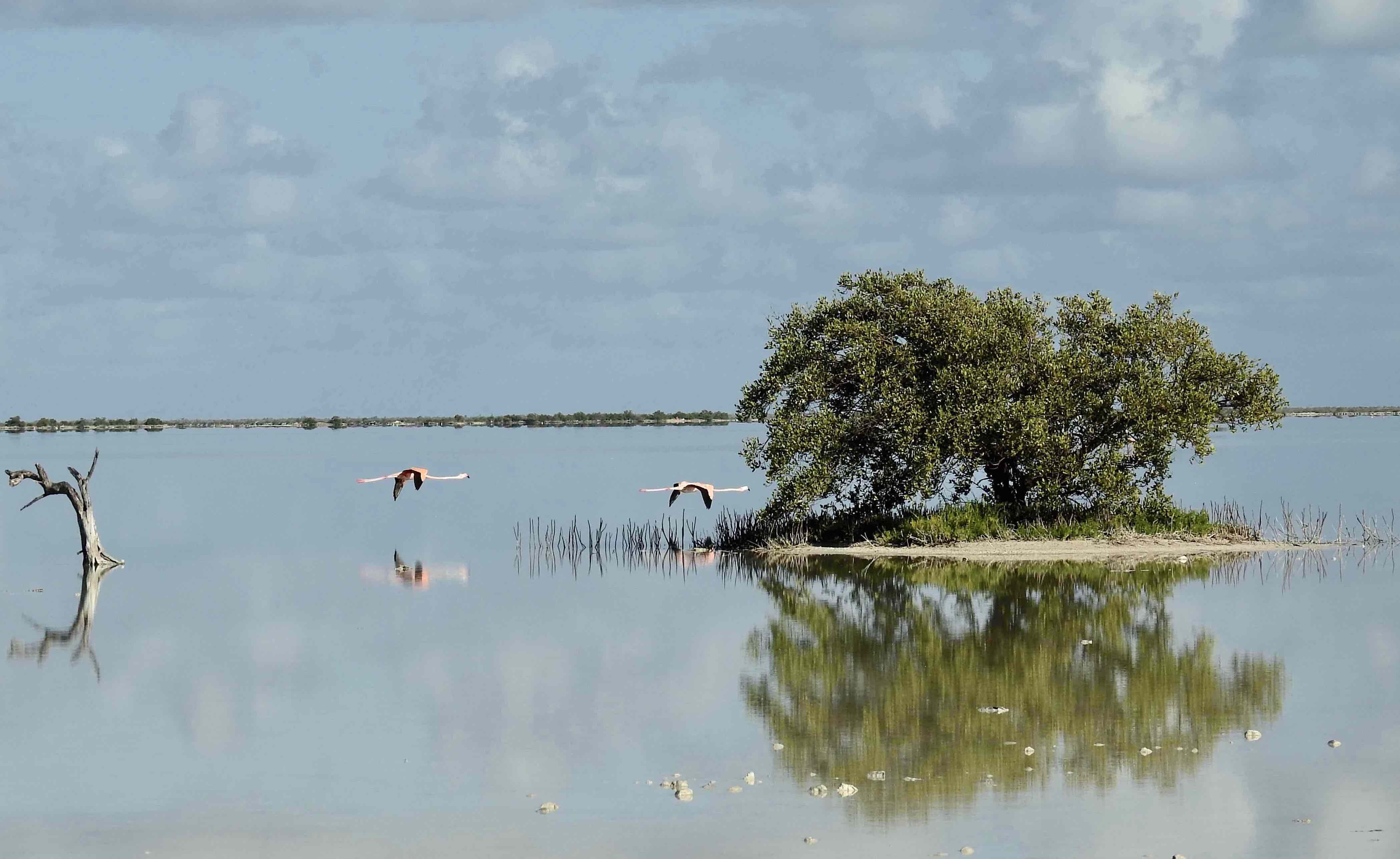
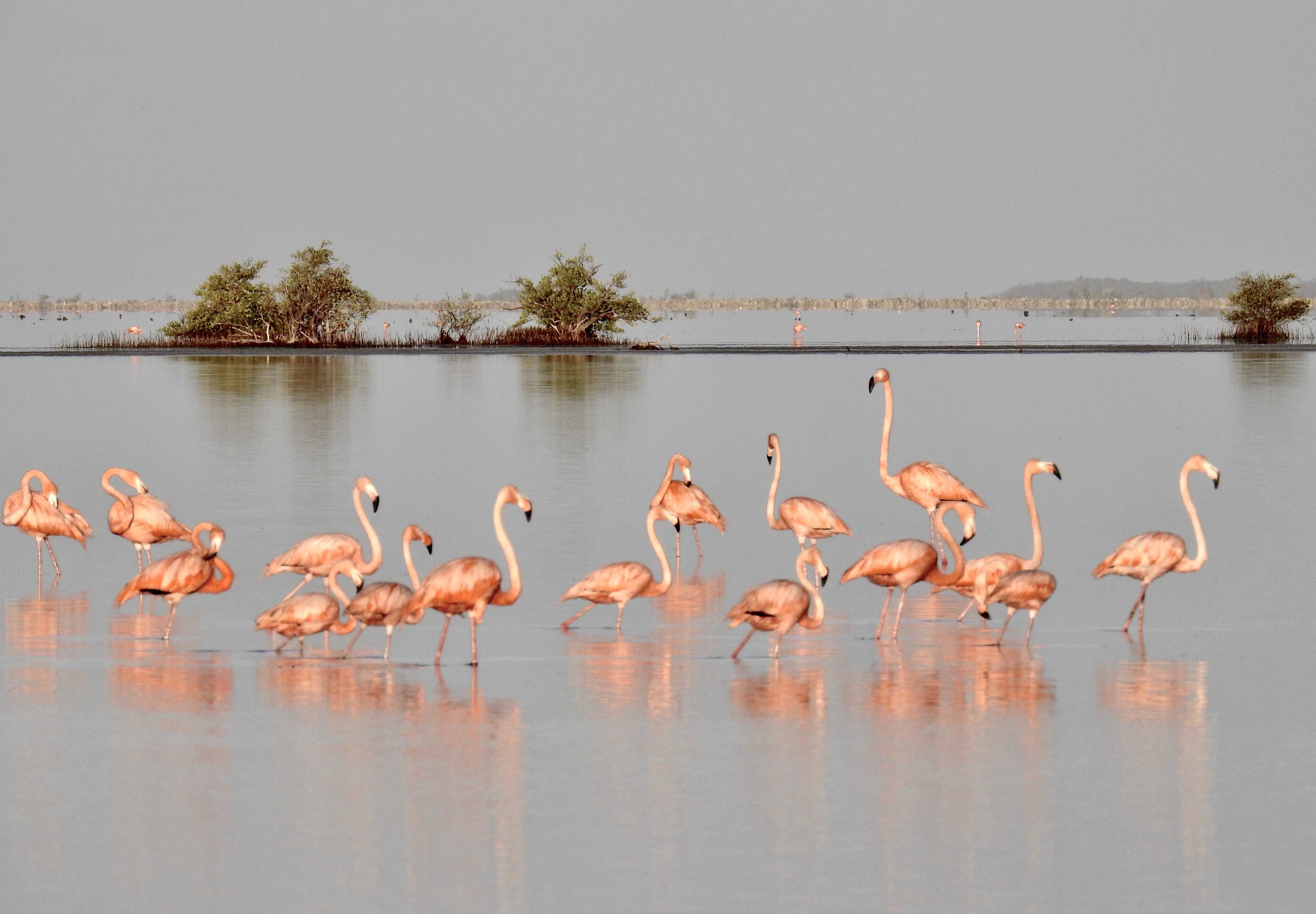
Melissa has been fortunate enough to be on Inagua during the breeding season when banding takes place. So besides the adult birds in their orange-pink finery, she has been able to photograph the strange ‘mini-volcano’ nests (above) and the sweet, awkward-looking grey chicks. And with her kind permission, Melissa’s superb ‘fillymingo’ photos adorn this article. I believe the real James Bond would have been delighted to admire them; I hope that goes for you too.
All great photos courtesy of Melissa Maura, with many thanks
THE PRINCE OF WHALES: BLAINVILLE’S BEAKED WHALES IN ABACO
There’s a strange affinity between humans and whales. Humans seem to think so, anyway – and whales seem to tolerate them amiably, perhaps now that the decimation of their populations by humans is (largely) a thing of the past. The Bahamas in general and Abaco in particular are in the mainstream of progressive cetacean research, led by the BMMRO at Sandy Point.
One of the speciality research species is the Blainville’s Beaked Whale. These magnificent creatures are deep divers, and although they are found in many parts of the world, the Bahamas is one of only 3 locations with a significant population for study. Most of the whales here were photographed within sight of land (and a few with the Castaway Island Disney Cruise Ship visible on the horizon!).
I’ve been lucky enough to be on the BMMRO research vessel on a beaked whale outing – and luckier still that we were able to spend plenty of time with a group of them, including some males. The header image is of a mature male with his huge teeth that protrude upwards from the lower jaw, and in time become encrusted with barnacles.
The whales were quite undisturbed by our presence – indeed they behaved much like dolphins, circling the boat and swimming under it; moving away and returning. This was an opportunity to count the whales, to identify those that had already been recorded, and to document any new ones. Each whale has its own unique pattern of marks, striations and in some cases healed wounds. The pair below are a good example.
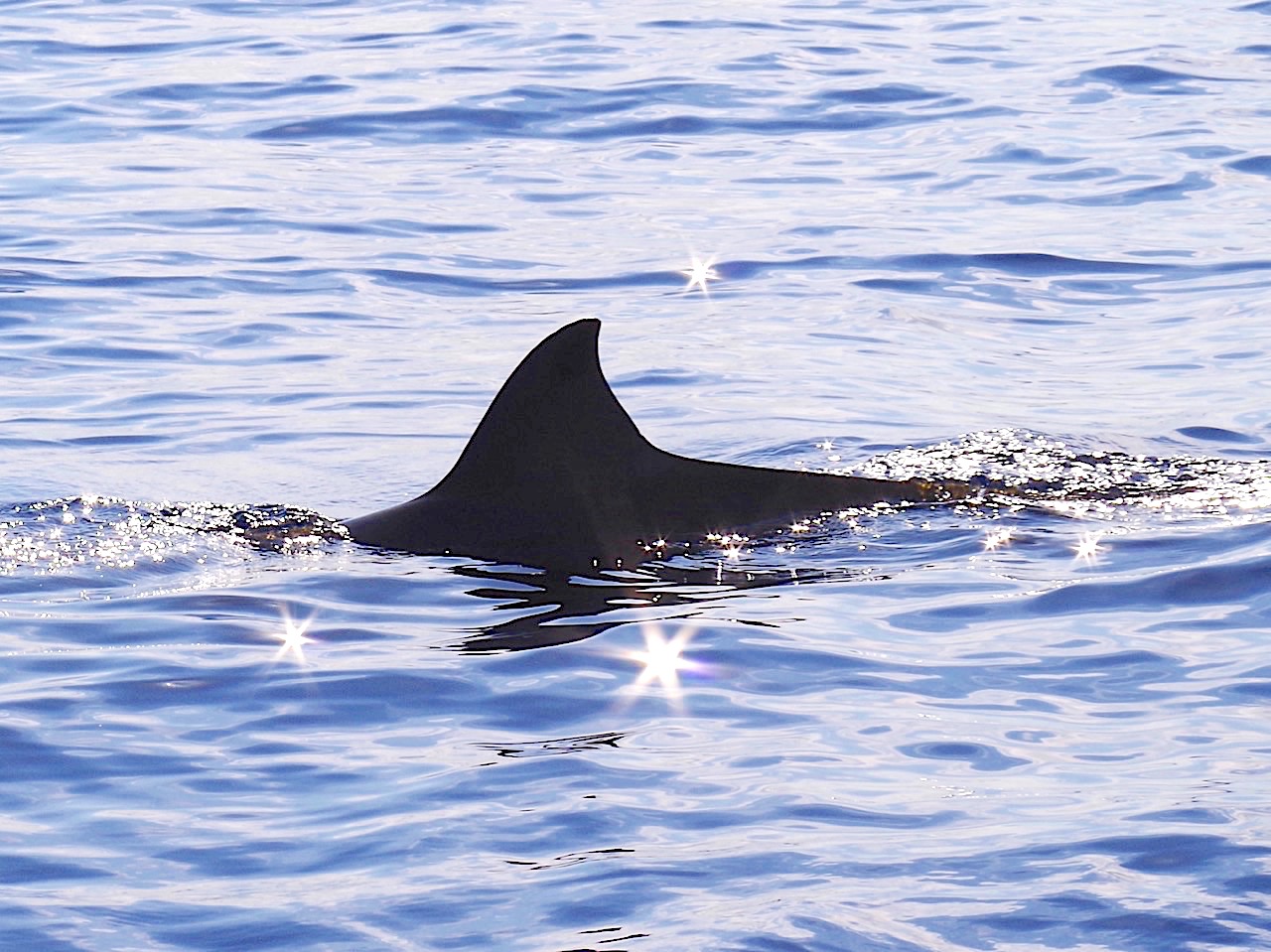
Also, the whales have individually distinctive dorsal fins, with nicks and tears that also act as a means of identification. These can often be made out from a distance with powerful binoculars or photographed with a long lens for later analysis (this ID method also works reliably for dolphins).
Beaked whales often bear the healed scars from the gouging bites of COOKIE-CUTTER SHARKS, a vicious little species that I recently featured. The distinctive circular scars on the back of the whale below result from encounters with these unpleasant creatures.
Finally, the photo below. It has no merit, photographically speaking, but I love the way that sometimes a ‘risk’ shot – into the sun, perhaps – produces rather magical effects. The unexpected ‘sea stars’ were a bonus!
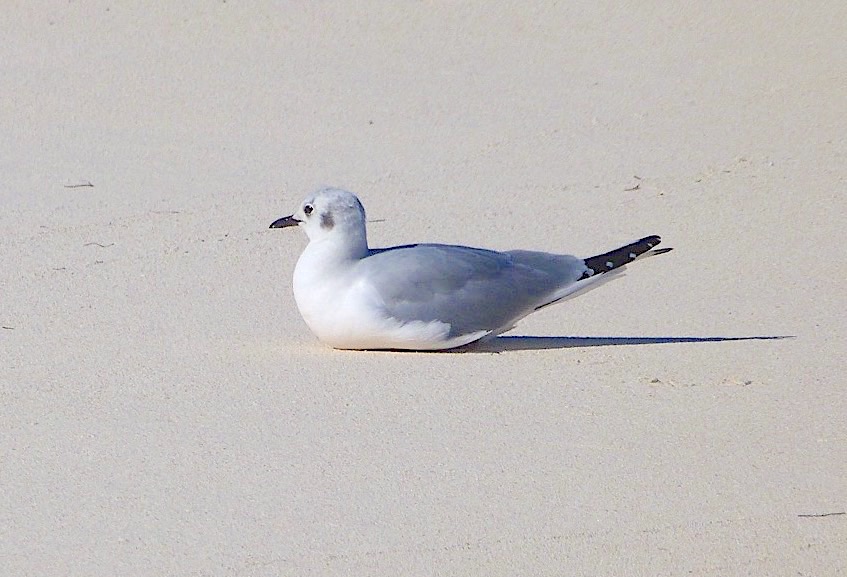
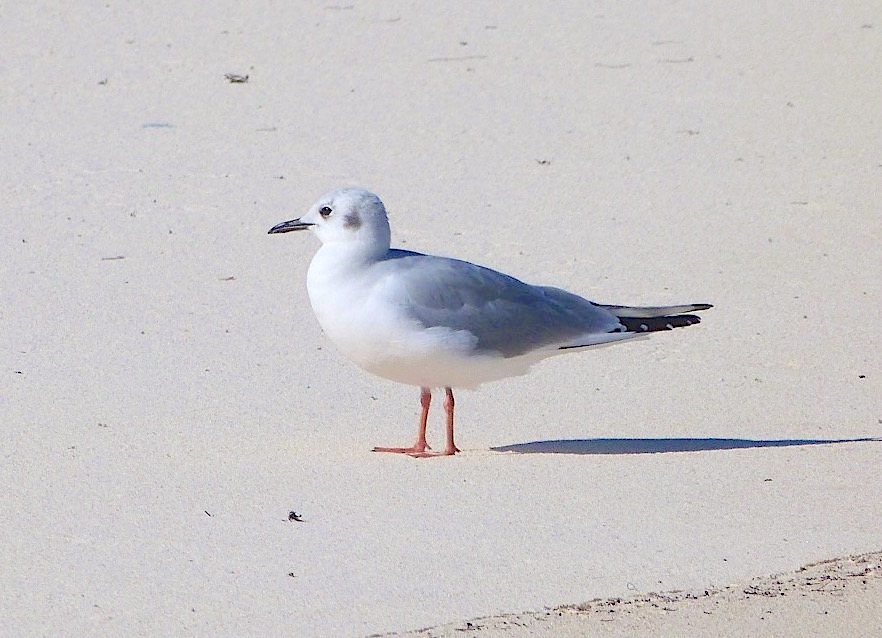
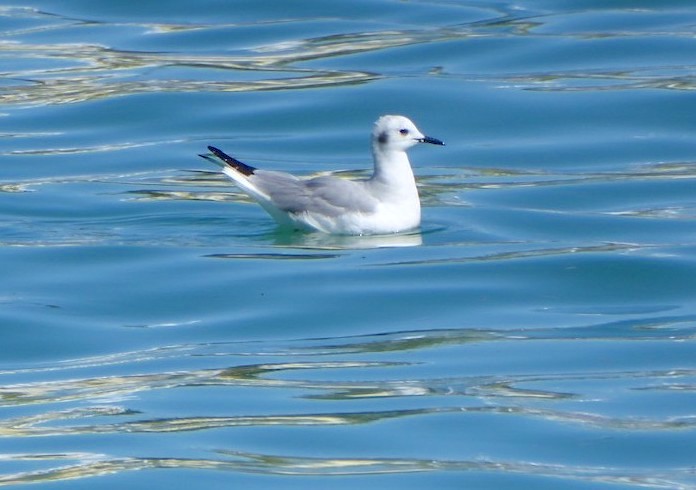
The Bonaparte’s gull Chroicocephalus philadelphia is one of the smallest gulls, and is found mainly in Canada and northern United States, though vagrants sometimes end up as far away as Europe. And Abaco. These birds are considered very uncommon winter residents on Abaco (categorised WR4). Yet within the last couple of months Elwood Bracey saw an amazing 4 in Treasure Cay harbour… Milton Harris reported seeing one at Hope Town harbour… Keith Kemp saw a couple on South Abaco (2 locations)… Eugene Hunn reported 1 on the Sandy Point dock… then suddenly there were 3 on the beach at Delphi. They have hung around there, too – let’s hope that all these birds find their way back to their breeding grounds safely. They have quite a journey ahead of them.
The species is named for Charles Lucien Bonaparte, a French ornithologist and nephew to the French emperor (see below for more about him). The philadelphia part of its Latin designation oddly results from the location from which the original ‘type specimen’ was collected (see below for the reason). This is not unlike the Cape May warbler, so named for the location of the original specimen, yet not recorded there again for more than a century (and still quite rare)…
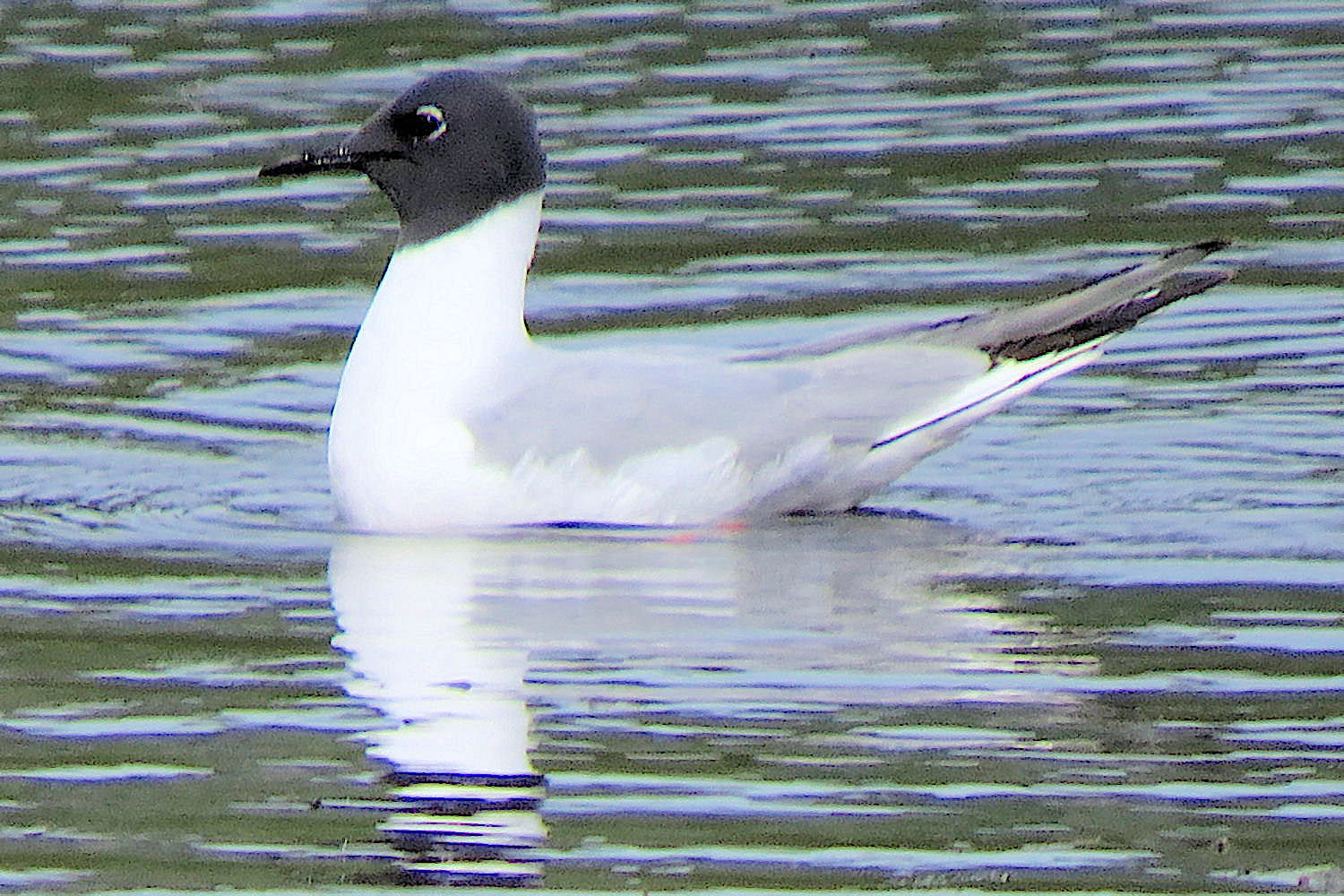
The gulls shown here are in their winter plumage, with the characteristic dark blotch behind the eye. In the breeding season, they acquire smart slate-black hoods:
10 BONAPARTE’S GULL FACTS TO TELL YOUR GRANDCHILDREN
Graceful in flight, resembling terns as much as gulls
Monotypic: the sole representative of its taxonomic subgroup
Males and females have very much the same colouring
Believed to be monogamous
Showy breeders, with much display, swooping, diving, yelling at each other etc
Typically (and ungull-like) they nest in trees, preferring conifers eg jack pine
Share nest-building and parenting duties
Capable of considerable aggression to protect their nests / chicks
Have been known to live 18 years
The only bird species with an Emperor’s name (prove me wrong!**)
We saw these birds on the beach most days, usually just 2 of the 3 at any one time. They were quite shy and hard to get close to, however subtly. And they kept on the move – except when they decided to have a rest.
TELL US MORE ABOUT PRINCE BONAPARTEBonaparte’s gull, Zenaida dove
Charles Lucien Bonaparte, 2nd Prince of Canino & Musignano 1803 – 1853
Bonaparte was a French biologist and ornithologist, and the nephew of the Emperor Napoleon. He married his cousin Zenaïde, by whom he had twelve children. They moved from Italy to Philadelphia, by which time Bonaparte had already developed a keen interest in ornithology. He collected specimens of a new storm-petrel, later named after the Scottish ornithologist Alexander Wilson. And presumably that’s where he found his specimen gull.
Bonaparte studied the ornithology of the United States, and updated Wilson’s work American Ornithology. His revised edition was published between 1825 and 1833. He was a keen supporter of a (then unknown) ornithologist John James Audubon. Rather sweetly, he created the genus Zenaida, after his wife, applying it to the White-winged Dove Zenaida asiatica, Zenaida Dove Zenaida aurita and Mourning Dove Zenaida macroura. He himself was later honoured in the name ‘Bonaparte’s Gull’.
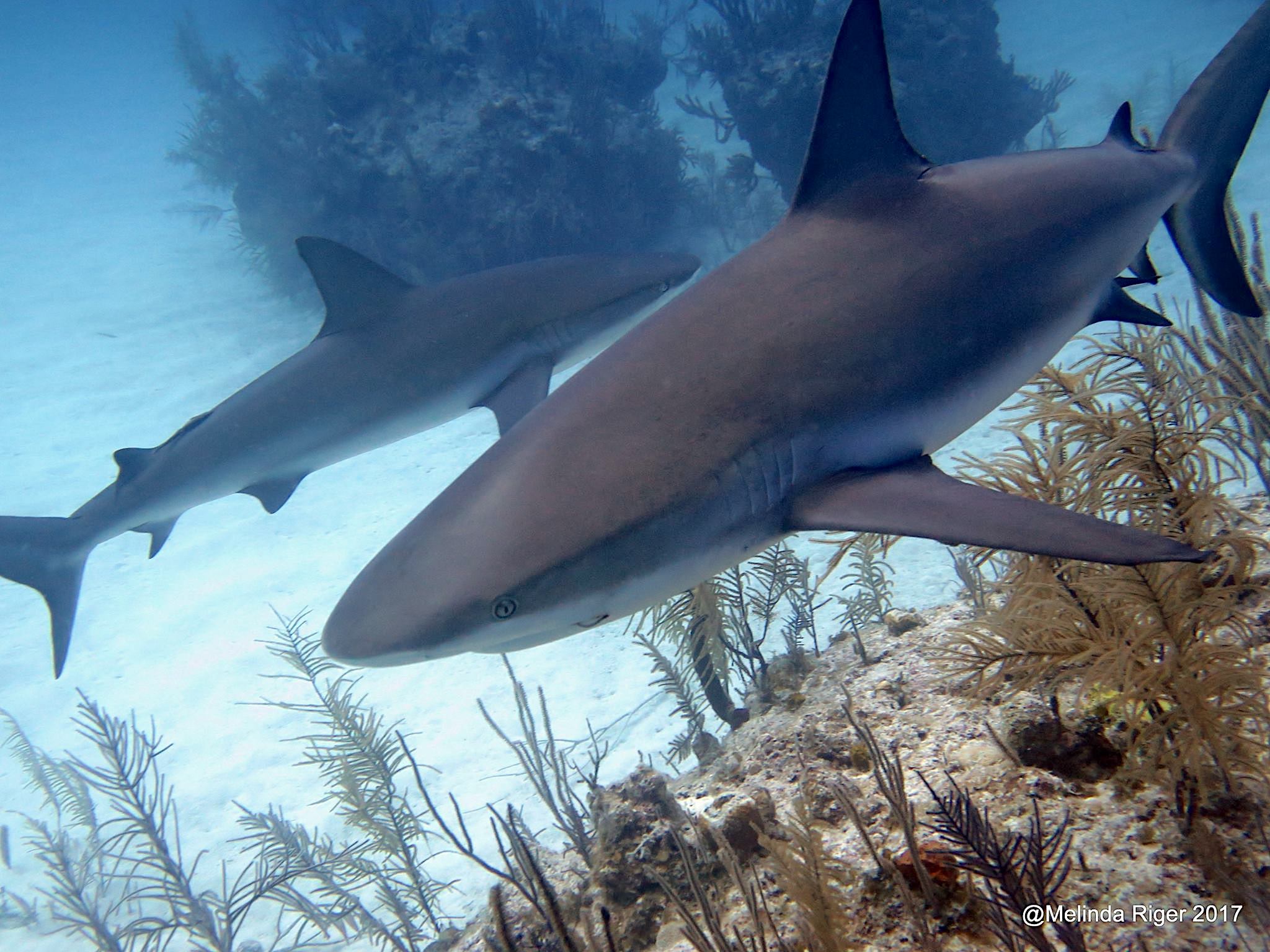
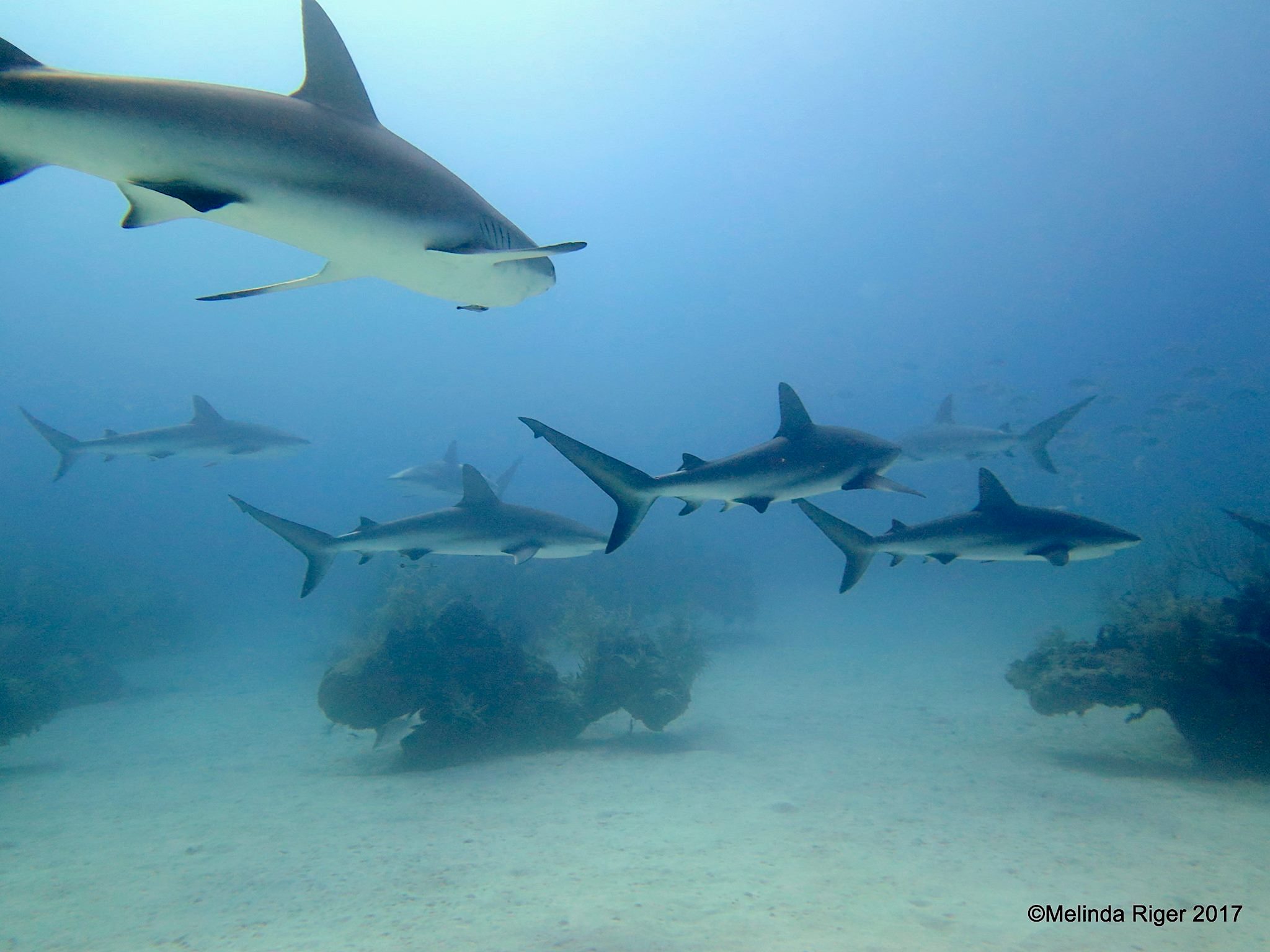
Immersion in current affairs these days brings inevitable acquaintance with sharks of various kinds, and all best avoided. Let’s have a look the real thing, the apex marine predators that in the Bahamas are all around you once you leave the safety of the shore. I haven’t featured them for ages, and it’s always a pleasure – a slight thrill, even.
I don’t do scuba, indeed my swimming would easily be outclassed by a competent four-year old. But I see these creatures when I’m out fishing; or as they hang in the breaking waves off the Delphi beach, watching intently for a meal.
We watch them (and stingrays) from the balcony as they lazily make their way round the margins of the wide bay, from little ‘uns to (recently) a huge bull shark. We watch as, when someone is in the water, they change course slightly to pass by them. So far, anyway…
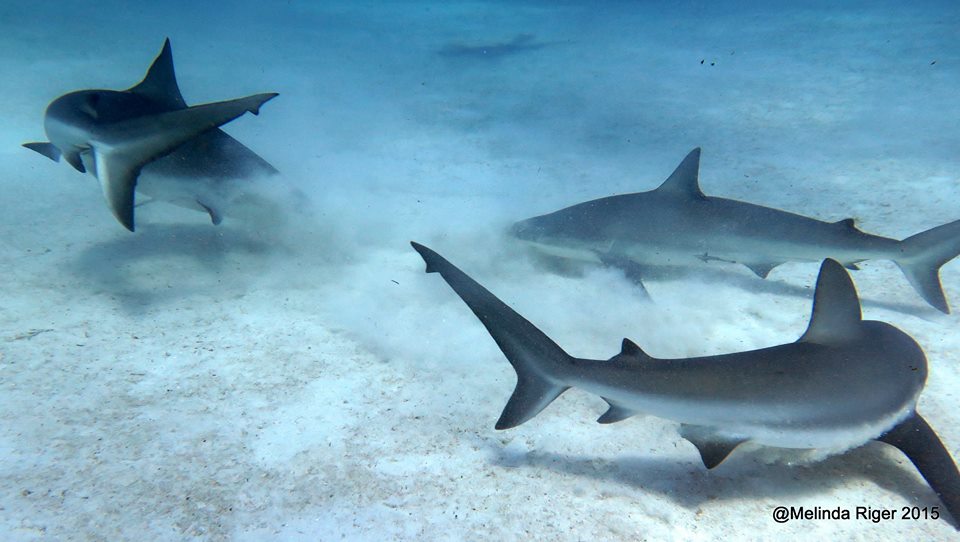
Feeding sharks
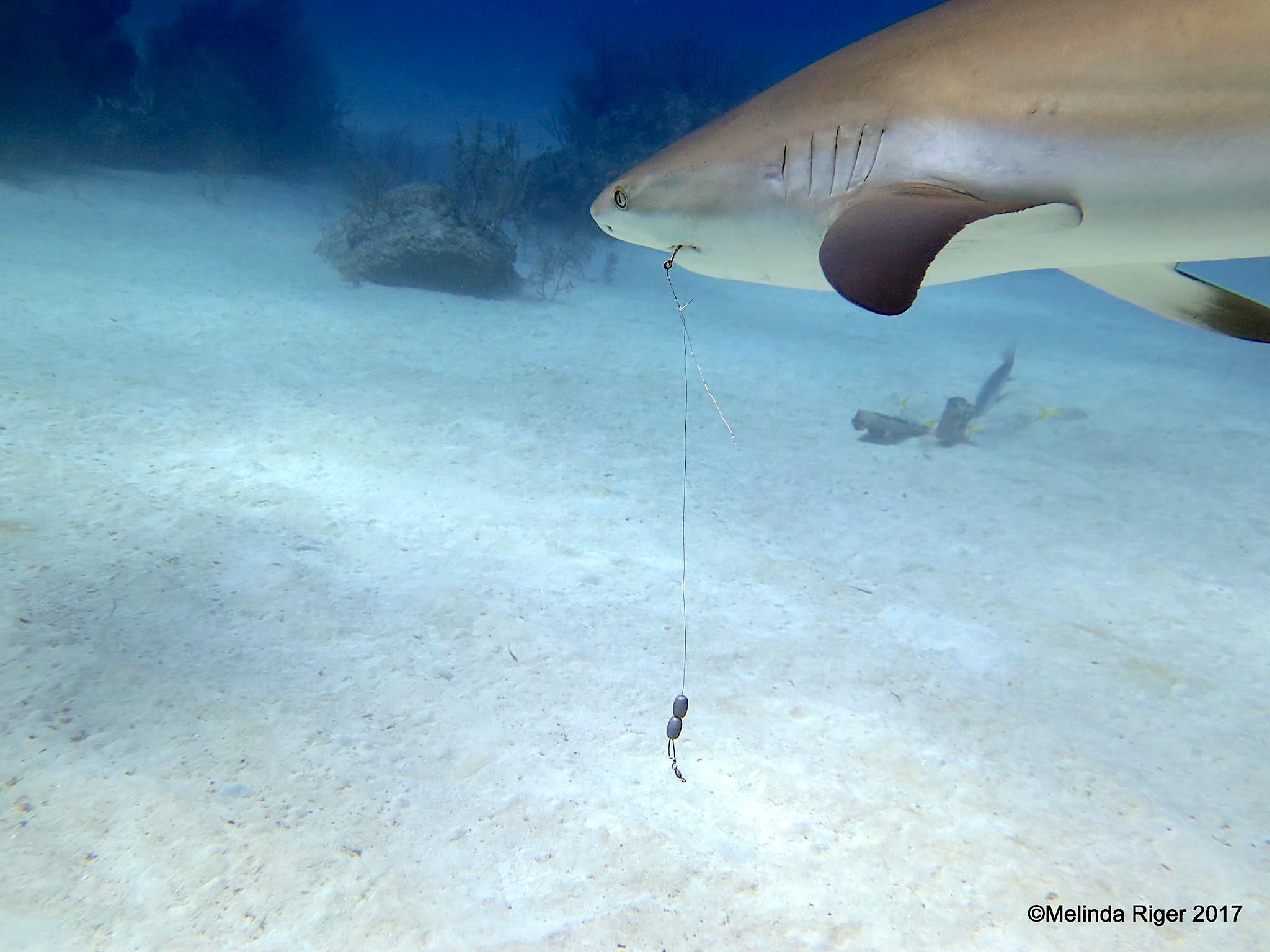
The one that got away… (a sad sight)
I once took a rather primitive underwater camera with me while snorkelling in Fowl Cays National Park. This was several years ago, when I believed a cheap 2mb camera might turn me into one of the Blue Planet team. I was wrong. The shark I saw, apparently some 20 miles away (when I examined the image) – well, that’s its tail, top left…
Just to look at these images is to understand that when you are in the sea, you are in the sharks’ environment. They are the masters of it. They have their rules, and they are not much interested in you… unless you break them. Or so the theory goes.
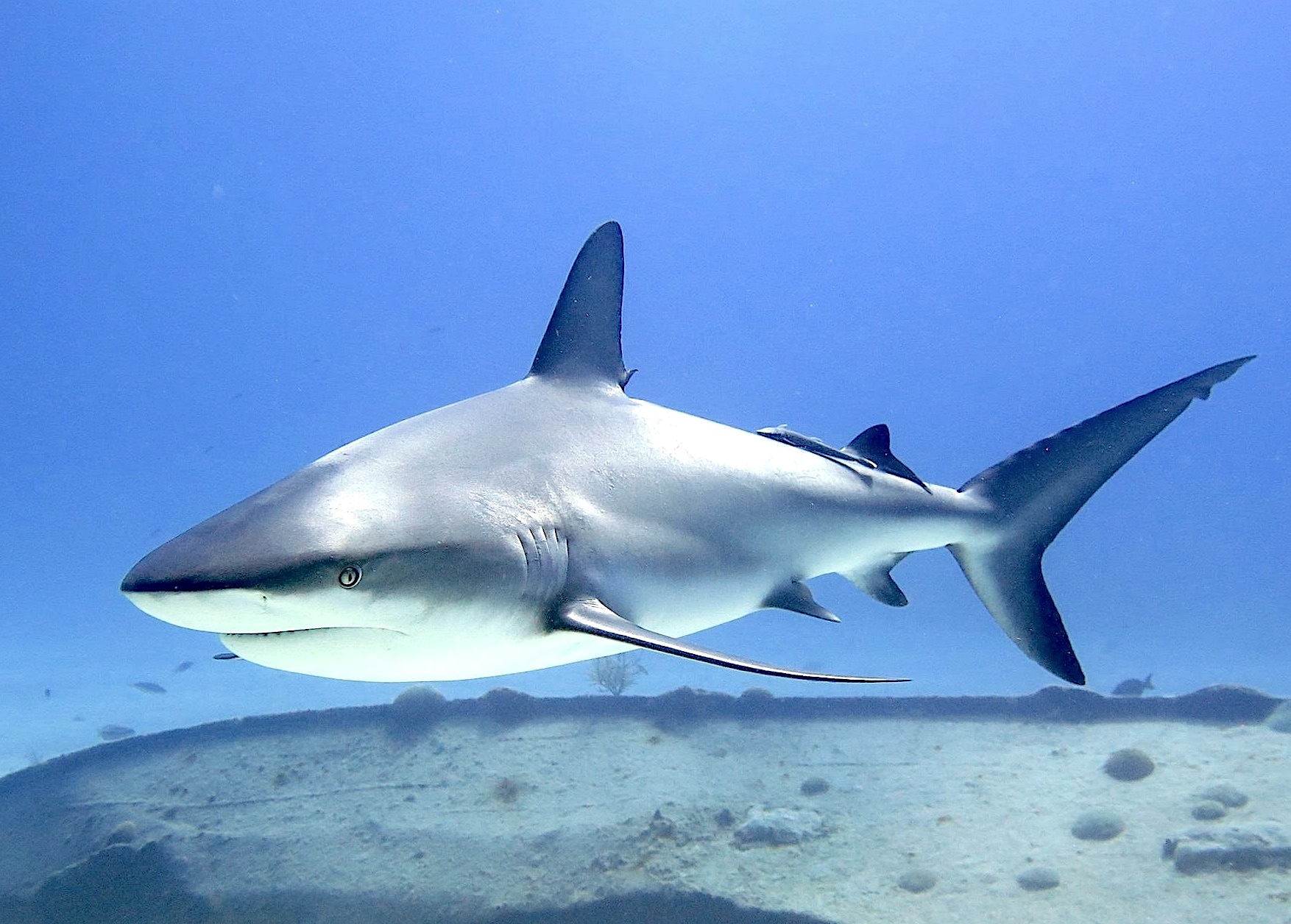
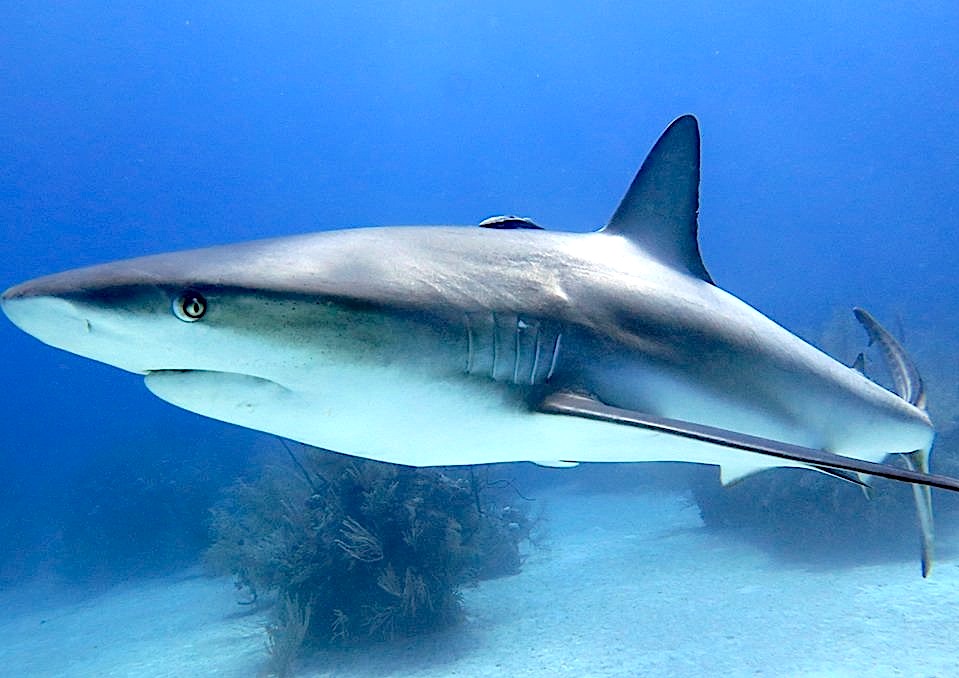
This fine shark below exemplifies the power and the menace of the shark. A creature to be admired, but also to be respected.
All fantastic photos: Melinda Riger / Grand Bahama Scuba
The northern curly-tailed lizard Leiocephalus carinatus, to give it its full name, resembles a tiny dragon with a twist in its tail. These little critters bask in the sun, or scuttle away into holes and crevices as you approach them. I suspect that even a confirmed herpophobic would find some charm in them. They are, of course, completely harmless to humans.
Surprisingly, the Bahamas is home not just to one but five different curly-tail species, and nine sub-species. Broadly-speaking, the variants are found on different and specific islands and have discrete local markings. Mostly they are brownish, but they may also be grey or with a greenish tinge like this one I recently photographed.
Curly-tail males, being very territorial, turn somewhat aggressive around breeding time, which is basically most the the year, from February to October. Behaviours indicative of their territorial claims include tail curling / uncurling (of course), head-bobbing, strutting about in an agitated way and inflating the sides of their necks in a threatening kind of way. The tiny-tails, 2″ long when born, are known as ‘hatchlings’.
An impressive ‘double curly’ by the pool at Delphi
THREATS TO CURLY TAILS
According to the Bahamas National Trust BNT, the main dangers to the curly-tails of the Bahamas are:
Dogs, cats, rats and introduced predators such as raccoons
Collection for the pet trade – curly tails are unprotected by CITES listing (also cute)
Collection of the rarer endemics by reptile enthusiasts seeking ‘exotics’
Development and habitat destruction (though it is noted that curly tails seem to adjust well in developed areas)
A curly tails sloughs its skin as it grows, as with snakes and other reptiles
WHY THE CURLY TAIL?
As mentioned above, for use in territorial posturing
In courtship displays by males to attract females (luckily a method not available to humans)
As a response to predators, confusing an attacker with movement at both ends
As a last resort, to detach to aid escape (the tail re-grows)
For fun and just because they can grow one and you cannot
Credits: all photos, Keith Salvesen except #2 & #6, Charles Skinner; BNT
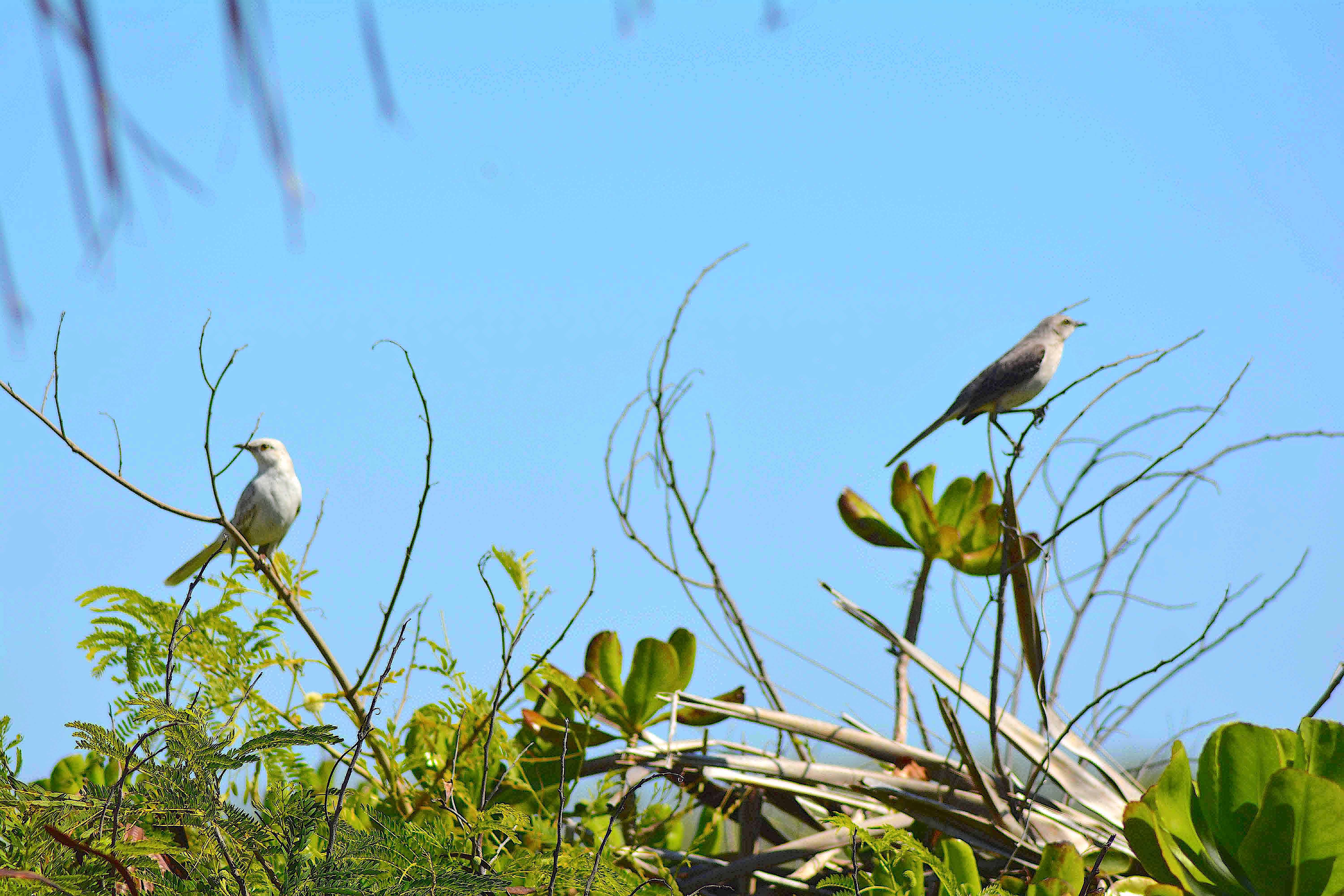
The header image is of a Bahama mockingbird recently photographed by keen-eyed Abaco birder Keith Kemp. It is a thing of wonder and beauty, exceptionally rare and possibly unique. I can find no other example of a leucistic bird of this species online.
This is not Keith’s first leucistic bird discovery on Abaco either – a while back he found a leucistic Western spindalis. You can read more about leucism and its distinction from albinism, and see a number of other examples of leucism including a white turkey vultureHERE
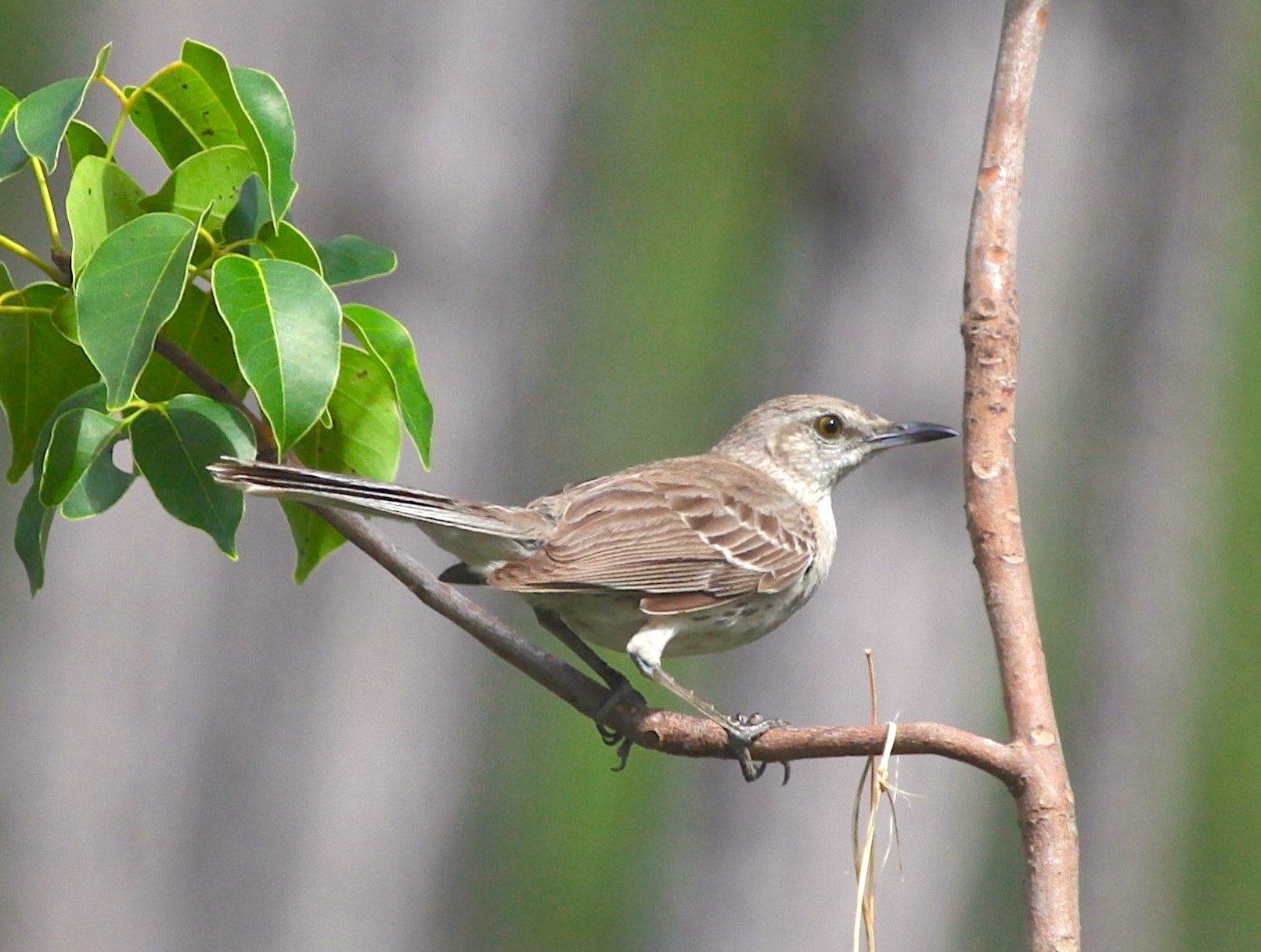
Even more astonishingly, Keith managed to get a photo of the ‘white’ bird and a ‘normal’ bird together (above). The difference is startling. Below is a fine photo by Peter Mantle of a Bahama mockingbird, as you would expect to see one – basically brown with a pale, flecked front / underside.
LEUCISM? EXCUSE ME, AND THAT IS?
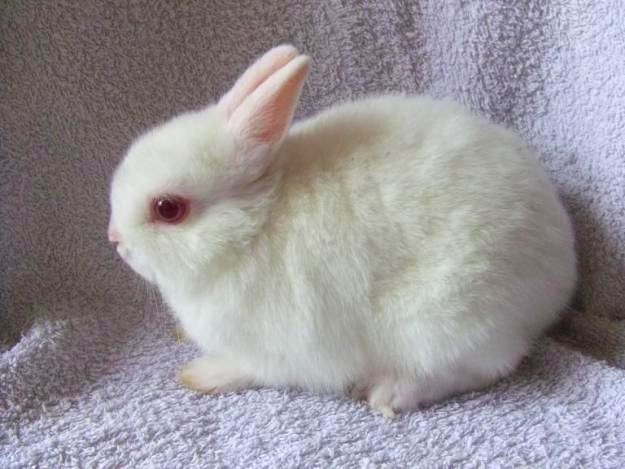
I’ll recap what I wrote in the earlier post linked above. First, what it is not. It is not albinism, which results from diminished or lost melanin production that affects pigmentation. One characteristic of the condition is the tendency to pink eyes, which of course is seen in humans as well as animals and birds. For example:
Albino Fwuffy Bwunny Wabbit
WELL, WHAT IS IT THEN?
Put simply, melanin is only one of many ingredients of pigmentation. Leucism is caused by pigment loss involving many types of pigment, not just melanin. In birds this results in unnaturally pale or white colouring of feathers that may be partial or entire. The eyes of a bird with leucism are unaffected – so, not pink. At one extreme, if all pigment cells fail, a white bird will result; at the other extreme, pigment defects cause patches and blotches of pale or white on the bird, often called a ‘pied’ effect. The condition can be inherited.
KK’s leucistic Western spindalis, an example of partial or ‘pied’ leucism
So there you have it: another extreme rarity for Abaco, and a further example of how rewarding – and surprising – birding on Abaco can be. To repeat the link to the more detailed article on leucism in birds, you can find with (*distraction alert*) some music and inappositely comedic material thrown inHERE
All photos Keith Kemp except the ‘normal’ bird, Peter Mantle
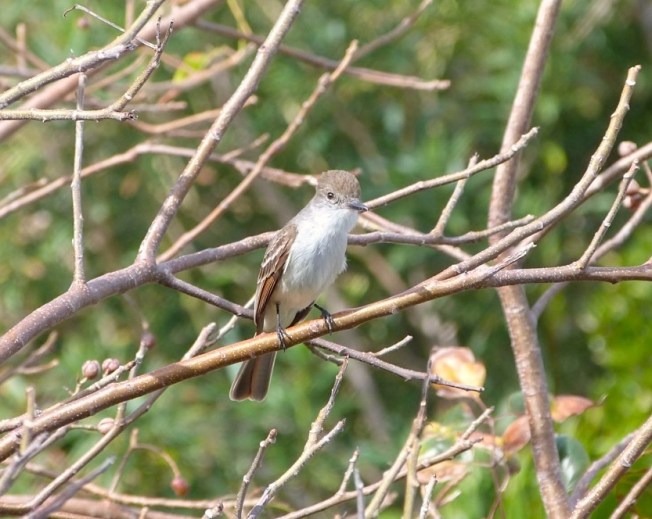
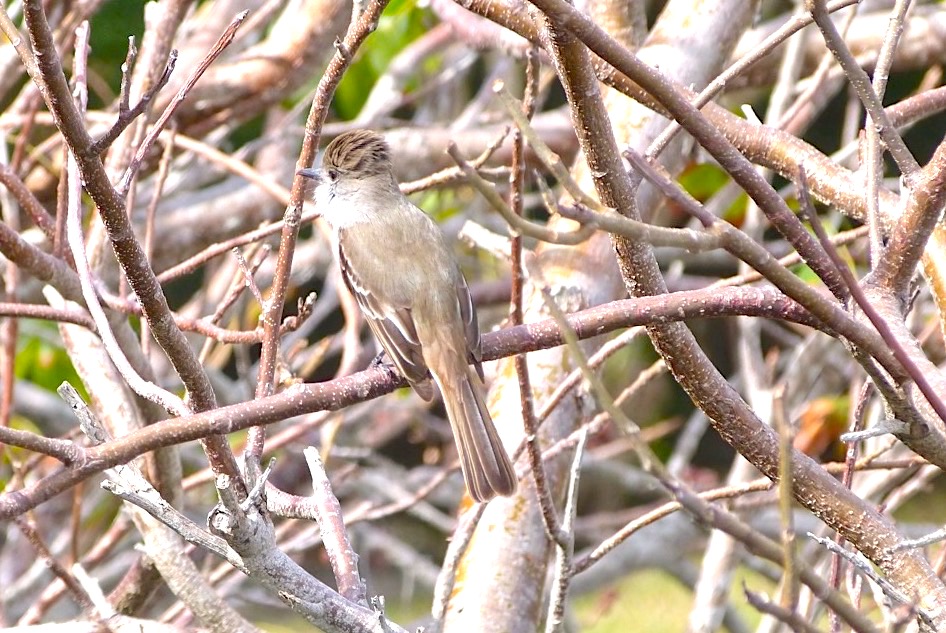
LA SAGRA’S FLYCATCHERMyiarchus sagrae is one of 3 permanent resident ‘tyrant’ flycatchers found on Abaco, the others being theCUBAN PEWEE and the LOGGERHEAD KINGBIRD. In the summer, they are joined by another commonly-found species, theGRAY KINGBIRD. There are other flycatchers, but they are seasonal, transient or vagrant, and far less common.
Two classic LSF poses: ‘head-on-one-side’ & ‘watching-for-insects’
I have just been watching one of these frankly rather very cute little birds as it patiently watched me watching it. I wasn’t very close, and I kept my distance because it seemed a little wary and I didn’t want to blow the chance of a couple of photos – the familiar ‘bird-flies-off-just-as-shutter-pressed’ syndrome.
Sized between the little cuban pewee, with its diagnostic crescent eyes, and the larger loggerhead kingbird (see below), the LSF shares with them the ability to raise its crest. I was luckily able to catch this on camera – and also some singing.
As the name suggests, the species is primarily insectivore, fly-catching in the undergrowth and low scrub or ‘hawking’ from branches. However these birds also eat berries and seeds. Their call is a high pitched single or double noted sound described as ‘wink’. Here’s a Bahamian example.
Paul Driver / Xeno-Canto
The LSF’s natural habitat is coppice and rough scrubland. It builds its nest in a tree cavity or similar natural hole, and usually lays a clutch of two to four eggs. And this morning by coincidence, Abaco birder Rhonda Pearce posted a photo of a LSF nest with its eggs.
ID CONFUSION
Here are the two flycatcher species, mentioned above, that might cause confusion:
CUBAN PEWEE
LOGGERHEAD KINGBIRD
Ramón Dionisio José de la Sagra y Peris (1798–1871)
For those who may be wondering who – or what – a ‘La Sagra’ is, the answer is: a multi-talented Spanish botanist. He was also a writer, economist, sociologist, politician, anarchist, and founder of the world’s first anarchist journal El Porvenir (“The Future”). At one time he lived in Cuba and became director of Havana’s Botanical Garden. His name lives on arguably more significantly in ornithological than in anarchist circles (actually, an ‘anarchist circle’ must surely be an oxymoron…)
[I note in passing that La Sagra is a provincial area in Spain, an Italian festive celebration, a chocolatier, or a small comet – all of which meanings may have to be negotiated online before you get to the flycatcher…]
To continue with the occasional PHILATELIC theme of this blog, here are stamps from the Cayman Islands and Cuba featuring the La Sagra’s Flycatcher. The Cuban stamp commemorates the death of Juan Gundlach, the man who chose La Sagra’s name to bestow on the LSF. The colouring is… somewhat unrealistic!
Credits: All photos Keith Salvesen except nest (Rhonda Pearce) and loggerhead kingbird (Mrs RH); recording by Paul Driver / Xeno-Canto; stamps O/S
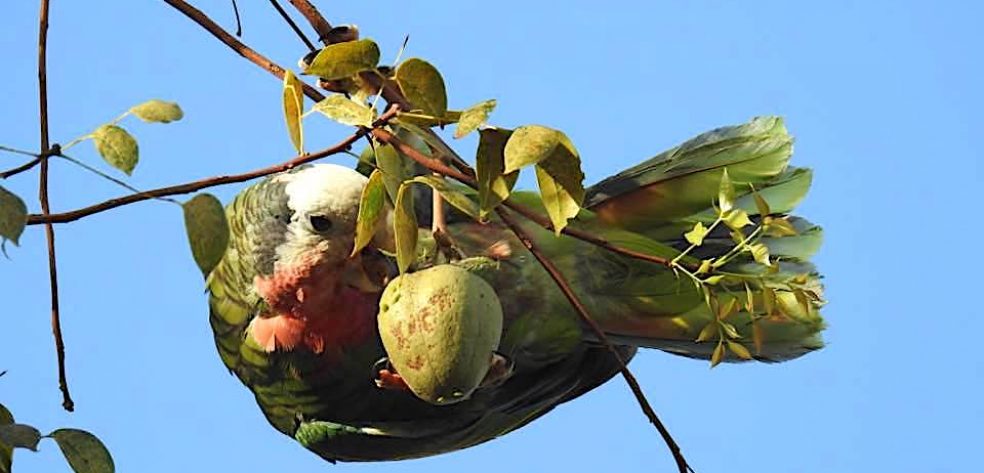
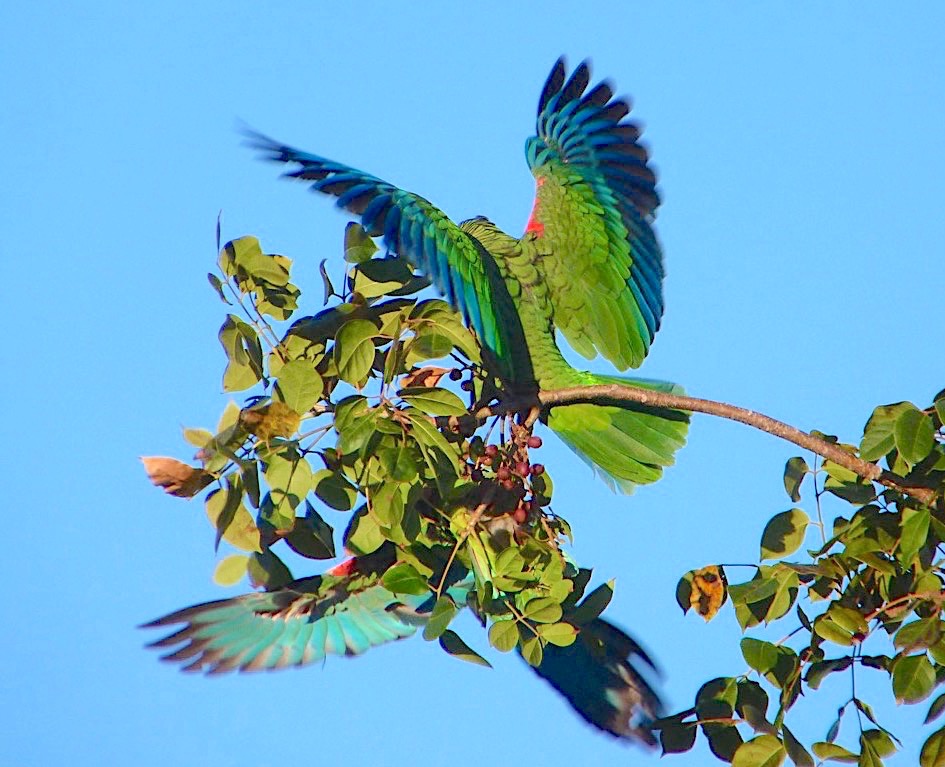
Mmmmm… gumbo limbo berries at Bahama Palm Shores. My favourite evening snack as we parrots head south to the National Park in the evening.
There’s a flock of about 60 of us tonight. I hope I’m left alone to get stuck in – there are plenty of trees to choose from here…
Uh oh! That was never going to happen. We are a noisy rowdy gang, and no one gets to eat alone for long…
This is really bad news… this guy’s hungry, and he’s swooped in higher up the branch, so he’s got an advantage.
Time to take a stand. I’m getting on a level with him. I was here first – these are MY berries… But he’s getting shouty. And there’s aggro in the air…
Right, I’m backing off here. I never did much like gumbo limbo berries, now I come to think of it… And he looks mean as hell. But wait – I’m not just going to back down. Let’s give him a little surprise to remember me by.


























































 ROLLING HARBOUR ABACO
You must be logged in to post a comment.