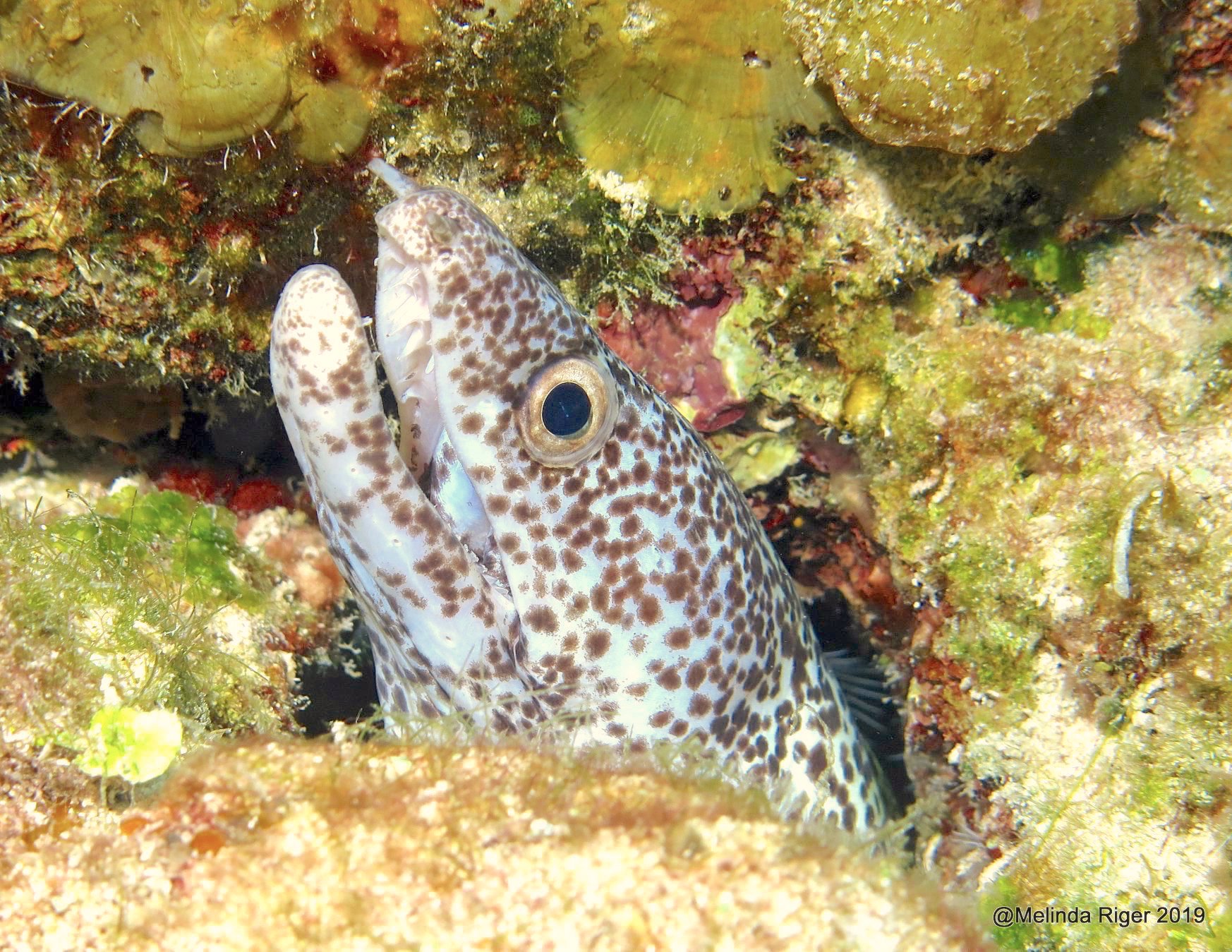
MORAY EELS are plentiful around the reefs of the Bahamas. Some species, anyway. The ones you are most likely to encounter are green morays, and the spotted morays shown here. Less common are chain and golden-tail morays and, rarer still I suspect (because I have only one image in the archive…) is the ‘purple-mouth’.
Despite their moderately intimidating appearance – an adult may grow to 1.5 meters or more, with sharp teeth at the front end – these eels are not especially aggressive unless provoked. Best to assume that all humans will behave respectfully around them and remember that people are the intruders in the eels’ domain.
Morays tend to be loners of the reefs, but they do gather in groups from time to time. And as shown below, they will also hunt with other species, for example this tiger grouper.
Sharp-eyed, sharp-toothed
Looks friendly enough…
A long and surprisingly large body, generally concealed in the crevices of the reef
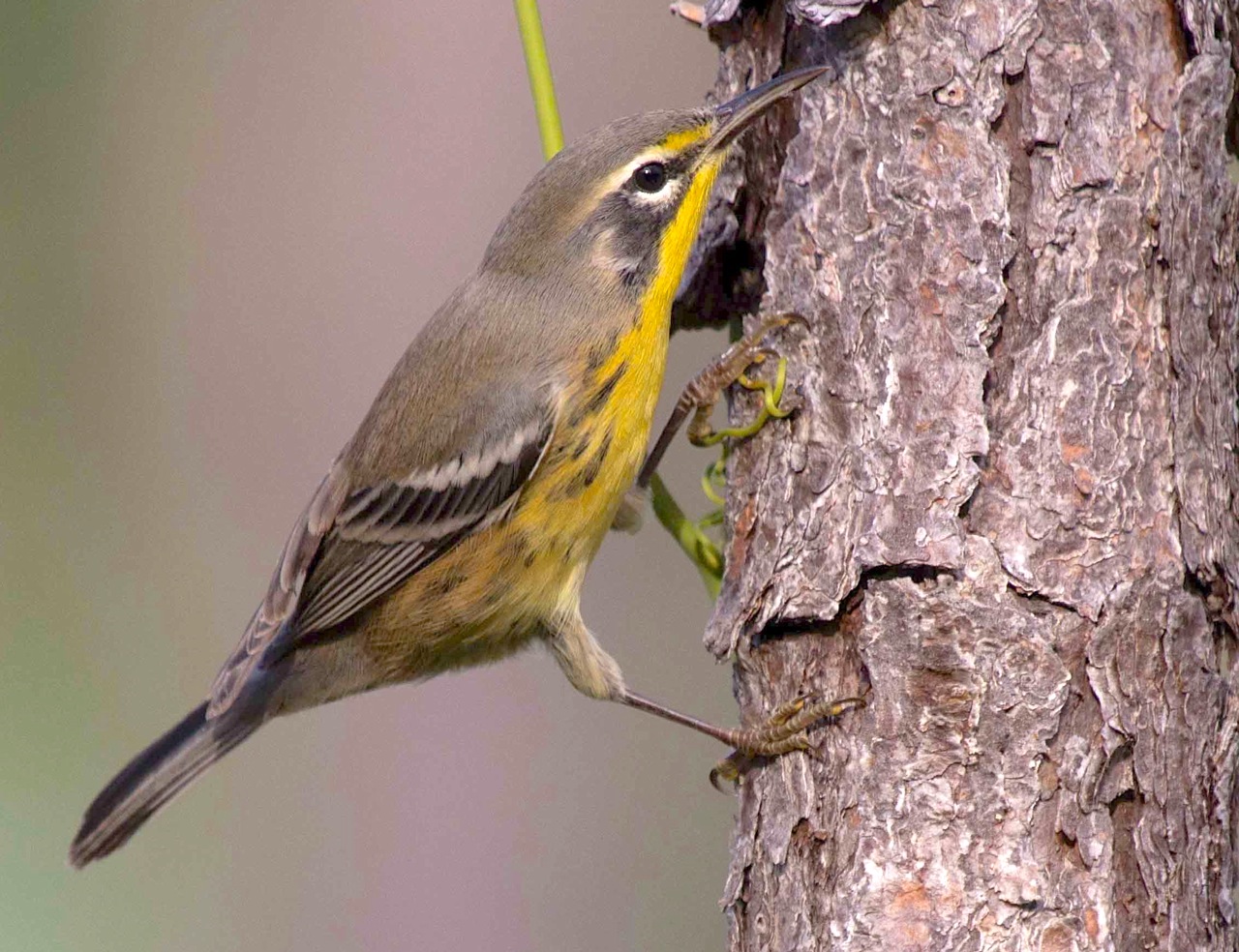
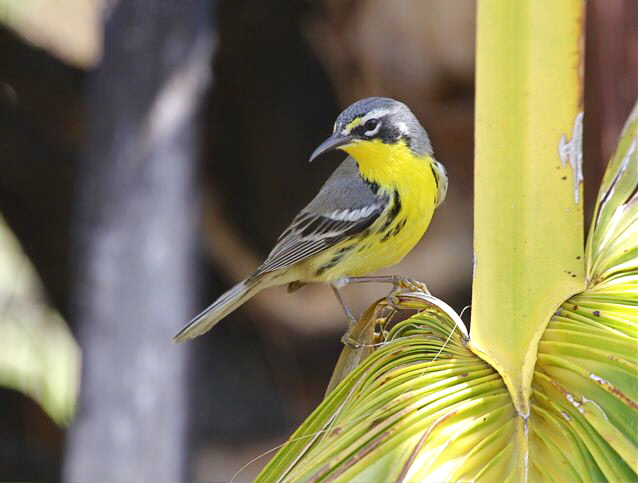
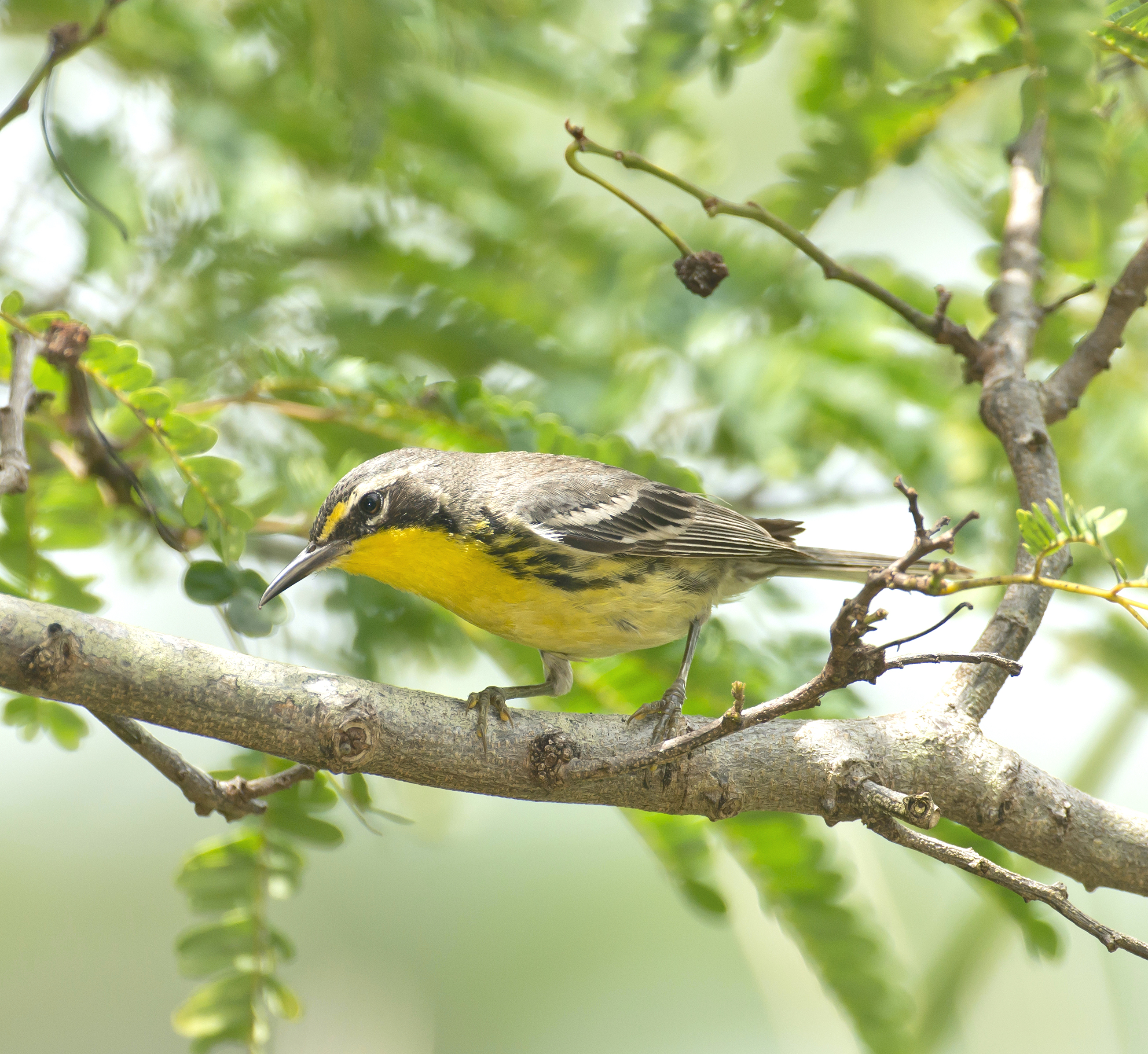
I was looking at the list of the dozens of Abaco bird species I have featured over the years, when I was struck by the complete omission of one of Abaco’s most significant small birds – the Bahama Warbler Setophaga flavescens. This warbler species is of the most important in the Bahamas for several reasons, any one of which should have prompted me to showcase this lovely bird before now.
A SPECIALITY BIRD
The Bahama warbler is a significant species with a near-unique status in the Bahamas:
Found only on Abaco and Grand Bahama
One of only 5 bird species endemic to the Bahamas
One of only 2 endemic warbler species on Abaco (with theBAHAMA YELLOWTHROAT)
One of only 5 permanent year-round resident warblers (33 others are migratory), the other 3 being the OLIVE-CAPPED, YELLOW, and PINE warblers.
Until 2011, the BAWA was classified as a subspecies of the YELLOW-THROATED WARBLER. The ornithological powers-that-be then recognised that the two species were distinct in both appearance and in vocalisation, and split them into separate species (this splitting / amalgamating process occurs annually and plays havoc with the precious ‘Life Lists’ kept with such rigour by ardent birders**.
The BAWA has such a confined range that even the extensive reach of the wonderful Cornell Lab of Ornithology has not got as far as this bird. The info sections of the otherwise comprehensive website for Neotropical Birds are blank and waiting for someone to upload some details. Here are a few facts in one of a very good series of info-graphics produced by the BAHAMAS NATIONAL TRUST.
** I have never even started a Life List, which demonstrates just how lightweight I am as a bird person
Credits: Alex Hughes (1, 4); Bruce Hallett (2, 6); Woody Bracey (3); Tom Sheley (5); Range Map, Cornell; Info G, BNT
Change is in the air. And in the sea. Above, you will notice the brand new logo of the Bahamas Marine Mammal Research OrganisationBMMRO based in Sandy point, Abaco. Several major Bahamas-wide projects are in progress or in preparation, and as we approach 2020, this is the perfect time for some marine mammal news, illustrated with great images from BMMRO research trips.
Bottlenose Dolphins
BMMRO’s scientific research over many years is a prime reason why we all have the privilege of seeing the neonate sperm whale calf in the header image. It was photographed with its mother off South Abaco last Spring. Much-appreciated support of the essential research and conservation work of the organisation helps to ensure that the whales, dolphins and manatees in Bahamas waters are watched over, documented in minute detail (even their calls) and protected. The marine mammals of the Bahamas have a promising future looking ahead to 2020, and well beyond.
Since the hurricane struck nearly 3 months ago, order is slowly being imposed on the chaos. Debris is being removed in vast quantities, building repairs are in progress, shops and some businesses are starting to open – and even (only last week) a bank.
Specific bird news from Abaco post-Dorian is sporadic, with people having plenty of other concerns at the moment and for some time yet. The wellbeing of the parrots has been checked during a scientific survey last month. There is infrequent but positive news of the shorebirds, especially of the piping plovers that are counted each winter season. There have been some reports of the warblers (of which there are an astonishing 38 species recorded for the Island and its cays).
As yet, I have seen no recent mentions at all in SocMed about the hummingbirds – the endemic Bahama Woodstar (#1 F; #2 M); and the Cuban Emerald (#3 F; #4 M). Are they around? Is anyone seeing them darting about like jinking bullets or feeding on flowers on the hover? I’m not on-island, so I’d be very pleased to know: are the hummers still humming?
Photos: Tara Lavallee (1); Bruce Hallett (2); Keith Salvesen / Rolling Harbour Abaco (3), (4)
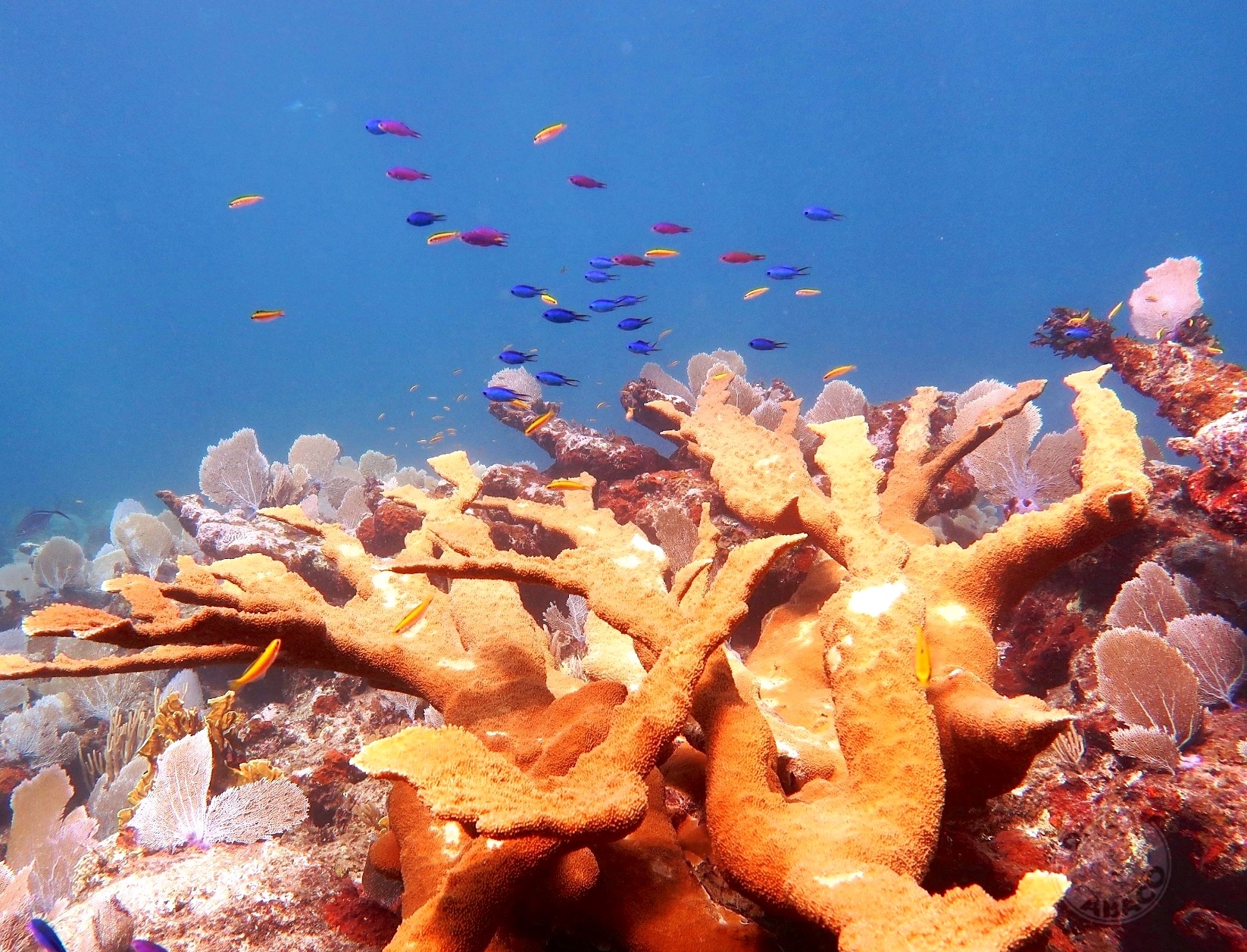
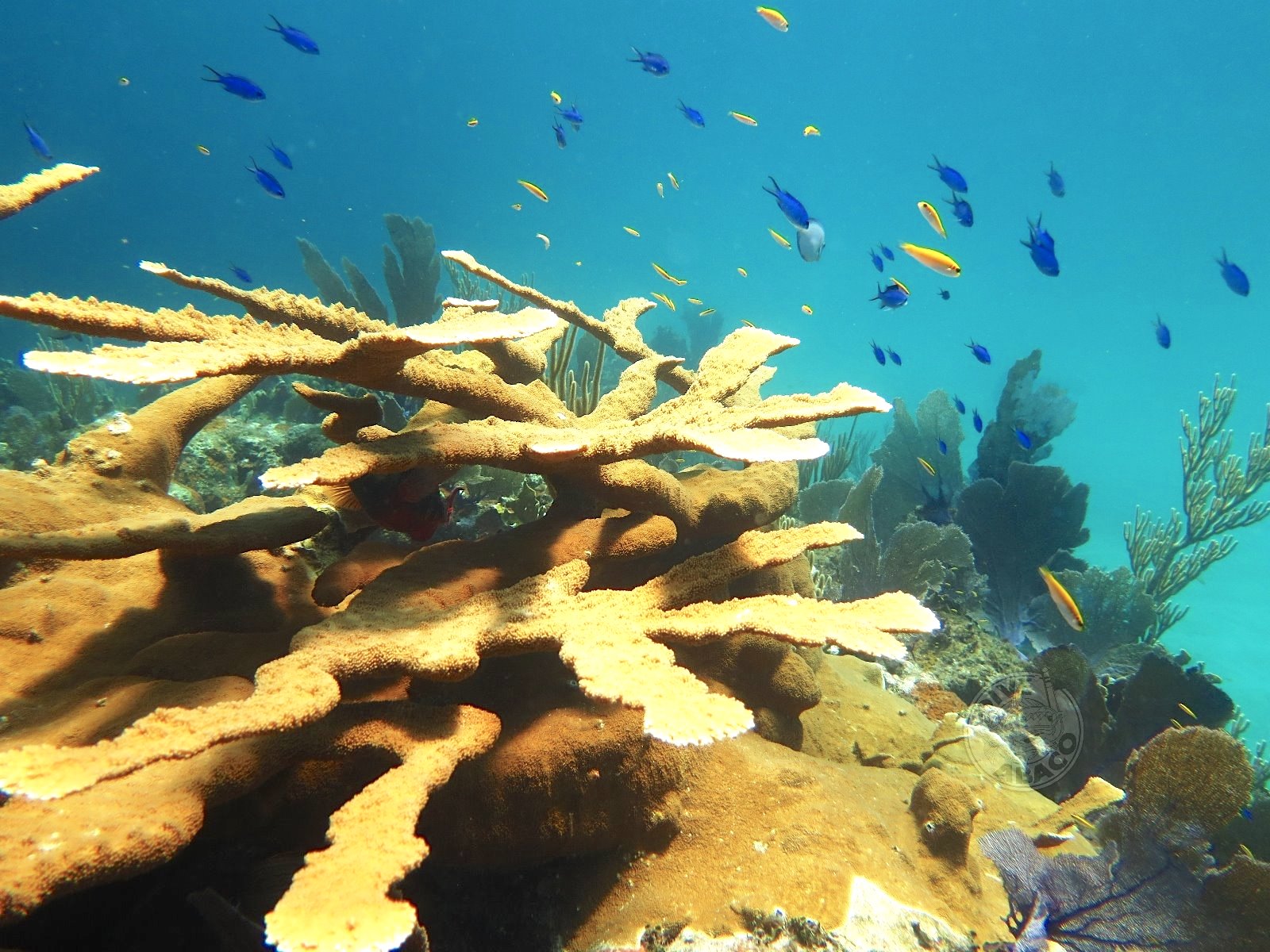
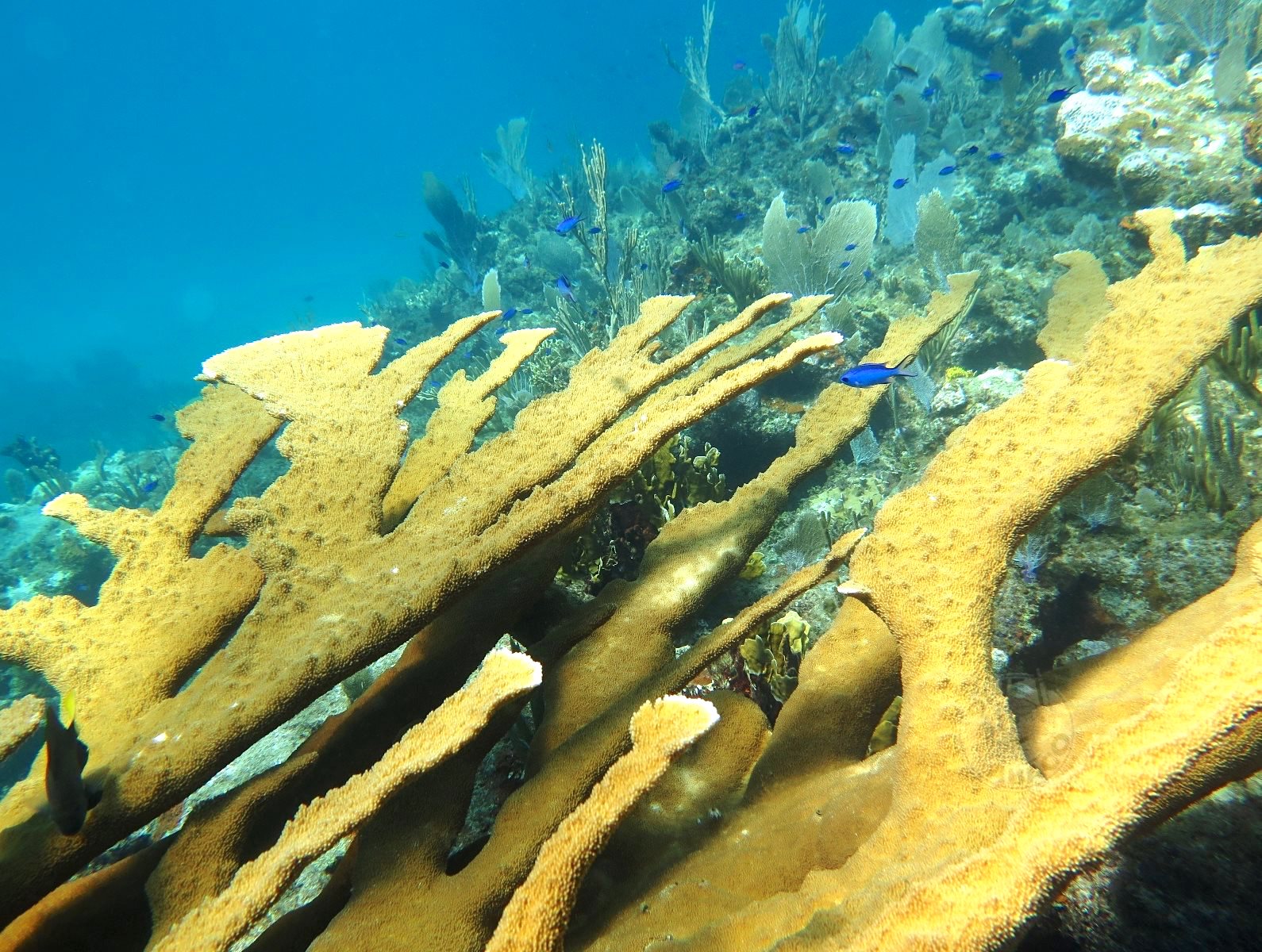
Elkhorn coral (Acropora palmata) is a widespread reef coral, an unmistakeable species with large branches that resemble elk antlers. The dense growths create an ideal shady habitat for many reef creatures. These include reef fishes of all shapes and sizes, lobsters, shrimps and many more besides. Some of these are essential for the wellbeing of the reef and also its denizens.
GOOD POST-DORIAN NEWS ABOUT ABACORAL
A recent report from FRIENDS OF THE ENVIRONMENT brings encouraging news about the reefs of Abaco post-hurricane, and an indication of the resilience of the coral to extreme conditions (with one exception for a reef too close to the shore to avoid damage from debris).
Shortly before Dorian hit, The Perry Institute for Marine Science and its partners surveyed reefs across Grand Bahama and Abaco to assess their health. Following Dorian, they were able to reassess these areas and the impact of the hurricane. Over the 370 miles that the surveys covered, minimal damage was found on the majority of reefs. Unfortunately Mermaid Reef, where FRIENDS does most of our educational field trips, sustained extensive damage due to debris from its close proximity to the shoreline. We are looking into how we can help with logistics to get the debris removed, and hopefully the recovery will begin soon.
The scientists were also able to visit four of the Reef Rescue Network’s coral nurseries and assess out-planted corals in national parks in both Grand Bahama and Abaco. The great news is that all of the corals on these nurseries survived the storm and will be used to support reef restoration. Also from the surveys, it appears that our offshore reefs around Abaco sustained minimal damage, including Sandy Cay Reef in Pelican Cays Land and Sea Park (pictured above). This gives us hope for the recovery of our oceans post-Dorian and proves how resilient these amazing ecosystems are.
Examples of species vital for healthy corals include several types of PARROTFISH, the colourful and voracious herbivores that spend most of their time eating algae off the coral reefs using their beak-like teeth. This algal diet is digested, and the remains excreted as sand. Tread with care on your favourite beach; in part at least, it will consist of parrotfish poop.
Other vital reef species living in the shelter of elkhorn and other corals are the CLEANERS, little fish and shrimps that cater for the wellbeing and grooming of large and even predatory fishes. Gobies, wrasse, Pedersen shrimps and many others pick dead skin and parasites from the ‘client’ fish including their gills, and even from between the teeth of predators. This service is an excellent example of MUTUALISM, a symbiotic relationship in which both parties benefit: close grooming in return for rich pickings of food.
Formally abundant, over just a couple of decades elkhorn coral has been massively affected by [climate change, human activity and habitat destruction] inexplicable natural attrition in many areas. One cause of decline that is incontrovertible is damage from storms, which are empirically increasing in both frequency and intensity, though apparently for no known reason.
Physical damage to corals may seriously impact on reproductive success; elkhorn coral is no exception. The effects of a reduction of reef fertility are compounded by the fact that natural recovery is in any case inevitably a slow process. The worse the problem gets, the harder it becomes even to survive let alone recover.
SO HOW DOES ELKHORN CORAL REPRODUCE?
There are two types of reproduction, which one might call asexual and sexual:
Elkhorn coral reproduction occurs when a branch breaks off and attaches to the substrate, forming a the start of a new colony. This process is known as fragmentation and accounts for roughly half of coral spread. Considerable success is being achieved now with many coral species by in effect farming fragments and cloning colonies (see above, Reef Rescue Network’s coral nurseries)
Sexual reproduction occurs once a year in August or September, when coral colonies release millions of gametes by broadcast spawning(there’s much more to be said on this interesting topic, and one day I will)
THE FEATURED PHOTOGRAPHS
You may have wondered in which healthily coral-infested waters these superb elkhorn coral photographs were taken. Did I perhaps source them from a National Geographic coral reef special edition? In fact, every image featured was obtained among the reefs of Abaco.
All except the recent Perry Institute / Friends of the Environment photo were taken by Melinda Rogers of Dive Abaco, Marsh Harbour. The long-established and highly regarded Dive Shop she and her husband Keith run was obliterated (see above) less than 3 months ago by Hurricane Dorian, along with most of the rest of the town. It’s a pleasure to be able to showcase these images taken in sunnier times.
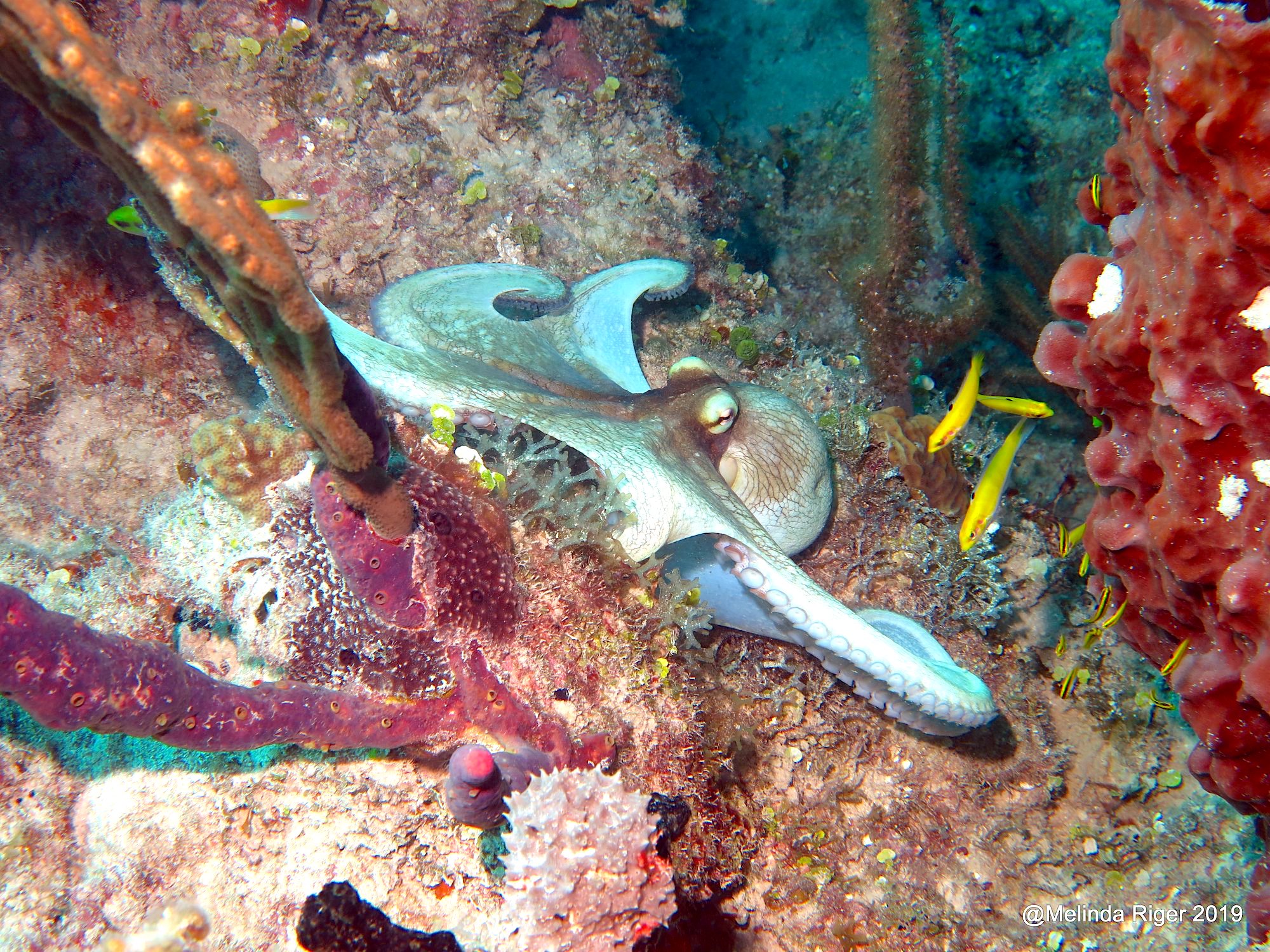
Many of us, from time to time, might like to be under the sea, warm below the storm, swimming about the coral that lies beneath the ocean waves. Though possibly not resting their heads on the seabed. This undeniably idyllic experience would be perfected by the presence of an octopus and the notional garden he lives in. Enough to make any person shout and swim about – and quite excessively at that.
The extra ingredient here is that these photographs were taken on the reef off the southern coast of Grand Bahama last week, less than 2 months after the island (along with Abaco) was smashed up by Hurricane Dorian. Thankfully, Grand Bahama Scuba has been able to return to relative normality and run diving trips again. Moreover, fears for the reefs have proved relatively unfounded. These images suggest little damage from the massive storm. The Abaco reefs have not yet been able to be assessed in any detail.
The feature creature here was observed and photographed as it took it a octopodic wander round the reef. The vivid small fishes are out and about. The reef and its static (technically ‘sessile’) life forms – corals, anemones and sponges – look in good order. The octopus takes a pause to assess its surroundings before moving on to another part of the reef.
THE PLURAL(S) OF OCTOPUS REVISITED
A long time ago I wrote a quasi-learned disquisition on the correct plural for the octopus. There were at least 3 possibilities derived from Greek and Latin, all arguable but none so sensible or normal-sounding as ‘octopuses‘. The other 2 are octopi and octopodes. If you want the bother with the details check out THE PLURAL OF OCTOPUS.
There’s an aspect I missed then, through rank ignorance I’d say: I didn’t check the details of the Scientific Classification. Now that I am more ‘Linnaeus-woke’, I have two further plural candidates with impeccable credentials. Octopuses are cephalpods (‘headfeet’) of the Order Octopoda and the Family Octopodidae. These names have existed since naturalist GEORGES CUVIER (he of the beaked whale found in Bahamas waters) classified them thus in 1797.
RH ADVICE stick with ‘octopuses’ and (a) you won’t be wrong (b) you won’t get into an un-winnable argument with a pedant and (3) you won’t sound pretentious
OPTIONAL MUSICAL DIGRESSION
Whether you are 9 or 90, you can never have too much of this one. If you are somewhere in the middle – or having Ringo Starr free-styling vocals doesn’t appeal – you can. Step back from the vid.
All fabulous photos by Melinda Riger, Grand Bahama Scuba, Nov 2019
CLAPPER RAILS Rallus crepitans are elusive birds of mangrove swamp and marsh, more frequently heard than seen. They tend to lurk around in foliage and are easy to overlook. They are creatures of the margins rather than open ground. You may come across one foraging secretively, beak-deep in the mud.
Tom Sheley’s wonderful photos featured here of a preening clapper rail were taken during our backcountry explorations to locate and photograph species for BIRDS OF ABACO. By being both patient and an early riser, Tom managed to capture this fine bird engaging in some quality grooming. The one below is ‘vocalising’ – known in rails as ‘rousing’ – in mid-preen.
Clapper rails are capable of swimming and even of flying if they choose to. However the most likely activities you are likely to observe will be skulking, picking their way through marginal vegetation, or (if you are lucky) doing some beak-deep foraging in the mud. Occasionally they run, a process that looks endearingly comical and which possibly gives rise to their name.
It almost goes without saying nowadays, but the biggest threat to these rather charming inoffensive birds is habitat loss. Which is to say, mankind either directly or indirectly. Drive the bulldozers through the mangroves and marshland of sub-tropical coastal areas, chuck down a few acres of concrete… and the clappers will very soon become clapped out. As they will if the climate we are unarguably changing ruins their unobtrusive lives.
COMPULSORY LINGUISTIC STUDY
When I last wrote about this species its binomial name was Rallus longirostris ie simply ‘long-beaked rail’. Since then the increasingly frenetic annual turmoil of official AOU shuffling species about and messing with their names has resulted in the clapper rail being re-designated Rallus crepitans or ‘rattling / rustling rail’, I assume from the call. There are other rail-name innovations that, reading about them just now, made me crack open a beer instead of wanting to tell you about them.
OPTIONAL LINGUISTIC DIVERSION
“TO RUN LIKE THE CLAPPERS”. This phrase seems to be fairly recent, most likely originating as military (?Air Force) slang early in WW2 or possibly from earlier conflicts. Some suggest it is a rhyming slang bowdlerisation of ‘run like hell’ with ‘clapper(s)’ standing for ‘bell’, along the lines of the Cockney “I bought a brand new whistle” (whistle and flute = suit). Almost all plausible explanations relate to bells, and some argue that it simply reflects the rapid speed of the clapper of a vigorously rung handbell. This derivation as a link to the bird seems tenuous at best.
Photo credits:Tom Sheley, Sandy Walker, Erik Gauger, University of Amsterdam (print).
The massive destruction and dislocation caused on both Abaco and Grand Bahama by Hurricane Dorian is well-documented. The regeneration of both islands is making unsteady progress towards a stability that still seems many months away. In many locations it is still ‘two steps forward, one step back’. It remains a moot point whether ‘normality’, as it was just over 2 months ago, will ever be quite the same again.
We know how things are on land. As far as Abaco is concerned, few people can say how the coral reefs have been affected by the massive storms. Boats that were not flung ashore were sunk instead. Marinas and their infrastructure all but disappeared.
Dive Shops, like so many thriving businesses in MH, have been reduced to rubble by this cruellest of extreme tropical storms. For the time being at least, they are damaged beyond use. I have seen no reports about the conditions in – for example – Fowl Cays National Park, a coral and reef-life rich marine preserve that was directly in the hurricane’s path. It may be weeks before an assessment can be made.
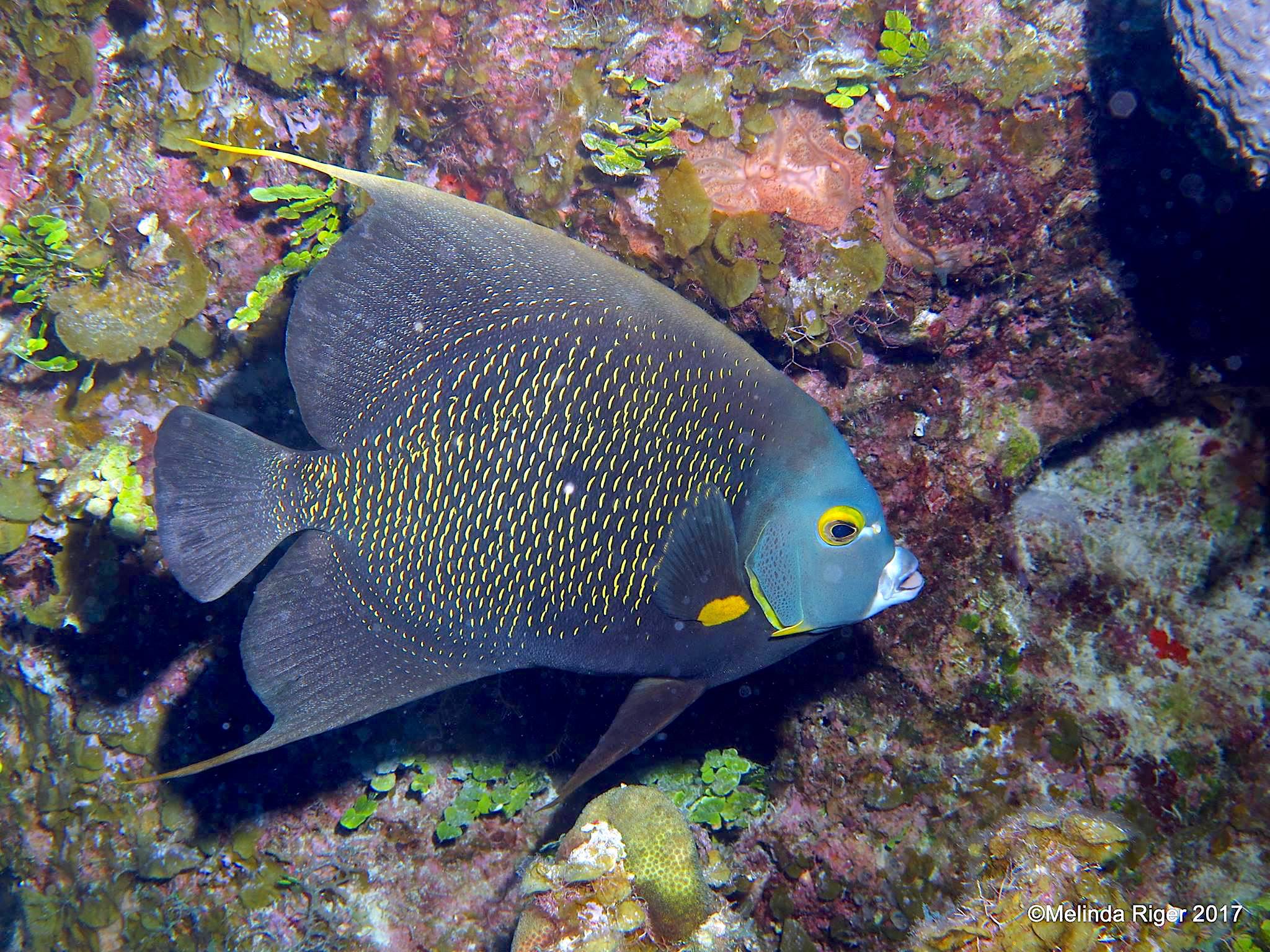
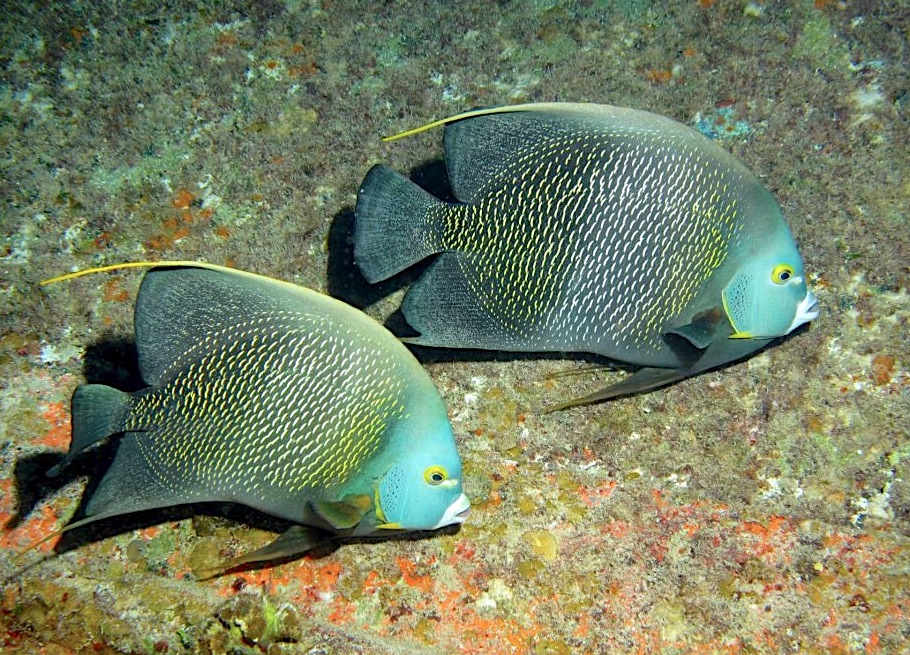
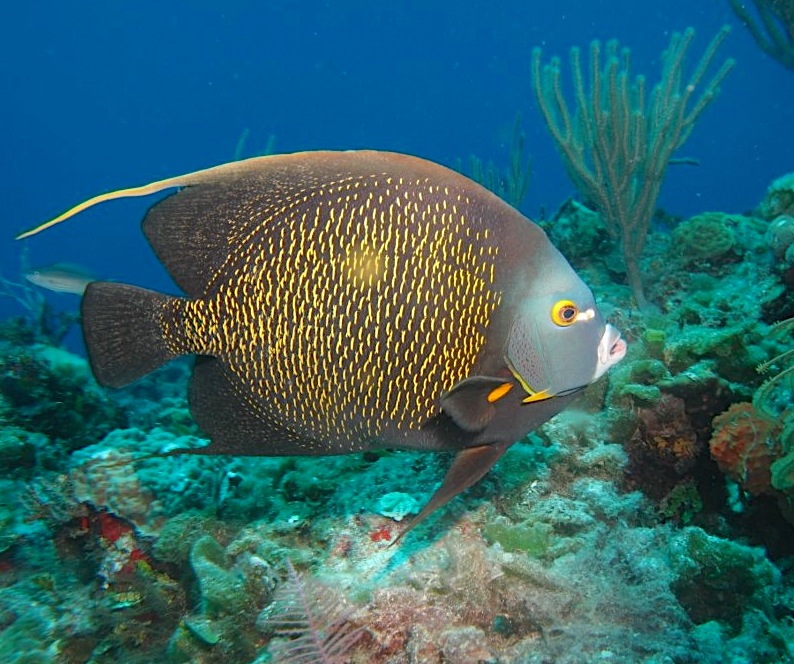
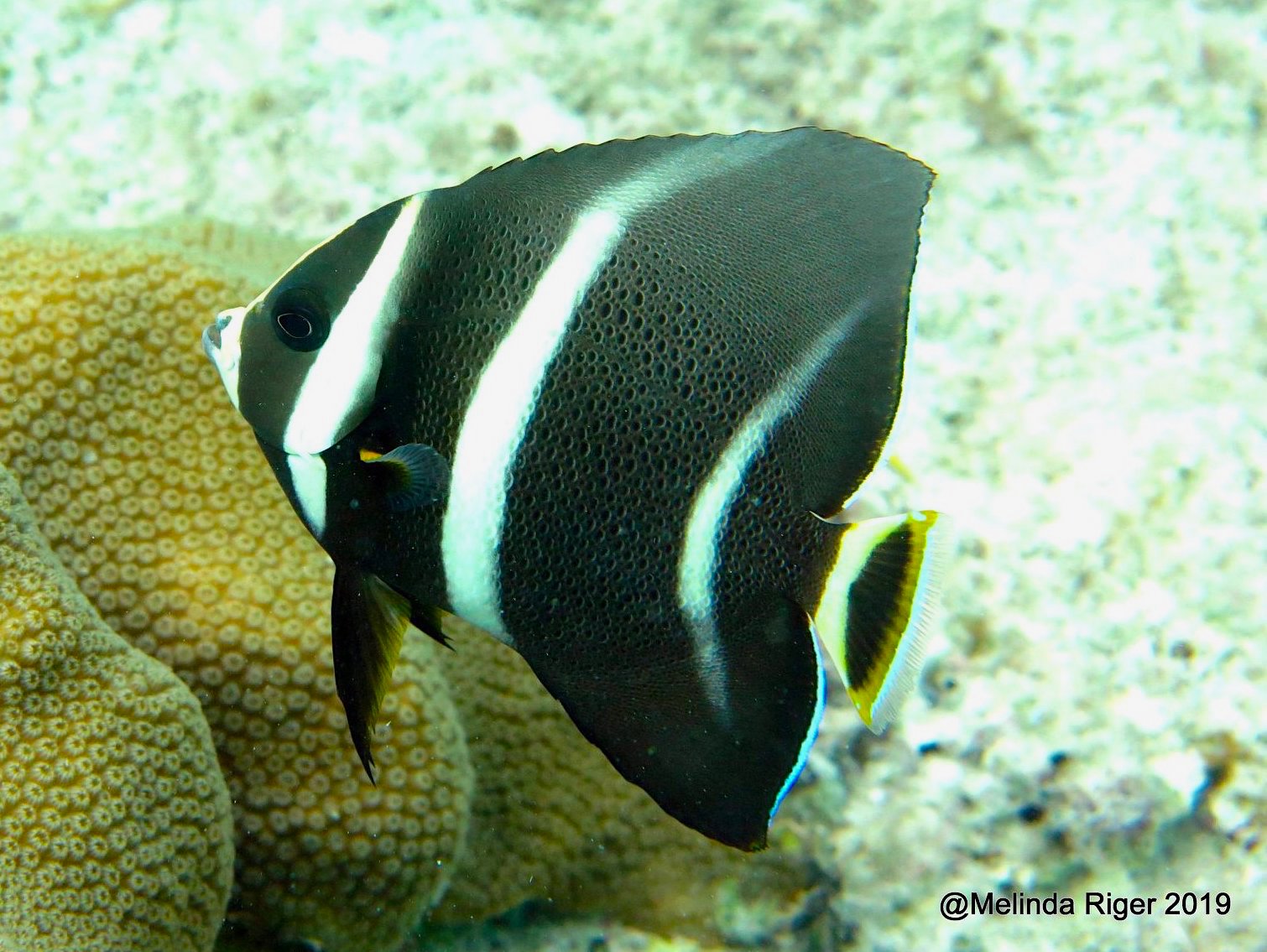
Happily, Melinda and Fred Riger of Grand Bahama Scuba have very recently been able to reopen their business. Melinda is, as regular readers will know, a wonderful underwater photographer. She kindly gives me the freedom of her extensive photo archive, accumulated over many years. The focus today is on French angelfish on the reefs of Grand Bahama.
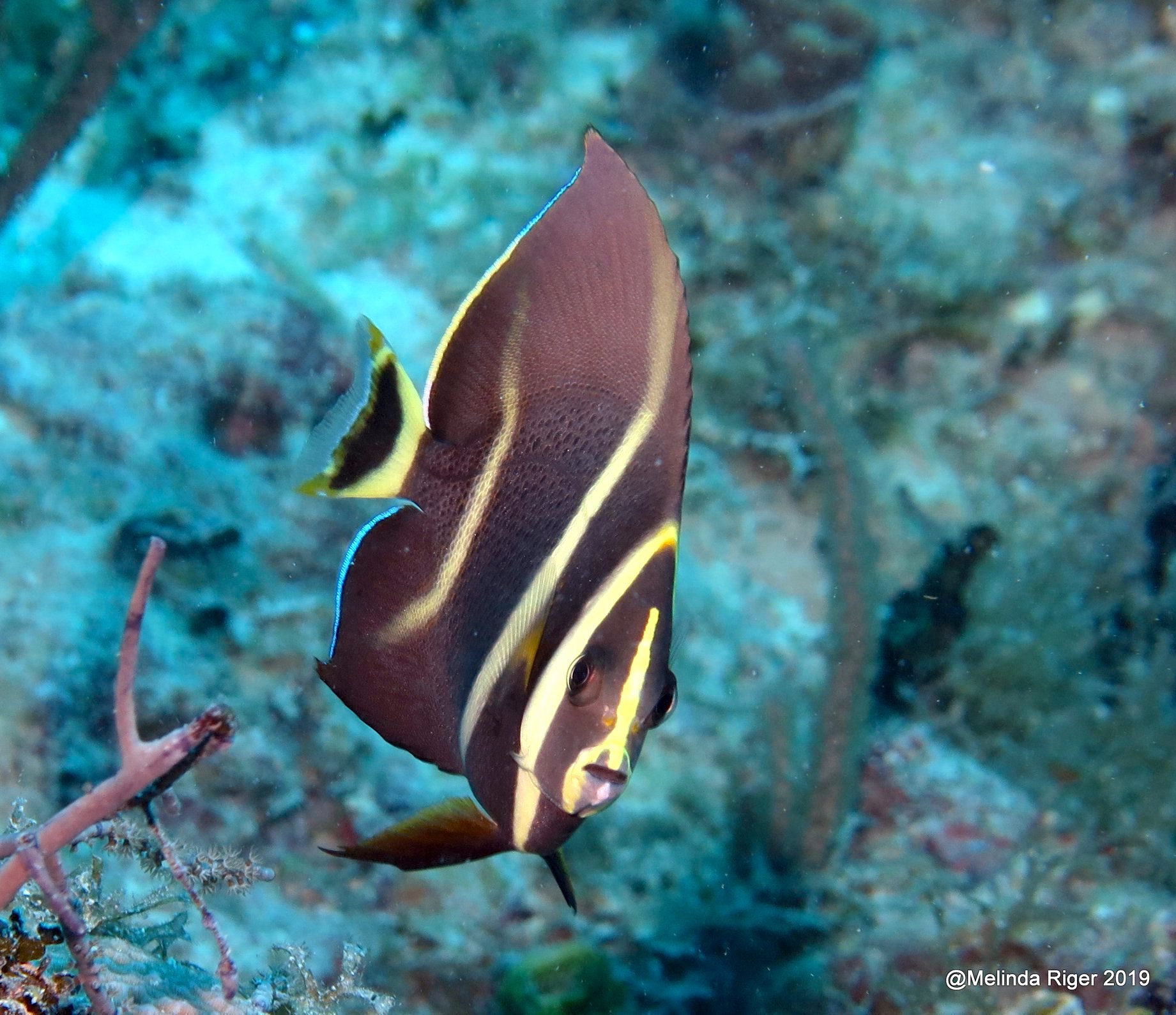
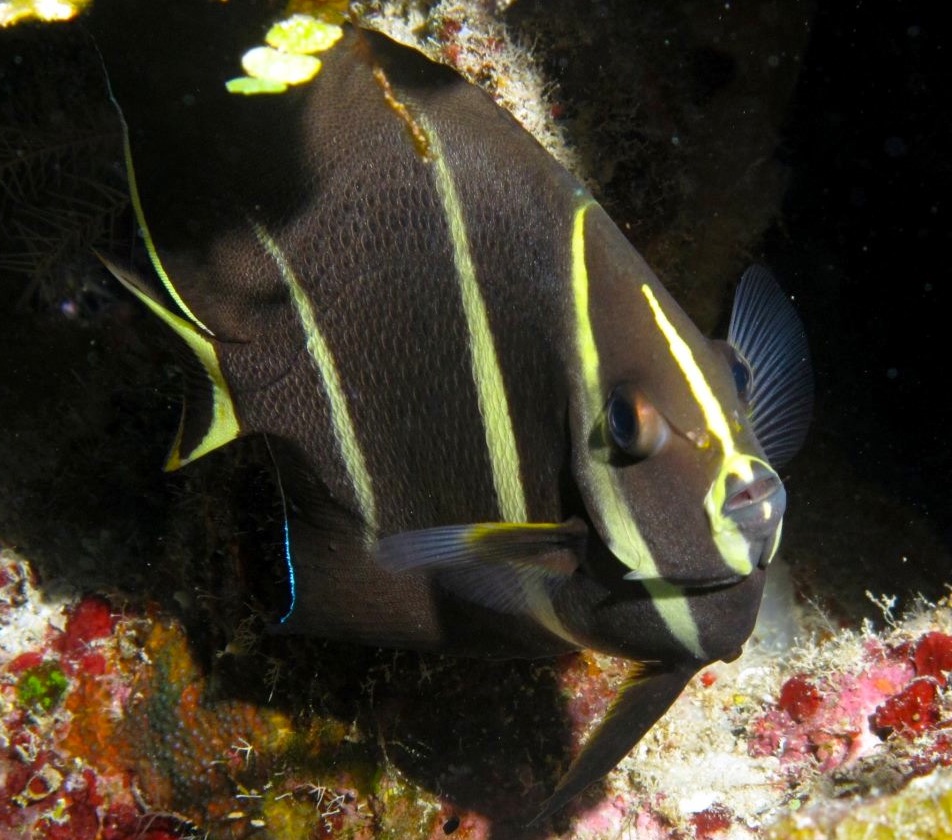
Many of the photos here have been taken during the last 3 weeks or so, as diving becomes more of a daily exercise and customers are able to return to explore the underwater world of the reefs. Adult French angelfish have handsomely decorated flanks and golden eye-rings. The small striped ones with blue flashes on their fins are juveniles.
There are three angelfish species in the northern Bahamas – Queen, Gray and French. I have chosen to feature French angelfish because as it happens the juveniles of the species found since Dorian by Melinda and Fred may provide some insight into the subsurface effects of this huge storm.
As is evident from Melinda’s recent photos, the reefs off the south coast of Grand Bahama are relatively unscathed. Corals that she and Fred planted after the last hurricane have ‘taken’ and remain in place. However the juvenile fish now being seen nosing around the reefs in quantity may tell a story of disruption elsewhere.
The juvenile angelfish – as with the young of many other species – tend to live in the relative safety of the mangroves as they grow towards adulthood and are ready to move to the reefs. However, the unusual numbers of juveniles seen in the open during recent weeks suggest that the storm-damage to mangrove swamps in shallower water has unexpectedly displaced the juveniles to the reefs.
This theory seems to apply to juveniles of other species recently encountered. What can be said is that, if even if displaced, there are plenty of healthy juvenile as well as adult fish around. And the justifiable fears of serious damage to the corals have not been borne out. It remains to be seen whether a similar situation exists in Abaco waters.
Credits: all fantastic photos, Melinda Riger / Dive Abaco. It’s great that you have been able to reopen the business and restart having been forced to suspend operations completely.
I haven’t featured flower species for a long time. There are a number of reasons why this webular location is low on flower power. Under duress, I’d probably say that, though gorgeous and a joy to all, flowers and plants are essentially one trick ponies. Or maybe peonies?
Essentially the drawback with flowers is that they don’t fly and they can’t swim. There’s no motion to them that isn’t caused by an outside agency such as a breeze (unless you spend time actually watching them grow, I suppose). I feel more comfortable with more mobility around me.
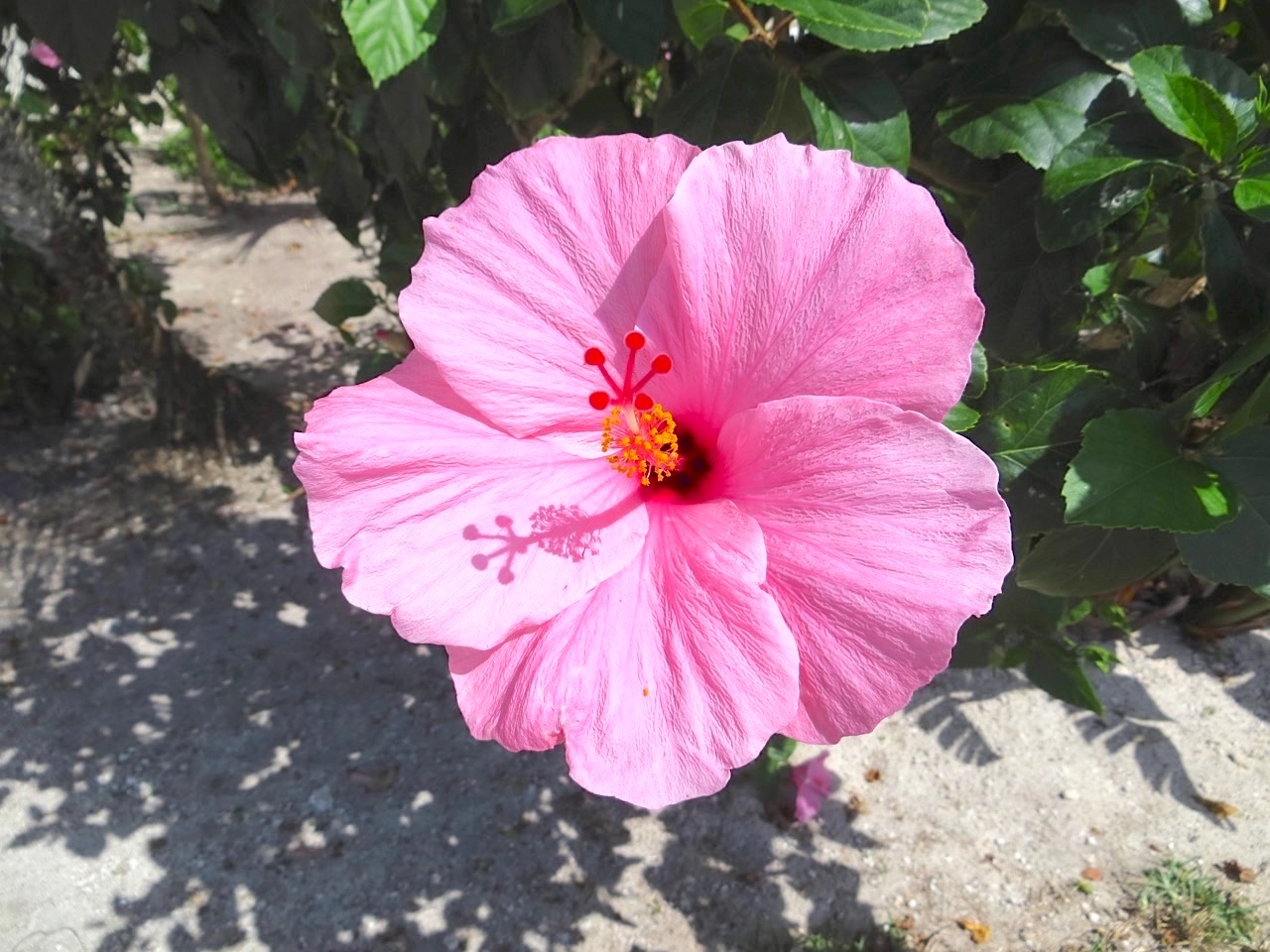
The hibiscus is surely one of the prettiest flowers on Abaco or indeed anywhere else. Mostly they are pentamerous, which is to say 5-petalled; and they have an unmistakeable central adornment that I’ve had to check the name of. Then I discovered that someone on Pinterest had done the heavy lifting for me with all the other parts of a hibiscus.
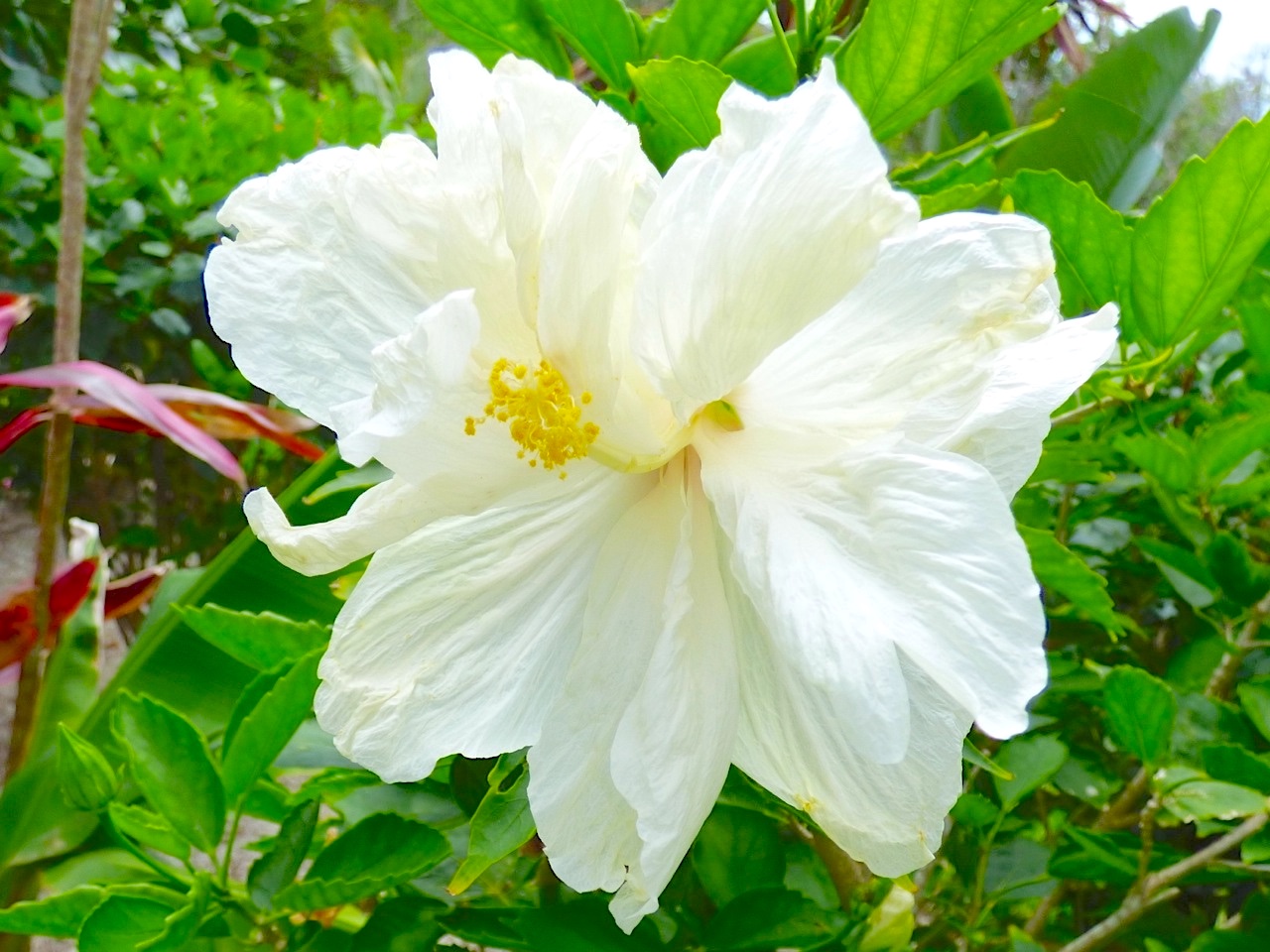
One exception to the usual pentamerous arrangement is the white hibiscus shown below.
I have also remembered to check the correct plural of ‘Hibiscus’. Some while back, I examined the candidates for the correct plural form for more than one OCTOPUS. I thought I might now be back in that strange Greco-Roman arena where -uses or -usses compete with -i or -odi for primacy. Thankfully, it is simply ‘octopuses’ and ‘hibiscuses’. And even if, technically, a different form could be insisted on to be correct, it will still sound wrong.
Another striking hibiscoid variant is the beautiful coral hibiscus, with its elegant construction and extravagantly fringed petals.
These flowers are powerful insect attractants, especially for the butterflies. One of the only partly successful photos I have ever taken of the annoyingly perpetual motion Polydamus (Gold Rim) Swallowtail is below. There’s nearly half a wing at rest. And even that isn’t sharp.
Readers who have stuck with this blog for a while (thank you both) may recall my enthusiasm for the excellent way in which the Bahamian Government honours the wildlife of the Bahamas with frequent special issues of stamps and coins. You can find out more with these links: BAHAMAS STAMPS and BAHAMAS CURRENCY. Even the hibiscus has been featured on the coinage, not once but twice. And on stamps several times over the years.
Personal resolution: to try not to leave it for more than 2 years before the next floral feature
All photos Keith Salvesen / Rolling Harbour; thanks to anon Pinterester for the flower part pic; and to 123RF for the stock stamp photo
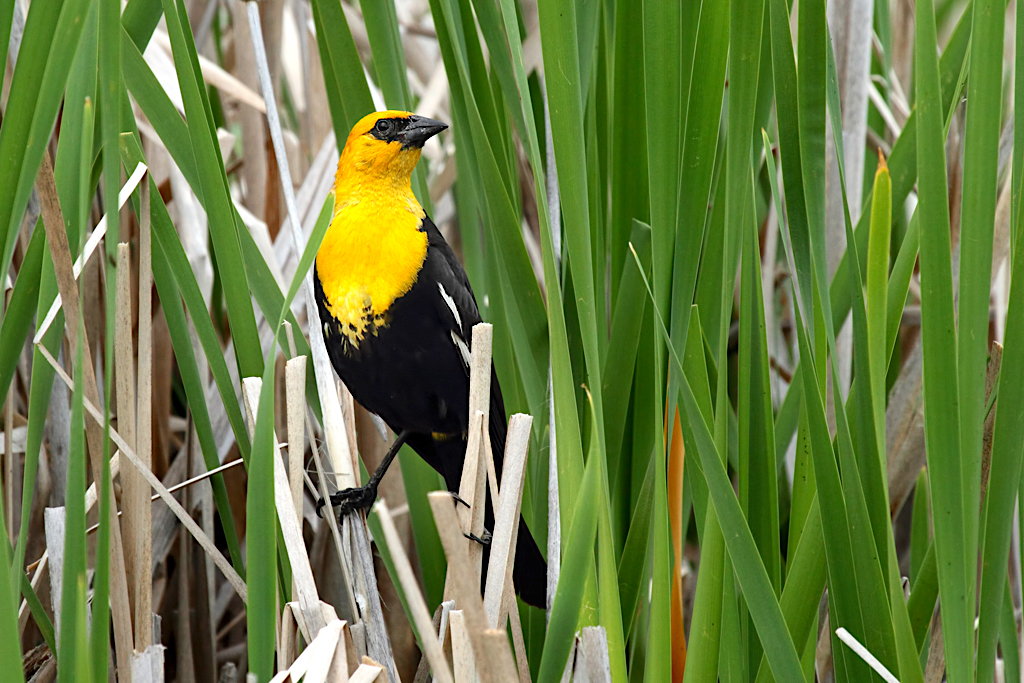
YELLOW-HEADED BLACKBIRD: A NEW SPECIES FOR ABACO, BAHAMAS
In the aftermath of the awesome (in its original meaning) power of the hurricane, Abaco is slowly rising from the remnants of its peaceful slow-paced beauty. The loss of human life, and the damage to survivors, to animals, to property and to precious possessions is unimaginable. By way of contrast, in the UK a flood that inconveniences a SUV owner in an affluent area may well make the local paper*; and possibly local TV news if the wait for a tow-truck takes an hour or so.
BIRDS are providing some cheer and a welcome diversion for many islanders. On SocMed there are plenty of chats** going on daily about the parrots, emerging winter warblers, occasional shorebirds and so on. Feeders are back in use with seeds and nuts (nb please no peanuts). Photos are being taken, shared and enjoyed.
Over the last few days, red-winged blackbirds have been a visible and indeed audible presence in various settlements. Their characteristic ‘rusty gate-hinge’ call is unmistakeable, whether in the coppice or heard deep in the mangroves 4 miles off-shore from a skiff in the Marls. Let’s progress to a great discovery and a most perfect example of ‘birds of a feather’ literally ‘flocking together’.
YELLOW-HEADED BLACKBIRD
THE FIRST EVER SIGHTING & PHOTO ON ABACO
The photograph above was taken on October 20 in Little Harbour, Abaco by Bernard Albury. A pair of red-winged blackbirds, male and female, were on the feeder in his garden. With them was a rather more colourful blackbirdy-type bird – a juvenile yellow-headed blackbird Xanthocephalus xanthocephalus. Bernard’s photo is the perfect example of how a quick shot with a phone can make all the difference between a vague description of a bird for ID (oriole? bobolink? weird warbler?), and having clear visual clues to work with.
A NEW SPECIES REPORTED, YOU SAY? HOW CAN YOU POSSIBLY TELL?
The news of this exciting sighting quickly reached bird scientist Ancilleno Davis of (among many organisations) Birds Caribbean. ID was established, and the news soon spread via FB shares. This bird was a very long way east of its normal range, and I thought that it might possibly be a first for the entire Bahamas; probably a first for Abaco itself; and almost certainly the first photo of a YHBL. Then it was a question of cross-checking data in books such as Tony White’s comprehensive guide; online in specialist bird websites; and with the Bahamas bird experts such as Woody Bracey and author Bruce Hallett.
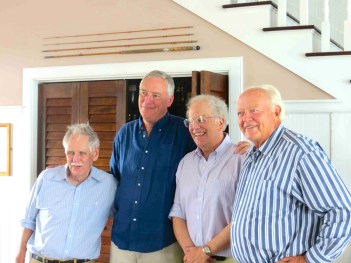
Tony White, [random], Bruce Hallett, Woody Bracey
SO WHAT’S THE ANSWER?
Simple. Bernard Albury has, in his own garden in Little Harbour, discovered the first Yellow-headed Blackbird ever recorded for Abaco. Furthermore, his photo is very probably the first-ever image (by which I mean only image) of a YHBL for the entire Bahamas.
BUT HOW CAN YOU TELL THERE HAVEN’T BEEN LOTS OF OTHERS?
The first step is to check an authoritative range map of the species in question. Audubon and Cornell are the go-to authorities for this purpose, though tbh there’s a great deal to be said for using Wiki as a first port of call for a new bird and its details. People rarely bother to mess with the avian articles on Wiki, there’s not a lot of fun it it. For the Yellow-headed Blackbird, the sheer distance to Abaco makes a visit from one highly unlikely. The second step is to check online sightings reports uploaded to eBird by birders ranging from the enthusiastic amateur to the vastly experienced professional. For an unusual bird, the reports are invaluable in establishing relative rarity. The previous online reports for YHBL in the Bahamas were of a couple of sightings of single birds in the Freeport / West End area of Grand Bahama. These were in 2006 by bird expert Woody Bracey; and in 2012.
Finally, cross-check in the most thorough bird guides of the area. In this case, Tony White included GB sightings YHBLs in his meticulous chart but none for Abaco. No other authority – Bruce Hallett for example – has noted a sighting report for Abaco; Woody also believes this to be a first, and he should know, having found the first ever Bahamas one in 2006.
I KNOW WHAT TO LOOK FOR NOW, WHAT DO THEY SOUND LIKE?
First, here’s the familiar call of a red-winged blackbird
Here are two examples of the much harsher call of the YHBL, described variously as “the worst song of any North American bird, a hoarse, harsh scraping”; and “an awful sounding raspy whine”.
Sample Headline* – ‘Deluge Ordeal “intolerable” says Local Financier’
Chats** – where the standard disclaimer ‘no pun intended’ would be wrong
CREDITS: First and foremost to Bernard Albury, but for whom… and Ancilleno Davis for his ID and initial shares; generally: Audubon, Cornell, eBird, Merlin, Xeno-Canto, Bird guys.
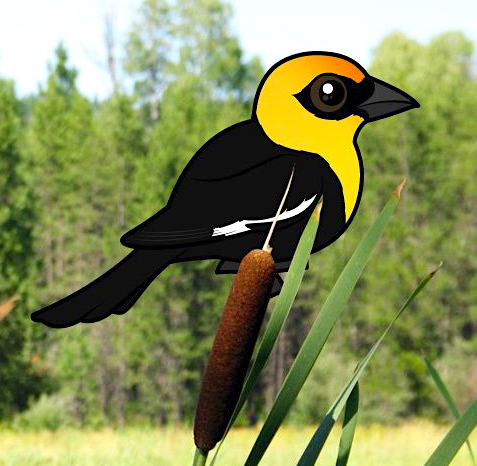
Images: R. Welker, Alan Vernon, Birdorable (cartoon), Bernard Albury, Tom Kerner, Sibley’s Guide online; Dan Hackley / Cornell / eBird, JJ Audubon, Brian Sullivan / Cornell / Macaulay Library
Sounds: Jim Berry, Xeno-Canto; Ted Floyd, Xeno-Canto
I’m never quite sure how far it’s permissible to go beyond ‘really pissed off’ about a tech problem. Anything much stronger seems a bit indulgent both in itself and especially when measured against the far-reaching despair experienced by many in far more important areas of life.
I am just having a huge “Grrrrrrrrr” moment because my complex blog menu, with 3 rows of headings and carefully curated nests of drop-downs under each, has been scrubbed by persons or AI unknown. It’s several years of cumulative and (mostly) pleasurable organisational work up the spout.
As a Brit, may I be permitted to say ‘bother’. Or maybe ‘Dash it all?’ Or declare that I’m a mite cheesed orf? To which a fair response would be “it’s just a trivial inconvenience, get over it…”
For the moment, here are some nice pics to enjoy, all taken on Abaco. I’m happy to say that right now, 7 weeks since Dorian, there are promising signs that in some areas of Abaco, the birds are starting to show themselves – including a few winter warblers. See you the other side of rethinking my Menu…
Credits: Nina Henry, Bruce Hallett, Mary Kay Beach, Craig Nash, Keith Salvesen / Rolling Harbour, Charlotte Dunn / BMMRO (western spindalis badge, moi)
The Astoundingly 5* Strange Frogfish (Adam Rees / Scuba Works)
WTF? (WHAT’S THAT FISH?)
A COMPENDIUM OF SUBSURFACE WEIRDNESS
A SERIES OF 15 OF THE STRANGEST SEA CREATURES IN BAHAMAS WATERS
INTRODUCTION
WTF? stands for ‘What’s That Fish’? But it might also be your exclamation when you come across one of these creatures. The WTF? series highlights some of the unusual, curious, weird and downright extraordinary fishes that inhabit the waters of the northern Bahamas. Some represent local forms of a species found elsewhere in the world; others are in their own evolutionary cul-de-sac. Just as I think I have seen it all, so another oddity crops up somewhere that demands inclusion.
The WTF? series, put together over several years, is intended to be the most direct route to an underwater menagerie of piscine strangeness, with some great photos to whet your appetite to learn more about these fascinating denizens of the ocean.
* CLICK ON THIS TITLE TO BE TRANSPORTED TO THE STRANGE WORLD OF THE FROGFISH *
Credits are given in the individual articles. Thanks to all those that have provide the photos, without which this type of illustrated, unscientifically scientific poke around in the ocean depths would not be possible.
It is a truth universally acknowledged that, until 1 September 2019 when Dorian struck, Abaco was a prime birding location in the Bahamas archipelago, an island chain that stretches from the lower reaches of the temperate zone to the more exotic sub-tropical region. The judgement for ‘best birding location’ is both objective and subjective, and the criteria are flexible. However on any view Abaco scores highly in all avian categories: resident species, endemics, migratory birds, speciality species, vulnerable species, and extreme rarities.
We’ll have to wait some time before it is possible to tell what effects the devastating storm has had on the wildlife of the island and on its birding credentials…
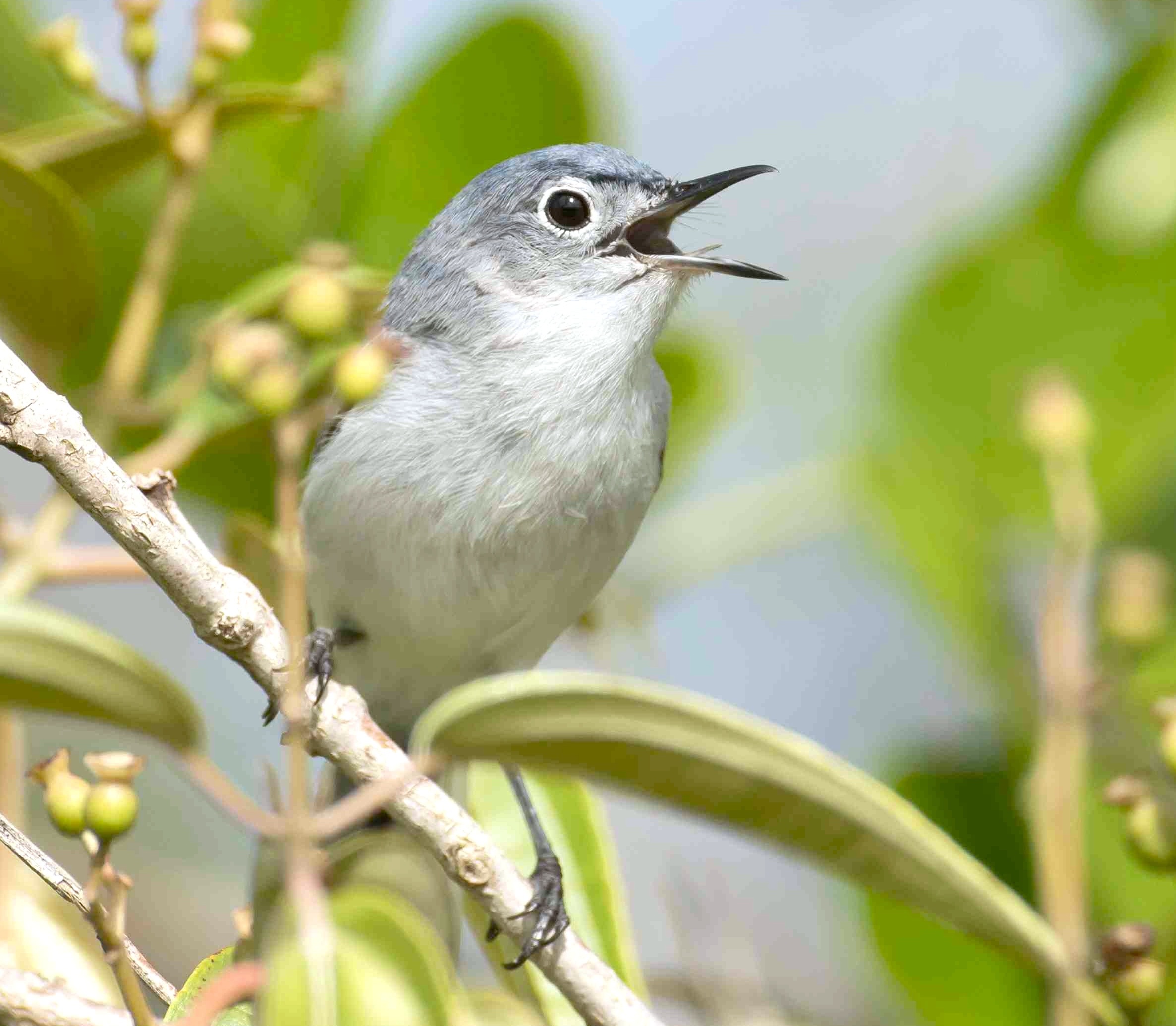
Blue-gray Gnatcatcher – Tom Sheley
BOOKMAKING
The Delphi Club Guide to THE BIRDS OF ABACOwas published in March 2014. To say “I wrote it” would be a gross distortion of the truth: it was an entirely collaborative project. The originator of the idea – as with the entire Delphi Club project (now in new & expert hands) – was Peter Mantle. The book showcases the work of 30 photographers, including some outstanding contributions by islanders. There was huge input from the very experienced project manager (= Mrs RH, then of YUP) and from the top Bahamas bird experts – Woody Bracey, Tony White, Bruce Hallett, and Tony Hepburn, to name but 4. So although my name is on the cover, it is as a participant representing the contributions, camera skills and brainpower of many people.
Cuban Emerald (f) – Keith Salvesen
GAMBLERS?
The book project was something of a gamble. When planning began, social media – and the facility to reach a wide audience – was significantly less active than it was soon to become. The book was launched at Delphi to generous enthusiasm and support both on Abaco and beyond, but the extent of the interest (and sales) that might be generated more widely was unknown. We predicted it might be a slow-grower, so we were astonished by the immediate positive response to the guide. Perhaps it helped that there was a wider purpose to the book than as a photographic showcase for Abaco’s rich birdlife – we donated copies to all Abaco schools, colleges, libraries and local wildlife organisations for educational purposes. A significant percentage of the profits was set aside for local wildlife causes and duly distributed.
Moving on just 5 years to this summer, the limited edition of 500 had all but sold out; and around 100 free copies had been donated – or deposited (as required by UK Law) in specified institutions: British Library; National Library of Scotland; National Library of Wales; Bodleian Library, Oxford; University Library, Cambridge; and Library of Trinity College, Dublin.
Brown Pelican – Tom Sheley
PRESENT FOR THE FUTURE?
Six weeks after Dorian, a semblance of normality is returning to the stricken island. Daily snippets of optimism are of great significance: a lost pet found after many days; a trashed plant defiantly putting out a flower; a pair of parrots screeching past; a boat recovered; a building slightly less damaged than feared. Recovered possessions from flooded houses have brought mixed emotions – heart-rending losses of precious items, yet also the unexpected recovery of possessions believed lost or destroyed. And in that context but far less emotionally, I have now had quite a few requests for replacement copies of “Birds of Abaco”.
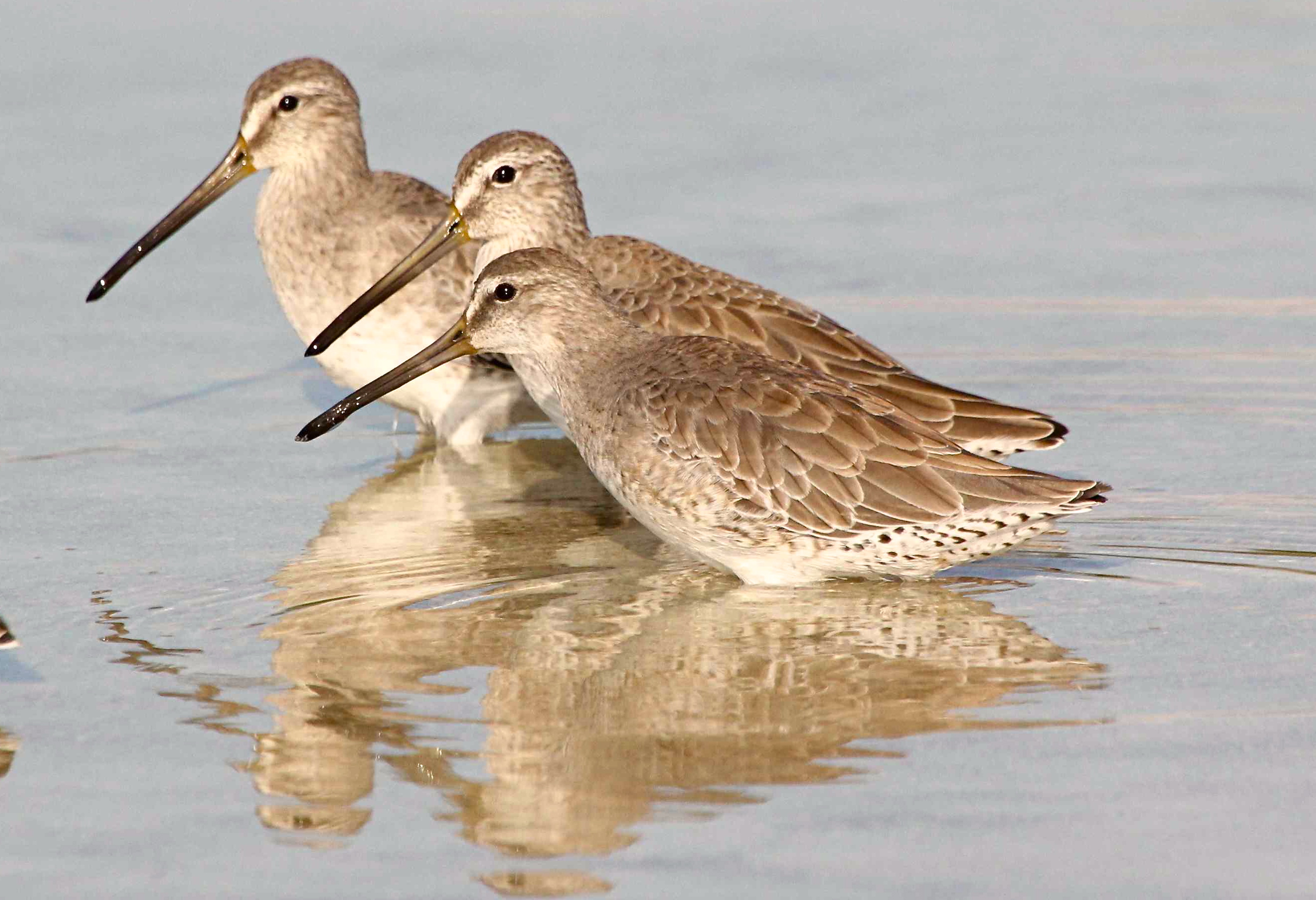
Short-billed dowitchers – Bruce Hallett
SO, ARE THERE ANY REPLACEMENT BIRD BOOKS LEFT?
The position in a conch-shell is this:
There are now no copies still available on Abaco. Former HQ (and book storage / fulfilment facility) The Delphi Cub changed hands a year ago, and no longer carries a stock of the books.
In the UK, Peter Mantle and I have about a dozen between us that are, in one way or another, ring-fenced.
That’s it, I’m afraid.
Bridled Tern – Bruce Hallett
ARE YOU PLANNING TO REPRINT?
For several reasons, no – it’s not a viable proposition. Specifically:
the size & print-costs of such a large heavy (2 kgs) book
the specialist printing (eg in Italy) needed to retain the quality; and the associated shipping costs
the lack of any viable storage and / or fulfilment facilities on Abaco, or anywhere else suitable
the lack of a prominent ornithologically-minded literary-leaning benefactor with a kind smile & deep pockets
Black-throated blue warbler – Gerlinde Taurer
CAN I STILL GET THE BOOK IN SOME OTHER FORM?
Yes! I hope. We are kicking around the following ideas in a general and inchoate way:
first, avoiding any system requiring storage or fulfilment (so, not a physical reprint)
using existing production material to create a Print-on-Demand book
turning the guide into an eBook (may be difficult / impossible with non-standard format)
most likely producing a full PDF (or similar) version for download and possibly printing
selecting sections – eg the definitive checklist – as individual downloads
considering other suggestions!
At the moment this is in the basket marked ‘non-urgent’, but the alternatives will be under active consideration.
Clapper Rail – Tom Sheley
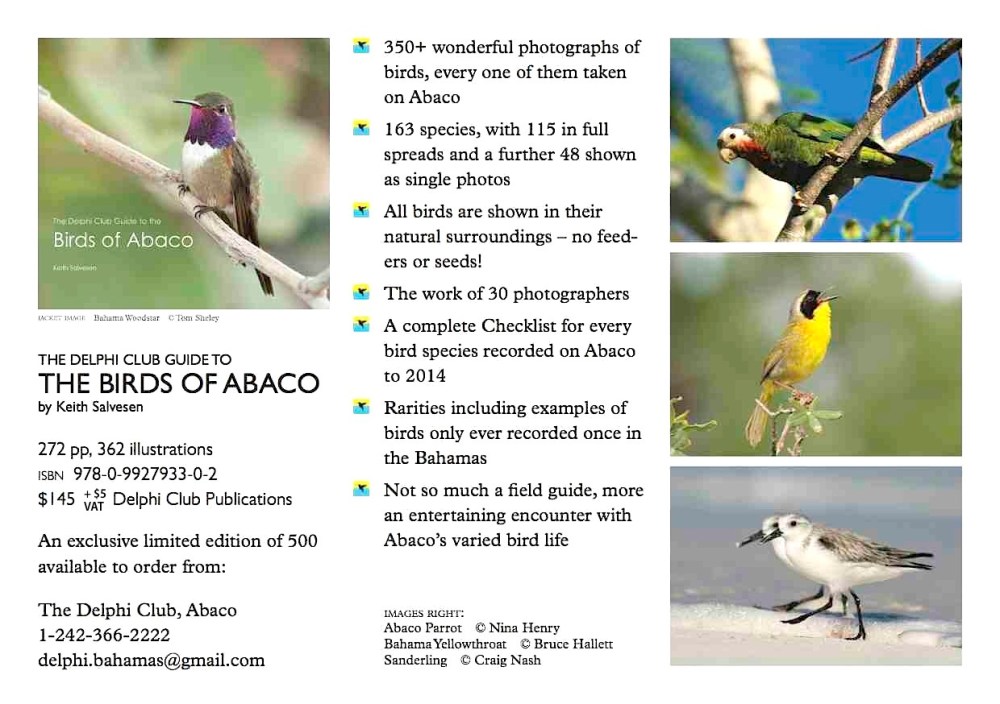
The original flyer for the book
Painted Bunting Tom Sheley
Photos: Alex Hughes (1); Tom Sheley (2, 4, 9, 10); Keith Salvesen (3, 11); Bruce Hallett (5, 7); Gerlinde Taurer (8); Charmaine Albury, para-breakers
The unique and symbolic parrots of Abaco have become quite a focus of attention now that some kind of normality is returning to the devastated island. Utilities and supplies are being sorted out gradually (and with unavoidable setbacks). There are some signs of optimism in the air – and some parrots too.
SO, AFTER THE HURRICANE ARE THERE ANY PARROTS AROUND?
At Bahama Palm Shores, the most ‘parroty’ of all the communities in south Abaco, Tara Lavallee was the first to see – and photograph – a pair on Sep 25th, nearly 4 weeks after Dorian struck. Over the next 10 days, and thanks to Janene Roessler’s work, I compiled a record of reports and sightings and mapped them. There were 12 in all, from Crossing Rocks in the south to Winding Bay in the north (25 – 30 miles as the parrot flies).
THE FIRST POST-DORIAN PARROTS
ABACO PARROT SIGHTINGS MAP BETWEEN SEP 25 AND OCT 4
The interactive map works like this (in theory at least). You can expand the map using the cursor, double clicks, or 2 fingers until you have enlarged the target area sufficiently to click on the individual coloured parrots. For each one, the sighting details are given with as much information as was available. The colour key is this:
Maroon – First sighting
Blue – sighting with some details (eg numbers)
Yellow – sighting with little detail
Purple – flocks of 10 +
IS ANYONE LOOKING AFTER OUR PARROTS?
By the turn of the century the parrot population had become unsustainable, having fallen below 1000, and their extinction was imminent. Since then, many organisations (eg BNT) and people have been involved in the reversal of the decline through intensive anti-predation and conservation measures. All this work continues so that the future of the parrots is assured. The rough estimate pre-Dorian was of c4000 birds.
WHAT ABOUT NOW, AFTER THE STORM?
As I mentioned in a previous post, a survey team including Abaco’s former parrot scientist Caroline Stahala Walker (now with Audubon) were planning a trip to Abaco once access became possible. They have just arrived on-island, and will be assessing the effect of Dorian both on the wildlife and on the habitat. This will include the parrots, and other ‘signal’ birds too. I expect these will include the endemics, the speciality birds (eg the woodpeckers), and some shorebirds including (I hope) piping plovers. They will also bring feed and feeders and give advice about care of the birds.
Caroline wrote “I wanted to let everyone know we have a team going to Abaco for surveys and setting up feeders starting tomorrow. The logistics were tough enough to piece together but it certainly would not have happened without all of your help. I will post pictures and update after the trip, not sure what internet situation will be like while there. Thanks everyone! You made this happen.”
CAROLINE’S GO FUND ME PAGE: CLICK THE LOGO
Some years ago Caroline and I put together a tiny booklet about the parrots, mainly for the benefit of guests and visitors at the Delphi Club. We asked for $5 – 10 donations for the birds. There were 2 editions. Later, I turned it into an ‘moving booklet’ with added music (that you can turn off!). Some people may have seen this elsewhere online recently. The middle section on the parrot nests in the National park, the chick-care, and the associated breeding research may be of particular interest. The pics are cute!
Thanks to all who contacted me to say there was an issue with the version of this booklet originally posted – a ‘privacy settings’ problem, as it turned out. I’ve exchanged it for a different format version, which is also a bit clearer…
Credits: Tom Sheley (1, 6); Erik Gauger (2); Tara Lavallee (3); Craig Nash (4); Peter Mantle (5, 7)
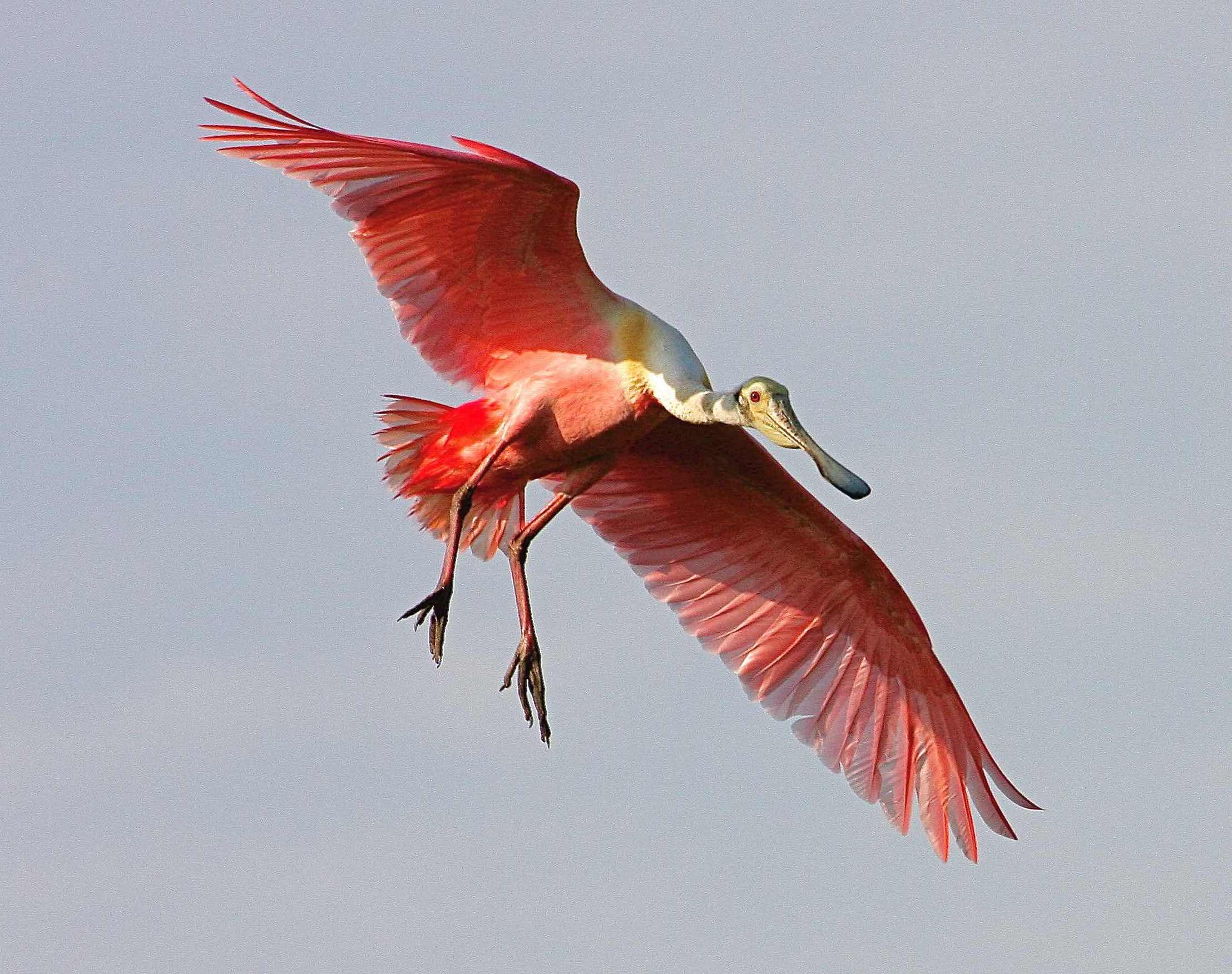
Roseate Spoonbill, New Providence – Dr Elwood ‘Woody’ Bracey
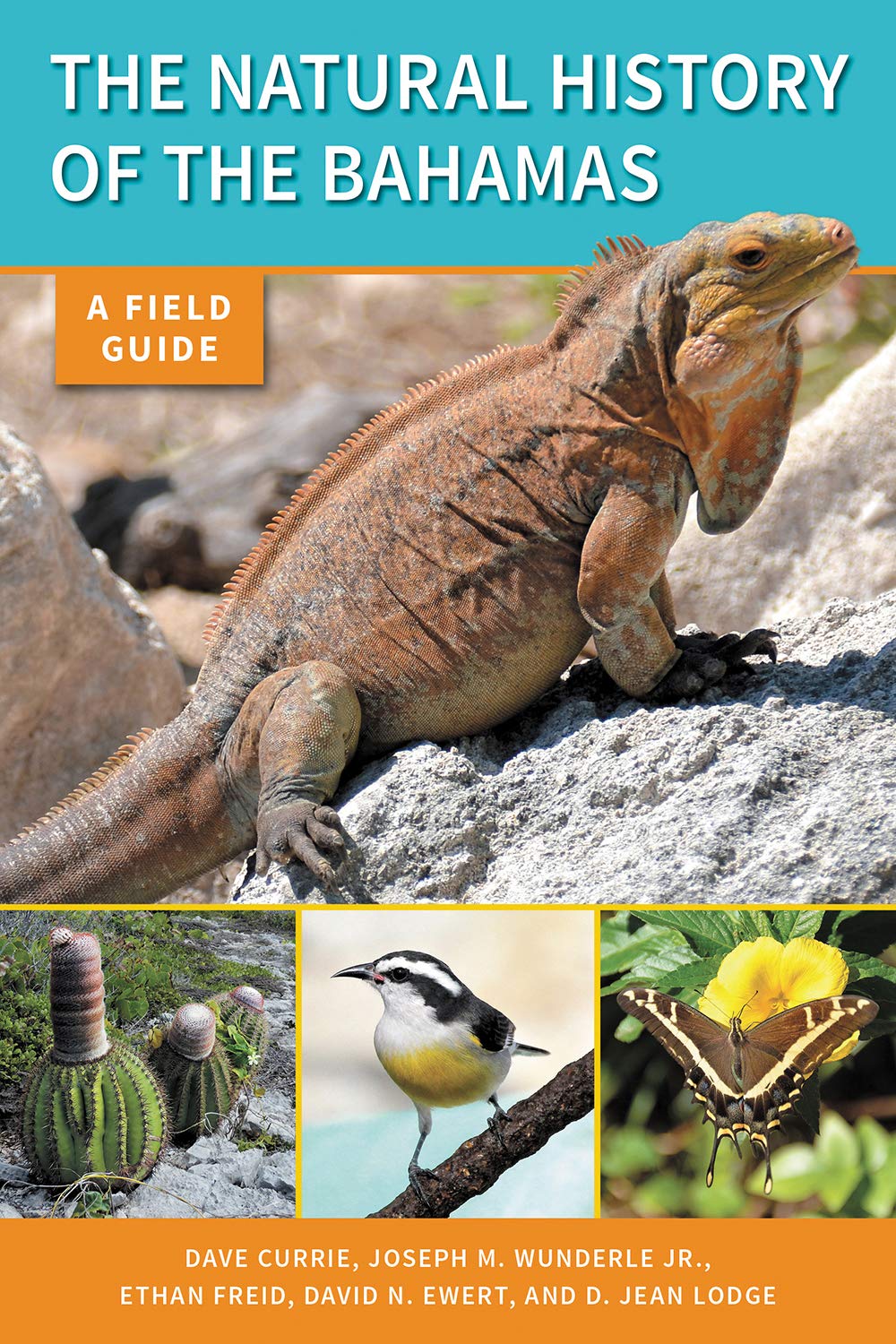
THE NATURAL HISTORY OF THE BAHAMAS: A FIELD GUIDE
On October 15th Cornell University Press publishes the first-ever comprehensive field guide to the terrestrial natural history of the Bahamas*. This monumental study has been years in the devising, researching, writing and production. The five authors are all eminent natural scientists in their specialist fields, and well-known far beyond the Bahamas. They combine to bring authoritative yet accessible scholarship to the pages. This book will undoubtedly become the go-to standard field guide for the Bahamas for decades. Furthermore, its breadth of scope will reach adjacent territories beyond the archipelago. *With a few exceptions for ‘signal species’, ocean-life is not included
The new guide comprises an encyclopaedic 464 pages with 768 colour photos plus line drawings, maps, charts and tables. The subject-matter begins with a detailed introduction that encompasses Geology, Climate, Habitat, Biogeography, Human History and Conservation. This establishes the wider context for the pages that follow.
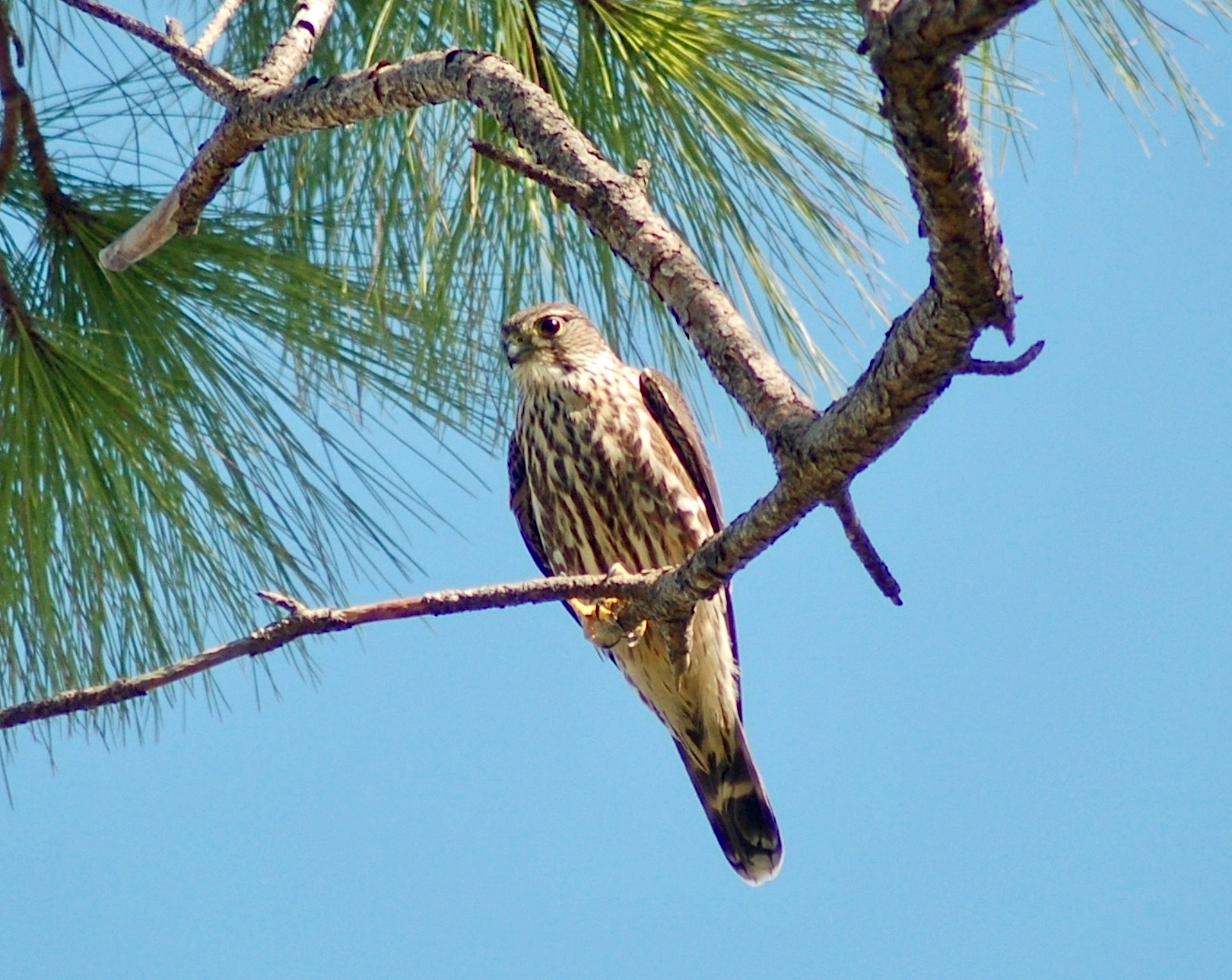
Merlin, Abaco Bahamas – Becky Marvil
The guide is then divided into discrete sections that cover Fungi, Flora / Plants, Invertebrates, Amphibians, Reptiles, Birds, and Mammals (of which there are very few in the Archipelago, and few of those endemic). As a general observation, you simply will not believe how many species and subspecies there in some of the categories.
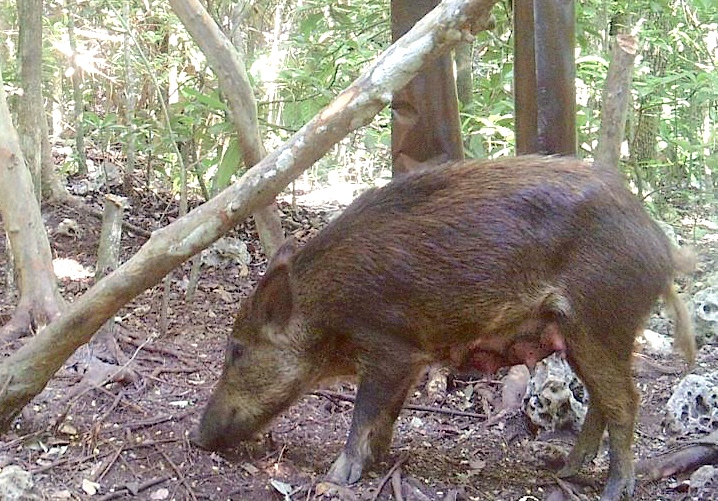
Wild Pig or Hog (f) on Abaco Bahamas (Dana Lowe)
In expressing my enthusiasm for the new guide, I ought to declare my interest. From a fairly early stage of the project, I helped in two ways: sourcing / supplying images; and helping with proofing / editorial work of the sort common to all such diverse reference works.
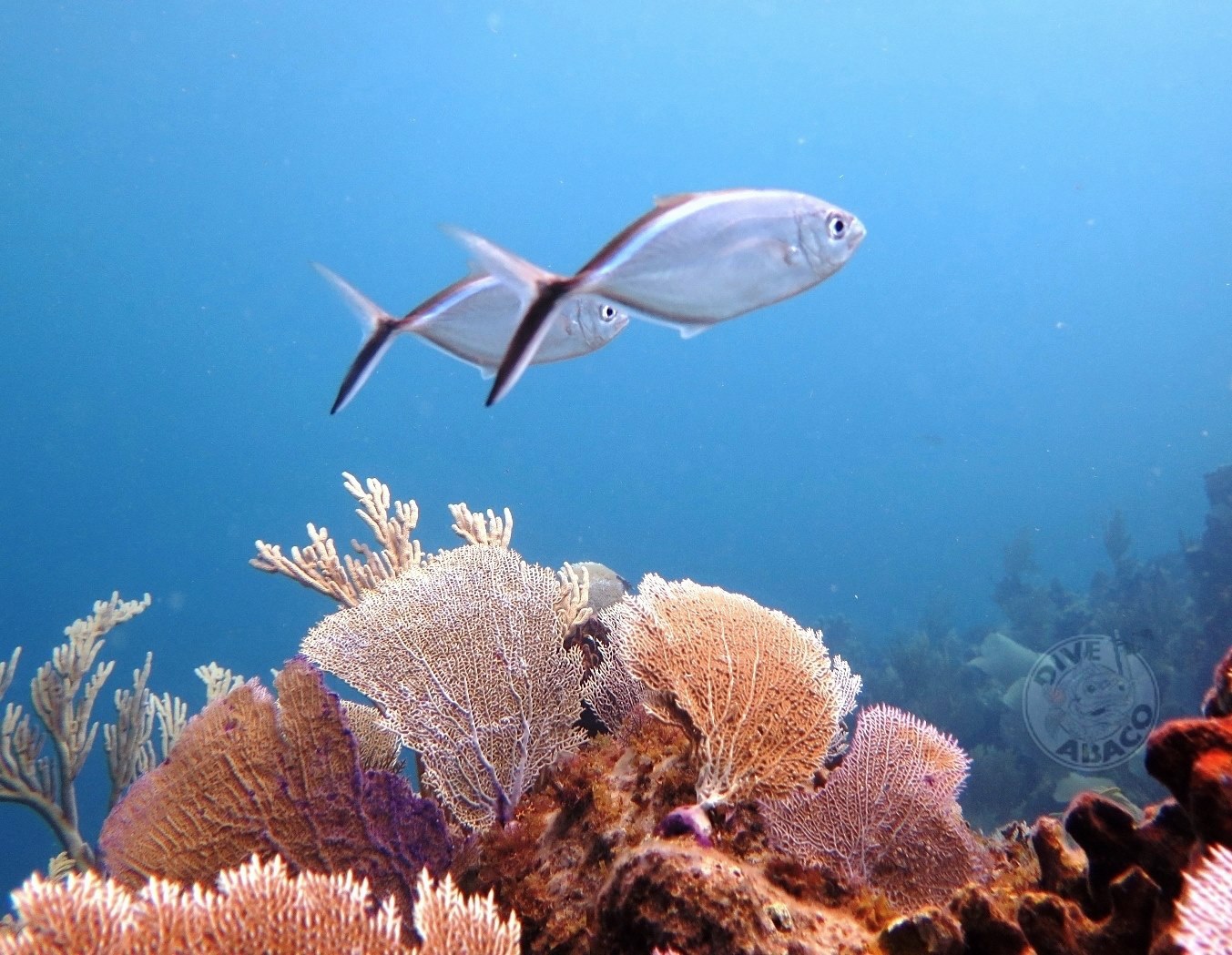
Nassau Grouper, Grand Bahama (Melinda Riger)
Right now, in the aftermath of the disastrous impact of Hurricane Dorian, the northern Bahamas (Abaco & Grand Bahama) are still at the very earliest stages of a return to normality. Some areas are still without reliable water or power. The extent of the devastation suggests that the new ‘normality’ will inevitably be rather different from the past. It is sobering to consider that, since this field guide went to press, the balance of nature on two of the most diverse islands for wildlife in the archipelago has already changed significantly – and in some instances that change may well be for good.
Gull-billed Tern in flight, Abaco Bahamas – Alex Hughes
I have a hope – and there are some signs already – that people’s interest in the wildlife around them provides a degree of comfort in hard times. Further south in the Bahamas, the other islands will each have had their own similar extreme weather experiences many times. The wildlife is varied but with similarity throughout the extensive chain of 700 islands that make up the Bahamas, with a vertical length of over 500 miles and covering more than 8000 square miles of land and sea. The familiarity of many of the plants, trees, butterflies, and birds binds the diverse islands together to create a common experience.
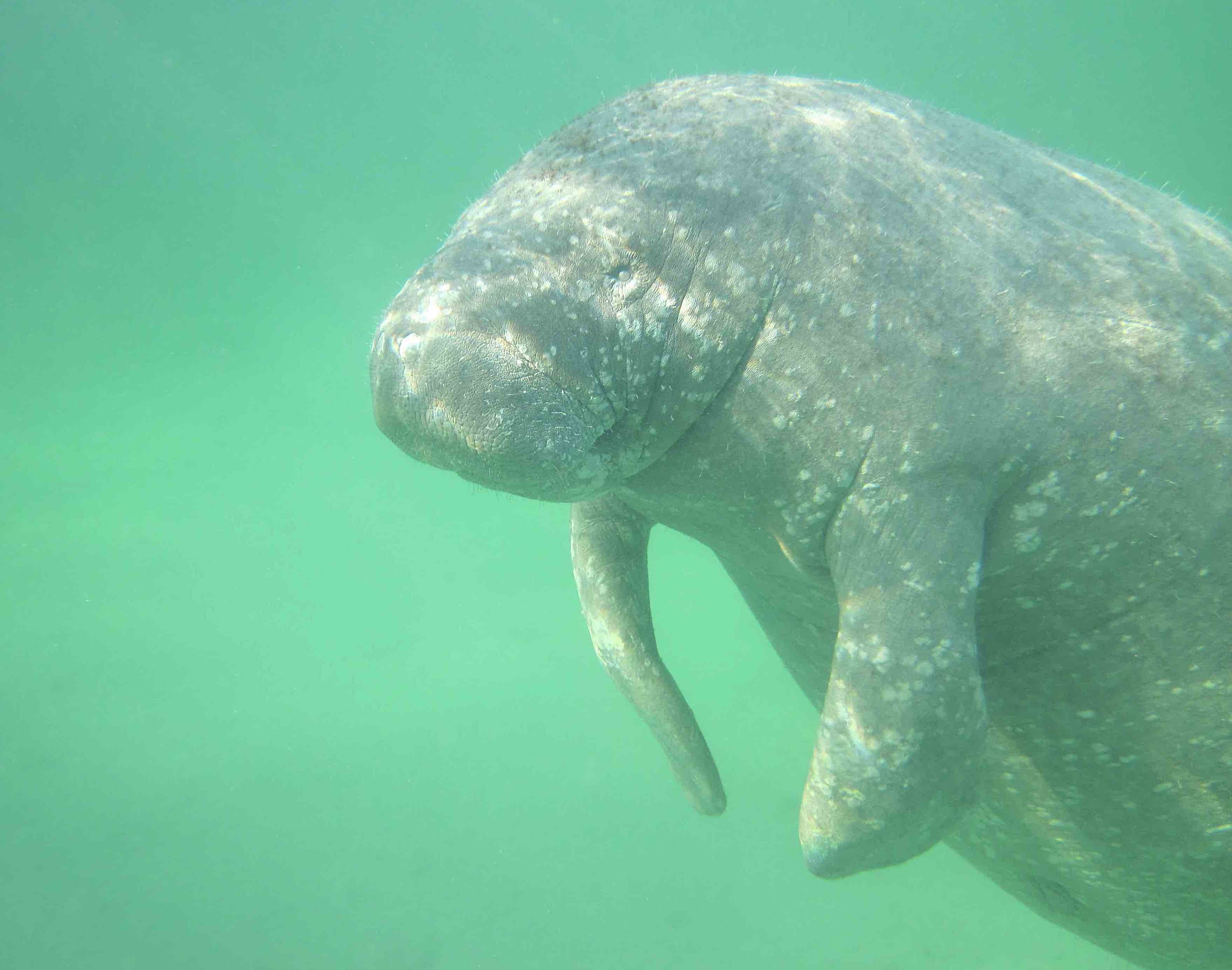
West-Indian Manatee, Bahamas (Charlotte Dunn / BMMRO)
IS THIS THE REAL LIFE? OR IS THIS JUST FANS AT SEA?
I wrote the original post on this theme, with its somewhat Bohemian and rhapsodic title, a while back. It was put together at a time of sunshine, normality and optimism. The 2019 hurricane season was far in the future, and the prospect of one – let alone two – of the finest islands in the Bahamas being virtually eradicated overnight was unthinkable.
Right now, in the aftermath of the devastation wrought by Hurricane Dorian, and as the communities gradually start on the long road to recovery, the priorities remain personal and community safety, food, fresh water, medical supplies and access to all the other necessities that the major relief operation has so effectively enabled. However, as gradual improvements to daily life are achieved, so a degree of interest in the natural world is returning.
The despoliation of the land is there for all to see, visible even from space. As yet – as far as I know – no one has had the time or opportunity, or even a boat and the right equipment to investigate below the surface of the sea. What of the reefs: the bright darting reef fish; the larger denizens of the deep; the corals, sponges and anemones? The massive Cat 5 storm caused an unprecedented 23′ surge. It’s hard to see how the reefs can have remained unaffected, and there must be the possibility that the THIRD LARGEST BARRIER REEF in the world will have been altered irrevocably.
Since Dorian, the related organisations have been unable to operate. Abaco’s ‘Dive Abaco’ was virtually annihilated along with the rest of Marsh Harbour. Grand Bahama Scuba has just reopened, although it may take a while before dive trips are anywhere back to normal. This post contains beautiful photos from both the Melindas concerned, taken in happier times before the dark cloud swept over the islands just one month ago.
NOTES FROM THE PRE-DORIAN PAST
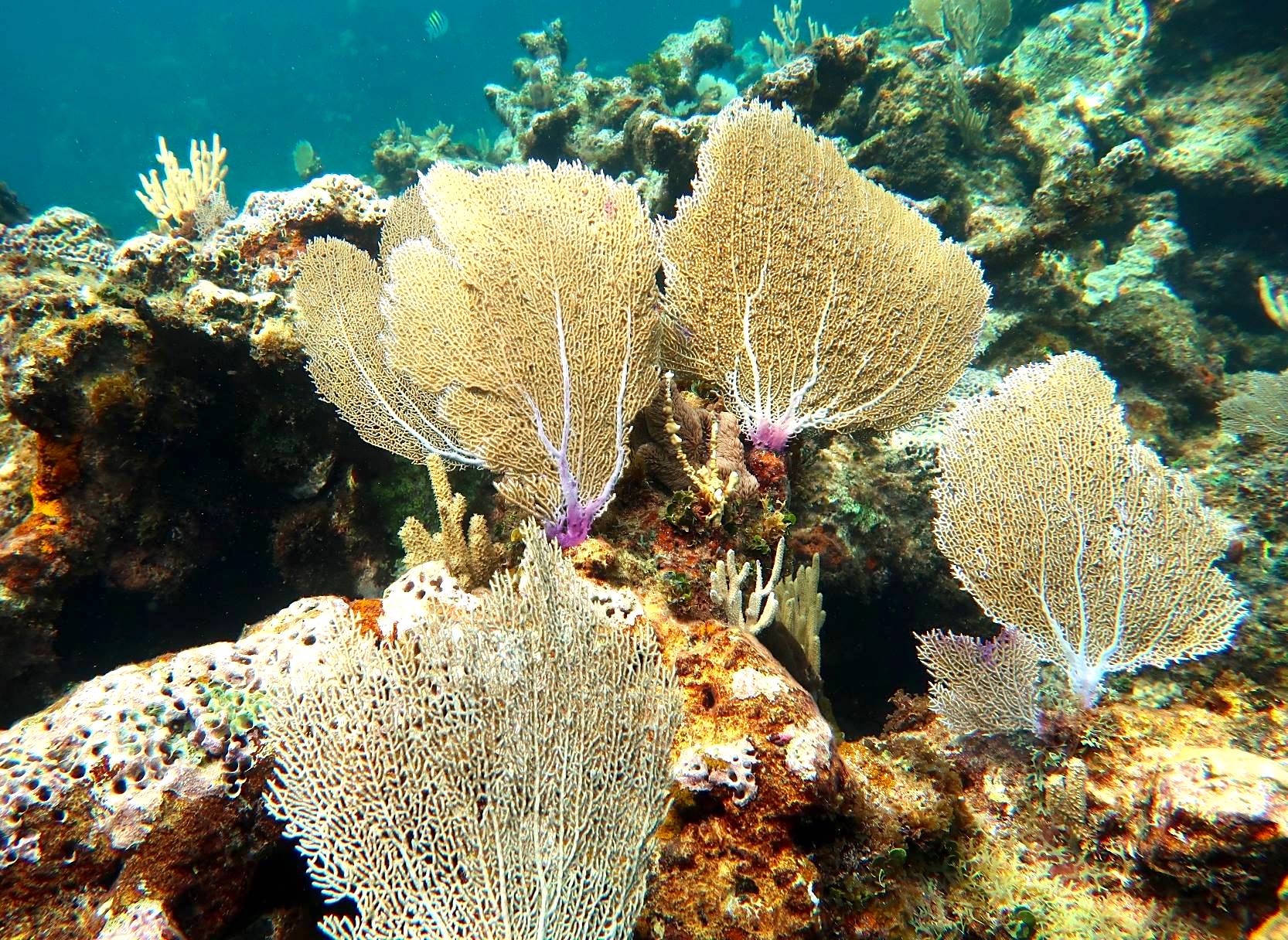
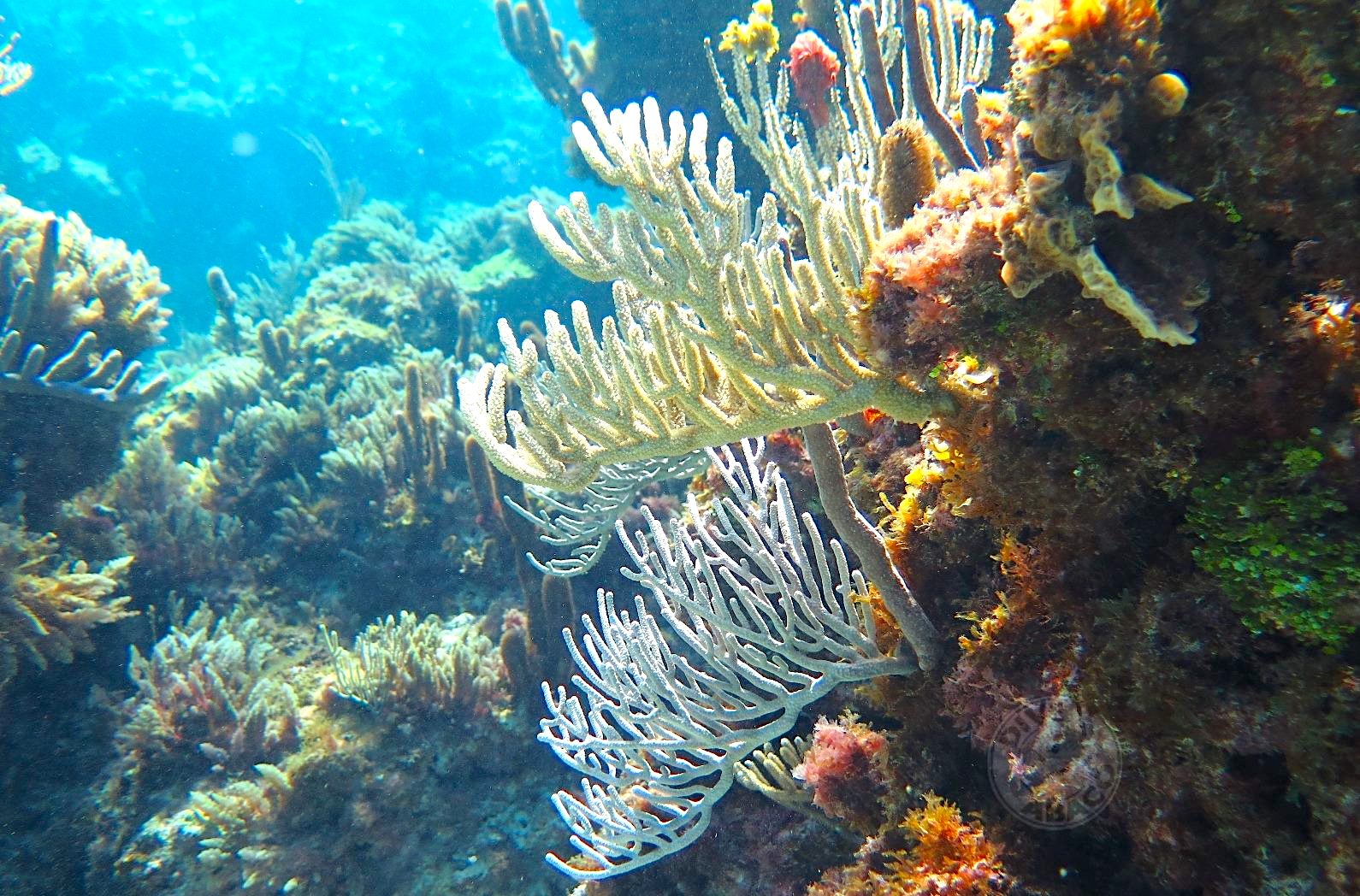
The waters of Abaco teem with myriads of fish that depend on the coral reefs for shelter and safety, for breeding, for growing up in, and for nourishment. Sea fans (or gorgonians, to use the technical name) are animals too. They may look like plants and stay rooted to the spot, but like anemones these ‘soft corals’ are creatures of the reef and essential indicators of its health.
At the moment it can still be said that the static (‘sessile’) members of the Abaco reef community are relatively unscathed by the impact of (and I don’t want to get into any arguments here) whatever causes mass bleaching and the death of reefs elsewhere in the world.
The purple sea fan Gorgonia ventalina (classified by Linnaeus in 1785) is one of the most common species of sea fan, and a spectacular one at that. The main branches are linked by a lattice of smaller branches. Below the ‘skin’ is a skeleton made of calcite compounded with a form of collagen.
Sea fans are filter-feeders, and have polyps with eight tiny tentacles that catch plankton as it drifts past. They develop so that their orientation is across the prevailing current. This maximises the water passing by and consequently the supply of food as the fans gently wave in the flow.
Gorgonians have a chemical defence mechanism that protects against potential troublemakers. The main effect is to make themselves unpleasant to nibble or uproot.
One species impervious to this deterrent is the fascinating FLAMINGO TONGUE SNAIL (more of which quite soon). Other ‘safe’ species include the fireworm and BUTTERFLYFISHES.
One benefit of sea fans to mankind is that their defensive chemicals have been discovered to provide the basis for drug research and development, specifically in the field of anti-inflammatories. Another benefit, of course, is that they are very beautiful to look at. And in bad times, that can only be good .
Most of the photos featured are by courtesy of Capt. Keith and Melinda Rogers of the well-known local scuba dive and snorkel centre DIVE ABACO, located in central Marsh Harbour. As prime enablers of reef exploration in Abaco waters, it can truly be said that they too have plenty of fans.
Credits: Melinda and Keith Rodgers / Dive Abaco, Marsh Harbour; Melinda and Fred Riger / Grand Bahama Scuba (1, 3, 4, 5)
** The answer to the questions in the Title is… it’s both!
BEAUTIFUL BIRDS OF ABACO, BAHAMAS (1): PRAIRIE WARBLER
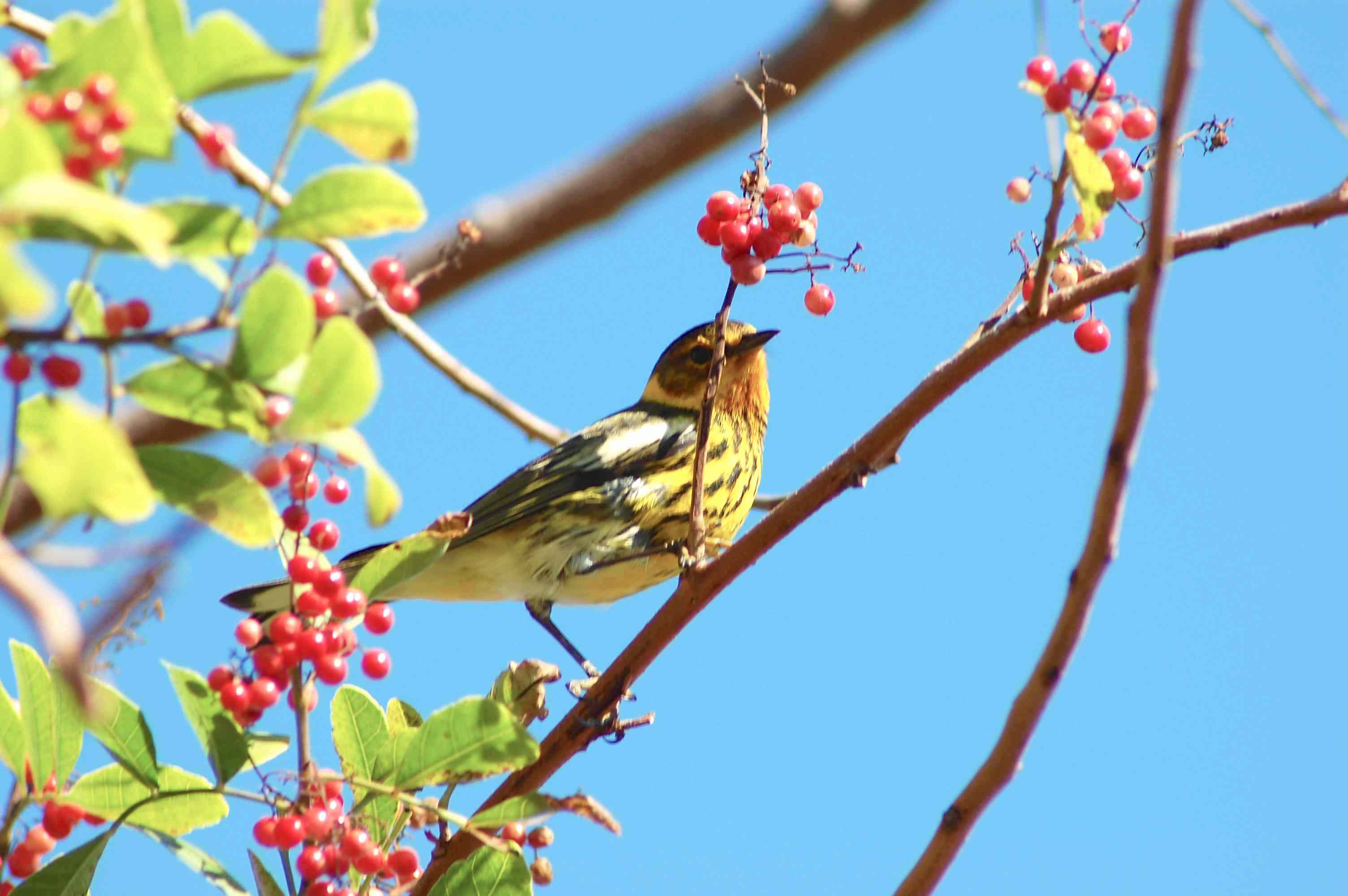
The increasing flow of reports of recent bird sightings on Abaco seems to confirm the theory that in times of crisis and of recovery from disaster, people gain strength from the natural world that surrounds them. The bright flash of a parrots wings; the hoarse squawk of a West Indian Woodpecker; the unmistakable cheery call of the thick-billed vireo; the ‘peep’ of a shore-bird – all these can bring comfort in troubled times.
Right now, social media on Abaco, and radiating far beyond, is alive with more encouraging news after the storm, not least about the gradual re-establishment of normality as utilities and services are restored, movement becomes more possible, and plans for repairing the past and designing the future can begin to be made.
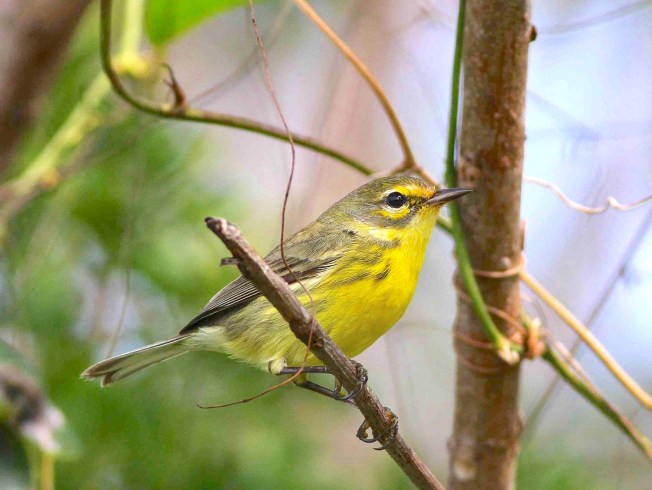
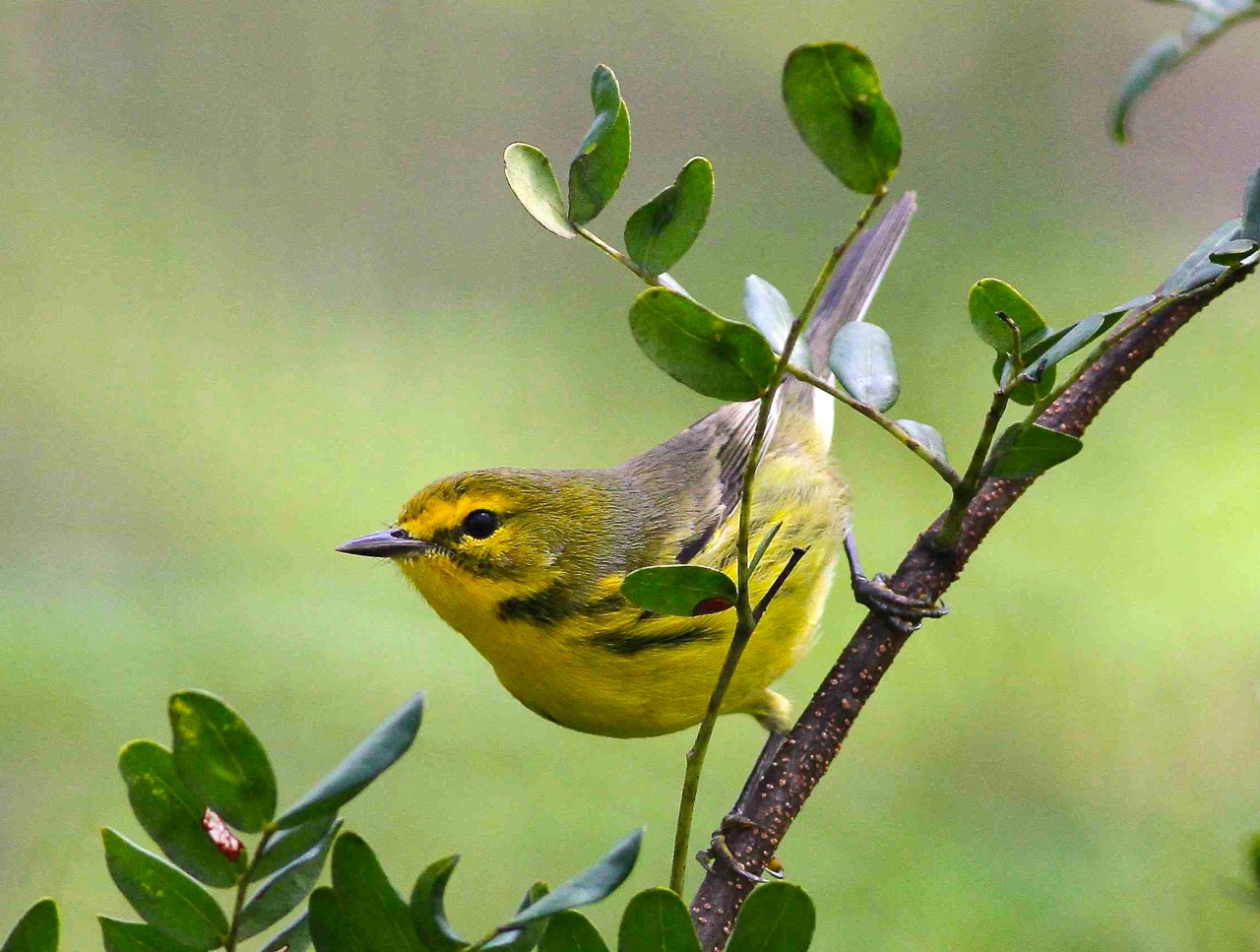
This post features photos of Prairie warblers taken on Abaco by Gerlinde Taurer, contributor to THE BIRDS OF ABACO. It is the start of a short series that will focus on a single species and feature gorgeous photos, all taken on Abaco. These bright little warblers are common winter residents and in normal times their Fall arrival would be well under way – along with some 30 other species of warbler that make Abaco – and the Bahamas generally – their winter home.
The rich diversity of the avian life of Abaco is truly astonishing: from residents to migratory species, from tiny to huge, from frequently encountered to very rare. Every bird (yes, even the reputedly ‘dull’ black-faced grassquits) has its own beauty and character. Even a small brown bird may have a lovely song. In non-storm circumstances, it would not be unusual for an amateur birder to encounter upwards of 40 species during half a day in the field – especially with binoculars. I hope that on a shattered island, appreciation of the lively and varied birdlife is already making a small yet positive contribution to the recovery.
Credits: All photos taken by Gerlinde Taurer on Abaco (my own are suppressed for being, frankly, dross in comparison)
ABACO BAHAMAS POST-DORIAN: HOPE & THE ICONIC PARROTS
As the intensive Hurricane Dorian relief operation continues on a devastated Abaco, the extent of the destructive power of the huge storm is all too evident. Gradually restored communications and the availability of social media have circulated far and wide the awful photos and aerial views of the smashed island, and the tragic stories of loss and desolation. Accounts of astonishing courage, determination and generosity are for all to see. And, nearly 4 weeks later, we have early signs of recovery and grounds for hope in a stricken land.
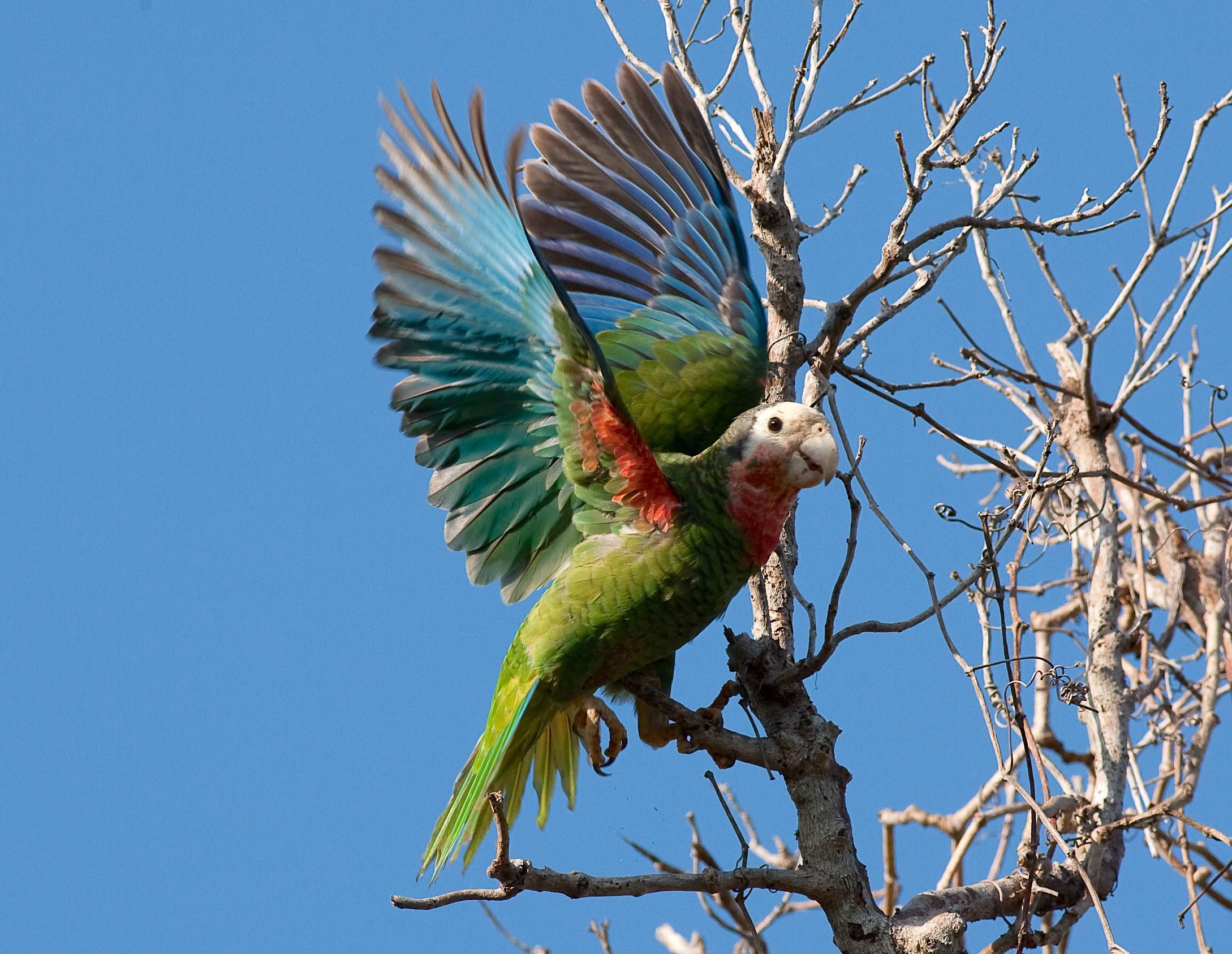
For the last 10 days or so, inquiries about Abaco’s birds and other wildlife have begun and are increasing daily. I take this as a sign that people are at last able to look slightly beyond the immediate horrors of the storm to the brighter horizon of the future. The iconic parrots are the principle concern, and finally – finally – I have some good news to bring. Here it is, in all its glory.
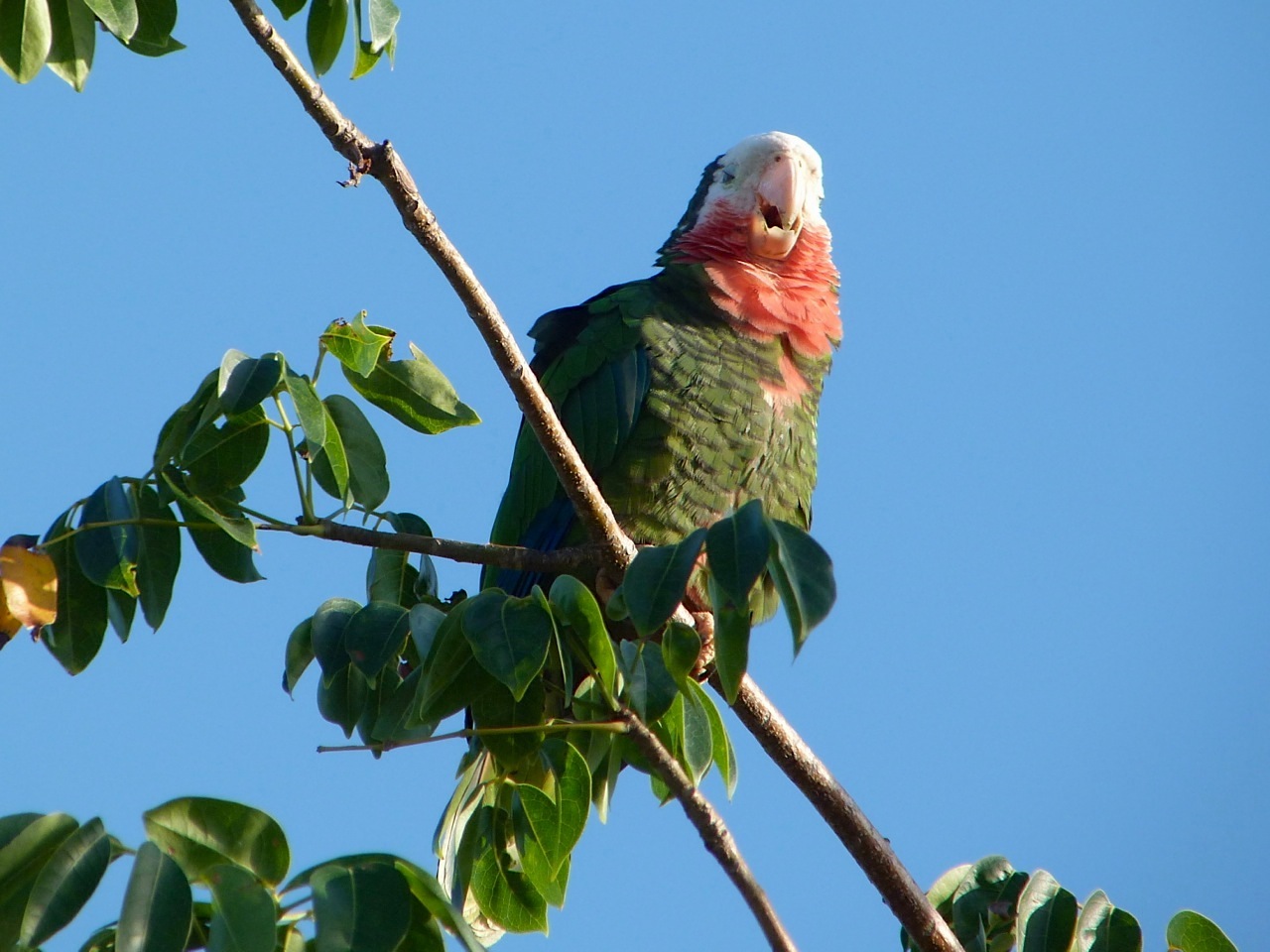
I have been waiting anxiously to pick up the first reports of parrot sightings – or even of their raucous squawks. This iPhone photo was taken yesterday at Bahama Palm Shores by Tara Lavallee. You are looking at the first photograph of the parrots since the end of last month. This pair were apparently wary and jumpy – quite unlike the unselfconscious rowdy birds with which we are so familiar. There was a sighting near Casuarina, too. It looks as though the parrots are returning.
WHERE HAVE THE PARROTS BEEN IN THE MEANTIME?
The parrots live and breed in the Abaco National Park right down in the south of the island. This is a vast area of pine forest that gives way to scrubland as it nears the coast. The assumption is that the approaching storm will have driven the parrots deep into the forest where, happily, they will have been some distance away from the destructive path of the hurricane. Many creatures can sense the approach of bad weather from changes in the air around them. This may trigger an instinct to head for home some time before the threat arrives.
ONCE THEY GET THERE, WHAT DO THEY DO?
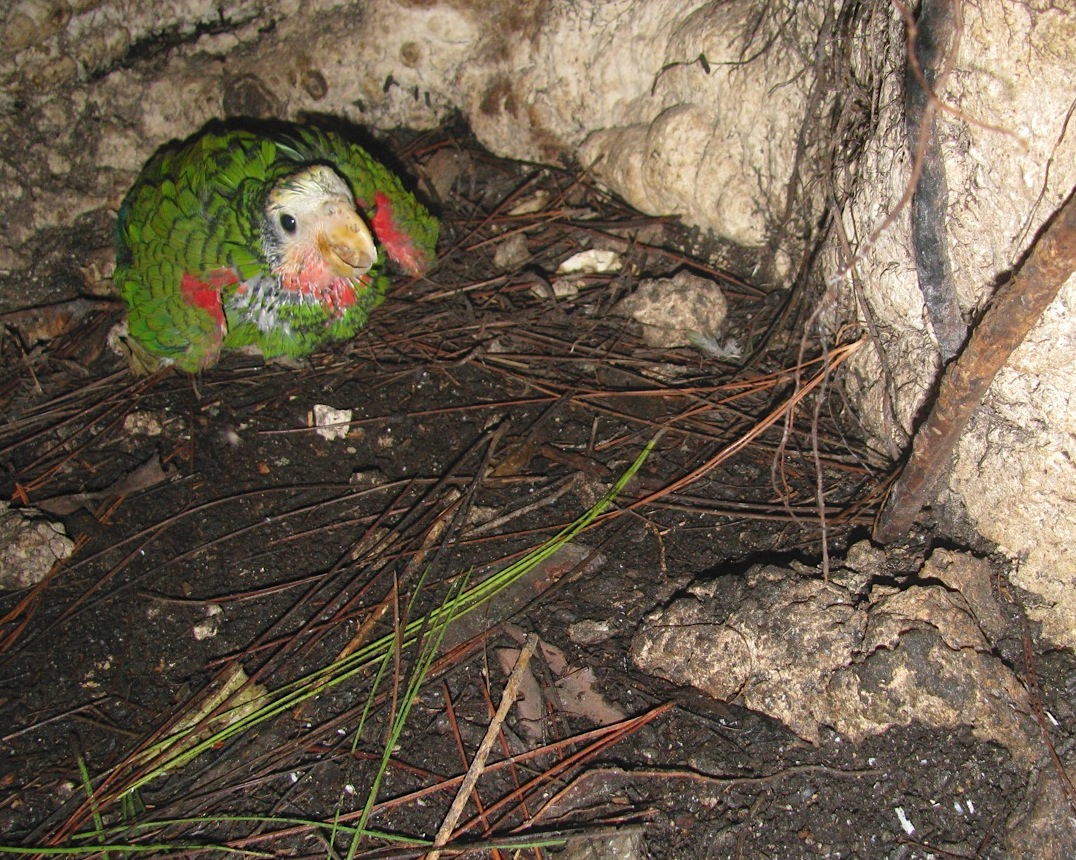
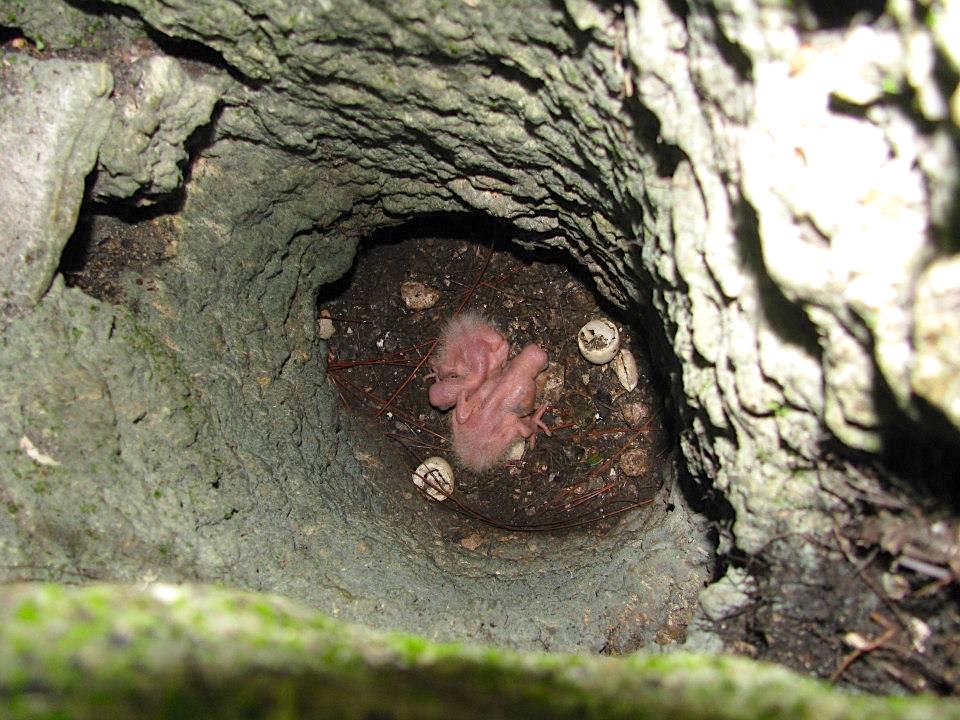
They lie low. The parrots have an additional and most unusual way to stay safe. They can avoid the dangers of adverse weather and even forest fires because they live and nest underground in limestone caves deep in the National Park.
HOW RARE IS THAT?
The Abaco parrot (as opposed to its tree-nesting cousins in Inagua and in small numbers in Nassau) is unique in this respect, certainly in the northern hemisphere. There are half-a-dozen mostly inter-related species in the Antipodes that nest underground, but that is all. Even if the caves get flooded, limestone is a permeable rock and water will dissipate. And as for fires, the holes are deep enough for the flames to pass over them. Tree-dwellers are far more vulnerable.
DOES THIS MEAN THE PARROTS ARE ALL SAFE?
It’s much too early to judge, because there is another vital component in their survival: the availability and sufficiency of suitable food. This is the factor that most worries those concerned with the parrots’ welfare – the BNT, the scientists and naturalists who helped to bring the species back from the edge of extinction, and organisations further afield such as Birds Caribbean. So it’s a question now of where they will find to feed; and beyond that, how they respond if they find their usual feeding haunts trashed.
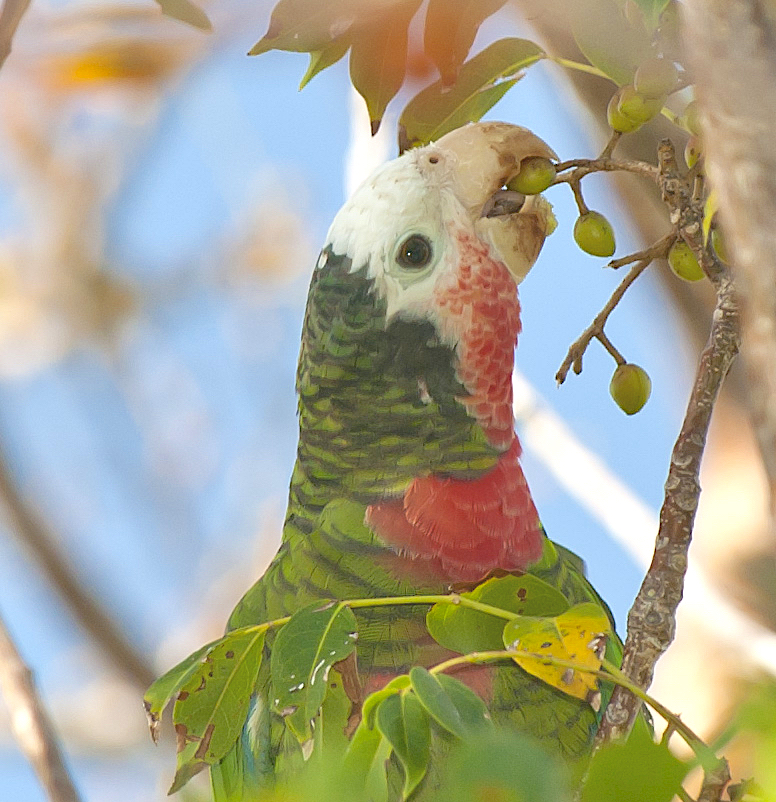
Feeding on Gumbo Limbo berries, a favourite snack
SIGHTING REPORTS
The signs are that the parrots are now emerging and looking for food. With luck their presence will become more noticeable. This is an important moment for collecting stats. They will help research into the effect of Dorian on the population including the wellbeing of the birds, their flocking behaviour, and the locations they now find to their liking. The fact that parrots have been seen at BPS, the parrot hotspot, is encouraging.
If anyone sees or even hears parrots over the next couple of weeks I’d welcome a report either directly or indirectly. The most helpful details are date, time, location and approx numbers (1, pair, a few, lots). Beyond that, behaviour notes are of interest – feeding, chattering, hanging round, being unsettled and so on. A photo is always a bonus, even a phone one.
Do not doubt the resilience of these beautiful birds. Now that the threat of extinction has been removed through skilled conservation, management and predator control, they will win through. If you doubt it, just look at this image below. It shows a nest in the immediate aftermath of hurricane Irene, with its occupant safe and sound as the parents forage for food and parrot scientist Caroline nips in with her camera.
Nearly 4 weeks after the devastation of Hurricane Dorian, the island and its cays are beginning to emerge gradually from the wreckage and the desolation. The extent of the disaster on the ground is clear, not least from the aerial photos – first drone, then plane, and now Google – of ‘before’ and ‘after’.
At the stage, it isn’t possible to determine the extent to which the underwater world has been affected. The storm surge was huge and the waves were savage. The progress of the storm was slow (and it went on to stall over equally damaged Grand Bahama). Who knows the effect on the corals and other reef life for which Abaco is renowned.
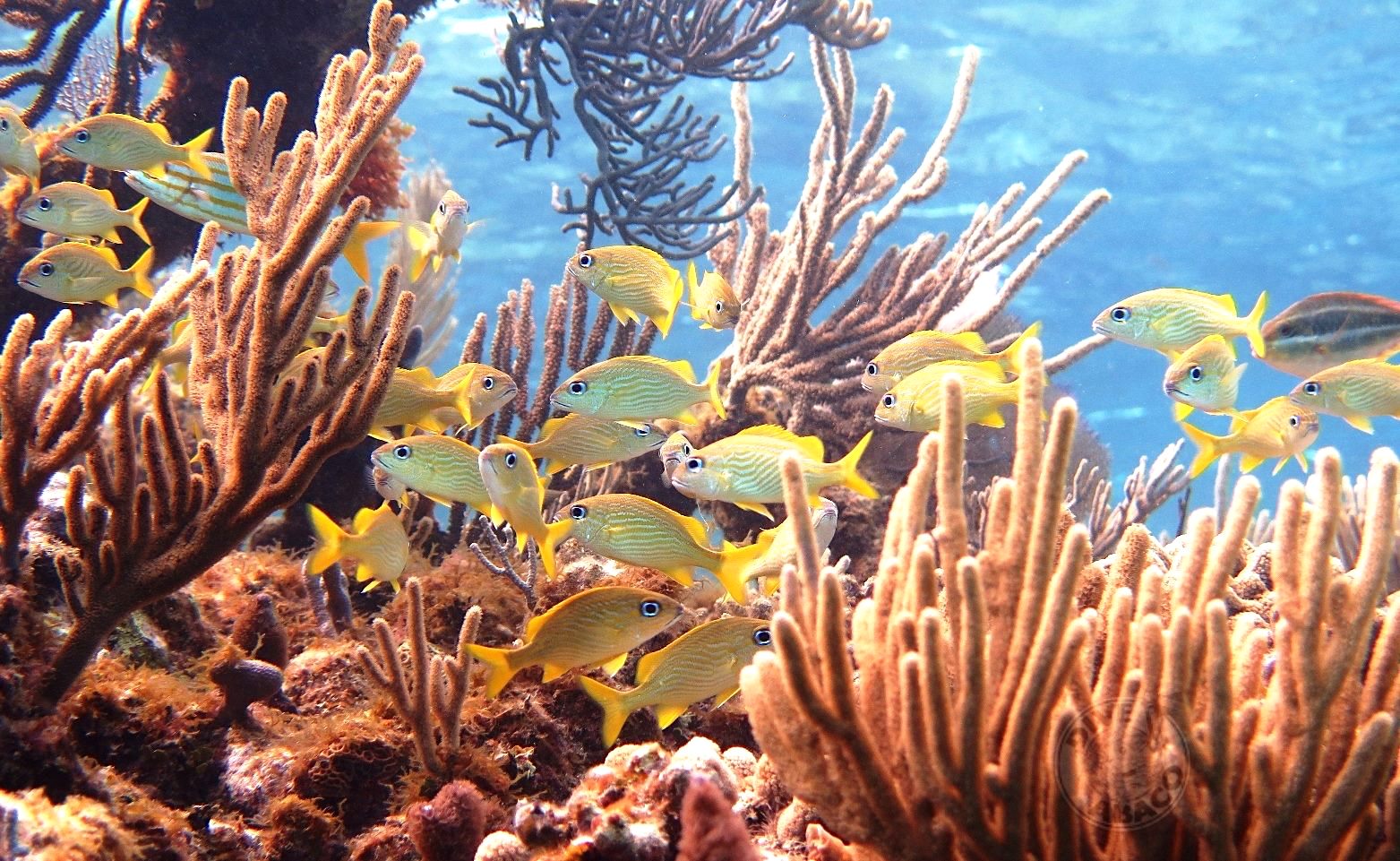
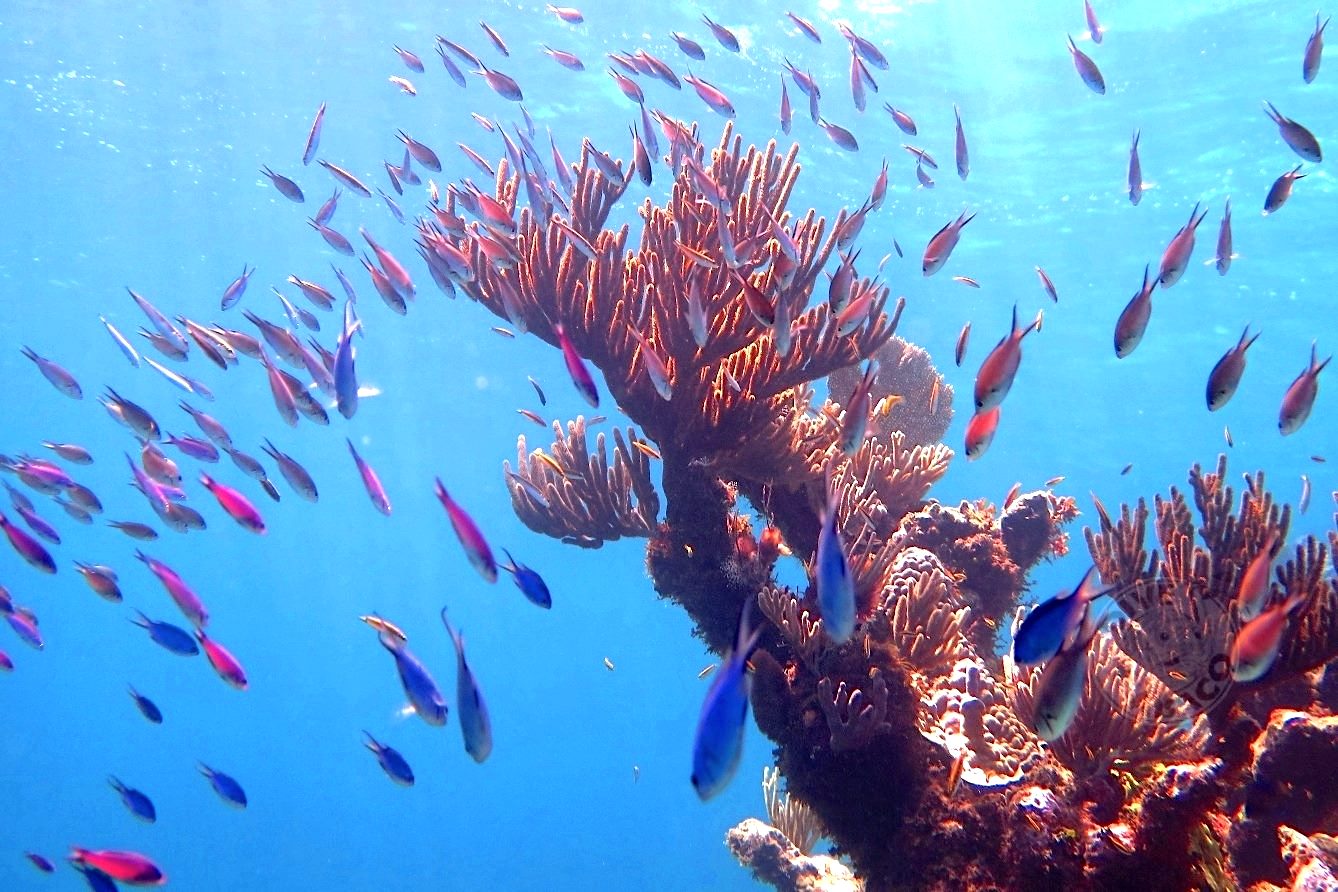
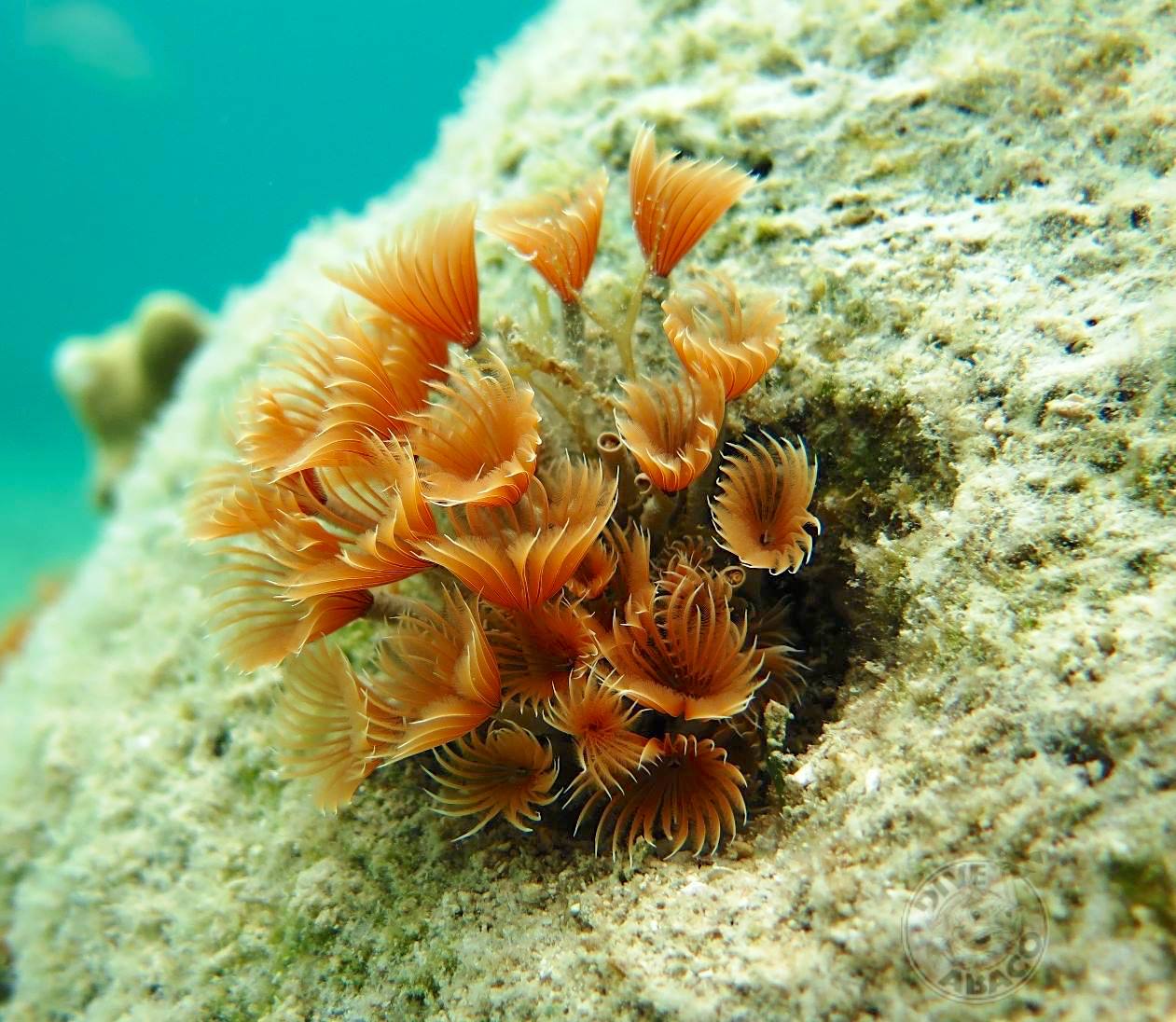
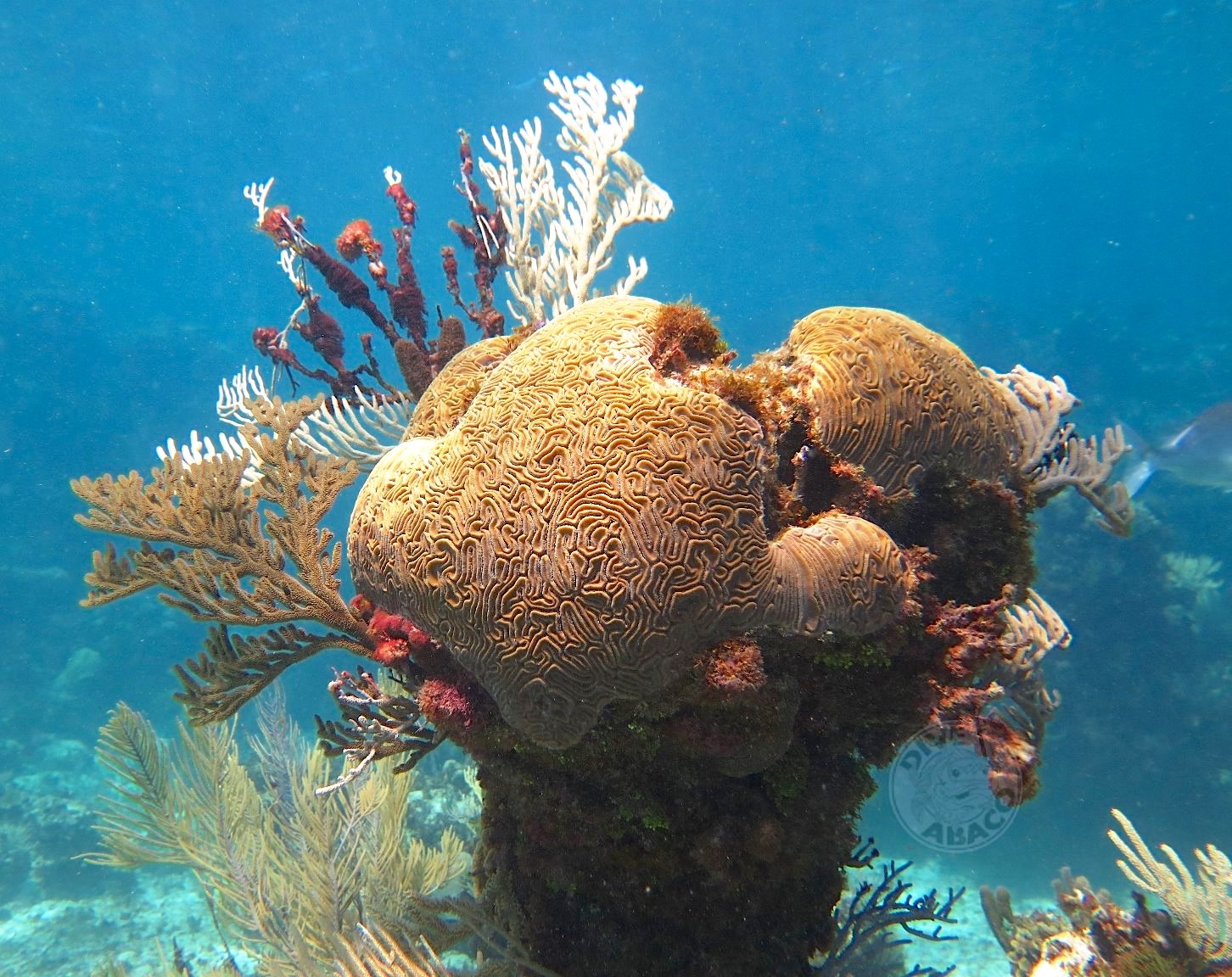
This pictorial post is a reminder of how things were below the surface of Abaco waters before Dorian struck. If it lifts spirits to any degree, I shall be glad.
All these photos are by Melinda Rodgers who, with Capt Keith, are DIVE ABACO. Many will know how badly they have fared, being in the heart of Marsh Harbour. We wish them a speedy return to the wonderful enterprise they have run for many years. I’m pleased to be able to show the beauty of the reefs in happier times from their archive.
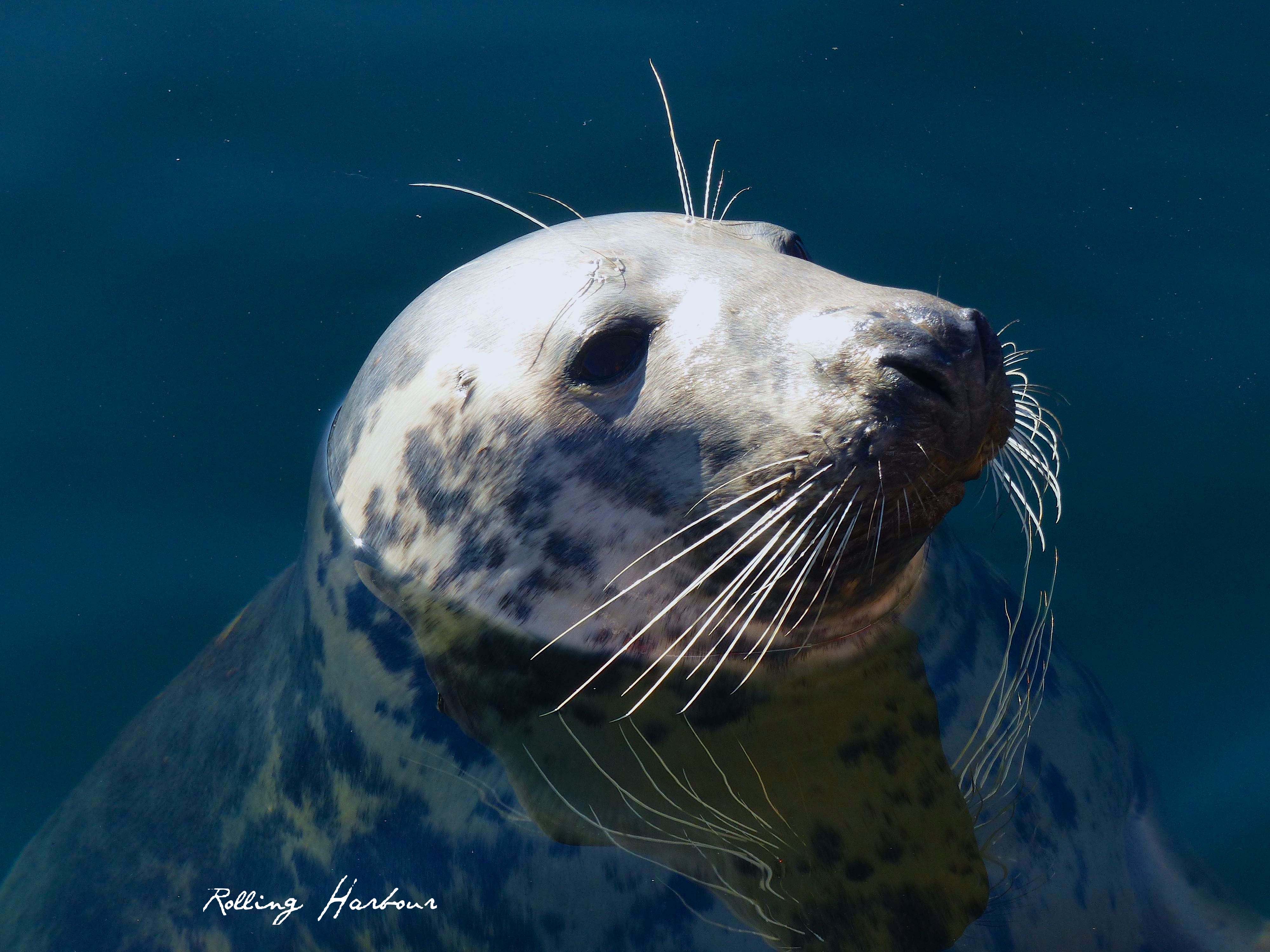
As Abaco starts to rebuild from the unimagined severity of its destruction, it’s not a great moment for discursive writing about the astonishing richness of wildlife there, both above and below the sea. So here’s a photo of a Harbour Seal that I took this afternoon. If it gives you something to smile about, I’d be very glad. RH








































































You must be logged in to post a comment.