Unknown's avatar

A RARE ABACO PARROT DISPLAYS A RARE TALENT…


DCB GBG Cover Logo

A RARE ABACO PARROT DISPLAYS A RARE TALENT…

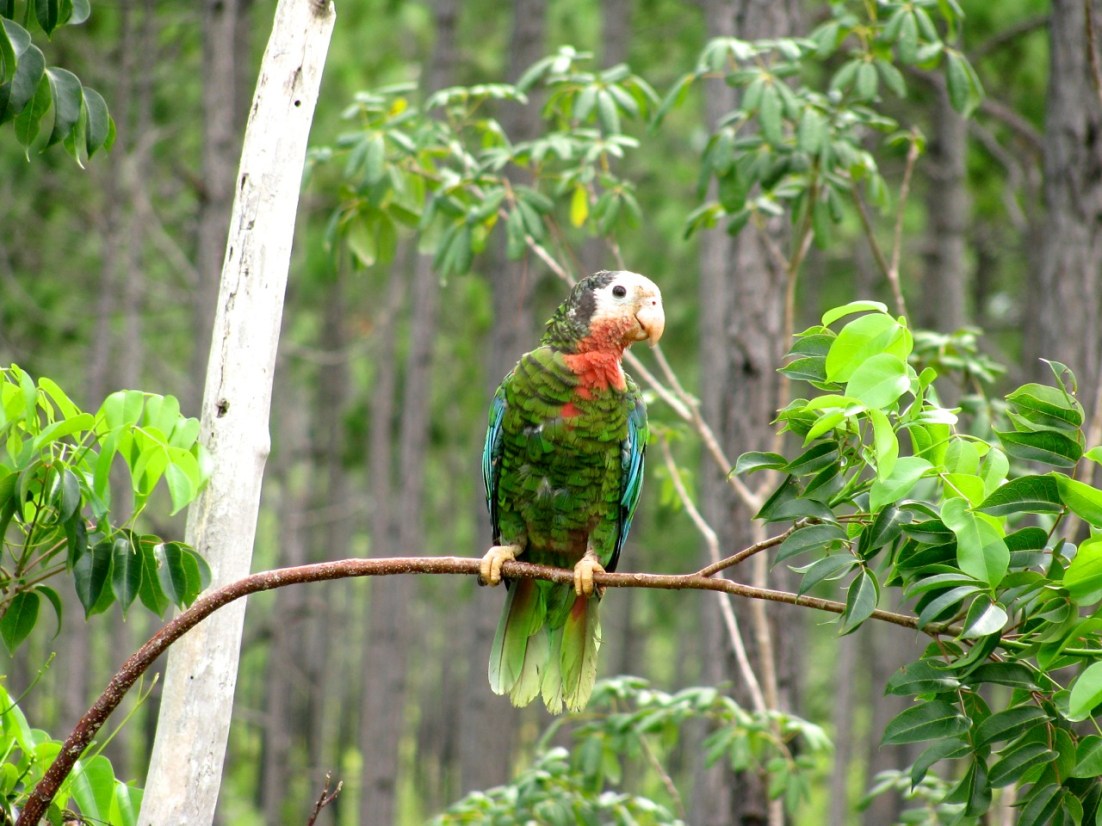
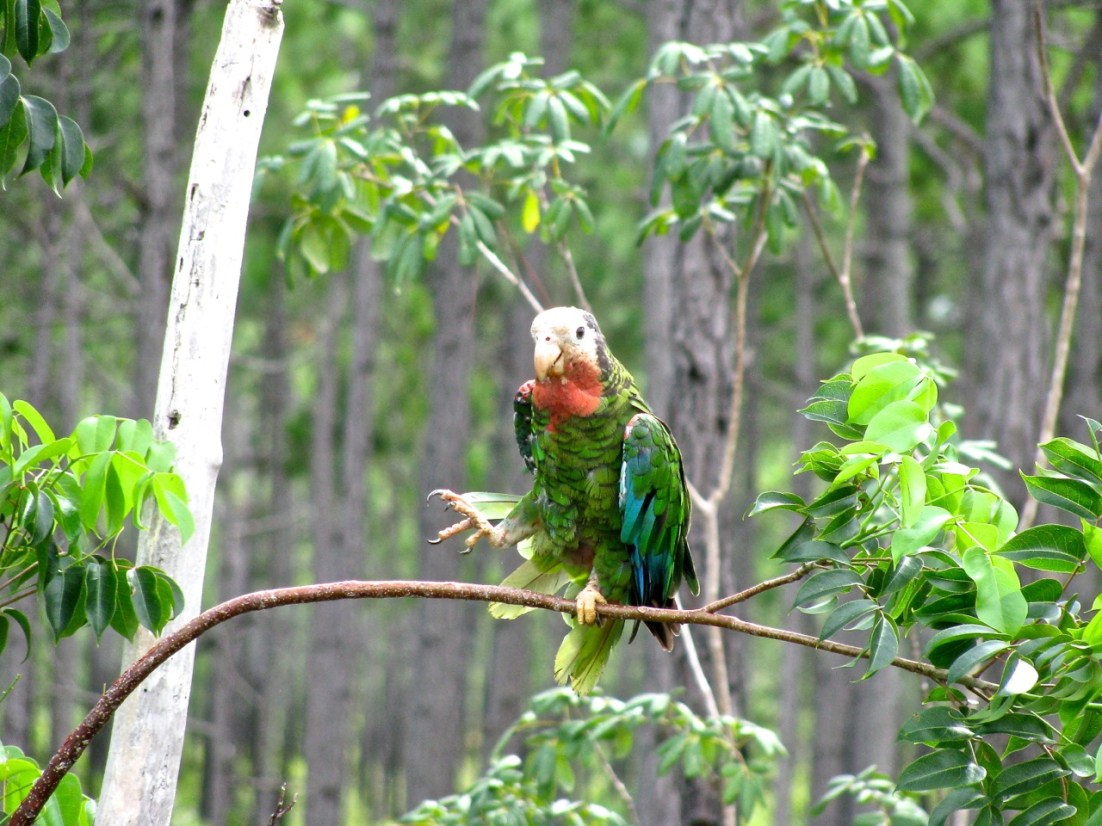
WOULD YOU LIKE TO SEE MY LITTLE TRICK?ABACO PARROT CS 13-3

I’M A BIT CAMERA-SHY – I’LL JUST TURN ROUNDABACO PARROT CS 13-4

THAT’S BETTER. ARE YOU SURE YOU ARE READY FOR THIS?ABACO PARROT CS 13-2

TA DAAAAAAAAAAAAAAAAAAAABACO PARROT CS 13-1

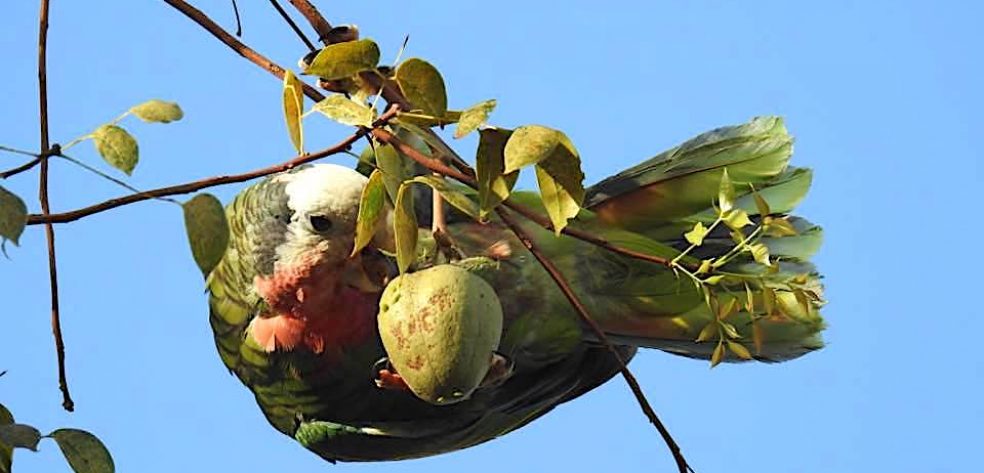
The Abaco Parrot is a unique subspecies of Cuban Parrot found on only Abaco. They are the only parrot to nest underground, in limestone caves in the pine forest. Their numbers have increased from near extinction to a sustainable population as the result of an intensive program of conservation and anti-predation. They get plenty of publicity hereabouts, and have their own page HERE. We normally avoid too much whimsy in these parts, but I am in parrot territory right now, so I have given myself permission to break my own rule. Photos: ©Caroline Stahala (who looks after them)

Unknown's avatar

PARROTFISH: COLOURFUL CORAL CHARACTERS BAHAMAS REEF FISH (6)


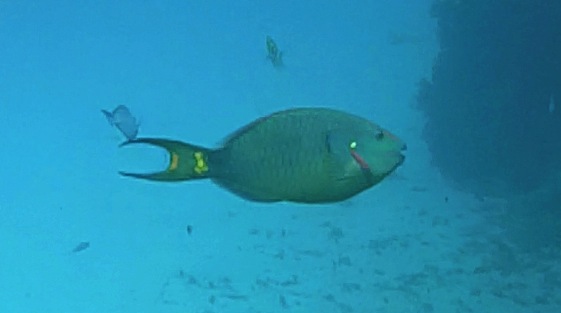
Stoplight Parrotfish ©RH

BAHAMAS REEF FISH (6) PARROTFISH: COLOURFUL CORAL CHARACTERS

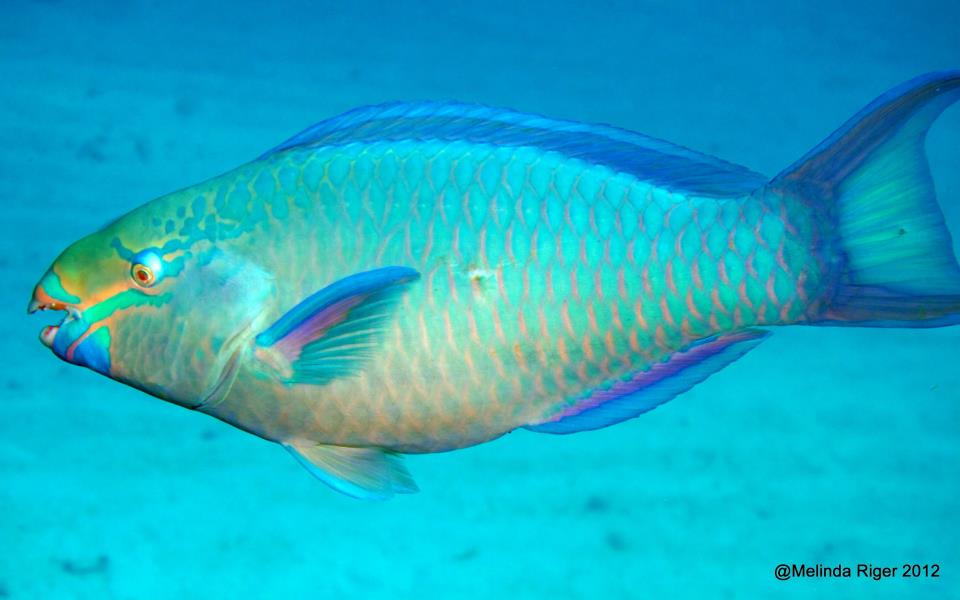
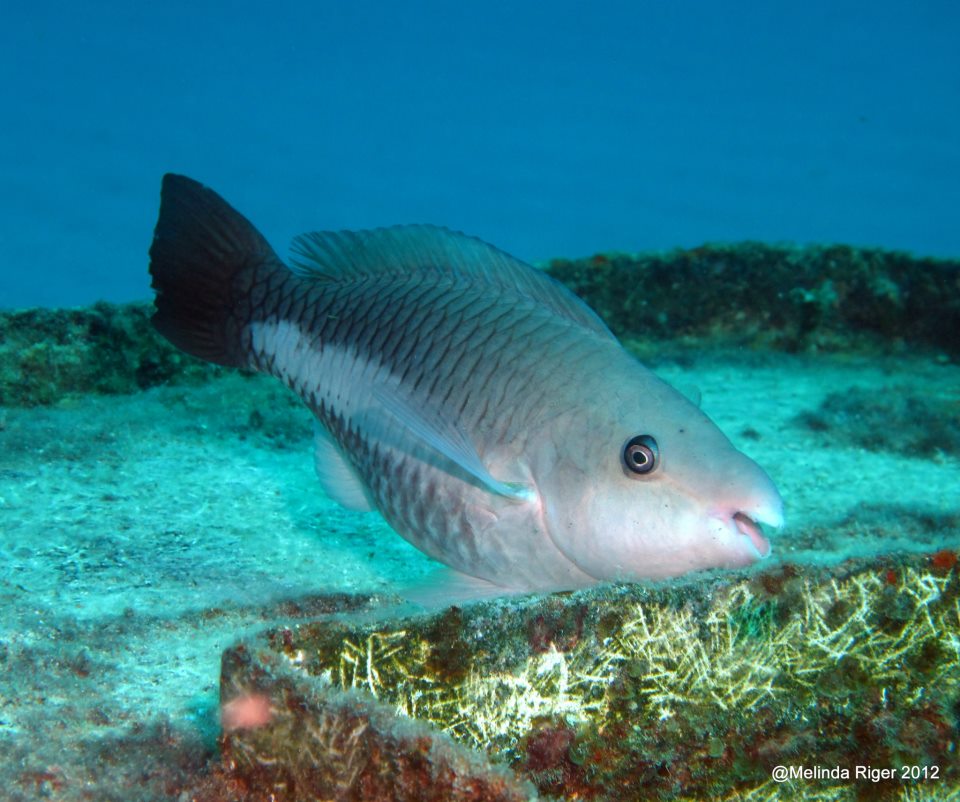
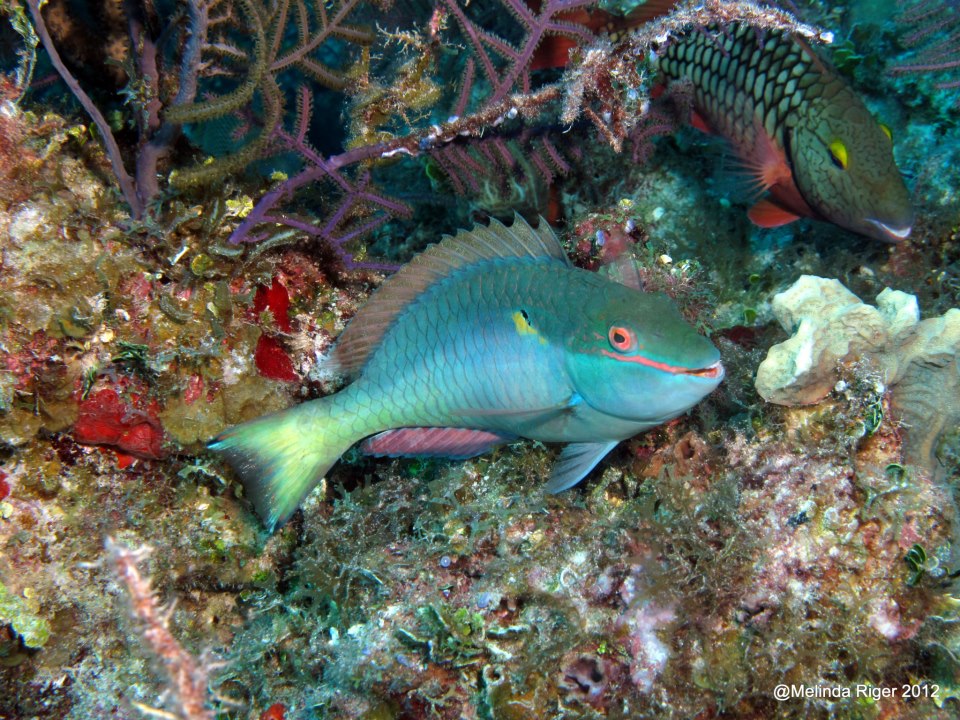
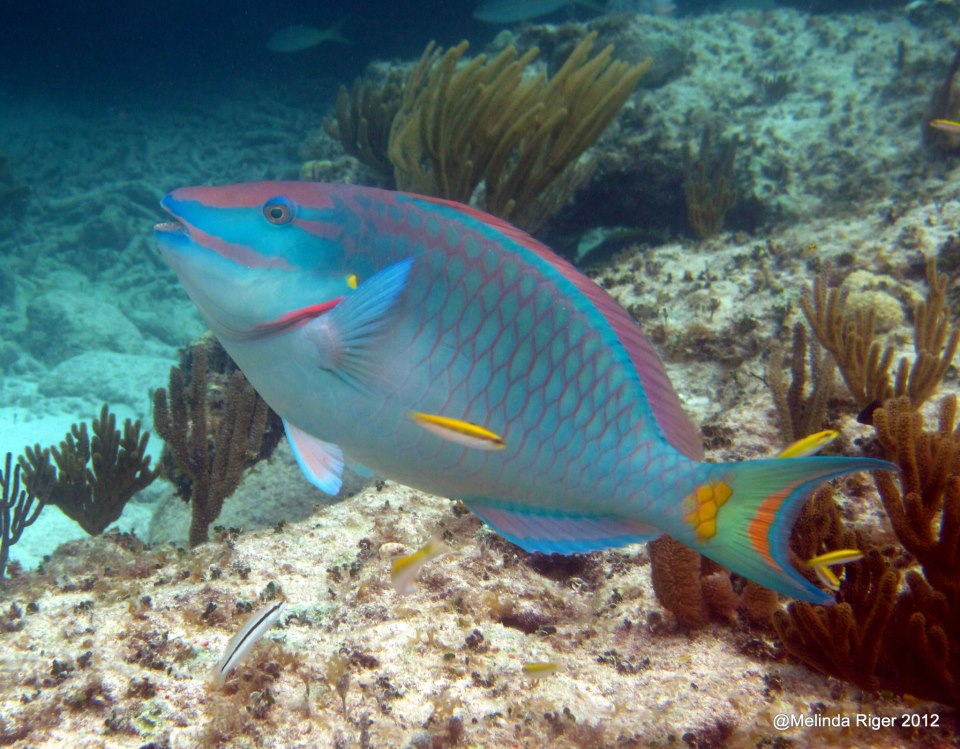
The term ‘PARROTFISH’ comprises many related species (80) around the world  inhabiting shallow tropical and subtropical waters.  They are commonly found in coral reefs and seagrass beds, and along rocky coasts. They play a significant role in BIOEROSION. Here are some examples of 5 of this species that inhabit the waters of the Northern Bahamas

BLUE PARROTFISHBlue Parrotfish copy 2

PARROTFISH FACTS TO ASTOUND AND IMPRESS YOUR FRIENDS WITH

A. FEEDING HABITS

1. Named for their dental arrangements – a mouthful of teeth, forming the characteristic ‘beak’

2. Primarily herbivore but not above snacking on small creatures / organisms or even molluscs

3. Their teeth grow continuously, replacing ones worn away by feeding on coral

4. As they feed on algae etc, their teeth grind up the coral, which they  ingest

5. Then (get this!) they digest it and excrete it as sand… it’s a component of your favourite beach!

6. “One parrotfish can produce 90 kilograms (200 lb) of sand each year”. Wiki says so – it must be true

7. They are a vital species in preventing algae from choking coral

PRINCESS PARROTFISHPrincess ParrotfishQUEEN PARROTFISH (initial phase)

B. PERSONAL INFORMATION (theirs, I mean)

1. Some species secrete a protective mucous cocoon to sleep in or to conceal themselves from predators

2. A mucous substance also helps heal damage, repel parasites, & protect them from UV light

3. As they develop, most species change colour significantly to become vivid adults – “polychromatism”

4. Some juveniles can change colour temporarily to mimic other species as a protection

5. Most are “sequential hermaphrodites”, turning from female to male (a few change vice versa)

6. They tend to hang out in groups of similarly-sized / -developed fish

7. Single males tend to have several lady friends, and aggressively defend their love rights

8. Parrotfish are PELAGIC SPAWNERS. Females release many tiny buoyant eggs into the water, which float freely and settle into the coral until they hatch

9. Unlike other fishes, they use their pectoral fins to propel themselves

10. Their feeding behaviour makes them unsuitable for marine aquariums

RAINBOW PARROTFISH& Royal Grammas

Anyone interested in getting more information about Parrotfishes – maybe about that whole female / male transformation thing? – is recommended to look at an article by Tim Smith of Miami University, Ohio entitled THE BAHAMAS: A CLOSER LOOK AT THE COLORFUL AND UNIQUE PARROTFISH Click on the P-word to get to it directly.

If you are pressed for time, here is the article conveniently digested into bullet points:

  • a superior competitor among herbivorous reef fishes
  • large, heavy scales in regular rows on head and body, with teeth fused together to form a beak-like jaw
  • unique pharyngeal dentition: upper interlocking pharyngeal bones located above the gills rest plush against the lower pharyngeal bone to form the pharyngeal mill (molar-like teeth in their throats) used to grind up the hard coral skeleton that contains microscopic algae
  • the crushed calcareous material travels through the fish’s digestive system and is voided on the reef as white coral sand
  • some fish will return to the same location to deposit this calcareous powder resulting in the formation of small hills over time
  • most parrotfish live on reefs from which they rarely wander far
  • rainbow parrotfish are thought to use the sun for navigation to travel from its nocturnal cave in deeper water to the shore to feed
  • all parrotfish uniquely use the pectoral fins located behind the gills for propulsion (not their caudal or tail fins)
  • in addition to scraping algae from substrate, some parrotfish browse on sea grasses
  • at night, each fish separates to search for a suitable place within the reef to sleep.
  • the large, thick scales of the parrotfish are strong enough to stop a spear in some species
  • the flesh is soft and spoils quickly, the parrotfish is not known as a food fish in the Bahamas
  • in Hawaii they are eaten raw and at one time were reserved for royalty
  • the blue parrotfish may carry ciguatera-producing toxins that result in illness when consumed
  • it’s high time for another picture or two

REDBAND PARROTFISH

Some more bullet points from Tim Smith’s article:

  • at night some species simply burrow into the sand
  • others secrete a filmy mucus cocoon in 30 minutes which masks its scent, affording the parrotfish protection from coral reef night predators such as sharks and moray eels.
  • the parrotfish has the ability to undergo sex reversal in which female fish become males
  • parrotfish born male remain male throughout their lives and are called primary males.
  • female born fish may change sex & color to become male – secondary males or referred to as supermales or terminal males.
  • some parrotfish are chameleon-like, changing their colors to match their surroundings.
  • parrotfish spawn throughout the year
  • there are 80 species of parrotfish
  • the vibrantly colored parrotfish plays a major role in maintaining the cycle of reef growth and erosion
  • “Do not be alarmed if you experience a sudden drift of sediment or hear the crunching sound of coral the next time you are snorkeling or diving along a coral reef in the Bahamas. It is just a parrotfish doing its job.”
  • I sense a stoplight is about to interrupt the proceedings… and here it is

STOPLIGHT PARROTFISH (adult and, below, juvenile form)Thanks to Melinda of Grand Bahama Scuba for her fantastic illustrative pics; the header is mine own

It’s possible that I won’t be quite as attentive with posts / replies to comments etc over the next couple of weeks or so. I’ve a few things in the pipeline, but it may depend on wifi access… I’m giving up trying to use an iPhone to post while on the move – fine for snaps, but not for anything more complicated. So apologies in advance, and like Arnie, I’m afraid I’ll be back…

Gone Fishin'Relax... at Lubbers Quarters

Unknown's avatar

VACATION FEVER HITS ROLLING HARBOUR: OUTBREAK OF HUMOUR


DCB Pineapple Crop

VACATION FEVER HITS ROLLING HARBOUR: OUTBREAK OF PICTORIAL HUMOUR

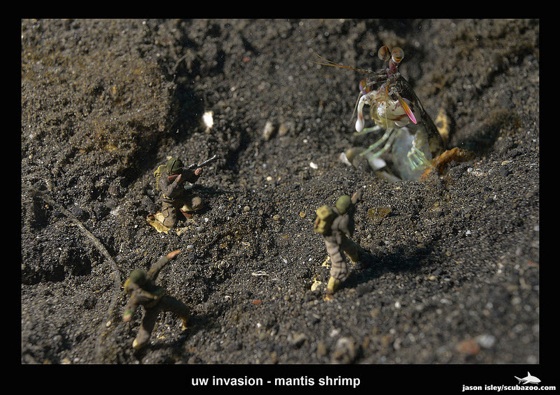
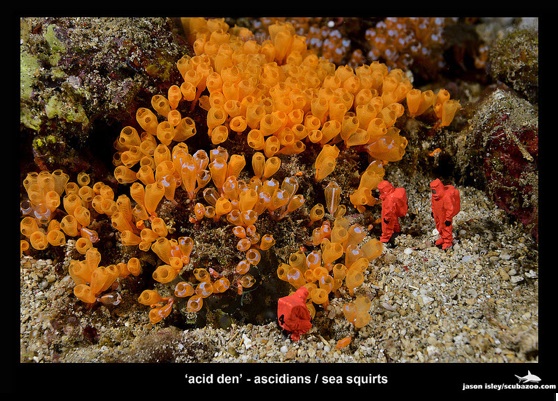
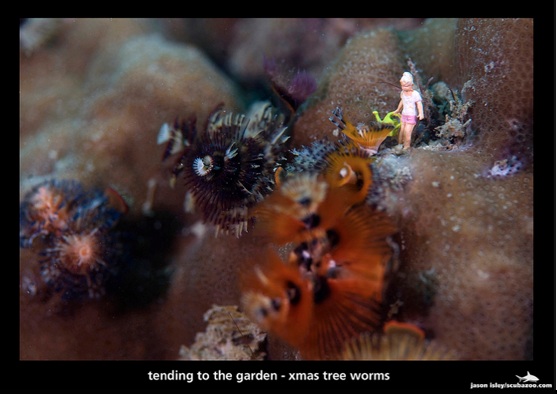
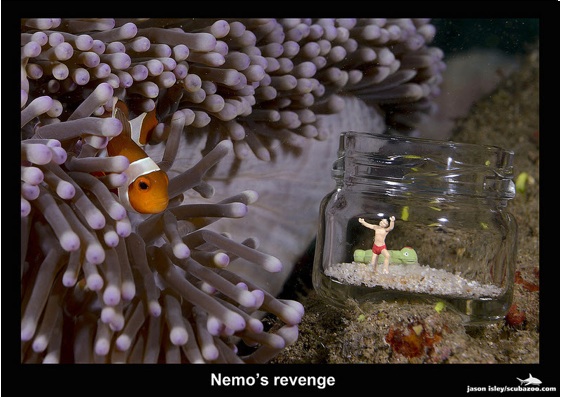
Is humour permissible around here? I think so! With an imminent trip to Abaco and the thought of being out on the Marls this time next week, there’s a jovial atmosphere in the immediate vicinity of my keyboard. So I’m going to unleash some sea creature-based fun from the imaginative JASON ISLEY at SCUBA ZOO  via the enjoyable website SEAMONSTERSCUBAZOO 1 SCUBAZOO 2 SCUBAZOO 3 SCUBAZOO 4 SCUBAZOO 5 SCUBAZOO 6SCUBAZOO 7SCUBA ZOO 9SCUBAZOO 8

Unknown's avatar

HERRING GULLS (Larus smithsonianus) CLOSE ENCOUNTERS OF A PREFERRED KIND


Herring Gull Header

HERRING GULL Larus smithsonianus

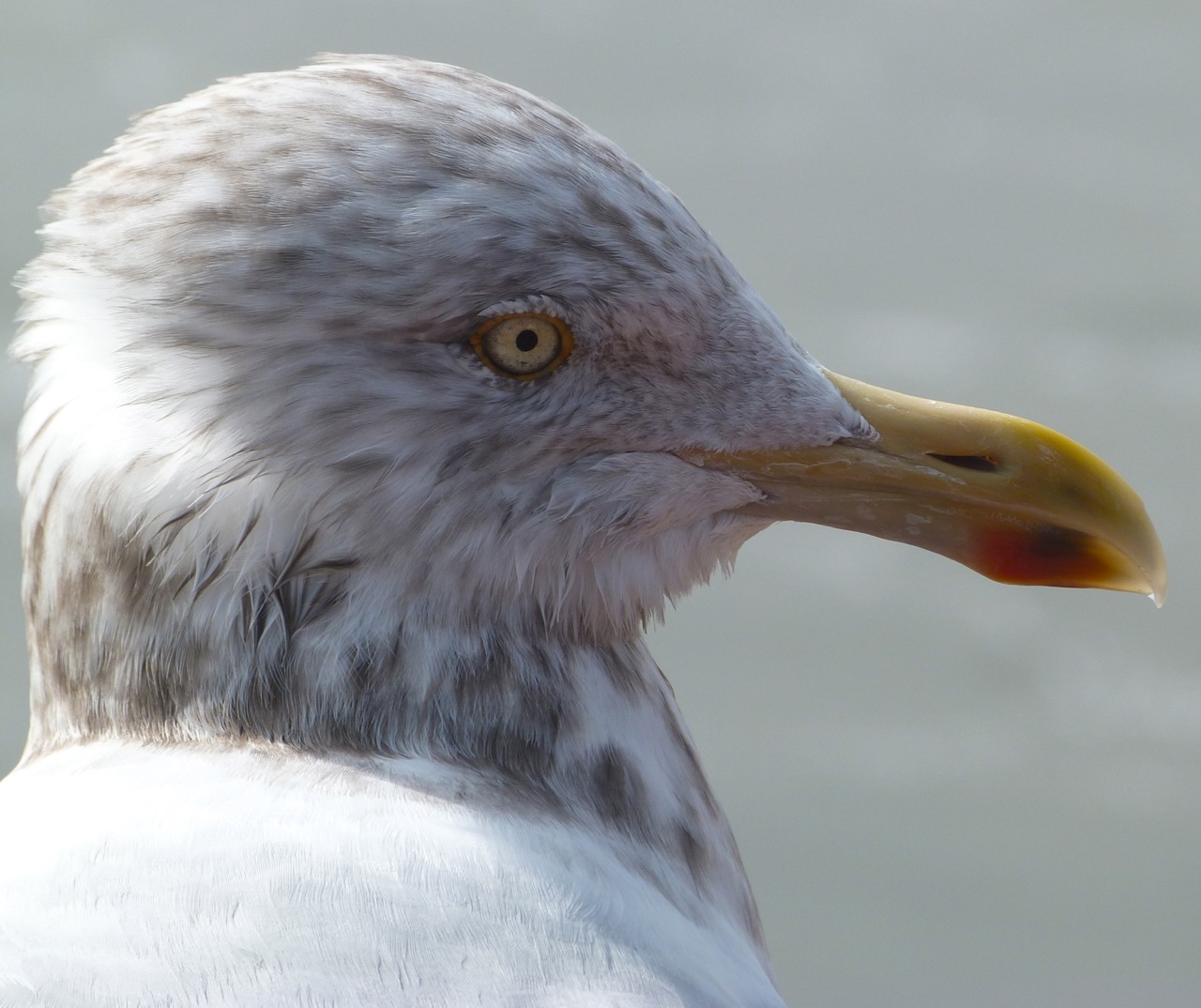
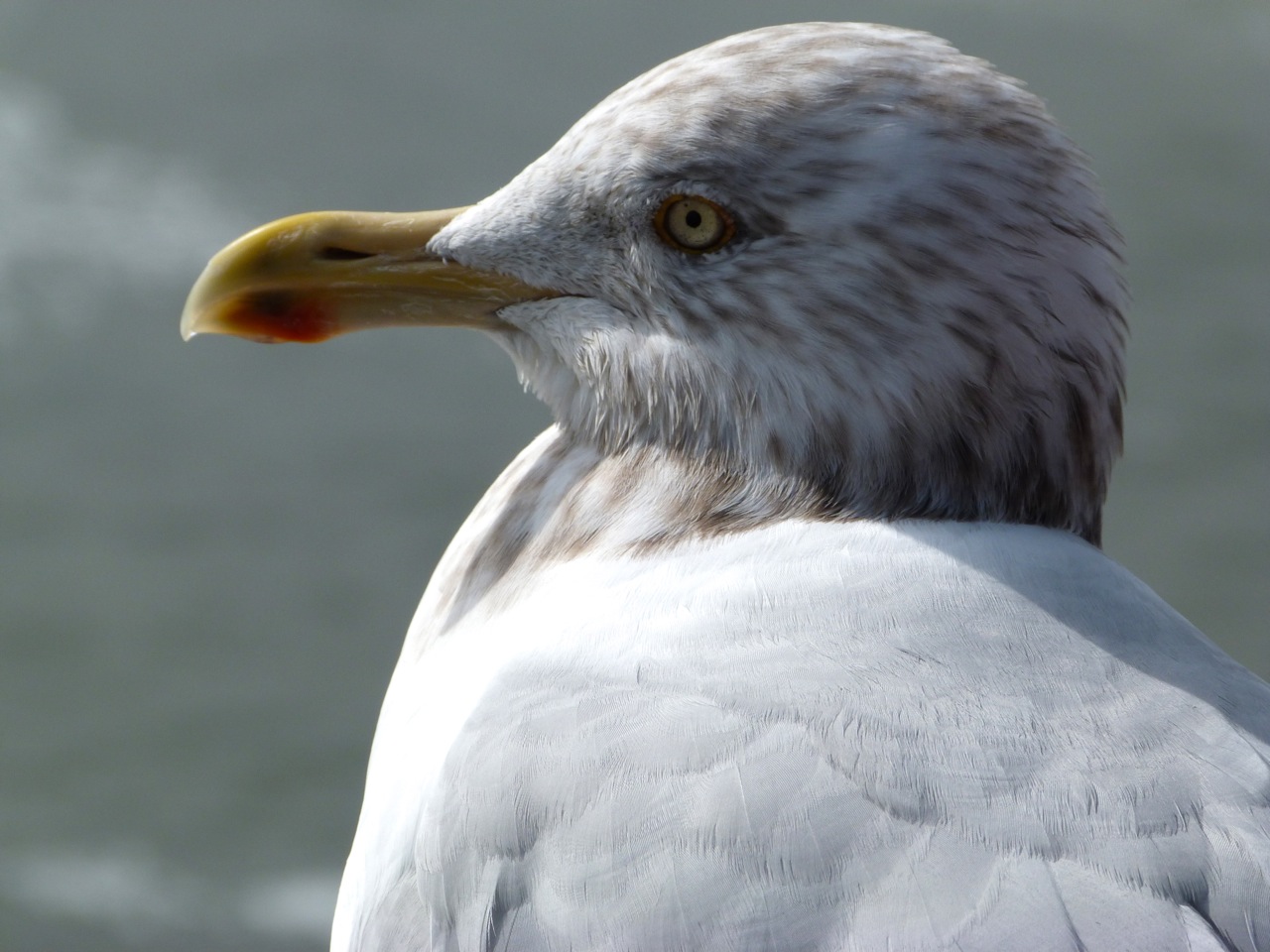
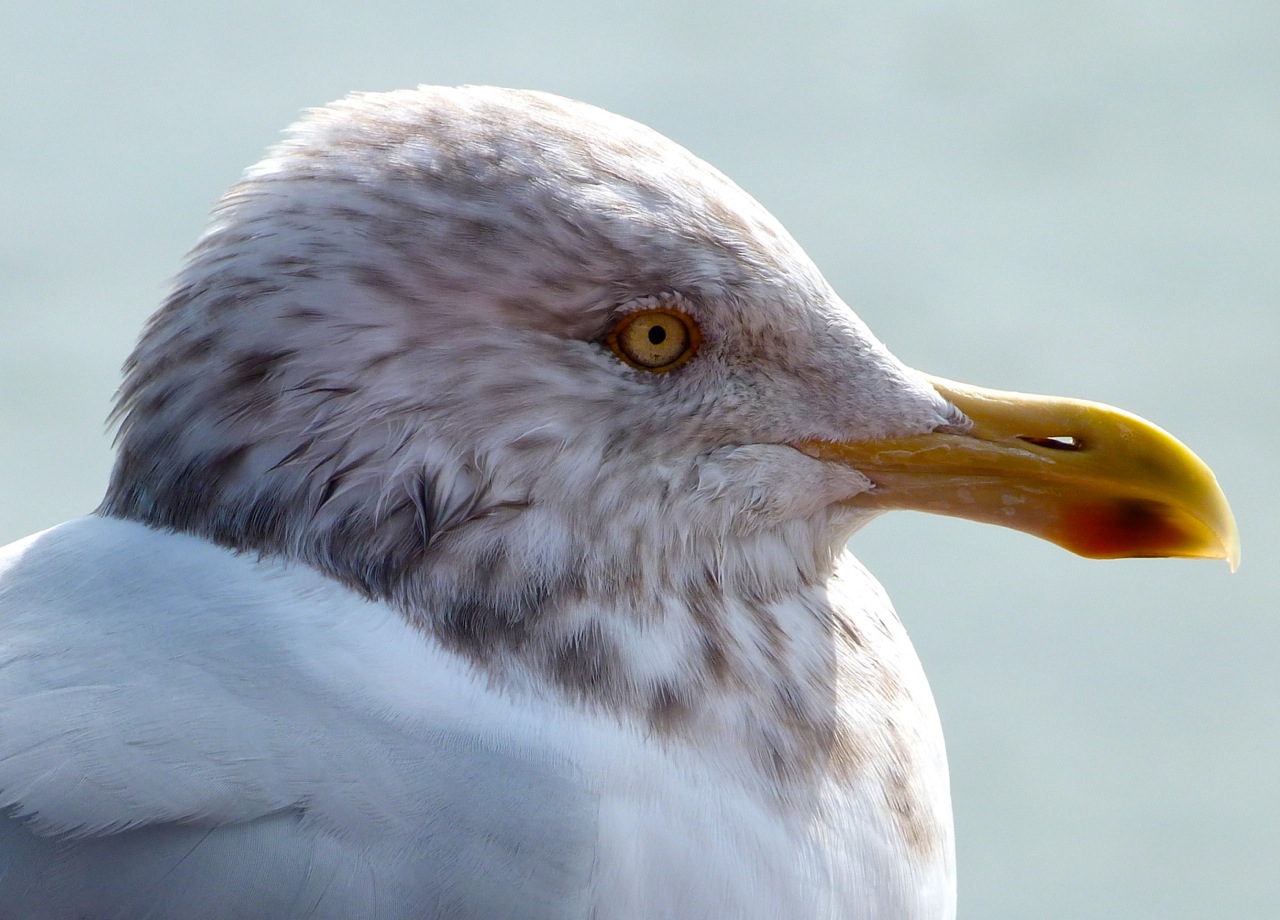
The Herring Gull needs no introduction. So I won’t give it one. Instead, here are some close-ups of one that obligingly stayed still long enough, and at close enough range, to enable me to focus. The final two are possibly worth single- or double-clicking on to see the finer details. I prefer cooperative birds like this…

HERRING GULL IN FAMILIAR ‘BOAT POSE’Herring Gull 2Herring Gull 4Herring Gull 3Note the characteristic crossing of the black-and-white wing-tip feathers

HERRING GULL HEAD SHOTSHerring Gull 1Herring Gull 5All images ©RH; audio clip from the wonderful Xeno-canto archives

Unknown's avatar

ROCK BEAUTY Holacanthus tricolor: BAHAMAS REEF FISH (5)


Rock Beauty Desktop WP clip 

BAHAMAS REEF FISH (5) – ROCK BEAUTY Holacanthus tricolor

(No, this is not all about you, Madge…)

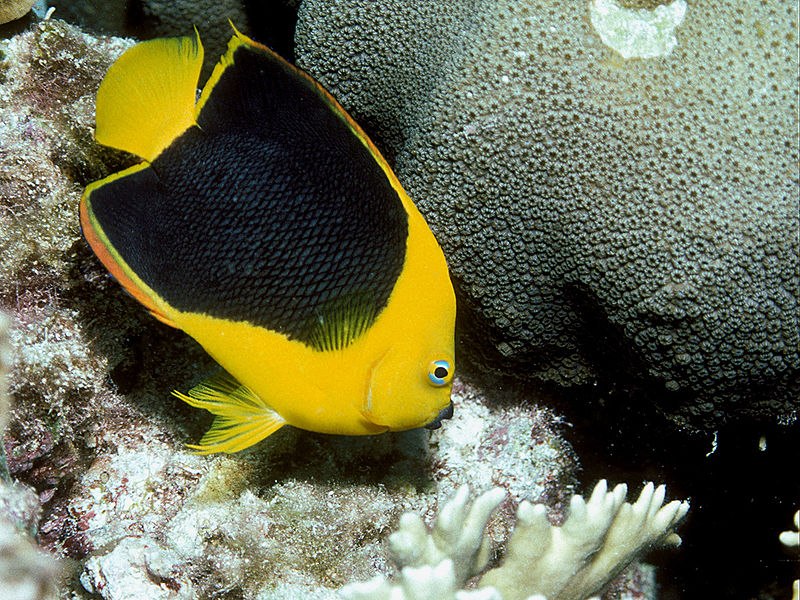
The Rock Beauty is a species of small Angelfish, measuring up to 10 inches in length. They are bright yellow and dark blue, in varying proportions according to the stage of development, with startling blue eyelids. They are mainly sponge-feeders, but vary their diet with plankton, algae, corals and even small jellyfish. Although the cheerful colouring of the Rock Beauty might make many think “my aquarium”, their diet – particularly the need for sponges – makes them unsuitable for captivity (see below for details). They also become aggressive, and cannot be successfully bred in an aquarium which is an excellent lifestyle choice by them, and no doubt helps them to retain an IUCN listing of LC.220px-Status_iucn3.1_LC.svg

These fish inhabit the reefs of  the tropical western Atlantic down to the northern areas of the Gulf of Mexico. Although mainly encountered on reefs, they are capable of living at considerable depths, and have been found at more than 90 meters.

ADULT ROCK BEAUTYRock Beauty

Adult Rock Beauties are often found in pairs year round, perhaps suggesting a long-term monogamous bond. The pairs reproduce by rising up in the water, bringing their bellies close together, and releasing clouds of sperm and eggs. The female can release anywhere from 25 to 75 thousand eggs each evening and as many as ten million eggs during each spawning cycle. The eggs are transparent, buoyant, and pelagic, floating in the water column. They hatch after 15 to 20 hours into larvae that lack effective eyes, fins, or even a gut. The large yolk sac is absorbed after 48 hours, during which time the larvae develop normal characteristics of free-swimming fish. Larvae are found in the water column and feed on plankton. The larvae grow rapidly and about 3-4 weeks after hatching the 15-20mm long juvenile settles on the bottom.

JUVENILE ROCK BEAUTY
Rock Beauty (Juvenile)

The Rock Beauty Angelfish is considered to be a difficult fish to keep in captivity; it is ill-suited for all but the most experienced aquarists. They are highly specialised feeders that will likely perish without some marine-sponge formulation in their daily diet. They are an aggressive species. Most aquarists recommend a minimum tank size of 100 gallons. Young Rock Beauty Angelfish feed in part, on the slime of other fish and will persistently chase their tank-mates and nip at them. It is not a reef safe fish, and larger specimens may nip at or consume corals, particularly stony or soft ones, and ornamental invertebrates.800px-Holacanthus_tricolor_1

Credits: Melinda Riger of Grand Bahama Scuba, random pickings, ‘DT Wallpapers’ & wiki

Unknown's avatar

RED-TAILED HAWKS (Buteo jamaicensis) RAPTOR RAPTURE


 RED-TAILED HAWKS: RAPTOR RAPTURE

220px-Status_iucn3.1_LC.svg

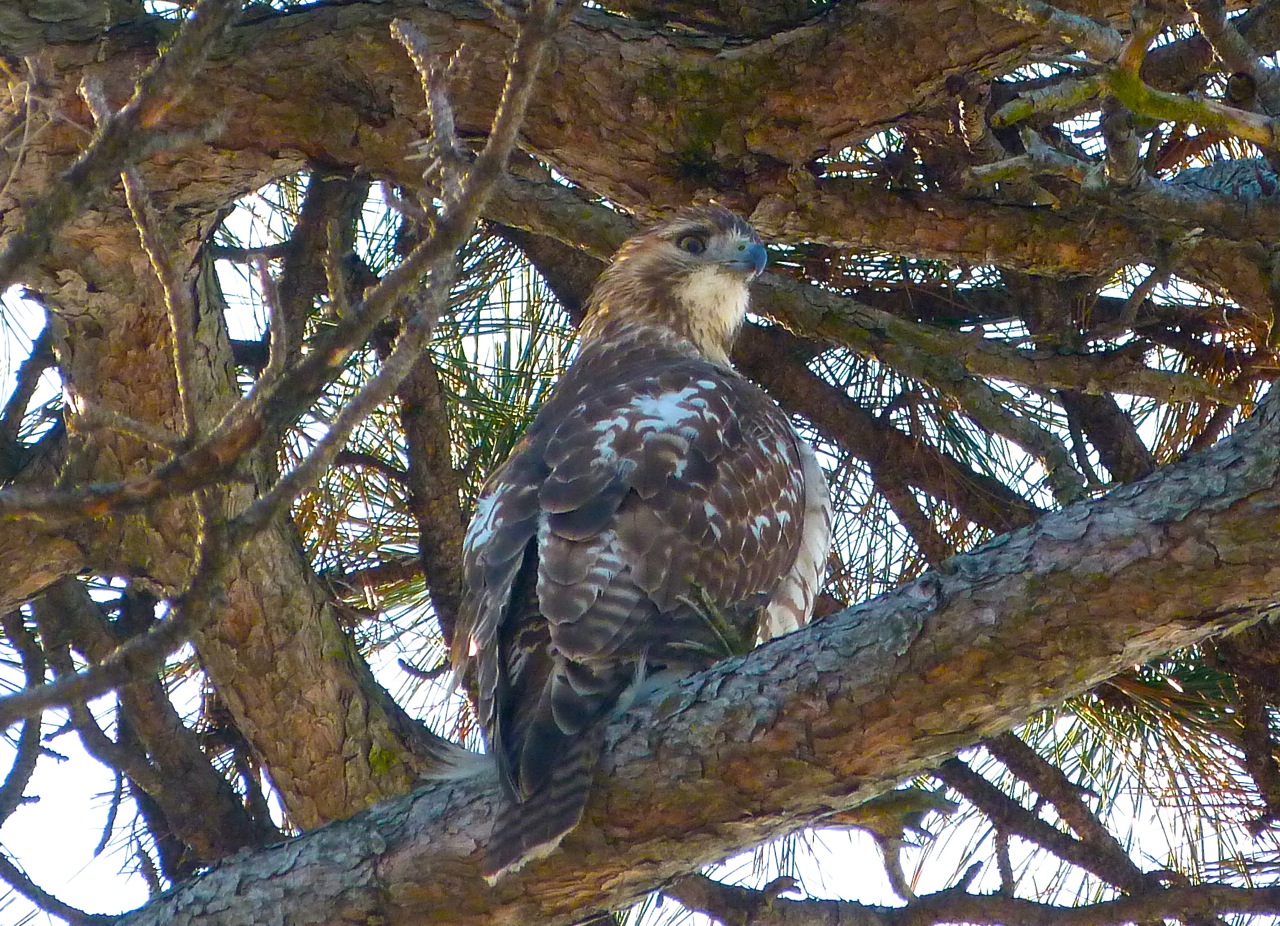
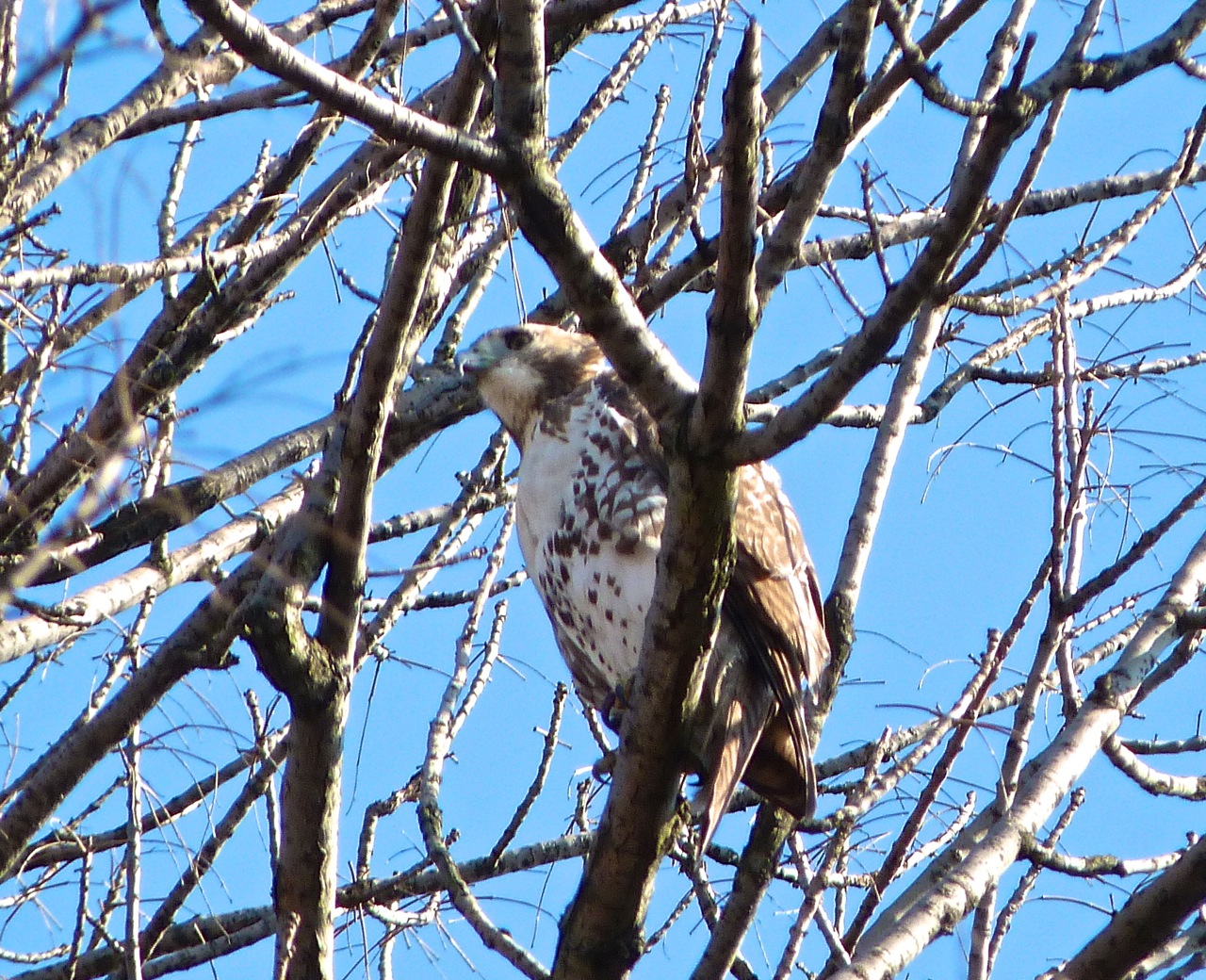
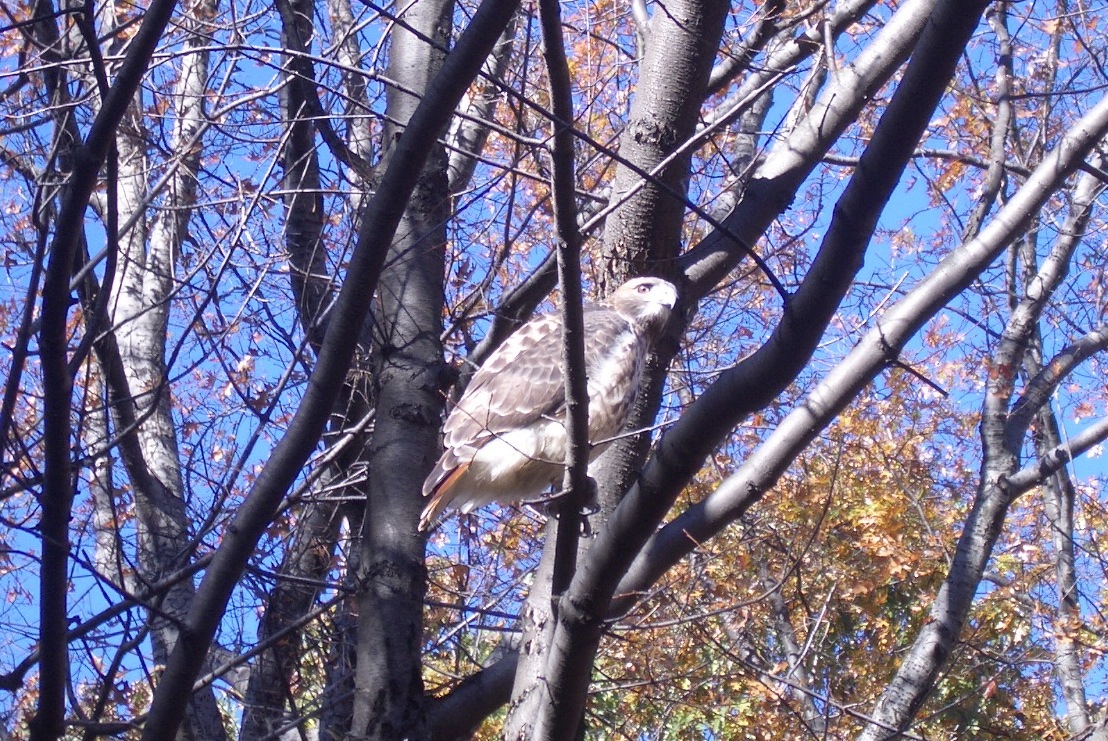
Red-tailed hawks are one of the commonest and largest  BUTEO species in North America, the Caribbean and further afield. There are fourteen widely-distributed subspecies. Their omni-habitat flexibility helps to maintain their prolific populations. They are equally at home in forests, grassland, open country, desert and even cities, at most altitudes. Red-tailed Hawk CP 7Red-tailed Hawk CP 1

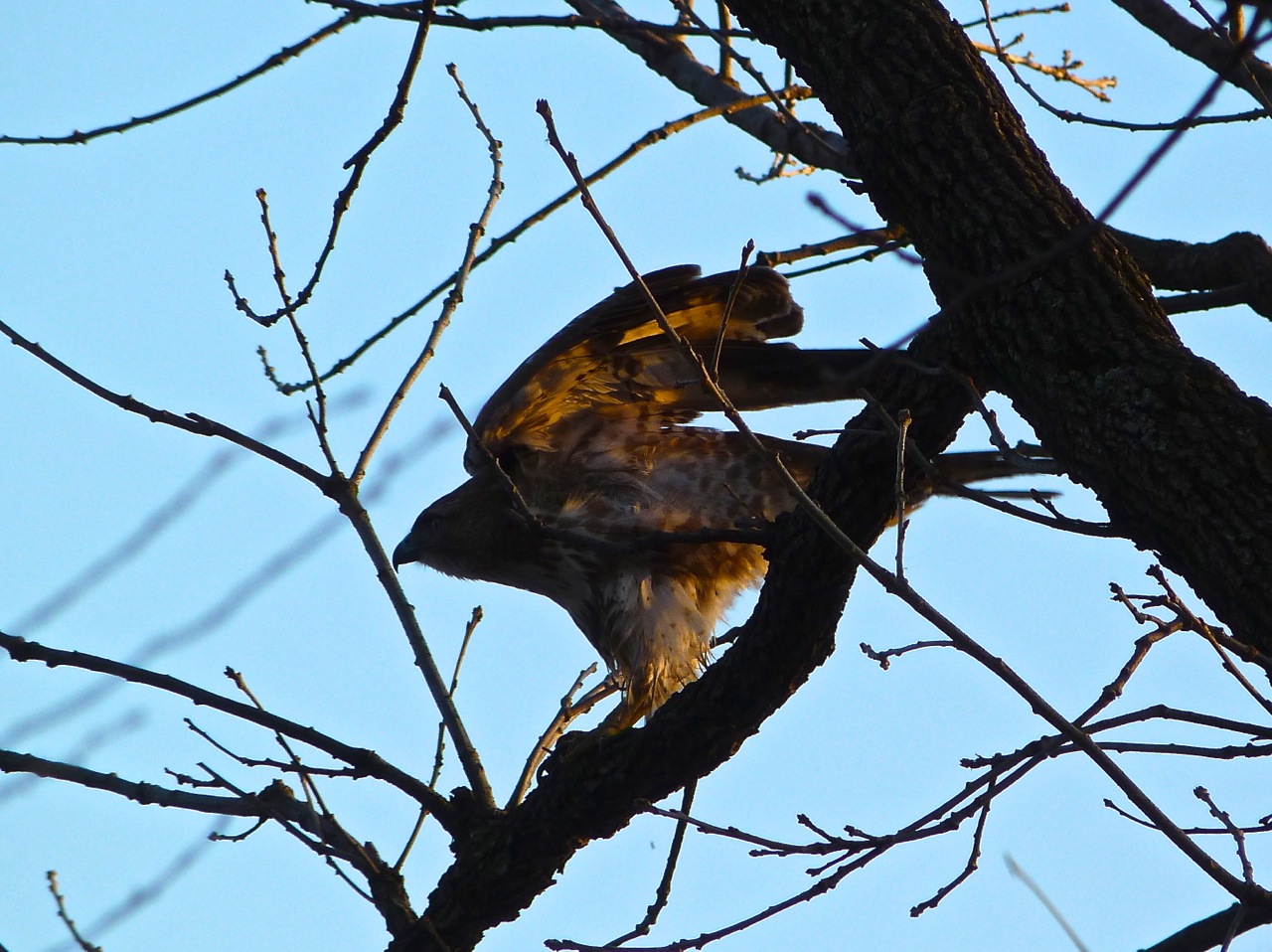
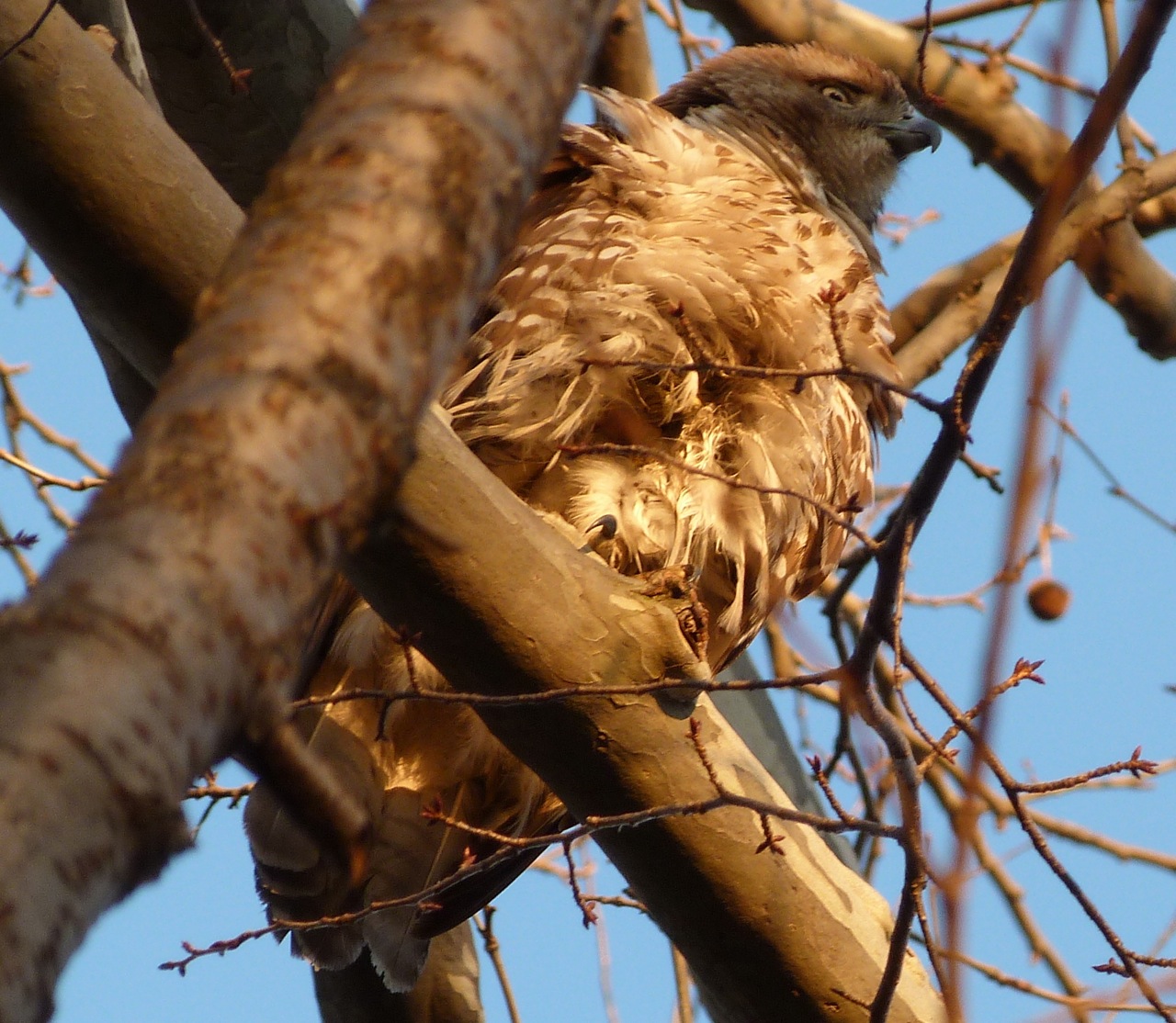
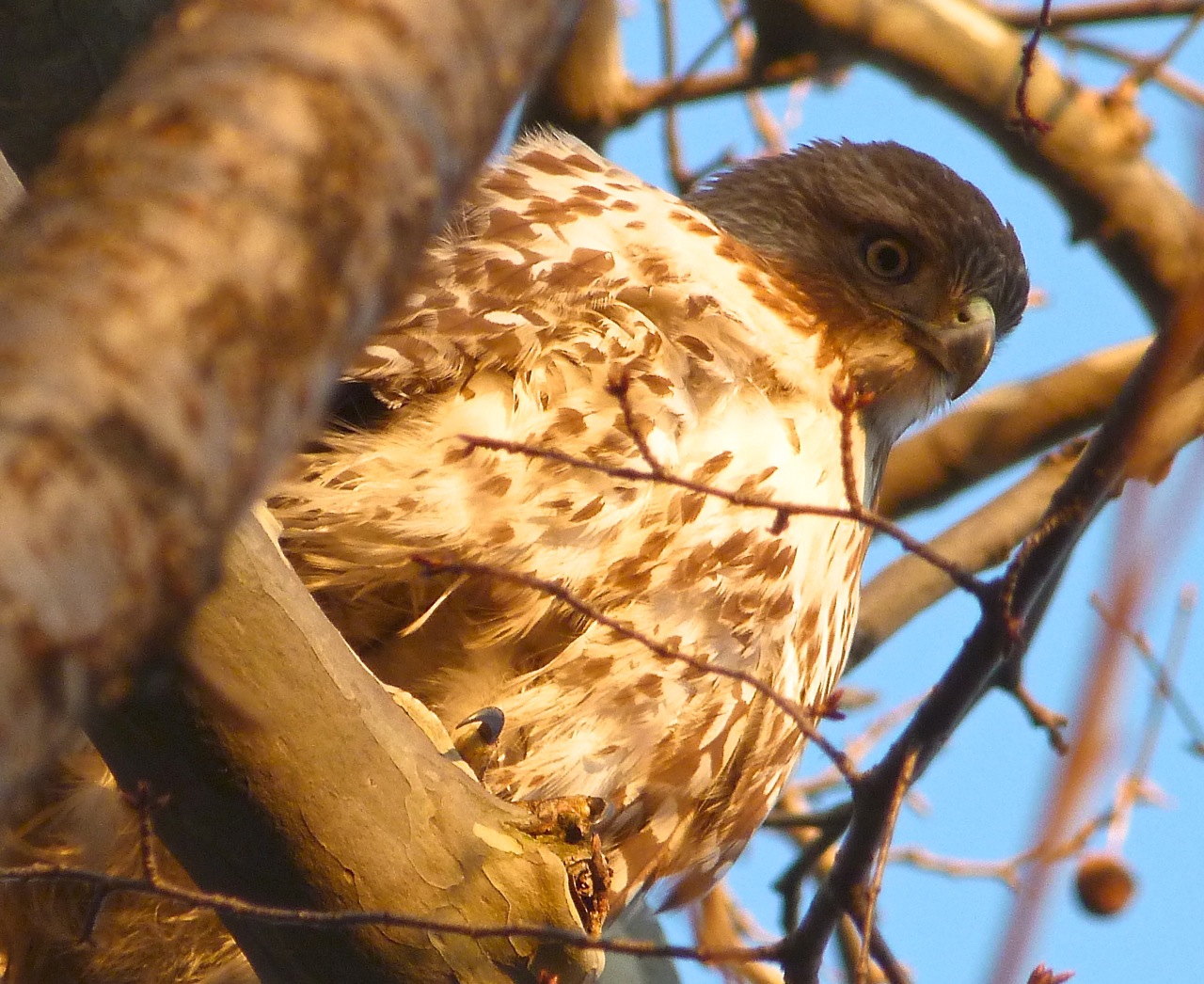
This red-tail is preparing for flight. It had been sitting upright (see above), scanning for prey. Suddenly it hunched forwards, poised for take-off, the light of late afternoon sun catching its leg feathers. Moments later it raised its wings and was gone in an instant – the next photo an unusable blur of feathery speed.Red-tailed Hawk CP 6Red-tailed Hawk CP 3

6 RED-TAILED HAWK FACTS TO STARTLE YOUR AUNT WITH

1. The RTH displays SEXUAL DIMORPHISM in size – females average 25% heavier than males

2. Immature birds have yellowish irises. As the bird matures the iris darkens to a reddish-brown hue

3. They are easily trained to hunt: most hawks used for (tightly regulated) falconry in the US are Red-tails

4. They use tall trees, high rocks, utility poles or buildings as perch sites to scan large areas for prey

5. City hawks helpfully prey on rock pigeons and rats. ROSIE lives in Washington Sq NYC & has a web-cam

6. One urban RTH, known as PALE MALE, became famous as the first Red-tail in decades to successfully nest and raise young in Manhattan. He was immortalised by MARIE WINN in her book Red -Tails in Love: A Wildlife Drama in Central Park [RH Note: Good read]

Red-tailed Hawk CP 4Red-tailed Hawk CP 5

6 RED-TAILED HAWK FACTS TO SURPRISE YOUR UNCLE WITH

1. The fierce, screaming cry of the RTH is often used as a generic raptor sound effect in TV shows & films

2. Eggs are incubated primarily by the female. The male helps out when the female leaves to hunt or stretch her wings. The male brings food to the female while she incubates

3. RTH young are known as eyasses (“EYE-ess-ez”), a falconry term for a raptor still in its downy stage

4. About 6 / 7 weeks after fledging RTH young begin to capture their own prey. They reach breeding maturity around 3 years of age

5. Red-tailed Hawks can live for more than 2o years – the oldest recorded was 29

6. RTH feathers are considered sacred to many American indigenous people. The feathers of the RTH are regulated by the “Eagle Feather Law” which governs possession of feathers and parts of migratory birdsRed-tailed Hawk PPB 6Red-tailed Hawk PPB 5Red-tailed Hawk PPB 1AFTERWORD These photos were all taken recently in New York, in Central Park (The Ramble, a birding hotspot) and in Prospect Park, Brooklyn. They are therefore a bit of a cheat in a website based mainly on Abaco. But I have never managed to photograph a RTH on the island, so these pics are illustrative of what I might have photographed had I (a) seen a RTH (b) had my wits about me (c) for long enough to find my camera (d) to photograph it before it flew away (e) and sufficiently well to be able to use the result [Header and due credit to Wiki]

See also NICOLEs excellent birding website at http://www.oiseaux-birds.com/card-red-tailed-hawk.html

(PS apologies to those who have neither aunts nor uncles. I have no wish to be amitist or avunculist. Have you a cousin you can try?)

Unknown's avatar

MAN-O-WAR CAY, ABACO: THE HIDDEN BOAT-BUILDING VILLAGE


hole-in-the-wall-print-1803

MAN-O-WAR CAY, ABACO: THE HIDDEN BOAT-BUILDING VILLAGE 

I am very pleased to be able to feature a Guest Contributor Fabian Fernander, managing editor and owner of SANDY SLIPPER TRAVEL and online magazine. The boat-building history of the Bahamas, of Abaco, and in particular of Man-o-War Cay, is a fascinating one. It is not a subject in my own repertoire, so I welcome the chance to showcase Fabian’s article and the wonderful historic photos courtesy of the MAN-O-WAR HERITAGE MUSEUM.

maurice-albury-building-dinghy-mow-19xx

Maurice Albury building dinghy on MOW cay 19xx

“Who would ever think nestled in the heart of the Bahamas. Hidden away from view. Inaccessible by large planes and removed from the hum of technology; would be a boat building village in the Bahamas.

Man of war cay (named after the bird) is a small yet well knitted community of bustling boat builders, that have been graced with their skill from generation to generation.

Residents here have always depended on shipbuilding for its livelihood and some boats are still handmade-without-plans in a tradition that has been passed down for centuries.”

boat-under-construction-wa-albury-yard-19602

Boat under construction W.H. Albury yard 1960

“The town has remained untransformed over time and resembles a New England sea-side village; and rightly so.

As its original inhabitants were both religious and political escapees; loyalist to be exact.

It is through resilience that these men and women who fled from their homes, picked up and honed the trait of boat building.

In the early days of boat building the residents began by using Abaco Pine to craft their world renowned fishing and sailing vessels.”

basil-sands-working-on-a-boatwh-albury-yard-1960

Basil Sands working on a boat, at the W.H. Albury yard 1960

“Boats were originally built by crafting a skeleton or rib of the boat from pine that grew locally in the Abaco forests. These skeletons were then hand carved and shaved to conform perfectly to the palms-up-spread template of the hull.

After the ribs were coupled, pine wood planks were then affixed to form the hull of the boat.

During the 1960′s when Abaco pine became a quintessential element in building structures and homes in all of the islands, the procurement of pine for boat building became harder and harder.

It is during that period that innovation reared its head once again and fiberglass became the material of choice to continue the successful process of building renown fishing and sailing vessels.

Using fiberglass as molds was a very expensive process, but in modernization a necessary tool that reduced the amount of manual labor required.

The frame of the wooden boat was coated with the fiberglass material and from this a permanent mold was created, which was then used to make the outer shell of numerous boats.

This style of boat is called the Outboard Runabout (or the Outboard Fishing Boat).

Many other types of boats are also made including model boats, 14 ‘ wooden Man O’War sailing dinghies and 21′ Man O’War speed boats.

The boats have become collectors items and much requested custom designed artifacts.”

william-h-albury-schooner1

The William H Albury Schooner

“Man o’ War Village: another one of the hidden secrets of the Bahama Islands”

“About the author: Fabian Christopher is the Managing editor and owner of Sandy Slipper Travel and online magazine. An avid enthusiast of the Bahamas, he is always ready and available to make your vacation dreams in the islands a memorable experience.”

Sandy Slipper Logo

MoW Museum Logo

Photo credits  MAN-O-WAR HERITAGE MUSEUM 

(except for historic 1803 aquatint header of the ‘late’ Hole-in-the Wall)

[RH note: If you have enjoyed this article, I recommend a visit both to Fabian’s website (link in the first para), and to the Museum’s website, also linked above, where you will find a wealth of historical Abaco material]

Unknown's avatar

THE CUBAN AMAZON PARROT: A WORK OF ART & NATURE


THE CUBAN AMAZON PARROT: A WORK OF ART & NATURE

FEATURED BY ‘ARTMAGENTA

I have just posted a gallery of bird art by Artmagenta, showing varous species from his global ‘Bird of the Day’ series that can be found on Abaco. He asked for further suggestions, so naturally I suggested the avian symbol of the Abacos. A few days later, it has flown in, in all its glory, with his description below it. So I’ll step back and let the bird do the talking.Abaco-Parrot

“The Cuban Amazon (Amazona leucocephala) also known as Cuban Parrot or the Rose-throated Parrot, is a medium-sized mainly green parrot found in woodlands and dry forests of Cuba, the Bahamas and Cayman Islands in the Caribbean. The Cuban Amazon lives in different habitats on different islands. It was once found throughout Cuba, but it is now mainly confined to the forested areas of the main island and Isla de la Juventud. On the Cayman Islands the parrot lives in dry forest and on agricultural land. Cuban Amazons nest in tree cavities throughout most of its range, the only exception being that the parrots living on the Abaco Islands nest underground in limestone solution holes, where they are protected from pineyard wildfires.”

Unknown's avatar

YELLOW STINGRAY Uboritas jamaicensis: BAHAMAS REEF FISH (4)


240px-Yellow_Stingray,_Belize,_2007-09

BAHAMAS REEF FISH (4) – YELLOW STINGRAY Uboritas jamaicensis

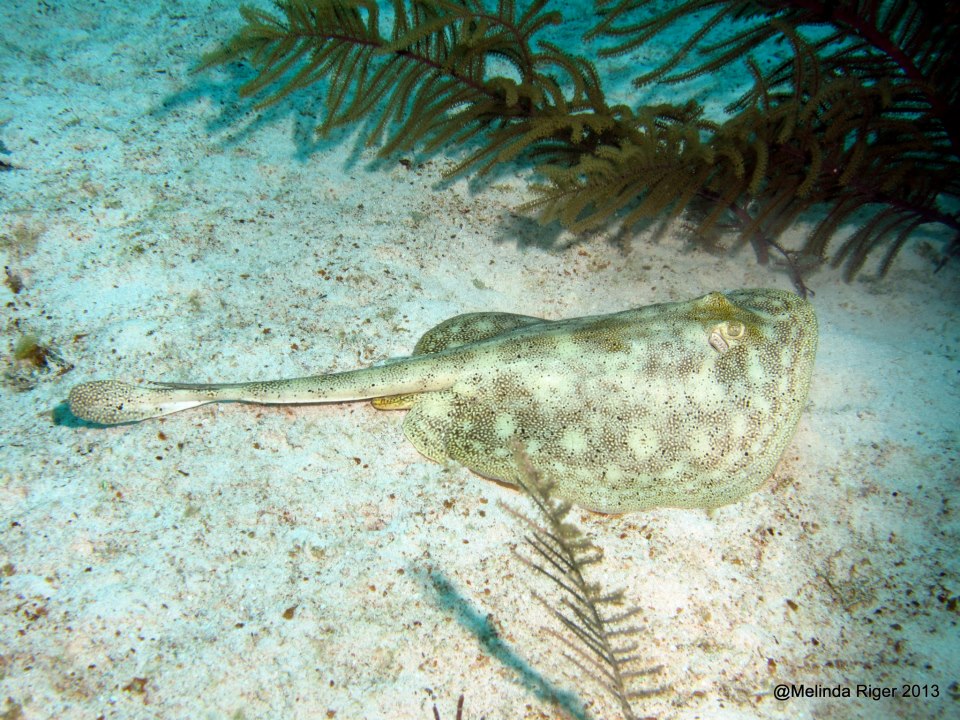
The YELLOW STINGRAY (Uboratis jamaicensis) is one of several ray species found in the tropical western Atlantic ocean. They live  in shallow water on sandy or seagrass bottoms, and are commonly found near coral reefs. Their light and dark splotchy colouring can rapidly change according to the surroundings and the need for camouflage. Look at the photos below with half-closed eyes and (apart from knowing perfectly well that there’s a ray there), the blending in is remarkable.

The yellow stingray feeds on small invertebrates and fishes. It can use its ‘wings’ to uncover buried / hiding prey by disturbing the sand. It also has a subtle ‘passive’ method of hunting by using its mantle to form a lethal ‘cave’ that attracts shelter- or shade-seeking prey.Yellow Stingray ©Melinda Riger GB Scuba Bahamas

Yellow stingrays breed in seagrass. They are quite prolific, breeding year round and usually having two litters a year of up to 7 young. This species is ‘aplacental viviparous’: the developing embryos are sustained initially by yolk and later by uterine milk. To find out more about viviparity, you’ll find a section at the bottom of this post where the inquiring may opt in… Not everyone’s sac of yolk, I quite understand.

The yellow stingray is innocuous towards humans, but can inflict a painful injury with its venomous tail spine. The threats to the species are (1) taking as bycatch by commercial fisheries;  (2) collection for the aquarium trade; (3) negative impact from habitat degradation, both of reef areas and seagrass breeding grounds. For now, it remains common and widespread and retains its IUCN LISTING of ‘Least Concern’.Yellow Stingray

REPRODUCTIVE STRATEGIES (Marine Biodiversity, Canada)

As with all elasmobranchs, skate and rays are internal fertilizers.  Internal fertilization is beneficial because it increases the likelihood and efficiency of fertilization by reducing sperm wastage.  In addition, it ensures that the energy-rich eggs produced by the female are not consumed by predators, and that all the energy allocated to reproduction is passed to the embryos and not lost to the environment.  This is especially the case for species that retain their embryos until the embryos have completely developed, a reproductive mode termed viviparity.  Elasmobranches that practice viviparity are called viviparous (or live-bearing).  There are many types of viviparity, which can be divided into two broad categories: aplacental and placental viviparity. Placental viviparity is the most advanced mode of reproduction, during which the embryos are initially dependent on stored yolk but are later nourished directly by the mother through a placental connection.  This type of reproduction is not exhibited by any type of batoid.  Ovoviviparity (or aplacental viviparity), on the other hand, is the only mode of reproduction employed by rays.  In rays, the embryos rely on the substantial yolk within the ovulated egg only during the initial stages of development. After the nutrients stored in the egg have been consumed, the embryo ingests or absorbs an organically rich histotroph (or “uterine milk”) produced by the mother and secreted into uterus.  The most highly developed of these strategies occurs in some rays in which the lining of the uterus forms tiny, finger-like projections (termed trophonemata) that increase the surface area for histotroph secretion.  This form of nutrient supply (or maternal investment) results in very large offspring, which is characteristic of most species of ray.

For those now fluent in viviparity, the treat of one of Melinda Riger’s fabulous aquatic close-up photos –  keeping a close eye on you…Up close of the eye of a yellow stingrayCredits: Melinda Riger of Grand Bahama Scuba, with thanks; Wiki for other images / source material; selected online pickings

Unknown's avatar

BIRDS OF ABACO: WILDLIFE ART FROM ARTMAGENTA (1) – THE REAL DEAL


Jack-Snipe

BIRDS OF ABACO: WILDLIFE ART FROM ARTMAGENTA (1)

Sound of jet engines. “Back in the UK…” (as Macca so nearly sang), and I have the chance to amend the epic fail – or comic fail, anyway, that was the original of this post. And the truth is, Dear , that apart from simple captioned photos, an iPhone does not cut it for more complex posts involving formatting and so on. Or maybe I can’t use it properly (far more likely). Whichever, here is what should have appeared in the first place as a prepared, ‘press-the-go-button’ post for while we were away… 

◊ ◊ ◊ ◊ ◊ ◊ ◊ ◊ ◊ ◊ ◊ ◊ ◊ ◊ ◊ ◊ ◊ ◊ ◊ ◊ ◊ ◊ ◊ ◊ ◊ ◊

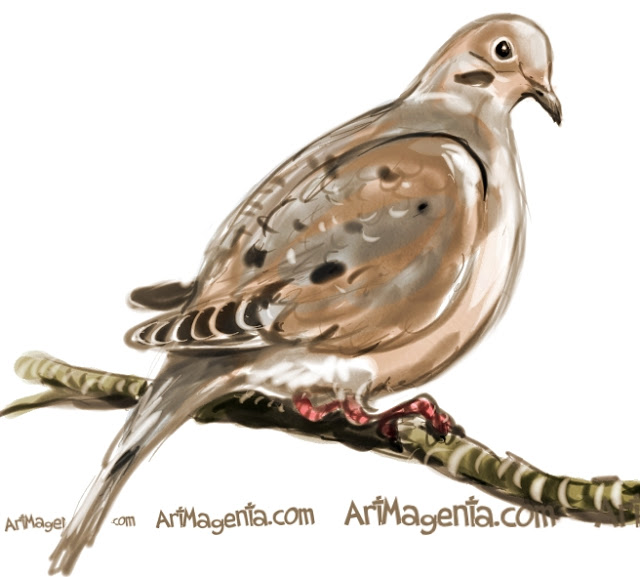
At Rolling Harbour, we are occasionally bold enough to investigate the interstices between wildlife and art. If that’s what one does to an interstice. ArtMagenta is the cyber-name (“ethernym”? Yes, I like it…) of Ulf, a prolific artist whose website ARTMAGENTA provides an enjoyably eclectic selection of pictures. Birds from around the world. Caricatures. Sketches. ‘Gesture Drawings’. And more. From time to time I will post a small gallery of Ulf’s enjoyable depictions of the birds that may be found on Abaco.

BLACK SKIMMER 

Black-Skimmer MOURNING DOVE

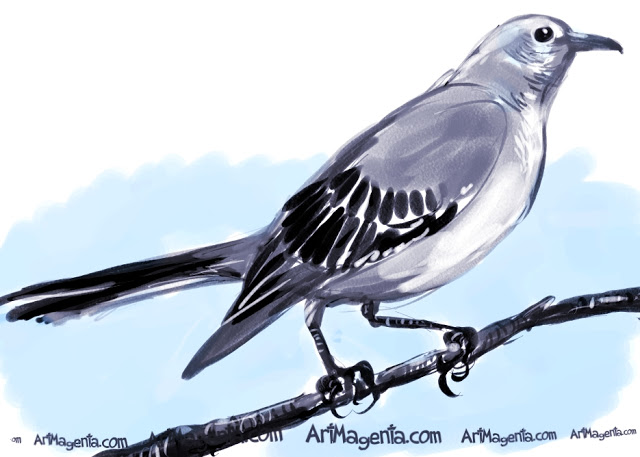
Mourning-DoveNORTHERN MOCKINGBIRD

Northern-Mockingbird

PIPING PLOVER

Piping-Plover

RED-WINGED BLACKBIRD

red-winged-blackbird

RED-TAILED HAWK

Redtailed-HawkJPG

LEAST TERN

Least-Tern

AMERICAN OYSTERCATCHER

American-Oystercatcher

Unknown's avatar

SHARK FINS – OOOP! A MODEL USE OF HUMOUR TO CONVEY ASERIOUS MESSAGE (VIDEO)


306092_500604003294327_1470960886_n

SHARK FINS – OOOP! A MODEL USE OF HUMOUR
TO CONVEY A SERIOUS MESSAGE
(VIDEO)

The CAPE ELEUTHERA FOUNDATION has produced a short video about sharks and shark fins that manages to be both amusing and to carry a powerful conservation message. It’s a hard trick to pull off successfully. Attempts to use humour to leaven a serious message or to modify earnestness in presentation so often trespass into the no-man’s land known as ‘Meh’ (twinned with ‘Wotevah’). I’m grateful to the always-interesting ABACO SCIENTIST for sharing this item. Photo credit: Melinda Riger, with thanks for use permission [I am posting this from NYC via iPhone, so any weird formatting or typos will have to be dealt with next week]

Unknown's avatar

NEWFOUNDLAND & LABRADOR: RH GOING TO THE DOGS?


20130211-094810.jpg

NEWFOUNDLAND & LABRADOR: RH GOING TO THE DOGS?

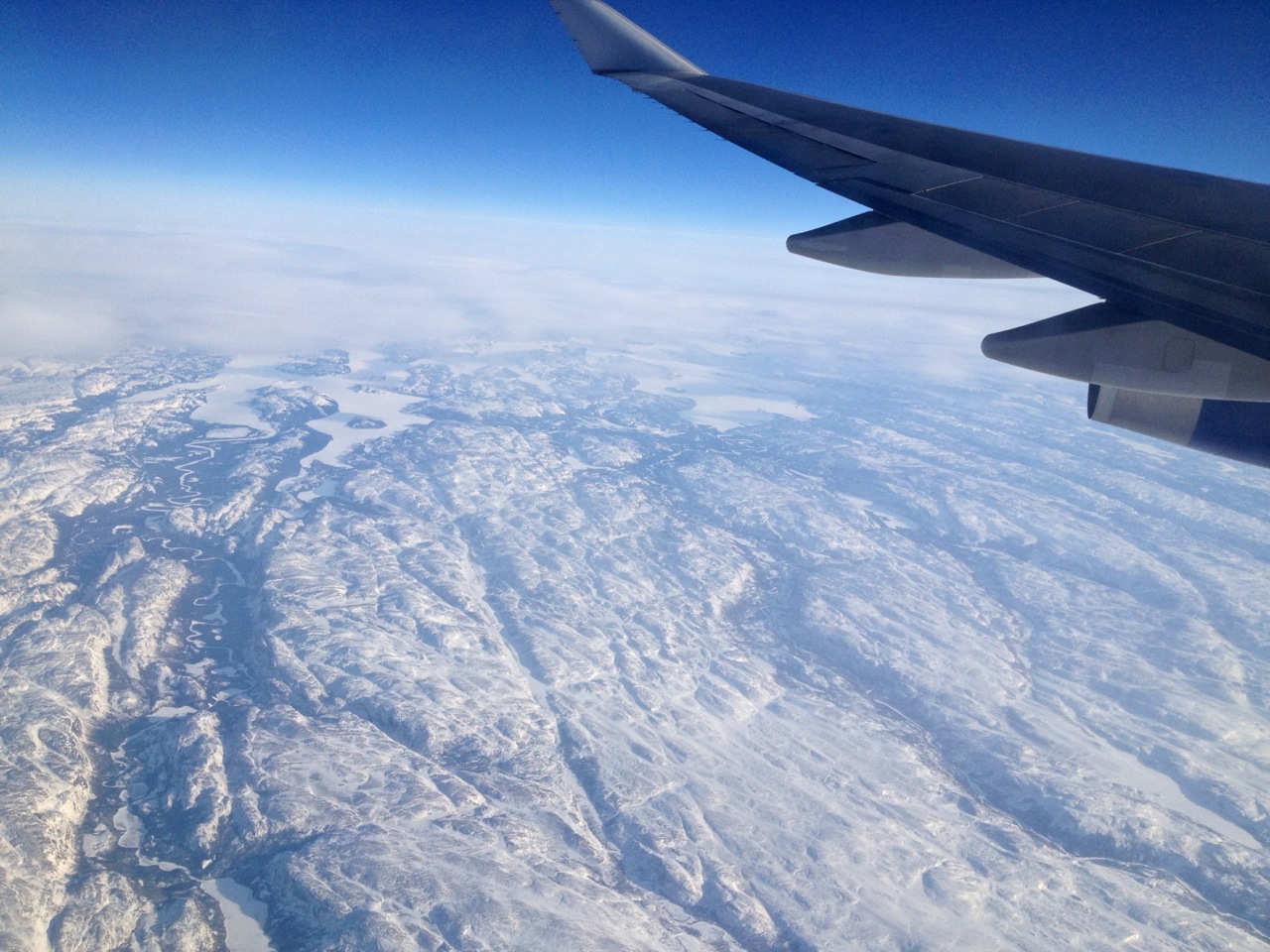
En route from London to New York yesterday we had to take a northerly route over Greenland (we were in a plane, obviously) to avoid Nemo. I took the pics below from 36k feet from the galley window. The landscape was simply a vast wilderness of mountain, forest, snow and frozen lakes & rivers. No idea how they will look in Blogland. I’ll tidy this up – or bin it – next week when I can use something bigger than an iPhone to post with.

Thanks to people who have commented / asked Qs (including the person from Newfoundland who wants to know about flamingos). Replies shelved until next week. It’s raining heavily in NYC today, which should see off the remains of quite a heavy snow dump (later note: it didn’t!).Newfoundland : Labrador aerial view 2Newfoundland : Labrador aerial view 1Newfoundland : Labrador aerial view 3  Newfoundland : Labrador aerial view 6Newfoundland : Labrador aerial view 4Newfoundland : Labrador aerial view 7This last close-up image looks almost surreal, with a frozen river appearing to cross over itself…

Unknown's avatar

BIRDS OF ABACO (BAHAMAS) IN NEW YORK CITY (& VICE VERSA)


Brooklyn Gulls

BIRDS OF ABACO (BAHAMAS) IN NEW YORK CITY (& VICE VERSA)

Many moons ago, I wrote about the bird species that a New Yorker might recognise during a trip to South Abaco. It would depend, of course, on the time of year and migration patterns. And whether a resident of  the Big  was remotely interested in going to Abaco to look at birds. As if! As it happens, Mrs RH is about to go to NYC, and tolerantly offered to take me as ‘trailing spouse’. Naturally, I said no at once [only joking]. So I am resurrecting the earlier material and polishing it up a bit for 2013. There is much good birding to be done in and around the City (Central Park ~ Riverside and Inwood Parks ~ Prospect Park Brooklyn ~ Jamaica Bay Wildlife Refuge ~ Staten Island ~ shorelines generally) though I shan’t be spending all my time doing that. Or even much of it. But I will see what species I can casually bag in a week.  

This photo is of a ring-billed gull, taken a while back in a freezing february (-15°) on the northern end of Roosevelt Island* in the East River. The whole front of the vessel in the background was thickly coated in frozen sea-ice, which covered the entire foredeck. However, you might just as easily catch one of these gulls on a perfect sunny day on the shores of Abaco…  [*Optional tourist note: it’s a great ride there on the aerial tramway. Visit the quaint clapboard Blackwell Farmhouse, built in 1796 and recently restored – it’s the oldest surviving building in the City, nestling shyly amidst a forest of new apartment blocks]Ring-billed Gull NYC

 If you happen to live in New York, you may quite possibly spend some spare time birding in Central Park, or checking out the red-tailed hawks of Washington Square. And if you are planning a trip to Abaco, you might suddenly wonder just how different the bird life will be there. Will there be any familiar species at all?

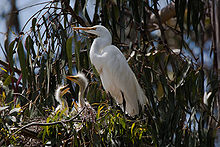
 New York City has nearly 200 regularly recorded bird species, most of which will be found in Central Park at some time of the year, if not all through it. South Abaco has around 126 species, excluding extreme rarities and accidentals. Is there much overlap, I wondered? And the answer is that there is plenty, rather more than I expected. 61 species in common, by my reckoning, including the Great Egret below. The the most notable feature is the almost complete coincidence of warblers.

Great Egret Abaco BC 1Photo credit © Brigitte Carey, Abaco

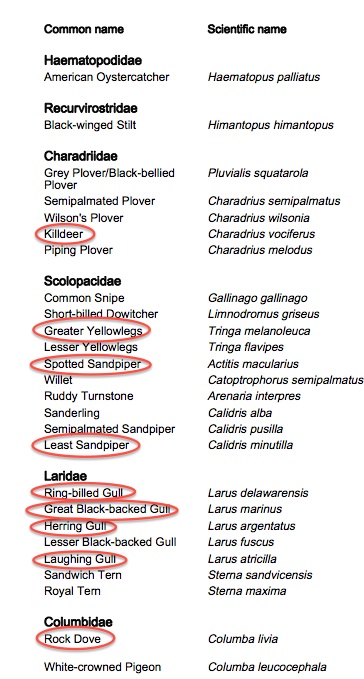
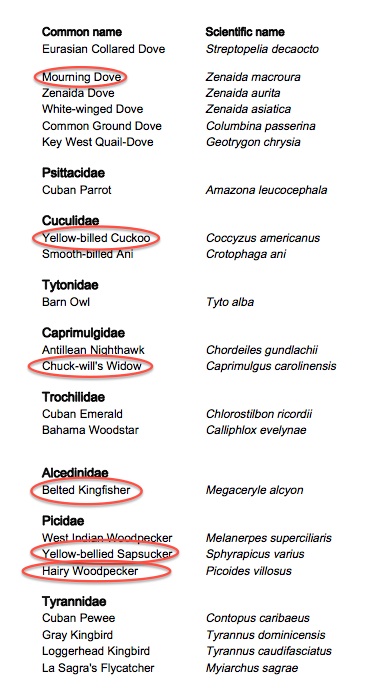
 I used the excellent (but not exhaustive) AVIBASE checklist for South Abaco, now featured on the Delphi Club site in the new BIRDING  section, and worked through a comparative list of the NYC species (see the birding website links for NYC / Central Park above). The result is below: a New Yorker using the South Abaco checklist may see any of the birds ringed in red. And it would work vice versa, of course. Why New York? It’s the only other place outside Europe that I have ever ‘birded’ (only extremely casually – no book, no notes, no pishing, a few photos – just for enjoyment). Peaceful bird time in the Ramble in Central Park is time well used… Before we get to the list, here’s a bit of local NYC colour that you won’t find on Abaco – a male Northern Cardinal in the snow in FebruaryCardinal NYC CP

NYC BIRD SPECIES THAT APPEAR ON THE SOUTH ABACO BIRDS CHECKLIST

 I photographed this red-tailed hawk in Central Park. We’ve seen one on Abaco in the National Park, close enough to get a really good photo of. Typically, it flew off before I could get my camera out of the truck. There’s a lesson there somewhere…

Editorial note (not necessarily a shared opinion): Abaco is so good, they only needed to name it once…

Unknown's avatar

GRAY ANGELFISH (Pomacanthus arcuatus) BAHAMAS REEF FISH (3)


Gray_angelfish
Gray Angelfish

GRAY ANGELFISH (Pomacanthus arcuatus) BAHAMAS REEF FISH (3)

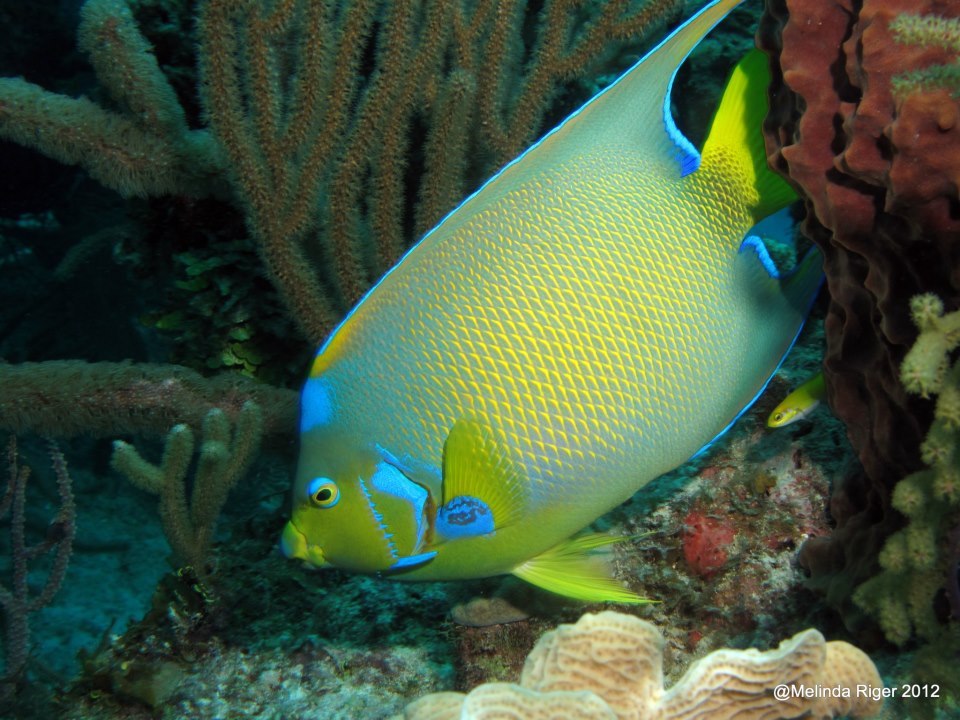
I recently posted about the highly coloured QUEEN ANGELFISH, a striking coral reef resident glowing with fluorescent blues and yellows. It’s the Angelfish that went into showbiz and succeeded. Its close cousin the Gray Angelfish is a more sedate creature, with the appearance of a professional – law, possibly, or medicine. That thin blue fin-edging suggests a flamboyant streak. Slightly mean mouth? Lawyer.**Gray Angelfish ©Melinda Riger GB Scuba

This species is found in the warm waters of Florida, and south through the Bahamas and Caribbean as far as Brazil. They are found at depths from 2 m. down to 30 m. You are most likely to encounter one on a coral reef feeding on sponges, its main diet.  The fish below with the bluer face is a teenager, in transition between juvenile and adult. Gray Angelfish between juvenile and adult phase

It’s clear from side on that Gray Angelfish are ‘upright flat’, but it’s surprising just how slim they actually are. Photographer Melinda Riger has captured this front view against a stunning red backdrop. Disappointingly, these fish seem to lead blameless and anodyne lives as reef-foragers, and I’ve been unable to turn up a single interesting fact about them. That’s lawyers for you.**Gray Angelfish (front view) ©Melinda RigerGray Angelfish ©Melinda Riga @ BP ScubaPhoto Credits: main images ©Melinda Riger, Grand Bahama Scuba; Header – Wikipix

[youtube http://youtu.be/QETF9UWeXFk]

** I can say this – I am one…

Unknown's avatar

GEORGIE THE ABACO MANATEE: FAREWELL CHEROKEE, HELLO ATLANTIS


Georgie the Mantee Abaco clip

GEORGIE THE ABACO MANATEE: FAREWELL CHEROKEE, HELLO ATLANTIS

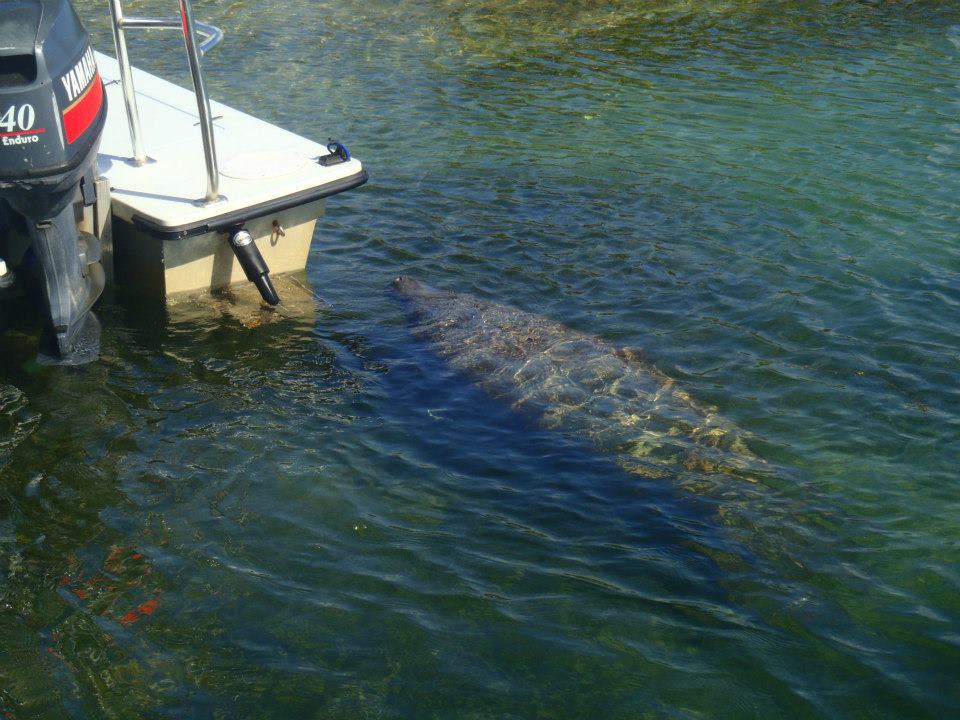
Many people have shown an interest in the adventures of Georgie the Manatee over the last 18 months or so, and the work of the BMMRO in monitoring her movements and welfare. She has travelled a great many miles in that time, to and around Abaco; settled down eventually in Cherokee; successfully shed her satellite tag; gone awol a couple of times; and happily reappeared at Cherokee each time. Recently there have been increasing concerns about her wellbeing, and a joint venture has overseen her capture & return to the Atlantis Marine Mammal Rescue Center for observations and health evaluation. The full story published in the Bahamas Weekly [click logo below] with photos by Tim Aylen is set out below. I have also included some very good pictures of Georgie and the preparations for her journey, taken by Cindy James Pinder (with thanks for permission to use them). So Abaco – and Cherokee in particular – has sadly lost its only (briefly) resident manatee. I can’t make out when the last resident manatee was recorded on Abaco, but not very recently I think. Fingers crossed for Georgie’s future – I will continue to post updates on how she gets on.

UPDATE 1 FROM BMMRO “On January 26th, Georgie was captured in Casaurina canal and transported to Dolphin Cay-Atlantis. Videos taken by BMMRO on January 15th highlighted areas of concern in regards to Georgie’s current body condition. Those videos were then circulated amongst a group of manatee researches abroad and their opinions and advice were taken into consideration by the Department of Marine Resources (DMR). Georgie had lost a considerable amount of weight since her arrival to Abaco (September 2012) and need medical attention. DMR gave Dolphin Cay permission to capture Georgie and transport her to their marine mammal rehabilitation facility until she was healthy enough to return to the wild. Health assessments were conducted the day of capture (prior to transporting her to Nassau) and on January 27th. BMMRO’s Manatee Lady (and Educational Officer), Kendria Ferguson, visited Georgie on January 29th and is happy to report that Georgie is doing well. She is currently on a meal plan that will assist her with getting the necessary nutrients she needs to get healthy. BMMRO will continue to monitor Georgie’s progress and will provide updates here on our FB page. Thank you for all your support, please help us to continue to monitor manatees in The Bahamas by making a donation on our website www.bahamaswhales.org.”

Bahamas Weekly Logo

ATLANTIS RESCUES ENDANGERED MANATEE & RELOCATES HER TO DOLPHIN CAY

By Atlantis, Paradise Island and One&Only Ocean Club     Jan 31, 2013  6:22:53 PM

W-Georgie-the-manatee-is-placed-into-a-medical-pool-at-Dolphin-CayPhoto: Tim Aylen

PARADISE ISLAND, THE BAHAMAS The Atlantis Animal Rescue Team, under the direction of the Bahamas Department of Marine Resources (BDMR) and with assistance from The Bahamas Marine Mammal Research Organization (BMMRO), successfully rescued Georgie, a West Indian manatee and relocated her to the Atlantis Dolphin Cay Marine Mammal Rescue Center.  Dolphin Cay is home to the only live marine mammal rescue and rehabilitation center in The Bahamas and is a member of the Bahamas Marine Mammal Stranding Network.  Manatees in addition to all marine mammals are protected by the Marine Mammal Protection Act of 2005 and only authorized facilities are able to respond such requests from Government.

Georgie was first sighted in Spanish Wells in June 2010 where she was born to Rita, a known Florida Manatee.  In October of 2011 both Rita and Georgie appeared in the busy Nassau Harbor and at the request of the Bahamas Government, the Dolphin Cay Team rescued them and brought them to a safe environment at the Atlantis Dolphin Cay Marine Mammal Rescue Center where health assessments and evaluations could be conducted.  With the assistance of the BDMR, BMMRO, United States Geological Survey, and Save the Manatee Club, the Atlantis Animal Rescue Team released both Rita and Georgie in April of 2012, equipped with tags to monitor their movements for several months.  In October of 2012, it was observed that Rita and Georgie had split up and Georgie made a dramatic move from the Berry Islands release site to Cherokee in Abaco, The Bahamas.   The Dolphin Cay team made several trips to Abaco, meeting up with BMMRO to try to get a good look at Georgie’s overall body condition.  Concern was raised by BMMRO recently about her general appearance and the decision was made by the Department of Marine Resources for the Dolphin Cay team to conduct a field health assessment and relocate her to the Atlantis Marine Mammal Rescue Center.

W-Atlantis-Animal-Rescue-team-members-arrive-from-Abaco-with-GeorgiePhoto: Tim Aylen

Georgie will undergo a series of general health evaluations.  Once she is healthy, the teams will pull together once again and relocate her back to Great Harbor Cay in the Berry Islands with the hope that she rejoins with the resident group of manatees in that area.  At this time, Georgie is under observation at Dolphin Cay and doing well in her new environment.

Atlantis is the home of world’s largest open-air marine habitat with over 50,000 marine animals in lagoons and displays as well as Dolphin Cay, the state-of-the-art dolphin interaction and education center. Dolphin Cay and Atlantis are accredited members of both the Association of Zoos and Aquariums and The Alliance of Marine Mammal Parks and Aquariums. Both the marine habitat and Dolphin Cay were created with the goal of enlightening visitors about the wonders of these remarkable ocean inhabitants. Dolphin Cay is also the residence of the Katrina Dolphins and Sea Lions some of whom were swept to sea during Hurricane Katrina.

PHOTOS OF GEORGIE DURING HER CAPTURE (©Cindy James Pinder)

46711_4869508809175_1241512546_n 32167_4869509809200_984733290_n 312448_4869508889177_1518325254_n 555445_4869535289837_88654361_n 313750_4869535929853_1286010379_n

Unknown's avatar

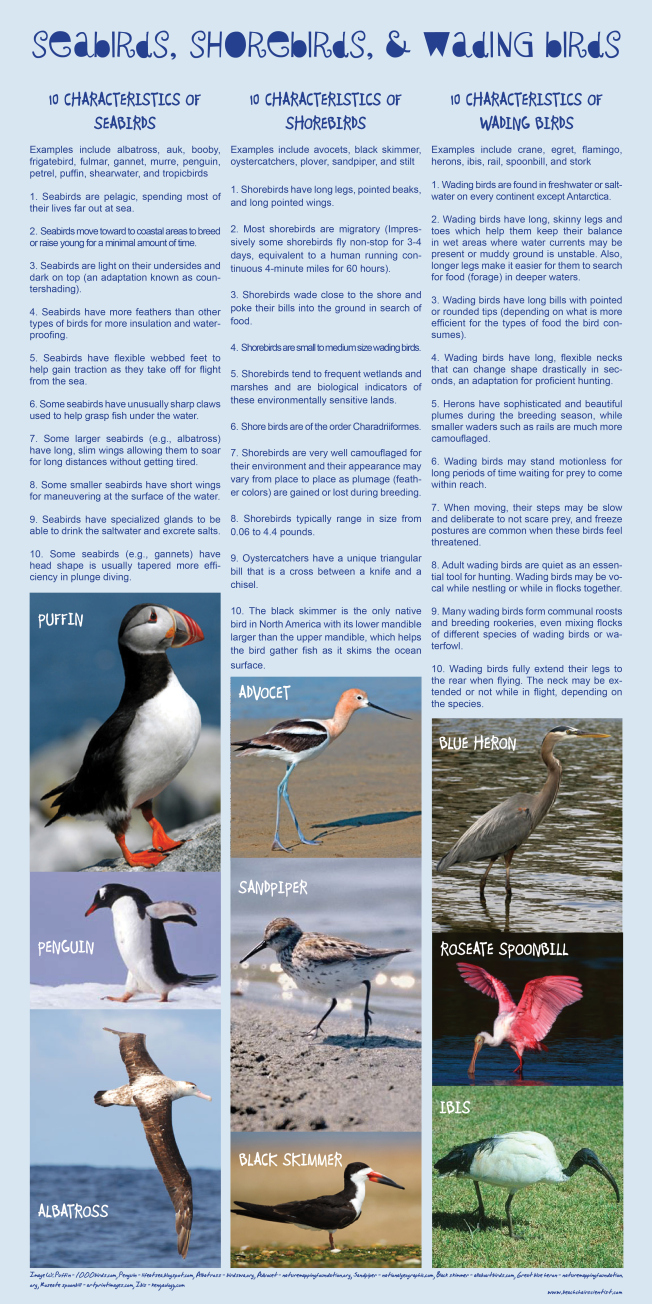
SEABIRDS, SHOREBIRDS & WADERS: 30 WAYS TO DISTINGUISH THEM


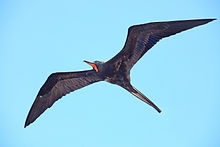
Magnificent Frigate male Wikipics
Magnificent Frigatebird

SEABIRDS, SHOREBIRDS & WADERS: 30 WAYS TO DISTINGUISH THEM 

I have recently been looking at hundreds of photos of birds, many with aquatic or semi-aquatic lives. These can be broadly categorised as seabirds, shorebirds or wading birds. But with some bird breeds, there can be doubt as to which category applies. There is the strict Linnaean ordering of course, but in practice there is a degree of informal category overlap and some variation in the various bird guides. This is especially so between shorebirds and the smaller, less exotic wading birds. Shorebirds may wade, and wading birds may be found on shores. Then I remembered a past blog post by the estimable BEACH CHAIR SCIENTIST that I thought deserved an outing here. I re-blogged the chart from BCS early last year. In the meantime site followers and site hits have surprisingly increased considerably, but I suspect only the dedicated make time to sift through any blog’s archives…  Even if you have no problem distinguishing birds in the 3 categories, there are avian characteristics within each list that are interesting observations in themselves. 

10 CHARACTERISTICS OF SEABIRDS 

Whitetailed Tropicbird WikiPicWhite-tailed Tropicbird

(Examples include albatross, auk, booby, frigatebird, fulmar, gannet, penguin, petrel, puffin, shearwater, and tropicbirds)

1. Seabirds are pelagic, spending most of their lives far out at sea.
2. Seabirds move toward to coastal areas to breed or raise young for a minimal amount of time.
3. Seabirds are light on their undersides and dark on top (an adaptation known as countershading).
4. Seabirds have more feathers than other types of birds for more insulation and waterproofing.
5. Seabirds have flexible webbed feet to help gain traction as they take off for flight from the sea.
6. Some seabirds have unusually sharp claws used to help grasp fish under the water.
7. Some larger seabirds (e.g. albatross) have long, slim wings allowing them to soar for long distances without getting tired.
8. Some smaller seabirds have short wings for maneuvering at the surface of the water.
9. Seabirds have specialized glands to be able to drink the saltwater and excrete salts.
10. Some seabirds (e.g. gannets) have a head shape that is usually tapered for more efficiency in plunge diving.

10 CHARACTERISTICS OF SHOREBIRDS 

Wilson' Plover male Wikipic

Wilson’s Plover

(Examples include avocets, black skimmer, oystercatchers, plover, sandpiper, and stilt)

1. Shorebirds have long legs, pointed beaks, and long pointed wings.
2. Most shorebirds are migratory (Impressively some shorebirds fly non-stop for 3-4 days, equivalent to a human running continuous 4-minute miles for 60 hours).
3. Shorebirds wade close to the shore and poke their bills into the ground in search of food.
4. Shorebirds are small to medium size wading birds.
5. Shorebirds tend to frequent wetlands and marshes and are biological indicators of these environmentally sensitive lands.
6. Shore birds are of the order Charadriiformes.
7. Shorebirds are very well camouflaged for their environment and their appearance may vary from place to place as plumage (feather colors) are gained or lost during breeding.
8. Shorebirds typically range in size from 0.06 to 4.4 pounds.
9. Oystercatchers have a unique triangular bill that is a cross between a knife and a chisel.
10. The black skimmer is the only native bird in North America with its lower mandible larger than the upper mandible, which helps the bird gather fish as it skims the ocean surface.

10 CHARACTERISTICS OF WADING BIRDS 

Great Egret Wikipic
Great Egret

(Examples include crane, egret, flamingo, herons, ibis, rail, spoonbill, and stork)

1. Wading birds are found in freshwater or saltwater on every continent except Antarctica.
2. Wading birds have long, skinny legs and toes which help them keep their balance in wet areas where water currents may be present or muddy ground is unstable. Also, longer legs make it easier for them to search for food (forage) in deeper waters.
3. Wading birds have long bills with pointed or rounded tips (depending on what is more efficient for the types of food the bird consumes).
4. Wading birds have long, flexible necks that can change shape drastically in seconds, an adaptation for proficient hunting.
5. Herons have sophisticated and beautiful plumes during the breeding season, while smaller waders such as rails are much more camouflaged.
6. Wading birds may stand motionless for long periods of time waiting for prey to come within reach.
7. When moving, their steps may be slow and deliberate to not scare prey, and freeze postures are common when these birds feel threatened.
8. Adult wading birds are quiet as an essential tool for hunting. Wading birds may be vocal while nestling or while in flocks together.
9. Many wading birds form communal roosts and breeding rookeries, even mixing flocks of different species of wading birds or waterfowl.
10. Wading birds fully extend their legs to the rear when flying. The neck may be extended or not while in flight, depending on the species.

These lists were put together in useful chart form. Please check with BCS (link above) if you want to ‘borrow’ itseabird shorebird wading bird chart ©beachchairscientistImage Credits: Table – ©Beach Chair Scientist; Pics – good old wiki

Unknown's avatar

ABACO FROM SPACE: NASA / ISS VIEWS 225 MILES ABOVE THE BLUE PLANET


STS060-84-32

ABACO FROM SPACE:  NASA  /  ISS VIEWS 225 MILES ABOVE THE BLUE PLANET

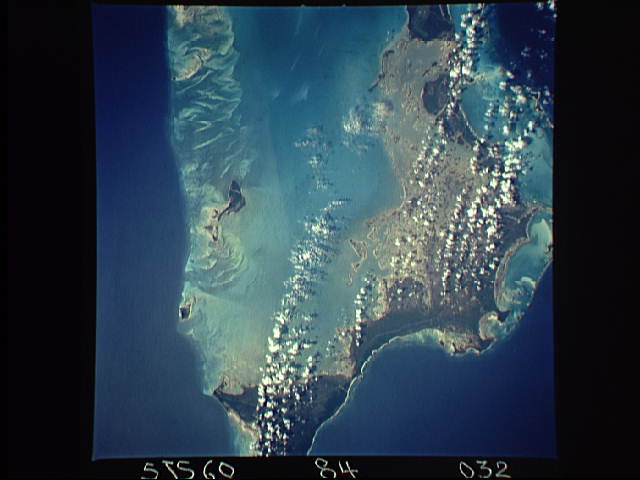
I have had another look through NASA‘s stock of Bahamas images taken from the INTERNATIONAL SPACE STATION. They come in differing formats. Over time the Station’s orbit takes it directly over or close to Abaco. In the past I have posted images of Hurricane Irene and Hurricane Sandy taken from space; and one of the astonishing Bahama variations of the colour BLUE. Here is a further selection.

The first two images show an orbit from north to south. I have annotated the first for those unfamiliar with the geography of Abaco. I assume the next was taken only a second or two later, with the whole of the southern tip / National Park / Hole-in-the-Wall area of Abaco now shown.

Abaco Map NASA:ISSA annotated STS060-84-33

This image gives an idea of the underwater connection between the island land masses. Here, a corrugated underwater sequence of ridges and troughs can be seen linking the southern end of Abaco with the south western end of Grand Bahama. Moore’s Island and, barely visible below it, Gorda (‘Castaway’) Cay rise above sea level between the two larger islands. The Berry Is. and Great Harbour Cay can be seen bottom left; Eleuthera snakes downwards bottom right. [At Rick Guest’s suggestion, I have rotated the image 90˚ from the original to make sense of a view distorted by angle (the space station’s), earth curvature and my own misinterpretation… It makes far more sense now, and I have corrected geographic errors accordingly… I’ve also added an annotated aeroplane’s-eye view below it, taken from much closer to the earth and therefore less subject to distortion. Many thanks, Rick]STS108-724-71 copyAbaco Map  - Island relationships

Abaco seen from the southeast. Little Abaco and Grand Bahama are at the top, and all are shown inter-connected underwater. The reef chain of the Abaco Cays – the world’s third longest barrier reef – can clearly be seen on the rightISS017-E-12812

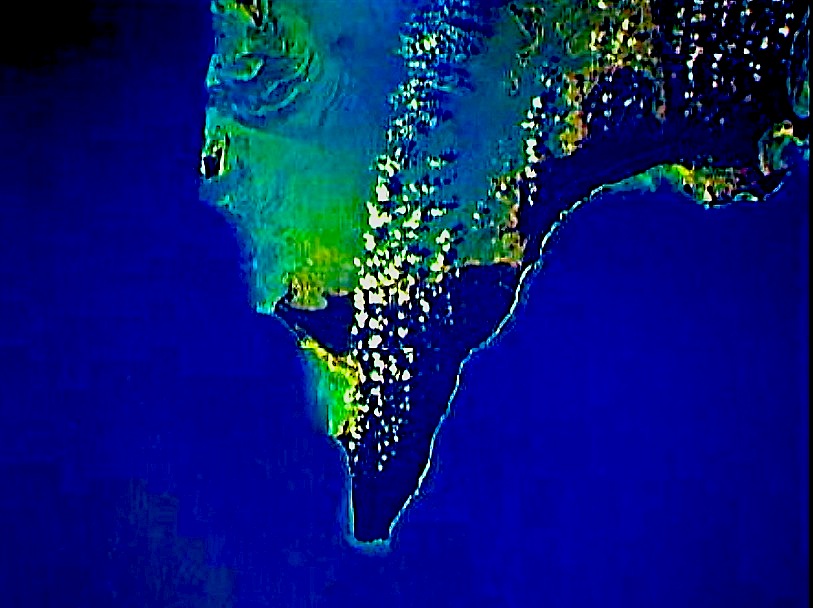
This image appears to be a blow-up of the sharper ‘filmic’ second one above. The detail has become hazy and indistinct, though part of the island-long ribbon of highway remains clearly visible. Time for a photo-enhancing experiment…
NASA clip

I played around with the contrast and colour settings of the photo above, to see what effect it produced (below). The most marked result is that areas of low water  – the coastline, the underwater high ground, the Marls and mangrove swamps, the low water of Cherokee Sound – became vividly highlighted. I don’t know what the small russet patches are, particularly visible in the Marls. My (ill-)educated guess is that they represent mangrove / mud islands that are underwater at high tide only, and that were in tidal transition as the Space Station passed overhead. Any ideas welcomed via the comment box.NASA clip - Version 2

Unknown's avatar

QUEEN ANGELFISH (Holacanthus ciliaris) – BAHAMAS REEF FISH (2)


Queen Angelfish Holacanthus ciliaris

QUEEN ANGELFISH (Holacanthus ciliaris)  – BAHAMAS REEF FISH (2)

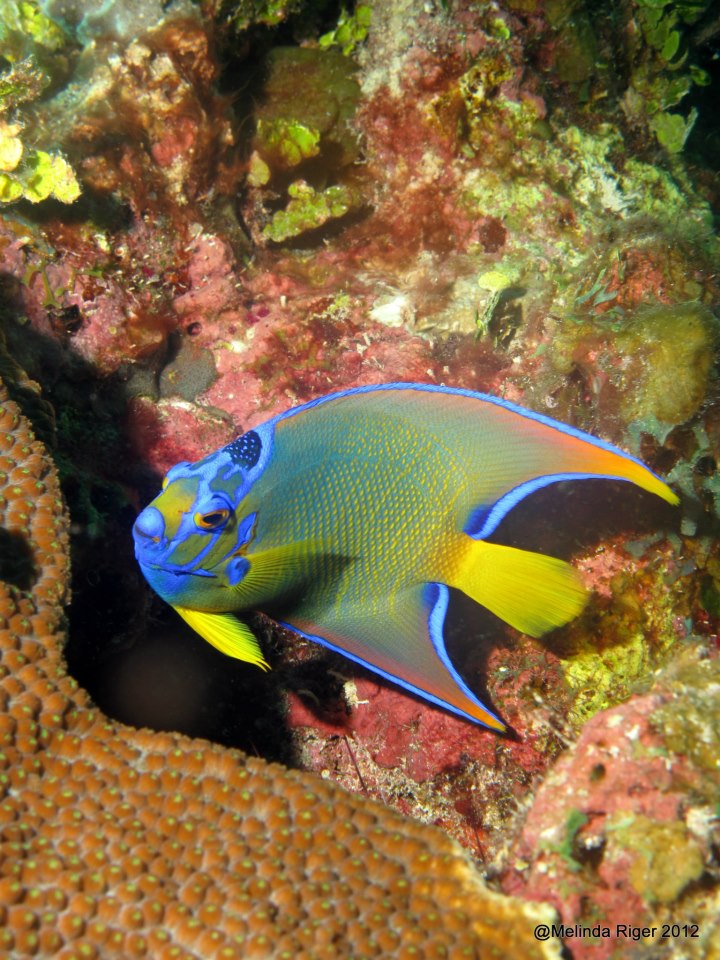
The Queen Angel is one of several reef fish species where the difference in colouring between juveniles and adults is marked.  They are commonly found in the waters of Florida and the Bahamas, with a range extending to the Gulf of Mexico. Adults can grow to 3.5 lbs (to mix metric with avoirdupois) and they can live up to 15 years. Like all Angelfish, they rely on their pectoral fins for propulsion as they forage on the reefs for their mixed diet of sponges, coral, plankton, algae, and even jellyfish. As the photo below shows, they have no problem swimming upside down…

QUEEN ANGELFISH (JUVENILE) Juvenile Queen Angel ©Melinda Riger GB Scuba

Evidence suggests that adult Queen Angels may form ‘monogamous’ pairings. Brief research in the factosphere suggests that the proposition is somewhat tenuous. Maybe pairs just like hanging out – possibly to gain some territorial advantage – and anthropomorphising that into lifelong partnership terms may be overstating the relationship… Whether wed for life or not, the actual mating process is remarkably efficient. The pair snuggle up close, simultaneously releasing large quantities of sperm and tens of thousands of eggs. The fertilised eggs hatch within a day. Respect!

QUEEN ANGELFISH (ADULT)Queen Angel fish ©Melinda Riger GB ScubaQueen Angelfish ©Melinda Riger / Grand Bahama ScubaQueen Angelfish (juv) ©Melinda Riger @GBS

Photo Credits for the amazing main images: ©Melinda Riger (Grand Bahama Scuba), with thanks; header image WikiPic

Unknown's avatar

RICKY JOHNSON, ABACO NATURE GUIDE & ENTHUSIAST 1964-2013


Ricky Johnson, Abaco, Bahamas

FOR RICKY JOHNSON, ABACO NATURE GUIDE & ENTHUSIAST 1964-2013 

Ricky Johnson Bahama Palm Shores 1

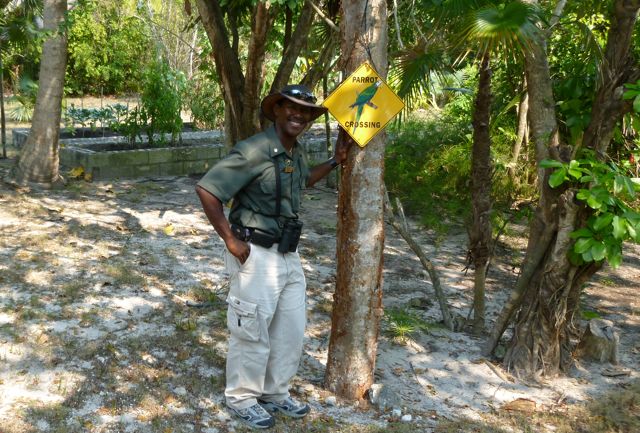
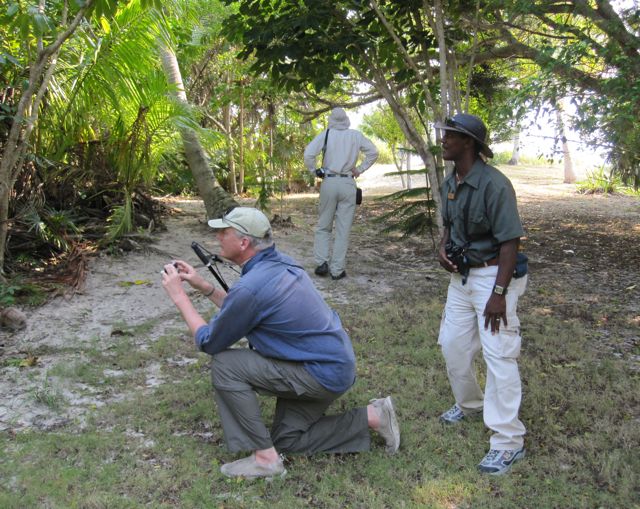
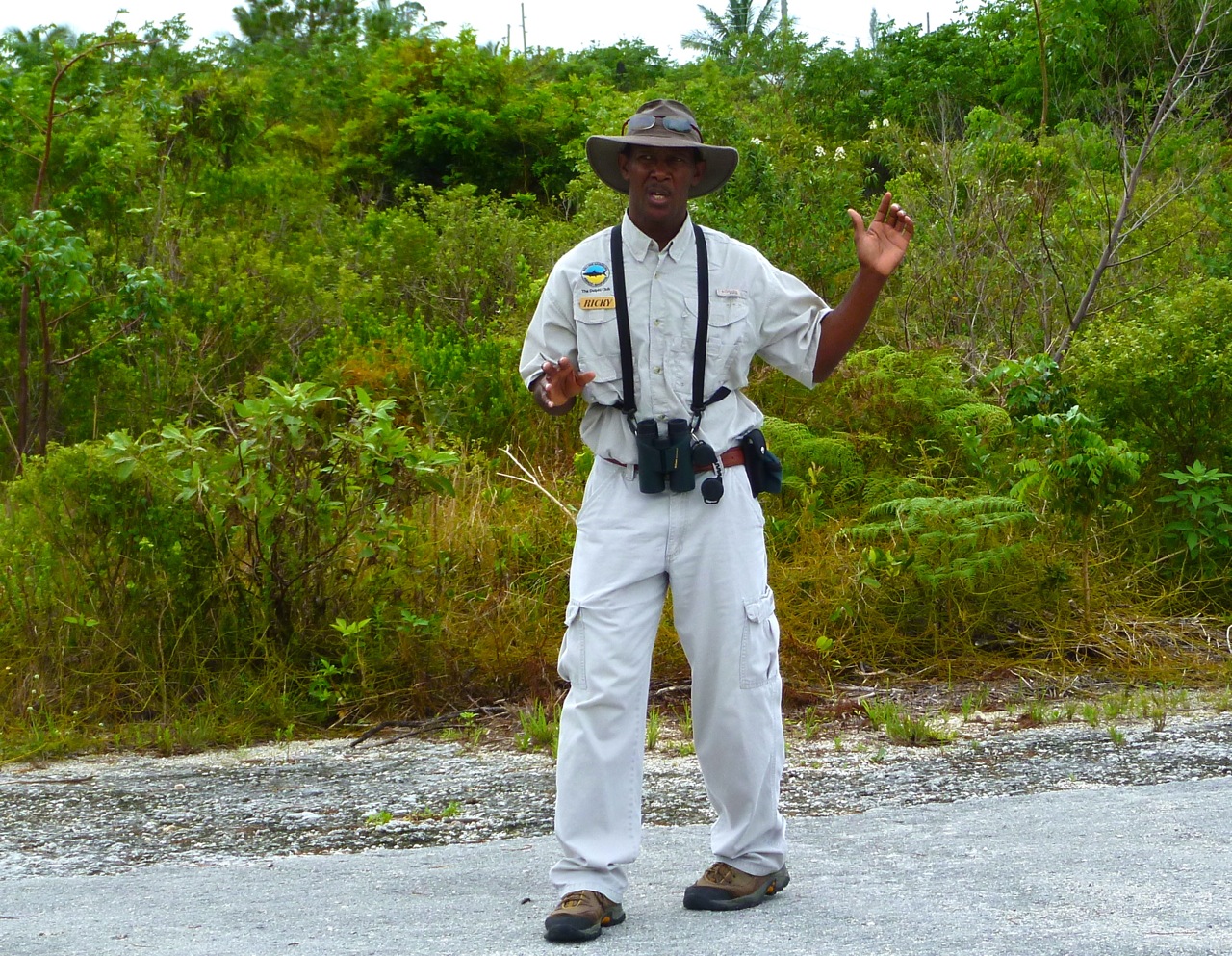
No one who knew Ricky, or even merely met him, could doubt his charisma, his infectious enthusiasm for life, and for Abaco and its natural history. His Abaco Nature Tours were legendary. As non-islanders, we knew that a day out in Ricky’s company would be a hectic and memorable one. He knew where all the birds were to be found – and enticed the shy ones out of the coppice with his trademark calls. He was all-seeing and all-knowing – information about Abaco’s natural history, social history, geology, poisonous plants and bush medicine would stream from him irrepressibly throughout the day. Ask him a question? He’d know the answer. He seemed never so happy as when he spotted something and pulled the truck over, leaping out with the door open so all could hear his running commentary as he explained the properties of some small plant that most would have failed to notice. Accompanied, of course, by a gag and THAT laugh.


Ricky Johnson Bahama Palm Shores 3

In many ways, it is impertinent for occasional blow-ins to become involved in what is the island’s grief over Ricky’s tragically young passing. However in the short time we knew him – far too short – we both came to feel we had known him for many years. That was the Ricky effect. He was a joy to know, and we will remember him with joy as well as with sadness.

Ricky Johnson Pishing Woodstars Crossing Rocks Abaco

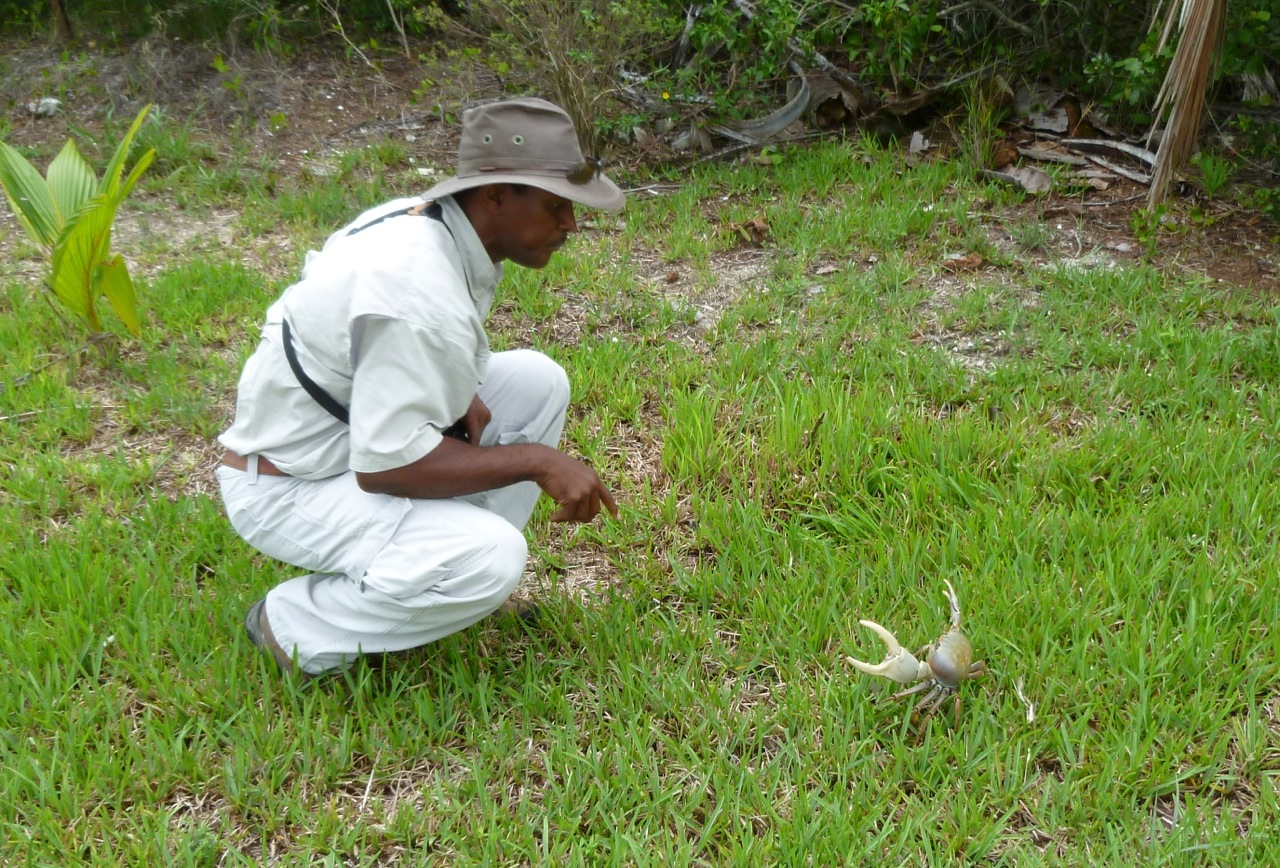
Land Crab : Ricky Johnson 2

Unknown's avatar

ABACO HISTORY: SHIPS, MAPS & HOLE-IN-THE-WALL


Schooner (Wiki)

I have posted several times about Hole-in-the-Wall, the geological feature and historic nautical landmark at the southern tip of Abaco. I’ve covered the frankly concerning 15-mile trip to reach it and the eponymous lighthouse;  its history in both maps and pictures; and its destruction by Hurricane Sandy last October. A full index of the related Hole-in-the Wall posts can be found at the foot of this page (most recent first). I am returning to one specific early picture of HitW because of interesting information supplied by Capt Rick Guest.

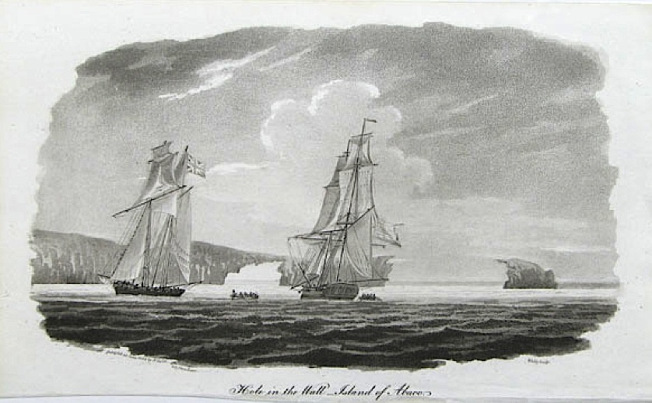
THE PICTURE The lovely aquatint below is by J. Wells, based on a sketch by a naval officer (“Half-Pay”), published in the 1803 NAVAL CHRONICLE by founder J.Gold of Shoe Lane, London. It’s quite small picture, measuring 5½” x 9″. As I said in the original post, “you may be looking at a screen clip of a scan of the book plate of the earliest surviving depiction of Hole-in-the Wall. If anyone knows of an older one, please get in touch. And can anyone identify what kind of sailing vessels these are (I wouldn’t know a brigantine from a clipper…)?”.

THE SHIPS I am now better informed about historic ships (though no wiser). I am very grateful to Rick Guest for his various contributions, including his ID of the ships in the aquatint: “The vessel on the left (west) is a Topsail (‘tops’l’) SCHOONER. Because of the angle on the other vessel, my guess is it’s a BRIG. Brigs have 2 masts, usually with a large ‘Spanker’ (aft sail).” The schooner is flying the Union Jack. The two rowing boats setting off from the ships seem from the detail to be heading towards land – perhaps to find fruit or other provisions.
hole-in-the-wall-print-1803

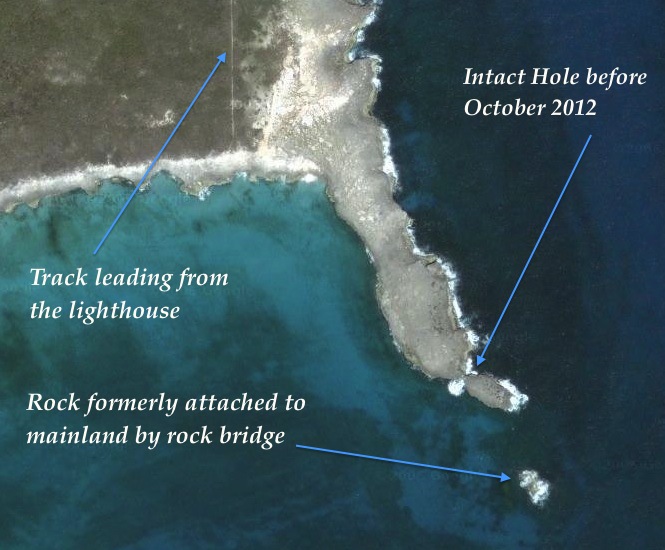
THE GEOLOGY Besides showing Hole-in-the-Wall between the 2 ships (as it was until Hurricane Sandy struck in October 2012), there is an additional feature that I did not originally remark on. To the right of the aquatint is a single rocky islet. Its left side and the corresponding end of the mainland clearly evidence the previous existence of another longer-arched hole, its roof presumably long gone by 1803. Earlier maps make no reference to a second Hole, though it’s possible the oldest refer to the larger, more significant hole until it collapsed and left the smaller hole to bear the name. At all events, the islet to the right in the aquatint is now largely submerged, though it can be seen from an aerial view. If anyone has a photo of it taken from the sea, with the promontory and lighthouse behind, please get in touch.
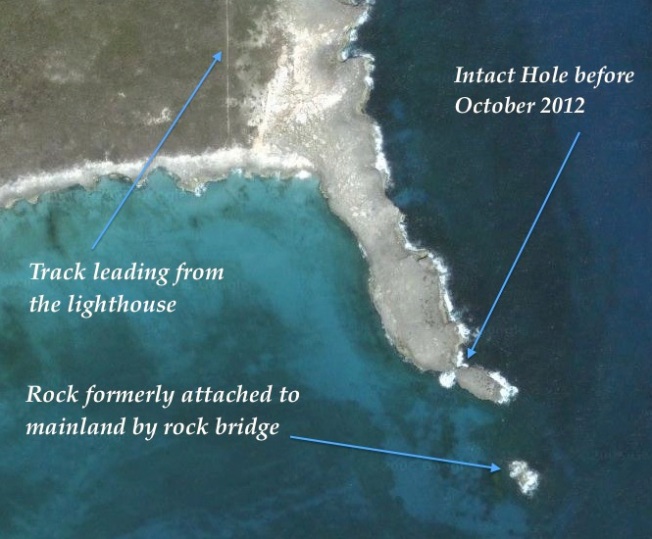
Hole-in-the-Wall aerial view

MAPS

I have found some more images of historic maps of Abaco to add to the earlier collection.

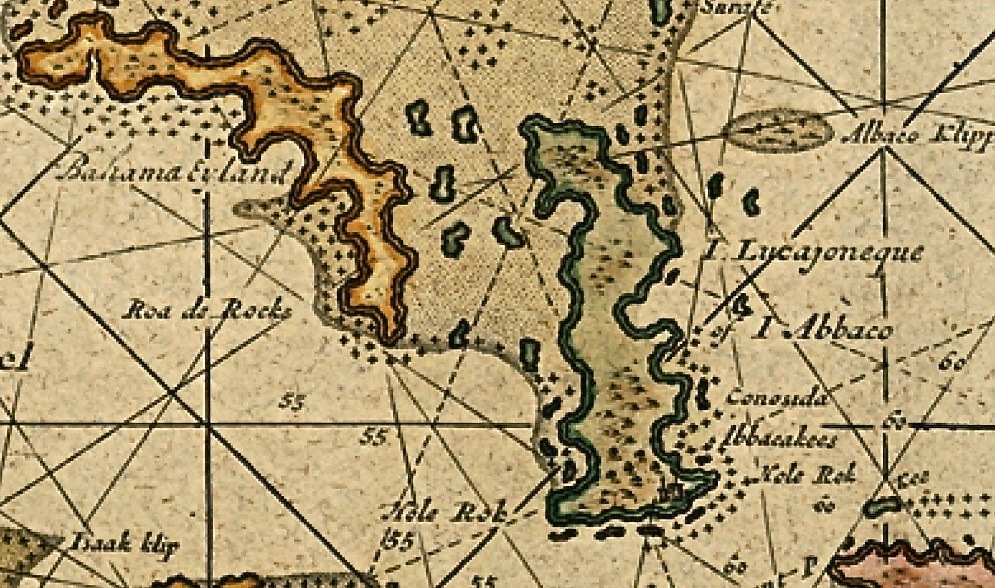
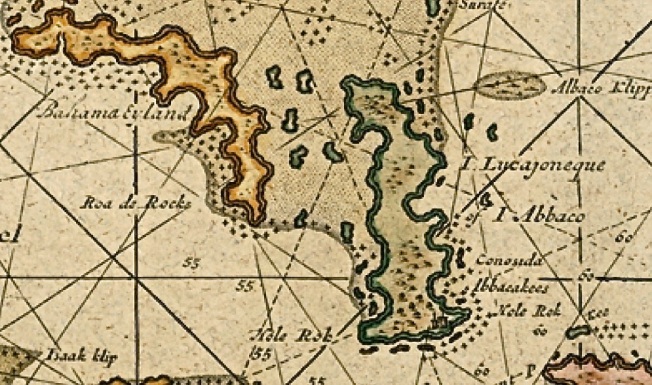
1. Johannes van Keulen 1728  c17/ early c18 Dutch cartographer. The top image of two is from a less well-reproduced edition, possibly an early one. The HitW area is uncompromisingly called ‘Hole Rok’. This is a rare instance of another ‘Hole Rok’ being marked of the south-west tip of Abaco. The main island itself is often described at this time as I. Lucaj(y)onesque, or similar derivative from the word ‘LUCAYA’ (Lucyan people being the early inhabitants of the Bahamas region). Notable here is the use of the word ‘I. Abbaco’ for a cay on the east side rather than the whole island.
van Keulen mod

This second much clearer (and later?) print of the same van Keulen map demonstrates why Hole-in-the-Wall is of such historic importance to the Abacos. It clearly marks the only settlement of any significance known to seafarers and cartographers of the time. Other contemporary maps are the same. It is the only named place on Abaco. Buildings are even shown here, though nowhere else on the island. It may well be fair to conclude that until at least 1800, HitW was the ‘capital’ of Abaco. Nowadays it is simply a functioning lighthouse in urgent need of attention and repair, with the abandoned buildings of the lighthouse station clustered round it (the light was automated in 1995). There is no settlement and there are no dwellings, not even visible ruins.van Keulen 1728

2. Thomas Kitchin 1782 Kitchin was a well-known English c18 cartographer who famously mapped the counties of Britain. He also worked in the Caribbean for a time. The clip below is taken from his map “West Indies according to Best Authorities“. The image doesn’t do the map justice. I own it (thanks, Mrs RH) and had just framed it when someone asked for a quick photo, so it is taken through glass (too lazy to remove it – will try to improve the image later). Great Abaco is now specifically named in its own right as an island, though the Abacos group as a whole retains its historic Lucayan name. Again, ‘The Hole in the Rock’ is the only place-name included. As a side-note, Grand Bahama has progressed from ‘Bahama Eyland’ to ‘Great Bahama’Abaco map
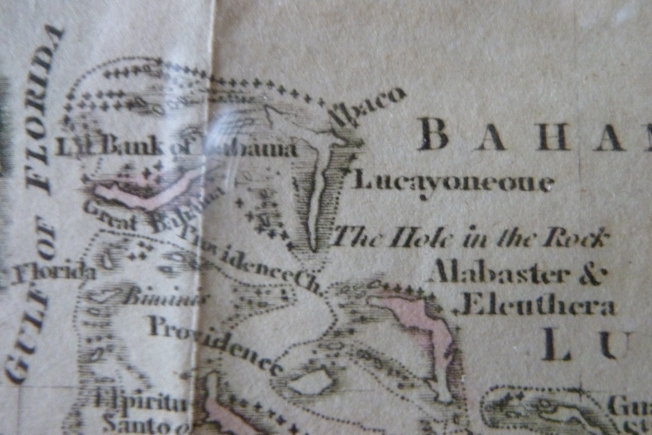
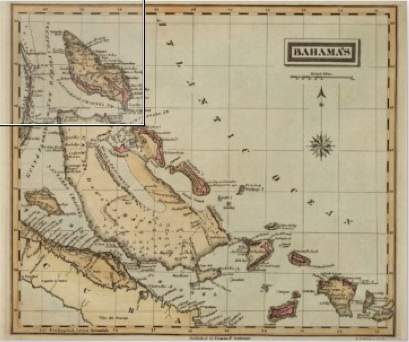
3. B.T.Welch, published F.Lucas Jr 1823 The top map shows the entire West Indies. I have located a clearer version of it and added the clip below it showing the detail of the top left corner Northern Bahamas corner

Abaco Map B.T.Welch published F.Lucas Jr 1823One hundred years on from the van Keulen map, and a few familiar names are starting to appear, especially with the ‘Kays’. ‘Hole of the Rock’, as it was now called, is still almost the only named place on the main island. I can’t make out what the bearing and date under the name means – any suggestions welcome. In passing, I note that ‘Gordo K(ay)’ is named, the earliest mention I have found. It is now of course ‘Disney Island’, and good luck to it… ‘Great Bahama’ has now become. finally, Grand Bahama.Abaco B.T.Welch published F.Lucas Jr 1823

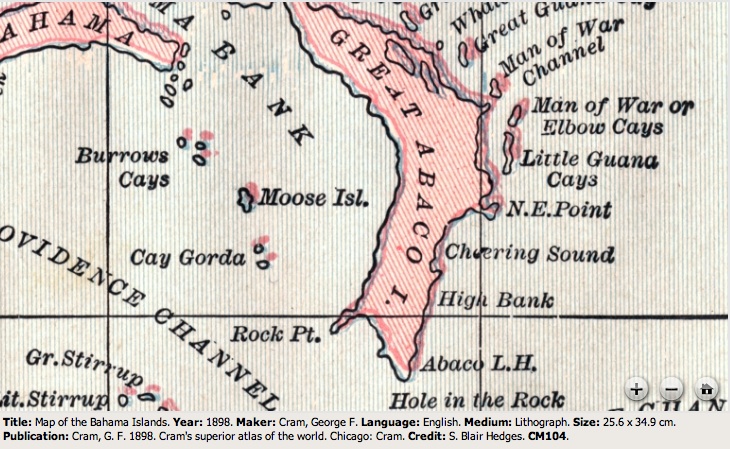
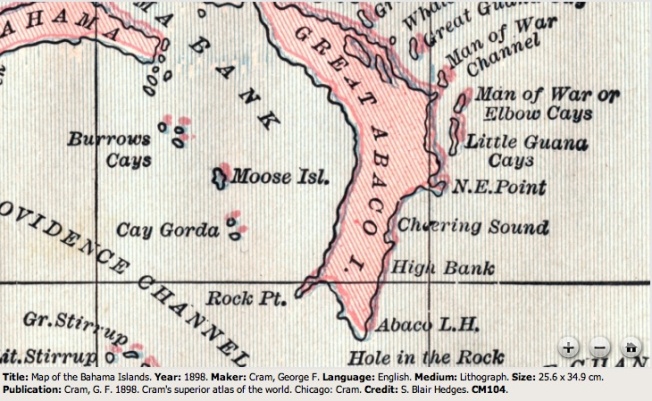
4. George Cram 1898 This map demonstrates how, even in relatively modern times, mapmakers can take their eye off the globe, as it were, and go wrong. True, ‘Hole in the Rock’ is named and its lighthouse (completed 1836) is marked. However, some of the attributed place-names seem surprising – for example, Moore’s Island has strangely been called Moose Isl. And for a map not much more than 100 years old, in the ‘Superior Atlas of the World‘, the general topography of Abaco is way off the mark. Either that or the Crossing Rocks area in the lower quarter of the island below “Cheering Sound” – a slim land-narrow just few metres wide from east to west coast – has been on a crash diet in the intervening century… It’s basically the width of the road with a beach on either side.
Abaco 1898 George Cram

LIST OF PREVIOUS HitW POSTS

HOLE-IN-THE-WALL, ABACO: THE ‘HOLE’ THAT’S NO LONGER A WHOLE December 9, 2012

HOLE-IN-THE WALL ABACO: “MIND THE GAP” – A NEW ISLET IS BORN November 8, 2012

ABACO’S ‘HOLE-IN-THE-WALL’ BEFORE SANDY DEMOLITION: FIRST & LAST EVER IMAGES November 5, 2012

HOLE-IN-THE-WALL TO GAP-IN-THE-WALL: HURRICANE SANDY SMASHES ABACO LANDMARK November 3, 2012

 HOLE-IN-THE-WALL ABACO: HISTORIC 1803 DESCRIPTION & AQUATINT May 23, 2012

 ABACO & HOLE-IN-THE-WALL, BAHAMAS: A SHORT HISTORY IN MAPS April 8, 2012

 “TO THE LIGHTHOUSE…” A TRIP TO HOLE-IN-THE-WALL, ABACO May 25, 2011