Unknown's avatar

FLORAL CORAL: BEAUTIFUL BAHAMIAN REEF LIFE


coral-soft-corals-melinda-riger-g-b-scuba

FLORAL CORAL: BEAUTIFUL BAHAMIAN REEF LIFE

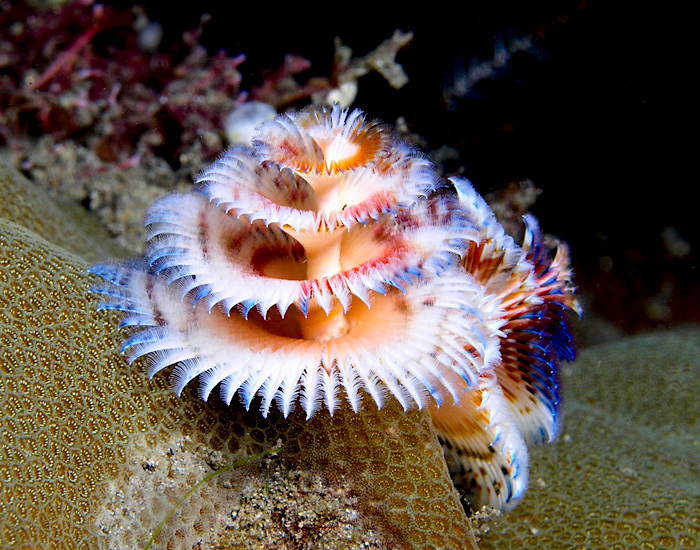
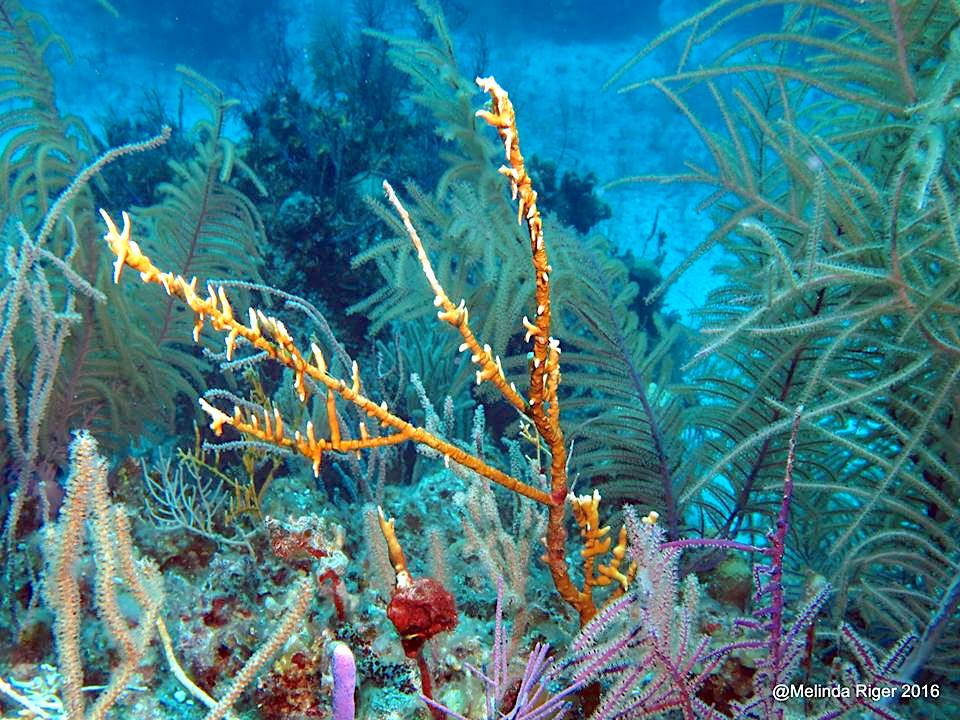
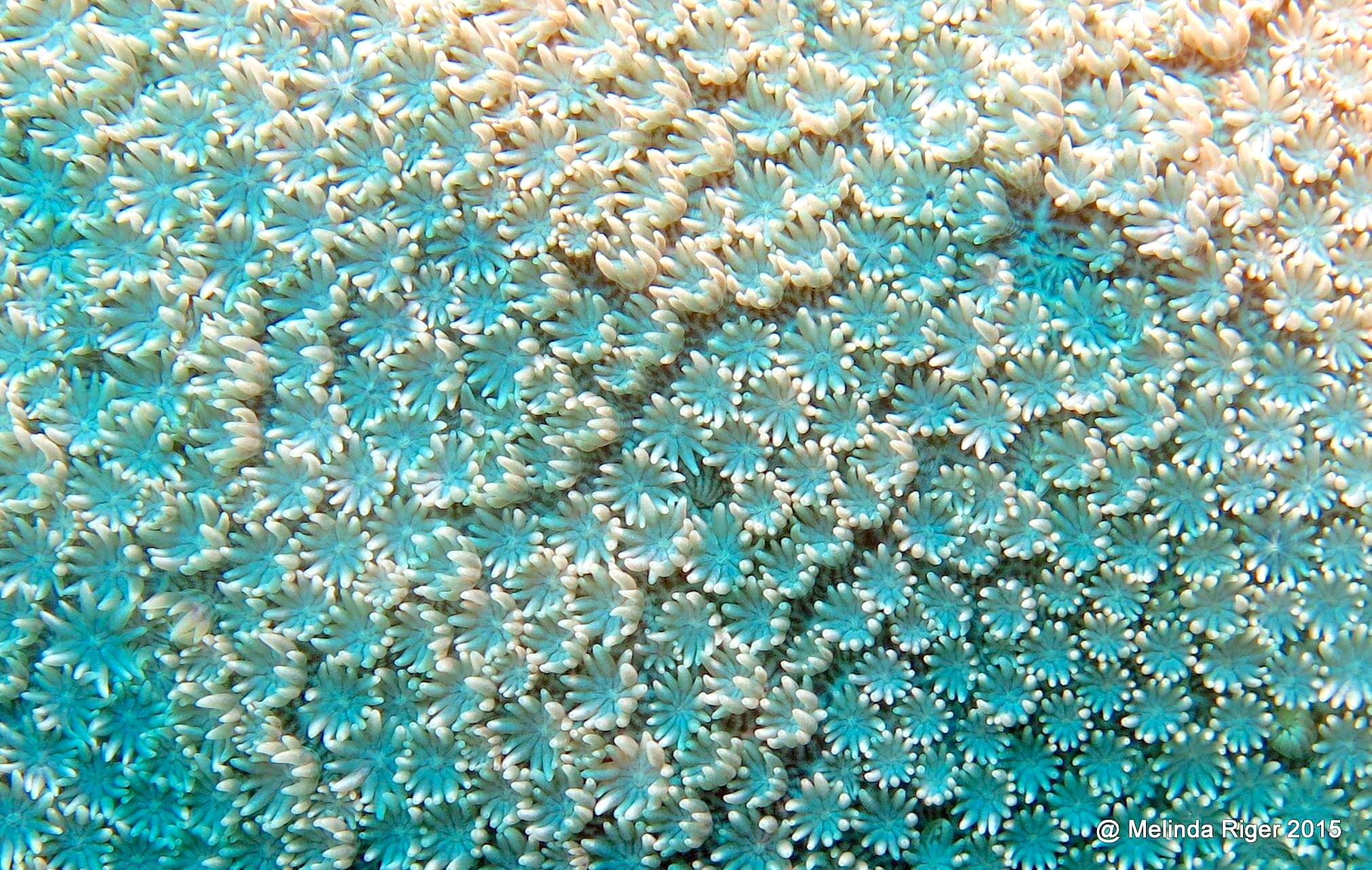
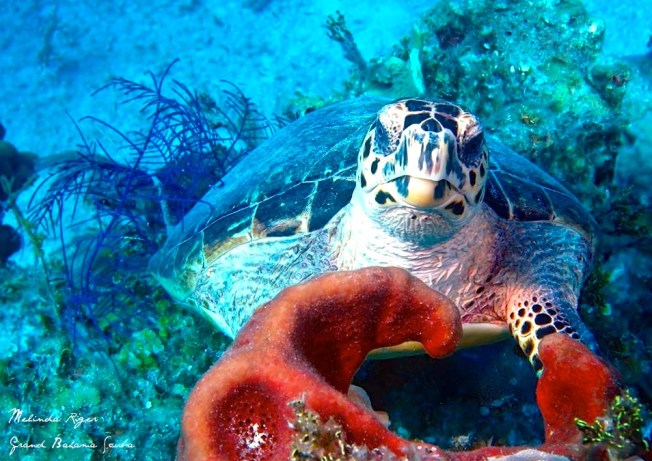
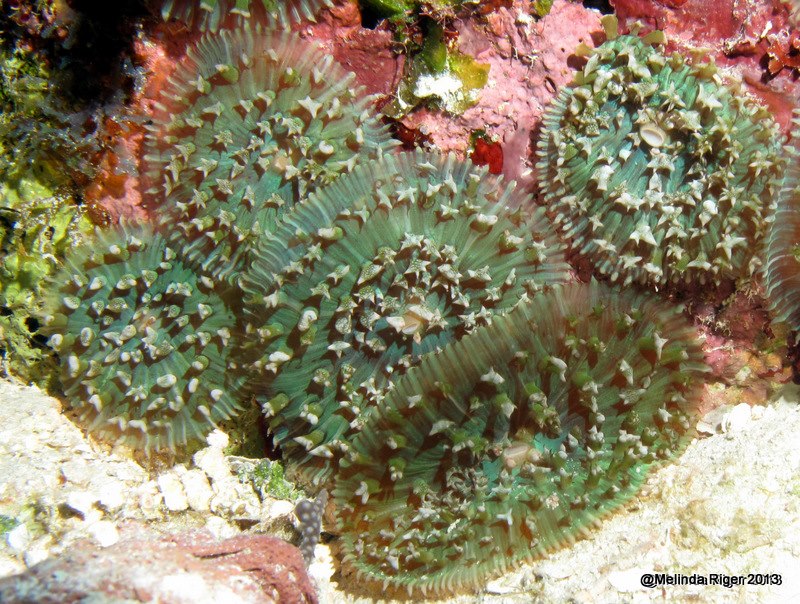
This post needs no commentary from me, nor my larky intrusions. These wonderful images from Melinda Riger speak for themselves. You’ll see a wide variety of soft and hard corals in the images below (prize** for the full list). If these superb photos don’t want to make you want to grab a snorkel, mask and flippers, then… well, that would be a very great shame.

coral-melinda-riger-g-b-scubacoral-melinda-riger-gb-scubacoral-reef-2-melinda-riger-g-b-scubafire-coral-melinda-riger-gb-scubapillar-coral-melinda-riger-gb-scubablushing-star-coralpurple-sea-fan-melinda-riger-g-b-scubapurple-sea-fan-melinda-riger-g-b-scuba-copy

**the prize is the usual legendary bottle of Kalik. Or do I mean mythical?

All wonderful photos by Melinda Riger, Grand Bahama Scuba. All corals also available in a wide range of colours in Abaco waters. See them there on the third largest barrier reef in the world (and in rather better nick that the greatest, by all accounts).

Unknown's avatar

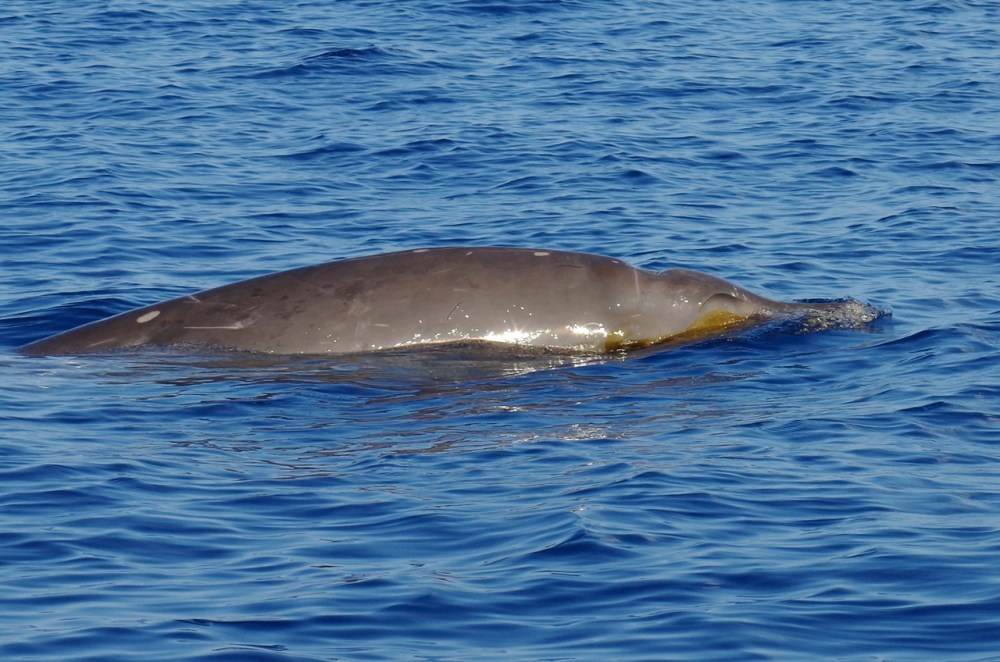
“THE PRINCE OF WHALES”: BLAINVILLE’S BEAKED WHALE


Blainville's Beaked Whale, Sandy Point, Abaco 14 (Keith Salvesen

“THE PRINCE OF WHALES”: BLAINVILLE’S BEAKED WHALE

This post results from a recent Technological Breakdown at Rolling Harbour Towers, and is to be viewed as post-trauma therapy. Smart New Mac ordered, to replace 5 year-old warhorse loosely held together with duct tape and prayer. After lengthy (overnight) data migration, Smart New Mac turns out to be faulty. SNM returned to store: a seething hotbed of stress and distress (the shop too). While replacement is eagerly awaited, fry motherboard of old computer with shorted charger. A week of wailing and gnashing of teeth. Smart New Newest Mac brings you this offering.

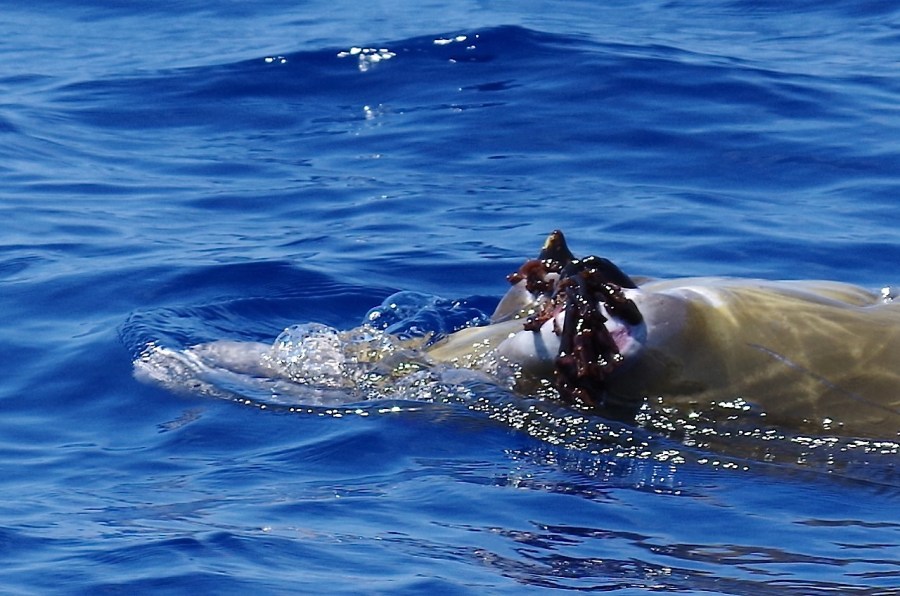
I like whales. Everyone likes whales. Even whalers, though for very different reasons. Here are some calming pics of one of Abaco’s largest yet best kept secrets – Blainville’s beaked whales. Adults grow to more than 15 feet long and weigh about 2000 pounds, yet they can behave like huge dolphins in slow motion – circling a boat, diving under it, drifting away, swimming back. They have no motherboard and require no data migration.

The amazing barnacled tusks of a male, that protrude upwards  from the lower jawBlainville's Beaked Whale, Sandy Point, Abaco 16 (Keith Salvesen

Tusks and blowhole…Blainville's Beaked Whale, Sandy Point, Abaco 15 (Keith Salvesen

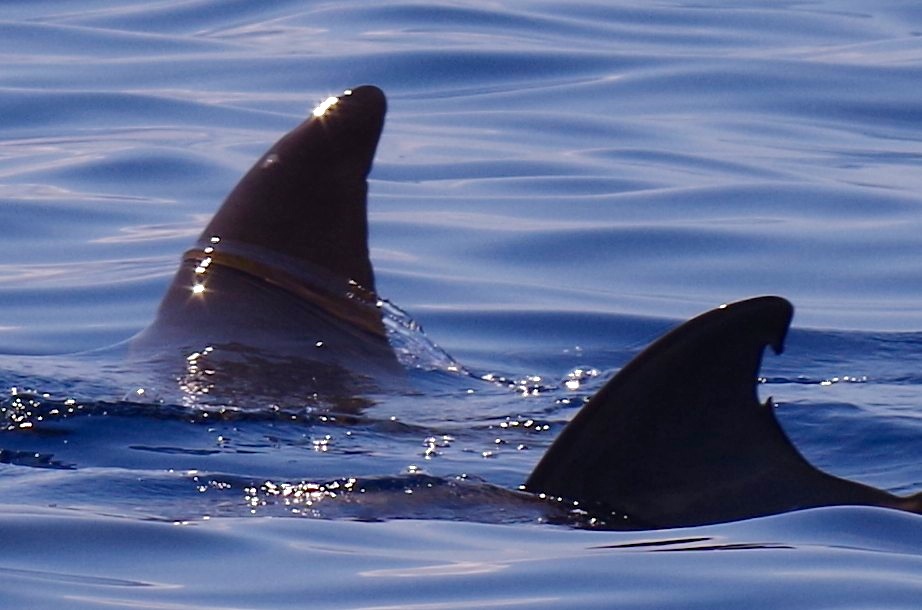
Dorsal fin damage is an excellent way to ID individual whalesBlainville's Beaked Whale, Sandy Point, Abaco 18 (Keith Salvesen

The knobbly back will help with ID tooIMGP2001 - Version 2

A female beaked whale noses towards the BMMRO research vesselBlainville's Beaked Whales, Abaco (1) (Keith Salvesen)

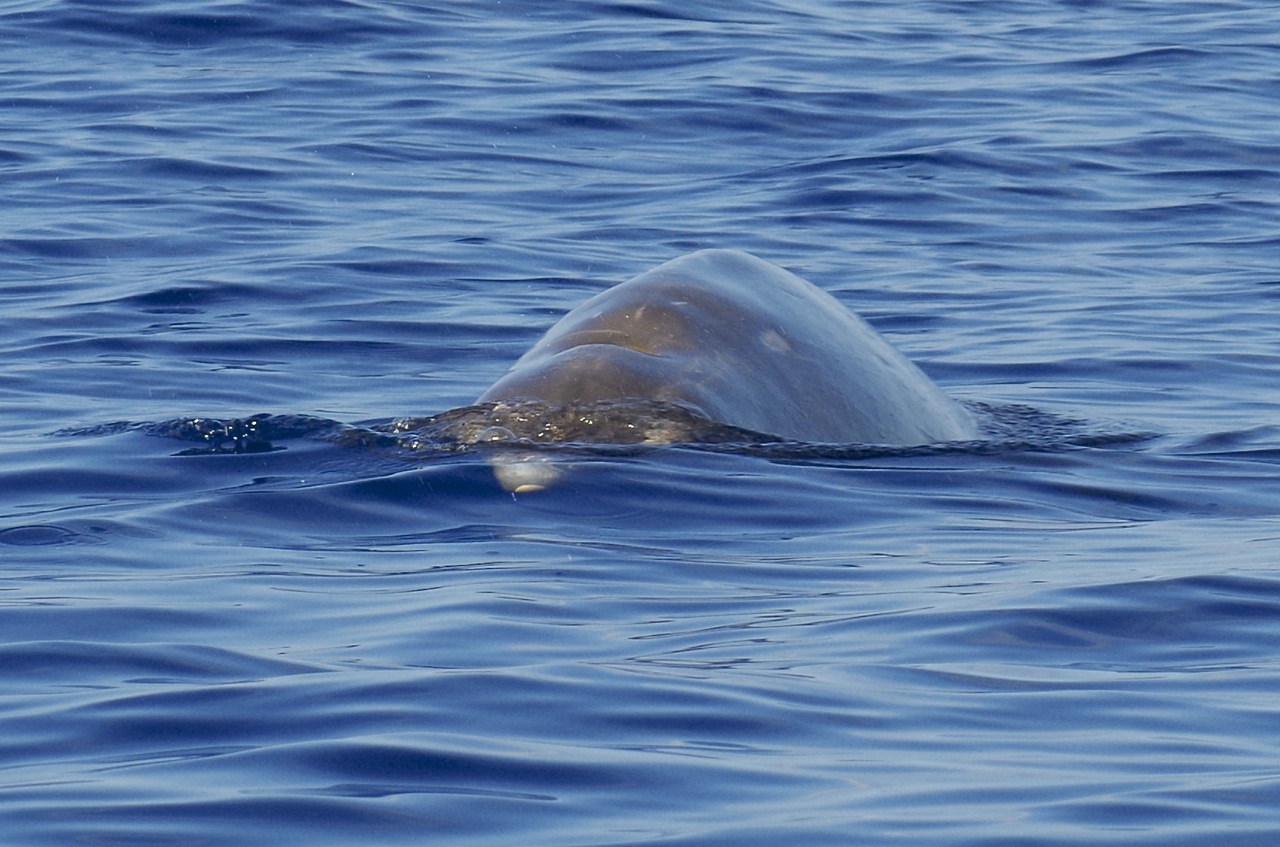
The beak breaks the surfaceBlainville's Beaked Whales, Abaco (1) (Keith Salvesen)

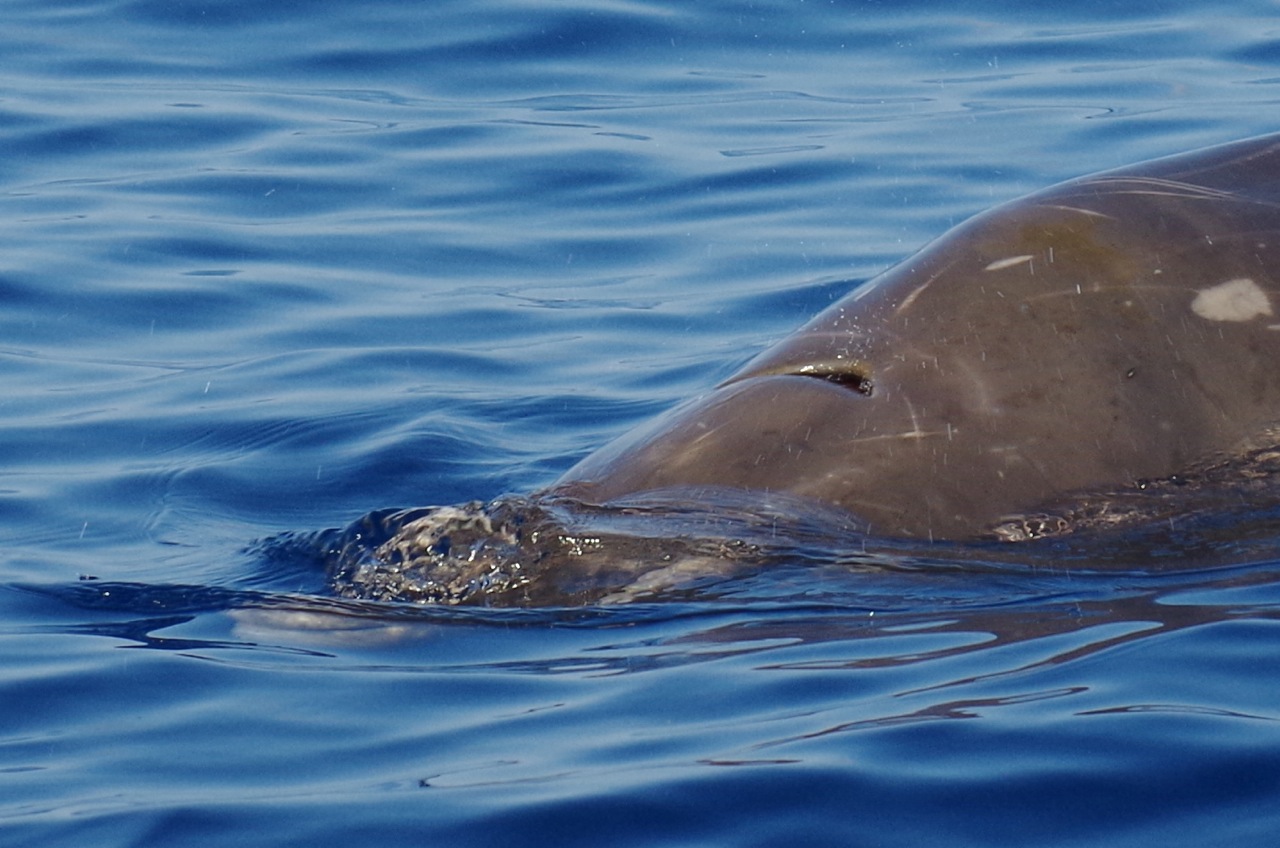
The blowhole, used for breathing, in close-upBlainville's Beaked Whales, Abaco (1) (Keith Salvesen)

Healed circular wounds caused by COOKIECUTTER SHARKSBlainville's Beaked Whales, Abaco (1) (Keith Salvesen)

‘Dolphining’ towards the RHIB (the small creature between the two on the left is a calf)Blainville's Beaked Whale, Sandy Point, Abaco 8 (Keith Salvesen

CLOSE ENCOUNTER & HEAVY BREATHING

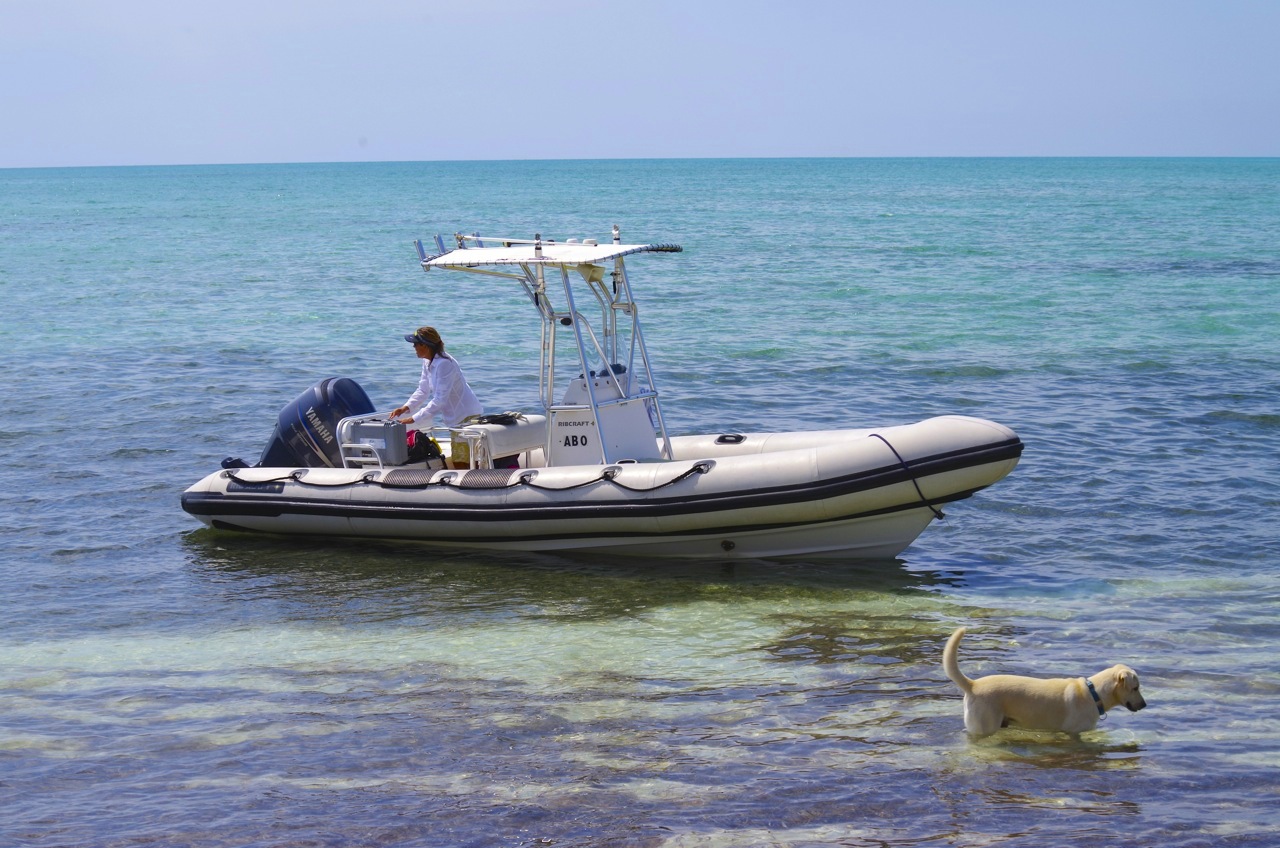
           BMMRO research RHIB                        BMMRO HQ, Sandy Point, AbacoBMMRO Research Boat, Sandy Point, Abaco (Keith Salvesen) BMMRO HQ, Sandy Point, Abaco (Keith Salvesen)

Female beaked whale being peacefulBlainville's Beaked Whales, Abaco (1) (Keith Salvesen)

Credits: all photos & video RH; Charlotte & Diane for a brilliant experience ; Mr Blainville (below) for a brilliant whale

220px-Henri_Marie_Ducrotay_de_Blainville

Unknown's avatar

MANATEE AWARENESS MONTH (& BABY TALK)


Rita the Mantee & her new baby. Bahamas (BMMRO)

MANATEE AWARENESS MONTH (& BABY TALK)

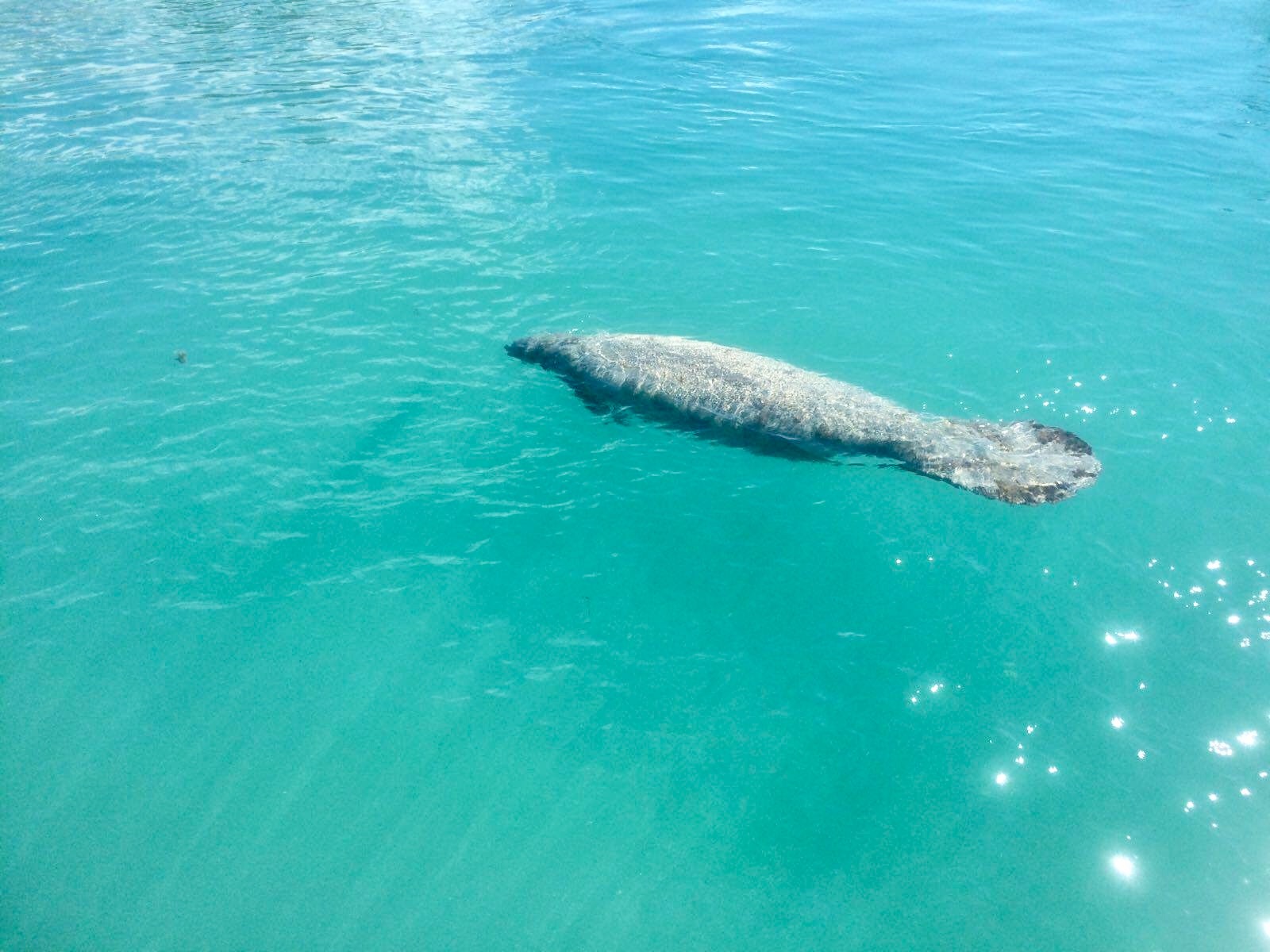
Are you aware of the Bahamas manatees? Just a few years ago your answer might well have been “Bahamas what? No, why? Where?” But suddenly they arrived. And their numbers are increasing. Alternatively, of course, they have always been there, mooching around peacefully and unnoticed in the seagrass. 

Manatee Awareness Graphic (Peppermint Narwhal)

Rita and her recently born daughter – Kamalame, AndrosRita the Mantee & her new baby. Bahamas (BMMRO)

The Bahamas Marine Mammal Research Organisation BMMRO has been keeping tabs on occasional sightings of manatees in Bahamian waters for some years. But until around 2012 – when I first learned of them and wrote about them – they appeared to be few and far between. They seemed to be unrecorded for Abaco, or anyway unphotographed.** Then the sightings began. Names were given to individuals, identified primarily by distinctive marks or cuts on their ‘paddles’ (tails). Gina. Rita. Georgie. Randy. JJ. Sightings in Hope Town, Little Harbour, Cherokee and the Casuarina canal. Manatees had arrived and were being paid attention. The ease of digital photography and the rapidly increasing use of social media resulted in more reports, wider interest and – yes – greater awareness both on Abaco and elsewhere in the wider Bahamas

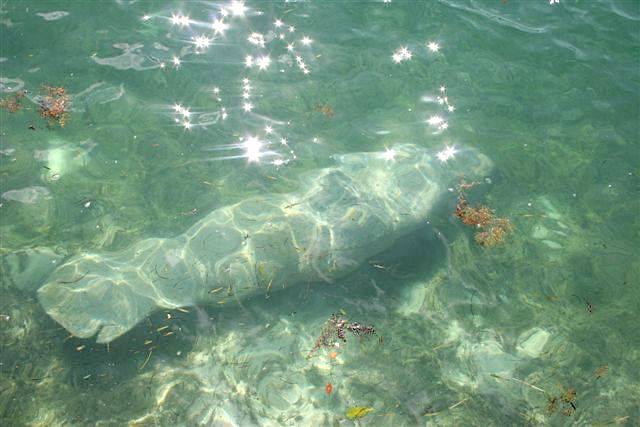
**so much for being factually assertive! Many thanks to Mary for her account of one on Green Turtle Cay ‘seen by everyone’; and Kelley for her 2008 one in Galleon Bay canal… of which she actually got a photo…

manatee-galleon-bay-canal-tc-abaco-feb-2007-kelley-niedoba

To give you an idea of the rapid spread of the West-Indian Manatee population, here is a great infographic made recently by Felice Leanne Knowles of the BMMRO, mapping 2016 sightings of both known and unidentified manatees in the Bahamas. An amazing 15 in all, in an area where the natural fresh water these creatures need for survival is in short supply.

Bahamas Manatee sightings infographic (BMMRO / Felice Knowles)

You’ll see that in July both Gina and Rita had nosed their way down to Andros. At this time, Gina was known to be heavily pregnant. She gave birth in Kamalame Cay, and the photos of her above with her new calf were taken there.

The baby manatee is known to be a female and there is currently a competition to name her. A spreadsheet-worth of names was submitted to the BMMRO, and they have been whittled down to 3 for a final poll-off between Andie (Andros), Kaman (Kam[alame] An[dros]) and Morgan (Arrrrrrrr in Piratese). 

Waiting for a name…Rita the Mantee & her new baby. Bahamas (BMMRO)

RELATED LINKS

BAHAMAS MANATEE CLUB (BMMRO)

BAHAMAS MANATEES: GINA’S GOOD NEWS

BAHAMAS MANATEES: A SHORT HISTORY 1904 – 2015

WEST INDIAN MANATEES (RH PAGE)

img_4120

Credits: BMMRO and individual photographers whom I will identify when my backup has finished churning away; Felice Leanne Knowles; ‘Kelly’ (header); @kamalamecay; Sarah Jayne Buchanan; Peppermint Narwhal for their (as usual) inspired illustrative graphics.

mantsw~1

Unknown's avatar

PREHENSILE TALES FROM THE REEF (2): HIPPOCAMPI


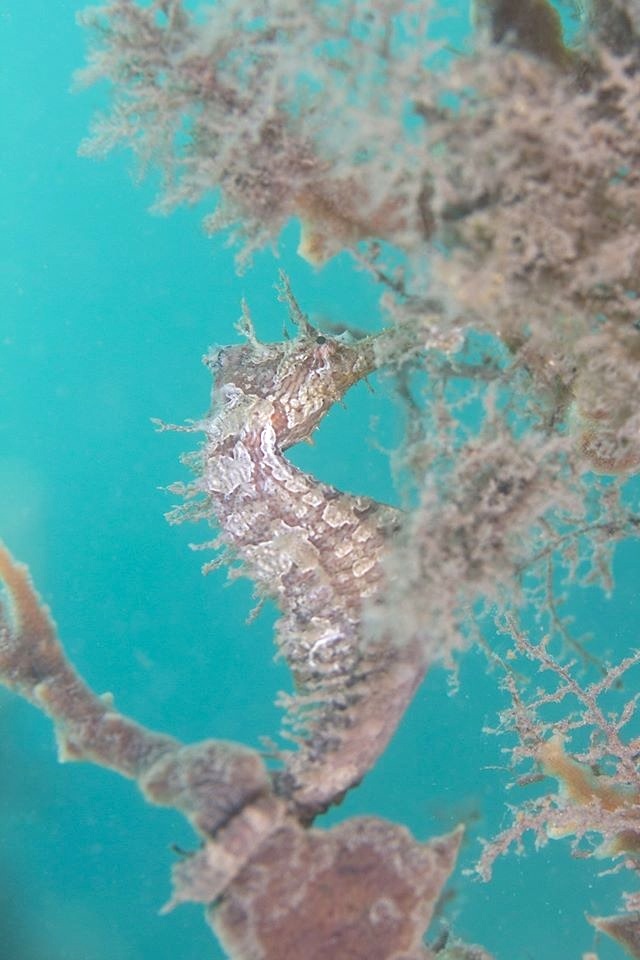
Seahorse (© Adam Rees / Scuba Works)

PREHENSILE TALES FROM THE REEF (2): HIPPOCAMPI

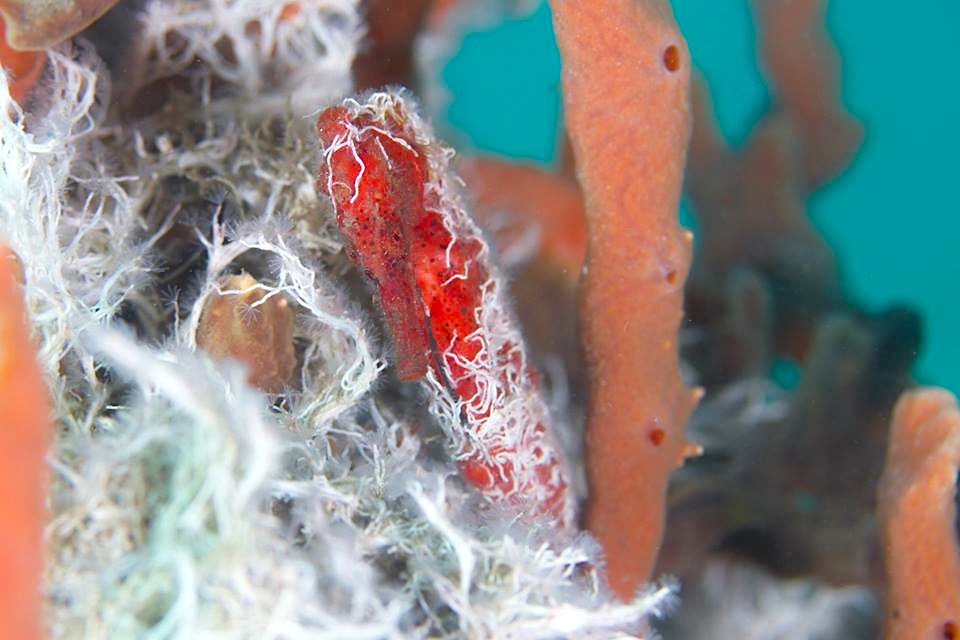
It is a statistical fact that no one in the world – not even the meanest despot or cruellest tyrant – fails to love seahorses. It would be fair to add that in certain parts of the world, some people love them too much. In more than 65 countries. To the tune of an estimated 150 million a year that are used in the ‘traditional medicine’ trade. An attrition rate that is unsustainable in the long or even the medium term – with the bleak consequence that it won’t be long before people must look elsewhere for their source for Genital Tonic Pills. 

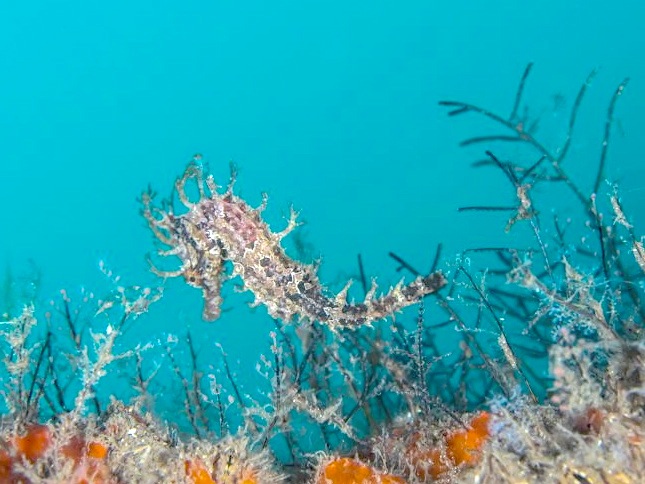
Seahorse (Adam Rees / Scuba Works)Seahorse (Adam Rees / Scuba Works)

Medicinal use – of empirically vague benefit to its enthusiasts – is joined by the aquarium trade in accounting for the removal of very large numbers of seahorses from their accustomed surroundings. At least these creatures live on (rather than being dried out alive), though research suggests that the survival rate of seahorses in captivity is low. 

Seahorse (Adam Rees / Scuba Works)

Do you sometimes hanker for a plastic brooch or paperweight with a tiny seahorse embalmed inside it? It would be good to resist the temptation to buy such things in seaside shops or online. Your little specimen will be one of a million or so souvenir seahorses sold each year, alongside seashells, starfish, sponges and (protected) corals. 

Seahorse (Adam Rees / Scuba Works)

As you contemplate your purchase, you may be reassured to find that the product is labelled ‘environmentally friendly’, ‘responsibly sourced’ or ‘from a sustainable source’. You can make up your own: ‘lovingly harvested from the bluest oceans’, maybe. In the words of the SEAHORSE TRUST: 

“Nothing could be further from the truth; there is nothing sustainable about this exploitation of the seas. You can make change by not buying them. If there was no market there would be no trade.”

Seahorse (Adam Rees / Scuba Works)Seahorse (Adam Rees / Scuba Works)

USES FOR SEAHORSES: MEDICINE OR (WITH SCORPIONS) STREET FOOD  images-1 seahorses_scorpions_skewer

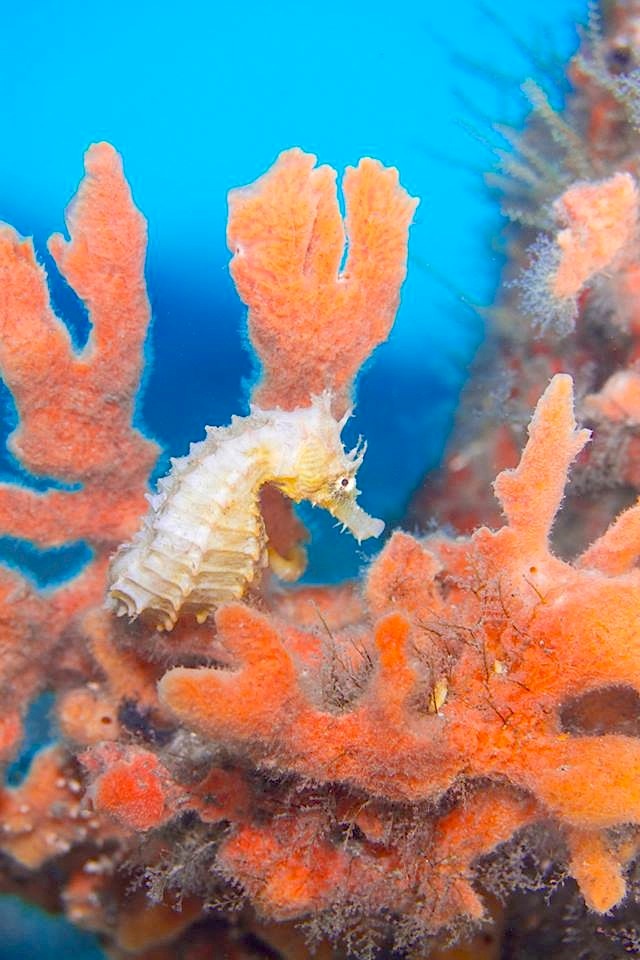
seahorse-adam-rees-scuba-worksSeahorse (Adam Rees / Scuba Works)

RELATED POSTS AND ONLINE RESOURCES

HIP HIP HIPPOCAMPUS!

PREHENSILE TALES 1

SEAHORSE TRUST

SEAHORSE TRUST FB GROUP

SEAHORSES: NAT GEO

                   Sustainable Seahorses

s-l225-2      s-l225-1

Credits: Adam Rees / Scuba Works for more stunning photos; Seahorse Trust for material; Wiki & open source for the random thumbnails

Unknown's avatar

SILVERSIDES: BAHAMAS REEF FISH (32)


silversides-school-melinda-riger-g-b-scuba

SILVERSIDES: BAHAMAS REEF FISH (32)

I have no idea if there is a collective noun for a large group of silversides. ‘Frenzy’ would cover it, but that is reminiscent of ‘feeding freezing’ which has a specialist meaning – and anyway, silversides are crazy even when they aren’t feeding. 24/7/12/365 as far as I can make out. I think ‘a panic of silversides’ might be the answer. They are just… all over the place at high speed. Sometimes swirling around pointlessly, other times moving in unison and suddenly all changing direction simultaneously, like a single creature made of tiny shards of silver.

silversides-school-melinda-riger-g-b-scuba-copyfish-frenzy-melinda-riger-gbs

There are quite a few silverside species around the world. The ones in the Bahamas are Atlantic silversides (Menidia menidia), also known in the north east of the United States as ‘spearing’. They seem to exist for two purposes. The main one is to be breakfast, lunch or dinner for larger fish, sea birds and shore birds. The other is for their usefulness in scientific research because of their sensitivity to environmental changes. 

silversides-melinda-riger-g-b-scuba-copy-2silversides-school-melinda-riger-gb-scuba

In one sense they are easy prey for predators. A determined fish will always manage a snack by swimming into the middle of a panic and (probably) simply by opening its mouth wide. On the other hand, their sheer numbers coupled with the speed and randomness of movement mean that a single may find a degree of safety in numbers. It’s hard for a predator to target any individual fish in the general melee and confusion. Silversides also favour seagrass beds, which give some shelter and protection – and a reasonably safe place to spawn. Or, as some of these photos show, they will hang around wrecks or squeeze into rocky spaces in the reef.

silversides-melinda-riger-g-b-scuba-copysilversides-melinda-riger-g-b-scuba

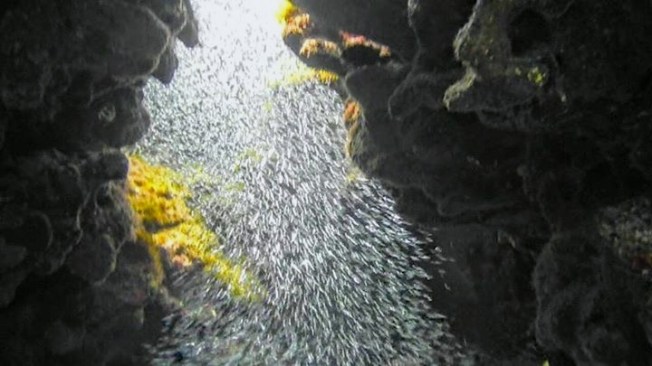
A panic of silversides apparently pouring like a waterfall down through a gap in the reefsilversides-waterfall-abaco-kay-politano

WHAT DOES A STATIONARY ATLANTIC SILVERSIDE LOOK LIKE?

meber_u0

Some time ago we used to go to the reef at Fowl Cay Marine Preserve with Kay Politano, and I would snorkel with a small and very basic lo-res underwater camera. I was hampered by being a disgracefully feeble swimmer; by not having snorkelled for a length of time calculable in decades; and by being a complete novice at underwater photography.  Despite these not inconsiderable disadvantages I managed to cobble together a few short movies on my computer (I was new to that too). Here’s one that nearly works, in that it gives an idea of what happens if you ‘swim with silversides’. I know you scuba guys all swim with sharks, but cut me some slack here please…

Photo Credits: Main photos Melinda Riger of Grand Bahama Scuba; Silverside Waterfall by Kay Politano; motionless silversides by FISHBASE.ORGMusic: Goldon Giltrap, ‘Fast Approaching’

Unknown's avatar

UNDERWATER ANGELS: ANGELFISH


queen-angelfish-melinda-riger-g-b-scuba-copy-2

UNDERWATER ANGELS: ANGELFISH

We are away for a few days, so I have planned a few posts that won’t fall apart courtesy of being done on a phone. Hopefully.

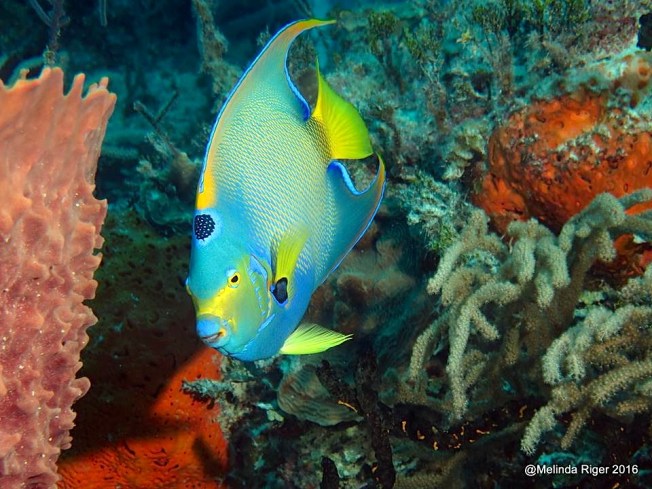
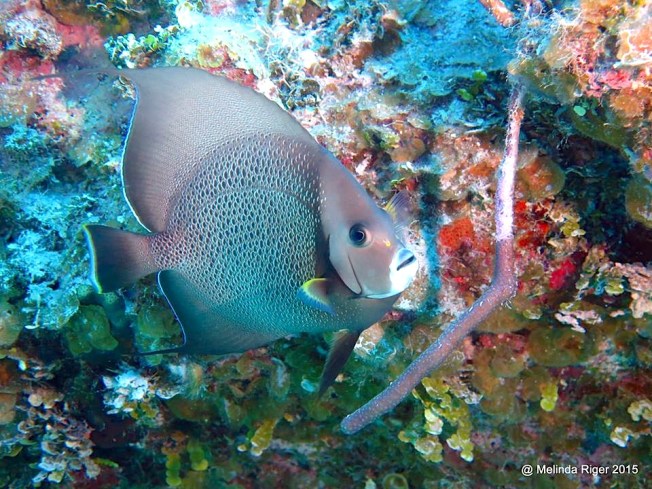
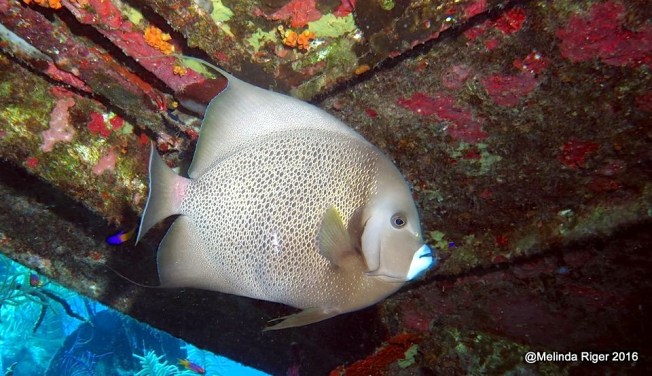
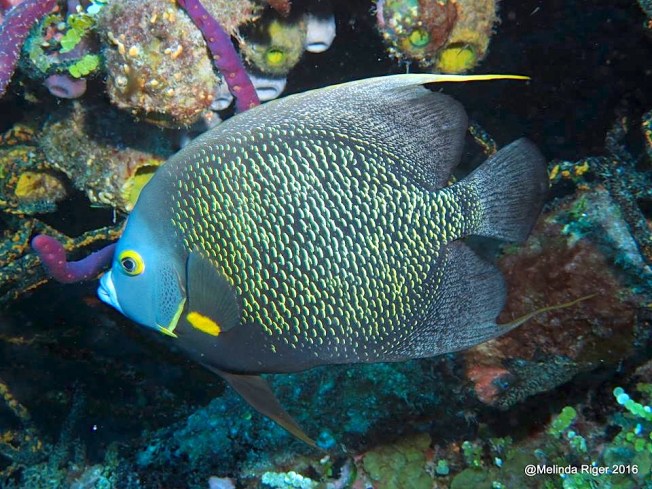
Angelfish are fabulous and come in various ‘colorways’, as designers say. Queens are my favourite, with grays not far behind. The third type here, the French, is in bronze medal position on my piscine podium but this could change were I ever to meet one in real life…

QUEEN ANGELFISH

queen-angelfish-melinda-riger-gb-scubaqueen-angelfish-melinda-riger-g-b-scuba-copy-3

GRAY ANGELFISH

gray-angelfish-melinda-riger-gb-scuba-copy-2gray-angelfish-melinda-riger-g-b-scubagray-angelfish-7-16-melinda-riger-gb-scuba

FRENCH ANGELFISH

The middle fish is a juvenile

french-angelfish-melinda-riger-g-b-scuba-copyfrench-angelfish-juvfrench-angelfish-melinda-riger-g-b-scuba

Credits: Melinda Riger / Grand Bahama Scuba

Unknown's avatar

HOGFISH: BAHAMAS REEF FISH (31)


Hogfish at cleaning station ©Melinda Riger @GB Scuba

HOGFISH: BAHAMAS REEF FISH (31)

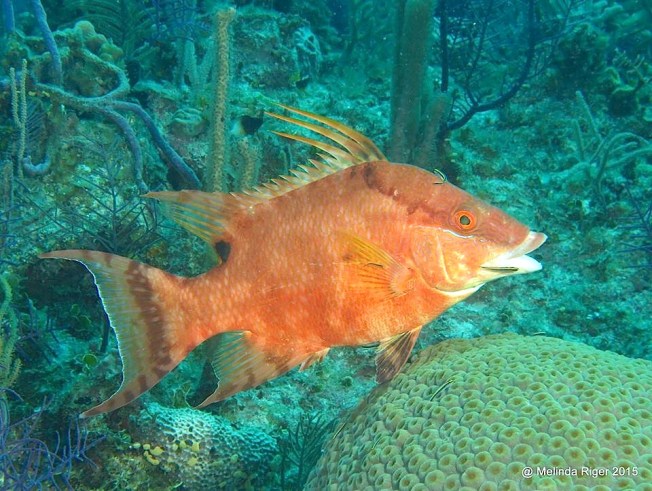
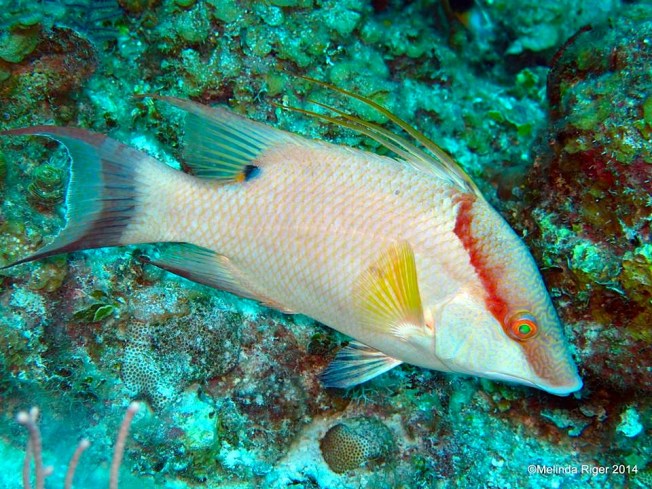
Hogfish. Fisherman’s delight… getting ‘high on the hog’. This wrasse species Lachnolaimus maximus is a reef denizen, especially where gorgonians are found. It has the distinction of being the only known member of its genus, and because it is IUCN listed as vulnerable, there are strict regulations governing bag, size, and gear limits to protect the species from overfishing.

Hogfish ©Melinda Riger @ G B Scuba

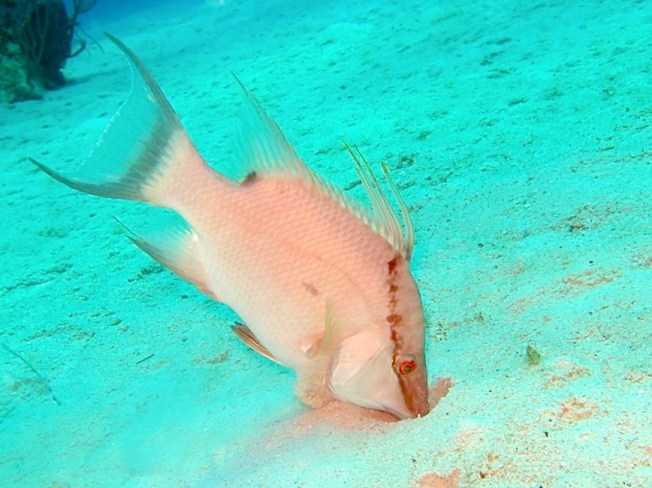
The hogfish gets its name from its long ‘pig-like’ snout, coupled with its rootling behaviour on the sea floor for crustacean prey.

Hogfish ©Melinda Riger @ GB Scuba copy ed Hogfish foraging ©Melinda Riger @ GB Scuba

GENDER STUDIES: IT’S COMPLICATED

The hogfish is a sequential hermaphrodite, meaning it changes sex during different life stages. Juvenile hogfish are female, but mature into males at around 3 years old.

Hogfish ©Melinda Riger @ G B ScubaHogfish ©Melinda Riger @ G B Scuba copy

Hogfish social groups are organized into harems, where one male will protect a group of females in his territory and mate with them.

Hogfish ©Melinda Riger @ GB Scuba Hogfish with isopods ©Melinda Riger @ GB Scuba

CAUTIONARY NOTE Capt. Rick, a loyal follower, has made another of his pertinent comments: “A bit of caution is necessary here! There is some history in the Bahamas of mild to severe Ciguatera poisoning from Hogs. Our M.O. was to only eat Hogs no larger than 5 or 6 lbs. Temporary or permanent blindness, paralysis, and even death is possible with bigger Hogs”. Ciguatera is also a problem with, for example, ‘cuda on Abaco. Those caught on the Marls (west) side are ok to eat; those from the east side have to be treated with circumspection…

Hogfish (with isopod above eye) ©Melinda Riger @ GB Scuba

Credits: all fantastic fish fotos – Melinda Riger at Grand Bahama Scuba

Unknown's avatar

GETTING THE MEASURE OF TURTLES ON ABACO


Hawksbill Turtle ©Melinda Riger @ G B Scub 4

GETTING THE MEASURE OF TURTLES ON ABACO

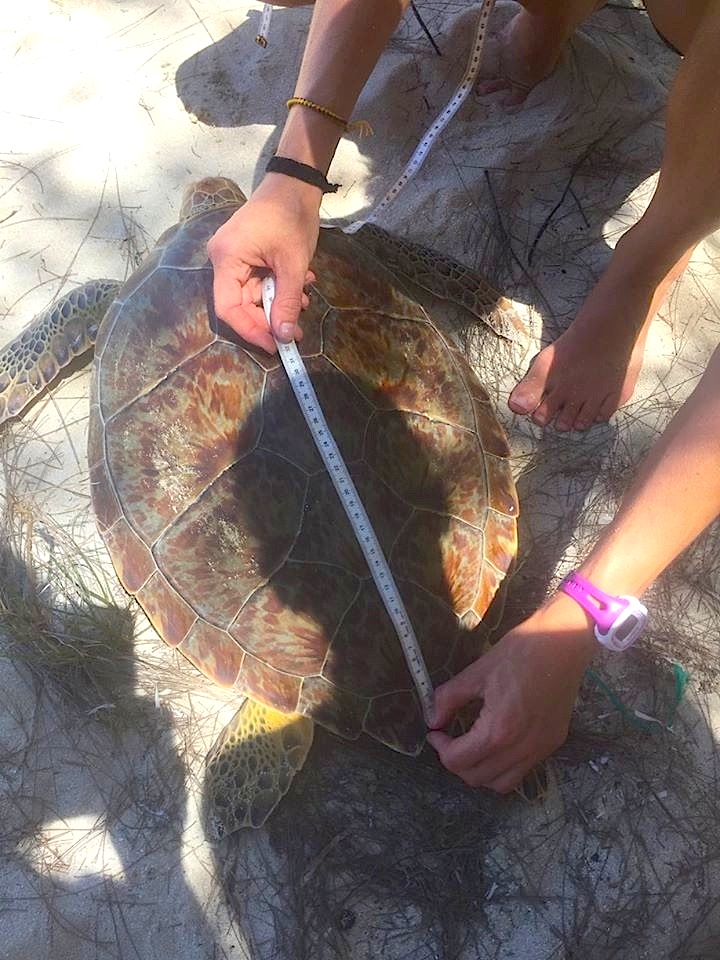
A recent summer course on Abaco was held in partnership between Elizabeth Whitman (Florida International University) and Friends of the Environment/Frank Kenyon Centre. Participants learned about sea turtle biology and ecology, and discussed potential threats to the vulnerable population. After a classroom session, the team headed out to Snake Cay Creek to carry out a field survey. The turtles caught were measured, weighed, tagged (if not already), and given a general health assessment. Each turtle was then released.

The data captured by such courses is invaluable in the continuing assessment of the health of the local turtle population. In addition, such projects provide a valuable opportunity for people to become involved in a fascinating and rewarding local conservation project – with a literally hands-on experience.

Turtle measuring project, AbacoTurtle measuring project, AbacoTurtle measuring project, AbacoTurtle measuring project, AbacoTurtle measuring project, AbacoTurtle measuring project, Abaco

Credits: Beth Whitman, Friends of the Environment, Jacque Cannon, Maureen Collins, Melinda Riger

Unknown's avatar

BAHAMAS SHARKS: THE MATING GAME & LITTLE BUDDIES


Shark! Melinda Riger copy

BAHAMAS SHARKS: THE MATING GAME & LITTLE BUDDIES

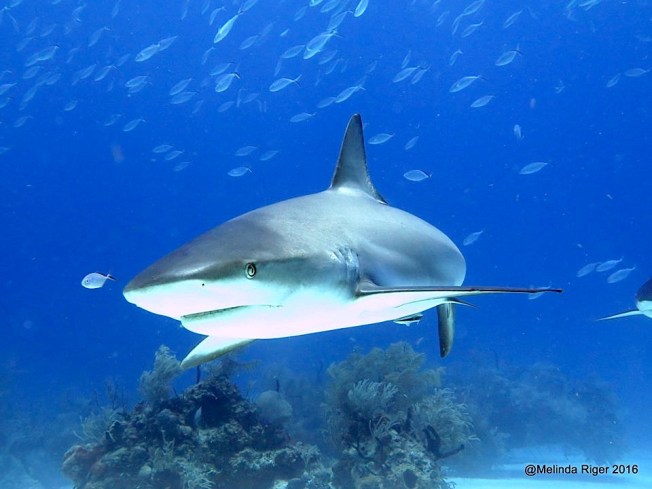
Sharks: apex predators of the deep. Also, kind to the suckers who hang out with them – REMORAS. In the header image you can see a remora hitching a ride on the shark’s back.

Sharks also seem to enjoy, or at least tolerate, the company of tiny fish – tiddlers so small they don’t even count as a snack or even a canapé. Shark & wee fish ©Melinda Riger @ G B ScubaShark & Tiddler ©Melinda Riger @ GB ScubaShark & buddy ©Melinda Riger @ GB Scuba

Check out the shark-jaw shaped wound on the shark just above. And the rather more dramatic ones on the two sharks below. Shark sex can be a rough old game, and sometimes results in moderate or even severe injury to one participant – or perhaps to both.

Shark with mating marks ©Melinda Riger @ G B ScubaShark mating wounds ©Melinda Riger @ GB Scuba

Credits: all great shark photos recently taken by Melinda Riger, Grand Bahama Scuba

Unknown's avatar

SPONGES ON THE REEF: A COLOURFUL MISCELLANY


Brown Tube Sponge ©Melinda Riger @ G B Scuba

SPONGES ON THE REEF: A COLOURFUL MISCELLANY

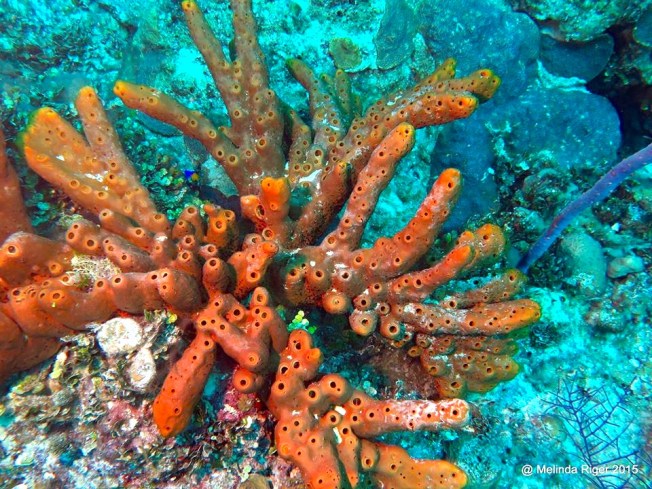
It’s time to take an up-close look at some of the sponges you may find as you snorkel or scuba round the reefs of the Bahamas. I am always amazed by how bright and colourful they are, and by their many different shapes and sizes. Even the unpromising sounding (slightly medical, even?) BROWN TUBE SPONGE turns out to be fascinating to examine closely. Here are some more sponge species. 

CANDELABRA SPONGECandelabra Sponge ©Melinda Riger @ G B Scuba copy

STOVE PIPE SPONGEStove Pipe Sponge ©Melinda Riger @ G B Scuba

PURPLE VASE SPONGEVase Sponge, purple ©Melinda Riger @ G B Scuba

BRANCHING TUBE SPONGE WITH ROPE SPONGESponges - Branching Tube Sponge with rope sponge ©Melinda Riger @ GB Scuba

PURPLE TUBE SPONGEPurple Tube Sponge ©Melinda Riger @ GB Scuba

PURPLE SPONGE WITH GIANT ANEMONEPurple Sponge : Giant Anemone ©Melinda Riger @ G B Scuba

VASE SPONGEVase Sponge ©Melinda Riger @ G B Scuba

The above sponges represent a fraction of the sponge varieties found on Bahamas reefs. I’ll post some more quite soon. All this has made me want to go for a snorkel. But right now I am 30 miles from the sea. And I have no gear…

HANG ON A MOMENT! WHAT IS A SPONGE WHEN IT’S AT HOME?

It’s really very simple: if you are ever asked the question, just reply “a sponge is a primitive sedentary aquatic invertebrate with a soft porous body that is typically supported by a framework of fibres or calcareous or glassy spicules. Sponges draw in a current of water to extract nutrients and oxygen”.

AND WHAT, PRAY, IS A SPICULE?

You’re having a laugh… if you seriously want to know, read the abbreviated version about them HERE. And admire this microscopic collage of ‘demospongiae spicule diversity’ made available by the wonders of Wiki and the research of about 20 credited scientists.

Demospongiae_spicule_diversity

All photos: Melinda Riger, Grand Bahama Scuba. Tip of the hat to Wiki and scientists

Unknown's avatar

HAWKSBILL TURTLES: A RARE FIND & SWIMMING WITH ANGELS


Hawksbill turtle (juv), West End Grand Bahama

HAWKSBILL TURTLES: A RARE FIND & SWIMMING WITH ANGELS

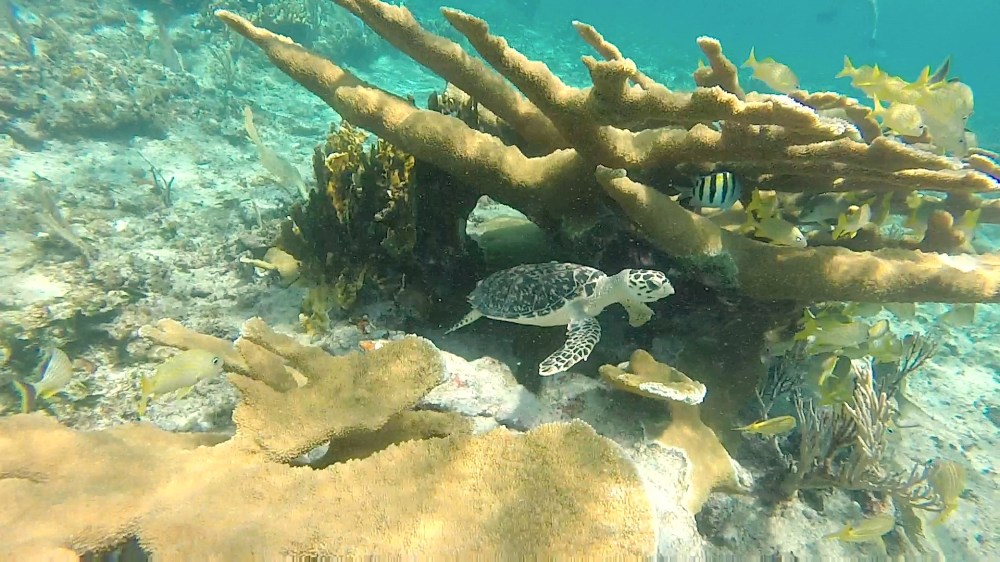
There is something unusual about this juvenile hawksbill turtle peacefully noodling round some impressive elkhorn coral with the grunts and sergeant majors. He’s a rarity. He was found at West End, Grand Bahama (just 67 miles swim from West Palm Beach Fl.), a place where hawksbills are very scarce. Loggerheads, they have. And there are plenty of hawksbills elsewhere in Grand Bahama waters. But not at the western tip. So finding this little guy and getting some good photos was a particular pleasure for Linda Cooper. And maybe the presence of a juvenile is a sign that hawksbills may begin to populate the reefs of West End, as perhaps they did historically.Hawksbill turtle (juv), West End Grand Bahama

Linda and her husband Keith run West End Ecology Tours. They have a comprehensive website HERE and a Facebook page HERE. Check it out to see how much there is to explore at West End. The birds, the corals and reef life, the starfish – and a speciality, swimming with rays. To which can now be added the chance of seeing a hawksbill turtle…Hawksbill turtle (juv), West End Grand Bahama

A DOZEN HAWKSBILL FACTS TO CHEW OVER

  • All sea turtles are classed as reptiles (something that always surprises me, somehow)
  • The top shell (carapace) consists of scales that overlap like roof shingles
  • The yellowish bottom shell is called the plastron
  • Adult hawksbills weigh around 100 pounds
  • Sea turtles sleep at night, and can stay underwater for a hours without breathing
  • Hawksbills are omnivorous, eating algae and seagrass but also sponges, urchins and small fish
  • Females lay about 100 eggs like ping-pong balls, and then at once return to the sea for good
  • The sex of baby turtles is determined by relative nest warmth – females from the top eggs
  • Baby turtles hatch almost simultaneously: all must work to dig their way out.
  • They tend to hatch at night and head straight for the sea’s phosphorescence…
  • …except that artificial lights confuse them & lead them away from the sea to likely death
  • Threats: predation, coastal development & habitat destruction, pollution, & illegal collection

SWIMMING WITH ANGELS

As I was writing this, another fact about hawksbills popped into my head. I checked through my archive – mainly Melinda Riger’s wonderful shots from elsewhere on GB – and yes, it is true. There seems to be some sort of symbiotic relationship between the turtles and angelfish. They are often found feeding together. A bit of research confirms this general observation, without giving a clear cause for it. Maybe it is simply that they eat some of the same food; and that there is plenty of it on healthy reefs so there is no cause for aggression on either side. It’s fine for a hawksbill to share with an angel.

10245Green Turtle, Gray Angelfish ©Melinda Riger @GB Scuba copyTurtle with Gray Angelfish ©Melinda Riger @ G B Scuba copyHawksbill Turtles, French Angelfish eat sponge ©Melinda Riger @ GB Scuba copyHawksbill Turtle eats sponge ©Melinda Riger @ GB Scuba copy

NOTE The Hawksbill is listed as Critically Endangered by the IUCN red list of Threatened species as its populations have declined dramatically throughout the world and especially in the Caribbean region. It is listed in Appendix I of the Convention on the InternatIonal Trade of Endangered SpecIes (CITES) meaning that Hawksbills are near extinction or very endangered. All marine turtles are now protected under Bahamian law, as is the taking of eggs.

Credits: West End Ecology Tours / Linda & Keith Cooper (photos 1, 2, 3); Melinda Riger / Grand Bahama Scuba, all other images; BAHAMAS NATIONAL TRUST  for their very useful fact-sheet (one of many) which I have adopted and adapted; Aquoflite for the vid.

Unknown's avatar

THE BAHAMAS: A STAMPING GROUND FOR DOLPHINS


Dolphin leaping, Abaco (BMMRO)

THE BAHAMAS: A STAMPING GROUND FOR DOLPHINS

I have commented before on the excellent wildlife stamps produced by the Bahamas Philatelic Bureau, and there is a fairly comprehensive page featuring many of the special issues HERE. Recently, dolphins were treated to their own set of stamps, in conjunction with the BMMRO (Bahamas Marine Mammal Research Organisation).  Four dolphin species are showcased, with a fifth species (Risso’s Dolphin) shown on the commemorative Official First Day Cover (replete with the BMMRO logo). The release date was 31 March 2016.

Bahamas Dolphin Stamps 2016

l_bmmro 25th ann_20160304134635-1

The stamps are available as sets of 4 or of course individually. In a newsletter earlier this year, the BMMRO included some fascinating information about their valuable work – in particular with whales – and about the individual dolphin species featured in this very special philatelic issue. This was also published by the stamp producers, Pobjoy Mint Stamp Division.

BMMRO is a Bahamian non-profit organisation whose mission is to promote the conservation of marine mammals in The Bahamas through scientific research and educational outreach. Since 1991, BMMRO has been conducting small vessel surveys primarily around Abaco Island to document the occurrence, distribution and abundance of marine mammals in The Bahamas.

imgres-3

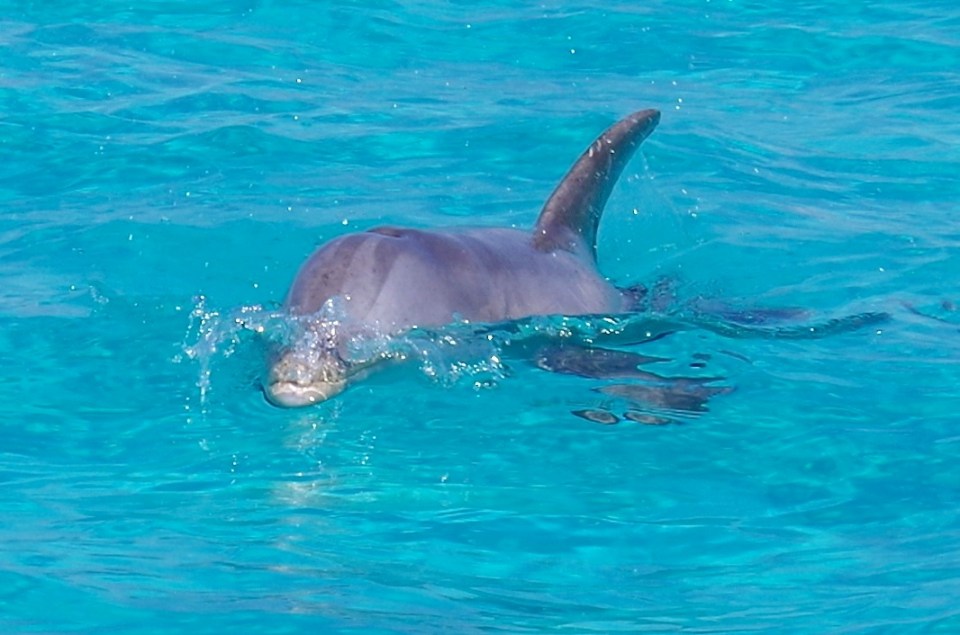
BOTTLENOSE DOLPHINS Tursiops truncatus

These are the most common marine mammals seen on the Bahama banks. It should be noted, however, that there are at least two distinct “breeding populations” or “ecotypes” of this species: coastal bottlenose dolphins that inhabit the shallow waters of the banks; and oceanic bottlenose dolphins found in pelagic waters. These populations diverged genetically several hundred thousand years ago and have since developed different physiological adaptations to their respective marine environments. The coastal ecotype is smaller in length reaching just over 8 feet and has a relatively larger dorsal fin and pectoral fins which helps them to maneuver more readily around rocks and reefs to catch fish, and to regulate their internal body temperature (the temperature of the shallow Bank waters fluctuates much more than the deeper Atlantic Ocean). The coastal dolphins do not travel much beyond the bank edge and live in small resident communities. The deeper diving oceanic ecotype can reach 10 feet or more in length, are usually seen in larger groups and appear to have a more extensive range with movements documented between Abaco, Bimini and Exuma Sound.
imgres-4

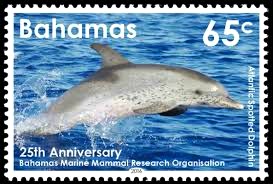
ATLANTIC SPOTTED DOLPHINS Stenella frontalis

These dolphins are not born with spots, but actually accumulate them as they mature, becoming quite mottled-looking as adults. Hence, young spotted dolphins are often confused with bottlenose dolphins, and sometimes the two species will interact, which adds to the confusion. Although they can reach almost the same length as bottlenose dolphins, they have a smaller girth and thus body weight. Atlantic spotted dolphins are a year-round resident species in The Bahamas. Individuals photo-identified 20 years ago in Abaco can still be seen in the same areas today. They are commonly seen in groups of 20-50 dolphins in the oceanic waters where they feed on flying fish and squid, and rarely venture on to the bank. However, along the western edges of Little and Great Bahama Banks this species can regularly be found on the bank during the daytime where they come to rest and socialise.

imgres-5

PANTROPICAL SPOTTED DOLPHINS Stenella attenuata

This species is more slender in body shape than Atlantic spotted dolphins, and also have a distinctive dark dorsal cape, which sweeps from their rostrum to behind their dorsal fin. Like Atlantic spotted dolphins, they accumulate their spots with age, which allows researchers to readily document age-classes within groups. This species is strictly oceanic in its distribution. Pantropical spotted dolphins are not as frequently sighted as Atlantic spotted dolphins in The Bahamas. They occur in groups of 50-100 dolphins and are often seen engaging in acrobatics, such as making high leaps out of the water, and bow-riding.

imgres-6

ROUGH-TOOTHED DOLPHINS Steno bredanensis

These dolphins are dark grey in colour with a long beak and prominent white lips. Their lower jaw and belly can sometimes be a pinkish colour. They reach just over 8 feet in length. They are an oceanic species and although appear to be rare in some parts of The Bahamas, can be regularly seen in the Tongue of the Ocean where they occur year round. Some individuals have been re-sighted in this area over the past ten years. They are typically found in groups of about 20 animals, but are sometimes in larger mixed-species aggregations of several hundred dolphins.

Risso's Dolphin - BMMRONot on a stamp but shown on the First Day Cover

RISSO’S DOLPHIN Grampus griseus

These are large light grey dolphins that can reach over 13 feet in length, and have a relatively tall, dark dorsal fin. Adults are typically covered with overlapping white scars caused by the teeth of their con-specifics making them look quite battered. They have a rounded head, lacking a beak, but have a deep vertical crease down the center of the forehead. As they mature, their forehead becomes prominently white, and as such they are one of the easiest species to recognize at sea. Risso’s dolphins are commonly seen in oceanic waters in the northern Bahamas each winter and spring, primarily on the Atlantic side of the islands. It is unknown where these groups range the rest of the year, but some individuals have been seen off Abaco repeatedly over the years.

RELATED POSTS

BAHAMAS WILDLIFE STAMPS PAGE

PHILATELY WILL GET YOU…

ABACO BIRD STAMPS
Bottlenose Dolphins, Rocky Point, Abaco (Keith Salvesen : BMMRO) 7

Credits: BMMRO for relevant text & images except last (RH), Pobjoy Mint, Bahamas Philatelic Bureau
Unknown's avatar

CONCH QUEST: ABACO’S MOST VERSATILE GASTROPOD


Conch Shells, Sandy Point, Abaco

CONCH QUEST: ABACO’S MOST VERSATILE GASTROPOD

The conch. Such a fascinating gastropod, and with so many uses both culinary and decorative. In certain cultures, religiously significant. A rudimentary musical instrument for a shell.  And did I mention delicious? 

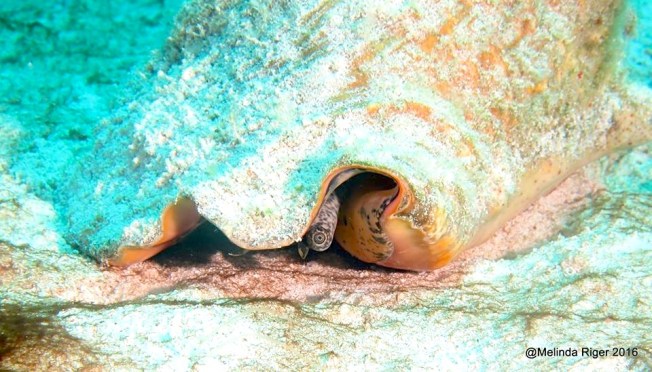
Live conchs enjoy motoring around uninhibitedly on the sea floor, keeping an eye out…Conch on the move ©Melinda Riger @ G B Scuba copy Conch Man-o-War Cay, Abaco (Charmaine Albury) copy Conch in shell ©Melinda Riger @ G B Scuba copy

Conchs also enjoy racing each other…Conch race ©Melinda Riger @ G B Scuba copy

“Eat my dust…”Conch Trail ©Melinda Riger @ G B Scuba copy

Conch Pearl – one of the rarest natural pearls in the worldConch Pearl (Ambergris Caye Beize)

A conch spiral close-up

Conch close-up, Abaco (Rhonda Pearce)

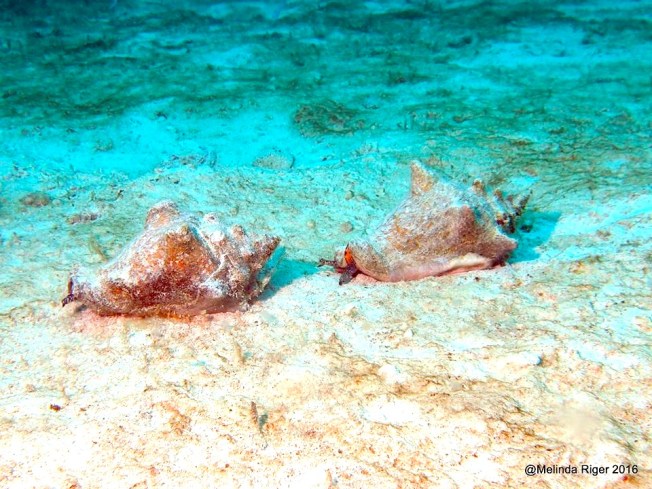
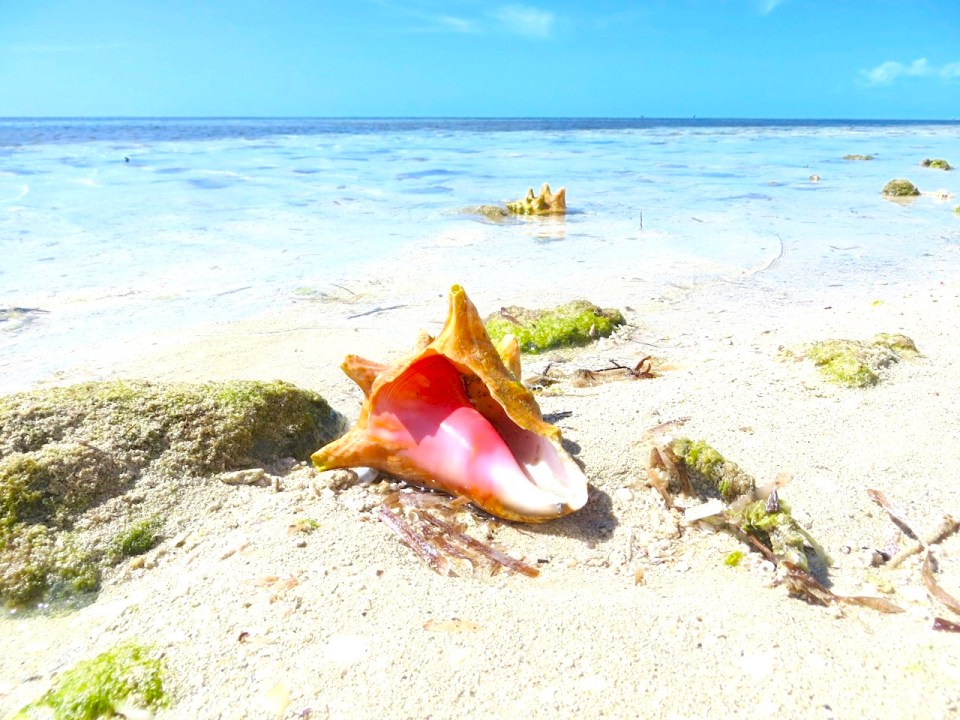
Conch shells just lie around the place at Sandy PointConch Shells, Sandy Point, Abaco (Keith Salvesen) 2Conch Shells, Sandy Point, Abaco (Keith Salvesen) 3

Conchs are widely used for serving cocktails or as ashtrays in the best beach bars*Conch Shells, Abaco (Keith Salvesen) 1

*This is a lie. Sorry about that. I meant to say “make prefect table decorations”

Image credits: Keith Salvesen / RH (1, 9, 10 ,11); Melinda Riger / GB Scuba (2, 4, 5, 6); Charmaine Albury (3); AmbergrisCaye.com (7); Rhonda Pearce (8) 

Unknown's avatar

WHALE-WATCHING: THE APPLIANCE OF SCIENCE


Blainville's Beaked Whale, Sandy Point, Abaco 14 (Keith Salvesen

WHALE-WATCHING: THE APPLIANCE OF SCIENCE

The Bahamas Marine Mammal Research Organisation has just celebrated its 25th year of existence. It was formed in 1991. The omnivorous leviathan Amazonus giganticus emerged in 1994 and the invasive species Megacorpus googleii not until 1998. A full 10 years later the first garbled recordings of Sarahpalinus illogicus were made. And all the while, a watchful eye was being kept on the cetaceans of the Bahamas – researching, counting, measuring, identifying, recording, poop-scooping, analysing samples, tagging, comparing, protecting and conserving. 

Blainville's Beaked Whale, Sandy Point, Abaco 20 (Keith Salvesen

As the years passed, so the science and technology evolved and became more sophisticated. Researching became at the same time easier, yet more complex as the organisation’s remit expanded to accommodate the vast increase in data collection now made possible by refined techniques. Here are two very recent examples – 25th anniversary projects, in fact – with thanks to Charlotte, Diane, their team and their colleagues in linked organisations.

TAGGING BLAINVILLE’S BEAKED WHALES

Last month, a tagging project started, involving suction cups being attached to the backs of BLAINVILLE’S BEAKED WHALES. The purpose of the research is to compare the foraging efficiency of the whales in Abaco waters with those of Andros, the second part of the project. I imagine this will provide valuable insights into the whale movements and behaviours in each location as well as such issues as the comparative availability of the food supply, and other factors that may affect expected foraging patterns. 

The tag is moved towards an adult male. Note the aerial (antenna?) at the back of itTagging a Blainville's beaked whale with a suction cup 1

Planting the tag on the whale’s backTagging a Blainville's beaked whale with a suction cup 2

Successful suction!Tagging a Blainville's beaked whale with a suction cup 3

The tag in placeTagging a Blainville's beaked whale with a suction cup 4

The tag is tracked for 18 hours, after which it is retrieved and the recordings can then be analysed back at BMMRO HQ in Sandy Point. So far, an adult male, a young male and two adult females have been tagged. Each female had a calf, but these were not tagged.

Female beaked whale with her calfBlainville's beaked whale female and calf

AERIAL PHOTOGRAMMETRY USING A HEXACOPTER

Drone technology is rapidly expanding as new uses for them are devised. BMMRO in conjunction with NOAA have used a sophisticated HEXACOPTER to take the first  PHOTOGRAMMETRY images of Blainville’s beaked whales. These aerial photographs were taken from approximately 100ft altitude. But note: not just anyone with a $50 drone can do this: the project required flight clearance from the Bahamas Department of Civil Aviation and a permit for research on marine mammals granted by the Bahamas Department of Marine Resources.

 Blainville’s beaked whale photogrammetry image – adult male (note ‘erupted’ teeth) Blainville's beaked whale photogrammetry image - adult male (note 'erupted' teeth) BMMRO

 Blainville’s beaked whale photogrammetry image – female and calf Blainville's beaked whale photogrammetry image - female and calf BMMRO

STOP PRESS Two additional images from the latest batch Blainville's beaked whales photogrammetry image - BMMRO  Blainville's beaked whales photogrammetry image - BMMRO

Photogrammetry: the science of making measurements from photographs. Applications include satellite tracking of the relative positioning and alterations in all Earth environments (e.g. tectonic motions etc), research on the swimming of fish, of bird or insect flight, and other relative motion processes. The results are used to guide and match the results of computational models of the natural systems. They help to invalidate or confirm new theories, to design novel vehicles or new methods for predicting or/and controlling the consequences of earthquakes, tsunamis etc, or to understand the flow of fluids next to solid structures, and many other processes. (Wiki-précis)

Hexacopter (6 rotors)Hexacopter_Multicopter_DJI-S800_on-air_credit_Alexander_Glinz

Tag Team: BMMRO, University of St Andrews (Scotland), Woods Hole Oceanographic Institution

Hexacopter: BMMRO, NOAA

Photo Credits: top two, moi (from BMMRO research vessel); remainder except for last, BMMRO; last, Wiki

Unknown's avatar

WORLD OCEANS DAY 2016: “STASH THE TRASH”


View from a Skiff, the Marls, Abaco, Bahamas

WORLD OCEANS DAY 2016: “STASH THE TRASH”

Today the NOAA and other worldwide ocean guardian organisations are celebrating World Oceans Day. Looking at the websites and FB pages, one message is clear: People Are Rubbish. To put it another way, the global pollution of the oceans is caused solely by humans. The pristine seas and beaches of the world were unsullied until, say, the last 200 years. In 4 or 5 generations, all that has changed irreversibly.

Leave only Footprints - Delphi Beach, Abaco

My rather (= very) negative intro is counterbalanced by some more positive news: there are plenty of good guys out there working hard to make a difference to the rising tide of filth polluting the oceans. Clearing seas and beaches of plastic and other debris. Collecting tons and tons of abandoned fishing gear. Rescuing creatures trapped, entangled, injured and engulfed by marine debris and pollutants. Educating adults and – far more importantly – children and young people by actively involving them in their campaigns. Conducting research programmes. Lobbying and protesting. And a lot more besides.

A marine garbage patch: the sea creatures’ view (NOAA)Marine Garbage Patch from below (NOAA)

Abandoned fishing gear: a monk seal that was lucky; and a turtle that wasn’t (NOAA)Monk Seal in discarded fishing nets (NOAA)Sea turtle trapped in abandoned fishing gear (NOAA)

Four shearwaters killed by a cone trap. A fifth was rescued (NOAA)13138799_1188762361142231_1433873125345242619_n

The NOAA and sister organisations carry out massive programmes of clearance of marine debris, with working parties of volunteers who do what they can to deal with an intractable problem.Clearing Beach Debris (NOAA) Clearing Beach Debris (NOAA)

But you don’t need to be on an official working party for a large organisation. In the Bahamas and on Abaco, the BAHAMAS PLASTIC MOVEMENT, FRIENDS OF THE ENVIRONMENT  and BAHAMAS NATIONAL TRUST among others, do wonderful work on a more local level.
Childen collecting beach debris, Abaco (FotE)

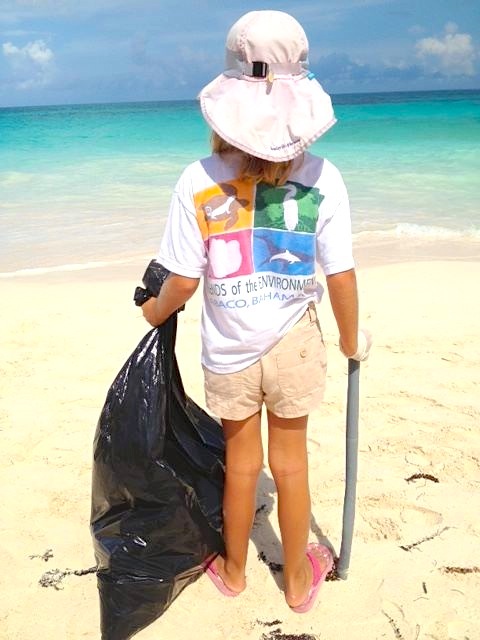
HOPE  FOR  THE  FUTUREYoung conservationist on Abaco, Bahamas

Elsewhere, some tackle the problems caused by particular types of trash, balloons being an excellent example. I have posted before about BALLOONS BLOW, the brainchild of two sisters who learnt of the serious consequences to wildlife caused by mass balloon releases. Their work has been so effective that increasing numbers of mass releases are being cancelled in favour of other forms of celebration. A minus for balloon-makers of course, but a big plus for wildlife. The BB sisters also keep their own beach clear of the junk brought in on every tide.

Balloons Blow - Beach Debris (http://balloonsblow.org) Balloons Blow - Beach Debris (http://balloonsblow.org)

And on an individual basis, any old fool can make a tiny difference to a local beach. Here is one such doing just that…

A tangle of balloon strings on Delphi beachBalloon Strings, Delphi Beach (RH)

Guinea Schooner Bay: little visited, rarely cleaned. Plastic crap from a 10 foot radiusRH & trash, Guinea Schooner Bay

Credits: NOAA, FOTE Abaco, BPM, Balloons Blow, RH, Mrs RH

Unknown's avatar

MAKE FRIENDS WITH ANEMONE (2): SPECTACULAR REEF LIFE


Corkscrew Anenome = Peterson Cleaner Shrimps ©Melinda Riger @G B Scuba copy

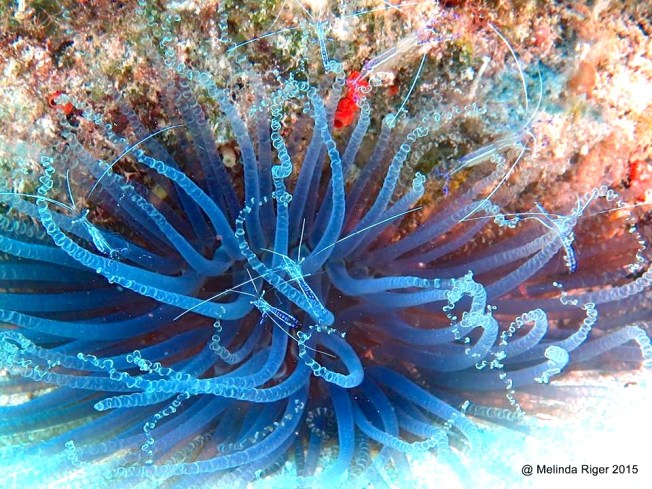
Corkscrew Anemone with Peterson Cleaner Shrimps

MAKE FRIENDS WITH ANEMONE (2):  SPECTACULAR REEF LIFE

Going snorkelling? Planning a scuba day on the reef? You’ll see wonderful fish and amazing coral for sure. But sometimes the beauty of other life on the reef can be overlooked. Check out the anemone in the header image, with the camouflaged cleaner shrimps playing around it. You wouldn’t want to miss a sight like that. The many and varied forms and colours of anemone on the reefs of the Bahamas make up a vital component of a spectacular underwater world.

Giant Anenome ©Melinda Riger @ G B Scuba copyGiant Anemone ©Melinda Riger @ G B Scuba copy 4Anemone Melinda Riger @ G B ScubaAnemone on Rope ©Melinda Riger @ G B ScubaAnemone ©Melinda Riger @ Grand Bahama ScubaAnemone (Giant) ©Melinda Riger @GBS copyAnemone ©Melinda Riger @ GB Scuba

ADDED NOV 2016 Capt. Rick Guest adds this interesting material (& thanks for correcting my erroneous reference to anemones as ‘plants’. My bad. They are of course animals!):

“Anemones are living animals of the invertebrate type. Basically living corals without skeletons. All have stinging cells of several varieties to sting or entangle their prey such as small fish, or various invertebrates. A few can even, painfully, penetrate human dermal layers. Most host varieties of cleaner shrimps,and snapping shrimps that can stun their own prey. Some Dromidia crabs even pull some species of anemone off the reef, and attach them to their carapace (their back) apparently for camouflage, and perhaps protection”.

All photos: Melinda Riger of Grand Bahama Scuba, with thanks

Unknown's avatar

REMARKABLE REEF CREATURES TO ADMIRE


Octopus (Adam Rees : Scuba Works)

REMARKABLE REEF CREATURES TO ADMIRE

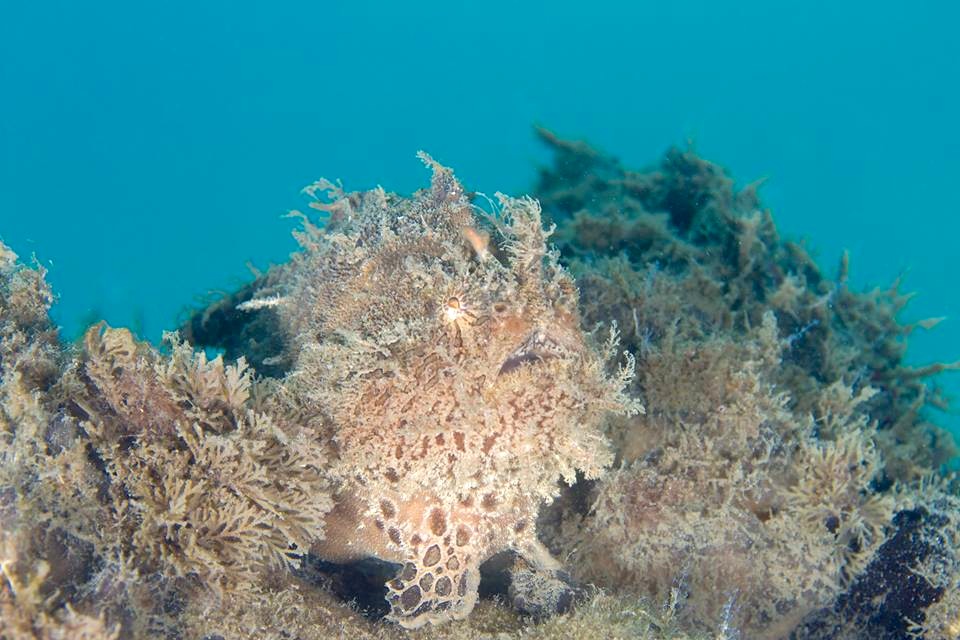
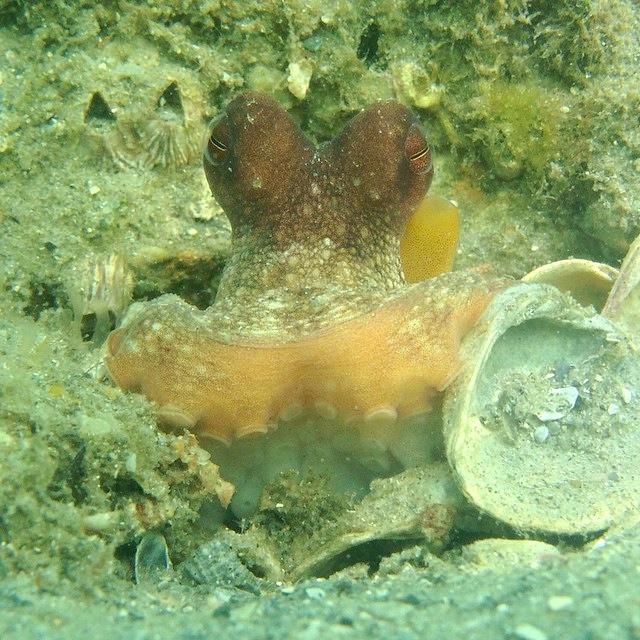
Here is a small collection of recent photographs from Adam Rees of Scuba Works. Three OCTOPUSES, an astounding FROGFISH,  a SEAHORSE, a MANTIS SHRIMP at close quarters, and a wonderful HAWKSBILL TURTLE. Clicking on a link will take you to a post with more photos and information about each creature. If these images don’t make you want to scuba then… what will?

Frogfish Hunting (Adam Rees : Scuba Works)Seahorse (Adam Rees : Scuba Works)Mantis Shrimp (Adam Rees : Scuba Works)Octopus 3 (Adam Rees : Scuba Works)Hawksbill Turtle (Adam Rees : Scuba Works)Octopus 2 (Adam Rees : Scuba Works)

All photos Adam Rees / Scuba Works, with thanks for use permission

Unknown's avatar

“HAPPY EARTH DAY TO YOU”: DO SOMETHING GREEN!


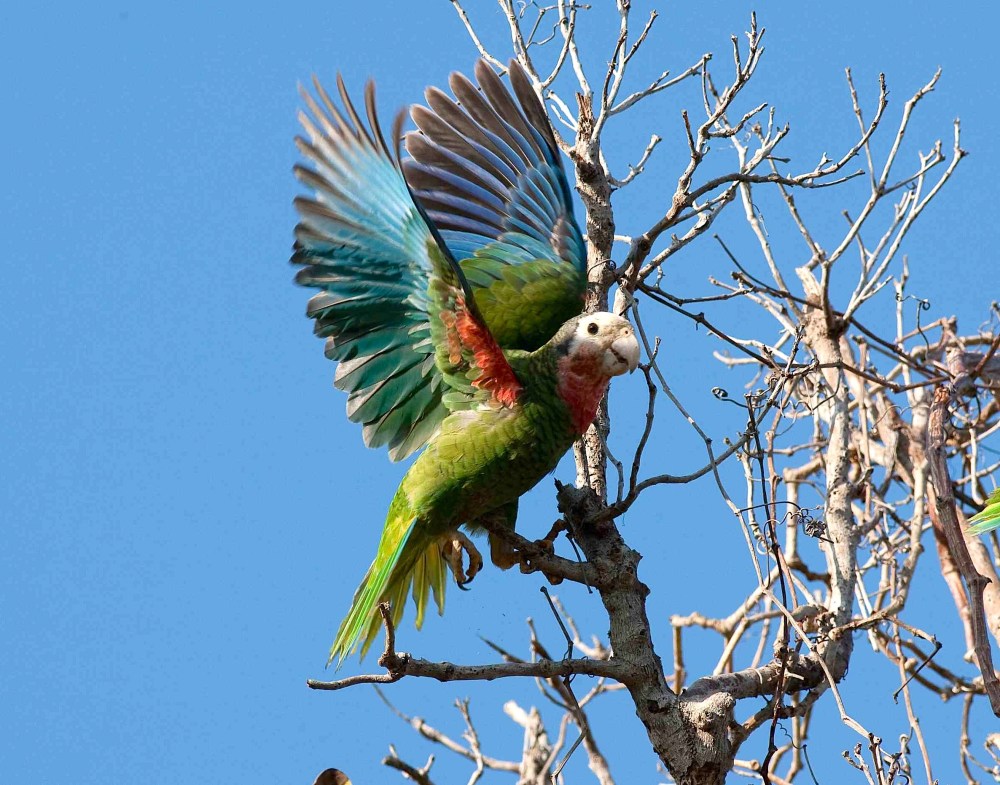
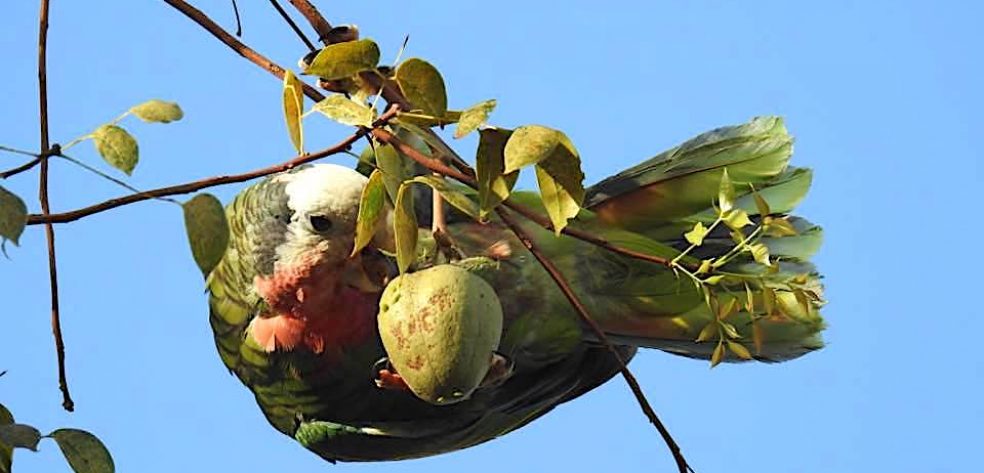
Abaco (Cuban) Parrot, Delphi, Abaco (Craig Nash)

“HAPPY EARTH DAY TO YOU”: DO SOMETHING GREEN!

Today is the 46th Earth Day, a global event to encourage ecology and conservation, and to discourage the spoiling of the planet by mankind. What becomes lost now may never be retrieved. Plant a tree. Grow some bee- or butterfly-friendly flowers. Clear a patch of beach of plastic trash. Recycle stuff. That sort of thing. 

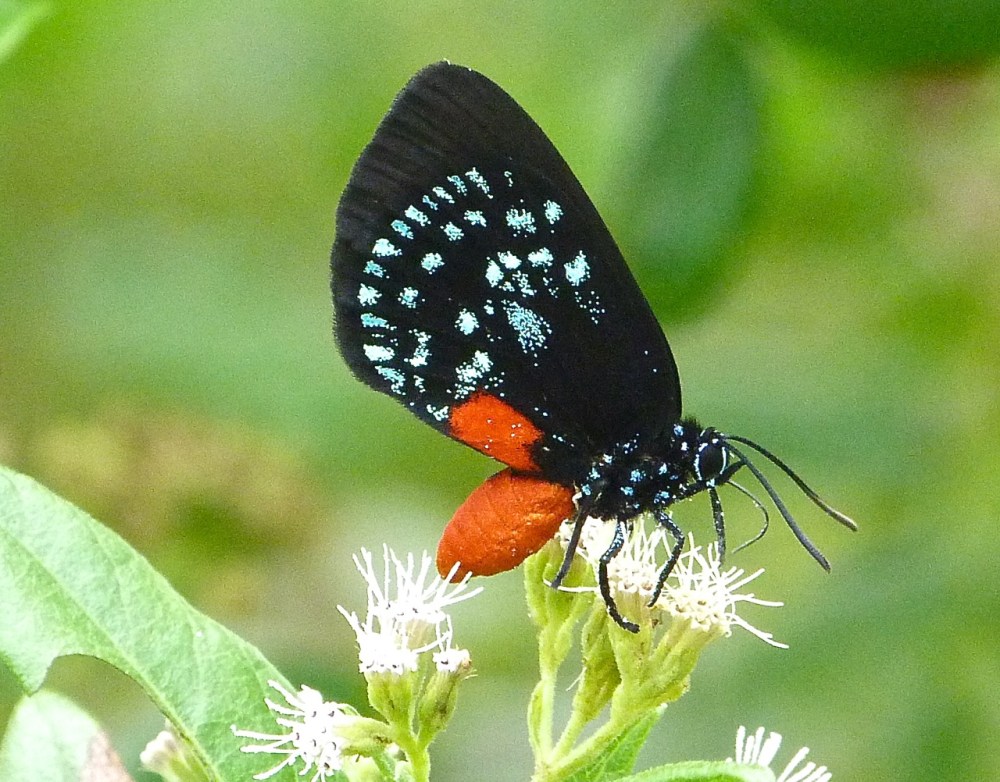
Atala Hairstreak Eumaeus atala – DelphiAtala Hairstreak Butterfly, Abaco (Keith Salvesen)

Gulf Fritillary Agraulis vanillae – Neem FarmGulf Fritillary, Neem Farm, Abaco (Keith Salvesen)

I’d lined up some horror-images of plastic-filled birds, entangled turtles, damaged reefs and so forth, of which I have a depressingly large archive. Then, in a spirit of *vogue word alert* positivity I scrapped that miserable idea and decided instead to celebrate some of the natural wonders that can be found on Abaco. 

BAHAMA YELLOWTHROAT – one of Abaco’s 5 ENDEMIC BIRDSBahamas-Great Abaco_Bahama Yellowthroat_Gerlinde Taurer

CUBAN EMERALD HUMMINGBIRD (f) preening – Gilpin PointCuban Emerald Hummingbird preening, Abaco (Keith Salvesen)

Some signal species serve as a continuing tribute to those who work to conserve them. The gorgeous ABACO PARROTS, now saved from the brink of extinction – and currently establishing a new colony on New Providence. The rare PIPING PLOVERS that find a safe home to spend their winters on Abaco’s beaches. The 5 ENDEMIC BIRD species. The WHALES & DOLPHINS that populate the waters. The west-indian MANATEES, until very recently almost unknown for Abaco yet now providing a curious addition to the scene as they visit their favourite haunts.

BLAINVILLE’S BEAKED WHALE (m) approaching the BMMRO research vesselBlainville's Beaked Whale, Sandy Point, Abaco 14 (Keith Salvesen

BOTTLENOSE DOLHIN, Sandy Point (about to dive under the boat)Bottlenose Dolphins, Rocky Point, Abaco (Keith Salvesen : BMMRO) 7

Habitat protection has been provided over substantial areas on both land and sea by the creation of natural parks and preserves. These have very recently been extended by the establishment of 4 large PROTECTED AREAS for East Abaco Creeks, Cross Harbour, the Marls and the South Abaco Blue Holes, a wonderful reward for a great deal of hard lobbying by conservation organisations and by many concerned individuals. 

QUEEN ANGELFISHQueen Angelfish ©Melinda Stevens Riger / G B Scuba

BANDED CORAL SHRIMPBanded Coral Shrimp ©Melinda Riger @ G B Scuba copy 2

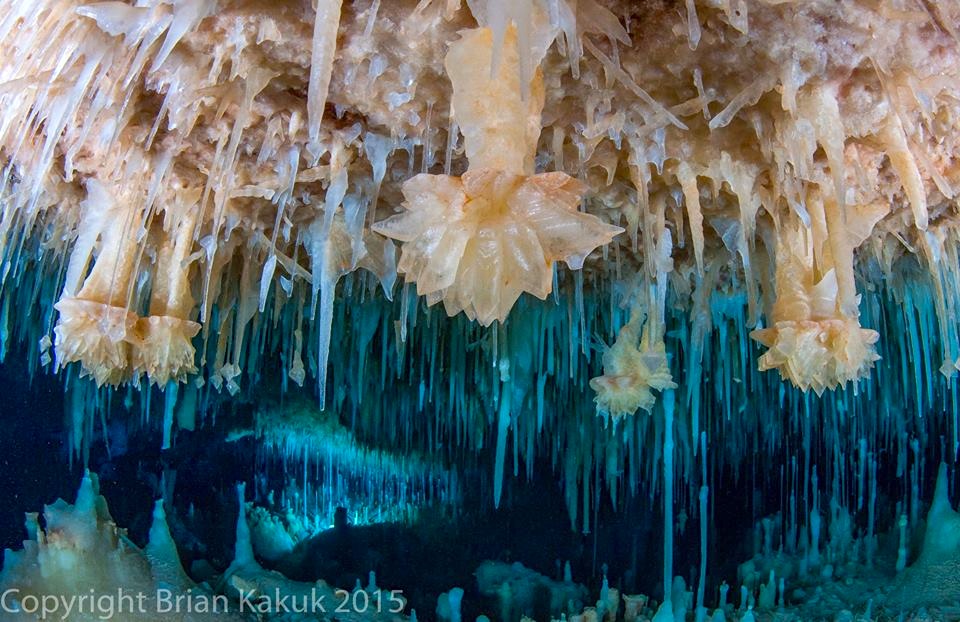
Scientific research and conservation work is continuously carried out in Abaco waters. The CORAL REEFS that form the 3rd largest barrier reef in the world; the BLUE HOLES that lead to wonderful caves and cathedral caverns of crystal; the vast area of the MARLS and the species that rely on the mangrove swamps; the MANGROVES themselves: all these are watched over and monitored for ways to protect them best for future generations. 

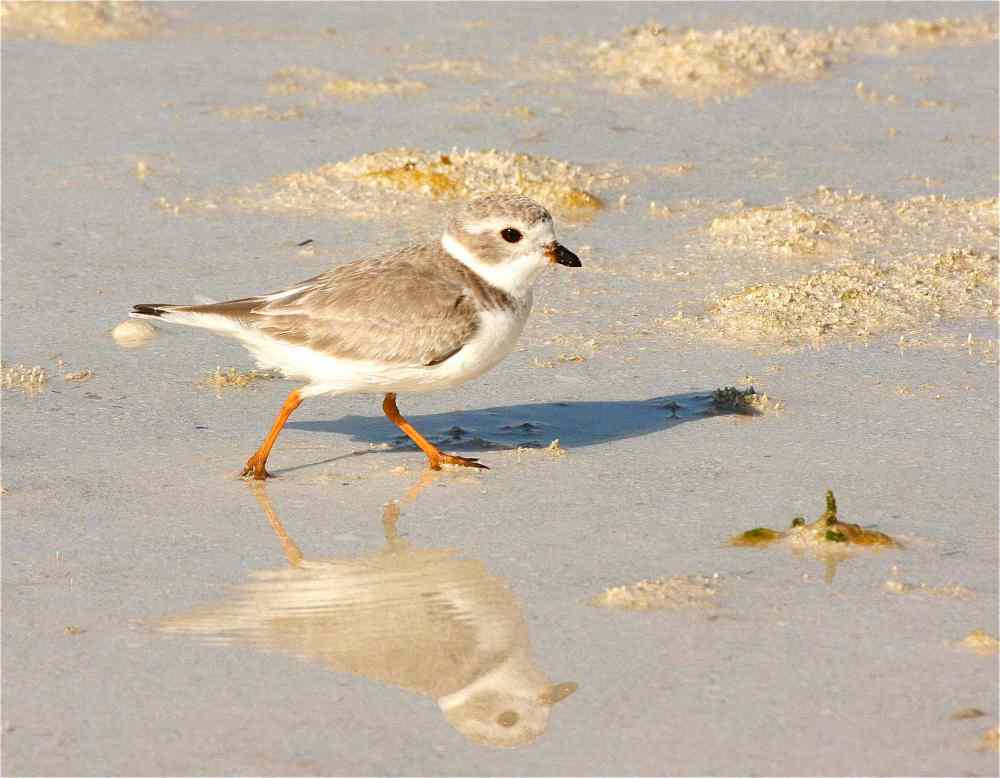
PIPING PLOVER pair, Delphi (taken last month)Piping Plover pair, Delphi Beach, Abaco (Keith Salvesen)

PIPING PLOVER on AbacoPiping Plover, Abaco - Bruce Hallett

I’ve mentioned trees and plants. There are a variety of well-known sources for both on Abaco – on the mainland, anyway, and maybe some cays. Any will advise on bee and butterfly attractants. Thinking of which, bird seed feeders and hummer sugar water feeders are cheap and guarantee the interest of garden and coppice birds, and during the winter months some brightly coloured migrants such as buntings and grosbeaks. 

HIBISCUS – DelphiHibiscus, Delphi, Abaco (Keith Salvesen)

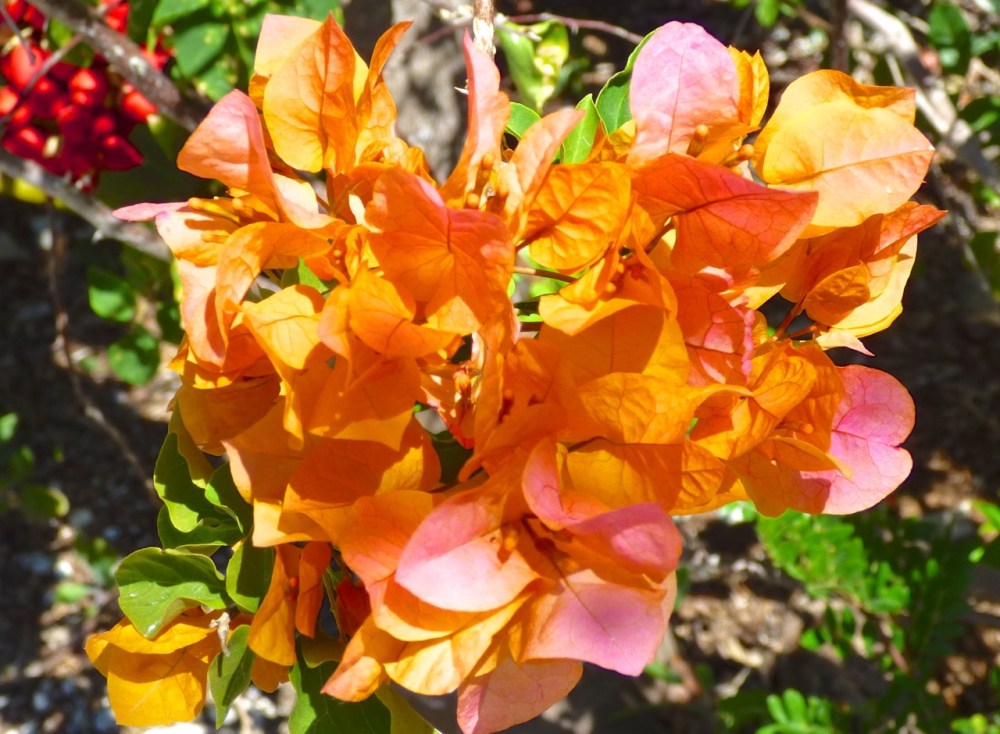
 BOUGAINVILLEA  – DelphiBougainvillea, Delphi, Abaco Bahamas (Keith Salvesen)

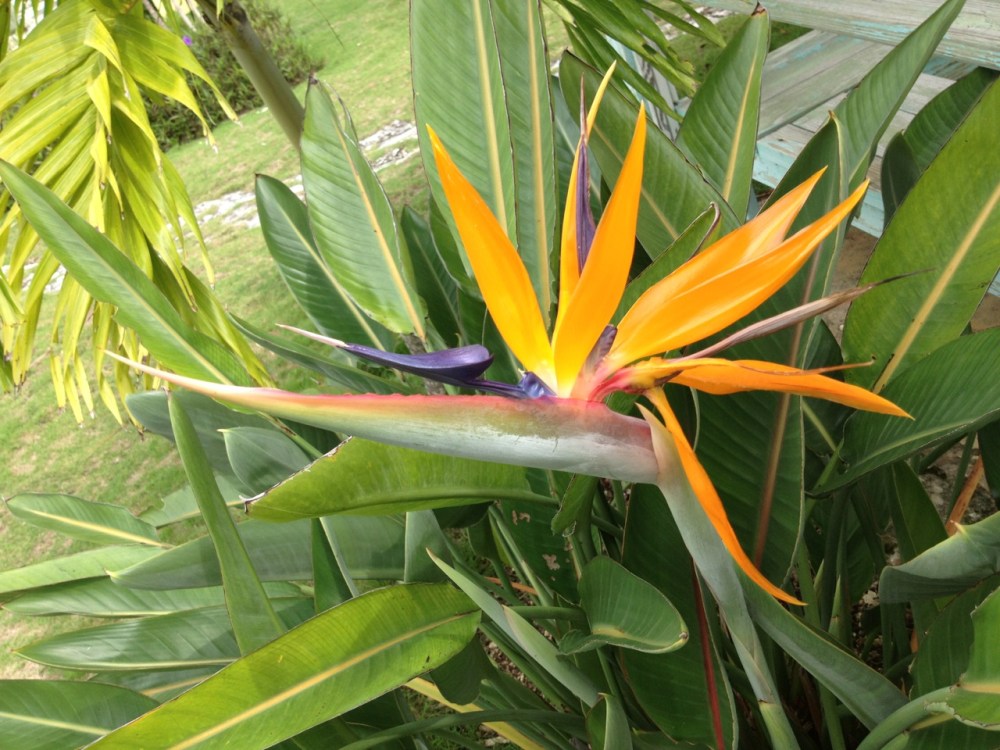
Bird of Paradise flower STRELITZIA – Marsh Harbour (seemingly on a steep slope!)Bird of Paradise Flower (Strelitzia) Abaco (Keith Salvesen)

HAPPY EARTH DAY TO YOU!

RALPH’S CAVE South AbacoRalph's Cave, Abaco (Brian Kakuk)

Credits: all images RH except: Abaco parrot, Craig Nash; Bahama yellowthroat, Gerlinde Taurer; Angelfish & Shrimp, Melinda Riger; single piping plover, Bruce Hallett; Ralph’s Cave, Brian Kakuk

Unknown's avatar

BLUE CHROMIS: BAHAMAS REEF FISH (29)


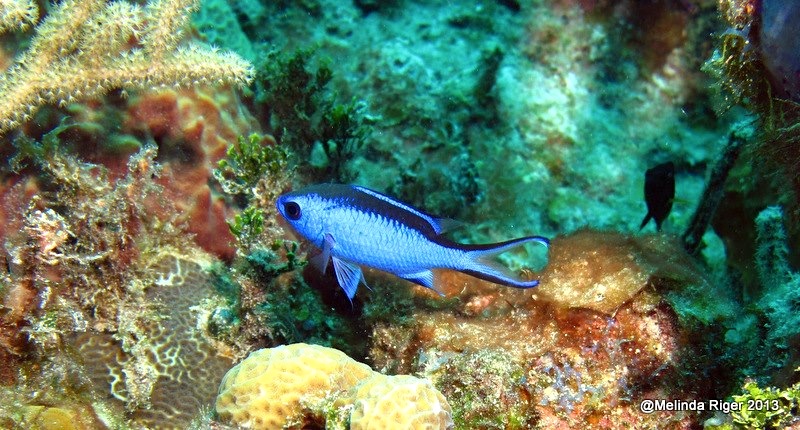
Blue Chromis & Coral ©Melinda Riger @ GB Scuba

BLUE CHROMIS: BAHAMAS REEF FISH (29)

The little blue chromis Chromis cyanea will be instantly familiar to any snorkeler or scuba diver on the coral reefs of the Bahamas. These ever-present small fish – 6 inches long at most – are remarkable for their iridescent deep blue colour that flashes as they dart in and out of the coral and anemones of the reef.

Blue Chromis ©Melinda Riger @ G B Scuba

Although at first sight  this chromis species – one of many – looks blue all over, adults have a black dorsal stripe and black edging to their fins. They make colourful additions to aquariums, though to my mind they look far more attractive nosing about the reefs foraging for the zooplankton upon which they feed (see header image for details…)

Blue Chromis ©Melinda Riger @ GB Scuba

The blue chromis was the second fish species I encountered on my first ever reef dive, at Fowl Cay Marine Preserve with Kay Politano. The first fish was the endearingly inquisitive sergeant major with its smart black and yellow stripes which came right up to my googles to eyeball me. I loved that, even though my pitiful swimming technique meant that I had plenty of other distractions, not least remembering to breathe. Air, that is, rather than water.

Blue Chromis ©Melinda Riger @ GB Scuba

Chromis_cyanea_(blue_chromis)_(San_Salvador_Island,_Bahamas)

SO JUST HOW BIG ARE THESE FISH, COMPARED, SAY, TO A BLUE TANG?

Blue Tang with blue chromis in its wakeBlue Tang with Blue Chromis © Melinda Riger @GB Scuba copy

All photos Melinda Riger of Grand Bahama Scube, except the penultimate by James St John, taken in San Salvador


Unknown's avatar

WTF? (WHAT’S THAT FISH) (6): THE SAND DIVER


Sand Divers Bahamas ©Melinda Riger @ G B Scuba

WTF? (WHAT’S THAT FISH) (6): THE SAND DIVER

Time for another in the WTF? series, featuring weird (begging their pardons) or not very fish-like fish. The Sand Diver Synodus intermedius is a type of lizardfish found in subtropical waters and often around coral reefs. They can grow up to about 18 inches long and a prime specimen might weigh a couple of pounds. The markings are quite variable but one common characteristic seems to be a tendency to look somewhat down in the mouth; and to possess jaws full of tiny sharp teeth.

Sand Diver - ©Melinda Riger @ GB Scuba

Sand divers have two rows of teeth on their upper jaw and three rows on their lower jaw. Not content with that, they also have rows of teeth on the palate and tongue. Were they 50 times the size, they would be truly awesome.

Sand Diver ©Melinda Riger @ G B Scuba

The rather primitive appearance of the sand diver is explicable from fossils, which show that their forbears  were active in the Jurassic / Cretacean periods.
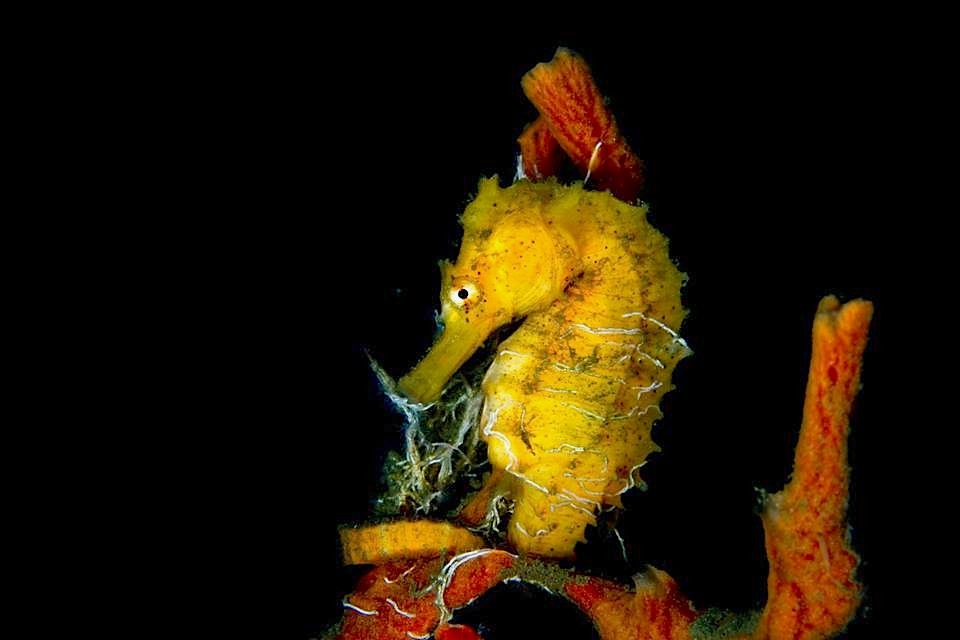
Sand Diver ©Melinda Riger @ GB Scuba

HOW DO THEY GET THEIR NAME?

Sand divers often bury themselves in the sand with only their head showing. They are so-called ‘ambush predators’, and burial is one method they use. Another is simply to lie on the sandy bottom, or on reef surfaces and wait for passing prey. Their colouring provides very good camouflage.Sand Diver Fish

WHAT’S ON A SAND DIVER MENU?

A good mix of small reef fishes. Bar jacks, blue chromis, wrasses, fairy basslets, small grunts and so forth. At their own level they are quite fearsome predators.

Sand Diver © Melinda Riger @ Grand Bahama Scuba

ARE THEY ON THE HUMAN MENU?

Well, I knew someone would ask that, so I carried out a search. The answer seems to be no. I have found nothing to suggest that they are edible, or that anyone has tried (or if they have, survived to tell the tale). Incidentally, the best way to find out if something is edible by humans is to search for a recipe. There are no sand diver recipes.
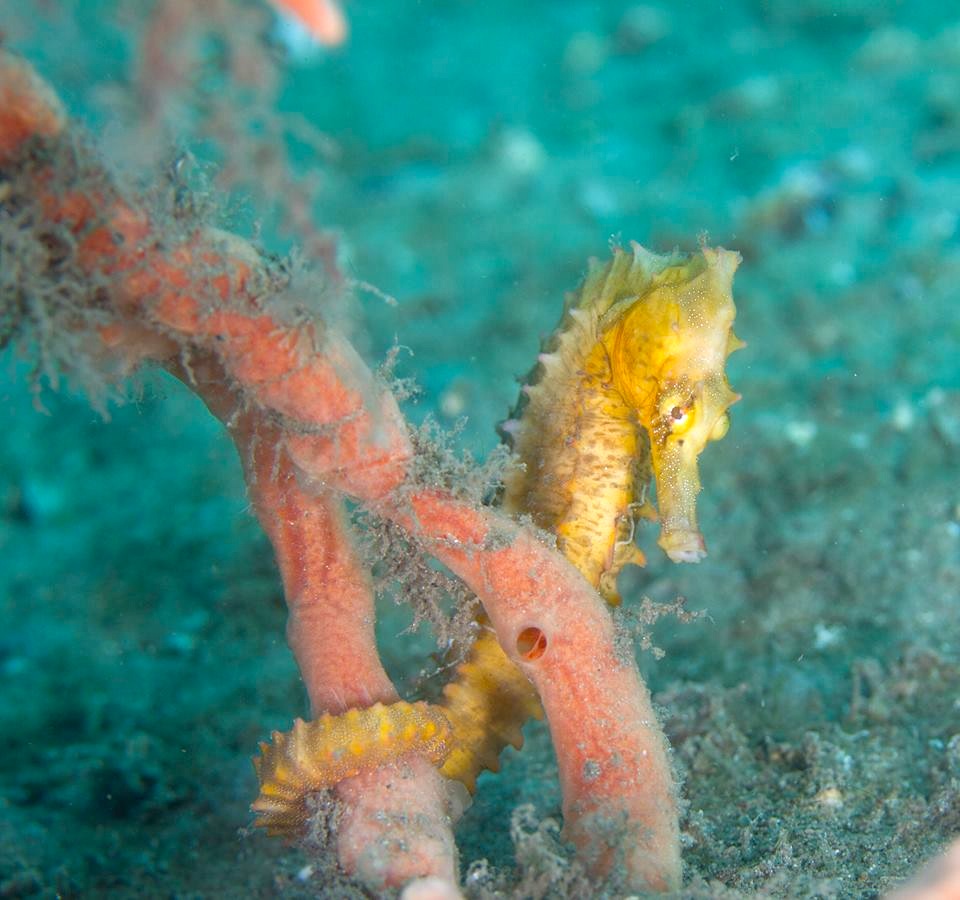
STOP PRESS Jason Knight has drawn my attention to a comment in WhatsThatFish.com (no relation) by one ‘Jenny’, who commends Sand Divers as food (“they cook up just as good as hogfish!”). So yes, they are edible and there is one recipe… 

Sand Diver ©Fred Riger @ G B Scuba

All photos: Melinda Riger of Grand Bahama Scuba