Unknown's avatar

WTF? (WHAT’S THAT FISH?) 15: SCORPIONFISH


Caribbean Scorpionfish, Bahamas (Melinda Riger / G B Scuba)

WTF? (WHAT’S THAT FISH?) 15: SCORPIONFISH

The WTF? series is aimed at shedding light on fishes that are unusual. Or very unusual. Or puzzling, dangerous and maybe less than elegant in appearance. The scorpionfish is one such. It belongs to a large family, the Scorpaenidae, and many types are found throughout the world, especially in the Pacific and Indian oceans. LIONFISH, the newcomers to the western Atlantic, are a species of scorpionfish. 

Just another rock on the seabed…Caribbean Scorpionfish, Bahamas (Melinda Riger / G B Scuba)

WHY ‘SCORPIONFISH’? THEY LOOK SCARY. ARE THEY DANGEROUS?

One feature common to many scorpionfish species is that they are highly venomous. As the name suggests, a sting is involved. Or several stings. These come from the creature’s sharp spines, which are coated with mucus, and are to be avoided. If you want to pet one, the dorsal, anal and pelvic fins are the ones to steer clear of – these all have venom glands at the base. The spines act like injection needles. Scorpionfish aren’t naturally aggressive (except to prey), but they know how to defend themselves if need be. If you get ‘got’, you are in for “extreme pain and burning sensation”.

Caribbean Scorpionfish, Bahamas (Melinda Riger / G B Scuba)

DO THEY HAVE ANY OTHER TRICKS TO WATCH OUT FOR?

As many have written, scorpionfish are ‘Masters of Camouflage’. They are able to disguise themselves very effectively. Their appearance is a remarkably adapted to their surroundings, as if covered in a raggle-taggle of colourful algae. They can change colour to aid concealment. They can flick sand over themselves as they settle on the seabed. These ploys enable them to lie motionless on a coral reef or on the seabed, ready to ambush their prey. This consists mainly of small fishes and crustaceans, but really anything edible that will fit in their mouths is fair game. 

Concealed against coralCaribbean Scorpionfish, Bahamas (Melinda Riger / G B Scuba)

HOW DO THEY FEED?

The large mouth of scorpionfishes has a particular function. They don’t have teeth because they have no need. A scorpionfish can open its mouth and its gills simultaneously, thereby creating an instant vacuum that will suck in its prey in a flash. I have seen this described as “a nearly imperceptible split-second movement (15 milliseconds)”

Caribbean Scorpionfish, Bahamas (Ocean Frontiers Dive Shop)

THESE SCARY MONSTERS MUST BE HUGE, RIGHT? I’M KEEPING OUT OF THE WATER

Not so fast. When all is said and done – and in my view, most disappointingly – adult Caribbean Scorpionfish grow in the range of… erm… 7 – 14 inches. So now you are reassured, here’s a great short video from Ocean Frontiers Dive Shop, who kindly shared it on YT. I’ve used a couple of illustrative stills from it too.

ANYTHING ELSE WE NEED TO KNOW?

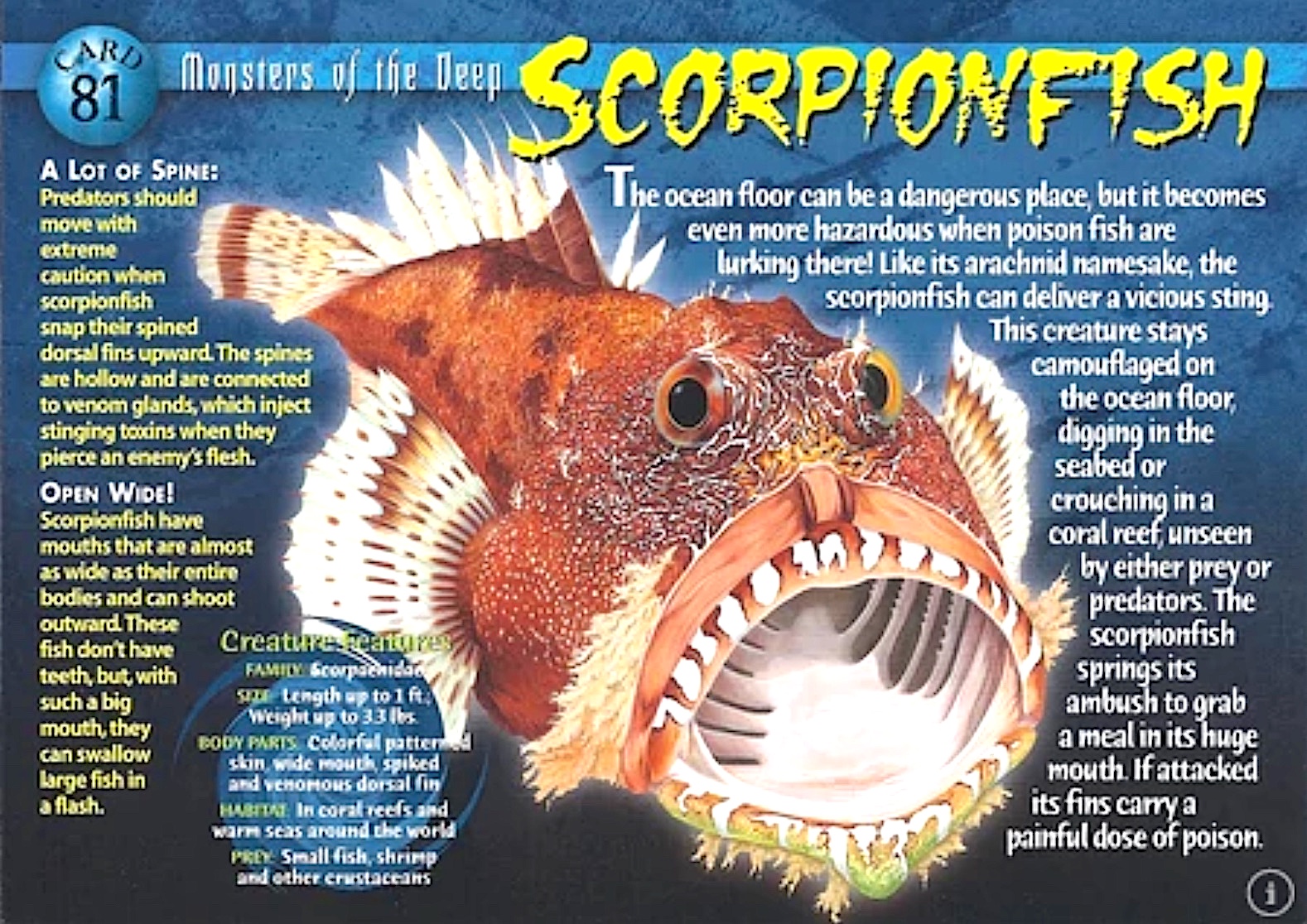
I can do no better than to turn to Card 81 to the excellent Monsters of the Deep‘ series of trading cards (the link is to my MotD page). I do realise that this is a rather unscientific approach. On the other hand these guys pack memorable information into a very short space, and do it well. Note that you can get a reflex sting from a scorpionfish for up to a week after it has died. Eat dust, earthbound scorpions.

Credits: Melinda Riger / Grand Bahama Scuba (1, 2, 3, 4,); Ocean Frontiers Dive Shop (video from YT, 2 stills); Wierd (sic) Creatures / Monsters of the Deep (O/S)

Scorpionfish, Bahamas (Ocean Frontiers Dive Shop)

Unknown's avatar

THE BAHAMA NUTHATCH & THE BRINK OF EXTINCTION


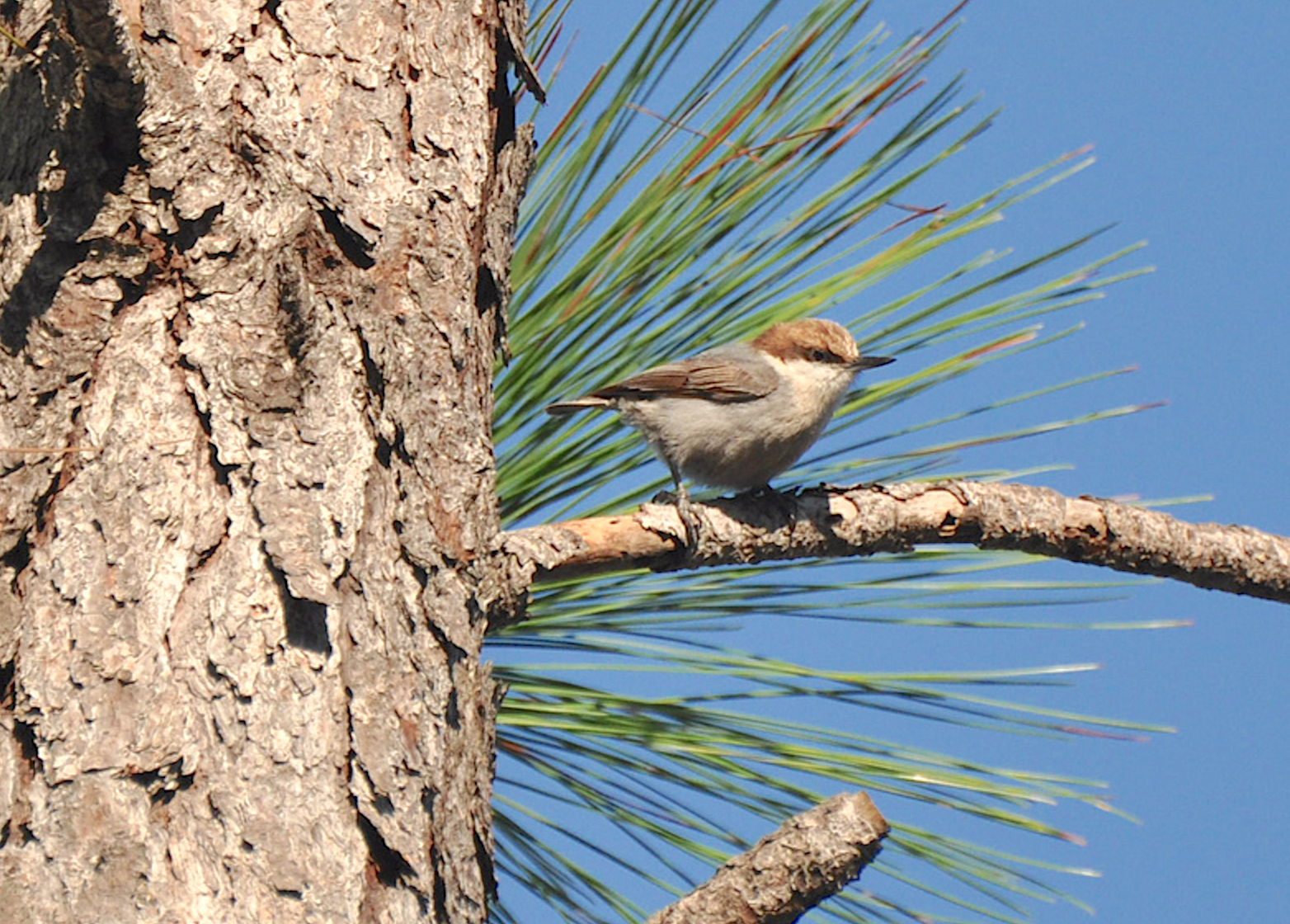
Bahama Nuthatch, Grand Bahama (Bruce Purdy)

THE BAHAMA NUTHATCH & THE BRINK OF EXTINCTION

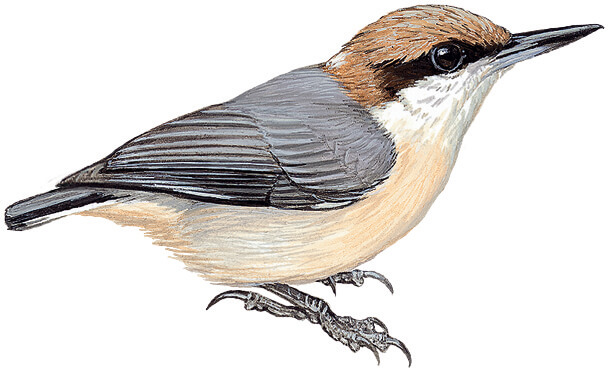
It’s quite a while since I posted about the Bahama Nuthatch (Sitta pusilla insularis) and the separation of its status from its cousin the Brown-headed Nuthatch HERE. I started by saying that it was one of the rarest birds in the Bahamas (or indeed anywhere), with a tiny population living only on Grand Bahama. It’s extraordinary to think that until the 1960s, these birds were common on the island. Then, for all the usual reasons, the  population began to decline “precipitously” (Tony White). By the 2000s, the most optimistic estimates suggested that about 1000 – 1200 mature birds might inhabit the pine forests. Other surveys showed far lower numbers. By now, the species had become highly vulnerable. Reports dwindled annually, and in some years only a handful sightings were recorded.

Bahama Nuthatch (Birdlife International, from Loma Linda Uni / Gary Slater)

Then in October 2016, Grand Bahama received a direct hit from Hurricane Matthew. It was as destructive as you might expect a violent Cat 5 storm could be. Without in any way seeking to diminish the far-reaching and devastating impact of the hurricane on the island (and elsewhere), I have to stick to the matter in hand here. The fact is that for nearly 2 years after Matthew and its trashing of the habitat, not a single BANU was sighted – this, despite many efforts to track one down in the known hotspot areas. It began to seem likely that  the little bird had simply been wiped out of existence. Since it is known nowhere else – not even on nearby Abaco – the Bahama Nuthatch had very probably become extinct.

Bahama Nuthatch (Erika Gates / Bahamas Weekly Article)

Fast forward nearly two years and suddenly there is the first hint of a glimmer on the horizon for these little birds. Finding one is already a needle-in-a-haystack quest. The target is shy and tiny – about 4 ins long and 10 grams; and the search area is vast – more than 30,000 hectares. Yet this summer, amazingly, some Bahama Nuthatches have been found and photographed, a most happy – and perhaps optimistic – outcome, and a deserved return for some serious survey work. Excited publicity has spread well beyond the usual online birding resources and into the mainstream press.

Bahama Nuthatch (Birdlife International)

THE KEY SIGHTINGS

JUNE 2016

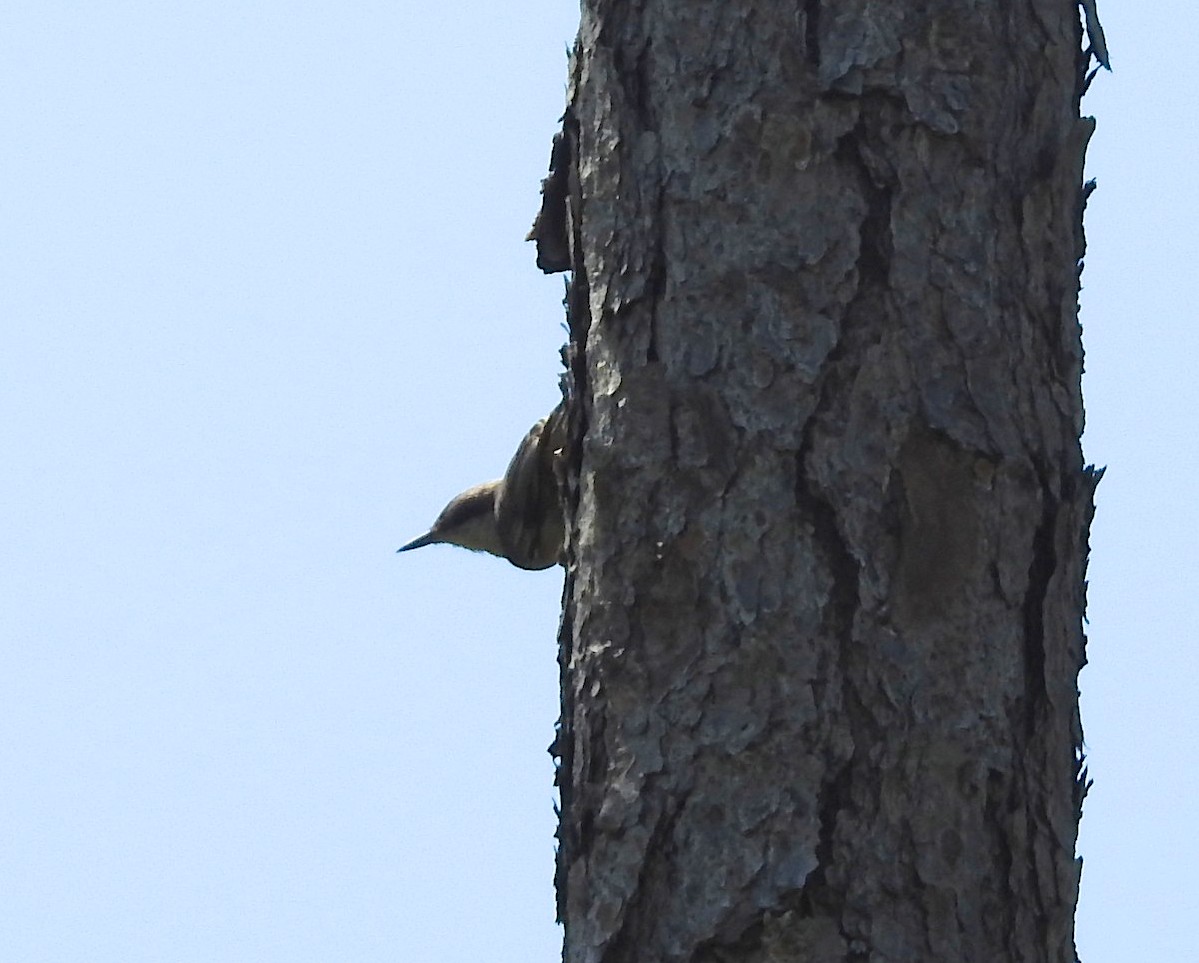
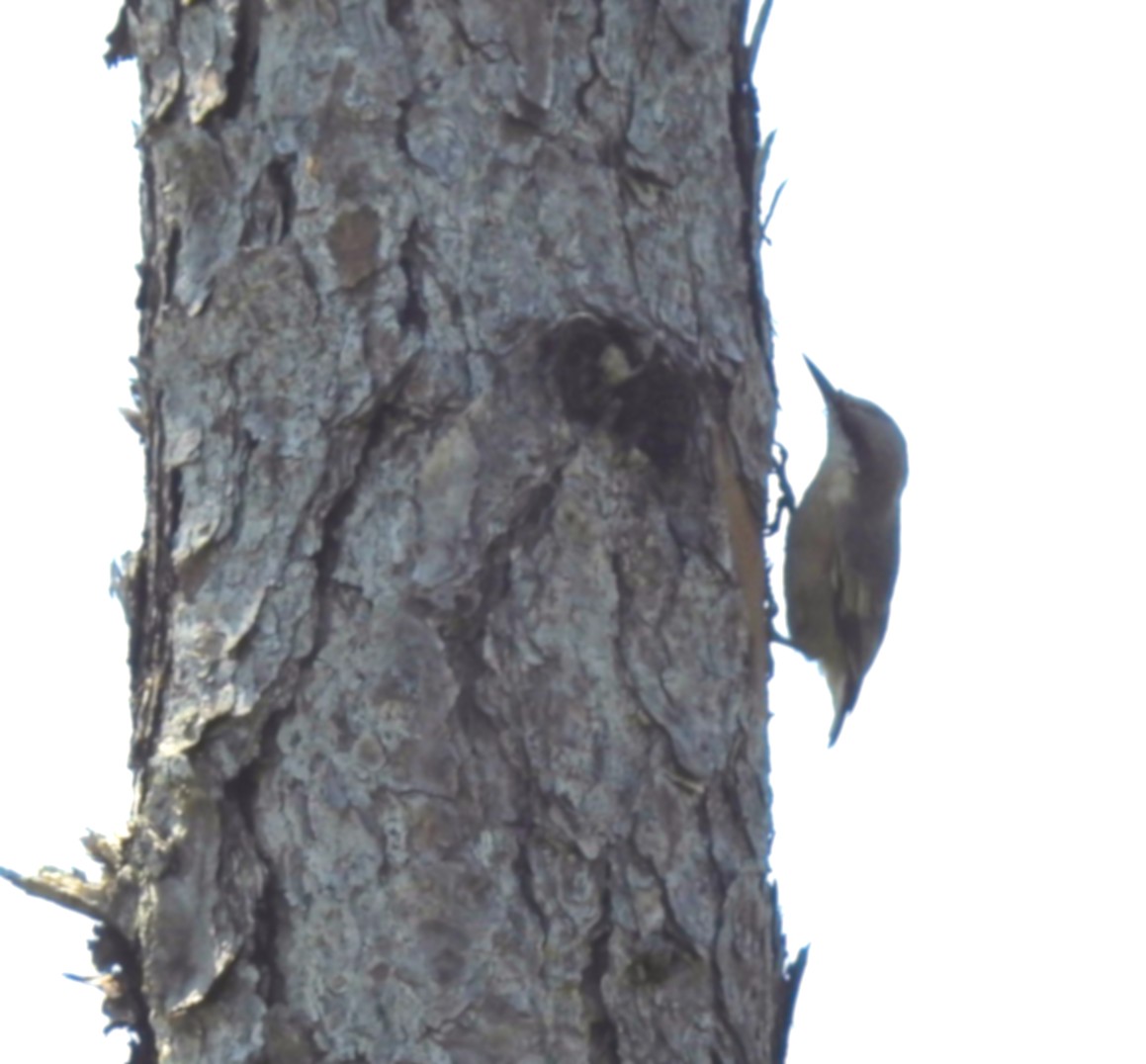
The last recorded sighting of the Bahama Nuthatch (2 birds) before Hurricane Matthew was made in June 2016 by well-known Grand Bahama bird expert and guide, Erika Gates.

Bahama Nuthatch, Grand Bahama (Erika Gates) Bahama Nuthatch, Grand Bahama (Erika Gates)

MAY 2018

The May sightings involved a team of ornithologists from the University of East Anglia, together with experts from Birdlife International and the Bahamas National Trust. They planned a 3-month expedition to locate this species, among others. Meanwhile another team of local scientists and students also carried out a search, led by Dr. Zeko McKenzie of the University of The Bahamas (North) with the American Bird Conservancy.

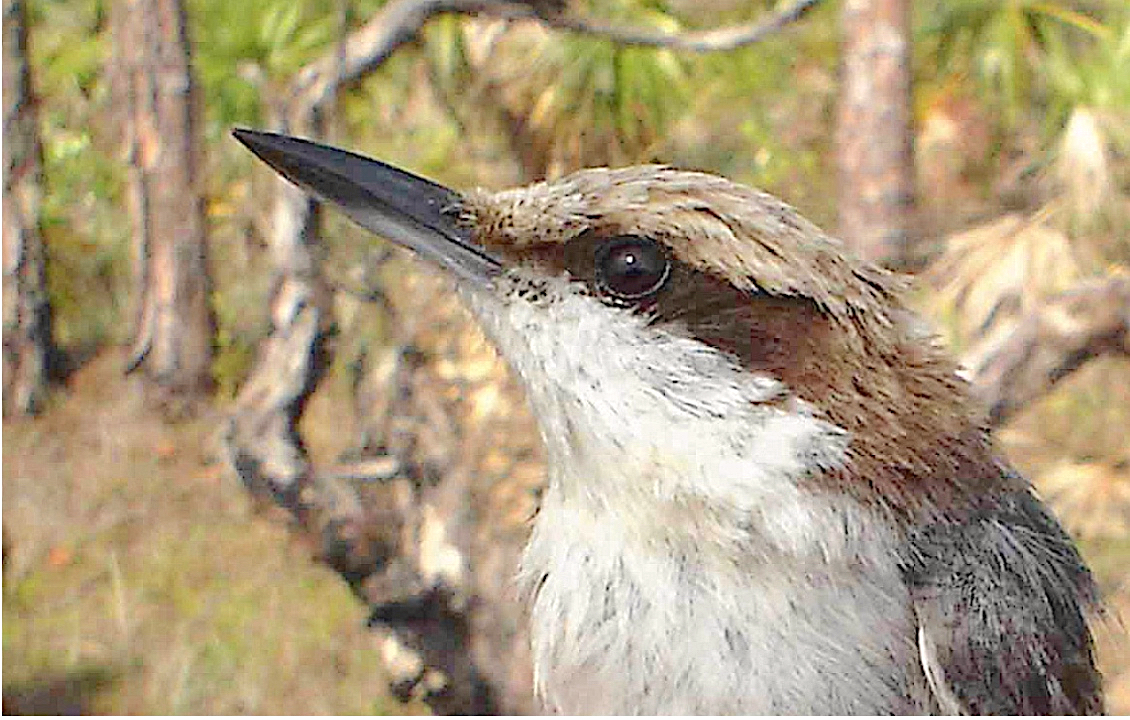
The first team eventually made a sighting in May 2018, and the elusive bird was captured by Matthew Garner of UEA on camera. They also obtained brief and tantalising video footage (below). In all, the UEA team made six nuthatch sightings, and Bahamian team independently made five sightings (including seeing what appeared to be two together). 

Bahama Nuthatch (Matthew Gardner UEA)

JULY 2018

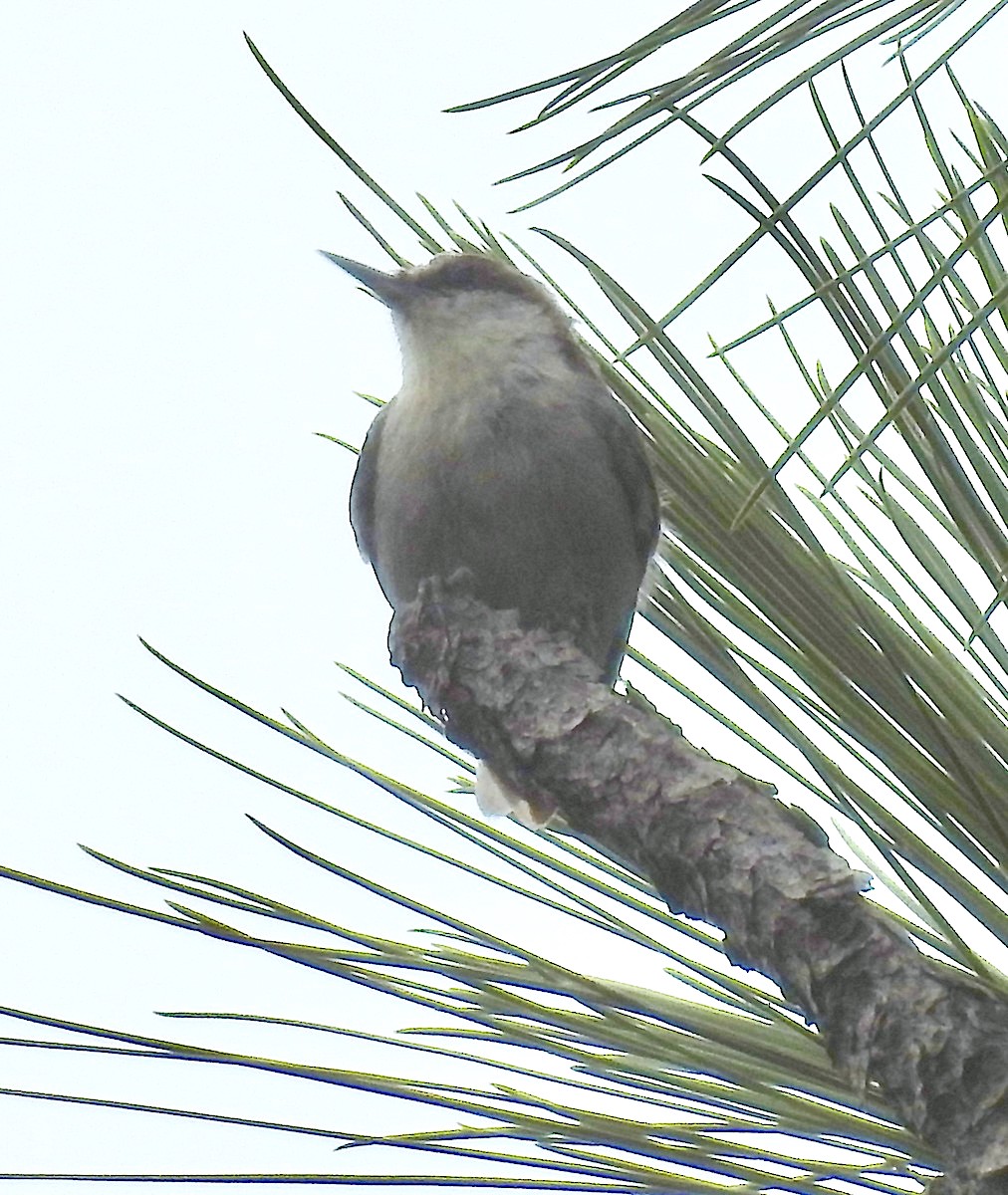
Erika Gates, with Martha Cartwright  and Zeko McKenzie, again managed to locate a single nuthatch to add to the earlier 2018 sightings. She too managed to get some photos of the bird.

WHAT OF THE FUTURE?

Among the May birds – however many there were in total – one was a juvenile. Combined with 2 adults seen at one time, that makes 3 birds. The extent of the period of study and search area of the May sightings (11 in all) make it likely that more than 3 birds were seen overall. Erika’s July bird, in a slightly different location, suggests another. Perhaps no more can be said than that there may be half-a-dozen Bahama Nuthatches extant in the world. It’s some comfort.

 Bahama Nuthatch (Birdlife International)However, as the May operation noted, ‘We also don’t know the sex of the birds. In many cases when birds dwindle to such small numbers, any remaining birds are usually male.’ The consensus of the articles I have read is that the handful of birds seen this summer, while a thrilling discovery, should not be seen as any guarantee against extinction. Further habitat degradation, more development, another hurricane, any one of these could be fatal to the species. The recent sightings are cause for some optimism but these little, highly vulnerable birds remain on the very brink of extinction. Those few people who have seen one in the wild have had a precious experience.

Bahama Nuthatch, Grand Bahama (Bruce Purdy)

THREATS TO THE SPECIES

  • Habitat loss / degradation from development, logging, forest fires & hurricanes
  • Invasive / introduced / feral species such as corn snakes, raccoons & cats
  • Competition from other more prolific species in a limited habitat

The Bahamas National Trust has produced an excellent video account of the whole story from Shelley Cant-Woodside HERE 

SOME LINKS TO THE STORY 

Photo credits: Bruce Purdy (1, 11); Gary Slater / Birdlife.org (2); Erika Gates / Bahamas Weekly (3); Erika Gates (4, 5, 7, 8, 9, 10); Matthew Gardner (6); Birdlife International (drawing); UEA & team (video)

Research credits include: Birdlife International / Birdlife.org; Lisa Sorenson; Tony White; Research Gate; IUCN; Bahamas National Trust; The Bahamas Weekly / Erika Gates; eBird; Loma Linda U; Science News; Sundry online publications; American Birding Association (and a bonus point for its brown-headed nuthatch behaviour article wittily entitled “Sex in the Sitta”)

Unknown's avatar

GET ME A ‘CUDA – AND MAKE IT SNAPPY…


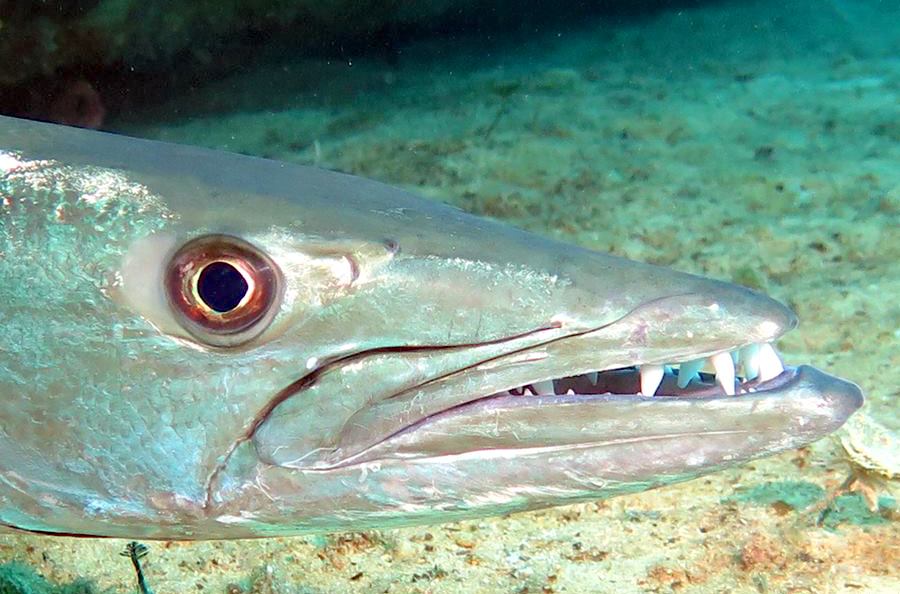
Barracuda, Bahamas (Melinda Riger / Grand Bahama Scuba)

GET ME A ‘CUDA – AND MAKE IT SNAPPY…

It’s probably fair to say that barracudas are among the less kindly-disposed of the denizens of the flats and reefs of the Bahamas. They certainly rank high on the Rolling Harbour Tooth Avoidance Scale. The seemingly random nature of the razor sharp dental arrangements – different sizes, different angles, different directions – does not inspire confidence. 

Barracuda, Bahamas (Melinda Riger / Grand Bahama Scuba)

The worst fishing injury I have picked up so far – aside from multiple terrible injuries to pride from botched casts, mistakes, missed takes and lost fish – has come from a large ling. What I didn’t know until I had been cut when my finger went into its mouth was that the teeth are coated in anticoagulant. I bled all over the boat and spent the rest of the day getting through a large roll of paper towel and several improvised bandages (J-cloths). That wiped the smug smile off my face – pride in the catch came before a notable fall in my standard-issue blood quota.

Ling caught off the Dorset coast (Keith Salvesen)

Barracuda, Bahamas (Melinda Riger / Grand Bahama Scuba)

When bonefishing in the shallow waters around the coast of Abaco, there are always ‘cudas to be seen. They are not the main target fish, but the boats always have a spinning rod in them, just in case… At some stage in the day, some people find it hard to resist the urge to chuck out a lure when ‘cudas are about. It’s not something I generally do, though occasionally my fly gets intercepted by a practice-sized ‘cuda. 

A learner ‘cuda that took a bonefish fly

Earlier this year I was in a boat fishing with the legendary Robin Albury, a guide who generally doubles my usual modest catch rate. My boat partner and I were taking a lunch break, with an open cool box of snacks between us and a Kalik in our hands. Robin went to the sharp end with the spinning rod on the off-chance. In a flash he had seen a big ‘cuda, chucked out the lure onto the creature’s nose and caught it, almost in one movement. I put down my beer to watch the entertainment. Robin decided otherwise, and simply handed me the rod to play the thing. And boy, was that fun. I didn’t get the kudos of making the hook-up, but I had plenty of work to do… It took an excitingly long time to bring the strong and vigorous fish to the boat. Robin got to hold the fish, of course – after my ling experience, I was happy enough to let him mess with the dental arrangements.

Barracuda, Abaco Marls, Bahamas (Keith Salvesen)

Barracuda, Bahamas (Melinda Riger / Grand Bahama Scuba)

Barracuda, Bahamas (Melinda Riger / Grand Bahama Scuba)

Credits: Melinda Riger / Grand Bahama Scuba (1, 2, 4, 6, 7); Keith Salvesen / Rolling Harbour (3, 5, 6)


Unknown's avatar

SHARPNOSE PUFFER FISH: BAHAMAS REEF FISH (47)


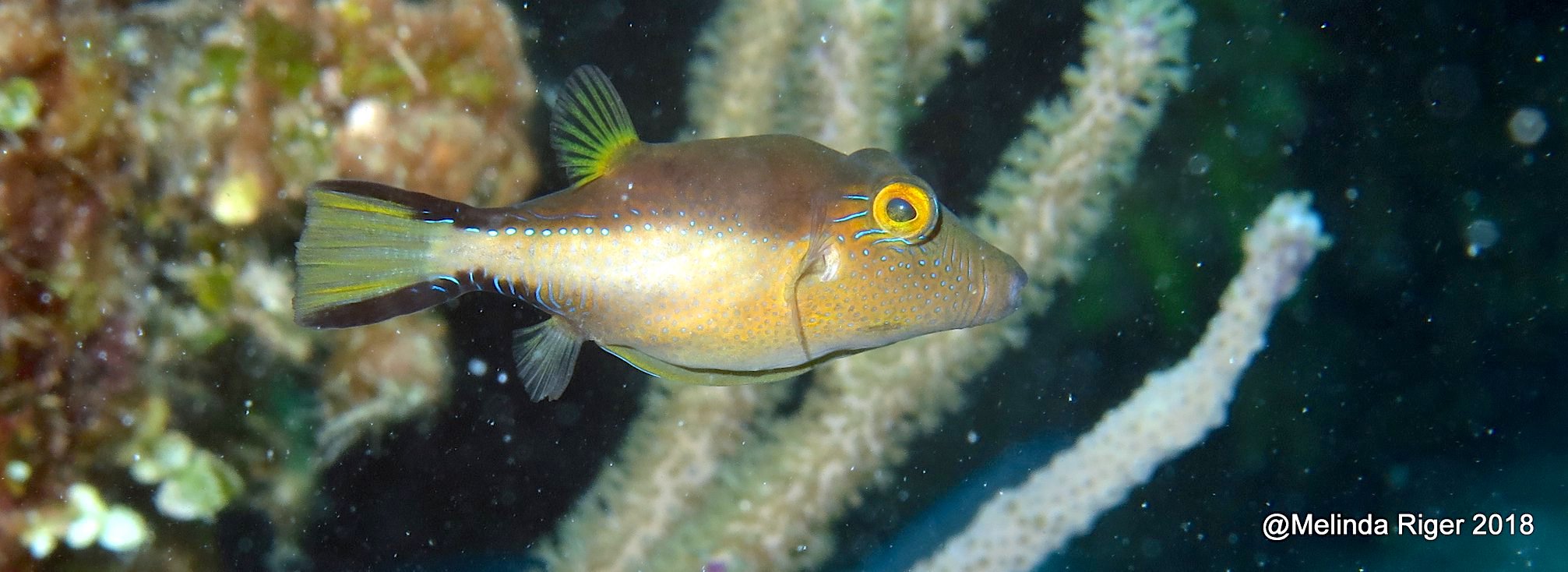
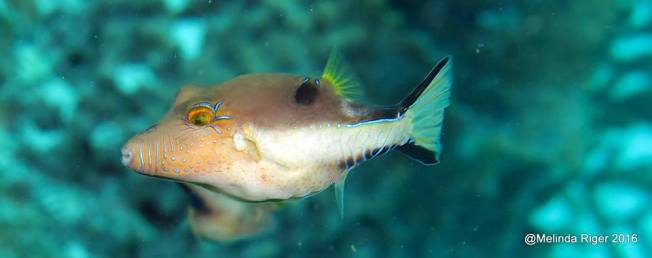
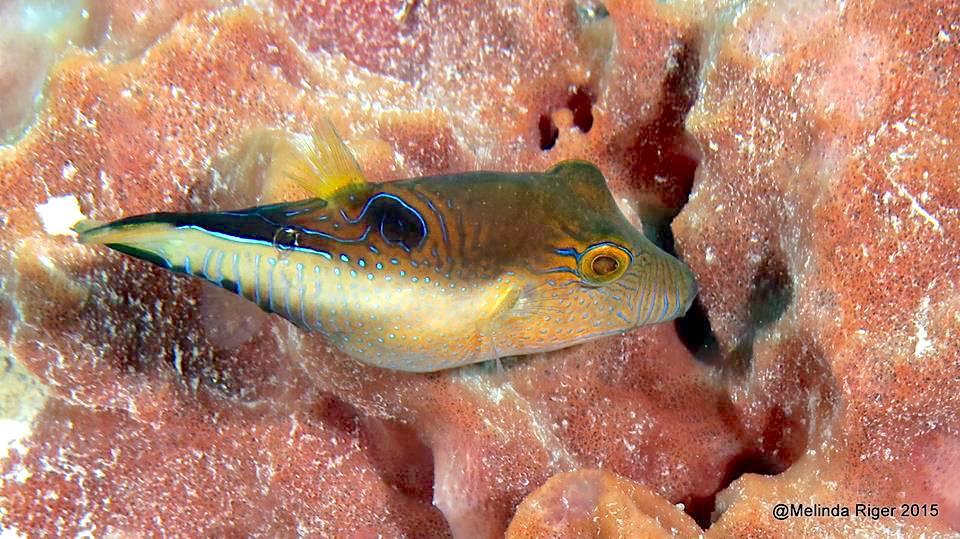
Sharpnose Puffer Fish (Melinda Riger / G B Scuba)

SHARPNOSE PUFFER FISH: BAHAMAS REEF FISH (47)

It’s more than 4 years since I last wrote about these intriguing creatures and their endearing ways. It’s time for another look, with a new batch of great photos too. This is a species that lends itself to the ‘Fun Fact’ treatment, a method that tells you at least as much as you probably need – or want – to know about puffers. The message to take away is, best not to handle one – let alone eat one – unless you know exactly what you are doing…

Sharpnose Puffer Fish (Melinda Riger / G B Scuba)

10 PUFFER FISH FACTS TO ASTONISH YOUR FAMILY & FRIENDS

1. Puffers can inflate their bodies in an instant by ingesting huge amounts of water and becoming water-filled balloons. Then their tiny spines stick out. 

2. They need a startling form of defence (or ‘piscatorial superpower’ Linnaeus 1763*) like this because they can’t swim very well to escape from predators: it’s surprising and intimidating – and it also makes them hard to eat.

3. However, a persistent predator undeterred by the trick will find that the puffer contains a toxin (tetrodotoxin TTX) that is said to be ‘1,200 times stronger than cyanide’. One puffer fish has enough toxin to kill up to 30 humans (National Geographic).

Sharpnose Puffer Fish (Melinda Riger / G B Scuba)

4. Notwithstanding the risks, selected parts of a puffer fish are a delicacy in some cultures (known as ‘fugu’ in Japan). Specially trained chefs are used to avoid mass deaths among diners. The insurance premiums must be huge.

5. Sharks are thought to be the only species immune to the puffer fish, and are not much bothered by a small fish that can blow itself up.

6. Puffers have skin, not scales; most have toxic fins or spines of some sort, besides toxic innards. Bright coloured kinds are likely to be more toxic than their duller cousins. This warning colouration in creatures is known as aposematism.

Sharpnose Puffer Fish (Melinda Riger / G B Scuba)

7. It’s worth finding out what an uninflated puffer looks like before you try to pet a random passing fish and have a toxic encounter. There is as yet no known antidote.

8. In all, there are more than a hundred puffer species in the world, all found where there are warm shallow waters. At least 3 main species – sharpnose, band-tail and chequered – are found in the Bahamas.

Sharpnose Puffer Fish (Melinda Riger / G B Scuba)

9. Some puffer species are not toxic at all; and some – especially in Pacific waters – are far more toxic than others. That’s the region where they are treated as a delicacy.

10. I’ve checked several research papers but I can’t find an evaluation of the relative toxicity as between the Bahamas puffer species. However it’s clear that the sharpnose is certainly not one play with. Take care!

Q. SO WHAT DOES AN INFLATED PUFFER LOOK LIKE? A. THIS!

Brian Lockwood took his life in his hands to get this fantastic shot…Sharpnose Puffer Fish (Brian Lockwood)

* Not really

RELATED POST: PORCUPINE FISH

Photo Credits: All puffer fish taken by Melinda Riger of Grand Bahama Scuba except for the photo of an inflated one from recent Abaco permanent resident Brian Lockwood

Unknown's avatar

OCTOPUSES: IN THEIR ELEMENT


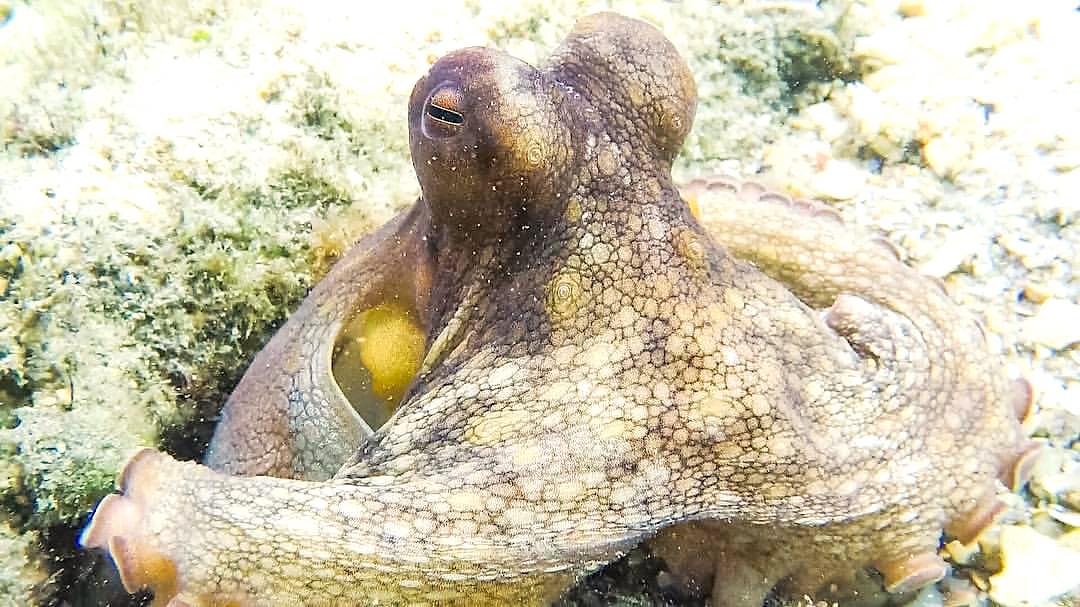
Octopus, Bahamas (Melinda Riger / Grand Bahama Scuba)

OCTOPUSES: IN THEIR ELEMENT

We haven’t seen many octopuses in these parts for quite a while. Time to put that right. The seas of the Bahamas teem with many many marine species, but few are as fascinating or indeed versatile as the octopus. Don’t take my word for it, just watch ‘Finding Dory’ to see how amazing Hank the… [what’s that, Skippy? It’s fiction?]. As you were. That these extraordinary creatures even exist let alone thrive in our waters is a truly wonderful thing. Here are a few to admire – or in the case of the one below, to admire you.

‘Here’s lookin’ at you…’Octopus, Bahamas (Melinda Riger / Grand Bahama Scuba)Octopus, Bahamas (Melinda Riger / Grand Bahama Scuba)Octopus, Bahamas (Melinda Riger / Grand Bahama Scuba)

You can find out some more about octopuses – including the correct plural for ‘octopus’ – by clicking the links below. More importantly, you’ll see more of them too.

THE PLURAL OF OCTOPUS & RELATED CEPHALOPOD MYSTERIES

MARINE BAGPIPES FILLED WITH INK

OCTOPUSES: WORTH LEARNING TO SCUBA FOR

Octopus, Bahamas (Adam Rees / Scuba Works)

All octopedal photos: thanks to Melinda Riger / Grand Bahama Scuba (1 – 4) and Adam Rees / Scuba Works (5)

Unknown's avatar

QUEEN ANGELFISH: BAHAMAS REEF FISH (46)


Queen Angelfish, Bahamas (Melinda Riger / Grand Bahama Scuba)

QUEEN ANGELFISH: BAHAMAS REEF FISH (46)

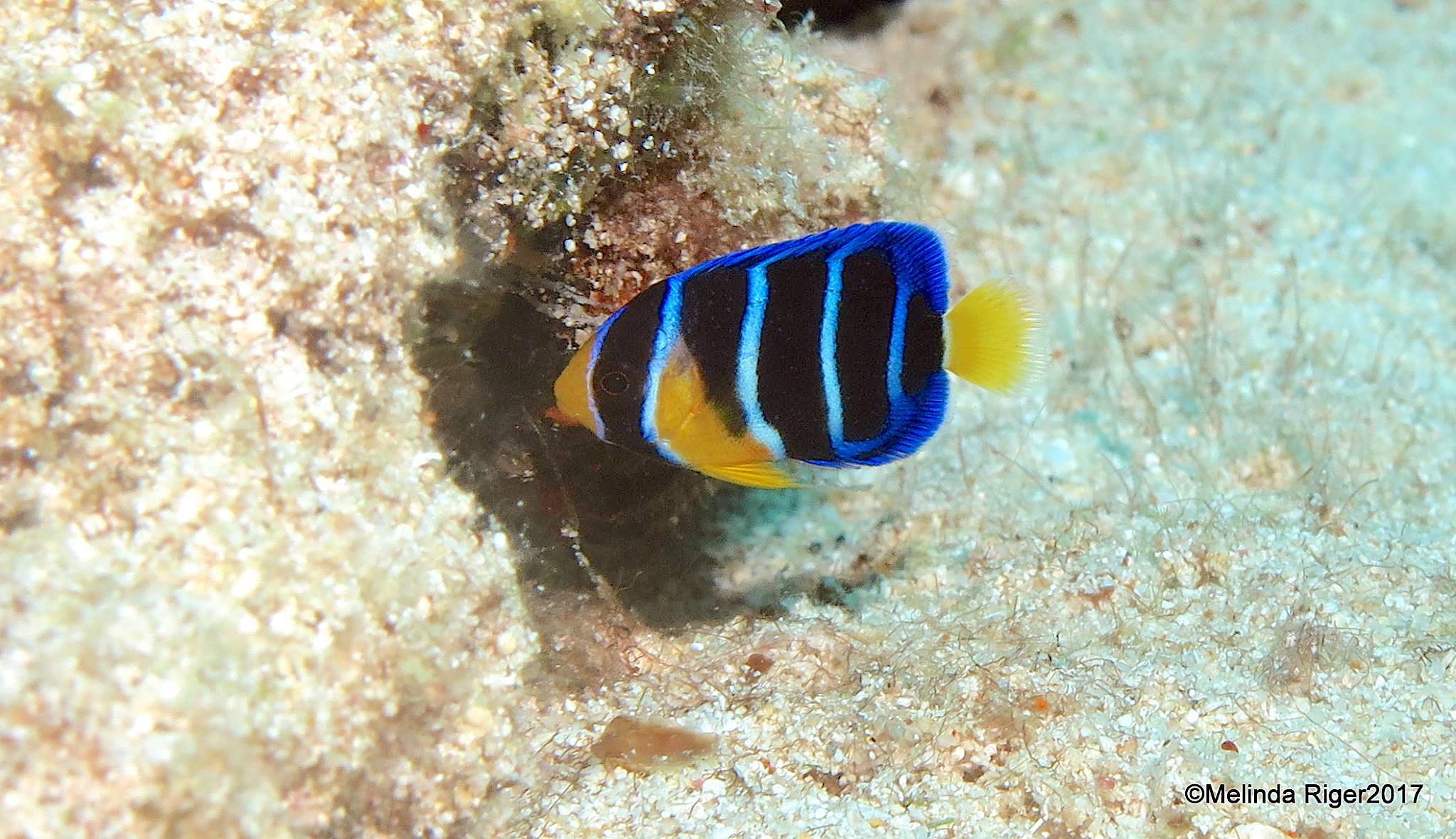
The Queen Angelfish Holacanthus ciliarisis is without doubt one of the most beautiful of all reef fishes in the Bahamas – and the competition is very strong. I have posted about them before, but to my surprise not for nearly 5 years. Too long: here are some much more recent photographs of adults and cute juveniles.

Queen Angelfish, Bahamas (Melinda Riger / Grand Bahama Scuba)Queen Angelfish, Bahamas (Melinda Riger / Grand Bahama Scuba)

The bright colours, the pouty expressions, the appealing poses – these fish are true Beauty Queens. And helpfully, they are unlikely to be mistaken for any other fish species.

Queen Angelfish, Bahamas (Melinda Riger / Grand Bahama Scuba)

TEENAGE QUEEN ANGELFISHQueen Angelfish (Juv), Bahamas (Melinda Riger / Grand Bahama Scuba)

JUVENILE QUEEN ANGELFISHQueen Angelfish (Juvenile), Bahamas (Melinda Riger / Grand Bahama Scuba) Queen Angelfish (Juvenile), Bahamas (Melinda Riger / Grand Bahama Scuba)

Photo Credit: ©Melinda Riger (Grand Bahama Scuba), with thanks as ever

Unknown's avatar

‘ON STILTS’: ELEGANCE ON TWO LEGS (OR JUST ONE)


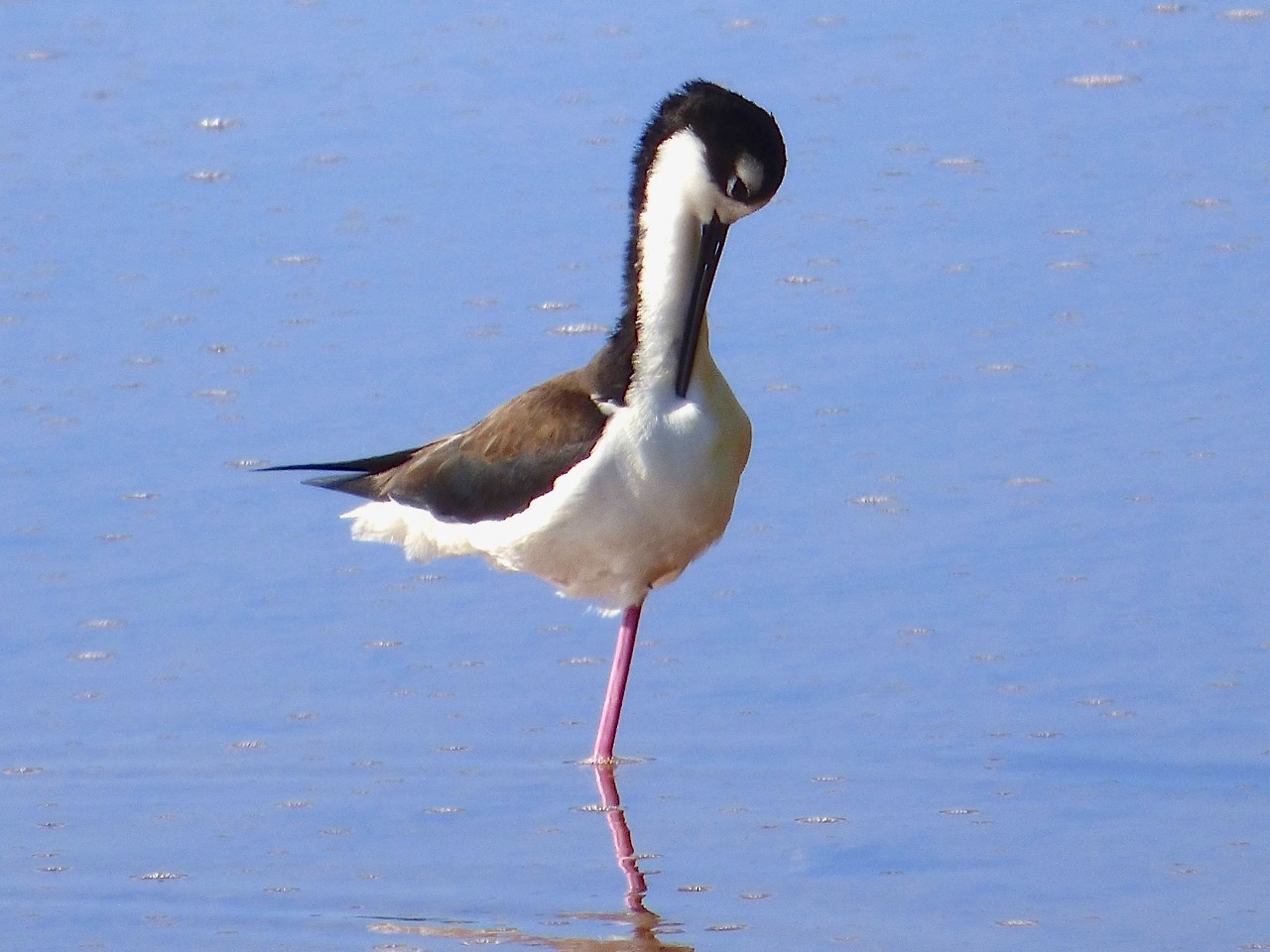
Black-necked Stilts, Abaco Bahamas (Keith Salvesen)‘ON STILTS’: ELEGANCE ON TWO LEGS (OR JUST ONE)

There’s something wrong in the picture above (no, I don’t mean about the photograph itself). Count up how many pink legs you can see. No, not including the reflections. Give up? It’s three. Between two birds. I assumed of course that  ‘Oner’ had a perfectly good serviceable leg tucked up into its undercarriage. I admired the balancing skills involved in resting one leg while nonchalantly standing on the other.

We were watching this pair of black-necked stilts Himantopus mexicanus at the pond at Gilpin Point, which at certain times can be ‘Stilt Central’. These birds are permanent breeders on Abaco and are without a doubt the most beautiful of all the waders (avocets, being extremely uncommon winter visitors, are disqualified from consideration for lack of presence). 

Black-necked Stilts, Abaco Bahamas (Keith Salvesen)
It gradually dawned on me that Oner really did only have one stilt to stand on. After 10 minutes observing them and the other birds around them, there was no question about it – the right leg was completely and utterly missing. This unipedal deficit had no obvious ill-effects on the bird – nor on its ability to throw a good pose (above). Or to preen (below).
Black-necked Stilts, Abaco Bahamas (Keith Salvesen)
I’m in danger of losing sight of Twoer here, a bipedal bird that deserves its own place in the story, not just a wade-on part in Oner’s story.
Twoer as Ringmaster…Black-necked Stilts, Abaco Bahamas (Keith Salvesen)
BNSs are territorial and in particular can become ‘proactive’ (ie aggressive) in protecting the area near a nest. I once mistakenly got close to a nest, not even knowing it was there. I soon learnt – a parent BNS came wading towards me, zigzagging in the water, shouting and carrying on in a way that immediately said ‘my nest is nearby’. And when I meanly stood my ground it suddenly took off and flew straight at my head…
A shouty stiltBlack-necked Stilts, Abaco Bahamas (Keith Salvesen)
On reflection…Black-necked Stilts, Abaco Bahamas (Keith Salvesen)
All photos: Keith Salvesen / Rolling Harbour Abaco (and, if anyone noticed, sorry about some formatting issues which I can’t get rid of…); Audio file Jim Holmes / Xeno Canto
Black-necked Stilts, Abaco Bahamas (Keith Salvesen)
Unknown's avatar

COOKIECUTTER SHARKS: BEASTLY LITTLE SUCKERS


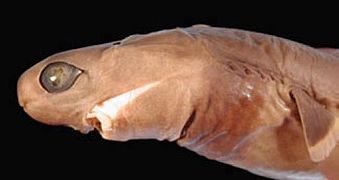
Cookiecutter Shark mouth, jaws & teeth (BMMRO Bahamas)

COOKIECUTTER SHARKS

BEASTLY LITTLE SUCKERS

The Cookiecutter shark Isistius brasiliensis (aka the less scary, more genial sounding ‘cigar shark’), might be an ideal candidate for a Room 101 nemesis.** These little beasts – a species of dogfish shark – are found in several mainly island-based areas dotted around the globe, including in Abaco waters.


HOW COME THE NAME?
These sharky little b@st@rds (*technical term*) attack marine mammals and fishes, gouging out perfect round plugs of skin and flesh, leaving what are sometimes called ‘crater wounds’. Then they eat them. Imagine getting hold of a really sharp domestic cookie cutter with circular rows of razor-sharp teeth, and grinding it hard into your thigh. There! That! 
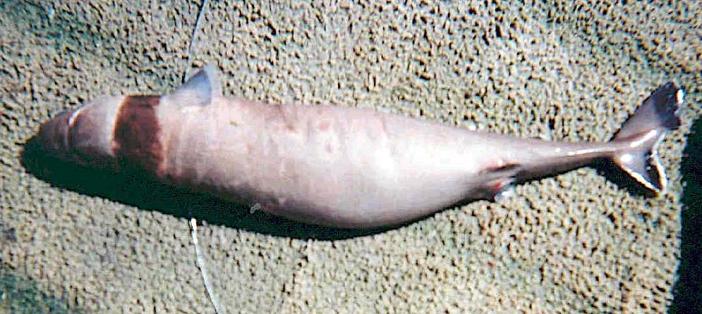
The size of an adult shark:16″ max
The term ‘cookiecutter’ is also a pejorative slang term, meaning mass-produced, lacking in originality, or boringly samey, as in cookiecutter cars or TV genres etc. The little critters under consideration here are anything but…
                        

HORRIFYING COOKIECUTTER FACTS

  • Live in the depths, rise vertically in the day & dive back down at dusk
  • Undersides have light-emitting ‘photophores’ which emphasise…
  • …the dark collar which acts as a lure, resembling a small innocent fish
  • Bioluminescence lures prey & confuses predators (more on this below)
  • The glow is so strong it may last for some time after removal from water

  • Their lips are ‘suctorial’ = they attach tightly to their target
  • The jaws then gouge out the victim’s flesh in a remarkably neat circle
  • Omni-vicious: any medium to large ocean creature is vulnerable to attack
  • There are even occasional reports of humans being targeted

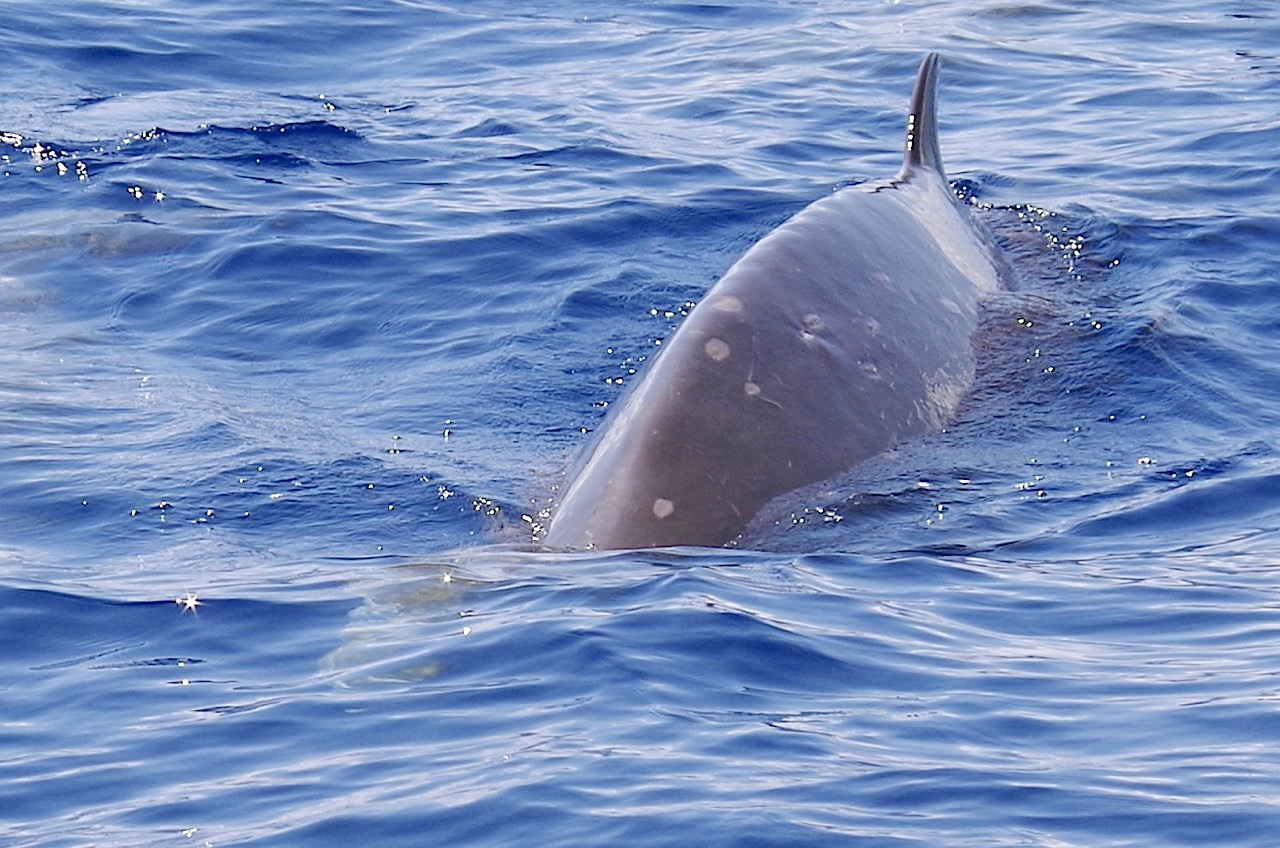
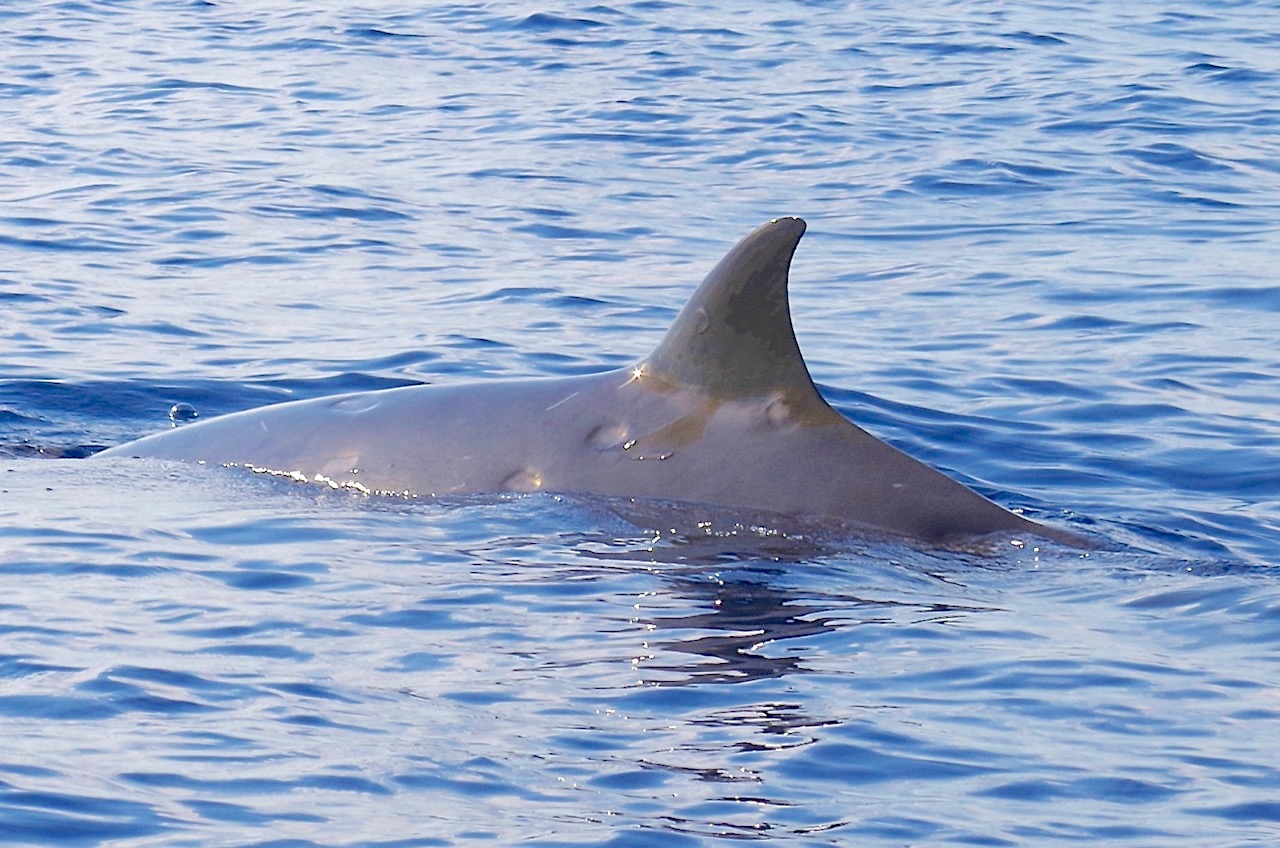
Here are two Blainville’s beaked whales that I photographed from the BMMRO research vessel. The top whale has a number of circular healed attack marks and a recent one. You can see how deep the gouged hole is. The other has well-healed scars.

Blainville's Beaked Whale - cookiecutter shark damage (Keith Salvesen)Blainville's Beaked Whale - cookiecutter shark damage (Keith Salvesen)

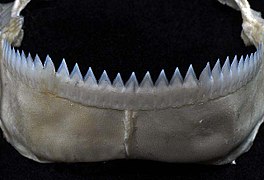
  • Multi-toothed: top rows of small teeth, rows of larger teeth on the bottom
  • The lower teeth are the cutters, acting like a saw when locked on
  • See header image and below for full details


HOW EXACTLY DO THEY DO WHAT THEY DO?
I can explain it no better than the renowned authority Prof. W. K. P. Dear:  “the suctorial lips ensure a tight seal. It then bites, using its narrow upper teeth as anchors while its razor sharp lower teeth slices into the prey. Finally, the shark twists and rotates its body to complete a circular cut, quite possibly aided by the initial forward momentum and subsequent struggles of its prey. The action of the lower teeth may also be assisted by back-and-forth vibrations of the jaw, a mechanism akin to that of an electric carving knife”.

                 ARE THESE SHARKS ‘PARASITES’, WOULD YOU SAY?

The behaviour of these sharks is an example of a symbiotic relationship between two species that is parasitic. This means essentially that one gains and the other suffers (e.g. no-see-ums!). This is distinct from commensalistic symbiosis, where one species gains and the other is unaffected (e.g. cattle egrets with cattle); and mutualistic symbiosis, where both gain (e.g. cleaner fish & groupers). So, in a word, yes.

  • An ‘ambush predator’: they ‘hover’ in the water column waiting…
  • They are capable of rapid movement to catch up & latch onto prey
  • They will eat a passing small fish, crustacean or even squid as a snack
  • Sometimes they operate in schools; there is safety in numbers
  • The schools are thought to increase the ‘lure’ effect of the dark collar

A beached whale that’s been heavily targeted

FUN FACT TO COUNTERACT THE BAD STUFF

In the late c20, more than 30 U.S. Navy submarines were forced back to base to repair damage caused by cookiecutter shark bites, either to the neoprene footings of sonar domes or to rubber-sheathed cables. The problems were solved by using fibreglass. Oceanographic equipment and telecommunications cables are also recorded as being damaged by these sharks.

Cookiecutter Shark – the real deal


MONSTERS OF THE DEEP

These great cards from the weirdly spelled WIERD ‘N’ WILD CREATURES provide excellent factual info. Their CCS card is no exception. You’ll find more details here about the effect of the bioluminescence and so on, written as clearly as I might hope to. 

Cookiecutter Shark Facts (Monsters of the Deep)Cookiecutter Shark Facts (Monsters of the Deep)

** “The worst thing in the world varies from individual to individual. It may be burial alive or death by fire, or by drowning, or by impalement, or fifty other deaths. There are cases where it is some quite trivial thing, not even fatal.” (George Orwell, 1984)

Alright now…Blainville's Beaked Whale - cookiecutter shark damage (Keith Salvesen)

Credits: BMMRO – header image; beaked whale photos – Keith Salvesen / BMMRO; Te Ara NZ for the main jaw image; all small images with thanks to Wiki and respective photographers who took the time to upload them for all to enjoy & learn from; ‘wierdnwonderful creatures’ for the monster card; range map from Wiki
PS Apologies to anyone who bothered to wade through this, and stayed awake long enough to notice that formatting gremlins struck halfway through

Unknown's avatar

NASSAU GROUPER: ENDANGERED… AND PROTECTED


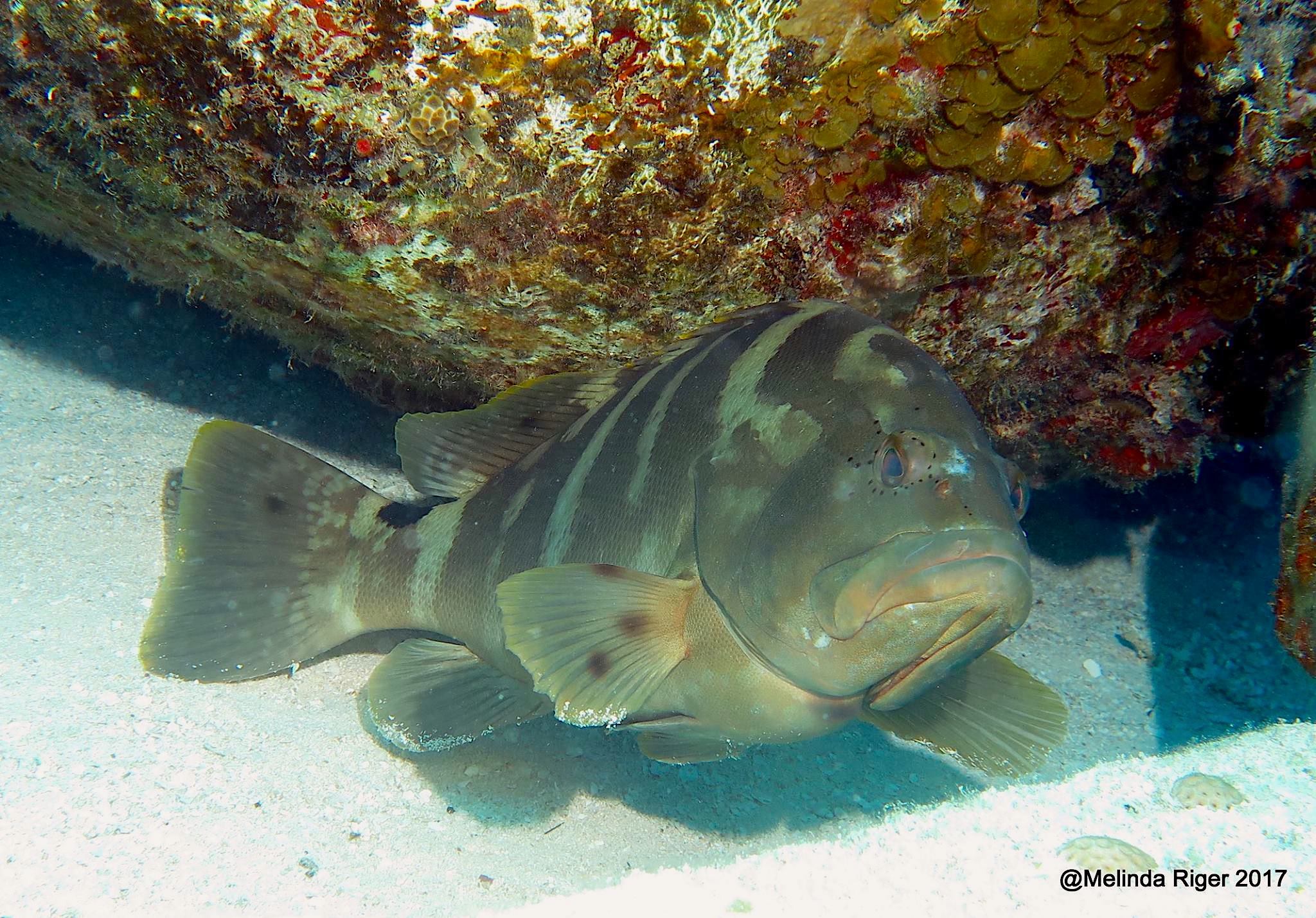
Nassau Grouper (Melinda Riger / Grand Bahamas Scuba)

NASSAU GROUPER: ENDANGERED… AND PROTECTED

Most creatures need some space for creative activity of one sort or another. Especially one particular sort, namely breeding. And for vulnerable and endangered species, this is especially important in order to maintain a sustainable population, and preferably to increase it year on year. Which is why there are closed seasons for certain fish, ensuring a time when they can be left alone to breed in peace and to perpetuate their species.

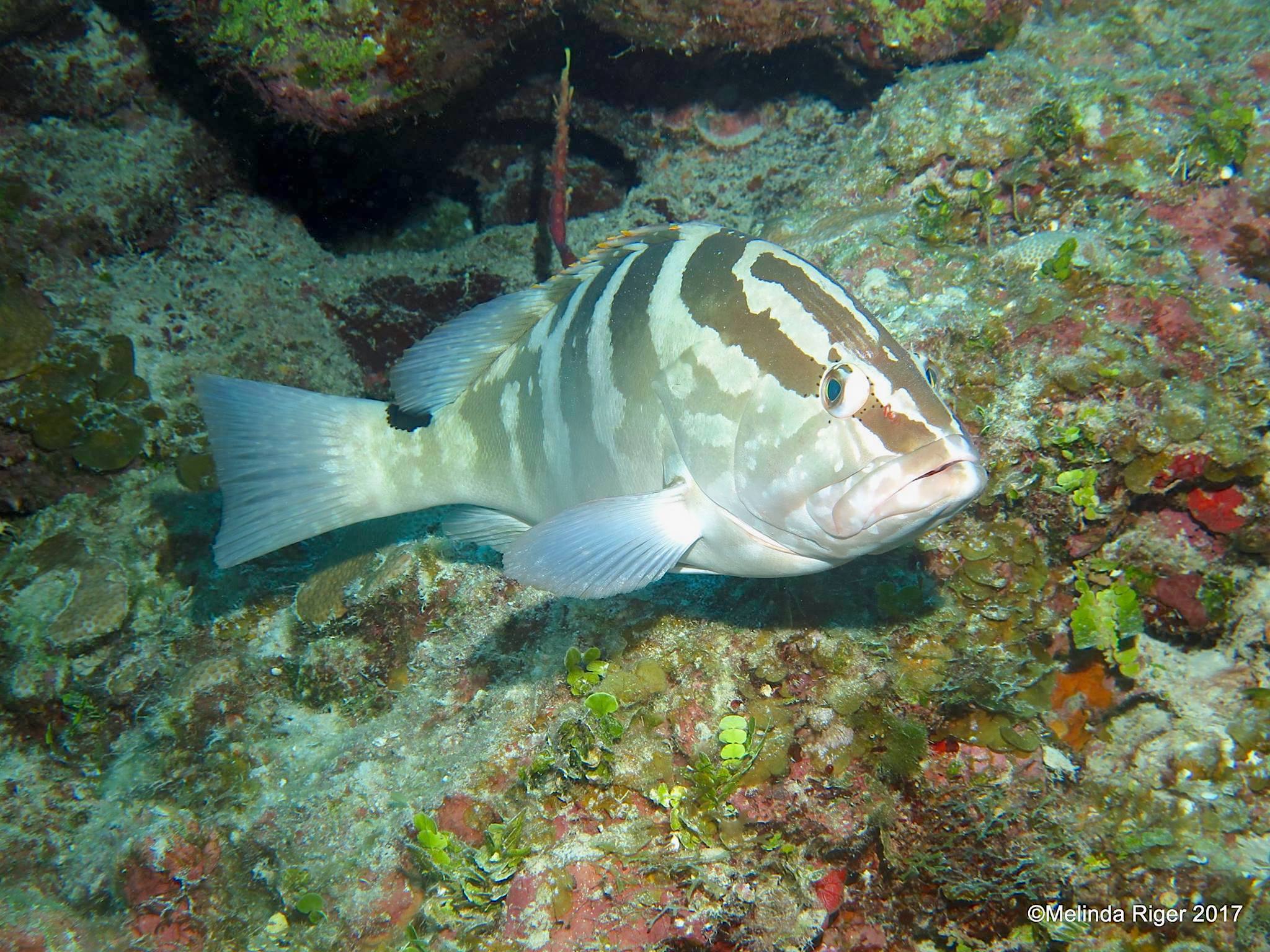
Nassau Grouper (Melinda Riger / Grand Bahamas Scuba)

The Nassau grouper Epinephelus striatus is just one of a number of grouper species that inhabit Bahamian waters. They are mostly found in the Northern Bahamas but only the Nassau grouper is on the IUCN Red List as an Endangered Species in need of protection.

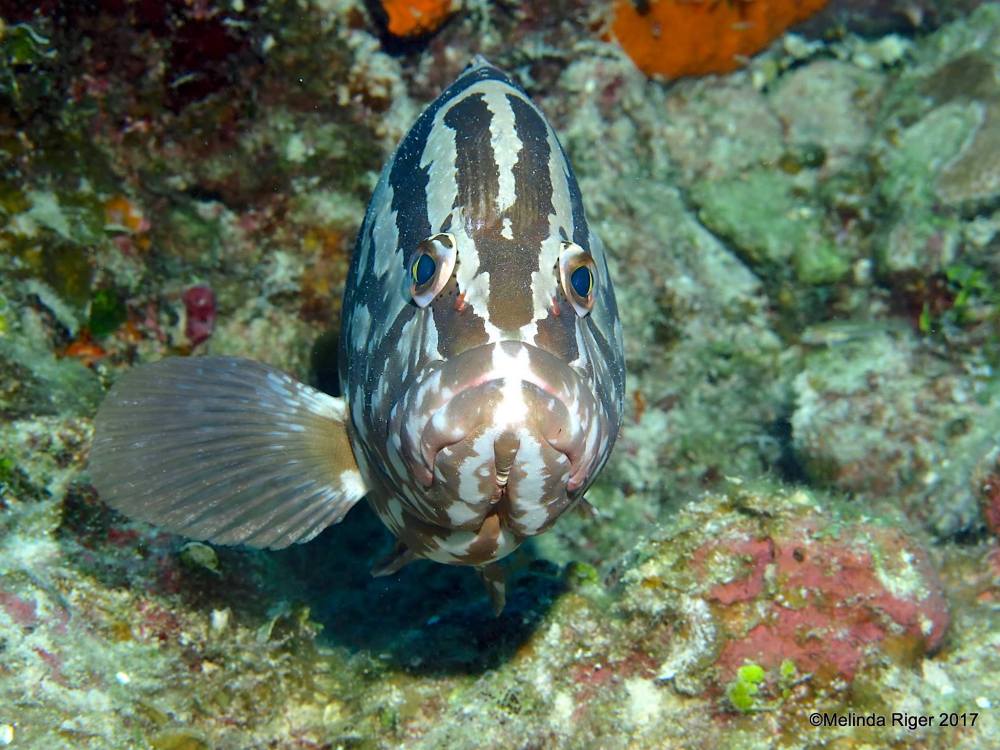
Nassau Grouper (Melinda Riger / Grand Bahamas Scuba)

WHY ARE THESE FINE FISH ENDANGERED?

Sad to say, mankind is the main cause of the population fragility that has led to the official listing, and the imposition of a strict closed season for 3 months between December 1st and February 28th. Scientific studies have shown that commercial overfishing has reduced a thriving population to fewer than 10,000 mature fish. That may sound plenty to be going on with… until you consider that a net annual loss of only 10% would lead to extinction in a decade.

Nassau Grouper Infographic (Royal Defence Force)

10 CONVENIENTLY COLLECTED NASSAU GROUPER FACTS TO PONDER

  • An adult can grow to more than a metre long, and weigh 25 kg
  • They tend to be solitary daytime feeders, eating small fish & crustaceans
  • Their large mouths are use to ‘inhale’ or suck in prey
  • The colouring of an individual can vary from red to brown
  • These fish have little black spots around the eyes (I’ve no idea why).
  • Their habitat is in the vicinity of coral reefs, from shallows to 100 m deep
  • Spawning occurs in Dec & Jan during a full moon
  • Large numbers gather in a single location to mate in a mass spawning
  • These groupers are slow breeders, which compounds the overfishing problem
  • They are easy mass targets at spawning time; hence the need for a closed season

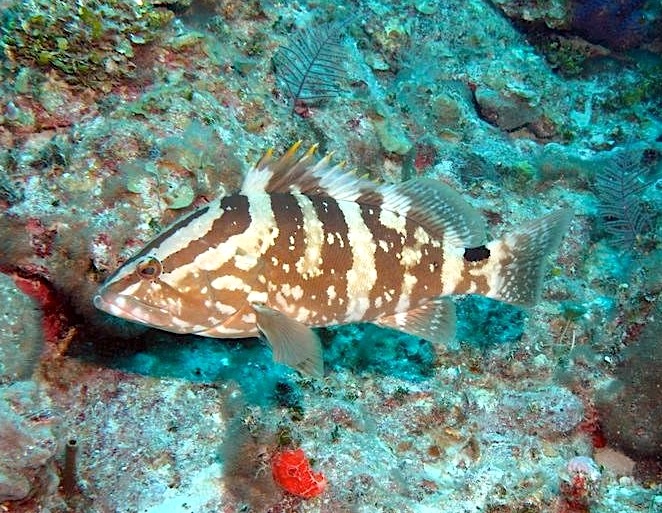
Nassau Grouper (Melinda Riger / Grand Bahamas Scuba)

Department of Fisheries information sheet (interesting if you have the time)

A Nassau Grouper glumly contemplates the possibility of extinctionNassau Grouper (Melinda Riger / Grand Bahamas Scuba)

RELATED POSTS

BLACK GROUPER

TIGER GROUPER

RED HIND

NASSAU GROUPER 1

CLEANING STATIONS

Nassau Grouper (Melinda Riger / . Grand Bahama Scuba)

Credits: all photos, Melinda Riger; Infographic by Royal Defence Force (tip o’ the  hat to Char Albury); Info Sheet, Dept of Fisheries

Unknown's avatar

BARN OWLS ON ABACO, BAHAMAS


Barn Owl, Abaco Bahamas (Woody Bracey)

Barn Owl, Abaco, Bahamas (Woody Bracey)

BARN OWLS ON ABACO, BAHAMAS

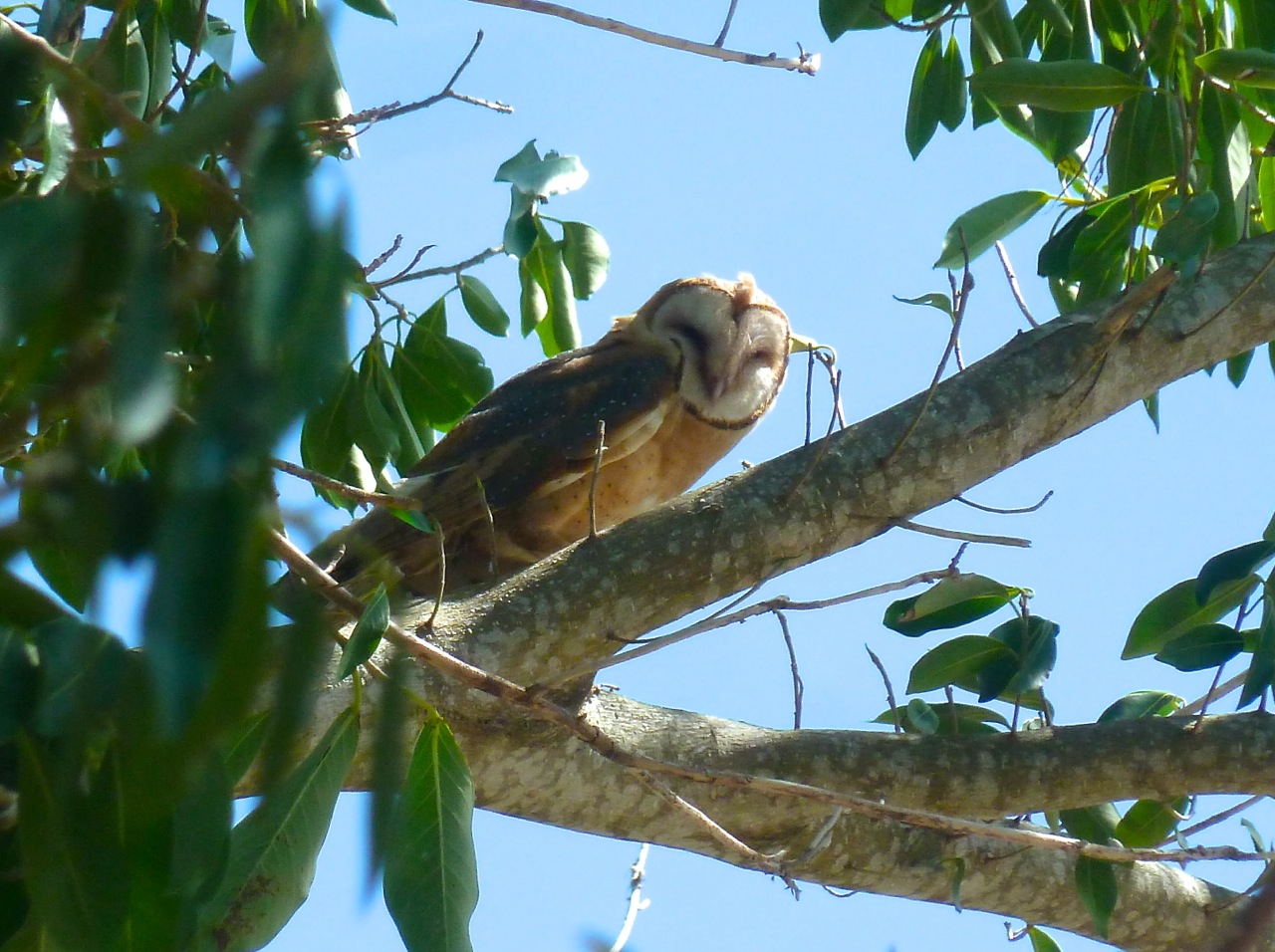
The Barn Owl (Tyto alba) is the only owl you are likely to see – and hear – on Abaco. The species is permanently resident, which is a good start in that sighting opportunities exist year-round. Although they are not at all common they can be found in particular locations, for example around Treasure Cay and Little Harbour; also on Elbow Cay, Lubbers Quarters (4 birds right now) and Man-o-War Cay (a while back). There are two other owl species recorded for Abaco: the rare Burrowing Owl (see link below for details); and the Northern Saw-whet Owl, a vanishingly rare vagrant recorded a handful of times that I don’t propose to feature unless and until it decides to visit Abaco more frequently…

Barn Owl (Birdorable)

I wrote about Barn Owls on Abaco many moons ago. I don’t usually rehash previous posts, but I am returning to the topic because of a recent barn owl sighting on Elbow Cay that caused interest, excitement and some speculation. 

Barn Owl, Treasure Cay, Abaco Bahamas (Becky Marvil)

Barn Owl, Treasure Cay, Abaco Bahamas (Becky Marvil)

The shrill wheezing cry of the Barn Owl – known in some places as the ‘screech owl’ (which, strictly, is a different owl species) – is unmistakeable. Barn owls also make an intimidating hissing noise. Mainly nocturnal, they fly noiselessly like white ghosts in the night. If you are lucky enough to see one in the daytime, you’ll be struck by the beautiful heart-shaped face and (if close enough) the delicate markings.

 Patrik Aberg Xeno-Canto

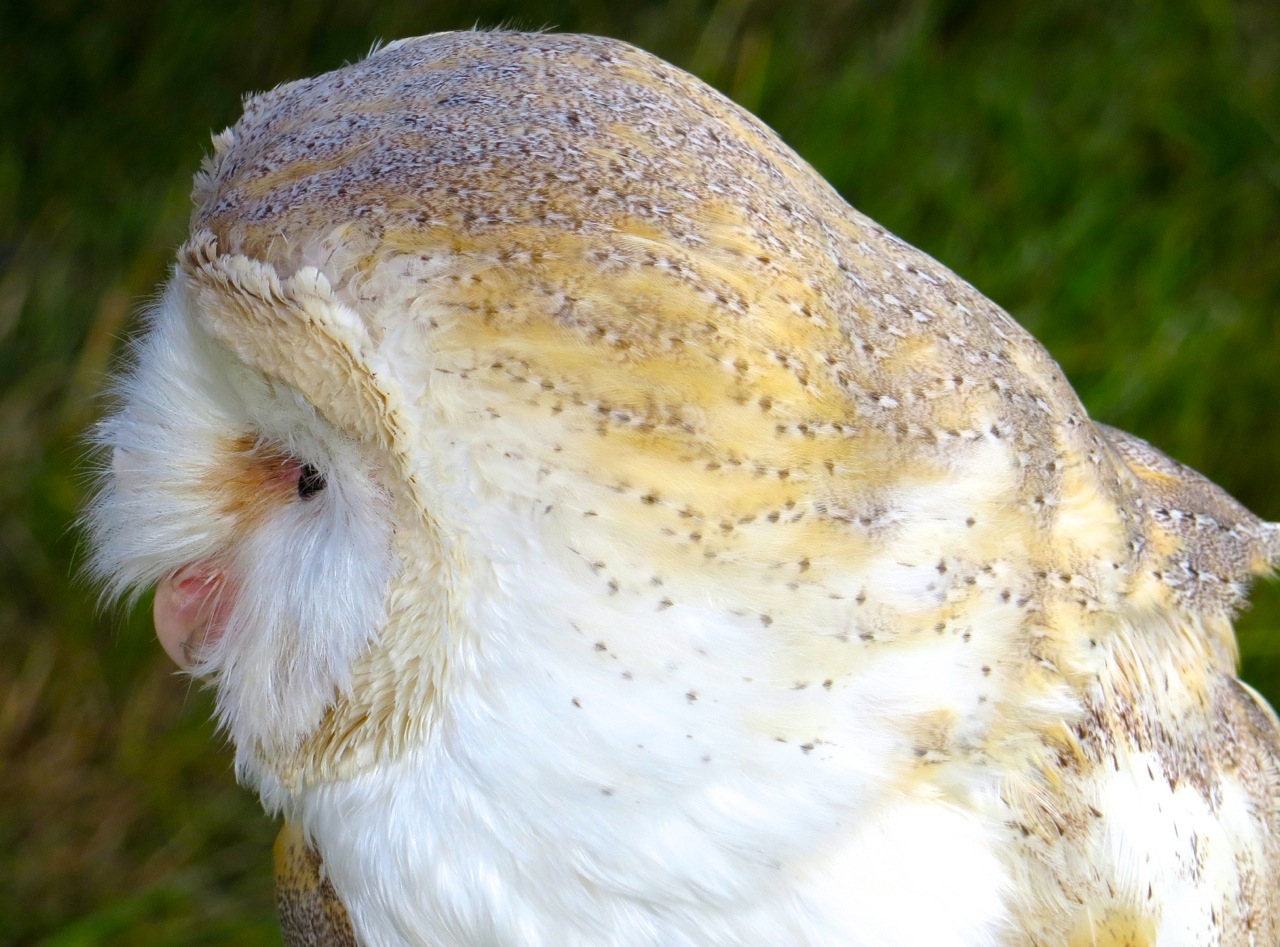
Both photos above were taken on Abaco. Woody Bracey’s header image is featured inTHE BIRDS OF ABACO“. Becky Marvil’s photo was taken near Treasure Cay. I’ve never seen a barn owl on Abaco, but  I’ve been lucky enough to get close to them in the UK. For those who have never seen one, here are a few of my own images that show what wonderful birds they are. They were photographed at a raptor rescue centre, so I am not going to pretend that these shots were taken in the wild. That would never do. 

Barn Owl (Keith Salvesen)Barn Owl Dorset (Keith Salvesen) Barn Owl Dorset (Keith Salvesen)Barn Owl 4 (Keith Salvesen)

This close-up of the barn owl above shows the typical speckling on its pure white front, and the beautiful wing patterns. Amazingly for such a large bird, an adult weighs a mere 350g or so. As a comparison, The Birds of Abaco book weighs 2kg!

Barn Owl close-up (Keith Salvesen)

This fluffy baby barn owl had been rescued and was being cared for in a sanctuary before being returned to the wild. Whimsy is rarely permitted  in this blog, but seriously, folks – cuteness overload!Barn Owl 6 (Keith Salvesen)

RELATED POSTS

 OWLS OF ABACO (2) – BURROWING OWLS

BURROWING OWLS ON ELBOW CAY

Credits: Woody Bracey, Becky Marvil, Keith Salvesen, Patrik Aberg /  Xeno-Canto (audio), RSPB (video), Birdorable (Cartoon)

Unknown's avatar

BAHAMAS REEF FISH (39): YELLOWTAIL DAMSELFISH


Yellowtail Damselfish (©Melinda Riger / Grand Bahama Scuba)

BAHAMAS REEF FISH (39): YELLOWTAIL DAMSELFISH

Yellowtails are just one of several damselfish species in Bahamas waters. These small fish are conspicuous not just for the bright tails that give them their name. More striking if anything – especially if seen underwater in sunlight against the coral – are the electric blue spots visible in both adults and juveniles.

Yellowtail Damselfish (©Melinda Riger / Grand Bahama Scuba)

The body of adults is dark blue to brownish to almost black 

The body of juveniles is blue

Yellowtails are a common and widespread variety of damselfish. They have a limited ability to change colour according to their surroundings, but with their bright tails and luminous blue flecks, it’s hard to see how they can look, to a predator, anything other than a tasty snack.

I have enjoyed seeing these little fish at Fowl Cay Marine Preserve, Abaco. The reef there makes for easy and rewarding snorkelling, with a wide variety of small and medium-size reef fishes to be seen. It’s an expedition I would definitely recommend to anyone wanting to see a healthy and active reef in a completely natural protected area.

I found that a video I took with a tiny camera was sadly of use only to myself. No one else would be able to make anything out due to the marked camera shake. Novices, huh? You are spared that: here’s a brief example of yellowtails swimming instead, showing the difference between juveniles and adults.

Credits: all photos, Melinda Riger / Grand Bahama Scuba; video from Desert Diving

Unknown's avatar

‘RAISE AWARENESS’: SPOTTED EAGLE RAYS


Spotted Eagle Rays, Abaco, Bahamas (Gabrielle Manni)

Spotted Eagle Rays – Abaco, Bahamas

‘RAISE AWARENESS’: SPOTTED EAGLE RAYS

Mention of rays may conjure up thoughts of the familiar southern stingrays that populate the bright shallows and colourful reefs of the Bahamas. But there are other ray species out there gracefully patrolling the coral reefs – and one of these species is the spotted eagle ray (Aetobatus narinari).

Spotted Eagle Rays, Abaco, Bahamas (Catherine / Tara Pyfrom)

These fish (for that is what they are) are not uncommon. In fact they are found in tropical oceans worldwide (though there is a taxonomic distinction between the Atlantic version and the Pacific / Indo-Pacific ones). Note the concentration in the Caribbean sea.

Spotted Eagle Rays, Grand Bahama, Bahamas (Melinda Riger / GB Scuba)

Spotted eagle rays obviously have spots, but they are not notably eagle-like to look at. In fact, their snouts resemble a duck’s bill, and in some place they are less glamorously known as the duckbill ray. The ‘eagle’ part relates to the way in which they use their wings and appear to be soaring as they glide effortlessly through the water (see videos below).

Spotted Eagle Rays (Lazlo-photos Wiki)

Despite their global presence, these rays are categorised as ‘near-threatened’ on the IUCN Red List. Aside from vulnerability to predators including many types of shark, the rays may be caught as bycatch. In some areas they suffer entanglement in shark nets. And unsurprisingly there is a trade for them for large commercial aquariums. For the Atlantic species, Florida has taken a lead by banning fishing for, landing, buying or trading in spotted eagle rays. 

Spotted Eagle Rays, Abaco, Bahamas (Gabrielle Manni)

10 ESSENTIAL FACTS ABOUT SPOTTED EAGLE RAYS

  • They have 2 – 6 venomous barbed spines at the base of the tail
  • Adults are among the largest rays, with a 10 ft wingspan
  • They can leap clear of the water, and may do this more than once at a time
  • Occasionally they land in boats, to the consternation of all concerned
  • Their main diet is small fish and crustaceans, & sometimes octopuses
  • Their broad snouts are used to dig food out of the seabed as they forage
  • The rays are basically shy but may be curious of divers & snorkellers
  • They suffer from parasites, both externally and in their gills
  • Ray sex is quite physical, yet actual mating is brief (up to 90 secs…)
  • The female hatches her eggs internally, then her ‘pups’ are born live a year later

SPOTTED EAGLE RAY PUP


Spotted Eagle Ray (John Norton Wiki)

 VIDEO SHOWCASE
These 3 short videos demonstrate the grace and beauty of spotted eagle rays as they glide elegantly around the reefs. The first (50s) was taken off Grand Bahama by Fred Riger (Melinda’s husband, for those who follow the underwater forays hereabouts); then one by Stephen Dickey (2:12) ; and finally one from Wildscreen Arkive (2:00).

WEIRD CREATURE CORNER

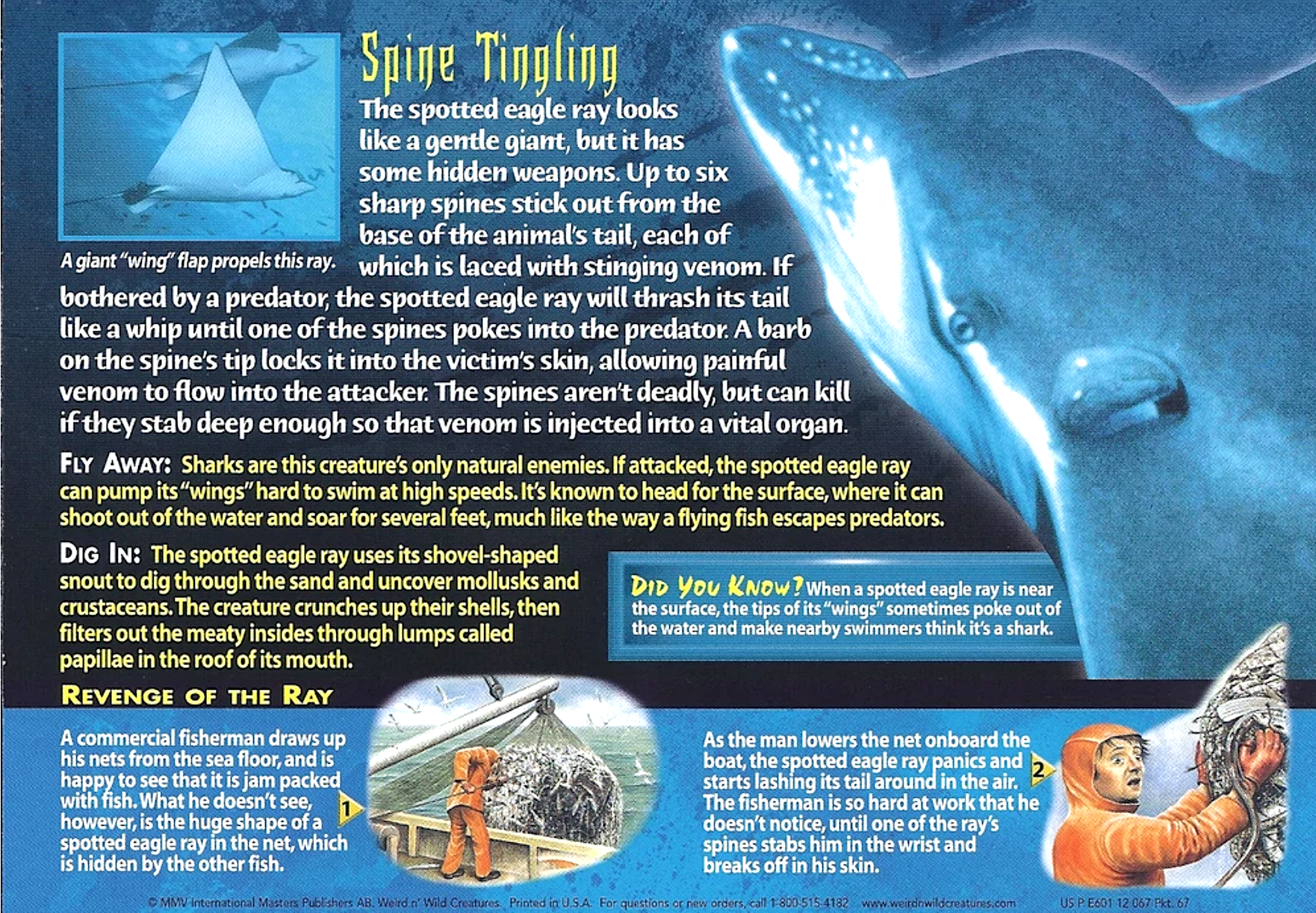
I have a lot of time for these cards produced by ‘Weird ‘n’ Wild Creatures’. In their unique style they are simple, educative and often give information nuggets not found elsewhere. The link is to their 4th series, Monsters of the Deep.


Photo credits: Gabrielle Manni (1), (5); Catherine & Tara Pyfrom (2); Melinda Riger / Grand Bahama Scuba (3); Lazlo-photos Wiki (4); Wiki (baby ray thumbnails); John Norton Wiki (6); Jacob Robertson Wiki (7); Weird ‘n’ Wild Creatures – card images. Videos as credited in text.

Spotted Eagle Ray, TCI (Jacob Robertson, Wiki)
Unknown's avatar

AN ‘EXHILARATION’ OF ABACO DOLPHINS


Bottlenose Dolphins, Abaco Bahamas (BMMRO)

AN ‘EXHILARATION’ OF ABACO DOLPHINS

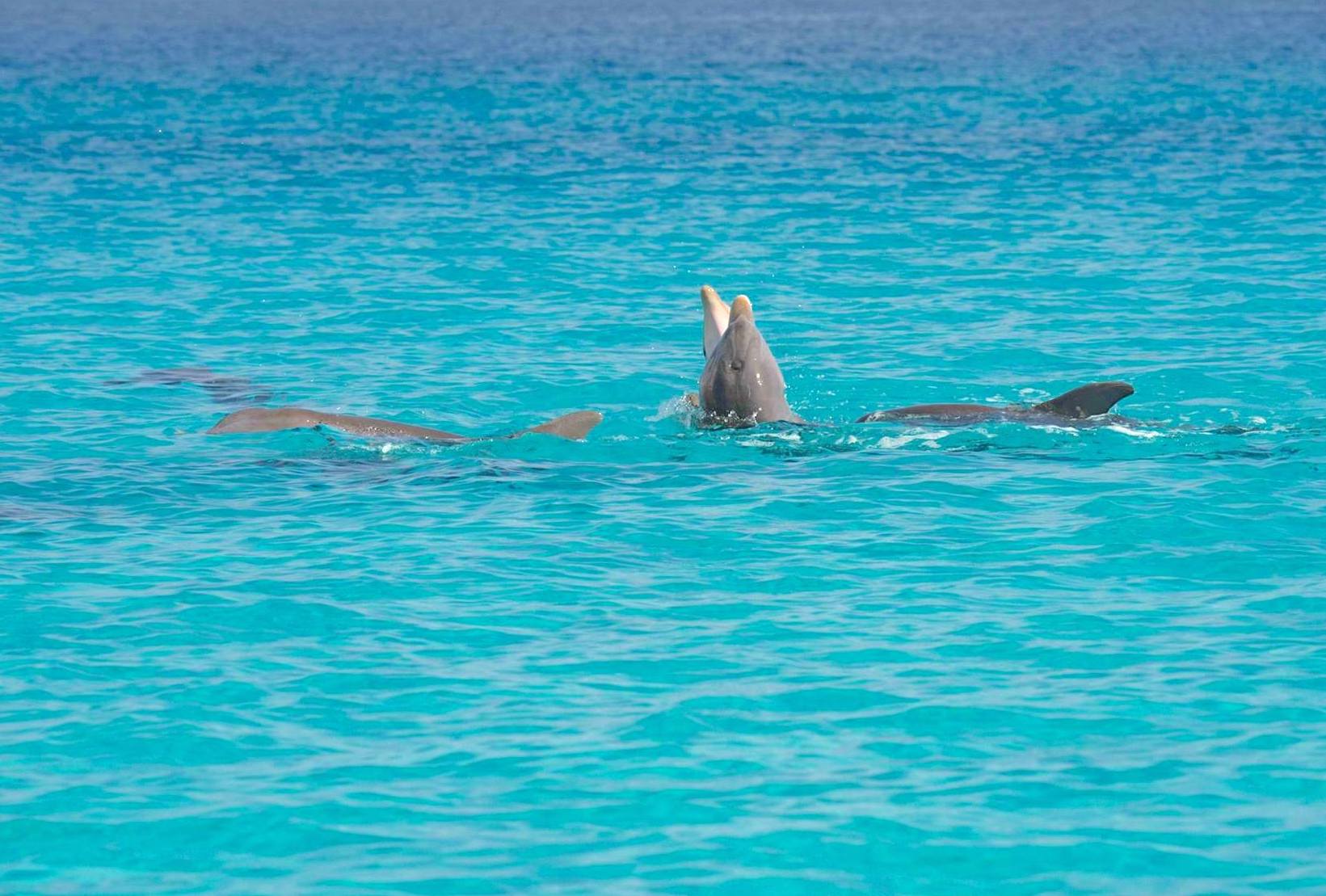
Bottlenose dolphins! Tursiops truncatus! These engagingly playful show-offs of the inshore waters round Abaco are 99.99% adorable**. It’s been a harrowing few weeks in the western Atlantic, and everyone is hoping that the 2017 hurricane season has had enough of causing death and destruction over vast swathes of vulnerable islands and on the US mainland. Some cheer is needed.

Bottlenose Dolphins, Abaco Bahamas (BMMRO)

Dolphins are good for the soul. And if you are out on a boat watching them – and especially tracking them for a whole day – every encounter reinforces the impression that all the leaping, bow-wave riding, boat under-swimming, and general sociability and interaction is often as much for sheer enjoyment as anything else. 

Bottlenose Dolphins, Abaco Bahamas (BMMRO)

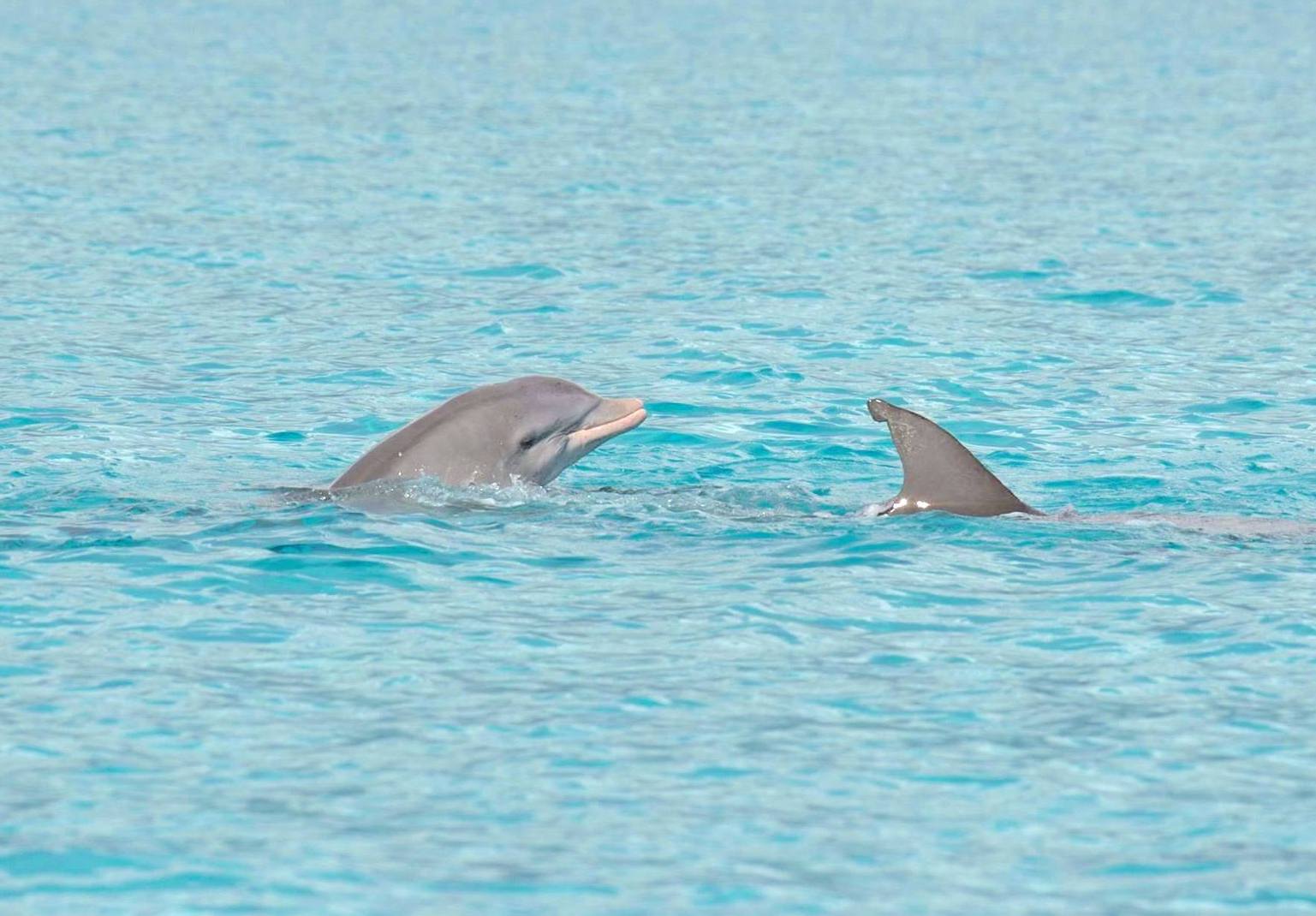
Abaco is fortunate in having the HQ of the Bahamas Mammals Research Organisation (BMMRO) based at Sandy Point. That just happens to be an excellent area for bottlenose dolphin spotting in the turquoise shallows. Many sightings are made within clear sight of land. Further south, where the bright blue gives way to darker and deeper water, live the equally frolicsome Atlantic spotted dolphins. The 3 photos above were all taken on the margins of where the colour of the sea changes from light to dark.

Bottlenose Dolphins, Abaco Bahamas (BMMRO)

I’m a bit of a collector of collective nouns. For dolphins, apart from the matter-of-fact ‘group’ or ‘pod’, there is no exotic word to describe a number of them when they are having fun. No equivalent of ‘exaltation’ (larks), ‘charm’ (goldfinches) or ‘parliament’ (owls). So I’m nominating an ‘exhilaration’ as a candidate to fill the gap…

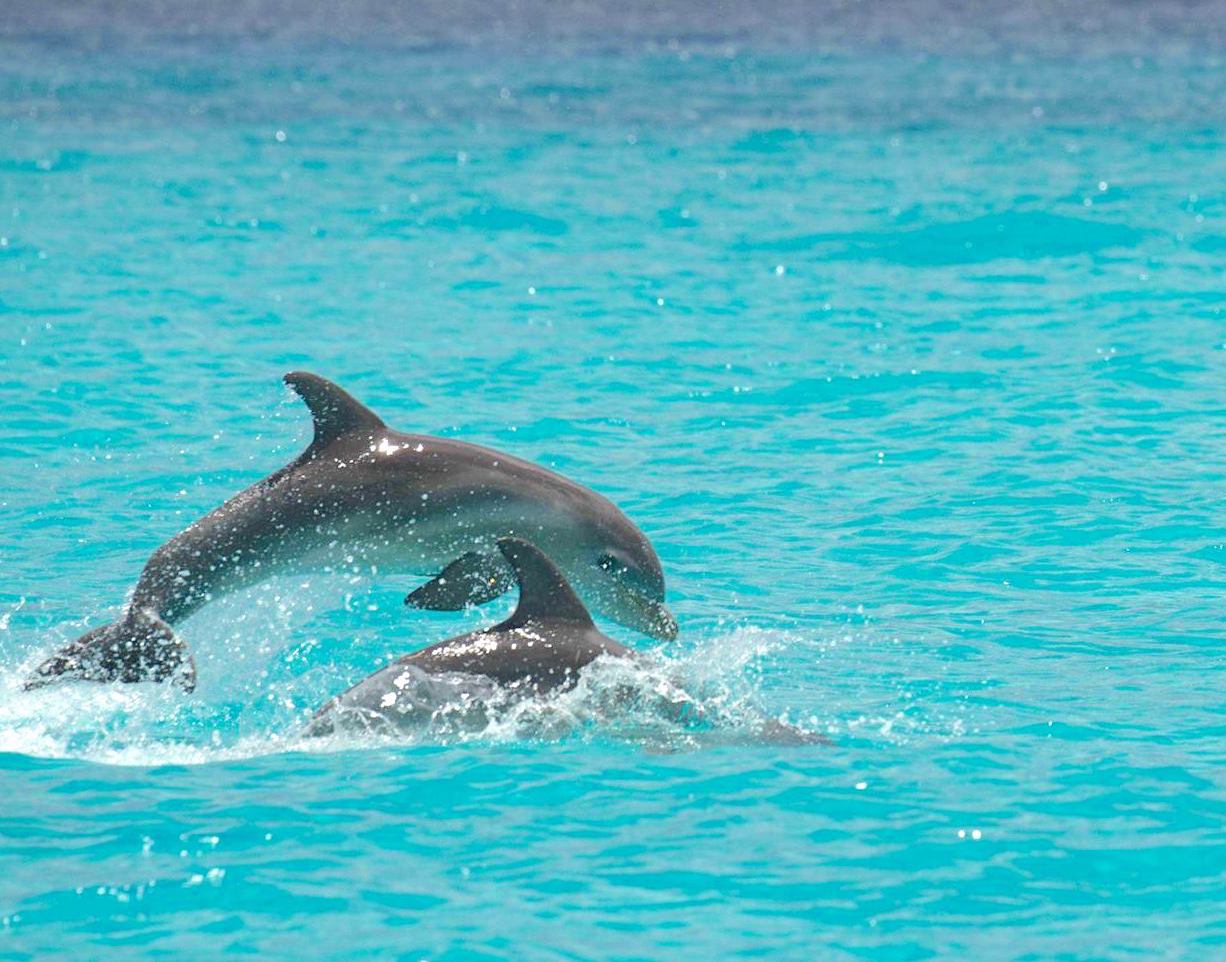
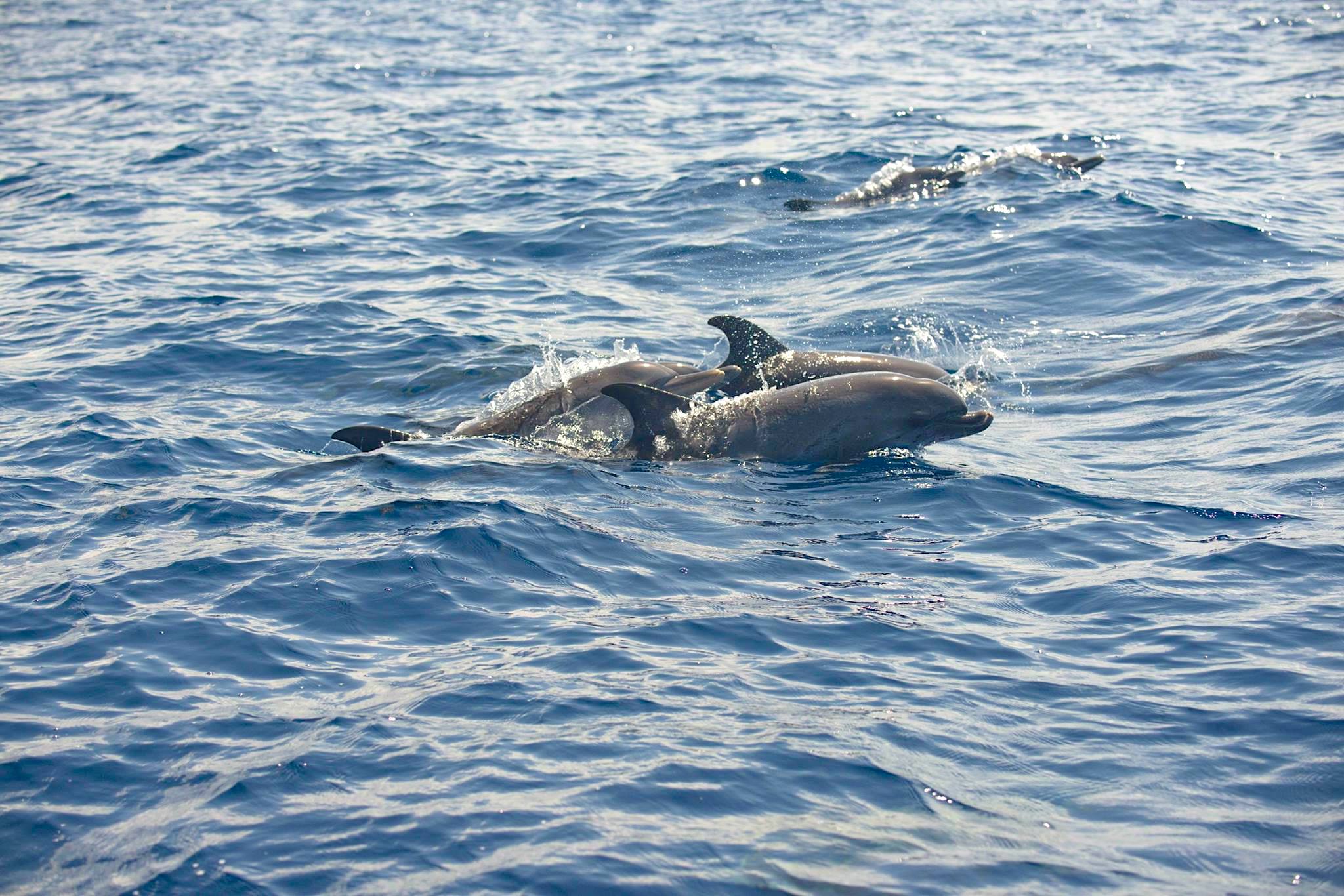
The photo above shows clearly how individual dolphins can be identified by researchers. All tend to have scars or tears to their dorsal fins that enable them to be distinguished. The closest has distinctive scars near the tip. The furthest has a W-shaped nick at the back. In fact, it could even be Rocky, a well-known dolphin on Abaco that has been sighted over many years. There are regular reports annually. I saw him myself once, in 2012, playing about in Hopetown harbour. 

STOP PRESS To demonstrate how the ID methods work, I’ve now cross-checked with the BMMRO photo ID archive. Here is Rocky’s original dorsal fin ID image (“Tt15”) from October 2010. There’s a W-shaped nick, sure, but my speculation above was wrong because overall the two fins are clearly different…

Rocky the Dolphin Tt15, from BMMRO ID photo archive

** The 0.01%? Dolphins may, rarely, be alarming for divers in circumstances I won’t repeat here (hint: to do with over-friendliness, ok? Yes, the thing that dogs do)

Credits: all photos BMMRO – and taken in the last 2 months

Unknown's avatar

HURRICANE MARIA: TRACKING UPDATE for SEP 20th (Abaco, Bahamas)


HURRICANE MARIA: TRACKING UPDATE SEP 20th

Abaco, Bahamas

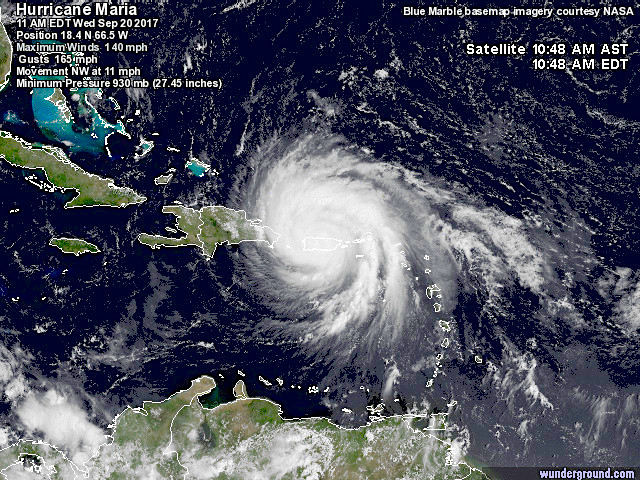
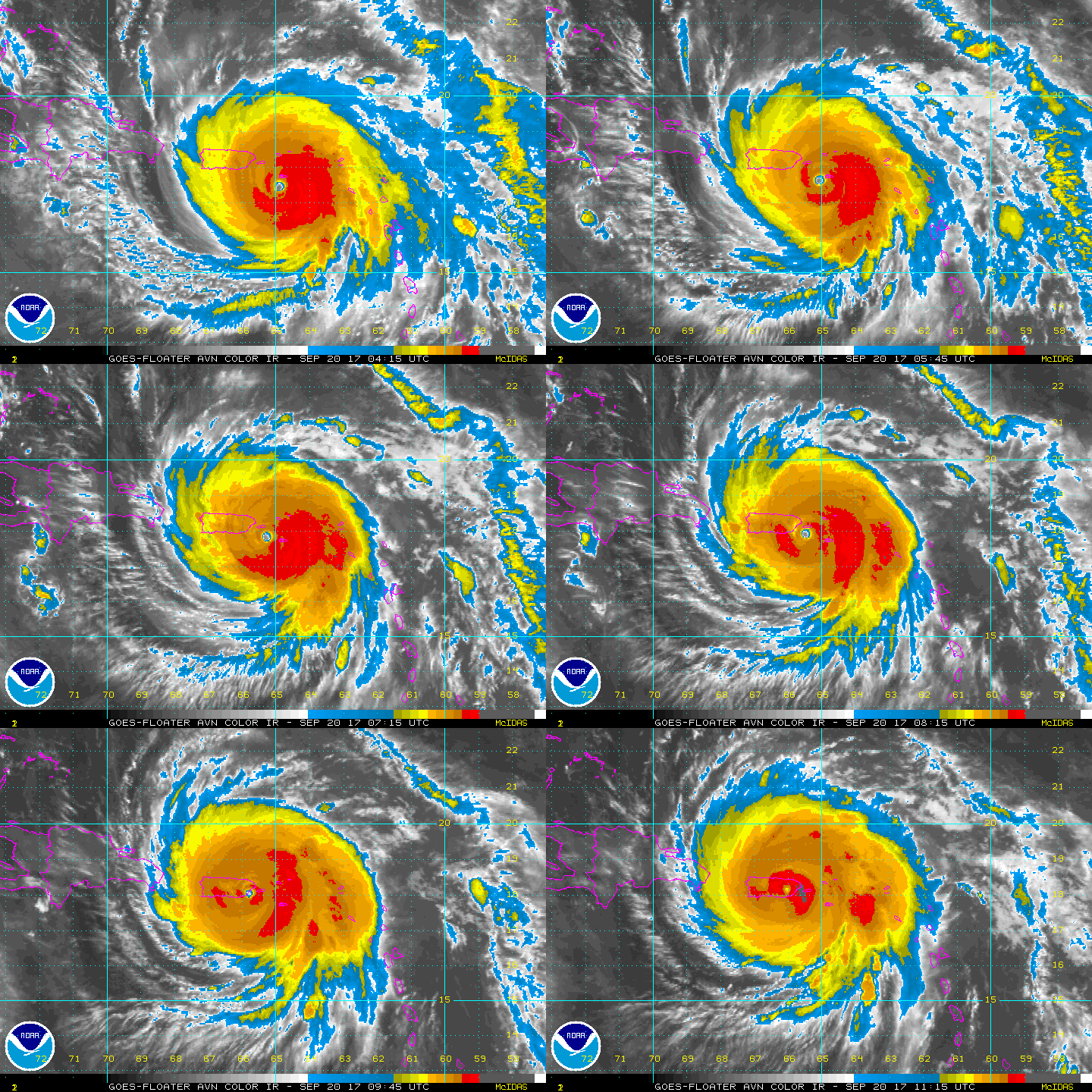
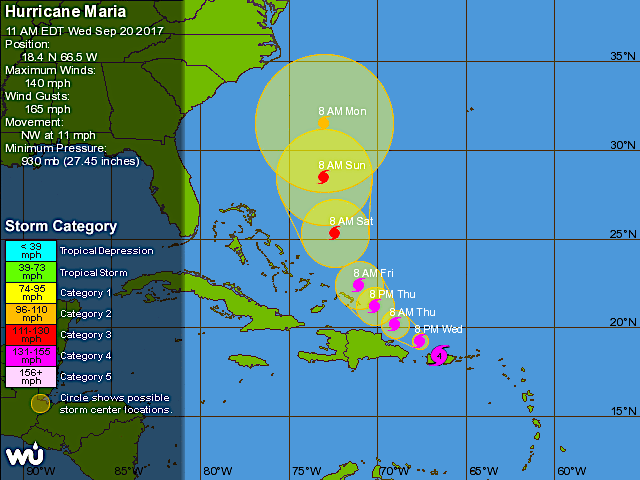
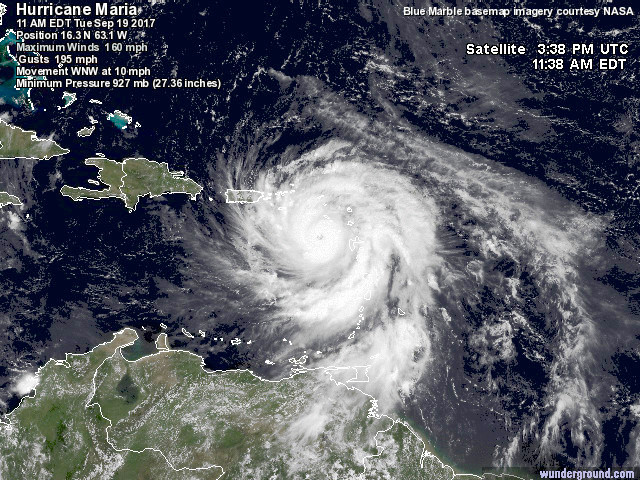
Hurricane Maria is currently passing over Puerto Rico as a Cat 4 on the Saffir-Simpson Scale. The big question for those to the north-west in general and (for this blog) Abaco in particular is, has the storm’s swerve to the east continued? And it’s now clear that the tendency has indeed been maintained. This means that today, more of the Bahamas Islands are now free for now from the cone of the predicted path. Here are the latest trackers for 11.00 am EDT today.

CURRENT POSITION

PREDICTED PATH

For the Abacos, the situation continues to improve for the moment at least. It’s certainly way too soon to be sure, but right now the outlook is good. And of course, Abaco may still experience a buffeting as the storm gradually progresses to the east. 

LOOKING FORWARD

Here is an estimate – and only that – of the position of Maria in relation to Abaco on Saturday Sep 23 at noon, if the current course holds. It will be a close shave, for sure.

Credits: NOAAW / GOES; GOES East; NASA; Wunderground; Accuweather; NOAA / NHC; Windy.com STAY SAFE

Unknown's avatar

HURRICANE MARIA: TRACKING UPDATE SEP 19th (Abaco, Bahamas)


HURRICANE MARIA: TRACKING UPDATE SEP 19th

Abaco, Bahamas

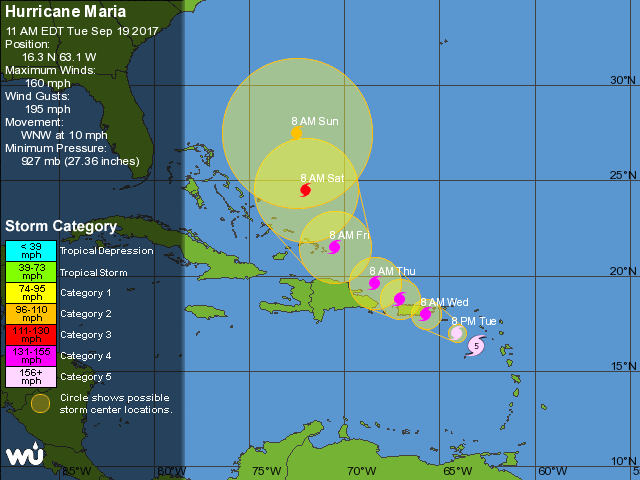
In the life of a massive Cat. 5 hurricane, a lot can happen over 24 hours. One source reports ‘mind-boggling devastation’ on Dominica. Other islands on the storm’s path are braced for their own tragedies for their populations, many still reeling from the passage of Irma just 2 weeks ago. Here are the latest trackers for 11.00 am EDT today; and a calculated prediction for the position on Friday midnight.

CURRENT POSITION

PREDICTED PATH

The first thing to note is that (after a slight drop in wind speed) the storm has now intensified to become Cat. 5. In due course wind speeds are expected to reduce gradually, as shown, but of course it won’t necessarily turn out that way.

For the Abacos, however, the situation is notably better that this time yesterday, when the islands were squarely with the cone (though not right at the centre). However the distinct tendency of Maria to hook right / east that was evident yesterday has increased to the extent that Abaco – and indeed the northern Bahamas – is no longer within the cone. Much the same happened with Irma. Both sources below show a similar prediction. Again, it won’t necessarily turn out that way, but there’s at least some encouragement for a better outlook. And of course, this does not mean that Abaco won’t get some heavy weather as Maria moves on…

LOOKING AHEAD

I’ve used a realtime tracker and moved it forward along its timeline to midnight on Friday. I’ve centred the prediction on South Abaco (white circles). There’s plenty of scope for the course to alter in the meantime, but the model suggests the main storm will progress mainly to the east of the Bahamas – and if the veer continues, then the more so for the northern islands. But remember – the predictions are just that and no more…

Credits: NOAAW / GOES; GOES East; NASA; Wunderground; NOAA / NHC; Windy.com STAY SAFE

Unknown's avatar

HURRICANE MARIA 2017: TRACKING THE NEW THREAT


HURRICANE MARIA 2017: TRACKING THE NEW THREAT

‘A PROBLEM LIKE MARIA’ feat. ‘DROP OFF THE QUAY, LEE’

It never rains, but it pours. Sometimes doubly so. Just as those so cruelly affected by Irma are beginning to deal with the trail of terrible damage and destruction of the huge hurricane, so another storm, Maria, approaches along a similar path. This has now been upgraded from a tropical storm to a Cat. 1 hurricane, and is expected to continue to pick up intensity.

The trackers below were all updated early this morning. The good news is that Lee is forecast to break up and dissipate. So at the moment, that threat can probably be discounted. Maria, on the other hand, is one to watch with eagle eyes: already on course to reach the Leeward Islands today, then expected to intensify and probably reach the Virgin Islands and Puerto Rico as a Cat 3 or 4 hurricane by Wednesday. After that, the storm looks set to pass Hispaniola and may hit the Turks and Caicos by Friday unless there’s a more significant hook to the right along the way. Beyond that, the Bahamas…

You may wonder why I put in 3 or 4 trackers of the many that are out there. It’s because they each present the information in a slightly different way. Some are easy to interpret; some are overloaded with info or otherwise confusing; some seem to me to be less accurate. The ones here are the ones I have used and found useful (= clear and reliable) since 2011, Hurricane Irene…

OPTIONAL MUSICAL DIGRESSION

I initially decided to omit my usual OMD, often added when a relevant song gets name-checked hereabouts. Then I rethought it. I’m not meaning to be frivolous nor to downplay the seriousness of extreme weather events on all those so badly affected.  But on the other hand, there are a few things that can lighten the spirit, albeit briefly. A really well put together song with clever lyrics is one such. Get rid of the squall, Paul; Drop off the quay, Lee; Just sing ‘see ya, Maria’; 

Credits: NOAAW / RAMMB / GOES; GOES East; Wunderground; NOAA / NHC; Paul Simon

Unknown's avatar

HURRICANE IRMA AFTERMATH: ABACO’S SIDESWIPE(S)


Hurricane Irma, Abaco

HURRICANE IRMA HITS CHEROKEE, ABACO, BAHAMAS

HURRICANE IRMA AFTERMATH: ABACO’S SIDESWIPE(S)

Hurricane Irma barrels on northwards as Florida begins to count the cost.  Abaco has had its turn to experience the awesome power of this brute of a storm. Or make that turns (plural) because such a massive storm 400 miles across, spiralling longs strands of filthy weather outwards with centrifugal menace, can strike more than once as the main storm passes further off.

Hurricane Irma, Abaco

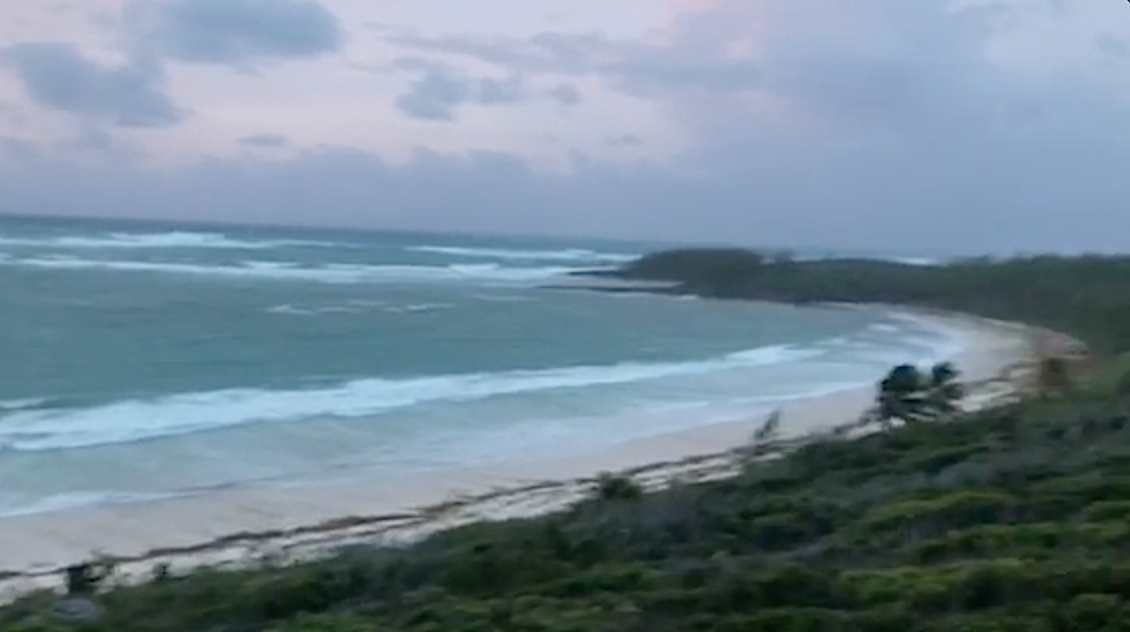
Thanks to the relatively late shift of the storm’s path to the west, there was no direct hit on Abaco (as was once forecast). High winds and heavy seas, but none of the cruel devastation elsewhere that we have all been watching and reading about with horror and sympathy for the victims.

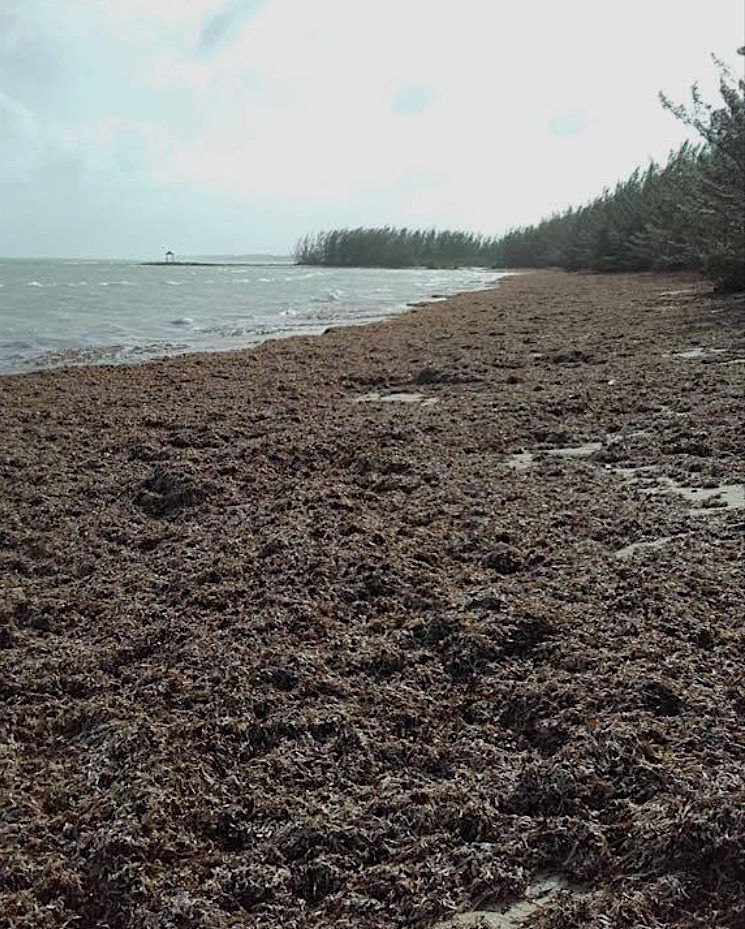
Seaweed covering the beach at Casuarina, AbacoHurricane Irma, Abaco

By Saturday evening, relieved messages were already being posted. Later, an official statement confirmed limited harm and damage. The airport was reopened. Albury’s Ferries announced the forthcoming resumption of services. Gradually, the overall picture took shape as more reports and messages came in from the mainland and the cays.

Tahiti Beach, Elbow Cay, Abaco

At Delphi, Jason confirmed that the worst of the storm passed quite quickly and that there was no structural damage, though doubtless the gardens have taken a beating – a minuscule inconvenience comparatively.

Hurricane Irma, Abaco    Hurricane Irma, AbacoHurricane Irma, Abaco

By yesterday morning, the only area I hadn’t seen anything about was the west side of Abaco – Sandy Point. Might things have been different -perhaps worse –  on the west coast? Then I heard from BMMRO HQ that the situation was much as elsewhere. The whales and dolphins of the Bahamas will continue be researched when the boat can put out to sea…

Atlantic Spotted Dolphins seen off Abaco before Irma came alongAtlantic Spotted Dolphins, Abaco, Bahamas (BMMRO)

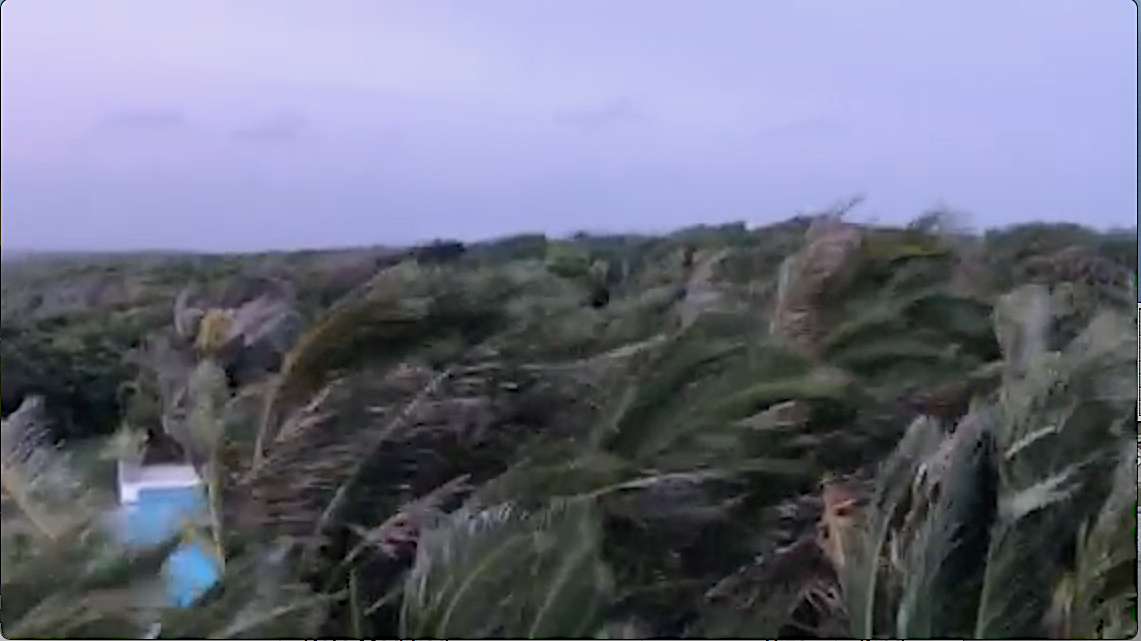
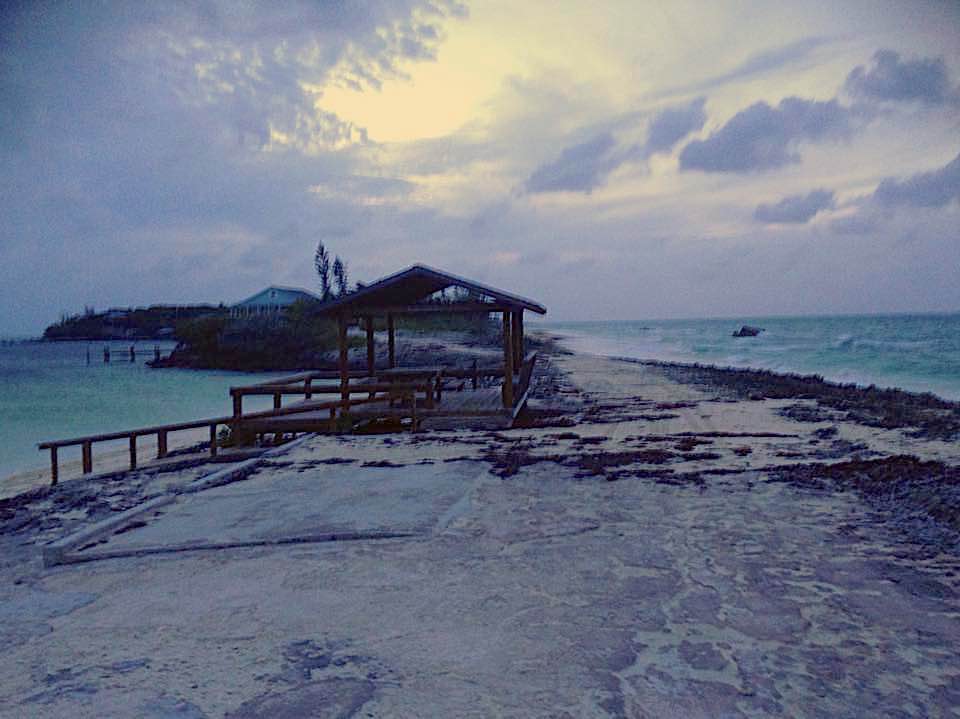
Like the aftershocks of an earthquake, bouts of high winds and huge gusts have continued to pass over; and in places the sea has been sucked out from the beaches. There have been outages of course (not a novel experience even in calm times); and I’ve seen reports of interruption with water supplies. But I think it can be said that Abaco has escaped quite lightly – and certainly in comparison with the terrible devastation elsewhere.

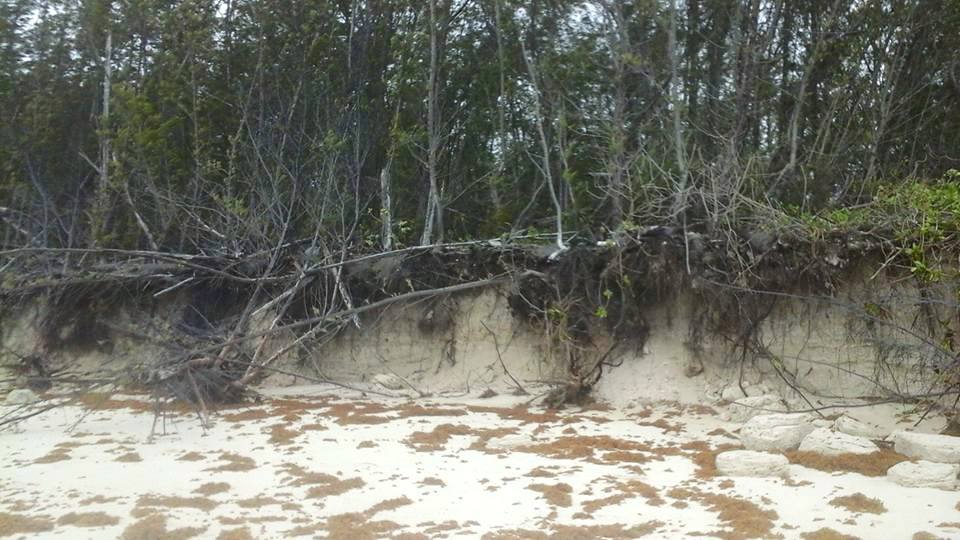
Roof tiles have been lost, but there seems to have been limited structural damage. Trees have been trashed of course, and there has been plenty of beach erosion. Many beaches have been smothered in seaweed. But all-in-all, Abaco has fared alright, which is not to say that people’s thoughts have been absent from those who have taken the hit and borne the brunt of Irma’s rage.

Bahama Palm Shores, Abaco

The Low Place, Man-o-War Cay

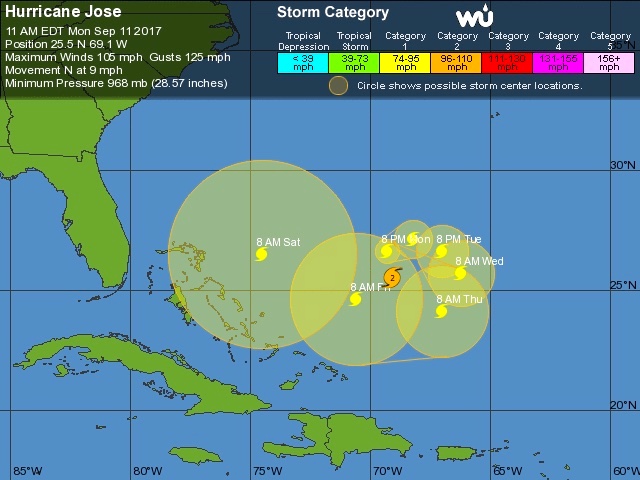
WHAT ABOUT HURRICANE JOSE?

The tracking for this pursuer of Irma has appeared to show the storm going round in circles in mid-Atlantic. Until quite recently. This morning’s prediction shows a determined move to the west towards the end of the week. One to keep a very close eye on still.

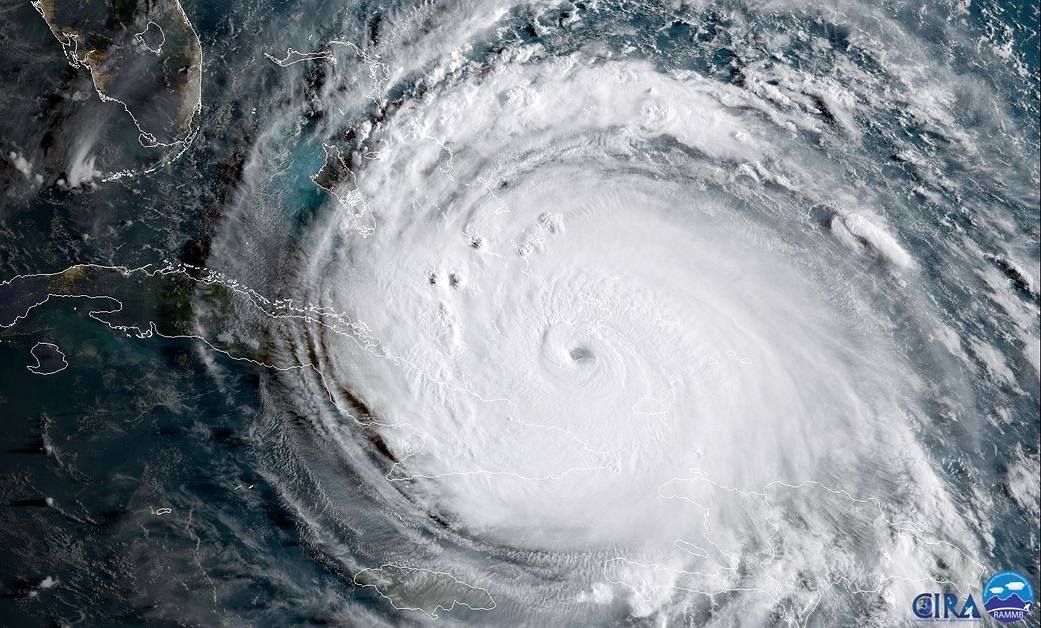
WHAT ARE THE VIEWS FROM SPACE RIGHT NOW?

NASA-NOAA’s Suomi NPP satellite: night-time view of Irma over Florida

NASA / GOES East satellite: daytime view of the storm moving north over Florida

Credits: Karen Eldon (1); Olivia Patterson Maura (2, 9, 10); Andrea Janeen Sands Albury (3); Abaco Buzz (4); Jason Prangnall (5, 6); Dive Abaco (7); BMMRO (8); Beth Nace (11, 12, 13); Charmaine Albury (14); Wunderground for the Jose Tracker; NASA / NOAA / GOES for the space shots 

Unknown's avatar

HURRICANE IRMA UPDATE (2): ABACO, BAHAMAS 9/9


Hurricane Irma NASA

HURRICANE IRMA UPDATE (2): ABACO, BAHAMAS 9/9

It’s Saturday afternoon. Irma has (surprisingly?) weakened from Cat 5 overnight to Cat 3 right now – but is expected to regain Cat 4 strength as the core of the storm reaches the tip of Florida. The hurricane has now cleared the north coast of Cuba and is heading for Florida, where the first effects of this massive storm are already being felt.

For Abaco, the situation is better than feared and expected at one stage. I’ve seen several reports from the main island, including a video from Jason who is holding the fort at Delphi. He’s also sent a video sweep of Rolling Harbour taken from the verandah of the club a couple of hours ago.


Here are a couple of photos from Olivia Patterson Maura taken from her stretch of beach, taken earlier today. It hasn’t taken long for the sea to build up from rough to scary.

Below are some trackers and screenshots, mostly issued at 11.00 am today. The top one segues into a path prediction. I think it’s now certain that for Abaco, at least, the hurricane will be more of a violent sideswipe than a critical event. Not so elsewhere, for sure.

WHAT NEWS OF JOSÉ AND KATIA?

It looks as though JOSÉ will continue north-west, with an increasing hook to the east over open water. A complete change of course obviously remains a possibility, but for the moment it retains the status of ‘one to watch’. KATIA has dissipated, and although there are remnants of the storm

Credits: NASA (1, 5, 7);  live tracker screenshot NotableMedia (2);Olivia Patterson Maura (3, 4); Wunderground (6); NOAA (8); Video Jason Pragnall. Stay safe.

Unknown's avatar

HURRICANE IRMA TRACKING UPDATE: ABACO, BAHAMAS 9/9


HURRICANE IRMA TRACKING UPDATE: ABACO, BAHAMAS 9/9

It’s Saturday morning and Irma has strengthened to Cat 5 overnight as she barrels along the top of Cuba. I won’t waste words: you have better things to do than read blogs. Instead, here are some overnight tracking reports, each informative in its own way. Please note that these are a few hours old and already things will have progressed further (not least where Cat 4 is still shown). The amazing header image is from 9/7, and shows the awesome majesty of extreme weather seen from space…

Credits: NOAA with props to Randy Bresnik / AstroKomrade (1);  live tracker screenshot NotableMedia (2); Wundergroung (3, 4); NASA & partners (5). Stay safe

Unknown's avatar

HURRICANE IRMA UPDATE & ISS VIEWS: ABACO, BAHAMAS


HURRICANE IRMA UPDATE: ABACO, BAHAMAS

It’s Friday afternoon. Irma is spinning her destructive progress through the Bahamas towards… well, right at the moment it seems to be Andros and then towards the Florida coast and northwards up the panhandle. Abaco is not currently shown in the direct firing line – but there’s no doubt that the passage of such a massive storm will mean plenty of dirty weather very soon now. 

I have just taken a screenshot (above) of the live tracker I am using. Top right is a realtime satellite view of Irma’s current position. Bottom left is the predicted position later this weekend. The fiercest part of the storm will have passed over Andros and carried on northwest, a path further west of Abaco than recently forecast. We must hope so, remembering of course that one location’s dodged bullet will inevitably be another’s bullseye.

In the tracker realtime shot above, it’s impossible to ignore the lurking menace of Hurricane Jose – recently graded Cat 4 – to the east. Here’s the latest Jose tracker I can find for today. Right now (but who knows for how long) this system looks as though it may hook north and expend its savage energy in the open ocean.

And here is the latest Irma tracker, as I write. It looks as if the storm may dissipate after it has made landfall at the southern tip of Florida, but it will clearly be very unpleasant down there I’m afraid.

There’s been some interest in the International Space Station ISS images I posted yesterday. The serenity of the view of a hurricane topside is so at odds with the ferocity of the weather beneath and the destruction being wrought on the ground. And they work on the imagination: suppose you were in that capsule, moving with eerie calmness through the sky, looking at the swirling mass of white cloud far below…?

Today’s screenshots were taken during yesterday’s ISS pass over Irma, using external cameras. The one below is the last in the sequence, an upside-down view looking rather like some pale alien spaceship hanging above a dark earth.

I’ll be watching events during the weekend. By the time I next write, the storm will have passed the Bahamas, and the assessments will have begun. From a safe distance of 4250 miles, I will be thinking of those who are already counting the cost; those currently enduring the brutality; and those still awaiting Irma’s malice.

THE EVIL EYE

Credits: all images ISS / NASA; live tracker from NotableMedia; tracker images for Jose & Irma from Wunderground