Unknown's avatar

BUNTING(S) FOR AN ABACO CHRISTMAS: AN OLD TRADITION


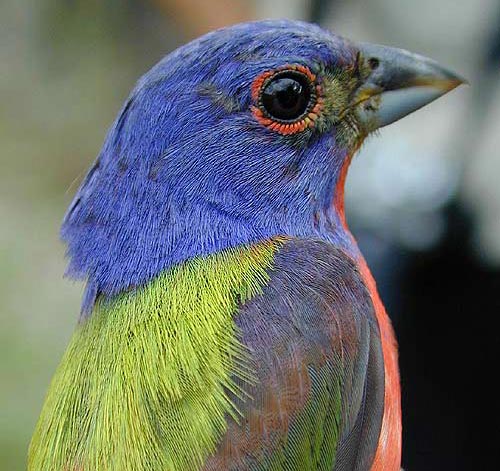
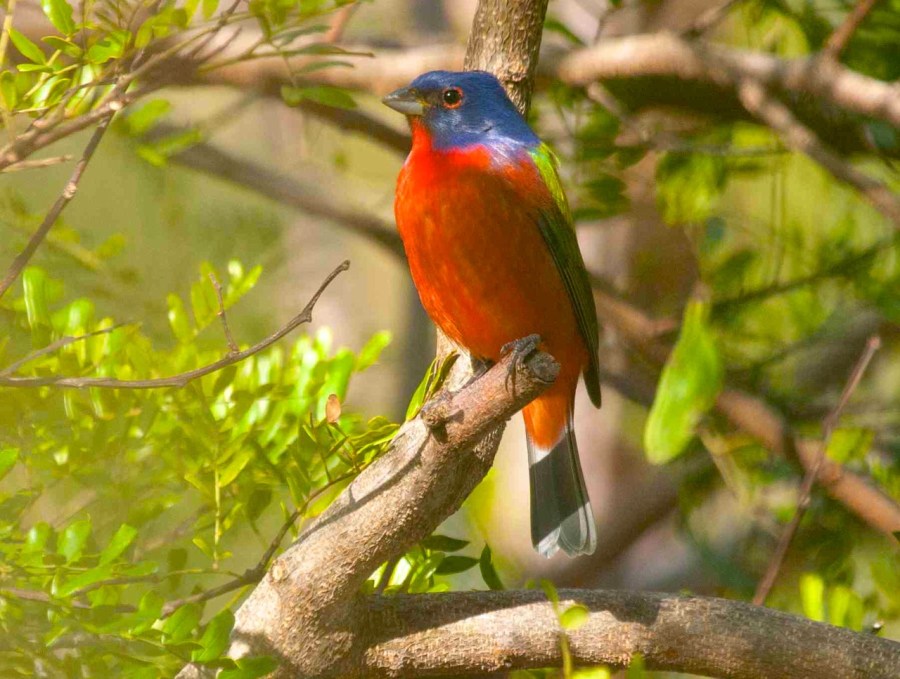
Painted Bunting, Abaco Bahamas (Tom Sheley)

painted-buntingimagesimagesimagespainted-bunting copy

 BUNTING(S) FOR AN ABACO CHRISTMAS: AN OLD TRADITION

painted-bunting copy

BUNTING  /ˈbʌntɪŋ/  (Noun)

[A Christmas gift of a puntastic avian / festive double-meaning]
  1. A small New World songbird of the cardinal subfamily
  2. Flags and other colourful festive decorations

painted-buntingimagesimagesimagespainted-bunting copy

PAINTED BUNTINGPainted Bunting, Abaco (Erik Gauger)

One of the Winterval traditions at Rolling Harbour HQ – that haven of unreliable natural science powered by lazy insouciance and characterised by a regrettably unserious approach – is to break the rule that (mostly) forbids reposting old material without good reason (which there occasionally is). This means marking the imminence of Christmas with bunting. And indeed buntings, those lovely birds beautifully painted by nature. Nothing says ‘Happy Christmas’ better than a flock of PABU!

painted-buntingimagesimagesimagespainted-bunting copyPainted Bunting, Abaco (Tara Lavallee)

painted-buntingimagesimagesimagespainted-bunting copy

Painted Bunting, Abaco (Tara Lavallee)

It’s hard to imagine a more Christmassy little bird than the Painted Bunting. Bright blue, red, green primary colours straight from a child’s paintbox make for a spectacular bird to grace the festive season. These are migratory winter residents, and the first reports of the bright and beautiful males on Abaco started to appear in late October. Some will stay around until March.

                                                           painted-buntingimagespainted-bunting copy

A female & a male PABU feeding together, and a male with a pair of black-faced grassquitsPainted Buntings (M & F), Delphi, Abaco (Keith Salvesen)Painted Bunting, Delphi, Abaco (Sandy Walker)

                                                        painted-buntingimagespainted-bunting copy

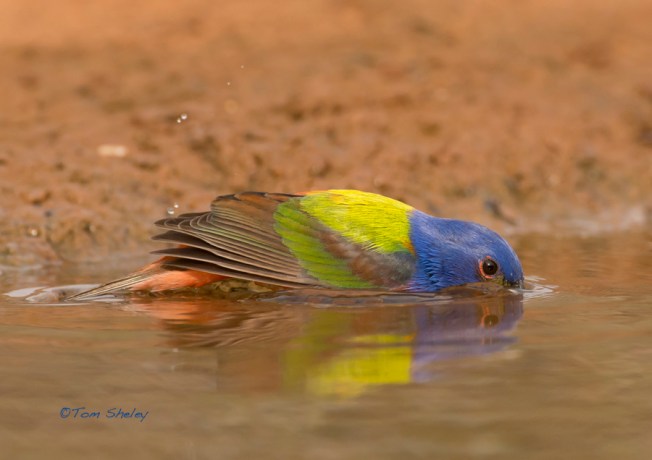
The two wonderful photos below are by Tom Sheley, a major photographic contributor to THE BIRDS OF ABACO. They were actually taken in Texas, but I include them because of Tom’s strong connection with the birdlife of Abaco; and also because they are fantastic shots…
Painted Bunting reflection, Laguna Seca.South TX Tom SheleyPainted Bunting dip reflection LR.Laguna Seca.South TX. 4.16.13.Tom Sheley

painted-bunting copy

This is my opportunity to wish a very Happy Christmas or [insert preferred seasonal appellation] to everyone who visits Rolling Harbour and especially those who, having done so, return for more! There could of course be anything from 600,000+ individuals who called in once, were put-off and never came back… to one sadly crazed person who has been pressing the ‘read’ button 600,000+ times over the last few years. If the former, thanks for trying, sorry to disappoint. If the latter, keep up the good work, buddy.

Credits: Tom Sheley (1, 7, 8), Erik Gauger (2), Tara Lavallee (3, 4), Keith Salvesen (5); Sandy Walker (6); Birdorable Cartoons

painted-buntingimagesimagesimagespainted-bunting copy

Painted Bunting.Bahama Palm Shores.Abaco Bahamas.Tom Sheley

Unknown's avatar

SANDHILL CRANE: ANOTHER NEW BIRD FOR ABACO, BAHAMAS


Sandhill Crane, Abaco Bahamas - a first-ever sighting (Elwood Bracey)

SANDHILL CRANE: ANOTHER NEW BIRD FOR ABACO, BAHAMAS

Still they keep arriving, the new birds that have never before graced the shores of Abaco Recently it was a Canada warbler, at the lower end of the size scale. The elegant sandhill crane (Antigone canadensis) is the 10th new species for Abaco since the publication of The Birds of Abaco in March 2014. If you are wondering why the bird is not called Grus canadensis any longer, it’s because the genus of the bird was reclassified by the ABA in 2016. Out with dreary old Grus and in with exciting Oedipus’s daughter (or was she his half-sister? They… erm… had the same mother… Discuss, using both sides of the exam paper) in Greek mythology…

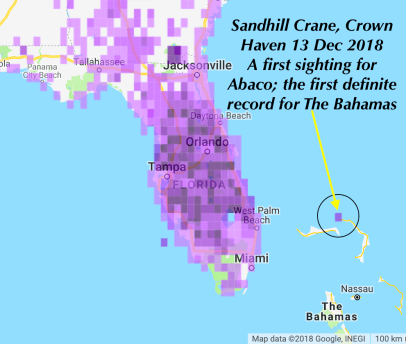
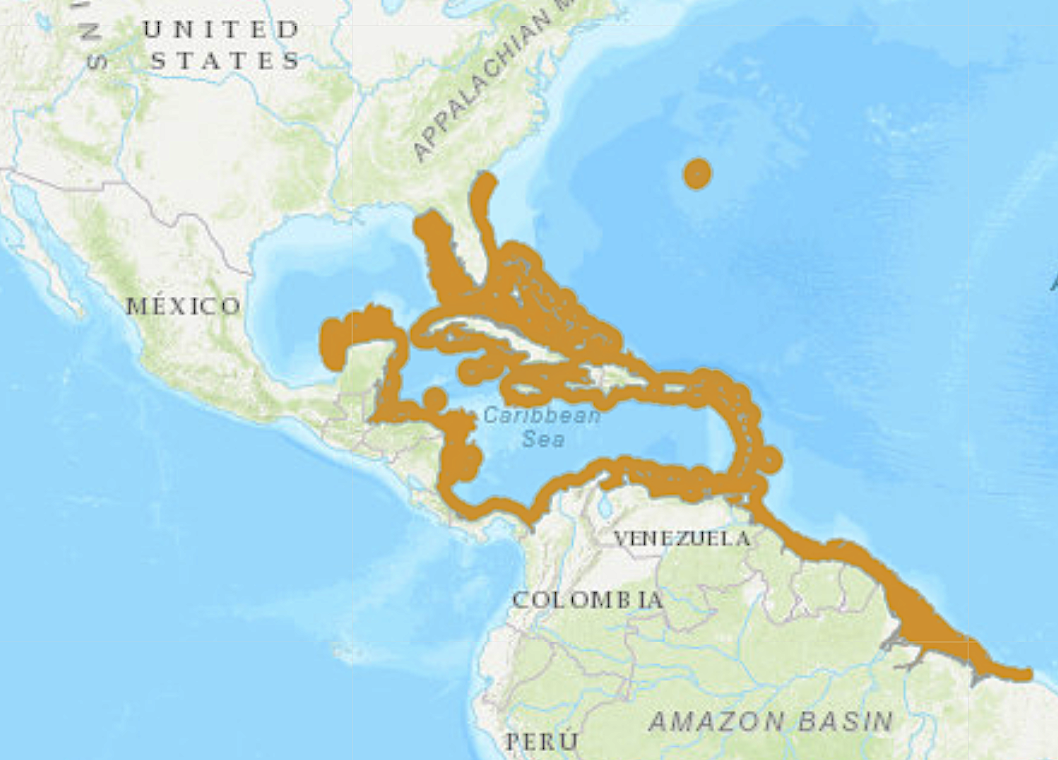
As the crane’s canadensis suggests and as range map shows, these are birds of North America, breeding mainly in Canada. In winter they head south to the warmth, reaching Florida as winter migrants. As you can see, the northern part of Florida and also Cuba have small year-round breeding populations. Zero zilch zip nada in the Bahamas.

THE ABACO SIGHTINGS, DECEMBER 2018

Sandhill Crane, Abaco Bahamas - a first-ever sighting (Kaderin Mills)

At 9.00 am on December 13, the bird above was photographed by Kaderin Mills (of the Bahamas National Trust) on Little Abaco, at the Fox Town Primary School, Crown Haven. The day before, the 12th, the school Principal Mrs Curry had seen the bird in the school grounds feeding on the grass. A couple of phone ‘sighting shots’ were taken before it flew off. Next day it returned, word spread and Kadie Mills recorded the bird officially and put it on eBird to give the newcomer some due publicity. By the early afternoon, Woody Bracey had been told about the bird, and went to take photos. He saw it in the same place the next day too.

Sandhill Crane, Abaco Bahamas - a first-ever sighting (Elwood Bracey)

OK, FIRST FOR ABACO – AND THE BAHAMAS TOO?

The strict answer is, no. Many years ago, there was a single report of a Sandhill Crane on Andros. It’s not known if the sighting was officially confirmed, but according to expert Bruce Hallett there was a photograph, and the late Tony White, then ‘recorder’ for the Bahamas, saw it. There are no available records, but Tony’s authority on issues around Bahamas birds was (and remains) absolute.

Sandhill Crane, Abaco Bahamas - a first-ever sighting (Elwood Bracey)

12 CAREFULLY SELECTED SANDHILL CRANE FACTS

  • These cranes are social birds, usually living in pairs or in family groups 
  • Their calls are loud and far-reaching, like a huge crows with a sore throat (below) 
  • Mated pairs engage in ‘unison calling’, standing close and duetting amorously
  • Hatchlings are fully-formed and can leave the nest within a day.
  • Juveniles are known as colts (whichever their gender, it seems)
  • They have an impressive wingspan as adults, from about 5′ to 7′ 6″
  • They are able to soar in flight, using thermals to obtain lift and stay aloft for hours
  • Flocks of cranes may be huge – sometimes estimated at over 10,000 individuals
  • Their ancestors are among the oldest fossils of any bird species, at around 2.5 M  years
  • Vagrants have been found as far off piste as Britain (1981, 1991 only), China and Japan
  • Many predators call them dinner; but they can kick and stab with their bills in defence
  • The sandhills of Cuba form the smallest breeding population, around 300   

(Ian Cruickshank / Xeno Canto)

On the map: Abaco’s first ever sandhill crane

Adult with its cutely ungainly, yellow-legged coltSnadhill Crane (birdphotos.com)

Credits: firstly, to School Principal Mrs Curry for a truly excellent spot; Kaderin Mills (2) – the 1st usable image; Elwood ‘Woody’ Bracey (1, 3, 4, 6); http://www.birdphotos.com / wiki (5); Cornell (range map); Ian Cruickshank / Xeno Canto (audio); Birdorable (cartoon)

Sandhill Crane, Abaco Bahamas - a first-ever sighting (Elwood Bracey)

Unknown's avatar

STAR ANIS ON ABACO


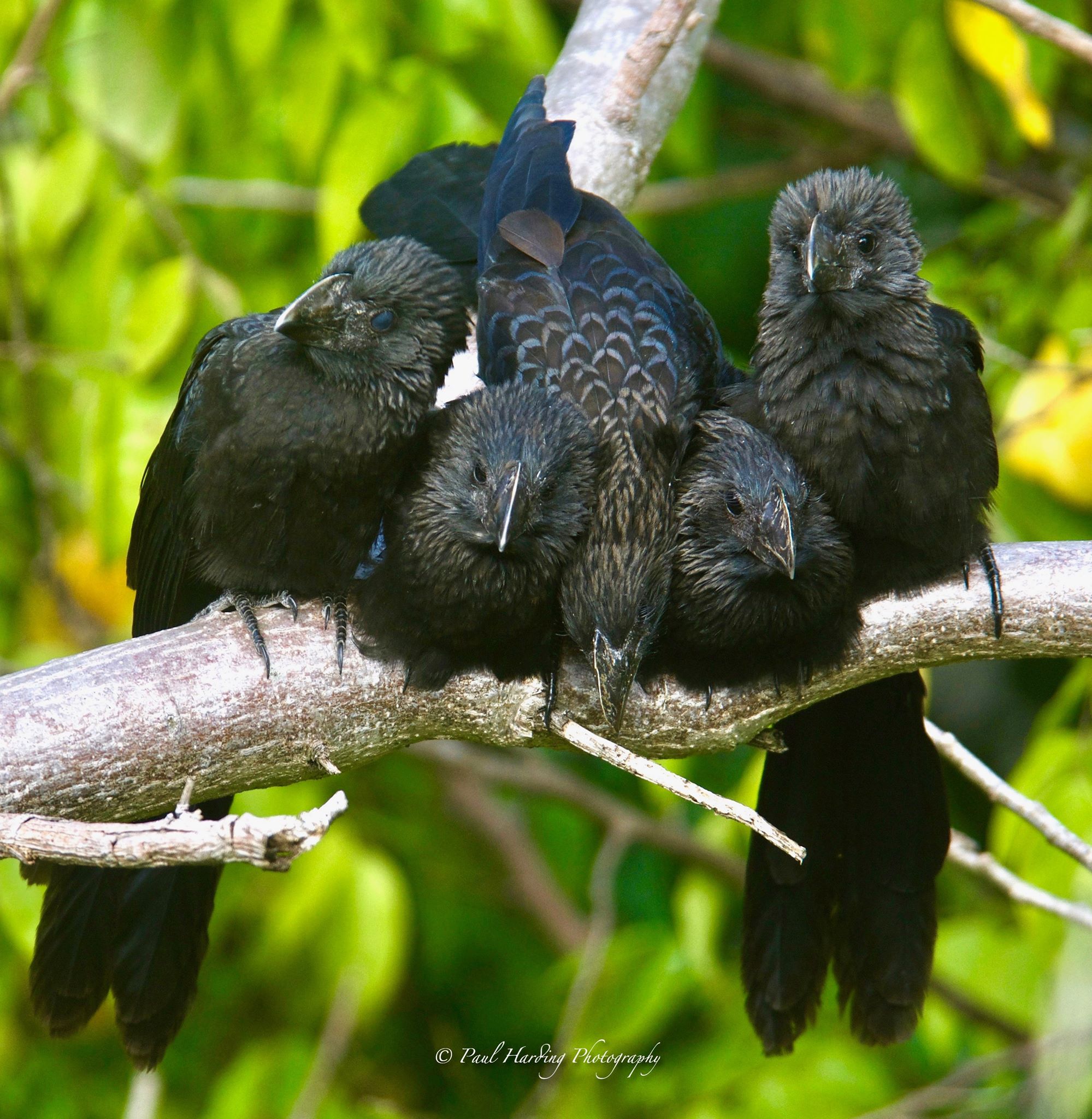
Smooth-billed Anis, Bahamas (Paul Harding)

STAR ANIS ON ABACO

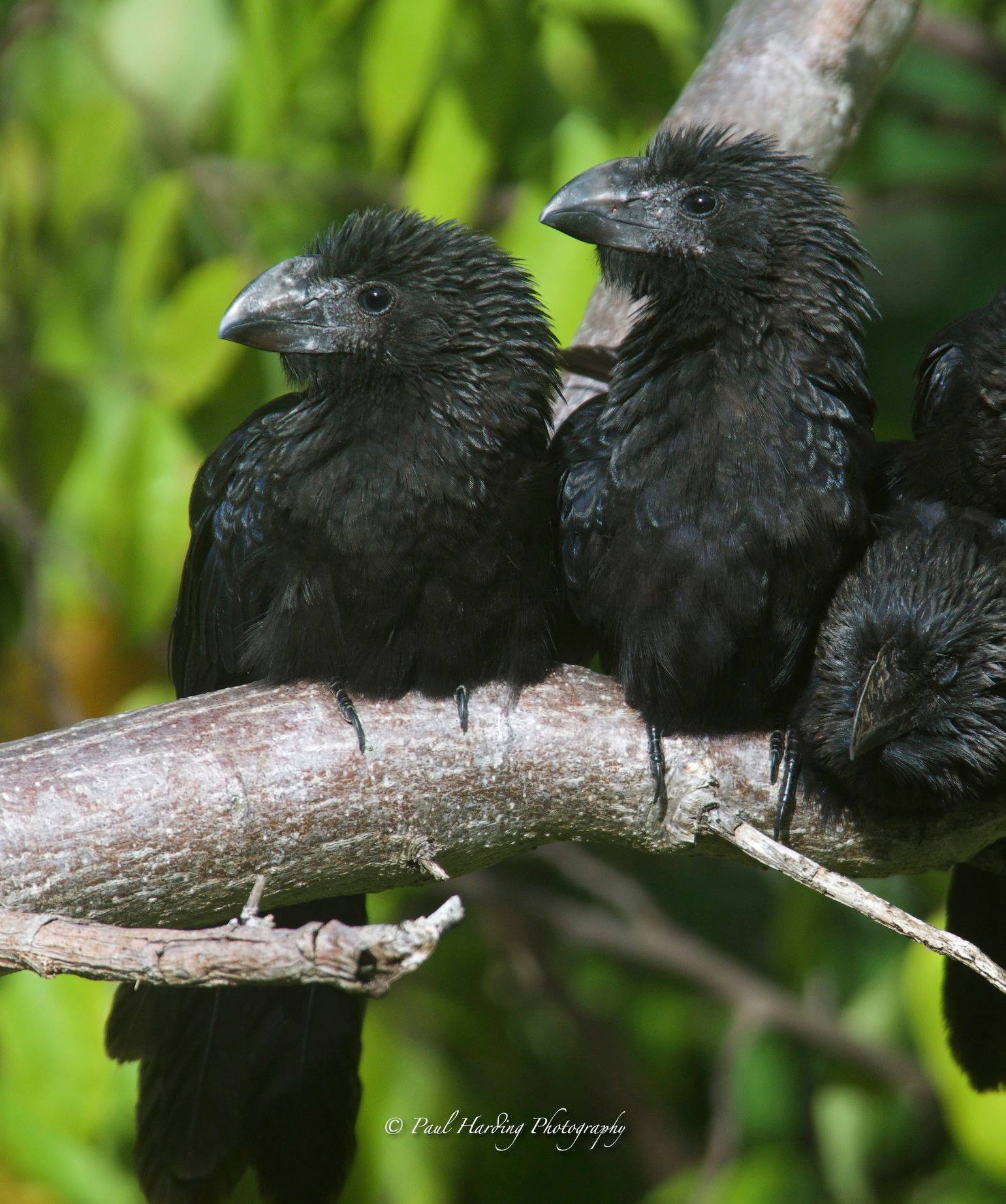
The Smooth-billed Ani (Crotophaga ani) – aka Cemetery Bird – is the third member of the cuckoo family found on Abaco, the others being the MANGROVE CUCKOO and the YELLOW-BILLED CUCKOO. You can (it’s voluntary) find out more about them in an earlier article HERE. 

I have returned to these engagingly gregarious birds and their raucous ways because Paul Harding has recently captured a sequence of  a small group of anis behaving so endearingly that they are irresistible. Not for them the oddly incompetent fluttering flight, nor the disorganised, unbalanced landing technique. It’s simply a matter of getting settled on a branch, and then making room for one more in the middle (or perhaps resisting it…).

‘A COMMOTION OF ANIS’

There were 4 on the branch…Smooth-billed Anis, Bahamas (Paul Harding)

Hey – make room for another one…Smooth-billed Anis, Bahamas (Paul Harding)

Budge up, guys, I mean C’mon…Smooth-billed Anis, Bahamas (Paul Harding)

Yay, I’m in… a bit squished but…Smooth-billed Anis, Bahamas (Paul Harding)

Um… guys, I can’t breathe…Smooth-billed Anis, Bahamas (Paul Harding)

 That’s better… all settled now….Smooth-billed Anis, Bahamas (Paul Harding)

Let the racket begin!

Credits: all terrific pics, Paul Harding; sound files, Xeno Canto

Unknown's avatar

KIRTLAND’S WARBLERS ON ABACO: A FIRST FOR THE CAYS


Kirtland's Warble, Green Turtle Cay, Abaco Bahamas (Sally Chisholm)

KIRTLAND’S WARBLERS ON ABACO: A FIRST FOR THE CAYS

I last wrote in April about the rare Kirtland’s warbler Setophaga kirtlandii that, in very small isolated numbers, overwinters on Abaco. You can get to the article HERE. You’ll find plenty of information, a range map, notes about the eponymous Mr Kirtland, and lots of good photos (none mine except the joke one – I messed up my one chance out of 4 birds encountered in the National Park). So I won’t go over the ground again…

I’m returning to this near-threatened species now because there has been a very exciting development for Abaco for the KIWA. Towards the end of last month, 2 birds were found over a couple of days at a location on Green Turtle Cay. Having now checked all reported sightings for Abaco since time immemorial (or at least from when eBird began), I believe that this may be the first time a Kirtland’s warbler has been reported on any of the cays. Certainly when we were researching The Birds of Abaco, we found no evidence of KIWA reports from the cays. Sightings are anyway few and far between (not even annual), and mostly on a ‘right place right time a hunch and a large slice of luck’ basis.

Kirtland's Warble, Green Turtle Cay, Abaco Bahamas (Sally Chisholm)

The first sighting of the season, on Ocotober 27,  was (surprisingly) at Sandy Point, when Woody Bracey took a party of 3 birding for the day. Most KIWA sightings are in south Abaco, with selected areas of the huge National Forest being much the most likely places. There were in fact 2 birds seen – here’s a photograph of one of them. Sandy Point was an unexpected location, but they were on the mainland and in the south – a great ‘get’ by any standards, but not unique for the area.

Kirtland's Warble, Sandy Point Abaco Bahamas (Roger Neilson)

AN EXCITING SIGHTING

On November 22 at 08.30, Sally Chisholm was birdwatching on GTC when she suddenly came across an unmistakeable KIWA, seeing it closely and clearly: “gray back with dark striping, gray head with white broken eye ring, pale yellow breast with small dark spots”. It was pumping its tail (‘tail-wagging’ J. Bond) characteristically, and eating the berries from a palm tree (see header image). Sally heard its repeated “chip” call, typical of the KIWA. Furthermore, a second bird was returning the call, though she could not see it.

KIWA CHIP CALL Paul Driver / Xeno Canto

Kirtland's Warble, Green Turtle Cay, Abaco Bahamas (Sally Chisholm)

Two days later, in the early morning on November 24, Sally returned to the same location and saw a single bird, clearly one (or perhaps the other) of the two birds already seen / heard. She got a fine clear shot this time, too. 

Kirtland's Warble, Green Turtle Cay, Abaco Bahamas (Sally Chisholm)

I’m not by any stretch of the imagination a Kirtland’s expert (not even a bird expert, if I’m honest). The photos seem to me to show a young bird (compared with ones I have seen) and I wonder if they are juvenile adults (as it were) on their first migration from the jack pines of Michigan. Comments on this remark invited and welcomed… No matter: the great thing is that, whatever the age of the bird, photo #1 is, as far as I can tell, the first visual confirmation of a KIWA sighting on an Abaco cay. It’s a privilege to be able to give it a wider audience.

WHAT ARE THE MAIN THREATS TO THE SPECIES?

  • Mankind is the primary threat. The breeding areas are particularly vulnerable from deforestation and clearance of the jack pines that are essential for successful nesting and breeding – and therefore the survival of the species
  • Encroachment of development is another threat, as with so many species
  • There is a further threat of nest parasitism by brown-headed cowbirds, to which KIWAs are especially vulnerable
  • In the winter grounds where the habitat is mostly remote or in protected areas, there is rather less of a problem from these factors – for now at least
  • Overall, habitat degradation at one end of the migration – in particular the breeding grounds – poses a serious risk; at both ends, extinction could loom again. Check out the very limited range of the KIWA and you’ll see the point at once

Credits: Sally Chisholm (1, 2, 4, 5) with special thanks for use permission for her terrific photos; Rodger Neilson (3); Paul Driver / Xeno Canto, sound file; Birdorable, cartoon; Usual (range map); BPS (stamp)

Unknown's avatar

BAHAMAS REEF FISH (50): TOBACCO BASSLET


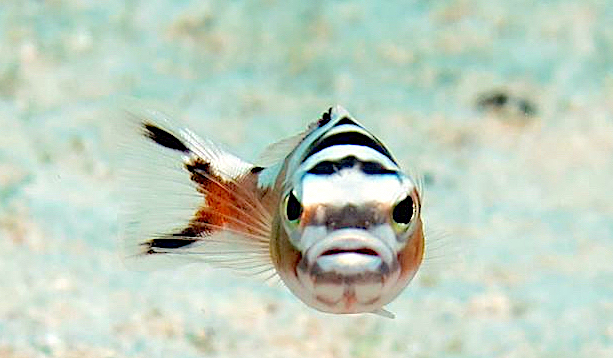
Tobacco Basslet (Serranus tabacarius) Bahamas (Melinda Riger / GB Scuba)

BAHAMAS REEF FISH (50): TOBACCO BASSLET

Welcome to #50 in the Bahamas Reef Fish series. I chose this fish to honour the landmark before thinking about its features. Grumpy. Also, associated with a narcotic and dangerous drug. And a fish one probably wouldn’t bother to smoke (even if one could get it to light underwater). In the Bahamas you’ll find these little fish around the coral reefs where they play their part as reef denizens, which includes being prey to larger species. If one looks them up online, however, the overwhelming impression from the websites and images available is that they exist largely for the benefit of the aquarium industry.

Tobacco Basslet (Serranus tabacarius) Bahamas (Melinda Riger / GB Scuba)

Tobacco basslets (Serranus tabacarius) – more commonly just called tobacco fish or tobaccofish – are related to the HARLEQUIN BASS(LET), a species that was most unfairly included as #9 in my parallel WTF? series among all the seriously weird sea creatures that feature in that category. A wrong I must right one day.

Tobacco Basslet (Serranus tabacarius) Bahamas (Melinda Riger / GB Scuba)

Tobacco fish are considered to be hardy, unaggressive (except towards the tiny fishes and crustaceans they feed on) but apparently they need quite a large tank to hold them. The ocean might be suitably large for the purpose. Especially as it seems that in an aquarium there needs to be a cover on top: “these fish are expert jumpers…“, as one source puts it…

BESIDES THE BAHAMAS & AQUARIUMS WHERE ELSE DO THEY LIVE?

TOBACCO BASSLET RANGE MAP

APART FROM THE HIGH JUMP THING, ANY OTHER TRICKS?

Yes indeed. The Tobacco Basslet is hermaphroditic, like all other members of its genus.

DON’T LEAVE IT AT THAT… HOW DO THEY, YOU KNOW?

I didn’t want you to ask. All their FB pages say “It’s complicated“, but here’s a rough idea…

  • All individuals start life as simultaneous hermaphrodites (with sex organs of both sexes)
  • The largest fish lose their female functions and become active sperm-producing males
  • Each male leads a group of hermaphrodites and protects them from other males 
  • This gives them exclusive rights to the female parts of members of their ‘harem’
  • Sometimes hermies may use their male bits to join in & release sperm – ‘streaking’
  • There are rarer mating strategies… Oh heck, please look at the abstract of a scientific paper for details. I had to! And all because you, gentle reader, asked that question.

With some relief, here is very short video. It probably doesn’t accurately show how Tobacco fish might behave on a Bahamian reef. In captivity, from the look of it, they get pushed around by bigger fish. But maybe, if their co-residents are carefully selected, the bonus is that they don’t risk getting eaten.

OPTIONAL MUSICAL INTERLUDE

There are no songs ever that mention tobacco fish or tobacco basslets (though lots involve bass). And more oddly, apart from a couple of old blues songs the only truly mainstream song about tobacco by name (as opposed to content) is Tobacco Road, a song as frequently and thoroughly covered as an aquarium tank containing jumpy tobacco fish.

Rare photos from the actual sea captured by Melinda Riger of Grand Bahama Scuba; Science Direct plus magpie pickings; Captive Aquatic Ecosytems (video)

I didn’t enjoy this article about me very much. I am NOT grumpy.Tobacco Basslet (Serranus tabacarius) Bahamas (Melinda Riger / GB Scuba)

Unknown's avatar

BAHAMAS BIRDS FOR A NEW GENERATION


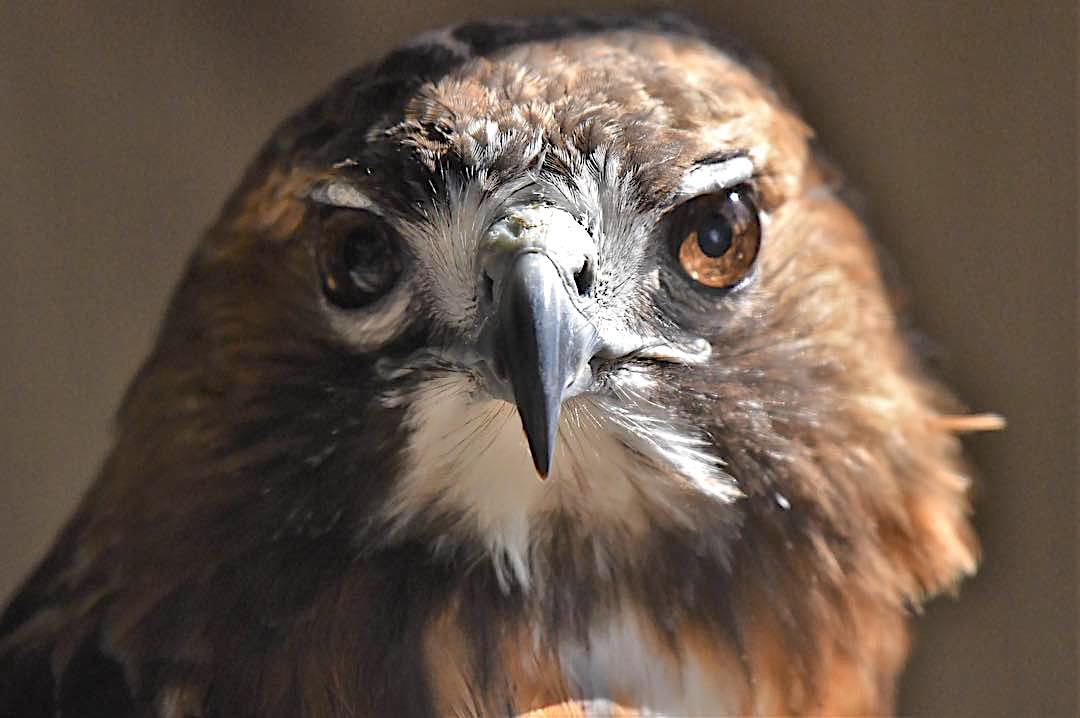
Red-tailed Hawk, Bahamas (Chris Johnson)

Red-tailed Hawk

BAHAMAS BIRDS FOR A NEW GENERATION

It is axiomatic that people tend towards birding – if at all – in later life. Not the scientists, of course: they must commit themselves to the study of natural history at an early age, collecting qualifications by degrees (as it were), through Masters, Field Work, their first posts, PhDs and beyond.

American Redstart (m), Bahamas (Chris Johnson)

American Redstart (m)

I didn’t take a very active interest in birds until the first time I investigated Central Park NYC and saw a blue jay. Followed by a cardinal… a red-tailed hawk… chickadees… American robins (or ‘Mercan rubbins‘, as I was informed). These were alien species for a European, and they awoke my interest.

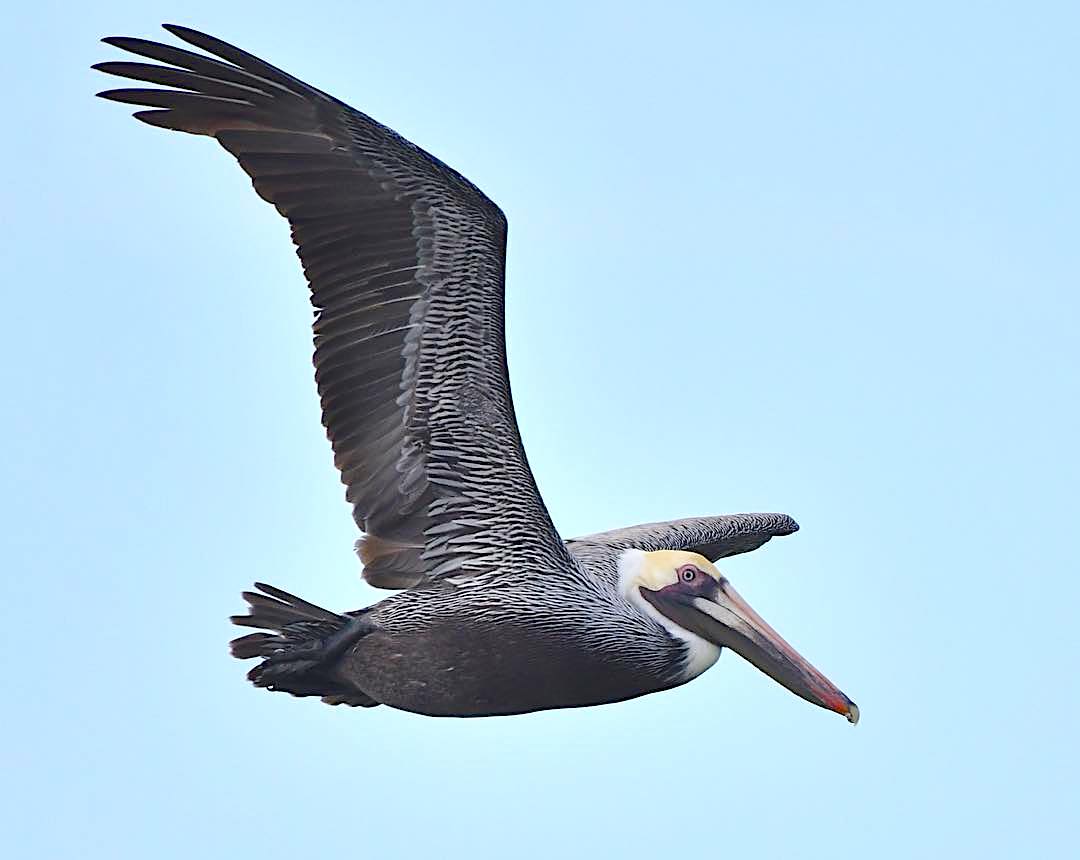
Brown Pelican, Bahamas (Chris Johnson)

Brown Pelican

On later trips to NYC I have always spent a day in CP, wandering from end to end, spending time in the hotspots like The Ramble, the JO Reservoir, and the pretty Loch trail to the north, and wondering at the huge and expensive birding hardware toted by those around me (while knowing I didn’t want it). And then a visit to Prospect Park Brooklyn too, if I have the time. More recently came Abaco, and a whole new world of wildlife that has captivated me…

Hermit Thrush, Bahamas (Chris Johnson)

Hermit Thrush

This reminiscence by an oldster brings me to Chris Johnson, a young Bahamian man who will be familiar to many readers of this blog. I first encountered him when I was researching the Bahama Oriole and discovered that he, in his early teens, had found one on a trip to Andros and photographed it. It was a pleasure to be able to include the image in my article. 

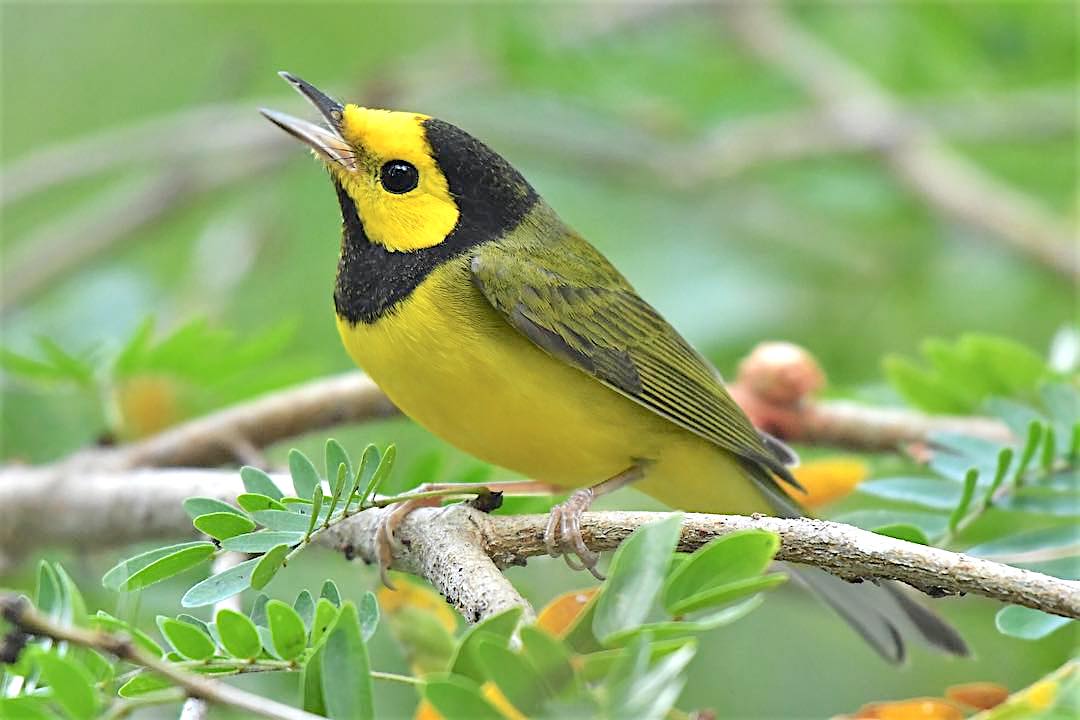
Hooded Warbler, Bahamas (Chris Johnson)

Hooded Warbler

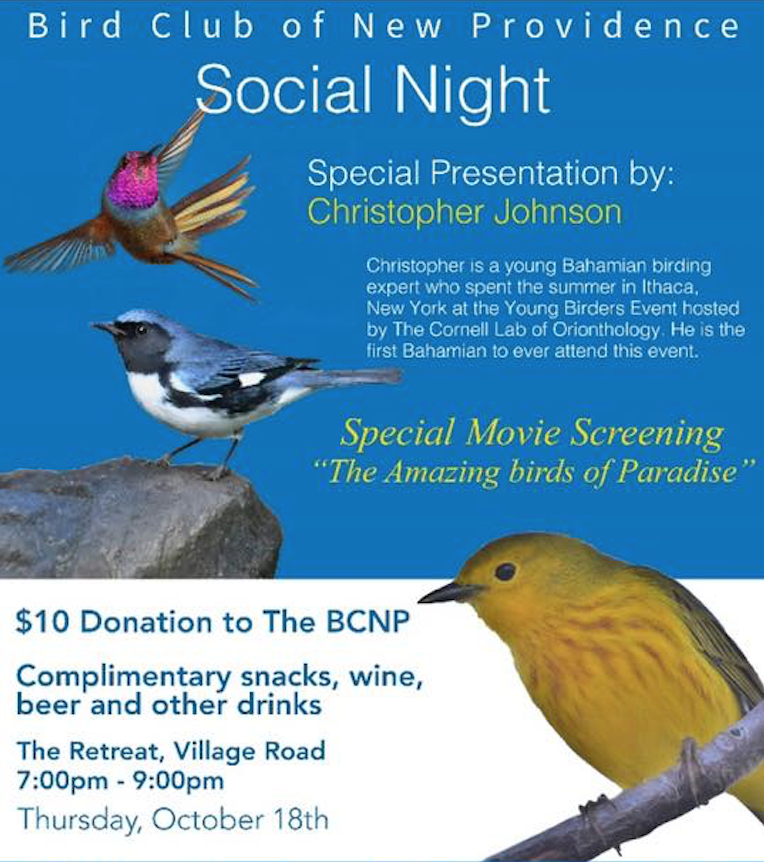
Since then, Chris’s birding and photographic skills have rapidly developed and his reputation is growing too. This summer he was one of 12 students chosen to attend Cornell University Lab of Ornithology for their Young Birder’s Event in Ithaca NY, a great tribute to his accomplishments and a wonderful opportunity too. It is worth noting that Chris is the first Bahamian to be invited to attend this event.

Loggerhead Kingbird, Bahamas (Chris Johnson)

Loggerhead Kingbird

Chris is also beginning to make his own presentations, as he did recently to the Bird Club of New Providence. It won’t be long before he is leading bird groups – in fact, he is probably doing this already.

Another impressive feature of Chris’s birding is his photography. I have watched the progression online with interest. The crispness of his images, the composition and the right ‘take’ to make the best of each bird is wonderful, and he has a great eye for a neat shot – for example in the header image I have chosen, with its awareness of the effective use of dark and light.

Black-and-white Warbler, Bahamas (Chris Johnson)

Black-and-white Warbler

I should say that I have never met Chris, although we have occasionally been in touch. I am featuring him because I believe he and other young people of his age – Chris is 17 – are the future for birding, for wildlife, for species protection and for habitat conservation. The older generation will move on and the ‘middles’ may begin to take an interest in the birds around them. But Chris’s generation are the ones who can make a difference in the future. As things stand right now, they may have to. It’s a huge responsibility for them, but it’s one our generation is in the process of transferring to them.

Red-legged Thrush, Bahamas (Chris Johnson)

Red-legged Thrush

I hope you have enjoyed the small gallery of Chris’s photographs displayed here. If you are interested in the birds of the Bahamas, keep an eye on him and others like him. They need all the encouragement we can give them.

All photos: Chris Johnson, with thanks for use permission. Please do not ‘borrow’ any of these images without asking first. That would only be fair.

Antillean Nighthawk Chick (one of my favourites)Antillean Nighthawk chick, Bahamas (Chris Johnson)

Unknown's avatar

ABACO BALD EAGLE(S): AN EYRIE COINCIDENCE (GEDDIT?)


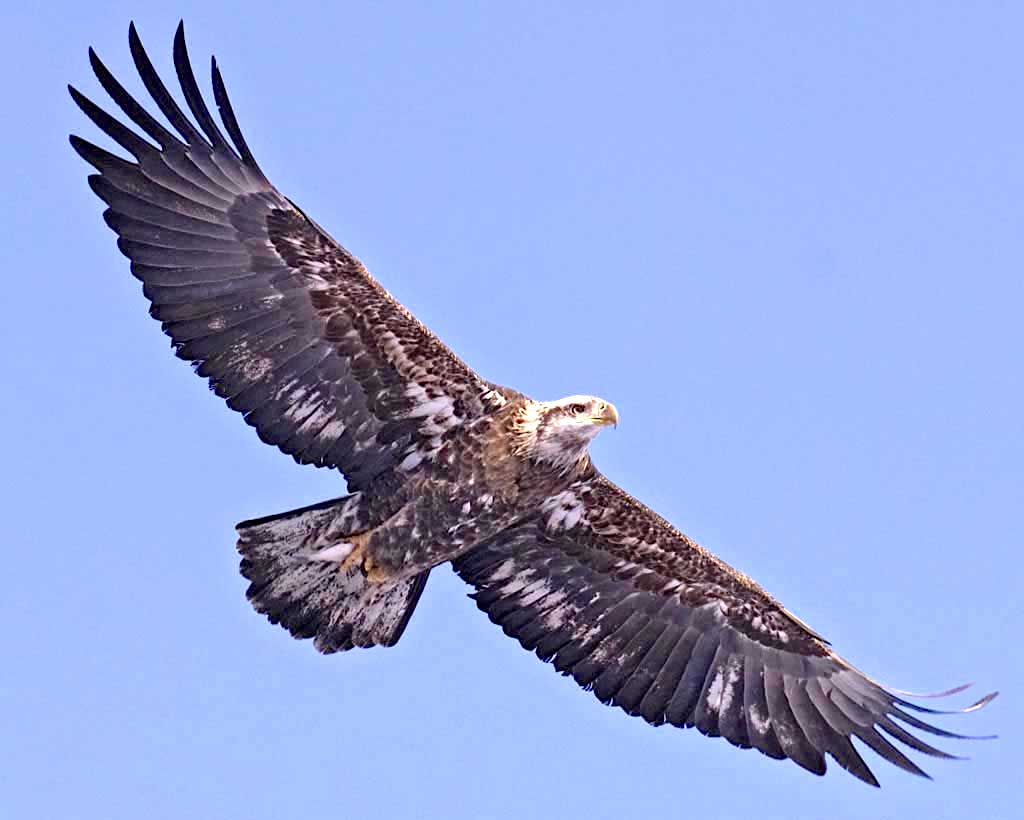
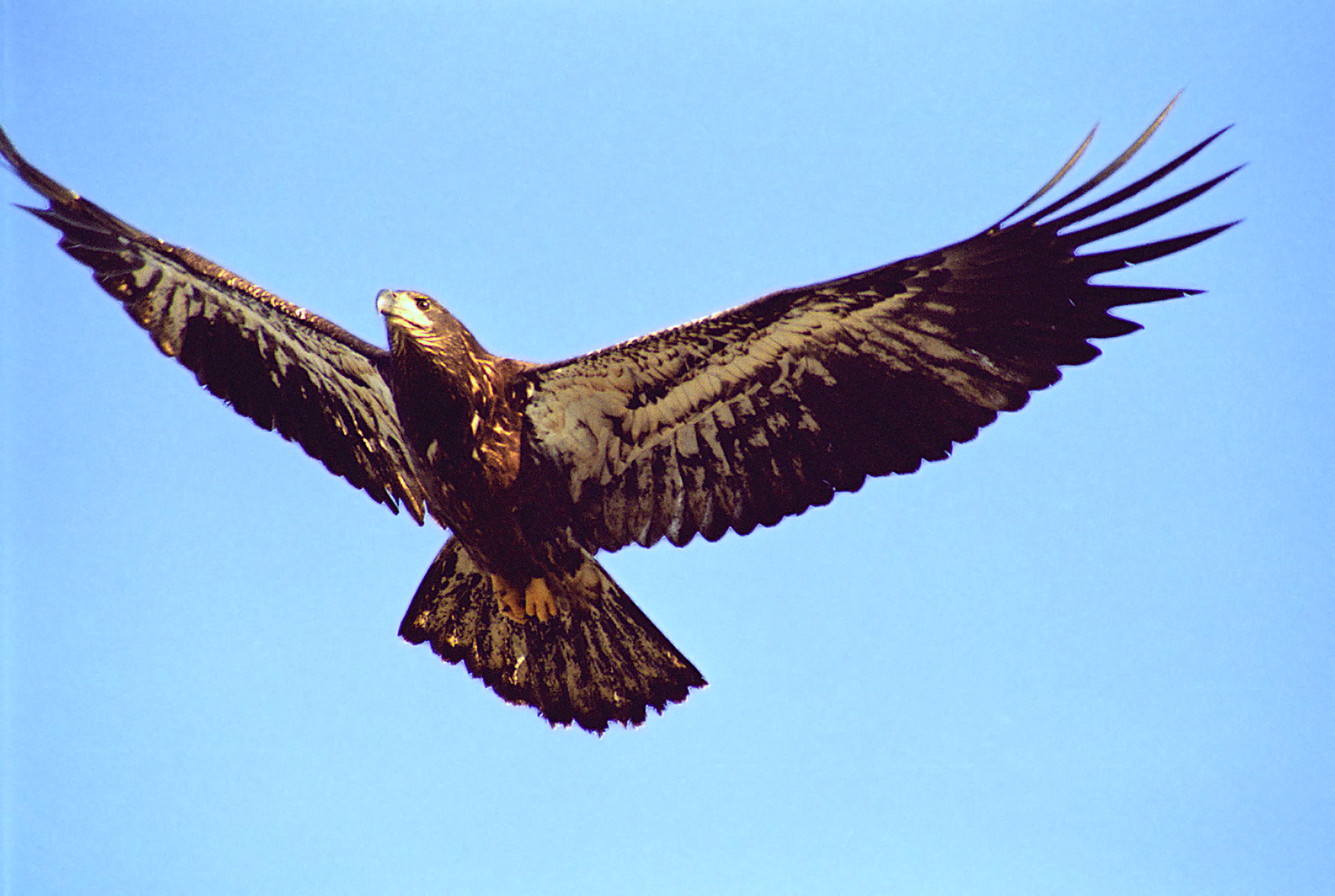
Bald Eagle Juvenile (Audubon)

ABACO BALD EAGLE(S): AN EYRIE COINCIDENCE (GEDDIT?)

I absolutely knew this would happen. In a sense, I rather wanted it to happen. And now it has, and I have got my comeuppance. Bigly. Hugely. No sooner had I pressed ‘send‘ on my post 2 days ago bemoaning the absence of bald eagles in 2018 than corrections began to come in.

  • Harsh Judgemental Reader: “Do you mean you were wrong?”
    • Contrite Writer: “Yes.”
  • HJR: “Did you check eBird before you fired off your intemperate post?”
    • CW (in a small apologetic voice): “No.”
  • HJR: Well then, what have you got to say for yourself?”
    • CW (*hangs head*): I’m very sorry, everyone. I’ll try to do better this time. Here goes:”

THE ABACO BALD EAGLE(S) OF 2018: IN NO WAY AWOL!

SIGHTING ONE

On October 25th legendary Bahamas birder Elwood Bracey and a party of 4 were looking out over the Marls from Sunset Ridge when they saw 4 birds flying high. Two were unmistakably turkey vultures; one was a magnificent frigatebird (ie totally non-eagle-ish); and the fourth was much larger, looking like a juvenile bald eagle. Any remaining doubts were dispelled when it dropped into a steep dive and smashed into the water, catching a fish in its talons, much like an osprey. There’s no room for confusion here: Woody has vast experience on Abaco and beyond – and besides, he had a powerful spotting scope and 4 birding witnesses. The ID is, as they say, solid. And it was posted on eBird. Which I should have checked. But didn’t. As Julia Roberts (qua Vivian Ward) actually did say, “Big Mistake. Huge!

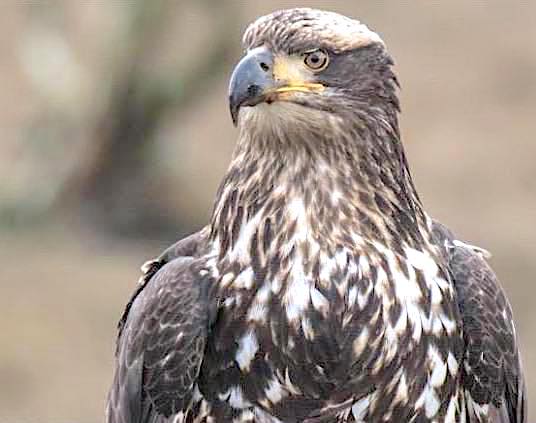
Bald Eagle Juvenile (Wiki)

The problem here – you are ahead of me, aren’t you – is that a juvenile bald eagle does not resemble an adult. Rather than the familiar and symbolic look, they are dark brown with white flecks and mottling that changes as they grow older. A juvenile won’t even begin to look like a bald-headed adult until it is around 4 years old. Here are two comparisons of the confusing ages and stages.

SIGHTING 2

Within the last couple of weeks, a resident of Man-o-War Cay saw a huge brown bird – not an osprey, turkey vulture or red-tailed hawk – hunting chickens in the area. He told his family and identified the bird from looking at a photo of a juvenile bald eagle. I received this report – the first in time – from Charmaine Albury. Her brother was the sharp-eyed spotter. Had that been the only report, in the absence of a photo I might have had at least some doubt. Then Woody’s report arrived, a definite juvenile bald eagle only 3 weeks before, over the Marls. From there, with its spectacular eyesight it could practically have seen the individual chickens on Man-o-War. So it’s a good fit for ID.

WHAT’S THE CONCLUSION?

I’d say that right now on Abaco we have a single juvenile bald eagle. It’s a vagrant, away from its usual hunting ground but unchallenged in the skies where it has ended up. There has been the usual autumn extreme weather (though Abaco has dodged the worst of it) to throw a young bird of course in the last couple of months. So, rather late in the day, we really do have an Abaco Bald Eagle for 2018.

A juvenile bald eagle – not at all like its parents to look at

Credits: Woody and Char for the sighting reports; header image (1), Audubon; (2) wiki; (3) Allaboutbirds.com; comparative drawing, Birdwatchers’ Digest; (4) FB, source unknown (and a credit or take-down as you wish if it’s yours); cute cartoon, the most excellent Birdorable

Unknown's avatar

THE ABACO BALD EAGLE(S): AWOL IN 2018


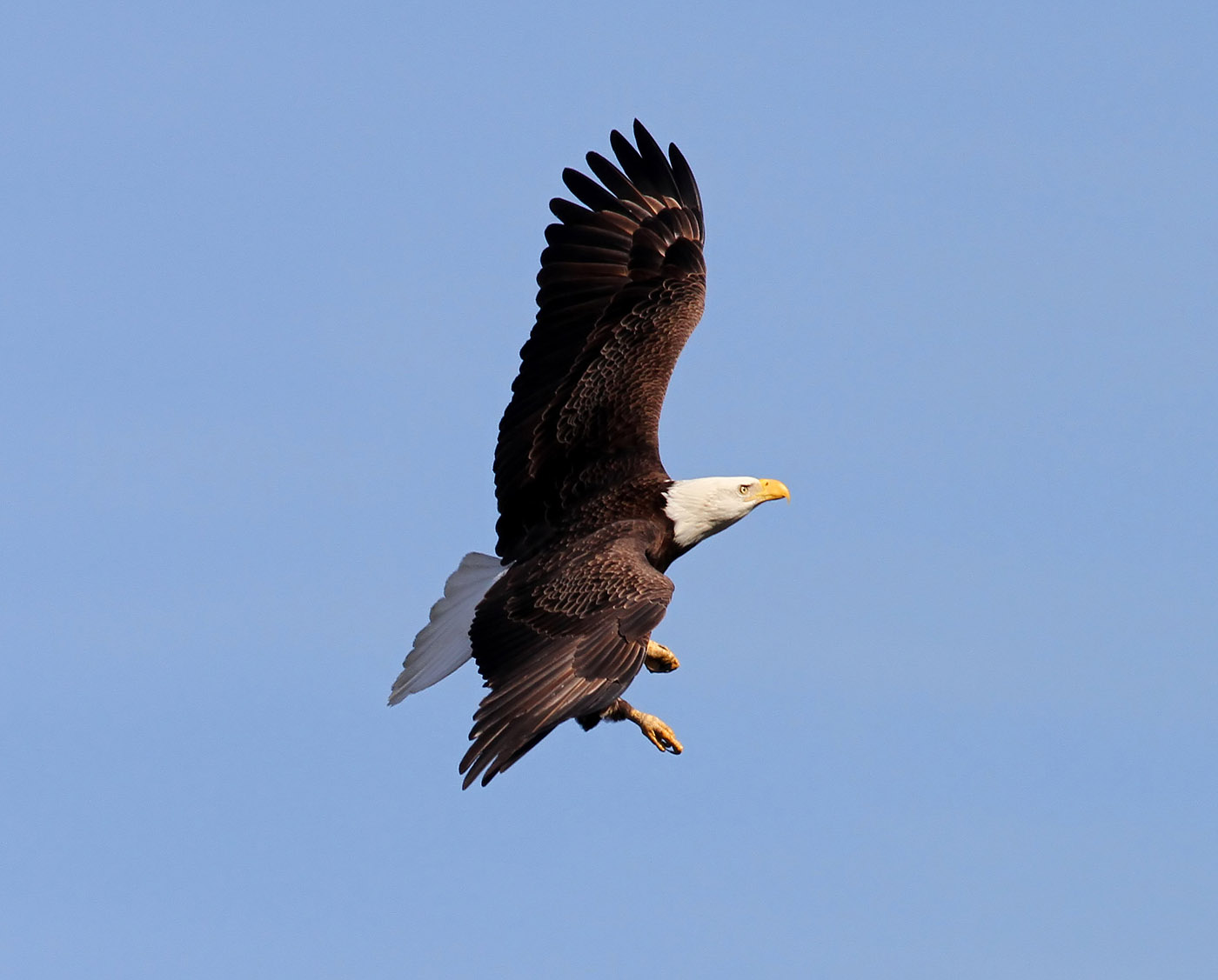
Bald Eagle in flight (Phil Lanoue)

THE ABACO BALD EAGLE(S): AWOL IN 2018

It is a year since I last wrote about the Abaco Bald Eagle(s) of 2017. The bracketed ‘s’ signifies the absence of firm evidence that there was just the one. Equally, there was no indication that there were ever two. All reported sightings were of a single bird, seen at a distance. The likelihood is that it was a lone visitor. The bald eagle is classified as a very rare vagrant on Abaco, and I gathered together as many reports since 2000 as I could find (see below). Not many, in summary, and never two.

Bald Eagle (Phil Lanoue)

Last year, a bald eagle was sighted around to coast of Abaco over a period of several months. There were 8 sightings in all, and I had hoped that the bird might stay around for 2018. Sadly, not so. The photos featured here come from a sequence by photographer Phil Lanoue. They were not taken on Abaco of course, so don’t be confused. But they illustrate the magnificence of this iconic bird as it prepares for its landing in a pine tree. We do have wonderful ospreys of course, but the occasional eagle makes for a rare treat.

Bald Eagle (Phil Lanoue) Bald Eagle (Phil Lanoue) Bald Eagle (Phil Lanoue) Bald Eagle (Phil Lanoue)

As I said last year, the 2017 sightings were most likely all of the same lone bird that had somehow strayed over to Abaco and found the available prey good, and the location congenial. As undisputed king of the skies, its daily hunting range was a wide one which would explain the varied sighting locations.  I ended: “I’m sticking with this theory unless and until 2 eagles are seen together”. 

BALD EAGLE SIGHTINGS REPORTED ON ABACO SINCE c1950 (= ‘ever’)

Here is the list of sightings. They start in 2000, because there are no known reports for Abaco prior to that from when they started to be kept in the 1950s. If anyone has others, I’d be pleased to hear from you.

  • 2000 December, location unknown – info from Woody Bracey
  • 2001  December – Chicken Farm area – Betsy Bracey
  • 2002 December – over Marls opposite Treasure Cay – Woody Bracey
  • 2004 Autumn – south of Lynard Cay (after hurricane) – Cheryl Noice
  • 2014  Date unknown – circling the power plant – LC
  • ===================================
  • 2017  March – Big Pine Point, Marls – James Cheesewright
  • 2017  Early May – Power plant area – LC
  • 2017  May – Marls – Danny Sawyer
  • 2017  May  – Lubbers / Tahiti Beach area – ‘Kelly’s mom’
  • 2017  September – Cross Harbour – Carol Rivard Roberts (with photo)
  • 2017  November – Cherokee Road – Howard Pitts
  • 2017 November – Bahama Palm Shores / 8-mile beach – Steve Roessler
  • 2017 November – Tilloo Bank – Laurie Schreiner (with photo)

Italics = report in comments on Danny Sawyer’s FB page; Blue = added reports to me

The first-ever bald eagle photo on Abaco Sept 2017

Carol Rivard Roberts

The last bald eagle photo on Abaco Nov 2017

Laurie Schreiner

Credits: all brilliant ‘eagle landing’ photos, Phil Lanoue with many thanks for use permission; Abaco eagles by Carol Rivard Roberts and Laurie Schreiner; amusing cartoon, Birdorable; thanks to all spotters and reporters.

Bald Eagle (Phil Lanoue)

Unknown's avatar

BAHAMAS REEF FISH (49): BANDED BUTTERFLYFISH


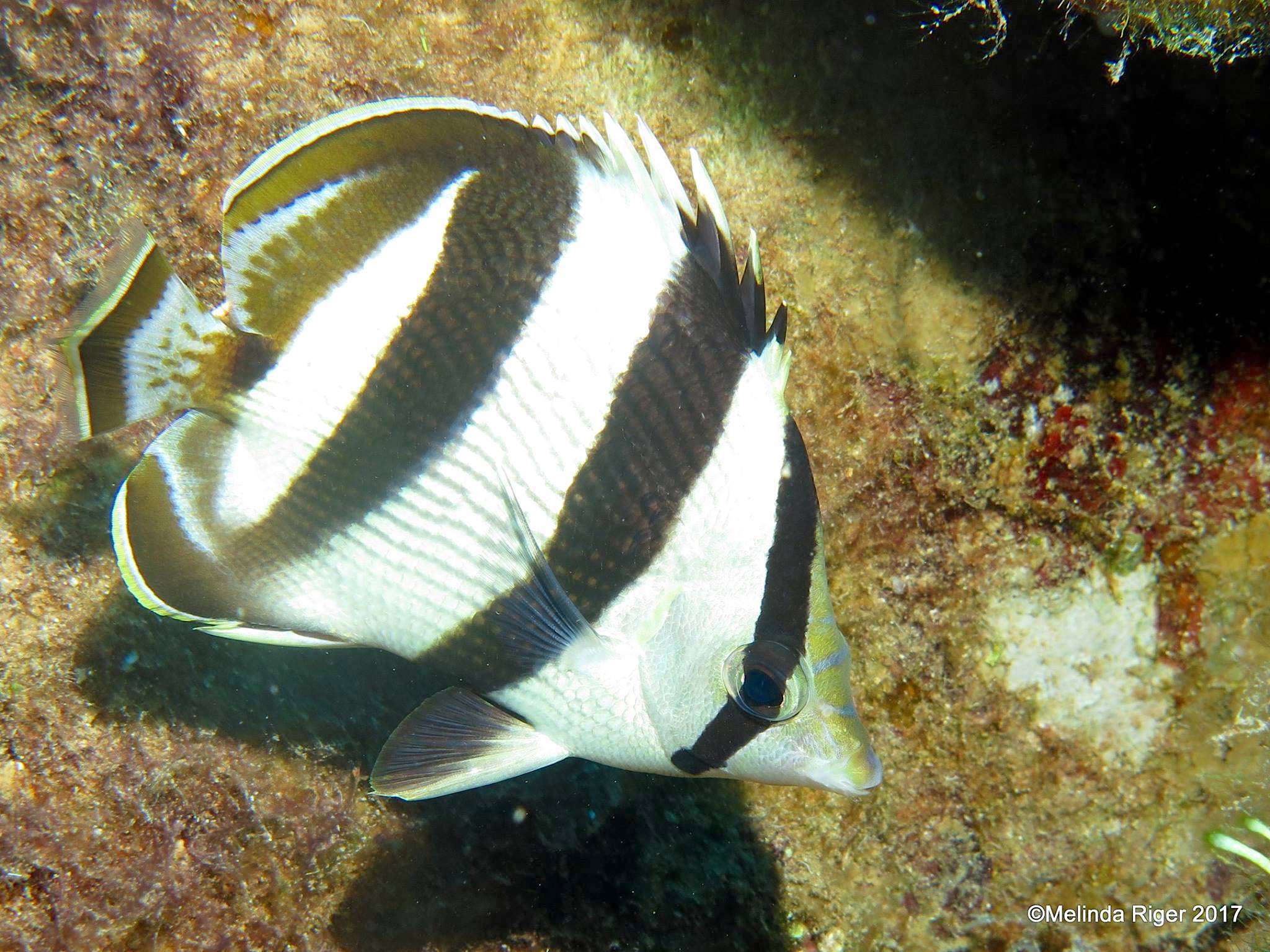
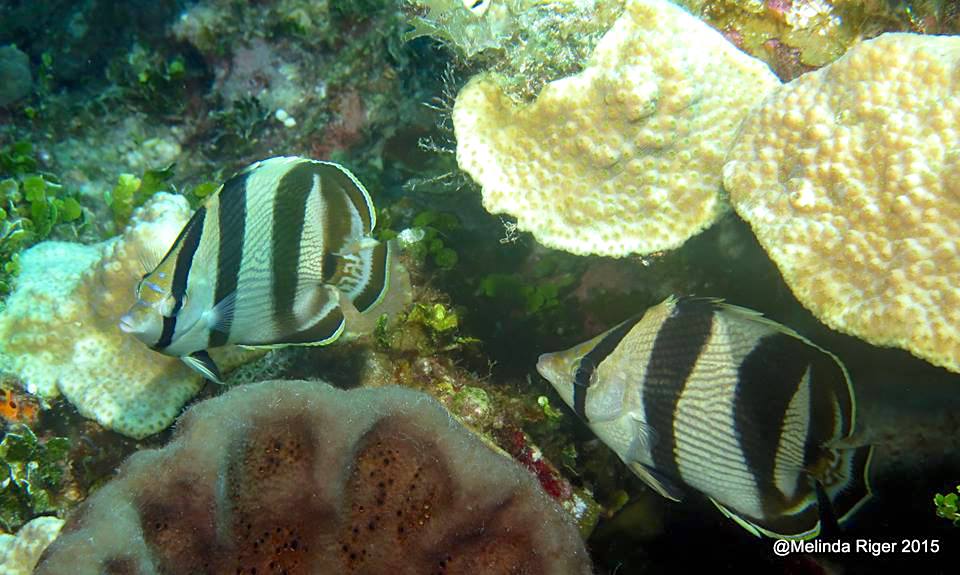
Banded Butterflyfish, Bahamas (Melinda Riger / GB Scuba)

BANDED BUTTERFLYFISH – BAHAMAS REEF FISH (49)

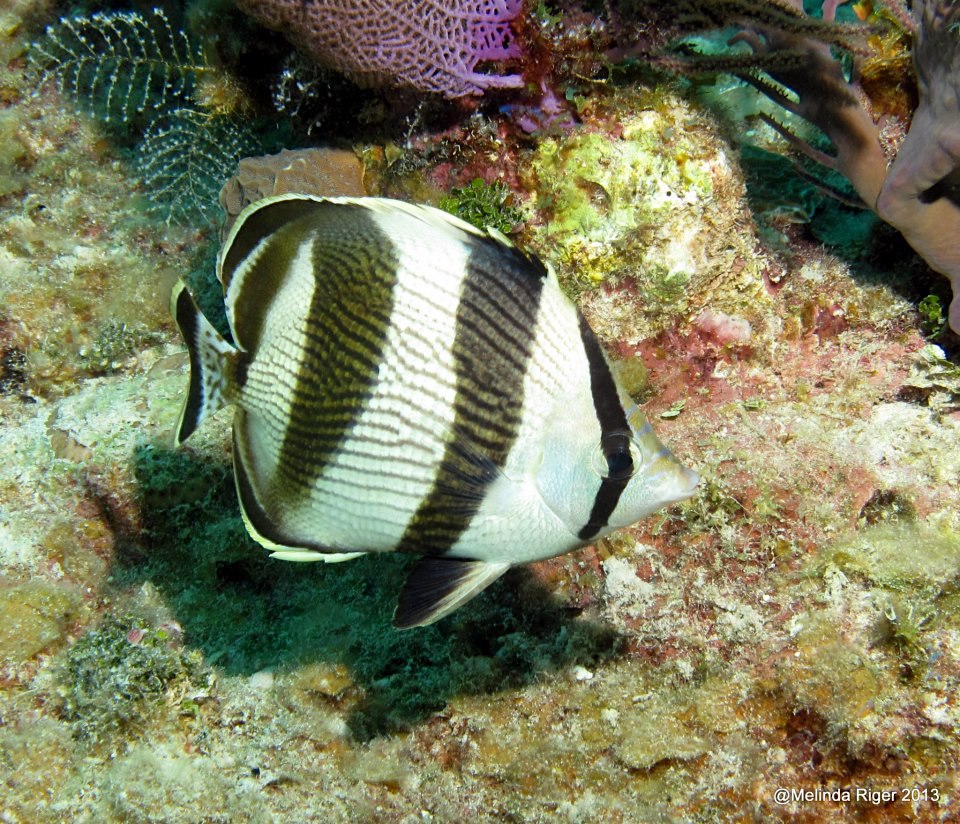
The banded butterflyfish (Chaetodon striatus) is one of several butterflyfish species found in Bahamas waters. There are links to some of the others at the end of this post. The reason for the name is obvious. The purpose of the patterning (striatus) is to act as an adaptive anti-predator defence when seen against the varied landscape of the coral reefs that are its home. 

Banded Butterflyfish, Bahamas (Melinda Riger / GB Scuba)

These little fish tend to be found either singly or in pairs. Two of them together may play a form of chase game among the corals and anemones of the reef. 

Banded Butterflyfish, Bahamas (Melinda Riger / GB Scuba)

Banded butterfishes, like their cousins, have a varied diet that includes small crustaceans, worms, and coral polyps. They also have a valuable role on the reef by acting a cleaner fish for larger species like grunts, tangs and parrot fish. This sort of relationship, where one party benefits from this kind of interaction , is known as ‘commensalism’, one of the 4 types of symbiotic relationship.

Banded Butterflyfish, Bahamas (Melinda Riger / GB Scuba)

RELATED LINKS

LONGSNOUT BUTTERFLYFISH

BUTTERFLYFISHES (RH guide to reef, banded, four-eyed & spotfin)

REEF FISH INDEX gateway to loads of colourful finny species

WHAT’S THAT FISH? A handy resource

FLORENT’S GUIDE A ditto

Banded Butterflyfish, Bahamas (Melinda Riger / GB Scuba)

Credits: Melinda Riger / Grand Bahama Scuba

Unknown's avatar

BOOKCOMBING: BIRDS OF THE WEST INDIES (MK 2)


BOOKCOMBING: BIRDS OF THE WEST INDIES (MK 2)

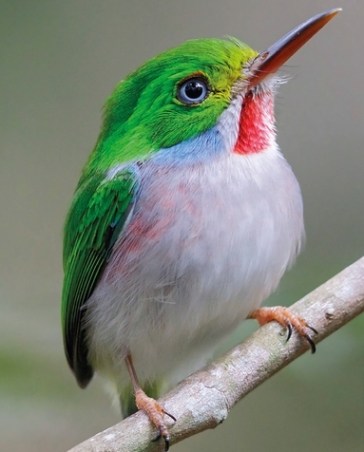
The number of bird books that are devoted entirely to the Bahamas is very small. Most books that include the region have a wider ambit. They feature birds of the West Indies as a whole, many of which are also found on Abaco but a good proportion of which are not. The header image, for example, is a resolutely non-Abaconian Jamaican Tody and is the cover bird for the book featured in this post.

Birds of Abaco by Keith Salvesen

In the early days of this blog I started a ‘birdyography’ page (accessible on the menu bar at the top under BOOKS ETC). This includes most (if not all) of the books most helpful for Bahamas birders, and all are field guides except for one. That’s my own Birds of Abaco, which some have described using the words ‘table’ in conjunction with ‘coffee’. Anyway, at nearly 2 kilos it’s certainly not a pocket field guide, nor even a backpack one…

The go-to Bahamas field guide is Bruce Hallett’s magisterial Birds of the Bahamas and TCI. So far so very good – except that it is out-of-print and highly sought after. I have just checked and a copy on Abe.com comes in at around $300! I have 3 copies but 2 are out on loan, probably permanently… There are several other book contenders for consideration, all appearing on my book list linked above.
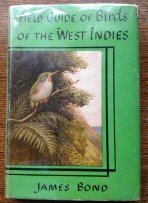
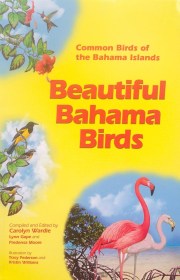
These include the legendary James Bond’s book dating from 1936 (see HERE for more) and its many subsequent incarnations (my 1947 2nd edition shown above, also featuring a tody); Brudenell-Bruce’s charming but dated book; Rafaelle’s rather good Field Guide of the Birds of the West Indies; and the excellent recent Bahamas-produced book Beautiful Bahama Birds by Carolyn Wardle, Lynn Gape and Predensa Moore that features most of the birds one might be likely to see, with help with locations and so on. I reviewed it HERE


FLIEG & SANDER: A NEW EDITION

There’s one small book that is, at first glance, far too wide in scope and slim to be of much use in the Northern Bahamas. However, it contains many of the birds that a casual birder might come across on Abaco. It’s not comprehensive by any means, but it’s useful and handy. First published in 2000 with subsequent reprints, Birds of the West Indies by Flieg and Sander was repackaged as a new edition last year. I meant to write about it sooner; now I have got round to it. Here is a photo of the original – already a small pocket-sized book – and on top, the new revised edition: slimmer, lighter and apparently more up-to-date.
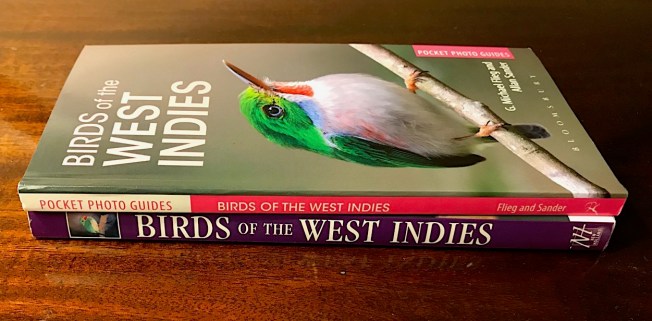
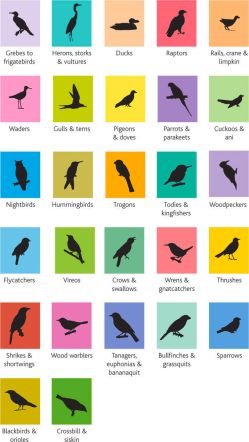
This compact pocket guide has 144 pages of photos of some 250 species, with brief descriptions (135 pp in the old version). Bird groups are listed under numerous helpful coloured-coded corner tabs (‘Gulls & Terns’; ‘Woodpeckers’; ‘Vireos’ etc). The book also contains (very) brief notes on birding locations; a detailed guide to the endemics throughout the region covered; a glossary; a reading list; and a decent index. 


The photos in the original are generally quite clear and helpful for ID by the puzzled amateur birder; but inevitably the use of pre-millennial photographic equipment does not quite do the birds justice in terms of the bird book images we have become accustomed to in the digital age.

           

Recognisable as our beloved parrots but showing their age in digital times…
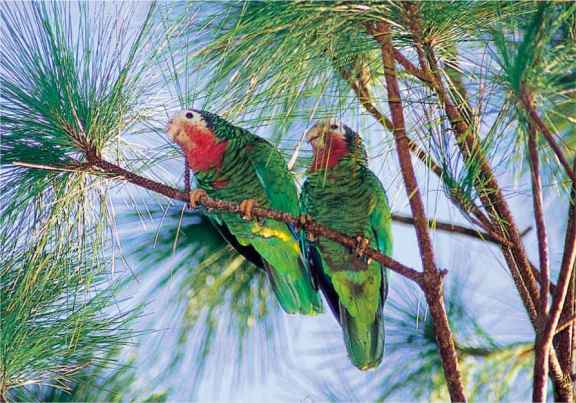
The disappointment is that Bloomsbury decided to go with what they had, a dated book that might have benefitted from a more radical approach to the contents as well as the design. Basically the very neat new edition is the old one repackaged in a better format, with few detectable changes to the original. In fact, the text itself seems unaltered. Most probably – since this is a budget book – a radical reworking was simply not a practical or cost-effective option. This means that changes between 2000 and 2017 go unremarked. For example (as far as the Bahamas is concerned):

  1. The endemic bird we know as the Bahama Oriole (called Black-cowled Oriole in the book) was originally correctly described as ‘a resident of Andros‘, but also said to be ‘a rare resident of Abaco… threatened by unknown factors’. In fact by 2000, the bird was already believed to be extirpated from Abaco during the previous decade. None has been found since, and no one now expects to find one. The text, however, is unchanged in the new edition.
  2. The original edition gives the Bahamas 3 endemic species: the swallow, the woodstar and the yellowthroat. Unchanged for the new edition is the fact that in 2011, the AOU awarded endemic status to another species – the Bahama Warbler. I haven’t checked for other locations, but similar changes have occurred over the period elsewhere in the region covered, so further inaccuracies are pretty inevitable.

Overall I’d say (as I did originally) this is a useful and handy little guide for ID of the mainstream birds you are likely to encounter on Abaco. It would do perfectly well as a book to take out and about with you for those “what on earth is that?” moments. For the interested birder travelling light for a few days, this would serve the purpose, with the added benefit of being cheap – around $15. Beware when online, especially on eBay. People are still selling old editions without reference to the new one, and at much the same price. You want to make sure you get the improved slimline version…

If I now had to recommend for an affordable, simple, portable, practical bird guide for the casual birder in the Bahamas, then I would go now go for Beautiful Bahama Birds. It is Bahamas-specific for a start; although it contains drawings rather than photographs, they are fresh and informative; it was published in 2014 and is as accurate as you could wish for as at that date; and it has a great deal more useful information for Bahamas (as opposed to more general) birding. The link to my detailed review is given above.

Credits: well, I took some photos from the book and publishers material (eg a good crop for the header image) for non-commercial illustrative purposes, so it’s more like apologies to publishers New Holland (original ed.) and Bloomsbury (new ed.). Last image – RH.

Abaco (Cuban) Parrot (Keith Salvesen)

Unknown's avatar

ROYAL TERNS ON THE LONG DOCK, CHEROKEE


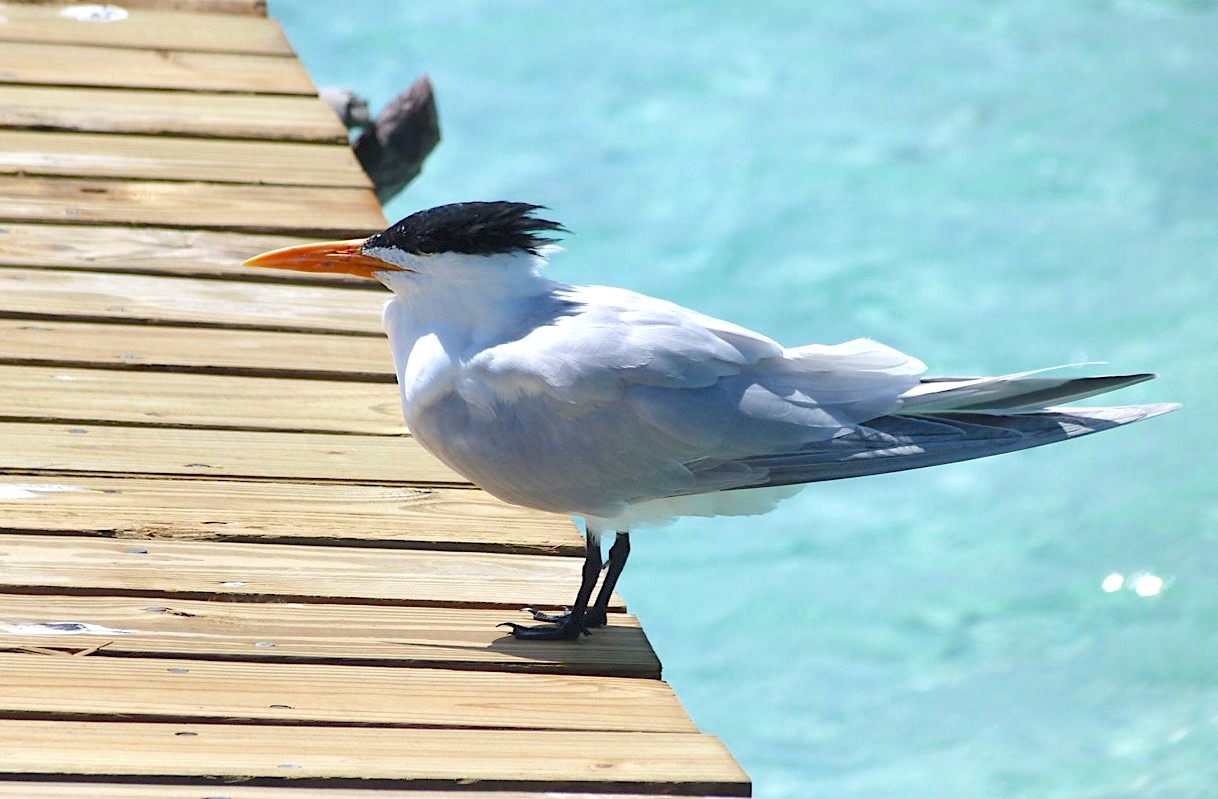
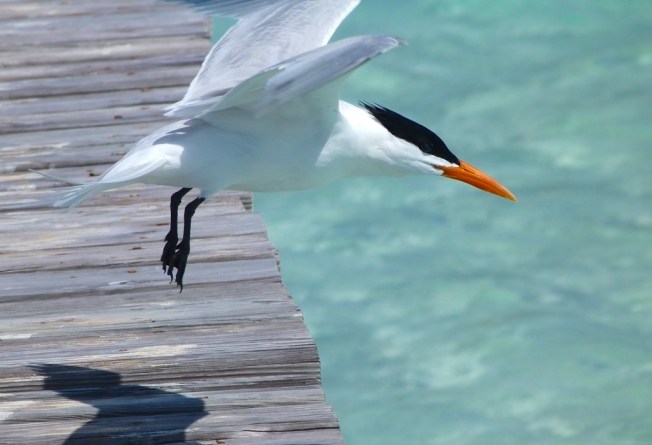
Royal Tern, Long Dock Cherokee Abaco Bahamas (Keith Salvesen)

ROYAL TERNS ON THE LONG DOCK, CHEROKEE

Royal terns Thalasseus maximus seem to have a great liking – quite rightly – for the charms of Cherokee, Abaco. Of the 12 tern species recorded for Abaco, ROTEs are the only permanent residents. Most of the others are summer visitors; a couple are winter visitors; and the rest pass through as migrating ‘transients’, stopping to rest and refuel on their long journeys. So ROTEs are undoubtedly the most commonly found terns on Abaco, and some might say the finest. And Cherokee Long Dock is one place to find them.

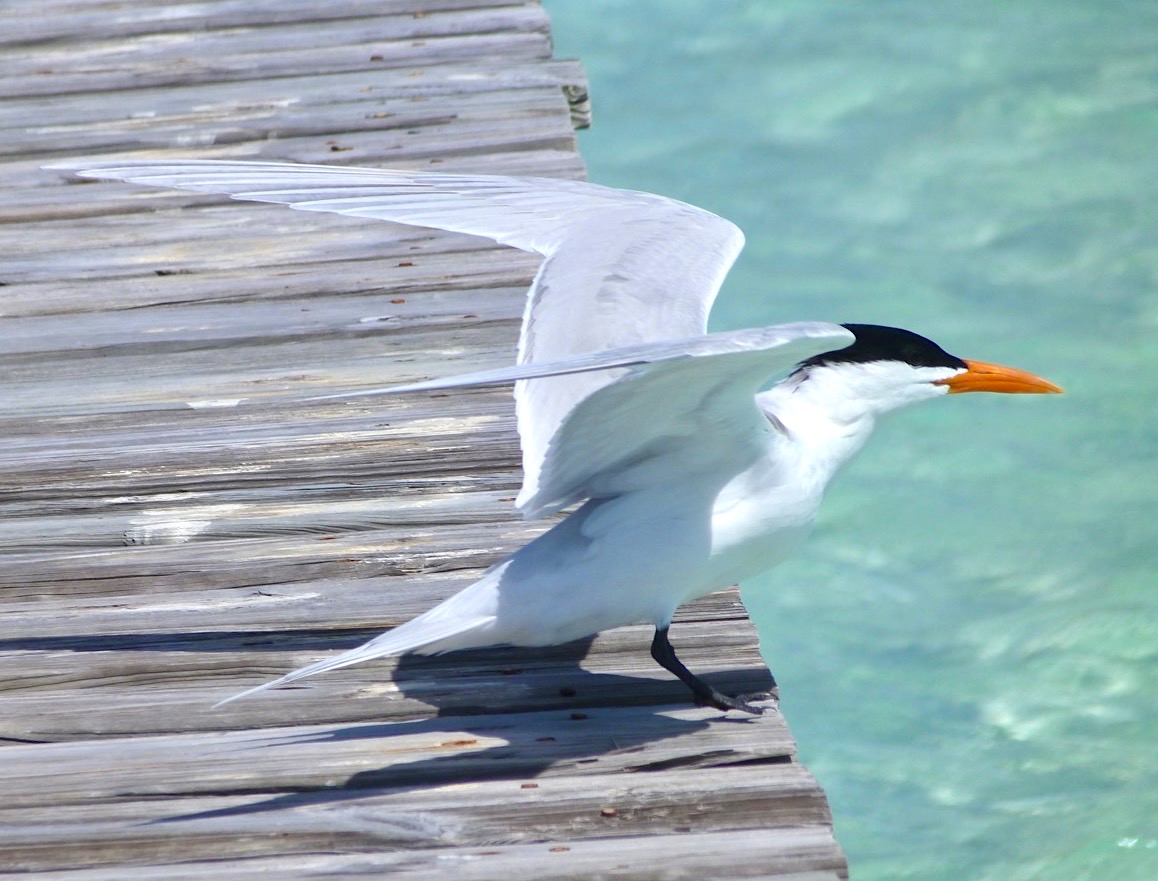
Royal Tern, Long Dock Cherokee Abaco Bahamas (Keith Salvesen)

The historic LONG DOCK at Cherokee stretches far out into the sea to accommodate the varying tide levels of the area – click the link for more information and photos. It is a memorable feature for visitors, and much loved by locals. Also by the royal terns. 

Royal Tern, Long Dock Cherokee Abaco Bahamas (Keith Salvesen)

The dock provides an ideal safe platform for ROTEs to congregate and hang out. They have a perfect view of the small fishes that make up their diet as they swim in the clear turquoise waters a few feet below. Watching these birds diving off the dock after a fish is nearly as entertaining as watching brown pelicans dive off the jetty at Sandy Point.

Royal Tern, Long Dock Cherokee Abaco Bahamas (Keith Salvesen)

There are buoys in the bay as well, and individual birds will fly from the dock to perch on a buoy and check out the fishing round it, before returning to the dock – hopefully with a fish in its beak. And the juveniles, with their endearing beginner ‘hair’styles (see #3) can learn the ropes from their elders and betters.

Royal Tern, Long Dock Cherokee Abaco Bahamas (Keith Salvesen)

People often stroll the length of the dock, or pause on it to pass the time of day and watch the optimistic bonefishers casting hopefully at their silver prizes. These fish are often easier to see from the dock than from wading level – people sometimes shout helpful encouragement: “There… going left…look!… 20 feet in front of you… no, THERE…” and so on. The terns take little notice of all this. A group of people, especially with a dog, might persuade the birds to take flight, but they return as soon as they can; or simple move along the dock and settle in a different place.

Royal Tern, Long Dock Cherokee Abaco Bahamas (Keith Salvesen)

The plaque for the long dock shows its importance to the community

The dock is so long that it tapers to a vanishing point on the horizon

KNOW YOUR TERNS (WITH THE ADMIRABLE BIRDORABLE)

Abaco has these species plus three moreBirdorable: Tern Species

Credits: Keith Salvesen Photography; BIRDORABLE, with thanks for their wit and amazingly effective highlighting of the essential distinguishing features of bird species

Springboard…Royal Tern, Long Dock Cherokee Abaco Bahamas (Keith Salvesen)

Unknown's avatar

PURPLE VASE SPONGES: BAHAMAS REEF ORNAMENTS


Purple Vase Sponge, Bahamas (Melinda Riger / G B Scuba)

PURPLE VASE SPONGES: BAHAMAS REEF ORNAMENTS

The Purple Vase is an unmistakeable sponge, a colourful reef creature (for they are animals, of course) that stands even out amongst the bright corals that surround it. And like corals, sponges are vulnerable to all the usual threats (mainly human-generated).

Purple Vase Sponge, Bahamas (Melinda Riger / G B Scuba)

Catch them while you can in the clear waters of the Bahamas while stocks last. I say this because as study after study concludes, the prospects of reef-mageddon get closer each year. When the corals die off, so in all probability will the sponges and anemones…

Purple Vase Sponge, Bahamas (Melinda Riger / G B Scuba)

After such a depressing intro, let’s move on to take a positive look at the purple vase sponge. As with all sponges, once a newborn sponge is wafted by the current to a place on the reef, it takes root there throughout its life. There, these attractive sponges exist by filtering the water that surrounds them, separating out plankton to feed on. Static filter-feeders, if you will.

Purple Vase Sponge, Bahamas (Melinda Riger / G B Scuba)

You’ll notice that in some of the photographs, the sponges have guests. These are BRITTLE STARS, and they are often found on – and indeed in – purple vases. This is a form of symbiotic relationship known as commensalism, in which one species benefits and the other is neither benefitted nor harmed. The brittle star gains a shelter and a safe base for feeding; the vase gets a harmless companion. Small fishes benefit from the vases in a similar way.

Purple Vase Sponge, Bahamas (Melinda Riger / G B Scuba)

Besides the impact of damaging human interventions (which may be permanent), extreme weather events also affect reef life and the static inhabitants adversely. Storms and hurricanes can cause localised havoc, but the damage is not necessarily permanent. The reef can in time repopulate naturally and flourish again. Humans can even promote this recovery. The photograph above shows a purple vase sponge that was detached from the reef by Hurricane Matthew in October 2016. Melinda Riger in effect replanted it on the reef and it reattached itself and grew. In due course it even acquired its brittle star occupant. 

Purple Vase Sponge, Bahamas (Melinda Riger / G B Scuba)

*JIMI AND ‘PURPLE VASE’ – A VOLUNTARY MUSICAL DIGRESSION

In an interview with NME Hendrix is reported to have said that Purple Haze “was about a dream I had that I was walking under the sea.” Originally the song was intended to be ‘Purple Vase’, and reflect the psychedelic experience of life on a coral reef. Realising he was getting bogged down by sub-aquatic imagery (he was a non-swimmer), he toked for a while and then ‘Purple Haze’ emerged almost fully formed. He was always far happier kissing the sky than wandering about under the waves. Most covers of the song are pale imitations of the original, but here’s a rather unusual take that succeeds by trying a different approach…

Credits: Melinda Riger / Grand Bahama Scuba for all great photos; magpie pickings for bits and pieces, with a shout-out to ‘Critter Squad’ for its informative site aimed at kids. And amateur grown-ups can benefit too… commensalism in humans; Friend ‘n’ Fellow audio

Purple Vase Sponge, Bahamas (Melinda Riger / G B Scuba)

Unknown's avatar

MAPPING ABACO: ON THE MAP IN 1702


Map of the Bahama Islands - Samuel Thornton - c1702

MAPPING ABACO: ON THE MAP IN 1702

In the Old World, 1702 was a turbulent year politically, royally, and militarily. Treaties made were broken; new treaties were made. Queen Anne succeeded to the throne of England after William III died of complications after falling off his horse. Anne went on to have 17 children, any one of whom would have secured the succession, but the extraordinary and sad fact is that none survived beyond childhood. In the New World, English troops were abroad, attacking St Augustine in (then-Spanish) Florida.

Map of the Bahama Islands - Samuel Thornton - c1702

Meanwhile in the world of cartography, the development of mapping continued apace with the Dutch retaining their pre-eminence, and the French and British making important contributions. Which brings me to Samuel Thornton, hydrographer, and his mapping ways. He was the son of the more famous cartographer, John Thornton, considered the principal English chart-maker of the late c17. As his father aged, a degree of uncertainty seems to have crept in over the authorship of Thornton maps. It is clear that after John’s death in 1708, Samuel took over the business and reissued maps under his own name, sometimes with little alteration other than the name in the cartouche. However there was possibly a ‘grey area’ for a few years before, when the same practice applied. 
Map of the Bahama Islands - Samuel Thornton - c1702

Samuel Thornton’s ‘…New Chart of the Bahama Islands and the Windward Pafsage (sic)’ is thought originally to date from c1702, when presumably the enjoyably colourful Cartouche (above) in fact bore his father’s name. The map covers an extensive geographical area besides the Bahamas, with the Florida coastline revealed as remarkably unpopulated. Zeroing in on the northern Bahamas (and as is usual with historic maps), certain features stand out, not least with spelling. Andros was written Androfs (sic). The Bahama Banck (sic) is shown to extend quite a long way north of Abbaco (sic) and Grand Bahama (shown as Bahama I). And as noted in earlier posts relating to Abaco’s history (see links below), ‘Hole in the Rock’ (ie Wall) is the only mainland location marked. This was not because there was any sizeable settlement there, but because for at least a century beforehand, Abaco’s most notable topographic feature was a significant and instantly recognisable navigation marker for shipping at the southern end of the island.

Map of the Bahama Islands - Samuel Thornton - c1702

One problem with Samuel Thornton’s reissues of his father’s maps was that flaws an original map from which a reproduction was derived went uncorrected. For example if you look at the header image of the full map, there’s a dark band right down the centre of the map, which persisted in later versions. More importantly, there was probably little or no correction of errors that new expeditions in the area might have revealed. Be that as it may, the Thornton map plays a significant role in the mapping of the Bahama Islands and beyond, and marks the start of an increasing sophistication as the new century progressed.

RELATED POSTS

MAPPING ABACO Bahamas and Florida in the c17

MAPPING ABACO Bellin’s Map 1764

MAPPING ABACO A journey back to c18

A HISTORY OF HOLE-IN-THE-WALL IN MAPS

Map of the Bahama Islands - Samuel Thornton - c1702

Unknown's avatar

BROWN PELICANS: CLEARED FOR TAKE-OFF & LANDING


Brown Pelican (Phil Lanoue)

BROWN PELICANS: CLEARED FOR TAKE-OFF & LANDING

Brown Pelicans are permanent breeding residents on Abaco, and not uncommon in certain areas though not be any means throughout the island and the cays. If you come across a pair of them – or preferably a group – it’s well worth spending some time watching them in action. These are magnificent birds, unafraid of humans and happy to carry on fishing / plunge diving with an audience. 

Brown Pelican (Phil Lanoue)

The most reliable place I know of to watch the pelicans on Abaco is Sandy Point. You may find them on the dock, drying their wings on the pilings or diving off it for fish. At other times, they will be further out to sea where the sandbars stretch out into the ocean, taking off and gaining height before smashing straight down into the water.

Brown Pelican (Phil Lanoue)Brown Pelican (Phil Lanoue)

These wonderful images of pelicans taking off and landing are the work of professional photographer Phil Lanoue, whose work I am always excited to feature. He has the skills, the equipment and the eye to produce outstanding photographs, freezing birds in motion with complete clarity.

Brown Pelican (Phil Lanoue)

If anyone reading this knows of other locations on Abaco where pelicans can reliably be found, I’d be very pleased to hear more!

All great photos: © Phil Lanoue, with thanks as ever for use permission

Brown Pelican (Phil Lanoue)

Unknown's avatar

BAHAMAS REEF FISH (48): SCHOOLMASTER SNAPPER


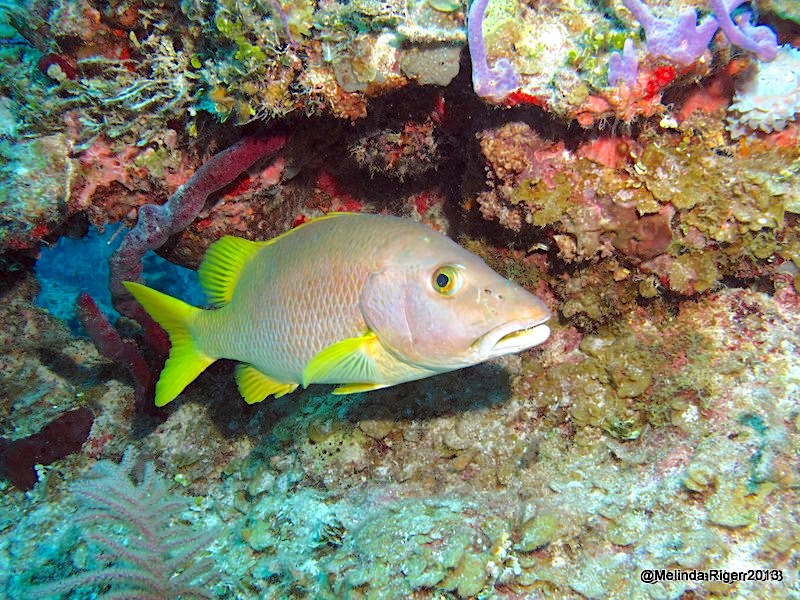
Schoolmaster Snapper (Melinda Riger @ G B Scuba)

BAHAMAS REEF FISH (48): SCHOOLMASTER SNAPPER

November 1st already, and the first time I am prepared to consider the possibility of the onset of Christmas, with its attendant joys yet complications… Meanwhile, I thought I might have run out of types of reef fish to feature in this series long before I got to 50. Yet here we are, two short of that target, with a species of snapper I haven’t even mentioned before. I am (frankly) a rather feeble swimmer, and do not possess a viable underwater camera. So there’s no way I could show these denizens of the not-especially-deep without heavy reliance on others, in particular the outstanding photos of diver Melinda Riger of Grand Bahama Scuba; and the memorable ones from Adam Rees of Scuba Works that include some of the more obscure species that appear in my WTF? (What’s That Fish) series. 

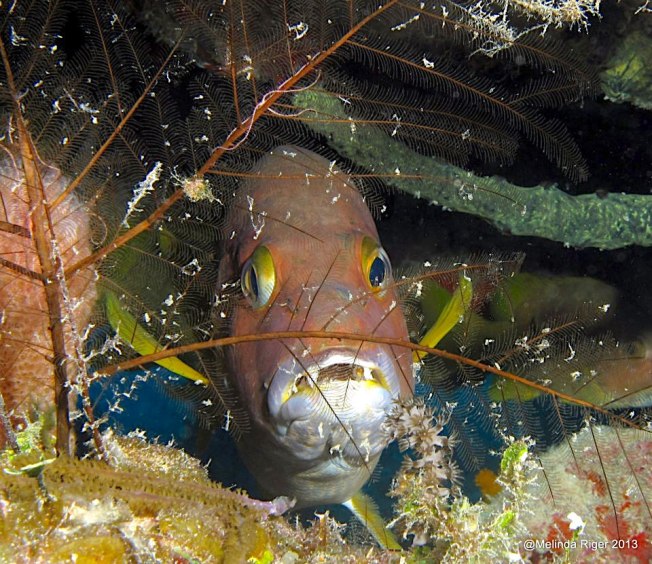
Schoolmaster Snapper (Melinda Riger @ G B Scuba)

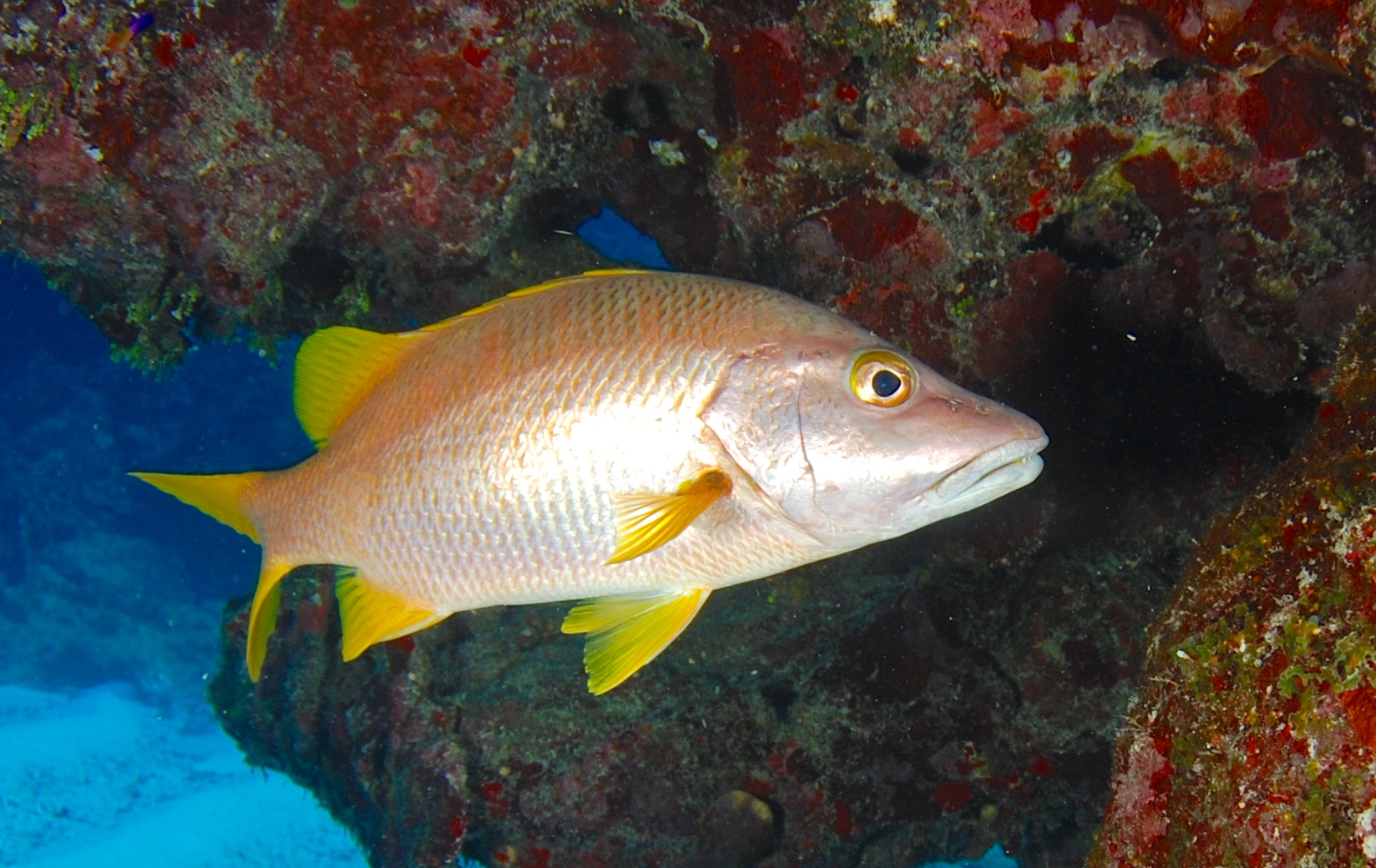
The schoolmaster snapper (Lutjanus apodus) lives among the coral reefs and mangroves of the Caribbean and further north to the northern Bahamas and Florida. Generally they are quite small, not much more than 12- 18 inches. They tend to hang out in ‘schools’, which several sources suggest as the reason they got their common name. But schoolmasters don’t really move around in large groups, do they? It’s school pupils that do that, but ‘Pupil Snapper’ wouldn’t cut it as a fish name I guess.

Schoolmaster Snapper (Melinda Riger @ G B Scuba)

10 SCHOOLMASTER SNAPPER FACTS TO PONDER

  • One pair of upper teeth are so large they protrude when the fish shuts its mouth
  • Their side scales are so arranged that diamond shapes are produced
  • There’s plenty to learn about their fin arrangements, but not necessarily to remember
  • Their jaws don’t open very wide, so their prey tends to be quite small
  • Unlike fish that change sex as they grow, these ones retain their birth gender for life
  • When they spawn they produce their gametes simultaneously, and swim away
  • The fertilised eggs sink to the bottom, where they have to take their chances
  • Though small, they are good to eat and are fished for recreation and commercially
  • Regionally there are specific regulations as to catch length & limits, hook type, bait etc
  • Like all snappers and many other fish species, these fish are associated with ciguatera

Schoolmaster Snapper (Melinda Riger @ G B Scuba)

RECIPES

For those who enjoy cooking (whatever that is), you probably know exactly how you like to cook your snappers. For anyone else, here’s a site that proposes several different ways to cook them, with helpful tips. These seem to apply to all snapper species, most of which are available free in the Bahamas. http://www.allfishingbuy.com/Fish-Recipes/Snapper-Recepies.htm

My favourite schoolmaster snapper photo of those featured hereSchoolmaster Snapper (Melinda Riger @ G B Scuba)

POSSIBLE MEDICAL BENEFITS FROM EATING SNAPPERS

These are alleged to include (except when fried): protection against certain types of stroke, reduction of heart arrhythmia, and defence against certain types of cancer. Don’t take my word for it, though. And definitely don’t rely on a snapper-based diet regime. I think the most that can safely be said is that eating snapper will do you no harm (except when fried) and may conceivably have a marginal benefit on health along with a balanced diet, exercise, minimal alcohol intake and all the routines that we strictly adhere to for a healthy life. In our dreams, anyway.

Schoolmaster Snapper (Albert Kok)

Credits: All great pics by Melinda Riger / GB Scuba except #6 Albert Kok; range map, Wiki. Magpie pickings.

Schoolmaster Snapper (Melinda Riger @ G B Scuba)


Unknown's avatar

A LIGHT EXTINGUISHED: LITTLE HARBOUR LIGHTHOUSE REVISITED


Little Harbour Lighthouse, Abaco Bahamas (Keith Salvesen)

A LIGHT EXTINGUISHED: LITTLE HARBOUR LIGHTHOUSE REVISITED

The words ‘Abaco Lighthouse’ are near-synonymous with the splendid striped edifice in Hope Town, Elbow Cay. This beloved building is truly iconic, in the modern sense of the word (see HERE). But it would not do to forget the other principal lighthouse of Abaco at Hole-in-the-Wall, also with its original Fresnel lenses (see HERE for a post written ages ago).

Little Harbour Lighthouse, Abaco Bahamas (Keith Salvesen)

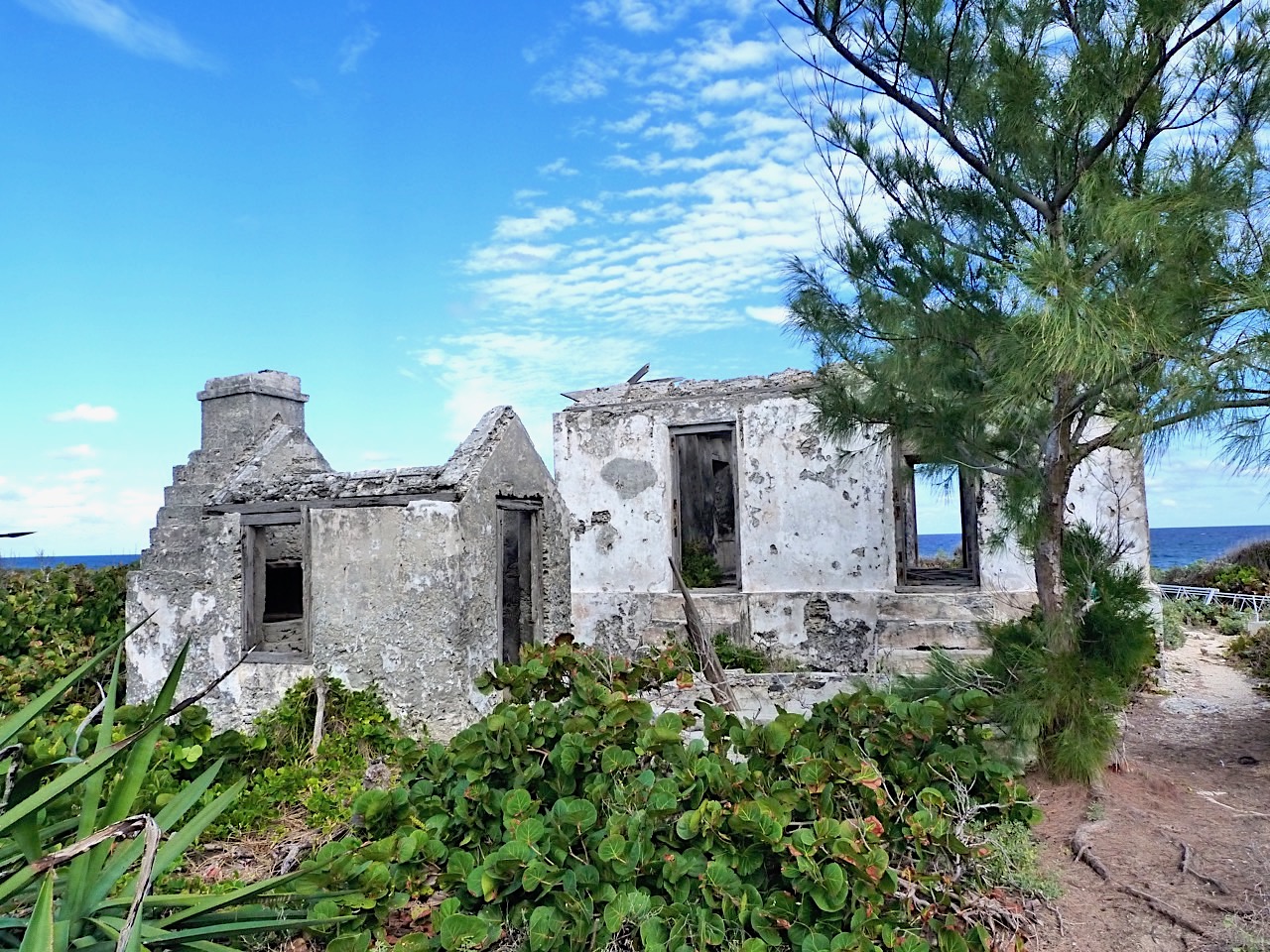
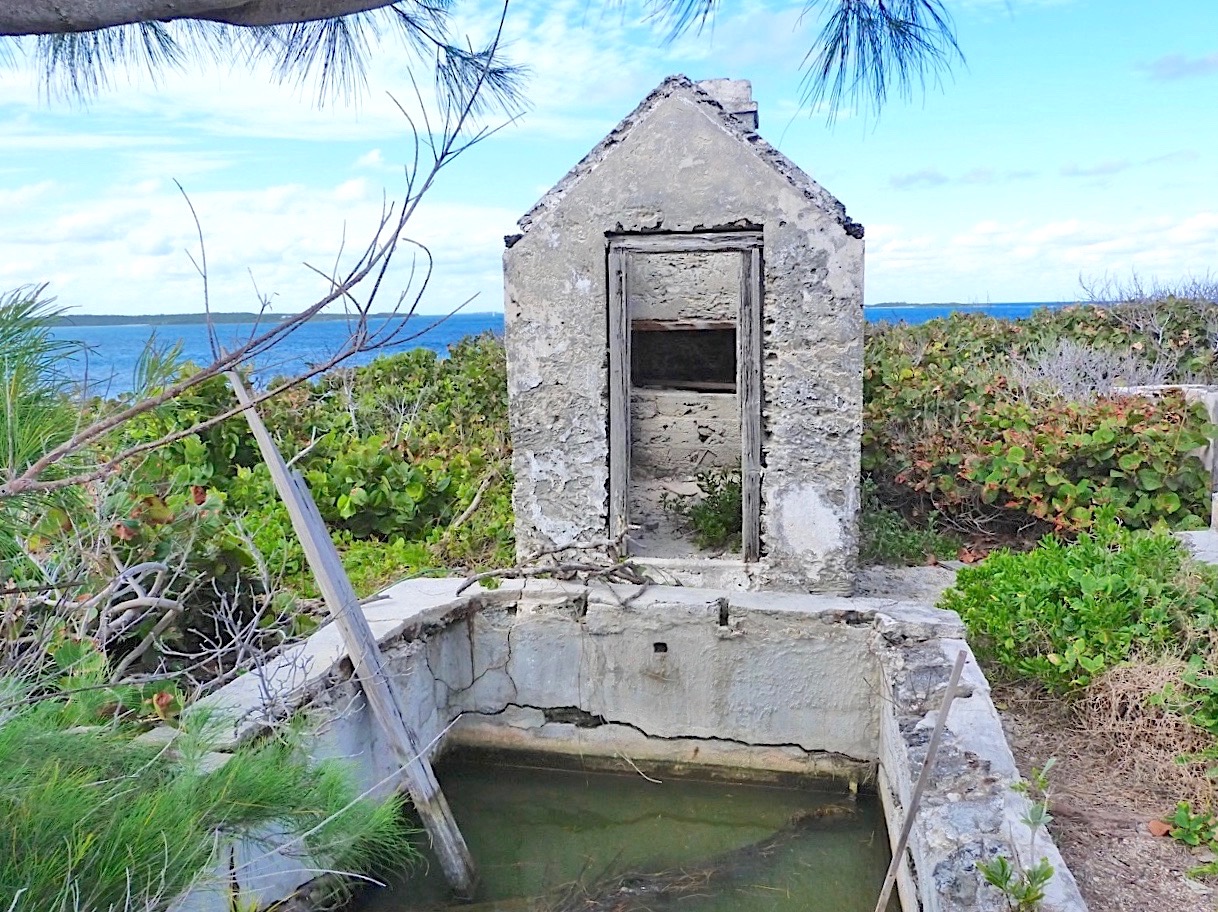
However, there’s a third lighthouse on Abaco. The small light at Little Harbour is, by contrast with the other two beacons, relatively unknown, unvisited, and unloved. Derelict, in fact, and a sad  relic on its lonely promontory. Recently we prised ourselves away from the delights of Pete’s Pub and found the start of the overgrown track to the light. There’s a wooden sign that helps to locate the path. 

Little Harbour Lighthouse, Abaco Bahamas (Keith Salvesen)

This small lighthouse station – “The Old Lighthouse” – was established in 1889 close to the entrance to Little Harbour. Originally, it was manned, with the first lighthouse keeper and his wife being the only inhabitants of that part of Little Harbour. The light presumably served to guide shipping to the channel leading to the secluded and safe harbour.

Little Harbour Lighthouse, Abaco Bahamas (Keith Salvesen)Little Harbour Lighthouse, Abaco Bahamas (Keith Salvesen) Little Harbour Lighthouse, Abaco Bahamas (Keith Salvesen)

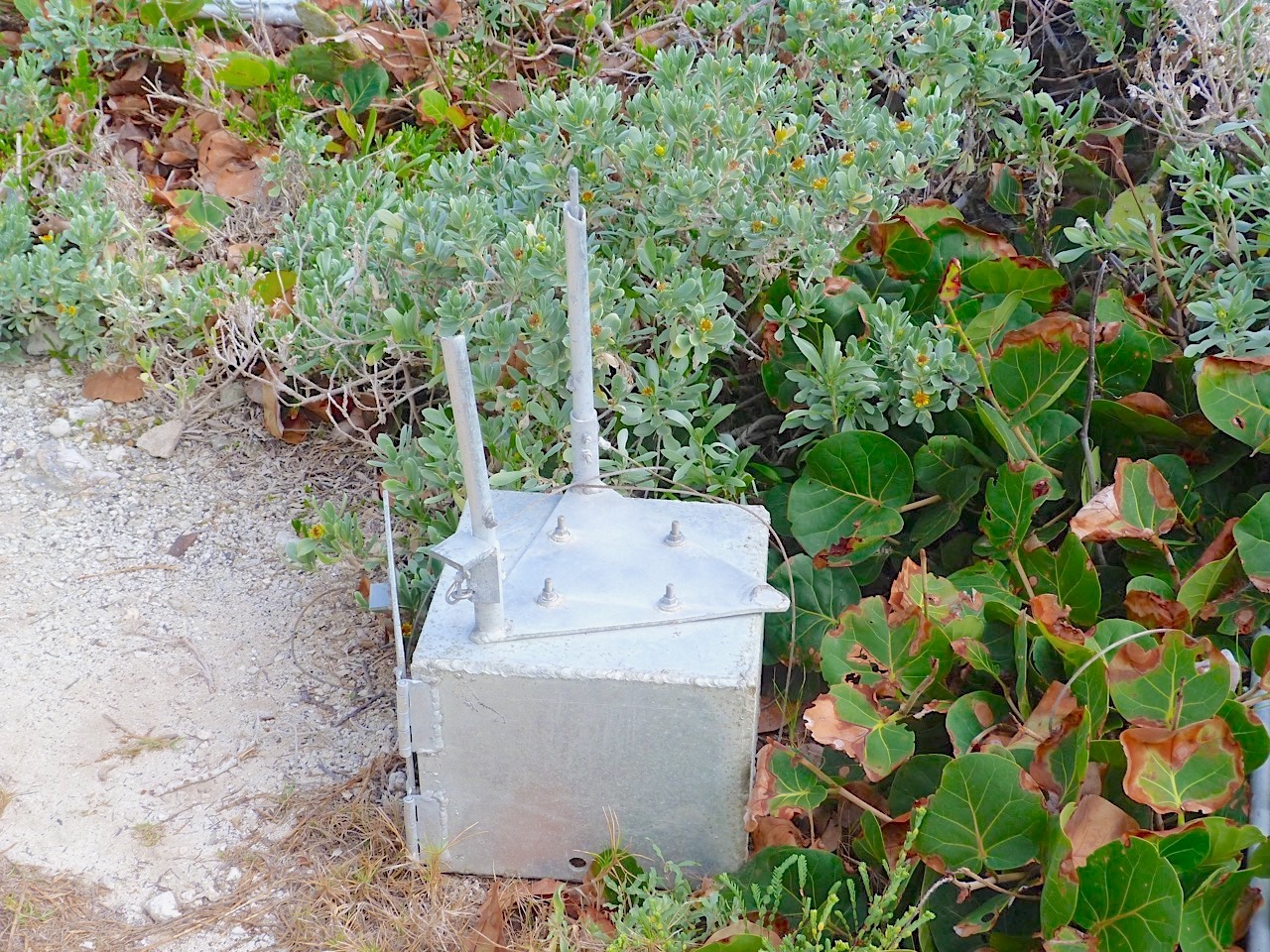
In due course the living quarters fell into dereliction and the existing beacon (type unknown?) on a small tower was converted to a solar-powered light. This arrangement did not survive the devastation of Hurricane Floyd in 1999. The replacement was a modern steel framework tower that carried an active light until eventually it was blown over by Hurricane Sandy in October 2012. Sandy was also the hurricane that destroyed forever the rock ‘hole’ – an important navigation mark for centuries – that gave Hole-in-the-Wall its distinctive name (see HERE and links).

Little Harbour Lighthouse, Abaco Bahamas (Keith Salvesen)Little Harbour Lighthouse, Abaco Bahamas (Keith Salvesen) Little Harbour Lighthouse, Abaco Bahamas (Keith Salvesen)

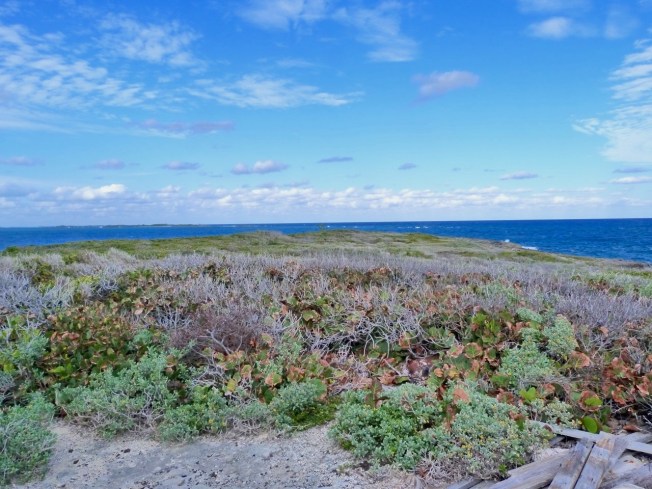
The views from the elevated position of the ruin are spectacular, both from the outside and from inside. In good weather, anyway… It remains to be seen whether the lonely light is now considered completely redundant, or whether another automatic light will in the end be positioned here when funds or willpower permit. I’m not aware of any groundswell of opinion suggesting that, in the absence of a beacon at Little Harbour, there is a potential safety issue. 

The view north from the light to the tip of the promontoryLittle Harbour Lighthouse, Abaco Bahamas (Keith Salvesen)

The view roughly south past the fallen tower towards CherokeeLittle Harbour Lighthouse, Abaco Bahamas (Keith Salvesen)

Over time, I have been contacted by people with family associations to previous keepers; and with personal experiences of life there. One or two Americans have wanted to track newly discovered family connections to the light, and even possible relatives. I have the makings of ‘Lighthouse Family’ tree. When I last wrote about the light, Chuck Rickey contacted me with his story, which gives a wonderful insight into the history of the light and its hardy occupants: 

“My grandmother’s first cousin, Curtis Lowe, was lighthouse keeper here for many years and along with his wife, Bessie, raised children Hartley, Maitland, Lois and Robert, obtaining staples buy walking a tract road or sailing to Cherokee Sound. Later on, they were able to motor to Snake Cay, to get provisions from Owens Illinois’ company store aboard the “Robert Fulton”, an old side-wheel steamer, permanently moored there. I was fortunate to spend much fun time there during school vacations growing up”.

WHEREABOUTS IN LITTLE HARBOUR IS WAS THE LIGHTHOUSE

Little Harbour Lighthouse 1 jpg copyLittle Harbour Lighthouse 4 jpg

RELATED POSTS

ELBOW REEF LIGHTHOUSE: A BEACON ICON

HOLE-IN-THE-WALL LIGHTHOUSE

HOLE-IN-THE-WALL: HISTORY, SHIPS AND MAPS

Little Harbour Lighthouse, Abaco Bahamas (Darlene Chisholm)

Credits: all photos Keith Salvesen except the last, Darlene Chisholm. Also, with thanks to Sandy Estabrook. 

Logo of the World Lighthouse Society

Logo of the World Lighthouse Society

Unknown's avatar

BLACK-THROATED BLUE WARBLERS ON ABACO


Black-throated Blue Warbler (m), Abaco (Gerlinde Taurer)

BLACK-THROATED BLUE WARBLERS ON ABACO

It’s warbler time of year on Abaco, and a good time to take a look at the Black-throated blue warbler Setophaga caerulescens. This small warbler has very particular breeding and overwintering ranges. In the summer they are found in the forests and woods of eastern North America. As the Fall approaches, they start to migrate south to the Caribbean and Central America. Abaco is one of their winter homes, as well as a likely transit stop on their way further south. Right now sightings are being reported on the mainland and the Cays.

Black-throated Blue Warbler (m), Abaco (Gerlinde Taurer)

WHAT DO I LOOK OUT FOR?

Males and females are quite different in appearance (‘sexually dimorphic’), and could even be mistaken for distinct species. Males are a deep slate-blue above (hence caerulescens) with a striking black face and throat, and white underparts. They are unmistakeable, and unlikely to be confused with any other warbler. Females are basically grayish-olive above and pale yellow underneath. For ID, look for a white stripe above the eye, a pale arc below it. In addition, both sexes have a diagnostic white patch on the the wing, that I have seen referred to as a ‘handkerchief‘.**

Black-throated Blue Warbler (f), Abaco (Becky Marvil)

The legendary bird cartoon website Birdorable, featured often in these pages, as usual has a spot-on comparison of the sexes. TBH, this is a great resource for nailing a bird’s essential characteristics. You should check out its warblers in particular! Here’s their inimitably charming take on the BTBW gender comparison.

Black-throated Blue Warbler (m & f comparison) (Birdorable)

These pretty warblers can be seen in gardens, coppice, and woodland. Although mainly insect-eaters, sometimes catching them in flight, they also eat fruit and seeds especially in winter. BTBWs are territorial, and will defend their chosen space against all-comers, including their own species.

Black-throated Blue Warbler (m), Abaco (Bruce Hallett)

WHAT DO I LISTEN OUT FOR?

As I have mentioned before, I tend to find phonetic transcriptions of bird sounds rather baffling – and often not really how I hear them myself. This is especially with the ‘Oh-dear-oh-dear-I’ve-run-out-of-beer’ and ‘Have-a-little-Kalik-at-Pete’s’ kind. One source asserts: “The bird’s song can be described  as a buzzed zee-zee-zeeee with an upward inflection. Its call is a flat ctuk”. You be the judge…

SONG Etienne Leroy / Xeno-Canto

CALL Paul Marvin / Xeno-Canto


Black-throated Blue Warbler (m) (Blaine Rothauser CWFNJ)

BTBW SEX LIFE – ANY GOOD GOSS?

Black-throated blue warblers are – and I say this with considerable reservations – mainly a monogamous species. However it turns out that they have complex patterns of vocalisations and behaviours at breeding time, including very promising-sounding ‘extra-pair copulation’ involving ‘heterospecific cuckoldry’. However, despite all my efforts in researching this phenomenon more thoroughly, merely reading the intricacies quickly crossed my boredom threshold, and my own ‘call’ soon became a ‘sonorous saw-like Zzzzzzzzzzzzzzz‘.  Anyway these birds don’t breed on Abaco so I’ll spare you the details and move on.

Black-throated Blue Warbler (f) (Dax Roman / Birds Caribbean)

 IS MANKIND MASHING UP THEIR HABITAT?

BTBWs are fairly common birds within their range, with a large population. The usual stuff is happening with them in terms of habitat destruction & co at both ends of their migration. For some already threatened species (e.g. Kirtland’s Warblers), habitat degradation at either end of the migration (let alone both) presages a downward spiral in population. With BTBWs, I have read both that the population is decreasing; and in another source, slightly increasing. For now, let’s regard the welfare of the species as being stable. However, the current causes of species decline will doubtless continue, and many regard increasingly evident climate change as being a determining factor for the well-being of migratory species. The birds are not yet out of the woods, so to speak… and maybe never will be.

** anyone remember those?

CREDITS Photos: Gerlinde Taurer (1, 2); Becky Marvil (3); Bruce Hallett (4); Blaine Rothauser / CWFNJ (5); @daxroman / Birds Caribbean (7); Paul Reeves / Birds Caribbean (8).  Range Map, Wiki; Cartoons,  Birdorable; Video, Cornell Lab for Ornithology

Black-throated Blue Warbler (m) (Paul Reeves / Birds Caribbean)

Unknown's avatar

FOLLOWING DOLPHINS IN THE BAHAMAS…


Following Dolphins (SailorDolphin / BMMRO)

FOLLOWING DOLPHINS IN THE BAHAMAS…

The Bahamas Marine Mammal Research Organisation (BMMRO) is based at Sandy Point, Abaco. The principals Diane Claridge and Charlotte Dunn with their team cover not only Abaco waters but the whole of the Bahamas. Their research work is complex, and some of it is carried out in conjunction with partners on specific projects or more generally.

Following Dolphins (SailorDolphin / BMMRO)

Which brings me to SailorDolphin Research, a project that involves the meticulous mapping, photographing, and recording of the details of each sighting. Much of the work is carried out in the Bahamas in partnership with BMMRO. The link will take you to the homepage, which notes “This website provides a list of Dolphins that I have documented on the US East coast and the Bahamas. It includes details (with photos & notes) for each dolphin and lists of their sightings from my personal database.” If you have an interest in dolphins (and who does not?), it will repay exploration – and you will see some awesome photographs. Here are a few of them to admire. 

Following Dolphins (SailorDolphin / BMMRO)

Now imagine yourself in the water, with these wonderful creatures cutting through the water in front of you, working their sleek bodies just below the surface, jostling and cavorting, occasionally letting a fin cut through the water. Hold that thought… Right, get back to work!

All photos courtesy of SailorDolphin / BMMRO

Following Dolphins (SailorDolphin / BMMRO)

Unknown's avatar

BLACK DURGON: A TRIGGERFISH OF DISTINCTION


Black Durgon Triggerfish (Melinda Riger / Grand Bahama Scuba)

BLACK DURGON: A TRIGGERFISH OF DISTINCTION

The Black Durgon (Black Triggerfish) seems to be a fairly rare triggerfish in Bahamas waters. I say that not because I know, but because there is very little mention of them in a Bahamas context. In fact, the (not especially profound) research I have done suggests it is not (originally?) really native to the Bahamas region at all. Correction of this impression welcome!

Black Durgon Triggerfish (Melinda Riger / Grand Bahama Scuba)

These fish have the ability to change colour, according to their surroundings. Mostly, they seem completely black. However they have intricate blue markings to the head, and regular patterning on their flanks that resembles the sort of thing one idly doodles during a long and less then attention-holding phone call (or the ‘hold music’) – see Header Image. They also have dramatic pale stripes where their fins join the body.

Black Durgon Triggerfish (Getty Images)

These fish have a varied diet that includes small fish, squid and shrimps, with side-helpings of algae, zooplankton and marine plants. And…

FUN FACT (REALLY!)

The Black Durgon has been studied, of course. One piece of research discovered that they… erm… ingested the feces and vomit of a species of dolphin. Other reef fish in the area did so too, but the Black Durgon was much the keenest on this distinctive  diet. So these are ‘offal-eating’ fish… and welcome to it. Here’s a short video to take your mind off it all…

I’d be interested to hear from anyone who has encountered these fish in Abaco waters. I ought to look further into their prevalence. Maybe they just don’t get much publicity. They need a new agent.

Black Durgon Triggerfish (Melinda Riger / Grand Bahama Scuba)Credits: Photos by Melinda Riger / Grand Bahama Scuba except #3, Getty Images; Kwik-Viddy, Cassandra-Tel; inadequate research, Author

Unknown's avatar

ABACO PARROT ACROBATICS


Abaco (Cuban) Parrot Acrobatics (Melissa Maura)

ABACO PARROT ACROBATICS

Melissa Maura is well-known to many in the Bahamas, not least because of the wonderful work she does with injured or orphaned creatures. Thanks to the skills and compassion of Melissa and those who work with her, animals and birds of all kinds are saved from death or incapacitating injury. In the saddest cases, they are gently cared for until the inevitable occurs.

Abaco (Cuban) Parrot Acrobatics (Melissa Maura)

Melissa also takes terrific bird photographs, some of which I have featured in the past. Indeed my blog headline photograph is one of her parrots. I used to change the header from time to time, but this one is so cheerful that I decided to keep it in place. It always makes me smile.

Abaco (Cuban) Parrot Acrobatics (Melissa Maura)

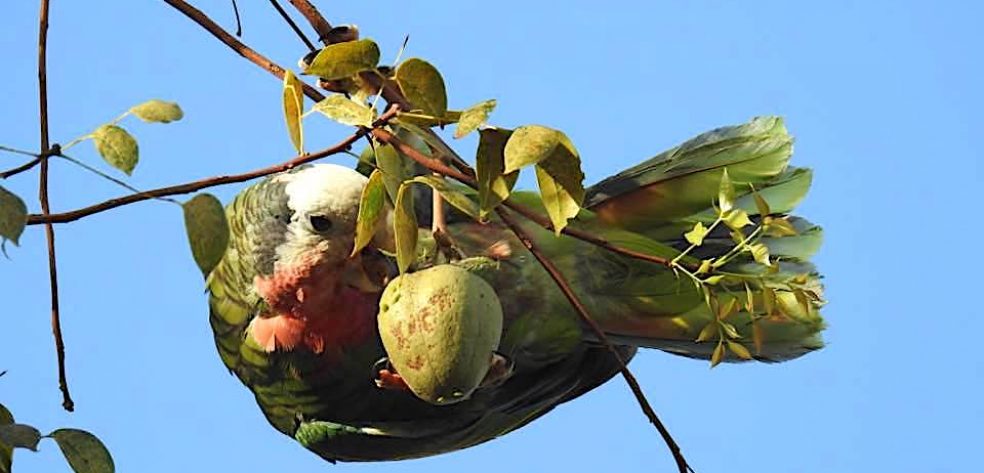
Parrots are acrobatic creatures, happy to eat at all angles including completely upside down. Not just eat, though. Also bicker, flirt, play-fight, and see off rivals via inverted aggression. With the Abaco parrots, one of the benefits for the bystander is that the balancing act and consequent fluttering often reveals the spectacular blue of the birds’ wings. 

Abaco (Cuban) Parrot Acrobatics (Melissa Maura)

In a row, it’s not unusual to see a parrot taking up a dominant position on a branch, leaving its opponent hanging on in an uncomfortably precarious position…

Abaco (Cuban) Parrot Acrobatics (Keith Salvesen))

People often ask where on Abaco they are most likely to see the parrots. First, there are no parrots north of Marsh Harbour – they are all in South Abaco. Secondly, although they live and nest in the National Park at the southern end of the island, in practice it covers a very large area, much of it inaccessible and with the only ‘road’ something of a challenge for an ordinary vehicle (described HERE). I’d say that the single most reliable place to see the parrots is at Bahama Palm Shores. Simple turn into the north entrance, drive straight down to the end with the windows down, park up – and listen. If they are there, you’ll hear them for sure!

Abaco (Cuban) Parrot Acrobatics (Melissa Maura)

All photos Melissa Maura except #5, Keith Salvesen (also the sound file of parrots at BPS)